
WANT to increase the number of electric and plug-in car sales in Australia? Create and charge drivers to enter congestion zones; it’s a ploy that’s worked for Mitsubishi.
The carmaker will this week launch a facelifted version of its Outlander PHEV in Australia, featuring tweaked looks, even lower fuel use and a string of refinements to make a new battery-electric SUV a better choice than a second-hand one.
According to Mitsubishi Australia head of product planning James Tol, London’s inner-city congestion zone has done more for Outlander PHEV sales than most other incentives offered globally.
“Australian demand [for the Outlander PHEV] is still somewhat low, and economic conditions here aren’t quite yet supportive for big-volume growth in EV (electric vehicle) or PHEV (plug-in hybrid electric vehicle),” Tol said.
“We’re hopeful,” he said. “We’re seeing signs that things are changing particularly with the emissions and CO2 government reviews that are taking place now.
“So I think that eventually things will change in Australia and we should see some more support falling this way for our technology.”
London charges motorists about $20 a day to drive in an inner city area defined as a congestion zone. However, drive either an electric car or one that can switch across to fully electric driving for short periods and the city is happy to waive the fee.
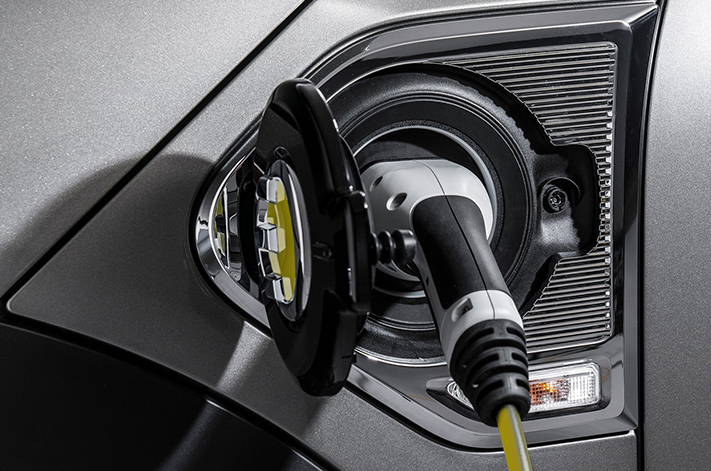
Carmakers including Audi, BMW, Infiniti, Lexus, Porsche and Mercedes-Benz are already introducing cars to the Australian market that can run exclusively on electricity, or switch from diesel or petrol engines to electrons on demand. According to Mercedes-Benz, it is future-proofing Australian motorists against the possible introduction of congestion charges here.
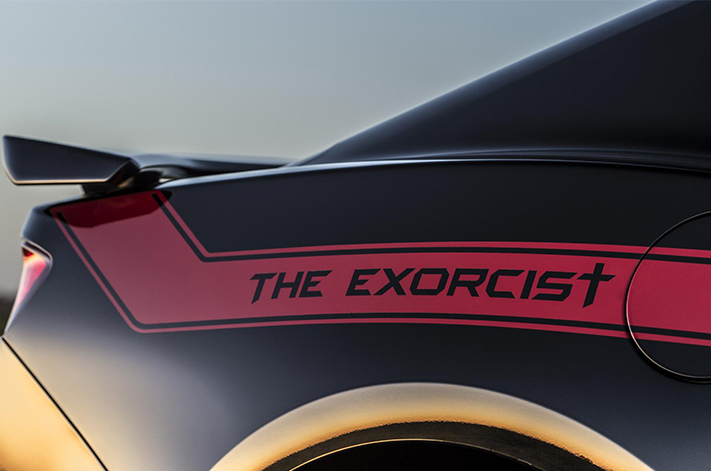
IN the game of awesome motoring nomenclature, American tuner Hennessey just claimed top spot thanks to its new Exorcist Camaro.
Built to take part in a holy horsepower war with Dodges upcoming Demon, the Camaro-based Exorcist packs a 745kW punch.
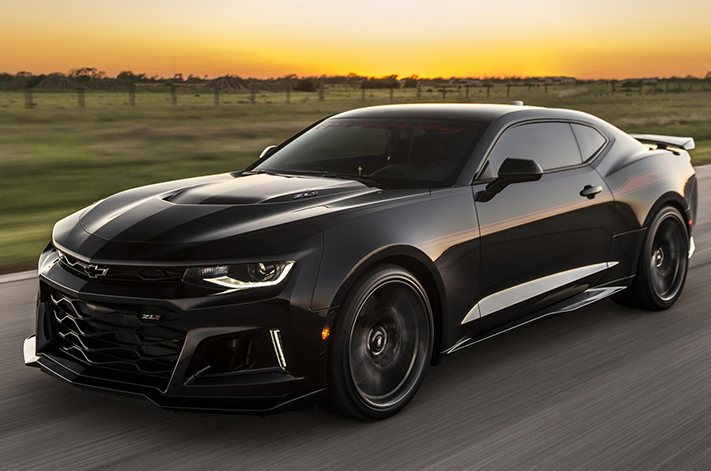
The Hennessey team have fettled with the 6.2-litre supercharged LT4 V8 under the bonnet (which comes from the factory with 477kW), until it is a tyre-frying warrior for the gods of burnouts.
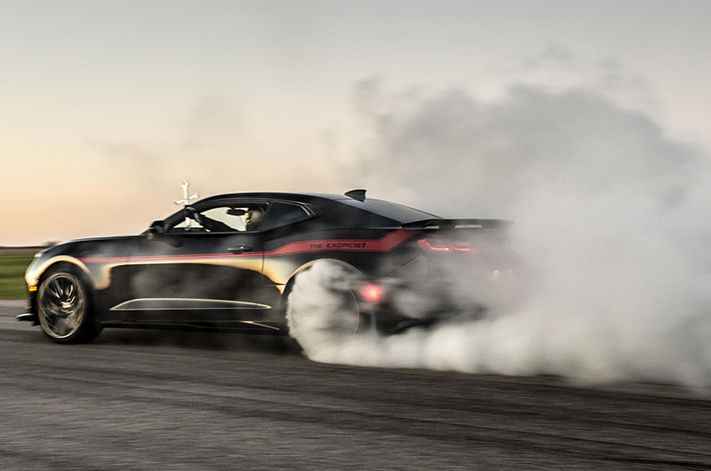
They also ported the cylinder heads, upgraded the camshafts, added long tube stainless steel headers, and let the Camaro breathe deeper thanks to a freer-flowing induction system. It’s all controlled through a re-flashed ECU.
2018 Chevrolet Camaro Z/28 spy pics
Gearbox options are limited to either a six-speed manual, or ten-speed automatic. However, those unwilling to work 745kW with three pedals will have to fork out $13k for a transmission upgrade so the auto can handle the extra oomph.
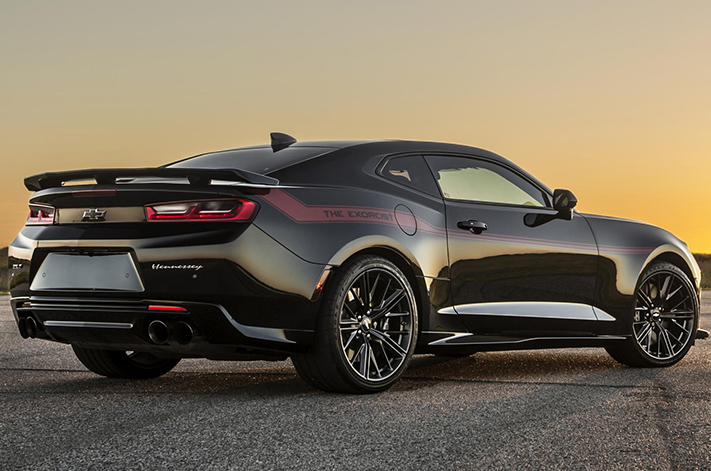
If you already have a ZL1 in your garage the Exorcist upgrades will cost $72,655, but Hennessy offers pre-built cars for $157,199.
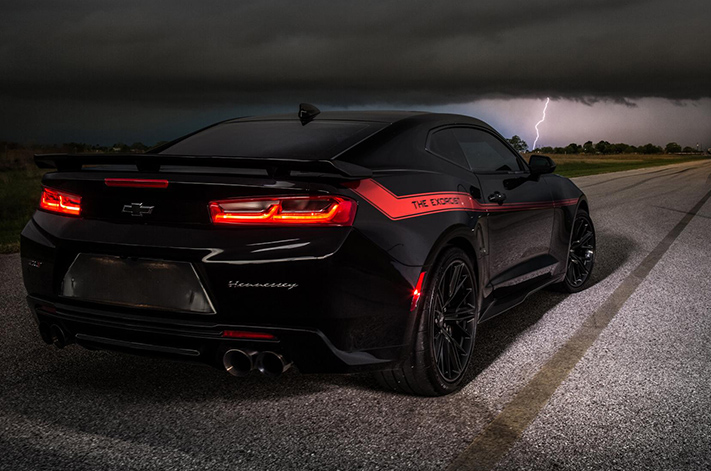
To quote one Ace Ventura, “I have exorcised the demons!”
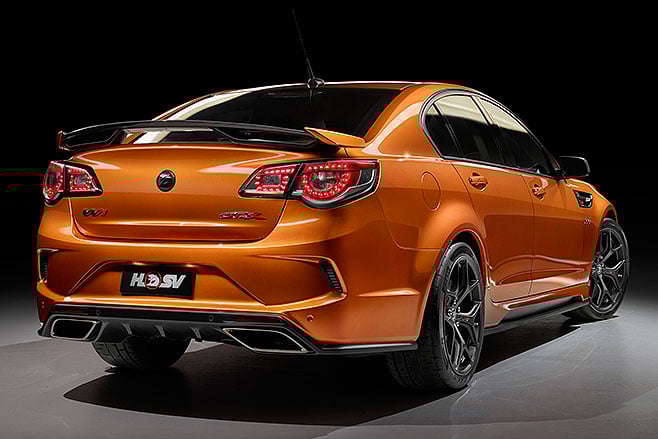
FANS of the most powerful Australian-made sedan to date – and possibly forever – may have one last glimmer of hope to own a HSV GTSR W1, with a number of ‘saleable pilots’ trickling into the system and adding to the fluid figure of ‘about 300’ total production.
It was previously thought that the complete run of manic W1 flagships, which uses GM’s 474kW/815Nm LS9 V8, was entirely spoken for following a tidal wave of well-heeled HSV enthusiasts that snapped up the allocation shortly after it was announced on February 1 this year. But HSV has revealed there may be a few examples floating in the ether of the HSV’s dealer network.
Speaking to Wheels, HSV marketing and product planning general manager Damon Paull explained that, while a handful of pre-production W1s would not be released for public sale, a small number of “saleable pilots” will find their way onto the market.
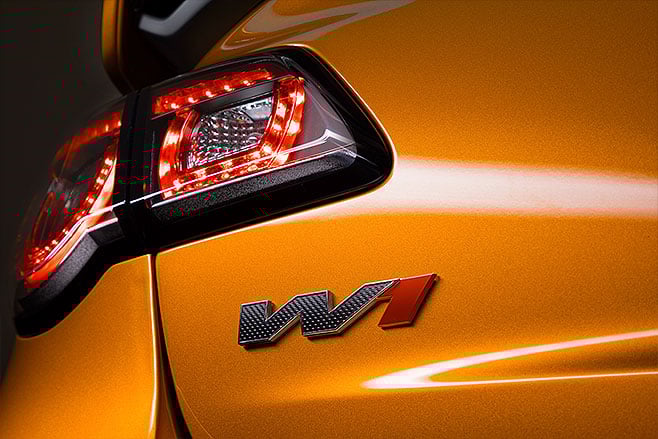
Those elusive few examples may not surface until they have served duties at press and show events, but Paull said there could also be a limited number of W1s in the dealer network.
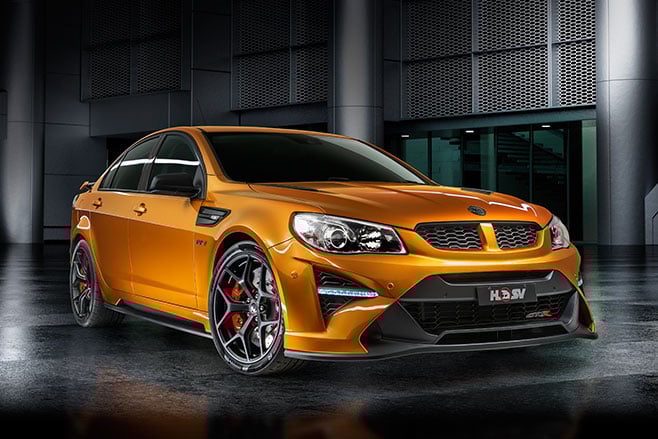
When asked if dealers may have the odd W1 without a home to go to, Paull answered “I would think so” leaving another door open for customers who thought all options were exhausted, but he urged interested parties to act fast as the orphan W1s would not hang around for long.
“If our dealer body doesn’t already have a formal order placed, I think they would be absolutely confident the vehicle will find a home.”
1995 HSV GTS-R v 2017 HSV GTSR W1
Those lucky enough to have placed early orders for the $169,990 GTSR W1 will be taking delivery of their cars this month and the final example is expected to roll out of the factory at the end of September, said Paull.
But for everyone else who doesn’t manage to secure such an exclusive part of Australian muscle car history, there are plenty of opportunities to snag an example of the ‘regular’ GTSR range. Around a third of the 1000 plus GTSR sedans and 600 Maloo utes still up for grabs.
“Without canvassing 56 dealers in Australia I’d say we are probably at two thirds of our GTS R.”
‘Standard’ GTS variants are also in diminishing numbers with the final 20 examples set to be finished this month, albeit in swansong 30 Years trim.
Paull reported that the reality of the end of GTS cars sourced from Australian-made cars was starting to dawn on local fans and the company had experienced a spike in both enquiries and sales following the announcement of the more exclusive 30 Years special edition cars and the GTSR.
“We launched on February 1 and we literally received enquiries that were two and a half to three times of an average month in February and orders about the same at three times.
“There’s a certain level of consumer urgency that this is the end of the Zeta platform as we know it. Better get in quick before they’re all gone,” he said.
Total HSV sales for this year are expected to top about 4000 cars.
An all-wheel drive, high-riding variant of the next-gen Holden Commodore has been confirmed for the 2018 line-up, to be called the Tourer.
The new body style is the third confirmed for the Opel Insignia-based NG Commodore that will replace the current Aussie-built VF II next year. The Tourer’s off-road focus will use the same GKN Twinster AWD system also underpinning V6 versions of the NG Commodore sedan.
Like its siblings, the Tourer is a rebadged Opel product, built atop GM’s E2XX architecture.
A Holden spokesperson told Wheels that at this stage the only confirmed engine for the Tourer is the same 230kW/370Nm 3.6-litre naturally-aspirated V6 as found in the flagship AWD NG, mated to a nine-speed automatic transmission.
The Commodore Tourer is 110mm longer than the Commodore sedan and 20mm longer than the Commodore Sportwagon. Ground clearance grows by 20mm, and black plastic trimmings on the wheel arches follow the lead of cars like the VW Passat Alltrack and give a more rugged appearance.
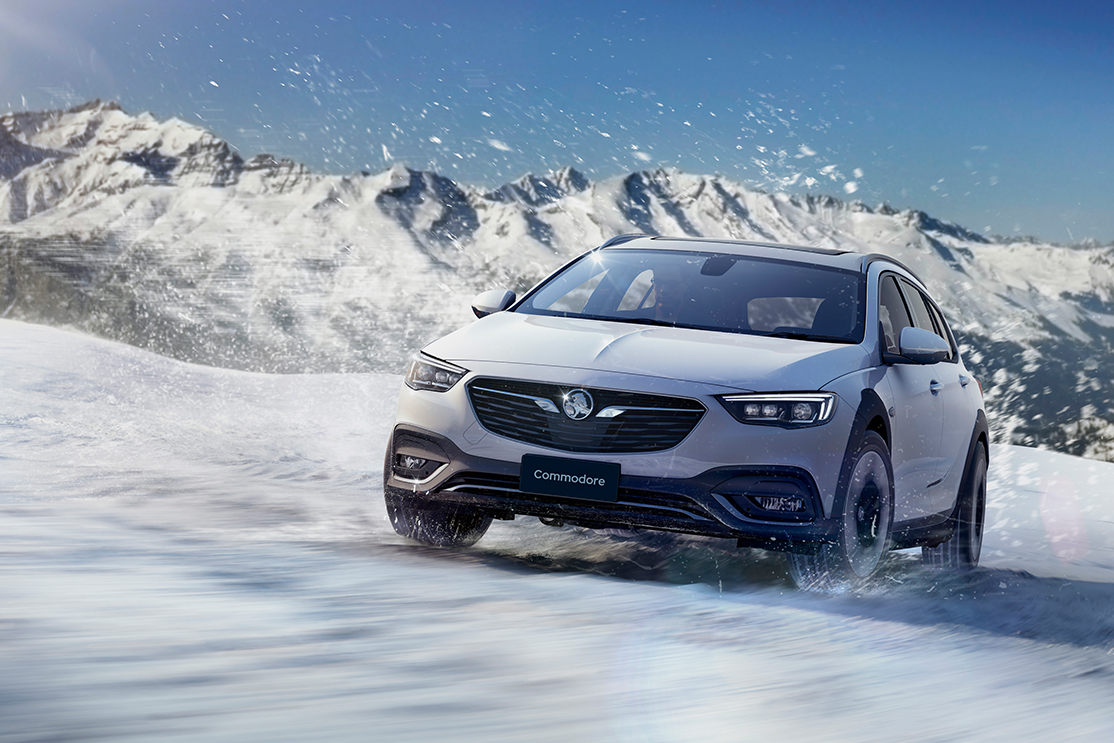
Luggage space benefits from rear seatbacks with a 40/20/40 split, and roof rails and dual exhaust tips are standard.
Interior highlights include front seats with heating, ventilation and massage functions, heated rear seats, a powered lift-back and active noise cancelation.
While Holden will keep the Commodore name going, it won’t be reviving the relatively short-lived Adventra badge.
Adventra was the name applied to the locally-developed all-wheel drive version of the VYII-VZ Commodore from 2003 to 2009, but it was unloved by Aussie consumers who had yet to fully embrace the SUV frenzy.
With SUV sales now outstripping traditional passenger cars, the Tourer could give Commodore some extra fight in the showroom battle.
Like its sedan sibling, the Tourer will feature AEB, adaptive cruise control, lane departure warning, and lane keep assist as standard.
Commodore Tourer will launch locally at the same time as the next-generation sedan and Sportwagon in 2018.
It’s not an LS-swap. It’s not a 2JZ-swap. What we have here is a 1GZ-FE swap. Plus boost… lots of boost.
A builder from the UAE, K.K Performance, has decided four isn’t enough for this Hachi-Roku. He wasn’t even happy with six, or eight, or 10… it had to be 12.
So where does one find a V12 suitable for plonking into a space-conscious Toyota engine bay? The answer is surprisingly close to home for the 86.
https://www.instagram.com/p/BSVYdn0gVrg/
If you haven’t looked it up, you will either already know exactly what a 1GZ-FE is, or have absolutely no idea.
This 86’s new powerplant was originally built for one of its siblings, the Toyota Century. Used by Japan’s emperor as an official car, the Century is essentially a 5.0-litre V12 limo sold only in Japan. It’s also not particularly exciting to look at.
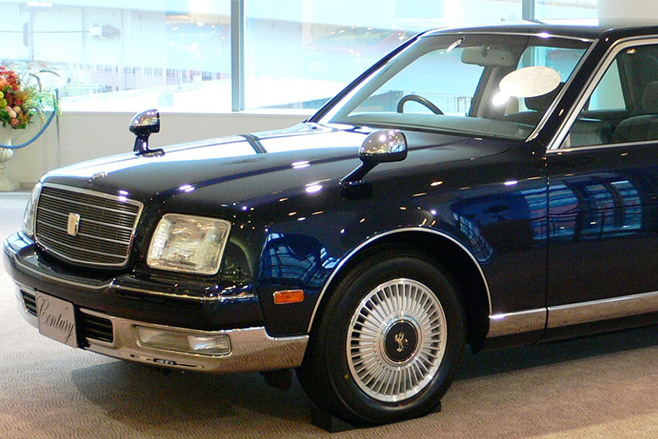
In the 86, and with four turbochargers jammed up against it, K.K Performance told the uploader of the above video that the V12 puts out around 600kW. That seems low for a V12 with four snails attached, right?
Our best guess is that it’s got far more potential than that, but it’s probably not worth running it at that level if it’s not going to actually use what it’s got.
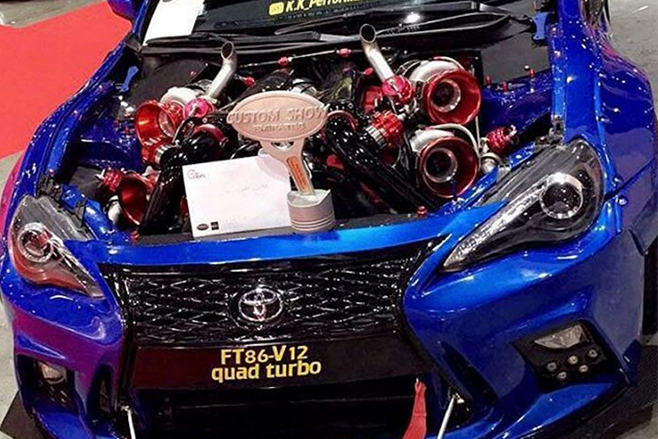
Still, what it does have looks incredible. You’d be forgiven for checking the date to make sure this isn’t an April Fool’s joke, because we certainly did.
As much as we’d love to see it barrel down a drag strip, we’ve got the feeling this ridiculous 86 won’t get the thorough wringing it deserves.
Century photo: Wiki user Mytho88
If you’ve ever wondered if there’s such thing as cheap racing, there isn’t. But relatively cheap racing? We’ve found just the thing.
The Australian Trans-Am series has been around for a while, but most of us can’t afford to drop a few hundred thousand on turning a classic car into a track-going thrasher.
Not too long ago, the Trans-Am 2 (or TA2) series appeared, which got us talking about just how much it would cost to get our hands on a car and start throwing it around Lakeside Raceway.
It turns out that entering the TA2 series is actually quite inexpensive when you consider some motorsports will happily siphon you of your dollars by the millions.
We’re told the price of a brand new, factory standard TA2 car costs about $120,000. That comes with an LS3 power plant and the same gear you’d find in your opposition’s cars.
It began when Craig Harris and Peter Robinson were discussing Robinson’s plans to enter a new Camaro in the Sports Sedans category. The pair eventually decided the car needed its own class, and Harris imported a Mustang to serve as a rival.
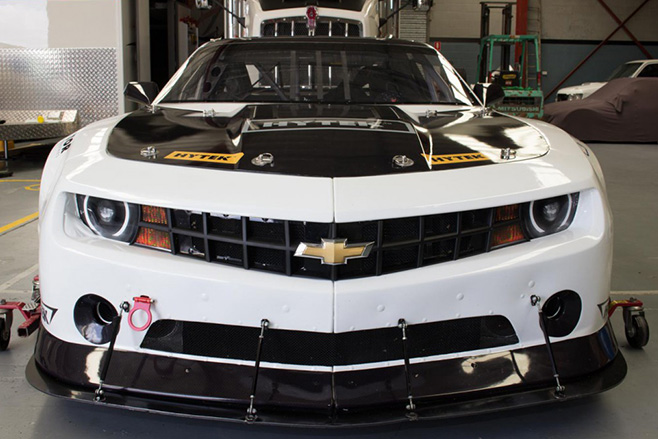
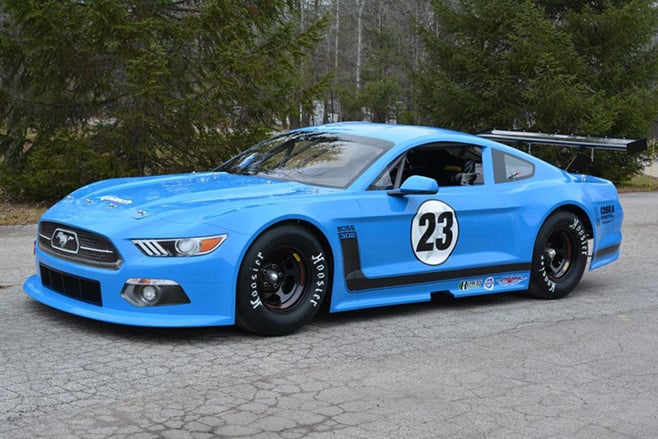
At $500 entry for each round, we can see why the TA2 series is so attractive to racers who don’t have huge resources at hand. The cars even run on readily available 98, none of that fancy supercar juice in sight.
WHICH Australian-built muscle car is the greatest of them all?
It’s a debate that has been waged at pubs and in garages across our great nation on countless occasions.
But now, with the last ever Aussie-built brawlers set to roll down the production line this year and the end of local manufacturing in sight, it is time to find the definitive answer.
Here at Wheels HQ we have our own opinions, but we want to put the question to you, our fellow car enthusiasts, to determine which of our fine creations is revered above the rest.
The process will be simple; cars will be separated into their respective decade, with a poll for the public to vote. The winner of each decade will then face off with the others to see which car sits above the rest of the field.
First off, we have the 1960s. A time when Australia was putting itself on the automotive map with cars like the Ford XR Falcon GT and the Holden HK Monaro GTS 327.
1967 Ford Falcon XR: 1966 Wheels Car of The Year
If your pockets are deep enough, you can pick up examples of these cars at auctions in original, weathered, and fully restored condition. Nostalgic appeal comes at a cost though – six-figure sums aren’t unheard of for muscle-bound Aussie cars like these
But which is the best? Vote for what you think is the greatest Aussie muscle car of the 1960s below.
WHAT IS IT? When is an SUV not an SUV? When it’s a Suzuki Ignis!
That may sound a bit cruel, but it’s not. Though it’s sold in the same segment as AWD soft-roaders like the Jeep Renegade and Subaru XV, the little Ignis isn’t really built with straying from the blacktop in mind.
Think of it instead as a jacked-up micro-hatch, and you’re on the money. Underneath its chunky outdoorsy sheet-metal lies a city-slicker, not a bush-basher. Keep that in mind, and it should live up to expectations
ON PAPER
The most important number is this one: at $16,990 on-the-road, this Ignis GL manual is the cheapest SUV you can buy today.
Sure, it only has 66kW of power and 120Nm from a 1.2-litre naturally-aspirated engine, but a feather-like kerb weight of just 820kg means there’s not a lot of metal for the engine to move anyway.
One other number you might care about is the turning circle – with just 9.4 metres needed to turn around, it’s clear that the Ignis was designed with navigating tight urban streets in mind.
WHY IS IT IMPORTANT?
This car deserves your attention not just because of its price, but because it’s a spunky alternative to the sea of dull as dishwater econoboxes that presently exist in the same price bracket. It’s heart-warming to see a car that relies on its personality – and not just a sharp price point – to sell well.
FIRST THINGS YOU NOTICE From the get-go, it’s the Ignis’ design that commands your attention. Bulky and blocky but still extremely compact, it’s got a bodybuilder look in a dwarf-sized package.
On the inside there are two-tone cabin plastics with glossy splashes of colour on the doorhandles and centre console. The plastics might be rock-hard, but they don’t look as nasty as what is in plenty of other cheap hatches. All models – base GL manual included – also receive this fairly user-friendly integrated sat-nav infotainment unit, which is a plus.
In the back, you’ll also find a decent amount of leg and headroom – something that’s often in short supply not only in other micro-SUVs, but in many light hatches as well.
You’ll also notice this car has three pedals and this wobbly stick in the middle – an unusual feature to find in a car these days, but in my opinion, it’s something every Ignis should be equipped with.
PLUS AND MINUS
Why do I insist that this car needs a manual? Because, simply put, the Ignis’ automatic is a dog.
That CVT auto really takes the edge off of what is otherwise a fairly decent powertrain by constantly hunting around for the right ratio, and rarely feeling settled. A manual, of course, doesn’t. You’re the one in command, not an indecisive computer.
Bear in mind though, that due to the absence of a turbocharger to help this little engine out, the bulk of its power and torque are produced quite high in the rev range. You’ll need to rev it hard if you want to get anywhere in a hurry.
Gearbox and engine aside, there are some other driveability niggles. The steering ratio is mega high and requires a heap of wheel-twirling to go from lock to lock, while the ride is surprisingly sharp for such a light car.
Skinny tyres also mean there’s not a huge amount of grip, so don’t go corner-carving in this one. The city is its preferred habitat, and it’s here where the Ignis makes the most sense.
But if you’re searching for a pint-sized SUV that’ll actually go a decent way off road, Suzuki has another product to show you: the Jimny.
VERDICT
The line between a regular ol’ passenger car and a high-riding SUV is getting awfully blurry these days, and the Ignis is just the latest example of that. After all, with only 180mm of ground clearance it’s clear that the tallest obstacle this car is designed for is a speedhump. A rock-hopper, it is not.
But as a city hatch it’s great. I can’t deny the appeal of its boxy form, and the equipment you receive for the money asked is a pretty sharp deal.
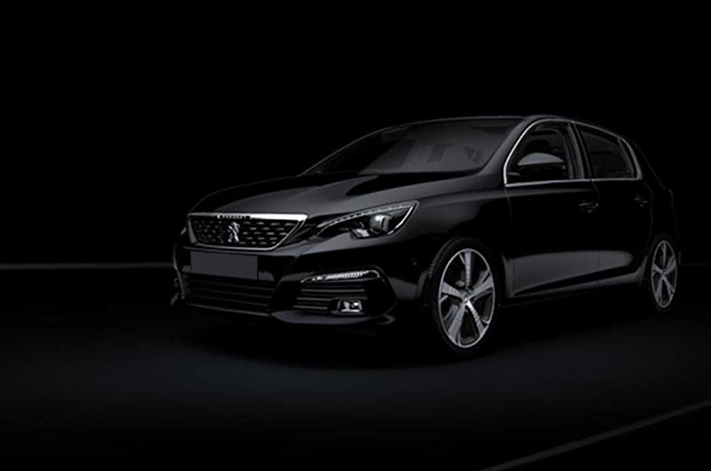
As it settles into middle-age, the Peugeot 308 hatchback is in store for a mild styling update. Peugeot has yet to officially confirm timing of the refreshed 308’s arrival, but images leaked onto the internet offer us our first good look at what to expect of France’s classy hatchback..
But the hatch’s styling changes aren’t obvious at first glance.

A new front bumper graces a slight nose-job, giving Peugeot’s Volkswagen Golf and Ford Focus rival a stronger front-end appearance and closer aligns the 308 to its more expensive GT version. The more-aggressive bumper plastics are also mated with larger air intakes, a recontoured bonnet and a new set of fog lamp housings.
| 2017 Peugeot 308 range culled
From the rear, the dark images reveal minor tweaks to the back taillights, while the interior seems to be much the same. Strangely it doesn’t look like the new 308 will be getting the i-Cockpit electronic instrument panel featured in the new 3008 SUV.

At this stage, they’re the only visible changes we can discern. Even the wheels look to be carryover, being virtually identical in design to the 18-inch ‘Diamant’ alloys of the current 308 GT.
We can also expect to see some styling changes applied to the GTi variant, although details of this are yet to be confirmed.
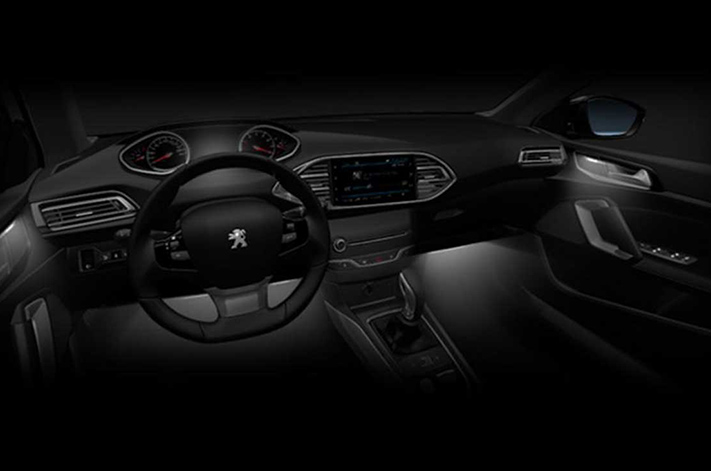
If this is in fact the new 308, which is yet to be confirmed by the automaker, it comes after Peugeot Australia announced it would be downsizing the 308 range late last year by more than half, from 17 models to just six.
| Peugeot 308 vs Renault Megane vs Volkswagen Golf
Given the leak, we’re likely to receive more information on the changes to Peugeot’s 308 in the coming months, including full details of the facelift and any changes to the car’s mechanical package.
ASTON MARTIN is phasing out its long-serving naturally-aspirated 4.7-litre V8 in favour of an AMG-sourced – and thoroughly modern – twin-turbocharged 4.0-litre V8, but the proudly British company won’t be simply hitting ctrl+v when it drops Benz’s bent-eight into the DB11 later this year.
Rather, it will be Aston’s own interpretation of AMG’s versatile eight-cylinder engine, with a character that will be, according to company boss Andy Palmer, quintessentially ‘Aston’.
“The answer is simply, ‘as much as we want’,” Palmer said, “the deal with the guys at AMG is, ‘don’t disturb them’.”
“The unit itself is already a very accomplished unit so you don’t have to do very much with it, but we do need to give it its own flavour and we do need to package it well, and being an Aston we do need to mount it low in the chassis to give a low centre of gravity.
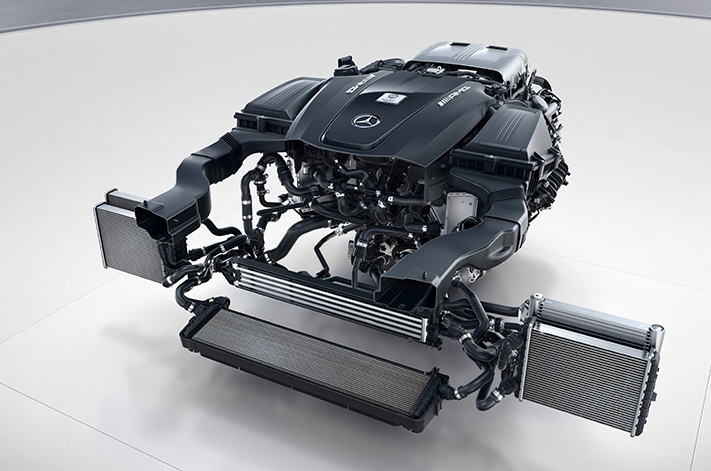
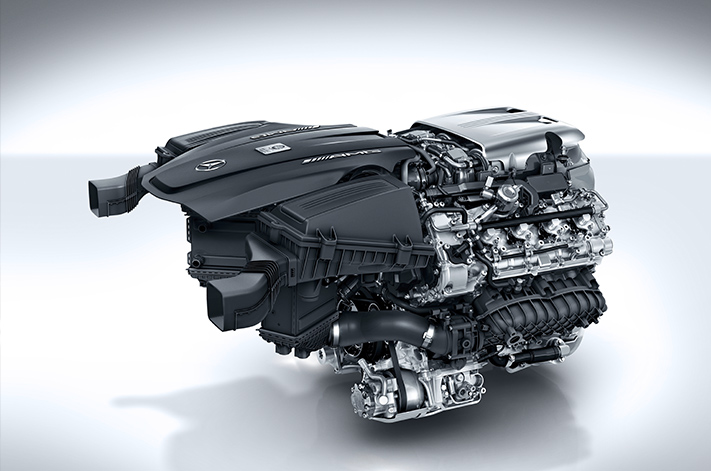
The 4.0-litre twin-turbo V8 is already dry-sumped in the Mercedes-AMG GT, reducing the amount of engineering work that Aston Martin will need to do to mount it inside the upcoming DB11 V8 and the next-generation V8 Vantage.
It’s unlikely that Aston Martin will need to change any internal components of the AMG 4.0L either – at least not for regular road-going DB11 and Vantage V8s – but the exhaust and intake piping will require an extensive rework to adapt the powerplant to Aston’s all-alloy architecture. Thanks to the AMG engine’s “hot-V” configuration that puts both turbochargers between each cylinder bank, routing the exhaust plumbing between the turbine outlets and between the engine and firewall will be a challenge.
But it’s here where there’s the greatest scope to impart a uniquely Aston identity to the imported engine. Exhaust piping, after all, is component that defines the ‘voice’ of a car.
“It’s not a ‘buy an engine, finished, and design a car around it’ deal,” he continued, “we’ve had to do our own work on it.”
“And you have to. Sound is a great example: it has to sound like an Aston. I think you’ll enjoy it.”
The vital statistics of Aston Martin’s new V8 are still under wraps, but with the motor in its lowest-output form cranking out a sizable 350kW of power and 650Nm of torque (in the Mercedes-AMG C63 sedan), that’s already a handy increase on the V8 Vantage 4.7-litre’s 321kW and 490Nm figures.
And at the upper end of the power spectrum, the Mercedes-AMG E63 S smashes out a monstrous 450kW and 850Nm using a high-tune version of the same 4.0-litre V8 – 3kW more than the DB11 V12’s outputs. Aston’s version won’t necessarily produce identical metrics thanks to its bespoke intake, exhaust and tuning, but those numbers indicate the ballpark that Aston Martin is about to play in.
The first recipient of the new twin-turbo V8 will be the DB11 V8, which is expected to debut in the final quarter of this year as a companion to the already-launched V12 flagship.
