
In our Fast Facts series, WhichCar delves deep into the history of automotive brands to bring you fascinating facts and intriguing information.
Here we focus on Isuzu, the Japanese brand that specialises in diesel engines and commercial vehicles, is famous for its popular D-Max ute, and for models such as the Gemini and Piazza that came to Australia as Holdens.
ENGLISH BEGINNINGS
Two Tokyo engineering companies joined forces in 1916 to focus on vehicle development. From 1918 to 1927 it produced cars and trucks in partnership with English car maker Wolseley Motors. In 1922 the Wolseley A9 became the first passenger car produced in Japan.
THE “ISUZU”
The car department was spun off from the main company in 1929 to become the Ishikawa Automotive Works. Four years later it produced a government-standard vehicle named after the Isuzu River, simply called the “Isuzu”. The company name, however, wasn’t adopted until 1949, when Isuzu Motors Ltd was established.
DIESEL FOCUS
Isuzu’s high reputation for diesel engines dates to 1933, when Ishikawa merged with DAT Automotive Manufacturing to form Automotive Industries Co Ltd – a company that decided to specialise in the development of diesel engine technology that at the time was still in its infancy – both technically and commercially. Air-cooled DA6 and DA4 engines developed in 1936 provided the foundation for generations of future Isuzu diesel motors.
BIRTH DAY
Isuzu regards 9th April 1937 as its foundation day – when Automobile Industries merged with Toyko Gas & Electric Co to create Tokyo Automobile Industries Co. It changed again in 1941 to Diesel Automobile Industry Co Ltd before the Isuzu change eight years later.
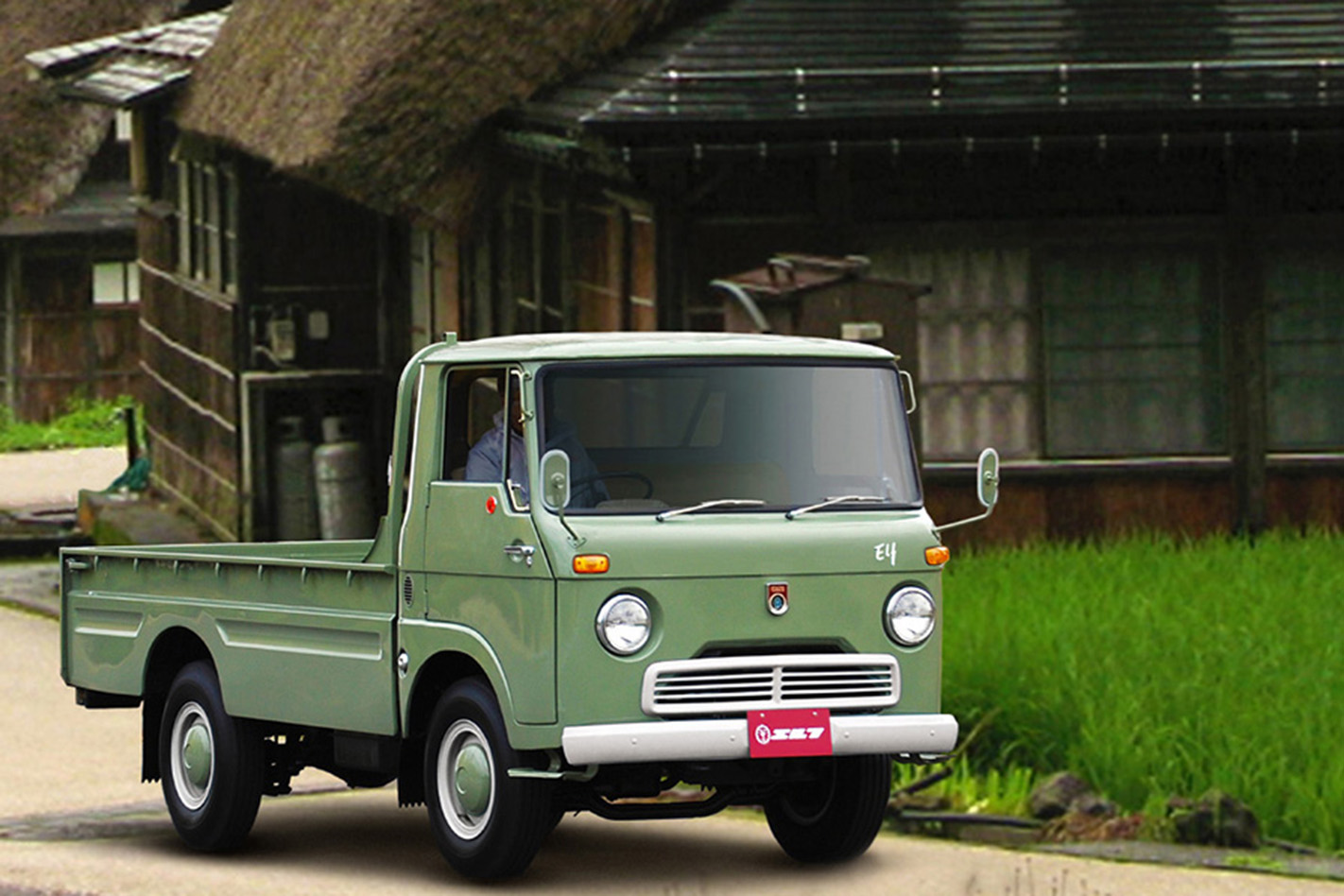
Isuzu benefited a rush of local demand for commercial vehicles that was prompted by the Korean War in the early 1950s, and the company launched the Elf commercial vehicle in 1959 – a model that would eventually became Japan’s best-selling light-duty truck. The current, sixth-generation model of the vehicle, known as the N-series outside of its domestic market, was released in 2006.
BELLETT OF THE BALL
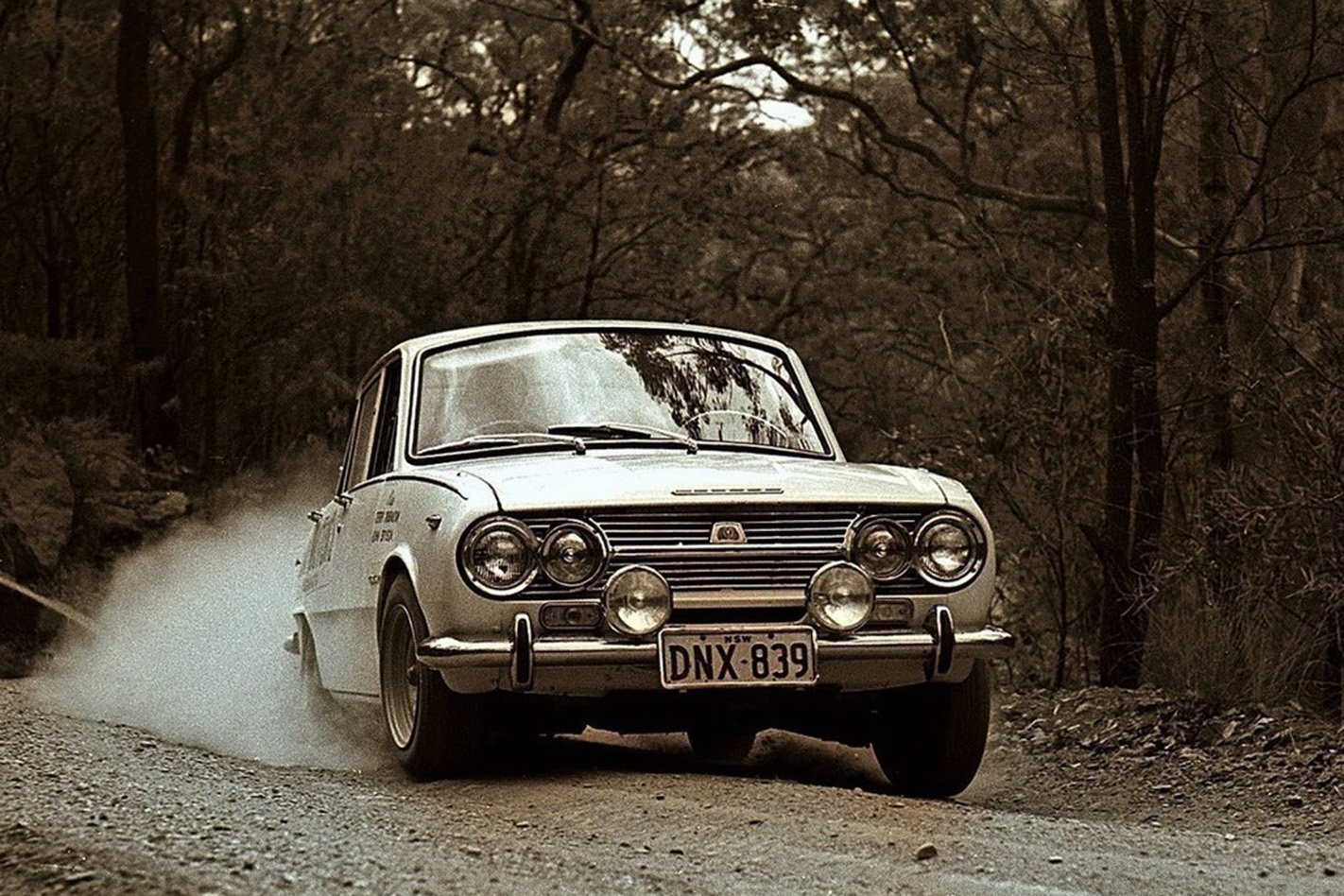
In 1963, Isuzu produced its first home-grown passenger car – called the Bellett. It replaced the Hillman Minx the company had been building under licence since the 1950s. The attractive-looking, rear-wheel-drive compact car even made the cover of a 1964 issue of Wheels magazine.
Models included the De Luxe as well as GT – the latter marking the Isuzu as the first Japanese car to wear a Gran Turismo badge.
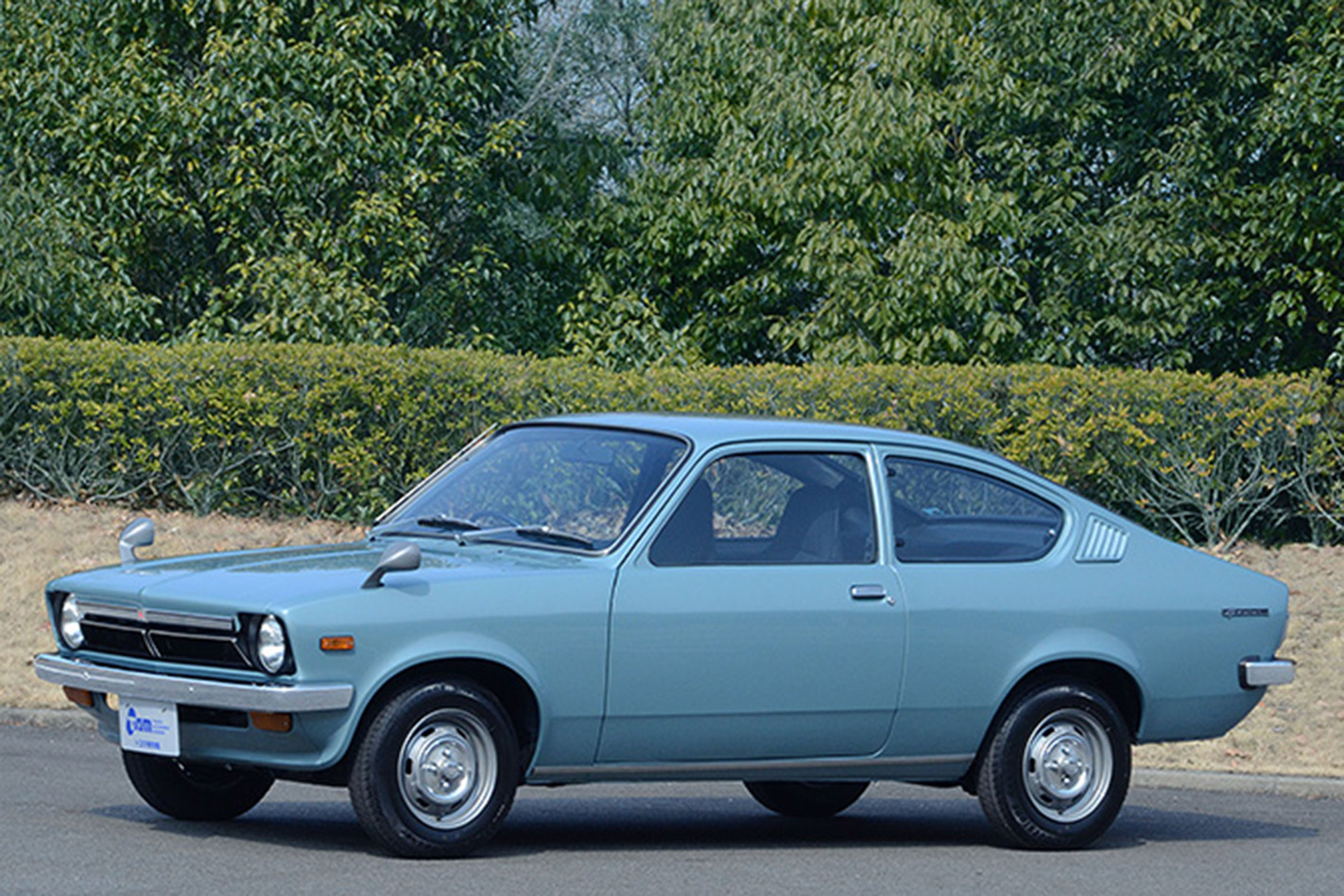
In 1974, the Bellett became known as the Bellett Gemini – and was based on the Opel Kadett C after General Motors had formed a long-term export agreement with Isuzu at the start of the decade. Holden not only adopted the model for its own showrooms but built variants locally.
From 1981 it was even available with a (1.8-litre) diesel engine – from Isuzu, of course. The Gemini was voted 1975 Wheels Car of the Year, though the second-generation model was instantly less interesting for its switch from rear-wheel- to front-wheel drive.
Despite the Bellett, Isuzu in the 1960s was still a company renowned for its commercial trucks and diesel-powered buses. Yet in 1968 it released a striking two-door model called the 117 Coupe – with the numbers referencing the project code for a vehicle group that would also include the Florian sedan/wagon.
The stylish coupe was penned by legendary Italian designer Giorgetto Giugiaro, whose surname was taken for a more refined version of the car in 1979. The rear-drive 117 featured an advanced four-cylinder engine up front, with double overhead camshafts and fuel injection.
PIAZZA FALLS FLAT
The 117’s replacement was another visual success – again designed by Giugiaro, through his ItalDesign company. But there was little else that was pretty about a model that also wore the Holden badge (from 1986). Despite underpinnings related to the old rear-wheel-drive Gemini, the Piazza’s dynamics were spoiled by nervous handling and a crashy ride. Expensive pricing – $35,000 in Australia – didn’t help its cause.
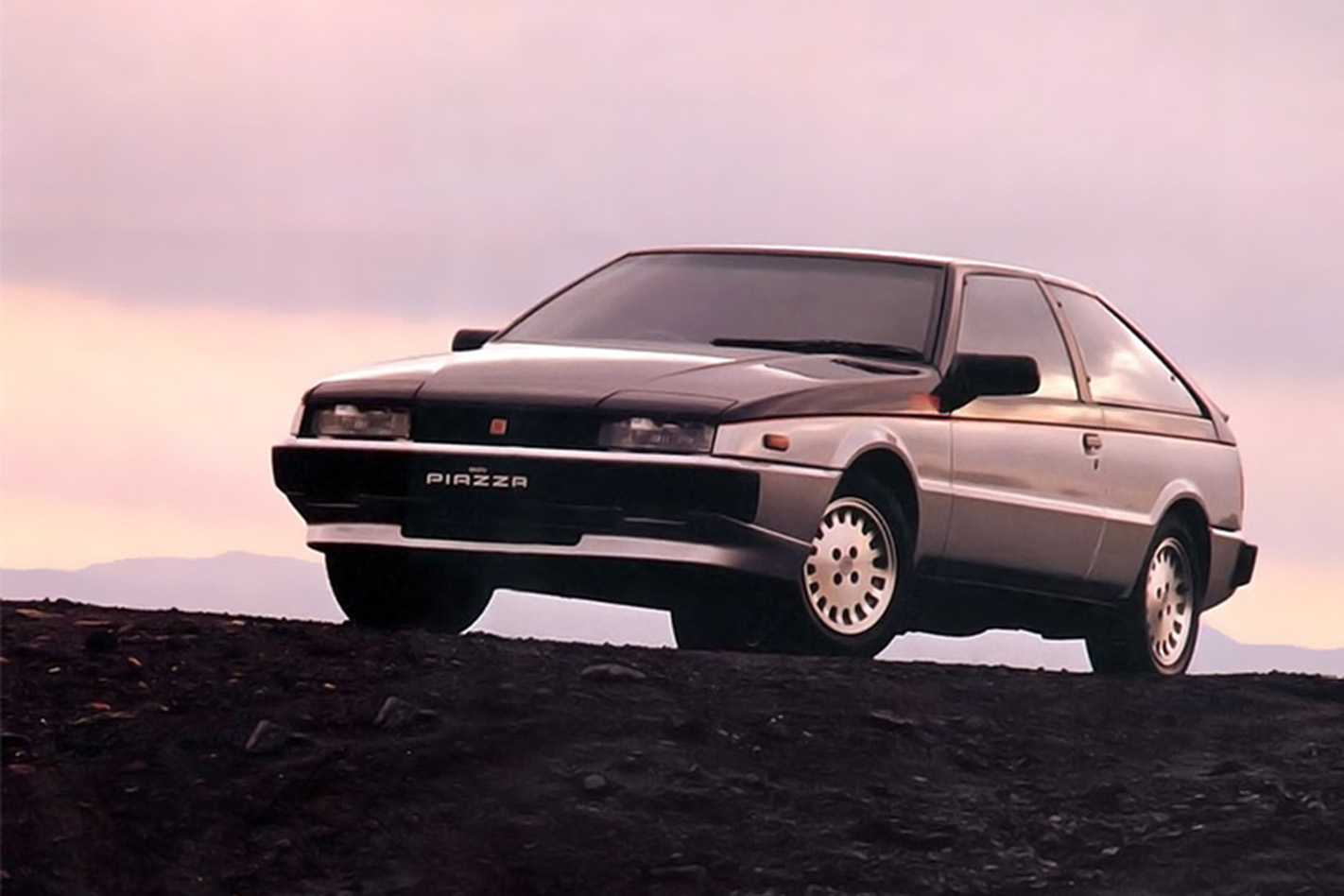
Holden’s almost umbilical link with Isuzu started before the likes of the Gemini and Piazza. In 1972, Holden distributed Isuzu trucks in Australia under the ‘Bedford by Isuzu’ banner (Bedford being the van brand of Holden’s British sister company Vauxhall). From 1980 to 1989, GM Holden switched to simply using the Isuzu brand.
UTE-ILISATION
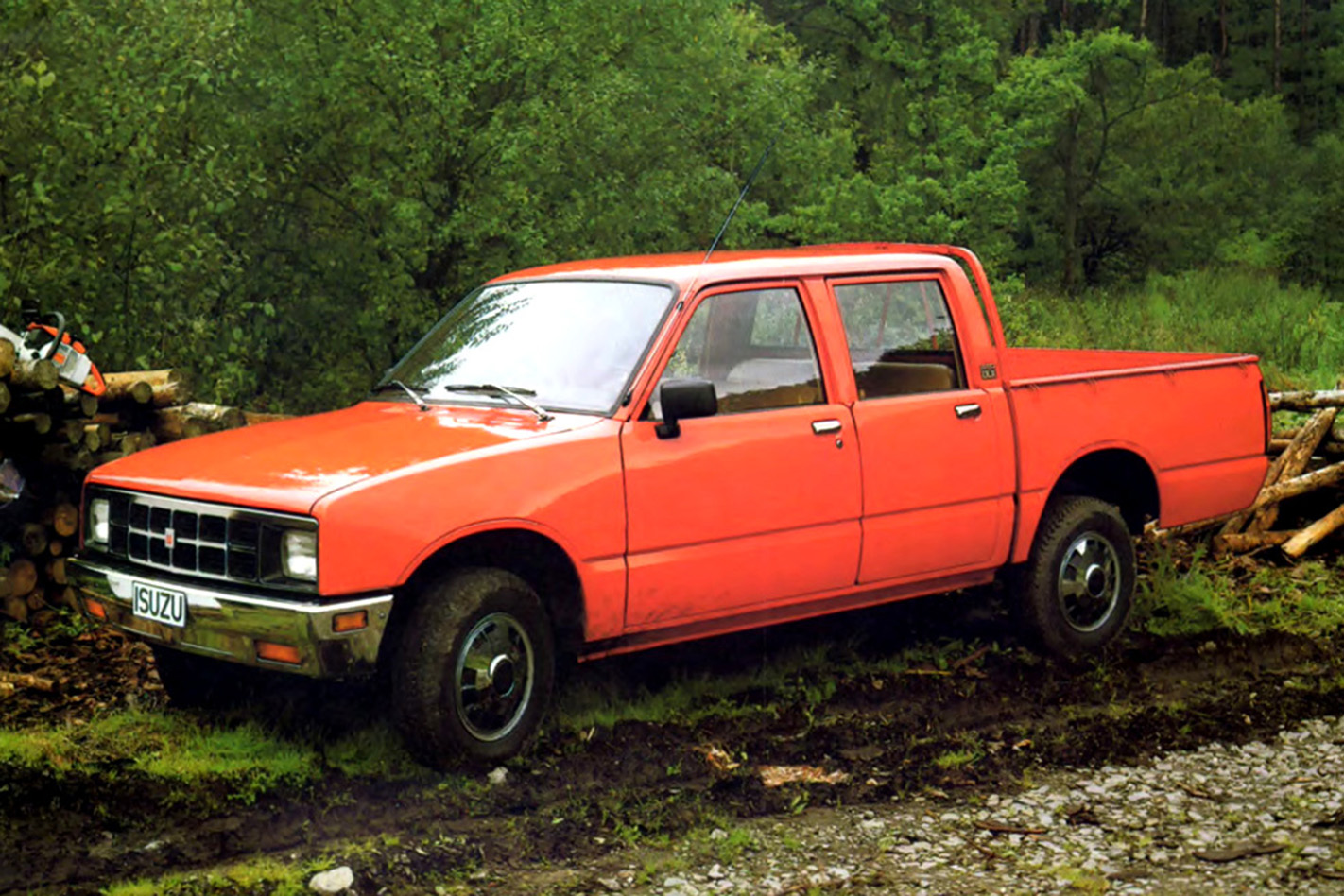
Isuzu jumped on the ute bandwagon in 1963 with a tray-backed variant of the Bellett, called the Wasp – and imported it to Australia. An equally unusual name was used for its 1972 replacement – the Faster that would be exported to other markets, including the United States where GM badged it the Chevrolet LUV (for Light Utility Vehicle), and Australia where it became the Holden Rodeo. Its 1980 successor was known in some markets as simple ‘Pick Up’, and in 1982 an extra variant presented the world’s first Space Cab ute.
Although Isuzu has produced relatively few passenger cars, it’s built plenty of stylish or outlandish concept models. They include the 1989 4200R that was created by Lotus and could have influenced Jaguar’s 2002 XJ220 supercar, the 1991 amphibious Nagisa that looked more like a boat than a car, and the Como that featured gullwing doors, a ute-style rear deck, and a Lotus F1 V12 engine.
TO THE D-MAX
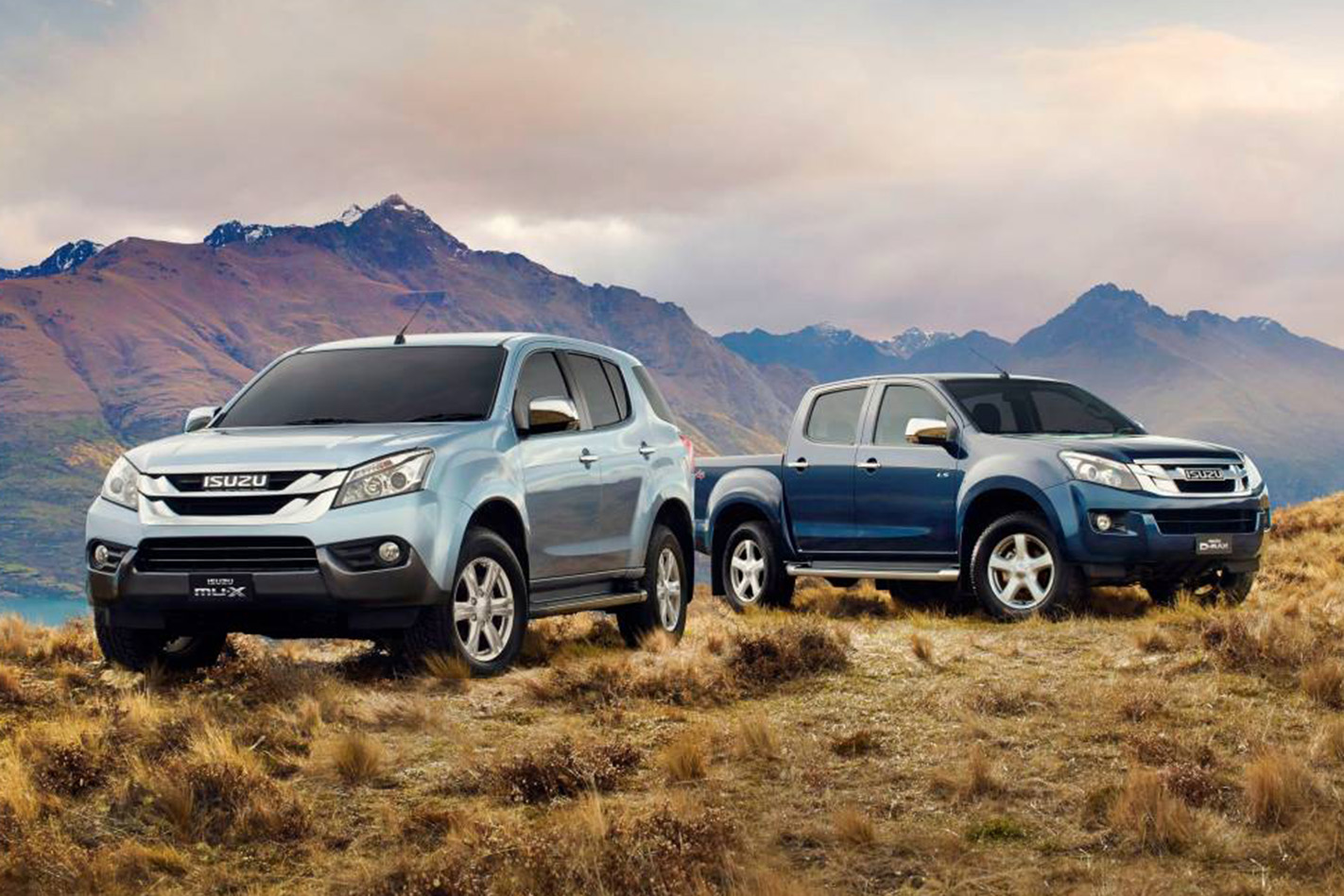
In 2002, Isuzu debuted its D-Max ute for global markets. It was badged a Holden Rodeo between 2003 and 2008 before Isuzu introduced its own model into the Australian market. The Rodeo was replaced by the Colorado – itself closely related to the D-Max as part of GM and Isuzu’s alliance – and both Isuzu and Holden are built in Thailand, albeit in separate plants.
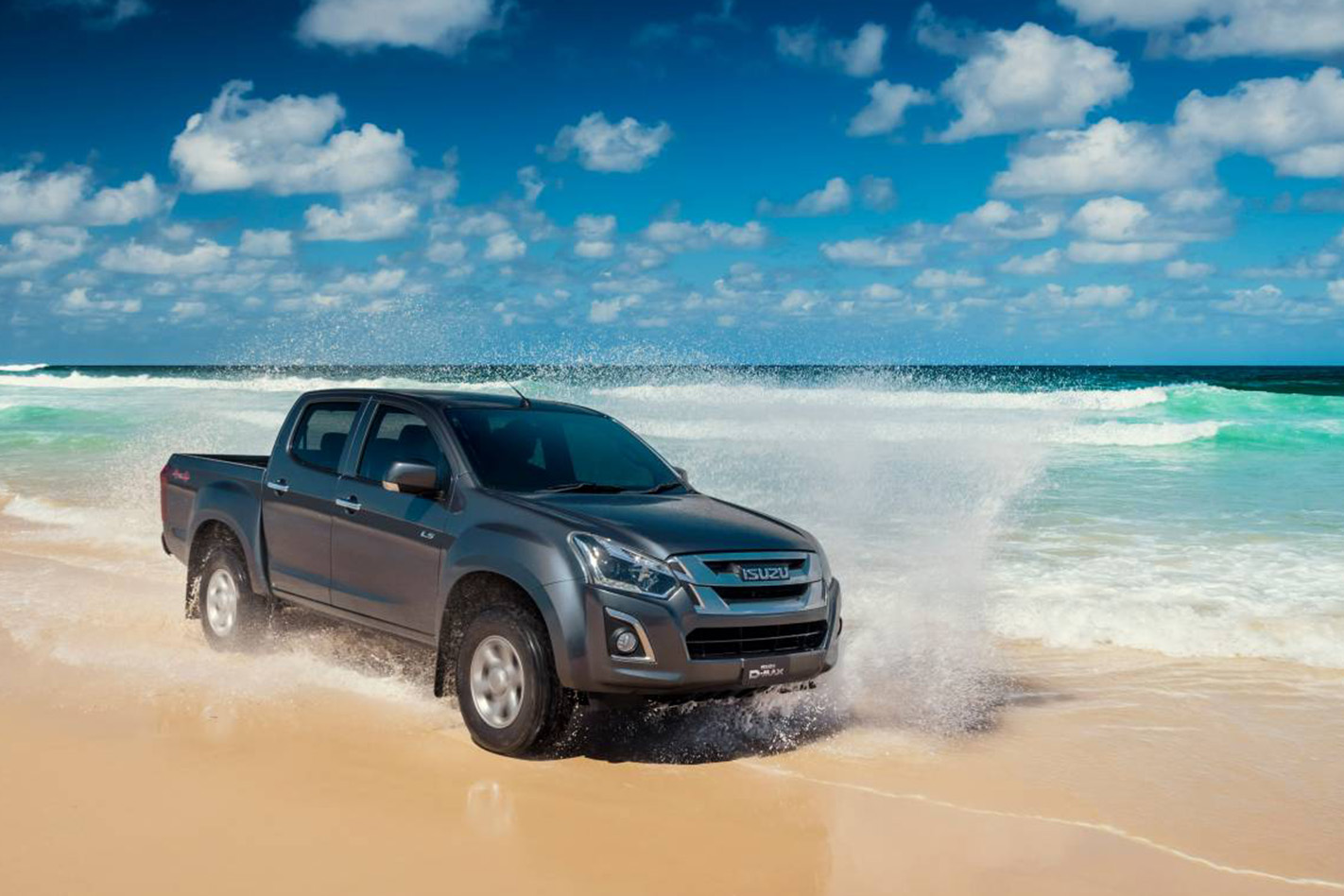
Isuzu Ute Australia was formed out of the dissolution of Isuzu-General Motors Ltd, a joint venture established in 1989 to focus on distribution and marketing of Holden-badged Isuzus and Isuzu trucks in Australia. This subsidiary, actually owned by Mitsubishi Corporation, launched locally in 2008 with the D-Max. Its line-up was expanded with the MU-X seven-seater SUV twin in 2013. In 2016, Isuzu Ute Australia surpassed 90,000 vehicle sales since its 2008 launch.
Nissan has upgraded its Navara ute range with a focus on improving the suspension that has let it down in the face of stiff opposition including Toyota Hilux and Ford Ranger in the all-important dual-cab stakes.
Nissan’s stylists were not apparently required for the Navara update – which drops the NP300 Navara badge and will henceforth be known only as Navara – with most of the changes occurring between the wheels and throughout the chassis.
Models with the five-link coil rear suspension get new dampers to address the disappointing performance of the set up.
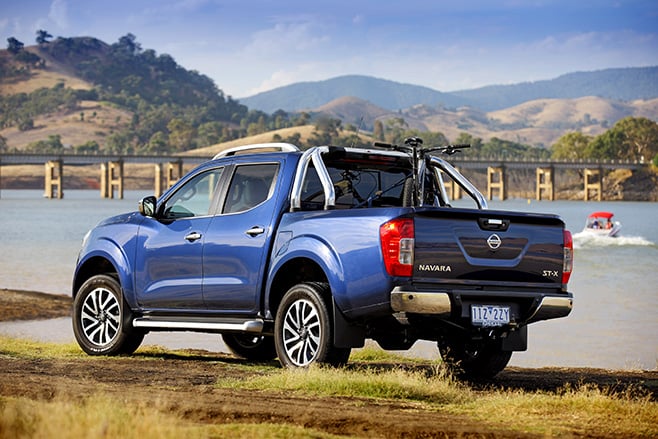
The modern rear suspension fitted to the Series 1 models in 2015 was meant to be a vast improvement over the leaf-springs especially for dual cabs with family duties, however rather than providing a best of both words solution it wasn’t refined enough when empty and hard riding with a full tray.
The front and rear dampers are now firmer, and, importantly, the rear rebound has been revised for tighter control which benefits on-road performance but results in a little harsher ride on the rough stuff.
New variant
The other change to the range is a new 4×4 dual-cab SL variant, which bridges the gap between the RX grade and range-topping ST.
The SL comes with the RX’s blue-collar-friendly touches including the new hose-down vinyl floor in place of carpet and 16-inch steel wheels while sharing the ST’s frugal but grunty 140kW/450Nm 2.3-litre twin-turbo-diesel engine, LED running lights and reversing camera.
Like the SX, the SL comes with a choice of six-speed manual or seven-speed automatic transmissions.
The ST retains its refined SUV-like cabin which includes leather in the top-spec ST-X. A sunroof that was previously standard equipment on the ST-X is now a $1000 option, while the ST gains standard sat-nav.
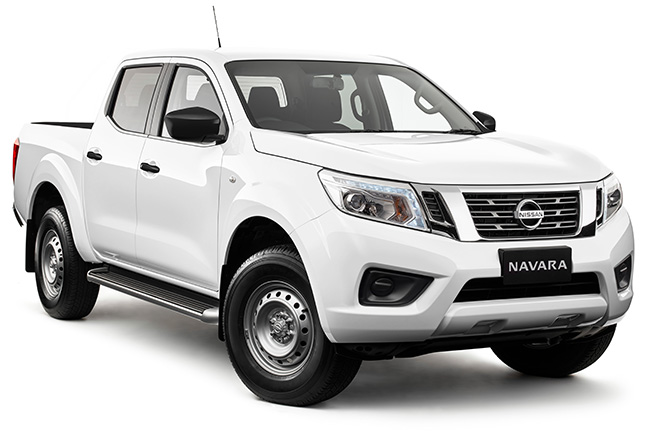
The RX is still powered by the single-turbo 120kW/403Nm version of the Renault-sourced 2.3-litre diesel four-cylinder.
Lower spec, leaf-sprung Navaras carry over their suspension tune and use the single-turbo 2.3-litre diesel engine.
Nissan Australia CEO Richard Emery said the Series 2 upgrade finally delivers what the NP300 Navara promised.
“Since this model’s local release in 2015, our customers have applauded its real-world capabilities and strong performance and they have told us they like its great blend of styling, fuel efficiency, driving experience and value for money,” he said.
“And this updated version of the Navara, our most popular Nissan model in Australia, delivers more of what they’ve asked for.”
2017 Nissan Navara Series 2 Dual Cab Pick-Up Pricing
- RX 4×2 manual – $32,990
- RX 4×2 automatic – $35,490
- RX 4×4 manual – $39,990
- RX 4×4 auto – $40,990
- SL 4×4 manual – $43,990
- SL 4×4 auto – $46,490
- ST 4×2 manual – $43,990
- ST 4×2 auto – $46,490
- ST 4×4 manual – $46,990
- ST 4×4 auto – $49,490
- ST-X 4×2 manual – $44,990
- ST-X 4×4 manual – $47,490
- ST-X 4×4 manual – $51,990
- ST-X 4×4 auto – $54,490
IN THE STILL, crisp night air, the sound of distant thunder starts to penetrate as the car approaches. The anticipation that envelops the gathered media has nothing to do with the vehicle’s unusual, squashed-bug appearance – it was shown virtually as is at the Frankfurt Motor Show in September 2001 – but everything to do with driving it. The question refuses to budge from my mind: What should I expect from 16 cylinders, eight litres, four turbochargers, 736kW and 1250Nm?
Wheels’ first drive of the Bugatti Veyron, the precursor to the Bugatti Chiron, was first published in December 2005
The beast circles our venue, the medieval Relais Santa Anastasia winery just outside Castelbuono in the Madonie area of Sicily, its driver briefly selecting neutral and giving the throttle two big pumps that result in a hair-prickling “braaap, braaap” – richer and bassier than any car engine I’ve ever heard before. The Veyron’s low-set headlamps dazzle as it enters the courtyard drive, accompanied by a ground-shaking rumble and followed by an explosion of floodlights as the two-tone-blue supercar slows and halts in front of its eager audience.
Like seeing your favourite TV celeb in the flesh for the first time, the Veyron is smaller than expected. Its length – 4462mm – is about the same as a Mazda RX-8’s, and while the stocky Bugatti is a lane-filling two metres wide, its 1204mm height means even an MX-5 driver would look down on it.
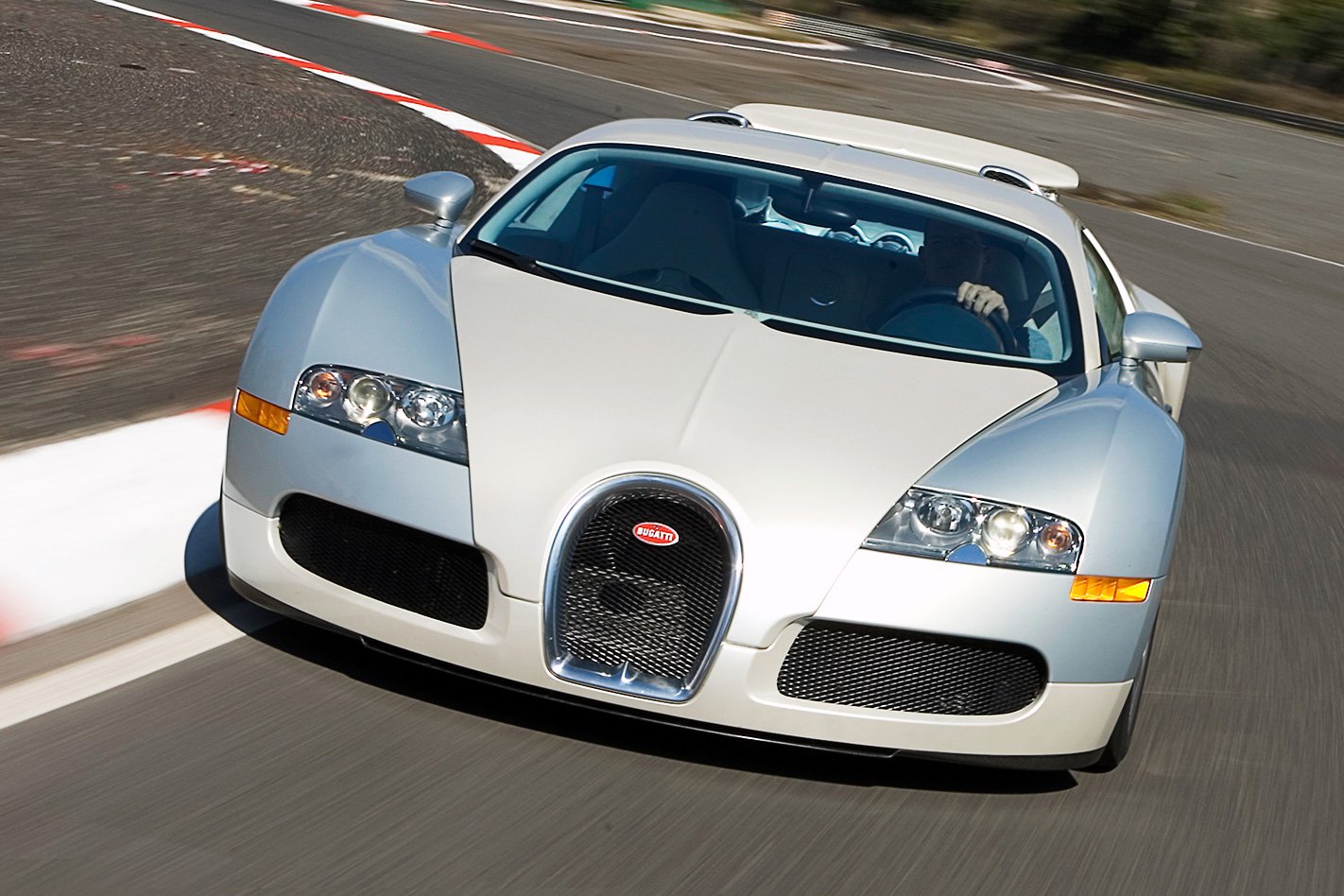
Under lights, its gorgeously finished details glisten, among them its enormous polished wheels (19.7-inch front, 21.3-inch rear – they’re metric) and two oversized aluminium air ducts mounted on top of its exposed, mid-rear-mounted monolith of an engine.
But it’s the Veyron’s no-expense-spared cabin that immediately beckons. As I pull open the all-aluminium door, the frameless glass drops a few centimetres, and I lower myself easily into its surprisingly slim-backed, race-style seats, then inhale. Immediately, there’s a sense of something familiar. It’s certainly not the Veyron’s exquisite, turned-aluminium centre console or the seductively cold, expensively weighty feel of its aluminium switchgear. It’s the smell. For all the Bugatti’s bespoke, hand-built exclusivity, for all its swathes of soft leather and exuberant touches of real suede, its aroma is Volkswagen Pour Homme. Not the addictive petrol/oil mix of my own 1966 air-cooled Beetle, but the richness of a top-line, leather-laden Touareg. If such a comparison can be deemed criticism, it shouldn’t be, because sitting in the one-million-Euro ($1.6m) Bugatti is an extremely rare privilege. Driving it tomorrow will be even more so …
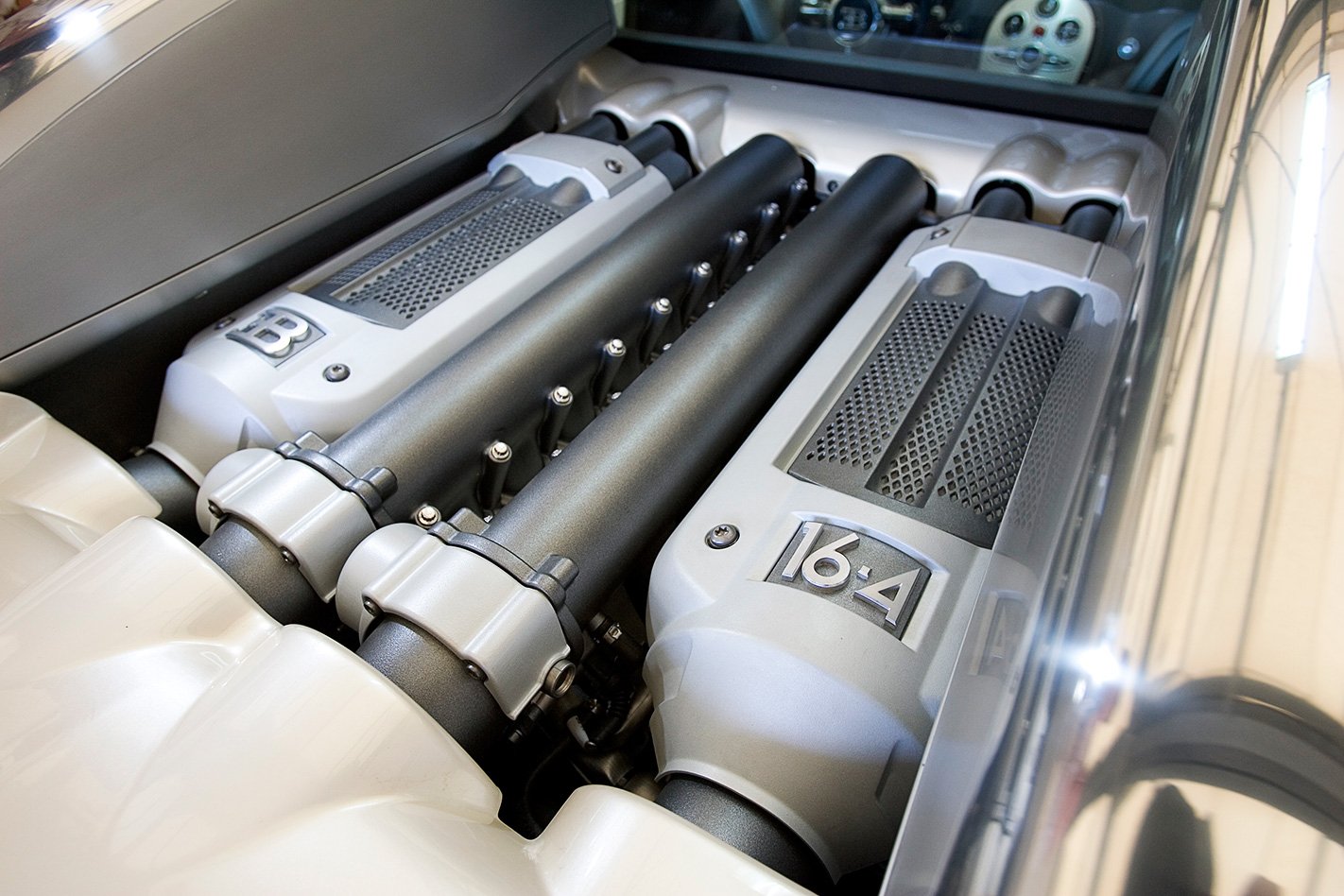
BUGATTI’S Veyron 16.4 was designed to achieve two almost implausible targets set very early in its development by ex-Volkswagen chief (and father of the legendary Porsche 917 and Audi Quattro) Ferdinand Piech: 1000 horsepower and 400km/h. Until now, the Veyron has grabbed more headlines for its troubled development than for its potential position as a landmark achievement in the history of the automobile. But now that I’m just minutes away from driving it, it’s the Veyron’s immediate journey ahead that matters.
It’s difficult not to be wary of bending or scratching or – dare I even contemplate it – writing off the world’s fastest, most expensive car ever.
But the pressure was applied even before I left Australia: “Mate, if you stick it in somewhere, you’ll be on the front page of every newspaper in the world,” chorused friends and colleagues. Right now, being filmed naked in the showers on Big Brother Uncut seems a more respectable path to achieving celebrity.
My chaperone for the drive is Oliver Schauerte, a Wolfsburg-based Bugatti engineer in his mid-30s whose sizeable German frame is easily accommodated by the Veyron’s spacious two-person cabin. There’s little room to store luggage – merely a small, Vuitton-esque compartment beneath the Bugatti’s carbonfibre bonnet, a pair of Audi-style flip-out door bins and a carpeted compartment behind a leather-trimmed door between the seat backrests.
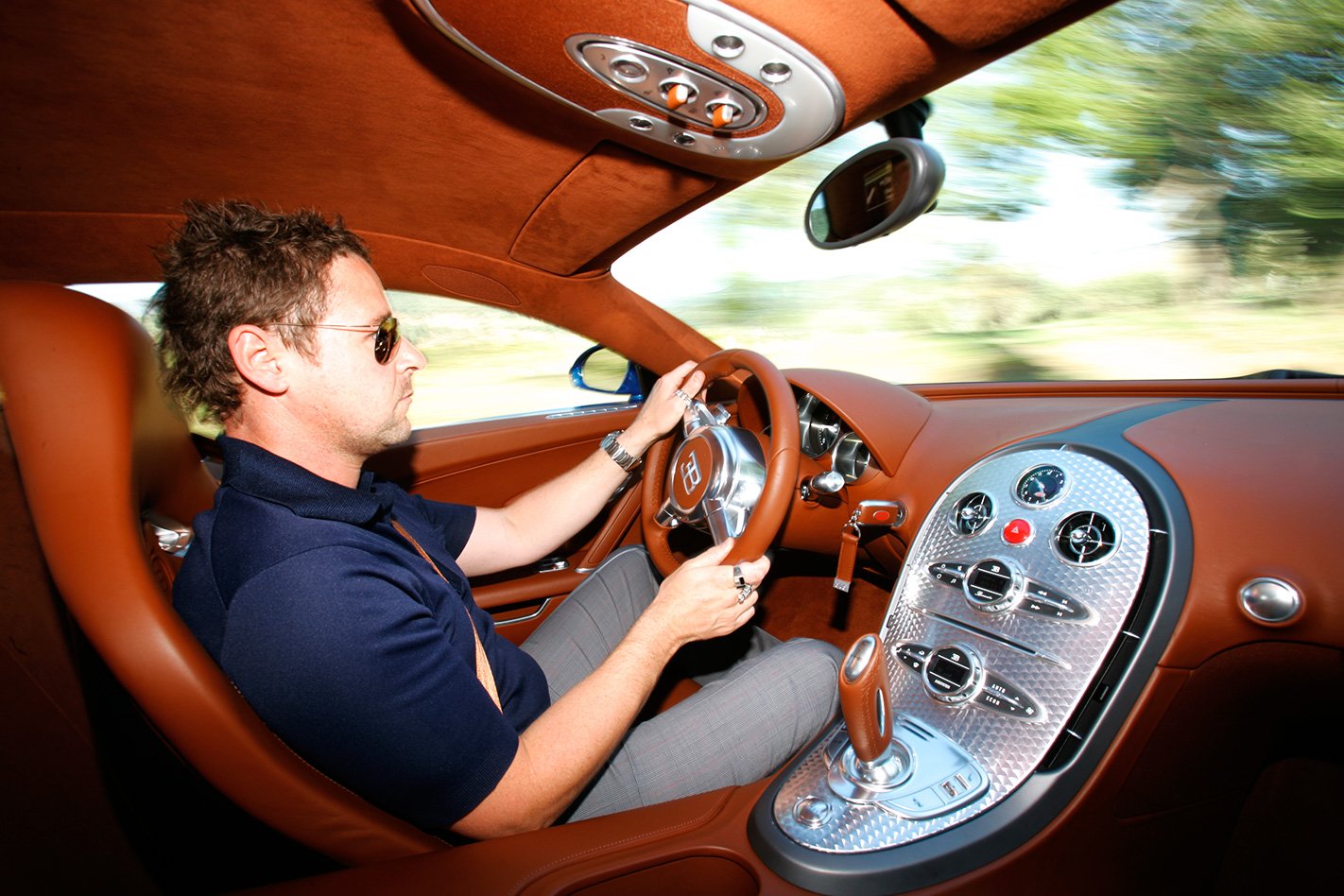
I nervously attempt to locate the driver’s seat buttons, only to discover it’s manually adjustable – the backrest via a chunky, beautiful-to-touch aluminium lever; the seat base via a longitudinal bar with a rubberised, knurled grip.
Not surprisingly, the ignition key feels like aluminium, and, equally expected, the Veyron kicks into life via a large ‘start’ button below the trigger-like gearstick. The W16’s starter motor whirrs mechanically before an all-encompassing, stereophonic rumble reverberates off the brick wall behind the car, providing the merest hint of its capabilities.
To date, the fastest and most powerful car I’ve driven is Lamborghini’s 426kW/620Nm Murcielago- capable of 0-100km/h in a claimed 3.6 seconds and 330km/h flat-out. Stupendously fast, yet the 736kW/1250Nm Bugatti performs 0-100km/h in a stunning, F1-rivalling 2.5 seconds and tops out at an electronically limited 407km/h. If not restricted by its custom-designed Michelin PAX run-flat tyres, the Veyron would max-out somewhere around 430-440km/h. And I’m about to road test it. In Sicily. On public roads I’ve never driven before. With jet lag …
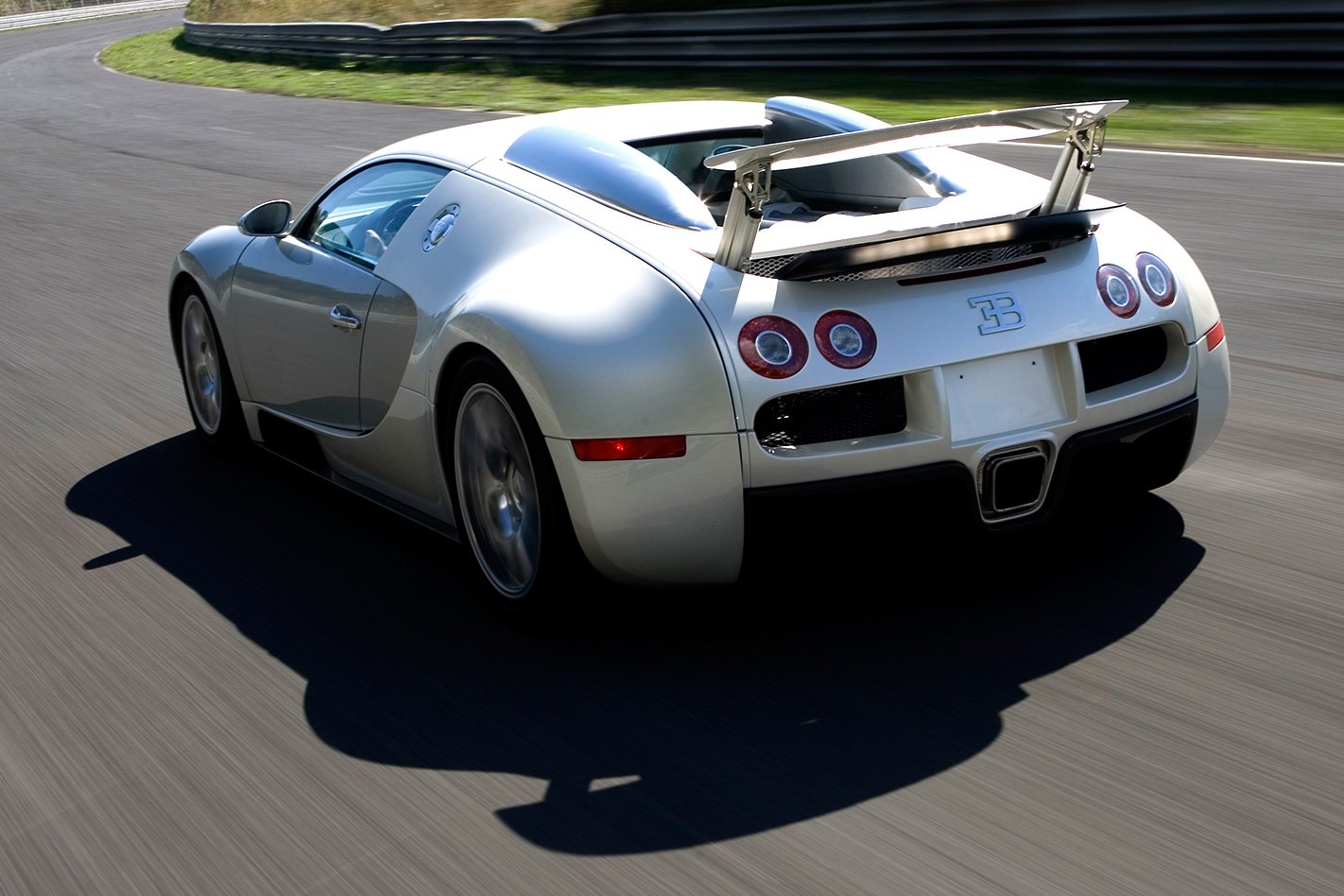
BEYOND the Veyron’s sensual leather-and-aluminium steering wheel (with Ettore Bugatti’s insignia dominating its circular centre boss), the first thing you notice is the appalling turning circle. But its steering is fast-geared and does a far better job of disguising the Veyron’s unwieldliness in tight environs than, say, the lumbering manoeuvrability of an Alfa GTA. And then there’s its torque – 1250Nm, flat from 2200 to 5500rpm. With its seven-speed DSG in Drive, you need only a whiff of accelerator to make the Veyron move smartly, yet its throttle actuation is progressive enough to prevent it from feeling overly sensitive.
Pulling onto the two-lane autostrada near Cefalu, heading towards the legendary twisties of the Targo Florio’s grand circuit, I tentatively set the pace between 180 and 200km/h – in a 110 zone, with moderate traffic.
Fortunately, we can watch the speedo here for performance, not caution, as the Carabinieri – Italy’s police – have been notified about the half-dozen Veyrons that will be out driving enthusiastically during the six-day launch. Word is the Sicilians are happy just to have a Bugatti back on their island, and that the Carabinieri will turn a blind eye to speeding misdemeanours. Here’s hoping.
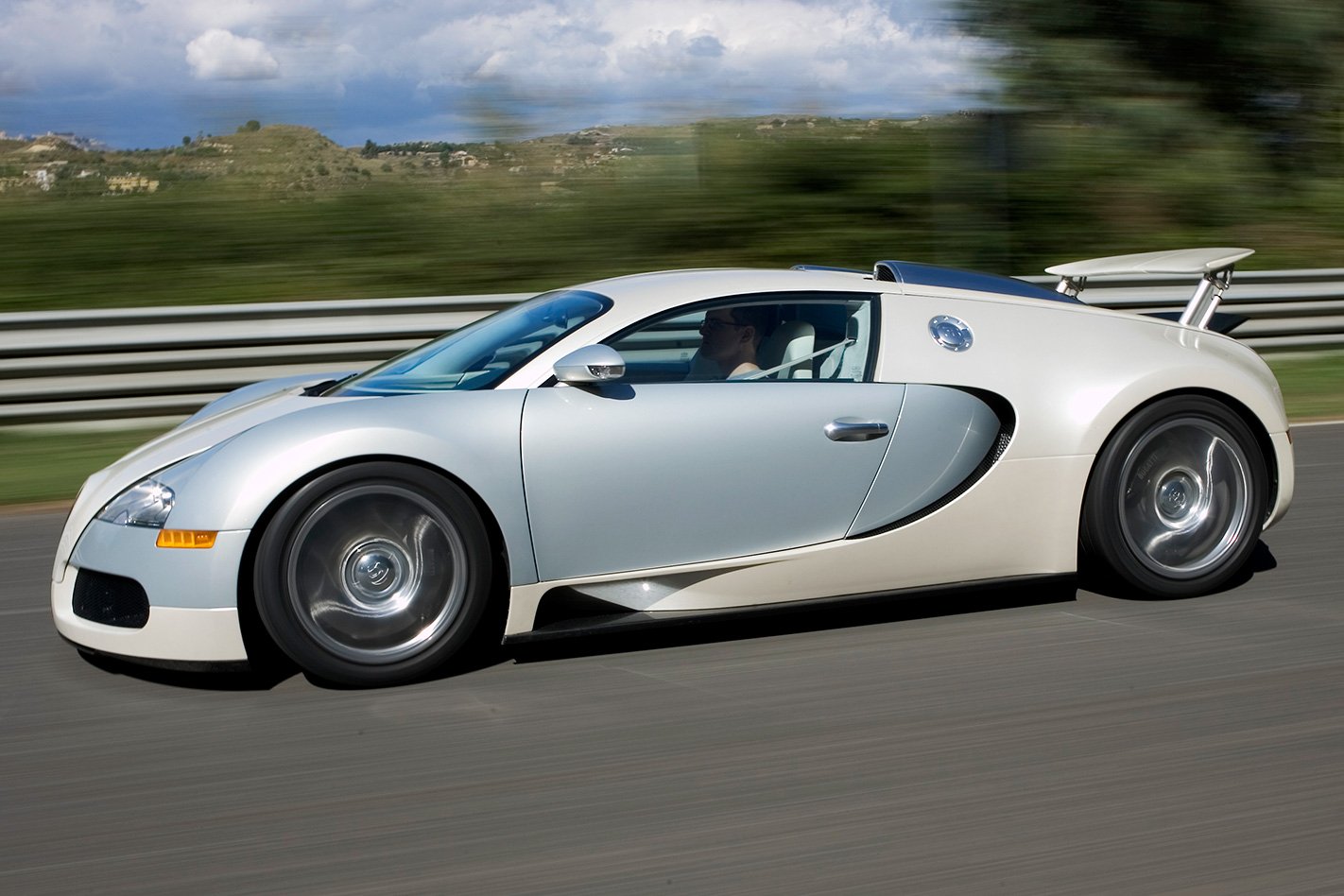
At 210km/h, steering through curving two-lane mountain tunnels, I ask Oliver if I’m driving too slow. “Others have driven quicker,” he says diplomatically, so I nudge up to 240 on the straights and try to stay focused. What strikes me, though, is how effortlessly easy it is to steer the Veyron at these speeds, so moderate relative to its astonishing potential. Above 220, the Veyron drops its ride height from Standard (125mm all round) to Handling (80mm front, 95mm rear), yet in either automatically selected mode the all-wheel-drive Veyron’s exquisite poise is quite marvellous. Its balance rests delicately, yet reassuringly, on its outside rear tyre and its sublime steering inspires enormous confidence – intimately connecting with its driver like a 911, yet wonderfully progressive and creamily weighted either side of centre.
Everyone expected the Veyron to be ballistic, but few could have predicted that its steering, handling and ride would be so polished, and so beautifully realised. Despite some expansion-joint slap on the autostrada – amplified by the carbonfibre structure’s innate noise-conducting qualities- the Veyron is actually very refined, and its ride quality, while undeniably firm, is quite comfortable.
After 20 minutes behind the wheel, I finally have the courage to test maximum thrust. I flatten the Veyron’s metal accelerator pedal and hang on, briefly noticing the tacho needle rushing to around 5000rpm in my peripheral vision before four turbos ignite and all hell breaks loose. There’s no time to register the 6600rpm-redlined centre tacho (cutout is six-eight), let alone the smaller 450km/h speedo to the right, or the slightly unnerving 1000hp power dial to the left.
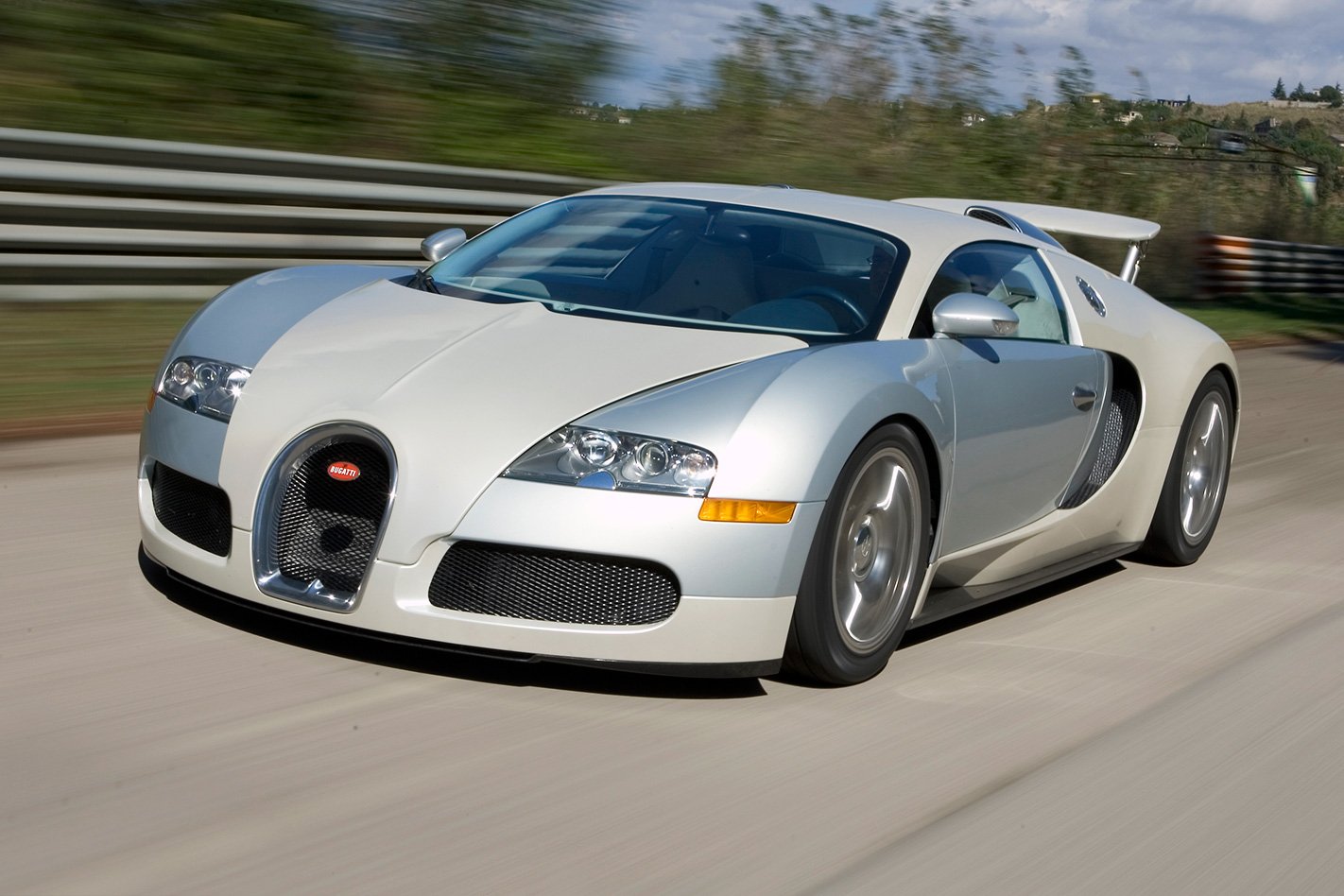
Instead, I’m gob-smacked – stunned by the force that slams my head back into the seat, and simultaneously thrilled and petrified by the Veyron’s phenomenal, absolutely merciless acceleration. The Bugatti catapults forward, plunging headlong towards the horizon with an intensity that suggests Bugatti isn’t lying about the Veyron’s claimed performance: 200km/h from standstill in just 7.3 seconds – 2.5sec quicker than the previously-fastest-production-car-on-Earth McLaren F1 – and 300km/h in 16.7sec- half the time taken by Porsche’s flagship, the Carrera GT. And then there’s the sound – like a great wall of thunder, rising and falling rapidly as the Veyron’s flawless seven-cog DSC shifts with perfection from gear to gear. It’s akin to the bellow of an offshore powerboat, matched to the force of being launched into space. I imagine.
Time to try some corners – old Targa Florio road sections littered with pottering Fiats and even the odd lump of cow. Here, the 1888kg Veyron astounds with its agility, feeling almost chuckable and remarkably light on its feet.
Pushed hard in tighter corners, the Veyron’s balance leans towards mild understeer, but fast directional changes deliver a hint of neutralising oversteer while barely troubling the stability control. Large doses of throttle exiting slower corners sees the ESP symbol flicker only momentarily – particularly when the DSG’s Sport mode is activated to prompt lower, punchier gears.
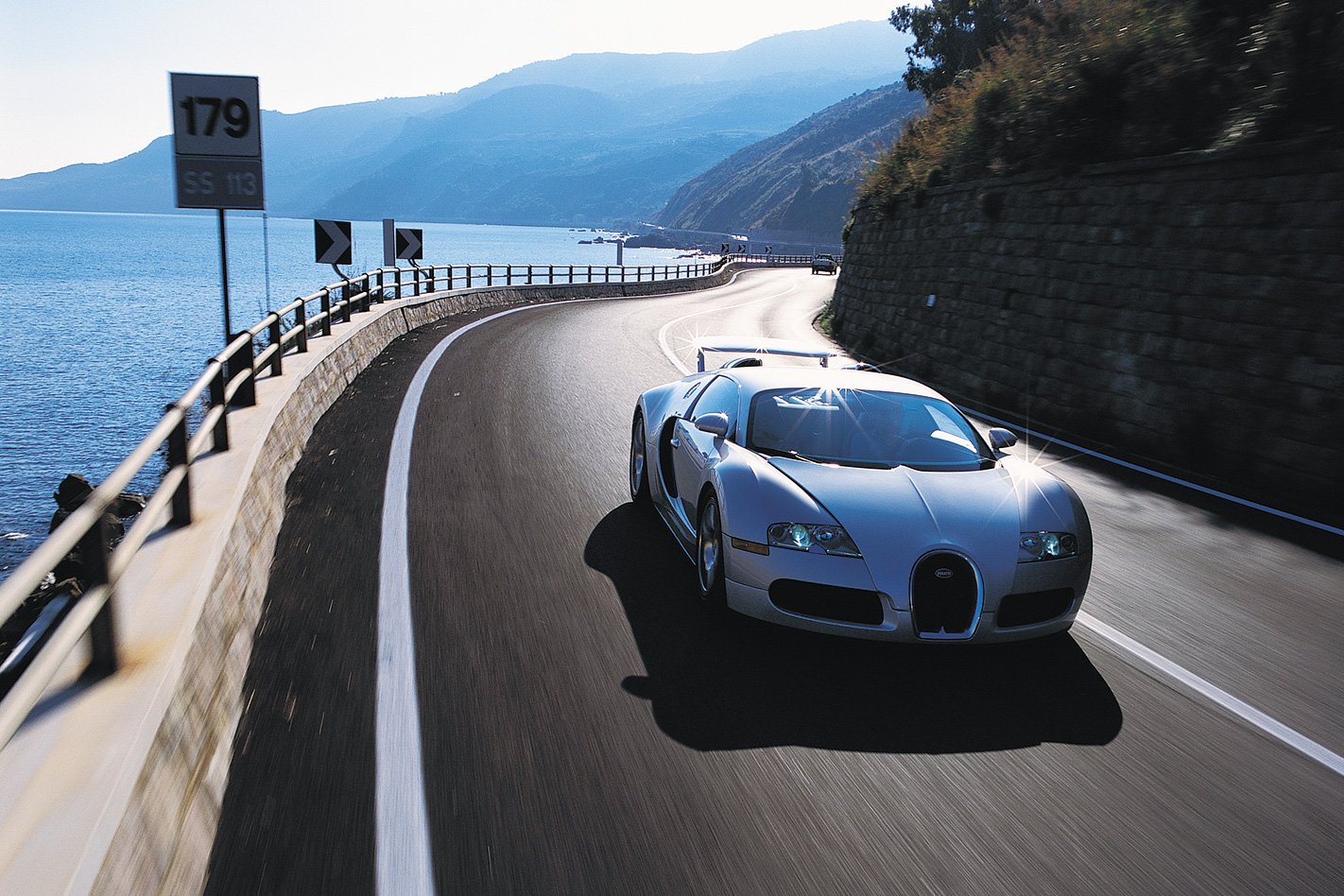
This mode extends the Veyron’s unbelievable engine to its rev limit, while adding wicked, bellowing throttle blips when downshifting. Approaching Castelbuono and the inevitable end of my Veyron experience, a few irresistible overtaking opportunities loom. The first is a pair of tourist-filled coaches. Too easy. The next is a line of three cars and a motorcyclist. Once again the Bugatti’s tacho spikes momentarily before 1.9 tonnes of sublime supercar demolishes distance at record pace. Finally, I’m stuck behind the Carabinieri – driving an old Fiat Panda. I turn to Oliver for advice: “Will he mind if I overtake him?”
“Umm, I don’t really know,” replies my companion, looking slightly bewildered.
I glance down at the Bugatti’s speedo and note we’re doing 120km/h. In a 50 zone. On the trip, I also notice our average fuel consumption is 6.4mpg (44.1L/100km), and remember that, at 400km/h, the Veyron can drink its 100-litre tank dry in just 12 minutes …
The Panda indicates and turns off. Ahead lies my final moment driving the most ambitious, mind-altering car ever. I can’t resist tromping the Veyron’s throttle one more time, and feeling the air virtually squeezed out of me. And yet again I’m left speechless; not because I’ve run out of things to say, but because the Bugatti Veyron 16.4 is such a marvellous automotive achievement; one that may never be bettered. Ever.
I arrived in Sicily questioning the $1.6 million Bugatti’s relevance; I leave merely celebrating its existence.
The Melbourne Grand Prix won’t go down as a highlight of Daniel Ricciardo’s career, putting it on par with last year’s bungled Spain and Monaco Grands Prix. But the Aussie star’s signature smile remained intact.
It went from bad to worse for the Red Bull Racing driver. After a crash in Saturday’s qualifying race, which put him in 10th position on the grid, Ricciardo’s car needed a gearbox replacement that forced a five place grid penalty.
And if that wasn’t enough of a setback for Ricciardo’s hopes for a home track win, his new gearbox faulted before the race even started, forcing him to sit in pit lane for the first couple of laps. By this stage, there was no chance of Ricciardo gaining a podium finish, but he was then further robbed of even getting to cross the finish line when an engine failure forced the Aussie star to retire.
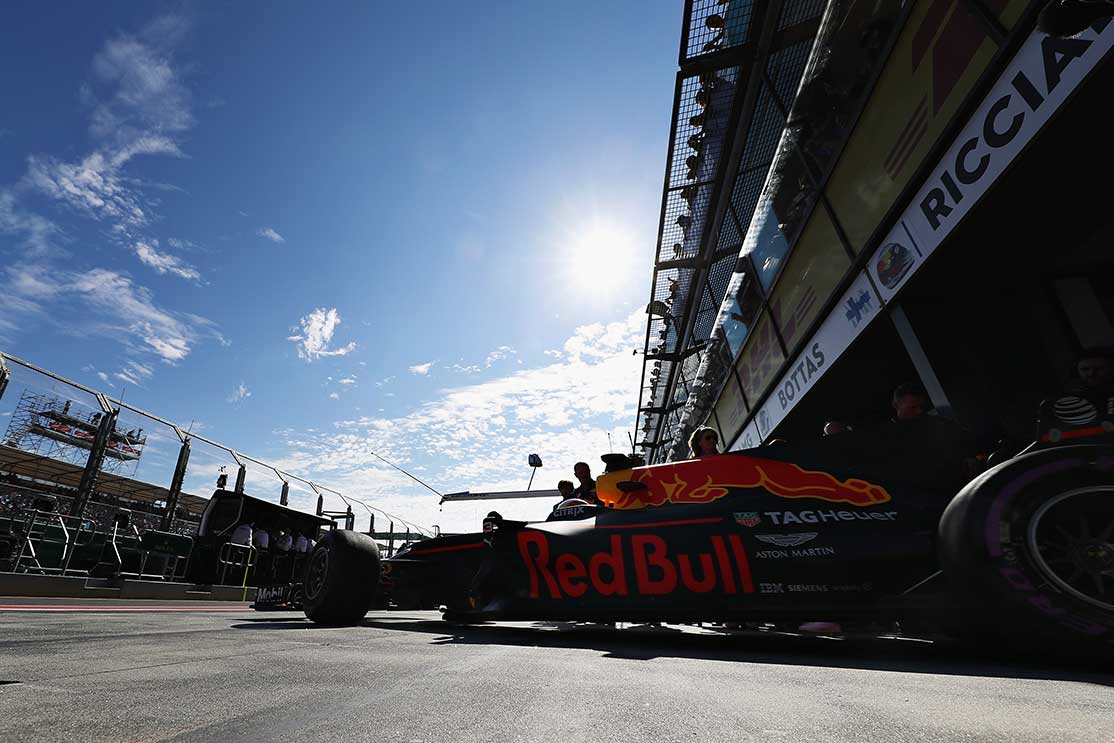
His frustrations following the forced retirement were obvious, asking to “get the f*** out of here” following his engine conk, and yet, in true Ricciardo-spirit, the smiling assassin remained humbled and dignified in interviews following the event, expressing disappointment for his fans above his own.
At the launch of Quintis Sandalwood last week, which Ricciardo is ambassador for, the star told Adam Gilchrist his fans were his greatest source of energy. “When I get on the track and see all the crazy Aussies shouting my name, then that certainly gets me any energy I may have lost in the last few days,” he said.
When we met with the star following the launch, we quizzed him on how he battles the emotional rollercoaster of Formula One.
“Simple answer for both – alcohol,” he said.
“Winning; the high is so big that literally by the time I jump in the rental car, when all the media is done and I leave the track… on the way to the hotel or the airport, that’s when you come down.
“And the loss… I think being around friends helps you kind of forget about it for a bit, and also, for me, just perspective.
“… There are so many worse things happening out there, I don’t want to be a spoilt kid, I never want to be that person, so perspective is a big one.”
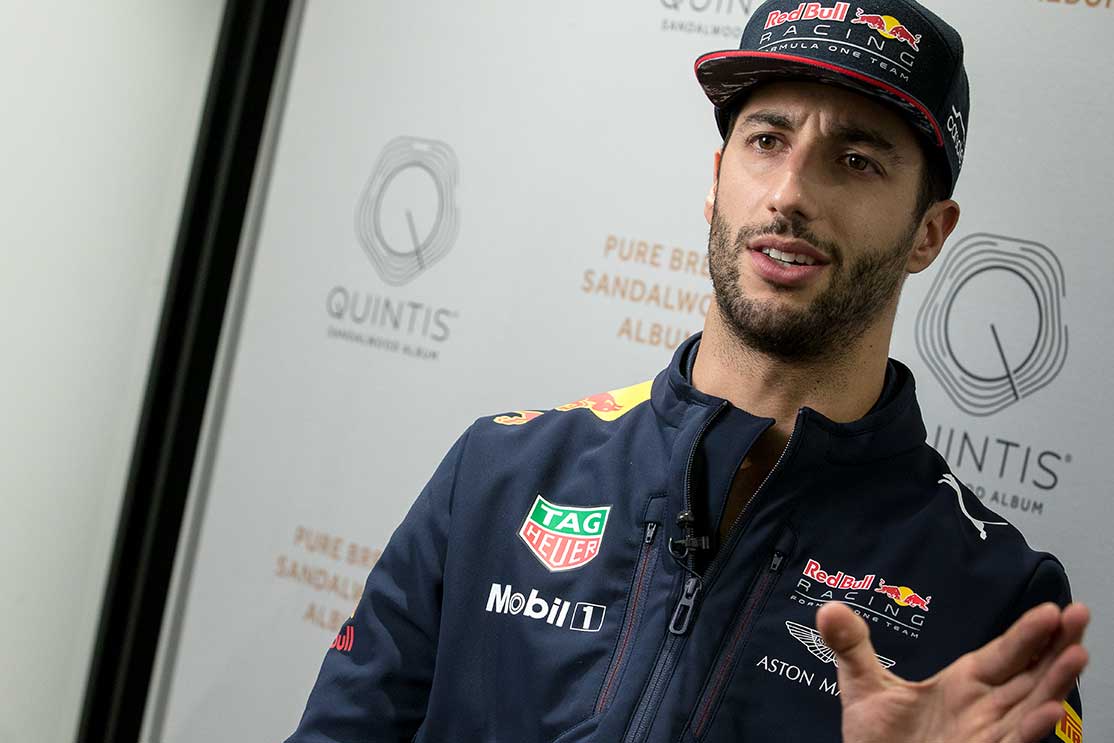
Ricciardo may be just one of 14 Australian Formula One drivers to ever grace the sport, but it’s this attitude that gains him the respect of so many. So what’s his secret to keeping a level head despite the fame, wins and, devastating losses?
“I still see myself as me… I’ve definitely changed but not necessarily because of F1 or fame, it’s just life…
“I think I still feel like the same kid I was when I was young in terms of me in my own skin. My friends still treat me the same. If they started treating me different then I’d probably think otherwise.”
The new Aston Martin DB11 has been called the most important model in the company’s 104-year history. And they are Aston Martin’s words, not ours.
Its importance is due to the fact that Aston’s ageing sports car line-up was in dire need of a refresh – the DB11’s DB9 predecessor was launched in 2003. As the model to launch Aston’s new era, it was vitally important the DB11 succeed in order to fund development of future models.
In a bid to generate consumer confidence, Aston Martin CEO Andy Palmer announced he would personally inspect the first 1000 DB11s off the line and supply his email and phone number to those buyers so they could contact him personally should any issues arise.
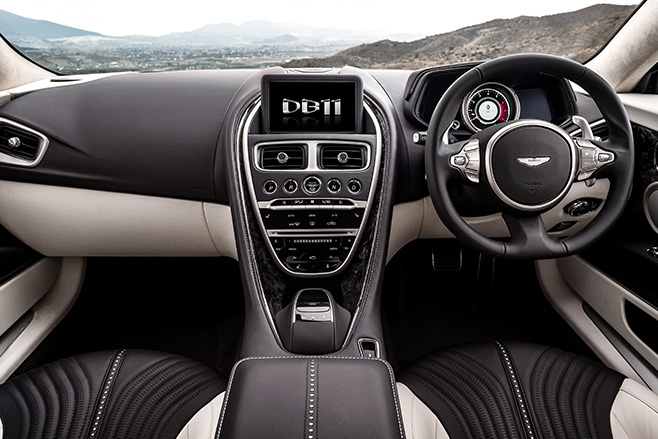
“The main reason for doing it was I wanted to send a message to the company that quality is everything. I wanted to give a guarantee and a sense of confidence to the first 1000 buyers, because there’s always that underlying thing of don’t buy one of the early cars because they’re still getting them right. I wanted to say ‘look, I’ll guarantee it, here’s my telephone number’.”
“The first six weeks was difficult because we were having problems with suppliers coming up to speed, missing parts, and it was quite hand-to-mouth. I think in the past, because the business has always run on a shoestring, the cars would have gone out, and they would have been fixed in the dealers.
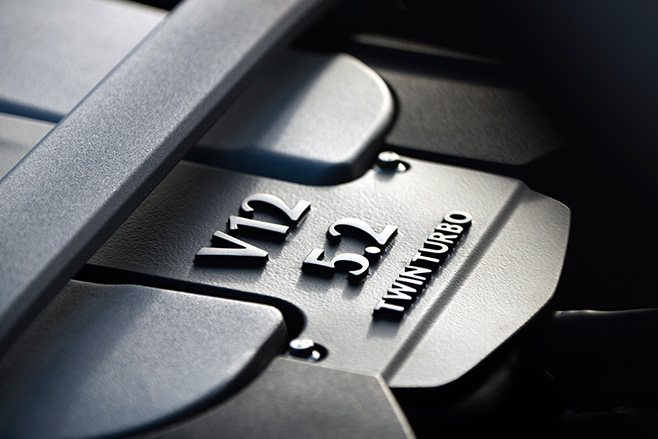
“Our business plan was to do 1000 DB11s last year, we did 1005, but we worked 24/7 and all of Christmas, so it was a struggle to make it, but I can guarantee not one car went out that I didn’t inspect and I wasn’t happy with.”
Aston Martin is about to undertake the biggest product offensive in its 104-year history, planning seven models in seven years, with a new derivative every nine months.
Since the appointment of CEO Andy Palmer in October 2014, the focus has been on stabilisation – Aston Martin has been profitable in only two of its 104 years of operation – with a series of limited-run specials such as the GT12, GT8 and Vulcan keeping the company afloat while Palmer formulated his ‘second century plan’.
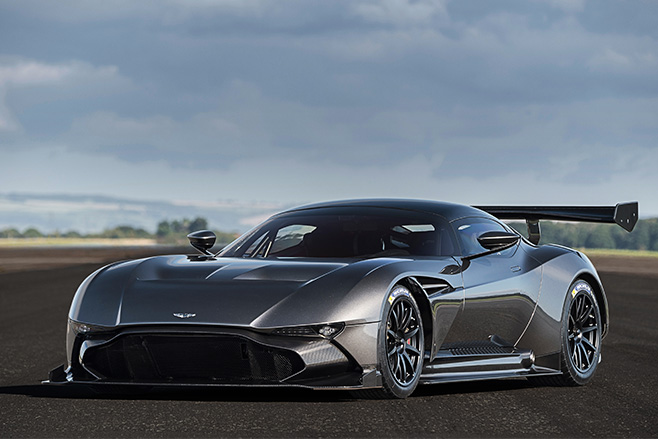
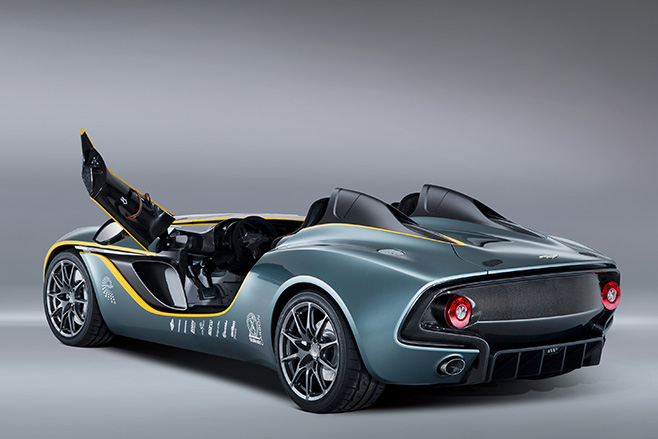
In addition to these new models and their derivatives, Aston plans to create two highly profitable special-edition models, such as the Vantage GT12 or Vanquish Zagato and two bespoke cars, such as the GT12 Volante or CC100, each year.
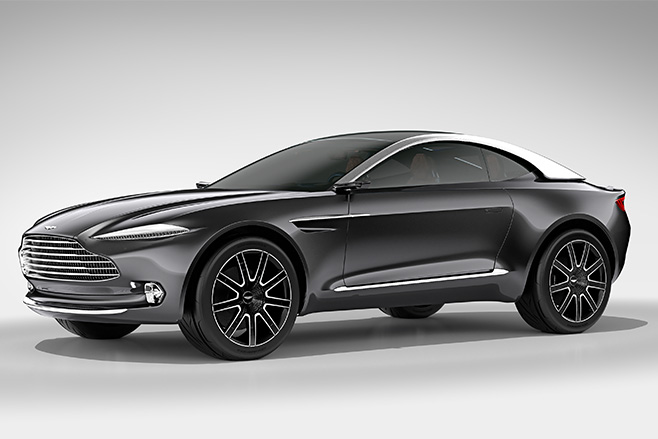
With its core sports car range replaced, Aston will then turn its attention to expanding its product portfolio with the DBX, a new mid-engined sports car to build on the success of the forthcoming Valkyrie hypercar and two large luxury sedans, currently dubbed Lagonda 1 and Lagonda 2.
Palmer stated that each new model “has to be the most beautiful thing in its segment” and that sports car production will be capped at 7000, with a new facility in Wales able to add another 7000 SUVs and large sedans once and up running, which leaves plenty of room for growth for a company that only sold 3700 cars in total in 2016.
SCOTT McLaughlin has done what Fabian Coulthard, Scott Pye, and Marcos Ambrose before him could not; winning Roger Penske his first Supercars race.
The popular Kiwi came home ahead of a chasing field in the first of four non-championship Supercar races at the Albert Park Grand Prix circuit.
The victory is not the first for the DJR Team Penske squad, which has an illustrious history, but it is the first since US racing giant Roger Penske took control of the operation.
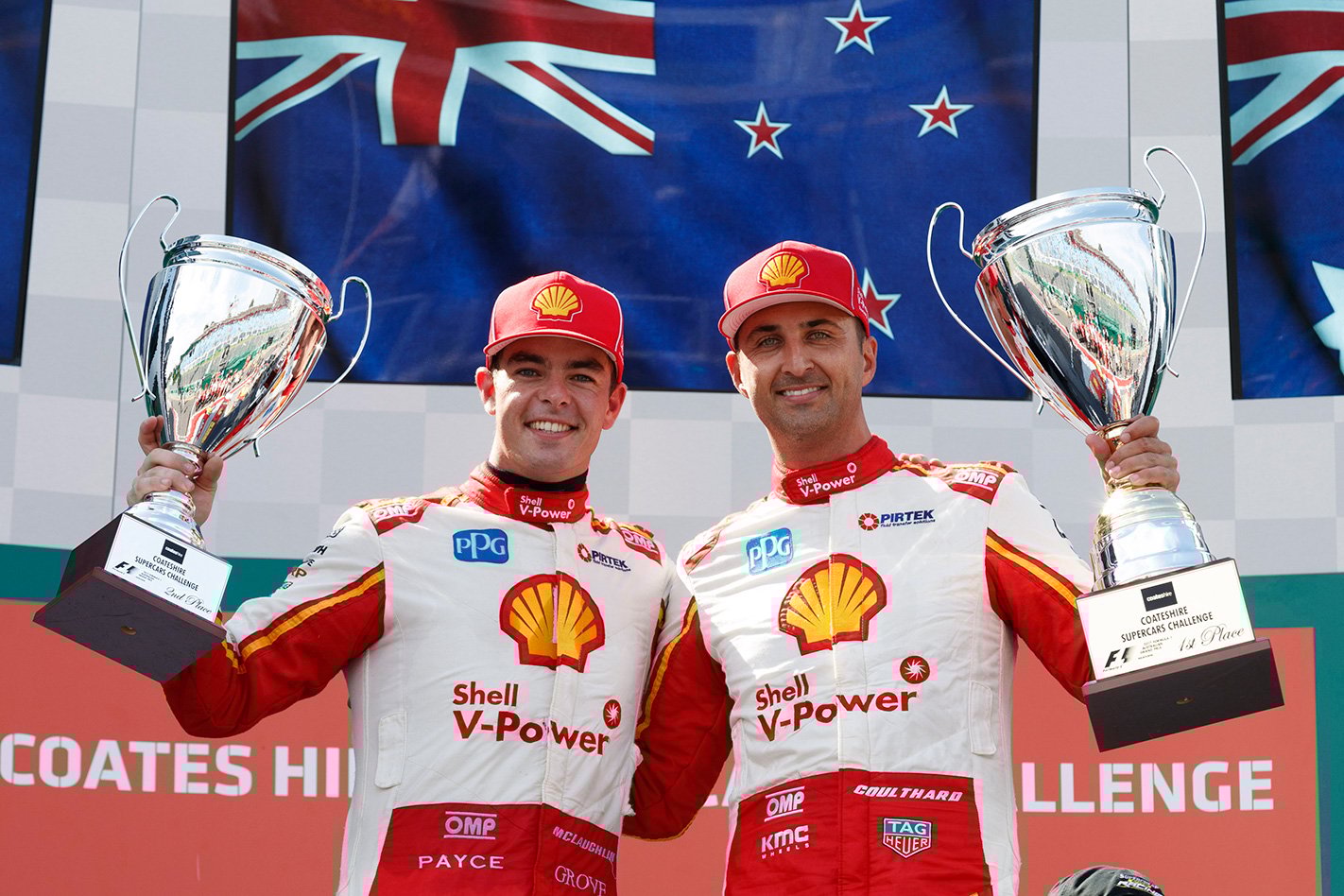
The DJR Team Penske pair put on a show of force, with Red Bull Holden Racing Team’s Jamie Whincup and Shane van Gisbergen having no answer for the dominant Ford FG X Falcons.
It was a Blue Oval clean sweep for the weekend when Chaz Mostert slipped to a race four victory. Mostert ended a 19-month winless streak when both Coulthard and Whincup fell from the lead of the race after both suffering passenger side tyre punctures.
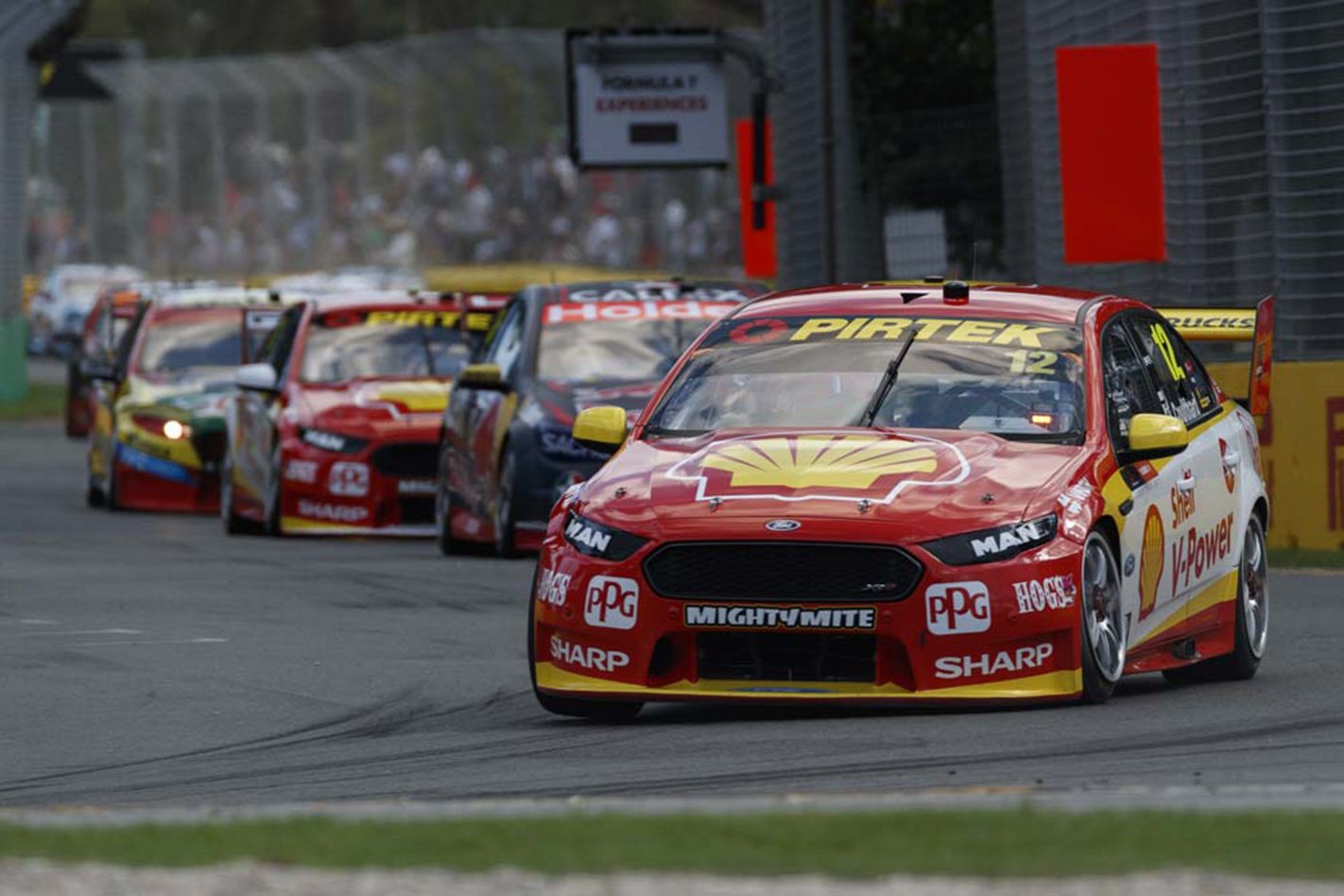
It may not have been for championship points, but three from four wins is a show of force from the DJR Team Penske squad, and a warning that Red Bull Holden Racing Team won’t have it all their way in 2017.
There is little doubt the Ford squad will be looking to replicate when they get to Symmons Plains in the Apple Isle in two weeks.
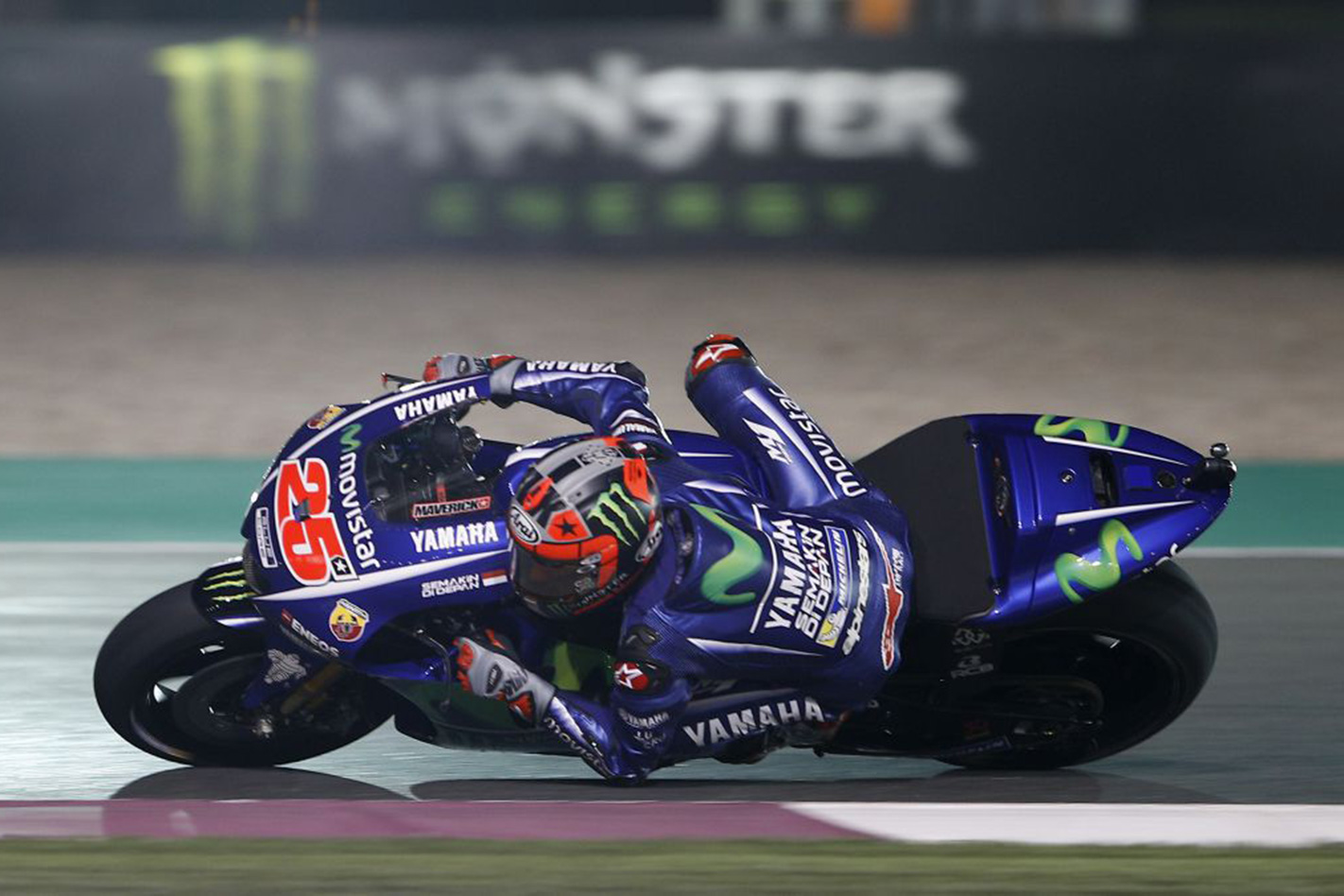
Yamaha’s Maverick Viñales cemented his place as a MotoGP superstar of the future – maybe of the present – with a brilliant win in a wild Grand Prix of Qatar, round on of the world championship, Monday morning Australian time.
Ducati’s Andrea Dovizioso and Viñales’ team-mate Valentino Rossi took the other podium spots in an incident-packed race.
Aussie Jack Miller, from 16th on the grid, moved forward to finish a strong eighth.
Fastest through all official pre-season test sessions, the Spaniard carried his uncatchable form to the Losail circuit in the desert of Qatar, where even the weather gods couldn’t upset his grip on the season opener.
Rain, thunder and standing water obliterated all chances of qualifying across all classes, with dangerous track conditions forcing the FIM to settle on a grid line-ups based on free practice timesheets.
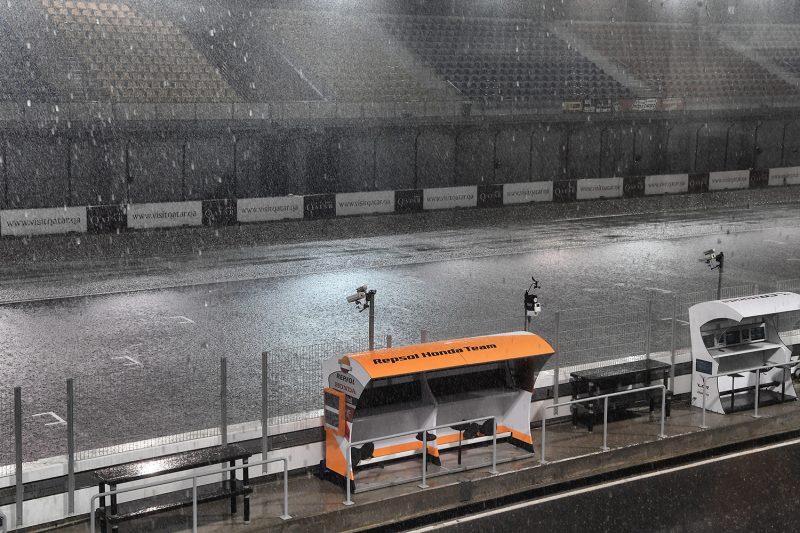
The rain that ruined Saturday returned just before the scheduled start, forcing a slight delay and reduction in race distance from 22 to 20 laps.
When the race did start, rookie (and Moto2 champion) Johann Zarco rocked the regulars by jumping from the second row to the lead until falling on lap seven.
Dovizioso then assumed the front running ahead of duelling pair Marquez and Suzuki’s Andrea Iannone.
As he did last year at Qatar, Iannone, aka The Maniac, slipped off at half distance while Marquez lost his earlier pace when his tyres faded.
Viñales, who made an ordinary start, and Rossi, who made a good one, steadily moved forward where the Spaniard launched an attack on the flying Dovizioso, who fought back tenaciously.
Dovizioso and Viñales repeatedly took turns to lead, the Ducati’s superior urge proving useful on the straights.
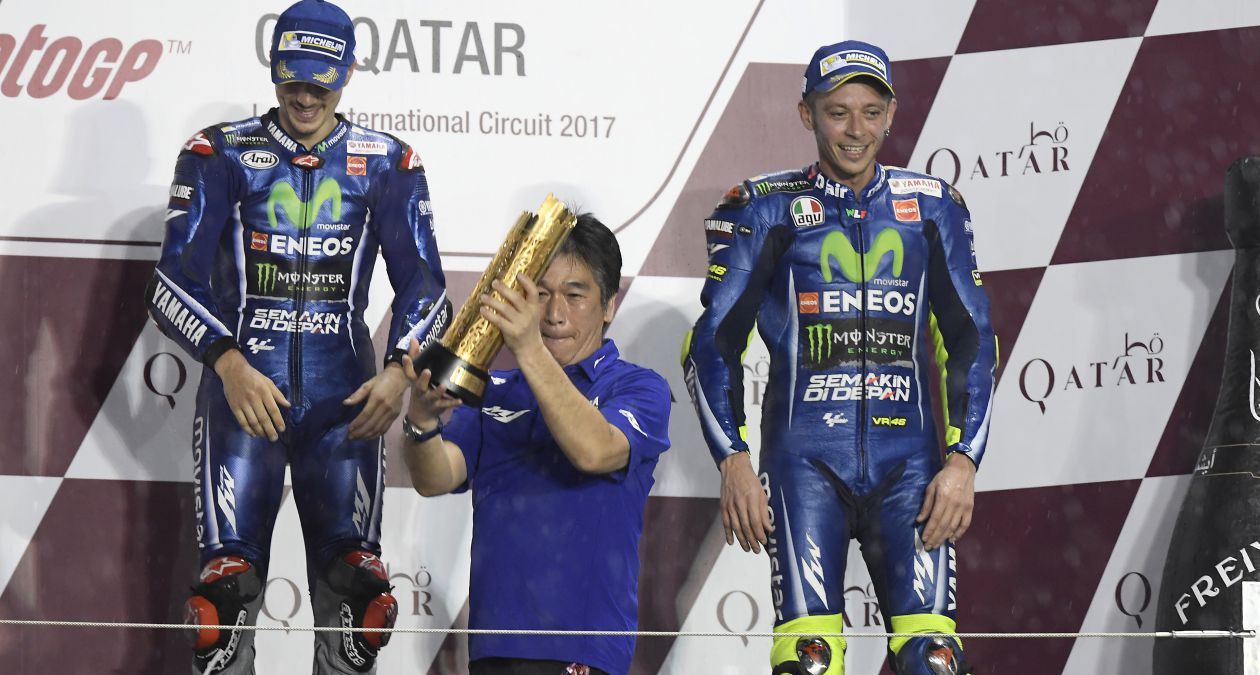
Rossi was pleased with third after such a lowly start.
Marquez was left back in in a distant fourth, just ahead of Honda team-mate Dani Pedrosa.
Aleix Espargaro produced an impressive debut ride for Aprilia with sixth, ahead of Scott Redding (Pramac Ducati), Miller (Marc VDS Honda), Alex Rins (Suzuki) and Jonas Folger (Monster Yamaha Tech 3).
Lorenzo’s chances of a good result probably disappeared on the opening lap when he ran wide and dropped to 16th. He ended up an unsatisfactory 11th and cannot have enjoyed seeing the man who replaced him at Yamaha celebrating victory.
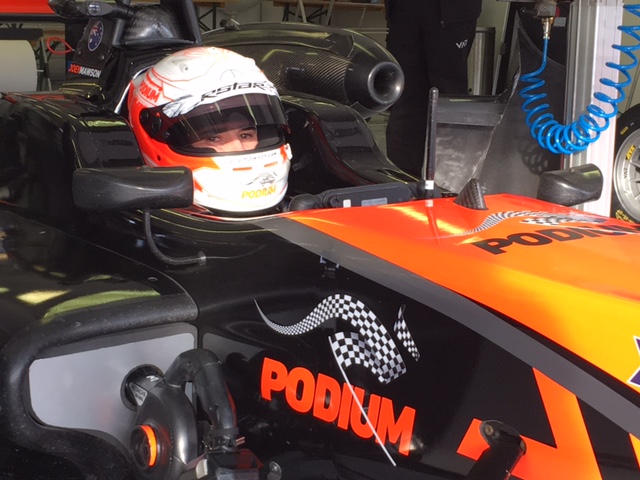
Mawson prepping solidly for Euro F3 launch
Australian Joey Mawson is getting plenty of test laps as he comes to grips with the car he will race in the 2017 FIA Formula 3 European Championship.
Mawson recently completed several private tests in Spain and Portugal with his Van Amersfoort Racing squad giving him and the team a strong base prior to official tests at the Hungaroring last Friday and Saturday.
Today the PODIUM-backed driver heads to Austria today for a two-day test Tuesday and Wednesday at the Red Bull Ring.
“Our private test days were all about getting a solid base to start the year and gaining a real understanding of the effect of the various set-up changes,” said Mawson.
“As this is my first year in an F3 car I’m also learning about all the different areas of the car that can be changed – it’s a lot more complex than the F4 car.
“The Hungaroring is one of only two circuits in the entire championship that I’ve never driven on, so to be able to get some laps before the season starts [is important].”
Twenty cars from five different teams will contest the 2017 championship , which begins mid-April at Silverstone in England. Mawson will be one of five ‘Rookie’ drivers contesting the prestigious championship for the first time. His main rival from 2016, Mick Schumacher, has also made the step into the European Formula 3 Championship.
Joining Joey Mawson in the Van Amersfoort Racing garage for the year ahead will be Pedro Piquet, Harrison Newey and David Beckmann.
The 2017 FIA Formula 3 European Championship comprises 30 races across 10 events throughout Austria, Belgium, England, France, Germany, Hungary, Italy and the Netherlands.
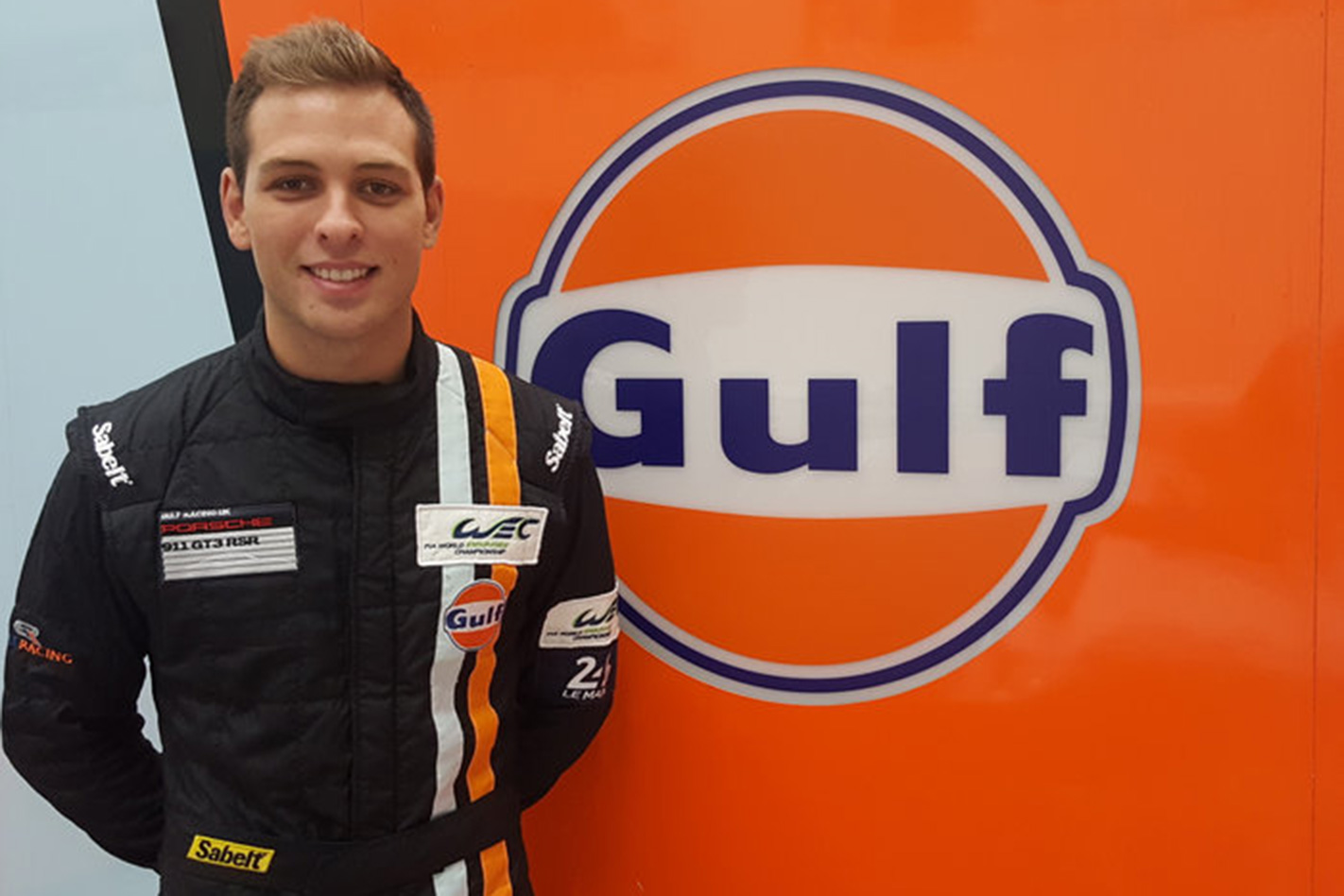
Australian Nick Foster is to strut his stuff in the 2017 World Endurance Championship, where he’ll be part of Gulf Racing’s campaign in a 991 RSR GTE
The 2015 Australian Porsche Carrera Cup Champion and 2016 German Carrera Cup goer is to contest the Pro-Am category of the full championship with Gulf, the British team he raced with last season.
“To compete in the WEC is a dream come true and in the famous Gulf Racing colours is an absolute honour,” said Foster.
Gulf team manager Matt Beers gave the Aussie a big tick: ‘It’s great to have Ben back with us as our Pro driver. He proved to be a match for the Porsche factory drivers in the same machinery during 2016, is a real talent and we couldn’t think of a more suitable person for the job.
The WEC Prologue next month will give Foster his first taste of the RSR.
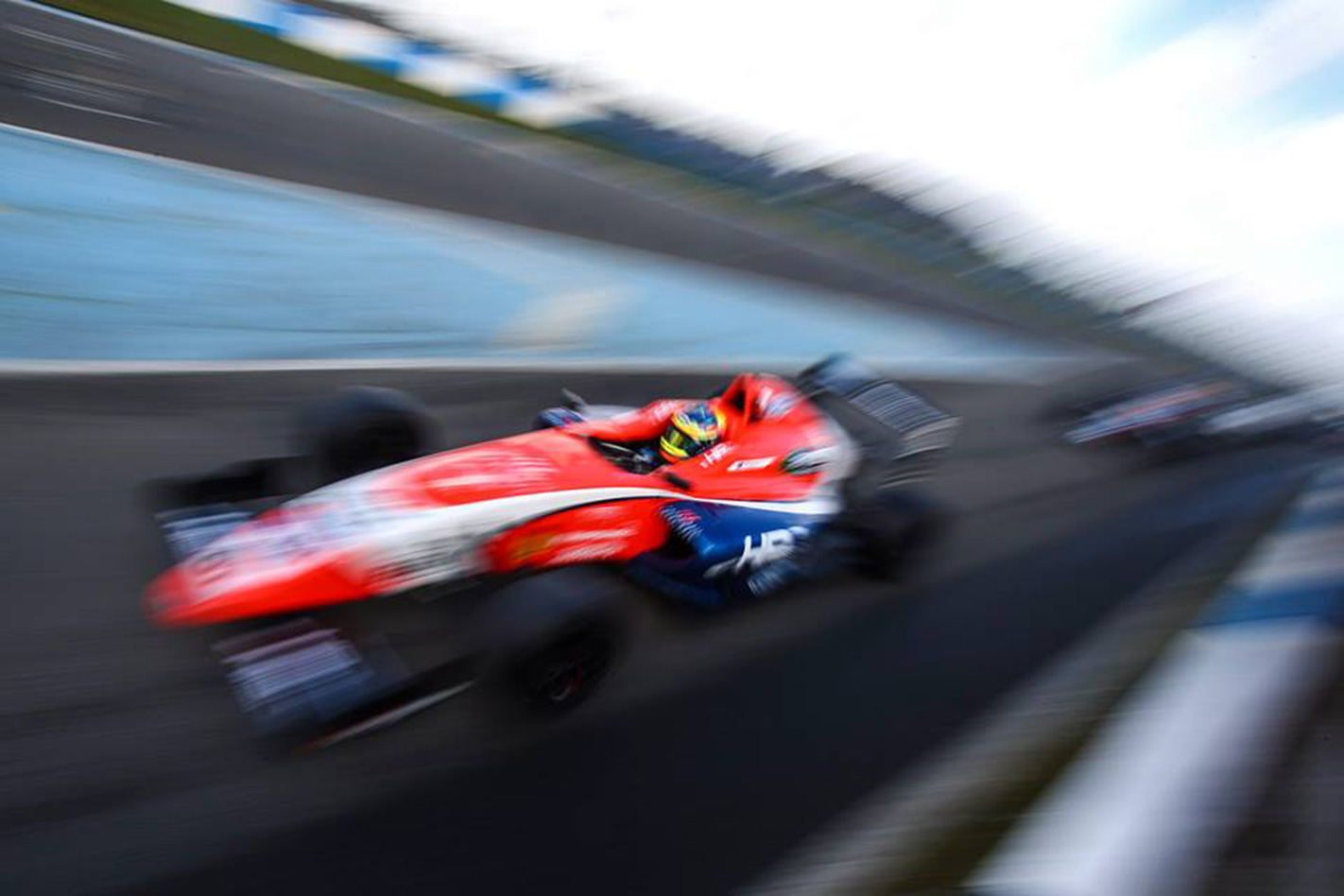
With a target of following Daniel Ricciardo to F1, Melbourne youngster Oscar Piastri has already shown his move to Europe to contest the 2017 British Formula Four Championship could pay dividends, the 15-year old heading the time sheets in the final pre-season test at Rockingham.
The former karting star, who has signed with the successful Arden Motorsport team, was fastest in both morning and afternoon sessions
After doing plenty of work in the simulator, and many test days in the UK and Spain (as well as contesting the UAE F4 Series), Piasti senses he is ready to jump into the British F4 Championship which starts next weekend at Brands Hatch.
With Cameron Kirby
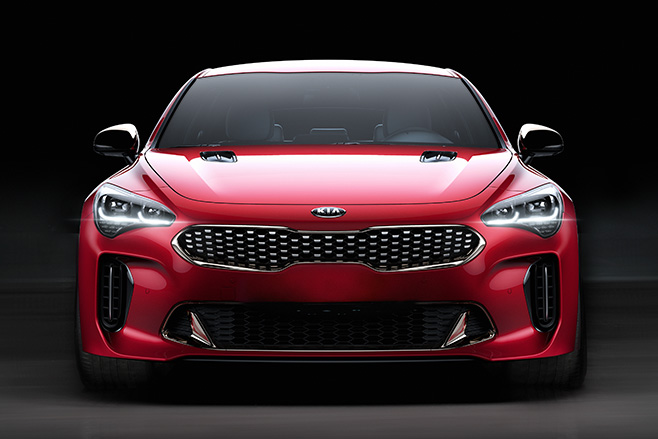
We’re excited about the new Kia. Just let that sink in for a moment. We’re. Excited. About. A. Kia.
Now ordinarily, the Korean maker of automotive’s sensible shoes would be as likely to grace these hallowed performance pages as a ride-on lawnmower. But then, this really isn’t an ordinary Kia.
Flashback to an icy January at the Detroit auto show and the excitement coming off Kia’s new performance boss in great shimmering waves is genuine. “For the Kia brand, the Stinger is like a special event,” he says. “Because nobody expects it. Not just the way it looks, but also the way it drives. It’s a whole different animal.”
Biermann’s sizeable brief spans both Hyundai and Kia, and will include the soon-to-be-released Hyundai Genesis G70 and the same brand’s much-hyped N range of performance vehicles. That the letter N will follow M in Biermann’s alphabet soup is surely more than a coincidence.
But first, the Kia Stinger. It’ll be Biermann’s first finished project to hit Australian shores when it touches down later this year, and it will arrive with the hopes of the company resting squarely on its muscular metal shoulders. It’s a high-stakes game. If this one stinks, excitement for the other new models – including those from Hyundai – will splutter and die along with it.
But while rival fans of both Holden and Ford would happily set each other on fire at Supercars’ races around the country, there was one thing they could always agree on: a white-hot hatred of outsiders. Had Kia attempted to launch the Stinger five years ago it would have been a very different story. It would have been chased off Mount Panorama by pitchfork-wielding Commodore and Falcon fans united by a common Korean enemy.
In 2017, though, the landscape looks a little different. Ford has shuttered its local factory, ending 88 years of local manufacturing and retiring the Falcon nameplate forever. Holden is months away from doing the same, confirming October 20 this year as its final day of Aussie production. The Commodore name will live on, but only as a badge glued onto imported product.
“This is a product with the power to surprise. We wanted to create a product that had a lot of emotion, and create a product that would really enhance the brand from where it currently is. It’s definitely different from anything we’ve done,” Kia Australia’s general manager of product planning, Roland Rivero, said. “This is definitely another level of performance.”
Born of a six-year gestation (it was first shown in concept form in 2011) Kia’s two-tier Stinger range is poised for an October debut in Australia, neatly parking in the space that will be vacated by Holden that same month. But the warm and fuzzy feelings mean nothing if the car is rubbish.
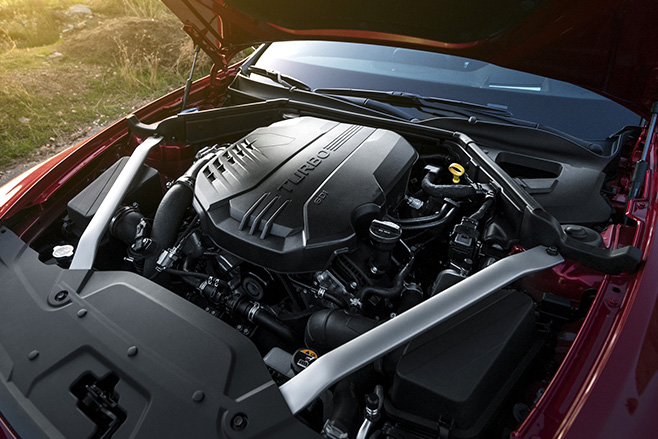
The Stinger will arrive in Australia sporting two engines, the entry-level option being a 2.0-litre turbocharged four cylinder that will produce 190kW at 6200rpm and 353Nm from 1400rpm. The second option, though, is the one causing all the fuss. A 3.3-litre twin-turbo V6 that will generate 272kW at 6000rpm and a meaty 510Nm from 1300rpm and will arrive in the Stinger GT model.
Expect a 0-100km/h time of 5.1secs and a circa-269km/h top speed. Both engines are matched to an in-house eight-speed automatic, complete with wheel-mounted paddles, and power is sent exclusively to the rear wheels in Oz-spec cars.
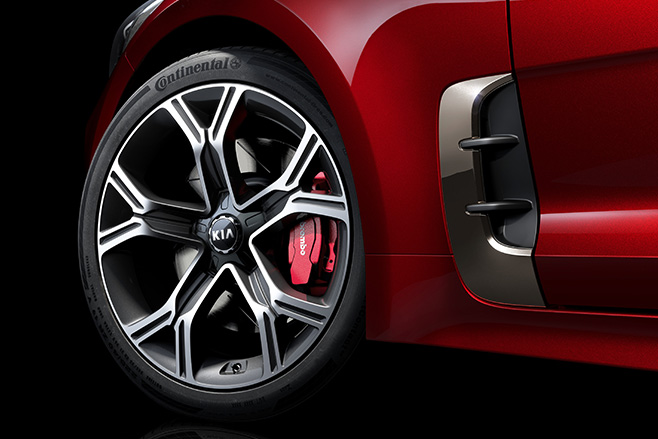
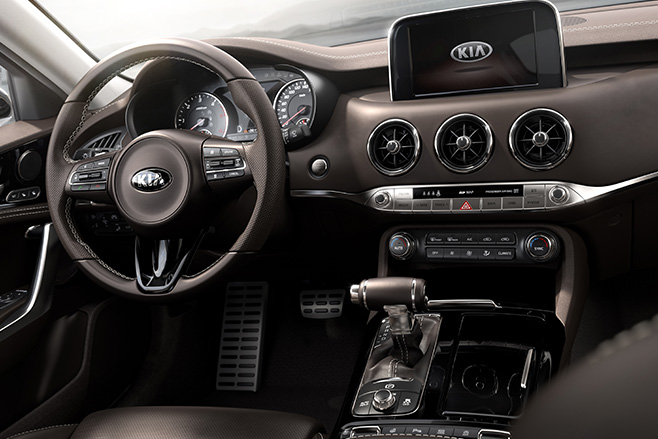
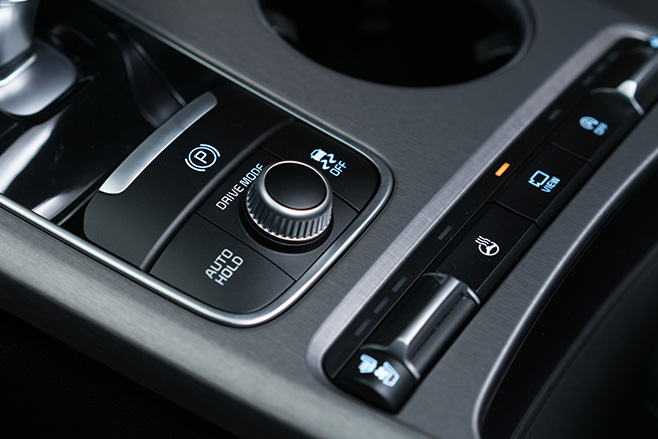
So far so good, then. Australia’s unique appetite for performance has forced the brand’s local HQ into some critical spec changes, too. All-paw cars won’t be coming here, and even the entry-level model will arrive with a mechanical limited-slip differential, along with a five-stage driving mode selector (Sport, Personal, Eco, Comfort and Smart) that will shift damper settings, accelerator mapping and steering weight.
The smaller capacity engine rides on 18-inch alloys, while the GT sits on 19s, with the latter also nabbing Brembo brakes front and rear. Both models get MacPherson struts up front, and a multi-link independent setup at the back.
Finally, the electric power steering system was designed with steering feel and feedback in mind over all else.
All of which is delightfully anti-Kia. And on paper, the Stinger ticks a lot of boxes. But the biggest unknown is how Australia’s performance faithful will respond to a rear-drive sedan from a company not known for setting pulses racing. And let’s be fair, there’s a reason Holden and Ford are abandoning their two most well-known nameplates – and it’s not because they’re selling too many of them.
But Kia Australia is convinced there’s a market for what it calls “the traditional Aussie six”, and is even more certain its Stinger will be packing the arsenal to fight its way to the top of that segment.
“The wheelbase does straddle that of a Commodore or Falcon. We believe there’s still a market here in that large car segment, and while the formula might change from what Holden and Ford were offering, there’s still a market for the traditional Aussie six,” Rivero said.
“We’ve got to make sure we get the product right, the trim levels right and the specification levels right,” he says. “Once you step up into this segment there’s an expectation of the kinds of things you should get in a vehicle. And we want to make sure that we deliver that and more.”
Our Stingers will be further fine-tuned by the Aussie HQ’s suspension consultant Graeme Gambold, who has done some stellar work on Kia’s range over the past few years, hammering out the fluffiness usually found in Korean or US-spec vehicles, adding both feel and feedback to the drive experience.
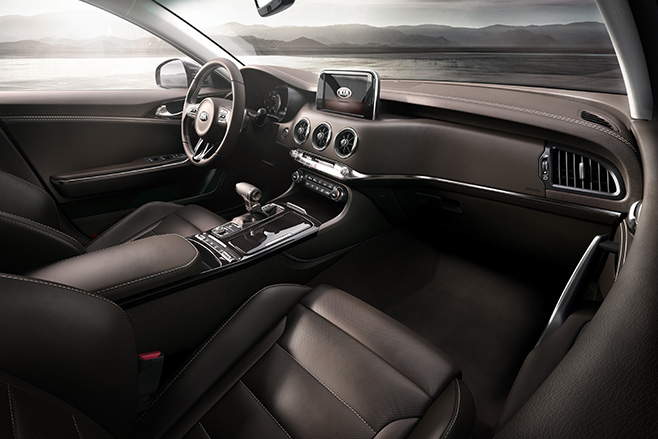
Captain of Kia’s crayons, Peter Schreyer (he is of Audi TT fame), is the man responsible for injecting a sense of premium fashion into Kia’s once dowdy design philosophy. The Stinger is his baby, from concept form all the way to production.
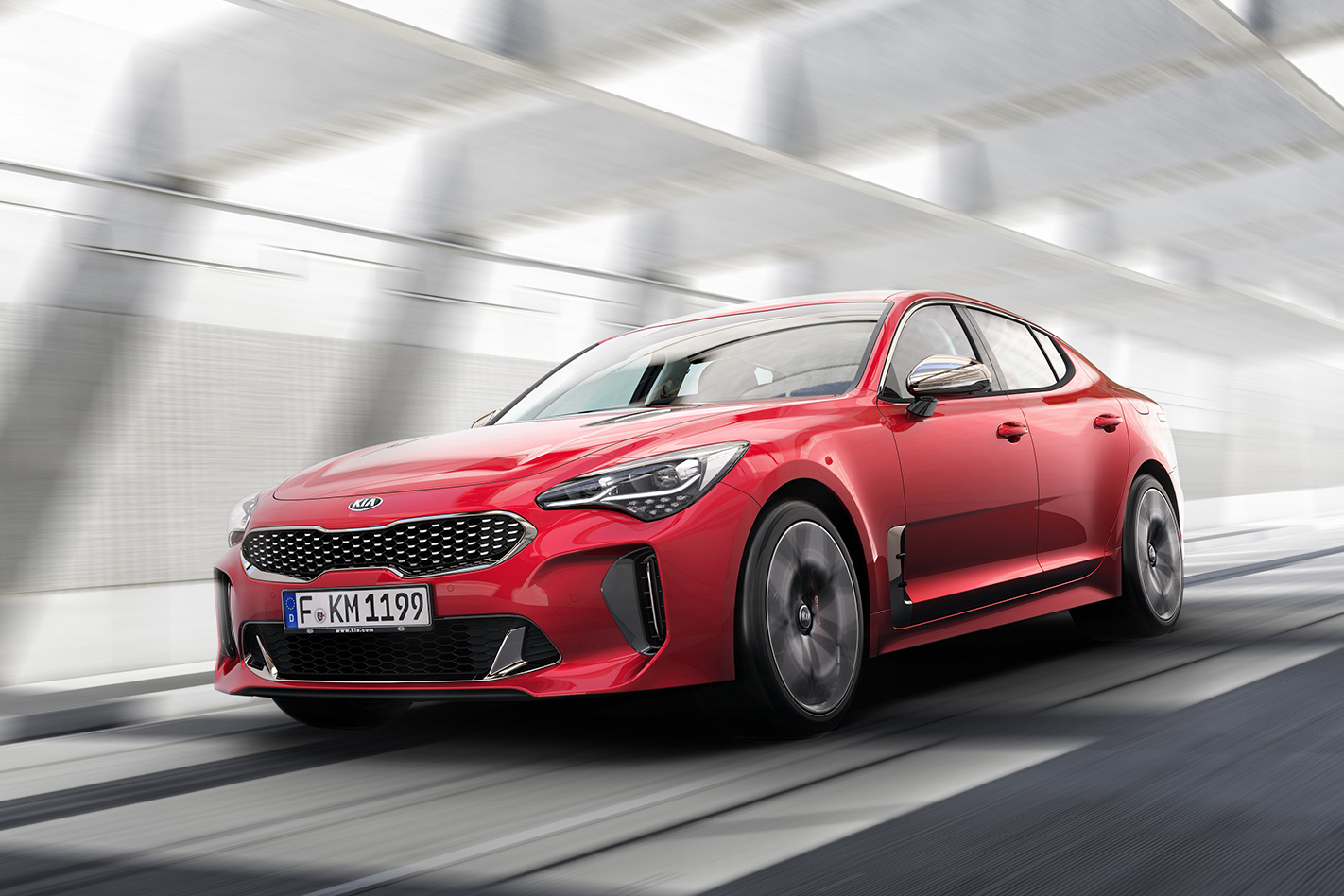
At 4831mm in length and on a 2906mm wheelbase, it’s about odds-on for both the Commodore (4919mm and 2915mm) and the Falcon (4949mm and 2838mm), and actually a longer wheelbase than key premium competition like the Audi A4, Lexus IS and BMW 4 Series Gran Coupe.
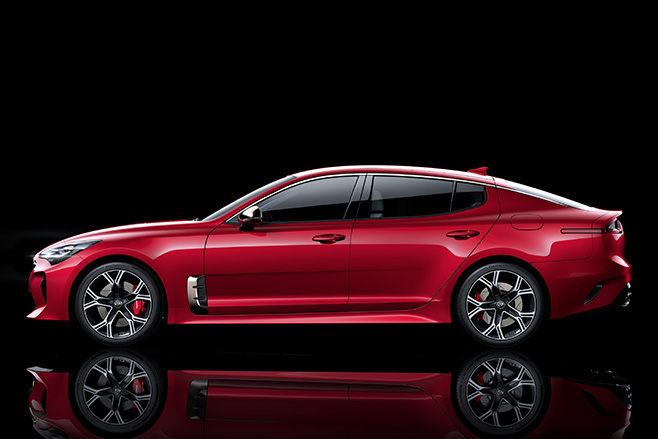
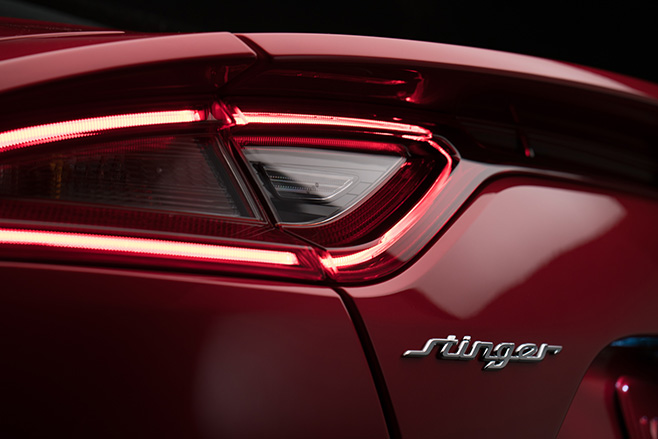
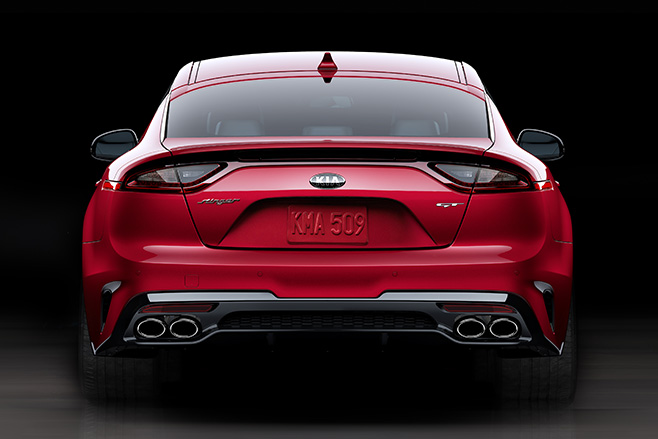
The bonnet is punctuated by two high-mounted (and purely ornamental) vents, while the fastback roofline gently drops away as it meets a muscular shoulder line above the rear wheels. Four exhaust tips complete the picture, housed below the fastback-style boot.
So, will it live up to the hype? Only time will tell. But in the words of one senior Kia executive: “The Kia you knew five or even 10 years ago is gone.” That much is indisputable. But what exactly will replace it? We’ll find out later this year.
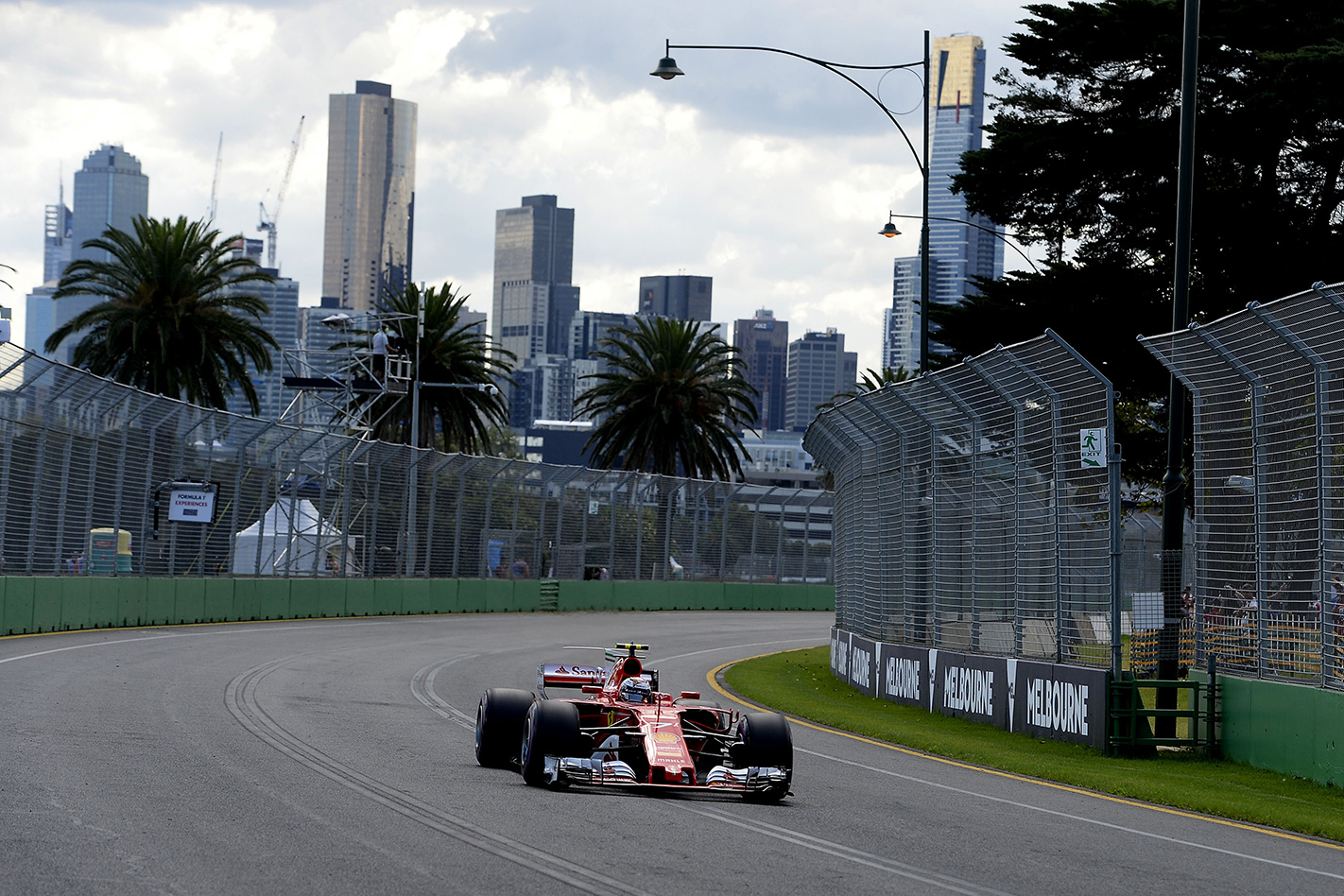
FERRARI shunned the undercut in favour of an overcut to set up a glorious Sebastian Vettel victory in the opening round of the 2017 Formula One World Championship, the Australian Grand Prix, at Melbourne’s Albert Park circuit.
Vettel scored his 43rd grand prix win and first since 2015, leading home Lewis Hamilton’s Mercedes by 10 seconds.
After a couple of exasperating years being cannon fodder for the rampant Mercedes Silver Arrows, the Ferrari triumph sends a message to Formula One followers (and Stuttgart) that there may be real, tight competition – certainly amongst the top two teams – this year.
So much for the engineers to deal with and the driver to react to. It’s early days. The teams are still understanding the characteristics of the new tyres.
Unconfirmed too but raised by more than one smart observer is the thought that when following (and attempting to pass), the 2017 Ferrari is less affected by turbulence than the Mercedes.
There’s also the promise from new owners of the sport of a greater entertainment quotient. We’re still waiting for that. Overtaking was still in short supply, but that is the nature of Albert Park. Let’s wait until Shanghai.
On Saturday at least, it was tight at the top, with Hamilton and Mercedes quickest. But race day is Sunday, and that’s when Vettel and Ferrari put it all together with great pace and a good, reactive tyre strategy.
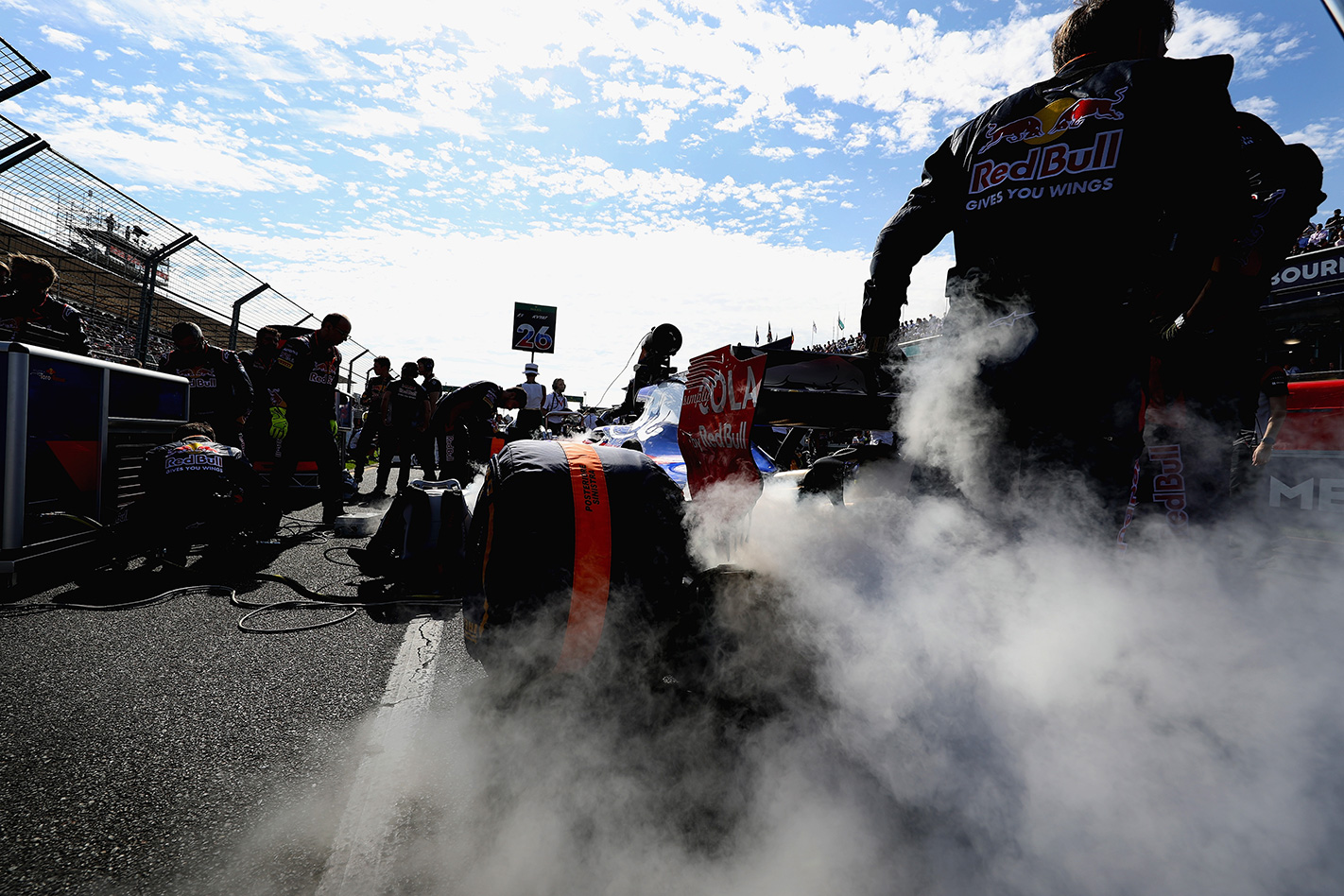
When Hamilton rejoined in fifth with a fresh set of tyres, he was caught behind Red Bull’s Max Verstappen, who frustrated all attempts to overtake. Ferrari immediately went for the overcut, leaving Vettel out on track to build a buffer.
Five laps later Vettel pitted and then, with Ferrari holding its collective breath, charged back on to the track ahead of the Verstappen-Hamilton battle.
In the end it was a comfortable victory for Vettel, who drove away to leave Hamilton to fight off the pressing Valtteri Bottas in the second Mercedes.
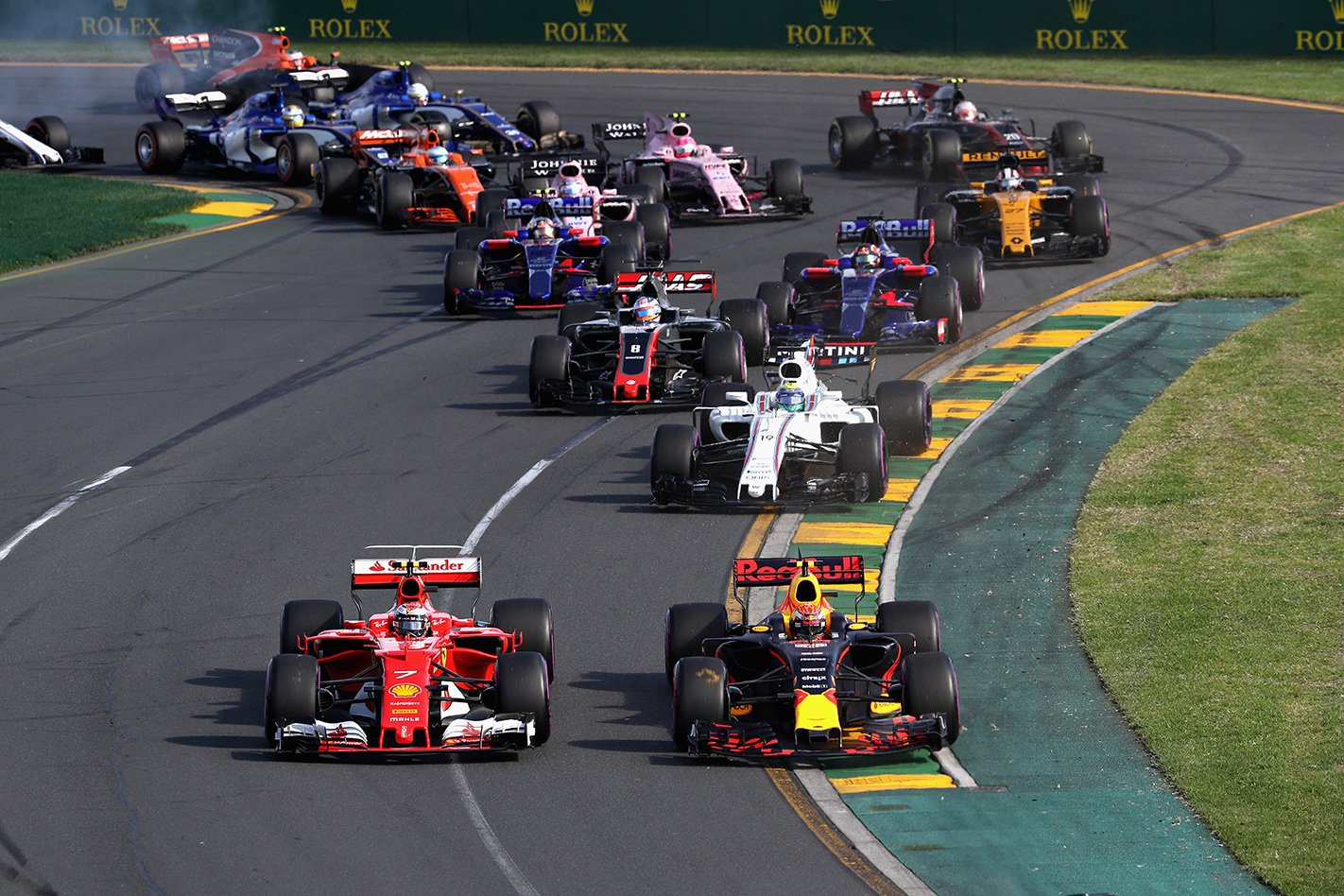
While Ferrari fans were ecstatic, the weekend was an anti climax for Aussies with Daniel Ricciardo having a shocker.
There were groans among the near 100,000-crowd, when Daniel Ricciardo’s RB13 stopped on track on the gridding up lap, electric problems crippling the gearbox, and jamming it in sixth gear. There was a rush to get the car back to the pitlane for a reset, the recovery truck driver giving it the wellie. With nine minutes to the start, Ricciardo pulled his helmet back on. The car was alive again…
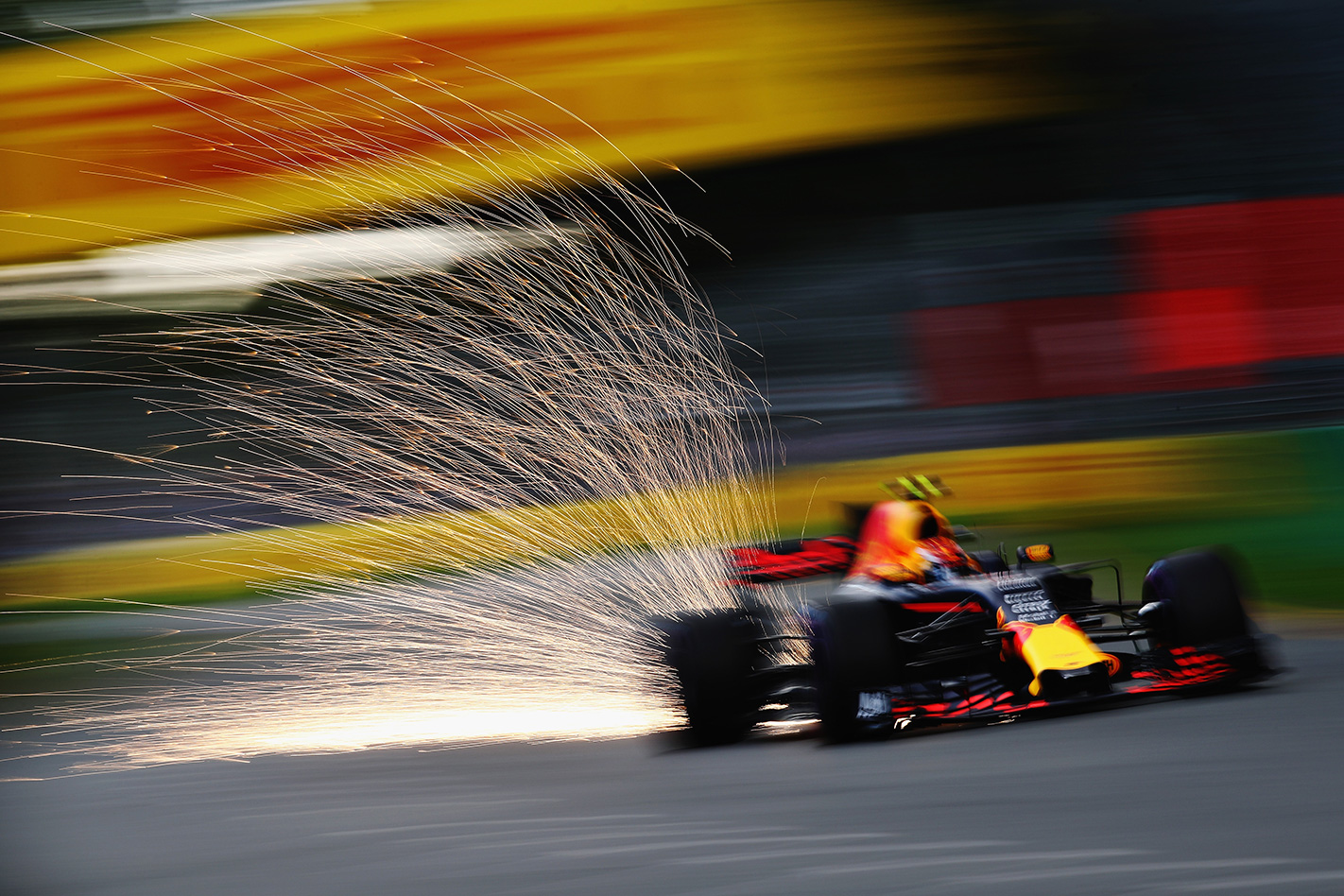
“It’s been a long week,” reflected an unsmiling Ricciardo.” I wanna get out of here. I feel bad for everyone, for the fans…”
On a more positive note, Ricciardo took some comfort from Verstappen’s fifth place. “We’ll learn something from Max’s race.”
All drivers went into the opening grand prix of the season facing the great unknown of more unpredictable race starts due to new rules removing electronic guidance from the clutch operation. Noticeably, throughout practice, many drivers practised starts as they left pit lane.
Hamilton was one who was obviously thinking about his technique. “Last year, it was the area that cost me the world championship,” he observed.
As it transpired, Hamilton made an excellent start to the 2017 AGP, while Vettel – normally an ace off the line – was less than perfect when the lights went out, although he held on to second into the first corner.
The lead up…
Pre-season testing posed as many questions as it did answers although it seemed the Big Three from last year – Mercedes, Red Bull and Ferrari – were still the squads to beat. Ferrari maybe had made up some ground, although the Mercs were the cars to catch. Again.
When, four months after the final race of last year, the circus hit the track at Albert Park it was obvious that Lewis Hamilton and Valtteri Bottas were exceedingly quick out of the box, while Ferrari and Red Bull had their technical conundrums to unravel. Ferrari managed this process better.
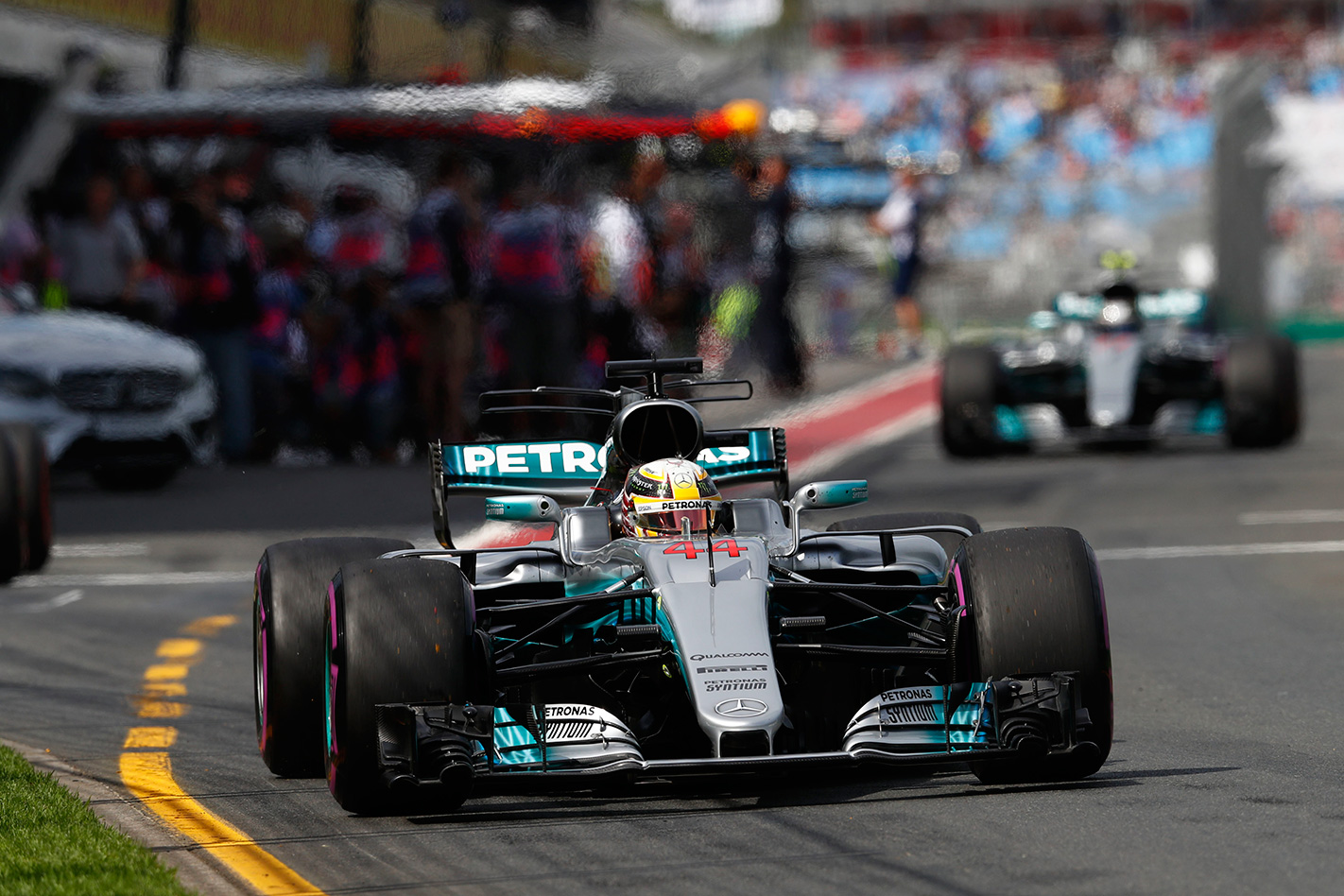
Qualifying was dramatic in many ways, with Hamilton edging Ferrari’s Sebastian Vettel by less than three tenths to snare his sixth AGP pole (and fourth in a row). The Ferraris’ lively testing form seemed to be a true reflection of potential.
Mercedes recruit Bottas measured up in his first real challenge, splitting the Ferraris to qualify third, and only 0.293secs slower than his team-mate.
Over at the Finn’s old alma mater Williams, Felipe Massa was delighted to be seventh fastest, while his 18-year old rookie team-mate Lance Stroll started 20th and last after a shunt in practice.
Ahead of Massa’s Williams after a stunning qualifying run to sixth was Haas Ferrari’s Romain Grosjean.
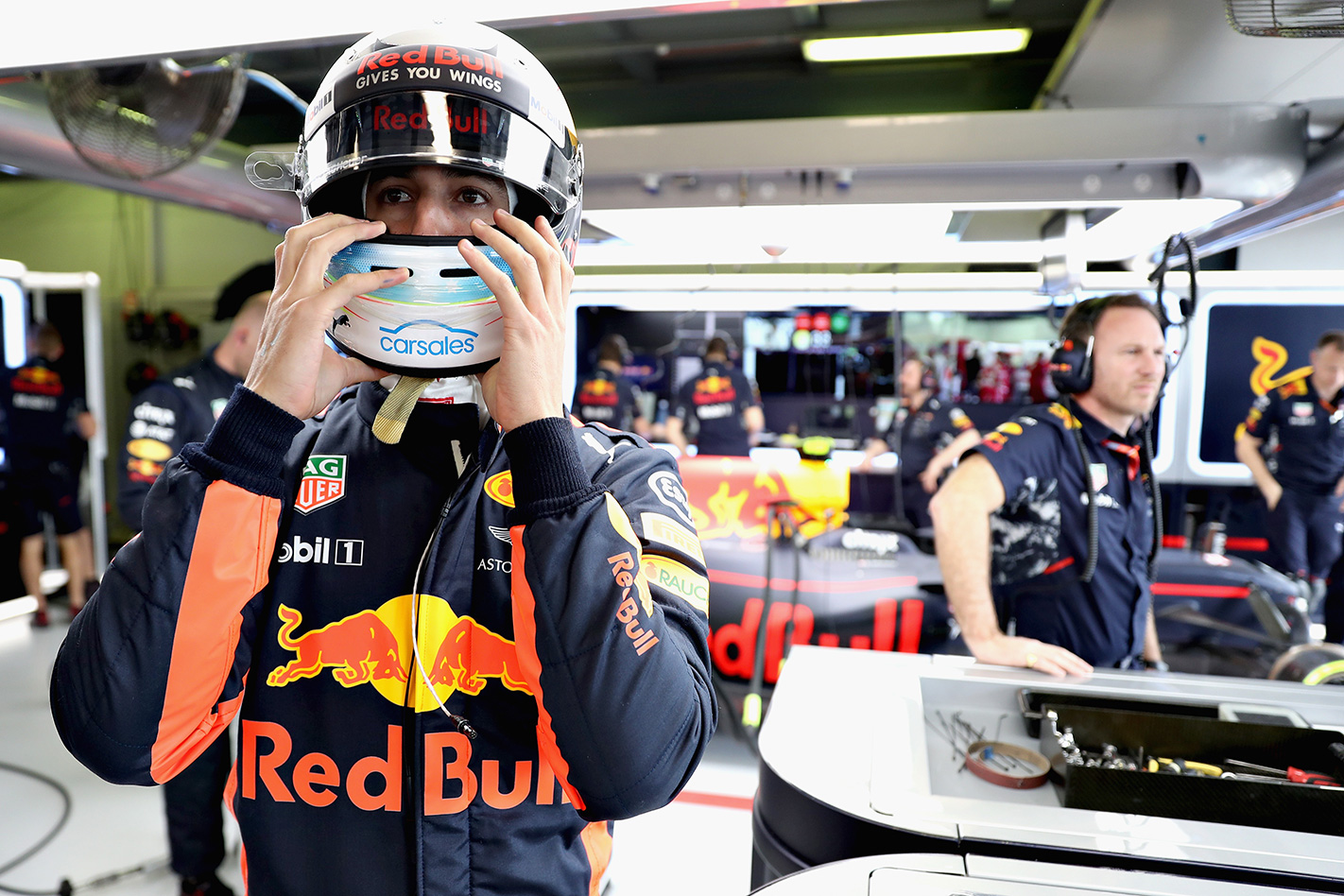
This left him 10th on the grid, which became 15th after a five-place penalty for replacing his damaged gearbox. The unfavourable starting slot left Red Bull with limited strategic prospects due to 2017’s long-life tyres – predictions were of just one pit stop for most drivers.
Ricciardo’s team-mate Verstappen showed what might have been for the Australian had he stayed out of trouble during Q3. The Dutchman qualified fifth, albeit a worrying 1.297secs off Hamilton’s searing pace. Verstappen’s body language was on the down side of upbeat.
Fernando Alonso dragged the McLaren Honda up to 13th, remarkable considering the top-speed difference to most of his rivals. The Spaniard was hardly satisfied though, and after his non finish he presents as a driver on the point of walking away for a team that hasn’t given him the package remotely commensurate with his talent.
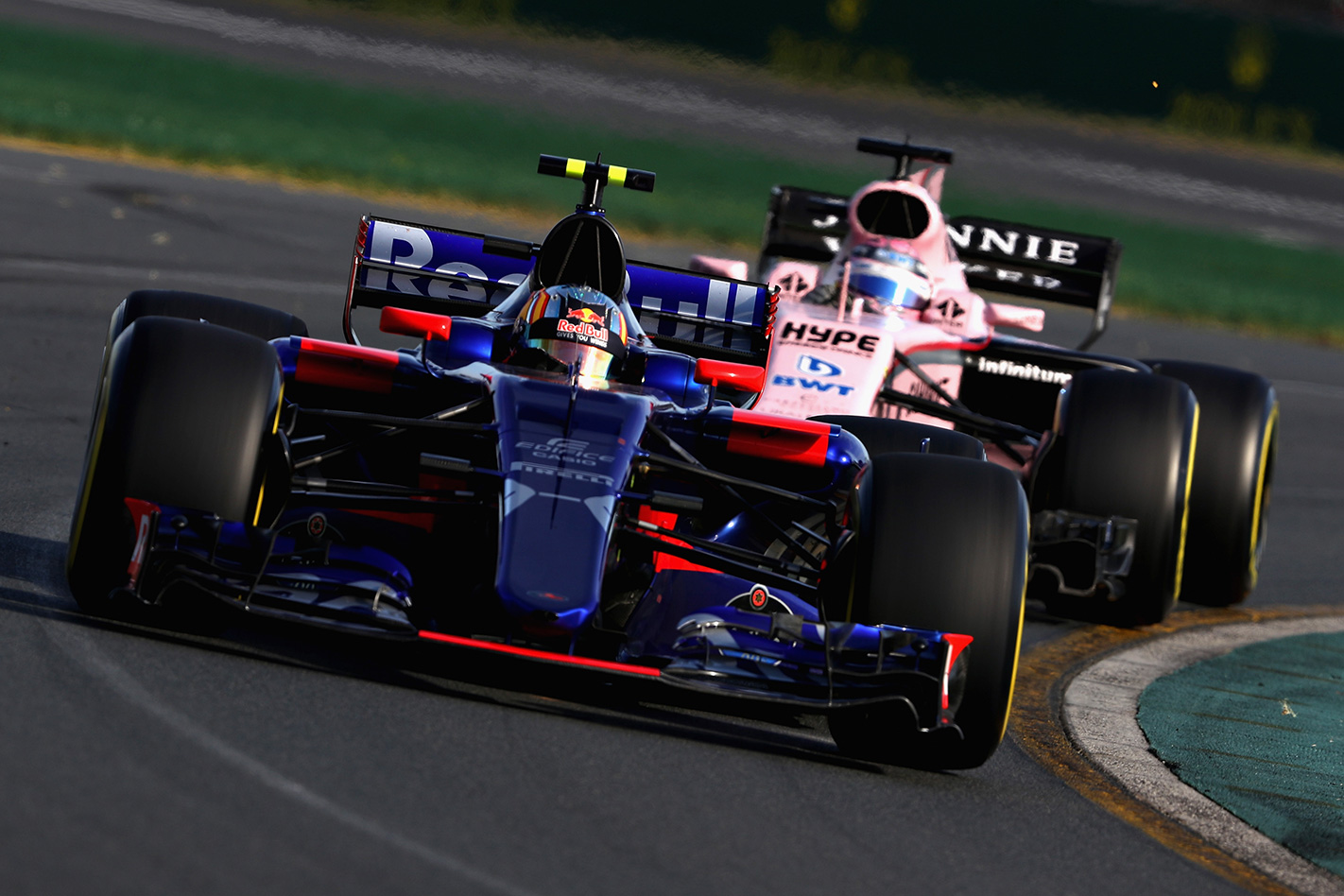
The new pink colour scheme didn’t help Force India during qualifying, Sergio Perez 11th fastest (moving to 10th on the grid after Ricciardo’s penalty), and Esteban Ocon 14th (starting 13th). They both ended up in the points, seventh for Perez and 10th for Ocon.
The bizarre late withdrawal of Sauber driver Pascal Wehrlein citing fitness concerns, gave another rookie, Italy’s Antonio Giovinazzi, his chance to shine. That he did. Despite only getting one practice run on Saturday morning, he qualified 16th, only a few tenths slower than his team-mate Marcus Ericsson. He finished a terrific 12th on Sunday.
Thirteen cars finished the AGP. Seven were retired.
So now the AGP is done and dusted. One down; 19 to be decided.
And as Ferrari’s Jock Clear opined post race: “In absolute terms I can’t honestly tell you which was the quicker car today.” He was talking about the Ferrari and Mercedes.
Red Bull Racing, it seems, has some catch up work to do. The car looks nervous and not that pleasant to drive. Despite the optimism exuded during the Barcelona testing, the RB 13 Bulls still lack power, and balance
The brutal new F1 cars
Over the three days of the Australian Grand Prix, drivers generally welcomed the new cars, the old chaps drawing comparisons with the F1 cars of a decade ago. More physical, brutal even. Hard on the body; hard on the equipment. But fun to drive, though a requirement to be more accurate and precise.
Romain Grosjean said his Haas-Ferrari was generating almost 8G peaks in the fast corners. The Frenchman also suggested the scope to slide the new cars was very limited, even with close to 1000 horsepower under the right boot.
Max Verstappen suggested the extra downforce makes the cars more difficult to catch if the tail steps out.
Lewis Hamilton had no negative comments about the new beasts. He reckons the grip is fantastic and the extra aero allows the drivers to push deeper into the corners. The 2017 cars don’t slide as much either, unlike previous years on low-grip Pirellis.
TESLA loves to highlight the incredible acceleration for its cars, and truth be told the 0-100km/h experience is incredible.
But if you are trying to get somewhere in the real world with some haste, don’t take a Tesla. It’s not that charging times are going to slow you down. No, instead you’ll find yourself trapped talking to a person on the street about the electric beast.
No car I have ever driven has drawn the same amount of attention as the Model S. It started at the first supercharging station in the border town of Albury during my drive to Sydney. I was facetiming with my parents to show them the process of plugging the electric car into the charger, when I looked up and realised there was a small gathering of people admiring the deep red hues of the Tesla.
I had intended to use the 45-minute charge to grab some breakfast in a local café, but instead spent that time answering the questions of the fascinated oglers. From the retracting door handles, to the frunk, there were plenty of features of the Tesla to run through in my impromptu show-and-tell.
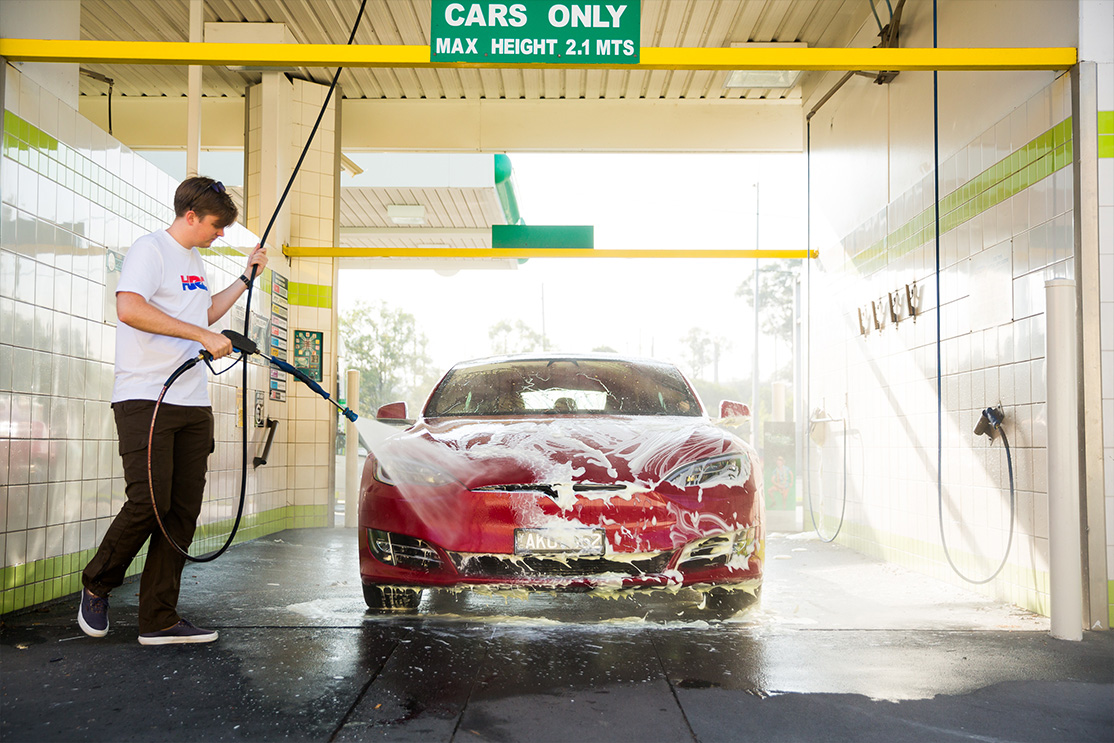
Albury wasn’t a once-off either. Random onlookers would often field a question or two if they saw me get in or out of the car. Even while driving, with the windows down you could hear the remarks of pedestrians.
I ended up encountering three types of people fascinated by the Model S: those that knew exactly what they were looking at and wanted a chance to get up close and personal, those that had a passing knowledge of cars but were perplexed by the Tesla, and those who knew nothing of cars or the electric hypercar but were caught off-guard by its silent-running nature.
It wasn’t just strangers that had a burning desire to know more either. Friends came out of the woodwork wondering what the Tesla was actually like. Even people who I thought were the antithesis of a motoring enthusiast instantly perked up at the mention of what car I was driving. Credit where it is due, Tesla has made its vehicles a strong talking point.
Not bad for a company that doesn’t actively advertise its cars.
What I think the Californian company has done better than nearly every other manufacturer is capture people’s imaginations. For car nuts it was all about the eye-watering acceleration and performance, while non-revheads saw it as a giant tech device to geek over.
But is it just good PR or a genuinely exciting car? Well, it’s somewhere in the middle. Tesla has mastered the art of PR very well, but the product speaks so strongly for itself that the Model S is reigniting a passion for things with four-wheels – even amongst those that don’t care about cars.
Oh and the most common question I encountered? “When will the affordable version be released?”
Lord help the person who takes a Model 3 for a drive when it arrives.
