
A new-look racing Commodore is a rare event. It only happens about every 10 years. The next one is well on the way and it will be the most radical yet.
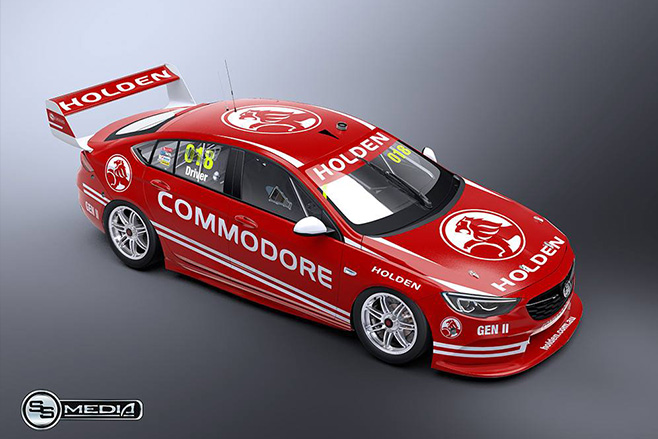
The Supercars version of next year’s ‘NG’ Commodore is unique. It will be the first not based on the shape of a locally made, rear-wheel drive model and the first without a V8. In appearance, Holden’s 2018 racer is an aggressive version of the imported front- and all-wheel drive next-gen Commodore.
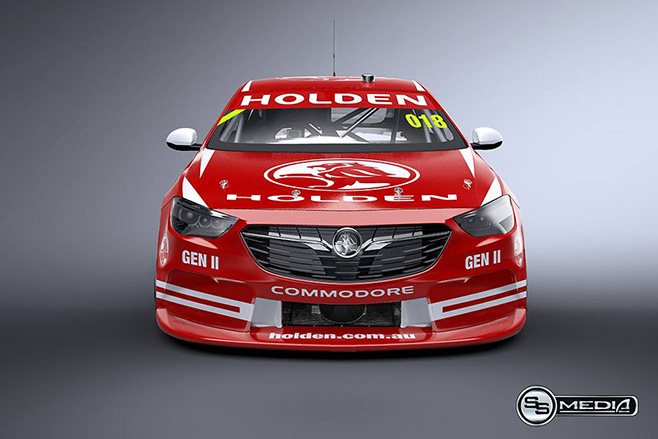
Of course, the new Commodore body will sit on the existing Supercars control chassis, which remains rear-wheel drive. The engine bay will be adapted to fit the all-aluminium twin-turbo V6, which may need to be ballasted to match the weight of the iron-block V8s.
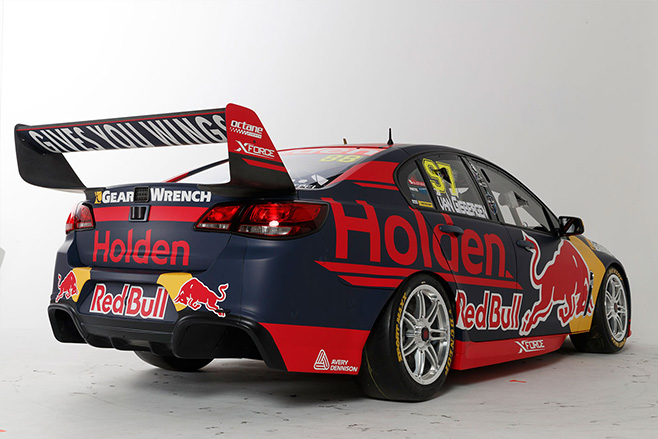
The program represents a major departure in the way Holden goes racing. First off, it switched the Holden Racing Team title to Triple Eight Race Engineering as the sole factory-backed team. As well as its lead two-car entries of VF Commodores for Shane van Gisbergen and Jamie Whincup becoming the Red Bull Holden Racing Team, Triple Eight is co-ordinating the design and development of the Supercars version of the ‘NG’ Commodore.
Roland Dane’s benchmark group is working with Holden Design boss Peter Hughes to adapt the shape of the five-door ‘fastback’ new Commodore and optimise the aero body kit to the Supercars rules. Triple Eight is also liaising with GM Racing in the States on development of the twin-turbo V6, the first non-V8 in Australian touring car championship racing since 1994. What’s more, having replaced the Clayton enclave in Melbourne – which ran HRT for 26 years – the Banyo band in Brisbane will be the sole supplier of major racing components to all Lion legion teams.
The Aussie-spec version of the LF4.R GT3 motor, based on the production Cadillac ATS-V’s twin-turbo 3.6-litre V6 (a high-end, blown derivative of the VF Commodore’s base sixes) has been developed at the GM Powertrain Performance and Racing Center in Pontiac, outside Detroit in Michigan.
GM Racing ran the first Holden Supercars iteration on the dyno in the second week of January. A running engine was due at Holden by early February for initial local testing, while Triple Eight was expecting a mock-up motor in early March to begin fitment work with the chassis.
Interestingly, although Dane says the ‘NG’ Commodore body shape fits “like a glove” on the Supercars control chassis, it actually needs to be chopped to retain the proportions of the road car. The VE/VF racers’ roof and rear door panels need 93mm taken out to meet the mandated wheelbase length, which was based on the shorter VY/VZ dimension.
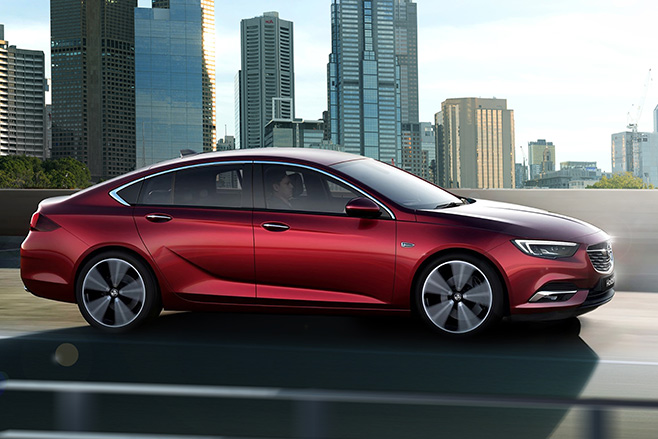
Computer renderings revealing the look of the next Supercars Commodore should be shown around mid-year, while it is hoped a first track test of the prototype race car will happen sometime in the third quarter (July-September).
2016 May have been a terrible year for democracy with the UK Brexit-ing herself out of the European Union and Trump blundering into the White House. But one carmaker bucked the trend with a bold symbol of internationalism.
Brandishing Japanese design, leveraging German engineering (using Mercedes-Benz’s front-drive architecture) and built in England for reasons probably only Brazilian Carlos Ghosn knows, the Infiniti Q30 represents hope for unity and cooperation.
But does Infiniti’s Audi A3 rival have what it needs to go against the premium small-car establishment? Or is this just a hot mess of identity confusion?
The thing is, the high-riding 1.6t GT opener from $38,900 is about $4500 less than the Benz GLA crossover it most closely aligns to, or just $500 more than the low-slung A180, so the latter is what we’re pitching Japan’s hopeful against. Suddenly, in SUV-crazy Australia, the sub-$40K premium hatch stoush is about to become very interesting.
While metallic paint is the test Infiniti’s only option, our A180 arrived wearing a $44,000 sticker, courtesy of an AMG-branded appearance package, fancy paint, LED headlights and a sunroof. But what a transformation. Sexy, sporty and squat, this base A180 could totally pull off an A45 badge kit.
Joining this extended family feud are two ferocious foes who have – like the A-Class back in late 2015 – undergone minor styling and spec makeovers (contained mainly to headlights, tail-lights, multimedia systems, and cabin materials), and major powertrain changes.
Has it really been 20 years since the original A3 hit our streets? If you ignore ’80s misfits such as the Alfa 33 and Volvo 360, it was Ingolstadt’s genius decision to dovetail development of its secret all-new premium hatch with sister-brand Volkswagen’s aspirational Golf that really begat this segment.
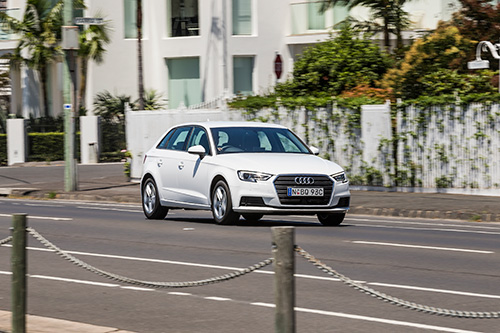
Three generations later, the German sisters sire off the MQB platform that helped the Wolfsburg version claim our 2013 COTY gong. With such impeccable provenance then, the A3 Sportback 1.0 TFSI that arrived with last November’s facelift scores an early showroom victory at just $35,900.
Which leads us to our final contestant as well as the oldest vehicle here, the 118i. Admittedly, the first BMW Compact did beat Audi’s original A3 to market by a couple of years back in the day, but debasing an E36 3 Series with a Manx cat-style stunted tail while destabilising its renowned dynamics with a cheapo rear suspension utterly missed the marque.
To Munich’s credit, no such anomalies have blighted two iterations of 1 Series over the last dozen years. The latest F20, launched in 2011 but updated in 2015, sees the 118i kick off from a tenner under $38,000. Ours wears a $46K sticker thanks to an Urban Line pack consisting of leather and sports wheel, 17-inch alloys, metallic paint, sunroof, front sensors, Lane Departure Warning and Autonomous Emergency Braking (the only model here not having AEB as standard).
What the BMW does deliver is the test’s only longitudinal rear-wheel-drive layout… and you know what? Pushing rather than pulling doesn’t come at the cost of interior packaging. And that’s no alternative fact.
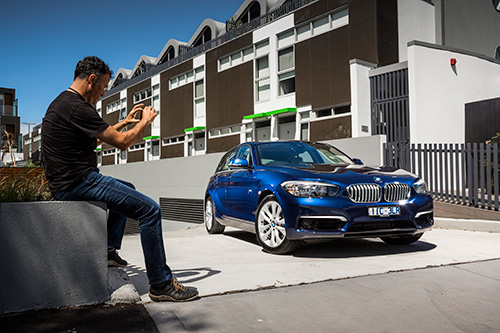
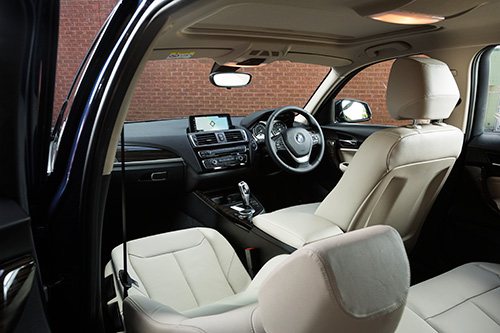
Big diff hump or not, the proudly cab-backward 118 is old-school on-brand driver-focused solidity inside, underlined by a no-nonsense austerity, firm yet supportive front seats, and the now-sorted iDrive interface. As with all the hatchbacks here, front legroom is vast if nobody’s sat behind, with the cushions capable of being positioned low enough for that bathtub feel – a bit of a Chris Bangle-era trait, betraying this 2011-vintage Bavarian’s advancing years.
Furthermore, the defining ‘Hofmeister kink’ in the 118i’s rear door actually aids entry/egress. Headroom is sufficient, the backrest well angled, and knee space is fine. On the flipside, that wide floor hump plays havoc with middle-occupant feet, greater thigh support would be welcome, and there’s a dearth of vents, storage, and individual reading lights. All for the driver, then.
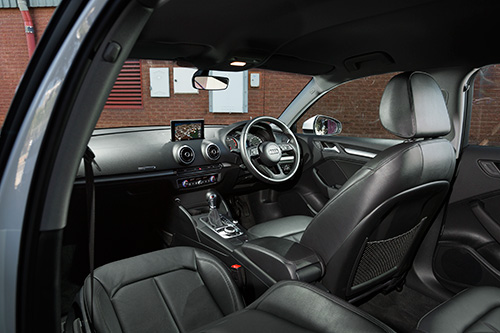
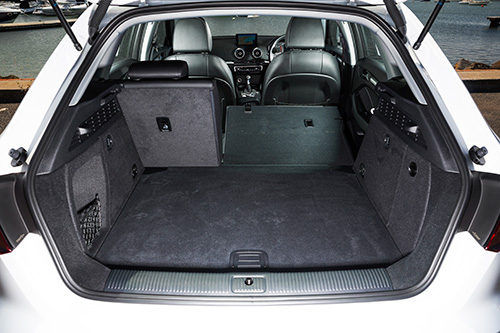
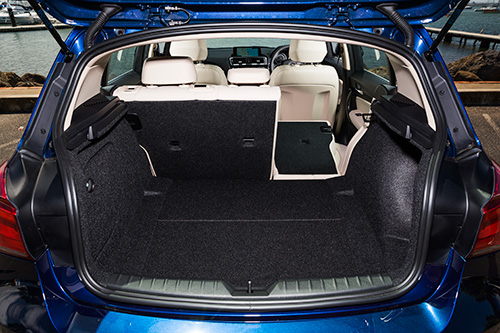
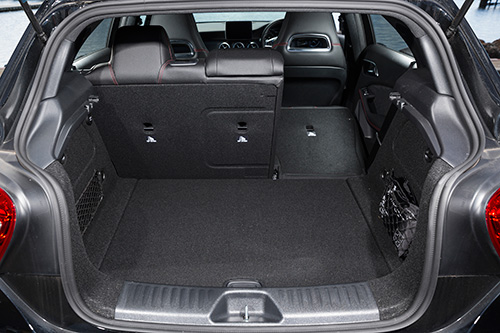
Only the Audi obliges with all of the above, and then goes further by providing the largest, roomiest, brightest, easiest to access and most accommodating interior. It’s also the widest and airiest, the upshot of the six-window design silhouette. Here’s your ride if rear passenger space and amenities are paramount.
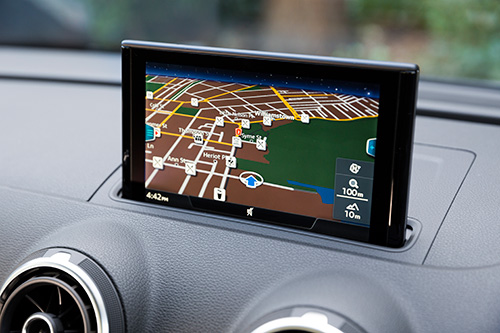
And that dashboard! Still modern and daring five years on, the A3’s fascia is functional art, like a Kitchen Aid blender, effortlessly meshing multi-faceted design. Nothing seems wasted or excessive, much is sensual, and everything is cultured. For sheer showroom charisma, look no further.
Similarly, the A180 also exudes a certain swagger and charm, but to an audience that might appreciate Lady Gaga more than, say, Dame Kiri Te Kanawa.
Brash, bold and youthful in AMG Line guise, the Benz’s packaging is almost anti-Audi, down to the coupe-like roof line and cosier rear quarters. Artificial seat materials gel well with the cold black running-shoe ambience, but that – and a cacophony of squeaks and rattles in our admittedly high-mileage test car – also sit awkwardly with the Three Pointed Star’s blue chip reputation. This isn’t your grandfather’s W123 230E.
Funky to behold, the tombstone-shaped front seats spoon your butt well enough, but completely ignore the upper back. Getting to the rear bench requires neck-angling gymnastics, the low cushion offers scant support and the high waistline promotes a hemmed-in feel.
Considering how much MFA parts commonality exists between the two, the Q30 makes a better fist of things, beginning with its loftier hip point afforded by the extra ride height. The relatively plush front seats are easily more supportive (though the rears are identical), forward vision is better, and there’s a greater sense of spaciousness. The three-year head start the Q30 enjoyed has clearly been put to good use.
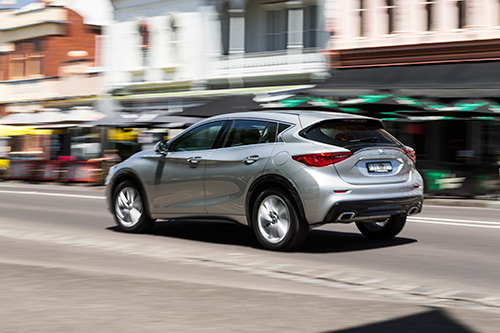
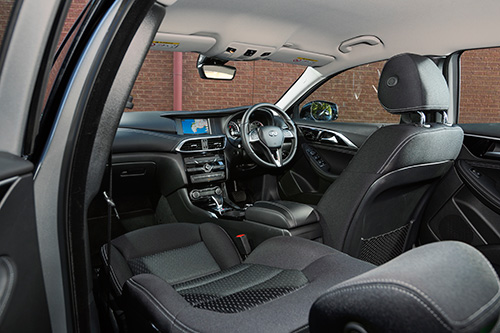
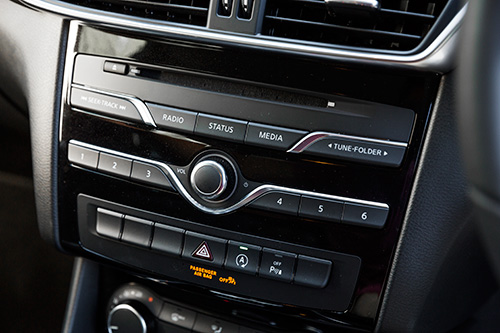
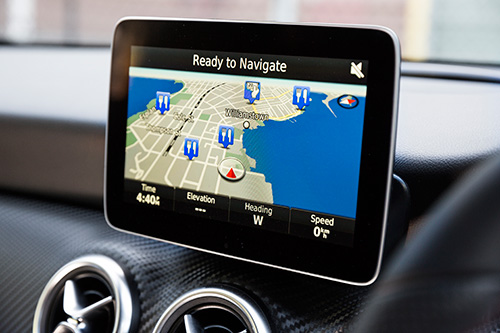
Plus, the 1.6t GT is far from basic, being the best equipped, barring a glaring reverse camera omission. All visible surfaces are soft to the touch, the finish is exemplary, and its cabin is the quietest. We’re no fans of the wilfully unintuitive multimedia system, though, and there’s no visual cohesion with the mixing of Mercedes-Benz and Nissan switchgear. This is like the lovechild between an A-Class and a Qashqai. Remember, Infiniti, your deadliest rival is the A3…
Oddly, considering that the same money buys a Holden Calais, there isn’t a single rear-seat centre armrest among this chi-chi hatchback quartet. Even the Holden Premier of half a century ago had one.
Thankfully, there has been no performance downgrading due to any powertrain downsizing, though only the A3 and Q30 – with their respective 1.0 TFSI and 1.6t designations – aren’t attempting to exaggerate the size of their donks. Unlike the A180 and 118i.
On paper, the Q30’s zingy 115kW/250Nm 1.6-litre turbo (nicked from the homely Benz B180) ought to be the strongest by some margin. And, sure enough, mated to Mercedes’ seven-speed dual-clutch transmission, it feels brisk at take-off following the now-inevitable DCT/turbo moment of hesitation, and then keeps on pulling hard, managing a reasonable 6.6sec from 80 to 120km/h. But its ho-hum 0-100km/h time of 9.5sec reflects the crossover’s hefty 1470kg mass.
In contrast, the A180 with a 90kW/200Nm tune of the Infiniti’s four-cylinder powertrain, blitzed up the strip: 9.2sec to 100km/h and an ever-widening gap thereafter. In fact, these figures are deceptive because the sparkling A180 felt considerably rortier and livelier across the entire rev range, and that’s probably due to a combination of lower weight (by about 80kg) and higher mileage (10,000km versus 3000km). The latter was probably also behind the Benz’s superior fuel efficiency (7.7L/100km versus the Q30’s 7.9).
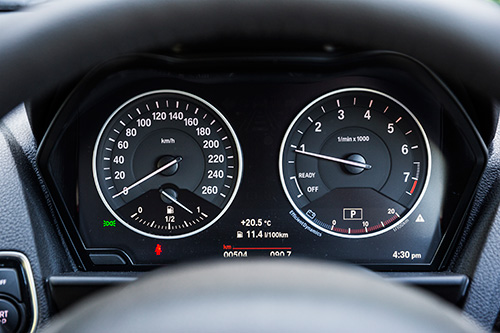
The reverse situation applied to our box-fresh 118i. Its 100kW/220Nm 1.5-litre three-pot turbo lobbed in with just under 500km on the clock, and so felt extremely green. Still, tied to the foursome’s only torque-converter auto (and ZF’s brilliantly intuitive eight-speeder at that), the 1320kg BMW relies on a swell of mid-range urge and perfectly placed ratios to pile on speed quickly, and remarkably effortlessly.
For such a tight unit, achieving 9.6sec to 100km/h is actually promising, as is the 6.9sec from 80-120km/h. By the end this engine already felt freer and friskier. A 3000km-old Mini Clubman with the same 1.5 lopped almost a second off both results during a comparo last year. The quartet’s thirstiest fuel consumption figure (8.0L/100km) should also improve with mileage.
Would it ever match the 85kW/200Nm 1.0-litre three-cylinder turbo A3’s laudable 6.6L/100km though? Unlikely, as the Audi was also barely run-in, and – believe us – this sweet yet stirring little firecracker was caned mercilessly. At just 1200kg, being the posse’s featherweight also assisted, as did an annoyingly lazy and intrusive idle-stop system that most owners would surely shutdown forever.
Possessing the slickest and most responsive dual-clutch of the bunch helped the dinkiest powertrain here achieve its 9.9sec sprint to 100km/h, and even saw seven-flat from 80-120km/h, so the base A3 Sportback is hardly compromised by its tiny heart. Like all the terrific little turbos assembled here, the A3 thrives on revs, forcefully punching above its weight and rarely getting caught off-boost. Past the occasional low-speed acceleration hiccup, we’d bet that few passengers would even pick that a trio of cylinders beat beyond the Audi’s (and BMW’s) well-insulated firewalls.
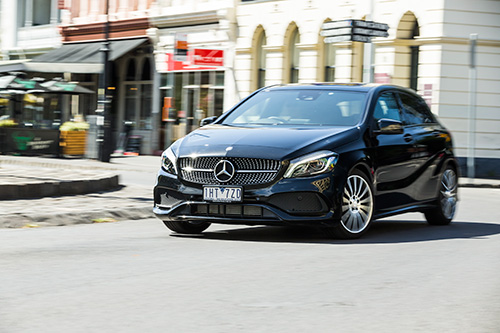
But we’d wager they’d soon tire of the Sportback’s equally boisterous ride.
The 1.0 TFSI is the first current-shape A3 petrol variant to downgrade to a torsion beam rear suspension (joining the near-invisible 1.6 TDI turbo-diesel). This is a retrograde step for two reasons.
Firstly, the Audi’s lower-speed comfort rating has taken a dive, with the rear axle now struggling to calmly absorb the sort of minor irregularities that the previous – and continuing on every other A3 – multi-link back end so ably coped with. And bigger bumps can cause the car to skip slightly. It’s as if the front and rear ends no longer work in unison. All semblance of settled suppleness vanishes the moment smooth road surfaces do. There also seems to be greater tyre and road noise.
Secondly, the more sophisticated rear end kinematics of multi-link A3s that helps direct the front end seamlessly through faster corners is absent, resulting in more isolated steering as well as duller, more inert handling. Sure, pressing on and shifting load onto its outside rear certainly aids the torsion-beam A3’s turn-in and balance, but that lithe athleticism central to the best MQB set-ups has vanished. Indeeed, hit a pothole and the whole thing will jolt off course like it’s just broken a stiletto mid-boogie. Has BMW’s sorry experience with the bean-counter-stripped E36 Compact amounted to nil?
Solution? Simply pay the extra $4000 and step up to the continuing 110kW A3 1.4 TFSI, restoring the independent multi-link back end. Problem solved.
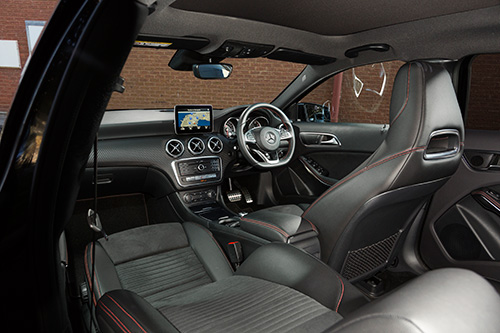
A tetchy, at times pounding ride, also hurts the A180 on AMG Line 18s over anything other than gentle or glassy surfaces. But the Mercedes behaves like she’s dressed and ready for the track, with swift steering, agile handling, and rock-solid roadholding that can put a massive girl/boy-racer grin on the glummest face. There is a sub hot-hatch fervour to the A-Class’s dynamics that almost make you forgive just how harsh and vociferous its underpinnings can be.
Like the Audi, much of this pain can be avoided by choosing the enticing A200 from $44K, with heaps more oomph and the essential standard adaptive dampers. We’re starting to see a pattern here.
Or… consider the Q30. Compared to the other two, it somehow suggests the sort of cocooning long-travel suspension comfort and softness associated with old-school French cars (and the latest Peugeot 308), without the penalty of excessive body roll.
This is the first MFA vehicle we’ve tested with a cushy ride, and yet the A-Class’s core dynamic goodness essentially remains intact. Q30’s steering turns in with measured surety, backed up by accurate and planted handling. Jumping from the knuckled-down Benz to the lofty Infiniti invariably reveals some degree of lateral motion for occupants, but the point is the Q30 isn’t trying to be a pocket rocket. It says so right there with the GT grand-touring badge.
That the Japanese marque also smashed the panic-stop 100km/h-0 brake test by a sizeable margin (pipping even the Benz and shaming the others) further boosted our admiration for the engineers who tuned this car on craggy UK roads. Bravo, Infiniti.
Which leaves the BMW. The only rear-drive hatch here needs to be reassessed and celebrated for what it delivers to the keen driver. Even in its lowliest guise, the BMW’s chassis gels on the right road to provide smooth, flowing, and involving handling. Its steering feels the most connected of the quartet, as well as the most fluid, encouraging the driver to push hard, and delivering dynamic reward as a result.
The 118i’s ride comfort is fundamentally okay, though this is also very dependent on occupant numbers and the state of the bitumen. With only the front seats occupied, and on optional 17-inch rubber, the BMW’s suspension is firm and springy, but also fairly compliant over more serious hits, smoothing out speed humps with surprising insouciance.
Add two more passengers and the BMW’s comfort levels deteriorate, sometimes taking on a hard, jostling and noisy attitude that can be tiresome. As with its Mercedes-Benz rival, we feel it necessary to either move up the range or dive into the options list. In this case, check $2200 worth of adaptive dampers.
At least the 118i’s ride is fixable. The A3 1.0 TFSI’s retrograde rear suspension undermines the occupant comfort and dilutes the driving pleasure that comes so naturally to higher-spec variants. Not very Vorsprung Durch Technik. Despite the turbo-triple’s relatively enticing price, there’s much better value higher up the range. A 1.4 TFSI might have even won this comparison, so don’t discount Audi’s pioneer.
In many ways, the A180 with AMG Line is the most successfully focused and switched-on car here, delivering on its styling promise with unapologetic sportiness and fun – on the right roads. But the jarring suspension, road noise, squeaky trim and somewhat contrived cabin aren’t worthy of this great marque. The next-generation A-Class isn’t far away, by the way.
Undoubtedly the surprise of this comparo, the Q30 1.6t GT is a real grower – the calming ying to its Daimler cousin’s aggressive yang. Representing a well-equipped, comfortable, effortless, refined and quality alternative, the Infiniti isn’t nearly as confused as its multicultural heritage – or divisive styling inside and out – suggests. Plus this is the only hatch here that doesn’t require extra expenditure to cure any ill manners. But as the newest set of wheels here, merely matching rather than bounding over the ageing Teutons simply isn’t enough.
So the oldest car wins, almost by default, because the 118i displays BMW-in-a-concentrate dynamics, performance, efficiency, solidity, and technology, and manages to feel the most special as a result. Occasionally irritating ride and the odd spec issue can’t keep the most on-brand contender down, but nor is this a brilliant victory either.
In fact, good as these four entry-level premium hatchbacks are, we feel that all might struggle against at least three cheaper mainstream alternatives in their most competitive spec – Volkswagen Golf, Peugeot 308 and Holden’s impressive new Astra.
See, democracy can prevail in 2017.
Aston Martin and Red Bull’s hypercar, the AM–RB 001, is racing towards production. With a carbonfibre tub and powered by an atmo, mid-mounted V12, it will produce 1bhp for every kilo of still-unconfirmed kerbweight.
A key part of this incredible car’s development is the working relationship between Red Bull’s legendary F1 brainiac Adrian Newey and Aston’s chief engineer Matt Becker. Becker spoke exclusively to Wheels about how the project is progressing:
“It’s fascinating to work with Adrian,” he explains. “I’ll say ‘we’d have such and such on a road car’ and he’ll say ‘well, we’d have that on a race car’; we’re approaching it from completely different angles, so finding common ground is important.”
Newey and Becker had not met before visiting a supplier for the AM-RB 001, but are currently meeting approximately once each month.
Becker reveals that the pair won’t benchmark the McLaren P1, LaFerrari or Porsche 918, focusing instead on in-house targets. But an evocative drive in Newey’s 1959 Aston Martin DB4 GT for a magazine shoot sparked a discussion on the driving characteristics each preferred.
“Adrian is quite old school in that he likes a lot of mechanical feedback,” reveals Becker. “I do too, but Adrian’s interpretation of that is a lot of steering and braking effort. I suspect customers will find that too much work, and I’d prefer a more natural feel. We’ll need a compromise!”
In fact, Becker is tasked with ensuring the extreme performance targets chased by Newey and the feedback he receives from GT3 works driver Darren Turner and F1 drivers Max Verstappen and Daniel Ricciardo doesn’t intimidate owners. With Aston promising “unprecedented levels of downforce in a road-legal car” and 25 slick-shod, track-only variants with performance in line with LMP1, the fear-factor is high.
“The racing drivers’ job is to give the AM-RB 001 incredible capability at the top end, and we’ll get them going up to three times the cornering performance of a typical car,” says Becker. “But it can’t be impossible to enjoy until close to the limit or owners won’t get there. My job is to make it fun for everyone.”
As part of his acclimatisation for AM-RB 001, Becker has had laps in the Aston Martin Vulcan.
“Driving the Vulcan at Spa gave me a feel for the characteristics of aerodynamics and slicks at big speeds. I need to build my neck muscles up!”
While Newey is more familiar with the AM-RB 001’s extreme performance, he’s facing a different kind of learning curve. “Adrian is free from race regulations with this car,” says Becker, “But if anything he’ll have even more road regulations to deal with. That’s his mastery, though, working within the rules.”
With first deliveries of the 150 cars commencing in 2018, you can bet Becker and Newey are working enthusiastically on it right now.
CAN a Camaro-inspired facelift and some pretty new wheels save the six-year-old Holden Barina from pensioner status?
WHAT IS IT? A belated facelift for Holden’s ageing Barina – the first proper update since the current TM series launched in October 2011 – focusing on styling, equipment, model rationalisation and variant rebranding.
WHY WE’RE TESTING IT? To see if the MY17 Barina’s attractive new visage and improved multimedia interface are enough to carry its tired underpinnings through to next-generation time. That can’t be too far away given that we’ve just seen images of the next-gen Opel Corsa’s interior and camouflaged exterior, if GM’s rumoured intention to merge the Corsa and Chevrolet Sonic/Holden Barina models into one design is correct.
MAIN RIVALS Ford Fiesta, Honda Jazz, Hyundai Accent, Kia Rio, Mazda 2, Peugeot 208, Renault Clio, Skoda Fabia, Suzuki Swift, Toyota Yaris, and Volkswagen Polo
THE WHEELS VERDICT Still a good-looking car that builds on more than three decades worth of goodwill towards the Barina nameplate, but these MY17 updates are barely enough to mark time. The Barina’s ancient 1.6-litre donk is well below par for fuel efficiency, and there’s an overall lack of refinement that betrays this car’s age. The base $15K LS manual is a torquey, driveable, handsome and good-value runabout, but the $20K LT auto is well beyond the Barina’s comfort zone, despite its snappy new threads.
PLUS: Handsome shape; striking new wheels; impressive multimedia; torquey, easy-to-drive and decent-value LS manual base shitter
MINUS: Wheezy performance with an auto ’box; uncomfortable front seats; plasticky interior; lumpen ride on LT’s 17-inch wheels; air-con struggles in hot weather
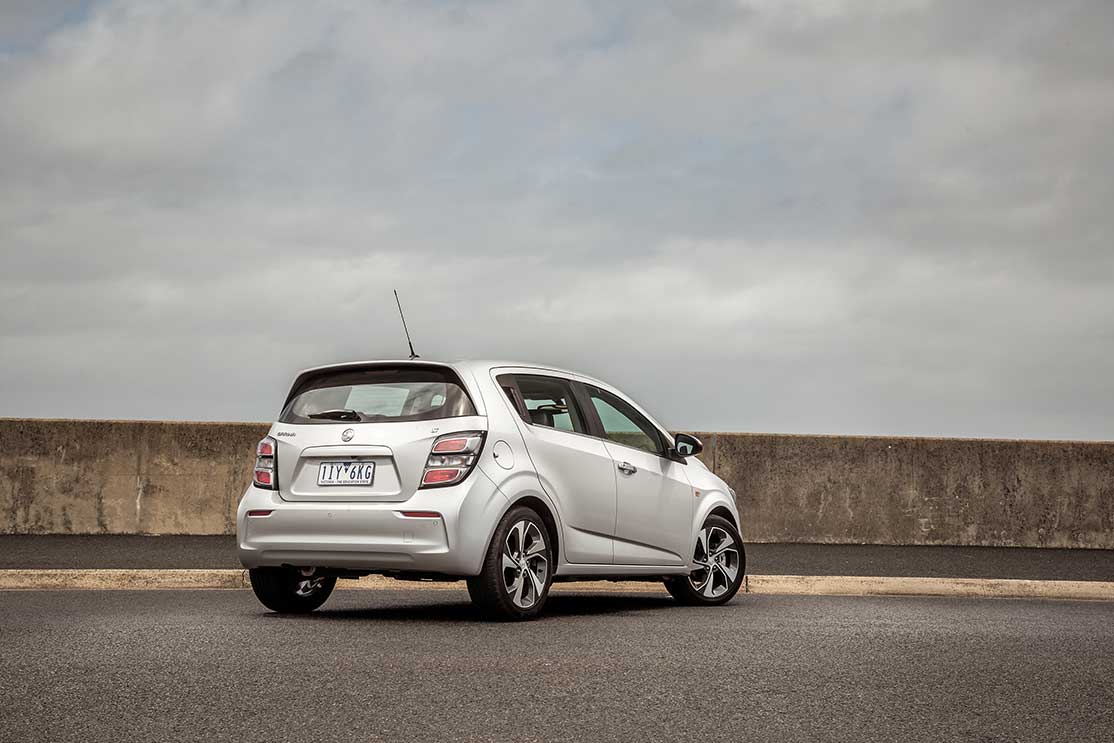
THE WHEELS REVIEW FOR a brand with a long history of short-lived model nameplates, Holden has remained steadfastly attached to Barina. In the case of the current TM series, it has stayed faithfully reliant on a design that has barely changed since its debut in 2011.
Along the way, we’ve seen a huge-booted sedan (now discontinued), a turbocharged RS (also deceased, mainly because no one bought it), an up-spec CDX (now badged LT) and the odd special edition. But until last December, the entry-level Barina CD (now badged LS) looked and drove exactly as it did almost six years earlier.
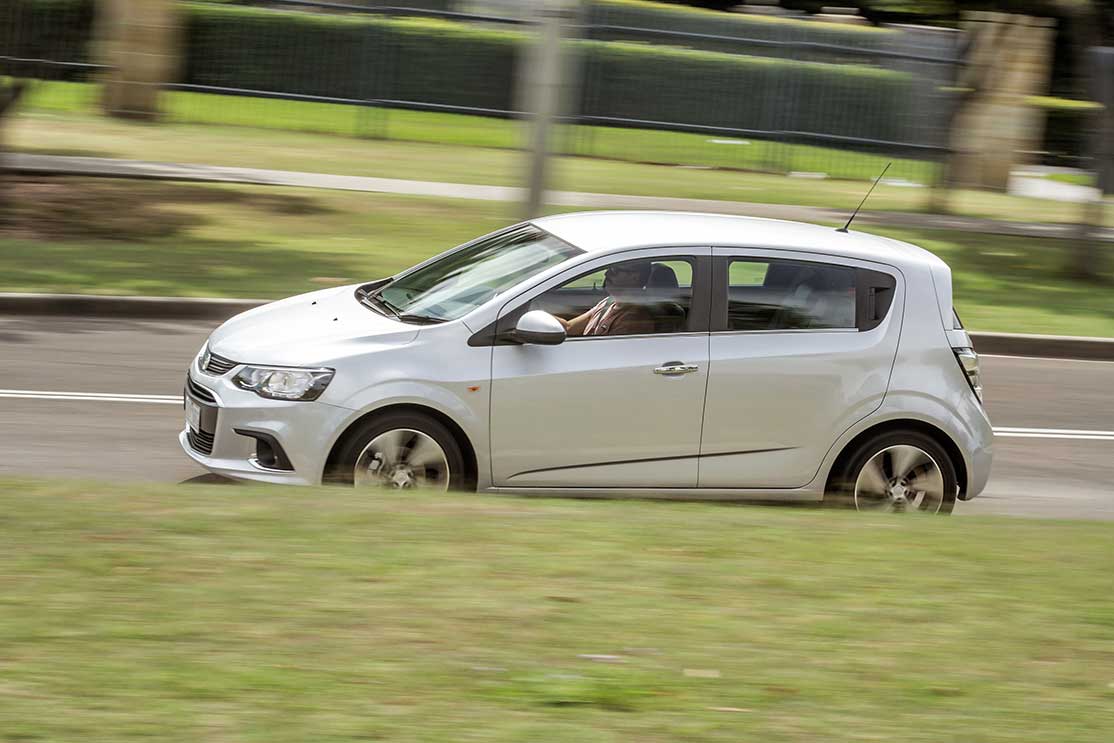
In an era of rapid change, that’s an unusually long time between makeovers, though this MY17 version (still dubbed TM) scores a handsome Camaro-esque visage and sexy new alloys wheels (16s on LS, 17s on LT), courtesy of GM’s Australian design team (and adopted by global Chevrolet versions). Front LED running lights and standard front fogs work like a fresh sleeve tat on the still-fit Barina’s chiselled body, though new three-deck rear taillights lack the flair of those they replace.
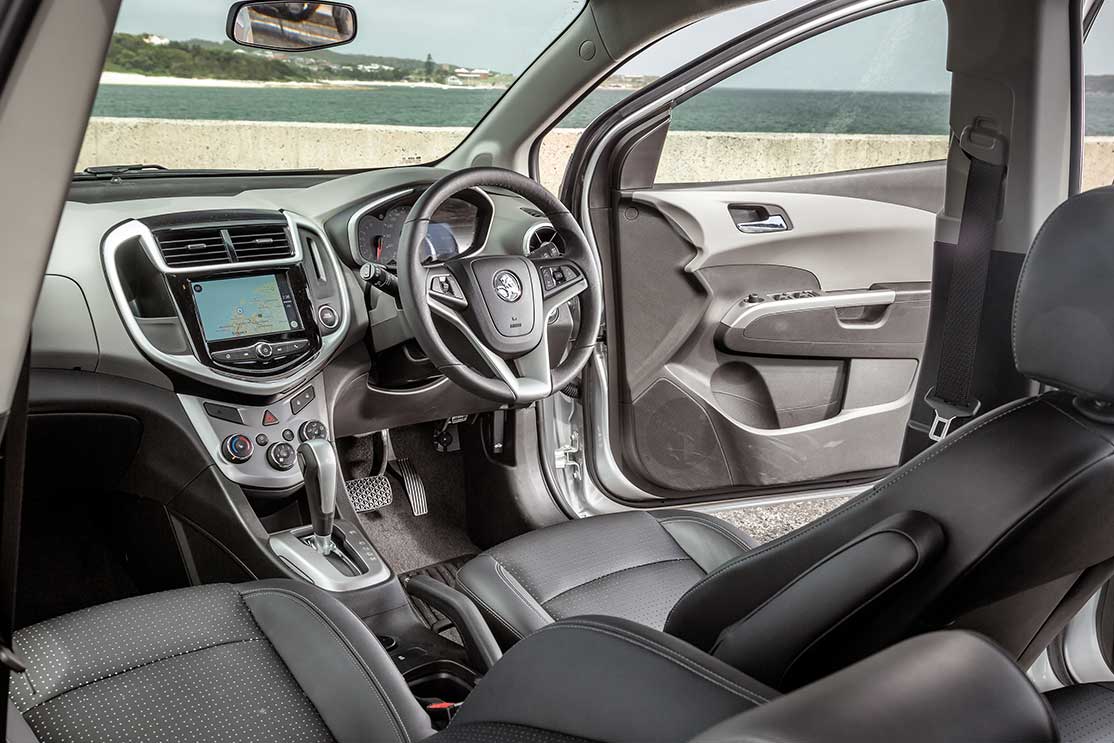
In-cabin updates are less dramatic, centred around conservative new instruments (shared with Spark and Trax) and an impressive new 7.0-inch multimedia touchscreen with standard Apple CarPlay/Android Auto, six robust speakers, and vastly superior audio and Bluetooth phone quality, as well as a standard rear-view camera and rear parking sensors.
But aside from the odd extra tweak here and there, it’s situation normal for Barina. That means rather uncomfortable front seats lacking in lumbar support, sticky ‘leatherette’ trim for the up-spec LT, and an average-sized back seat. The fact that Holden’s smaller Spark is better-packaged, offers more comfortable seats and scores GM’s tactile latest-issue steering wheel doesn’t reflect well on Barina’s bigger-is-better status.
The ancient 1.6-litre ‘Generation 3’ four-pot continues, though tied to the LS’s positive-shifting five-speed manual gearbox, it’s an effortlessly torquey unit, if not an economical one. Keep the tacho below 4000rpm and it is respectably refined, too, though the low-geared auto exposes the donk’s last-century vintage via whirring induction noise and high-rev resonance. The auto can also be a ditherer just when you require all its smarts, and the two-pedal-only LT’s funky 17-inch alloys are a step too far for Barina’s urban ride quality.
At base level, priced from just $14,990, the LS manual is an honest jigger with decent driveability, sound country-road dynamics and enough interest to make it appear decent value. But the Barina is a car best served cheap. Moving beyond 17 grand equals diminishing returns from a limited range that’s ripe for retirement.
SPECS Model: Holden Barina LT Engine: 1598cc 4cyl, dohc, 16v Max power: 85kW @ 6000rpm Max torque: 155Nm @ 4000rpm Transmission: 6-speed automatic Weight: 1256kg 0-100km/h: 12.4sec (tested) Economy: 7.2L/100km Price: $20,390 On sale: Now
Ferrari turns the ripe old age of 70 this year.
To celebrate the occasion, the most famous of all car makers has released 70 liveries which will be applied just once to each model in the current range: California T, 488 GTB and Spider, GTC4 Lusso and F12 Berlinetta.
There are no mechanical modifications, with each car identified by its unique paintwork, 70th Anniversary logo and ID plate with the name of the model that inspired it. Nonetheless, in the current collector car market, no doubt Ferrari aficionados will be clambering over one another in an effort to secure these models.
Below you’ll find the 10 liveries inspired by Ferrari models from 2003-2014. Let us know your favourite in the comments below.
61. 2003 Ferrari Challenge Stradale
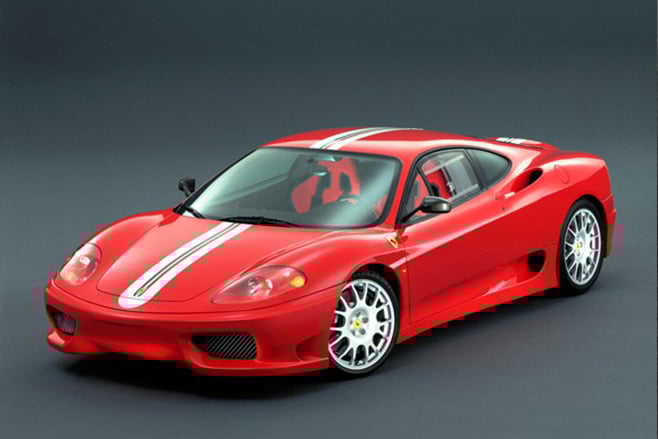
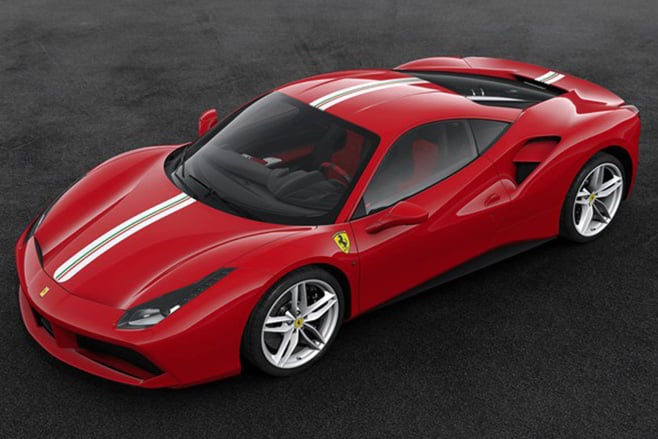
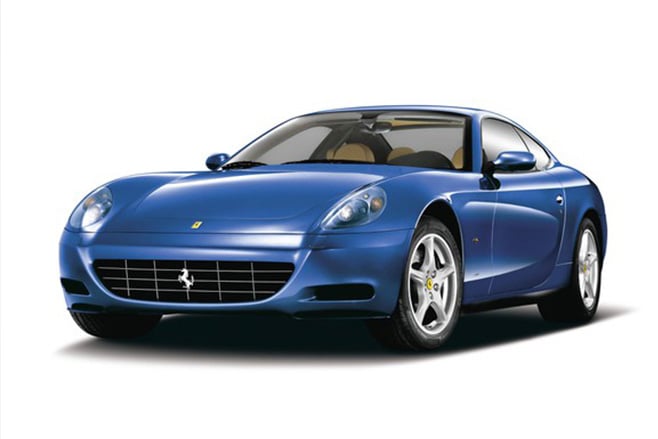
62. 2004 Ferrari 612 Scaglietti
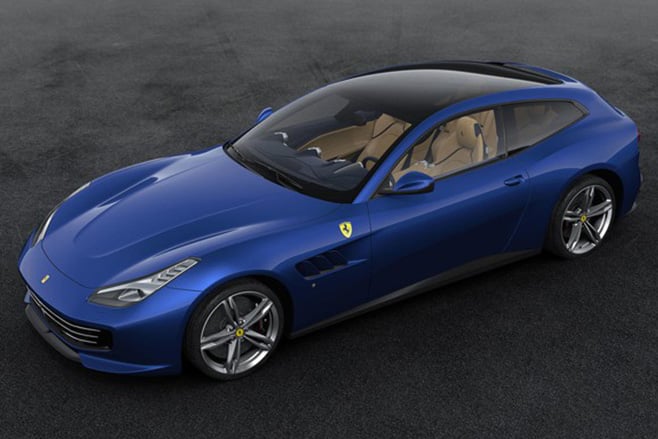
63. 2007 Ferrari FXX Pacchetto Evoluzione
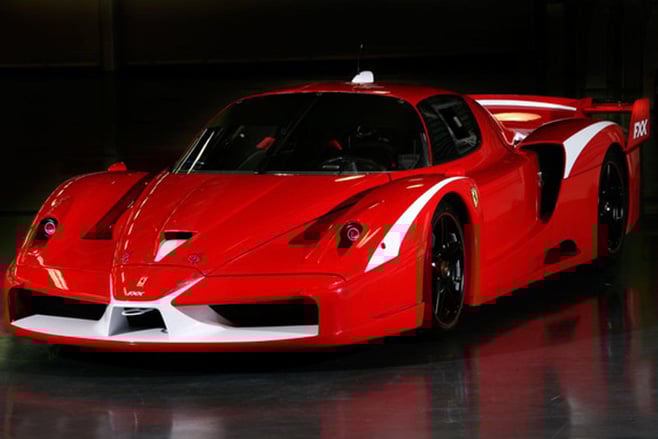
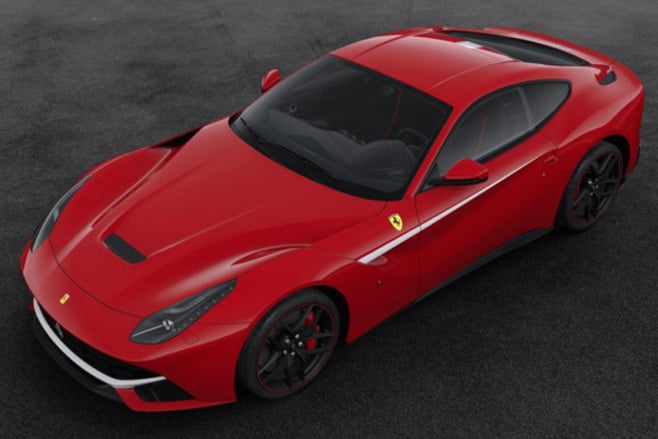
64. 2008 Ferrari Scuderia Spider 16M
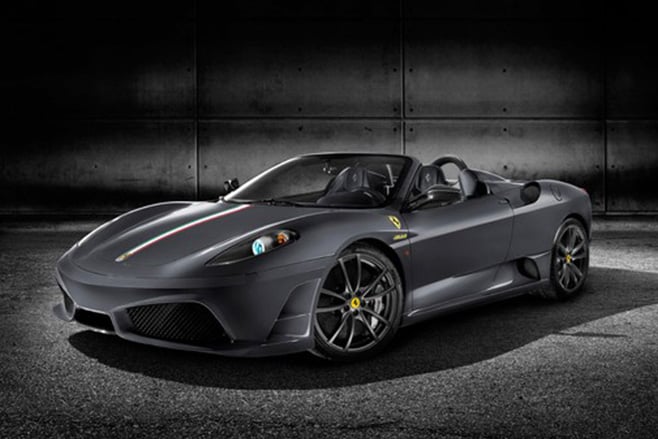
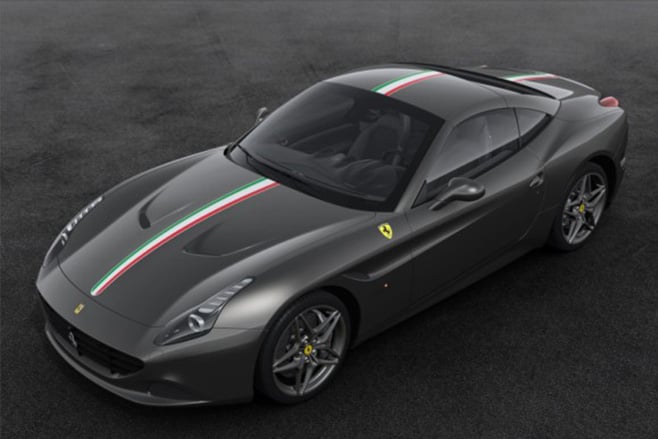
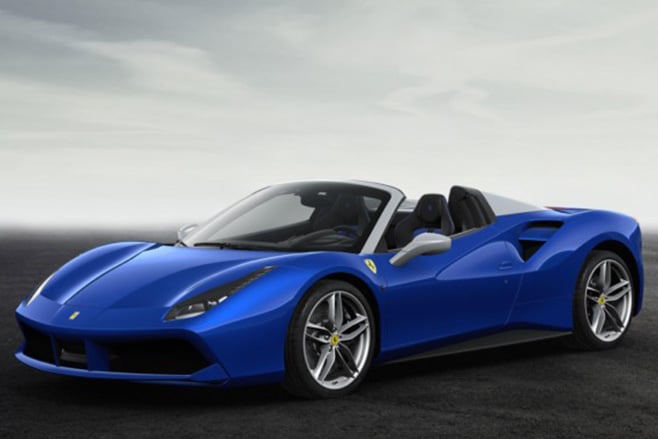
65. 2010 Ferrari SA Aperta
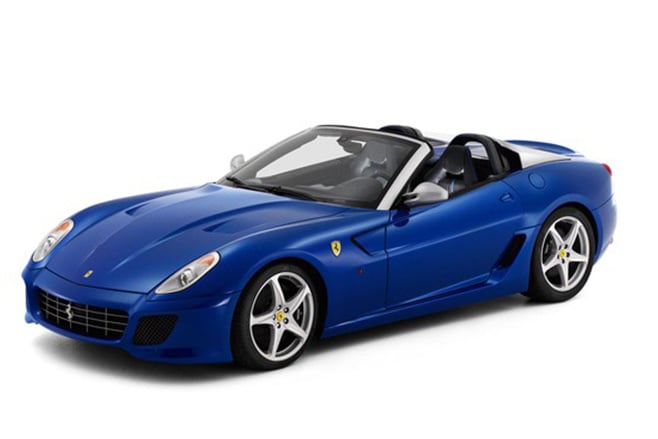
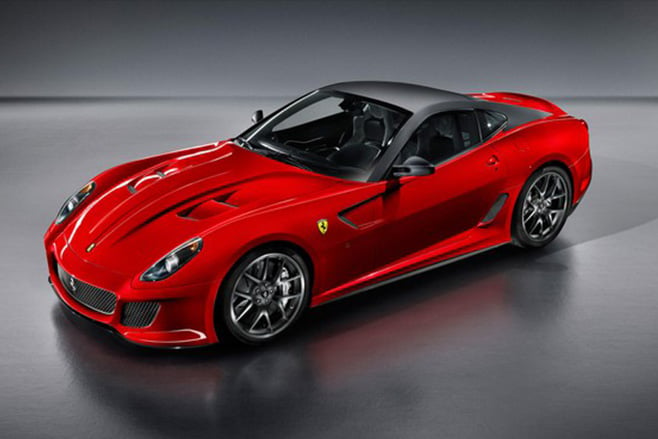
66. 2010 Ferrari 599 GTO
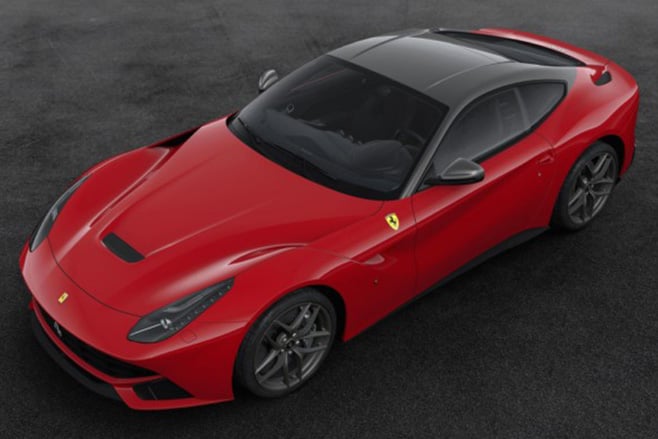
67. 2011 Ferrari 458 Italia GT2/3/E
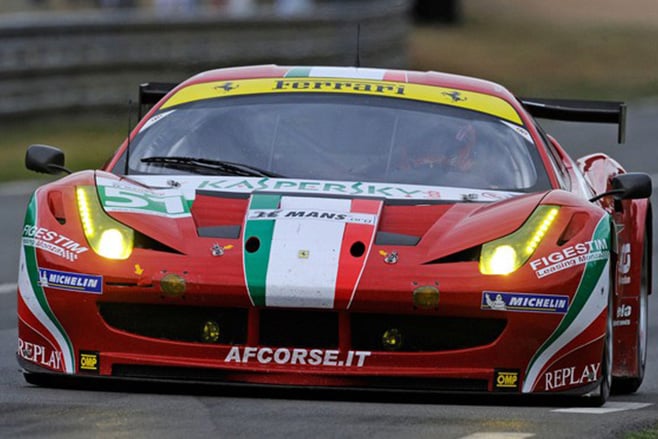
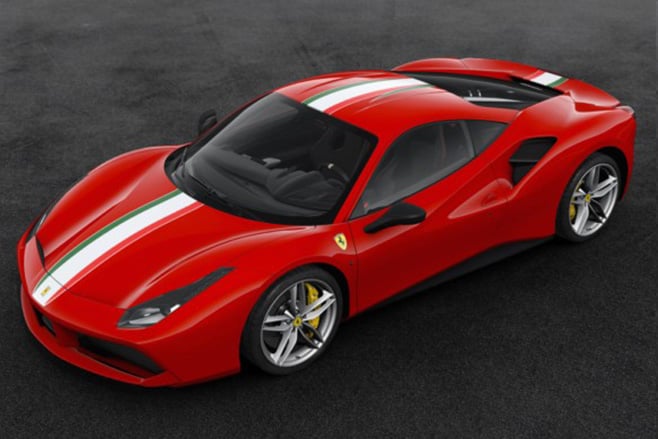
68. 2013 LaFerrari
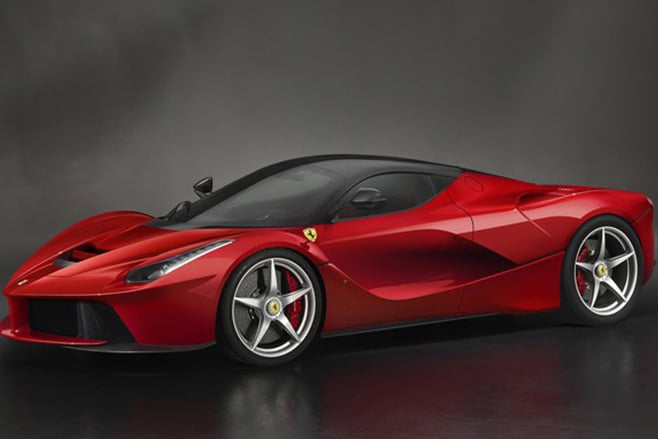
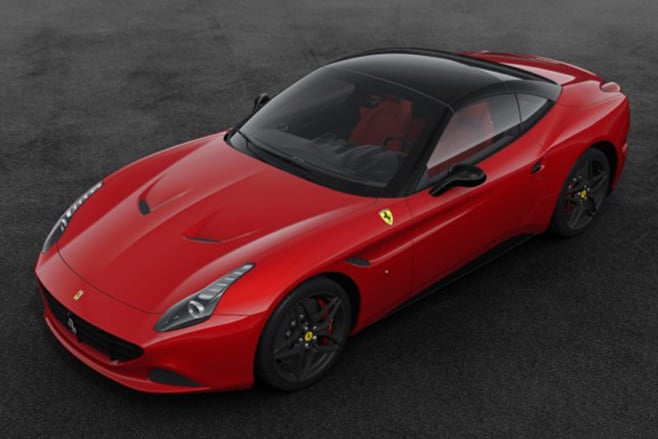
69. 2014 Ferrari FXX K
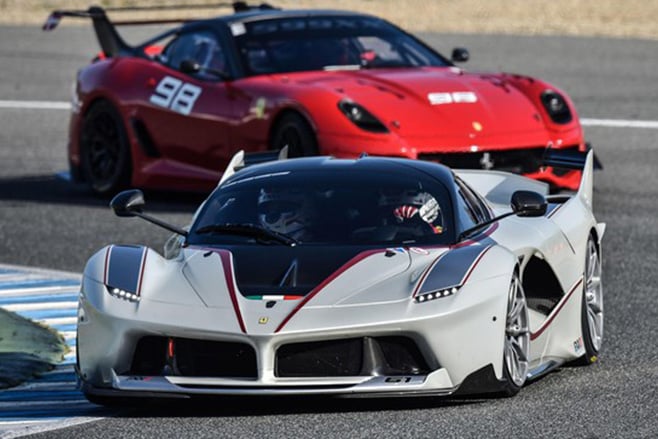
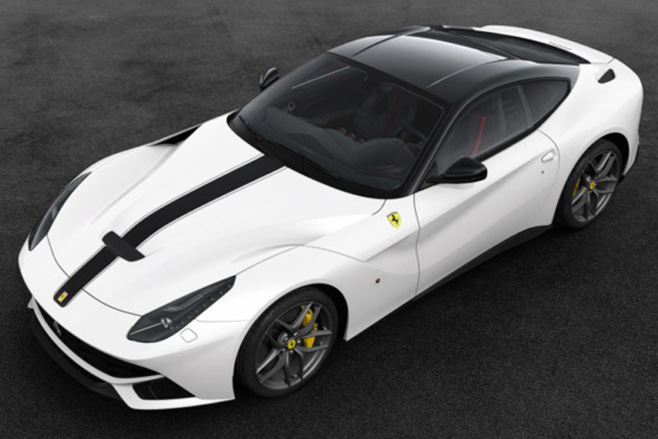
70. 2014 Ferrari 458 Speciale A
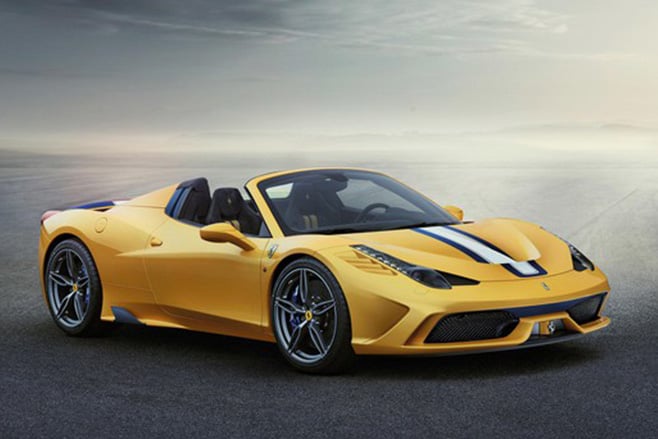
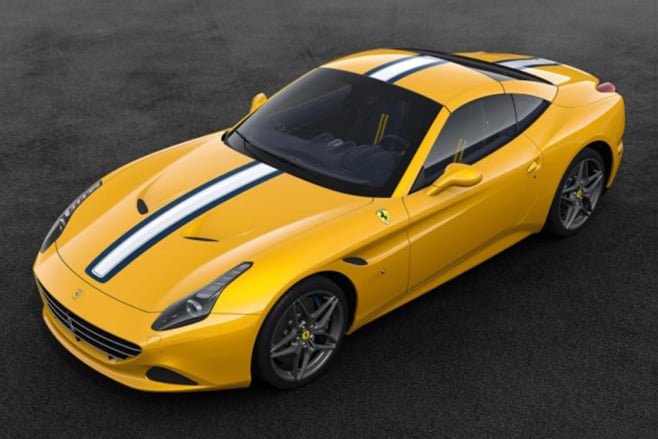
View more 70th Anniversary limited edition liveries inspired by past Ferrari models.
Key to Holden’s future is new metal. Over the past decade many Holdens have been off the pace and the company is in the process of refreshing or replacing the lot.
GM-Holden has confirmed it will introduce 24 “major” new vehicles by 2020, more than half of which have already been announced or introduced.
Here are some other important new arrivals slated to revive the company’s fortunes.
Holden Astra Sedan
The booted Astra is a very different vehicle to the Euro-sourced hatch. Built in Korea, the more comfort-oriented Astra sedan won’t share a single panel with the hatch. Sole engine option will be a 1.4-litre turbo-petrol.
Holden Equinox
The long-awaited replacement for the Captiva, the five-seat Equinox lands in the highly competitive medium SUV segment this October. Expect a 2.0-litre turbo-petrol four-cylinder and a 1.6-litre turbo-diesel.
Holden Commodore
Available as a liftback or wagon, the first imported Commodore will be smaller than the VF it replaces. It ditches the V8 option for turbo-petrol and turbo-diesel four-pots driving the front wheels, and an AWD V6.
Holden Trax
It’s only just been facelifted, but expect an all-new Trax to lob around 2019 as GM looks to capitalise on small SUV demand. There’s a chance the new-gen Trax will be twinned with Opel’s next Mokka, not Chevrolet.
Holden Grandland X
To be built alongside Commodore in Germany, the yet-to-be-named seven-seater will be more sizeable crossover than traditional SUV. Think sleek wagon with some soft-road smarts.
Holden Country Tourer
The crossover version of the new Commodore wagon will be a modern version of the Adventra that failed to sing in the mid-2000s. Expect a petrol V6 (and possibly a turbo-diesel four) mated to standard AWD.
As HSV kicks off its farewell tour of rear-drive v8s, We look back at the HSV GTS-R W1’s most significant forebears.
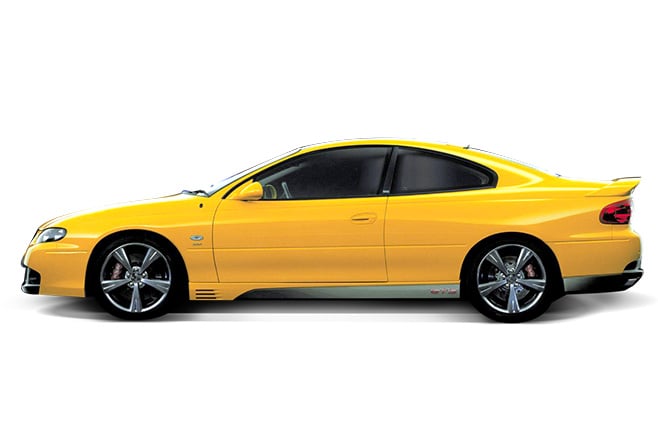
Holden rebirthed its iconic Monaro coupe in 2001, and HSV capitalised on the performance benefits of its sleek two-door body shape. The Monaro-based GTS Coupe was a rocketship; with a standing 400m time of 13.7sec, it was the fastest accelerating home-grown car of its era. It used a tweaked 5.7-litre LS1 V8, dubbed C4B, sourced from Callaway in the US. Its outputs totalled 300kW at 6000rpm and 510Nm at a peaky 4800rpm.
What we said: “The hot-looking GTS is a totally unique beast. Punters adore it. Drivers respect it. Hoons worship it.” – Wheels, April ’02
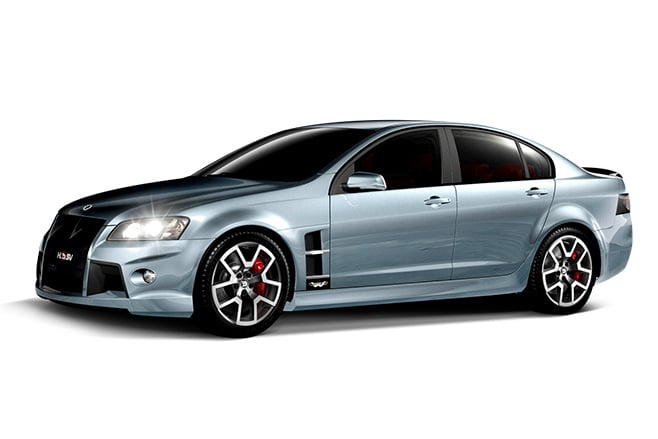
At $155,500, the W427 was the most expensive car ever sold by HSV – until the W1. Built in limited numbers to celebrate HSV’s 20th anniversary, W427 was a remarkably cohesive effort, featuring a sensational 375kW/640Nm 7.0-litre LS7 V8 from the Corvette Z06 that revved to nearly 7000rpm. Unique 20-inch alloys with a convex face accommodated huge six-piston brakes. HSV intended to build 427, but the GFC hit and only 137 were delivered.
What we said: “Believe the hype. With the balance to back up the numbers, HSV has just created Australia’s first supercar.” – Wheels, August ’08
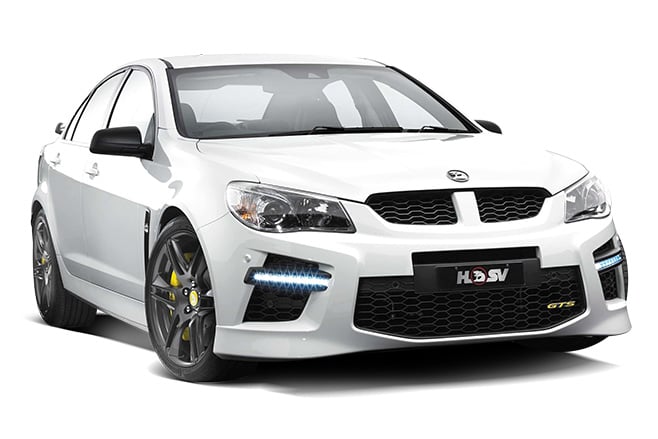
The Gen-F range was a landmark for HSV, and GTS was king of the castle. Its supercharged 430kW LSA V8 produced more power than any HSV before it, and it managed to apply that grunt in ways previous generations never could. Though Gen-F was based on the existing Zeta platform, GTS was a significantly altered car. A heavy duty rear end and extensive refinement of existing components gave the Gen-F GTS a level of dynamic excellence and outright performance unseen in an HSV.
What we said: “The blown GTS has, for the first time, what feels like real V8 Supercar DNA. It’s a performance Commodore as sophisticated as any of its rivals, regardless of price.“ – Wheels, Sept ’13
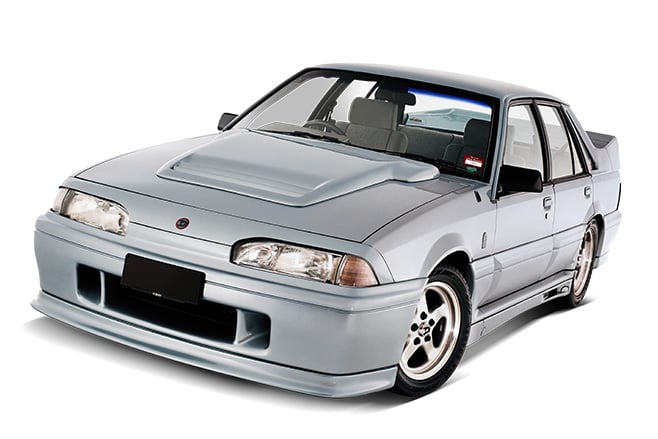
Unveiled at 1987’s Sydney Motor Show, the ‘Walky’ is arguably the most recognisable HSV of all time. The VL SS Group A introduced electronic fuel injection to the 5.0-litre Holden V8, producing 180kW. HSV designed it for competition first, showroom second. Masses of plastic bodywork made it one of the wildest-looking Aussie road cars ever created, but it was built like that to win races – and it worked, claiming two Bathurst 1000 titles.
What we said: “It is … aimed solely at racing. And that is the rationale for this car. The result is the finest ever Australian Supercar.” – Wheels, March ’88
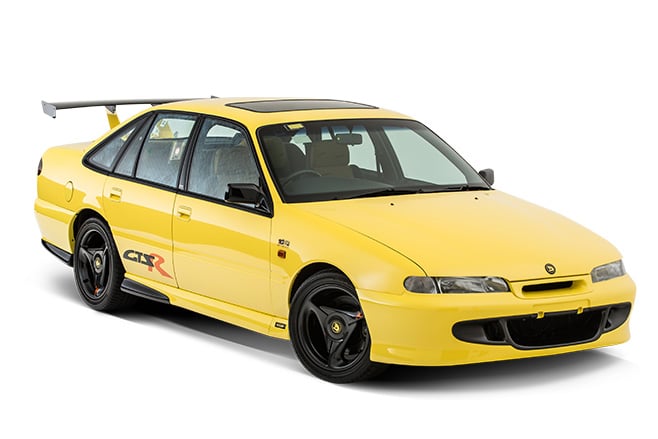
Not only was this R-rated HSV acceptable in the ’90s, it was fashionable. Whether searing ‘Yellah’ duco and touring-car-inspired spoilers are remembered as ugly or iconic, the original GTS-R was significant. Based around the acclaimed GTS and its stroked, home-grown 5.7-litre V8, peak power of 230kW (in the HRT-optimised ‘blueprint’ version) was big for 1996. A Tremec T56 six-speed manual was the only transmission and a Hydratrak LSD was standard. Production was limited to just 85 units.
What we said: “HSV’s eye-popping GTS-R is an exclamation mark… an in-your-face muscle car with Schwarzenegger swagger.” – Wheels, Nov ’95
Aston Martin is set to make its venture into the world of high-riding crossovers in 2019 with the DBX, with the British boutique sports car specialist adamant it will make a powerful first impression with what it says will be “the world’s first beautiful SUV”.
And Aston’s not talking about ‘rugged beauty’ or ‘brutish handsomeness’ either. Conventional, supermodel good looks are what Aston Martin’s designers are targeting with the DBX crossover.
But haven’t we already seen the DBX previewed by the DBX concept that was revealed at the 2015 Geneva Motor Show? Well, no. According to Aston, that car, while it bears the same name, isn’t representative of what the eventual production-read DBX will look like when it goes on sale sometime in 2019.
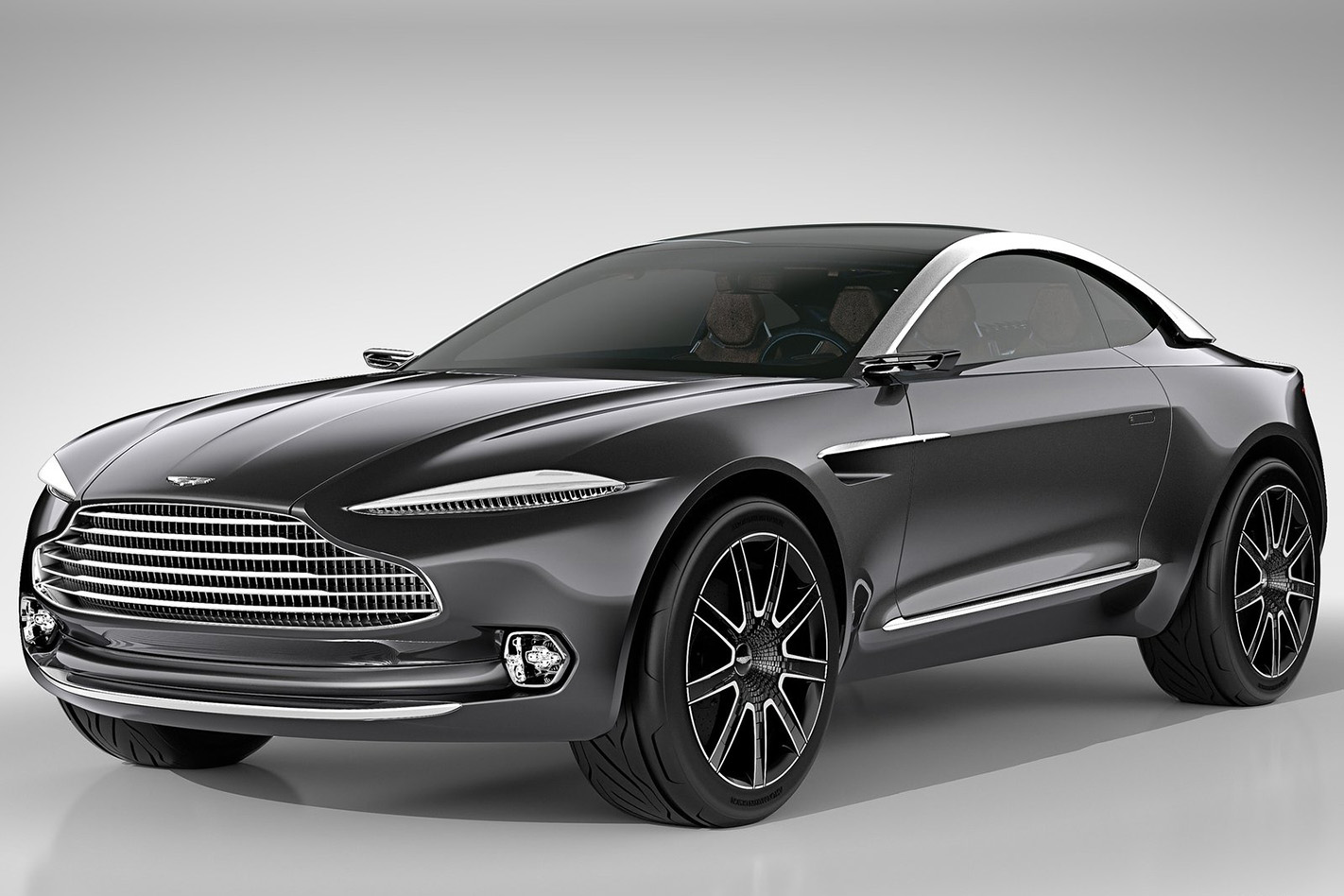
The DBX concept car (pictured) was a mish-mash of stylistic concepts, incorporating elements of the DB11’s design (which at that point had yet to make its own debut) on a high-riding platform. No, the production DBX will look quite different.
But how to meld traditional Aston ideas about visual beauty with what must, by definition, be a usefully-sized and usefully-shaped car? The ‘U’ in SUV stands for Utility, after all.
Marek Reichman, Aston Martin’s Executive Vice President and Chief Creative Officer (below), says the DBX will marry the words sport and utility “beautifully”.
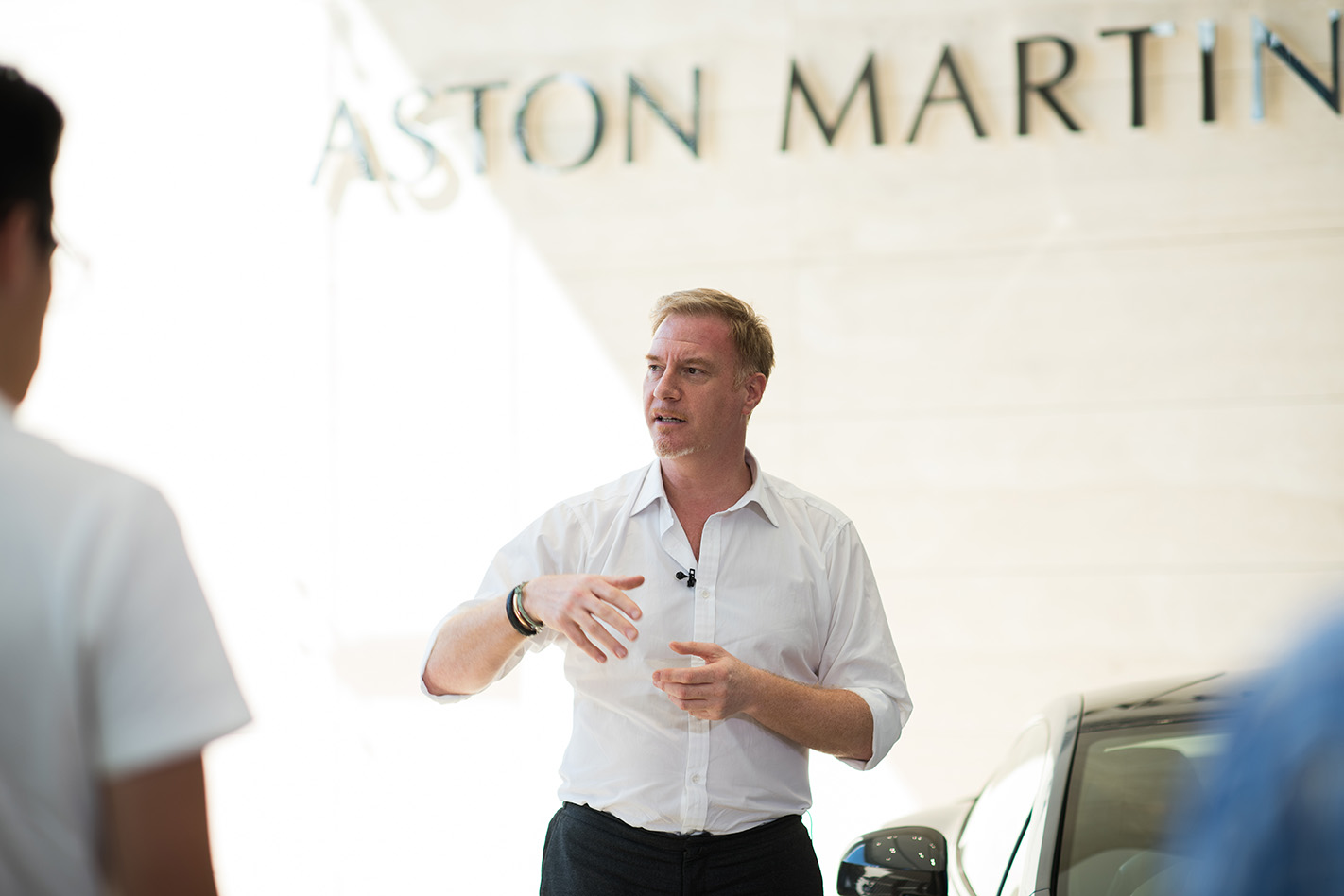
“The one thing you have to remember is if you look at SUVs and the companies that produce SUVs, typically they came from a world of utility,” he told WhichCar.
“A Range Rover comes out of a Defender, and Defender was a box. I love Range Rover, it’s brilliant, but effectively it’s an elegant box because that’s the heritage of the company.
| Aston Martin: History, trivia and fast facts
“Now SUV begins with ‘sports’, so imagine creating an SUV where you have a mentality of sports – which is about light weight, which is about being efficient.
“It’s not about boxes and utility, it’s about maximising the potential of what’s inside something by using structures, bonding methods and lightweight techniques to minimise the structure so you maximise the interior.
“That allows me the flexibility to generate form and shape beyond what a traditional SUV is.”
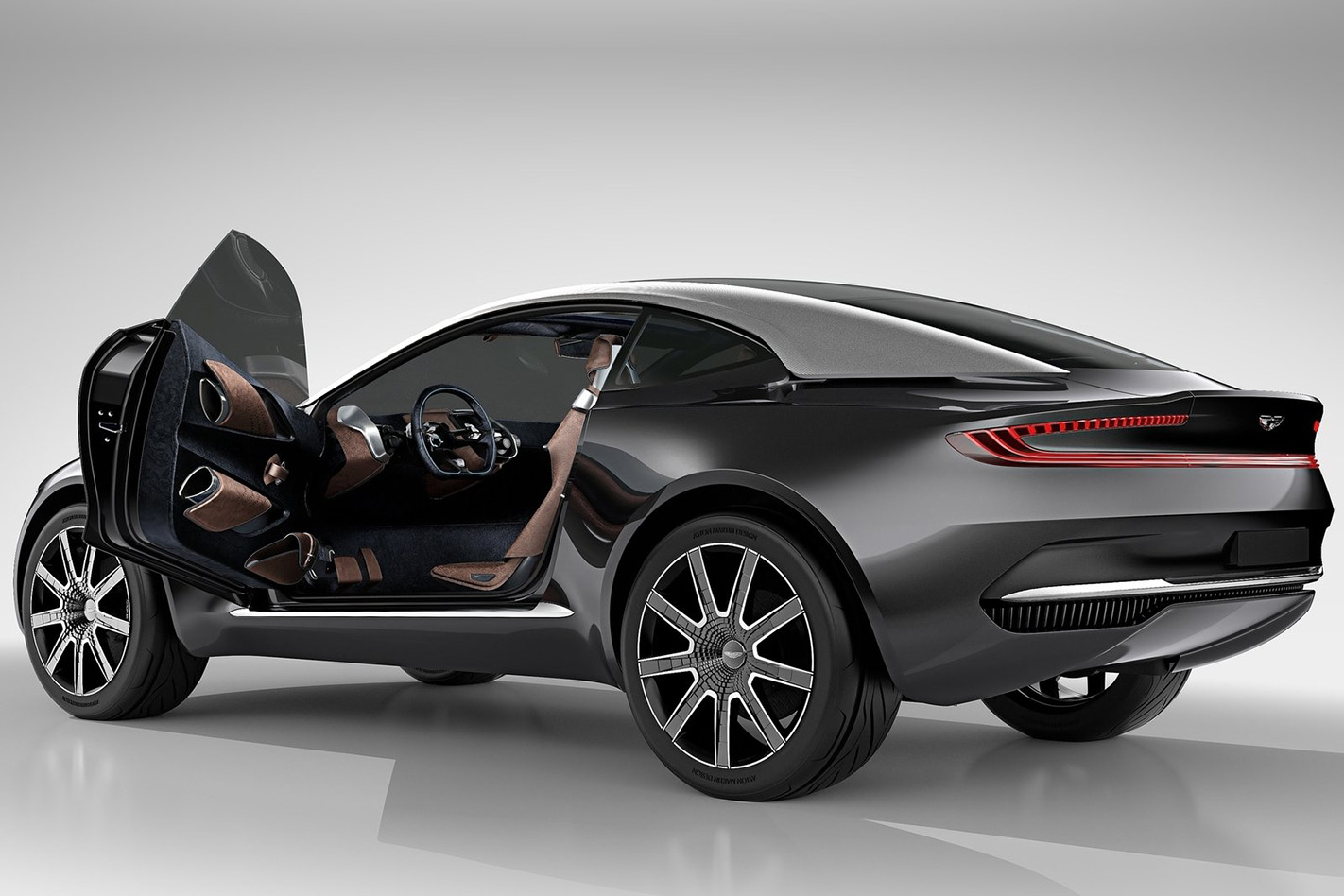
But while Marek’s description of the DBX’s design brief suggests it will look radically different to any SUV before it, Marek insists it won’t sacrifice practicality at the altar of aesthetics.
“It will still have the usability and utility, we won’t compromise on what you can do and how you can use it.”
| Aston Martin unveils innovative AM37 speedboat
“It may be that you’re into polo or you’re into hunting or fishing or mountain biking – you’ll still be able to use it to pick up the kids from a cricket game.
And it will be spacious too, with Marek promising that the DBX will boast “more interior volume than a Cayenne”. Stunning good looks merged with a capacious interior that bests the largest Porsche SUV currently on sale? The DBX looks set to be something special. We’ll find out just how special it is when it debuts in 2019.
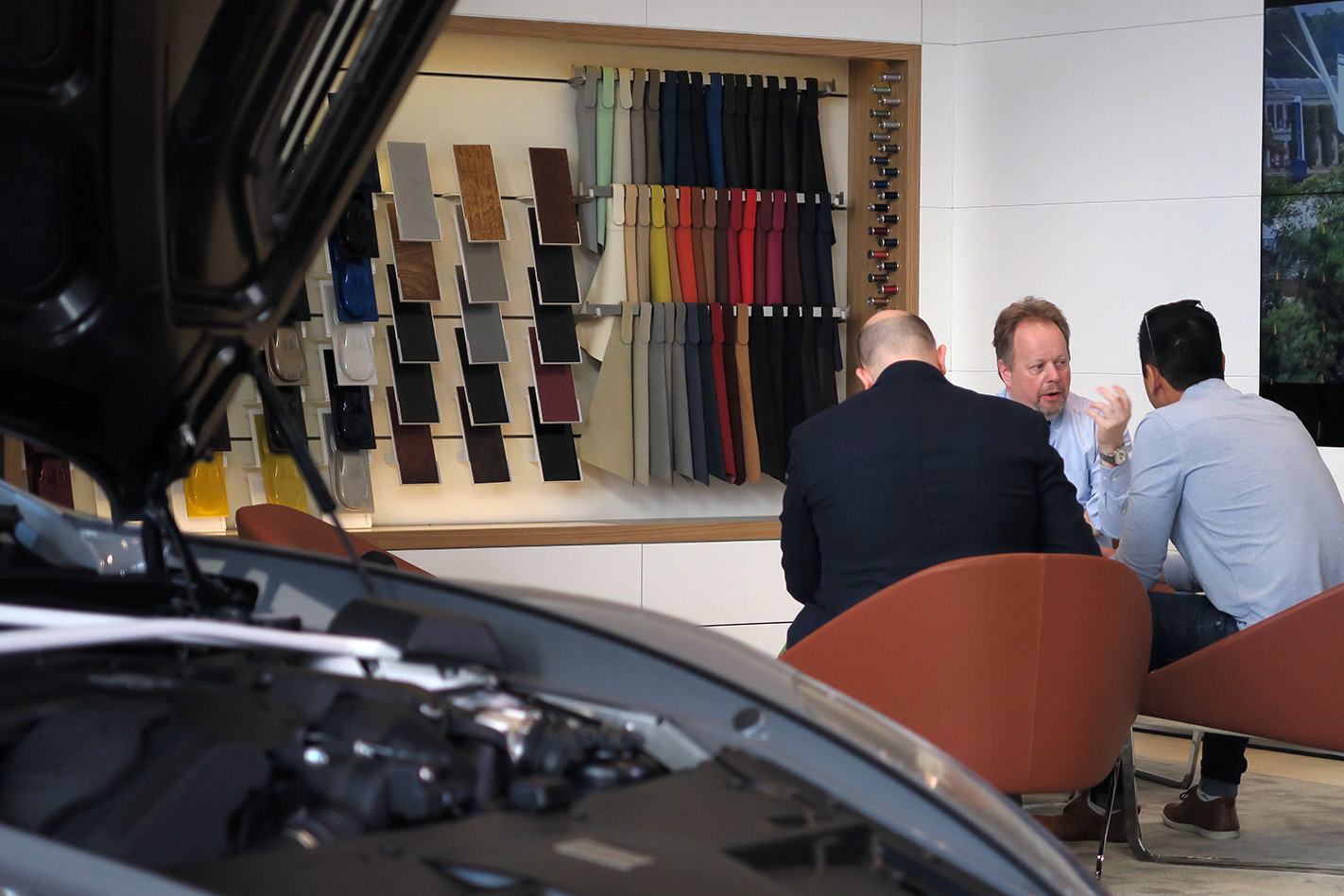
Aston Martin CEO Andy Palmer has laid bare his company’s future product plan, detailing the six new models that are set to follow in the footsteps of the box-fresh DB11 – all of them due to debut before the end of 2022.
Palmer, who has occupied the corner office at Aston’s Gaydon headquarters for two and a half years after a long stint as Nissan’s planning chief, announced the company’s ‘Second Century’ plan five months after his arrival at Aston. However it’s only now that Palmer has given clarity on what to expect.
And we can expect a lot – in fact, we can expect the greatest product expansion in the history of the marque. There will be seven new models in all, with an all-new vehicle hitting the market every year.
The Aston Martin DB11 has already kicked off the “Core Strengthening” product-driven phase of the Second Century plan, having launched last year as the first of Aston’s new breed of road-going sports cars. A V12-only model for now, the DB11 range will be bolstered soon with the arrival of a V8-engined variant using an AMG sourced twin-turbo 4.0-litre.
An all-new Vantage will follow, likely debuting late this year (potentially at the LA Motor Show in deference to the USA’s status as Aston’s number-one market) as a 2018 model. So far it appears it will be V8-only, though a successor to the V12 Vantage may eventuate later in the product cycle – as it did with the current-gen Vantage.
The replacement for the Vanquish will make its debut in 2018. Transitioning onto the DB11’s new-generation aluminium architecture and taking power from a development of that same car’s similarly-fresh V12, the Vanquish will be positioned as the flagship front-engined coupe in Aston Martin’s stable.
The DBX is next off the rank in 2019, and will break new ground for Aston as its first SUV-style vehicle – or crossover, as the company prefers to term it. Powertrains have yet to be confirmed, but could run the gamut from plug-in hybrid, V8 and V12. 2019 will also see the Rapide transition from V12 to all-electric power.
The year 2020 will see the arrival of Aston’s first-ever global mid-engined supercar. The as-yet un-named vehicle (Aston refers to it simply as “car number five”) will be built in volume to take on the Ferrari 488, McLaren 720S and Lamborghini Huracan.
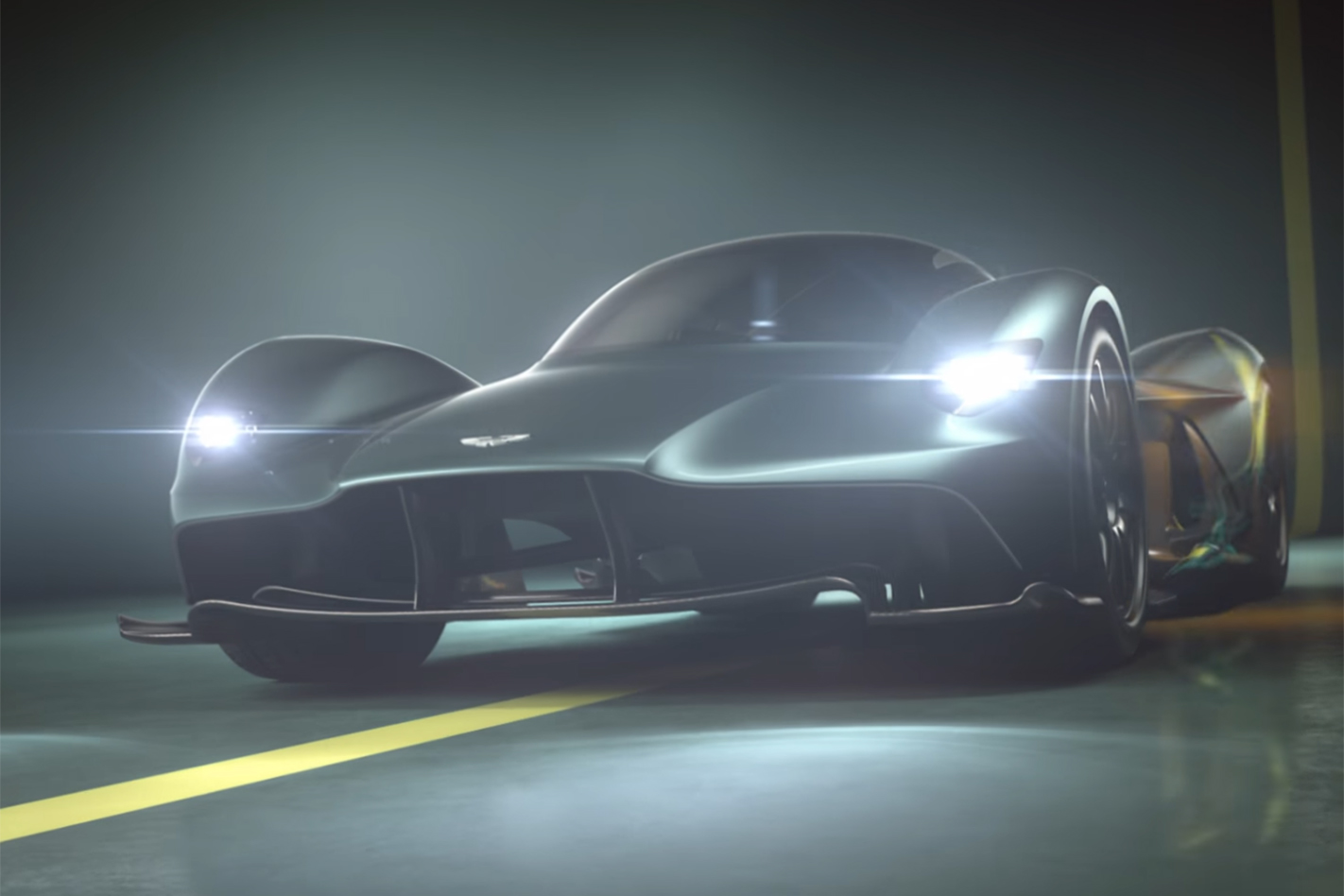
It’s new territory for Aston. Besides the Valkyrie hypercar that was officially christened at Geneva this month, Aston Martin has limited experience with road-going, mid-engined sports cars. Remember the Aston Martin Bulldog? Of course you don’t, it was a one-off and it was built in 1979. Car Number Five will be a far less bespoke thing, and will be sold globally as well.
Beyond the mid-engined Car Number Five, Aston Martin will revive the Lagonda nameplate with two new distinct models. One due in 2021, the other a year later.
Lagonda as a nameplate has been around for a long time, but it’s been many moons since a production Lagonda has been offered globally. The Lagonda Taraf doesn’t count – with a million-dollar pricetag and 200-car production run destined for just a handful of markets it was awfully niche, even for an Aston. These Lagondas, both expected to be upper-luxury four-doors pitched squarely at Bentley and Rolls-Royce customers, will be global models.
In 2023 the DB11 will celebrate its seventh birthday by entering retirement. At that point its successor will launch and the whole one-new-car-per-year model cycle will repeat again. Factor in the two special-edition variants of existing models that Aston plans on releasing each year, and the product cycle will run at a cadence of a new car every nine months.
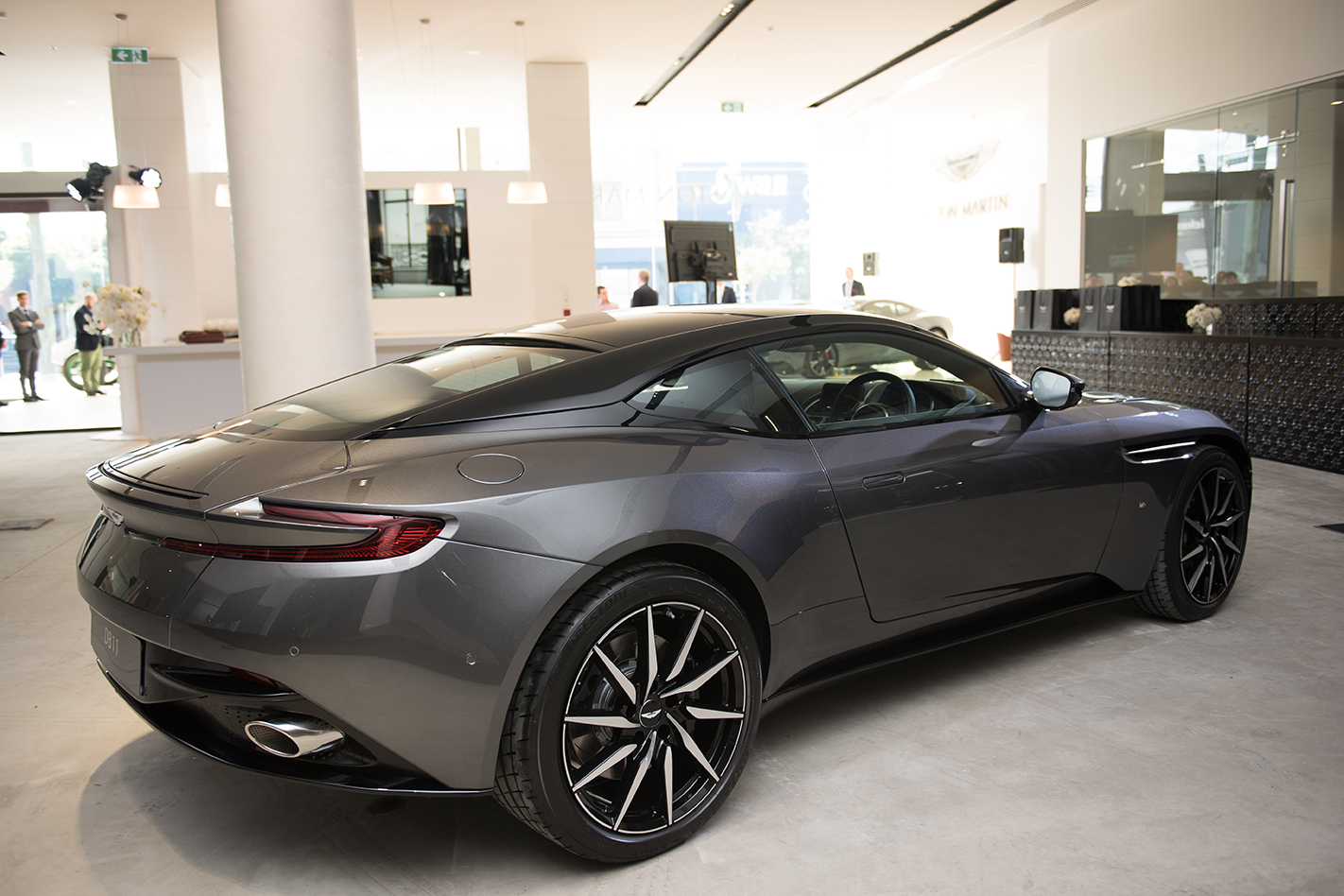
And while Aston Martin has only made a profit for just two years in its 104-year history, Palmer’s plan to ensure a steady stream of new cars is intended to make the company self-sufficient for years to come.
The effect on the company’s bottom line should be profound as well. Total yearly production will be capped at 7000 cars to maintain brand exclusivity, but that’s nevertheless a huge increase over the brand’s 2016 production tally of 3700 cars.
“We’re now a car company with tempo,” Palmer said.
“We’re now a car company that’s generating enough money from the launch of its new cars to then invest in its next car, and the next car, and the next car.
“That’s not a car company that’s going to go bankrupt, that’s a car company that’s sustainable, and that’s ultimately what the ‘Second Century’ plan is all about.”
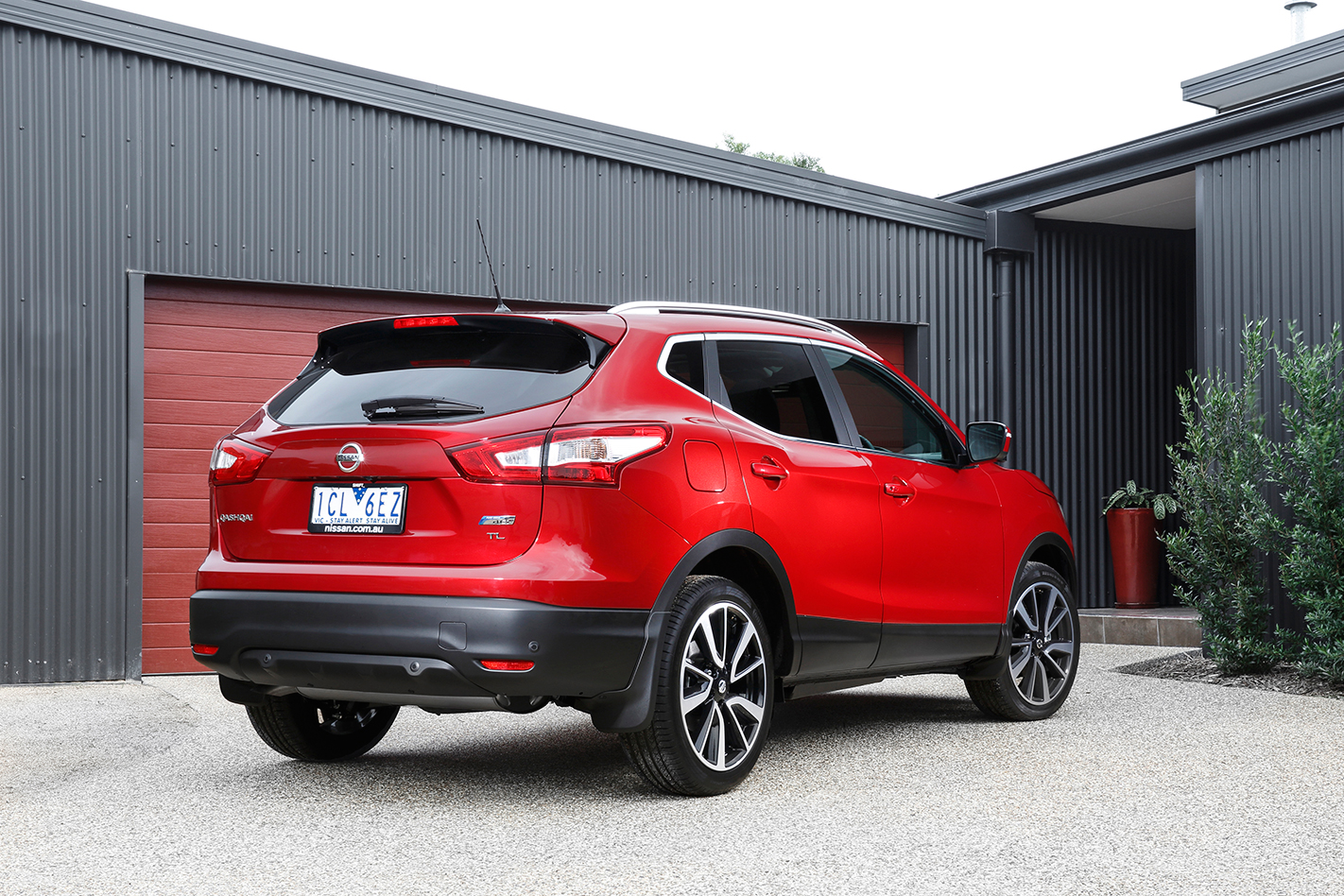
Meet one of Nissan’s most convincing SUV offerings, the Qashqai. Yep, pretty strange name! It follows up on the success of its predecessor, the Dualis, so it has big boots – or should we say tyres – to fill. Not only that, the small SUV market is fiercely competitive and Nissan needs to kick some goals to achieve market leadership in this crowded field.
WHAT STANDS OUT Every Qashqai features cruise control, Bluetooth and a colour touchscreen, a clear and comprehensive reversing camera, alloy wheels and six airbag. All models are covered by a three-year, 100,000km warranty.
Its high-riding position ensures good visibility for all passengers. The turning circle is tight – great for that three point turn at school drop off.
Even on models with large alloy wheels, the Qashqai has well-planted suspension that capably handles inner city speed bumps and potholes.
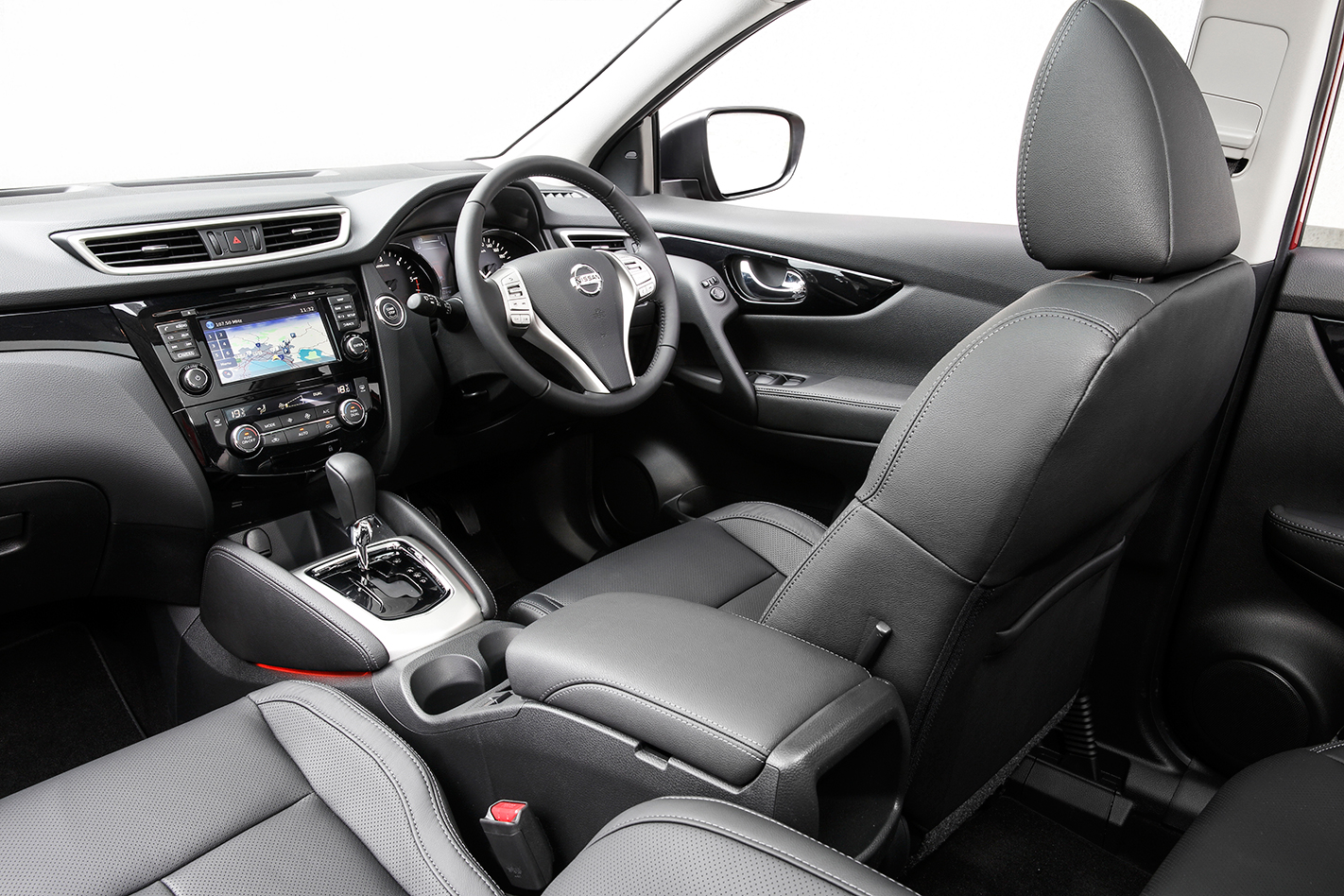
WHAT’S INSIDE The cabin is comfortable and uncluttered. The “leather accents” – which is code for combination of real and fake leather – still feels good on the shift knob and tiller in higher-spec models, which come complete with audio controls. The front seats are also leather accented in Ti and TL models, and, best of all, heated. But only the driver gets 6-way power adjustment.
This colour touchscreen is smaller in the lower model grades, but all of them feature the NissanConnect phone integration, which can be a little confusing and cumbersome to use at first, but once hooked up does well for linking your music and calls with the car.
I find this centre console bin – with its handy USB port – can be like a black hole of storage spaces; nothing – including sunglasses, iPhones, kids’ Shopkins – can escape its strong gravitational effects. But the highlight of the Qashqai’s interior is this – the massive panoramic sunroof, which is standard on Ti and TL models. It’s great for letting in the light, although it can strain the aircon on hot days.
Talking of temperature it’s a shame there are no air vent for rear passengers. Despite this, the back pew is comfortable and easily fits three kids, or two adults with the centre console down. The good news is all models have a generous 430L boot, which has these two handy hidden drawers built into the floor to hide your valuables. All models have a space-saver spare underneath.
CHOOSING YOURS There are four models in the line-up, two with a 106kW and 200Nm petrol engine, and two with a 96kW and 320Nm turbo-diesel engine.
The two petrol variants are available with either a manual transmission or CVT auto, and kick range with the competitively priced ST manual followed by the upper-spec Ti. The two turbo-diesel variants include the more accessible TS and top grade TL, which we have here. Official fuel consumption for the diesel is just 4.9L/100km.
| 2017 Nissan Qashqai TL quick review
Sadly on the colour front only white and black come as standard. You’ll have to cough up a bit extra for the six other swankier colours.
The higher-spec petrol Ti model is the one we’d buy. It uses 6.9L/100km with a CVT, which is slightly more fuel than the diesel, but it’s respectable and better to drive, especially when taking off from a standstill. Plus it has the full range of standard equipment, including safety gear, which makes the Qashqai most enticing.
SUMMING UP Don’t be fooled by the off-road look. The Qashqai is best suited to city and urban driving. But the high-riding position and well-judged suspension makes negotiating the jungle of arterial roads less threatening; there’s no sense of being swamped by bigger vehicles. It’s comfortable behind the wheel making it a great, family city runabout.
MORE: Nissan Qashqai Range Review MORE: Nissan Qashqai Range, Price & Specs
