
Following the Renault Clio’s impressive top-three finish in 2013’s Car of the Year, we expected much from the new-gen Renault Megane. By honing the Clio’s impressive drivetrains and introducing a host of fresh technology and a striking new design language, Renault Megane IV should’ve been knocking on the door of brilliance.
Instead, it’s a case of quite near (if we’re talking about the rorty GT) but still some distance behind where the small-car benchmark sits in 2017. Or even 2013, because the Mk7 Volkswagen Golf remains the hatch to beat. And the new Megane simply isn’t up to the task.
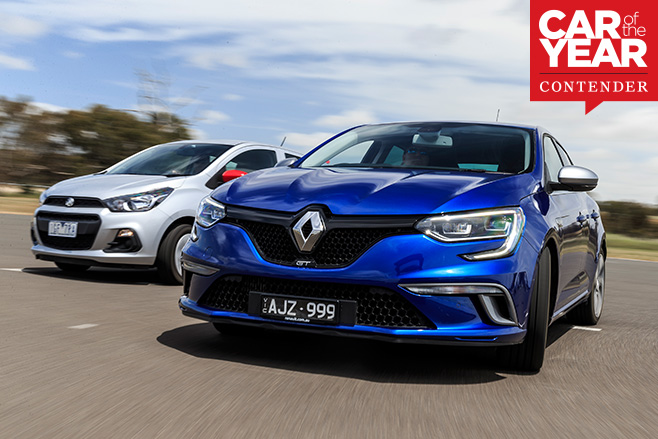
Given the performance of the GT’s 1.6-litre turbo (7.1sec to 100km/h), its 6.0L/100km combined fuel number is particularly impressive, and given the wealth of standard equipment in low-end variants, plus a five-year warranty and fixed-price servicing, the Megane range appears to offer genuine value for money.

The GT is exempt from much of the criticism, seeing its Renaultsport-tuned chassis and four-wheel steering add genuine involvement and precision. It proved grippy and quick on all surfaces, and effortlessly controlled through the emergency lane change, though its ride is overly firm and refinement isn’t great. “A lovable rogue”, as Byron described it, with enough flair to overcome its lack of ultimate polish.

It seems like Renault spent the majority of its time developing the GT (and hopefully the forthcoming Renaultsport version), and then rushed to the finish line with the 1.2-litre variants. The Megane Zen isn’t a bad car by any means – cue its interesting design details, zesty drivetrain, and generous front seats – but it lacks the polish of a Volkswagen Golf, and the panache we’d expect from a brand like Renault.
Specs
BODY Type: 5-door hatchback, 5 seats Boot capacity: 434 litres Weight: 1265 – 1392kg
DRIVETRAIN Layout: front engine (east-west), FWD Engines: 1198cc 4cyl turbo (97kW/205Nm); 1618cc 4cyl turbo (151kW/280Nm) Transmissions: 6-speed manual: 7-speed dual-clutch
CHASSIS Tyres: 205/55R16 – 225/40R18 ADR81 fuel consumption: 5.5 – 6.0L/100km CO2 emissions: 125 – 134g/km Collision mitigation: No Crash rating: 5-star (Euro NCAP) Prices: $22,490 – $38,490
Let’s not kid each other here. The AMG C63 S Coupe is not about wafting you and your significant other down to the opera house in silence.
Nor is it about lurking in the shadows and just being a watcher. Nope, this is a genuine muscle car that just happens to have a high-end Euro badge on its rump. It’s about as subtle as a Trump tweet. But in a good way.
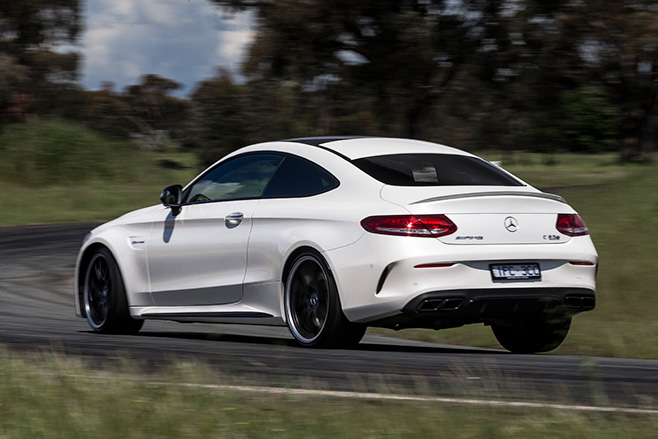
Of course, you can make up your own mind about that, and from the best seat in the house, you can’t see what it looks like anyway. It’s also from the helm you discover what a head-kicker the AMG really is. There is acceleration and then there is the stuff the C63 S produces. Call it thrust, call it grunt, call it what you like – this is a serious piece of hardware. And covering big distances with zip fuss is the name of the game.
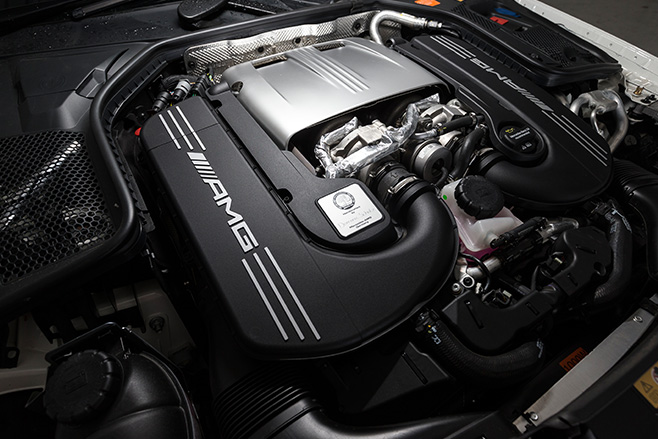
And keeping things as firm as they are also allows for pretty neat, sorted handling. And so it is, but the C63 S has one more trick up its sleeve in that department. With a wider rear axle than cooking C-Class cars and torque vectoring built into that drive axle, the AMG is a truly amazing thing to punt hard. Turn it in and it feels completely normal with good steering feedback and a solid feel. But feed the power in post-apex and the car starts to tighten its line.
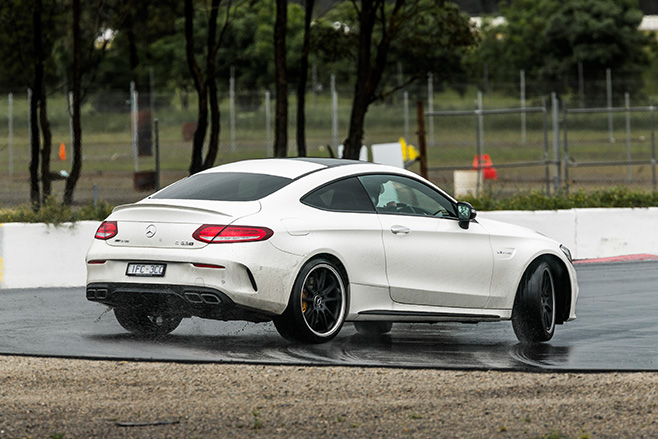
THE NUMBERS 0-100km/h: 4.56sec (8th) 0-400m: 12.48sec @ 194.10km/h (6th)
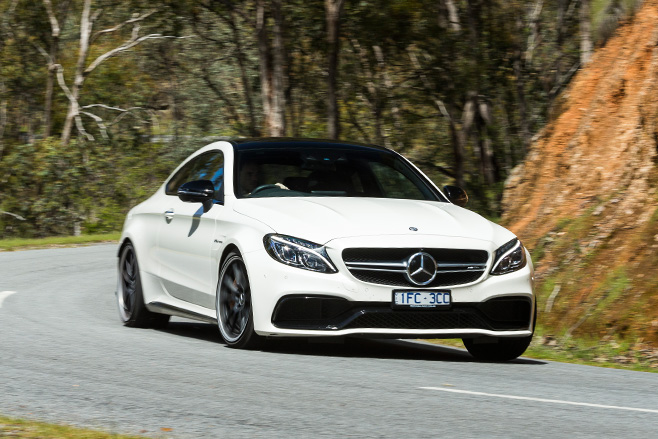
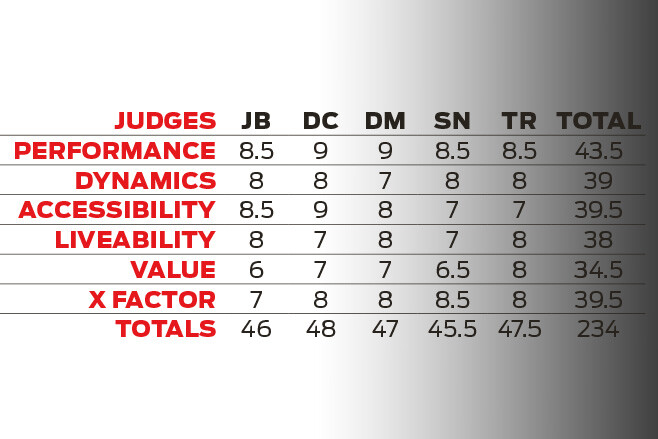
DYLAN CAMPBELL: 4th Licence-losingly fast. It’s like the friend who you know is bad for you, but you keep hanging out with them anyway.
SCOTT NEWMAN: 7th AMG really understands what makes a car fun. Mega engine.
TIM ROBSON: 9th The hardest C-Class AMG there is… and it shows, too.
JOHN BOWE: 7th Far better than I expected it to be, a good jigger.
SUVs have overtaken passenger cars for the first time according to sales figures released today by the Federal Chamber of Automotive Industries.
The sales numbers for February 2017 reveal a dramatic 12.2 percent drop in sales of sedans, hatches and wagons, contributing to an overall 7.7 percent slide in a new-car market that’s bounced from record to record in recent years.
Even sales of SUVs dropped when compared with the record February 2016 result, but there was enough interest in the growing range to keep sales ahead of the more traditional passenger cars.
Despite the boom in sales of small SUVs – most recently buoyed by the arrival of Toyota’s new C-HR – it was mid-sized and upper large SUVs that contributed most to the anticipated switch from passenger cars being the dominant new-car force to SUVs.
FCAI chief executive Tony Weber hinted the strong February result for SUVs may not be continued in coming months, but it was representative of a shift in consumer sentiment.
“Of course, this one monthly outcome doesn’t signal a landslide but clearly Australian buyers are attracted by the features and capabilities of new generation SUVs, and how these types of vehicles suit their needs and lifestyles,” he said.
Leading the SUV charge was Toyota with 5191 sales across eight models. Second placed Mazda managed 4138 from four models, indicative of the strength across its relatively compact lineup.
In its final few months on sale before the arrival of an all-new model, Mazda’s CX-5 was the again the top selling SUV with 1933 sales, ahead of the Toyota RAV4 (1726) and Hyundai Tucson (1596).
Toyota was by far the best selling brand, with 16,308 sales, enough to push its market share to 18.3 percent.
Mazda was second with 9923 sales and Hyundai a distant third with 7001.
Once again Holden performed poorly, dropping to fifth place and with a lowly 6.4 percent market share off the back of a soft month for the soon-to-die locally-produced Commodore, down 33 percent.
So, in fourth place – by just 34 cars – was the surprise inclusion of Mitsubishi, which despite plunging passenger car sales benefited from strong SUV results (SUVs now make up more than half of Mitsubishi’s sales, with the Triton ute accounting for another 35 percent).
Despite the softness in passenger car sales it was a handful of small cars that again contributed strongly to the top of the overall sales charts.
Toyota’s Corolla stood on top of the podium with 3392 sales ahead of the top seller for 2016, Toyota’s Hilux ute (3386) in second.
Mazda 3 was third (3143) ahead of another ute, the Ford Ranger (2931) in fourth.
Hyundai’s soon to be replaced i30 fell 19 percent to 2003 sales.
TOP 10 BRANDS, FEBRUARY 2017 BRAND SALES Toyota 16,308 Mazda 9923 Hyundai 7001 Mitsubishi 5758 Holden 5724 Ford 5669 Volkswagen 4618 Nissan 4425 Kia 4174 Subaru 3746
TOP 10 VEHICLES, FEBRUARY 2017 Toyota Corolla 3392 Toyota Hilux 3386 Mazda3 3143 Ford Ranger 2931 Hyundai i30 2003 Mitsubishi Triton 1990 Mazda CX-5 1933 Toyota RAV4 1726 Hyundai Tucson 1596 Holden Commodore 1566
TOP 10 SUVs, FEBRUARY 2017 Mazda CX-5 1933 Toyota RAV4 1726 Hyundai Tucson 1596 Nissan X-Trail 1500 Mazda CX-3 1468 Toyota Prado 1320 Kia Sportage 1127 Mitsubishi ASX 1061 Honda HR-V 982 Volkswagen Tiguan 945 Source: VFACTS, Federal Chamber of Automotive Industries
There should be a special place in hell for people who think parking within the lines is optional.
PILOTS have a thing called ‘airmanship’ which applies not just to flying proficiency but also how to be considerate to others – for example, blocking a taxiway when doing an engine check is considered poor airmanship. In short it’s about having pride in what you do and not being a dickhead.
Motoring desperately needs a similar principle that covers not just the way we drive but how we park our cars. It’s incredible how many people prioritise self-image when spending tens of thousands on a car only to come across as a prize bell-end by parking their pride and joy over the lines.
In creative parlance straying outside the lines is a form of expression that shuns the status quo to generate all new possibilities. But to stray outside the lines of a parking spot is to express that “I have less pride than a piss-crusted hobo who swears at cats”.
I’m not talking about people who have trouble parallel parking, but those who simply don’t care. I obsess about how I park and will often get back in my car to properly centre it within the lines. Sure it sounds anal but it is the decent and courteous thing to do. Part of this is to make it easier for others parking near me, though it’s mostly because I don’t want people to think I suck at parking. If you suck at parking then you suck at driving… and life.
Yet, despite the proliferation of reverse cameras on cars the standard of parking and the associated care factor seems to be slipping. I don’t know how many times I have got home only to be unable to park in my street because some idiot in a Nissan Micra has parked over the front line of a spot that would easily fit a Holden Commodore.
Most people would get out of the car and think “hmm, I better back up into that ample space,” No, not my neighbour, who probably looked at his or her parking effort, laughed and then went inside to watch YouTube videos of baby pandas dying.
Then there are the inconsiderate folk who think the line between two spaces in a shopping centre car park is optional. There should be an ice-moon prison dedicated to those who think nothing of parking in a way that makes the adjacent spot useless. Sure some parking spaces are tight and don’t necessarily accommodate SUVs, but at least pretend to give a damn.
And there should be a special unit at that intergalactic penitentiary for people who deliberately park across two parking spots because they don’t want anyone to get close and scratch their precious, often German, car.
They obviously think everyone is a jerk like them, hence their self-entitled paranoia. When I park near an expensive car I’m subconsciously vigilant when opening the door. But show me a car parked like that I get a sudden urge to grab my keys and tear it a whole new shoulder line.
Probably best not get me started on people who misuse disabled spots, except to say their wish to qualify for a disability sticker should be granted – with extreme prejudice.
Fortunately there are many who agree. There’s even a Facebook page called Parking Fails Australia that shames bad examples of parking.
I reckon parking officers could attract much needed goodwill by having a similar site showing them slapping tickets on poorly-parked cars – not all heroes wear capes, after all. That would be a satisfying way to see inconsiderate parkers get their comeuppance without having to get one’s keys out.
INFINITI has teased a new performance concept dubbed ‘Project Black S’ which it says will use Formula One inspired technology.
The car will be unveiled prior to the Geneva Motor Show next week, and was developed in collaboration with the RenaultSport Formula One team.
A variant of the Infiniti Q60 coupe, the Project Black S is said to be a “radical interpretation”, featuring aerodynamic design, and a look at how a “unique-for-the-road performance hybrid powertrain” could be implemented.
The car will feature an energy recovery system (ERS) like that seen used in F1 to recharge hybrid systems during the race.
Infiniti claims the system is inspired by the dual-hybrid system used in Formula One, and is the first of its kind for the road.
“Infiniti is the premium car manufacturer within the Renault-Nissan Alliance, and a technical partner to the Renault Sport Formula One Team, so it is natural that we come together to explore the possibility of bringing innovative high-performance hybrid technology to our customers,” Roland Krueger, President of Infiniti, said.
“Infiniti has constantly led the way in making innovative new powertrain technology available, and we’re extremely excited by the potential of Project Black S.”
The Japanese brand isn’t the only company investigating Formula One tech for the road, with Mercedes-AMG lifting the entire power unit from the W08 F1 car for its Project One hypercar project.
So far a single teaser of the headlights is the only image available, hinting at a continuation of Infinit’s current design language.
IT’S taken almost a year to get here, but Porsche has finally announced its pooch-friendly version of the Porsche Panamera coupe – the brand’s first-ever wagon built off a sedan body – is ready for the world.
The Panamera Sport Turismo is a fastback-booted version of the large coupe offering a large tailgate, low loading height, increased luggage space. It also has the ability to transport up to five passengers, even if Porsche describes it as a “4+1” seating concept: you can opt for a four-seat version with electronically adjusting pews if the body count doesn’t matter.
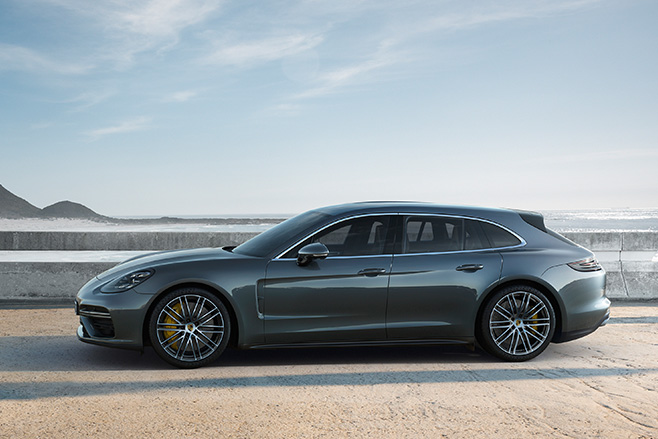
Due on sale here from November, the Sport Turismo will carry about a $15,000 premium over the saloon version. That means the entry-level Panamera 4 Sport Turismo will price from $232,800.
Other models in the line-up include the Porsche Panamera 4 E-Hybrid ($255,800), 4S ($318,100), 4S Diesel ($325,900) and the range-topping 404kW Turbo ($391,000).
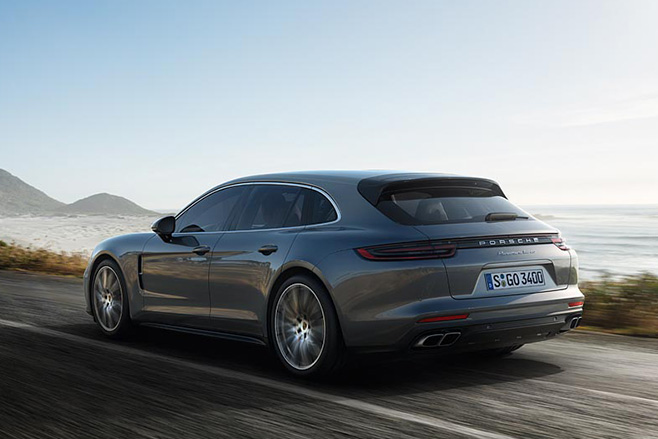
At 5049mm, the Sport Turismo is just as long as the sedan, is just as wide, and sits on the same wheelbase. It’s only slightly higher, and features unique sheetmetal from the B-pillar back.
An active spoiler is integrated into the trailing edge of the sloping roofline. Porsche says its angle rakes through three stages depending on the driving situation and selected vehicle settings, and generates up to 50kg of downforce over the rear axle. It only deploys at a licence-smoking 170km/h unless activated manually. It will also tip up to 26 degrees when the sunroof is open to help minimise wind noise.
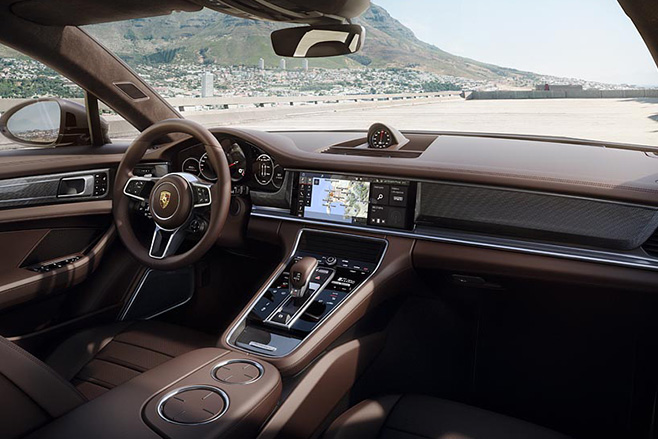
If you want, a powerpoint to charge a laptop or run an espresso machine is available for the boot space.
The Porsche Panamera Sport Turismo will be officially unveiled at next week’s Geneva Motor Show.
THE number of people fronting Australia’s court system on traffic and vehicle-related offences has reached its highest level in more than three years, the Australian Bureau of Statistics says.
Road-related offences accounted for 223,286 appearances, or more than one in every three court cases concluded in 2015-16 – up by almost 10,900, or five percent, over the previous financial year – making them the most common offences committed.
Overall, the number of cases settled before the courts last year rose three percent, bolstered largely by the bigger number of road-related offences.
The ABS said 223,286 defendants had their road-related case heard and settled last financial year, with almost two out of every three fronting court on offences such as drink or drug driving, breaking speed limits or committing parking offences.
For those motorists going to court, the outcome wasn’t good. The ABS reported 93 percent of road-related court cases ended with a guilty verdict, second only behind the 94 percent guilty rate for those committing “dangerous or negligent acts endangering persons”.
Thankfully, though, the big bump in numbers appears to be part of police campaigns to remove drivers under the influence of mind-altering substances from our roads.
“The increase [in court appearances] in 2015-16 was driven by an increase in the offence ‘exceed the prescribed content of alcohol or other substance limit’ (19 percent or 11,373 defendants), specifically drug-driving offences, and was particularly evident in New South Wales, Queensland and Western Australia,” the ABS said.
“Police annual reports for these jurisdictions indicate there has been an increased focus on targeting driving while under the influence of drugs.”
More than 18,000 people appeared in court on speeding charges, down on the 19,610 called to explain themselves to the judge 2011-12. Only 78,369 appeared to defend driver’s licence infringements, well down on the 98,138 posted in 2008-09.
Vehicle registration and roadworthiness offences, meanwhile, have been in steady decline since the 27,919 posted in 2008-09 to just 8442 last financial year.
NSW, Australia’s most populous state, recorded the highest number of traffic and vehicle-related offences at 61,024. Queensland was next with 58,303, and Victoria was third with 47,580. ACT – with a population of about 400,000, recorded the lowest number of offences at 2363.
The 2017 Supercars safety car is a diesel, but that’s not important right now.
In an embarrassing sign of the times, the new Porsche Cayenne S Diesel safety car to be used for the 2017 Supercars season has somehow managed to be sign written, professionally photographed and then those photographs released to media without anyone realizing it says ‘SAFTEY CAR’ in big, bold letters down its flanks.
With the images now rapidly circulating around social media, no doubt the mistake has already been hastily rectified before the car is inevitably forced into action at this weekend’s Clipsal 500 season opener, but it’s a reminder to pay attention in English class, kids.
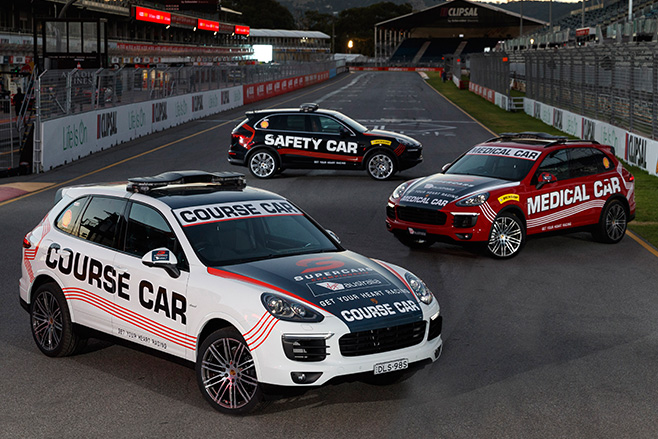
While a diesel SUV might seem like a strange choice to lead a train of fire-breathing Supercars, the Cayenne S Diesel packs a 4.2-litre V8 turbo diesel producing 283kW/850Nm which should make it more than capable for the task at hand. Especially so if it rains!
Porsche’s course cars haven’t always had an easy time in the Supercars championship, Shane Van Gisbergen infamously taking out the Panamera medical car at the 2012 Sydney race when his steering failed at an inopportune moment.
The first practice session of the 2017 Supercars season is currently underway, with a pair of 250km races around the streets of Adelaide on Saturday and Sunday.
Space is the only real frontier in this profoundly un-French SUV.
RENAULT has such high hopes for the all-new Renault Koleos that Australia was the first market in the world to receive the redesign last August, underscoring the medium SUV’s importance.
Significantly larger than its 2007-era predecessor, the more wagonoid Mk2 version with its longer rear overhang looks beefy in a sort of scaled-down Audi Q7 way, which is no bad thing.
Obviously, the growth spurt ushers in meaningful increases in interior room, including a huge back-seat and vast cargo space. It’s the same deal up front. Along with oodles of storage, excellent forward vision, and an agreeable driving position, it highlights the family-orientated practicality engineered inside. A five-year warranty is another bonus.
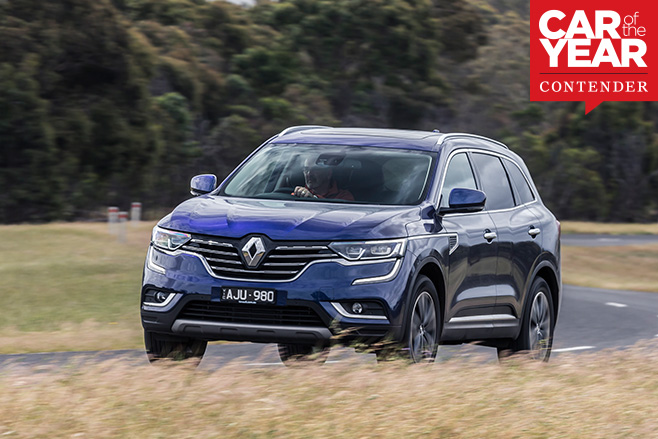
With such a persuasive value argument, the Koleos possesses knockout showroom appeal. Who would have thought a European SUV could beat the Asian brands at their own game?
But scratch the surface and, aside from the left-hand side indicator stalk and diamond-shaped logo, there is nothing especially Renault or even French going on here. It won’t take long to spot the clumsy foot-operated park brake, charmless hard plastic trim, and dearth of cabin detailing flair found in the chic Renault Clio supermini, for instance.
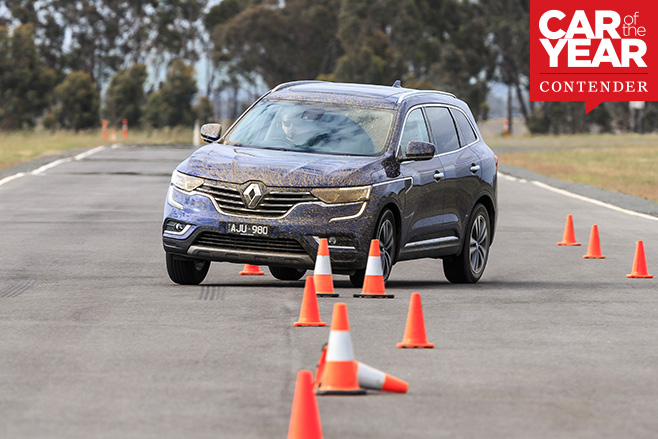
The good news here is that this proven and reliable Japanese powertrain ought to provide years of faithful and durable operation. It’s also easy to drive, cheap to service, and relatively efficient – the official fuel figures state that consumption has fallen by over one litre per 100km in this larger and heavier vehicle.
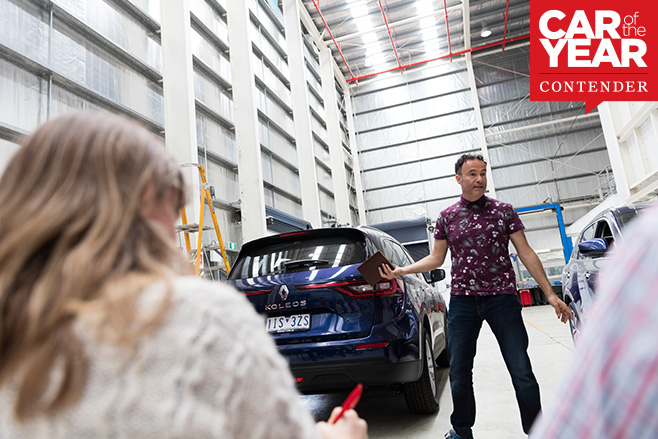
Except when pottering around or cruising along the highway, the Koleos’s performance is way off the pace. Even under moderate acceleration it seems noisy and unsophisticated, and if you need instant go, reaction times can be frustratingly slow, before it will finally lunge forward. Stab the pedal. Wait. Then unrelenting droning as the CVT finally spools things up. The ageing X-Trail engine entrails cannot cut it in 2017.

Ultimately, Renault has rightly positioned the latest Koleos where it belongs – at the bottom of its segment. If you’re a loyalist searching for a true brand experience, there is no hope here…
Specs
BODY Type: 5-door wagon, 5 seats Boot capacity: 458 litres Weight: 1552 – 1608kg
DRIVETRAIN Layout: front engine (east-west), FWD/AWD Engine: 2488cc 4cyl (126kW/226Nm) Transmission: CVT automatic
CHASSIS Tyres: 225/65R17 – 225/60R18 ADR81 fuel consumption: 8.1 – 8.3L/100km CO2 emissions: 188 – 192g/km Collision mitigation: OPT Crash rating: not tested Prices: $29,990 – $43,490
FORTY-five years after BMW’s original E12 5 Series defined a genre, the Bavarian powerhouse attempts a technology-driven KO with generation seven, dubbed G30.
WHAT IS IT? A completely new generation of what was once considered the best sedan in the world, though 2017’s G30 5 Series is a much larger and far more sophisticated luxury machine than its much-loved E39 predecessor (1995-2003).
WHY WE’RE TESTING IT? After John Carey’s glowing appraisal of the G30s he drove in Portugal – admittedly in non-Australian specification – it’ll be interesting to see just how well the new Five’s dynamism translates without the smaller wheels, more compliant suspension and the ‘Integral Active Steer’ four-wheel steering fitted to European launch cars.
MAIN RIVALS Mercedes-Benz’s new-generation W213 E-Class, Audi’s ageing (but soon to be replaced) A6, Jaguar’s new-gen XF, and Volvo’s stunning new S90
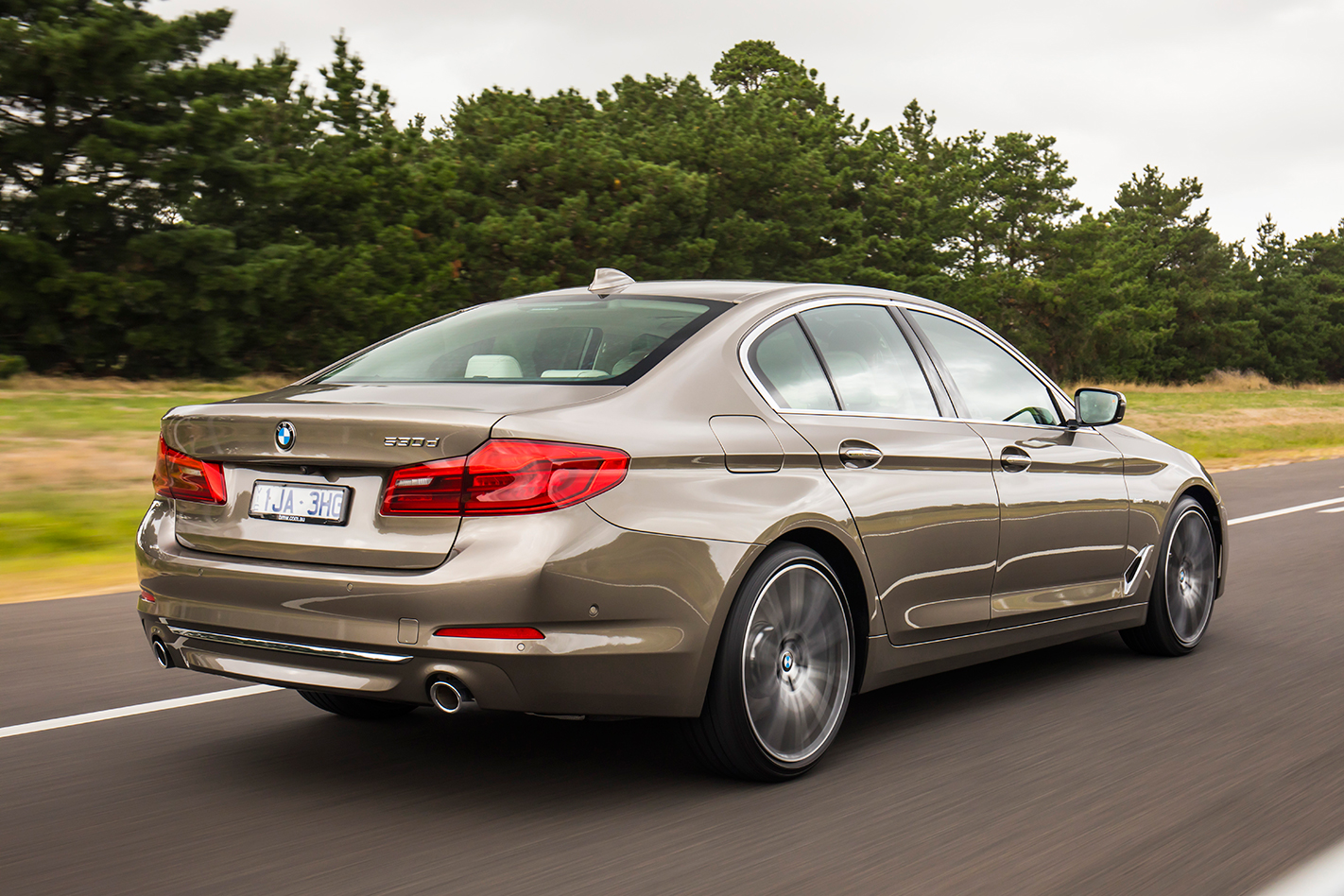
PLUS: Brilliant engines and efficiency; luxurious interior; (obsessive) technology; slick build quality; improved standard equipment; tight-corner handling poise
MINUS: Inconsistent, overlight and remote steering; oversized wheels; unsettled ride; finding the G30 Five’s sweet spot may be elusive on Australian-spec cars
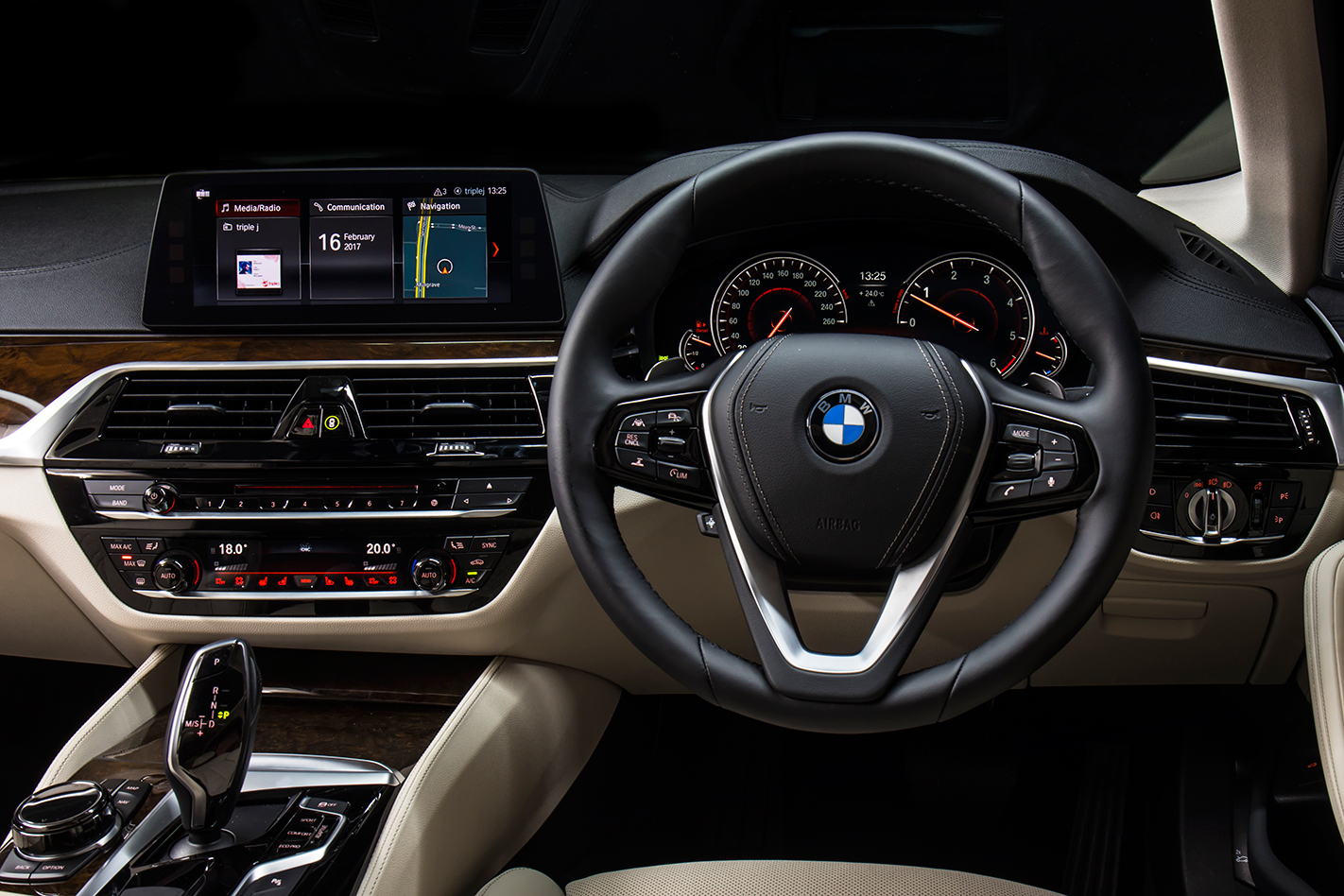
Even BMW’s own employees are confused by the proliferation of suspension, steering and wheel choices, yet the irony is the new-generation 5 Series requires a very specific set-up to truly capitalise on its underlying sporting excellence.
At its international launch last December, the G30 Fives that John Carey drove weren’t representative of what Australians would see. An all-wheel-drive, four-wheel-steered 530d on luxury suspension and a 540i (wearing smaller 19s, not our oversized 20s) also with ‘Integral Active Steer’ four-wheel steering made a far more positive impression on smoother Portuguese roads than our two-wheel-steer G30 5 Series test cars did on South Australia’s more challenging surfaces.
At the top of the G30 tree, for now, sits the 540i with M Sport package, adaptive dampers, Adaptive Drive with active anti-roll bars, and guard-filling 20-inch wheels. It’s a lot of car for quite a sum of money ($136,900), yet BMW claims it offers $34,000 of additional value compared with its F10 535i predecessor. And it’s quick – 5.1sec to 100km/h courtesy of a thrusty new-gen 250kW/450Nm 3.0-litre single-turbo straight six.
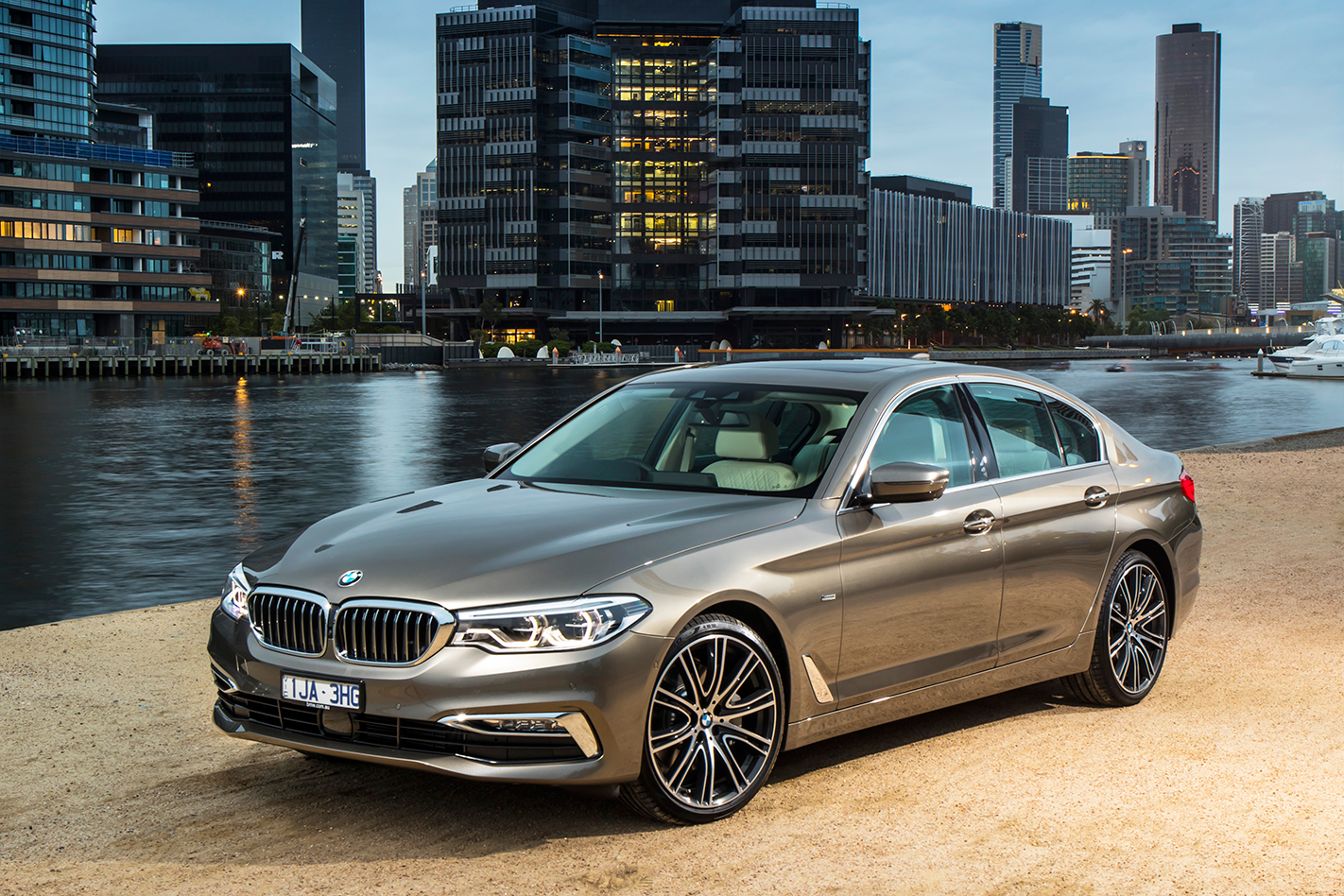
It doesn’t ride well, either, with too much jiggle from the road surface making its way to the cabin. Sport mode removes some of the mild float evident in Comfort mode, but it still doesn’t add enough proper weight to the steering. And the new Adaptive mode is even more flawed, combining Comfort’s over-light steering with a suspension seemingly unable to truly sense what it needs to be filtering or feeding through.
Thankfully, the new Five’s handling prowess really shines when you ask plenty from it, though it’s only on really tight roads that its all-new, aluminium-intensive suspension seems hell-bent on hunkering the G30 down and driving it through a corner. With a quarter (or more) turn of steering lock on, you’d never know the G30 Five has a longer wheelbase than a Commodore (by 60mm), and 4936mm of overall length. It’s a big car, yet there’s an agility to its handling in press-on driving that must partly be attributed to sizeable weight losses of up to 95kg. Indeed, the turbo-six 540i weighs just 1595kg.
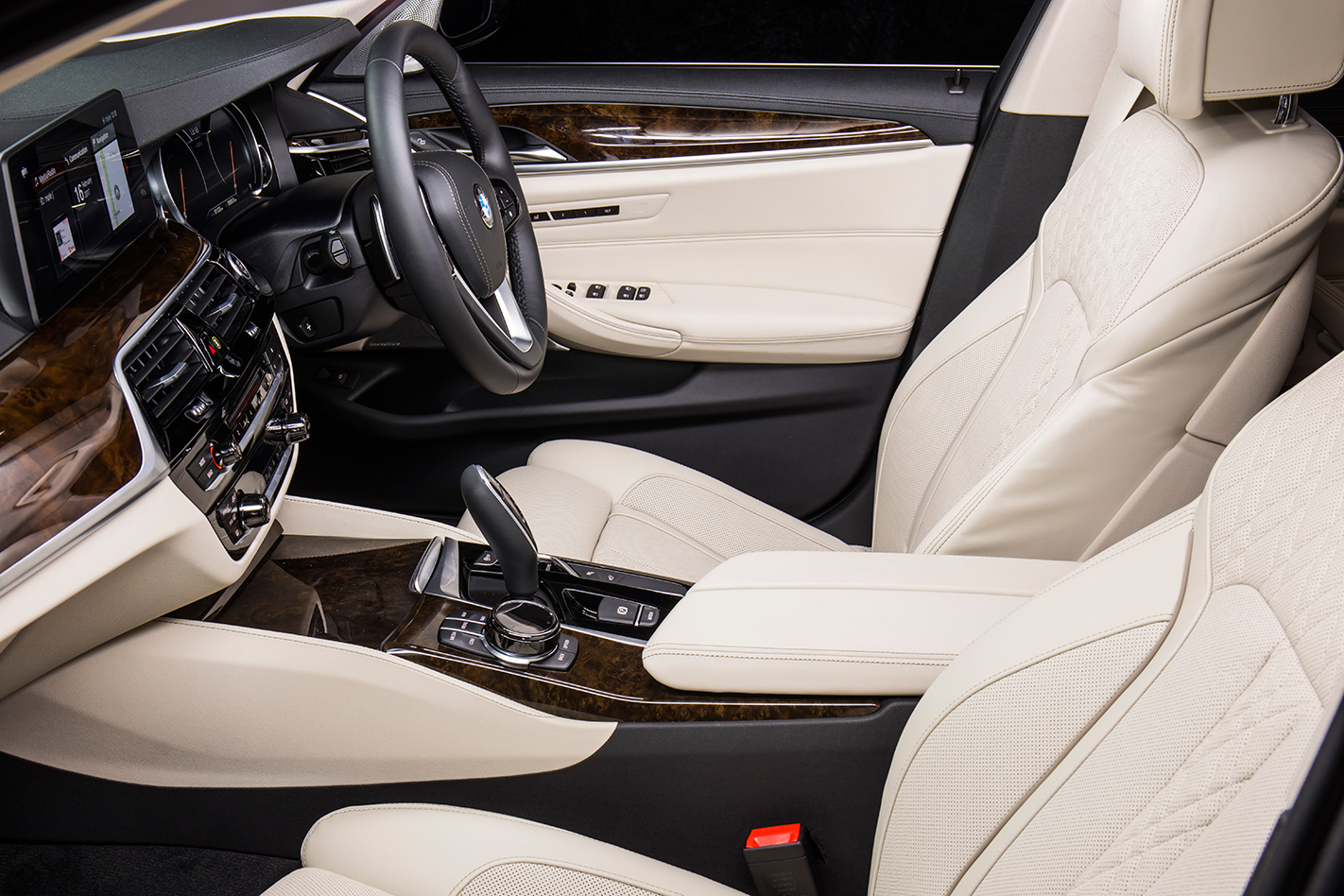
With 0-100km/h in 5.7sec and an astounding combined fuel number of 4.7L/100km, it seems like a great combination of sex and sense on paper. But the reality is even more persuasive, with a lovely, lusty induction growl as it surges up through the mid-range – like an old-school BMW petrol six – and a nonchalant effortlessness that’s totally in keeping with a car as large and luxurious as this.
Like other variants, the adaptive-damped 530d still doesn’t ride or steer like it should, and the enormous wheels fitted to our test car (20-inchers with 245/35 tyres up front and 275/30s at the back) really belong in a design studio, not on Australian country roads. But there’s a charm to the $119,900 530d that goes a long way to making up for its dynamic foibles.
Perhaps with optional Integral Active Steer (four-wheel steering) – a feature that did great things to the previous F10 5 Series’ dynamics – the new G30 will realise its sporting-luxe potential, though given that no Australian launch cars were fitted with 4WS, it’s too early for us to say.
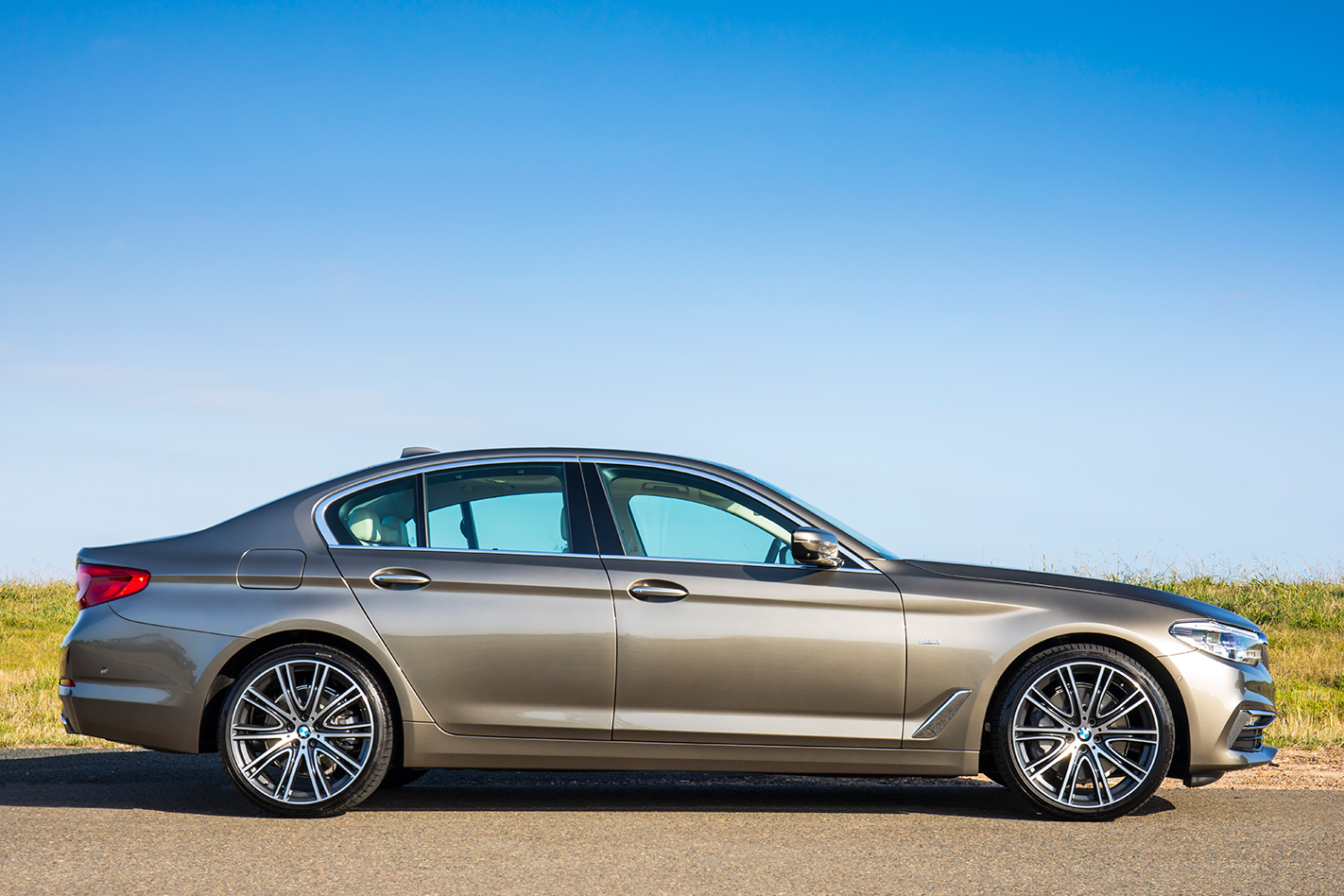
But the G30 5 Series is something of an enigma. Neither involving enough to appease driving purists or cosseting enough to be truly luxurious, it sits in a slightly confused middle ground, as much a victim of providing too much choice as it is from trying to please too many people at the same time.
If the E39 5 Series was the best sedan in the world in its day, then the G30 is mired somewhere in BMW’s excessive dynamic systems. Don’t give people a choice – just go with what you think works best and engineer the crap out of it.
We know there’s a great car lurking in the new-gen 5 Series, but it’s not there yet.
Fingers crossed for the new-gen M5.
Vote for the BMW 5-series to win the 2018 Wheels Car of the Year Readers’ Choice competition
SPECS Model: BMW 530d Engine: 2993cc 6cyl, dohc, 24v, TD Max power: 195kW @ 4000rpm Max torque: 620Nm @ 2000-2500rpm Transmission: 8-speed automatic Weight: 1640kg 0-100km/h: 5.7sec (claimed) Economy: 4.7L/100km Price: $119,900 On sale: March 18
