
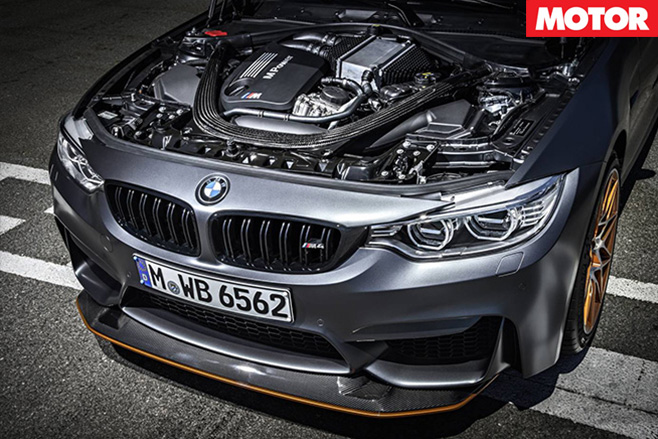
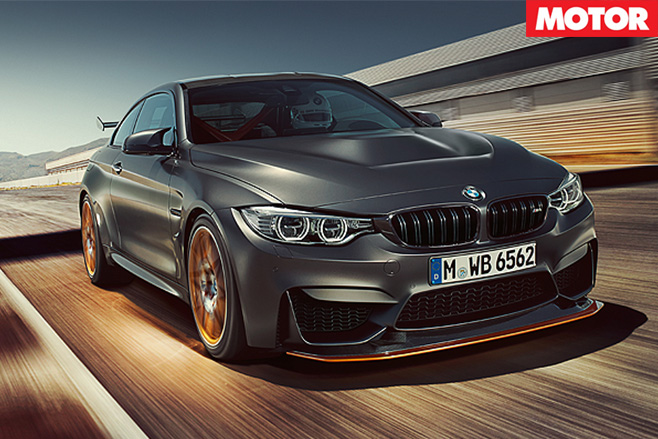
IF THERE’S one M4 to rule them all, it’s the GTS.
The 700-strong special edition is the brand’s quickest ever M car. A title backed up by a 3.8sec charge to 100km/h and 7minute 28second Nurburgring lap.
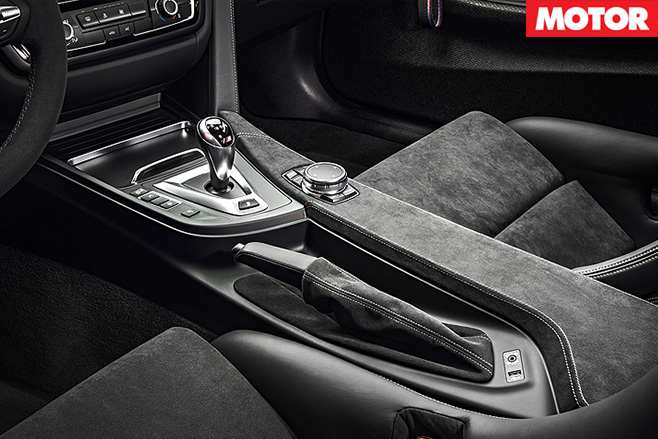
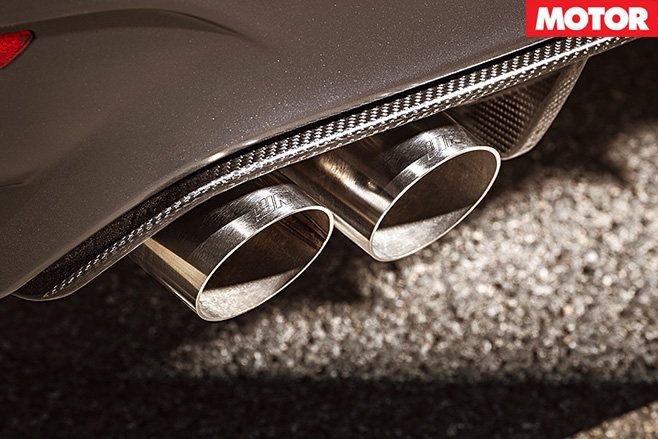
A radical tuning package that slashes weight, ups power, and adds grip is responsible for this speed. And with a chance to meet BMW Oz’s single press example at the Bathurst 12 Hour, we cross off 11 things we rave and rue about the $295,000 end-result.
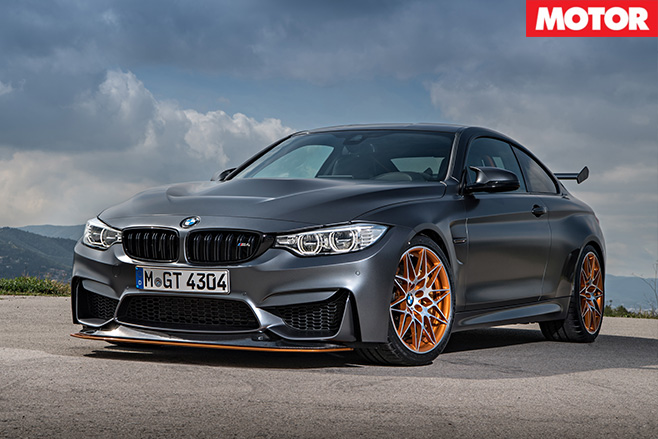
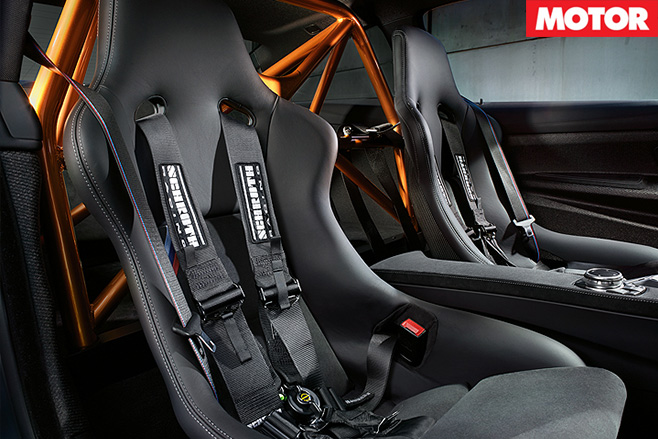
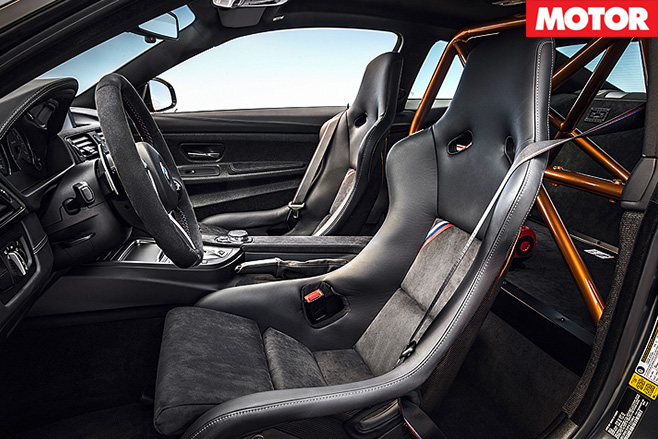
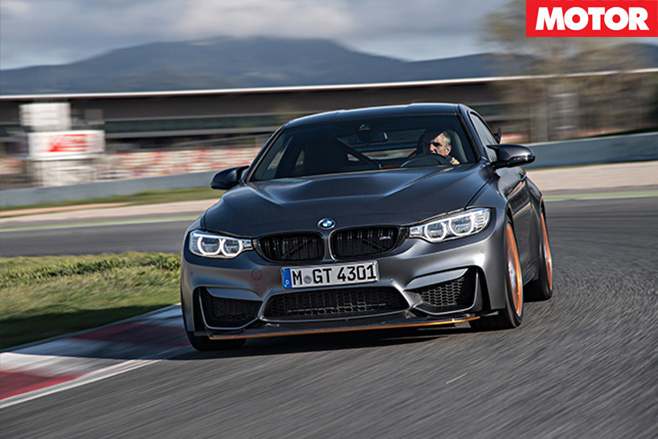
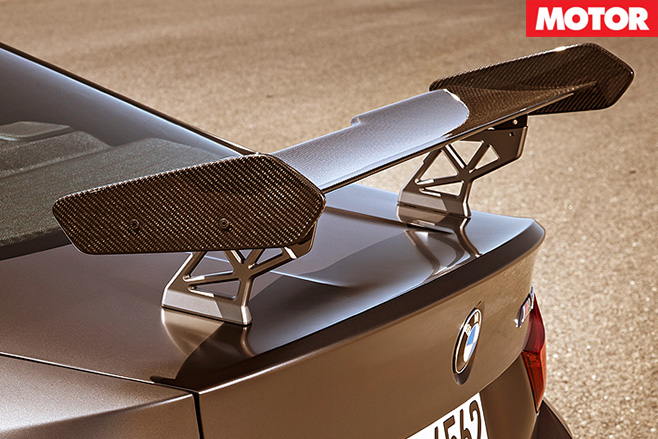
The adjustable wing has a setting for the street and other settings for track. Very cool.
Horacio Pagani has further blurred the line between automobile and art form with the unveiling of the Huayra Roadster ahead of its public debut at the Geneva motor show.
Like all art, the Huayra drop-top may be divisive, however the level of detail is absolutely staggering. According to Pagani, work on the Roadster initially started in 2010, however three years later all work was scrapped and the project restarted.
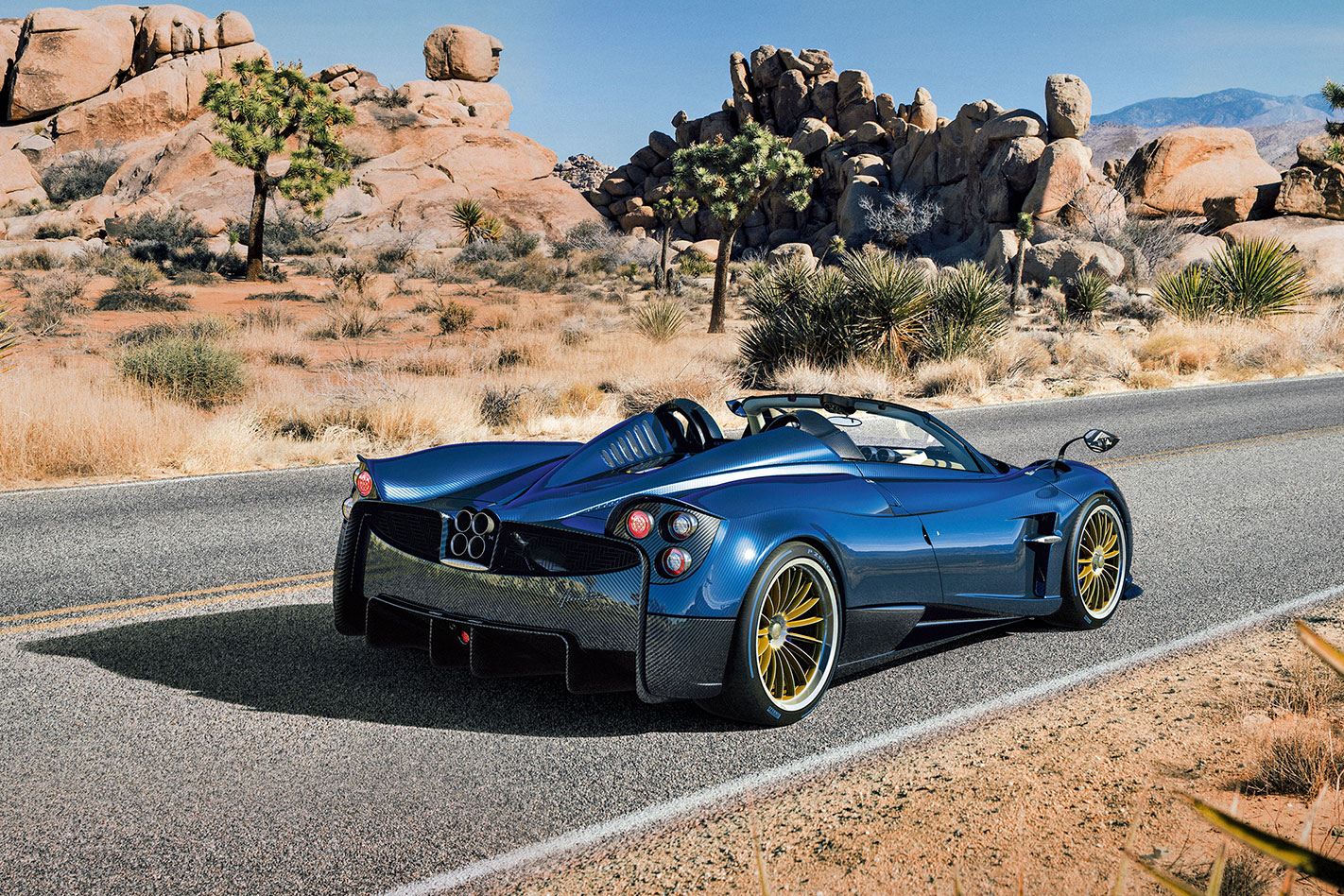
The Roadster also uses a revised version of the seven-speed X-Trac automated manual gearbox and wild active aero, with a pair of flaps front and rear working to increase cornering performance and stability without increasing drag.
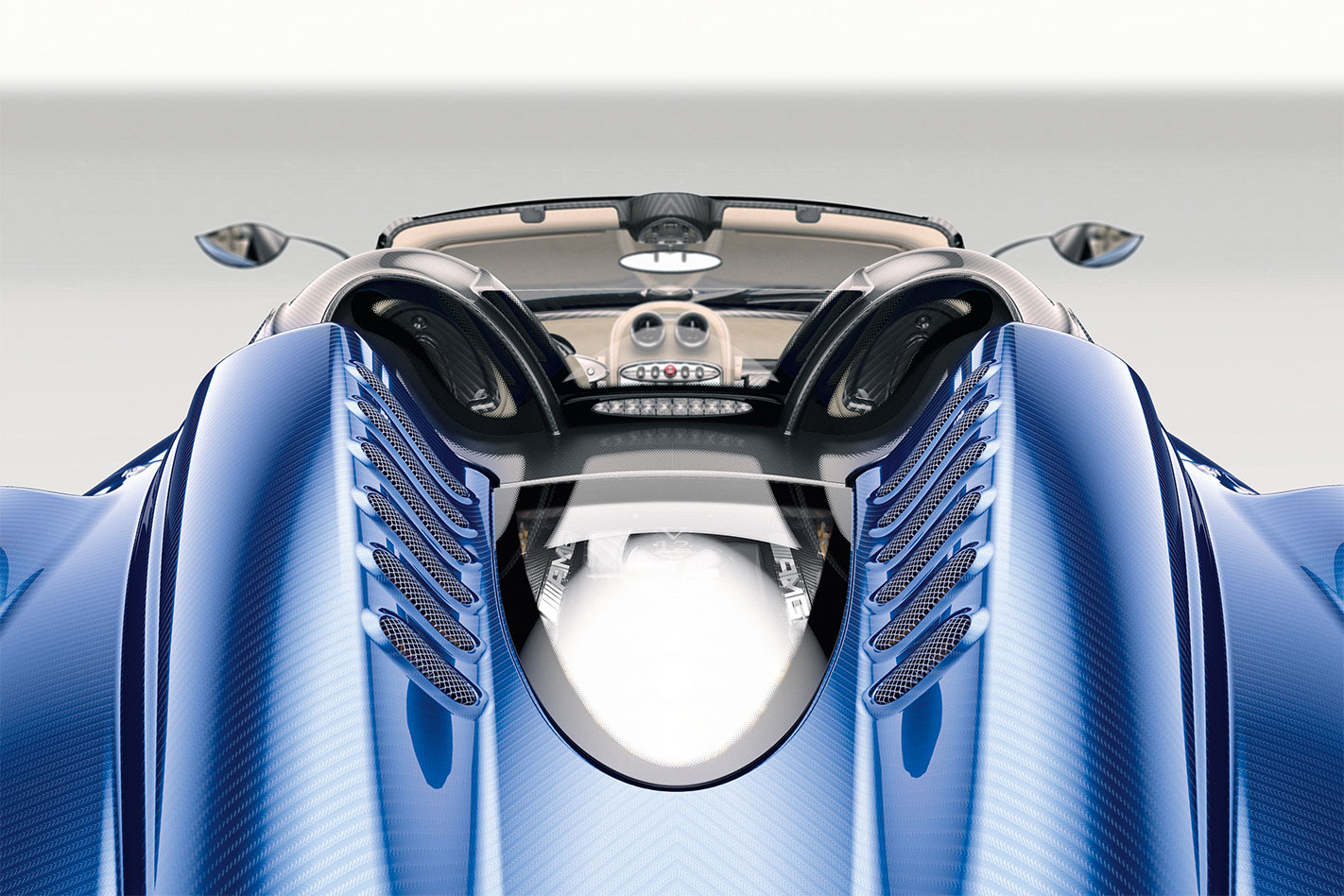
Despite losing the structural rigidity of a roof, body stiffness has increased by 52 per cent while weight has dropped an impressive 80kg to just 1280kg (dry).
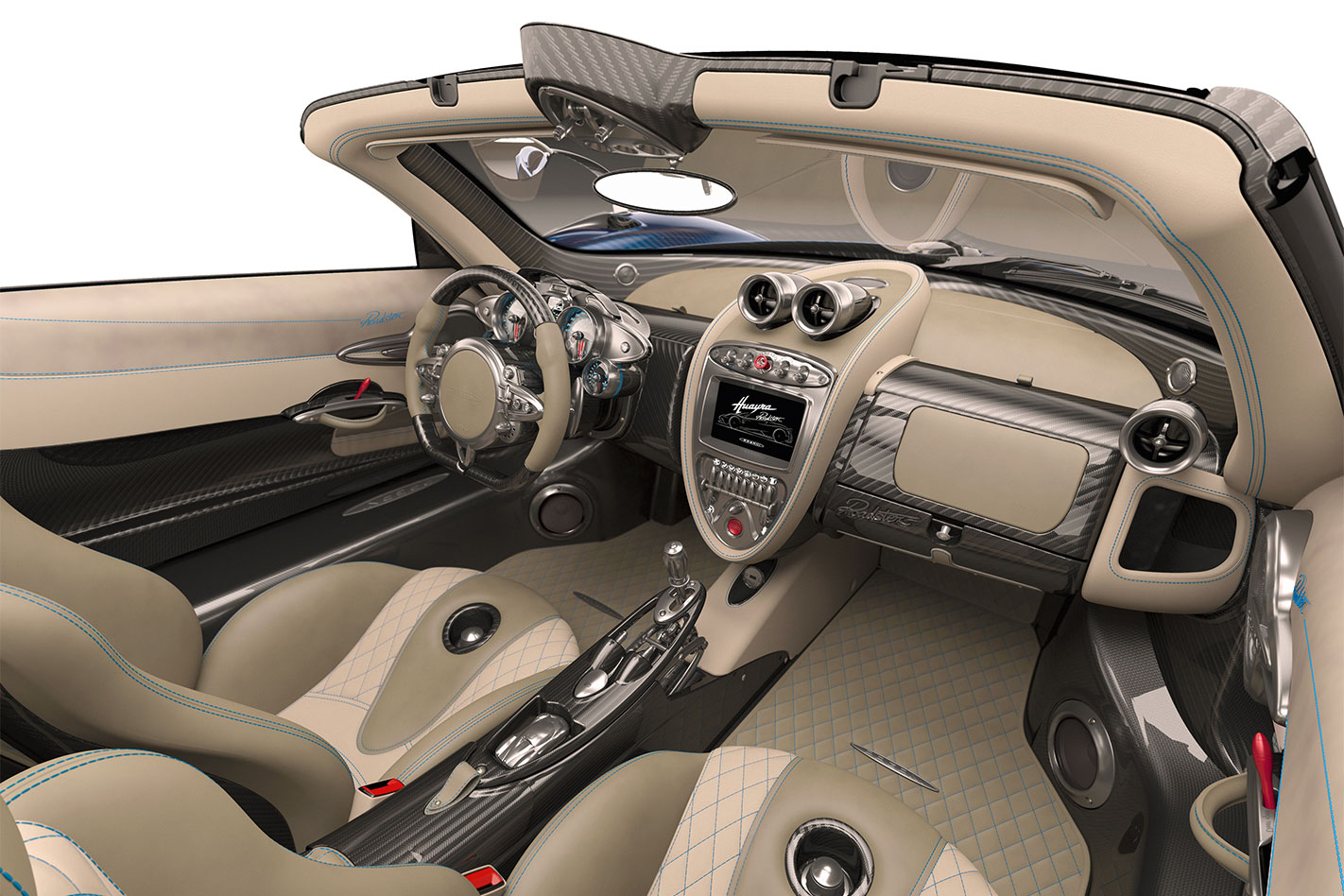
Carbon-ceramic brakes are standard, with 380mm rotors at both ends clamped by six-piston calipers front and four-piston rears. Wheels are 20 inches front and 21 inches rear wrapped in Pirelli P Zero Corsas or optional P Zero Trofeo Rs, which contribute to a maximum of 1.8g cornering force.
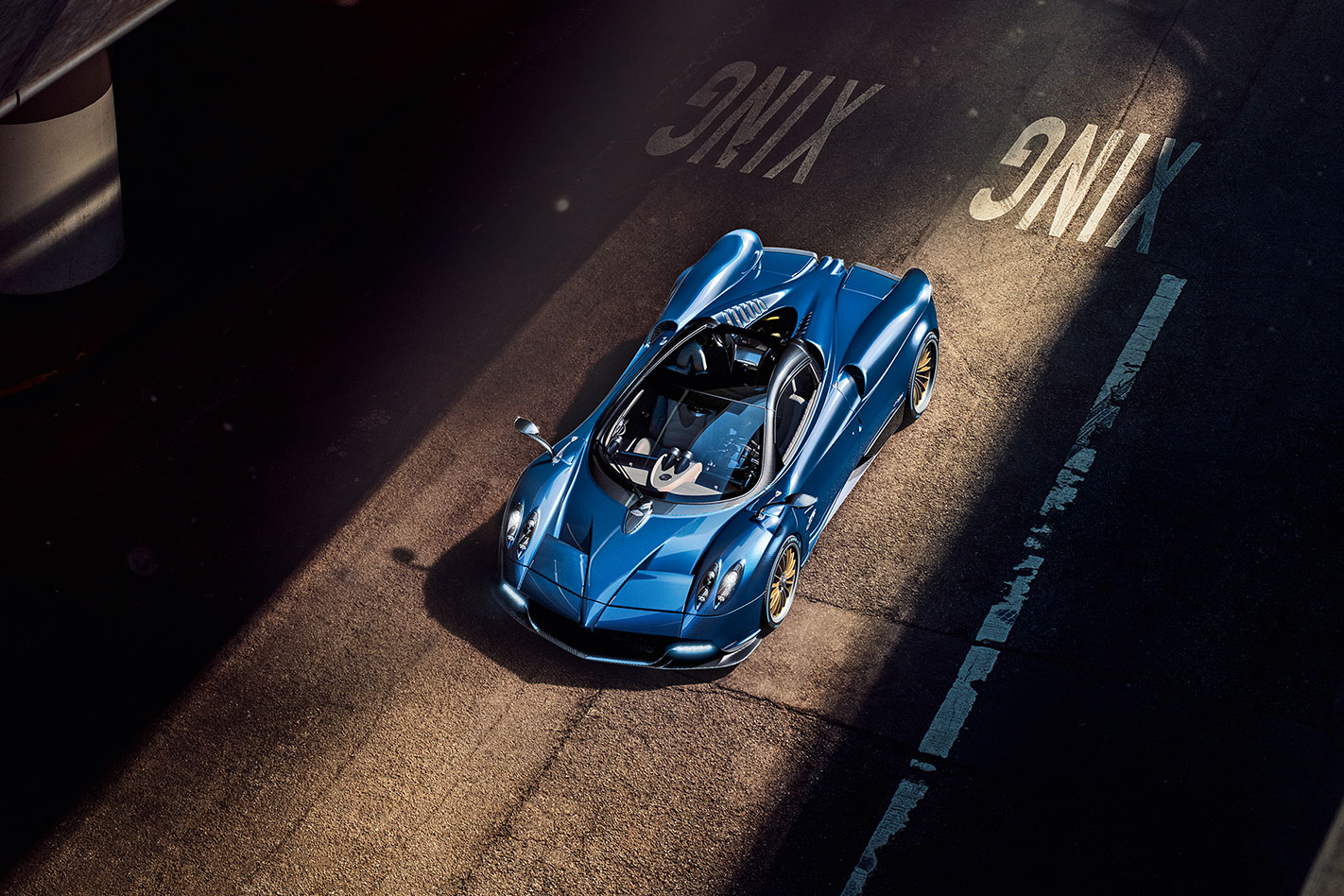
As you might expect, the price for this level of engineering isn’t cheap, with each Huayra Roadster costing €2,280,000 ($A3.14m). There’s no threat to your bank account, however, as all 100 examples are already sold.
The Japanese press have leaked images of the all-new 2017 Subaru XV a month before it was due to be officially revealed in Geneva.
Subaru has yet to confirm if the images of one of its most popular vehicles are real, despite being reportedly leaked from an internal document.
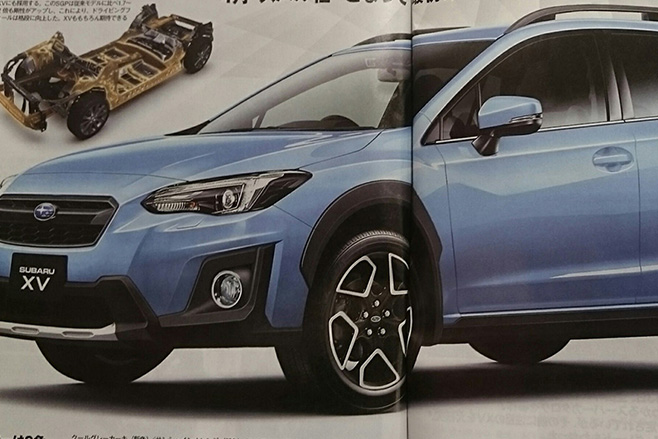
If these images are authentic they would confirm predictions that the Subaru XV’s appearance hasn’t changed dramatically.
Still based on the Subaru Impreza hatch, its design is fundamentally the same, with some additional body armour in the front and rear skid plates, and black bumpers, as well as a higher-riding suspension.

Its alloy wheels still wear a unique motif, although slightly redesigned from the existing generation.
The XV, in its Japanese guise, will feature a 1.6-litre 86kW engine and a 2.0-litre petrol 115kW engine similar to the one found in the new Impreza. We will likely only get the latter here in Australia.
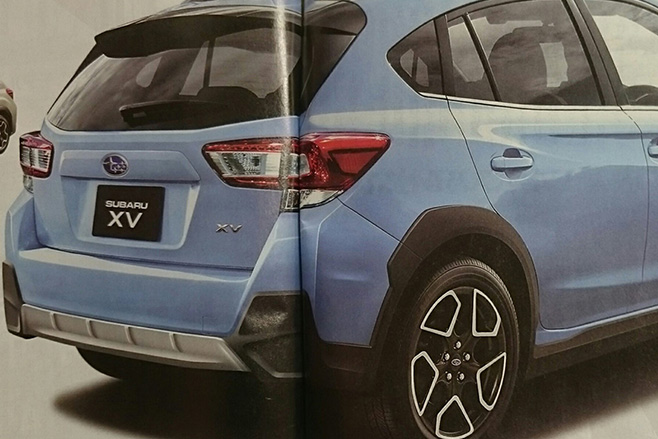
According to a translation of the pages, the XV is due to go on sale in Japan in April, and will be available in a variety of colours.
We also expect it to have a similar redesign to the new Impreza, with more space for storage and passengers, and upgraded safety and infotainment technology.
We do know, however, that the XV will feature Subaru’s scalable SGP platform, already seen in the new Impreza. This will improve suspension and safety according to the carmaker. It will also feature full-time all-wheel drive and, as a Subaru SUV, we can assume a full-size spare.
Mark Webber doesn’t look back. Once he’d left Formula One, he was over it.
And now that he’s retired from racing all together, he’ll move on without regret. That’s just how Webber is and how he’s always been as a racer – single-minded, brutally honest and pragmatic. So when he decides to quit, that’s it.
There’ll be no comeback, at least not in any serious sense. He’ll drive racing cars again, but not competitively. For Webber, it was all about competing at the highest level.
That’s what drove him and what thrilled him. His view is that once you’ve been to the summit of racing in F1 and Le Mans sports prototypes (LMP1), anything else is underwhelming.
So you won’t see Webber dabbling in GT3, not even in a Porsche with his sometime-racer mate and actor Eric Bana in the Bathurst 12 Hour. His link with Porsche continues post-racing, but not as a guest driver.
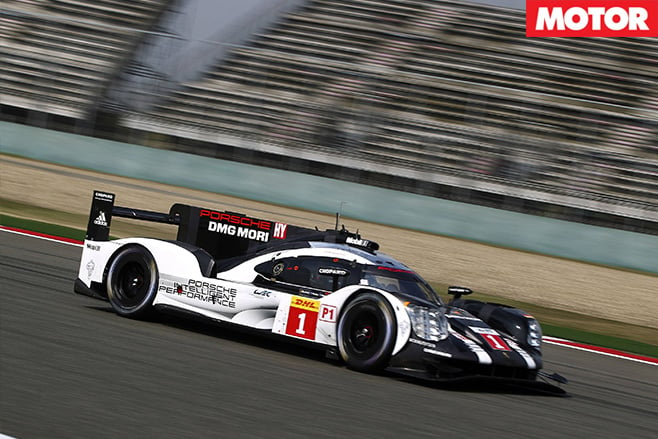
With nine F1 race wins – including twice in the prestigious and testing Monaco Grand Prix – and a world sports-car title, he has nothing to prove, least of all against Supercars specialists. He’s not being a snob, though, because long before he was successful, he had made it clear V8s held no attraction.
Webber isn’t into the mystique of Mount Panorama, either. He raced there back in his formative Formula Ford days and while he respects it, he isn’t in awe. There’s certainly no burning desire to try to conquer The Mountain in something more potent.
He is that cut and dried. He ended his F1 career because he was disillusioned and had a more appealing offer from Porsche to lead its return to big-time sports car racing – simple.
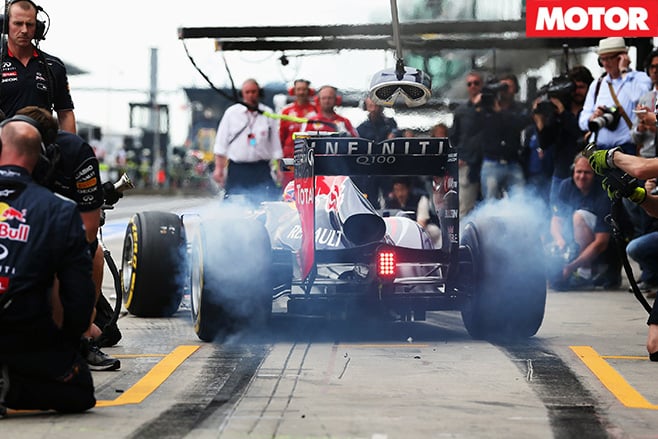
After the Pirelli purgatory of his last three years in F1, forced to nurse deliberately degrading tyres, Webber delighted in the freedom of racing the 1000 horsepower Porsche 919 Hybrid flat-out on high-grip, long-lasting rubber.
However, in his third season, he realised he’d had enough. He reached the clinical conclusion last May that he no longer had the desire to continue at the top level and in October announced he was retiring.
His send-off at the final race of the WEC season was rousing. Rarely has a retiring driver received such a heartfelt farewell. Amid all the emotion and attention, Webber just got on with it and, fittingly, ended his career on the podium.
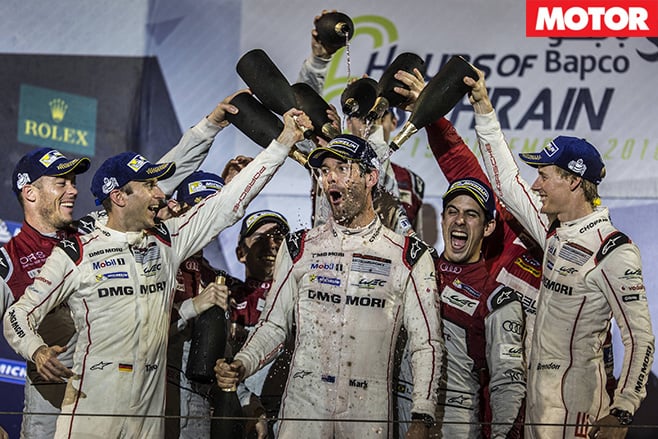
On his best days, Webber could beat anyone. But there weren’t enough of those days to rank him with the likes of Vettel, Fernando Alonso or Lewis Hamilton. He was a great F1 driver, just not among the greatest. However, as a personality and a person, he was one of the very best. The public saw the plain-speaking Aussie who wasn’t afraid to express his views.
Insiders admired a highly principled, uncommonly loyal individual who, as a competitor, upheld traditional values of fair play and sportsmanship.
An old-fashioned description sums up Webber best. He is fair dinkum.
Suzuki can claim credit for inventing the pint-sized SUV decades ago, though only in recent years has the breed taken to roads in significant numbers.
The classification of vehicle sales by industry body FCAI was even changed to accommodate these models, creating a Small SUV segment for the properly diminutive models while most so-called ‘Compact SUVs’ – such as the Mazda CX-5 – were shifted into a more suitable Medium SUVs category.
With many of the small SUVs based on the city cars from the corresponding car manufacturers, however, do the higher-riding models offer buyers more than just a slightly more elevated view of the road?
WhichCar finds out by comparing two of Australia’s best-selling small SUVs with their city-car relatives…
Mazda 2 vs Mazda CX-3
The Mazda CX-3 small SUV starts $5000 higher than the Mazda 2 city car on which it is based – $19,990 versus $14,990. The CX-3 is a slightly bigger vehicle with a bigger engine, but for greater pricing parity we’re focusing on a higher-specification 2 Maxx, which is priced from $19,690.
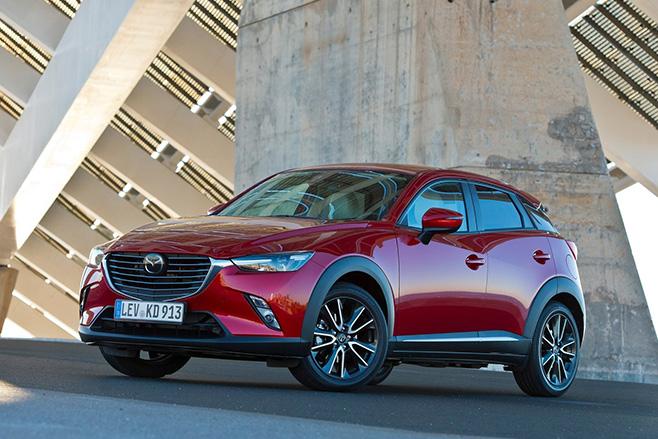
Driving
The CX-3 has an extra 29mm of ground clearance, though that 155mm ride height doesn’t exactly turn it into an accomplished off-roader. Base CX-3s are also front-wheel drive just like the 2 so there are no traction advantages. Pricing for an all-wheel-drive CX-3 starts at $26,390. While more expensive, these variants are better to drive than the front-drive models – with crisper steering and superior cornering balance. Every Mazda 2 is a sweet drive, including a great manual gearbox if you don’t mind shifting gears yourself (and save some money in the process).
Engines
A bigger, 2.0-litre four-cylinder powers the entry-level CX-3, with outputs of 109kW and 192Nm. There’s also a 1.5-litre diesel option. Yet while the Mazda 2 range features only a 1.5-litre petrol four-cylinder with up to 81kW of power and 141Nm of torque, it suits the lighter Mazda perfectly. The CX-3 weighs 181kg more when comparing automatic gearbox versions, and that also increases fuel consumption – 6.1 litres per 100km versus the auto 2’s 4.9L/100km.
Practicality
CX-3 is 21.5cm longer than the 2, though the two models share the same wheelbase – and the taller model doesn’t offer great headroom as you might expect. The 2 edges the CX-3 for front headroom and legroom, and rear shoulder space. Rear headroom is virtually a dead heat, though the CX-3 has 14mm of extra rear legroom and features Isofix child-restraint anchor points. The SUV also has a slightly larger boot size – 264 litres v 250 – though families would still struggle to fit a pram in there.
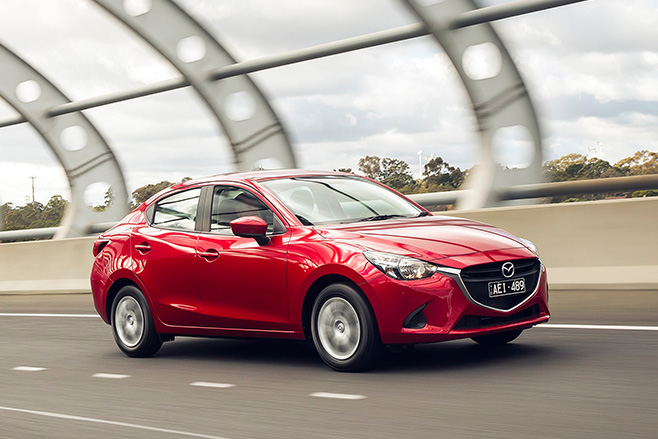
Equipment
There’s not a great deal of difference between a CX-3 Neo and 2 Maxx. The SUV features 16-inch wheels but they’re steel rims where the 2’s 15s have alloy rims. The CX-3 offers more safety options, with blind spot detection, rear cross-traffic alert and low-speed autonomous braking part of a $1030 Safety Pack. That Smart City Brake feature is available on the 2 Maxx for $400.
Our choice
Mazda 2
Honda Jazz vs Honda HR-V
Honda revived its HR-V badge in 2015 for a baby SUV based on its long-running Jazz city car. Again, for a more practical, like-for-like comparison, we are comparing a higher-spec Jazz to compensate for the HR-V’s higher starting price.
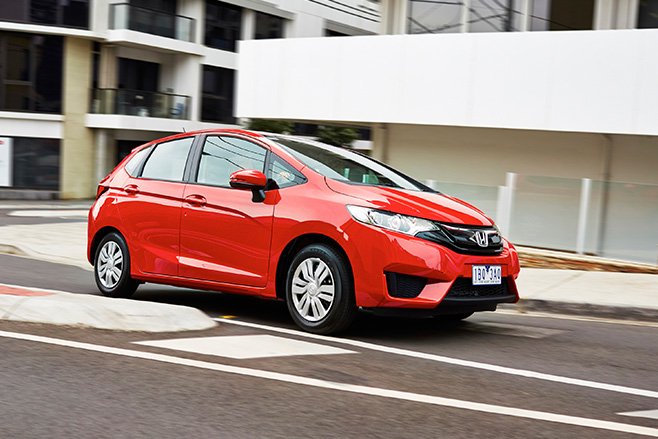
Driving
Both models are a bit lacking in the fun department in their respective segments, not helped by overly light steering. The Jazz feels lighter on its feet thanks to a kerb weight more than 200kg lower than the HR-V’s. The HR-V is the more comfortable Honda on the road, though, and of course its higher seating position will appeal to many. Its ride quality and general rolling refinement are both superior, where the Jazz’s suspension can become jittery and noisy when roads are less than smooth.
Engines
The HR-V’s 1.8-litre four-cylinder offers more power and torque than the Jazz’s 1.5-litre four-cylinder – 105kW/172Nm v 88kW/145Nm – though that advantage is offset by the SUV’s heavier mass. And where the Jazz feels like it has sufficient power, the HR-V can be left wanting for response. The 1.8L is still a smooth performer, though the only transmission is a CVT (continuously variable transmission) that welcomes the paddles available on the top-spec VTi-L but not the VTi considered here. The Jazz is available with a five-speed manual transmission, and is also more economical – officially using 5.8 litres per 100km versus the HR-V’s 6.6L/100km.
Practicality
If both Hondas are down the pecking order for driving dynamics, they’re at the pointy end for cabin versatility. Both the HR-V and Jazz feature the Japanese brand’s ingenious ‘Magic’ seats, which allow for individual movement of the rear seatbacks and bases. Unlike the 2 and CX-3 relatives, the HR-V extends its wheelbase over the Jazz – by 80mm. That only liberates an extra 3mm of rear legroom, though the HR-V can also claim advantages in rear headroom (+22mm) and rear shoulder space (+49mm). The Jazz boasts one of the biggest boots in the city-car class with 363 litres, even if the HR-V offers more again with 437 litres – expandable to 1462L with the rear seats folded compared with 906L for the Jazz.
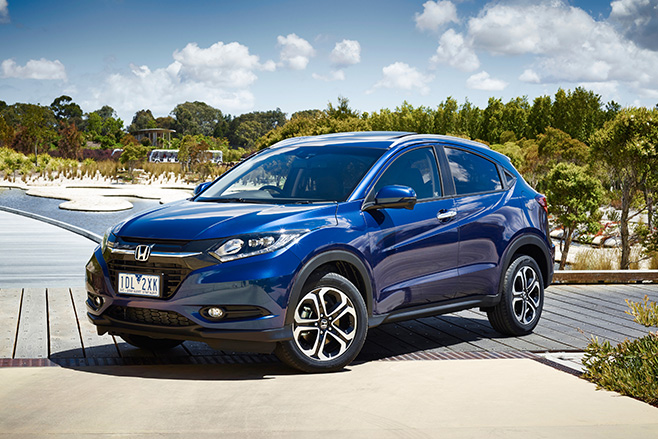
Equipment
The Jazz’s higher VTi-L spec should in theory offer more gear than the entry-level HR-V VTi. That’s the case to a certain point, though not conclusively so. Exclusive to the city car are features such as keyless entry, rear sensors, leather-appointed seats, centre rear armrest and climate control. The HR-V VTi, however, brings an electric park brake, tyre deflation detection, more 12V and USB ports, Siri Eyes Free voice command, and a 7-inch colour touchscreen to the Jazz’s 6.1-inch equivalent.
Our choice
Honda HR-V
So, should I buy a small SUV?
As the varying winners of our two comparisons demonstrate, it’s not a straightforward answer: it’s a case of assessing the merits of both the SUV and its similarly priced city-car stablemate, and deciding what’s most important for you. The Mazda examples showed how the SUV is not necessarily a more practical vehicle, while the Hondas proved a higher-riding vehicle with its inherently compromised balance is not necessarily worse to drive. Of course, if a high seating position is a priority, no comparison is needed!
Find out which cars made the list of Australia’s best value SUVS 2016 here.
SPRUNG undergoing winter testing in blizzard-bound Northern Europe are disguised versions of the next-generation Audi A6, about a year ahead of the model’s anticipated launch early in 2018.
The good news is that Ingolstadt’s answer to the recently redesigned Mercedes-Benz E-Class and upcoming BMW 5 Series seems to have at last shed its neat but derivative looks for the more progressive lines previewed by the 2014 Audi Prologue show car.
This is most evident in the prototype’s sculptured profile and more sharply tapered nose, providing tantalising clues to what the next wave of three-box Audis might look like. A longer wheelbase and wider tracks also serve to give this C8-series sedan more road presence than today’s six-year old iteration.
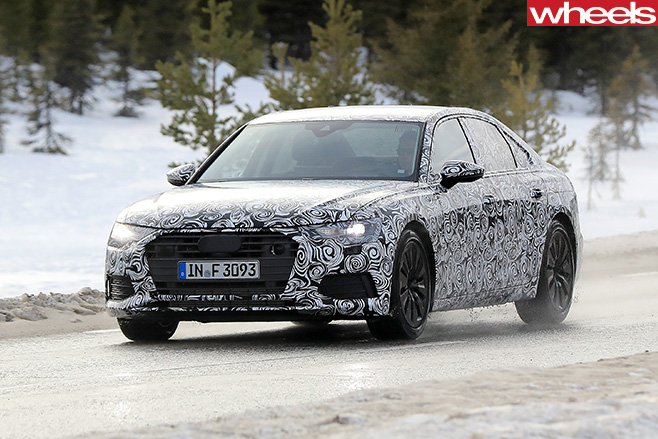
Expect marginal though important increases in interior space as well, along with an evolution of the company’s signature Virtual Cockpit Display first seen in the Audi TT sports car three years ago.
Speaking of evolution, the 2018 A6 will brandish a modified iteration of Audi’s MLB Evo modular longitudinal architecture also underpinning the latest Audi Q7, A4, and the completely redesigned A8 luxury sedan set for unveiling sometime before the end of 2017.
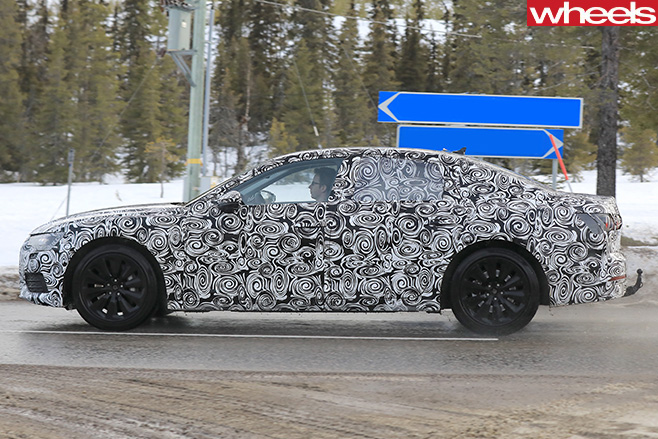
Whether we see any of these A6 green machines in Australia is still anybody’s guess, so instead count on a bevy of direct-injection turbo powertrains starting with a 2.0-litre four-cylinder engines, stretching to 3.0-litre V6s and 4.0-litre V8s in the top-end variants. Some are believed to be in line for an electric turbocharging system, as per the Audi SQ7 performance SUV.
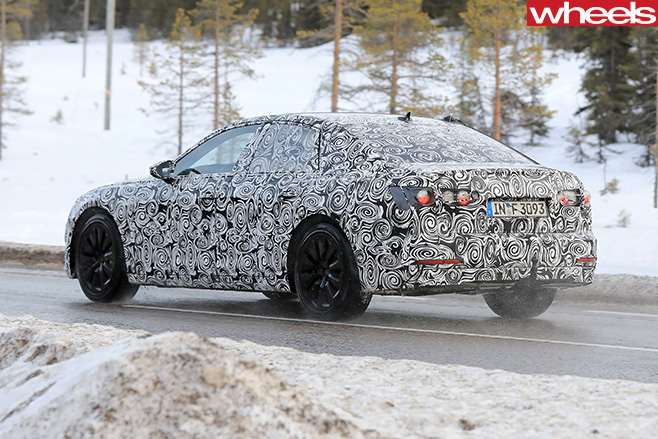
Front as well as all-wheel drive options will be offered, with the latter expected to leverage Audi’s efficient new lightweight Ultra quattro on-demand all-wheel drive system introduced in last year’s Audi A4 Allroad quattro.
The A6 has long been a bit of a technological test bed for its maker, with the C8 series said to be ready for more advanced versions of “level three” autonomous driving tech, which accelerate, stop, and steer a piloted vehicle to help avoid accidents.
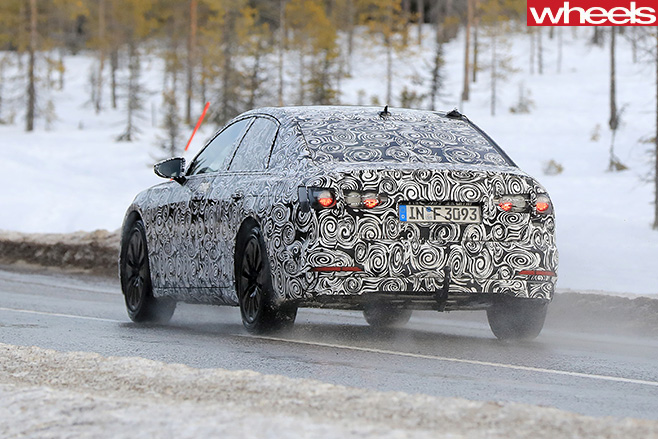
Have spy pics of your own? We’d love to see them. Just email them to [email protected]
THE future of as much as a third of Holden’s model range is up in the air as parent company General Motors confirms it is in talks over the sale of its European arm of the business that has been tasked with supplying much of its range.
In brief statements released overnight General Motors and Peugeot parent company PSA Group confirmed they were in discussions over the ownership of the loss-making Opel Vauxhall division that is planned to supply one in every three new Holdens – including the 2018 Commodore ‑ in the short to medium terms.
“PSA Group and General Motors confirm they are exploring numerous strategic initiatives aiming at improving profitability and operational efficiency, including a potential acquisition of Opel Vauxhall by PSA,” the statement read.
Both companies cautioned that there was “no assurance that an agreement will be reached”.
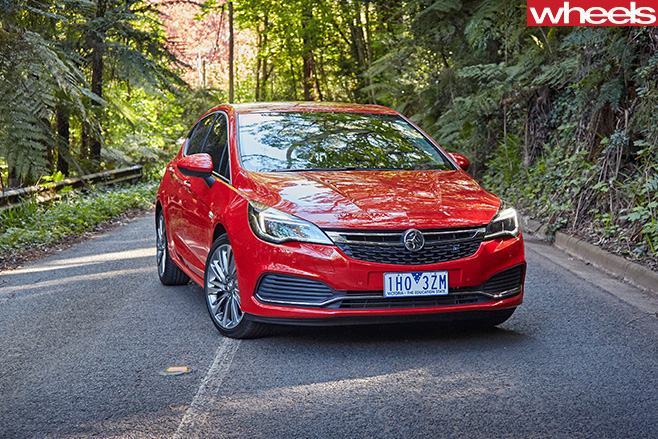
Holden initially directed us to the GM press release but has since released its own statement, which says: “GM remains committed to the Holden brand in Australia and we don’t expect any changes to Holden’s vehicle portfolio.”Right now we are focussed on ramping up Astra volume and preparing to launch the fantastic next-generation Commodore in 2018.”However, if a sale of Opel to PSA – owner of Peugeot and Citroen – was confirmed it still raises numerous questions about the future of some of Holden’s biggest nameplates, including Astra and Commodore, as well as at least two SUVs planned to be sourced from Opel.
In 2014 Holden said more than a third of its range – both in the number of models and the number of cars sold – would soon come from Opel in Europe.
While any vehicle export arrangement is likely to be included in any sale agreement in the short to medium term, it raises questions about where those models would be sourced beyond that: GM has many other manufacturing facilities throughout Asia and America that could easily supply the relatively small Australian market.
However, even GM admits the massive swing to European cars – Australians now buy more German-made cars than Australian ones – has prompted it to look to Europe for vehicles, returning to the Holden heyday when imported Opels sold in big numbers, laying a crucial role in cementing Holden as a top-selling brand.
As well as supplying complete cars – the Barina and Astra the most notable – Opels formed the basis of every Commodore from 1978 to 2006.
Holden has often said its core values – including driving enjoyment, performance and technology – are closely aligned with Opel, one of the reasons the company plans to source so many future vehicles from the company.
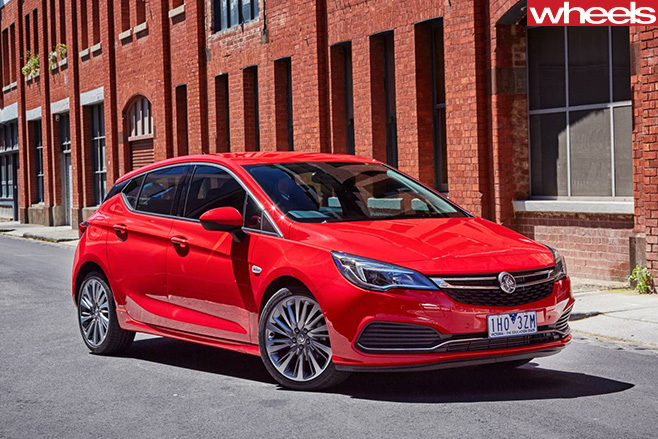
“With brands you’re selling a story, you’re selling a dream and the cars must somehow fit to that brand,” he said at the time. “We will really work intensively with Holden to understand what makes the brand, what modifications we will make. We want these cars to be true Holdens.”
It’s difficult to imagine Peugeot having such a keen eye on Australia.
Peugeot and Citroen – both part of the PSA Group that is 14 percent owned by the French government – have a poor recent history of building cars suited to Australian tastes.
Each has been focused more on the massive European market and has largely overlooked the swing towards SUVs and the desire for easy performance from automatic transmissions that now make up more than 90 percent of the Australian market.
Between them Peugeot and Citroen make up just 0.3 percent of the Australian market. Last year Porsche outsold Peugeot and Citroen in Australia.
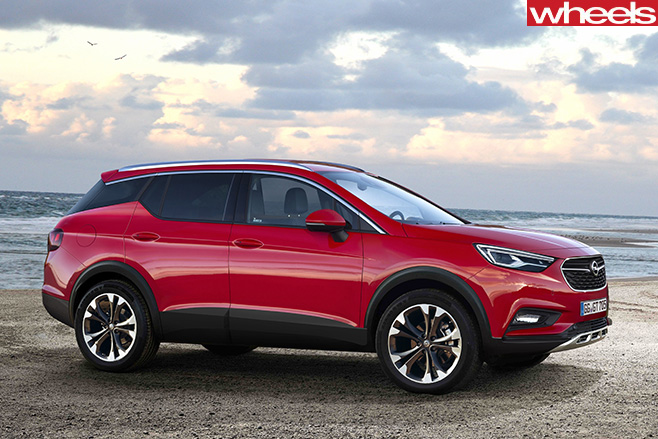
Perhaps GM could continue a supply agreement with PSA to source Holden cars from Europe, but longer term it seems certain it would want to be producing the cars it sells rather than relying on another brand.
If the sale goes ahead it also raises questions about the propensity for PSA to improve and update those models when they are being sold be a rival brand.
These are many of the questions Holden executives will no doubt be asking themselves in the wake of the shock overnight announcement.
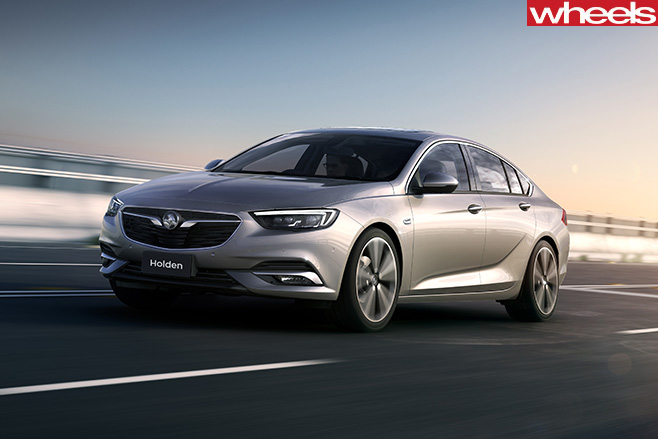
Looking further afield, the potential Opel/Vauxhall sale also raises further questions about the future of Holden within the General Motors family.
For example, would GM consider selling Holden, the saddlery and coach-building business it purchased in 1931 before creating the Holden brand in 1948?
The brands have remarkable similarities within the General Motors world.
Both were purchased by General Motors in 1931. Both are regional brands. Both have struggled to create viable export businesses. And both have been losing money in recent years.
That said, Opel has a big manufacturing footprint whereas Holden’s is being shut down.
While it may sound far-fetched, it would be relatively easy for GM to inject Chevrolet into Australia as its mainstream brand.
AUSTRALIA’S 2018 Holden Commodore could soon speak with a French accent. General Motors has confirmed it is in talks with Peugeot-Citroën’s parent company, PSA, about a potential sale of GM’s Europe-based Opel and Vauxhall businesses.
Holden has confirmed the next version of the Commodore will be based on a fully imported version of the Opel Insignia, a mid-size five-door hatchback sedan and wagon range, once local Commodore production switches off late this year.
If the deal goes through and PSA becomes a majority stakeholder in Opel, it effectively means the Insignia-based Commodore will be built under French, and not German, ownership. Same goes for Vauxhall, which sources the bulk of its showroom from Opel.
Holden issued a brief statement reacting to the news. “GM remains committed to the Holden brand in Australia and we don’t expect any changes to Holden’s vehicle portfolio,” it said.
“Right now we are focussed on ramping up Astra volume and preparing to launch the fantastic next-generation Commodore in 2018.”
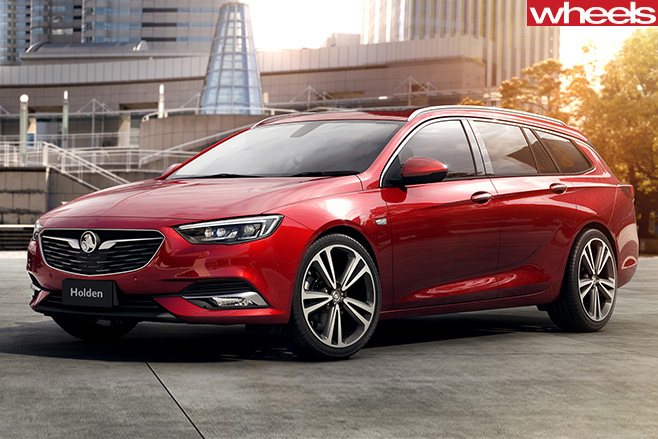
“Since 2012, General Motors and PSA Group have been implementing an alliance covering, to date, three projects in Europe and generating substantial synergies for the two groups,” it said.
“Within this framework, General Motors and PSA Group regularly examine additional expansion and cooperation possibilities, as well.
“PSA Group and General Motors confirm they are exploring numerous strategic initiatives aiming at improving profitability and operational efficiency, including a potential acquisition of Opel Vauxhall by PSA,” it said.
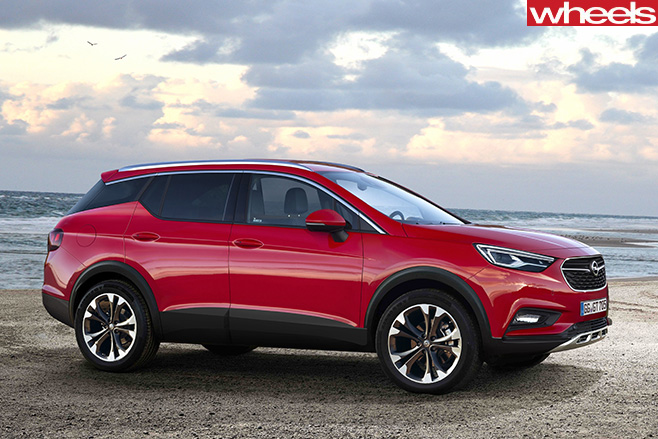
Speculation has already suggested that the cash raised from the Opel sell-off would allow GM to add another global brand to its portfolio – struggling Italian/US carmaker Fiat Chrysler Automobiles.
FCA chief executive Sergio Marchionne in 2015 tried opening the door to a GM-led takeover of his debt-laden company, but the board of the world’s third largest carmaker knocked back the proposal. FCA has since transformed itself int a much leaner company, which should make a takeover proposal much more attractive to GM.
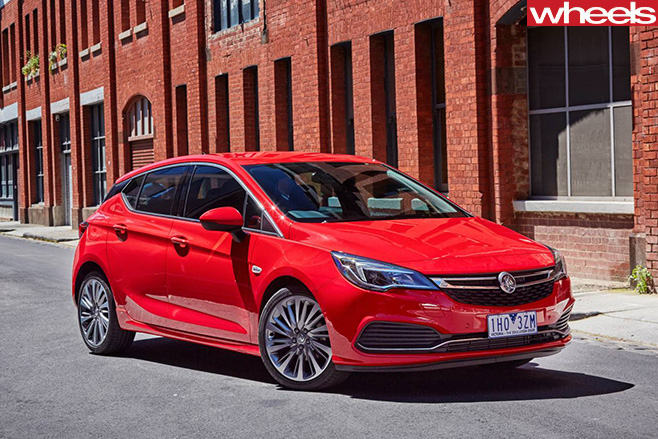
In 2012 Opel/Vauxhall recorded a monstrous AU$23.5 billion loss, while last year’s financials saw the two brands go $335.8m into the red. With that knowledge, GM’s eagerness to offload the Opel and Vauxhall brands becomes understandable.
PSA and GM are no strangers to doing business together either, having collaborated on three projects since 2012 as part of a technology-sharing alliance. However if a transfer of ownership occurs PSA won’t be just collaborating with Opel on future products – it will be steering the ship.
With Barry Park
IT WILL be the hottest hatch Korea has ever created, but the Hyundai i30 N will do more for Hyundai’s image in Australia than its sales.
“Thirty years of experience tells me that you’re not going to sell a shitload of those things,” says Scott Grant. “I don’t think pure volume is the purpose of that sort of product,” adds Hyundai Australia’s straight-talking chief operating officer.
Grant’s pessimism is surprising. His comments came after Wheels (and other Australian media) learned the i30 N will have drivetrains to rival or beat Europe’s best.
The five-door front-driver’s turbo 2.0-litre four-cylinder engine will produce 184kW in base form… and 202kW in high-performance “P Package” specification. These are numbers that make the Volkswagen Golf GTI and Ford Focus ST look like weaklings.
While the i30 N will go into production at a factory in the Czech Republic in December this year with a six-speed manual, Hyundai aims to also offer an eight-speed dual-clutch auto in the car from September 2019.
The i30 N will come with all the trappings expected in an A Grade hot hatch. Wheels can confirm the Hyundai will come with an electronically controlled limited-slip differential and 19-inch wheels wearing Pirelli P-Zero rubber.
Its exhaust system will have valve to uncork its muffler for maximum aural drama, while the instrument cluster will feature a driver-adjustable shift light.
Deeply bolstered front seats, an N-specific steering wheel with a pair of Porsche-like driving mode dials, and a leather-wrapped shifter knob will differentiate the N’s interior from lesser Hyundai i30 models. Outside, the i30 N will come with its own grille, rear diffuser and side sills to set it apart.
The new i30 hatch is the best-looking small car Hyundai has ever made in its 50-year history, and the N model is beginning to look like Korea’s first truly lust-worthy car…
Sky’s the limit; as not much else will hold you back.
WHAT IS IT? The convertible-roof variant of the Mercedes-AMG C63 S Coupe, so in terms of price, the new flagship of the C-Class range.
WHY WERE TESTING IT Any opportunity to get behind any variant of Mercedes-AMG’s brilliant 4.0-litre twin-turbo V8 is to be jumped at. But we really wanted to see how much the extra weight and slight loss of rigidity affects the performance of this model compared to the sensational C63 S Coupe.
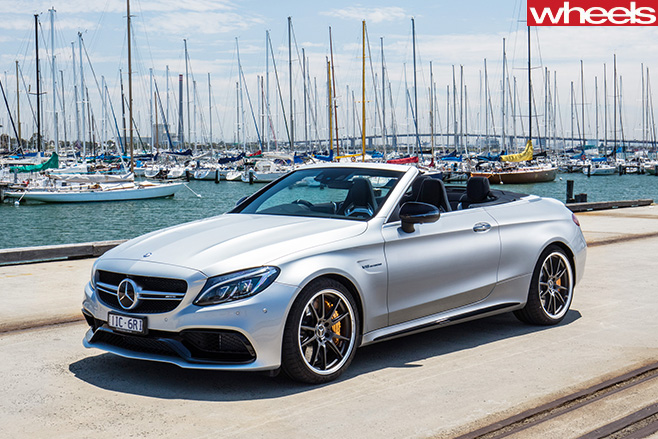
THE WHEELS VERDICT No question this is a superb 2+2 performance car, however, there is a slight paradox in taking the most focused, hardcore variant in a model range and saddling it with more weight and less rigidity. For buyers happy to take this trade-off in return for fresh air, sunshine, and even better connection with the mighty 4.0-litre twin-turbo V8, we won’t argue. If you’re less concerned with chasing the last gasp of ballistic performance, you may find a better fit with the C43 Cabrio, and pocketing the $60K difference.
PLUS: Roof quality and insulation; ease of roof operation and airflow management; still bloody quick MINUS: Weight gain over coupe; occasional (slight) body tremors; tight boot space with roof down
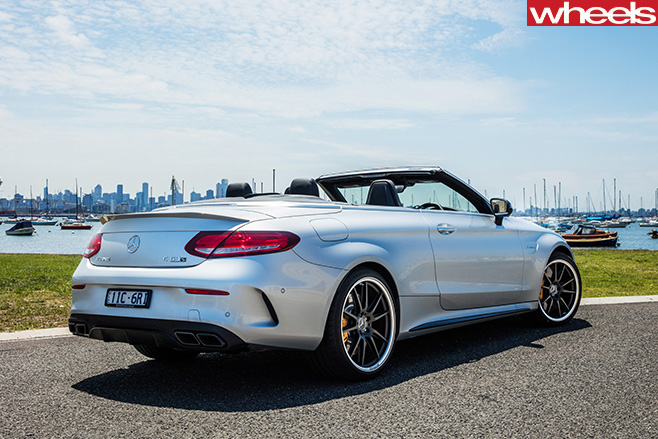
These days, the water surrounding ‘flagships’ is a little murkier. Are we talking about the fastest? Or the most expensive? If it’s the latter, then you’re looking at the current pinnacle of the Mercedes-AMG C-Class range: the C63 S Cabriolet. For the buyer who asks to be pointed to the ‘best’ C-Class in the showroom, then $179,900 says this is it. It’s nearly 18K more expensive than the Coupe, and its roof retracts in 20 seconds at up to 50km/h.

But back to the original quandary: the C63 Cabrio is not the performance flagship of the C-Class range. That title still very much belongs to the Coupe, which retains a noticeable stiffness advantage and, significantly, appreciably more handling precision, thanks to a 125kg weight advantage. Those extra kegs knock the Cabrio’s 0-100km/h sprint back by 0.2sec; Mercedes claiming 4.1sec against the Coupe’s 3.9sec.

But it’s really the perennial cabrio-roof engineering hurdles that the C 63 S attempts to leap that hold it back from greatness. This AMG model gets only the stiffening and bracing measures applied to the other three models in the cabrio line-up, and Aussie roads are still capable of delivering a shake-up that can ruffle it just a little.
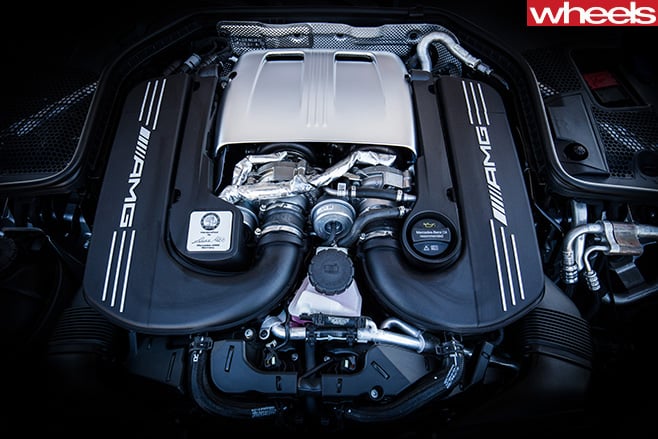
But the ‘alternative’ facts are these: this is still a relentlessly rapid performance car with a twin-turbo streetfighter’s heart. Knock yourself out.
