
Note: With Australian details still to be revealed, the below specs are what is currently known of the European line-up.
The light car battleground isn’t what it once was. Stalwarts like the Ford Fiesta, Kia Rio and Suzuki Baleno have departed and one reason for that is the utter dominance of the MG3.
More than 65,000 have found homes in Australia since its introduction in 2018, thanks to it offering just enough of what buyers want at an extremely attractive price.
A new-generation arrived in 2024 and while the price tag increased substantially, the latest MG3 is a much more polished car. Better road manners, more equipment and a hybrid drivetrain option are just many of the improvements that led to an 8/10 score.
But it doesn’t have the light car segment to itself. Another recent arrival is the new Suzuki Swift Hybrid, a nameplate with a 30-year history in Australia.
While these two aren’t going to knock the Ford Ranger or Toyota RAV4 off the top sales spot, they remain very important offerings, providing the latest safety and technology at a price that’s potentially in reach of first-car buyers. But which is best?
JUMP AHEAD
Pricing
Pricing for the MG3 range starts at $23,990 plus on-road costs for the Excite, while the better equipped Essence is $25,990 +ORCs. Both variants are also available with the hybrid powertrain for a $4000 premium.
There’s very little in it when it comes to the Suzuki Swift. It offers a base manual variant for $24,490 driveaway, with the automatic an extra $2500. From there the Plus rises to $28,490 driveaway, while the range-topping GLX is $29,490 driveaway.
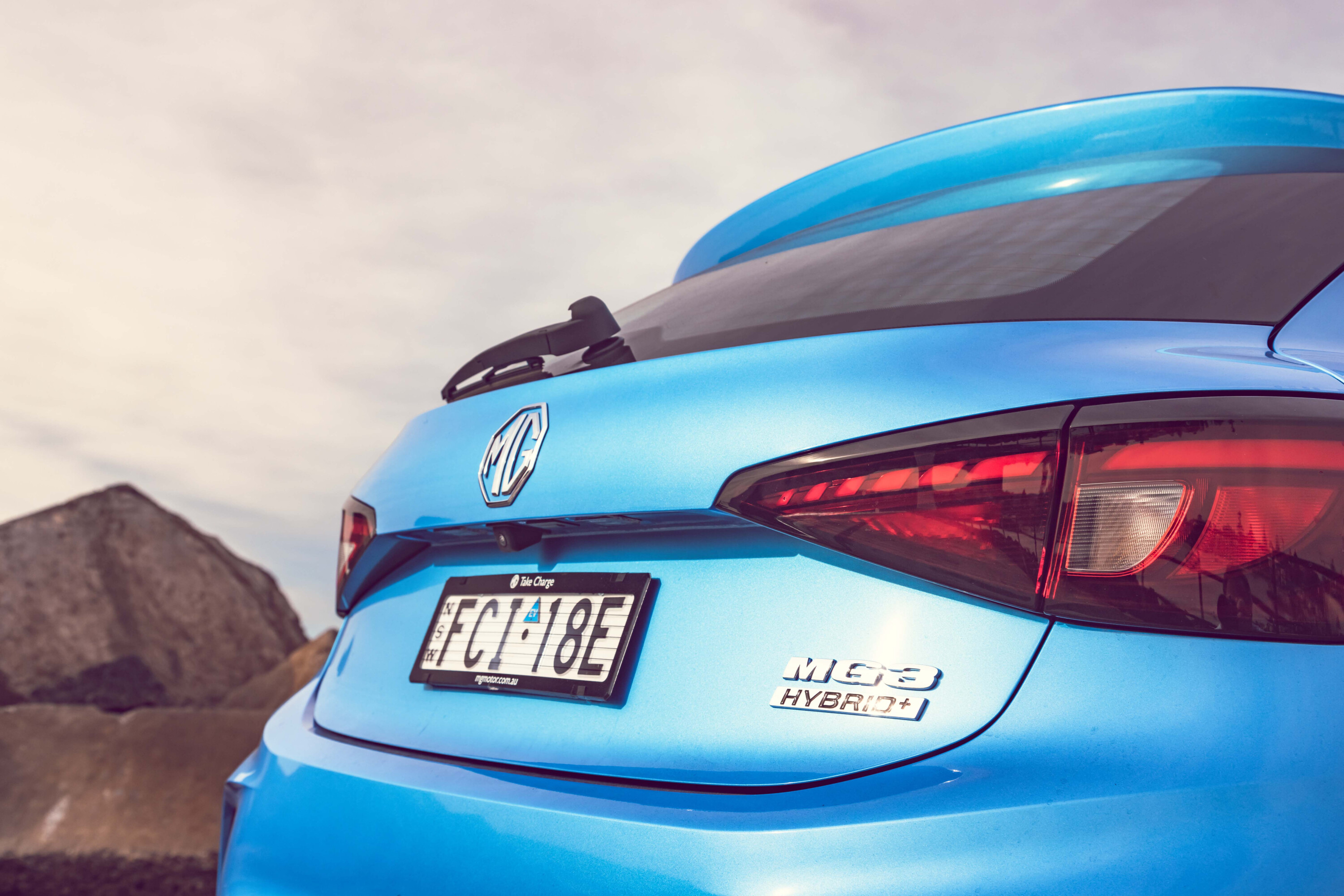
Where the MG3 gains an advantage is when you look beyond the base price. It offers a choice of white or yellow at no cost, while black, grey, red and blue metallic are an extra $500.
1
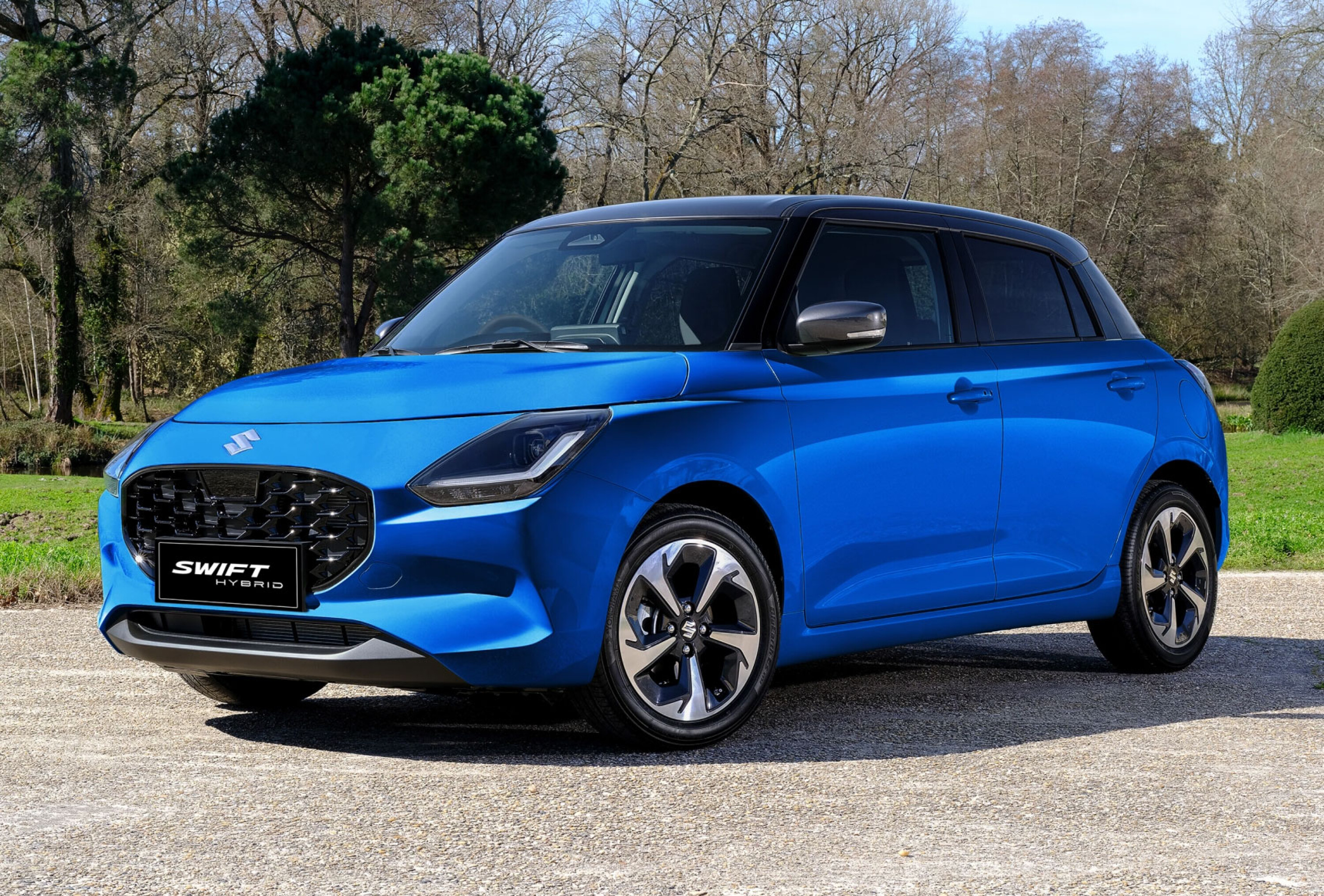
Suzuki offers only white as standard, with black, red, grey, silver and orange metallic an added $645 and the two-tone blue pearl with black roof is $1145. MG also offers a 10-year/250,000km warranty to Suzuki’s five-year/unlimited-kilometres.
The Swift Sport will set you back $1955 in servicing over the first five visits, with intervals of 12 months/15,000km. The MG3’s intervals are a little shorter at 12 months/10,000km and it flanks the Suzuki in terms of cost, the petrol costing $1854 over the first five visits and the Hybrid $2045.
Back to top ⬆️
Dimensions
It’s the MG3 that gives you more car for your money. At 4113mm long, 1797mm wide and 1502mm tall, it’s 253mm longer and 62mm wider (though 18mm lower) than the Suzuki and with an extra 120mm in the wheelbase.
This gives the MG a handy lead when it comes to interior space, especially in the rear, though both cars are very similar when it comes to boot space. The Swift offers 265 litres, expanding to 980 litres with the rear seats folded, impressive given its more compact dimensions, but the MG3 manages 293L seats up and 983L seats down.
1
Back to top ⬆️
Safety
A key reason the latest MG3’s price has risen is a corresponding increase in safety equipment. Whereas its predecessor lacked a lot of the active safety features found in modern cars, the new version has six airbags, autonomous emergency braking (AEB), adaptive cruise control, blind-spot detection, rear cross-traffic assist, forward collision warning, lane departure warning, lane keep assist and more in all variants.
The new Suzuki Swift is also well equipped, featuring the same six airbags, AEB, lane departure warning and prevention, adaptive cruise control and traffic sign recognition, though you have to step up to the Plus to add blind-spot monitoring and rear cross-traffic alert.
Both cars have a reversing camera as standard, but only the MG3 Essence features a 360-degree camera.
Back to top ⬆️
Features
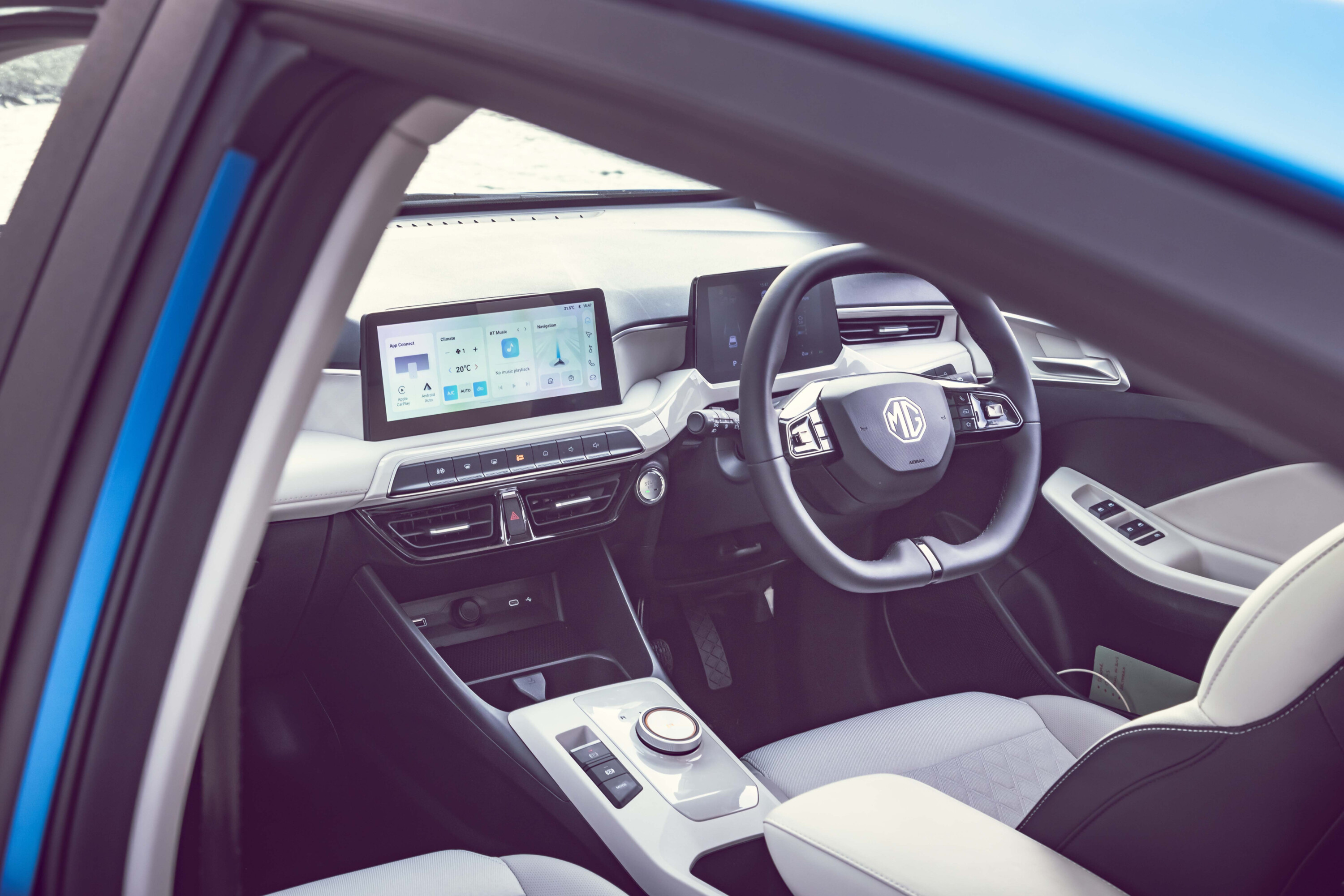
No longer does buying a small car mean ending up with a barren plastic box. Even the base MG3 Excite comes with 16-inch alloy wheels, discs brakes front and rear, push button start, electric windows all round, a six-speaker stereo, air-con with rear vents, USB ports front and rear, a 7.0-inch digital instrument cluster and 10.25-inch infotainment screen with smartphone mirroring.
1
Step up to the Essence and there’s rain-sensing wipers, a sunroof, leather steering wheel, keyless entry, digital radio, satellite navigation and iSmart app connectivity.
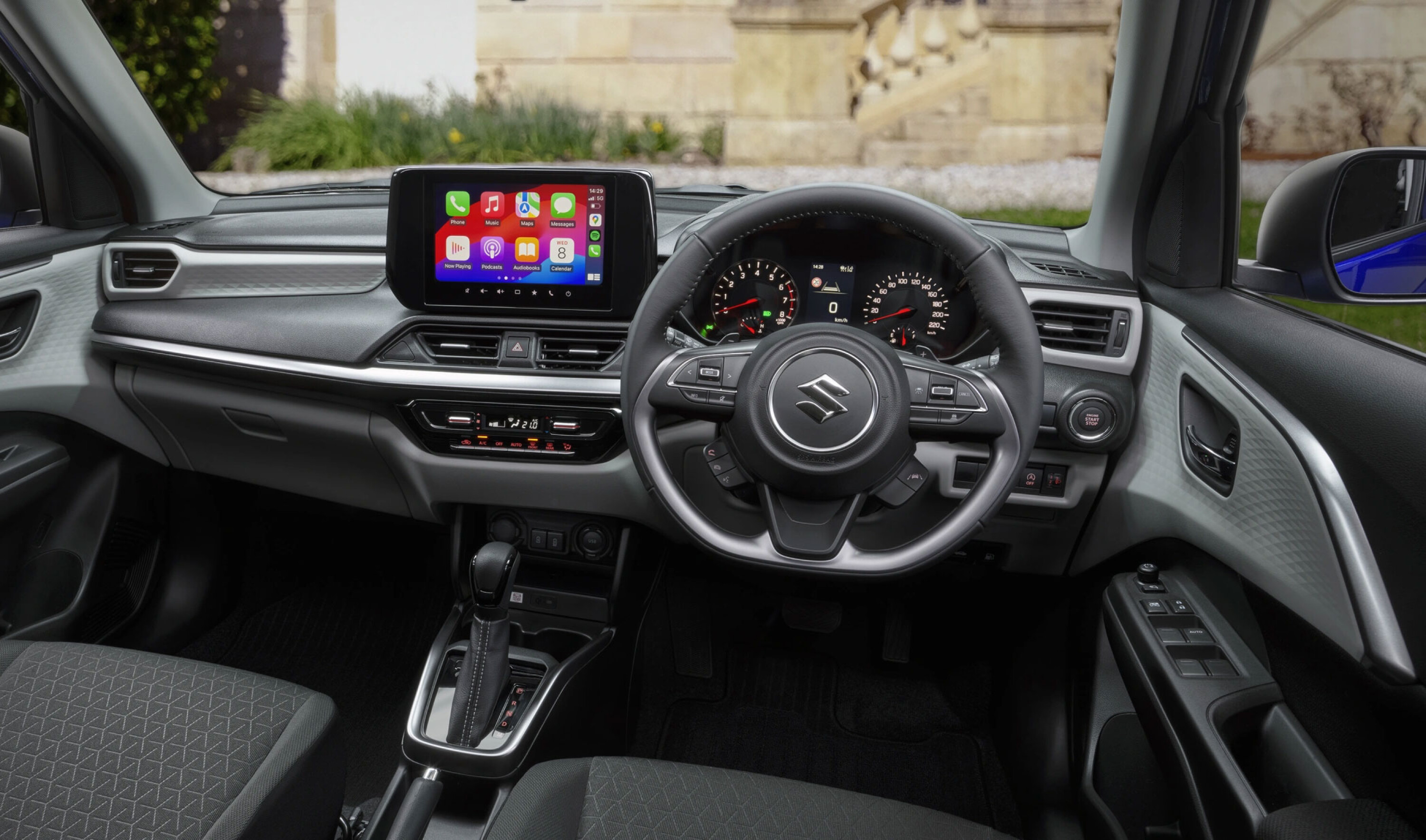
Standard across the Suzuki Swift range is keyless entry and start, LED headlights, air-conditioning and a 9.0-inch infotainment screen with satellite navigation, digital radio, wireless Apple CarPlay and wired Android Auto.
The Plus adds 16-inch alloys, heated front seats, driver’s seat height adjustment, USB ports, a six-speaker stereo and rear privacy glass, while the GLX includes rear air vents and a wireless phone charging pad.
1
Back to top ⬆️
Engines
Despite the name, the Suzuki Swift isn’t a real hybrid in the Toyota Prius sense. Its mild-hybrid system uses a starter generator to act as an electric motor and assist the petrol engine when getting underway, while also allowing it to turn off earlier when coming to a halt.
There’s no arguing with the results, the Swift claiming just 3.9L/100km on the combined cycle as a manual and 4.0L/100km as a CVT, though it does require 95 RON premium fuel. The 1.2-litre three-cylinder engine produces 61kW/112Nm.
1
Under the bonnet of the regular MG3 is a 1.5-litre four-cylinder producing 81kW/142Nm. Attached to a CVT gearbox, it claims 6.0L/100km but does accept 91 RON fuel.
However, the Hybrid uses a (different) 1.5-litre four-cylinder engine producing 75kW/128Nm but teams it with a powerful electric motor for a system output of 155kW. This does require 95 RON premium fuel but thanks to the 1.83kWh battery fuel use is a claimed 4.3L/100km.
Back to top ⬆️
Will we still see an IONIQ 7? Jump ahead…
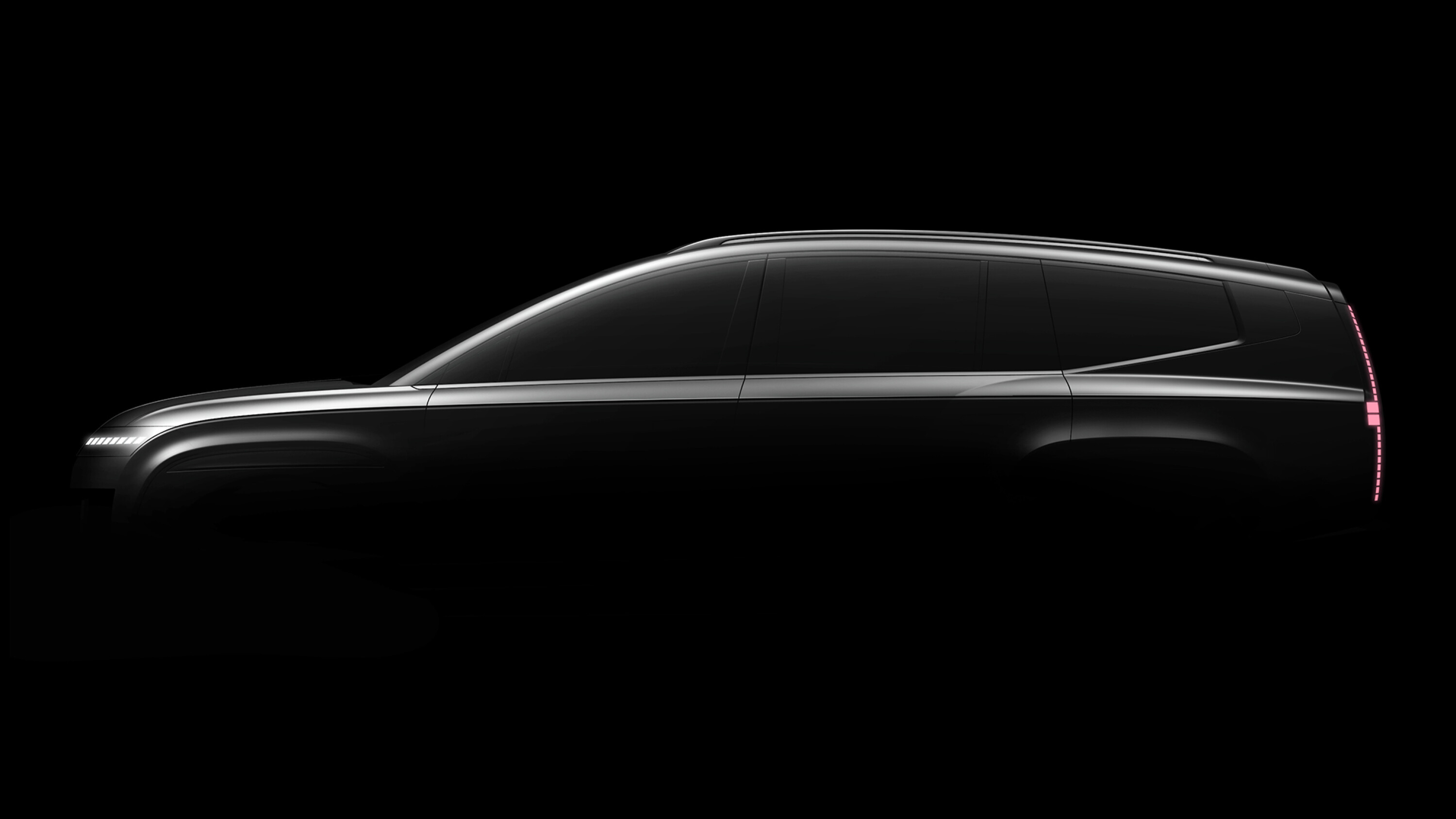
Hyundai IONIQ 9 revealed in first teasers
Hyundai has at last released the first official teaser images of the IONIQ 9, a three-row electric SUV that follows the’Seven’ concept revealed in 2021.
If you thought the big new electric SUV might be called IONIQ 7 (as we did), you’d be easily forgiven. Instead, when it’s unveiled in November, Hyundai’s large family hauler will be called IONIQ 9.
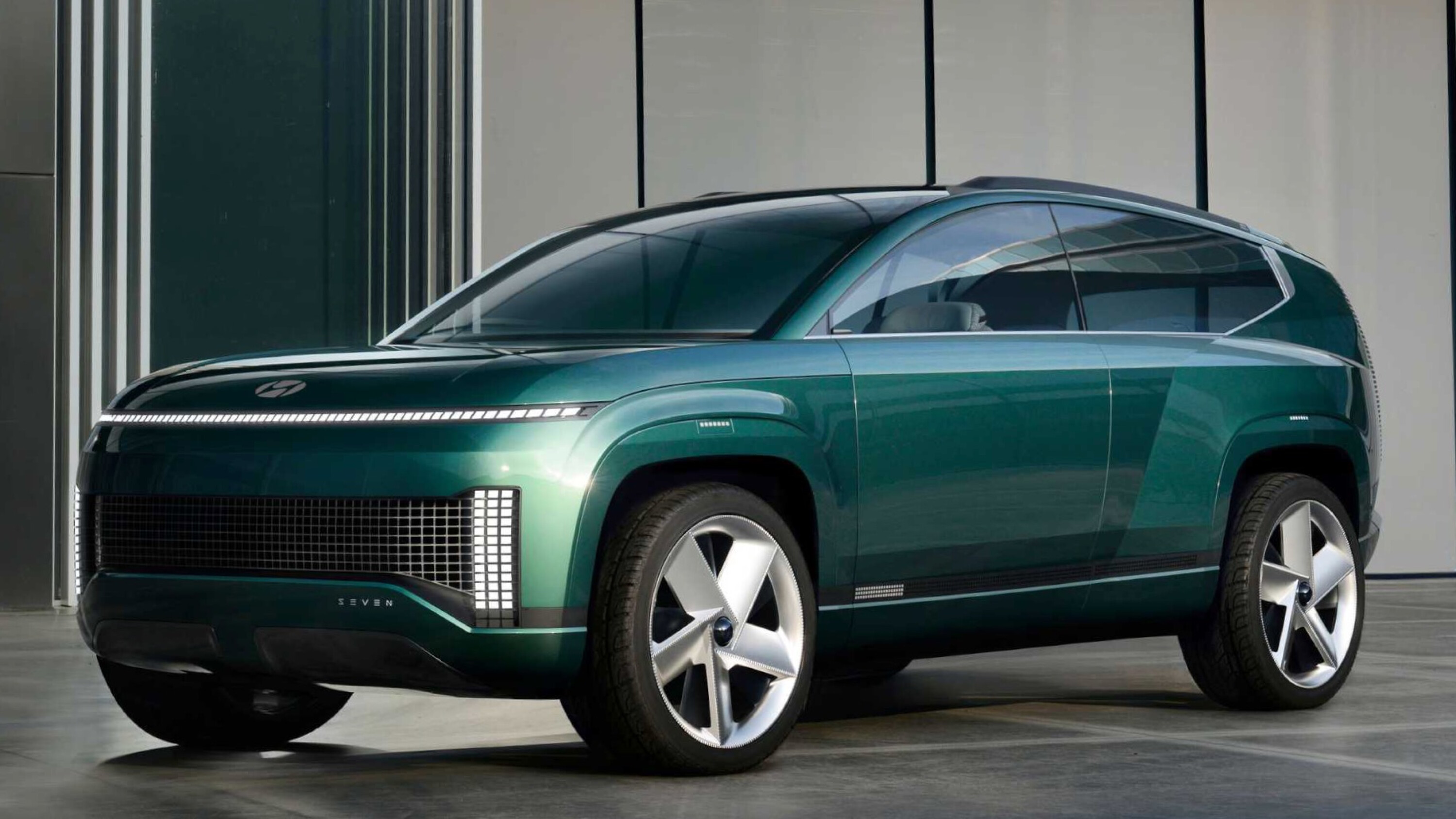
The IONIQ 9’s design appears to carry forward the general look of the concept, which used a 3200mm wheelbase and Hyundai’s E-GMP electric architecture, shared across Hyundai and Kia EVs.
1

1
Similar to the Seven concept and the related Kia EV9, Hyundai’s latest SUV is likely to offer three rows of seats with an estimated driving range exceeding 480 kilometres, based on its architecture’s capability.
The E-GMP platform enables 800V charging technology, with ultra-fast charging anticipated to take the battery from 10 to 80 per cent in about 20 minutes when using a 350kW charger.
While the IONIQ 9’s interior specifics remain under wraps, the Seven concept included unconventional features such as rear-hinged doors, rotating captain’s chairs, an L-shaped rear sofa, a mini fridge, and a dedicated shoe compartment, indicating a focus on adaptable and spacious design. However, the production model will likely adapt these concepts to a more practical layout.
10
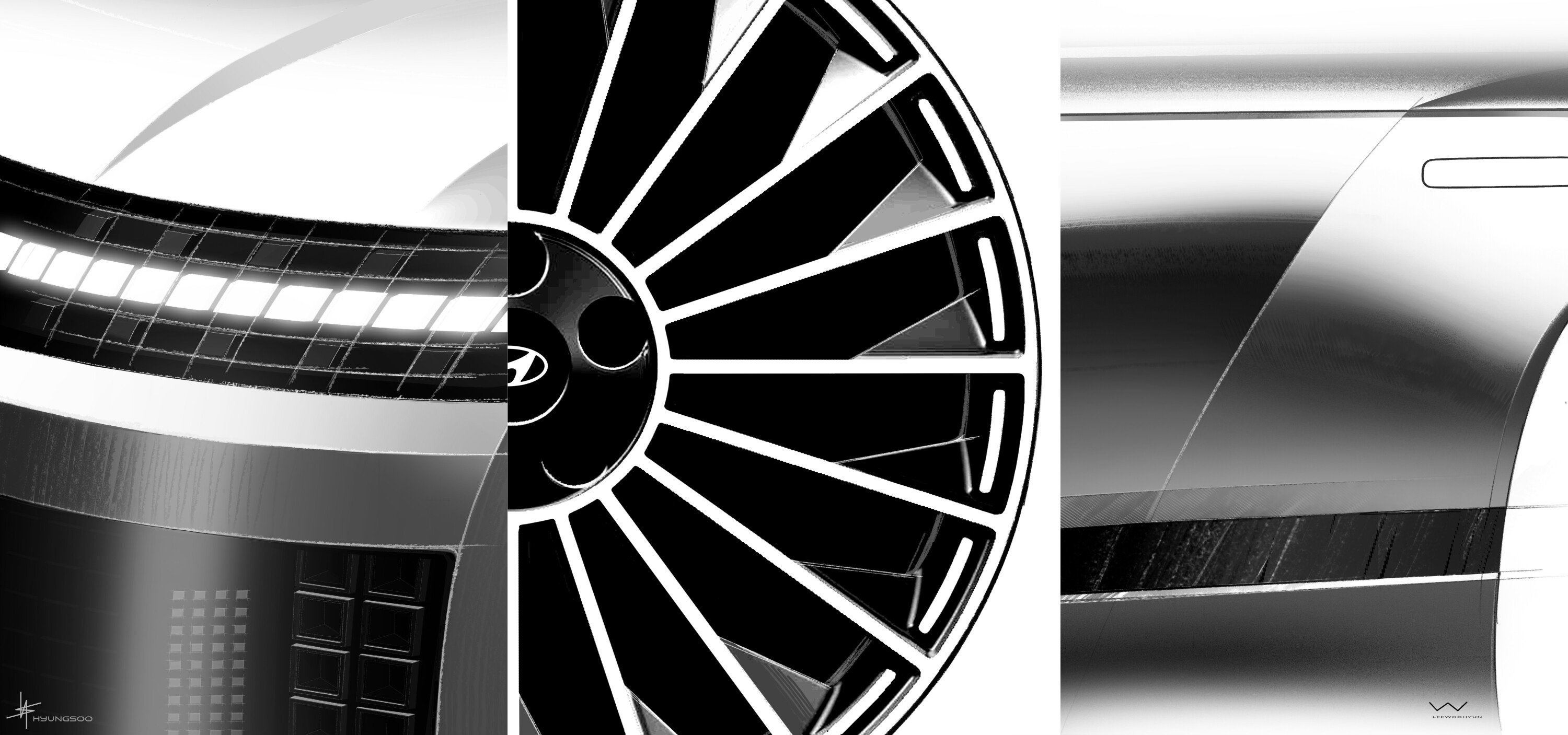
Exterior sketches show the IONIQ 9 following Hyundai’s recent design language, featuring a sloping roofline, Hyundai’s “Parametric Pixel” lighting seen on other IONIQ models, and aerodynamically optimised wheels.
The LED light bar and distinctive lighting elements from the concept also seem to be retained, while the side profile hints at character lines inspired by traditional Korean Hanbok clothing.
With Hyundai aiming to achieve 2 million EV sales by 2030, the IONIQ 9 serves as a crucial addition to the line-up, joining other IONIQ models and building on Hyundai’s record-breaking EV production figures.
1
Will there still be an IONIQ 7?
Probably. Why not? The gap between the IONIQ 5 and 9 SUVs certainly implies we’ll see something bigger than the 5 but smaller than the 9 – that’s just how these things go.
Of course, the design and size of the IONIQ 6 suggests we could see a model of similar dimensions but with a different shape, such as a ‘coupe’ SUV.
In terms of IONIQ-badged SUVs, the IONIQ 5 is already a massive car on the inside, thanks to its 3000mm wheelbase, but its exterior length is much closer to the Australian-delivered midsize Tucson‘s 4630mm.
So, we could easily see an IONIQ 7 with an overall length closer to the Palisade’s 4995mm, which is already 340mm longer than the IONIQ 5’s 4655mm, despite having a 100mm shorter wheelbase.

1
We’d expect the 7 to fall considerably short of the Palisade’s length, however, as the IONIQ 9 – which never had its exterior length confirmed – would likely come in at around five metres itself, roughly matching the Kia EV9.
Such a model would give Hyundai an SUV – or, we may pray, a wagon – with a deeper boot than the very hatch-styled IONIQ 5 can offer. Or, perhaps, the IONIQ 7 could very literally be a stretched 5 or 6 on the same 3000/2950mm wheelbase but with a more conventional longroof rear.
A length in the neighbourhood of 4750 to 4800mm might then make sense for an IONIQ 7.
For now, we can only speculate, but we’ll have fun doing it.

1
The Monash University Accident Research Centre (MUARC) has released its latest Used Car Safety Ratings, designed to deliver insights on the safest used vehicles within a modern context.
Snapshot
- The report is based on crash data from over 9 million vehicles in Australia and New Zealand
- 16 models received top five-star ratings across all categories, identifying them as the safest u201cSafer Picku201d vehicles
- The ratings show significant improvements in used vehicle safety over the past 20 years, reflecting advances in vehicle design and safety features
Designed to help consumers make informed choices, the ratings use comprehensive data to evaluate how well vehicles protect occupants, other road users, and prevent crashes.
The study analysed data from 9.4 million vehicles involved in crashes and 2.6 million injured road users across Australia and New Zealand from 1987 to 2022.
Results indicate a significant improvement in vehicle safety, showing a 36 per cent reduction in the risk of serious injury or fatality for drivers of 2022 models compared to vehicles from 2002.
A total of 534 vehicle models were rated on a scale of one to five stars for Overall Safety, a rating that combines assessments of Driver Safety, Other Road User Safety, and Crash Avoidance.
Among these, 110 vehicles received a five-star Overall Safety rating, while 54 vehicles earned the designation of ‘Safer Pick’ by scoring highly across all safety categories.
Sixteen of the top-rated ‘Safer Pick’ vehicles, listed below, earned five stars in every category, making them stand-out options for safety-conscious consumers.
| Model | Model years |
|---|---|
| Audi A4/S4/RS4/All Road | 2008-2015 |
| Honda Civic | 2016-2021 |
| Honda Odyssey | 2013-2021 |
| Hyundai Tucson | 2015-2020 |
| Mazda 3/Axela | 2013-2019 |
| Mazda 6/Atenza | 2012-2022 |
| Mazda CX-5 | 2017-2022 |
| Mercedes Benz CLA-Class C117/X117 | 2013-2019 |
| Mercedes Benz E-Class W212/C207/A207 | 2009-2016 |
| Mercedes Benz GLA-Class X156 | 2014-2019 |
| Mitsubishi Outlander | 2012-2021 |
| Subaru Impreza/XV | 2016-2022 |
| Toyota Camry | 2017-2022 |
| Toyota Corolla | 2018-2022 |
| Volkswagen Tiguan | 2016-2022 |
| Volkswagen Touareg | 2011-2019 |
These vehicles, available in the used market, are often priced under AUD $25,000, with some models available for less than AUD $10,000, making high-rated safety accessible to a broader range of consumers.
The 2024 ratings reflect steady improvements in vehicle safety over the past two decades, as all ‘Safer Pick’ vehicles were produced after 2004, with 91 per cent made after 2008. These findings highlight advancements in vehicle design, safety technology, and regulatory standards. For example, Electronic Stability Control has become a standard feature across many newer vehicles, improving occupant protection and crash prevention.
Australia’s light vehicle fleet has seen a 55 per cent improvement in overall safety since 1981, largely due to better Driver Safety features. Medium and small SUVs were shown to have higher ratings for Overall Safety than smaller car categories, attributed in part to their more recent production dates and upgraded safety technologies.
The report also highlighted safety challenges for commercial utes and people movers. Despite their larger mass, these vehicles often underperformed in occupant protection and present higher risks to other road users in collisions.
MUARC researchers stressed the value of crash avoidance features like lane keep assist and autonomous emergency braking for these vehicle categories to help offset these risks.
Professor Stuart Newstead, MUARC Director, commented on the importance of these ratings, explaining that they empower consumers to make choices that contribute to both personal and community safety. “Selecting vehicles that perform well across Driver Safety, Other Road User Safety, and Crash Avoidance is crucial for reducing road trauma,” Professor Newstead stated.
The full 2024 Used Car Safety Ratings for Australia can be found here.
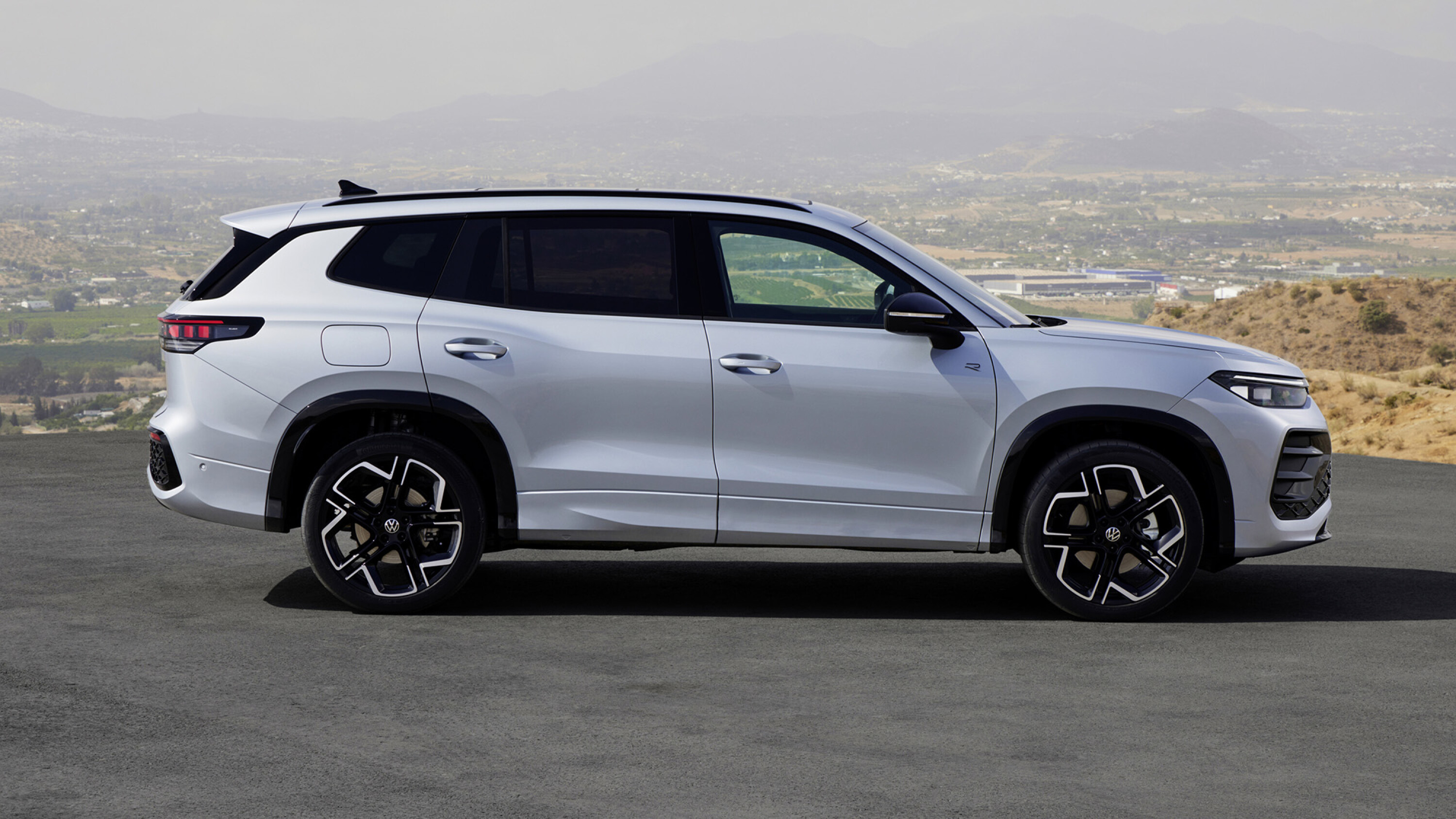
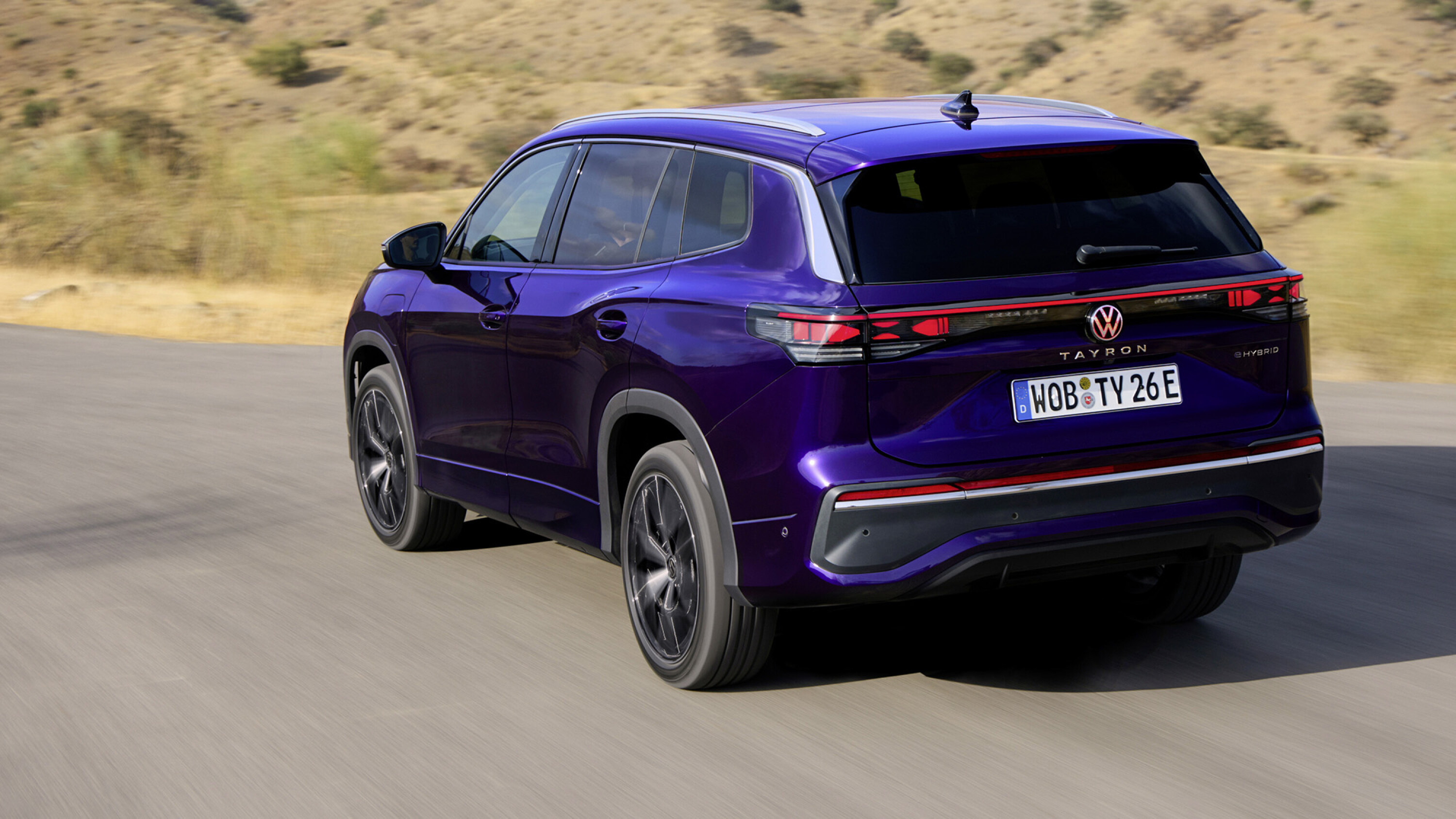
Volkswagen Australia will launch a new addition to its SUV line-up in 2025, with the seven-seat Tayron SUV confirmed to follow the next-generation Tiguan.
Snapshot
- Tayron slots between Tiguan and Touareg, offering seven seats with hybrid & turbo petrol options
- Expect up to 2090 litres of storage, advanced driver assistance, and all-wheel drive options
- Australian launch expected in late 2025, following the mid-year release of the new Tiguan
The Tayron will arrive in Australia with a design and platform closely related to the new-generation Tiguan, expanding Volkswagen’s options for family-focused SUVs.
1
Size and platform
Positioned as a larger alternative to the Tiguan, the Tayron measures 4770mm in length and 1852mm in width, making it 284mm longer and 13mm wider than the outgoing Tiguan Allspace.
The wheelbase remains unchanged from the Allspace’s 2791mm, again riding on Volkswagen’s MQB ‘evo’ platform.
As with the Allspace it replaces, the Tayron’s 114mm longer wheelbase than the new Tiguan’s, and its 230mm longer overall body, positions it firmly in the three-row space, while still slotting below the larger and more expensive Touareg.
1
Seating and powertrains
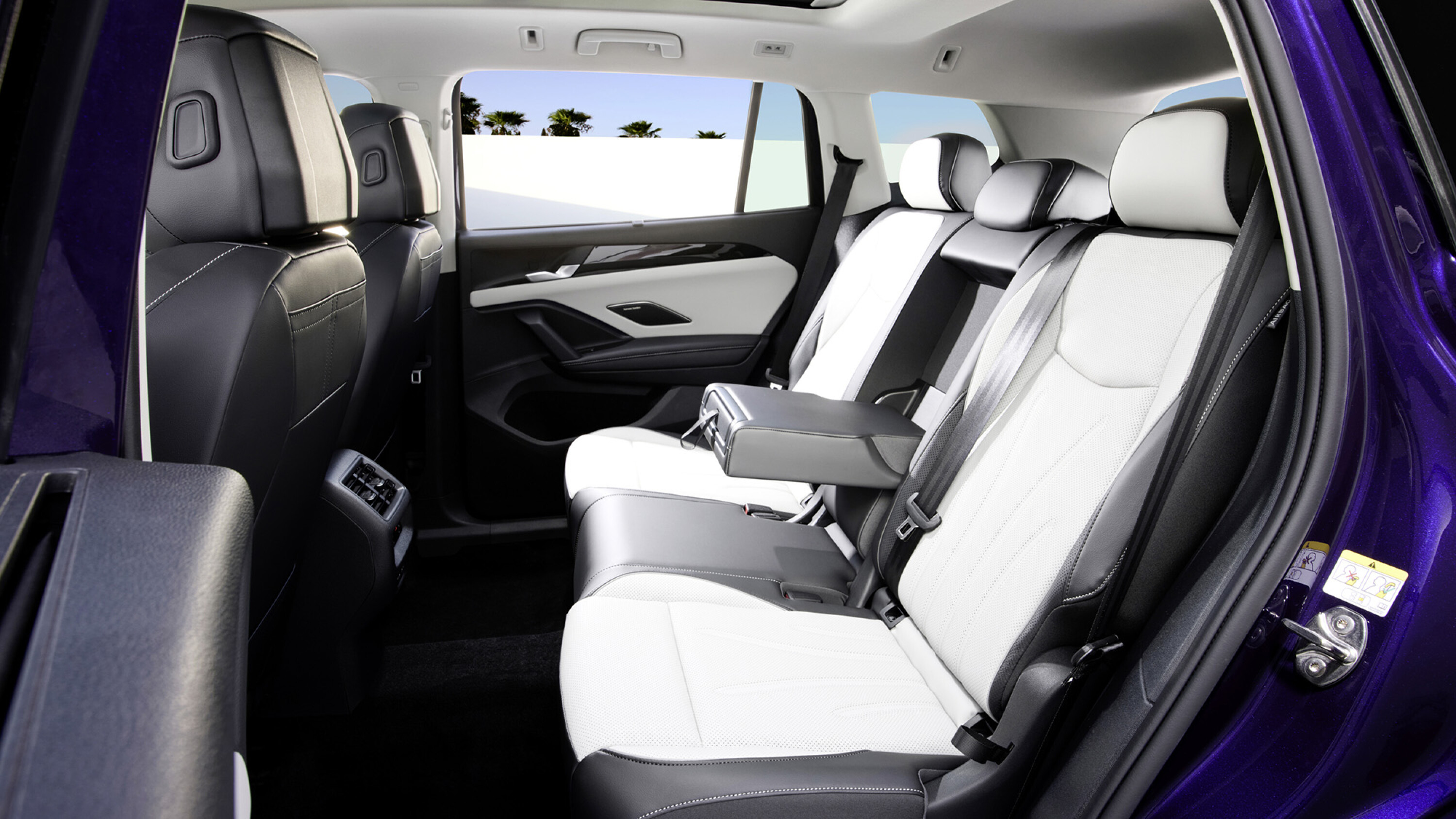
Depending on the market, the Tayron will be available in both five- and seven-seat configurations, with Volkswagen Australia likely prioritising the seven-seat model.
Globally, the SUV will offer a variety of powertrains, including a mild-hybrid petrol, two turbo petrol options, two diesel engines, and two plug-in hybrid electric (PHEV) models.
The European-spec Tayron will start with a 1.5-litre eTSI petrol engine producing 110kW and 250Nm, while the diesel line-up will include a 142kW and 400Nm option.
1
For those seeking electrification, there will be 150kW and 200kW versions of the Tayron PHEV, both featuring a 19.7kWh battery with a claimed electric-only range of up to 100 kilometres.
These models will support 50kW DC fast charging and 11kW AC charging, although they’ll be limited to five seats due to the battery layout.
While Volkswagen has not yet released details on power figures for the entry diesel or turbo petrol engines, the latter are anticipated to be available in 150kW and 195kW variations of Volkswagen’s 2.0-litre engine. Australian buyers can expect the focus to be on turbocharged and electrified petrol variants.
The Tayron’s mild-hybrid and PHEV models will feature front-wheel drive, while the TSI turbo petrol and 142kW diesel engines will come with all-wheel drive and a towing capacity of up to 2500kg.
All models are equipped with a six- or seven-speed DSG dual-clutch automatic transmission, depending on the engine.
1
Features and specifications
The Tayron will come with a range of trim levels in Europe, likely to influence Australian offerings.
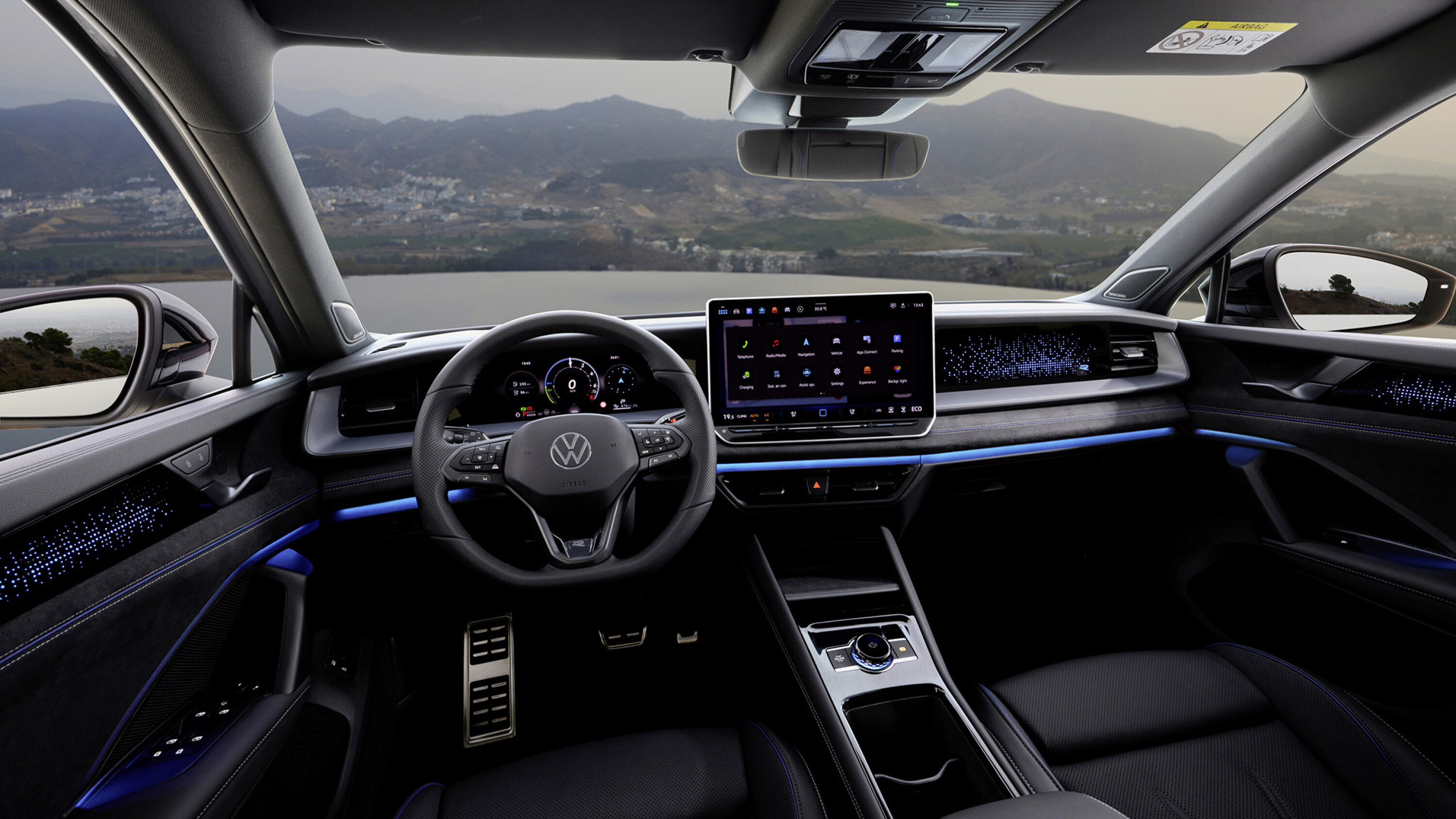
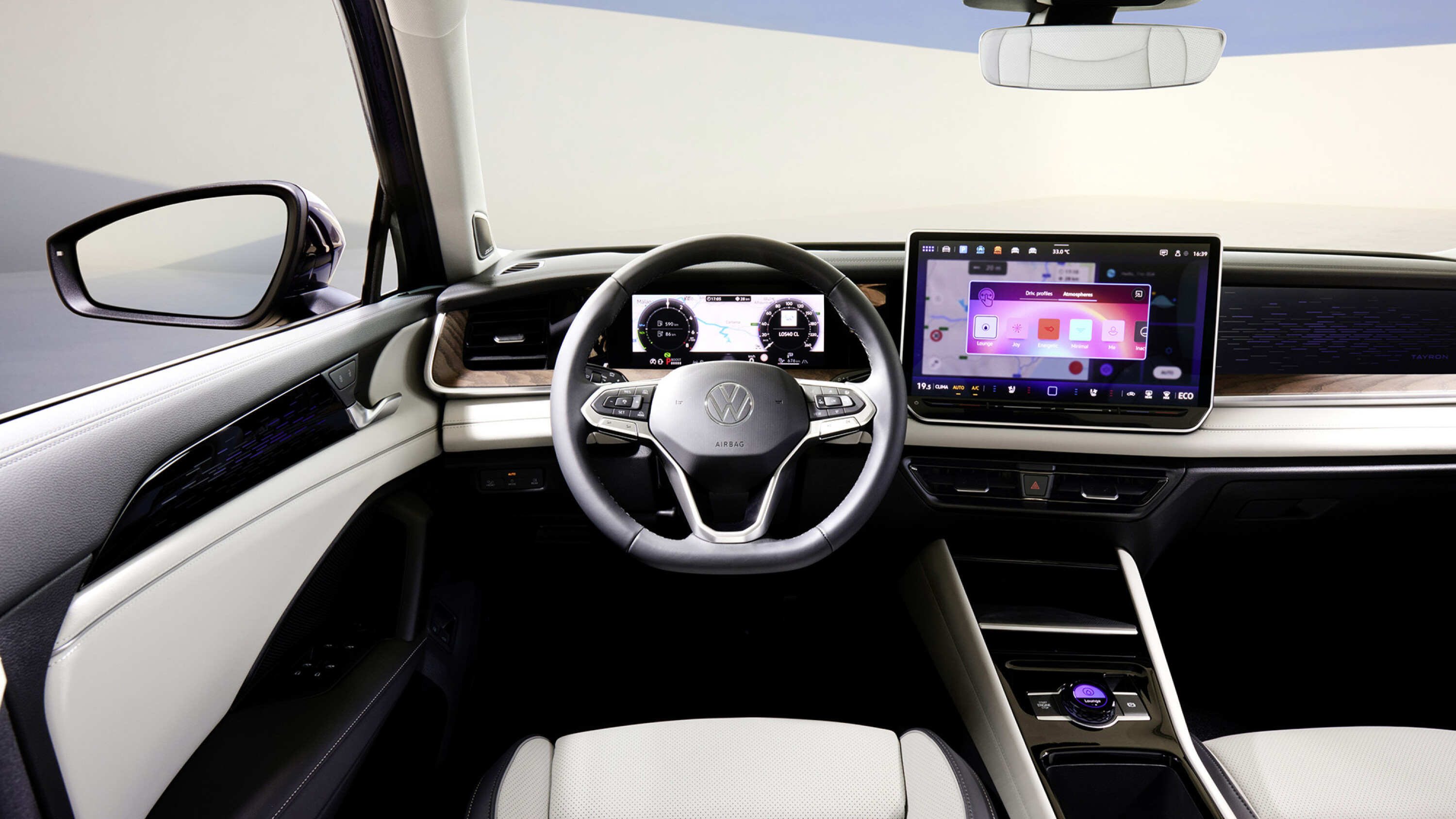
The base Life trim includes 17-inch alloy wheels, nine airbags, three-zone climate control, a rear-view camera, a digital driver display, and a 12.3-inch central touchscreen with Apple CarPlay and Android Auto connectivity.
Higher trims, including Elegance and R-Line, add features such as 18- or 19-inch alloy wheels, decorative trims in wood or aluminium finishes, noise-insulating glass, an electric tailgate, Park Assist Pro, premium seat upholstery (including sports seats in the R-Line), keyless entry, programmable LED tail-lights, and ambient lighting.
Driver-assist technology will include adaptive cruise control, Front Assist with pedestrian and cyclist detection, Lane Assist for lane centring, and a new exit warning system to prevent door openings when another vehicle or cyclist is approaching.
1
Optional extras
In Europe, the Tayron’s optional packages add advanced features, including adaptive chassis control, IQ.Light Matrix LED headlights, a semi-autonomous Travel Assist feature, a panoramic sunroof, a Harman Kardon sound system, and leather seats with ventilation and massage functions. Availability in Australia is yet to be confirmed.
Boot space
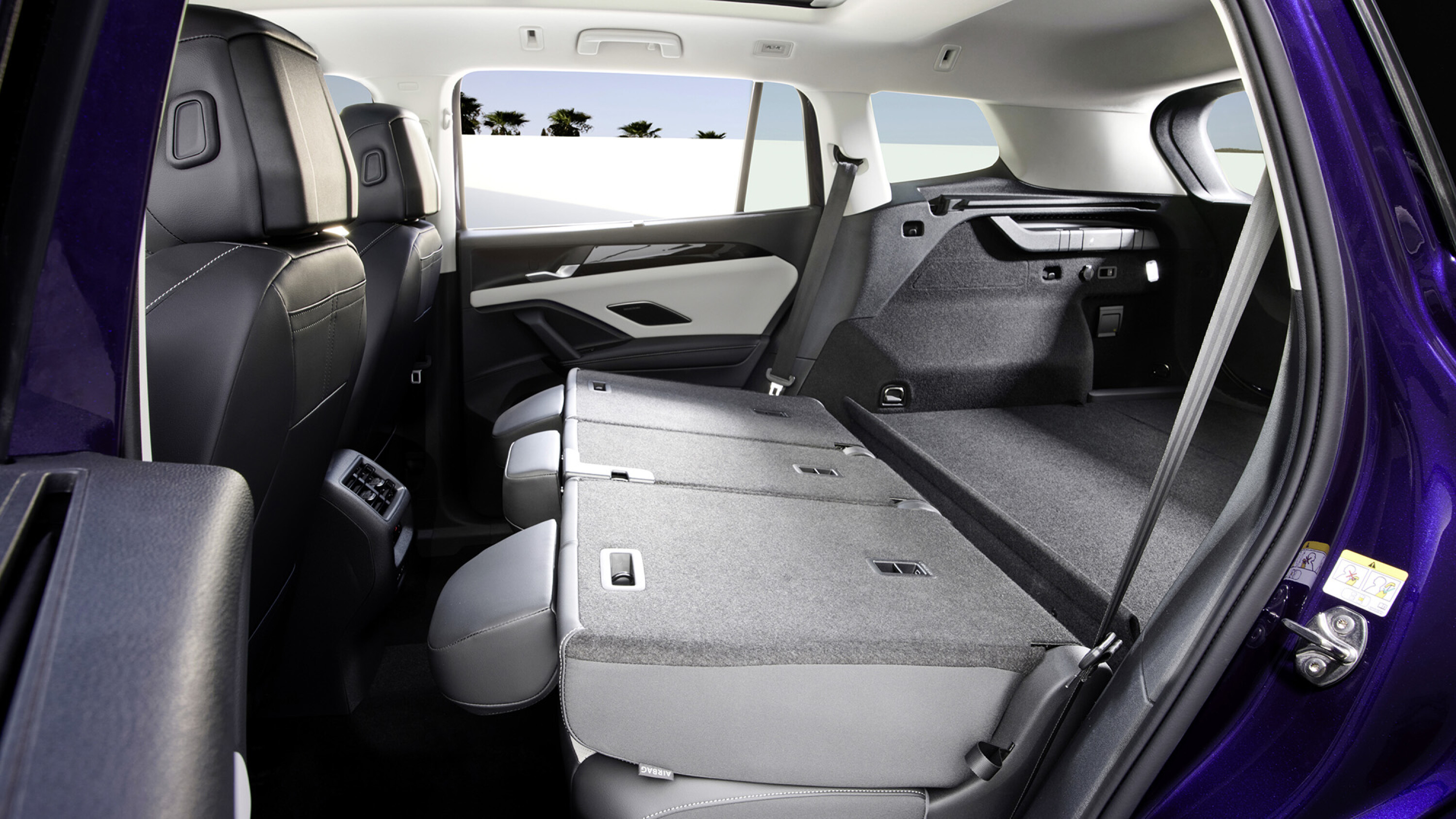
The Tayron’s five-seat variant offers a maximum boot capacity of up to 2090 litres, with the seven-seat configuration reducing this to 1905 litres. The eHybrid model, which houses an electric battery, allows up to 1915 litres.
With the second row in place, the five-seater provides 885 litres, the seven-seater has 850 litres, and the eHybrid holds 705 litres. In the seven-seat variant, retaining all three rows for passengers reduces luggage space to 345 litres.
1
Australian arrival
Volkswagen’s new Tiguan is set to launch in Australia in the second quarter of 2025, with the larger Tayron to follow in the later months of that year.
As Australia’s interest in larger family SUVs with hybrid and electric options grows, the Tayron could provide another competitive offering for buyers in search of versatile seating and a variety of powertrain choices.
The refreshed 2025 Nissan Juke is now on sale in Australia, following its global reveal back in February.
Snapshot
- 2025 Juke adds upgraded interior, 12.3-inch touchscreen, and improved connectivity
- New N-Sport variant offers unique styling and two-tone options
- Prices start at $28,890, unchanged from last year
For the new model year, the 2025 Juke gains new technology and interior features, along with a new N-Sport variant at the top of the range.
The updated range maintains the same pricing as its predecessor across like-for-like grades, starting at $28,890.
Key upgrades across the range include a redesigned interior, a larger infotainment display, and enhanced connectivity. These changes span all models, from the entry-level ST to the new N-Sport grade, which brings unique styling and a more upscale look to the line-up.
Interior and tech upgrades
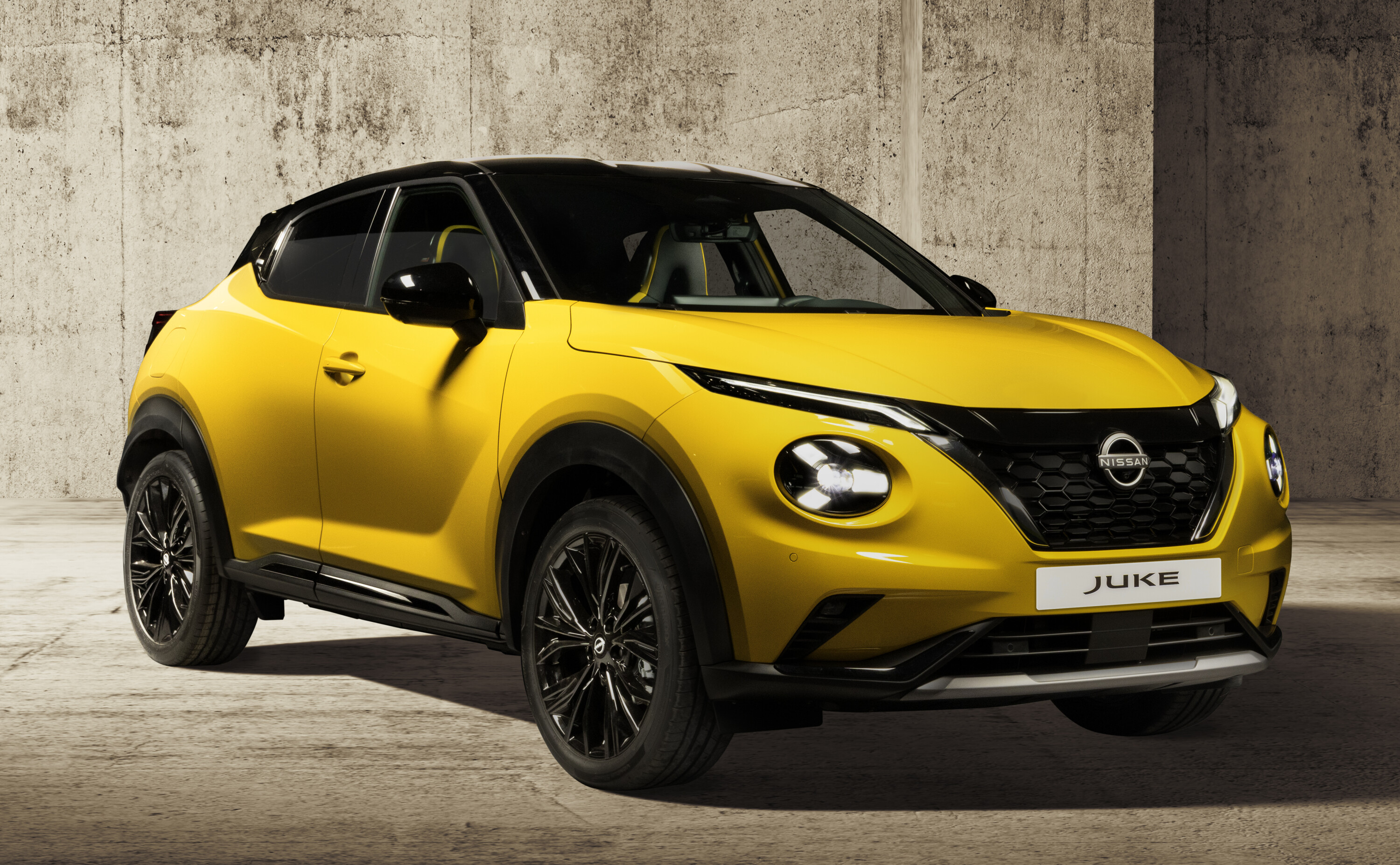
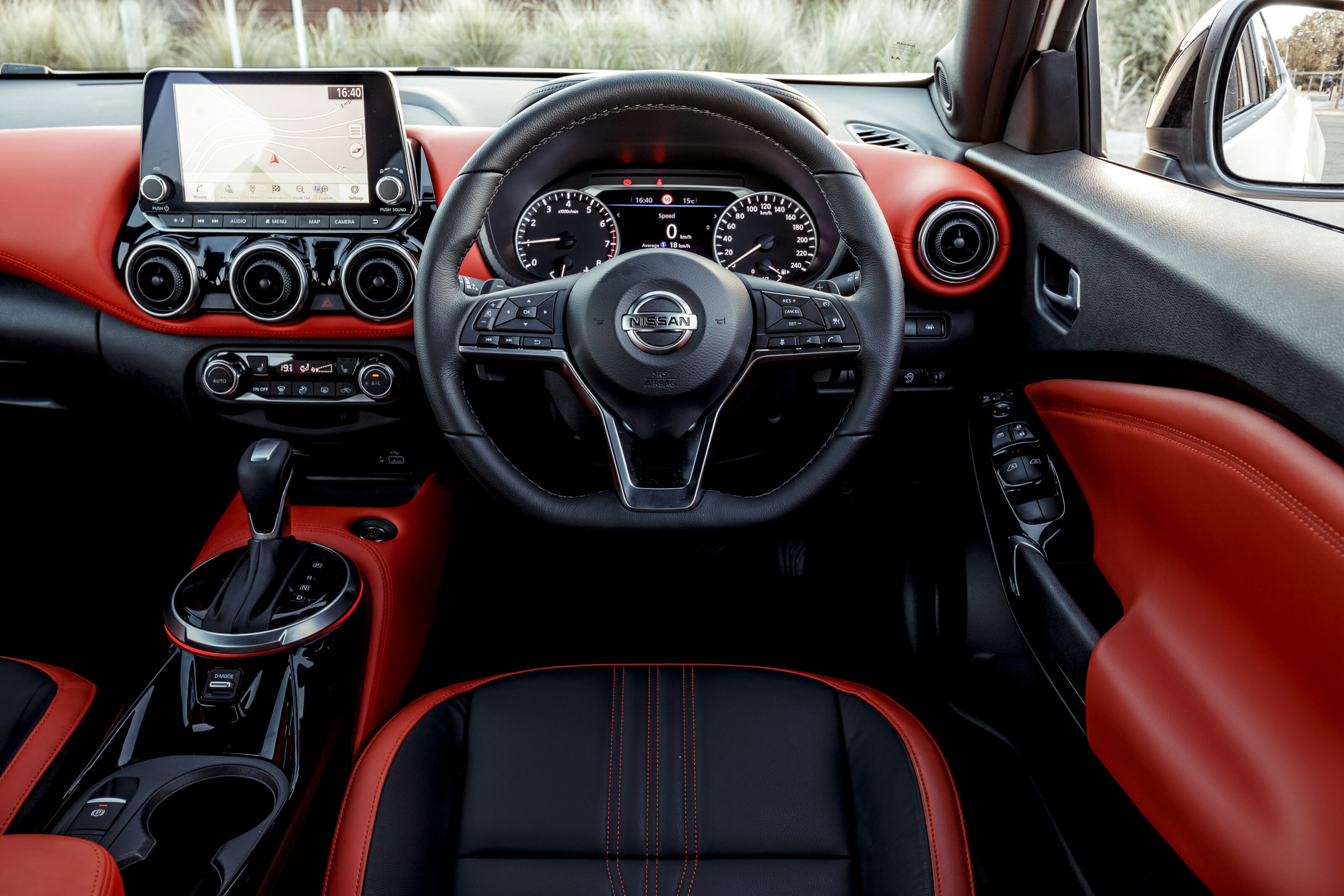
The Juke’s interior has been rethought with a new centre console and upgraded materials, providing a more detailed and functionally updated layout.
Across all trims, the glovebox is now larger, and the armrest design has been modified for better reach and support. It features an asymmetric design, extending reach by 25 mm while maintaining cupholder space and adding a clip to hold up to three cards.
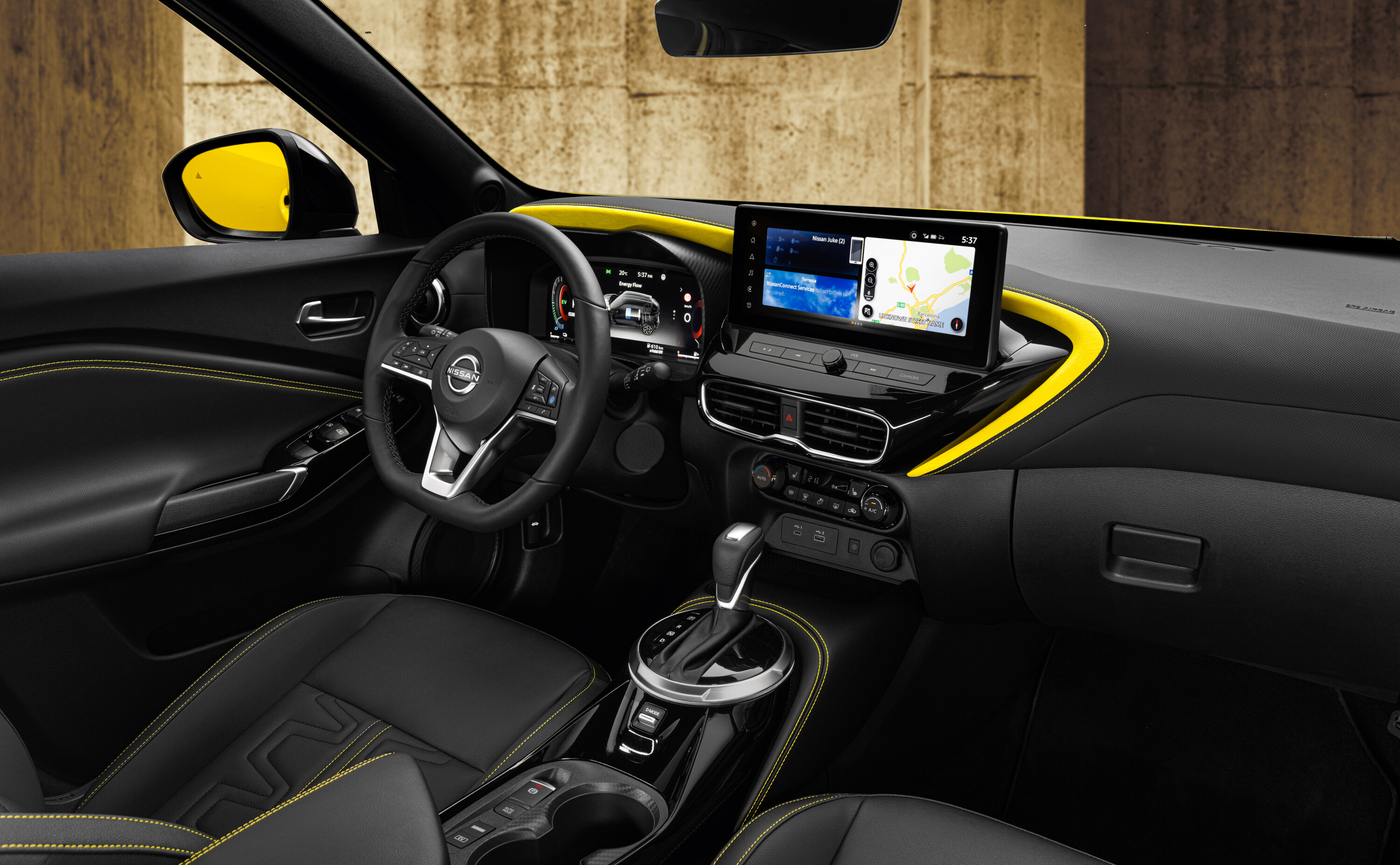
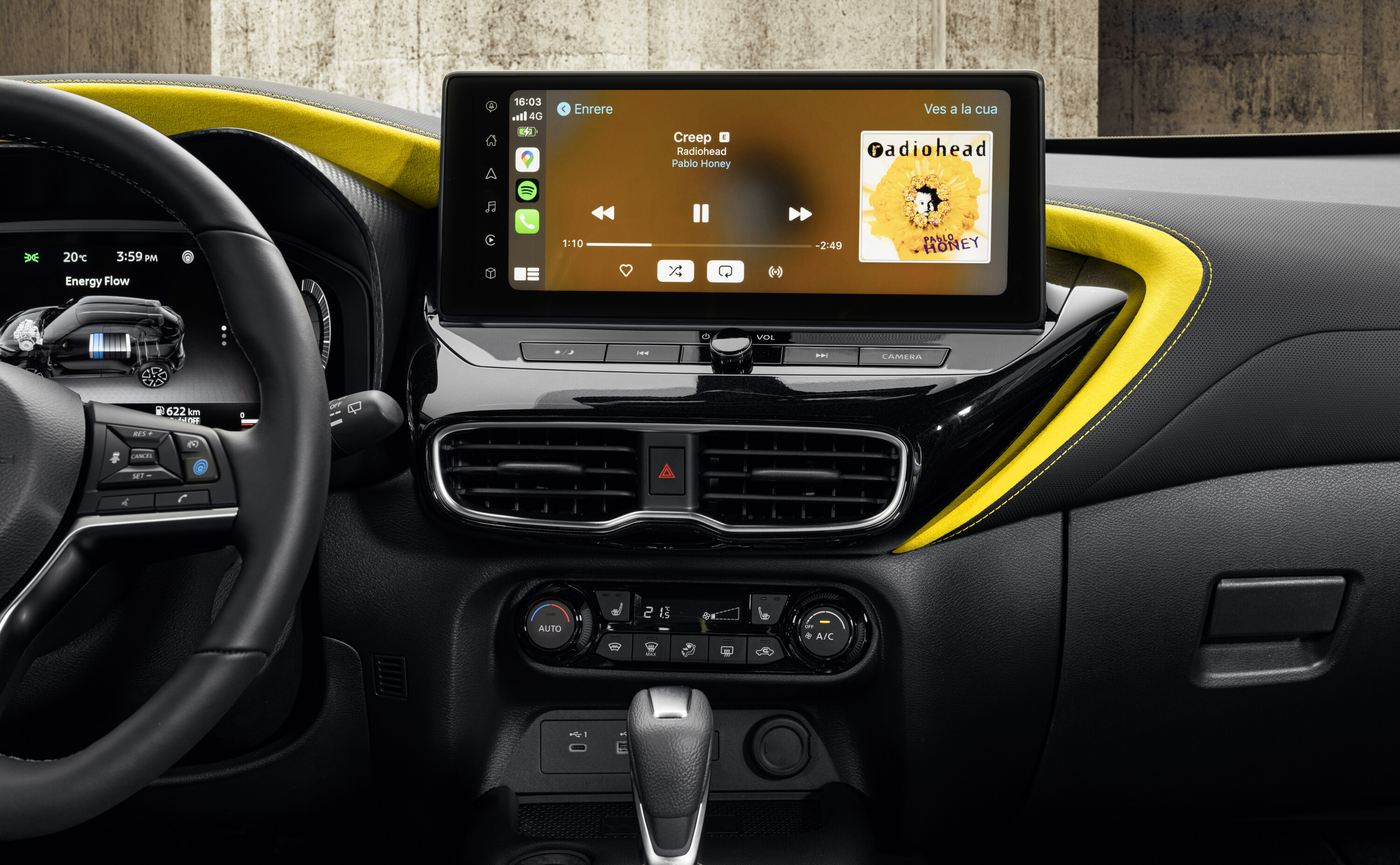
Technology updates are a key focus, with every Juke model now including a 12.3-inch central touchscreen (up from 8.0 inches on the previous ST, ST+, and ST-L). Wireless Apple CarPlay and Android Auto are standard on all models, and connectivity has been further enhanced with both USB-C and USB-A ports.
The high-definition screen upgrade also extends to the rear-view camera, which has moved from 0.3 to 1.3 megapixels, aiding visibility in low-light settings.
1
From the ST-L grade upwards, a 12.3-inch driver display is now standard, replacing the previous 7.0-inch display and offering customisable layouts for the driving information.
This high-resolution (1920 x 720 pixels) screen allows users to switch between a classic two-dial setup or an “enhanced” layout that adds a three-dimensional view to the speedometer and tachometer dials, freeing up space for additional information in the centre of the display.
New N-Sport variant
The newly introduced N-Sport model tops the Juke range, introducing distinctive styling elements and features not found on other variants.
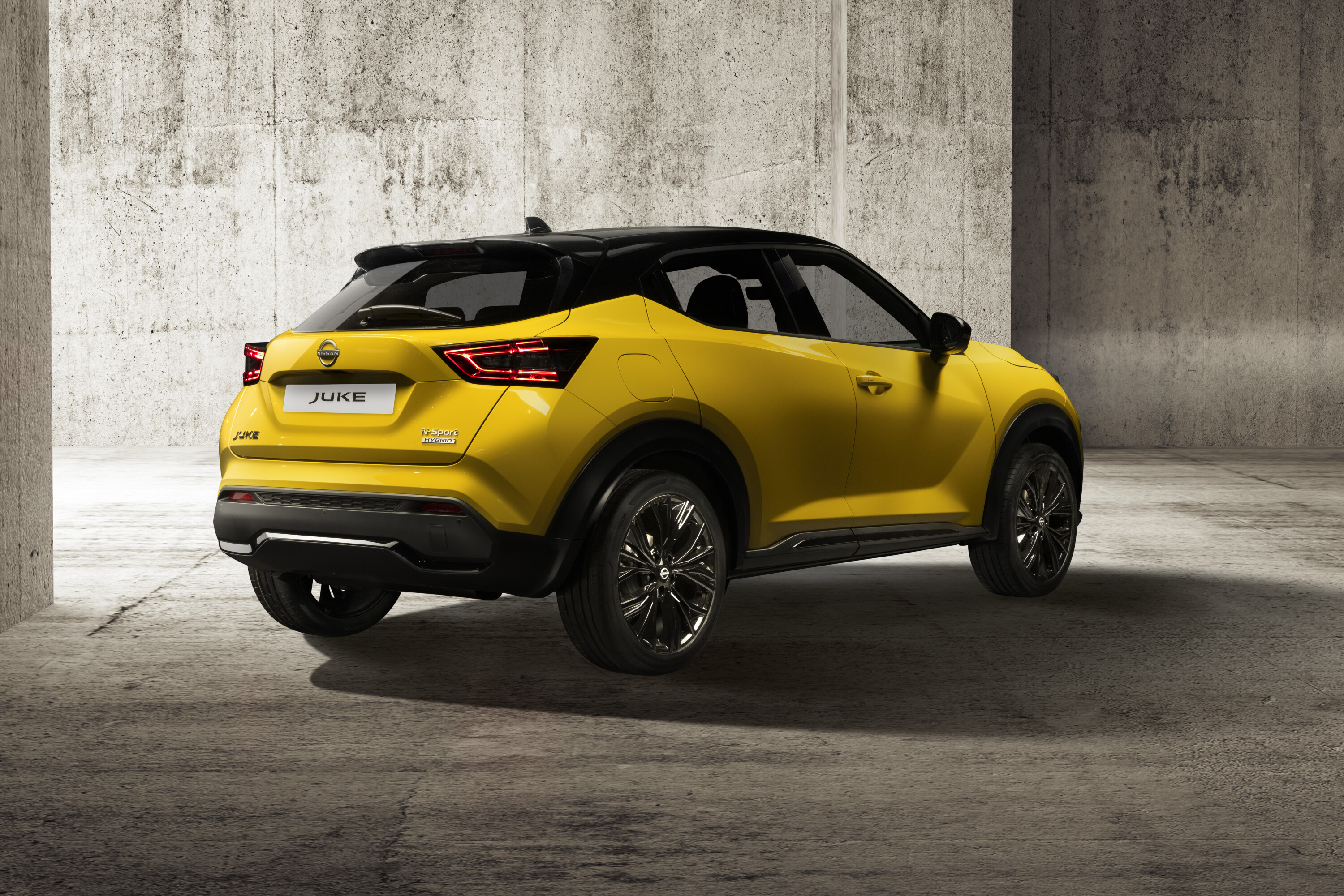
The N-Sport comes with a standard two-tone black roof, 19-inch Akari alloy wheels, and an Iconic Yellow paint option that pairs with black bumper and side accents for a unique look.
Interior touches include yellow highlights across the dash, seats, and centre console, matched with an Alcantara-trimmed dashboard.
Safety and driver assistance
The base ST variant now includes Intelligent Cruise Control and Blind Spot Intervention as standard.
The ST-L variant introduces Nissan’s ProPILOT semi-autonomous technology, which provides assistance with steering, acceleration, and braking within a single lane.
Powertrain and efficiency
All Juke models continue to use a 1.0-litre turbo-petrol engine, delivering 84kW of power and 180Nm of torque through a seven-speed dual-clutch automatic transmission.
Combined fuel consumption remains at 5.8L/100km (WLTP-rated).
1
Features in list form
Note: new items are shown in bold
Nissan JUKE ST
Exterior
- 17” steel flex wheels
- Rear disc brakes
- Auto LED headlights w/ Follow Me Home Function
- Black grained plastic door outer handles
Interior
- 12.3” touchscreen display audio
- Wireless Apple CarPlay & Wireless Android Auto
- USB (A&C port)
- Electric park brake with auto-hold
- Manual dimming rear-view mirror
- 7” TFT Meter/ADAD
- Paddle shifters
Safety
- Rear-view Camera + rear parking sensors
- Alarm
- FCW + IEB (pedestrian + cyclist)
- Lane Departure Warning
- Intelligent Lane Intervention
- Traffic Sign Recognition
- Active Speed Limiter
- Blind Spot Warning
- Rear Cross Traffic Alert
- Intelligent Driver Alert
- High Beam Assist
- Emergency Stop Signal
- Hill Start Assist
- Intelligent Trace & Ride Control
- Intelligent Cruise Control
- Blind Spot Intervention
1
1
Nissan JUKE ST+ adds or replaces
Exterior
- LED Fog lights
- 17” two-tone alloys
Interior
- Auto A/C
- Climate control
- Satellite Navigation
- Digital radio
- Heated front seats
Safety
- Front parking sensors
Nissan JUKE ST-L adds or replaces
Exterior
- 19” aero alloys
- Privacy glass
- Optional two-tone black roof
- Body coloured plastic door outer handles
Interior
- Frameless auto-dimming rear-view mirror
- Part synthetic leather / cloth seat trim with w/ melange accents
- 12.3” TFT Meter/ADADWireless phone charger
Safety
- Intelligent Around-View Monitor
- Moving Object Detection
- ProPILOT
1
Nissan JUKE TI adds or replaces
Exterior
- 19” Ti design alloys
- Optional two-tone black roof
Interior
- Black Alcantara dashboard, knee pad & door panelsSoft-pad metre visor
- Monoform quilted leather-accented with Alcantara seat trim
- Black chrome centre console and headrest finisher
- 10-speaker Bose audio
- Illuminated JUKE kick plates
Safety
- Tyre Pressure Monitoring System
Nissan JUKE N-Sport
Exterior
- 19” Akari alloys
- Two-tone black roof
- Black bumper & Side Accents
Interior
- Yellow personalised interior colour
- Black grained PVC dashboard and black PVC door finisher
- Soft-pad Alcantara dashboard (black) with white stitching
- 10-speaker Bose audio
- Illuminated JUKE kick plates
Safety
Tyre Pressure Monitoring System
2025 Nissan Juke pricing for Australia
- Juke ST: $28,890
- Juke ST+: $31,640
- Juke ST-L: $34,440
- Juke Ti: $37,390
- Juke N-Sport: $38,390
MORE
Everything Nissan
A new edition of one of the most iconic watches produced in the past 60 years is always a cause for celebration as fans of the famous TAG Heuer Monaco welcome a new Chronograph Racing Green version.
In the famous maison’s latest tribute to the motorsport heritage its timepieces are such a part of, the TAG Heuer Monaco Chronograph Racing Green honours traditional British racing colours.
From the early 20th century through to the 1960s, drivers competed in races with cars bearing country-specific colours – Italy in vibrant red, Germany first in white and later in silver, the French in distinctive blue and the British in an unmistakeable racing green.
A Napier 50 that won the 1902 Gordon Bennett Cup under Selwyn Edge was the first car to bear the colour, while modern British racing teams and distinguished car manufacturers continue to use variations of the famous shade.
1
Now TAG Heuer’s famous square-cased chronograph first made internationally famous by Steve McQueen when he wore one in the 1970 film Le Mans has been given the British racing green treatment.
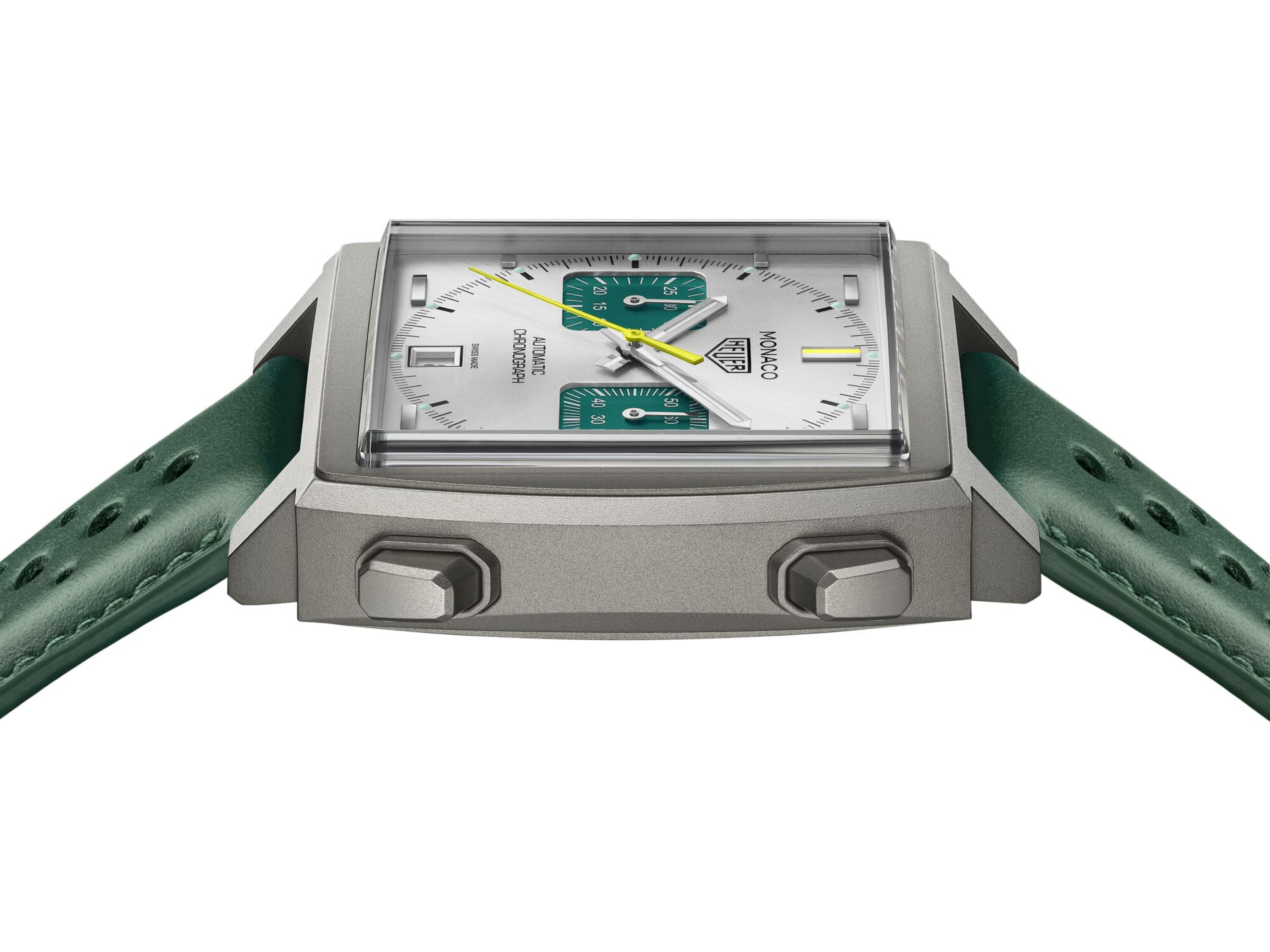
The new Monaco bears a suitably retro appearance with an elegant silver, sunray-brushed dial evoking the engine-turned dashboards of 1920s and ’30s sports cars.
Silvered hour markers as well as 12 light green Super-LumiNova dot markers make for easy reading of the time in dim light, while a faceted baton marker at 12 o’clock is adorned with a vibrant yellow stripe to connect it to chronograph’s yellow central hand and the touches of yellow which were also seen on racecars turned out in British racing green. Green chrono subdials honour the traditional hue in which the cars raced.
Heritage is also referenced in the inclusion of the traditional Heuer logo and the placing of the crown in the original position at 9 o’clock (it has swapped sides in other models since it first debuted in 1969).

3
Under the good, the TAG Heuer Monaco Chronograph Racing Green is powered by the automatic chronograph Calibre 11, protected by a sandblasted grade-2 titanium case which is sporty, tough yet elegant, the sapphire caseback showcasing the internal movement.
This beautiful limited edition watch is presented on a green perforated strap secured with a titanium folding clasp featuring the Heuer logo. Each caseback is engraved ‘ONE OF 1000’ and it arrives in custom-designed black packaging with vivid yellow details.
For those who love the retro charm of TAG Heuer’s motorsport heritage, the thrilling backstory to the introduction and evolution of the iconic square-case Monaco, and the traditions of British motor racing, this will be an absolute no-brainer… if you can secure one.
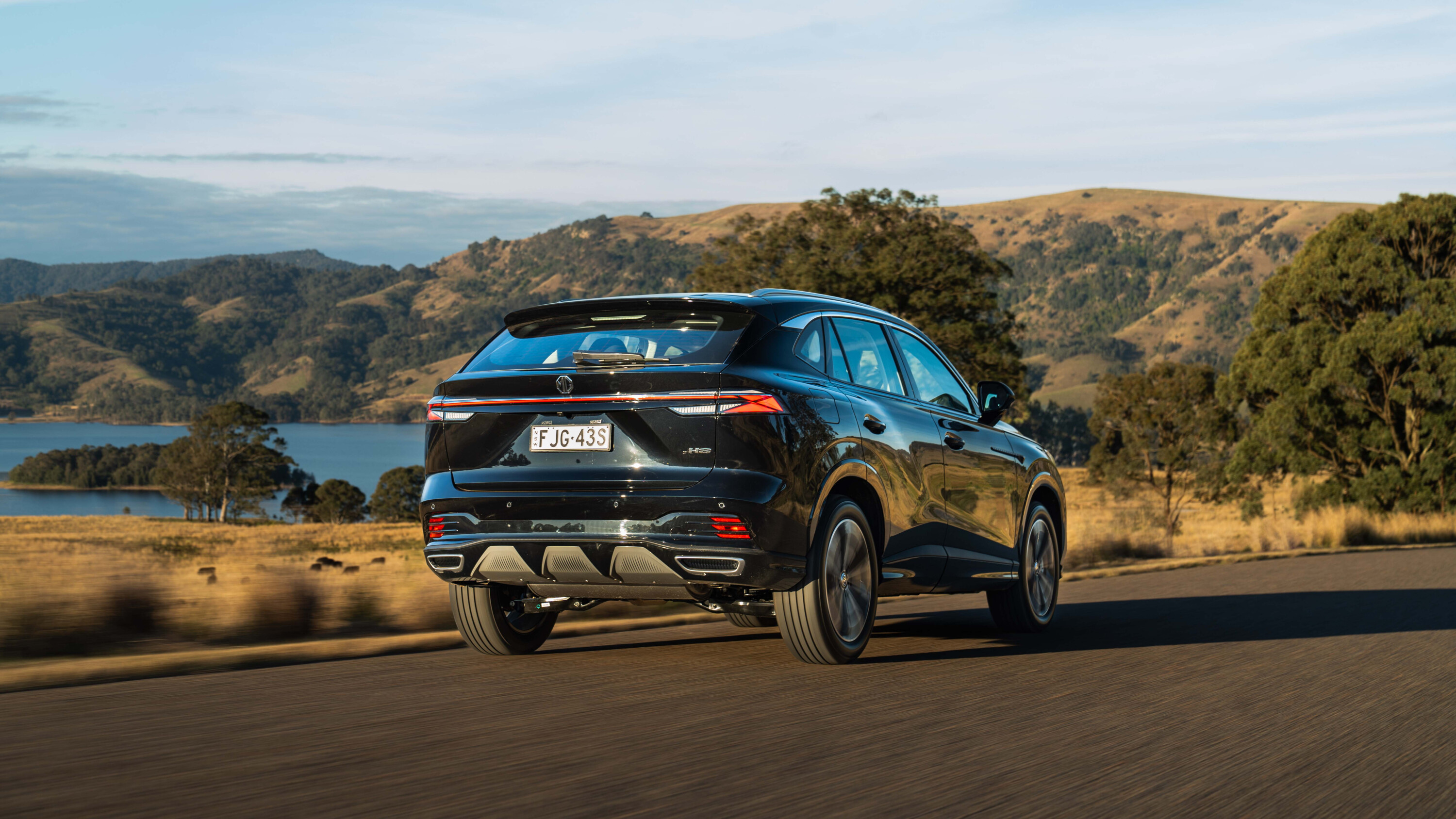
The new-generation 2025 MG HS is now on sale in Australia, with substantial updates across design, technology, and powertrain options.
The redesigned 2025 HS introduces a new platform and feature set, reflecting MG’s direction in the hugely competitive midsize SUV category.
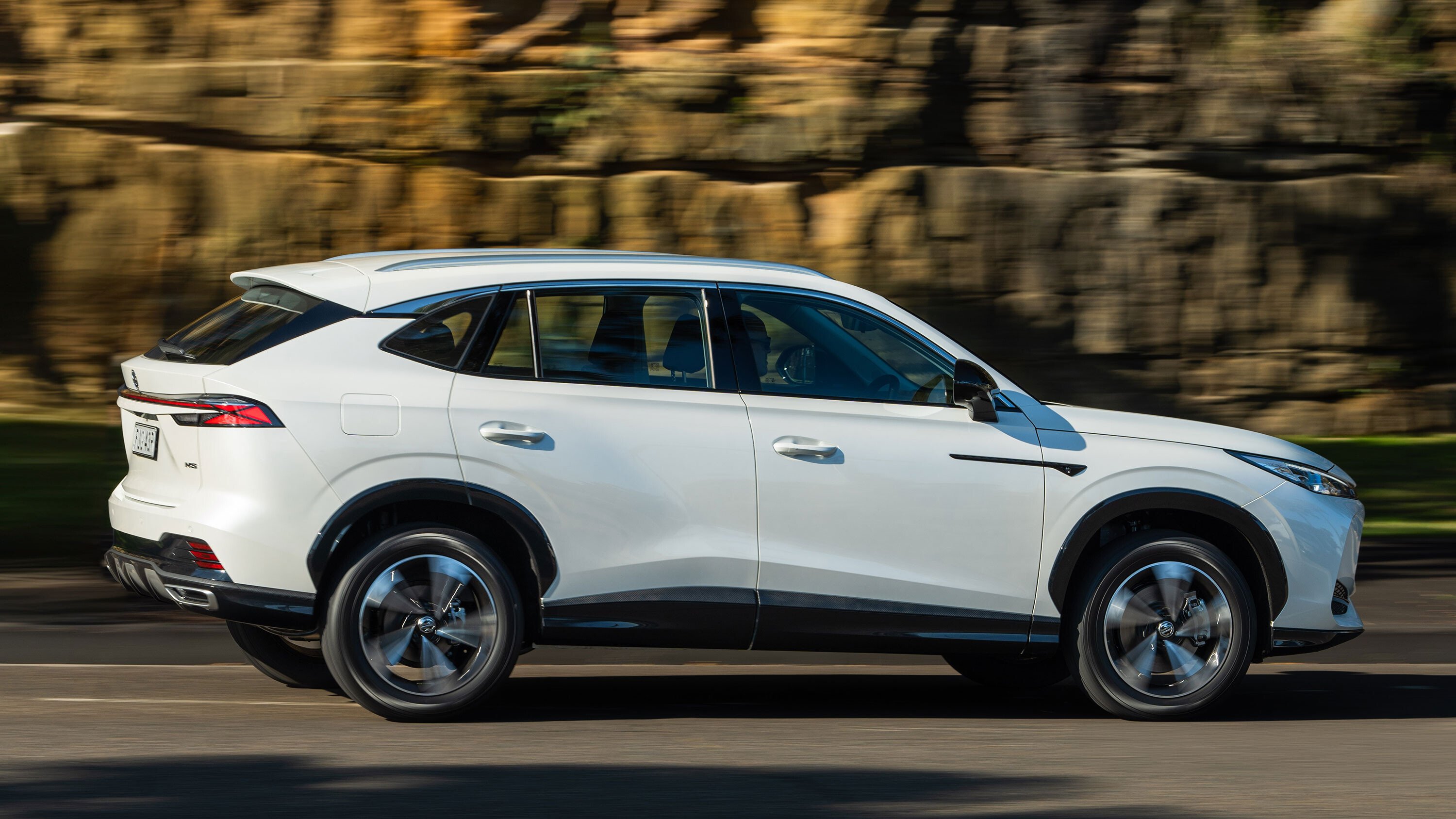
The new HS offers two powertrain choices, upgraded safety tech, and expanded interior space.
1
Engine and powertrain options
The 2024 HS model features a 1.5-litre turbocharged four-cylinder petrol engine, producing 125kW of power and 275Nm of torque, paired with a seven-speed dual-clutch transmission in all variants.
MG also plans to release a plug-in hybrid (PHEV) variant later this year, which will offer a lower-emission, petrol-electric option across all three trims.
The hybrid setup is aimed at maximising fuel efficiency while delivering comparable performance to the petrol model.
| 2024 MG HS 1.5T specifications | |
|---|---|
| Engine | 1496 4cyl, DOHC, 16v, turbo |
| Max power | 125kW @ 5000rpm |
| Max torque | 275Nm @ 3000-4000rpm |
| Transmission | 7-speed dual-clutch |
| Weight | 1685-1630kg |
| Economy | 6.9L/100km |
| 0-100km/h | 9.4sec |
| Price | $33,990-$40,990 |
| On sale | Now |
Features
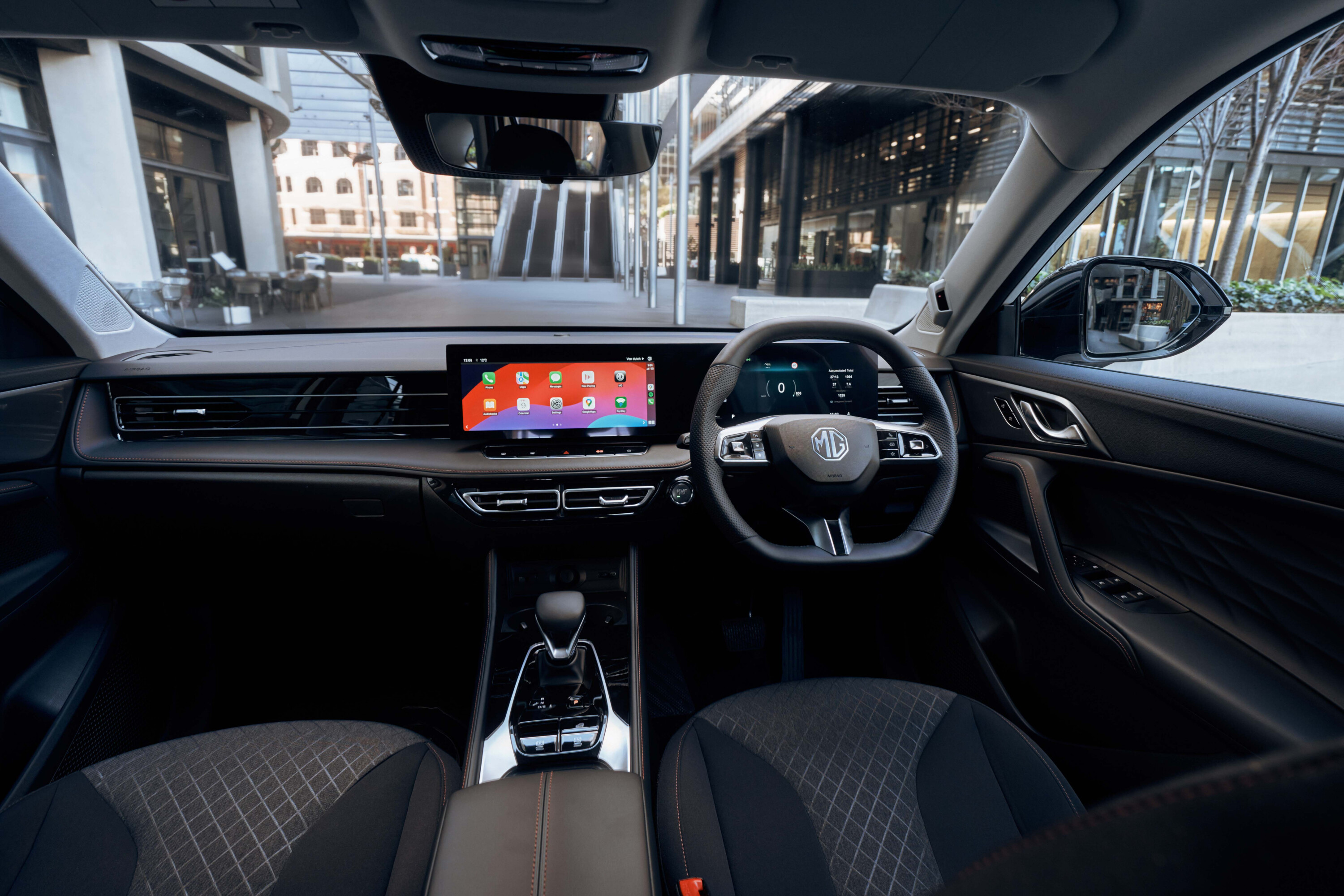
The entry-level Vibe variant includes 18-inch alloy wheels and automatic LED headlights, as well as a 12.3-inch touchscreen that supports Apple CarPlay and Android Auto.
Upgrading to the Excite adds 19-inch alloy wheels, along with 360-degree camera coverage, built-in satellite navigation, and remote-control access to the air conditioning through MG’s iSmart app.
The Essence model, as the top-spec offering, adds a panoramic sunroof, an eight-speaker audio system, and wireless charging for compatible devices. The Essence also gets dual-zone climate control and heated front seats.
1
Interior and space improvements
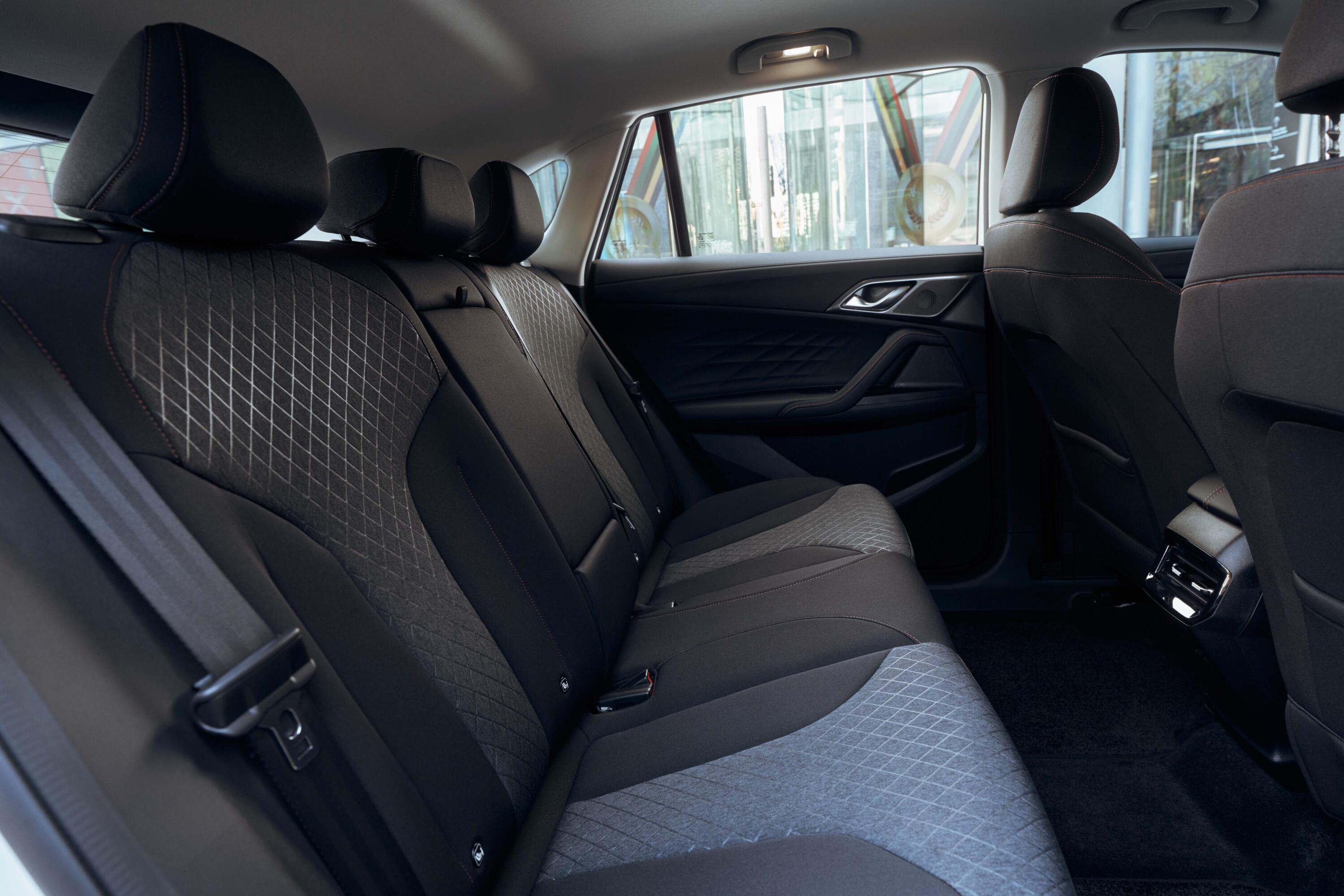
With a longer wheelbase than previous models – up from 2720mm to 2765mm in this new generation – the 2025 MG HS offers increased interior space.
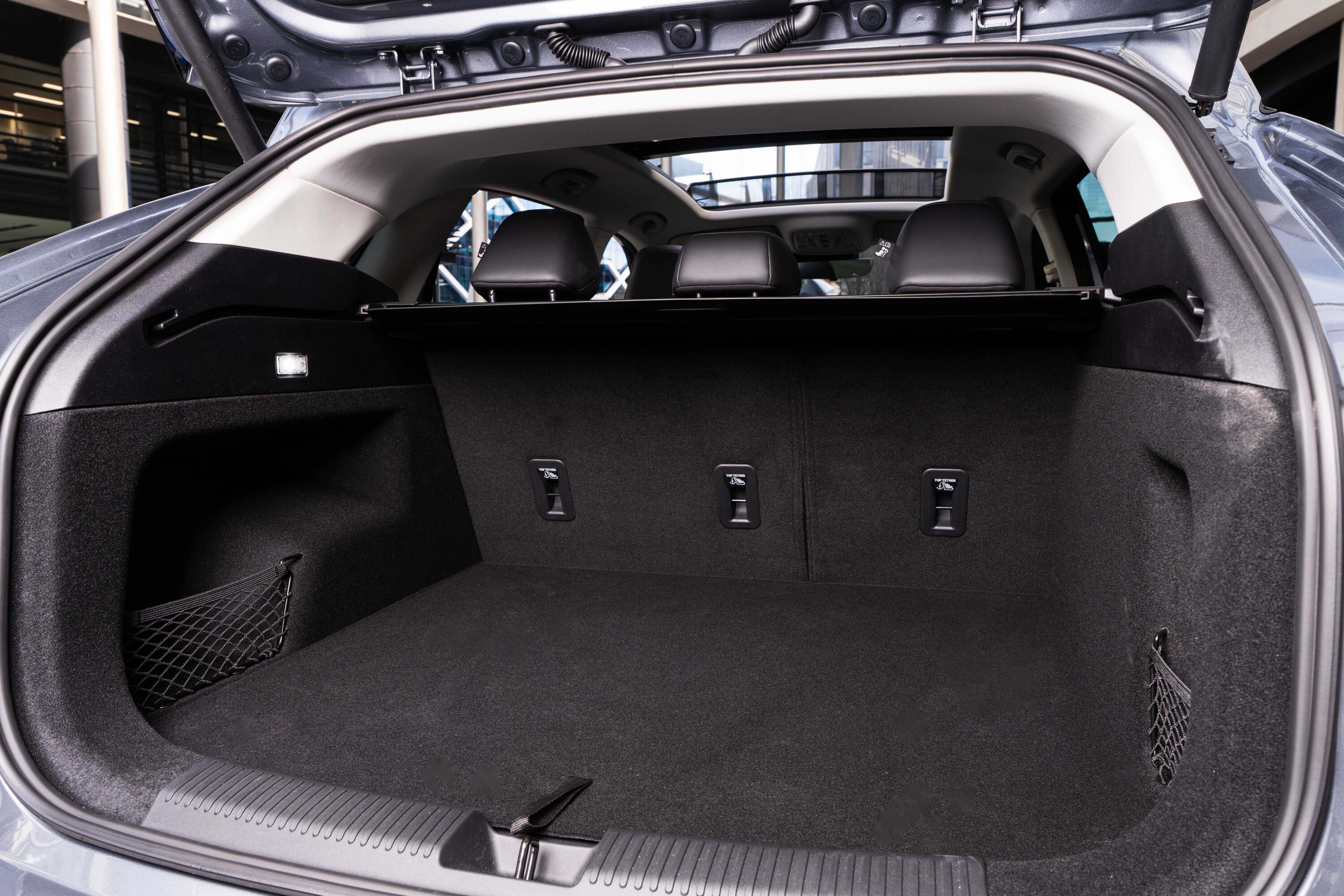
The boot is also now larger than before. Where the previous model offered 463 litres with the rear seats up and 1287 litres when laid flat, the new model boosts those numbers to 507 litres and 1484 litres, respectively.
1
1
Safety and driver assistance
Across all variants, the HS includes MG’s Pilot safety suite, featuring adaptive cruise control, lane departure warning, and automatic emergency braking.
Additional safety tech in the Excite and Essence trims extends to traffic jam assist and blind-spot detection.
1
Pricing and warranty
Starting at a drive-away price of $33,990 for the Vibe variant, the HS pricing grows to $36,990 for the Excite and $40,990 for the Essence.
The new 2025 MG HS is sold with a 10-year / 250,000km warranty and fuel economy of 6.9L/100km. There’s also a fixed-price servicing plan that will take you to 150,000km/10 years for a total of $5741.
| Model | Price (drive-away) |
|---|---|
| MG HS Vibe | $33,990 |
| Excite | $36,990 |
| Essence | $40,990 |
MORE
Everything MG
MORE
Midsize SUVs
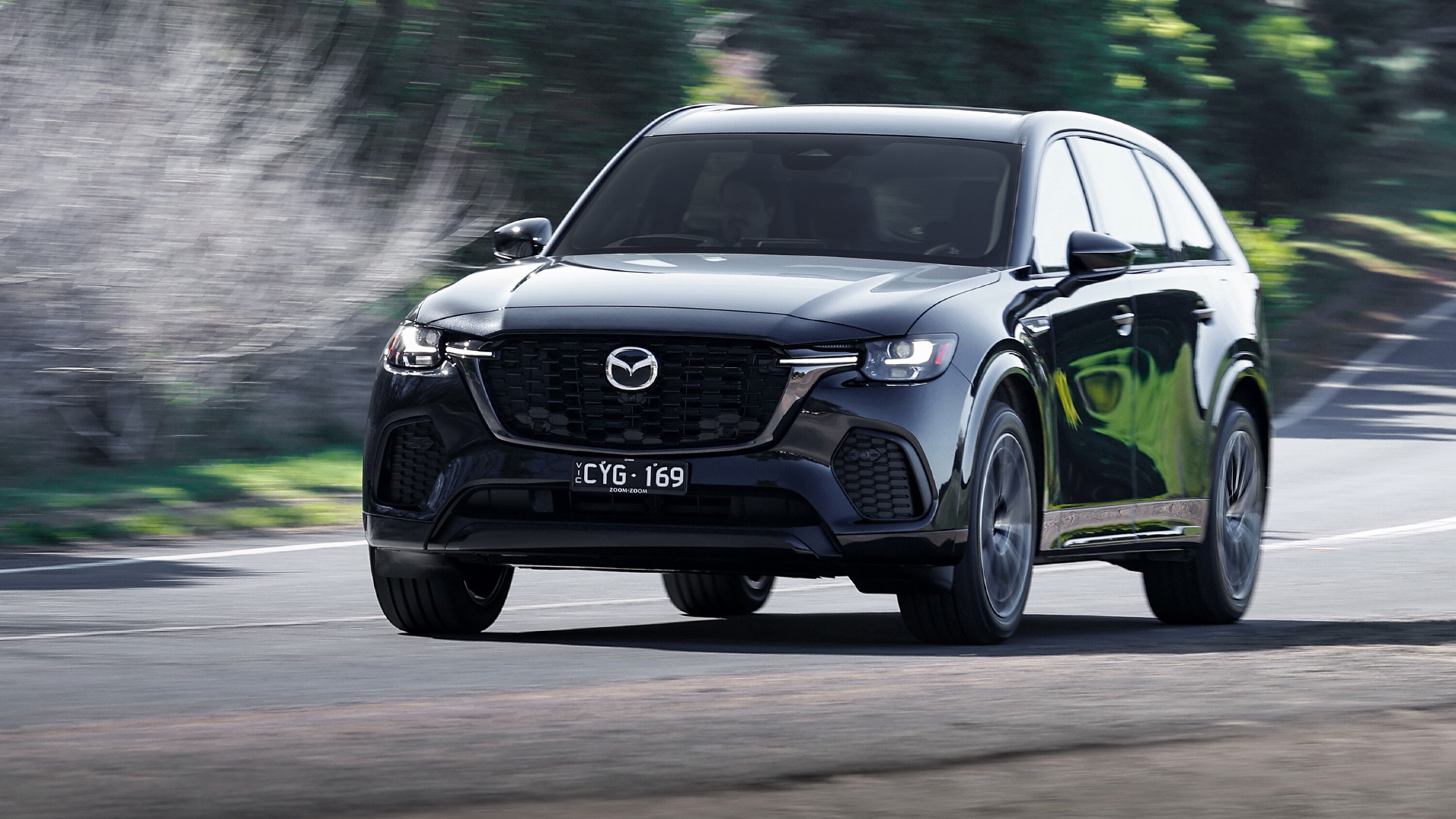
The new 2025 Mazda CX-70 joins the Japanese brand’s large SUV line-up as a luxury-focused, two-row option alongside the three-row CX-90.
Positioned at the higher end of the brand’s growing SUV range, the CX-70 will be available in just two premium trim levels – GT and Azami – with both petrol and diesel engine options and standard all-wheel drive across the range.
1
Pricing and line-up
Launching at $75,970 plus on-road costs, the CX-70 range starts with the GT G50e petrol variant, with prices topping out at $84,970 for the diesel Azami.
Comparatively, the CX-90 line-up begins a touch lower, at $74,550 for the Touring variant, but climbs to $101,300 for the range-topping Azami SP and Takumi trims.
1
Design and powertrains
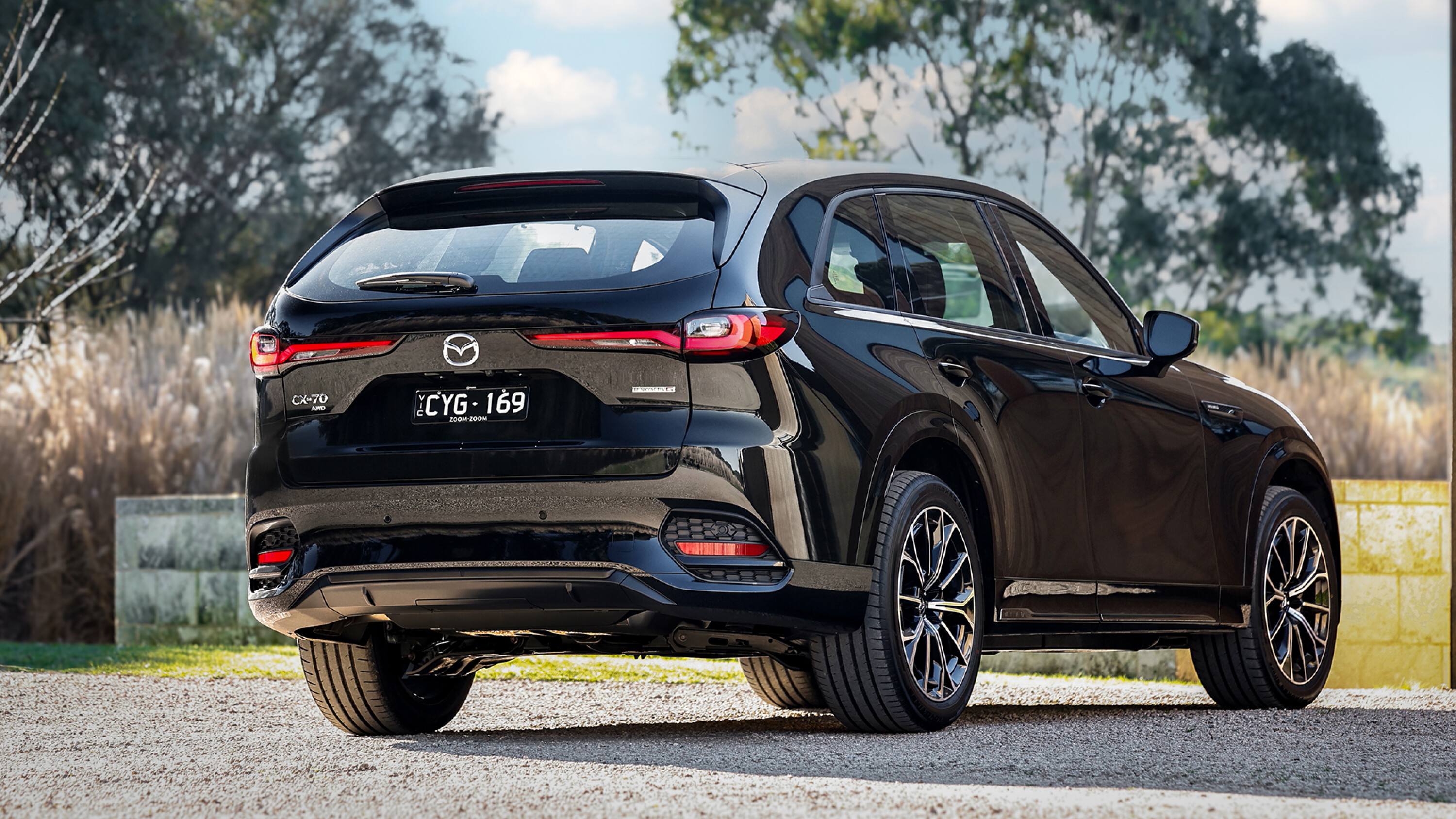
Sharing much of its design with the CX-90, the CX-70 stands apart with its own front and rear bumper styling, black exterior trim accents, and unique alloy wheels.
Like its three-row counterpart, it offers a choice of two 3.3-litre inline six-cylinder engines.
The petrol G50e delivers 245kW and 500Nm, while the diesel D50e produces 187kW and 550Nm, both paired with Mazda’s M Hybrid Boost 48V mild-hybrid system, an in-house eight-speed automatic transmission, and rear-biased all-wheel drive.
MORE
Large SUVs
1
Interior features
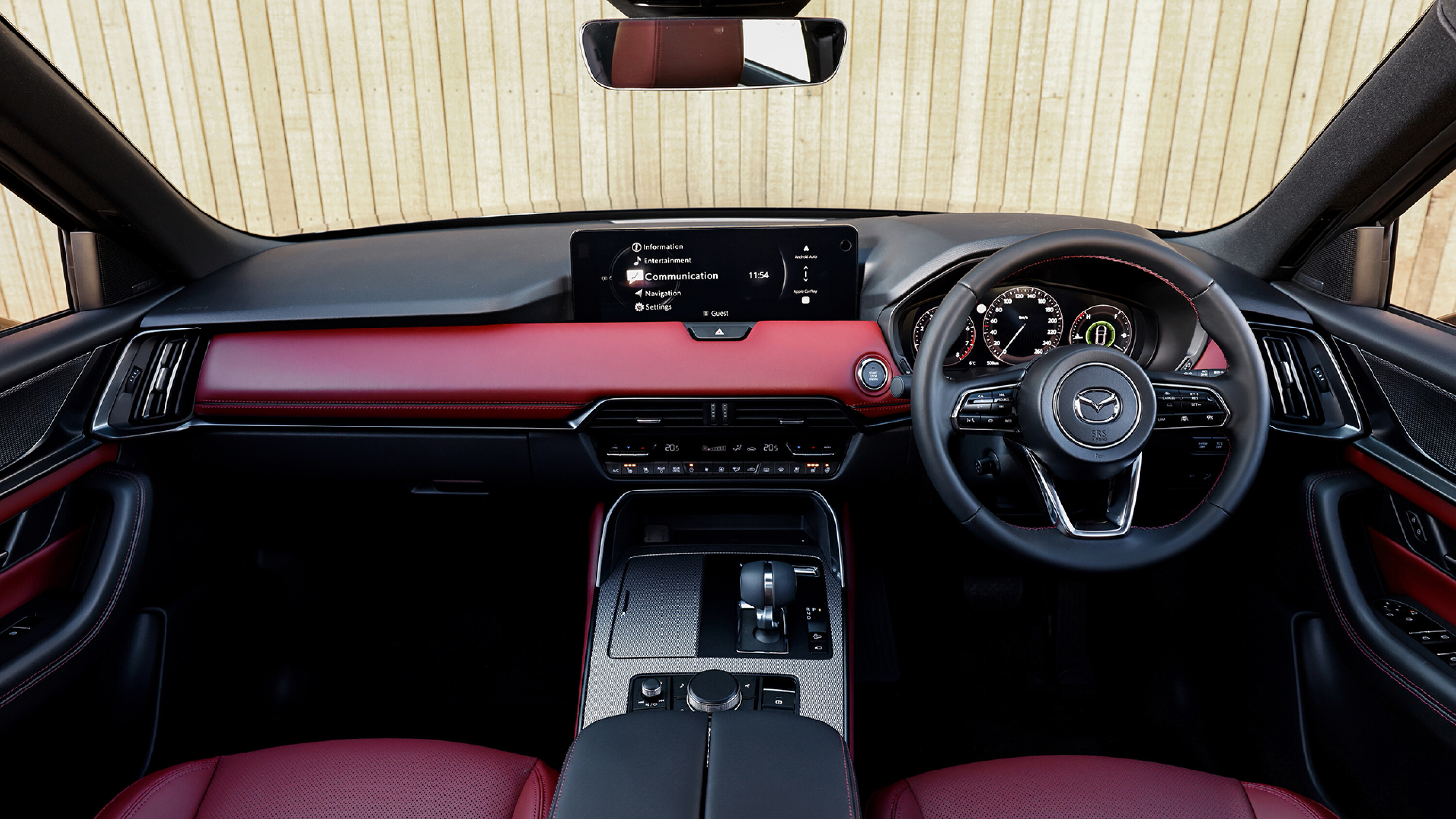
The CX-70’s cabin largely mirrors the premium features found in the CX-90, without the third row that sets the latter apart.
Both the GT and Azami models include a 12.3-inch infotainment display and a 12.3-inch digital instrument cluster.
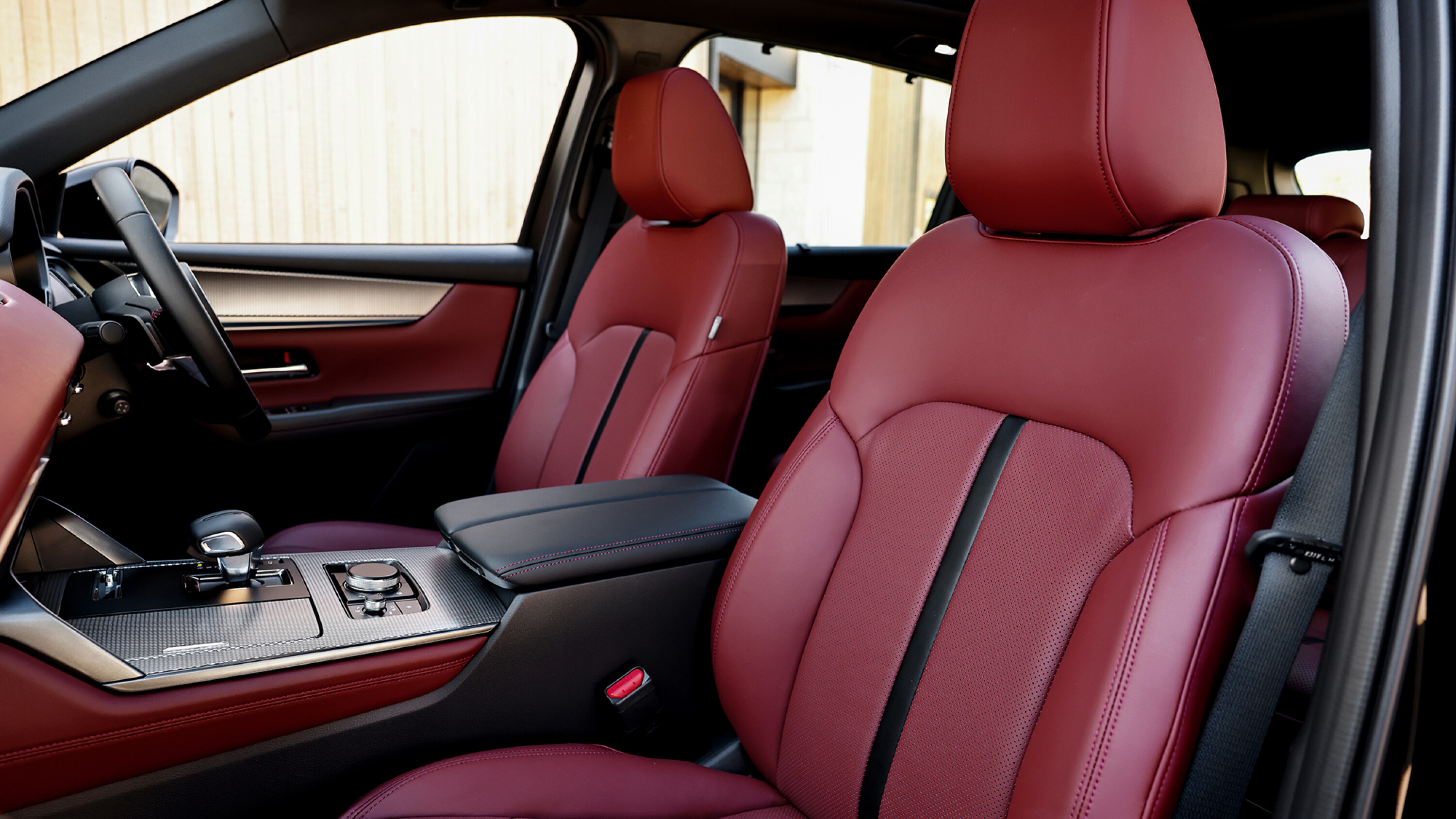
Standard on the GT are features like adaptive LED headlights, a panoramic sunroof, heated leather seats with driver memory, and a 12-speaker Bose audio system with wireless Apple CarPlay and Android Auto. There’s also a 360-degree monitor and hands-free power tailgate.
1
The Azami adds upgrades including a See-Through 360-degree monitor, ambient interior lighting, body-colour wheel arches, door handles, and additional touches like front ventilated seats, a frameless rear-view mirror, and footwell lighting.
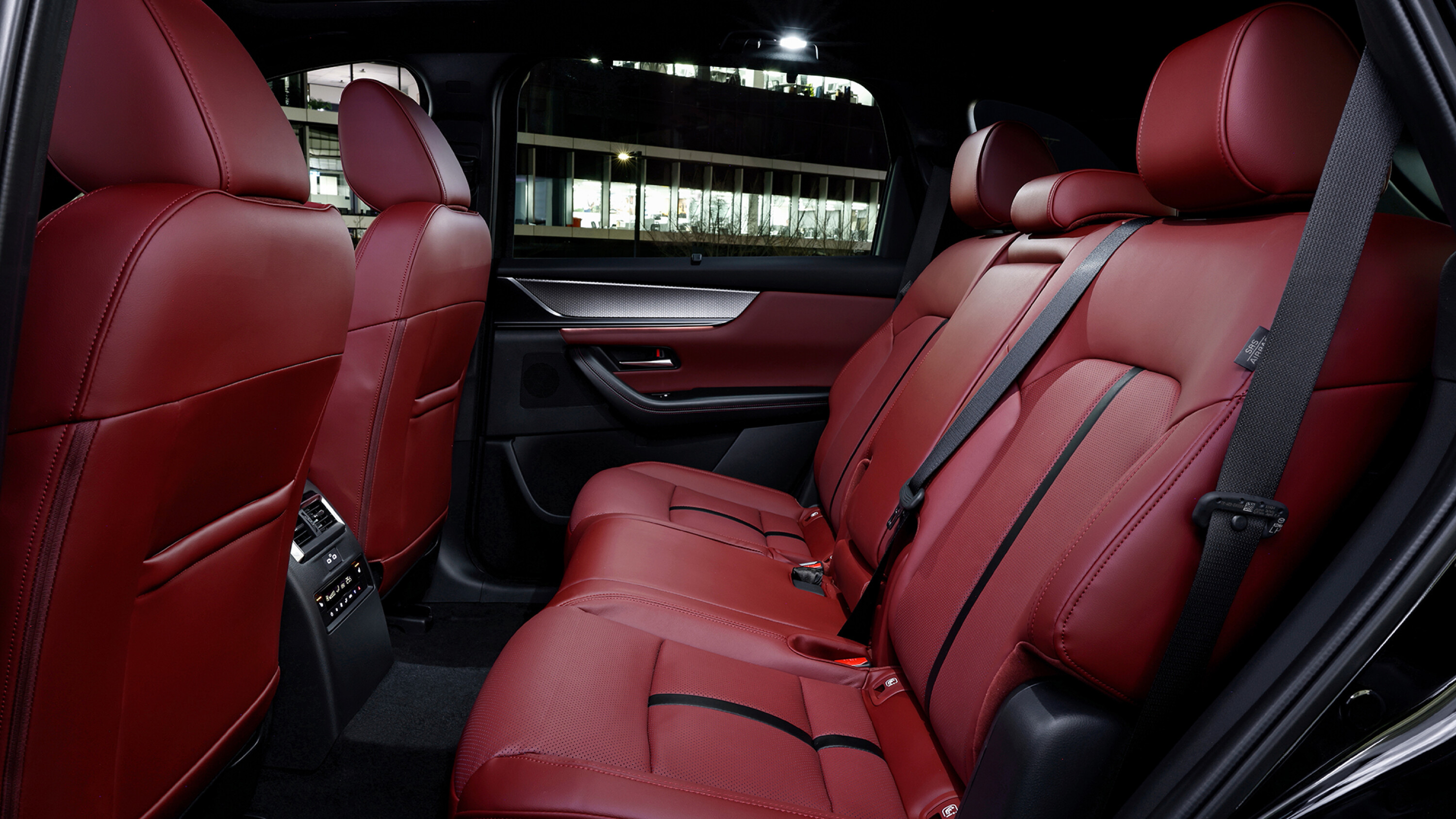
Buyers have a choice of black or burgundy Nappa leather without extra cost, with an optional $3,500 SP Package offering tan Nappa leather, a suede-finish dash, and a two-tone steering wheel.
| 2025 Mazda CX-70 GT features | |
|---|---|
| 12.3-inch full colour widescreen display (Mazda Connect) and 12.3-inch TFT LCD multi-information meter display | Active driving display |
| 21-inch Black metallic alloy wheels | Apple CarPlayu00ae and Android Autou2122 (wireless and USB) |
| Adaptive LED Headlamps (ALH) | Hands-free remote operated power tailgate (open/close) |
| Panoramic sunroof | Leather seats with power adjustment (driver & passenger) and position memory (driver) |
| Personalise system (auto restoration of settings) | Heated seats (front and rear) |
| Premium Boseu00ae amplifier with 12 speakers | Heated steering wheel |
| 360u00b0 view monitor | Piano black side door handles (a feature unique to the CX-70) |
| 2025 Mazda CX-70 Azami adds: | |
|---|---|
| 360-degree View Monitor with See-Through View | Frameless interior mirror |
| Ambient lighting | Interior foot lamp (front and rear) |
| Black nappa leather or optional Burgundy nappa leather seat trim with quilting (at no extra cost) | Personalise system with Easy Entry & Driving Position Guide |
| Body-coloured wheel arches and lower cladding | Ventilated seats (front) |
| Cruising & Traffic Support (CTS) | Body-colour exterior side door handles |
1
Safety and driver assistance
The CX-70 comes with a suite of driver assistance technologies, such as Lane Keep Assist, Blind Spot Monitoring with Vehicle Exit Warning, and Smart Brake Support that recognises pedestrians and cyclists.
Also new to Mazda’s SUV line is Unresponsive Driver Support, which monitors for signs of drowsiness or distraction and can bring the vehicle to a controlled stop if necessary.
Connectivity includes Mazda Connected Services, linking to the MyMazda app for remote functions like geofencing, curfew alerts, and vehicle tracking.
1
Boot space
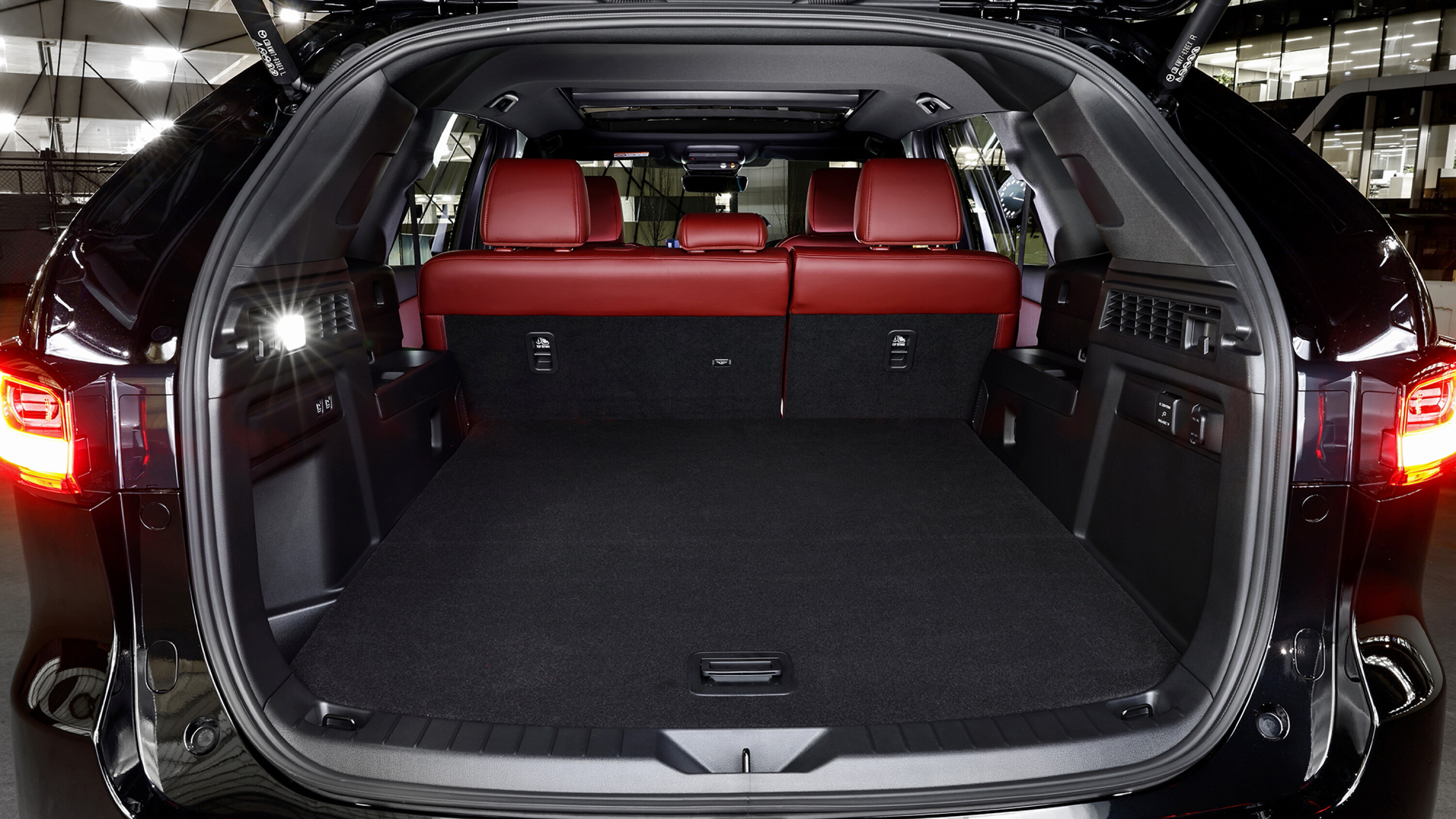
The CX-70 provides 923 litres of boot space with the rear seats in place, expanding to a substantial 2015 litres with the second row folded.
2025 Mazda CX-70 pricing for Australia
| Model | Powertrain | Price |
|---|---|---|
| CX-70 GT | 3.3L Turbo Petrol AWD | $75,970 |
| CX-70 GT | 3.3L Turbo Diesel AWD | $77,970 |
| CX-70 Azami | 3.3L Turbo Petrol AWD | $82,970 |
| CX-70 Azami | 3.3L Turbo Diesel AWD | $84,970 |
| All prices exclude on-road costs | ||
MORE
Large SUVs
People movers have become the go-to choice for Australian families who need more than just a practical set of wheels – they need space, comfort and versatility.
In 2023, the People Mover segment totalled 2.4 per cent of total vehicle sales, with more than 14,000 units sold across the country. While seven-seat SUVs like the Kia Sorento dominate the family car market, there’s still a strong demand for people movers, particularly among large families, businesses and chauffeur services.
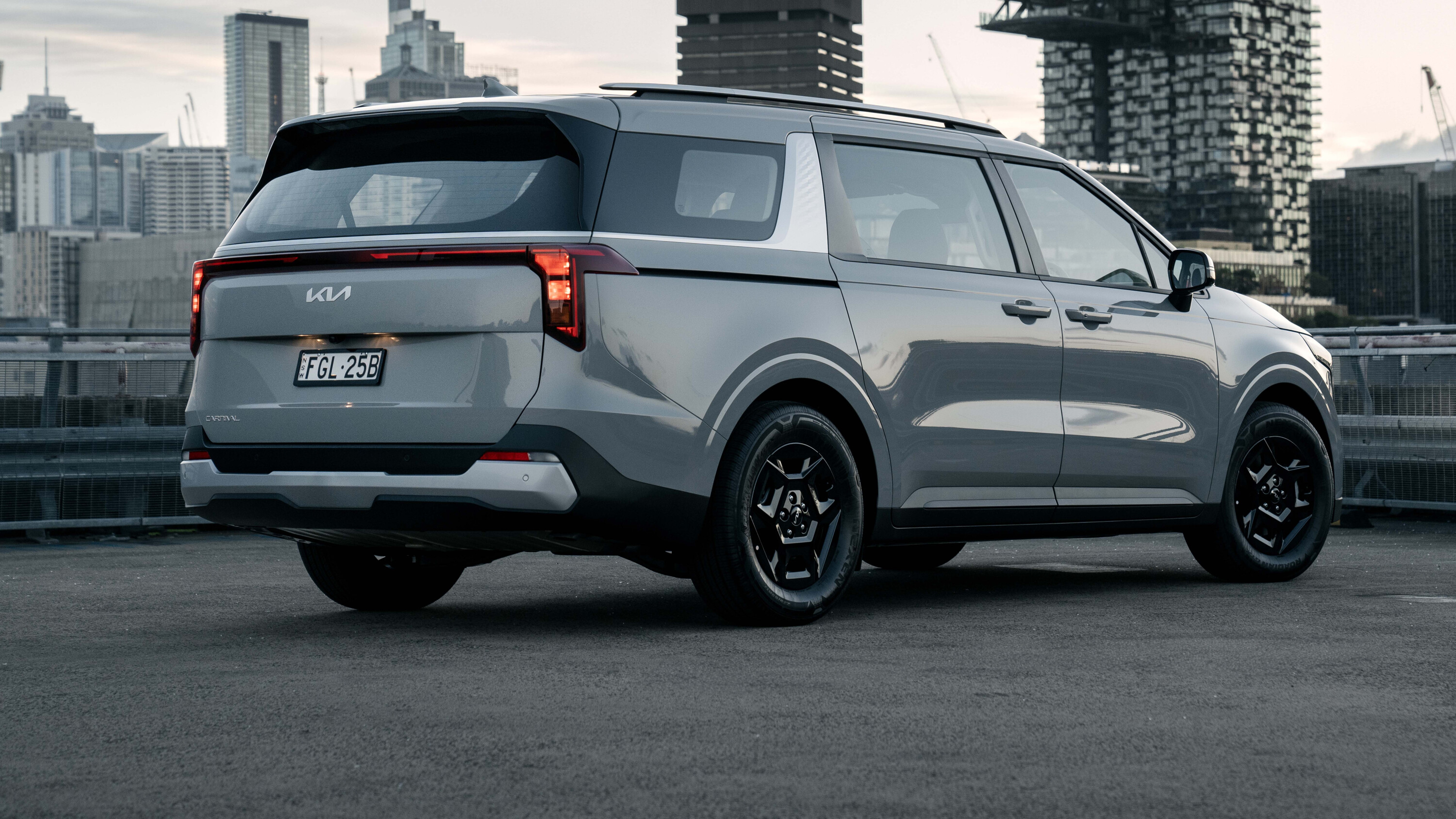
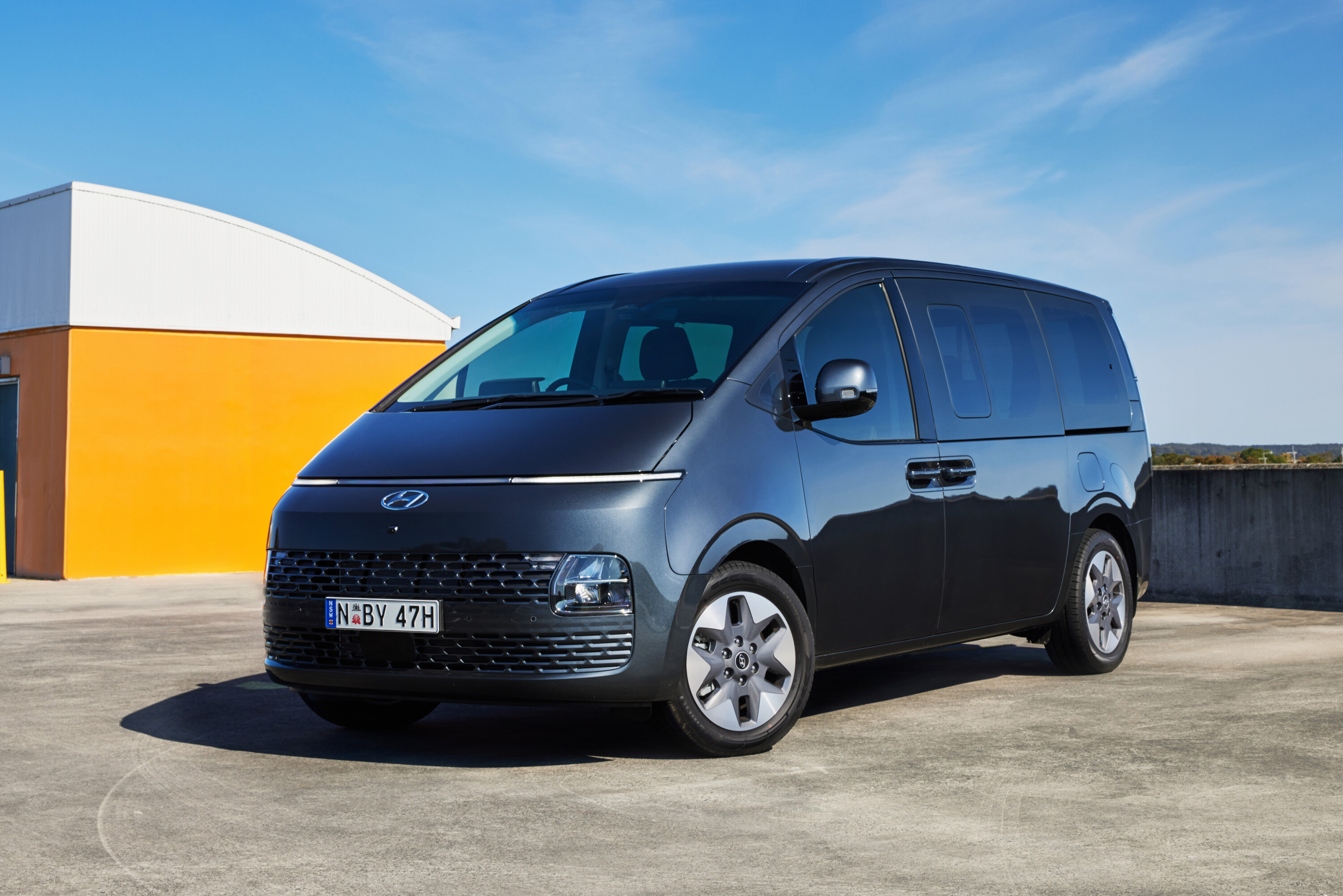
Australians have always loved people movers for their versatile storage options and ability to comfortably transport up to eight passengers. Whether it’s for the school or sport run or weekend road trips, these vehicles tick all the boxes for practicality. And now with a range of options – from the futuristic Hyundai Staria to the ever-popular Kia Carnival – buyers now have a wide model range to choose from that suits their style, needs and budget.
1
Let’s take a closer look at some of the top contenders in this segment. From diesel and hybrid engines to cutting-edge technology and safety features, here are six popular choices help narrow your choice ?
JUMP AHEAD
1
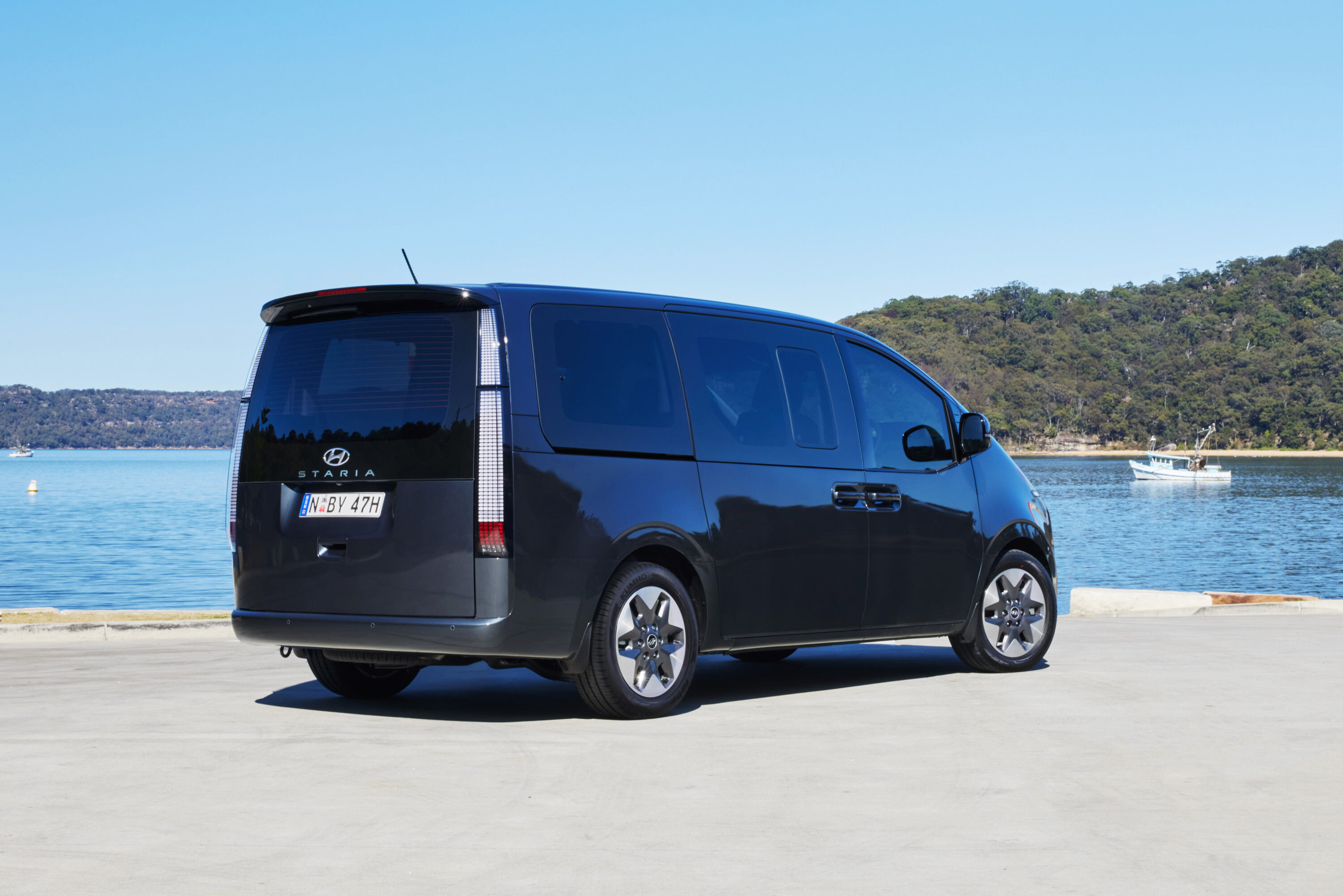
Hyundai Staria
- MSRP: $49,500-$67,500
Model range and pricing
| Staria 3.5 FWD | $49,500 |
|---|---|
| Staria 2.2D AWD | $52,500 |
| Staria Elite 3.5 FWD | $57,500 |
| Staria Elite 2.2D AWD | $60,500 |
| Staria Highlander 3.5 FWD | $64,500 |
| Staria Highlander 2.2D AWD | $67,500 |
1
Practicality and storage
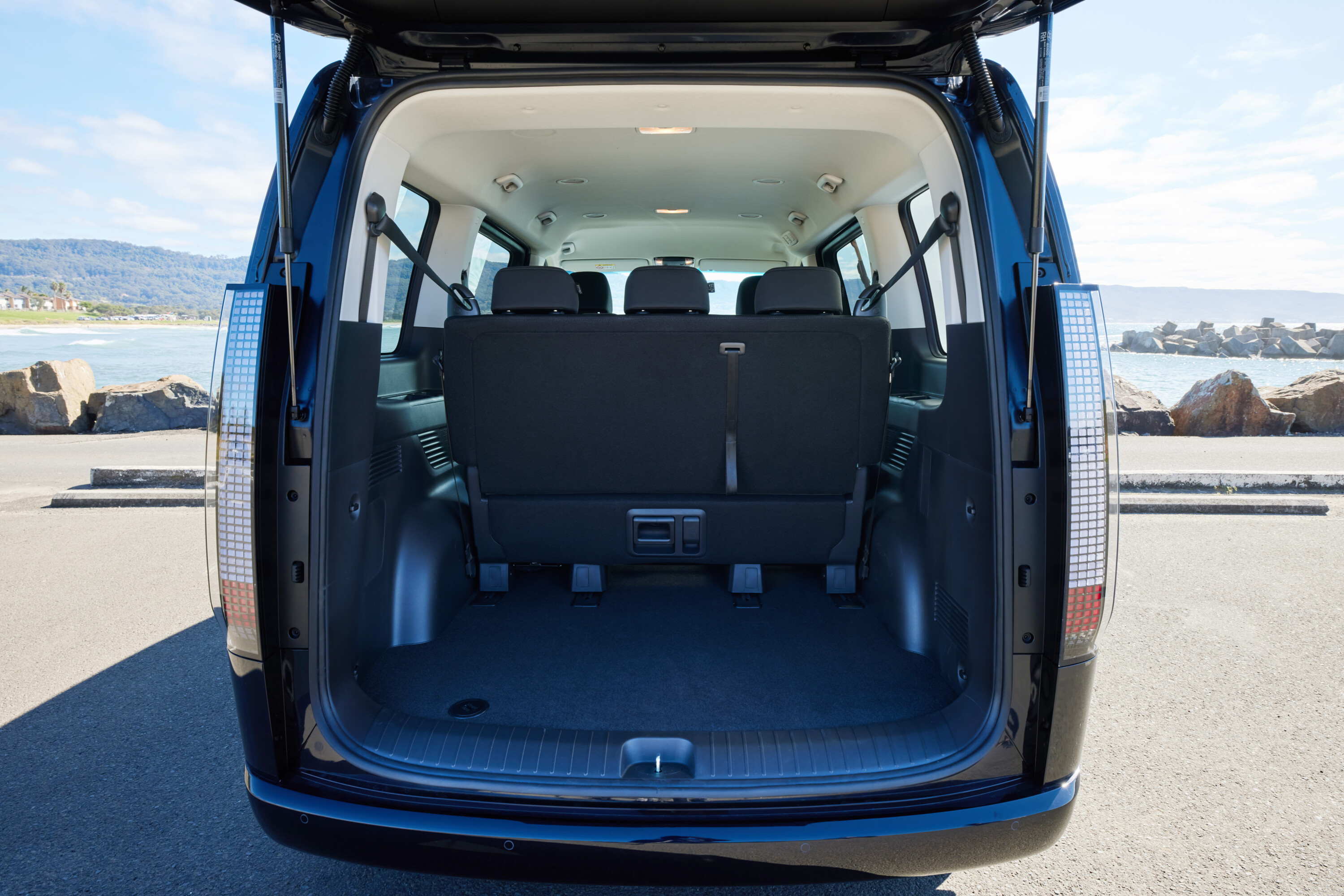
Thanks to the van-sized interior, there is plenty of space. The boot is large with all seats up and there are eight seats in total. There are two ISOFIX points and three top tether points in the second row, but the Staria does not have any anchor points in the third row. So, for a young family with more than three kids, this might not be the best option.
| Hyundai Staria boot space | |
|---|---|
| Seven seats up | 831 litres |
| Rear seats up | 1303 litres |
36
Powertrain choices and fuel consumption
Under the bonnet is a 2.2-litre four-cylinder turbo-diesel engine producing 130kW and 430Nm. This is paired to an eight-speed automatic transmission and an all-wheel drive system.
The second engine choice is a 3.5-litre six-cylinder petrol, which is paired to an eight-speed automatic that sends power to the front wheels and pushes out 200kW and 331Nm. For towing, the Staria has a 2500kg braked towing capacity and an unbraked figure of 750kg.
| Fuel figures | |
|---|---|
| Fuel tank capacity | 75 litres |
| Consumption (2.2-litre diesel) | 8.2L/100km |
| Consumption (V6 petrol) | 10.5L/100km |
| Warranty and service | |
|---|---|
| Warranty | 5 Years / unlimited km |
| Roadside assistance | 5 years |
| Servicing interval | 12 months or 15,000km |
| Average service cost | $360 |
| Safety | |
|---|---|
| 5-star ANCAP rating (2021 | Blind Spot Monitoring |
| Autonomous Emergency Braking | Rear Cross Traffic Alert |
| Adaptive Cruise Control | Speed Sign Recognition |
| Intersection collision avoidance | Safe Exit Warning Assistant |
| Lane Keeping Assistance | 7 Airbags |
| Lane Departure Warning | |
MORE
Everything Hyundai
1
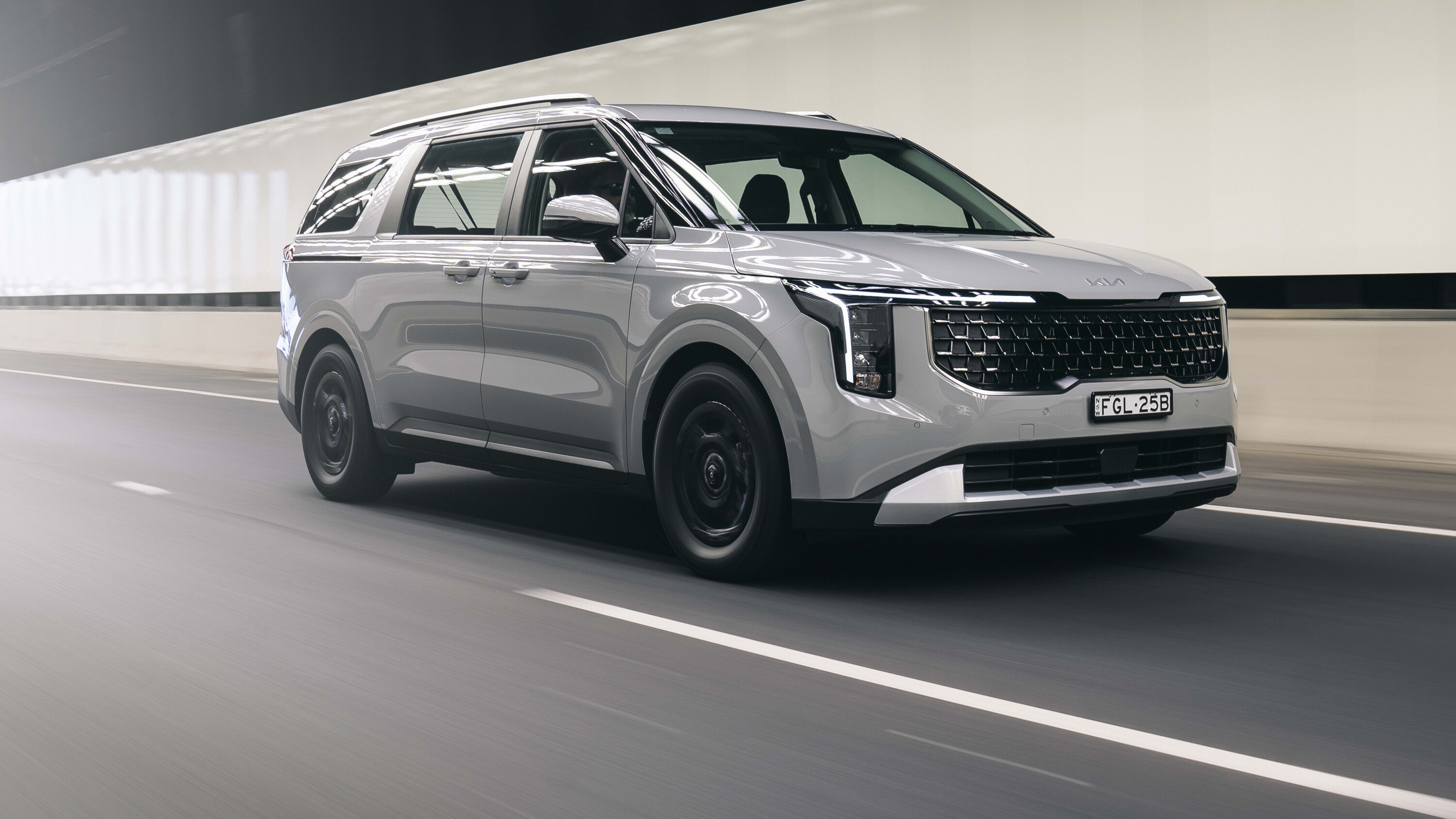
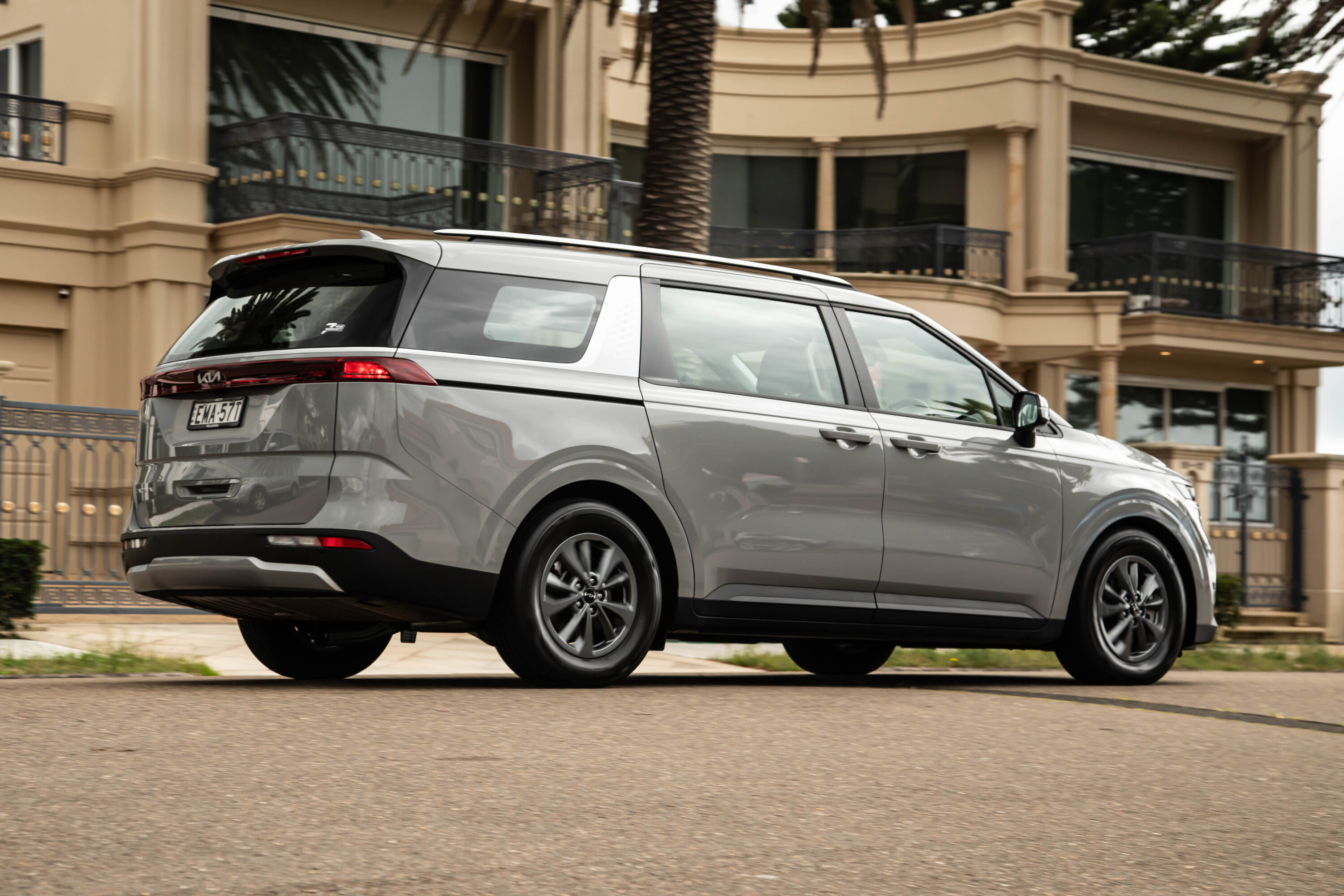
Kia Carnival
- MSRP: $50,150-$76,210
1
Model range and pricing
| Carnival S (V6) | $50,150 |
|---|---|
| Carnival S (diesel) | $52,380 |
| Carnival Sport (V6) | $56,050 |
| Carnival Sport (diesel) | $58,280 |
| Carnival Sport + (V6) | $62,380 |
| Carnival Sport + (diesel) | $64,610 |
| Carnival GT-Line Lite (V6) | $66,350 |
| Carnival GT-Line Lite (diesel) | $68,580 |
| Carnival GT-Line (V6) | $70,680 |
| Carnival GT-Line (diesel) | $72,910 |
| Carnival GT-Line (hybrid) | $76,210 |
1
Practicality and storage
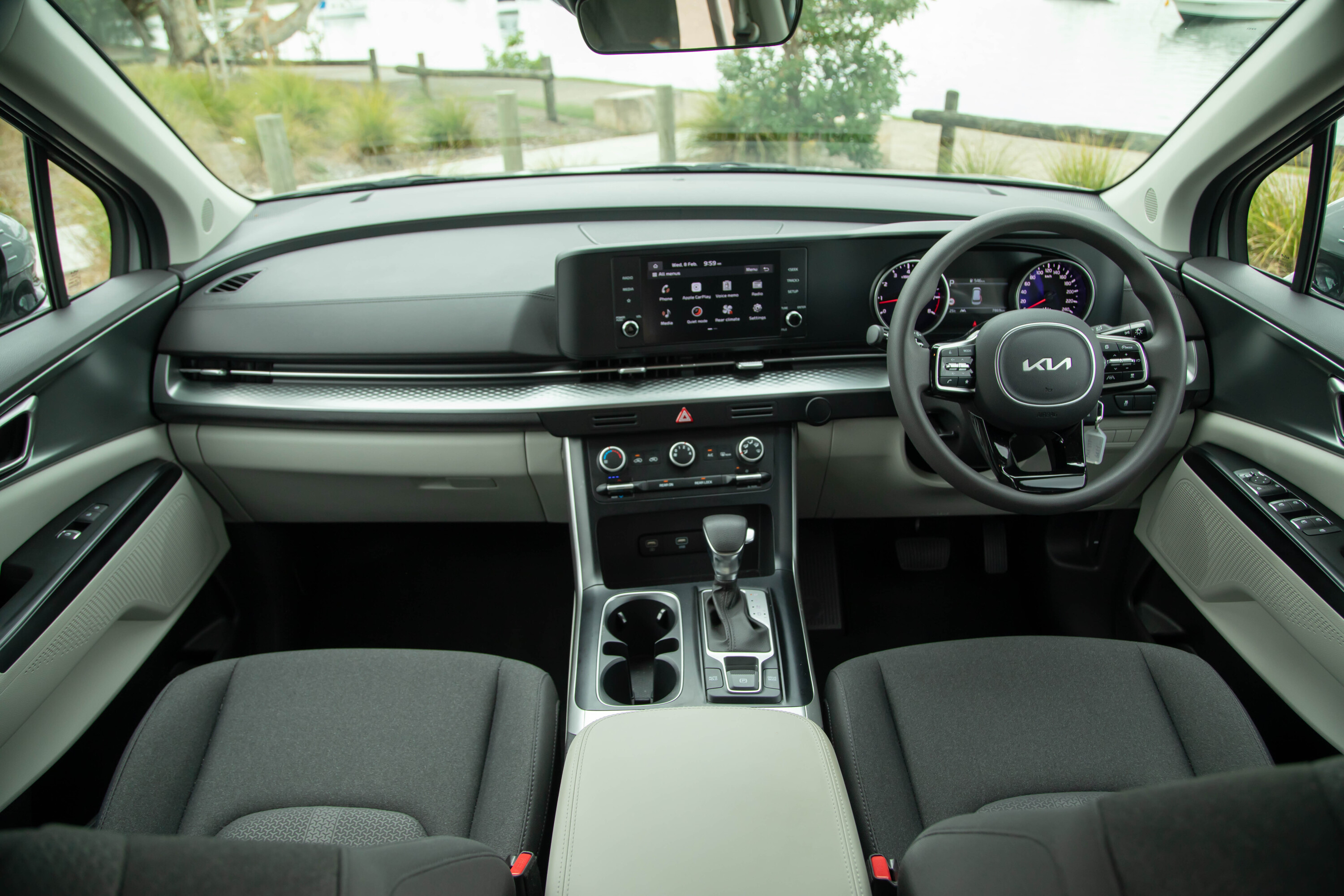
There are plenty of nice features in the cabin including adjustable second- and third-row seating, copious USB ports, electric seats, and lumbar adjustment for the front row. For children, the Carnival has a total of five ISOFIX and five top tether points. There is also a space saver fitted on all models, except the GT-Line HEV-Hybrid.
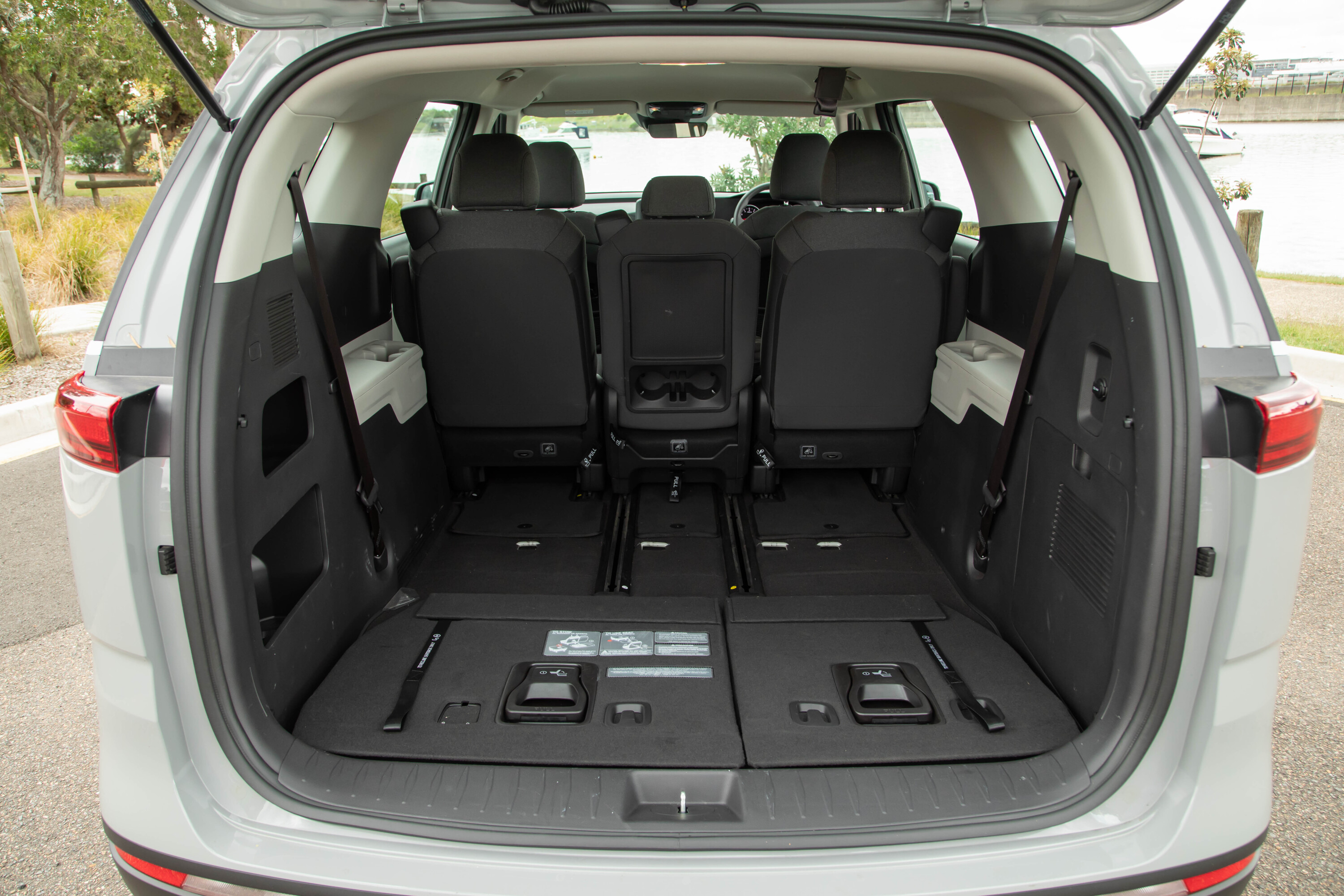
The Carnival is often judged the best people mover in the segment as there is a model variant for everyone. Plus, it is reliably cheaper than most rivals in this category; it’s loaded with equipment; and it has a stacked safety spec list. Above all else, it is a very family-friendly vehicle, whether you have three or more kids.
| Kia Carnival boot space | |
|---|---|
| Eight seats up | 627 litres |
| Five seats up | 2827 litres |
1
Powertrain choices and fuel consumption
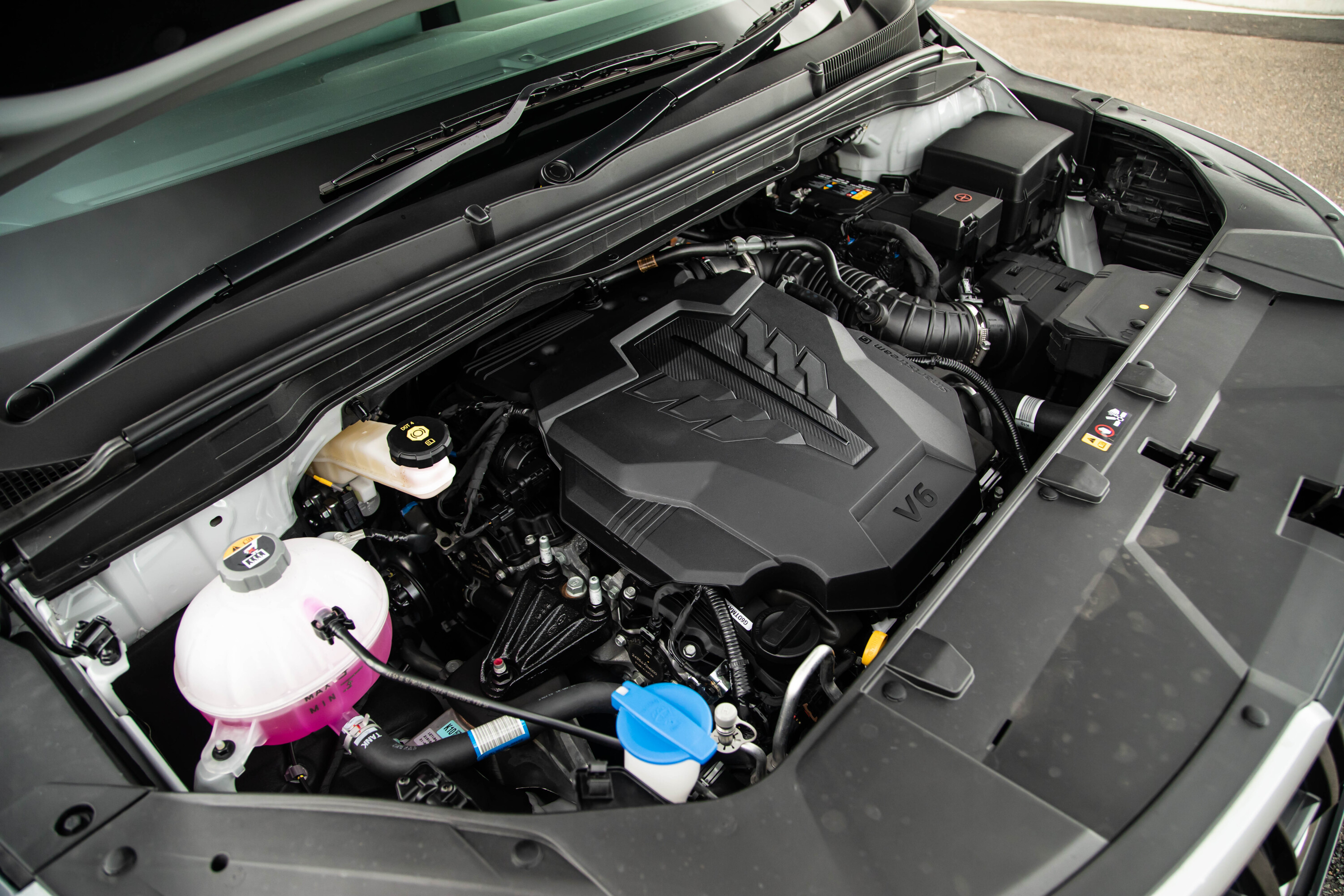
There are three powertrains to choose from, starting with a punchy 3.5-litre six-cylinder petrol. This is paired to an eight-speed automatic that sends power to the front wheels.
Then there’s a 2.2-litre four-cylinder turbo-diesel, mated to the same eight-speed automatic but with an all-wheel drive system for added traction. Taking price into consideration, the diesel is the best option.
There’s also a 1.6-litre four-cylinder turbo-hybrid that’s exclusively paired to a six-speed automatic sending power to the front wheels. This powertrain is only available on the GT-Line, which is the most expensive variant.
Both the diesel and petrol variants can tow 750kg unbraked and 2000kg braked. The hybrid’s unbraked capacity remains at 750kg, but its braked towing capacity is just 1000kg.
57
| Fuel figures | |
|---|---|
| Fuel tank capacity | 72L |
| Consumption (petrol V6) | 9.6L/100km |
| Consumption (diesel) | 6.5L/100km |
| Consumption (hybrid) | 5.8L/100km |
| Warranty and service | |
|---|---|
| Warranty | 7 years / unlimited km |
| Roadside assistance | 8 years |
| Servicing interval | 12 months or 15,000km |
| Servicing interval (hybrid only) | 12 months or 10,000km |
| Average service cost (petrol) | $386 |
| Average service cost (diesel) | $356 |
| Average service cost (hybrid) | $374 |
| Safety | |
|---|---|
| 5-star ANCAP rating (2021) | Child Occupant Protection u2013 87% (ANCAP) |
| Rear Cross Traffic Alert | Adaptive Cruise Control |
| Speed Sign Recognition | Lane Keeping Assistance |
| Safe Exit Warning Assistant | Blind Spot Monitoring |
| Autonomous Emergency Braking | |
MORE
Everything Kia
1
LDV MIFA / MIFA 9
- MSRP: $53,990-$131,000
Model range and pricing
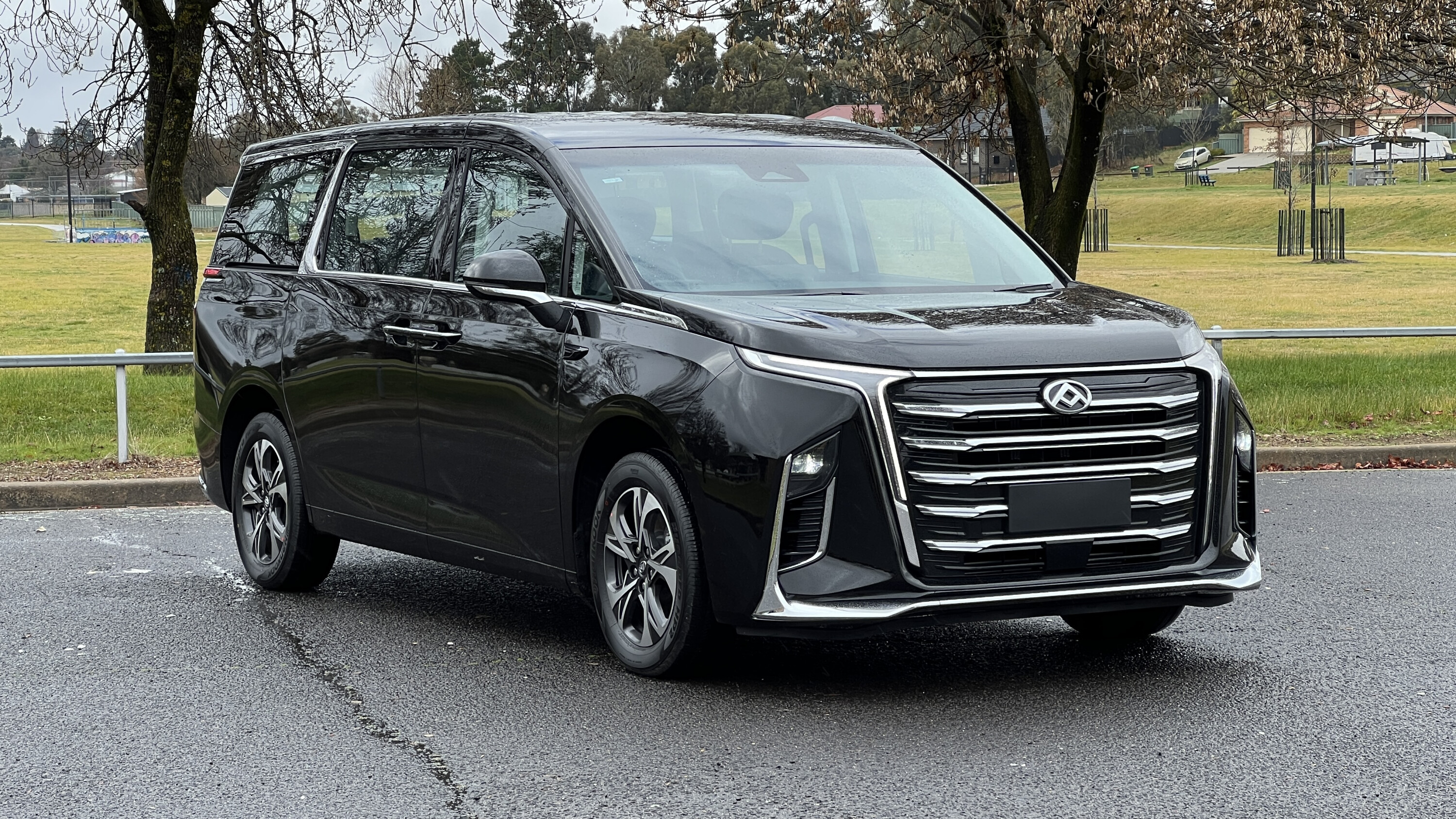
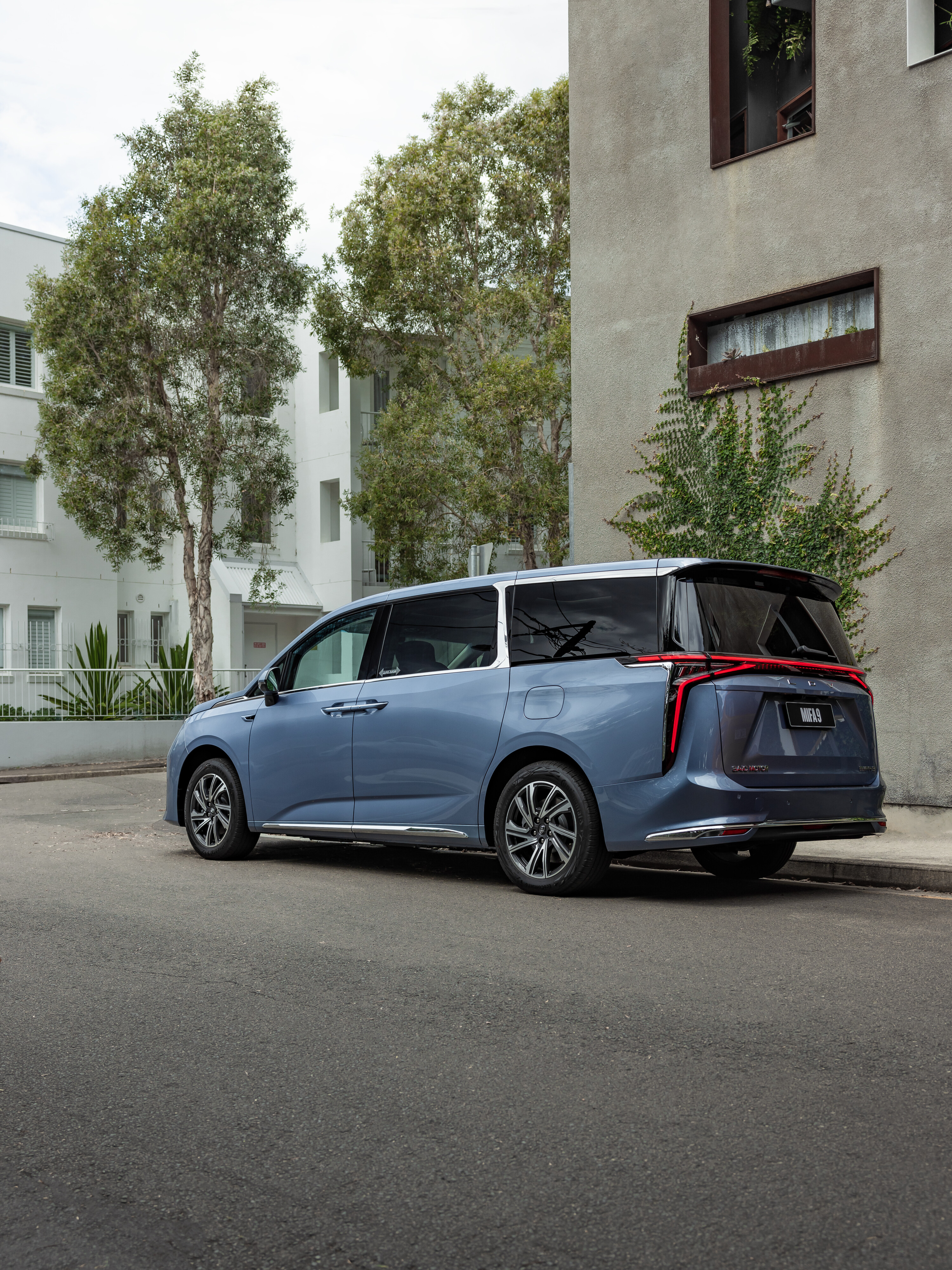
There are three models to pick from with a seven-seat configuration (a captain’s chair, 2-2-3 seating set-up). There is also a fully electric version that has 440km of driving range and additional luxury features to justify the premium price tag.
However, the third row isn’t as practical as the Kia Carnival and there is no eight seat option. It measures 1845mm (height), 1998mm (width) and 5280mm (length).
1
| MIFA Mode | $53,990 |
|---|---|
| MIFA Executive | $63,990 |
| MIFA Luxe | $72,990 |
| MIFA 9 Mode (electric) | $106,000 |
| MIFA 9 Executive (electric) | $117,000 |
| MIFA 9 Luxe (electric) | $131,000 |
Practicality and storage
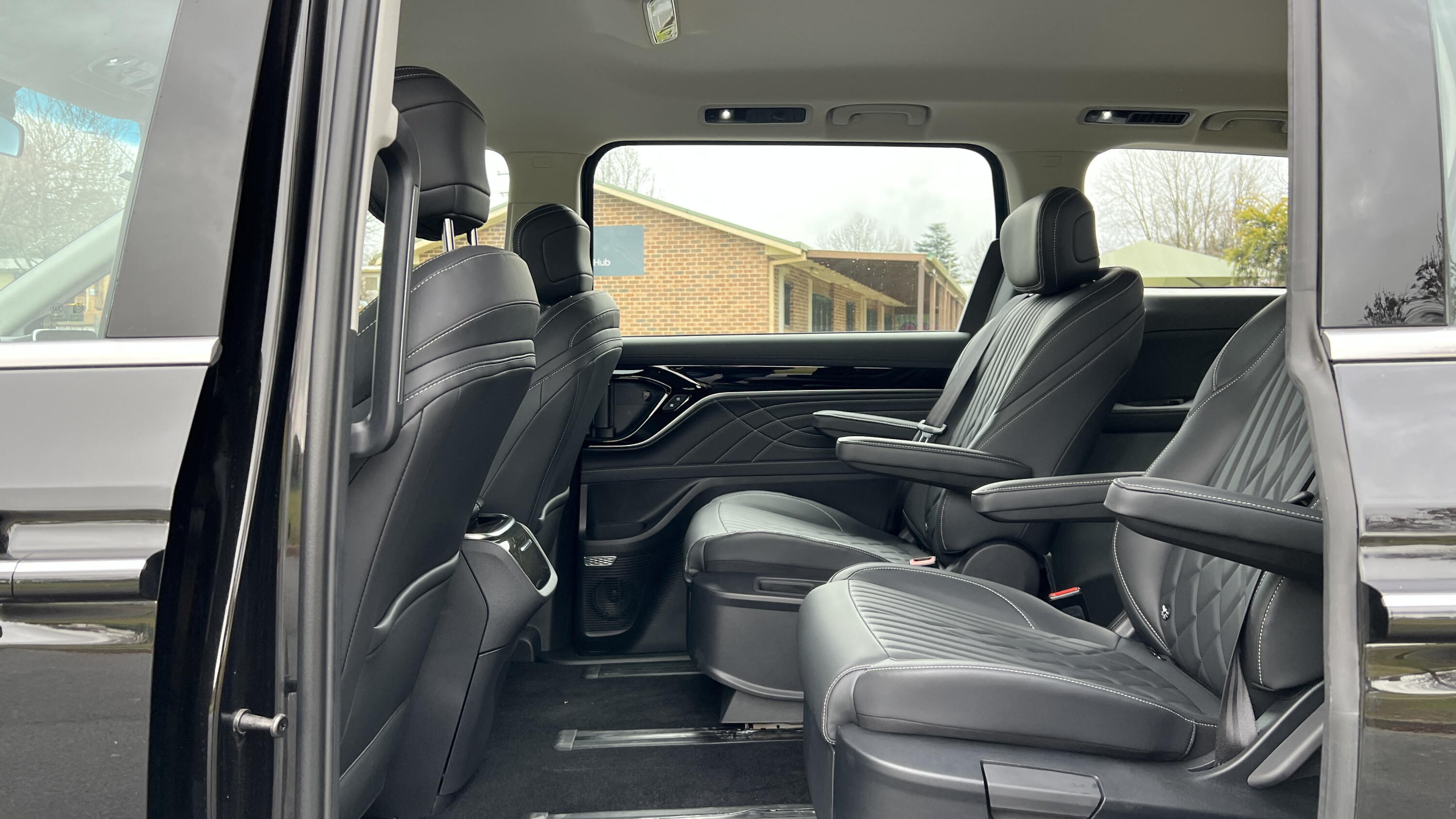
Interior features include individual touchscreen controls, fold-out tables, and a dual panoramic sunroof.
For children, the MIFA only has one ISOFIX point in the third row and two in the second row. For a chauffeur business, the MIFA Luxe trim is worth considering, but for similar money the Carnival is the recommended people mover for young families and commercial businesses.
1
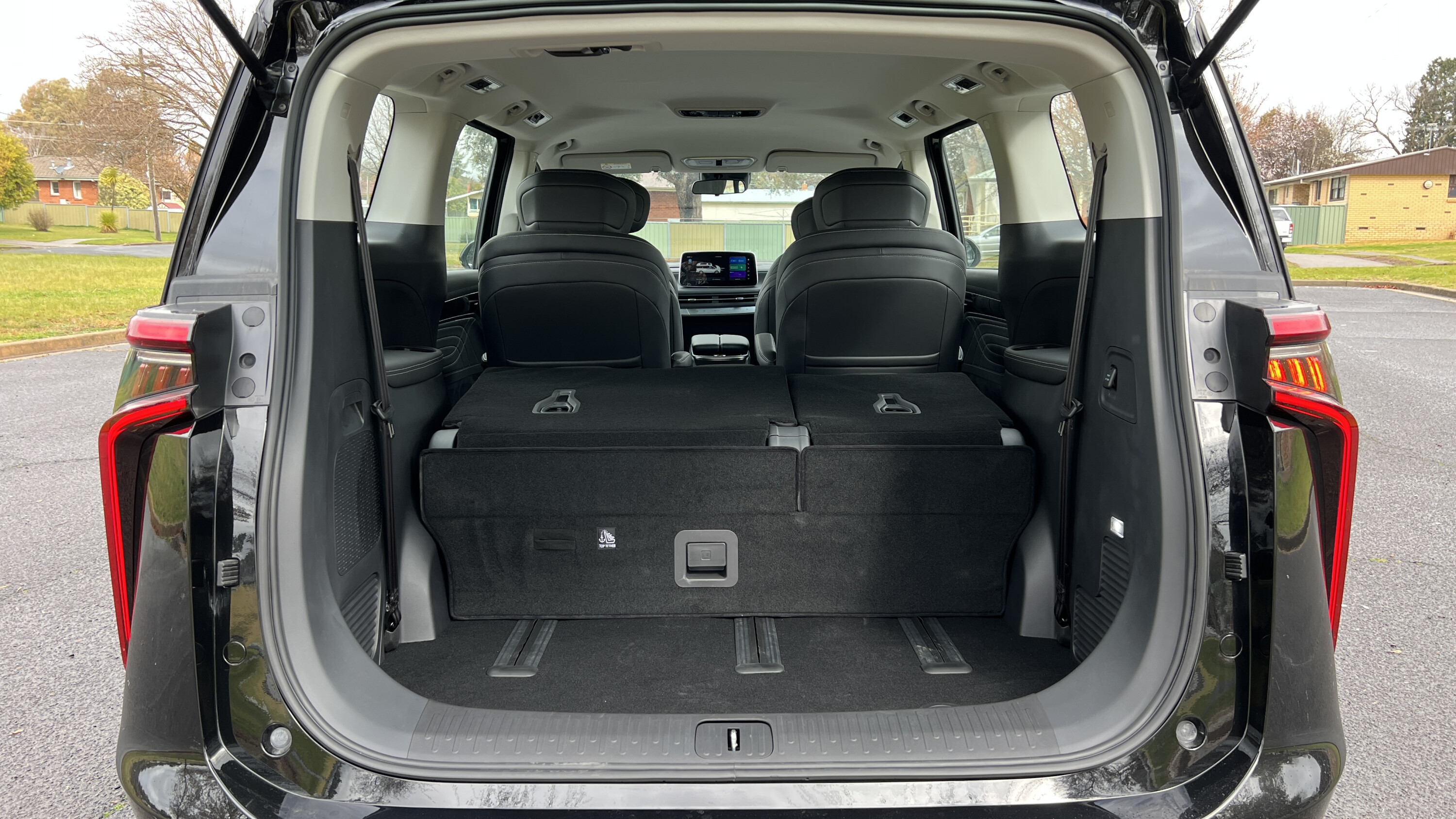
| LDV MIFA boot space | |
|---|---|
| Rear seats up | 446 litres |
| Second row folded | 1702 litres |
| All seats folded | 2017 litres |
33
Powertrain choices and fuel consumption
Under the bonnet is a 2.0-litre turbo-petrol four-cylinder engine producing 160kW and 360Nm. It is paired to an eight-speed automatic transmission that sends power to the front wheels. Towing is rated at 750kg unbraked and 3000kg braked for the standard version – and the MIFA 9 has a braked capacity of 1000kg.
| Fuel figures | |
|---|---|
| Fuel tank capacity | 75 litres |
| Consumption (petrol) | 9.3L /100km |
| Efficiency (MIFA 9 electric) | 430km of range and 20.9kWh/100km |
| Warranty and service | |
|---|---|
| Warranty | 7 years / 200,000km |
| Roadside assistance | 5 years |
| Servicing intervals | 24 months or 30,000km |
| Average service cost | $218 |
| Safety | |
|---|---|
| 5-star ANCAP rating (2022) | Child Occupant Protection – 88% (ANCAP) |
| 11 Airbags | Lane Keeping Assistance |
| Autonomous emergency braking | Lane Departure Warning |
| Adaptive cruise control | Rear Cross Traffic Alert |
| Blind spot Monitoring | rear parking sensors |
| Driver attention monitoring | Speed Sign Recognition |
| Digital Rear View Mirror | 360 Degree Surround-view camera |
| Door opening alert | |
MORE
Everything LDV
1
Toyota Granvia
- MSRP: $68,306-$77,355
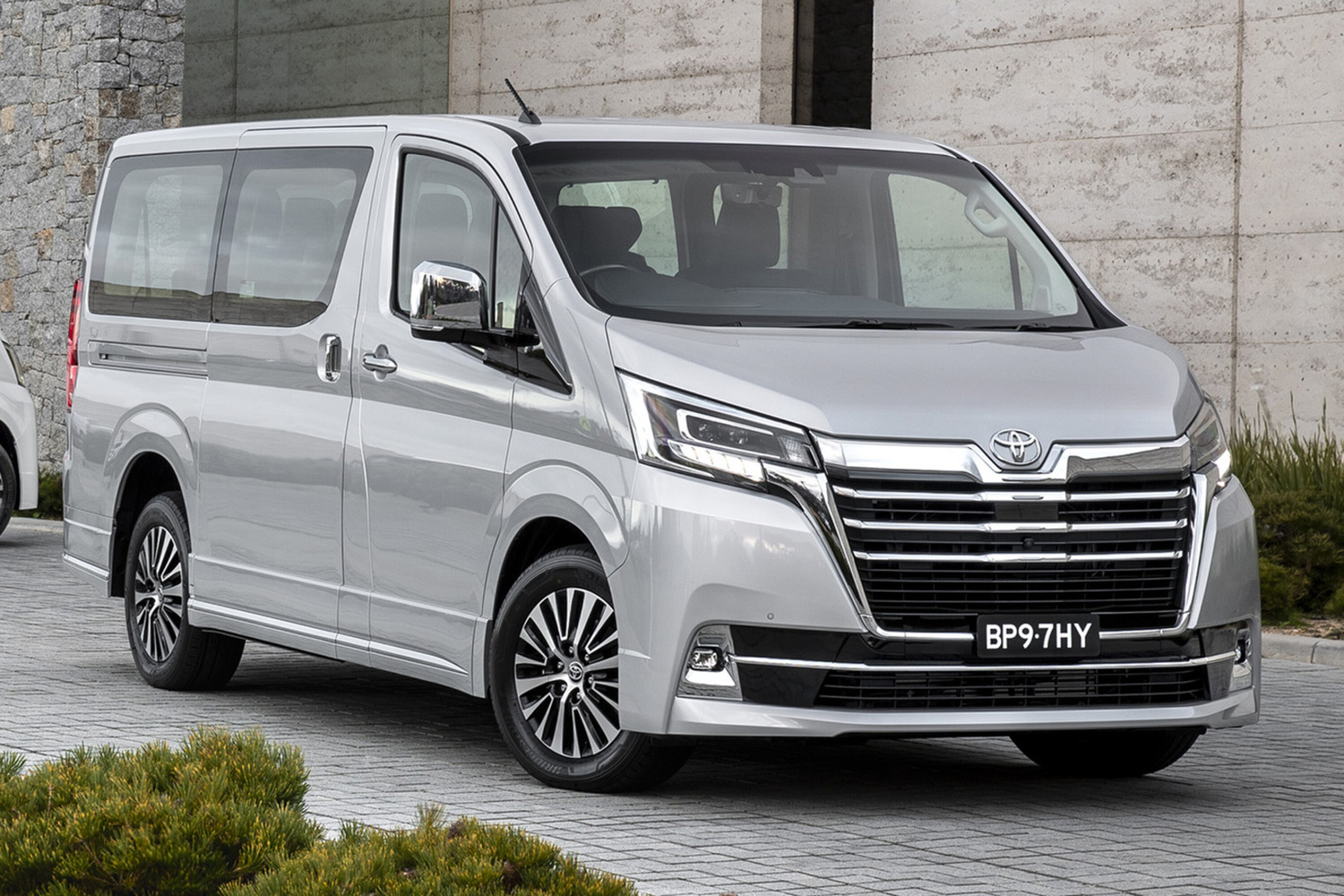
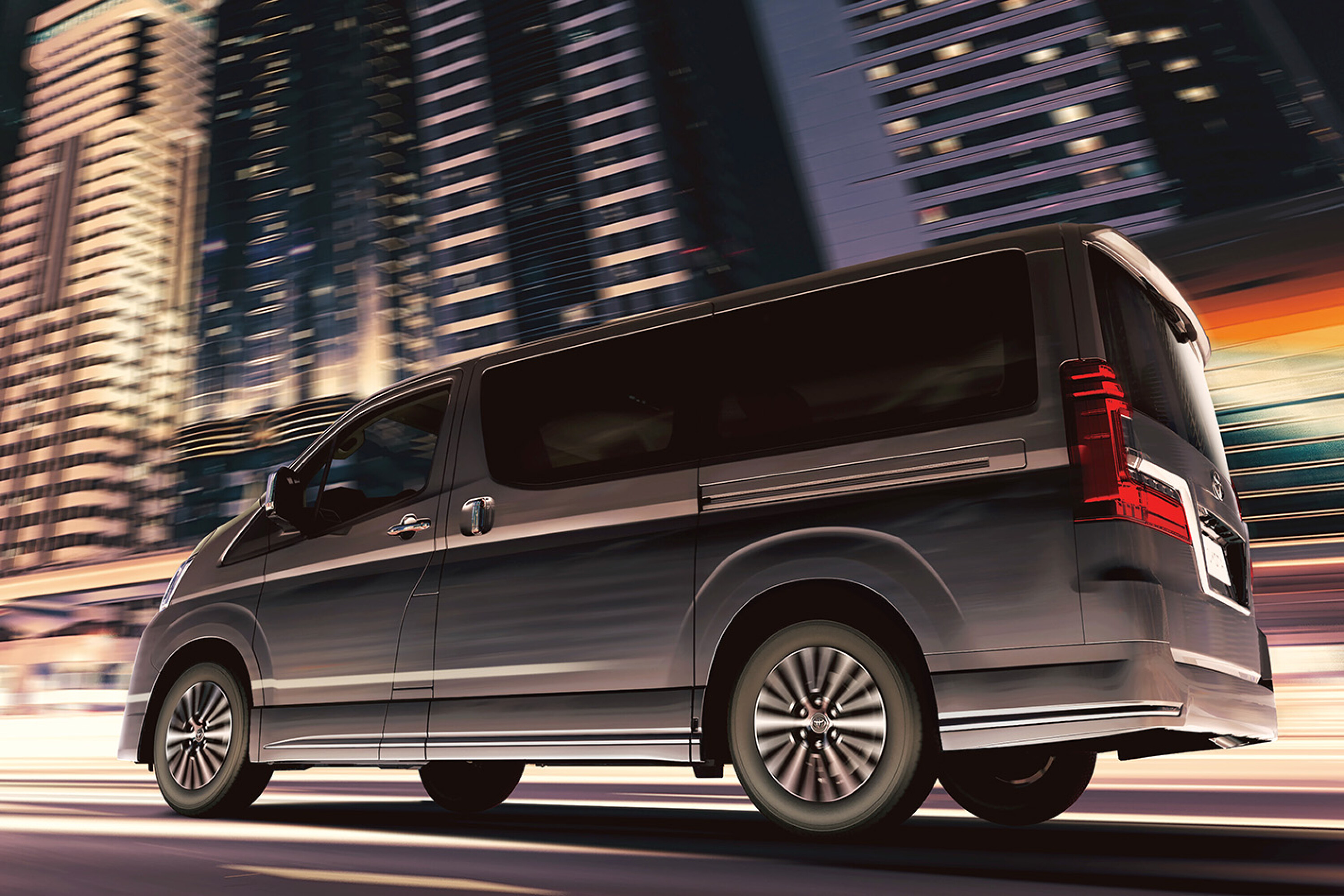
The Granvia carries over the ultra-reliable 2.8-litre four-cylinder turbo-diesel engine from the HiLux and HiAce. It’s a sensible choice for a family buyer with a solid powertrain package, but it does have limitations with its seating arrangement and on-road ability. It measures 1990mm (height), 1970mm (width) and 5300mm (length).
1
Model range and pricing
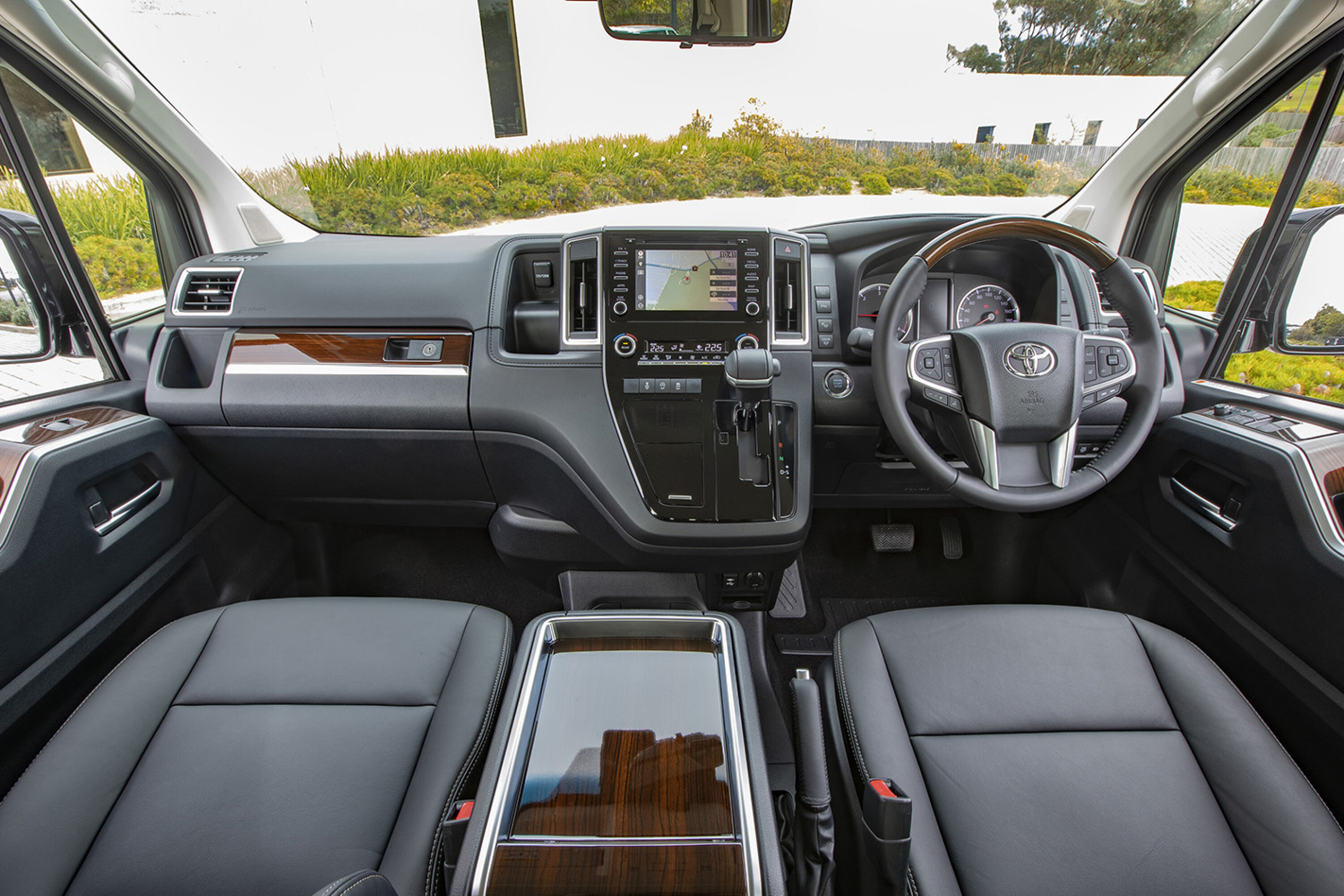
There are two trim levels to pick from, with the choice of six or eight seats and one powertrain choice only. There is space for small bags and you can transport eight people in comfort, but this may not be the best alternative if you’re loading large suitcases as well.
For children, the middle rows have three ISOFIX points, but nothing at the rear. If you step up to the VX with the captain’s chairs, then putting a baby capsule in the seat might be a challenge.
Climbing into the second and third row is also a challenge, as the floor is quite high and not all body types will fit into the snug VIP-style pews. This is also a downfall on both the LDV MIFA 9 and Lexus LM.
| Granvia 6 Seater | $68,306 |
|---|---|
| Granvia 8 Seater | $70,306 |
| Granvia VX 6 Seater | $77,355 |
| Granvia VX 8 Seater | $77,355 |
1
Powertrain choices and fuel consumption
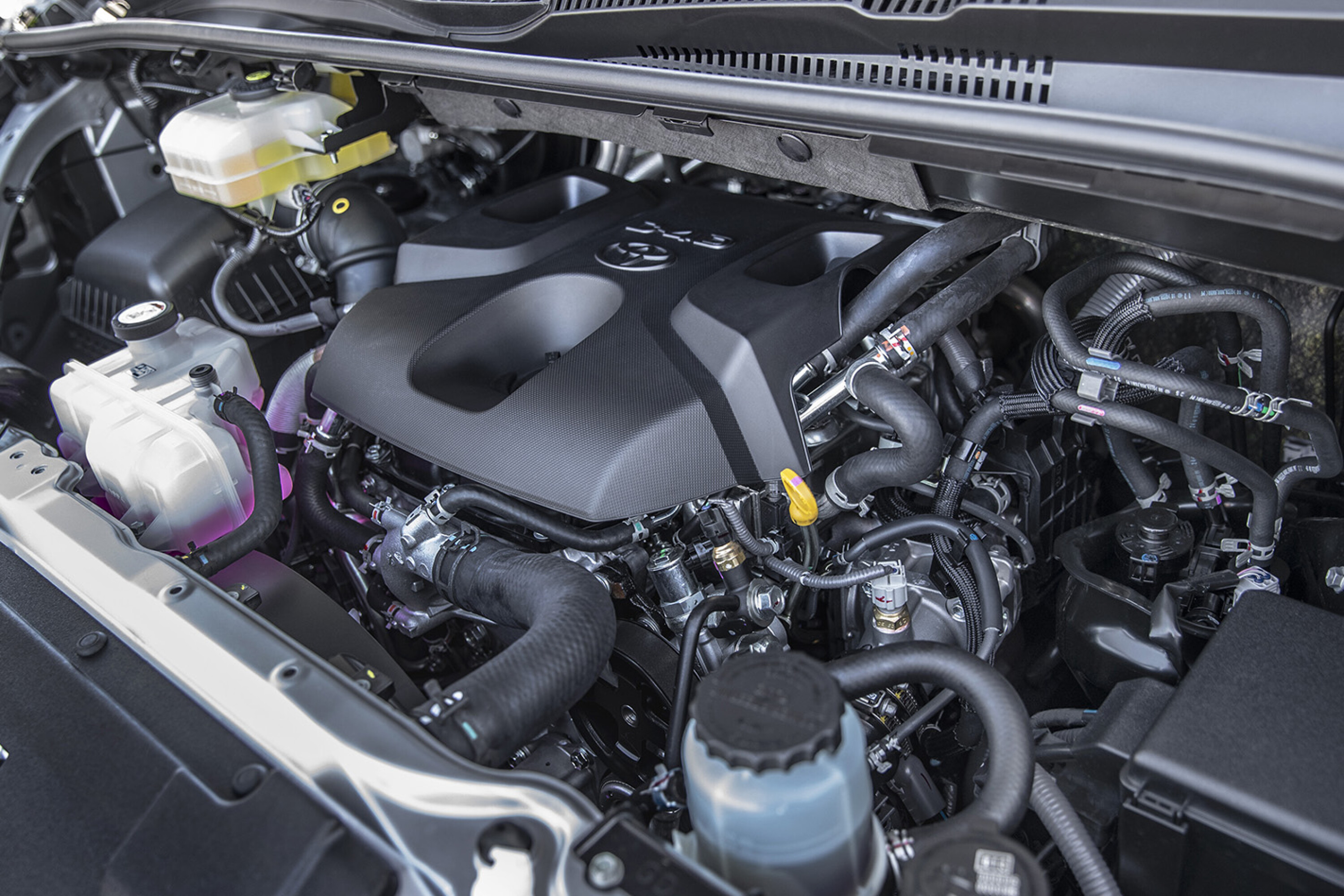
The Granvia is powered by a 2.8-litre turbo-diesel four-cylinder engine that produces 130kW and 450Nm. Power is sent to the rear wheels through an eight-speed automatic transmission. There is a downside to this powerplant, as it feels like a Toyota HiAce to drive. Braked towing capacity is 1500kg, with an unbraked towing capacity of 750kg.
4
| Fuel figures | |
|---|---|
| Fuel tank capacity | 70 litres |
| Fuel consumption | 8.0L/100km |
| Warranty and service | |
|---|---|
| Warranty | 5 years / Unlimited km |
| Powertrain warranty | 7 years (with a maintained logbook) |
| Servicing intervals | 6 months or 10,000km |
| Average service cost | $290 per visit |
| Safety | |
|---|---|
| 5-star ANCAP rating (2019) | Child Occupant Protection – 88% (ANCAP) |
| Autonomous Emergency Braking | Lane Departure Warning |
| Adaptive cruise control | Rear Cross Traffic Alert |
| Blind Spot Monitoring | Speed Sign Recognition |
| Front and Rear Parking Sensors | Surround-view camera |
| Lane Keeping Assistance | 11 Airbags |
1
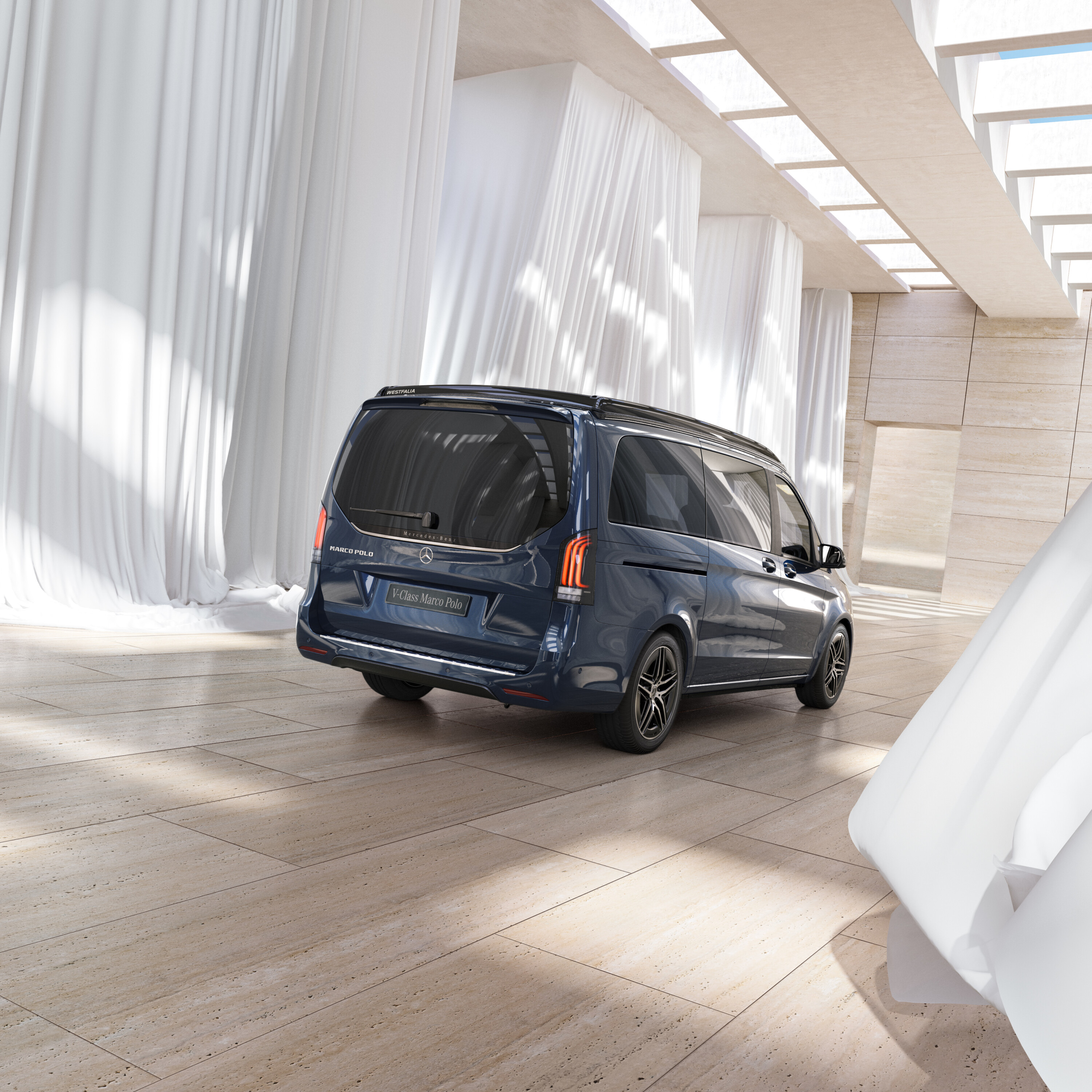
Mercedes-Benz V-Class
- MSRP: $113,832-$143,193
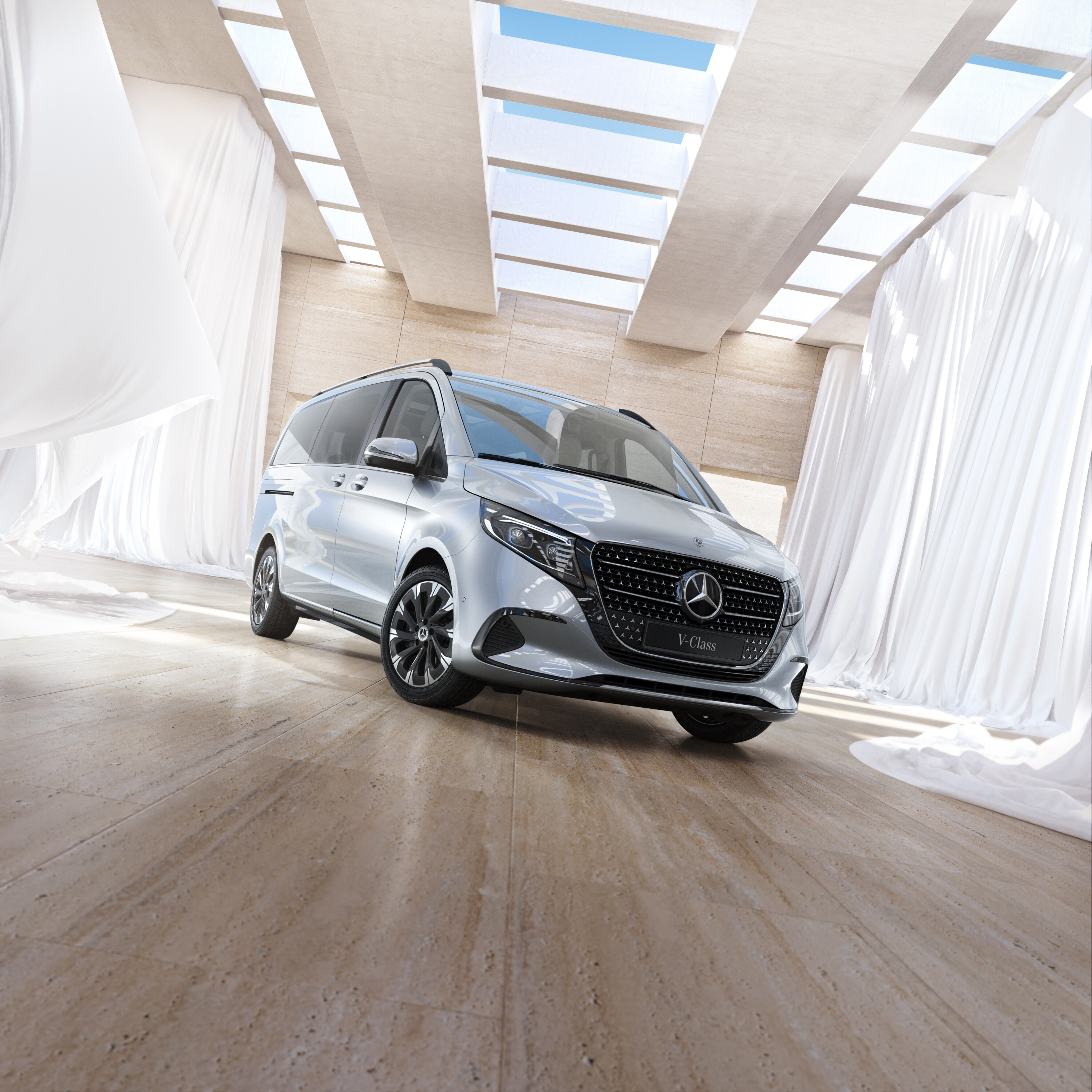
If you’re trying to stick to a budget, this might not make sense as a family car, but it makes sense as a prestigious transport option as it has the brand image high-profile corporate VIPs would appreciate.
It’s also one of the more practical options in terms of boot space, flexible seating arrangements, and it is proven to be very reliable and durable – no wonder limousine and private hire car companies like love having them on fleet. It measures 1880mm (height), by 1928mm (width), by 5140mm (height).
1
Model range and pricing
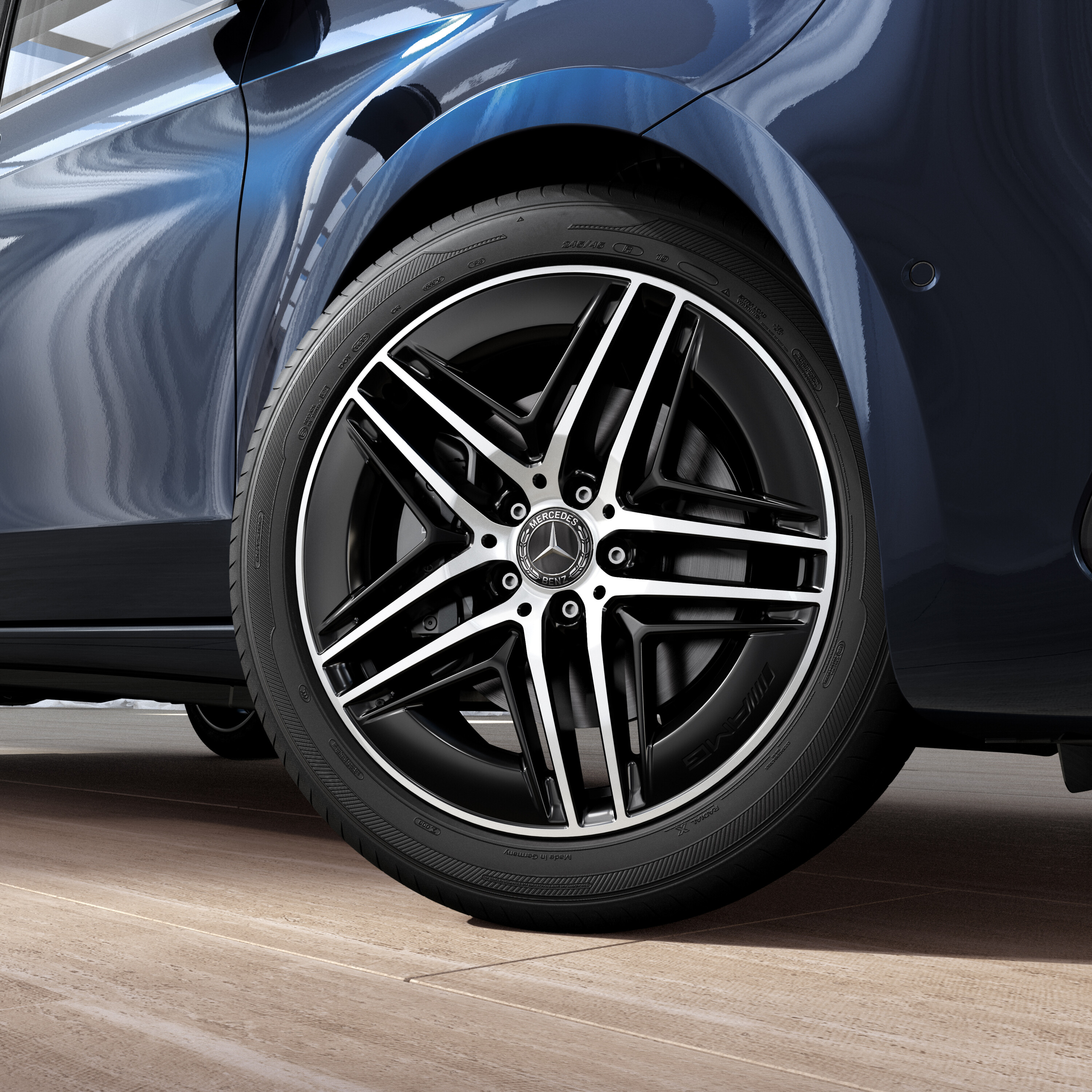
The V-Class range is offered in three different models, with the choice of eight seats or a six-seat configuration on the V300 Exclusive.
| V250 Avantgarde | $113,832 |
|---|---|
| V300 AMG Line | $139,927 |
| V300 Exclusive | $143,193 |
1
Practicality and storage
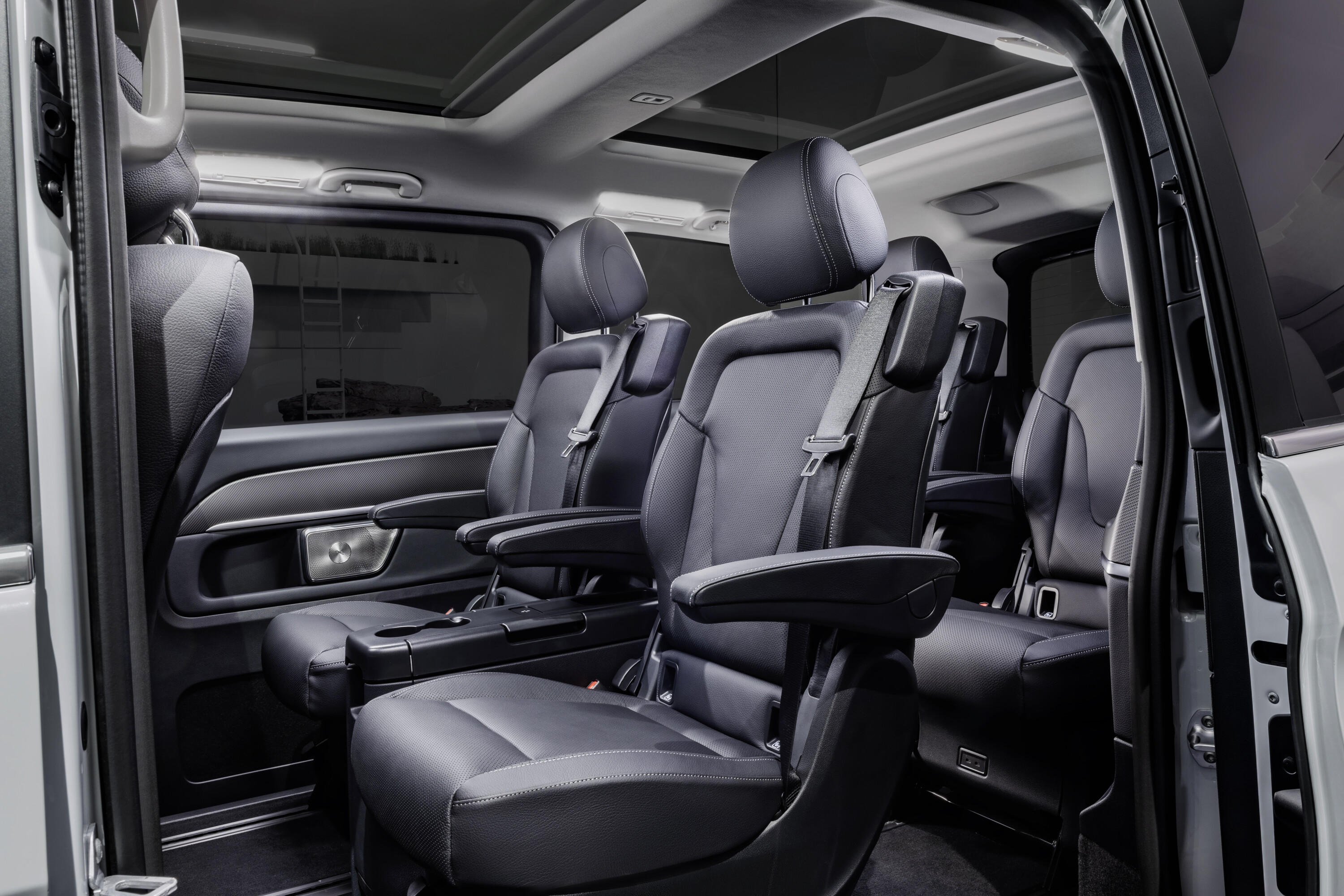
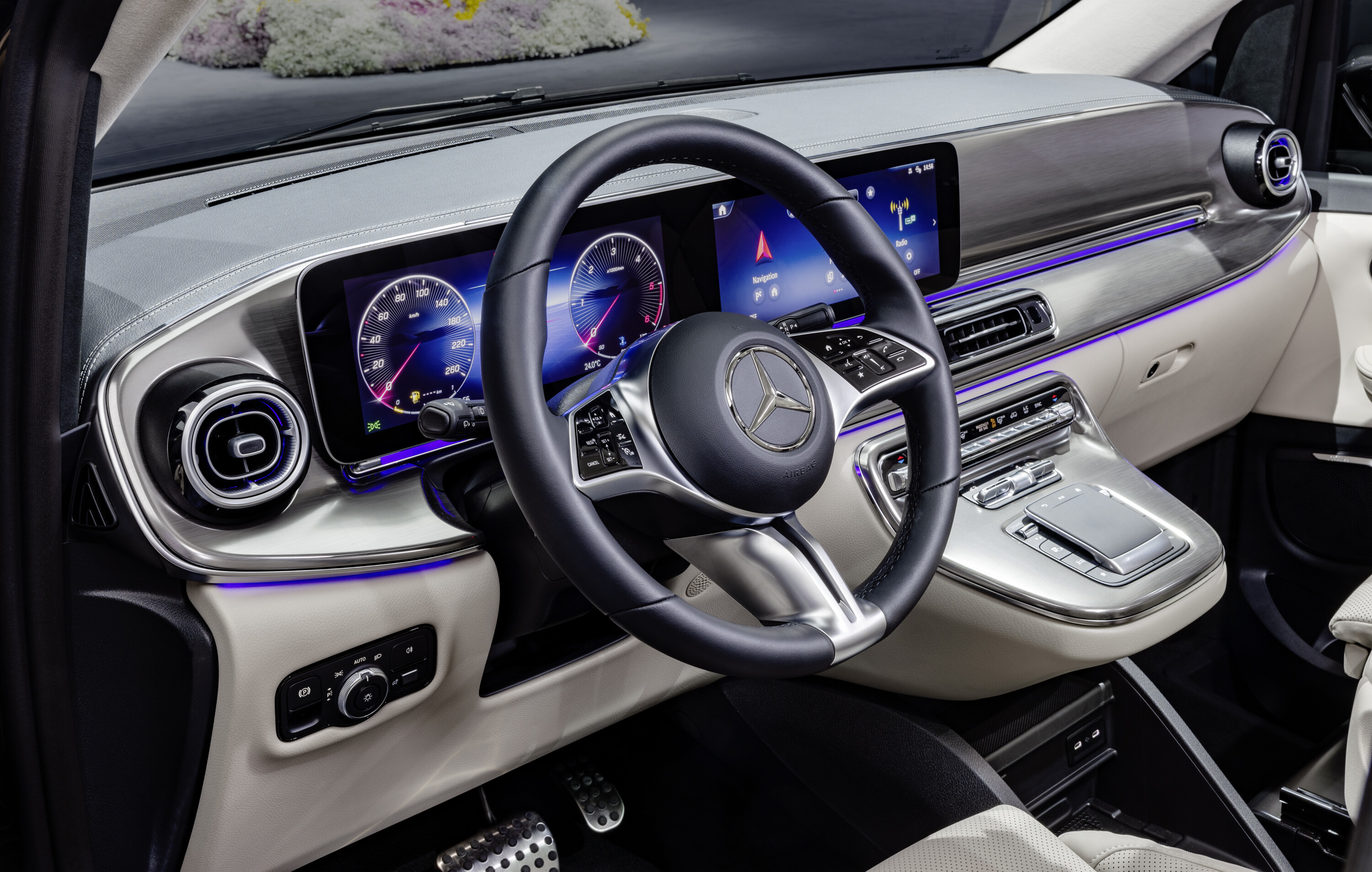
The eight-seat version is the best option for a family or a passenger transfer vehicle. Inside you’ll find dual-zone climate control, heated front-row electric seats with lumbar support, air vents throughout the cabin, and decent storage.
The V-Class might come across as a little plain compared to the back seat of the Lexus LM, but compared to most luxury rivals in this segment, the seats are more supportive for all passenger sizes – unlike the Lexus LM.
1
There are also plenty of ways to alter the seat configuration to your requirements. The V-Class might be a bit expensive as a family people mover, but for an airport transfer mover or even a luxury hire car alternative, this wins for that purpose.
For children, the V-Class has six top teacher points and six ISOFIX points; plus, there’s room for two large suitcases in the boot when all the seats are in place.
| Mercedes-Benz V Class boot space | |
|---|---|
| Rear seats up | 1030 litres |
| All seats folded | 4630 litres |
1
Powertrain choices and fuel consumption
Buyers have the option of either the V250d which gets 140kW and 440Nm, or the V300d which delivers 174kW and 500Nm. Both engines are paired with a nine-speed automatic transmission. The V-Class also has a braked towing capacity of 2500kg and an unbraked towing capacity of 750kg.
| Fuel figures | |
|---|---|
| Fuel tank capacity | 70 litres |
| Fuel consumption (V250d) | 6.7L/100km |
| Fuel consumption (V300d) | 7.4L/100km |
| Warranty and service | |
|---|---|
| Warranty | 5 years / 250,000km |
| Roadside assistance | 5 years |
| Servicing intervals | 12 months or 20,000km |
| Average service cost | $3141 (3x services plan) |
| Safety | |
|---|---|
| Expired ANCAP safety rating | 11 airbags |
| Autonomous Emergency Braking | Lane Keeping Assistance |
| Adaptive cruise control with stop and go | Lane Departure Warning |
| Blind Spot Monitoring | Rear Cross Traffic Alert |
| Driver attention monitoring | Speed Sign Recognition |
| Front and Rear Parking Sensors | Surround-view camera |
| Intersection collision avoidance | |
1
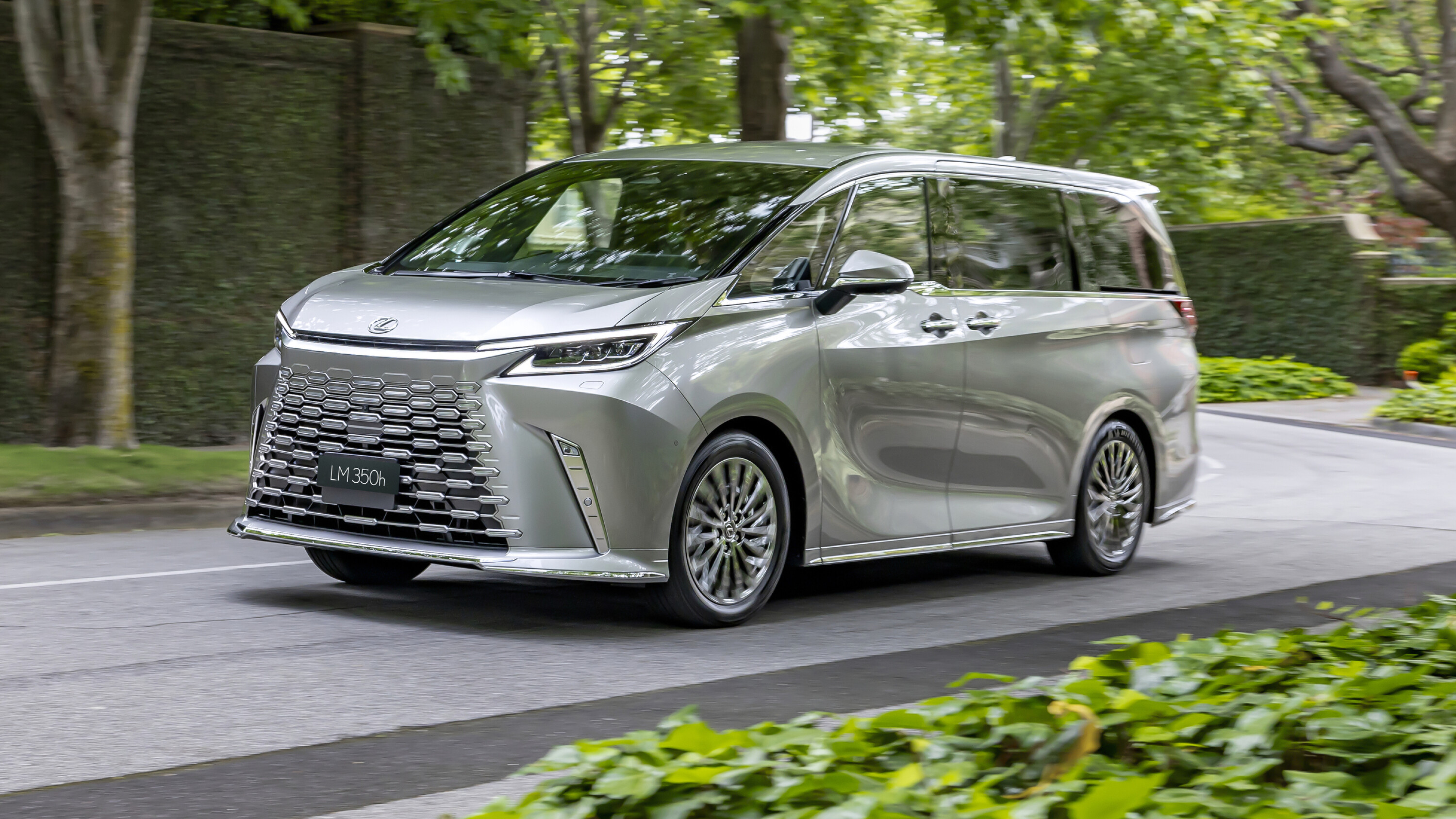
Lexus LM
- MSRP: $160,888-$220,888
1
Model range and pricing
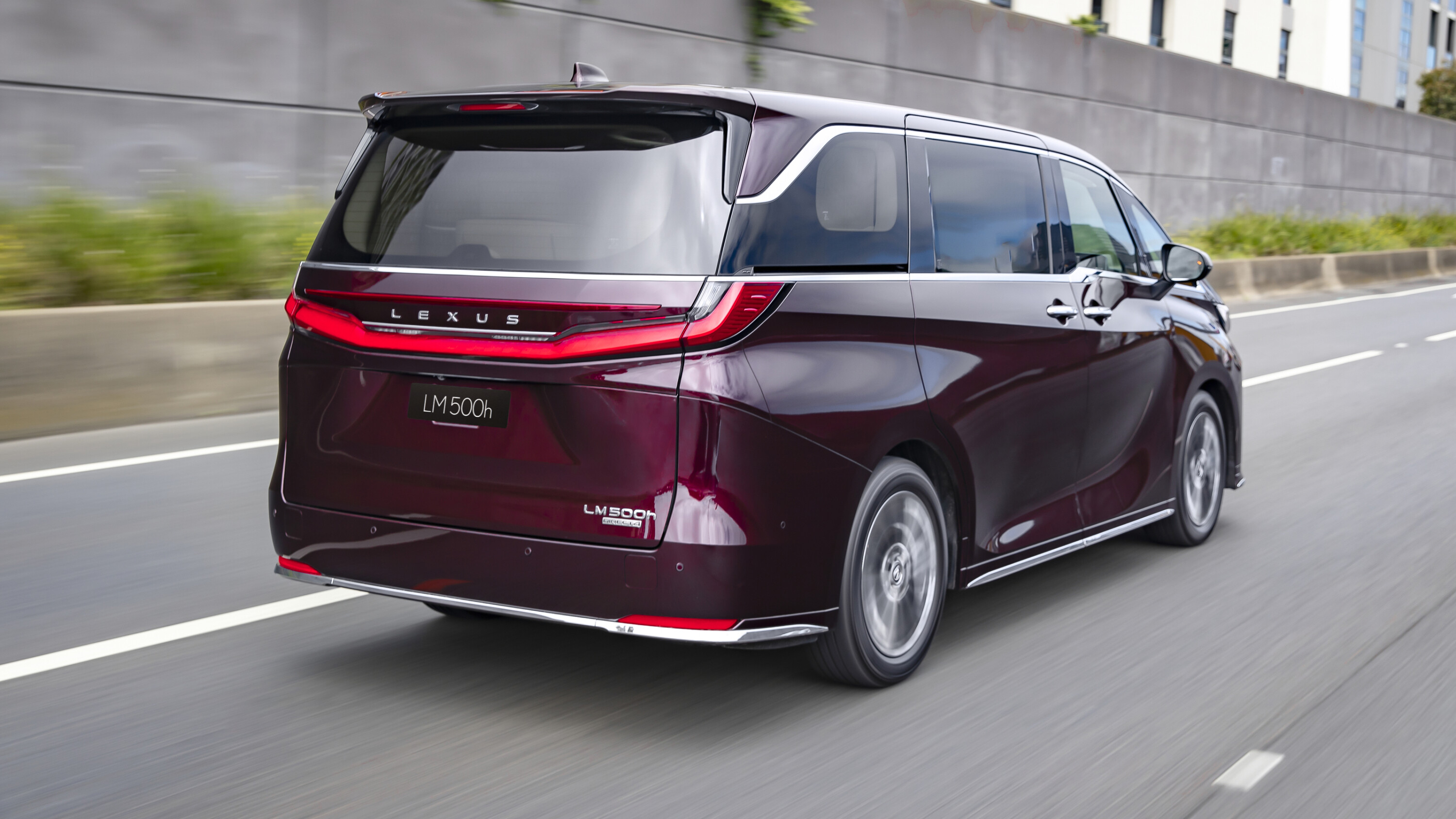
| LM 350h Sports Luxury | $160,888 |
|---|---|
| LM350h Sports Luxury AWD | $165,888 |
| LM500h Ultra Luxury AWD | $220,888 |
Practicality and storage
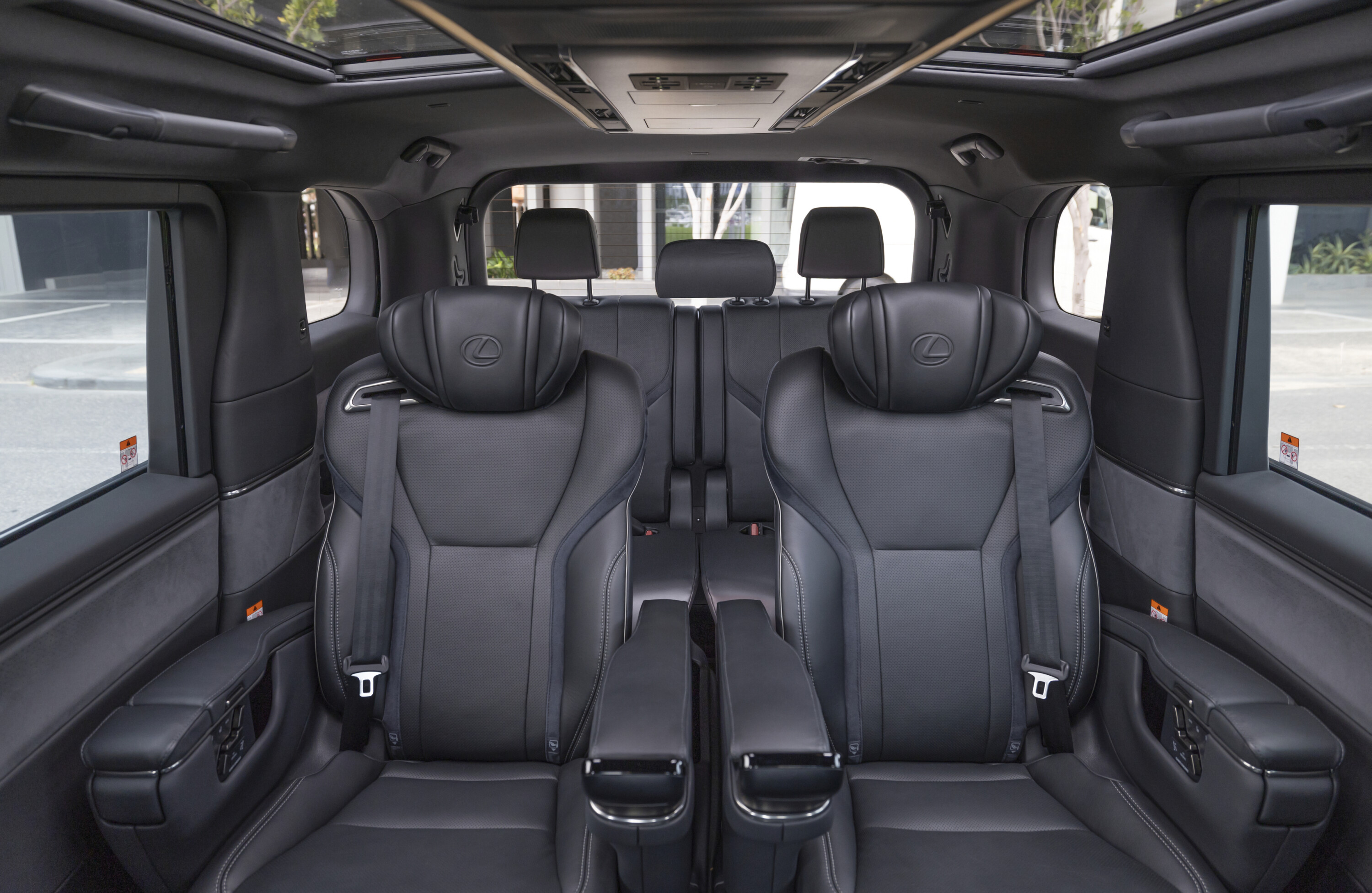
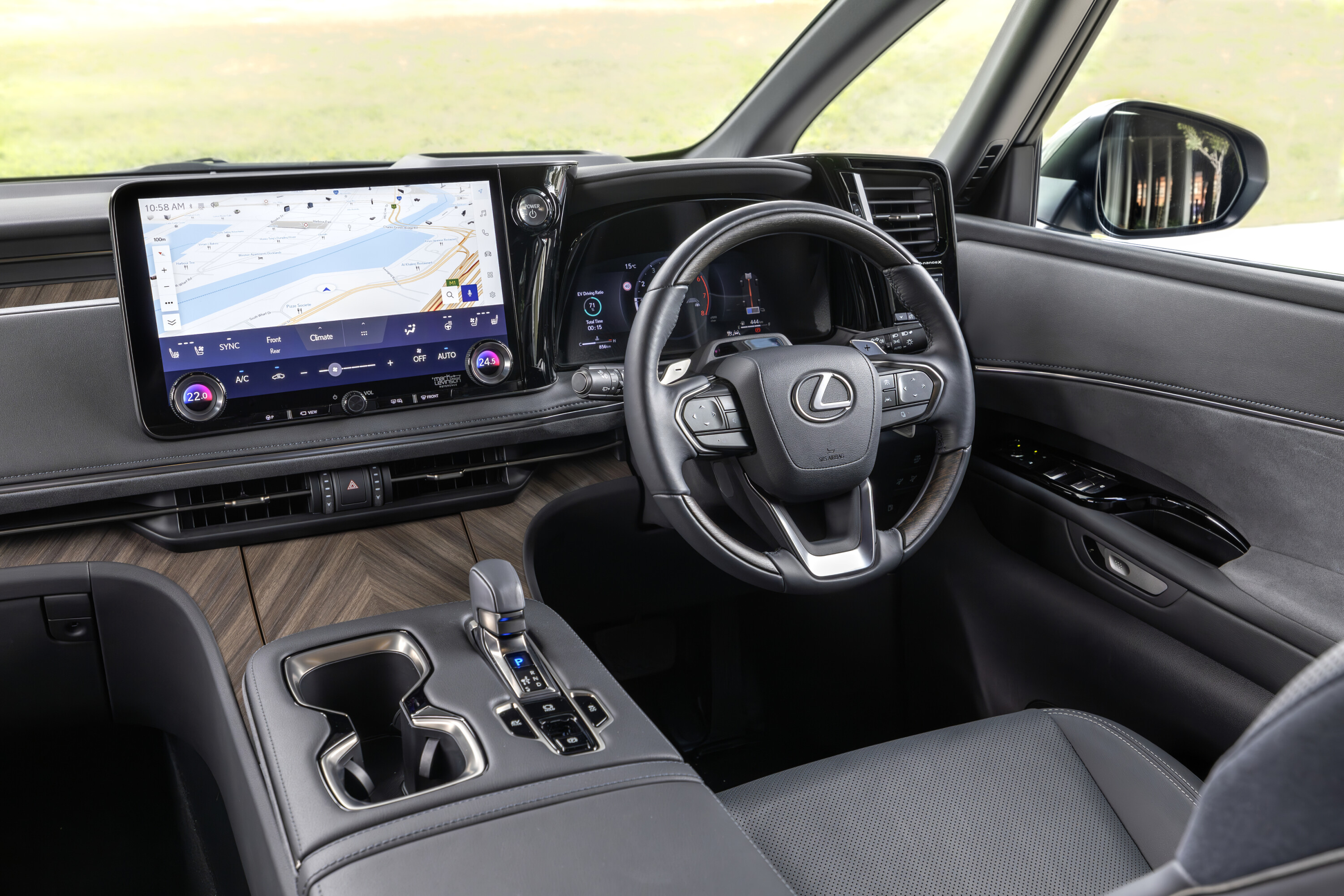
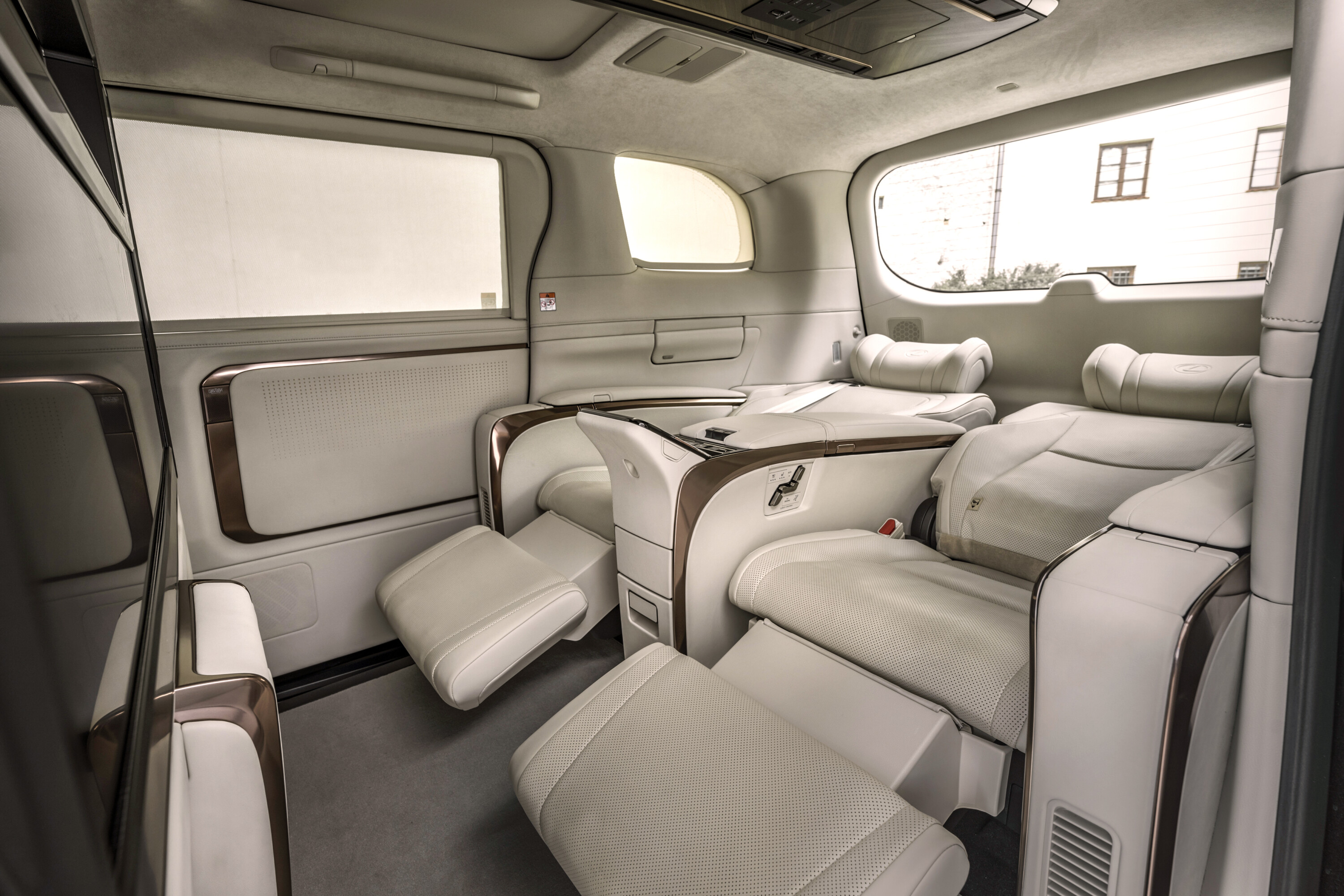
Both the LM350h FWD and AWD Sports Luxury include a seven-seat configuration (2+2+3), which is the more sensible choice for a passenger-friendly alternative. The LM also includes a lot of luxury such as electrically adjustable seats that can be both heated and ventilated, sunshades, a remote control to turn on the massage seats, and HDMI ports for the rear screen.
For children, the LM includes ISOFIX points and top tether points for the two second-row seats but no child placement for the third row, which might limit its practicality for a growing family.
1
The LM500 can only seat four passengers, which rules it out for a family with more than two children – as does its price point. As a limousine service vehicle, its boot space for luggage is impaired and the top-spec 500h Ultra only has a two-seat setup in the back. For a little less money, a Lexus LS saloon with a more refined twin-turbo V6 combined with air suspension would make more sense.
Ultimately if you’re looking for the best option, the less expensive and more passenger-friendly Mercedes V-Class is a better choice for both growing families and as a luxury transfer vehicle.
1
| Lexus LM boot space | |
|---|---|
| Seven seats up | 110 litres (LS350h) |
| All seats folded | 1191 litres (LS350h) |
| Rear seats up | 752 litres (LS500h) |
19
Powertrain choices and fuel consumption
Under the bonnet is a 2.5-litre four-cylinder engine with a series-parallel hybrid system, which is similar to what is found in a Kluger Hybrid. Buyers have the choice between front- and all-wheel drive.
The second choice is a 2.4-litre four-cylinder turbocharged engine that is paired with a six-speed gearbox and an All-Wheel Drive system. Lexus Australia has not released any towing figures.
| Fuel figures | |
|---|---|
| Fuel tank capacity | 60 litres |
| Fuel consumption (350h 2WD) | 5.5L/100km |
| Fuel consumption (350 AWD) | 5.6L/100km |
| Fuel consumption (500h) | 6.6L/100km |
| Warranty and service | |
|---|---|
| Warranty | 5 years / Unlimited km |
| Roadside assistance | 5 years |
| Servicing intervals | 12 months or 15,000km |
| Average service cost | $695 |
| Safety | |
|---|---|
| No ANCAP rating | 6 airbags |
| Autonomous Emergency Braking | Blind Spot Monitoring |
| Adaptive Cruise Control | Rear Cross Traffic Alert |
| Intersection collision avoidance | Speed Sign Recognition |
| Lane Keeping Assistance | Safe Exit Warning Assistant |
| Lane Departure Warning | |
MORE
Everything Lexus
Verdict
It’s easy to see why people movers remain a popular option for families, given they provide many practical advantages compared to any seven-seat SUV.
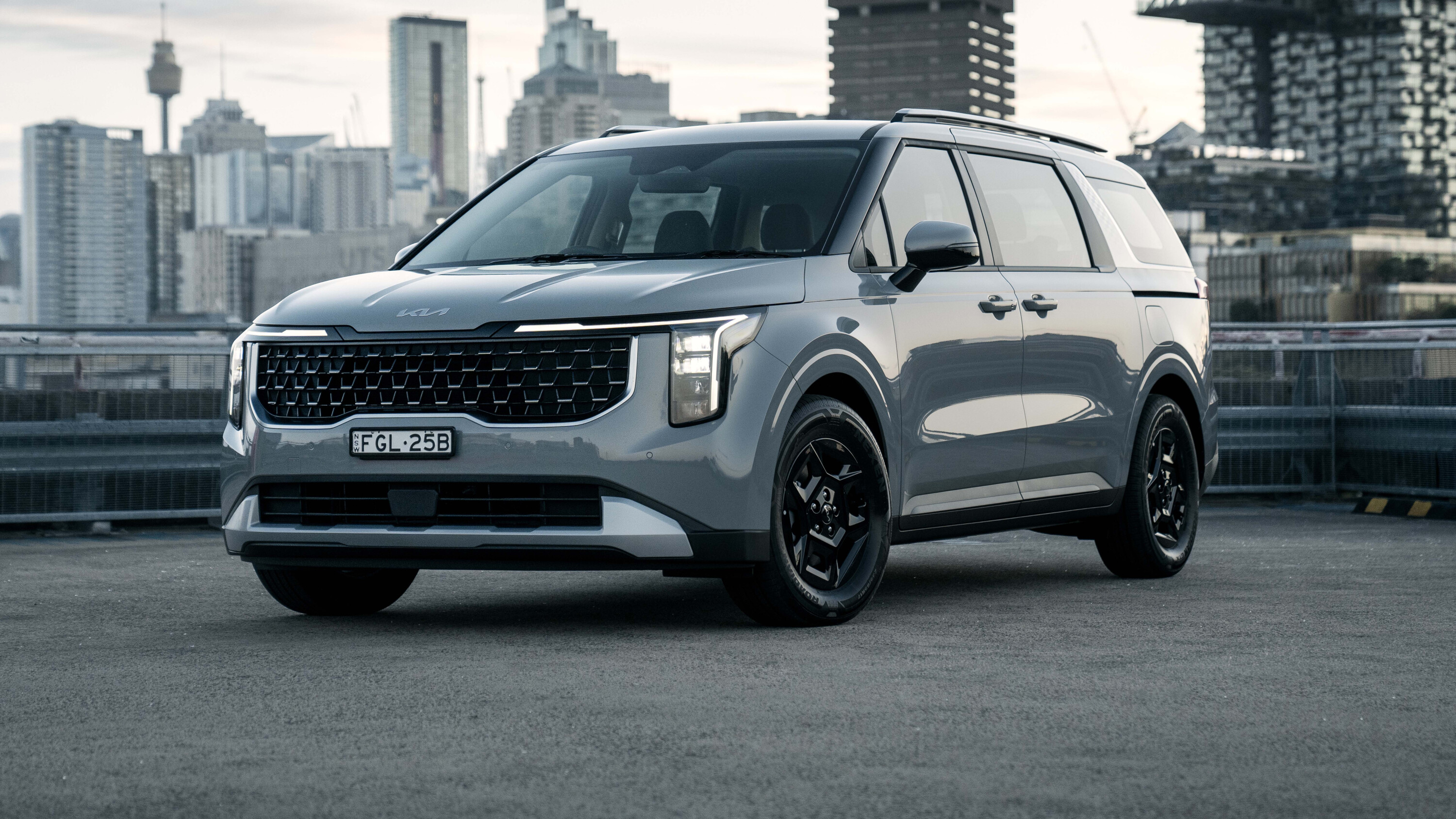
As the most affordable all-rounder, we would recommend the Kia Carnival, as it seats up to eight passengers and features all the premium features and technology most buyers in this segment would require. Thanks to the improved ride and handling tune for local conditions, the Carnival is also one of the most refined people movers to drive in this segment.
The Carnival is also backed by a seven-year unlimited warranty, along with eight years of roadside assistance and a comprehensive serving plan across the range.
1
The petrol V6 FWD can be a bit thirsty, and the Hybrid version is only available in top-spec GT-Line guise that is priced from $76K. This leaves the 2.2-litre diesel AWD as the recommended, affordable option.
In terms of trim level, the Sport+ grade features all of the premium comfort additions like seat heating in the front and second row, a power tailgate with automatic side door entry, electric front seats with artificial leather, and a surround view monitor. Otherwise, standard equipment is generous and includes autonomous emergency braking, a reversing camera with front and rear parking sensors, and adaptive cruise control.
For more than 70 years car lovers have gathered on the Monterey coast in California to celebrate some of the finest automobiles ever made.
In a series of event staged over a memorable week, attendees enjoy classic cars, motorsports heritage, a grand parade and coming innovations in motoring technology.
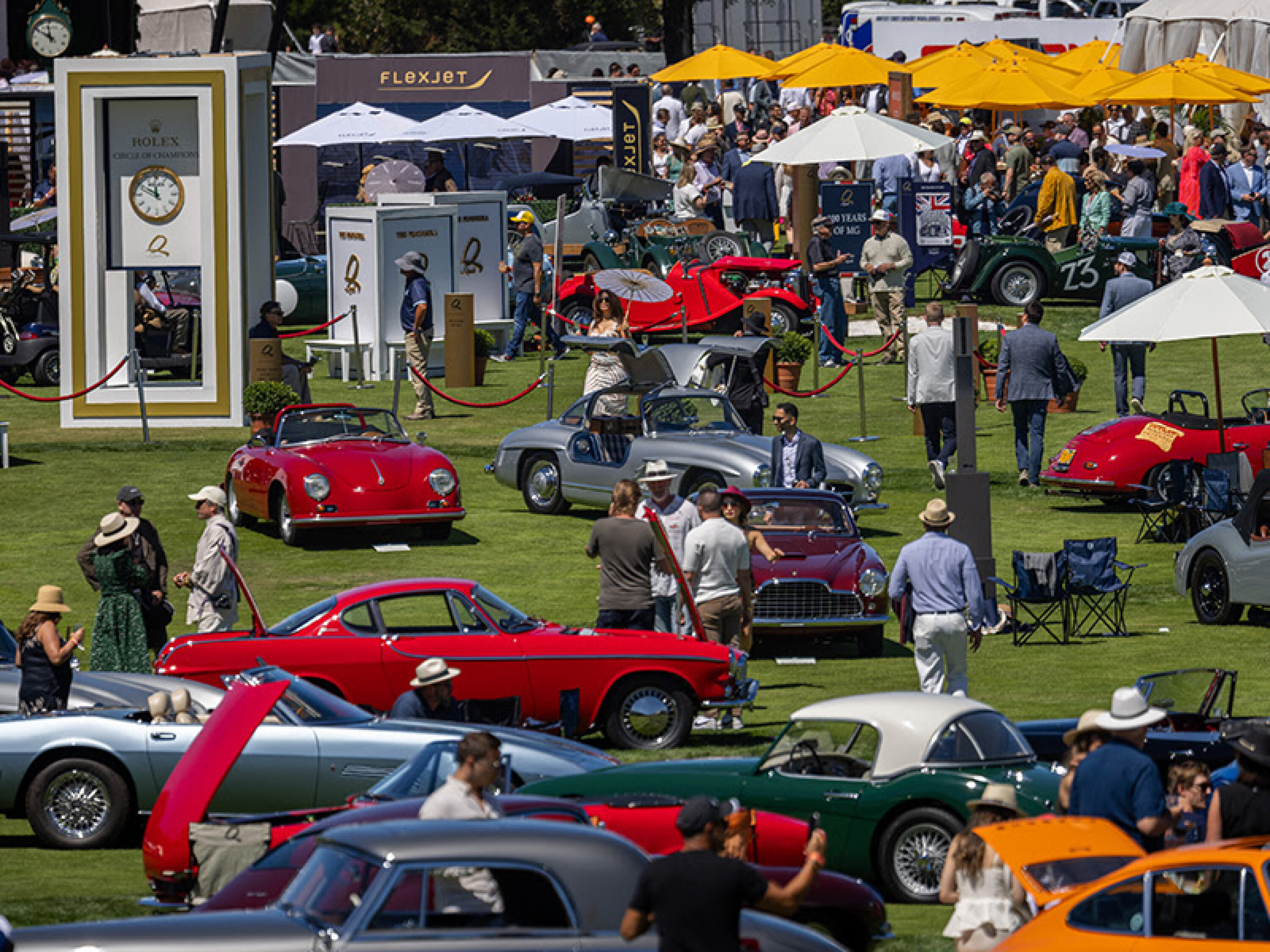
This year’s event was no exception. Supported by Rolex for over 25 years – since it first partnered with the Pebble Beach Concours d’Elegance in 1997 – this year’s gathering again saw the Rolex Monterey Motorsports Reunion, The Quail, A Motorsports Gathering and the Pebble Beach Tour d’Elegance.
‘The great thing about Monterey Car Week is that it offers everything you could ever want, including the fabulous events at Pebble Beach, The Quail and of course the four days of historic racing at Laguna Seca,’ said Rolex Testimonee and 2009 FIA Formula 1® Drivers’ World Champion Jenson Button, who is a regular attendee of the event.

1
‘It’s rare that you can be in one place for a week and do something completely different each day, which is what I love about these events. We are also in a wonderful part of the world – California really embraces car culture.’
One of the annual highlights is the Pebble Beach Concours d’Elegance held on the greens of the legendary Pebble Beach Golf Links. The event allows the knowledgeable crowd to appreciate new categories and celebrate exceptional cars.
The highlight of this year’s Concours d’Elegance was the surprise unveiling of Her Majesty Queen Elizabeth II’s special collection of 10 Royal Land Rover Classic vehicles, marking the first time they have been showcased outside the United Kingdom.
As ever the event culminates with the awarding of one of the automotive world’s highest accolades, the Pebble Beach Concours d’Elegance Best of Show.
1
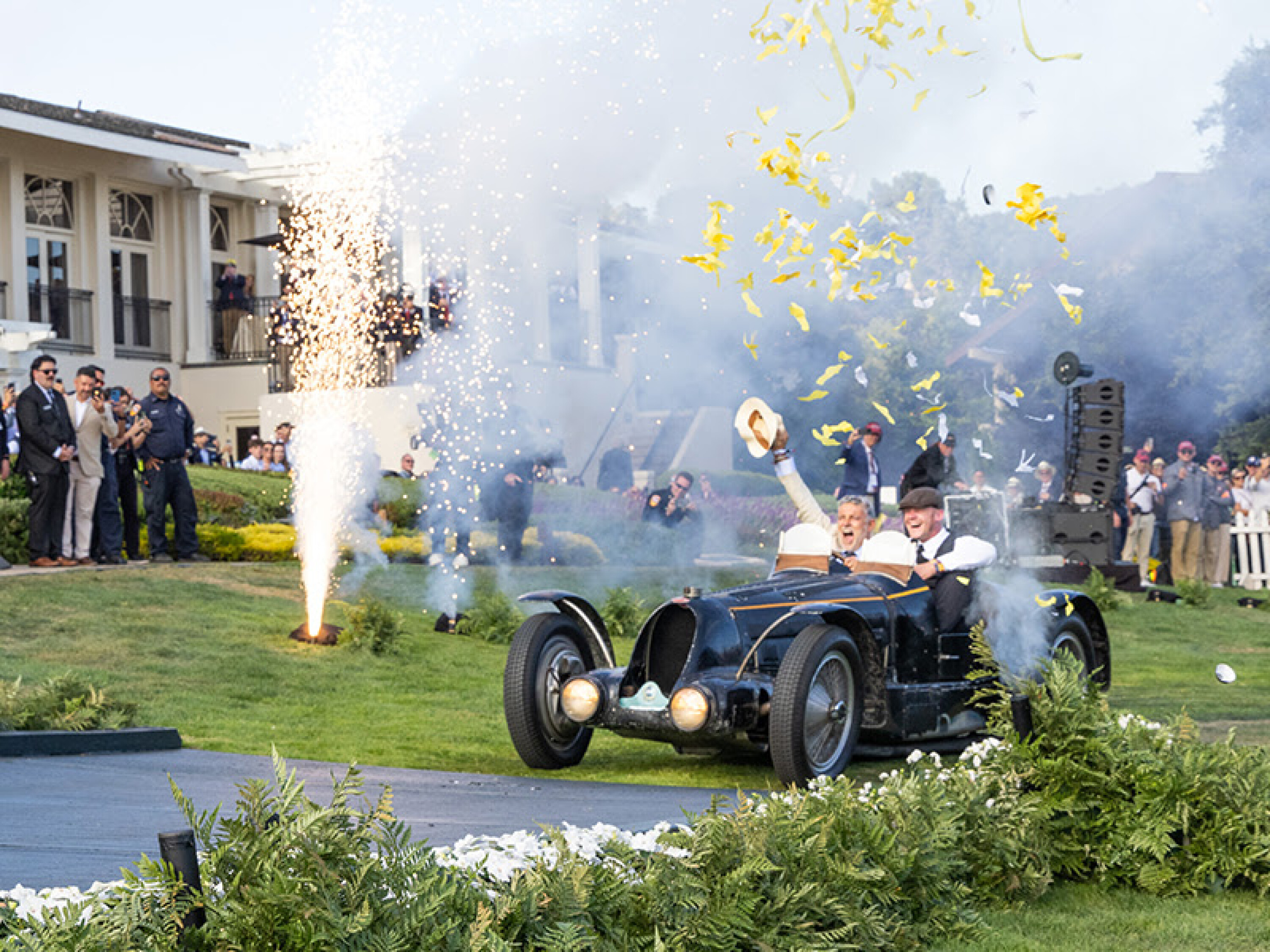
This year’s prestigious recipient was the 1934 Bugatti Type 59 Sports – the first preservation car in the event’s history to win Best of Show. In recognition of the classic car’s significance, owner Fritz Burkard was awarded a specially engraved Rolex Perpetual 1908.
‘What is most beautiful about this moment is that, for first time, someone from Switzerland has won the Concours and to win a Swiss watch makes it extra special – the Rolex 1908 is exquisite,’ said Burkard.
Meanwhile, this year’s Rolex Monterey Motorsports Reunion marked 50 years by paying homage to the racing marques that have graced its history for five decades – from saloon cars to Formula 1® powerhouses from yesteryear – rumbling around the WeatherTech Raceway Laguna Seca and its famous Corkscrew turn. Button took to the track to compete in his striking 1952 Jaguar C-Type in the Briggs S.
3
On the Friday of the celebratory week, 5000 fans turned up at the Quail Lodge & Golf Club to honour automotive history and the future of design.
A perfectly preserved 1937 Delahaye Type 145, 12-Cylinder Competition was honoured as the Rolex Best of Show winner and welcomed into the 2024 Rolex Circle of Champions, alongside coveted supercars and remarkable machines. Rolex presented the owners of the 1937 Delahaye, Sam and Emily Mann, with a specially engraved Oyster Perpetual Datejust.
The day before a convoy of historic vehicles rumbled along the Pacific Coast passing Big Sur and Bixby Bridge on Highway 1 for the annual Pebble Beach Tour d’Elegance, which has been presented by Rolex since 2007.And so ended another edition of one of the most enduring and popular classic car meetings in the world – as planning immediately started on next year’s event.
MORE
Classic Wheels
