
For the first time in almost two decades, there’s a real buzz around the new World Rally Championship season.
Four of the world’s biggest car manufacturers are represented, having created the fastest rally cars the world has ever seen driven, which will be driven over all surfaces by a dozen or more of the world’s finest drivers. Here are five reasons why this year’s WRC should be one of the best ever.
More manufacturers Losing Volkswagen was a big blow, but the return of Citroen on a full-time basis and the arrival of Toyota after an 18-year absence means the WRC can boast four factory-level teams, stocked full of major driving talents.
Ten new-generation World Rally Cars will be present at the Monte Carlo season opener, however as deals are confirmed and more cars are built, rallies later in the year will boast up to 16 examples of the latest WRC-spec machinery.
The departure of Volkswagen means that we are guaranteed to be crowning a new manufacturers’ champion for the first time since 2012.
Faster cars The rationale behind the new WRC regulations was to create wilder, more exciting, more interesting cars and judging by the vast amount of testing footage out there, we’d say it’s definitely mission accomplished.
Opening up the restrictor has allowed the cars to rev harder and make more power. The wild wings and wider tracks have also increased grip levels, however thanks to the WRC’s fondness for slippery surfaces, the cars are sliding and wheelspinning more than ever.
The return of electronically-controlled centre differentials also allows each driver to tailor the car more to their driving style, so each car will look slightly different depending on whether it’s driven by the neat and tidy Thierry Neuville or aggressive Jari-Matti Latvala.
Closer competition For the first time since 2011, we’re almost guaranteed a titanic fight for the driver’s crown. For the previous four seasons the best driver (Sebastien Ogier) has been driving the best car (VW Polo) so it’s unsurprising that he has captured four titles on the trot.
Now, however, the form book is wide open. As ever with a new set of technical regulations, it’s possible that one manufacturer will have a decisive advantage, but unlike F1 regulations are tight enough and the teams are close enough in terms of budget and expertise for that to be unlikely.
Not only that, with Sebastien Ogier’s decision to join M-Sport, the sport’s top talent is distributed evenly across the four teams. Ogier (M-Sport), Meeke (Citroen), Neuville, Paddon and Sordo (Hyundai) and Latvala (Toyota) are all proven rally winners, with Meeke and Neuville possessing the speed and experience to mount a season-long challenge to Ogier. Game on.
Better coverage Promotion has been a weak point for the WRC in recent years, with the excellent WRC+ subscription service accessed by far too few people. Red Bull has rectified this for 2017, offering free daily highlight packages as well as a live stage every Saturday at each rally.
For hardcore fans, combine this with the WRC+ service and that’s an hour of highlights each day along with up to four live stages per event.
Emerging stars While the title fight will be between established stars, a number of young guns could trouble the podium this year. Citroen’s Stephane Lefebvre will be fast on tarmac, while teammate Craig Breen proved his speed with a podium in Finland last year.
Over at Toyota last year’s WRC2 champion Esapekka Lappi will appear on most European rounds while fellow Finn and 2016 WRC2 runner-up Teemu Suninen is tipped to appear in an M-Sport Fiesta.
Mercedes-Benz has been pretty busy renewing its line-up lately, and its attention has now turned to the relatively young C-class medium car range.
A lightly camouflaged Mercedes-Benz C-Class estate prototype has been spotted at the company’s test centre in northern Sweden, providing an early look at the facelifted model of the big-selling Merc.
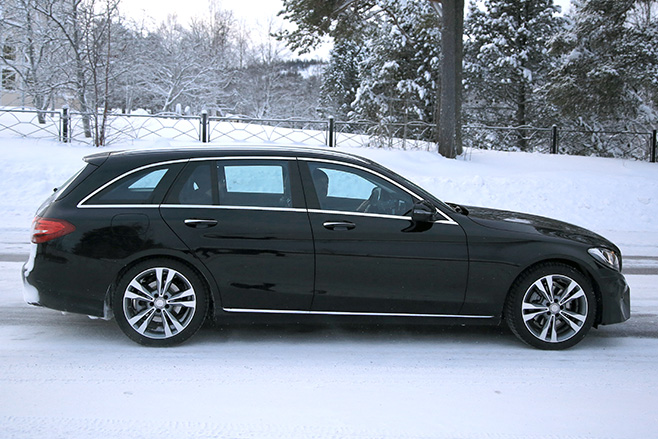
The subtle makeover features a new tail-light design, revised front and rear bumpers, chrome highlights, reshaped wing mirrors and new headlight assemblies with a single LED lamp similar to the E-Class.
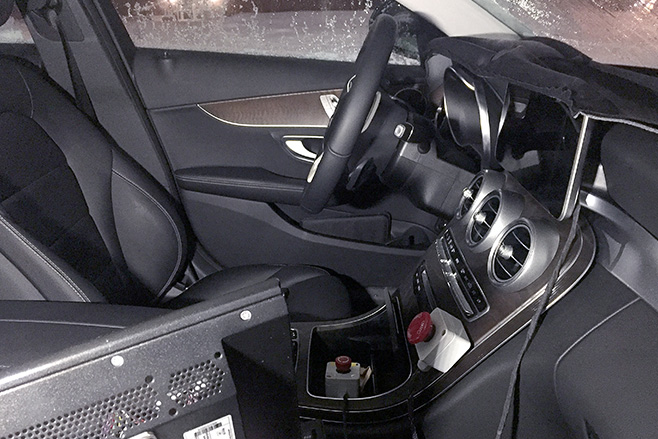
Interior changes are set to include a new button-heavy steering wheel with E-Class style touch controls, and a new centre console-mounted touchpad to replace the current model’s rotary infotainment controller.
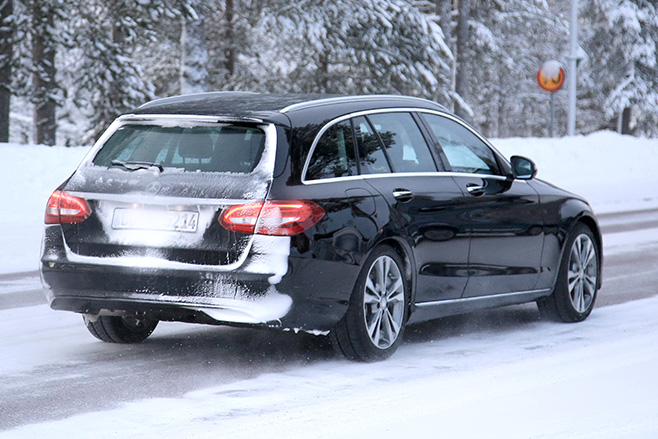
The pictured car sports analogue gauges, though some variants are expected have the dual-screen digital display found in the new Mercedes-Benz E-Class.
Engines, including the 2.0-litre turbo petrol four and 1.6- and 2.1-litre turbo diesels, are believed to carry over across the C-Class range, which includes sedans, estates, coupes and convertibles – there are no less than 20 variants available in Australia including AMG models.
This will be the first facelift for the third generation C-Class sedan and estate since their 2014 launch, with an all-new model expected in 2019.
The Mercedes-Benz C-Class’s global popularity is reflected in Australia where the sedan and estate variants combined to be the second-most popular medium-sized car in 2016 after the Toyota Camry.
The updated Mercedes-Benz C-Class isn’t expected to reach Australia until some time in 2018.
Ford has unveiled its 2018 Ford Mustang overnight, the first substantial (and somewhat early) facelift for the hugely popular performance coupe and convertible.
Despite only having gone on sale in its home market of the USA in mid-2014, the now 2.5 year-old Mustang has already been made a visit to Ford’s plastic surgeons.
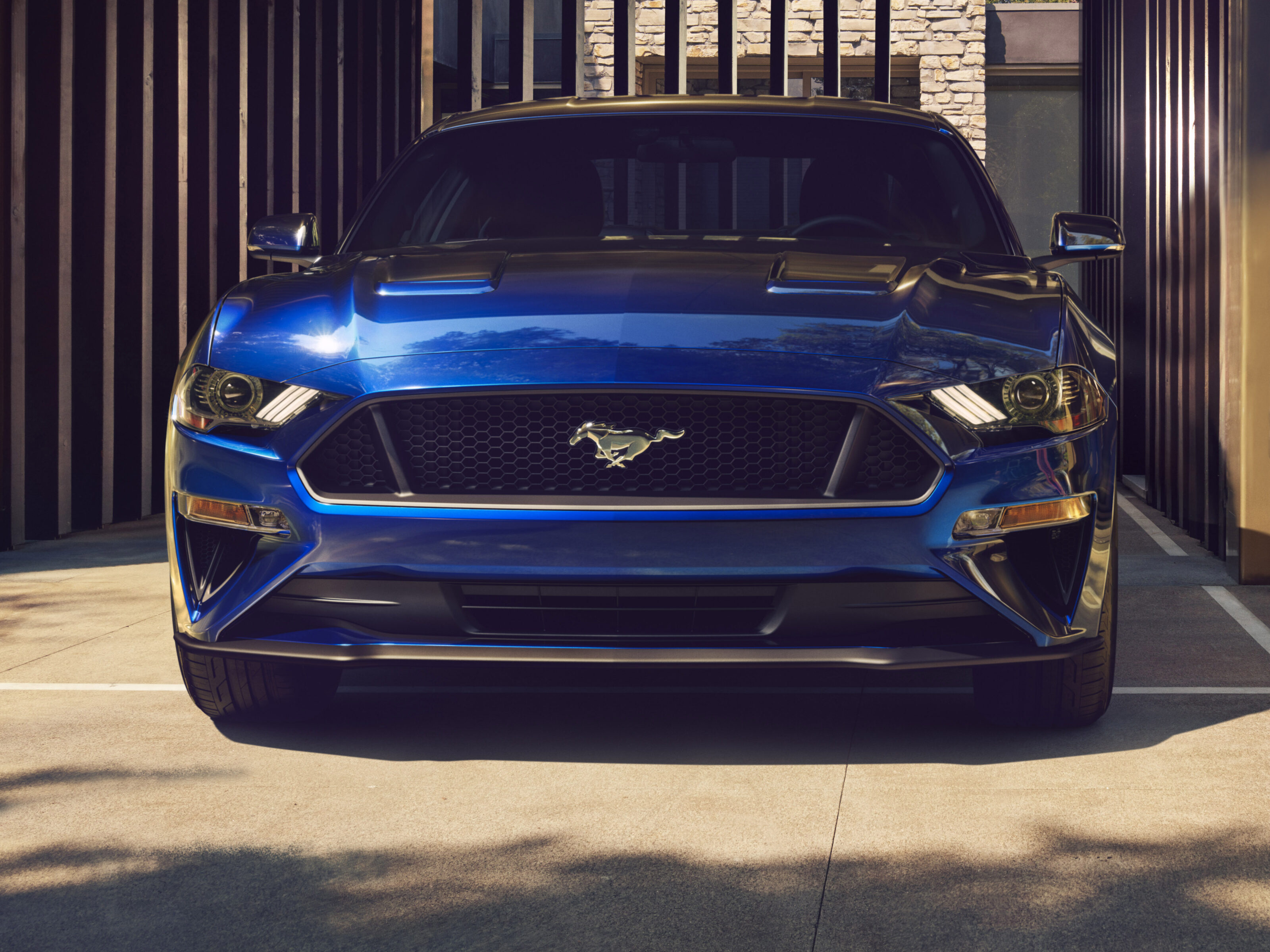
The result is an extensive rework of the Mustang’s nose, with new headlamps, LED daytime running lamps, front quarter panels and bumper moulding. The upper grille retains its shape, but that’s about the only carry-over element of the 2018 Mustang’s snout.
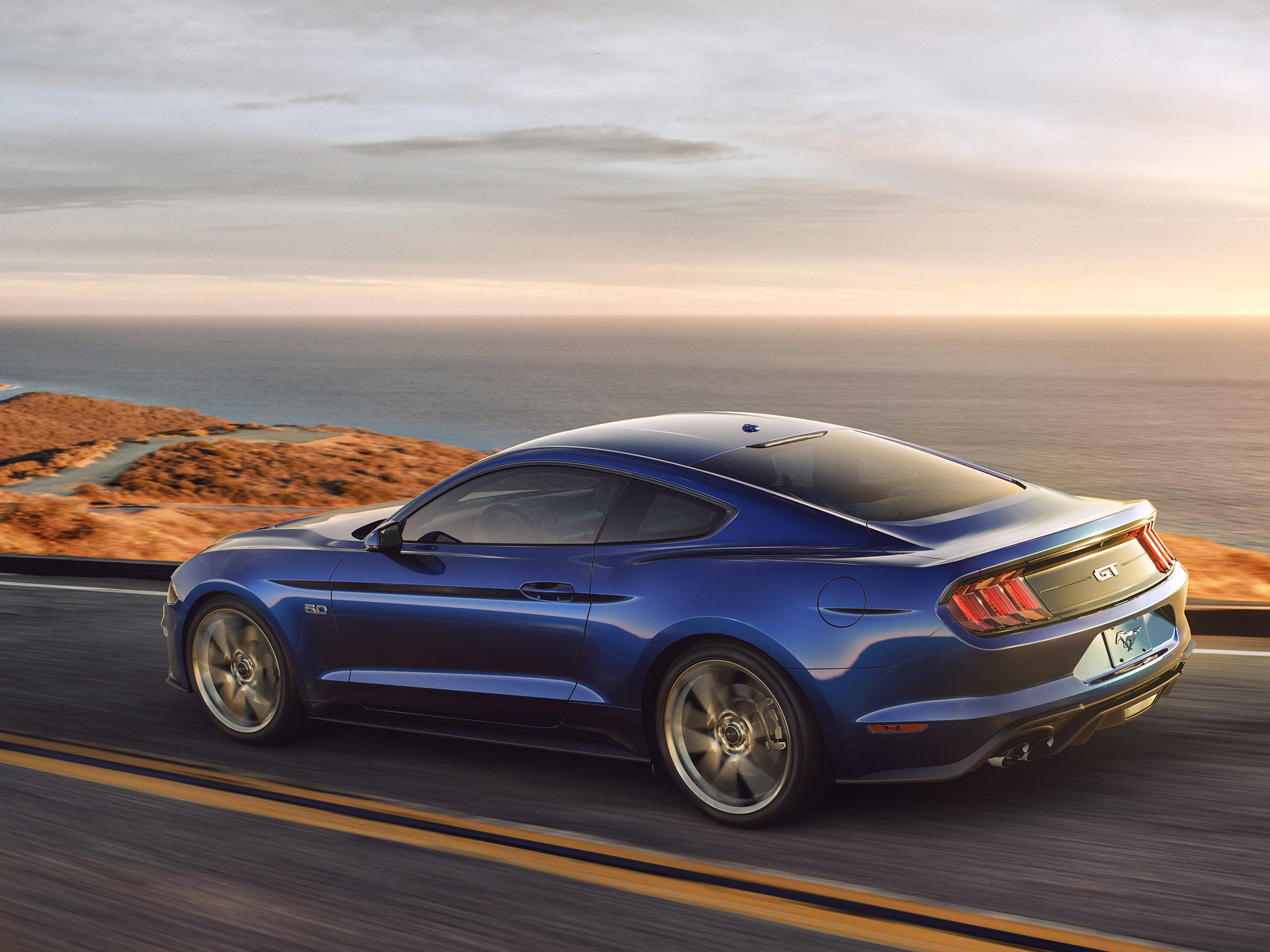
At the rear, the current Mustang’s body-coloured under-bumper ‘diffuser’ has been deleted, along with the circular surround for the GT badge of V8-engined models.
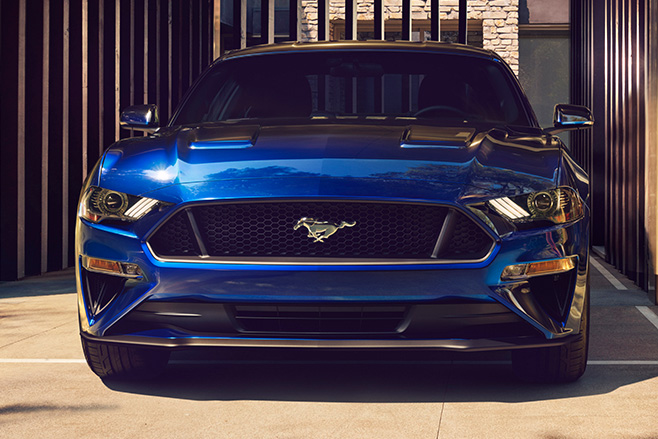
Tail lamp lenses sport a curvier shape and the panel between them gains a horizontal crease, while a bootlid wing becomes optional.
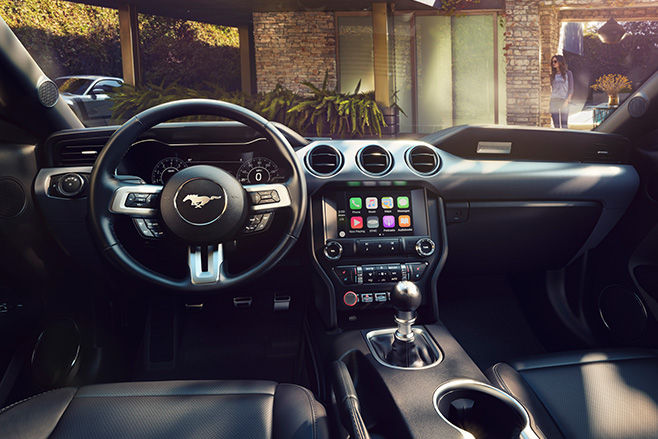
Interior materials have been replaced by higher-quality plastics (addressing a common criticism of the sixth-gen Mustang) with more soft-touch surfaces, though the design of the centre stack appears to carry over.
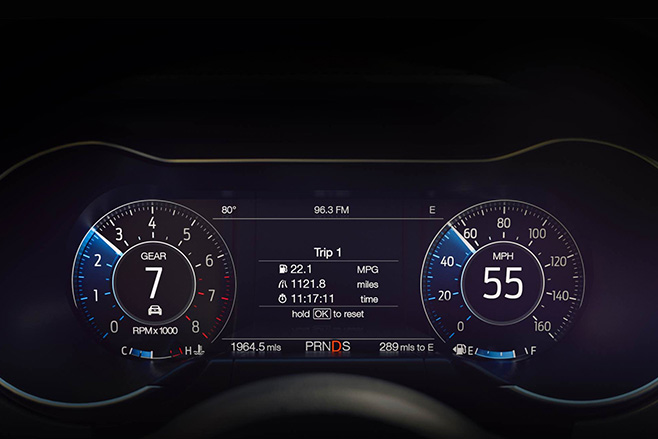
The instrument panel, however, is entirely new. A full-colour 12-inch electronic display replaces the traditional analogue dials, with US-market versions even sporting a drag-strip style ‘Christmas tree’ display to count you down to launch.
There are bigger developments under the bonnet. For starters, the V6 powertrain that formed the entry point to the US range (but was never offered here) has been ditched, with the 2.3-litre turbo inline four becoming the new base model motor.
Ford has yet to reveal power figures for the Mustang update, but says tweaks to engine management will allow for what it calls ‘transient overboost’ to temporarily increase the amount of air entering the engine for more power.
Currently making 233kW and 432Nm, the Mustang’s four-pot motor could make as much as 257kW and 440Nm – the same output as the Focus RS, which uses a similar 2.3-litre four-cylinder engine.
The flagship V8 engine of the Mustang GT gets more extensive upgrades courtesy of a dual-injection system that combines port- and direct-injection technology, plus an increase in compression ratio from 11:1 to 12:1. An active exhaust also becomes optional for the V8, producing a deeper eight-cylinder rumble.
The Ford Mustang GT presently generates a stout 306kW of power and 530Nm of torque. Expect more for the 2018 version.
Manual-equipped Mustangs gain a twin-plate clutch and dual-mass flywheel for the standard six-speed, while the current model’s six-speed automatic transmission gets turfed in favour of a more sophisticated ten-speed auto.
Suspension hardware is updated through revised dampers and rear suspension geometry, and 2018 Mustangs will also be available with self-adjusting magnetorheological dampers (similar to those on the top-tier, US-only Shelby GT350 Mustang) as an option.
Interested? Unfortunately you’ll be in for a wait: left-hand drive production for the Mustang’s primary market of North America will take precedence over right-hook models, and the local arrival of the Ford’s facelifted Mustang isn’t expected to happen this year.
Expect to see it sometime in the first half of 2018.
GENERAL Motors is believed to have spent a five-figure sum on its ongoing battle to trade mark the winged Chevrolet Corvette badge, a Wheels special investigation has found.
The big spend, believed to be “tens of thousands of dollars” according to one source contacted by Wheels, adds weight to speculation that a Ford GT-fighting eighth-generation Corvette beer-budget supercar will be Australia-bound when it arrives in about 2019.
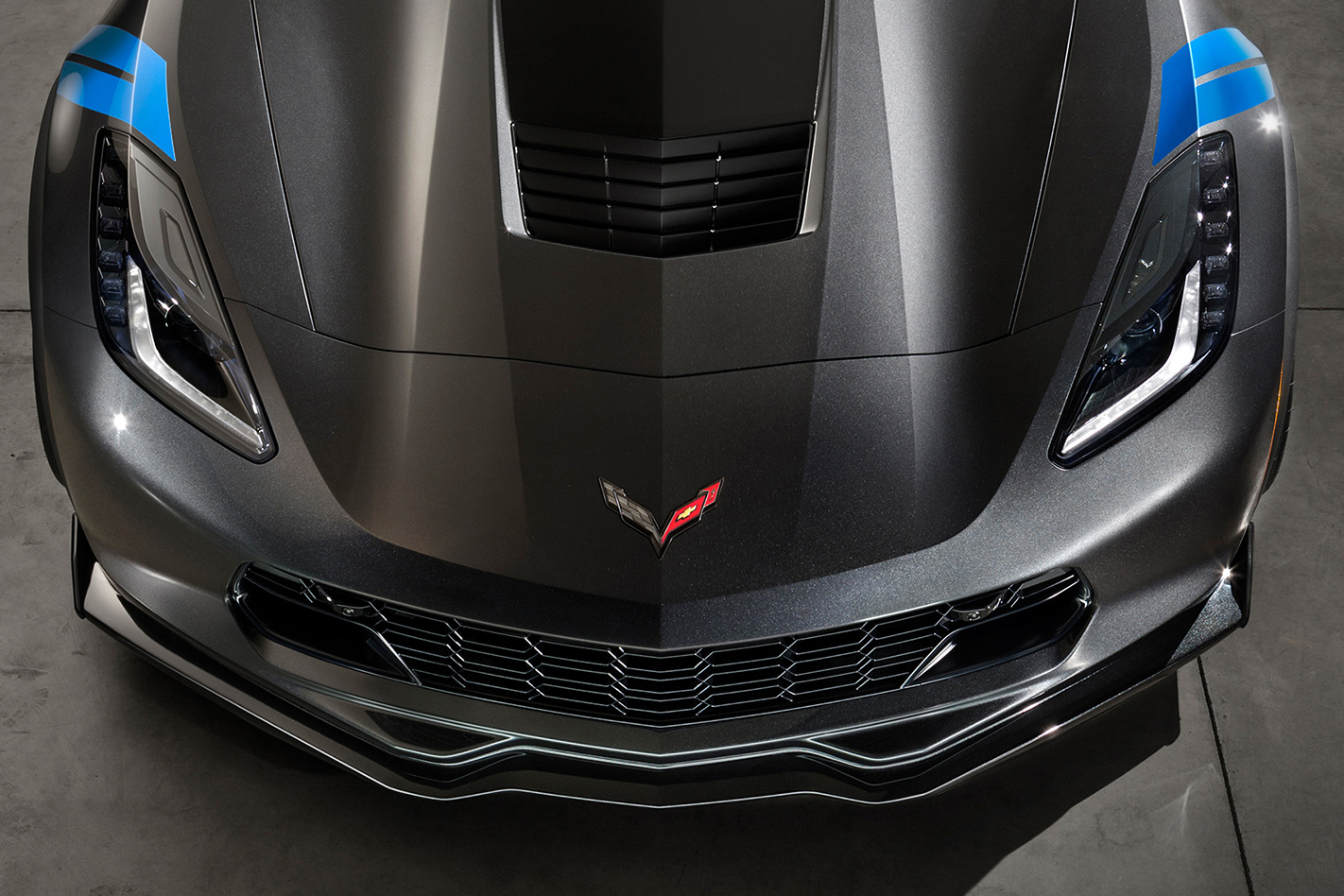
GM has been locked in a fight with IP Australia, the government body that polices trademarks, since 2013 to have a stylised version of the Corvette’s twin-flag badge approved for use in Australia.
However, the application was rejected early last year because the Chevrolet bowtie used on the badge too closely represents the Red Cross, the use of which is prohibited under the Geneva Conventions Act 1957. According to the convention, the symbol can only be used during time of conflict to indicate that the people or vehicles – typically medics, doctors and ambulances – that wear it shouldn’t be fired on.
“A divisional application effectively allows the applicant to overcome an objection to the application by excluding some goods or services to which an objection relates thereby allowing the parent application to be registered for goods and/or services to which the objection does not relate,” Nicola Scheepers, a principal at intellectual property law firm Griffith Hack, said.
“The divisional application retains the original filing date of the parent application and the applicant then has more time to overcome the objection relating to the conflicting goods and/or services, which are now in the divisional application, without sacrificing the priority filing date of the application.”
In other words, tweaking what the original trade mark application covers has bought GM more time to try and get it approved.
One source told Wheels it estimated GM had probably spent “tens of thousands of dollars” chasing after the trade mark. Another source suggested GM may need to ask Federal Defence Minister Marise Payne for an exemption to use the Chevrolet bowtie before it could be approved.
Our first hint at the C8 Corvette came via spy images of a monstered Holden VE Commodore ute wearing a V8 engine inside the tray bed.
Little else is known about the project, apart from it is believed to be tapping into a shrunken-down version of the C7-gen Corvette’s aluminium spaceframe. Other images have shown what appear to be buttresses extending back from the cabin, which is believed to house a glass panel that shows off the engine bay.
Australian Mike Simcoe is leading the design of the next-gen Corvette as part of his role as the head of design at GM.
Adding weight to the mid-mount speculation is GM’s separate, more successful Australian trade mark application for “Zora”, the first name of the original Corvette’s creator, Zora Arkus-Duntov – known for his love of mid-engined designs.
Wheels has approached Holden for comment.
A stellar year for new cars is set to make sparks fly among the judging panel.
THERE have been some lacklustre COTY fields over the years – headlined by 2000’s startlingly drab Toyota RAV4, Volvo V70, Chrysler PT Cruiser and Subaru ‘Bug Eye’ Impreza finalists – but the Class of 2016 is about as far removed from that nadir year as Trump is from a thick set of locks. Indeed, it’s hard to think of a more high-achieving automotive year than the past 12 months.
We saw completely fresh, standard-setting metal right across the board, from Holden’s transformed Spark micro-hatch to the revived Honda NSX supercar, its intriguingly complex powertrain and drive system reminding the world that “Honda is Back!”
But what do we think has the best chance of taking out the most coveted award in Australian motoring – the Wheels 2017 Car of the Year?
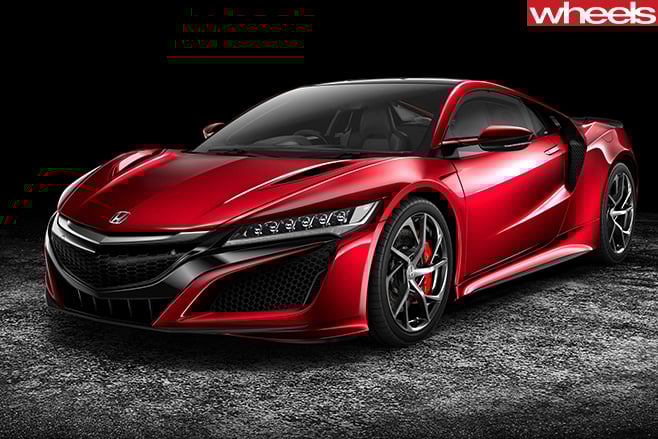
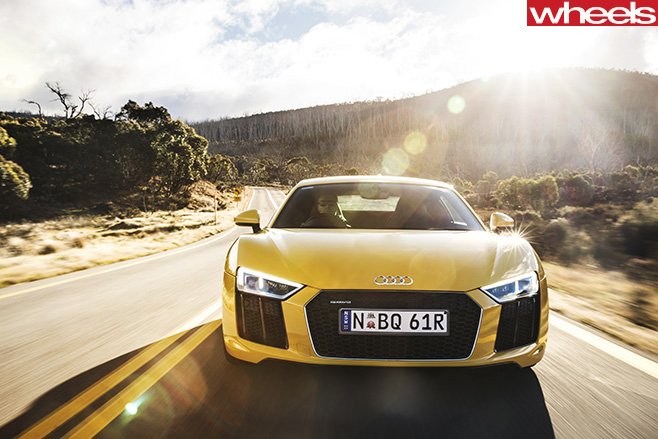
Demonstrating just how broad the design and engineering excellence is at Ingolstadt these days, we’ll also have the second-generation Audi R8 on hand to fly the flag for naturally aspirated supercars. There’s been worthwhile and consistent improvement across the board with this car, most obviously in its stunning interior, but how will the R8’s blend of wild sex appeal and Germanic sense fare in the face of the tech-heavy Honda NSX, with its envelope-pushing drivetrain and intensive air-flow management?
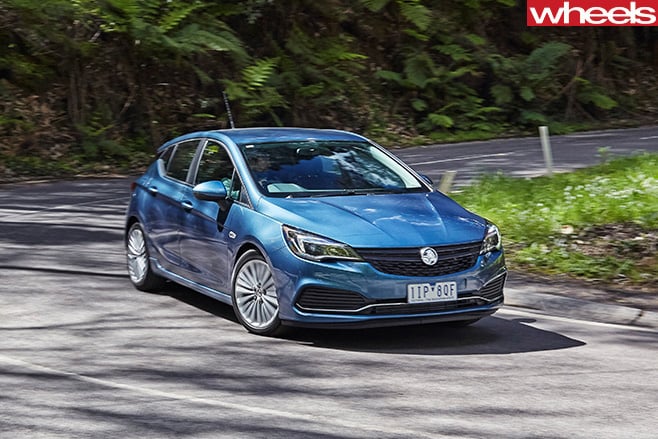
Jump ahead two classes and there’s a full suite of small-car contenders preparing for an unprecedented battle royale. From the miracles-can-happen tenth-gen Honda Civic to the crucial Holden BK Astra, the totally refreshed new-gen Subaru Impreza, the Hyundai AD Elantra (precursor to next year’s all-new i30), and the technology-laden Renault Megane IV, the small-car class has never seen so much talent hit so hard, so fast.
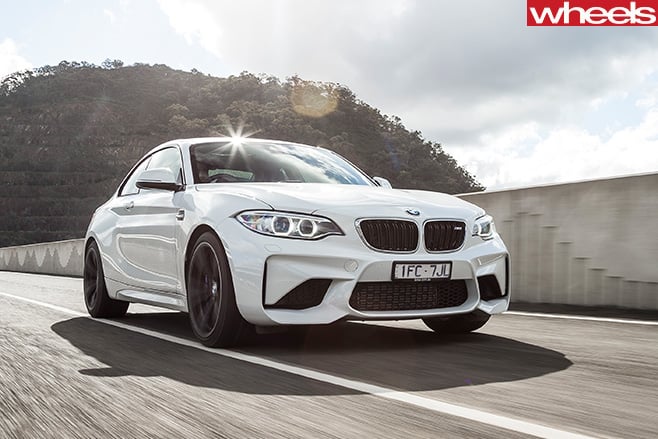
There will be other inevitable inter-comparisons going on in this year’s 28-strong field.
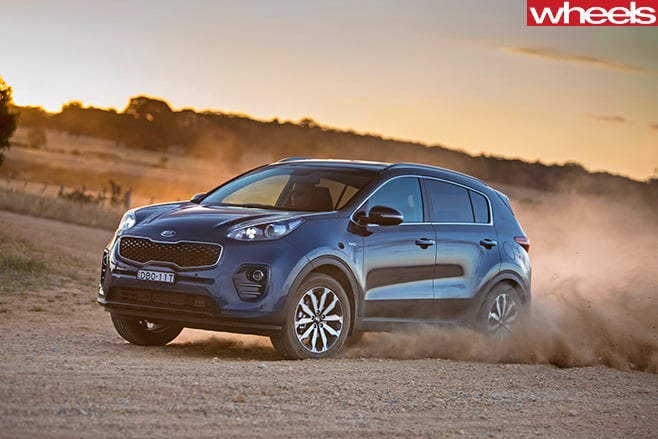
Alongside the Korean-built Renault, we’ll have another respected nameplate from South Korea – the Kia Sportage. It may share its name with some pretty dire predecessors, but the latest generation is a comparative revelation, mixing European styling with genuine dynamic panache. But can its carryover engines cut the mustard alongside the force of its turbo-petrol compatriots?
Representing the ‘quirky’ category is the marvellously left-field Citroen C4 Cactus, which we know offers a miraculous blend of seating comfort, cabin space and fuel efficiency. But will the ageing diesel – which accounts for 80 percent of sales – be crucified by its robotised-manual gearbox, countering the turbo-petrol’s velvety charm? And will completely unexpected handling talent and driver reward be enough to elevate the chances of the unusually styled Toyota Prius, given that its once-radical mechanicals and interior design are now par for the course?
Another COTY contender that’s emerged from a date with a turkey-baster and a rival manufacturer (in this case, Mercedes-Benz) is the Infiniti Q30 hatch, and its slightly raised QX30 all-wheel-drive sibling. Born from Benz’s MFA platform, and sharing drivetrains and some switchgear with the A-Class and GLA, the Q30 twins hail from Nissan’s UK plant. Yet there’s much goodness to be had in their quality dynamics, strong performance and individual style. Can the Q30/QX30 go one better than the A-Class by moving beyond Round One?
Similarly super-sized but competing in a completely different category is the Skoda Superb large liftback-sedan and wagon. For the same money as a VW Passat, this Czech relative underpins its buyer-appeal with bahnstorming performance from a pair of 2.0-litre turbo-petrol powerplants, not to mention Audi quattro-rivalling dynamics from the range-topping 4×4.
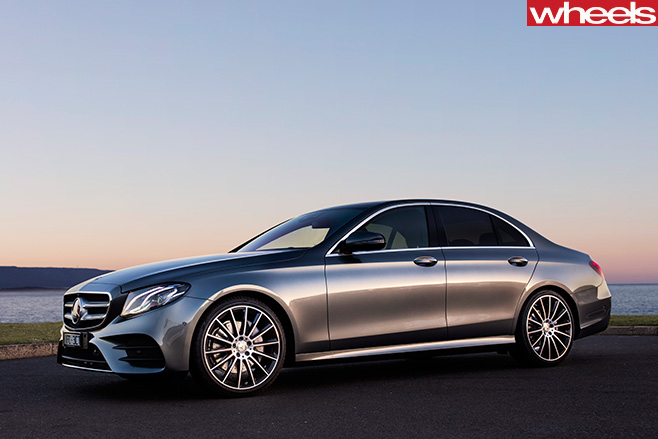
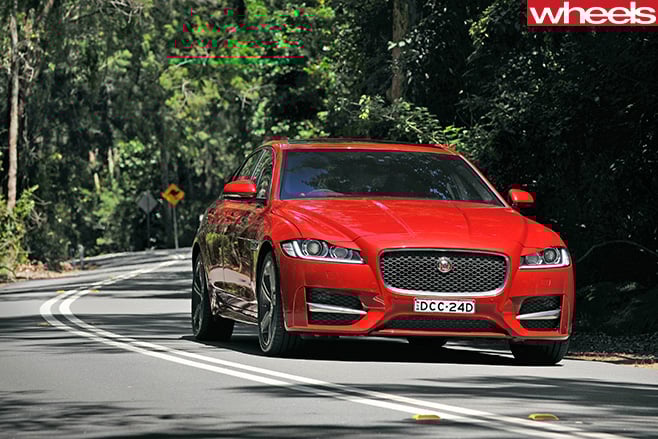
Yep, it’s the stunning new Volvo S90 up against the brand-defining W213 Mercedes-Benz E-Class and the impressive second-generation Jaguar XF. In the S90’s corner reside the expected suite of safety and construction excellence, fabulous seating and interior, and the unbelievable effectiveness of Volvo’s 2.0-litre four-cylinder engines in such a large car. But the E-Class is no duffer in the safety department, and matches the top-spec S90 Inscription’s terrific all-wheel-drive system with a superb ‘4matic’ system of its own (a first for right-hand-drive Australia).
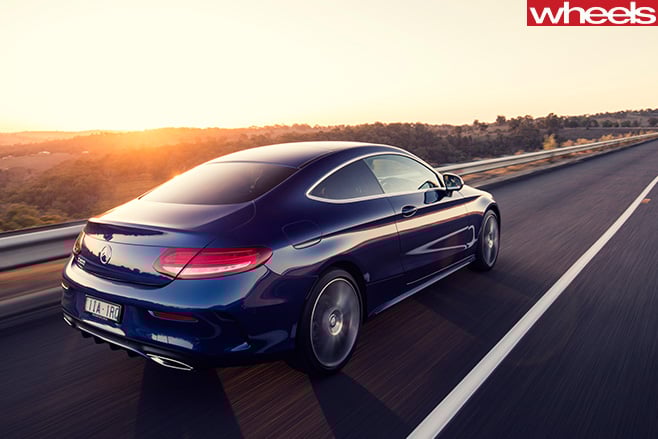
And if we feel like an antidote to four-pot diesel efficiency, the Ford Mustang and Mercedes-Benz C-Class Coupe/Cabriolet are guaranteed to deliver, especially in their range-topping V8 guises. Of course the C-Class is also available as a diesel, but it’s the just-launched all-wheel-drive, twin-turbo V6 C43 AMG and the incredible twin-turbo V8 C63 AMG that will flesh out the COTY-criteria capabilities of this elegant new Mercedes-Benz two-door.
But being a great buy – or a great drive, or a great design, or having benchmark efficiency, quality or technology – isn’t going to be enough to win the
2017 Wheels Car of the Year award. In a field this strong, only the absolute cherry on the cream covering the icing of a multi-layered cake will succeed.
It’s only been on Aussie shores for a little over 12 months, but the Ford Mustang will undergo a significant transformation for the 2018 model year.
Most notable is the revised styling, with a lower, redesigned bonnet and grille along with new bonnet vents and narrower, all-LED headlights. At the rear there’s a new bumper, fascia and optional performance spoiler, while the V8 scores quad exhaust tips.
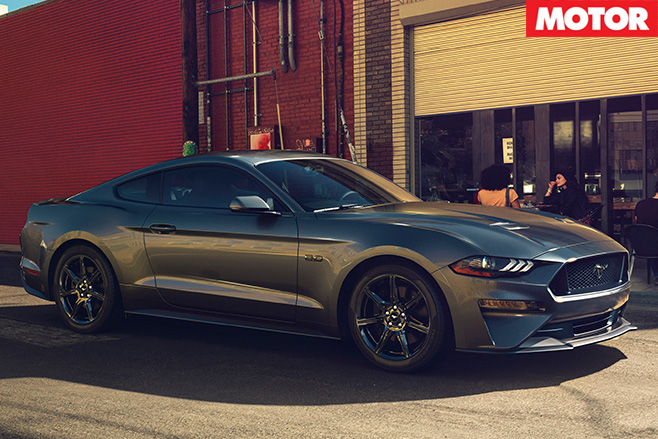

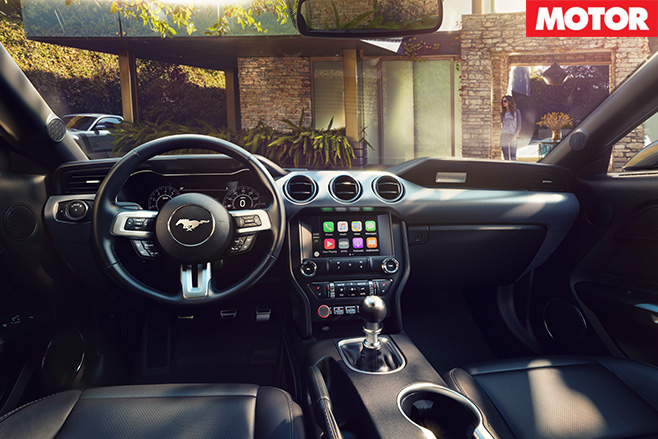
Gearbox choice is now a revised six-speed manual or a 10-speed (!) automatic which promises quicker shift times, better response and improved performance and fuel economy compared to the outgoing six-speeder.
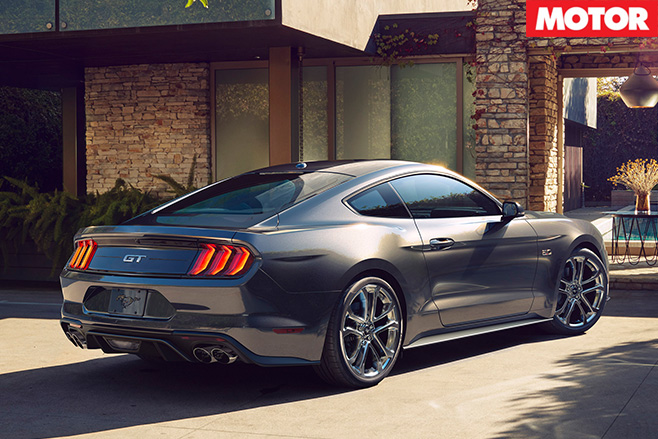
It’s too early to comment on local pricing, however the 2018 Ford Mustang will hit Australian showrooms in 2018 following a US release in autumn 2017.
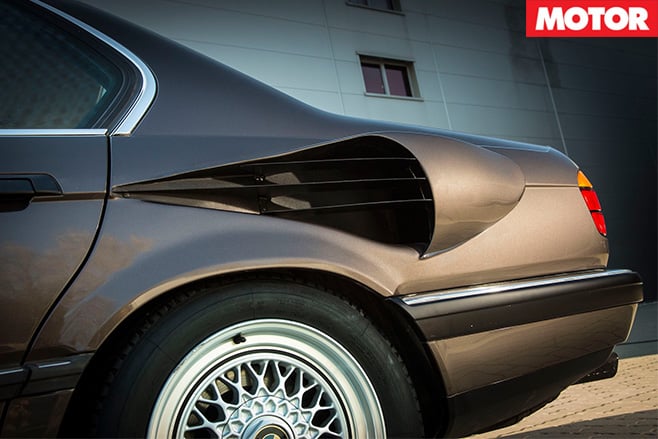
If the imminent BMW M760Li xDrive with its 6.6-litre twin-turbo V12 looks like a bonkers limo, then note this sixteen-cylinder manual-equipped 7 Series prototype from 1987.
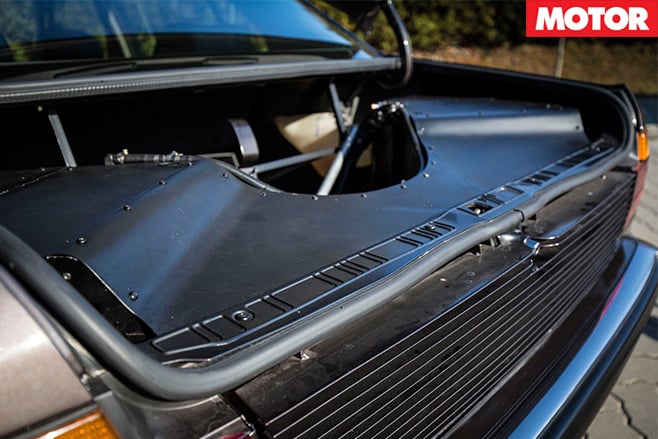
You read that right – BMW Classic has delivered these images of an E32-generation 750i prototype that swapped out its M70-designation 5.0-litre V12, before it had another four cylinders welded on and returned to the engine bay as a 6.65-litre V16 petrol engine.
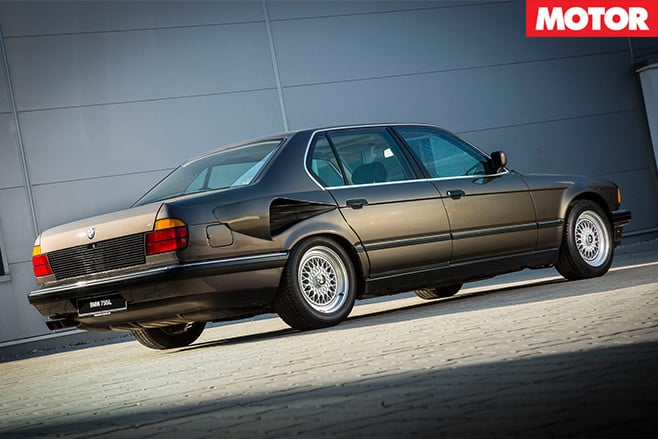
Work started in July 1987 and BMW’s engineers had by December worked out a way to fit so many cylinders under the bonnet.
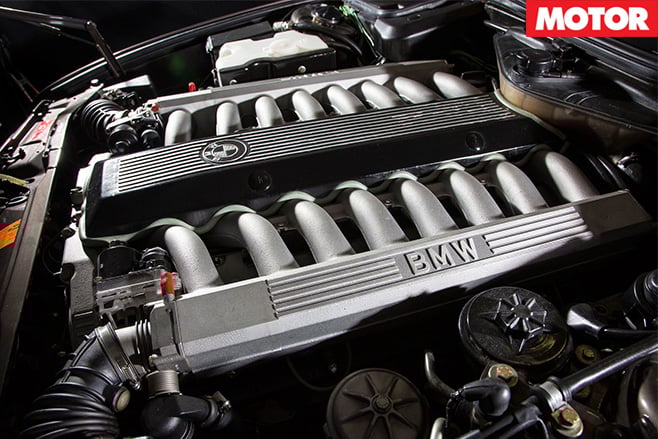
Perhaps the coolest fact in the dual-clutch automatic-obsessed world was the replacement of the 750i’s four-speed automatic with the six-speed manual from the 8 Series coupe.
Of course from the second quarter of this year BMW will launch locally its latest-generation 7 Series in range-topping M760Li form complete with 448kW/800Nm, 0-100km/h in 3.7sec and a $449,000 plus on-road costs pricetag. Progress, and all.
AN UPDATE to the Ford Mustang will bring even more performance – and, critically for V8-engined versions, the option of a better sound – as part of running changes to the muscle car announced overnight.
However, it’s going to be a long, long wait for Australian customers as the first deliveries Down Under blow out to 2018 as left-hand drive markets take priority and right-hand drive markets take a back seat.
Ford Mustang Hybrid may come to Australia in 2020
Speaking of engines, the V6 offered in other markets will be no more. Instead, the Mustang will add a wider spread of revs to the V8 via dual high-pressure direct injection and low-pressure port fuel injection, delivering what it says is “robust low-end torque, high-rpm power, and improved fuel efficiency”. Ford will also lift the Mustang V8’s compression ratio from 11:1 to 12:1, a move that should add power while squeezing out better fuel economy. It also adds the option of an active exhaust that adds a deeper growl to the bent-eight’s tailpipe tone.
No performance numbers were supplied for either engine.
Manual versions of the Mustang will gain a new twin-disk clutch combined with a dual-mass flywheel for the six-speed self-shifter, while two-pedal versions switch over to a 10-speed automatic – a transmission co-developed with rival carmaker GM.
It should corner flatter, too, with all models gaining new shock absorbers that provide what Ford says is better ride control. Meanwhile, a new cross-axis joint in the rear suspension leads to “increased lateral stiffness”, while innovative stabiliser bars “bring sharper response and handling”.
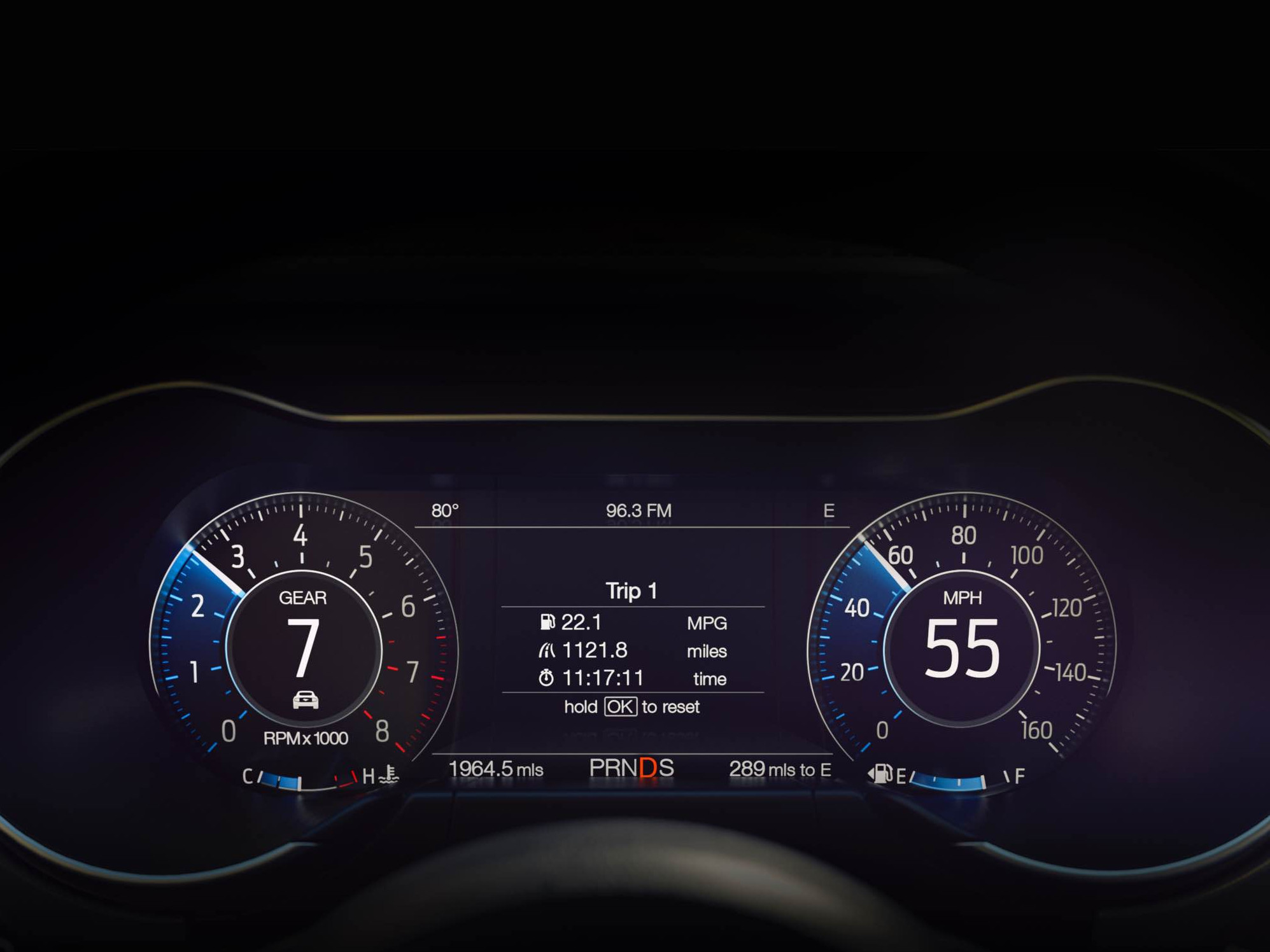
Those who tick the box for the adjustable magnetic ride suspension also get a spoiler for the rear boot lid.
Inside the Mustang there’s something of a revolution. The pony car adds a much-needed digital speedo as part of an extensive redesign of the dash that introduces with it an Audi-like full digital instrumentation via a 12-inch screen mounted in front of the driver. Sure to make the nay-sayers in Australia quiver with protest the way they did over the Mustang’s line-lock feature, the digital screen’s options include a Christmas tree-style countdown for drag strip-style launches.
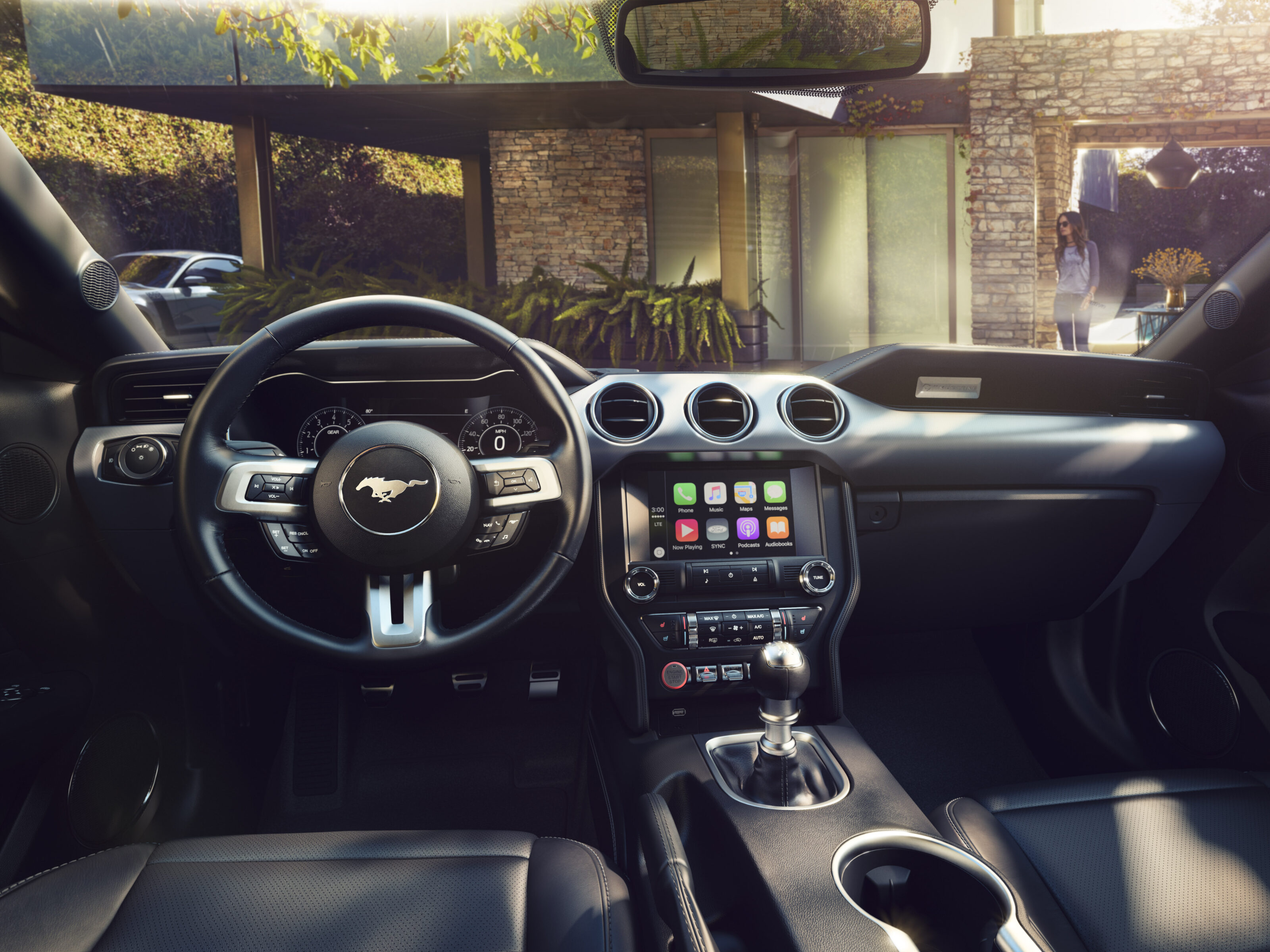
The interior also has a mild makeover to remove one of the Mustang’s constant reminders that it’s a cheap muscle car – its abundant use of hard, plasticky surfaces.
“Improved touch points and visual cues with a more premium look and feel characterize the new cockpit,” Ford said.
“The center console adds a new hand-stitched wrap with contrast stitching and padded knee bolsters while door handles, rings and bezels are finished in aluminum.
“Restyled seating surfaces feature new patterns and colour choices, the instrument panel sports an updated Mustang badge and there’s a new key fob design.”
The 2018 Ford Mustang will come with three new colour choices including one called Orange Fury. It will go on sale in the US in a couple of months’ time.
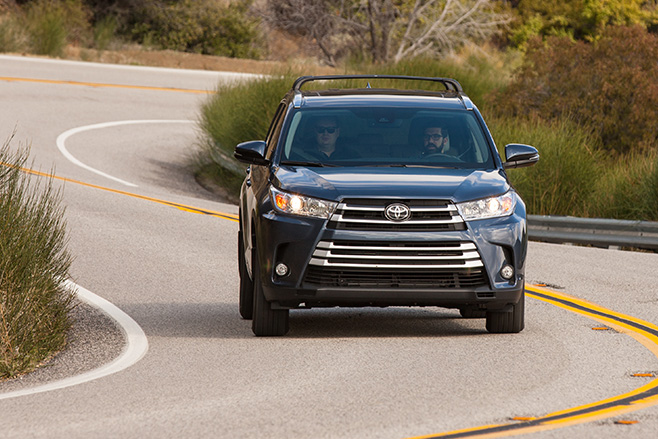
WHEN it comes to big seven-seater SUVs, the Toyota Kluger is Australia’s favourite, thanks to size, space, reputation, and ease of operation. This facelift from the USA brings incremental mechanical improvements to match its new nose. Are they enough to keep the Toyota on top?
WHAT IS IT? Now in its third generation, the Kluger is an American-designed and made full-sized seven-seater SUV primarily, but with some Australian tuning to make it steer and handle decently. The MY17 facelift brings more power, improved economy, two more forward ratios, and minor exterior changes to help keep it a segment bestseller Downunder.
WHY WE’RE TESTING IT The pre-facelift Kluger was a solid mid-way performer, behind the Mazda CX-9 and better Korean rivals, but certainly preferable to rivals like the Holden Captiva and Nissan Pathfinder. The new nose and updated trim aim to keep it looking fresh after more than three years on the market, but more importantly, a new eight-speed auto promises better efficiency and driveability.
MAIN RIVALS Holden Captiva, Hyundai Santa Fe, Kia Sorento, Mazda CX-9, Nissan Pathfinder
PLUS: Spacious cabin, practical dash, refined powertrain, improved V6 response MINUS: No standard AEB, no stop/start, firm ride, foot-operated park brake
THE WHEELS REVIEW WELCOME to the end of the beginning of New Toyota.
Back in late 2011, after a series of damaging recall setbacks and criticism over his vehicles being too dull, the company founder’s great-grandson (and newly-crowned president), Akio Toyoda, promised a “fun to drive again” rebirth. A defining line-in-the-sand moment. Subaru-developed BRZ/86 aside, the first tangible proof came with last year’s much-improved Prius IV. With the bold Toyota C-HR hitting the streets and reengineered Camry, Yaris, Corolla, and RAV4 successors coming, the revolution has started.
Which leaves the MY17 Kluger as the last of the old-school brigade. Defiantly middle of the road, and all the way from middle America to boot, the full-sized seven-seater SUV is all about delivering exactly what consumers want, and with little surprise and/or delight.
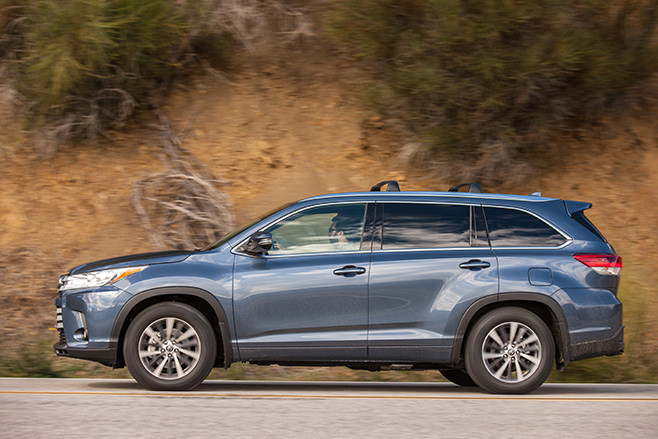
None of the above reset benchmarks, while a fidgety ride, road-noise intrusion, lack of wet-weather tyre grip, and unsupportive front seats raised our ire, but the chunky Toyota managed third among its direct crossover rivals (behind the Kia Sorento and Mazda CX-9), and fifth overall. Not bad for a high-riding SUV prioritising family-friendly packaging… which by the way, also includes vast cabin space, one of the industry’s most user-focussed dashboards, very obvious-to-operate switchgear, seemingly endless storage, huge doors allowing easy access to reclinable second and third row seats, and roof-mounted vents ensuring sufficient air supply to all passengers.
Does the facelift move the Kluger closer to the pointy end of its class?
An overhauled 3.5-litre 2GRFSE V6 (now with direct injection and a higher compression ratio) is big news, especially linked to an eight- rather than six-speed auto transmission. An additional 17kW and 13Nm of power and torque meant the US-spec Highlanders we drove around LA didn’t hang about. Eager off the mark, quick through the ratios (sometimes dropping three gears instantly for maximum response), and pleasingly punchy in the mid-to-higher rev ranges, the improvements are subtle yet useful.
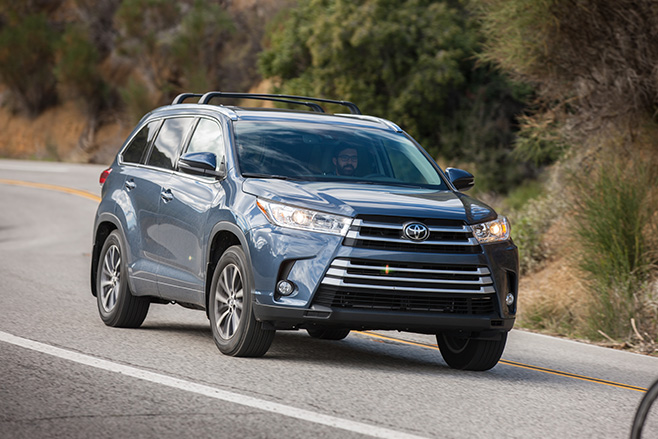
So is the deletion of autonomous emergency braking (AEB) on all but the flagship Grande from around $65K or so. Deletion? Yep, every US Highlander has it as standard (as do all local variants of the Mazda). Really, TMCA?
There have been no changes to the Australian-specific steering or strut-front/double-wishbone rear suspension tune, so we’re expecting the newcomer to uphold its muted yet confident handling and occasionally unsettled ride characteristics. Our time in the overly light-helmed and understeer-prone Highlander through some of So Cal’s more curvaceous corners at least showed how much better our chassis fettling is.
Finally, the mid-range GXL gains an electric tailgate with separate flip-up glass, sat nav, and digital radio, while the Grande scores a bird’s-eye view mode on top of the range-wide standard rear camera, reverse cross-traffic alert, lane-departure warning with steering assist, and sway warning.
That sums up the changes to our bestselling monocoque-bodied seven-seater SUV – yet the powertrain improvements are overshadowed by the curious non-availability of stop/start and range-wide AEB to Aussie buyers. Pity.
We’re hoping New Toyota tries harder with the next-gen Kluger Mk5 in 2020.
SPECS Model: Toyota Kluger GX 2WD Engine: 3456cc V6, dohc, 24v Max power: 218kW @ 6600rpm Max torque: 350Nm @ 4700rpm Transmission: 8-speed auto Weight: 1980kg 0-100km/h: 8.1sec Fuel economy: 9.1L/100km Price: From $42,500 (estimated) On sale: February 2017
TELL ME ABOUT THIS CAR:
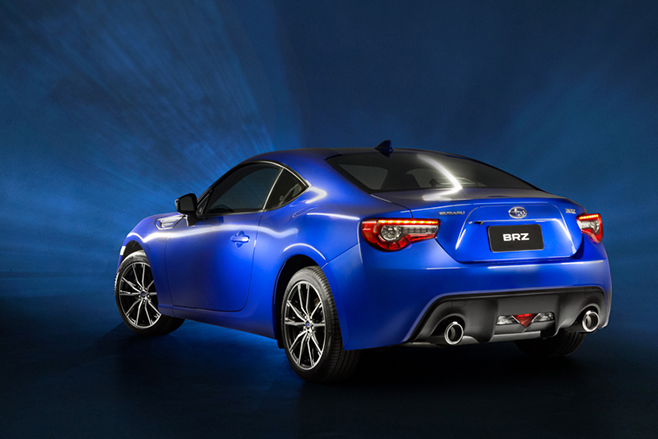
Subaru has given its BRZ sports coupe a mid-cycle refresh, with a smattering of cosmetic and mechanical updates to help keep its sole rear-drive offering feeling sharp. Engine power and torque are slightly up for manual-equipped models (automatics miss out), and there’s a looser stability control program to appeal to drifters and in-cabin updates.
That said, these are fairly minute changes that we are talking about. Dramatic alterations are nowhere to be found, so does the 2017 Subaru BRZ keep pace with its competitors, or does it fall behind?
STRENGTHS:
- One thing we’re glad Subaru hasn’t messed with is the BRZ’s excellent chassis dynamics. Simply put, the BRZ is a joyful machine that ably demonstrates you don’t need a lot of under-bonnet muscle to have fun behind the wheel. With a neutral front-rear weight distribution, the BRZ rotates easily with excellent resistance to fun-sapping understeer
- Its delectable handling characteristics are enhanced by a new “Track” mode for its electronic stability program. Less sensitive than the default setting – which quickly cuts power the instant wheel slip is detected – the Track setting is more permissive of aggressive driving and allows the BRZ’s balance and poise to be properly enjoyed without removing the electronic safety net entirely.
- The cosmetic changes may be limited to new bumper plastics, wheels and lamps, but they help keep the now four-year-old BRZ looking modern. LED headlamps are new, tail lamps lensing is different, and new 17-inch alloy wheel designs are more flattering to the BRZ’s form than the outgoing model’s body bits.
- The 2017 BRZ’s suspension tune feels refined and grown-up. It’s on the firm end of the suspension spectrum, but it doesn’t crash into potholes or ride harshly. It delivers on the handling front, without compromising comfort to an unreasonable level.
- Extra power and torque is always good, and while we’re not sure we can really feel the full effect of the 2017 model’s extra 5kW and 7Nm (for a total of 152kW and 212Nm), the engine certainly retains its rev-happy and peppy nature. Wind it all the way to its 7200rpm redline and its top-end performance really sings.
- It sings quite literally too. A new inlet tract gives a rortier engine note than before, with a deep induction note at low RPM and a pleasing high-rpm buzz. For a naturally-aspirated flat four, it sounds pretty good.
- BRZ’s sharp steering promotes a strong bond between driver and car, communicating precisely what’s going on beneath the front wheels – and telling you just how much grip you’ve got left. It’s electrically-assisted – and that typically means a steering wheel devoid of feel – but Subaru has the BRZ’s tiller properly dialled in.
- Its 1200-odd kilo kerb weight means that though it doesn’t wear fancy sports tyres, the BRZ’s Michelin Primacy rubber (which is typically fitted to luxury sedans) isn’t heavily taxed and delivers good grip without feeling harsh or generating lots of road nose.
- The BRZ’s driving position is textbook sports car. The steering wheel points straight at your chest, the glasshouse wraps tightly around the front seats, every control is right at your finger tips and the low-slung, feet-out posture makes you feel at one with the car.
WEAKNESSES:
- Start it up from cold, and you’re greeted with a stiff gearshift that’s very reluctant to slot into second gear. It eases up once the engine is warm, though.
- There’s no standard-issue sat-nav for the BRZ, which, considering its $30k+ price point, stings a bit.
- Would you really notice the extra 5kW of power and 7Nm of torque? They’re very incremental increases for the BRZ’s 2.0-litre flat-four, and unless you drove them back-to-back we’d wager you’d hardly notice them. We’d happily forgo the extra kilowatts and newton metres in exchange for a smoother torque curve though…
- …as the BRZ’s engine suffers from a sizable drop-off puff in the middle of its rev range. It interrupts forward progress when gunning it from lower rpm, and spoils what is otherwise a very likeable powertrain.
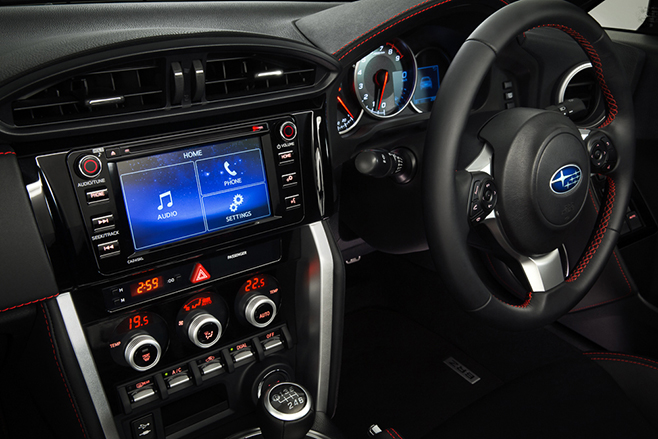
- Interior changes are fairly minor, with the most noticeable one being a new instrument panel with full-colour multi-function display plus a new steering wheel. The rest of the furniture is carry-over, and the fake carbon-fibre trim is starting to look particularly dated.
- Rear seat accommodation is very tight. Don’t expect your backseaters to tolerate being cooped up back there for terribly long.
- The boot floor is ruined by the presence of a full-size spare, which protrudes through the floor right in the centre. It’ll irritate those who want to carry anything flattish and large – like luggage.
The Subaru BRZ’s brother-from-another-mother is the Toyota 86, and offers the same mechanical package but at differing specification levels and prices. If the BRZ doesn’t have the right balance of equipment and price for your needs, you can always hop over to a Toyota dealership.
Beyond that, the Mazda MX-5 offers rear-drive thrills for the budget-conscious – with the added bonus of a soft-top convertible bodystyle which sunseekers should find appealing. Budget $34,490 for the comparable 2.0-litre MX-5 manual.
