
THE Audi Q8 concept has been unveiled at the Detroit Motor Show, hinting at a smart-looking, hybrid engined fastback SUV that will one day challenge the Mercedes-Benz GLE Coupe and BMW X6.
The Audi Q7-based concept is likely to spin into a production model expected in 2018. The 5020mm long Toyota Prado-sized Bombay blue luxury cruiser includes a striking exterior with bold octagonal grille and sloping roofline; a “luxury lounge” cabin for four people, virtual cockpit technology and a plug-in hybrid system producing 330kW/700Nm.
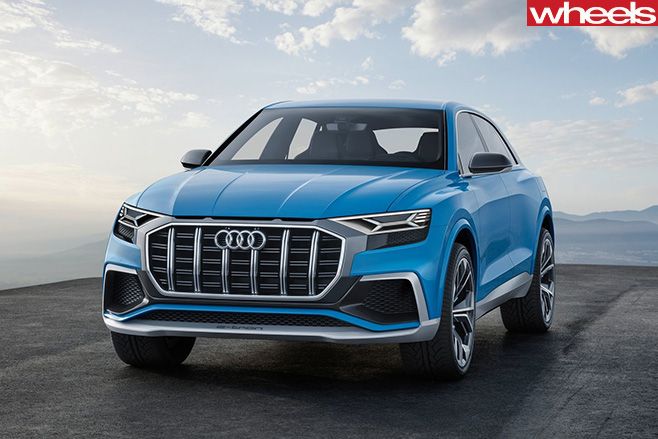
Twenty-inch ceramic brake discs wrapped in Y-spoked 23-inch rims help bring it to a halt.
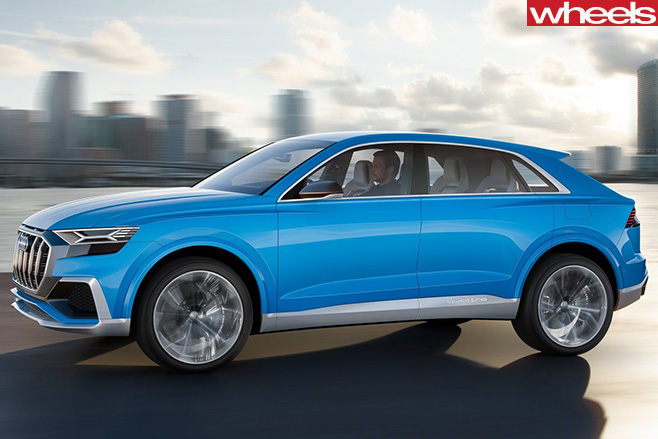
The Q8 Concept’s 3000mm wheelbase means its footprint is more stretched than a Range Rover’s, but a relatively low 1700mm roofline and high wheel arches give it a taut appearance belying its considerable size.
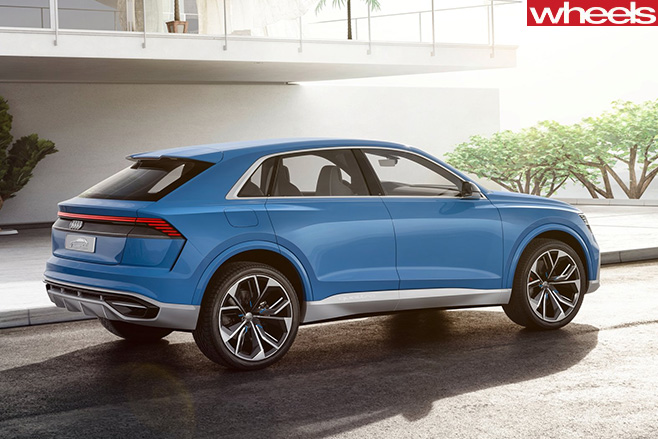
Adding to the sleek exterior is the lack of door handles, replaced with touch sensors that automatically open the doors to a defined angle.
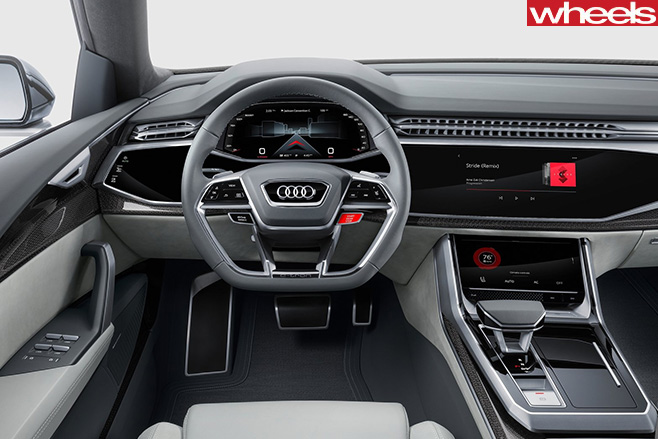
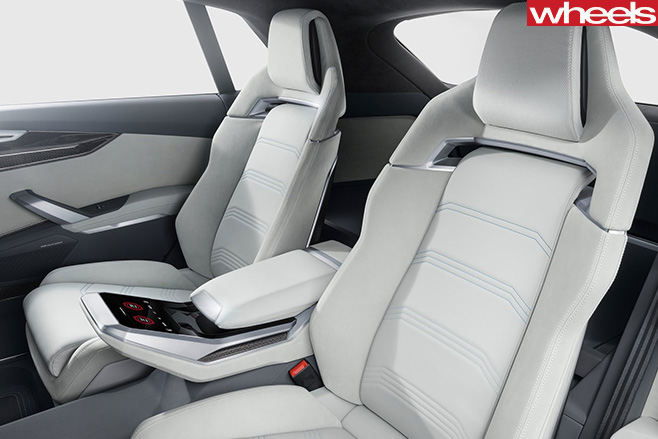
Inside, the four-seat interior features Nappa and Nabuk leather and a yacht-like centre console enhanced with a large shift-by-wire gearstick. Central control and display surfaces are integrated into a so-called “black panel” that merges the interior with the display.
While the Audi Q8 Concept isn’t exactly about practicality, Audi is keen to point out that boot space is 650 litres – that’s more than the BMW X6 and the same as Merc’s GLE Coupe.
Expect a toned-down version of the Audi Q8 Concept when the German carmaker reveals the production version already spotted wearing camouflage.
Other engine options include the SQ7’s 325kW 4.0-litre V8 for a high-performance SQ8-badged spin-off.
It is expected to cost around the same as its Mercedes GLE Coupe and BMW X6 rivals, with an entry price of about $100,000.
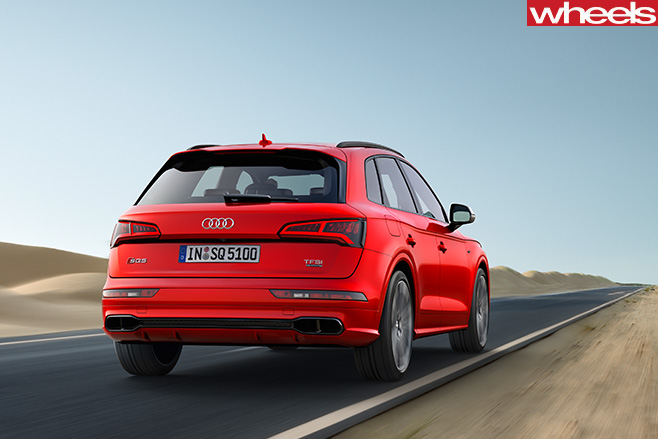
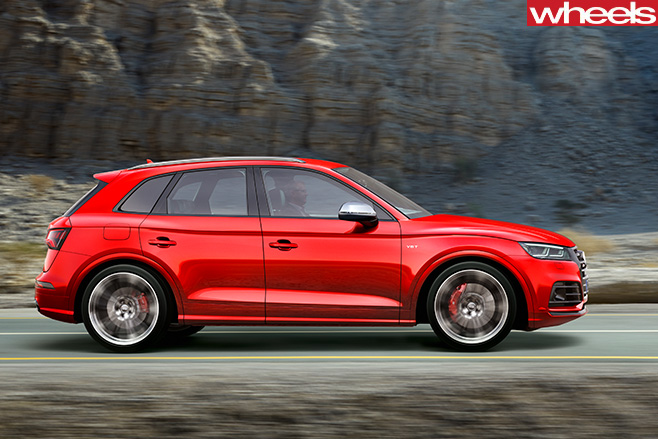
THE upcoming Audi SQ5 will dump the old model’s torque-laden 3.0-litre twin-turbo V6 diesel engine for a slightly more powerful petrol one that’s slower, less fuel efficient and likely to cost a lot more.
The German luxury carmaker has revealed the next generation of its performance-honed SQ5 overnight at the Detroit Motor Show, and instead of the 250kW/700Nm diesel of the Plus version, the all-new S-badged Audi Q5 SUV will feature a turbocharged 3.0-litre V6 making 260kW/500Nm.
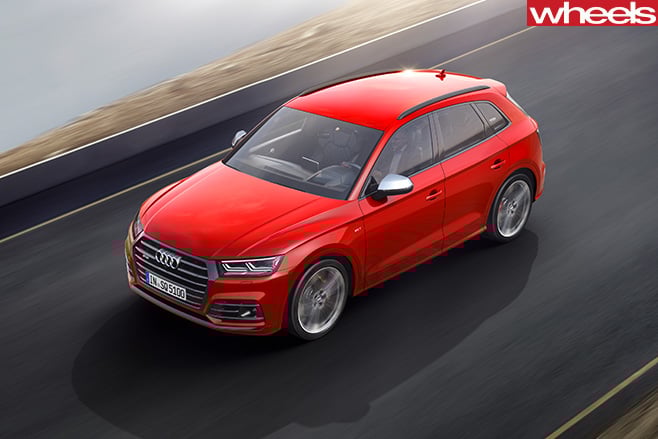
However, the jump to a petrol engine – thanks to Dieselgate, the previous engine’s fuel of choice remains a dirty word in the US – means that despite the new MLB platform that underpins it, the petrol-engined SQ5’s 0-100km/h performance slows by 0.3sec to 5.4sec compared with the diesel-engined model.
Similar to the trend sweeping other luxury carmakers, Audi has tucked the turbocharger inside the engine’s 90-degree bank, placing the exhaust manifolds inside the block while the intakes sit on the outside.
According to Audi, the short gas flow path generates minimal flow losses, allowing the engine to respond “extremely spontaneously and directly”.
The SQ5’s Quattro all-wheel-drive system will feature a rear bias under normal driving conditions, while an active torque vectoring system using the car’s brakes will send “the lion’s share of the power to the axle with better traction” when necessary, the carmaker says.
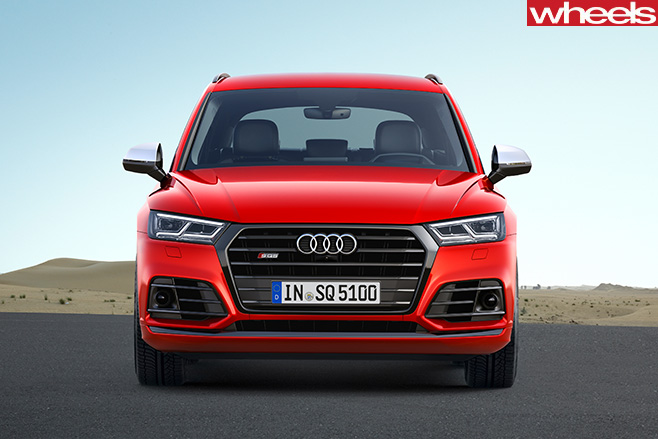
Underneath, the SQ5 features a five-link suspension front and rear, offering what Audi claims are greater stability, agility and improved comfort. Dampers adjust on the fly as standard, with a “particularly wide spread” between its comfort and dynamic settings that also adjust the ride height.
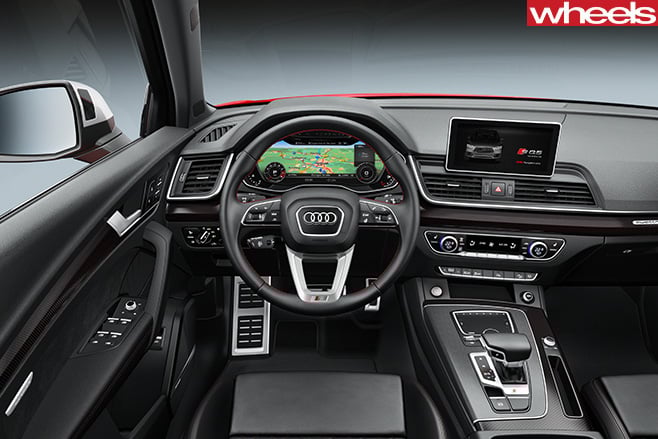
The new Mexican-built SQ5 will tip the scales at less than 1900kg thanks to 35 kilograms of weight savings via the jump to the new platform.
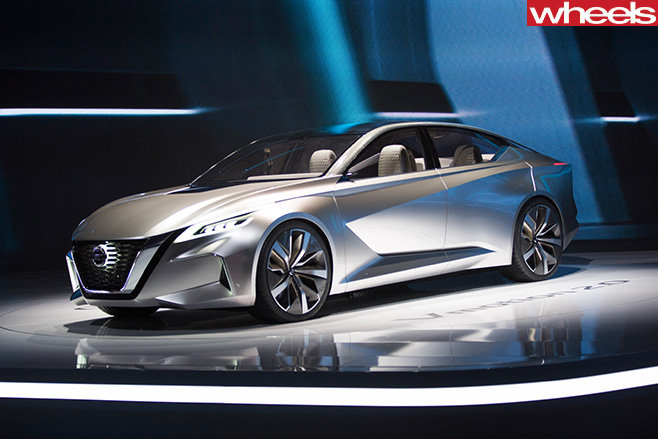
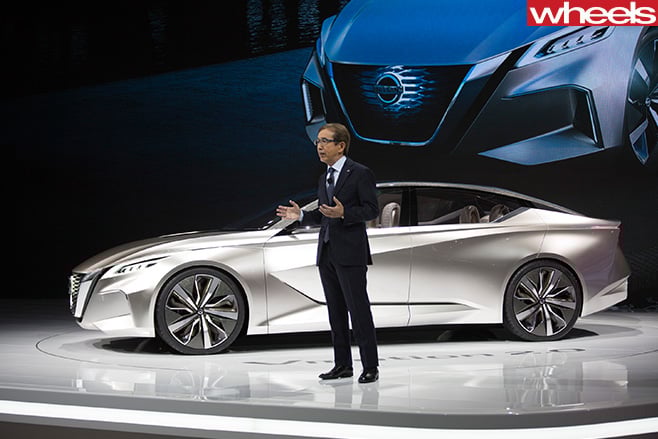
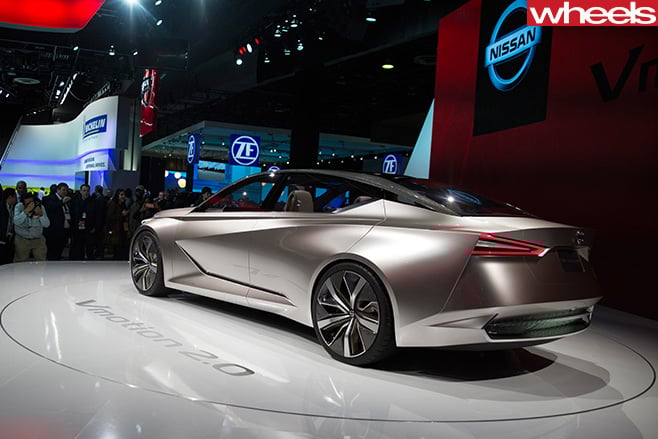
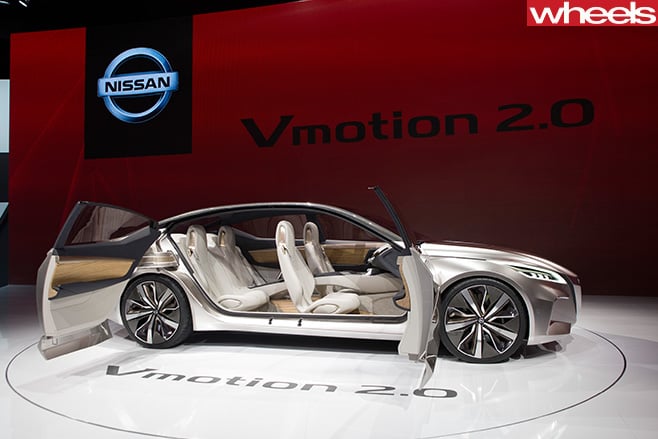
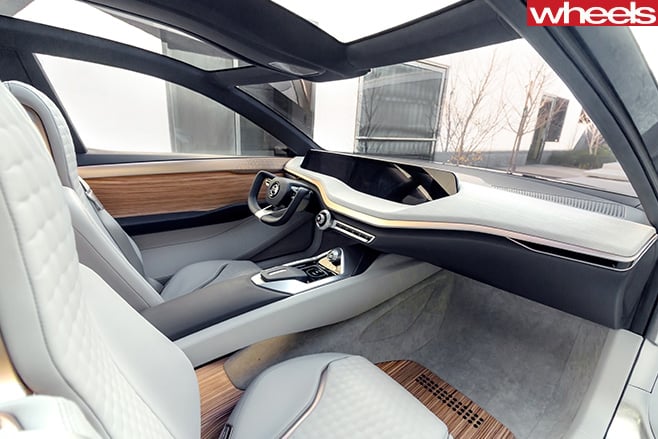
THE Nissan Vmotion 2.0 Concept, unveiled at the 2017 Detroit Motor Show overnight, drops heavy hints of the Japanese carmaker’s self-driving, next-generation Holden Commodore fighter.
The large pillarless four-door sedan also expands Nissan’s current V-motion design language, boasting bold creases and origami-like surfacing in combination with rear suicide doors and an almost entirely glass roof.
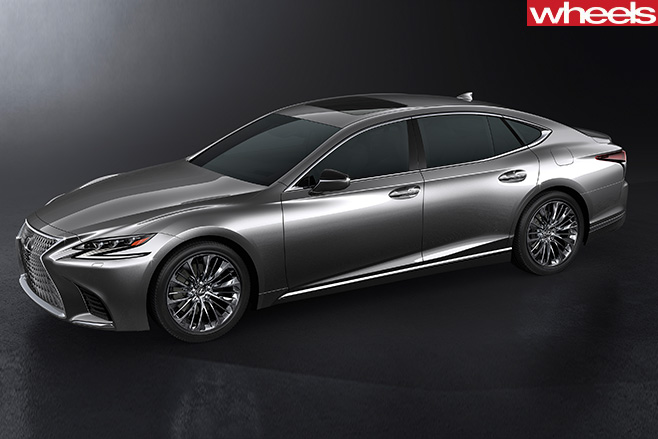
JAPAN’S most ambitious tilt yet at the upper-large luxury sedan segment has finally broken cover in Detroit, in the slinky shape of the 2018 Lexus LS.
New-from-the-ground-up in every way, the near 5.3-metre limousine will break away from the wilful boxiness that defined four generations of Toyota’s full-sized sedan flagship when Australian sales commence early next year.
However, while it sits some 15mm lower than before on standard 20-inch wheels, and introduces a six side-window silhouette to the series, the XF50 (as the upcoming LS is dubbed internally) lacks the striking visual punch of the LF-FC Concept first shown at the 2015 Tokyo Motor Show.
Perhaps the biggest surprise is that the XF50 will usurp 28 years of definitive V8 smoothness and muscle for a box-fresh 3.5-litre twin-turbo V6, delivering a heady 310kW of power and 600Nm of torque to the rear wheels via a class-first 10-speed torque-converter automatic transmission. This compares to the 285kW/493Nm outputs of the outgoing LS 460’s 4.6-litre V8/eight-speed combo, with lower consumption and reduced emissions being the expected upshot of the downsized powertrains.
The company states that a stronger cylinder block, revised engine mounts, and electric waste gates will help the V6TT move the refinement goal posts on, while ushering in a loftier level of performance interactivity, by way of the tight-ratio ten-speed auto’s dual-clutch transmission-rivalling ultra-fast shift times, backed up by a three-tiered driving mode – Normal, Sport, and Sport Plus.
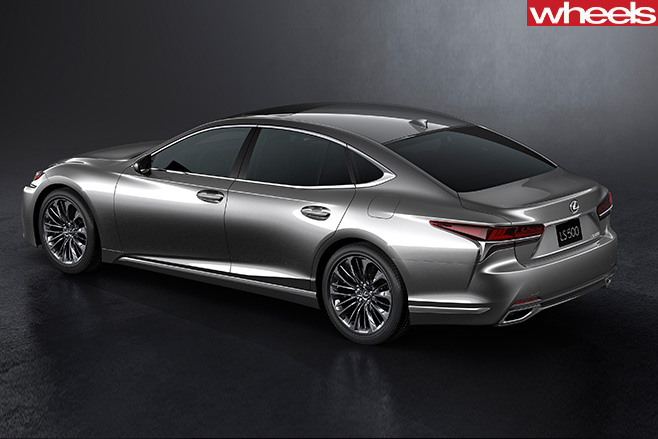
Longer (at 5235mm) and wider (1900mm) than before, the 2018 LS also departs from recent form by being offered in only a single wheelbase length of 3125mm, which is between 33mm and a whopping 158mm more than before depending on variant, significantly boosting rear-seat legroom.
Despite the dimensional growth, weight falls by over 90kg compared to before, partly thanks to far more high tensile steel sheet deployment and increased use of aluminium – including in the multi-link rear suspension set-up.
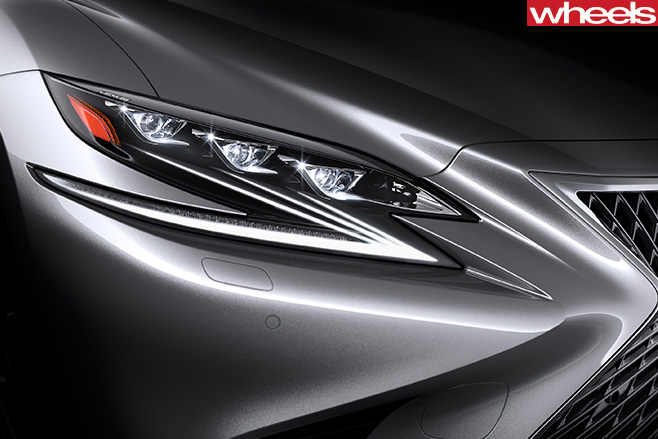
Aiding dynamics are double ball joints on the upper and lower control arm front suspension system, for greater steering feel and discipline as well as reduced inertia and unwanted movements, while a more hushed cabin comes from new electronic anti-noise and traditional sound-suppression measures.
Also lending a hand are a number of advanced chassis control technologies. Falling underneath the Vehicle Dynamics Integrated Management umbrella, they strive for more effective harmonisation of engine, suspension, steering, and braking characteristics, for maximum control of longitudinal, lateral, and vertical motion, as well as yaw, roll and pitch elements – even on split-friction road surfaces featuring dry bitumen and black ice. That’s what Lexus says, anyway.
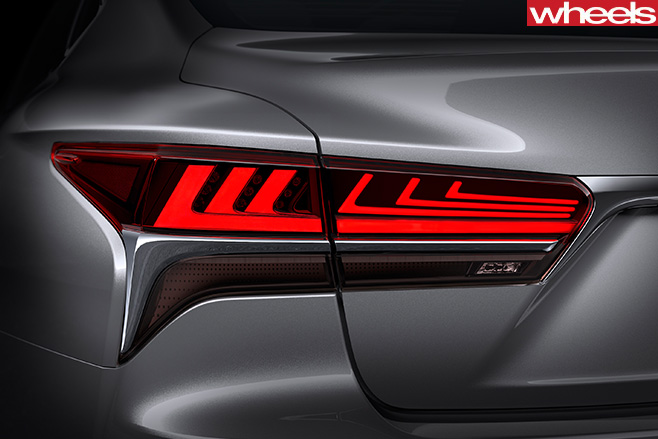
Finally, a big 12.3-inch touchscreen interface with latest multimedia, communication, audio, and navigation will be standard, a large colour head-up display will be made available, and a bevy of advanced driver-assist technologies will make the cut, including adaptive cruise control, lane-keeping assist, and auto high-beam systems.
Claimed to be inspired by the tradition of Omotenashi, the concept of Japanese hospitality, the LS promises to shake the premium establishment in a way that Lexus hasn’t been able to replicate since the seminal original did back in 1990 (winning that year’s Wheel’s COTY award in the process).
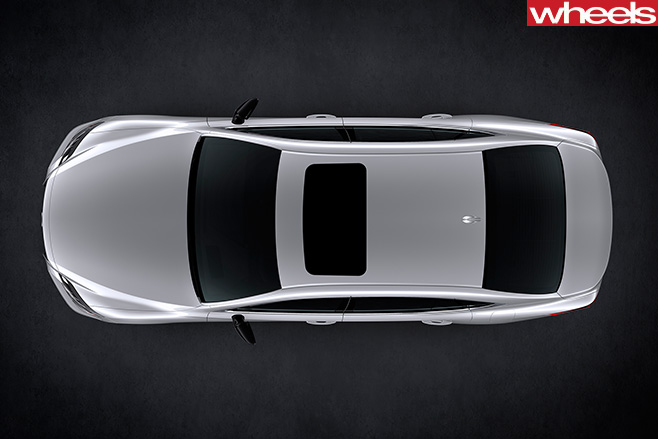
How much then? The existing LS 460 F Sport kicks off from a smidgen over $185,000 before on-road costs, topping out at nearly $250K, so don’t expect pricing to depart too dramatically from that, despite all the extra space and features that Japan’s Mercedes S-Class combatant is coming with.
Lexus won’t have the upper-luxury class to itself, with an all-new Audi A8 imminent and Jaguar’s next-gen XJ in the pipeline, while Hyundai prepares yet more versions of its burgeoning Genesis range to rock the establishment. Watch this space…
2018 Lexus LS specs
| Engine | 3.5-litre direct-injection twin turbo V6 |
| Transmission | 10-speed automatic |
| Power | 310kW |
| Torque | 600Nm |
| Wheelbase | 3125mm |
| Length | 5235mm |
| Height | 1450mm |
| Width | 1900mm |
| Wheels | 20-inch |
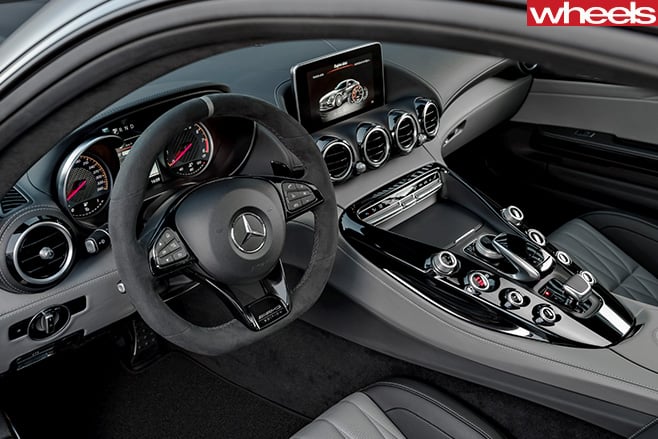
The Mercedes-AMG GT range has expanded to four road-going models, with the GT C Edition 50 revealed at the Detroit motor show – the latest in AMG’s range of sports cars to be entirely designed and built by the performance sub-brand.
GT C will be available in Australia as a coupe or convertible and introduces a facelifted front end design which will roll out to GT and GT S models as part of a larger GT family update for 2017.
The revised front features larger air intakes, restyled lower apron and the prominent Panamericana grille with 15 vertical chrome slats. This grille will soon be seen on the front of every Mercedes-AMG model, not only the two-door GT.
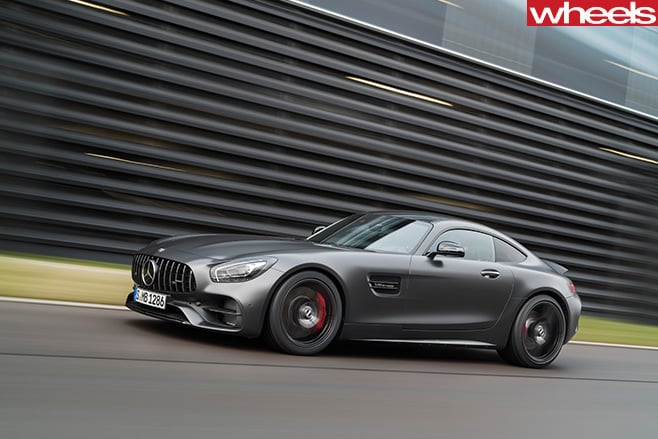
GT and GT S also receive more power and torque. GT grows to 350kW and 630Nm, up 10kW and 30Nm, while GT S climbs to 384kW and 670Nm, up 9kW and 20Nm.
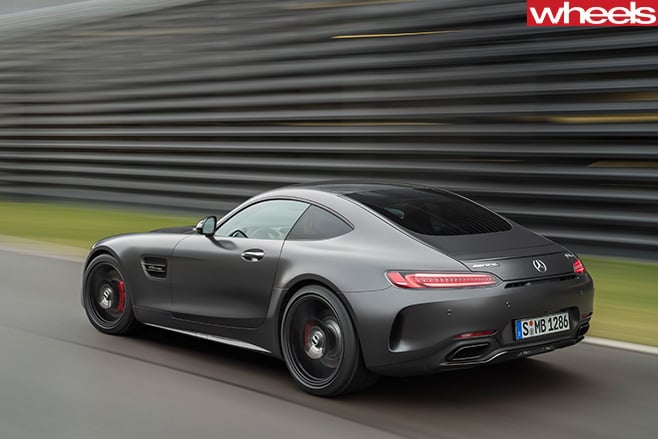
Edition 50 will only be offered in matte grey or matte white, with black chrome highlights on the exterior.
Performance enhancements from the flagship AMG GT R have made their way to the GT C, including a torque vectoring rear axle with active steering, larger wheels and tyres, and wider rear arches, though they’re wrapped in the GT C’s more luxurious package compared to the track-focused GT R.
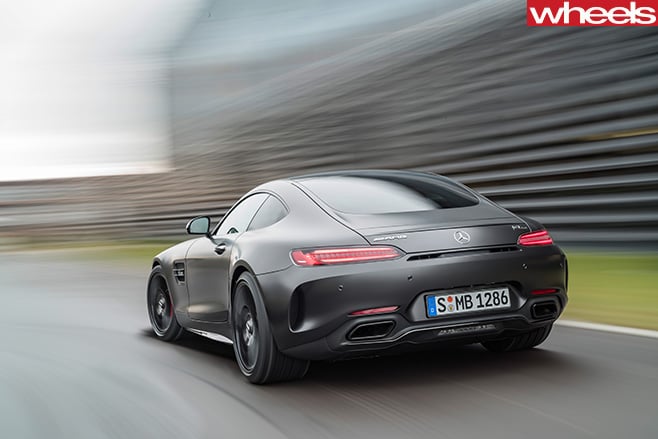
The GT R’s AirPanel active aerodynamics system will now be applied to every GT model, which uses motorised louvres beneath the front splitter to open and close and assist with cooling and downforce.
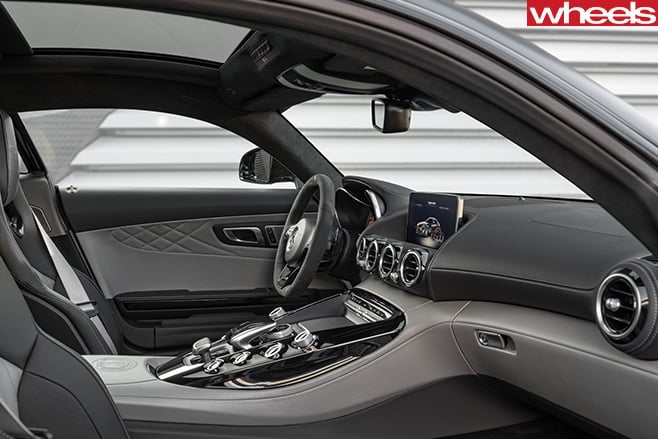
GT C and GT R will be more expensive, with GT C carrying a list price closer to that of the GT R than the GT S.
Expect GT C to start somewhere around $325,000 for the coupe, with the GT R beginning around $340,000.
The unveiling of the Kia Stinger GT at the Detroit Motor Show has given fresh hope to fans of affordable rear-drive performance orientated sedans.
The 272kW four-door will be powered by a 3.3-litre twin-turbo V6, and with a keen circa $50,000 price tag it makes a convincing sales pitch.
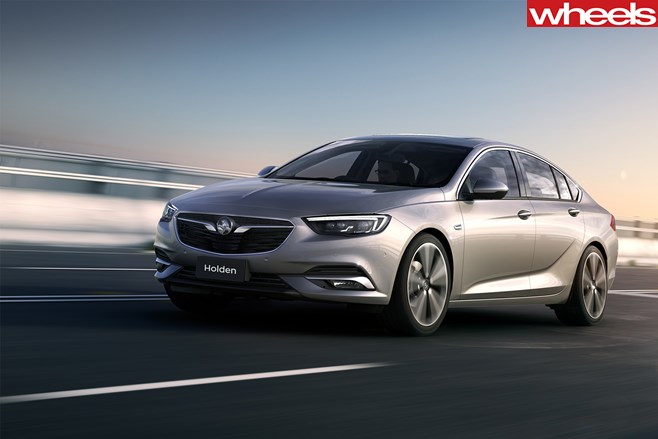
Set to land in Australia in September this year, the Stinger GT arrives at what will be a strange time for the Australian market. The current spec VF II Commodore will only have roughly another month of manufacturing before it passes, with the next-gen imported model arriving early in 2018.
The Kia takes the Commodore’s formula of performance engine up front and driven wheels at the rear at the same time when Holden’s flagship transitions to an all-wheel drive, atmo V6 layout.
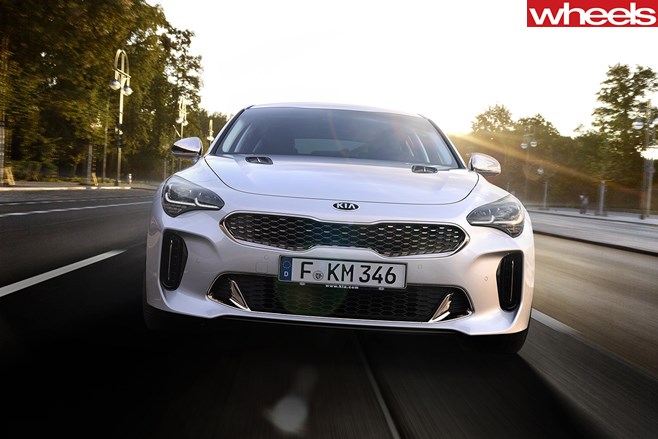
Meanwhile the next Commodore will depart from the nameplate’s V8 heritage, with the most powerful engine becoming the 230kW/370Nm ‘LGX’ 3.6-litre direct-injection V6, which will only be available in AWD. The Stinger GT gets a 3.3-litre version of Hyundai-Kia’s ‘Lambda II’ 60-degree V6, fitted with a pair of turbochargers and producing 272kW at 6000rpm and 510Nm from 1300-4500rpm. Kia is targeting 5.1sec to 100km/h and a 269km/h top speed from the production GT.
Inside, both will have room for five passengers. However, from our experience with the Stinger four is the more likely comfort limit, while Holden has already admitted you won’t be able to fit three burly blokes across the rear pew of the new model like the Commodores of old.
For argument’s sake, it should also be noted there may be a few VF II Commodores still in showrooms when the Stinger GT arrives, technically making the two sales rivals. An SS-V Redline with a six-speed manual costs $54,490 currently, and its 304kW/570Nm 6.2-litre LS3 V8 is a proven performer.
Say what you will about the demise of the RWD Aussie sports sedan, but let us rejoice in the knowledge that affordable rear-drive four-doors aren’t dead yet!
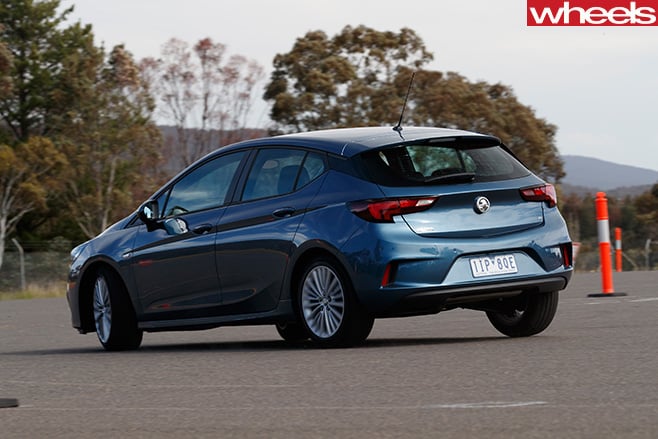
Slow sales have prompted Holden to slash up to $1700 off the price of its Astra hatchback less than two months after it went on sale.
As part of an embarrassing backdown in its quest to compete with the Volkswagen Golf and Mazda 3 in the premium end of the small car market Holden will also refund the few hundred owners who bought the European-sourced five-door, five-seat hatchback at its original price tag.
The “price rollback” sees the new Opel-built car, that is a key model in Holden’s revival following the brand’s worst ever year of sales, now priced from $21,490 for the entry-level Astra R.
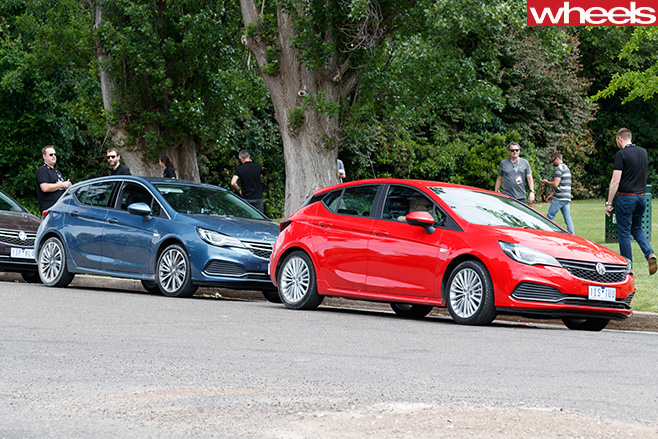
As part of the realignment the new model will also get smaller side skirts that Holden decided weren’t important to entry-level hatch buyers.
The price reductions mean the 1.4-litre turbo-powered Holden Astra R will be more closely aligned on price to entry-level hatchback versions of the Toyota Corolla ($20,190), Mazda3 ($20,490), Hyundai i30 ($21,450) and Volkswagen Golf ($22,840) that account for about 60 percent of all small car sales.

Despite the drop in prices – which come less than a year ahead of when Holden will shut the doors on its local manufacturing operations that have run since 1948 – Holden denies it got the Astra pricing wrong.
“I don’t think we got the pricing wrong,” said Holden chairman and managing director Mark Bernhard. “It’s not a science, there’s a lot of art in the way you price a vehicle; you look at the competitors, you look at the product that you’ve got … you look at the features that you’ve got … you look at how that product fits in with your overall portfolio.”
“We felt we’d priced it at the right point,” said Bernhard. “Looking at the feedback that we’ve got from various constituents it did warrant a relook.”
Despite the model realignment Holden has no plans to fit autonomous emergency braking (AEB) to the entry-level model, something fitted to the rival Mazda3 and a possibility for an upcoming update to the Toyota Corolla hatch (Toyota has just added AEB to the Corolla ZR sedan and made it optional on other sedans).

Refunds are not common in the car industry but do occasionally happen. Price drops are more common but not popular with current owners due to the impact it has on resale values; Jeep has dropped the price of its slow selling Renegade small SUV twice since it went on sale late in 2015.

Holden Astra price reductions
| Model | Original/old price* | New price* |
| Holden Astra R manual | $21,990 | $21,490 |
| Holden Astra R auto | $24,190 | $22,490 |
| Holden Astra RS manual | $26,490 | $26,240 |
| Holden Astra RS auto | $28,690 | $27,240 |
| Holden Astra RS-V manual | $30,990 | $30,740 |
| Holden Astra RS-V autou00a0 | $33,190 | $31,740 |
* Prices exclude dealer delivery and on-road costs
Mercedes-Benz has revealed pics and specs of its facelifted GLA line ahead of its debut tonight at the Detroit Motor Show, including the GLA 250 and the Mercedes-AMG GLA45.
The one we’re most interested in, of course, is the AMG version… but don’t hold your breath waiting for shedloads more power or anything. The fastest baby crossover of them all will simply follow the lead of its less crossover-y sibling, the A45 AMG, and offer up a light exterior do-over, some teeny tiny mechanical tweaks and perhaps some more content when it drops in half way through this year.
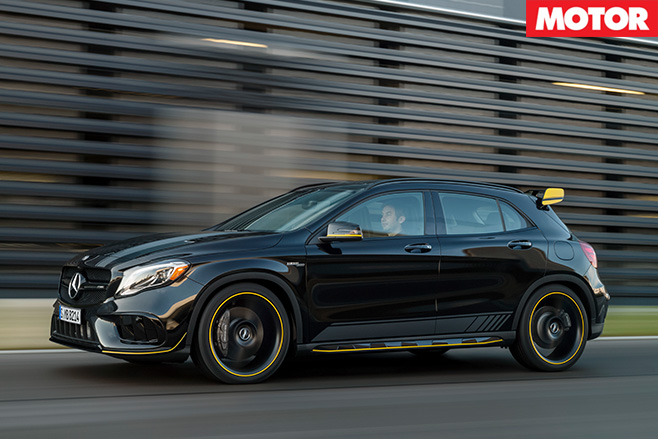
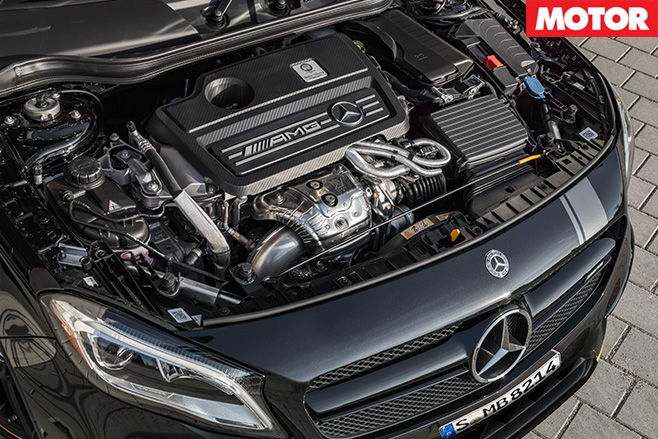
The tasty 2.0-litre turbocharged four-potter stays at 280kW and 475Nm for its outputs, though the seven-speed dual-clutch gearbox’s first three ratios are shorter and the shift map’s been fiddled with. And, err, that’s about it. Inside, there’s a slight tweak to the instrument gauges, while the leather-wrapped dash is new, too.
This sticker and colour insert pack will be offered across all A-Class AMG variants, and comprises grey and yellow highlights, black and yellow rims and a black grille.
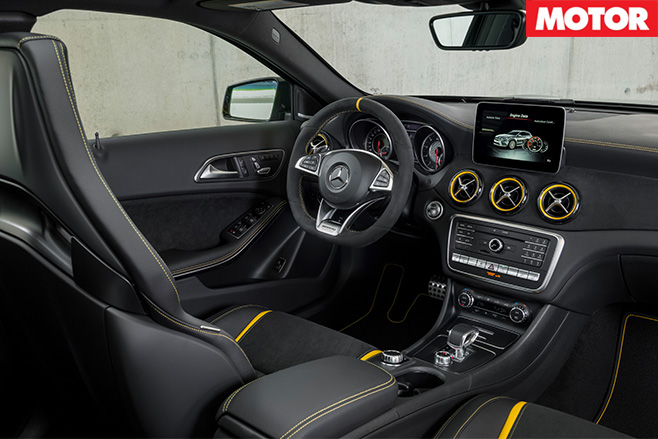
The Yellow Night edition is only available if you tick the box for a Night Black or Cosmos Black paintjob, though. More prices and specs will drop closer to launch half way through 2017.
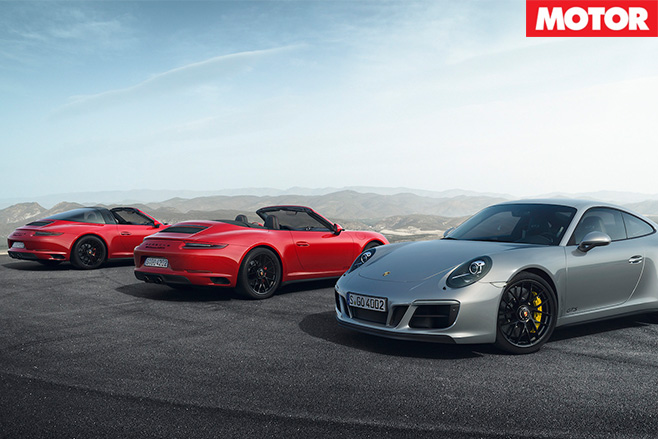
Where a new Porsche 911 goes a Carrera GTS version will soon follow – as is the case with the current 991 Series II and this new 331kW twin-turbo peg between Carrera S and GT3.
Globally launched this week and already on-sale in Australia, the 911 Carrera GTS costs $279,000 and $305,100 in rear-drive coupe and cabriolet guise respectively, $295,100 and $316,600 as a 4 all-wheel drive coupe and cabriolet, and $316,600 for the 4-only Targa.
In base form that represents a $26,500 increase over the 911 Carrera S, and in each case the 3.0-litre twin-turbocharged flat six-cylinder engine leaps from 309kW/500Nm to 331kW/550Nm in the 911 Carrera GTS, the latter from 2150rpm to 5000rpm.
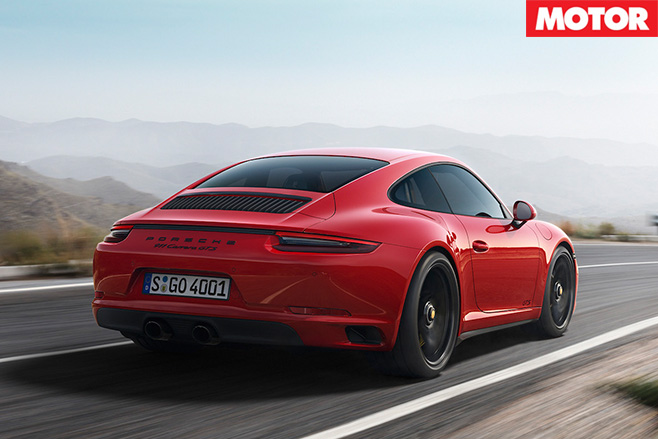
Meanwhile the 911 GTS allows the PDK-only, 3.8-litre naturally aspirated 911 GT3 to keep its power (3.8sec) and performance (3.5sec) crown, at $293,200.
Assisting with the sprint gains are wider 305mm rear tyres in the GTS, up from 295mm in the Carrera S.

The 911 Carrera GTS will be the last stop on the freight train of 991 Series II updates before the second round of motorsport-focused models lobbed, with the GT3 and/or GT3 RS all but confirmed to once again offer a six-speed manual transmission like the limited edition R.
Gorden Wagener is the man responsible for Mercedes-Benz styling, and will have last say in signing off on the look of the AMG Hypercar before its likely reveal at Frankfurt in September this year.
Details are scarce about the styling of the as-yet officially unnamed machine, which was announced accompanied by one restrained sketch at Paris last year, and is simply referred to internally as ‘Hypercar’ or the codename R50.
In essence, it is a road-going Formula One car, featuring the same 1.6-litre turbocharged V6 engine and hybrid drivetrain as the current world championship-winning race car.
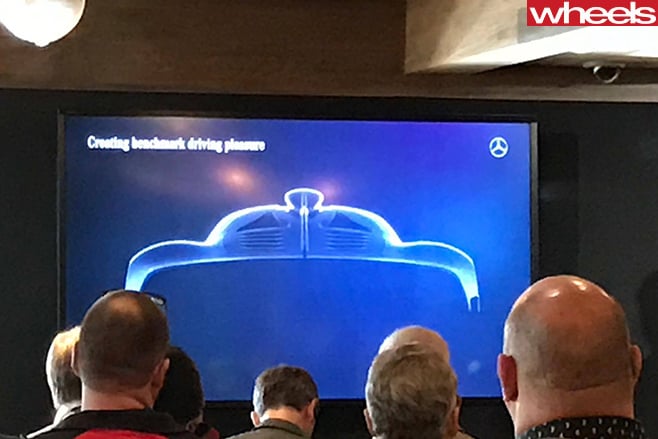
A new image of the car was shown ahead of the Consumer Electronics Show (CES) in Las Vegas last week. Speaking to journalists afterwards, Wagener shared his thoughts about incorporating AMG’s familial design elements into the hypercar while creating something unique.
“There’s always two sides. Such proportions are almost like a penalty shot in soccer without a goalkeeper. You can’t do much wrong! Proportion is so important. You have to have great proportions. Everything has to be in the right place.

“You see on the teaser that it shares our language. You see the car is very clean and pure, but of course it will be very extreme.”
The recently announced AMG GT C and AMG GT R feature a grille with prominent vertical slats known as the Panamericana front. It is modelled off the Mercedes-Benz W194 300SL that won the 1952 Carrera Panamericana in Mexico, and comes from the Silver Arrows before that. The AMG hypercar is expected to wear an interpretation of the same front end.

“The big differentiation we are doing is to really make that sub-brand on a similar level to Porsche. For all-AMG products, like the GT, we give it even more of a profile.”
Orders for the landmark AMG vehicle have started to roll in, with six unnamed Australians in the queue to buy their own according to local Mercedes Benz spokesman David McCarthy.
“I think this is a very special car that happens once every 50 years,” said Wagener. “We’re truly making a statement in history and we better do it good! I think what we’ve come up with is fantastic. You will see.”
