
THREE cars assessed as part of the most comprehensive test of real-world fuel figures in Australia have broken strict pollution laws, an Australian Automobile Association study has found.
One of the 30 cars tested produced almost double the limit for nitrogen oxides, a major source of air pollution, the study shows. Another produced four times as much carbon monoxide as allowed under Australian emissions standards.
A third car was criticised for just breaking the legal limit for nitrogen oxides under testing.
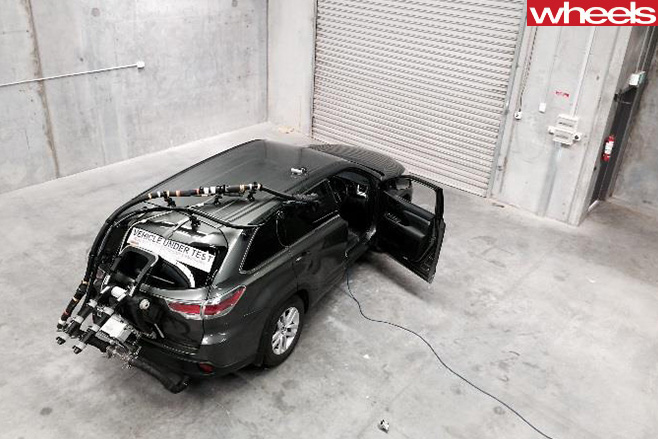
The preliminary report of the study, titled Real World Driving: Fuel efficiency and emissions testing, is the result of a months-long study of some of the best-selling vehicles in Australia, including trade utes. All the vehicles tested were less than two years old, and with fewer than 50,000km on their odometers.
According to the report, real-world fuel use was up to 35 per cent higher than figures shown on government-mandated labelling, and 20 per cent higher on average.
AAA chief executive Michael Bradley called on the laboratory tests used to determine fuel use to be dumped in favour of real-world testing.
“These results suggest that as emissions regulations around the world become more stringent, auto manufacturers are producing vehicles that limit emissions in the laboratory, but not necessarily in the real world,” Bradley said.
“With the Government actively considering stricter standards for Australia’s vehicle and fuel sectors, it’s critical that real-world testing is introduced to ensure motorists aren’t asked to pay more for regulation that fails to deliver environmental benefit,” he said.
“The AAA notes that the European Union is currently transitioning away from relying solely on laboratory testing to improve the effectiveness of its emissions regulatory model and we encourage the Australian Government to do likewise.”
It took the controversial step of banning Volkswagen Group products from its Australia’s Best Cars award in 2015 in response to the Dieselgate, sparking a bitter war of words. The German carmaker declined to let its products take part in this year’s awards.
Supercars might be pin-up symbols for greed, but not this time.
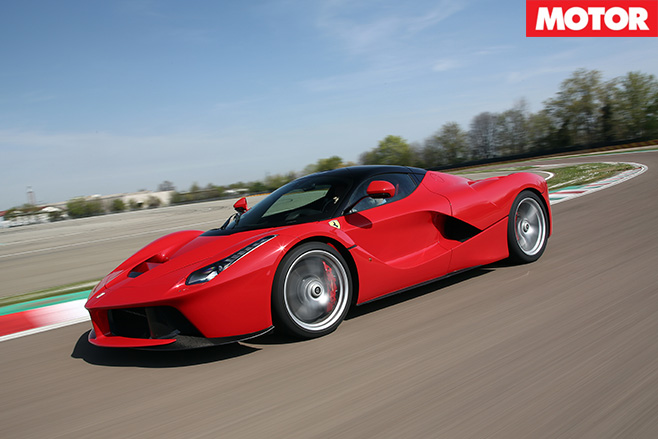
Last week a one-off LaFerrari fetched US$7m at auction, with all proceeds going to the victims of the Central Italy earthquakes.
The winning bid, converting to an incredible $9.37m in Australia, makes this LaFerrari the most valuable car made after the year 2000.
It also makes it AU$6m more expensive than the original car’s price (AU$2.5m), and about AU$4m more expensive than second-hand examples.

Two white lines streak from its nose to its engine’s window, while its nose is marked with red, green, and white – the colours of the nation’s flag— as a mark of respect.
Adding to exclusivity is the fact was never originally planned. This LaFerrari, the 500th example, was decided upon after Ferrari and the Italian Government had a chat in Maranello.
Inside there’s also a plaque to commemorate the more than 290 people killed when a 6.2-magnitude earthquake struck Amatrice in September and thousands displaced in its aftermath.
It’s reported two official Scuderia Ferrari F1 racing suits and gloves were also put up for auction, signed by Sebastien Vettel and Kimi Raikkonen, that raised another US$36K (AU$48K).
This is not the first time Ferrari’s built a special ‘extra’ for charity. In 2004 Ferrari donated an Enzo to the Pope, which was then auctioned off for Tsunami victims.
This one, however, you could call ‘Italy’s LaFerrari’.
The BWA Golf R is a quick and useful street car and, to me, is the essence of what Hot Tuner is all about.
Hot Tuner 2016 is brought to you by Valvoline SynPower
At a Wednesday night street meet at Sydney Dragway, the Golf has ripped through the quarter mile in 11.8sec at 188km/h and on the same surface but with different timing gear (the Driftbox timing equipment MOTOR uses is generally acknowledged to read around 0.3 second ‘slower’ than a dragstrip timer’s light beam triggering system) its best number was 12.09sec at more than 185km/h.
The other benchmark, heaving the 1500kg heft of the Golf R (yeah, all-wheel drive Golfs aren’t small-car light!) to 100 kays, is typically devoured in 4.2 seconds with Morley achieving one particularly sparkly run of 3.89s. Who would have ever thought VW’s replacement for the humble Beetle would have evolved to be a thing such as this?
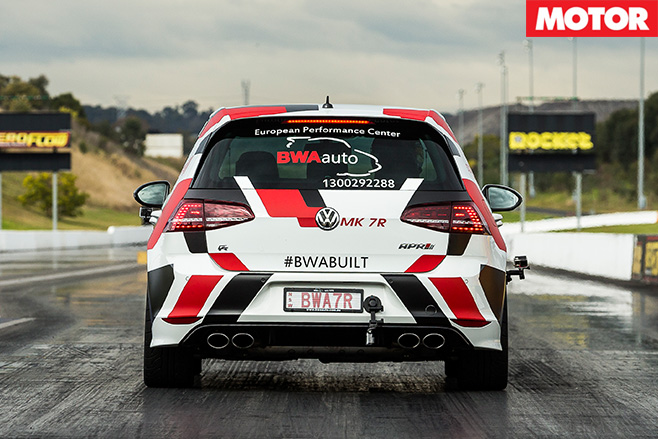
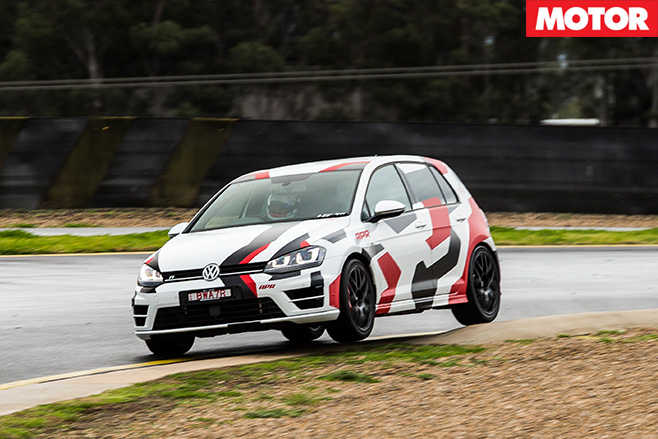
I had D’Alberto’s words in mind as I strapped on my helmet, but you can imagine my disappointment when, after a few hours of better weather – and track drying-out time, in which we were able to run all the cars for our figures – it began drizzling almost the instant I opened the Golf’s door. Gawddamn… with wipers on, I stuck the shifter into D and wandered out onto the track…
As well as the KW suspension upgrade, there’s been a bit of other fiddling with the chassis too: a set of billet alloy upper rear control arms and a driveline brace between the trans and the subframe. Alignment specs – critical for a good handling car – are one degree of negative camber all round and seven degrees of positive castor up front, which helps with steering feel and keeps the front tyres’ footprint planted mid-corner for power-down and steering.
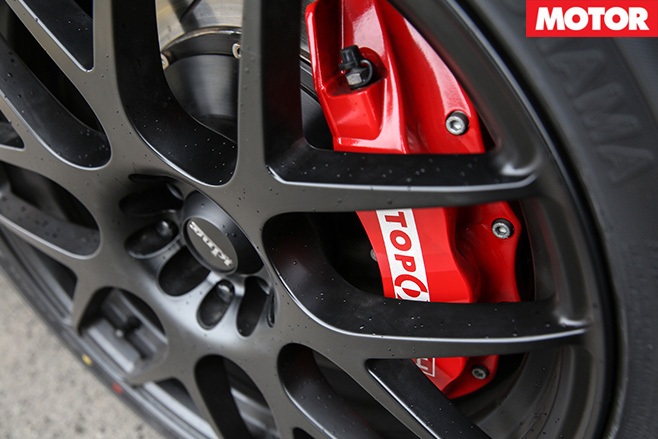
However, although I found the steering to feel synthetically sharp, I didn’t quite find the apexes with the precision I expected; but hey, it was only five laps on a damp track and my brain is programmed with a fair degree of self-preservation, especially when I’m sitting in someone else’s pride and joy. Speaking later, BWA’s Craig Whyms mentioned that was more to do with his choice of semi-slick tyres – straight off the street – than any chassis set-up.
And gunning for such aggressive tyres was always going to be a roll of the dice with the weather.
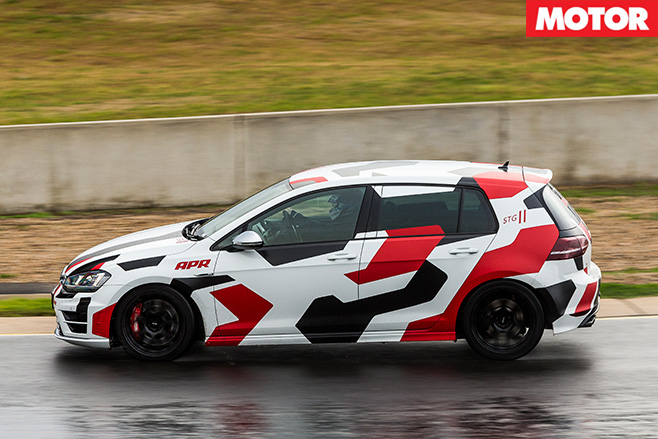
Oh, and while it’s fourth outright at Hot Tuner 2016 for speed, the BWA Golf R does win something: the livery we’d be most likely to put on our own car. And that’s saying something.
OVERALL RANKING: 4TH
DISCIPLINE RANKING
4th | Lap time: 1:04.8sec 6th | Lap V-Max: 154.39km/h 5th | Lap V-Max: 101.85km/h 7th | Lap V-Max: 50.52km/h
If ever there was a day to drive a 700-horsepower, rear-wheel drive, stiffly sprung, heavy car on a sodden track, this wasn’t it.
Hot Tuner 2016 is brought to you by Valvoline SynPower
In fact, this was a day to stay in bed, covers over your head, while the old bearded bloke next door finishes building his ark. You didn’t even need to wheel out from behind the pit wall to know that this was all going to be a bit academic; just firing up the Coyote was enough.
You know how some cars have exhaust notes that sound like they’ll be fun to play with? Or maybe a note that says ‘rev me, rev me harder’? Yeah, well the Hennessey-Streetfighter Mustang makes a noise through its stainless pipes that is the mechanical equivalent of heavily tattooed nightclub bouncer wagging his finger at you as his first and last warning.
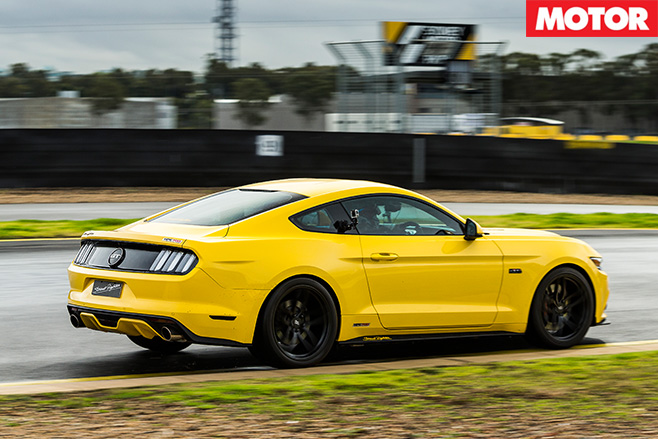
The problem here is that I can’t ever really get into the meat of the power curve, because the rear tyres have gone up in steam long before that happens. Hell, just edging out of pit lane and onto the apron that joins the track proper, the Streetfighter car is all over the place like a puppy on wet lino.
So, I’ll draw on my previous experience on the damp, if not completely sodden, dragstrip: This car is seriously fast. You might have guessed that much, but what’s difficult to convey is the sheer amount of top-end rush these modern, blown V8s have. The Herrod car is a bit of the same; a solid beginning that develops into a massive mid-range before it transitions into a truly mind-altering top end.
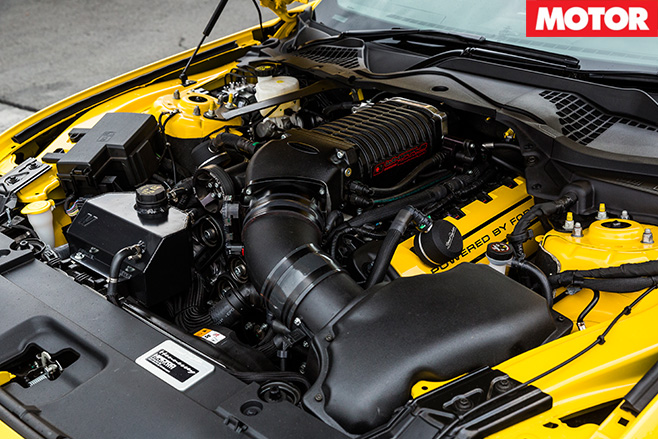
Back on track and I’m still working out how much throttle I can safely give the supercharged ’Stang. ‘None’ seems to be the answer if you insist on including that bit about ‘safely’. But if you get a bit braver you can tip, oh, maybe 10 per cent throttle into it before it tries to wriggle out of your grip like a greased piglet.
So, having established that we weren’t going to break any lap records, I started to explore how much lateral grip I was working with. And it turns out there’s a fair bit. The Mustang’s fairly responsive steering feel remains in evidence, and because there’s still some compliance in the front-end there’s actually quite a bit of grip across the front axle. The rear end? I couldn’t tell you. D’Alberto ended up with a better idea, though, and his dry laptime of 1.05 dead put the Mustang mid-field and just three-tenths behind the Herrod Stang, the fastest of the rear-drivers.
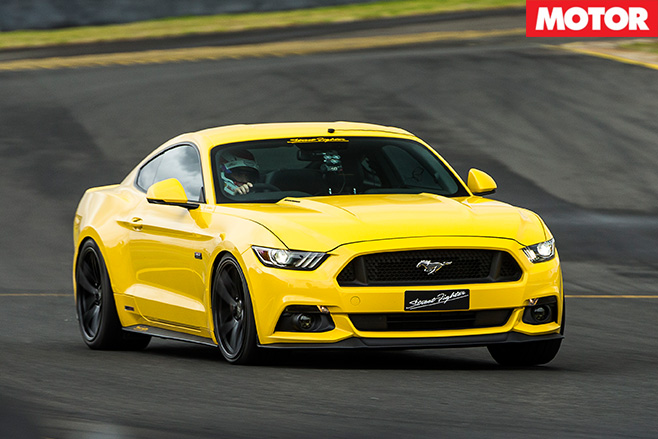
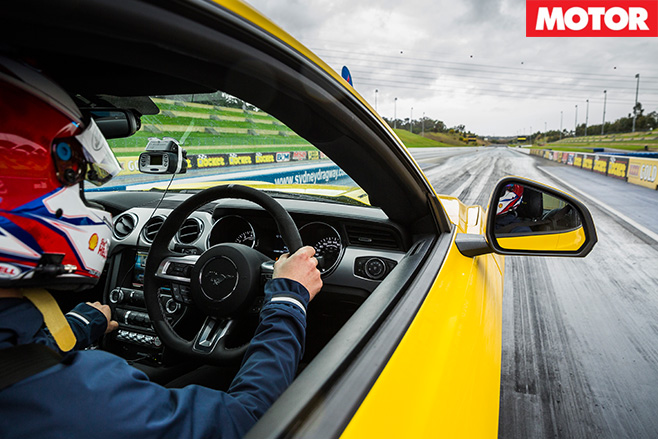
Mind you, the one thing Streetfighter did change, that white gear knob, is a dead-set masterstroke. Where do I get me one?
OVERALL RANKING: 5TH
DISCIPLINE RANKING
5th | Lap time: 1:05.0sec 8th | Lap V-Max: 150.66km/h 3rd | Lap V-Max: 102.48km/h 1st | Lap V-Max: 55.24km/h
If that sounds enticing, Byron Mathioudakis details 7 things about the upcoming Mercedes-Benz E220d All-Terrain that you’ll want to know.
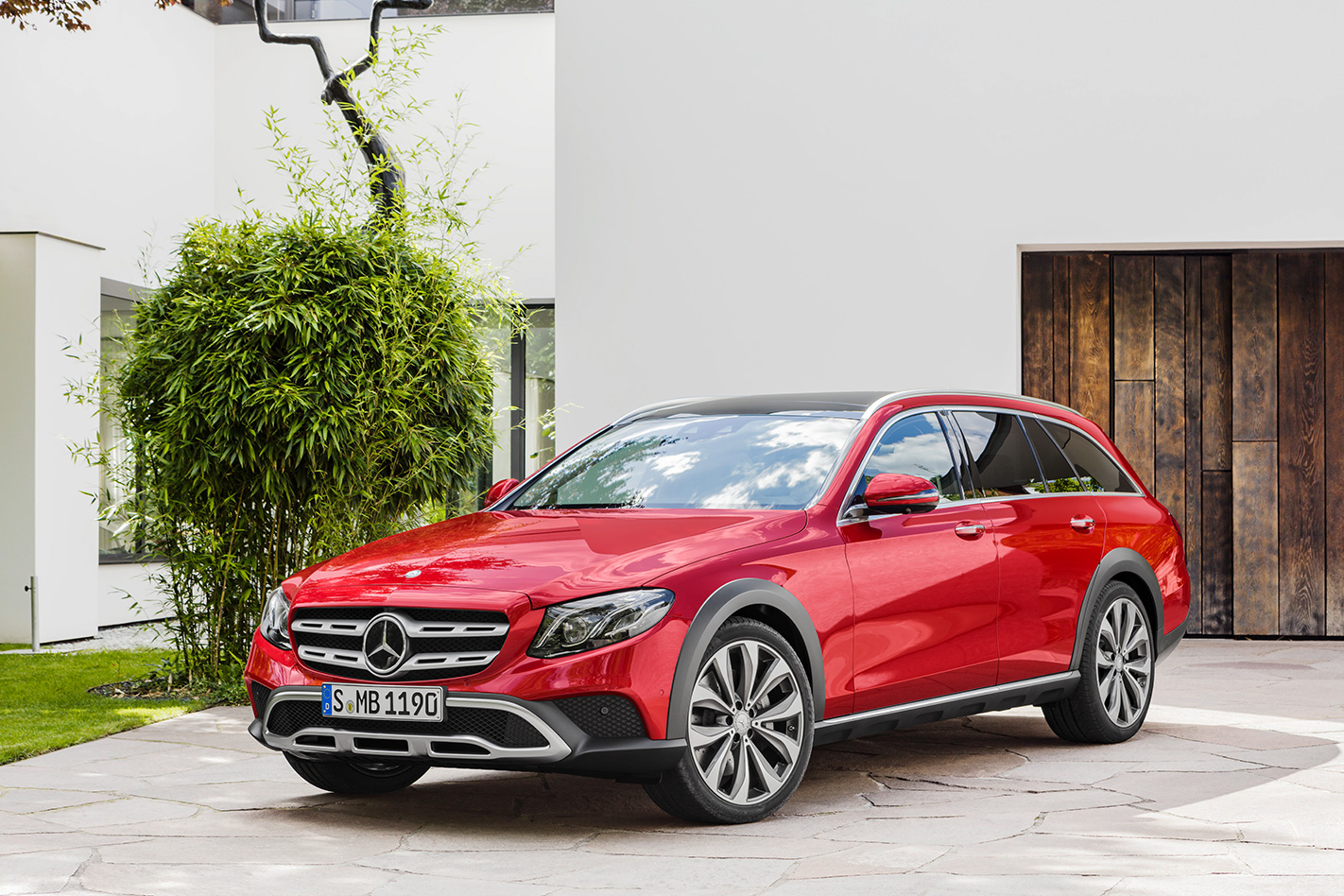
To help resuscitate dying large luxury wagon sales, Mercedes-Benz has decided to only import the high-riding, 4Matic all-wheel drive version of its all-new and tech-heavy E-Class wagon. Called the All-Terrain, it naturally targets the Audi A6 Allroad and Volvo V90 Cross Country crossovers that have made hay in Australia for about 20 years, but then adds a new level of sophistication and driveability that puts it in a league of its own. We cannot wait to get our hands on one when it lands here in May.
1. Though offered abroad in AWD guise since the 1980s, packaging issues stopped the 4Matic system being able to be fitted into right-hand-drive E-Classes. But the new-generation E-Class scores a completely redesigned AWD set-up that’s smaller and lighter as well as RHD-compatible. Still, the idea to stick it underneath a raised Subaru Outback-style E-Class Estate (wagon) and call it “All-Terrain” has only just occurred to Mercedes, it seems, two decades after others have been down that (off)road path!
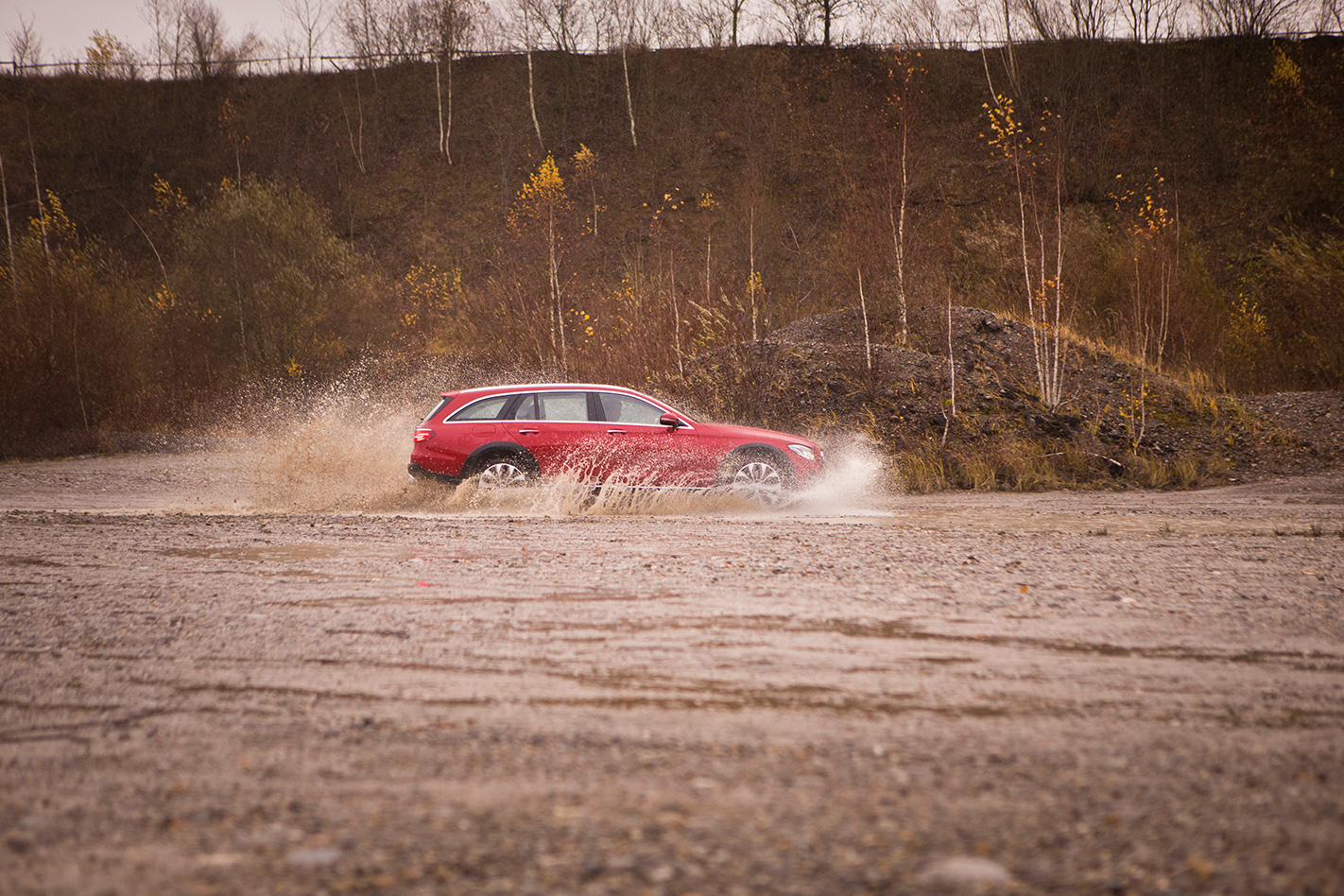
2. The only E-Class Estate slated for Australia for now will be the E220d All-Terrain, meaning that 37 years of regular low-riding E-Class wagons are about to come to an end. Mercedes says that’s because large SUVs (including its own ML-Class/GLE-Class) have eaten away at the large luxury wagon market.
3. For the time being, only the 143kW/400Nm 2.0-litre four-cylinder turbo-diesel will be offered in the E220d All-Terrain, driving all four wheels via a new nine-speed torque-converter automatic transmission dubbed 9G-Tronic. 0-100km/h is in 8.0 seconds flat, while 5.2L/100km is the combined average fuel consumption figure. Drive is split 45 percent to the front and 55 percent to the rear respectively, though there is a circa-10 percent leeway in either direction according to traction needs and driving style.
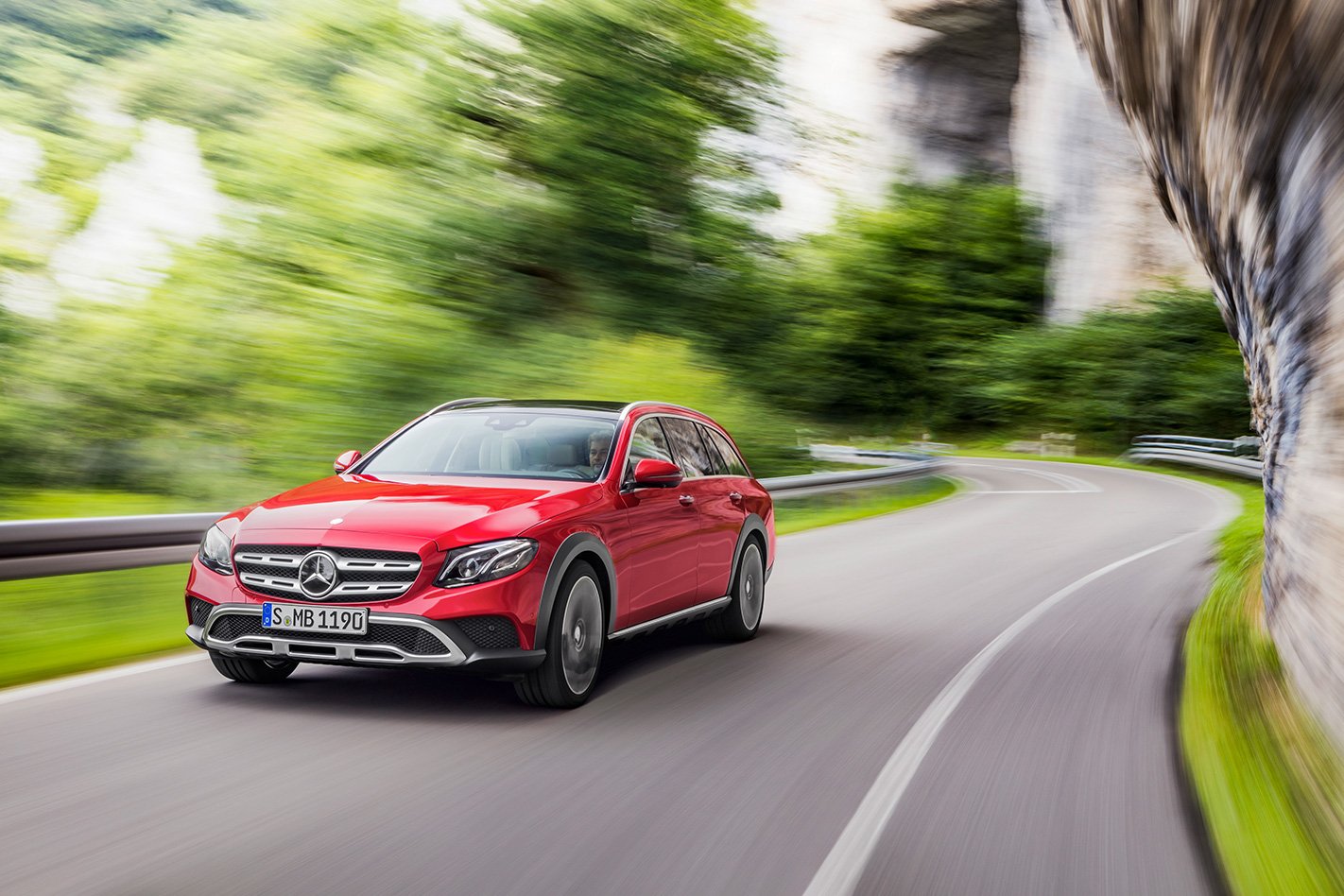
4. Compared with the regular E-Class 4Matic Estate offered in Europe, the All-Terrain version’s ground clearance has been raised 29mm, but varies between 121mm and 156mm depending on transmission mode and driving speed thanks to the standard-fitment Air Body Control air springs. It works with a Drive Select mode with changeable stages (Eco, Comfort, Sport, Individual, and ‘All Terrain’), allowing the driver to alter the spring stiffness, ESC, active yaw, and traction controls thresholds. Choosing the off-road ‘All-Terrain’ mode hikes the suspension another 20mm at speeds up to 35km/h, then lowers it again at higher velocities to maintain optimum directional stability.
5. More than just a raised and toughened-up E-Class wagon, the All-Terrain sits on a wider track to accommodate the larger-walled 4WD-suitable 19-inch (or optional 20-inch) wheel and tyre package; plus its extensive safety and anti-crash systems like the stability control and autonomous emergency braking tech had to be re-engineered, as did various exhaust-related parts. And then, of course, there is those specially designed air springs, which had to be incorporated into the four-link front and five-link rear independent suspension set-up.
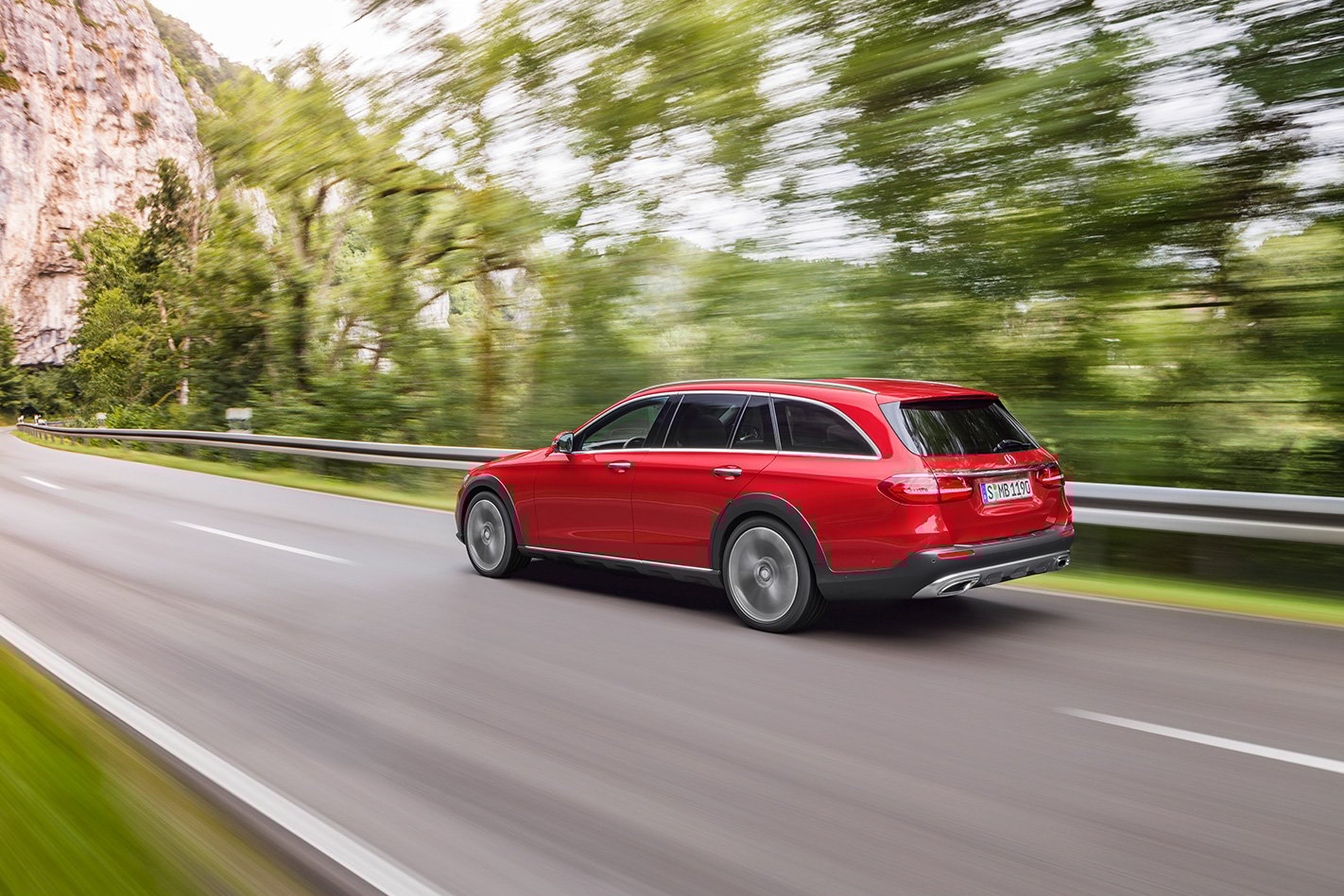
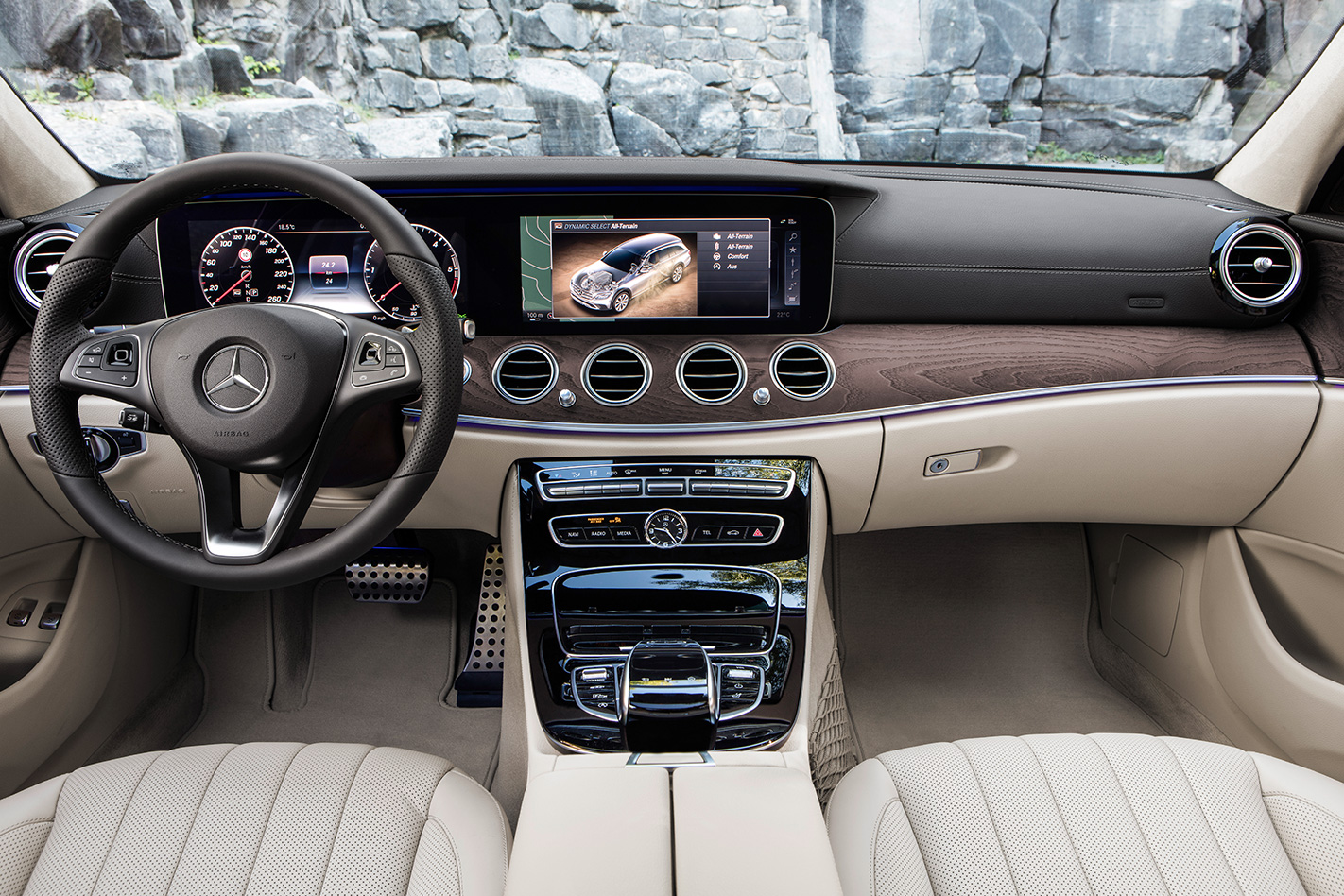
6. The All-Terrain’s exterior design is based on the S213 E-Class Estate, but differs with unique grille, air intakes, bumpers, black cladding around the wheelarches, alloys, rear diffuser, and ride height treatments, for that more rugged lifestyle appeal. Inside, there are minor changes to the vast computerised instrument panel – namely a pictogram showing steering angle, air suspension level, angle of slope and inclination, accelerator/brake position, and compass – but otherwise it is as opulent and upmarket as the stunning E-Class sedan’s cabin.
7. Mercedes reckons the circa-$110,000 E220d All-Terrain’s biggest drawcard compared to large luxury SUVs is its family-friendly packaging, which offers a leading 640 litres with the rear seats erect to 1820 litres with the backrests folded. That rear backrest also reclines and splits 40:20:40, and can be angled 10 degrees further forward to increase capacity by another 30 litres behind the rear seat. The result of all this is that the Benz can fit a standard European pallet (1200mm by 800mm by 1440mm).
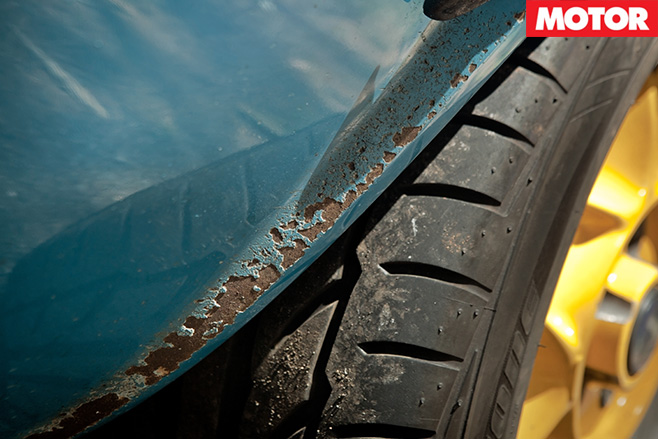
The paint is crazed and peeling in patches. The shapely edges of the front and rear wheelarches are peppered with stone chips, scrapes and scratches. And there is a crack in that erotically curvaceous windscreen that’s been stopped in its tracks by a repair.
When it pulls off the road and stops behind the camera car at our agreed meeting place on the edge of Sydney’s Royal National Park, I’m vaguely disappointed when I see this genuine, rally-prepped Lancia Stratos Stradale looking like this. Frankly, I’d expected it to be immaculate.
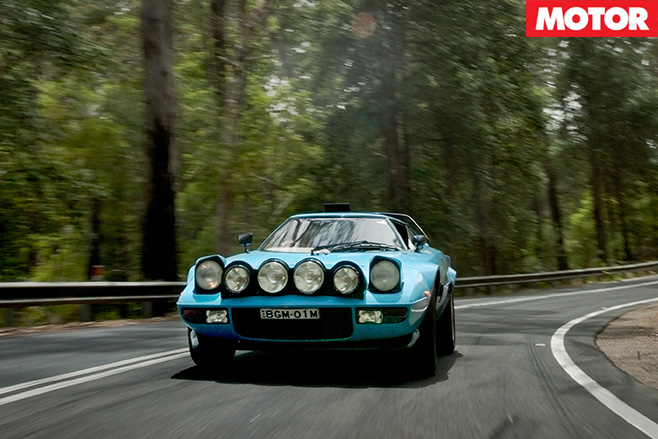
Still, it’s knockout good-looking. It’s tinier than I thought possible. There’s that full-on bank of driving lights across the bonnet, that unique wing hovering over the roof at the back of the cabin, those wafer-thin A-pillars perched impossibly far round the edges of that amazingly curved ‘screen. And seconds into our conversation, it’s obvious that owner William Zuccon loves it.
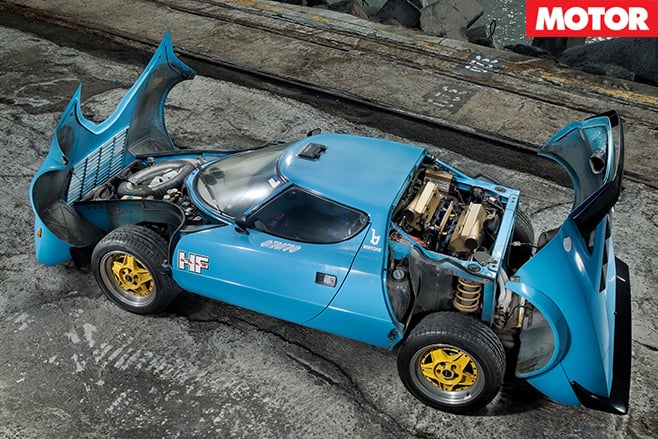
Once reclined in the passenger seat (you don’t just ‘sit’ in a Stratos), four-point harness clipped, we head off down the twisty hillside road towards the causeway in this car I’ve always dreamed about. But it’s immediately obvious that this one’s not just a bit, well, used, but a creaker, rattler and whistler.
In fact it feels so dodgy, I’m reminded of some of the old dungers I used to fang around in as a kid, when I’d ‘drive around’ the loose steering, slipping clutch, so-so brakes and suss noises coming from somewhere in the front-end simply because it was a thrill to be driving at last and out on the open road. We’ve all done it. Back in the moment.

I’m still a bit underwhelmed. In fact, I’m now actually a bit alarmed by how creaky and rattly this example of the car I’ve lusted after for so long. Photographer Thomas is waiting in the carpark at the bottom of the hill, and William and I pull up to him, unscrew the knurled knobs set in the bare-bones doortrim and swing down those unique side windows through their arc. He explains to William that he wants him to drive across the bumpy causeway and back a few times, so he can get some pan shots of the car.
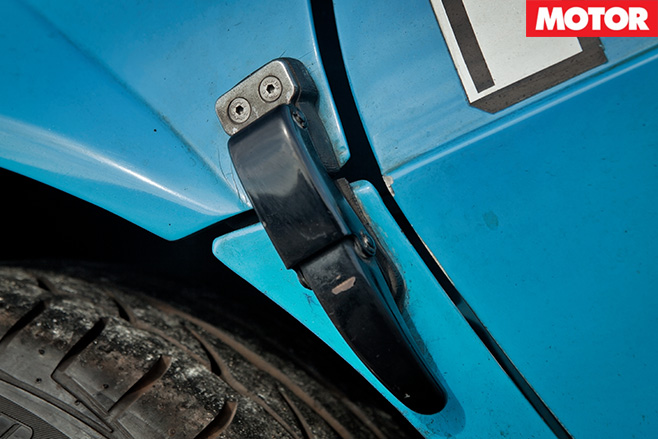
We drive out of the carpark and, half expecting this hugely-collectable car to snap in two, I suggest to William that we probably should aim for about 50 or 60 kays cruising speed for the purpose, lights on. He explains that the left front headlight mechanism’s problematic and it probably won’t pop-up anyway. However, he doesn’t say anything about what he’s going to do next.
William gives it a huge bootful, and we hurtle down into the right-hander, bump, thump and, it seems, grind our way across the causeway, the Dino V6 now wailing like the proverbial. William, who I’ve never driven with before, is snatching gears at a great rate and, I must admit, scaring the living daylights out of me. Uh-oh, I think; the red mist has descended and this guy thinks he’s Sandro Munari and is out to impress us at any cost.
I’m alarmed not so much because we’re going so quickly that I think William’s going to kill me, but because I’m expecting a strut to punch up through the bodywork or some other expensive thing to break, thereby ending our day right there and then. For a lot of reasons, that’s a prospect I’m not happy about.

We bounce and howl and hurtle across the causeway again. And again. Okay. This is how it is, I tell myself. William’s comfortable. Clearly, he can drive. And it’s obvious that the car isn’t going to break in half, after all. Time to relax and forget we’re in something that’s not just a half-million-dollar-or-so museum piece but a 40-year-old rally-honed weapon that’s showing its age, sure, but is decidedly unbowed, bearing up well, and ready for more of the same.
Later in the day, having clambered over the broad sill, I’m strapped in and again nestled, banana-lounge style, in one of the Stratos’s low-slung bucket seats. But this time I’ve grabbed the steering wheel as I’ve lowered myself in, and I’m feeling-out the famously off-centre pedals and looking at a view that’s blessedly free of the too-fat A-pillars that blight the driving experience in most modern cars.
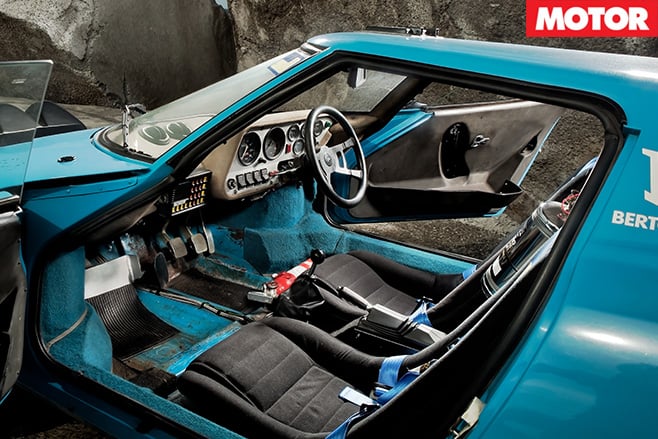
Yes, I’m a bit nervous. Partly because this car is worth so much money and the last thing I want to do is bend it, but also because I’ve noticed owner William’s rapid but methodical approach to negotiating the clutch, gearshift and race-style straight-cut gears; and he’s owned the car for 10 years or more. This is my first go in it.
The light’s fading, too. The windscreen’s still a bit grimy from the salt spray it’s copped during this afternoon’s long photo shoot on the breakwater, and I’m expecting a fair bit of traffic out there in the real world since it’s not long past knock-off time for the overworked tradies and stressed office workers anxious to get home.
I dip the clutch, rehearse my changes (first is down to the left, opposite reverse, the rest an H-pattern), blip the throttle a couple of times, to get a feel for what’s to come, and ease the Stratos out of the carpark and on to the road. To get a feel for the steering, I saw a couple of times at the small, thin-rimmed wheel – skewed away from me to the right, just as I remember it was in the TE Gemini on its launch all those years ago. I get some revs up, reach for the tiny gearlever on my left … and, embarrassingly, graunch the gears. Damn! I hate that.
William’s sympathetic. “Don’t worry, I’ve done it plenty of times,” he tells me. That only makes me feel marginally better. Okay. Apply the brakes, turn right out of the feeder road in first, get it up to speed, determined not to fluff the next change and … graunch the gears again. “Damn,” I mouth, or words to that effect.
We’re coming up to a big roundabout filled with what suddenly seems to be a writhing sea of Hiluxes, Commodores, Territorys, the usual. It’s obvious that I’m going to have to change down to second, risk graunching gears again, and negotiate this horde of home-goers.
But I don’t. Change down, that is. The engine feels torquey as all get out, and I decide to leave it in third and ride it out through the roundabout mayhem. It’s a good plan, and we sail through uninterrupted. I’m pleased about that and it gives me no end of confidence.

Through the traffic grinding its way out of town, past the speed camera William warns me about on approach. Into the big left-hand sweeper at the bottom of the mountain – the car feeling beautifully balanced and growly; not rattly and creaky, as I’d been focused on before. Give it some more throttle and, hallelujah, we’re up onto the freeway.
I’m feeling more comfortable now, and I go to point out something up ahead to William, I forget what … and inadvertently stub my forefinger on the windscreen; I expected it to be close, but not that close. It really is only a few centimetres away from my nose.
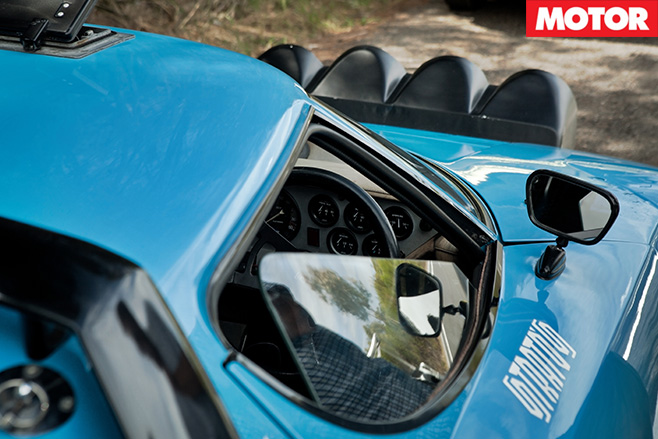
I start to tick off all those things I’d read about driving a Stratos. It’s supposed to swap ends if I so much as sneeze; I sneeze, and it doesn’t. The pedals and wheel are going to be so out of whack it’ll be awkward to get comfortable. Nope, I’m starting to feel right at home. I’m going to be so close to my ‘navigator’ – in this case, owner William – we’re going to be rubbing shoulders and I’m going to feel constrained trying to shift gears.
No way; I’m surprised by how roomy it actually is. It’s not the greatest view rearward through that tiny back window but, hey, I’d been driving the office long-termer Honda CR-Z, the rearward view from which is pretty much Stratos-like. And, yes, you can fit driver’s helmets in those big door bins; I brought one along, and tried it.

I’m now happy to work that glorious V6 between fourth and fifth – there’s plenty of torque on tap – listen to it doing its thing, again enjoy the sensations, and relax with the car at last. And it just feels so light at the tiller, so responsive to the throttle, so … well, driveable.
And then I realise that it doesn’t matter that some of its paint is peeling, the windscreen is cracked, and there are stone chips, scrapes and other signs that this Stratos has led a hard life. It doesn’t matter that it bottomed-out hard and often on the causeway this morning and that William was continually reaching for the redline, flinging it through corners and giving this iconic, hugely desirable car hell. Because that’s the way it’s been driven for most of its life: hard, fast and often. And that’s the point.
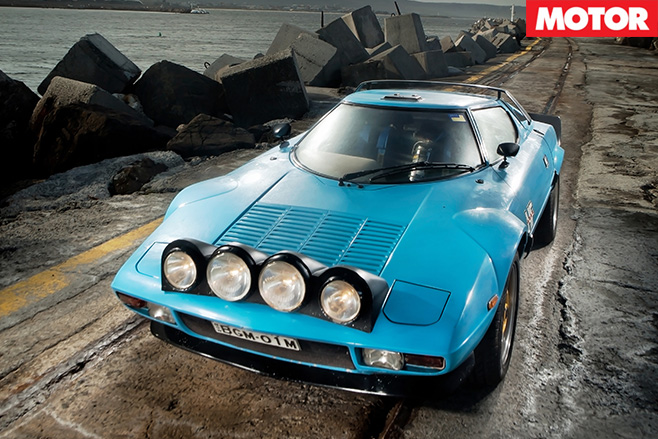
LIKE: Hugely accelerative, plentiful torque, great forward visibility, that shape DISLIKE: Rear visibility, stone chips, peeling paint, squeaks, creaks … but, hey, who cares
SPECS Body 2-door, 2-seat coupe Drive: rear-wheel Engine: 65-degree V6, DOHC, 12v, mid mounted Material: alloy head/cast iron block Bore/stroke: 92.5 x 60mm Capacity: 2419cc Compression: 9.0:1 Power: 177kW @ 9000rpm Torque: n/a Fuel: 98 octane Kerb weight: 980kg Power-to-weight: 242kW/tonne Transmission: 5-speed manual Suspension: double A-arms, coil springs, anti-roll bars (f); struts, coil springs, radius arm, anti-roll bar (r) Length/width/height: 3710 / 1750 / 1135mm Wheelbase: 2180mm Brakes: ventilated discs, alloy calipers (r); ventilated discs, alloy calipers wheels 16×7.5-inch (f/r) alloy Tyres: Bridgestone Potenza Size: 225/45 x 16 (f), 225/45 x 16 (r) Price: A$500,000 (estimate)
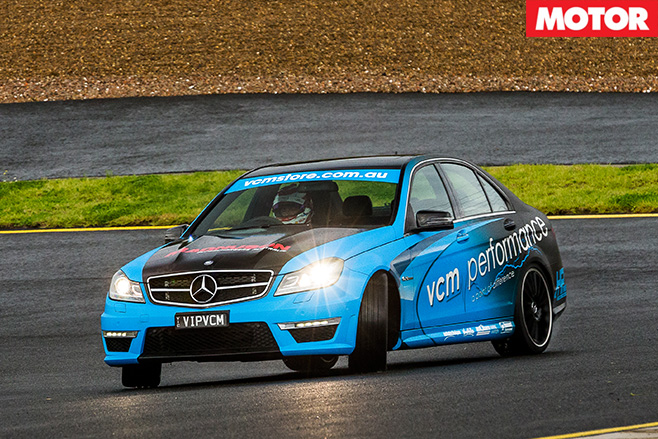
The VCM Merc may have a supercharged tiger in its tail, but its softer, more streetable nature actually gave the car a marked advantage in the changeable conditions that cut right the way across the Hot Tuner fest for 2016.
Hot Tuner 2016 is brought to you by Valvoline SynPower
The Quadrant-tuned chassis is softer in its spring rates than the stock car, and it showed in the lap times on both the streaming and drying laps.
Mad lapper Tony D’Alberto was suitably impressed. “I’m comfortable now on this drying track taking the traction control off and letting it do its thing,” he said, “but even before I felt comfortable doing that. It’s got a little more understeer than I like, but you can still have a bit of a play with it and it’s very predictable. The power comes in nicely. Down low it… not struggles, but waits ’til it gets up in the revs before it really unleashes, so you have to keep it up in that band.
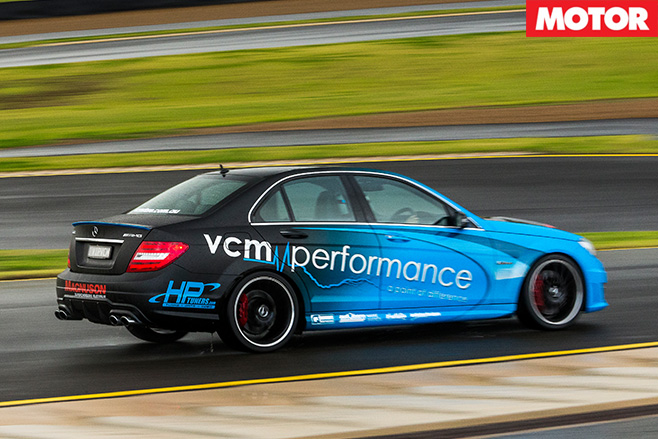
My brief test in monsoonal rain followed the same thought pattern. Despite the soaked track, and partly because of the choice of tyre (Michelin Pilot Super Sports), the C63 gave a much better account of itself. There was at least some front end grip to hand, and the long, languid power delivery curve meant that the rear end would stay settled for longer – though when it broke away, it needed a whole pile of 0s and 1s from the traction control system to keep me on the island.
Inside it’s a standard Merc, with absolutely nothing other than the vinyl wrap to give away the fact that this thing is packing some serious heat. Even the 19s are factory standard.
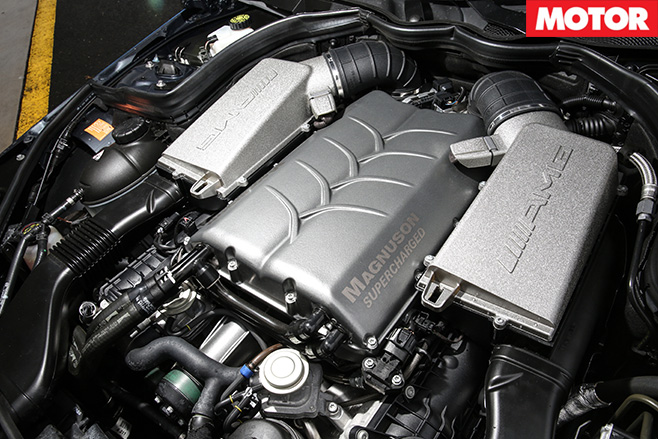
Its dyno results spelled out the improvements netted from the Magnuson supercharger-and-tuning combo, with Tayler supplying a dyno chart that saw the C63 jump to 382rwkW (from 257kW) and a quite believable 942Nm (from 641Nm). The Hot Tuner dyno run netted 339rwkW.
The VCM Merc was one of two cars that didn’t get a clean go of it at the dragstrip, but re-tested at a dry Heathcote it stormed to 100km/h in just 4.1sec and monstered the quarter mile in 11.89sec at 201.95km/h. Again, the slightly softer setup and progressive power delivery paid dividends, the car far easier to nail a decent number in than you might imagine, given the amount of horsepower at the rear treads.
The VCM C63 isn’t designed to impress the Saturday night cruise set; rather, its aim is to give C63 drivers a little bit more on top of the rather large amount of everything they already have underfoot.
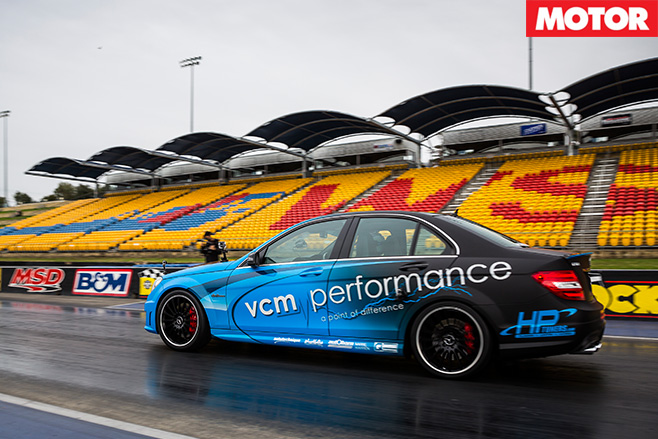
OVERALL RANKING: 6TH
DISCIPLINE RANKING
6th | Lap time: 1:05.6sec 5th | Lap V-Max: 154.93km/h 6th | Lap V-Max: 99.25km/h 6th | Lap V-Max: 51.02km/h
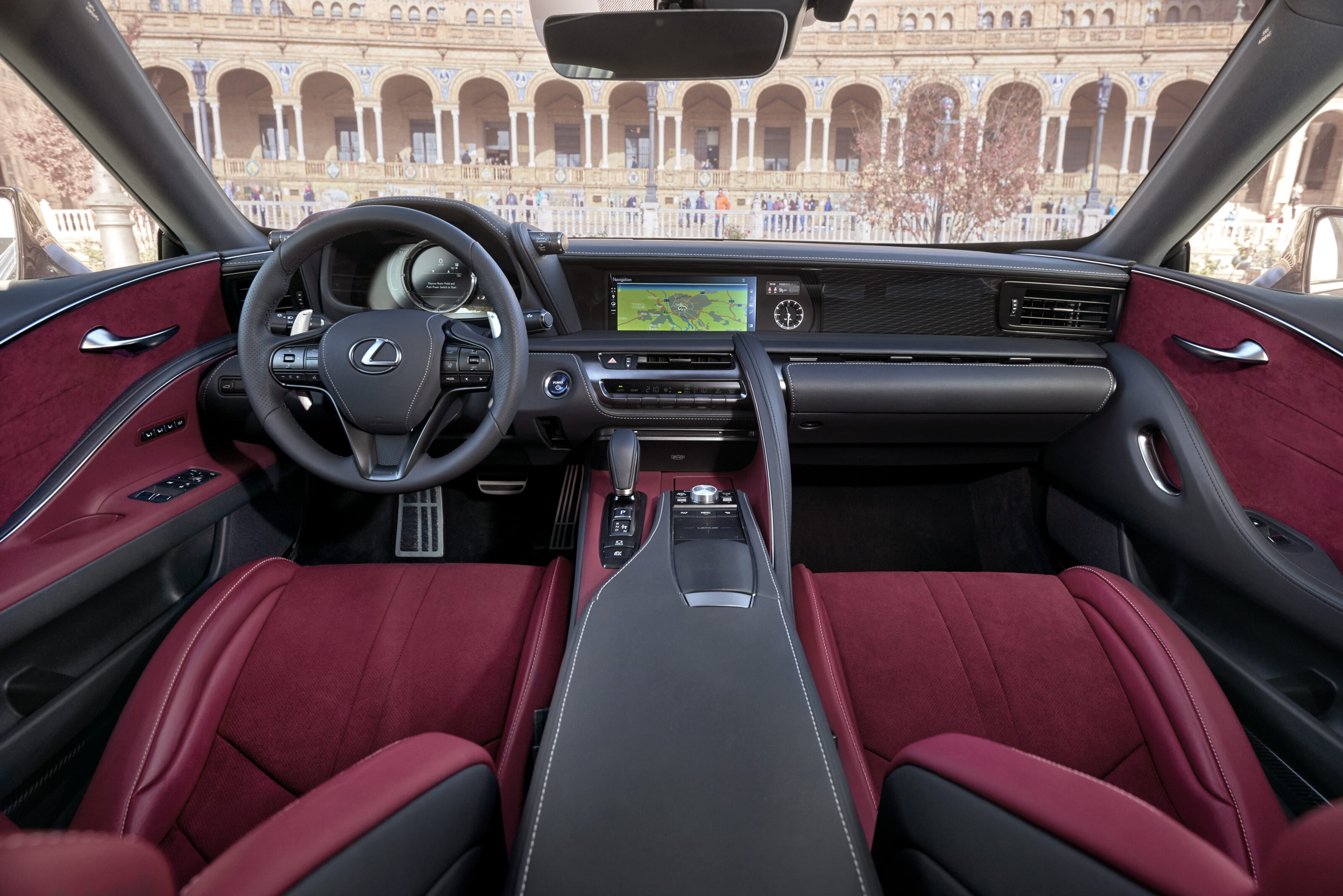
Due to arrive in Australia next year, the Lexus LC – which will be available in the V8-engined LC 500 guise or as a V6 hybrid LC 500h – picks up from where the LFA supercar left off.
Though some of the LFA’s more bespoke features are absent, like its high-revving naturally-aspirated V10, rear-mounted drivetrain and suspension, the LC 500 and LC 500h certainly occupy the low-slung coupe-shaped hole left by the LFA.
Positioned as Lexus’ new performance flagship, the Japanese automaker has now revealed the full spectrum of details for its high-end sports car family. Expected to launch locally in May 2017, pricing is still yet to be announced for the LC pair.
LC 500
That’s not all that’s new either, with the chassis that underpins the LC also being a box-fresh design. Dubbed GA-L, the LC’s platform eschews the LFA’s part-aluminium, part-carbon fibre architecture in favour of one constructed mostly from high-tensile steel.
Kerb weight is high as a result – the LC 500 tips the scales at a hefty 1935kg when empty – but performance is nevertheless brisk. From a standing start, the LC 500 will rip to 100km/h in a respectable 4.7 seconds.
The ten-speed automatic features closely-stacked gear ratios to permit the greater use of each gear. While some eight and nine-speed automatics have their upper gears reserved strictly for autobahn speeds, Lexus purposely tuned its ten-speeder to enable drivers to make the most of the car’s rev-happy nature.
It’s still a conventional torque converter automatic though, a stark contrast to the single-clutch automated manual used by the LFA. While not as snappy as a twin-clutch, Lexus claims the LC 500’s auto can swap gears just as quickly, with clean rev-matching on downshifts and a lock-up function for the torque converter to improve power transmission.
While not crucial for performance, the LC 500’s engine note has been massaged by Lexus to improve in-car sonics. Induction noise is piped through to the firewall via a specially-tuned chamber that enhances the more appealing frequencies of the 5.0-litre V8. At the back, active exhaust valves open up to bypass the muffler baffles, unleashing more decibels and a sportier note.
On the chassis side, Lexus has focused on the LC 500’s dynamics. The liberal use of the D-word in the LC’s press pack is a solid clue that handling, rather than comfort, was the primary concern of Lexus’ engineers.
Thanks to new construction methods, the LC’s GA-L platform is more torsionally rigid than the LFA and has been designed to keep mass as centrally located in the chassis as possible to boost handling response and promote a neutral front-rear weight distribution. Aluminium has been used in some exterior body panels to keep weight down, while carbon fibre features in a non-structural capacity.
A new multi-link front and rear suspension design is tuned to give sharp steering, while still providing decent ride compliance. Suspension geometry is entirely unique to the LC, and some suspension arms are made of forged aluminium to cut weight. Four-wheel steering couples a variable ratio electrically-assisted rack at the front and an electric actuator at the rear, with the result being faster response to steering input and improved high-speed stability.
A limited-slip differential is also standard on the LC 500, and helps minimise wheelspin when cornering under power.
LC 500h
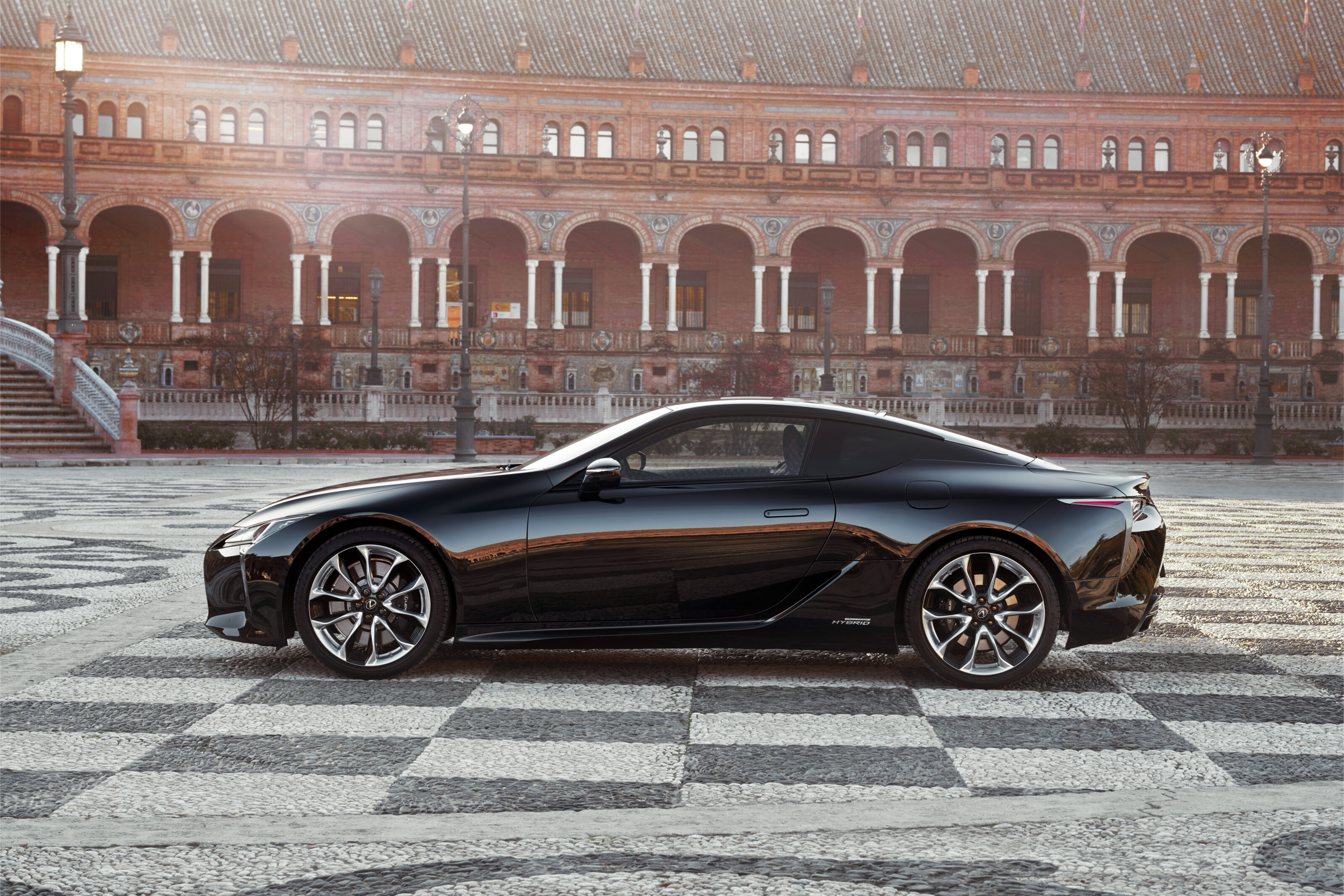
The LC 500h petrol-electric hybrid follows the LC 500’s format, but replaces the 5.0-litre V8 with an electrically-assisted 3.5-litre V6. Power peaks at 264kW with both electric motor and petrol engine working in concert, with maximum torque of 348Nm.
The LC 500h’s zero-to-hundred time clocks in at five seconds flat – slower than its conventionally-powered V8 sibling, but not by much.
It’s not just the engine that sets the LC 500h apart from the LC 500; its transmission is also radically different. With just four forward gears and no reverse, the LC 500h runs its electric motor backwards when reversing, and a special “Multi-Stage Hybrid” system allows it to mimic the shift feel of a ten-speed automatic. Manual gearshift control can also be enabled via the steering wheel mounted paddles.
Australia-specific specification levels have yet to be announced, however the LC range will be available with adaptive radar cruise control, pre-collision warning and detection, blind spot monitoring, auto high-beam, lane-keep assist and lane departure monitoring. It is expected that the full safety suite will be standard on Australia-bound cars.
Maybe it’s 20 years late to the crossover-wagon party, but the Mercedes-Benz E220d All-Terrain aims to raise the bar considerably against the Audi A6 Allroad and Volvo V90 Cross Country
TELL ME ABOUT THIS CAR
Mercedes-Benz is giving the long-lived but now-dying large luxury wagon concept some much-needed relevance with an All-Terrain injection. Based on the all-new, sixth-generation S213 E-Class Estate wagon, it boasts all-wheel drive, a higher ride height, the obligatory plastic body cladding, and tougher grille/bumper inserts for a more rugged lifestyle-enhancing look, to help lure buyers away from the dominating big luxury SUVs. Tellingly, the E220d All-Terrain will be the only E-Class Estate on offer as well, meaning it’s the large luxury wagon’s last stand – at least, as far as the Stuttgart brand is concerned.
STRENGTHS
Unparalleled safety: The latest E-Class is at the cutting edge of safety technology, including semi-autonomous active driving systems that can steer or brake the car out of harms way like no other production vehicle before it – and this means the All-Terrain scores all these advancements as well. No SUV can match this.
Real car driveability. Unlike similarly priced large SUVs, the $110,000 E220d steers, corners, road-holds, and brakes like a Mercedes-Benz passenger car (which means, superbly!), so it is deeply rooted in luxury wagon dynamics. Better still, nothing rides as quietly or comfortably this side of an S-Class limousine thanks to trick air suspension. The All-Terrain is brilliantly refined.
Is this the best-ever Mercedes interior? Lush materials, striking design, and new levels of technology incorporating advanced multimedia and communications systems makes the E220d All-Terrain feel like a true luxury conveyance. Cocooning seats, ample space, and a massive luggage area denote this as first-class travel as a result.
Efficient powertrains. For Australia, the All-Terrain will only be available (initially at least) with an all-new all-aluminium 2.0-litre four-cylinder turbo-diesel that, combined with fuel-saving tech like stop/start and streamlined aerodynamic bodywork, provides strong mid-range performance and incredible economy of around 5.2L/100km (on the Euro cycle). Plus it’s eerily refined for a diesel – you’d never tell from inside the car.
Doing your own thing. Not just a statement of success, the All-Terrain’s crossover concept says something about non-conformity as well as considered intelligence, since the E220d is superior in virtually every important way compared to most large SUVs – including Mercedes’ own GLE.
WEAKNESSES
More power please. While the E220d’s 143kW/400Nm 2.0-litre four-pot turbo-diesel is strong in the mid-range, exceptionally economical, and uncannily quiet, it needs more off-the-line power to overcome some unexpected lag.
Some fiddly ergonomics. Why does Mercedes persist with the auto column shifter that’s too easily knocked out of gear? Also the multimedia screen controller is ugly and confusing to operate, at least at first.
Perceived value. At around $110,000, the E220d will have a fight on its hands convincing buyers to abandon their bigger, heavier, and more lumbering SUVs, even though the truth is obvious that basing a crossover on the world-leading E-Class can only yield a superior car in terms of safety, refinement, driveability, dynamics, and efficiency.
Expensive options. The E220d All-Terrain in the pictures provided can become quite pricy when you add a sunroof, Nappa leather upholstery, motorised front seats, spunky 20-inch alloys, premium audio systems, and a whole host of other desirable options.
ANY RIVALS I SHOULD CONSIDER?
Against its natural large luxury crossover competitors, the E220d All-Terrain should easily outclass the now-ageing Audi A6 Allroad quattro that clearly inspired it, especially in the areas of ride comfort, safety technologies, and driving dynamics, though the Audi does have a gutsier V6 TDI turbo-diesel.
The only other rival is the upcoming Volvo V90 Cross Country, and that should be a far more equal opponent to the Mercedes-Benz in size, safety, comfort, and performance, so it might be worth waiting for that one when it is released not too long after the E220d All-Terrain arrives in about May 2017.
Finally, the only large SUV that might give the Benz a worry is the hugely impressive Audi Q7, but only with optional air suspension to approach the All-Terrain’s terrifically cushy ride.
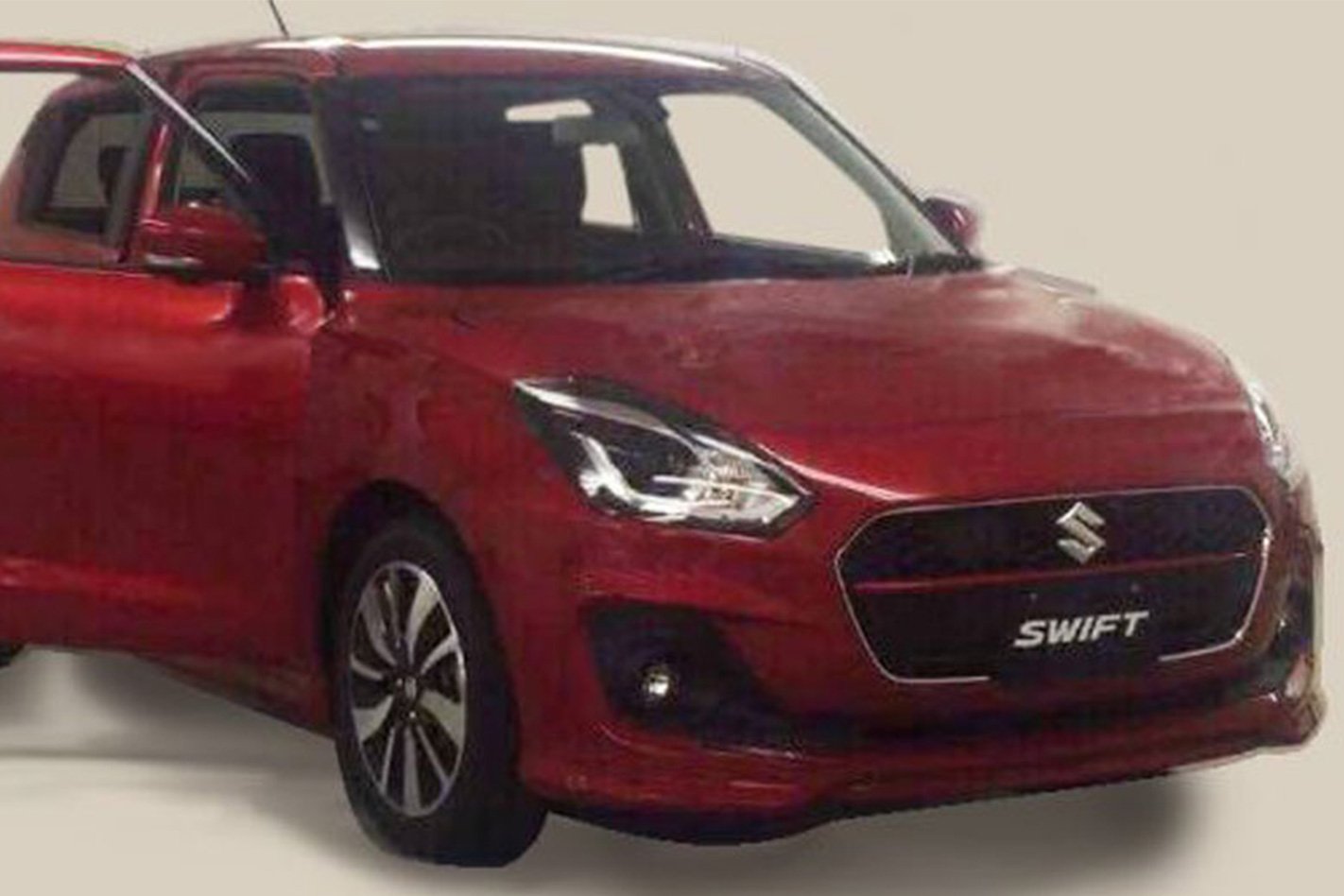
Spy pics and renderings of the 2017 Suzuki Swift have been doing the rounds throughout this year, but now we’ve had the first look of what’s believed to be the real thing without camouflage.
The unsourced image, which first appeared on the Ferd automotive Facebook page show a more aggressive front end with redesigned headlamps with LED running lights, a wide hexagonal single grille and larger front bumper air vents, while maintaining the current model’s overall proportions.
The new look is generally in line with official renderings of the all-new Swift revealed earlier this year which show a return of the current Suzuki Swift’s blacked out A- and B-pillars combined with a new C-pillar graphic to create a floating roof effect. Meanwhile the rear door handle is hidden within the C-pillar blackout, like a Hyundai Veloster or Barina Spark to give it a two-door coupe effect when viewed in profile.
It’s believed the new Suzuki Swift will feature an improved Sport model powered by a 1.4-litre turbo petrol engine pinched from the Suzuki Vitara S-Turbo, which will produce about the same power as the current Swift Sport’s 100kW 1.6-litre naturally aspirated donk but with about 80Nm of extra torque.
Updated versions of the current 1.4-litre atmo four-cylinder unit are also likely as is a 1.0-litre Boosterjet turbo borrowed from the Suzuki Baleno, though it’s unclear which of these will be in Australia-bound models.
The 2017 Suzuki Swift will make its global debut at the Geneva Motor Show in March and is expected in Australian showrooms by the middle of the year.
With the Swift continuing to be Suzuki’s top-selling model in Australia with 7748 sales year-to-date, an all-new model is crucial to the brand’s success in this market. That said, the newly-arrived Suzuki Vitara continues to rise in popularity, with 5217 sales making it runner-up to the Swift in Suzuki Australia’s sales hierarchy.
