
WHAT’S in a name or a model code? Plenty it seems, at least if that model is a next-generation Holden Commodore.
Despite revealing pictures of the first imported model 15 months before it goes on sale, Holden remains tight-lipped on the model code for the controversial new model that is tasked with replacing Australia’s former top-selling car.
For now Holden is referring to the upcoming Opel-produced version of the rebadged Insignia as the NG Commodore, or “new generation” Commodore.
One option, then, could be GB – or Holden may go for something completely different.
Looking at the Commodore lineage, logic suggests the new car would simply follow convention and use the letter V followed by another letter.
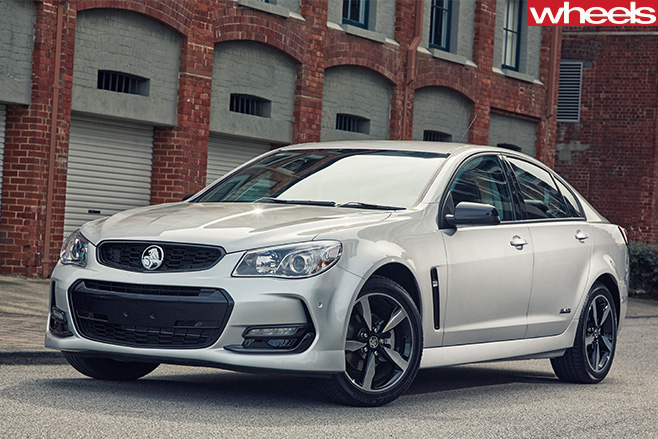
The first Commodore was a VB, for example, then VC, VH, VK, VL, VN, VP, VR, VS, VT, VX and VZ before spinning back around to the most Aussie car of all – the 2006 Holden Commodore VE. That VE has since been updated as a Commodore VF.
However, the V represents parent company General Motors’ designation for its large rear-wheel-drive car platform.
The latest Opel Insignia – while it will be classified as a large car – drives the front wheels or, in the case of V6 versions, all four wheels.
Holden dismisses questions over the new Commodore’s name as non-story, arguing it’s only motoring journalists who want to know.
“It’s 16 months away from launch,” said Holden communications director Sean Poppitt. “We’ll share it at the right time.”
Progress, I’ve decided, is overrated. Oh sure, if you’re firmly in the hole, living under a military dictatorship in a hollowed-out ball of mud and tomorrow’s breakfast is about as likely as a North Korean political cartoonist, then yep, progress probably ain’t a bad idea.
But if, like most Australians, for whom breakfast is not only a dead cert but will also contain your entire sugar allowance for the next 12 months, politics is about dickheads, not dictators, and progress is not only overrated, but a waste of time.
We don’t need progress. At least not the popular definition of progress as the bulk of us know it. Yes, stuff like renewable energy is a worthy pursuit. But when you break it down, solar and wind power and the rest of it isn’t about making our lives better or even different.
In fact, especially not different; it’s about maintaining the status quo and making sure our living standards don’t go to hell. It’s about trying to fix the damage caused by the numbnuts climate-change deniers and politicians who confuse rubber-stamping their mates’ housing developments with doing their job that has dragged society down.
I have solar panels on my roof at home. I don’t consider them progress. Nope, what they actually do is firewall me from the inevitable electricity price hikes made possible by those same shinybums who privatised a company that I, as a citizen, once owned and who then attempted to sell the shares back to me to call it a profit.
I’ll tell you how I know this. It’s because when I settle down to a precious couple of hours of garage session – my chosen luxury; my Me Time – nothing has changed in 35 years. If progress makes any sense, it’s surely to effect change, right? Well I can tell you, hand on heart, that the things that make me happy – the experiences, tastes and sensations that make it worth getting up each morning – haven’t changed in those three-and-a-half decades.
Back when I was a lad in my teens, we used to fool around with Holden six-bangers. Not just because they were cheap (although that certainly came into it) but because they were simple, easy to understand and, provided you had a set of AF spanners, lovely old things to work on. The hot ticket items were bolting on a set of extractors from the wrecking yard and, if you had the folding that week, fitting a second-hand Holley carburettor in order to make an extra 20 per cent power while consuming an extra 50 per cent more fuel.
Meanwhile, this week – this very week! – I switched off my computer, walked next door to my workshop, opened the bonnet of my current project and there it was: a dead-set, honest-to-God Holden six. And after unbolting the old gear, I spannered up a set of extractors and a Holley carb.
Okay, so the extractors were new, not second-hand, and the Holley is now a vacuum-secondary four-barrel and not a 350 two-barrel, but beyond that, not a damn thing had changed in all those years.
Just like I did back in the early 1980s, I was too eager to fire it up, so I stuck a bit of duct tape over the port in the inlet manifold where the brake-booster hose will go when I fit it all back up. Just as it did back then, the first time I gave the throttle a blip, the damn engine sucked in and swallowed the damn tape. Clearly me and duct tape are as lame as we were back then. Progress? No use for that rubbish here, mate.
Want to read more opinion articles from the MOTOR team?
The 500th Ferrari LaFerrari, built specifically to raise funds for the parts of central Italy devastated by earthquakes has sold for US$7 million ($9.37m) at auction.
Ferrari had originally restricted its $2m flagship, hybrid-powered supercar to 499 units but decided to produce a final version in response to the August national disaster that killed 298 people.
The region was hit by further earthquakes in October that damaged historic buildings.
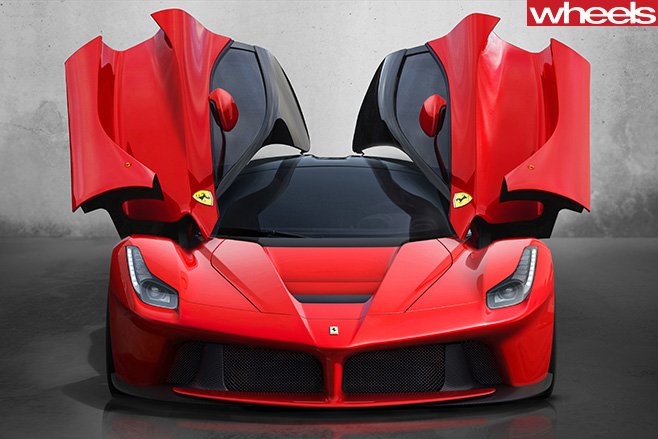
It’s the highest auction price paid yet for a car built in the 21st century, though the LaFerrari’s $US7m result places it a fair way down a long list of big-money prancing horses.
The current record auction price for a Ferrari is the $38,115,000 paid for a 1962 Ferrari 250 GTO.
The owner might still expect their LaFerrari to appreciate in value. Used versions of the previous 499 allocation have already been fetching more than double their $2m new-car price.
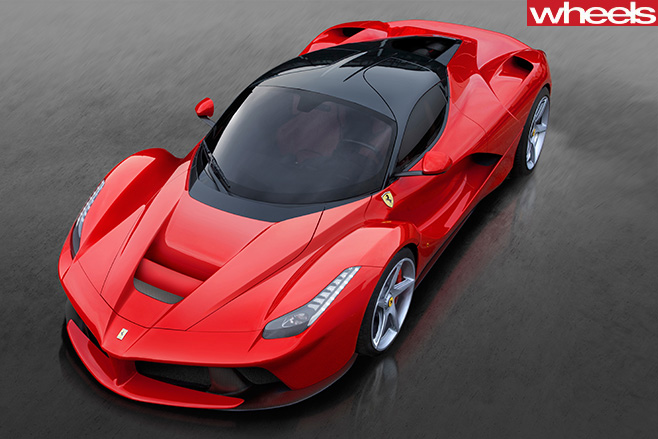
It’s powered by the same hybrid drivetrain comprising a 6.3-litre V12 with an electric motor for a total output of 708kW. There’s no change to performance, meaning acceleration capabilities such as 0-200km/h in just seven seconds.
Just 209 examples of the LaFerrari Aperta will be built. And, yes, they’re all sold out.
THE 2017 Mazda CX-5 will feature an extra model variant for its all-new next generation, as well as rear air vents and a power tailgate in some grades, when it goes on sale in Australia next year.
It has been confirmed the Mazda CX-5 range will grow from four to five variants, with the inclusion of a new mid-spec Touring grade to sit above the current best-selling Maxx Sport, which makes up 50 percent of the local sales mix.
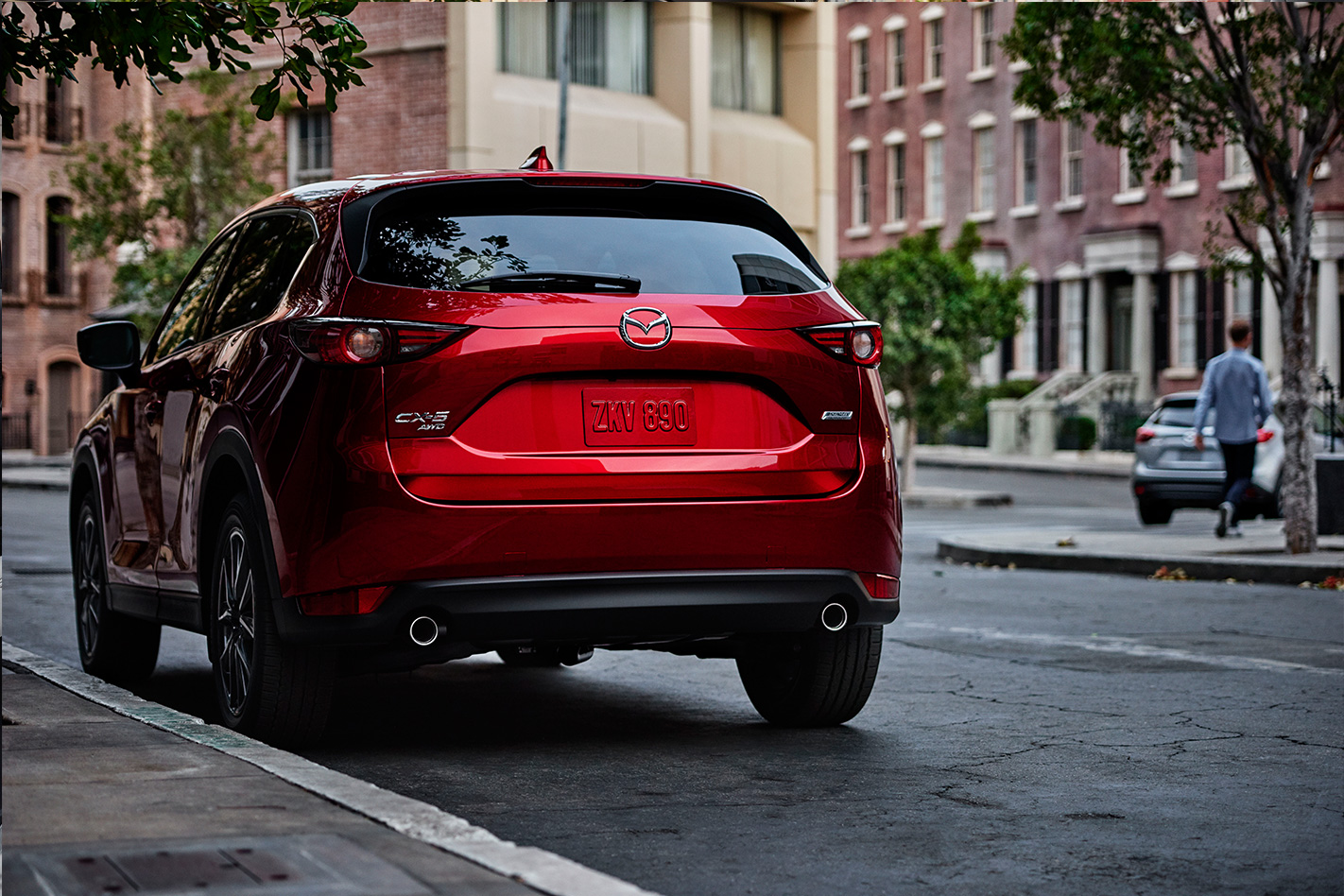
Currently there’s a reasonable price gap between Maxx Sport and GT, so Touring slots in there as a stepping stone for those who want a touch more luxury,” said Mazda Australia marketing director Alastair Doak.
Boasting styling cues taken from the larger CX-9 and a more up-market interior, the second-gen CX-5 should also deliver a step forward in refinement, addressing a traditional Mazda bugbear of intrusive road and tyre noise.
“It’ll be much quieter, but also have second-row air vents and power tailgate,” added Doak, who hinted the vents and tailgate will feature on mid-spec GT grades and above.
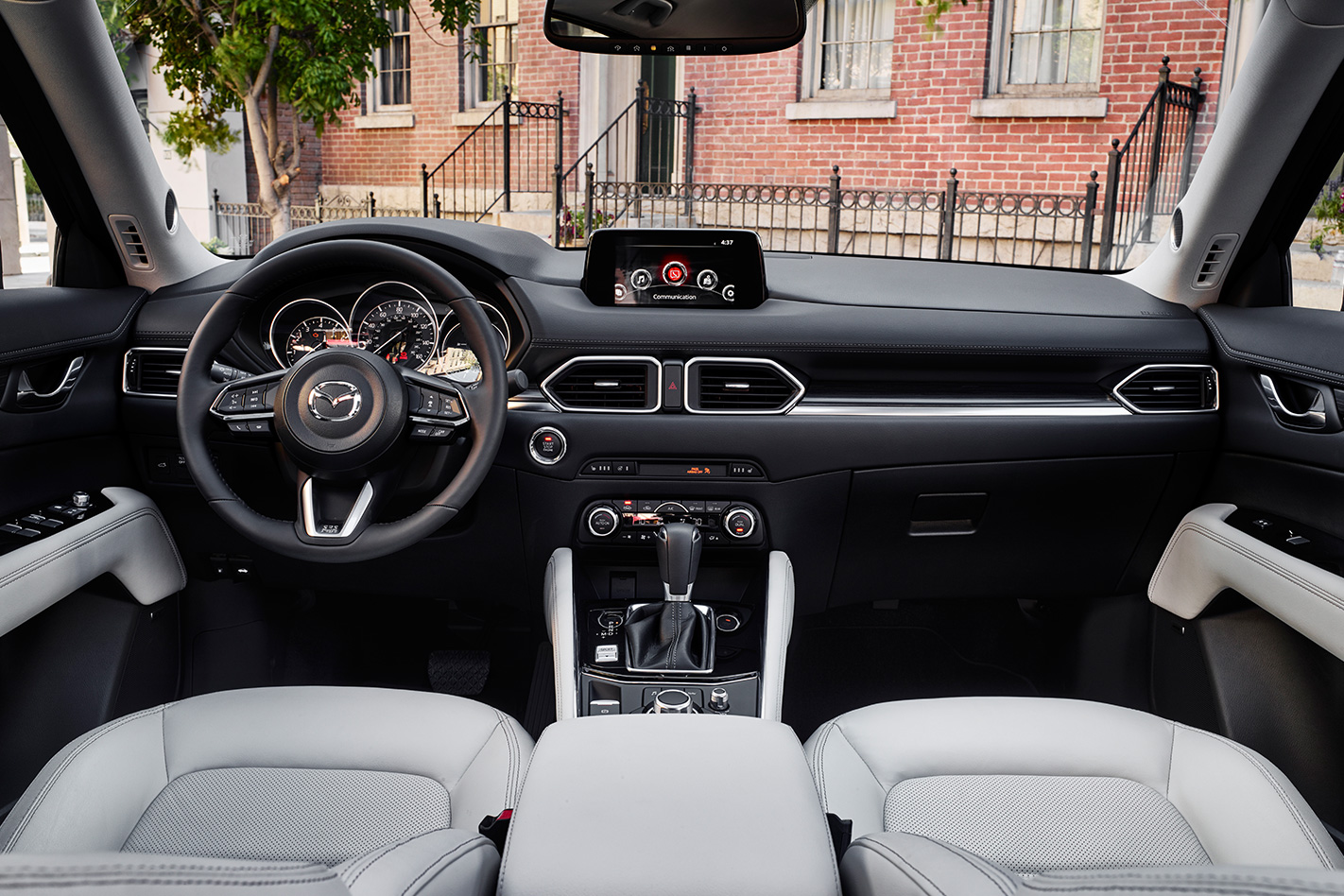
Mazda’s torque vectoring G-Vectoring Control system will also be available, which is designed to improve steering feel and dynamics. In terms of engines, buyers will have the choice of three four-cylinder units (two petrols and one turbo diesel) split across front- and all-wheel-drive configurations.
Australian pricing is yet to be confirmed, but slight increases of $500-$1000 are expected across the range, meaning a starting point of around $28,000 for the entry-level Maxx.
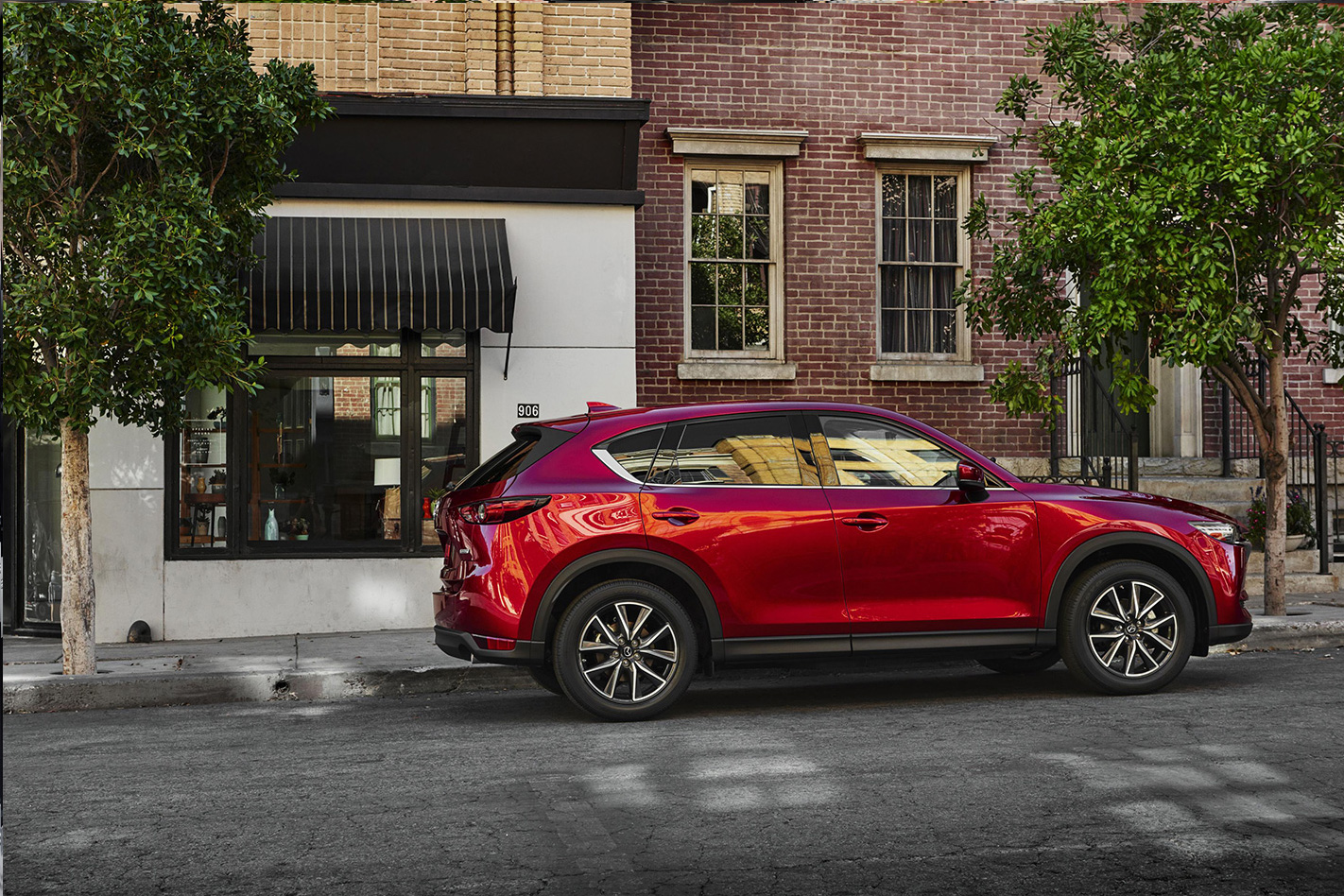
The CX-5 has consistently been Australia’s most popular SUV, with Mazda selling 22,658 year-to-date to the end of November, edging it ahead of key rivals such as the Hyundai Tucson (18,748) and Toyota RAV4 (18,031).
WE SHOULD have known better, but the truth is none of us expected the venom or sheer volume of emotion that hitting ‘publish’ would spawn.
It began as soon as the Wheels prototype drive of the next-generation Holden Commodore hit the internet, and the outcry was singular in its voice: “That is not a Commodore! Let the name die with dignity!”
The uproar was so in favour of retiring the nameplate with the death of local manufacturing, just as Ford did with the Ford Falcon, that I pity any Holden exec who read the comments. After a brief lie down, they’d be wondering if they’d made a terrible, terrible mistake.
Never in its 38-year history has Holden’s icon faced such a seismic shift in philosophy. No V8. No manual. No rear-wheel drive. And forget fitting three burly blokes across the back for a trip across the Nullarbor. When the new German Commodore hits Aussie roads in February 2018, it’ll be smaller, narrower and less spacious in the back.
It will also have four-cylinder models, and anyone who remembers the last four-pot Commodore (the breathless 1.9-litre Starfire lump offered in the VC and VH) won’t have high hopes for performance, despite Holden’s assurances it will have more grunt than the current atmo six.
And it’s not only Holden’s vocal fans that feel this way. Former GM design and marketing heavies – men responsible for naming new Holdens for decades – say Commodore should go the way of Torana and Kingswood.
Rationally, Holden has done the right thing. In a competitive market like ours, turning your back on a nameplate that carries such weight, history and instant recognition would have been madness.
But think beyond the emotional reaction and what are Holden’s alternatives? Resurrecting names like Torana and Kingswood carry the same problems as retaining Commodore. And Holden has a poor track record of committing to new names, especially in the medium segment, so you can rule out a return of Apollo, Camira, Sunbird, Vectra, Epica, Malibu… or Insignia.
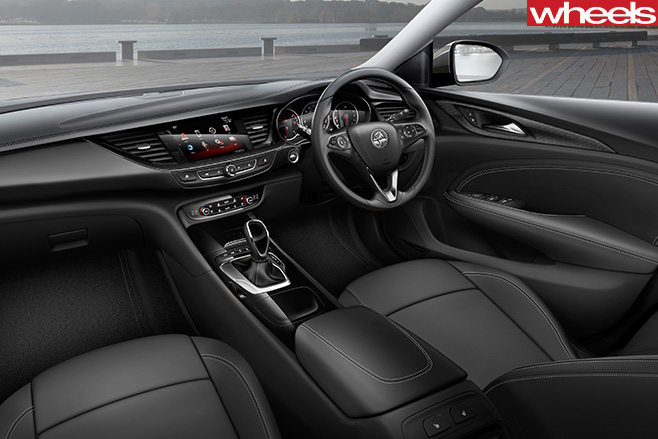
Holden’s decision, then, is the safest. And the smartest.
It’s also worth remembering other cars have endured similar fundamental changes and lived to tell the tale. Toyota didn’t blink when it switched the Corolla from rear-wheel drive to front. Neither did Mazda with the 323.
History will decide if Aussie buyers are ready to embrace a new Commodore that is so fundamentally different, but there’s enough to suggest that this new car will be deserving of the revered Commodore badge.
Even if it is built in Russelsheim, not Elizabeth.
Holden Commodores being based on Opel models isn’t a new thing, with the much loved Australian car having German DNA ever since the VB Commodore first rolled off the production line in 1978.
But this fifth-generation Holden Commodore will be the first wholly designed and built by GM’s German arm and while it will have a Commodore badge and a strong family resemblance, there will be plenty of differences to the current VF Commodore model (pictured below)
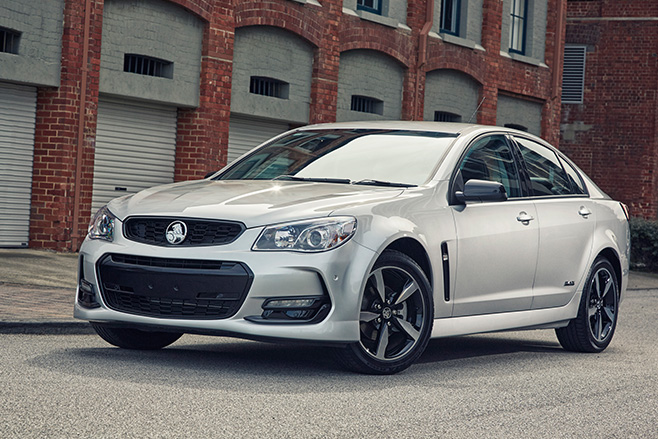
- Drivetrain: The most obvious difference is the front-wheel-drive powertrain for lower spec models. If you want power to the back wheels there will be an AWD in the range topping V6 variant.
- Engines: The VF Commodore’s 3.0- litre V6 and 6.2-litre V8s will be replaced by 2.0-litre four-cylinder turbo petrol and diesel engines and an updated version of the current 3.6-litre V6 which will have 10 percent more power and cylinder deactivation. Power to the front wheels means for the first time Commodore’s engines will point east west.
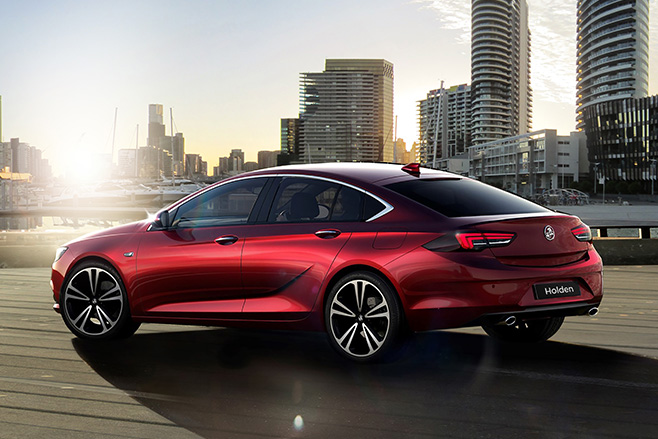
- Transmissions: There will be no manual version of the new Commodore. The automatic transmissions will include a nine-speed version.
- Shape: The 2018 Commodore will have a liftback tailgate instead of a boot but will still have its three-box sedan shape.
- Weight: Built on GM’s new E2XX platform it will be 200-300kg lighter than the VF Commodore.
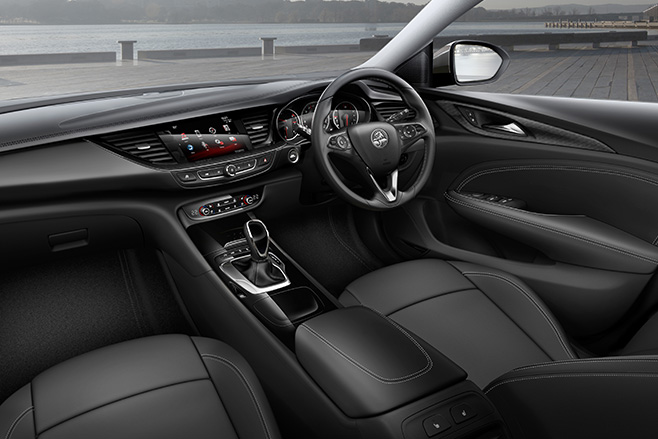
- External size: While smaller than the VF Commodore the 2018 version is still about the same size as the sleeker third-generation VT-VZ (1997-2006) models. At 4899mm x 1863mm it will 74mm shorter, 36mm narrower than the VF and its 2829 wheel base is 86mm shorter.
- Interior space: Shoulder room is 58mm less than the VF with 44mm less hip room. The sweeping roofline cuts rear headroom by 13mm but they’ll have a better view. The boot space will be considerably larger.
THE name might be familiar, but the 2018 Holden Commodore will be as foreign to the name plate’s history as the factory in which it will be built.
The next-generation Commodore will be built in Germany on GM’s E2XX platform, and based around a European engineered and designed Opel Insignia mid-size car. The idea of a European model replacing the Aussie built version isn’t a new one: the first signs that the next Commodore would not have ground-up local design and development emerged in early 2014 as Holden started planning its replacement for the current car’s Zeta-based, Aussie engineered and developed global rear-drive platform.
There’s more than just the introduction of a diesel engine that Commodore buyers will need to get their heads around. The sedan shape remains for the next-generation car, but instead of a traditional bootlid the new Commodore gains a hatchback that puts it on the same playing field as the Skoda Superb. We can also expect a “Sportback” wagon version of the new Commodore featuring a powered tailgate, and potentially a jacked-up, all-wheel-drive SUV-style five-door that hasn’t been part of the Commodore-badged range since the VZ-based Adventra. That last one may yet be replaced with an all-new, high-riding SUV spun off the same E2XX platform.
It will also be the first time in 40 years that Holden will shift from the front-engine, rear-drive formula that has served the Commodore so well. The Insignia-based Commodore will keep its engine up front, but will instead drive the front wheels across most of its variants, with top-spec cars fitted with a 230kW/370Nm 3.6-litre V6 featuring all-wheel drive and a nine-speed automatic transmission.
The all-wheel-drive system, called “Twinster”, replaces a traditional differential with a pair of clutches that splits drive between the rear wheels according to demand. It works up to a maximum split of 50/50.
The new, lighter Commodore will have a smaller footprint than the one it replaces, the first time in the name plate’s almost 40-year history that the family hauler has shrunk – only slightly – in size. It sits on an 86mm shorter wheelbase, and inside a body that’s 36mm narrower and 74mm shorter in overall length than the car it will replace.
The new Commodore also makes the technology leap in terms of fuel savings on V6-engined models with cylinder deactivation, and in terms of driver assist systems. For starters, it will add the option of LED matrix headlights that push the envelope in terms of lighting technology. It will get a switchable drive mode that allows the driver to flick between Standard, Tour and Sport modes, changing the way the throttle and gearbox respond to driver inputs. Adaptive suspension – so far only a feature on high-priced HSV-fettled versions of the Commodore – will provide a better connection between car and driver, and torque vectoring will help it carve corners like a pro.
The new Commodore is expected to stick to the self-parking technology adapted to the current-generation Commodore, and include a speed limit function for the cruise control for the first time.
In terms of comfort, Holden should have plenty of options to choose from. That includes heated seats, adjustable side bolsters that hug the driver and front-seat passenger in, and even a massage function – a feature fitted to versions of the current Commodore sold overseas, but never offered here in Australia. It will also add active noise cancellation to make the cabin more hushed, and will carry over the head-up display option offered on the current car.
Despite what you’ve read so far, the next-generation Holden commodore will speak ‘Strayan, even if underneath there is a slight German accent. Holden engineers have been embedded at Opel all through the development phase of what will underpin the 2018 Commodore, and our recent drive of a development mule shows the car is being honed so that it is less lederhosen and more Stubbies by the time it goes on sale alongside run-out stock of the old car.
The new Commodore is still more than a year away from replacing the last of the Aussie-made namesakes. Jumping to a global platform opens up a world of opportunity unavailable to the anachronistic, orphaned rear-drive platform that became a victim of global forces.
It will be a changed car for a changing world.
Holden has provided the first official look of it’s all new fully-imported Holden Commodore sedan more than a year before its official Australian launch.
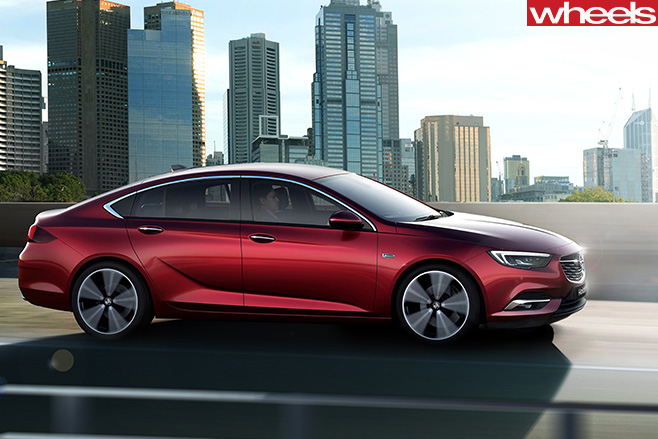
Looking very similar to the artist rendering featured on the cover of the current edition of Wheels magazine, the sedan has a sweeping roofline and masculine shoulders giving it a coupe-like appearance.
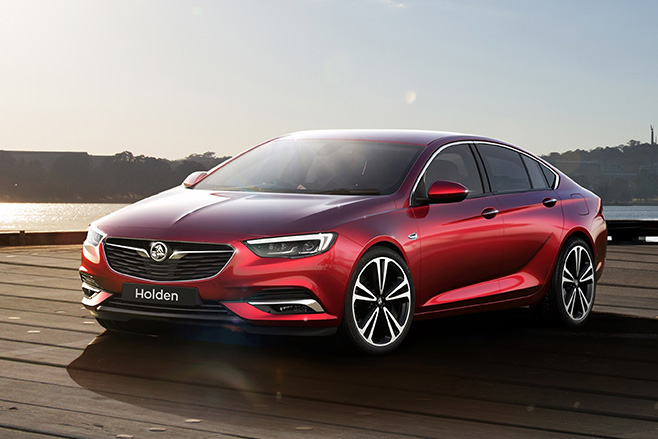
The range-topping AWD V6 variant will be the most advanced Holden yet, with technology usually seen on high-end premium vehicles.
It will be powered by an upgraded version of the current 3.6-litre petrol V6 producing 230kW/370nM through a nine-speed automatic transmission to all four wheels via the “Twinster” torque vectoring all-wheel drive system.
In addition to the V6 variant, the 2018 Commodore will come with 2.0-litre turbo petrol and 2.0-litre turbo diesel front-wheel drive models.
The fifth generation Commodore will also feature a sophisticated ‘FlexRide’ adaptive suspension system features a continuously adaptable chassis that electro-hydraulically adapts the dampers to the road and the driving conditions 500 times per second or 30,000 times per minutes.
This also works with three driving modes (Standard, Tour and Sport), which allow the driver can also save personal preferences for the steering characteristics, throttle response and dampers via the ‘Sport’ button.
Advanced driver assistance technologies will include Autonomous Emergency Braking, Adaptive Cruise Control, Lane Departure Warning, Lane Keep Assist, Forward Collision Alert, Side Blind-Zone Alert, Rear Cross-Traffic Alert and a 360-degree camera.
Comfort options include massage seats, rear one-touch folding seats, heated Front and rear seats, ventilated front seats and power lift-gate for the as yet to be officially revealed Sportwagen variant.
Infotainment features include Apple Car Play and Android Auto, 8-inch touchscreen and next-gen head-up display.
The all-new Holden Commodore will be available from early 2018. Additional details will be confirmed closer to launch.
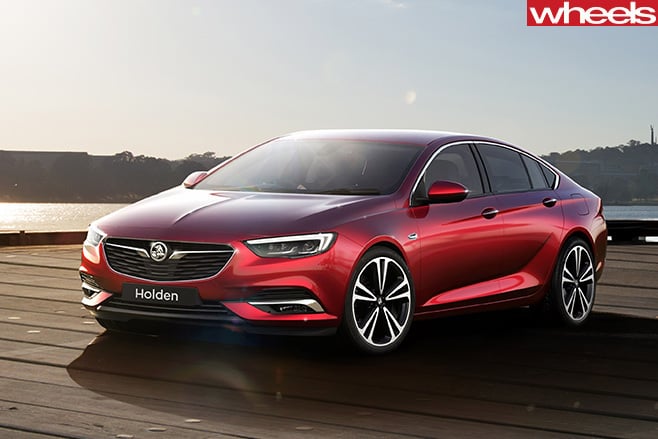
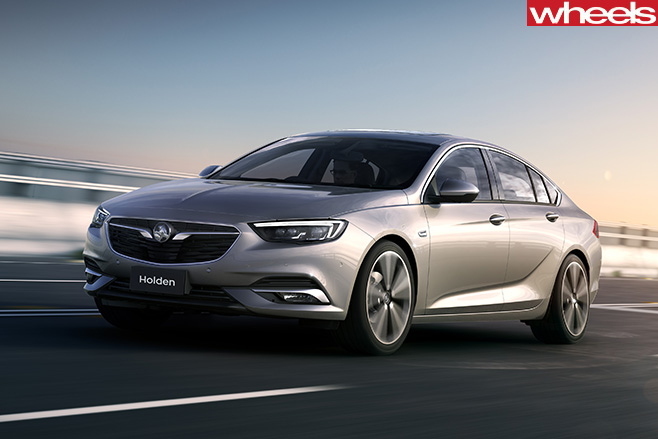
This is it – the Holden Commodore has been officially unveiled in a series of images, uncloaking the styling of the fifth-generation but first-ever fully imported large car range.
According to Holden the Next Generation Commodore was “designed in Germany by the Opel team with input from GM Holden’s team” – but it is now basically a rebranded Opel Insignia liftback.
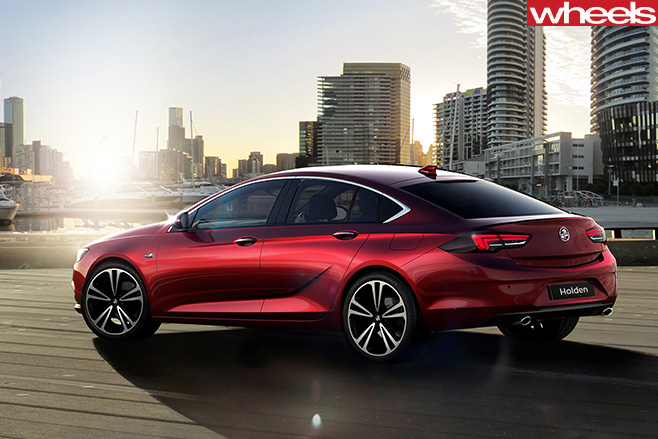
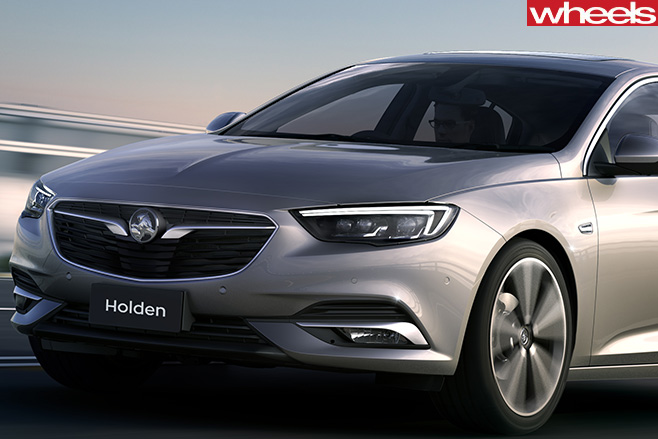
The front adopts a wide, five-point grille that is slightly reminiscent of a Mazda6, while similarly wide and low front air intake and foglight recesses further place emphasis on a low-slung and broad stance. It’s all a trick for the eye, because NG is narrower than VF.
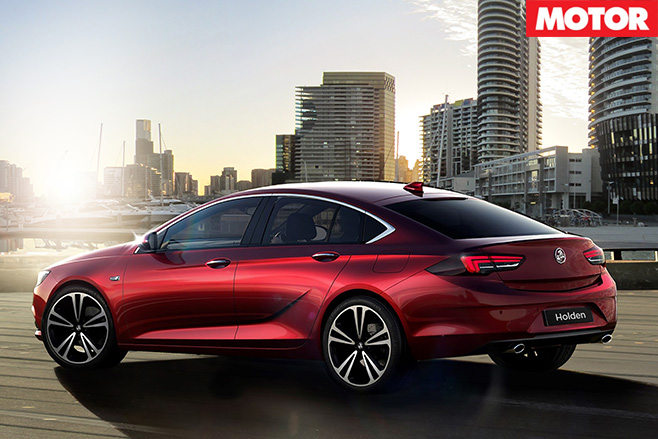
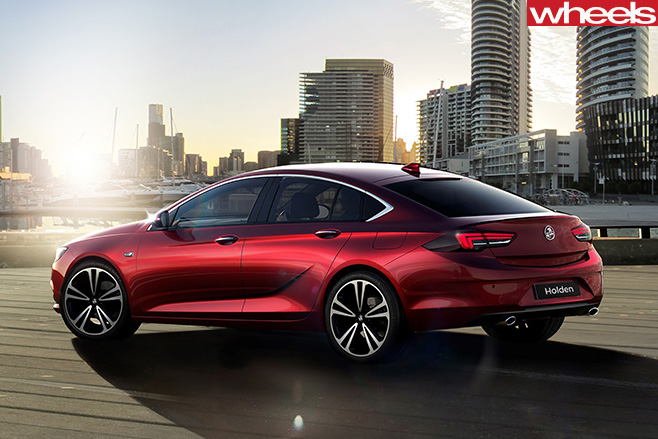
A rising beltline and chrome-tinged C-pillar kick meet with the new liftback design, which permanently replaces a sedan in the Commodore range – although curiously there is no rear window wiper. Rear tail-lights also feature boomerang-shaped bezels and meld into the side of the car, again serving to promote a wide stance.
The maroon and silver computer-generated models also feature large alloy wheels and a split-twin exhaust, indicating this could be the range-topping all-wheel drive V6. There are no Commodore badges to be found, however, and look closely and the images have been mirror-reversed from a left-hook vehicle.
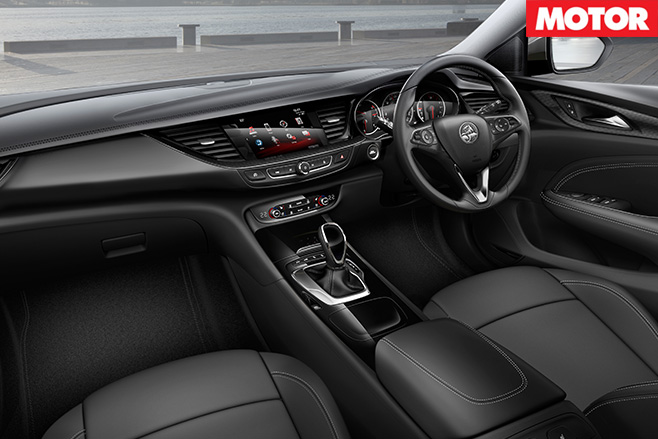
Holden says the MY18 Commodore will debut front and rear heated seats, ventilated and massage front seats, one-touch split-fold rear seat, electric tailgate for the wagon bodystyle, plus auto lane-keep assistance and adaptive cruise control all unavailable on the VF Commodore.
The 230kW/370Nm 3.6-litre direct injection model will weigh 200kg to 300kg less than the outgoing Calais/SV6, and will not only team with a nine-speed automatic, but also score an adaptive suspension setup called FlexRide with Normal, Tour and Sport modes, and a ‘twinster’ all-wheel drive system with torque vectoring.
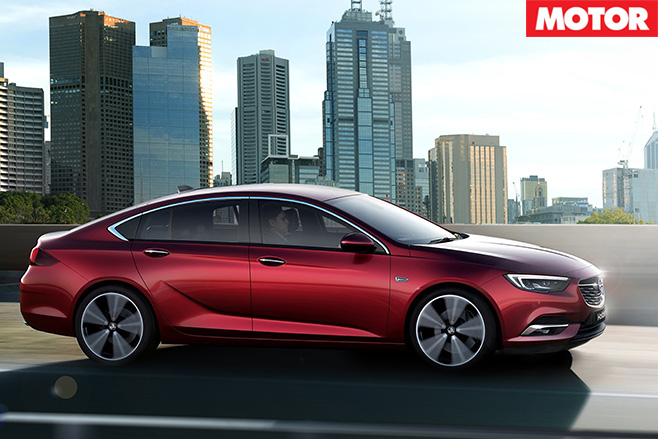
Indeed, following the 1988 VN and 1997 VT that were loosely based on the Opel Omega, the NG Commodore comes full circle by sharing its design entirely with the new-generation Insignia just like the original 1978 VB controversially did with the Opel Rekord/Senator.
Only this time, for the first time, Commodore will be built in Germany for Australia. It is due on-sale in early 2018.
Here’s the all-new 2018 Holden Commodore in all its sleek, sophisticated glory and it’s a Euro-chic wind-cheater.
While these official CAD images released by GM-Holden look about as life-like as Jessica Rabbit’s cleavage, if you ignore some awkwardness in perspective, they’re exactly what you’ll see in Holden’s Aussie showrooms come February 2018. A five-door liftback-sedan with a very racy roofline.
“It has a faster roofline, which is something I’ve always wanted to do with Commodore”, commented Ferlazzo, yet the pay-off for this sleekness is a scant 13mm reduction in rear-seat headroom.
Those concerned about every millimetre of interior space will be catered for by the MY18 Commodore Sportwagon, or Insignia Sports Tourer in Opel speak. It will take some inspiration from the current VF wagon’s sporty styling flavour while catering to wagon-loving Europeans by offering ample luggage space.
But this wasn’t the work of GM’s Melbourne-based designers. “It’s an Opel design so please give them the credit,” said Ferlazzo. “We had a lot to do with it from the outset, in terms of packaging and appearance. But it’s a common appearance with Opel. Only the badges are different, which is how it should be in a global company.”
As for the chance of an Insignia/Commodore Coupe, it’s highly unlikely given the low-volume potential of a global two-door. And we’ve heard nothing on the grapevine, given that all the sweetest styling cues from 2013’s Opel Monza concept were essentially precursors to what we’ll see on the MY18 Commodore.
