
If you want it all: the label, the space, and all the tackle then the Kia Sportage, Hyundai Tucson and Range Rover Evoque are worth a look.
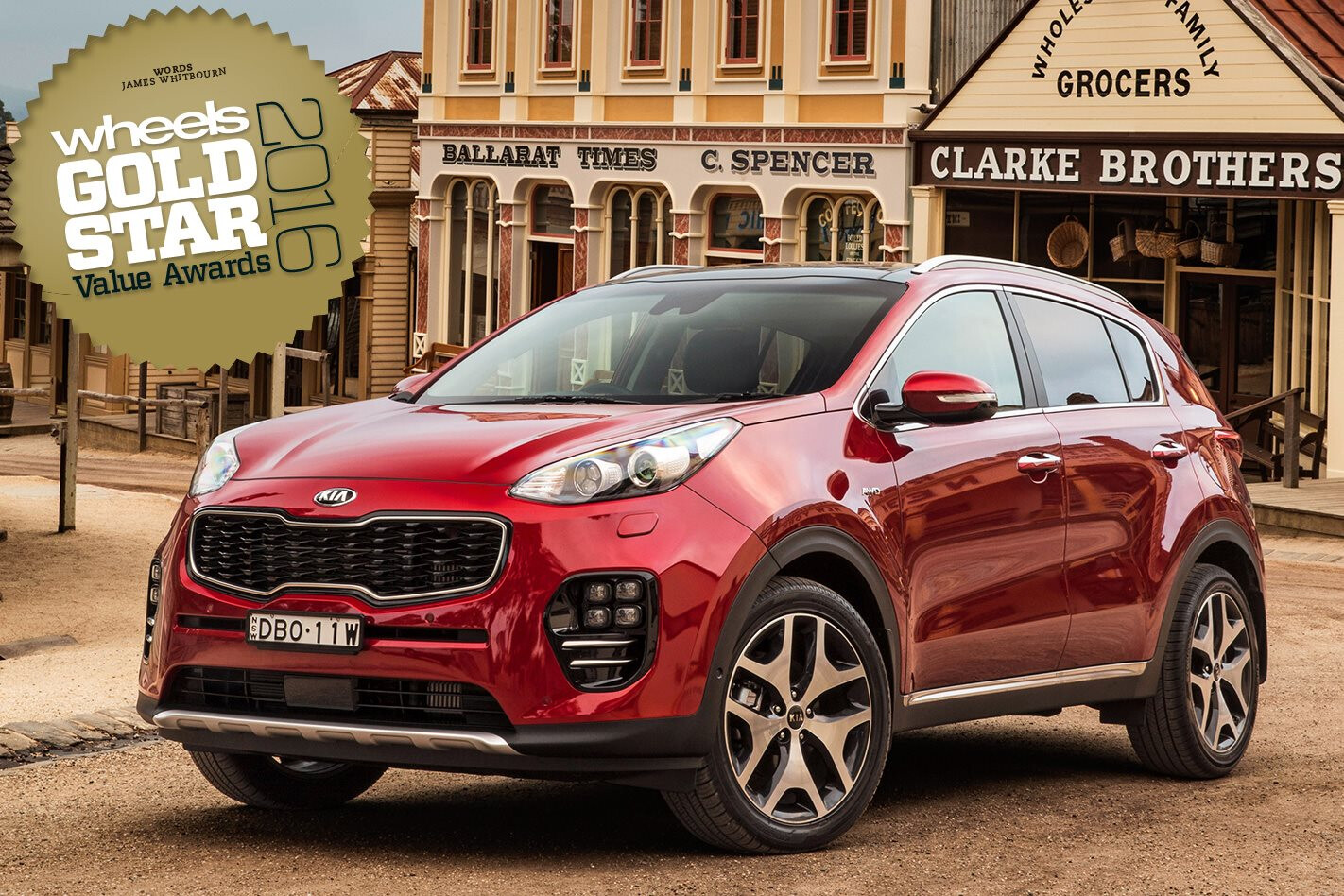
Kia Sportage Platinum
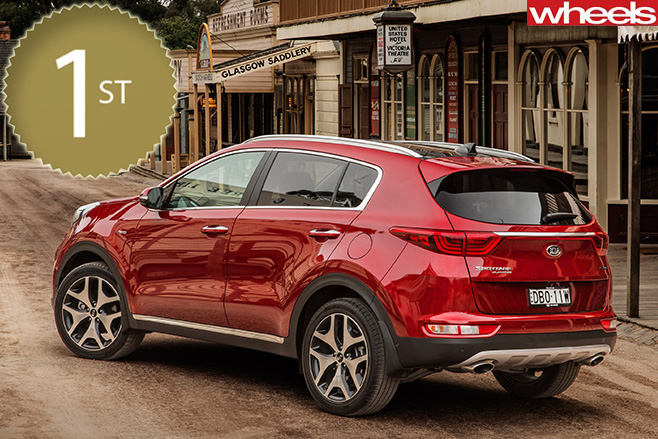
A diesel, all-wheel-drive-only affair sees Kia’s priciest Sportage, the Platinum, triumph on the back of a catalogue of cash-saving credentials. The 2.0-litre oiler gives a stout 400Nm with 6.8L/100km cycle, backed up by cheap-as insurance, a convenient 12-month service interval and a confidence-inspiring seven-year warranty.
The only field it didn’t rank first in was depreciation. The Sportage Platinum’s value equation is as impressive as its cabin finish, refinement, luxury and active safety equipment, and efficient engine.
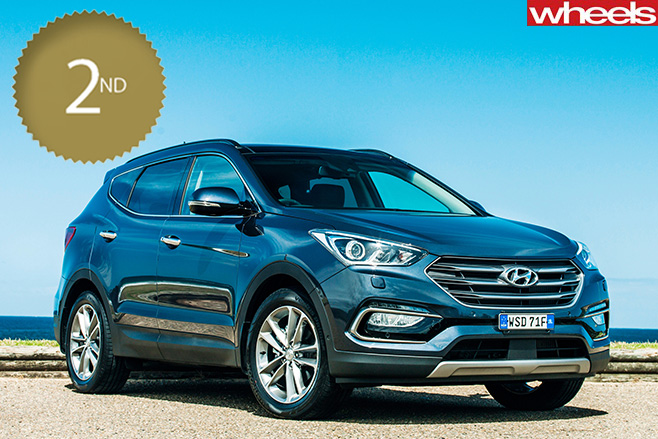
Hyundai Tucson Highlander
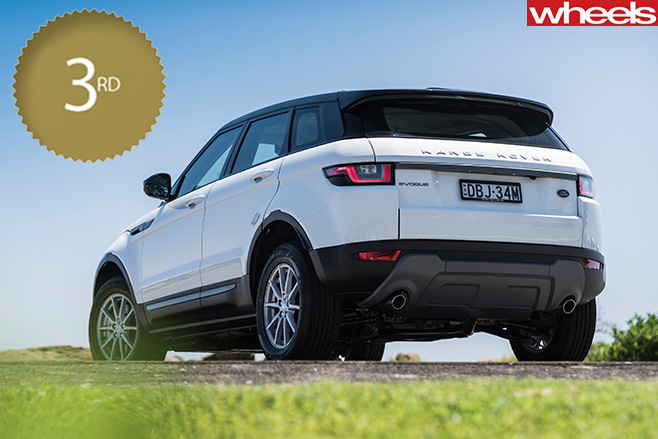
Range Rover Evoque TD4 150 Pure
MORE GOLD STAR COVERAGE
WHEELS GOLD STAR VALUE AWARDS
What if someone could expose the hidden costs, crunch the numbers, present the data, and draw conclusions about how to best spend your hard-earned on a brand new car? Enter Wheels’ annual Gold Star Value Awards.
Find out more
BEST LARGE SUV/4WD
A large SUV or 4WD is a great solution for those with a sense of adventure.
View the results
BEST MEDIUM SUV 7-SEATER
An SUV that’s nimble enough to traverse the city-scape, but with added utility.
View the results
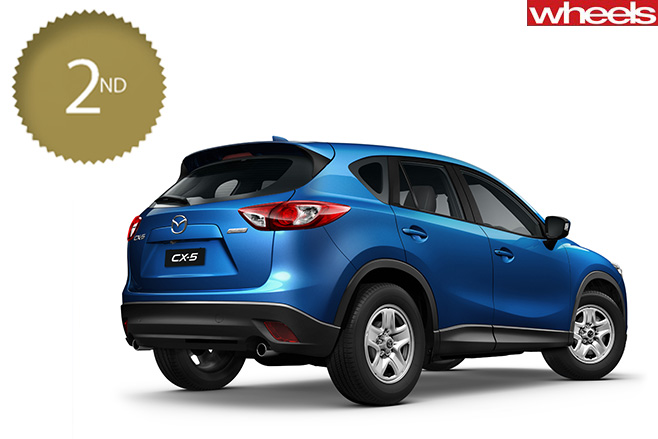
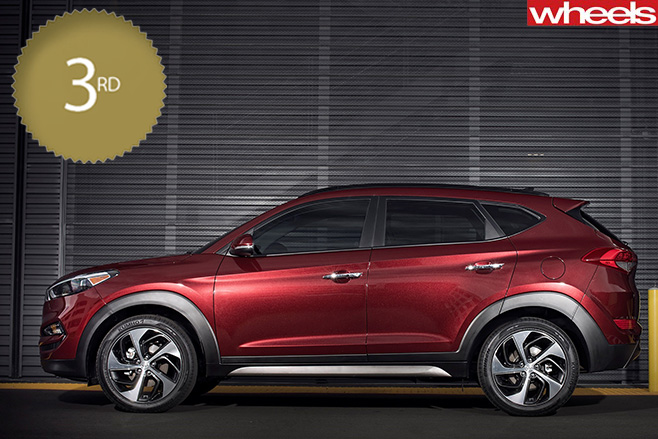
If you want the space of an SUV, without the premium price tag, then check out the Kia Sportage, Mazda CX-5 and the Hyundai Tucson.
Kia Sportage Si
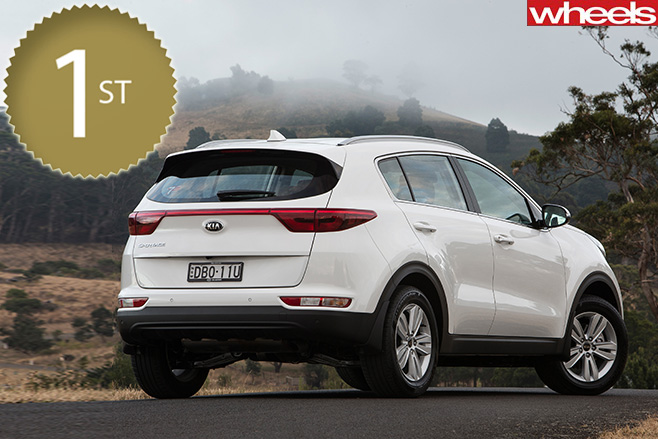
It’s a bit pricier than the CX-5 and Tucson because it comes with a standard six-speed auto while its rivals are manuals. Given this is at least partly a ploy on the part of Mazda and Hyundai to be able to advertise lower starting prices, it’s pleasing to see it isn’t enough to derail the Kia’s charge, with the brand’s seven-year warranty powering it over the line.
Mazda CX-5 Maxx
Hyundai Tucson Active
MORE GOLD STAR COVERAGE
 WHEELS GOLD STAR VALUE AWARDS
What if someone could expose the hidden costs, crunch the numbers, present the data, and draw conclusions about how to best spend your hard-earned on a brand new car? Enter Wheels’ annual Gold Star Value Awards.
Find out more
 2016 BEST VALUE CARS IN AUSTRALIA
Take the hassle out of choosing the best bang for your motoring buck with our definitive guide to Australia’s best value-for-money cars in Australia.
View the results
 BEST MEDIUM SUV $45K to $65K
If you want it all: the label, the space, and all the tackle then the Kia Sportage, Hyundai Tucson and Range Rover Evoque are worth a look.
View the results
THE West Australian Government has bent the road rules in a promotional video featuring children in pedal cars that’s meant to teach drivers how to merge.
The 30-second video produced by the Department of Main Roads and titled “Merging: It’s child’s play”, is meant to help educate Perth motorists on how to use 56 new European-style merging lanes added to the city’s freeway network.
However, instead of using the video to demonstrate to Perth motorists how the road rules apply, the video instead suggests that drivers in one of the most merger-unfriendly cities in Australia be nice to each other.
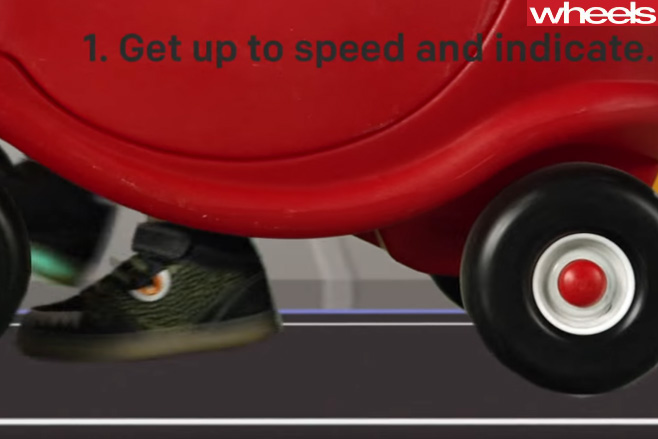
According to the video, Perth’s drivers should move over that a merging driver can slip into the lane as early as possible.
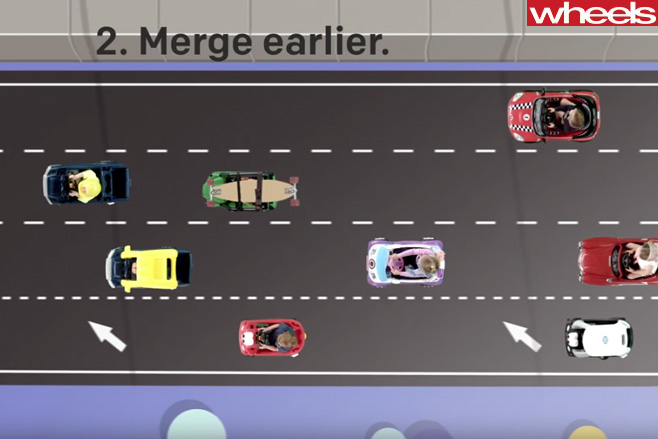
“All the other drivers should leave a gap in the traffic or move to the right to make more room,” it says.
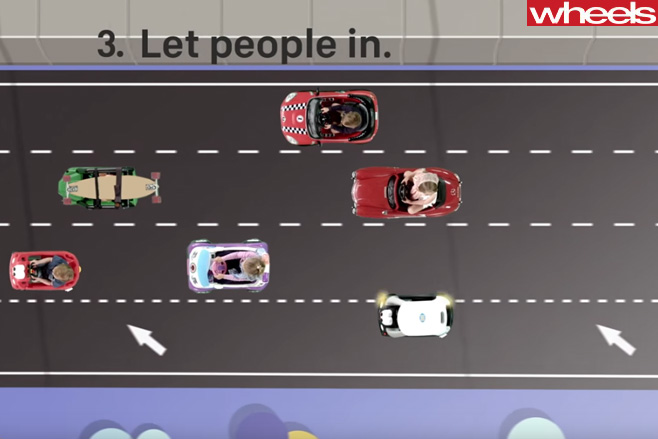
Moving over for merging traffic is good etiquette, but it isn’t a road rule.
Wheels has asked the state’s Main Roads Department for comment. Another government spokesperson told Wheels that Perth’s drivers were among the worst in Australia when it came to merging lanes.
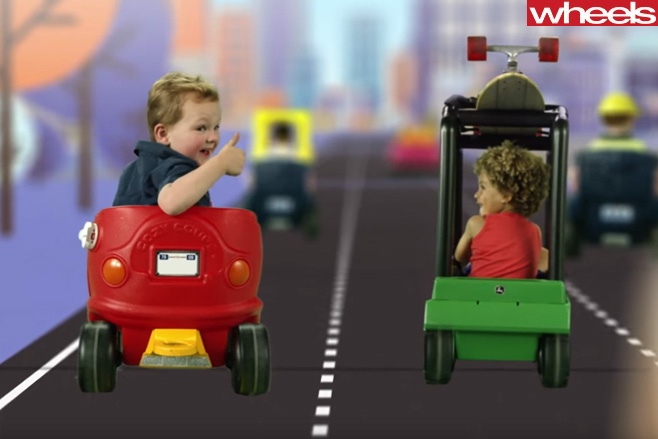
“[The video campaign] is focused on showing that correct driver behaviour when merging is ‘child’s play’ and easy when you know how, with the campaign featuring a number of our future drivers,” Marmion said.

The Main Roads video is in stark contrast to others on the same topic, produced by both the West Australian Government and the state’s police force. They all warn the merging vehicle to give way to other traffic at all times when crossing a broken line.
Ron Dennis is head of McLaren no more.
After 35 years as chief executive of the Formula 1 team and supercar brand, Dennis stepped down on November 16 after a meeting with shareholders the day prior.
The news comes after an agreement between Dennis’ long-time business partner and TAG boss Mansour Ojjeh sided with the Bahrain Mumtalakat fund in having him removed.
Dennis was unable to retain his position despite having a 25% ownership of the McLaren group; however Mumtalakat holds a 50% share and Ojjeh 25%.
It was decided Dennis’ style of leadership was not in step with the brand as it bids to continue its strong road car growth in the future.
Releasing a statement on the decision, Dennis said he was disappointed and labelled the call “entirely spurious.”
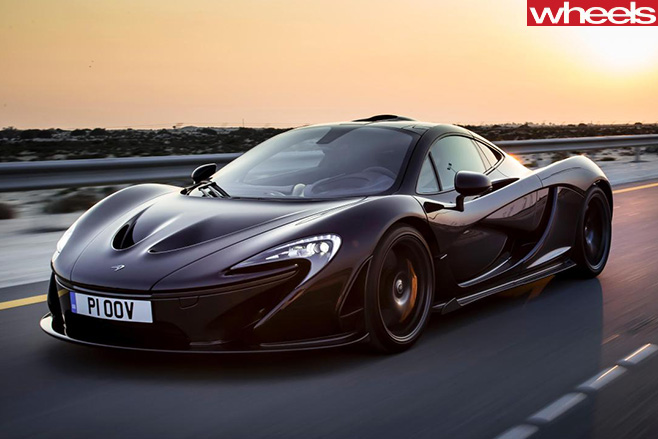
He will continue to have a say in the goings on at McLaren though, retaining his spot on the boards of the McLaren Technology Group and McLaren Automotive.
McLaren has evolved a great deal under the powerful character over the past few decades, to keep up in a world of motorsport increasingly ruled by money.
Once a small squad dedicated to Formula One-only exploits based out of Surrey in the U.K, the brand is now one of the most successful and well-funded teams, as well as being renowned for its highly sophisticated road cars.
This change, a large part for the better; is down to the shrewd-minded Dennis more so than anyone else.
Dennis is one of just three men to have held the top job at the company in its 53 year existence, following only founder Bruce McLaren and American entrepreneur Teddy Mayer.
While details remain sketchy, commercial F1 figure Zak Brown is believed to be the leading contender to replace the outgoing boss, as the F1 team looks to attract a title sponsor.
Since Dennis took over from Mayer in 1981 as head, the F1 squad has won ten drivers championships with legendary talents Niki Lauda in 1984, Alain Prost in 1985, 1986 & 1989, Ayrton Senna in 1988, 1990 & 1991, Mika Hakkinen in 1998 & 1999 and Lewis Hamilton in 2008.
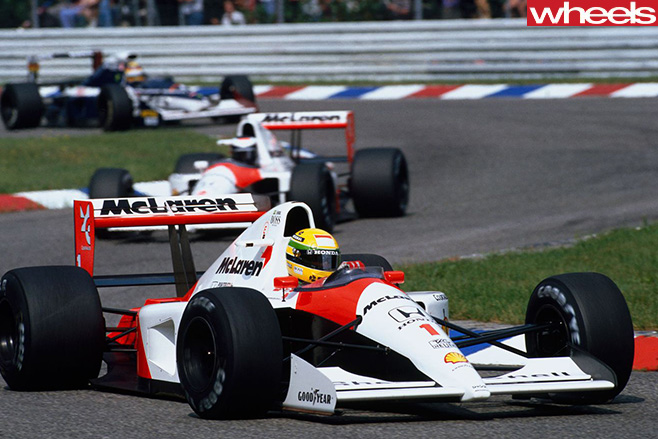
That season an underpowered and inefficient Honda engine saw the squad plunge from 5th in constructor’s points in 2014 to 9th in 2015.
2016 has seen a surge in engine performance to all but secure 6th in the constructors, although the target of picking up multiple podiums by years end has remained well off.
This slower than expected rise up the Formula One grid alongside Dennis’ somewhat autocratic style of leadership has now culminated to provide a final nail in the coffin.
Things have been better on the road car front however, with it now being strange to think McLaren had a comparatively limited production car output prior to 2011, barring the limited run F1 and Merc-engined SLR.
The F1 was McLaren’s first ever road car, coming as the brainchild of Dennis and technical director Gordon Murray following the squads immense Formula 1 title success in the 1980s.
Released in 1992, the F1 was hailed as the greatest supercar of its generation, as well as one of if not the best of all time.
Best known for its top speed of 386km/h, just 64 road-going versions were made, with production wrapping up in 1998.
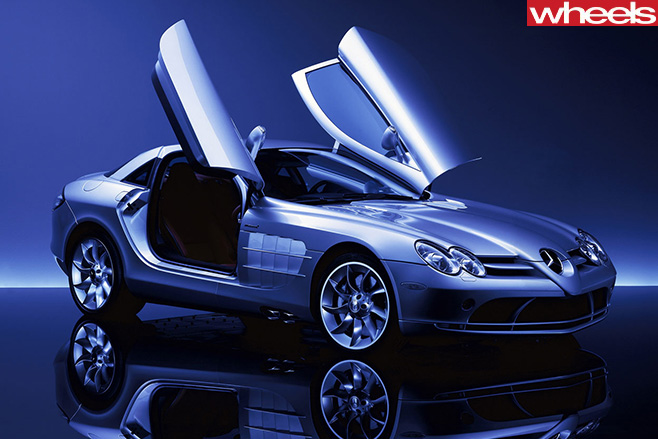
Produced between 2003 and 2010, the two door racer inspired grand tourer was built by McLaren, with engines supplied by Mercedes.
After production of the SLR wrapped up, McLaren finally established itself as its own manufacturer of mainstream supercars, through the likes of the MP4-12C in 2011, the P1 in 2012 and the currently available 650S, 570S and 540C.
The popularity of these cars has played a huge part in keeping the brand relevant and profits consistent, making their road cars arguably more important than its F1 division.
Dennis has now been placed on ‘gardening leave’ until the years end, meaning he will be unlikely to feature at the final round of the F1 season at the Abu Dhabi Grand Prix from November 25-27.
Mental images of Benz C-Class AMGs are usually clouded by smoky burnouts generated by torquey, tyre-shredding V8s.
So, despite the existence of the A45, we’re probably not alone in struggling to get our heads around the idea of an Affalterbach-altered mid-sizer with six cylinders and all-wheel drive. Seems Benz is also slightly confused about the Mercedes-AMG C43, which was originally a sportier version of a C400 and badged C450 AMG Sport.
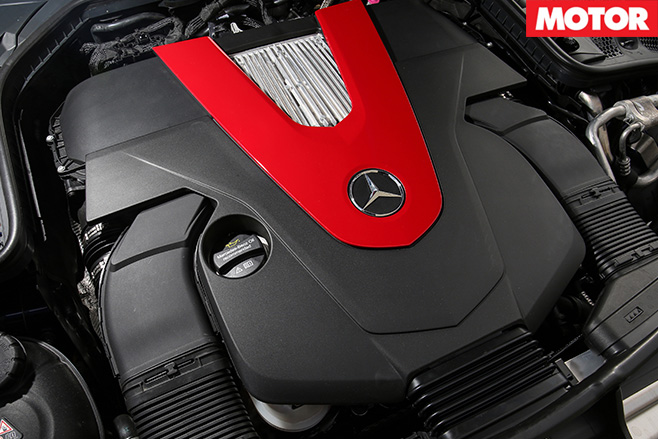
What hasn’t changed is a 3.0-litre twin-turbo V6 that produces 28 per cent fewer bubbles than the C63’s full-fizz 375kW 4.0-litre dual-snail V8. Mercedes will be hoping it proves more popular than Coke Life.
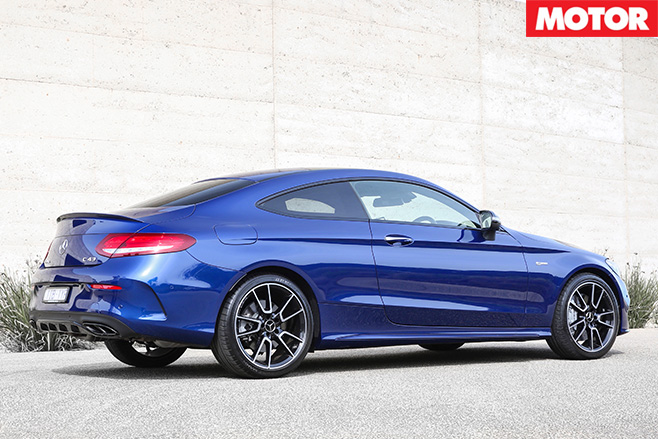
A run in the Coupe variant of what will eventually comprise four body styles reveals a sweet engine. While it can only propel the C43 to within seven-tenths of its angrier sibling in the 0-100 sprint despite the advantage of the 4Matic system, the 4.7-second quote matches its most direct rival – the 260kW/500Nm Audi S4/S5.
Maximum torque arrives at 2000rpm, though low-rev throttle response is doughy in Comfort mode so a switch to mid-mode Sport or top-mode Sport Plus is necessary to stir the most desirable reaction from the six-cylinder.
Those shifts from the nine-speed auto are crisp and quick without matching the ferocious rapidity of big-brother’s seven-speeder. Less acceptable is the auto’s reluctance to downshift from third to second for hairpins on command, and its determination to change up 250rpm shy of the 6500rpm redline even if the ‘manual shift mode’ button has been engaged.
If this is naughtiness of the wrong variety for an AMG, the C43 is also a little too polite on the road. Mercedes says there’s a rear bias to the all-wheel drive system, though power oversteer is certainly not freely available on tap, detracting from the inherent sportiness of the new model.
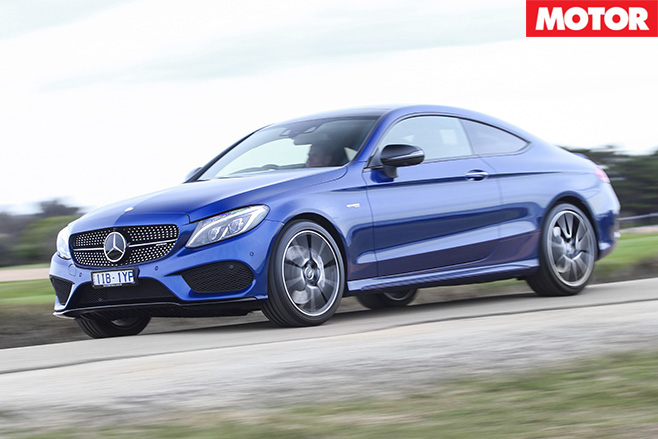
And on rainy days, that AWD system is a welcome USP for a speedily piloted C-Class. The steering doesn’t lose any involvement either, providing the right kind of feedback – in contrast to the BMW 440i’s rack – and commanding obedience from the C43 Coupe’s front end.
The suspension is almost identical to the C63’s, give or take what Mercedes says are some minor calibration differences. Yet while even in Comfort there’s the familiar ultra-stiff set-up, that’s neither a back-breaker nor deal-breaker, some floatiness across compressions suggests the C43’s dampers aren’t quite as disciplined across undulating country roads.
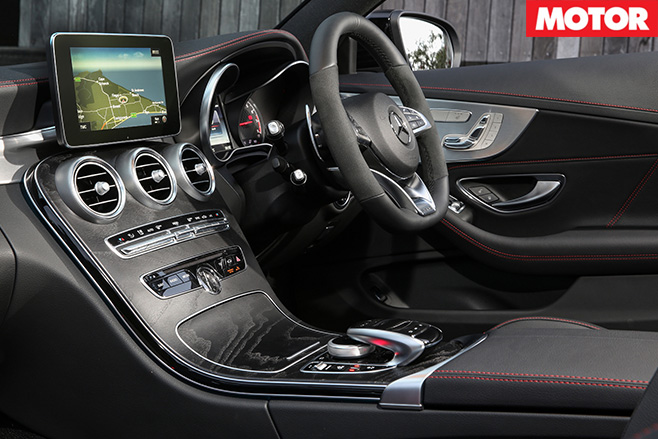
And the chequered-flag-design AMG instrument cluster is standard among the now-familiar upmarket presentation of the C-Class cabin.
The C43 gains head-up display, darker trim details, a sunroof and LED intelligent headlights. The Coupe and Cabriolet variants add heated seats over the sedan and wagon versions. The C43 has more in common visually with sibling four- rather than eight-cylinder Coupes, particularly as all the two-doors wear an AMG body kit as standard.
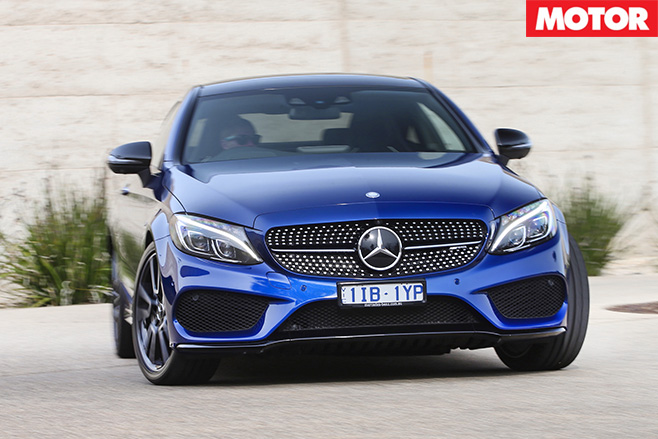
Mercedes understandably has to protect the more expensive AMG, especially as it carries a premium of more than 50 per cent over the $105,615 C43 Coupe. The Mercedes-AMG C43 Coupe, in fact, is positioned perfectly in both specifications and pricing – the latter landing it in the vicinity of both the BMW 440i and Audi S5.
The badge is trickier to reconcile. Where Audi and BMW have found a good middle-ground with their respective S and M Performance sub-brands, the C43 feels like it’s missing some key strands of AMG DNA. It’s more sanity than satanic.
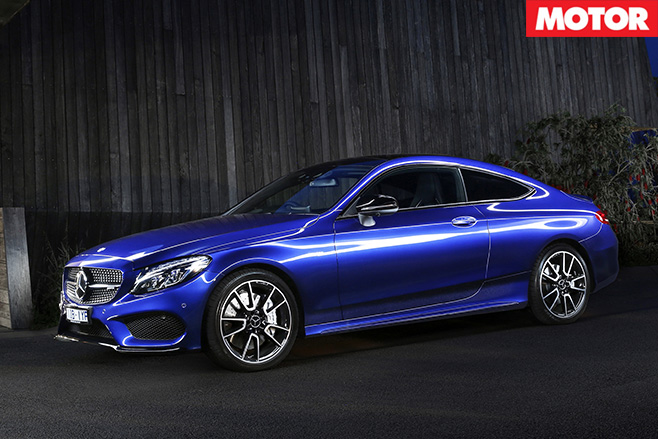
3.5 OUT OF 5 STARS
LIKE: Plenty of grunt; strong grip and traction DISLIKE: Not quite true to the AMG brand we know and love
SPECS Engine: 2996cc V6 DOHC twin turbo Power: 270kW @ 5500-6000rpm Torque: torque 520Nm @ 2000-4200rpm Weight: 1870kg 0-100km/h: 4.7sec (claim) Price: $105,615
Alfa Romeo will enter the increasingly-crowded luxury SUV market with the just-revealed Stelvio crossover, which made its first public appearance today at the LA Motor Show.
Styled as a super-sized hatchback rather than a traditional 8-window SUV wagon, the Stelvio merges the Giulia’s dramatic front-end styling with the silhouette of the Giulietta, with cavernous wheelarches containing massive cloverleaf-design alloys.
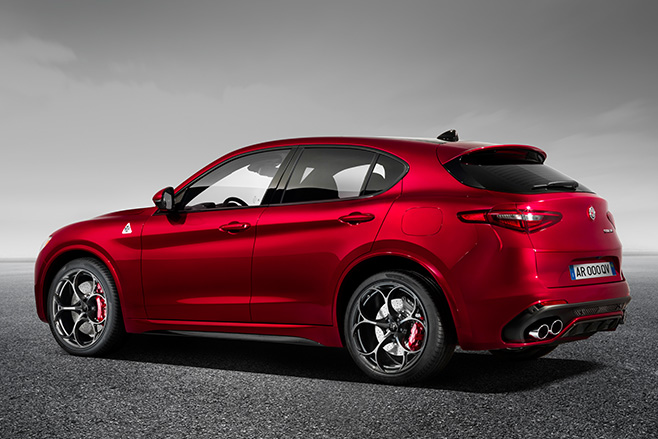
The show car represents the performance flagship of the range, the Stelvio Quadrifoglio Verde, or QV. Those huge wheels contain a sizable performance brake package and the bonnet is vented to expel excess engine bay heat from the twin-turbocharged 380kW 2.9-litre petrol V6 that lurks beneath it.
On the Stelvio QV, the sole transmission on offer will be an eight-speed ZF-sourced automatic transmission, with paddle shifters and multiple calibrations to cover everything from everyday driving to racetrack duty. Power is sent to all four wheels via Alfa Romeo’s ‘Q4’ AWD hardware, with torque vectoring and an continuously-variable torque split ensuring traction under power.
In regular driving conditions the Q4 system sends all drive to the rear wheels, however can instantly take up to 60 percent of power and torque to the front axle should traction at the rear be challenged. Off-road drive modes will also allow the Stelvio to tread where ordinary road cars can’t.
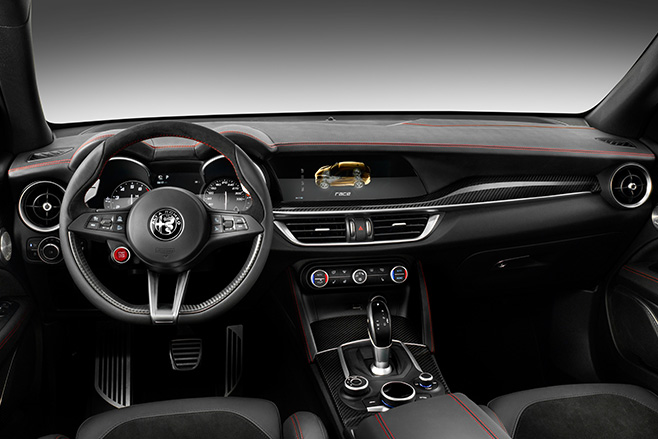
Suspension is via a car-like double wishbone setup at the front and a four-and-a-half link system at the rear. Carbon-ceramic brakes will be available as an option.
A 208kW 2.0-litre petrol four-cylinder turbo will be available lower in the range, with a stout 400Nm developed at 2250rpm. Fuel economy is described as “first-class”, but Alfa has yet to release those stats.
For the Australian market, the Stelvio will follow the eagerly-anticipated Alfa Romeo Giulia late in 2017. Precise details of the model range, equipment levels, pricing and specifications will be released closer to that date.
ALFA ROMEO have taken the covers off their first attempt at an SUV, the Stelvio.
Unveiled at the LA Auto Show this week, the Stelvio’s flagship model will be the 375kW Quadrifoglio, or QV, and Wheels understands Australian customers will be able to drive the car by late-2017, with engine options that are the same, or very similar, to those available in the Alfa Romeo Guilia.
The Stelvio is inspired by the iconic Italian alpine pass which shares its name, and Alfa Romeo is keen to push the mid-size SUV’s sporting credentials.
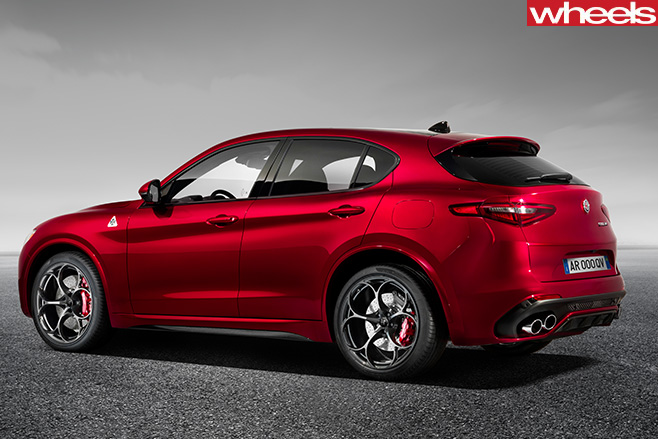
The Bi-turbo V6 is an all-aluminium unit, designed to reduce weight over the front axle of the high-riding SUV.
Transmission options are limited to an 8-speed ZF automatic. However, there will be a lock-up clutch, and different transmission modes, including a ‘Race’ option.
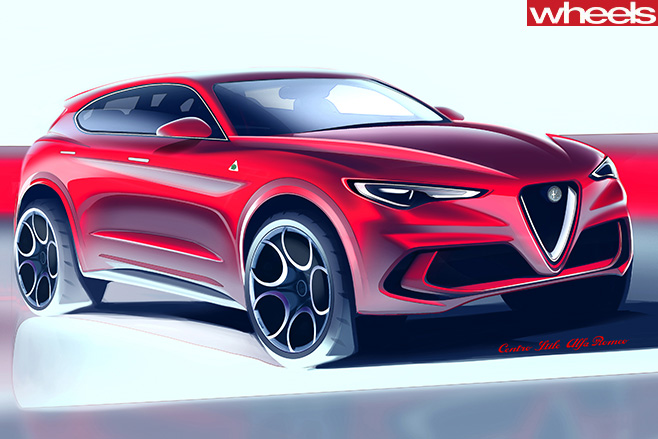
“The Q4 system continuously monitors numerous parameters to optimise torque distribution between the two axles according to what the car is doing and how much grip there is beneath the wheels,” a statement reads.
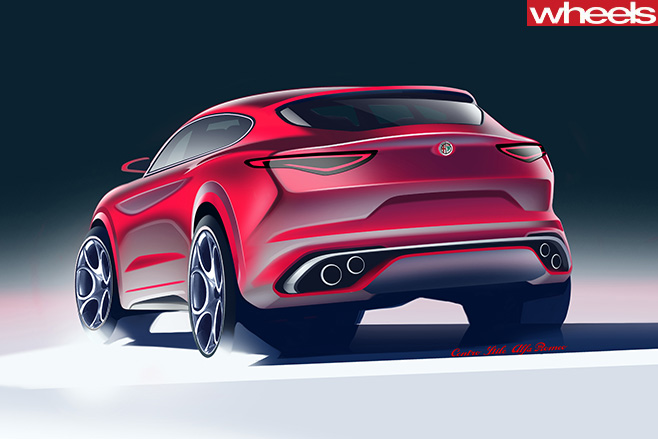
The Stelvio will see the Integrated Brake System which debuted on the Guilia return. The system combines the stability control with a traditional servo brake, which Alfa claims improves response and stopping distances.
Lexus has upgraded the Lexus GS F sedan and Lexus RC F models to include its latest Adaptive Variable Suspension (AVS) technology, to further improve ride, handling and comfort.
Already included in the mid-spec GS and RC F Sport and Sports Luxury models, the AVS system electronically monitors and controls the damping force at all four wheels simultaneously, based on road-surface conditions and driver preferences.
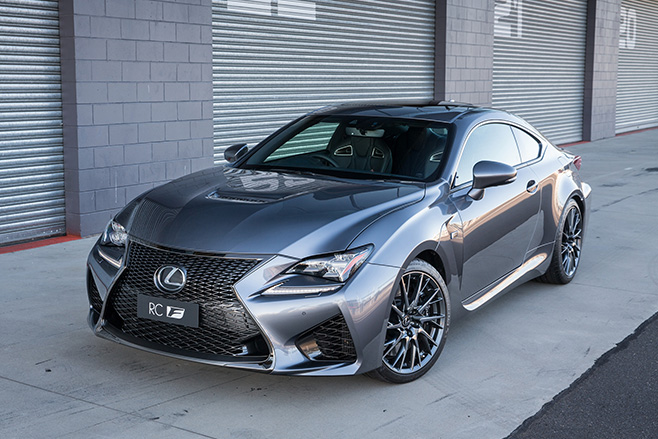
And not only does it boast 24 more levels of damping force than the outgoing RC F and GS F – for a total of 30 – the AVS system is able to switch between those settings automatically without driver input, regardless of which driving mode is selected.
In corners it applies increased damping force (stiffer suspension) in response to steering input, yaw rate and vehicle attitude, ensuring better handling and reduced body roll.
On rough surfaces, it reduces damper force (softer suspension) to help absorb vibrations to maintain comfort. It also instantly tightens to control the car’s body pitch during hard acceleration or heavy braking.
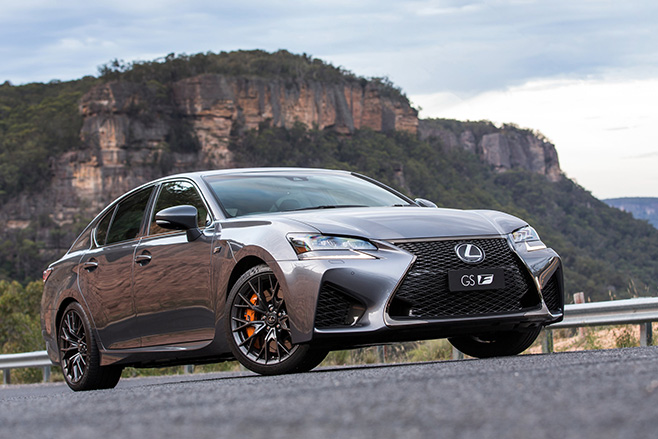
The AVS is linked to the Vehicle Dynamics Integrated Management (VDIM) and Drive Mode Select Control to manage ride comfort and stability across Eco, Normal, and Sport S modes. In the high-performance Sport S+ mode, the AVS focuses on handling stability to help you manage the 318kW generated by the 5.0-litre V8.
In line with the update the GS F gains a new grey exterior paint colour option while RC F gets black paint added to its limited colour chart as well as a new seven-spoke alloy wheel design.
The updated models are now available with starting prices up by $2750 for the RC F and $2025 For the GS F, which now retail from $138,240and $153,540 respectively.
Hot Wheels cars were never really considered collectables by their target audience, namely blood-thirsty 8 year olds who enjoyed the spectacle of coloured cars and imaginary drivers becoming a cropper on the orange loop of death.
Unlike Matchbox cars they were designed to play with rather than collect which meant their attrition rate was much higher – good news for anyone savvy enough to have collected any surviving examples.
People like Bruce Pascal, a Washington DC real estate broker and Hot Wheels tragic whose collection of Mattel miniature cars is worth more than $1.3 million.
Pascal received his first Hot Wheels car when he was seven and was immediately hooked. Unlike most boys he didn’t set them on fire or crush them in his dad’s vice and built up a decent collection.
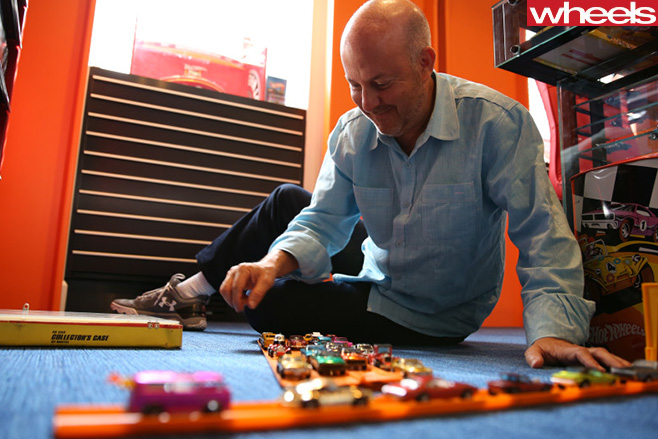
He has since amassed a collection of 3500 cars in a private museum in a spare room that’s been decorated to look like the office of Mattel co-founder and Hot Wheels creator Elliott Handler.
The pride and joy of Pascal’s incredible collection is a bright pink Volkswagen Beach Bomb Rear-Loader in mint condition, which he claims is just one of two, and the most valuable Hot Wheels car in the world with an estimated price tag of US$150,000 (Pascal bought it several years ago for around half that).
The Beach Bomb is one of the many pre-production prototypes he owns, which makes the collection all the more significant.
Pascal reckons he has more Hot Wheel cars and merchandise in his collection than Mattel and one day hopes to open a museum in homage to what he says is the most popular boys’ toy ever sold.
The WhichCar Style Award is a celebration of the automotive industry’s innovation and dedication to design and style. Our panel of experts narrows down this year’s contenders to a list of just 12 of Australia’s most stylish cars.
- Vote for your favourite car for a chance to win a share of $1000.
The Audi A4 merges style with driver enjoyment. The luxurious mid-size sedan is not only enjoyable to drive, but one of the leaders in design and quality. Now in its ninth generation, previously under the guise of the Audi 80, the German automaker has worked hard to come up with a product as polished as the A4.
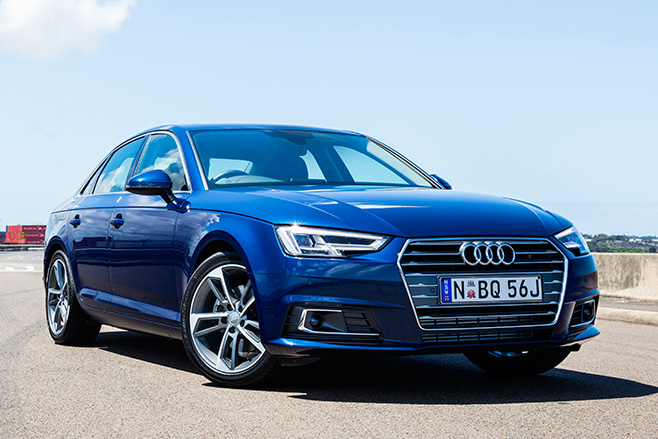
The all-new model was released earlier this year as a lighter, more dynamic sedan packed with more driver and safety technology. And while the exterior only received very minor design changes, its cabin received a stunning upgrade on the inside. A spacious cabin, exquisite textiles, and striking instrumentation all work together to create a spirited segment frontrunner.
The French stand out from the crowd and while the Spanish are known for their vociferousness, so it’s no surprise the French-designed, Spanish-made Citroen C4 Cactus is one of the wackiest designs on the Aussie new-car circuit.
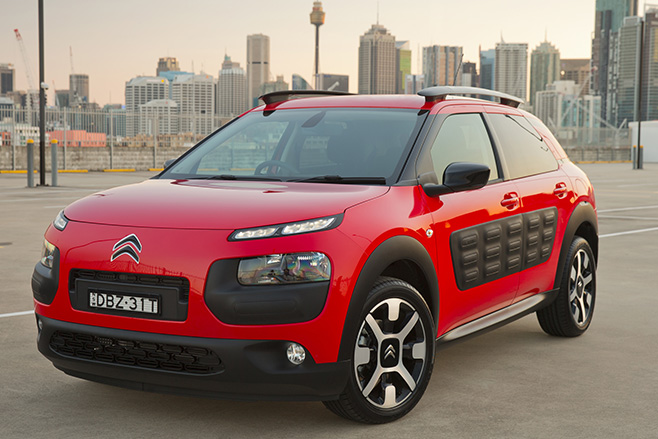
The first thing most people will notice about Citroen’s small SUV is the standout AirBumps. This concept-made-reality feature basically acts as bubble wrap for your car. Gone are the days of door-to-door dents and supermarket trolley scratches.
Citroen then take the style offering a step further by presenting 10 colour options to buyers, including a bright ‘Hello Yellow’, regal ‘Deep Purple’ and cool ‘Blue Lagoon’ along with four AirBump colour choices (black, grey, chocolate and dune white).
Even without these edgy design choices, the strangely-named Cactus offers a sophisticated yet simple design inside and out. The interior is spacious and engaging; the door handles mimic luggage handles, the glovebox carries the bump theme and the materials are elegant.
There’s no doubt the Cactus is one of the most characterful and compelling cars available in Australia, which is its greatest strength and also its Achilles heel.
There’s a reason all Sally wanted to do was ride around in her Mustang. Ride, Sally, ride!
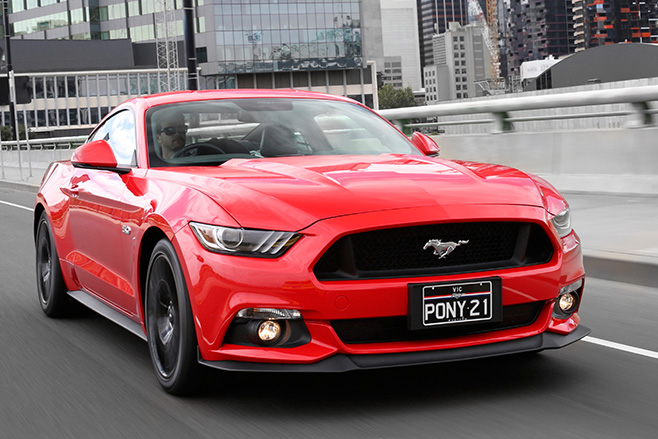
The Ford Mustang is a muscle car unlike others of its kind. It’s tough, and it’s wild, but unlike many of its competitors carries itself as a down-to-earth daily-drive option.
The pony car has continued under the same name since 1964 in the USA, but only two models officially made it to Australian shores. So the 2016 Mustang was one of the most anticipated arrivals this year. Ford designers reimagined the original design with a gloss of sophistication.
It’s not all design-wins for the Mustang, however. Its big exterior is met with a small and busy interior. But it is an icon, and alongside Sally, the classic car has appeared through Hollywood since before Steve McQueen raced a 1968 Ford Mustang GT against a Dodge Charger in the 1968 movie Bullitt. If it’s stylish enough for Hollywood, then we’re in.
The brand-new Astra has been chopped into a whole new design. By name alone, its place on the Style Award’s list is questionable. But if we step away from reputation for a moment and judge this car by its styling alone, we’ll see it’s packed with surprisingly smooth details.
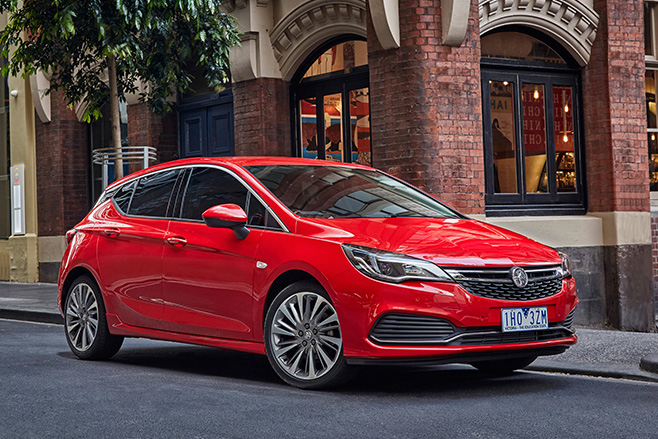
Oozing quality and style, the all-new Astra feels right at home in the small hatch segment. Matched with refinement, dynamics and loaded with technology, it’s earned its place on this list.
Stand out mentions include the floating roof, and clever highlights like a slot for your smartphone. It also offers Apple CarPlay, Android Auto and digital radio.
The Honda Civic has many torn in terms of its place in the style awards, but one thing no one can argue is that it’s eye-catching.
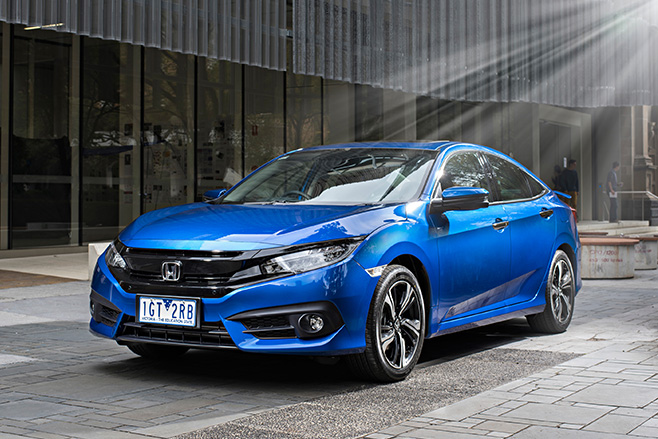
Traditionally, the Civic has been popular with the pensioner-generations, but Honda is targeting the younger market with this new sportier design.
The interior has undergone a makeover too, with the Thai-built sedan receiving a more refined, uncluttered centre console and better quality textiles.
Buyers will also love that it comes with more gear including a seven-inch touchscreen, Apple CarPlay and Android Auto, parking sensors and a reversing camera.
Infiniti, the luxury arm of Nissan, is known for its unique styling, and the Q30 delivers on this. Infiniti’s cheapest offering, the Q30 is based on a Mercedes-Benz platform and shares similarities with the Mercedes A-Class, CLA and GLA, although its skin is pure Infiniti.
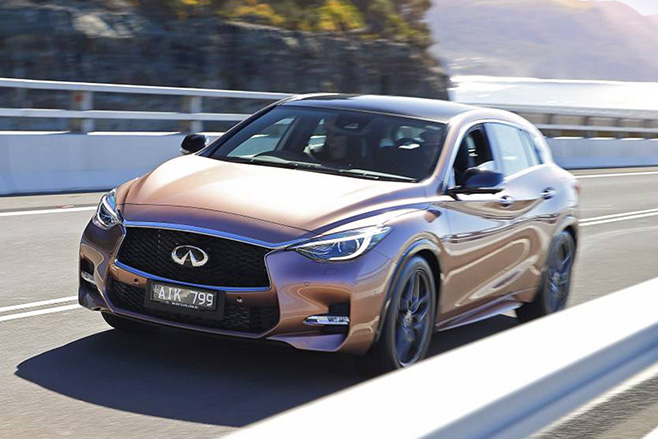
The Q30’s finishes are quality, and the exterior is certainly eye-catching with its edgy, lined, angled, and creased exterior. Like anything that dares to be different, some will love it, some will not. But we’re a fan of anyone who takes the gamble.
As Jaguar’s first ever SUV, the world expected big things. Jags are known for their style, their pace and their elegance and the Jaguar F-Pace certainly delivers.
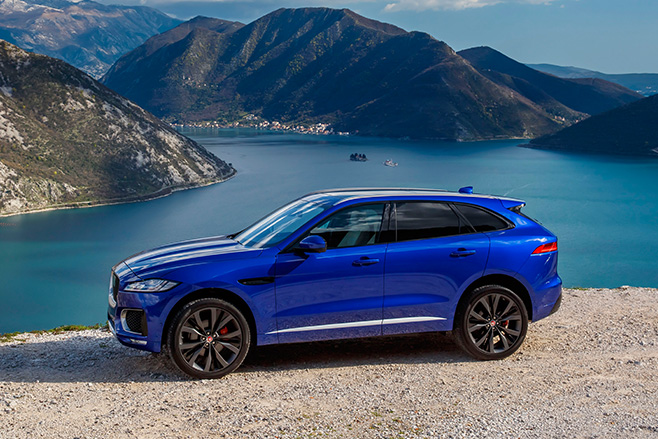
According to Wheels magazine, the Jaguar F-Pace features “Jaguar’s most accomplished interior design in recent times”. Using high quality and stylish finishes, the F-Pace may not be as flashy as some of its competitors, but it’s sporty, comfortable, and hard to fault from a design perspective.
The exterior is simple, yet eludes a type of luxury you’d expect of the British brand.
It was Coco Channel who once said “simplicity is the keynote to all true elegance”, which sums up the Mazda CX-9. The big seven-seater maintains the SUV style without giving in to bus-like proportions.
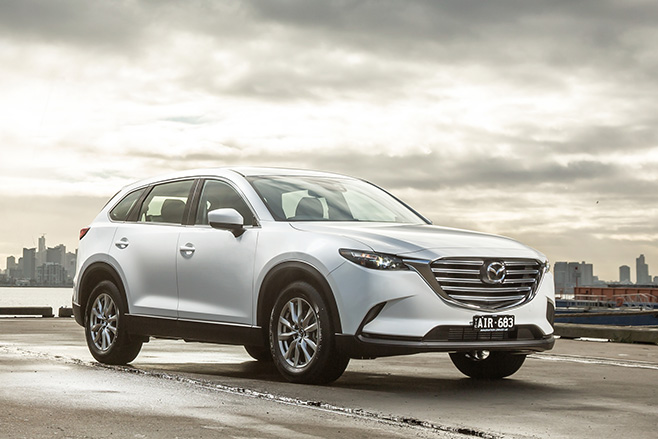
The Mazda CX-9 has no WOW factor. It’s not flashy or particularly luxurious and it doesn’t have diamond-encrusted anything. It’s a car built for families: simple, practical and efficient. And this is exactly what it does so well – less is more and the CX-9 remains stylish without being too OTT.
Unlike other people movers, the CX-9 managed to merge practicality with design flair. Mazda has paid close attention to detail to create a striking and handsome exterior, while the interior is composed of elegant and stylish textiles that makes the large Mazda feel more premium than lifeless.
Match this with a suite of technology and equipment, and it’s no surprise the Mazda CX-9 is such a popular choice.
There’s a lot that can be said about MINI, but no one can argue that style is kind of its thing. Developing such a unique design signature, there’s no other design quite like the MINI range. But the Clubman strays from MINI-esque style because it’s bigger and more practical than its brothers and sisters. It’s actually a contender for families wanting something a little different to the humdrum SUV while still holding on to the practicality.
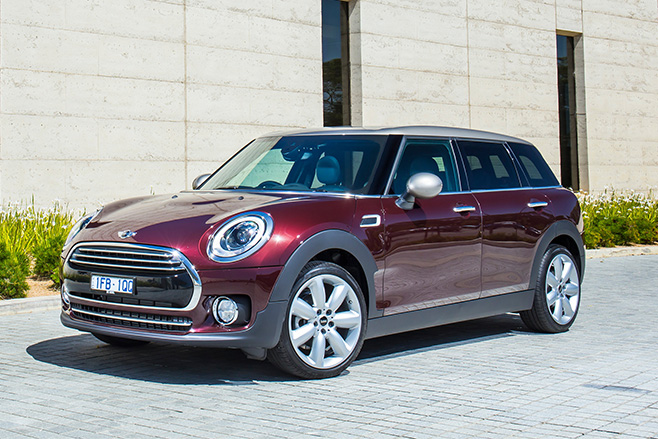
So the Clubman continues the genetics of MINI, while also gaining its own unique characteristics such as width, space and packaging. The interiors too hold on to the circular physiognomies, while entering into a new realm of edges, like square air vents.
It’s a MINI without being too MINI and it works.
The Megane is Renault’s version of a playground for adults. It looks like it’s the type of car that should be enjoyed by unripe drivers, and yet, in its newest form, it’s got more seasoned than ever before.
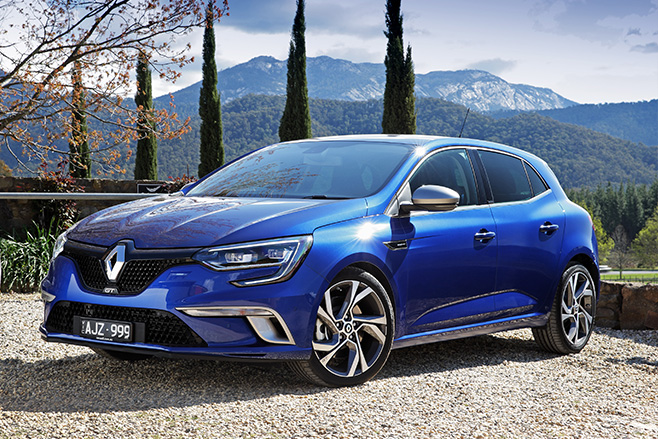
The Megane is fun to drive, particularly if you get up to the GT Line and GT models, and yet, it feels surprisingly adult.
From the outside, thanks to its large backside that Renault has actually reduced in size the Megane’s exterior gets heads turning for more subtle reasons.
Inside, it feels premium as you’d expect from the French and it’s nothing short of interesting. Despite its inconsistencies, buyers will either love or hate the interface and interiors.
Forget James Bond – Skoda’s medium entrant, the Superb, is like the dorky high-school friend who shows up at the reunion in a suit and suddenly becomes Mr Suave.
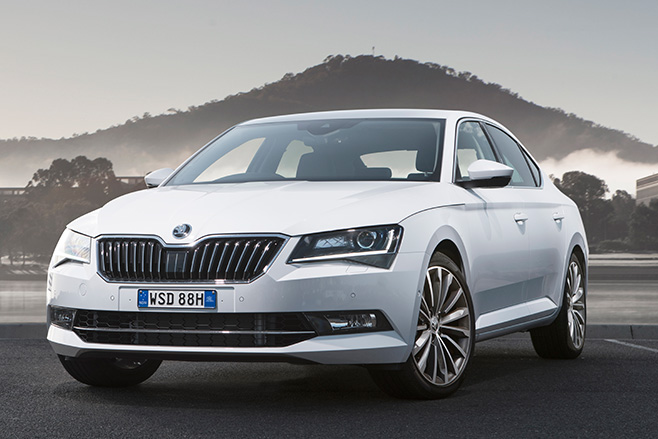
From the outside, the Superb looks elegantly proportioned, but inside you walk into SUV proportions. At least in the best-selling wagon form.
The styling of the Superb is, well, superb. It’s sharper than some of its German competitors, comes with plenty of practical storage ideas and has enough space to make it a decent option as a family-car. Throw in excellent quality, refinement and an attractive price-tag, and you’ve got yourself a surprisingly striking option in the medium-to-large segment.
Volvo’s S90 is the brand’s largest and more luxurious sedan available. The Swedes aren’t traditionally known for elegant automotive style, but that changed this year thanks to the Volvo XC90 and XC60. So it’s no wonder, then, most expect the S90 to be elegant with a premium feel.
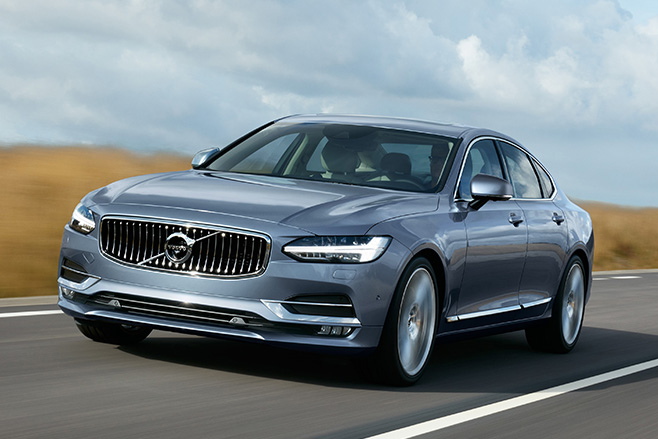
The cabin is clean and organised, even if a little sparse. Wood and metal complement each other to create an elegant and understated interior, with chic finishing touches which contribute to the overall feeling of minimalism.
From the outside, the sedan looks sporty and clean, even if the rear has polarised opinions. But the S90 is a refreshing and stunning entrant in the large sedan segment.
