
Mitsubishi has given its top-selling Mitsubishi ASX small-SUV a nip and tuck to prolong its sales renaissance, including a new-look front-end and interior changes.
The ASX is one of the oldest models in the Australian market, with the current generation having first released way back in 2010. However, despite its age, the ASX has enjoyed its best sales success this year due to a combination of attractive pricing and the ever-growing popularity of small SUVs.
It was the best-selling baby soft-roader in October and is on track to be the biggest seller for year, with sales so far topping 15,000 – which is about the same as the Mazda CX-3 and around 5000 units more than the Nissan Qashqai and Honda HRV.
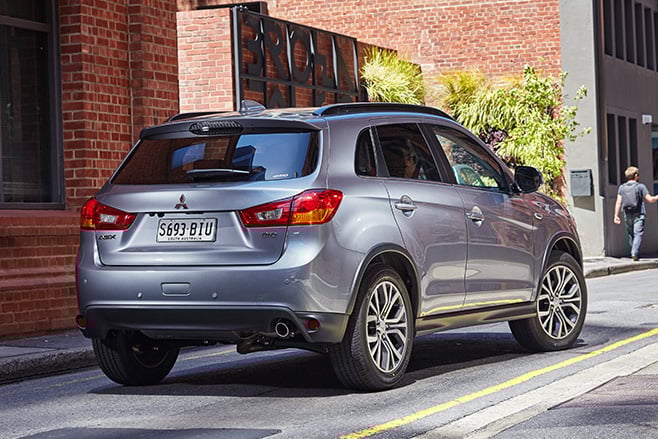
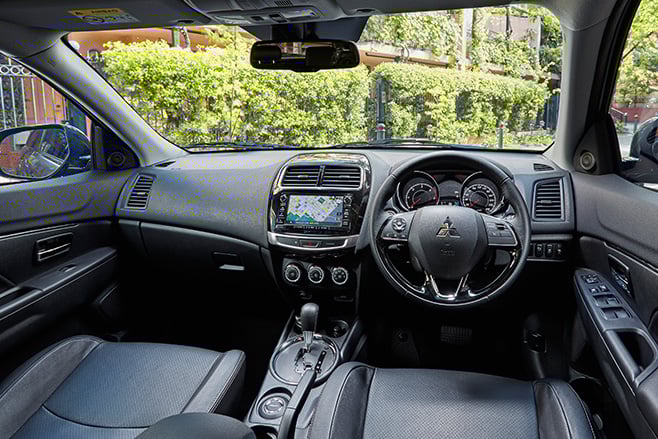
With an all-new ASX replacement not due until 2018, Mitsubishi appears to be taking an if-it-ain’t-broke … approach with minor changes including a new “dynamic shield” front bumper and grille, shark fin antenna, redesigned seat adjuster, improved rear seat comfort, new cloth seat trim with red stitching and … wait for it … a new key fob shape.
The Dynamic Shield front features gloss black and chrome finishes added to the new-shape front bumper and grille to bring it more in line with its larger Mitsubishi Outlander and Pajero Sport siblings.
Minor tweaks to the upper-spec ASX XLS variant include functional improvements to its MMSC infotainment system and heated seat switches moved to the dashboard.
All versions are now compliant with Euro 5 emissions standards.
Price increases across the range are also minor: just $10 more for the petrol 2WD variants and around $500 for the turbo-diesel 4X4s, with retail pricing starting at $25,000.
The 2017 Mitsubishi ASX is now arriving in showrooms around Australia.
MY17 Mitsubishi ASX Pricing:
LS 2.0L petrol 2WD manual – $25,000 LS 2.0L petrol 2WD CVT – $27,000 LS 2.2L turbo diesel 4WD auto – $32,500 XLS 2.0L petrol 2WD CVT – $31,500 XLS 2.2L turbo diesel 4WD auto – $37,000
You’d want your shoes, gloves, and audio speakers to come in pairs. But, supercars?
British dealer Alastair Bols is selling a Ferrari 458 Speciale and McLaren’s 675LT for a cool combined £699,000 – or $1.16 million in our coin.
The seller says the stunning combo are “both obviously the limited production and track focused editions” and “are only to be sold as a pair and are not available individually.”
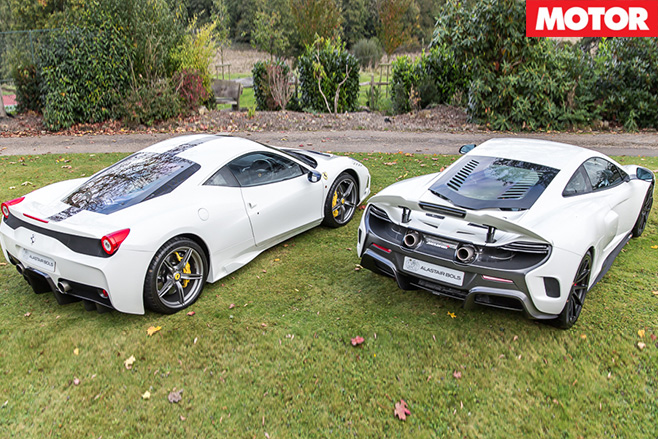
Another reminder: “Possibly the only opportunity to purchase a matching pair of these already legendary machines, one the first of its type, the other possibly the last of its naturally-aspirated type.”
In other words, if you don’t want to drive ’em, they’re a solid investment. McLaren only produced 500 units of its 497kW/700Nm 3.8-litre twin-turbocharged supercar that pinched carbonfibre and suspension components from the hypercar P1 to shed 100kg and achieve a 2.9sec 0-100km/h.
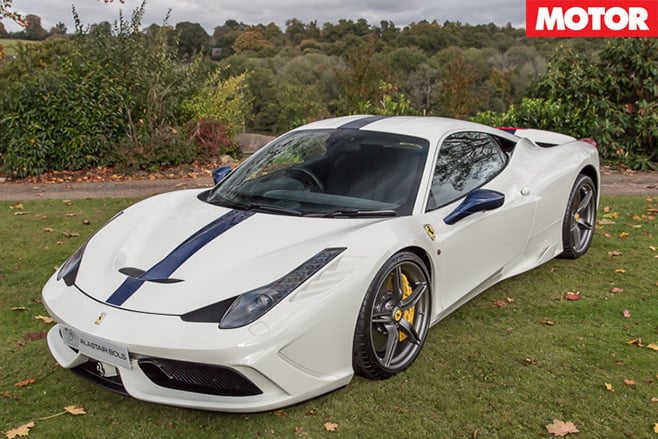
Both models use a seven-speed dual-clutch transmission, both are built in 2015, the Bianco White Ferrari has 1590 miles (2559km), the Pearl White McLaren 292mi (470km).
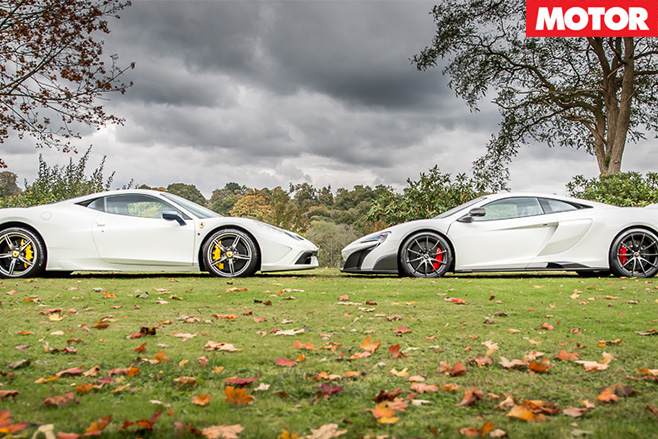
In this Continental comparison test, we get the feeling the only winner is the buyer.
Pics: Alastair Bols
Audi Australia has refreshed the Audi A3 range for the 2017 model year, subtracting diesels, adding two new petrol engines, revising the exterior, adding more equipment and bumping up prices.
The diesel-burning A3 2.0 TDI has been quietly dropped while the 1.6 TDI is demoted to being a fleet-only or special-order variant. For regular consumers that means the A3 family is essentially a petrol-centric offering, with three powertrains offered across both sedan and hatch bodystyles, while the S3 continues as the performance-oriented option – also as a four-door or a five-door.
The 110kW/250Nm 1.4 TFSI turbo petrol four remains unchanged as the volume-selling powertrain of the A3, but the engines that sit either side of it are new to the range.
The first is the 1.0 TFSI motor, which is derived from the 1.0-litre turbo three-cylinder of the Audi A1 compact hatch and makes 85kW and 200Nm. Driving the front wheels through a seven-speed automatic and consuming 4.8L/100km on the combined cycle, the 1.0 TFSI is the most affordable engine in the A3 – though it can only be specced in the A3 Sportback, not the sedan.

At the top of the regular A3 line-up is the 2.0 TFSI, making 140kW of power and 320Nm of torque and coupled to either front-wheel drive (A3 2.0 TFSI Sport) or all-wheel drive (A3 2.0 TFSI quattro S line) underpinnings. Its seven-speed dual-clutch automatic is also new, and the A3 2.0 TFSI can sprint to 100km/h in 6.8 seconds as a front-driver, or a spritely 6.2 seconds with quattro AWD.
Fuel economy for the 2.0-litre models is a claimed 5.9L/100km for the FWD 2.0 TFSI Sportback or 6.2L/100km for the AWD 2.0 TFSI Sportback. Subtract 0.1L/100km for the sedan fuel consumption figures.
Meanwhile the carry-over 1.4 TFSI drinks 5.0L/100km as a hatch or 4.9L/100km as a sedan.
For the Audi S3, power output for its 2.0-litre turbo four-cylinder increases by just 3kW to 213kW with torque remaining static at 380Nm.
Available either with a six-speed manual or seven-speed dual-clutch automatic transmission, the S3 Sportback and Sedan can leap to 100km/h in 4.8 seconds as an automatic or 5.4 seconds as a manual. Fuel consumption ranges from 6.5L/100km for the S3 sedan auto, to 7.1L/100km for the manual-equipped S3 Sportback and S3 Sedan.

The S3 Cabriolet is strictly auto-only, with average fuel consumption of 6.8L/100km and a slower 0-100km/h time of 5.3 seconds thanks to its extra heft.
The A3’s exterior is updated with new bumpers at front and rear, with 2.0 TFSI models getting a sportier front fascia with deeper air vents. Headlamps receive a saw-toothed outline and the grille is made more prominent, while new alloy wheel designs and two new exterior colours round out the rest of the external changes.
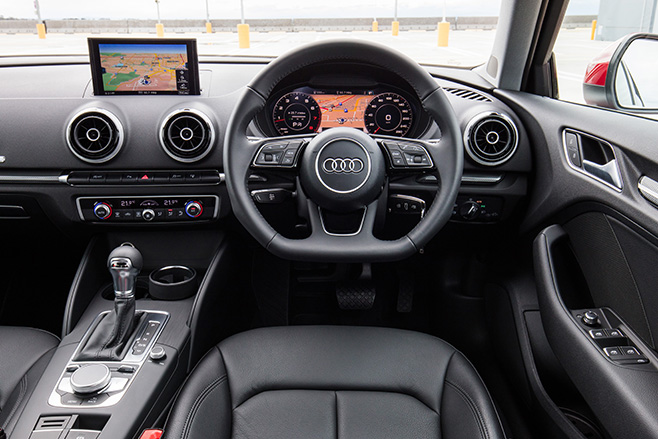
Inside, much of the A3’s cabin furniture is unchanged, there are some key additions to bring the A3 closer to Audi’s newer models like the A4, Q7 and TT. The rotary MMI dial that controls that A3’s infotainment system (which features built-in sat-nav on all models) has been updated with a simplified button layout, the steering wheel is a new three-spoke design with switchgear borrowed from the TT, and all models can be optioned with Audi’s impressive Virtual Cockpit reconfigurable electronic instrument panel.
A crucial safety equipment upgrade sees all models fitted with automatic emergency braking and driver fatigue monitoring as standard, along with front and rear parking sensors and a reversing camera
At the top end, the S3’s standard equipment list now features LED headlamps, a collision detection and warning system, digital radio, the Virtual Cockpit display, blind spot monitoring and reverse cross traffic alert.
PRICING
A3 Sportback A3 1.0 TFSI – $35,900 A3 1.4 TFSI COD – $39,900 A3 2.0 TFSI Sport – $45,900 A3 2.0 TFSI quattro S line – $49,500 S3 2.0 TFSI quattro – $62,900
A3 Sedan A3 1.4 TFSI COD – $41,500 A3 2.0 TFSI Sport – $47,500 A3 2.0 TFSI quattro S line – $51,100 S3 2.0 TFSI quattro – $64,500
A3 Cabriolet A3 1.4 TFSI COD – $49,000 A3 2.0 TFSI Sport – $55,000 A3 2.0 TFSI quattro S line – $58,600 S3 2.0 TFSI quattro – $72,000
Things have come a long way since that bloke had to walk in front of a slow-moving vehicle waving a lantern to warn other road users that another one of those fandangled horseless carriages was on its way.
These days, we don’t even have to think about switching on the car headlights; a car-mounted sensor can tell when dusk falls or a tunnel blocks out the sky, and light up the road automatically.
But not all headlights are made the same. There’s now a confusing array of beams that have distinct advantages over the systems they supercede. Here’s how they differ.
INCANDESCENT LIGHTS
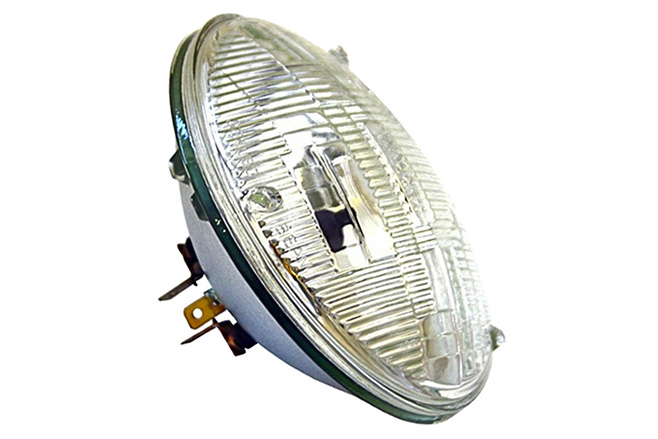
These are the oldest type of globe on the market. They run electricity through a fine tungsten filament housed in a vacuum, heating it up until it produces a bright light. Because there’s no oxygen in a bulb, the filament doesn’t burn, but continues to glow and heat up. The biggest improvement to the mincandescent bulb headlight was the development of the sealed beam (pictured above), which lasted longer, and stayed brighter, than bayonet-mounted bulbs.
HALOGEN LIGHTS
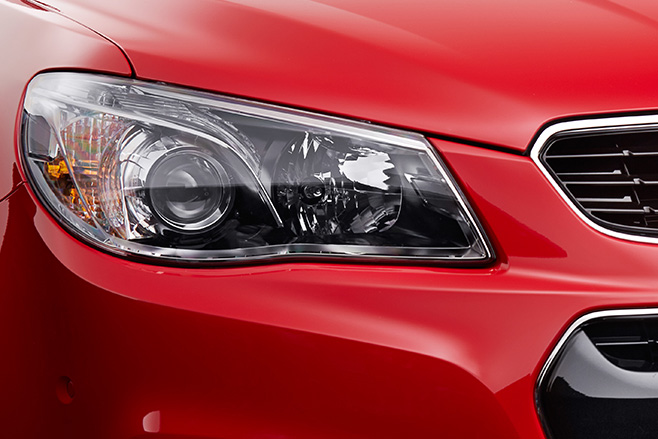
Filling an incandescent light bulb with a halogen – the scientific name for a salt made up of compounds such as iodine or bromine – results in a much brighter glow for the same amount of power. This means the halogen bulb can be smaller than a conventional globe. However, because it produces more light, it means the bulb heats up even more than an incandescent bulb. To handle the extra heat, the bulb is made out of quartz, not silica glass. And because it runs so hot, you’re best never to touch it with your fingers; leaving a fingerprint on the quartz will make it heat up unevenly and severely shorten the lifespan.
HIGH INTENSITY DISCHARGE (HID) LIGHTS/XENON LIGHTS
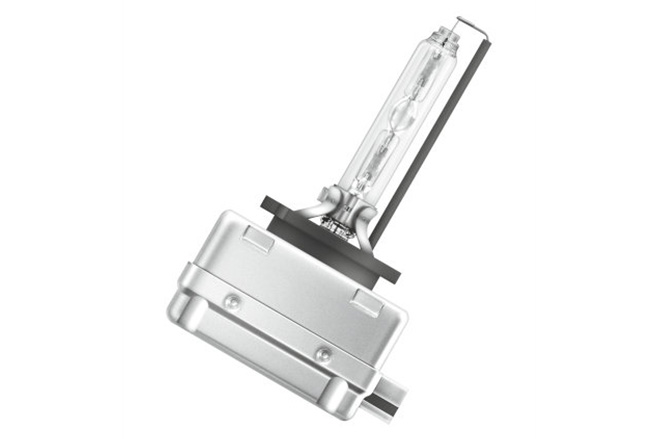
These headlights replace the tungsten filament with a bright arc of electricity. Inside the globe, gases help bridge the arc while burning salts that produce a thing called plasma – which makes the arc of electricity jump even more efficiently, reducing power use and increasing the brightness of the light it throws out. However, as the bulbs age they grow more dull, and will eventually need replacing.
LIGHT EMITTING DIODES (LEDs)
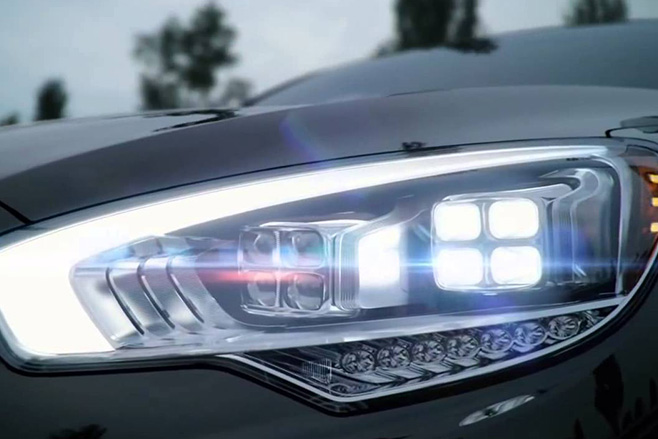
These are a fairly recent addition to the automotive world. Despite LEDs being around for a long time, the high cost of producing them has held their jump into cars back somewhat – that’s why you see them used more for small daytime running lights rather than large headlamps. A LED headlight isn’t a single beam; instead it’s made up of a collection of beams that work together to produce a field of light. Having multiple light sources allows clever carmakers to switch them on and off, changing the shape of a beam so that it can reduce the amount of glare the lights shine into oncoming traffic, or even pick out and illuminate a single road sign as you drive by it. LEDs also draw less power, meaning you use less fuel to juice them up.
LASERS
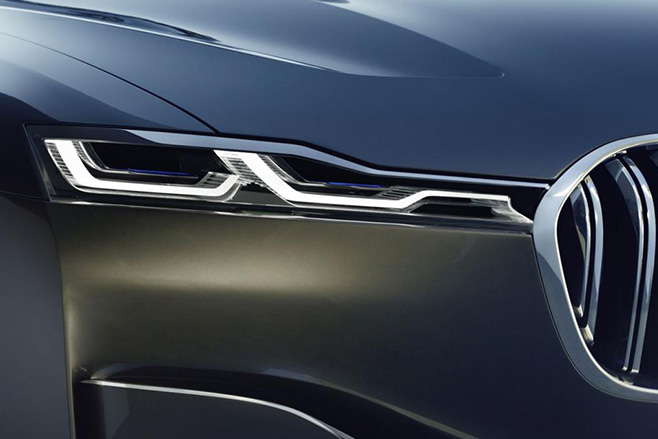
We’re more used to the idea of lasers being used by villains to cut swashbuckling heroes in half, or even epic space battles. But a laser is a light, and the tech is only now starting to find its way into cars. Compared with the size of normal headlights, the laser units are tiny but can produce the same amount of light as a conventional unit. This opens up all sorts of opportunities in terms of design that are just starting to show in cars including the Audi R8, and the BMW 7 Series and i8. Where they really shine, though, is their range: like a laser pointer, the high beam of a laser headlight can shine up to 600 metres – twice the distance of other light systems.
Fast cars and fast women. If you knew little or nothing about Peter Brock other than how he was portrayed in the Brock telemovie, you could be forgiven for thinking that’s all there was to him.
In fact, it was even worse than that. If you didn’t know better – and a large proportion of the audience wouldn’t – the over-riding impression that the telemovie projected was that Brock was a philandering, sexist, egomaniac petrolhead. Yes, he was far from a saint and certainly flawed on many fronts. But there was much more to the man than the hedonistic hell raiser depicted in much of Brock.
The two-part dramatisation of the late legend’s life almost completely missed the point that Brocky was a larger-than-life character because he was ‘the people’s champion’. He wasn’t Australia’s most popular driver ever – and one of the nation’s most revered athletes of any kind – just because he was a handsome hero behind the wheel who won races.
His real appeal was his genuine affability and interest in people. He not only understood the value of courting publicity, but also the importance of being courteous and friendly to just about everyone, from corporate heavyweights to ordinary folk.
I was roughly a contemporary of Brock and one of my first major interviews was with him in 1973. Despite the incongruity of being interrogated by a gangly teenager in his school uniform, he was bemused rather than dismissive. It was an early snapshot of his dealings with the media and the public that would become his trademark.
Brock’s affability wasn’t contrived. He enjoyed engaging with those from all walks of life and was a natural master of making people feel important. He was charming, warm, humorous and unassuming – just a good bloke.
Brock was a salacious story that would have shocked and fascinated much of its audience. What offended me most weren’t the inaccuracies, distortions or pure fabrications (of which there were many). The show was, after all, a dramatisation of his life, not a documentary.
Like most who knew him, I was outraged because the over-riding impression was that Peter Brock was a self-absorbed arsehole. In the pursuit of entertainment, the essence of Brock was largely lost.
His popularity was ascribed simply to his on-track success, especially at his beloved Bathurst, rather than delving deeper into the complex and often contradictory combination of a winner who was able to win the hearts and minds of the common people.
Brock was a man of the people. He could adapt to any occasion, but he was at his most beguiling and inspiring among the rank and file of his fans. His public image was a reflection of the respect and attention he gave to almost everyone he met.
For all his foibles – and, like anyone in the public limelight, his failings and quirks were magnified – Brocky deserved much more credit for his inherent qualities as a person than he received in the show.
So for the makers of Brock to fail to balance the questionable aspects of his life with meaningful emphasis on the very attributes that underpinned his fame tainted the whole production. To my mind, it did his memory a great disservice.
His life was trivialised and titillated. Unnecessarily so. It didn’t need embellishment, much less misrepresentation. You really couldn’t make up what made the man great.
For those who lived through the rise, fall and revival of Brock’s incredible career, there was far more good to him than bad. The telemovie missed the point of what made the man so important to so many people, and how he inspired generation after generation of young and old. Just as he was far from Peter Perfect, neither was he Peter Prick.
His legacy should be much more than a tawdry tale for the TV masses.
Audi has added a new three-cylinder entry point to its A3 family, and don’t let its base model positioning fool you – it’s more premium than you’d expect.
WHAT IS IT? The price of entry to Audi’s A3 range has fallen, with the German automaker’s Australian arm adding a new $35,900 1.0-litre three-cylinder model to the bottom of the range – a reduction of $600 over the previous base model Audi A3 1.4 TFSI.
At the same time Audi has plumped up the standard equipment list, with automatic emergency braking and driver fatigue monitoring now fitted to all A3 models – including the base 1.0 TFSI.
But with just three cylinders, 85kW and 200Nm of torque, does Audi’s new three-pot hatchback have what it takes to satisfy luxury buyers?

THE WHEELS VERDICT Audi’sA3 Sportback has always been a sharp offering, and lopping off a cylinder hasn’t dulled that reputation. It may not overpower you with raw performance, but it’s not likely to prove underwhelming either – its healthy midrange torque means driveability in most conditions is still more than adequate.
And unlike some rivals in the lower end of the luxury segment, it doesn’t feel wanting for features either.
THE WHEELS REVIEW From the outside, the update is mild. New plastics at front and rear, a sharper headlamp design, new tail lamp jewellery, fresh alloy wheel designs and a couple of new paint colours are all that set the 2017 A3 range apart from its predecessors.

The 1.4 TFSI turbo four with cylinder-on-demand mode carries over as the mainstay motor of the range, but there’s an all-new 140kW/320Nm 2.0-litre turbo petrol four that’s available in front-drive and all-wheel drive guise for high-spec A3s.
But it’s the base model that gets the most intriguing powerplant – an 85kW 1.0-litre three-cylinder turbo pinched from the A1 micro-hatch.
It’s got the lowest output in the premium small hatch segment, and its 9.9-second 0-100km/h sprint is leisurely rather than rapid. That said, it doesn’t suffer for driveability thanks to a meaty torque curve that puts all 200Nm at the driver’s disposal between 1500 and 3500rpm.
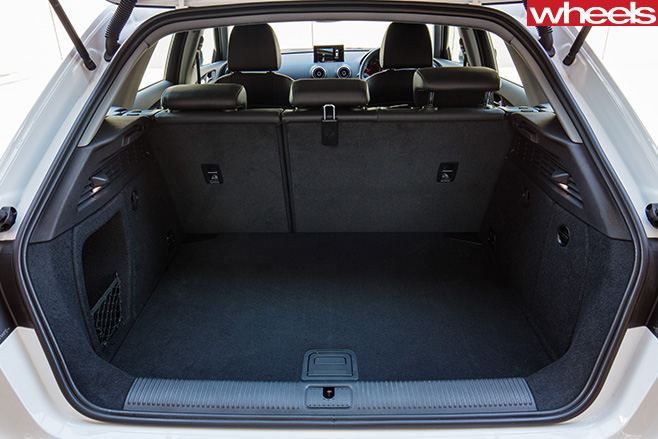
The A3 1.0 TFSI’s standard 16 inch wheels and thick sidewalls deliver a supple ride on choppy tarmac, though there’s slightly more road noise than we expected for such chubby tyres. Roadholding – even on the low-resistance eco tyres – is surprisingly good though, and if you want to prioritise comfort in an A3 the 1.0 TFSI is the spec to get.
And the interior still looks flash – at least as far as its direct rivals are concerned. While base model Mercedes-Benz A-Classes and BMW 1 Series models look low-rent, the A3 1.0 TFSI is a cut above with plenty of soft-touch surfacing and a leather-bound three-spoke steering wheel that looks and feels great.
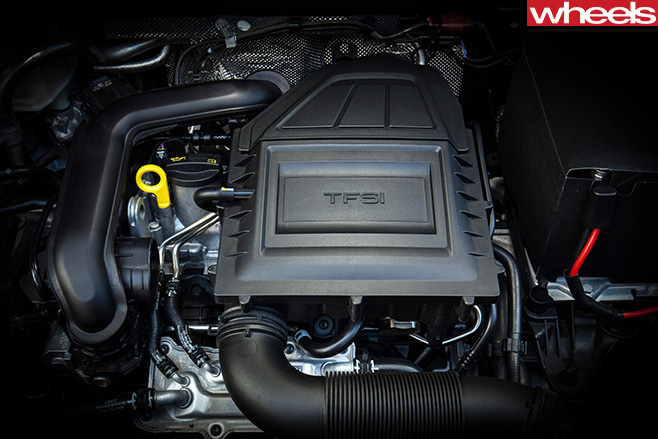
Want more? Audi’s thick list of options not only includes staples like leather upholstery, more safety gear, infotainment upgrades and higher-grade trim, but you can even replace the 1.0 TFSI’s traditional analogue gauges with Audi’s slick virtual cockpit all-electronic instrument panel.
The downside? The A3 1.0 TFSI is only available in five-door Sportback form, meaning those shopping for the A3 sedan’s more attractive bodystyle won’t be able to enjoy it.
SPECS Model: 2017 Audi A3 1.0 TFSI Engine: 999cc in-line 3-cyl, dohc, 12v, turbo petrol Max power: 85kW at 5000rpm Max torque: 200Nm at 1500-3500rpm Transmission: 7sp dual-clutch automatic Kerb weight: 1275kg 0-100km/h: 9.9sec (claimed) Fuel economy: 4.8 l/100km (claimed) Price: $35,900 On sale: Now
One of the astonishing constants of the car industry is that every time the E63’s engine gets smaller, so does its 0-100km/h time.
For example, it had a 6.2-litre atmo V8 with 386kW back in 2009 and punched to triple figures in 4.3 seconds (faster than the current M5, by the by). It went to a biturbo 5.5-litre V8 in 2011 and by 2013 it was ripping by 100km/h in 3.6 seconds.
Now AMG has shrunk the engine down to just 4.0-litres and not only is the biturbo V8 even faster, but it’s the most powerful E-Class ever built. Ever.
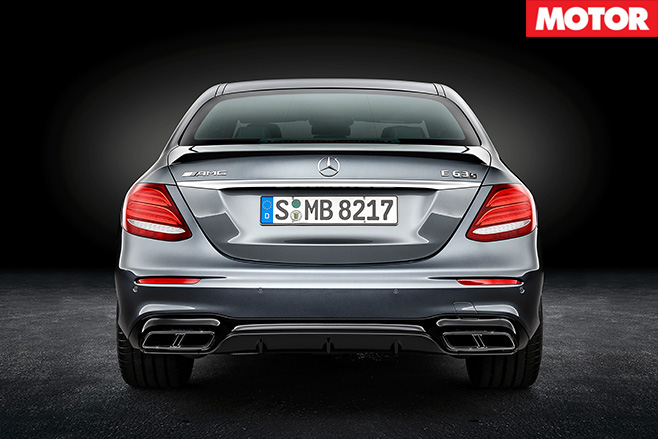
With 450kW from a modular M177 V8 with its pair of twin-scroll turbos tucked up inside the vee (just like the M5 and the RS6), it’s not just powerful. It’s got torque. It’s got 850Nm of torque from 2500rpm until 4500rpm, then the power takes over at 5750rpm and doesn’t trail off until 6500rpm. So cop that.
It’s a performance envelope that would frighten Thor, putting the M5’s 423kW and 680Nm firmly in the shade and even out-rating AMG’s own GT R monster.
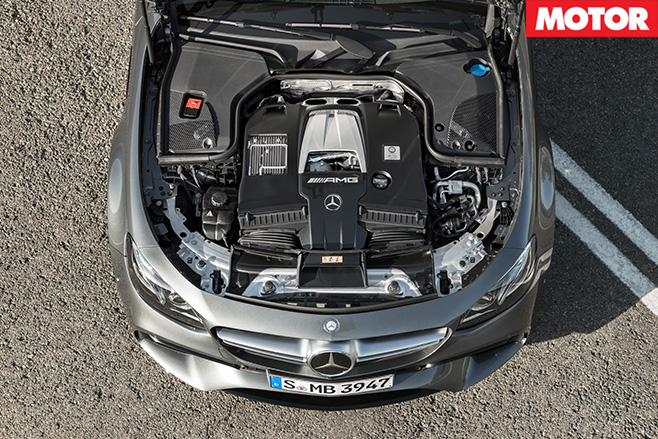
The automatic moves to a nine-speed transmission but, in the best Affalterbach tradition, AMG unbolts the heavy torque converter from Benz and fits it with its own wet-clutch setup. Just like it did to the old seven-speeder for years.
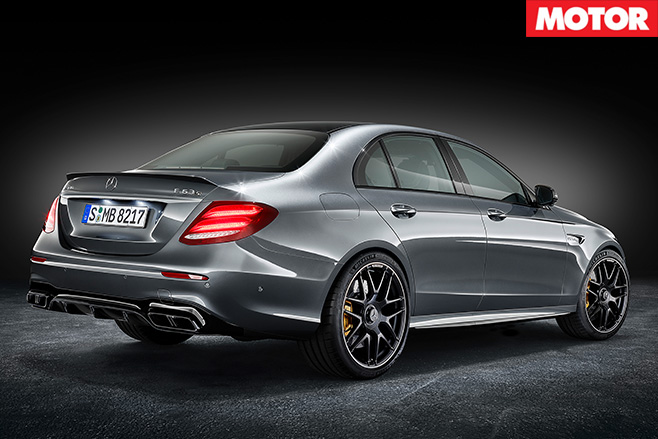
Lairy wings might be absent, but don’t think AMG hasn’t done plenty of bodywork to the E63 S. The wheelarches had to be pushed out 17mm over the stock W213 bodyshell to accommodate the rubber for example, and it needed more brake and engine cooling, so the air intakes have proper gravitas.
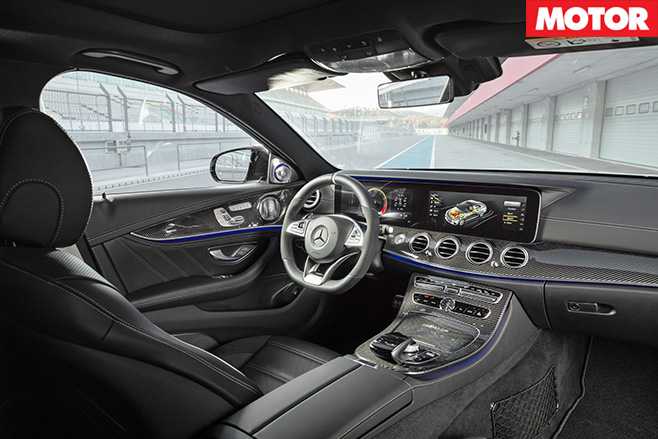
But if watching the pennies somehow correlates to your idea of living with an E63 S, then they’ve fitted the M177 with cylinder deactivation, too. It will shut down cylinders two and three on the right bank and five and eight on the left at light throttle (between 1000 and 3250rpm), though it can jump back into V8 mode more or less instantly if you thump it. That pulls the consumption down to 9.2 litres/100km on the NEDC, or 203 grams of CO2/km.
For all that trickery, AMG insists that all you really have to do to hurl yourself to 100km/h in 3.4 seconds is to engage Sport, Sport Plus or Race mode, press the brake pedal hard and stand on the accelerator pedal. Then you just step off the brake and unleash a fury that doesn’t stop until it hits the limiter at 250km/h (or the uprated big-boy limiter at 300km/h).
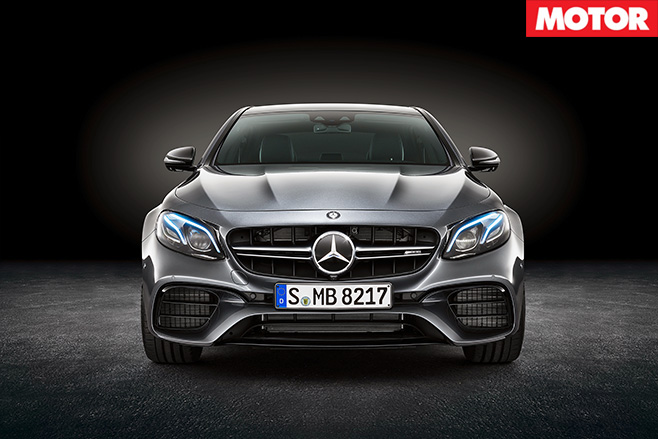
All-wheel drive brings more grip, but will this alienate the giggle-happy slides the old car was so fond of? Well, the E63 S’s Race mode effectively decouples the front differential, feeding all of that power and torque through the limited-slip rear differential.
And if the ESP is off and the tranny is in manual mode, you can switch on a drift mode, frying up the 295/30 ZR20 rear boots in a controlled way that won’t let the car get completely out of control or turn around on the ham-fisted.
There are detractors out there who criticise drift modes, but they’re a lot more responsible, in real terms and under closed driving conditions, than switching off the skid-control system altogether, which even humble hatchbacks do with varying success.
ITu2019S 2001, Iu2019ve just finished playing a game of high-school cricket, and one of the defining moments in my love affair with cars is about to happen.As I slide my gear into my bag, a member of the opposite team is collected by his dad in a brand new HSV Clubsport. It’s a white VX, it’s immaculate, and as they cruise slowly past at a pace guaranteed to attract as many eyeballs as possible from the watching crowd, the kid rolls down the passenger window and plants his elbow firmly on the sill. In that moment, it is the coolest car in the world.
I should point out here that I grew up in Bathurst, at the foot of Mount Panorama, and had such an affinity for fast Holdens that I painted my BMX bike red and plastered it with Mark Skaife stickers.
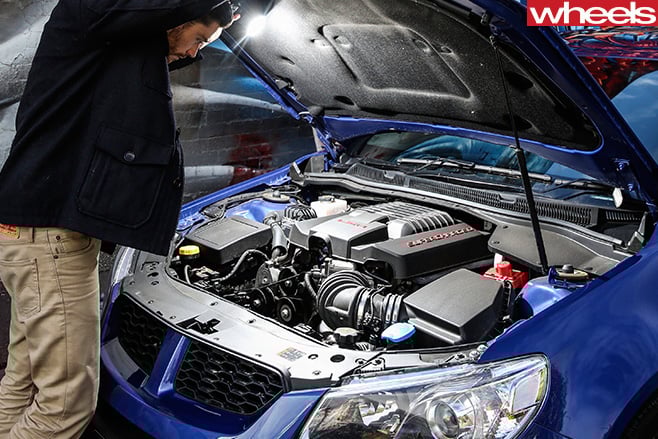
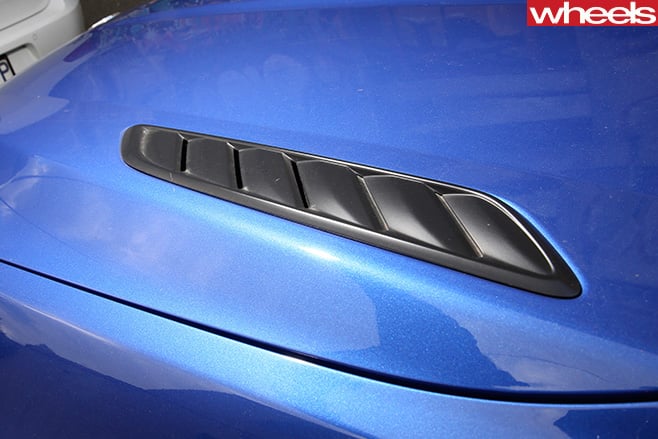
HSV has given the Clubsport a visual overhaul for the Gen-F2 series, and the addition of matte-black inserts in the front bar, side skirts and bonnet, plus a new design for the machined 20-inch wheels (255/35R20 up front and 275/35R20 out back), has turned the aggression up to 11.
If there’s a visual disappointment, it’s at the rear, which remains unchanged in wagon spec – HSV says that Tourer volumes are so small it didn’t justify the investment – and it looks a little Plain Jane compared to the rest of the Clubsport’s pumped-up physique.
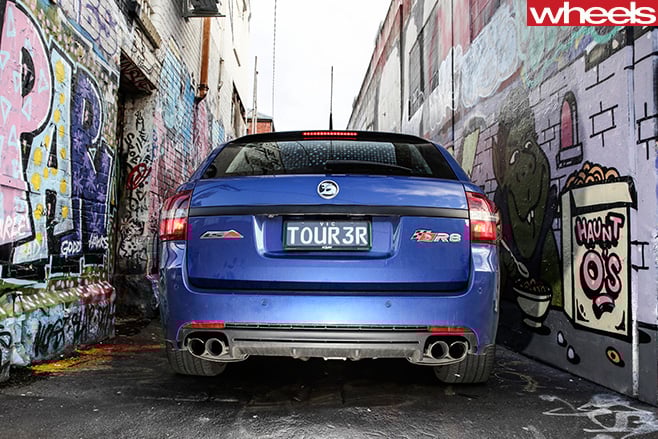
Normally I like to break in a new long-termer over a series of short trips (usually to and from work) where I learn the ins and outs of its character over a period of weeks, but this time is different. With a few days of annual leave approved and a beach cabin booked on the NSW coast, the wife and I throw the fishing rods in the 895-litre boot (the Clubsport sedan has 496L) and head north.
It takes less than an hour for the HSV to work its way under my skin. It’s roomy, sublimely comfortable, and in top gear on the Hume freeway, with the big blown eight ticking over at little more than 1200rpm, an effortless cruiser. It’s not even that thirsty for a car with this level of performance, with long stretches of flat freeway returning a fuel reading in the low 11s.
Still, it’s clear the rest of the Clubby’s package is living up to the memory I have of that white VX. Except mine’s even cooler because it’s supercharged. And it’s a wagon, and fast wagons are awesome.
Update #2
ONE of my favourite games to play, usually with friends at the pub, is ‘One Car For Life’. The premise is simple: players are asked to name the one car they’d be willing to drive, forever. In choosing, you’re excluding all others for eternity, so think of it as nominating your permanent one-car garage.
Easy, right? Well, not really. Most make the rookie mistake of picking a sports car, often a Porsche 911, which is brilliant, until they realise they have kids. And a dog. And occasionally need to tow things.
Powerful SUVs are popular, too, like a Porsche Cayenne GTS or Range Rover Sport SVR. But I don’t want to drive an SUV for the rest of my life.
My choice, and I’m quite proud of this, has long been the Audi RS6. It’s the Swiss Army Knife of cars, capable of lugging five adults (and a Labraschnoodle) in supreme comfort, yet powerful enough to blow supercars off at the lights. Case closed.
Or so I thought. Second month in and the Clubsport wagon continues to have me hooked. There’s something deeply satisfying about driving a car with this much grunt, especially when its onboard electronics are calibrated so brilliantly.
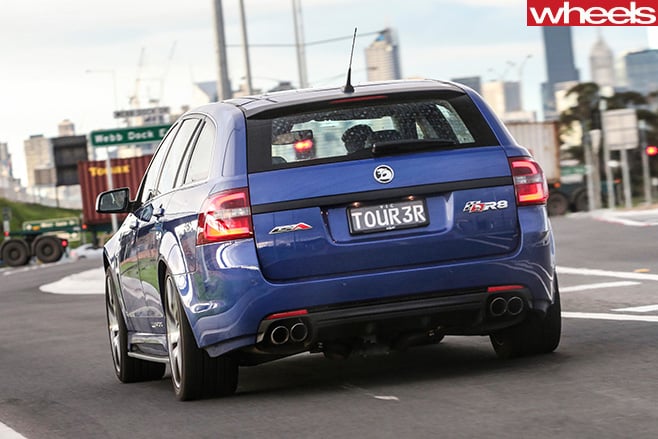
Admittedly, this is childish (Harold Scruby would say hoonish), but I hope you’ll agree it’s also brilliant fun.
I’m even starting to like the way the Clubby sounds, despite my initial misgivings about its flat, unimaginative exhaust note low in the rev-range. The trick is to keep the big blown V8 above 4200rpm, where it bellows, crackles and delivers upshifts with an addictive brrrraaaaaapppp.
The downside to all this is higher fuel bills. Dialling in Sport or Performance has seen my consumption jump from 11s to 17s. And I’m not convinced about the steering, either, which is fine in Tour but too heavy for my taste in the other modes.
So has the HSV trumped the RS6 as my One Car For Life? Almost. I’m still drawn to the Audi’s luxury, build quality and warp-factor acceleration. But I also know the Clubby’s rear-drive layout and tail-happy character would be more fun.
Update #3
IF YOU’RE to believe the media hype, last month I achieved the impossible, at least for a young person living in a major capital city. I bought a house. Sure, it’s not exactly how I pictured my first home, but it’s close to the city, has oodles of space, and it’s mine. All mine.
The downside to this, apart from being hundreds of thousands of dollars in debt, is that buying a house meant I had to move. Normally I’d rather barbeque my own tongue than spend a weekend lifting furniture, but with the huge red minus on my bank statement still fresh and a big blue wagon sitting in the driveway, I decided to forego the removalist company and do the move myself.
How hard can it be? I thought. Bloody hard, it turned out. Just ask the mates I roped in to help manoeuvre my fridge, dryer and washer up the world’s narrowest staircase.
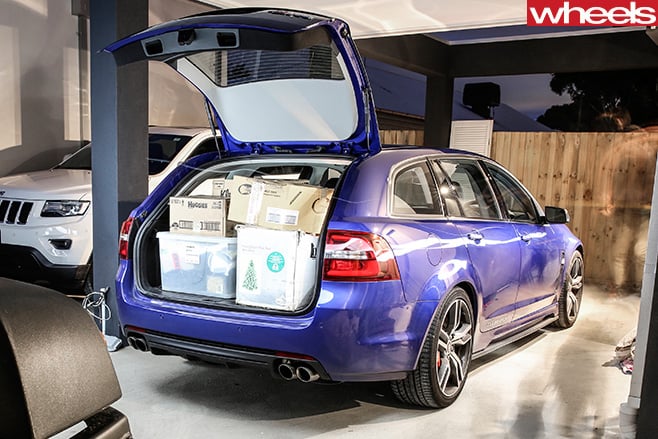
Drop the 60/40 split-fold seats, though, and the HSV can swallow an astonishing amount of stuff. Officially, the HSV Clubsport’s boot space is rated as 895L with the rear seats up and 2000L down, but it feels considerably more than that.
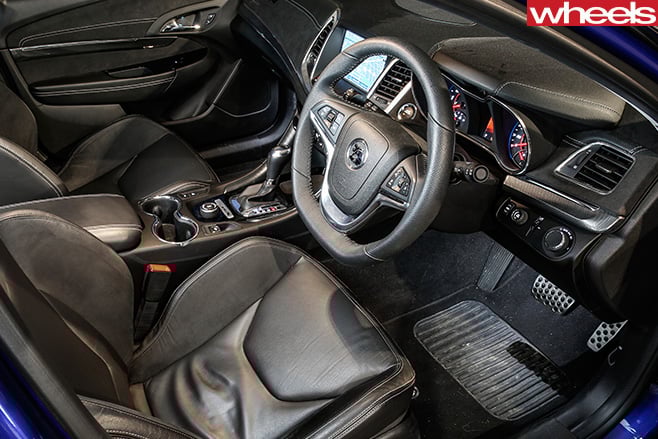
There’s plenty of storage up front as well, with twin cupholders, a large central tub, and door pockets that swallow one-litre bottles. HSV has also deleted the bulky gauges that used to fill the storage cubby in front of the gear-shifter for VF2 models, which is a handy place to park your mobile phone.
The downside is that this larger-than-life character profile doesn’t only apply to the engine, dynamics and brakes, but to the fuel economy as well. Good lord, it’s a thirsty bugger.
Farewell
MAN, I must have cut a forlorn-looking figure. Shoulders hunched, head bowed, eyes staring wistfully through hooded lids at the sign hanging over the front door of HSV’s Clayton HQ. It was all rather pathetic.
I’d just returned my HSV Clubsport and the reality of suddenly having a huge blue hole in my life was beginning to set in. The lady at the front desk didn’t help, either. Far from offering counselling, or even a small smile that I could interpret as a “there, there, you’ll be okay”, she’d snatched the keys from the counter with barely a glance, leaving me to wander aimlessly back into the carpark.
Returning a long-termer is rarely easy. After all, unlike most of the cars that pass fleetingly through the Wheels office, these are the ones we spend the most time with. They’re opportunities to dig into a car’s character, to look beyond the equipment levels and obvious handling traits to discover the foibles and triumphs that real owners unearth over a period of months.
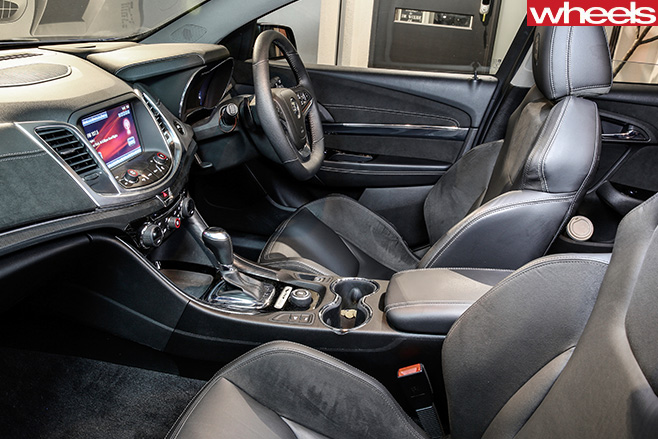
Over four months and 8300km, I’d used it on two interstate slogs, loaded it to the gills to move house, and thrown it into the thick of Melbourne traffic as a daily commuter. In every instance, the big wagon excelled.
I’d grown used to the power and the sheer brute force that flexing my right foot would deliver, but the Clubsport is much more than a big, shouty, supercharged V8. It’s a comfortable, long-legged GT, a commodious family hauler and, surprisingly, an effortless – albeit very thirsty – daily commuter thanks to a nicely judged ride, excellent vision and smooth-shifting six-speed auto.
What I hadn’t explored in much detail until this final month was its on-the-limit handling. Happily, a quick blast up Arthurs Seat on the Mornington Peninsula showed that HSV’s engineers haven’t dropped the ball. The Clubsport isn’t what you’d call nimble; push hard into a bend and you feel the weight of that big V8 up front, but wash off speed before the apex and its lovely rear-drive balance and expertly calibrated ESC system in Race mode reward you on corner exit.
What I didn’t gel with is the LSA V8. There’s no faulting its effectiveness, but it’s not what I’d call a sexy V8. It’s more about sheer force and enormous reserves of torque than delivering a spine-tingling top-end or operatic exhaust note.
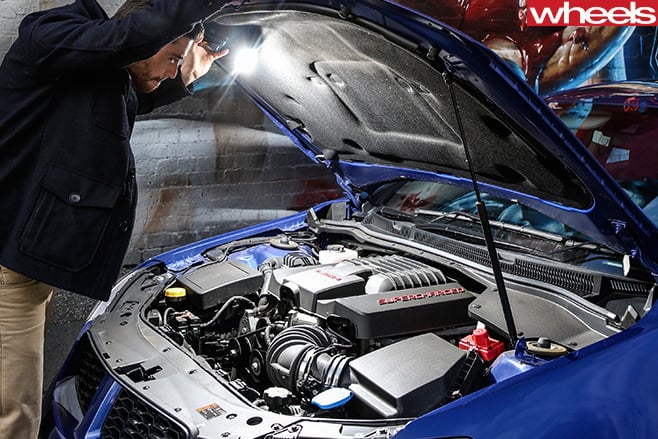
I also endured an ongoing battle with the voice recognition system; depending on its mood, it either worked seamlessly or would suddenly develop a speaking disorder. Conversations would often run like this:
“Call Mum”; “Did you say 1567902342?”;
“No, call M-U-M”; “Calling Peter O’Malley”.
It was maddening.
And did I mention the thirst? Complaining that a large-capacity V8 is inefficient sounds churlish, but even so, the Clubsport’s appetite for premium unleaded during daily use, which averaged in the high-teens, is the biggest hurdle I would face in actually buying one.
Still, there’s no escaping that, of all the long-termers I’ve had in my time at Wheels, the HSV is the one that has suited my lifestyle, and my character, best. I loved its brutish personality, its over-the-top design, its breadth of talents and the way it vaporised its rear tyres every time I flexed my right ankle. I still miss it.
THE latest addition to our long-term fleet barely had a chance to get its 19-inch Continentals comfortable in the car park before it was passed over for something quite a bit faster, sexier and way more licence-endangering.Ponch’s long-term Mercedes-AMG C63 S needed a home for a few weeks and I couldn’t resist the lure of its almost satanic twin-turbo V8.
The first few days passed in a frenzy of monster torque locked in brutal battle with sticky Michelins, and just a little spinal tap courtesy of the ultra-firm ride. Which is to say everything was going perfectly, right up until the power steering failed. Have you ever tried to extract yourself from an underground car park on 245/45 front tyres with unassisted steering? Wrestling a polar bear would be less strenuous.
I nursed the C63 to the local Benz dealership and, sweatier than James Brown’s jock strap, collapsed into the cool embrace of the Hyundai Tucson. And I’ve gotta say the transition was entirely painless. I love a good super-sedan as much as the next power junkie, but there’s something about driving an angry 700Nm German sledgehammer around my neighbourhood that makes me think of shooting ducks with a grenade launcher.
The Tucson, on the other hand, is a study in practical, affordable, family friendly motoring. And a damn handsome one. The crisp lines, short overhangs and sharply tapered glasshouse make this, I’d argue, Hyundai’s best-looking car. It’s far more masculine than the slightly androgynous Hyundai ix35 it replaces, without being excessively boofy or cartoonish.
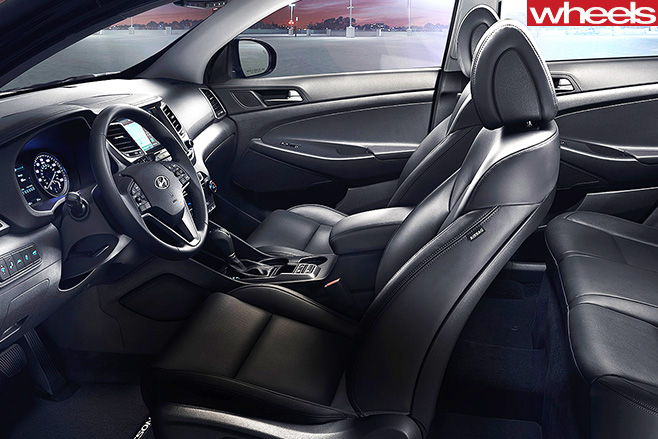
The Highlander diesel is the most expensive Tucson model in the range, offered only with a six-speed torque-convertor auto. Our paint is a basic white, not a metallic that would have added $595, which exhausts the options list in one fell box-tick.
Opting for the turbo-petrol 1.6 Highlander with seven-speed dual-clutch would have saved $2000, or you can stick with the diesel and pocket more than $5K by dropping one spec level to the Elite CRDi at $40,240.
I’m glad that’s not a choice we had to make because the extra gear the Highlander brings is nice to have. Both front seats are fully electric in their adjustment, and have both heating and cooling functions. I’m finding the three-position cooling fan especially welcome, particularly if, for example, you’ve worked up a sweat trying to manoeuvre a Mercedes-AMG with no power steering.
The glass roof makes the rear-seat accommodation feel extra light and spacious, while the electric tailgate with its hands-free operation (you just stand behind it for three seconds with the key in your pocket) is a brilliant feature I’d hate to be without.
The touchscreen’s graphics feel a bit dated, but its functionality, and that of the navigation, is excellent.
The only other let-down is the slightly dour and non-premium interior materials. There’s too much hard plastic, slabby door-trims and unlined storage bins for a top-spec model. It’s a shame because I can’t fault the ergonomics, and we know Hyundai can do materials and finishes better than this.
It’s in the driving, though, that the Tucson hammers home just how far the Koreans have progressed in recent years, and the dynamic dividends that have come from local suspension and steering development. The Tucson may not be quite class-leading, as our SUV comparison review in the November issue proved, but it’s so close as to not really be a factor in general driving. The bottom line is it steers fluently, rides with real compliance (even on the 19s) and has good body control and damping, despite being on the heavy side at 1744kg.
Ponch’s AMG may have the shock-and-awe elements sewn up, and the power steering failure was quickly sorted. But so far the Tucson’s great blend of functionality, spaciousness and coherent driving qualities has put me in a place where shock and awe aren’t crucial to satisfaction.
Hitting the wall
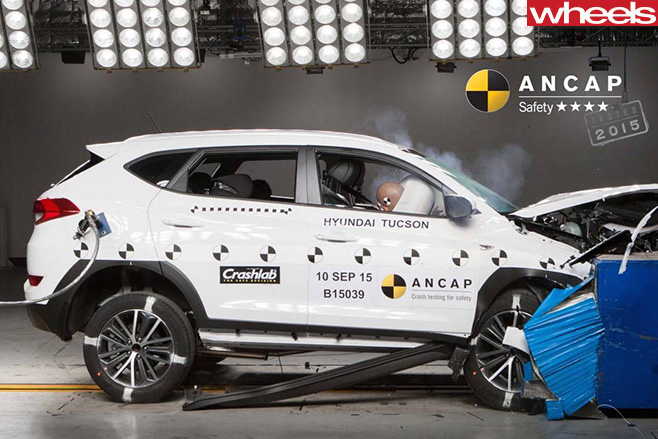
Update #2
BACK in high school, we had the classic PE teacher straight from central casting. Quads like wine barrels, a head like an Easter Island statue, and a top lip crowned with a belter of an ’80s pornstar moustache (well, to be fair, it was the ’80s, and what he did in his spare time was his own business).
He also had a sadistic love of inflicting pain on pimply teenagers. Prized among his cache of suffer-fest activities was the dreaded Tuesday morning shuttle-run session. It took the normally semi-enjoyable activity of running, but stripped it of any rhythm, flow or changing scenery. Instead, by making it a series of stop-start bursts between marker cones, it turned running into something that made us mostly turn purple and want to puke.
I’ve been inflicting the automotive equivalent of shuttle runs on the Hyundai Tucson this month, but rather than turning purple and puking on me, payback is being delivered by consumption in the mid-12s. For those of you playing along at home, its official urban number is 8.9L/100km.
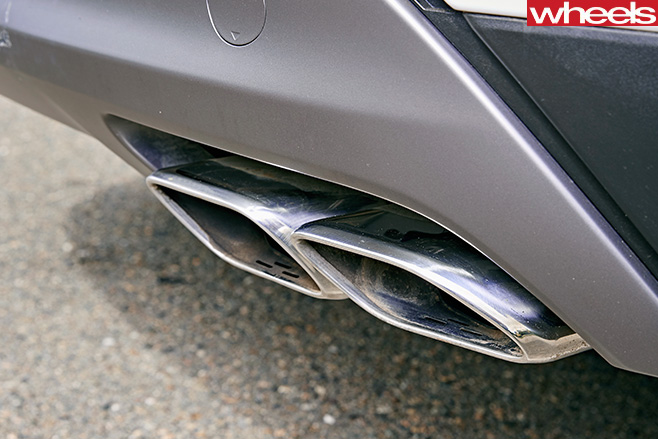
Our SUV comparo last November, over a typically wide variety of driving conditions, saw the Tucson Highlander in 1.6-litre turbo-petrol spec come second to the Mazda CX-5 for economy at 10.9L/100km. The turbo-petrol Highlander may not have the grunt of my diesel (265Nm at 1500-4500rpm against the oiler’s 400Nm at 1750-2750rpm) but it’s appreciably quieter at idle and under initial load, and of course it’s more eager and enjoyable in its upper reaches. It’s also $2000 cheaper than the diesel.
I’m on the fence with this one, as I do like the diesel’s unstressed urban response and the mapping of the torque-converter auto to deliver swift short-shifts to keep the revs down on a light throttle.
If you are considering a Tucson – or pretty much any vehicle where you need to decide between diesel and petrol – I’d urge you test drive both, and think hard about what sort of conditions will make up the bulk of your driving. And, of course, treat the official consumption numbers with the same scorn and scepticism as a politician’s promise.
Update #3
MY PARTNER and I were a few kays from the Jenolan Caves in the Hyundai Tucson recently, enjoying a weekend out of Sydney. She was singing along chirpily to a sexy Brazilian songstress I now know to be called Ivete Sangalo, while I was cheerfully spanking the Hyundai on some empty sweeping roads.
It was getting late in the afternoon and we were headed in the general direction of home when I braked hard and swung left onto an unsignposted dirt road.
“Where does this road go?” she asked. “No idea, baby”, I replied. “Then why have we turned onto it?” she responded, reasonably. “Because it’s dirt, baby,” I explained, helpfully. “Is that a good thing?” she asked.
Where she’s from, many of the roads are still dirt, and that’s often Not A Good Thing. The wrong dirt road can lead to a carjacking, robbery, and maybe a bit of cheerful kidnapping action. But I explained that here in the land Down Under, driving on dirt roads was a great thing, “because we’re in an Esse You Vee, baby!”
Yes, the pragmatist in me knows I don’t need an SUV; I have no real need for its light-duty off-road ability or its torque-splitting cleverness. A good old rear-drive wagon would do me just fine. Probably because of this I feel compelled to explore any snotty little bit of backcountry I spot, purely because, well, I’m in an SUV, baby, and I can.
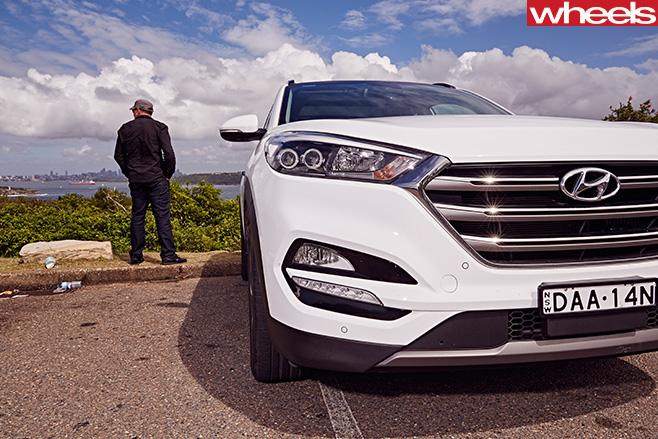
I looked in vain for a side trail that would have provided a snotty plunge worthy of the hill-descent control. Sadly no such luck, so that feature’s usefulness remains elusive.
The dirt road ended at a trail that led to a spectacular lookout, with vast, sweeping views of the towering escarpments of the Blue Mountains, so I did revel in a little go-anywhere SUV smugness as I held my girlfriend’s hand while we soaked in the glorious vista.
Then, on the way back, we rounded a sweeping slippery section to see an old Ford EB Falcon wagon, probably on knackered retreads, coming towards us. It was cocked slightly sideways, being held in deft control by a 20-something bloke with his mate, doing what Aussies have done on dirt and in rear-drive wagons for decades, long before the rise of the SUV.
There’s a message in there somewhere.
Update #4
Sometimes you wish your car could go holiday with you.
AS A motoring writer you get asked, endlessly, “So, what’s the best car you’ve ever driven?” I’m okay with it, but I do wish someone would ask me about the worst. That would be easier. I could simply answer: “The one I just spent three weeks driving through Italy – a Mini Cooper One D.”
I would then bore my new acquaintance rigid with details of the abhorrent, crashy ride, the inexplicable lack of front-to-rear handling cohesion, and the deafening tyre and suspension noise. I could finish by turning purple with rage and indignation, chest-poking, and shouting, “Who signed off on this little munter? WHO, goddammit?!”
Okay, so it’s probably best you don’t ask me the worst-car question. And perhaps ‘worst’ is a bit harsh. But most deeply disappointing, definitely.
If nothing else, though, the experience of 3500km in the Mini did give me a renewed appreciation of my long-term Tucson. God, I missed it. I may have mentioned this to my long-suffering partner, but only three or four hundred times.
Yes, of course I know these two cars are not comparable in a conventional sense. But consider the underlying design and engineering fundamentals and you quickly gain an insight into how things get done right, and where things go so wrong.
The Hyundai Tucson may be low-ish on glitz and interior seduction, but it pretty much nails the fundamentals, especially with its localised ride and handling program. Anyone can jump in, drive it over virtually any surface, and feel confident and comfortable.
Visibility is excellent, the controls are intuitive, the gauges and displays legible and logical. Everyone sits comfortably, has space to store stuff, and in terms of meeting its intended function, there’s nothing at which to point and go, “That’s awful”.
The Mini, in stark contrast, feels like a concerted exercise in putting questionable form over fundamental function. It really irks me that time and money has been thrown at dumb gimmicks while the basics feel to have been overlooked.
Fortunately Italy’s many charms were enough to lift my spirits each time I got out of the Mini, but there was rarely a moment when I didn’t miss the Tucson’s fundamental rightness, on everything from high-speed autostradas to postcard-perfect backroads. Its planted stance and absorbent ride would have lapped up stuff that sent the Mini into a major-league tizz.
I’d also tender as evidence my upper right arm, having foolishly given my partner permission to punch me anytime I uttered, “Honey, I really miss the Tucson”.
The deep purple bruising has only just started to fade.
Farewell
EAVESDROP on a typical pub conversation, especially around election time, and it’s clear just how easy it must be to do someone else’s job. Running the country? Pah, nothin’ to it; just ask any schooner-swilling scholar of the Westminster system.
I figured the same may be true for automotive product planning and model development. I have zero experience working for a car company so I’ve no idea of the constraints that these people must work within. Therefore, of course, I could do their job. I’m probably overqualified.
So as the Hyundai Tucson leaves the Wheels garage, and I reflect on the largely positive ownership experience over the last six months, I thought I’d offer some friendly product-planning advice to Hyundai regarding what could be improved with the facelift.
My first missive would be to tell the styling department to put down the crayons and step away from the clay model. The exterior design is excellent and there’s no reason to waste money messing with it. Okay, consider upgrading the rear lights to LEDs, and maybe a discreet Series II badge, but that’s it. I’d say buck conventional wisdom; bin the plans for new bumpers and wheel designs, and spend the money on things customers are actually going to appreciate, like an interior upgrade and plumping up the standard equipment.
Let’s start with trim. The hard dash plastics and budget-looking door-trims need to go. Let’s have some more premium materials, extra padding, nice detail stitching and some flashes of aluminium instead. Line the doorbins to stop stuff rattling (hell, VW manage it in a base-model Golf). And add a proper pair of matching LED lights for the cargo compartment, not the existing dim little bulb that’s less bright than Bob Katter after a B&S ball.
While we’re back there in the cargo compartment, can I suggest adding remote releases for the rear seats? That’s the logical place for them, not on either side of the seats themselves, which make you move from one side of the car to the other just to prepare for a load.
Now, let’s sort the infotainment. Get someone to spend time in a top-spec Subaru Forester XT Premium and listen to its Harman Kardon sound system; that’s the benchmark for this class. Highlander needs a decent centre channel, a subwoofer and a serious amplification upgrade. And better speakers all round, especially in the back, where they sound like they were pulled out of a Taiwanese telephone. A DAB radio tuner is also surely mandatory for Highlander spec. And how about lobbing in a head-up display? The cheapest car in Oz with this feature is the Mazda 2 Genki, so cost excuses are running thin.
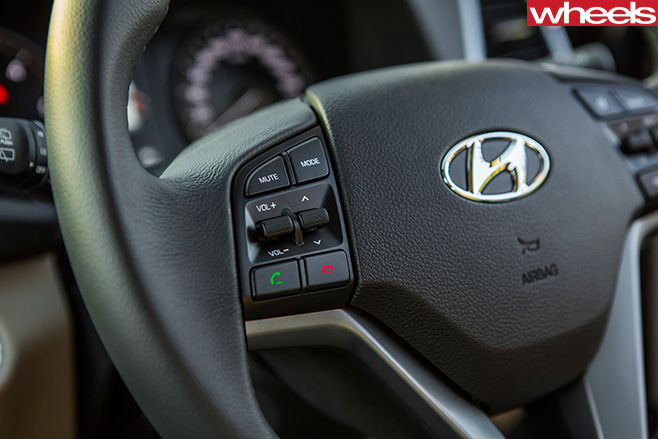
Keep the steering wheel; it’s sized right and the audio and cruise controls fall perfectly to each thumb, but could it be trimmed in something a little more tactile, please, rather than vinyl?
Now let’s whip up a job sheet for the engineering team. Top of the list: more NVH suppression for the diesel. I know it’s not bad, but it’s still way louder and more vibey than the Tucson turbo-petrol, and competitors like the CX-5 have closed this gap by a much greater margin. So consider addressing clatter, improving the engine mounts, and adding more firewall and under-bonnet sound-deadening.
Finally, the steering; a clear case of ‘reasonable, but could do better’. For my taste it’s a bit springy either side of centre, and at 2.7 turns it could be a little quicker. It would be ideal if it was benchmarked against the Ford Kuga and delivered that lovely, slick, well-damped yet responsive feel.
Okay, I suspect that some of these suggestions may be a case of easier said than done (hey, I’m an imposter, not a realist), but even if only some made it to the updated model, Tucson would make the step from excellent to outstanding.
The all-electric derivative of Hyundai’s Ioniq eco car may see its maximum range on a single charge jump to at least 320km, with a senior Hyundai executive saying a significant battery upgrade is planned to arrive by 2018.
So far Hyundai has revealed three versions of the Ioniq – a petrol-electric hybrid, a plug-in hybrid and a pure electric model – with the dedicated EV variant boasting a range of roughly 200km. That’s around 65km more than the Nissan Leaf, and equal to the BMW i3 94Ah.
However, Hyundai is planning on squeezing more electrons into the Ioniq EV to boost its travel distance and reduce range anxiety.
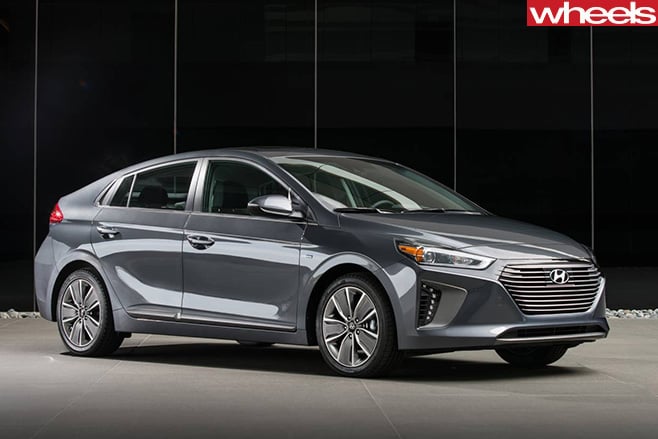
If Hyundai’s engineers can hit their 320km range target, that would put the 2018 Ioniq EV on equal pegging with the Chevrolet Bolt (which isn’t expected to come to Australia) and the incoming Tesla Model 3 (which will come here, but with local deliveries expected in 2019).
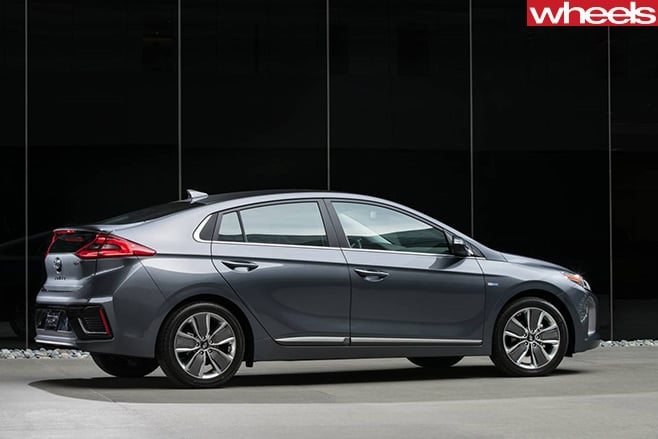
“We haven’t ruled anything out but Ioniq hybrid is the most likely to come in next year,” Schenken said.
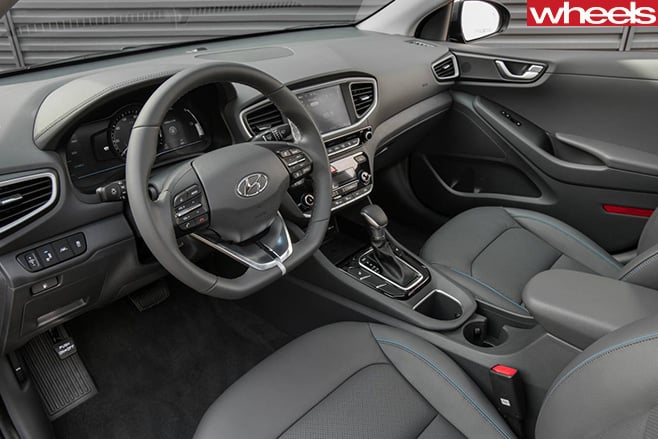
However unlike Toyota’s conservative strategy with its Toyota Prius hybrid – which remains a conventional petrol-electric model with no plug-in capability in Australia – Hyundai has the plug-in hybrid at the top of its Ioniq wishlist. The only thing holding that plan back is the longer lead time on that model, with production still yet to start on the PHEV.
“We’re definitely keen on the plug-in hybrid, we think it’s a good compromise for the Australian market,” Schenken revealed.
