
What stands out?
The Q30 compact hatchback is the price leader for Infiniti, the luxury car arm of Japanese carmaker Nissan. Unlike other luxury carmakers, the Infiniti Q30 comes loaded with almost everything: the only option is metallic paint.
What might bug me?
Infiniti hasn’t built its own small hatchback. Instead, the Q30 is a platform-sharing arrangement with established luxury car brand Mercedes-Benz, and is based on the Benz-badged A-Class hatchback and built in Britain, not Germany. What you buy, then, is four-fifths Infiniti, and one-fifth Mercedes.Infiniti has dared to be different, replacing the clean lines of the A-Class with its own angular, big-hipped body. It’s different, and some would say polarising. Same goes for the interior, where the familiar conservative Benz switchgear and controls fight with a lairy Infiniti touch.The gearbox is a seven-speed dual-clutch automatic, which usually have lightning-quick changes. They’re a bit sluggish in the Q30’s application.There’s no Apple CarPlay or Android Auto compatibility, limiting how well your smartphone integrates with the car.Infiniti was criticised for not fitting the Q30 with a reversing camera as standard; needed given that the view out the small rear window is somewhat compromised. It makes do with reversing sensors on the GT and Sport, but the Sport Premium adds four cameras giving an all-around view of the car.The Q30 is also very noisy inside on some road surfaces at higher speeds.
What body styles are there?
The three-model Q30 line-up is exclusively a five-door hatchback. All are front-wheel drive.
What features do all versions have?
Active cruise control with a speed limiter function, Bluetooth connectivity and two USB slots. Tyre pressure sensors, which warn when a tyre has lost pressure.Smart key entry, which allows you to unlock the vehicle while your key remains safe in a pocket or bag.A stop-start system that can shut down the engine when stationary and refire it automatically when you accelerate, which saves fuel.Electronic stability control, which can help the driver recover from slides. All new vehicles must have this feature.Seven airbags: two directly in front of the driver and passenger; one outside each front occupant to protect the upper body; and a curtain airbag along each side to protect the heads of front and rear occupants. The driver also gets a knee airbag.Economy, sport and manual gearshift modes, and electrically-adjustable front seats. The Infiniti Q30 has a four-year, 120,000km warranty.
Which engine uses least fuel, and why wouldn’t I choose it?
There are three turbocharged engines in the Q30 line-up: a 1.6-litre petrol, a 2.0-litre petrol, and a 2.1-litre diesel. The diesel, at 5.2L/100km, officially uses the least fuel but commands a $2000 premium over the 2.0-litre petrol, yet is doughy and sluggish in city traffic. The 2.0-litre petrol is the better pick.
What key features do I get if I spend more?
The cheapest car, the GT with the 1.6-litre engine, runs on “comfort” suspension, but the other models ride on a “sports” suspension and bigger alloy wheels.The more premium-priced models, the Sport and the Sport Premium, also get fancy LED headlights with an automatic high-beam assist, a more forceful-looking exterior trim package, pretend leather and even swathes of the real stuff on seats, a flat-bottomed steering wheel instead of a round one, speed sign recognition that can read roadside signs and post them on the dashboard, and active noise cancelling with the more premium 10-speaker audio system that replaces the default six-speaker unit. It is standard only in the Sport Premium.The Sport and Sport Premium also get the choice of either a 2.0-litre petrol engine or the $2000-more 2.1-litre diesel.
Does any upgrade have a down side?
The bigger 19-inch wheels on the Sport and Sport Premium tend to make the low-speed ride on the harder-riding sports suspension worse than the base GT riding on 18-inch wheels with a more forgiving tyre. The sunroof fitted standard on the most expensive two cars robs the Q30’s interior of headroom for taller drivers and passengers.
How comfortable is it?
It’s a small car, so interior room – particularly in the back seats – can be an issue with taller drivers and passengers. The wheel and tyre package isn’t quite suited to Australian roads. It makes the low-speed ride quite fussy – the car is always moving around as the road’s lumps and bumps feed into the seats – and the tyres roar like Mallee bulls on coarse bitumen surfaces, the kind you get on freeways and rural roads. The front seats are also quite flat and need more support.
What about safety?
The Infiniti Q30 has a top five-star crash test rating based on a 2015 test by EuroNCAP. However, a higher result via its automated emergency braking function that can prevent or minimise a low-speed crash was thrown out by Australia’s crash safety watchdog because the car’s whiplash protection was rated as “marginal” in the front seats and “poor” in the rear ones.
I like driving – will I enjoy this car?
The Mercedes-Benz A-Class was built for ease of city commuting, so outright driveability was never front of mind during its development, despite input from former Infiniti-liveried Formula One ace Sebastian Vettel. It’s not a driver’s car.
How is life in the rear seats?
Rear-seat space isn’t at a premium, with a rather upright bench and an ambitious seatbelt count that suggests you can fit three people across the bench. You’d fit two adults in there, but a long trip will still push the boundaries of friendship.
How is it for carrying stuff?
The Infiniti Q30’s boot is a rather small 430 litres. The rear seats split-fold 40/60, so you can lay, say, a couple of bedside tables in the space. There are cargo nets behind both front seats, and another net in the front passenger footwell to stash small things. The glovebox and lidded centre console have limited space.
Where is it made?
The Infiniti Q30 is assembled in Nissan’s Sunderland, UK, plant where the Nissan X-Trail is also made. We’re yet to see if Brexit has any fallout on Nissan’s Brit production.
What might I miss that similar cars have?
Lexus has the Toyota Corolla-based CT200h petrol-electric hybrid that cuts fuel use even further. BMW now has a front-drive version of the 1 Series that has a more understated premium feel, but also lacks the value of the Infiniti. The Volkswagen Golf also has a premium feel but again, it doesn’t quite stack up on the value side. You can buy a wagon version of the VW, though, if boot space is important.
I like this car, but I can’t choose which version. Can you help?
It’s easy. The lower-spec car looks like a lease plan special, the most expensive has a headroom-robbing sunroof, and the diesel engine just doesn’t cut it. The 2.0-litre petrol engine in a mid-spec Infiniti 2.0t Sport ticks the most boxes.
Are there plans to update this model soon?
The second-generation Mercedes-Benz A-Class was launched in 2012, so the Infiniti Q30 is built on a five-year-old platform. Expected life is another couple of years.
The list of changes to Subaru’s 2017 BRZ may run long, but they haven’t increased its new price.
In fact, the updated Subaru coupes’ prices have been cut ahead of its November release, with both the automatic and manual variants shedding more than $1000.
Despite being the sole transmission to gain the power boost, the new manual BRZ remains the cheaper variant, priced at $32,900 – or $1230 less than the 2016 model.
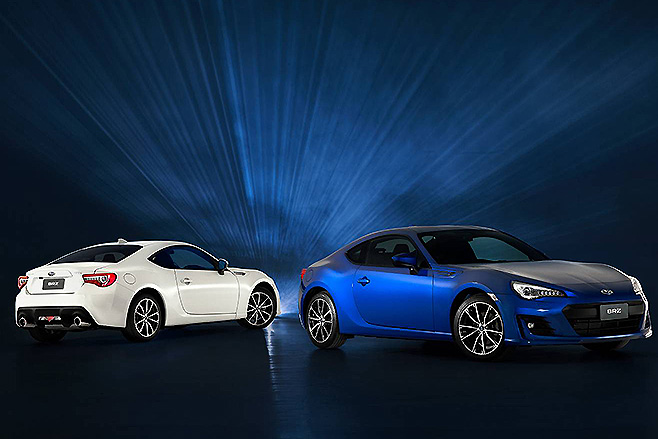
All pricing is the manufacturer’s listed pricing, which includes GST but not costs like dealer delivery and registration.
With more manufacturers encroaching on the sports coupe’s philosophy for cheap, pure thrills, the 2017 BRZ sores mechanical upgrades and extra kit to bolster its appeal.
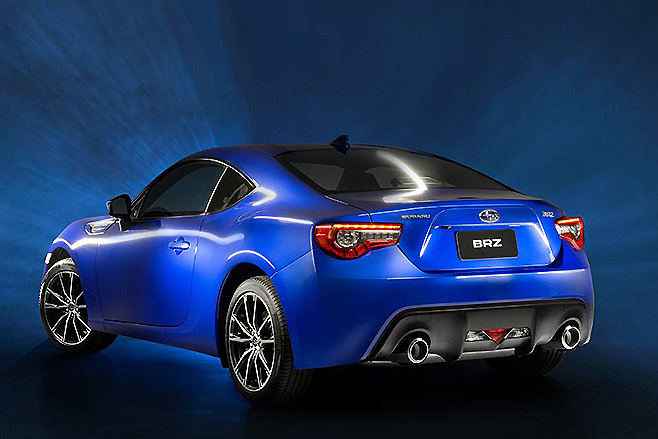
Inside there’s a new steering wheel and its stability system, now retuned, adds a track mode.
Colin Christie, Subaru Oz’s managing director, said, “despite exchange rate pressures, our strong relationship with the factory has produced a great result for BRZ fans and that’s reflected in the volume of showroom interest since we teased the specification upgrades in August”.
One Australian dollar currently trades for 79.75 Yen, compared to 81 or so Yen back in July 2012 when the BRZ first landed.
Toyota is yet to announce its pricing for the updated 86, however expect it follow shortly.
TELL ME ABOUT THIS CAR
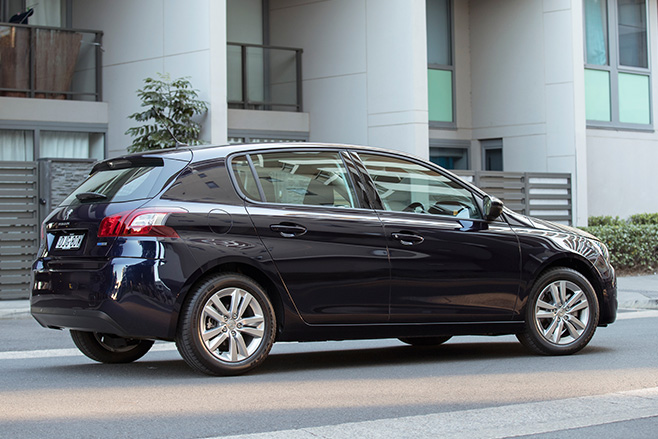
The Peugeot 308 Active is a charismatic little hatchback from France. It offers decent value for money in a suave and sophisticated package that is excellent fun to drive.
STRENGTHS
- Drivetrain. Don’t be fooled by the 308’s relatively meagre 1.2-litre displacement and modest 96kW/230Nm outputs. The Active’s turbocharged three-cylinder engine is a highlight. It has plenty of grunt for the lightweight hatch, and it sounds good without ever becoming intrusive in the cabin. It’s linked to a conventional six-speed automatic gearbox that is sourced from Japan and more than adequate for the job.
- Handling. There’s something about the 308’s small steering wheel and sharp front end that makes it seem so easy to tackle corners in. It’s comfortable on the open road, but carving a country lane or zipping up a city backstreet is where the 308’s character comes alive. A career in pizza delivery never sounded like such a fun idea.
- Equipment. Peugeot recently added more standard gear to the 308 Active model to make it better value for money. It now has a reversing camera and satellite navigation with free map updates. That’s on top of a high level of safety and convenience equipment like auto emergency braking, advanced cruise control, rear parking sensors, auto headlights and wipers, dual zone climate control, height adjustable front seats and LED daytime running lights.
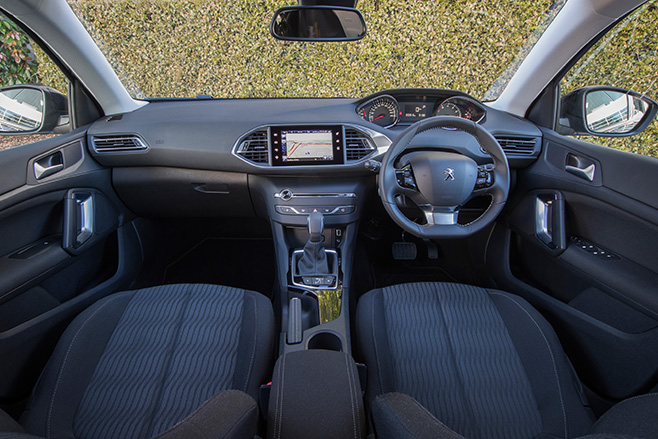
- Interior. 308 Active feels premium inside compared to some other similarly priced competitors. Its cloth seats are comfortable and the sculptured dashboard has an architectural quality to it.
WEAKNESSES
- Space. As good as the interior of the 308 is, it’s all about being in the front seats. There’s not a lot of room in the back and any adults relegated to sit there will be less comfortable than in most other small hatches. It’s also light on for storage space, and has no rear air vents or a centre armrest. Visibility is good, but anybody with long legs will be looking outside wishfully. On the other hand, boot space is good.
- Infotainment. A minimally designed dashboard and centre console area means most of the 308’s functions have to be accessed via the infotainment system on its colour touchscreen. It’s not too bad most of the time, but it would be nicer to at least have climate controls at the touch of a button rather than as part of the digital menu.
- Price. The 308 Active costs $27,990. That’s a reasonable price when considering the level of standard specification, but there are cheaper competitors which offer more rear seat space and a more conventional user experience. If you’re not a keen driver then the 308’s excellent drivetrain and handling may not hold enough appeal to sway you away from something like the Volkswagen Golf.
ANY COMPETITORS I SHOULD CONSIDER?
There are a lot of players in the affordable hatchback space. At the top of the pile is the Volkswagen Golf 92TSI. It is about as ‘one size fits all’ as a car can possibly be. It’s not quite as fun to drive as the 308 Active, but it has more rear seat room, the same premium feel and costs less at $25,490 driveaway. It does miss out on some of the active safety systems and convenience features found in 308.
Other sportier competitors include the new Holden Astra and Subaru Impreza, the Ford Focus, Honda Civic and Mazda 3. The new Renault Megane is a French alternative that looks like a compelling option on paper, though it suffers from the same rear seat issues as the Peugeot and isn’t quite as exciting to drive in base model form.
Notorious drifting wild man Ryan Tuerck had the wacky idea to put a Ferrari V8 into a Toyota 86, and the result is glorious.
WE are big fans of crazy engine swaps here at Wheels HQ. It might have something to do with working alongside those nutters at Street Machine, but the thought of a big, powerful engine wedged into a small, light chassis tickles us in all the right places.
The Toyota 86 is one car that is ripe for these sorts of modifications. High-powered LS V8 and 2JZ straight-six conversions thick on the ground for these cars, however what Formula D driver and all round rad dude Ryan Tuerck decided tread a different path with his 86 drift car.
Tuerck, who both competes in and daily-drives 86s powered by Toyota’s legendary 2JZ 3.0-litre turbo six (as featured in the last-gen Supra), got his hands on a Ferrari 458’s 4.5-litre V8, and has decided it would go perfectly with the little Japanese coupe.
Aptly dubbed the GT4586, the project has been gestating for a number of months. Over the weekend, Tuerck and his mates started the car for the first time.
Thankfully for us, the dudes at Donut Media were there to capture the awesome, and it is spectacular!
With some very fancy custom made headers and exhaust, the Ferrari 458 bellows a beautiful song.
We just cannot get enough of the sound this car makes, which is as much a credit to the maestros at Maranello as is it is to the fabricators that made up the custom exhaust system.
Oh, and did we mention the car shoots flames? Everything is cooler if it shoots flames. Fact.
The car isn’t finished yet, with the hood and other bodywork still yet to be completed. It appears the Ferrari engine is mounted with the intakes pointing rearward, meaning Tuerck and co will need to figure out a way to make the thing breathe properly. Regardless, you can colour us excited for when this thing is finally finished and ready to shred rubber.
THE 2017 Porsche Panamera Sport Turismo has been caught testing at the Nurburgring, with its sleek wagon body style primed to inject some genuine sex appeal to the range when it arrives in Australia next year.
The upcoming Sport Turismo will be part of a three-pronged Panamera attack on the high-performance luxury saloon market, joining the sedan and an extended-wheelbase model that is likely to be aimed mostly at the burgeoning Chinese market.
The wagon’s design is clearly inspired by the 2012 Panamera Sport Turismo concept, and Wheels understands it will offer a five-seat layout as a key point of difference to the new Panamera sedan, which can only carry four.
While the Sport Turismo is yet to be officially confirmed for Australia, it is expected to lob towards the end of 2017. The exact specification is still to be determined too, but it will come in above the sedan in the Panamera range, with a ‘limited’ engine range.
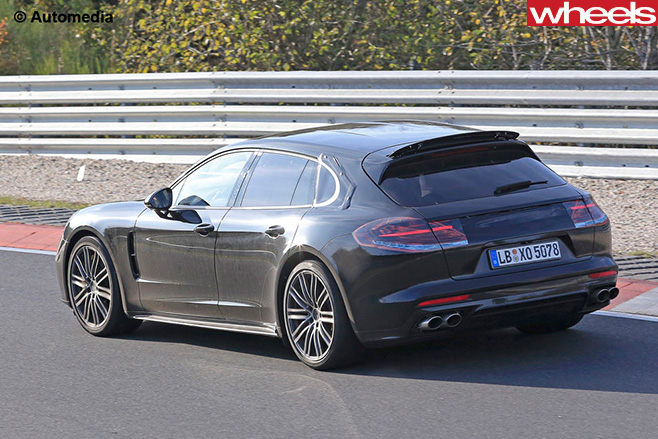
The second-gen Panamera sits on an all-new (MSB) platform and offers a choice of three powerplants paired with an eight-speed transmission.
The base engine is a 324kW/550Nm 2.9-litre twin-turbo V6 which can propel Panamera 4S from 0-100km/h in 4.2sec (using the optional ‘sport chrono’ and launch control).
The Panamera 4S Diesel’s 4.0-litre twin-turbo V8 makes a thumping 310kW/850Nm and is set to be the world’s fastest-accelerating diesel with a claimed 0-100km/h of just 4.3sec.
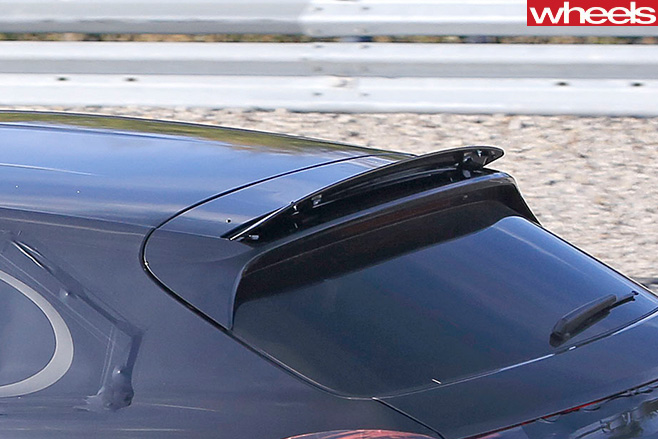
The Panamera’s restyled exterior is an improvement on its predecessor’s generally unloved appearance and inside the luxurious ‘Porsche Advanced Cockpit’ is dominated by a huge 12.3-inch touch screen and a notable absence of buttons.
Handling-wise, the Panamera Turbo recently became the fastest production four-door sedan in the world, with a 7m39sec lap time of the 20.8km circuit.
That time – set on street tyres – enabled Porsche to claim its second-generation Porsche Panamera is the world’s fastest luxury sedan.
More than 80 percent of Australian drivers rank fuel efficiency as their top priority when purchasing a new vehicle, according to the results of an extensive consumer survey by Ford.
The survey of more than 9500 drivers in 11 markets across the Asia Pacific region (to help promote Ford’s Ecoboost engines) also found almost one third (29 percent) of drivers who currently own a powerful car say that they regret not purchasing a more fuel-efficient vehicle.
And while 80 per cent of Australian drivers made a concerted effort to drive efficiently on a daily basis, most weren’t able to correctly identify a significant number of simple steps towards reducing fuel consumption.
For example, 33 per cent of drivers didn’t know that that harsh acceleration and braking can have a dramatic effect on their car’s fuel consumption. Other misconceptions included:
- 70 percent of drivers were unaware that cruise control can deliver fuel efficiency benefits
- One in three Australian drivers was unaware that regular maintenance and keeping tyres inflated helps save fuel
- 40 percent of respondents didn’t know that driving in hilly terrain can hamper fuel consumption
- Less than half (47 percent) of those surveyed knew that removing heavy items or clutter from the car can help save fuel.
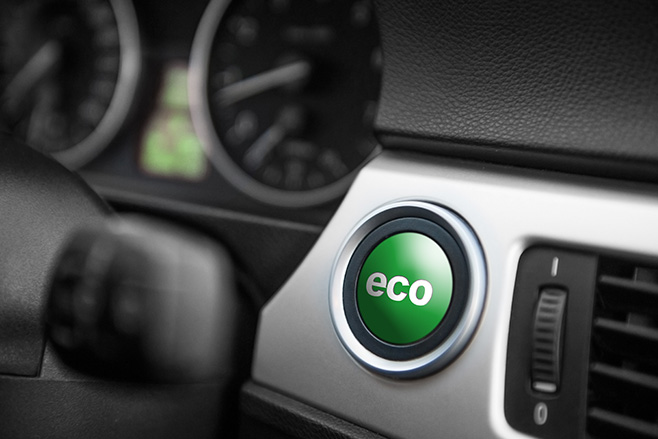
Ford Australia President and CEO Graeme Whickman said the survey was conducted to get a better understanding of what drivers know about fuel economy and how they choose their vehicle.
“The results show there is quite a lot of confusion amongst Australians about what constitutes fuel-efficient driving,” he said.
“Understanding how to drive efficiently is very important as drivers continue to be sensitive to fuel costs, no matter what the price is at the pump.”
This all coincides with a general wariness about Australian fuel prices. More than three quarters (78 percent) of respondents say they don’t trust fuel prices to stay stable over the next year, which is 30 percent more than the Asia-Pacific average.
As a result, drivers are starting to change their behavioural patterns. More than 34 percent of consumers are planning on driving less over the next 12 months and 22 percent say that they will change their driving habits to use less fuel.
Many consumers who are planning to buy a new car in the next year are considering more fuel-efficient vehicles, with 32 percent planning to buy a vehicle with a more fuel-efficient engine than their current car while 23 percent plan to downsize to a smaller vehicle.
There are so many things that can influence the amount of fuel your car uses. Regardless of whether your car is a natural guzzler, or draws power from electricity to supplement its fuel use, the way you drive and the condition of your car can have a major impact on your fuel efficiency numbers.
Here are ten things you should do to ensure you keep fuel use to a minimum, without turning to a bus or a bike.
1. CHECK YOUR TYRE PRESSURES
The air in your tyres can have a major impact on the car’s performance. From control to shock absorption, ensuring your tyres are filled with the correct pressures is vital. But did you know it can also have a major influence on how much fuel your car uses? Underinflated tyres will increase resistance and friction against the road, making the car work harder and therefore increasing its consumption.
2. REGULAR MAINTENANCE
You’d be surprised how much of a difference regular servicing can make to your car’s fuel economy. If you keep running costs low, you’ll also keep fuel costs down. This includes tuning the engine, replacing filters, keeping car parts in good working condition and changing the oil. According to a Ford Australia survey, only one in three Australian drivers realised the impact regular maintenance and tyre inflation can have on fuel costs.
3. LIFT AND COAST
A technique commonly used in motorsports, you may hear it from time to time in F1 reviews. The term, lift and coast is used when drivers lift their foot off the accelerator and ‘coast’ through a corner, or round about, or intersection without using any power or changing gears. When you’re not using power, you’re not using fuel.
4. SHORT SHIFT
This is when you shift up gears before you need to, so at a lower rpm. This means you’re using less power from the engine when accelerating, and therefore less fuel. Win. It’s also a great technique commonly used when overtaking. If you’re in an automatic car, the transmission will up shift with ease if you back off the accelerator slightly as the car gains speed.
5. CUT THE AIR-CON
You’ve spent all weekend waiting for summer. You complain about being cold and you just want to warm your bones in the sun. Then summer hits, and you spend most of your time blaring the air-con at 15 degrees just to stop your legs from sticking to your leather seats. We’re with you, we’ve been there. But know that using your car’s air-conditioning system works the engine to run the compressor and therefore uses more fuel. By all means, use it when you’re hot, but turning it off when you don’t need it while cruising around town is an easy way to save fuel. That said having the air-con when travelling on a highway at 100km/h can be more fuel efficient than having all the windows open, refer to point 8.
6. USE STOP-START – IT’S THERE FOR A REASON
Stopping and starting in traffic uses a lot of fuel. But if you’re car has stop-start technology, it’ll cut the engine’s spark when you come to a stop, and therefore stops burning fuel. When the break is releases, or the clutch engaged, the engine fires back up again. Let’s be honest, car manufacturers wouldn’t have invented stop-start technology if the commonly believed notion that an idling engine saves fuel.
7. ACCELERATE SPARINGLY
When you accelerate, you increase the car’s revs, and the more the car revs, the more petrol it uses. If you ever needed more of a reason to keep a safe distance from the car ahead, other than safety, then do it for your wallet – you can avoid unnecessary acceleration and repetitive braking, which will just end up wasting your car’s fuel. According to the Ford Australia survey, 33 per cent of Australians “do not know that harsh acceleration and braking can have a dramatic effect on their car’s fuel consumption.”
8. LOSE SOME POUNDS – DON’T CARRY UNNECESSARY WEIGHT
Just like your body, the more weight you carry, the more energy you use. The same applies to your car. Leave the unnecessary stuff at home, don’t over pack, and keep it as light as you can. Same goes for aerodynamics. Things like roof racks, spoilers or even having the windows or sunroof open means the car is working against wind resistance. Take a leaf out of a cyclist’s book and shave those legs … or, err, the car equivalent.
9. CUT THE SPEED
Once you hit 90km/h, your fuel consumption increases, significantly. In fact, once you reach 110km/h, you’re using around 25 per cent more fuel than you would be at 90km/h according to some sources. Cruise control, in this instance, is your friend. It’ll also keep a steady speed, refer to point 7.
10. USE YOUR LEGS
If you really want to save costs on fuel, stop driving to the shop around the corner during peak hour. Park the car, cut the engine, and walk. It’ll save your waist line, the environment and fuel costs.
Mercedes-Benz has launched its new generation of modular engines, featuring a return to in-line six-cylinders and the most economical twin-turbo V8 it has ever built.
It also features the roll-out of the German luxury carmaker’s first 48-volt cars, starting with a facelifted Mercedes-Benz S-Class limousine that will roll out the technology globally next year.
“The new engine family from Mercedes-Benz sets new standards in terms of power output, refinement and efficiency,” the carmaker said.
“The new family of petrol and diesel engines, with four, six and eight cylinders, is of modular design. The key features of the new family are a standard cylinder spacing of 90 mm and identical interfaces to the vehicle, which makes for modern, flexible production, among other things.
“The scaling of state-of-the-art technologies and electrification options from 12V to 48V to high-voltage plug-in applications makes it possible to configure the appropriate powertrain for every vehicle,” it said.
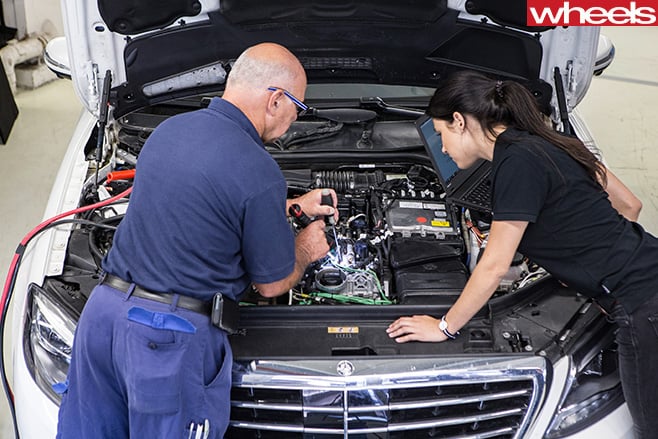
“We went into a ‘V’ architecture to bundle V8 volume and V6 volume, at the time the V8 share was much higher. Knowing that downsizing is the trend, we’ve decided to go back to the previous solution making 4-cylinder and 6-cylinder and diesel and [petrol] as close as possible. Same bore size, same combustion concept, because that puts a really flexible production system in place.”
Similar to the 48-volt Audi Q7 large SUV that has pioneered the technology, the S-Class will run a combination of a 12-volt system that will power traditional parts of the car such as lights and the radio. The more powerful battery will be reserved for the engine’s stop-start system and a host of other high-demand systems such as the power steering, water pump and air-conditioning compressor, and even active suspension systems.
Its new petrol equivalent, the M264 turbocharged 2.0-litre four-cylinder engine, is optimised for the 48V system, producing “about” 100kW per litre. Its belt driven starter-alternator can step in and provide extra boost to the engine below 2500rpm.
Similar to what Lexus has done with its four-cylinder engine, Mercedes has routed the exhaust to improve the twin-scroll turbocharger’s boost at low revs. The turbo also uses an electric wastegate to allow fast changes in charge-air pressure.
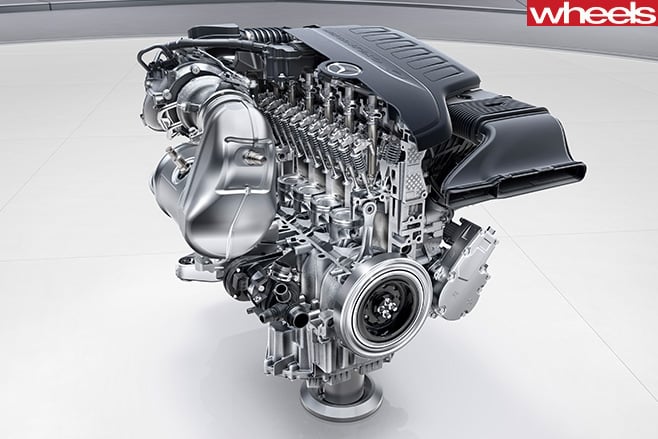
It’s also shorter than a conventional in-line six: the starter-alternator’s packaging means there is no belt drive at the front of the engine, reducing its length. The engine’s cylinders are also spaced much closer than in the V6 it replaces, falling from 106mm to just 90mm.
Acting as a motor, the starter-alternator will also add up to 15kW and 220Nm of low-speed performance to the engine, reducing turbo lag.
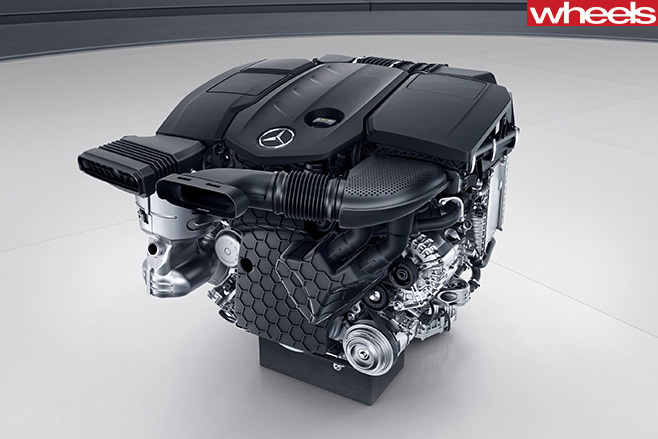
Rounding out the six-cylinder engines is a 2927cc diesel unit producing more than 230kW and 650Nm. Similar to the four-cylinder diesel that made its debut in the E-Class, the OM656 six-pot places the particulate filter as close to the engine as possible to improve the efficiency of the system.
“Looking into the upcoming challenging emissions regulations we believe and we know downsizing will come to its limits. With our line-up we are well-prepared,” said Weber.
Unlike some manufacturers, Mercedes-Benz is sticking with the bent eight, announcing a new 3982cc M176 V8 that produces 350kW and about 700Nm from about 2000rpm. It features twin turbochargers mounted inside the engine’s bank – something the technicians refer to as a “hot inside V” configuration.
From 900-3250rpm the engine can shut down half its cylinders – numbers two and three, and five and eight – to run like a four-cylinder unit. Official fuel use should fall to around 8.3L/100km.
Carmakers are moving to 48V systems as a way to shave weight from cars, which use up to four kilometres of wiring. The higher voltage means that wires only need to carry a quarter of the current of a conventional 12V system, meaning they can be thinner and lighter.
This is important as cars, and the growing number of driver assist technologies built into them, become more complex.
Mercedes has previously announced that all its new-generation petrol engines will add a particulate filter to the exhaust system to reduce emissions.
SEBASTIAN Vettel didn’t have a good Sunday at the Mexican Grand Prix.
The four-time World Champion was locked in an intense battle for the final podium position, clashing with both Red Bull drivers Max Verstappen and Daniel Ricciardo.
Vettel was gaining on Verstappen, but Ricciardo was much quicker than the pair and closing rapidly.
The German driver was attempting to wrestle third from Verstappen, when the Dutch teenager ran wide at the first turn, but gained roughly a car-lengths advantage.
This infuriated the Ferrari driver, who immediately began blowing up on the radio, while Red Bull informed Verstappen he would likely have to readdress the position to Vettel.
Transcript
RED BULL: Okay, give the position, I think you’re going to have the position back Max.
VERSTAPPEN: Let me know.
RED BULL: Okay, stay there.
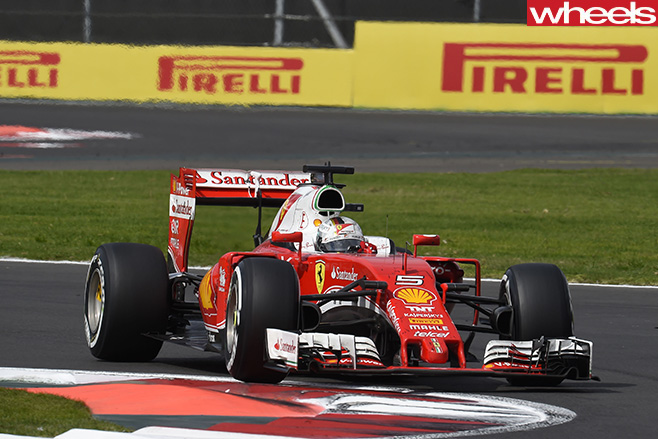
FERRARI: Okay copy. Stay calm.
VETTEL: No, it’s not right. I don’t stay calm. Because he’s just blocking me into Ricciardo.
FERRARI: Copy that.
When Verstappen refused to hand the position to Vettel, the Ferrari driver really began seeing red, and let loose a swag of profanities over the team radio, which were then broadcast around the world by the FOM.
FERRARI: Okay, Verstappen has to give you the position, watch for Ricciardo behind. Three laps to go
VETTEL: Move! Move for f***’s sake
FERRARI: He has been informed he has to move.
VETTEL: He’s a ****! That’s what he is. I mean, am I the only one, or are you not seeing what I’m seeing. He’s just backing me off into Ricciardo. ****.
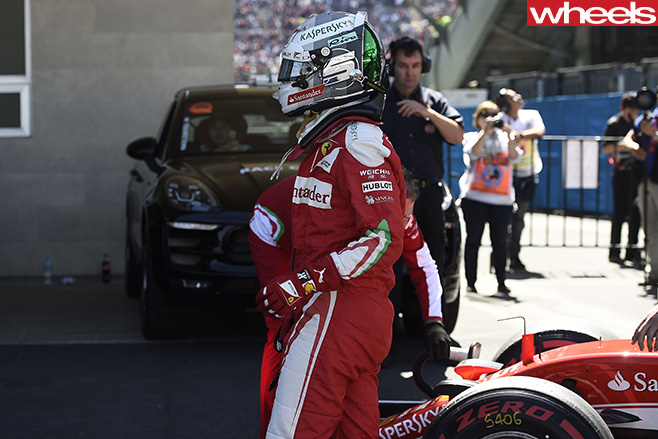
FERRARI: You have to fight with him. Charlie …
VETTEL: What the hell are you talking about! He cut the chicane!
FERRARI: Okay, copy.
VETTEL: And now he’s brake testing me.
Not content with just insulting Verstappen, Vettel then put race director Charlie Whiting in the firing line, sending a message via his team of exactly what he thought of the official’s handling of the situation. At the same time as he was ranting over the radio, Vettel blocked an attempted overtake by Ricciardo. However, the Ferrari driver moved under braking, a tactic which was outlawed from the last race in Texas. It was then that Maurizio Arrivabene, Ferrari Team Principal, chimed in to calm down his infuriated driver.
RICCIARDO (ABOUT VETTEL): He moved on braking. I’d already committed.
VETTEL: I mean honestly, I’m going to hit someone. I think I have a puncture, rear left.
FERRARI: The tyres are fine, tyres are fine.
VETTEL: He has to give me the position! End of the story!
FERRARI: Charlie said … that … Charlie said.
VETTEL: You know what, here is the message for Charlie: F*** off. Honestly! F*** off
MAURIZIO ARRIVABENE: Sebastian! Sebastian! Calm down. They are under investigation. I know that is not fair, but calm down. Put your head down and we talk afterwards.
VETTEL: Okay, copy Maurizio.
Who said Formula One drivers weren’t passionate?!
Toyota has announced the minor specification tweak just months after an update for the Camry which it will stop producing locally from the end of 2017.
The navigation system, which also brings a 7.0-inch touchscreen instead of the basic 6.1-inch incumbent display, is now a $700 option for the base model, $26,490 Altise. While it has been made standard on the Toyota Camry Atara S, the model’s price also jumps commensurately from $29,490 to $30,190.
There are no other changes for a line-up that also includes the $33,490 SX and $37,490 SL.
All Camrys are powered by a 2.5-litre petrol engine with 133kW, with all models except the sportier SX offered with a 151kW petrol-electric Hybrid version for a premium of between $3000 and $4000.
In May, all Camry models were updated with Isofix child seat anchorage points, and the three Atara variants gained front- and rear-corner parking sensors. The SX received the most changes, including styling tweaks and navigation, while the SL received a wireless phone charger.
The Toyota Camry is on track to register its 23rd consecutive year as Australia’s best-selling medium-size car.
