
1. The Mazda6 comes in four models – Sport, Touring, GT and top of the range Atenza.
2. All bar the Sport come in either petrol or diesel variants.
3. Buyers can choose between sedan or wagon body styles.
4. The Mazda6 Atenza Diesel 6-speed automatic sedan, tested here, costs from $48,240 (plus onroads).
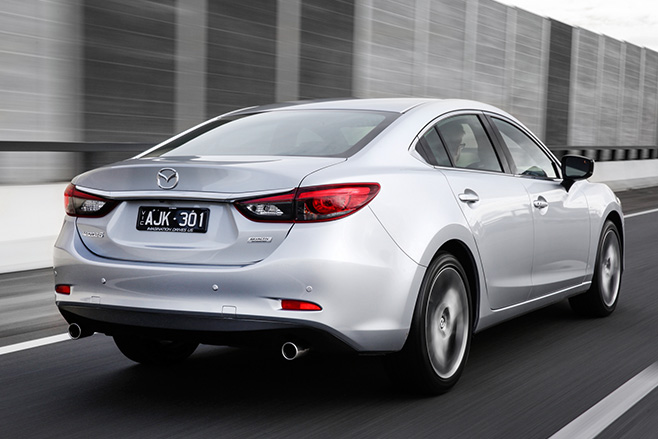
5. It has a 2.2-litre in-line four cylinder turbo diesel engine delivering 129kW and 420Nm.
6. Black nappa leather is standard on all Atenza models, with white leather an option.
7. The Atenza is equipped with heated front and rear seats.
8. The boot is a capacious 474L with the seats up. Curiously, there are no specs offered for how big this boot is when the seats are folded down. For families wanting more cargo space the wagon offers 506L of storage.
9. It’s quiet in the cabin thanks to Mazda’s new sealing and noise absorption improvements.
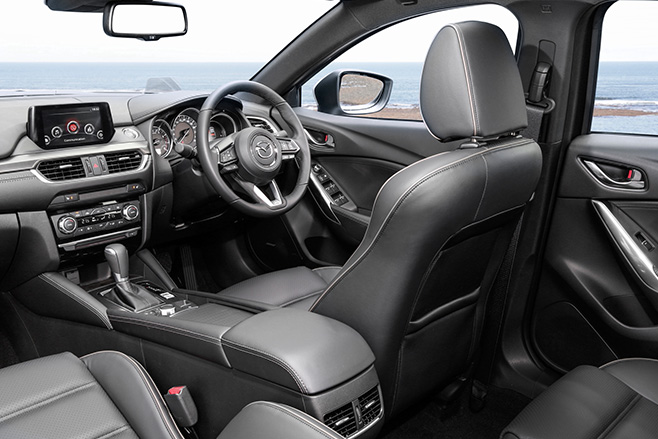
10. The auto-folding wing mirrors tuck away nicely when parked.
11. Plenty of active safety gear like blind-spot monitoring, which alerts drivers to unseen obstacles via a beep light on the side mirror, is standard.
12. Shod with low profile tyres, the 19-inch alloys are more performance based making the ride a little uncomfortable on long trips
13. As you’d expect from a diesel, fuel consumption is a reported low 5.4L/100km. The reality over more than 600km of inner city and freeway driving was 7.0L/100km.
14. Mazda offers neither Apple CarPlay nor Android Auto connectivity.
There’s nothing terribly sexy or glamorous about the four rubbery doughnuts that connect your car to the road, but when it comes to making sure it can accelerate, turn and stop safely and securely in all kinds of weather, having the right kind of tyre on your car makes all the difference.
But does size really matter? What do all those numbers and letters mean? When it comes time to replace your original tyres, how do you know your new set is the same as the ones that came off?
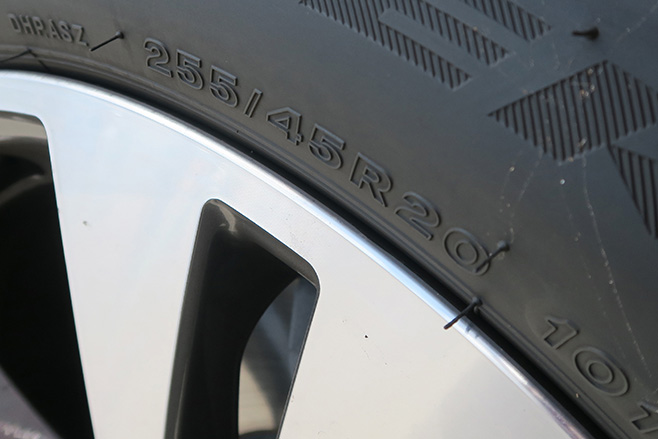
Let’s start with tyre size. All tyres will have a string of numbers and letters moulded into the side walls, usually following this format:
225/45 R19 92W (that’s what you’ll find on a new Mazda6 Atenza, for example).
| 225u00a0 | The first set of numbers is the width of the tyre in millimetres from sidewall to sidewall. In this the case the tyre is 225mm wide |
| 45u00a0 | The next figure is the sidewall height (the thickness of the tyre from the top of the wheel to the edge of the tread), expressed as an aspect ratio u2013 that is, as a percentage of the tread width. In this case the sidewall height is 45% of 225mm (or 101mm). When we talk about u2018high profileu2019 or u2018low profileu2019 tyres, this is what weu2019re referring to: the lower the number, the lower the profile. |
| Ru00a0 | This letter refers to construction. u201cRu201d is for u201cRadial constructionu201d where the steel and nylon cords that give the tyre its strength are laid out at 90 degrees to the centreline of the tread. Most tyres are made this way. |
| 19u00a0 | The third number refers to the diameter of the wheel rim in inches. Here we have 19 inches. |
| 92u00a0 | Next we have the load index which shows the tyreu2019s maximum load capacity – here itu2019s 92 which translates to 630kg. Thatu2019s right, the numberu2019s relation to an actual metric you can understand will make no sense to the everyman. You can, however, look up the tyre loading rating chart to see what your tyreu2019s number represents. |
| Wu00a0 | The final letter refers to the speed rating, indicating the tyreu2019s maximum safe speed when carring the maximum load itu2019s rated for. Again youu2019ll need to look up a reference chart to figure out exactly what each letter means, but generally speaking the later in the alphabet it is, the higher the speed rating. |
So what does it all mean? Is bigger actually better?
Well, larger wheel diameters, like 18, 19 and 20-inch, may look more appealing. They also provide a sportier driving experience with sharper steering response and better cornering grip.
But, when combined with low profile tyres, they can make for a bumpier and noisier ride. This makes sense; as the wheel gets bigger in diameter, the tyre’s sidewall shrinks, meaning there’s less cushioning between the road and the wheel and a less compliant ride.
With smaller wheel diameters, like 15, 16 and 17-inch, the ride is smoother. But as the ride softens, so too does steering response. Keeping the same tyre size is vital for keeping your speedo readings accurate too, and changing the wheel size, sidewall profile or even tread width can influence your speed readings.
Regardless of size, tyre pressure needs to be regularly checked. Good tyres are rendered useless if they’re under or over-inflated, with the car’s handling, tread life, braking, comfort, noise and even fuel consumption all affected by air pressure.
Tyres are best inflated cold so pick a servo that’s nearby and park really close to the air pressure gauge (nothing worse than a hose that doesn’t quite make it). Unscrew the stem cap on the tyre and connect the hose. If it’s a digital gauge set the required pressure. This is usually written on a sticker inside the driver’s door or glovebox. Look for the PSI – or Pounds Per Square Inch – suggested by your car maker. It’s usually a figure between 27 and 32.
And if your tyre bursts? Long gone are the days when every car had an identical spare wheel in the boot. In an attempt to increase cargo capacity and reduce weight many manufacturers are equipping cars with inflation kits, space saver spare wheels or run flat tyres instead.
The inflation kits are fiddly and work fine on small punctures but not on torn sidewalls or big gashes. They can be confusing to use for technical novices too.
Space savers are smaller, temporary spares that are subject to speed limits – often 80km/h – and limited distances. Don’t keep them on your car any longer than is absolutely necessary.
If your car is equipped with run-flat tyres there may be the temptation to drive on a puncture for extended distances. Thicker sidewalls mean the tyre won’t go visibly “flat” when air pressure is lost and you can roll on them for a limited distance and speed. With these, it’s vital to keep regular tabs on tyre pressure – especially if the vehicle isn’t equipped with a tyre pressure monitoring system.
These temporary solutions are fine if you never venture far from big cities, but attempting to cross the Simpson Desert necessitates the carriage of a full-size spare – help will be a long distance away.
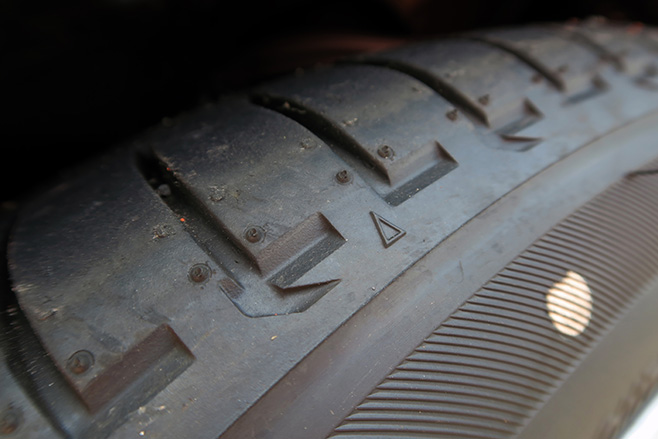
Lastly, how do you know when your tyres need changing? Look around the sidewall for a small triangle symbol (pictured above) then move your hand across the tread face in line with that triangle.
You should feel some bumps in the deeper grooves of the tread – when these bumps become flush with the contact patch, that’s when your tread depth is no longer deep enough for the tyre to be effective and you need to get a new set of rubber.
Until now, owning a plug-in hybrid vehicle (PHEV) meant you always have to plug it into a wall socket or fast charging station to get the maximum fuel-saving benefits that part-time electric cars can offer.
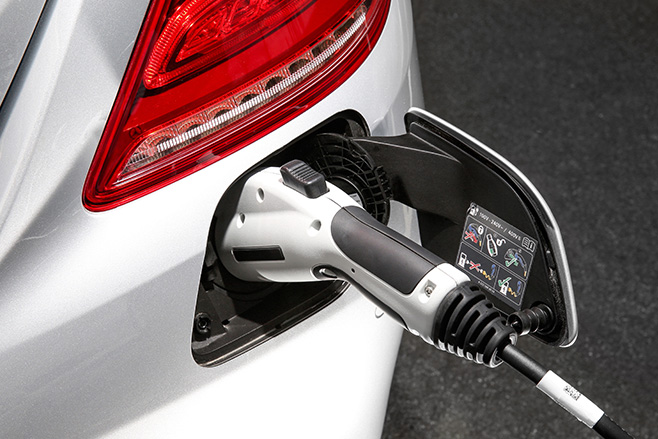
However, Mercedes-Benz has announced it will soon start selling a kit that allows PHEV owners to charge their vehicle wirelessly – no sockets or cords means you just park the car to start recharging.
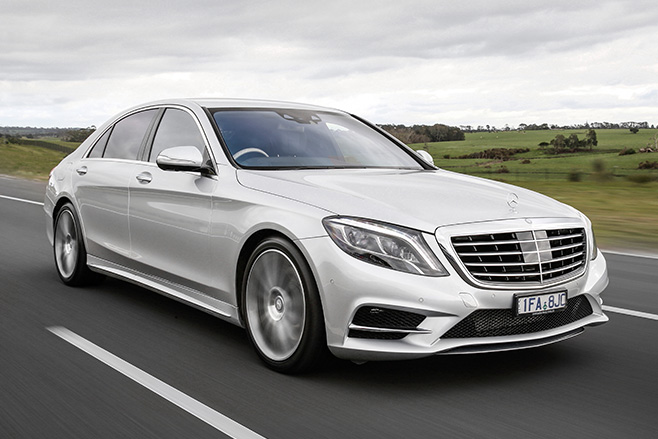
The technology is being rolled out as part of a mid-life update to a PHEV version of Mercedes-Benz’s flagship S-Class limousine, the S550e. The S500e currently pairs a twin-turbo 3.0-litre V6 engine with a plug-in hybrid electric motor that can sip as little as 4.5 litres per 100 kilometres in city driving in its most fuel-efficient mode.
The “Halo” at-home wireless charging technology is being adapted from a similar system designed by telecommunications company Qualcomm to recharge the BMW i8 safety car used in the Formula E battery-powered race car series.
The company says the wireless charger will work at just 3.6kW, which is powerful enough to charge the S550e’s 13.5-kWh battery pack overnight.
However, in order to use the system at home, it will need to be professionally installed.
Wireless (or inductive) charging is already available for computers and smartphones. However, Halo will be the first major factory-available production system for vehicles.
In the past, hurdles such as slow charging speed, high cost, and safety concerns have prevented the systems becoming more widespread.
Other versions of the inductive charging system needed the cars parked within a 2.5cm area around a floor-mounted charging pad to work. However, it is believed the Qualcomm system being developed for Mercedes-Benz is less fussy, allowing gaps as large as 15cm.
“A huge amount of work went into finding the technical sweet spot, from a compliance and harmful radiation standpoint, and from a technical standpoint of the vehicle,” said Anthony Thomson, Qualcomm’s business development and marketing vice-president.
The system is designed to prevent children or pets being exposed to potentially harmful high-energy magnetic fields, and is able to shut down if it senses something is too close.
The team at Qualcomm is also working on upgrading the speed of the system so that it will also be able to recharge pure electric vehicles that have larger batteries.
While Mercedes-Benz is likely to be the first car manufacturer to offer an inductive charging system, others including Tesla are looking into it.
According to Qualcomm, the wireless recharging unit will also help carmakers develop the fully autonomous vehicle. “In the long term, it marks an important step in making self-driving cars truly autonomous – you cannot call a car ‘autonomous’ if it cannot fuel/recharge itself,” it said.
Audi recently flagged it will have its first fully autonomous car on the market as early as next year.
Lambo’s most affordable bull is far from tame.
WHAT IS IT? A rear-wheel drive variant of Lamborghini’s two-seater, mid-engined V10 sports car. By dropping the all-wheel drive system, pruning power back sightly and trimming the price compared to its AWD coupe and convertible siblings, the LP 580-2 is pitched by the Italian sports car manufacturer as its ‘entry-level’ model.
WHY WE’RE DRIVING IT We had limited track and road time in the LP 580-2 at its launch in the UAE earlier this year, but were enthralled by its character and dynamics. This is a chance to see how well its talents translate to Australian roads, and enjoy some less restricted track time.
RIVALS Audi R8 V10 Plus, McLaren 570S, Ferrari 488 GTB, Porsche 911 GT3 RS
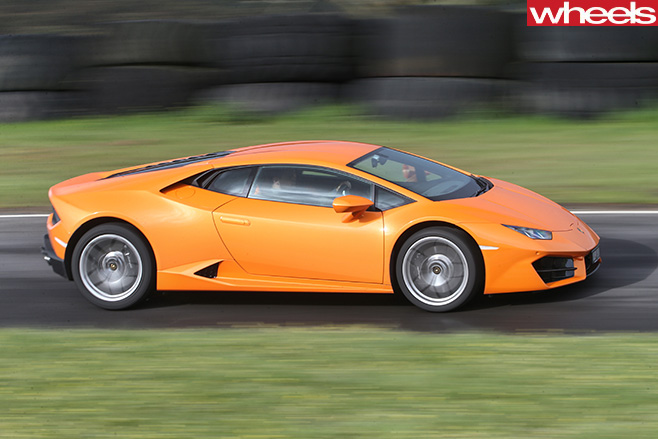
PLUS: Dynamic purity; ESC calibration; drift ability; engine’s sound and fury MINUS: Lack of midrange punch compared to rivals; rear visibility; could wild nature eventually tire?
THE WHEELS REVIEW The supercar taken back to bare bulls.
FOLD yourself in half, slide into the low-slung seat of the Lamborghini LP 580-2 rear driver, then close your eyes. It’s easy to imagine hearing the cheers of the Lamborghini powertrain team when they first learned, back around 2009, that they could finally bin the front drive shafts of what would become the Balboni edition of the Lamborghini Gallardo.
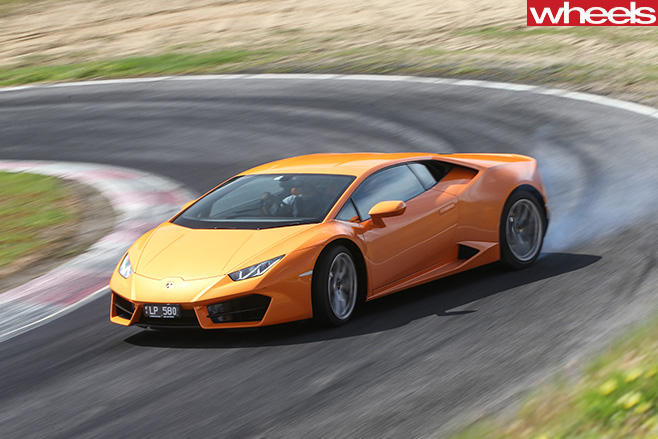
Now open your eyes, hit the starter button, and prepare for orchestral heavy metal, Italian style. And rear-drive fireworks.
From relative low-rev docility, the note hardens, the growl drops a few octaves, and its chest opens. Work it harder and listen to that full-throated holler, as if veins are starting to bulge in the side of the cylinder heads.
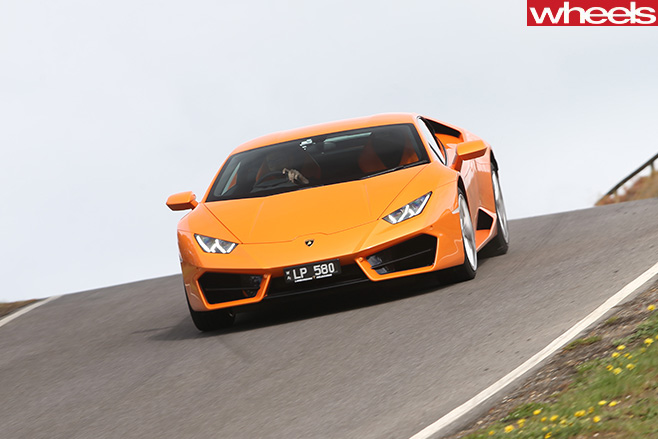
But brilliant as this is, it’s obviously not the core USP of the 580-2. In fact, this is actually the least powerful Lamborghini Huracan, down 23kW on both AWD coupe and Spyder. Trust us, you won’t know or care about those “missing” kilowatts when you point it with vigour into the first corner and start working that laser-precise right pedal. Turn in, and, compared to the AWD car, it’s as though your fists are clamped around the front axles.
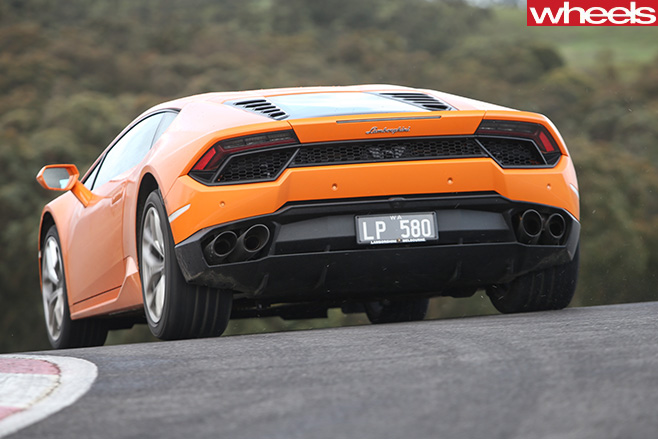
Further evidence of this philosophy – party time, not lap time – is found with the ESC system. Yes, there are suspension and tyre compound tweaks intended to make the car’s breakaway point more accessible and controllable, but the ESC calibration is arguably more influential.
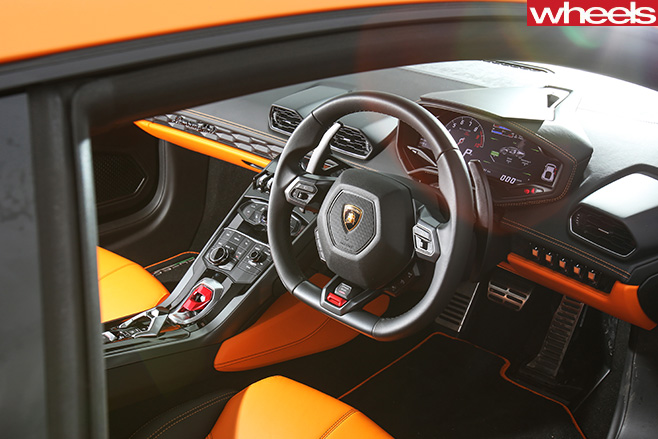
The LP 580-2 may not be the fastest, smartest, most-super supercar in this segment, but is among the most fun and engaging, which counts for plenty. So yes, the lower-powered, least-expensive Huracan is actually the best Huracan, and the one we reckon that would raise a cheer from Ferruccio Lamborghini.
SPECS Model: Lamborghini Huracan LP580-2 Engine: 5204cc V10 (90 degree), dohc, 40v Max power: 426kW @ 8000rpm Max torque: 540Nm @ 6500rpm Transmission: 7-speed dual-clutch Weight: 1503kg (EU; note, we ran 1389kg in Glenns’s drive) 0-100km/h: 3.4sec (claimed) Fuel consumption: 11.9l/100km Price: $378,900 On sale: now
Renault Australia says it has successfully dispelled the myth that French cars are nightmarish to own thanks to a concerted effort to improve its warranties, parts availability and car servicing costs.
As the Australian arm of the French automaker begins what it says is the “next phase” of its brand resurgence effort, local Managing Director Justin Hocevar said current and prospective Renault owners now have the level of after-sales support they deserve.
“One of the biggest challenges that Renault has, has been providing real-world reassurance to our customers,” said Hocevar at last week’s launch of the fourth-generation Megane hatch.
Instrumental to Renault’s efforts to provide post-purchase peace of mind has been an increase in warranty periods, the provision of complimentary roadside assistance as well as competitive finance packages.
“Over the last six years, we have provided leadership in the mainstream market with things like zero-percent finance, a five-year unlimited kilometre warranty and five years of roadside assistance for passenger cars,” Hocevar said.
Renault’s commercial products are covered by a different warranty programme, which lasts for three years or 200,000km. While Renault’s passenger car warranty is impressive, it’s eclipsed by those of Kia and Peugeot, which last for seven and six years respectively.
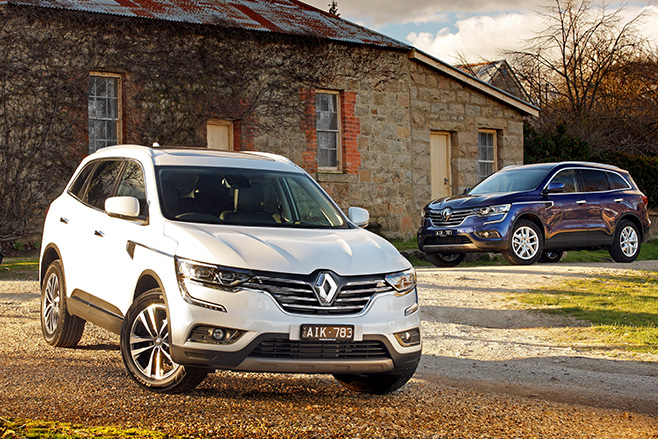
“We believe taking active steps to drive down the total cost of ownership as well as driving up the level of service and ownership satisfaction for Renault customers enhances our brand loyalty,” he said.
When it comes to servicing costs, Hocevar also said its genuine spare parts either were cheapest among its rivals, or at the very least, cheaper than average.
“We recently surveyed the cost of a basket of common replacement parts of the all-new Renault Megane and its competitors,” he said.
“We did this not only to see where we stood competitively, but also whether we were delivering real value. In many of the categories we were the best performer, but in all of the categories we were better than the average.”
Delays in getting spare parts to workshops had also been cut, with Renault able to rely on alliance partner Nissan’s national parts distribution network to expedite shipping of replacement components.
And gaps between scheduled services have also grown, further reducing the cost of ownership. For the just-launched Megane hatch, service distance intervals can be as big as 30,000km – double what many rival manufacturers stipulate. Time intervals are a par-for-the-industry 12 months.
Furthermore, Renault caps the cost of the first three scheduled services at just $299, meaning new owners can budget just $897 for logbook servicing for the first 90,000km of their car’s life – though that excludes items like tyres, brake pads and wiper blades.
For the darling of the small car segment, the Corolla, Toyota Australia asks for $140 per six-month/10,000km service. That adds up to $840 over three years (just $57 less than the Megane) or $1260 over 90,000km ($363 more than the Megane).
Meanwhile, the Megane’s Korean rival the Kia Cerato costs $985 in scheduled servicing over three years and a whopping $2389 over 90,000km. From an after-sales point of view, it looks like buying French might actually be the most sensible option of all.
MINI has revealed it is developing a plug-in hybrid powertrain that’s expected to go into production as part of the 2017 MINI Countryman range.
While the PHEV MINI Countryman will feature a standard combustion engine and electric motor combo, it will differ from most other hybrids by allowing electric only speeds beyond a measly 40km/h.
Head of MINI brand management Sebastian Mackensen [pictured below with Head of MINI series management Peter Wolf (right)] says the focus of the hybrid MINI is the pursuit of fun and efficient driving.
“With this model we want to convince MINI customers of the benefits of hybrid drive and impress everyone who already has hybrid driving experience with MINI’s unique go-kart driving feel,” says Mackensen.
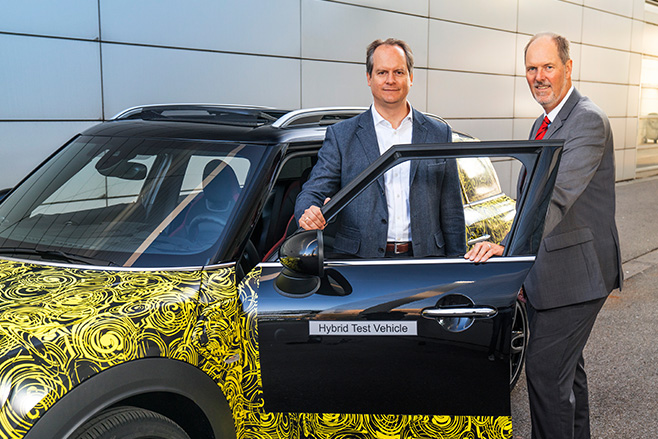
“In a hybrid MINI model, driving electrically must also be an exhilarating experience.”
The Countryman hybrid is expected to have the same power set up as the BMW 225xe featuring 1.5-litre three-cylinder petrol engine as well as sharing basic underpinnings.
It will come in two electric modes: The standard AUTO eDRIVE which permits speeds of up to 80km/h, and MAX eDRIVE mode with speeds of up to 125 km/h.
Handling will also be a priority, helped by a lower centre of gravity and equal distribution of battery weight and an intelligent energy management which is used to control how the combustion engine and electric motor operate together.
Apart from the quieter ride, there will be little to distinguish the hybrid MINI from conventional models, with the charging socket integrated in the left side scuttle above the front wheel arch.
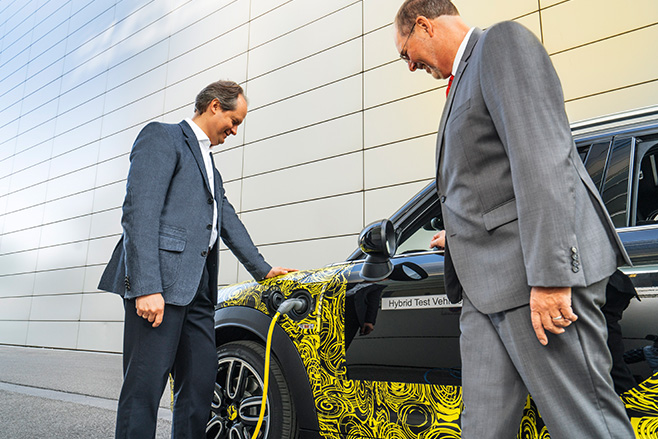
Inside will also look familiar with a few subtle differences including the start button in the centre of the dashboard glowing yellow instead of red.
The rev counter in the instrument cluster has been replaced with a power display, to let the driver know how much battery power is left before the combustion engine kicks in – unlike some hybrids it will always start in electric mode to give you that nice, futuristic silent drive off.
While this is the first MINI hybrid to go into production, it isn’t the company’s first foray into electric vehicles. In 2009 it released the MINI E, a limited edition pure electric model with a 120km range that was offered to selected customers for short term lease.
BMW Australia is yet to confirm if the plug-in hybrid version of the MINI Countryman will make its way to Australia as part of the 2017 range, due in showrooms in the middle of next year.
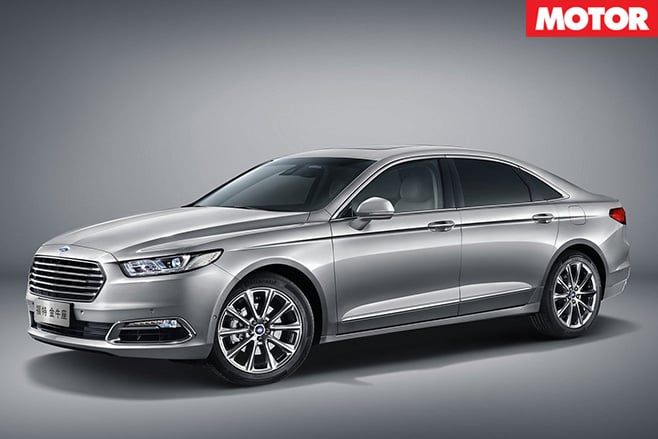
Ford Australia is denying locals a performance Falcon replacement despite testing the Taurus large sedan in Melbourne complete with a 2.7-litre twin-turbocharged V6 petrol engine, all-wheel drive and scarily similar styling to the outgoing FG X sedan.
Despite being a seemingly obvious performance replacement for the Falcon XR6 Turbo, being designed in Australia and sporting Victorian number plates, the snapped sedan will remain reserved for the Chinese market – the thinly camouflaged prototype was even a left-hand drive example wearing Taurus Titanium badgework for that market.
In the face of its local manufacturing closure, Ford Australia is loudly touting the expansion of its local design and engineering facilities that focuses on development for the Asia Pacific region to produce vehicles such as the Ranger ute and Everest SUV, and the Taurus.
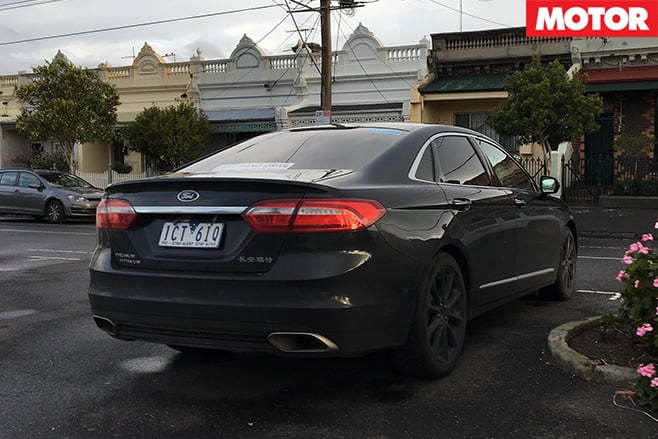
Australian-based, Hobart-born Ford Asia Pacific design director Todd Willing penned the Taurus after formerly working on the Territory and even the forthcoming Ford GT hypercar.
“We wanted to create a vehicle that displays a maturity of design with balanced and harmonious proportions, tailored to the business customer in China,” Willing said at the international launch of the Taurus in Shanghai earlier this year.
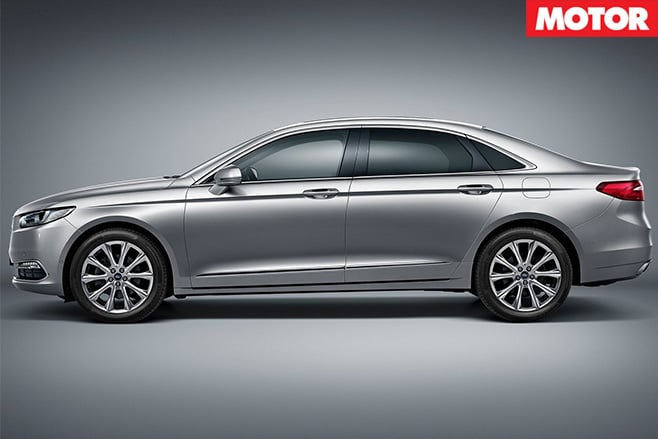
The 242kW/475Nm 2.7-litre twin-turbo V6 could potentially be tuned to rival the outgoing 4.0-litre turbo straight six-cylinder’s 270kW/533Nm, but alas it’s not to be.
In another blow for local Ford performance enthusiasts, the US-market Fusion gets this same powertrain but will also be denied entry to our market, with Ford Australia product communications manager Damion Smy confirming the company will focus on further pushing the four-cylinder Mondeo range locally.
“We think Mondeo fulfils the role in that segment perfectly.”
The Mondeo range features 177kW/345Nm turbo petrol and 132kW/400Nm turbo diesel 2.0-litre engines with drive sent to the front wheels only.
A previous generation Taurus was briefly imported to Australia during the mid-1990s in an attempt to replace the Falcon, but it was quickly culled following poor sales. Now, however, it appears two decades later the Taurus is back to taunt it again.
Wheels pitches 10 of the biggest sellers in the medium-to-large car segment to see which is the best of the current crop. Here’s number 2, the Ford Mondeo.
Can’t wait to see the final score? Jump to the verdict now.
FORD’S spiritual Falcon replacement seems to be perpetually behind the eight-ball. Two years late getting here due to European factory issues, the fourth-generation Mondeo is now struggling to gain traction in a declining segment – an undeserved predicament for such a capable car.
On many important fronts, the latest Ford Mondeo is at the top of its game. Engineered to be profoundly enjoyable, it possesses comfort and refinement to catch out a Mercedes-Benz C-Class, and dynamic prowess to challenge a BMW 3 Series, for up-spec Camry cash. If only Ford adopted Audi’s design, interior presentation and quality acumen…

Yet repeated exposure reveals nicely tactile surfaces, usefully comprehensive vehicle/trip data, thoughtfully executed ergonomics and a hugely useful hatchback. Equipment levels are also outstanding, including an electric tailgate, rear seatbelt airbags, 220-volt outlet, adaptive cruise, AEB, swivelling headlights and 10-way powered front seats.

Any initial hesitations melt away the moment you sink into the sumptuously supportive seats. Adding to high comfort is low fatigue. Mechanical and road noise intrusion is notably muted, aided by this group’s only adaptive suspension with electronic dampers that virtually smother bumps and irregularities away, without feeling floaty. Mondeo’s refinement would wow at twice the price.
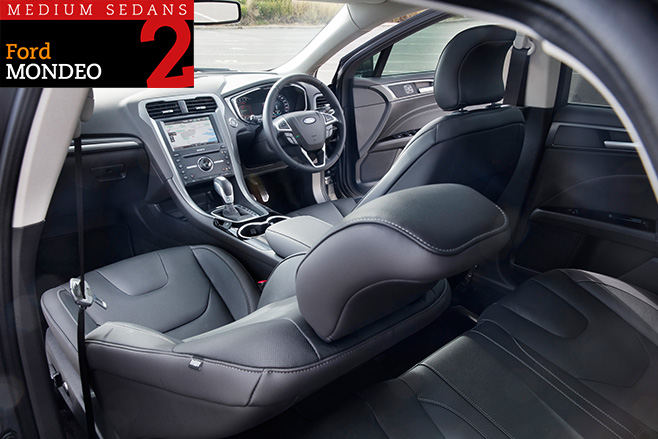
The six-speed torque-converter auto is a useful companion, with an intuitive Sport mode, and properly sorted ratios keeping the spirited engine on the boil.
Just as fast and fluid is the electric steering, defined by an effortless finesse for pin-point cornering and backed up by satisfyingly taut body control, regardless of prevailing conditions. Though assisted by torque-vectoring tech, it’s still astounding how Ford’s lounge suite on wheels manages to handle so sweetly. No competitor is as poised or as plush.

Not so much behind the eight-ball, then, as ahead of the other eight, the charming, occasionally frustrating Mondeo Titanium EcoBoost comes tantalisingly close to sinking every mid-sizer.
Not on Trend
Our intended mid-range Trend ($37,290) ended up being a Titanium range-topper, slapping on $7000, more weight and bigger wheels to potentially compromise the Trend’s fabulously supple ride. We needn’t have worried, as it turned out, but increasingly frequent rattles from the sunroof blind, glass roof seal and A-pillar trim almost drove us to distraction. It also suffered from an intermittent electrical glitch that affected the driver-assist systems, voice control, sat-nav and multimedia connectivity. But with Ford’s completely re-engineered SYNC3 system rolling out in Mondeo from July, such problems should be a thing of the past.
Want to compare the field? Check out all the Family sedan finalists.
 SPECS
SPECS
Price: $44,740 *Includes metallic paint ($450)
Engine: 1997cc 4cyl, dohc, 16v, turbo
Power: 177kW @ 5300rpm
Torque: 345Nm @ 2300-4900rpm
Transmission: 6-speed automatic
Dimensions (L/W/H/W-B): 4871/1852/1482/2850mm
Weight:1695kg
Cargo capacity: 557 litres
Tyres: Michelin Primacy 3 235/45R18 98Y
Test fuel cons: 11.2L/100km
0-100km/h: 7.7sec
0-400m: 15.5sec @ 148.4km/h
80-120km/h: 4.9sec
3yr resale: 49%
Plus: Refinement; dynamic fluency; practicality; value
Minus: Thirst; rattles; messy instruments; SYNC2 glitches
Verdict: 8.0/10

One thing I’ve learned about Mazdas over the years is that ticking the box for the bigger engine option is not always dosh well spent.
Never was that more true than when dealing with the first NA series MX-5. Not only was the 1.6-litre original version all but as quick as the later 1.8, but it was also a smoother, sweeter unit. Save your money: get the 1.6.
But does that still hold these days? Frankly, no. While the new 1.5-litre ND MX-5 is sweeter than a sugar-coated puppy, the even newer 2.0-litre model is definitely worth the extra gold.
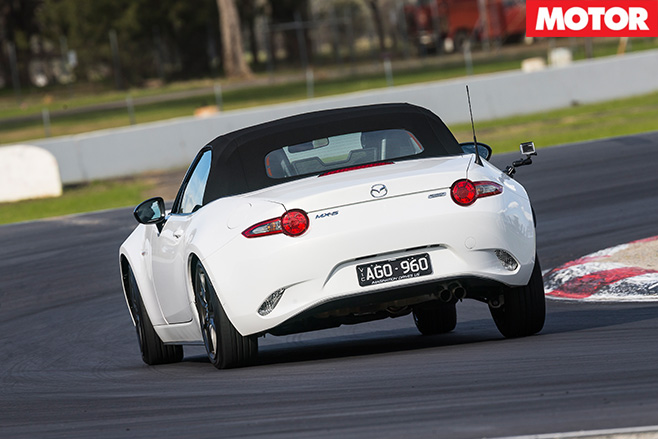
One drive of the 2.0-litre MX-5 is enough to prove that it’s appreciably faster and ballsier than the 1.5. Quick enough, in fact, to be considered quick enough. Lined up against the significantly musclier Cooper JCW, the MX-5 uses its rear-drive power-down to good effect to keep the Mini honest to 100km/h. The rest of the drag-race, though, falls to the Mini – but only by a couple of tenths.
Clearly, that lack of kerb mass is doing its thing (the JCW, itself no porker, is nearly 200kg heftier). What’s lacking for the Mazda is V-max through the traps, pointing, once again, to a car that is easy and efficient to launch from a standing start, if not actually that grunty.
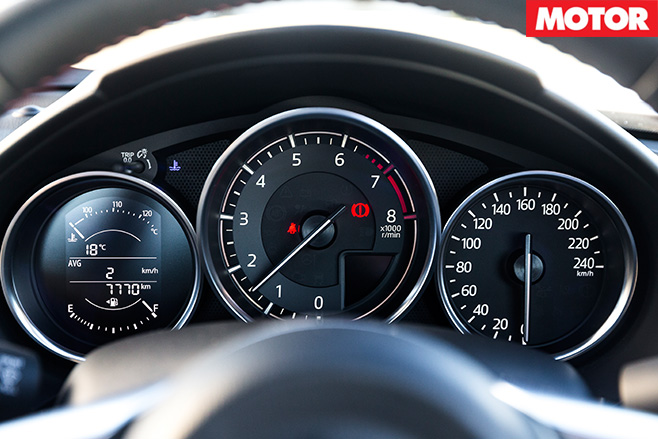
But man, is it fun. Yes, it moves around and it body-rolls more than most here, and there’s always something happening – and not always the same thing – at each end, but it delivers huge giggles in the process. The steering feels natural and all the controls are weighted just so; another traditional MX-5 long suit. It’s also the most analogue-feeling car here and one that us old blokes were quickly able to relate to.
Less pleasing is the wide centre console that eats into an already pretty tight cabin. But just like the SS Ute, which can carry a big load at high speed, when you can drop the top of the Mazda on the right day, you’ve just added a whole new dimension to the experience. You youngsters would do well to sample an MX-5 and discover what proper fun at the wheel really means.
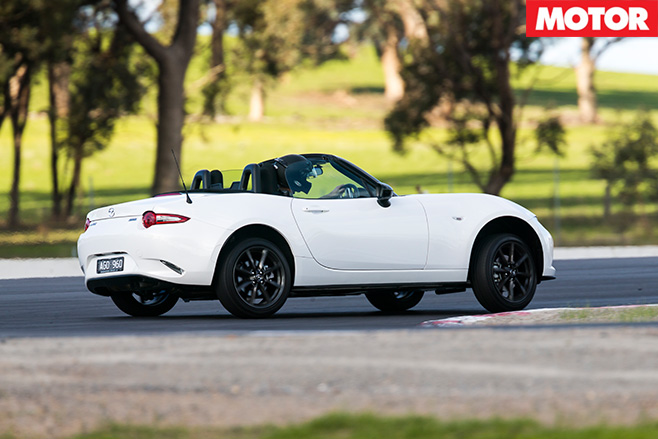
JUDGES’ COMMENTS 05. David Morley “Bigger engine equals even more reason to love it.”.”
01. Dylan Campbell “Surely the most fun you can have with 118kW, had a ball in this thing.”
01. Louis Cordony “Finely attuned to every one of your inputs. Cheek-popping fun.”
01. Scott Newman “Brilliant driver’s car. Challenging but rewarding – needs technique.”
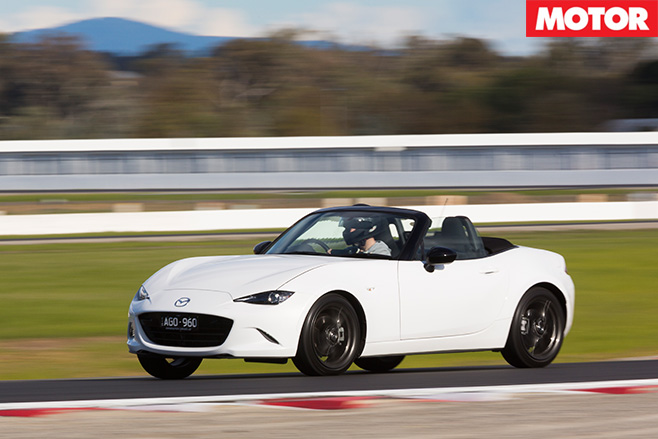
SCORES Price: $34,490 Bang Index: 75.5 Bucks Index: 113.7 BFYB Index: 140.0
WARREN LUFF SAYS 01. “The MX-5 is a real driver’s car – it makes you think about driving”
“In a modern world of electronics, the MX-5 is refreshing as it’s still very pure. It’s fun on the limit and you don’t have to be going that fast; it’s driving at its most basic.
“It slides, it has understeer and oversteer, it makes you actually think about your driving because there’s no electronics or sticky wide tyres to make up for poor driving.
“It’s sort of hard to get the lap time out of it because you’re trying to have that fine balance of under and oversteer and carry as much speed as possible, because it doesn’t have the power to make up for it.”
Want more? Check out the rest of 2016 Bang For Your Bucks.
Moffat muscling up for Masters
Ford legend heads the golden oldies at Sydney Motorsport Park
Allan Moffat and Colin Bond, the two drivers who took the chequered flag glory in the Falcon’s greatest on-track highlight – the spectacular Blue Oval one-two in the 1977 Bathurst 1000 – will be among the star legends at the 12th running of the marvellous retro Muscle Car Masters at Sydney Motorsport Park (SMP) over the last weekend of this month.
Along with fellow Bathurst Great Race winners in V8 machines – Fred Gibson, Allan Grice, and John French – the old team-mates Moffat and Bond will be at SMP for autograph signings and meet ‘n’ greet sessions.
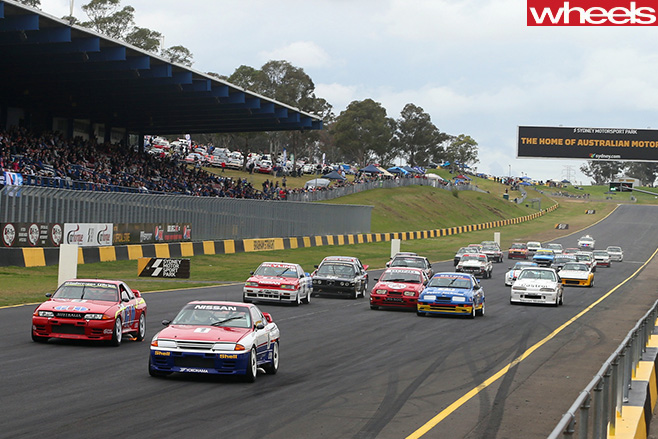
The celebration of Australia’s muscle car heritage and a tribute to the drivers that raced so many iconic cars of the 1960s, ‘70s, and ‘80s will this year include an expanded programme of six competitive categories, plus demonstration events for the valuable cars of the golden era.
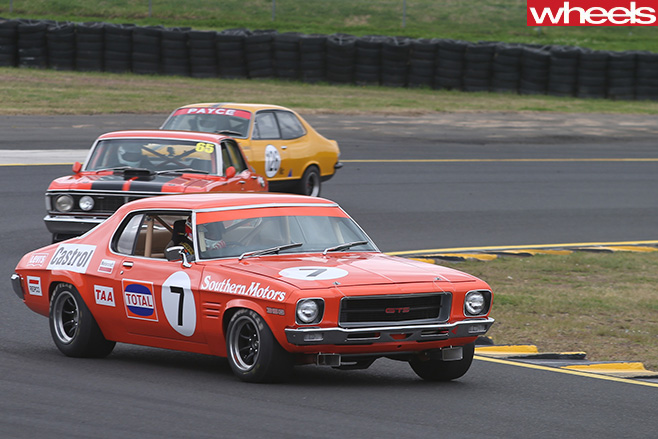
The new date of October 29-30 is proving popular with those who often had commitments on Father’s Day (the long-time slot for MCM).
Returning categories include Heritage Touring Cars (Group C/A), Australian Trans-Am, Historic Touring Cars (Group N) and Group S (production sports cars).
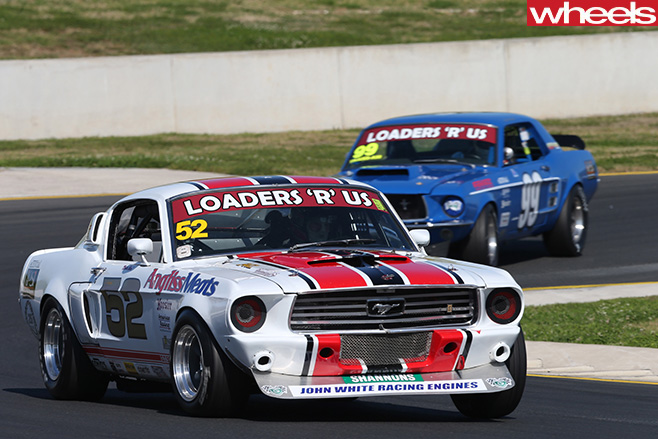
And a special all-Mini race, for cars from the Group Nb ranks, will be held to celebrate the 50th anniversary of the Cooper S’s win in the 1966 Bathurst 500.
Big-banger FT5000 set for Muscle Car Masters demo
Prototype of new open wheeler successfully roars through successful shakedown
A bold new prototype open-wheeler car which revives memories of the golden era of Formula 5000 is set for demonstration laps as part of the annual Muscle Car Masters event at Sydney Motorsport Park after surviving a searching initial shakedown session at Winton raceway.
The prototype FT5000 car will be making its public debut with demo runs at SMP on October 29-30.
Nearly 12 months of design and car construction at Borland Racing in Melbourne culminated in the car turning a wheel for the first time at the northern Victorian track.
Formula 3 champion Tim Macrow took the wheel of the V8-powered car for the day, initially working through a program of technical systems checks, before cranking up the pace through the afternoon.
“It couldn’t have been a more productive day for day one with a brand new race car,” said Chris Lambden, who has overseen the development of the FT5000 concept to date.
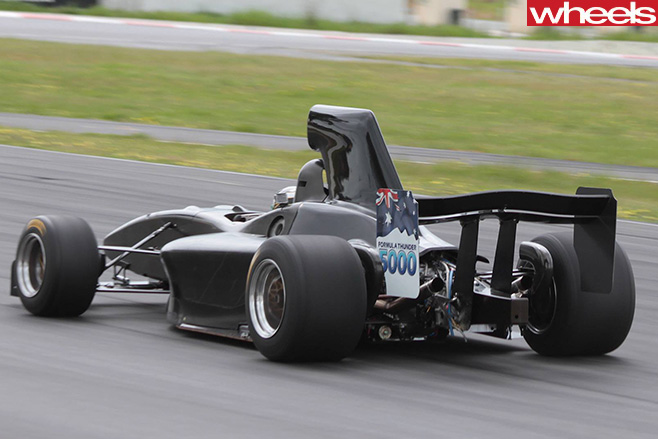
“All our technical partners had someone on hand for the day and, I’d have to say, everything went like clockwork, which is a great credit to all of them. After all the work that has gone in, it was pretty exciting to see and hear the car on track.”
Lambden feels the public demo of his new car at the MCM is a great way of bringing his concept to the people at which it is aimed – those with a fondness for the glory days of open-wheel racing in Australasia.
The FT5000 emerged from a desire to create a cost-controlled ‘Big Banger’ crowd-pleasing, modern open-wheeler race car, at the same time providing an exciting challenge for top racing drivers, from Formula Ford/Four graduates to more experienced racers.
Based on a chassis design by American company Swift Engineering and modified to suit, it utilises a 5.0-litre V8-engined, big tyres, modest downforce philosophy which, even prior to the car’s completion, has created a lot of interest.
The Hulk jumps from Force India
And the tall guy is likely to land at Renault
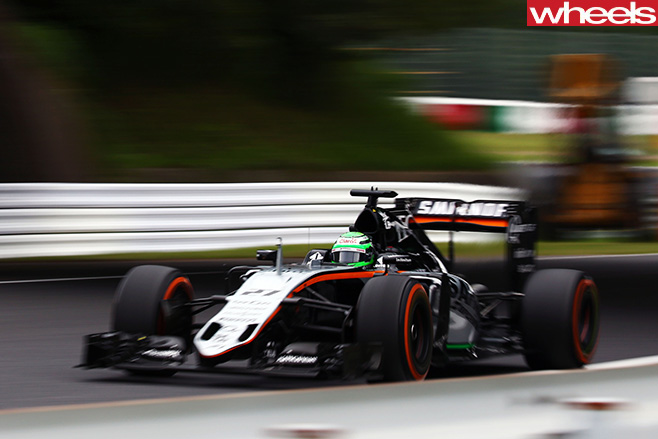
Hülkenberg is something of an enigma, having at times shown sizzling speed but also struggling to manage his tyres in the way necessary these days if a driver is to score a swag of points on a regular basis.
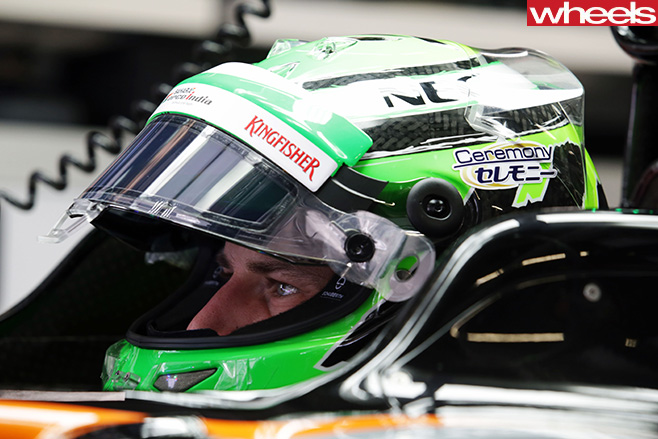
At 29, Hülkenberg is running short of opportunities at the highest level. But there are no guarantees that Renault (which had been chasing Sergio Perez until he re-signed with Force India), will be much improved over its dismal 2016 form. It’s chassis/aero development is constrained by the lack of superstar technical people and the Renault engine is still not yet a match for Mercedes and perhaps Ferrari.
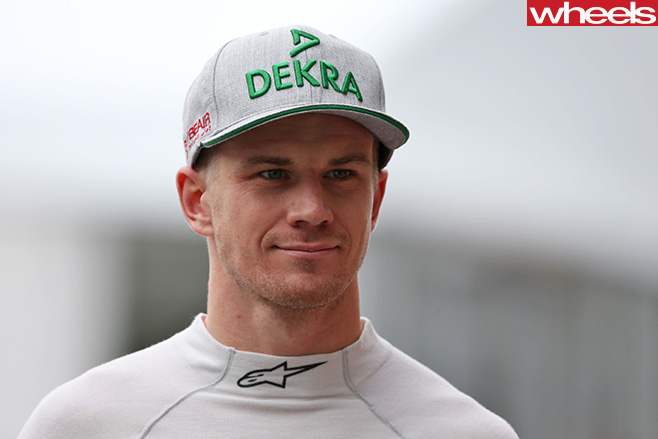
But The Hulk clearly felt the need to get into a works outfit.
