
Australia’s favourite automaker has again been judged one of the world’s biggest tech companies, ranking fifth overall in Interbrand’s 2016 Best Global Brands.
Heading the auto sector for the 13th year, Toyota gained 9 percent on last year, jumping up a spot from last year’s sixth position to sit behind some of the world’s biggest companies including (in order) Apple, Google, Coca-Cola and Microsoft.
Toyota is valued at US$53.6 billion behind Apple at US$178.2 billion and Google (US$133.2 billion) and ahead of 13 other global car brands including Mercedes-Benz, BMW and Honda.
Tesla Motors is the other success story to come out of the report with the US automaker and technology firm jumping into the top 100 for the first time, valued at just US$4 billion.
Each global brand is ranked based on financial performance, influence on customer choice and the brand’s strength to command a premium price or secure earnings for the company.
INTERBRAND’S 2016 BEST GLOBAL BRANDS – AUTOMOTIVE
- Toyota, +9%, US$53.6 billion (5)
- Mercedes-Benz, +18%, US$43.5 billion (9)
- BMW, +12%, US$41.5 billion (11)
- Honda, -4%, US$22.1 billion (21)
- Ford, +12%, US$13 billion (33)
- Hyundai, +11%, US$12.8 billion (35)
- Audi, +14%, US$11.8 billion (38)
- Volkswagen, -9 %, US$11.4 billion (40)
- Nissan, +22%, US$11.1 billion (43)
- Porsche, +18%, US$9.5 billion (50)
- Kia, +12%, US$6.3 billion (69)
- Land Rover, +11%, US$5.7 billion (78)
- Mini, +18%, US$5 billion (88)
- Tesla, US$4 billion (100)
Wheels pitches 10 of the biggest sellers in the medium-to-large car segment to see which is the best of the current crop. Here’s number 6, the Peugeot 508.
Can’t wait to see the final score? Jump to the verdict now.
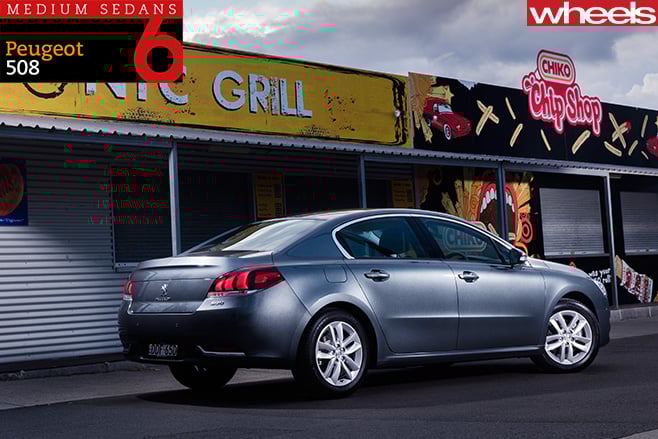
SINCE its 2011 launch, we – as in Wheels, new-car buyers and basically the world at large – have been largely apathetic about the Peugeot 508.
An oddly Germanic French mid-sizer, with an allure more Angela (Merkel) than Angelina (Jolie), the 508 lacks the timeless prettiness and dynamic proficiency of, say, the 406 of the ’90s. This is a largely forgotten car.
But has the world been too hard on the hapless Peugeot? Or has the 508 improved with age?
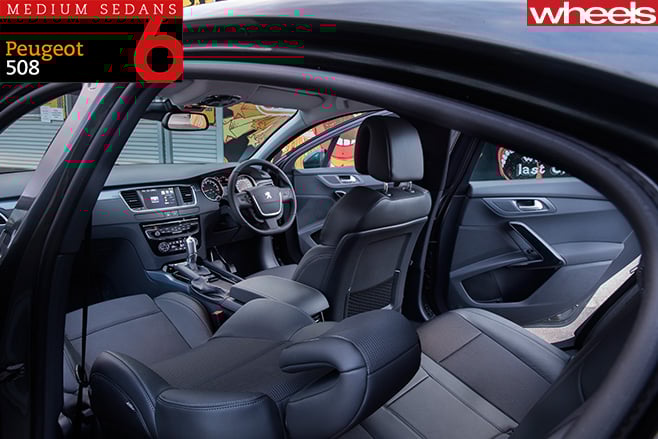
Let’s begin with the cabin, which happily seems larger than the Pug’s pert exterior dimensions suggest. Elegant, yet completely non-ostentatious, and with an appealing simplicity, what the dash lacks in pizzazz it makes up for in practicality. Firm, supportive front seats, an excellent driving position, attractively legible dials, effective ventilation and sufficient storage all suggest Hermann rather than Henri was in charge of layout.
Yet delightful details abound: the Saab-esque retractable cupholders (just below the vents, helping to keep beverages hot or cold as required); a beautifully simple head-up display; rear-window blind; proper rear-door handgrips; and contrasting cabin materials that could have come from a Norman Foster workspace.
Somehow, especially after the showy Koreans, the 508’s overall ambience is akin to the timeless grey flannel suit Cary Grant wore in Hitchcock’s North By Northwest. A useably large boot is the cherry on top.
But the interior is quieter than most of the others here, adding to our newfound affection. Part of that is due to the smooth, sweet, and quiet engine.
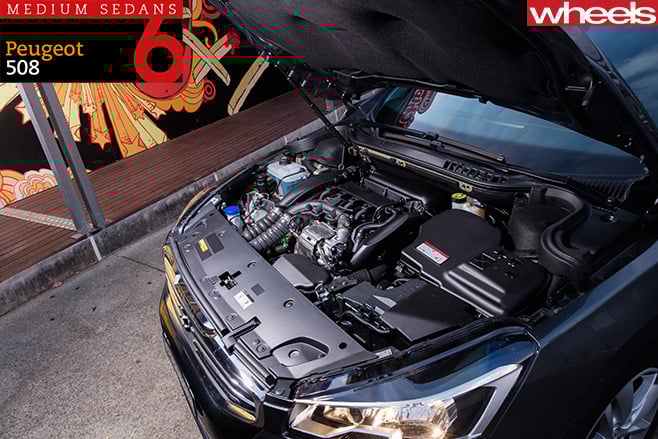
Small at just 1.6 litres, it nevertheless makes the most of the available 121kW/240Nm, stepping off the line with lusty intent and pulling strongly through the mid-range; to 40km/h it’s only 0.2sec shy of the searing Skoda Superb. Comparatively low weight and sensible gearing from the newly minted six-speed auto must take some credit, since the 508 never feels sluggish, except when steep hills or off-boost turbo lag slow things down. Better still is exceptionally low fuel consumption, beaten only by the VW Group teetotallers. Peugeot is serious about regaining the high ground.
Regular readers will know how enthusiastically we rate the latest 308, but the 508 lacks its sibling’s superb suppleness, polish, and panache. Here, more than anywhere, is where age is taking a toll.
Still, look past the 508’s confused identity and sombre design and you’ll find a stoic, solid performer of pleasing consistency and depth. The time has arrived to finally reconsider a mid-size Peugeot.
Exalted future
Peugeot promises there will be no more boring sedans after the current 508 dies in about two years, and if the Exalt Concept from 2014 is anything to go by, then we’re excited. Overseen by suave design boss Gilles Vidal, the next-gen mid-sizer from Sochaux scores the company’s EMP2 platform that underpins the brilliant 308, suggesting newfound athleticism, lower weight, increased refinement and improved efficiency. A return to the good old days of the 406, then? Qui vivra verra: ‘Whoever lives shall see.’
Want to compare the field? Check out all the Family sedan finalists.
 SPECS
SPECS
Price: $37,790 *Includes metallic paint ($800)
Engine: 1598cc 4cyl, dohc, 16v turbo
Power: 121kW @ 5000rpm
Torque: 240Nm @ 1400-4400rpm
Transmission: 6-speed automatic
Dimensions (L/W/H/W-B): 4830/1828/1456/2817mm
Weight:1414kg
Cargo capacity: 497 litres
Tyres: Michelin Primacy HP 215/55R17 98W
Test fuel cons: 8.4L/100km
0-100km/h: 8.4sec
0-400m: 16.1sec @ 142.0km/h
80-120km/h: 5.5sec
3yr resale: 51%
Plus: All-round ability; chassis balance; economy; value
Minus: Firm urban ride; flair-free styling
Verdict: 6.5/10

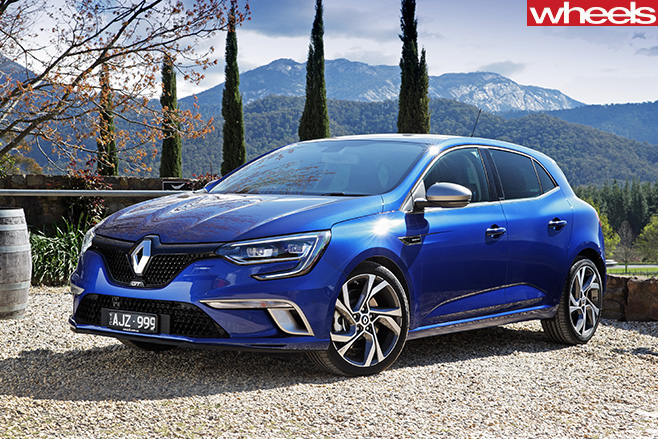
Megane gets a sleek makeover for its fourth generation, and a surprisingly hot range-topper as well.
WHAT IS IT? This is the fourth iteration of Renault’s volume-selling Megane hatchback, which has been on sale overseas since the start of the year but has only just made it to our shores.
Built in Spain on the Renault-Nissan CMF platform (which not only underpins the Renault Koleos SUV, but also Nissan’s Pulsar, X-Trail and Qashqai), the Megane is available in four variants: the entry-level Life, mid-spec Zen and high-grade GT-Line and GT.
And while the Life, Zen and GT-Line are all powered by the same 97kW 1.2-litre turbo four and six-speed automatic (the Life also has a six-speed manual option), the flagship Megane GT boasts a 151kW/280Nm 1.6 litre turbo to give it some added pep. Not only that, but it features a unique suspension calibration, paddle shifters for its seven-speed dual-clutch auto and four-wheel steering – a segment first.
Pricing starts at $22,490 for the Megane Life manual, and stretches to $38,490 for the Megane GT EDC auto.
And for this fourth-generation model, Renault appears to finally have a model that should prove appealing to those buyers. Equipment levels are generally higher than similarly-priced rivals (though the absence of active safety aids like auto emergency braking is noted, despite their availability overseas), the design is eye-catching and high-end and it drives well.
MAIN RIVALS There’s a total of 26 different nameplates in the small car segment, so no shortage of rivals for the Renault. With the Megane’s European origins, mainstream-premium posture and higher-than-average pricing, its primary rivals include the Volkswagen Golf, Peugeot 308, Ford Focus and Mazda3.
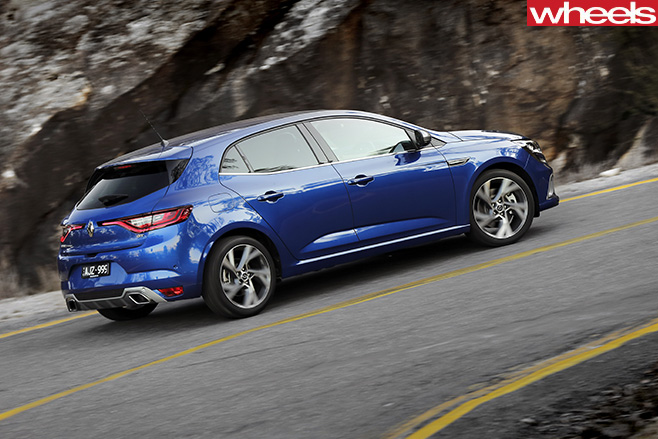
That aside, the new Megane is a delight to drive – especially in Megane GT form. While the 1.2-litre Zen floats, the more powerful Megane GT is taut and controlled, and has outstanding agility courtesy of its unique suspension setup and four-wheel steering.
It’s not quite good enough to be a Golf-beater, but it takes Renault a lot closer to the pointy end of the small car field than it’s been before.
PLUS: Borderline hot hatch performance in the GT, eye-catching exterior design, slick infotainment interface. MINUS: Big powertrain gap between 97kW 1.2 litre and the GT’s 151kW 1.6, cabin quality is inconsistent, tiny cup holders, tight foot room in back seat, no smartphone mirroring.
After years of being an also-ran in the mega-competitive small car segment, Renault at last has a small hatch range that is not only competitive against its peers in terms of pricing, size and equipment, but a range that boasts more than a few unique points of difference too.
It’s the most compelling Renault small hatch since, uh, forever, and here’s why.
For one, just look at it. The curvaceous current-gen Megane RS three-door may still flaunt some sexy curves, but the outgoing five-door hatch was a visual dud. Its younger replacement is a supermodel.
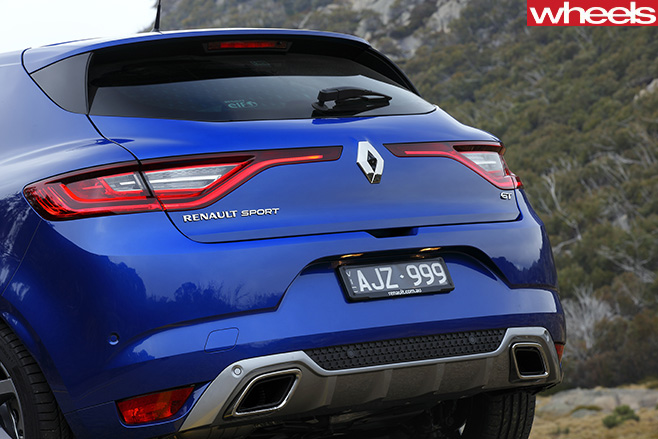
Distinctive C-shaped LED daytime running lamps inject a bold look to the Megane’s front end, while LED taillamps that nearly stretch across the car’s full width give the French hatch’s rump a high-end appearance.
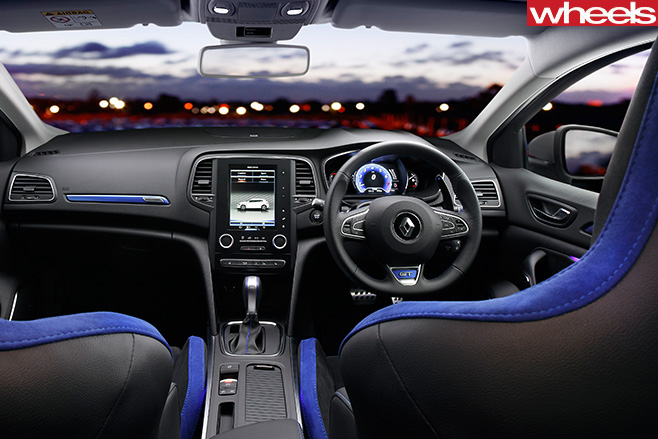
The cabin has a premium aura that was missing in the previous model. Its interior design is upmarket without being pretentious, but it’s let down by misaligned plastics and hard shiny textures on the lower dash.
Is it as pleasant as the interior of, say, a Mazda3 or VW Golf? The material quality lags behind those two segment-leaders, so no. It’s feature-rich though, with a TFT electronic instrument panel and keyless entry/ignition just some of the spec highlights.
It looks its best when in GT guise: that 8.7-inch portrait-format screen is unique for the segment and easy to use, and the ambient lighting, heavily-bolstered sports seats and blue contrast stitching all help lift the cabin ambience markedly.
Rear headroom and foot room is a touch tight and people of average height will have to stoop slightly to get in. Once seated, though, the back seat of the Megane is comfortable and furnished well, with face-level air vents and a generously-sized fold-down centre armrest.
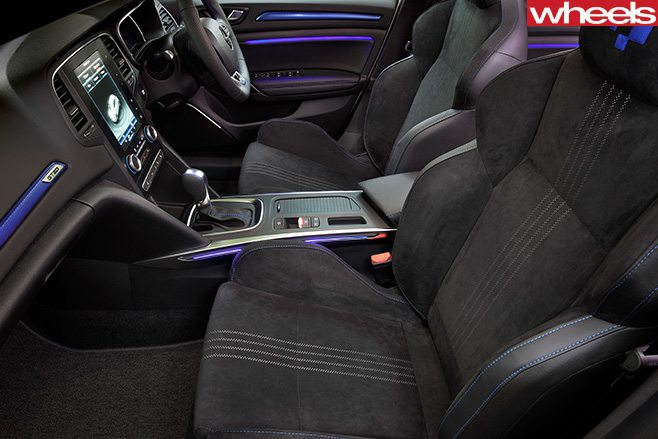
Some French foibles manifest in this car, however. The glovebox is tiny, and the new Megane’s undersized and shallow cup holders are proof that the French still don’t understand how to design a decent beverage receptacle. They say it’s no use crying over spilt milk, but if my venti cappu-frappa-megachino spills onto my crotch on a hard left turn, I assure you: tears will be shed.
But while the interior grows slightly, the Megane has shrunk under the bonnet. Engine downsizing sees the majority of the range make do with an adequate 97kW205Nm turbo 1.2-litre, while the GT receives the turbo 1.6-litre four-pot of the Clio RS 200 tuned to a healthy 151kW and 280Nm.
It’s an auto-only proposition (only the base model Megane Life gets the option of a manual), but the seven-speed dual-clutch it’s bolted to compliments the 1.6’s revvy nature and surprisingly fat midrange torque. It’s a shame that it auto-upshifts when in manual mode, though, and those shift paddles need to be larger to be practical.
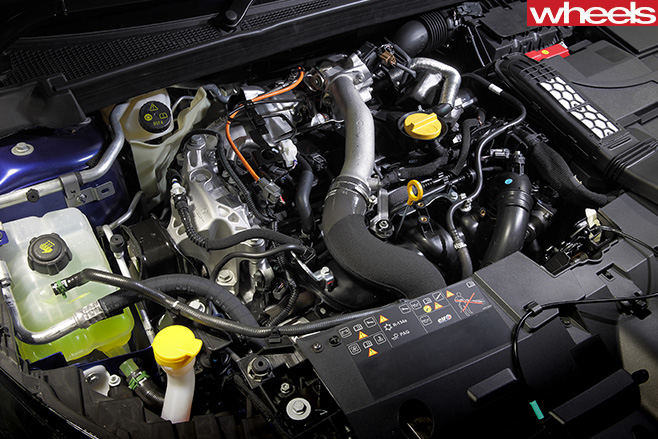
And boy is it agile. The Megane GT is gifted with Renault’s new 4Control four-wheel steering system, which helps point the nose into corners at low speed and improves stability at high speed. It’s no gimmick: it profoundly changes the way the Megane handles and works a treat with the Megane’s nicely-weighted steering.
The Megane’s suspension boasts great compliance and absorbs large-amplitude lumps in a composed and settled manner, but has a slightly fussy ride over smaller imperfections. It can feel jittery and unsettled over corrugations, and surprisingly that behaviour was present even on the 16-inch alloys and taller sidewalls of the mid-spec Zen grade.
Road noise is another issue: it’s particularly loud on coarse-chip roads and smaller-wheeled variants aren’t immune either. The Zen also seemed to lack some body control, taking longer to recover from big bumps than the GT-Line and GT.
But, broadly speaking, the new Megane is at last a viable option for those shopping for a modestly-sized grocery-getter. And, like the recently-launched Renault Koleos, it’s the range-topper that’s the most compelling offering.
SPECS Model: Renault Megane GT Engine: 1618cc 4cyl DOHC, 16V turbo Max power: 151kW @6000rpm Max torque: 280Nm @2400rpm Transmission: 7-speed dual-clutch Weight: 1392kg 0-100km/h: 7.1 sec Fuel economy: 6.0 l/100km (claimed Price: $38,490 On sale: Now
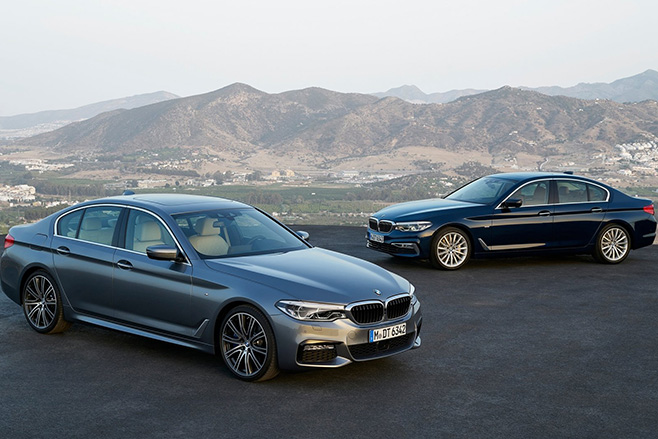
BMW hasn’t gone far for design inspiration for the seventh-generation of its 5 Series sedan, which has a strong resemblance to the current generation along with design cues from the larger BMW 7-Series.
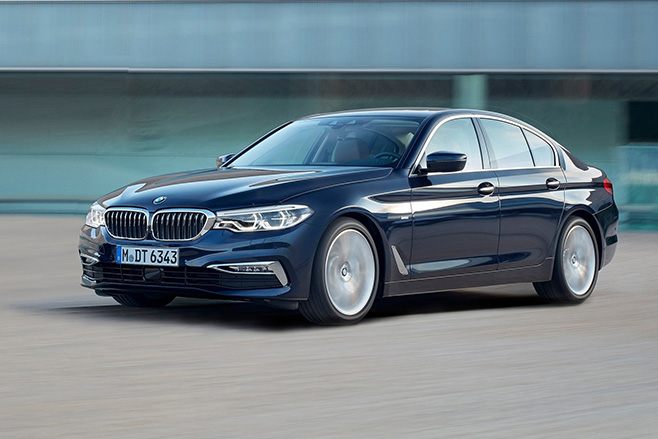
Exterior changes look more like a facelift than all-new model, albeit with sharper looks including a pronounced shoulder line, full-width headlights and a slightly narrower kidney grille. The boot is more integrated into the redesigned C-pillar, which looks more streamlined, helping reduce the drag co-efficient by 10 percent.
The wheelbase has been extended by 7mm to 2975mm, with track width increased by a few millimetres across the range. Despite the bigger footprint, it’s up to 100kg lighter than the current model thanks to the EfficientLightweight design concept that utilises more aluminium and high-strength steels than before.
There’s also plenty of change under the bonnet with enhanced performance throughout the revamped range, which includes an AMG rivalling V8 performance model and new turbocharged petrol diesel options in place of the 528i and 535i/d.
All come with an eight-speed Steptronic transmission, apart from the 520d which comes with manual as standard.
The range will be released in two stages, with the new standard petrol and diesel models part of the global launch on February 11. These include:
- The new entry-level 530i. It’s powered by a 2.0-litre four-cylinder engine which generates 185kW/350Nm and can accelerate from 0-100km/h in 6.2secs and averages combined fuel consumption figures of 5.4L/100km.
- The new 540i, with a 3.0-litre inline six, produces 250kW/450Nm that’s capable of 0-100km/h in 5.1secs and a nippy 4.8secs in xDrive guise. Average fuel consumption stands at 6.5L/100km.
- The new 530d, which supersedes the 535d with a smaller inline six-cylinder turbo diesel that generates 195kW/620Nm. While its 5.7sec run from 0-100km/h is just 0.2secs slower than 535d, fuel consumption is considerably reduced from 6.1L/100kms to 4.5L/100kms.
- The 520d, which is one of the remaining variants, is still powered by a 2.0-litre four-cylinder diesel engine producing 140kW/400Nm and mated to either a six-speed manual or eight-speed Steptronic transmission, but has a reduced combined fuel consumption of around 4.0L/100kms depending on transmission.
The rest of the range will be released on March 2017 and includes a mix of highly economical models and the above mentioned hot saloon. These include:
- The BMW 530e iPerformance. It’s a plug-in hybrid with a 185kW/420Nm 2.0-litre four-cylinder petrol engine plus BMW eDrive electric drive system and an electric range of 45km. Combined fuel consumption is just 2.0L/100km.
- The BMW 520d EfficientDynamics Edition, which is powered by a 140kW/400Nm 2.0-litre four-cylinder diesel engine that goes about its business with a combined fuel consumption of 3.9L/100km.
- The new BMW M550i xDrive, with a less thrifty twin turbocharged 4.4-litre V8 petrol engine, generates 340kW/650Nm at 5,500 rpm. It can accelerate from 0-100km/h in a flat four seconds. That’s 0.4 secs quicker than the current M5.
Optional active cruise control comes with extended functions including optional Intelligent Speed Assist which is capable of relieving the driver of acceleration, braking and steering duties from standing start up to 210km/h.
Another cool option is Remote Control Parking, which lets you park from outside to help you squeeze into tight spaces.
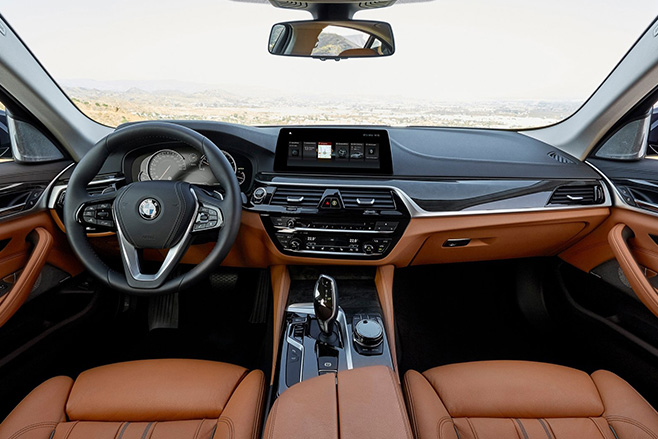
The head-up display is 70 percent larger with sharper resolution and all versions will come with BMW’s Professional Media system as standard, featuring a 10.25-inch display with touch control and the latest i-Drive set-up.
Apps include Car-to-X, which allows your car to communicate with other BMWs, sharing traffic and weather information.
Other interior upgrades include a new instrument cluster, acoustic glazing for the windscreen and an optional Bowers & Wilkins sound system.
BMW is yet to release Australian specifications and pricing.
Ford Performance in the United States has released an upgrade package for the four-cylinder Ford Mustang EcoBoost that adds enough torque to rival the V8-powered Mustang GT, yet won’t void your warranty. Best part? It’ll be available in Australia early next year.
Hardware and software enhancements lift engine outputs by 17kW and 97Nm; up from 233kW/432Nm to more sizable 250kW/529Nm. That puts pulling power of the 2.3-litre four-cylinder Mustang EcoBoost on virtually equal footing with the 306kW/530Nm 5.0-litre V8 Mustang GT.
Ultimate peak power still lags behind the bent eight, but Ford Performance says the more significant power gains are found throughout the rev-range, where as much as 75kW has been added.

“We’re working with Ford Performance on an Aussie calibration right now to make it suitable for our fuel and climate.
“It will be here first quarter next year with warranty backed by Ford Performance as long as it’s fitted by us. It will be ADR compliant and emissions tested – the whole deal.”
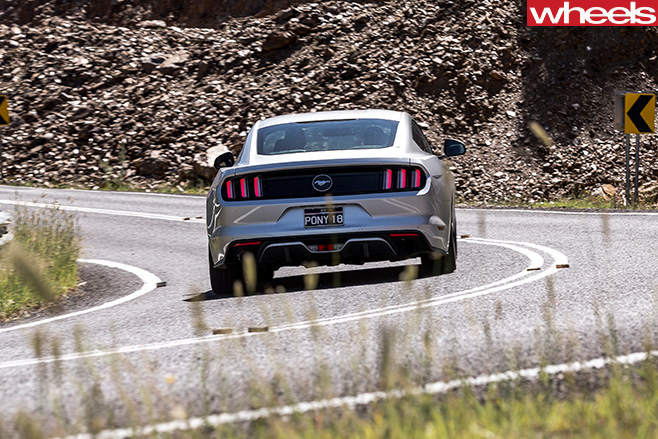
Ford Australia says it has nothing in the pipeline at the moment and no plans to introduce Ford Performance parts in the immediate future, a move that would make it much easier for Mustang owners in Oz to access factory-approved power adders through local Ford dealerships.
TELL ME ABOUT THIS CAR
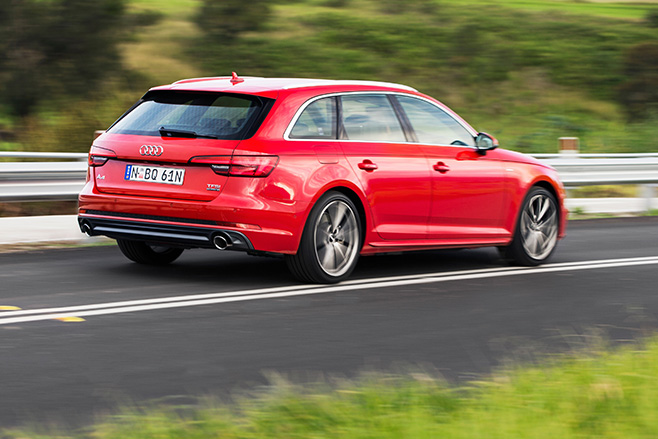
THE rush to SUVs has somewhat sidelined the traditional station wagon in most buyers’ minds. However, not everyone wants the taller ride height, heavier kerb weight and that rolly-polly sensation that comes from the higher centre of gravity that many SUVs possess. Thankfully, carmakers such as Audi still offer traditional load-lugging family transport as an alternative. We call it a wagon; Audi calls it an Avant.
STRENGTHS
- The 185kW/370Nm turbocharged 2.0-litre engine is Audi’s best engine. It’s fast, going from rest to 100km/h in an official 6.0 seconds; it officially uses only 6.6 litres of fuel for every 100 kilometres it travels (expect around 9.0L/100km in the real world); and combined with the seven-speed “S tronic” dual-clutch automatic gearbox it’s also a lot of fun if you like driving.
- There’s loads of luggage space making the Audi A4 Avant a good family holiday car. The wagon has 505 litres of load area available compared with the A4 sedan’s 480L, with a 630mm floor height so you don’t need to lift things very high to slip them in. Tumbling the rear seats forward via the handy boot-mounted levers yields 1510L. By comparison, the second-generation Audi Q5 mid-size SUV due on sale here next year will have from 550L to 1550L, and a much taller load floor.
- It’s safe. The Audi A4 Avant has eight airbags, including side airbags for rear-seat passengers. When the sedan version of the Avant was independently rated for crash safety, the Australiasian New Car Assessment Program awarded it five stars, based on what it said was “impressive technology” including the ability to scan the road around the car and warn if a pedestrian or cyclist is approaching before you open a door.
WEAKNESSES
- The Avant’s extra room comes at a high cost: the $72,900 wagon is a $6000 premium over the equivalent sedan. However, it is a bit cheaper than BMW’s 330i Touring (BMW calls its wagons “Touring”) and slightly more expensive than the Mercedes-Benz C250 Estate (“Estate” is Benz’s name for its wagon).
- The cost of options. With a few very user-friendly options thrown in the price, of our test car blew out to $95,324 – a difference of $22,424. We had $1420 assistance package with active cruise. The most expensive – admittedly making it a lot more child-friendly – was the $3600 rear seat entertainment system featuring a pair of 10.1-inch tablets integrated with the car’s multimedia system.
- Luxury car tax. In this instance, the Audi’s price will tip an extra $4604 into the government’s pocket.
- Servicing is an expensive part of luxury car ownership. In the A4 Avant’s case, you can expect to spend about $1620 per service for the first three years or 45,000 kilometres as part of the German luxury brand’s guaranteed pricing structure.
BMW’s 330i Touring is priced from $73,300 with an eight-speed automatic and features a similar level of performance to the Audi and is the enthusiast driver’s pick, but its luggage space is smaller. The Mercedes-Benz C250 Touring, priced from $71,900 with a seven-speed automatic, offers slightly more interior space than the Audi and a hybrid version is available, but in 250 form offers slightly less performance.
Then there’s the wildcard: the BMW 3 Series GT. It’s a swoopy hatchback version of the sedan offering a long load space with the rear seats folded down and a much nicer profile than the boxy wagon. It is priced from $77,900, making it more expensive, but as the saying goes, fashion ain’t ever cheap.
First published in the May 2011 issue of Wheels magazine, Australia’s best car mag since 1953.
We’ve been out here to Cameron Corner before, but never in an Aussie-built diesel SUV … let alone one with the ability to stand comparison with a BMW $30K more expensive.
Can’t wait to see the final scores? Jump to the verdict now.
NEW Ford Territory means a trip to The Corner Store. The one at Cameron Corner, to be specific, in outback Australia, where NSW, QLD and SA collide. It swelters between the stony heat of the Strzelecki Desert and the rolling sand dunes of the Sturt National Park. Temperatures hit 50 degrees in summer and zero overnight in winter. It’s 1500km from Melbourne, a bit less from Sydney, and is the only pub, fuel and food stop for 150km. This is not just cattle country; it’s also gas country – the Moomba oil and gas fields supply 80 percent of Melbourne and Sydney households.
Wheels pits Aussie cars against the outback whenever a local car maker produces a significant new model. Mega road-trips covering thousands of diverse kilometres, many of them rutted and corrugated dirt lifelines. We’ve taken most watershed Falcons and Commodores, Magnas, Avalons, Aurions and Camrys to the outback. I first took the SX Territory to The Corner in 2004. Seven years later, I’m going back in the SZ.
No Australian-made vehicle – in theory – has ever been so suited to our immense country, nor so fundamentally prepared for life outside the urban sprawl. A quicker-thinking all-wheel-drive system and a frugal turbo-diesel engine are two of the new-look SZ’s many updates. There’s a new electric steering system and front subframe, suspension modifications, economy improvements for the petrol in-line six, and a fresh interior with new multi-function infotainment centre.
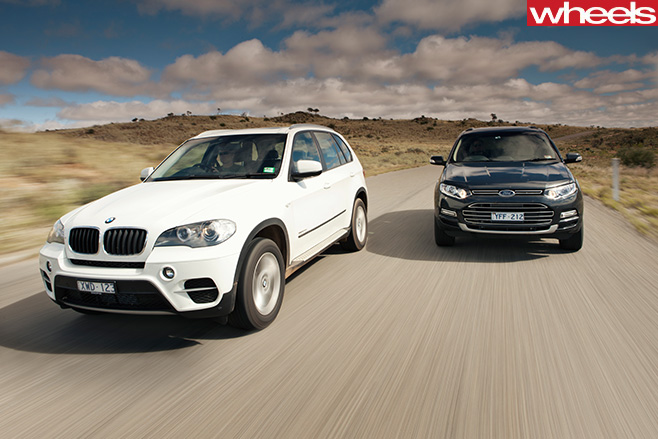
It’s raining as we leave Melbourne, me in the Territory, Wheels’ go-to man ‘Cletus’ in the BMW and new-boy Harry in my SS V Ute long-termer. Ostensibly the ute is a support vehicle, dubiously credentialed for desert duty. I’m looking forward to unleashing its 6.0-litre V8 on the bone-dry Waka claypan between Tibooburra and the Corner, just like Holden did for the Thunderstruck Ute TV ad for the VU SS. Obviously the ute’s not an all-wheel-drive diesel, so it’s not a player in this comparo. Strange, then, how my support crew constantly fought for its keys once we reached dirt…
The BMW X5 is a European yardstick for Ford’s Aussie diesel. Ford benchmarked the Territory against it; so will we. The $92,100 xDrive 30d’s turbocharged 3.0-litre is the finest oil-burning six around, proof that diesels are not just for economy. It accelerates with gusto thanks to 180kW and 540Nm, and is not without aural appeal, though diesel clatter dominates above 3500rpm. Add a new ZF eight-speed automatic transmission and the X5 is a relatively rapid hauler, but it’s constantly shuffling gears to keep the engine on the boil.
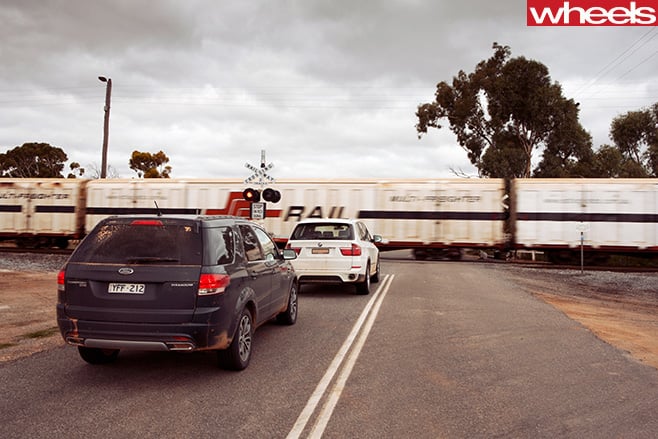
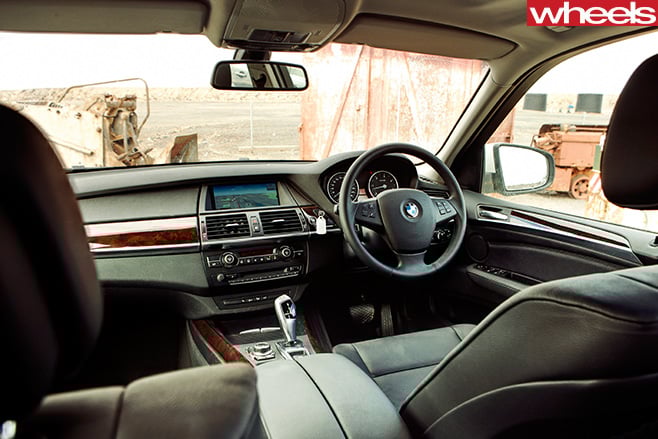
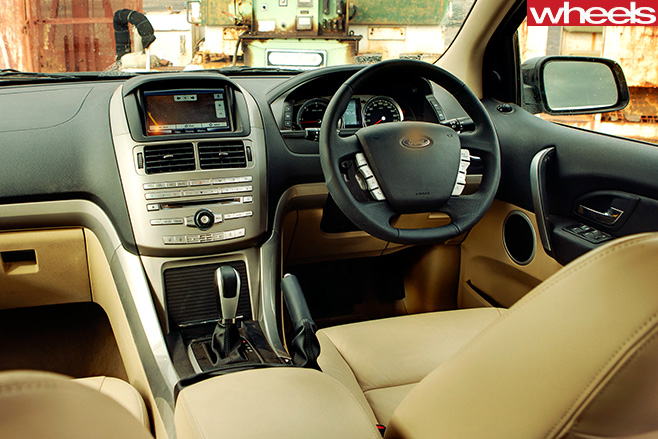
The long straights between Melbourne and Mildura on the Calder Highway give opportunity to cruise in both. It’s a credit to Ford’s NVH engineers how quiet the Territory TDCi’s Duratorq V6 is. At 110km/h it’s ticking along at 1950rpm, the engine’s point of peak torque. The engine note is distant and subdued, quieter than the BMW’s. The Territory’s also less susceptible to wind noise and isolates occupants better from tyre rumble. Surprised? Me too, but it’s true. The Territory’s new (Ford FG Falcon) dashboard is classy; the best of any Australian car. We’ve made much of the Territory’s versatile interior before, with its myriad storage options. They’re all still there, contributing to a more welcoming environment than BMW’s dark and less practical interior. Territory’s seats also quickly assert their superiority. Softer than the BMW’s planks, they nonetheless provide the requisite support.
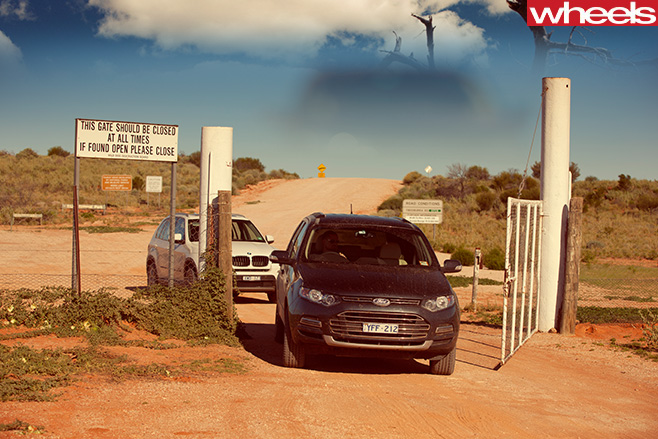
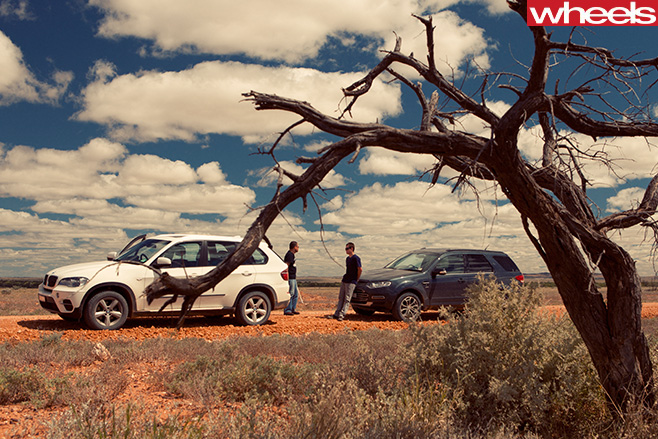
The crumbling bitumen calls for more steering than usual on Victoria’s straightest road. Both cars have electric steer, which brings fuel consumption savings as it doesn’t need the engine for assistance. Both are arcade game light and lifeless at parking speeds – who needs feel at 5km/h? – yet firm up nicely on the move. The BMW’s quicker tiller is handicapped by the suspension, which tugs at the wheel over undulations. And when there’s 50km of undulations, that becomes tiring.
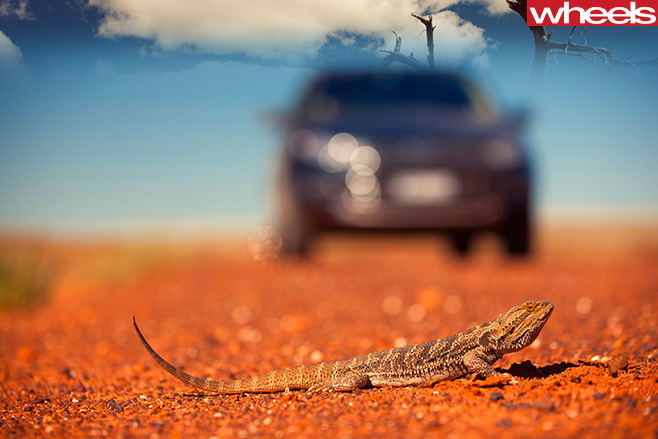
We consider not refuelling at Mildura, after driving 540km from Melbourne. The BMW claims its 85-litre tank still has enough fuel to reach Broken Hill, 300km north. The Territory’s 75-litre tank doesn’t. Running out of diesel in the Territory is not a big deal, Ford says. Its Bosch V9 engine management system – which brings rollover mitigation and engine torque drag control on trailing throttle – shuts off the high-pressure injectors before air infiltrates (as many new diesels do). So, theoretically, there’s no need to have the injectors professionally repressurised; just refuel and go. I tried to test that on the way home, but the Territory made the 30km to the petrol station after the trip computer claimed ‘0km to empty’. Trip computers are rubbish, too.
At Broken Hill somebody finally spots our new Territory. A bloke in a battered Landcruiser ute pulls alongside and winds down his window.
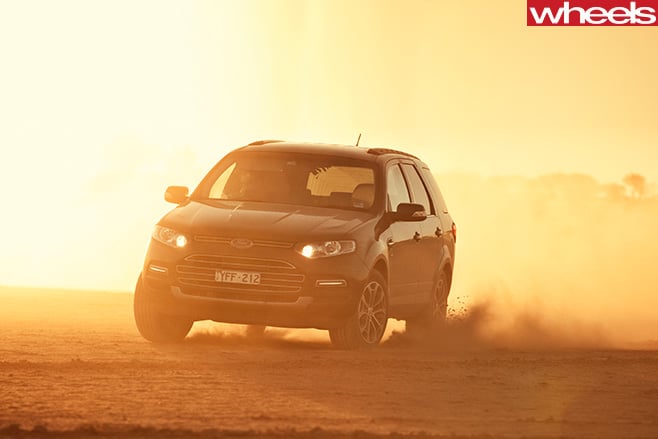
“Yep.”
With that, he drives off. Make of that what you will, but he was the only person in 2800km who showed the slightest interest in the Territory’s sharp new clothes. Personally, I think it looks more interesting, more sophisticated, than the chunky Tonka original.
The next morning we rise early for photography at one of Broken Hill’s derelict mines before hitting the supermarket for supplies. If all goes well we’ll be camping under the stars near Cameron Corner tonight. We brim the cars, and then fill ourselves with bacon and egg rolls from Charlotte’s on the main street. All agree it’s the best brekkie roll ever. It’s funny how leaving civilisation can make simple pleasures so profound.
North of Broken Hill the Silver City Highway alternates between bitumen and well-packed dirt when dry, and porridge when wet. Today it’s dry. I start in the Ford, having pilfered the keys back from Cletus. The engine’s not as authoritative as BMW’s benchmark, but it’s no lightweight. The Territory shows a liking for the long, languid bends that unfurl beneath the blue sky as we continue north, cruising at 100km/h and some, barrelling along at 2500rpm in sixth. The diesel’s gearbox is the ZF-based 6R80 torque-monster beefed up for the F-Series and Mustang, and it’s a decent shifter that slurs gently between ratios. Most of the time it works beautifully, if just a tad slowly, but can fumble first-to-second. On the rolling plains before Packsaddle it works better in Performance mode; more attentive to throttle inputs and in tune with my intentions.
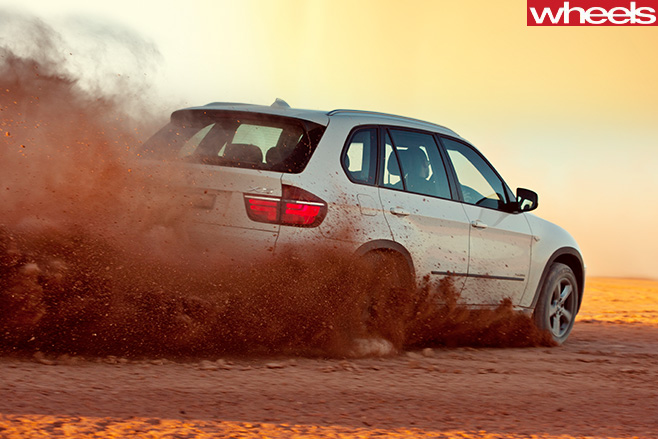
Catching the BMW on the dirt after our drag race proves impossible, despite the Territory’s improved dynamics. Cletus is using the BMW’s adept xDrive AWD system to masterfully obscure the road under clouds of dust, so I drop back for clean air. Time to trial the Territory’s new all-wheel-drive system on fast dirt. Where the old model made do with a full-time 38/62 split and used the ESC to control wheelspin, the new system uses a multi-clutch transfer case to vary torque front to rear. It’s fundamentally the same system as in the X5, and still relies on ESC to brake spinning wheels. It can also disengage the front axle when the car is idling to reduce vibrations.
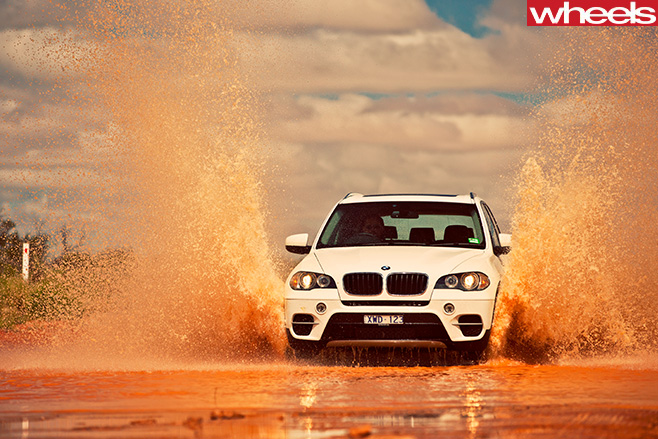
I want to turn left before Packsaddle towards The Veldt, and find Cletus and the BMW waiting dutifully. The plan is to spice things up using back-country tracks to follow the Dingo Fence to the Corner. We get 15km and five open-and-close gates in before spotting a VE Ute, beached on its belly at a dry river crossing.
“You blokes couldn’t have been here a couple of hours ago, could ya?” he laments with a wry grin. “We’ve just finished jacking all the wheels up and putting rocks underneath.”
Hard work under a desert sun, I agree. What can we do to help?
“Get behind and give her a push as I drive out.”
Cletus, nice bloke that he is, suggests I push from right behind one of the wheels. But Mick’s finesse with the throttle undoes Cletus’s plan to see my face full of sand and rock, and the ute drives smoothly out of the creek bed. Mick gets out and thanks us. I thank him because if he couldn’t get through in a standard Ute then my lower SS V stands even less chance. Once he’s left, we run the Territory towards the bed out of curiosity, but it grades sand even sooner than Mick’s ute. Territory’s ground clearance is rubbish.
“Well, yes.”
“You’ll never get there in that,” he says, pointing at the support ute. “Road’s pretty cut up at the moment.”
“What about the Territory?” I ask.
“Which one’s that?” he says.
Has the SZ become part of the landscape already?
The Territory, it turns out, is the most confident on Cameron Corner’s 141km driveway. It handles the corrugations with ease, and exhibits an inherent chassis stability under brakes that the BMW fails to match. The BMW fidgets and skitters across loose rubble under power and squirms uncomfortably on sand under brakes. It’s a less than convincing exhibition of Germanic chassis stability, but I guess they don’t have a lot of outback roads round Munich.
We arrive at the claypan early afternoon, still time to reach The Corner and back by sunset. Before setting off we all hone our drifting skills in the SS V. Can’t make it rain, though. Holden Ute ads are rubbish.
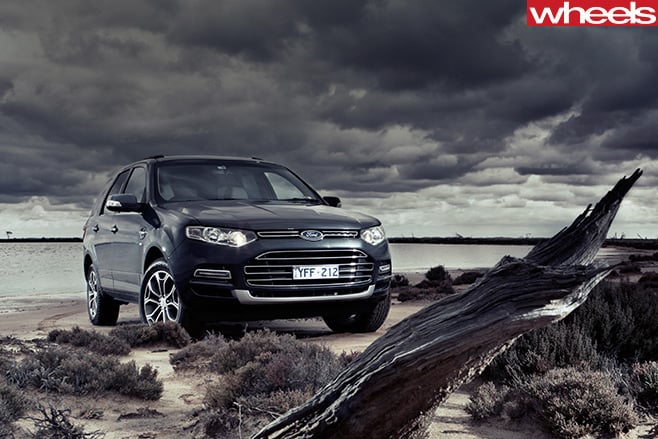
We make The Corner without fuss. A little too easily, if truth be told. I remember it being harder. Or perhaps cars really are getting better, even ‘soft-road’ SUVs like these. New owner Fenn Miller isn’t at all surprised to see our two urban SUVs and sports ute drive in. He says most vehicles can do it in the dry with the right driver. If it rains, however, “nothing’s going nowhere”. A final fill at Cameron leaves the two SUVs split by 0.1L/100km in the BMW’s favour – 10.3L vs 10.2L.
Sitting around the campfire later that night while Cletus charcoaled the snags, it’s apparent the Territory has scored an upset win. Its refinement and composure counted for more than the BMW’s luxury allure and brilliant drivetrain. Neither had struggled with the terrain, but the Territory was more confident and comfortable. As for value, that can be tricky when the prices are disparate. This time it’s not. The Territory is actually better equipped at $63K than the BMW is at $93K. I’m less enamoured by Territory Duratorq’s fuel figure. I expected better than 10s for a big-country drive, but the Territory’s number is competitive, even if the BMW does more with each drop.
So, Ford Territory beats BMW X5. Would the outcome be different if we threw some mountains into the equation? Anything’s possible, but unlikely. And anyway, the nearest decent climb is more than 1000km away, and the locals don’t like it when you drive up Uluru.
The Verdict

FORD TERRITORY TITANIUM AWD Price as tested: $63,240 NCAP rating: 5 stars Fuel economy: 10.3L/100km (test average) Boot capacity: 523 litres Plus: Price; sharp handling; beautifully refined; more frugal than petrol six Minus: Doughy throttle response; slow transmission; old-tech engine Verdict: 8.5/10

BMW X5 XDRIVE 30D
Price as tested: $92,100/Tested $101,499 *Includes 18in alloys ($1100), panoramic sunroof ($3700), and aluminium running board ($700)
NCAP rating: Not tested
Fuel economy: 10.2L/100km (test average)
Boot capacity: 620 litres
Plus: Punchy, creamy drivetrain; economy; room; on-road handling
Minus: Price; firm ride quality; squirmy on rough dirt roads
Verdict: 8.0/10
It’s that time of the model cycle again.
Three years have passed since Audi first shoved a five-pot into its cut-size SUV, gifting us the RS Q3, and to celebrate it’s released a ‘performance’ version.
However, while it’s copped a light basting of power, the new name isn’t entirely representative of this car’s point. It replaces the standard RS Q3 and scores extra equipment to help freshen its appeal.
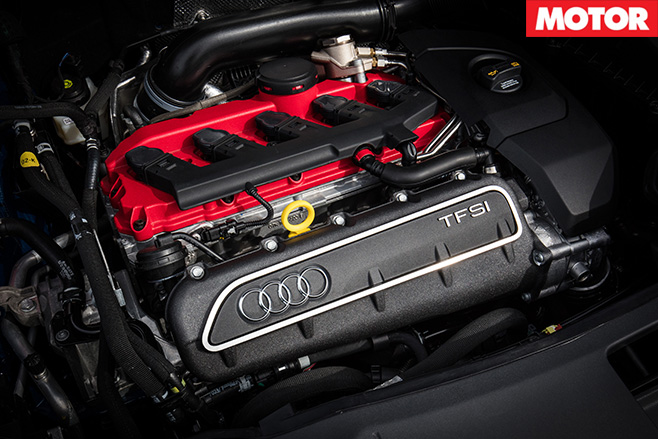
On that note Audi’s swapped in the RS3 Sportback’s engine, which upgrades its fuel pump and radiator’s cooling capacity, so it now fires 270kW and 465Nm through its seven-speed quattro drivetrain.
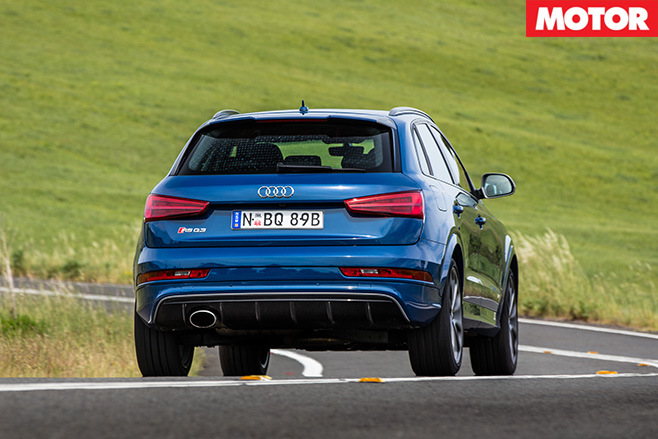
There’s no doubting the mini-crossover will come close to that claim, its Haldex-managed all-wheel drive system simply claws into tarmac and throws the car up the road.
You’ll need $140K in a Porsche showroom to match that sort of off-line pace, however this RS isn’t going after the finest from Stuttgart.
Merc-AMG’s GLA 45 is its clearest rival and matches the Audi in the sprint to triple figures. But what AMG’s soft roader won’t manage is the same loveable warcry as the Q3’s 2.5-litre inline turbo five.
Audi’s left alone its strut-front, multi-link rear chassis, so dynamic-wise there wasn’t much revealed during its launch in Victoria.
Wet blacktop doesn’t phase its 255mm-wide Pirellis, the carried over front eight-piston calipers are still brilliant, it sits flat, and holds the road like a frightened possum does a gumtree.
However, even with an aluminium tailgate and bonnet, the super-Q3 lugs around 155kg more than a hatch variant, and wears it in corners.
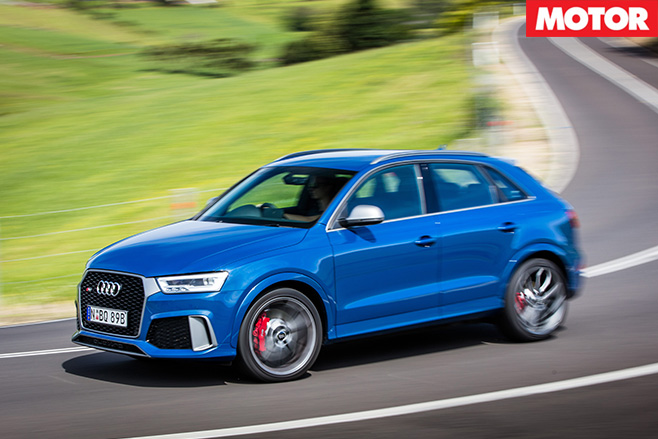
However, sales have revealed these perched pews are more the point. Audi’s sold 376 units since launch, well ahead of the 100-a-year predicted, a local appetite for SUVs and sports models intersecting perfectly with the RS Q3.
We don’t doubt the success will continue, as the performance’s $2316 price hike (now at $84,216) represents quite decent value with the added sting and kit.
Gone are the old 19-inch wheels. The performance rides exclusively on 20-inchers that match a matte-titanium finish to the car’s wing mirrors, roof rails, window frames, grille, and spoiler.
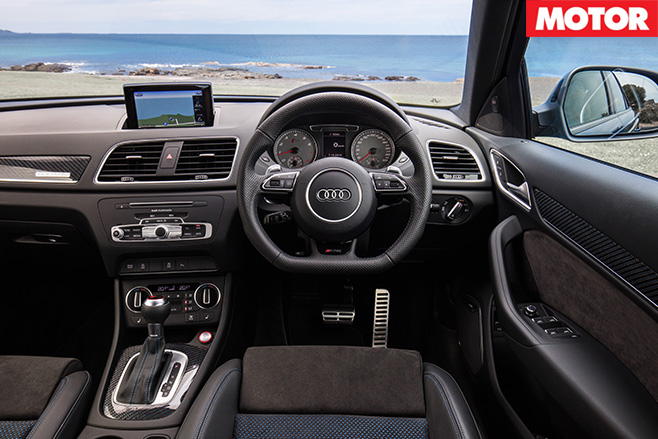
Unfortunately, a rear load-through centre armrest is locked into the most expensive options package, priced at $4490.
Compared to the car it replaces the RS Q3 performance delivers better value and thrills, and serves its niche remarkably well.
From a larger standpoint, though, we still don’t fully believe in the performance-offroad mini-SUV thing, and wait for a little more convincing.
3.5 stars out of 5
Specs Engine: 2480cc inline-5, DOHC, 20v, turbo Power: 270kW @ 6800rpm Torque: 465Nm @ 1625rpm Weight: 1655kg 0-100km/h: 4.4sec Gearbox: 7-speed dual-clutch Price: $84,216
Trends in car colours never stay the same. The risk is that one day you might be stuck with a car whose hues aren’t quite in vogue. The good news is your chocolate brown or mushroom duco might soon be back in fashion, with car manufacturers already considering colour palettes for their 2018-19 models.
One thing that that won’t change is the popularity of conservative tones, particularly in the Asia Pacific markets where white remains most popular (44 percent), followed by black (16 percent), natural and silver (tied at 10 percent each), and grey (seven percent).
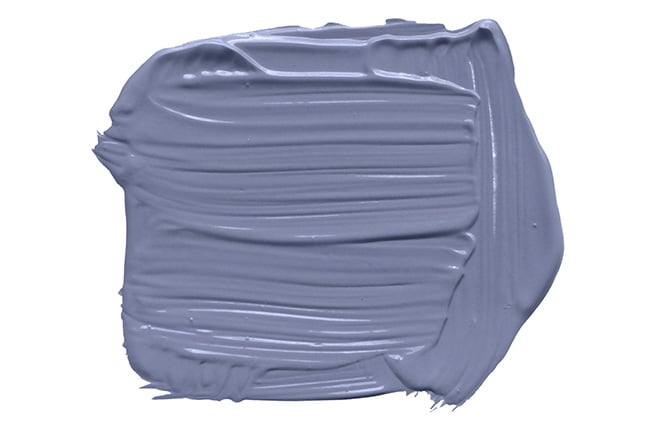
While various shades of these sedate colours fall in and out of favour, they’re not subject to the fickle trends facing brighter colours.
So how do colours become trendy?
In some ways this is dictated by colour forecasting experts at coatings manufacturers such as BASF and Pittsburgh Plate Glass (PPG) that come up with colour palettes for manufacturers to pick from –which is why you’ll often see different car companies coming out with similar new colours.
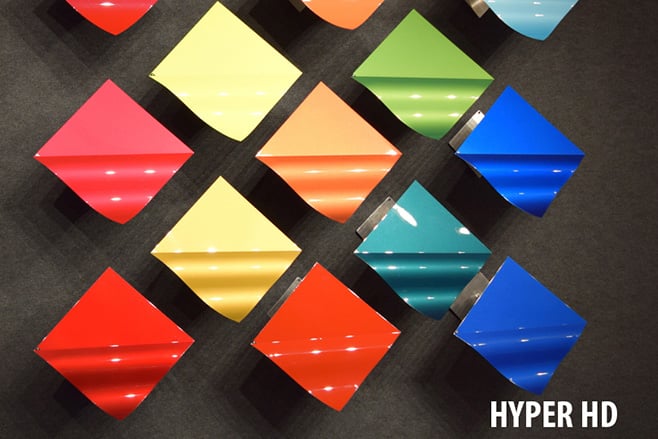
The popularity of colours reflects real-world moods that colour experts try and tap. As an example, according to PPG greys were popular a few years ago because of the gloom associated with the global financial crisis, even among those able to afford a new car.
According to BASF, this year’s trends were “influenced by the interconnection of digitalisation and social developments”, with blues being very popular. A quick look at all the social media app logos on your phone would concur with this.
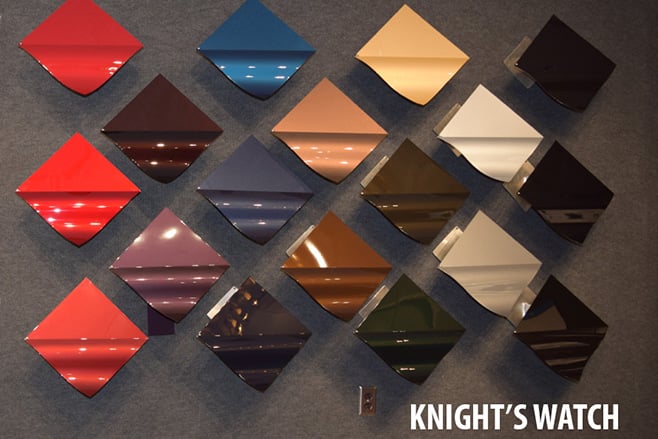
2018-19 COLOUR FORECASTS
Meanwhile PPG has already designed four colour palettes for 2018-19 reflecting different global trends and moods. These include (with a lot of awful designer speak edited out):
- Hyper HD: An extroverted “colourful and impactful theme that welcomes self-expression, performance and modern technology” based around primary colours. Small-car buyers, take note.
- I’m Perfect: A more organic palette “influenced by nature, with somewhat subdued hues such as foliage greens as well as copper and brass metal tones” that looks more like a swatch for a bridesmaid’s dress than a car.
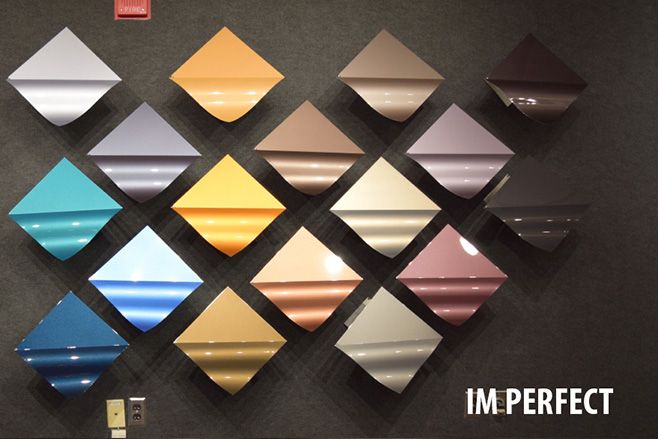
- Knight’s Watch: A no-doubt Game of Thrones-inspired theme “providing sturdy reassurance for safety and security through traditional colours representing refuge and confidence” including dark, dramatic jewel tones and blackened metal shades. It looks like a Holden colour chart from 1976.
- Lucid Dreams: This colour “reflects calmness, sensitivity and privacy, portraying a refuge from technology overload with fluid, graceful design” and is perfect for anyone who listens to Smooth FM while they drive.

PPG also nominates a paint colour of the year. The 2016 award has gone to Violet Verbena, a “grayed-off, moody purple with a chameleon-like presence”.
Can’t get enough? Now find out how car colour can affect your resale value.
LONGTIME rivals Mark Skaife and Russell Ingall will co-drive together for the first time, teaming up for the Bathurst 12 Hour in February next year.
The duo will share a BMW M6 GT3 with Tony Longhurst for the event. Between them, the trio share 10 Bathurst 1000 victories.
The car will be prepared by pseudo BMW works crew, Team SRM, which is run by Carrera Cup driver Steve Richards.
“This driver line-up is a sign of exactly how serious BMW is taking its return to Mount Panorama,” said BMW Australia CEO Marc Werner.
“We are incredibly excited to be teaming up with some genuine Bathurst legends for the Bathurst 12 Hour, a race that is fast becoming not only one of the most prestigious in the country, but a must-win for teams and manufacturers around the world.
“Between the two BMW Team SRM entries there is a remarkable amount of Bathurst experience and history. Names like Richards and Longhurst have a great affiliation with BMW, not just at Bathurst, but in Australian motor racing in general.

Skaife alone has won the Great Race six times, and this will be his debut event in a GT3 car.
Longhurst is the only driver from the trio to have a Bathurst 12 Hour victory to his name, standing on the top step of the podium following the 2009 race.
Skaife and Ingall were long-time rivals following a fiery confrontation at Eastern Creek (now Sydney Motorsport Park) in 2003.
The event became known as the ‘Shriek at the Creek’, and the pair refused to speak to each other for almost a decade. Ingall and Skaife now work together as part of the Fox Motorsport broadcast team for the Supercars Australia championship.
A comprehensive testing schedule is planned for the Bathurst Legends ahead of the 12 Hour, with backing for the entry provided by Vodafone and Castrol.
