
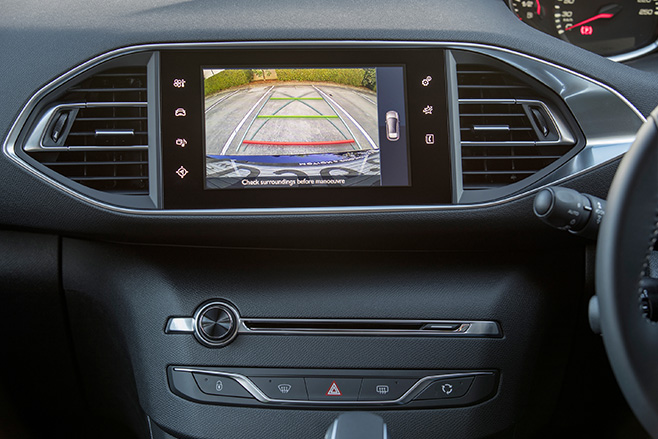
One of the bugbears of the Peugeot 308 range is the lack of a standard reversing camera across the range.
The company has addressed this in part, by adding one to the second-tier Active variant, while leaving the feature out of the next level Allure and the entry-level Access.
The addition of now common equipment such as a reversing camera to one variant, while ignoring one higher up the pecking order is confusing, though Peugeot has signalled that more updates to its 308 range are in the works.
The 308 Active now also comes with satellite navigation and Peugeot’s complimentary MapCare program as standard.
Peugeot says this boosts the Active’s value by $2000, though the price will go up by just over $1100 to $27,990 before on-roads.
Peugeot’s MapCare program includes a complimentary yearly update to mapping data as part of scheduled warranty servicing and is valued at $450 over the three years.
Peugeot Australia general manager Kai Bruesewitz said the addition of reverse camera and satnav to the 308 Active is in response to customer demands.
“Demand for safety and on-board services such as satellite navigation has grown significantly over the past year and this is the first step in us responding to these demands,” said Bruesewitz.
“Our Active hatches attract younger buyers, so it was logical for us to enhance the vehicle with key safety and navigational aids – it also signals greater changes in store for the 308 range in the near future.”
The updated 308 Active is now available at car dealerships.
Wheels’ recent Tyre Test put nine standard fitment style SUV tyres through the wringer to find the best brand and pattern on sale.
Each tyre from a range of brands including Goodyear, Bridgestone, Dunlop, Pirelli, Kumho and Continental was subjected to a rigorous test regime at the Ian Luff Driver Training Academy in Sydney’s Eastern Creek, designed to push every element of tyre performance to the limit.
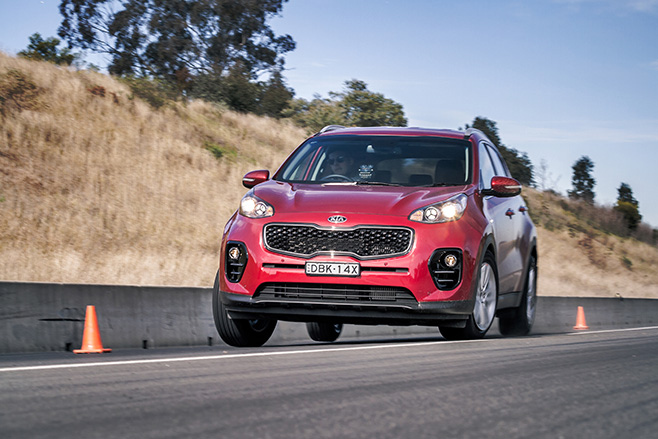
Racing driver and automotive engineer Renato Loberto subjected each brand to a dry slalom test designed to measure cornering grip, emergency braking tests on both dry and wet surfaces and, finally, a timed circuit hot-lap devised to put each tyre’s cornering, accelerating and braking ability under pressure.
Keeping the wheels turning were Jax Tyres – with equipment and expertise from Eagle SMF – who converted a Sydney Dragway scrutineering shed into an efficient tyre fitting operation that looked just like one of their 80-odd East Coast (and Tassie) retail stores.
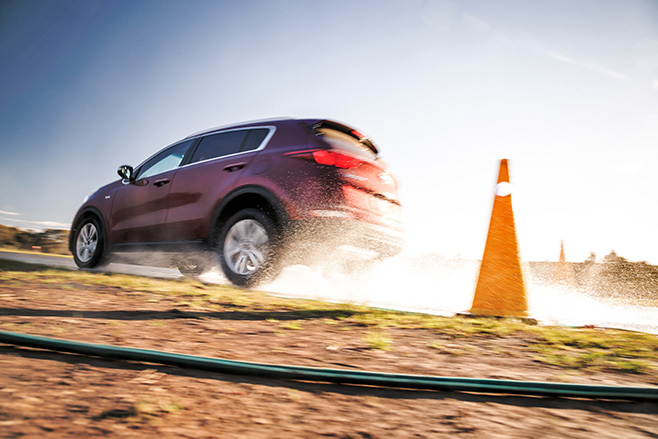
The Kia Sportage test mule was in and out with a fresh set of tyres in much less than a minute, and it did a total of 50 circuit laps and slalom runs and more than 100 brake tests without complaint. At the end of the testing, it was as good as new.
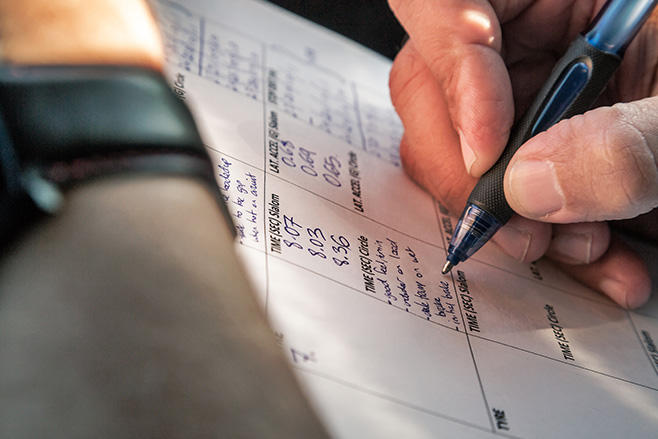
Wheels used a Racelogic Performance Box to gather data on lateral and longitudinal acceleration – cornering and braking force – and recorded slalom and lap times, tyre and circuit temperatures, and tyre noise. All the vital information needed, in other words, to arrive at a winner.
And, in a dominant display, and a near clean-sweep of the results, that tyre was … the Continental Premium Contact 5. A well-deserved victor, it offered about 10 percent more handling and braking ability than the average car tyre, and could stop as much as a metre shorter in the wet.
Each brand was tested in 225/60R17, a standard size on SUVs such as the Kia Sportage, Hyundai Tucson, Jeep Cherokee, Renault Koleos and Subaru Forester, though the winning Continental is also available in a range of sizes to suit the majority of small and medium SUVs.
You can read the full 2016 Wheels Tyre Test at WheelsMag.com.au or in the October issue of Wheels.
The next-generation Hyundai i30 has been spotted testing in Australia several months before it’s officially launched here.
The car sports a New South Wales registration plate, which a quick check confirms, as the Hyundai logo on the wheels suggests, is Hyundai’s new European-designed i30.
Hyundai has already showed off the 2017 i30 to world so there’s no secret about what sits underneath this car’s heavy vinyl cladding, but with its Australian launch not due until mid-2017 you can understand the shyness.
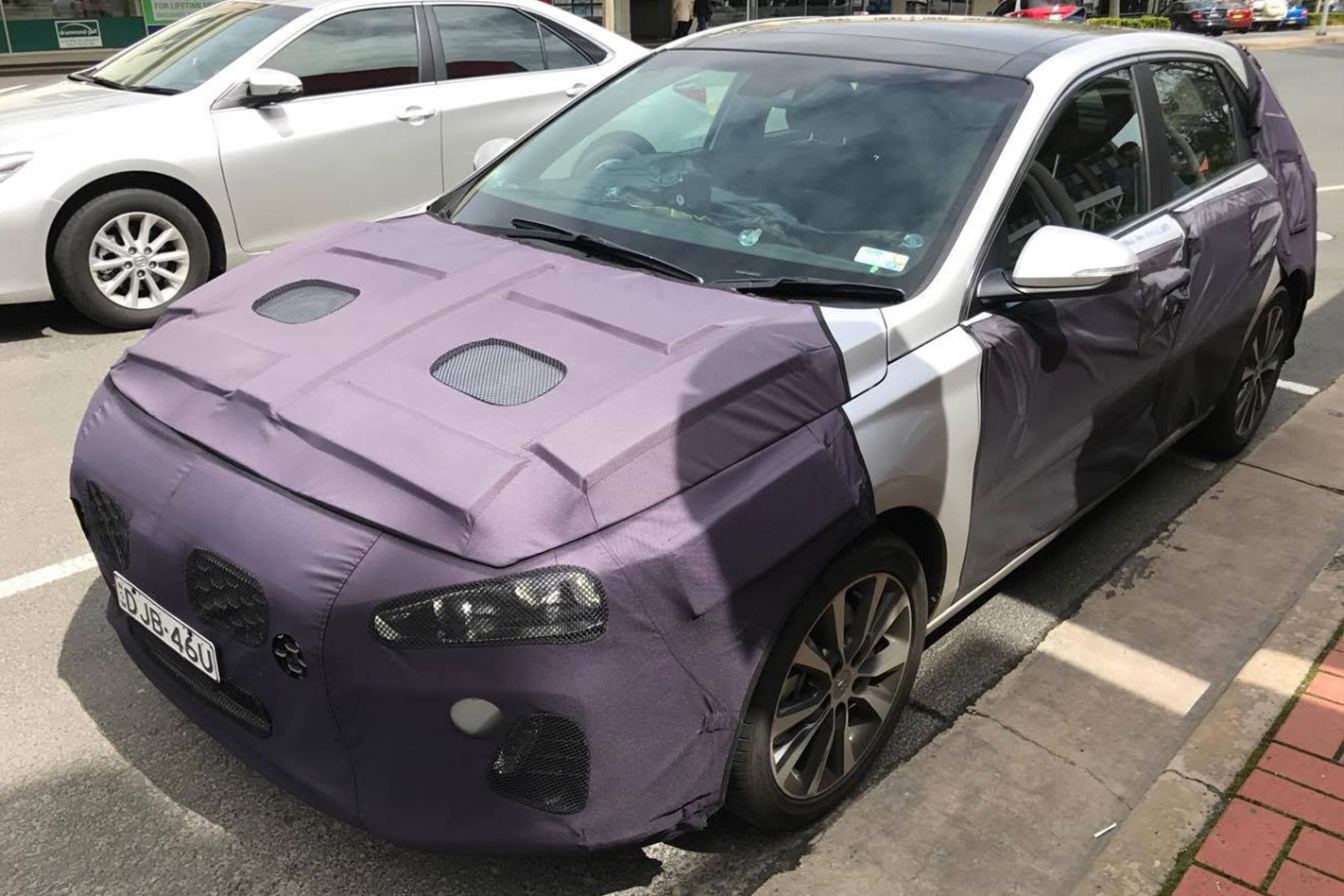
Hyundai wasn’t exactly secretive when WhichCar asked what it is doing here, with a spokesman saying it’s here to calibrate the satellite navigation system.
This explanation suggests Hyundai is fine tuning its next generation multimedia system, which incorporates sat nav, Apple CarPlay and Android Auto – among other up-to-date infotainment features.
The navigation system also comes with LIVE services, which displays 3D maps and updated information in real time including weather, traffic, fixed speed camera locations and points of interest.
You’d assume that could be tested using any vehicle so we reckon it’s also here for what Hyundai calls “an extensive localisation and tuning program” to make their cars more suitable to Australian conditions.
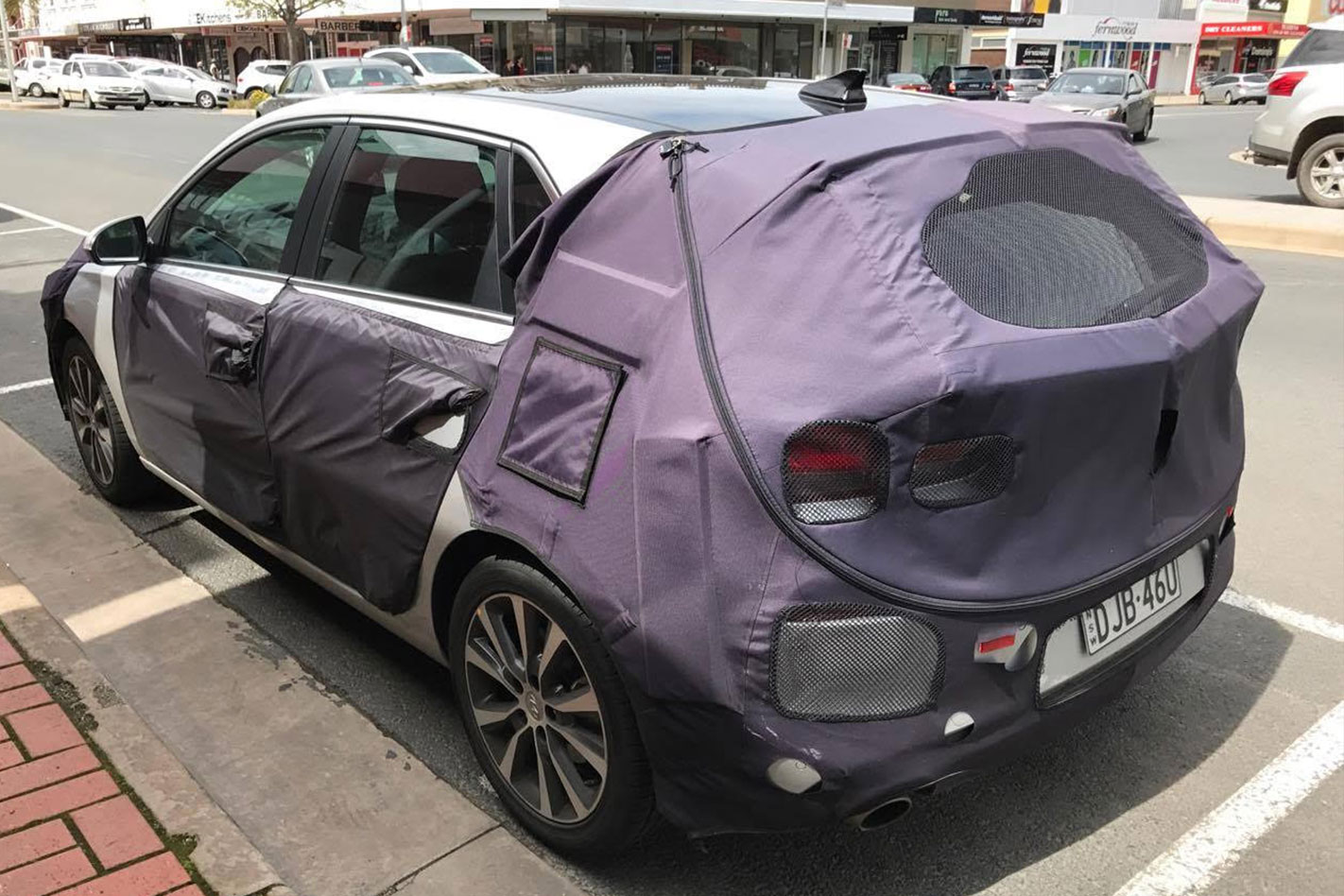
Hyundai has done this with other models including the [Hyundai] Tucson and Genesis, which spent plenty of time and travelled thousands of kilometres in Australia before their launch to tweak everything from outback road handling to towing capacity.
The new i30 will arrive next year with a two-engine lineup, with base models powered by the same 124kW/201Nm 2.0 litre naturally-aspirated inline four used by the current-gen i30 SR, while the range-topping i30 SR Turbo will receive the same 150kW/265Nm 1.6 litre turbo that propels the Elantra SR Turbo.
Full specifications and pricing will be revealed closer to the i30’s local launch in 2017.
By the time you read this, Ford will have closed the shutters and flipped off the lights at its Broadmeadows assembly plant for the last time. It will be the end of the road for Ford’s 91-year run of Australian car production, and the last time a Ford Falcon will be bolted together on our soil.
But while production is ending, there are still thousands of Falcons circulating in the used car market. With no new Ford Falcons to replace them, Ford Australia’s long-lived sedan, ute and wagon is now on the path to extinction.
But before that happens, what should the discerning Ford collector aim to buy? Here’s a list of some of the more accessible collectible Falcons:
1: 1964-1966 XP FALCON HARDTOP
The XP Falcon cemented the Falcon’s reputation for reliability and durability when Ford took five cars off its production line and subjected them to a continuous nine-day, 70,000km torture test.
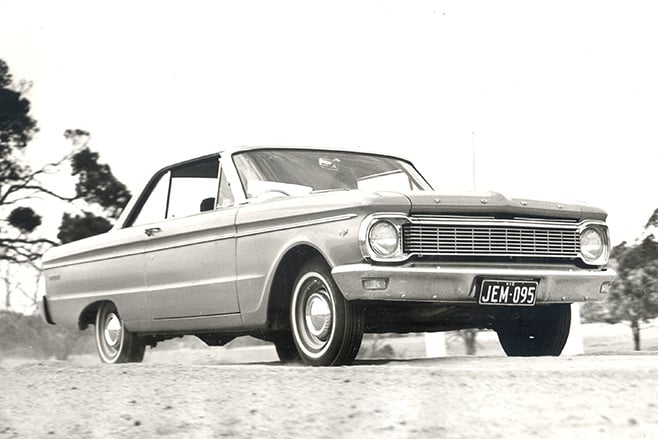
Conducted at Ford’s You Yangs proving ground, the test didn’t take place on a high-speed oval either; roads representative of typical Aussie backroads provided a greater challenge for suspensions and chassis. All five cars passed the test, which bodes well for the car’s long-term prospects as a collector’s car.
But why do we list the hardtop? Simply because its elegant B-pillarless design makes it a joy to behold.
2: 1966-1968 XR FALCON GT
Ford’s second-generation Falcon may be old, but its classic 60s “Coke bottle” styling gives it significant desirability for nostalgia freaks.
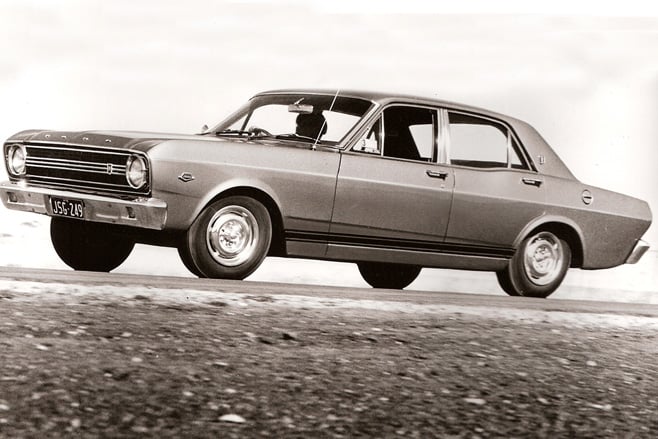
And the GT model is particularly attractive. The first V8-powered Aussie Falcon, the XR GT helped usher in the domestic muscle car era and paved the way for successive generations of bent-eight Ford sedans – right up to the 2016 FGX XR8 Sprint.
3: 1971-1979 XA to XC Falcon hardtop
The XA-XC coupes have some showbiz glitz, thanks to an XB coupe being given the starring role in both Mad Max and Mad Max 2. But besides being Max Rockatansky’s interceptor of choice, Ford’s disco-era Falcon coupes also hold significant aesthetic appeal thanks to their butch and blocky 1970s fastback styling.
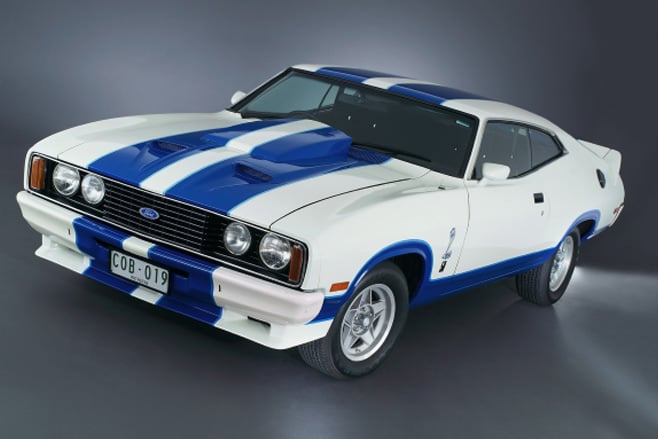
And that design, by the way, was penned right here in Australia – the first time Ford Australia had full control over the way the Falcon looked. The XA was also the first to offer locally-built V8 engines – the 302 and 351.
4: 1991-1993 EB FALCON XR8
After nine years without a V8 option in its range, the Falcon finally returned to eight-cylinder power in December 1992 with the EB Falcon XR8.
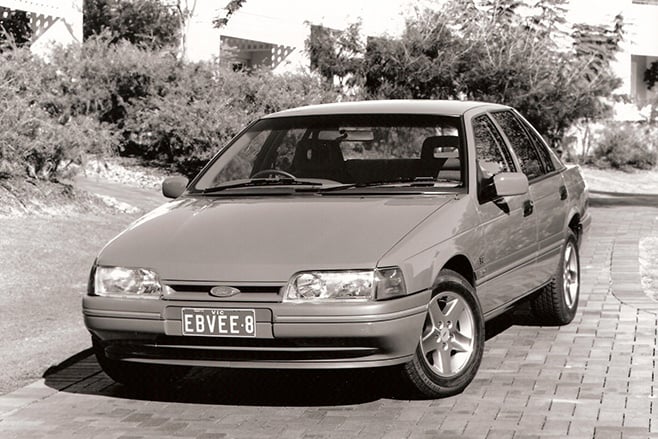
A development of the EA that launched in 1987, the EB XR8 was also the first model to sport the XR8 badge on its bootlid, a badge that has lasted right up until the Falcon’s demise this year. It may look unassuming, but to Ford fanatics the EB XR8 is a landmark car.
5: 2002 BA FALCON XR6 TURBO
It took a while for Ford Australia to catch on to the joys of turbocharging, but when the company finally bolted a turbo onto the side of its 4.0-litre inline six it resulted in a torque-laden monster of a sports sedan.
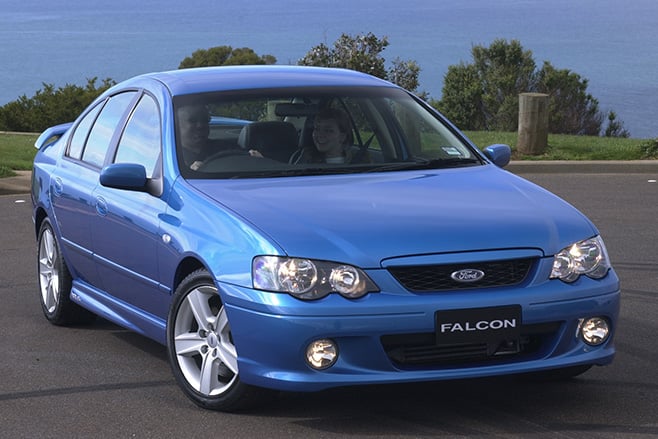
Being a relatively young model also means finding one should be easy – and affordable. If you’re looking for a modern classic from the Falcon stable, the BA XR6 Turbo is your car.
HERE it is. The last Australian made Ford Falcon to ever be sold and registered.
At approximately 9:30am this morning, the last two saleable vehicles rolled off the Ford production line at Broadmeadows; a Ford Territory and a Ford Falcon sedan.
This Kinetic Blue Ford FG X Falcon XR6 was the last to complete its journey through the assembly plant, bookending 91 years of Ford car building in Australia.
Under the bonnet is an Aussie developed and manufactured 4.0-litre straight-six engine, otherwise known as a Barra, producing 195kW and 391Nm.
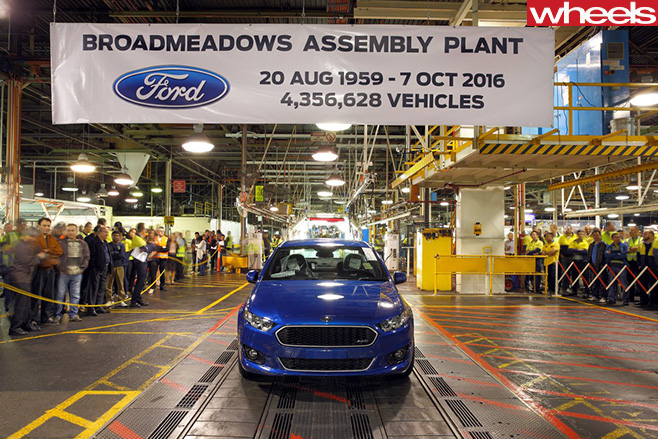
The very first Aussie Falcon left the Ford factory in June 1960. The last Falcon is number 3,578,689, a number that includes sedans, wagons, utes and panel vans built over more than 56 years of production, making the Falcon Australia’s longest running nameplate.
In its heyday, Falcon sold in numbers large enough to top Australian sales sheets. The biggest single year of Falcon sales came in 1995 where the changeover from EF to EL garnered 89,679 sales for the Blue Oval, including 81,366 sedans, 6922 utes and 1391 vans.
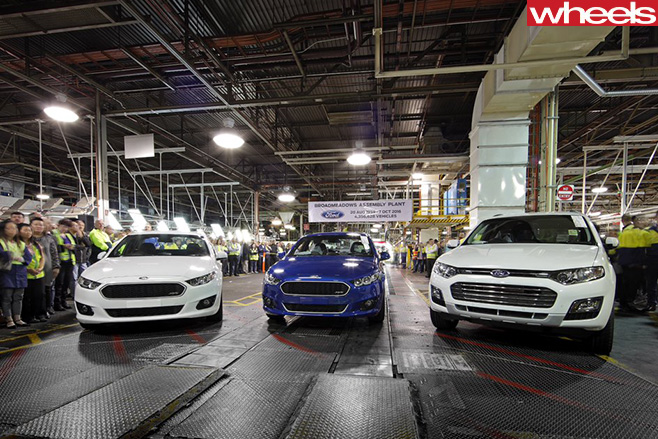
This final Falcon – along with the last standard specification Ford Territory, the last Ford Falcon ute and Ford Falcon XR6 Sprint #500/500 – will be auctioned off in a weeks’ time. Funds raised will be put towards Science, Technology, Engineering and Mathematics (STEM) school projects.
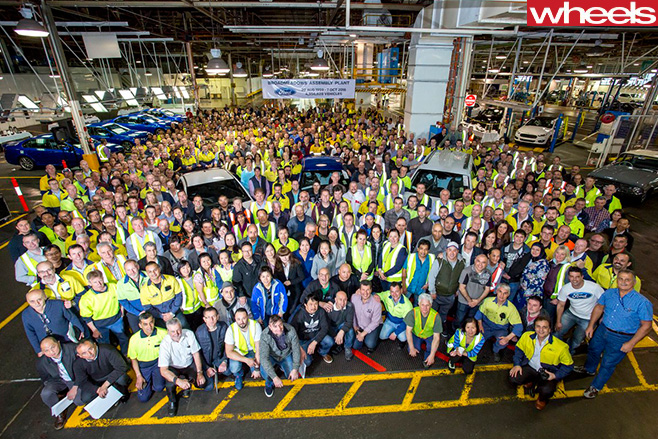
Ford started its journey as a local automaker in 1925, and on this significant day we honour the men and women who worked tirelessly to create the legacy we will remember. This is truly the end of an era.
Today marks a dark day day in Australian automotive history, with the demise of three locally produced cars.
The most high profile is the Ford Falcon, which has rolled off the Broadmeadows production line for the very last time this morning, ending a 56-year-involvement with Australia’s automotive industry.
Its close SUV relative, the Territory came to end a short time earlier at the same factory.
With all eyes on the wake at Broadmeadows it was easy to forget that over in Elizabeth near Adelaide, Holden was ending production of the locally-produced Cruze, resulting in the loss of about 270 jobs.
The Cruze’s demise is the first big step of Holden’s exit from vehicle production in Australia, which has already been two years in the making. A year from now it will be the Commodore’s turn to be mourned, when it too rolls off the Elizabeth plant for the last time.
This will coincide with the Toyota’s local-production swansong as it sees off its final Toyota Camry and Aurion at Altona.
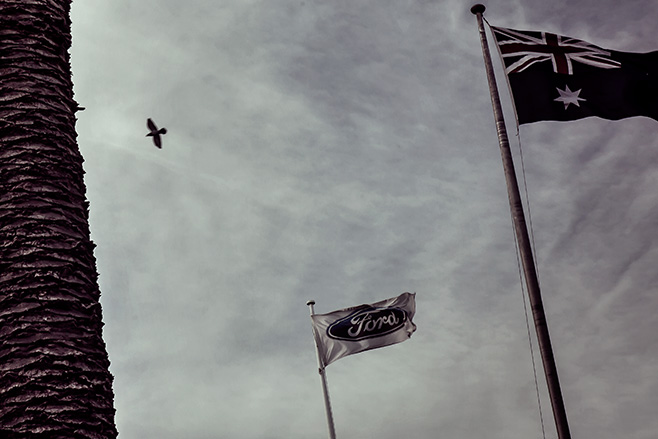
Australia has been one of the dozen-countries able to build a car in its entirety and has done so for more than 90-years. Four decades ago the Australian automotive industry was booming with more than seven manufacturers producing cars at plants in four states. Even as recent as 10 years ago, we had four major manufacturers, including Mitsubishi which closed its Elizabeth factory in 2008.
In the next 12 months, Australia’s near-century-long auto-manufacturing history will be consigned to the history books, remembered by future generations looking through glass museum enclosures on school excursions.
SO, WHAT REALLY HAPPENED?
Toyota, Holden and Ford have blamed multiple factors in their demise, but perhaps the largest was the increasing appeal of cheaper overseas manufacturing and importation not helped by recent high-rates of the Australian dollar. The last straw was the Australian Government threatening to withdraw subsidies to the industry. While all three manufacturers saw strong years during the golden-years of the 1980s and ’90s, records show substantial losses in the period since.
WHAT HAPPENS NEXT?
It’s estimated that by the time Toyota closes its doors at the end of next year, more than 6000 jobs would have been lost from Toyota’s Altona plant, Holden’s Elizabeth and Port Melbourne plants, and Ford’s Broadmeadows and Geelong factories.
TIMELINE: DEATH THROES OF LOCAL AUTO MANUFACTURING
July 29, 2016
Ford suddenly announces that the final Falcon Ute has rolled off the Broadmeadows production line.
October 7, 2016
• The last Ford Territory comes off the line just before the last Falcon, which received the quality assurance stamp at 9.30am • The final Holden’s Cruze, rolls off the Elizabeth Plant’s production line at 8.30am, marking the beginning of the end for Holden in Australia. Holden will turn to the new Astra (imported from Poland) to make up the small car sales.
Late 2017
• Holden Commodore will endure the same fate as its long-time rival, however unlike the Falcon its name will live on via a rebadged version of the European-built Insignia • The final Australian-made Toyota Camry will roll off the Altona production line, though there will be a much more seamless transition to its virtually identical replacement due to be built in Thailand • The six-cylinder Toyota Aurion will not be replaced by an import once local production ceases.
While Ford Australia has locked the gates at its Broadmeadows assembly plant for the last time today, Holden has simultaneously pulled the Holden Cruze small sedan off its production line in Elizabeth, South Australia.
The Cruze will be the last four-cylinder small car built in Australia, and its departure will leave the Holden Commodore, Toyota Aurion and Toyota Camry as the only remaining Aussie-built cars.
The clock is ticking for those models too: both Holden and Toyota will cease their manufacturing operations entirely by the end of 2017.
And with Commodores now being built-to-order, Holden’s Elizabeth plant will be a quieter place until it shuts up shop in late 2017.
With the departure of the Cruze, some 270 workers will also be leaving Elizabeth forever over the next two months. Roughly 900 workers will remain to crew the Holden Commodore production line.
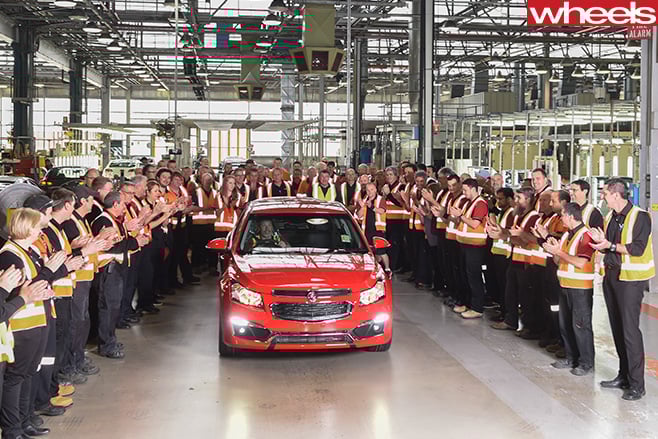
“Holden’s business is changing and we are building a bright future,” Holden Managing Director Mark Bernhard said today.
“But it is equally important to recognise and honour our people and our heritage.
“We’re incredibly proud of our manufacturing history and our legacy; I want to thank every Holden employee, and all those people in the supply chain, for their personal contribution to our industry and our company.
“Those who were involved in the Cruze project have a strong, and deserved, sense of pride at what was achieved in terms of project development, management, engineering, design and, of course, production.”
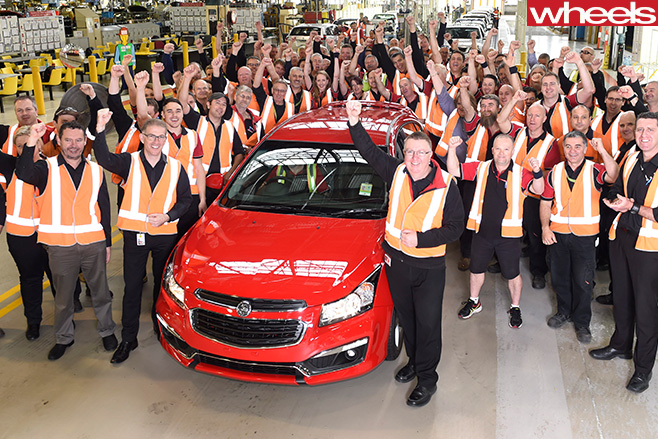
All up, Holden’s Elizabeth plant has built a total of 126,255 Cruze sedans and hatches – the last sedan and hatch of which have been donated to the Leukaemia Foundation to be raffled off in a fundraiser.
Current Cruze owners will continue to be supported with Holden confirming that it will provide sufficient supply of spare parts for at least the next ten years, with warranties also being honoured for the standard three years and 100,000km.
Cruze stocks will be run out over the next two months, as Holden prepares its showrooms for the arrival of its all-new small car – and the Cruze’s replacement – the Astra, which is set to go on sale from December 1 2016.
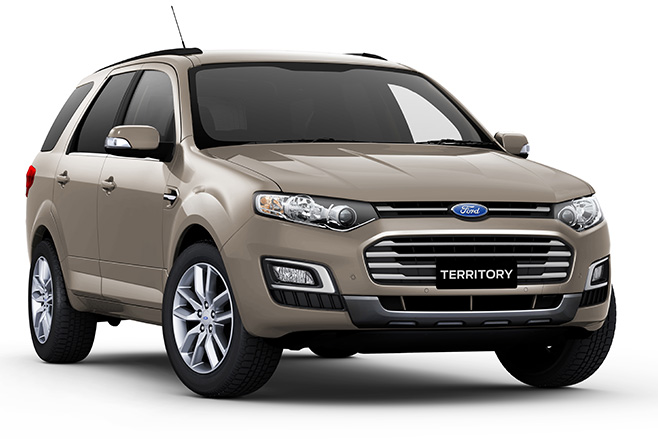
The Ford Territory doesn’t enjoy the Ford Falcon’s iconic status – a status that was built over a half-century of continuous production. However, its significance to Ford Australia should not be overlooked.
In many ways the Falcon’s demise can be blamed on its junior stablemate, which was an instant success for Ford Australia when launched in in 2004, becoming the first SUV to win the coveted Wheels Car of the Year award.
The big Aussie sports wagon edged out the Volkswagen Golf and Volvo S40/V50 sedan/estate duo to win COTY thanks to “it’s brilliantly practical interior, benchmark dynamics for SUV class, and terrific value”.
“Ford Australia’s answer to shifting automotive tastes delivers a winner”, we declared.
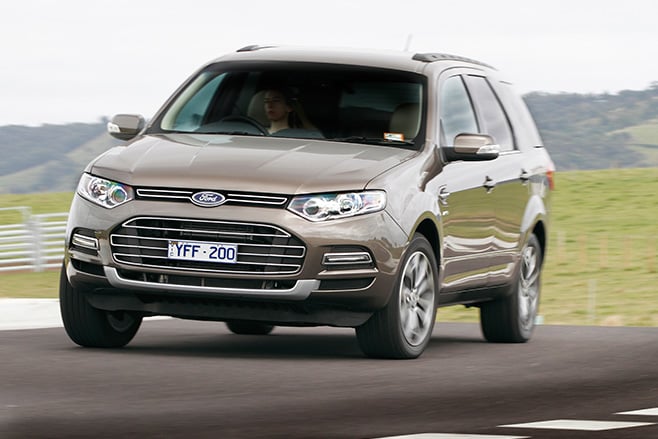
The 2004 SX Territory came with the option of two- or four-wheel drive as an option and was designed to be as user-friendly, versatile and practical as a Swiss Army Knife. The seven-seat option impressed as well, with touches like cup holders (which weren’t too common back then), a removable rubbish bin and a handbag holder for the female drivers who took to it in droves.
It was also lauded for its technology, including electronic stability control – an Australian first – and side airbags.
Wheels Associate Editor Ged Bulmer was one of the 2004 COTY judges and reckons the Ford Territory is the most significant Australian car of the modern era.
“There’s a temptation of course to immediately think of the current range of VF-Commodore HSVs, as we all know the current Commodore is a great car and the HSV models that spring from that platform are world class performance cars on every level.
“But the Aussie car that stands out for me as being one of the best we’ve ever developed is the Ford Territory,” says Bulmer.
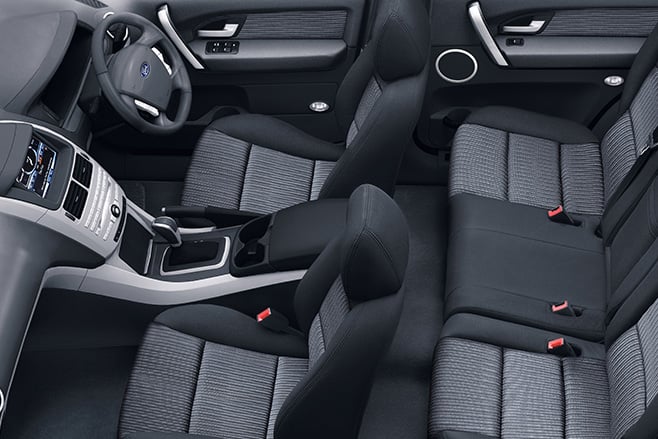
“It was the right product at the right time and presciently predicted the market’s move from the hulking Land Cruisers, Patrols and other ‘proper’ 4x4s to the versatile crossover SUVs that now dominate our roads.
“Not only was the Territory perfectly timed, a fact attested to by its sales success for more than a decade, but it was extremely well designed, with space and versatility in terms of seating configurations, storage and so forth that made it a stand out car.
One negative however was the high fuel consumption of the 4.0-litre straight-six petrol engine, which highlighted the major error in not providing a diesel option – a strategy born out of the mindset that what was good for Falcon was good for the Ford Territory.
Nevertheless it sold well, with more than 13,500 hitting the roads by the end of 2004 and another 23,454 sold in 2005. During this time Falcon sedan and wagon sales started dropping from 73,220 in 2003 to 53,080 in 2005. By 2011, with the Falcon wagon no longer in production, it was outselling Falcon for monthly sales and in 2012 Ford sold 14,646 Territories and 14,036 Falcons.
The SX was upgraded in October 2005 and redesignated the SY. This included more power and new automatic transmission for AWD models and it became the first Australian-built car to be fitted with a reverse camera (an option on the mid-spec TS and standard in the luxury Ghia).
Ford also introduced a turbo version in standard and Ghia trim in 2006 and even an FPV turbo version two years later with Ford still believing people wanted Falcon performance in their high-riding SUV.
It wouldn’t be until the highly acclaimed SZ upgrade in 2011 that the Territory would come with a long-awaited diesel option. The V6 oil burner was the same turbo V6 found under the hood of the Jaguar XF.
The SZ redesign also introduced a fresh new look as well as electric power-assist steering system used on the Ford Mustang.
The SZ was tweaked in 2014 gaining a new fascia and aerodynamics that improved efficiency by 5 percent, new interior trims and extra infotainment. It would be this Ford Territory SZ II model that rolled off the production line for the final time on October 7, 2016.
Many say one of the reasons Ford stopped producing cars in Australia is because it didn’t make what the people wanted. But with Territory the Blue Oval gave it a red hot go and even now, with so many excellent competitors on the market, its interior design is still considered among the best ever designed for a family car.
Says Bulmer, “The Territory delivered brilliantly on what Aussie families of the era were looking for, and did it at a price point that meant many thousands of Australians were able to enjoy this great, locally built car.”
A subtle upgrade to the car that received Australia’s top motoring award in 2014 turns it into much more of a viable fossil fuel alternative.
WHAT IS IT? BMW has packed more punch into the batteries of the 2014 Wheels Car of the Year winner, increasing its range by more than 50 percent.
WHY WE’RE TESTING IT BMW’s boffins have managed to squeeze more electrolytes into the 96 cells used to power the i3, increasing electrical capacity from 60Ah to 94Ah – a bit like increasing a conventional car’s tank by half as much again – and eked more savings out of the electronics. It means real-world driving range jumps to about 200km for the battery-only i3, and to 330km for the i3 Range Extender that uses a two-cylinder petrol engine as a generator.
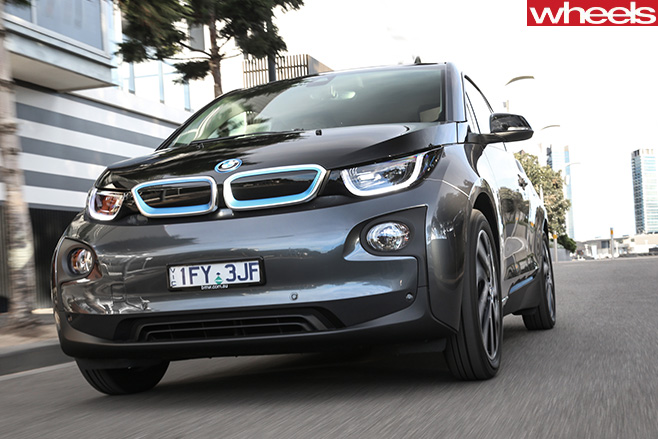
THE WHEELS VERDICT For just $2000 more you can have an all-electric i3 with reduced risk of running out of spark before you reach the home gate
PLUS: Real head-turner; oozes style and technology; big jump in driving range MINUS: Lack of recharging infrastructure; some harshness to ride and braking
THE WHEELS REVIEW WANT a pure electric car but can’t seem to get over that abject fear that your battery-powered ride may one day strand you short of your destination as the electrons dry up? BMW reckons it has the answer.
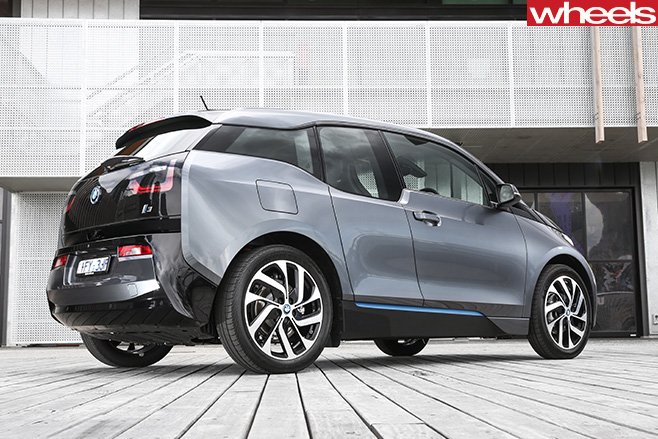
BMW has also thrown in a formerly optional $790 DC-compatible charger that will let you bump the battery up to 80 percent for free at the single rapid recharging point in Sydney, or one of the two Melbourne-based ones, in less than 40 minutes. The idea is to help future-proof the car – more fast recharging stations will come one day. Plugging it into a normal wall socket will take up to 14 hours for a full refill at a cost of about $5 if you’re using green juice.
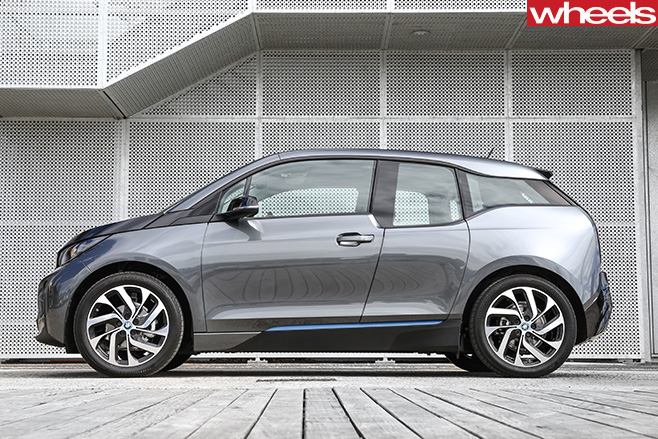
Spend another $6000 for the 120kg petrol-driven 660cc two-cylinder range extender generator that hangs off the back of the i3, and its reach jumps to 330km, up from 245km. The 9.0-litre fuel tank remains the same capacity.
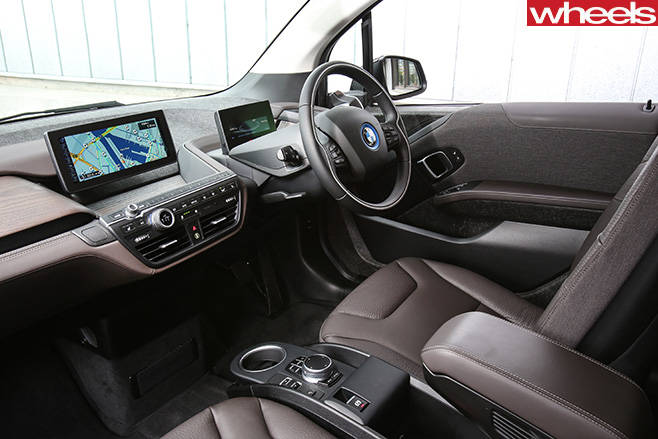
Yes, it’s a little different: selecting drive can be a bit confusing the first time, the regenerative braking borders on brutal, speed humps become small planets at anything above walking speed, the raw fibre-look grey dash is hard to the touch, and the seats are all hand-adjusted and not powered.
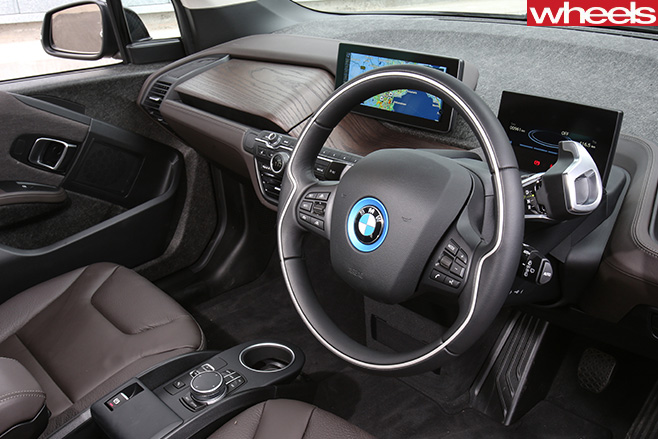
We only spent a couple of hours driving around the crowded northern suburbs of Melbourne in the new 94Ah i3 – via the old 1956 Olympic Games village. Over 45-odd kilometres of driving on everything from freeways to back roads, our range fell from 190km to around 140km, starting in a pure EV and swapping half-way through into a REx.
BMW’s i3 has improved, but in most part the improvements are, just like the fuel it uses, invisible to the buyer.
SPECS Model: BMW i3 94Ah Engine: Electric motor Max power: 125kW @ 4800rpm Max torque: 250Nm @ 0rpm Transmission: Single-speed auto Kerb weight: 1245kg Fuel economy: N/a (200km range) 0-100km/h: 5.2sec (claimed) Price: $65,900 On sale: Now
Sales of Ford Falcons and Territorys have steadily decreased ever since Ford announced that it was pulling the pin on local production back in 2013. Today is the day assembly of the Falcon and Territory ends, so what does that mean for car buyers?
Even if dealers offer great incentives to sell the remaining stock, buyers will naturally be wary about resale value, supply of spare parts and on-going support for their Falcon or Territory.
The good news is parts won’t be a problem. At least not in the short to mid-term. As with all cars produced here, the company has ensured there will be at least ten years’ worth of spares stockpiled including replacement panels, engine and interior components for all Falcon and Territory variants.
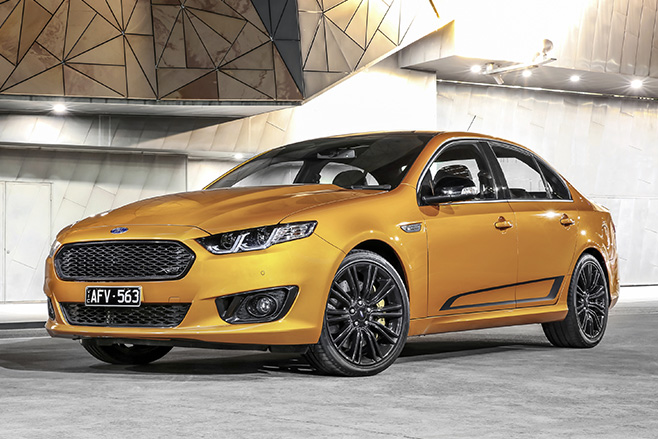
Resale value is another thing, however, and that largely depends on which variant you’re buying.
Base model Falcon and Ford Territory sales will hold firm for a few months but their resale value will suffer because Ford is discontinuing their nameplates, says Nick Adamidis from automotive data and value specialists Glass’s Information Services.
“That’s because you don’t get that flow-on effect of advertising for a new model that keeps the name in front of mind among buyers.”
Adamidis believes the already-discontinued diesel Territory variants will hold their value longer than the petrol-powered variants because of their better fuel economy. However, with the nameplate being consigned to history and no direct replacement their value will also slide faster than if it were superseded by a model update.
It’s better news for the performance Falcons, particularly the V8-engined models. Strong and consistent demand for powerful sedans and utes will see those models cling onto residual values – and perhaps even appreciate in the long term.
“Holden is disappearing next, at the moment 50 percent of Holden Commodore sales are V8s and there’s a six to nine month wait for the V8 Mustang so the V8 Falcons will hold continue to hold their value,” says Adamidis.
“The basic XR6 will hold reasonably well but it’s more the XR6 Sprint Turbos and the XR8s and any limited edition of the V8 Falcon that will do well.”
