
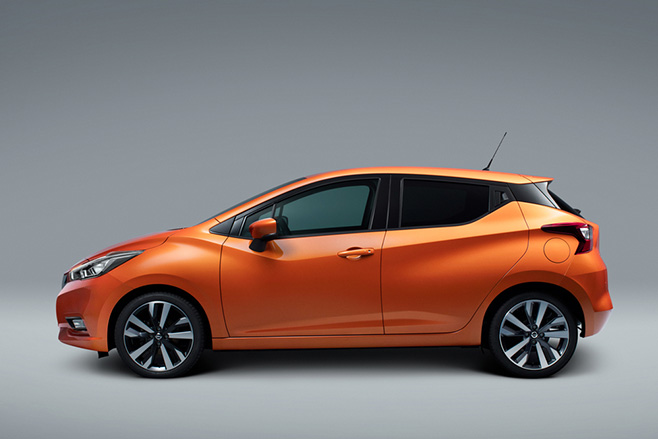
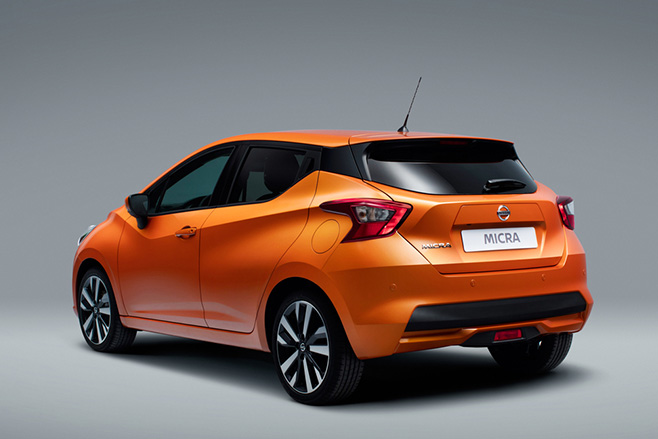
Nissan has its sights firmly set on Europe with its all-new Nissan Micra. The fifth generation of the small hatchback comes with technology from further up the Nissan model-line, with Intelligent Emergency Braking and Lane Departure Prevention.
The new Micra is lower, wider, and longer than its predecessors and has more room inside the cabin.
Power is provided through new, smaller turbo engines and drivetrains.
Three engine specifications will be available, the first the HR09DET, a 0.9-litre three-cylinder turbo petrol. This engine will produce 66kW and 140Nm.
A 1.5-litre diesel will also be available at launch, producing 66Kw and 220Nm
A 1.0-litre naturally aspirated petrol which makes 54Kw and 96Nm will become available later.
All engines will put power to the ground through a five-speed manual transmission.
Nissan is hoping the car is a big winner in Europe.
“When the first Micra appeared more than 30 years ago, it marked a revolution in the small hatchback segment and opened a new chapter for Nissan. The fifth generation Micra is just as revolutionary, and will raise expectations for what a hatchback can, and should, deliver to its customers,” said Nissan Motor Company CEO Carlos Ghosn.
“Following in the wheel tracks of distinctive cars like Nissan Qashqai and Juke, the latest Micra reinforces Nissan’s position as a leader in automotive design. It also shows our intent to compete right at the top of Europe’s B-segment market – the largest and most competitive B-segment market in the world.”
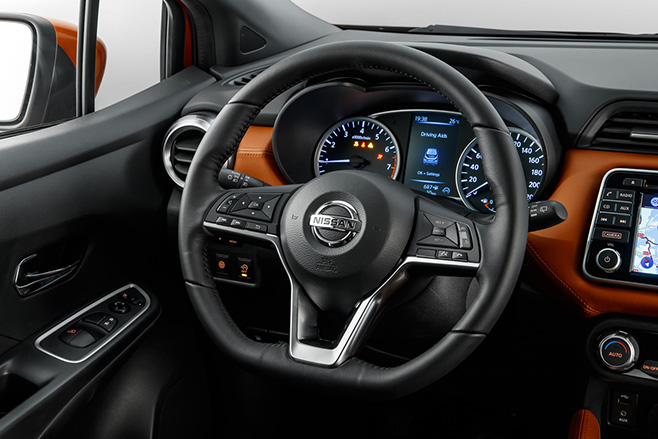
The Japanese manufacturer claims it paid special attention to driver comfort, resulting in a lower driving position, and greater seat adjustment.
The Micra’s Lane Departure Prevention system is a first for its segment. Other features include intelligent emergency braking with pedestrian recognition, intelligent around view monitor, traffic sign recognition, high beam assist and blind spot warning.
Inside the cabin, the Micra Gen5 comes with a 7-inch full colour central display, providing access to the audio system, satellite navigation, mobile phone, downloadable apps and Siri voice control via Apple CarPlay.
A new fleet of Mercedes-Benz electric models is sparking the German brand’s belated response to battery-car king Tesla.
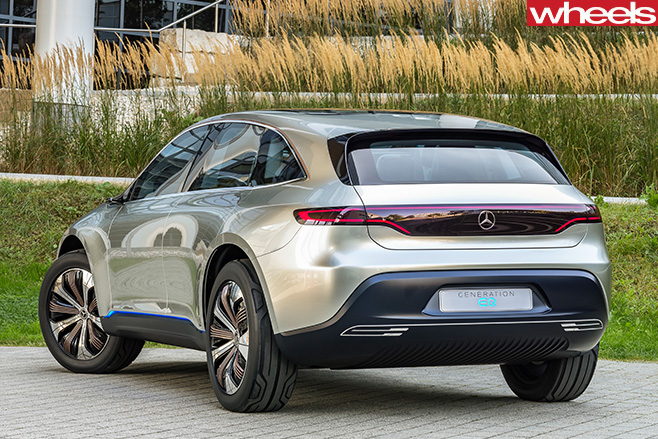
Benz unveiled a concept at the 2016 Paris motor show overnight called the Generation EQ. It heralds a new Daimler sub-brand and previews the design, construction and technologies that can be expected from a new fleet of vehicles emerging by 2020.
The “close to production” sporty SUV sits on a new architecture formed from a mix of steel, aluminium and carbon fibre. The scalable platform allows for varying wheelbases and track widths – giving Mercedes the ability to cover all segments ranging from the A-Class hatchback to the S-Class limo.
Scalable battery components will also enable Mercedes to create different outputs for the electric drive system, with the biggest of the lithium-ion battery setups delivering 300kW, 700Nm and a range of 500km.
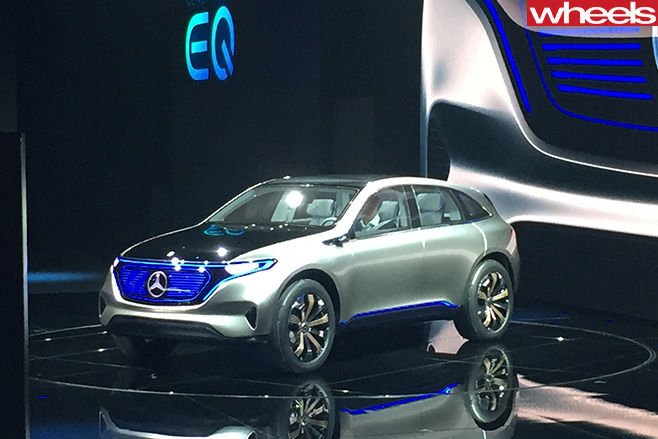
Mercedes says the Generation EQ concept is capable of hitting 100km/h from standstill in less than five seconds.
The company will also compete with Tesla’s Powerwall home battery system with its own energy storage unit for home owners equipped with solar power set-ups.
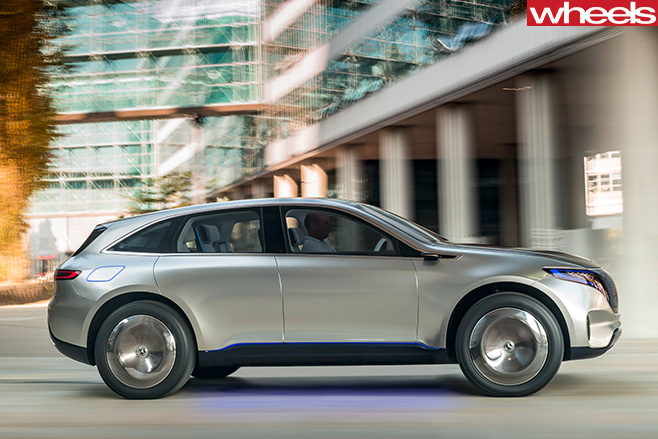
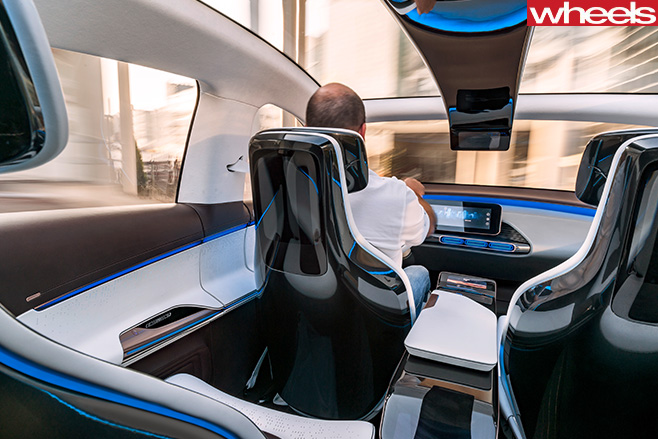
The Generation EQ’s cabin showcases how the brand’s electric fleet will feature a distinctive “electro look” design inside as well as outside.
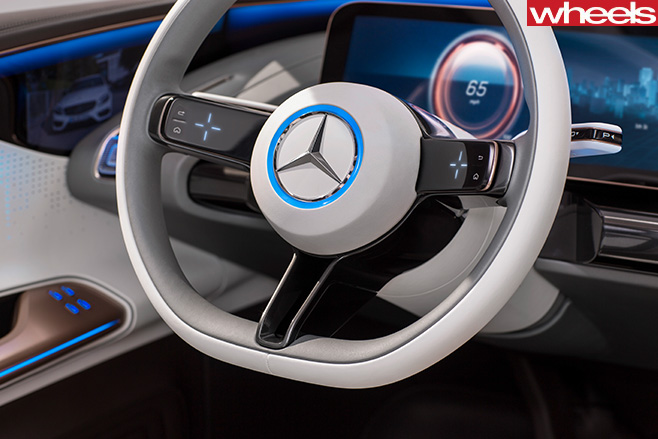
A driver-oriented dash features a ‘floating’ 24-inch widescreen TFT display. Benz says the customisable digital interface provides “a peek into the future of user interaction of Mercedes-Benz”.
There’s also a floating effect for the rose-gold-rimmed centre console. Touch-sensitive controls build upon those debuted in the new Mercedes-Benz E-Class.
Side vision is provided by images projected on the inside of the doors – from exterior cameras that replace conventional wing/door mirrors.
The EQ concept also conceals its windscreen wipers and door handles to complement its futuristic styling.
The EQ, which stands for Electric Intelligence, incorporates vehicle-to-vehicle and vehicle-to-infrastructure communication capability.
However, established car makers, particularly the German luxury brands, haven’t failed to notice how Tesla’s electric models have fired the public’s imagination – particularly the Model S sedan.
As Tesla struggles to expand its production output, the Generation EQ concept is unlikely to be a welcome sight for CEO Elon Musk.
“In 2007, the e-smart was a pioneer of electric motoring. We’re now flipping the switch,” said Daimler CEO Dieter Zetsche. “We’re ready for the launch of an electric product offensive that will cover all vehicle segments, from the compact to the luxury class.”
“Our new goal is to lead the premium segment in electric cars, including any new entrants,” he said at the Paris Motor Show today.
“We already have the required production facilities. We will build our electric cars in our existing production network.
“That will enable us to quickly achieve the necessary volumes, global market reach and deliver Mercedes quality. Our message to the market is this: ready when you are.”
Having a fast car doesn’t mean you have to sacrifice being able to carry four of your mates at the same time
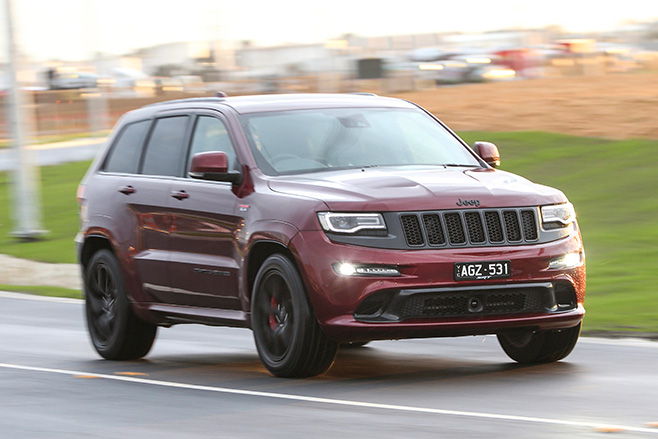
JEEP GRAND CHEROKEE SRT8
0-100km/h: 4.8-seconds Engine: Naturally-aspirated 6.4-litre V8
The Jeep Grand Cherokee SRT8 is as American as a bald eagle singing The Star Spangled Banner. Tipping the scales at 2336kg, this hulk will shift to 100km/h in under 5-seconds, stopping the clocks at just 4.8. This is thanks to the biggest engine on this list, a 6.4-litre V8. No turbocharging or supercharging needed to make this SUV fast! At $90,000 it is also the cheapest car on the list.
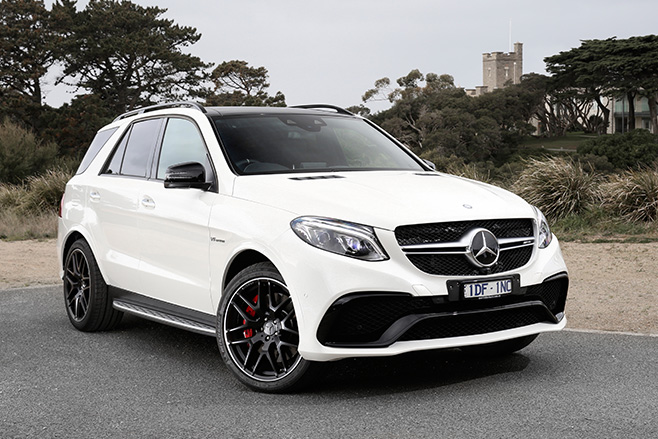
MERCEDES-BENZ GLE63 S AMG
0-100km/h: 4.2-seconds Engine: Twin-turbo 5.5-litre V8
Having a twin-turbo V8 engine under the bonnet means the GLE63 S AMG is one seriously quick weapon, and sounds killer to boot! Musclebound Bent-eights are an AMG staple, which is handy considering the GLE’s 2270kg kerb weight. Priced at $189,000 it certainly isn’t cheap, but is a bargain when compared with the Bentley Bentayga mentioned further down this list. Plus, you get all the luxuries you would come to expect from a Mercedes-Benz of this calibre while still getting to highway speeds in 4.2-seconds from a standstill.
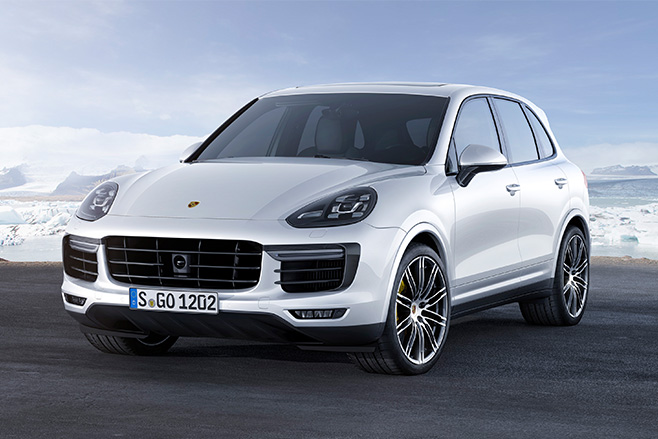
PORSCHE CAYENNE TURBO S
0-100km/h: 4.1-seconds Engine: Twin-turbo 4.8-litre V8
Don’t be fooled by the large body, this Porsche Cayenne Turbo S is faster than the entire 718 Cayman and Boxster range – as well as most 911s on sale today. A 0-100km/h sprint time of 4.1-seconds means you and your mates will be shifting at serious speeds in this bad boy. At 2235kg, it is also the lightest of our fast SUVs. However, you will need to save your pennies: it costs $287,500 to add one to your garage.
BENTLEY BENTAYGA
0-100km/h: 4.1-seconds Engine: Twin-turbo 6.0-litre W12
When it comes to mega-fast SUV’s this is the king daddy. It may not be outright fastest, but nothing else on this list has a whopping great 6.0-litre twin-turbo W12 wedged under the bonnet. This British monster will get to 100km/h from a standstill in just 4.1-seconds. A not inconsiderable feat considering the Bentayga’s 2440kg kerb weight. Fast and luxurious!! Just don’t think about the $400,000-plus price tag.

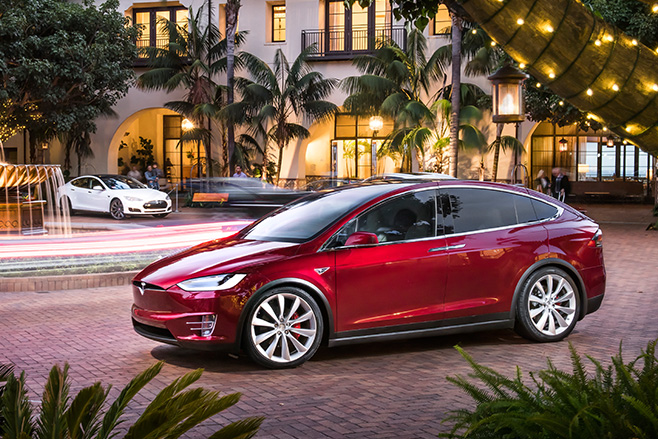
TESLA MODEL X P100D
0-100km/h: 3.1-seconds Engine: 100kwH Battery
Those of you familiar with Teslas and their mind-boggling acceleration shouldn’t be surprised to see the Model X P100D at the head of this pack. The Tesla Model X P100D isn’t on sale in Australia just yet, but local deliveries are slated to commence before the end of 2016. The 100kWh battery pack, with the addition of Ludicrous mode, results in acceleration that rivals – and sometimes eclipses – that of the most expensive of supercars.
Mitsubishi previews a larger, bolder hybrid SUV concept at Paris, potentially pointing toward the car that will eventually replace the Outlander.
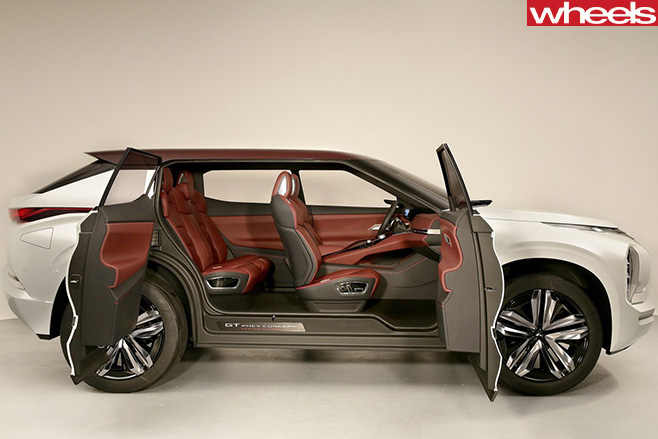
Mitsubishi has rolled out its latest futuristic hybrid SUV concept, with the petrol-electric, suicide-doored GT-PHEV making its first public appearance at the Paris Motor Show today.
The latest in a long sequence of concept offroaders by the Japanese brand, the Mitsubishi GT-PHEV sports the same ‘Dynamic Shield’ X-shaped motif across its nose as the previous eX, GC-PHEV, and XR-PHEV concepts, with narrow headlamps set deep into the quarter panels and a large, imposing grille.
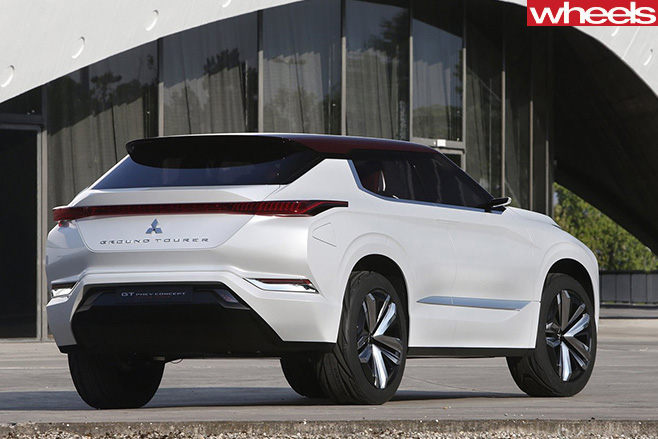
As its name hints, the GT-PHEV is a plug-in hybrid, with a 25kWh battery pack mounted under the floor and supplying three electric drive motors – a 90kW one driving the front axle and two 45kW motors at the rear.
A conventional 2.5-litre petrol engine provides power when the battery is depleted, but Mitsubishi claims the GT-PHEV can travel up to 120km before the combustion engine needs to kick in – nearly 70km more than the existing Mitsubishi Outlander PHEV’s electric-only range of 52km.
Other fuel-saving tech includes active grille shutters that close off the drag-inducting radiator ducting when the engine isn’t needed, plus a speed-sensitive suspension that drops the car to further reduce aerodynamic drag, while also drawing on GPS and online data to tailor its damping to the quality of the road.
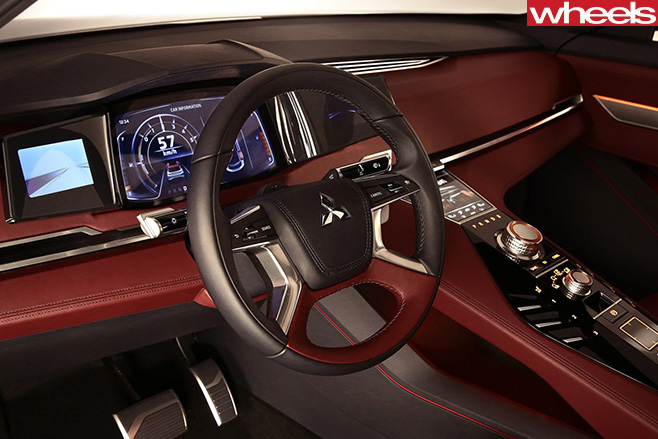
The concept’s cabin holds clues about Mitsubishi’s vision for its future interiors, with cameras replacing conventional glass wing mirrors and the rear view being projected onto monitors either side of the instrument panel.
A colour head-up display also projects key data into the driver’s line of sight.
However, Don’t expect the GT-PHEV to spawn a production car just yet. Mitsubishi’s third-generation Outlander still has at least two years left to run – potentially three. Whatever the case, you can expect features like the GT-PHEV’s B-pillarless design and rear suicide doors to not make the transition to production.
THE premium large car segment is something of a sweet spot in the luxury passenger car market, where vehicles offer a higher level of both prestige and quality than mid-sized ‘volume’ models, while being more attainable than models from the limo class.
It’s also home to Mercedes-Benz’s signature model, the Mercedes-Benz E-Class, as well as the BMW 5 Series that has been widely considered the class benchmark since its inception in 1972.
The E-Class dominates in terms of sales, however – currently accounting for nearly 30 per cent of the segment. The 5 Series has half that share, followed not too far behind by the Audi A6 and a non-German contender in the shape of England’s Jaguar XF.
Here, WhichCar provides a guide to any changes planned or expected for these models during the next 18 months – to help you pick the perfect time to buy one.
An all-new A6 is anticipated for 2018, but the large luxury sedan/wagon range has one more major update up its sleeve before then. Audi announced the update in April, though it’s not expected to reach local showrooms until mid-2017 or later.
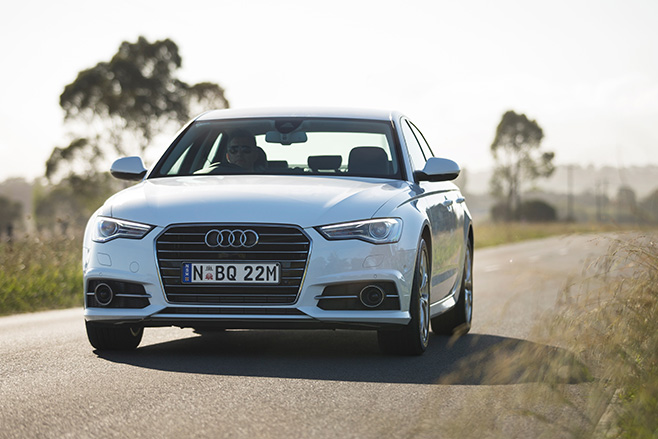
Tweaks to the exterior styling include revised grille and side sills, and a new look for the rear with changes to the bumper and diffuser. An optional S Line exterior package is also being made available for a sportier aesthetic. Inside, increased standard equipment includes LED lighting throughout the cabin as well as the boot.
New options include smartphone integration with Apple CarPlay and Android Auto, and Audi entertainment tablets – first seen on the new A4 – for the rear seats. There are also changes for the A6 Allroad higher-riding wagon and the related A7 Sportback four-door ‘coupe’.
The outgoing 5 Series has aged well since its 2010 introduction, though it’s all change for 2017. The seventh-gen 5 Series – or G30 in BMW code – is due to be unveiled imminently, but we already know a number of details.
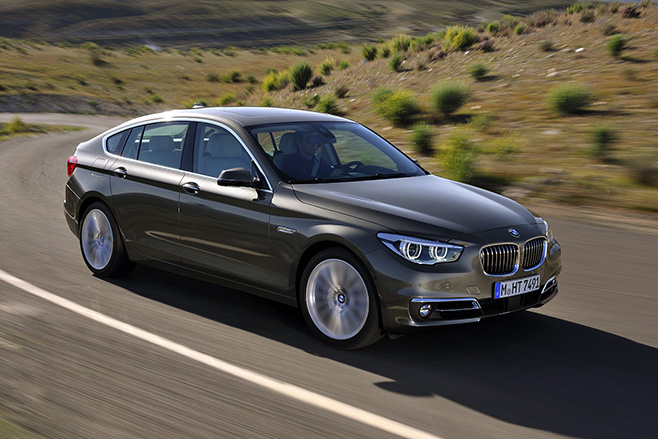
Dimensions will grow slightly, yet greater use of aluminium in the new 5’s construction means overall mass will be reduced by up to 100kg, depending on model. There’s a new steering set-up, while an optional air suspension – entailing both front and rear axles – will be available over the standard steel-sprung suspension. Engines will continue to be a range of turbocharged four- and six-cylinder petrol and diesel donks, with a plug-in version also returning.
Expect plenty of technological hand-me-downs from the bigger 7 Series, including the latest-generation iDrive infotainment system. The seventh version of the 5 Series since its 1972 debut will go on sale in Europe in early 2017, so expect sometime in the second half of next year for Australia.
The second-generation XF was released in 2016 – eight years after the original began a crucial period of design rejuvenation for the British brand.
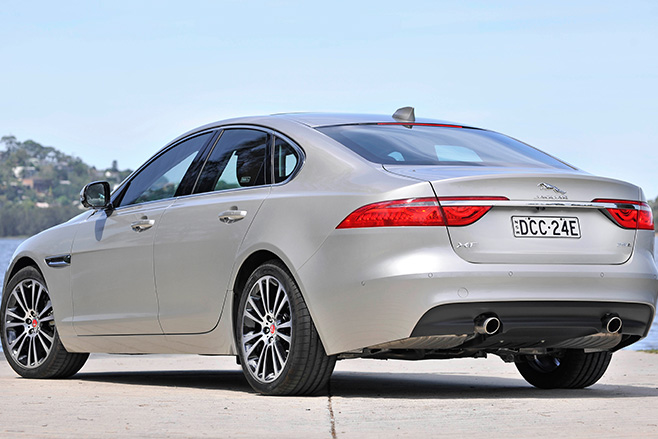
No major updates are therefore expected for 2017, though there could be running updates in the drivetrain department. Jaguar Land Rover recently unveiled a new petrol member of its Ingenium turbocharged modular engines, joining the diesel versions already introduced.
The 2.0-litre four-cylinder turbo will be available in various states of tune, offering both increased performance and fuel efficiency over the engines they replace.
Another newbie, as with the Jaguar XF. Mercedes rolled out the latest iteration of its signature model in August 2016, so it’s a case of awaiting further variants rather than any model updates.
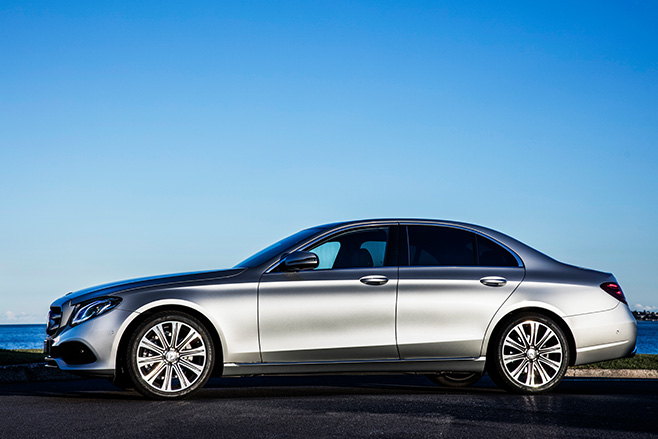
The E-Class launched in E200 turbo petrol form along with an E220d utilising a brand new 2.0-litre turbo diesel donk. A more powerful E350d diesel has since joined it, while November will see the arrival of the 180kW petrol E300 and 245kW all-wheel-drive E400 4Matic.
Also confirmed is an AMG E43 model featuring a 295kW 3.0L bi-turbo six-cylinder and good for 0-100km/h acceleration in 4.6 seconds. An AMG E63 will return, naturally, as the range’s flagship.
So you’re now a family person and within a matter of hours, your whole world has changed. Candlelit baths turn into nappy-changing tantrums; quiet dinners become more like a Hollywood war-scene; and quiet time is more valuable than a bottle of Dom Pérignon. And now you’re expected to give up your impractical sports car for something more kid-friendly.
But just because you have to upsize your car, doesn’t mean you have to give up driver enjoyment.
Ok, so maybe there are some concessions you need to make – like the number of seats, or choosing safety equipment over some fancy optional colour. But hey, sacrifice comes part and parcel with having kids and there’s always a compromise.
While the Mazda MX-5 and Audi TT may be off the new-car list, there are still a few cars that’ll fit the kiddie seats and still make you feel like Daniel Ricciardo.
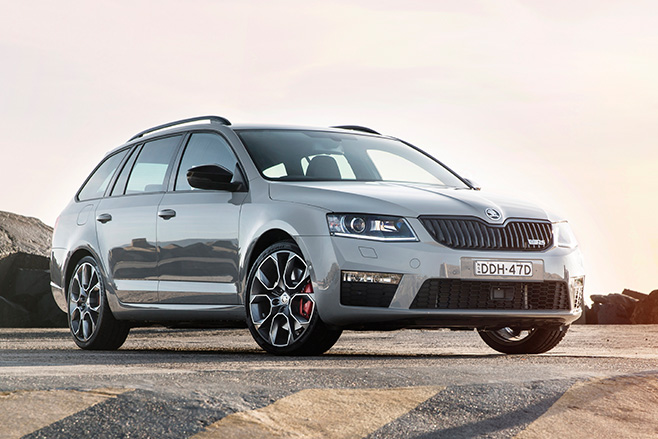
SKODA OCTAVIA RS
Using the same engine as the Golf GTI, it’s got the practicality of a wagon, lots of equipment and the athleticism you’re looking for.
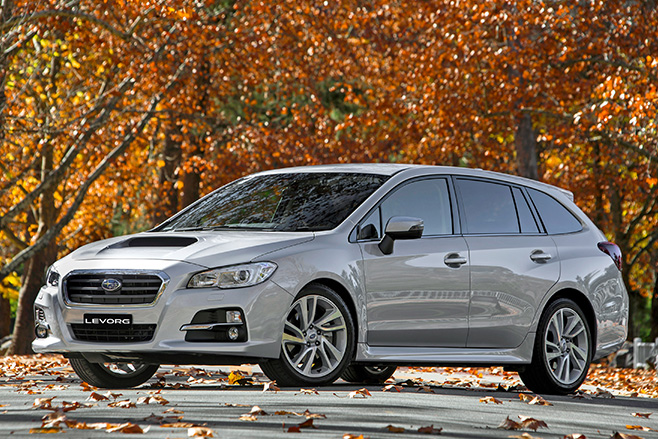
SUBARU LEVORG
It’s got good safety, perfect for the family lifestyle with the space of a wagon and the turbocharged engine straight out of the Subaru WRX. Good times.
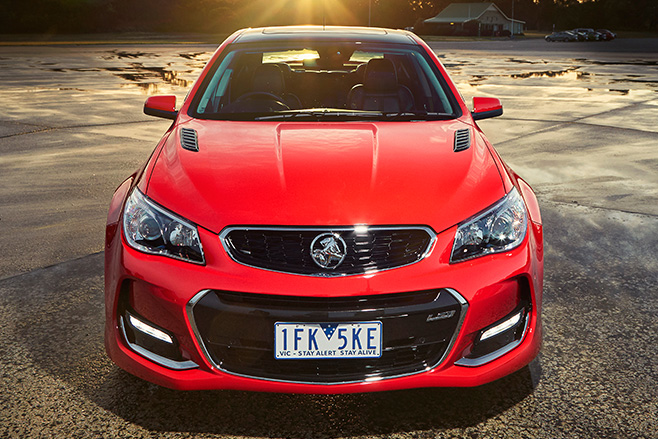
HOLDEN COMMODORE SS
It’s great value for a performance sedan, and the same V8 engine as the SS-V with a lower price tag. The Commodore is an Australian icon (at least for another year or so), and offers comfort, space, and V8 grunt.
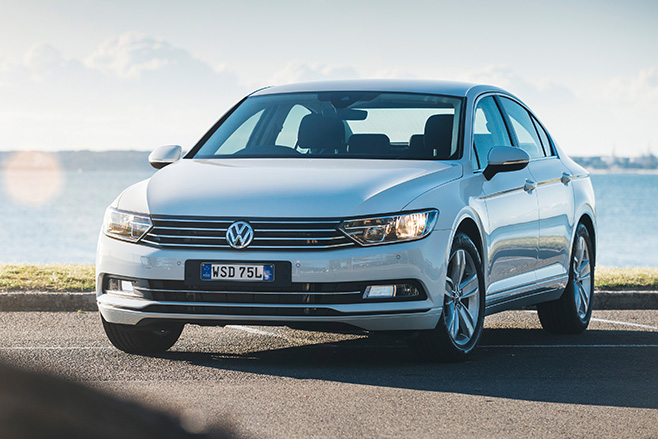
VOLKSWAGEN PASSAT 132TSI COMFORTLINE
Add in the optional Luxury Package and you’ve got yourself a winner. It looks expensive for its price, it’s got a spritely turbo-petrol engine and it’s got the space of an SUV.
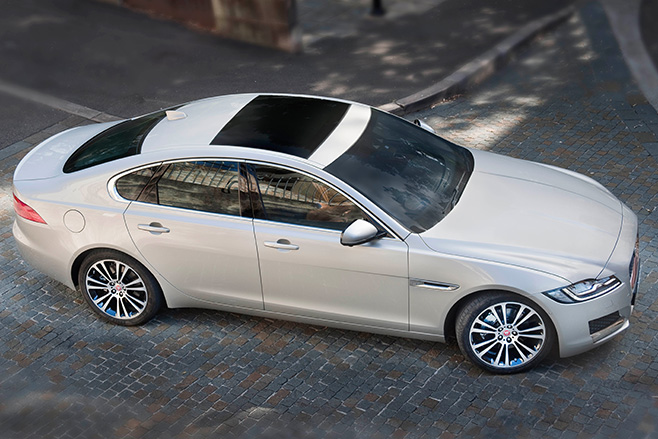
JAGUAR XF PRESTIGE 2.0D
It’s as luxurious and roomy. We’ve picked the base model for price reasons, but you can’t really go wrong whichever way you go. If you really want sporty though, and you have the budget, go the petrol XF S.
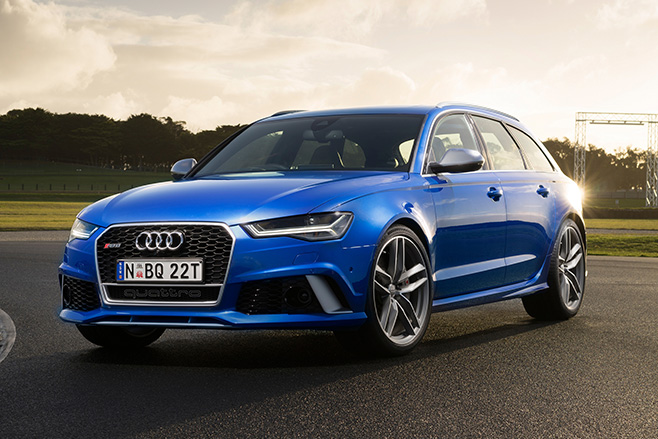
AUDI RS6 AVANT
It’s really the ultimate family car. The hot wagon and merges performance and practicality into one tidy wagon. Granted, it won’t be in everyone’s price range.
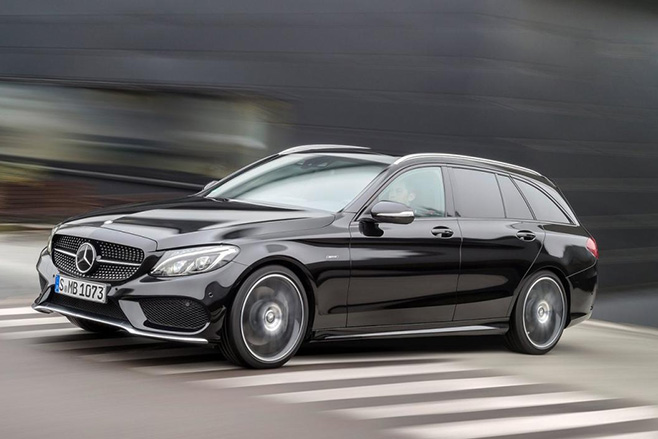
MERCEDES-AMG C43 WAGON
If you really want a Mercedes-AMG C-Class but can’t justify the spend, then this V6-powered wagon is your most affordable option. It’s the price-gap between a standard C-Class and the performance AMG versions.
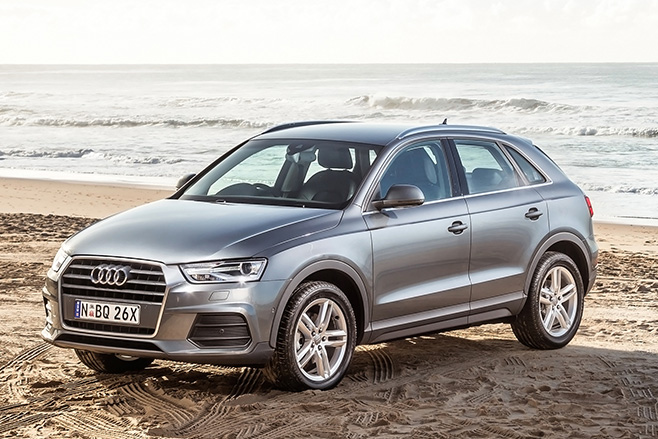
AUDI RS Q3
If the RS6 is totally out of your price range, then you might be interested in the RS Q3. It has hot hatch performance with compact SUV practicality.
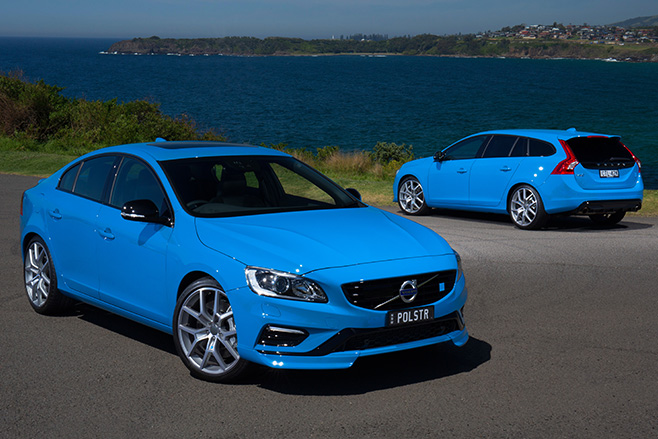
VOLVO POLESTAR
Volvo has a reputation as a family-carmaker for a reason. So throw in its performance Polestar range, and you’ve got yourself a double-whammy. Polestar is Volvo’s racing partner so you’re guaranteed to get practicality and performance.
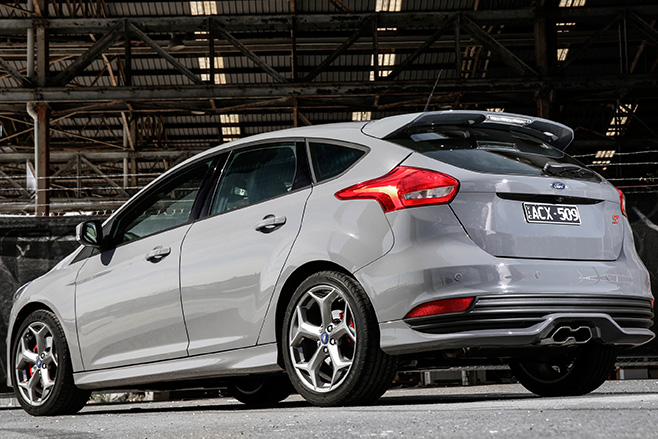
FORD FOCUS ST
The Ford Focus is a powerful small car with turbocharged engines offered across the range. It comes stacked with features, safety and tech, and the ST adds the performance element for something a little more fun.
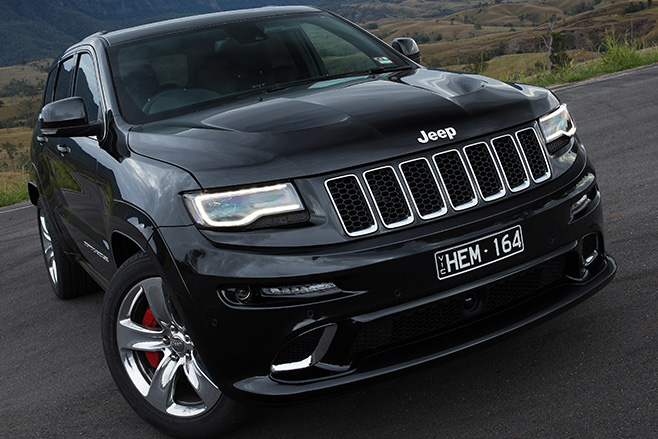
JEEP GRAND CHEROKEE SRT8
We couldn’t do a family car segment without including a big, chunky SUV. So we threw the Jeep Grand Cherokee in the mix for good measure. This car is full of equipment and is a really popular car among Australians. The SRT8 may be the most expensive in the range, and the least suitable for off-roading with a single-range 4WD system, but it comes with a V8 engine, sporty seats and great styling.
Volkswagen is preparing a new family of electric-only cars in a bid to dominate the emerging market for cars driven by electric motors and batteries.
The family will be born in 2020 with a Golf-sized electric car priced from about $35,000, the same as a Golf diesel today.
It has a 125kW electric motor – similar to the power of a 2.0-litre four-cylinder engine – and a bank of batteries in the floor to give a claimed driving range of 600km.
Speaking at the 2016 Paris motor show, Volkswagen CEO Dr Herbert Diess announced a bold plan to sell one million electric vehicles annually by 2025, each based on a new electric-only platform that will be rolled out in 2020.
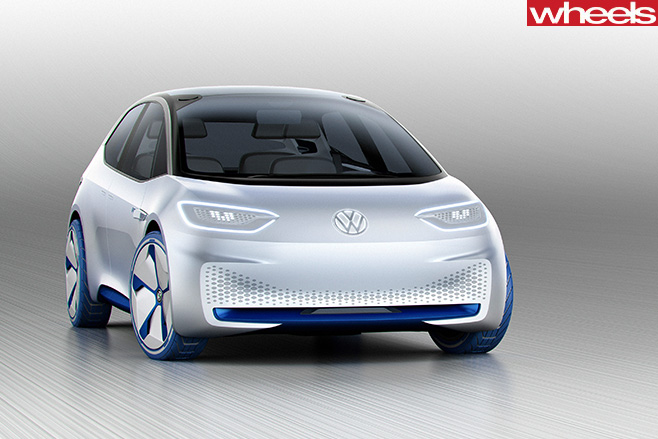
“I.D. stands for a new era,” said Diess.
He added it wasn’t traditional car companies, but the likes of electric car maker Tesla and tech giant Apple – which is working on an autonomous project – that VW identifies as prime rivals.
“I.D. is an electric car for everyone in everyday use. It’s a real Volkswagen.
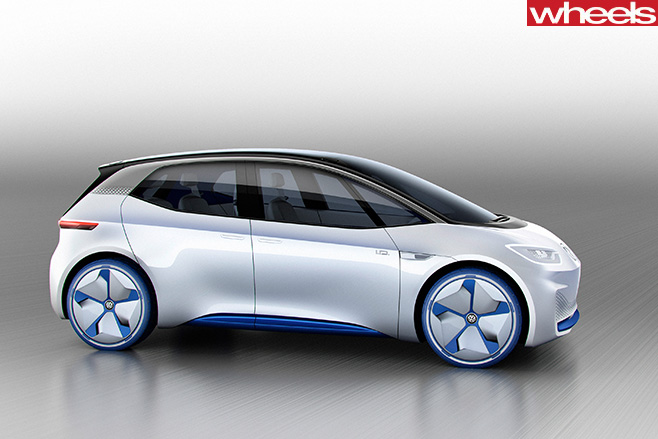
The announcement – whereby future plans and aspirations were laid bare years before they take hold – had a hint of Tesla to it.
The Golf-sized I.D. concept has five seats claimed to give more space than a similarly sized combustion engine car as well as advanced autonomous technology.
It also ditches all traditional switches and buttons for screens.
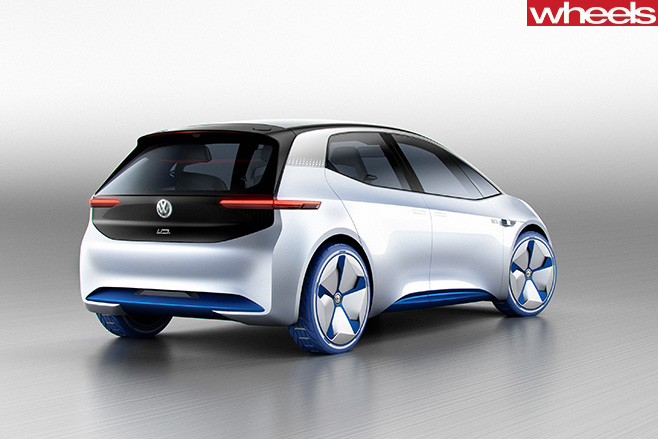
While he stopped short of saying it would drive itself, he said it “will be the first Volkswagen ready for automated driving”.
In taking questions after the announcement Diess refused to answer questions on the damaging and embarrassing Dieselgate scandal – whereby the company was caught cheating emissions standards – with minders informing awaiting television media the questions were only to be on the Paris motor show and the I.D. concept.
Honda appears to have taken design advice for the new Civic Type R from Bruce Wayne.
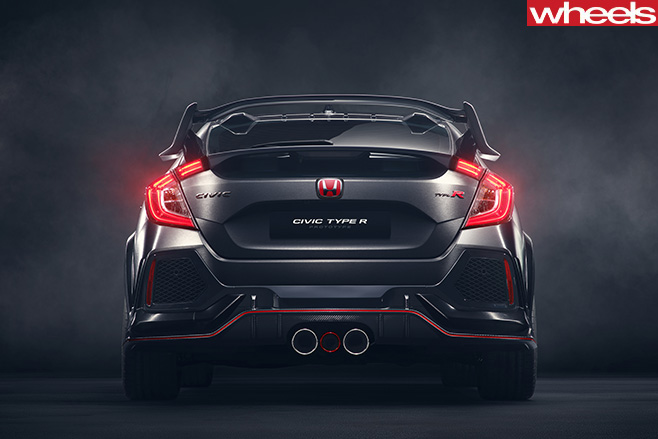
THE next-generation Honda Civic Type R prototype has been revealed in all its brawny glory at the Paris Motor Show.
The archetype for the UK-built 2017 production model is a lot more aggressive than previous models, and echoes some of the design aspects of the 2015 Honda Civic Type R Concept, including extended, vented wheel arches, bolder bumper styling, and a large rear wing, all of which look even better on the current model’s flatter silhouette.
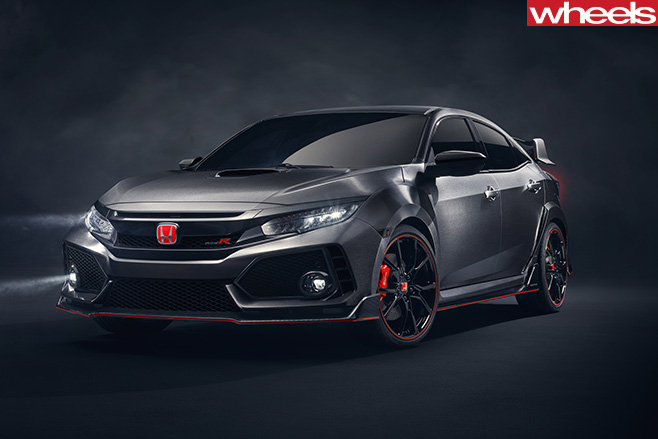
Carbonfibre side skirts run below the doors, between 20-inch piano black alloy wheels housed within the enlarged wheel arches.
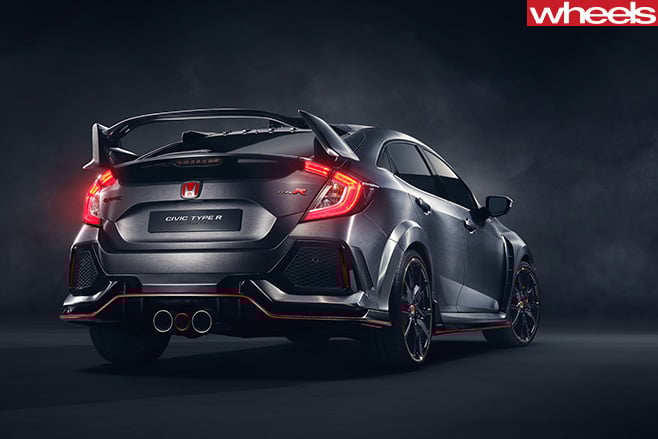
The stunning-looking rear end is emphasised by peaks at the roof flanks that direct airflow towards the prominent rear wing shaped to match the roofline.
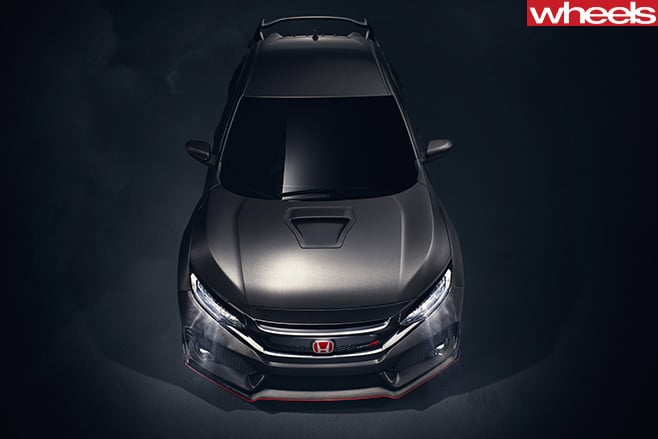
There is also a new intake on the bonnet, smoked lenses for the LED headlights, indicators and side repeaters.
The interior hasn’t been revealed, but it’s hardly likely to be bland.
The 2017 Civic Type R is expected to be on sale in Europe in the second half of next year, with Australian sales to follow shortly after.
The Type R will also be exported to the US – the first time Honda’s hot hatch has been officially exported to North America.
Hyundai’s dropped big hints at its first high-performance model with the RN30 concept it’s unveiled at the Paris Motor Show.
Packed with a turbocharged 2.0-litre four – said to be ‘under development’ for its N division’s debut road-car – the RN30 opens with some big numbers.
The engine’s filled with forged internals and uses an ‘enlarged’ turbo to stir up 280kW and 451Nm, which should make Hyundai’s first ever performance car an A45 fighter.
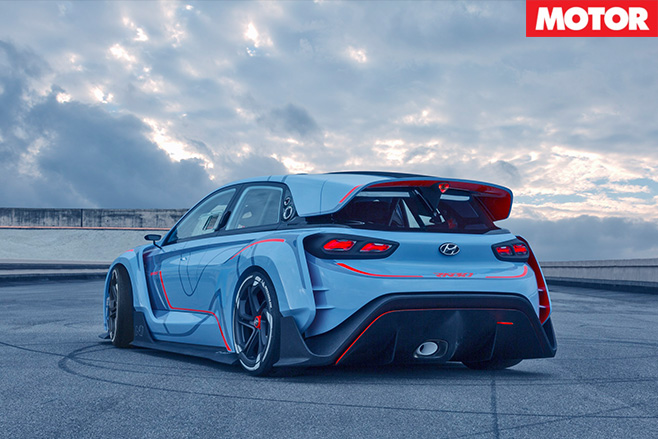
While somewhere under its skin is the next generation i30, the RN30’s wild stylings hide the production car well. It’s a full 84mm shorter than a regular car, while 19-inch wheels, a rear diffuser, and rear spoiler further disguise any solid clues.
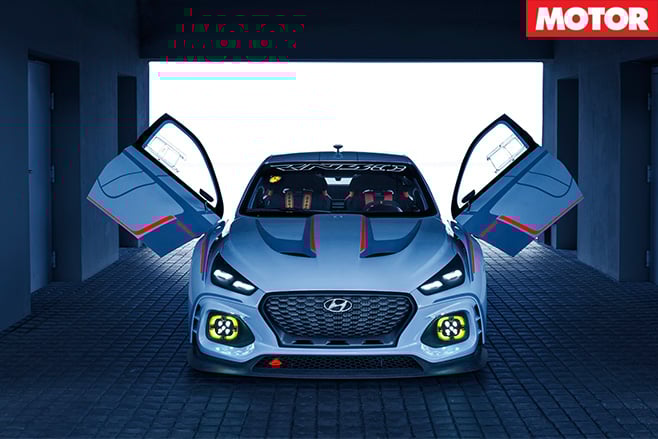
The RN30 Concept’s biggest similarities with the endurance racer are those ‘floating fenders’, said to widen it 30mm over a regular production i30.
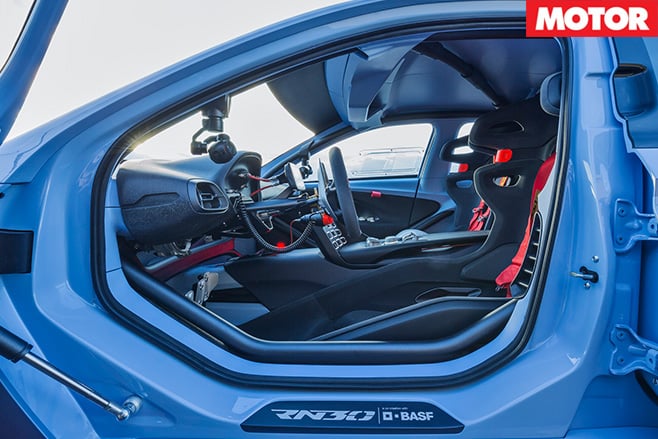
An Electronic LSD’s said to be keeping a check on each wheel, but it’s unclear whether this is an ABS-based system or uses proper torque vectoring differentials. A lack of clarification suggests the former.
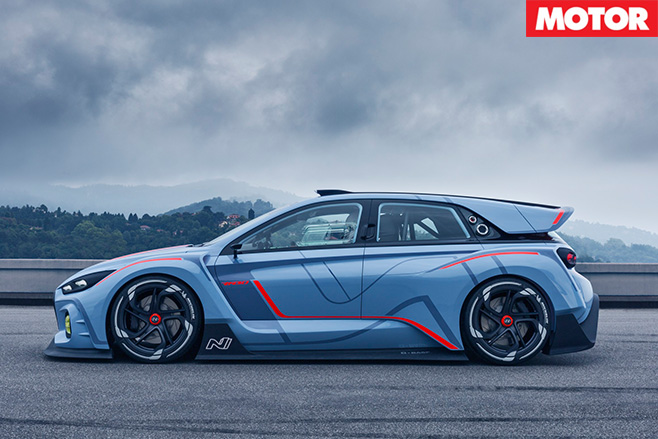
Hyundai first launched is high-performance ‘N’ division in September last year but is yet to release its Ford Focus RS, Merc-AMG A45, and VW Golf R challenger. However, the RN30 says Hyundai’s lob is soon on the way.
Tired legs resulting from hours spent standing in a queue could become a thing of the past if Nissan’s ProPilot Chair becomes a tech of the future.
The Japanese brand’s autonomous chair system is designed to take the burden out of long waiting lines and will be trialled at selected Japanese restaurants in 2017.
Nissan’s quirky concept automatically rotates a series of chairs, allowing queuers to remain seated until it’s their turn to be served.
Each of the chairs features a square based fitted with wheels and sensors. The rotation is triggered when a weight sensor in the seat detects the person getting up. As the person walks away, the self-driving seat moves out of the line, tracks down the line, and then into the last position of the row.
All other seats then move up a space, using sensors to remain equidistant.
It follows the company’s Intelligent Parking Chair, which could move automatically into position at board tables.
Just as that system was designed equally to showcase Nissan’s semi-automatic parking system for cars, the ProPilot Chair also aims to emphasise the brand’s semi-autonomous driving technology.
ProPilot can steer, accelerate and brake a vehicle without driver involvement, and debuted on the Japan-only Serena minivan in August.
Similar technology has long been available from various European and US brands, though Nissan says the system is a first for a Japanese brand.
Don’t bother queuing yet for the technology at your local Nissan dealership, however. Nissan Australia says there is no confirmation on when, or if, any Nissan models will be sold here featuring ProPilot.
