
Maxxis and WhichCar are teaming up to offer the ultimate driving experience with the chance to WIN a new set of Maxxis tyres worth up to $2000 plus a $1000 Fastrack Experiences driving voucher for one lucky punter!
The Maxxis HP5 & VS5 provide a range of car tyres covering all popular vehicle fitments, ensuring that you have performance when it’s wanted and safety when it’s needed.
All you have to do is enter the draw and answer the question: “Which car will you put these Maxxis Tyres on if you are the lucky winner?” and you’ll be in the running to win the ultimate driving experience!
Can’t see the entry form? Try this direct link
UPDATE: FULL DETAILS FOR AUSSIE-BOUND SUV CONFIRMED
The Jeep Wagoneer S has officially launched in America, revealing an all-new electric SUV with 600hp and more than 45-inches of interior screens.
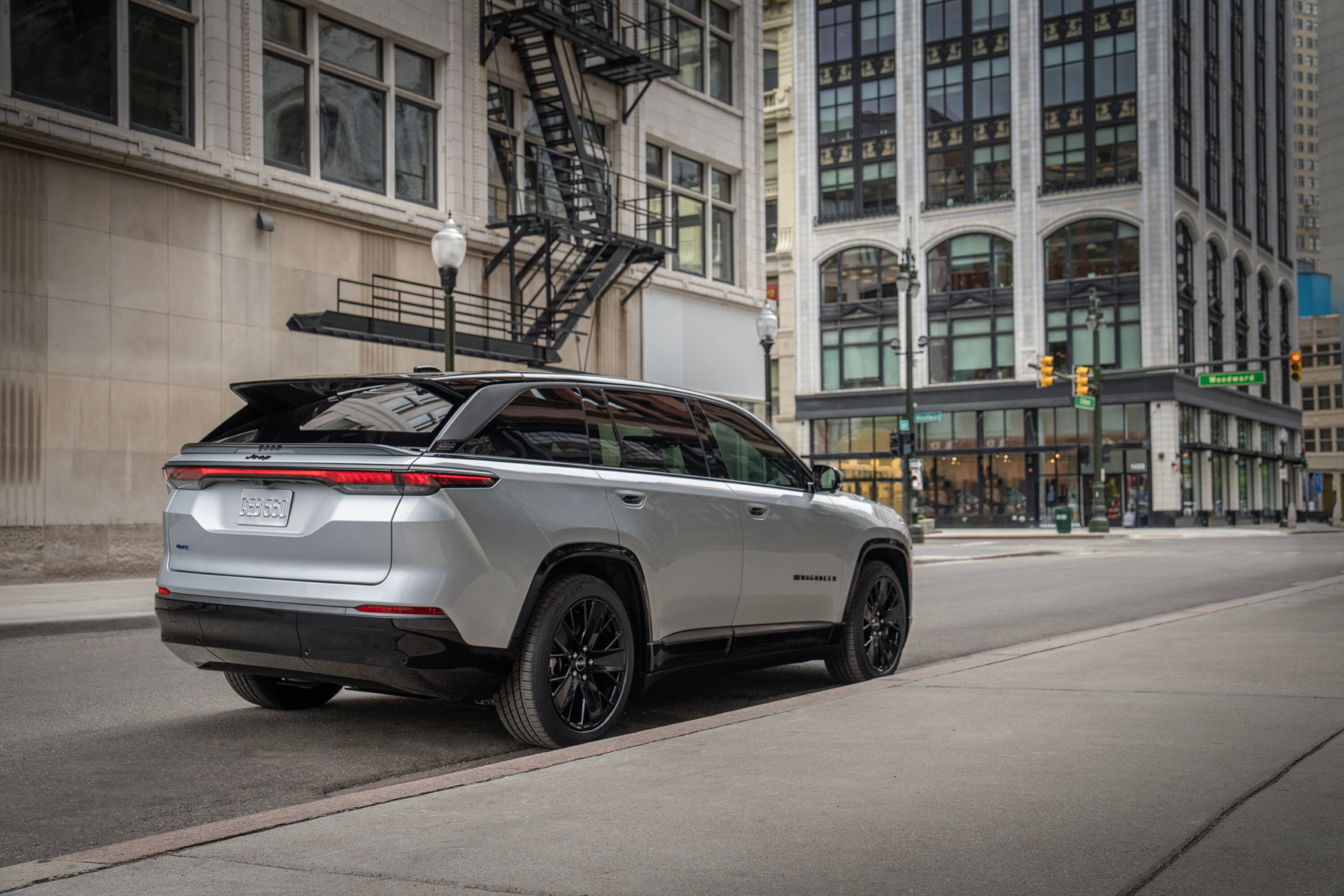
Jeep calls the Wagoneer S its first “global battery-electric vehicle” and it’s due to hit Aussie showrooms in the second half of 2026. Deliveries will kick off first in the United States and Canada later this year, before global exports begin.
Built on Stellantis’s fresh ‘STLA Large’ architecture, the Wagoneer S packs 600hp (447kW) and “more than” 800Nm, which Jeep says is enough to propel it from 0-98km/h in 3.4 seconds.
Kerb weight is rated at 2570kg while the Wagoneer S’s braked towing capacity is 1542kg.
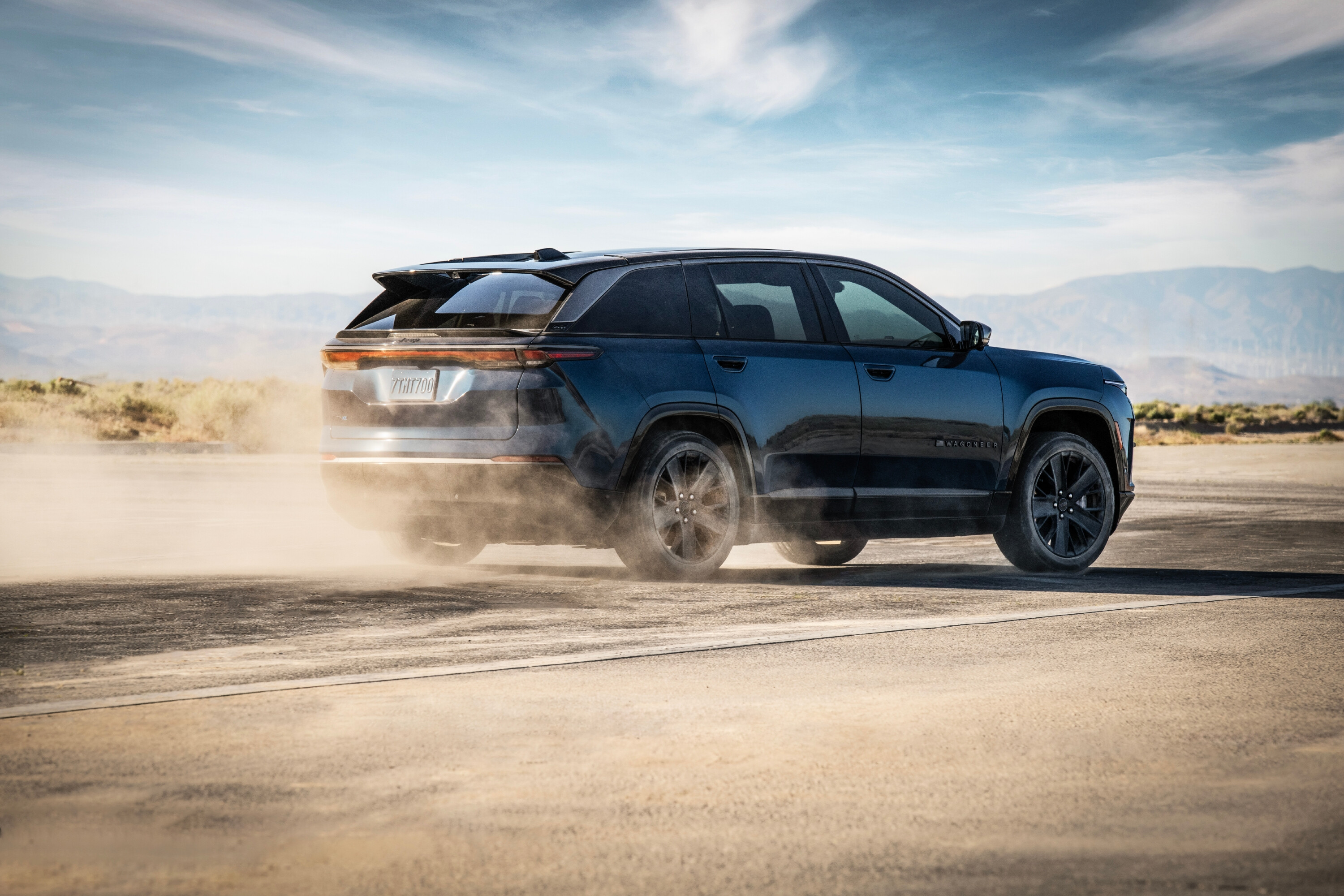
Twin-electric motors are fed by a 100kWh battery pack, while range is rated at 300 miles (480km) on the US cycle. Despite only using a 400-volt architecture, Jeep says the Wagoneer S can achieve a 20-80 per cent recharge in 23 minutes on a DC fast charger.
A focus on aerodynamics helps the Wagoneer S to eke out as much distance as possible between charges, with Jeep claiming its new SUV is its most aerodynamically efficient vehicle yet. Notable aero touches include an enclosed (and illuminated) seven-slot front grille, a curved bonnet and windscreen, the cantilevered rear spoiler and an ‘integrated system of underbody shields’. The door handles are also flush which helps to achieve a Cd rating of 0.29.
The twin-motor powertrain allows for four-wheel drive and there’s a host of drive modes: Auto, Sport, Eco, Snow and Sand.
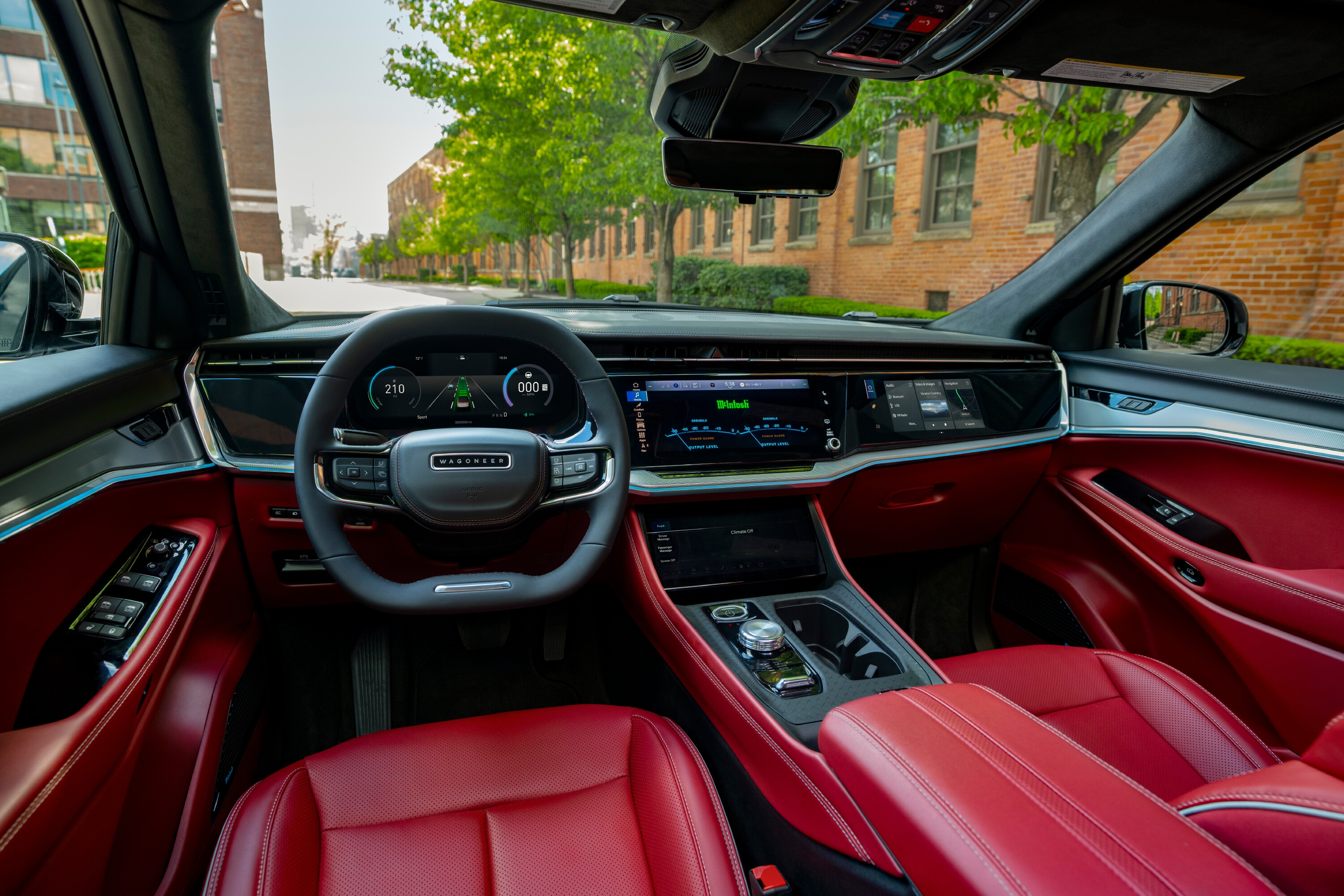
Inside you’ll find loads of touchscreens that allow for “45-inches of usable screen space”, heated/ventilated seats and a 19-speaker, 1160w McIntosh sound system.
We’ll need to wait a while for official Aussie specifications on the Wagoneer S. Once we have them, we’ll update this story accordingly.
February 2: Official at last
The drip-feed reveal of the 2024 Jeep Wagoneer S continues, but this time we have some official images and new info from Jeep itself.
After several leaked images were published to social media, these official shots give us our closest look yet at the electric Wagoneer’s sleek exterior and also provide the first glimpse of its screen heavy cabin.
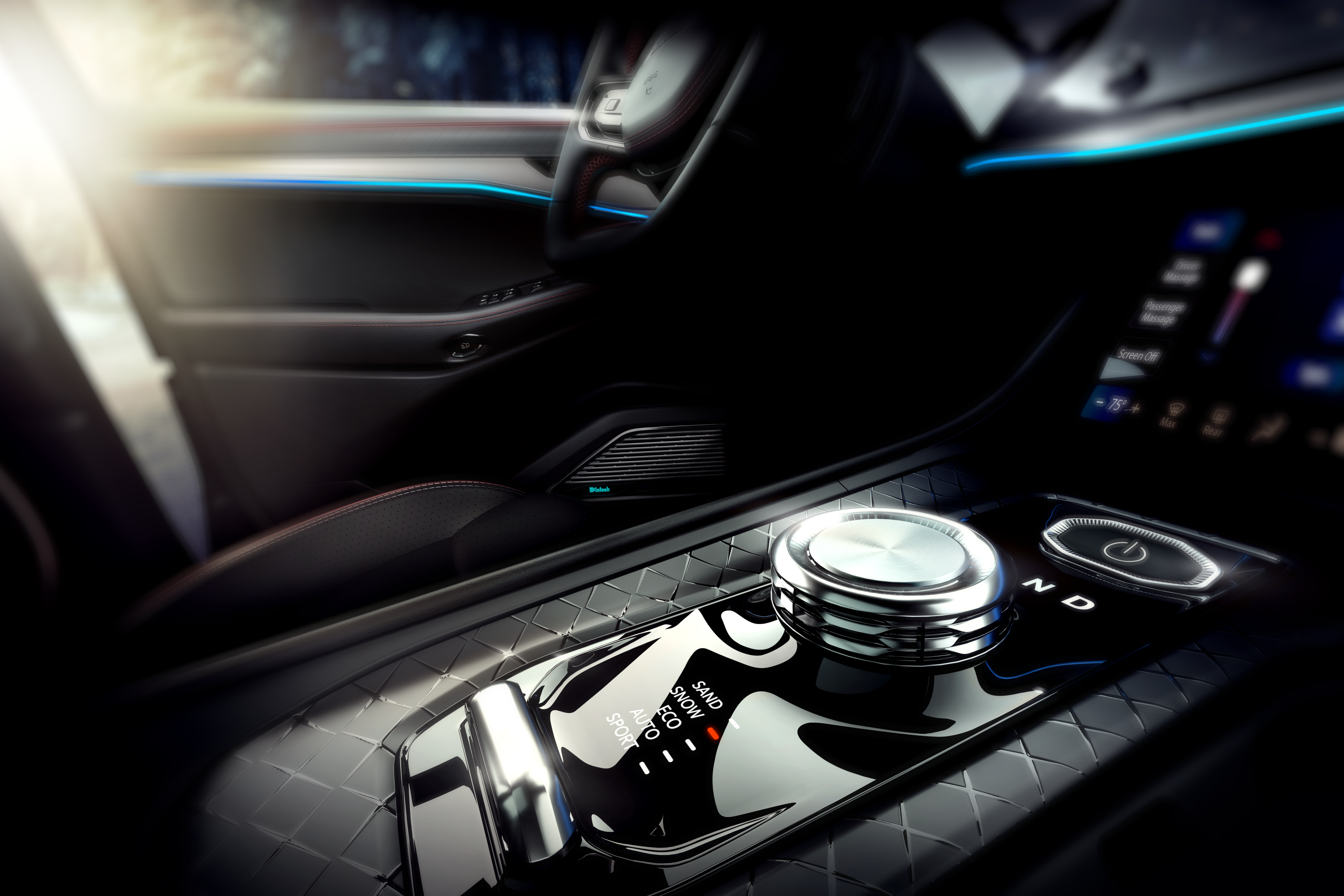
Inside there are four screens on the dash: one digital instrument cluster, a large centre screen that displays old-school gauges, another screen lower on the centre stack for the climate control, and a final screen in front of the passenger that looks like it can play movies/video clips.
Jeep didn’t reveal much information with the images, so it’s unclear if the four screens will be fitted as standard or will be bundled into an option pack when it arrives in Australia some time in 2025.
Some information Jeep did confirm is that the Wagoneer S will include a standard dual-pane panoramic sunroof and a 19-speaker McIntosh sound system.
Ambient lighting, stitched leather surfaces and five drive modes also feature, with the images showing settings for Sand, Snow, Eco, Auto and Sport modes beneath a rotary-style shift knob.
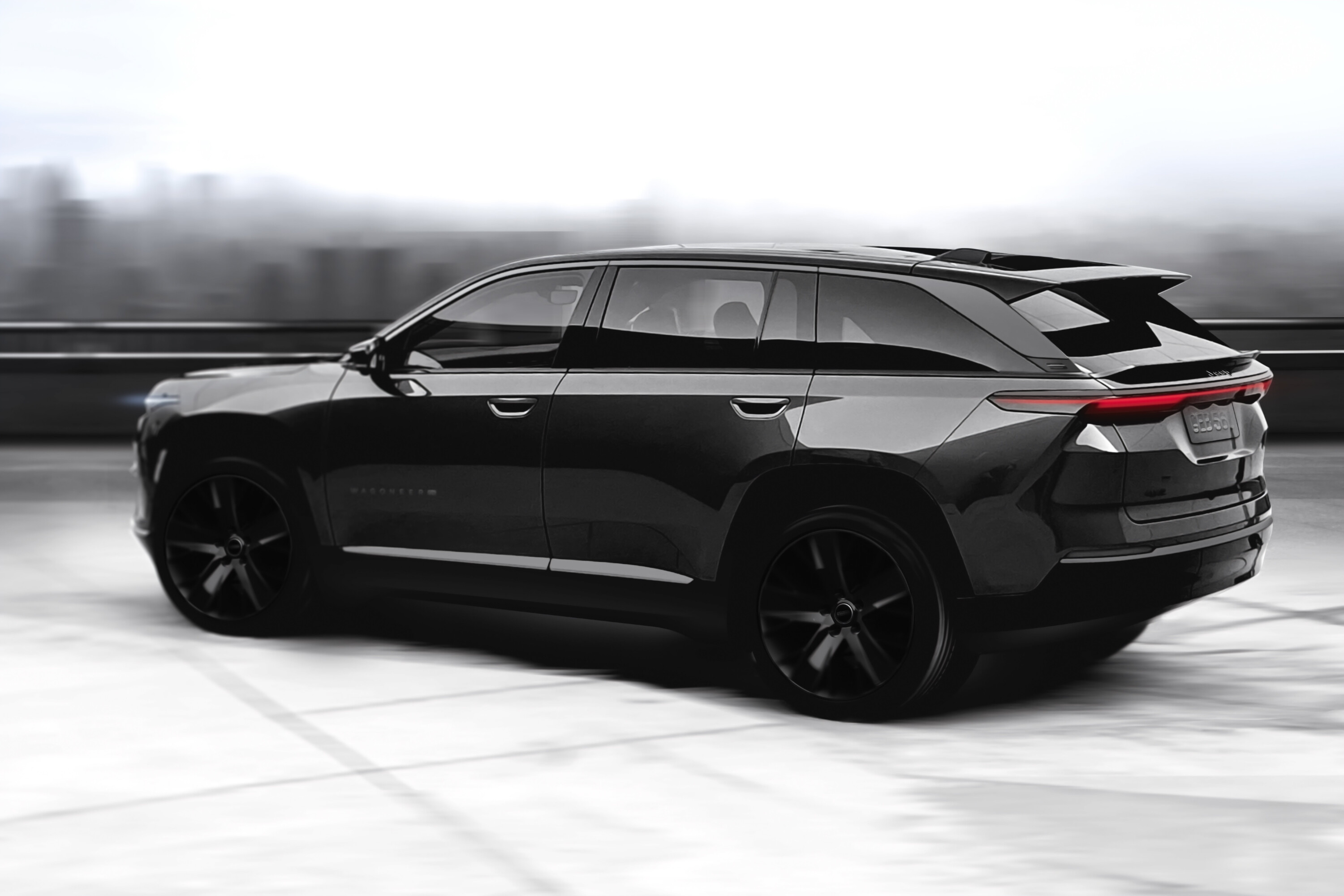
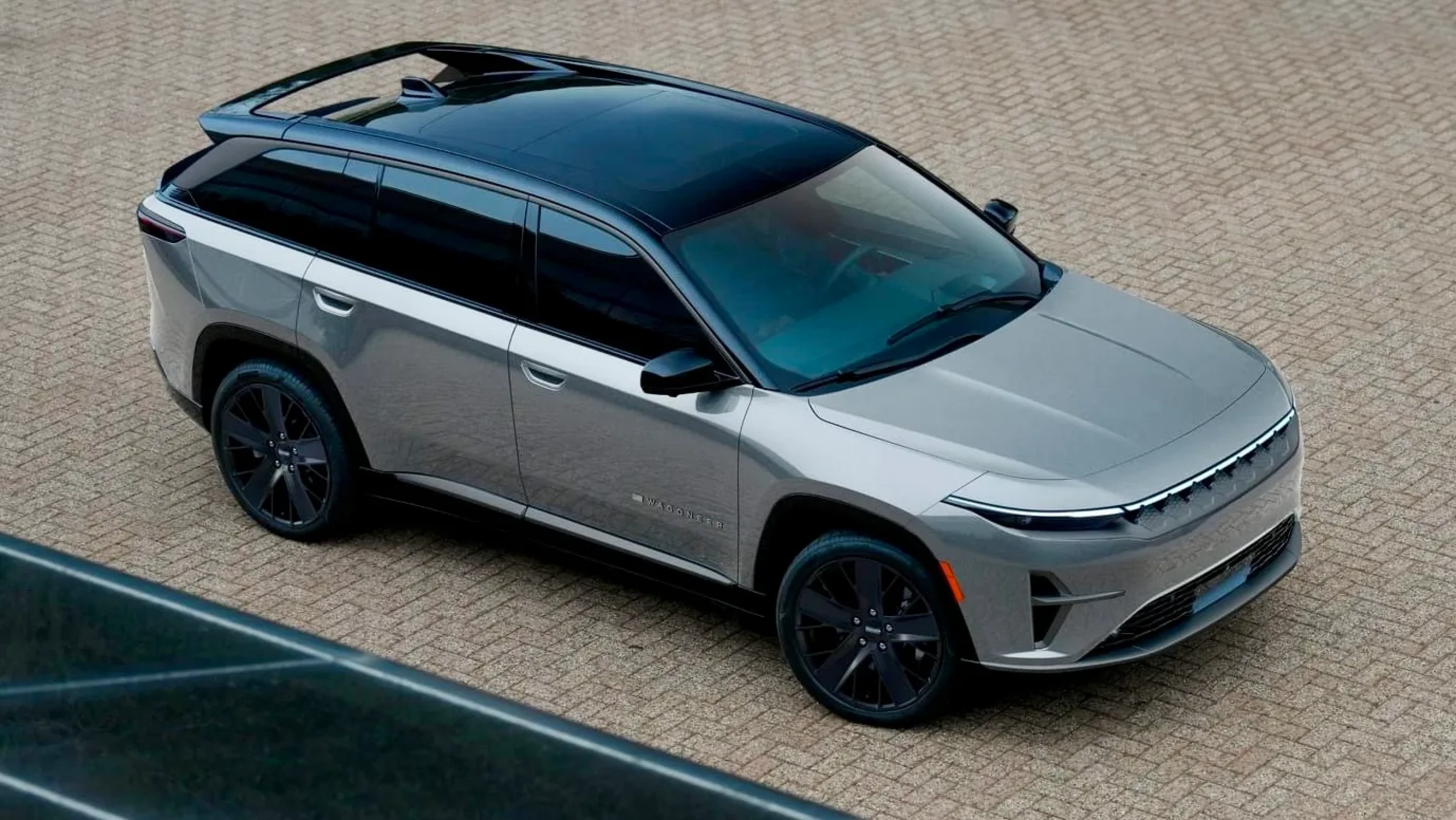
Outside, the Wagoneer S is almost identical to what we saw in the leaked images but we can now see there is a second spoiler along the bottom edge of the rear glass to complement the prominent spoiler that extends from the roof life.
No other details have been confirmed about the powertrain, although it has been previously confirmed the Wagoneer S will ride on Jeep’s all-new STLA-Large platform and produce around 450kW.
Keep reading our story below for more details.
Jan 23: Whoops! Images of the 2024 Jeep Wagoneer S have leaked online.
Just days after Jeep shared the first shadowy teaser image of the Aussie-bound 2024 Wagoneer S, pictures of the full production vehicle have leaked online. And it was Jeep’s own social media team that shared the shots.
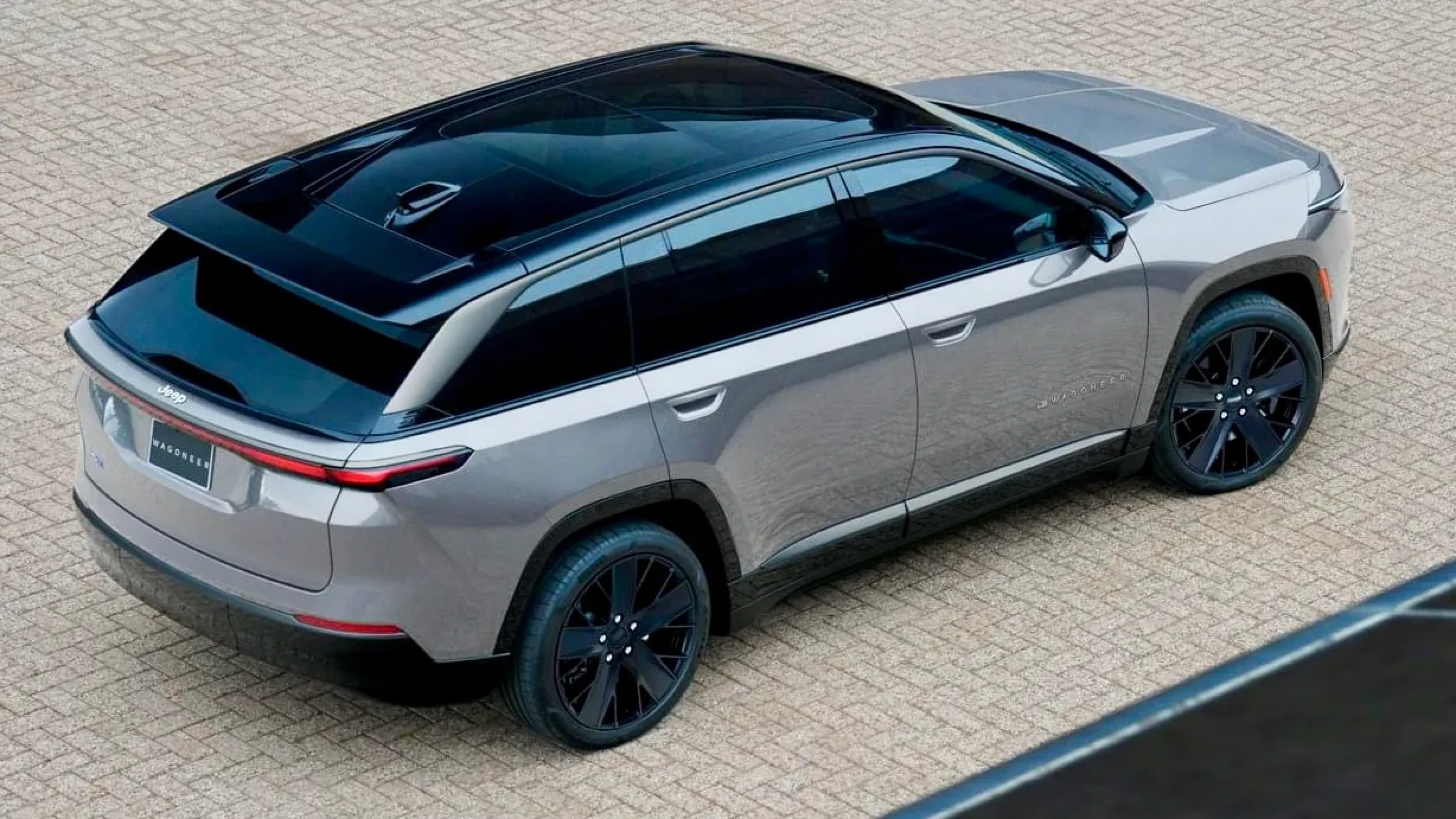
Published in a short video to Facebook, which has since been removed, the fresh images show the front, side and rear of Jeep’s upcoming electric SUV.
This particular car is finished in two-tone silver and black paintwork and features a full-width light bar and a uniquely designed roof spoiler.
Keep reading our story below for more details.
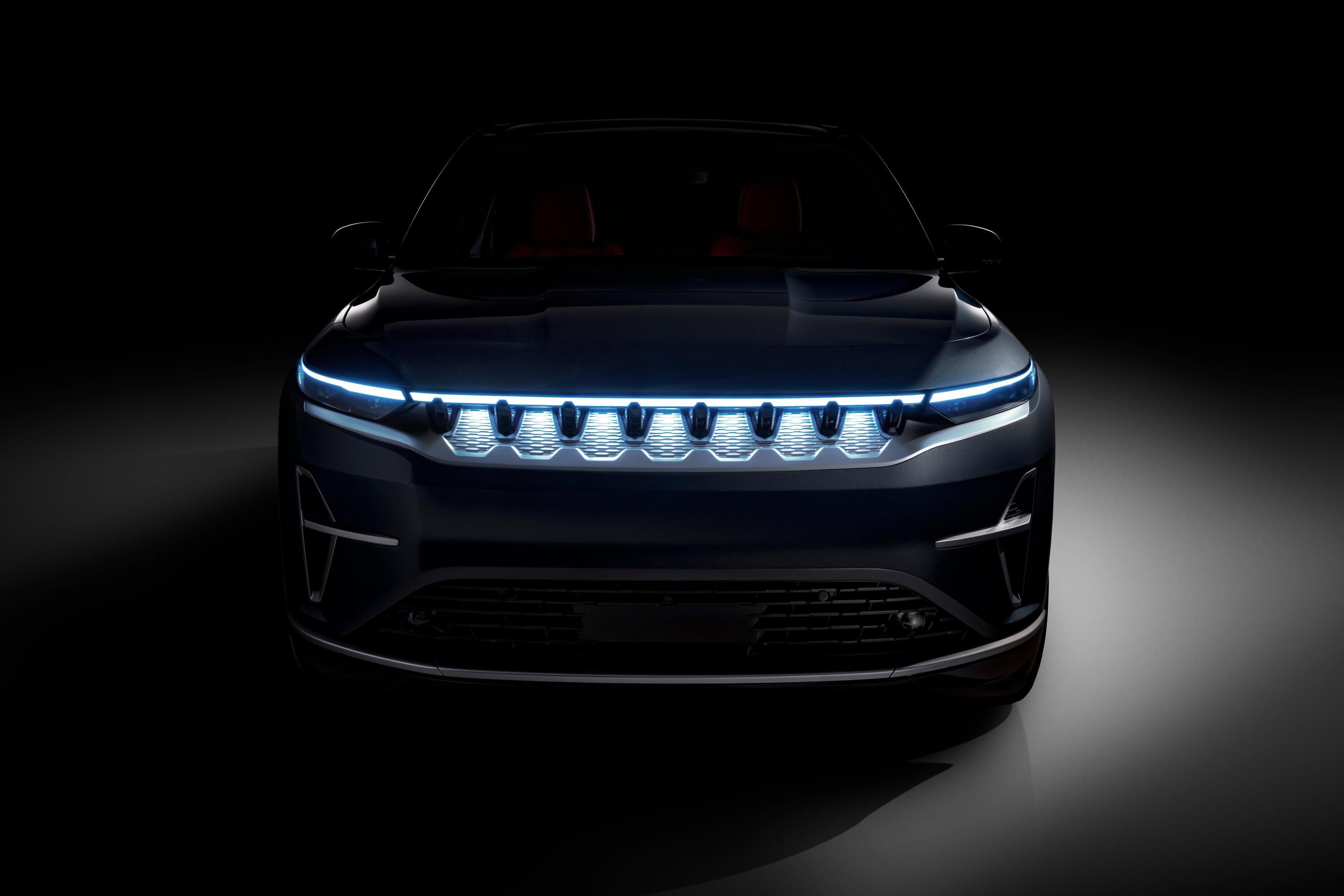
Jan 21: Jeep has given us our first look at the Aussie-bound 2024 Wagoneer S and also confirmed some pretty potent performance figures.
Snapshot
- Three electric Jeep models confirmed for Australia
- Images and performance figures of the Wagoneer S revealed
- Wagoneer S is smaller than other US-only Wagoneer models
Set to arrive Down Under in 2025, the Wagoneer S will feature an illuminated version of Jeep’s iconic seven-slot front grille and also produce up to 450kW.
That level of grunt will help propel the brand’s new electric SUV from 0-98km/h (60mhp) in just 3.5 seconds.
Need some context? A Jeep Grand Cherokee Trackhawk hits three figures in a similar time, albeit in far more dramatic fashion thanks to its screaming supercharged V8.
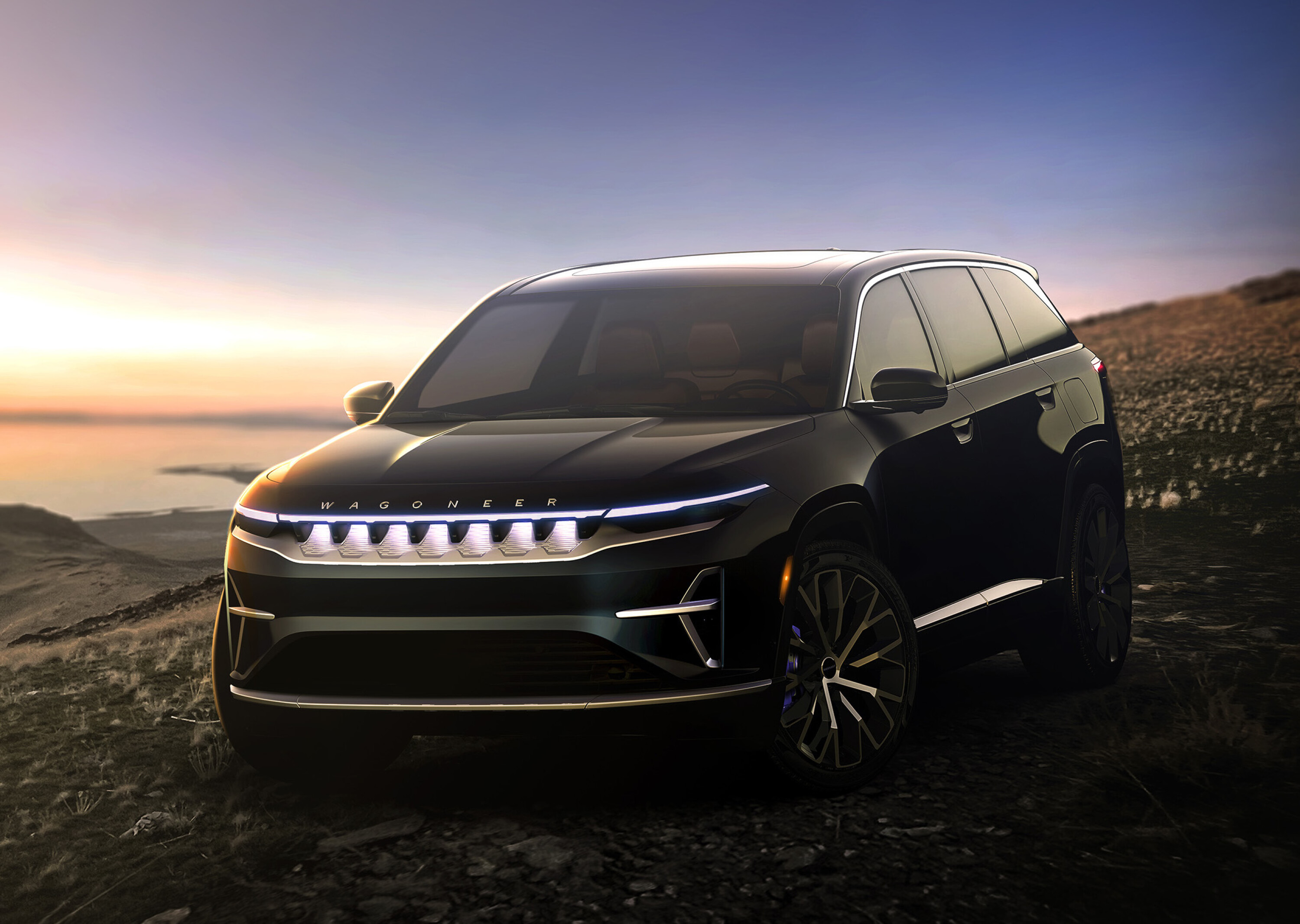
The Wagoneer S is expected to be one of the first new models built on Jeep’s fresh STLA-Large platform, and is actually smaller than the petrol-powered Wagoneer and Grand Wagoneer SUVs that Jeep already sells in America.
Instead, Jeep refers to the Wagoneer S as a ‘mid-size model’ meaning it’ll line-up against the likes of the BMW X5 and fresh Range Rover Sport, as well as other mainstream models with premium aspirations like the Volkswagen Touareg and Mazda CX-60 and CX-90. The bigger Kia EV9 is another competitor playing in the electric family SUV segment.
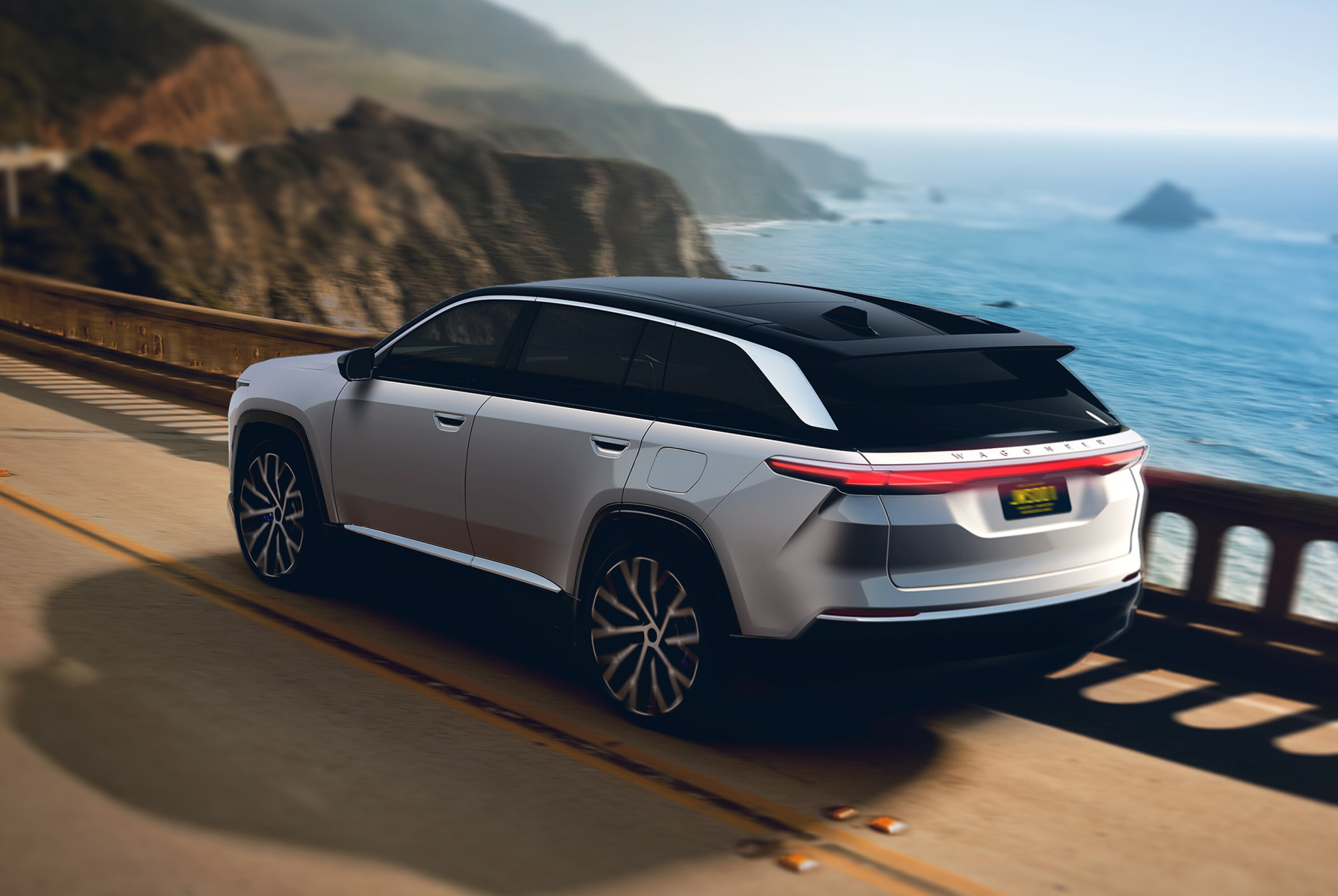
Styling wise the production Wagoneer S is impressively similar to the concept version which was shown in 2022 (pictured throughout). An EV-range of around 400 miles, or 640km, will be offered according to Jeep, however the brand is yet to confirm any details around battery size or recharging speeds.
The Jeep Grand Wagoneer S will begin production in America later this year, with Europe and other markets tipped to commence deliveries in 2025.
Are you excited about Jeep’s incoming EV SUV?
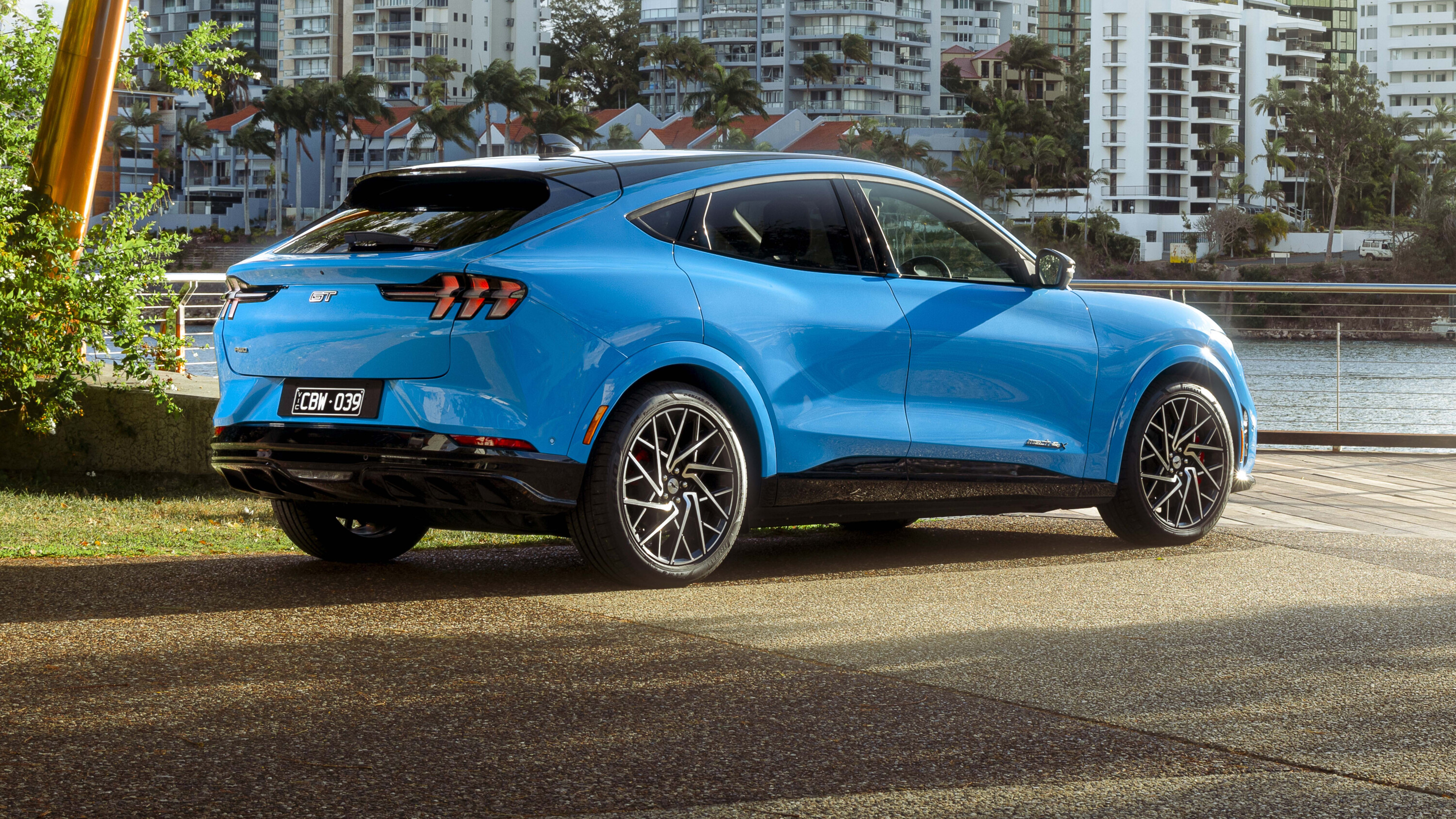
The Ford Mustang Mach-E and Ford E-Transit have become the latest electric cars to benefit from huge price drops.
The Mach-E, which has already had its pricing slashed once this year, is now between $7000-$8000 less expensive than before.
Pricing now kicks off at $64,990 for the Mach-E Select (-$8000), while the mid-spec Premium is $79,990 (-$7000). The flagship Mach-E GT has also had its price dropped by $7000 and has a new MSRP of $97,990
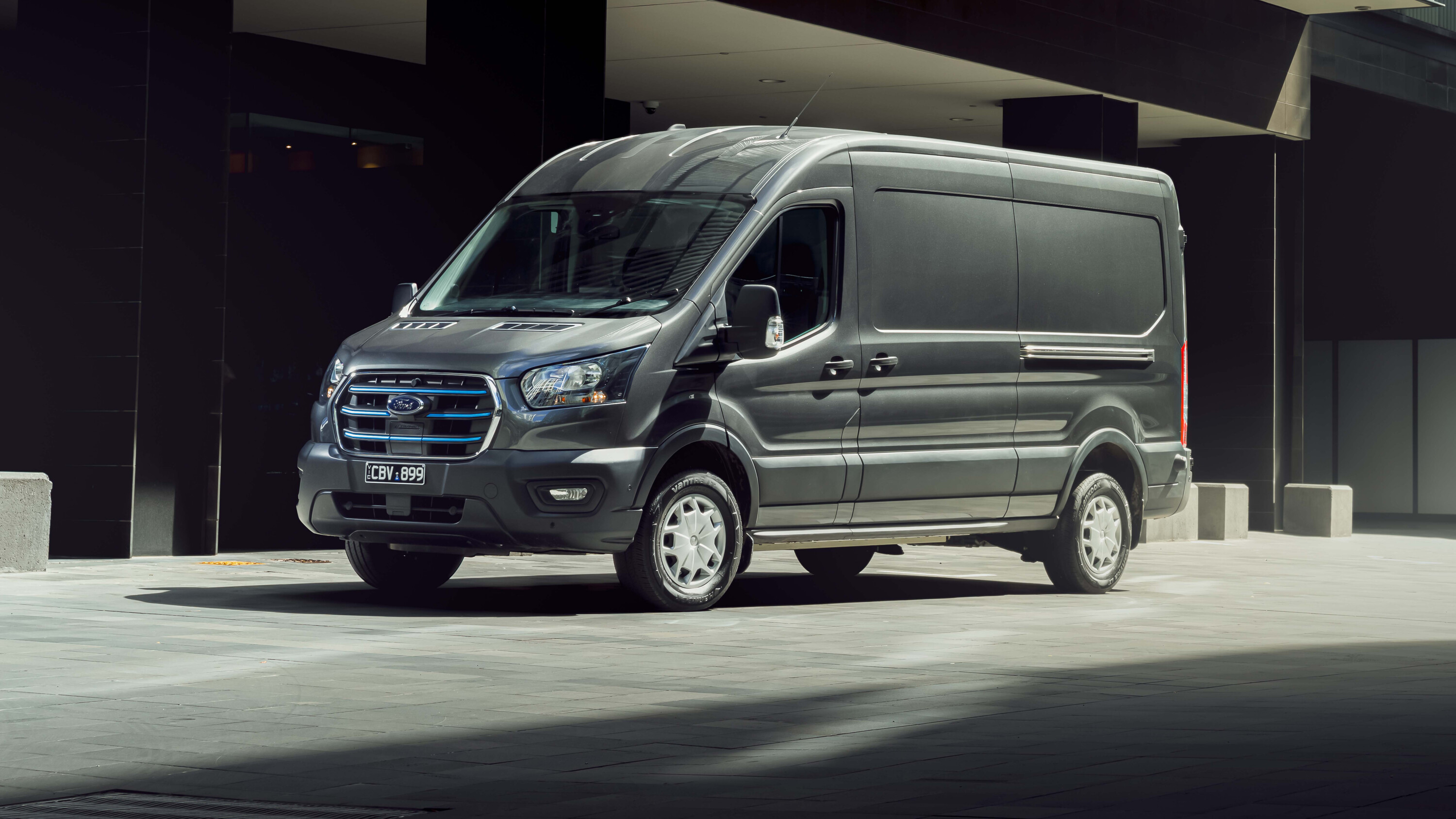
The E-Transit electric van, meanwhile, has come in for an even bigger price drop. Its fresh list price of $89,990 is a $15,000 saving.
“These MLP price reductions offer even greater value to our customers and it makes these great vehicles an option for more people,” said Andrew Birkic, President and CEO of Ford Australia and New Zealand.
Sales of the Ford Mustang Mach-E have been slow so far in 2024. Ford sold 42 Mach-E models in April this year and has an annual total of 223 units in total for the calendar year.
That’s about on par with the Hyundai Ioniq 6 (37 for April/133 for the year) but well below the Hyundai Ioniq 5 which has sold 133/357 respectively and the fresh Toyota bZ4X (74/385).
The Tesla Model Y dominates the segment with sales of 1166 units in April and 2095 for the calendar year.
The diesel is not dead yet – far from it. Australians bought 379,512 diesels in 2023, with the best-selling vehicle – the Ford Ranger – predominantly diesel powered.
Sales of diesel-powered SUVs and light commercial vehicles increased in the first quarter of 2024, too, with total diesel volume up 13.8 per cent over that period.
Here’s what car makers hope will keep diesel-power front and centre of Australia’s sale charts in 2024 and into 2025.
Jump Ahead
- BMW X3
- Ford Tourneo
- Ford Transit
- GWM Cannon Alpha
- Ineos Quartermaster Chassis Cab
- Kia Tasman
- Mazda CX-70
- Mazda CX-80
- Nissan Navara
- Toyota LandCruiser Prado
- Volkswagen Multivan
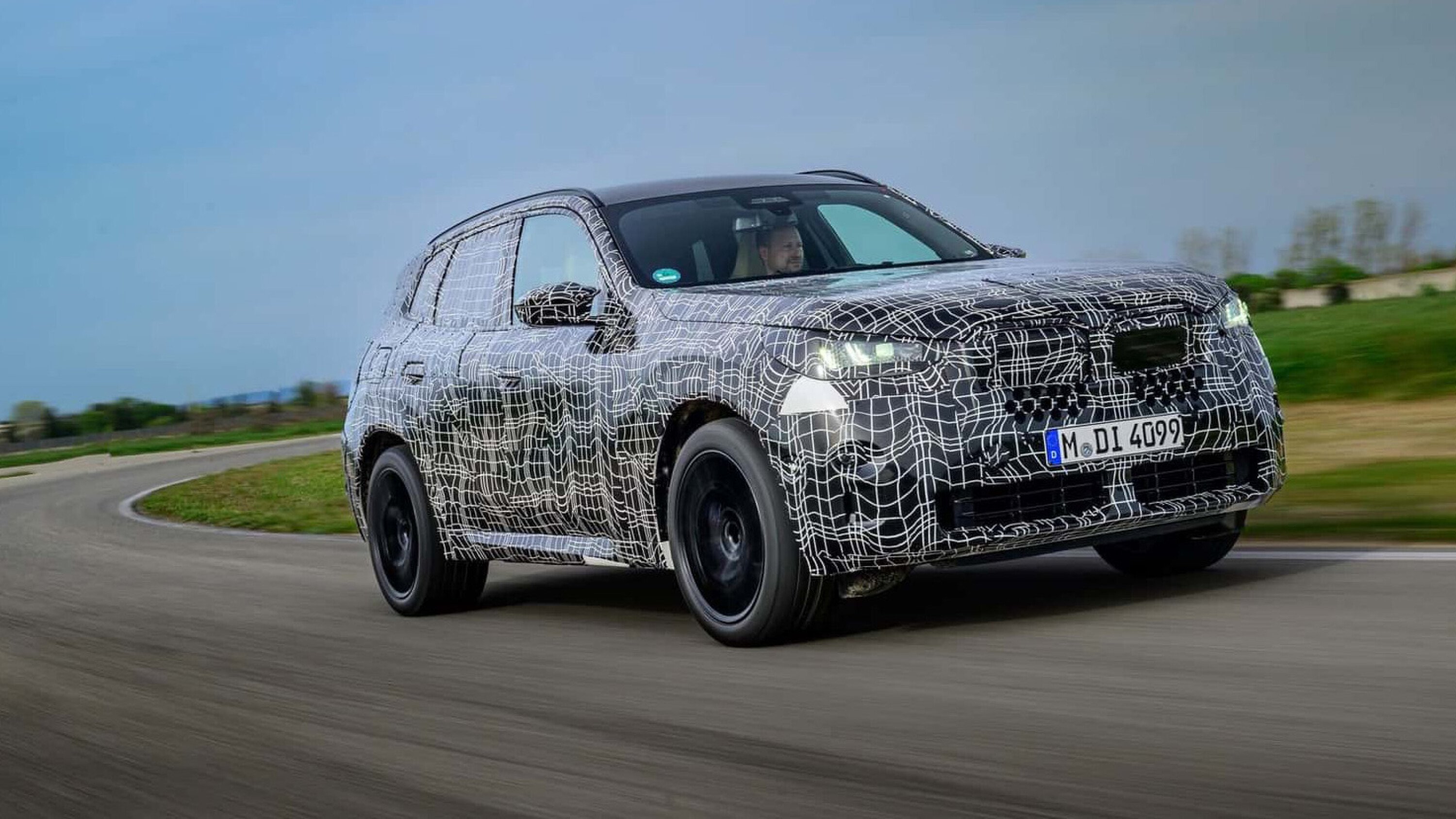
BMW X3
The next-generation BMW X3 SUV will be unveiled mid-2024 before making its showroom start in 2025.
We know it will be bigger, more aerodynamic and with further safety tech, and while we don’t know powertrain specifics, plug-in hybrid and electric versions are still likely to be joined by a diesel engine.
BMW currently sells the outgoing X3 locally in both diesel and hybrid form, and the company hasn’t set an ‘end of internal combustion’ deadline for its global production just yet.
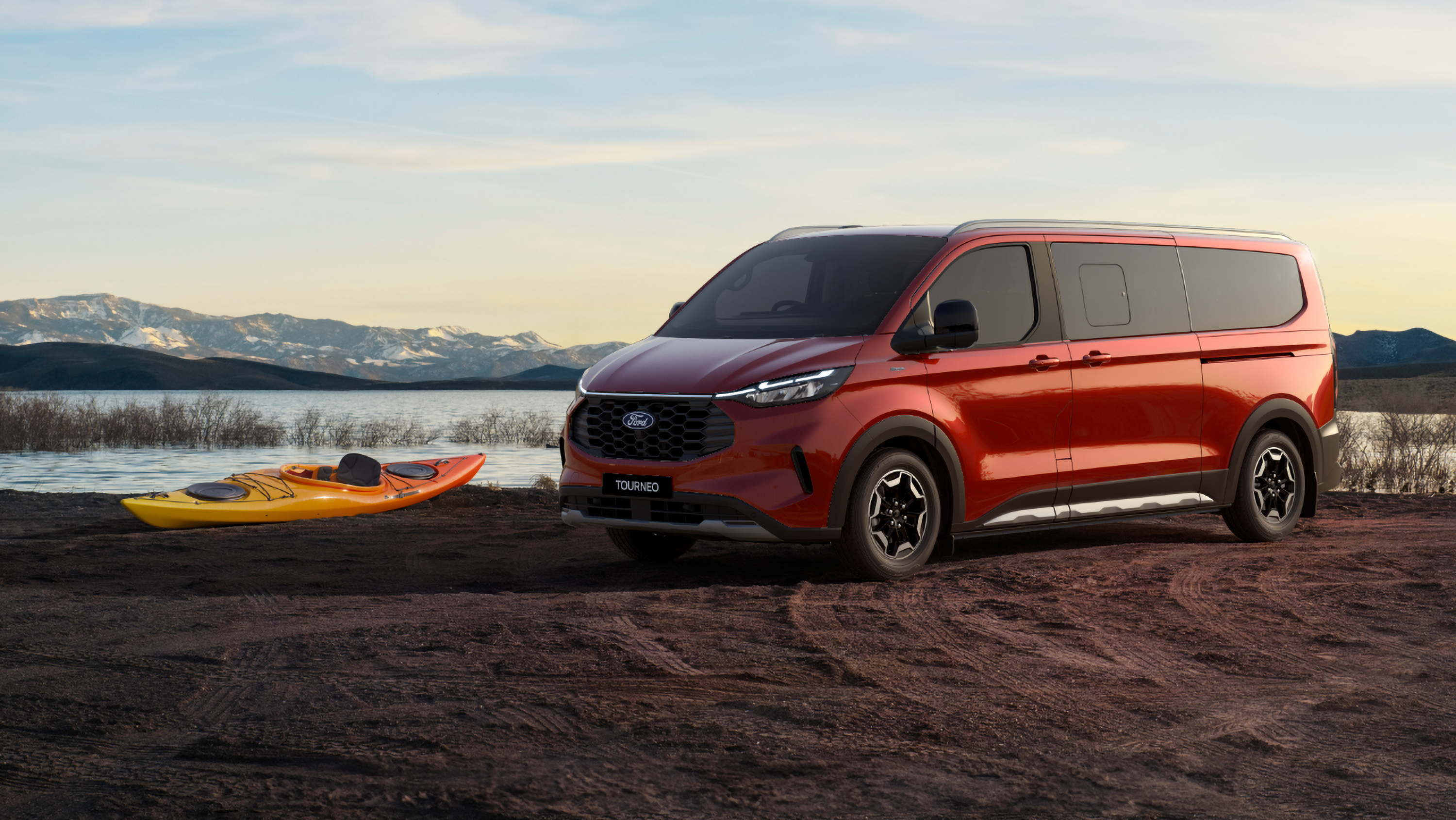
Ford Tourneo (Q4 2024)
Ford Australia is bringing the passenger version of the Transit to Australia for the first time, priced from $65,990 when it arrives in Q4 2024.
With eight seats – with the second and third row able to be folded flat or removed completely – the Tourneo adds a layer of civility to the already competent Transit as well as mod-cons pitched at families.
It shares the Transit’s 2.0-litre turbodiesel four-cylinder – also found in the Ford Ranger – with an eight-speed auto, but will miss out on the hybrid and electric versions offered elsewhere for the time being.
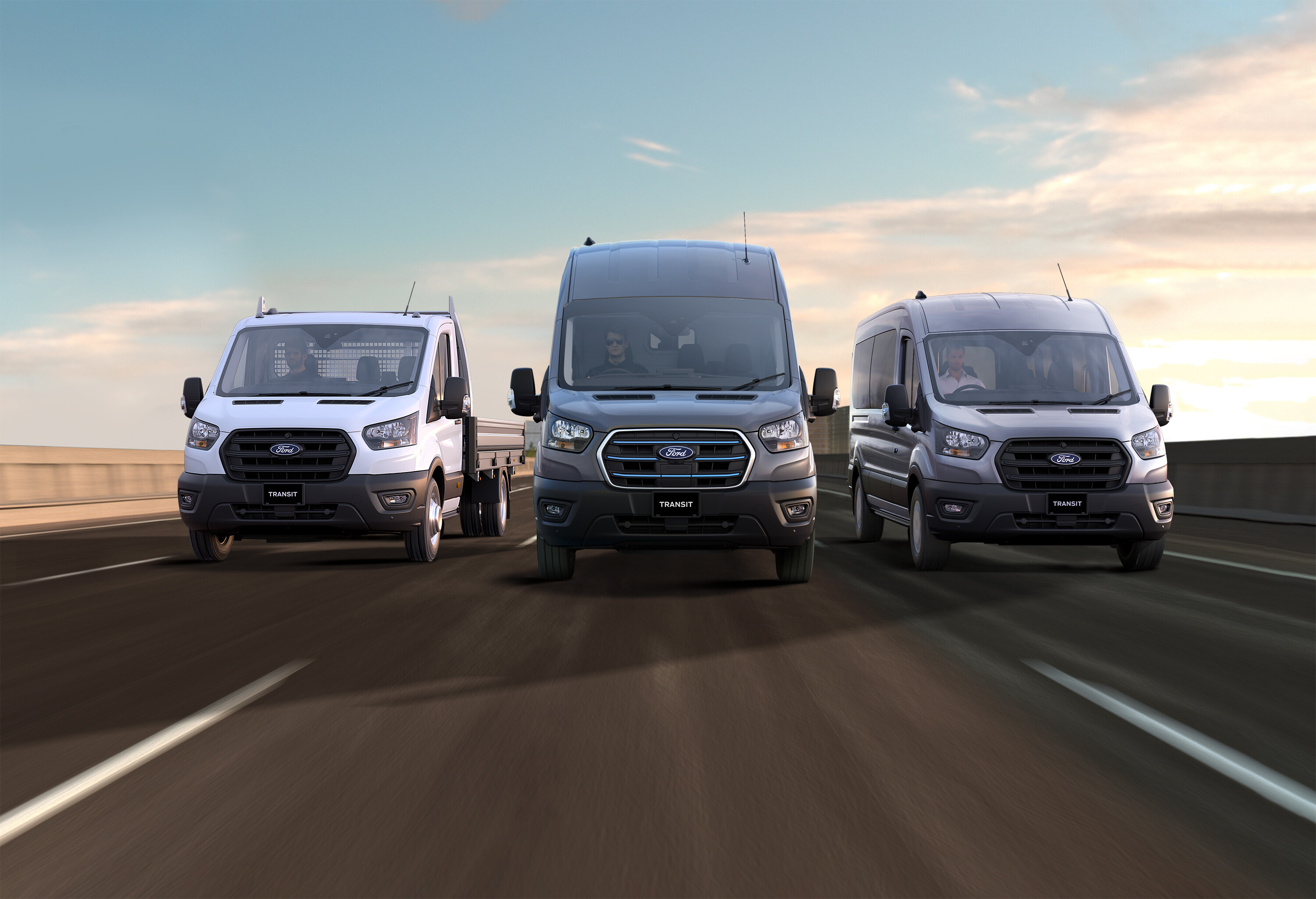
Ford Transit MY2024.75
The updated version of the world’s best-selling van is scheduled for November 2024 with a pared back range and higher starting price.
The manual versions have been dropped – so the $59,990 plus on-roads front-wheel driver starter gets an eight-speed auto in place of the old six-speeder – while the rest of the range is rear-drive.
The 125kW/390Nm 2.0-litre turbodiesel four-cylinder is unchanged across the line-up – let’s ignore the EV flagship for now – with payloads, GVM and towing increases on most versions.
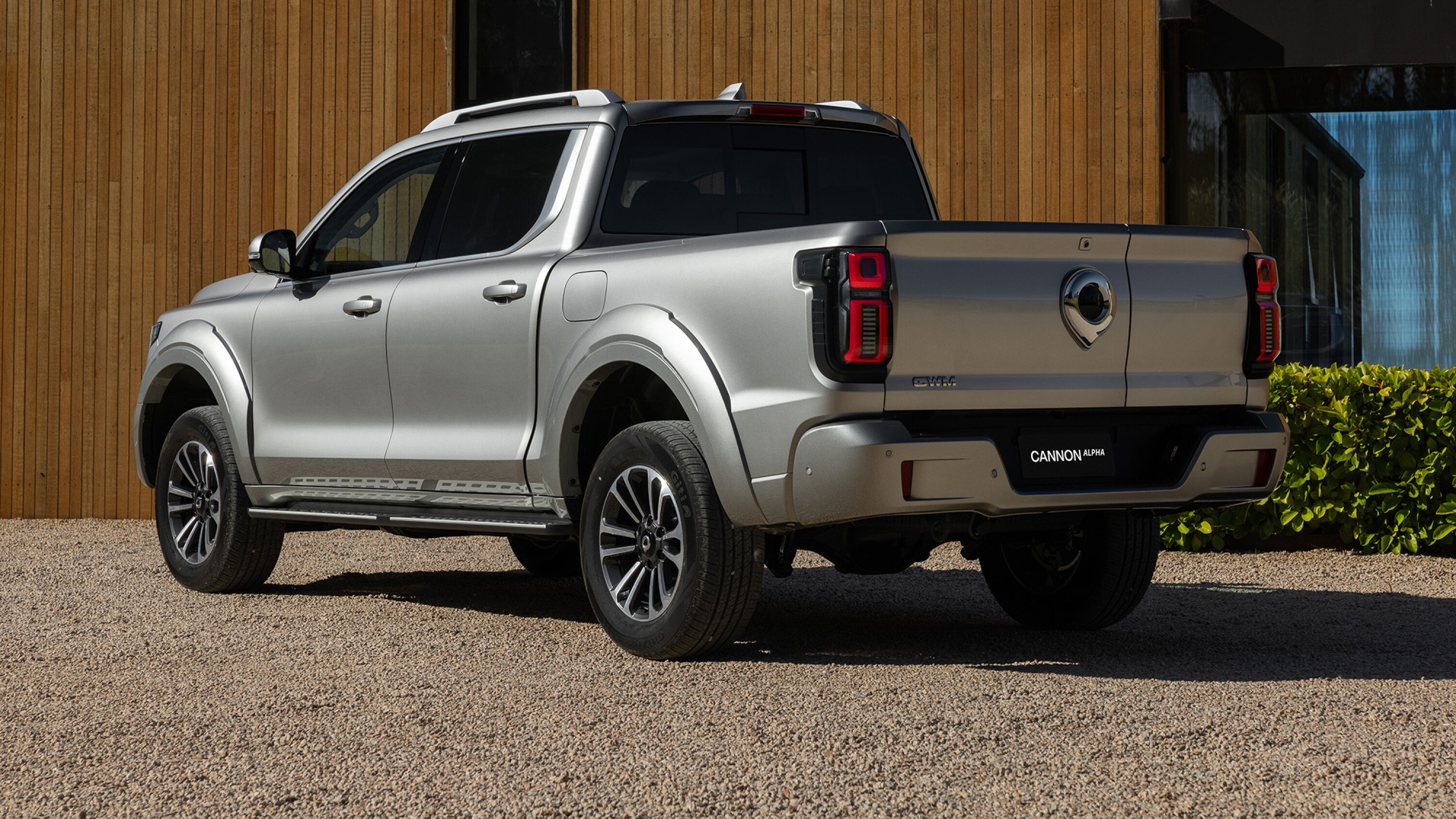
GWM Cannon Alpha
The GWM Cannon ute will get a hybrid – but the diesel will offer greater pulling power, payload and towing capability for a lower asking price.
The $51,990 driveway entry-level Cannon Alpha Lux uses a 135kW/480Nm 2.4-litre turbo-diesel and nine-speed automatic with an 821kg payload against the 255kW/648Nm ‘Ultra’ petrol-hybrid model’s 760kg.
Both diesel and petrol-hybrid come with claims of 800mm water wading, 3500kg braked tow rating, 6555 GCM and 800mm water wading capability.
Yet on paper, the diesel is nearly a litre better on fuel – 9.8L/100km for the hybrid against the diesel’s 8.9L/100km.
It’s also offered in either the base Lux or Ultra spec, the Ultra diesel costing $57,990 driveaway, while the hybrid is only sold in Ultra trim at $64,990.
Even as an entry-level diesel, the Lux also offers a suite of standard tech including a 12.3-inch centre display, wireless Apple CarPlay and Android Auto, reversing camera and adaptive cruise control, as well as seven airbags.
Ineos Quartermaster Chassis Cab
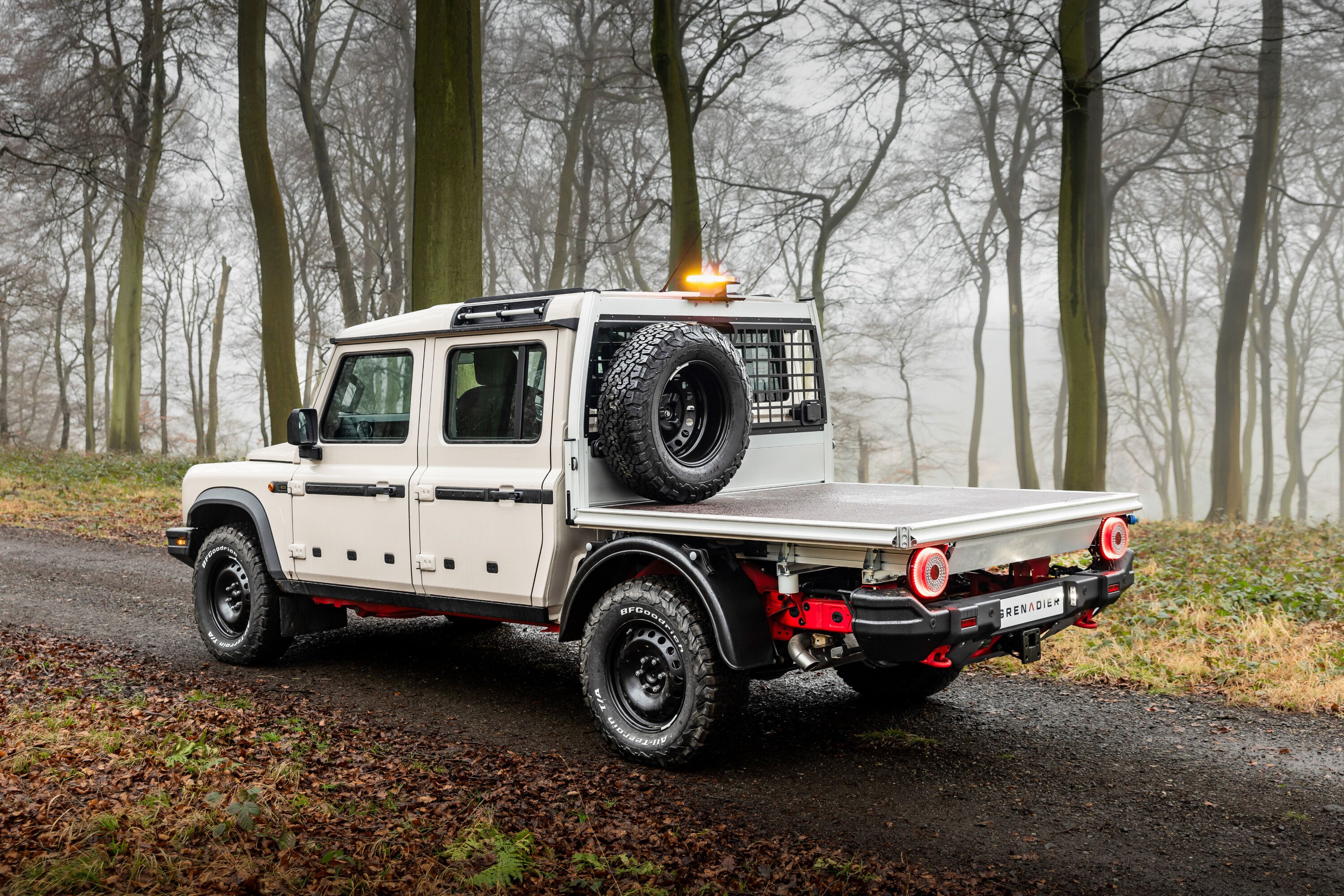
The unashamedly back-to-basic ruggedness of the Grenadier – a contemporary interpretation of the Range Rover Defender – will arrive in Australian showrooms in Q3 2024 as a dual cab-chassis utility.
It uses the same long wheelbase as the Quartermaster pick-up already on sale – matching its 5440mm overall length – to accommodate a rear tray above its torsion-beam, coil-spring rear end.
There’s still five seats and the same choice of diesel and petrol BMW 3.0-litre engines with an eight-speed auto as the Wagon and Pickup, as well as a proper four-wheel drive set-up.
It’ll be priced at $102,000 without a tray and before on-road costs – making it $7000 less than the cheapest pick-up and $8000 below a five-seat Wagon.
Kia Tasman
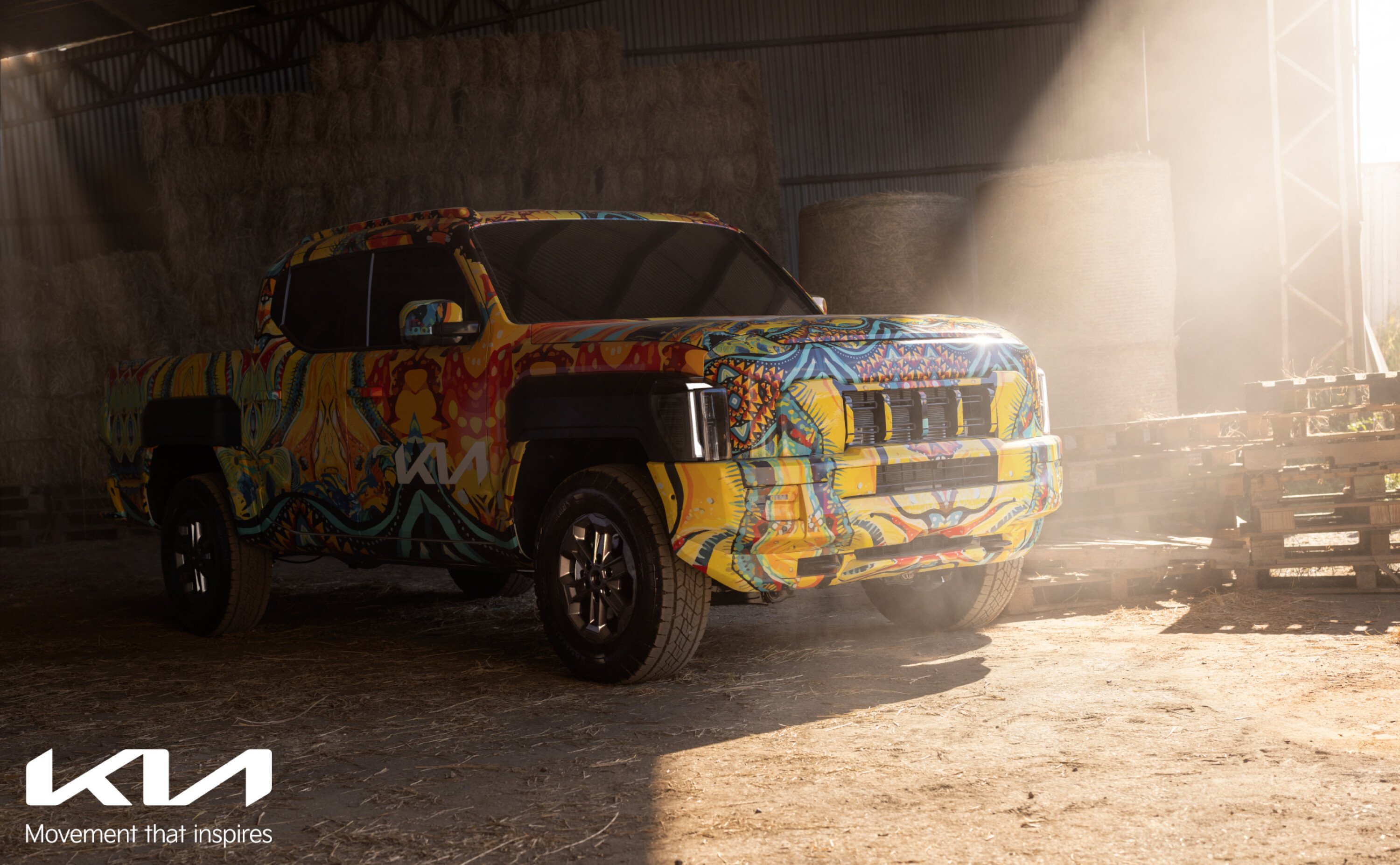
Many Australians know about the Tasman thanks to the clever marketing campaign – assembling countless sporting heroes in a classic pub setting, debating what the new ute should be called.
With its Tasman name in place, can the Kia ute bring capability – and more importantly to pass the real-world pub test in 2025?
In its quest to conquer the Ford Ranger and Toyota HiLux – as well as emerging Chinese rivals – the Tasman will offer larger dimensions, but remain smaller than a Ford F-150.
Engine details are yet to be shared, but Kia’s 2.2-litre turbo-diesel four-cylinder fitted in the Carnival people mover (among others) is a strong candidate.
Mazda CX-70
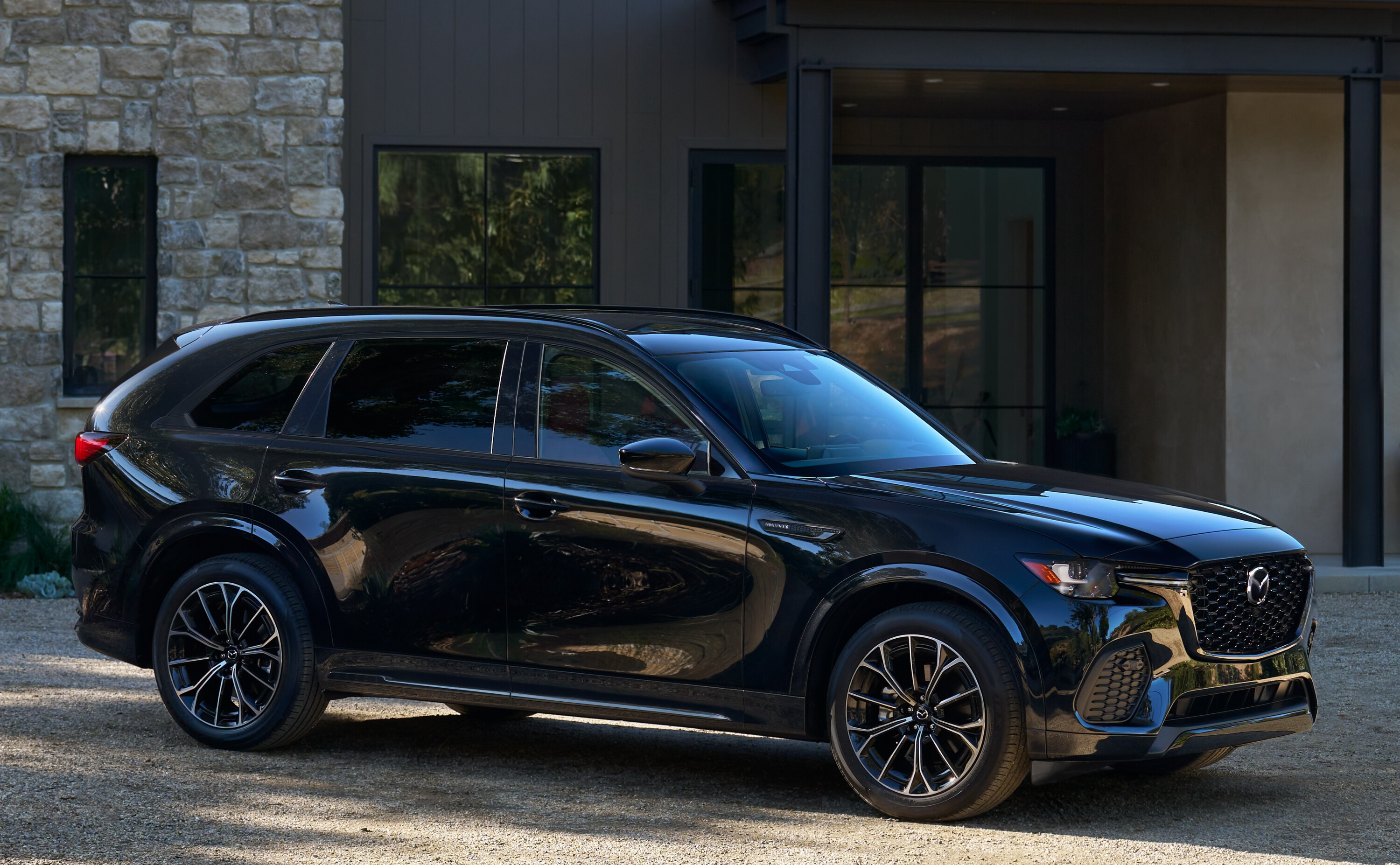
Mazda Australia has confirmed it will bring the five-seat CX-70 SUV to Australia by the end of 2024.
The CX-70 went on sale in the US in early 2024 and is essentially a five-seat version of the three-row CX-90 flagship,. It even uses the same body meaning it has identical external measurements, with negligible differences in the cabin.
A 3.3-litre six-cylinder diesel and petrol engine have been confirmed for Australia – both with 48V ‘mild hybrid’ tech – an eight-speed auto and rear-bias all-wheel drive.
In the US, it’s oddly priced nearly identically to a similarly equipped CX-90, with local pricing yet to be announced.
Mazda CX-80
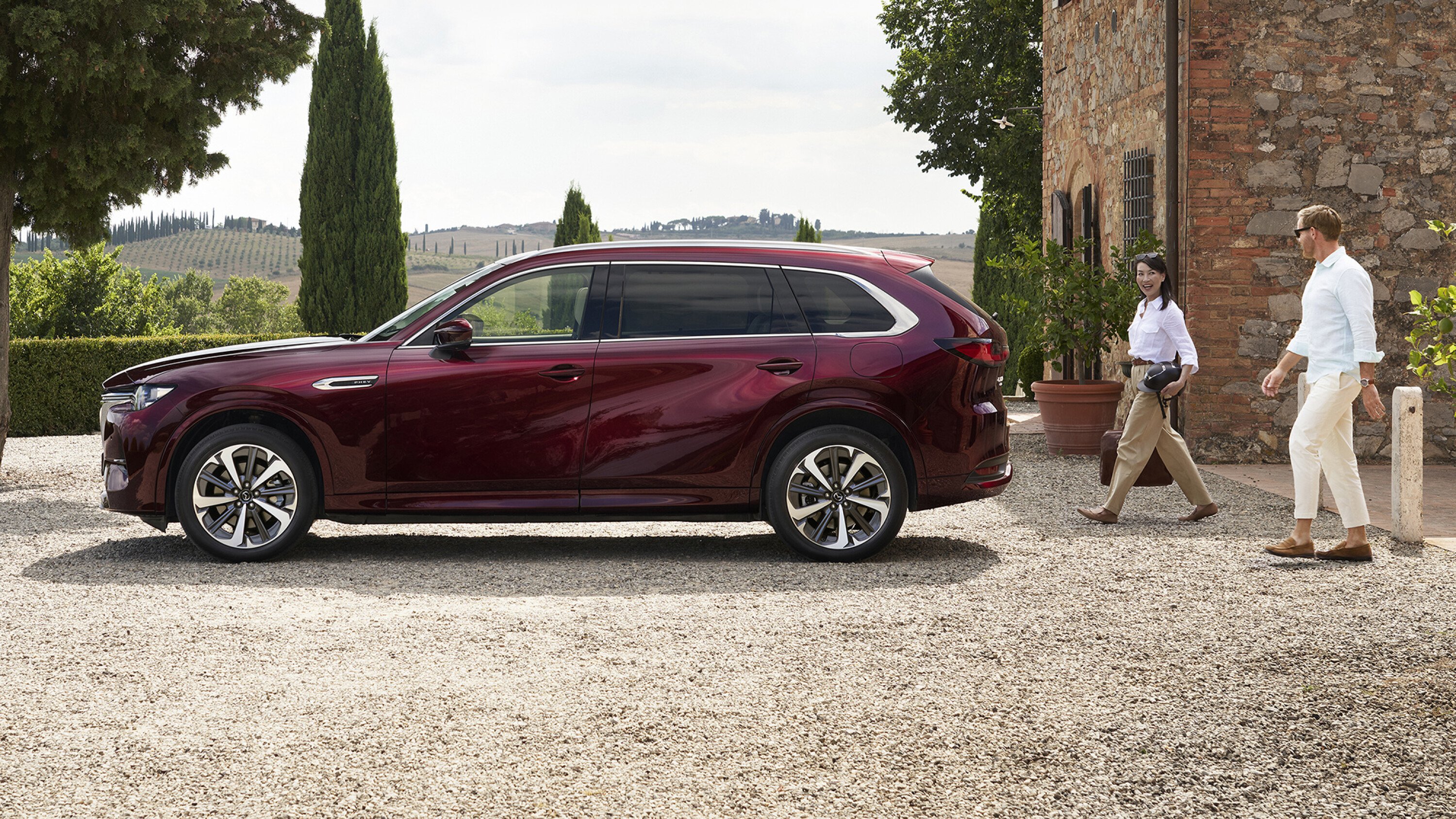
Mazda Australia will offer a plug-in hybrid version of the seven-seat CX-80, but there’s also same 3.3-litre diesel and petrol engines both with mild hybrid tech found under the bonnet of the CX-70.
Think of the CX-80 as a three-row CX-70. Hang on, what’s the three-row CX-90 then?
Mazda Australia’s has admitted there is some ‘overlap’ between all four of its large ‘CX-‘ prefixed SUVs – CX-60, 70, 80 and 90 – with Australia one of the only places to offer all four.
A key difference for the CX-80 is its Europe focus – where the CX-90 targets American buyers – meaning it has a narrower 1890mm-wide body than the CX-90, which spans 1994mm.
The CX-80 is scheduled to arrive in local showrooms by the end of 2024.

Nissan Navara
The new generation Navara has been teased by the Japanese car maker and will be twinned with the latest Mitsubishi Triton launched earlier in 2024.
How much Triton will be in the new Navara remains to be seen – powertrains may differ, as Ford and Volkswagen have done with the Ranger and Amarok twins, which offer different engines on the same core platform.
What may help that is the new Navara’s US berth – where Triton isn’t sold – giving it the sales opportunity to offer more powertrains for a potential alternative to the Mitsubishi’s 2.4-litre turbo-diesel four-pot.
Toyota LandCruiser Prado
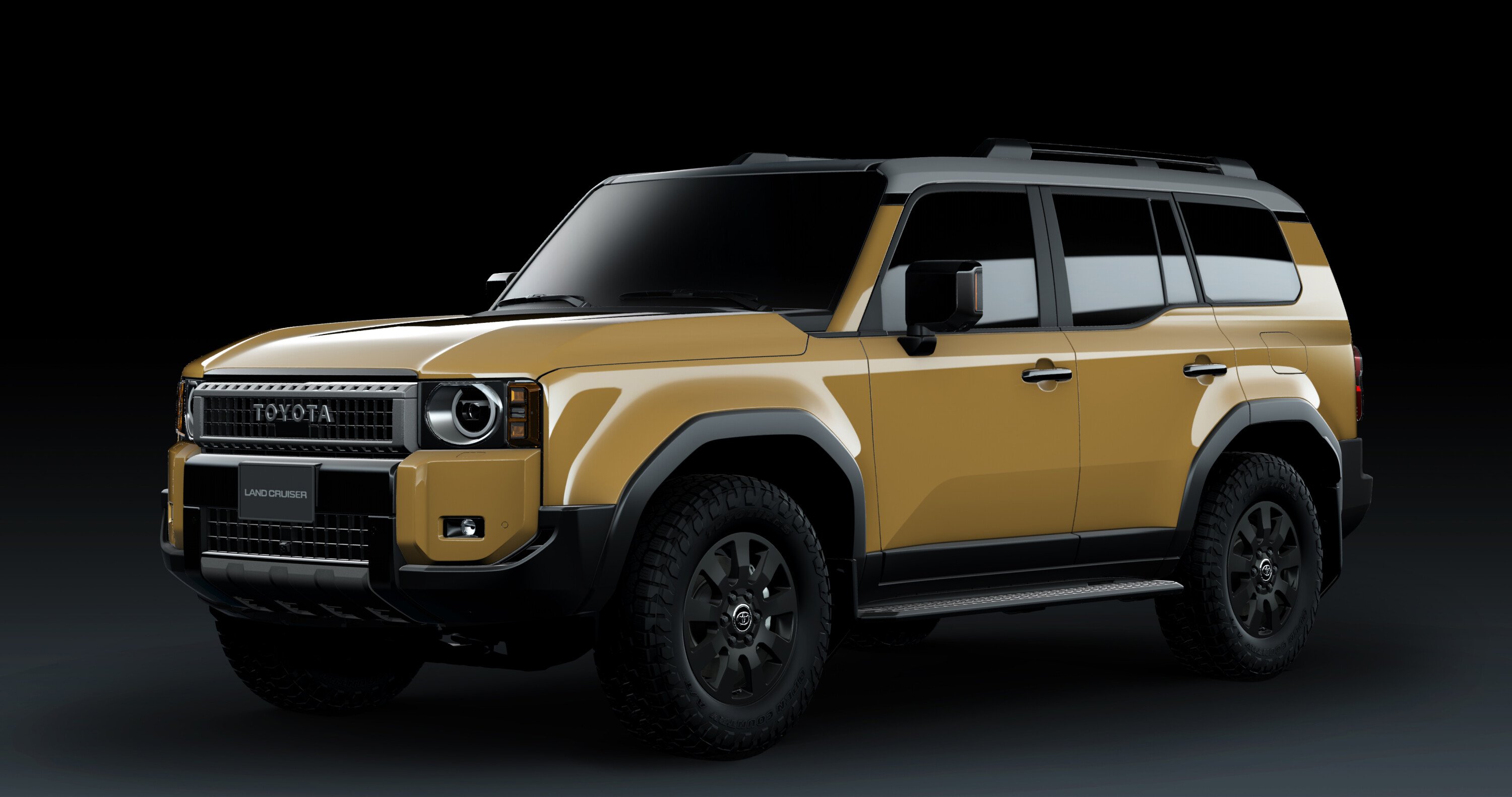
An iconic badge within another, the LandCruiser Prado comes with diesel power – with hybrids likely for Australia too – when the new generation lands in June 2024.
Wrapped in a Minecraft-esque blocky exterior package, the first all-new Prado in 14 years carries over the 2.8-litre turbodiesel four-cylinder and six-speed that also sees service in Toyota’s HiLux and Fortuner here, with a six-speed automatic and of course four-wheel drive.
There’s a Lexus version, too – the GX – but it runs V6 petrol power instead.
Volkswagen Multivan
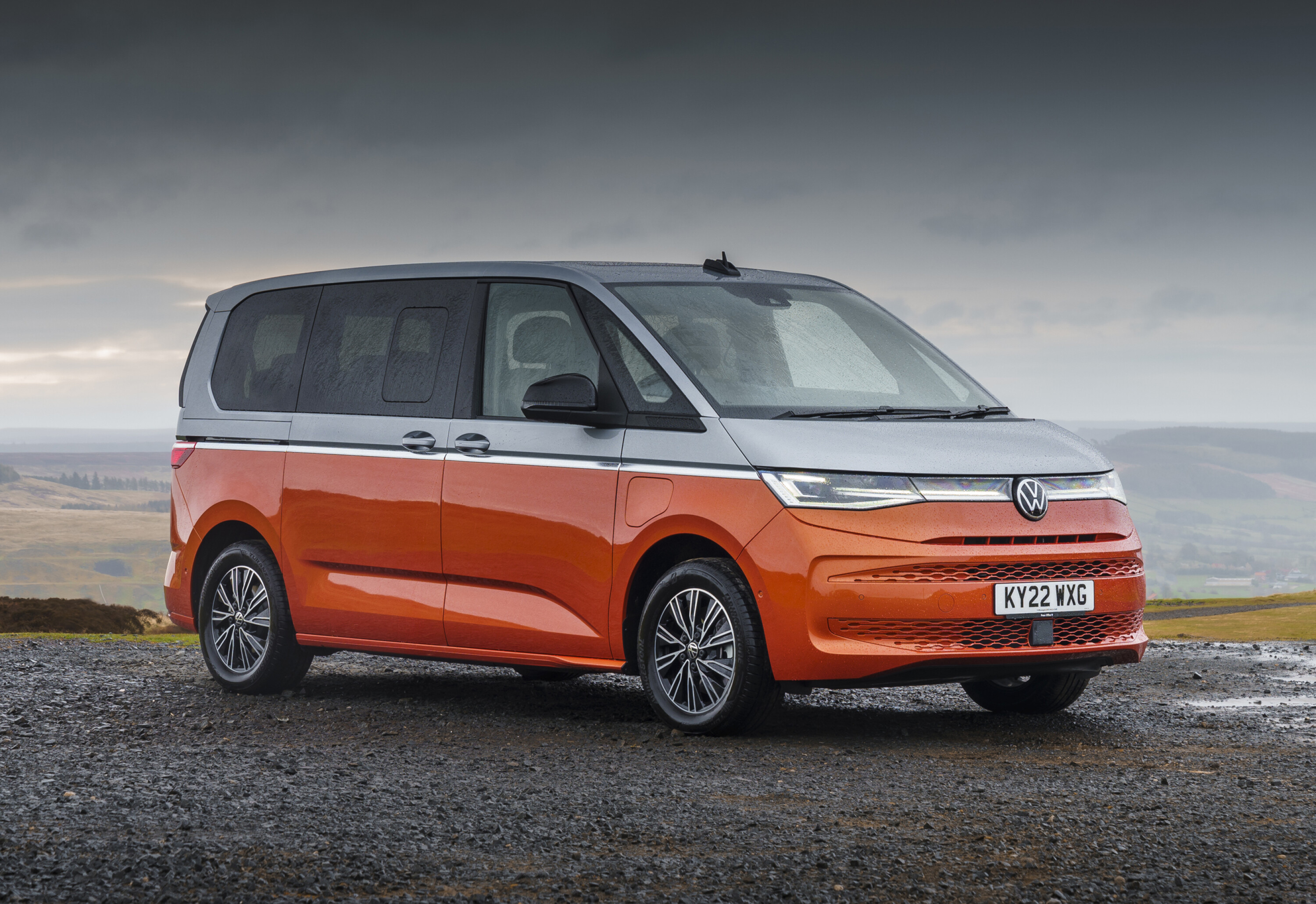
The T7 Volkswagen Multivan switches from van-based underpinnings – the first time it has done so in its seven-decade history – to a more dynamic passenger car-focussed base.
The Volkswagen MQB platform the seven-seat T7 Multivan uses promises car-like handling – literally – in a more refined package slightly smaller than its predecessor.
It’s planned for Australia around September 2024, powered by a carryover 110kW/360Nm 2.0-litre turbo-diesel and seven-speed dual-clutch automatic with front-wheel drive.
Hybrid versions may arrive later – or you could look at the Volkswagen California campervan if your budget can make it.
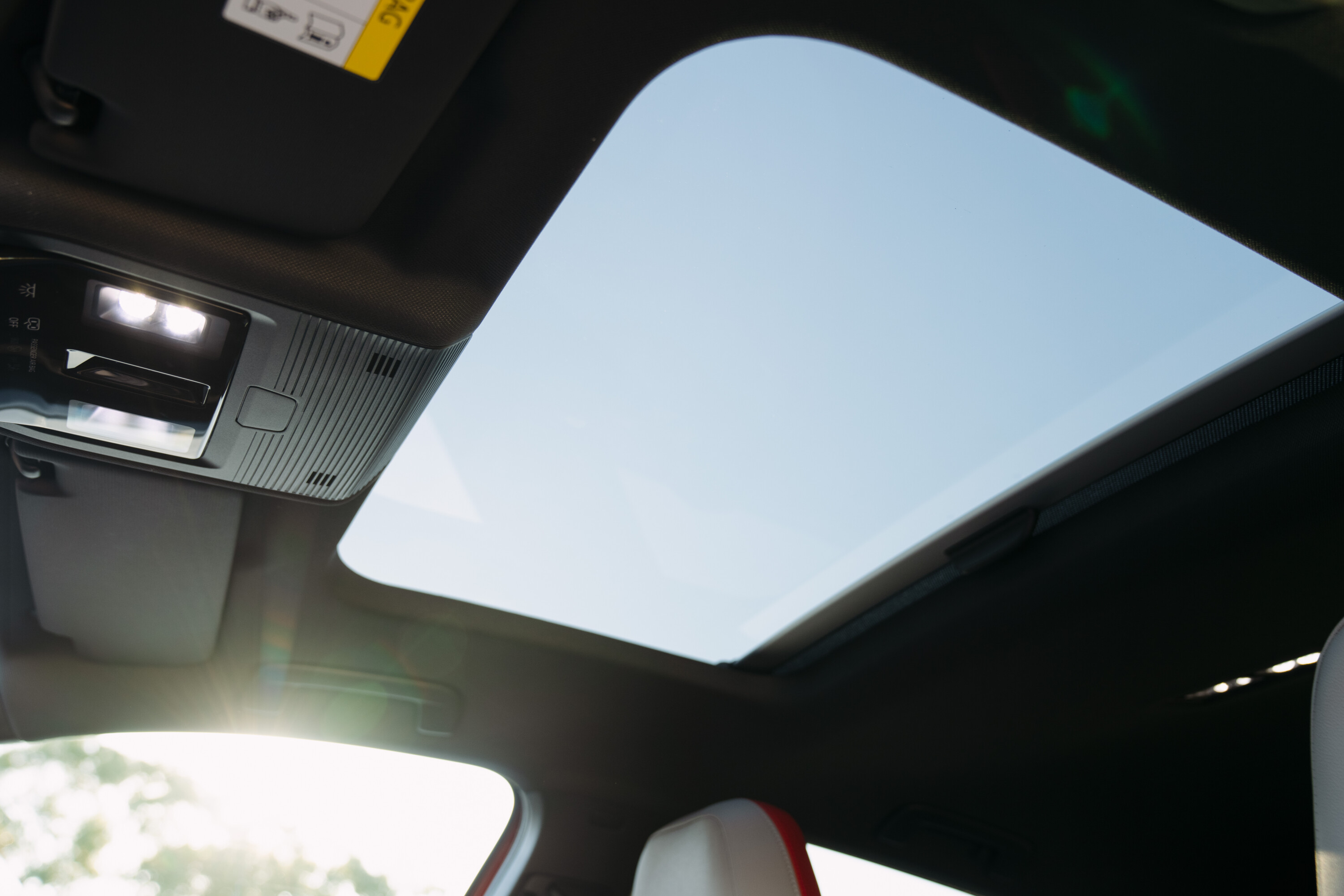
The iconic Volkswagen Golf GTI is set to benefit from sharper drive-away pricing and the inclusion of previously optional equipment as standard for a limited time.
Snapshot
- Volkswagen Golf GTI price dropped to $59,990 drive-away
- Previously optional equipment now included as standard
- VW says the fresh pricing represents a $7,990 saving
- The sharper pricing is available until June 30
Now priced at $59,990 drive-away, the GTI also includes the previously optional Luxury and Sound & Style packages (priced at $4000 and $2600 respectively) as standard, which Volkswagen says represents a $7,990 saving.
Before the price adjustment, a comparably specced GTI would cost $62,690 before on-roads or $67,980 drive-away based on a Sydney postcode.
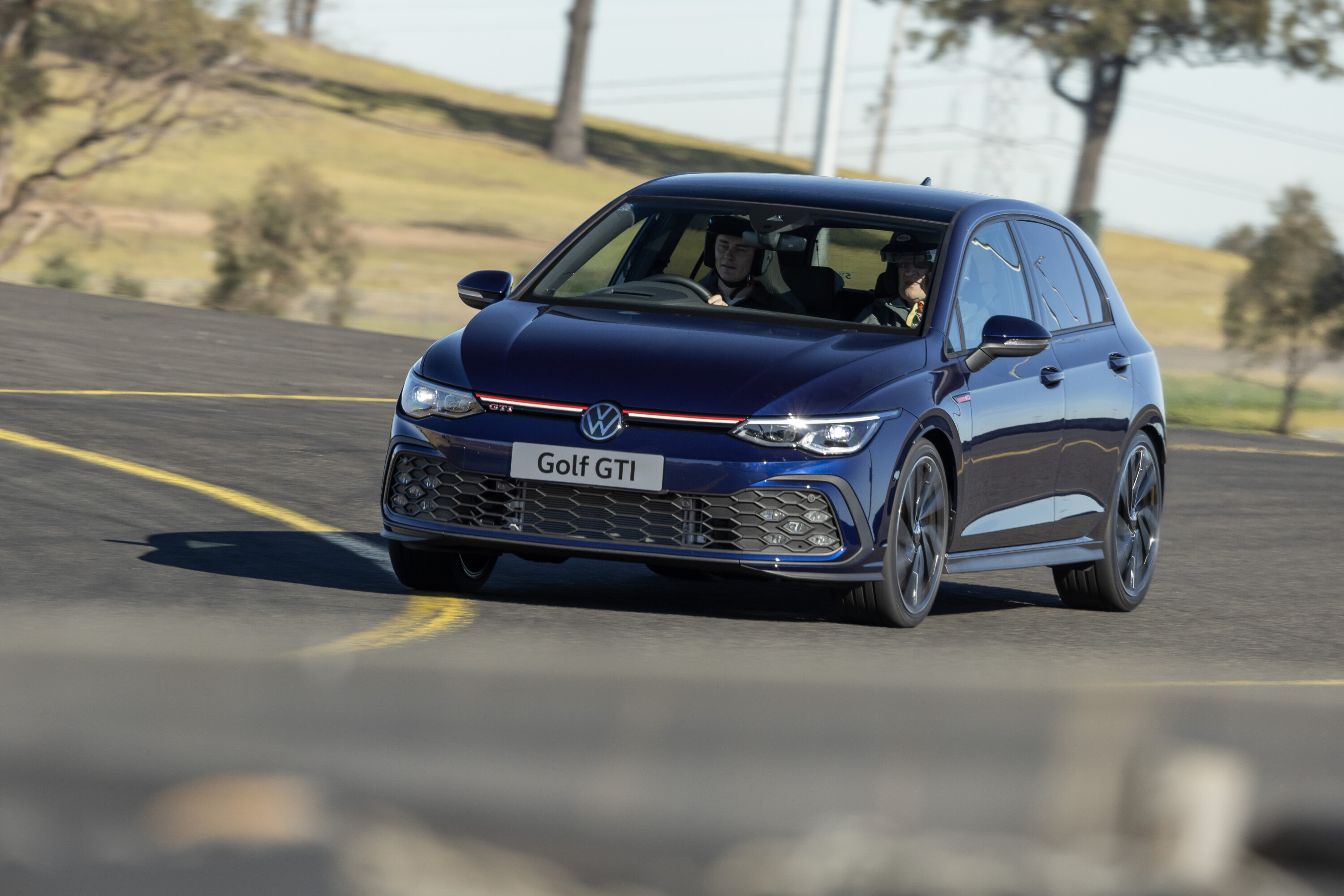
The Luxury package adds a panoramic sunroof, Vienna leather upholstery, heated/ventilated front seats, a heated steering wheel and an electric driver’s seat with memory function.
The Sound & Style pack, meanwhile, brings 19-inch alloys, a head-up display and a premium Harman/Kardon sound system.
The new deal is available until June 30 and includes every colour expect for Kings Red Premium metallic, which carries an additional $300 charge.
Volkswagen says improved supply is a driver behind the price drop as it looks to meet high demand for its renowned hot hatch.
“Increased production availability of the Golf GTI allows us to finally meet the demand for our quintessential hot hatchback, and we want to accelerate its appeal with a special, fully loaded $59,990 drive-away offer,” said VW Passenger Vehicles head of product Michelle Rowney.
“The Golf GTI doubled its sales last year compared with 2022, emphasising how this Volkswagen is still going from strength to strength.”
Volkswagen moved 693 units of the Golf GTI in 2023, up from 370 the year before. Constrained supply has limited sales so far in 2024, with only 57 units sold to April, however an additional 400-500 units are on track to arrive later this year.
Compared to key rivals, the freshly priced GTI is still slightly more than an automatic Hyundai i30 N ($54,315 drive-away) but substantially less than the manual-only Toyota Corolla GR GTS ($64,190 drive-away) and the Honda Civic Type R ($73,600 drive-away).
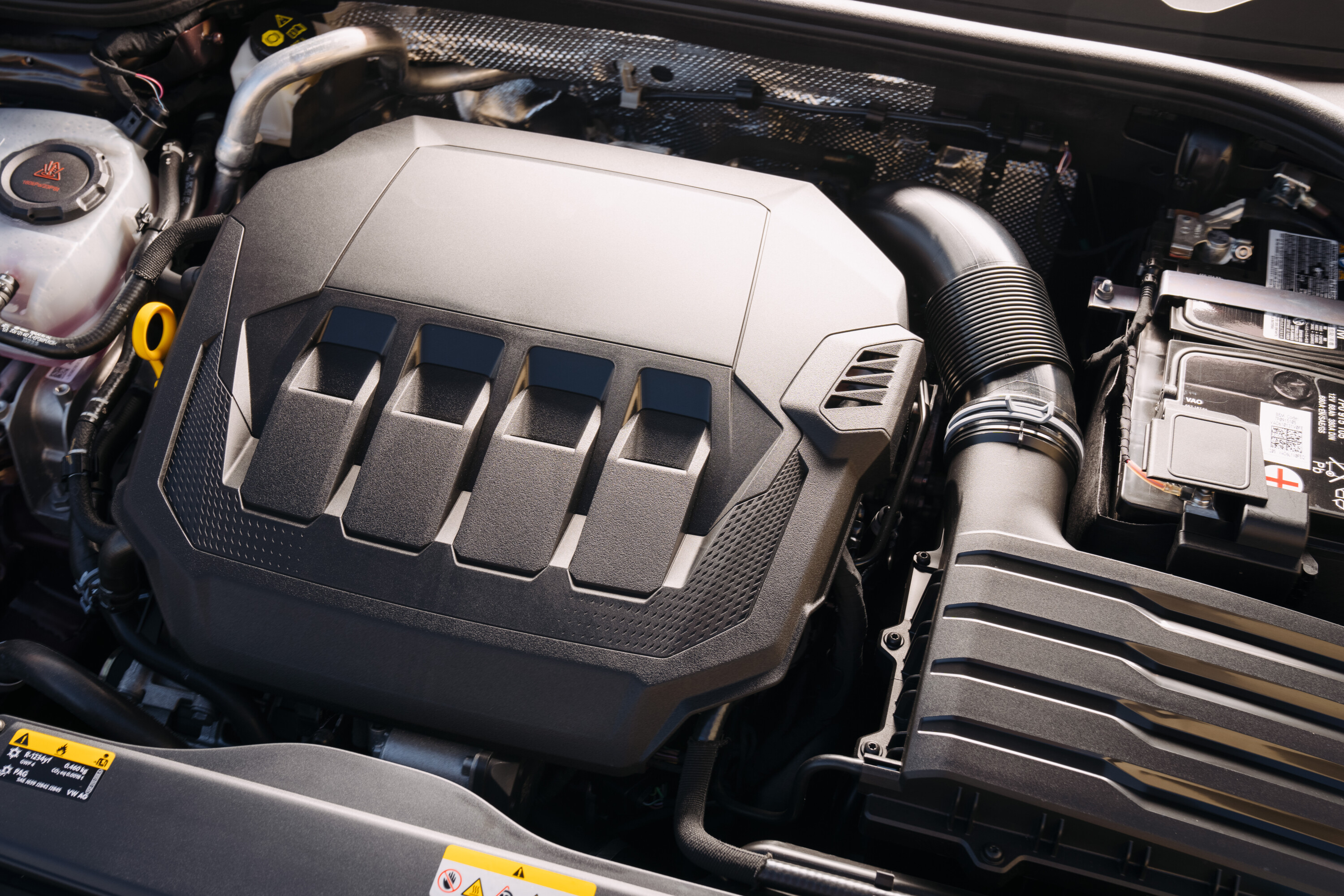
While its value proposition has been tweaked, the GTI’s mechanicals remain unchanged and combine a 180kW/370Nm 2.0-litre ‘EA888’ four-cylinder turbo with a 7-speed dual-clutch auto. As ever, the GTI is front-wheel drive and Aussie cars are armed with a Vehicle Dynamics Manager (VDM) which oversees the stability control, adaptive dampers, and the limited-slip differential to optimise driving dynamics.
The Volkswagen Golf GTI comes with a five-year, unlimited kilometre warranty.
The 2025 BMW 5 Series line-up will expand in Australia with the addition of a new diesel variant.
Set to arrive between October and December, the diesel version of the new ‘G60’ 5 Series will be offered in 540d xDrive all-wheel-drive sedan form to replace the rear-wheel-drive ‘G30’ 530d last offered in 2023.
The previous BMW 530d sedan and wagon were used by some police fleets across Australia for highway patrol duties – in addition to BMW X3, BMW X5 SUVs and cars from Kia, Volkswagen, Skoda or Chrysler – following the end of Holden Commodore and Ford Falcon production.
It is unclear if police forces will consider the new 540d, nor if a 540d Touring wagon will become available.
“We are confident the new 540d xDrive, with its vast range of abilities, will appeal to a wide audience,” said a BMW Australia spokesperson.
The 2025 BMW 540d xDrive will join the petrol-powered 520i entry model and the forthcoming M5 performance model with a plug-in hybrid V8 in the new 5 Series line-up – along with the all-electric i5 line-up.
i5 models available in Australia include the eDrive40 and M60 xDrive sedans, and the M60 xDrive Touring wagon.
The 540d features a 223kW and 670Nm 3.0-litre mild-hybrid inline-six turbo-diesel – up 28kW and 50Nm over the previous 530d – and is matched to an eight-speed torque-converter automatic transmission. It has a claimed 5.2-second 0-100km/h sprint time.
The 48-volt mild-hybrid system can deliver up to 13kW and 200Nm of boost to the engine, and also serves as the starter motor.
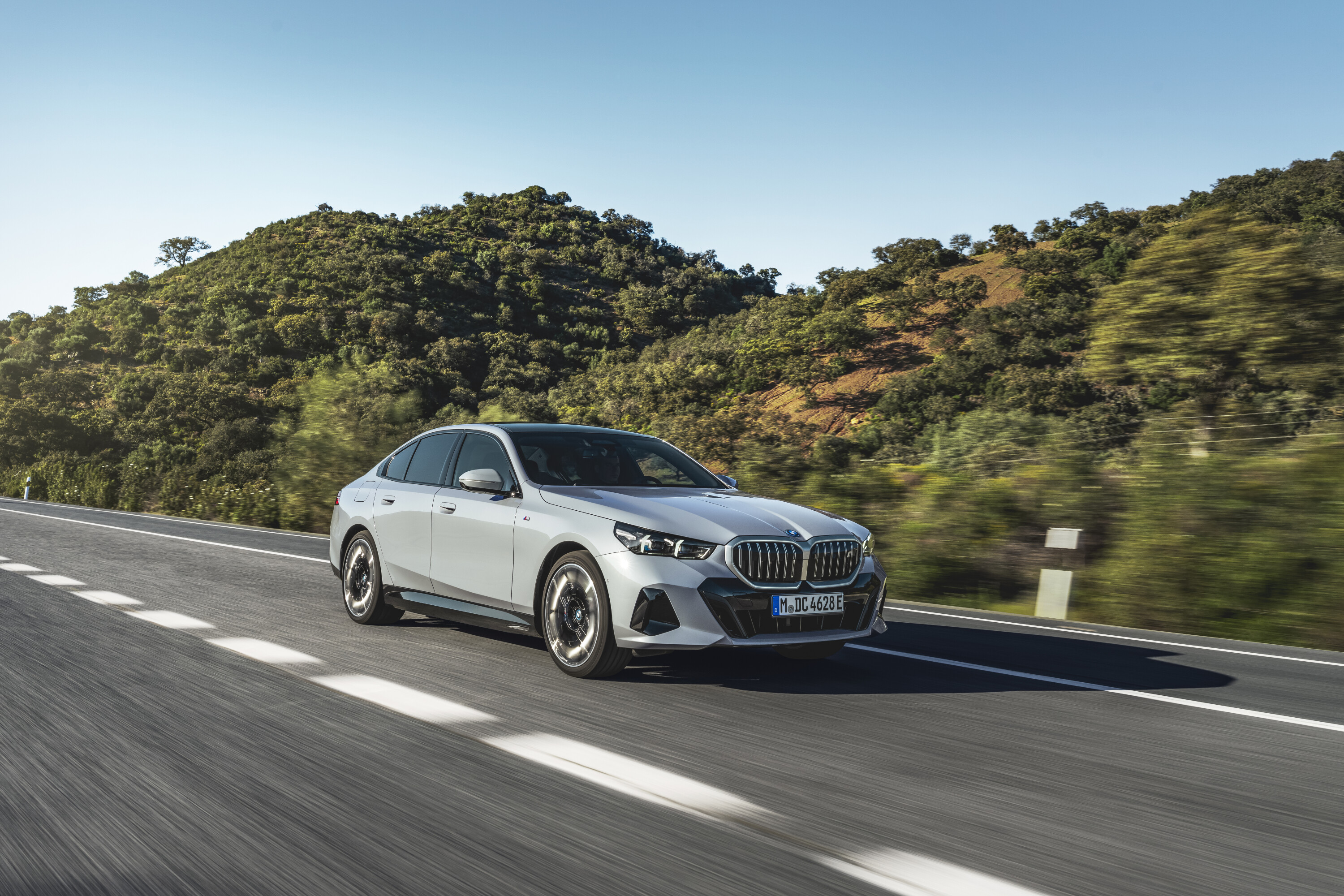
BMW Australia has confirmed the 540d will be fitted with the M Sport styling package with standard equipment including 20-inch alloy wheels, metallic paint, an illuminated grille, matrix LED headlights with adaptive high beam, leather upholstery and a 655-watt Bowers & Wilkins surround-sound audio system.
Full details for the 2025 BMW 540d – including pricing and features – will be confirmed in July ahead of its arrival in local showrooms between October and December.
VFACTS new-car sales data reveals 231 examples of the BMW 5 Series have been sold in Australia to the end of April – up 110 per cent over the same time in 2023 – compared to 77 Audi A6s, 55 Mercedes-Benz EQEs and 39 Mercedes-Benz E-Classes, with the latter model in runout ahead of a new-generation that went on sale this month.
The 2025 BMW 3 Series and 2025 BMW M3 have been unveiled with styling revisions and new technology.
Following a mid-life update – known as a Life Cycle Impulse for BMW vehicles – for the 3 Series sedan and wagon in 2022, and the addition of a new curved infotainment system for the M3, both vehicles have now received further updates.
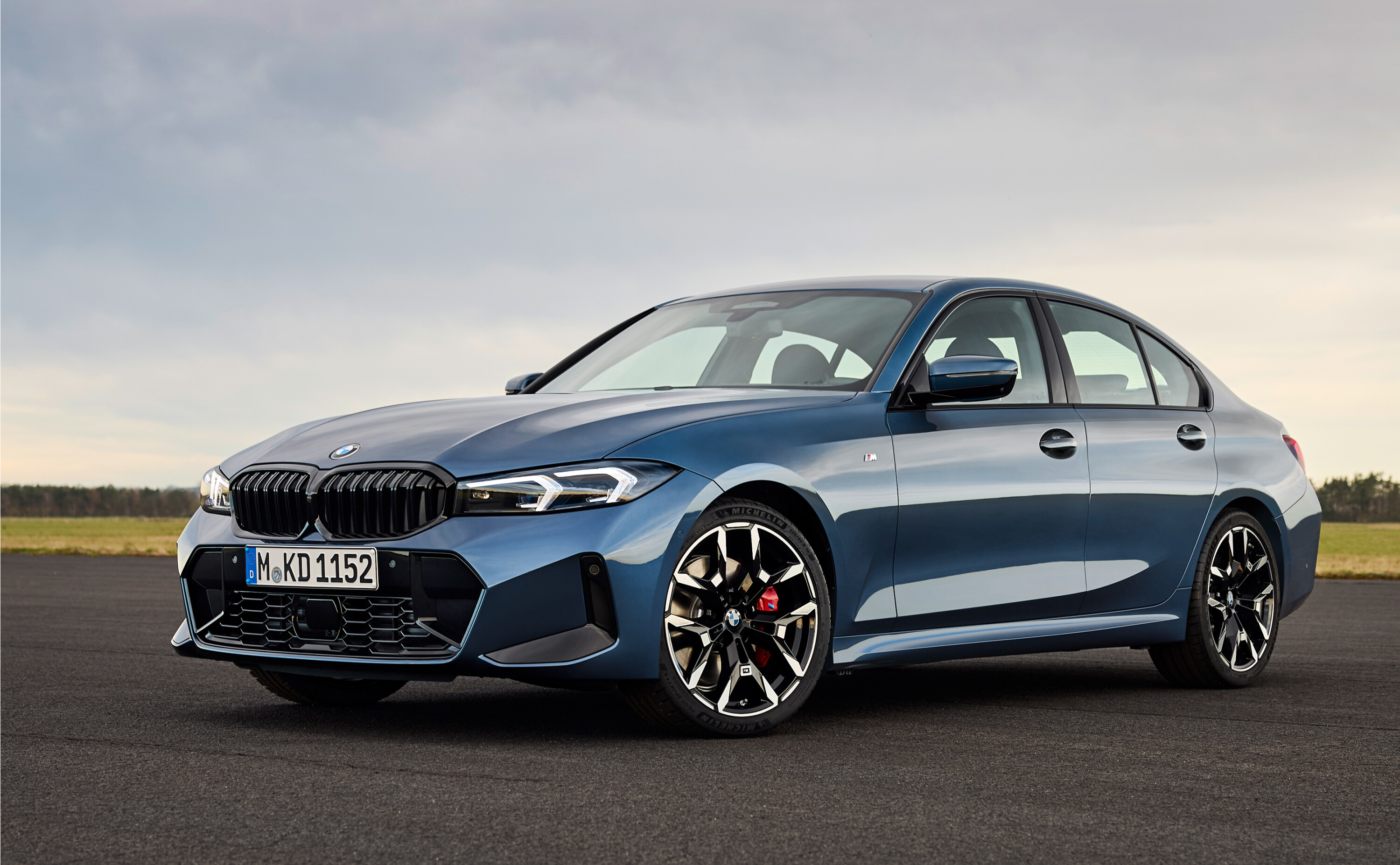
Exterior design revisions for the 3 Series are limited to redesigned 19-inch lightweight alloy wheels for the M Sport package and two new metallic paint finishes: Arctic race blue and fire red.
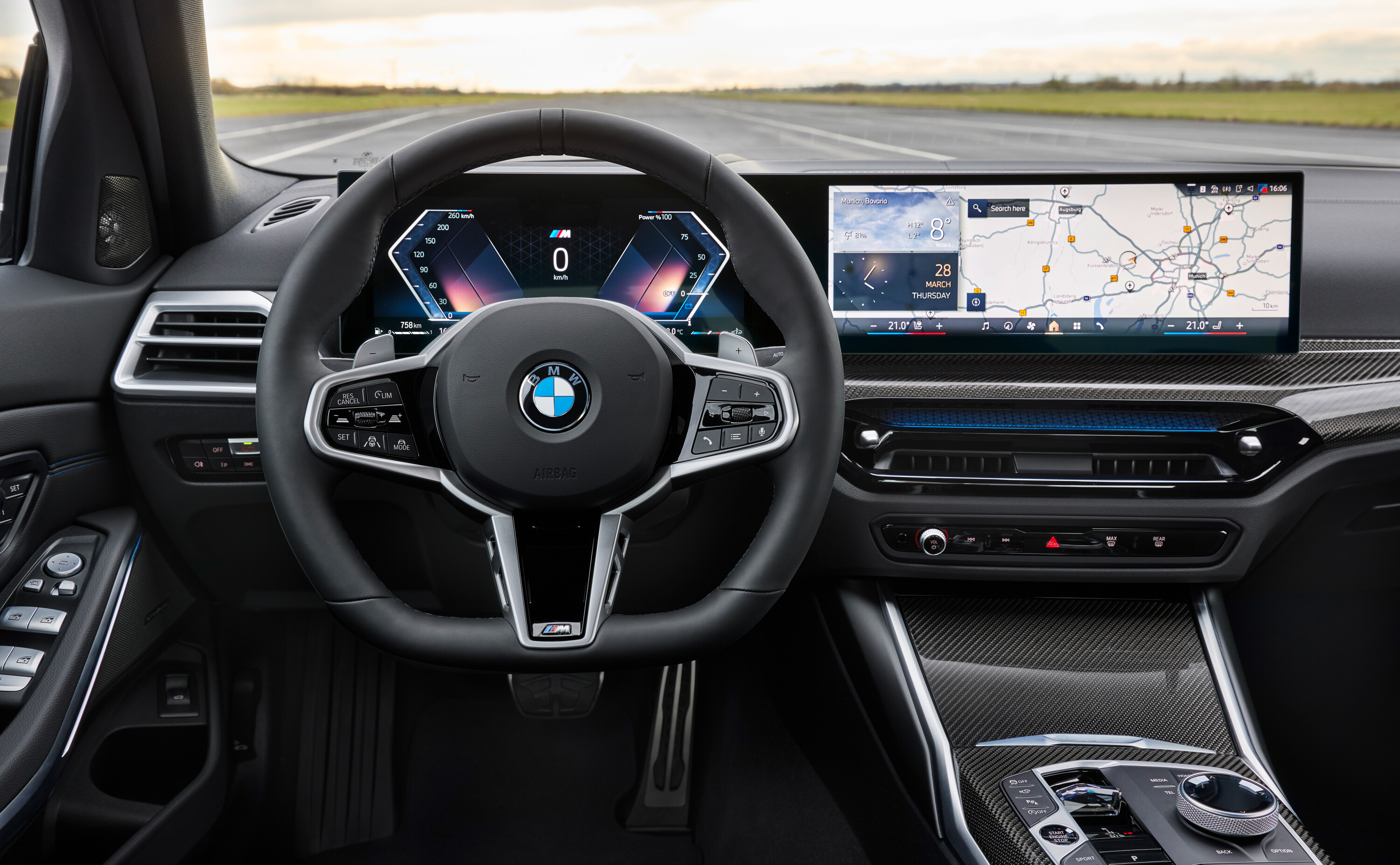
Inside, the 3 Series receives an updated three-spoke steering wheel design with a flat bottom and a 12 o’clock marker for the M Sport package – which is standard in Australia – and a refined surface for the optional leather instrument panel.
The M340i will be fitted as standard with a new ‘Crafted Clarity’ glass application for the gear selector, iDrive controller and engine start/stop button with Swarovski crystals, as seen in other BMW models like the iX and 7 Series.
In addition, a new-look central air vent with updated adjustment controls and ambient lighting around the border of the vent has been added, while all variants are now fitted with new infotainment hardware to support BMW Operating System 8.5.
New additions to the updated system include more-prominent touch air-conditioning controls, a new-look home screen, an improved menu structure, and support for a built-in eSIM card with a 5G mobile connection.
Intelligent speed limit assist – which will become mandatory for all new vehicles sold in the European Union from July 2024 – has been made standard in the 3 Series.
Under the skin, BMW has fitted stiffer mounts that connect the rear dampers to the body, and reduced the amount of force required to turn the steering wheel in the comfort drive mode.
Plug-in hybrid models – which are no longer available in Australia – gain a new fifth-generation 19.5kWh high-voltage battery with a higher energy density, allowing for an all-electric driving range of up to 101 kilometres.
There’s also a higher 11kW limit for AC home charging, the highest for a plug-in hybrid BMW.
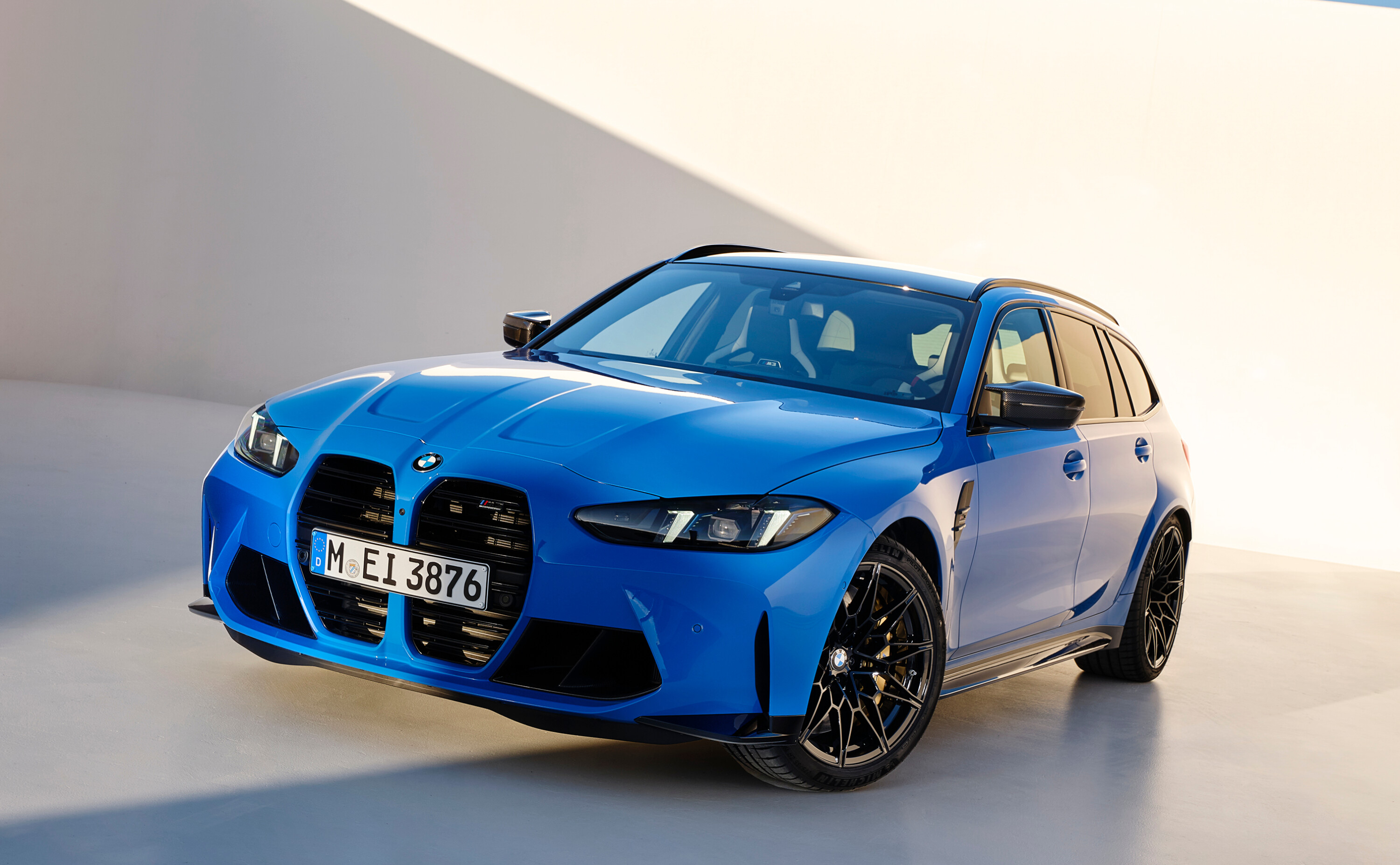
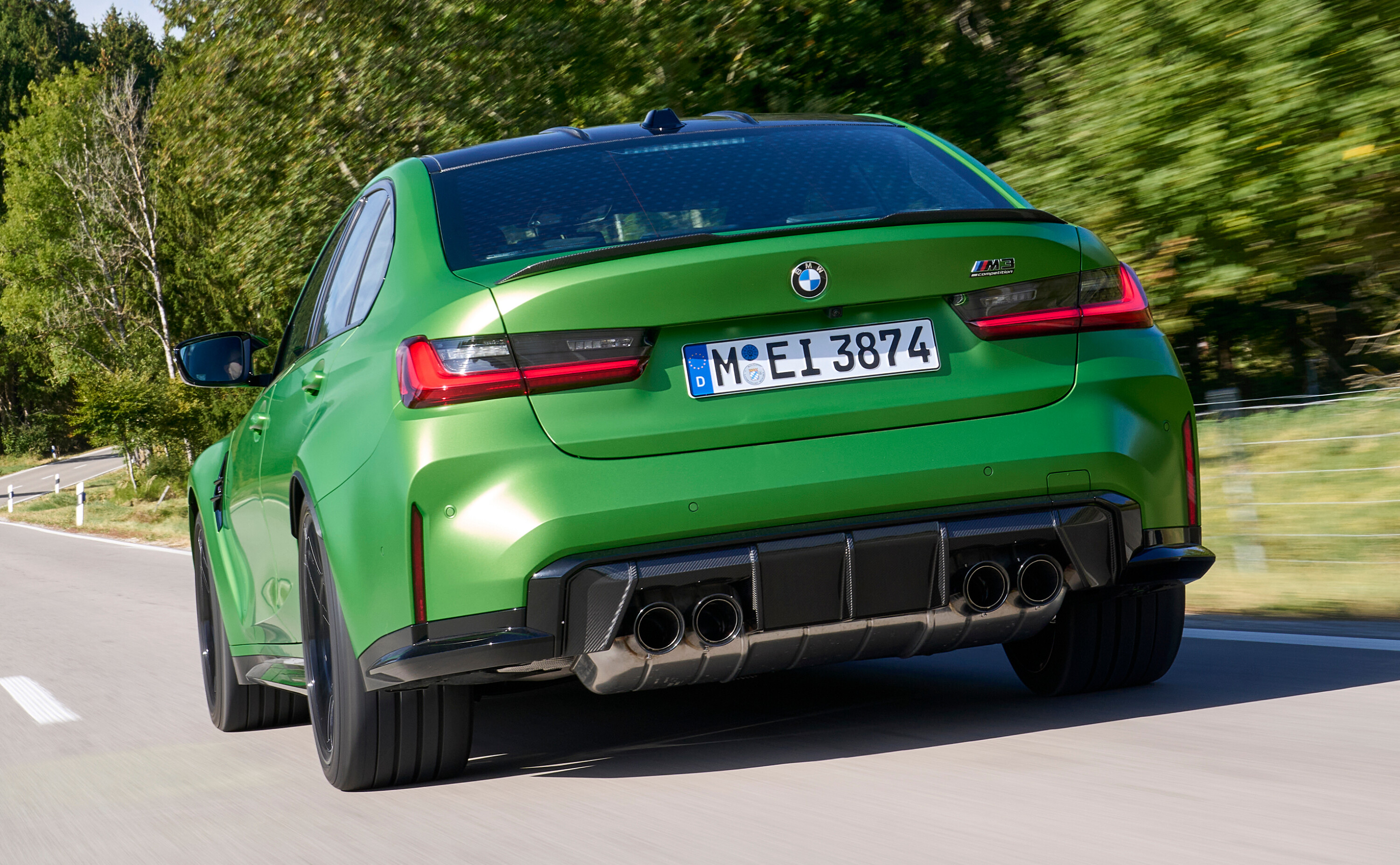
The BMW M3 mirrors external styling updates recently applied to the M4 coupe, including new headlights with vertical DRLs and lightweight forged alloy wheels.
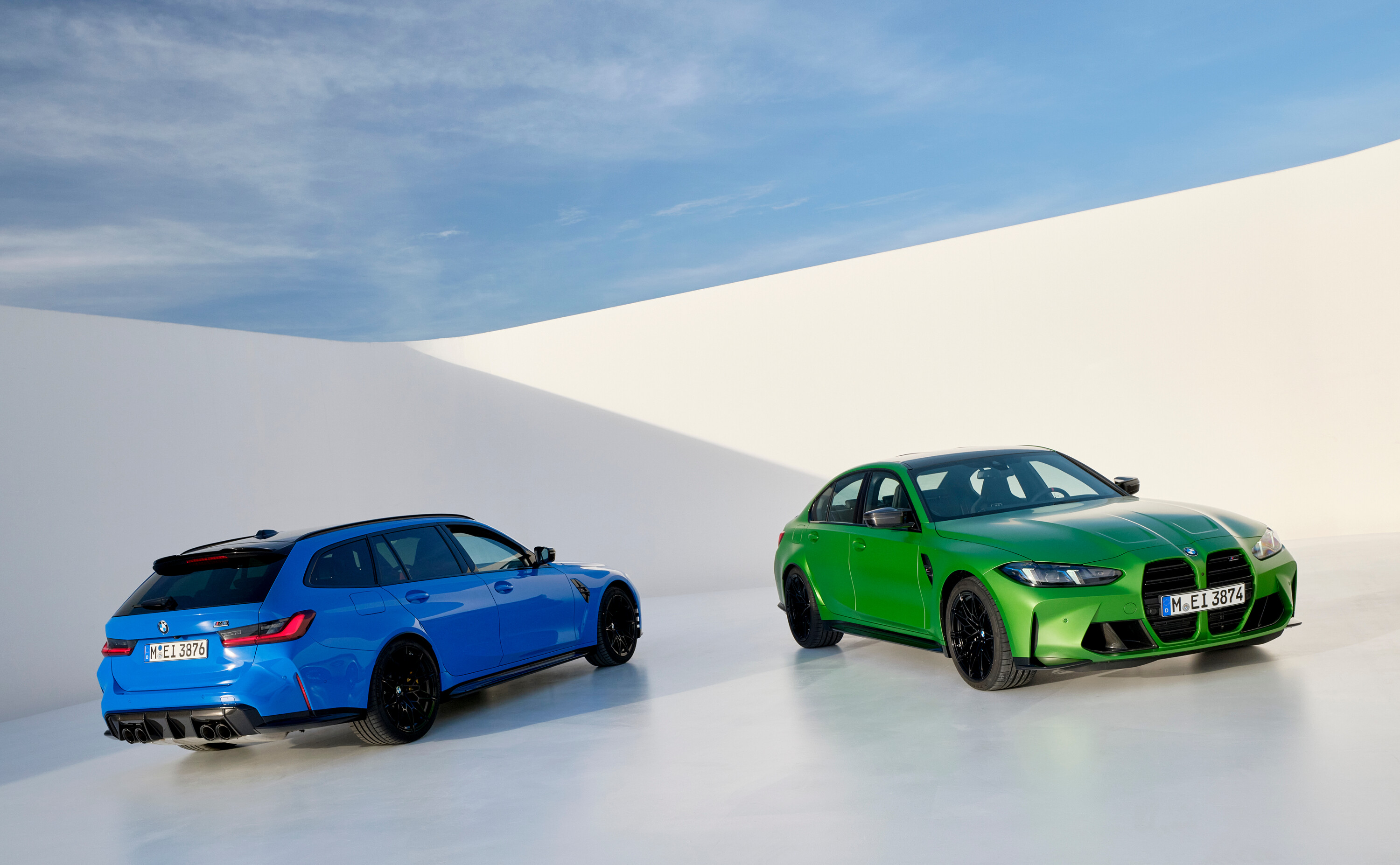
Like the 3 Series, it also receives a new three-spoke steering wheel design, BMW Operating System 8.5, and a revised central air vent.
M3 Competition all-wheel-drive models now have 390kW – up 15kW – while its peak torque of 650Nm is now available between 2750 and 5730rpm.
This power boost has allowed BMW M to slash five-tenths from the 0-200km/h of all M3 Competitions at 11.8 seconds for the sedan and 12.4 seconds for the Touring, while 0-100km/h times are unchanged at 3.5 seconds (sedan) or 3.6 seconds (Touring).
Production of the 2025 BMW 3 Series and 2025 BMW M3 will commence for Europe in July, ahead of a local arrival between October and December 2024.
BMW Australia said local details – including pricing and features – will be confirmed in July.
The 3 Series sedan is sourced from BMW’s factory in Mexico for the Australian market, while the 3 Series Touring and all M3s are made in Germany.
VFACTS new-car sales data reveals 938 examples of the BMW 3 Series have been sold in Australia to the end of April – up 27 per cent over the same time in 2023 – compared to 622 Mercedes-Benz C-Classes, 141 Audi A4s and 123 Volvo S60/V60s.
Combustion engines ain’t dead yet, baby!
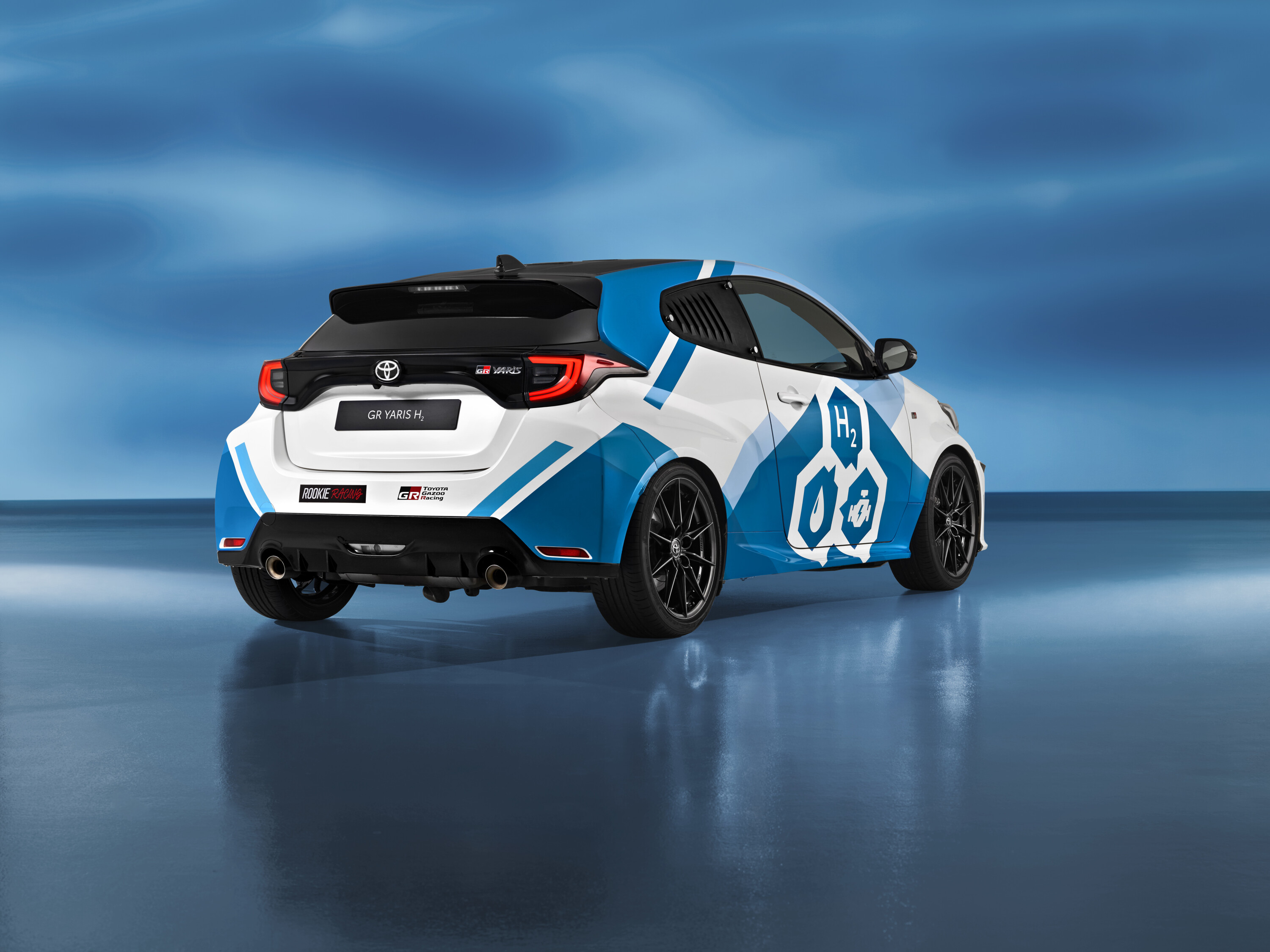
At least that’s the hope of Toyota, Mazda and Subaru who have today announced a partnership to develop new engines that will help decarbonise combustion-powered cars.
The alliance aims to tailor the all-new engines to integrate with motors, batteries and other electric drive units and also to be compatible with various carbon-neutral fuels like biofuels, hydrogen and e-fuel.
The trio of brands also claims the new engines, which will be highly efficient and powerful, will ‘revolutionise’ vehicle packaging by being significantly smaller than existing powertrains.
“Smaller engines will allow for even lower hoods, improving design possibilities and aerodynamic performance while contributing to better fuel efficiency,” said the brands in a joint statement.
The alliance says their goals are driven by a “deep understanding of their customers’ diverse lifestyles”, alluding to the fact that the broader push towards electric-only powertrains mightn’t be the best solution for everyone.
The news aligns with recent comments from the head of Toyota’s GR performance arm, Tomoya Takahashi, who told Wheels: “[GR] is a passionate brand, so we want to use internal combustion engine as much as possible.”
“It is not the engine that is bad, it’s the carbon that’s bad,” he said. “By using hybrid technology we can reduce carbon emissions or using a carbon-neutral fuel – e-fuel or biofuel.
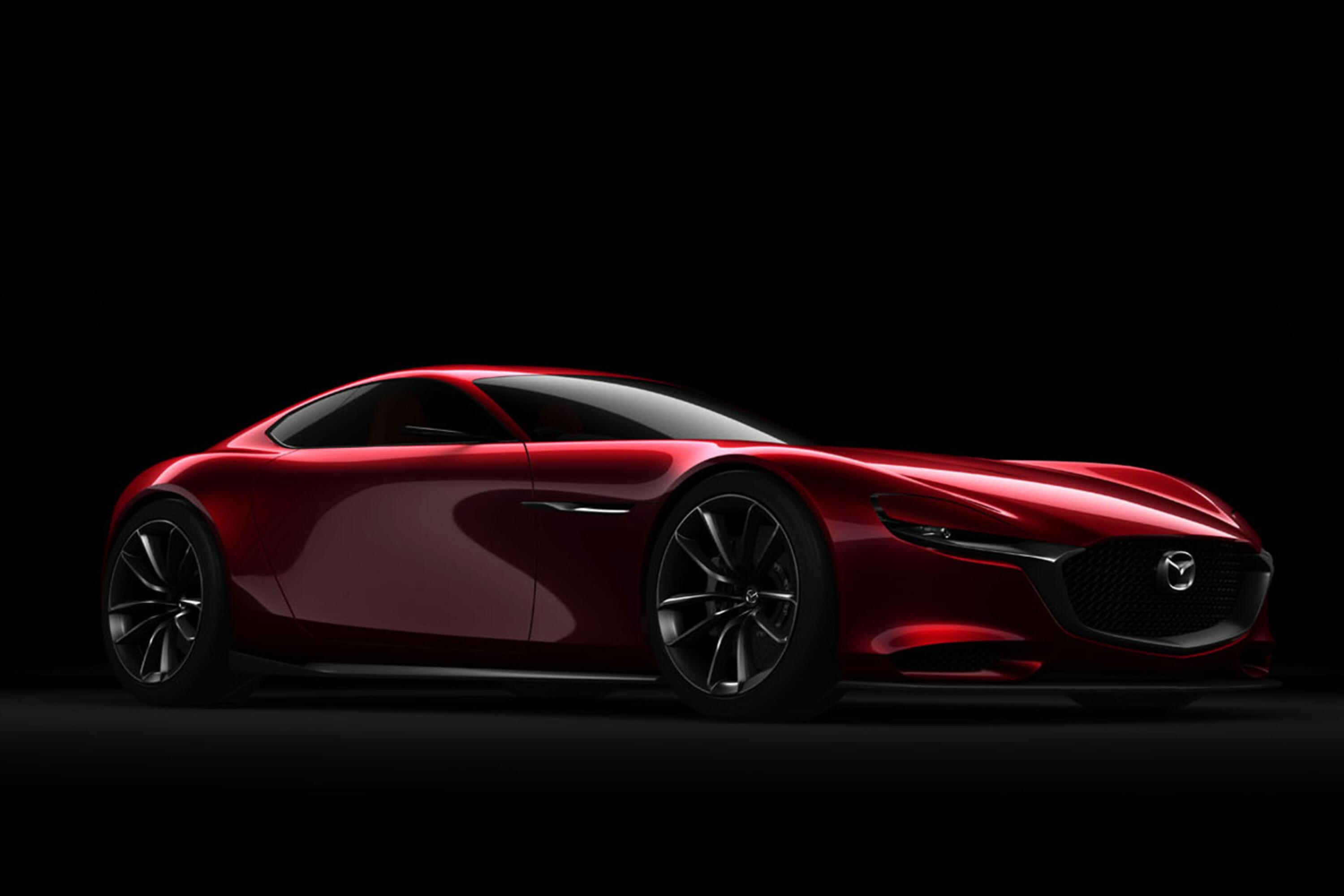
“Globally there are discussions there is not going to be 100 per cent EVs. As you know, our direction is multi-pathway. At this moment Toyota is making profit and we are investing in future technologies.”
As part of the alliance, Toyota, Mazda and Subaru hope to encourage a wider adoption of carbon neutral fuels like synthetic fuel, biofuels and liquid hydrogen.
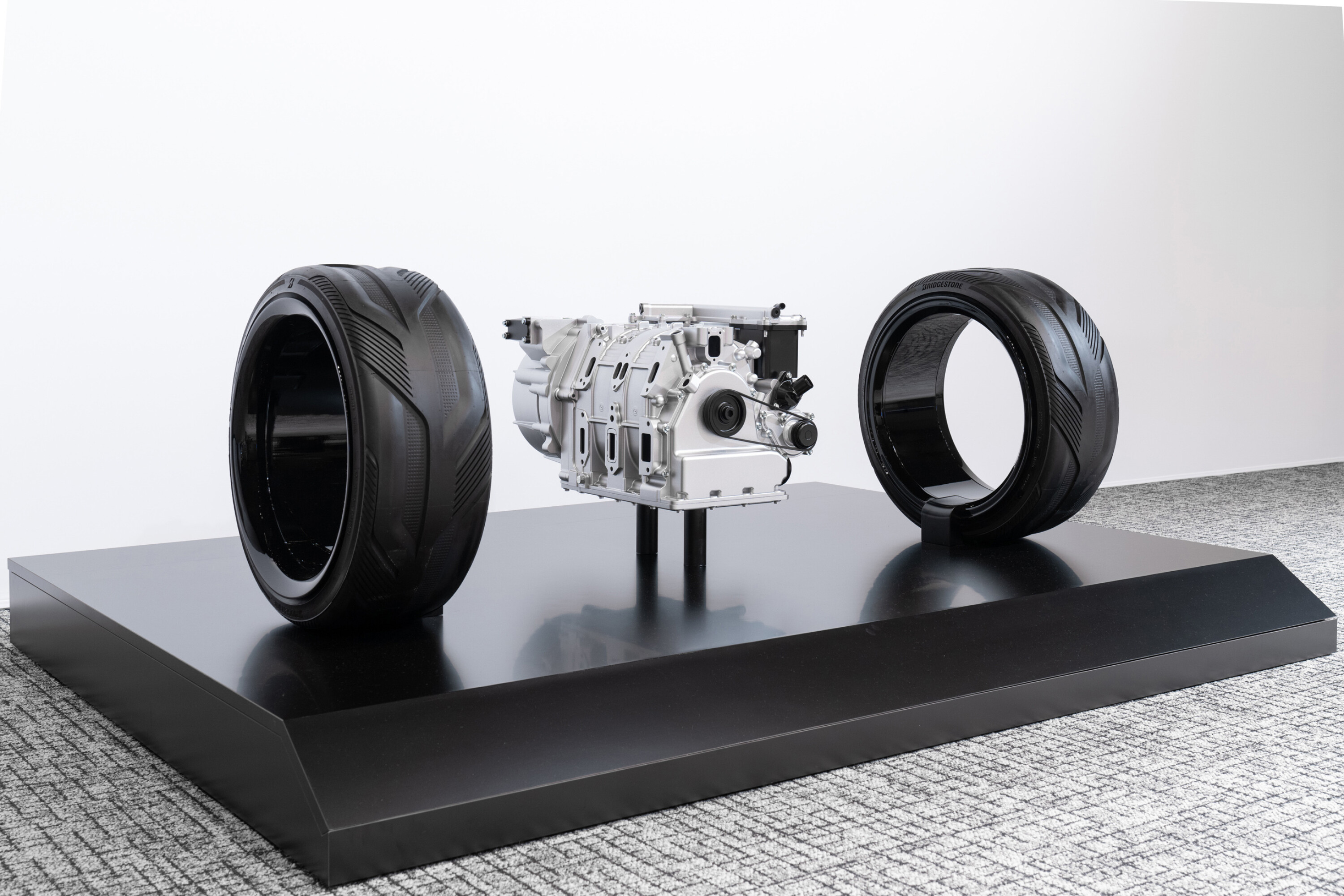
“Achieving a carbon-neutral society is a challenge that must be undertaken by all of Japan’s industries and society as a whole. As we continue to refine electrification technology, we will also enhance our horizontally-opposed engines with an aim to use carbon-neutral fuels in the future. Moving forward, the three companies sharing the same aspiration will continue to advance the pursuit of sustainable excellence in Japanese car manufacturing,” said Atsushi Osaki, Representative Director, President and CEO, Subaru Corporation.
Toyota president and CEO Koji Sato added “The three companies, which share the same aspirations, will refine engine technologies through friendly competition.”
Meanwhile Mazda’s president and CEO, Masahiro Moro, used the announcement to double down on the brand’s commitment to rotary engines.
“Given the rotary engine’s compatibility with electrification and carbon-neutral fuels, Mazda will continue to develop the technology through co-creation and competition to ensure it can contribute broadly to society,” he said.
Quick, quiet, cleverly made, desirable and absolutely dripping in style: that’s the promise offered by the Kia EV3 and Volvo EX30.
Both of these small SUVs are box-fresh. And both of them are absolutely critical. We’ve had dedicated EVs from Volvo and Kia before, but none have targeted the hugely popular small SUV segment with such gusto and both brands, perhaps unsurprisingly, have big volume aspirations for these new-generation models.
Helping that cause is price. At around $60K neither of these small, style-driven SUVs is exactly cheap — we’re not talking MG4 levels of value here — but they are playing in a price bracket attainable enough for Aussies to take notice.
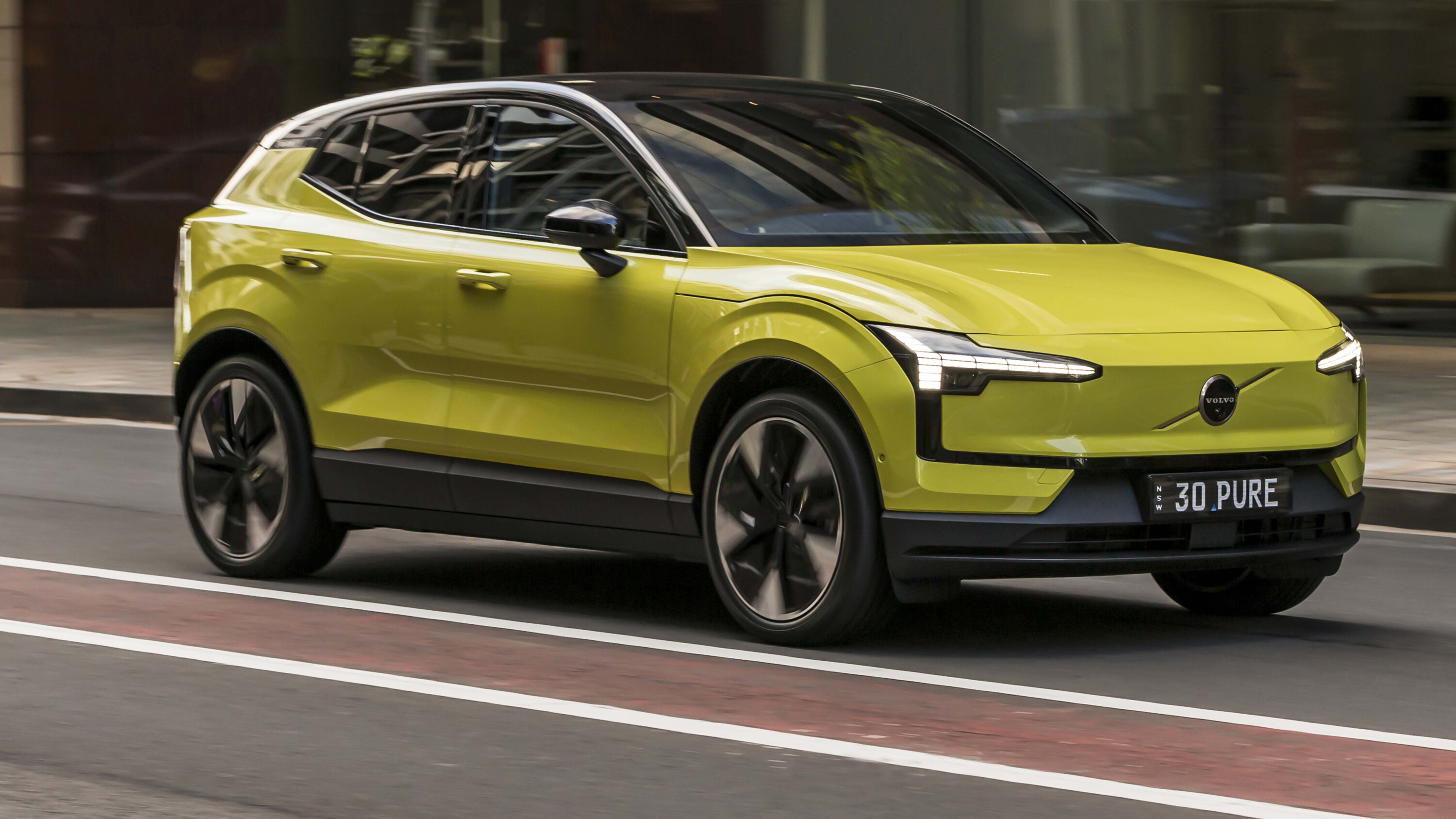
The most readily available right now is the Volvo EX30. It’s Volvo’s smallest SUV offering and, after months of delays, it has just launched in Australia. We were suitably impressed, too, scoring the EX30 8/10 in our first drive review.
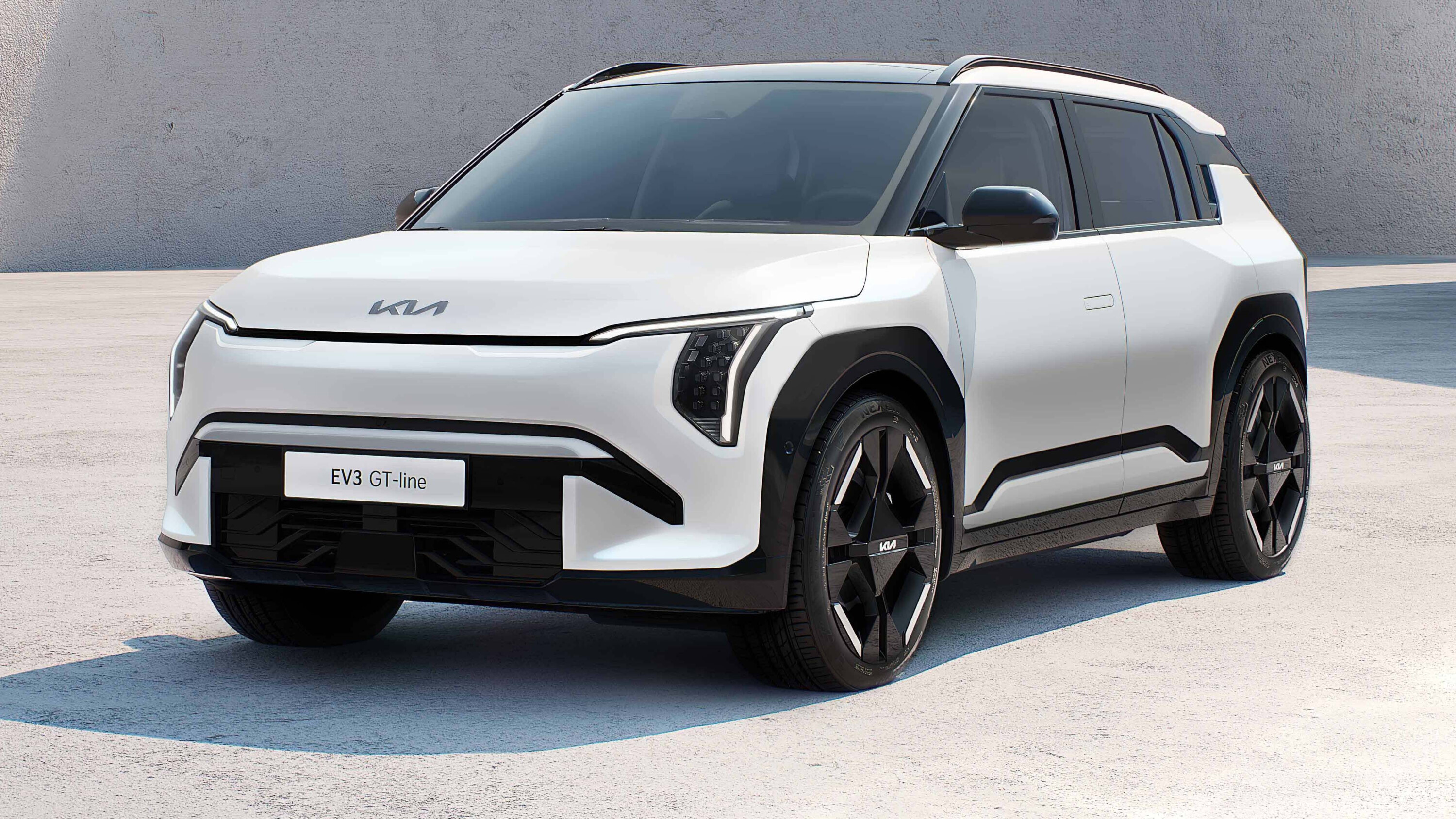
The Kia EV3 will arrive “some time in 2025”, according to Kia, with global pricing targeting US$35-50K. That means it should land in Australia between $50-75K which will put it right in the crosshairs of buyers looking at a Volvo EX30.
So which of these small SUVs has the edge for size, range, recharging, practicality and performance? As you’ll discover, one seems to have a clear advantage over the other…
JUMP AHEAD
Size
Both the Kia and Volvo as small SUVs and dimensionally they’re about on par with a Kia Seltos, Toyota C-HR or a Hyundai Kona.
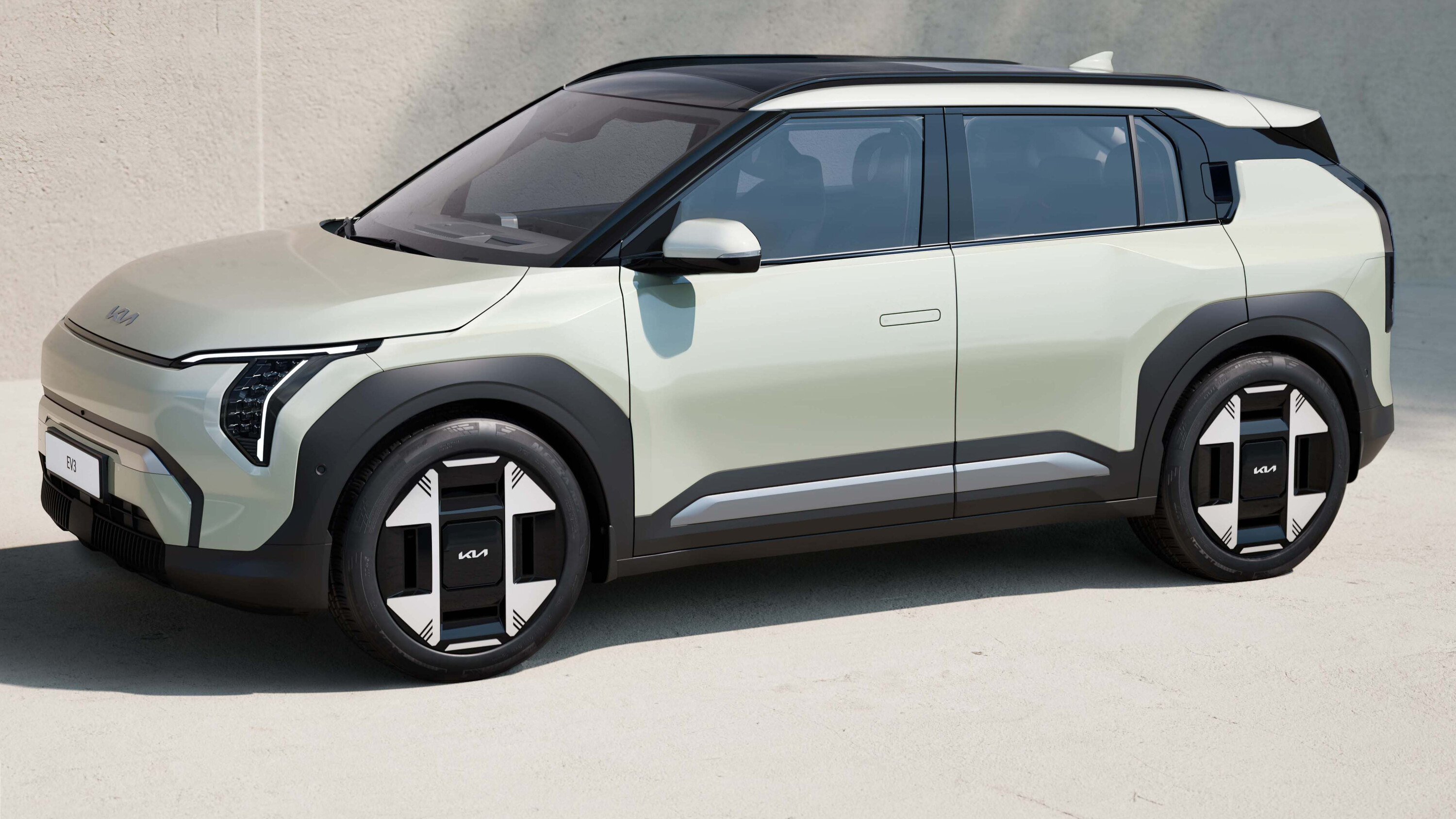
If it’s outright space you’re chasing, the Kia holds a size advantage over the Volvo. The EV3 is 4300mm long, 1850mm wide and 1560mm tall, while its wheelbase (the distance between the front and rear axles) is 2680mm.
That makes it bigger than the EX30 which is 4233mm long (-67mm), 1836mm wide (-14mm) and 1549mm tall (-11mm). The Volvo’s wheelbase is also 30mm shorter than the Kia at 2650mm, which should translate into less cabin space especially for rear-seat passengers. As we noted in our EX30 first drive, “there’s less rear-seat space than you’ll find in a similarly sized Golf hatchback.”
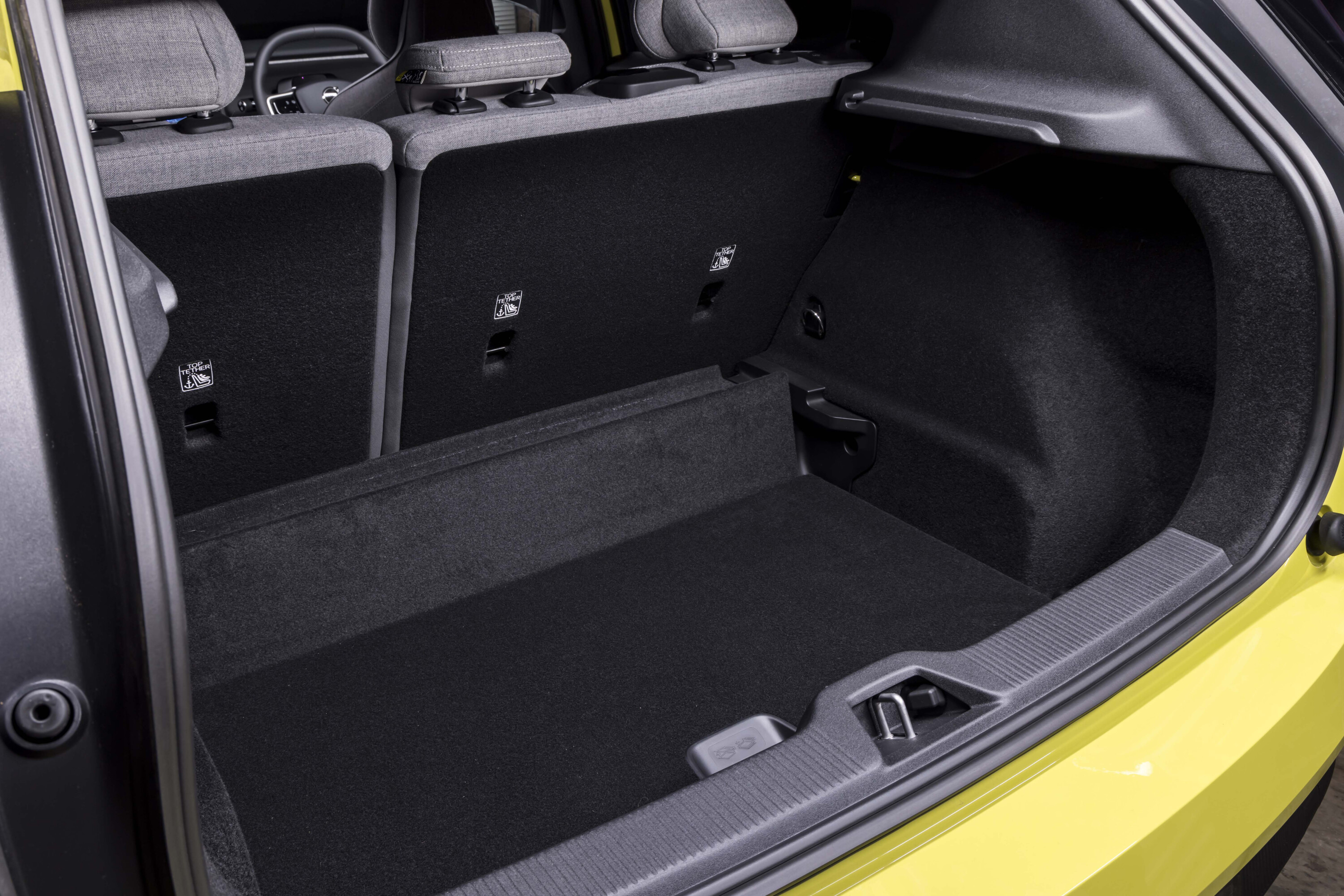
Boot space is also superior in the Kia. The EV3 boot is an impressive 460L and it has a further 25L of storage in the nose or ‘frunk’ to store charging cables. In comparison, the Volvo offers 318L of luggage space in the boot and 7L in its nose.
Platforms
The Kia EV3 is based on the Hyundai–Kia group’s now synonymous E-GMP platform which also underpins well-regarded models like the Wheels Car of the Year winning EV6 and the larger EV9.
Unlike those bigger models, however, which use a rear-biased version of the platform with 800-volt architecture that allows for ultra-fast DC charging up to 350kW, the EV3 has a lower 400-volt architecture and a front-wheel-drive bias.
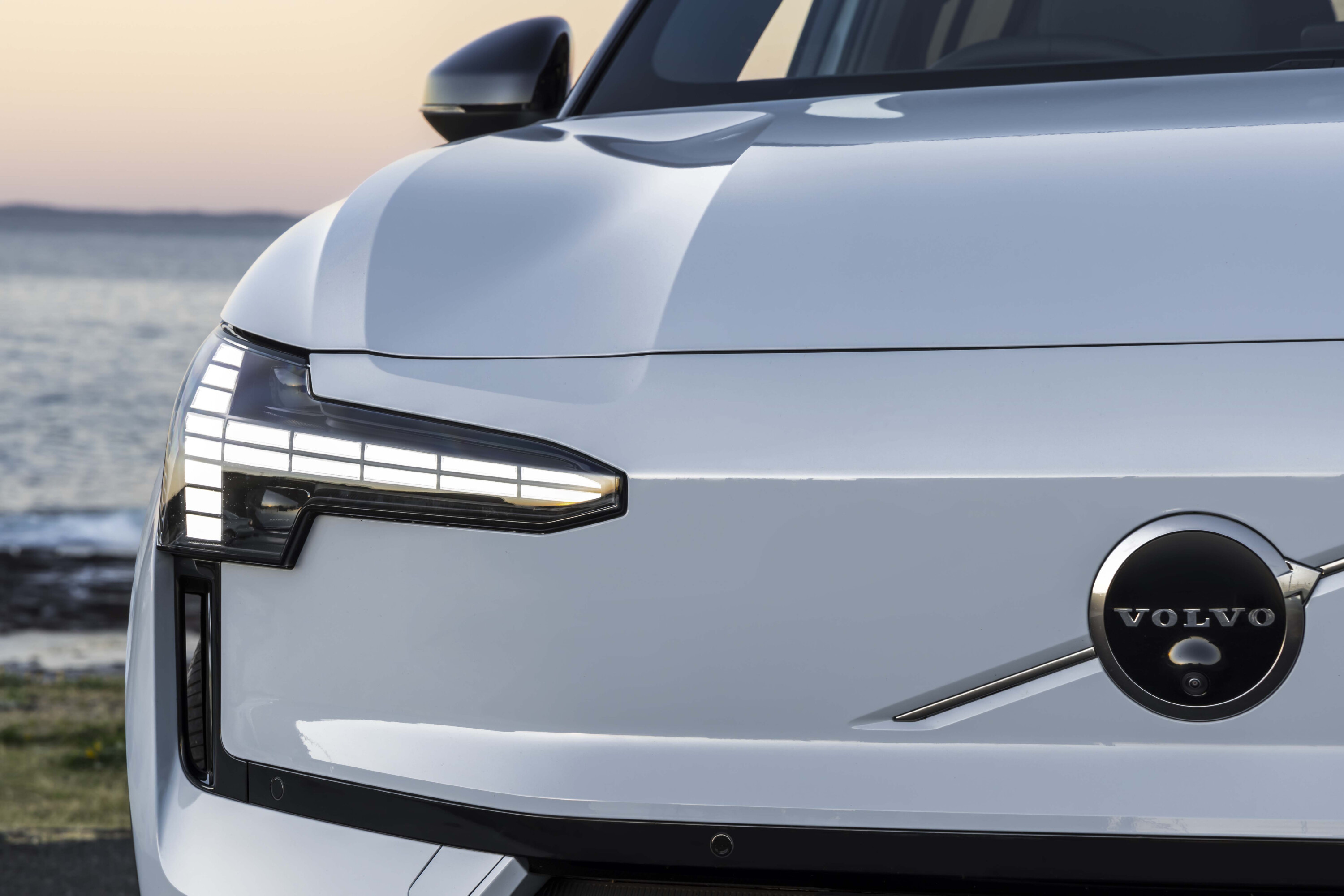
The EX30 is Volvo’s smallest car and only its second clean-sheet EV. It rides on a dedicated electric-car architecture developed by Geely that’s shared with a host of other brands, including the Smart #1 and Smart #3 which have recently been confirmed for Australia. Like the EV3, the EX30’s architecture is 400-volt meaning there’s no ultra-fast DC charging available.
Battery packs, range and recharging
Kia will offer two versions of the EV3 when it arrives in Australia with two different battery pack sizes.
A ‘standard range’ version will be available with a 58.3kWh battery, while the flagship ‘extended range’ increases the battery to 81.4kWh. Kia says the larger battery will provide a WLTP range of 600km. It’s yet to provide a range claim for versions with the smaller battery.
Recharging times vary between the two EV3 battery packs. The standard range can accept up to 102kW DC fast charging, while the extended range is quicker at 128kW. Both versions will achieve a 10-80 percent recharge in roughly the same time, with Kia claiming 31 minutes for the bigger battery and 30 minutes for the smaller unit.
Local AC charging rates are yet to be confirmed but reports from the United Kingdom rate the EV3’s AC charging speed at 11kW.
The EX30, meanwhile, has a 69kWh battery (64kWh usable) for all versions in the Australian range. A 51kWh battery is available overseas but the Aussie market only takes the bigger and more energy dense of the two battery packs.
The 69kWh battery yields a WLTP range off 480km in the entry level Extended Plus and mid-spec Extended Ultra EX30, while the range topping twin motor Performance Ultra model can travel 460km between charges. So advantage Kia when it comes to outright cruising range.
Charging times a similar between the Volvo and Kia. The EX30 can accept up to 153kW on DC fast charging, which Volvo says delivers a 10-80 percent charge in about 30 minutes for all models.
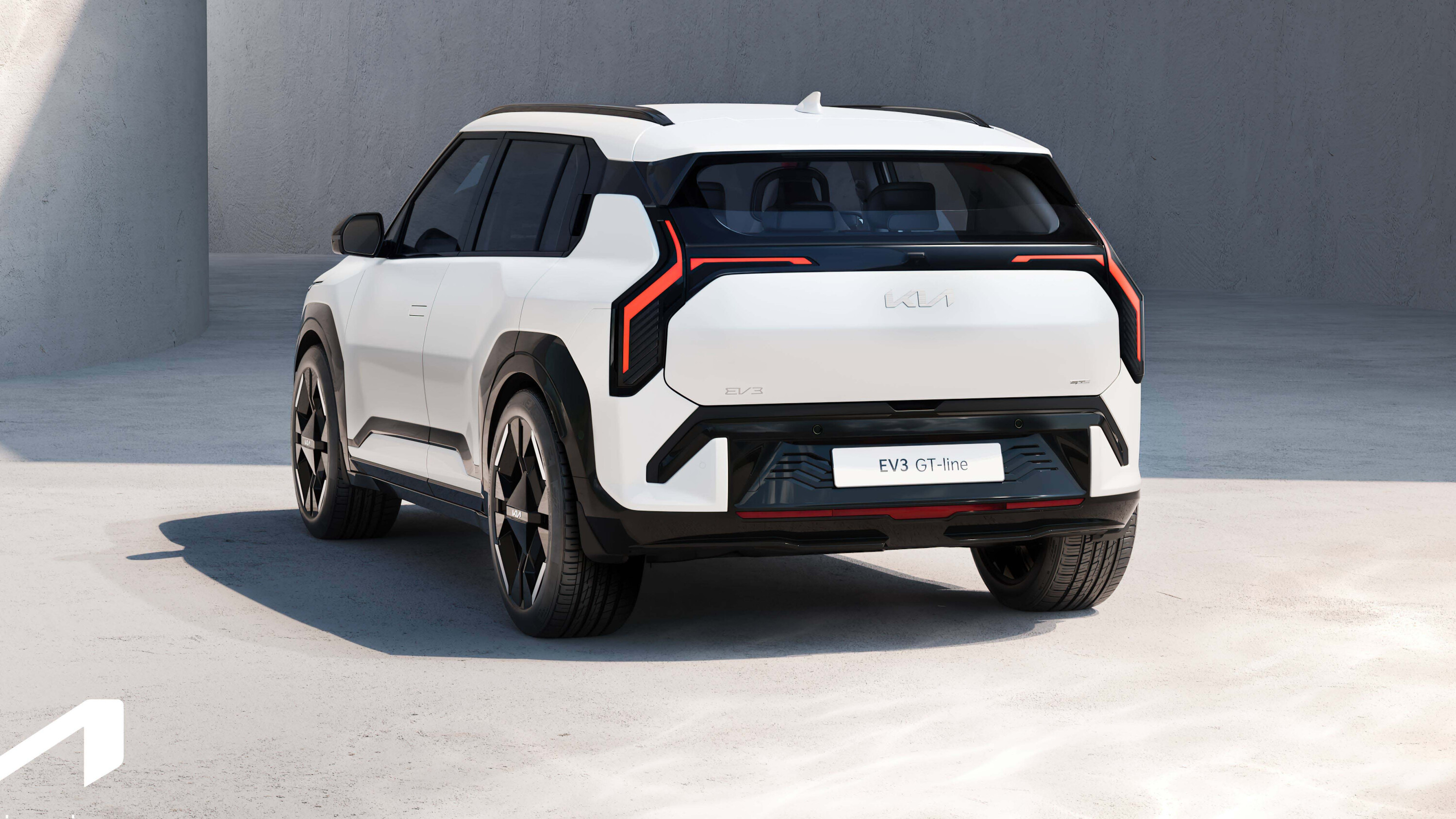
The Kia also holds an advantage for aerodynamic efficiency, despite its boxy upright styling. Kia says 80 per cent of the EV3’s underbody is covered to improve aero and its 0.263 Cd rating undercuts the EX30’s 0.28 Cd figure.
Price & performance
As mentioned, Kia is targeting a US price of $35-50K which should translate to between $50,000-$70,000 in Australia.
Currency fluctuations and supply constraints could wreak havoc on those projections, of course, but that’s the ballpark Kia is aiming for. Local execs have told Wheels they’re working hard to ensure the EV3’s price is as sharp as possible, aware that value is a crucial factor in this segment.
If Kia can achieve a starting price around $50,000, the EV3 will undercut the Volvo for outright value. Currently the EX30 range starts a $59,000 for the entry-level Extended Plus, while the mid-spec Extended Ultra is $66,290 and the flagship Performance Ultra costs $71,290.
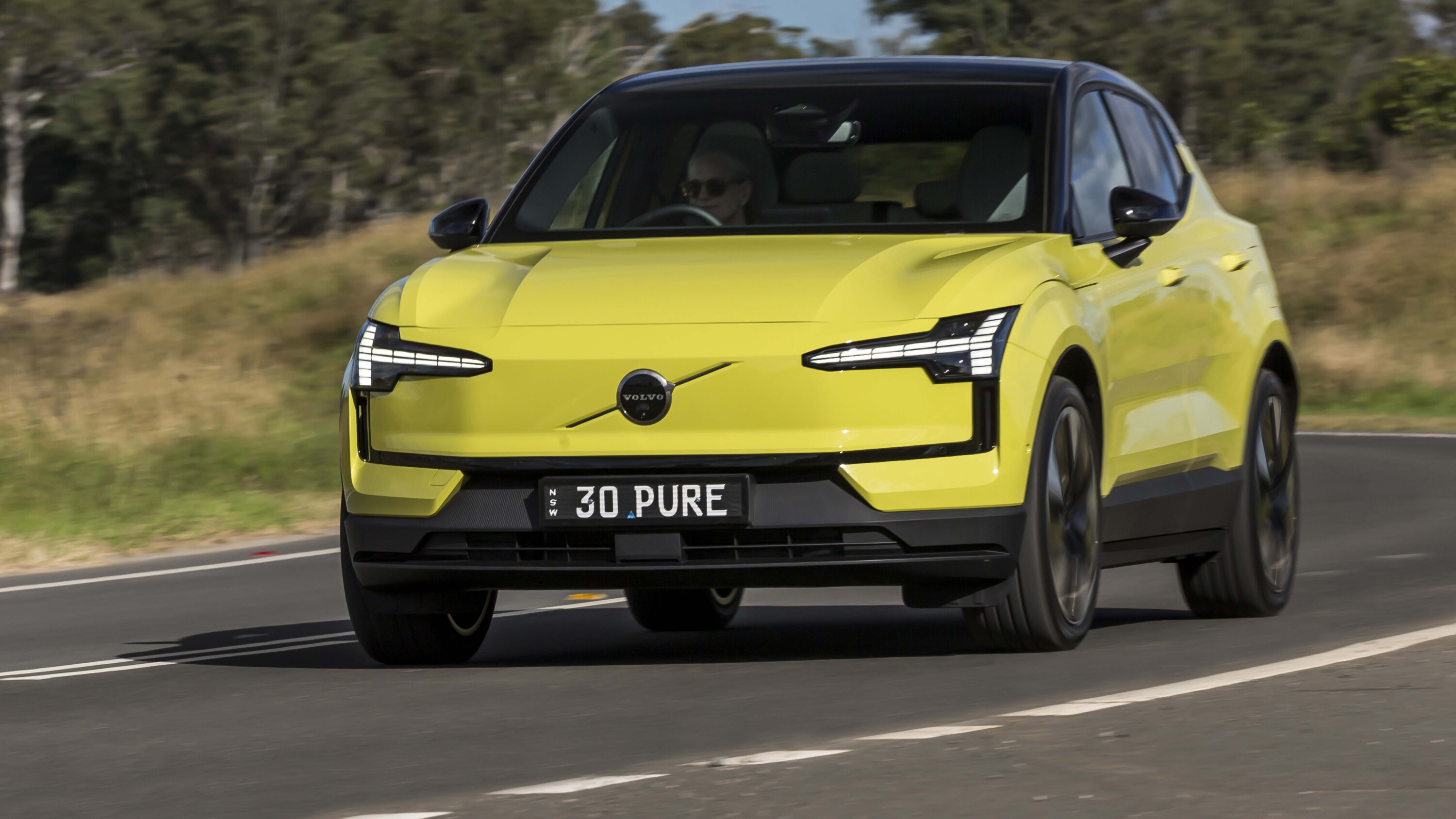
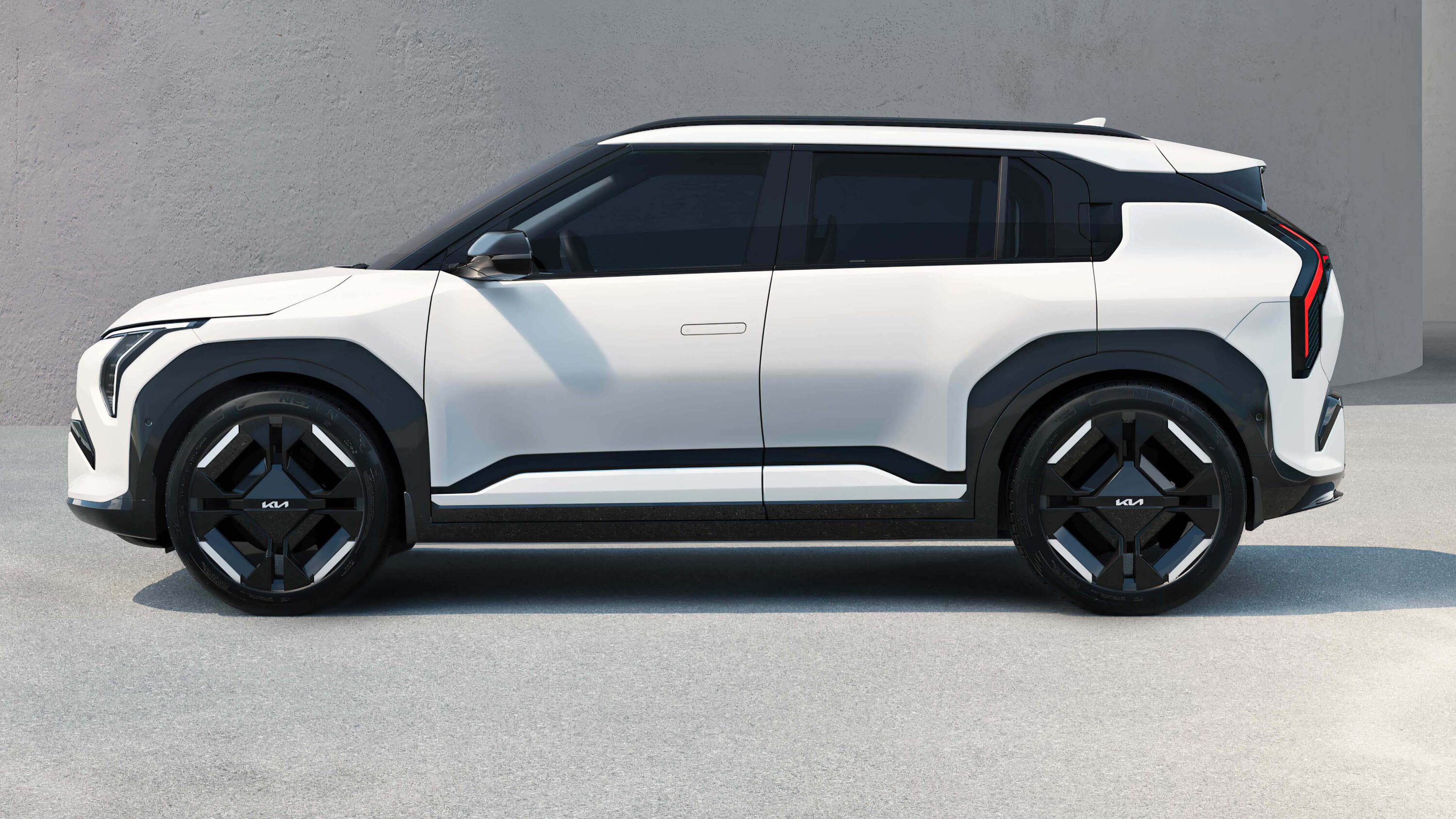
As for performance, for now every version of the Kia EV3 uses a single electric motor on the front axle producing 150kW/283Nm.
Kia says that’s enough to hit 0-100km/h in 7.5sec and sail on to a top speed of 170km/h. So it’s swift rather than fast.
Ride and handling should be a key strength, too, given the strong performance of other E-GMP models and the EV3 will offer dynamic torque vectoring control to further aid its dynamics. An updated ‘I-pedal 3.0’ system is fitted, too, with selectable regenerative braking levels for one-pedal driving in its strongest setting.
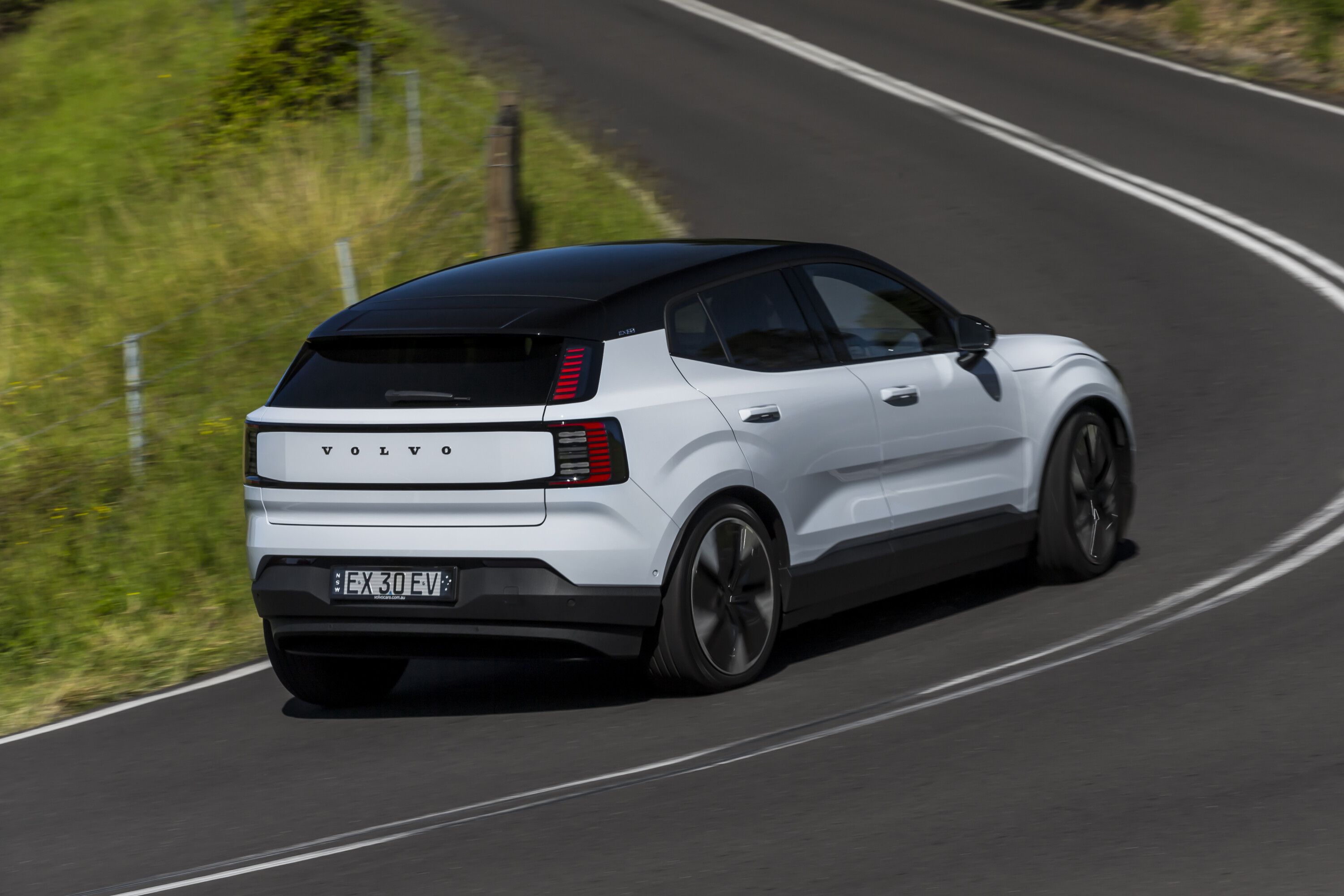
The EX30’s powertrain set-up is quite different. Unlike the front-driven Kia, single-motor versions of the EX30 are rear-wheel drive. Outputs are higher at 200kW/343Nm, giving the EX30 a sizeable performance advantage over the Kia.
Line both cars up at a set of traffic lights and the Volvo will scorch the EV3 thanks to a 0-100km/h claim of 5.3 seconds.
And that’s not even accounting for the quickest EX30 variant. The dual-motor Performance Ultra packs 315kW/543Nm and, thanks in part to all-wheel drive, it can hit 0-100km/h in 3.6 seconds. That makes it considerably quicker than the EV3 (at least until its own dual-motor version arrives) and also gives the EX30 the distinction of being the quickest Volvo ever built. It’s also a tenth quicker to three figures than a Tesla Model Y Performance (3.7sec)
Not to be outdone, Kia has confirmed a more powerful dual-motor EV3 is in the product pipeline and will follow in a few years’ time.
Cabin tech
Just like their exteriors, the cabins of both SUVs focus heavily on style.
Technology wise, the EV3 has an enormous panoramic screen — Kia says it’s “a near 30-inch display” — which combines a 12.3-inch instrument cluster, with a 5.0-inch climate control display and a 12.3-inch infotainment screen.
A 12-inch HUD is also available, as is a Harman Kardon sound system. The EV3 is the latest Kia model to support a built-in generative artificial intelligence voice assistant based on a “heavily modified” version of OpenAI’s ChatGPT. And it’s also the first Kia to get apps for Netflix and YouTube, while in-built games are also included to help pass the time while recharging.
A key design distinction is that unlike Tesla (and now Volvo!) which has waged war on buttons, the EV3 retains physical controls for the cruise control, entertainment, sat-nav and drive modes.
Both cars place great emphasis on using recycled materials. Kia has used recycled materials for the dashboard and door trims, as well as polyethylene terephthalate – said to be “among the most easily recycled plastics in the world” – for the seats, headliner, floor mats and luggage board. All up Kia claims there’s 28.5kg of recycled material in the cabin.
In the rear seat, the EV3 should offer slightly more knee room than the EX30 thanks to its longer wheelbase.
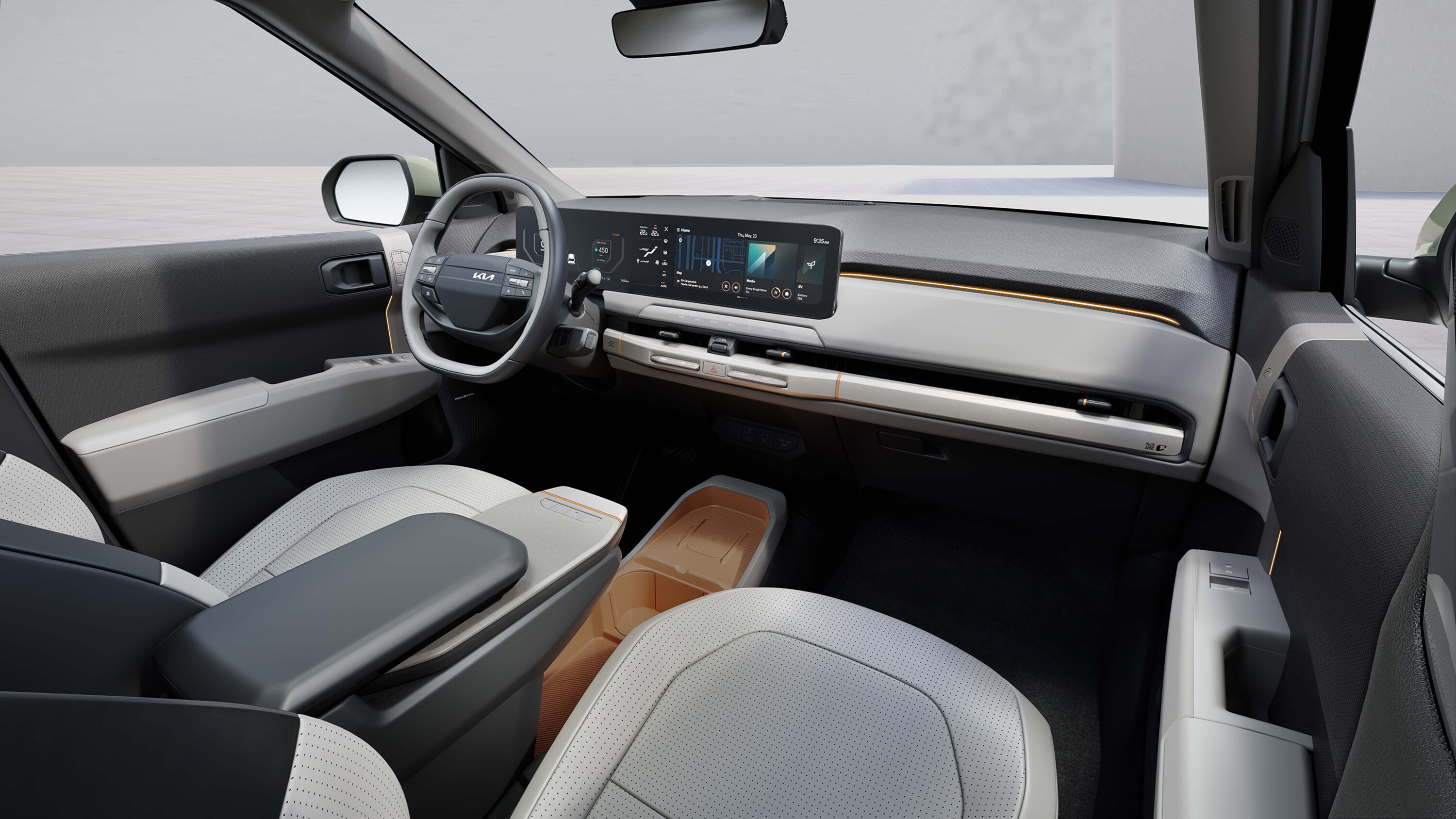
The Kia also scores dedicated rear air vents for backseat passengers, which is a feature missing in the Volvo.
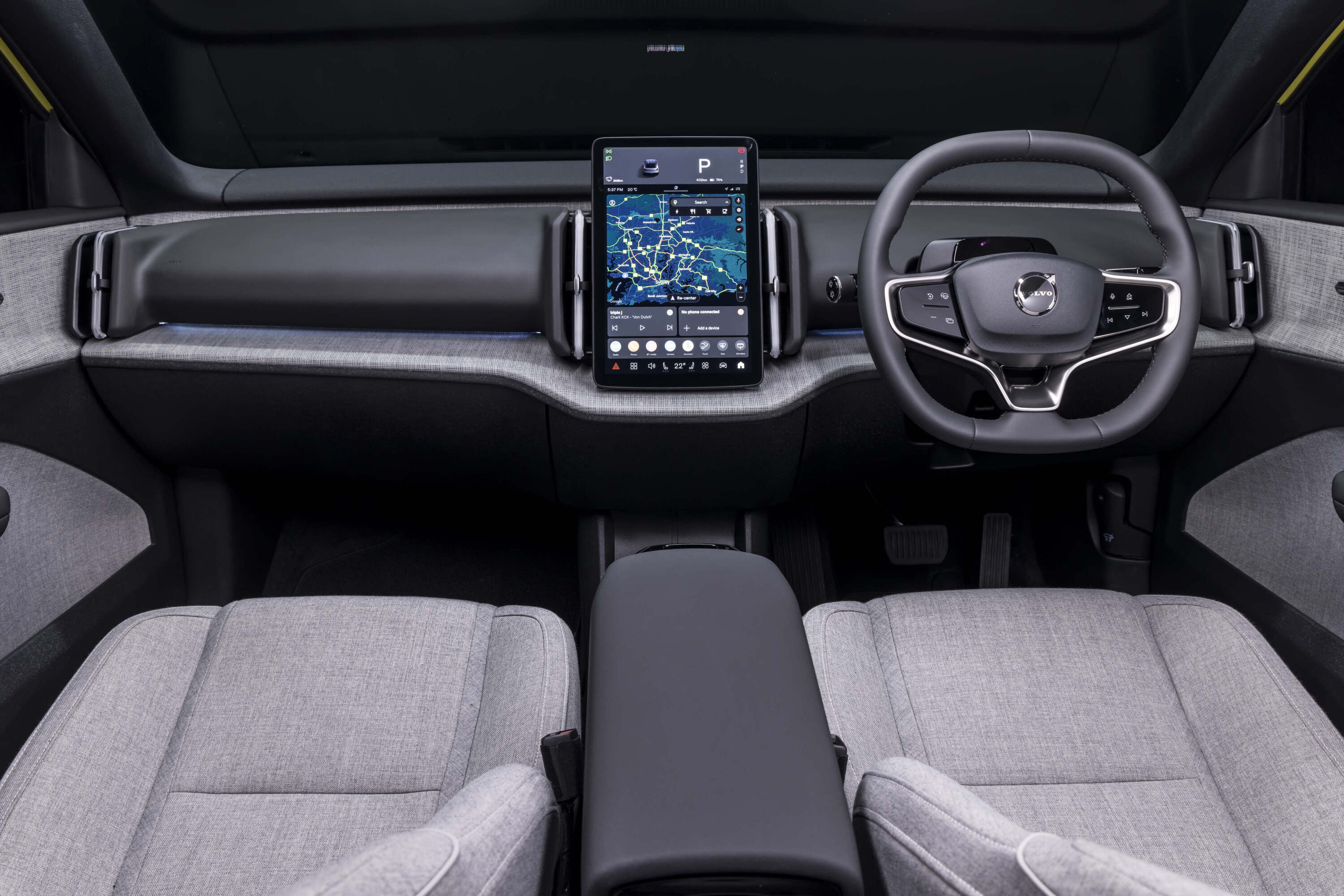
The Volvo’s cabin is quite a departure from the EV3’s. Unlike the windscreen Kia, the EX30 uses a single 12.3-inch portrait oriented screen mounted in the centre of the dash.
There is no instrument cluster ahead of the driver meaning everything, speedometer and battery charge information included, is displayed on the centre screen. The screen itself runs Volvo’s latest software which is Android Auto based and features wireless Apple CarPlay and over-the-air updates. Unlike the Kia, a head-up display isn’t available in the EX30.
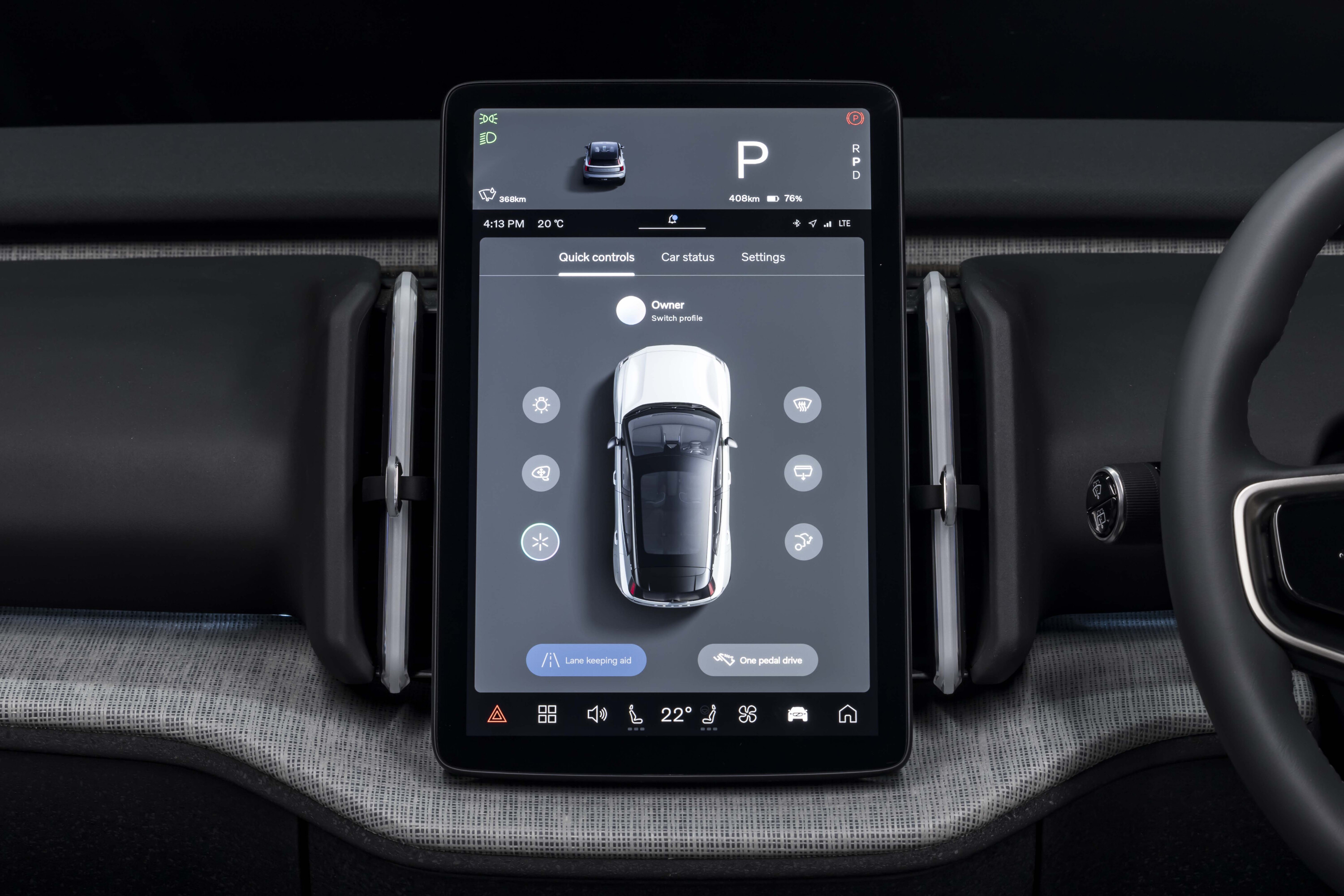
The EX30 also does away with conventional speakers in the doors to free up storage space, replacing the speakers with an integrated sound bar in the dash instead. Both cars have big and clever centre consoles which offer an impressive amount of storage and flexibility.
Snapshot
- Porsche has revealed full details of its first-ever hybrid 911
- T-Hybrid system combines a larger boxer engine with electric turbo and an e-motor in the PDK gearbox
- Outputs lift by 45kW/40Nm while 0-100km/h drops to 3.0sec
- Hybrid GTS will cost $381,200; an increase of $27,500 over its predecessor
In a move sure to make diehard fans groan and whip keyboard warriors into a frenzy (hit us up in the comments), the Porsche 911 has gone hybrid.
We’ve known a hybrid 911 has been coming for a while now — the new powertrain has been in development for more than two years — but it’s only today that Porsche has revealed the full details of its new electrified model.
And if you love performance, the news is good. Dubbed T-Hybrid the new powertrain debuts on the GTS model grade and combines a larger capacity six-cylinder boxer engine with an electric turbo and an e-motor mounted within the eight-speed dual-clutch.
Outputs lift by 45kW/40Nm compared with the previous combustion-only GTS, while the 0-100km/h time has been slashed to just 3.0 seconds.
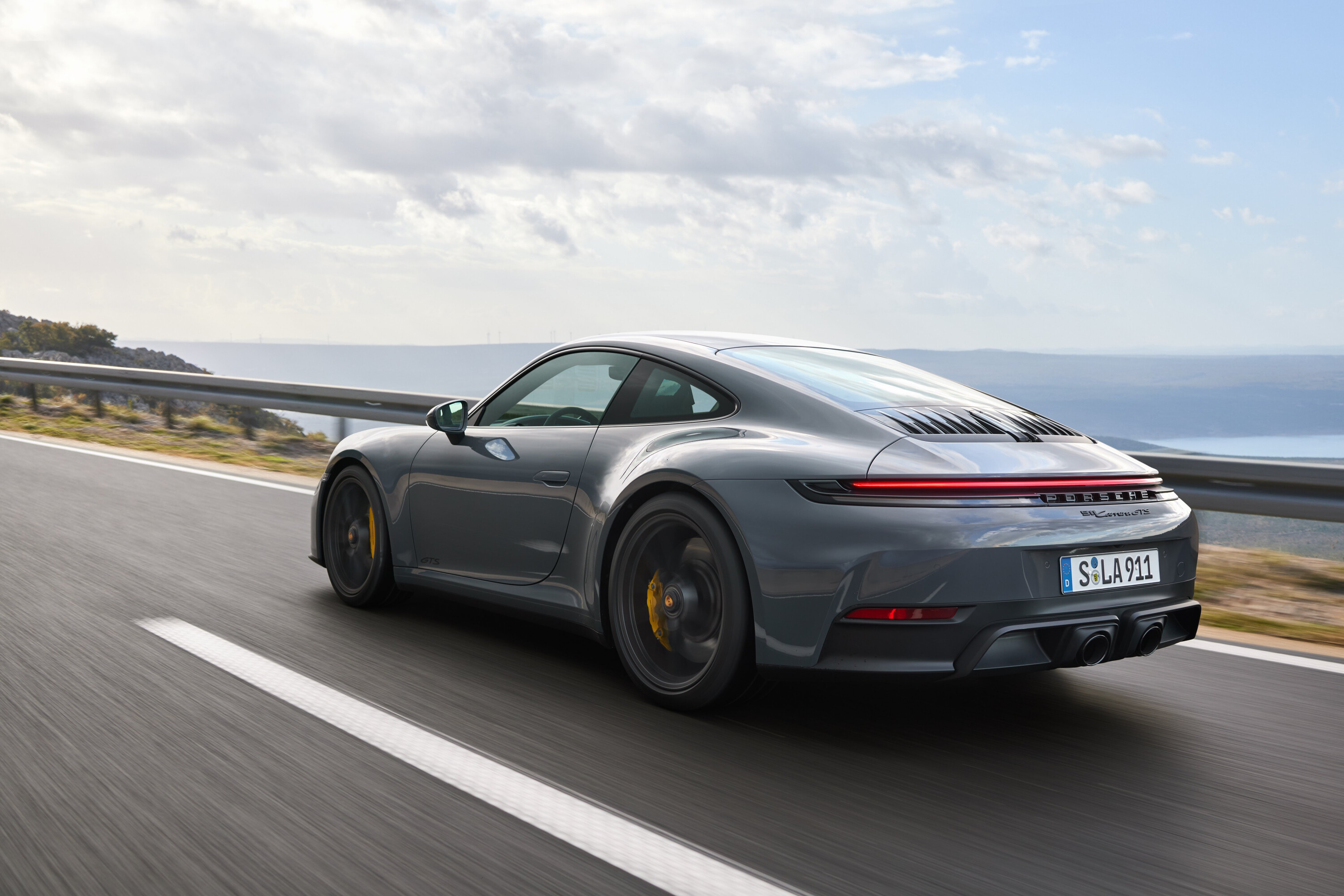
The hybrid inclusion comes as part of a broader update for the regular 911 model range which evolves into its 992.2 generation. The facelift brings improvements to the powertrains, exterior design and cabin design/infotainment. Read our story on the 992.2 model range here.
Unlike other 992.2 models that use an upgraded version of Porsche’s existing 3.0-litre twin-turbo flat six, the T-Hybrid system adopts a ‘newly developed’ 3.6-litre petrol engine. To increase the boxer’s displacement, Porsche enlarged the bore to 97mm and increased the stroke to 81mm. Even without the hybrid system, the six-cylinder engine makes 357kW and 570Nm which is a 4kW improvement over the 3.0L twin-turbo unit.
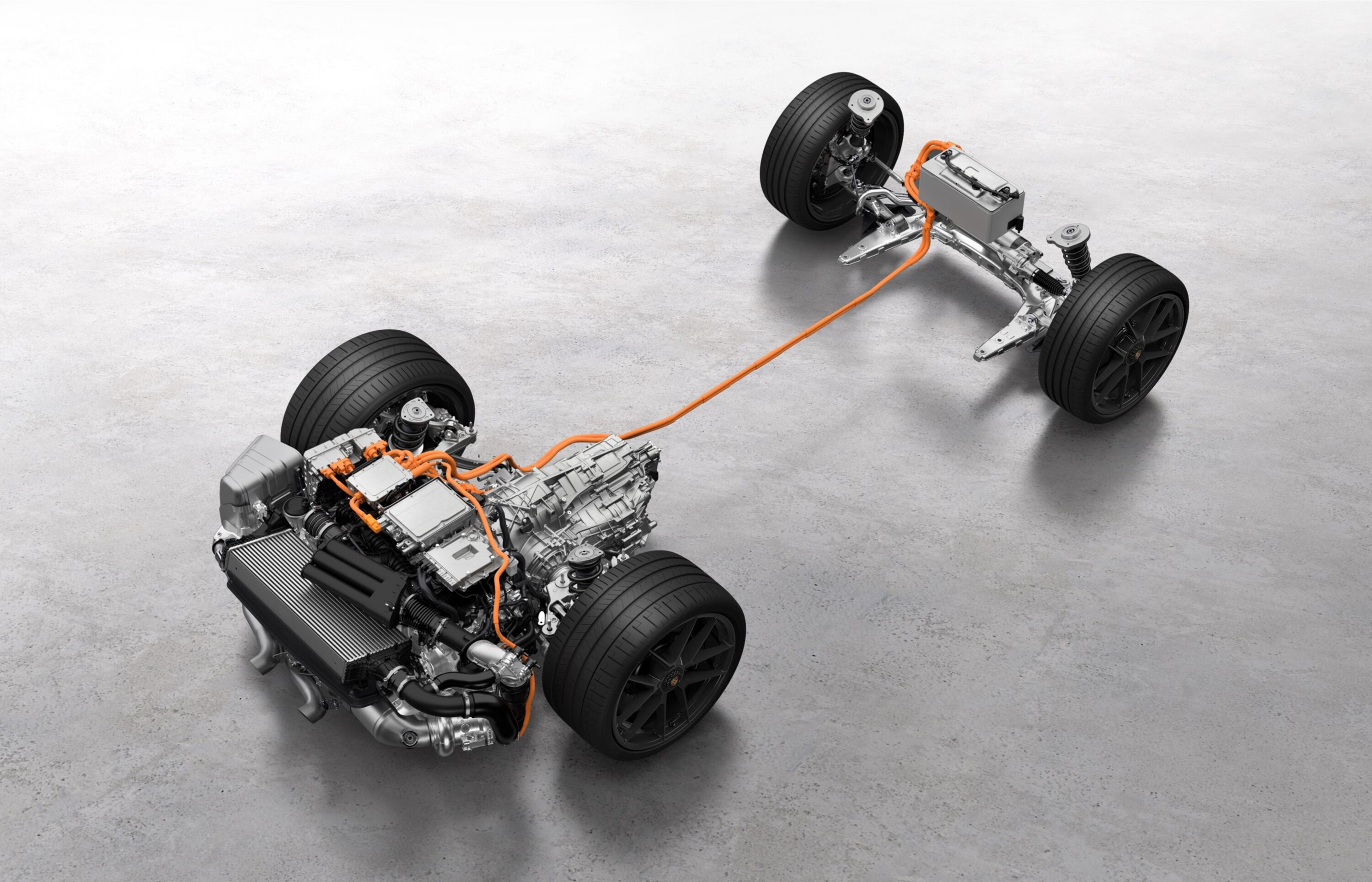
The overhauled petrol engine pairs with a newly developed electric turbocharger that mounts an e-motor between the compressor and turbine wheels. Porsche says the e-motor “instantaneously brings the turbo up to speed” and claims it can also function as a generator and produce up to 11kW of electric power. Sounds promising.
Of greater significance is the inclusion of a permanent magnet synchronous motor within the GTS’s eight-speed dual-clutch gearbox.
That e-motor is fed by a 1.9kWh battery designed to be as small and as lightweight as possible. It’s so small, in fact, Porsche says it’s comparable in size to a conventional 12-volt starter battery.
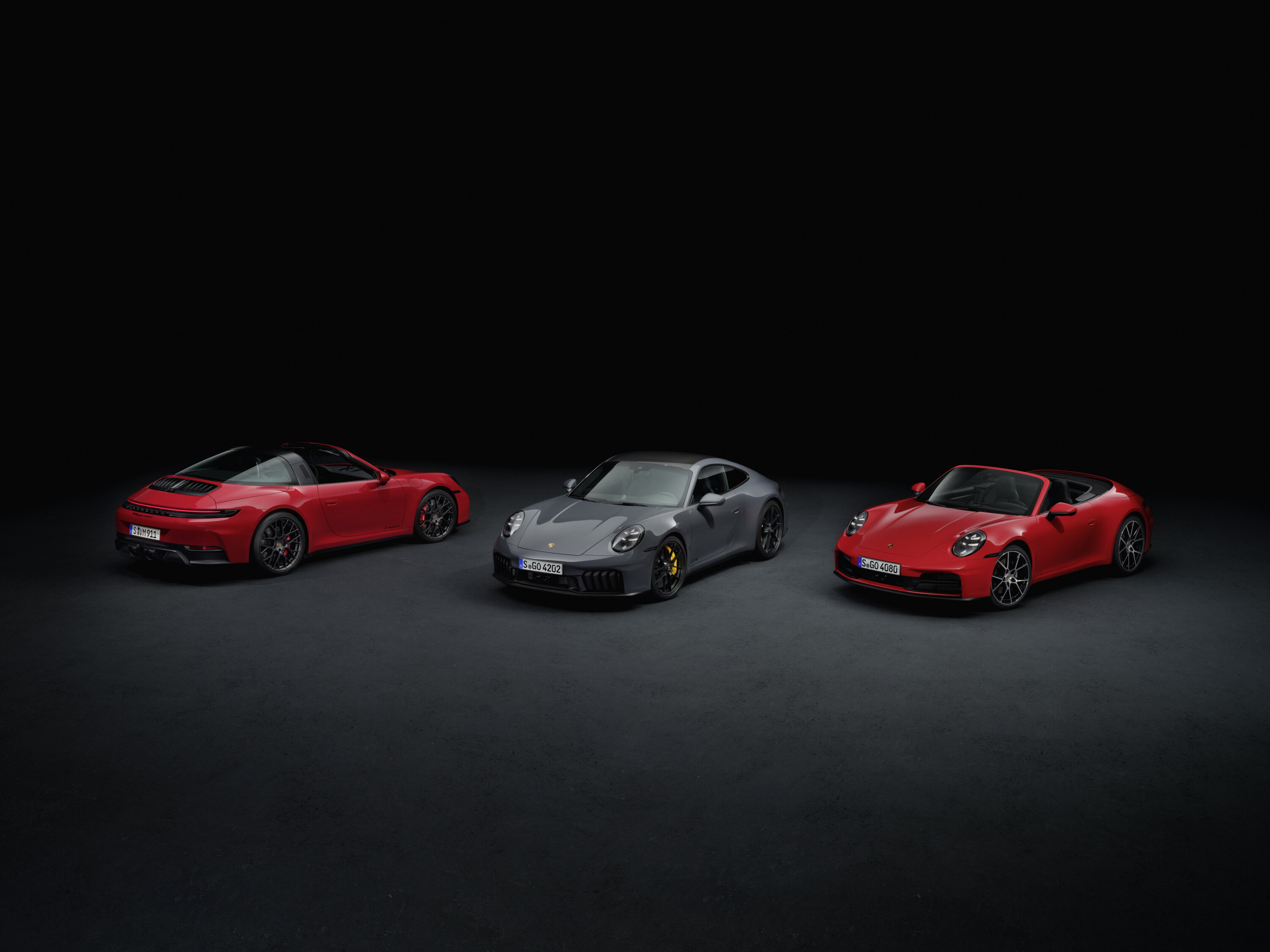
The e-motor within the transmission provides an additional 40kW/150Nm which brings the hybrid GTS’s total combined outputs to 398kW/610Nm. That represents a power increase of 45kW/40Nm over the non-hybrid Carrera GTS which has 353kW and 570Nm.
Naturally, e-motors and an additional battery will add weight and Porsche is yet to confirm how heavy the GTS T-Hybrid is. One figure it has confirmed, however, is its acceleration claims. Thanks to the instant response of its electric system, the GTS now hits 0-100km/h in 3.0sec, which is an improvement of four tenths. Top speed is 312km/h.
NEW CHASSIS HARDWARE
Not to be outdone by the powertrain team, Porsche’s chassis engineers have also been hard at work. The usual GTS treatment continues which brings a 10mm ride-height drop and the inclusion of adaptive dampers, but rear-wheel steering is now standard for the first time. Active-roll stabilisation, which is powered by the electric sub-system, is also included. As before, the GTS rolls on staggered alloys measuring 20-inches up front and 21-inches at the rear. Tyre sizes are 245/35 ZR20 and 315/30 ZR21 respectively.
TWEAKED EXTERIOR DESIGN
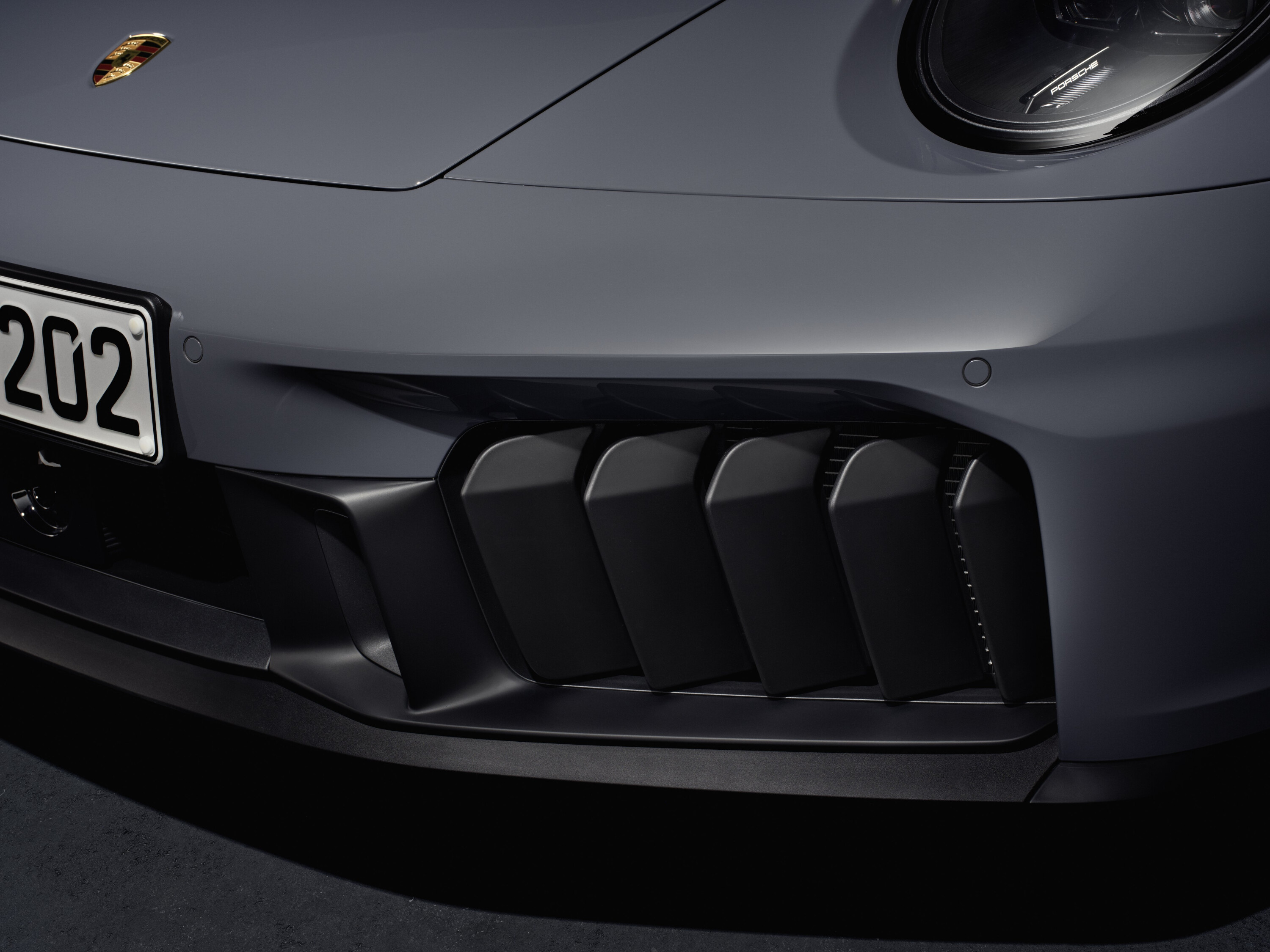
Unlike the rest of the 992.2 range which gains a range of mild design tweaks, the GTS’s exterior is noticeably different. The most obvious change is the addition of five vertical active cooling vanes within the revised front bar. There’s also a new adaptive front diffuser in the underbody which works with the vertical vanes to direct airflow as need: they open to optimise cooling during hard driving or close to improve aero.
Every model in the 992.2 line-up now gets matrix LED headlights but the GTS can be had with optional HD LEDs that feature more than 32,000 light points and can illuminate the road up to a distance of more than 600 metres. The active lights operate differently depending on your drive mode, too — we assume the active beams move quicker when in Sport+ compared with Normal — and they also have a non-dazzling high-beam function for oncoming vehicles that “is precise to the pixel” according to Porsche.
At the back, there’s a redesigned full-width light bar and a new rear grille, again with five fins per side. The number plate is also higher than before.
MORE SCREENS, FEWER SEATS
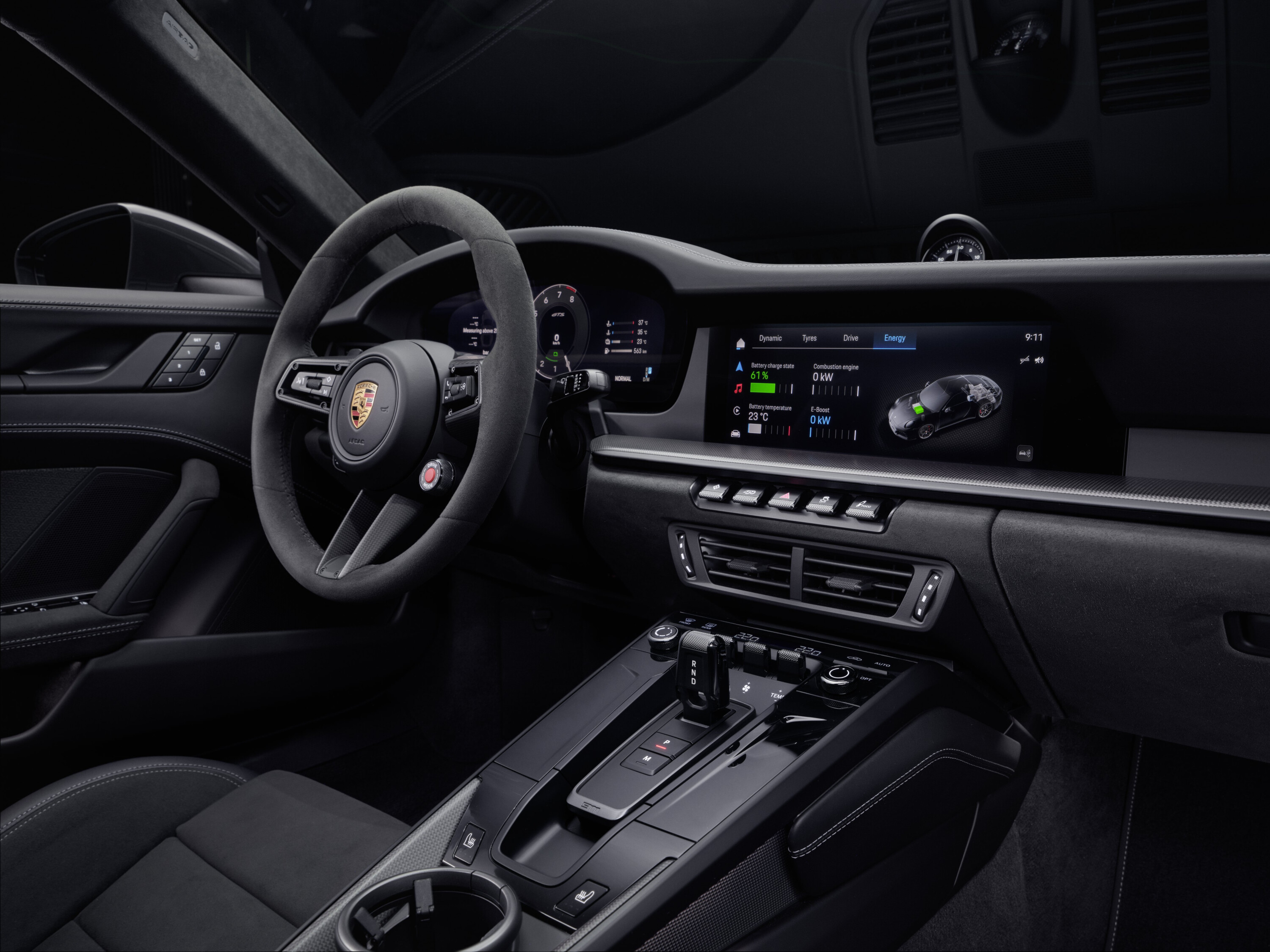
Inside the 992.2 ushers in two big changes: the inclusion of a starter button for the first time and the move to a fully digital instrument cluster. The new gauges are housed in a curved 12.6-inch display that Porsche says can be extensively customised.
Seven different views are available, including a ‘Classic’ display that retains the 911’s traditional five-tube design with a central tachometer.
The centre console now houses a cooled compartment where you can charge your smartphone on a wireless charging pad.
The 10.9-inch centre touchscreen has new connectivity features and integrates more closely with Apple CarPlay functions like Siri voice assistance. Watching video streaming while parked is also available as an option, while apps like Spotify and Apple Music can be used natively through the system without a connected smartphone.
Another interesting change is to the seating layout. Internationally, the 992.2 Coupe will be offered as a two-seater as standard rather than the traditional four-seat configuration. In Australia the 2+2 layout will continue to be the default, however removing the rear seats is a no-cost option.
2025 PORSCHE 911 GTS PRICING AND ARRIVAL
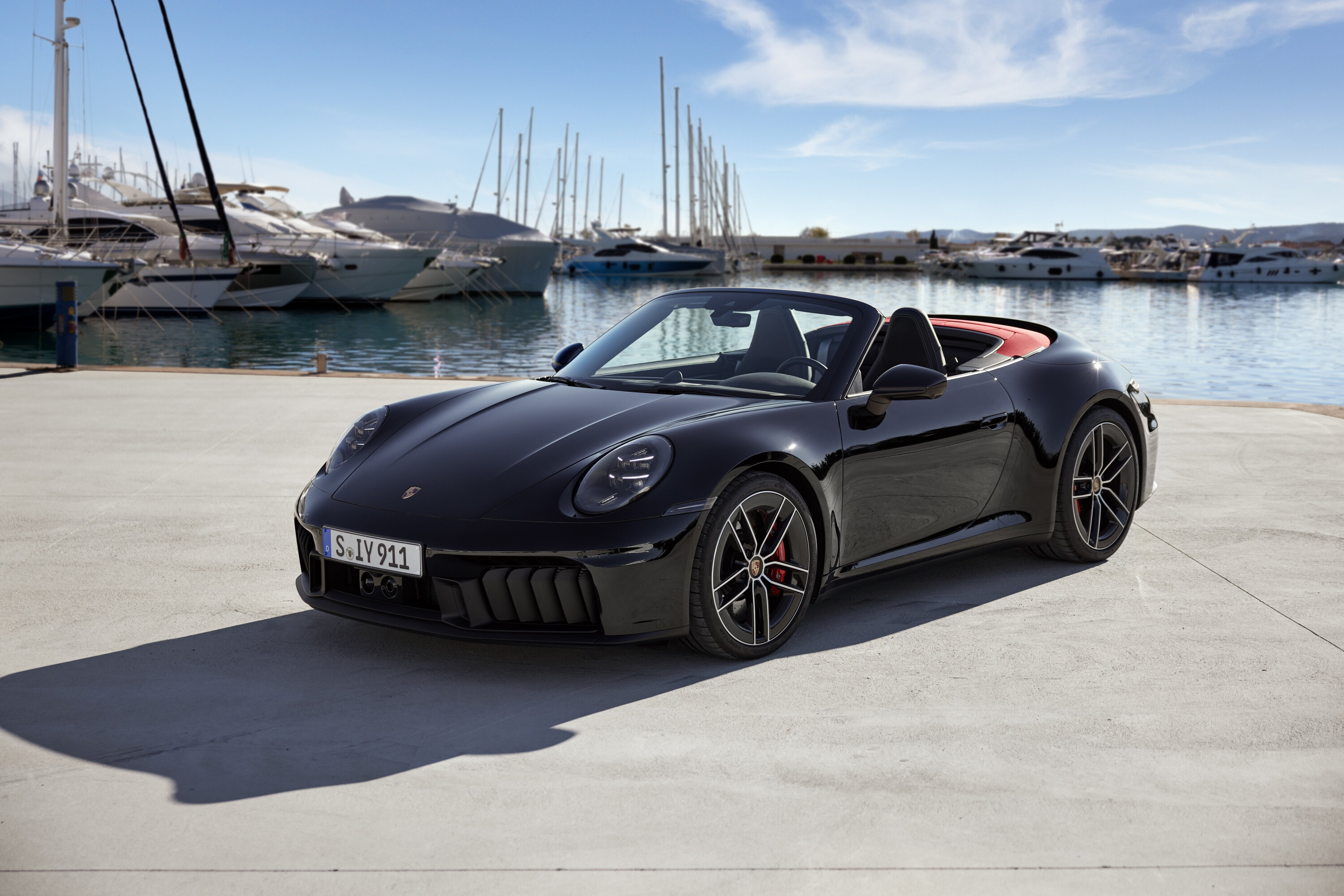
Almost inevitably, the hybrid 2025 Porsche 911 GTS will cost more than its combustion-only predecessor. Every model in the updated 992.2 range has been hit with price rises but it’s the hybrid version that cops the biggest spike to now cost $381,200. That’s an increase of $27,500.
The GTS is available in both rear-wheel and all-wheel drive guises and either as a coupe, cabriolet or Targa (all-wheel-drive only).
Order books for the 992.2 GTS are now open with first deliveries set to commence in the first quarter of next year.
2025 Porsche 911 GTS pricing
- 911 Carrera GTS Coupé starts at $381,200
- 911 Carrera 4 GTS Coupé starts at $401,300
- 911 Carrera GTS Cabriolet starts at $417,400
- 911 Carrera 4 GTS Cabriolet starts at $437,900
- 911 Targa 4 GTS starts at $437,900
