
TESLA has announced its quickest car yet, the Tesla Model S P100D with Ludicrous Mode. It comes with 100kWh batteries that power two motors, which can propel the electric car from 0-100km/h in just 2.7secs.
This makes it the quickest production car currently on sale, an achievement all the more notable considering the all-wheel drive Model S P100D costs considerably less than any two-seater hypercar with similar straight line performance. What’s more, it has four doors, seats up to five adults and has a heap of cargo space.
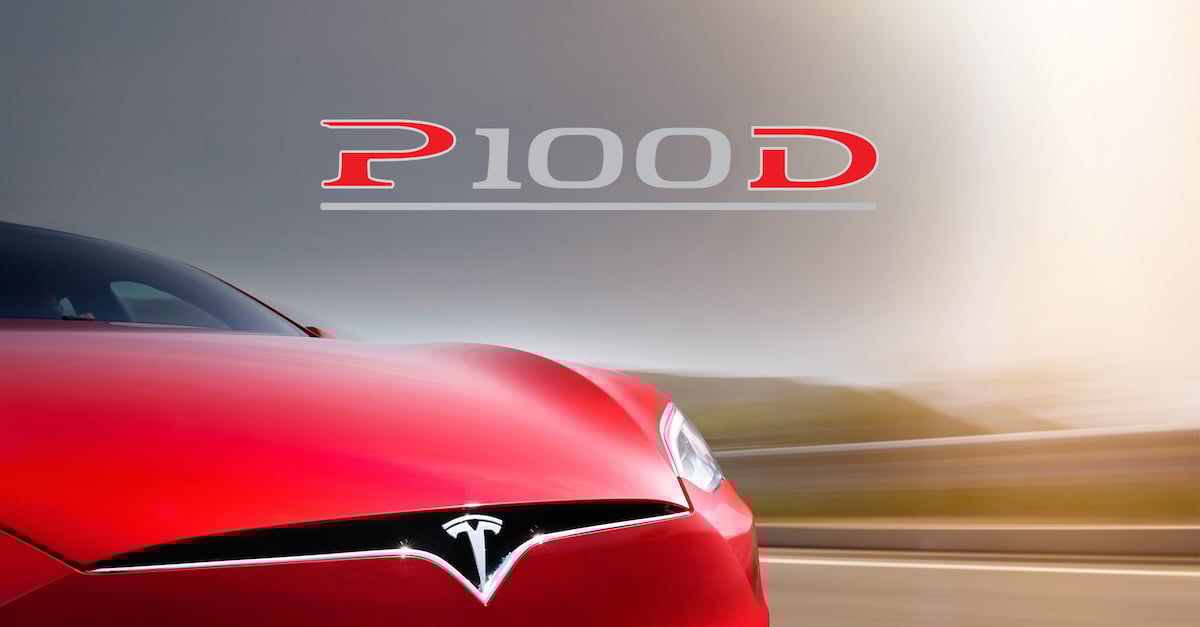
While the P100D’s acceleration is the headline act, perhaps more significant is its estimated 613km range between charges, the longest of any production all-electric vehicle so far.
This is also 104kms more than the current Model S flagship, the P90D.
If you’ve already ordered a Tesla Model S P90D but yet to take delivery, you can upgrade it to P100D spec for an extra $13,000, which suggests the new model will retail from around $215,000. Existing P90Ds can also be retrofitted with the new 100kWh packs, though this will cost around $26,000 because of recycling costs.
Tesla boss Elon Musk calls the 100kWh battery and P100D performance “very profound milestones” that he thinks will help convince people that electric is the future.
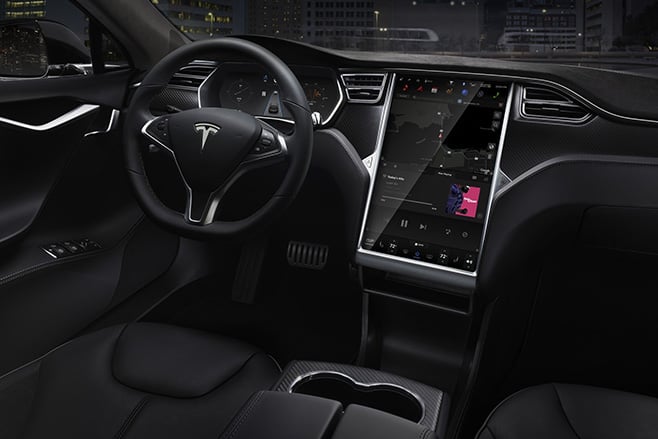
However the company appeared a bit more cautious in its statement announcing the P100D to the world, where it warned: “While the P100D Ludicrous is obviously an expensive vehicle, we want to emphasize that every sale helps pay for the smaller and much more affordable Tesla Model 3 that is in development. Without customers willing to buy the expensive Model S and X, we would be unable to fund the smaller, more affordable Model 3 development.”
Whatever happens, significant advances in electric vehicle technology are being announced more than new smart phones these days so it will be interesting to see how long the P100D remains at the forefront.
The Model S P100D with Ludicrous mode is available to order now, though Tesla is yet to announce full details on local pricing and specifications. Delivery periods will vary based on location.
It’s a six-month wait to get into the car that takes twice as long to open its door as it does to blast to 100km/h.
When it arrives here in December, Tesla’s Model X – the Californian electric car company’s first SUV – will be able to blast to 100km/h in as little as 3.1 seconds, but it takes up to six seconds to close the radical falcon wing doors that define the all-electric vehicle.
It’s one of the anomalies of a car set to challenge traditions in the bulging luxury SUV space – and a car set to become Tesla’s top seller in Australia, for now at least.
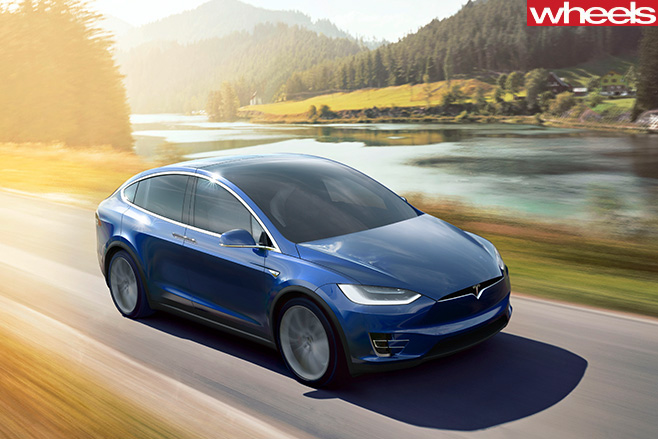
It can travel up to 489km between charges and even the slowest model – the 60D and 75D – dash from 0-100km/h in a brisk 6.2 seconds.
Those two electric motors free up boot space – both in the rear and front, or ‘frunk’ – and also deliver brutal acceleration, with the P90D claimed to take 3.4 seconds to 100km/h and the yet to go on sale P100D lowering that to 3.1 seconds.
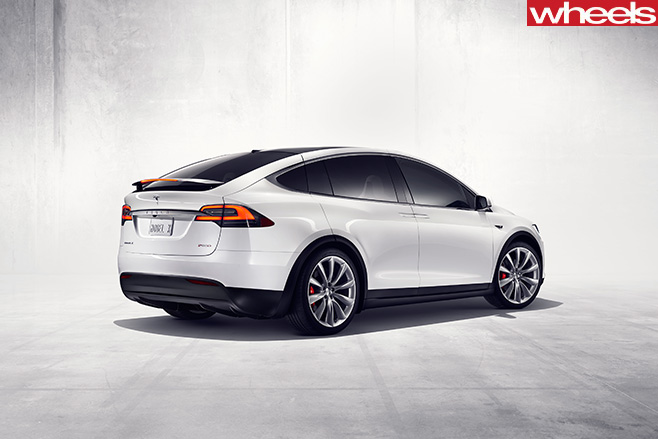
A five-seat layout is standard, or buyers can opt for a six-seat configuration that includes mono-post middle seats that tilt forward but don’t allow passengers to adjust the rake of the backrest.
Tyres include standard 20-inch rims, or you can option hulking 22-inch units.
The Model X has an aluminium body to save weight, but the batteries make it a 2.5-tonne behemoth.
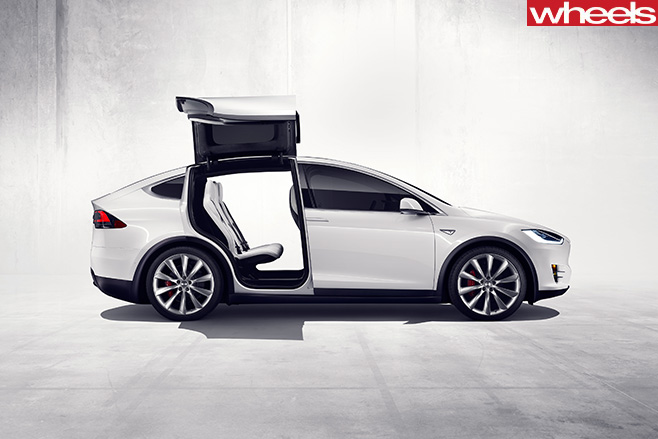
Despite proudly stating it is holding 373,000 orders for the yet-to-be-built Model 3, Tesla won’t talk sales figures for its Model X, nor will it reveal how many orders have been placed.
But Tesla Australia senior marketing and communications manager Heath Walker concedes the Model X will be the company’s biggest seller.
“Luxury SUV is about five times larger than luxury sedan,” he said, hinting that the expectation was that the Model X will trump the Model S.
Audi’s RS3 Sedan is spotted putting in some development miles at Germany’s Nurburgring Nordschliefe test track – and it’s gunning hard.
Audi is gearing up to reveal its first-ever RS3 sedan later this year, and it’s shaping up to be one exceptionally brisk four-door.
Video captured of a camouflaged Audi RS3 sedan prototype shows it carrying huge speed through the Nurburgring Nordschliefe’s many corners, hopping kerbs and generally being driven like a racecar. With at least 270kW under its bonnet it was always bound to be fast, but this spy vid suggests the Mercedes-AMG CLA45 has something to worry about.
Expected to make its global debut later this year, potentially at the Paris Motor Show in October, the RS3 Sedan should find its way into Australian showrooms next year – and for Audi Australia, it could be a major money-maker.
So far this year just under 30 percent of Audi A3 hatchbacks sold in Australia are RS3s, with the high-performance $78,900 five-cylinder hyper hatch accounting for roughly 15 percent of all A3s – across hatch, sedan and convertible bodystyles – sold here in 2016.
Looking at the A3 sedan, the S3 variant is the most popular by far. With the hatch/sedan sale split currently around 55 percent and 45 percent respectively, adding an RS3 sedan to the A3 range could see the sportiest and most expensive model account for nearly half of all A3 sales volume in Australia
But what can we expect from the RS3 sedan? Rumours abound of a power output in the region of 295-300kW, but you can count on at least 270kW of power and 465Nm of twist if Audi just transplants the 2016 RS3 Sportback’s turbo five-cylinder powertrain into the sedan without any changes.
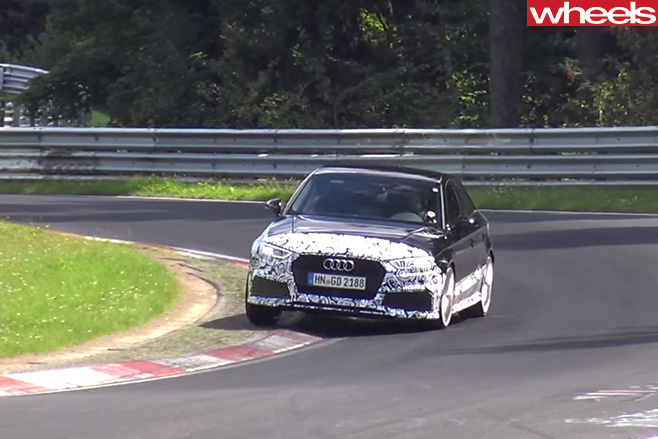
You can also expect a modest premium for the sedan. Audi charges an extra $2300 if you go for the Audi S3 sedan instead of the S3 Sportback, and we wouldn’t be surprised if the RS3 sedan carried a similar impost over its hatchback sibling.
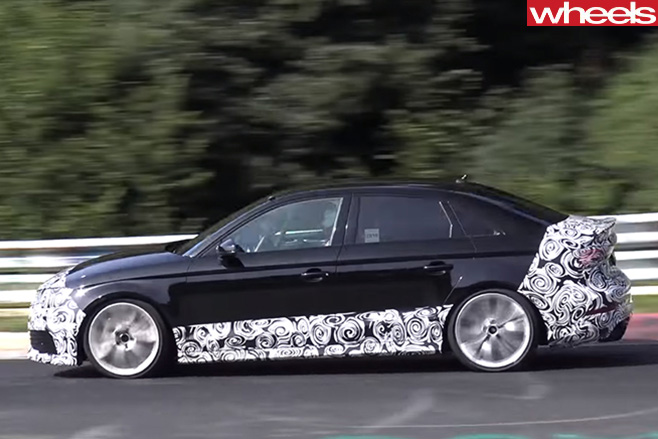
However, Audi may give the RS3 a kick in the pants by way of the TT RS’s 294kW/480Nm 2.5-litre inline five, which was only announced in April. The latest evolution of Audi’s signature five-cylinder performance motor, it’s able to take the TT RS to triple-digit speeds in a supercar-like 3.7 seconds. If it finds its way into the RS3, Audi may well have a giant-slayer on its hands.
Australia is a big place, yet the world itself is getting much smaller.
International travel has never been cheaper, and we’re jetting overseas at an increasing rate – which is fantastic – but how many of us have truly explored our own country, our own state?
For driving enthusiasts, the promise of a good road is all the excuse needed to load up the car, and good roads is one thing the Victorian Alps has in strong supply. The Great Alpine Road is one of Australia’s most spectacular drives, but there are a number of roads in the region that appear, on Google Maps at least, to offer plenty of driving entertainment.
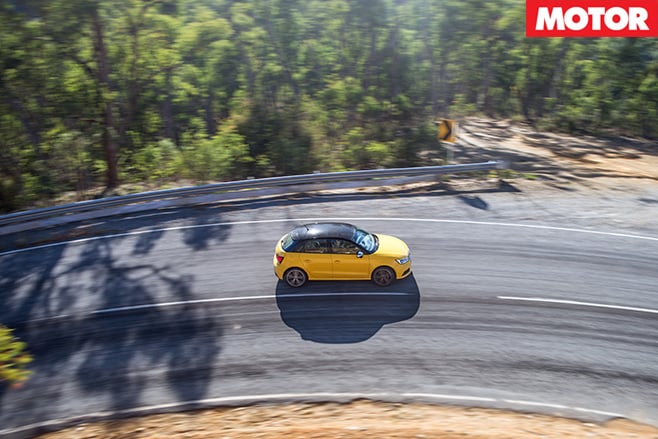
The journey originates during last month’s trip to Winton, and begins badly when on autopilot I start heading towards Heathcote on the Calder Freeway rather than towards Benalla on the Hume – time to take a break from performance testing I think.
I tell shooter Alex Rae it’s all part of my plan to thoroughly test the S1’s fuel range, and we roll into Benalla with the gauge showing beyond zero. Skill and judgement, as my dad always says. The Audi S1 takes 47.15L into its 45L tank.
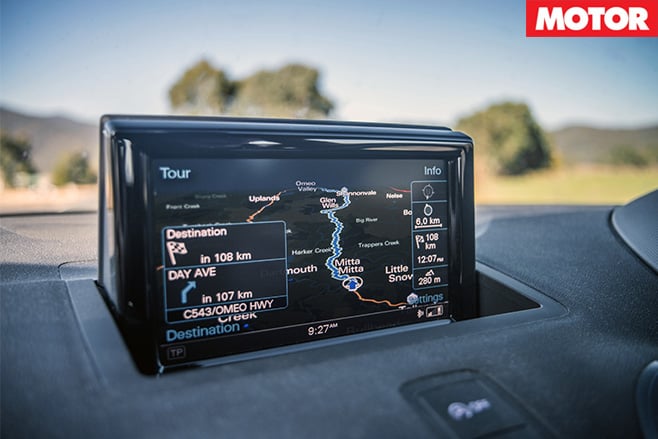
The driving is undemanding, which gives Rae and I time to tackle the big issues that invariably raise their head on road trips. Problems like Fleetwood Mac’s incorrect assertion that thunder only happens when it’s raining, or thinking up an international symbol for idiots who fail to realise they haven’t reattached their fuel cap and now have it flapping behind them at 110km/h.
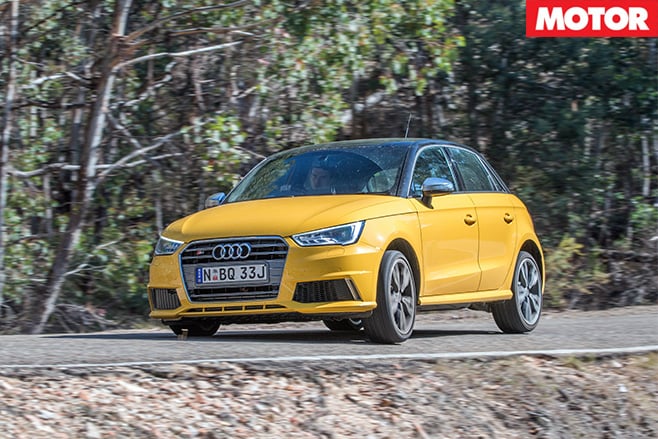
Fast, flat sweepers become progressively tighter as the road climbs steeply, before opening out again on the downhill run with blind crests aplenty. It’s at this point fatigue begins to set in as there’s been almost 100km of constant corners. Concentration needs to remain high, however, as the tarmac narrows significantly for the next 30km.
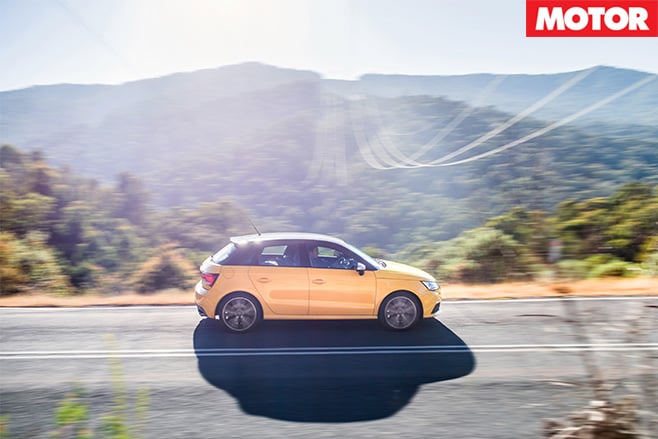
Month: Five Liked: Corners, corners and more corners Disliked: Tight bends are a bit frustrating in the S1 Favourite moment: The winning combination of stunning scenery and fantastic roads
Fuel this month: 9.2L/100km Average: 9.2L/100km Distance this month: 813km Total: 8,394km
Want to see more of our Audi S1 long-termer?
There are cars which are sensible to the core, for those that like to purchase their vehicles on a range of very reasonable, rational – and wholly unexciting – criteria. These are the Big W sneakers of the world – cheap, will go the distance, practical, and just a generally smart decision even if you look like a bit of a dork.
However, the cars on this list are anything but rational. These are the vehicles which have a soul so loud and brash it’ll make your nose bleed. These are the $1000 Yeezy boots of the car world – unreasonably expensive, outlandish, and often so impractical you can’t take them anywhere without having an aneurism.
So without further ado, in no particular order, these are the 7 cars you would have to be a true nutter to own… in the best of ways.
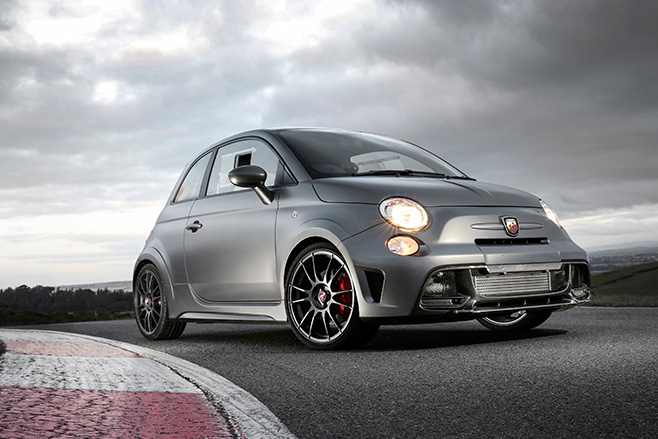
ABARTH 695 BIPOSTO
With all the right boxes ticked on the options list, what was once a fun urban hot-hatch is now an almost $100,000 box on wheels that’s been rendered virtually useless for driving around town. Lightweight perspex windows, minimal sound deadening and a race-spec ‘dog-box’ transmission would make the Biposto a nightmare for regular duties. But boy, oh boy, when the traffic evaporates and the road opens up would all that heartache be worth it.
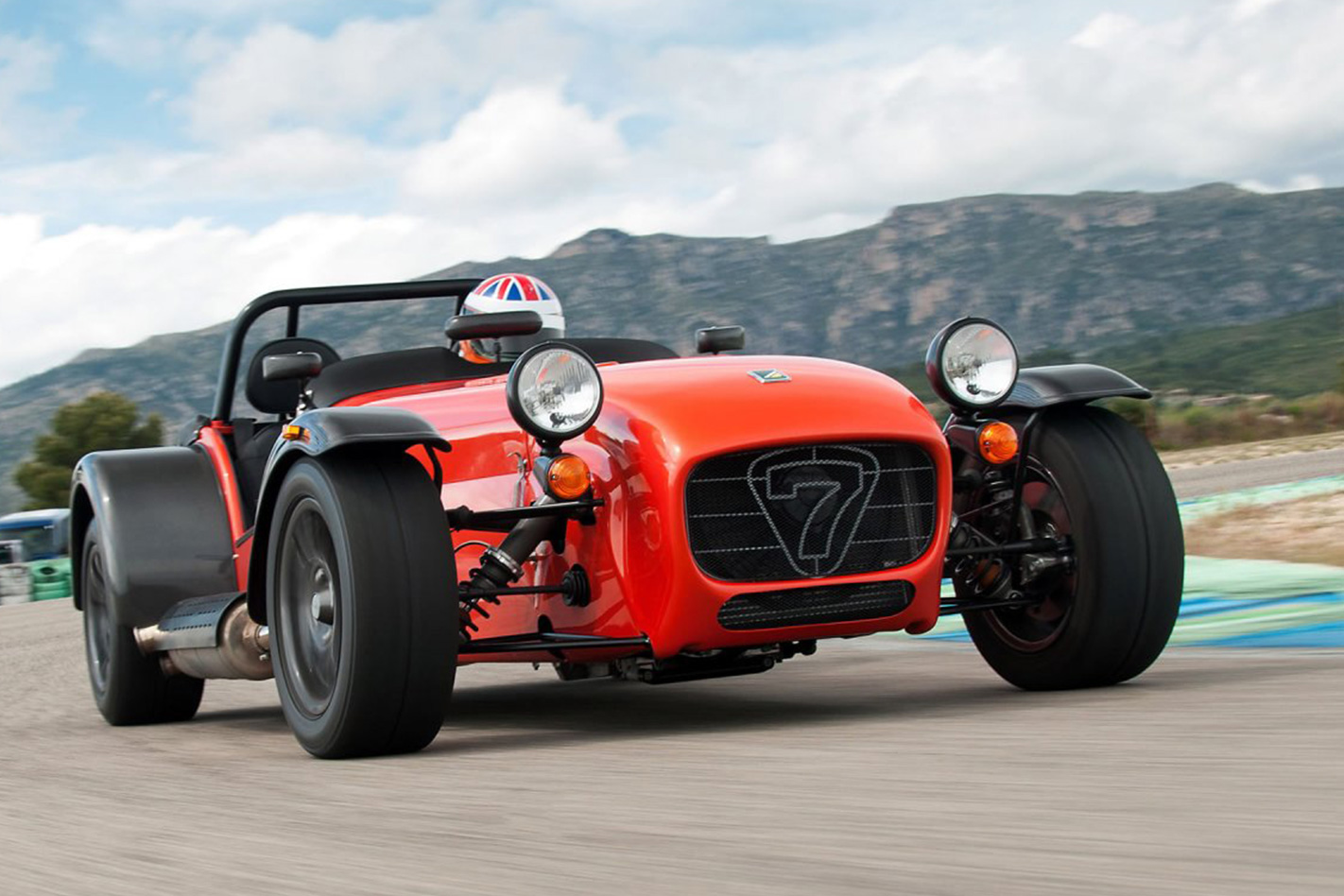
CATERHAM 458 R
Caterhams have always been for a special breed of driver. They have a cult following, with some owners going so far as to build the things themselves. But even the most dedicated fan of the brand would have to question the wisdom of buying a car which costs nearly $135,000 to get onto Australia roads – and doesn’t have any bloody doors!
MORGAN 3 WHEELER
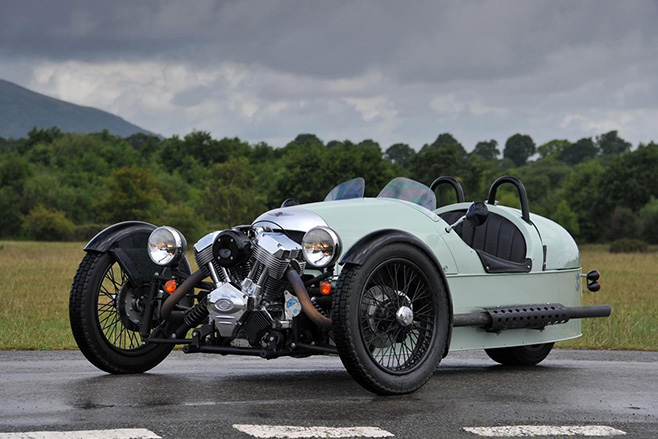
Cars have four wheels. Everyone knows that. You are taught it from a very young age. Apparently no one told the guys at Morgan about this golden rule, because they went ahead and built a car with just three hoops connecting it to the road.
Something must have been well and truly wrong with the tea that week, as they went and strapped a motorcycle engine to the front of it for good measure too. Morgan was clearly too occupied wondering whether they could merge a motorbike with a car, when they should have given more thought to whether they should. The three-wheeled, motorcycle powered ‘car’ can be yours for $92,000 plus on-roads. Bargain!
MERCEDES-AMG G63
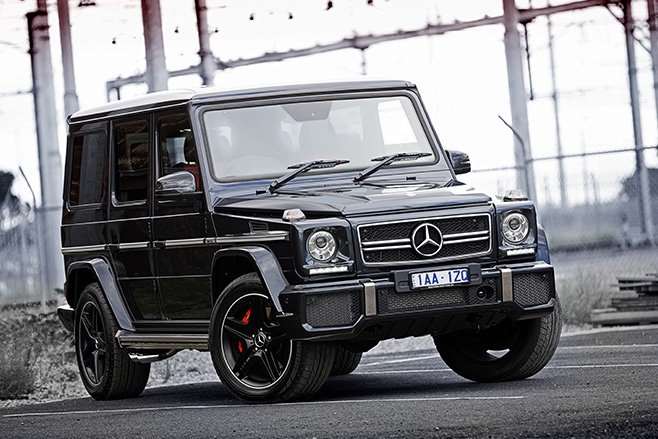
Here at WhichCar, we are often fans of odd combinations in vehicles. Small hatchbacks with powerful engines and family wagons with tyre-frying power are great examples of cars we would gladly park in our personal garages. But a 400kW twin-turbo V8 plonked on top of a primitive 4×4 chassis from the 1970s? What a ridiculous idea… we’ll take five please!
LAMBORGHINI AVENTADOR
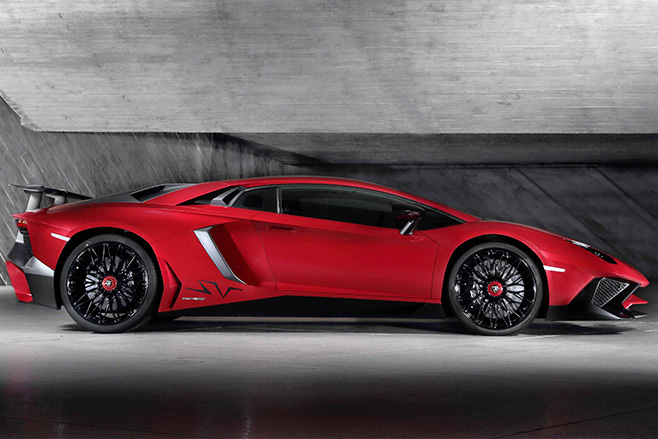
What, you thought we would be above putting a Lamborghini on this list? Pah! Lamborghinis are the original vehicle designed for those in a straitjacket, and the Aventador is the Daddy of them all. Far too wide for nearly every city street with possibly the shoutiest exhaust imaginable, all wrapped in gloriously extroverted carbon-fibre bodywork. The 6.5-litre V12 hidden behind the headrests is a giant middle-finger to eco-friendly modern engineering too. If you only broke out of the asylum recently (and found three-quarters of a million waiting for you in your bank account), try the bonkers LP-750-4 Super Veloce on for size.
BENTLEY BENTAYGA
A $300,000 option to have a Breitling clock on the dash is the perfect example of why the Bentley Bentayga makes our list. Not convinced? Well, Bentley’s first SUV is a very expensive ticket to what is just a more powerful Audi Q7. However, with a twin-turbo W12 under the bonnet capable of delivering a 4.1 second 0-100km sprint, you will be able to leave the Q7-driving plebians who want to point this out in your dust.
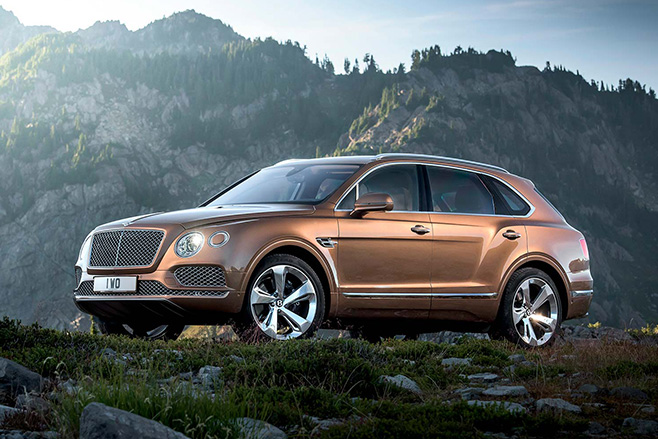
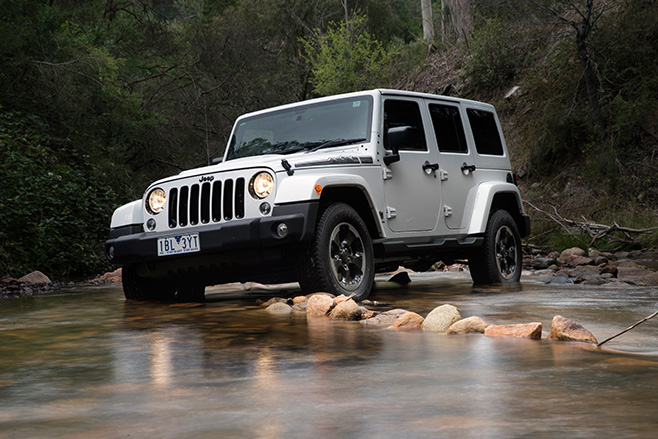
JEEP WRANGLER
Of the cars on this list, the Jeep Wrangler actually has one of the more practical uses. The trusty workhorse is a very capable off-roader, and has 75 years of history to back it up. However, other than that, there isn’t much going for it. Despite the big off-road marketing push, in the real world the Wrangler is more often spied outside an inner-city gym than it is leaving the beaten track.
1. Qashqai is named after a nomadic tribe living around Iran, and is pronounced ‘cash-kai’.
2. The entry level Nissan Qashqai ST has a 2.0-litre naturally aspirated petrol engine producing 106kW/200Nm. It comes with either an automatic Continuously Variable Transmission (CVT) or a six-speed manual.
3. The ST – and all higher model grades Ti, TS and TL – only come in front-wheel drive.
4. Combined urban and highway fuel consumption is listed at 6.9L/100km for the ST.
5. The ST has a generous 430L boot with all seats in use.
6. A high driving position perched on the Nissan Qashqai’s SUV suspension ensures good visibility for all passengers.
7. Mobile phone connectivity requires hooking up to NissanConnect, which can be confusing and cumbersome.
8. There are neither air vents nor adequate storage compartments for rear seat passengers.
9. The entry-level ST is a well-appointed baseline model with cloth trim and cruise control, though premium goodies like a panoramic sunroof, rain sensing wipers, automatic on/off headlights and seven-inch colour touchscreen with satnav are only available in higher models.
The hammer has dropped on the world’s most expensive Brit.
Money seemed no object at the RM Sotheby’s Monterey auctions in California last week after a 1955 Jaguar D-Type clocked up a stratospheric US$19.8m final bid.
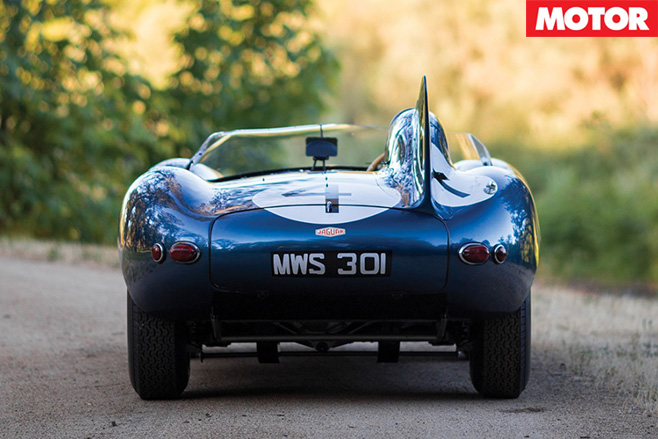
But this isn’t the first time it spanked the competition. This particular D-Type, known as chassis XKD 501, is an overall Le Mans winner, conquering the 24 hour endurance event in 1956.
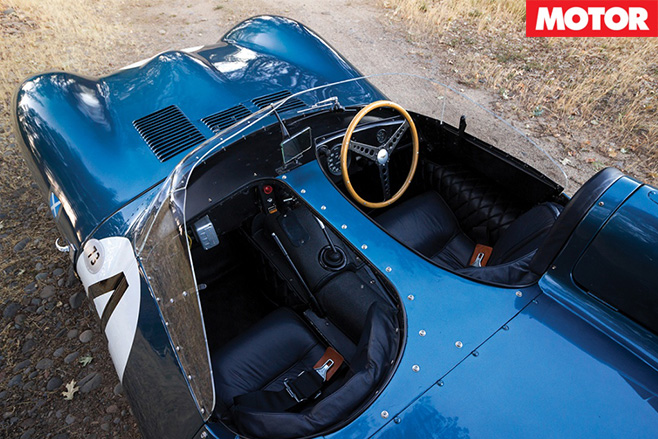
Since then it’s traded hands twice, and been restored and maintained with meticulous detail. RM Sotheby’s claims the first ‘team series’ D-Type to be “one of the most important and valuable Jaguars in the world,” as well as one of the “most historic British sports cars ever made”.
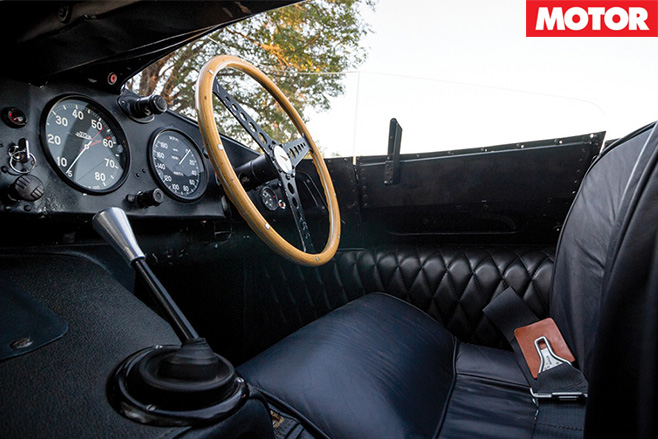
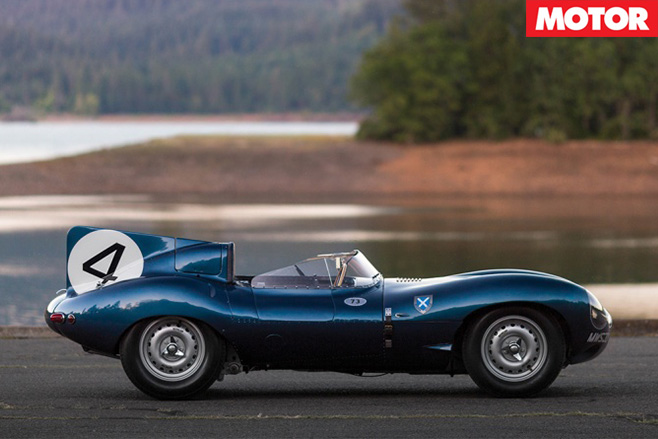
Pictures via RM Sotheby’s
It’s a beast with a brain – combining high-tech engineering and old-fashioned attention to detail.
Godzilla’s back! And it’s meaner than ever. Fully 18 months after the launch of the all-new Skyline range in Japan, cash-strapped Nissan has finally unveiled the successor to one of the world’s finest sports coupes.
The good news is that Godzilla II is quicker than ever – Nissan insiders claim standing 400m times in the mid-13 second bracket and say the new car has lapped Nurburgring 21 seconds faster than the old one. The bad news is that Nissan is still dithering over whether to export its Porsche crushing supercar.
Its tortuous evolution hints at the turmoil within Nissan, which is still reeling from the collapse in sales and profits following the bursting of Japan’s bubble economy.
And its dimensions – longer, wider, taller and heavier than the old car – are not clever in a business where, increasingly, smart car companies are finding less is more.
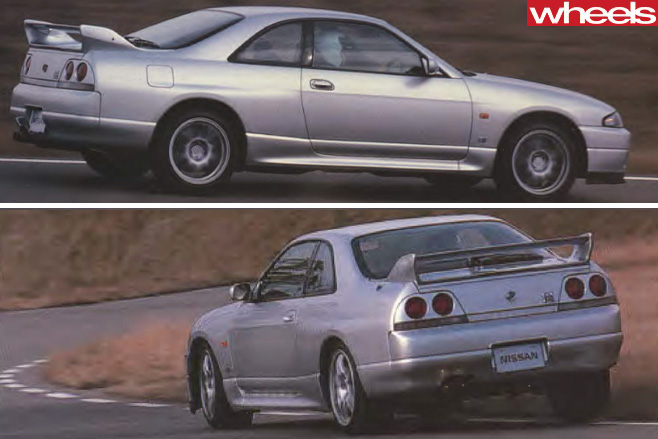
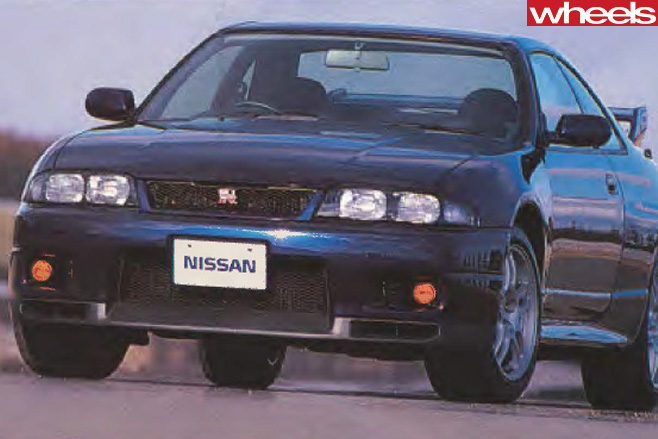
Nissan previewed the new GT –R alongside the rest of the Skyline range at the 1993 Tokyo Show. Every panel is brand new, though Godzilla II’s styling is clearly evolutionary rather than evolutionary.
The muscular bulges over the wheelarches and dual afterburner tail-lights are familiar Skyline call signs. Since Tokyo, Nissan has also rejigged the front grille and bumper assembly, and added a race-style four way adjustable rear wing.
Nissan claims the wing, the deep front spoiler and the subtle side skirts help the new GT-R achieve a Cd of 0.35, compared with the brick-like 0.40 of the old car. Not that you could tell the difference hot lapping the Ginza …
To boost body rigidity, Nissan has added braces front and rear to tie the suspension strut towers together, a stiffening panel behind the rear seats, crossbars in a thicker floorpan, larger cross section centre pillars and stronger sills. The extra steel accounts in part for the GT -R’s 1530 kg kerb weight – up 100 kg on the old car – but Nissan has tried to make amends by stamping the bonnet and front guards in aluminium. The saving? 12 kg.
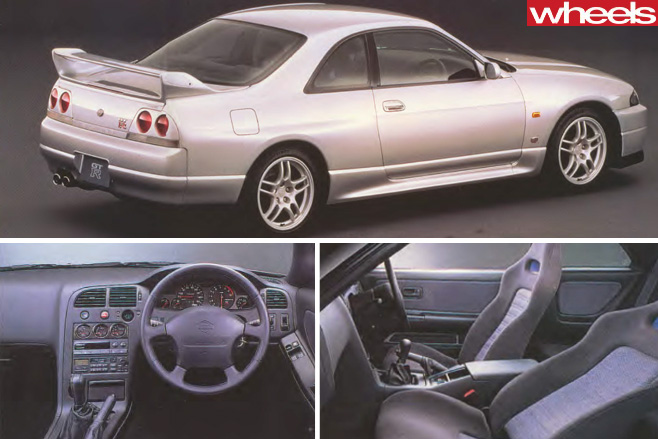
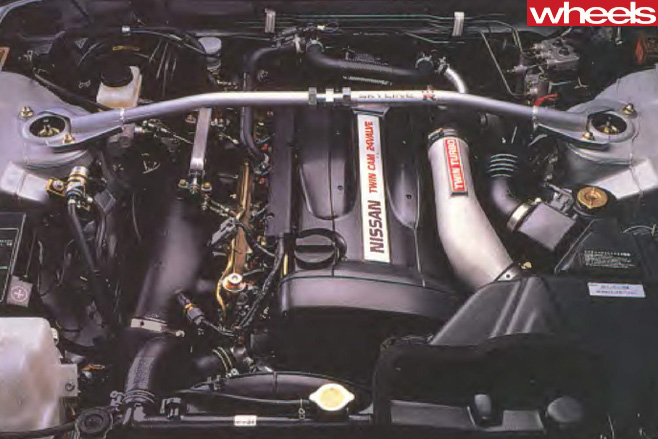
If you want a real deja view, however, just lift the bonnet. The mighty 2.6 litre twin turbo RB26DETT in-line six looks like it has been lifted straight out of the old car – which is basically what happened.
There’s a new oil filler cap, and a beautifully crafted race-style adjustable brace anchoring the front strut towers. But otherwise the engine bay is identical, right down to the graphics on the cam cover and plenum chamber.
Nissan claims the engine delivers the same power- 206 kW at 6800 rpm – as in the old car, but is unlikely to advertise an increase for fear of violating the Japanese industry’s agreement to limit production car outputs to 221 kW.
The factory says the new car’s extra performance comes from a three per cent increase in torque to 367 Nm at 4400 rpm, new lightweight ceramic turbochargers which enable the engine to spin more rapidly to the redline – and a trick new computerised four-wheel drive system which boosts traction.
The system is a development of the existing ATESSA E-TS electronically variable torque split transmission, which varies the amount of torque fed to the front wheels from zero to 50 per cent, depending on data from sensors monitoring vehicle speed and lateral force.
In the old car the system produced prodigious grunt out of corners with little of the understeer normally associated with four-wheel drive.
Former HRT driver Win Percy described it this way after a session with the car at Eastern Creek: “The initial turn-in is good, but until you’ve got the confidence it feels as though it’s going to understeer quite badly.
“Through tight corners you can get the power on a darned sight earlier than in a two-wheel drive car. By playing on the racetrack, you can get the front-wheel drive to come in and out noticeably.”
For the new car, Nissan has linked the ATTESA system with a new yaw-rate feedback Super HICAS four-wheel steering for more finely tuned cornering responses. The system first estimates vehicle motion corresponding to the driver’s intentions from changes in wheel speed and steering angle.
At the same time, a sensor feeds the yaw rate back to the computer controlling the system for comparison with pre-programmed target values. The computer then adjusts the rear wheel steer angle. Nissan claims the system enhances stability on rough roads and at high speed.
Other upgrades to chassis hardware include the adoption of Brembo brakes all round and detail improvements to the multi-link suspension. The upper link of the front suspension is now a two arm fabrication for increased camber stiffness. Rear suspension travel has been increased to improve tyre contact with the road.
Massive 17 inch alloys – up one inch from the old car – now run lower, wider 245/ 45ZR tyres.
Key to this system is a computer controlled limited-slip diff which combines with the four-wheel drive and steering electronics to ensure optimum traction under all conditions. V spec cars also get stiffer spring and damper rates for even better on-the-limit handling.
Such high technology chassis engineering combined with good old-fashioned attention to detail – Nissan even moved the battery to the boot to improve weight distribution – rather than a big increase in horsepower gives the new Nissan Skyline GT-R the edge over its illustrious predecessor.
Nissan quotes a standing 400m time of 13.5 seconds- running two up, with a full tank of fuel, at an ambient of25 degrees C. That’s a full 0.4 sec quicker than the factory quoted time for the old car – and 0.2 secs under the time Wheels Correvit time in 1990. The queue starts here …
The Skyline’s The Limit
PRINCE MOTORS LAUNCHED the original Skyline in 1956 as a 1.5 litre four door featuring a de Dion rear axle, quite an unusual feature for a mid-’50s Japanese car wrapped in an unadventurous body. lt evolved into the big Nissan Gloria. Though part of Nissan today, Prince Motors started out as a spin-off of Nakajima Aircraft – another, larger offshoot became Fuji Heavy Industries. maker of Subaru.
Sakurai swapped the Gloria’s single carby for a set of triple Webers, which boosted output to a then astonishing 95 kW, and voila! – Japan’s first performance sedan, which was shipped to Australia in small but significant numbers.
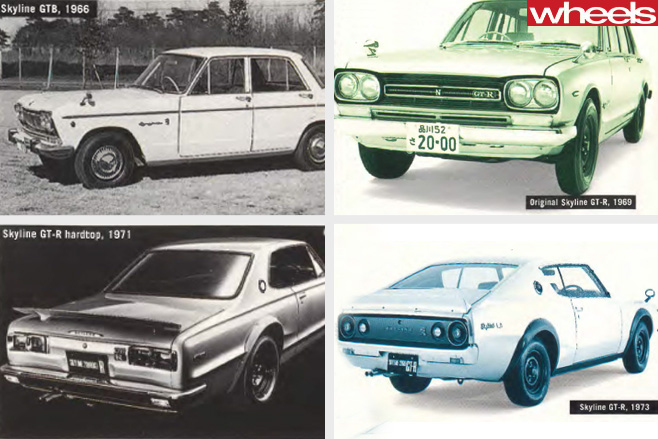
Prince, by then owned by Nissan, went ahead with the third generation Skyline (again under Sakurai-san). The debut Skyline GT-R carried Japan’s first four valve twin cam, a 2.0 litre six reputed to develop at least 25 kW more than the ‘official’ 125 kW rating. The GT-R was launched as a four door, but in 1970 a short wheelbase two door hardtop was supplying the basis for the hottest (and most successful) of Japan’s touring cars. In 1973 Sakurai and company popped a third generation GT-R (based on the 240K two door hardtop), the last of the line for some time.
The now legendary 1990 Godzilla was the handiwork of a team headed by program manager K. Watanabe. The latest bowed under S. ltoh and seems to work as well as the original – so, we assume, does the development group.
– by Bob Hall.
Niche and Nasty: ‘Just Do It’
Australla was the only market in the world outside Japan where the previous GT-R was sold with full compliance and warranty. But that’s no guarantee we’ll get the new model, according to Nissan insiders. Nissan Japan steadfastly refuses to develop the GT-R for export, despite performance and handling which put it among major league supercars. This curiously myopic attitude robs Nissan of the potential to use the GT-R as a niche image builder, the way BMW uses the glorious M3 coupe.
Dunoon went to Japan, figured the GT-R could be adapted to meet ADRs, and persuaded the Japanese to agree. “Their attitude was very strange,” he recalls. ”They gave me some cars, but basically said ‘we don’t want to know’.”
Dunoon’s small team embarked on a six month ADR program. The budget was a modest $250,000. The first thing they did was disconnect the 180 km/h speed limiter. Running the GT-R flat out for sustained periods revealed shortcomings: the diff, gearbox and transfer case oil temperatures all soared. A special transmission oil cooler was one of 250 changes the Australians made to meet ADR and durability targets.
Other changes included side intrusion bars, new muffler and windscreen, changes to the instrument panel, and a complete rejig of the rear lights.
Dunoon also wanted 17 inch wheels and bigger brakes – both features of Godzilla II. Head office engineers had components on the shelf but the marketing department said no. “lt’s the one area where we could really have made the car better.” he says.
Nissan Japan was also persuaded to batch build all 100 GT-Rs destined for Australian in one hit, complete with the Australian spec windscreen and muffler. Each GT-R then required a further 50 hours of work at Nissan’s Clayton plant before being released to dealers to fit intrusion bars and tail-lights, among other tasks.
With Nissan Australia now merely an importer, ADR compliance work would have to be done in Japan. This would push the GT-R’s pricetag to $190,000 by the time it reached Australia, almost 75 per cent more than the old car.
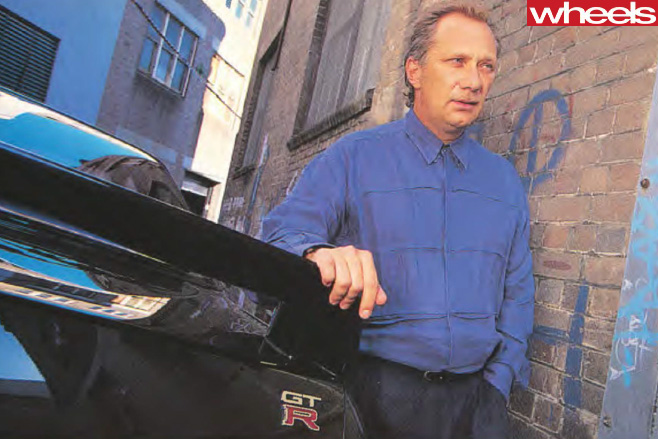
The price wouldn’t scare off Kevin Jarrett, pictured, who has logged 25,000 km in his two-year-old GT-R. lt has been utterly reliable in both daily driving and hot laps of Oran Park. Having owned Porsches and Ferraris, he reckons there’s no better high-performance buy. “I don’t know what I’d replace it with, apart from the new GT-R.”
We get first drive: NEW XA FALCON
With all the good points of the old car and a few new ones thrown in, Ford’s new one continues the “great road car” theme.
First published in the April 1972 issue of Wheels magazine, Australia’s best car mag since 1953.
ONCE YOU’VE SEEN the XA’s styling and agreed it is shorter than the pics indicate, but still squat and purposeful with a very Ford look about it the driving position is what really impresses.
The thin-rimmed steering wheel is almost at arm’s length, fairly low down and raked just off vertical. The bucket seats on the GS we drove are tall with plenty of lateral support all the way up the squab and the cushion is firm with more than enough padding for the thighs.
The instruments in the vast wraparound facia are very easy to read and all the minor controls are within arm’s length. The dashboard is all new and has a very plastic look and feel but this doesn’t prevent it from achieving an imposing and impressive air.
Visibility is excellent with thin pillars and a lack of quarter vents. It is not quite as good as the HQ Holden because the windscreen is more sharply raked back and the side windows are rather shallow but it is a vast improvement over the XY. At the rear, and in common with the Valiant and Holden, it is impossible to see the tail so parking will depend entirely on good judgment or the old touch method.
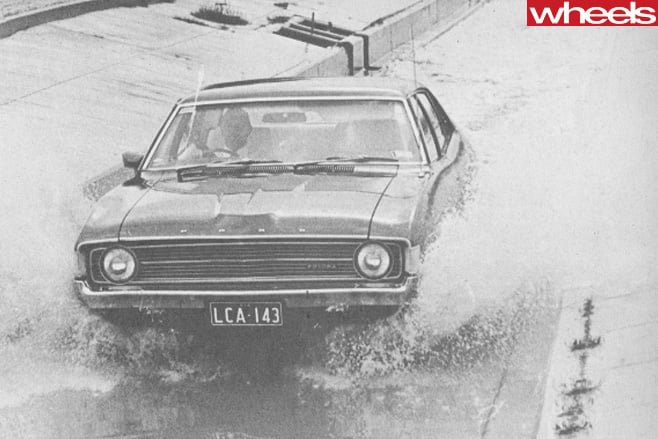
The choke is low down beside the steering column on the left. A battery of warning lights is to the left of the two main instruments. Both flowthrough vents and they have almost infinitely adjustable outlets are operated independently from in front of the driver.
The steering lock/ignition — it locks the car in reverse, as well, on column shift versions — is on the left of the column and facing the driver so there is no need to search for it.
On bucket seat models, with the optional GS pack, a very deep luggage bin between the seats doubles up as an armrest. In front of this a console continues forward to take in the floor-mounted gear lever and also provide an open tray for minor luggage.
On the road the Falcon feels much as before with light, reasonably direct steering and a taut, firm grip on the road. The ride is good without the float or body roll of the HQ Holden but also without that car’s ultimate smoothness.
Corrugations still send the tail bouncing out but this tendency has been reduced compared with the XY.
The brakes, clutch and engine – the car we drove was a Futura 250 four-speed – feel very much as before with a light, slightly spongy brake pedal and short clutch throws. The gear change seems to have longer throws between ratios but the change is excellent, on a three-speed column change model we tried briefly the shift was shorter and more positive than we remember of the XY.
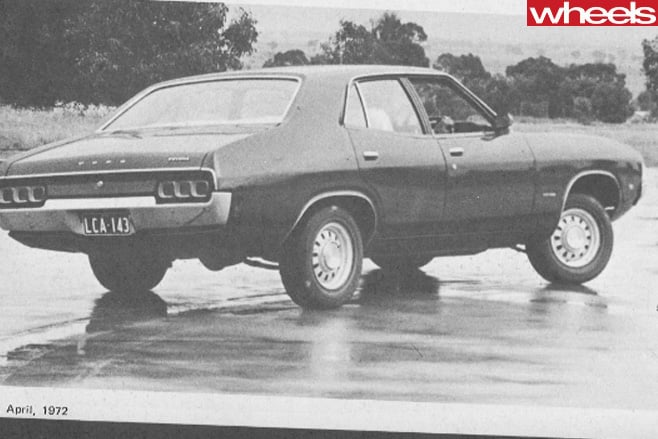
Like previous Falcons the XA is very easy to drive, it requires no special technique, being one of those models in which a driver can sit behind the wheel and immediately feel at home.
Rear seat passengers, too, are going to be more comfortable. The rear seat has been improved with a deeper cushion and taller squab. Knee and legroom seem better, probably because the front seats are thinner, although the official Ford figures indicate leg room is down. Certainly there’s not much head room for a tall person.
Plenty of customers will welcome Ford’s decision to retain the spare wheel in the floor of the petrol tank rather than having it out in the boot where it consumes plenty of space. The boot itself is deeper than before and the petrol filler pipe takes up much less room.
On the low mileage car we drove it was impossible to take any performance figures but since the engines are identical and weights have risen by a matter of a few lb only, performance should be very close to XY.
So Ford’s XA Falcon comes out of a short impressions run very well. It still has the tight, solid feel, which did so much to make the XW and XY models pleasant to drive. With its improved handling, sensible yet imposing interior and the new styling the XA has plenty going for it.
SLEEK FALCONS SWOOP IN!
FORD’S NEW XA Falcon is undoubtedly the most important model the company has ever released. Its bold new lines could carry Ford to sales leadership in Australia in the present decade.
At a time when the Holden and Valiant sedans are suffering in the marketplace Ford is hoping its new models will represent an appealing half-way house between the big car look of the Valiant and the smaller, chunky appearance of the HQ Holdens.
The XA is all Australian. It was conceived, engineered and styled locally and uses local VS engines for the first time on an Australian Ford. Simply stated, the XA could be said to be just a new body on the old mechanicals. But there has been a great deal of refinement and modification made to improve handling, quietness and comfort.
It is the styling that is all important – regardless of what lies under the skin it is appearance which sells cars to most buyers and the Falcon seems to have achieved just the right compromise.
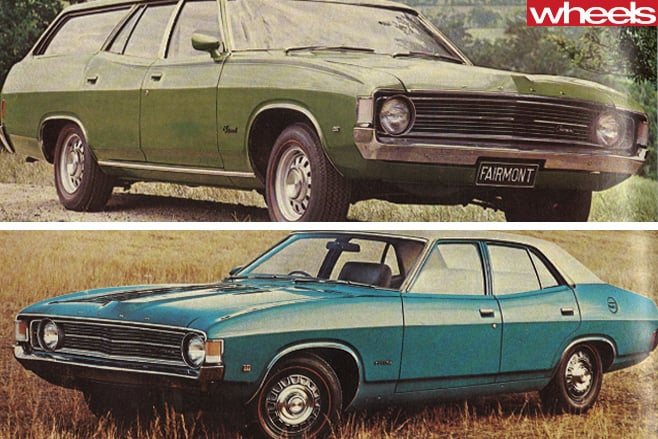
But the Falcon has a lower, wider appearance and that’s what counts. The Holden looks smaller than it is, the Valiant bigger, the Falcon seems just right and yet it has the same practical features that make the HQ body so sensible.
Nobody could pick the styling for anything but a Ford. It still looks like a Falcon, a new Falcon, but still a Falcon.
There is plenty of Cortina TC influence, some Torino and not a little Capri but it has all been welded into one unified, if bland package that goes close to being the best looking Ford sedan we’ve seen in years.
Ford has obviously kept the car as middle of the road as possible. It’s a policy that will probably succeed.
Dimensionally, there is little difference between the new XA and the XY. It is 1. 9 inches longer, 1.2 inches wider and 1.9 inches lower. A wider track of 60.5 inches (up 1.6 inches), at the front and 60.6 inches at the rear (up 1.5 inches), contributes to improved handling and stability. Even one John Arthur Brabham was impressed after a short drive at the Ford proving ground.
Some internal dimensions have also been increased, such as shoulder and hip room but both front and rear leg room are down very slightly over the old cars. Headroom, too, has suffered a little in the general lowering of the car.
Ford has gone all out with the station wagons and built them on the Fairlane’s 116 inch wheelbase for a total overall length of 16 ft 4.1 in., up 5.8 inches over the previous model.
That wheelbase is two inches longer than Holden’s long wheelbase wagon and 6.1 inches longer overall. Valiant’s wagon is still built on the sedan’s 111 inch wheelbase but its overall length is 2.3 inches longer than the Falcon which is a good indication of the rear overhang it carries behind. With the tailgate down, the maximum cargo length of the Falcon has grown 4. 5 inches to 109.2 inches and there have been similar increases elsewhere. Load capacity has risen from 75.5 cubic feet to 82.6 cubic feet.
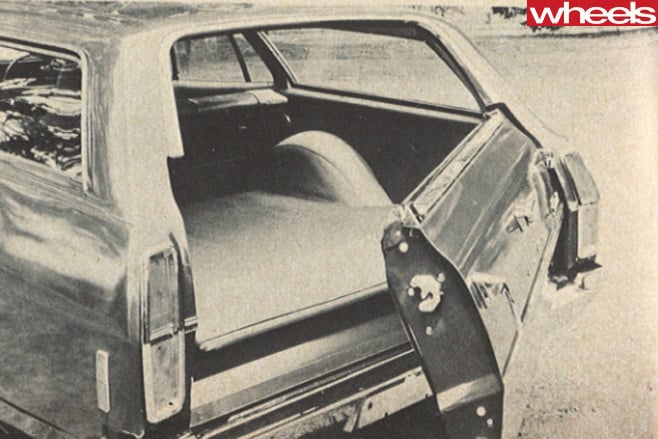
The wagon is 1.5 inches higher than the sedan and this is reflected in the ground clearance which, at 6 .4 inches, is one inch higher than the sedans. GMH reduced the ground clearance on the HQs to 5.6 inches and Ford has gone even lower to 5.4 inches – which won’t please country buyers.
Fuel tank capacity has risen by over one gallon to 17.5 gallons on the sedan and from 13.6 gallons to 16.0 gallons on the station wagon. Weight, too, has gone up but not by as much as we expected.
The base sedan has gone from 3003 lb to 3017 and the wagon from 3163 to 3225 lb.
Apart from these changes, brought about because of the completely new body, the Falcon mechanicals are largely unchanged. The 302 and the two-barrel 351 engines are now locally manufactured but this has made little difference to their respective power ratings – the 302 goes from 220 bhp at 4600 rpm to 240 bhp at 5000 rpm and the 351 from 250 bhp at 4600 to 260 bhp at 4600 rpm. The 351 GT engine is still fully imported and is rated at 300 bhp at 5400 rpm. There is a Phase IV HO but it’s at least three months away.
The range of three six cylinder engines – 200, 250 and 250 2V – is unchanged.
Transmissions and final drive ratios are also unchanged. Suspensions have been fiddled to improve the ride and quietness but are essentially the same and continue with MacPherson struts at the front and semi-elliptic leaf springs at the rear. The GT gets a rear anti-tramp radius bar.
The standard steering is as before with recirculating ball gear and a ratio of 20.0:1. The GT’s ratio is quicker at 16.0:1 but Ford follows the GMH lead in adopting a variable ratio , for the optional power steering, which varies between 11.0:1 and 17.5: 1. The turning circle of 39.4 ft is bigger than before and reflects the increase in track.
Disc brakes are standard on the Futura, Fairmont and GT and all V8 models, but drums are continued on the base Falcon, which more than ever is a fleet owner’s vehicle – it doesn’t even rate a mention in the Falcon sales brochure – and the 500.
Inside, the Falcon takes on an air of vastness with a very American dashboard shaped in the fashion of the current Galaxie. The instruments and control panel wrap around in front of the driver. Two large circular dials are mounted low down directly in front of the steering wheel. On the GT and optional GS package there are four minor gauges above the speedometer and tachometer which is most unusual. A steering column lock which automatically locks the transmission, steering and ignition is standard and is easily reached on the right of the steering column.
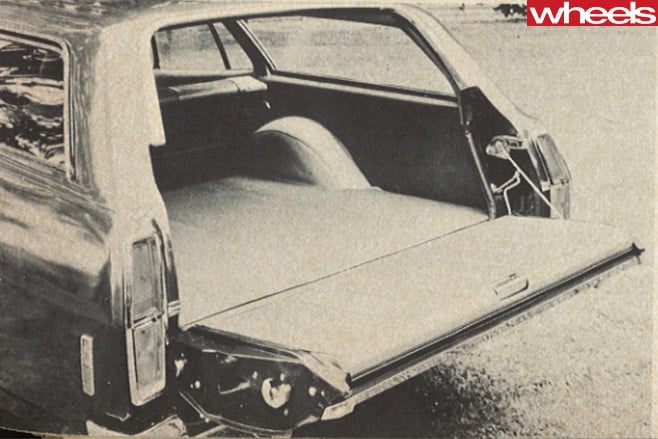
The entire interior is well laid out and very impressive on the eye. The seats have high backs to fit in with the new safety requirements and visibility is excellent with thin windscreen and central pillars. The buckets, standard on Fairmont and GT, optional on the others, return to an infinitely adjustable squab so the driving position with these seats should be excellent.
A rundown of the four major models gives an indication of the equipment supplied as standard:
Falcon 500: Runs the base 200 cid, 130 bhp engine with three-speed manual transmission and drum brakes.
Futura: Moves up one step with the 155 bhp version of the 250 cid engine and three-speed manual transmission. Disc brakes are standard. Compared with 500 it gets central armrests and generally improved trim and equipment.
Fairmont: The 155 bhp 250 cid engine and automatic transmission are standard. So are chrome window surrounds, door sill mouldings, wheel arch and rocker panel mouldings and full wheel trims, bucket seats, carpets, special reading lamps and sound deadening.
GT: Continues its role as the high performance touring car with lowered suspension, wide sports wheels, 300 bhp, 351 cid engine with four speed gearbox and quartz iodine driving lights.
A complete range of instruments including a clock is standard and the interior is finished to the same standard as the Fairmont.
The optional GS pack delivers a sweeping side stripe and sports wheels and the GT instruments and steering wheel. It is optional on 500, Futura and Fairmont, even in station wagon form.
Other options include bucket seats, sports console with armrest, four-speed gearbox or T-bar automatic, stereo/radio /tape player, vinyl roof (in a choice of five colors) or sliding sunroof and the complete range of engines.
Electric side windows are optional for the first time on a Falcon and there is a master control on the driver’s door which locks out the other individual controls.
Built-in air conditioning is optional only with the 250 six and V8 engines.
Cloth seat inserts are available. Adjustable spoilers front and rear are optional on the GT.
For Ford, the XA shows promise of being the most exciting prospect in years. The sedan range alone has an increased number of options throw in the coupes, due in the second half of this year, and you have a range of cars that spells big trouble for the opposition.
And the mechanicals are well proven so there should be no difficulties in this area.
Fairlane has been delayed one month and later in the year there will be a two-door version to consolidate further its lead in the prestige market.
Ford’s overall strategy is obvious. The new Falcon/Fairlane range will blanket the medium and upper/medium markets while the new Cortina sixes will take care of the lower end – although inevitably they will steal sales from the Falcons.
On the competition front a special Cortina 250 has been lapping the You-Yangs proving ground at up to 138 mph. It is specifically designed to beat the XU-1s at Bathurst while the new Phase IV goes for outright. So 1972 might be the year we all watch the Fords go by.
Check out Wheels Archive online now for other great Ford Falcon features and more from decades past!
Simply log in here using your existing MagShop account or create a FREE account and select this article from the homepage.
Don’t have a MagShop account?

Have a MagShop account?

Check out this ridiculously awesome $18million Shelby Cobra.
FEAST your eyes on this beauty! What you see before you is the very first Shelby Cobra, and it just sold at Auction for US$13.75million (A$18million).
Let that price sink in for a little bit. Roll it around in your mouth and image what A$18million looks like. Hell, you could land at least a pair of Sydney’s ridiculously priced apartments for that kind of money!
The Monterey Car Week auctions are some of the most expensive in the world, regularly setting sales records.
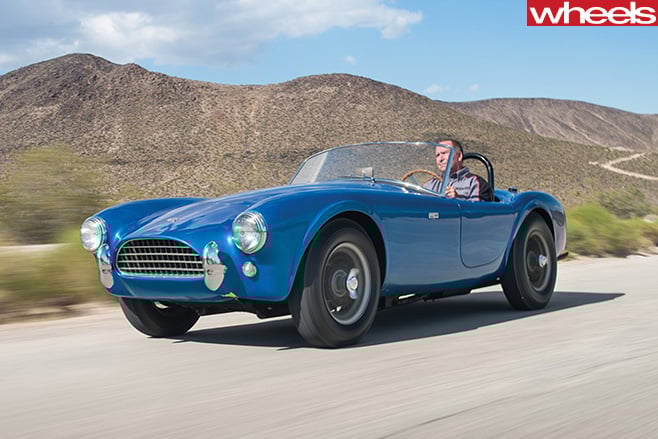
The former record holder was a 1968 Ford GT40 which went for the relative bargain amount of US$11million (A$14.38million) in 2012.
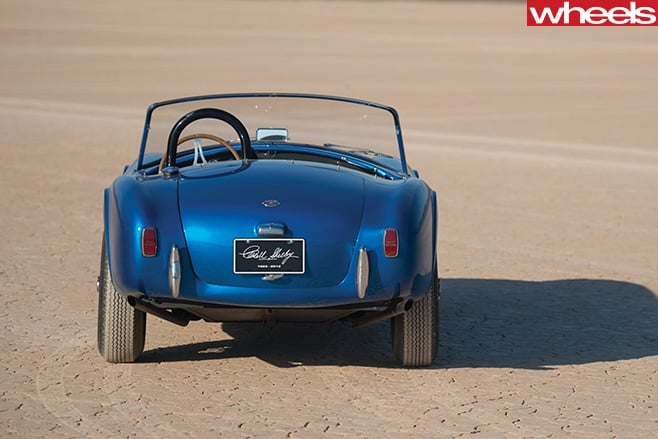
It arrived in the US as an engine-less shell in February 1962, before Carroll Shelby and Dean Moon plonked a 260-cubic-inch V8 engine and Ford four-speed gearbox under its British skin.
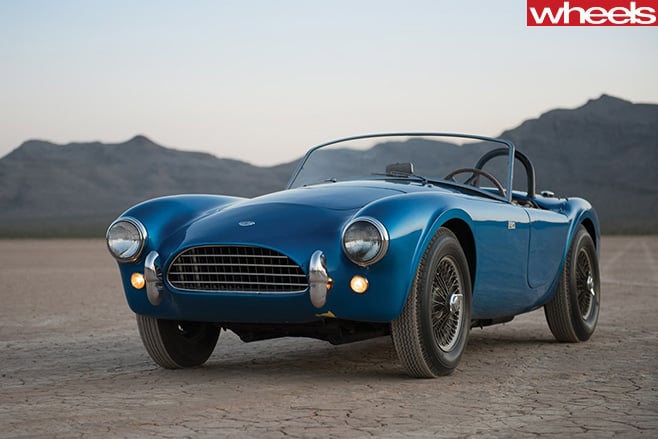
“We got drunk and drove it around—an impromptu road course we had set up between the oil derricks,” Moon explains.
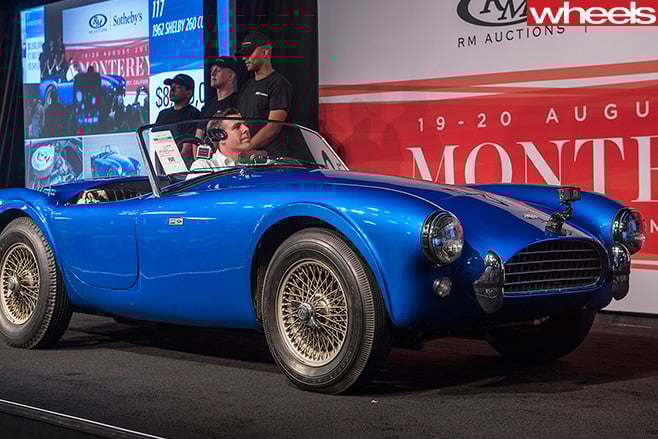
The CSX 2000 was enough for Shelby to convince Ford to give him the capital he needed to produce the first batch of Cobras.
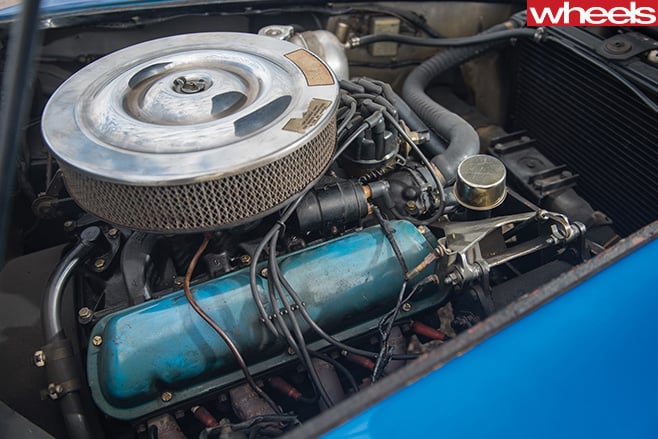
The car lived its life initially at the Shelby family driving school, before an extended period attending promotional and historic events.
