Globalisation is nothing new to the automotive industry. Many of the world’s great car brands have been swallowed up by a few conglomerates, which divvy out production to third-party countries where production costs are generally lower or heavily subsidised.
There’s nothing secret about this, yet people still buy cars with nationality in mind without realising its badge’s country of origin, parent company location and where they’re actually assembled can span three continents.
It’s fair to assume the bulk of cars imported to Australia come from Japan, and then perhaps followed by Germany and South Korea. But it may surprise you that last month Thailand assembled the most cars sold here (23,803), just beating Toyota (23,359) and outstripping South Korea (12,782), Germany (6589) and the US (4139) combined. Australia scraped in at fourth place with just 6945 cars rolling off the local Ford, Holden and Toyota production lines.
The Thai imports include most of the top-selling utes in this country including Ford Ranger, Toyota HiLux, Holden Colorado, Nissan Navara, Mitsubishi Tritons, Mazda BT-50 and Isuzu D-Max.
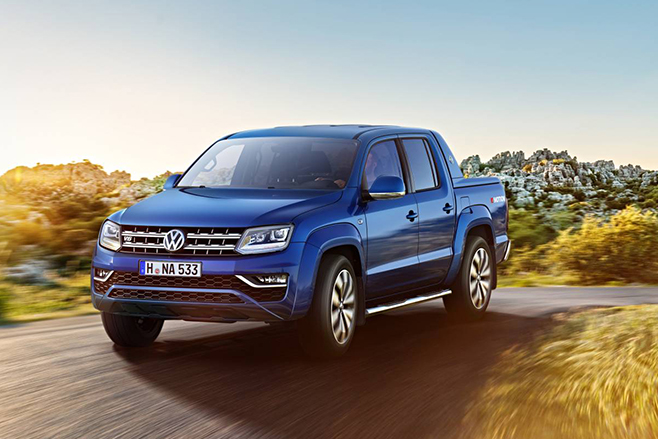
One of the few not made there is the Volkswagen Amorok, which is built in … uhm, Argentina.
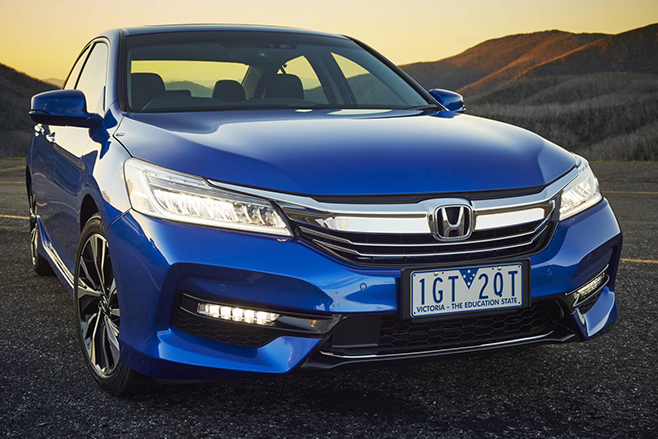
Other cars assembled beyond their country of origin include the Renault Clio, which is made in Turkey, the Hyundai Tucson range, which is mostly assembled in the Czech Republic, and all Hondas except the Odyssey, which are also made in Thailand.
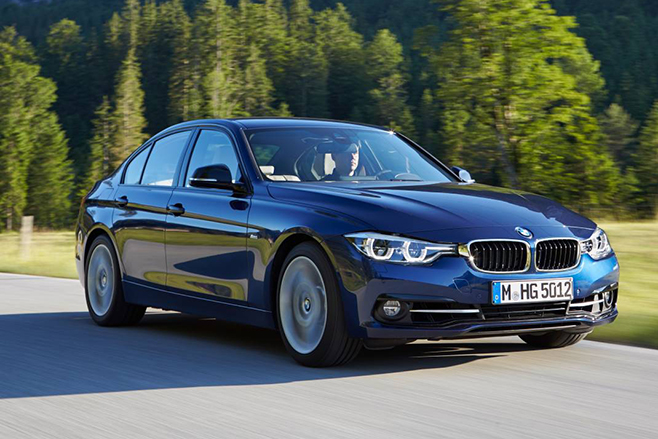
And if you like German cars, be mindful that quite a few models sold here never set wheels in Deutschland, including the Slovakian-built Audi A7 and VW Tourareg; Spanish-made Audi Q3, Mercedes V250 and VW Polo GTis; Hungarian Audi A3 and TT and the BMW 3 Series, Mercedes C-Class sedan and VW Polos, which are built and loaded on to RORO (roll on, roll off) ships in South Africa.
Meanwhile the BMW X5, Mercedes GLE and GLS SUVs are assembled in the US. The Yanks also build the Italian-badged Fiat Freemont (while its US-market equivalent, the Dodge Journey, is built in Mexico) while letting the Italians put Jeep Renegades together.
To make more sense of it all, here’s a list showing where most of the cars sold here come from.
ORIGIN OF CARS SOLD IN AUSTRALIA IN JULY 2016
Thailand, 23,803 Including: Ford Everest, Fiesta, Focus, Ranger; Holden Colorado; Isuzu D-Max , MU-X; Honda Accord, City, Civic sedan, CR-V, HR-V, Jazz; Mazda 2, BT-50, CX-3; Mitsubishi Mirage, Pajero Sport, Triton; Nissan Navara, Pulsar, Ultima; Suzuki Celerio; Toyota Corolla sedan, Fortuner, Hilux
Japan, 23,359 Including: Honda Odyssey; Mazda 3, 6, MX-5, CX-5; Mitsubishi ASX, Lancer, Outlander, Pajero; Lexus (all models); Nissan 370Z, GT-R, Patrol, X-Trail; Peugeot 4008; Subaru (all models); Suzuki Grand Vitara, Swift; Toyota Corolla hatch, Prius, Tarago, Yaris, 86, LandCruiser models, RAV4
South Korea, 12,782 Including: Holden Barina, Captiva, Malibu, Spark, Trax; Hyundai Accent, Elantra, i30, i40, iMax, Santa Fe, Tucson Active variants, Veloster; Kia (all models); Renault Koleos; Ssanyong Korando, Rexton
Australia, 6945 Including: Ford Falcon, Territory; Holden Calais, Commodore, Cruze; Toyota Aurion, Camry
Germany, 6598 Including: Audi A1, A4, A5, Q5, S3, R8; Ford Fiesta ST, Holden Insignia; Mercedes A-Class, B-Class, C-Class wagon, E-Class, GLA, GLC; S-Class, SLK; Porsche (all models), VW Golf, Passat, Multivan, Tiguan,
USA, 4139 Including: BMW X5; Fiat Freemont; Ford Mustang, Jeep Cherokee, Compass, Grand Cherokee, Patroit, Wrangler; Mercedes GLE, GLS; Nissan Pathfinder; Tesla Model S, Toyota Kluger
UK, 3016 Including: Aston Martin; Bentley; Honda Civic hatch; Jaguar; Mini (apart from the Austrian-built Countryman); Nissan Juke, Qashqai; Land Rover; Rolls-Royce
Spain, 1489 Including: Audi Q3; Citroen C4 Cactus; Ford Kuga, Mondeo; Mercedes V250; Renault Captur, Megane (except the French-built Renault Sport Megane); VW Polo GTI
South Africa, 1140 Includes: BMW 3-Series; Mercedes C-Class sedan; VW Polo
Czech Republic, 798 Including: Hyundai Tucson; all Skoda models
Hungary, 787 Including: Audi A3, Audi TT; Suzuki S-Cross, Vitara
France, 632 Including: Citroen C4 Picasso, C5, DS3, DS5; Peugeot 208, 308, 508, 2008; Smart
India, 609 Including: Ford Ecosport; Hyundai i20, Nissan Micra, Suzuki Baleno
Slovak Republic, 590 Including: Audi A7, VW TouaregBelgium, 438 Including: Volvo S60, V60
Argentina, 379 Volkswagen Amarok
Italy, 306 Including: Abarth 695, Alfa Romeo (all models), Fiat 500X, Jeep Renegade, Maserati (all models)
Poland, 294 Including: Abarth 595, Fiat 500, Holden Astra, Cascada; VW Caddy
Turkey, 272 Including: Renault Clio
China, 237 Foton Tunland, Haval (all models), LDV G10
Sweden, 222 Including: Volvo V40, XC90
Mexico, 193 Including: Dodge Journey, VW Beetle, Jetta
Portugal, 42 Including: VW Scirocco
Indonesia, 33 Including: Suzuki APV
Malaysia, 10 Proton (all models)
Canada 0 Chrysler 300
If you’ve been too busy to spend your week glued to social media, don’t worry, we have your back. Welcome to our snack-sized roundup of the best stories of the past seven days.
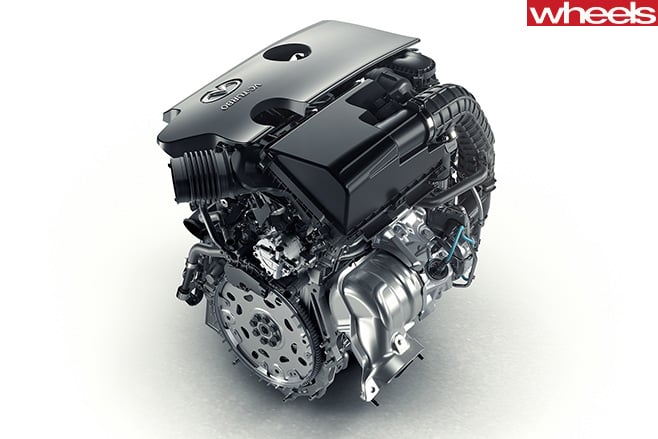
Infiniti claims to have revolutionised the engine
Variable compression technology highlighted as the next big step in engine development
Infiniti dropped a bombshell this week and revealed it has developed a new engine with variable compression technology. So, what the hell does that mean?! Well, the easy answer is the petrol engine consumes 27 percent less fuel, yet can match the performance outputs of engines up to 50 percent larger. This technology has the ability to revolutionise the modern combustion engine. Read about how it all works here.
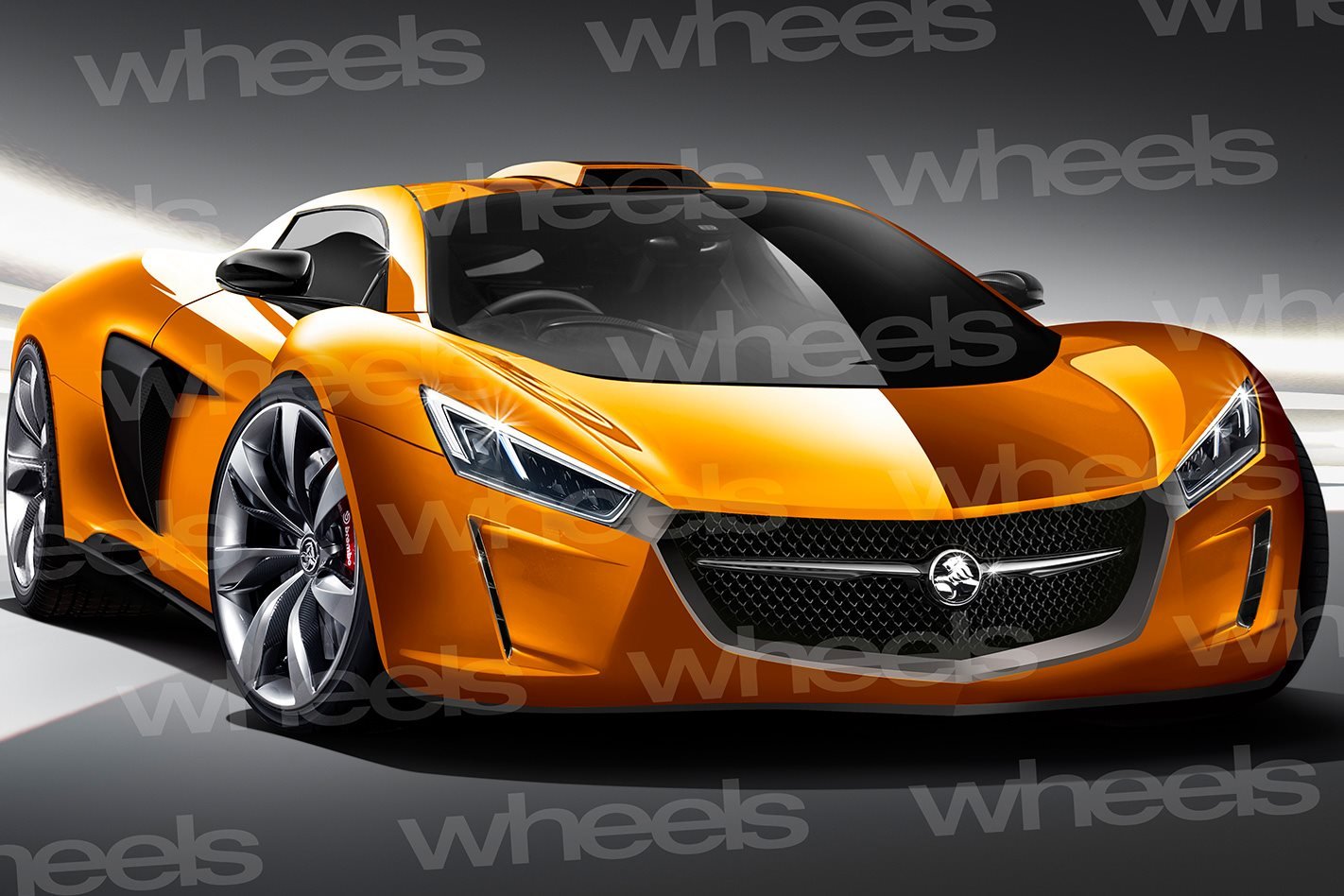
REVEALED: Holden’s top secret Veyron beater
The unheard story behind Holden’s plans to beat the world with a Super Ute
In a special Wheels investigation, we expose the most important car Holden never made. Australian designed and developed, this all-electric hypercar would have been faster to the speed-limit than a Bugatti Veyron. However, after an internal reveal, the project was killed off by bosses at Detroit. Get the full rundown on the secret project in this month’s magazine – on sale now!
Holden hangs up ‘for sale’ sign at $400m engine plant
Buyers can now go and pick over what’s left of the factory that made the engines that powered millions of cars.
If you have some spare change lying around, and feel like grabbing some stuff for your shed, Holden is having Australia’s largest garage sale. The Lion Brand is putting its Port Melbourne engine plant up for sale. It is another sombre reminder the end of local manufacturing continues to edge ever closer.
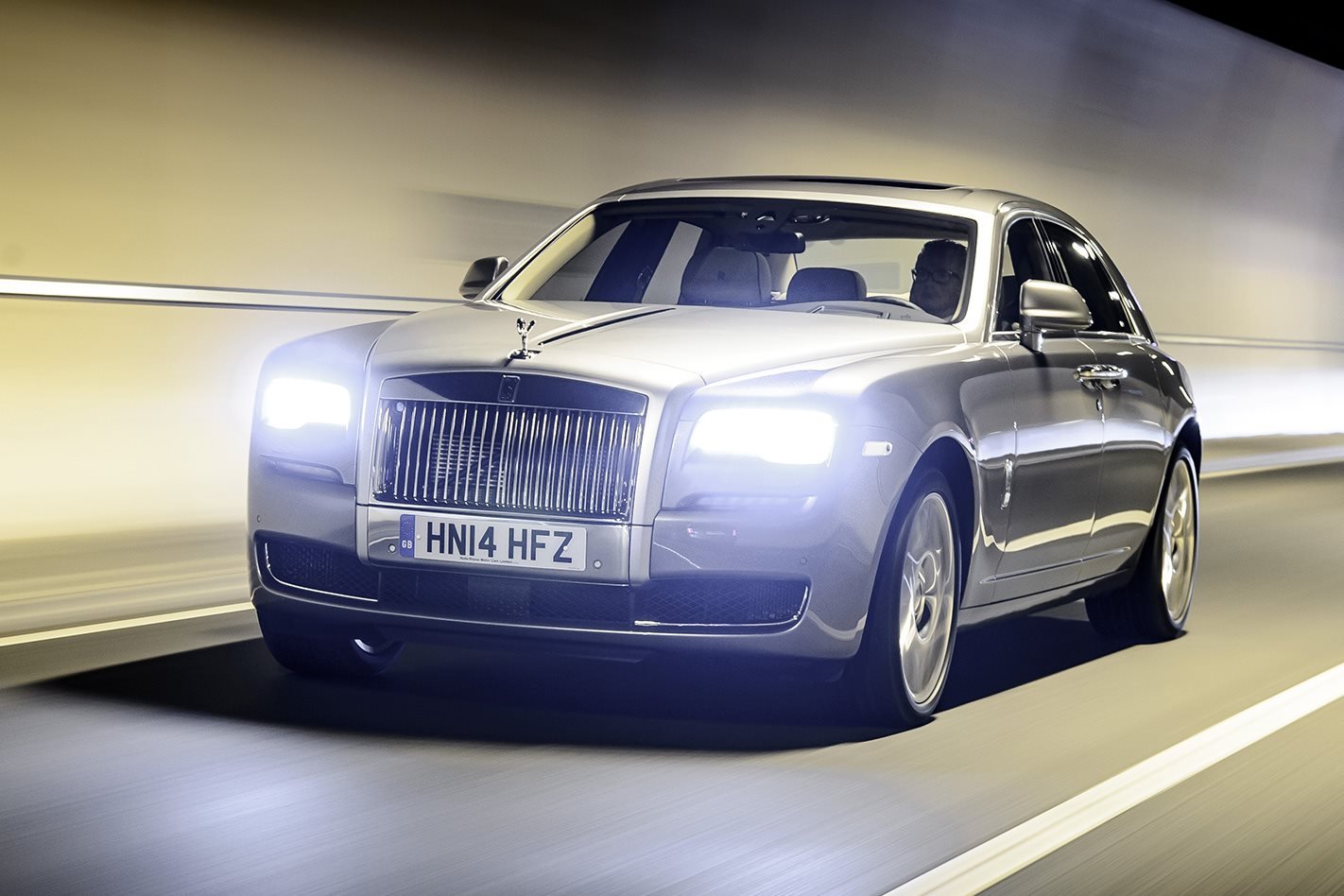
Living with a Rolls-Royce would be a nightmare
Just a weekend with a Rolls-Royce Ghost was a pain in the arse for Stahly
Most mere mortals can only dream of driving a Rolls-Royce Ghost, even for a weekend. However, when Michael Stahl was thrown the keys to the super-limo…he hated it! It turns out the icon of luxury can be a real nightmare to live with in modern suburban Australia. It’s okay Stahly, we can get you something more your style next time – maybe a Prius?
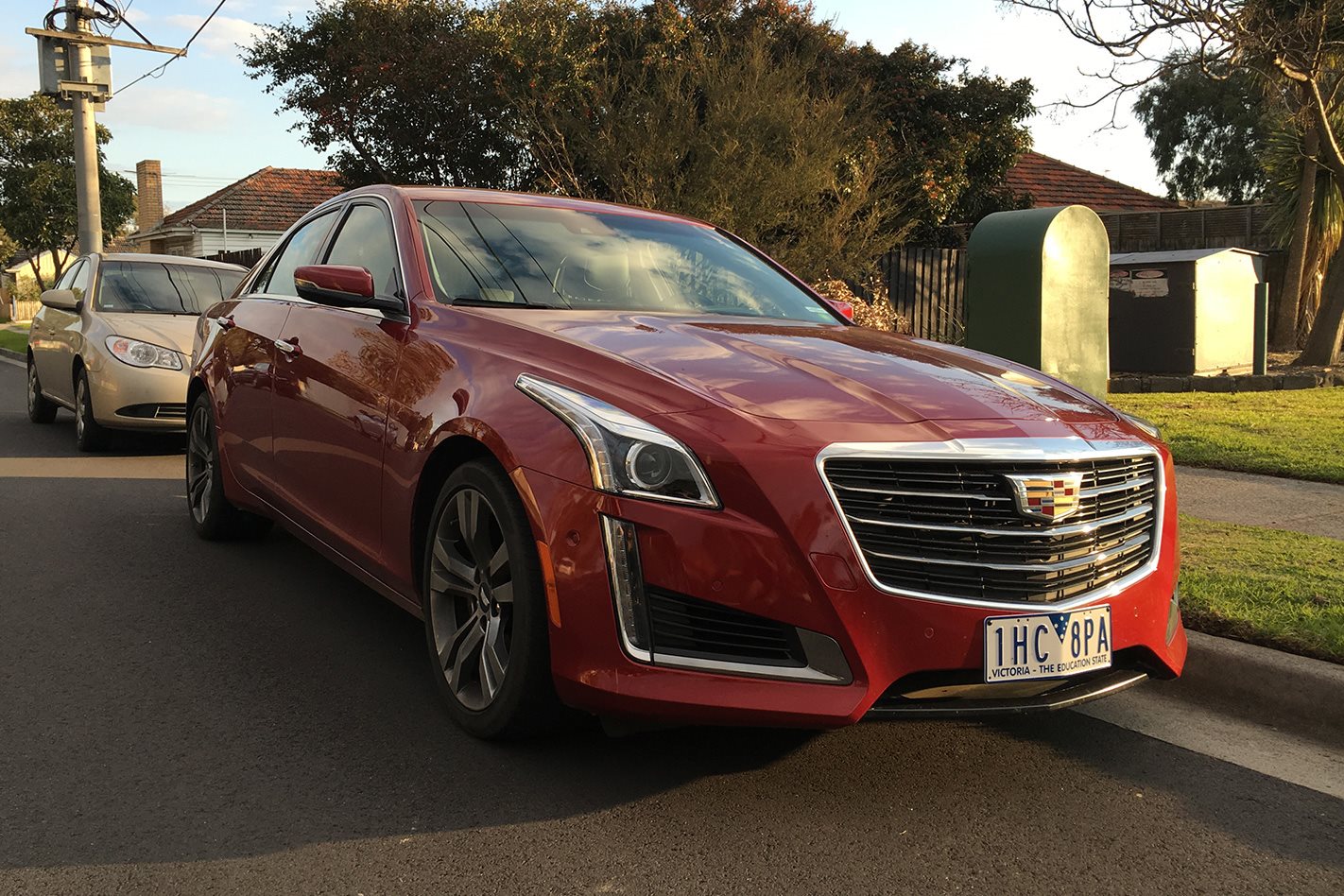
2018 Cadillac CTS, CTS-V, CT6 spied in Melbourne
What’s this fleet of Cadillacs doing in Melbourne? And do they feature the new 370kW V8?
Thanks to some eagle-eyed Wheels readers, we were able to reveal a squad of Cadillac’s testing on Australian roads, free from camouflage. Holden and GM say this is perfectly normal, but it didn’t stop us getting excited at the prospect of the cars eventually going on sale Down Under. Get the scoop with our spy pics!
BMW has updated its 2 Series range with more powerful engines, improved fuel economy and a higher price tag. The range now opens with the $51,300 220i Coupe, which costs $2400 more than the outgoing 2016 model. Though priced higher, the 220i Coupe (and the $58,300 220i Convertible) score an all-new 2.0-litre turbo four cylinder petrol engine that takes peak outputs to 135kW and 270Nm. That’s 5kW/20Nm more than 2016 models.
The Coupe’s fuel economy falls by 0.2 l/100km to rest at 5.8 l/100km with the standard eight-speed automatic equipped. A six-speed manual is available as a no-cost option. The heavier 220i Convertible records a fuel consumption average of 6.1 l/100km.
For 2017, the entry-grade BMW 220i Coupe and Convertible also gains bi-xenon headlamps, self-dimming and power folding wing mirrors, ambient interior lighting and an updated instrument panel.
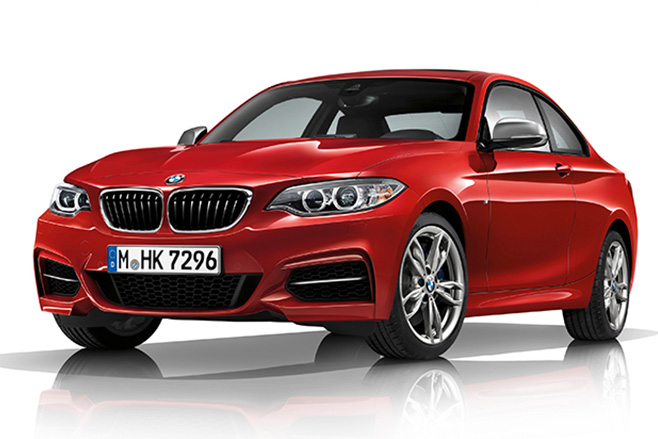
The mid-spec 228i is replaced by the 230i, which gets a higher-tune version of the MY17 220i’s B48 2.0 litre engine with 185kW and 350Nm – 5kW more power than the soon-to-be superseded 228i.
In Coupe automatic form, the 230i zips to 100km/h in 5.6 seconds and drinks 5.9 l/100km on average. As a convertible, those numbers are 5.9 seconds and 6.2 l/100km respectively.
Due to high uptake in the 228i, BMW has made the previously-optional M Sport package standard equipment on the 230i. It brings a sportier bodykit, wheels and interior styling. The plusher Luxury Line spec can be had as a no-cost alternative, which subtracts the M Sport gear but adds a 12-speaker harman/kardon premium audio and front seat electric lumbar support.
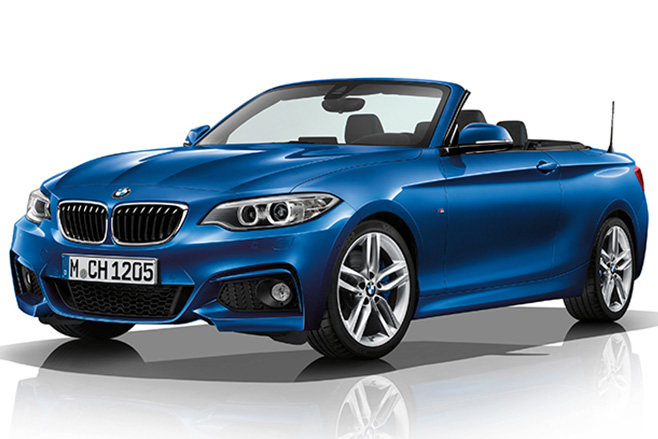
An M Sport braking package, 18-inch alloys, BMW’s bigger-screened Navigation System Professional infotainment suite, keyless entry, power-adjustable front seats, ambient interior lighting and self-dimming mirrors are also standard on every 230i, while the Coupe receives cloth upholstery and the Convertible scores leather.
Sitting between the 230i and the BMW M2 performance hero is the M240i, a new badge that takes over from the current M235i Coupe and Convertible.
This model receives the most substantial mechanical update, with its new B58 3.0 litre turbocharged petrol inline six pushing power to 250kW (up 10kW against the M235i) and torque to 500Nm (up 50Nm). Like other 2-Series two door models, the M240i can be had with either an eight-speed automatic or a six-speed manual, with the eight-speeder the default.
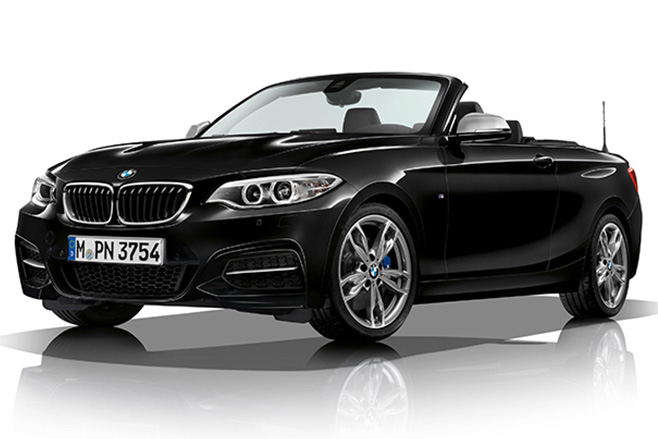
Power is sent to the rear wheels exclusively, with a 0-100km/h sprint time of 4.6 seconds for the coupe and 4.7 seconds for the convertible. Fuel economy improves by 0.6 l/1000km in the Coupe, with the swift two-door consuming a relatively reasonable 7.1 l/100km on the combined cycle.
Other new equipment for the M240i include adaptive headlights, the addition of a 12-speaker harman/kardon audio system, keyless entry, power seats, heated front seats and self-dimming rear vision mirrors.
Notice something missing? The diesel-powered BMW 220d models have been deleted from the range, making the 2 Series Coupe and Convertible family an all-petrol affair.
The 2017 BMW 2 Series two-door models are available for ordering now, with pricing as follows:
BMW 2 Series Coupe BMW 220i – $51,300 BMW 230i – $61,900 BMW M240i – $74,900
BMW 2 Series Convertible BMW 220i – $58,300 BMW 230i – $71,900 BMW M240i – $83,900
Here we look at five of the best – the Volkswagen Passat, Ford Mondeo, Holden Commodore, Mazda 6, and Subaru Liberty.
1. VOLKSWAGEN PASSAT
Completely redesigned last year; adopting advanced driver-assist technologies to help avoid accidents, the eighth-generation Passat brings a level of premium sophistication to the segment that the others cannot match.
While servicing costs may be a little higher overall than the others, the Volkswagen strikes back with lightweight engineering that helps deliver – by some margin – the best petrol economy, as well as sparkling – even stirring – performance from a slick 1.8-litre four-cylinder turbo. Combined with smooth steering, surefooted handling and unflappable roadholding, the 132TSI simply drives like a much more expensive car.
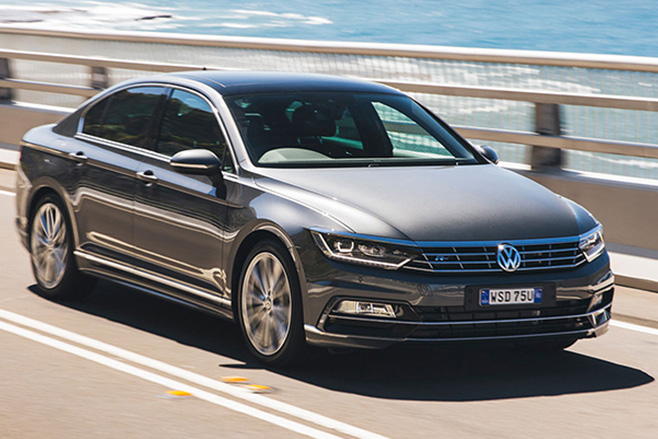
The luxury experience spills into the Passat’s exquisitely presented cabin, which consists of quality materials, excellent ergonomics, and – in the Comfortline variant upwards – an overall ambience that’s not far from Audi-like.
We’d be wary of choosing the larger-wheeled models as they do result in a slightly unsettled ride over bumpier roads, but other than that, the latest Volkswagen midsizer is a class act.
Our pick: 132TSI Wagon – all the car a family will ever need.
2. FORD MONDEO
Though it wears a humble Ford badge, the German-built Mondeo has been engineered to handle like a BMW and ride better than a Mercedes-Benz, making it a car for drivers and passengers alike. No other midsizer delivers this much fun and refinement in one.
If you’re after power the Mondeo also obliges, thanks to a rorty 2.0-litre four-cylinder turbo petrol (or optional diesel) engine that can really hustle. Note, however, that at roughly 1700kg the Ford is no lightweight, so drinks more fuel than, say, the Passat.
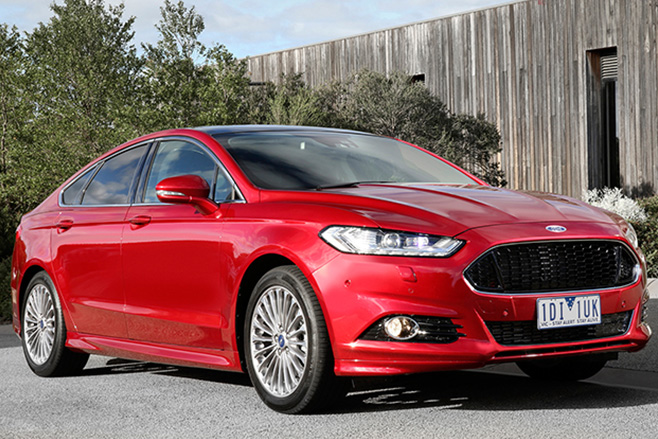
Superb seats, acres of space front and rear, a massive cargo area (whether it’s the five-door hatch or handsome wagon), and lots of standard features for the money are further highlights. However build quality isn’t brilliant and the fussy dash can be a little intimidating to the uninitiated.
But this car is definitely worth considering. Quiet, refined, rapid, and a hoot through corners, the Mondeo deserves to be on everybody’s shortlist.
Our pick: Trend EcoBoost wagon – fun, sophisticated, family-friendly value.
3. HOLDEN CALAIS
Handsome, spacious, and strong, the rear-drive Commodore feels and drives like what it is – a car designed specifically for Australia.
Don’t be put off by the brawny V6 – for its size and muscular pulling power, it is actually quite efficient. Meanwhile the V8 of course offers towering performance. The steering is responsive, the handling commanding, and the ride (sporty SV6 aside) outstandingly supple. On a dirt road or for towing, no midsizer comes close.
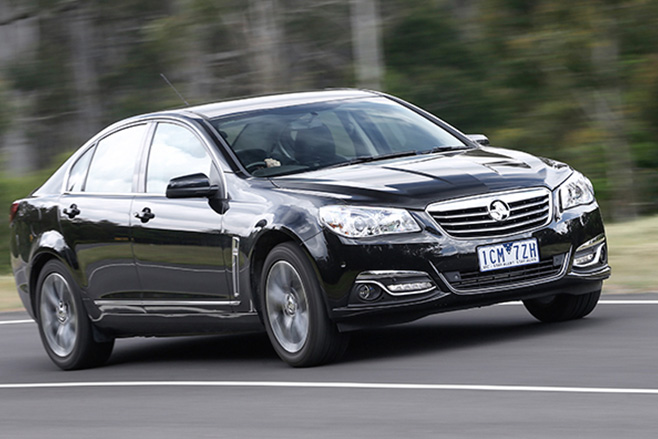
The Commodore was designed and engineered for families, and no where is that more obvious than inside where it is spacious and sumptuous. The dash is a pleasure to use, the driving position thoughtful and refinement levels exceptional. The only sour notes are inconsistent quality, no fold-flat rear-seat backrests in the sedan and no AEB availability.
Strong, safe and engaging, the Holden Commodore is the last of a dying breed. Best be quick if you want one because after late 2017 they won’t make them like this anymore.
Our pick: Calais – quintessential Australiana… do it while you still can.
4. MAZDA 6
It’s a bit of a mystery why the Mazda 6 isn’t a bigger seller – it looks stunning, drives beautifully, and offers plenty of choice.
Strikingly designed, the Japanese carmaker set out to build a value-focused Audi A4 alternative and has succeeded on a number of fronts – check out the classy dash, exceptional build quality, smart switchgear placement and spacious surroundings.
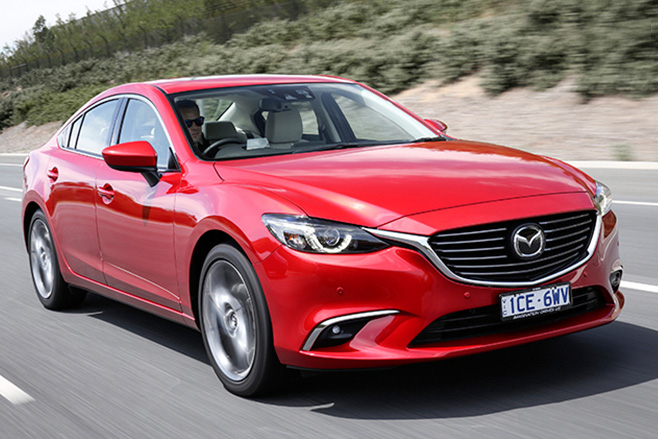
Whether you choose the willing 2.5-litre petrol or frugal 2.2-litre turbo-diesel, the Mazda’s punchy yet efficient powertrains also score highly, fitting in well with the sporty and involving dynamics that the series is well-known for. Safety, too, is a strong suit, thanks to available driver-assist technologies that minimise the chances of accidents.
However, there is quite a lot of road noise intrusion inside, the suspension is too firm on the optional 19-inch wheels and rear-seat headroom is limited.
Still, the Mazda 6 has been created to appeal to driving enthusiasts and pragmatists alike and so ought to be more popular than what it currently is.
Our pick: Touring wagon – Spirited, stylish, and downright dependable.
5. SUBARU LIBERTY
Subaru’s long-lived Liberty line has made a name as a quality and at-times quirky no-nonsense alternative to some pretty vanilla opposition.
Sadly no longer offered as a wagon, the sedan range still comes with the trademark horizontally-opposed engine choices – in 2.5-litre four-cylinder or 3.6-litre six-cylinder iterations, with the former prioritising frugality and the latter outright power.
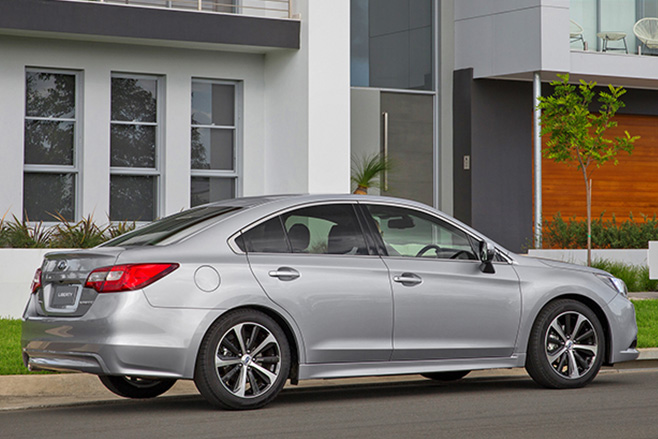
The Subaru Liberty is also alone with standard all-wheel drive, adding another layer of traction, handling poise and security on top of the EyeSight collision avoidance systems fitted to all models. For value and features, few rivals can touch it.
On the flipside, some of that premium cabin ambience that helped make the Subaru seem so special a decade ago has vanished; the steering feels dull and the ride can be irritatingly busy. The old refinement and isolation qualities that meshed so well with an endearingly sporty and cheeky nature are no longer there.
Never mind. The Liberty now stands for head-over-heart sensibility, making it a considered – if unexciting – family midsizer.
Our pick: 3.6R Premium – AWD rocket with exceptionally low pricing.
TELL ME ABOUT THIS CAR
The Subaru Outback is a popular AWD crossover wagon which offers excellent station wagon handling and practicality while having the ability to negotiate reasonably rough terrain better than many SUVs.
STRENGTHS
- If you have to compromise between practicality, elegance and a car that’s enjoyable to drive this ticks a lot of boxes.
- It has plenty of safety features. Central to this is the Eyesight Assist package which scans the road ahead and warns you of everything from kids running across the road to a car suddenly braking ahead. If it’s too late to warn you it will stop automatically. It also has blind spot monitoring, lane departure warning, rear cross traffic alert, active cruise control. Another interesting feature is an audible alarm telling you when the car in front of you drives off at traffic lights in case your day dreaming. It’s quicker and less irritating than the driver behind beeping you.
- It’s a good looking car that’s based on the Subaru Liberty but looks a lot more assured than the sedan.
- The clean interior fit out is also very similar to the Liberty, and is put together intuitively. Everything is laid out nicely and I never had to pull out the manual to find something or work out what a particular button did. The same goes with the 7-inch touch screen which is straight forward to use and syncs to devices quickly. The Premium also comes with a panoramic sunroof.
- It’s comfortable. The electrically adjustable front seats feel good on long trips and have heating and two memory settings. It’s also comfortable at the back with ample head and leg room. Back seats easily flip forward to increase cargo size.
- It handles well thanks to the 2.0-litre turbocharged diesel boxer engine, which means lower centre of gravity which helps handling and stability, despite the raised wheel height. It drives nicely in town and barrels along well on rough roads.
- It’s reasonably economical for an AWD car this size. I averaged about 7.8L/100kms not doing as much country driving as I would have liked.
- The smart key doesn’t have an actual unlock button which means your passengers can’t in the car if you’re not right near it. My kids learned this the hard way when they ran to the car ahead of me during heavy rain.
The Outback Premium falls between a normal wagon and an SUV so there are many competitors around its size and $42,000 retail price depending what you’re really looking for, These range from Ford Mondeo, Mazda 6 GT, Citroen C4 Picasso, Volkswagen Passat Alltrack and the Jeep Cherokee
TELL ME ABOUT THIS CAR
The Holden Colorado is Holden’s workhorse ute, although the company now prefers to refer to it as a truck. This latest model shares most of its body with the Colorado that arrived in 2012, but it has a revised nose, revised suspension and improvements to improve its driving manners. Prices for the dual-cab four-wheel drive models start at $44,990 for the LS and go to $57,190 for the Z71 with an automatic transmission tested here.
STRENGTHS
The engine. Performance from the 2.8-litre four-cylinder turbo diesel is unchanged, but it is still among the strongest in its class. Its strength lies in its middle rev performance, so when you’re cruising on a freeway or accelerating it feels strong without having to work hard. The six-speed automatic transmission also syncs nicely with the engine with smooth, well-timed changes.
Value. With a price tag north of $50,000, the L71 version of the Colorado isn’t cheap, but it does come with plenty of gear. Like all models it gets a reversing camera, digital radio tuning and smartphone connectivity that includes Apple CarPlay and Android Auto. But the Z71 picks up leather trim and a sizeable 8.0-inch touchscreen, as well as black wheels and other black exterior styling touches.
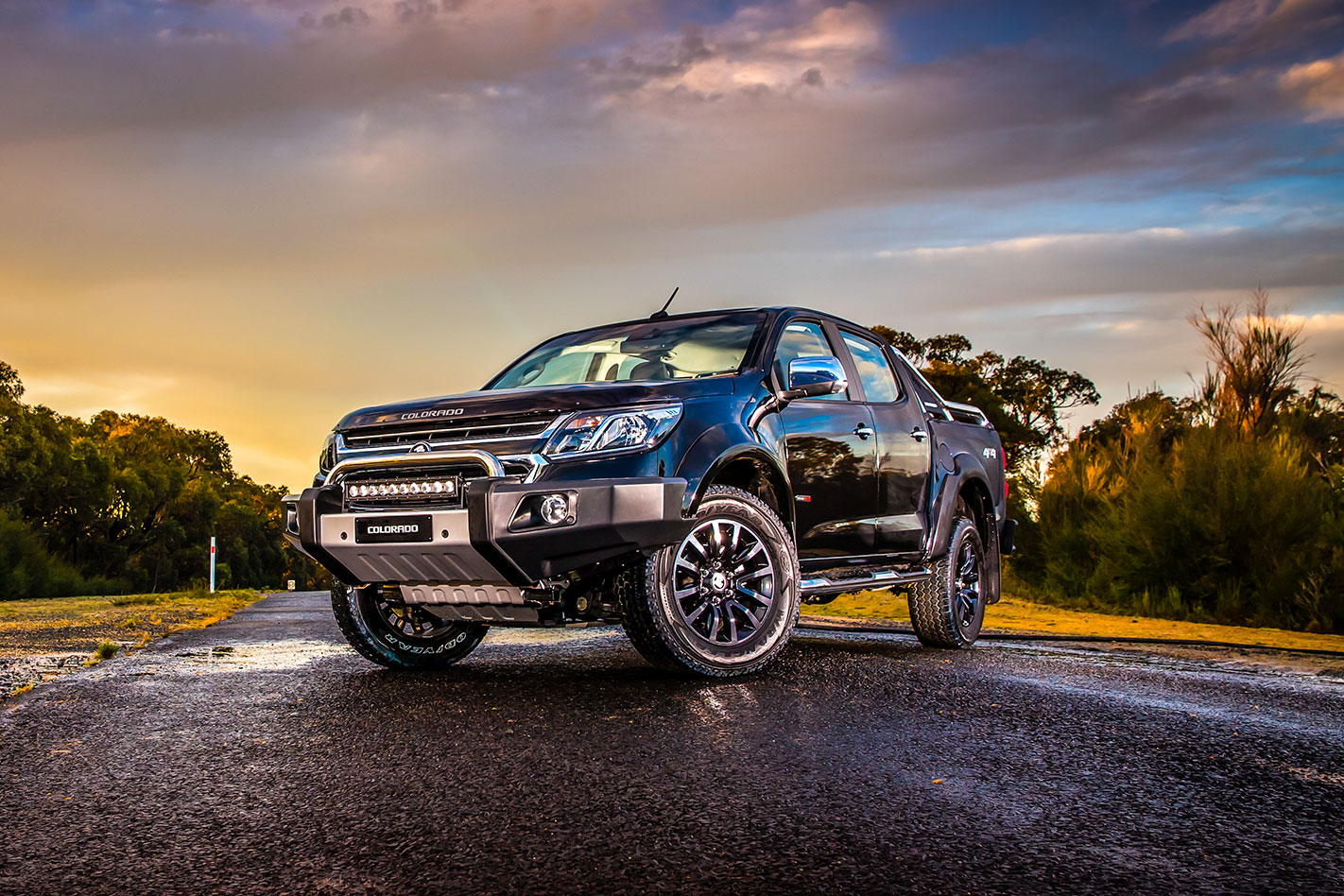
How it drives. Whereas the previous Colorado was bumpy and brash, the new one is better controlled and more comfortable. Heavily revised suspension works well with new tyres to ensure respectable cornering manners (keeping in mind it’s a dual-cab ute with strong off-road credentials) and good control. The steering, too, is well weighted and predictable for added reassurance.
Carrying ability. The Colorado matches class leaders with its 3500kg tow capacity. Its payload, too, is very good, with all models claimed to carry at least one tonne; this Z71 automatic is rated at 1007kg.
WEAKNESSES
Getting comfortable. The leather seats in the L71 look the business – right down to the embroidered L71 logos on the head rests – but they could do with more side support to keep you planted around corners. The steering wheel, too, only adjusts up and down, not in and out.
Excessive beeping. While it’s good Holden is thinking about active safety features with the Colorado Z71, the reality is they can get annoying. The lane departure warning, for example, can beep a lot on country roads, where the lanes are narrow and corners frequent. It gets to the point where many drivers will simply switch it off, negating its potential benefits. The crash warning is less hyperactive, but without an auto braking function it’s limited in terms of its usefulness.
Off-road ability. The Colorado has plenty of hardware to ensure it will go a lot further off-road than most owners will ever challenge it with. But it lacks a rear differential lock, something that helps in really slippery conditions (mud or rocks, for example). It’s the first of a few minor gripes that mean it is good rather than great off-road.
ANY RIVALS I SHOULD ALSO CONSIDER?
The popular cars in this segment are the Ford Ranger and Toyota Hilux. Other cars to consider include the Mazda BT-50, Volkswagen Amarok, Mitsubishi Triton, Nissan Navara and Isuzu D-Max.
SUBARU OUTBACK 2.0D | 77/100
Price & Equipment | 15/20
In the battle of the raised AWD turbo-diesel manual wagons the Outback brings auto headlights and wipers, reversing camera, dual-zone climate, 6.2in touchscreen with Bluetooth connectivity and voice control, and seven airbags, though you miss adaptive cruise and the Eyesight active safety suite in the manual (they’re standard in the $2K pricier CVT). Interior & Versatility
Outback cabin roomy and well assembled, with agreeable driving position and more rear legroom than its rival thanks to a longer 2746mm wheelbase. As in the Scout, the Subaru seats are trimmed in cloth but both get leather on steering wheel and gearlever. Clever one-touch folding rear seats increase luggage space from 512 litres to 1801. 16/20
Performance & Economy | 15/20
Both these cars are powered by 2.0-litre turbo-diesel four-pots, but Subaru’s is a north-south flat-four rather than a transverse in-line engine. Both muster 110kW but the Subie is a bit heavier at 1630kg, and consequently less quick at 9.7sec for the 0-100 sprint. A refined, willing worker, the oiler boxer officially uses 5.7L/100km.
Ride & Refinement | 17/20
Riding on 17s wrapped in 225/65 all-surface tyres, Outback looks after its occupants in both urban and country touring conditions. The fat sidewalls help low-speed compliance, while the extra suspension travel (compared with a Liberty) ensures a terrific ability to blot bumps at speed, resulting in a well-controlled and quiet ride.
Steering & Handling | 14/20
Subaru’s trademark all-paw balance is even more deeply buried in the Outback than the Liberty, due to its light off-roading rubber and higher centre of gravity. But the steering is the real let-down – it’s heavy at city speeds, sticky and low on feel around centre, and only delivers a decent sense of connection once you add speed.
SKODA SCOUT 110 TDI | 82/100
Price & Equipment | 17/20
The $3500-cheaper Skoda matches its rival for key equipment, then adds safety extras such as city emergency braking and multi-collision braking systems, an extra pair of rear airbags, adaptive cruise, tyre-pressure monitor and parking sensors front and rear. The few misses include manual air-con and a speed-limited full-size (16in) steel spare.
Interior & Versatility | 17/20
Surprise and delight features include a rubbish bin in the door trim, a handy double-sided cargo area mat, a ticket-holder on the A-pillar and a chilled glovebox. Spacious inside considering smaller length, width and wheelbase, and the boot is huge; 588 litres with the 60/40 seatbacks upright or 1718 litres with them flipped via the remote release.
Performance & Economy | 16/20
The 70kg-lighter Scout produces a fraction less torque at slightly higher revs but feels friskier and does 0-100 in 9.1sec. Both at their best out of town where oil-burners excel and urban issues related to the marriage of manual gearbox and diesel engine (with relatively narrow torque band) vanish. Refined and frugal, at 4.9L/100km.
Ride & Refinement | 16/20
Scout, also on 17s, has a slightly tauter demeanour, but still deals admirably with sharp-edged bumps and bigger lumps. However, it doesn’t do hushed touring quite as well, letting more tyre and wind noise into the cabin. Suspension is a bit lower than Outback’s, offering 171mm of ground clearance (compared with 213mm).
Steering & Handling | 16/20
Scout’s steering gives it a distinctly different flavour. It’s pointier and more enthusiastic than the Outback, and a firmer chassis and road tyres makes it an enjoyable steer. Yes, you lose some handling immediacy by raising the ride height of the donor Octavia, but it’s a fair trade-off for light dirt-duty ability and an elevated view.
VERDICT
Anyone looking to sidestep SUV ownership should take a look at this pair, which work with the raised-wagon philosophy to deliver similarly appealing packages. The manual diesels arguably are not the versions to have – in part because the Subie misses out on the Eyesight safety package that comes with the auto – though they do mark the turbo-diesel entry point for both brands. But you
could have a mid-level petrol auto Scout for not much more than the base Outback oiler. The three-year retained value figures are similar, and the warranties are identical. The Outback, probably with a CVT, might suit if you’ll regularly do some light off-roading. But we’d go for the Scout – possibly in 132 TSI form – because it’s a nicer steer that works better on the black stuff.
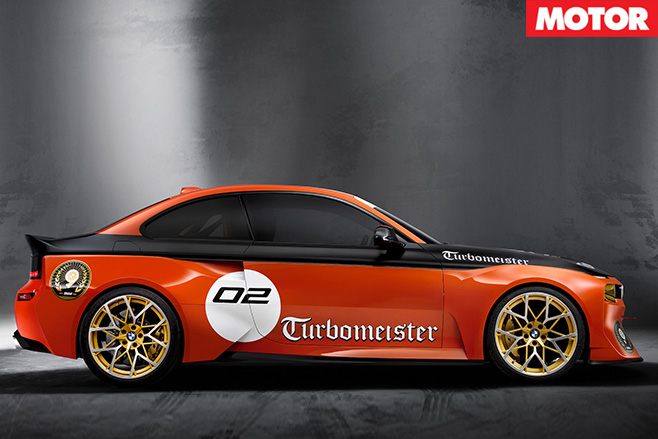
BMW has taken its 2002 Hommage concept revealed early this year and gone to racecar town – or the pits – with it for this weekend’s Concours d’Elegance at Pebble Beach, California.
Painted in iconic orange/black livery – which the brand says is “synonymous in the minds of many motor sport fans with the triumphs of the 1970s” – the 2002 Hommage is toughened with gold multi-spoke wheels matching its headlight surrounds with yellow tinting.
BMW says the gold hue gives a nod to the 2002’s 50th anniversary this year, while Munich is also using the latest 2002 Hommage to celebrate the 1973 2002 Turbo being the first turbocharged production car to debut in Europe.
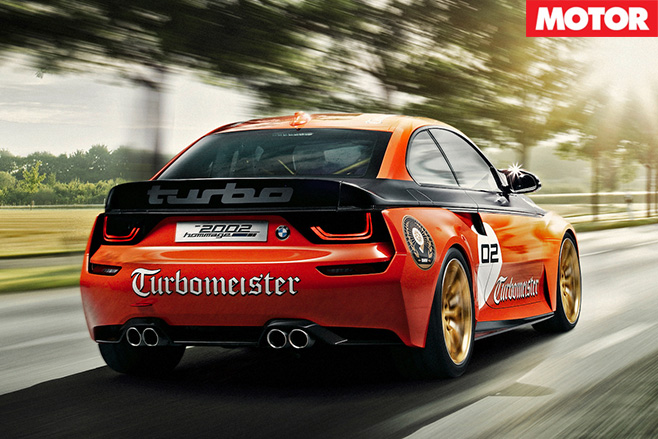
The latest 2002 Hommage is a far contrast from the restrained, petite pale blue example unveiled in May at Italy’s comparable event, the Concorso d’Eleganza Villa d’Este.
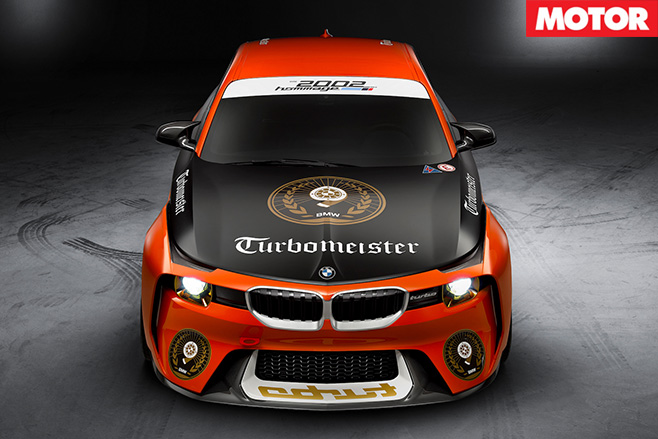
The brand does, however, add: “As in the heyday of the BMW 2002, design excellence and turbo technology bring unsurpassed levels of fun to twisty race tracks, country roads and mountain passes alike.”
With two concepts and counting, will a production version ever emerge? And could this be a pointer to a next-generation 2 Series and M2?
Latin linguist’s literary life lampooning Lion lore.
DON Loffler considers himself the “luckiest man alive”. Now 76, he has retired from a distinguished career as a teacher of Latin and German at the prestigious St Peter’s College in Adelaide and now writes books about historic Holdens.
Loffler’s first book, She’s a Beauty: The Story of the First Holdens, was published in 1998 as a comprehensive 246-page history of the 48-215 (aka ‘FX’) and FJ. Laden with facts, pics and tidbits, the green-covered tome was an admirable accomplishment.
“Put it in the bin,” Loffler sighs. “I did my best with that book, with the information available at the time, but quite a bit of it proved to be inaccurate. I got lots of feedback – so many wonderful responses, and lots of extra photos – and in 2006 I republished a complete revamp of that book, the ‘New Enlarged Edition’.”
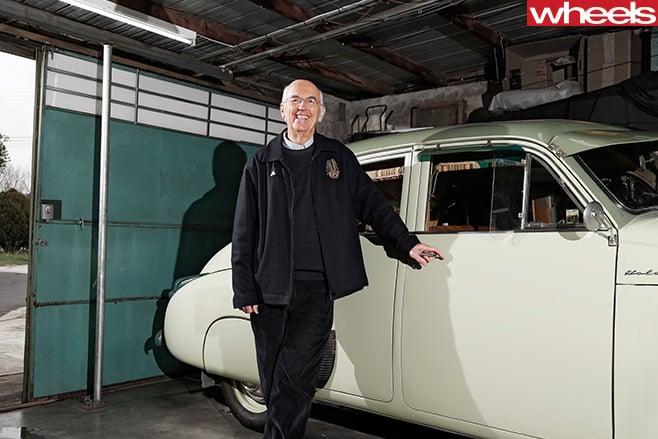
“There’s all sorts of fictions, like that [PM Ben] Chifley unveiled the first Holden off the line. Total rubbish. The first Holden came off the line on October 1, 1948, under huge secrecy in the factory. Chifley just unveiled a production Holden on November 29.”
Loffler’s obsession with Holden began, as usual, in childhood. “I was nine years old when the Holden came out in 1948. I have the most vivid memories of the drama of that car appearing. I had an instant love affair with the Holden. I was already interested in cars per se, but this affair never left me.
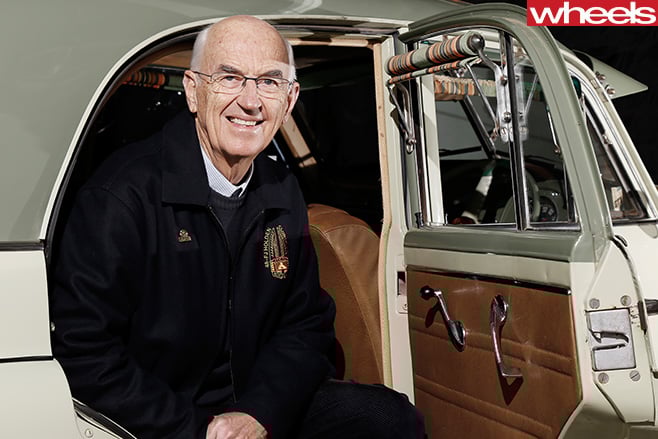
Had he ever been disloyal and owned anything else? After a long pause, he says: “This is almost scandalous. I never owned one! Until 2007, when I bought a barn-find 1953 48-215. I drove that around for five years until I fell in love with an FJ Special. I have that and a Honda HRV.
“But I was totally disloyal. I was madly keen on VW Beetles. I owned five of them, one after the other, then I had a VW 1500 sedan, then a special-import 1500 S Variant twin-carb. But the flame for Holdens never died!”
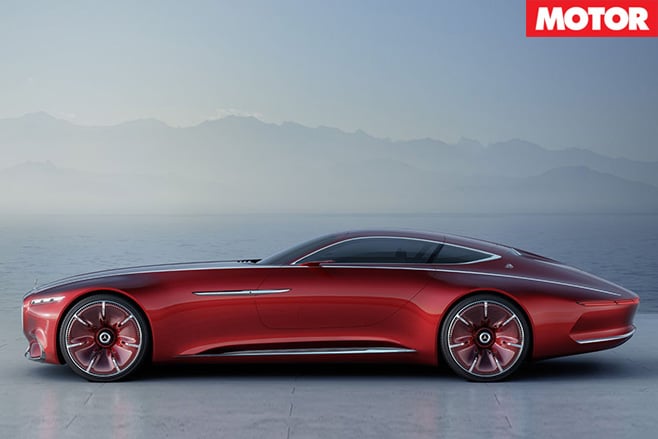
Mercedes-Maybach has moored – sorry, revealed – its 5.7-metre-long Vision 6 concept at the wealthy shores of Pebble Beach in the US, complete with a 550kW electric powertrain.
The annual Monterey Car Week opens this weekend and typically has premium brands rushing to get an eye-in on cashed-up consumers, but the Vision 6 also has one eye on the future of Mercedes-Maybach rumoured to have its own production coupe in the works.
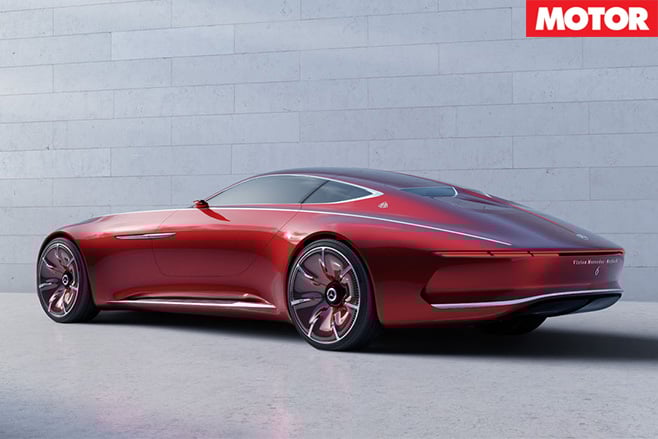
Given there is no physical engine up front, four suitcases take residence in that stately area.
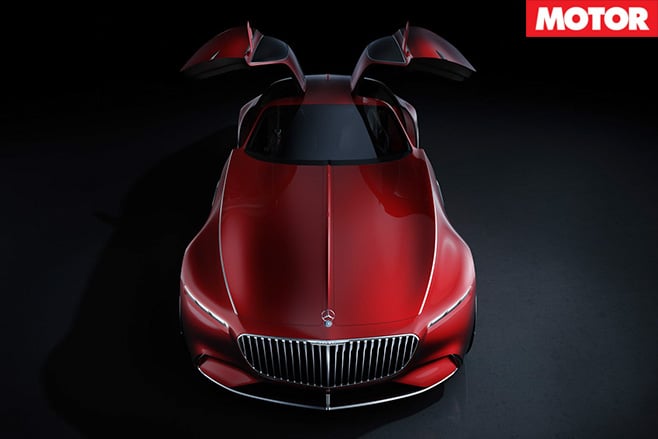
In between a bonnet that has its own postcode and a speedliner-like, vaguely retro rump, sit 24-inch wheels and classic Gullwing doors opening up to an indulgent cabin that is anything but a throwback – an ‘augmented reality’ windscreen teams with gesture controls replacing buttons, while each of the buttons on the front seats monitors occupant health.