
The Jaguar XJ will remain a sedan for its next generation – surviving a review process that questioned whether the brand’s flagship model should become an SUV.
Jaguar is currently exploring the design approach to the replacement for its sporty limo, even though it’s unlikely to be seen until at least 2019.
With the company ending its resistance to building an SUV with the newly launched Jaguar F-Pace, design director Ian Callum admits the global obsession with the high-riding body style forced the company to re-assess the XJ’s future.
“With the success of cross-overs and SUVs, the question was asked [internally] whether it should be something other than a sedan; we even asked our customers: what is the [Jaguar] flagship?” says Callum.
“It was quite clear in everybody’s minds that is should be a sedan.
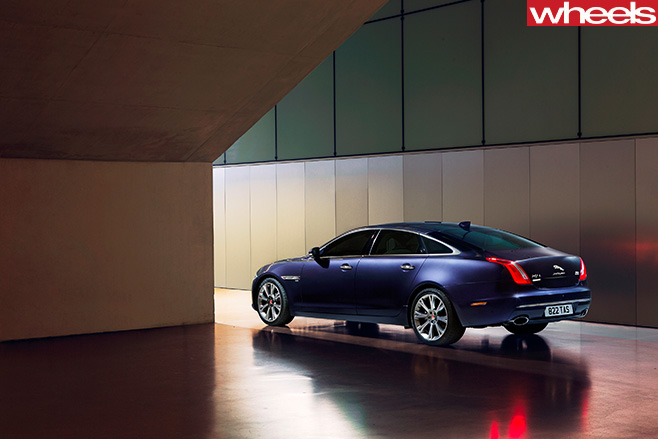
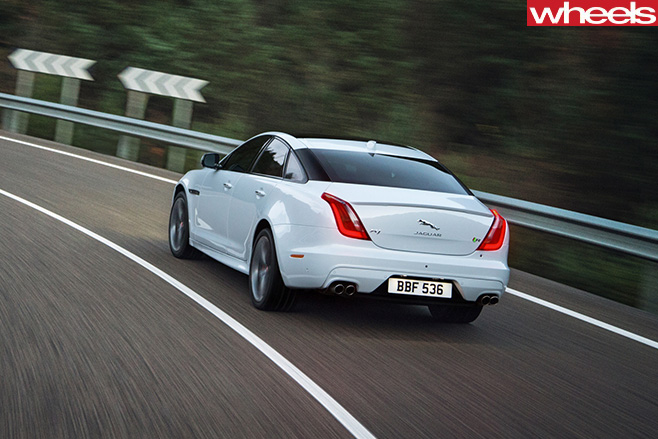
Callum says Jaguar discussed internally whether the sedan should return to a more conventional three-box design before agreeing it was important to retain the sportier profile of the current Jaguar XJ that was released in 2010.
Some of that model’s detailing, such as the rear pillars, and its relatively restricted rear headroom were criticised. Callum says Jaguar would look to address some of these criticisms for the new car, although he also stresses that a Jaguar limo doesn’t need to be the most practical.

“I think we should cut our own furrow rather than follow. Taking on the [Mercedes-Benz] S-Class is not the right thing to do.”
The Chinese market, with its love for big cars and spacious rear seats, has also influenced discussions, though Callum says the country’s younger generation is starting to move into the driver’s seat.
While the next XJ won’t be a big SUV, Callum reveals Jaguar-Land Rover did look at building the XJ and Range Rover off the same architecture to improve the company’s economies of scale before determining it presented too many challenges.
“We did talk about it at one point, but it never happened because it would have been compromising the Land Rover capability in order to accommodate the car. And if you did it the other way around you can’t put a sports car platform on a SUV platform. It just doesn’t work.”
The next XJ won’t make it in time for the model’s 50th anniversary that comes up in 2018. Even a concept is unlikely due to the need to focus on production models, though Callum says the company has noted the significance of the year and is planning some special editions.
Australian car buyers can’t seem to get enough of BMW’s M series. In the new M3 and M4 Competition pack, Munich has tweaked the engine and the suspension – and plenty besides – to provide a more appealing driving experience beyond what the usua BMWl M3 and BMW M4 offers, but with a hike in the price tag.
- Overseas, the M3/M4 Competition models are offered as option packs, but BMW in Australia decided the demand was so significant for M cars locally that it justified a standalone model, which sells alongside the regular M3/M4. The sedan and coupe cost $5000 more than the equivalent regular M3/M4, while the convertible is $4000 more.
- The M4 Convertible misses out on the front seat-back cutouts and unique seatbelt webbing that is part of the Competition models because it requires the specific convertible seats with integrated seatbelts.
- Early demand suggests 84 percent of buyers are prepared to pay extra for the Competition model, well up on the 66 percent demand in Europe.
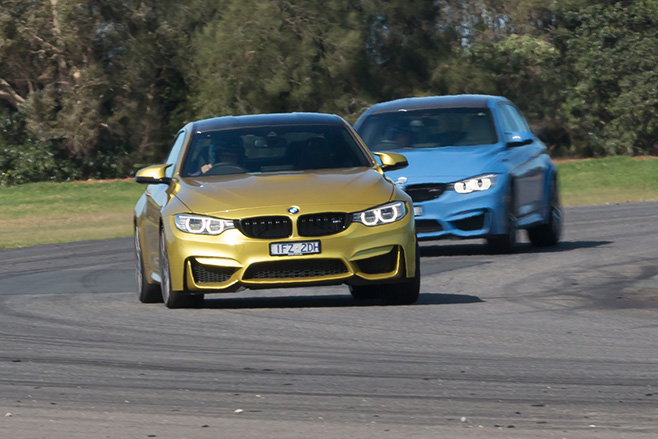
- The BMW M3 started life exclusively as a two-door coupe in 1986, but it spawned its first sedan in 1994. The original coupe and original sedan were not sold in Australia. These days the M3 is exclusively a sedan, with the coupe and convertible rebadged as M4 from 2014.
- The most obvious visual change between the regular M3/M4 and the Competition models are the unique 20-inch alloy wheels, which replace more aggressive-looking 19-inch wheels. It seems many prefer the old (or regular wheels) with most of the 16 percent of buyers prepared to accept the lesser power of the non-Competition models choosing mainly on the look of the wheels.
- The M3/M4 Competition models have been bitten by the black styling bug inflicting so many performance models. As well as blackened badging, the grille, side air vents and quad exhaust pipes have a black chrome finish.
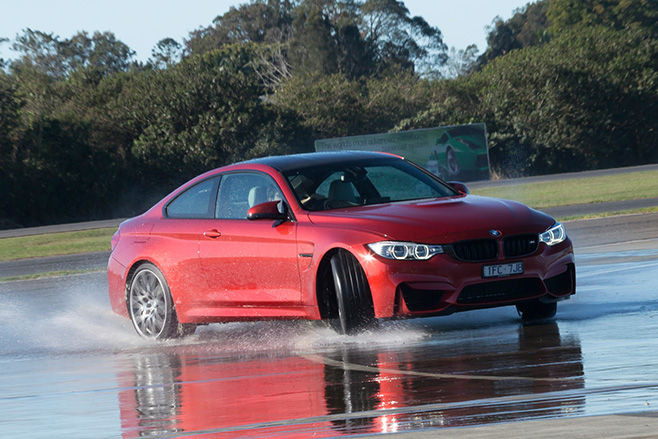
- As well as the unique design of the wheels, the tyres on the M3/M4 Competition are slightly larger, up an inch in diameter (to 20 inches) and with an extra 10mm of width at either end.
- Despite the tweaks and bigger wheels, the M3 and M4 Competition models are the same weight as the regular M3 and M4, which continue unchanged. The M4 Coupe is the lightest of the three-model range, with the four-door adding 20kg to the mix, a result of its additional doors and conventional boot that misses out on the Coupe’s lightweight materials. The Convertible is the heaviest of the bunch (as heavy as 1790kg) courtesy of the extra bracing required to maintain body rigidity without a fixed roof.
- Suspension springs on the M3 and M4 Competition are 15 percent stiffer than those in the regular M3/M4. It’s all about sharper steering responses and superior dynamics, especially on a race track. The suspension also has adjustable dampers (or shock absorbers), allowing owners to choose between the most compliant Comfort mode, Sport or super firm Sport Plus (the latter best left to a race track).
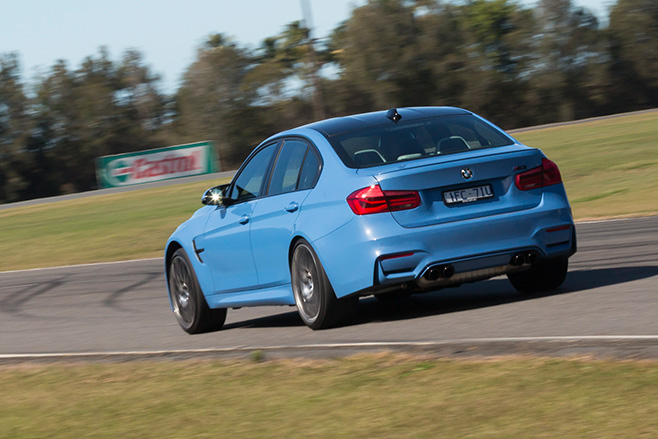
- All M3s and M4s have a carbon fibre drive shaft, which – as well as being 5kg lighter than an equivalent steel one – is said to be able to cope with 3.5 times the torsional, or twisting, forces running through the driveline. The lighter weight also helps it accelerate faster, improving throttle response and overall performance.
- About 90 percent of M3 and M4 buyers are male.
- Fuel use for the M3 and M4 Competition models has increased by about 6 percent. The sedan and coupe use a claimed 8.8 litres per 100km when teamed with the six-speed manual or 8.3L/100km with the seven-speed twin-clutch DCT auto. The Convertible uses 9.1L/100km and 8.7L/100km for manual and auto.
From its humble beginnings hotting up humdrum Mercedes sedans, AMG has now become a serious player in its own right.
Australia has a huge love affair with these hi-po Mercs; in fact, per capita Aussies buy more AMGs than any other nation. In 2015, more than 4000 were sold thanks largely to the popularity of its four-cylinder ’45’ models and the arrival of the new C63.
And that number is likely to increase sharply in 2016 and beyond as Affalterbach rapidly expands its range. The new twin-turbo V6 ’43’ range, that will ecompass everything from the C class to the GLC small SUV, lands later in 2016, with the new E63 and an expanded GT sports car range arriving in 2017.
For now, here is a list of all 49 (!) models AMG currently makes.
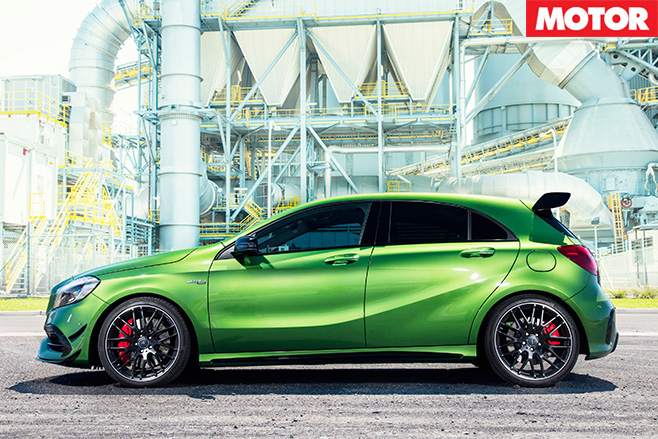
A45 CLA45 CLA45 Shooting Brake
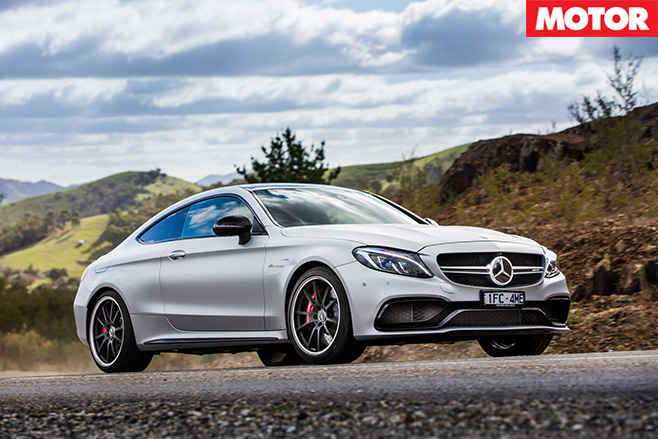
C43 C43 Estate C43 Coupe C43 Cabriolet C63 C63 Estate C63 Coupe C63 Cabriolet C63 S C63 S Estate C63 S Coupe C63 S Cabriolet
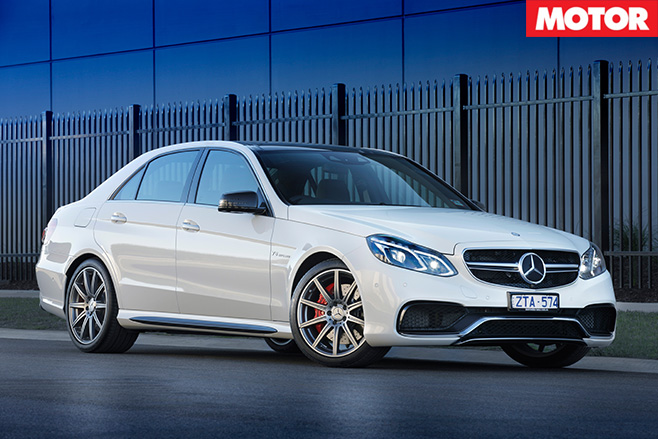
E43 E43 Estate E63 E63 Estate E63 S E63 S Estate CLS63 CLS63 Shooting Brake CLS63 S CLS63 S Shooting Brake
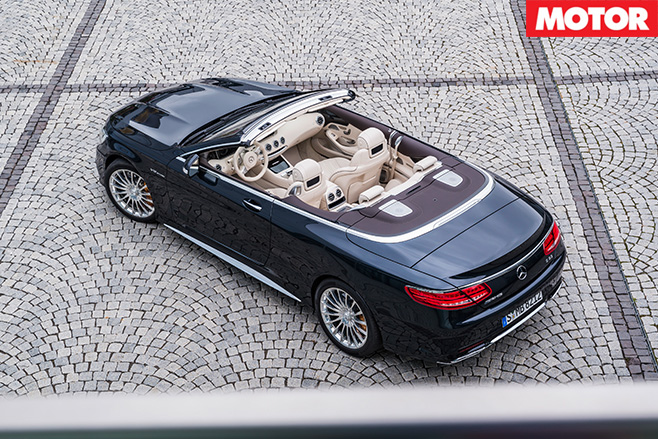
S63 S63 Coupe S63 Cabriolet S65 S65 Coupe S65 Cabriolet
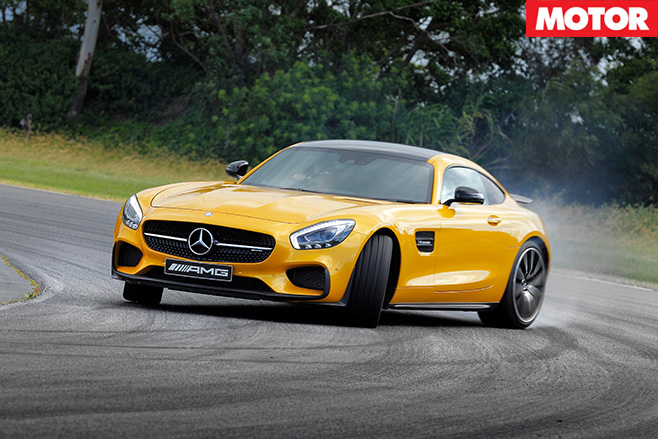
SLC43 SL63 SL65 GT GT S GT R
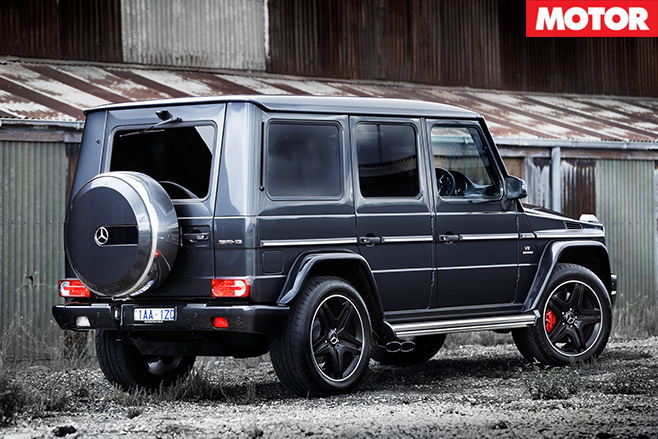
GLA45 GLC43 GLE43 GLE43 Coupe GLE63 GLE63 Coupe GLE63 S GLE63 S Coupe GLS63 G63 G65
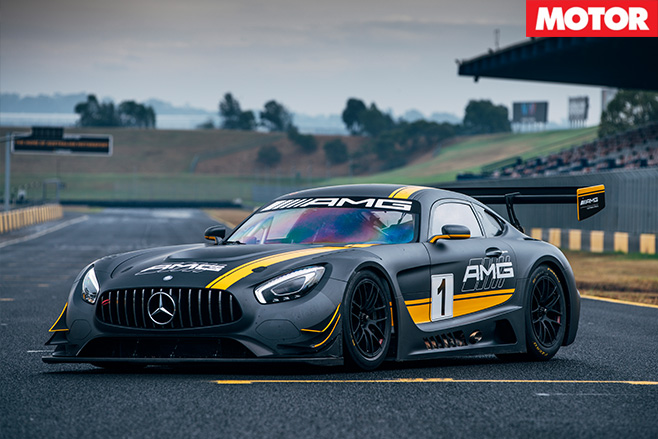
GT3
VICTORIA’S road trauma authority has taken a bizarre and macabre step in its bid to keep drivers focussed on safety – redesigning a human to survive a car crash.
The Transport Accident Commission today introduced the world to “Graham”, a middle-aged bloke with a grotesque physique that maximises his chances of avoiding injury in a crash that would kill a normal human.
“As much as we like to think we’re invincible, we’re not,” the TAC says. “The human body can only withstand certain amounts of force in a car accident.
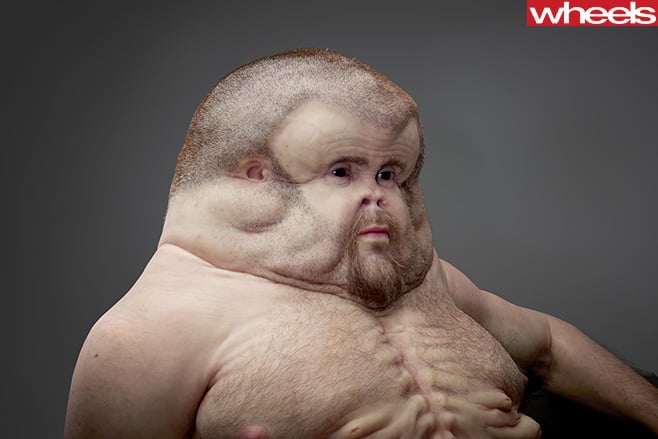
The TAC combined road trauma specialists with engineers and an artist to create what they believe is a human that was built to survive a crash.
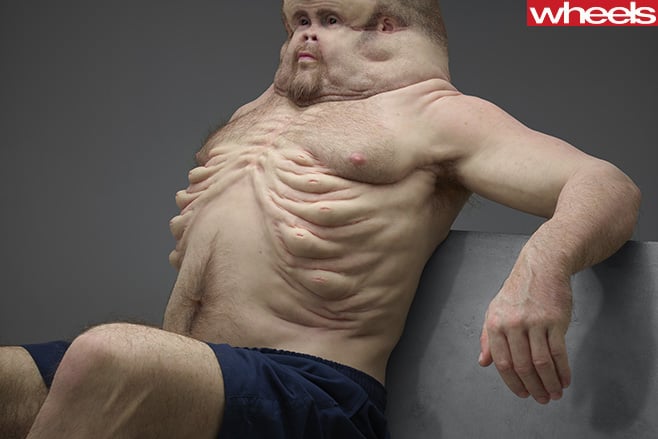
His skin is thicker as well, with the aim of reducing the number of cuts and bruises that a car crash can cause.
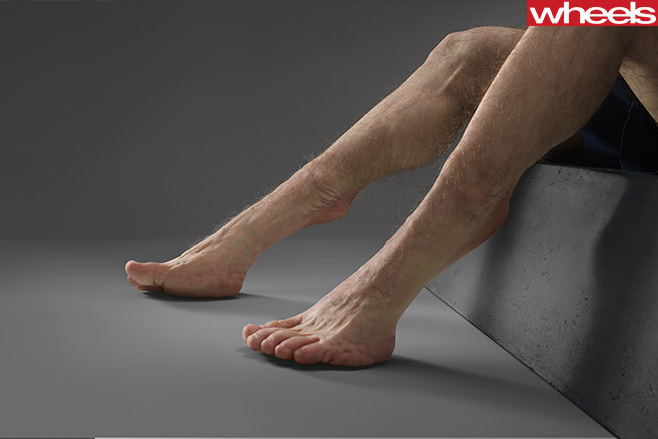
Graham will go on show at Melbourne’s State Library of Victoria before touring the state. If you can’t make it there, the TAC has launched an interactive website that allows you see Graham close up.
The last of the rear-drive BMW 1-Series hatchbacks will get a 250kW send-off in the form of the new M140i, due in the fourth quarter of 2016.
Part of a mild model update to the 1- and 2- Series ranges, the M140i replaces the BMW M135i and brings an extra 10kW and 50Nm from the revised 3.0-litre turbocharged inline six-cylinder and now produces 250kW and 500Nm. The updated engine and new nomenclature also stretches to the soon-to-arrive M240i coupe and convertible.
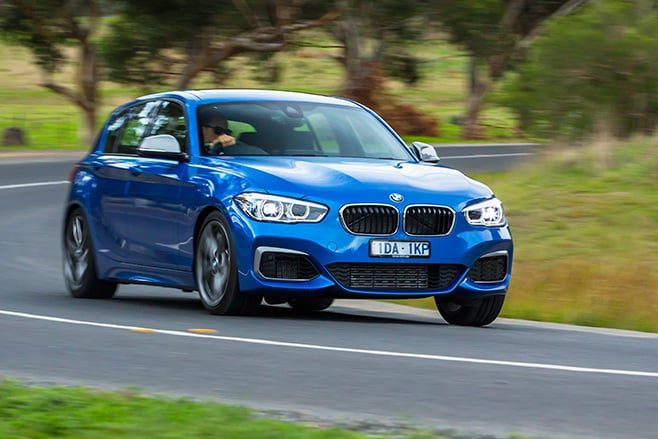
The benchmark 0-100km/h dash drops from 4.9 seconds to 4.6 seconds, too, making it a more fiery match for the Audi S3 and Mercedes-AMG A45 it competes with.
BMW has also thrown more equipment at the M140i – including the previously optional Harman Kardon sound system and heated leather seats – as part of a $2000 price rise, to $64,900.
Other models in the 1- and 2-Series ranges also benefit from minor engine tweaks, although the most affordable 118i and 118d are unchanged.
But the 120i and 220i, for example, get another 5kW and 20Nm, for 130kW and 250Nm in total.
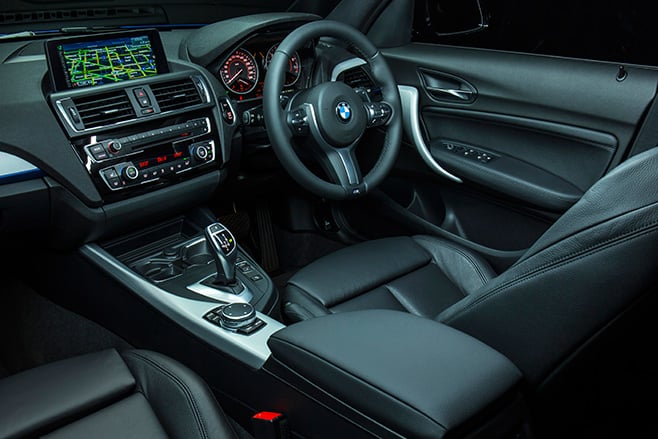
The 125i has also jumped to 165kW of power, up from 160kW.
Fuel use has also dropped between 4 and 9 percent for models that have received more power.
Prices are unchanged for the 118i, 118d, 120i and 125i.
The equivalent 2-Series models will also get the equivalent engine updates, albeit slightly later than the 1-Series.
In a delightfully ostentatious move, Mulliner, the coach-building division of British luxury car company Bentley, has created a rather over the top, but fully equipped fly fishing kit specifically for its Bentayga SUV.
Perhaps the firm feared other genres of fishing may come across as too common, or maybe Bentley owners exclusively opt for the feathery form of weightless casting, but Mulliner has thought of everything in its elaborate display of bespoke accessories.
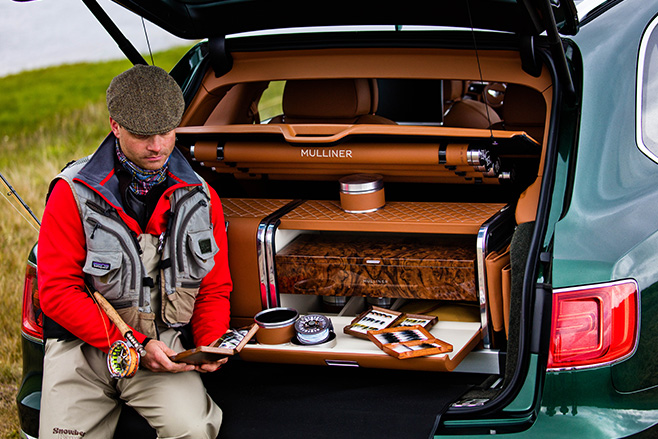
Four tubes wrapped in saddle leather are mounted under the Bentayga’s fabric parcel shelf to store one’s rods. As well as the leather-clad timber three-trunk storage system, there’s a pair of matching nets in matching leather bags in a carpet-trimmed pocket.
Inside, the first section is the fishy bit: a burr walnut-veneered draw holding leather-wrapped aluminium reel cases, walnut-covered books of hooks, cotton, feathers to create the perfect fly to suit your exact fishing conditions — there’s even fly-tying advice to help Bentley owners avoid the appearance they might require assistance.
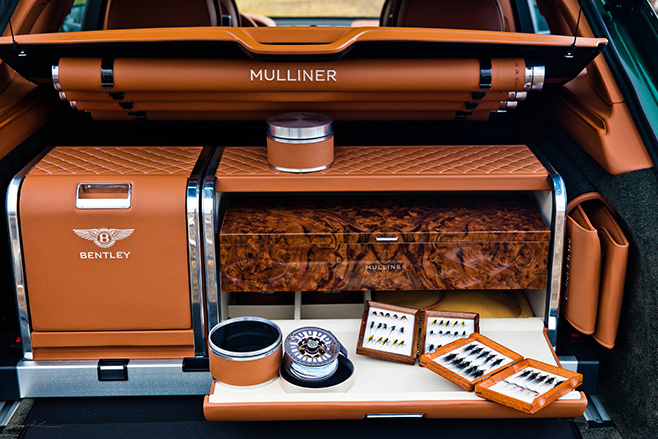
A separate box, complete with an electronic dehumidifier, neoprene lining and waterproof floor to ensure the swanky leather stays smelling as expensive as it no doubt is, is where one should store one’s waders when one doesn’t require their use.
The last section of the pout-inducing affair is the most luxurious of them all: the refreshment case. Complete with three aluminium flasks and a set of Mulliner-branded fine china tableware, it’s the icing on your swanky fish-flavoured cake.
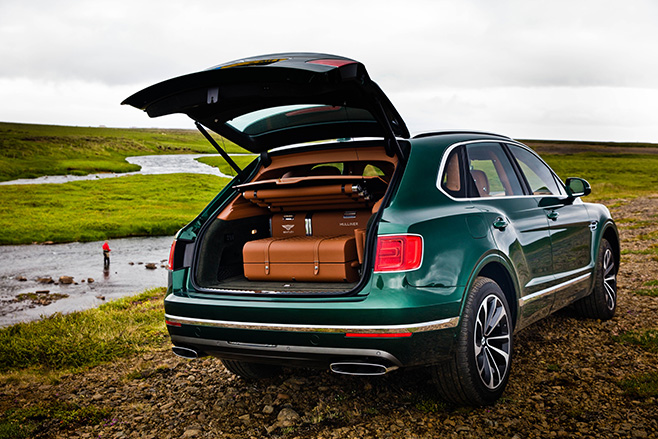
The whole three-sectioned kit and caboodle slides out to form a table for your riverside fine dining experience if you so desire and the refreshment case, which is, of course, covered in quilted leather, can be used as what would go close to being the world’s most inappropriate camping chair.
What it would cost to customise the world’s most expensive SUV is unknown, but with the non-fly-fishing-spec Bentayga starting at A$420,600, it’s likely beyond the reach of your average Aussie freshwater fishing enthusiast.
MERCEDES-Benz says it is now at the most difficult stage of its development of the autonomous car: working out how to safely hand control back to the driver.
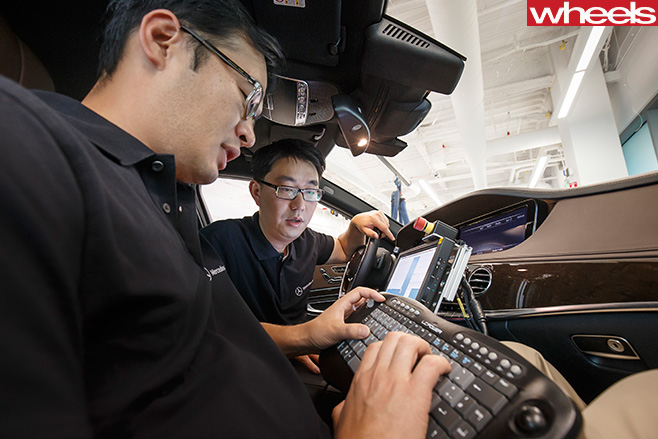
Jochen Haab, an engineer at Mercedes-Benz who is responsible for developing the luxury car brand’s driver assistance systems, says how it will manage the handover from car back to driver is proving more difficult than the carmaker had thought.
“We’re just in the process of working it [transferring driving responsibility from the car to the driver] out,” Haab told Wheels at an introduction to the driver assist technology rolling out in the new E-Class soon due on sale in Australia.
“We’ve had two or three simulators concept tests already, we have a pretty clear picture of how we do it, and our design is coming. And that’s what makes it [moving to the next stage in automated driving development] difficult.
“We’re in the process of the serious development of this thing. It’s not finished yet, and if it was we would sell it, believe me, but it’s a normal development process.”
In the e-Class, it uses a green steering wheel that lights up on the dash to show that its suite of technology – which, among other things, will even steer the driver through a lane change – is active.
The carmaker anticipates it will have the next stage of its self-driving car technology ready for the market within two years – the sort of timing that suggests it will coincide with a mid-life refresh of the flagship Mercedes-Benz S-Class as it fights a tit-for-tat battle with the E-Class for techno-supremacy.
According to Haab, the next-gen driver assistance features will allow the driver to perform “limited secondary tasks” behind the wheel. That means working on a laptop, handling a phone or reading a book – but not sleeping.
That would require the development of a system that is able to monitor the driver and ensure that even though he or she is not switched on to the task of driving, they’re still ready to take back control when needed.
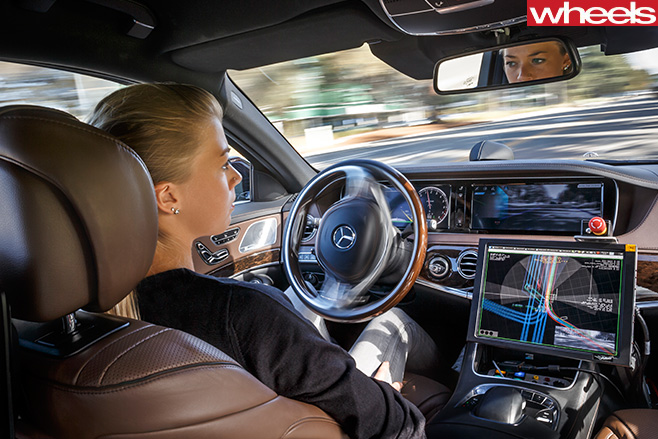
“And if you say ‘Yes, I’m here, I’m sitting behind the wheel,’ you’re still there, you’re in the loop, you’re allowed to do other things that you can stop doing, say, inside five to 10 seconds.
“So if we look into the future, we are confident we can deal with the situation for the next five to 10 seconds, let’s say.
“And if something really unexpected happened — let’s say you have a radar failure — you would still be able to drive the car safely for those five seconds, so you would need to have redundant systems, which we don’t have yet.”
That five to 10-second period is an important one, he says, because it gives the driver time to stop what they’re doing, free up their hands, and take back control.
According to Haab, Mercedes-Benz’s technology is already at the stage where a car could drive by itself, but the systems in use today lack redundancy – failsafe back-ups – if anything such as a camera or a radar stopped working – which it would need before the next big step in autonomous driving becomes a showroom reality.
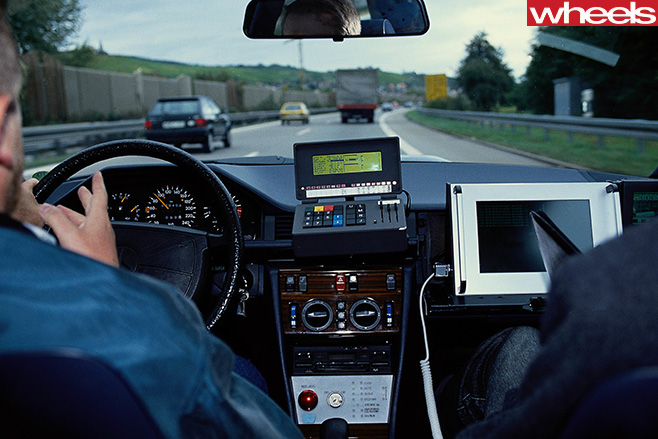
“But we ignored the necessity of parallel systems or backup systems, and just turned off the hands-off warning and we turned off the thresholds for the steering at higher speeds.
“We showed that this year at the CES [the annual Las Vegas-based Consumer Electronics Show] — the car itself would be capable of [driving autonomously] but we wouldn’t do that because we don’t have the backup system that is necessary for it,” he says.
“That first step — driving autonomous under certain conditions on certain roads at certain times or if there’s enough traffic around and at certain speeds, of course — you’ll see that within at least the next model roll-out, let’s say, so a couple of years down the road.”
That points to the mid-life facelift of the flagship S-Class limousine, which is expected to gain a significant makeover in about 2018. Its rollout to other models in the Benz showroom will follow swiftly, Haab says.
“We’re through with the roll-out of generation three [of Benz’s driver assist technology], and we’ve just started gen four, so the next one to get it — which is just about to be rolled out actually, we’ll see the press release in September I believe, the [E-Class] station wagon — then we’ll have it in the coupe, the cabrio, and then of course next year in the S-Class.
“Gen five is a couple of years down the road.”
IT’S not uncommon to hear cars referred to as automotive art.
It may be hard for those without a love for all things motoring to understand, but a well-designed car can evoke many emotions simply through its curves, arches, grills, gills, wings, and silhouette.
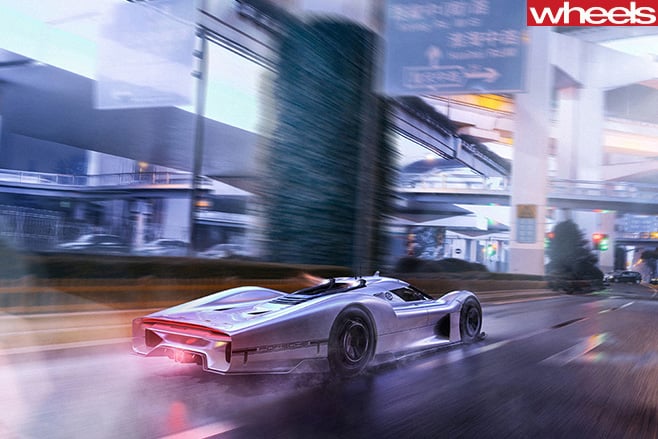
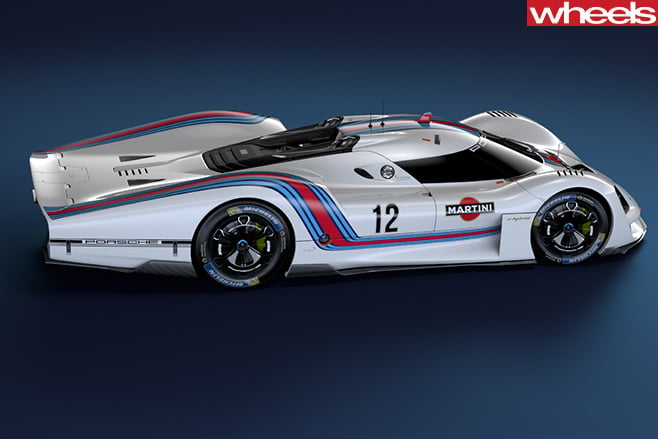
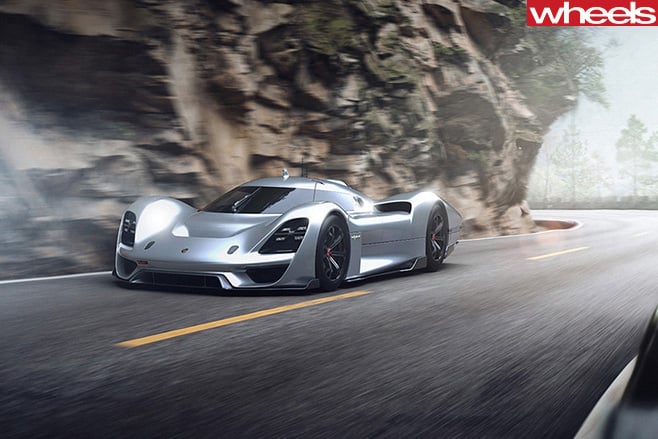
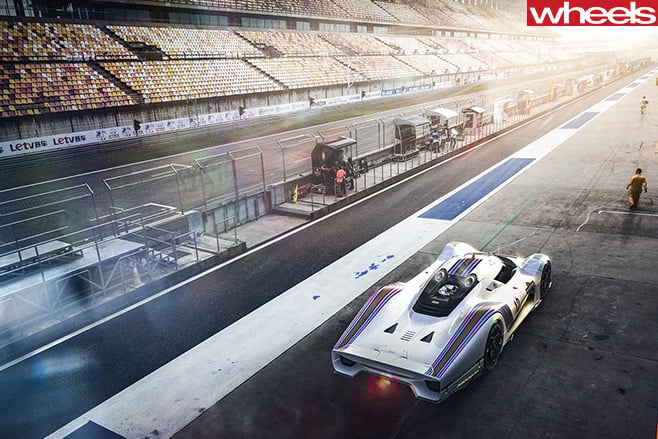
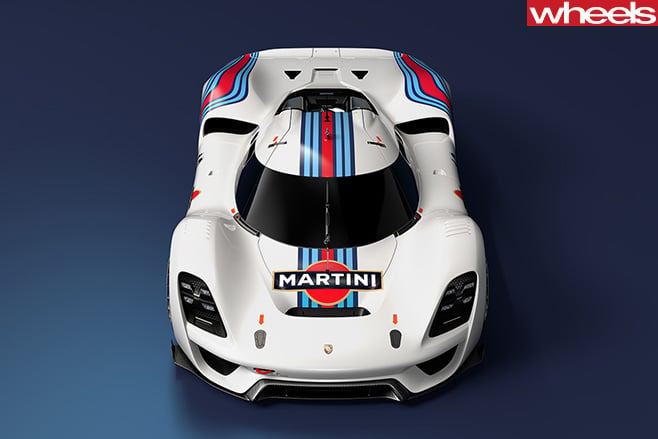
One squad of designers has taken this feeling to the next level with an utterly jaw-dropping concept. They call it the Porsche 908-04 Concept.
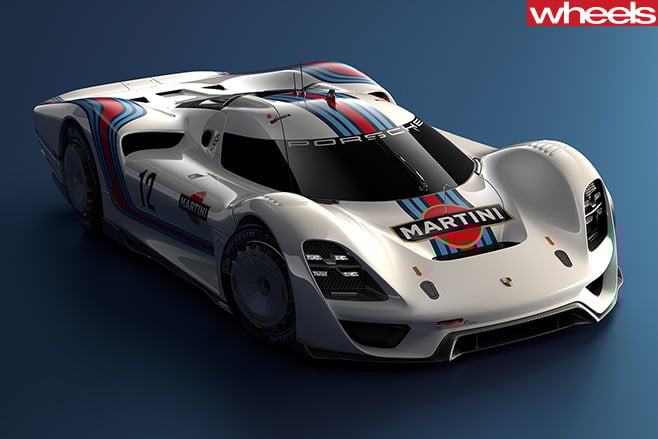
Led by Alan Derosier, the six man team has put together a vision of car design which evokes an array of emotions for automotive enthusiasts, combining elements from Porsche’s current 918 hypercar, and its iconic 1696 908 LH Le Mans racer.
There’s “more to come” with the much-rumoured BMW M2 CSL, according to BMW Australia chief Marc Werner.
Speaking at the launch of the BMW M3 and M4 Competition models – each with a 14kW power boost to 331kW – the local managing director gave the strongest hint yet that the M2 CSL is coming soon.
The CSL – or “coupe sport lightweight” – version is expected to mimic the limited edition BMW M3 CSL released in 2004 in having motorsport-inspired lightweight panels and materials as well as engine modifications to up performance.
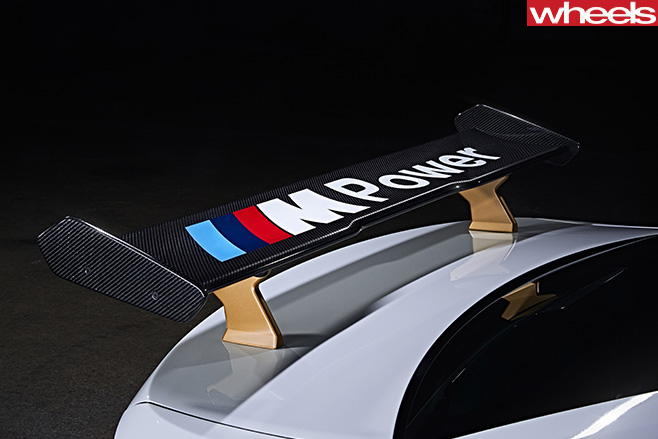
The M2 CSL appears to be a key part of a broader plan to expand the BMW M family, and take advantage of strong demand for low volume, highly modified machines.
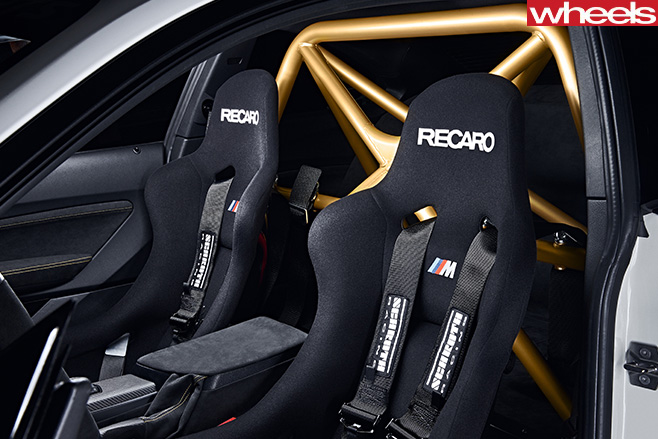
Based on the M4 Coupe, the two-seater GTS has heavy aerodynamic modifications as part of major body and structural changes that also realise a 30kg weight saving.
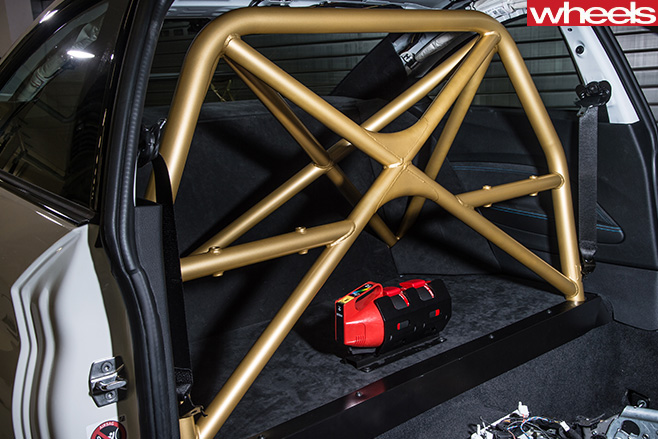
The claimed 0-100km/h time is 3.8 seconds – just 0.2 seconds quicker than the M4 Competition – but the Nurburgring lap time is a more convincing 7 minutes, 28 seconds.

“It’s a full blooded race track car,” said BMW Australia product and pricing manager for the M3 and M4, Howard Lam. “It’s a track car been made road legal, not the other way around.”
MORE power and sharper dynamics make for a worthwhile addition to the M3 and M4 family.
WHAT IS IT? An extra three models to the BMW M3/M4 family. With mildly revised suspension and engines, the M3 sedan Competition, M4 Coupe Competition and M4 Convertible Competition sit alongside the regular models that continue unchanged.
WHY WE’RE TESTING IT To see if the $5000 premium for the Competition models is worth the spend over the regular M models.
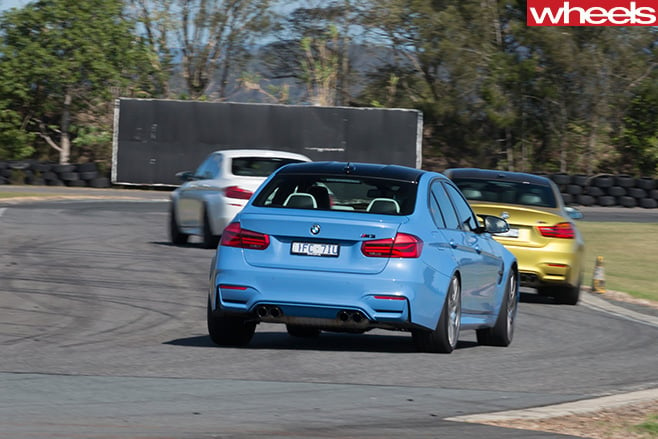
THE WHEELS VERDICT It’s all about the details in BMW’s new M3 and BMW M4 Competition models. But the tweaks to the engine and suspension make for a more engaging drive, especially on the track.
PLUS: Epic free-revving and flexible engine; relishes a track thrash; sharp driver-focused dynamics. MINUS: Artificial six-pot sound more drone than performance; tyre noise; ride on back roads.
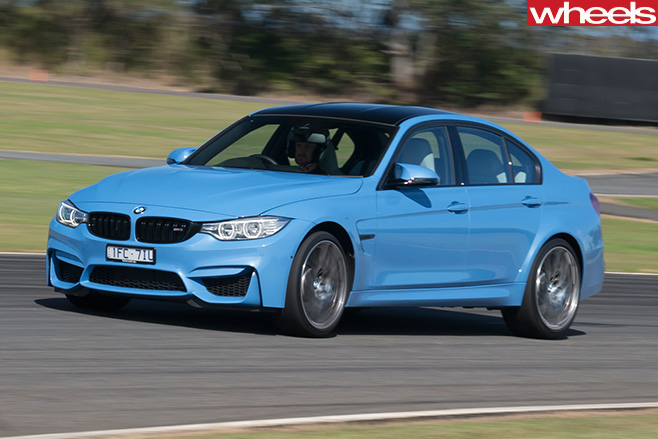
It’s not until that point that the torque peak is maintained a fraction longer in the Competition, the latest $5000 plus-pack that sits atop the unchanged M3 and M4 ranges that incorporate sedan, coupe and convertible body styles. Even then it’s difficult to pick, and you’re best keeping the right foot pegged to unleash the extra 14kW that stretches power to a 331kW peak at 6000rpm.
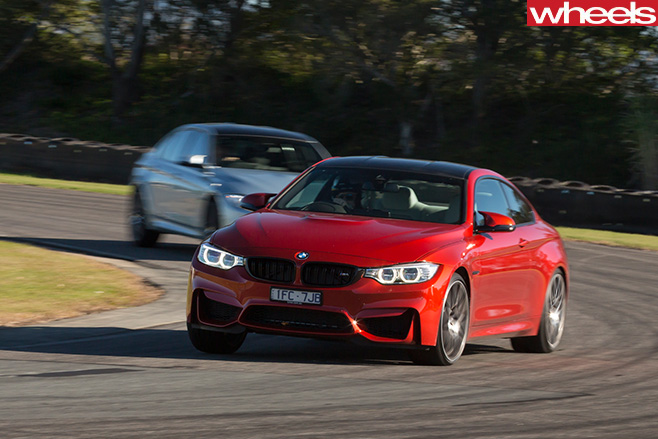
Indeed the exhaust burble – some of it artificial through the speaker system – is more enticing in the Competition, although it’s still more a deep drone than a fluttery match for the V8s that rival BMW’s longest running M.
The iconic M is now faster, too, punching to 100km/h 0.1 seconds quicker, at 4.0 seconds flat. That’s with the occasionally finicky DCT twin-clutch auto that jolts on full throttle upshifts in its most aggressive mode, one of many driver-selectable parameters that unnecessarily adds to the go-fast complexity.
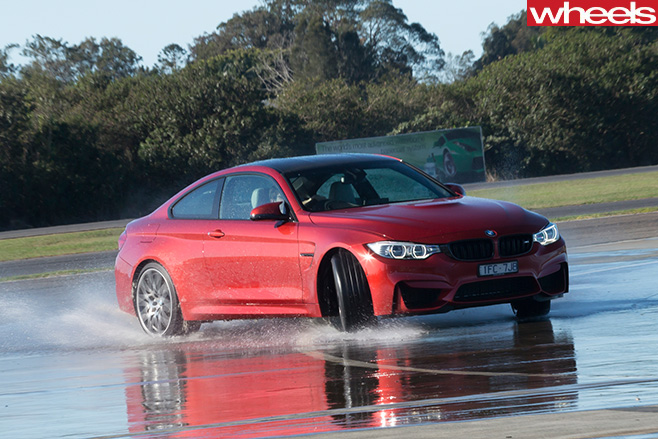
The latest Ms also benefit from dynamic changes. Springs are 15 percent stiffer, so the Comfort mode in the adjustable dampers is closer to the Sport setting in a regular M4.
It makes bumpy backroads that little bit more trying at slow speeds, while the occasionally roaring tyres take the edge off high speed cruising. The plus is a whiff of extra damping control over high speed thumps, something that adds reassurance to an accomplished sporty.

Design changes are subtle, with the exception of the new 20-inch spoked wheels that are an acquired taste against the deeper dish 19s of the standard car. But details nod to the M heritage; black chrome graces everything from the kidney grilles and badge to the quad exhausts. Grab the seatbelt and there’s a subtle blue and red stripe, too. And those body-hugging seats now have cutouts for added flair.
Existing M3/M4 owners won’t feel outclassed, but those shopping new will be rewarded with fractional improvements.
SPECS Model: BMW M4 Coupe Engine: 2979cc inline six-cylinder twin-turbo Max power: 331kW @ 6000rpm Max torque: 550Nm @ 1850-5500rpm Transmission: 7-speed twin-clutch auto Kerb weight: 1540kg 0-100km/h: 4.0sec (claimed) Price: $154,615 On sale: Now
