
So, the mighty Dodge Viper is now dead.
MOTOR‘s exposure to the V10-engined muscle car was limited, but its most famous appearance was at Performance Car of the Year 2003. The only American in the field, few knew what to expect of this open-topped curiosity.
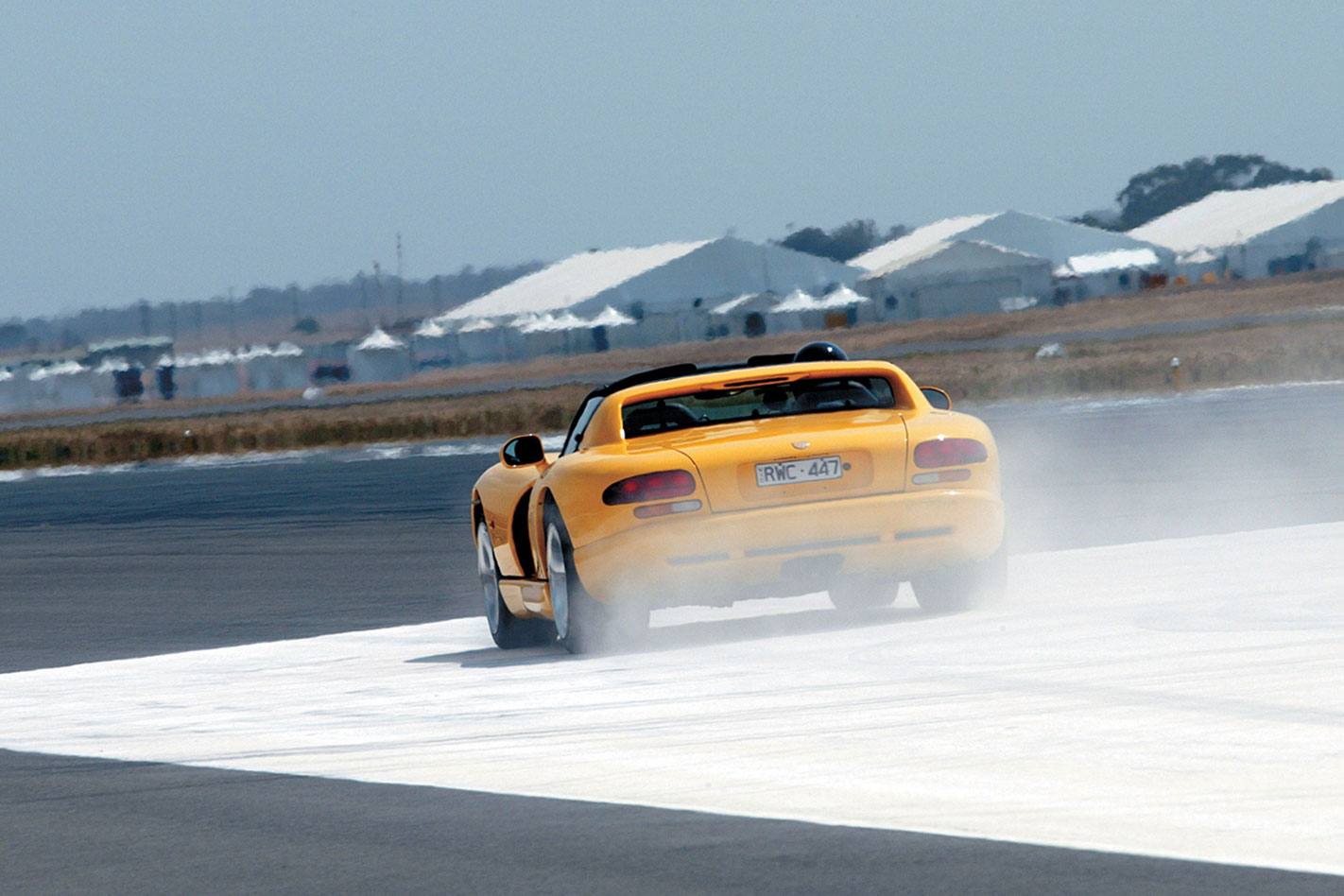
At Avalon airstrip it clocked 0-100km/h in 4.34sec, a 12.30sec quarter mile at 192.4km/h and bellowed its way to an incredible 295km/h top speed. At the time, it was the second-fastest car MOTOR had never tested, trailing only the Porsche 911 GT2.
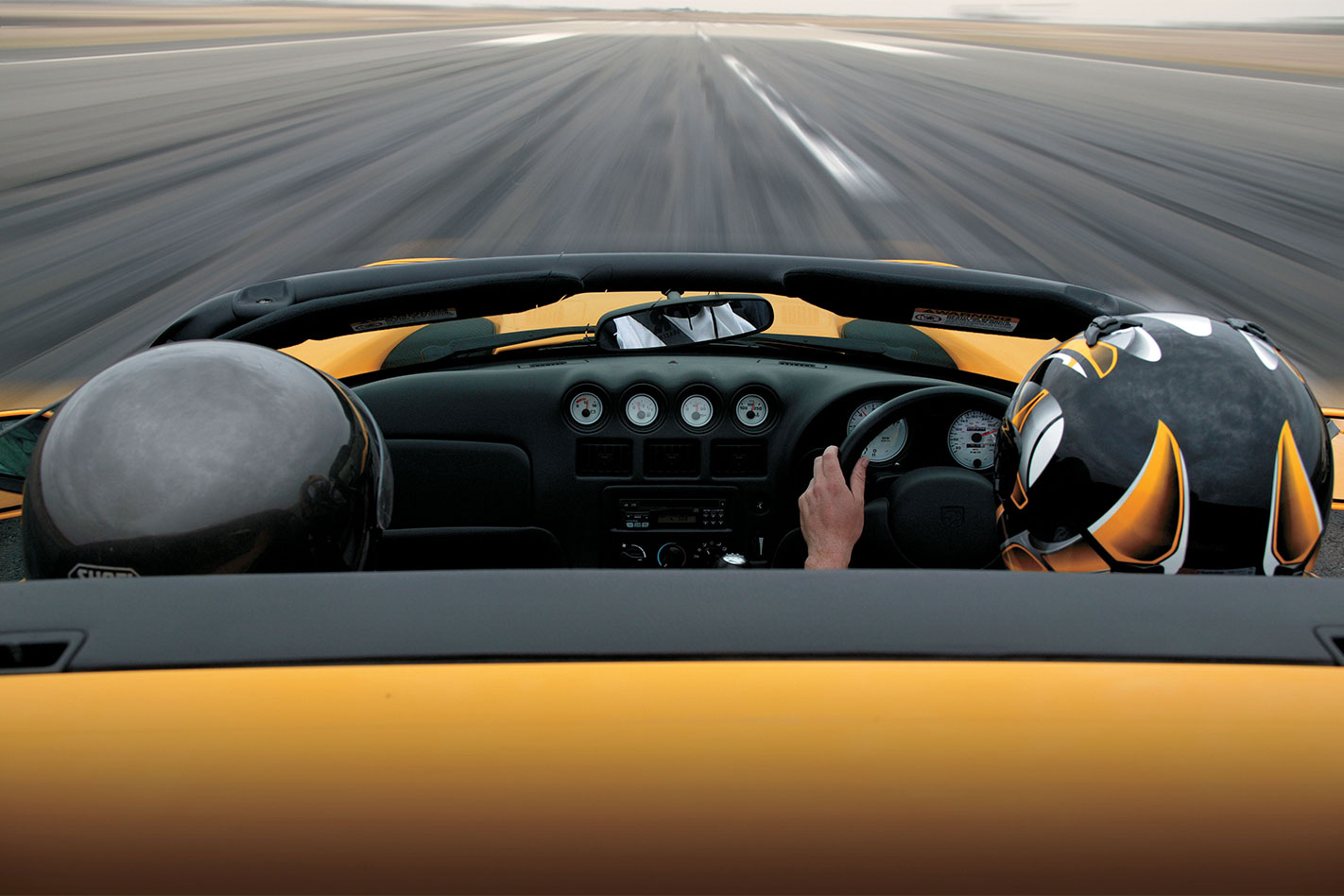
Why, then, did it finish a lowly 12th? Where did it all go wrong? Well, effective though it was, actually driving the thing was about as much fun as being stuffed in a wheelie bin and pushed down a hill.
But the event was richer for its inclusion, which kind of sums up the whole Viper thing. It might have been flawed, but it had a hell of a lot of character and the motoring world is a lesser place for its disappearance.
In a bid to ditch its oh-so sensible stigma, Volvo has revealed a sporty aesthetic package for its latest high-end sedan and wagon.
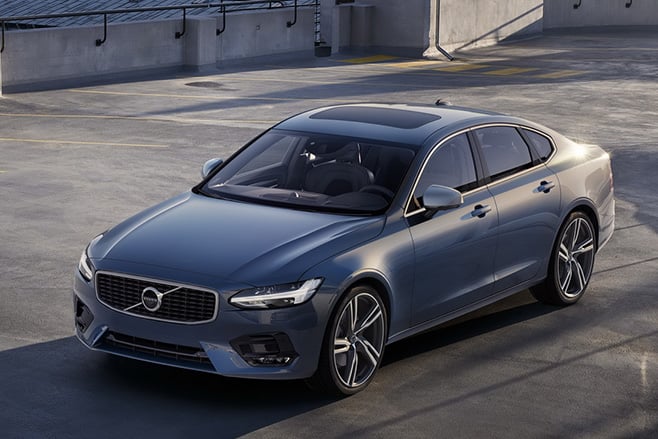
Dubbed R-Design, the performance-inspired look will be applied to the S90 sedan – due to hit Australian dealerships in August this year – and the new Volvo V90 Wagon; which won’t hit Australian shores until the first quarter of next year.
As well as tweaks to S90 and V90’s chassis – which the firm says will deliver a “road-hugging drive” – the R-Design means a new front-end set-up boasting integrated foglights in the spoiler; an all-back grille with a brushed-metal surround; the mirrors will feature a brushed-metal finish while the wheels will be 21-inch diamond-cut, five-spoke black and chrome affairs.
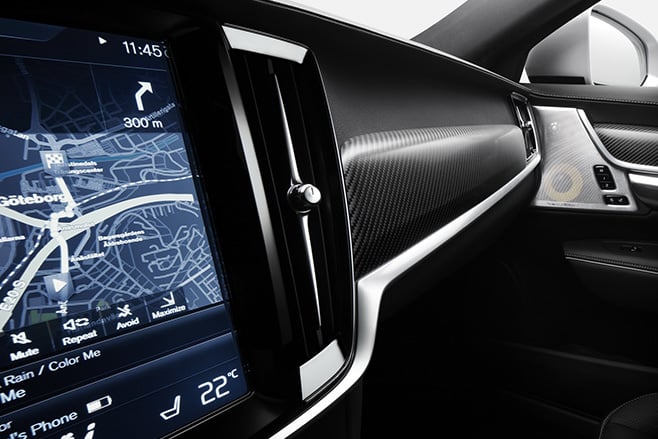
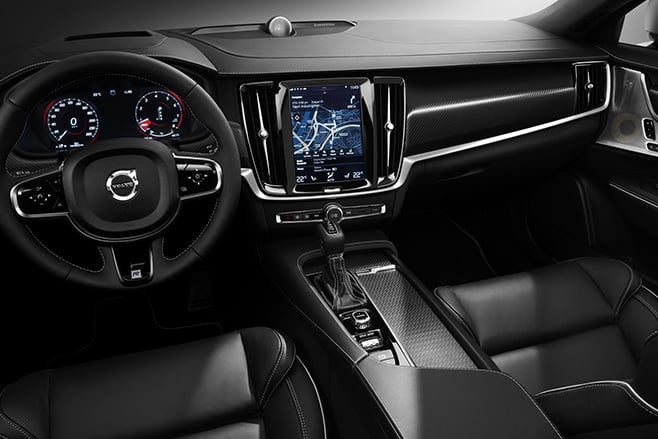
On the inside, application of the R-Design treatment will result in newly contoured sporty seats with perforated leather touches, a leather steering wheel, carbon-fibre inserts and stainless steel pedals. White stitching highlights are carried through the steering wheel, seats and console for continuity and the whole show is illuminated by an all-new interior lighting configuration.
Pricing is yet to be confirmed by Volvo.
Australia, be proud. Not only is the HSV Maloo LSA one of the world’s fastest utes, it’s now one of Australia’s finest exports.
Vauxhall in the UK has ordered 100 examples of the LSA-powered Maloo for its showrooms, and the first one will be running up the hill at the Goodwood Festival of Speed this weekend.
Just 100 examples will be delivered to the UK, badged as the Vauxhall Maloo LSA. Vauxhall says 50 of the 100 utes are already spoken for.
Power comes from the same 400kW/671Nm version of the 6.2-litre supercharged LSA V8 as found in current HSV Gen-F2 R8 and Senator models.
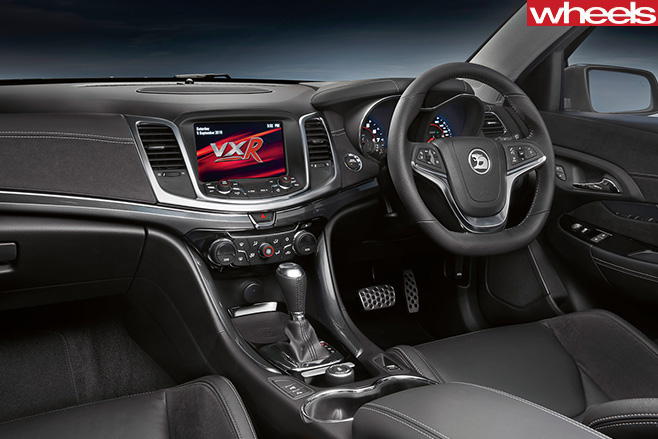
Vauxhall hopes the Maloo LSA will achieve a hillclimb time of 55 seconds at Goodwood – putting it in the same league as cars like the Mercedes-Benz SLS AMG Black Series and Jaguar F-Type R Coupe.
This isn’t the first time Britain has seen what a supercharged Aussie ‘yoote’ is capable of. Last year, English motoring journo – and host of the all-new Top Gear – Chris Harris, blew the tyres off a Maloo GTS for a Wheels magazine feature. He liked it. Quite a lot.
The full strength Maloo GTS with its 430kW/740Nm LSA engine remains an Australian and New Zealand exclusive.
A lively AGM sees the troubled car-maker announce plans to be the first to add soot-reducing filters to its petrol engines.
VOLKSWAGEN continues to strive to clean up its act after diesel-gate – quite literally – with the announcement it will introduce soot-reducing particulate filters to its petrol engines.
The German brand’s declaration at its closely-watched annual general meeting on Wednesday night (AEST) puts it in a race with compatriot Mercedes-Benz to become the first car manufacturer to introduce petrol engines with the technology more commonly associated with diesel engines.
Mercedes said in May that it would release an updated S-Class in 2017 featuring a particulate filtered petrol engine.
VW chief executive Matthias Müller said the group’s first models to receive a petrol engine with this pollution-reduction tech would be the 1.4-litre TSI and TFSI versions of the VW Tiguan and Audi A5, in June 2017.
As with Mercedes, VW plans a large-scale roll-out of the tech – as part of its vision for the next decade, which it has dubbed ‘Together – Strategy 2025’.
“This [initiative] will reduce particulate emissions by up to 90 percent. Up to seven million Volkswagen vehicles could be equipped with this technology each year by 2022,” Müller said.
Particulate filters have been mandatory on diesel engines since Euro V emissions regulations were introduced in 2009. Petrol engines have hitherto been exempt from such technology, essentially because they’re significantly cleaner.
While diesels produce less CO2 than their petrol counterparts, they’re notoriously dirtier – producing 22 times the number of particulates – or soot – that cause air pollution, and have been blamed by the World Health Organisation for various health issues including cancer.
Particulate filters – which in diesels reduce soot by about 80 per cent – work by trapping soot in the exhaust system. The filters are cleaned – or ‘regenerated’ – automatically through elevated exhaust temperatures burning off the soot, either naturally through high vehicle speed or programmatically via the engine management software.
Volkswagen’s move to improve the cleanliness of its petrol engines comes from its expectation that combustion engines will continue to count for the majority of its drivetrains by 2030.
While the company is aiming for an unrivalled 30 fully electric vehicles by 2025, it says two in three of its models will be powered by petrol or diesel engines by 2030.
Volkswagen also announced at its AGM in Hanover, Germany, that it would invite independent third parties to evaluate its future internal emissions tests.
Lets not fiddle with each other’s tockleys here. This comparison doesn’t deserve to exist on so many levels it’s almost funny.
This story first appeared in the May 2000 issue of MOTOR.
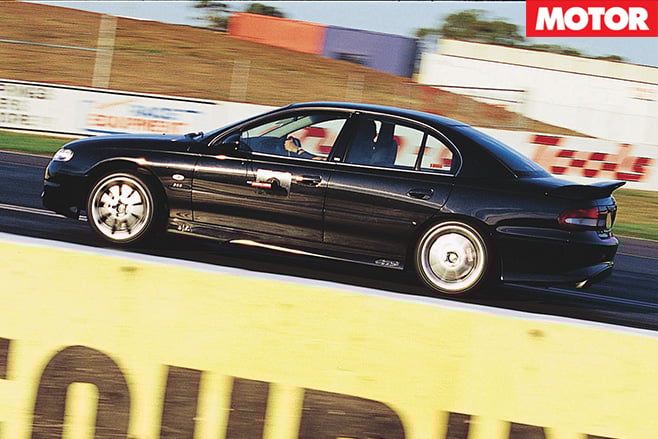
You won’t catch a wannabe HSV GTS owner wasting a sideways glance at a WRX STi. Simple as that. Meanwhile, the type of punter who’s likely to be shelling out for the Sube is gonna think a GTS is a shed with headlights. Equally simple.
The two don’t compare on price, theyre not even remotely technically similar and who gives a monkey’s about standard equipment anyway?
So, having established they’re not marketplace competitors and have about as much in common as Mother Teresa and Iron Mike, what the hell are we doing here? Simple, it’s a speed thing. If I need to explain, consider yourself banished to your stamp collection.
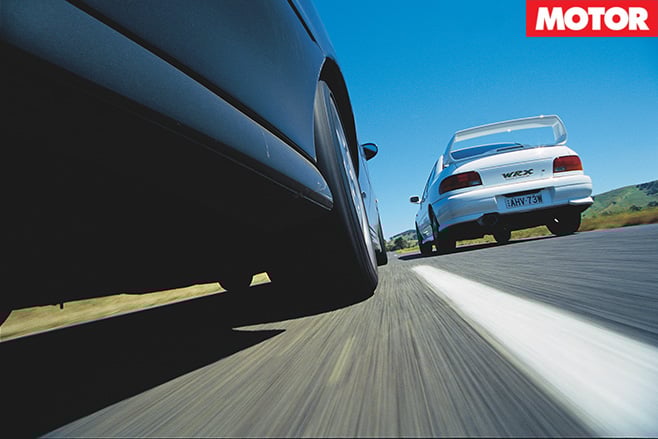
With the shift to the Gen III V8 last year, HSV also stepped up to the mark. But even with the 250kW the R8 was packing, the local hero was always just that little bit off the pace.
Not any more. With the 2000 GTS model, HSV has lobbed one straight into the backyards of M-Haus, AMG and Fuji Heavy. And now, having booted over their rubbish bins, pinched their milk money and blown up their mail boxes, HSV is coming round to roger their puppy dogs.
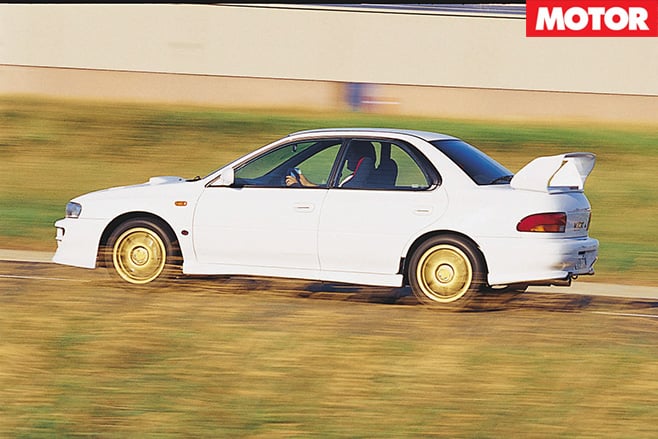
The Rex, meanwhile, is wallpaper these days. Unless you really know your stuff, the chunderous pink badges are just that. And since so many WRXs run radical wheel and tyre packages, the STis don’t even stand out any more.
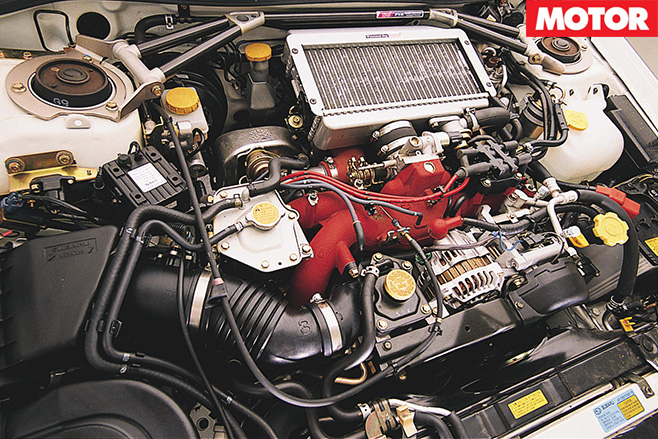
It’s still equal parts dumpling and trinket, and the four-door bodyshell makes it even more invisible. But the wallflower stuff stops where the spec sheet begins, and the STi is a purposeful upgrade over the standard WRX (itself no soft-cock).
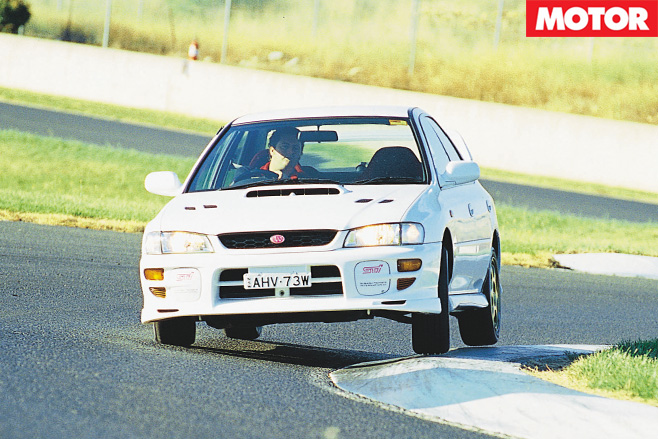
Underneath you get inverted strut suspension and shorter 4.44:1 overall gearing. Throw in a close ratio five-speed ‘box, a carbon-fibre strut brace and whitefaced gauges and you’ve got yourself an STi.
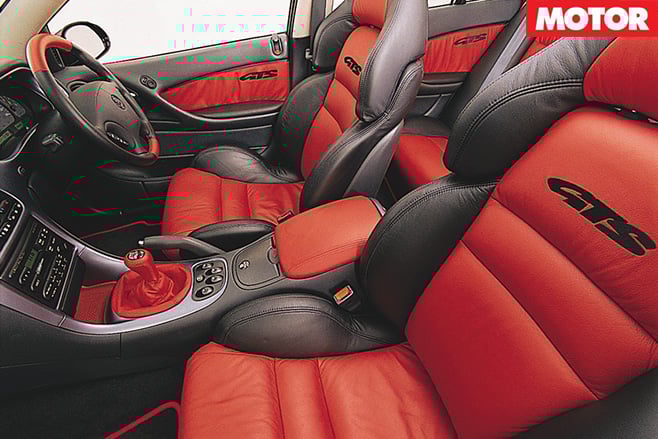
The GTS, meanwhile, also represents a serious upgrade of an already serious tool. The engine is one thing but, obviously, HSV had to put in plenty of hours to make sure the whole car worked as a team and not as a life support system for the motor.
So, you get a tougher cliff centre to cope with the shorter HSV gearing, with each propshaft handmatched and balanced before being shipped to Clayton. Hydratrak makes a come-back with the GTS, too, and the clever slippery cliff works a treat.
In the 250kW cars, HSV managed to get away with a stiffer bush, but 300kW is another story. Expect to see the extra link on all Commodores next model change.
Extracting 300kW from almost six litres doesn’t require outright rocket science, but you’ve still got to be careful to make sure it’ll run on pump gas and not cook itself on the way to the shops.
Perhaps most surprising is the fact the entire bottom end of the all-alloy mill is as Chevrolet intended. Topside, there’s a bit more going on with the heads virtually hand-built, the ports CNC machined for better flow and different valves fitted.
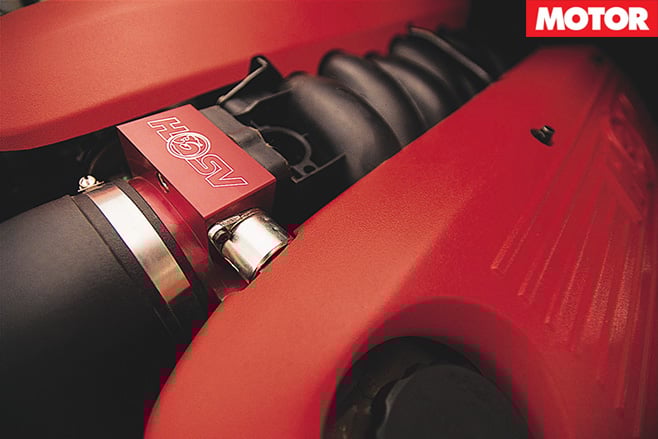
The end result is that wonderful power figure of 300kW delivered at 6000rpm and an equally impressive 510Nm torque figure. The only problem there is where the torque peaks, and in this case it maxxes out at a high 4800 rpm; a figure that’s all the higher when you consider we’re talking about 5.7 litres of prime rib.
The high peaks are a direct result of HSV stretching the rev range to get the big numbers. And since the Gen III has already proved itself to be a top-endy sort of gadget, that could mean trouble for driveability, even if it doesn’t compromise the thing against the stop watch.
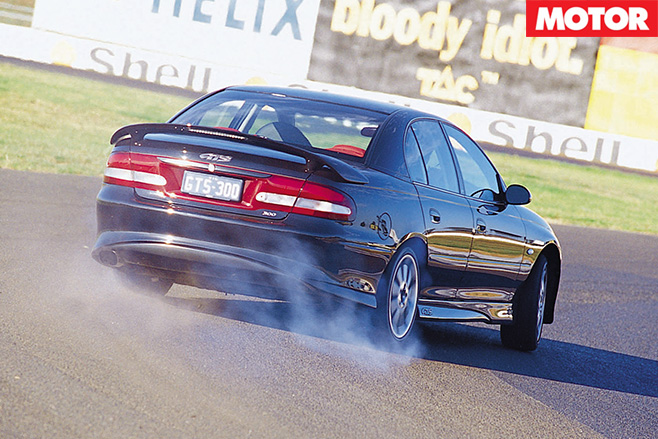
Launching the GTS is one big balancing act. Too many revs equals wheelspin, smoke and eight shades of slow. Like a lot of pokey cars, you need to match the rev (and, therefore, power) against how fast you dump the clutch and how much grip the tyres are generating.
But get it right and the big mutha sprints off the line and yodels right through first gear till the shift light on the dash blinks at you and you grab for another ratio. But that’s also where the inherently slow-changing driveline catches up with you because it’s almost impossible to make those lightning changes that super-quick times are generally made of.
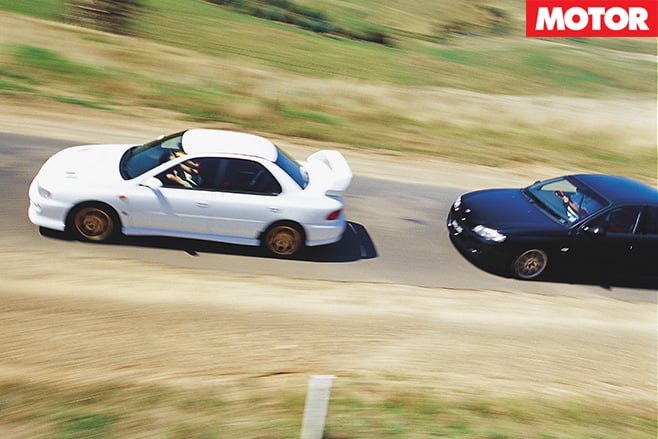
Last month the GTS snorted down the line, clocking a 13.57-second quarter mile run. A slightly slower take-off and slower gear changes cost the big HSV this time, just managing to break the 14-second barrier.
Getting the Rex off the line is, by comparison, a piece o’ piss. You’ve got to remember the clutch is probably the weak link in the chain, but if you can bear to slip it a bit, the WRX launches super hard.
Once you’ve fed the clutch right out, it’s just a case of hanging on and pointing it down the strip, safe in the knowledge that all-wheel drive won’t allow it to break traction or slew around during gearshifts.
Look at the figures and you’ll see where the traction offered by all-wheel drive gives Subaru its edge. The GTS is actually quicker to 160km/h (12.55sec) and covered 335 metres. The STi took slightly longer to reach the old imperial ton (13.06sec) but had traversed 378 metres.
Still, for such a big car the GTS is mighty quick,. And we mean it when we say big. As in heavy. It looks substantial and feels slightly ponderous through the steering wheel. It even smells heavy.
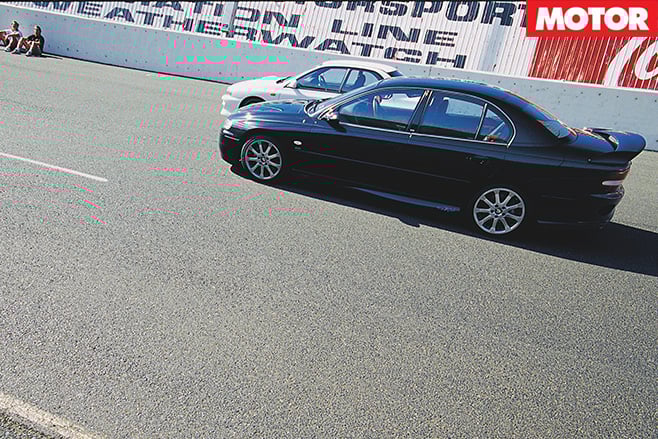
Bang the shifter through another notchy gate, slide out the clutch and there’s the sensation of many, weighty, fast-moving parts all lining up again and taking a bit of time to do it. While the gear changing process barely alters the Subaru’s mood, it’s up there with turning 21 in the HSV.
Of course, the mass sensation is part and parcel of engineering something that will cope with a 300kW onslaught over many years and many kilometres. But it also means the HSV isn’t instantly cuddly and reassuring like the Rex is.
Jump in the GTS and you’re always being reminded just how big the bugger is, from the view in each side mirror to the vast expanse of plastic that is the dashboard.
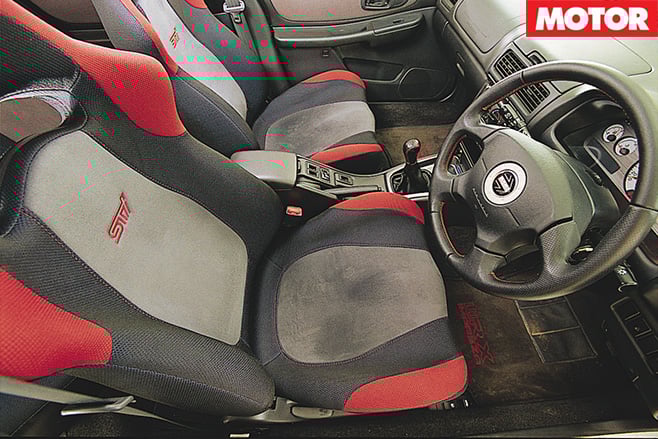
It doesn’t feel threatening, doesn’t wag its finger at you, doesn’t belittle your abilities and doesn’t try to shag your leg. User-friendliness like this is rare indeed.
The GTS scores points for its superior ride over just about any kind of irregularity and a quieter ride into the bargain, which was spoilt only by the orchestra of creaks and groans from the bodyshell and driveline.
The iffy ride of the WRX, meanwhile, only serves to remind us that the thing is based on a pretty basic device in the first place. But it is agile. In contrast, the HSV is a point-and-shoot kind of contraption thanks to the dead steering that has you wondering exactly where the wheels are pointing sometimes and the sheer mass of it which you can feel moving around on its tread patterns.
The Sube feels like it weighs nothing by comparison and almost seems to corner better the harder you go. There’s a bit of initial understeer that the HSV doesn’t have, but after that the Rex hooks up hard and fairly blurts out the exit looking for more corners.
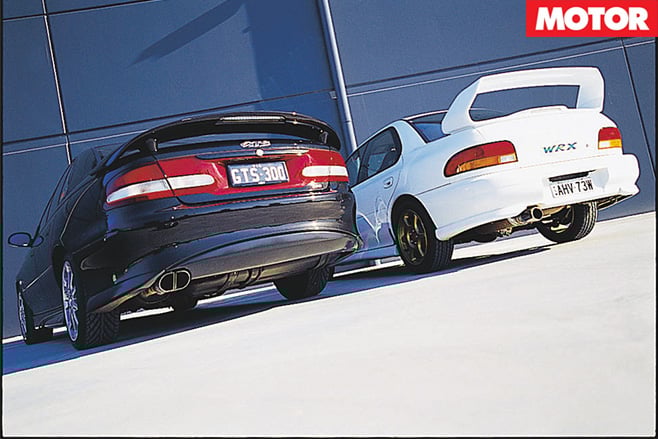
Brakes? A win to the local boy, although it’s a qualified one because the Subaru’s anchors are pretty damn good themselves. But the pedal is a bit wooden and, ultimately, they don’t have the unbelievable retardation of the GTS.
By now you’re thinking the Rex has got this in the bag, right? Exactly, and while it proves that big stomp doesn’t necessarily overcome an agile chassis and brilliant grip, we were left wondering whether maybe our test Rex was perhaps a little too good.
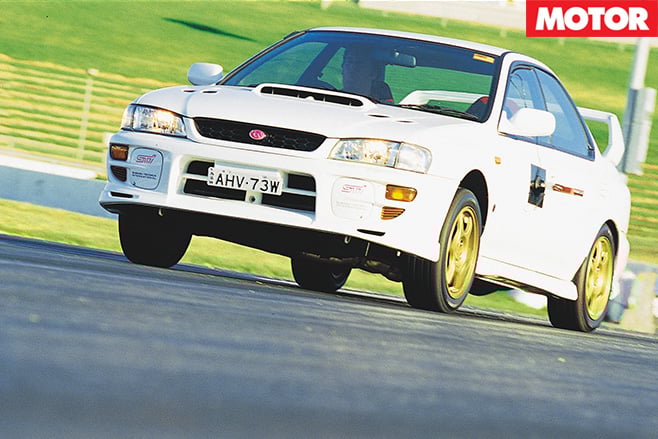
Basically, for all that it’s packing 300kW, the mass of the GTS plays against it both in a straight line and in the swervery. The STI, meanwhile, uses its agility and phenomenal grip to simply murder the big guy on the sort of tight, twisting stuff that cars like this are made for.
On the Nullarbor, different story. Oh, and the Subaru’s 30K cheaper. D’oh!
| FUN FACTS | ||
| u00a0 | HSV GTS | Subaru Impreza WRX STi |
| Body | four-door sedan | four-door sedan |
| Drive | rear-wheel | all-wheel |
| Engine | front-mounted 5. 7-litre 16-valve pushrod VB | front-mounted 2.0-litre DOHC 16-valve turbocharged intercooled horizontally opposed four |
| Power | 300 kW @ 6000 rpm | 206 kW @ 6500 rpm |
| Torque | 510 Nm @ 4800 rpm | 353 Nm @ 4000 rpm |
| Compression ratio | 9.8:1 | 8.0:1 |
| Bore x stroke | 99 x 92 mm | 92 x 75 mm |
| specific power | 52.6 kW per litre | 103 kW per litre |
| kerb weight | 1700 kg | 1270 kg |
| weight/power | 5.67 kg/kW | 6.17 kg/kW |
| transmission | six-speed manual | five-speed manual |
| final drive | 3.9:1 | 4.44:1 |
| suspension | MacPherson struts, coil springs, anti-roll bar (f); independent by multi-link semi-trailing arms, coil springs, anti-roll bar (r)u00a0 | MacPherson struts, coil springs, anti-roll bar (f); independent by struts and dual lateral links, coil springs, anti-roll bar (r)u00a0 |
| L/W/H | 4884/1842/1450 mm | 4350/1690/1405 mm |
| wheelbase | 2793 mm | 2520 mm |
| track | 1569 mm (f); 1587 mm (r) | 1470 mm (f); 1460 mm (r)u00a0 |
| brakes | 343 mm cross-drilled, ventilated discs (f); 315 mm cross-drilled and ventilated discs (r), ABS | 294 mm ventilated discs (f(); 266 mm ventilated discs (r), ABS |
| wheels | 18 x 8-inch alloys | 16 x 7-inch alloy |
| tyres | Bridgestone S-02 235/40 ZR18 | Bridgestone RE010, 205/50 R16 |
| fuel | 75 litres, PULP | 50 litres, PULP |
| price | $90,500 | $62,500 |
| FAST FIGURES | ||
| 0-10 | 0.57 | 0.28 |
| 0-20 | 1.03 | 0.6 |
| 0-30 | 1.53 | 0.89 |
| 0-40 | 1.97 | 1.24 |
| 0-50 | 2.47 | 1.68 |
| 0-60 | 2.9 | 2.26 |
| 0-70 | 3.55 | 3.07 |
| 0-80 | 4.35 | 3.69 |
| 0-90 | 5.01 | 4.46 |
| 0-100 | 5.81 | 5.14 |
| 0-110 | 6.83 | 6.48 |
| 0-120 | 7.86 | 7.3 |
| 0-130 | 8.8 | 8.53 |
| 0-140 | 9.77 | 9.72 |
| 0-150 | 11.3 | 10.97 |
| 0-160 | 12.55 | 13.06 |
| 0-400M | 13.99 @ 168.6 KM/H | 13.56 @ 166.9 KM/H |
BMW has announced commemorative versions of its 430i Gran Coupe and 330i sedan to celebrate its 100-year anniversary which – according to the firm – sees between $9000 and $13,000 of added extras respectively for a $6000 premium over the standard price.
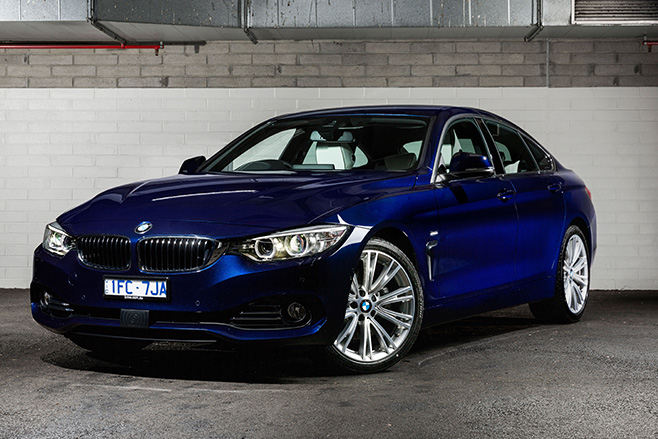
Both the BMW 330i sports sedan and the 430i Gran Coupe will be offered in two specifications; the 100 Year Edition Luxury Line or the 100 Year Edition M Sport and, as a nod to the firm’s corporate colours, each version will only be available in a white or blue option.
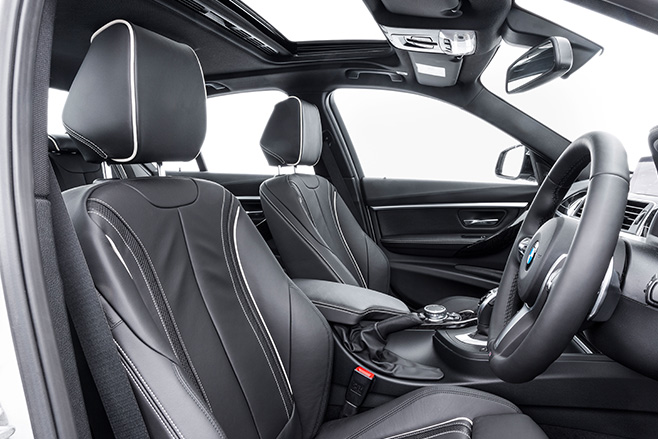
As the name suggests, the Luxury Line’s added extras are mostly interior related with white leather merino upholstery, leather steering wheel, wood-grain trim as well as metal and chrome highlights. There’s also a 16-speaker surround sound system and extended smartphone connectivity, as well as new style 19-inch alloy wheels and tyres.
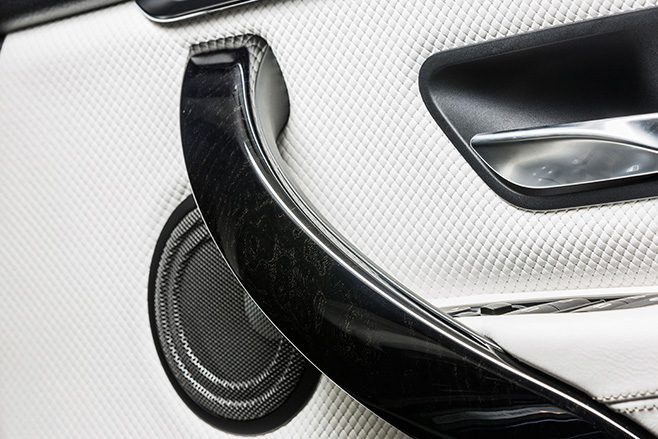
The 100 Year Edition M Sport variants boast similar interior upgrades as the Luxury Line models, but also gain updated brake and wheel packages.
BMW’s Lenore Fletcher told Whichcar the amount will be limited by customer demand.
“We don’t know how many there’ll be, they’ll be limited by production,” she said. “A customer can order them up until the point that they can built and delivered in 2016.”
Regardless of the version you choose, the 100 year Edition 330i carries a manufacturer’s recommended list price (MRLP) of $75,900 while the 100 Year Edition 430i Gran Coupe’s MRLP is $85,900. The Luxury Line variants of both models are only available in white, while the M Sport variants of each model is available in the blue option and both vehicles will be supplied with an individually numbered 100 Year Edition certificate.
VOLKSWAGEN has finally pinned a number on what the Dieselgate scandal has cost it over the last 12 months, writing off a A$25 billion black hole in its accounts to the scandal.
The carmaker last night faced angry shareholders at its first annual general meeting since the scandal broke almost a year ago, with chief executive Matthias Mueller again apologising to investors after it was caught cheating on emissions tests in more than 11 million vehicles sold worldwide, including almost 100,000 in Australia.
“This behaviour contradicts everything Volkswagen stands for. It has damaged our most valuable asset: the trust people place in our company and our products,” Mueller said.
“On behalf of the Volkswagen Group – and everyone who works here – I would like to apologise to you, our shareholders, that the trust you, too, placed in Volkswagen has been disappointed.
“What’s done cannot be undone. But what does lie in our power is ensuring we act in a responsible manner,” he said.
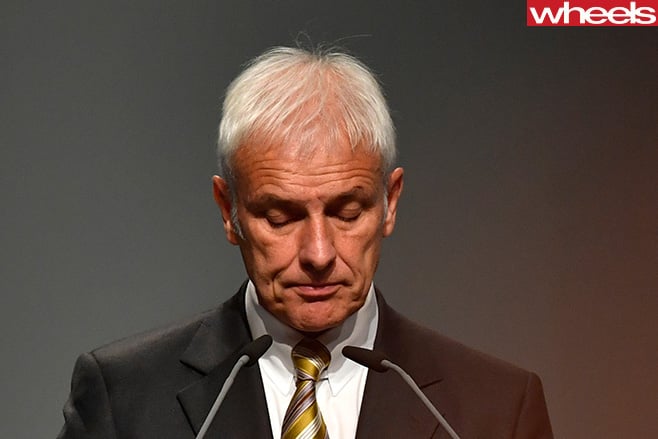
The scandal has pushed VW Group to post a A$2.5 billion loss for the 2015 calendar year – its first in a decade.
Taking a leaf out of the book of the once-bankrupt GM, VW has used the scandal to reinvent itself, saying it now wants to become a world leader in electrification and “mobility solutions”, flagging an era where people will share rather than own cars.
Mueller has also cast doubt over whether Volkswagen will keep investing in diesel engines, telling a German newspaper it consider abandoning the technology.
“We have to ask ourselves whether… we want to spend more money on… development of diesel,” he told Handelsblatt.
The first vehicle to give a clue to any potential move away from diesel is likely to be the Škoda Kodiaq, an all-new seven-seat SUV due on sale in Australia in the next 12 months.
Asked yesterday if the Kodiaq would sell here with a diesel engine, Škoda Australia managing director Michael Irmer said it was too early to speculate on drivetrain choices.
“But Toyota does the Kluger with a petrol engine,” he said.
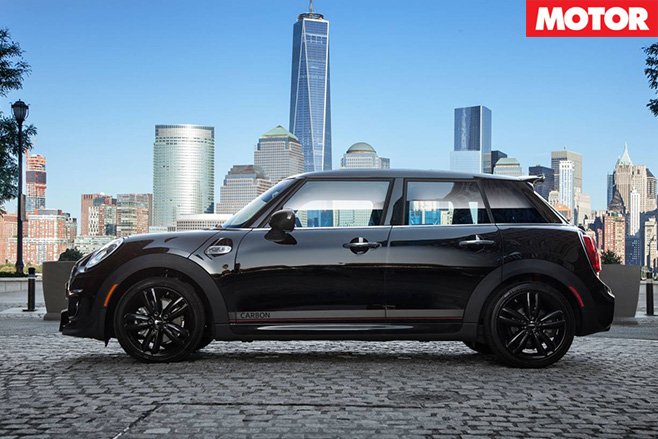
Mini’s infused its five-door Cooper S with juicy JCW bits to create the limited run Carbon Edition.
Cooper S fans will be treated to more power, a sharpened chassis, and meaner exterior in the 40 special editions due for Oz that pinch bits from the JCW.
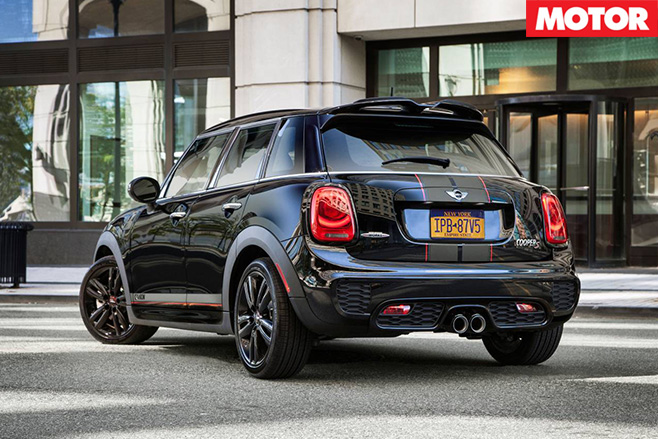
The auto-only Carbon Edition also offers the visual punch of the JCW. Mini’s fitted a front and rear bar, rear spoiler, and gloss black 17-inch wheels as part of a John Cooper Works Aerodynamic package.
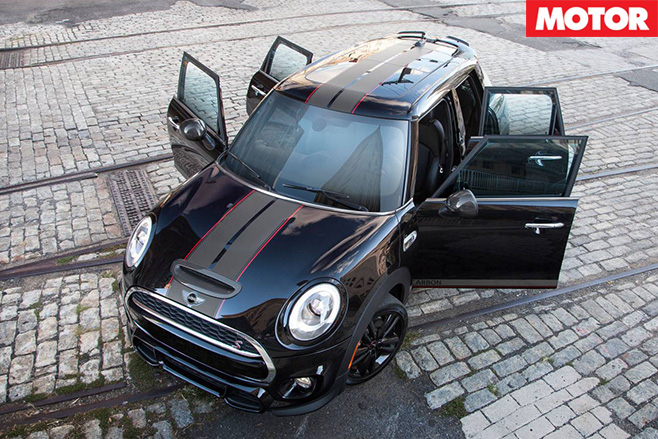
But there’s extra kit to justify its specialty. The chassis benefits from the JCW’s adjustable dampers, while the interior cops the fast-Mini’s sport seats, steering wheels, and shifter.
AUDI has a brand new engine, and it could have a bevy of new applications thanks to V8-tech.
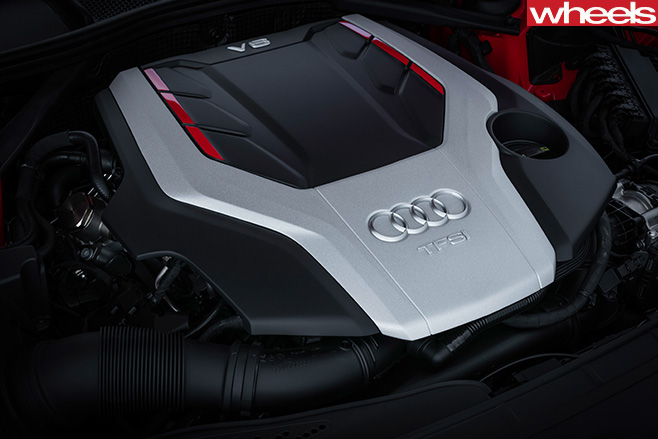
Audi’s powerful new turbocharged 3.0-litre V6 will be produced in a variety of outputs. Powertrain development engineer Florian Beck said the 260kW version of the engine recently introduced in the Audi S4 sedan and Avant wagon, as well as the Audi S5 Coupe, was just a first installment. “Similar engines” are under development for future models, he said.
The new V6 adopts what Audi engineers call a ‘hot side inside’ layout, meaning that it expels its exhaust gas into the 90-degree vee angle formed by its two banks of cylinders. This kind of back-to-front breathing has become relatively common in V8 engines in recent years. It’s already employed by Audi, BMW and Mercedes-Benz in high-performance V8s, but is uncommon in production car V6s.
But the young engineer wouldn’t be drawn on whether a high-power version of the 3.0-litre V6 will be used in the super-fast RS4 and RS5 models Audi is known to be working on.
What we do know for sure is the order in which Audi will add to its ‘B9’ family of medium-size models built on the MLB Evo platform.
Next up, due to launch in Europe in early 2017, is an all-new A5 Sportback. It will be followed later in the year by a new A5 Cabriolet, which will share much of its structure with the A5 Coupe.
AGL Energy has announced plans to offer owners of electric vehicles unlimited charging for just $1 a day, as a part of a new initiative set to come into effect on November 1.
That’s a grand total of $365 for year-round, unlimited charging.
The deal will apply to all electric vehicles on the market, from the luxury Tesla Model S and BMW i3, to more budget examples such as the Toyota Prius or Nissan Leaf.
Those that sign up will be able to keep a clean conscience, with AGL Chief Executive Andy Vesey telling the Australia Energy Week conference the cars will be supplied with ‘carbon offset’ electricity.
This means the energy giant will plant trees or invest in similar carbon offset plans in Australia to match the carbon dioxide emissions.
“For a dollar a day if you have an electric vehicle and you have an AGL smart meter and a charger, you can get energy for that car for $1 a day, as much as you like,” Mr Vesey said at the conference on Tuesday.
The finer details of the offer are yet to be nutted out, but it is expecting charging two vehicles would, naturally, cost $2 a day.
AGL will either supply users with a charger, or connect to recharging set-ups which customers already own. Electric vehicle chargers can be bought for around $1000.
The company has also committed to having 10 percent of its own fleet comprising electric vehicles or hybrids within two years’ time. Currently, it has a small number of Mitsubishi Outlanders and extended-range BMW i3s.
Tesla Australia told Gizmodo last year it estimates charging a Model S from 0 to 100 percent power capacity would cost $20. This is also dependent on factors like on and off-peak rates charged by energy companies, as well as any green-energy measures available to customers.
