
THE German super-saloon scene is set for a shake-up early next year with the long-awaited arrival of the next-generation Audi A8, which takes direct aim at the latest tech-fest BMW 7 Series and Mercedes-Benz S-Class.
Slated to be one of the stars of the 2017 Geneva Motor Show, the fifth iteration of the Ingolstadt carmaker’s luxury flagship adopts the freshly-minted MLB Evo modular architecture which underpins models as diverse as the Audi A4 and Q7, the still-secret Mk2 Porsche Panamera, and Bentley Bentayga SUV.
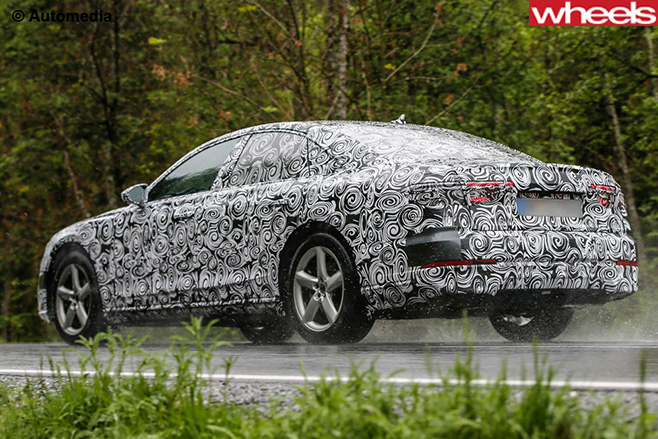
The lightly disguised prototype is the closest-to-production example of this new D5-series model we’ve seen yet, and the visual relationship to the latest A4 is most obvious in the nose treatment, clamshell bonnet and sleek tail-light styling. Additionally, there’s more than a hint of the Audi Prologue Avant concept car from the 2015 Geneva Show. Whether this means that the long-awaited wagon version will finally come to fruition is still unknown.
Intriguingly, it has also been suggested that a stretched super-sedan version of the next A8 – to take on the Mercedes-Maybach S600 – is in the pipeline, probably with a far more formal (read less swoopy) roofline than the standard vehicle. That would be over and above the two wheelbase and body-length choices also planned.
The 1993 D2 A8 was an aluminium space-frame body construction pioneer, but the newcomer is said to take that to a much higher level, thanks to improved construction and bonding techniques that, along with the lighter MLB Evo platform and downsized all-turbo powertrains, cuts weight dramatically from the current 1880kg mass of the existing 3.0 TDI quattro.
Being an Audi, the interior should be sumptuous, evolving the Virtual Cockpit theme of the current Audi TT and A4, with touchscreen and gesture-activated interfaces, combined with the usual fanatical attention to technology, quality, and detailing.
For a clue as to what it might all look like, check out the e-tron quattro concept from last September’s Frankfurt Motor Show.
Sharing DNA with blue-chip brands like Bentley and Porsche means that 2017 A8 is also expected to adopt a range of advanced driver-aided tech, reportedly including ‘level three’ autonomous driving capability that can accelerate, steer, brake, and fully stop the vehicle to help avoid an accident.
Such tremendous progress will most likely be reflected in the next A8’s local pricing, with numbers that will surely start well north of the $197,100 asked for the existing 3.0 TDI quattro.
Look for an Australian launch sometime late next year or in the first half of 2018.
Have spy pics of your own? We’d love to see them. Just email them to [email protected]
1. If you’re over about 20, the HR-V name may sound familiar. That’s because this isn’t the first time Honda have used this nameplate in Australia. From 1999 to about 2006, Honda offered a boxy micro-crossover with the same name. It didn’t last long then, but we’re thinking it’ll do better this time around, given the SUV-skewed climate.
2. The HR-V features Honda’s Magic Seats, which also appear – and disappear – in the Honda Jazz. They fold down flat, which is rare but not unusual and they also fold up to make space for taller items. Probably one of the most useful features available. Honda claims there are 18 configurations.
3. HR-V has an HDMI port, so you can connect your phone, laptop or tablet to the seven-inch screen of the HR-V which mirrors the device. The vehicle must however, be stationary to play video.
4. The HR-V is based on the same chassis as Honda’s micro-model, the Jazz.
5. In less than 12 months post launch, the HR-V is taking Australia by storm, accounting for 12 per cent of the small SUV market share (as of April 2016), sitting just behind the Mitsubishi ASX and rat-race leader Mazda CX-3.
6. When you indicate to turn left, the view from a camera in the passenger side mirror takes over the centre-dash screen to improve visibility and remove blindspots.
7. An economy-indicating ring around the speedo, a Honda signature, lights up in different colours depending on driving style.
Now watch our full video review on the Honda HR-V.
Mercedes-Benz says it may soon follow German luxury rivals BMW and Audi in spinning off a separate sub-brand for its cutting-edge fuel efficient technology.
Speaking to Autocar, Mercedes-Benz cars sales and marketing board member Ola Källenius said he believed the brand could form a separate eco sub-brand made up of fuel-efficient vehicles.
The move would follow the same path as BMW’s i Division that includes the i3 electric and range-extended hatchback, as well as the BMW i8 petrol-electric hybrid sports coupe, and Audi’s “etron” that the carmaker is using to tag its only model to wear the name so far, the A3 Sportback plug-in electric hybrid hatchback.
“What we’re going to do in terms of the road to zero emissions is invest heavily in alternative drivelines and electrification,” Källenius told Autocar.
“That’s a very wide strategy, but it means that by the end of next year we will have 10 plug-in hybrid models, which, I think, is the widest portfolio of any luxury manufacturer.
Kallenius said Mercedes-Benz would have three electric cars by the end of this year, including the B-Class small hatchback, and the second-generation Smart micro hatchback that the carmaker’s Australian arm has already said would not be sold here.
Mercedes-Benz has also confirmed it is working on a version of its small Mercedes-Benz GLC SUV that will be powered by a fuel cell that will combine hydrogen fuel with oxygen from the air to create water and electricity, making it a zero-emission vehicle.
“We could choose for the purpose-made electric vehicles to create some sort of sub-brand but, right now, Mercedes is focused on investing tremendous resources into the path towards zero emissions,” he said. “It’s something that will affect the whole portfolio.”
BMW last week flagged that it will wait and see where technology is headed before releasing the next generation of its i-branded technology in about 2021 – meaning a rumoured i5 compact SUV offering either battery power alone or, like its smaller BMW i3 sibling, a range-extended version with a back-up petrol engine, is at least five years away.
The i3, which was named the 2014 Wheels Car of the Year, is due on sale with the beefier battery pack later this year. BMW will also give a mid-life update to its low-slung i8 petrol-electric coupe later this year, and is expected to introduce a folding-top spider version of the 2+2 seater – so called because the rear seats are too small and cramped to be practical for everyday use — next year.
The carmaker has just revealed a facelifted version of the i3 with an extended battery pack that increases range to around 200 kilometres for the battery-only version of the car. The range-extended version, which includes a small motorcycle engine that is used to power up the batteries, will add an extra 60km of range on top of its reach to travel about 300km on a single charge.
Audi, meanwhile, is preparing to ramp up its e-tron range after years of teasing it with a range of concept cars hinting at where it was taking the sub-brand.
The German luxury carmaker toyed around with the idea of building an all-electric version of its R8 supercar, but reneged on the idea when it discovered it could not get enough range out of the vehicle to make it viable. However, it later reversed that decision, building cars to order that did offer decent range.
It has also shown a twin electric motor version of the Audi TT sports coupe, both as a hard-top and a convertible. It has also teased a plug-in hybrid version of its smallest city hatchback, the A1, that surprised the world by featuring a single-cylinder rotary engine that could recharge the batteries on the move.
Want to learn more about the eco future of Mercedes-Benz? Wheels magazine tells us about its plans to rival Tesla.
For the past decade, Honda has struggled to grow its sales in the Australian market, so the launch of the all-new HR-V is an important one and is already showing signs of success at the end of this year’s first quarter as it closes in on the popular Mazda CX-3 and Mitsubishi ASX.
The HR-V is based on a modified version of the Honda Jazz, and thanks to its great design, driveability and practicality, its set to heat things up in the already competitive compact SUV contest.
WHAT STANDS OUT
We can’t go past the HR-V without talking about the ‘Magic Seats’ which also appear in the Jazz. This makes Honda’s baby SUV more flexible than a yoga instructor in a one-handed handstand.
When folded down completely flat, the Magic seats up the boot to massive 1032-litres. Not only can the back seats fold flat, but they can also be folded completely upright, creating a floor to roof space for taller items you might need like tall plants or awkward furniture.
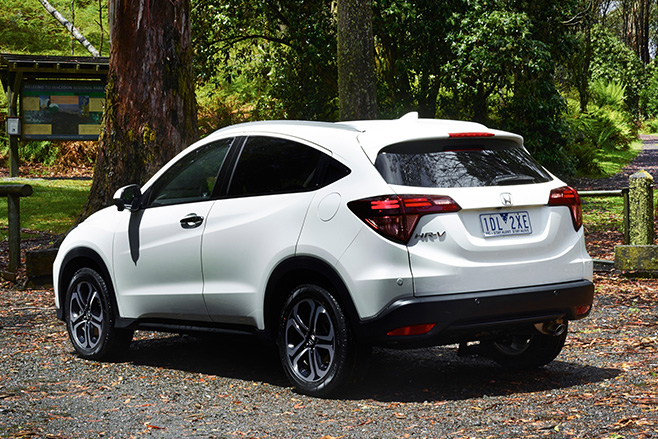
And here’s the surprise, it’s not a three door – the back handles are just cleverly hidden to create the illusion. The design of the HR-V in its current guise is similar to some of the more prestige SUVs out there. With its swooping roofline, making it less boxier than its predecessor from 15 years ago.
WHAT’S INSIDE
The versatility and quality of the cabin is one of the HR-V’s highlights. Aside from the flat front seats making it a little uncomfortable on long road trips, the textiles are high quality and the cabin’s style is attractive.
It’s also stacked with standard features, like multi-view reversing camera, tyre deflation warning systems and a HDMI port so you can watch movies while parked. You can even control the power windows via your key fob.
If you spend a bit more from base VTi to the VTi-S, you’ll get a few extra safety features like City-Brake and LaneWatch, which is a camera in the passenger side mirror. Extra aesthetics like the smarter-looking 17 inch tyres and leather wrapped steering wheel are also included.
Up a spec again to the most-expensive VTi-L and you’ll get nicer interiors with leather and heated seats, sunroof, dual-zone climate control as well as some extra safety features.

CHOOSING YOURS
The low spec VTi obviously offers the most attractive price and it’s still packed with features. But spend almost $10,000 more and you’ll get the top spec VTi-L including the optional ADAS pack which offers extra safety features. Considering the level of equipment, it’s actually decent value.
If it were our money though, we’d get the middle-ground VTi-S. It’s got a more features than the base model, but it looks and feels better.
SUMMING UP
Unfortunately, unlike some of its competitors like the CX-3 or the Suzuki Vitara, the HR-V is not available with an All-Wheel Drive version or with a diesel engine.
There’s no doubt the HR-V plays an important role in Honda’s line-up. The fun-to-drive, efficient and attractive HR-V is well-placed to take on the small SUV market and a practical choice for the active city driver.
Click here to read the full review on the Honda HR-V range.
Wolfsburg is a dreary city, even in summer, but in the wake of the Dieselgate scandal it looks bleaker than ever.
That’s all forgotten when you’re behind the wheel of the new Golf GTI Clubsport, however, an oddball alternative for those who prefer two-wheel drive and high-school styling.
The base GTI musters 165kW (0-100km/h in 6.5sec and a 245km/h top speed), the Performance Pack tosses in an extra 7kW (6.4sec and 248km/h), and the 206kW Golf R adds two giant tailpipes and all-wheel drive (5.1sec and 248km/h).
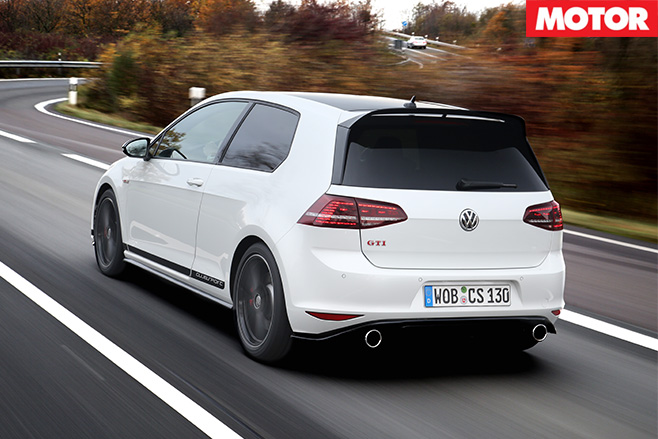
The new GTI’s 2.0-litre petrol four-banger delivers 195kW and 350Nm. Not enough? Stick the selector in Sport and mash the throttle from third to sixth gear for an instant 20kW and 30Nm powershot, putting the Clubsport within range of the Golf R.
That’s the upside. The downside is that the extra grunt lasts just 10 seconds. Another 10 seconds allows the turbocharger to recover, and repeating the process serves another kick in the butt.
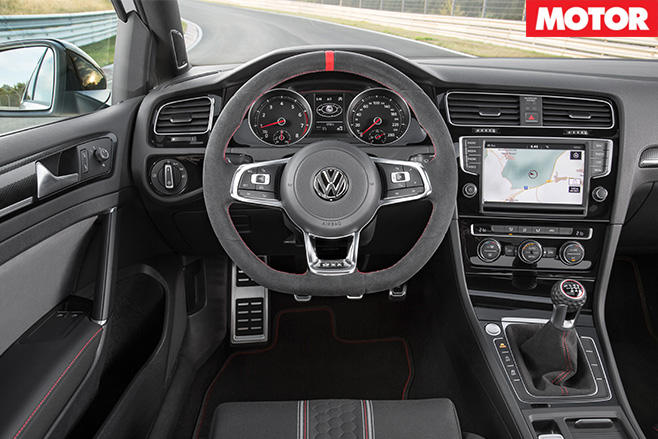
This uber-Golf is neither a tweaked Peugeot 205 GTI, a meaner Renault Megane RS nor a fiercer Ford Focus ST. Instead, the Clubsport takes the art of lift-off oversteer to a more skilful, contained level. This car isn’t about overt hooliganism, but it will captivate sporty drivers because it rewards accuracy.
Six-speed manual or seven-speed DSG? If you’re a purist, it’ll likely be the DIY manual ’box, though the clutch-hoof may need some practice. First gear is aggressively short, second and third gears are spot on, and sixth has ‘overdrive’ etched across its cogs. Launch control is entirely foot-operated with the manual, whereas the DSG model has a hoon-assist function which doubles overboost to 20 seconds.
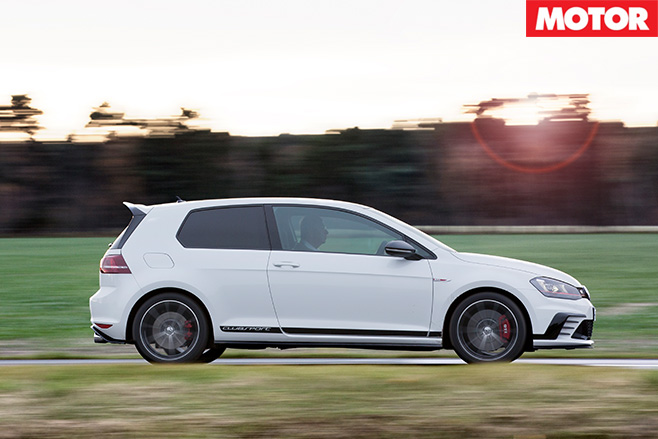
Contributing feel-good factors are the 10 per cent faster steering, 10 per cent higher lateral acceleration, 15mm lower ride height, rebound reducing stiffer rear springs and optional 235/35ZR 19-inch Michelin Pilot Sport Cup semi-slicks. Its strengths lie in its superior aerodynamics, high-speed stability, linear steering and chaste roll/yaw/pitch behaviour.
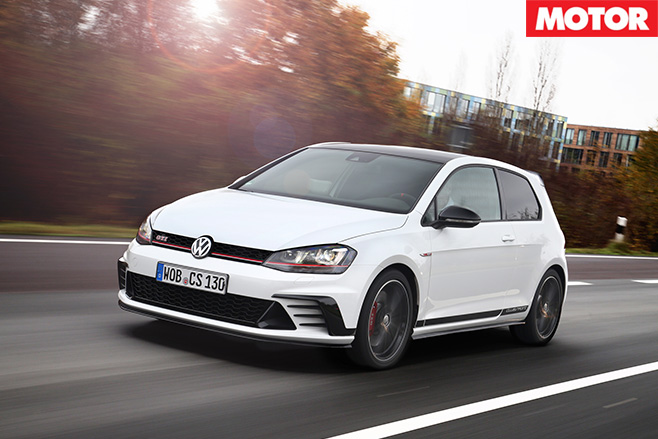
What are the chances of owning one in the lucky country? Well, supply will be limited, but the GTI Clubsport lands here about mid-year called the ‘GTI 40 Years’ to avoid HSV getting upset. Bank on a $50K price tag.
4.5 OUT OF 5 STARS
SPECS Engine: 1984cc inline-4, DOHC, 16v, turbo Power: 195kW @ 5350-6600rpm Torque: 350Nm @ 1700-5300rpm Weight: 1395kg 0-100km/h: 5.9sec (claimed) Price: N/A Like: Even more pace; best Golf chassis yet; road-racer styling Dislike: Boost bursts are too short; not confirmed for Oz
We’re spoilt for fast imported metal, but there are some gems we miss out on
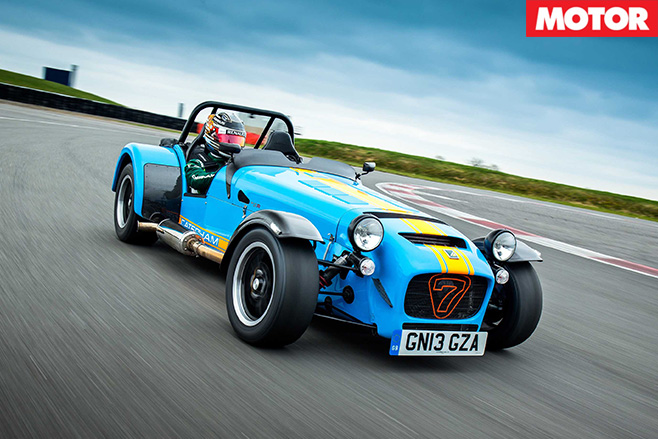
1. CATERHAM 620R
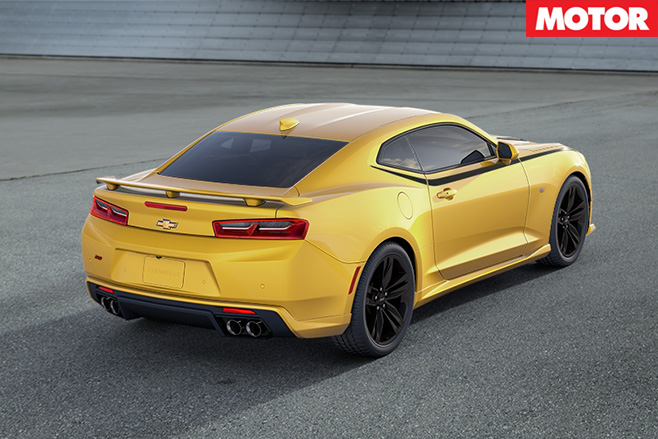
2. CHEVY CAMARO
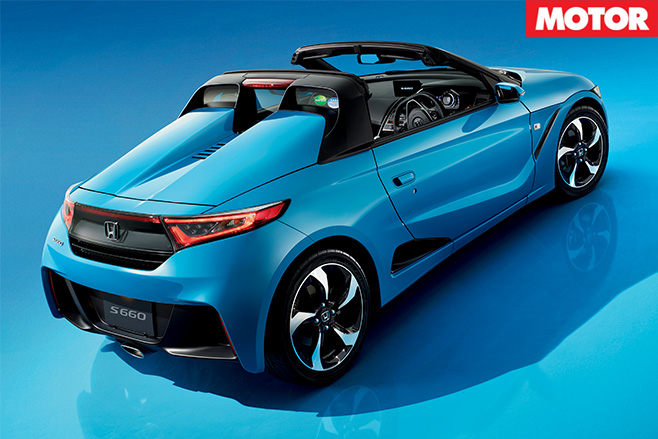
3. HONDA S660
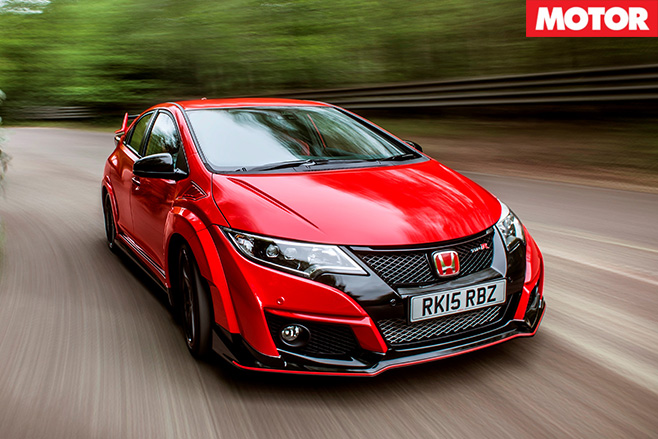
4. CIVIC TYPE-R
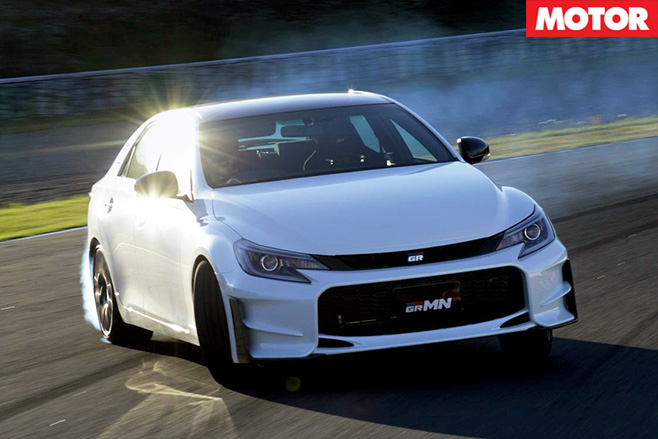
5. TOYOTA MARK X GRMN
6. FORD GT
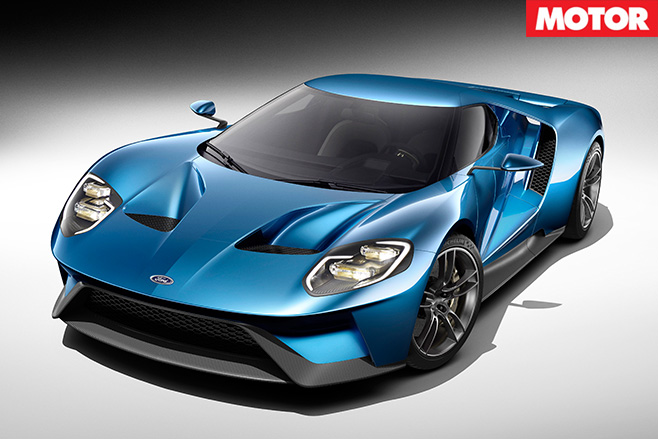
7. C7 CORVETTE
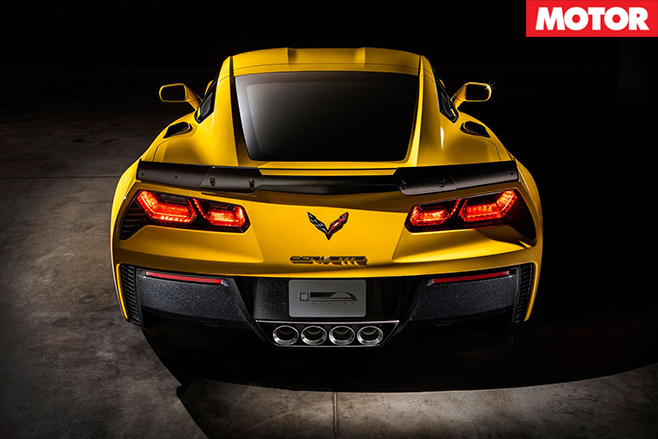
8. MUSTANG GT350R
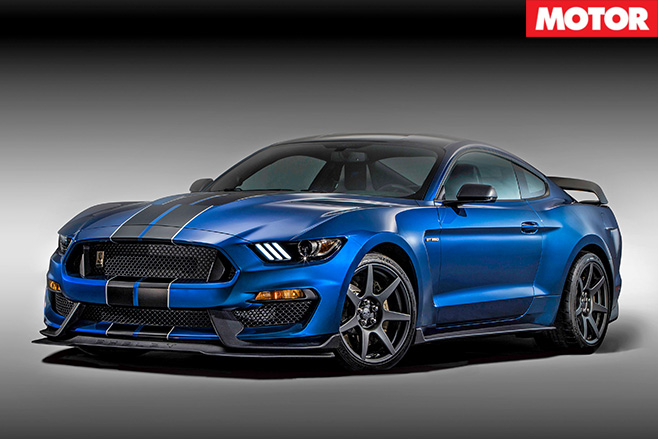
9. WRX STI S207
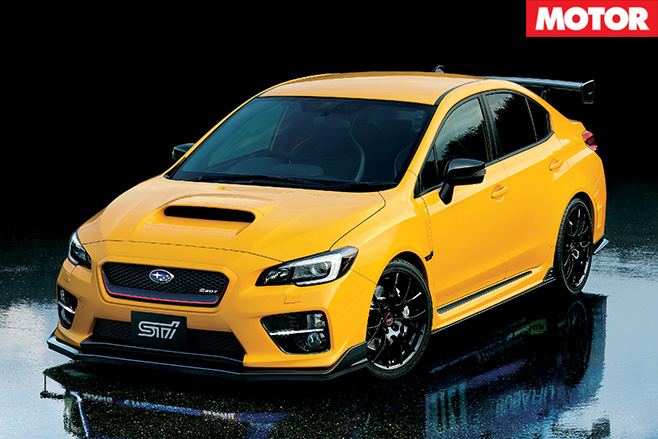
Nissan’s Navara and Mitsubishi’s Triton utes are set to become twins-under-the-skin following the former’s $3 billion investment in the latter.
Nissan last week bought a 34 per cent controlling stake in Mitsubishi. Nissan CEO Carlos Ghosn said the new alliance would allow the two Japanese brands to share technological development, manufacturing and common vehicle platforms.
Ghosn said sharing platforms would have mutual benefits, especially in terms of saving substantial development costs whether a Nissan or Mitsubishi platform was used as the basis for particular models.
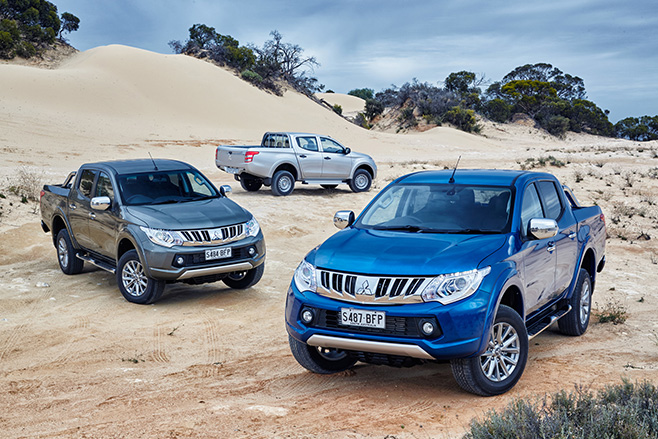
Nissan’s Navara is already the basis of a forthcoming Mercedes-Benz ute called the Mercedes-Benz GLT, as well as the new Alaskan ute from current partner Renault.
The company admitted it is “very possible” the same platform would be used for the next-generation versions of the Navara and Triton, but stressed that the two utes would still have distinctive looks and feel, and different specifications.
It would mirror the current arrangement between Ford and Mazda, which produce, respectively, the Ford Ranger and BT-50 utes on the same platform, though both look markedly different inside and out.
The Holden Colorado and Isuzu D-Max are differentiated to a lesser degree but also share basic underpinnings.
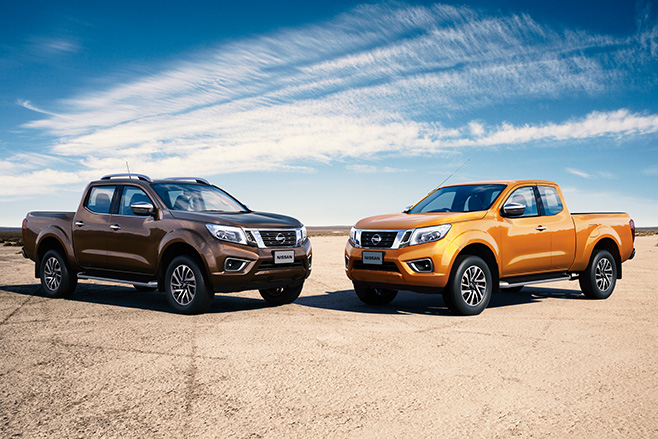
Nissan and Mitsubishi have recent form when it comes to sharing ute production. Between 2012 and 2014 the previous-generation Navara was run down the assembly line as the Triton in Mitsubishi’s Laem Chabang plant in Thailand.
Nissan’s move comes at a time when Mitsubishi is embroiled in a fuel economy scandal after admitting it had reported false consumption figures for a number of domestic models.
Nissan sells four times more vehicles globally than Mitsubishi, with approximately 4 million annual sales.
Volvo is battling its ‘mum-and-dad’ stereotype by releasing a series of teaser images of its new 40 Series via Snapchat.
ICYMI (in case you missed it), the Swedish automaker sent three cropped photos of the Volvo V40 and Volvo XC40, decorated with Emojis and captioned “Not your daddy’s Volvo” through the social media platform, ahead of the cars’ global unveiling.
Volvo Australia has confirmed the images were a glimpse into the next generation of the V40 and all-new XC40. “The facelifted V40 and Cross Country V40 are on their way, and they’ll be here later this year. The Snapchat reveal was of the next-generation V40 and the all-new XC40.”
The photos showed the vehicles featuring Volvo’s signature ‘Thor’s hammer’ LED daytime running lights, along with other Volvo signature styling cues.
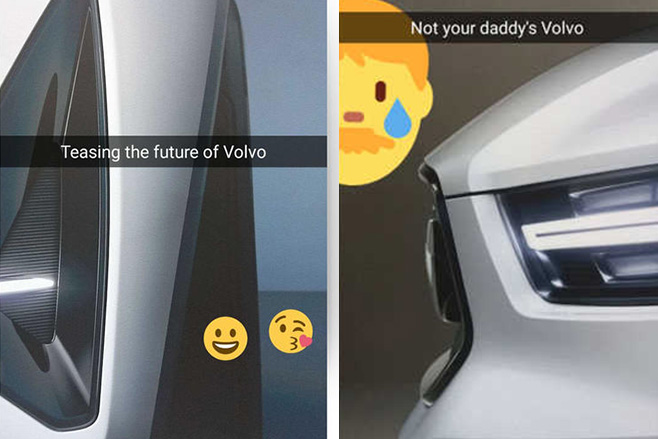
The 40 Series is Volvo’s attempt to combat its stereotypical reputation and attract a younger demographic. The XC40 will be a smaller version of the XC60 and new Volvo XC90, as the company crawls in for a slice of the compact-SUV pie.
The next generation of the V40 is also expected to be accompanied by an S40, the sedan version following in the footsteps of the recently revealed S90.
Both models will sit on a platform called Compact Modular Architecture (CMA), which was co-developed with Geely, Volvo’s Chinese parent company. They will be powered by three- and four-cylinder engines and a plug-in hybrid.
While Volvo Australia is yet to reveal when we will see the all-new models of these cars IRL (in real life), it has confirmed there will be more detail to come over the next few weeks, ahead of a release in 2017. “It’ll be at least 18-24 months away at this stage… before the new V40 and XC40 come to Australia.”
Until then, we’ll be keeping a close eye on Snapchat for any more snippets from the 40 Series puzzle.
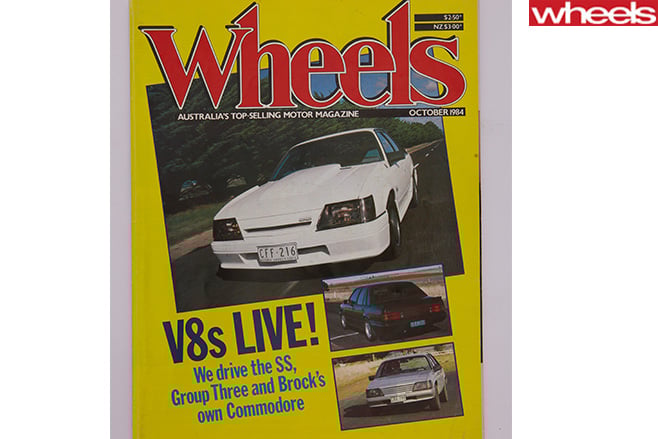
A Holden VK Commodore SS Group 3 once owned by Peter Brock is going to auction, and could be yours. This significant piece of Brock history even has a Wheels connection…
The car was Brock’s company vehicle, issued to him by General Motors in 1984. At the time Brock’s HDT Special Vehicles enterprise was at the height of its popularity, developing high-performance Commodores for race and road use with Holden’s assistance.
After receiving the SS, Brock immediately upgraded it to Group 3 specification before using it as a press vehicle for HDT. Wheels drove this very car (HDT build number 1354) and featured it on the cover of the October 1984 issue in full Group 3 trim.
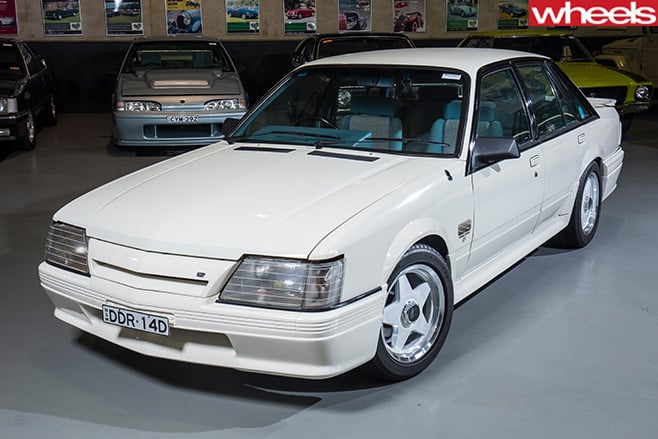
The proud custodian was photographed with his purchase in 1986 outside the HDT building in Port Melbourne. The photo shows the Commodore SS Group 3 in the same trim as it is being sold today, with a Series II grille, HDT-badged Momo Star wheels and the optional bonnet bulge and wind splitters removed.
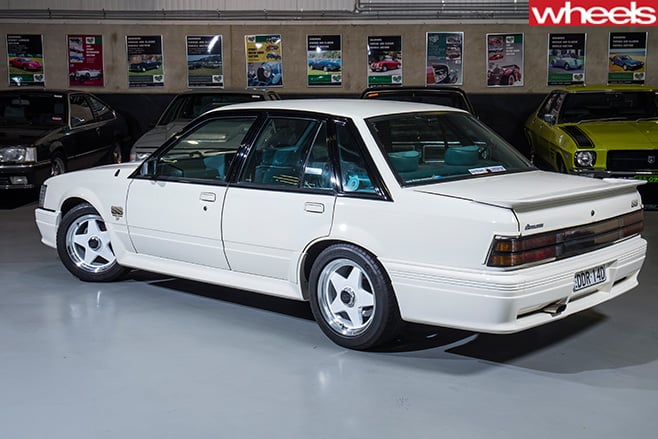
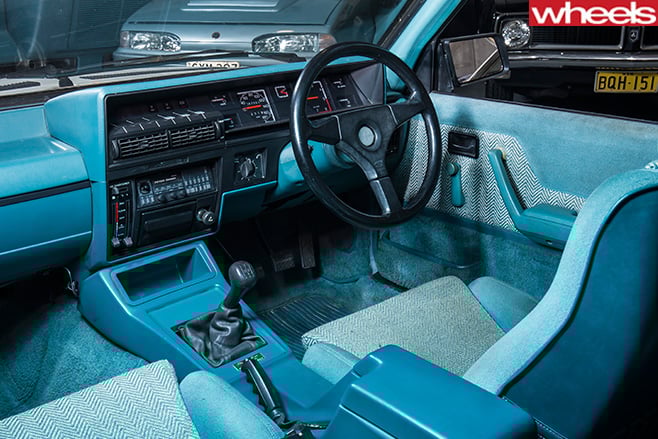
The VK Commodore SS Group 3 featured a 177kW version of the 5.0-litre V8 engine with a four-speed manual gearbox and several upgrades including a long-range fuel tank, police-spec fine increment speedometer, 16-inch ‘Aero’ alloy wheels, Scheel seats and Momo/HDT steering wheel. Approximately 200 VK Group 3s were produced, the majority in white.
On September 8, 2016, it will be 10 years since Brock died at the Targa West rally in Perth. A major tribute is expected at the 2016 Bathurst 1000, including a display of Brock’s racing cars.
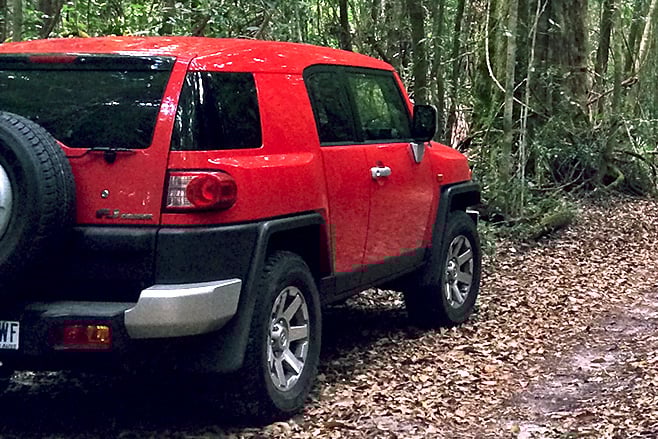
BARRY: Toyota’s FJ Cruiser has been a bit of a strange fit for Australia, don’t you think? I mean look at it: squashed Tonka toy looks, and with a thirsty petrol V6 under the bonnet in a country where vista-sweeping glasshouses and diesels rule.
ANNA: I love that it dares to be different. Ok, maybe it’s not the most practical 4×4 but it stands out from a crowd that’s otherwise a lot of sameness. Once you navigate around the chunky design, the FJ holds itself with a no-nonsense, uncomplicated toughness. Plus, who wouldn’t want to drive an adult-size Tonka?
BARRY: You’re not wrong about chunky. That dash alone looks as though it was inspired by one of those rough-and-ready worksite radios. Still, you’re right about toughness. We took one across the Simpson Desert. What have you done with it?
ANNA: The low roof and fat pillars did make it a bit scary to drive at times – more blind spots than a Stevie Wonder and Ray Charles punch-up. The FJ Cruiser was my safety net at a four-wheel drive training course back when I was staff journo at 4X4 Australia. It was the first car I ever reviewed. And, I drove it across one of my favourite places in Australia the first time I travelled there – Fraser Island. So maybe I’m a bit sentimental. How did it cope in the Simpson? Did you make it up Big Red?
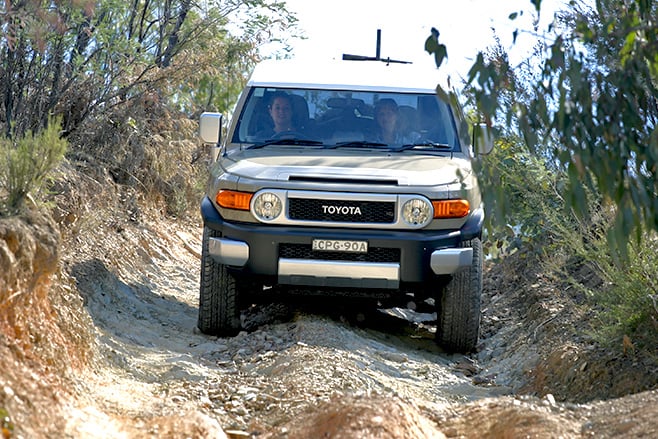
BARRY: Yep, over Big Red and the 1100 dunes past that. It didn’t skip a beat, although that 3.5-litre V6 likes a drink so we had to pack a few spare jerry cans, and even then it made it into the station at the western end of the desert running on fumes. The FJ Cruiser added a bigger tank to add more range as part of a mid-life update, which has helped. I have to say, I felt a real disconnect with the alien, sand-blown landscape we drove through, as the FJ was so well insulated from the outside world. Did you get that as well?
ANNA: It’s pretty barren out there anyway, there’s not a whole lot to see. Only joking. I can understand the disconnected feeling – The cosy cabin and stumpy windows wouldn’t have helped. Although, I don’t think I spent a second in the FJ without my windows down. Easy to do when you’re driving anywhere other than the fly-plagued Simpson Desert I guess. Imagine how horrible it would be for anyone travelling in the backseats? Carsick alert!
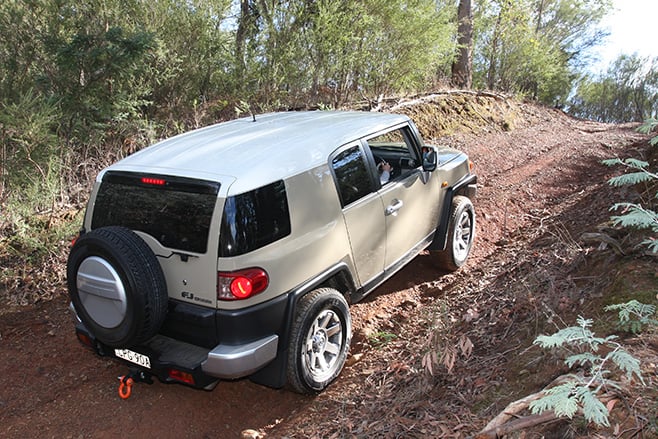
BARRY: Yeah, that really narrow glasshouse makes the back seat feel a bit claustrophobic, and if you do feel crook, that suicide rear door won’t open until someone has cracked the front one. Will you miss it once it’s gone? I mean, it was great off road, but could you really live with it in the city? I couldn’t.
ANNA: I won’t lie – those blind spots had me sweaty palmed around the city. But am I sad to see it go? I’ve shared too many fond memories of the FJ Cruiser to say no. After all, you know what they say about your first!
 Anna is a journalist for WhichCar and Wheels.
 Barry is a senior journalist for WhichCar and Wheels.
