
Snapshot
- Nationwide drive-away pricing of $49,490 for base model Staria Load vans until April 30, 2024.
- 944 Staria Load vans in dealer stock, with 210 in compounds and 689 heading to Australian shores.
- 10 percent discount on a range of Hyundai accessory packs.
- Staria Load is the third best-selling van in its segment.
Hyundai is offering limited-time nationwide discounted drive-away pricing for base model Staria Load cargo vans, with plenty of stock to move.
The base model Staria Load is available with either barn doors or a lift-up tailgate, with the limited-time pricing representing a saving of $1279.08 in New South Wales and $1391.50 in Victoria, until April 30.
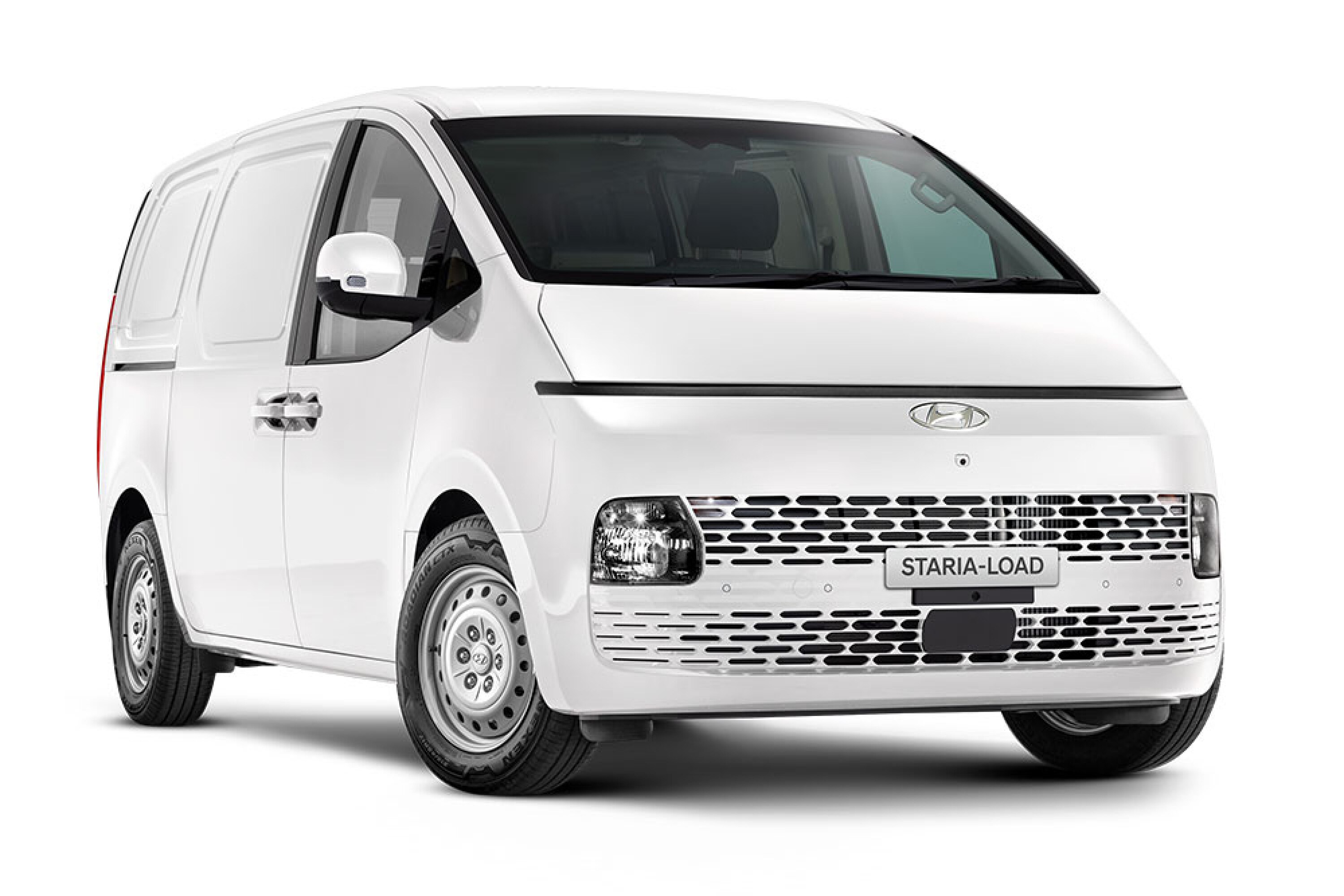
Other variants such as the Crew Van and Premium van don’t receive the benefit of the nationwide drive-away pricing. If you do spend up to those variants, however, the Crew Vans are equipped with a second-row seating package, with Premium vans offering a more comprehensive set of features.
Hyundai is also offering a 10 percent discount on its range of accessory packs for Staria Load models [↗️].
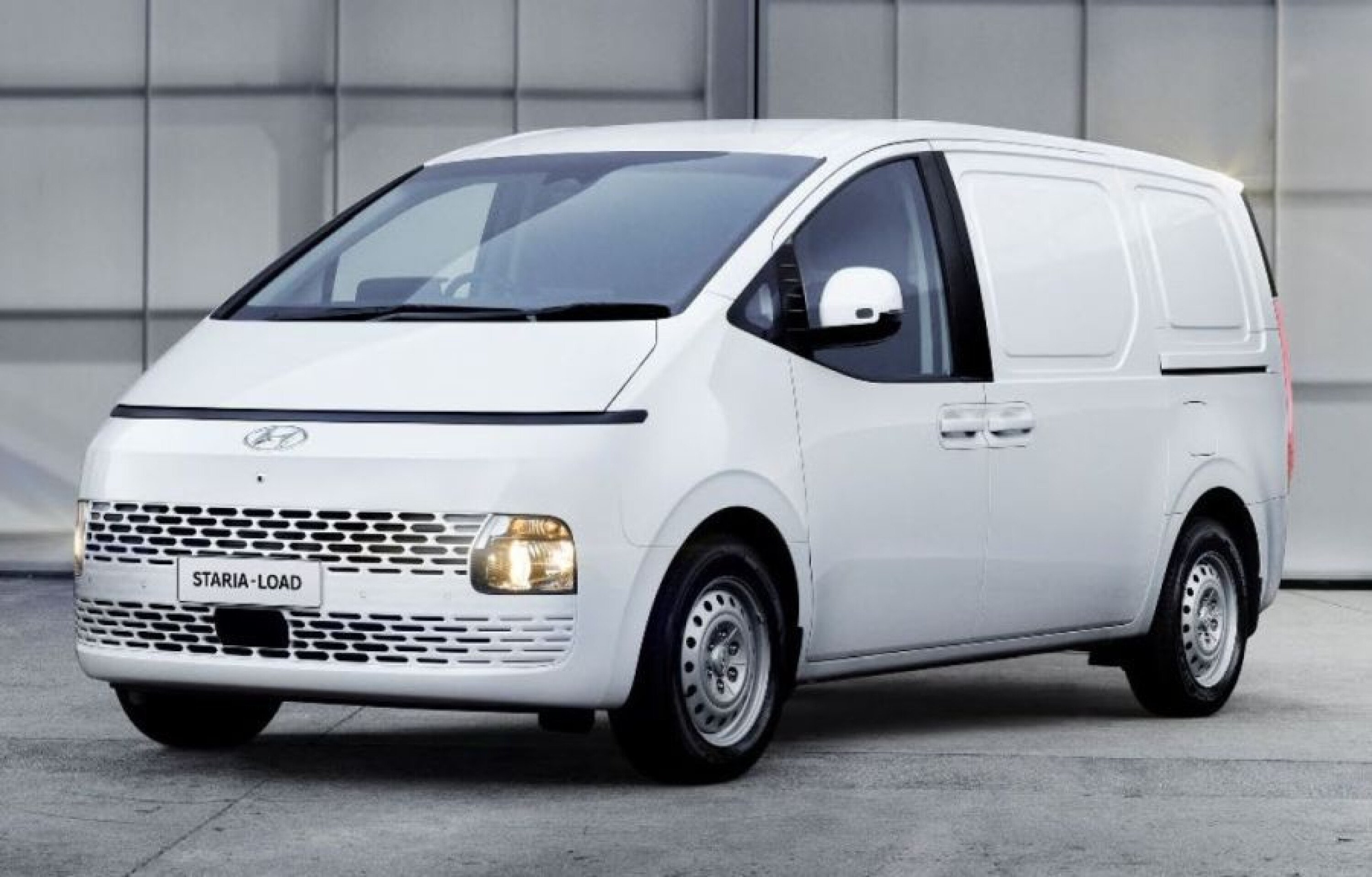
Hyundai Australia says it “has been working hard to secure incremental supply”, with 944 Staria Load vans in dealer stock and 210 vans in compounds.
The company states that it has a “healthy production line”, with 689 vans currently heading to Australian shores.
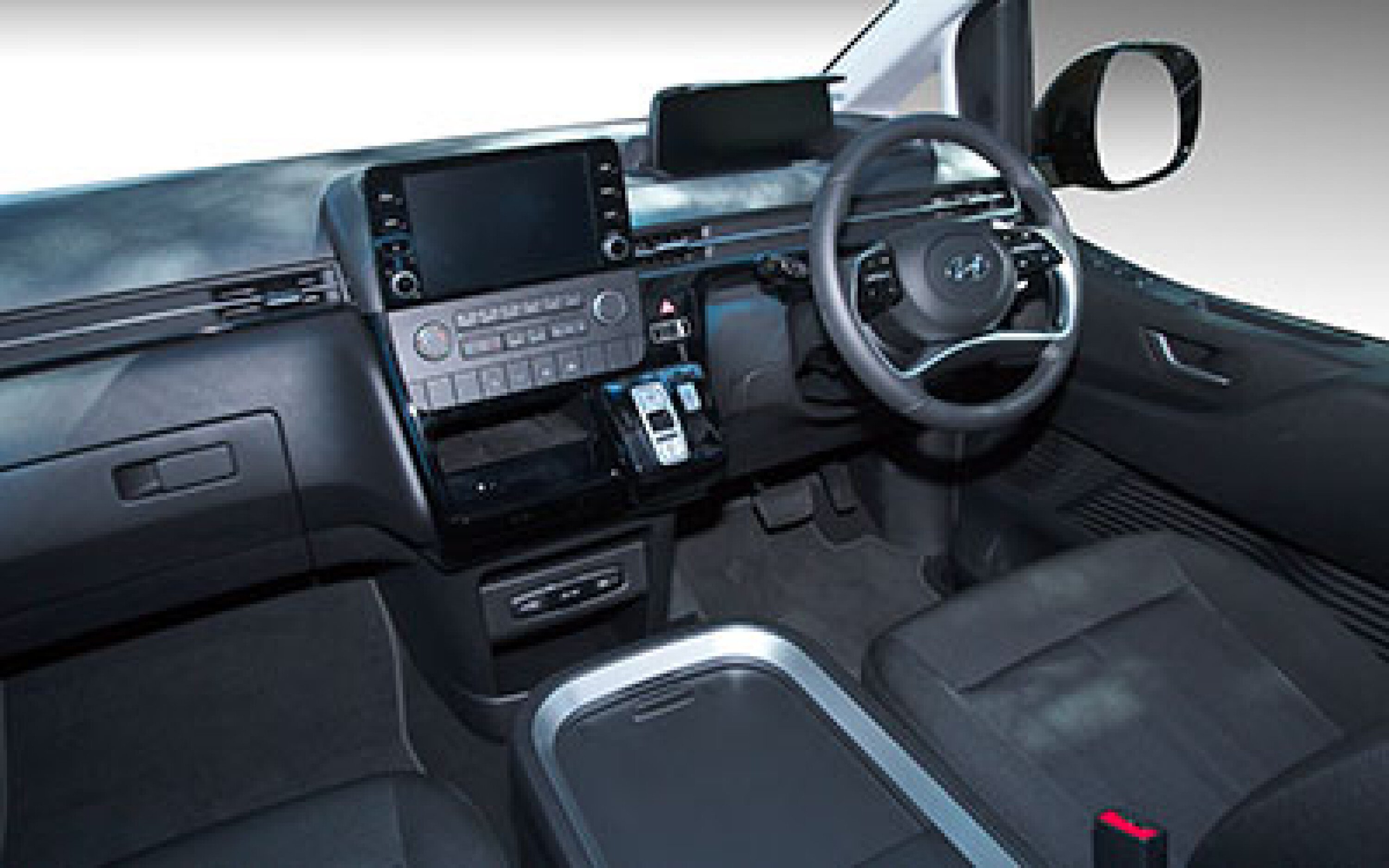
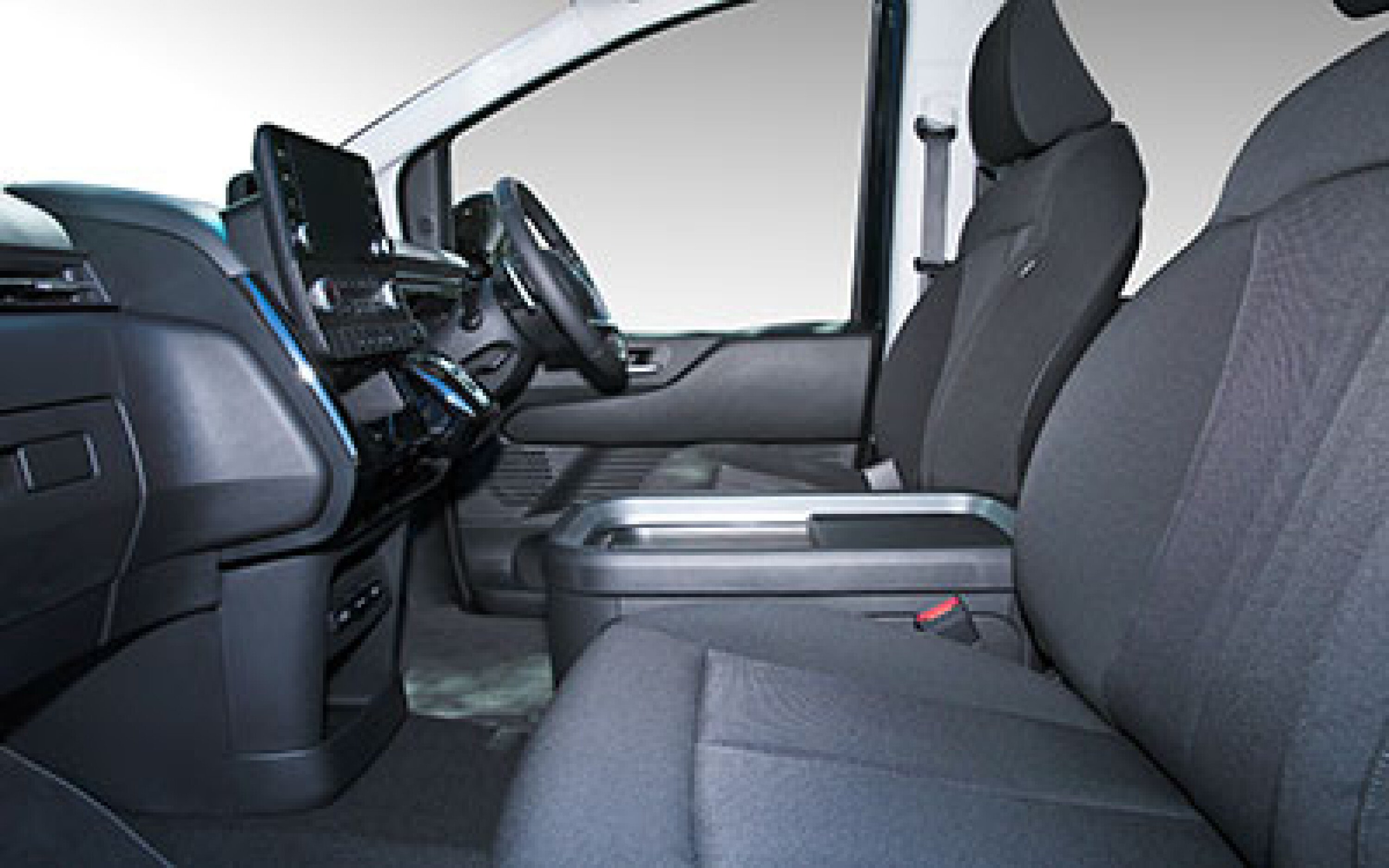
All Staria Load variants are powered by a 2.2-litre turbo-diesel four-cylinder engine, with a power output of 130kW and 430Nm of torque.
An eight-speed automatic transmission is standard across the range. Staria Load models are front-wheel drive.
With 802 Staria Loads sold in the first quarter of 2024, the model has become the third best-selling van in its segment.
MINI MATCH-UP
Skoda, the only car manufacturer to reach the top 10 in Roy Morgan’s ‘best of the best’ award, has achieved Car Manufacturer of the Year for 2022 and 2023.
Upon receiving the award, Skoda Australia director Michael Irmer thanked the brand’s customers: “We are grateful for each of our Skoda customers, and are humbled by their positive response in both the 2022 and 2023 Roy Morgan Customer Satisfaction Awards.”
“Skoda pursues a philosophy of value beyond simply the purchase price, and our team have endeavoured to look at every aspect of the ownership experience,” he added.
“From the implementation of a 7 Year Warranty, attainable servicing plans, transparent finance rates and guaranteed future value, all in addition to the ‘more metal for your money’ a Skoda buyer will appreciate.”
Mr Irmer also reaffirmed the brand’s focus on customer satisfaction: “We will use this back-to-back customer satisfaction award win as our ‘north star’ to remain as customer focused as ever as we launch all-new models and our first electric vehicle this year.”
Don’t be surprised if you see Skoda singing praises for this award on billboards in the coming months.
The brand’s Australian sales are down year-to-date, with 1553 sales recorded by the end of March – compared to 1968 for the same period in 2023.
This can partly be put down to a model-year changeover for a number of its badges, with new and updated models due this year: a new-generation Kodiaq, a new entry-level Fabia variant, facelifts for the Scala, Kamiq and Octavia, and the well overdue introduction of the brand’s first-ever EV, the Enyaq.
Apart from staying in the good books of its customers, Skoda is rolling out other key initiatives: One includes a promise of guaranteed resale value if you finance your new Skoda through the brand’s own in-house offerings, and another is a commitment to affordable EVs and focus on value for money.
The 2025 Mazda CX-80 three-row SUV has been unveiled ahead of its Australian launch.
Snapshot
- Mazda CX-80 revealed as stretched, three-row CX-60
- Large SUV to offer same petrol, diesel or PHEV powertrains; rear-biased AWD
- Due in Australia later in 2024 with six or seven seats
A successor to the recently discontinued CX-8 and CX-9 models, Mazda Australia has announced the CX-80 will arrive in local showrooms towards the end of 2024.
It’ll join the two-row CX-70 due in Australia at a similar time – plus the related CX-60 and CX-90 available now – in a medium-to-large SUV line-up that local executives have admitted will create “some overlap” in Mazda showrooms.
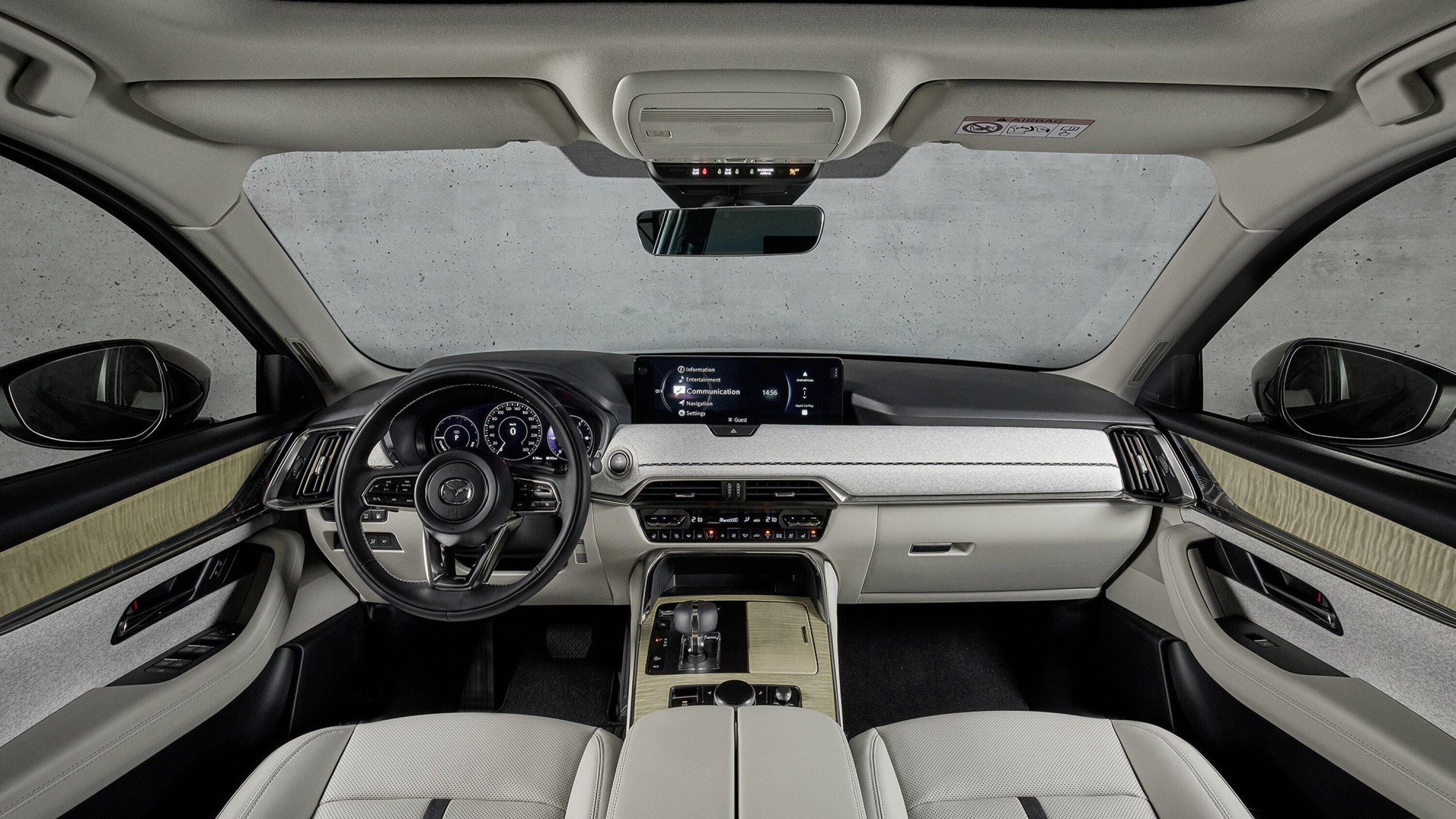
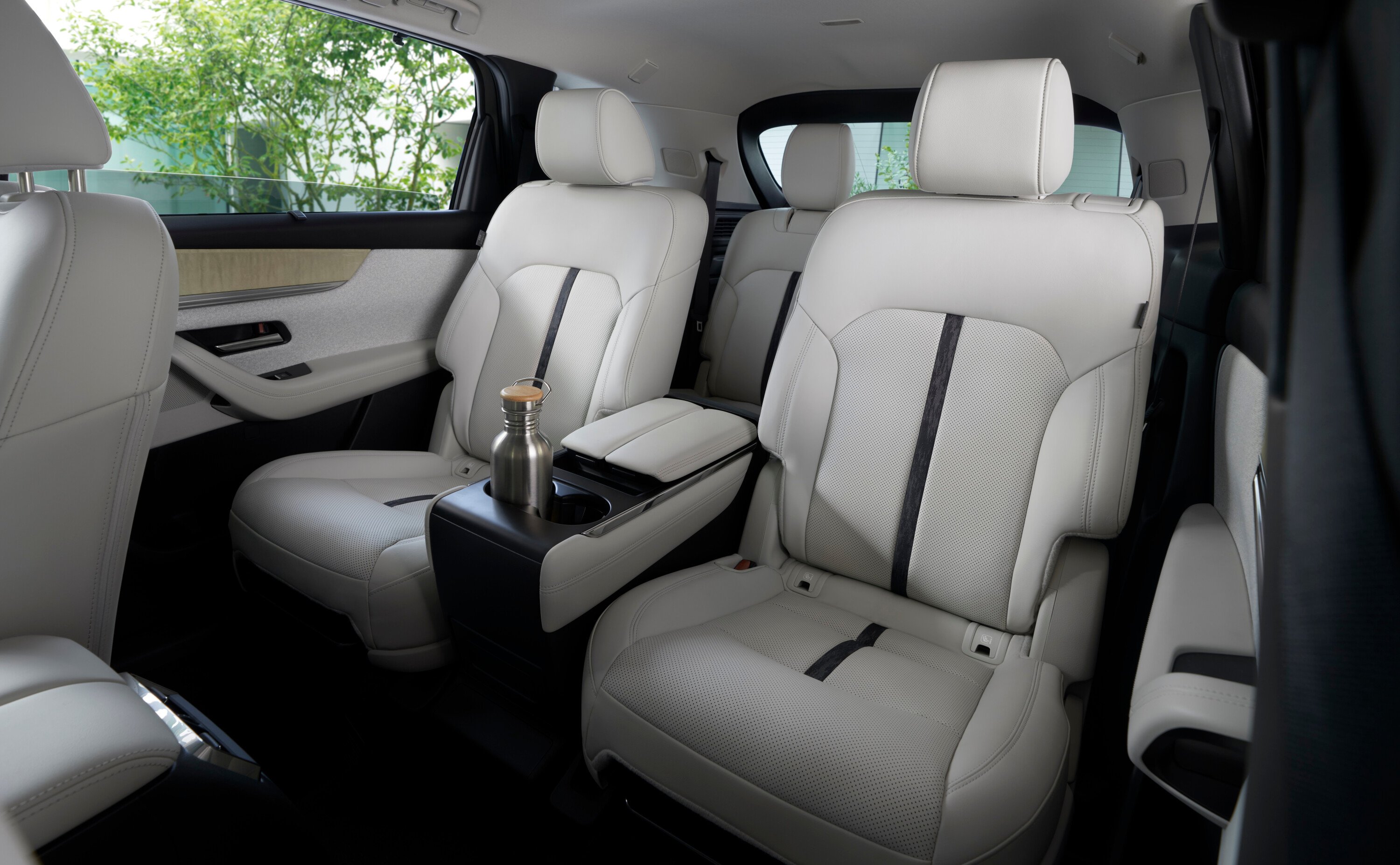
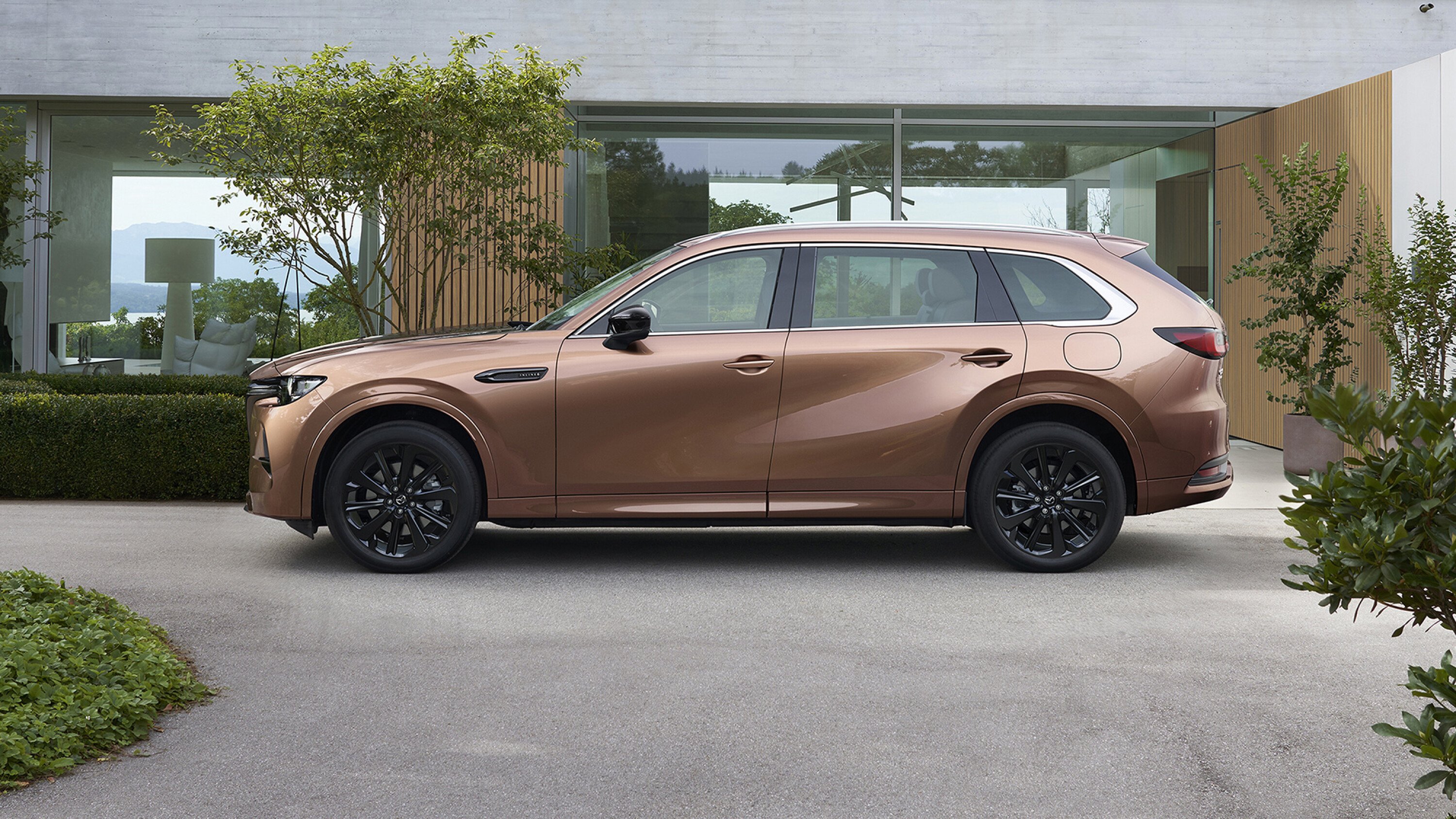
Heavily based on the midsize CX-60 and primarily aimed at European and Japanese tastes, the CX-80 is longer and taller, and has a stretched wheelbase.
However, it retains the CX-60’s more compact 1890mm width, compared to 1840mm for the CX-8 (+50mm), 1969mm for the CX-9 (-79mm), and 1994mm for the CX-70 and CX-90 (-104mm).
Mazda has confirmed the CX-80 measures “almost five metres long” compared to 4.74 metres for the CX-60, while it has a circa-250mm longer wheelbase – which appears to be the same 3120mm length as the broader CX-70 and CX-90. Exact dimensions have not been announced.
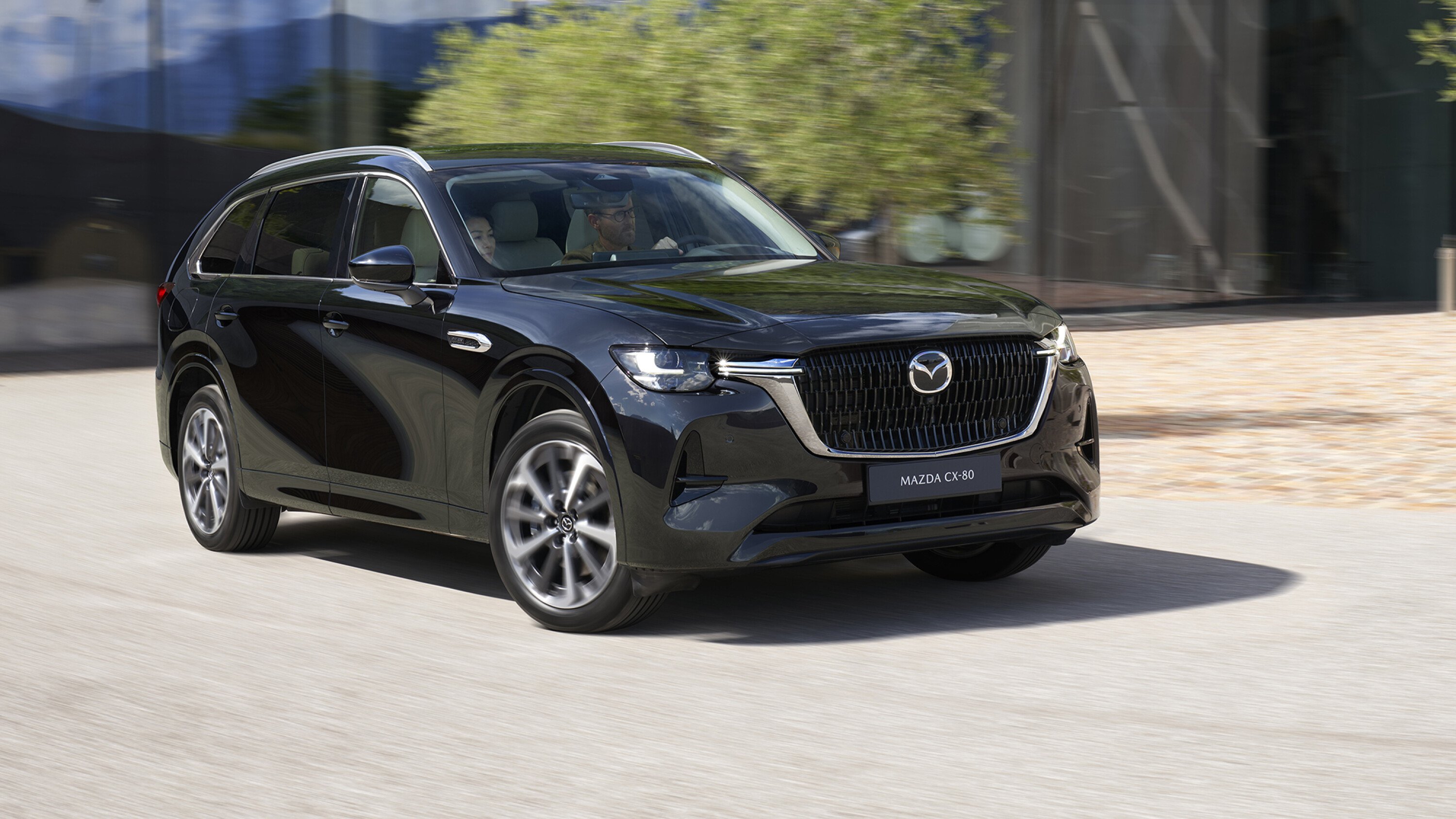
The CX-80 will offer the same powertrains as the CX-60 in Australia.
That includes a 209kW/450Nm 3.3-litre mild-hybrid six-cylinder turbo-petrol, a 187kW/550Nm 3.3-litre mild-hybrid six-cylinder turbo-diesel, and a 241kW/500Nm 2.5-litre four-cylinder plug-in hybrid.
An eight-speed single-clutch automatic transmission and rear-biased permanent all-wheel drive come as standard.
In line with the CX-70, the CX-80 will also debut some new features for the Mazda brand, including ‘unresponsive driver support’ to eventually slow and stop the vehicle if no driver engagement is detected.
It also debuts head-on collision mitigation for the autonomous emergency braking system after ANCAP and its Euro NCAP counterpart began assessing this technology under the latest 2023-25 criteria, along with a more advanced lane-keep assist system to prevent head-on crashes.
Mazda Connected Services – launching in Australia next month with the latest MX-5 through a new ‘MyMazda’ application – will be available for the CX-80, while it will also feature a tow-bar camera view to assist in positioning a caravan or trailer.
Mild-hybrid petrol and plug-in hybrid models should have the same 2.5-tonne braked towing capacity as the CX-60, while the diesel could retain a lower 2-tonne limit due to a hot-weather limit for the Australian market.
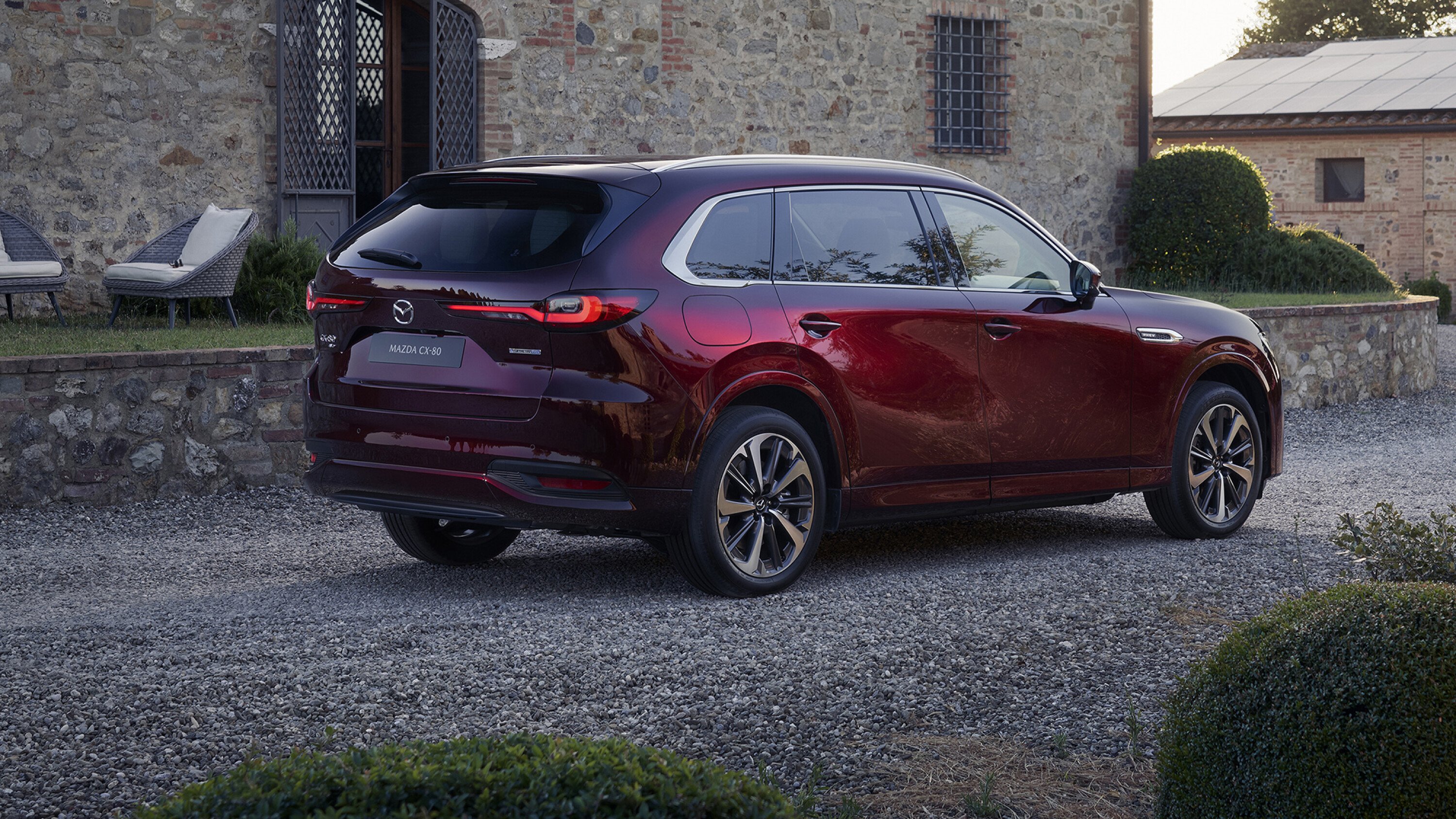
Further details about the CX-80 remain limited for now, with more information – including full technical specifications – due to be announced at a later date.
Australian pricing and features will also be announced closer to its launch – though the brand has revealed the CX-80 will offer six seats with second-row captain’s chairs and a fixed centre console or seven seats with a conventional rear bench, depending on the variant.
The three-row CX-80 will carry a lower price tag than the CX-90, which costs between $74,500 and $94,435 before on-road costs, with dearer plug-in hybrid variants due at a later date.
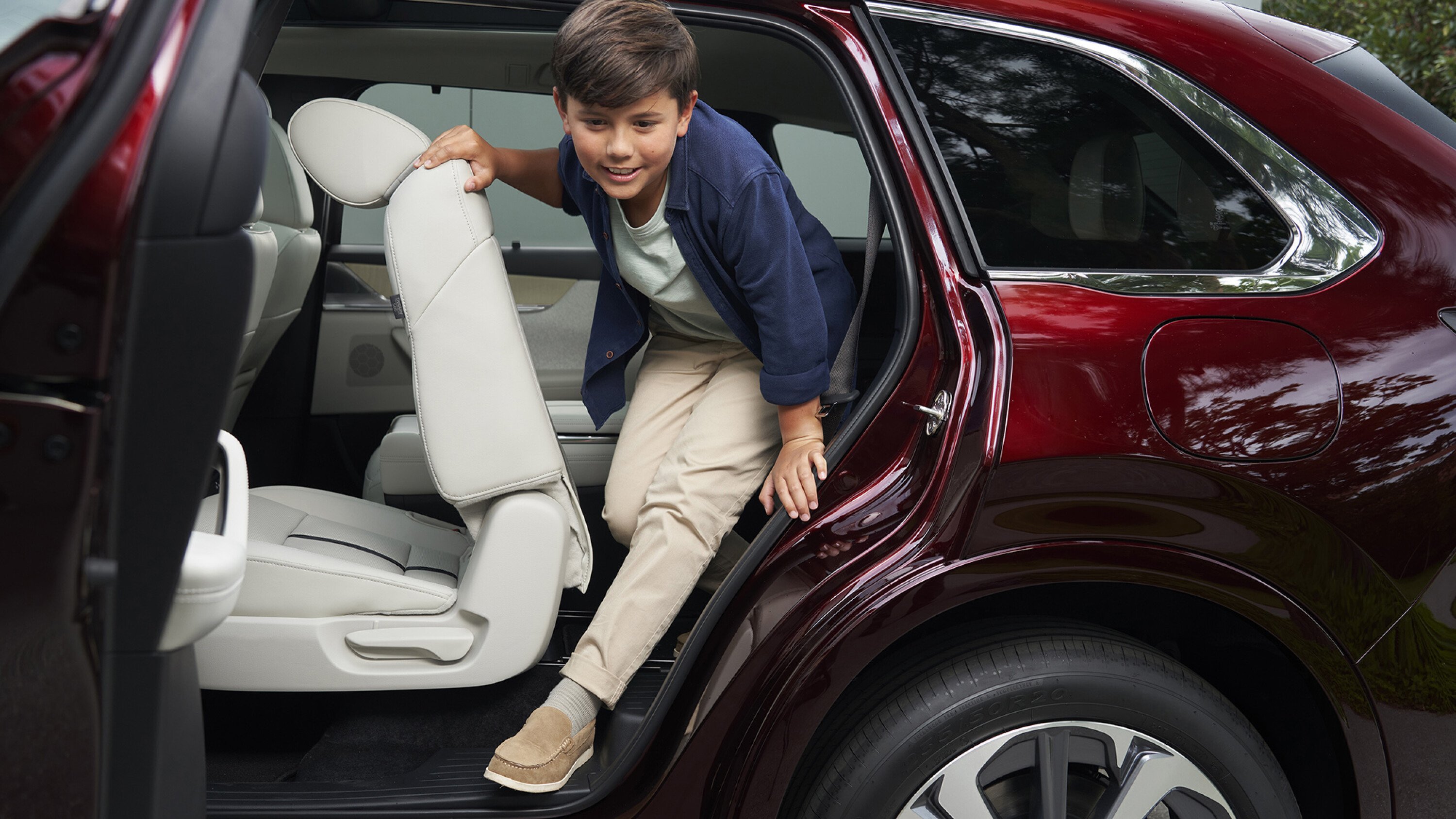
However, it will be pricier than popular entry-level versions of the CX-8 and CX-9 as the brand continues its ‘premium push’ here in Australia. The CX-8 was available for as low as $42,660 plus on-roads.
With the CX-60 starting at around $60,000 and stretching to $85,000 for the flagship PHEV variant, it’s fair to assume pricing for the CX-80 will start from around $65,000 to $70,000 and top out between $90,000 and $95,000 (all before on-road costs).
Australia is the only market globally to offer all four of Mazda’s latest SUVs – the CX-60, CX-70, CX-80 and CX-90 – based on the brand’s new Large Architecture.
The CX-60 and CX-80 are ‘narrow-body’ vehicles aimed at Europe and Japan, while the two-row CX-70 and three-row CX-90 are ‘wide-body’ vehicles aimed at the United States and Canada.
“[Australia is] privileged enough because I suppose we as a team think we can have an opportunity with all four. And here we are [in the situation] that we will have all four in our portfolio,” said Mazda Australia managing director Vinesh Bhindi at the reveal of the CX-70 in January.
“What that means is you might see some overlap, but really when you understand our business strategy – which always has been to give consumers as many opportunities and options and choice as possible and let the customer decide – it makes sense for us to get [all four].”
Snapshot
- Mustang celebrates its 60th birthday with a limited-run styling pack
- 1965 units will be sold and include a unique grille, badging and custom 20-inch alloys
- Existing Mustang owners also benefit from new retro-inspired gauges
The world’s best-known and most enduring pony car, the Ford Mustang, turns 60 today so to celebrate Ford has announced a special birthday edition pack.
And we have to say, it looks the business.
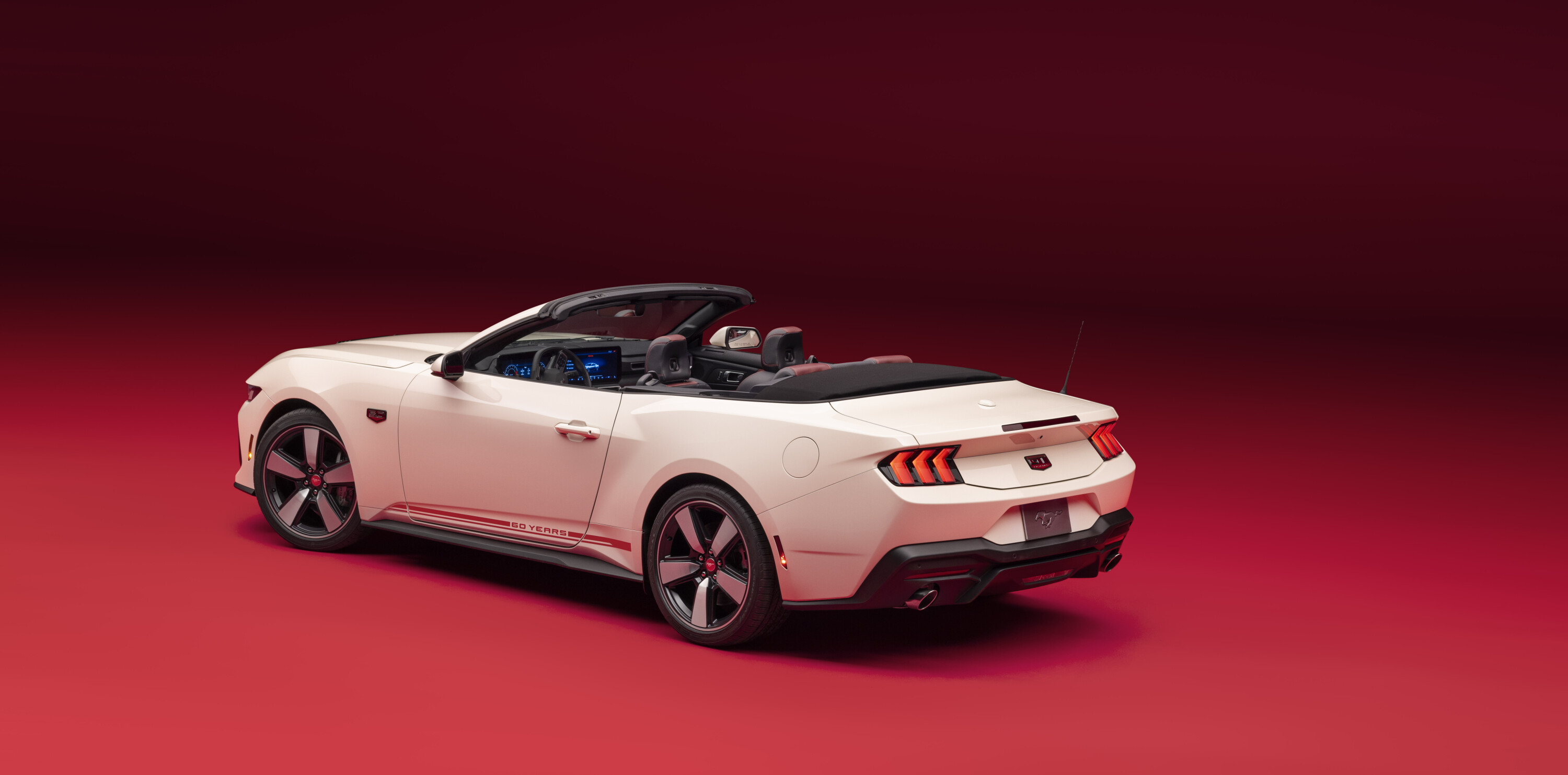
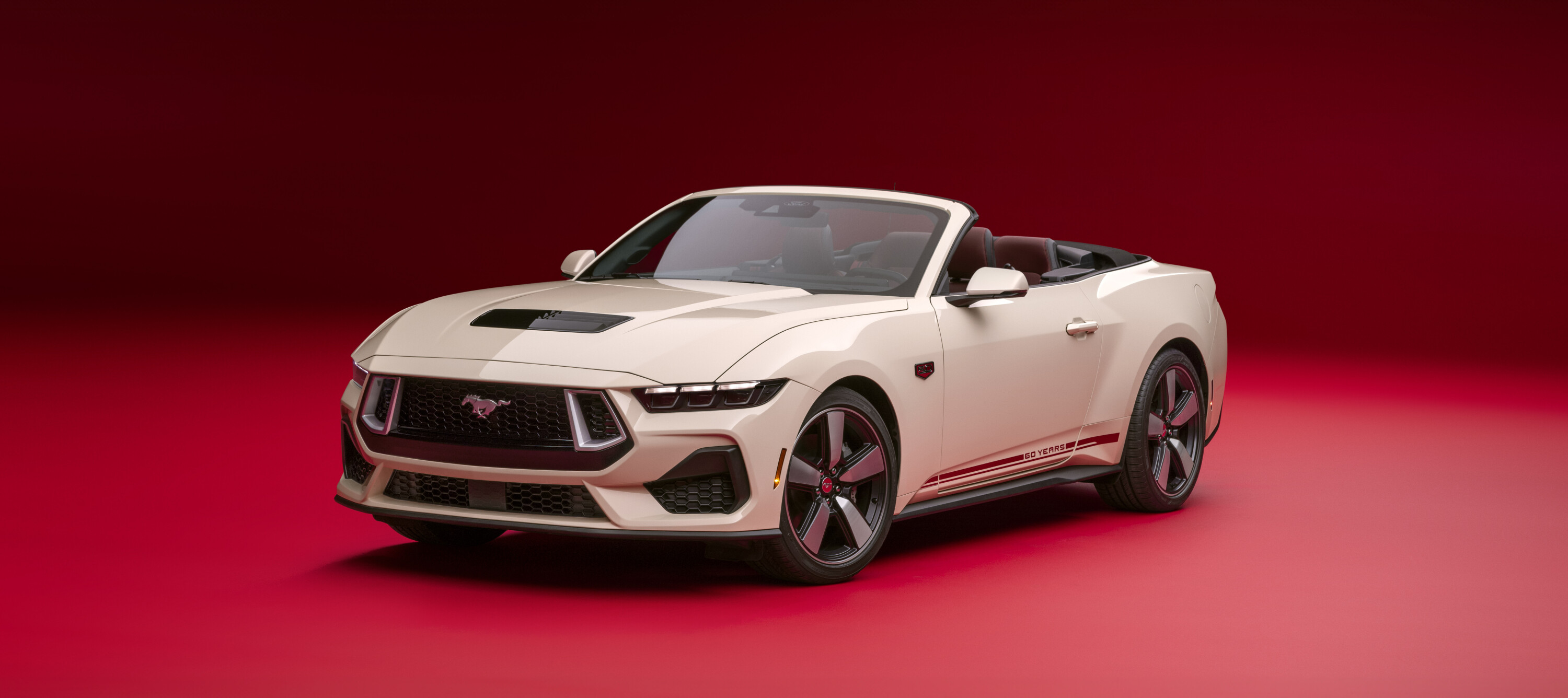
Imaginatively called the ‘60th Anniversary Package’, the pack is available on V8-powered coupes and convertibles and harks back to the original Mustang from 1965 through a number of tasteful design touches.
Up front there’s a unique grille as well as new GT-inspired badges on the front quarter panels that read ‘GT 60 Years’ and ‘5.0’.
Special decals feature on the side and there are also silver mirror caps for models painted Race Red or Vapor Blue. The car you see pictured here is finished in Wimbledon White.
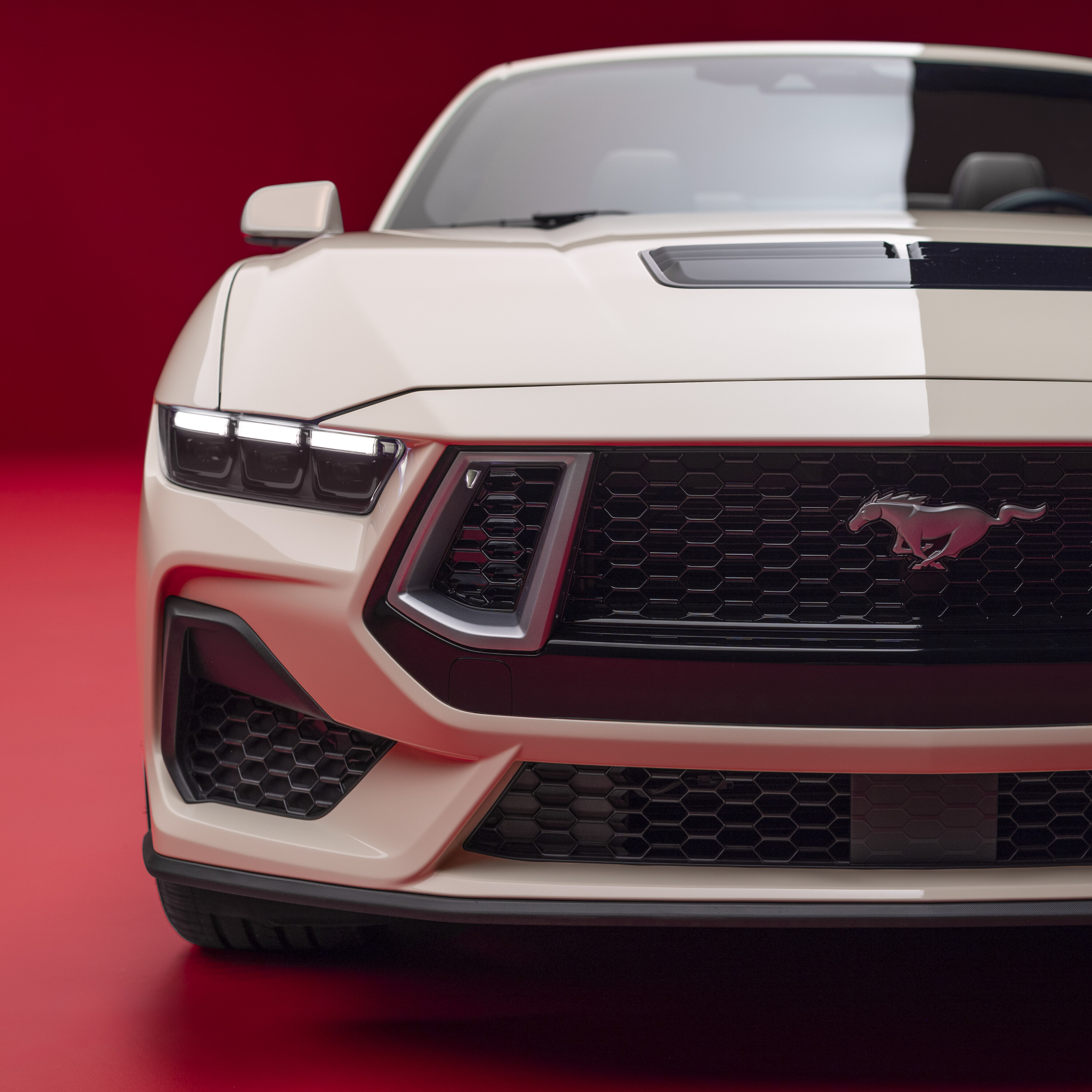
Ford claims the changes were inspired by “the clean silhouette of the original car” and inside owners also gain a numbered build plaque on the dash.
The 20-inch wheels are a custom design, too, and they’re some of the best wheels we’ve seen on a Mustang in a long time. Ford says they riff off the chunky design of the original Mustang (anyone else also getting major Fuchs vibes?) and they’re further proof that five-spoke wheels are superior to all others.
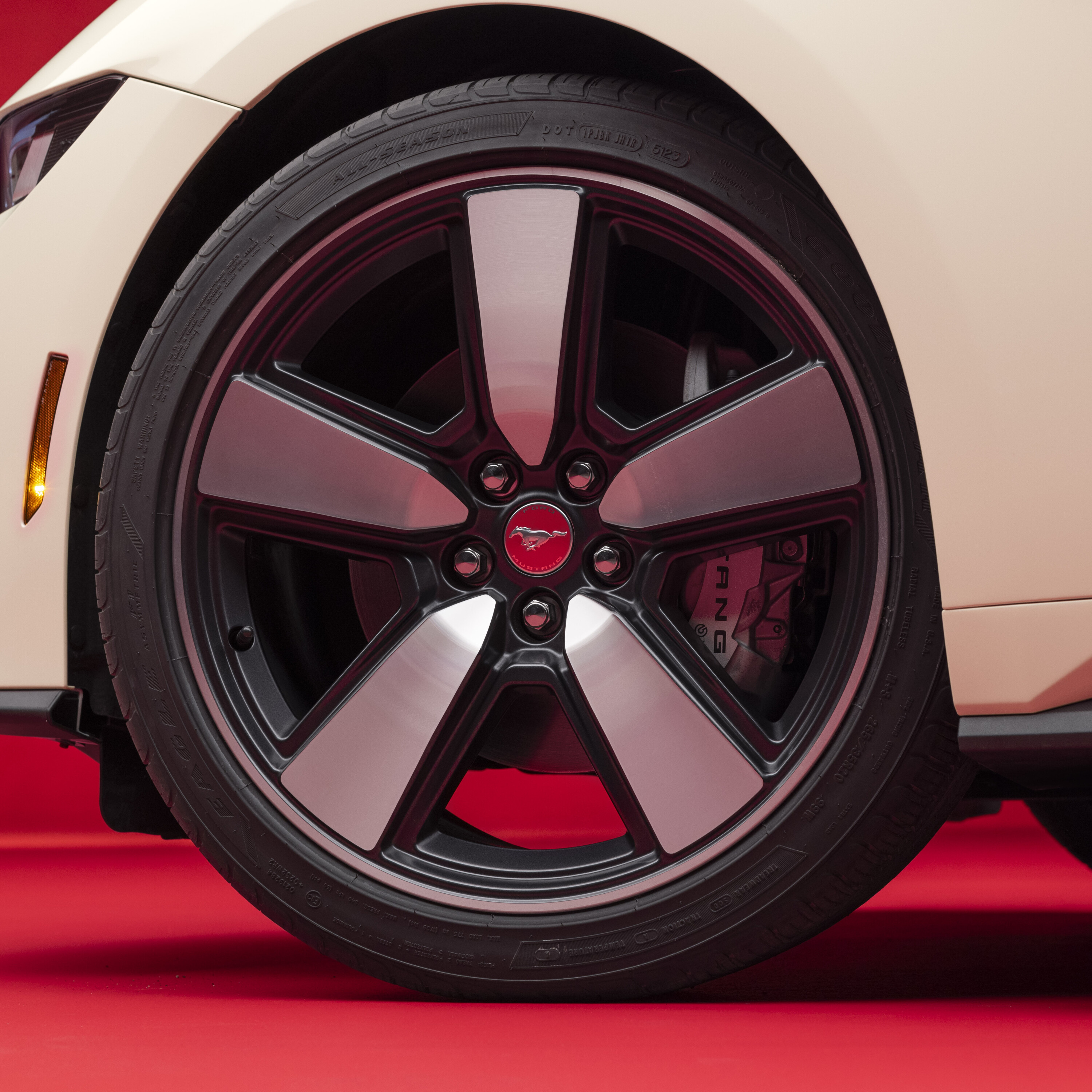
Now for the bad news. The Anniversary Package is a limited run of 1965 units (naturally) and none of them are coming to Australia.
“We have no plans to introduce the Ford Mustang 60th anniversary Package to Australia,” said a Ford spokesperson when contacted by Wheels. Sigh.
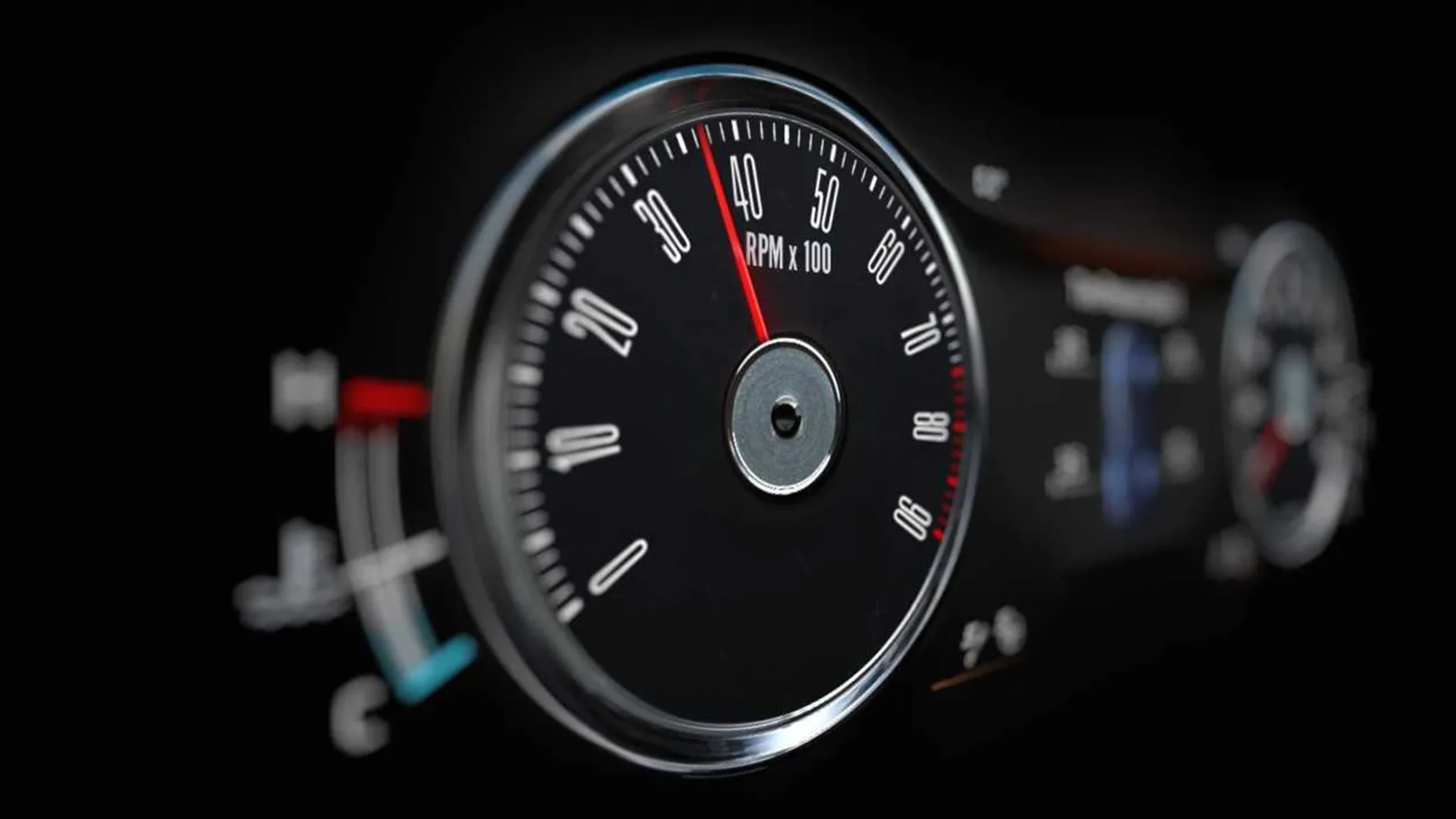
But there is a silver lining. Owners of the new seventh-gen Mustang can gain a new retro gauge cluster for their digital dash that’s inspired by the original 1965 model. The over-the-air update is a free upgrade in the US and there’s a chance it’ll be available to Aussie owners too.
“We will be able to share an update on local availability of gauge cluster options closer to launch,” said Ford Australia.
Until then, feast your eyes on the many images of the 60th Anniversary Package. Are you or a fan? Or should Ford have done more? Jump into the comments.
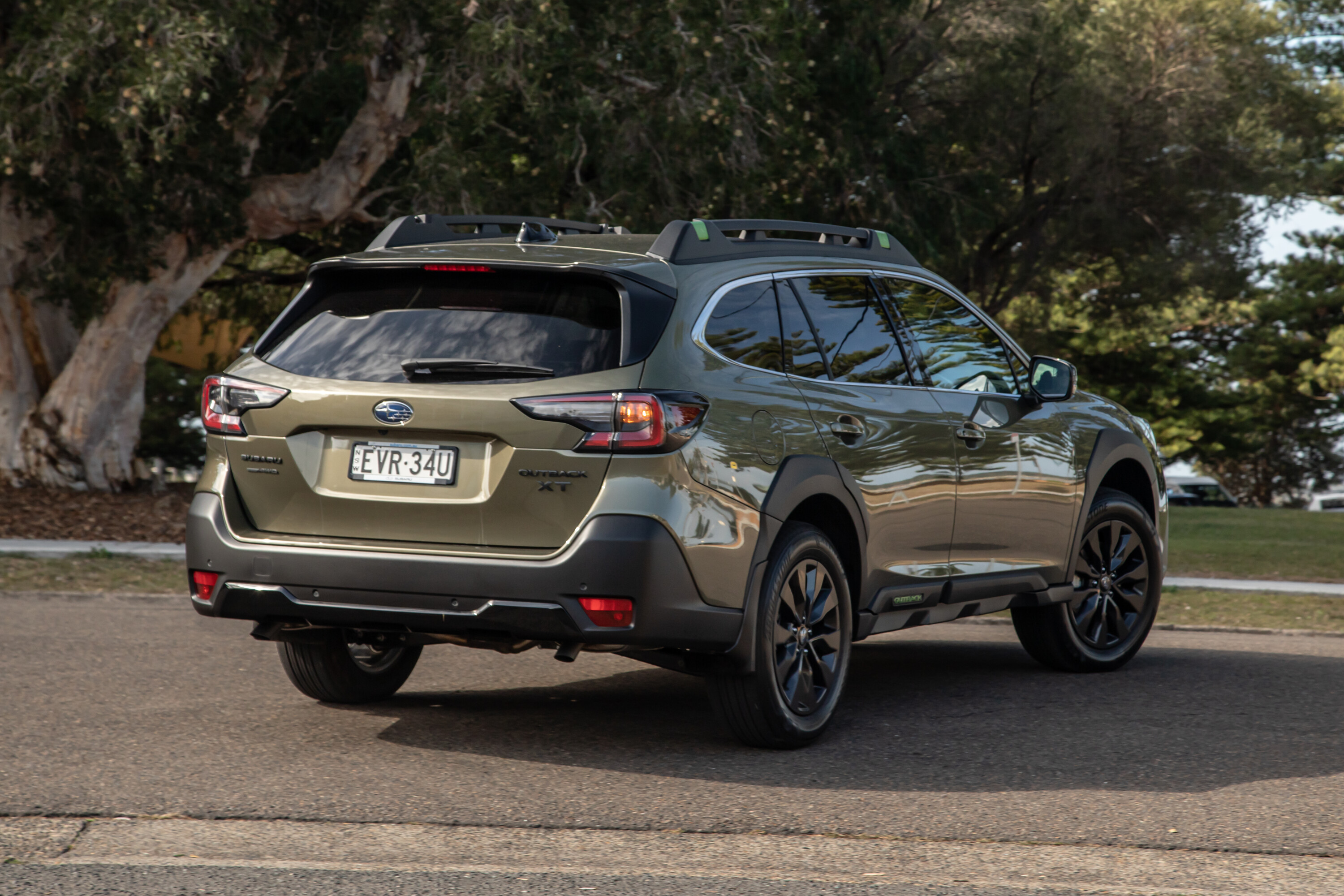
In Australia, the Subaru Outback AWD Touring XT is celebrated for its versatility, skill-fully handling both city drives and challenging off-road conditions. Since its introduction in the mid-1990s, it has built a reputation for reliability and safety.
Popular with families and outdoor enthusiasts alike, the Outback features all-wheel drive, spacious interiors, and advanced safety systems. Its design smartly combines comfort and functionality, making it ideal for both everyday commutes and adventurous excursions.
Over the years, the Outback has become a symbol of durability and flexibility, perfectly reflecting the adventurous Australian ethos.
Pricing & Features
The Subaru Outback Touring XT AWD is the best Outback money can buy, priced at $55,990 excluding on-road costs.
| 2024 Subaru Outback Touring XT key features | |
|---|---|
| 11.6-inch central touchscreen | Heated, ventilated and powered front seats |
| 18-inch gloss alloy wheels | Keyless entry and start |
| 360-degree camera | Nappa leather upholstery |
| 9-speaker Harman Kardon audio | Powered tailgate |
| Adaptive cruise control | Rain sensing wipers |
| Automatic LED headlights | Reversing camera |
| DAB+ digital radio | Roof rails |
| Dual-zone climate control | Satellite navigation |
| Front parking sensors | Sunroof |
| Heated rear seats (outboard) | Wireless Android Auto |
| Heated steering wheel | Wireless Apple CarPlay |
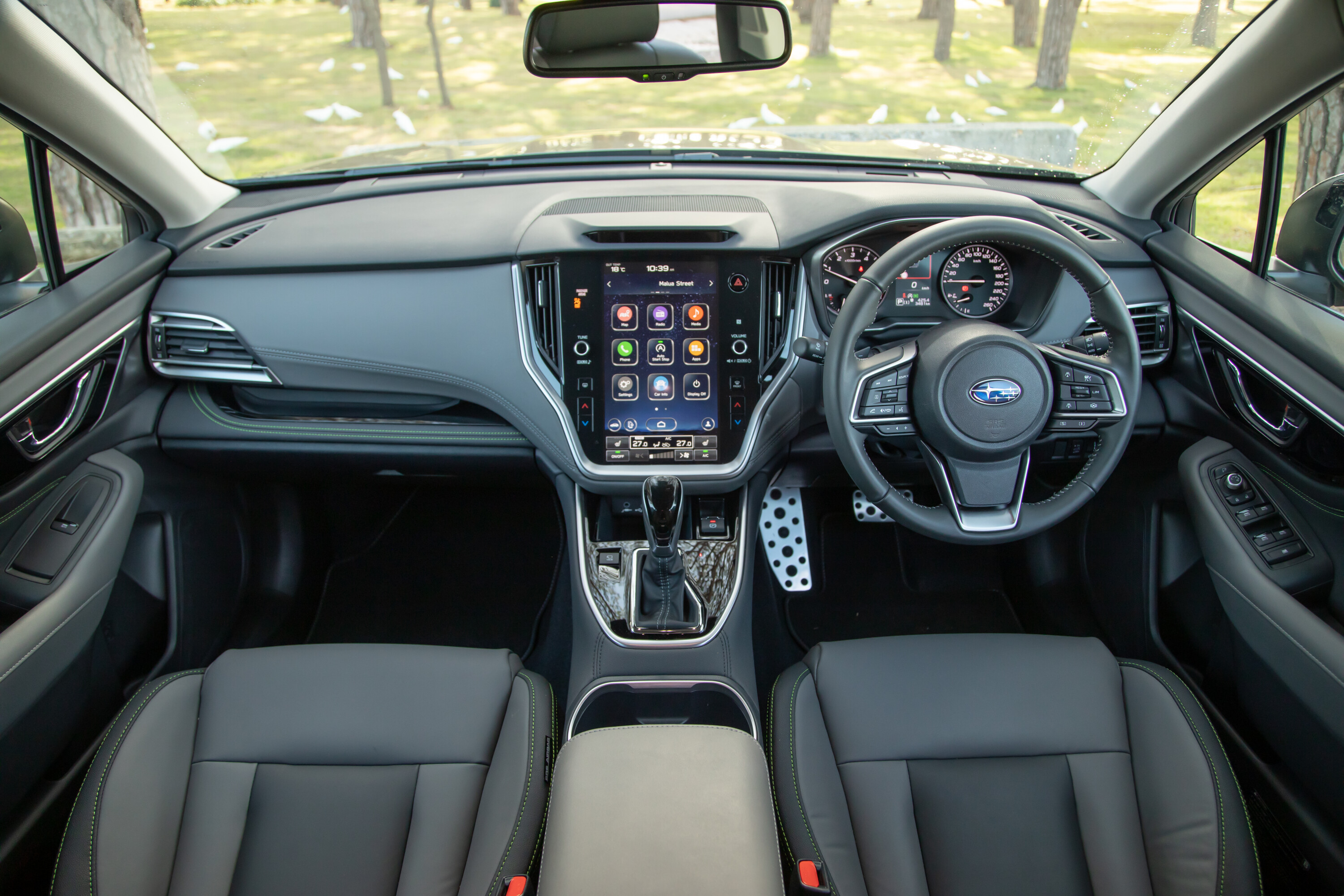
The Outback Touring XT gets a punchier 2.4-litre e-Boxer four-cylinder petrol engine delivering 183kW and 350Nm of torque, paired with a continuously variable transmission and Subaru’s signature all-wheel drive.
Safety
The 2024 Subaru Outback Touring XT was awarded a five-star ANCAP rating in 2021.
It stands out for its exceptional safety, achieving high ratings in adult (88%) and child (91%) occupant protection.
The range comes equipped with a comprehensive array of safety features as standard. These include Autonomous Emergency Braking (AEB) with pedestrian, cyclist, and junction assist, emergency steering autonomy, blind-spot monitoring, rear cross-traffic alert, driver attention alert, lane departure warning, lane-keeping assistance, and traffic sign recognition.
Key Rivals
The Subaru Outback competes with medium-sized SUVs and crossovers like:
- Volkswagen’s Passat Alltrack
- Toyota RAV4
- Mazda CX-5
- Hyundai Santa Fe (new model coming 2024)

Should I put it on my shortlist?
The Outback itself consistently meets the needs its enthusiasts value — ample space, practical design elements, commendable off-road capabilities and a distinctive boxer engine.
If you’re in the market for a new Outback, the Touring model XT offers some upscale touches akin to those in European competitors for less money.
Additional performance is also great but this does come at the cost of some hefty fuel consumption figures.
If the extra power is what you’re after, the XT Outback could be your pick of the bunch.
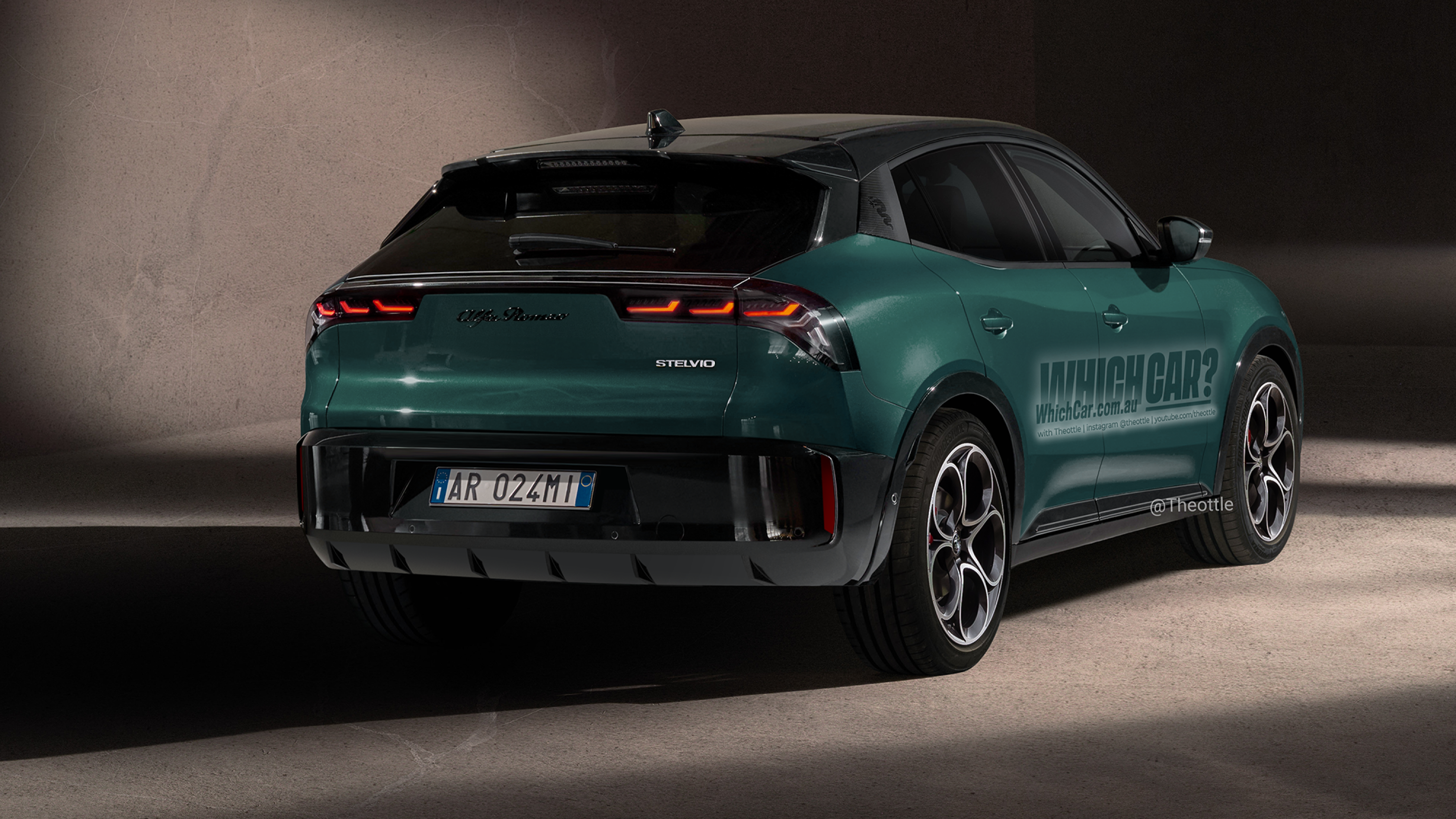
The Stelvio’s upcoming replacement is promising to be even quicker and mightier than its well-regarded predecessor, thanks to an all-electric powertrain with close to double the power.
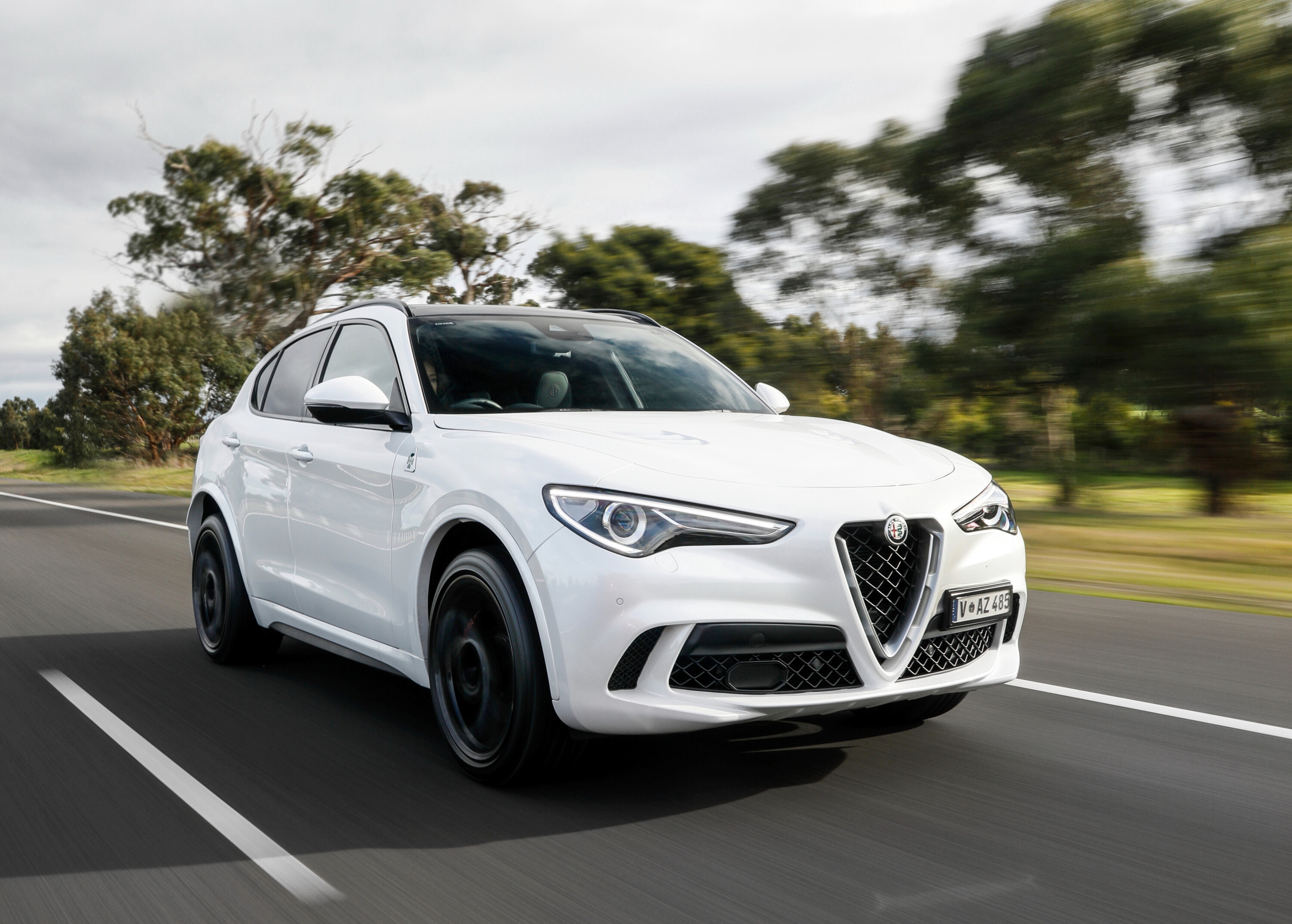
In its current first-generation form, the Alfa Romeo Stelvio Quadrifoglio is one of our favourite performance SUVs, thanks mostly to its potent, Ferrari-sourced 2.9-litre twin-turbo V6 that produces 375kW/600Nm.
What can we expect from its successor?
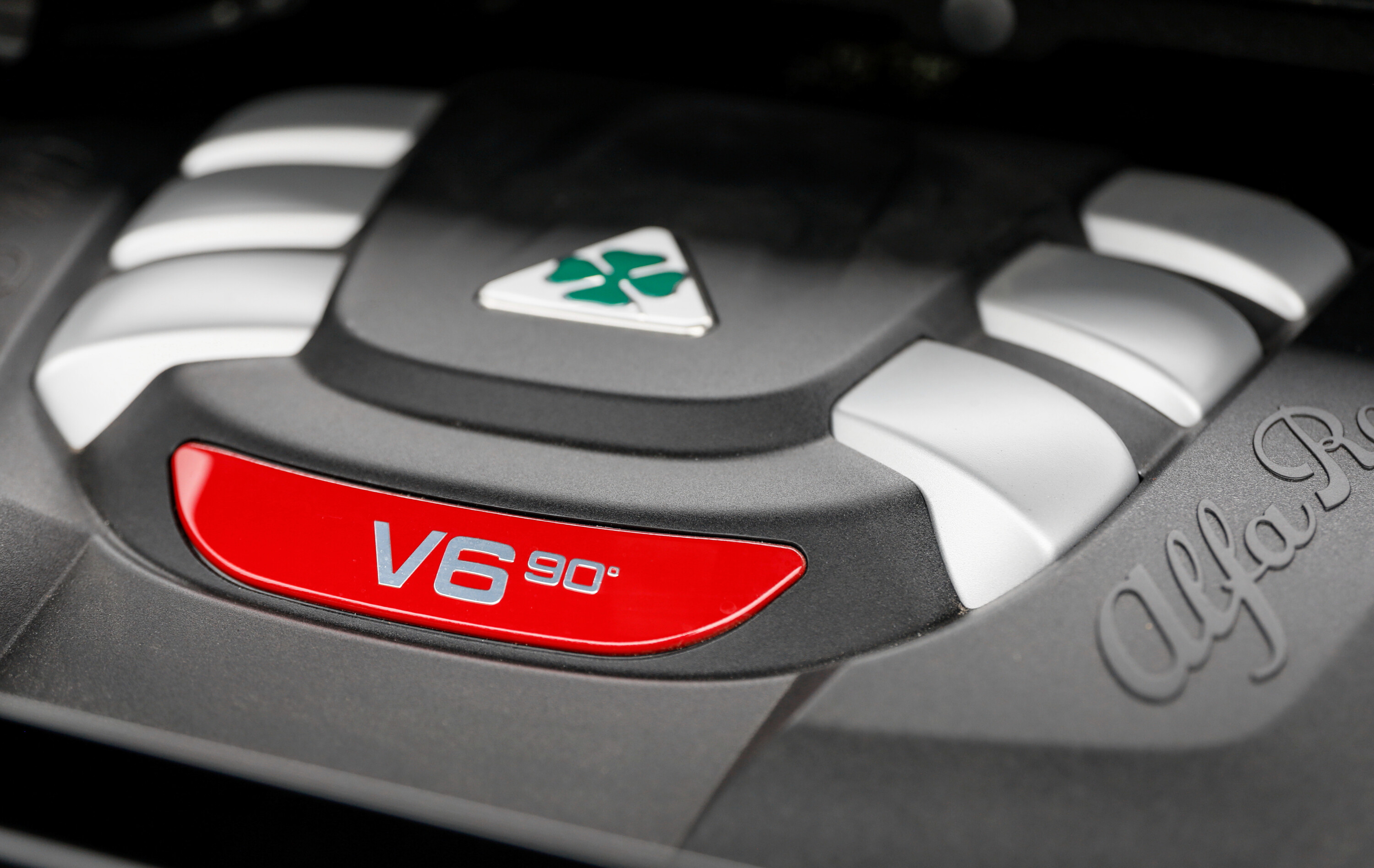
For one thing, it won’t have the same evocative soundtrack.
Like most all-new models, the Stelvio Quadrifoglio is moving to an all-electric powertrain and while that will mean a big reduction in noise and character, Alfa’s global boss Jean-Philippe Imparato is promising a big boost in power to around 1000PS (735kW).
Speaking to AutoExpress, Imparato revealed development mules of the new Stelvio Quadrifoglio were already making 941hbp (702kW).
“That’s the figure for the moment,” he said. “If we can reach 1000PS (986hp, 735kW) then we’ll do it, but I’m not absolutely sure it’s the first priority of the company or the customers.”
“If we can reach 1000PS (735kW) then we’ll do it”
If the next Stelvio Quadrifoglio does have 700kW, it will have almost double the current model’s and will trail only the Tesla Model X for kilowatts. While no longer sold in Australia, the Tesla Model X has a peak power output of 1020hp.
The electric Stelvio Quadrifoglio, which will move to Stellantis’s fresh STLA Large Platform and adopt an 800V architecture, will also outgun combustion rivals like the Lamborghini Urus (490kW) and even its other Italian stablemate, the Ferrari Purosangue (533kW).
Ultra-fast charging and a range of around 700km should also feature.
“My top priority is to deliver a completely substitutional experience to combustion power,” said Imparato, encouragingly. “That means you drive, you stop, you charge, you have a coffee, do a pee, bye bye.
“If you have to wait two hours to charge the car, it kills everything. If you have to drive at 130kph, with Fiat Pandas passing you or campervans going faster than you, it kills everything.”
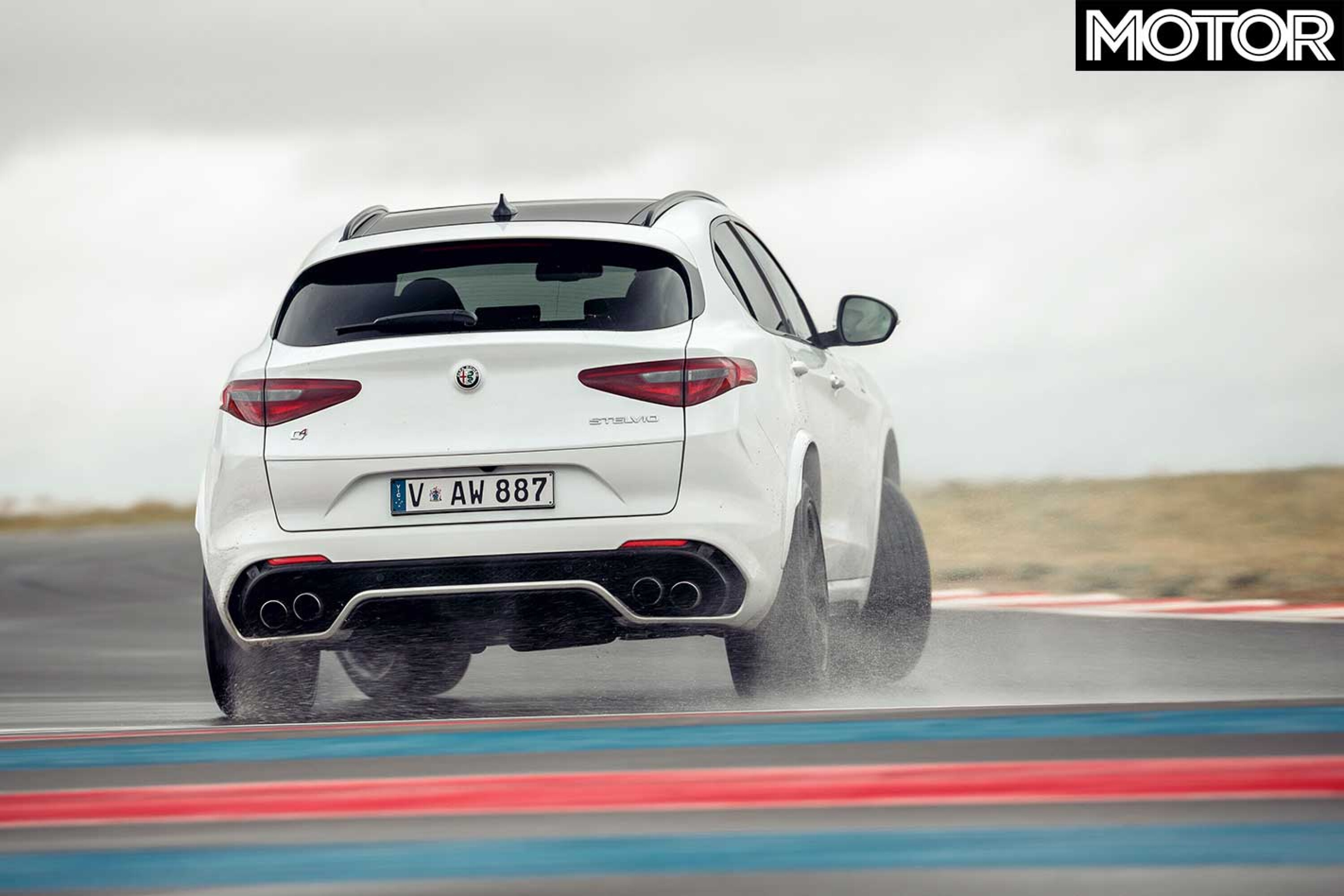
There’s no word yet on when the all-new Stelvio will appear, however a mid-2025 reveal has been touted.
Timing for the release of ANCAP safety ratings for the latest Honda CR-V, ZR-V and Civic remains unclear as the safety organisation awaits additional information.
The Australasian New Car Assessment Program (ANCAP) said it is working with Honda to undertake additional physical and virtual evaluations of local versions of the CR-V, ZR-V and Civic before it can release its own results.
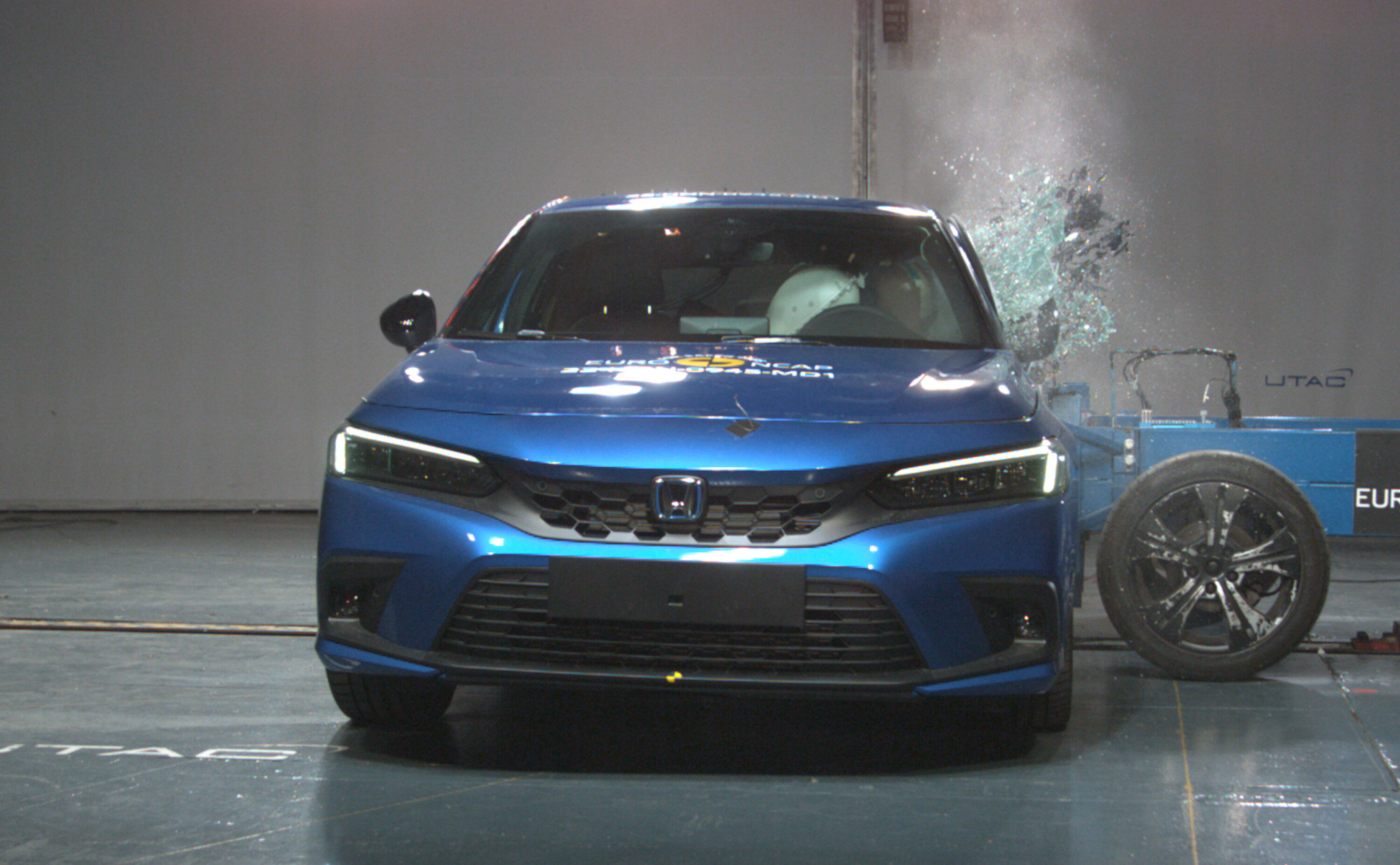
These results would be based on existing Euro NCAP testing conducted between 2022 and 2024, which saw a five-star score applied to some versions of the CR-V last week under the latest 2023-25 criteria and a five-star score for the Civic in 2022 under the less stringent 2020-22 criteria.
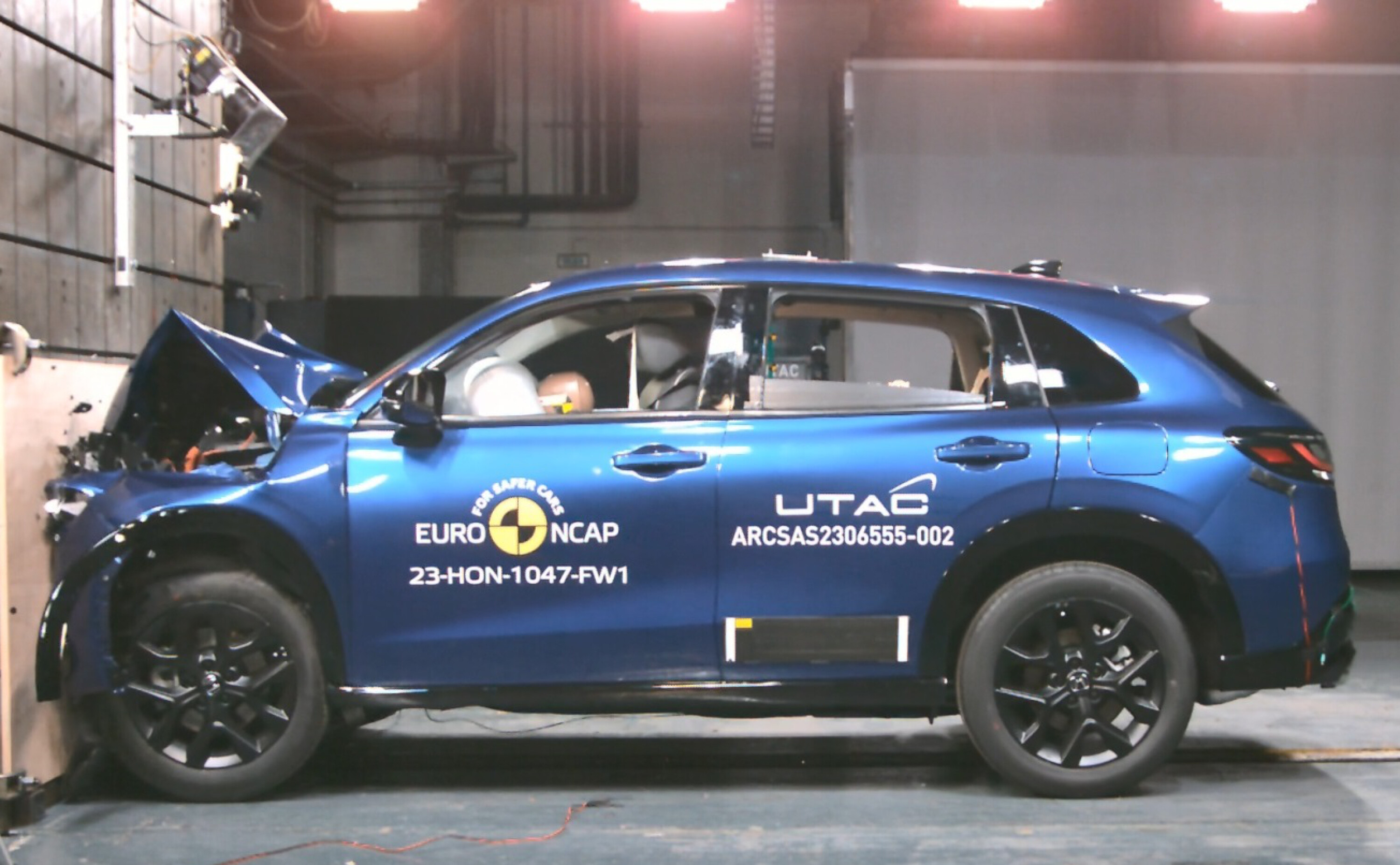
The ZR-V received a four-star Euro NCAP score in 2023 as it narrowly failed to meet the required five-star thresholds for adult occupant protection and safety assistance.
Some versions of the CR-V sold in Europe also received a four-star safety rating due to a safety assistance score below the 70 per cent requirement for a five-star result.
Euro NCAP notes four-star CR-V variants – not fitted with an optional ‘Honda Sensing 360’ safety package – lack corner radars that “significantly enhanced AEB [autonomous emergency braking] performance” for vehicle and pedestrian detection.
Honda Australia has confirmed our CR-V lacks the two front corner radars for enhanced AEB detection available in Chinese-built European versions, as local CR-Vs are sourced from a different factory in Thailand.
The lack of this enhanced AEB detection could limit the CR-V’s potential to receive a five-star safety rating in Australia.
These Euro NCAP scores only apply to hybrid and plug-in hybrid versions of the CR-V, ZR-V and Civic, as petrol-only models are not offered in Europe – except for the Civic Type R hot hatch.
“For ANCAP to… publish safety ratings relevant to AUS/NZ-specified models, we must ensure – through an evaluation of additional test results, crash simulations, technical drawings, data etc. – that the safety specification and safety performance of the vehicles tested by Euro NCAP are applicable to locally-supplied vehicles,” said an ANCAP spokesperson.
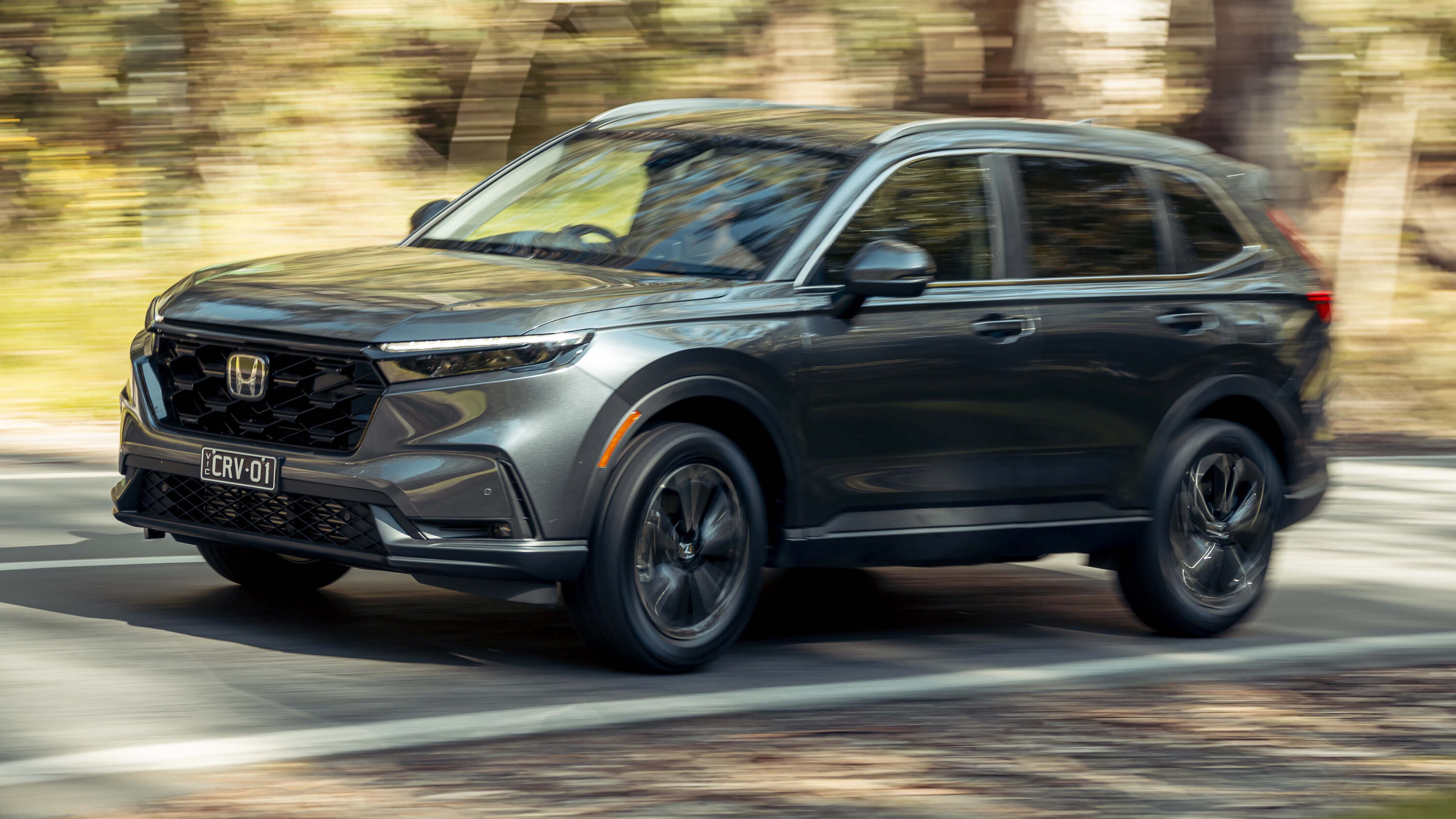
“We’re currently working through this process with Honda.”
A Honda Australia spokesperson said safety was a top priority for the brand.
“We are working closely with ANCAP and are currently awaiting the most up to date information in relation to the recent testing of CR-V, Honda ZR-V and Civic.
“As soon as we have any further information in relation to this testing, we will share this with you.”
The only Honda vehicle sold in Australia with a current ANCAP rating is the HR-V, which scored four stars in 2022.
The facelifted 2025 Nissan Qashqai small SUV has debuted ahead of its Australian launch later this year.
Nissan has applied a mid-life update to the third-generation Qashqai three years after it was unveiled in Europe – but less than 18 months since it launched in Australia – before an all-electric successor arrives later this decade.
“We’re very excited by the facelifted Qashqai, which has just been unveiled. We anticipate arrivals towards the end of 2024,” said Nissan Australia.
Revisions applied to the Qashqai include a redesigned front end with new-look split headlights, a triangular grille “inspired by the patterns of ancient Japanese armour scales” with comma-shaped elements, and an updated lower bumper.
The upper DRL section of the headlights is inspired by the smaller Juke and includes sequential indicators and an illuminated Nissan badge at its edge for some variants, while the main section is now available with an adaptive high beam for increased visibility in low-light conditions and in fog.
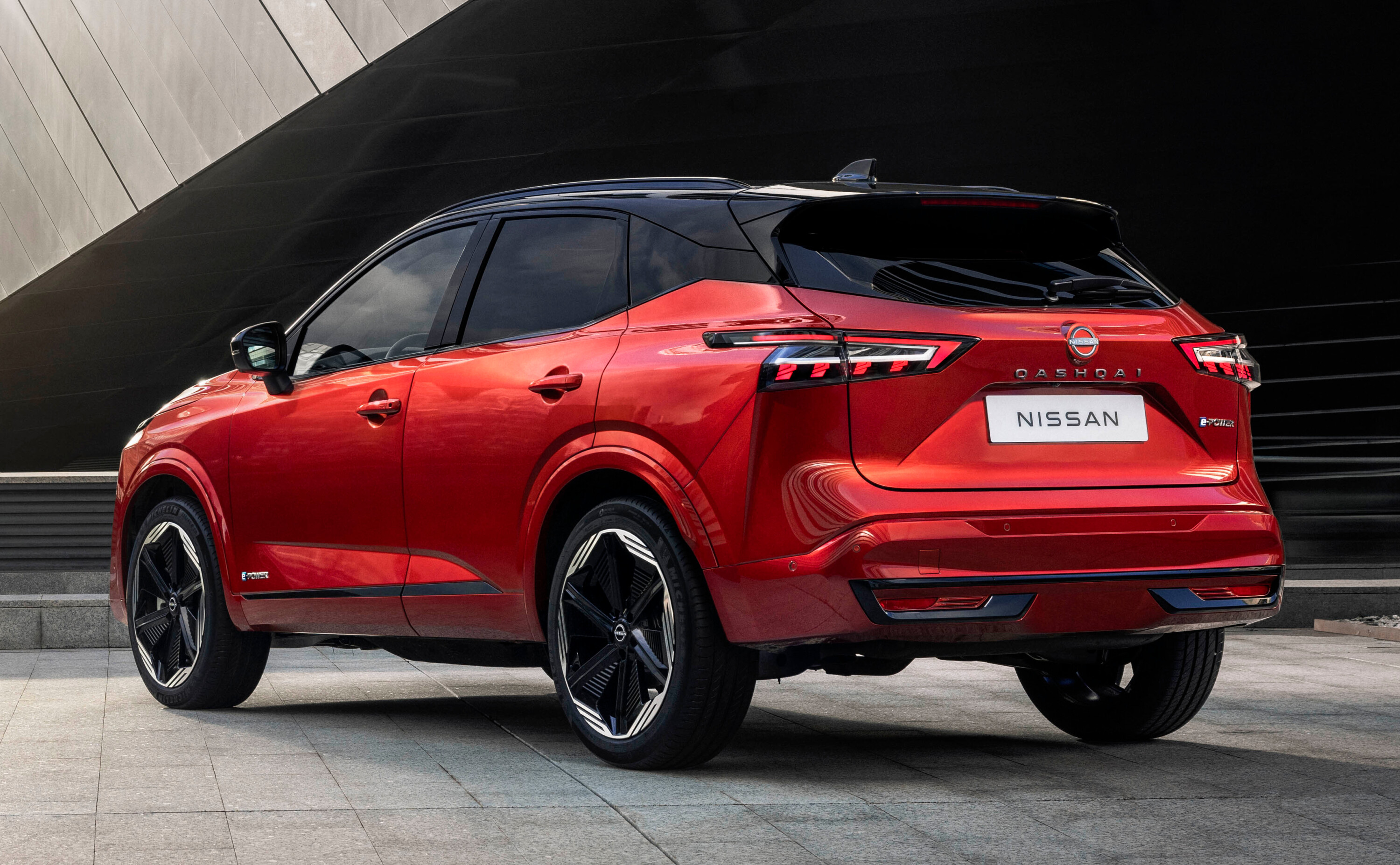
Other changes include clear-look tail-lights with an updated internal design and available sequential indicators, a reshaped gloss-black rear bumper, and body-coloured exterior trim for the new ‘N-Design’ variant in Europe.
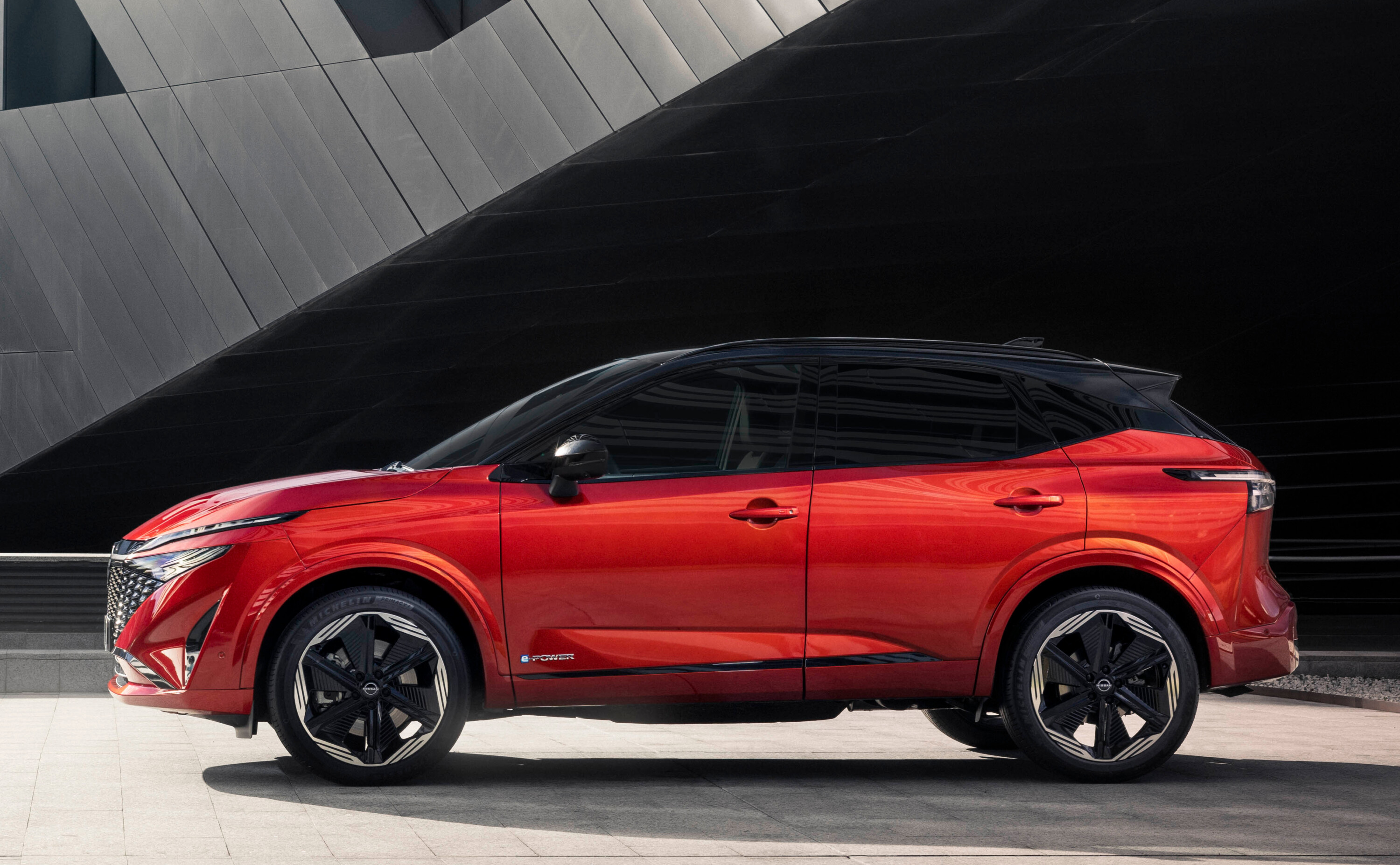
There are also new 18-, 19- and 20-inch alloy wheel designs, and three new colours: Pearl White, Pearl Black and Deep Ocean
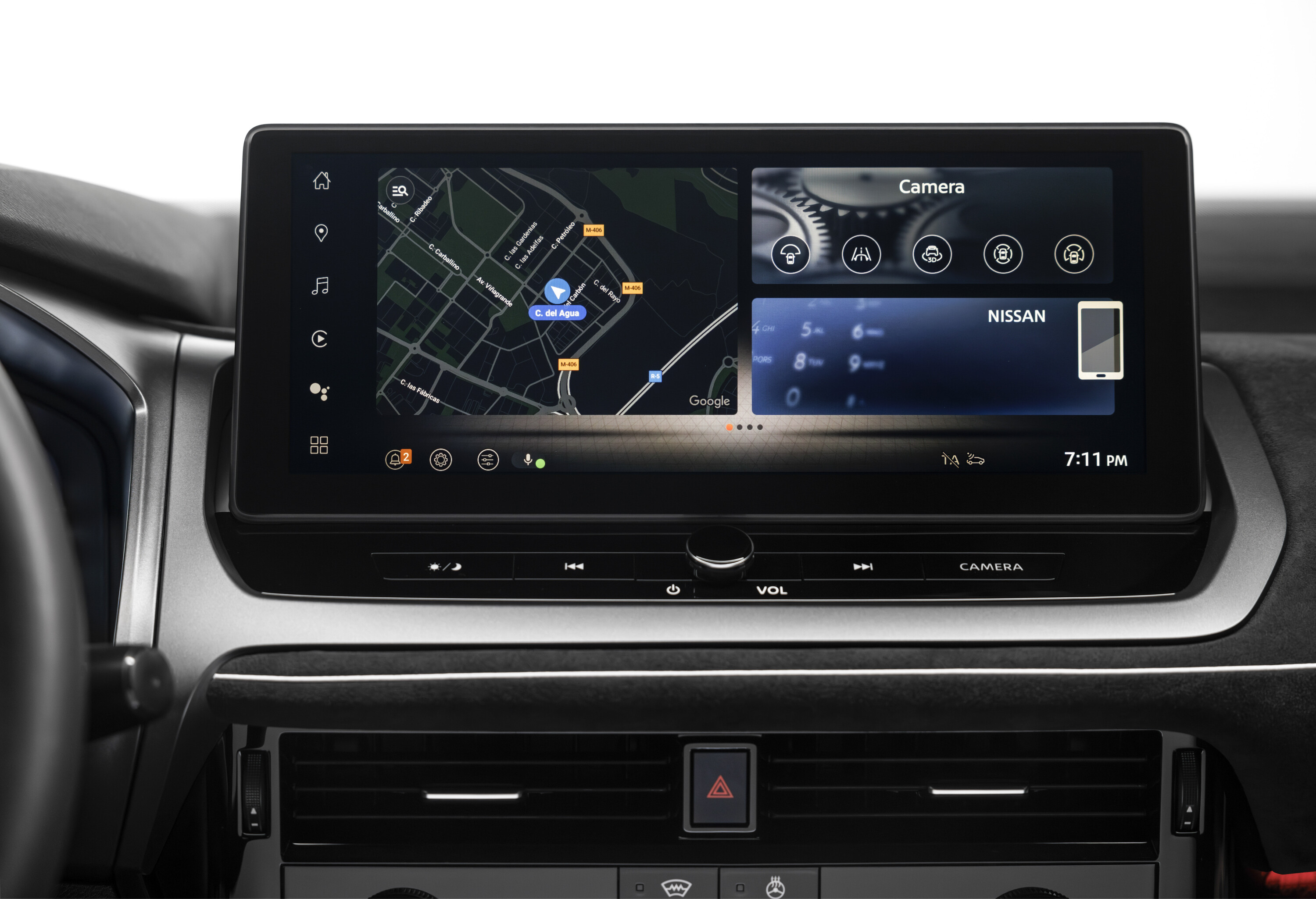
Inside, the Qashqai features a new, more powerful Android Automotive-based infotainment system with Google Built-In, allowing drivers to log into their own Google account and access certain services, such as Maps and Assistant.
Google Assistant – activated with the ‘Hey Google’ voice command – allows drivers to control certain vehicle functions, such as the climate control or satellite navigation.
The Google Play store is available for third-party downloads, such as Spotify and YouTube Music.
However, it is unclear if Nissan Australia will offer its vehicles with Google services as it does not offer ‘NissanConnect’ with a built-in data SIM to connect to a 4G or 5G network.
NissanConnect also supports remote vehicle functions to close the windows, lock the car, or immobilise and track it in case of suspected theft from the direction of law enforcement authorities.
An updated 360-degree camera is included within the infotainment system with clearer external cameras, a 3D function to visualise the car from the front, rear, sides or corner – in addition to the existing ‘bird’s eye view’ – and an invisible bonnet view to avoid curbing the wheels.
Active safety systems have also been revised with a recalibrated autonomous emergency braking system, intelligent speed limit assist, and a custom driver assist mode to allow them to set their preferences at each start-up.
The Qashqai will also be available with a parking spot memory function to save frequently visited locations, allowing the car to automatically manoeuvre into the spot – as seen in recent BMW, Mercedes-Benz and Volkswagen vehicles.
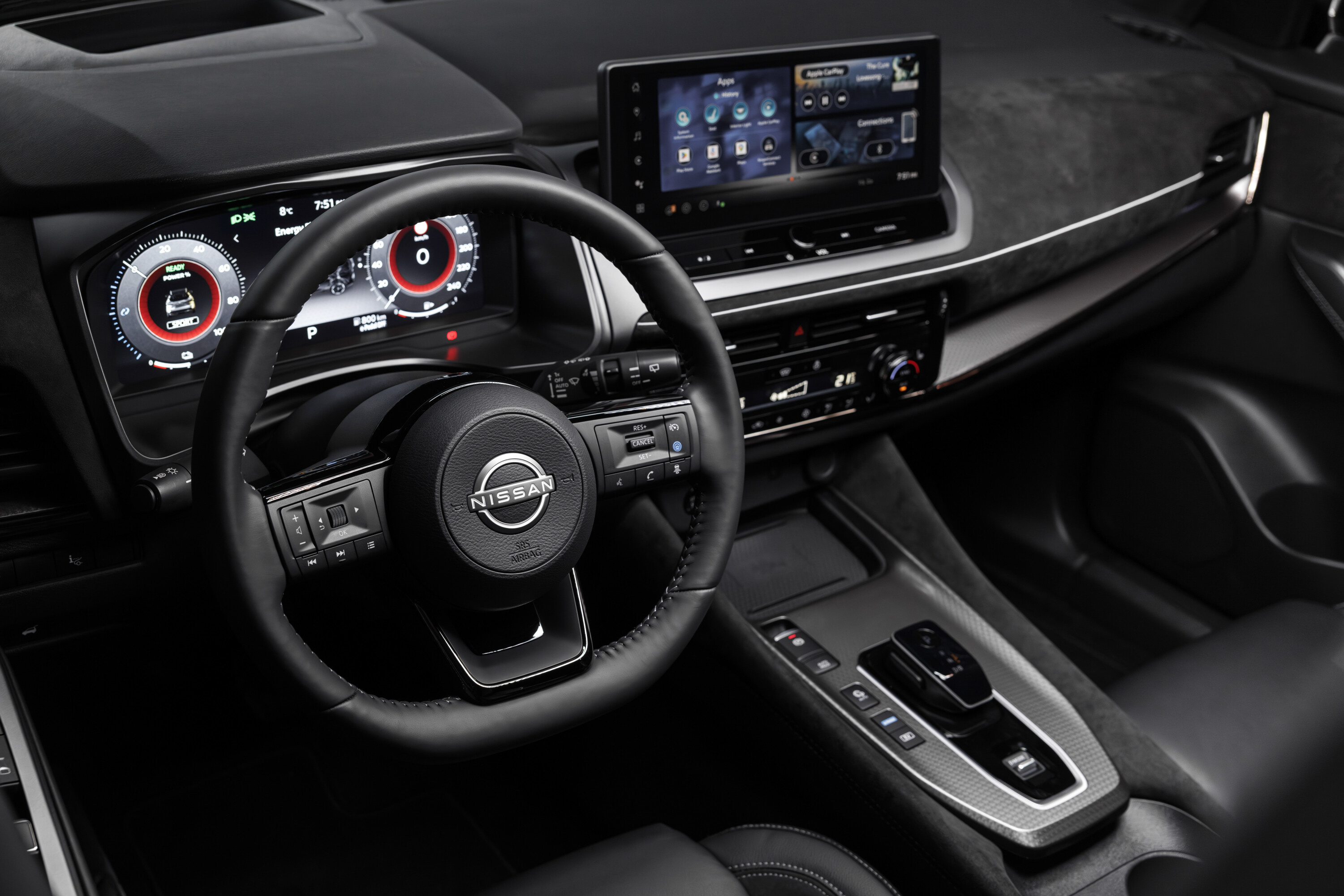
It also has revamped graphics in the 12.3-inch digital instrument cluster, with a ‘minimal’ mode to limit distractions, an energy flow monitor in ‘normal’ mode for E-Power hybrid variants, and different colours for each drive mode: pale grey for Normal, red for Sport and green for Eco.
High-spec variants are now available with Alcantara trim on the dashboard, doors, centre console lid and knee pads, while there are also new patterned materials around the gear selector and a revised decoration insert between the upper dashboard and glovebox to replace the current woodgrain look.
Some variants also have updated seat trims – including a new brown accent for the seat base and shoulders – while Nissan has added configurable ambient lighting strips in the front and rear of the Qashqai’s cabin.
There have been no changes to the Qashqai’s powertrain lineup for the facelift. It is available with a 110kW/250Nm 1.3-litre four-cylinder turbo-petrol or a 140kW/330Nm 1.5-litre three-cylinder E-Power hybrid in Australia.
Limited to the top-of-the-range Ti, the Qashqai E-Power hybrid arrived in Australia last month, priced from $51,590 before on-road costs.
The facelifted 2025 Nissan Qashqai will arrive in Australia later this year. More details – including pricing and features – are due to be confirmed closer to its launch.
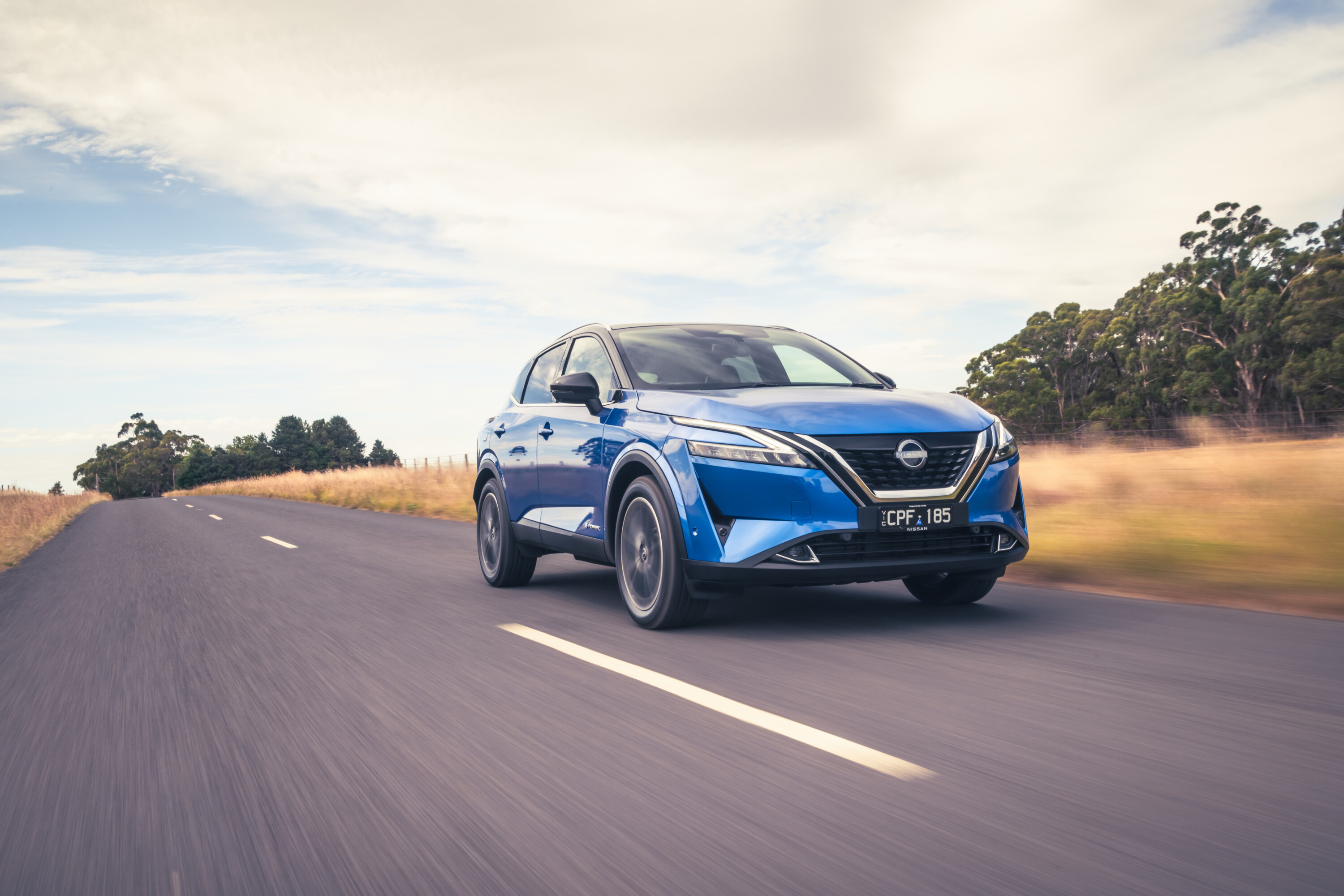
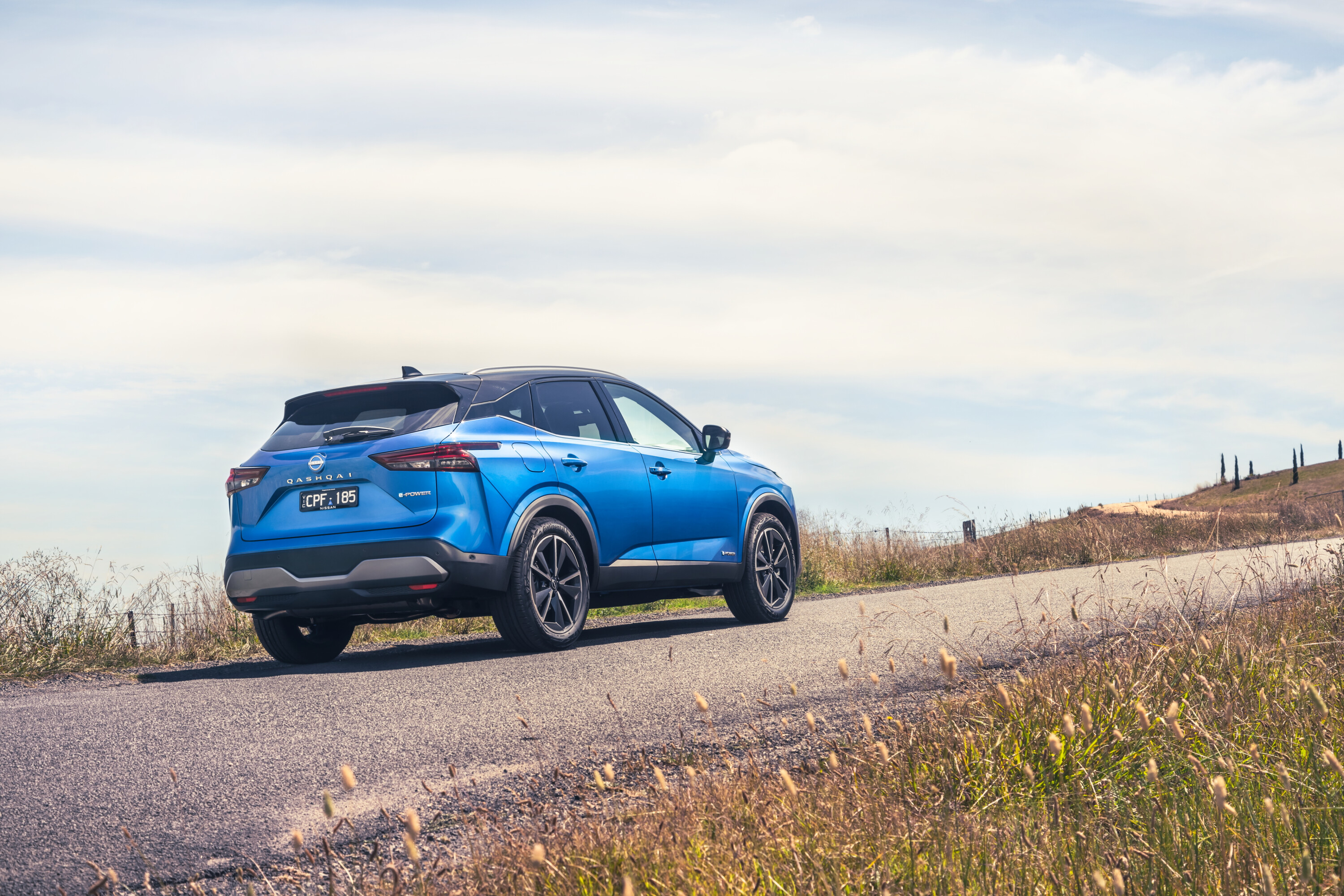
Below: The current 2024 Nissan Qashqai
Snapshot
- Local testing is ramping up for GMC Yukon’s Aussie arrival in 2025
- Yukon is bigger than LandCruiser, has eight seats and V8 power
- First GMC model locally since Acadia rebadged for Holden
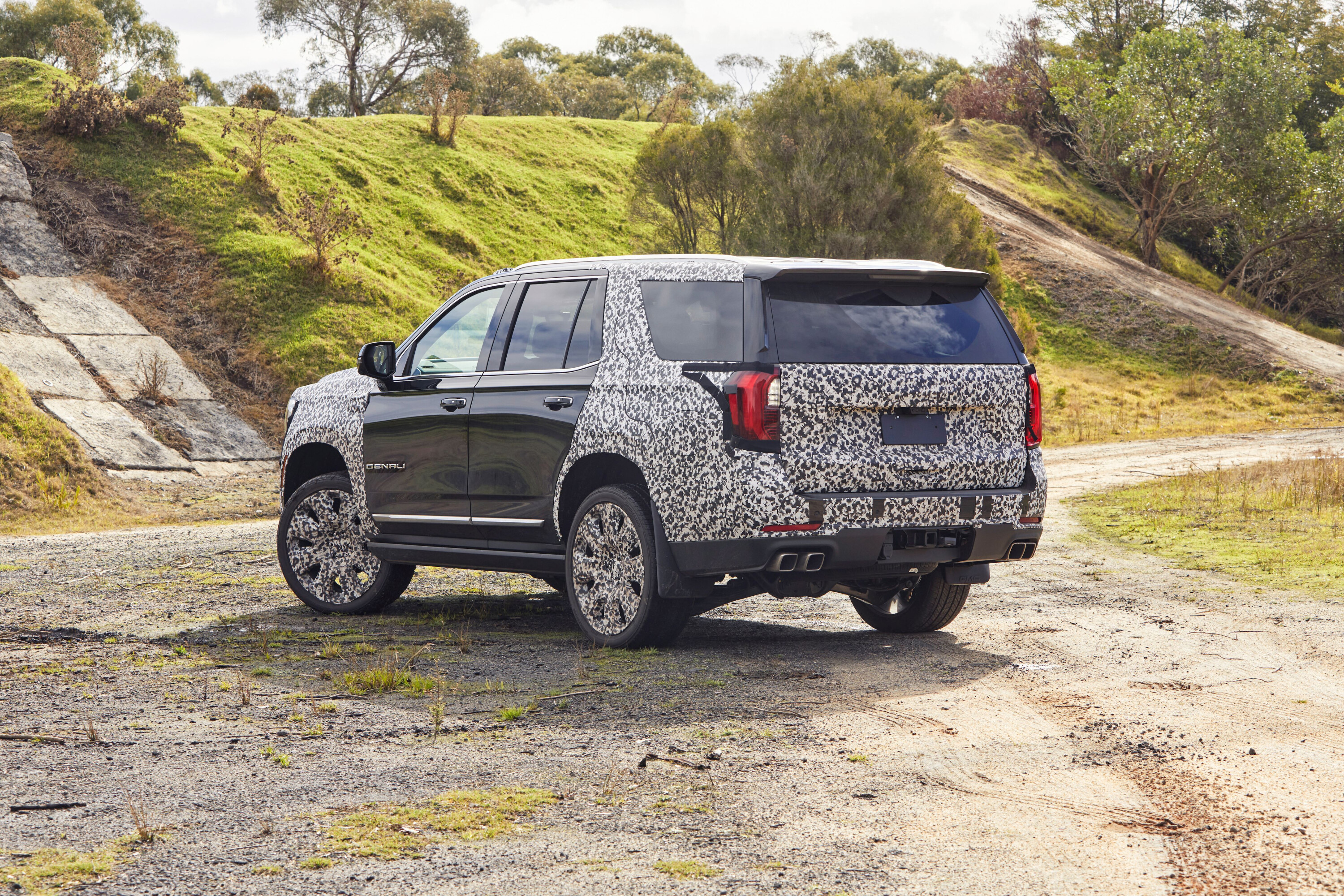
The first official shots of a right-hand drive 2025 GMC Yukon have been released by GMSV, which show a facelifted version of the big SUV on Aussie soil.
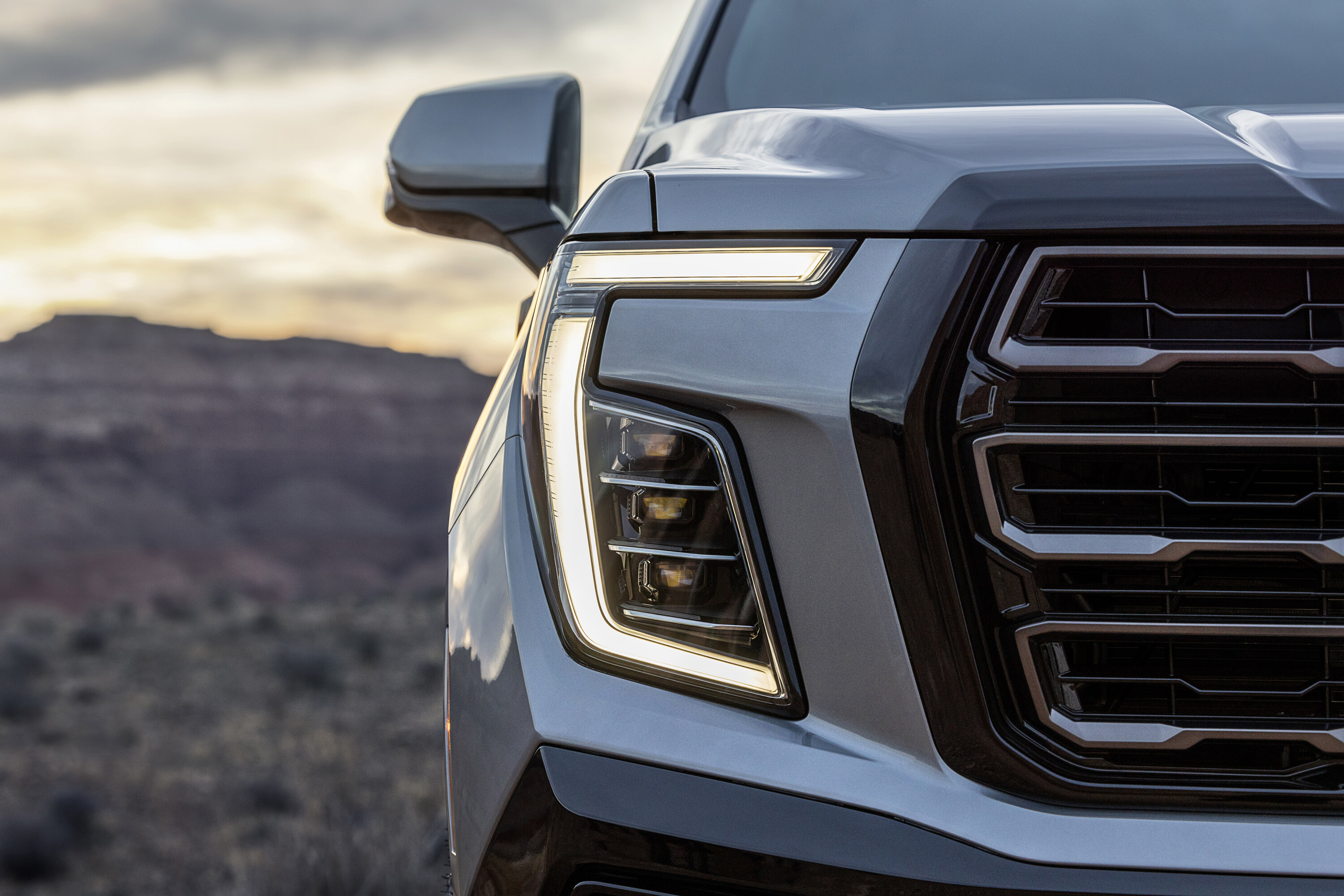
GMC dropped the first teaser image of the upcoming Yukon facelift in America earlier this week, which showed a new headlight design and front grille on a mid-spec AT4 model.
Today’s pictures, however, show GMSV already has its hands on the updated model to undergo local testing and development work.
Set to launch here in the first half of 2025, the full-size GMC Yukon will be a rival for popular off-road SUVs like the Toyota LandCruiser and Nissan Patrol.
Unlike those off-roaders, however, which use a monocoque design, the Yukon rides on a ladder-frame chassis shared with the Chevrolet Silverado.
The Yukon will join GMSV’s growing Aussie line-up and will be converted to right-hand drive at the Walkinshaw Automotive Group’s facility in Melbourne.
Only the top-spec Yukon Denali will be sold here — meaning prices could creep higher than $150,000 — which should mean a long-list of standard features and an eight-seat layout.
“It’s exciting that another vehicle is joining the GMSV line-up – one that features a full complement of eight-seats and offers great towing capability,” said GM’s managing director for Australia and New Zealand Jess Bala.
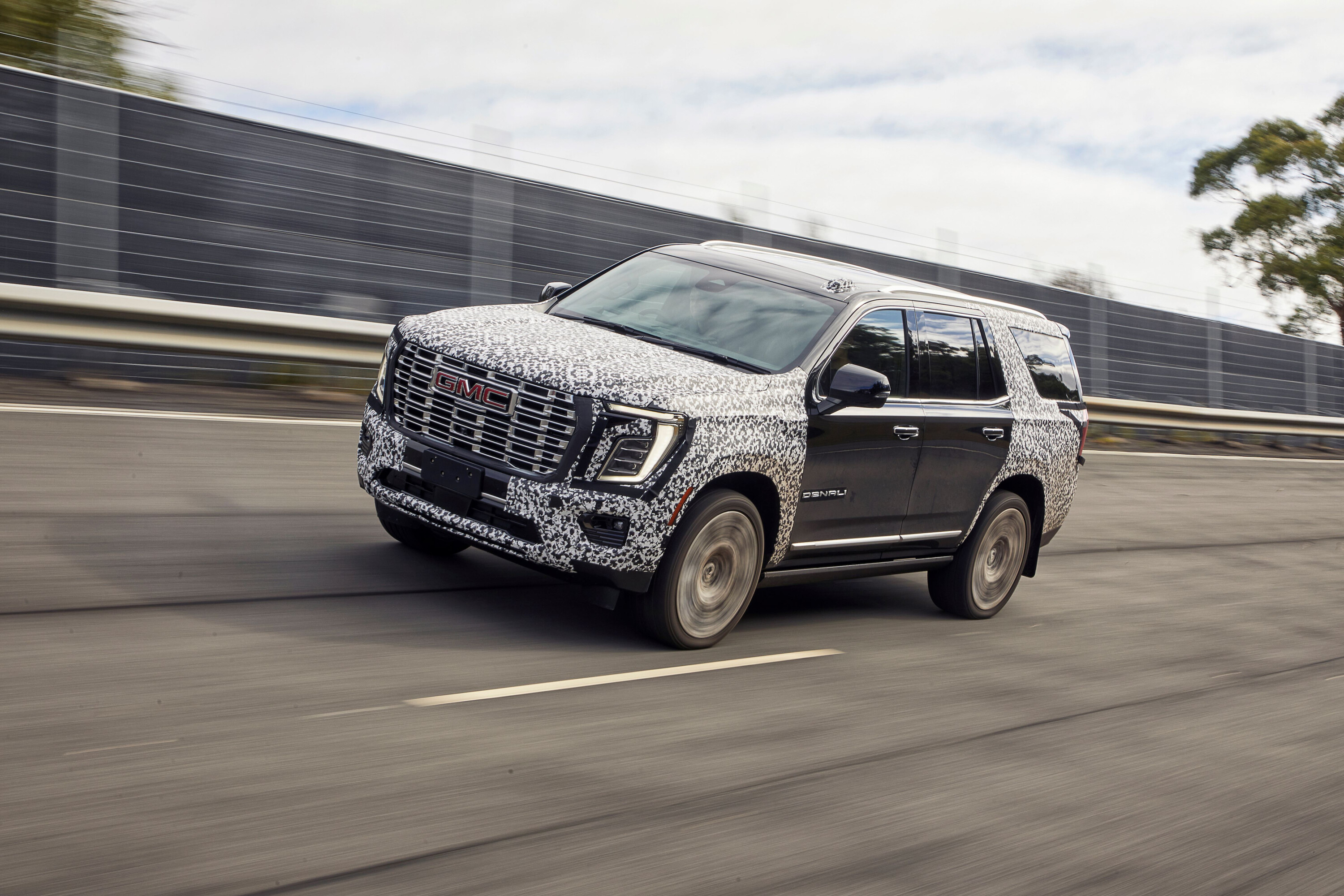
“Vehicle development post-remanufacturing is progressing extremely well and we’re on track to deliver the new model to customers in first-half of 2025.
“Now that the camouflage has come off, we’ll be able to embark on more extensive on-road, local right-hand-drive development and testing.”
November ’23: The GMC Yukon will take on the Toyota LandCruiser 300-series in Australia from early 2025 as General Motors continues to expand its presence locally.
GM’s full-size luxury eight-seater SUV will join the Chevrolet Silverado pick-up and Corvette sports coupe in its ‘Specialty Vehicles’ stable in Australia and New Zealand.
GMSV will import the high-spec Denali model for local conversion to right-hand drive by the same Walkinshaw operation that looks after the Silverado’s switch from LHD.
It will become the first GMC on local roads since the smaller Acadia seven-seater was rebadged as a Holden in 2018 to replace the underwhelming Captiva.
Yukon competes in a busy space in North America, rivalling models including the F-150-based Ford Expedition, Lincoln Navigator, Nissan Armada (Patrol), as well as stablemates from Chevrolet, the Suburban and Tahoe.
As with rivals such as the Expedition, which is based on the F-150, the body-on-frame Yukon shares its ‘T1’ platform with pick-ups, including the Silverado and GMC Sierra, while featuring an independent rear suspension.
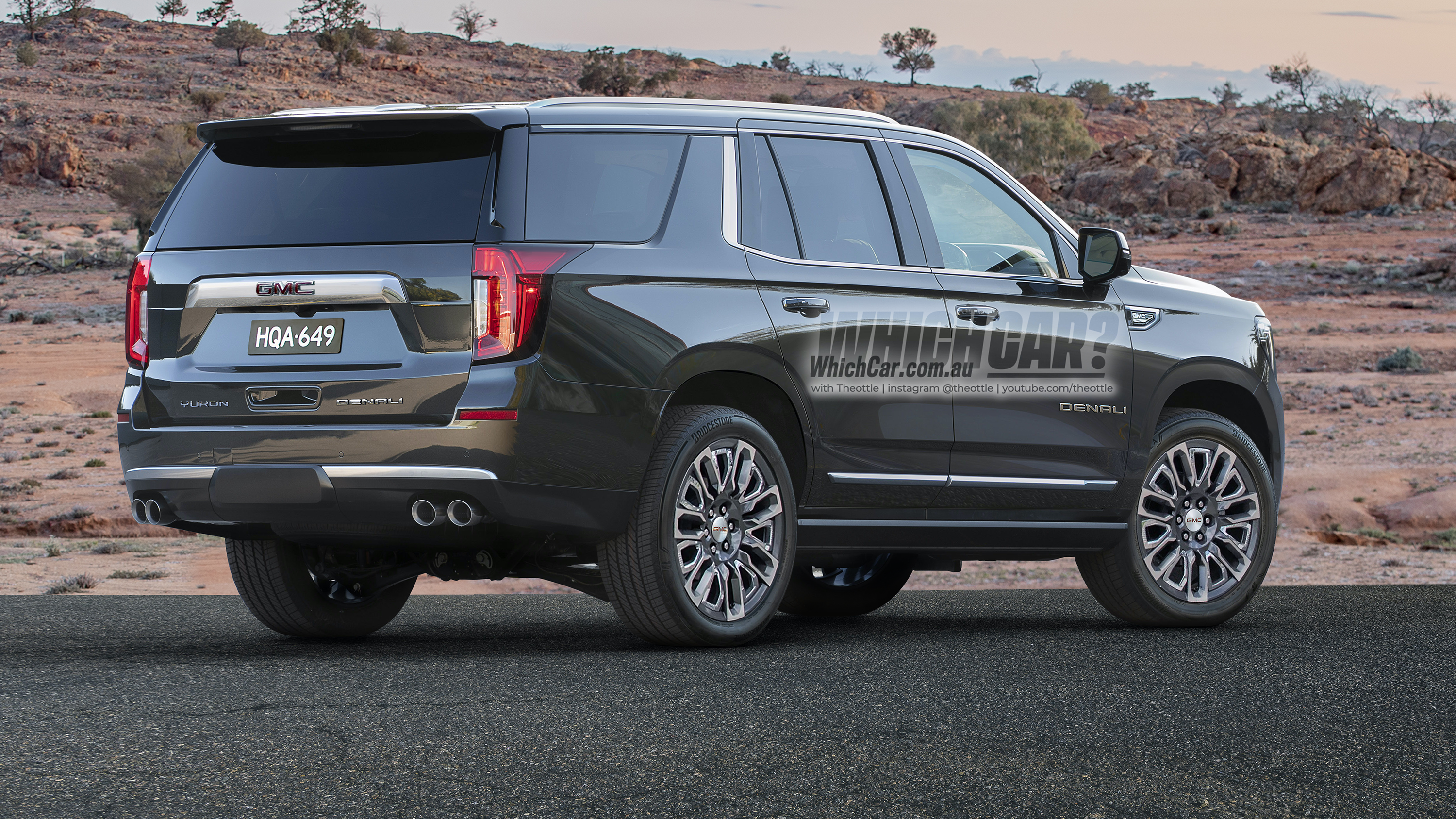
The Yukon’s eight-seater status will give it a distinction in Australia.
The Toyota LandCruiser no longer offers more than seven seats, while the related Lexus LX offers a choice of four- to seven-seat layouts.
The Yukon announcement was made on GMSV’s third anniversary in Australasia, with the umbrella brand’s success since 2020 – notably with 8000 Silverados remanufactured at Walkinshaw’s Dandenong facility – prompting the business-case exploration of other US models.
“We’ve had a lot of success with the Silverado here and, in talking to dealers, talking to customers, we think there’s a real opportunity for a full-size premium SUV like the Yukon,” GM Australia and New Zealand managing director Jess Bala told Wheels.
“The [GMC] Yukon is a bit of an icon over in the US … It’s an amazing premium SUV.
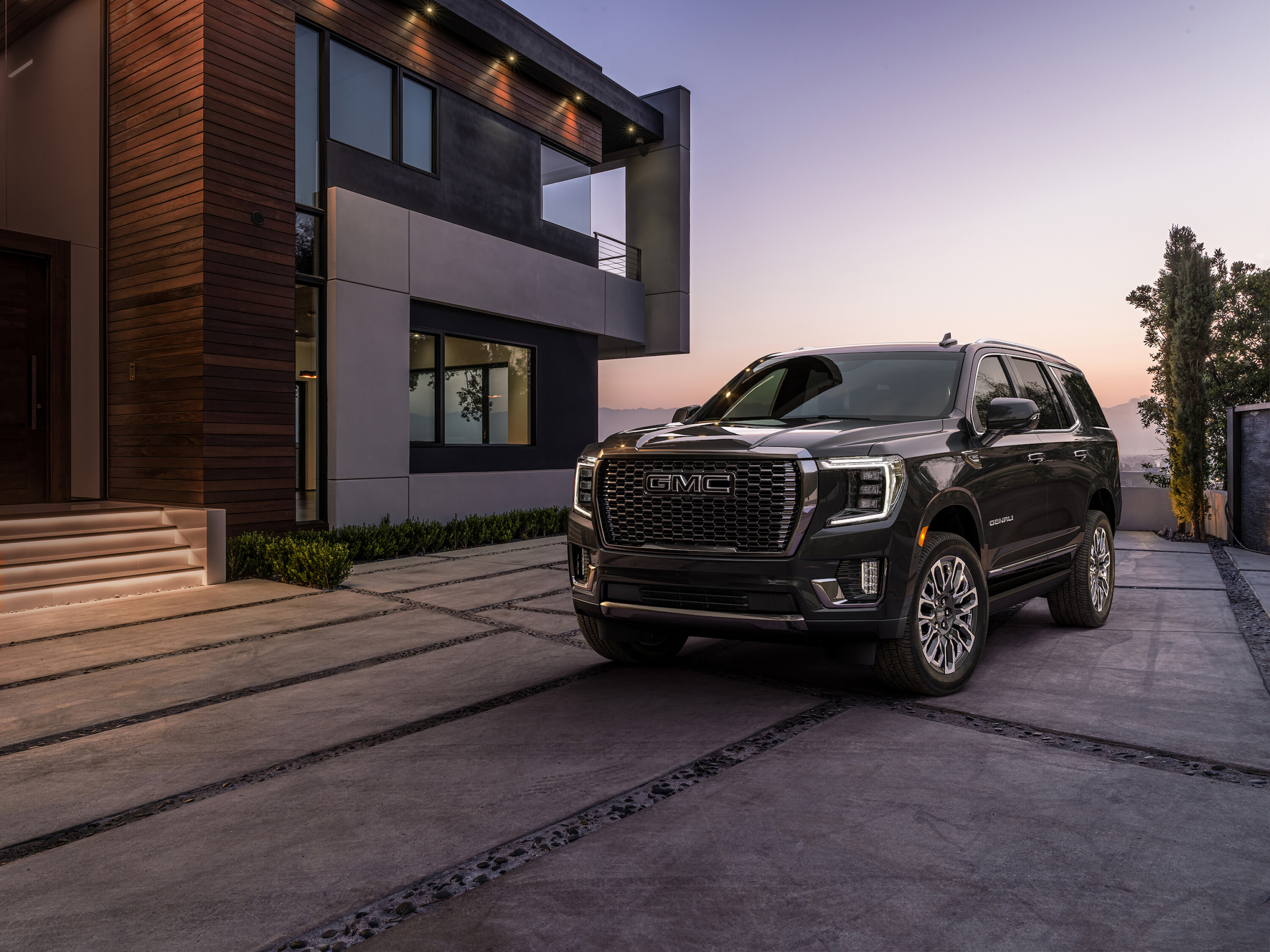
“It seems like the great next step for GMSV, and also just shows our commitment to that umbrella brand and constantly looking for the right portfolio opportunities for the customers here in ANZ.”
The 5.3-metre-long GMC Yukon is available with a choice of drivetrains in the US, including a 3.0-litre turbo diesel. The Australian Yukon will be powered exclusively by a 6.2-litre petrol V8 producing 313kW and 624Nm, mated to a 10-speed auto with dual-range transfer case.
The rear-drive Yukon has the highest towing rating at 3720kg, though the four-wheel-drive Denali model will still offer Aussies about 3630kg – well below the Silverado’s 4.5-tonne figure but setting a new local benchmark for an SUV.
Toyota’s LandCruiser 300, Nissan’s Patrol, Lexus’s LX and Land Rover’s Defender 130 all share a 3500kg braked towing figure.
GM says the Yukon’s towing capabilities, in addition to its eight-seat layout, will form a crucial part of its “multi-dimensional” appeal locally.
“There are not many premium SUVs that are eight seats and sit in that space of being that vehicle that a family can use to go from school to the outback in,” said GM International’s director of communications, Lauren Indiveri.
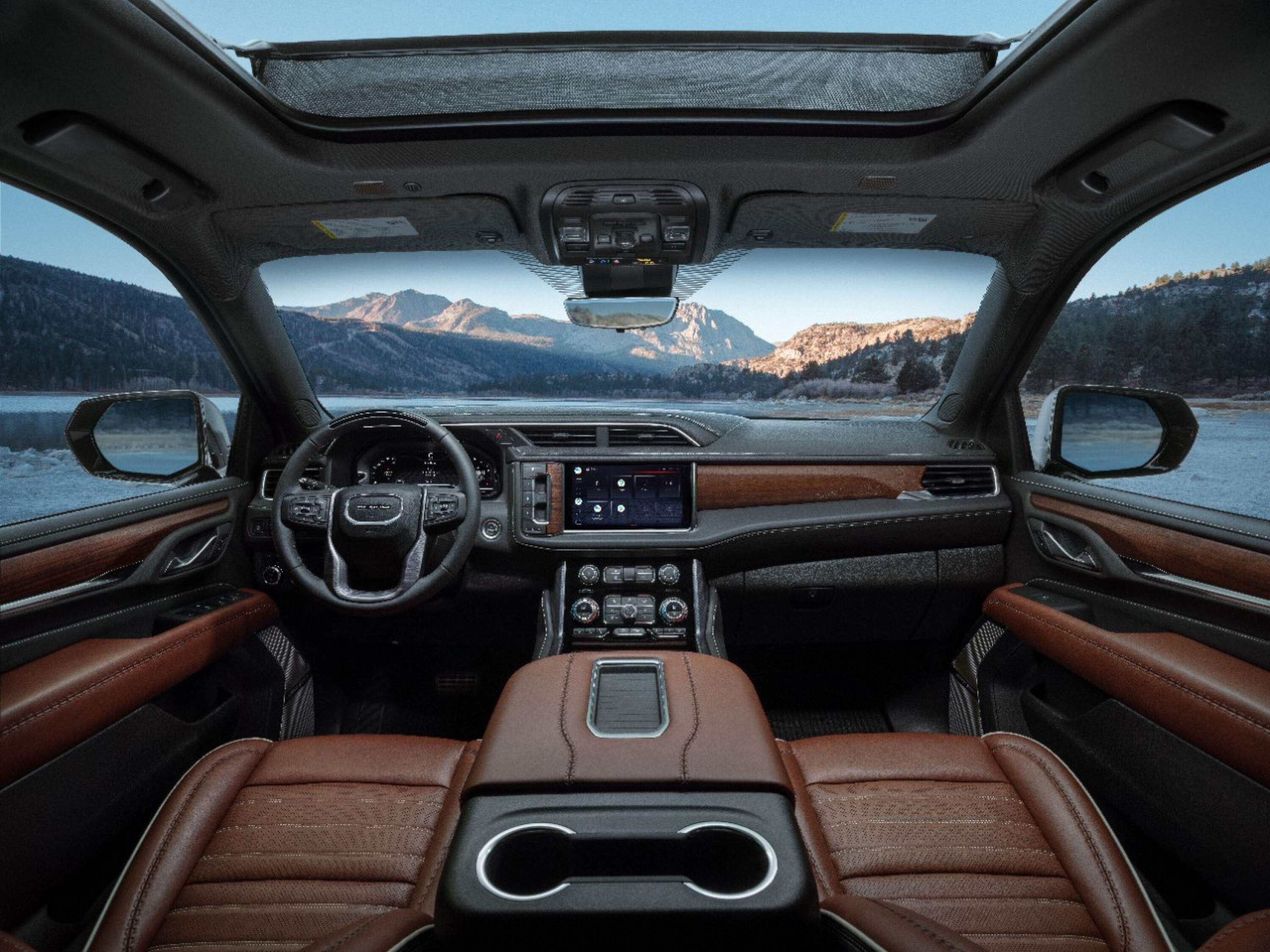
The GMC Yukon Denali 4WD costs the equivalent of $126,000 as a starting point in the US
“This is where we see an opportunity for Yukon to really come in and sit in that GMSV portfolio – where towing is a huge part of who we are as a business – with Silverado as well, of course.
“That capability of Yukon is something special that we’re going to offer here. You still get a family vehicle, but you can also go and tow and hitch up your caravan or your boat or whatever and off you go.”
How much will the GMC Yukon cost in Australia?
With the Yukon’s arrival at least 14 months away, pricing and full specs are unlikely to come before late 2024.
The GMC Yukon Denali 4WD costs the equivalent of $126,000 as a starting point in the US. Using the Silverado LTZ as a guide – $103,000 converted and $121,000 RRP – our best guestimate is a circa-$150K price for the Denali.
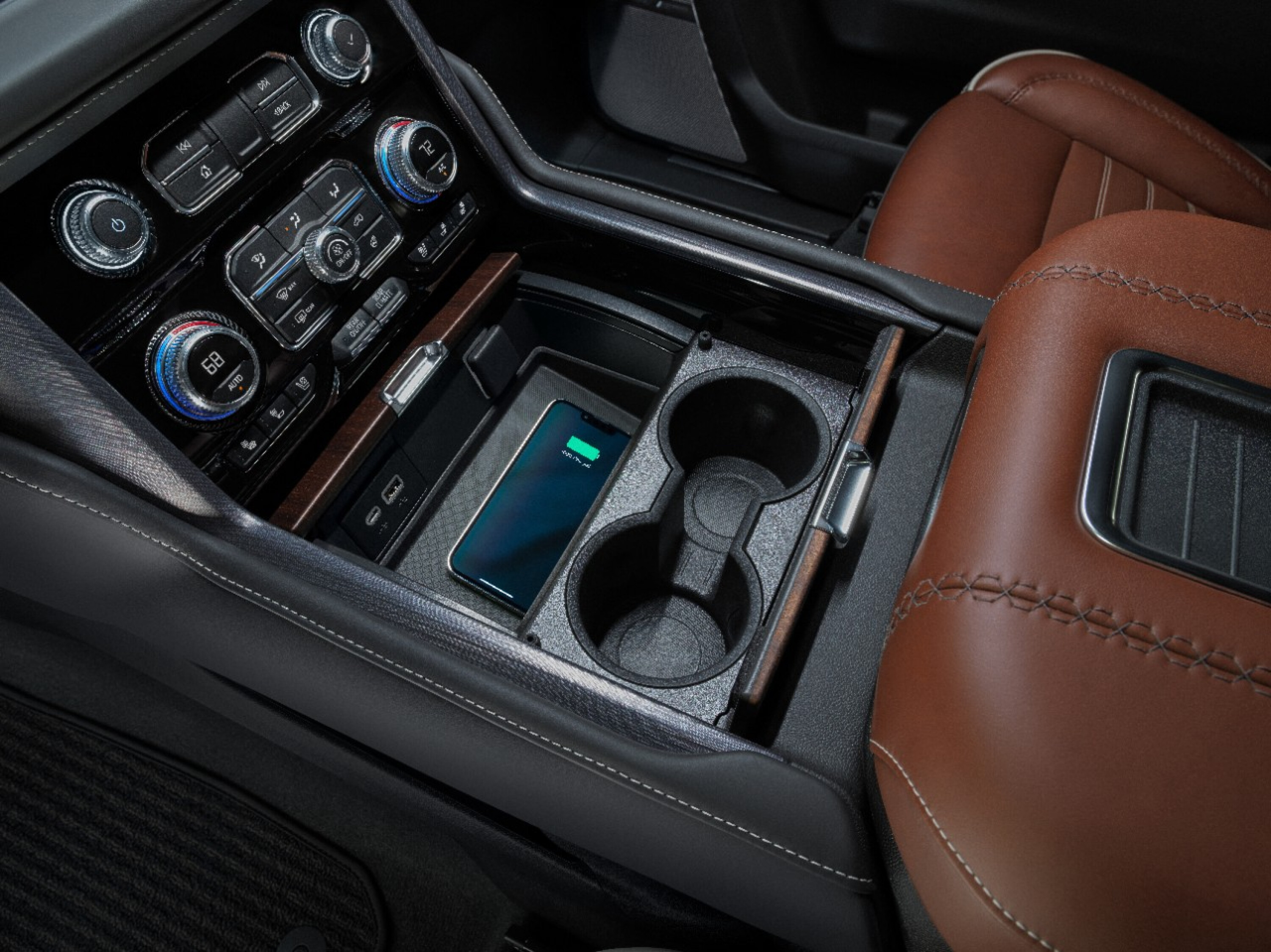
In the US, standard Yukon Denali features include 20-inch wheels, Magnetic Ride Control dampers, 360-degree camera (with up to 13 camera views in total), 15-inch head-up display, heated and ventilated front seats, heated steering wheel, heated rear outboard seats, and a 10.2-inch infotainment touchscreen with Google Built-In.
A vast array of options includes 22-inch wheels, panoramic sunroof, air suspension with extra ground clearance, and dual rear-cabin infotainment touchscreens. An optional Enhanced Trailering Tech pack incorporates extra cameras and guideline assistance.
The Yukon is also available as a longer-wheelbase XL that can hold nine occupants, though this is not planned for Australia at this stage.
Will other GMC models follow Yukon to Australia?
GM said there was potential for more US models to be imported for GMSV when asked about ute options such as the GMC Sierra full-size pick-up, Canyon mid-size dual-cab, or even the GMC Hummer electric SUV.
“I think the beauty of GMSV as an umbrella brand is that it allows us to do those more niche offerings,” said GM ANZ managing director Bala. “Niche premium offerings with different brands, because that’s how we’ve stood up that business.
“I think customers recognise that we’re bringing in the right vehicles for the market here for the customer needs. So, if it was to be down that [GMC] path or a different GM brand, there needs to be a rationale and a good customer offering behind it before we would do it.”
See our links below for more on GM’s Australian offerings
In Australia, the Subaru Outback is well-regarded for its dual capacity to handle both city driving and rugged, off-road conditions. Introduced in the mid-1990s, it has built a solid reputation for being reliable and safe.
The Outback appeals particularly to families and those who enjoy outdoor activities, thanks to its all-wheel drive, spacious interior, and robust safety features.
Its design thoughtfully balances comfort with functionality, making it ideal for everyday use as well as adventurous outings. Although positioned as an SUV the Outback feels more like a wagon with added height.
Over the years, it has become synonymous with durability and versatility, capturing the essence of the Australian love for exploration and practicality.
Pricing & Features
The Subaru Outback AWD, with its robust feature set and competitive pricing, starts at $43,890 before on-road costs are added.
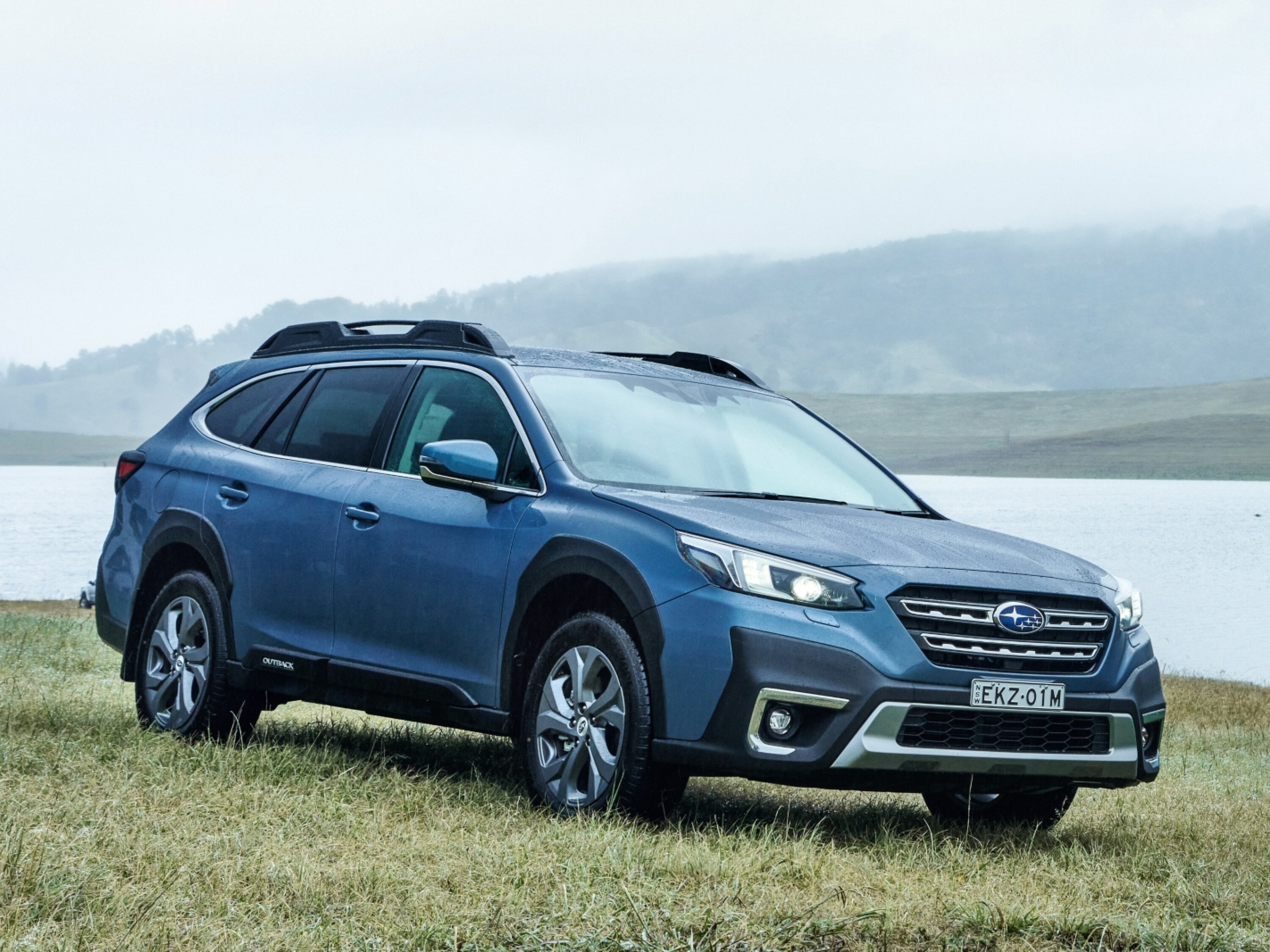
The entry-level Outback AWD includes 18-inch alloy wheels and an expansive 11.6-inch portrait touchscreen featuring wireless Apple CarPlay and wired Android Auto. Enhancements such as rain-sensing wipers, six speakers, LED headlights and black roof rails add both functionality and an outback aesthetic appeal.
The Outback is equipped with a 2.5-litre e-Boxer four-cylinder petrol engine producing output of 138kW and 245Nm of torque. It’s mated to a continuously variable transmission, and obvious for a Subaru, an all-wheel drive system.
Sport variants in the range come with a more powerful turbocharged 2.4-litre offering.
Safety
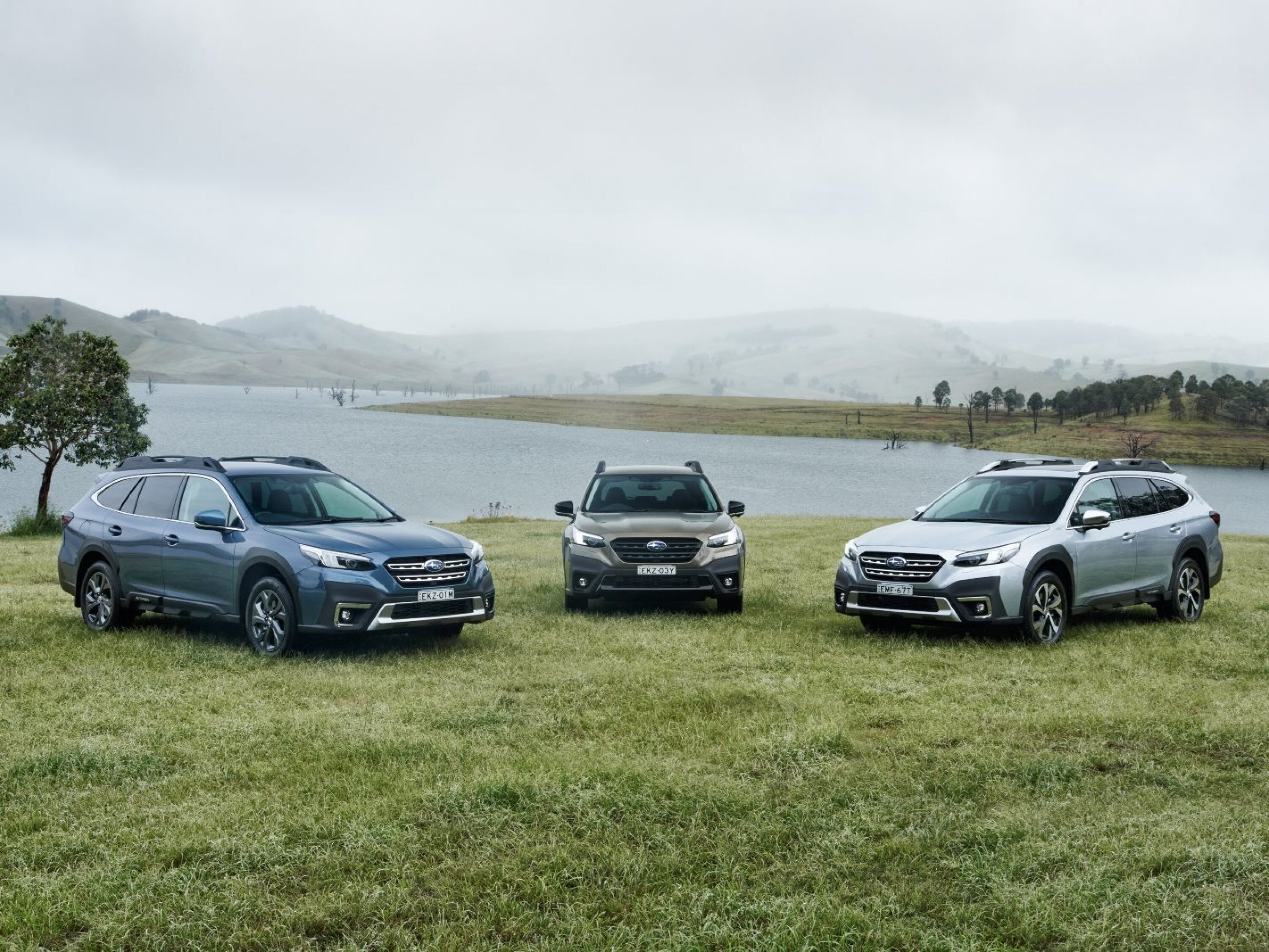
The 2024 Subaru Outback boasts a five-star ANCAP safety rating, a testament to its robust safety features, following tests conducted in 2021.
The Outback model excels in various safety metrics, achieving an adult occupant protection score of 88% and a child occupant protection score of 91%.
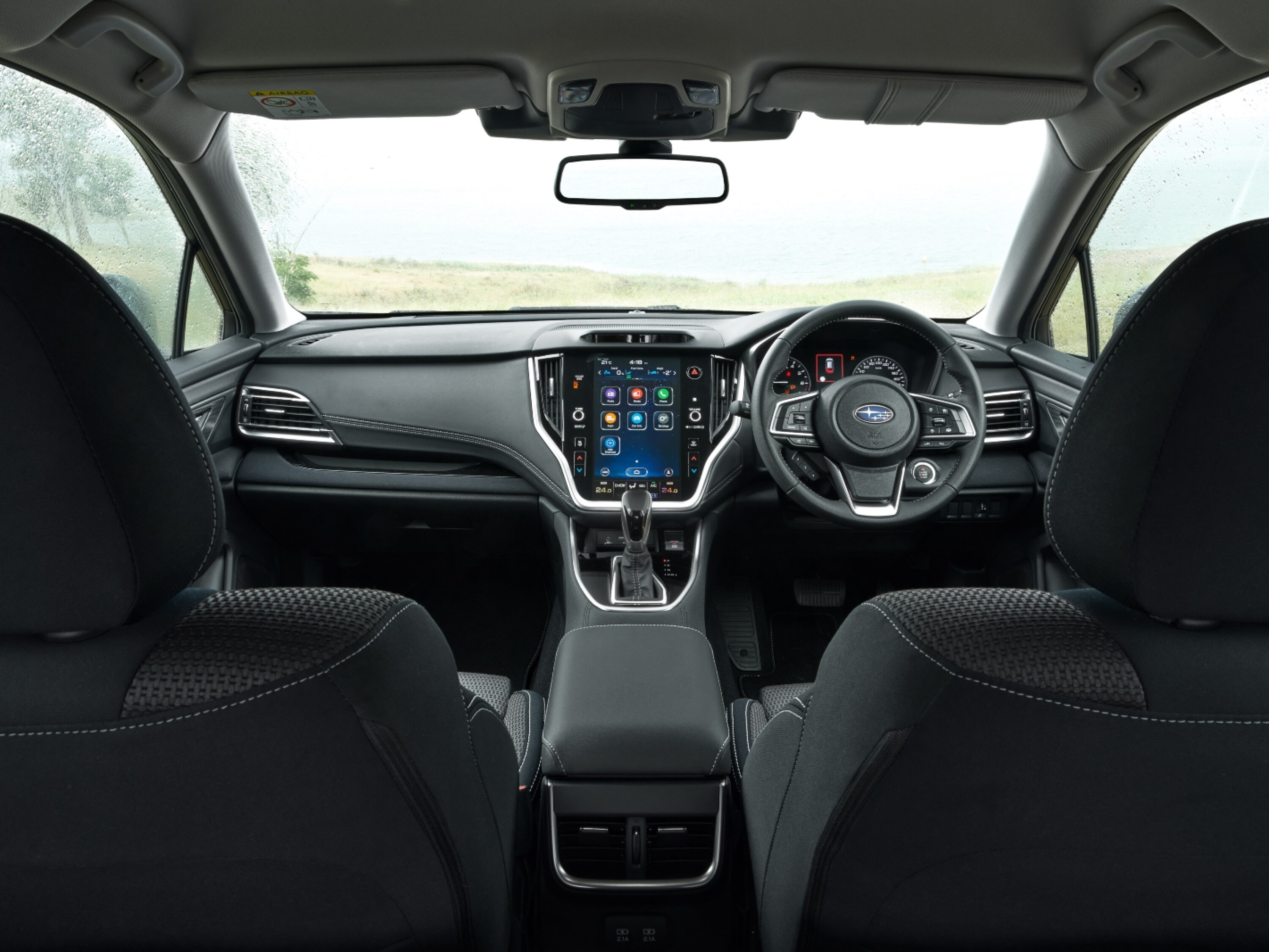
It is equipped with comprehensive safety equipment as standard, including Autonomous Emergency Braking (AEB) for forward and reverse scenarios with pedestrian, cyclist, and junction assist, autonomous emergency steering, blind-spot monitoring, rear cross-traffic alert, driver attention monitoring, lane departure warning, lane-keep assist, and traffic sign recognition.
Key Rivals
The Subaru Outback faces competition from both medium SUVs and other crossovers such as:
- Volkswagen’s Passat Alltrack
- Toyota RAV4
- Mazda CX-5
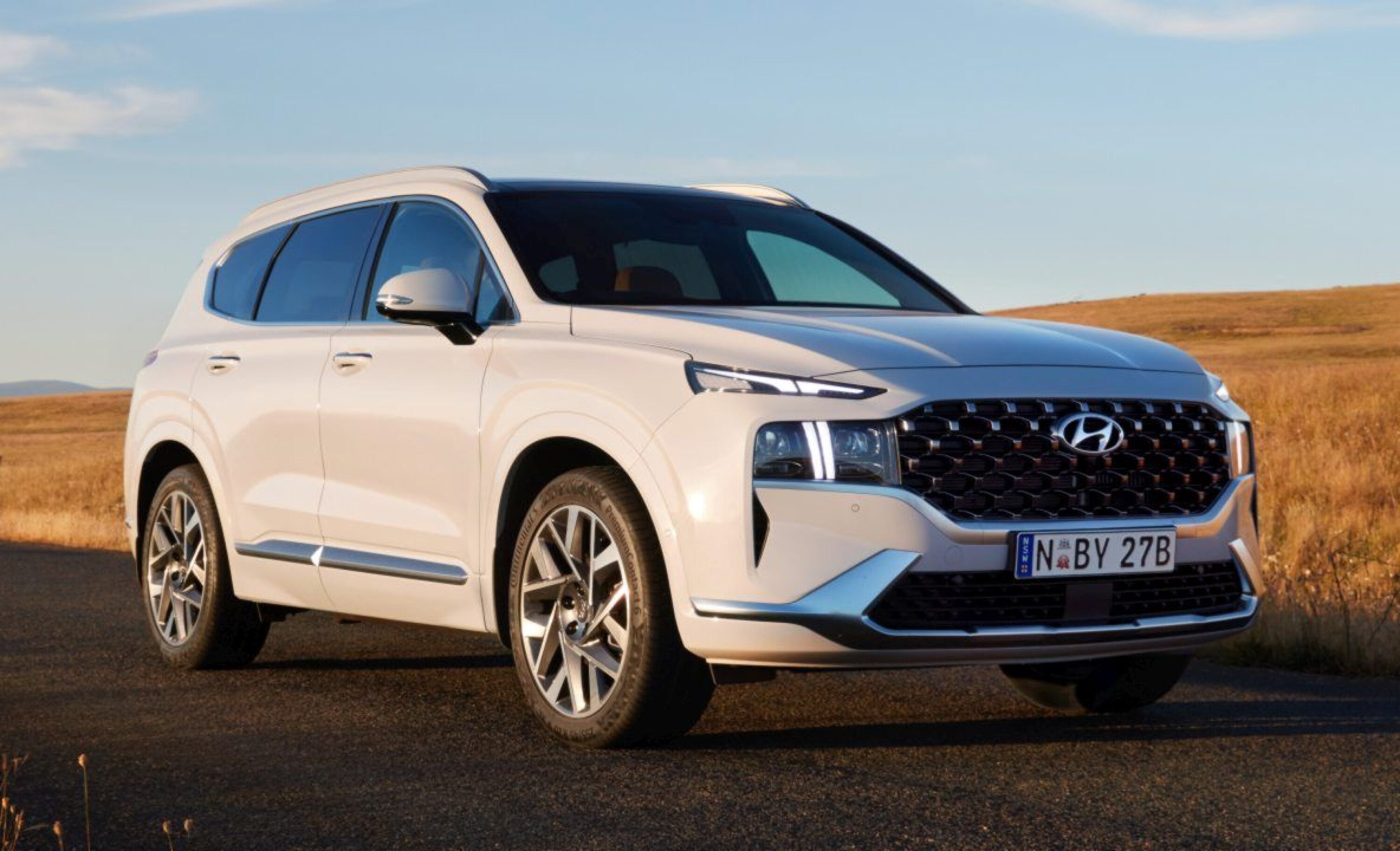
- Hyundai Santa Fe (new model coming 2024)
Should I put it on my shortlist?
The 2024 Subaru Outback AWD should definitely be considered for those in the market for a compact SUV that doesn’t compromise on safety, efficiency, or off-road capability.
More powerful options are available higher up the range if you’re wanting a bit of extra punch from a turbocharged engine. It can also be thirsty at times.
Aside from these points, its array of features tailored for a capable and adventurous lifestyle makes it an attractive option for modern drivers seeking a reliable and sustainable vehicle.
