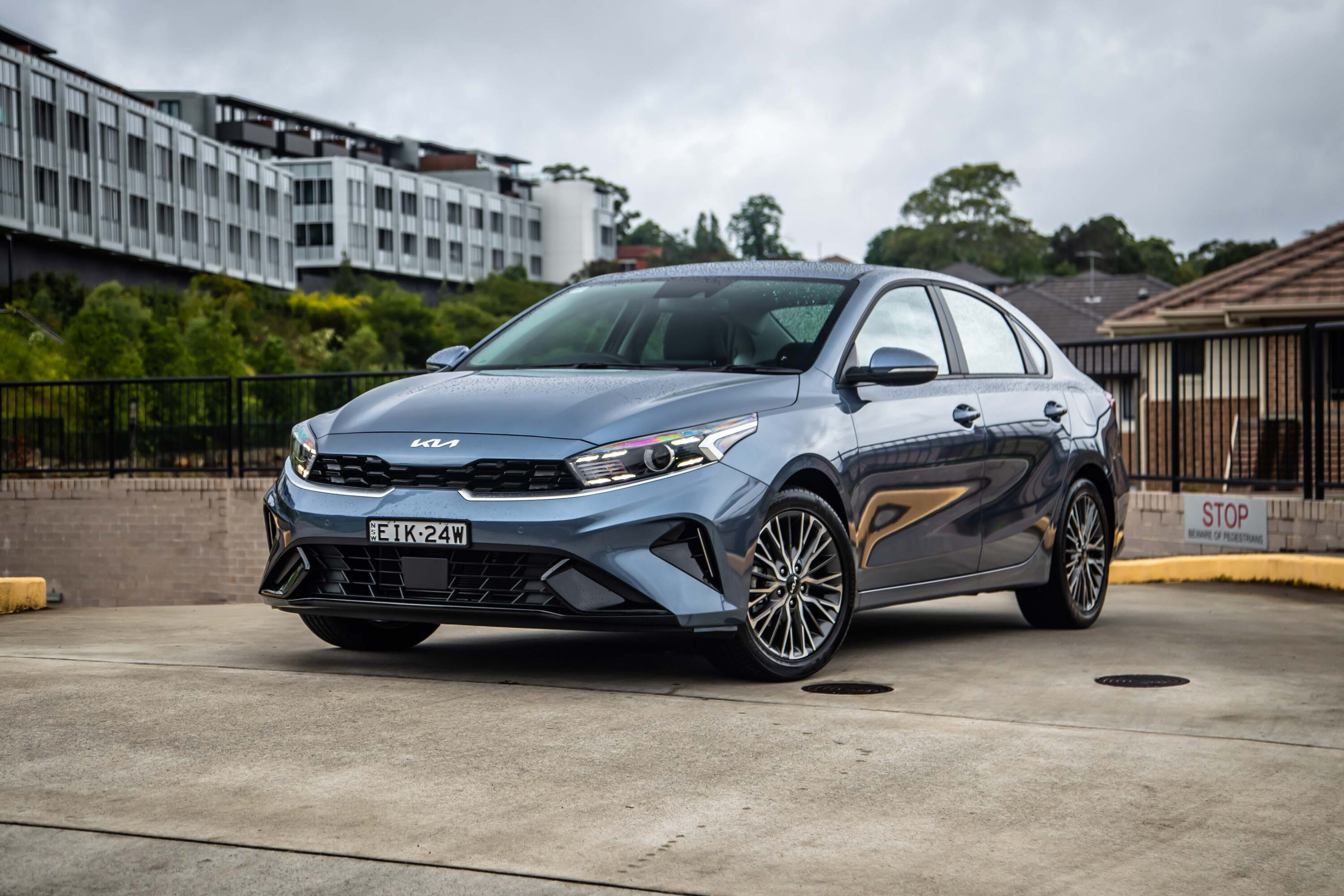
Hyundai’s new electric Kona is here, finally, and it presents as a more thought-provoking option than any would’ve thought when we first drove it way back in November.
December: Euro NCAP scoring announced
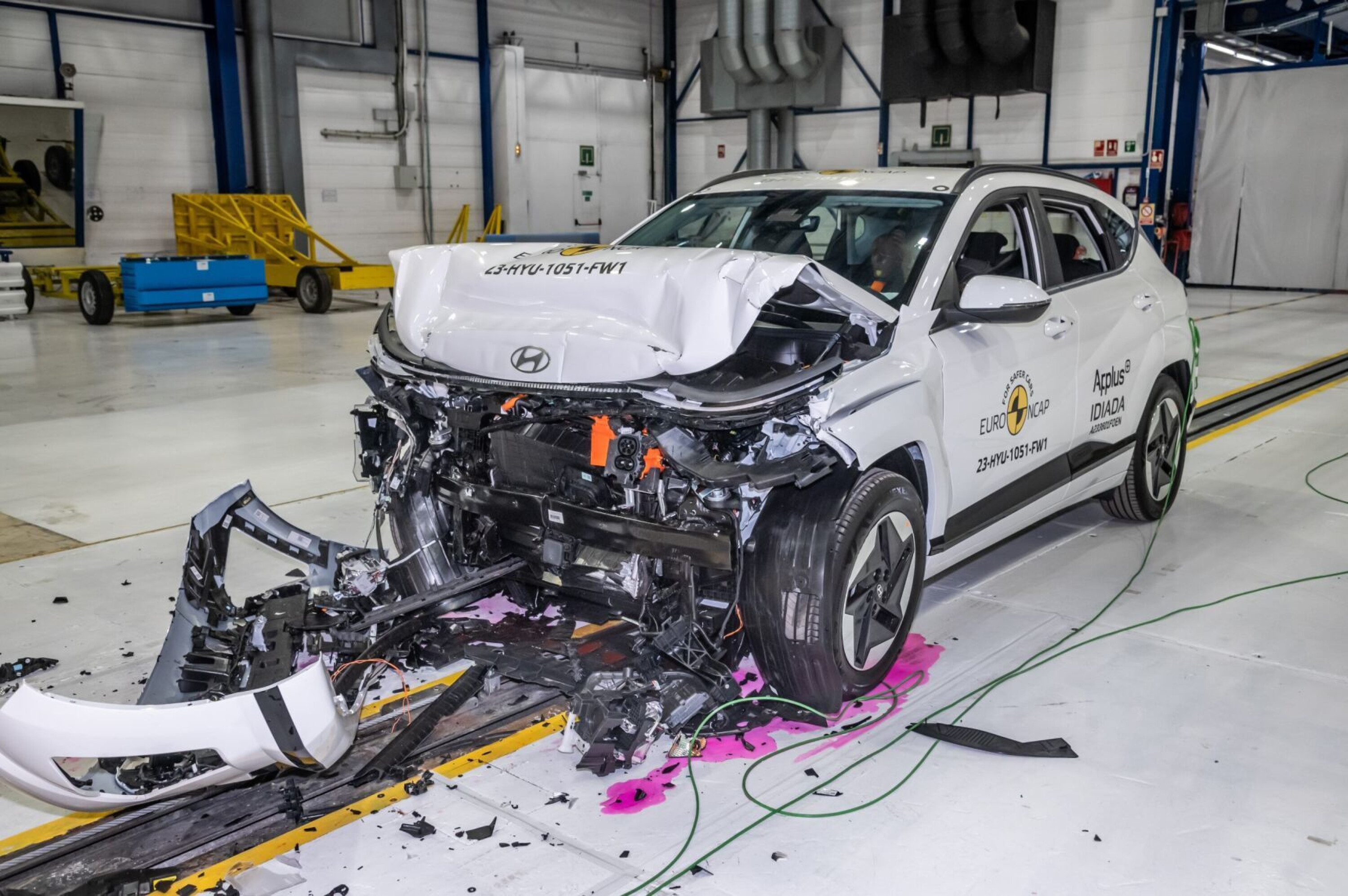
The new Hyundai Kona has come close to receiving a lowly three-star crash rating after placing last out of 11 vehicles tested by Euro NCAP.
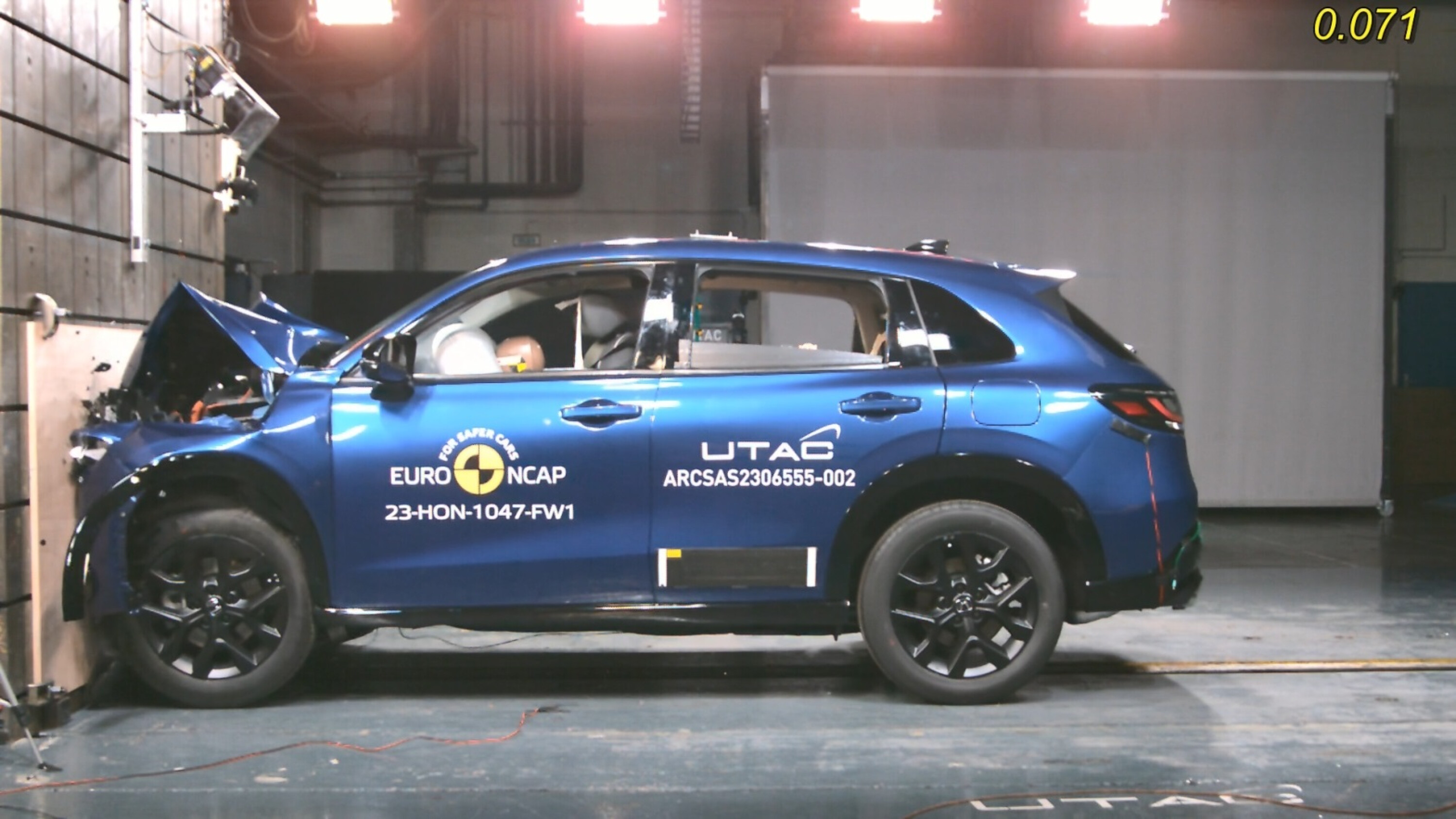
Hyundai’s second-generation small SUV was joined by the new Honda ZR-V midsized SUV and VinFast VF8 as the only models to miss out on a five-star rating.
Independent crash-test body Euro NCAP said that while the ZR-V fell just below the thresholds required for a maximum score, the Kona’s performance was a “real disappointment”.
“[The Kona] scrapes by with four stars, [but] in reality [is] lucky to avoid three stars,” said Euro NCAP in its accompanying release.
“This result is due to its substandard test performance, especially in driver assistance and crash avoidance.
“Hyundai has made the car larger and its interior bigger to compete within its class, but the company should not assume that its customers are content with a level of safety which lags behind its competitors.”
What’s a 4-Star rating worth?
It’s worth noting that Euro NCAP’s own system defines four stars as “Overall good performance in crash protection and all round; additional crash avoidance technology may be present”.
The local ANCAP system is more ‘glass half empty’, describing four stars thus: “Provides an adequate level of safety performance yet fell short in one or more key assessment areas. May present a higher injury risk to occupants and/or other road users in certain scenarios or have a reduced ability to avoid a crash.”
While Euro NCAP said the Kona’s passive-safety protection struggled in some areas in the frontal offset test, the Kona missed out on the maximum five stars only owing to the assessment of its active-safety systems.
NCAP gave the Hyundai a low 60 percent scoring for Safety Assist, mainly noting the lack of AEB (autonomous emergency braking) for when approaching a car crossing a junction and a “marginal” result for its car-head-on AEB performance.
1
Euro NCAP commended the Kona for its protection in the Side Barrier and Side Pole Impact, and the Hyundai’s 80 per cent score for Adult Occupant Protection was fractionally higher than the 79 per cent given to the ZR-V (pictured above).
It also scored 83 per cent for Child Occupant protection.
The Venue baby SUV is the only other current Hyundai to miss out on a five-star crash rating, also scoring four stars.
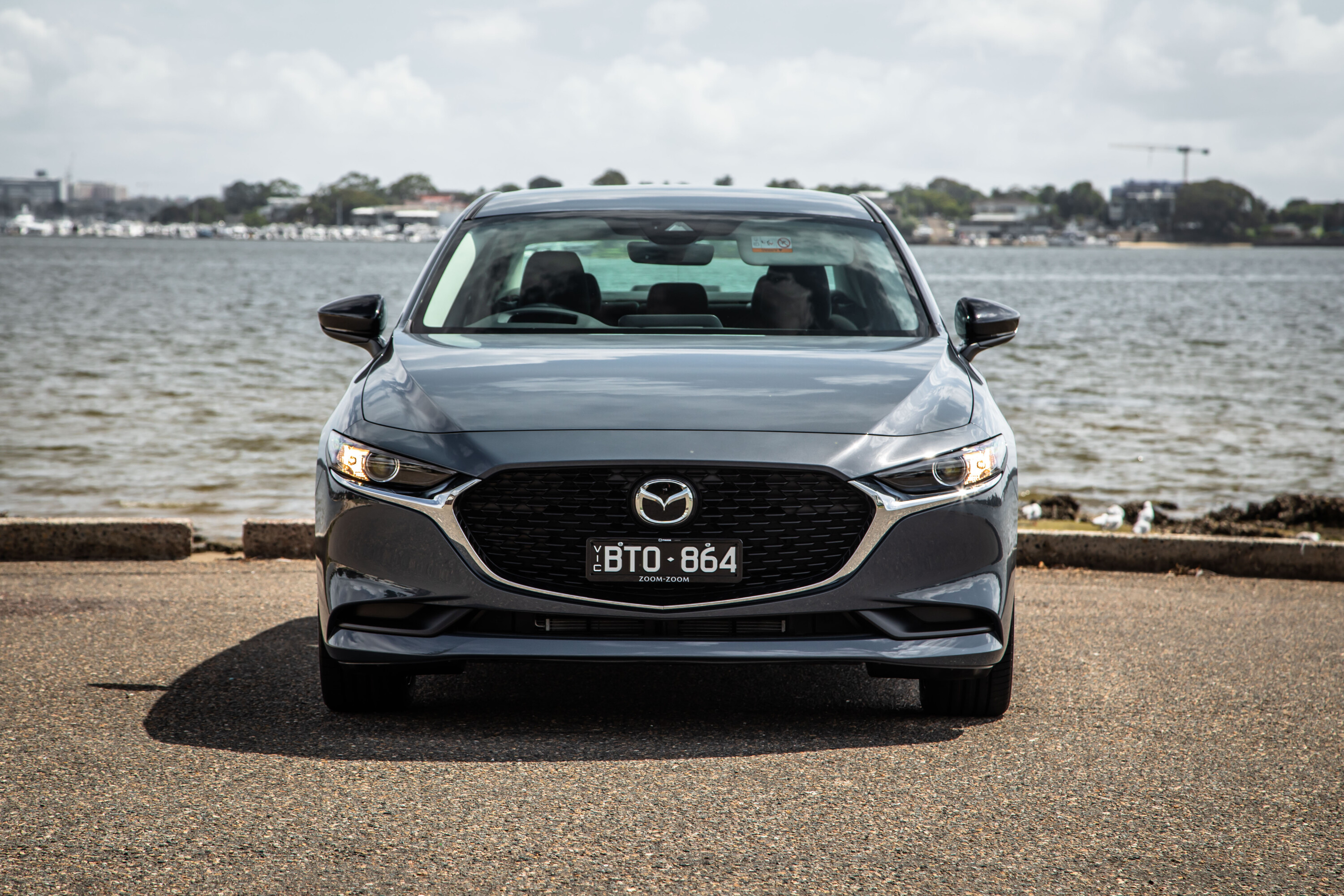
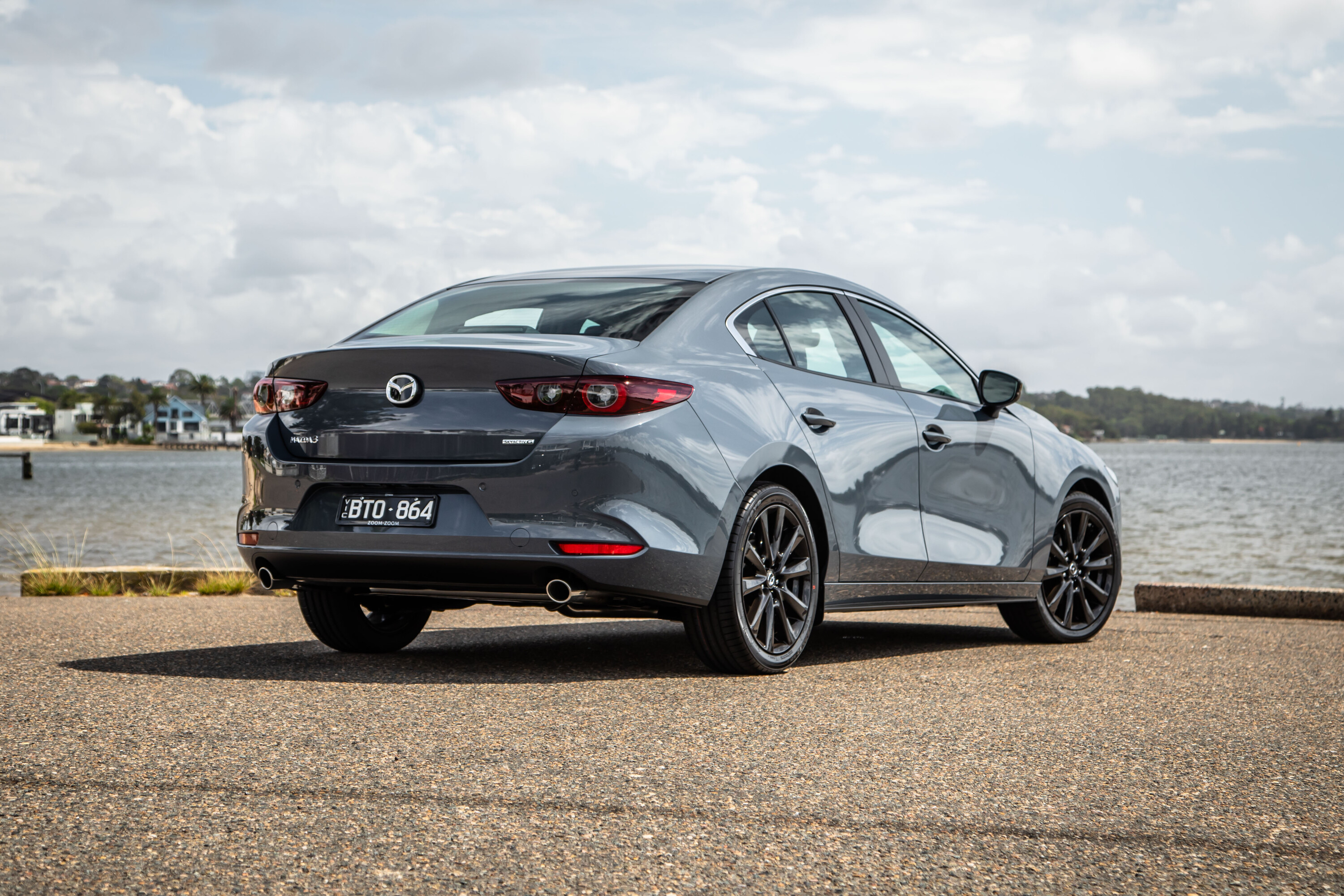
Emerging in the late 1970s as a modest entrant, the Mazda 3 has steadily risen to become a highly favored small car in Australia.
However, like other small cars in its class it’s starting to creep up in price towards competitive light and small SUVs, presents a significant challenge in maintaining robust sales volumes.
To stay appealing, the Mazda 3, along with models like the CX-3, has been updated midway through its life cycle. This update notably deleted manual transmission and mild hybrid options.
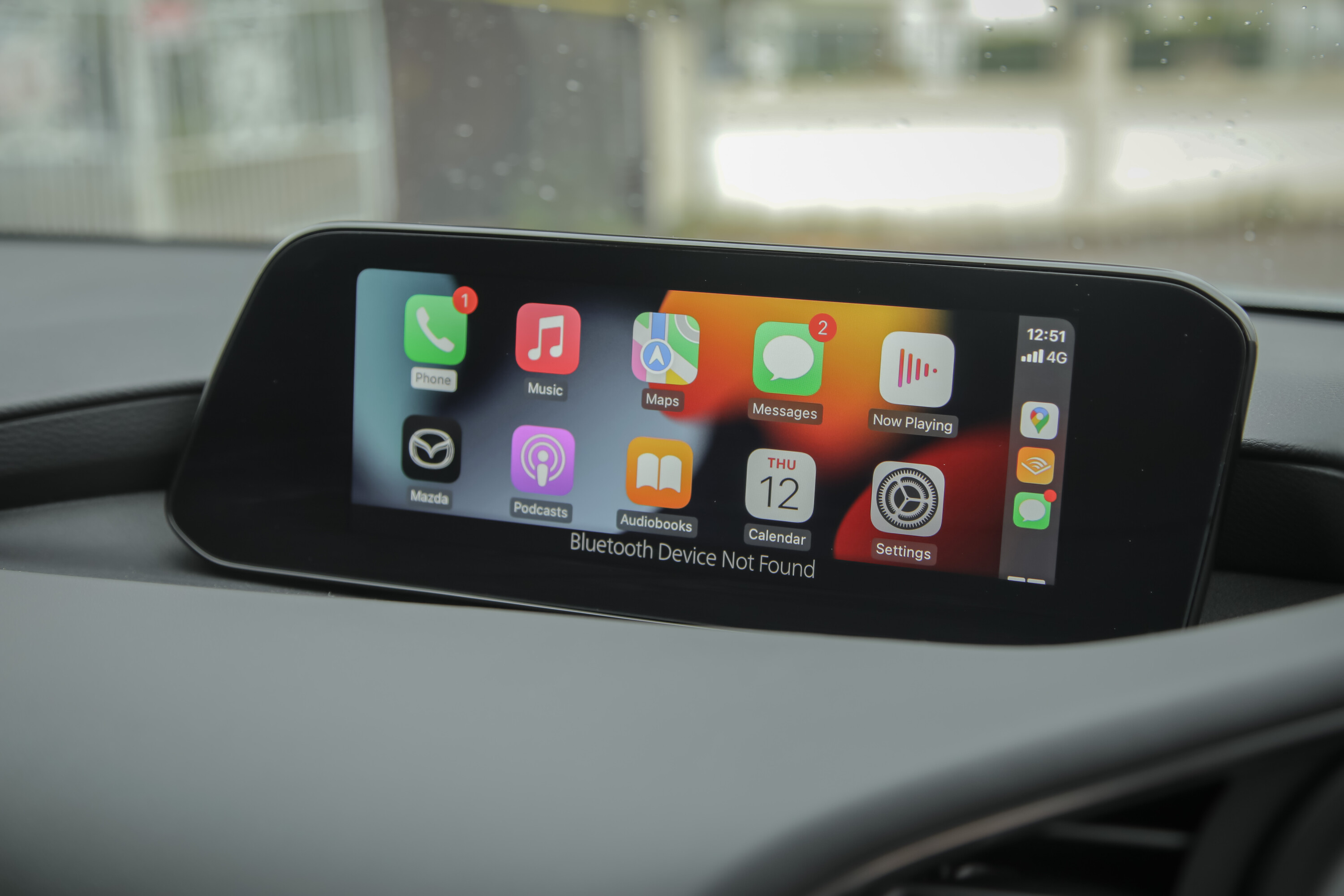
Instead, the focus has shifted to enhancing the economical 2.0-litre petrol engine and introducing new technology across the higher-end models, including Wireless CarPlay and a larger 10.25-inch infotainment screen.
1
Pricing and Features
The Mazda 3 comes in two styles: a five-door hatchback and a four-door sedan, with the mid-spec Touring model of each priced at $34,520 excluding on-road expenses. For the same money you can choose the Evolve SP, with a more sports-focused set of features and bigger engine.
Both versions are equipped with a 2.0-litre petrol engine, connected to a 6-speed automatic transmission. The engine delivers an output of 114kW of power, 200Nm of torque, using 5.9L/100km on a combined fuel cycle.
Stepping up to the Evolve SP will change your engine to a more powerful 139kW/252Nm 2.5-litre engine.
1
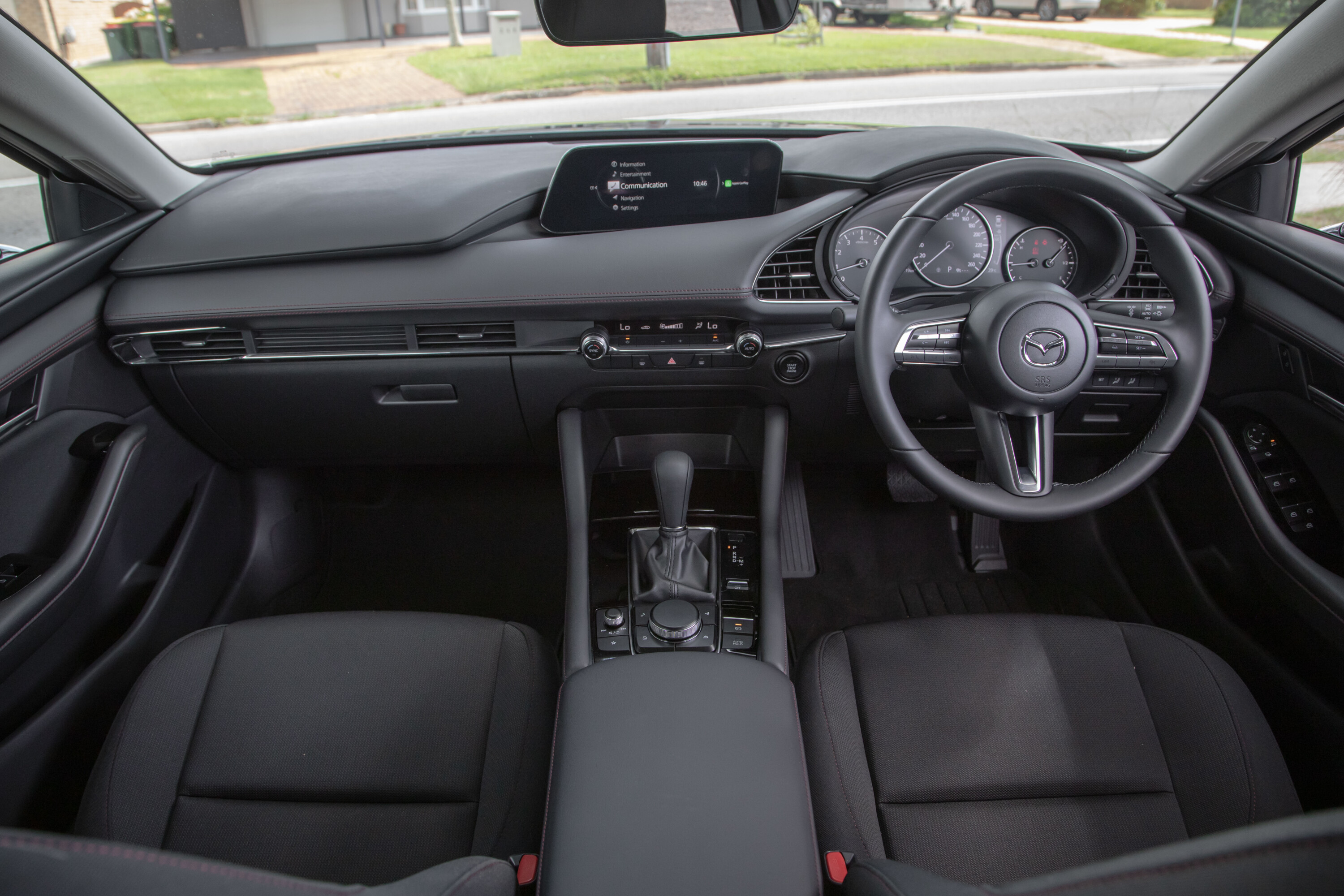
The Mazda 3 stands out with its interior quality, offering a sophistication and simplicity that seems superior to its rivals.
Its cabin boasts a sleek design, highlighted by a slim, elegant steering wheel, an easy-to-use infotainment system with an 8.8-inch screen, and vital connectivity features such as Apple CarPlay and Android Auto. The design prioritizes driver engagement, as seen in the ergonomic arrangement and the general layout of the cabin.
Additionally, the lower seating position in the Mazda 3 lends a sporty ambiance, setting it apart from larger models in the lineup, like the CX-30.
2024 Mazda 3 Touring features
18-inch alloy wheels
Leather seat trim
7-inch semi-digital instrument cluster
Leather-wrapped steering wheel and gear shifter
8 speaker audio system
LED headlights, DRLs and tail lights
8.8-inch infotainment screen
Manual air conditioning
Adaptive cruise control
Power adjustable driver seat
Apple CarPlay and Android Auto
Power-folding door mirrors
Autonomous emergency braking
Push-button start
Blind-spot monitoring
Rain-sensing wipers
DAB+ digital radio
Rear centre armrest
Driver attention alert
Reversing camera
Dual zone climate control
Satellite navigation
Head-up display
Tyre pressure monitoring system
Heated exterior mirrors
Wireless phone charger
1
For an extra $2000 you can add a Vision Technology option package which includes :
Driver Monitoring
360° view monitor
Front Cross Traffic Alert (FCTA)
Cruising & Traffic Support (CTS)
Front Parking Sensors
10.25 inch widescreen colour display
2024 Mazda 3 paint options
Snowflake White Pearl Mica
Standard
Platinum Quartz Metallic
Standard
Ceramic Metallic
Standard
Deep Crystal Blue Mica
Standard
Jet Black Mica
Standard
Machine Grey Metallic
$595
Polymetal Grey Metallic
$595
Soul Red Crystal Metallic
$595
Safety
Every model within the Mazda 3 series possesses a five-star ANCAP safety rating, based on evaluations conducted in 2019.
These ratings break down to 98% in adult occupant protection, 89% in child occupant protection, 81% in protecting vulnerable road users, and 76% in safety assist technologies.
Each car in the range is outfitted with seven airbags, encompassing front, side, and curtain airbags, along with a driver’s knee airbag.
Standard across all models are various active safety features:
While many Australians obsess over SUV options, there is still a world of merit for those looking for a sports-styled hatch or sedan.
If the 2024 Mazda 3 Touring follows the trajectory of its predecessors, it will be a compelling choice for those seeking a compact car that balances luxury, technology, and enjoyable driving dynamics.
The Touring offers a bit of extra comfort over it’s entry-spec with keyless entry and larger 18-inch alloys that are worth the price.
However, the G25 Evolve SP equipped with the Vision Technology package does seem to offer the right mix or features and might just be the ideal choice within the Mazda 3 lineup.
New hardcore tS flagship headlines 2024 coupe range
Manual pricing is up by a significant $3500; auto $700
Price increase offset by additional safety features
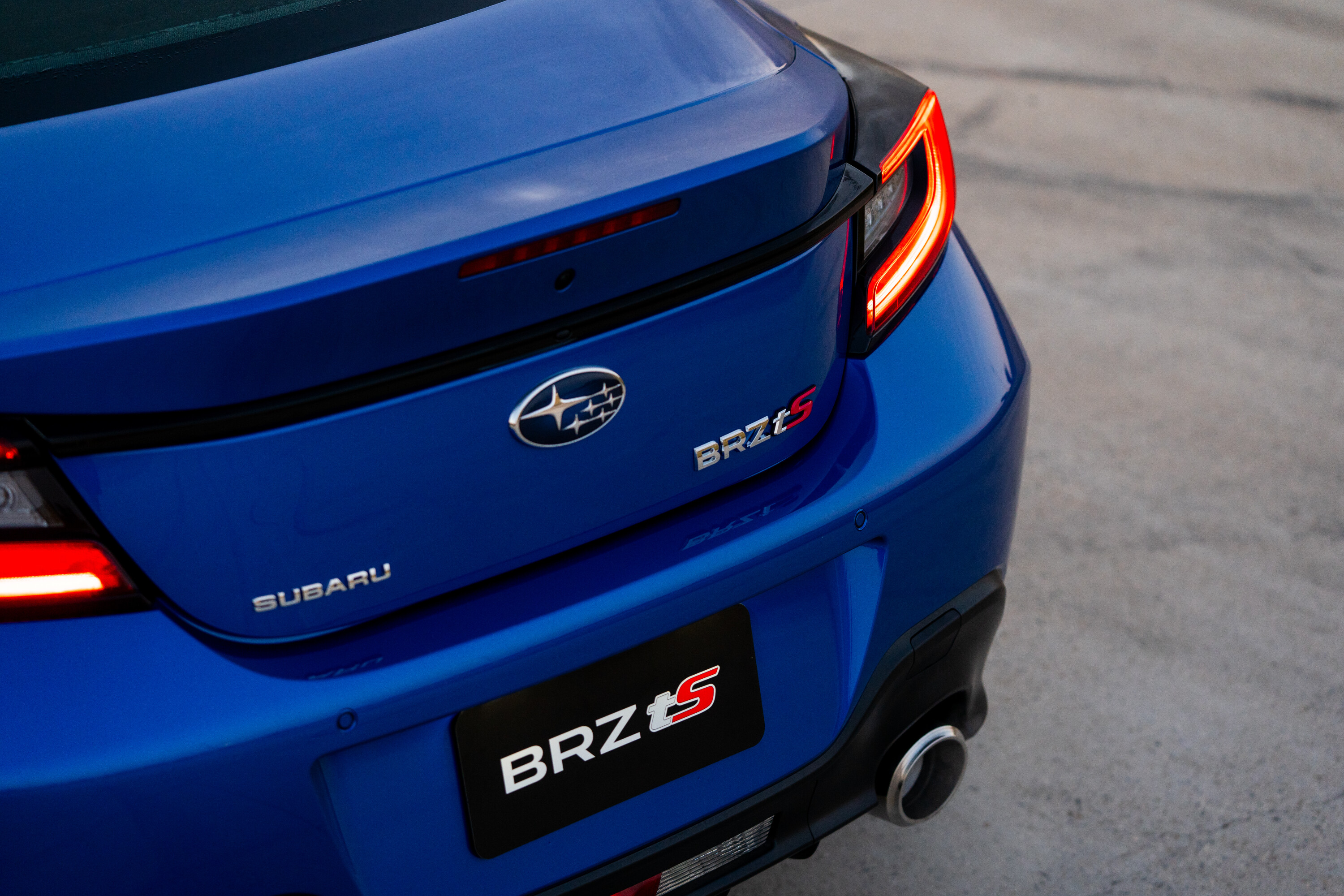
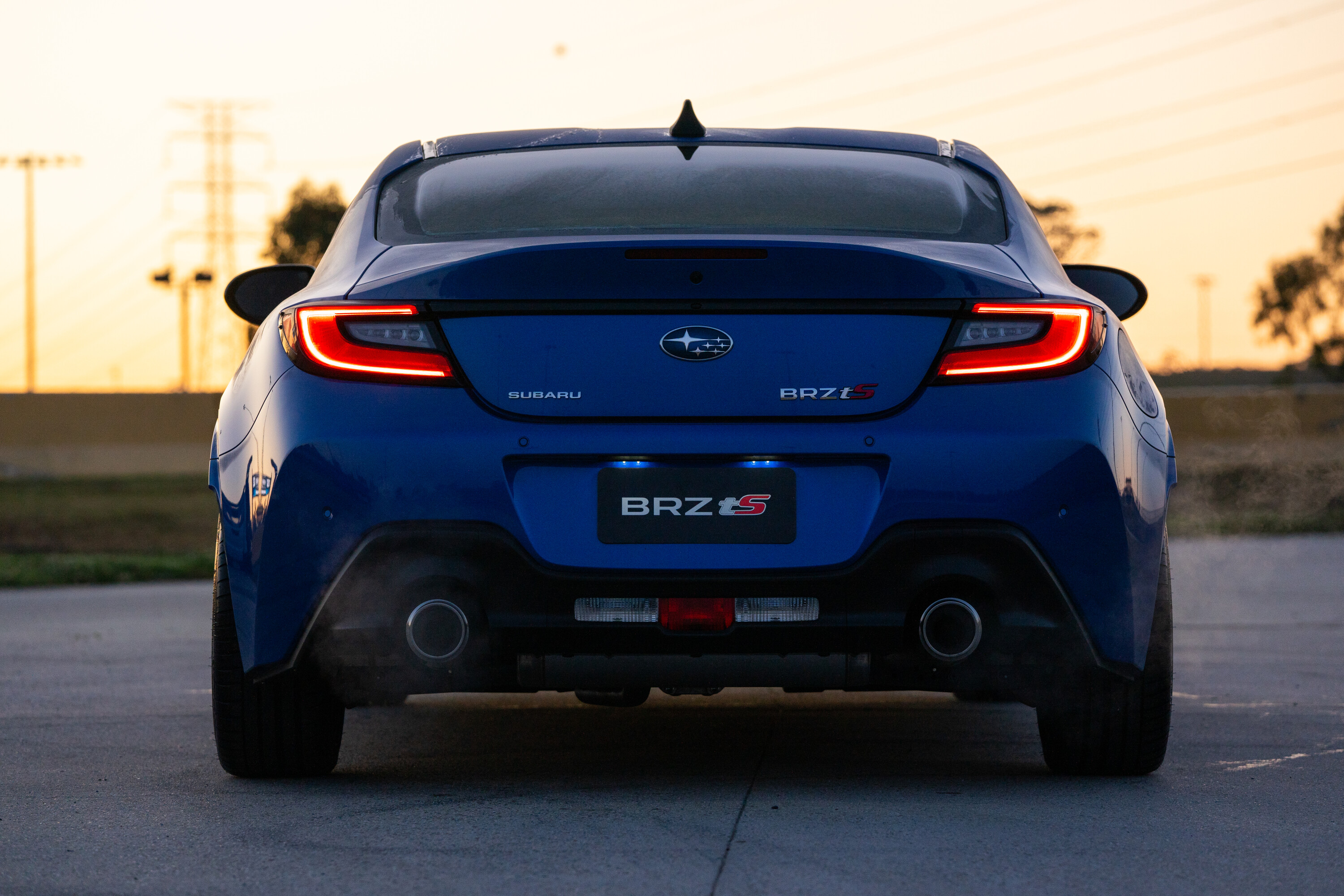
Subaru will introduce a more hardcore tS variant of its BRZ sports car in 2024. Available in both manual and automatic (for an extra $1000), the new flagship costs $48,690 before on-road costs.
Following the Toyota GR86 update, the updated BRZ manual now gets adaptive cruise control, lane-departure warning, pre-collision braking, and lead vehicle departure alert from Subaru’s Eyesight safety suite.
Unlike the GR86, though, the BRZ’s price climbs for MY24. Reflecting the additional features, manuals are up $3500 and therefore dearer than the Toyota option. Automatic variants climb $700.
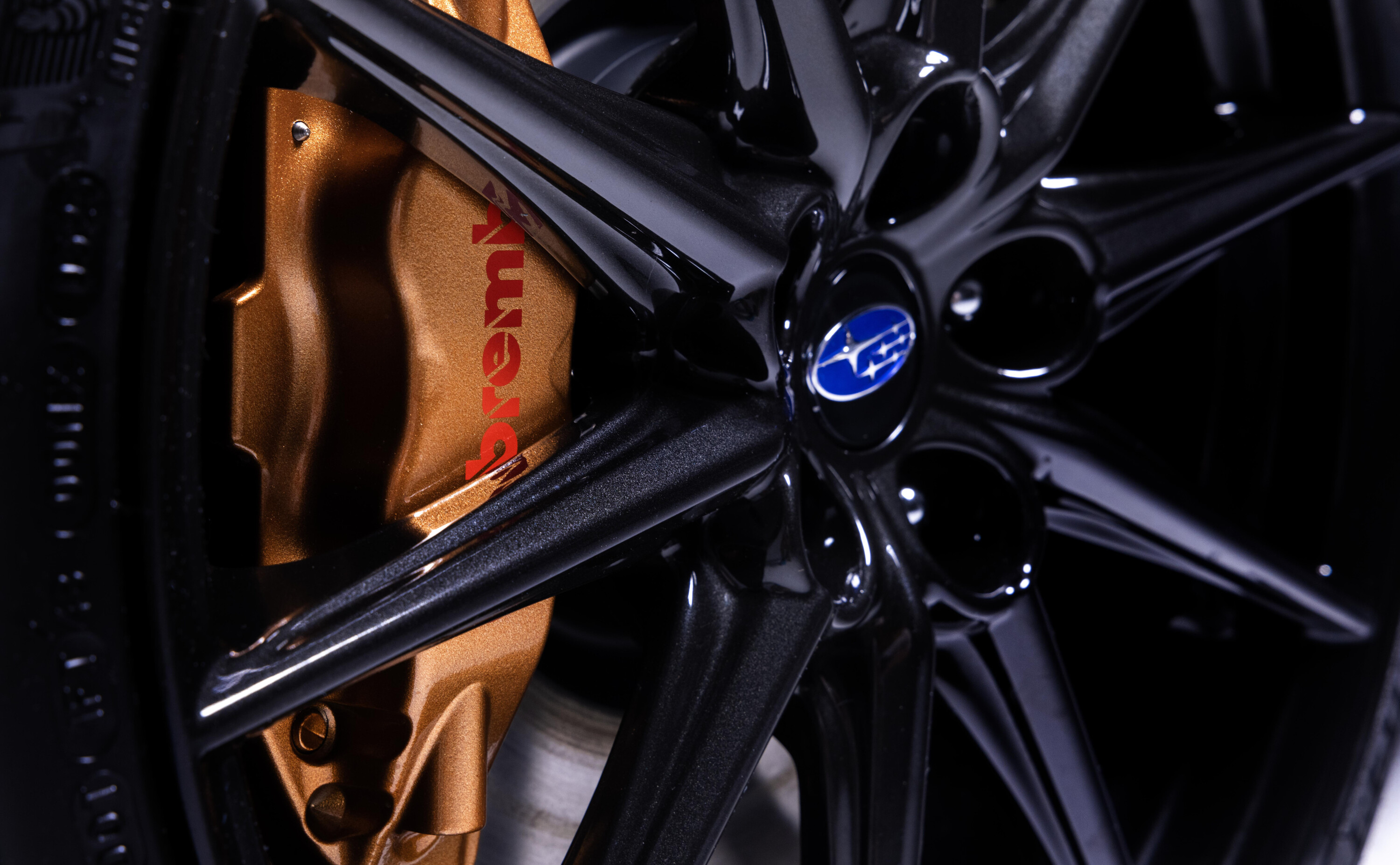
The first identifier is a set of 18-inch dark grey alloy wheels shod in 215/40 R18 Michelin Pilot Sport 4 tyres behind which are four-piston front and two-piston rear gold Brembo brake calipers.
STI has developed a firmer chassis with new dampers front and rear, though ride height and spring rates stay the same.
There are tS badges found at the front and back while the black door mirrors and antenna add extra menace.
1
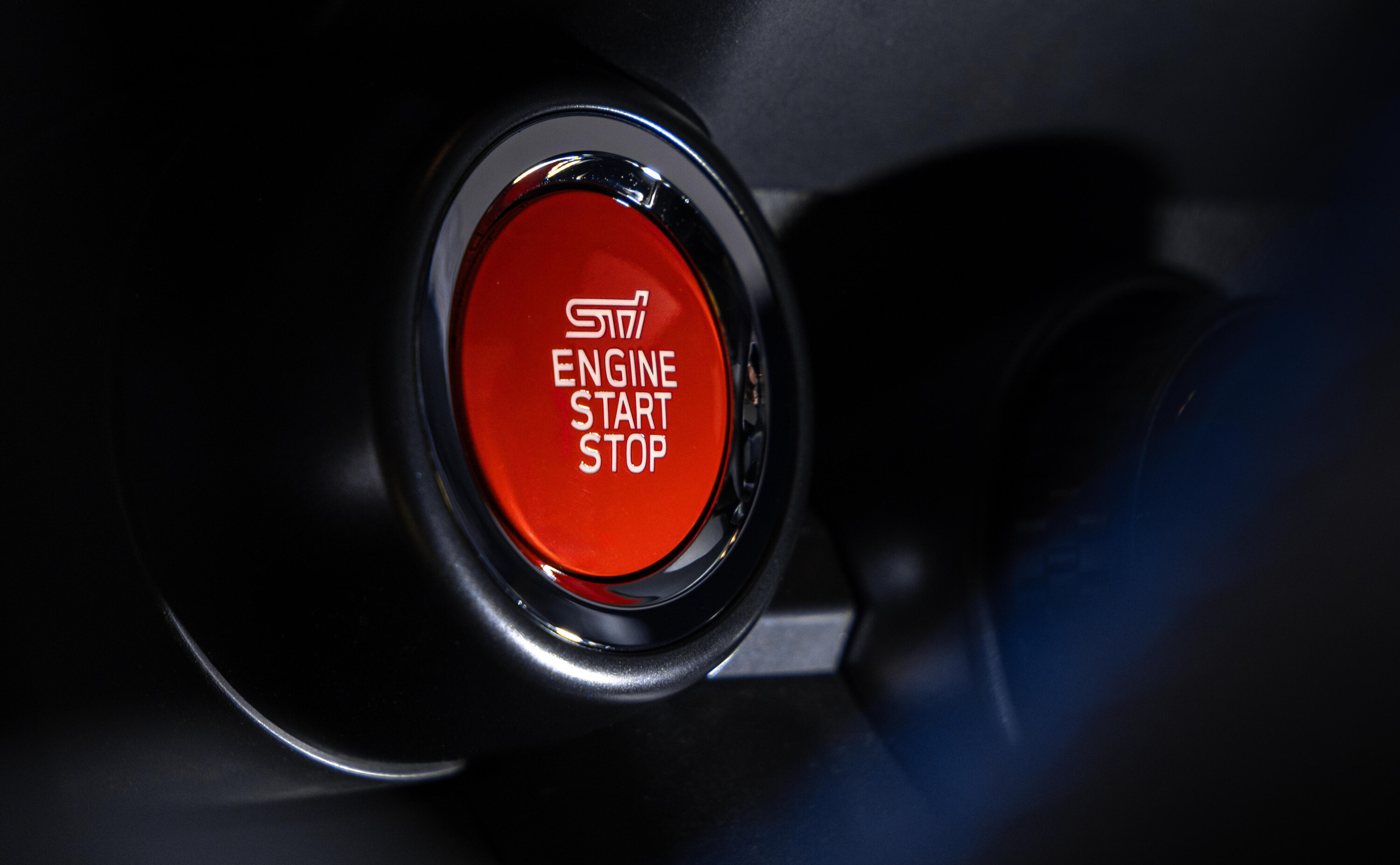
The cabin has been lifted with black/Bordeaux coloured Ultrasuede and leather upholstery, STI-embossed setas, red STI start button and STI logo in the digital instrument cluster.
“The BRZ has earned a reputation as a driver’s car thanks to its superb engineering”, said Blair Read, Managing Director of Subaru Australia. “We are therefore excited to add to the BRZ offering for Australian drivers the best performing and handling BRZ ever with the tS.”
1
The rest of the BRZ range is unchanged with the 174kW/250Nm 2.4-litre flat-four petrol engine driving the rear wheels via a six-speed manual or six-speed automatic transmission and limited-slip differential.
Spending the extra $1300 on the BRZ S brings 18-inch alloys, natural and synthetic leather trim and Ultrasuede for its seat material, plus heated front seats.
However, the base car is still well equipped with LED headlights, Apple CarPlay/Android Auto capable head unit, dual-zone climate control and navigation.
1
Seven paint colours are available across the BRZ range, including the tS.
Crystal White Pearl
Ignition Red,
Ice Silver Metallic,
WR Blue Pearl
Sapphire Blue Pearl
Magnetite Grey Metallic
Crystal Black Silica
The tS and 2024 BRZ range are available to pre-order online or in Subaru dealers now.
One special day, a full year ago, Ken Block and his Hoonigan crew brought a deafening cacophony to a chunk of Mexico City as Electrikhana Two filled the streets with the sound of screaming electric motors and squealing tyres.
What came next, every car enthusiast remembers well: Block was killed in a snowmobile accident just two months after filming Electrikhana Two, aged 55.
If you need to relive that news, you’ll find it in the story linked at the bottom of this one. For now, though, you should hit the play button below and enjoy Block’s last outing in his bespoke Audi S1 Hoonitron electric skid machine for 12 minutes of pavement scribbling and flying bodywork.
Watch more Hoonigan videos below, and read about the Electrikhana Two project at the Hoonigan website here [↗].
Gymkhana One
This is ground zero, where the whole saga began. Gymkhana One featured Block’s built 2006 Subaru Impreza WRX STI at an old airfield. Chaos ensues, the internet catches hold, a legend is born.
Gymkhana Two
Gymkhana Two was designed to feature a few of Ken Block’s DC Shoes products, mimicking the form of an infomercial. The cinematography was a big step-up and so was the car, a Crawford Performance 422kW Impreza WRX STI.
Gymkhana Three
2010 was the year of change for Block and Gymkhana. First of all, he changed from using Subarus in the viral videos to Fords – now employing a 484kW 2011 Ford Fiesta. Secondly, the team set the video in Linas, France at an old autodrome. The anti-lag Ford Fiesta Gymkhana car was the start of a long partnership between Block and Ford Performance which continues to this day.
Gymkhana Four
The HOONIGAN team had to wind up at Hollywood at some point. Featuring more stunts than ever, 2011’s video once again featured Ken’s Fiesta smashing through walls, knocking over objects and of course, performing mammoth-sized jumps.
Gymkhana Five
Ken Block skids his way around the San Francisco skyline in 2012’s 100 million hit video.
Gymkhana Six
Gymkhana Seven
For the first time in years, Ken changed his car to a 1965 Ford Mustang in Gymkhana Seven. The fire-breathing methanol-injected V8 can be seen ripping up the concrete wonderland that is Los Angeles.
NOTE: The above video isn’t embedding correctly, but the ‘Watch on YouTube’ link works. Head to YT to check it out.
Gymkhana Eight
2016 saw the HOONIGAN crew head to Dubai to film Gymkhana Eight, once again using Block’s rally-spec Ford Fiesta as the ultimate whip-mobile.
NOTE: The above video isn’t embedding correctly, but the ‘Watch on YouTube’ link works. Head to YT to check it out.
Gymkhana Nine
The first outing for Ken’s 2017 Ford Focus RS RX, the ninth iteration of Gymkhana filmed in Detroit, Michigan has the most daring stunts to date, most notably a game of ‘chicken’ with a diesel train.
Gymkhana Ten
Gymkhana Ten is the most unbelievable film to date, with the planning taking over two years and filming in multiple countries like Sweden, United States and Mexico. The full film goes for almost 20 minutes and rest assured, each second is worth watching.
Climbkhana features death-defying slides with Version 2 of Ken’s Hoonicorn Ford Mustang, fitted with a methanol-injected, twin-turbo 1043kW V8.
Climbkhana 2: China’s Tianmen Mountain
Gymkhana 2020: Pastrana takeover
Eletrickhana ONE
Gymkhana 2022
Snapshot
Most fast charging stations in Australia are 50kW DC
Grid, cost, time, location are key limitations
Slow home charging is the best way to own an EV
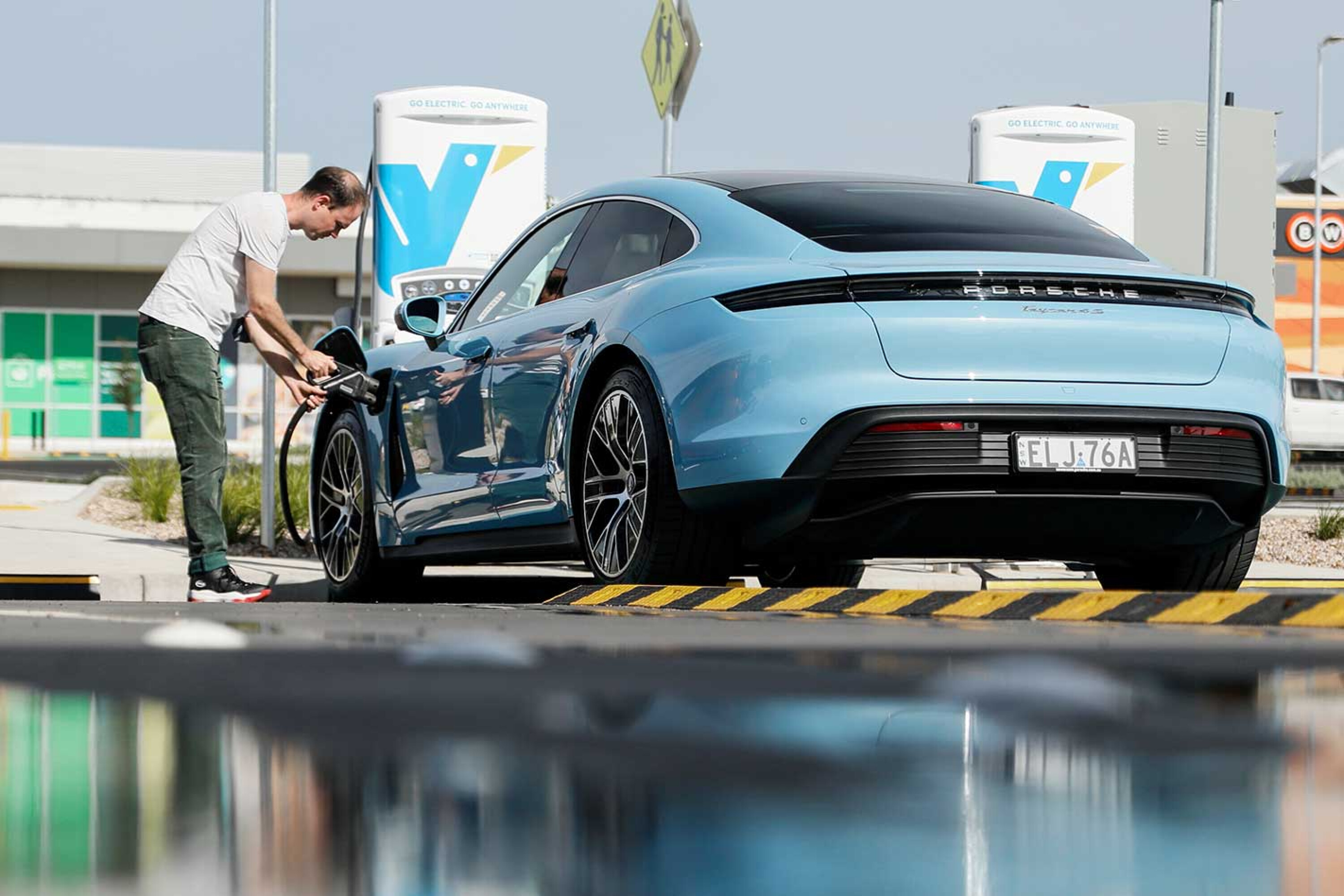
Public electric vehicle charging infrastructure is quickly growing in Australia, yet most can’t satisfy the full capabilities of new models.
According to public EV charging finder PlugShare [↗], Australia is dominated by around 270 DC fast charging stations that output up to 50 kilowatt (kW).
Depending on the model, a 50kW DC unit generally takes about one hour to charge from 10 to 80 per cent – sufficient time if you’re on a rest break. However, the majority of new EV models can accept much quicker charge rate.
For example, even the budget-friendly BYD Dolphin Dynamic hatch can input up to 60kW DC, the base Tesla Model 3 RWD sedan has peak 170kW DC capability, and the Kia EV6 crossover can reach up to 240kW DC.
Note that car brands claim peak charging speeds, which is the maximum an EV can take under optimum conditions. The vehicle will throttle speeds depending on factors, such as higher battery percentage and battery temperature.
While car brands are able to boast of fast charging capabilities, most public charging stations in Australia simply can’t output as much energy. There’s a reason, however.
Speaking with Wheels Media, Delta Electronics Australia and New Zealand manager Tom Hew said the 50kW approach provides the best balance of charging speed and matching each location’s electricity grid capabilities.
“We know the grid is struggling to be able to take chargers at a lot of locations, so they may not necessarily be able to have something higher than 50 kilowatts, without including a battery storage solution for example,” Hew said.
“We see it as the sweet spot for what a lot of places can install… anything higher could cost significantly more to upgrade the mains in order to support it. It also takes a very long time to wait for the supply authorities to be able to actually plan and upgrade it accordingly.”
“We see it as the sweet spot … they may not be able to have something higher than 50 kilowatts”
Some 75kW to 150kW DC public stations have also emerged and are capable of power sharing (charging two vehicles at once via two plugs), but charging speeds slow to a 50:25 kW DC split for the former, despite users paying for the same rate.
Ultra-rapid 350kW stations owned by Chargefox and Evie Networks are mainly found beside highways, while Tesla has only offered 150kW (V2) and 250kW (V3) Superchargers and don’t provide power sharing functionality. Of course, they often come at a higher price.
1
Hew says Delta will introduce high-powered 350kW DC units next year, but like the company’s rivals, he agrees ultra-rapid charging stalls are more suitable alongside highways – rather than at inner-urban public and office locations, where 50kW DC is “more than sufficient”.
“It depends on the application, so where are they [charge point operators are] actually installing it, for what purpose and looking at the behaviour of the user at that particular location,” Hew told WhichCar.
The charging equipment manufacturer claims its new DC Wallbox 50kW can further reduce installation costs, with a small footprint, power sharing capability, and grid management software. Delta says it will initially be installed at car dealerships and for government EV fleets.
Fast charging capabilities may be attractive, but they’re really only needed if owners are hurrying through a long trip or can’t access a plug at home for overnight charging.
However, being hit with a slowed-down charging session – despite paying the same price – simply because another EV plugged in on the same station (if compatible with power sharing) is an emerging and frustrating issue.
Horsepower, often abbreviated as “hp”, is a unit of measurement for engine power output. The more horsepower a car has, generally, the faster it can go.
Contrary to popular belief, horsepower is still commonly used in Australia, alongside kilowatts (kW), to describe a car’s engine power. This unit is also widely used in the United States and other parts of the world.
Of course, as a mostly metric nation, kW is the standard measurement in Australia – whereas horsepower is favoured in the tuning community.
1
What’s the difference between horsepower and torque?
In the automotive world, torque and horsepower are two critical ways to describe a car’s engine capabilities.
Torque is the measure of an engine’s rotational force. It’s the initial thrust that gets a car moving from a stop and is crucial for tasks like climbing hills or towing. It’s the oomph you feel when you press the accelerator pedal, contributing to rapid acceleration from a standstill.
In Australia, we use the metric Newton Metres (Nm) measurement standard, while the older imperial form is ‘pounds per foot’ (lb-ft).
Horsepower (and kilowatts) is about sustained power output over time. It’s a broader measure that reflects the engine’s overall ability to maintain speed and efficiency during continuous operation, particularly useful in scenarios like highway driving.
Let’s get technical
James Watt, an engineer during the industrial revolution (late 18th century), introduced the term ‘horsepower’. He used it to compare the work capacity of steam engines with that of draft horses.
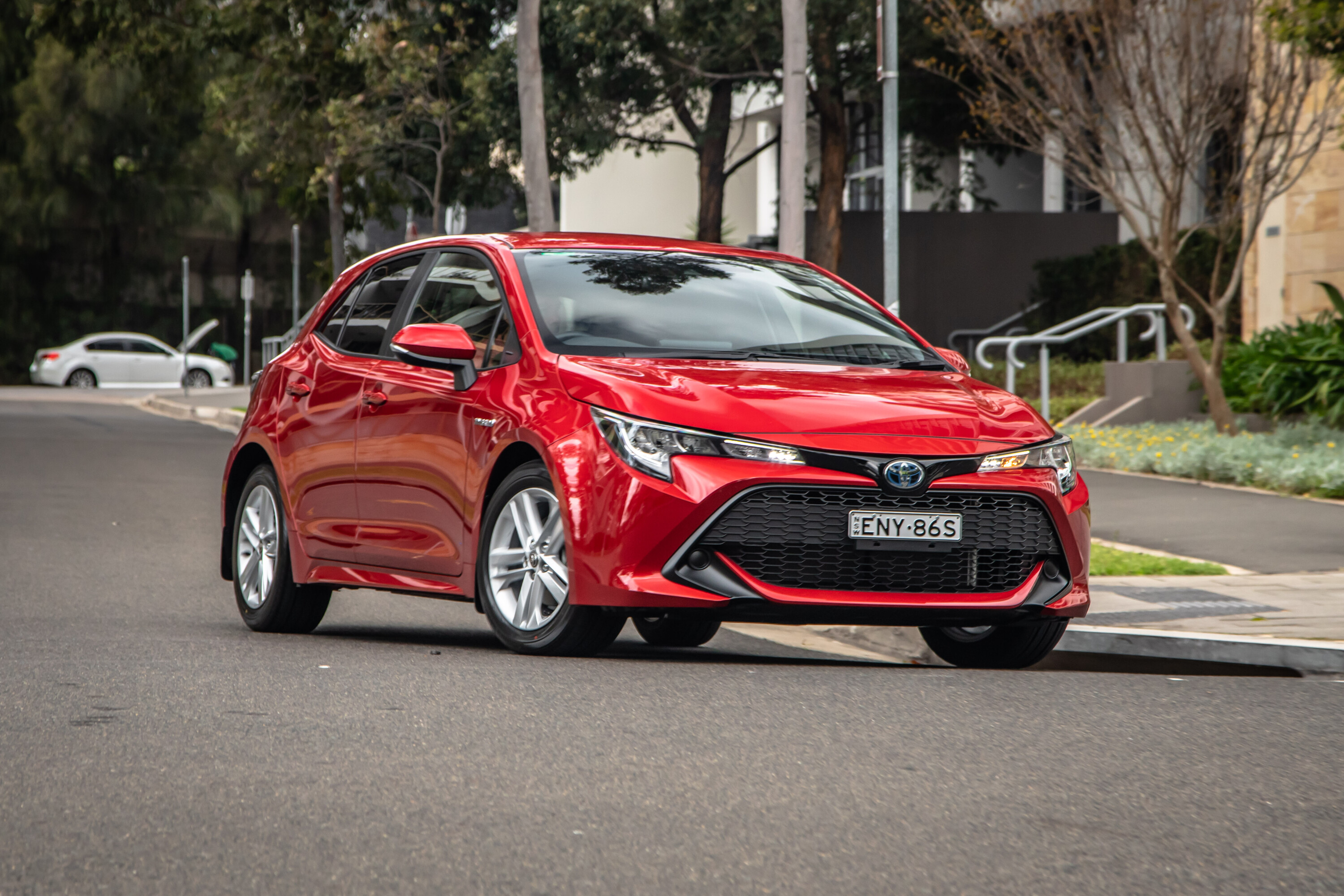
In terms of modern vehicles, an entry-level Toyota Corolla petrol hatchback, for instance, has 126kW of power. To convert this to horsepower, the formula is 126 kW × 1.34102, equating to approximately 168.97 hp.
It’s ironic, in a sense, that the man who coined the term horsepower is also the person for whom the kilowatt is named – effectively ‘metricising’ his name.
1
How much horsepower does a horse have?
Interestingly, a horse doesn’t have just 1 horsepower.
James Watt originated the term as something of an easily understood concept. He estimated that a horse could do work at a rate of about 550 foot-pounds per second, which he rounded to one horsepower. The actual power output of a horse can vary widely, obviously.
1
Horsepower in high-performance Vehicles
A current Formula One car, with its 1.6-litre V6 petrol-electric hybrid engine, can produce over 1000 hp – although this figure can vary among teams and engine specifications.
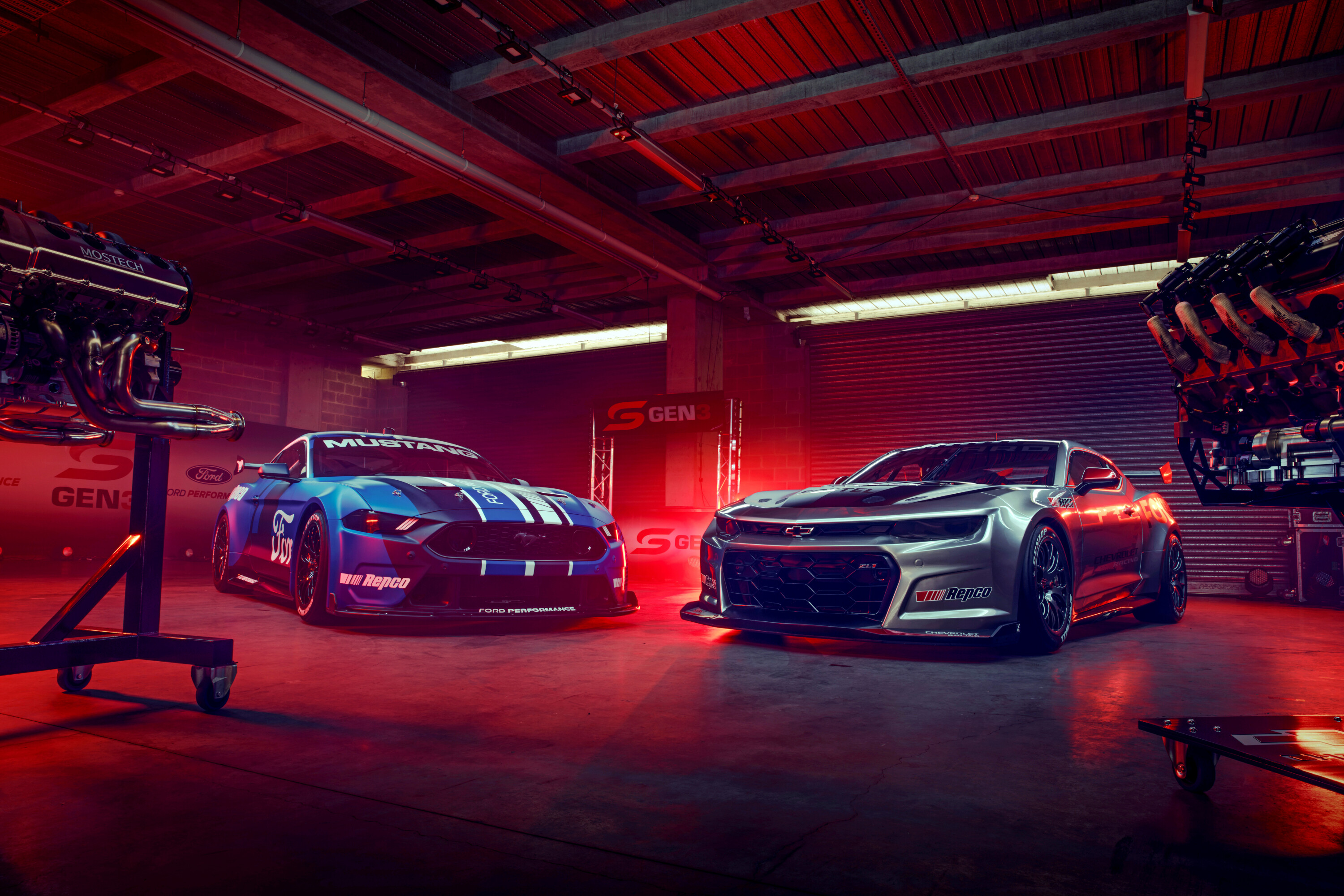
In the Australian Supercars series, the newer Gen3 Ford Mustang and Chevrolet Camaro feature race-specific V8 engines. Their horsepower outputs can differ based on racing regulations and modifications but are generally in the range of 600 to 640 hp.
For electric vehicle enthusiasts, the Tesla Model 3’s horsepower ranges from about 279 hp to 505 hp in the performance variant, showcasing the impressive capabilities of electric powertrains.
Writing a review of a car while simultaneously testing it would normally be highly inadvisable, and not even a task we’d confidently undertake in a prototype autonomous-drive vehicle.
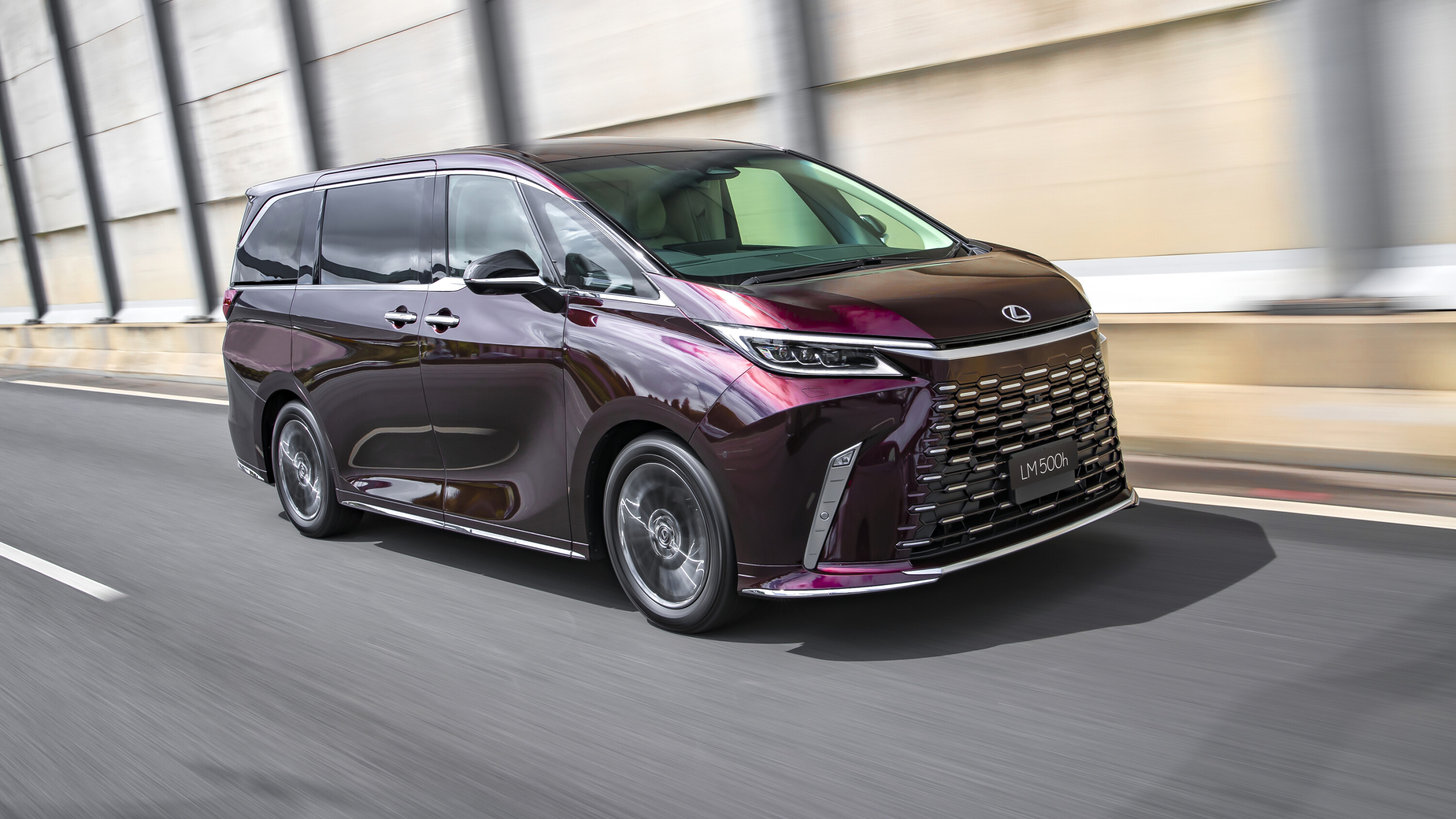
Yet it’s the essential, and perfectly safe, method for assessing the Lexus LM – the Japanese brand’s first ever people-mover. Or VIP-mover as it might be more accurately described.
Creating an alternative mode of posh transport to the LS limo that put the Japanese brand on the executive-car map in 1989, consider the Toyota Alphard-based LM a direct challenger to Mercedes-Benz’s V-Class, and a competitor to upmarket SUVs such as the Range Rover.
1
Fittingly, it’s an LS that provides the old-school service for a relatively short drive to Sydney airport before we’re met at the Melbourne end by another chauffeur with the LM “Luxury Mover”.
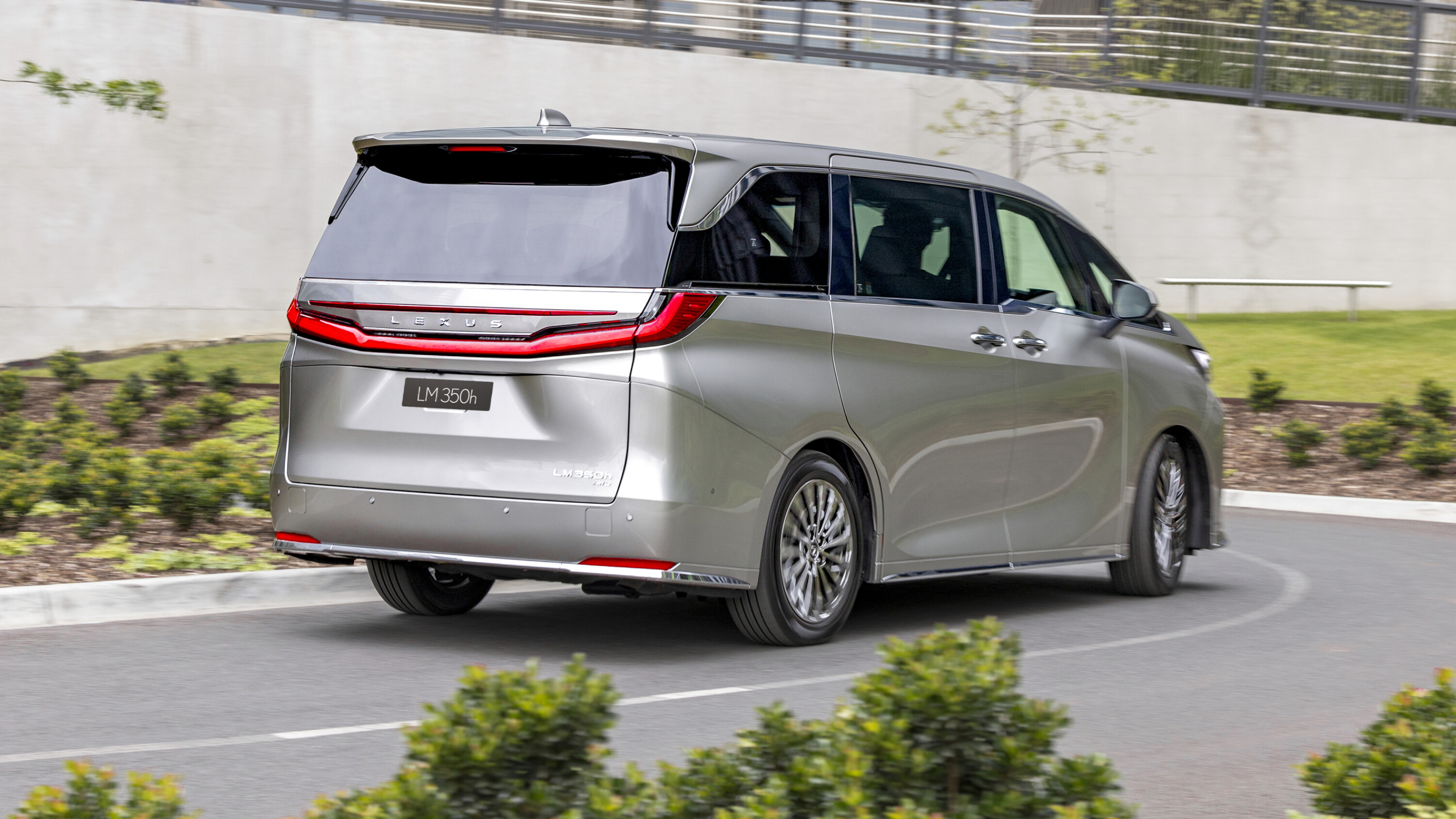
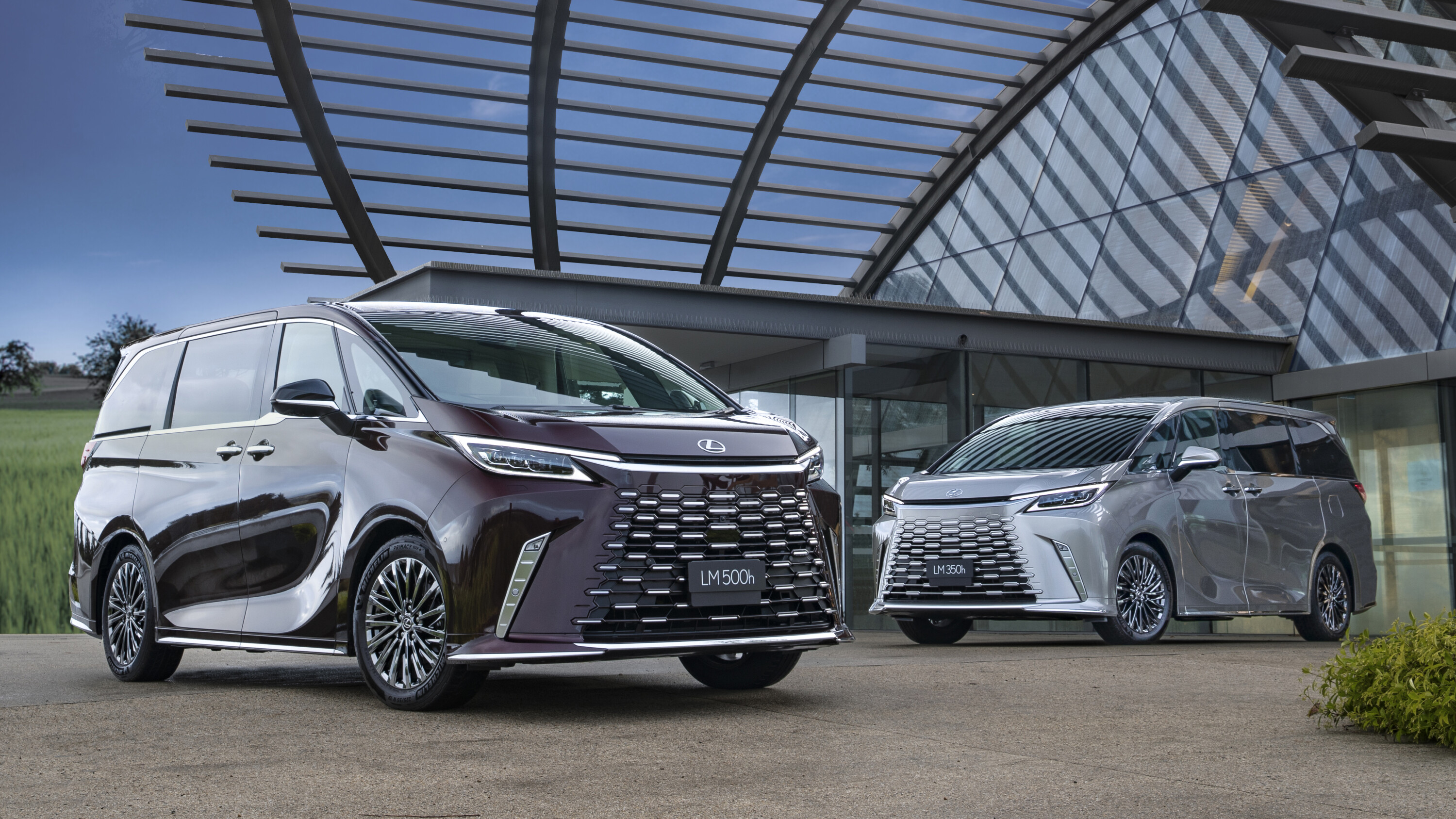
I’m not sure we’ve ever described a Lexus vehicle design as quirky, though this seems the most suitable adjective for the LM. It’s an unusual-looking vehicle with its long-body-stubby-nose silhouette, creased sheetmetal, and large, bluff grille that alone is quite a vision. It’s got presence, we’ll give it that.
Our transport is a LM350h AWD Sports Luxury, which costs from $165,888 before on-road costs. A front-wheel-drive version is available for five-grand less, both featuring a seven-seater (2-2-3) layout.
1
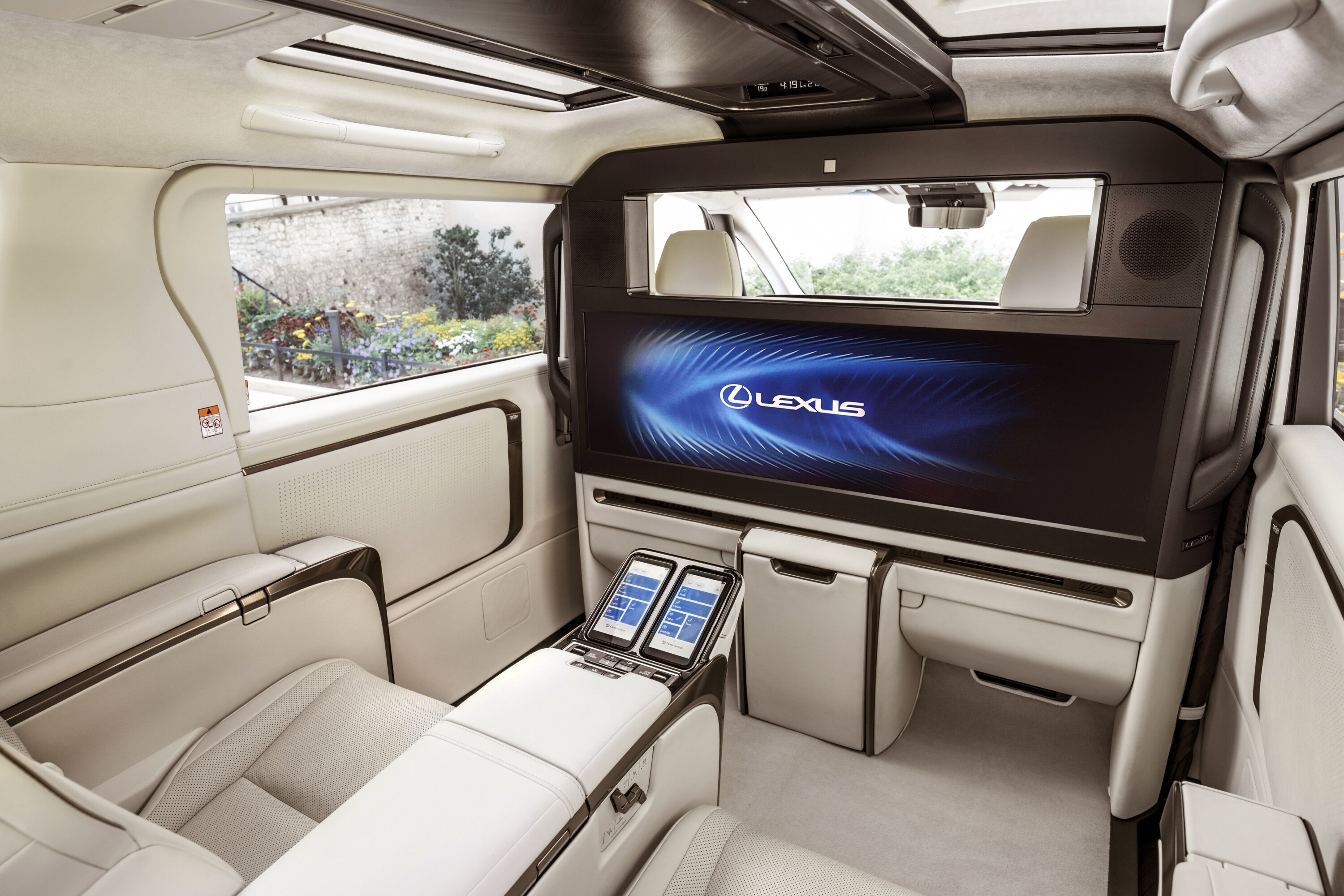
In early 2024, a $220,888 LM500h Ultra Luxury flagship will arrive, offering not only a more powerful hybrid drivetrain but a four-seat, first-class-style layout that the Roys would no doubt approve of.
It features two rear ‘VIP thrones’, a 48-inch widescreen display with 23-speaker Mark Levinson sound system, and a glass barrier that can block out the chauffeur for absolute privacy.
We’re not looking to succeed anyone any time soon, so I’m happy to climb in the middle row of the business-class six-seater without looking for someone to fire. Although a ‘downgrade’ from the LM500h, the 350h’s interior still provides a private-jet ambience in the central row.
1
Lexus Australia set up a different type of vehicle launch designed to replicate a typical LM experience.
Not only is the LM joining the Lexus On Demand fleet – which Encore Platinum and electric Lexus owners can pick from for up to eight-day loans four times a year – but our destination is the Jackalope Lexus Encore partner hotel, set in the heart of the Mornington Peninsula’s vineyard region.
Encore members staying at the hotel, for example, would enjoy benefits including complimentary sparkling wine (served in their room on arrival), room upgrade when available, complimentary use of the hotel’s Lexus car service (within 15km radius), customised spa treatment, and earlier check-in and late check-out where possible.
1
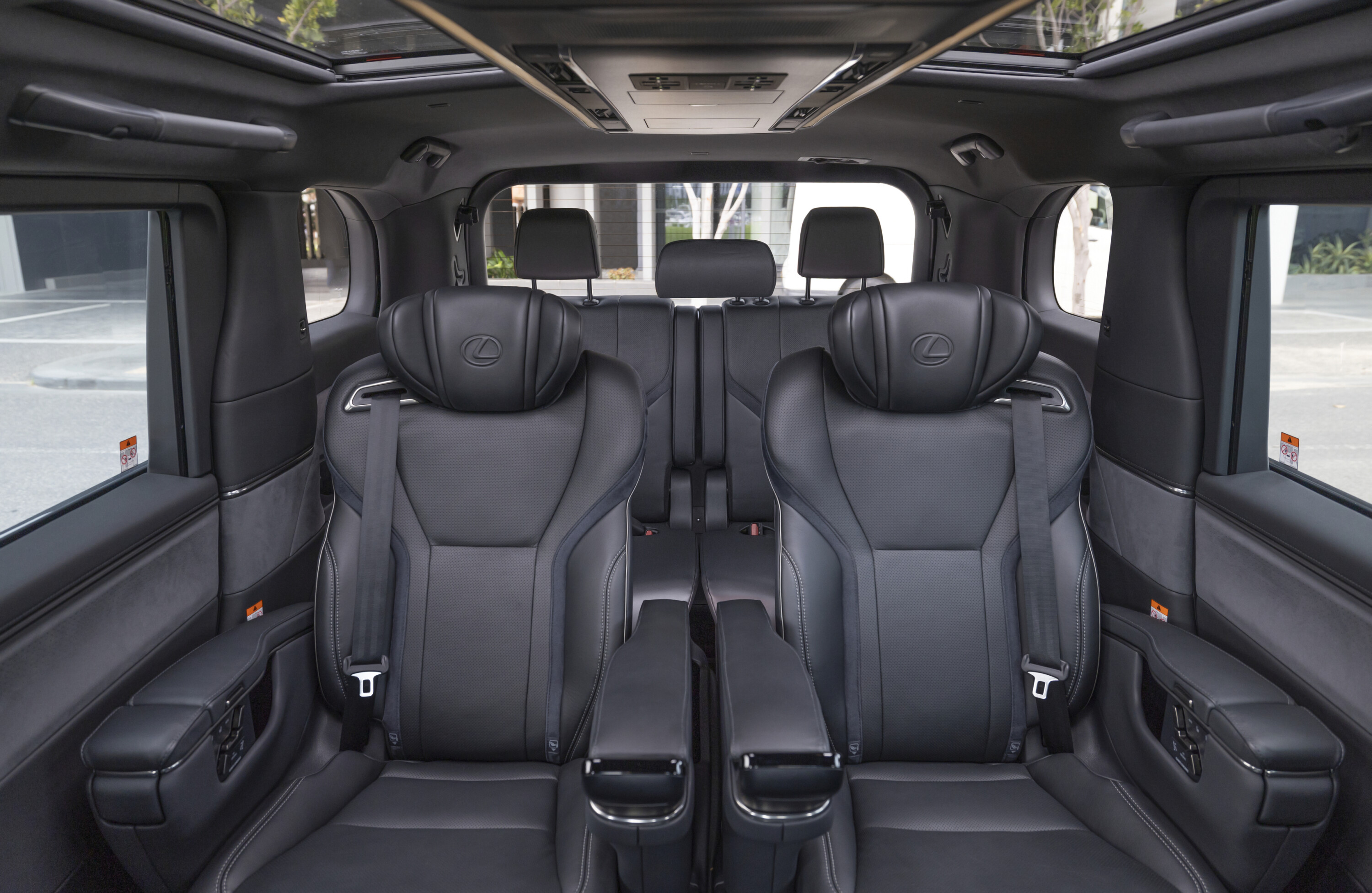
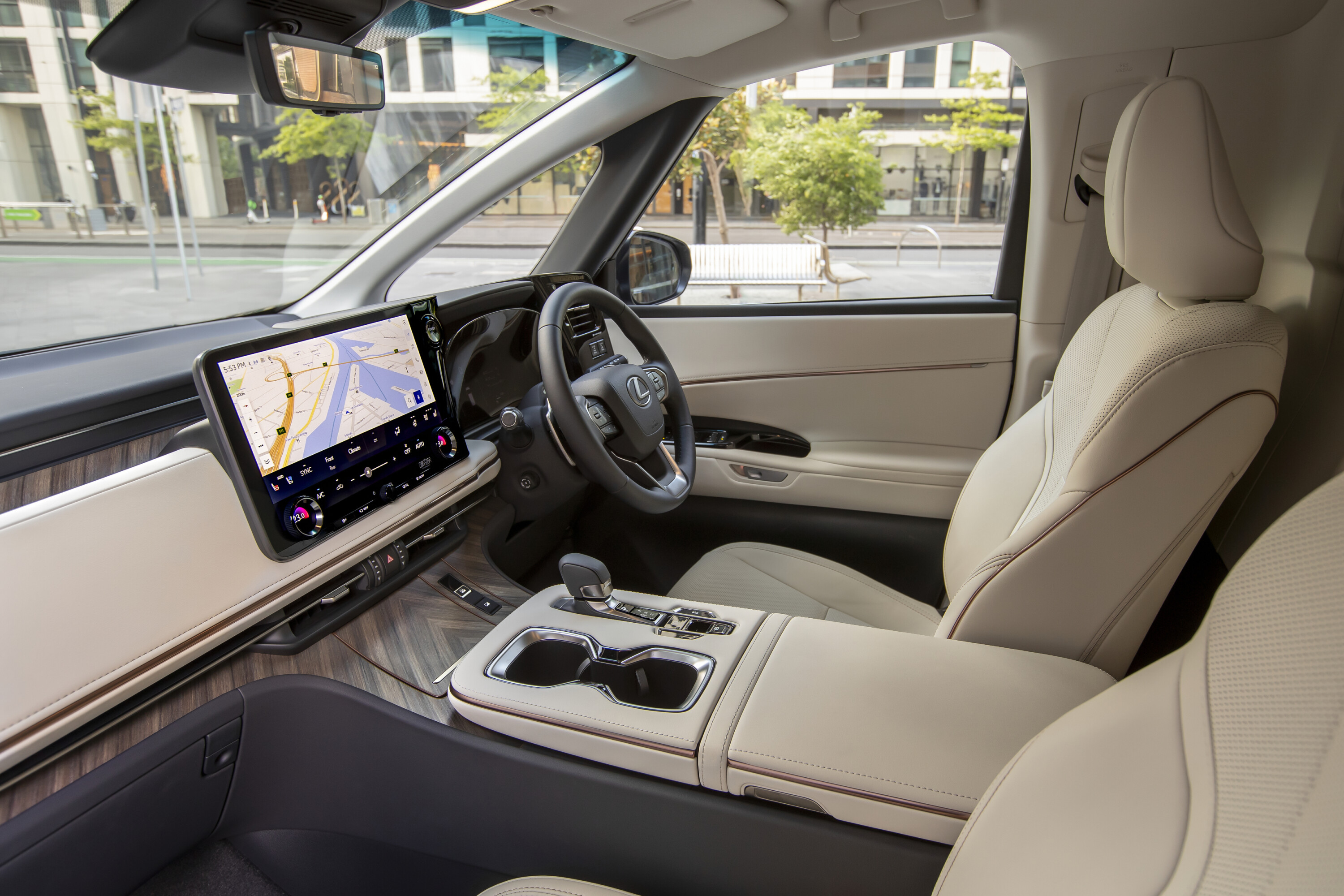
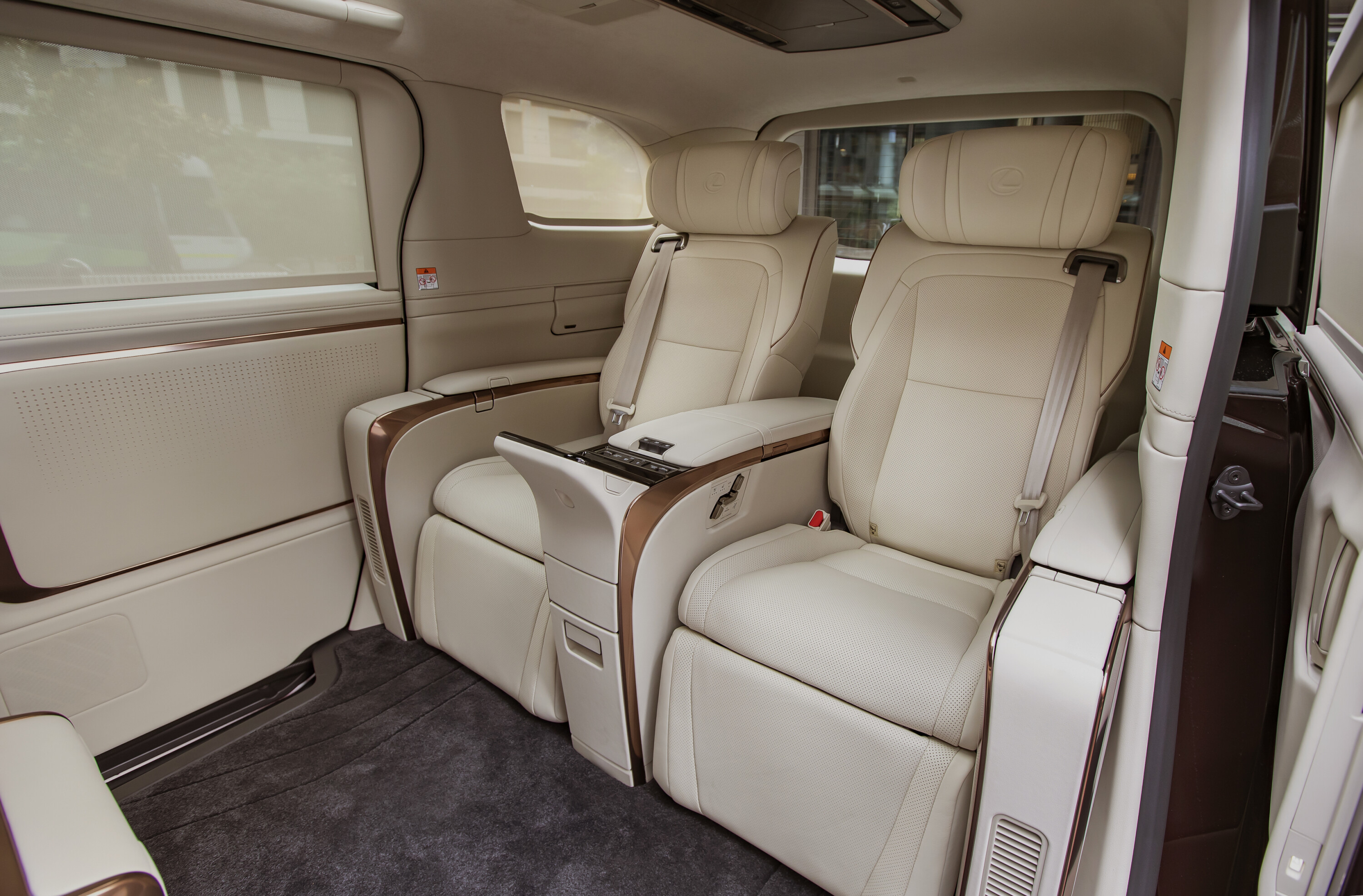
A double-step entry provides convenient access, via the electric sliding side doors, to the leather/urethane captain’s chairs occupying the centre section.
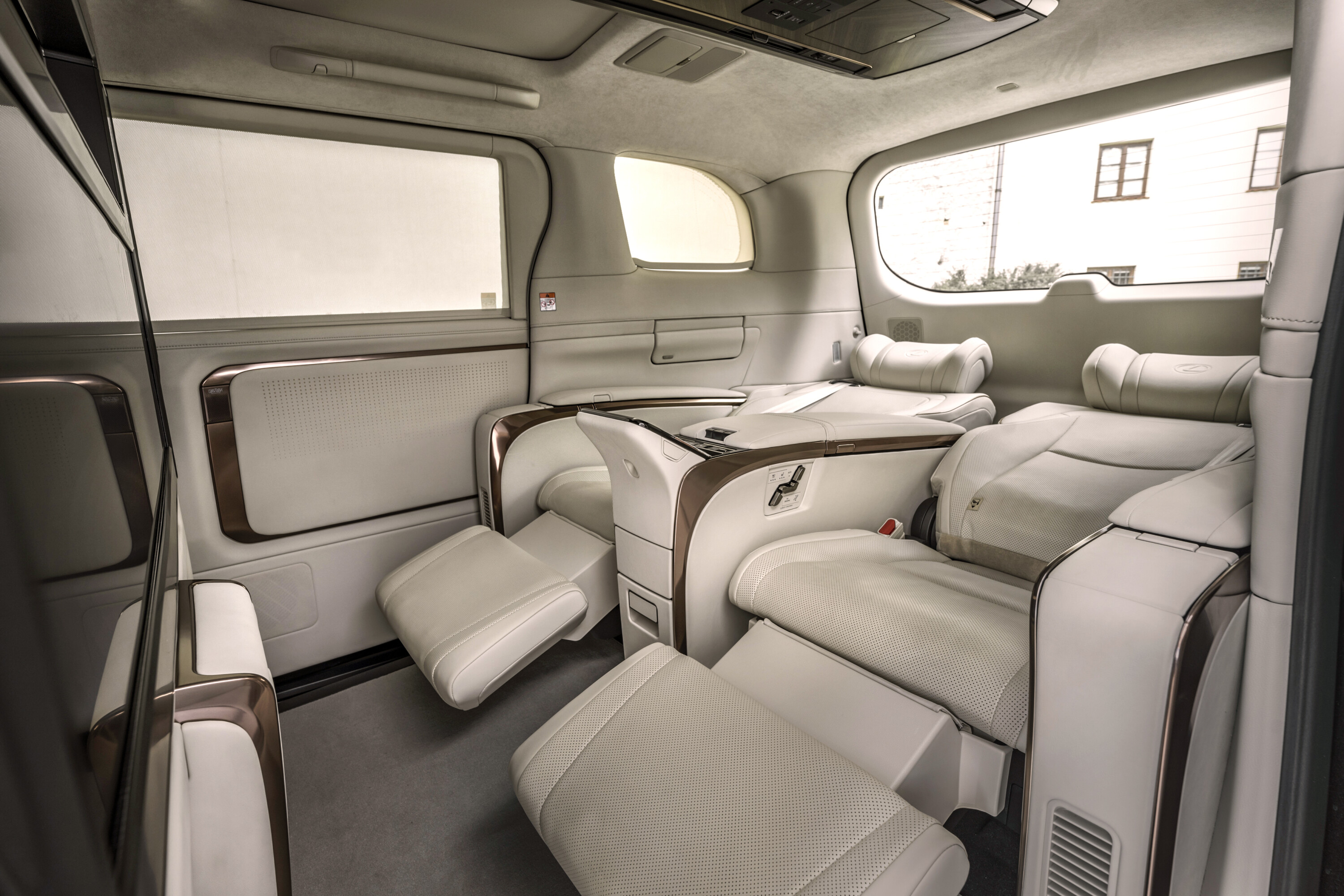
Each chair is equipped with switches for extensive adjustment of backrest-rest reclines (up to 63 degrees) and footrest extension, and a touch control pad for climate control, audio, lighting, seat heating/ventilation/massage, and window and roof shades.
Not all comfort measures are visible. Lexus engineers placed rubber bushes between the seat and floor to reduce vibrations.
Alternatively, most of these functions can be controlled via physical buttons/switches on a stretched overhead console, either side of which are a people-mover interpretation of skylights.
1
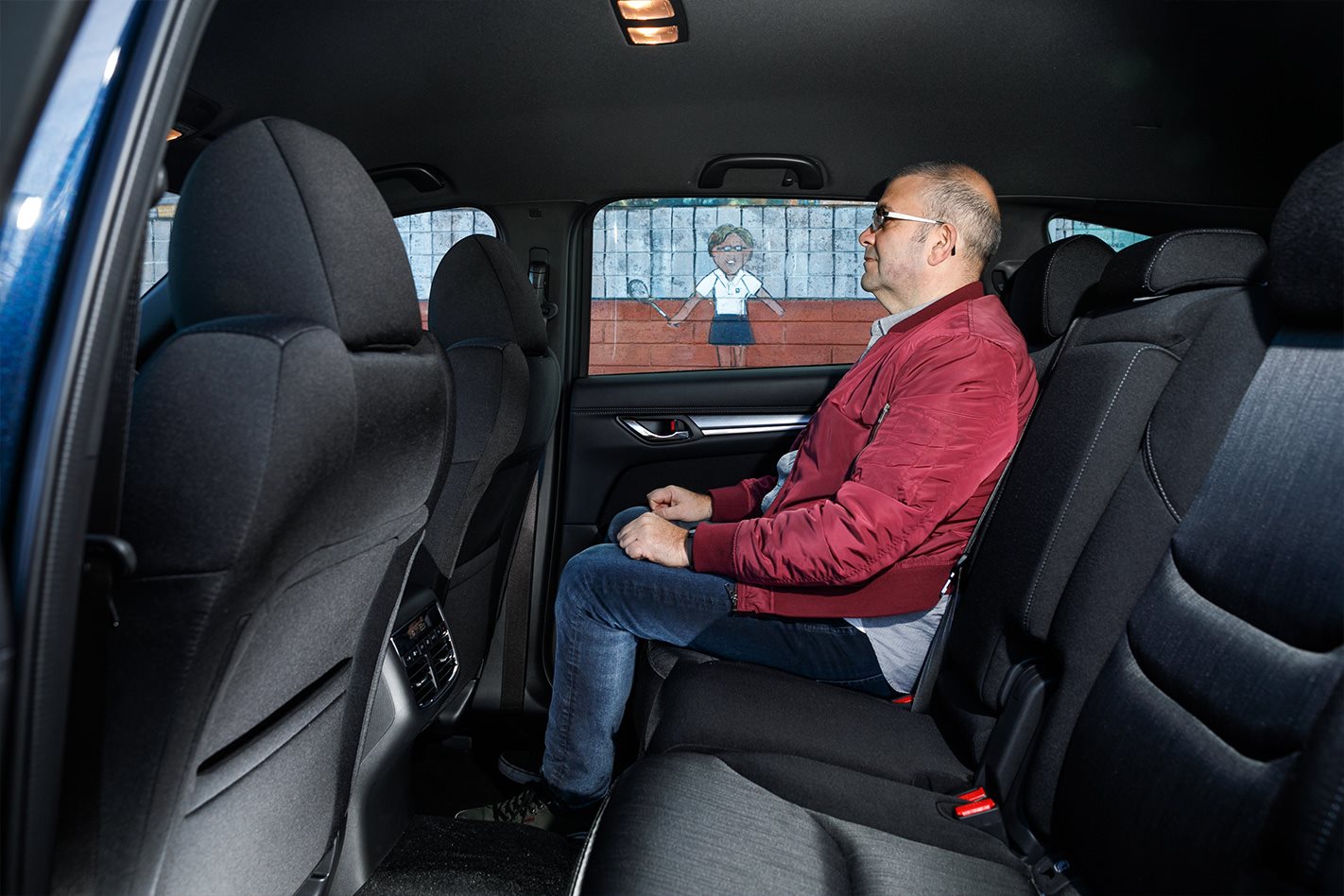
In addition to the stretch-out legroom there’s acres of headroom enabled by the van-like body style.
A couple of features are secreted in each chair’s plumply padded arm: a pop-out cupholder on the right side and a pull-out airplane-style table on the left. There’s just no-one serving hot food and beverages. Both the arms and footrest include Lexus-first heating functions.
For Zoom meetings or visual entertainment, a monitor drops down out of the overhead console and comes with an HDMI connector.
In addition to the stretch-out legroom there’s acres of headroom enabled by the van-like body style.
1
The wide cabin and flat floor allow business bags to be placed between the seats without interfering with footrests.
Panoramic side windows and plenty of space between the front headrests also provides excellent outward vision. Or block out the side view with shades.
Third-row occupants aren’t ignored, either. After accessing the last set of seats via buttons that control the electric slide (up to 480mm) and tilt of the captain’s chairs, they get their own window blinds, USB-C port, vents and cupholders.
1
It’s quiet in the rear. Wind noise is never intrusive on the freeway, the drivetrain is rarely vocal, and tyre rumble, even on coarser surfaces, is impressively subdued.
The ride is mostly smooth, though not always exemplary. We later learn our journey down was driven with the LM in Rear Comfort, a mode that slackens the variable damping with the intention of extra suppleness but instead creates occasional bounciness.
After temporarily living the life of Riley – who may or may not have been a Lexus owner – at Jackalope for the night, it’s our turn behind the wheel the next morning.
The LM covers a sizeable 5.1m x 1.9m footprint, is nearly two metres tall, and weighs between 2.3 and 2.5 tonnes.
1
That’s all thankfully disguised from behind the wheel, at least on the country roads our relatively short drive was limited to.
The LM remains sufficiently upright travelling around corners on 80km/h roads, and the brakes are easy to modulate and provide good slowing force.
There’s a touch of vagueness around the steering’s straight-ahead position but it’s otherwise light and smooth nature makes it simple for guiding the LM’s direction.
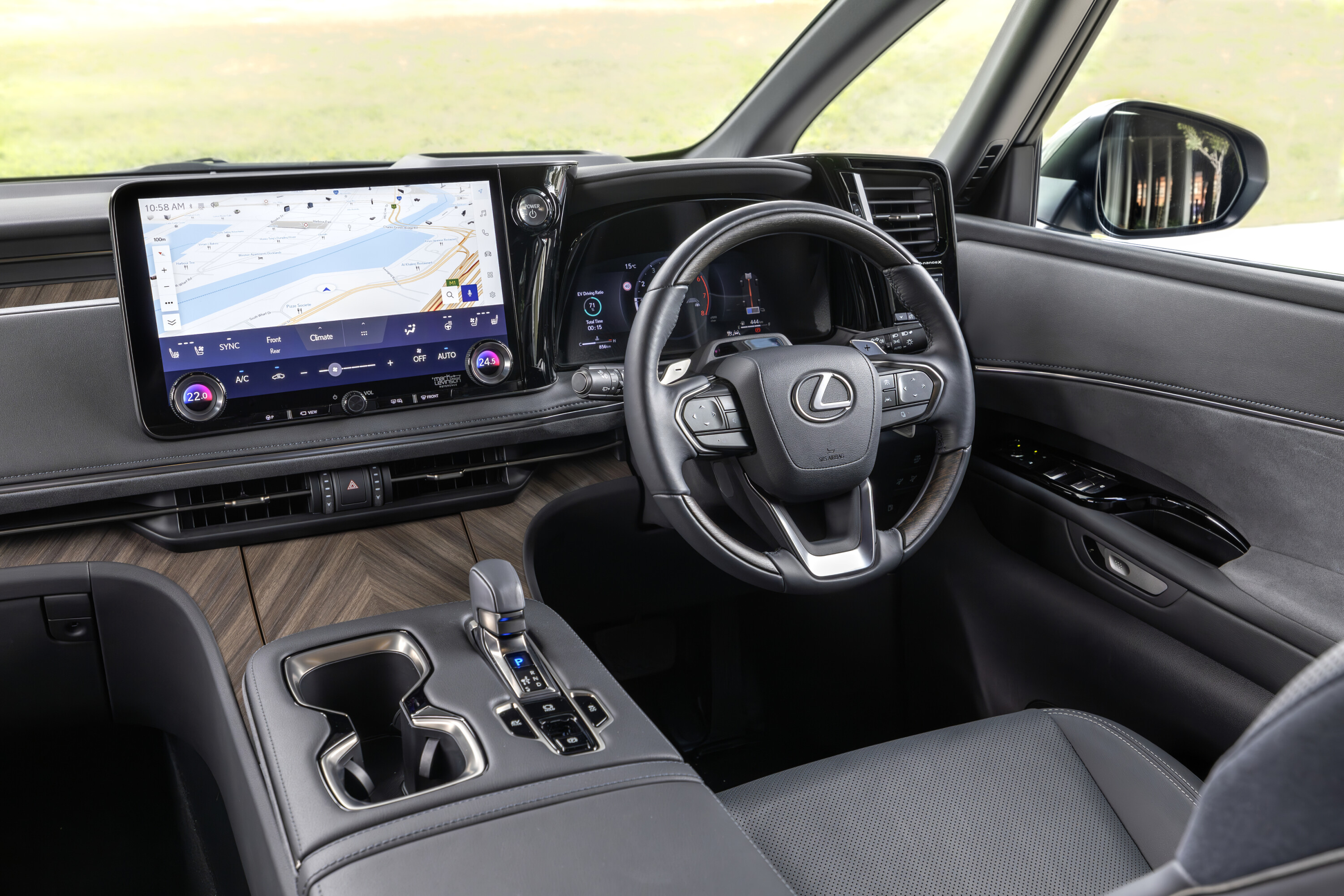
The driving position has more in common with a van than a limo, though that contributes to a commanding view out. Front-seat comfort is also exceptional. Longer-legged chauffeurs, however, might prefer steering wheel telescopic adjustment that extends further out.
1
There’s a head-up display to help keep eyes on the road. The digital infotainment and instrument displays look dated compared with the slick and sophisticated offered by almost every other luxury-car brand, and even plenty of mainstream car makers.
The LM350h’s series-parallel hybrid drivetrain – combining a 2.5-litre petrol engine with an electric motor up front (and a rear motor for our AWD model), Lexus says combined maximum power is 184kW.
Power jumps to 273kW in the LM500h that teams its electric motors with a 2.4L turbo petrol engine with almost double the torque (460Nm v 239Nm) of the normally aspirated 2.5L.
Fuel consumption is highly unlikely to be a decisive factor in an LM purchase decision, but for the record the official figures are economical – between 5.5 and 6.6 litres per 100km.
1
At least all the motors help make the LM350h quite effortless to drive
Out of a city environment, it’s virtually impossible to drive the LM on its electric motors alone. At least all the motors help make the LM350h quite effortless to drive, though, when more acceleration is required, the drone from the CVT puts the only major blot on the Lexus’s refinement copybook.
A torque converter auto mated to an inherently smoother and stronger V6 would seem a better combination for linking with the electric motors, even if the typical LM buyer will only care about what’s behind the front seats.
Behind the rearmost seats, there’s no space for airport luggage if all seats are in use – just a paltry 110 litres that will take a couple of bags.
If not needed, the LM350h’s third row has a power-folding set-up to create nearly 1200 litres of luggage space. There’s a 752-litre luggage capacity in the four-seater LM500h.
It’s back into the middle row for the return to the airport, where I started tapping out this review – with the highly rare, over-riding thought that, in the Lexus LM, the back seat is exactly where I want to be.
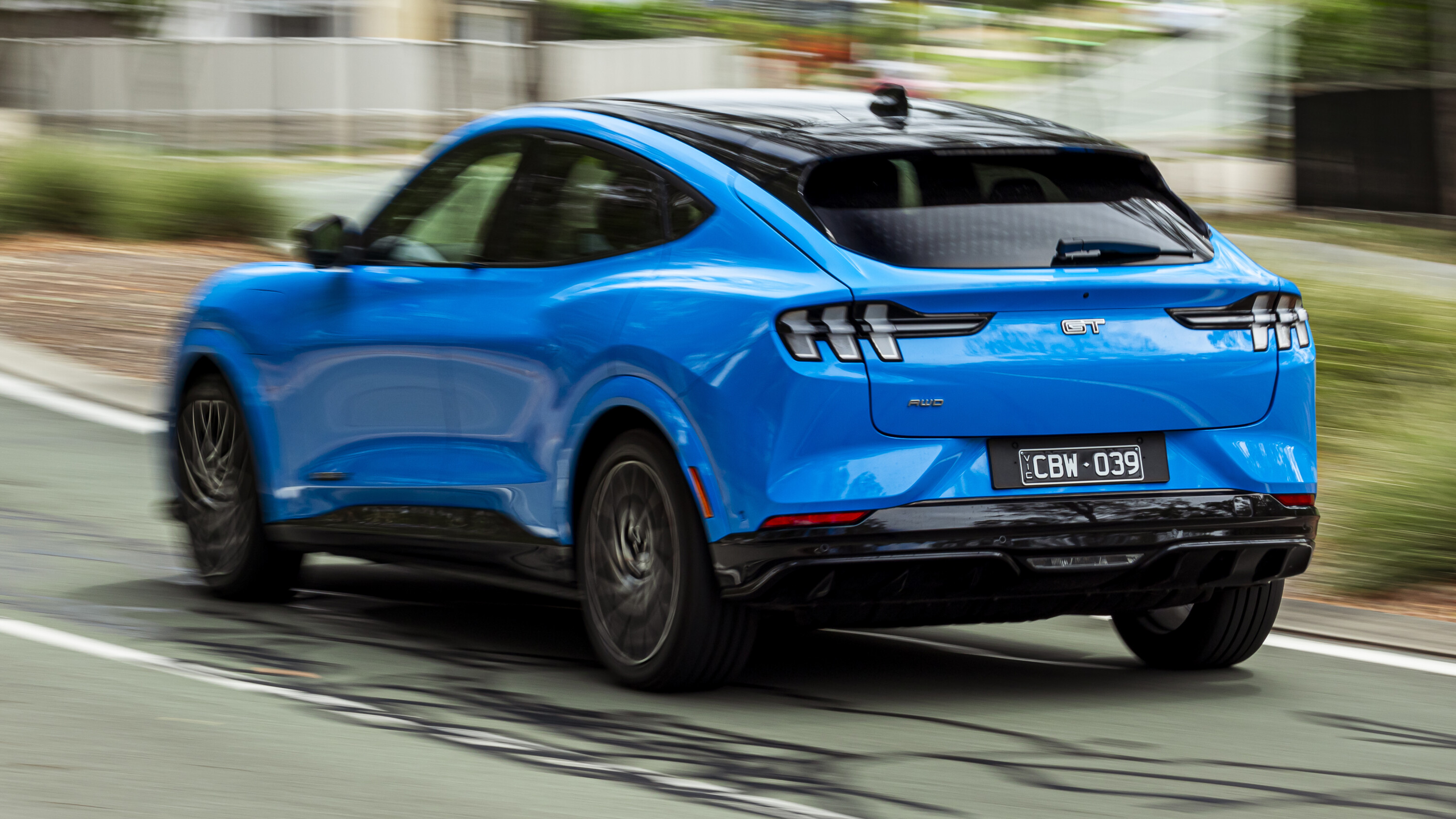
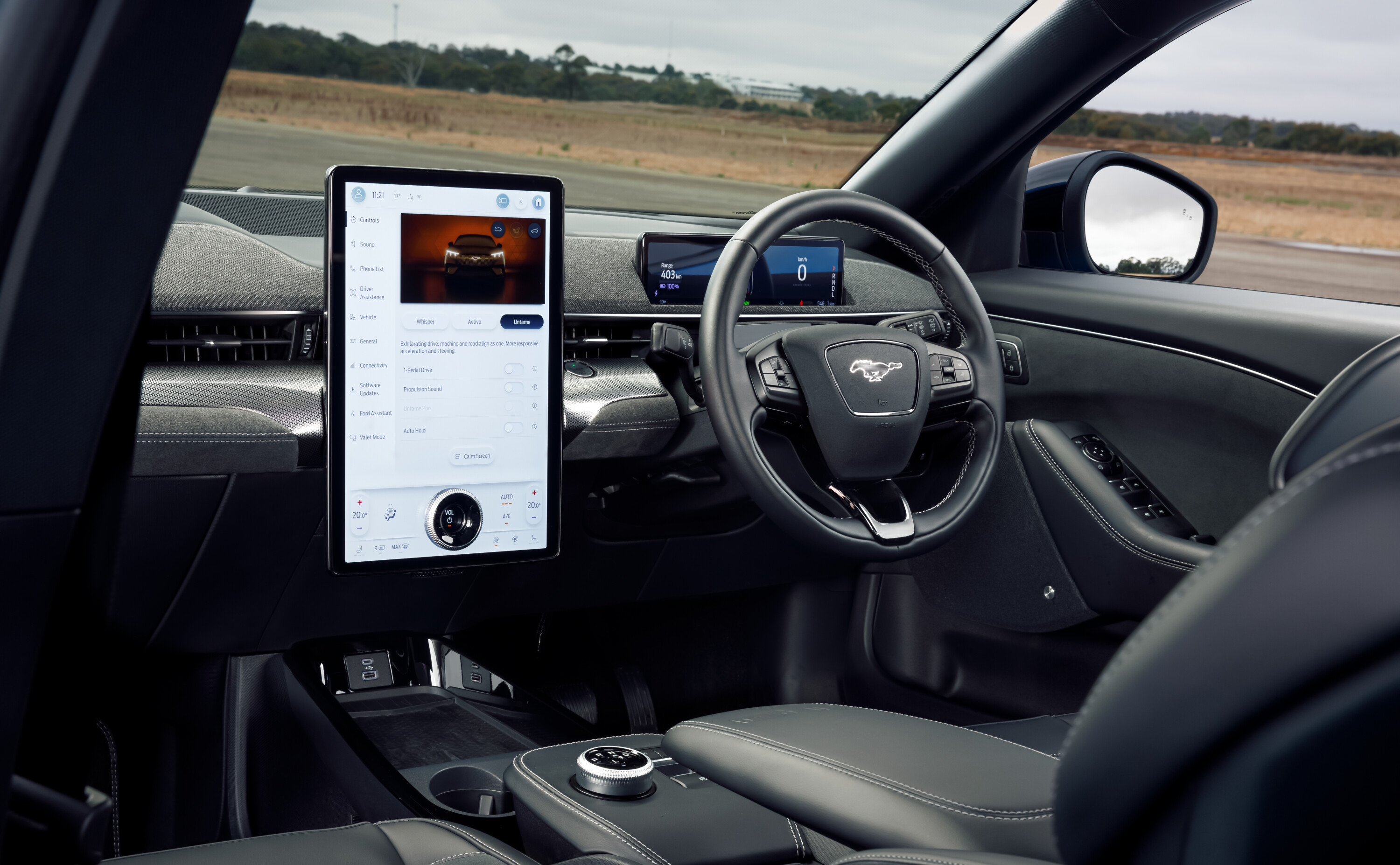
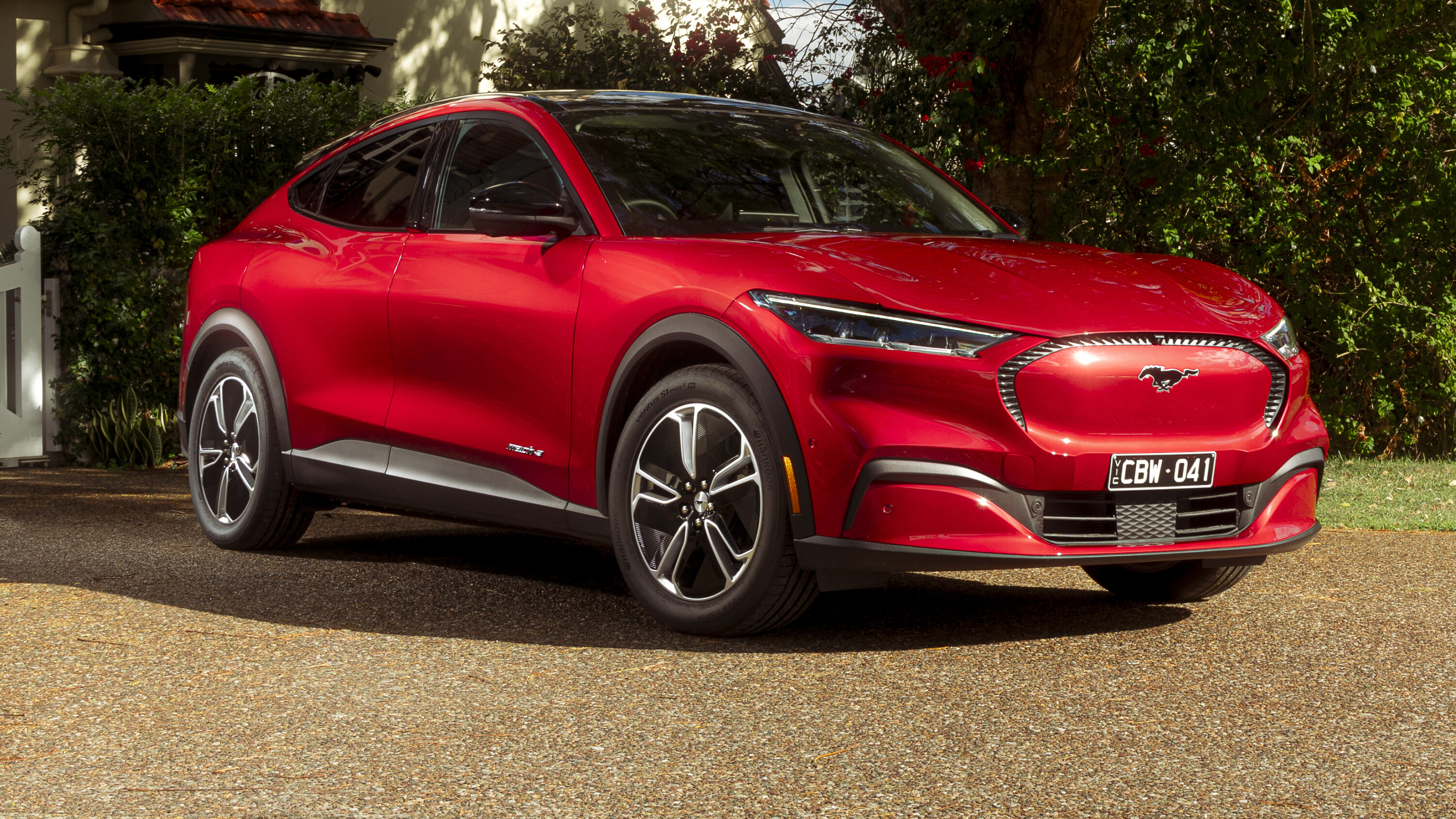
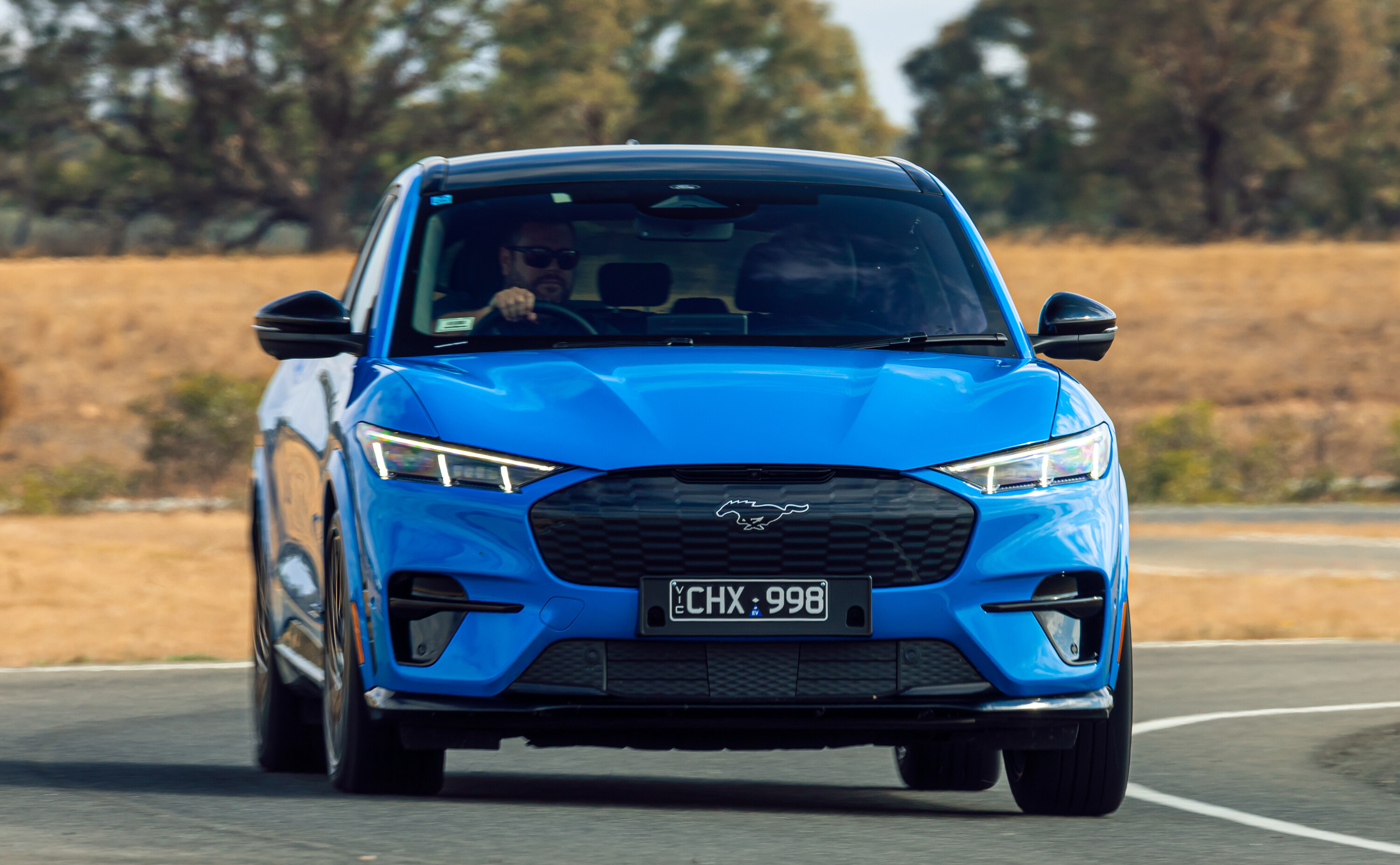
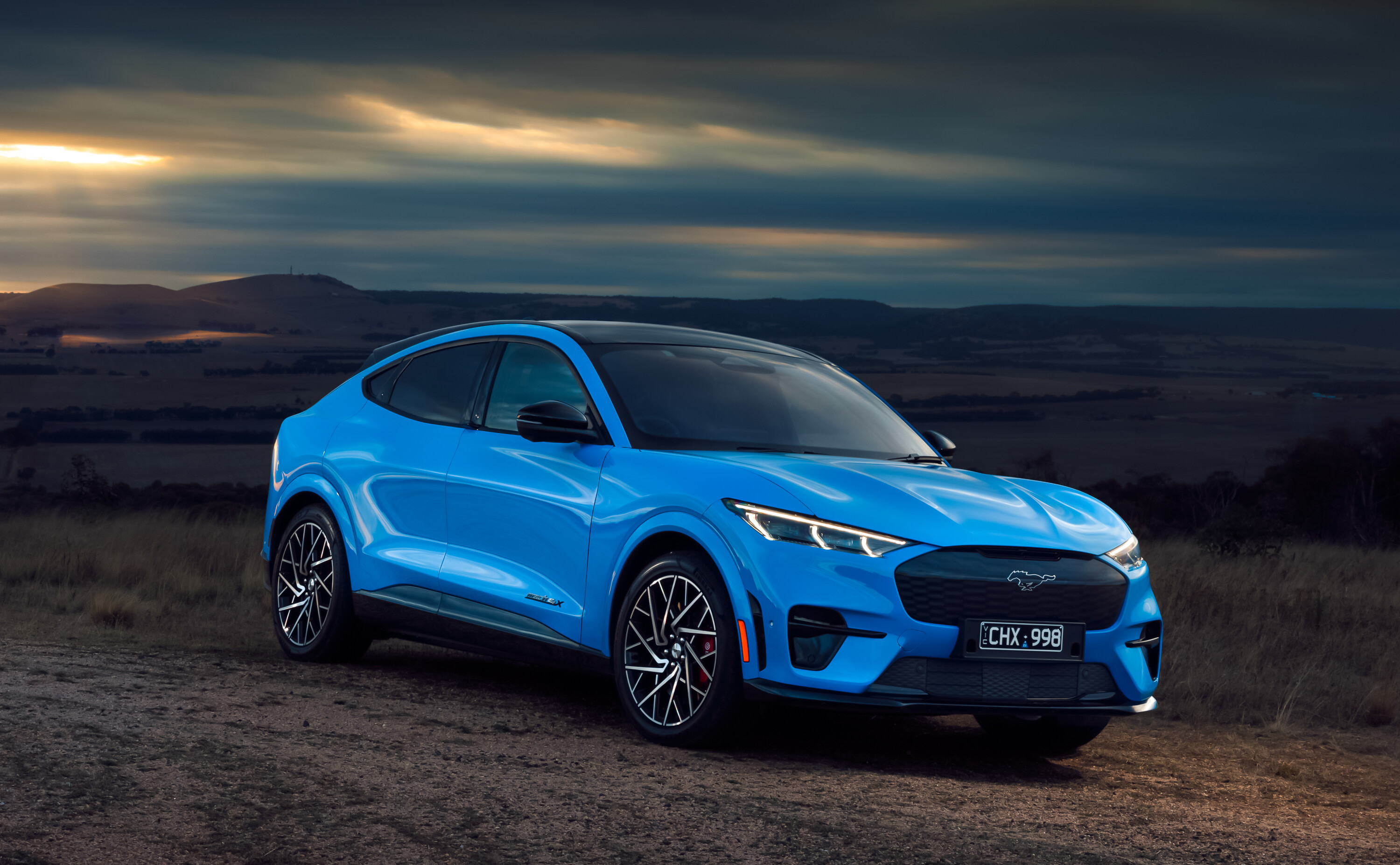
Ford Australia has reduced pricing for the Mustang Mach-E between $2675 and $7000 in a bid to lure more Model Y, EV6 and Ioniq 5 shoppers as the electric car price war continues.
October: Mustang Mach-E Australian review
Finally! The Mach-E is now in Oz, and we’ve driven it. Get our full review at the linked story below.
Mustang Mach-E pricing and features
The all-electric 2024 Ford Mustang Mach-E mid-size SUV is now available to reserve ahead of its arrival later this year.
Snapshot
2023 Ford Mustang Mach-E: Australian details confirmed
Model Y, EV6 rival priced from $72,990 plus on-roads
Production to commence u201cimminentlyu201d ahead of Q4 arrival
According to the brand, the first allocation of Australia-bound Mach-Es will commence production “imminently”.
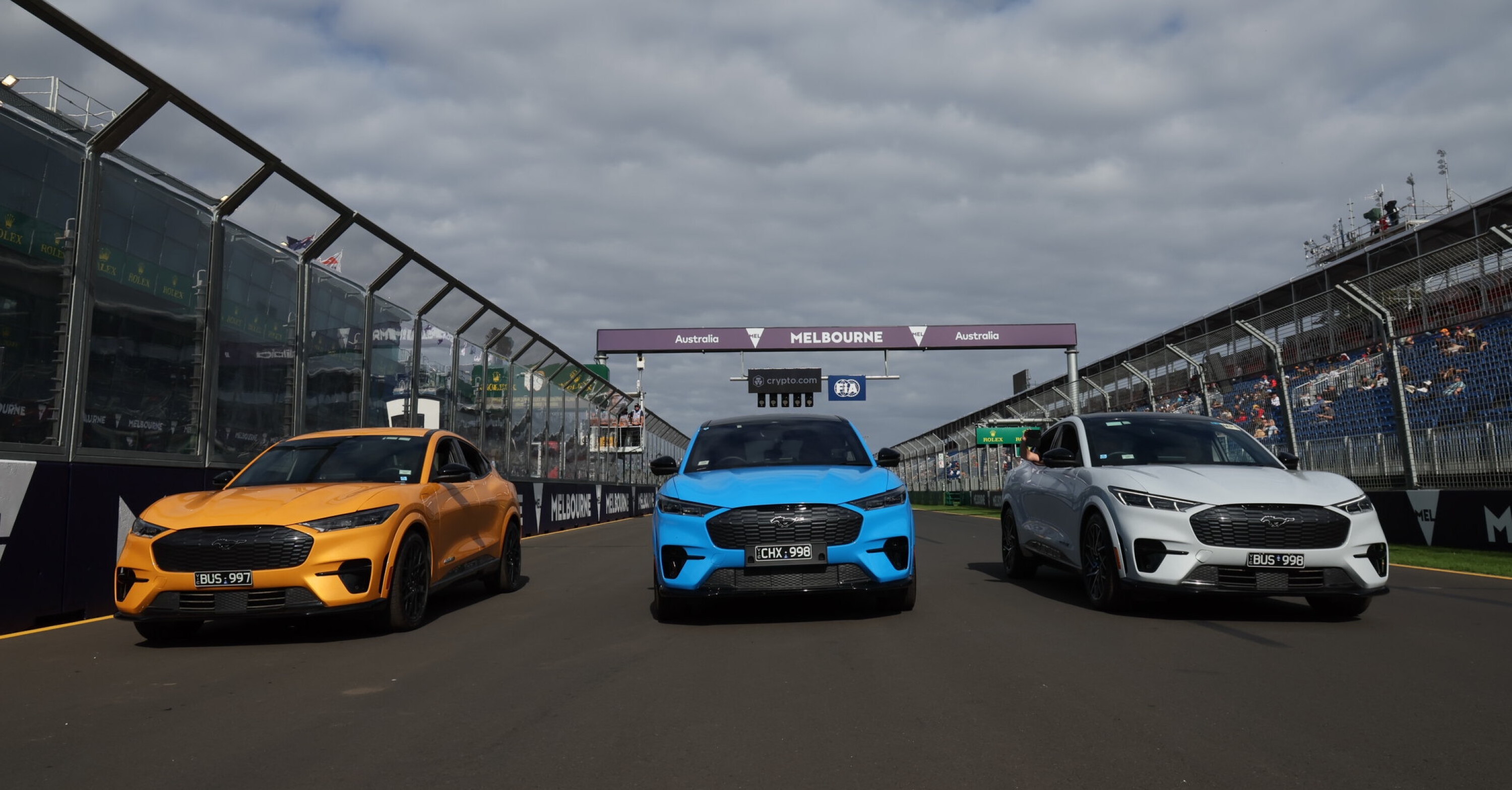
The local Mach-E line-up – sourced from Mexico – will kick off with the entry-level Select grade, followed by the mid-spec Premium and the flagship GT performance variant.
UPDATE, July: More Ford Mustang Mach-E details confirmed
Ford Australia has published a full specification list for the Mustang Mach-E electric SUV and confirmed it’ll launch in the fourth quarter of this year.
However, the entire Escape line-up will be discontinued later this year, while Ford Australia has “no plans to introduce” the new, Europe-destined Explorer EV based on the Volkswagen Group MEB platform shared with the ID.4.
To purchase a Mach-E, customers must create an account on Ford’s consumer website, with a $1000 reservation fee. All buyers must facilitate ordering and servicing through Ford’s limited ‘approved EV’ dealer network.
Ford has confirmed the base Select – priced from $72,990 before on-road costs – will be fitted with a new 71kWh lithium-iron-phosphate battery pack, allowing for a WLTP-rated 470-kilometre driving range.
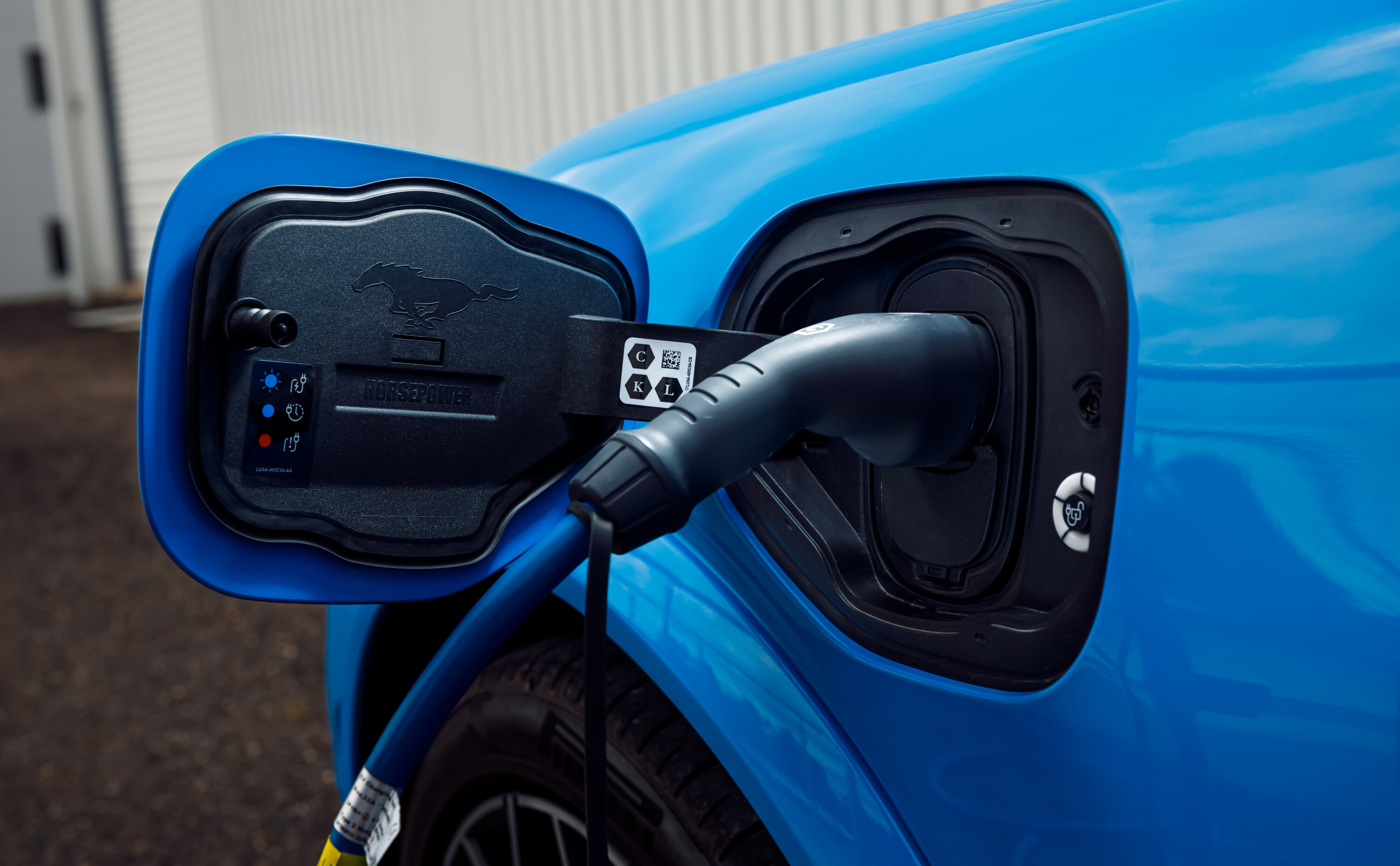
Ford states that the LFP battery now enables owners to charge to 100 per cent “more frequently” via an AC slow charging point, while DC fast charging from 10 to 80 per cent is five minutes quicker, with a claimed 33 minutes.
For more information on the Mustang Mach-E’s technical specifications and how it stacks up against its competitors, you can read our spec comparison against the Tesla Model Y, Kia EV6 and Volkswagen ID.4 by clicking below.
Under the skin, the base Select features a rear-mounted 198kW/430Nm single electric motor, fed by a new-for-2023 71kWh lithium-iron-phosphate battery pack. It has a WLTP-rated 470-kilometre driving range.
The mid-spec Premium brings a larger 91kWh battery and a more-powerful 216kW and 430Nm electric motor, allowing for a driving range of “up to 600km”.
While the top-spec GT retains the Premium’s larger 91kWh battery, it gains an electric motor mounted to the front axle, for a 358kW/860Nm total system output.
The Ford Mustang Mach-E is covered by a five-star ANCAP safety rating – excluding the GT AWD – based on testing conducted in 2022.
It scored 92 per cent for adult occupant protection, 88 per cent for child occupant protection, 69 per cent for vulnerable road user protection, and 82 per cent for safety assistance.
Eight airbags (dual front, side, head, and driver’s knee and front-centre) are standard for the Select and Premium. The GT is not fitted with a front-centre airbag.
The 2024 Ford Mustang Mach-E electric SUV is now priced at up to $7000 less ahead of the first customer deliveries due this month.
Launched in Australia in October, Ford’s local arm has confirmed permanent price reductions between $2675 and $7000 applied to the retail cost for all three Mach-E variants.
This sees the entry price fall to $72,990 before on-road costs for the Select RWD – down from $79,990 (8.8 per cent less) – positioning it between the Tesla Model Y Rear-Wheel Drive ($65,400) and Long Range AWD ($78,400).
An equivalent-spec Kia EV6 GT-Line RWD is priced from $79,590 before on-roads and a Hyundai Ioniq 5 RWD 77.4kWh costs between $70,500 and $79,500 plus on-roads.
The GT AWD – a rival to the $91,400 Model Y Performance, $99,590 Kia EV6 GT and $111,000 Hyundai Ioniq 5 N – is now priced from $104,990 plus on-roads, down from $107,665 (2.5 per cent less).
“This price reduction is a major positive for our customers and demonstrates our commitment to delivering the best products and great value to our customers. As the EV market continues to evolve, we are responding to it,” said Ford Australia CEO Andrew Birkic.
The Mustang Mach-E is the latest electric vehicle to have amended pricing in Australia, with cuts also applied to its Tesla Model Y and Hyundai Ioniq 5 rivals earlier this year.
Other electric vehicles, including the GWM Ora and MG ZS EV, also saw pricing reductions, with the GWM’s price reduced at launch by up to $4000 in response to its cut-price sub-$40,000 MG 4 and BYD Dolphin competitors.
There are a few things one must sacrifice when one becomes a parent…
Things like Sunday sleep-ins, sleeping in general, date nights — and, most reluctantly of all, the two-door sports car.
Yep, it’s time to consider the best family car for your growing brood. Here are a few things to consider when making the transition.
1
Safety rating
You have probably heard of an ANCAP rating, but what does it mean?
ANCAP stands for the Australasian New Car Assessment Program. It’s a car safety performance evaluation that crash tests vehicles sold in Australia.
It then publishes these results for the benefit of consumers. Vehicles are awarded an ANCAP rating of between zero and five stars indicating the level of safety they provide in the event of a collision.
The more stars, the safer your vehicle. To achieve the maximum five star ANCAP safety rating, a vehicle must achieve the highest standards in all tests and feature advanced safety assist technologies to help prevent an accident. Obviously safety is paramount when it comes to your kids. When looking for a family car, go for a vehicle with five stars.
1
Cargo and storage space
Gone are the days when storage space was where you placed your sunnies and water bottle.
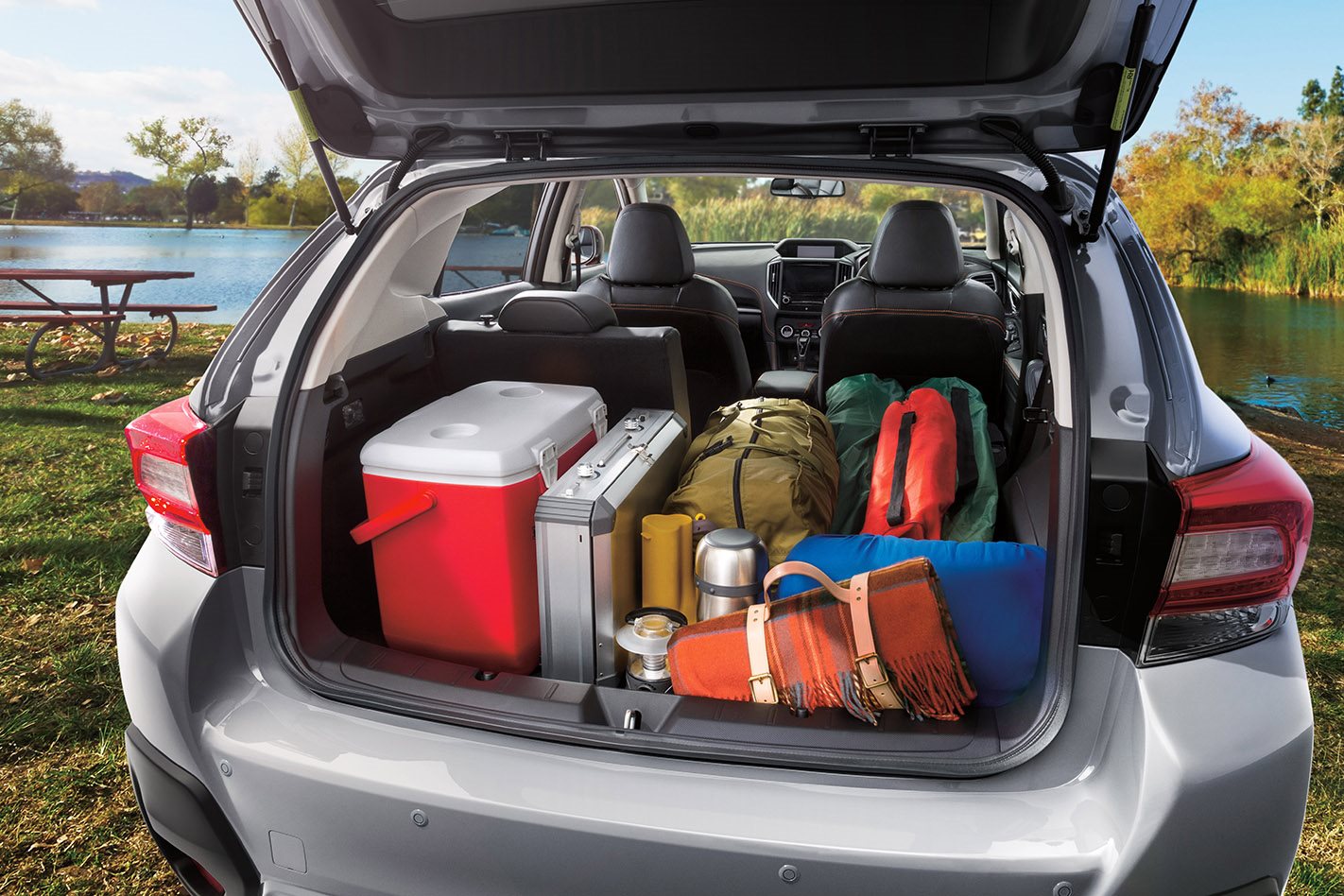
Family life means you’ll spend many years lugging around prams, baby bags, car restraints, school bags, musical instruments and sporting equipment. For this reason it’s important to look for ample storage.
This is usually expressed in litres. Also ask: Do the rear seats fold down to improve cargo space? Most importantly, does the boot accommodate a pram?
Consider an SUV or people-mover
There is a reason SUVs are the weapon of choice at the school drop off/pick up war zone.
1
For one, their high and upright driving position offers better visibility over traffic. Their height means they are easier to get in and out of with kids and groceries; you’ll do your back twisting and lowering a snoozing baby into a low car. SUVs generally hold more stuff.
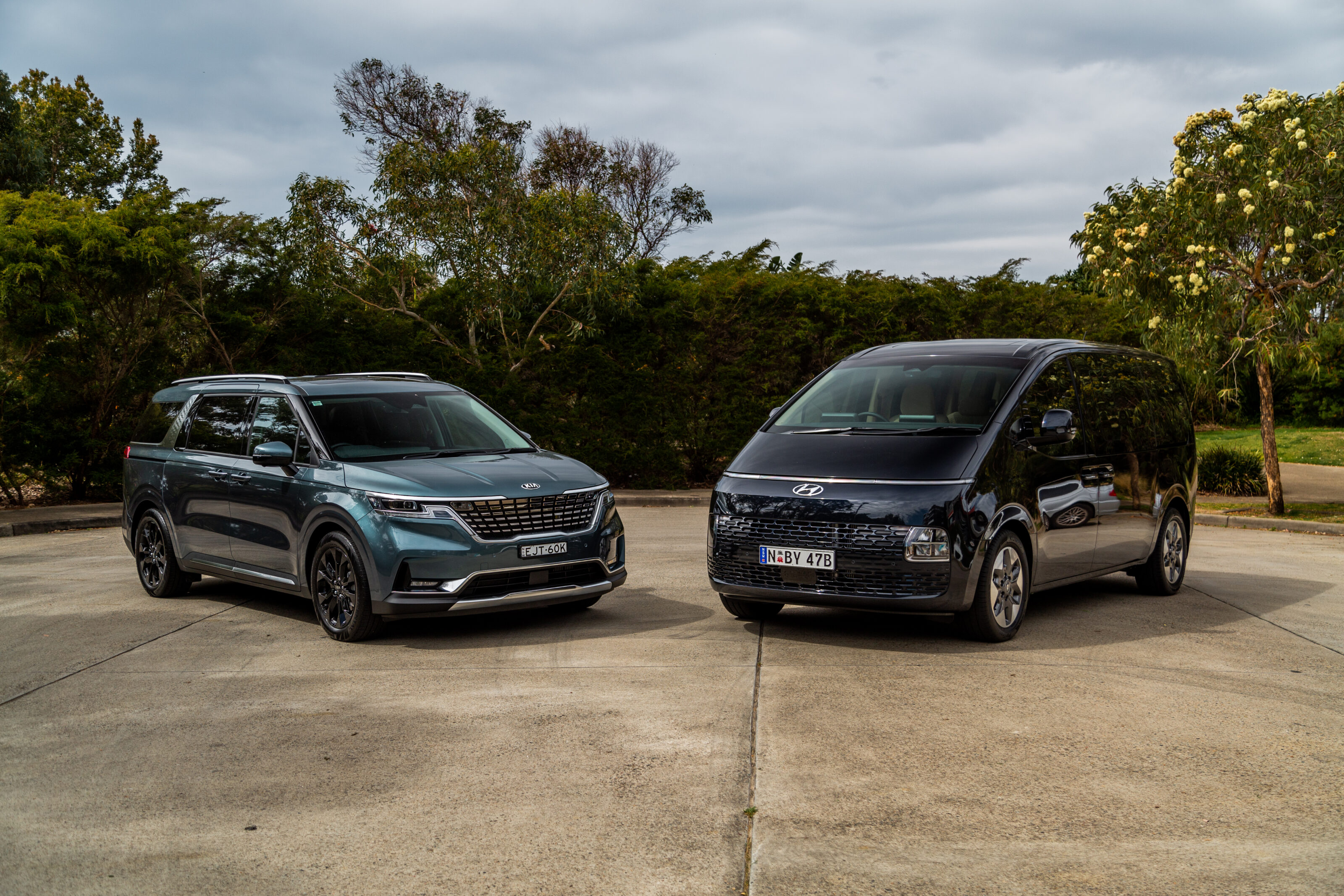
Also consider people-movers. While decidedly uncool, they offer practical motoring at its best. Their sliding doors are brilliant when it comes to ushering kids into the car. Not to mention eliminating dinged doors in the car park.
Don’t forget, it’s not just your own kids you’ll be ferrying around. You’ll also play taxi driver to all their friends and sporting groups, so consider whether you need a five, seven or even an eight seater model.
Ever tried to reverse park with three screaming kids in the back and prams and groceries obscuring your view? Chuck in sleep deprivation and you have a recipe for a bingle.
For this reason, top-shelf tech is all important. While I am yet to trust auto park, always invest in a vehicle with quality reversing cameras, sensors, radar cruise control and lane assist.
Smartphone mirroring, head-up display for freeway driving, voice control that works well and good Bluetooth are also useful. Connectivity is important and will reduce any chance you’ll fiddle with your phone — which is, of course, illegal, but still tempting for busy parents.
For your sanity, consider a vehicle with multiple USB charging ports – especially in the back.
Everyone has a device now, and the last thing you want is a flat iPad on a long car trip.
Rear seat climate control is also a bonus for littlies trapped in the back. And make sure there are plenty of cup holders for rear passengers.
1
Fuel type and efficiency
Petrol, hybrid, electric – they’re all a bit different in terms of energy consumption. Make sure you get the one that best suits your needs.
Manufacturers will always have an official fuel consumption expressed as litres per 100 kilometres. But this is usually a combination of “urban” and “extra-urban” – aka freeway conditions.
The manner and usage in which you drive your car could make that quite different. For example, if you do lots of school runs and stop-start city driving your fuel usage will be higher.
This is a massive asset you’re buying so do your homework. A site like WhichCar.com.au provides plenty of reviews and car comparisons.
Book in test drives and make sure they occur back-to-back, because it’s really easy to forget the feel of a car. Take a notepad to compare notes.
Visit a number of different dealers and ask each for their best deal. Some might give you a low interest rate when it comes to financing, but they won’t budge on the price of the car.
Drag along your partner. This is a family team decision. And don’t be afraid to take the pram and car seats to the test drives. No use getting the new family wagon home, only to discover the damn pram doesn’t fit!