Tesla’s onto something that should see it remain hugely profitable as new and traditional car brands gradually eat into its dominant electric vehicle market share.
Snapshot
Superchargers valued at more than $147m
To benefit from car brands adopting Tesla NACS
Selling carbon offset credits to other carmakers at record levels
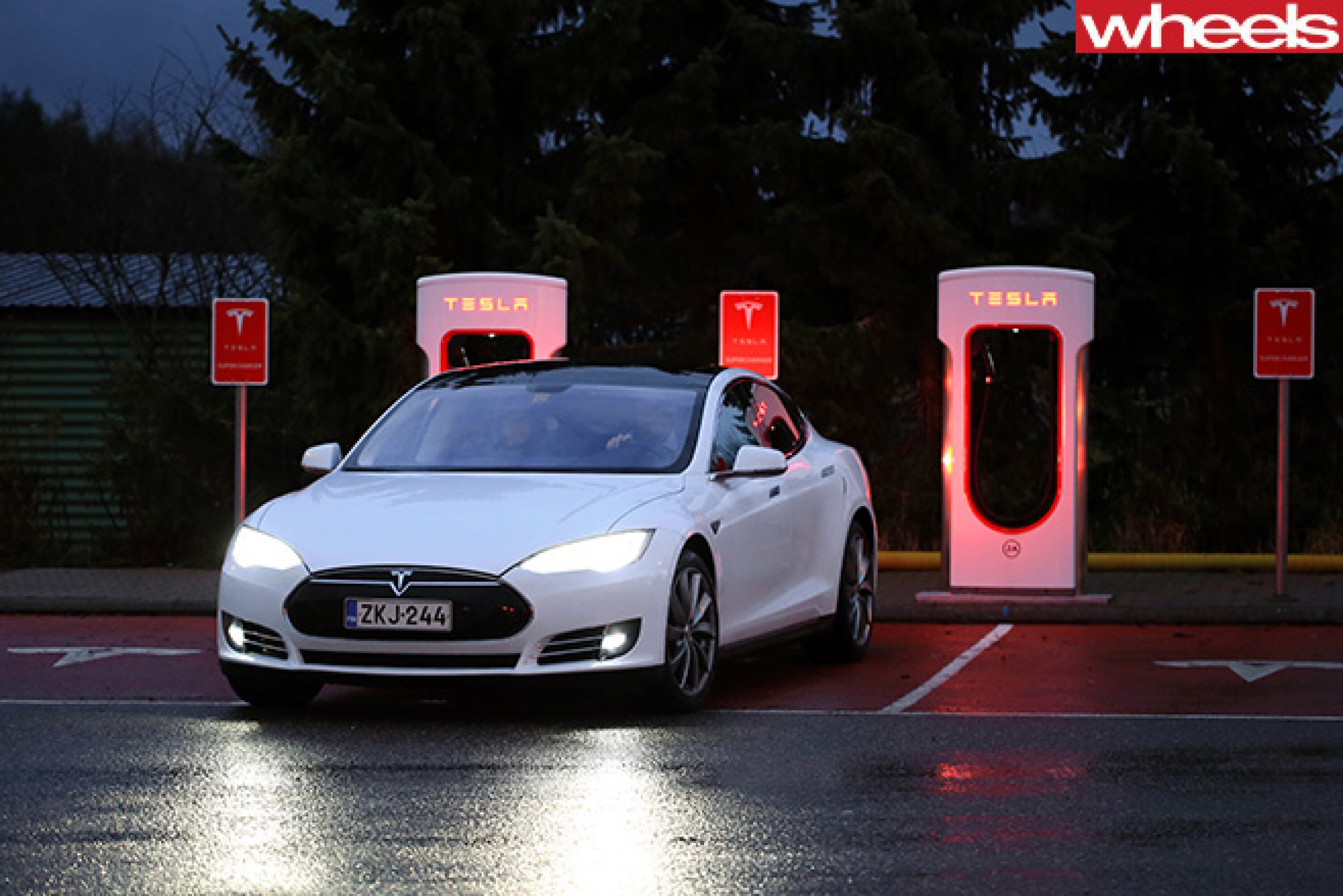
Morgan Stanley analyst Adam Jonas (via Electrek [↗])estimated that its Supercharging network could be valued at more than AU$147 billion (US$100 billion) at a price of AU$49 (US$33) per share.
The global-reaching fast public charging infrastructure launched in 2012 and has been lauded for its reliability, wide availability overseas, seamless ‘plug and charge’ and navigation integration with Tesla models, and imposes queue-cutting idling fees.
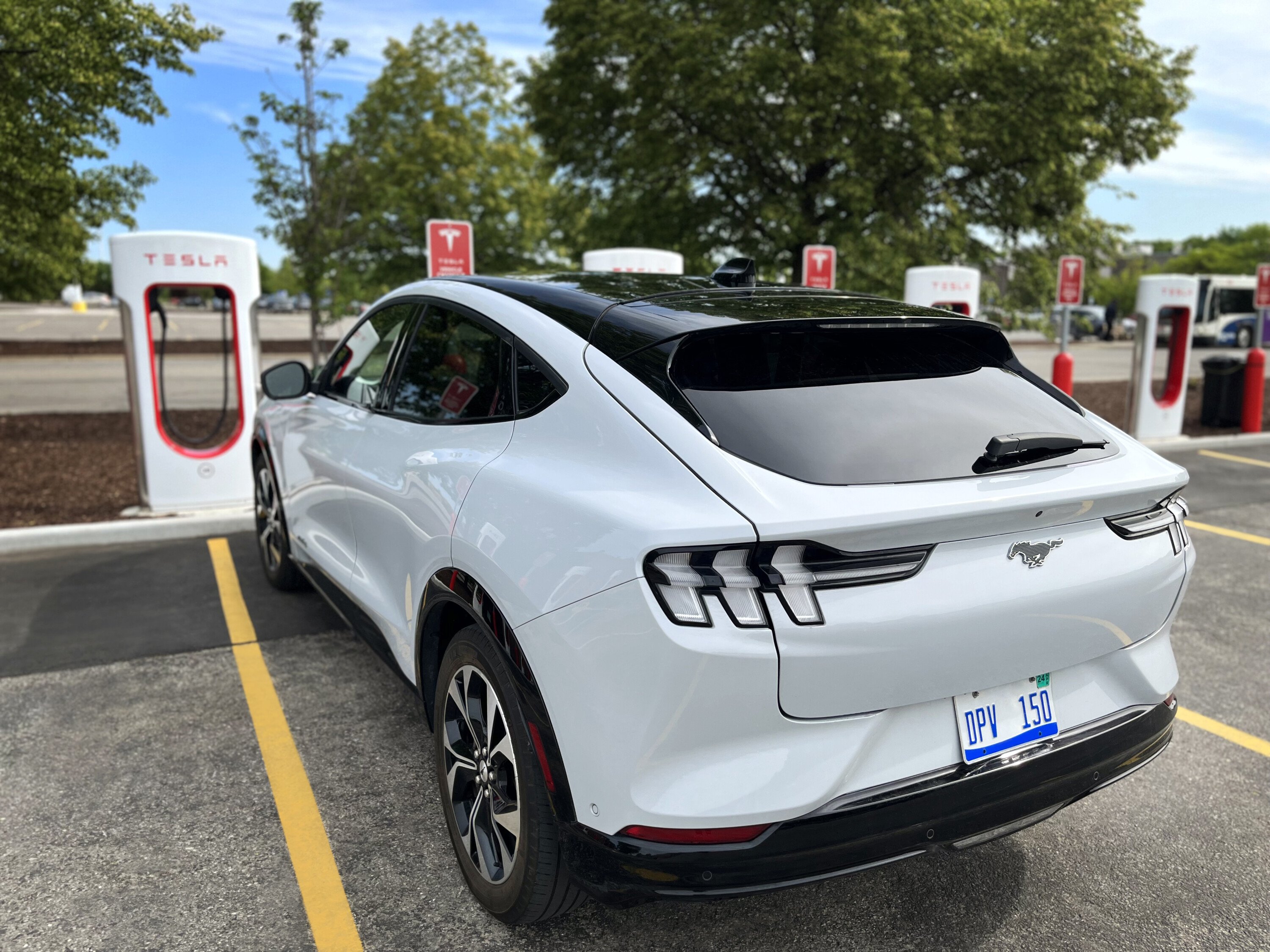
While Tesla’s connector has been open source since late 2022, it will benefit from more EV models being able to charge at its extensive Supercharging network in North America – without the need for it to fit costly ‘Magic Dock’ adapters to accommodate Type 1 Combined Charging System (CCS1) vehicles.
Tesla’s NACS connector has been praised for its compact design, which packs both AC and DC connections into one port.
However, it’s unlikely to be the standard in Australia as the company already uses the Type 2/CCS2 European port in the Model 3 sedan and Model Y SUV locally.
1
The carbon cash
Importantly, Tesla continues to reap on selling carbon credits to other automakers to offset their Scope 1, 2 and 3 emissions – and meet regulations overseas.
According to CarbonCredits.com [↗], Tesla sold AU$2.6 billion (US$1.78 billion) carbon credits in 2022 compared to just AU$617 million (US$419 million) in 2018. That represents a nearly 80 per cent increase – and is a major revenue source for the EV maker.
1
Tesla has more credits to sell due to its EV popularity globally, lower manufacturing carbon footprint, and sells renewable energy infrastructure for homes and businesses such as its Powerwall battery storage system.
It’s also earning from current owner’s Premium Connectivity monthly subscription and one-off Enhanced Autopilot and ‘Full Self-Driving Capability’ software upgrades.
A spokesperson for Ateco Group – the third-party distributor for Renault vehicles in Australia – said the Rafale would be considered for our market if it were “made available to right-hand-drive markets”, with a business case to be analysed before a final decision is made.
1
It appears right-hand-drive production is confirmed, with the Rafale appearing on the brand’s website in the United Kingdom, providing one less hurdle for Australia – unlike the new, left-hand-drive-only Espace seven-seater.
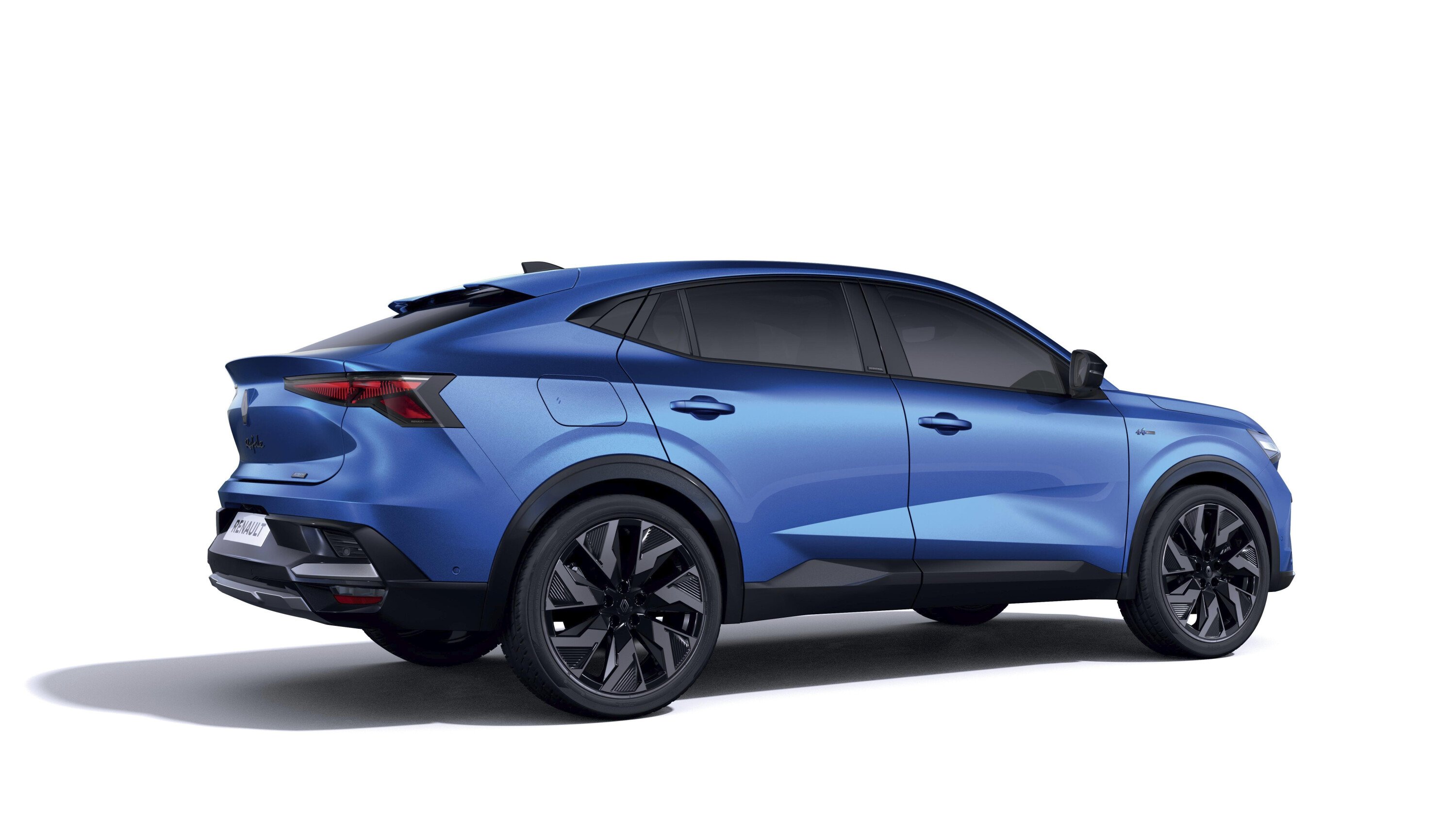
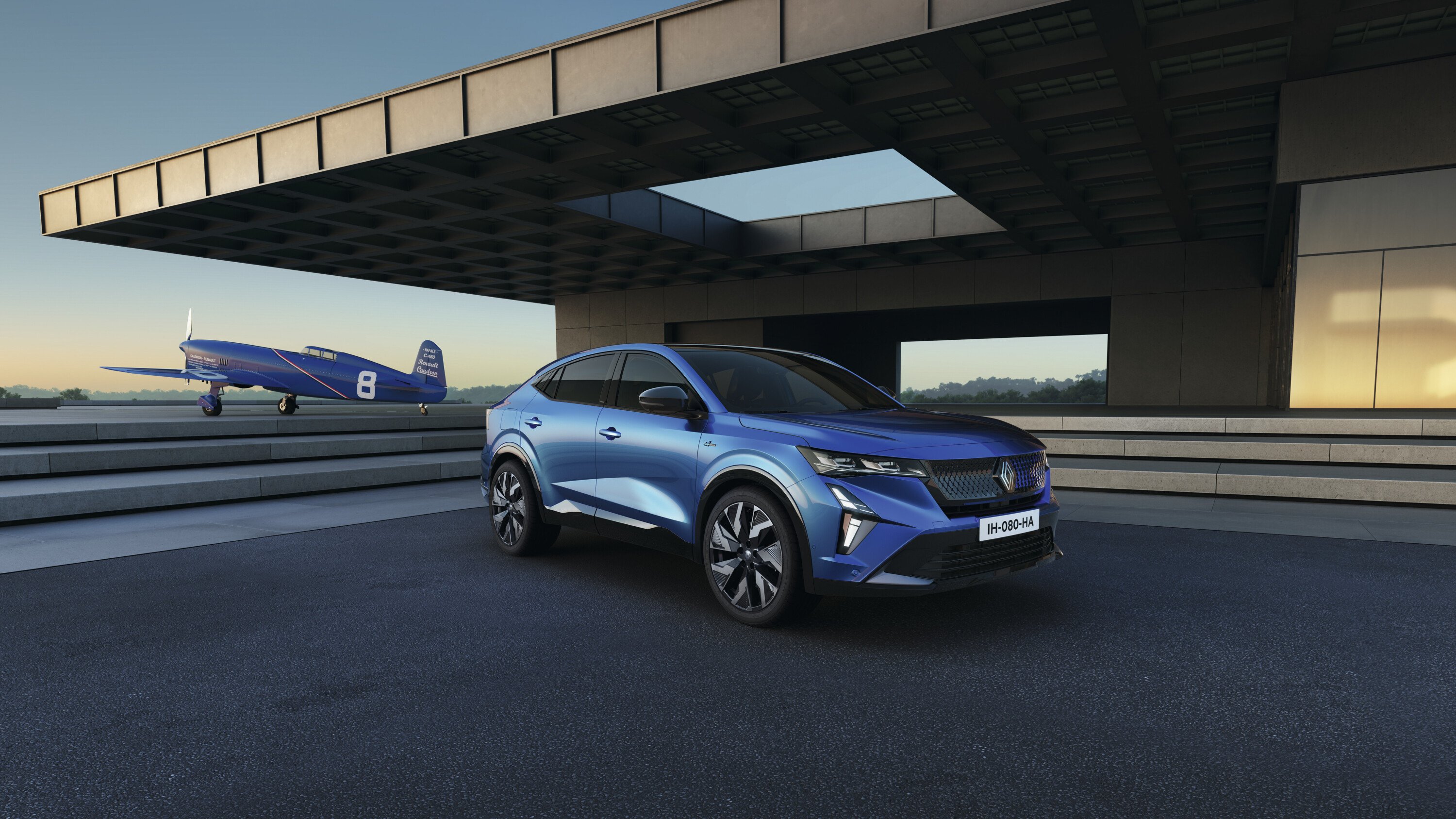
The Rafale will top Renault’s European lineup and is the spiritual successor to the Talisman sedan in Europe after production ended in France in 2022. It is named after the 1934 Caudron-Renault C460 racing aircraft.
Penned by former Peugeot designer Gilles Vidal, the Rafale is the first new vehicle to debut the brand’s revised design language, which eschews C-shaped headlights for sleeker units.
1
Measuring 4710 millimetres long, 1860mm wide and 1610mm tall, with a 2740mm wheelbase, the Rafale is similar to its Peugeot 408 arch-rival – and the midsize BMW X4 and Mercedes-Benz GLC coupe SUVs.
The hybrid Rafale will launch with a 96kW/205Nm Miller-cycle 1.2-litre turbocharged three-cylinder petrol engine matched to a 50kW/205Nm electric motor for a 149kW total system output. It is linked to an F1-derived clutchless multi-mode automatic transmission.
A WLTP-rated combined fuel consumption of 4.7L/100km is claimed, allowing for an estimated 1100-kilometre driving range. CO2 output is listed at 105g/km.
1
A plug-in hybrid Rafale with all-wheel-drive and a 224kW total system output is said to be in development.
Renault claims it is the first mainstream carmaker to use polymer-dispersed liquid crystal technology for a customisable panoramic sunroof similar to the Porsche Taycan and BMW iX. This allows passengers to choose its brightness, with sunlight in the front but darkness at the rear, or vice versa.
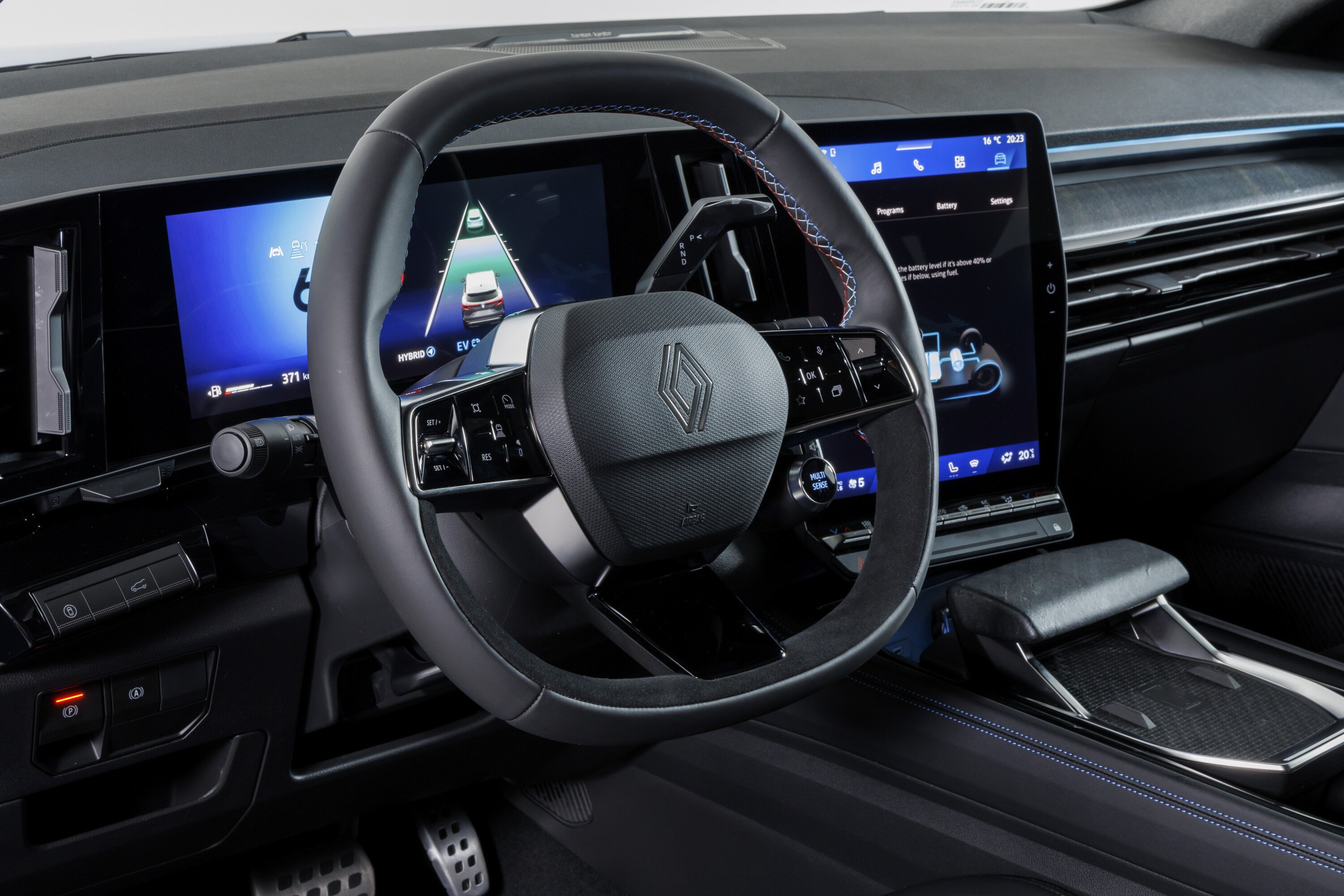
Inside, the Rafale is similar to the related Austral and Espace, with a 12.3-inch digital instrument cluster ahead of the driver and a 12-inch OpenR Link infotainment system powered by Android Automotive 12, allowing for Google’s built-in features.
1
Wireless Apple CarPlay and Android Auto support is retained, while the system supports over-the-air software updates and “AI-powered capabilities”, including voice control.
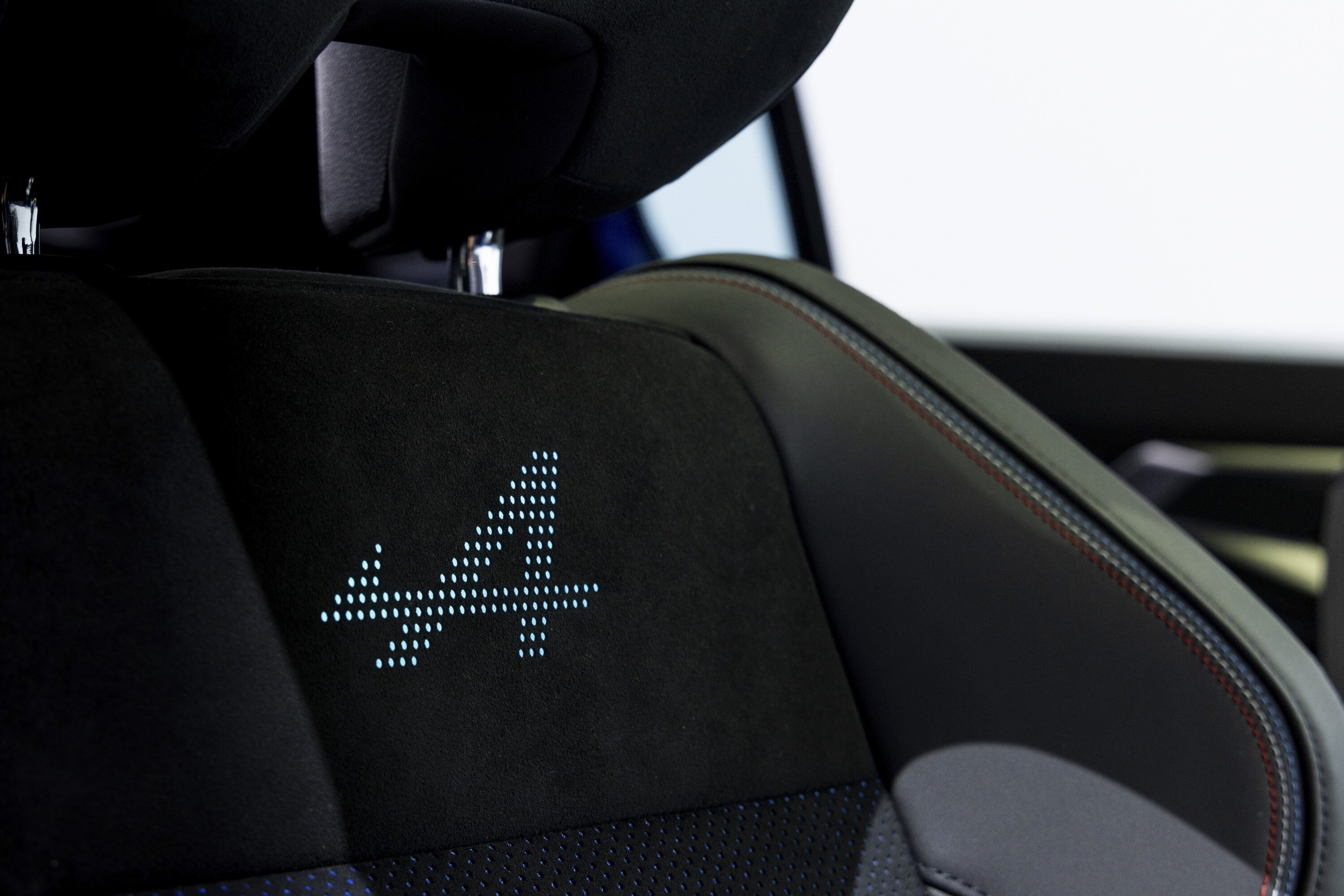
Renault has said it will delete leather from its lineup by the start of next year, with the Esprit Alpine range-topper featuring Alcantara upholstery with blue accents, a light-up Alpine logo embossed into the fabric, and partially recycled material.
The 2024 Renault Rafale coupe SUV will be produced in Spain, with European sales to commence next year. It has yet to be confirmed for Australia.
Hyundai confirms second-gen IMA electric vehicle platform
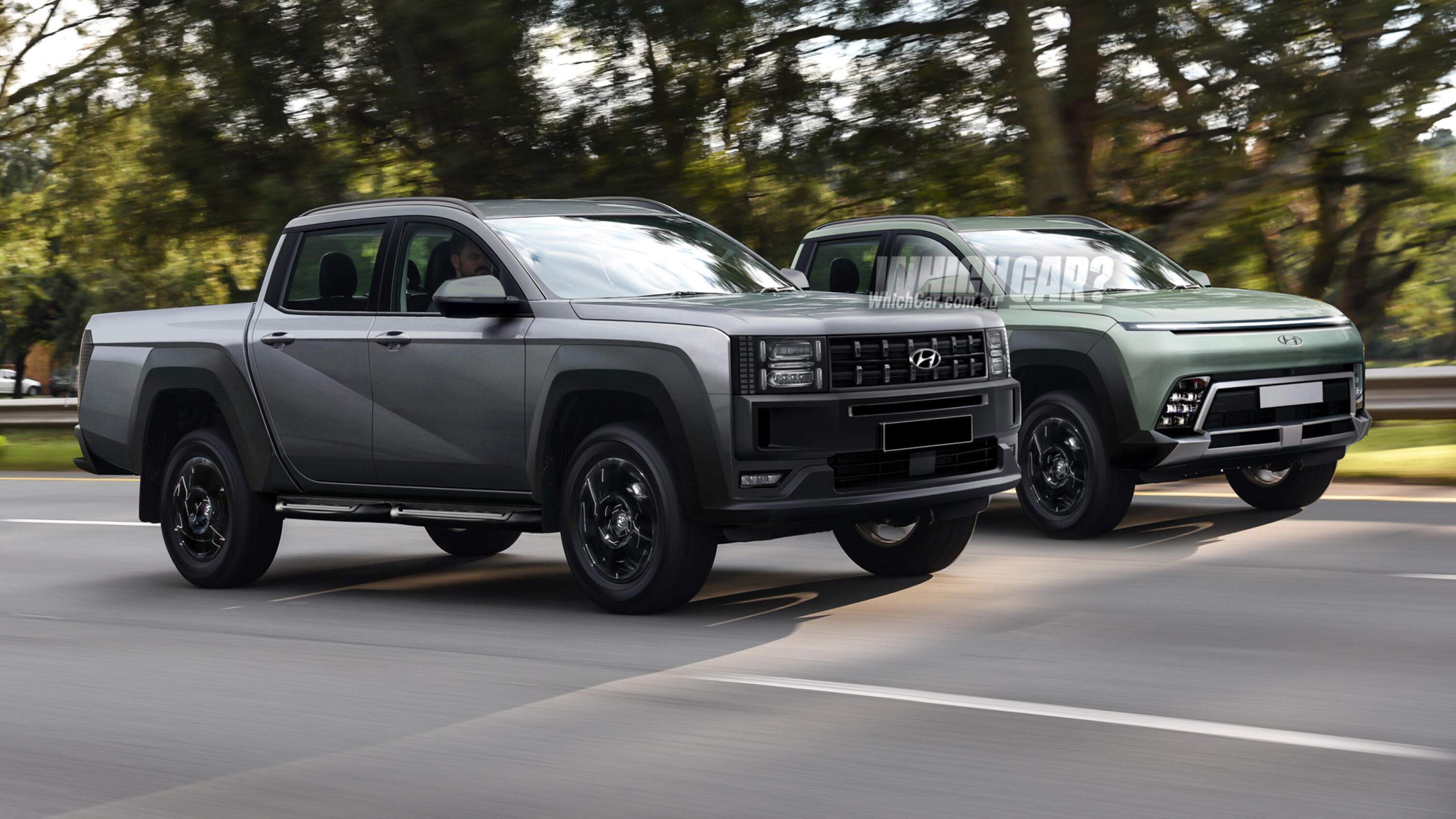
New platform will underpin 13 vehicles by 2030, including an electric ute
Electric Hyundai ute unlikely to be joined by a diesel Kia Tasman twin
At an investor conference in Seoul overnight, Hyundai Motor provided further details for its “next-generation” electric vehicle platform.
The new Integrated Modular Architecture (IMA) platform will include 13 models from “nearly all vehicle classes, ranging from small and large SUVs to pickup trucks” and flagship Genesis vehicles.
The E-GMP platform will still underpin future Hyundai, Kia and Genesis vehicles due before 2025 – including the Hyundai Ioniq 7 large SUV and the Kia EV5 small-to-midsize SUV.
eM + eS = IMA..?
Last year, Hyundai Motor announced two electric vehicle platforms – eM and eS – due in 2025, with a claimed 50 per cent improvement in driving range. It is currently unclear if IMA is an evolution of these plans or the overarching name for the two architectures.
Now, about that ute
Hyundai Motor’s first ute, the lifestyle-focused Hyundai Santa Cruz, is heavily based on the internal-combustion Tucson midsize SUV with petrol-only power and a short tub – but the new Hyundai and Kia utes will have a more traditional size.
Where they’ll differ is in chassis and powertrains. While the anticipated Kia ‘Tasman’ ute, due in 2025, is locked-in for Australia with body-on-frame underpinnings and diesel power, Hyundai’s ute will be all-electric, with no internal-combustion alternative believed to be in development.
The electric Hyundai ute will be built on a unibody platform shared with cars and SUVs – similar to Geely’s Radar RD6 – unlike the body-on-frame Ford F-150 Lightning. The Rivian R1T and Chevrolet Silverado EV have a hybrid platform combining unibody and body-on-frame elements.
Australia is an important market for utility vehicles – with the diesel Toyota HiLux, Ford Ranger and Isuzu D-Max topping the sales charts – and Hyundai’s local arm is likely to be closely watching regulatory developments, including the Federal Government’s National Electric Vehicle Strategy.
Kia’s battery-powered ute, due after 2025 and intended for North America, could be underpinned on the same IMA platform and related to the Hyundai – not the diesel Tasman – in a dual-platform strategy similar to the next-gen Ford F-150 for improved battery efficiency and performance.
Cheaper, better, further…
Up to 80 standardised components are the key focus for the group’s second-gen EV platform to reduce production costs and allow for more affordable, smaller electric cars.
Hyundai Motor plans to become a leader in the electric vehicle market “amidst seismic change in the industry with competition intensifying” by leveraging its experience in building and selling internal-combustion vehicles.
1
Hyundai & Kia pouring billions into EVs
The automaker said it aims for 2 million Hyundai and Genesis electric vehicle sales annually by 2030 – up from 1.87 million units – with a ₩35.8 trillion (AU$41 billion) investment in electrification for the next decade.
It will form part of a ₩109 trillion (AU$125 billion) total spend in “becoming a smart mobility solution provider” with an increased focus on autonomy, hydrogen, robotics and aircraft.
Earlier this year, sister brand Kia said it expects EVs to overtake internal-combustion vehicles in 2030, with approximately 55 per cent to be all-electric – up three per cent.
Hyundai Motor’s first dedicated EV factory in the US is targeted to commence production in the second half of 2024, with “an annual production capacity of 300,000 vehicles to meet the demand for EVs in North America”.
A second dedicated manufacturing facility will open in South Korea in 2025 to produce electric vehicles for the domestic and global markets.
As announced, all Hyundai, Kia and Genesis vehicles will support over-the-air software updates and connected-car services by 2025.
Genesis has announced it will move to an all-electric line-up by 2030.
In celebration of Wheels magazine’s 70th birthday, we’re running through the 70 greatest cars of all time – defined not by sales or talent alone, but simply as our writers past and present see it.
They might have fallen to lower preference behind SUVs and utes of late, but small cars were once the segment to win.
1
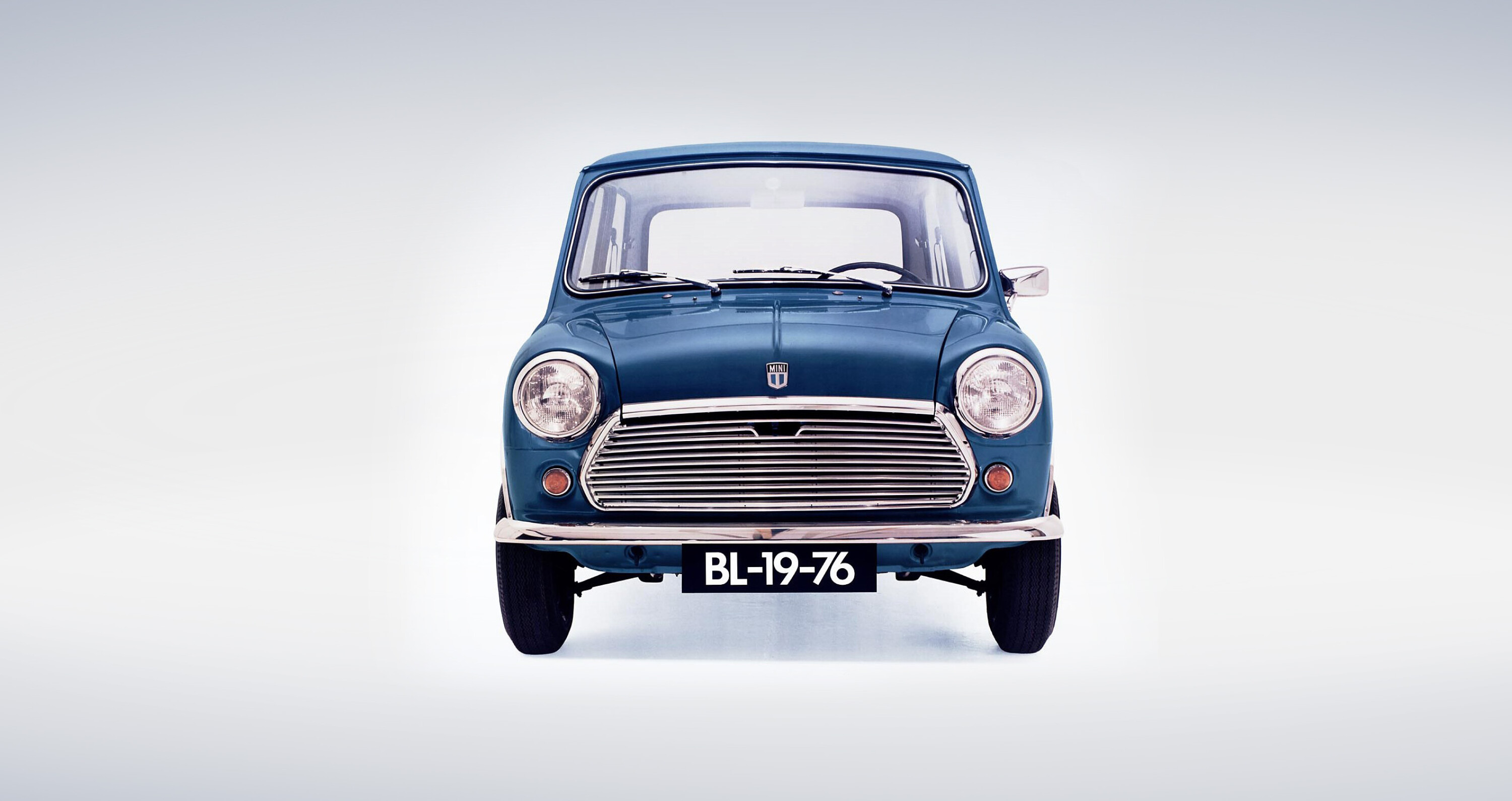
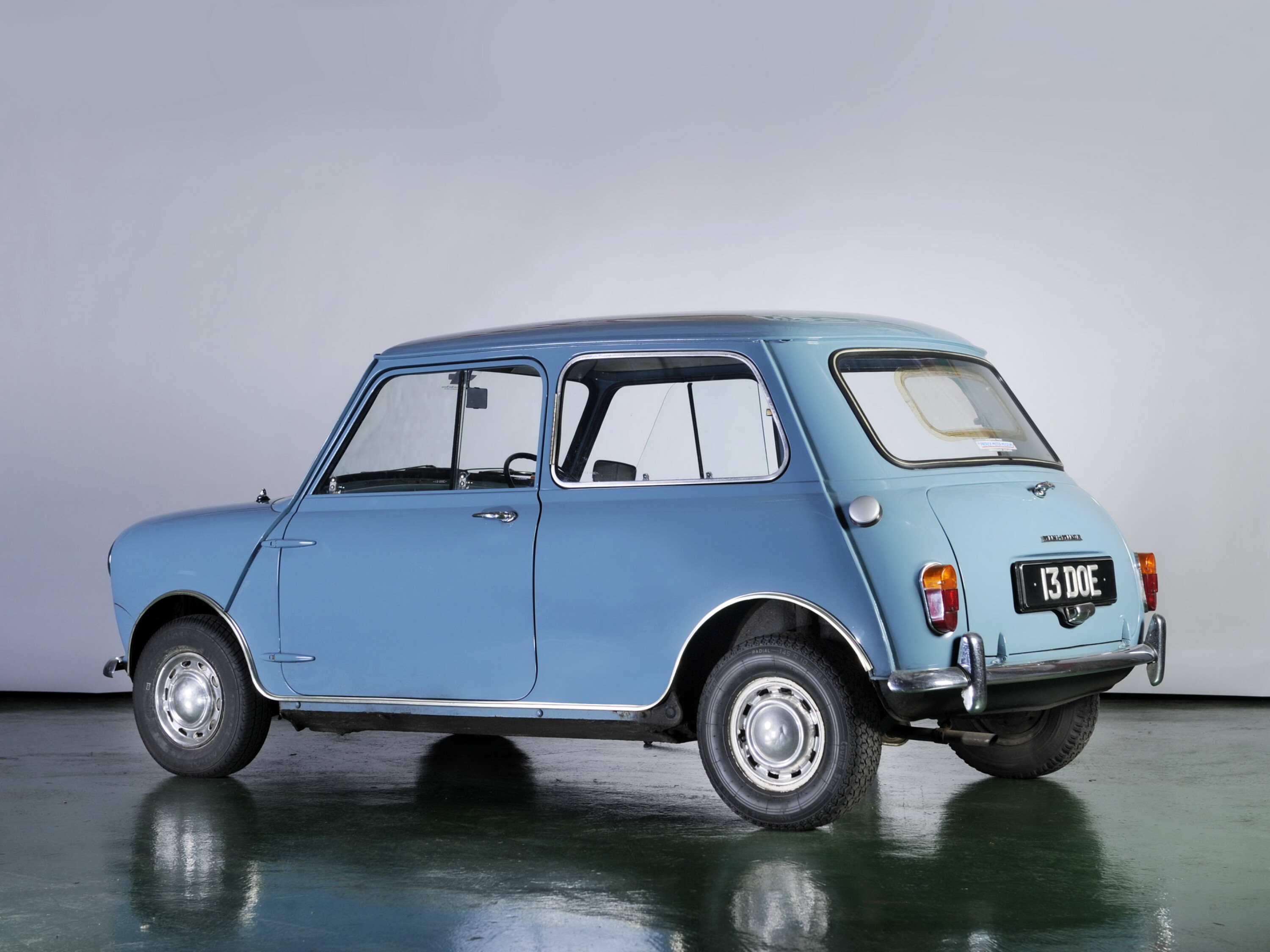
BMC Mini
WE LOVE
Issigonis’ even more space-efficient but hideous-looking 1979 9X never made production
NOT SO MUCH
The 1966 Monte Carlo rally steal by the French still rankles
Genius is a word that has lost much of its impact. Yet it’s the only way to describe how Sir Alec Issigonis packaged the original BMC Mini.
The design brief, decreed by chairman Leonard Lord on the back of a fuel crisis caused by the 1956 Suez debacle, called for a vehicle that would fit into a 3.0m x 1.2m x 1.2m box.
Issigonis realised that packaging the vehicle would dictate virtually all of the design decisions, so mounted the tiny A-Series engine transversely, driving the front wheels. Progressive rate rubber cones helped keep the suspension compact, while interior space was maximised by narrow profile woven webbing seats and exterior-mounted door hinges.
1
Never before had 80 percent of a compact car’s floorpan been available for passengers and luggage.
Issigonis ensured that the wheels of project ADO15 were tweaked to the very corners and was disappointed when Dunlop refused to supply eight-inch tyres, eventually compromising on 10-inch wheels.
In order to keep weight and cost down, sliding windows were used, which allowed a single-skin doors to be fitted, improving cabin width. This required a bracing bar across the door, which was subsequently adapted into a lightweight storage bin.
Stories of the Mini’s competition success are legion, but perhaps the most unlikely result was scoring the top 9 places at the 1966 Gallaher 500 at Bathurst. Rauno Aaltonen took the chequered flag followed by eight more Cooper S, a Chrysler VC Valiant V8 rounding out the top ten.
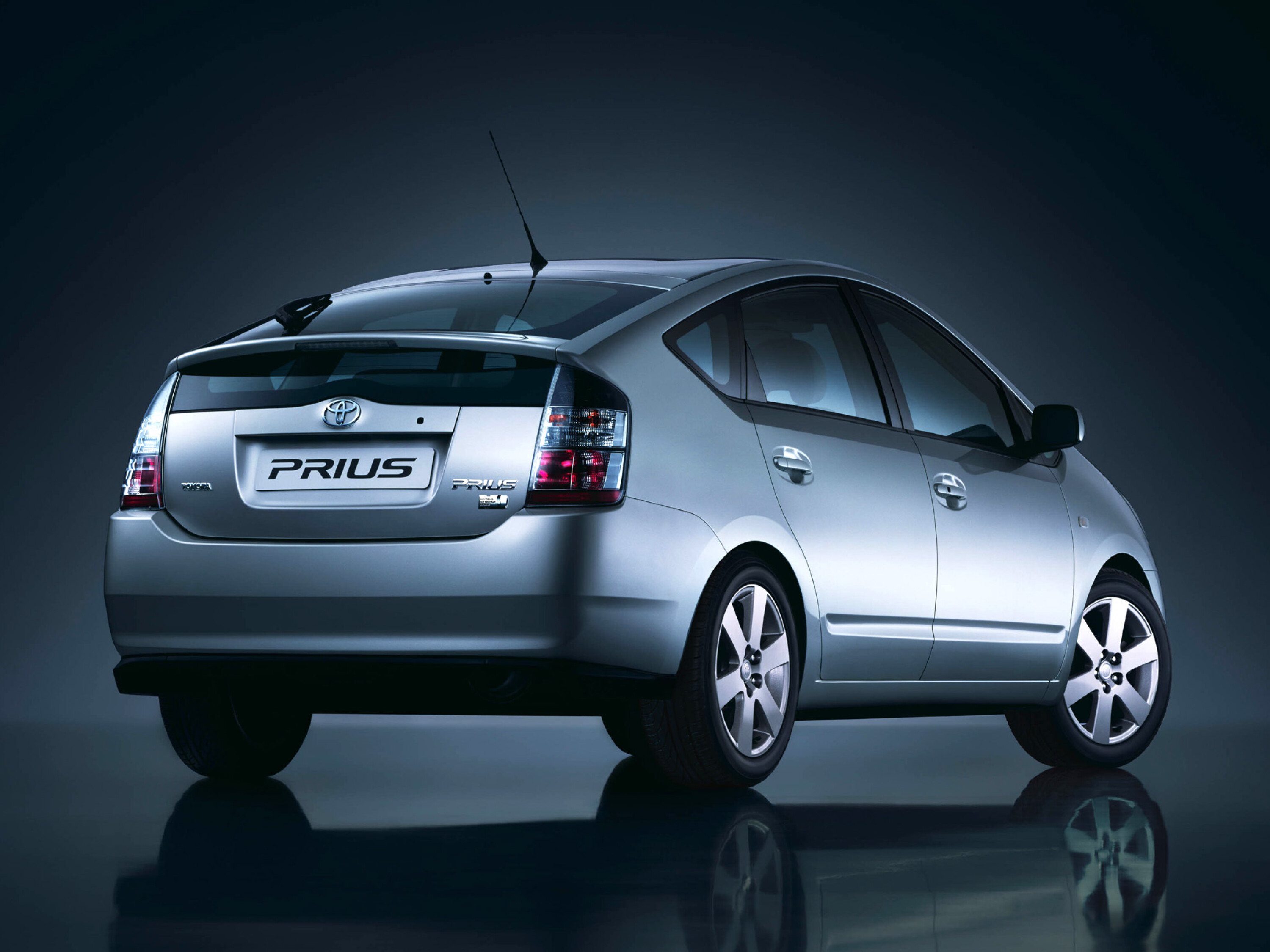
Prius went from strength to strength: only 1.5 percent of all Priuses built are Mk1s
NOT SO MUCH
Maybe a blessing because Toyota lost money on every single one
Demonised by many petrolheads for its perceived virtue-signalling sanctimony, the Prius brought the benefits of hybrid drive to thousands who might otherwise have chosen a diesel.
Far from being a fragile and temperamental technology, Toyota Hybrid Drive powered many Prius cabs to million kilometre-plus odo readings.
Jerry Seinfeld, Hugh Jackman, Heidi Klum and Jay Leno are famous Beetle owners
NOT SO MUCH
And there’s Ted Bundy on the other side of the ledger
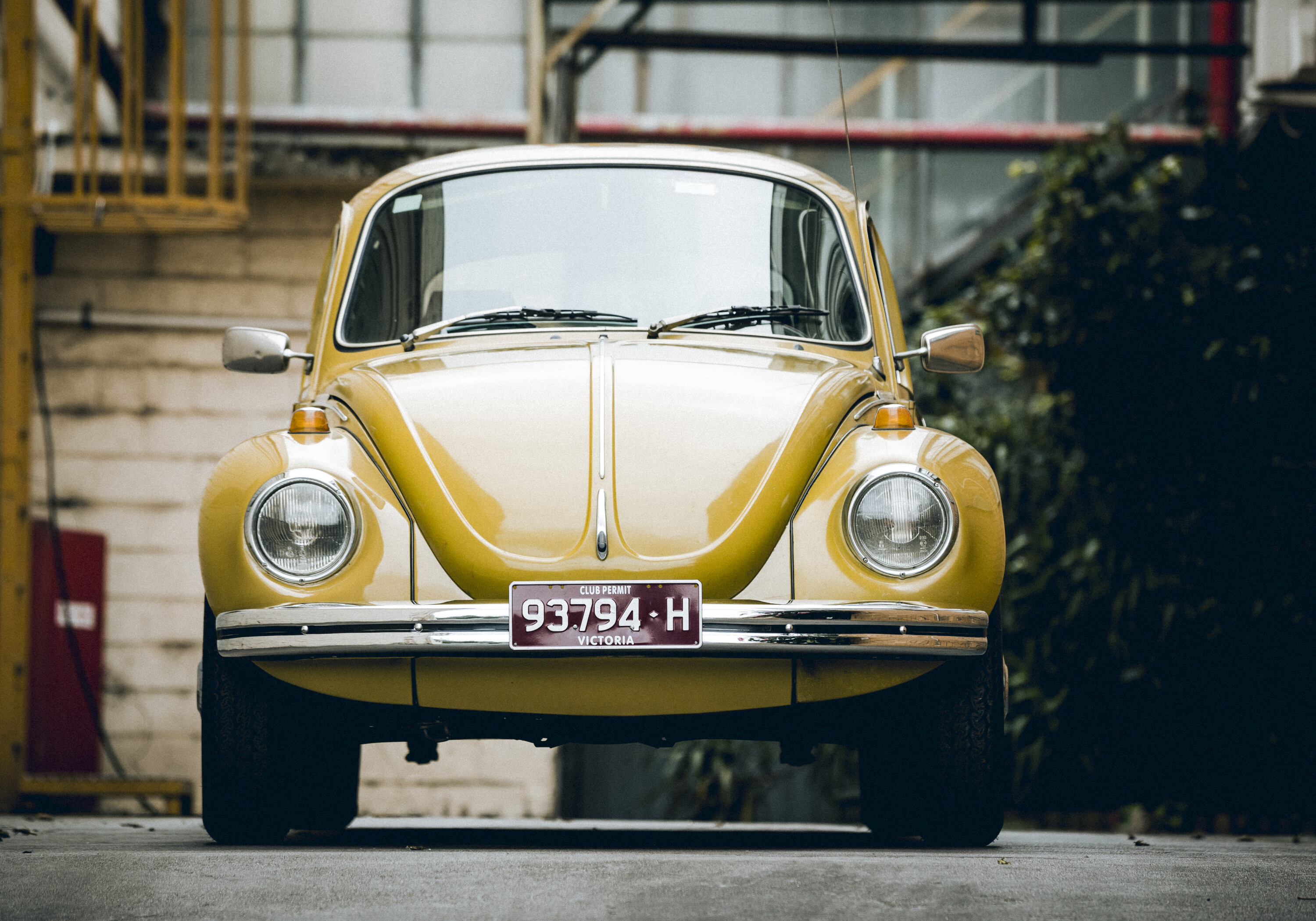
“The Love Bug” aired some 23 years after World War II so, to the Yanks it was a fresher memory of that than we have of 9/11.
The Beetle’s image rehabilitation came swiftly, having been first imported to the US in 1949, becoming a counterculture icon in the 60s. Aussie-built Beetles spawned the supremely eccentric Country Buggy.
VW was down to its last $3m in 1974. The Golf rescued it
NOT SO MUCH
Its 1976 COTY rivals were ghastly but don’t let that detract from the Golf’s achievement
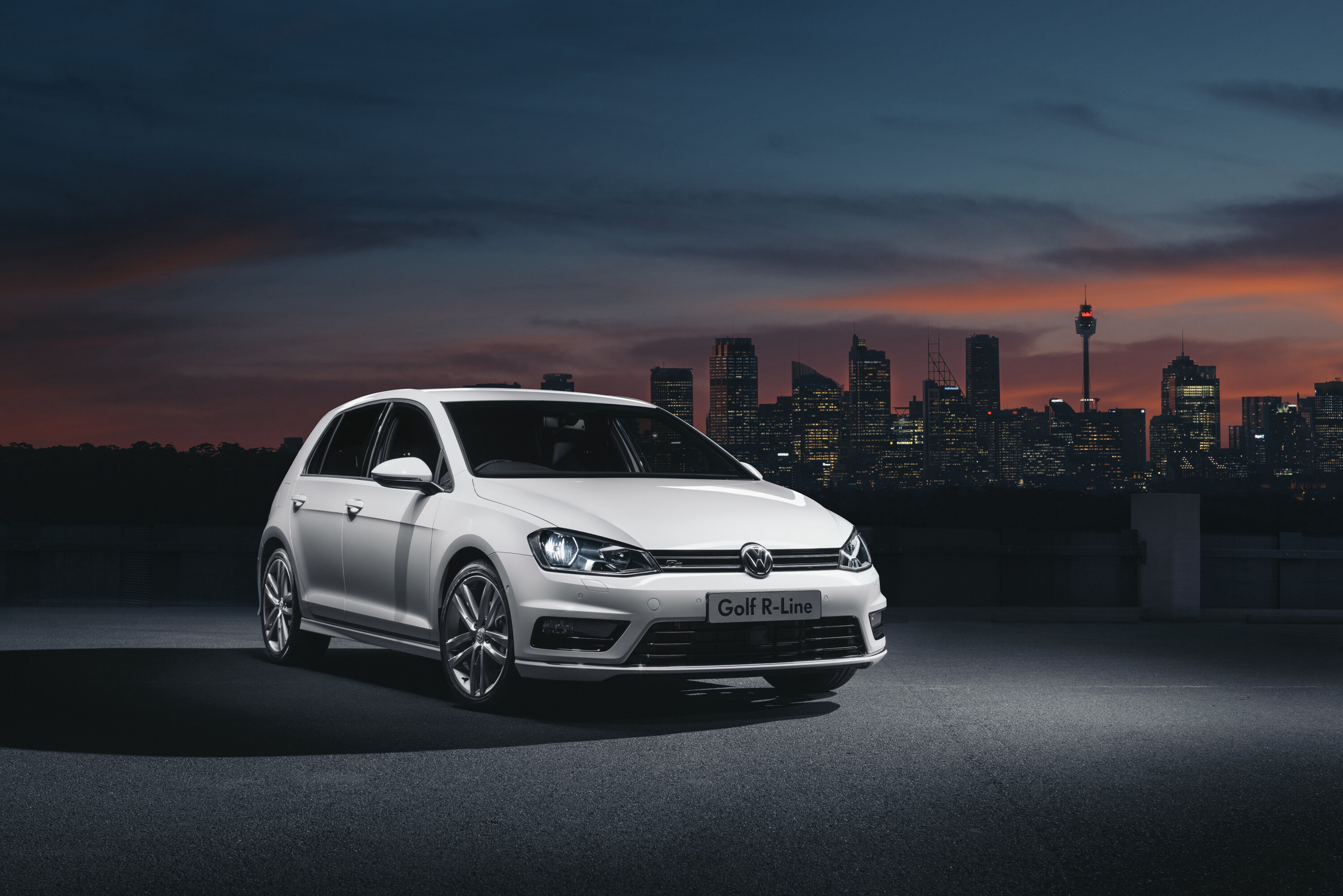
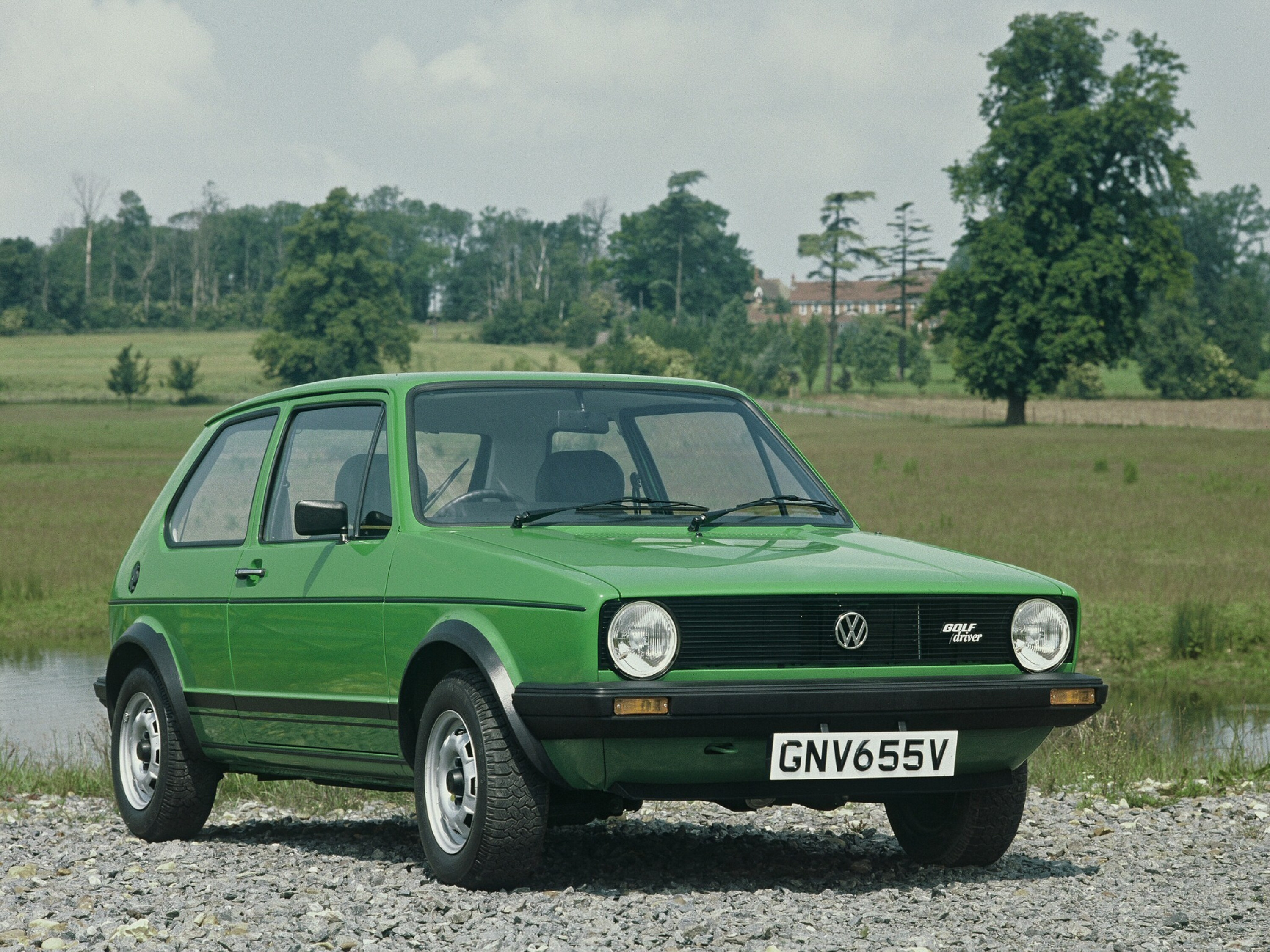
From the mid-1970s to the current era, one car has defined Volkswagen more than any other – the Golf.
The original was described by designer Giorgetto Giugiaro as “the most important car of my career.” He has a point. It sold 6.8 million units and transformed VW’s image from a business rooted in the past to one that was unashamedly modernist.
1
Datsun 1600
WE LOVE
It was still winning the Australian Rally Championship in 1983
NOT SO MUCH
We never got the pert 510 Coupe version
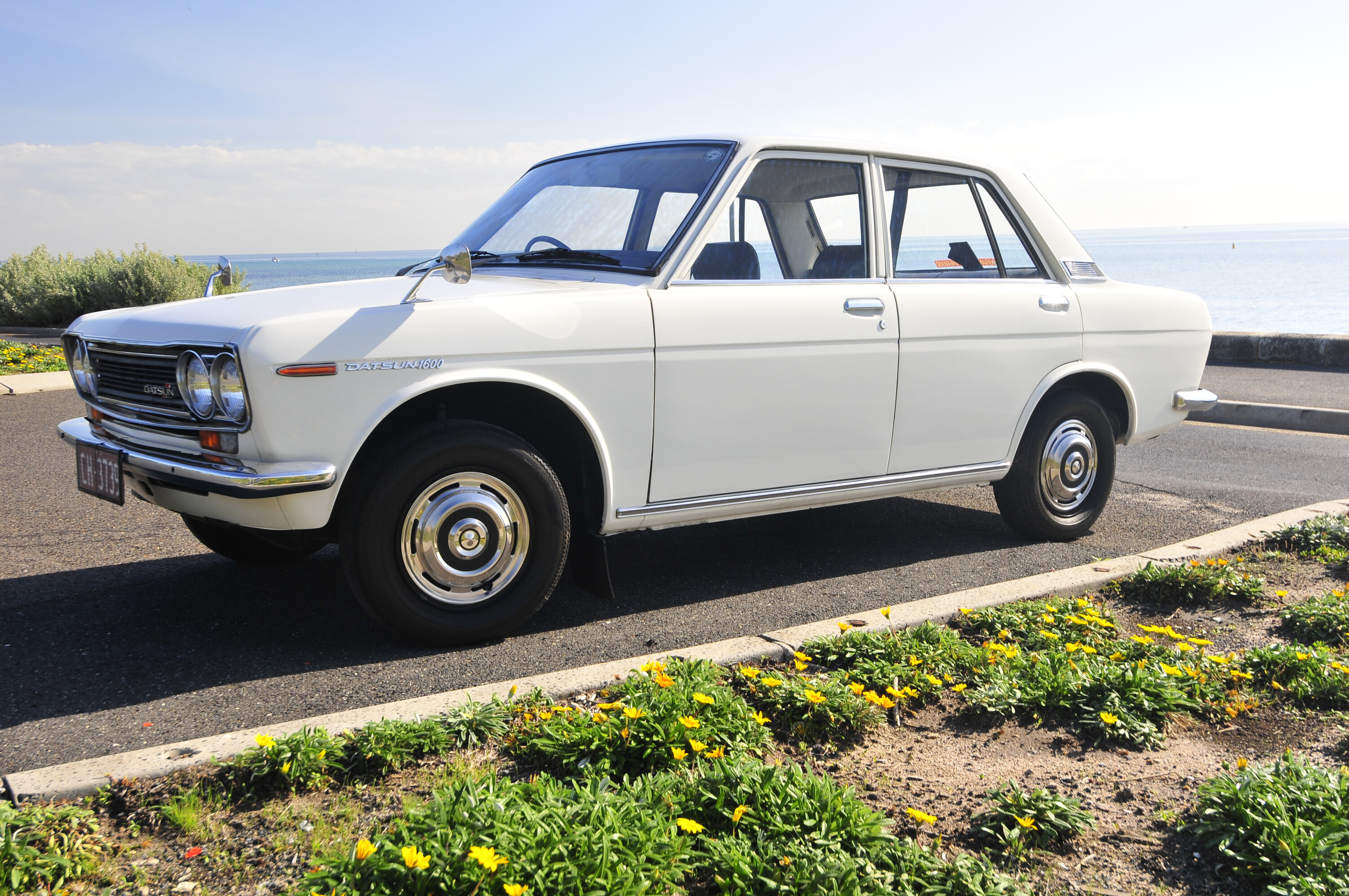
The much-loved Datto might have been a rather shameless crib of the fundamentals of the 1966 BMW 02 series and its L16 engine drew inspiration from the Mercedes-Benz M180 unit, but while it may not have scored for originality, it aced functionality.
Fun to drive, tough as a two-dollar steak and great value considering buyers got 71.5kW, front disc brakes and independent rear suspension.
1
Honda Civic (1st, 3rd, 4th, 10th gens)
WE LOVE
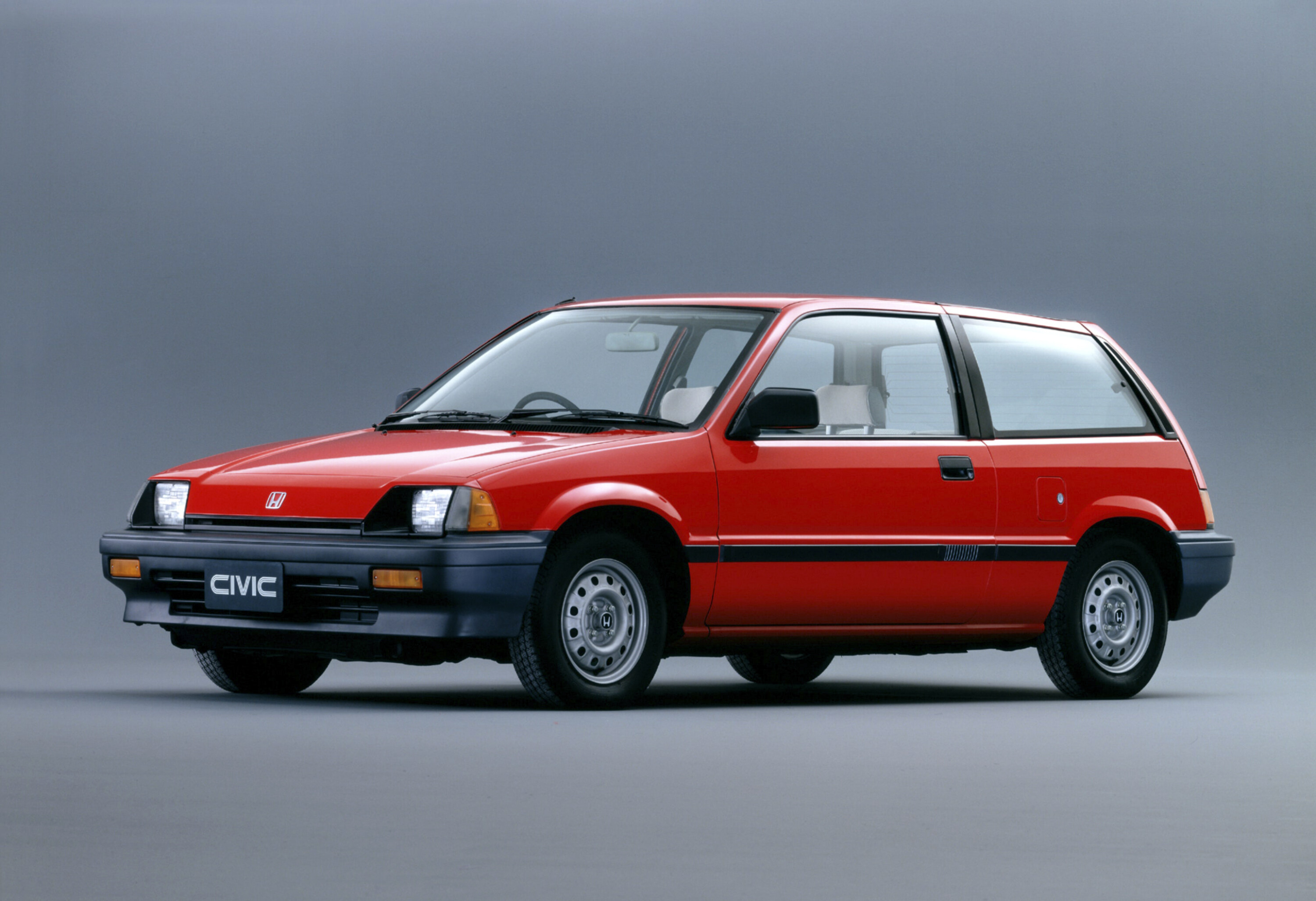
Because you never know if it’ll be dynamite or a dud, a new Civic is always an event
NOT SO MUCH
Australia’s biggest sales year for Civics was way back in 2007 with 16,750 4th gens sold
Honda has a weird sort of corporate amnesia when it comes to Civics.
Rather than extending a succession of incremental improvements, it often seems to forget everything it knew to start a new generation.
So Civics 1, 3, 4 and 10 were lovely, 11 shows promise, 6, 8 and 9 were best avoided and 2, 5, and 7 were solid if unspectacular. To mangle Meatloaf, eight out of eleven ain’t bad.
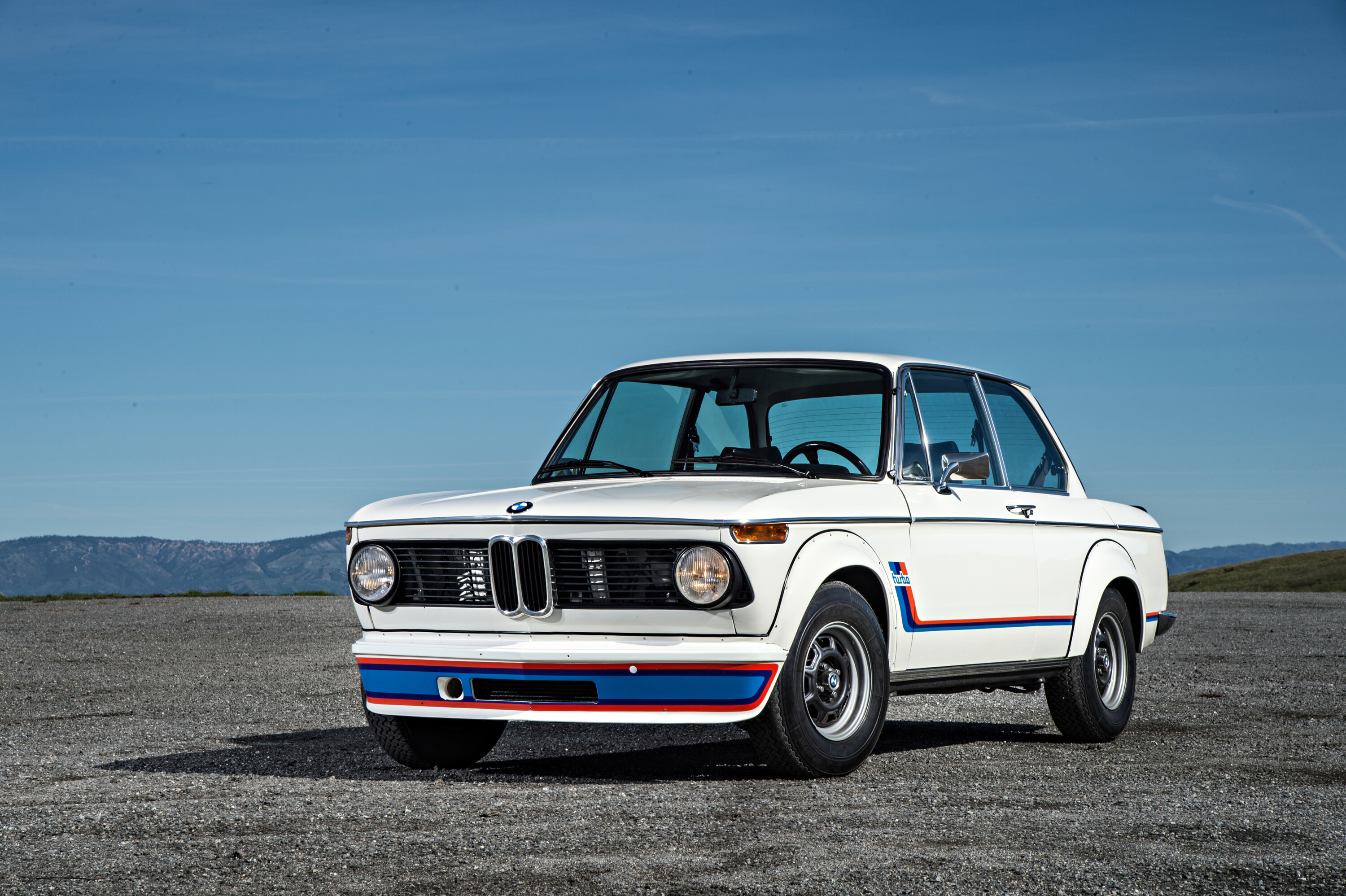
2002 Turbo of 1973 was BMW’s first production turbocharged car
NOT SO MUCH
The 1602 appeared as an EV for the ’72 Olympics, but the 12 lead acid batteries weighed 350kg and only powered the car for 30km
The 2002 came about after two senior BMW employees realised they had independently installed two-litre engines in their 1600-2s.
Lighter and shorter than the Neue Klasse upon which it was based, the 02 Series was first shown at the 1966 Geneva Show and established the sporting template for crisp-handling rear-drive sedans that would spawn the 3 Series. The 2002 came about after two senior BMW employees realised they had independently installed two-litre engines in their 1600-2s.
1
Fiat Panda (original)
WE LOVE
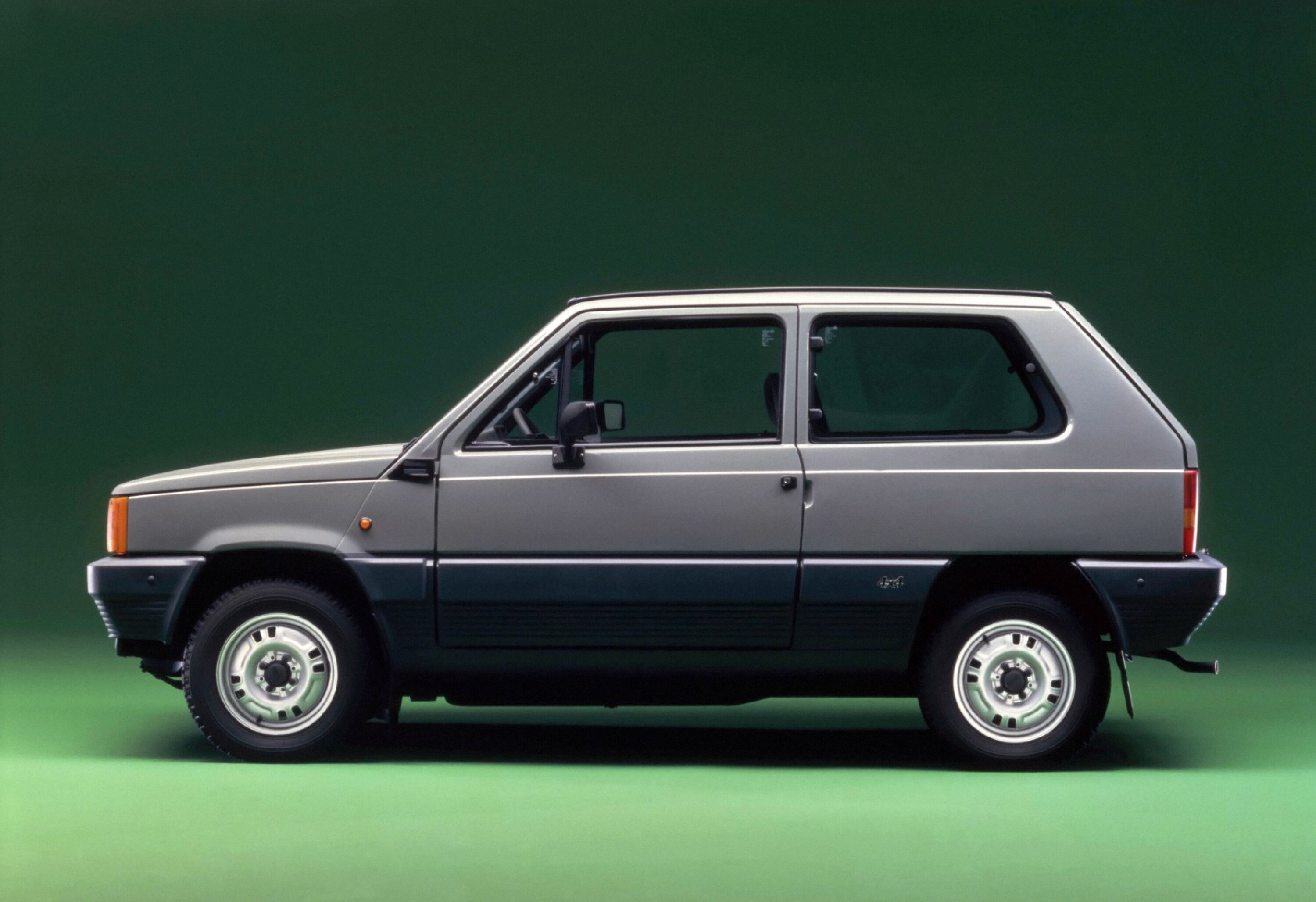
Austrian company Steyr-Puch supplied the entire Panda 4×4 drivetrain
NOT SO MUCH
Fiat had to pay off the World Wildlife Fund to use the Panda nameplate
Fiat insisted the Panda should cost no more than a Fiat 126 and designer Giorgetto Giugiaro deemed that it must be able to carry two 50-litre demijohns of wine in the boot.
A car apparently designed for cash-strapped alcoholics nevertheless became one of the 20th century’s most iconic pieces of industrial design.
But infamously ran out of juice halfway round the judging loop
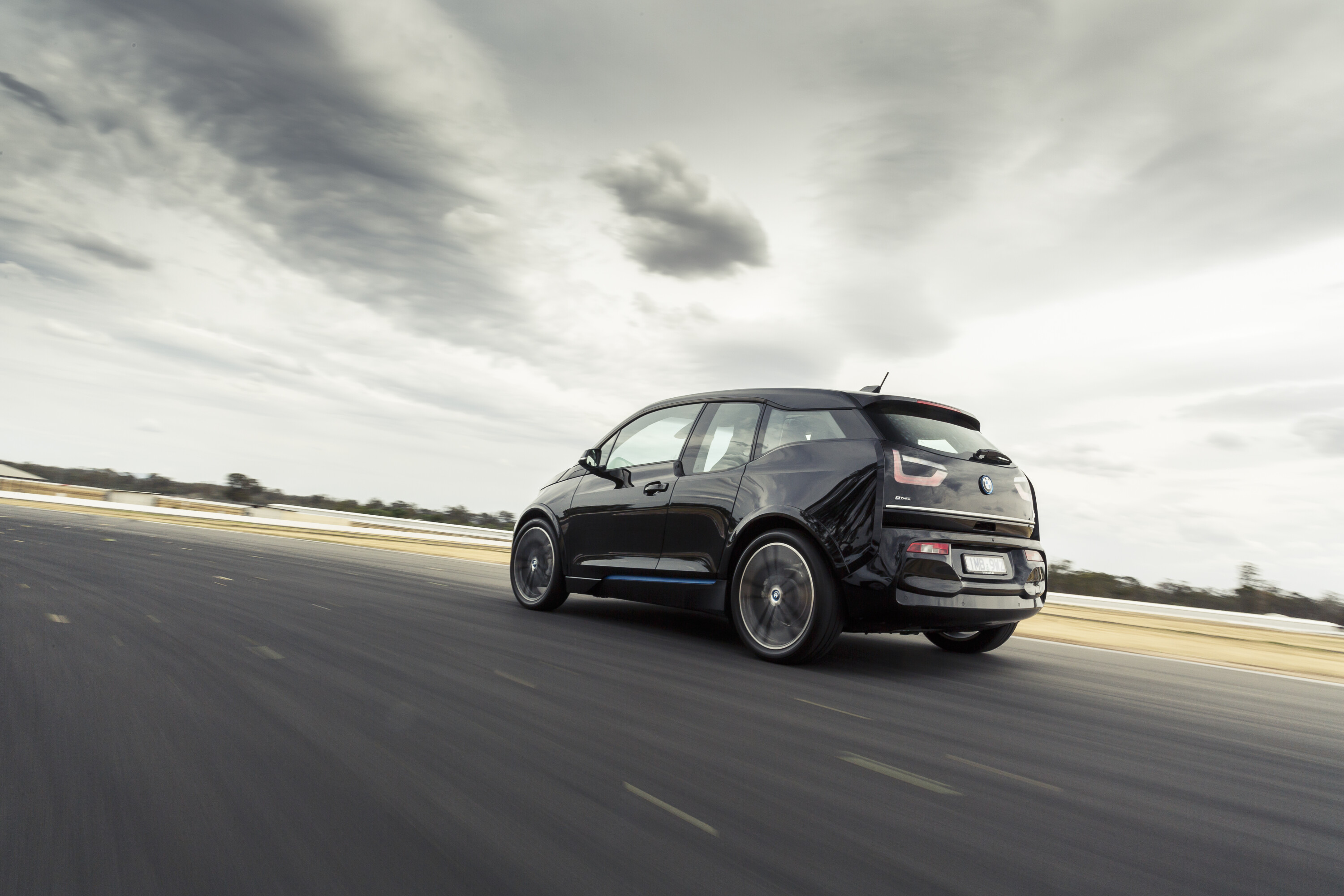
Were it launched today, BMW’s i3 would still appear fresh and bold.
That it’s a decade old only underscores BMW’s achievement in building an EV that was light, great to drive and fantastic just to be inside. The Range Extender version seems like the best of both worlds, but if you’re going i3, avoid the problematic pocket-ICE and go all-in with the sweeter BEV.
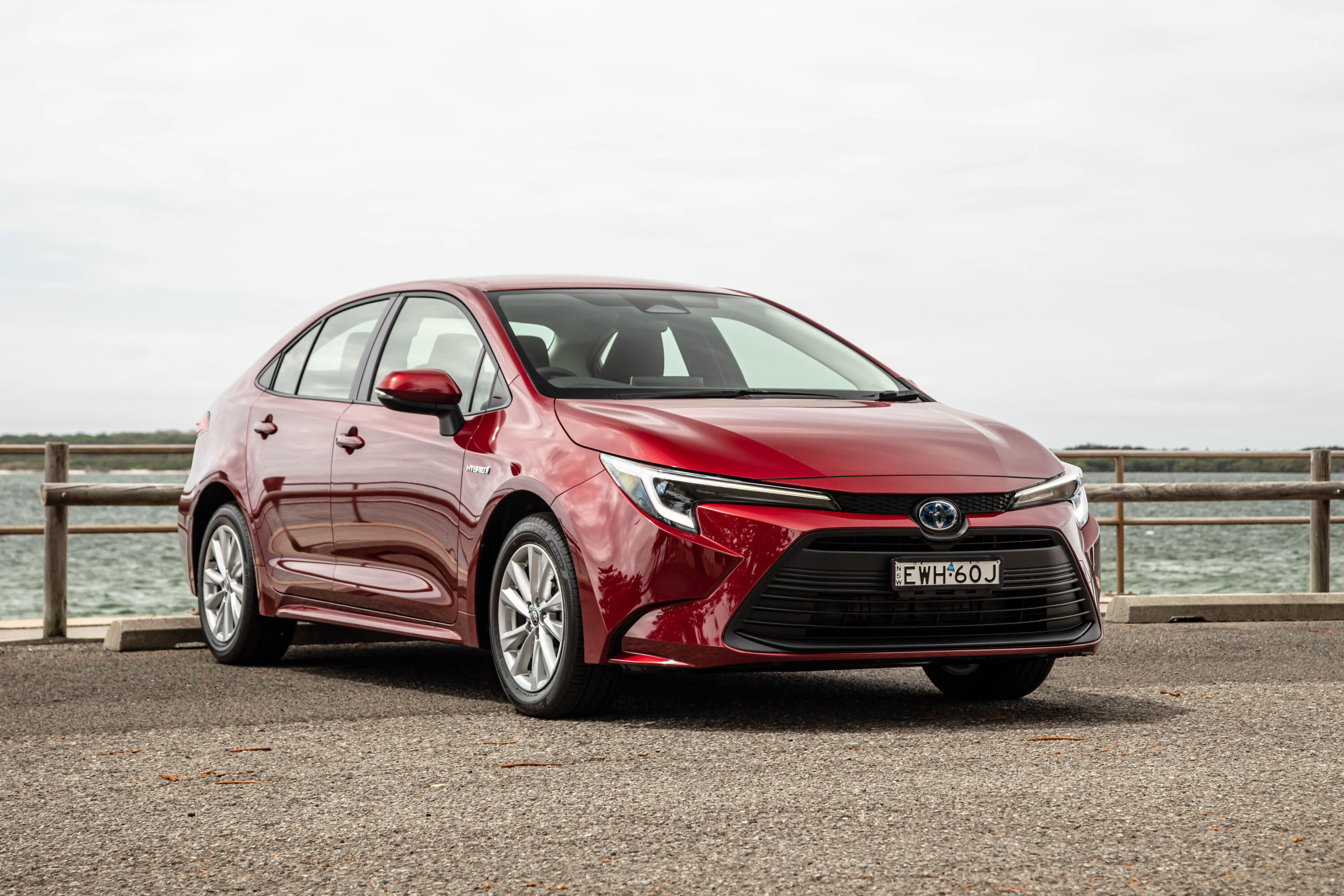
The Toyota Corolla is available in a more affordable five-door hatch, or the dearer four-door sedan body style.
Above the regular range sits the hardcore GR with a stiffer reinforced body shell.
1
Hyundai i30
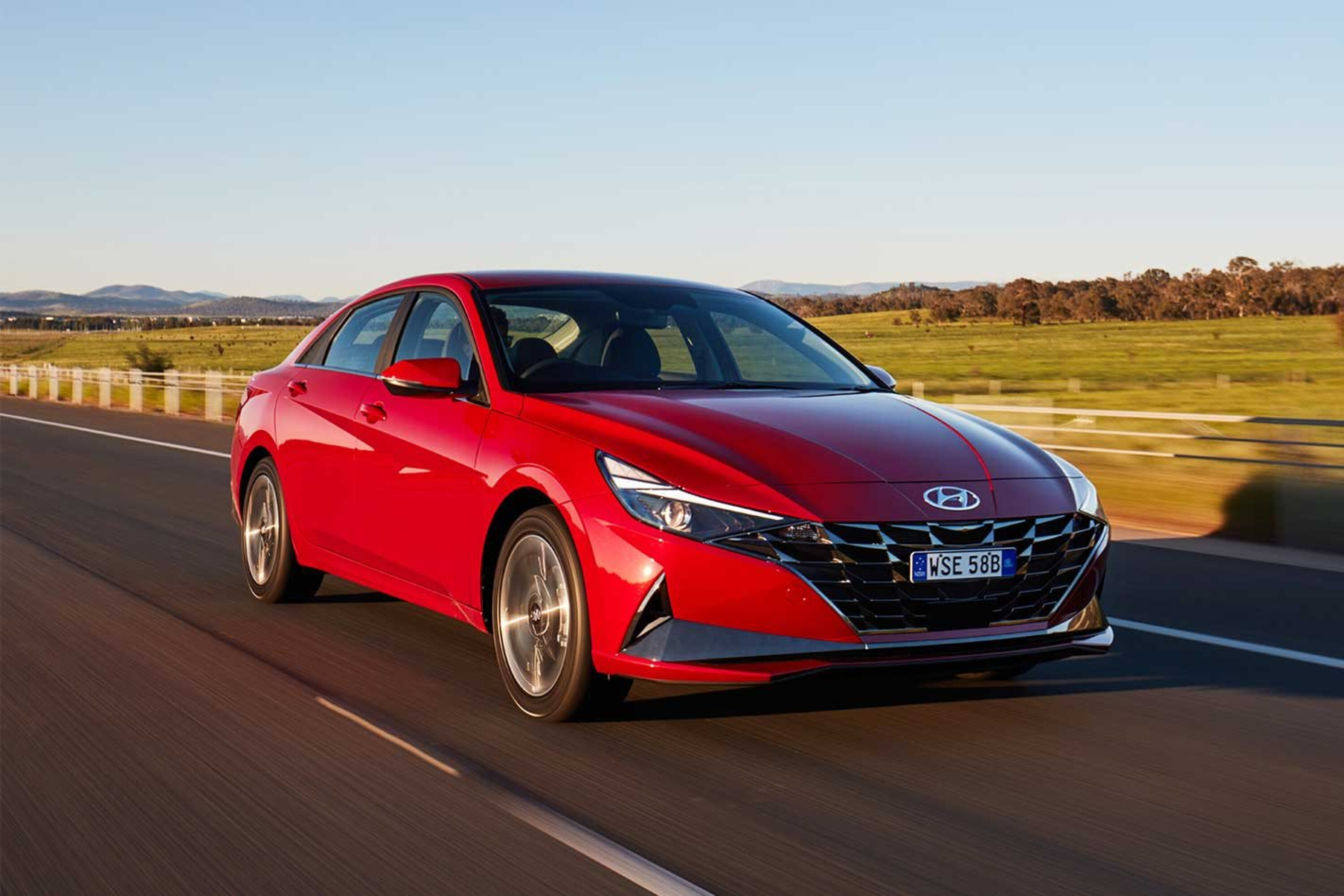
The Hyundai i30 is available as a five-door hatchback or four-door sedan. All variants are front-wheel drive and the nameplate competes in Australia’s sub-$40,000 small passenger car segment.
1
Comfort & Practicality
Toyota Corolla
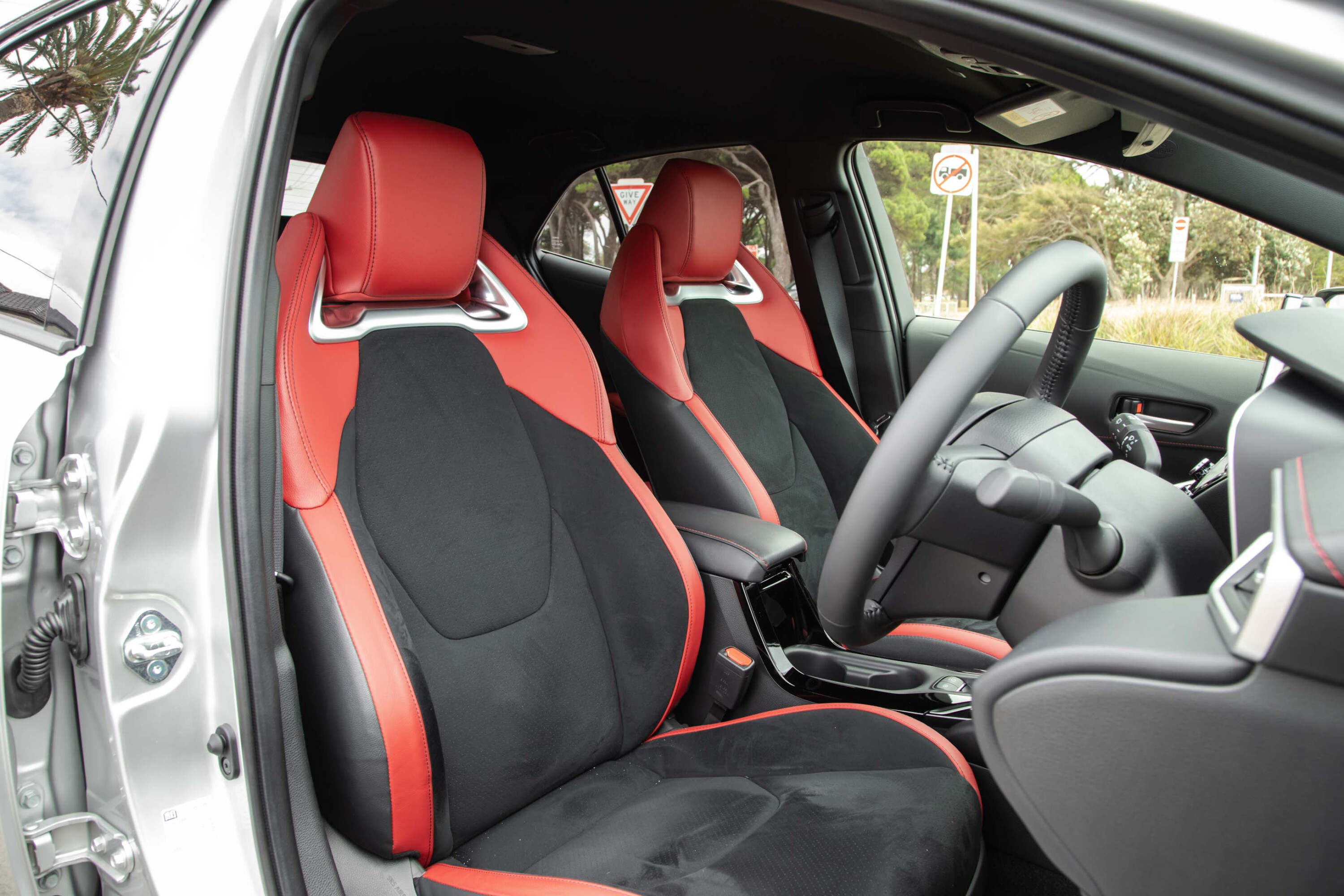
The Toyota Corolla’s interior is comfortable and well-packaged – at least for front occupants – with some visual interest found further up the variant tree.
The Corolla’s isn’t the most spacious or cutting-edge cabin, but the materials will certainly stand the test of time.
Skipping the fleet-focussed Ascent Sport is wise as the interior’s drowned in firm grey plastics. The core design is pleasing enough, though, with a shapely, contemporary dash that has pleasingly simple and intuitive controls.
1
In Ascent Sport guise, the manually adjusted seats are trimmed in hardy cloth, while the coarse polyurethane steering wheel and shifter are far from joyful. Walking up to the SX maintains a conservative colour palate, but the leather-wrapped control surfaces make for a big jump in perceived quality.
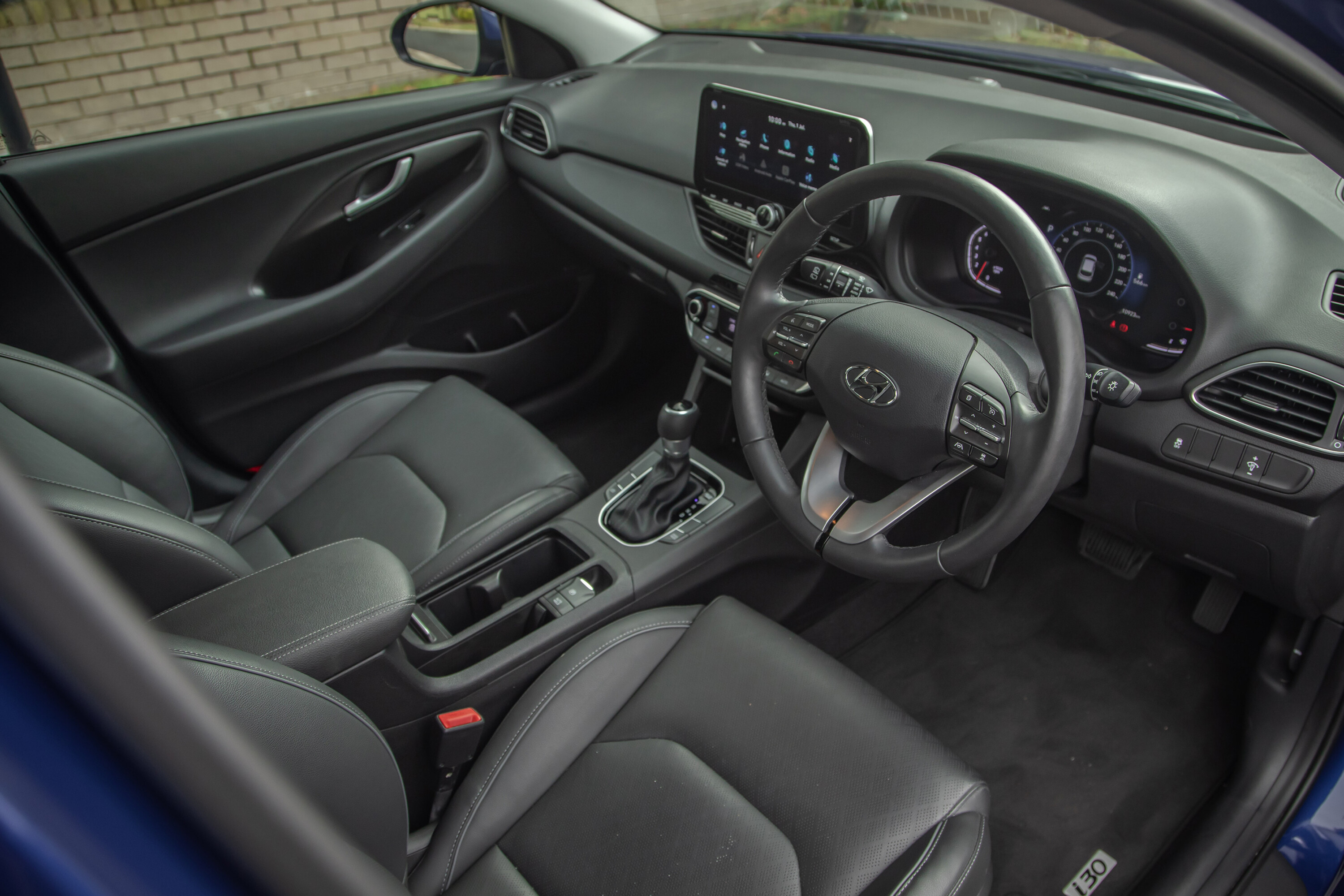
The i30 is spacious for a small car and both the hatchback and sedan are comfortable, with their cabins scoring points for finish and presentation.
Because it’s a Hyundai, the infotainment system displays well and is easy to operate. All other controls fall easily to hand and are logically grouped: audio and infotainment on the main display and ventilation lower on the dash.
1
The hatchback has slim bottle holders in the door and two cup holders in the centre console. Automatic variants in Active spec and above don’t have a manual handbrake so the console is uncluttered and everything is easy to use.
A 2021 update brought leather to the steering wheel and gear selector knob, a minor upgrade that yields a huge improvement over the shiny, slippery plastic of the previous i30.
As far as small cars go, the Toyota Corolla is one of the more dynamic with good steering and an exploitable chassis across the range – the AWD GR is a true driver’s car.
There are two main ingredients in the Corolla’s polished chassis: its TNGA underpinnings which have revolutionised driving experience across much of the Toyota model range, and independent trailing-arm rear suspension that separates it from mainly torsion bar-equipped rivals.
It results in a car that rides smoothly in base trim on small 16-inch alloys and pillowy eco tyres but also provides adjustability and driving enjoyment in the sporty ZR with its bigger rims and stickier Dunlop rubber.
This also provides an excellent platform for the AWD GR Corolla, with its extra bracing and stiffer suspension bringing true driving joy and engagement to the Corolla range.
One of the reasons this third-generation i30 has been so impressive from launch is that it drives really nicely.
While the entry-level 2.0-litre petrol engine is hardly what you’d call characterful or exciting, it does the job quietly, whether hooked up with the well-sorted six-speed automatic transmission or six-speed manual.
The ride is comfortable and smooth and if you find yourself on a twisty road you’ll enjoy its decent balance and accurate steering.
If you’re a keen driver, a stretch to the sporty N-Line is worth the extra coin, with its sporty Michelin tyres and multi-link rear suspension setup in place of the more basic torsion beam setup found in regular i30s.
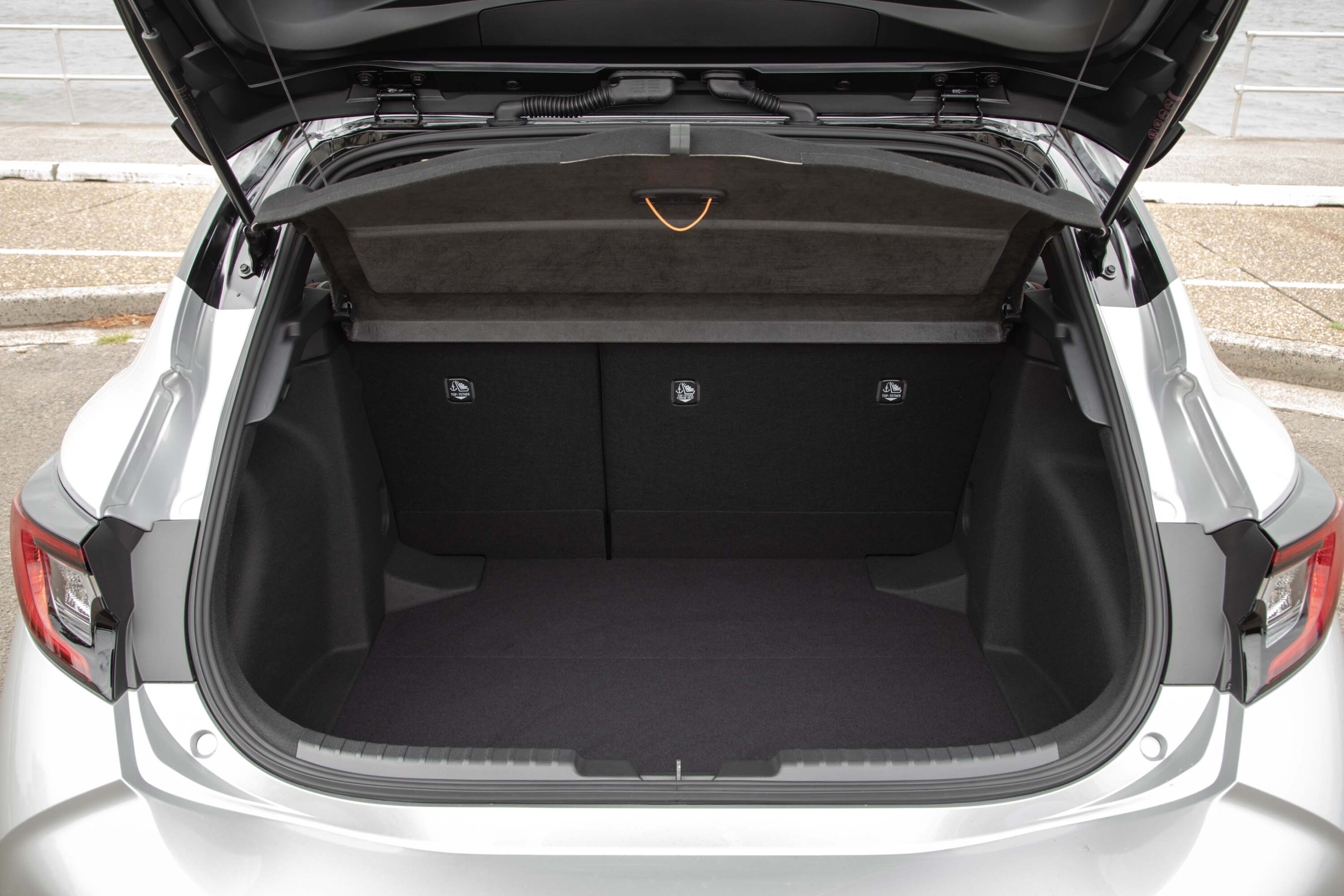
A range of boot sizes feature across the Corolla range depending on trim level and body style, but none are particularly spacious – a common complaint for this generation of Corolla.
The best is the 440L sedan, with a measly 217 litres in the five-door hatches.
The ZR hybrid’s cargo area climbs to a more acceptable 333L, achieved by removing the space-saver spare tyre from under the boot floor and replacing it with a puncture repair kit.
1
Hyundai i30
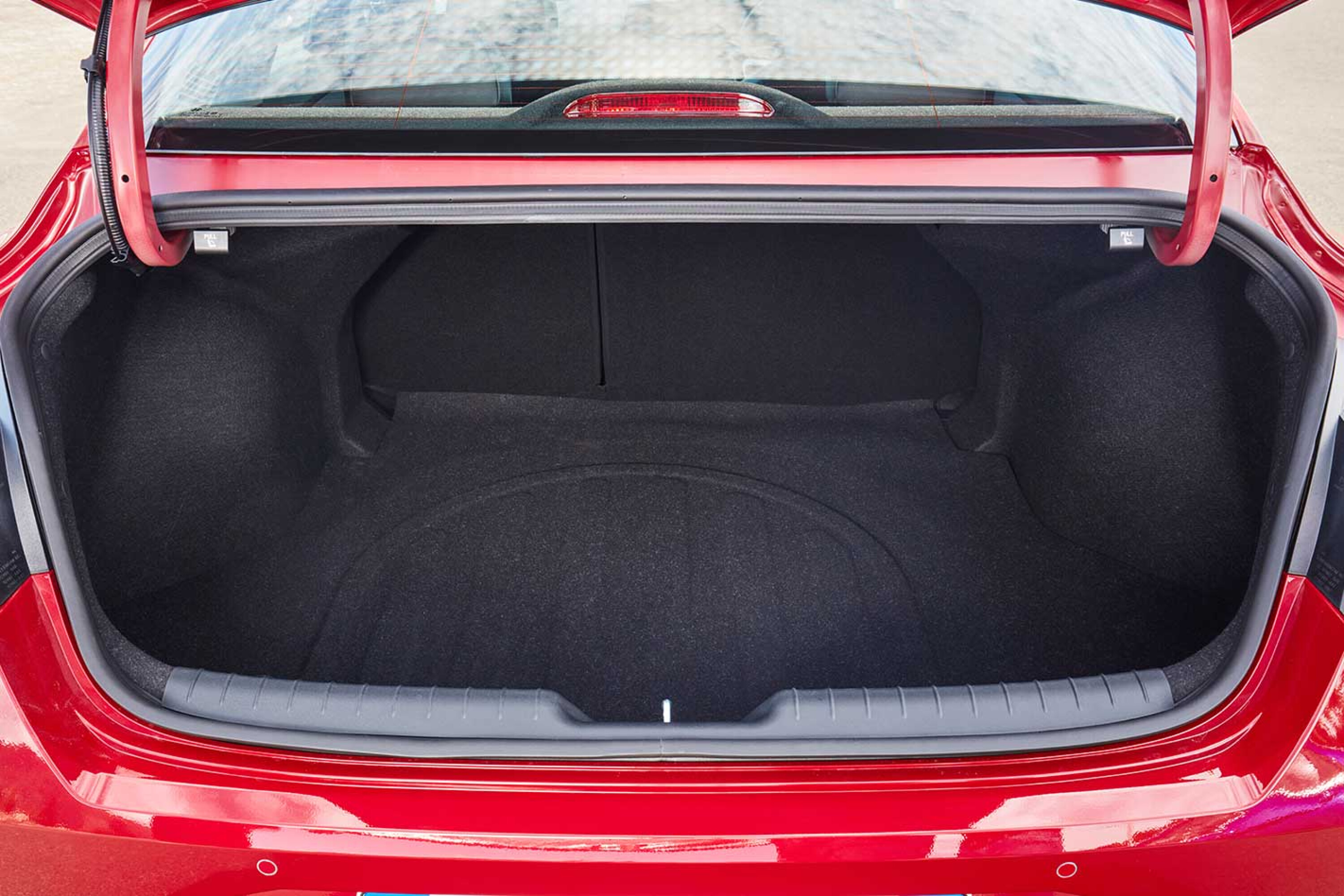
The five-door i30’s cargo area is 395 litres, which is good for a small hatchback. Its rear seats can be folded 60:40 and folding the lot down brings an impressive 1301 litres in which to carry stuff.
Even with the full-size spare wheel, you can adjust the height of the boot floor. At its lower setting, capacity is maximised but there is a large step up to the rear of folded seatbacks. Raising the floor gives you a flatter extended load space.
You’ll score more boot storage in the i30 Sedan, which offers 474 litres. There is a huge aperture that allows for bulkier items to protrude into the cabin through the 60:40 split seats.
1
Safety
Toyota Corolla
When tested by ANCAP in 2018, the Toyota Corolla was awarded five stars. This rating applies to all models except the heavily re-engineered GR models, which are unrated.
To get extra safety features including rear cross-traffic alert, blind-spot monitoring, and parking sensors, you’ll need to fit the convenience pack to the base Ascent Sport or splash out on a higher grade such as the SX.
Hyundai i30
The i30 hatchback has a five-star ANCAP safety rating that was awarded when the third-generation model arrived in 2017.
Curiously, the sedan has no ANCAP safety rating because, with no European NCAP crash test data to draw upon and changes in crash testing protocols, Hyundai decided not to submit the car for costly ANCAP testing, despite a large number of cutting-edge safety inclusions.
Hyundai Australia naturally insists it is safe and with its suite of active safety features together with the fact few Hyundai models have had issues with ANCAP testing, it’s reasonable to take the company’s word for it.
Warranty & Servicing
Toyota Corolla
The Toyota Corolla is covered by a five-year/unlimited-kilometre warranty. Keeping your servicing up to date at a Toyota dealer will see this extended to eight years for the hybrid powertrains.
Service pricing is capped for the first five years. Maintenance is due every 12 months or 15,000km on regular Corollas. The GR Corolla is a little more involved, needing to see a spanner every six months or 10,000km.
All Hyundai i30s, including the racy Ns, are covered by the company’s five-year / unlimited-km warranty, along with an initial 12 months of roadside assistance – extending by a year every time you service at a dealer.
Standard i30 variants including the N-Line, have service intervals of 12 months or 15,000km.
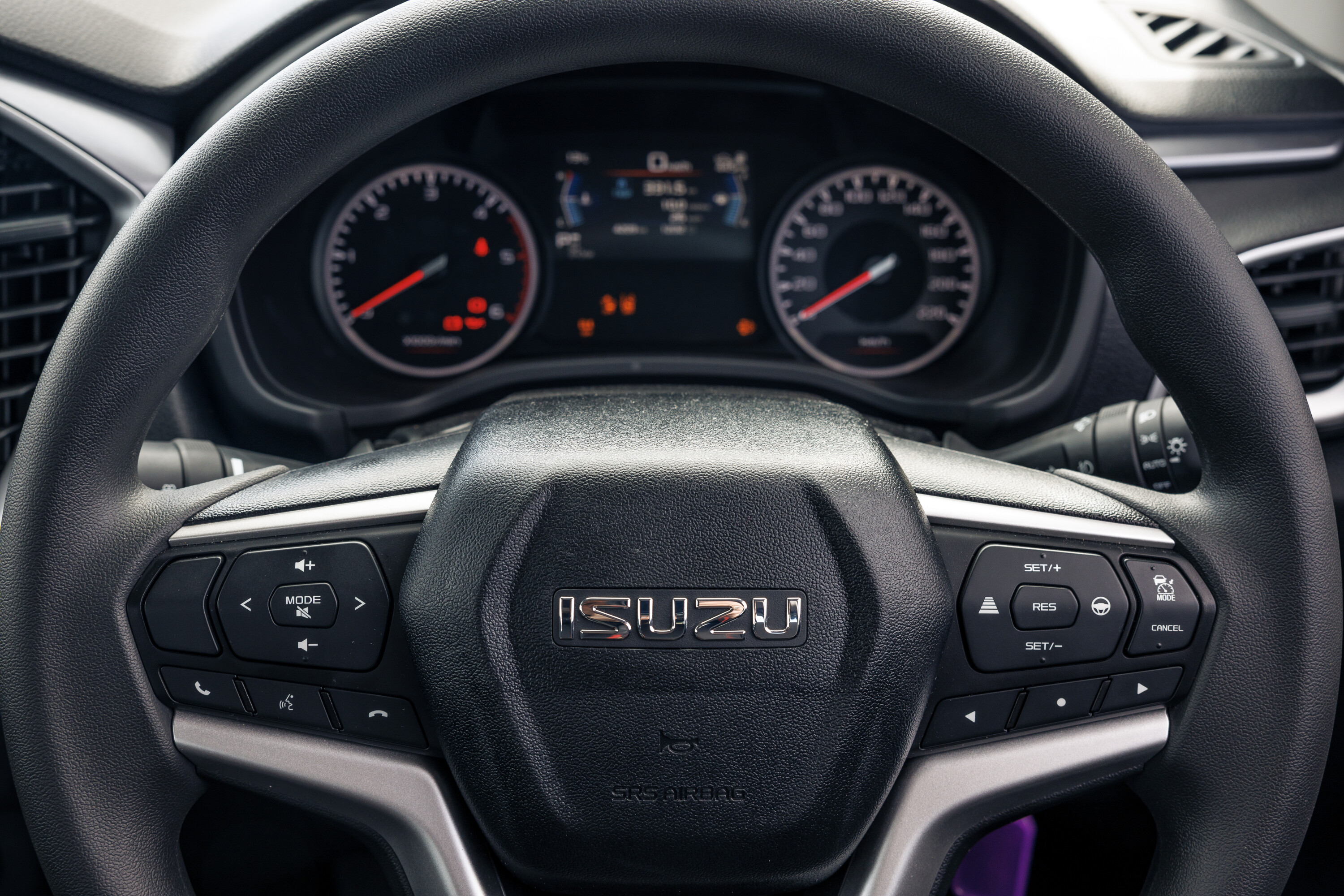
The X-Terrain is priced at $67,500 and comes with a 4×4 drivetrain for superior handling and performance.
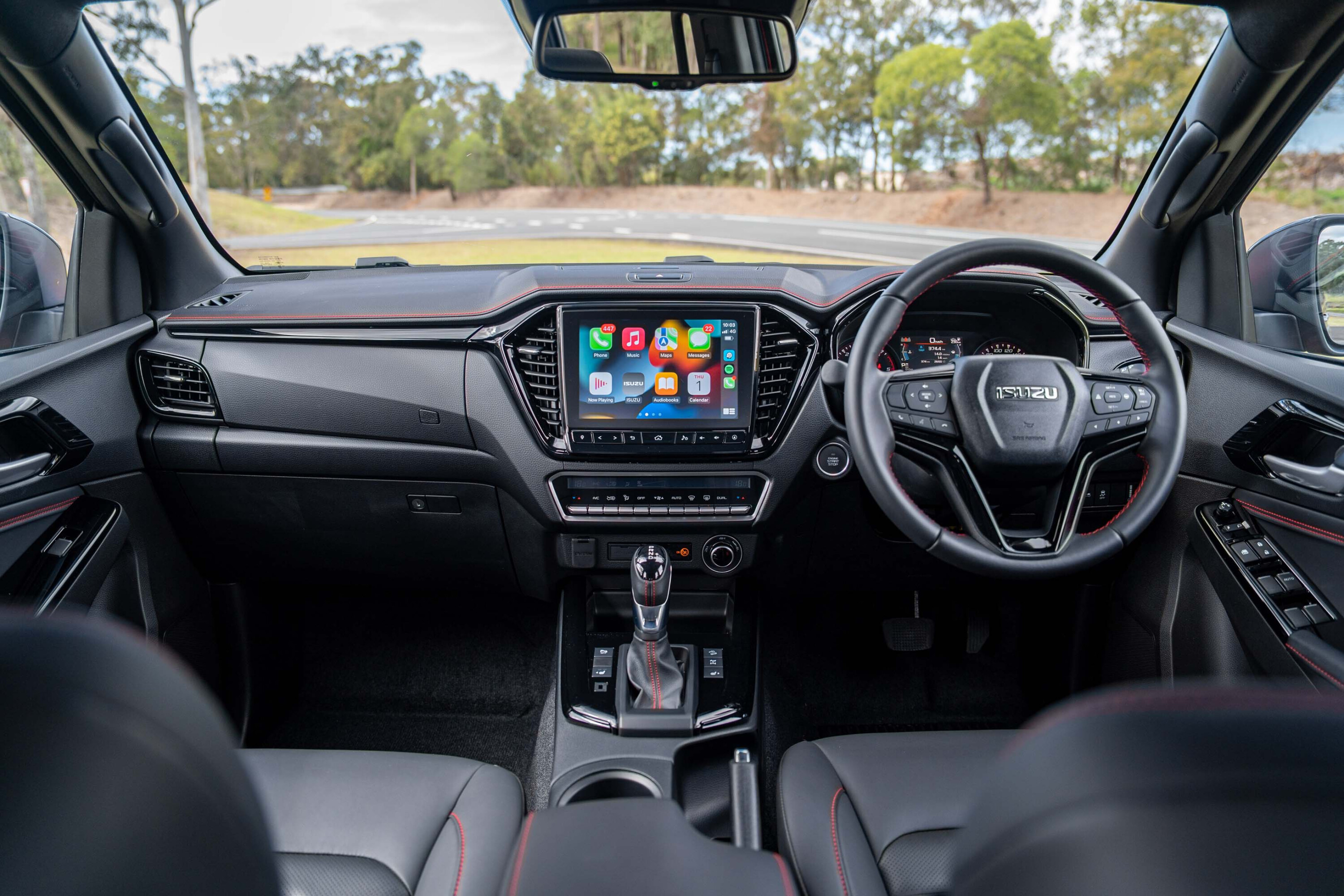
The X-Terrain includes premium features such as front parking sensors, dark grey metallic exterior accents, red and black interior accents, leather-accented seats, a nine-inch touchscreen audio system, and a remote engine start system.
It also comes with a matte-black roller cover and aero sports bar, enhancing its rugged and sporty appeal.
4
Safety
The D-MAX X-Terrain comes equipped with an advanced suite of safety features, including eight airbags, Forward Collision Warning, Autonomous Emergency Braking, Traffic Sign Recognition, and Blind Spot Monitoring. It also includes Rear Cross Traffic Alert and Adaptive Cruise Control, providing a secure and convenient driving experience.
Key Rivals
The D-MAX X-Terrain competes with the likes of the:
The X-Terrain offers a competitive mix of power, luxury and advanced safety features in the premium ute segment.
Should I put it on my shortlist?
The 2023 Isuzu D-MAX X-Terrain should be on your shortlist if you’re looking for a robust and luxurious ute that offers a blend of power, luxury and advanced safety features. With a 3.0-litre turbo-diesel engine and a host of premium features, it’s a robust and luxurious ute that’s sure to impress.
The LS-U+ is a mid-range variant in the 2023 Isuzu D-MAX line-up, offering a balance of comfort and capability.
With a strong 3.0-litre turbo-diesel engine and a variety of body styles, it’s a versatile ute that caters to a wide range of needs.
The LS-U+ variant comes in three versions: the 3.0 Space Cab 4WD Auto priced at $58,000, the 3.0 Crew Cab Hi-Ride Auto priced at $53,000, and the 3.0 Crew Cab 4WD Auto priced at $61,000. All versions feature a 3.0-litre turbo-diesel engine, and it’s available in both 4×2 and 4×4.
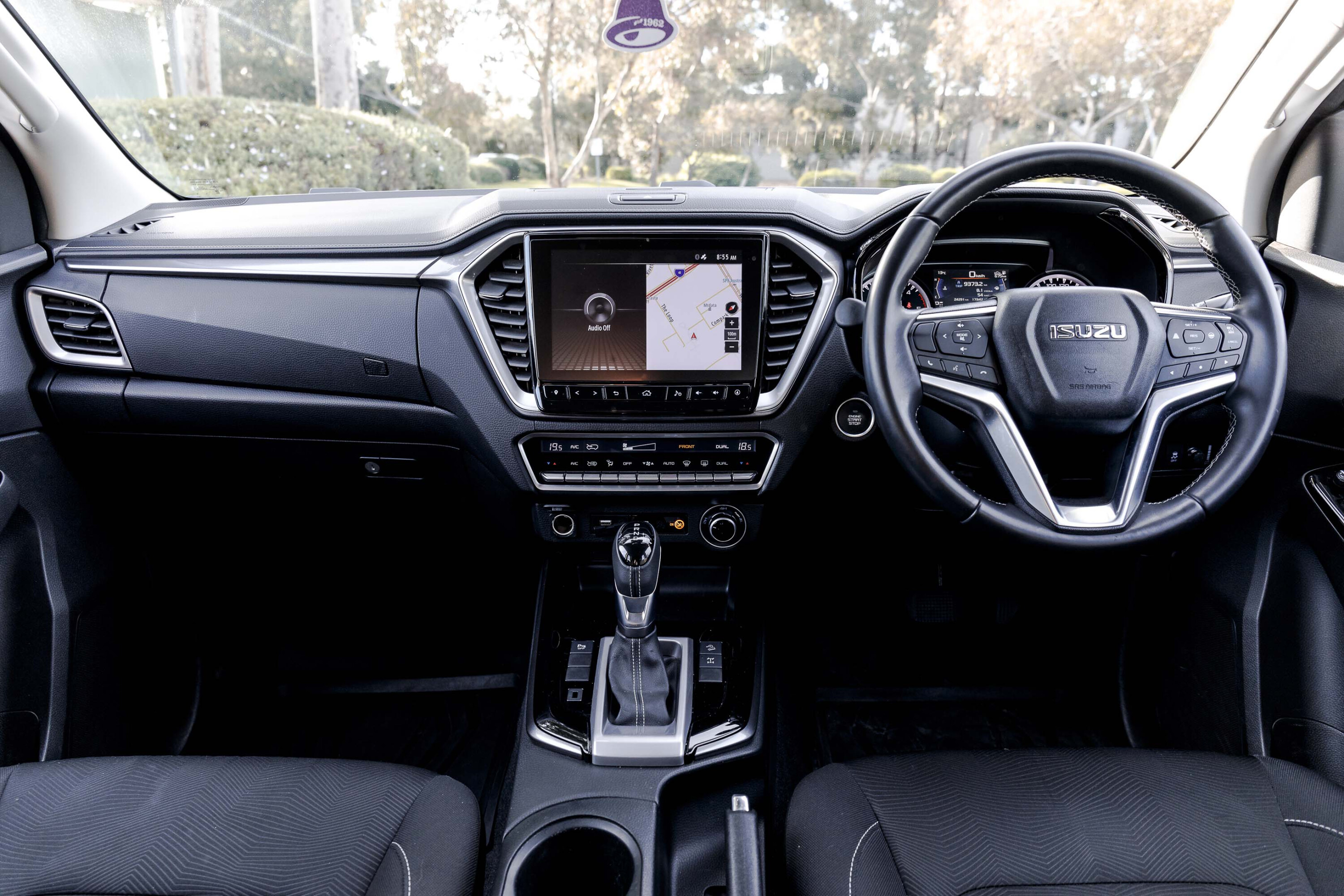
The LS-U+ includes all of the features of the lower-spec LS-M but adds leather-accented seating, heated front seats, an eight-way adjustable driver’s seat, nine-inch infotainment, eight-speaker audio system and sat-nav.
With a variety of body styles and drivetrain configurations, the LS-U+ offers a balance of comfort and capability, making it a versatile choice for both personal and commercial use.
5
Safety
The D-MAX LS-U+ comes equipped with a suite of safety features including eight airbags, Forward Collision Warning, Autonomous Emergency Braking, and Traffic Sign Recognition.
While it may not have the front parking sensors of the X-Terrain, the LS-U+ still offers a comprehensive safety package that ensures a secure driving experience.
The LS-U+ offers a competitive mix of capability and safety in the mid-range ute segment.
Should I put it on my shortlist?
The 2023 Isuzu D-MAX LS-U+ should be on your shortlist if you’re looking for a ute that offers a balance of comfort and capability. With a strong 3.0-litre turbo diesel engine and a variety of body styles, it’s a versatile choice.
The LS-M variant sits in the middle of the 2023 Isuzu D-MAX range, offering a balance of capability and comfort.
With a robust 3.0-litre turbo-diesel engine and a complete suite of features, it’s a reliable workhorse that doesn’t compromise on safety.
The LS-M variant comes in two versions: the 3.0 LS-M Crew Cab 4WD Auto priced at $55,300, and the 3.0 LS-M Crew Cab Cab Chassis 4WD Auto priced at $53,800. Both versions feature a 4×4 drivetrain and a the 3.0-litre diesel engine.
The LS-M trim level includes features such as a 17-inch alloy wheels, all-terrain tyres, tailgate assist, Bi-LED headlights, seven-inch infotainment display, and vinyl flooring.
It may not have some of the luxury features of the higher variants, but the LS-M offers a balance of capability and comfort, making it a reliable choice for both personal and commercial use.
6
Safety
The D-MAX LS-M comes equipped with a suite of safety features including eight airbags, Forward Collision Warning, Autonomous Emergency Braking and Traffic Sign Recognition.
These safety features provide a secure driving experience, making the LS-M variant a safe choice for families. While it may lack some advanced safety features of the higher variants, the LS-M still provides a comprehensive safety package.
The LS-M offers a competitive mix of capability and safety in the mid-range ute segment.
Should I put it on my shortlist?
The 2023 Isuzu D-MAX LS-M should be on your shortlist if you’re looking for a ute that offers a balance of capability and safety. With a robust 3.0L turbo diesel engine and an enticing price tag, it’s a great option.
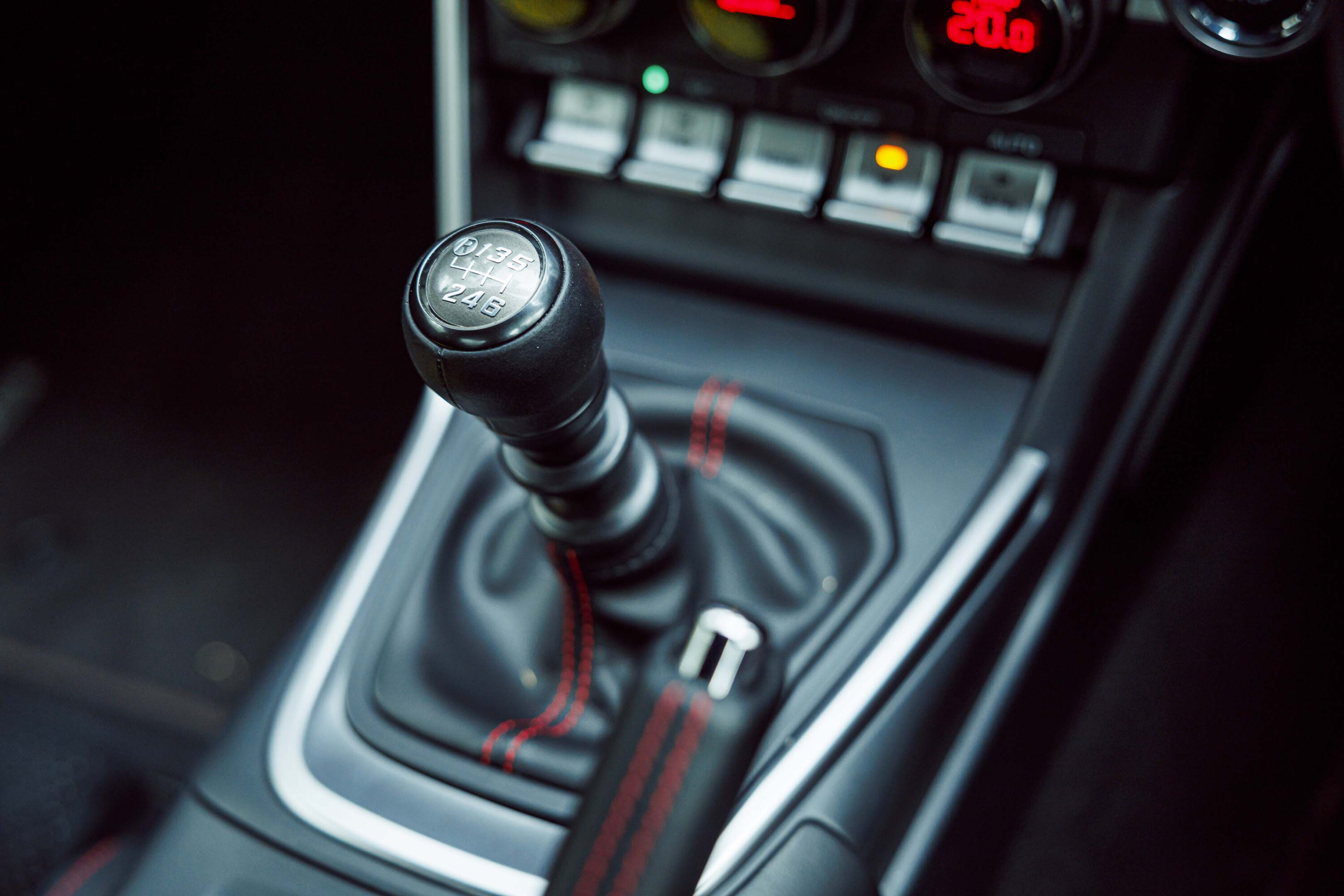
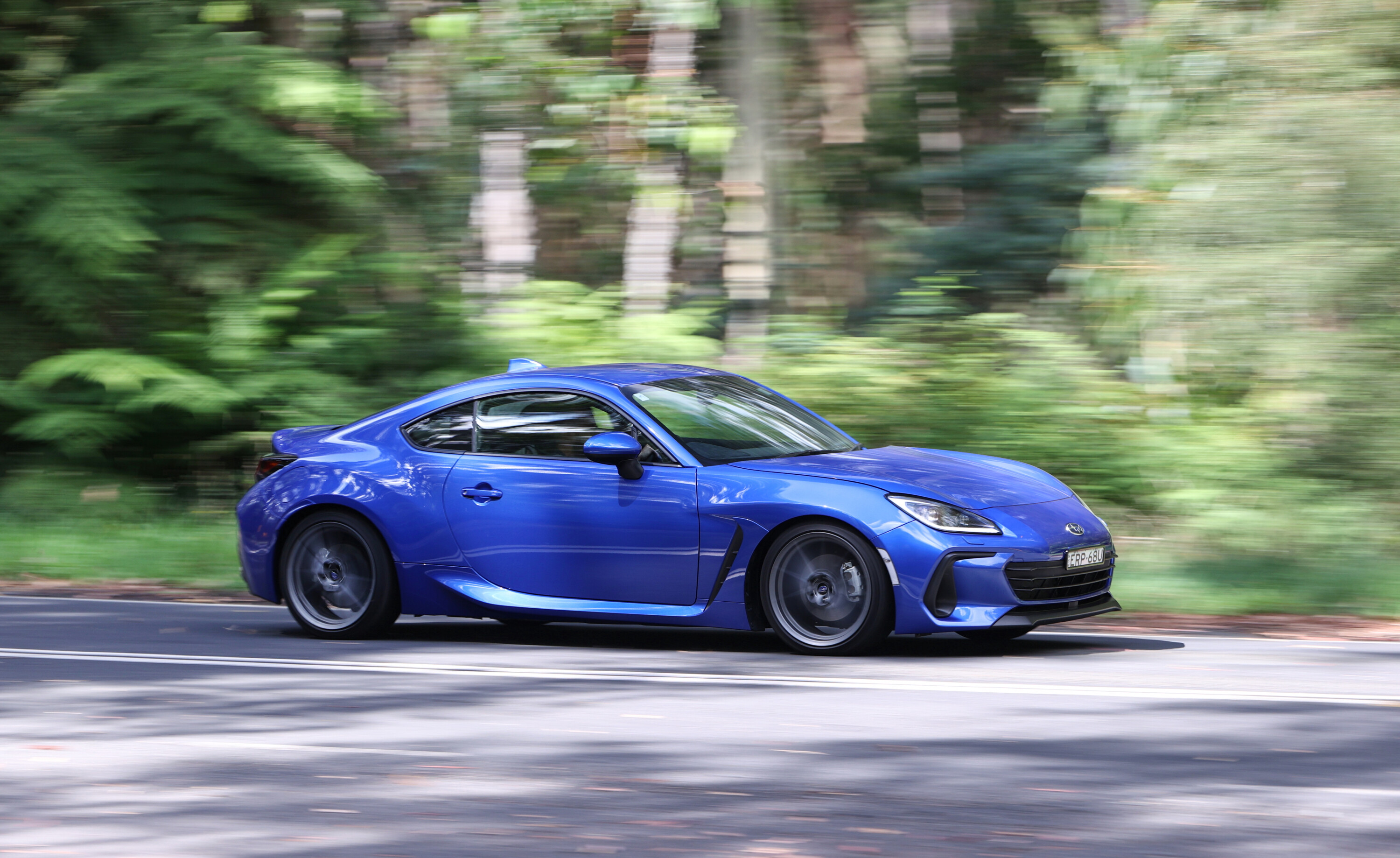
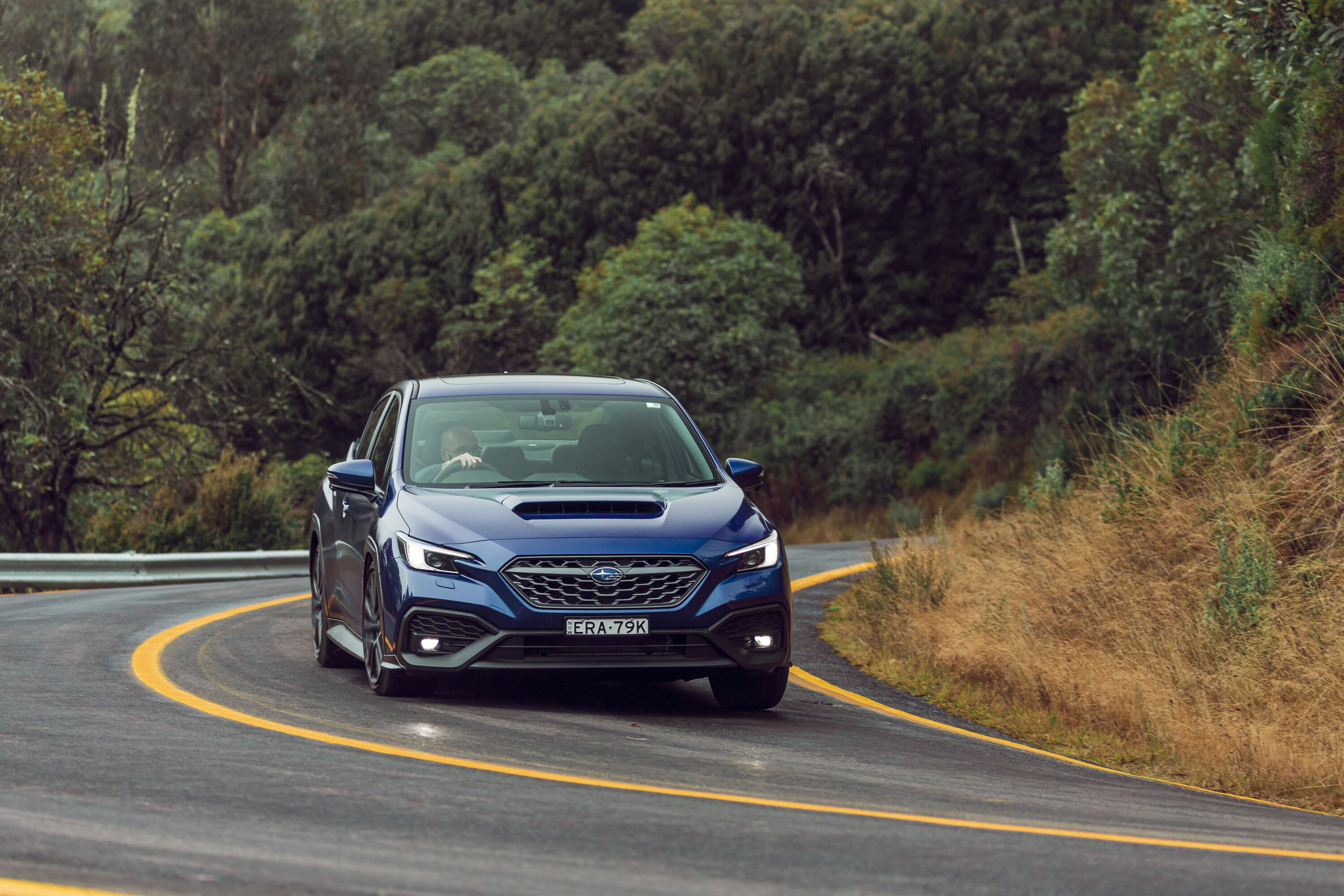
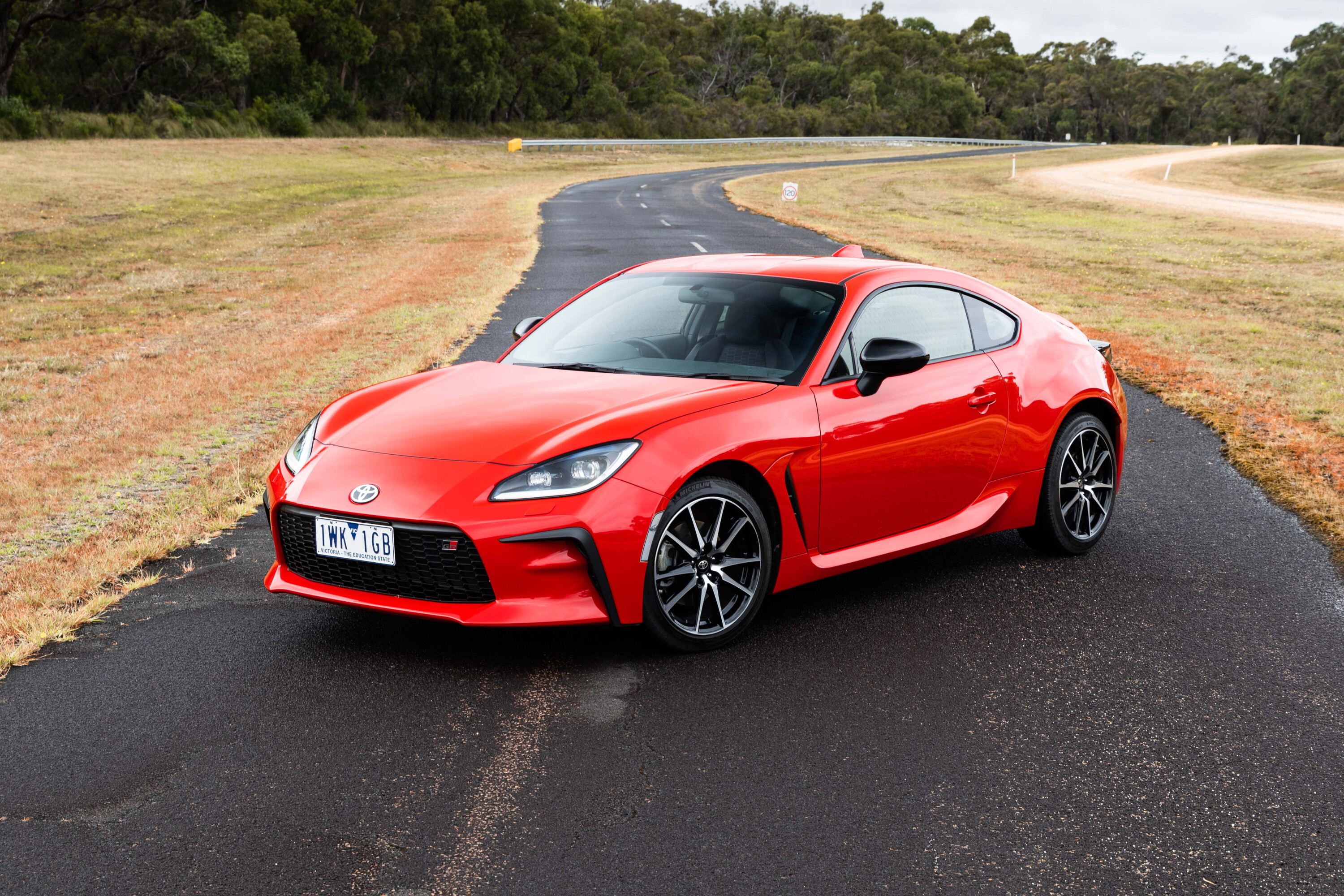
Subaru has confirmed potentially life-saving technology will be added to the manual BRZ and WRX sports cars ahead of a local mandate that could have spelled the end of the road.
The brand’s EyeSight active safety suite – including autonomous emergency braking, lane departure warning, and adaptive cruise control – will be added soon, starting with the 2024 BRZ due in Australia “at the end of this year”.
Manual transmission versions of the WRX and BRZ – and the BRZ’s identical Toyota GR86 twin – currently omit active safety technology, as Subaru had engineered it solely for automatic vehicles.
1
Autonomous emergency braking will be mandated on all new vehicles sold in Australia on March 1, 2025. Newly-introduced vehicles compiled from March 1, 2023, must be fitted with the technology.
Lane-keeping assist systems will be compulsory in Australia 12 months after autonomous emergency braking from March 1, 2024, for newly-introduced vehicles and from March 1, 2026, for all cars.
“This announcement confirms Subaru Australia’s ongoing commitment to providing driving enthusiasts manual transmission options now combined with advanced safety features of Eyesight,” said managing director, Blair Read.
1
“The preventive safety technology combined with adaptive cruise ensure a relaxed performance drive, giving owners the best of both worlds.”
In the BRZ, the manual will gain autonomous emergency braking with pedestrian and reverse object detection, adaptive cruise control, lane departure warning, lead vehicle departure alert, high beam assist, rear parking sensors, and pedal misapplication prevention.
Subaru Australia has not announced the details or timing for active safety technology in the manual WRX sedan.
Toyota Australia has confirmed it is “aware of the announcement”, with further news expected soon.
The related GR86 is not fitted with active safety technology in manual guise – while blind-spot and rear cross-traffic alerts aren’t fitted to the GT base variant, no matter the transmission.
Unlike the Subaru BRZ, the manual and automatic Toyota GR86 are priced identically in Australia – despite the additional tech for the latter variant.
“We’re aware of the announcement regarding AEB and other active safety features coming to the Subaru BRZ. We have no announcements to make today regarding such additions to GR86, but stay tuned for further updates,” said a Toyota Australia spokesperson.
July 2023: The Honda ZR-V is now on sale in Australia, and we’ve driven it
Sorry, CR-V – ZR-V is the medium SUV poised to bring Honda back to the pointy end of the sales race. Read our full review at the link below.
▶ Story continues: Honda ZR-V first international drive
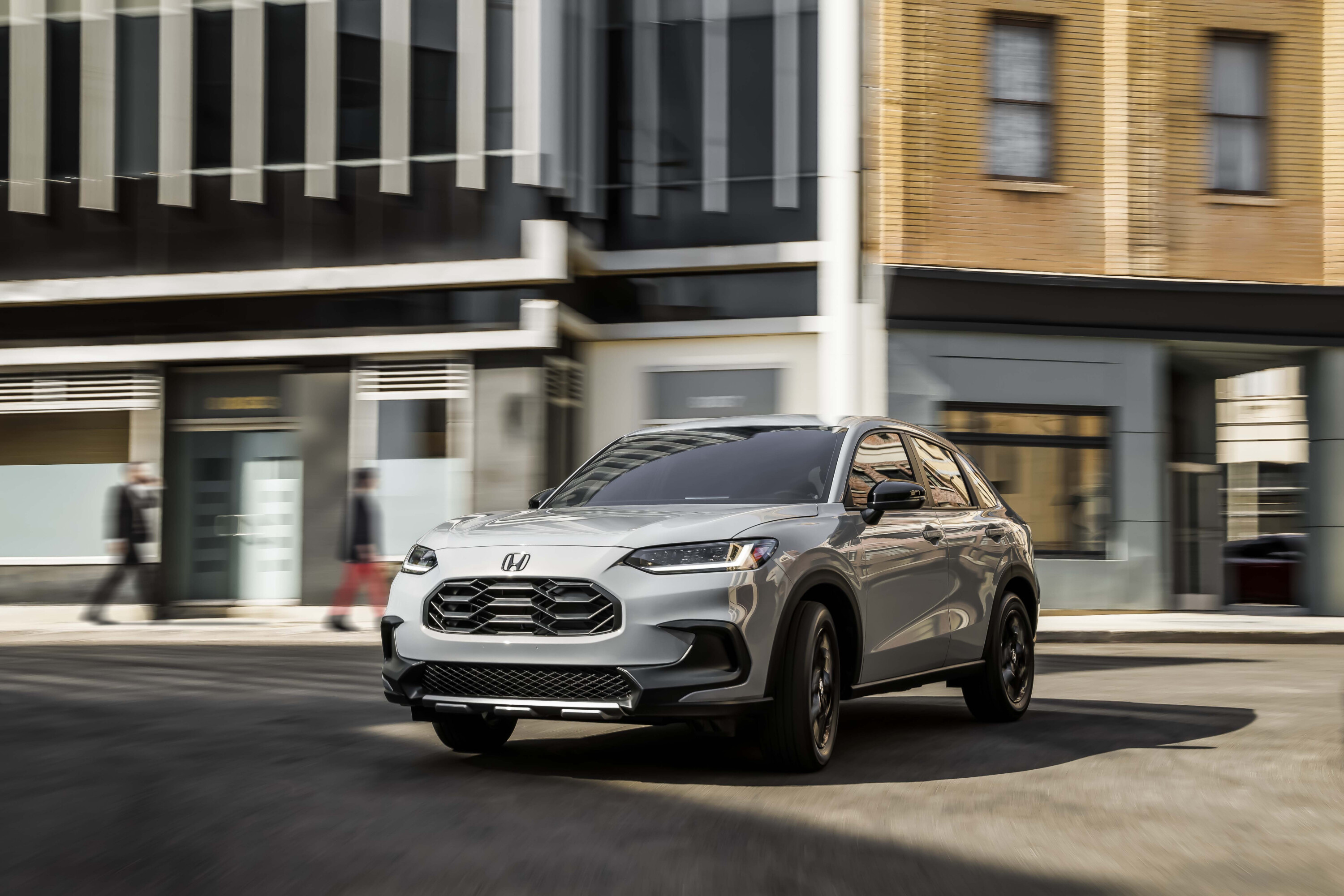
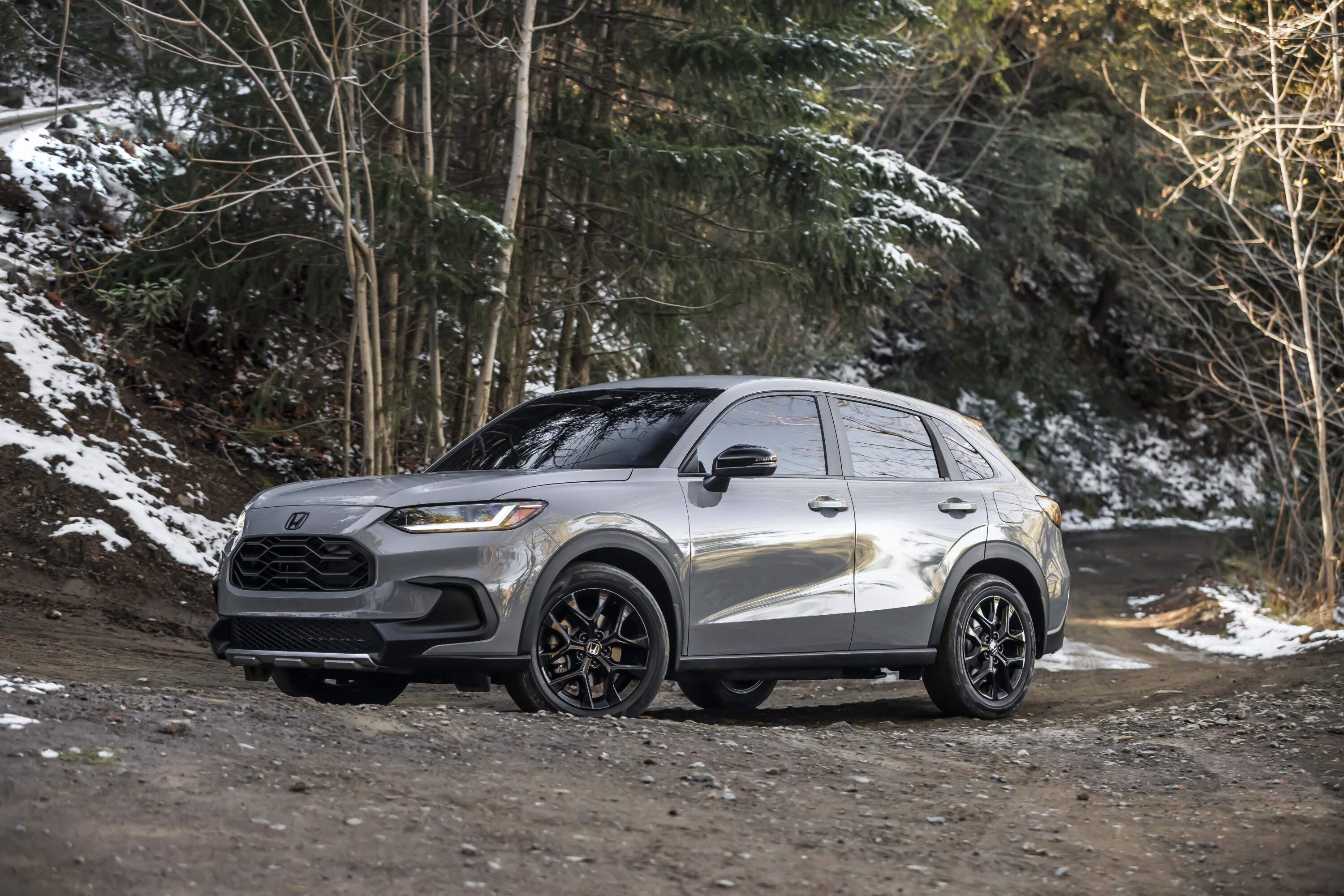
Honda’s new entrant into the competitive medium SUV segment is the 2023 ZR-V – and it’s got two very big tricks up its sleeve.
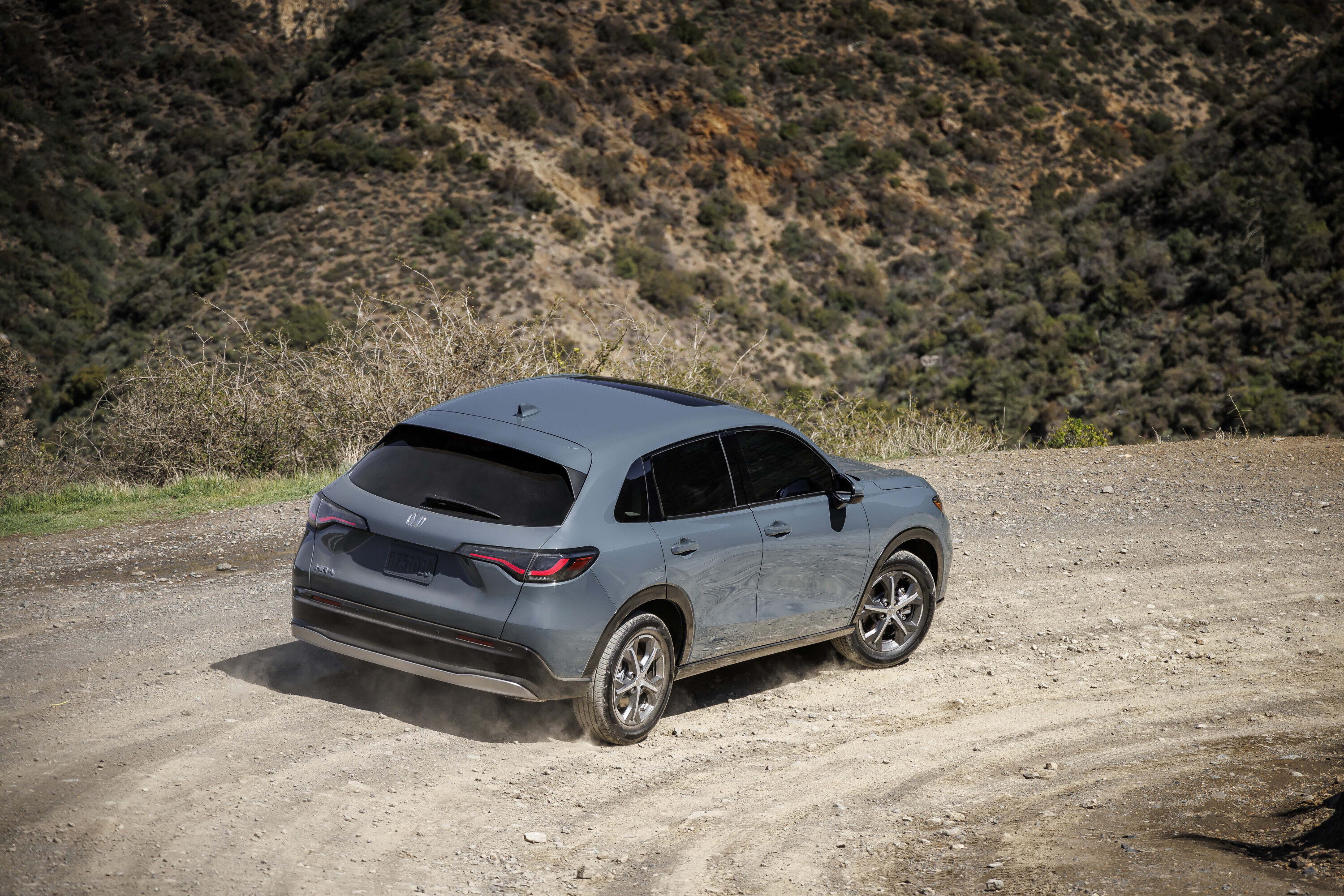
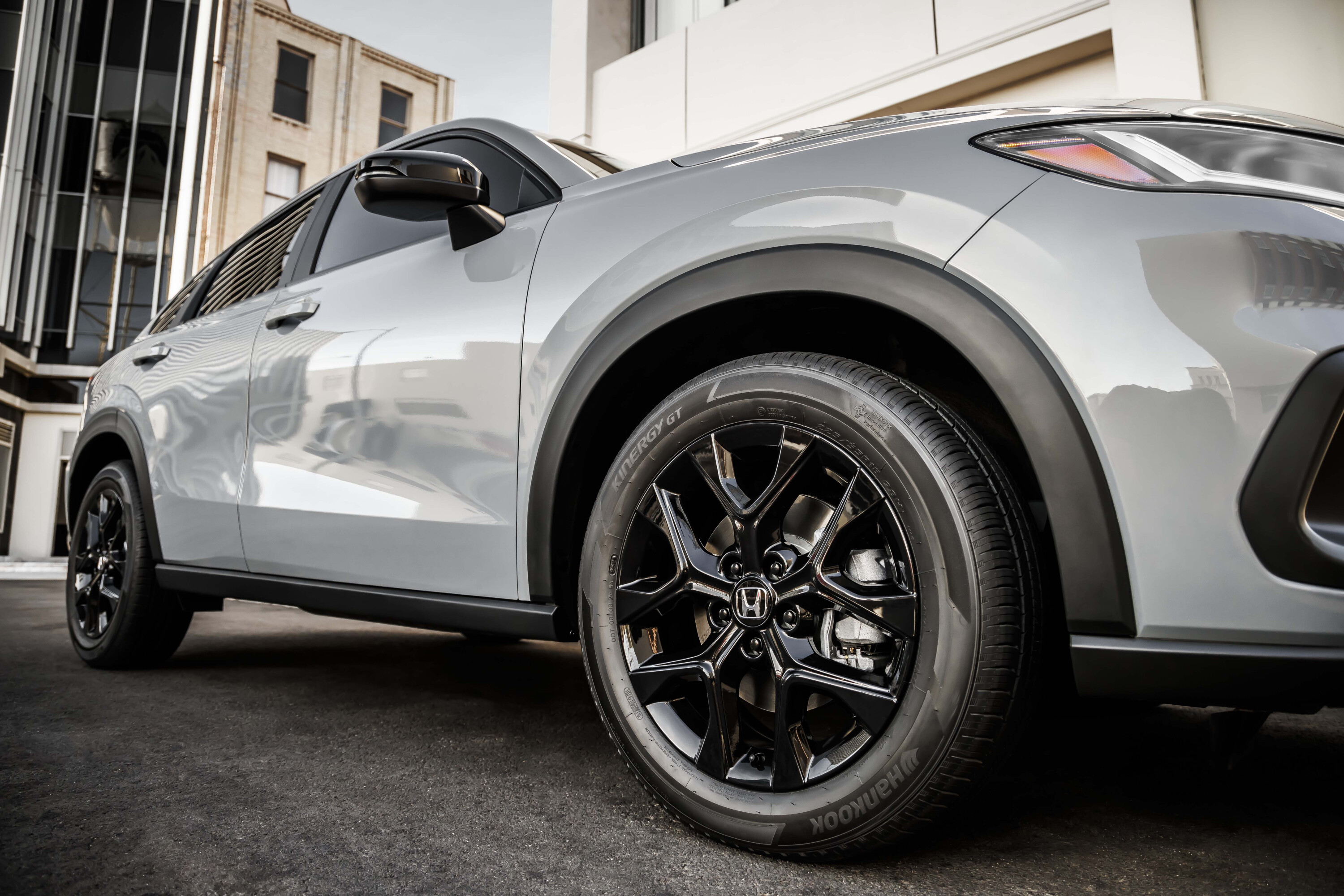
The ZR-V coming to Australian shores is a version of the HR-V from North America, where it replaces the small and reliable but homely HR-V sold from 2016 through 2022 in contrast to Australia getting the third-generation HR-V.
Honda has taken all of the lessons learned from that SUV’s six-year run, which benefits Australian buyers.
For the ZR-V, Honda has gone up a size category over the HR-V (which continues to be based on the Jazz light hatch that is no longer sold in Australia) and based it on the current Civic platform.
The result is a larger and more spacious model, which is good news for the Honda faithful in Australia who might feel limited by the HR-V but a find a CR-V too large.
With dimensions that are 229mm longer and 77mm wider than the outgoing HR-V and a wheelbase that’s 50mm longer, the ZR-V has generous passenger and cargo volume.
1
When is the Honda ZR-V due in Australia?
The ZR-V lands on our shores in July this year with petrol and petrol-electric hybrid drivetrains.
The hybrid uses Honda’s 2.0-litre four-cylinder with dual electric motors and continuously variable transmission (CVT). The non-hybrid has a 1.5-litre turbo-petrol four-cylinder paired with a CVT.
1
What’s it like to drive?
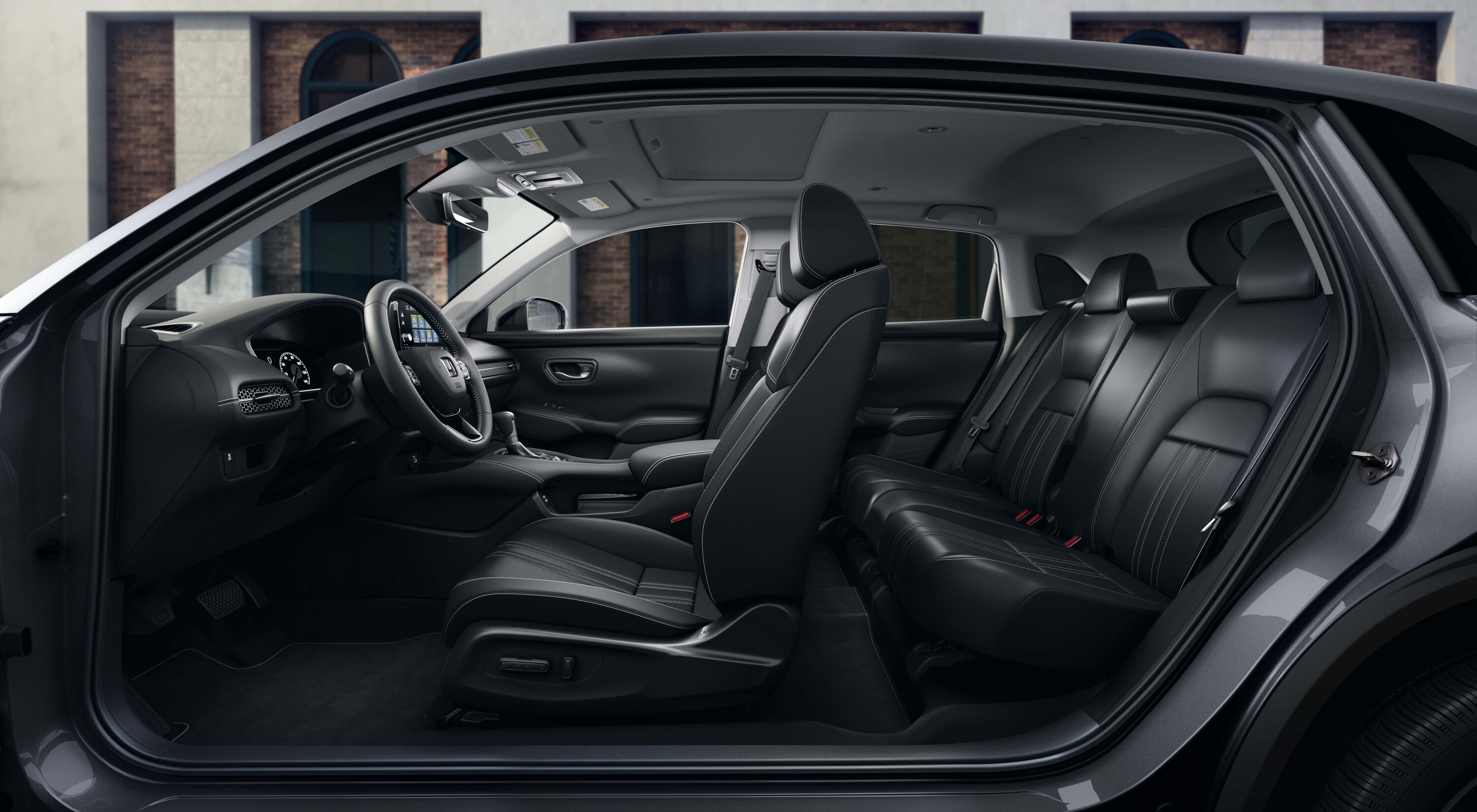
The driving experience is dominated by the spaciousness of the cabin and the fact Honda has made good use of the additional wheelbase and width of the ZR-V.
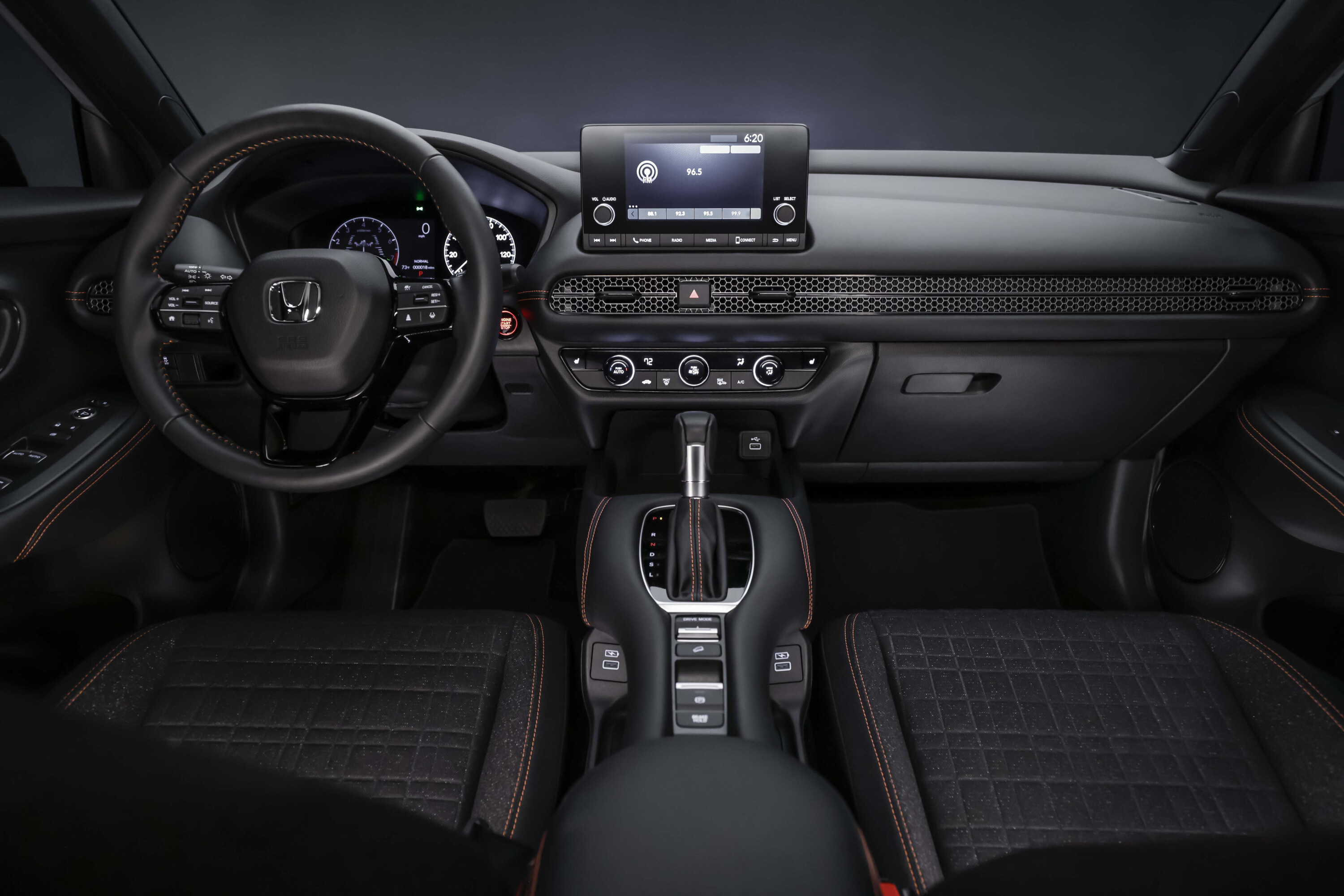
From the driver’s seat, the front row feels as spacious as it looks, with clever cargo space carved into the centre console.
Drivers will be happy with the supportive and modestly bolstered seat, while the adjustable steering column enables the majority to find a comfortable and effective driving position. The wheel is pleasantly similar in shape and size to the one found in the latest Civic. The interface of the North American-spec infotainment system lacks polish but is remedied by Apple CarPlay and Android Auto.
1
Two adults will fit comfortably in the second row and the rear doors open wide to make it easy for children to get in and out.
For cargo, the ZR-V’s liftover height is low and the boot load floor is perfectly flat, which makes loading objects of any size easy.
One of the ZR-V’s tricks is two engine choices. With its HR-V badge, the North American ZR-V is available with only Honda’s 2.0-litre petrol engine and while it’s a smooth-running four, it lacks the power and torque of the Australian-spec 1.5-litre turbo and 2.0-litre hybrid power units. Our US-spec tester would have benefited from either of these versus the naturally aspirated 2.0L.
In this test vehicle, the CVT optimises the engine speed to allow for maximum acceleration or maximum efficiency, depending on what the driver is asking for at a given moment. Acceleration is modest and 0-100km/h times are well over eight seconds, so both Australian engine choices will be a boon for day-to-day performance and efficiency.
1
The CVT itself is refined, but without shift paddles on the US-spec Honda, the driver has to rely on a meek Sport mode or judicious throttle inputs to muster acceleration.
However, while driving the ZR-V on Southern California’s mountainous roads, the CVT optimises shifts for downhill engine braking, which is an unexpected and pleasant surprise.
Another ZR-V trick is its handling package, which is a genuine highlight. Steering, braking and handling are simply best in class with much of that credit due to its Civic DNA.
Steering is responsive and effort is light, which will satisfy most buyers. The brakes are strong with clear modulation, similar to what we’ve come to expect in the Civic.
1
The ride is comfortable in daily driving and it’s one of the few mid-sized SUVs that’s a joy to carve through California’s gorgeous canyon roads.
Body roll is at an absolute minimum and, considering that the ZR-V isn’t fitted with fancy dampers, it absorbs road imperfections with barely any secondary body movement over larger bumps.
Its suspension is so well resolved that the additional power of the two Australian engine choices will make the ZR-V even more enjoyable to drive.
1
Is it worth waiting for the Honda ZR-V?
The ZR-V has all of the modern creature comforts and technology that buyers have come to expect in a modern SUV.
What promises to make this Honda a leader in the segment is its spaciousness, powerful and efficient drivetrains, and excellent chassis.
If Americans knew that Australians have two superior engine options, nobody could blame them for feeling short-changed.