
Make sure to watch the Model S Plaid take on the Nurburgring Nordschleife below – scary is an understatement
Following the Model S Plaid’s release and Nurburgring lap attempt late in 2022, Tesla has finally made the extra track-focused equipment available in an option pack.
Snapshot
- Carbon ceramic brakes added to Track pack
- Speed limiter raised above 320km/h
- Available in US from June
The Track Pack will cost US$20,000 (AU$29,500) and is available from June in the United States, with no word yet on Australian arrival.
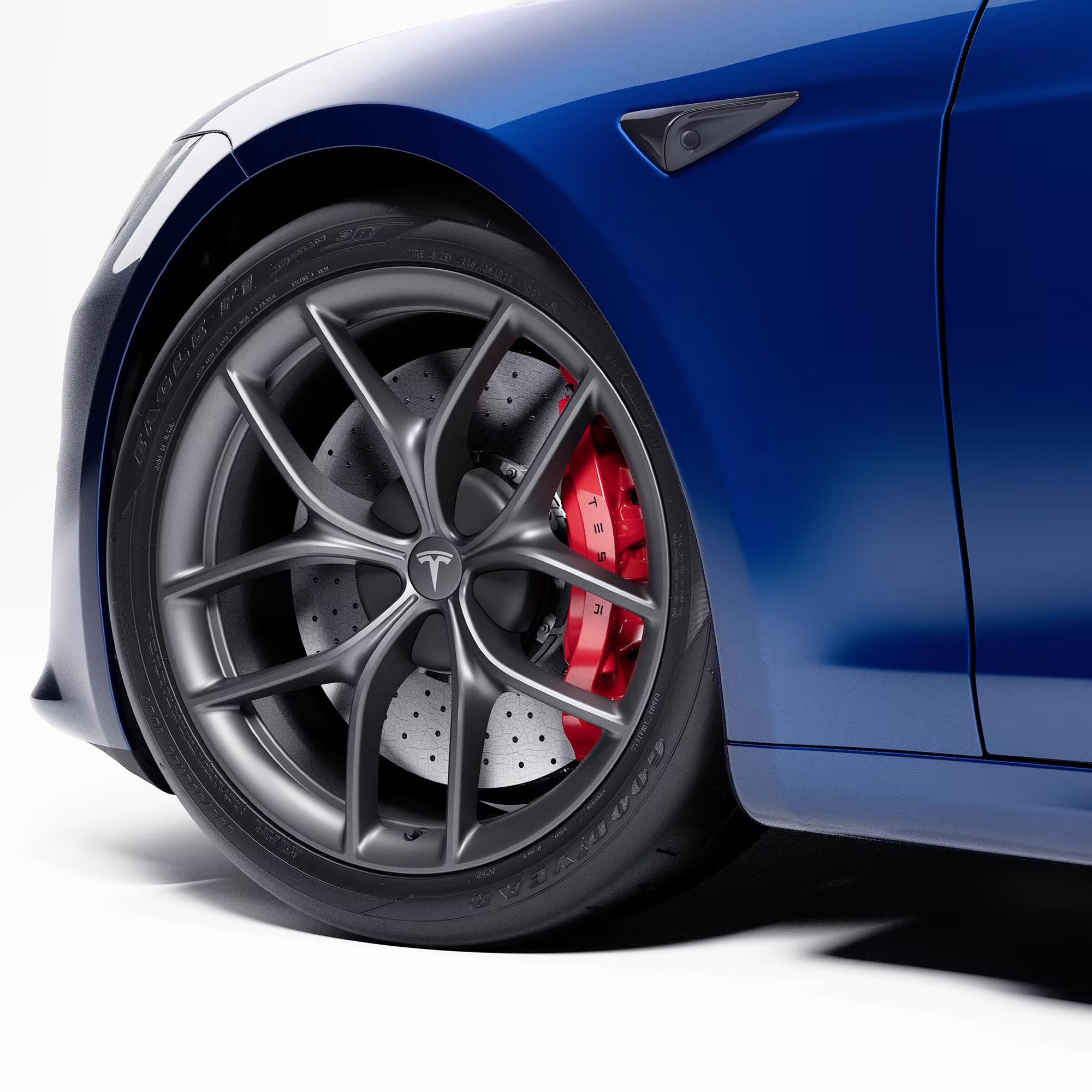
It adds a carbon ceramic braking system with six-piston front and four-piston rear calipers clamping huge 409mm rotors. The brakes are accommodated by new 20-inch ‘Zero-G’ light alloy wheels without aero covers and 285/35 front, 305/30 rear Goodyear Eagle F1 Super 3R rubber.
1
It’s unclear if the circa-760kW Model S Plaid will hit 100km/h any faster than its 2.1 second claim with the additions, but when you’re going that fast already it’s not going to make a huge difference.
What is new is the lifted speed limiter. Previously strangled down to 282km/h, the new brakes see Tesla lift that limited top speed allowing over 320km/h (200mph) in the Plaid.
Tesla will offer the Model S Plaid package in the US from June 2023, with it available as a retrofit for existing Plaid models – Australian plans are unclear, though it’s unlikely given the Model S has been withdrawn from sale locally since at least January 2022.
Our original story, below, continues unchanged
February 26, 2022: Model S Plaid gets Track mode!
Jordan Mulach
Snapshot
- New Track Mode becomes available on Model S Plaid
- Power, cooling and suspension stiffness increased
- Full Self-Driving to increase to US$12,000
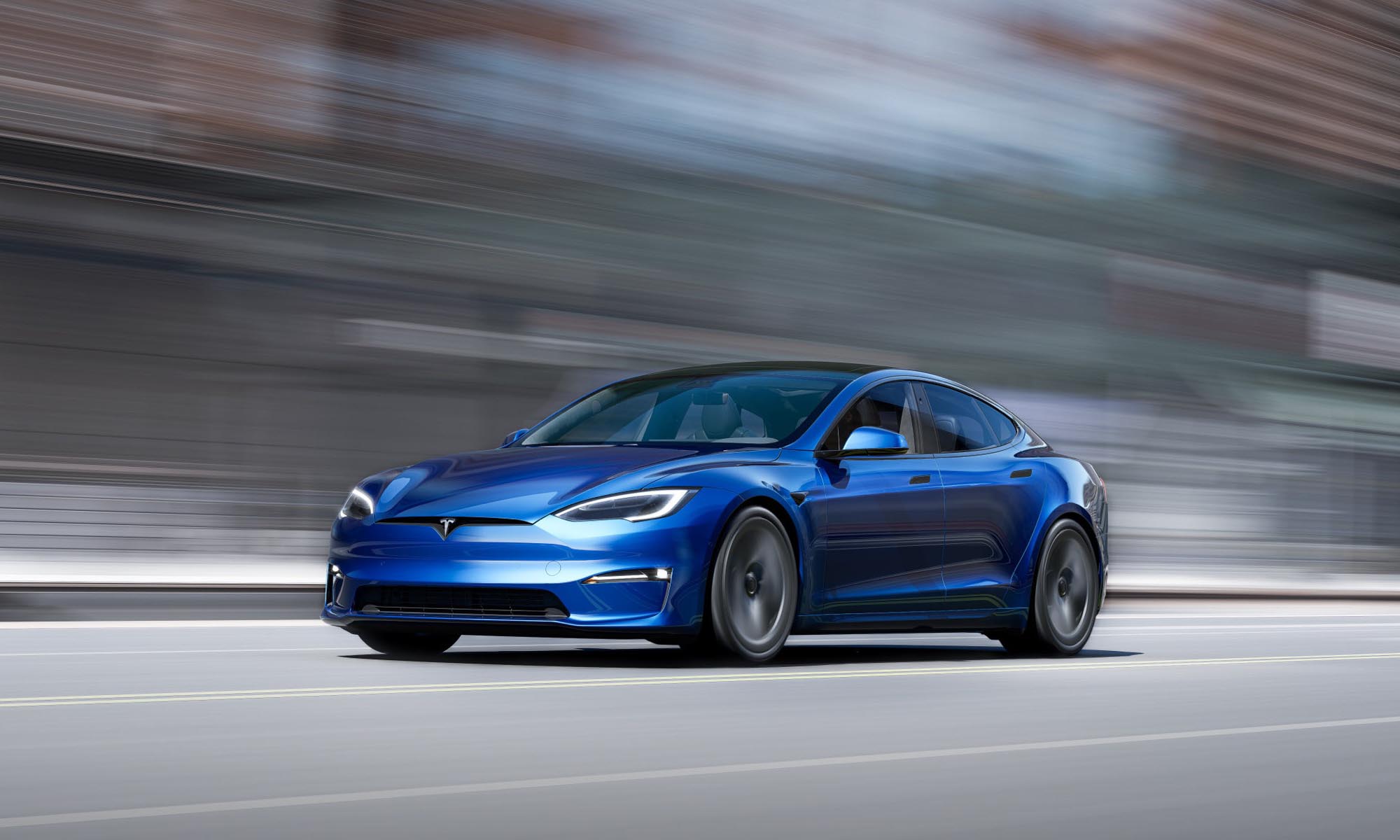
Tesla’s flagship Model S Plaid has been given its own Track Mode for 2022, released via an over-the-air update last week.
Just like the Track Mode which has been available on the Model 3 Performance since 2018, the Plaid’s circuit-only mapping has allowed Tesla to extract the maximum potential from the high-output model.
Designed by Tesla in its attempts to break the Nürburgring lap record for production electric vehicles, Track Mode deploys the tri-motor setup’s 750kw-plus power output while also optimising cooling, torque vectoring and its adaptive dampers to produce the quickest possible lap time.
1
To prepare the car for the high-stress scenario, the battery pack is cooled to its lowest point to ensure it can run harder and longer than usual, while torque vectoring now sends more power to the outside, loaded wheels to assist with cornering, reducing understeer for faster turns.
Regenerative braking is increased as well, allowing the physical brakes to stay within their operating window due to the strain being shared with the electric motors, working in tandem with the vehicle dynamics controller to let the suspension give each tyre the maximum amount of grip available.
Other features include a track-focused user interface which allows drivers to look at important data such as a vehicle thermals monitor, lap timer, G-meter, dashcam video capture and vehicle telemetry, while also allowing for customisable displays.
As Tesla quietly announced the new mode on its blog, CEO Elon Musk took to Twitter to announce the company’s Full Self-Driving autonomous system would undergo a price rise later this month.
Jumping from US$10,000 (AU$13,920) to US$12,000 (AU$16,700), the increased premium will affect United States customers only, coming into effect from January 17.
In Australia, Full Self-Driving is available for a one-off fee of $10,000, making it one of the few features which is cheaper on local cars than in Tesla’s home market.
MORE
All Tesla
The 2023 Cupra Formentor medium SUV is now fitted with adaptive LED headlights – but it’ll be limited to “some 100 examples”.
Snapshot
- Run limited to around 100 cars
- $1500 premium over regular VZx
- New special focuses on Matrix LED headlights but gains other style-oriented tweaks
1
Cupra Australia has announced the limited-run Formentor VZx Matrix Edition will go on sale today, priced from $65,490 before on-road costs – $1500 more than the flagship VZx it’s based on.
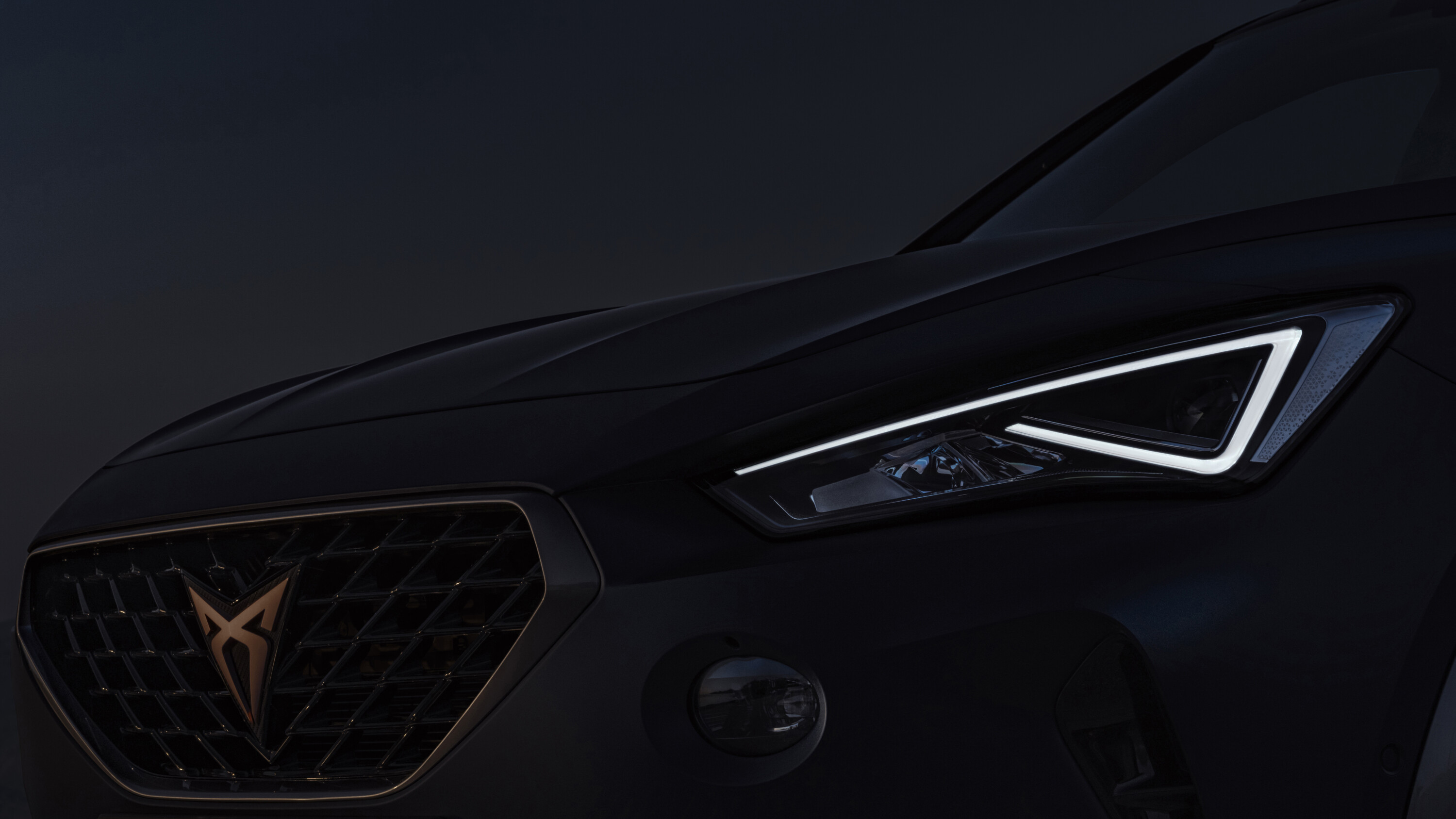
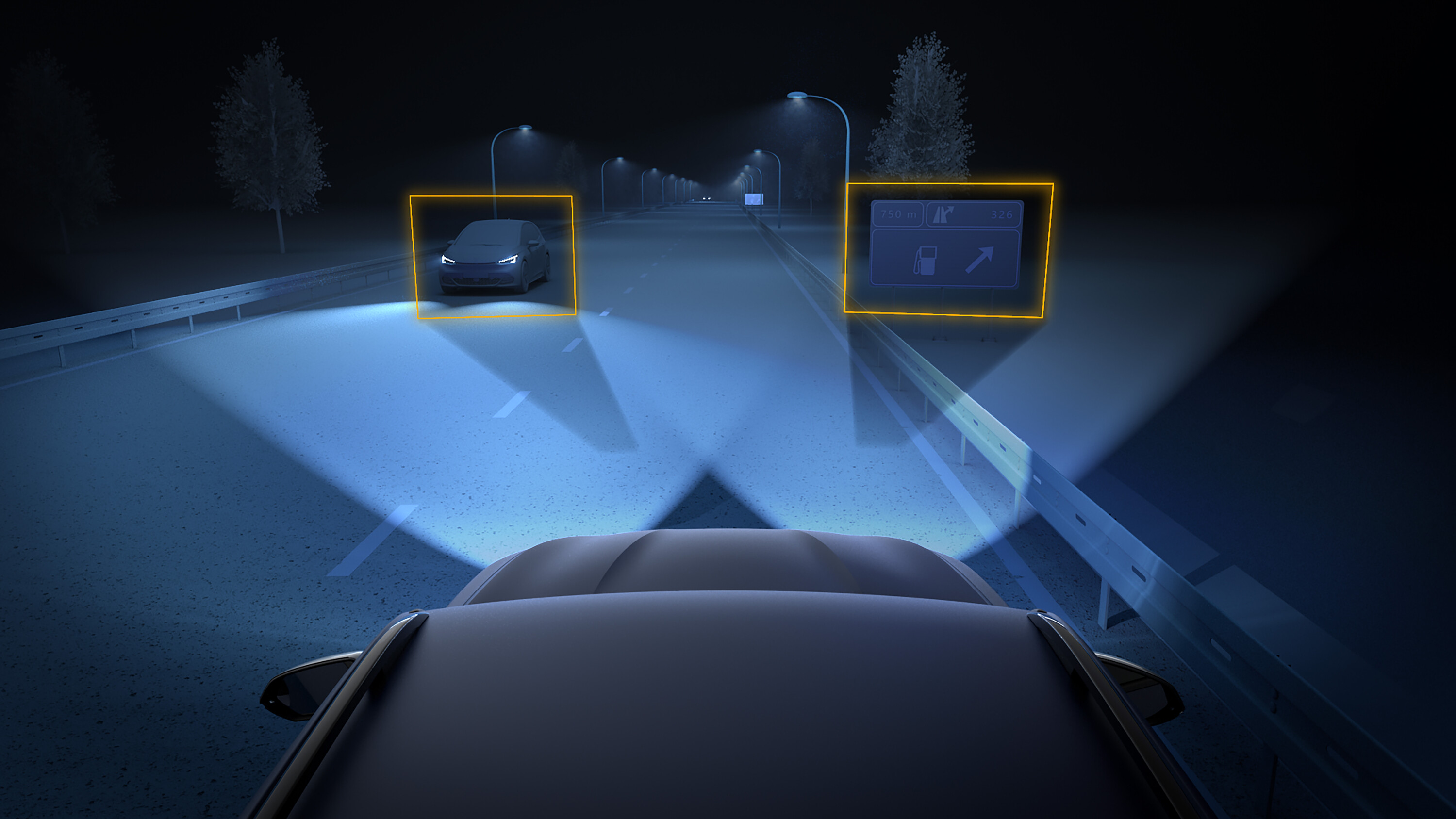
As standard, the Formentor VZx Matrix features adaptive LED headlights, which can shut down individual LEDs when traffic or obstacles are detected – instead of static LED headlights fitted to other Cupra vehicles in Australia.
1
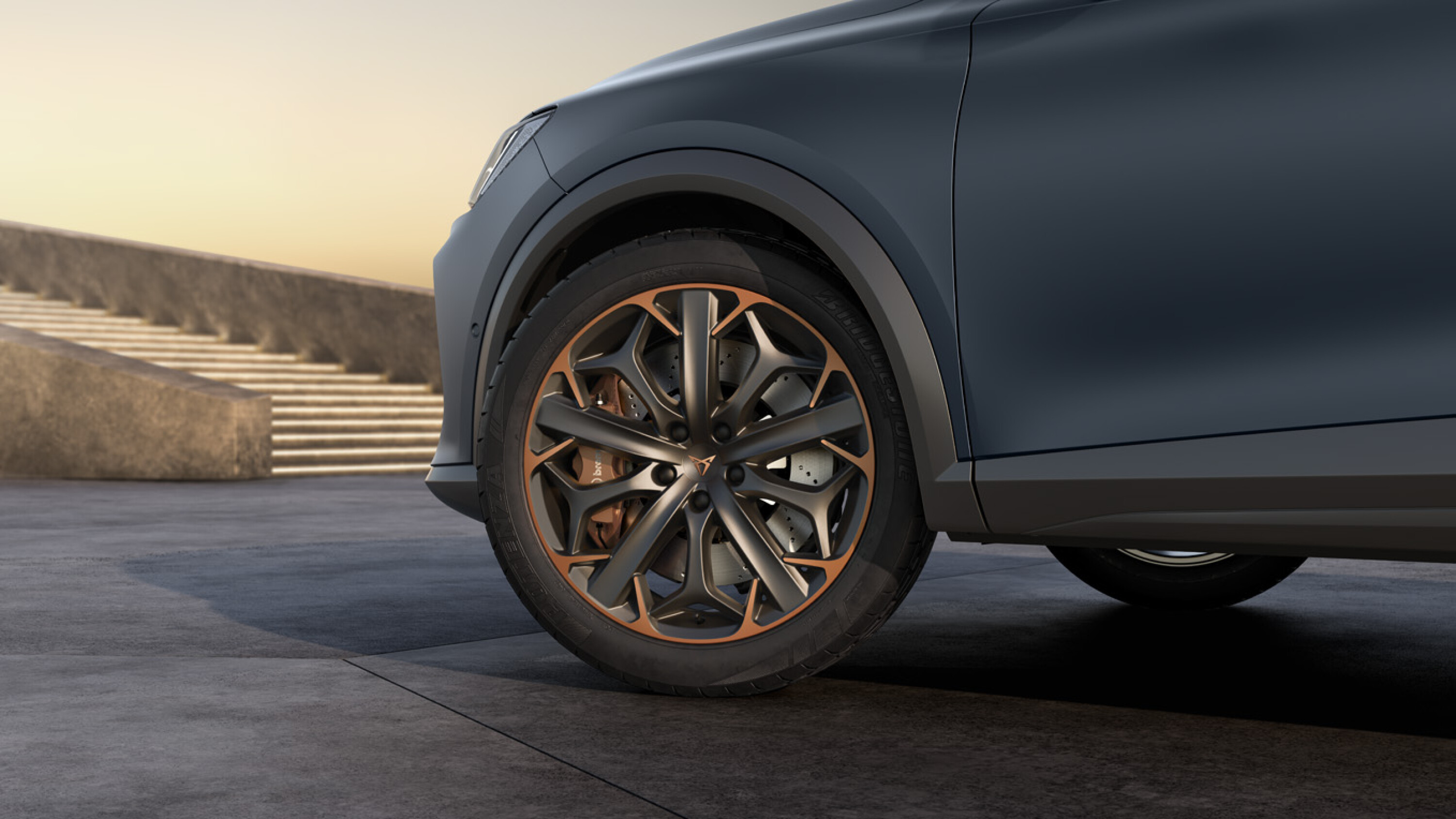
It also sports black Nappa leather upholstery, replacing petrol blue, and unique 19-inch alloy wheels with a black and copper design.
The latest addition to the Cupra Formentor lineup isn’t the first limited edition, with a deep red-only VZx Rojo Edition launched in March.
Cupra said the Formentor VZx Rojo Edition is “near-sold-out”, with 30 units offered in Australia.
1
Unlike the VZx Rojo Edition, the VZx Matrix Edition is offered with the standard VZx colour palette – with metallic, premium metallic or matte paint – and an optional panoramic sunroof.
“We see the instant response to these editions, and the VZx in general, as a real endorsement of Cupra’s pricing and positioning,” said Cupra Australia head of product and planning, Jeff Shafer.
As announced, the Formentor VZx is Cupra’s top-selling vehicle in Australia.
The 2023 Cupra Formentor VZx Matrix Edition is available to order today, with local deliveries due to commence soon.
| 2023 Cupra Formentor VZx Matrix Edition features | |
|---|---|
| 2.0L turbo 4-cylinder petrol engine 228kW/400Nm | |
| 7-speed wet clutch DSG | Glossy black roof rails |
| 4Drive AWD | Front and rear parking sensors |
| Matrix LED Headlight | Dynamic chassis control |
| Black Leather heated front seats with driver adjustment and memory | 10.25u201d Digital Cockpit |
| 19u201d Matrix Edition Sport black and copper alloy wheels | 12u201d Navigation System |
| Top View Camera (360 degree) | Wireless Phone Charging |
| Hands free power tailgate | Wired and Wireless Apple Carplay and Android Auto |
| Quad exhaust | 2 Front and 2 Rear USB-C ports |
| Leather bucket seats (Petrol Blue) | 3 zone climate control air-conditioning |
| Heated power folding mirrors | Auto dimming rear view mirror |
| Memory function for external mirrors | Light and rain sensor |
| Beats audio with 9 speakers, subwoofer and 340W amp | Keyless entry and start |
| Supersports leather steering wheel with satellite buttons | Front Assist with Pedestrian and Cyclist Detection |
| Tyre Pressure Warning System | Lane Assist |
| Towing Pre-wire | Park Assist |
| Heated power folding mirrors covered in dark chrome | Side Assist with Exit Assist |
| Rear LED Lamps | Driver Fatigue Monitor |
| Fog lamps with cornering function | Emergency assist |
| Light Assist (Auto High Beam) | Adaptive Cruise Control |
| Rear tinted windows | Exit assist |
| Rear spoiler | Travel assist |
| Welcome light with logo protection | Pre-crash warning |
MORE
Everything Cupra
With a last year’s national road toll of 1184 showing few signs of dropping, Australia’s roads aren’t getting any safer post-Covid.
Among what police refer to as the ‘fatal five’ crash factors: speeding, driving without a seatbelt, drink or drug driving, and fatigue driving, there’s only one that remains undetectable – how tired a driver is.
A report by The Guardian [↗] detailed Monash University’s research into blood biomarkers that could determine whether or not a driver was fatigued at the time of an incident.
It’s expected the test will become available on a large scale within two years, though initially the biomarkers will only be detectable in a hospital environment. Those involved predict roadside testing much like RBTs could begin to roll out in five years.
“When you look at the major killers on the road, alcohol is one of them, speeding is another, and fatigue is one of them. But even though the solution to fatigue is quite simple, which is to get more sleep, our capacity to manage it is impaired because we don’t have tools to be able to monitor it like we do with alcohol,” Professor Clare Anderson, leader of the program at Monash University, told The Guardian.
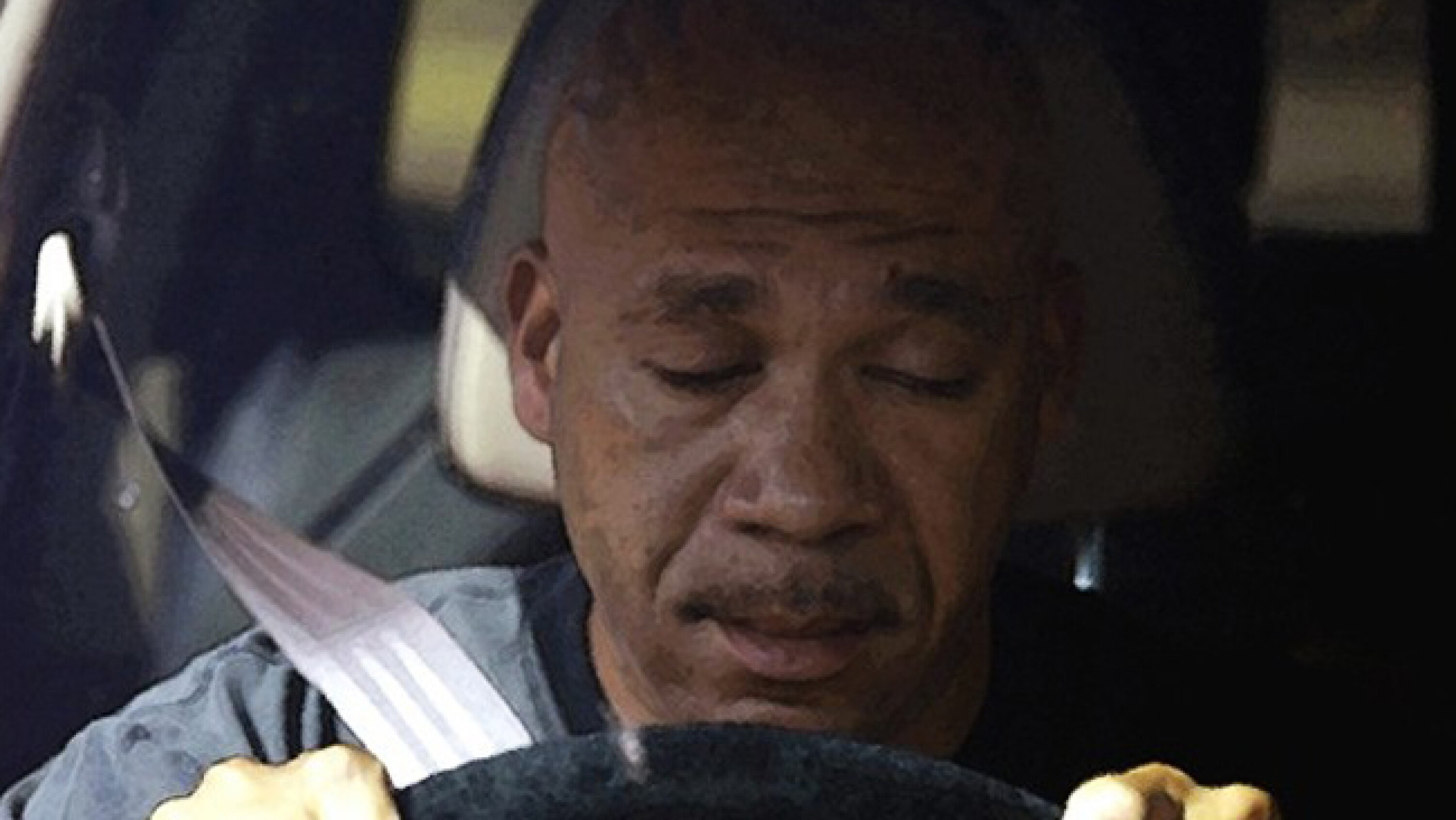
Click play on the banner image above to watch one of our favourite drowsy driver ads
1
Catch up on road safety
- The most common deadly driving habits
- More Queenslanders are admitting to breaking driving laws
- Driver fatigue: Don’t ignore the danger signs
- Study: Motorists ignore signs of fatigue
How does the test work?
The challenge so far has been accurately identifying how someone is tired using a blood test. Professor Anderson’s team has found five ‘biomarkers’ that indicate if a person has been awake for 24 hours or more. The test is pegged at 99 per cent accurate in lab settings, with real-world accuracy at a still-high 90 per cent.
“[The biomarkers] are really strongly related to how long somebody’s been awake, and they’re consistent across individuals,” Anderson told The Guardian. Crucially, Anderson added that these markers are not affected by elevated levels of caffeine, anxiety, or adrenaline in the bloodstream so it’s unlikely to record false readings post-incident.
Currently, the tests are in their infancy, but those involved in the program believe accurate hospital results will be available within two years, and – if everything goes right – roadside tests may be available in five years’ time.
1
What would constitute illegal ‘fatigue driving’
The other issue is setting a standard. Sleep researchers at Central Queensalnd University led by Madeline Spracjer studied a variety of papers [↗] that found driving on less than five hours’ sleep can be more dangerous than driving over many countries’ legal drink-driving limit.
A minimum threshold of sleep deprivation must therefore be identified for passenger cars if a logbook system is out of the question. Much like Australia’s maximum blood alcohol content is 0.05 per cent, a standard such as four-five hours of sleep could be implemented once biomarkers are clearly defined.
Australian heavy goods vehicles and professional drivers must keep logbooks of their sleeping and driving times, with heavy fines and even disqualifications for those who bend the rules.
1
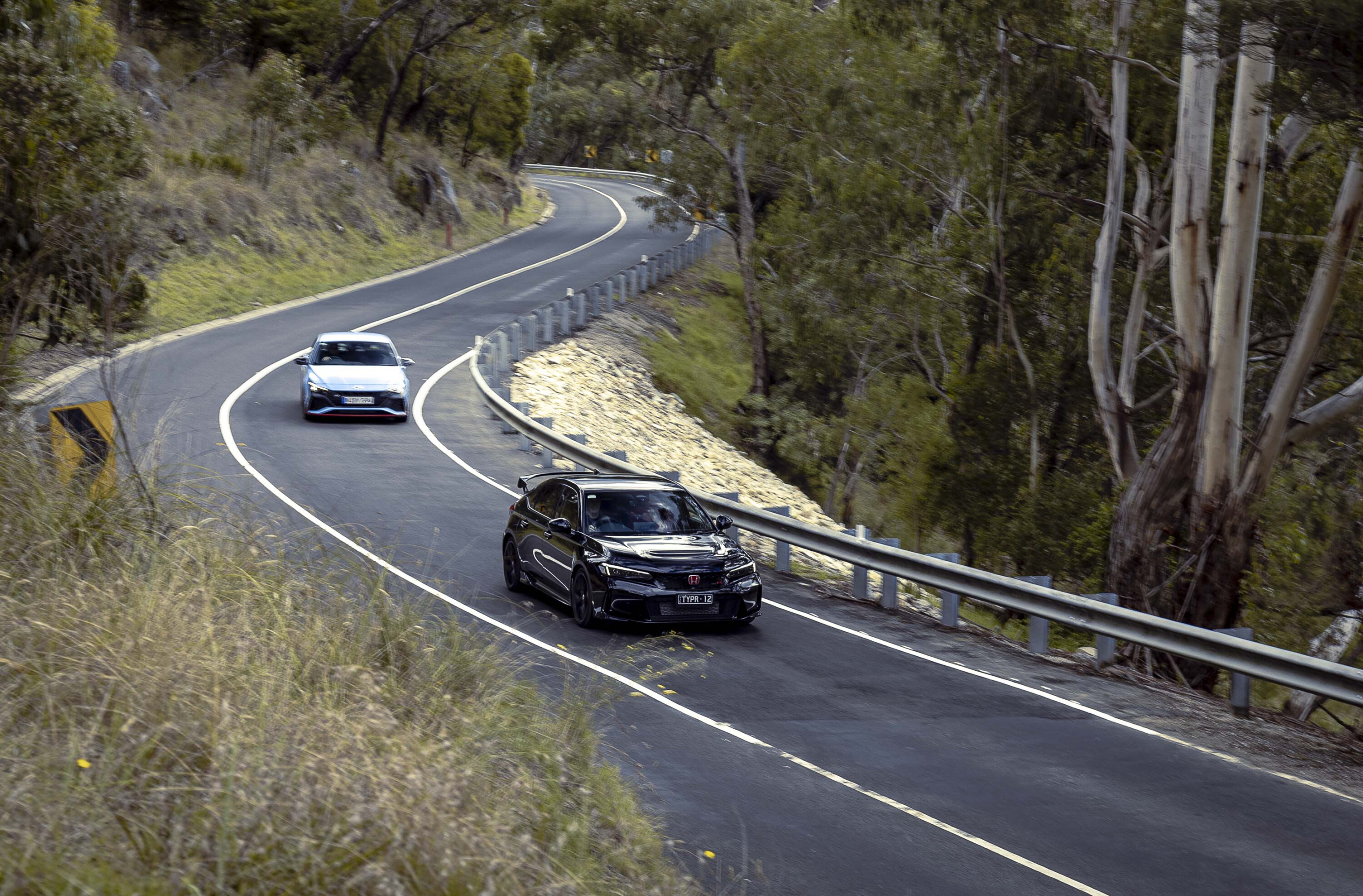
Unlike alcohol, which is ingested knowingly and has fairly straightforward guidelines that relate to a legal limit, fatigue doesn’t always come on in a linear manner. Certain road conditions – for example quiet, straight and featureless highways – have greater potential to induce fatigue. You’re unlikely to have a microsleep at the wheel of a Honda Civic Type R heading up Lake Mountain, for example.
Certain times have been identified as ‘danger zones’ too, with tiredness peaks often seen between 2-4pm in the afternoon, and 2-6am in the morning. There’s also the question of punishment – should you be awarded demerits and fines for driving drowsy after an accident? Is running on one hour of sleep any more deadly than three hours?
Cars are becoming smarter, too, with driver fatigue monitoring systems able to detect eye movement and swaying within the lane with the ability to cross-reference these signs with the amount of time spent driving to determine whether a break is wise.
Driving tired is already under the microscope, and even if these tests do become prevalent, the onus will remain on the driver to decide whether they’re in a safe physical condition to drive a motor vehicle.
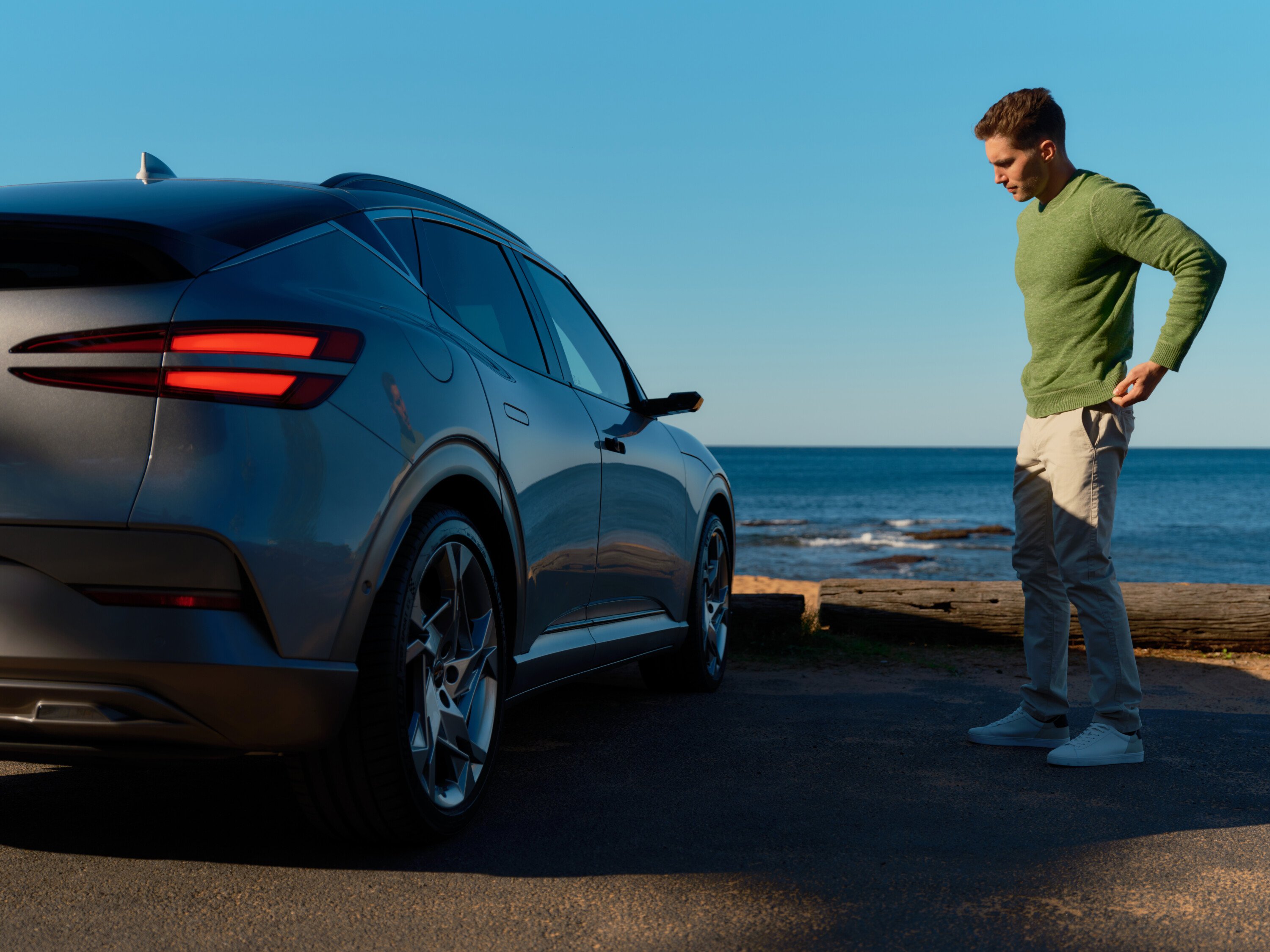
Genesis has announced a host of small tweaks for the 2023 GV60 electric SUV headlined by standard connected services.
Snapshot
- Connected services added to Genesis GV60
- Fingerprint start, facial recognition, and more
- Prices up by $4000 for two-model range
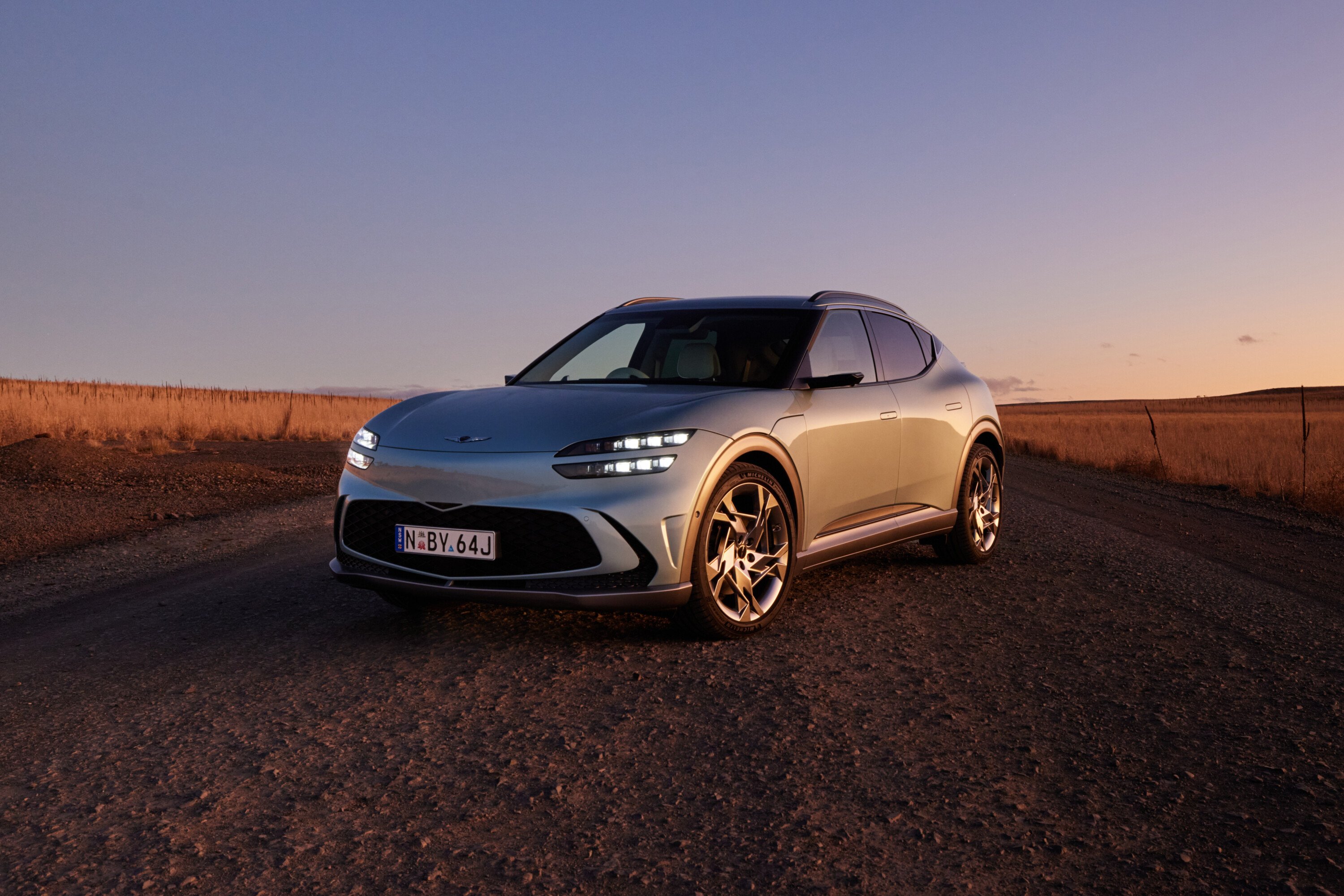
The tweaked 2023 Genesis GV60 AWD now starts from $107,700 before on-road costs, a $4000 lift over its September 2022 introduction, with the Performance trim listing from $114,700.
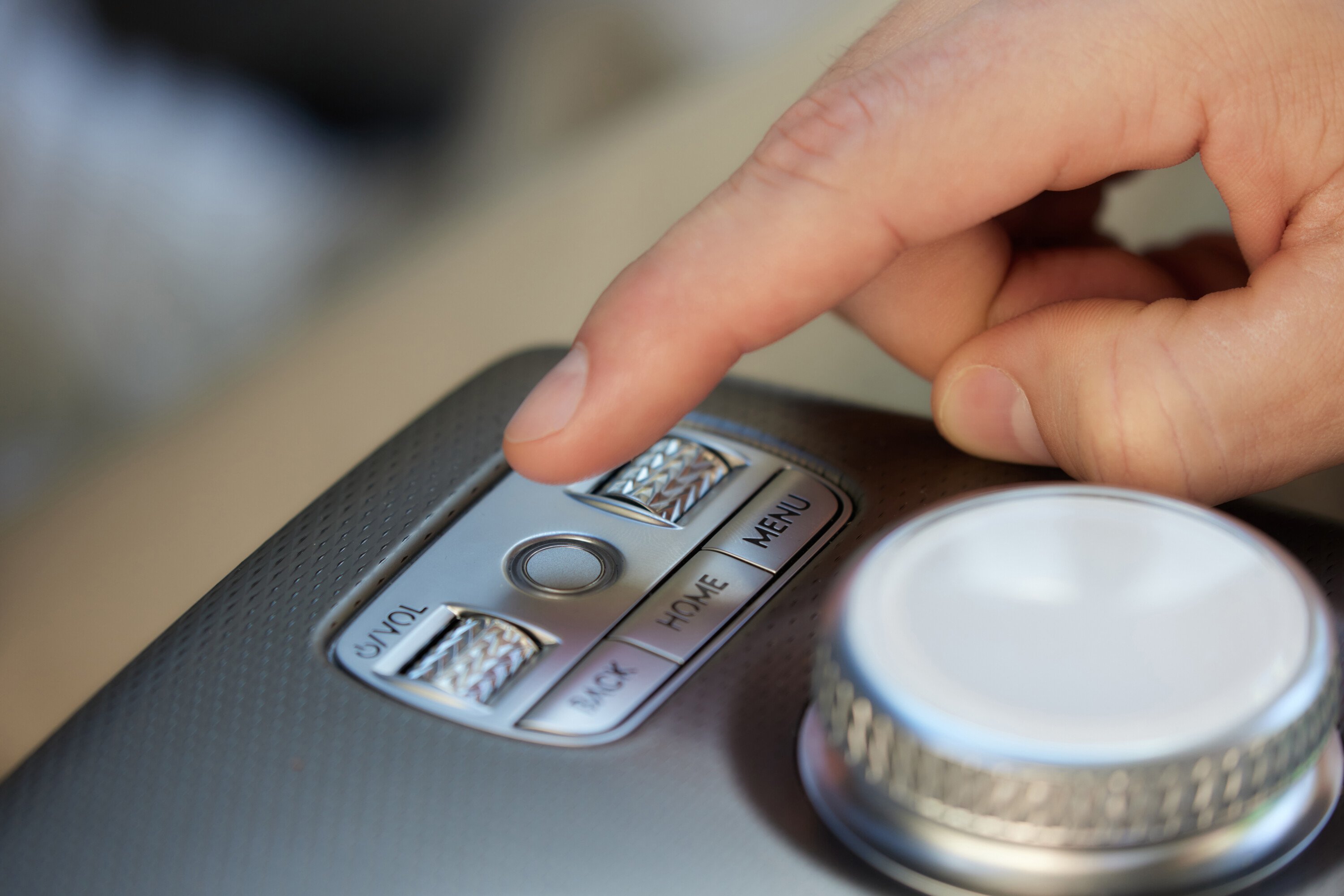
The connected services incorporate over-the-air software updates, telematics with a smartphone application, facial recognition, and fingerprint start. There are also improvements to cabin purification, ambient lighting, and safety.
1
Genesis has not updated the GV60’s chassis, powertrain or suspension, but it has implemented ‘virtual gear shift’ mode for the Performance variant, using the wheel-mounted paddles to amp driver involvement.
“The enhancements for 2023 GV60, our audacious, progressive and distinctly Korean dedicated electric vehicle, make an already compelling package even more enticing,” said Connal Yan, head of Genesis Motors Australia.
“The debut application of Genesis Connected Services and Over-The-Air updates, along with Face Connect and Fingerprint Start contribute to making 2023 GV60 an ultra-connected, convenient and luxurious EV,” he added.
1
2023 Genesis GV60 Pricing
Prices listed below are before on-road costs
| 2023 Genesis GV60 pricing | |
|---|---|
| AWD | $107,700 (+$4000) |
| AWD Performance | $114,700 (+$4000) |
| Matte paint | $2000 |
Genesis GV60 Colours
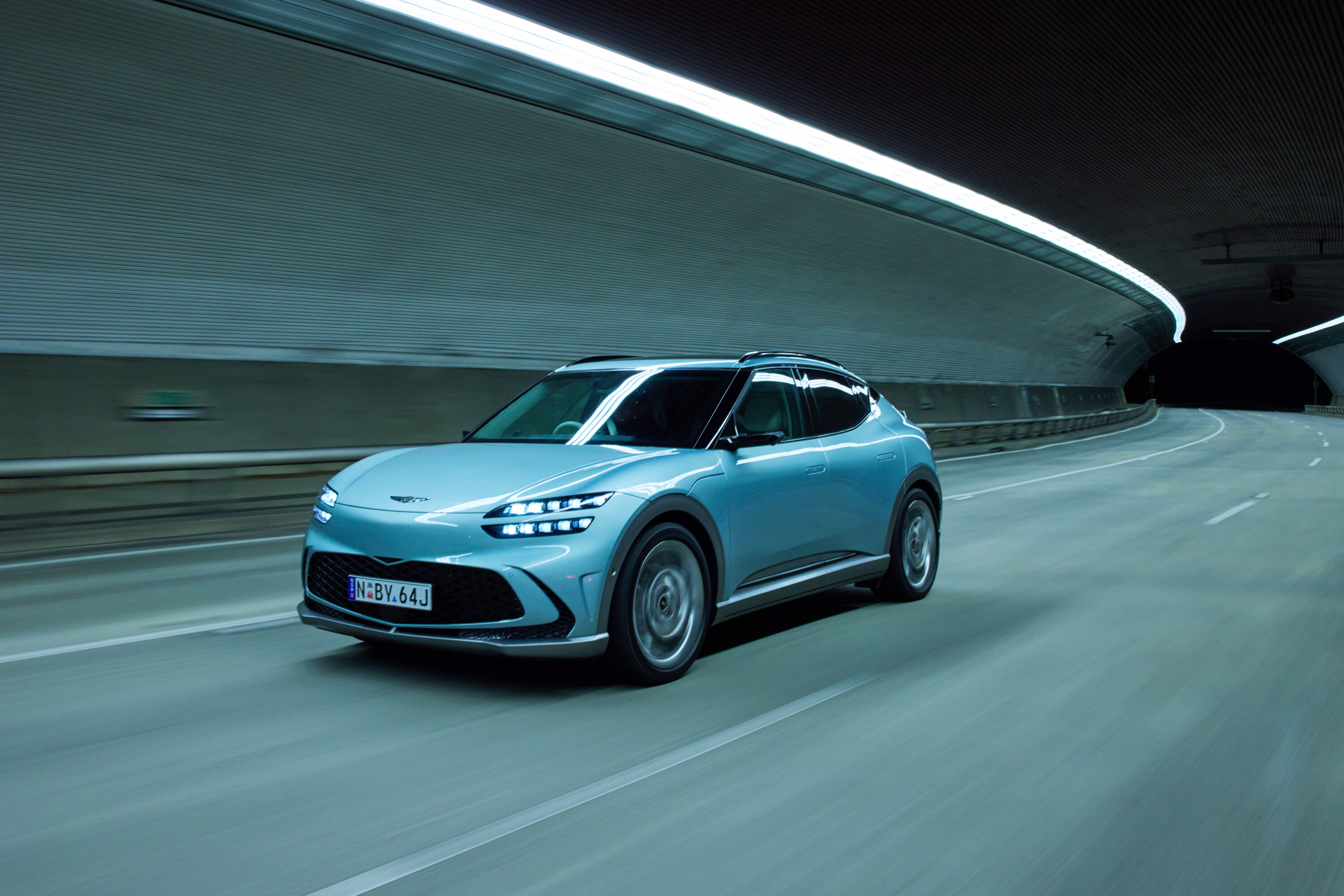
Genesis has replaced the existing blue and grey colours with two new hues for 2023, while the retina-searing Sao Paulo lime has been dropped. In addition to new paint hues, the GV60 now gets painted rear brake caliper covers.
| 2023 Genesis GV60 colours | |
|---|---|
| Uyuni white mica | Savile silver |
| Vik black | Barossa burgundy |
| Mauna red | Hanauma mint |
| Capri blue mica (new) | Makalu grey metallic (new) |
| Matterhorn white (matte) | Melbourne grey (matte) |
| Atacama copper (matte) | |
1
Features
The GV60 AWD continues with a healthy list of standard features, with Genesis Connected services added for 2023, including:
| Genesis Connected Services | |
|---|---|
| Remote functions (including climate, windows & locking) | Rear seat passenger alert |
| Parked vehicle location | SVM-linked vehicle surroundings display |
| Navigation destination send to car | Alert services (speed, geo fence, time fence, etc) |
| Set Scheduled Charging & Charging Limits | EV Charging Station search |
| Driveable distance radius | Set Scheduled Charging & Charging Limits |
| Collision + SOS function | Vehicle diagnostics |
| Enhanced voice command | Weather forecast |
For 2023, the GV60 features the following:
| Genesis GV60 features | |
|---|---|
| 20-inch alloy wheels | 17-speaker Bang and Olufsen sound system |
| Vision glass roof with power sunshade | Apple CarPlay, Android Auto, multi-connection Bluetooth |
| Puddle lights with Genesis logo | Wireless phone charging |
| Crystal sphere Shift by Wire (SBW) controller | Active noise control |
| 2 x 12.3-inch screens | Dual-zone climate control |
| Three USB-C ports | Heat pump system |
| Augmented reality satellite navigation w/ live traffic | Fingerprint recognition inc. starting |
| Head-up display | Remote smart parking |
| 18-way electrically adjustable driver’s seat, with ergomotion massage function | Full safety suite, including blind-view monitors and intelligent front adaptive headlights |
| Genesis connected services | Air purification with dust sensor |
| Digital side mirrors | Exterior vehicle-to-load adaptor and interior three-pin plug for charging. |
1
In addition, the GV60 performance grade adds:
| 2023 Genesis GV60 AWD Performance adds | |
|---|---|
| 21-inch alloy wheels | Black monobloc front brakes |
| Boost mode | Alloy pedals |
| Road Preview electronic suspensionu00a0 | Electromechanical LSD |
1
Genesis GV60 power, range and charging
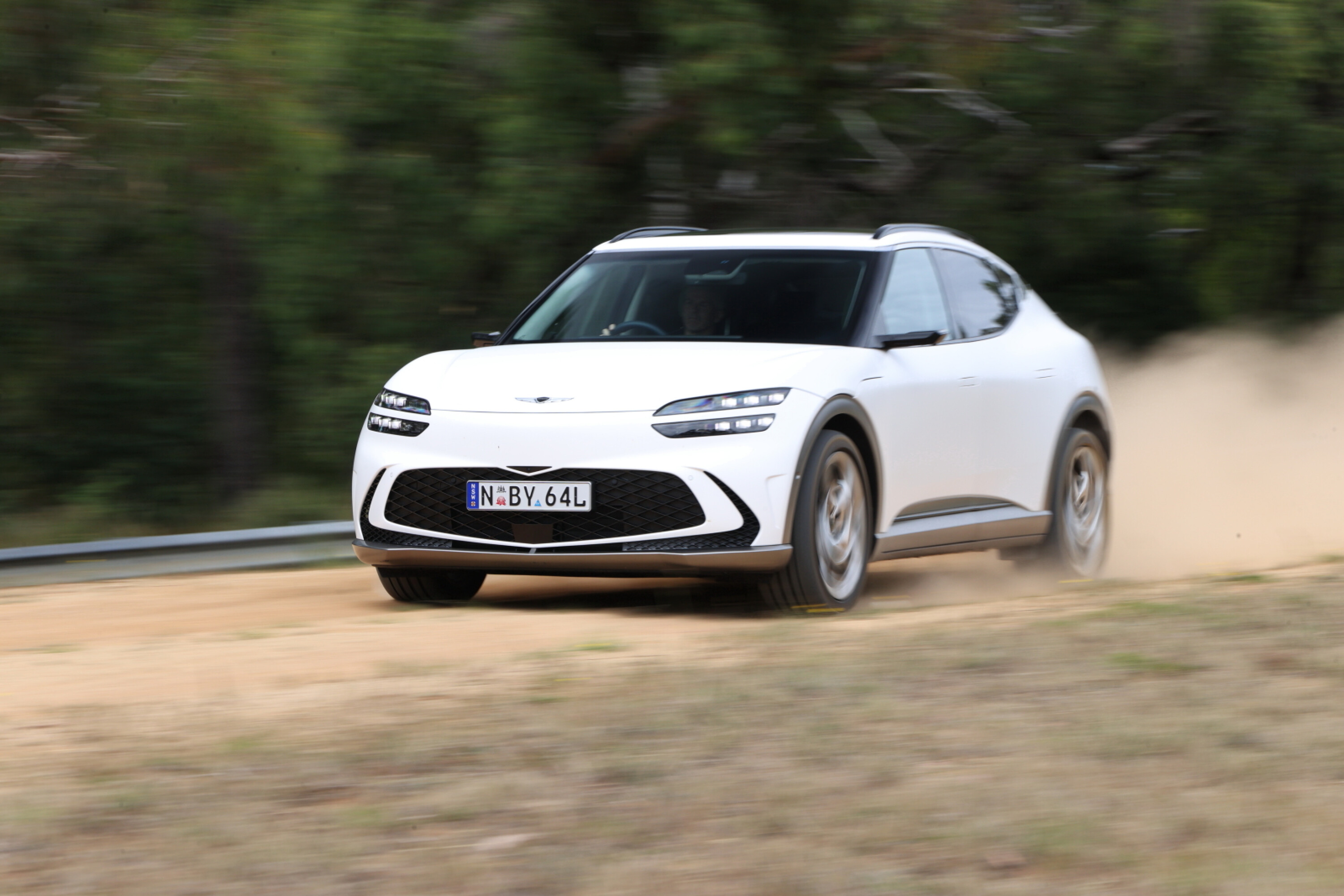
Just as at launch, the GV60 is AWD as standard and features either 234kW/605Nm outputs in the standard car, or up to 360kW/700Nm for the Performance when in Boost mode for a 0-100km/h sprint of 4.0 seconds.
The more powerful GV60 Performance gets 466km driving range (WLTP) from its 77.4kWh battery, while the standard car ekes out a whisker more at 470km.
With the GV60’s E-GMP 800V electrical architecture, the GV60 can fast charge from 10-80 per cent in 18 minutes using a 350kW DC charging station – just like a Hyundai Ioniq 6 or Kia EV6. A full charge from flat takes around eight hours using an 11kW AC wallbox.
Genesis has added a new ‘virtual gear shift’ function for the Performance that simulates gear shifts using the steering wheel paddles typically reserved for adjusting the regen settings.
1
Genesis GV60 safety features
The Genesis GV60 was awarded five stars in ANCAP safety testing and features a suite of driving aids. With the addition of two new thorax airbags for the rear passengers, the 2023 car should grow in safety now boasting 10 airbags in total.
| Genesis GV60 safety features | |
|---|---|
| Blind-spot monitoring with interventions | Lane-departure warning with lane-trace assist |
| Blind-spot view monitor | Intelligent speed limit assist |
| Driver attention warning (DAW), including leading vehicle departure alert | Rear cross-trafic alert with brake |
| AEB with car, pedestrian, cyclist, junction detection | Safe-exit assist |
| Auto high-beam | Rear occupant warning |
| 360-degree camera | 10 airbags |
The updated 2023 Genesis GV60 is available to order now online and view at Australian Genesis experience centres.
Toyota‘s new boss, Koji Sato, has suggested that more GR-branded sports cars will join Toyota’s burgeoning Gazoo Racing brand under his leadership, Autocar [↗] reports.
Sato took the role of Toyota Motor Corporation CEO and President in January, after Akio Toyoda, grandson of the company founder, moved to become Chairman.
It was Toyoda, a noted motorsports enthusiast and racer, who in 2017 founded the GR sub-brand, as an impassioned supporter of Toyota’s World Endurance and Rallying programs.
1
Akio’s title at Toyota was playfully printed as ‘Master Driver’.
Sato, speaking to Autocar following Toyota’s one-two finish in Belgium’s WEC round at Spa, said: “The Gazoo brand will be acknowledged for the future – and maybe we can even speed it up.”
“Our Master Driver was also President of the company at the same time as he had a steering wheel in his hand for Gazoo [Racing].
“Now he is ‘only’ Chairman, maybe he will have a lot more time to develop cars for them?”
1
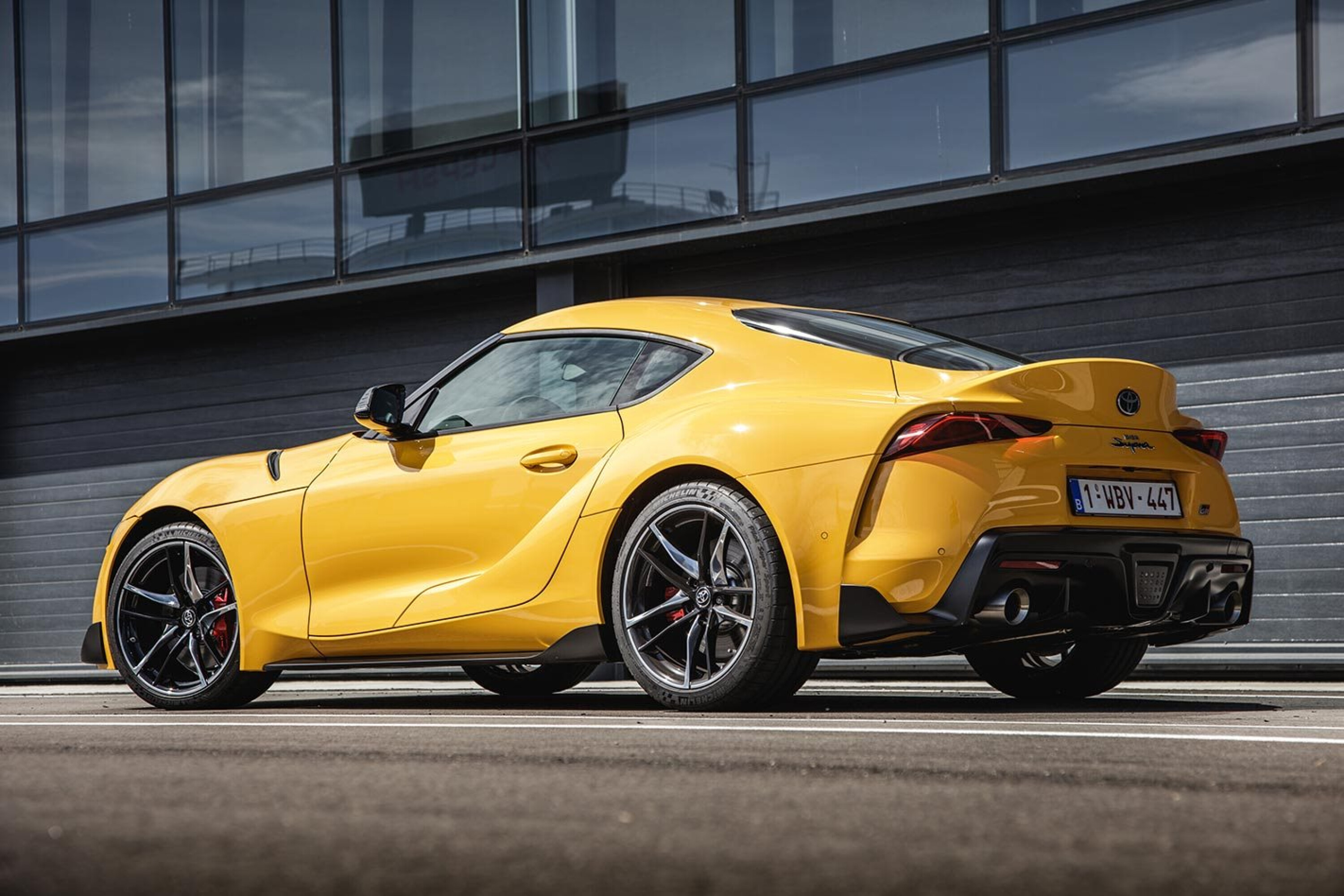
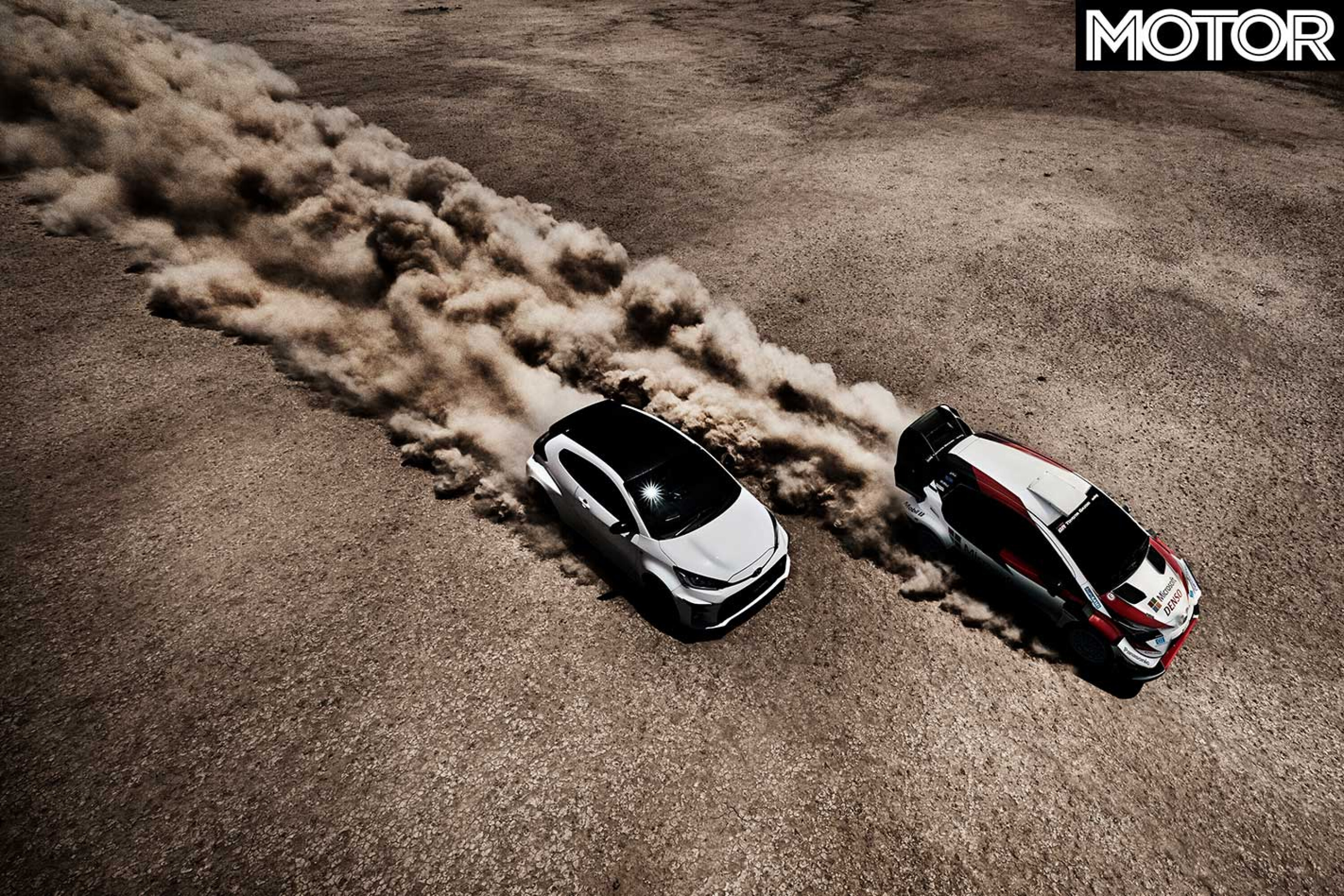
Toyota’s range of GR sports car currently includes the GR Yaris, GR Corolla, GR 86 and GR GR Supra. Details on future models are scant, however rumours suggest Gazoo Racing is considering a performance version of the forthcoming electric bZ4X crossover, and has publicly announced its interest in hydrogen-combustion.
Toyota has previously shown a GR-branded open-top sports car which, if greenlit for production, could serve as a halo model and rival to the upcoming MG Cyberster, next-gen Porsche 718 or electric Alpine A110.
1
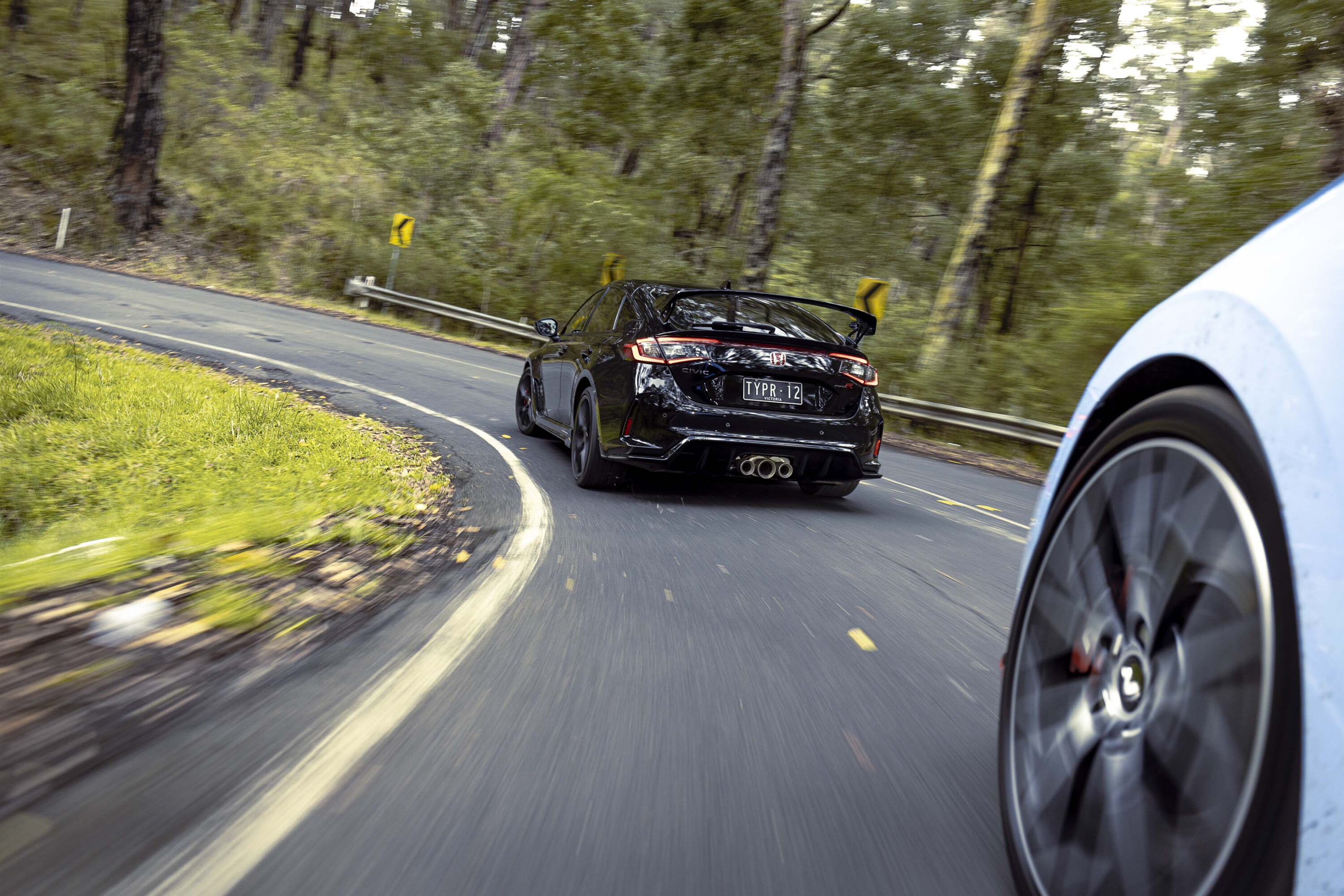
For those waiting on a 2023 Honda Civic Type R, the news that Honda’s Australian arm has managed to secure an extra 500 cars for will be very welcome indeed.
Every customer’s situation will differ, but Honda Australia says this will reduce wait times by up to nine months. For example, if you’re at the back of the line now, Honda says you’ll likely get your car by February 2024.
“I am pleased that we have been able to allocate additional stock of the all-new Civic Type R for the Australian market, and that our loyal customers will benefit from the arrival of their vehicle within a reasonable timeframe” said Carolyn McMahon, director Honda Australia.
Catch up on the Civic Type R
1
March 31: Two-year wait for Type R
The 2023 Honda Civic Type R is facing a wait time stretching into early 2025.
Snapshot
- Honda Civic Type R wait times blow out to 24 months
- HR-V e:HEV hybrid wait times improve to six months; Civic hybrid now mid-2024
- Honda’s petrol models in greater supply; ZR-V and new CR-V due this year
Honda flagged long wait times for its new Type R earlier this year (see the full story below), but a growing order bank and slow supply now mean that if you were to place an order today, it’s likely you wouldn’t receive your car until early 2025.
“We’ve taken over 1000 orders to date so we are managing that pipeline,” said Matthew Evans, general manager of Honda Australia’s automotive division. “We are working very closely with our plants and we’re optimistic about being able to fill customer orders when we can.”
In an effort to prioritise customer orders, Honda is reducing its press fleet and even limiting cars for high-ranking staff members at the company’s Melbourne HQ.
The brand is also prioritising communication with its customer base as it looks to manage the growing wait times.
“We believe the best approach is communication, so keeping customers updated,” said Honda Australia’s new managing director, Carolyn McMahon. “And that’s both at time of sale, so being up front about what the realistic wait time is, and then of course keeping the customer updated as the journey goes on.”
Other Honda models facing growing wait times include the Civic e:HEV hybrid, which McMahon says is now a “mid-2024” prospect for new orders.
There is some good news on the supply front for Honda, however. Wait times for the HR-V e:HEV have improved to around six months, while petrol versions of the HR-V sit are shorter again at “mid-2023”.

1
The story to here…
January 2023: Honda Australia has flagged wait times for the highly anticipated Type R, which will cost $72,600 drive-away, could blow out to around two years.
It follows “high demand” for the model, in conjunction with supply chain issues and the global semiconductor chip shortage.
Honda’s local arm hasn’t confirmed how many Type R’s have been ordered thus far, but it said “more than 4000 enthusiasts and prospective customers” had expressed their interest last year.
“There has also been a significant spike in the volume of enquiry we’ve received, with our network of Honda Centres telling us that customers are contacting them regularly, eager to put their names down to secure a new Civic Type R,” said newly-appointed Honda Australia director, Carolyn McMahon in November.
Honda Australia has also confirmed a nine-month wait time for the Civic and HR-V e:HEV hybrids, while all petrol models – including the CR-V – have shorter delivery times.
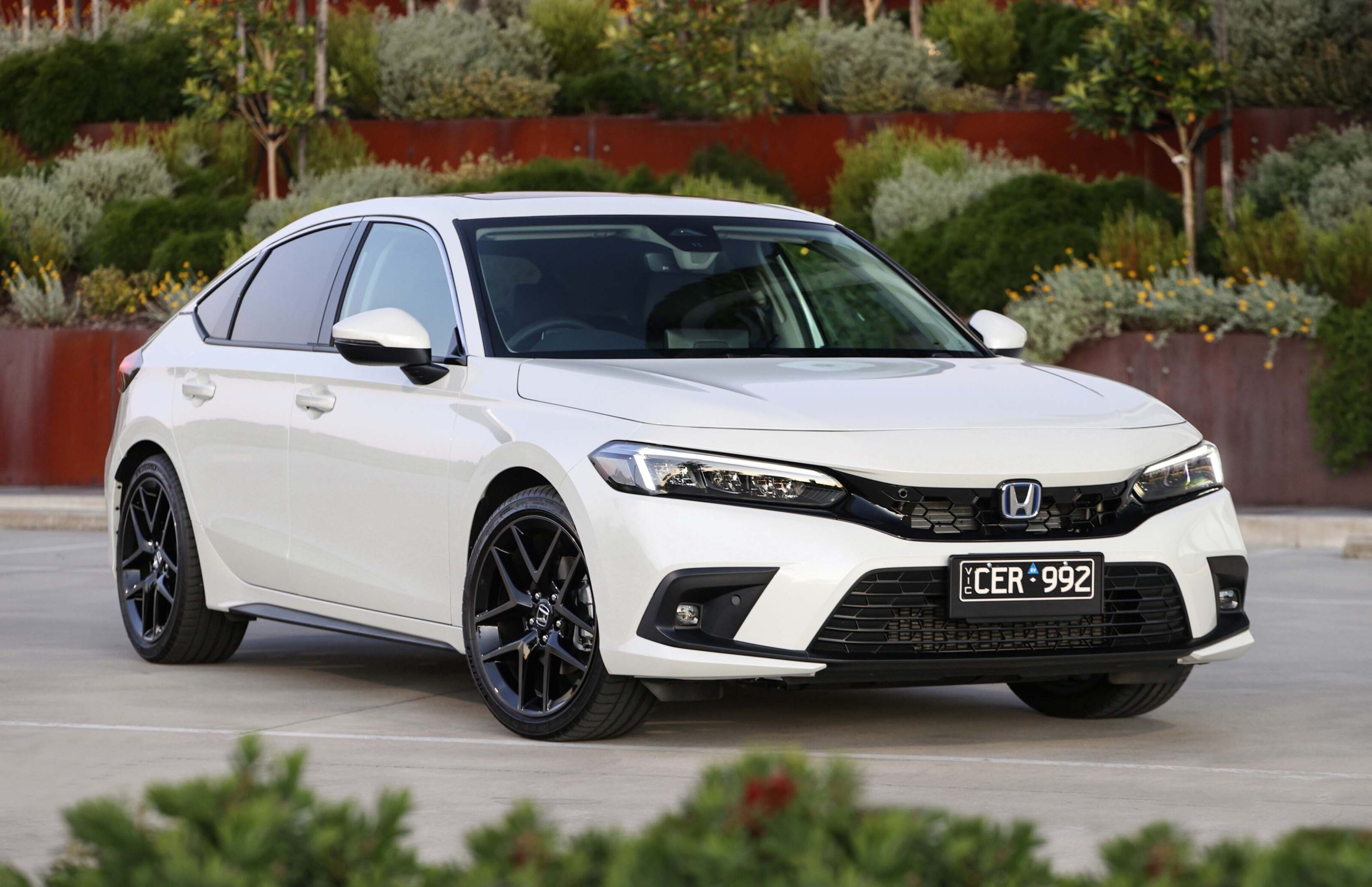
An all-new CR-V is expected to launch in Australia in the second half of 2023, and it will be joined by the ZR-V small SUV around the same time.
1
To differentiate between the two models, the next-generation CR-V has grown in size – and both are expected to offer a hybrid option.
As with other brands, Honda Australia said it is “continuously seeking to shorten these wait times and are regularly monitoring the situation.”
VFACTS new-car sales data reveals Honda registered 14,215 vehicles in 2022, a 19.1 per cent drop over 2021, following its condensed model range and shift to a non-negotiable sales model in July 2021.
MORE
Everything Honda
Victoria looks set to be the next Australian state to introduce digital drivers licences, following Queensland‘s adoption last month, with South Australia and New South Wales having already introduced the digital system some years ago.
Victoria’s six-month trial of the new digital licences will begin in Ballarat from July 2023, with a statewide roll-out expected in 2024.
The new system will allow Victorian motorists to carry a digital driver licence on their phones, within the Service Victoria app or the forthcoming VicRoads app.
1
Digital licences are able to be immediately updated with any licence conditions or details, including changes in personal address, updates in expiry and even reflect revoked or suspended licences.
It can still be used as a proof of identification, with Police, businesses and other authorities able to authenticate the digital licences with a timed QR code.
Of course, drivers still have the option of using their physical licence.
1
New South Wales and South Australia first introduced digital licences in October 2019, with Queensland rolling out similar technology in May after trials through 2023.
Eligible motorists in Ballarat will be able to sign up to the trial through the Service Victoria or VicRoads website from June.
Wheels magazine has always had a passionate audience, with a thriving letters section. Here’s the latest from our readers.
And while we’re talking about the mag, have you subscribed?
1
Worthy winner?
A very polarising COTY result.
What this does show is that Wheels staff assess cars objectively – so the trolls who hurl insults whenever an EV gets a good review are clearly wrong.
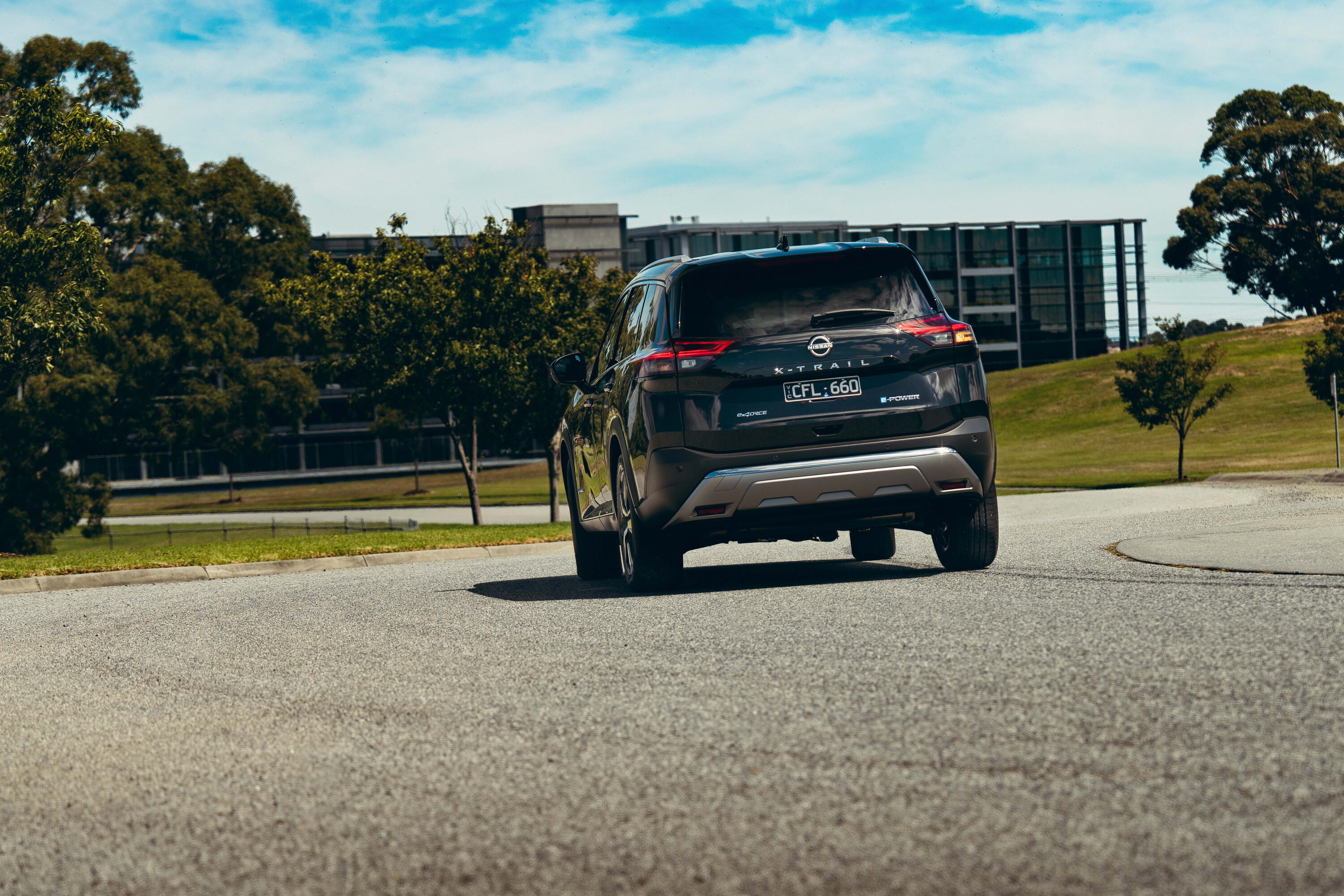
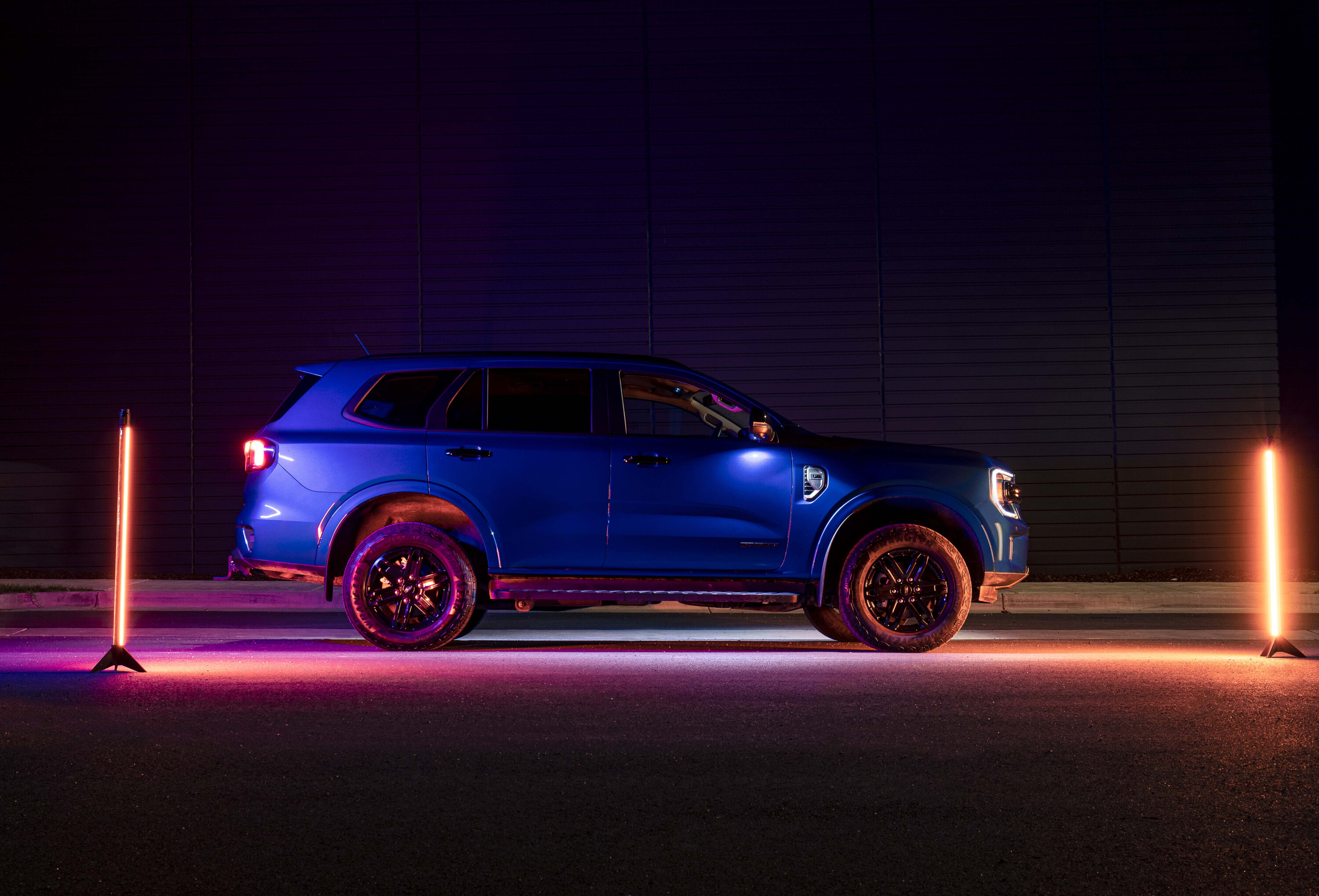
The Everest isn’t a car I would consider, but the people involved in creating it deserve to be heartily congratulated.
Perhaps they were lucky that the competition was possibly not as strong as, say, last year? Will this be the last ICE to win?
Robert not a Robot, via WhichCar.com.au
ud83dudede Editor Andy
We knew that the Everest wasn’t going to be to everybody’s taste but that tends to be the way of Wheels Car of the Year. Only one car wins. Was the competition as strong as last year? That’s a very good question. The Kia EV6 emerged victorious in 2022, edging a win by the narrowest of margins over the Hyundai Ioniq 5. If the Ioniq 5 had been in this year’s competition instead, it would have given the Everest a very hard time.
Had it prevailed, the mailbag would likely have been rammed with comments proclaiming that EVs don’t work in Australia. I sincerely hope Everest’s not the last ICE winner, as I still see a valuable place for such cars, especially in the specific conditions of the Aussie market.
I also know that many members of the COTY judging panel feel exactly the same way.
1
What the tuck?
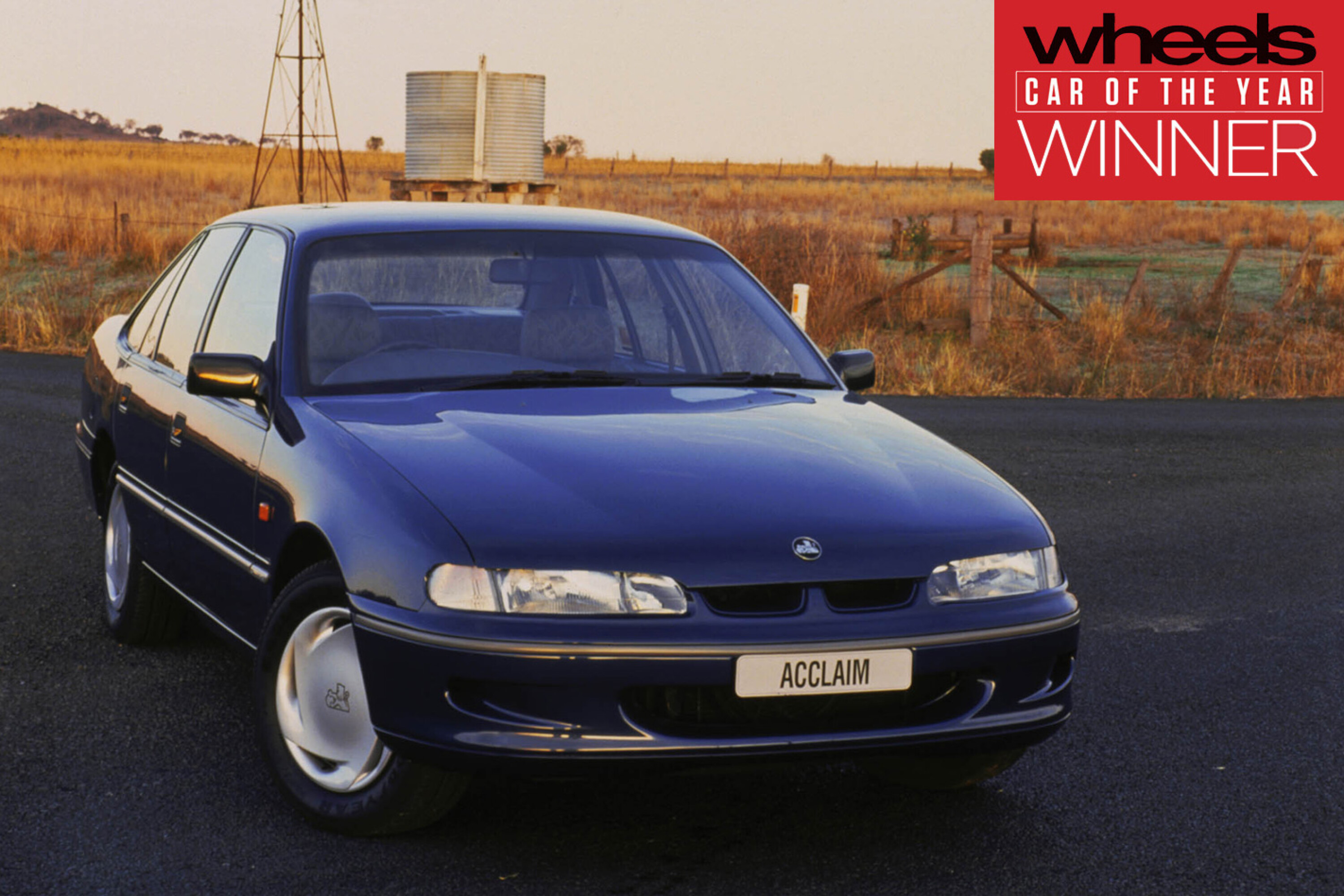
I have been reading Wheels for 44 years and only once have I disagreed with the COTY decision: the VR Commodore.
Sadly, I must add the Ford Everest to my dissent.
Thirty years ago, Wheels was burning the E-series Falcon at the stake for not having IRS. Yet the Everest, with its Model T-style ladder chassis and live axle, as well as its ‘ancient’ V6 burning dirty, DPF-clogging diesel, is a worthy winner?
Bill Tuckey must be spinning in his grave. His key COTY criteria – Advancement In Design and Engineering Excellence – are nowhere to be seen. They have been replaced by, and reduced to, a popularity competition based on sales figures.
Ross Larcombe, Queanbeyan ACT
ud83dudede Editor Andy
I certainly can’t speak for Tuckey, but the Everest brings a heap of advancements in design and no small serving of engineering excellence. What’s more, I commend you for agreeing with us on the other 42 decisions. You have, by and large, impeccable judgment.– Ed
1
Point…
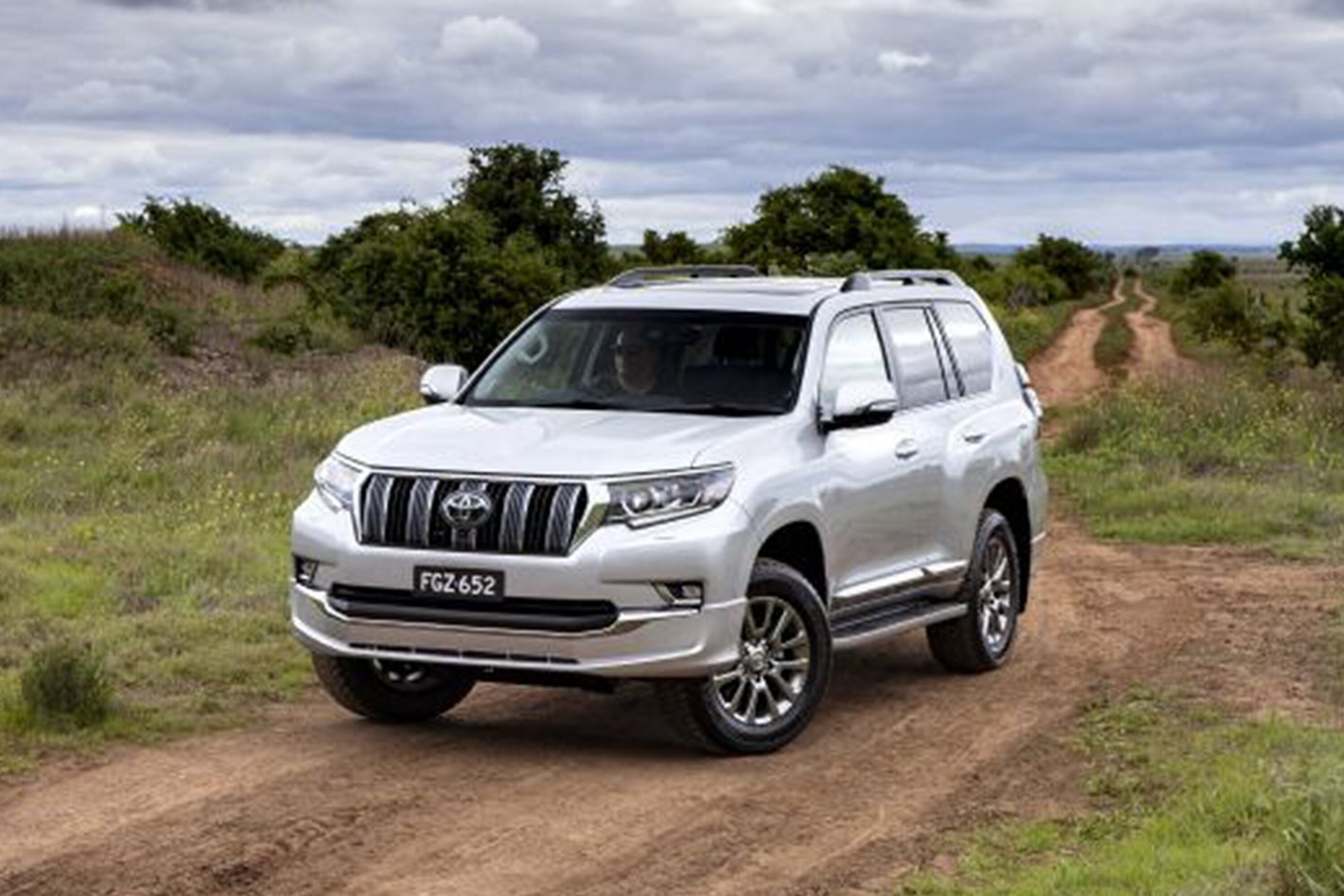
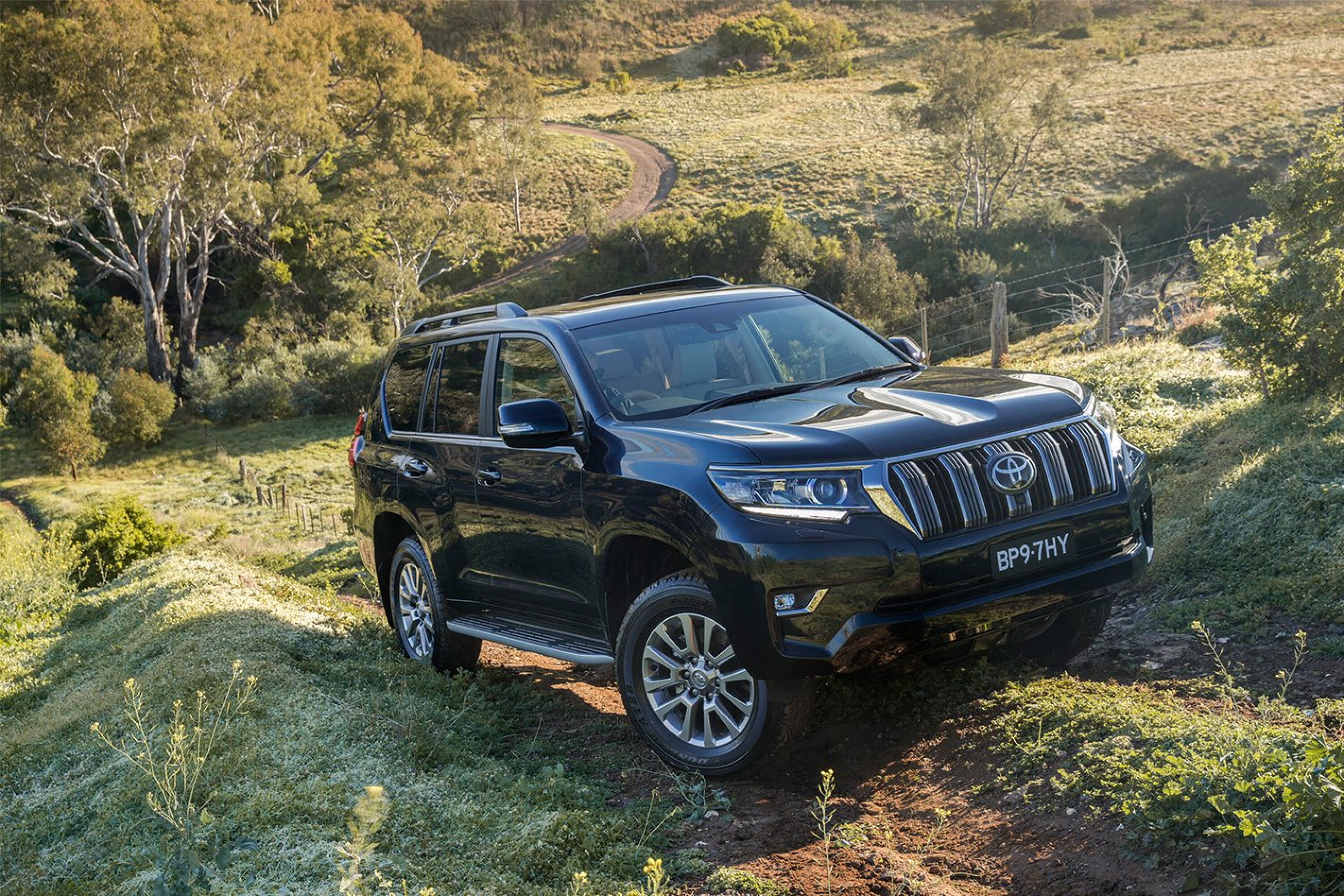
Unbelievable! I understand that the Everest is better than Prado and the other ladder-frame SUVs, and had some Australian input into its design, but really! Car of the Year?
Especially when you stated that it is near the bottom of the list when it comes to braking and handling!
So it’s good on dirt. That’s great, because the vast majority of these things will never leave the bitumen, and spend their days dropping kids at school, doing the shopping and clogging up the car parks. Is this a case of just handing the award to a type of vehicle that so many people seem to like because it will make you popular with the punters?
I’ve been reading Wheels since 1969, so that’s over 50 years of reading about the importance of some sort of dynamic ability in a car. Until now. Sorry, You’ve lost me.
Bill, via WhichCar.com.au
ud83dudede Editor Andy
Go out and drive a new Everest. It ought to cause you to revisit your stereotypes of who it’s for, what it’s capable of and why it might prove popular with Aussie buyers.
1
Counterpoint
Congratulations for coming up trumps with a COTY winner that is in keeping with the current market trend of SUVs.
This is what people are buying, but up to now have had to put up with the usual under-engineered, over-priced Prado and the likes with their underpowered, antiquated four-pot diesels.
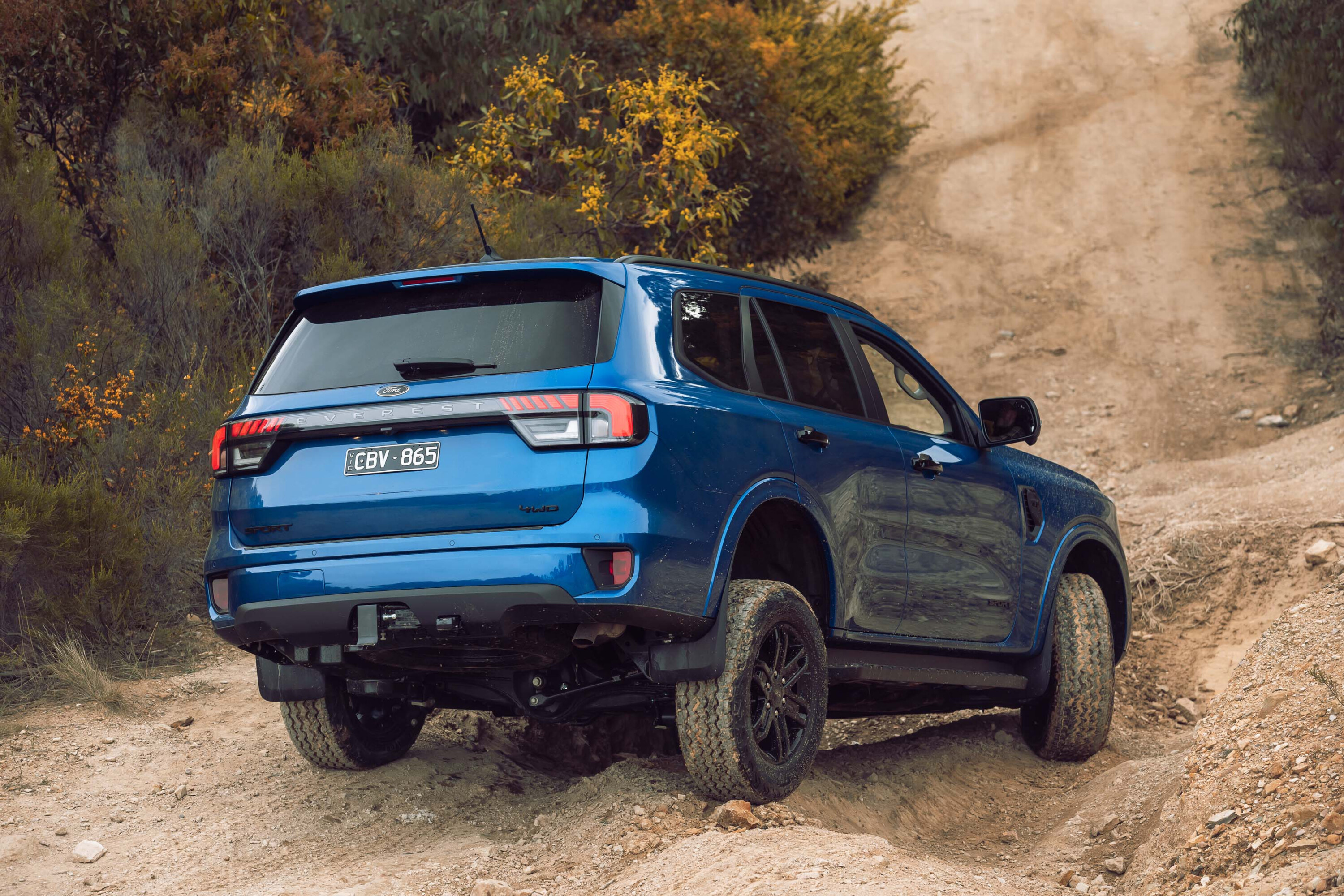
Everest is what this segment is crying out for. A fully kitted, good- looking and capable SUV with style and engineering that is spot-on for Australian conditions.
Peter Steele via WhichCar.com.au
ud83dudede Editor Andy
Cheers, Peter. We loved that the Everest advanced its segment possibly further than any new vehicle in the last five years.
1
Adventure
Makes sense for the Everest to win COTY. Been looking at a true 4×4 that can handle sand dunes, rocks and winding paved roads and this is the standout. Locking diffs, 18-inch tyres, lots of power.
The only contender against the Everest is the Prado and that’s out because of its dated interior, its on-road handling and that Toyota has been actively pushing against emissions standards globally (some of us keen on the outdoors and wanting a real 4×4 as a result also do care about our environment).
Bring out the plug-in hybrid Everest and we’d have the perfect Australian adventure vehicle.
Fil, via WhichCar.com.au
ud83dudede Editor Andy
I’ve run an Everest V6 for many thousands of km and can attest to its inherent fitness for local conditions. It’s worth noting too that it has returned way, way better economy than Peter Robinson’s old Focus 2.0 long termer too. Progress, eh?
1
The Wheels question to you
Gen3 Supercars: Hit, miss or maybe?
For
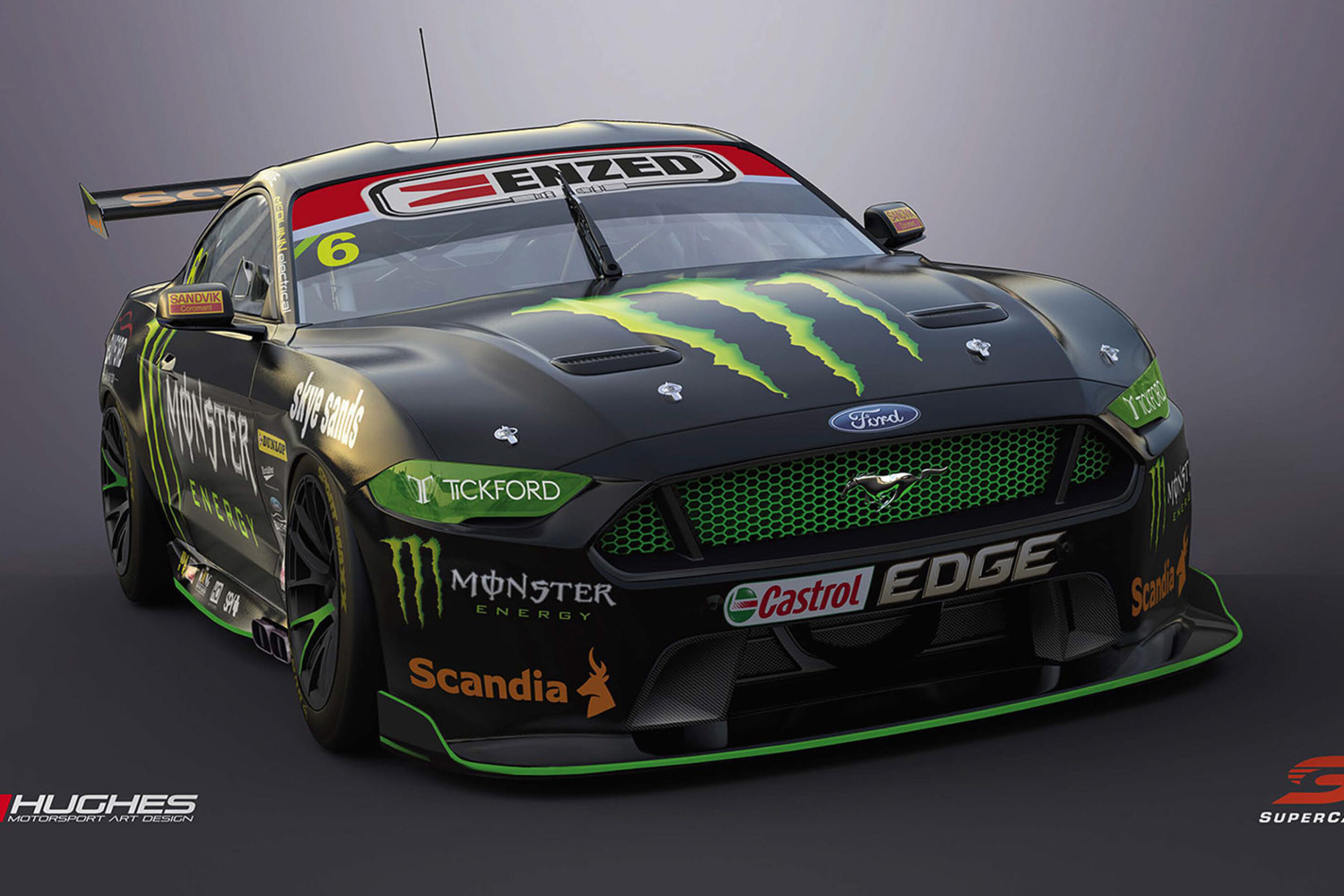
- Allan Barton, Vic: The cars looked great and seemed a proper handful, the racing was fairly close and, amazingly for a series having undergone such a shake-up, it wasnu2019t stricken by mechanical attrition. A cautious thumbs up here.
Cons
- Cam Williams, Qld: Yeah, nah. The whole point of Gen3 was to promote cheaper cars and closer racing. The bills for the cars seems to coming in at $750K each and the tyres overheat when following another car. Fail.
Want to have your say? Keep it tight (no more than 200 words) and include your suburb if via email: [email protected]. You can also chime in on Facebook & Instagram.
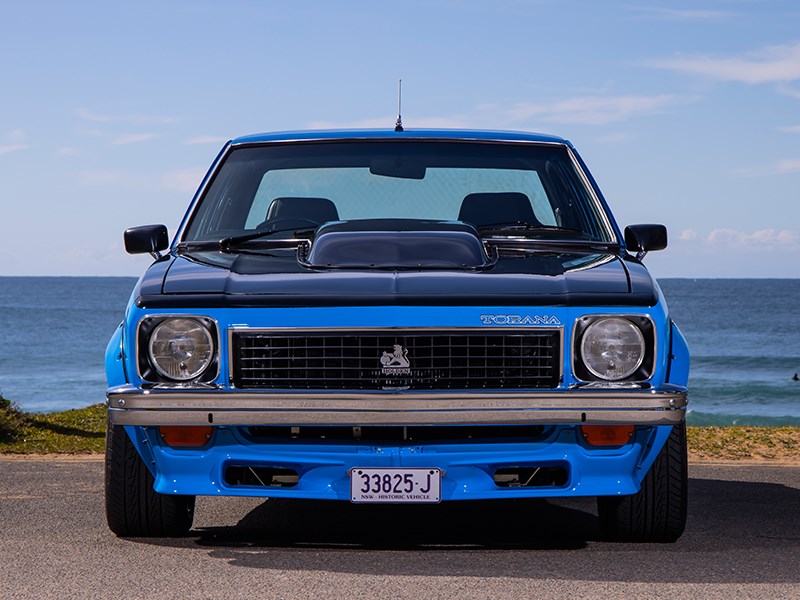
For owner Carmine Vescio, this 1975 LH Torana closes a chapter of unfinished business. You see he’s always had a thing for SL/R 5000 Toranas.
“I had one about 10 years ago and I sold it, and I regretted it,” he explains. “I needed something to keep me going and occupied.”
And anyone with even half an interest in Australian muscle cars will see the attraction. The mid-sized sedan has real presence in this form.

1
As Cliff Chambers points out in one of our features on the series: “What the SL/R 5000 had on its side was swagger.”
“The Monaro was by 1974 aligned with an older, dare we say, more conservative section of the market. The SL/R was brash and loud…” Back in the seventies, brash and loud was a good thing and even today is a welcome relief from the mostly beige world of current cars.
As those of you who have done a top-to-toe resto will know, sometimes the smart thing to do is buy a part-completed project. One where the previous owner has run out of money/time/whatever. There are savings to be had and it just might shorten the whole process by years.
1
Carmine had the good fortune to stumble across just such a car.
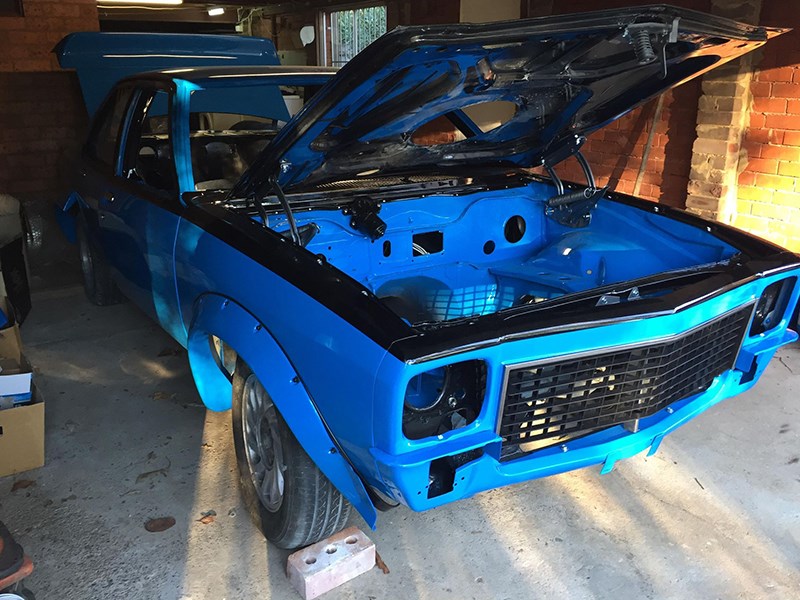
One with a body already painted in a hard-to-miss black and white scheme. It may not have been his first choice of colour, but was a great starting point. However, like many in the muscle and classic car game, Carmine has clearly been bitten by the perfectionist bug.
“Believe it or not when I first got it, there was a little spot on top of the front window and one on the back as well. Toranas are known to have a couple of spots. As soon as I saw that I thought, ‘Ah, this ain’t going to happen’. So we stripped it back to bare metal.
“The body overall was as straight as an arrow.”

1
Okay, that’s courageous. But you can see his point – if you’re going to spend time and money on a build, you want it to be spot-on.
So the rolling body was given to a panel shop to sort it out and that’s where the trouble began. He subsequently discovered that parts were being taken off his car to finish another project and the business started showing signs of going to hell in a hand basket. “We burned $15,000,” says Carmine. “I then approached some good friends of mine, John and Nick Rocca. They don’t really do other people’s cars, but they saw I got burned and started on mine.”

1
The whole trajectory of the project seemed to improve from there, though Covid-related lockdowns must have made the task a whole lot more challenging.
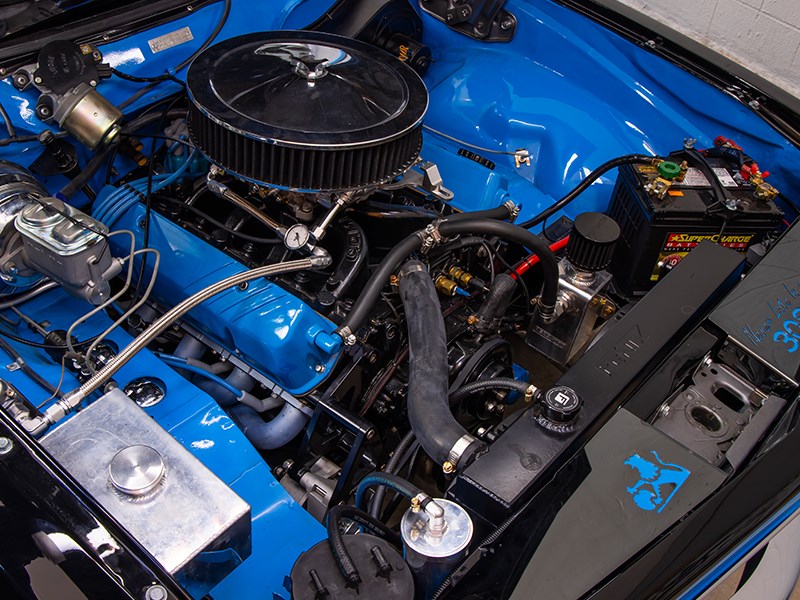
Meanwhile, the rolling chassis needed a driveline and the job was kicked off by Jason at JK Performance. Overall the plan was to have a good street engine with, as you’d expect, significantly more life in it than the originals.
The starting point was a late 5.0lt block, running 10.8:1 compression with forged flat-top pistons, Camtech cams and VN heads. Sitting atop that lot is a Harrop manifold with a 650 Holley and Bosch ignition. Jason reckons that lot should make about 360 horses at the back tyres – more than enough to make it lively.

1
He pointed out that one of the key aspects is to make sure the engine builder is across the entire drive line.
“With this build, I recommended the spec for the torque converter (in a Turbo 350 auto) and diff ratios. You need them all working together to get a good result.” The rear end is a 9-inch LSD.
Suspension and brakes are to all intents and purposes new. According to the owner, there isn’t a single nut or washer that hasn’t been replaced. We’re running discs up front and drum rears at the moment, though it’s likely the latter will be changed over to discs.

1
Wheels were the subject of much discussion and a little experimentation. The GTS wheels that were on it were an option, then came a set of Simmons. In the end, they went for Hotwires: 15 x 8 on the front and 15 x 10 on the rear.
As for trim, that was pretty much a blank canvas from Carmine’s point of view. Sure there were seats in the car, but the whole lot got stripped out and redone, right down to the springs. Though the host car is an LH,
“It’s been done as an LX – I like the look of an LX,” says Carmine.
Fair enough – it’s his car!
1
Another twist in the plot was the paint.
“Believe it or not we picked up a blue and we mucked around with it and fell in love with it. There’s not a factory colour out there like that – not that I know of. I just wanted to be different.”
You get the sense that Carmine may yet tweak a few things on the car before he’s entirely happy with it, but for the time being he has an absolute stunner of a result. So what’s he going to do with it? “Take it to shows and enjoy it.” Yep, that will do.

1
THE RESTO
Clean bay
1
This is what a couple of minor rust spots leads to!
Cranky

1
Engine is a 5.0-litre stripped back for a complete rebuild
Finishing touches

1
Custom trim in the engine bay
Drop tank

1
Some 120 litres of fuel squeezes in there
Engine dressed

1
It’s been set up as a lively street spec
Front end

1
Yep, the entire underpinnings were redone
| Reader Resto details | |
|---|---|
| Original car | 1975 Holden Torana |
| Owner | Carmine Vescio |
| Length of restoration | 8 years |
Thanks to:
- Andrew at Kustom Muscle for the assembly
- Jason from JK Performance for the engine build
- Albert at Al’s Automotives for advice and support
- Jamie Marchione for 3-stage paint correction
- Kustomize My Ride for trim pieces
- Walls in Newport for upholstery
- John and Nick Rocca for rescuing the body
Much has been written over the years about the British Royal Family’s corgis, art, estates, and Charles’ environmental streak – but less is known of the cars they keep.
With classics now seen by many as investments, there’s been some enhanced scrutiny behind Charles’s collection which is scattered across various residences. Split between personal and state, The Guardian [↗] estimates that King Charles’s private fleet is worth in the vicinity of AU$12 million.
The various vehicles are either ‘state’ or private vehicles, though as The Guardian found, the line between these definitions is blurry at best, with state cars being used for all manner of trips, and occasionally becoming private ones without much of a paper trail.
Charlie’s collection comprises marques to make any Brit proud, from sporty Aston Martins and Jaguars to coachbuilt Rolls-Royces and Bentleys – not a Holden Caprice in sight.
1
The Royal Mews collection
On an archival mission, Guardian journalists visited the Royal Mews at Buckingham Palace to check on the collection.
We’ve cross-referenced the findings with Wheels magazine editor Andy Enright’s own extensive knowledge.
In 2017, the Royals kept three Rollers, three Daimlers, and a pair of Bentleys at Buck House, with Volkswagen support vehicles for good measure. The Daimlers appear to have disappeared for now, leaving the collection at five ‘star cars’, and a fleet of support vehicles.
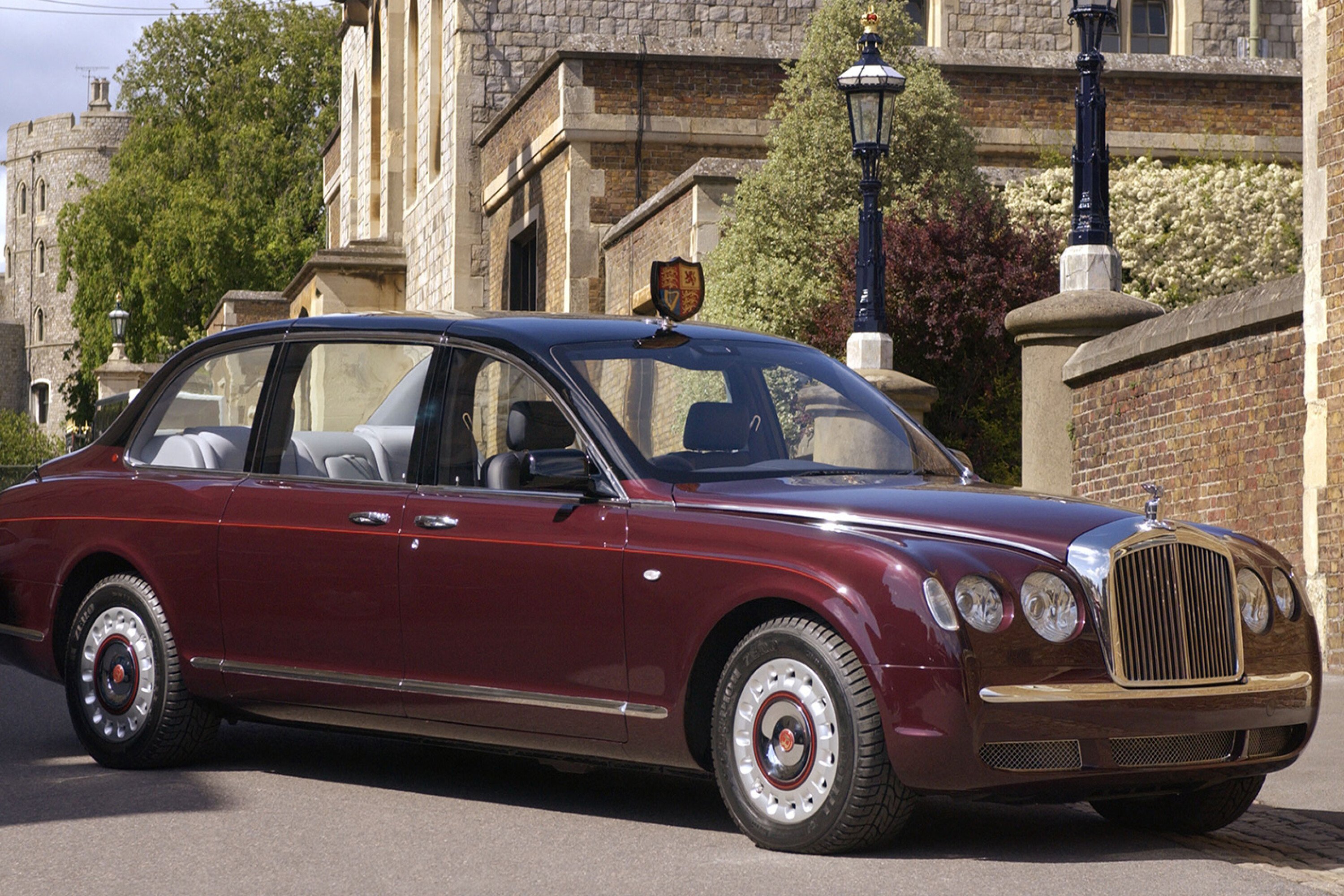
The most well-known are the pair of 6.22-metre long, armoured, coachbuilt Bentley Mulliner limousines. Based on an Arnage, they’re stretched for vast amounts of legroom, with a roof raised to give Queen Liz – and now King Charles – plenty of headroom.
1
The back seats are trimmed in Hield Lambswool Sateen cloth, and the remaining appointments are of light grey Connolly leather. Bentley’s ‘Flying Bs’ bonnet ornament was dropped in favour of a solid silver rendition of St George slaying the dragon.
Provided by Bentley gratis in 2002 to celebrate the Queen’s golden jubilee, The Guardian estimates the pair is worth around A$2.5 million combined, but other much higher guesses have pitched the six-and-three-quarter limos at A$18 million apiece.
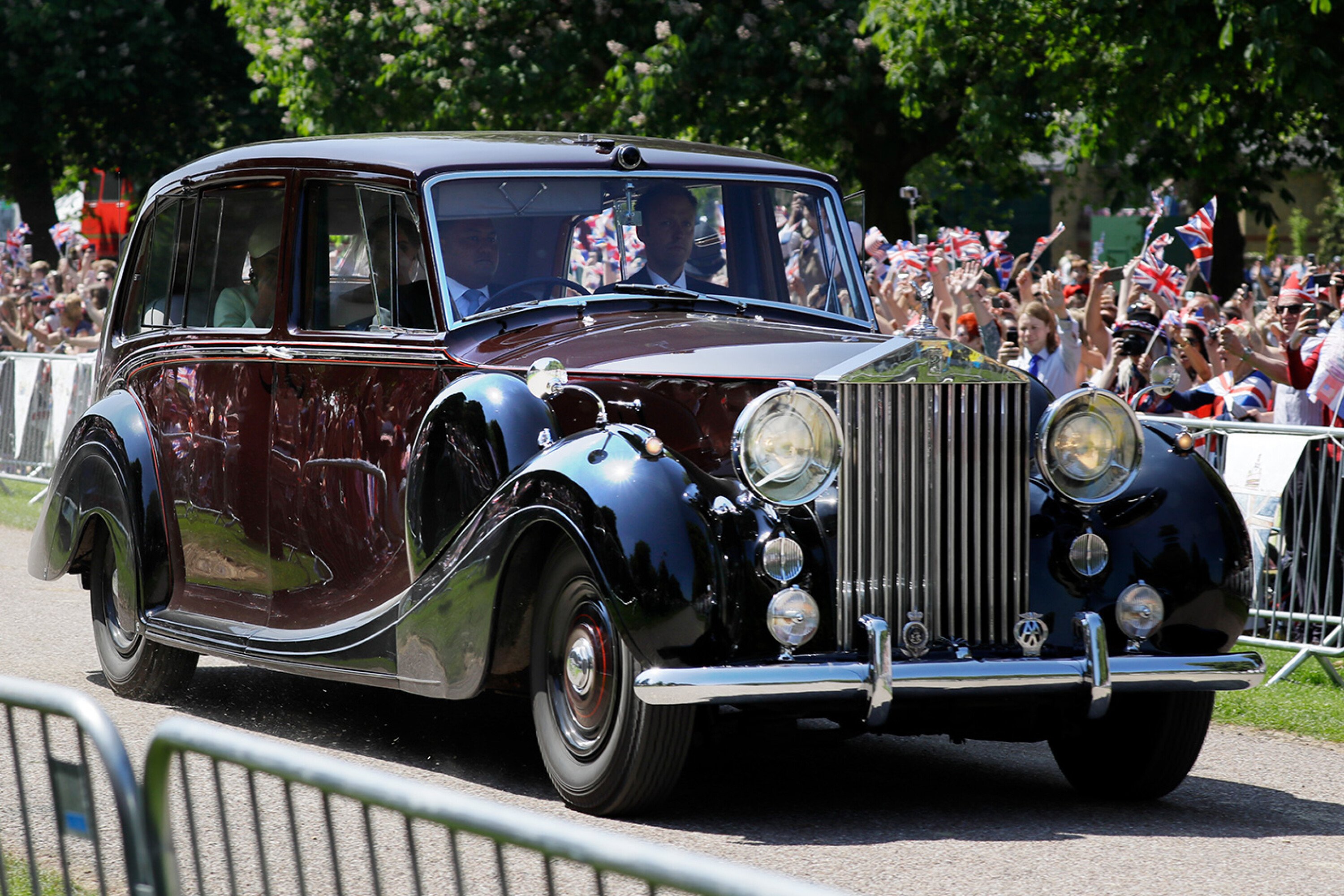
A trio of Rolls Royces include a 1950 Rolls-Royce Phantom IV painted in Royal Claret at Liz’s request (A$4.7 million), a 1962 Rolls-Royce Phantom V (Charles’s car), and a 1977 Phantom VI that’s worth an estimated A$2.4 million.
The Sandringham Estate
A total of 12 cars were identified at the Royal family’s Sandringham estate, with a more eclectic selection, from a 1900 Daimler Mail Phaeton to a 1999 London Taxi.
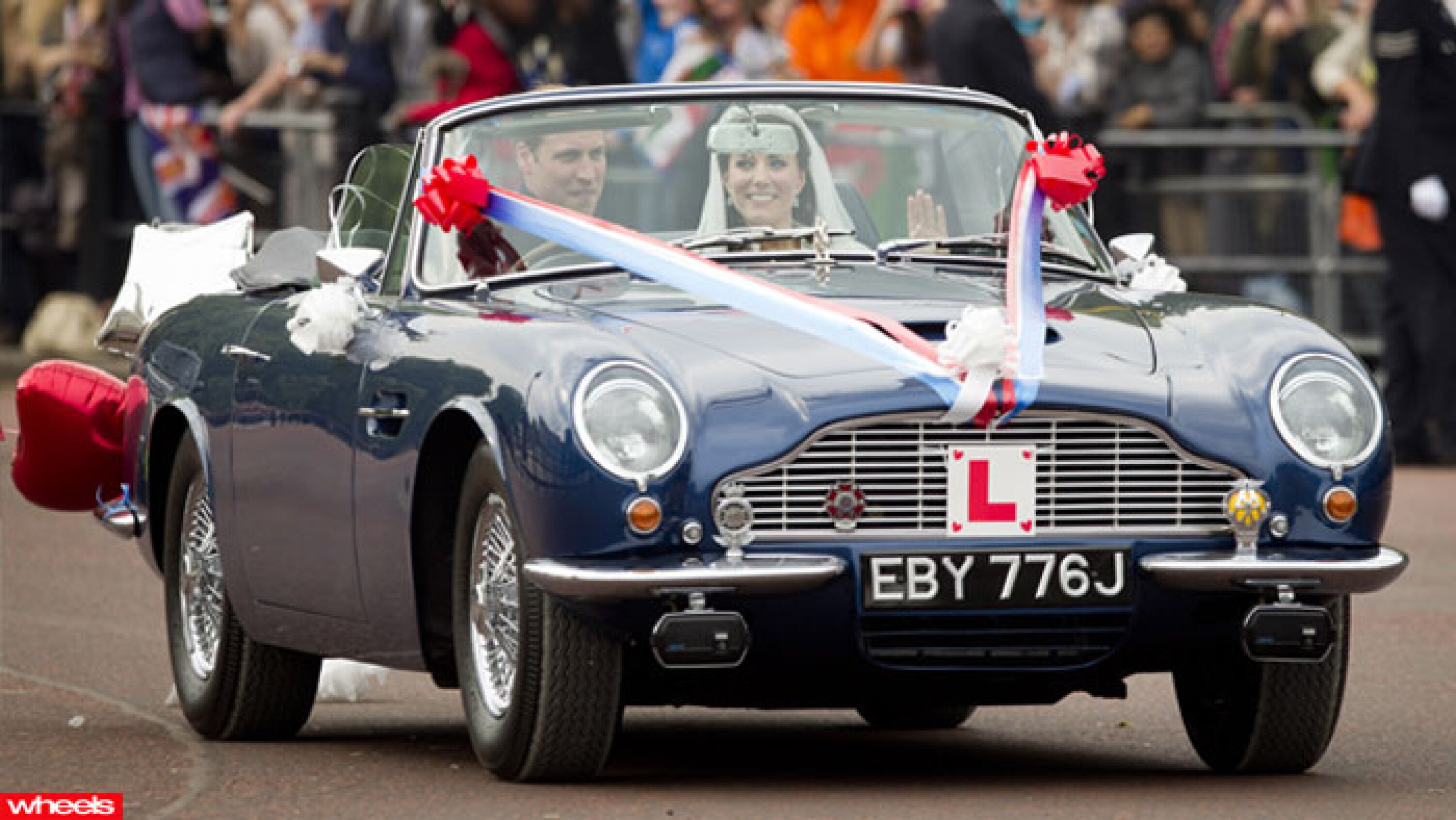
Charles keeps his 21st birthday present from mummy – the famously biofuel-powered 1970 Seychelles Blue Aston Martin DB6 Volante – down at Sandringham, along with another (this time private) Rolls-Royce Phantom IV that Elizabeth bought with Prince Philip early in their marriage.
The Royals love their Phantoms, and it seems the Guardian uncovered another one at Sandringham. This example served a 41-year stint as an official state car, before being supplanted by the two Bentley Limousines in 2002 – it’s unclear whether the Royals caught this car to use as a private vehicle; it’s worth an estimated A$1.3 million.
1
Gone but not forgotten
Along with the existing collection, some of the Royal’s cars (not least Charles’s freebie Astons) have interesting stories of their own.
In 1987, Charles was gifted an Aston Martin V8 Vantage Volante by the Emir of Bahrain. The tale goes that Chaz had a custom leather-trimmed sugar-lump holder fabricated to fit in the car’s glovebox for his polo ponies.
Though it was a gift, Charles sold it at the Sotheby’s auction house in 1995 for A$200,000 pounds – since that deal, a Royal family act has been updated to read: “Under no circumstances should official gifts be sold or exchanged.”
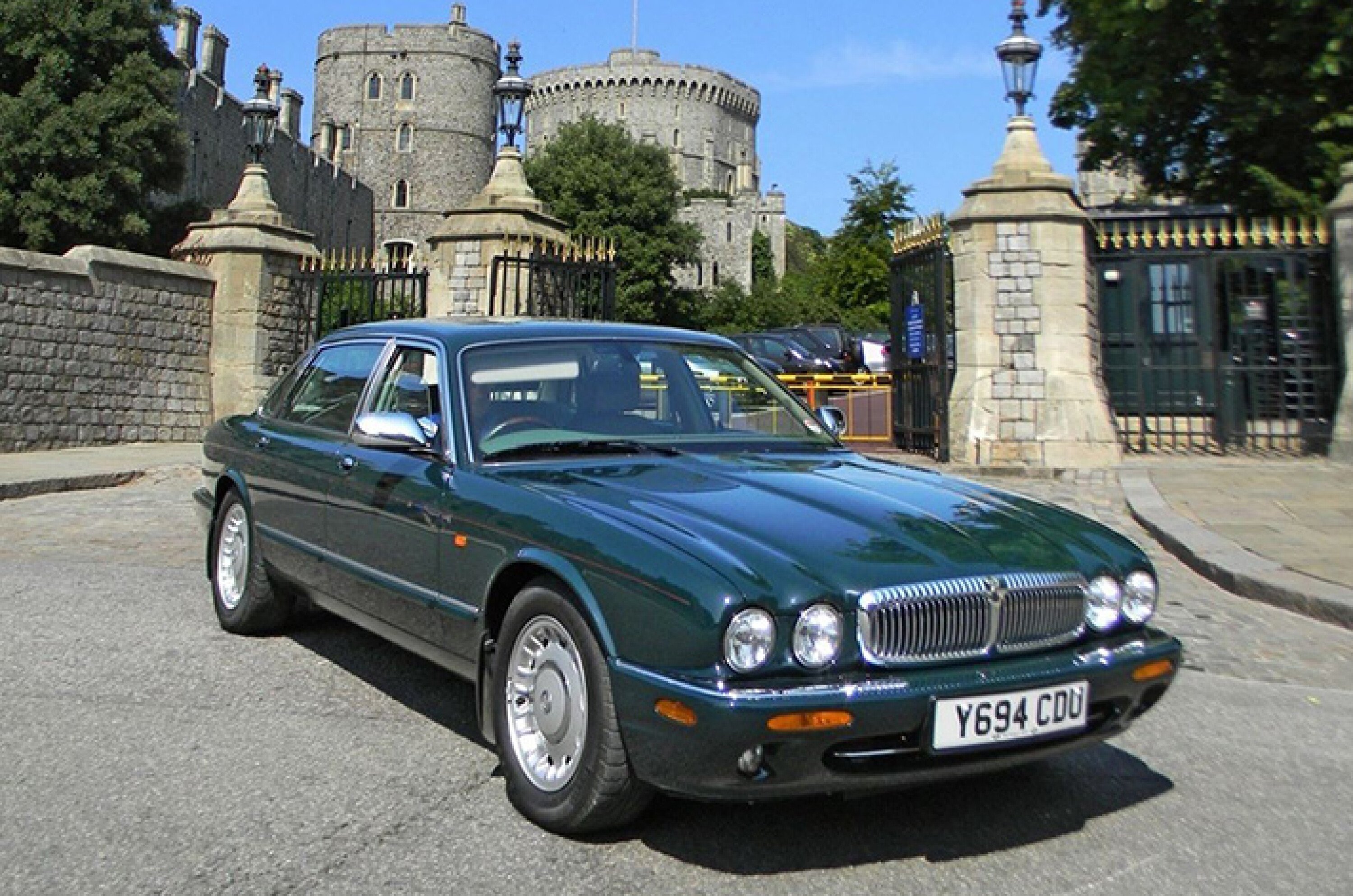
Another few royal cars made famous by the queen include a Jaguar Daimler V8 Super LWB. It was to be Queen Elizabeth’s personal transport, though not long after it was delivered in 2001, the Elizabeth decided she rather liked the Jag’s snarling 4.0-litre supercharged V8 and piloted it herself. There was a boot-mounted radio, high-intensity lights, and secret buttons added.
1
