
If you’re happy to go a size larger, check out our Best Medium SUVs test below. Watch for our Best Small SUVs test to come soon.
The upcoming new Ford Puma EV is confirmed for Australia
Ford, the traditional Detroit iron giant, is in a state of transition, pouring billions into the rapid development of advanced technologies and electric mobility.
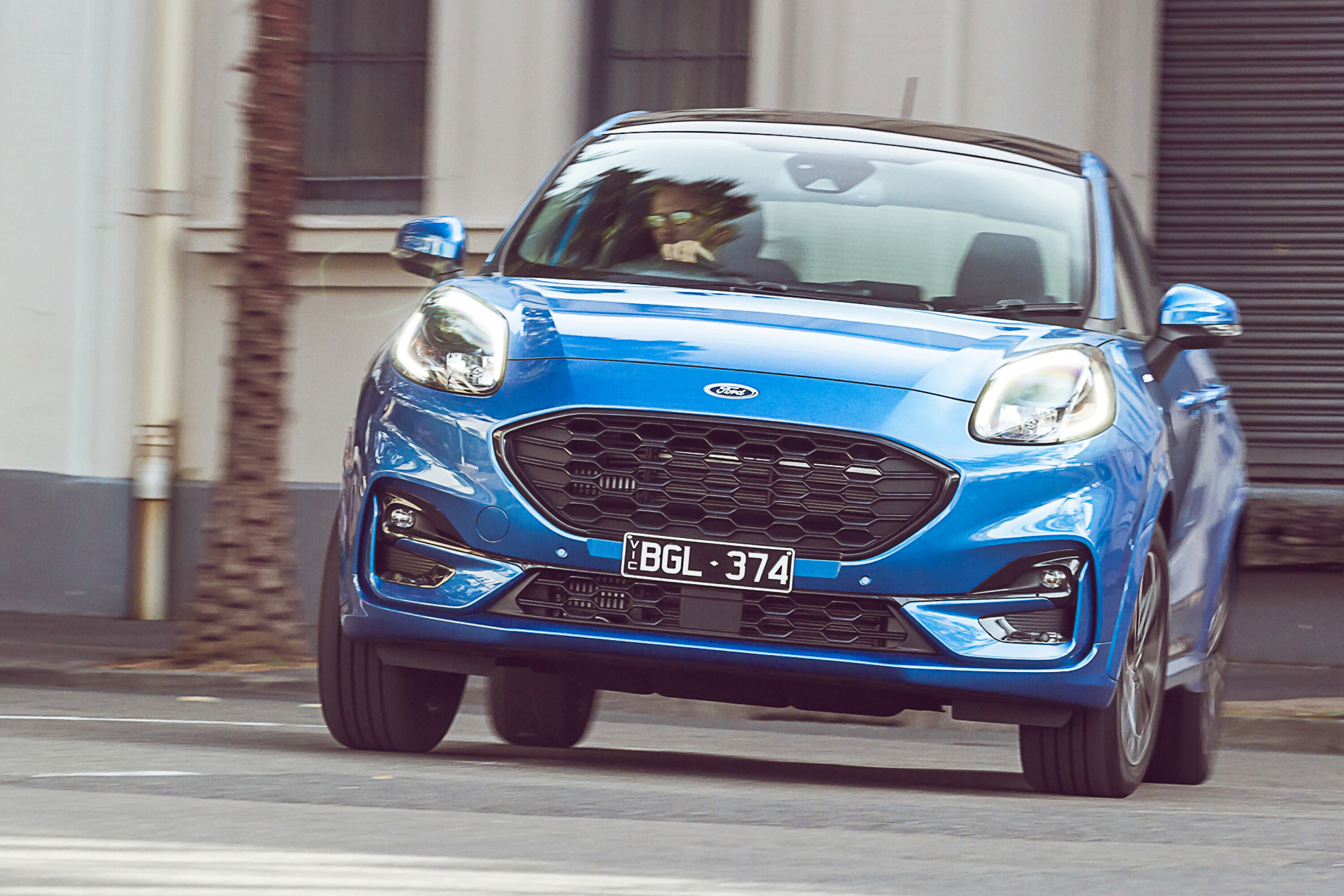
Change is coming for Ford here, too. Speaking on the brand’s local electrification roadmap, Australian CEO Andrew Birkic told media recently: “we will be bringing in an electric Puma”, and “the Escape nameplate will be leaving Australia by the end of the year”.
Birkic confirmed that entire Escape range will leave, including the only recently launched PHEV model.
1
“We’re making some decisions around our line-up and we believe [Puma] is the right investment for us”.
“Puma has done well, it’s one that continues to win awards… so we know that that’s certainly an important play for us in the future”.
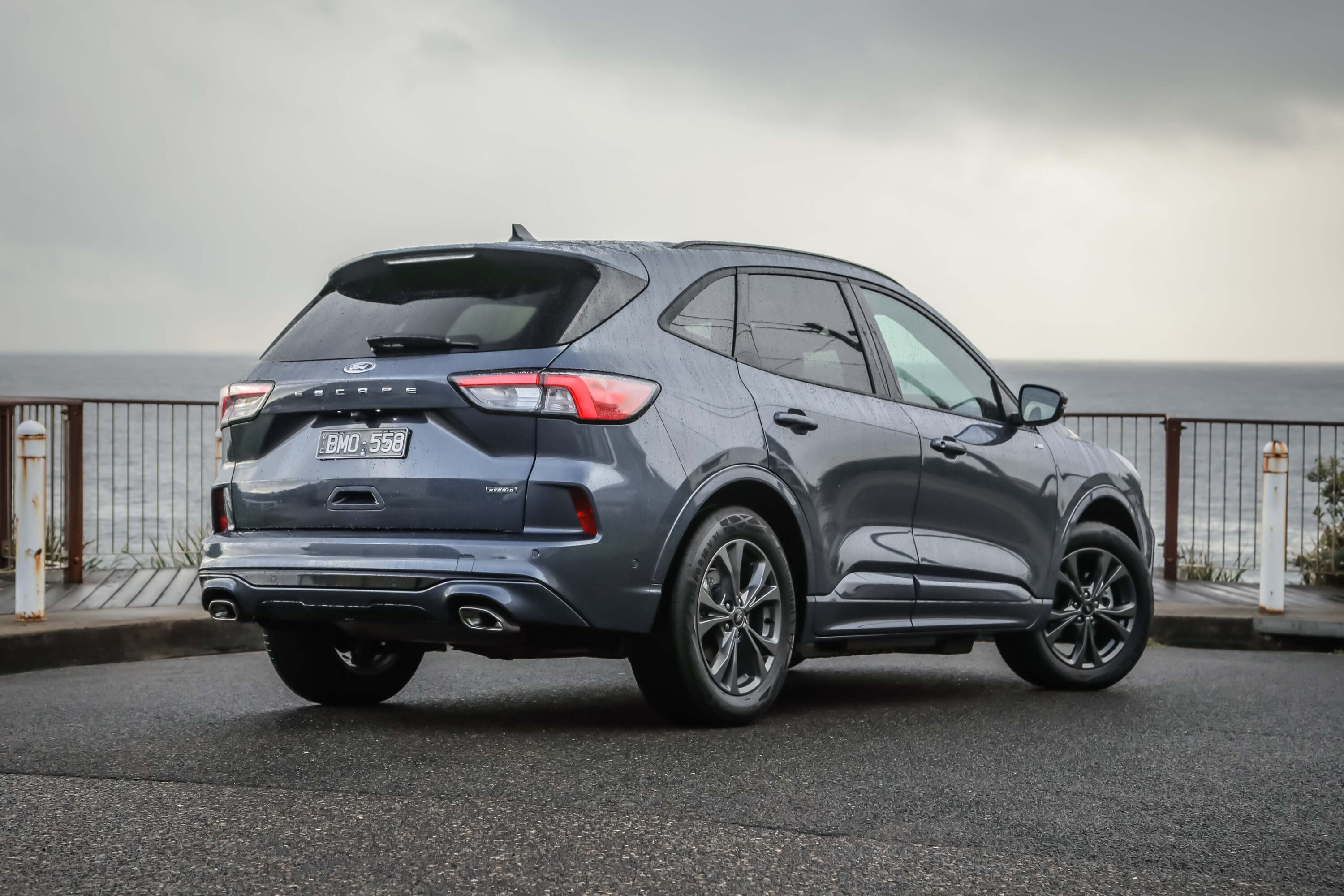
The news comes after the Escape PHEV was launched in 2022, arriving as Ford Australia’s first electrified model – a significant milestone in its pledge to launch five electrified models locally by 2025.
1
Questions hung over the Escape’s future as a major 2023 facelift revealed in October last year was met with a conspicuous “no news” response from Ford’s local outpost.
Today’s news is the first time Ford has commented on then Escape since then – and now it’s clear why.
Initially launched locally in late in 2020, the current Ford Escape is a comparatively small player in the bustling mid-size SUV market. Indeed, it was excluded from our recent Best Medium SUVs testing on the grounds that it was not up to the standard of its rivals.
Comparisons
Medium SUV comparison: 2023 Mega Test
Thinking of buying a new mid-size SUV this year? We test eight of the best and most popular contenders to see where you should spend your money
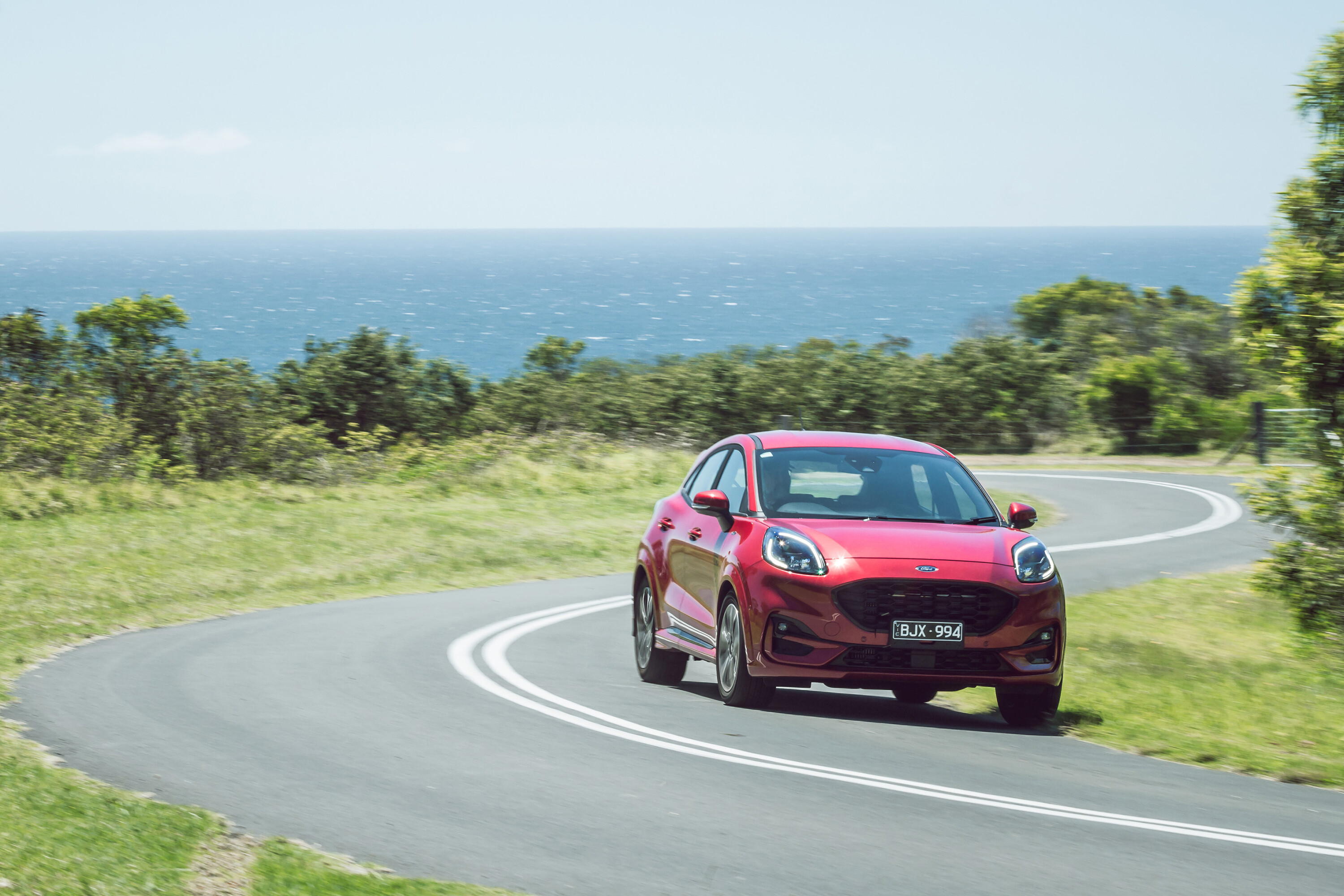
When the electric Puma arrives, it will join the Mustang Mach-E and e-Transit in Ford’s growing electric line-up, with a smaller e-Transit Custom already confirmed for a 2024 arrival.
Of course, the smaller Puma is no like-for-like substitute for the larger mid-sized Escape, and the decision hasn’t come easy to those at Ford.
Speaking with Wheels, Birkic stressed, “we’re an emotional brand, and we love that… we don’t make those nameplate decisions lightly. It goes through a very rigorous process with multiple factors.”
“What we’re offering is quite a comprehensive line-up in terms of SUV performance, but also for families.”
1
Is Ford exiting the hugely popular medium SUV segment?
With questions looming over a potential gap in Ford’s critical two-row mid-size SUV segment, it’s possible that Ford Australia will look to the Mach-E to spearhead the brand’s electrified five-seat SUV offerings.
For its part, Ford isn’t commenting on that one for now.
What do we know about the electric Ford Puma?
Not much.
The electric Puma isn’t expected to be revealed until sometime in 2024, so local details, including specific timing and price, are yet to be locked in.
Based on such a timeline, it would be reasonable to expect the electric Puma in Australia no earlier than mid-2024 or possibly even 2025.
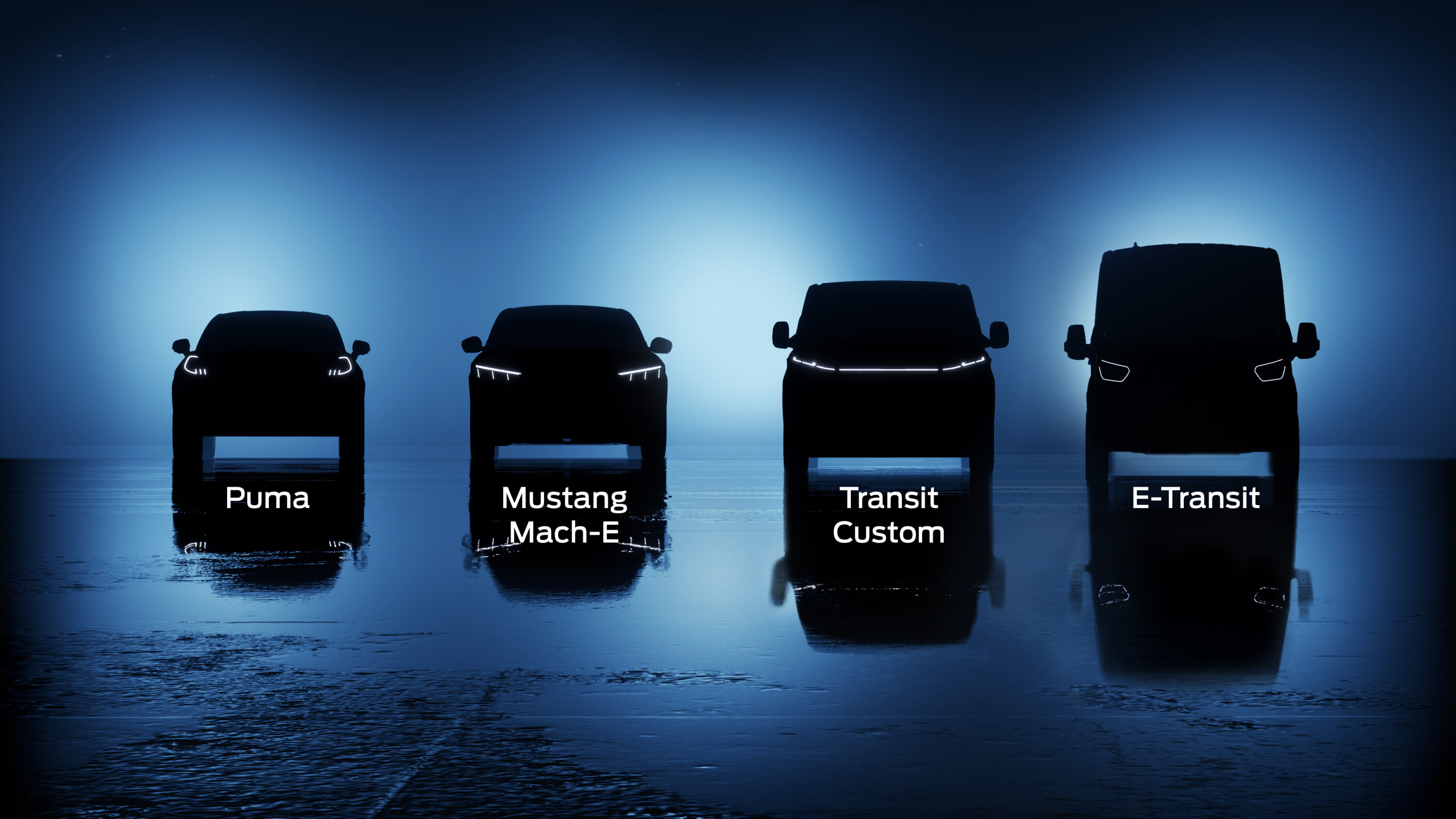
1
It will be underpinned by a development of Ford’s Global-B architecture, the same platform as the current petrol-powered Puma.
It’s believed that the light crossover is being produced in tandem with Europe’s forthcoming small Ford Transit Courier van that forms part of Ford Europe’s nine-pronged battery-electric assault set to deploy by 2024.
Battery and powertrain details will be made public closer to its reveal.
⚡ More EV stories to help you choose the best car for your needs
UPDATE: 2024 Lexus LM confirmed for Australia
The second-generation 2024 Lexus LM has debuted with a global focus – including Australia.
Lexus Australia has confirmed the LM – based on the soon-to-be-released fourth-generation Toyota Alphard – will become its first people-mover sold locally.
It will join the brand’s flagship L-series, including the LS limousine, LC two-door, and the Toyota LandCruiser 300-based LX off-road upper-large SUV, with a matching premium price tag likely.
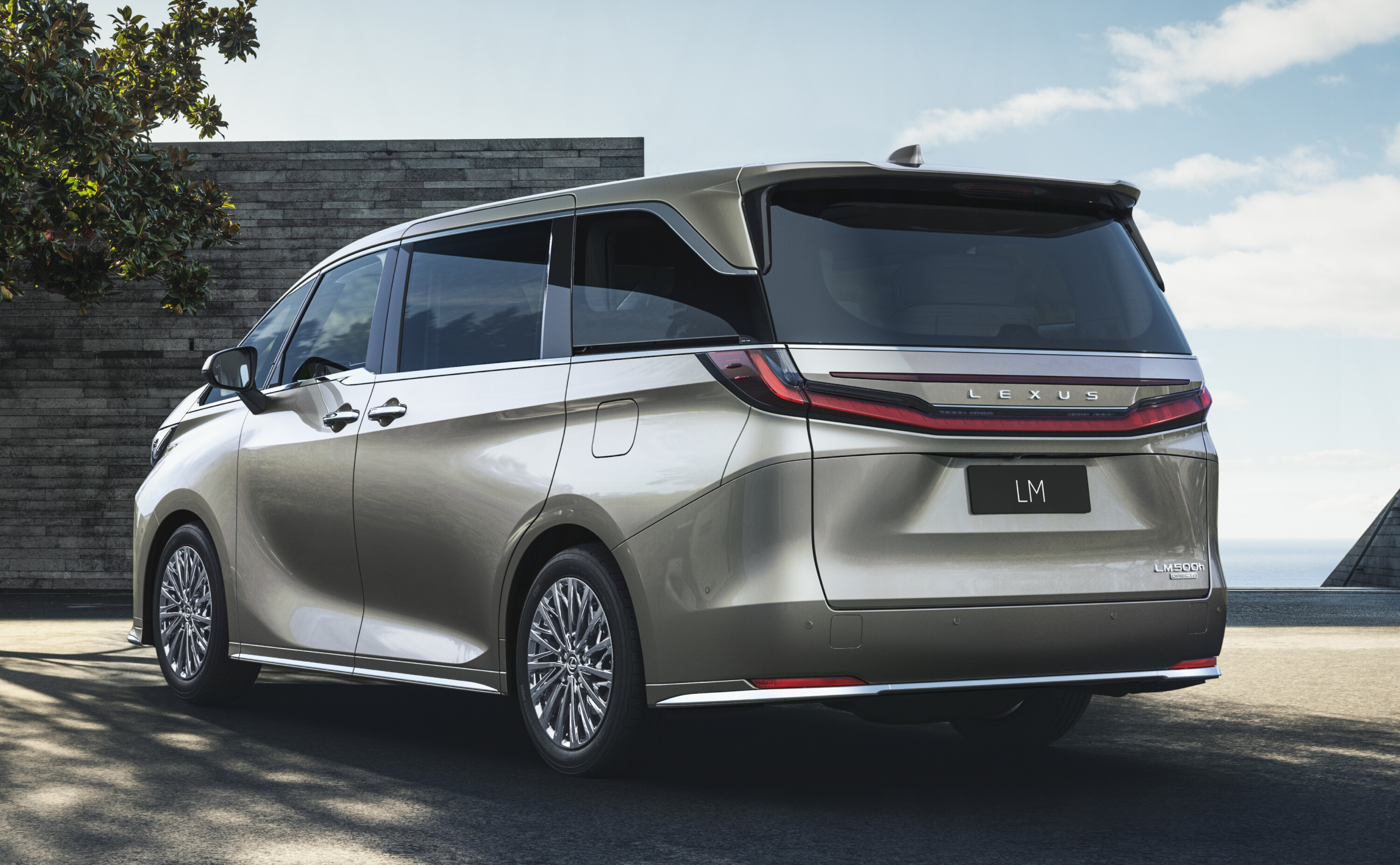
1
Previously limited to China, the vehicle will be “launched in more than 60 countries” with two hybrid powertrains shared with the latest RX large SUV.
It is believed to be underpinned by the same GA-K platform as the NX and RX, also found underneath the latest Toyota vehicles, including the RAV4 and Kluger.
The new LM will be offered in a two-row, four-seat VIP format, or a three-row setup with six or seven seats in Australia.
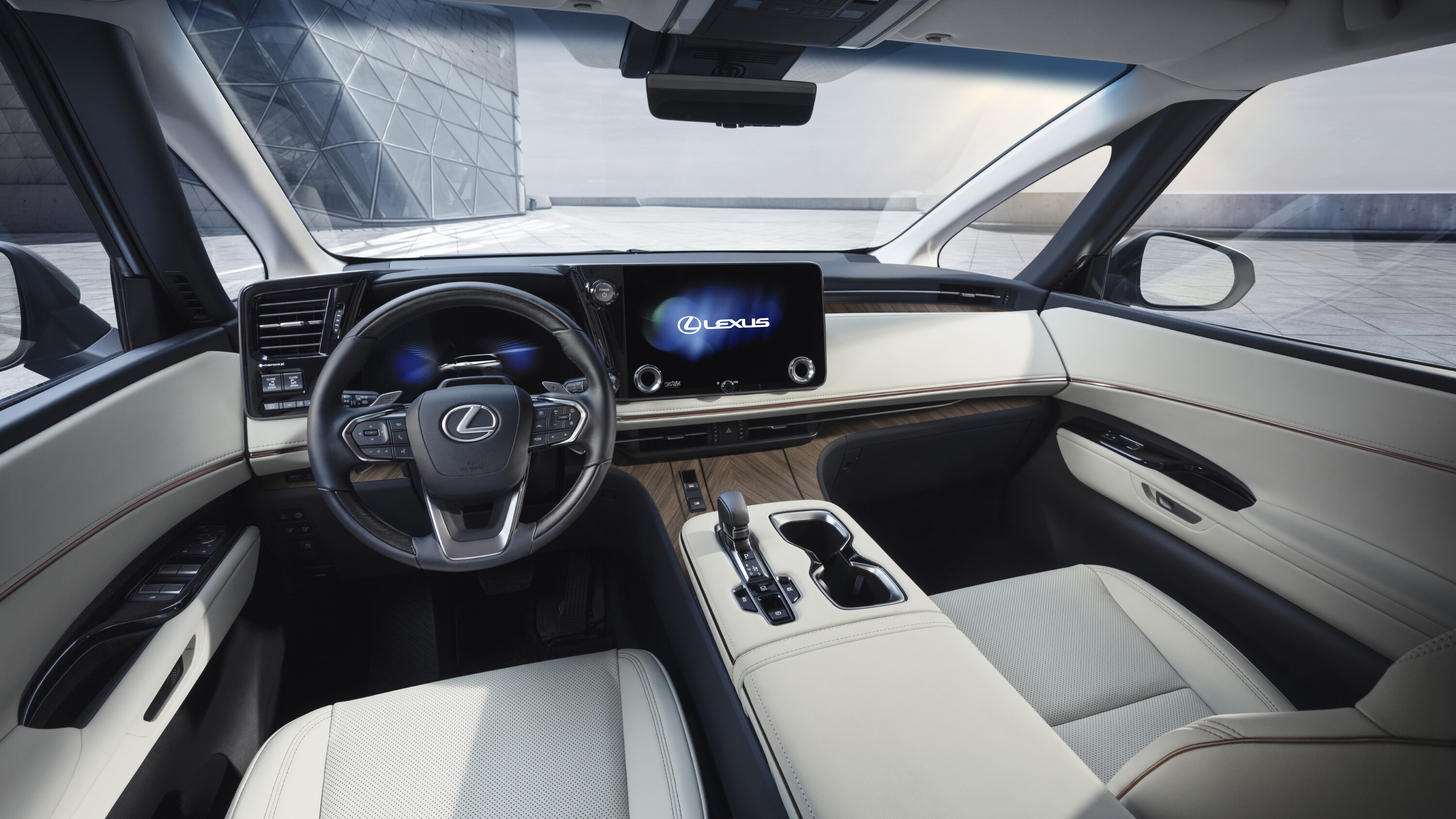
1
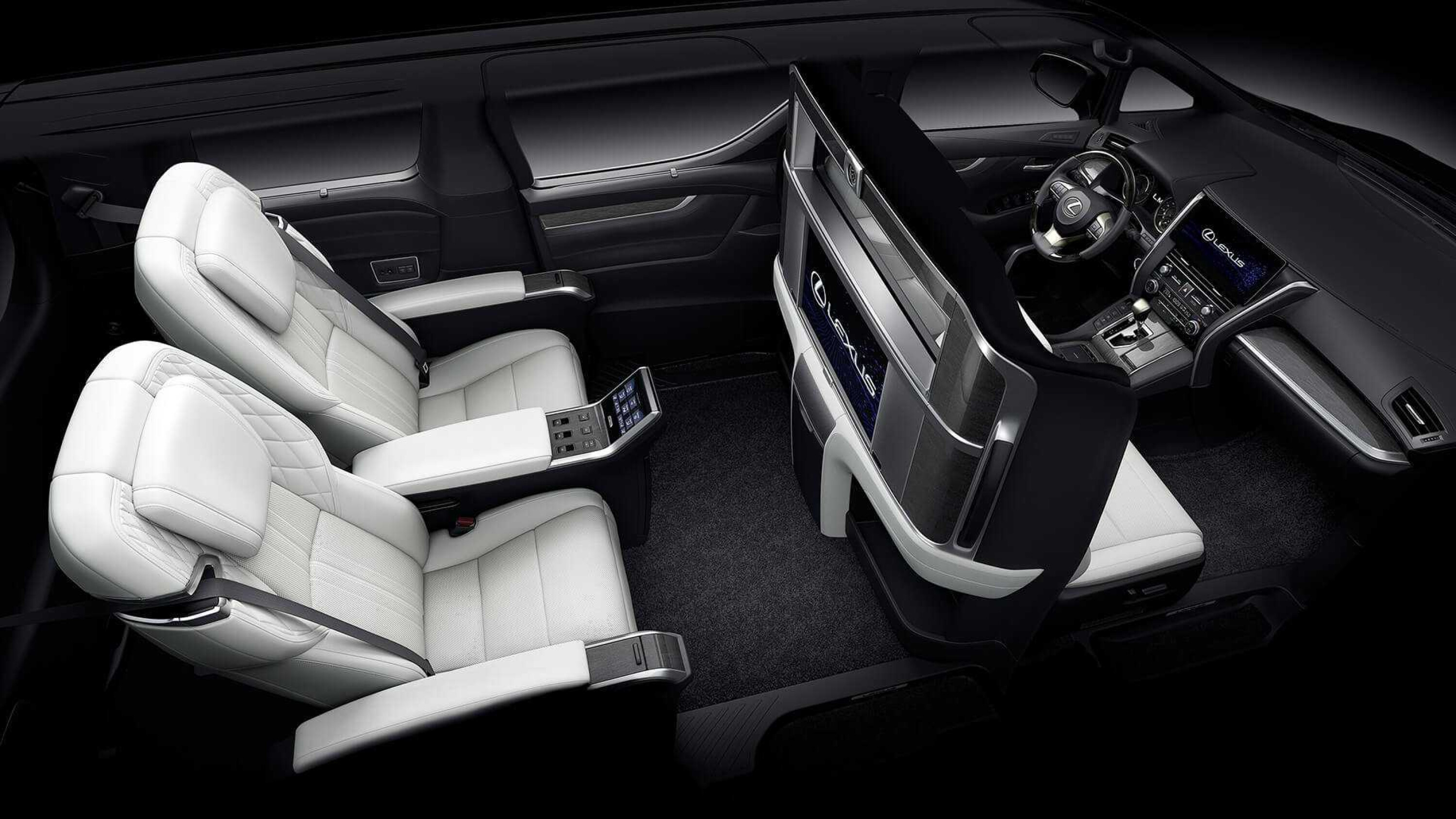
The four-seat variant will feature a smoked glass partition between the front and rear passengers for added privacy, with second-row riders getting individual heated captain’s chairs with retractable ottomans and large 48-inch widescreen displays.
A smart rear air-conditioning system with thermal matrix sensors allows the vehicle to optimise the temperature for the face, chest, thigh and lower leg.
Under the bonnet, local LM examples will be powered by a hybrid 2.5-litre non-turbo engine for three-row variants, and a 2.4-litre turbo-petrol hybrid – similar to the RX500h – for the four-seat version.
Lexus Australia said a full suite of active safety equipment would be standard across the range.
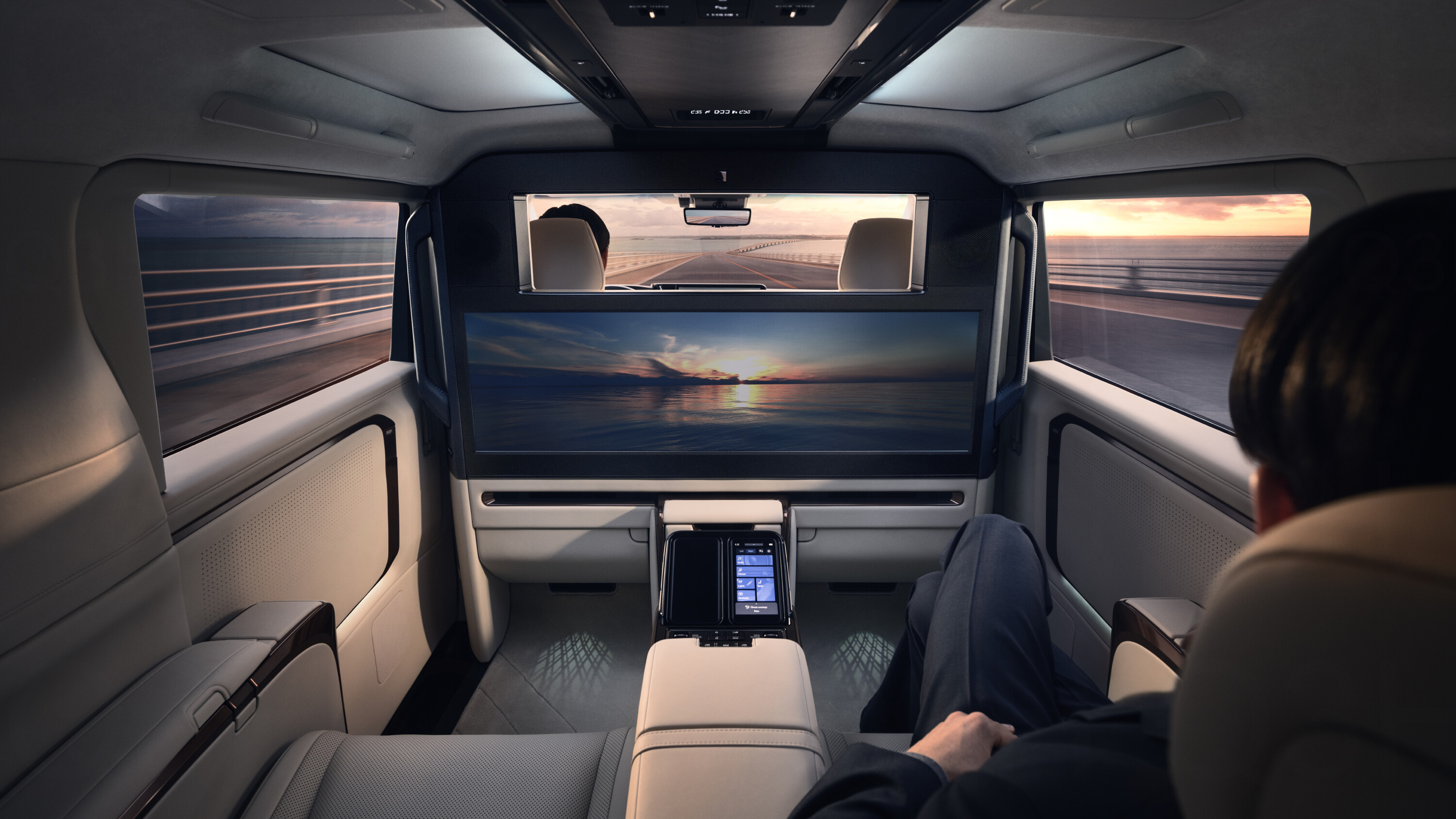
1
Further details for the 2024 Lexus LM, including local timing, pricing and features, will be confirmed “in due course.”
The official addition of the Lexus LM to the Australian market could open the door for the related Toyota Alphard’s local sale, potentially replacing the diesel-only and slow-selling HiAce-based Granvia with a more-economical, passenger-car based hybrid option.
| 2024 Lexus LM preliminary specifications | |
|---|---|
| Length | 5125mm |
| Width | 1890mm |
| Height | 1945mm |
| Wheelbase | 3000mm |
| Track (front/rear) | 1600/1615mm |
| Tyre size | 17-inch or 19-inch |
Our earlier story, below, continues unchanged.
1
April 12: Lexus LM teased, trademarked for Australia
The new 2024 Lexus LM people-mover will be revealed in Shanghai next week.
Snapshot
- New model likely to be based again on Toyota Alphard
- Australian launch could be on the cards
- Debut set for 2023 Shanghai motor show
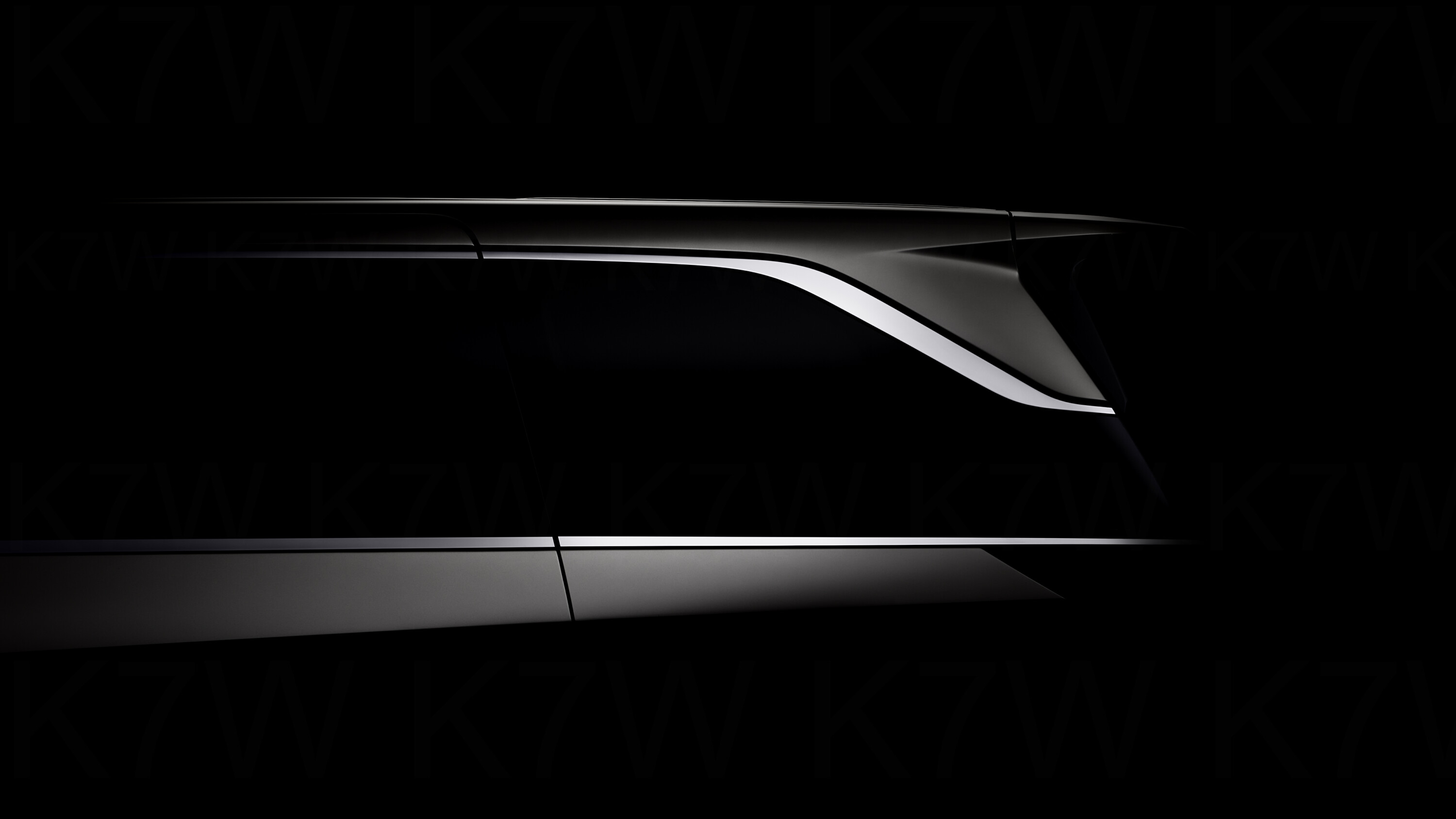
A new generation of the Lexus LM people-mover could be bound for Australia, if this new teaser image is anything to go by.
Well, less the image and more its source: an official press release from the Australian arm of Lexus, which ought to be a hint that the LM will come to our market.
Adding to that is the news in late 2021 that Lexus had trademarked the LM badge in Australia, although it should be noted that brands will often protect trademarks in global markets regardless of any launch plans.
1
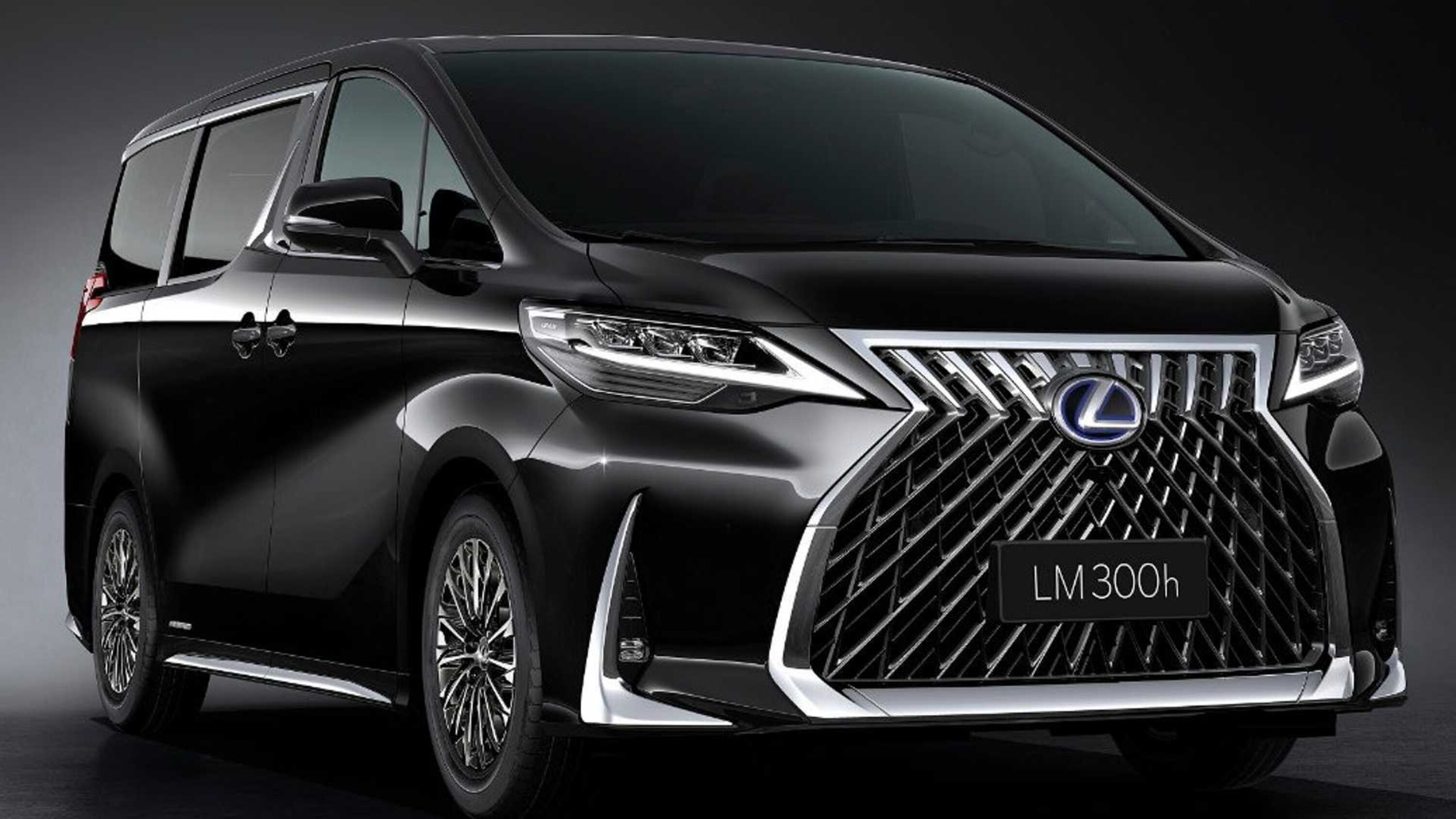
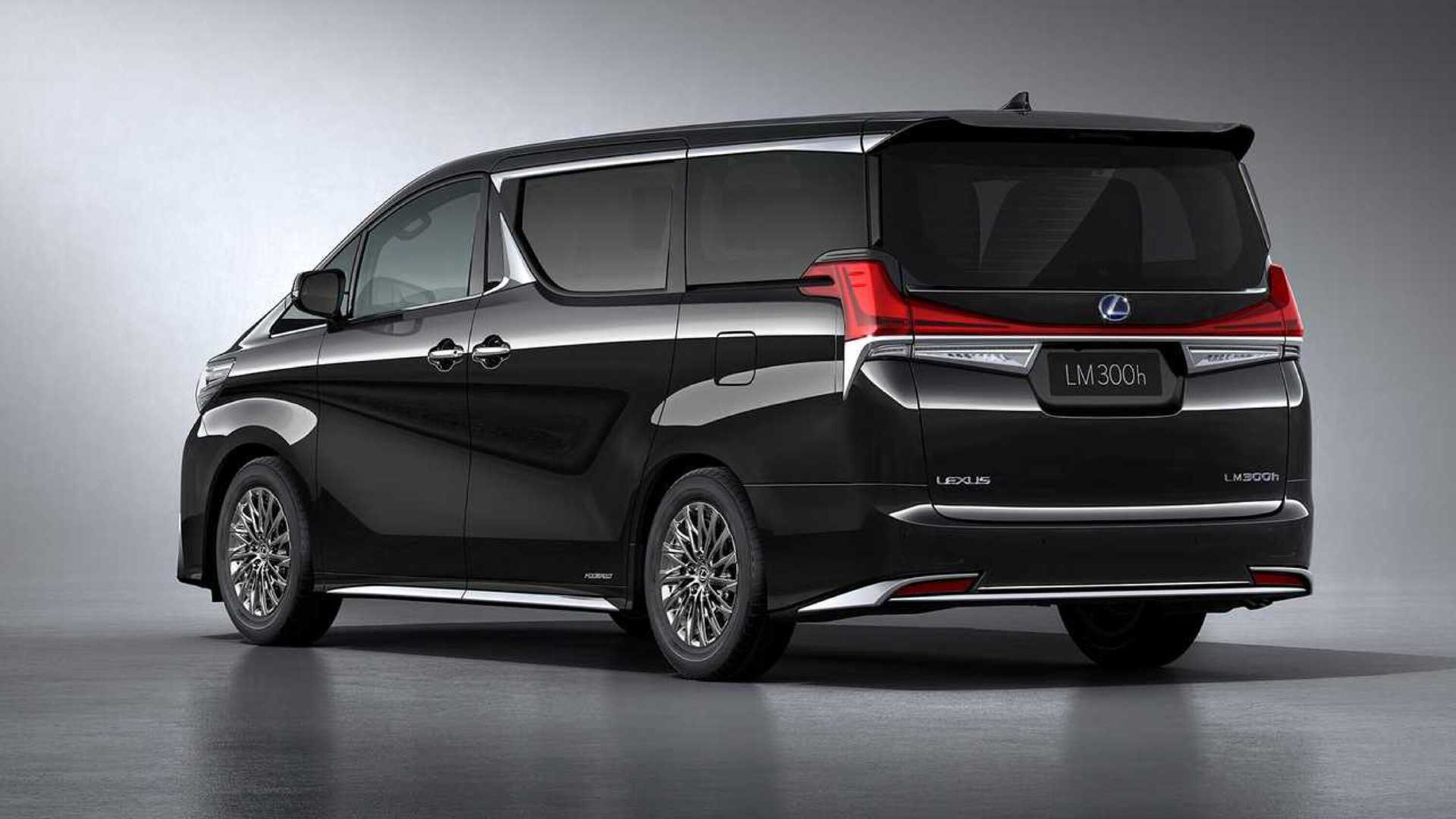
In its current form, the first-generation Lexus LM was unveiled at the 2019 Shanghai motor show, with clear roots in the Toyota Alphard – a popular grey-market import for Australian buyers, with 157 examples listed on CarSales right now, 81 of them the current model.
As with all Toyota-derived Lexus models, the LM builds on the Alphard’s base with its own big ‘spindle’ grille and L-hooked headlights, while the rest of the body is more clearly identified as a Lexus-enhanced Toyota.
1
Despite its donor platform, the LM is a proper luxury offering, with certain variants featuring a massive 26-inch entertainment display in the second row and a 14-litre fridge. A theatre on the move.
A new-generation Alphard is still to be revealed, so at this point it seems next week’s LM debut in Shanghai will offer our first look at the new people-moving twins.
1
Will the new Lexus LM come to Australia?
In Australia, the LM would enter as an obvious rival to the Mercedes-Benz V-Class, a low-volume, van-based luxury alternative to vehicles like the Hyundai Staria, Toyota Granvia and Volkswagen Multivan.
In most cases, vehicles like these are popular in Australia as shuttles for high-end hotels and VIP event transport – effectively a Tarago for the modern popstar and their entourage, where a ‘cheaper’ van simply won’t do.
In China and other Asian markets, where families often live together across generations, these vans are popular as a way to transport children and grandparents with more ease than a seven-seat SUV can offer.
Watch for the LM to be unveiled next week, when news of an Australian launch could also be announced.
MORE
Everything Lexus
Snapshot
- New PHEV medium SUV from Haval
- Not yet confirmed as H6 successor
- 5.5L/100km, 105km EV range, 0-100km/h in 6.4S
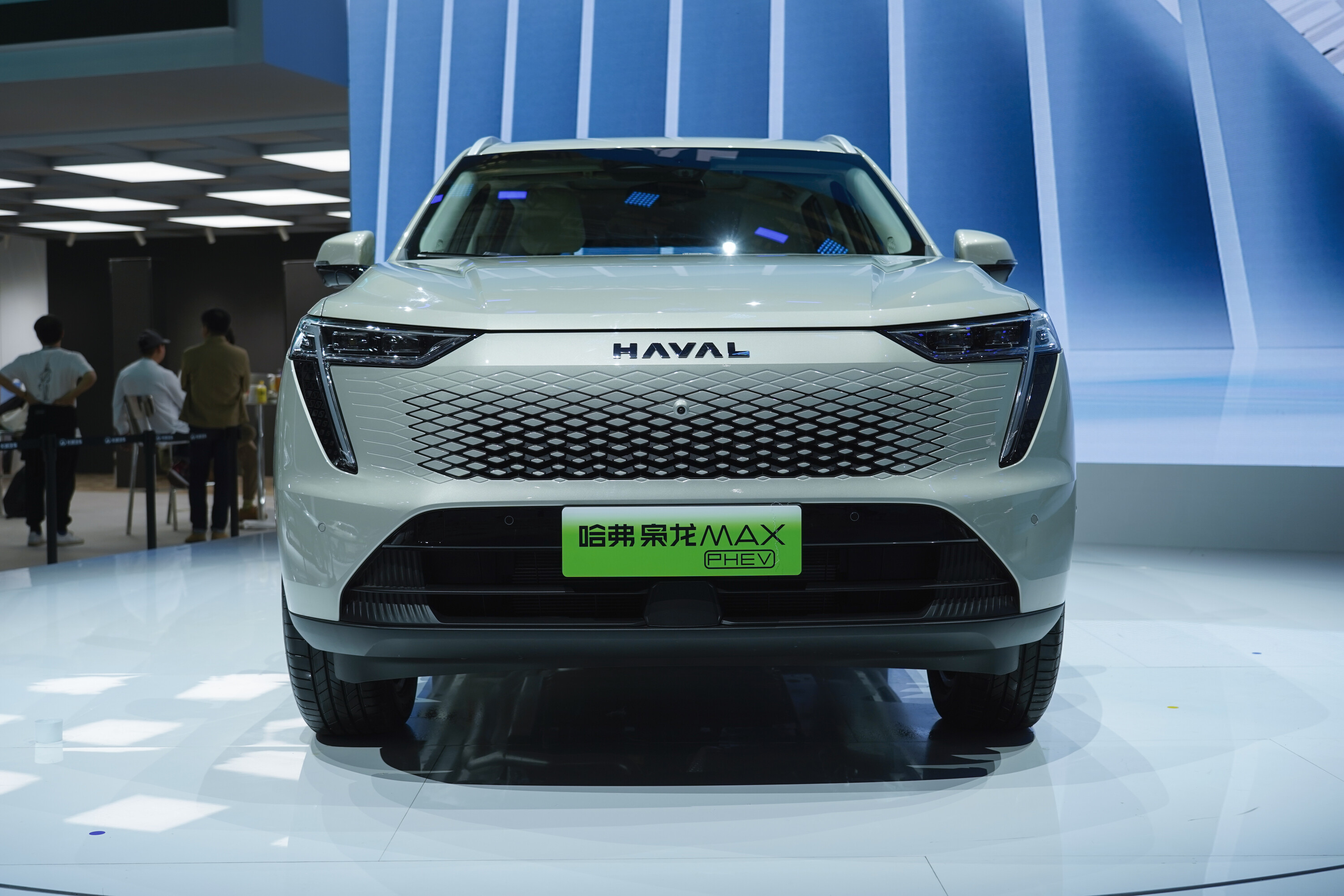
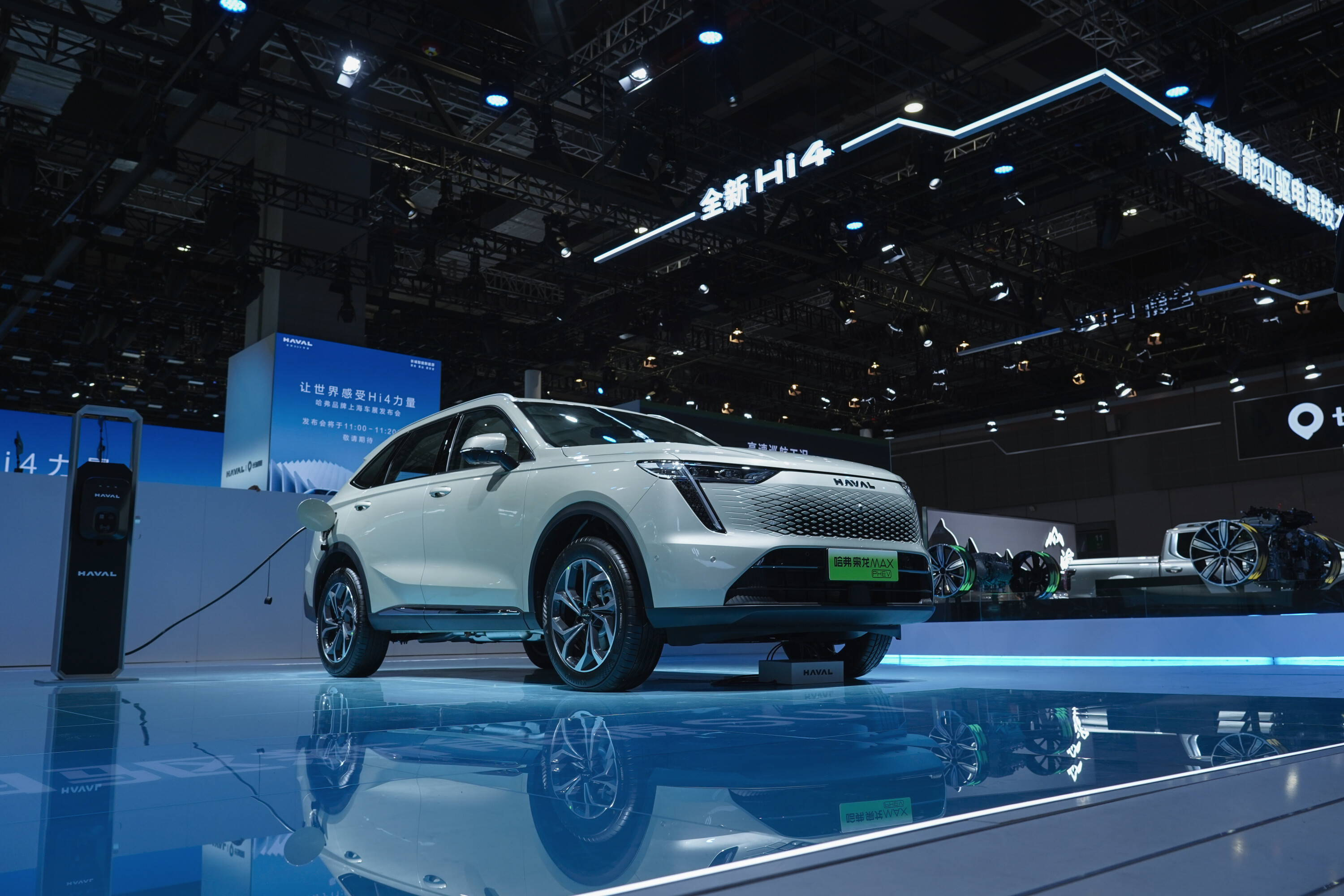
Haval has unveiled a new medium SUV at Auto Shanghai 2023. Known internally as the ‘B07’ (and as the Xiaolong Max in China), it packs a plug-in hybrid powertrain that promises 5.5L/100km and an EV-only driving range of 100km.
At a glance, the B07 might look like an H6 that’s had a deep facelift and powertrain upgrade, but the wheelbase has been stretched by 62mm (2800mm) and it’s longer – so it is a new vehicle, though it uses the same modular LEMON platform.
In fact, the B07 is larger in every dimension, at 2785mm long, 1895mm wide, and 1725mm tall, though unlike the Nissan X-Trail and Mitsubishi Outlander, the B07 will be two-row only. A VDA-certified 551L cargo space tops off the B07 package.
3
There are some carryover cues, including a shapely bonnet that’s familiar to those who’ve spent time in an H6. The minimal grille opening is said to evoke an electric vehicle – we see some inspiration from the Lexus RX – and the B07’s subtly sloping roofline is sporty, without being quite H6 GT extreme
A spokesperson for GWM Australia told Wheels that, although the B07 is another new medium SUV from Haval, it’s not yet confirmed as the H6’s successor. The B07 will go on sale next month in China, with an Australian release still under consideration.
1
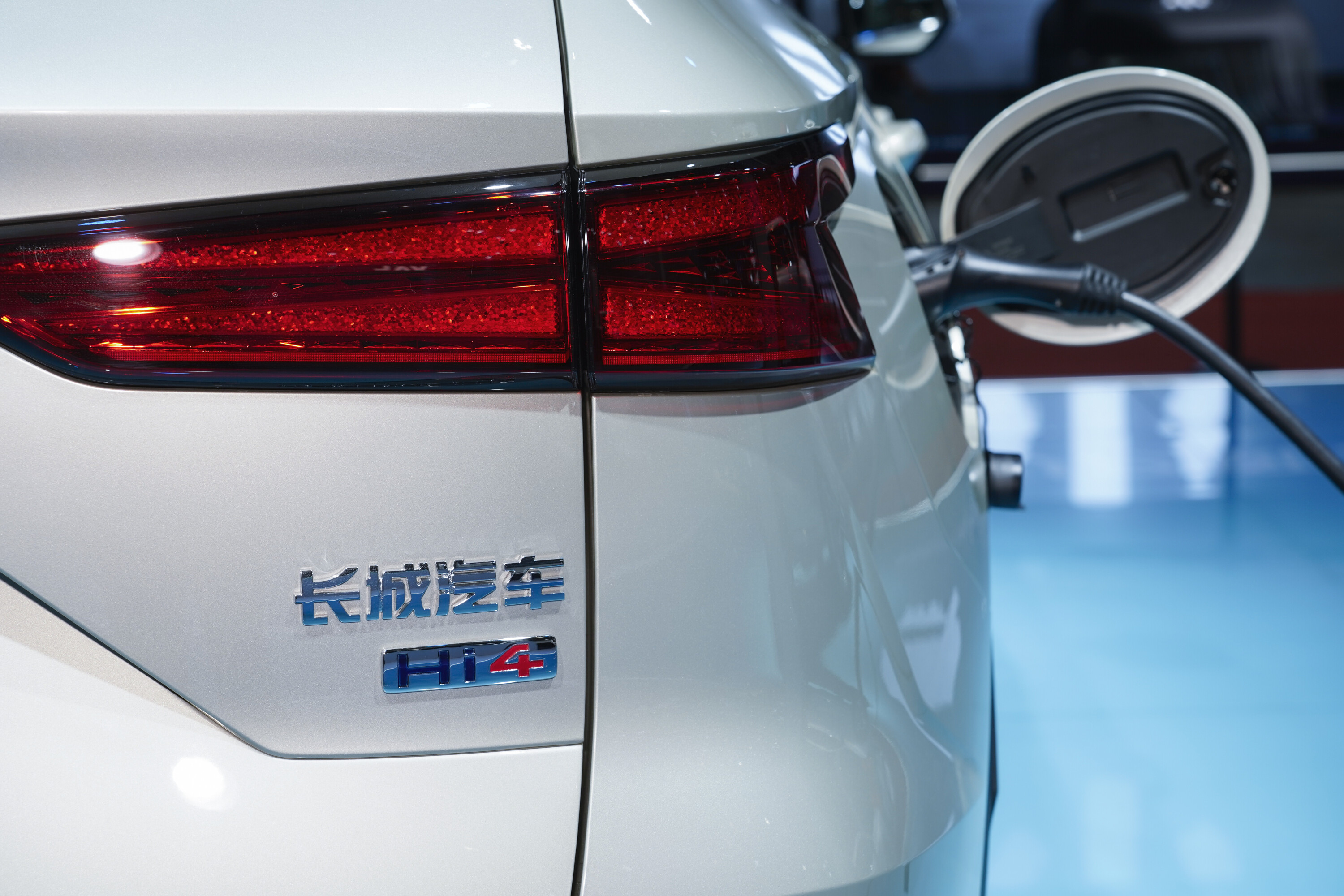
GWM’s Hi4 plug-in hybrid EV powertrain
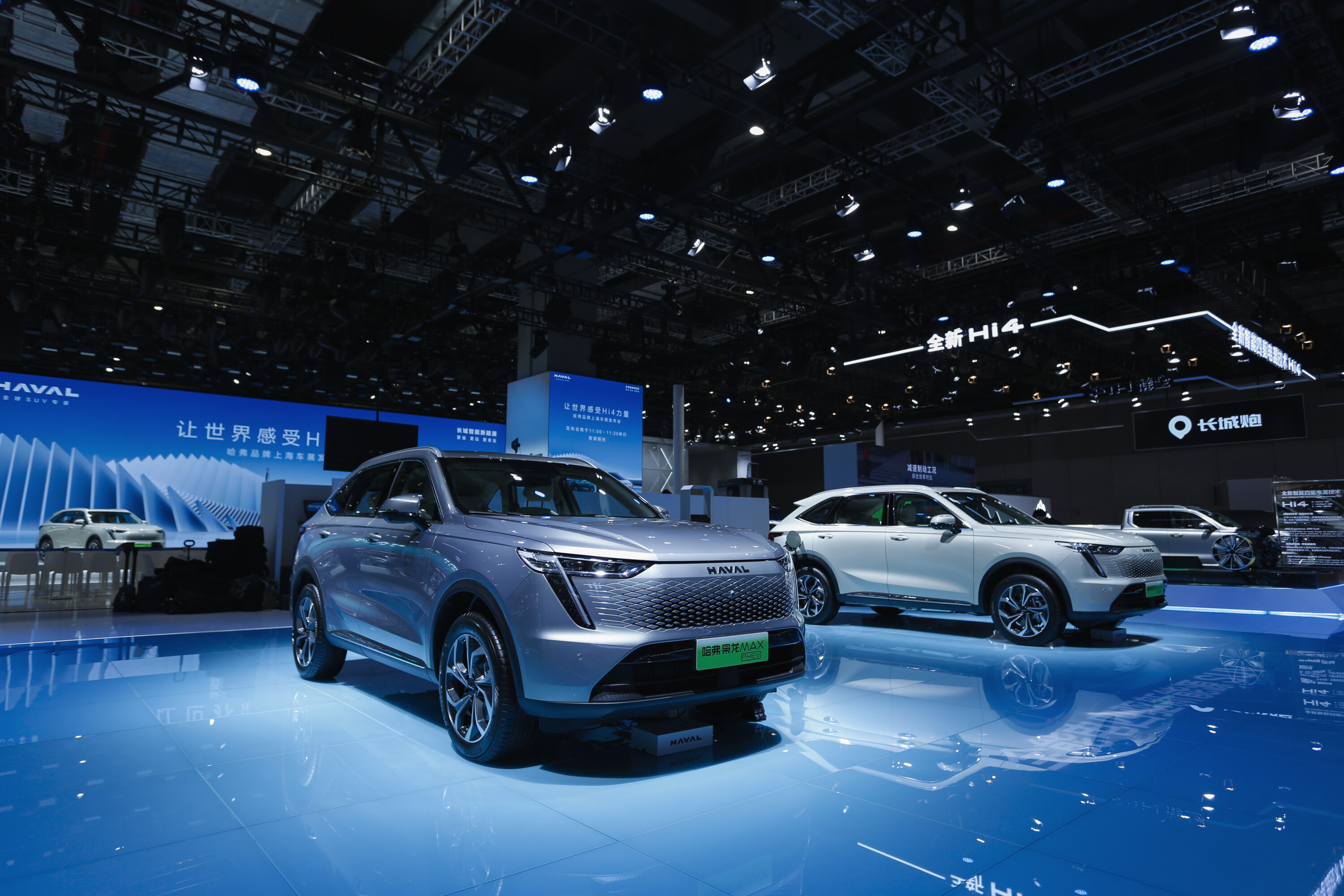
The powertrain is new for GWM. Called ‘Hi4’, it features a 19.94kWh battery, two electric motors, and – in the B07 – a 120kW/240Nm 1.5-litre turbo-petrol combustion engine running in the Miller cycle.
GWM claims system power can go as high as 340kW, though the B07’s iteration develops 205kW/585Nm. It drives the front wheels via a two-speed ‘dedicated hybrid’ transmission, that effectively has a launch and cruising gear, and the electric motors fill in the gaps.
Not unlike the Toyota RAV4 hybrid and Mitsubishi Outlander PHEV – both key rivals if the B07 comes to Oz – the Haval’s four-wheel drive functions via a separate rear 150kW/350Nm motor, with no driveshaft connecting the two axles.
1
Haval says this makes for faster torque movements between the front and rear axle. GWM also claims a 0-100km/h sprint as low as 6.4 seconds for vehicles equipped with the Hi4 powertrain, though did not specify if that included the B07.
In China’s fuel consumption cycle, the B07 returned 5.5L/100km, and Haval claims that its near-20kWh battery is enough for a 105km electric-only driving range (though by what standard is not confirmed) – that plays the Outlander’s 84km WLTP range.
The NCM battery is capable of charging at 22kW, for a sub-30-minute 30-80 per cent charge time, according to GWM.
1
Cabin technology
GWM’s cabins have typically been technology-packed thanks to the LEMON electronics platform. The B07’s new ‘coffee’ software promises to be more user-friendly than current items.
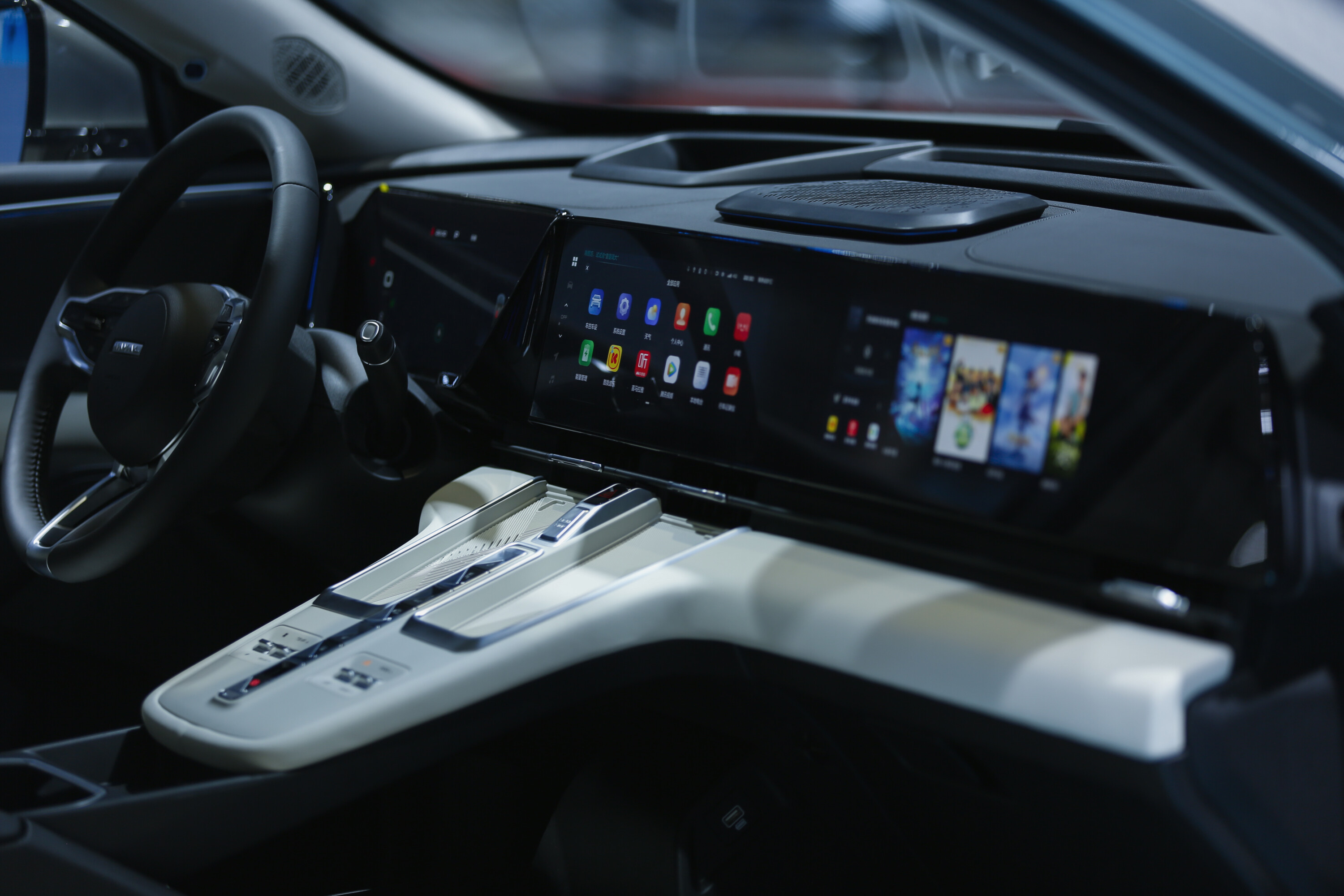
The suite is made up of a 12.3-inch touchscreen, a 12.3-inch digital driver’s display, and a 10-inch head-up display. The images show a third touchscreen for front-seat passengers, but Haval does not mention this feature in the literature.
There will be an upgraded suite of advanced driver assistance tech onboard, too, including adaptive cruise control, lane-keep assist, blind-spot monitoring, driver attention monitoring, and more.
1
Pricing and availability
B07 pricing – and final naming – are yet to be confirmed but with GWM/Haval’s typically lower asking prices than Japanese rivals, we could expect variants of the B07 to start from around A$70,000.
GWM’s global expansion is heating up, and the brand will introduce a new EV, in the Ora Cat, and the Tank 300 hybrid 4×4 this year.
A local release of the B07 is under consideration, but not yet confirmed. With GWM’s strong sales in Australia, including for the hybrid H6, the B07 makes a strong case for itself, but we’ll have to wait and see what happens after its May market launch in China.
MORE
Everything Haval
December: Polestar 4 pricing released
Swedish rival to the Tesla Model Y and Kia EV6 has been priced from $81,500, according to showroom data site Redbook. Details in the linked story below.
April 2023: Polestar 4 revealed!
The 2024 Polestar 4 electric coupe SUV has debuted in China before its global launch next year.
Snapshot
- 2024 Polestar 4 electric coupe SUV revealed
- Polestaru2019s most-powerful production vehicle to date
- Australian launch expected early next year; pricing and full details to come
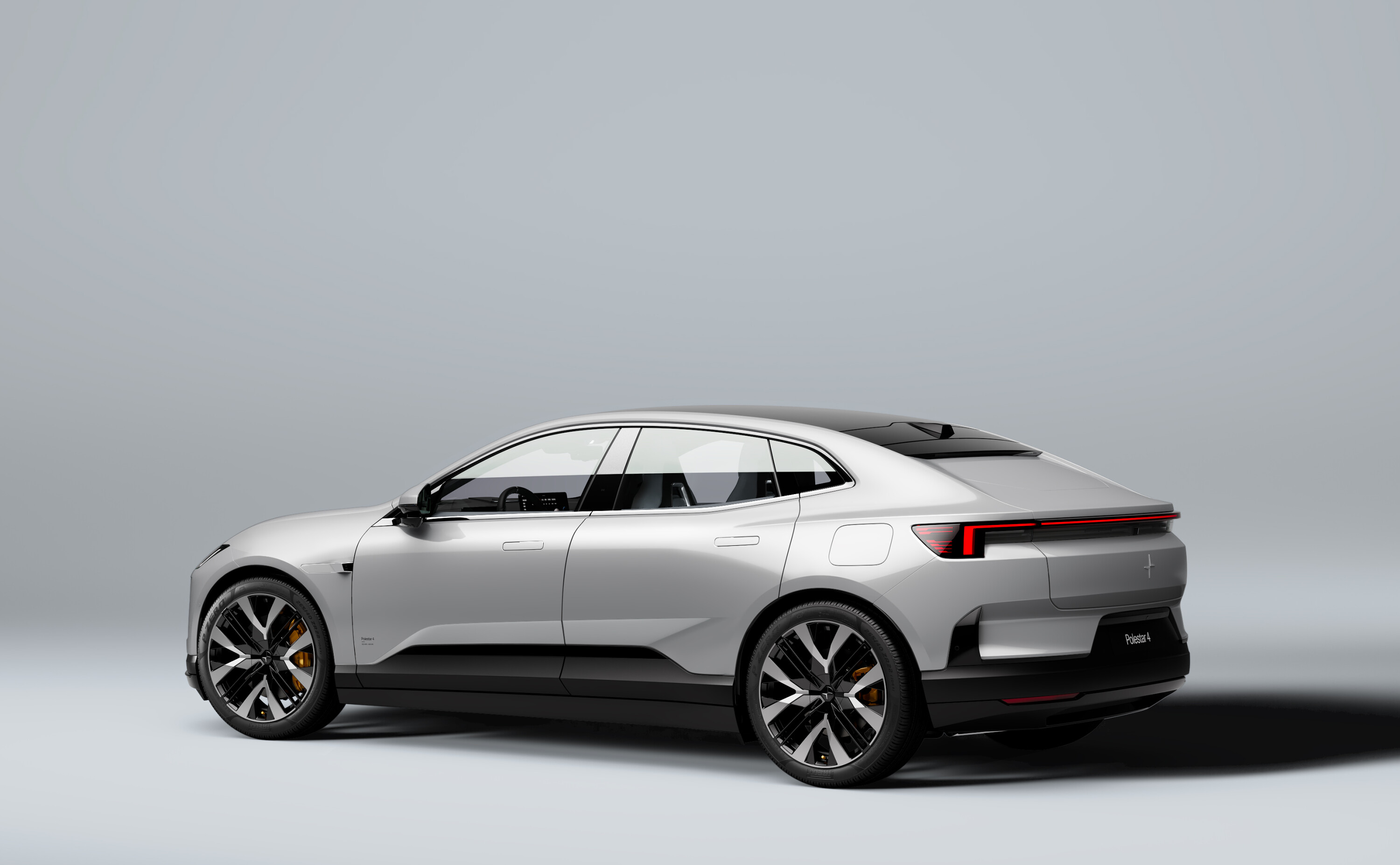
Unveiled today at the 2023 Shanghai Auto Show, the Polestar 4 is claimed to be positioned between the 2 liftback and 3 large SUV “in terms of size and price.”
It features Polestar’s latest design language, as featured on the 3 and Precept concept.
“With Polestar 4, we have taken a fundamental new approach to SUV coupé design,” said Polestar’s chief executive officer, Thomas Ingenlath.
1
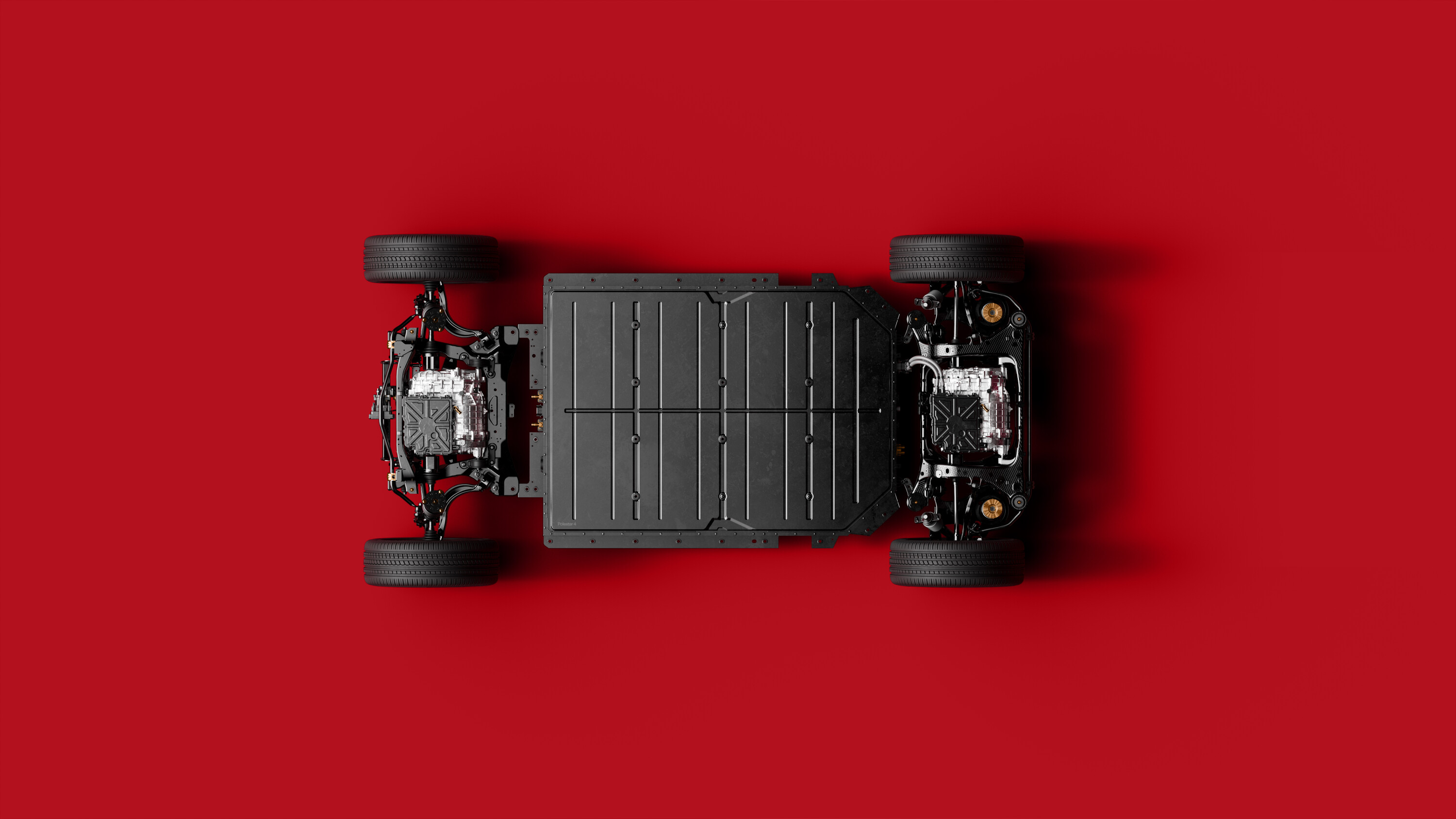
It is based on parent company Geely’s all-new Sustainable Experience Architecture electric vehicle platform.
In the United States, it will be priced from approximately US$60,000 (AU$90,000), suggesting a starting price of around $100,000 before on-road costs in Australia.
JUMP AHEAD
- Battery, performance, charging and driving range
- Exterior design and dimensions
- Interior comfort and technology
- Safety and option packages
- Availability
1
Battery, performance, charging and driving range
Polestar claims the 4 is the fastest production car it has built, with the Dual Motor Long Range Performance variant capable of a 3.8-second 0-100km/h sprint.
It has a 400kW and 686Nm maximum power output, with support for 200kW DC fast charging and 22kW AC home charging.
The flagship Dual Motor Long Range has a targeted WLTP-rated 560-kilometre driving range, with final homologation figures to be confirmed in early 2024.
A Long Range Single Motor model is available, with a 600-kilometre driving range target. It is rear-drive only, with 200kW and 343Nm on tap.
| Output and performance | Long Range Dual motor | Long Range Single motor |
|---|---|---|
| Power | 400kW | 200kW |
| Torque | 686Nm | 343Nm |
| Top speed | 200km/h | 180km/h |
| 0-100km/h* | 3.8 seconds | 7.4 seconds |
1
A 102kWh lithium-ion battery pack is standard for all long-range Polestar 4 variants. It is currently unclear if Polestar will offer a standard range variant with a smaller battery, similar to the Polestar 2 sedan.
Bi-directional charging with vehicle-to-load functionality is standard, as is a heat pump.
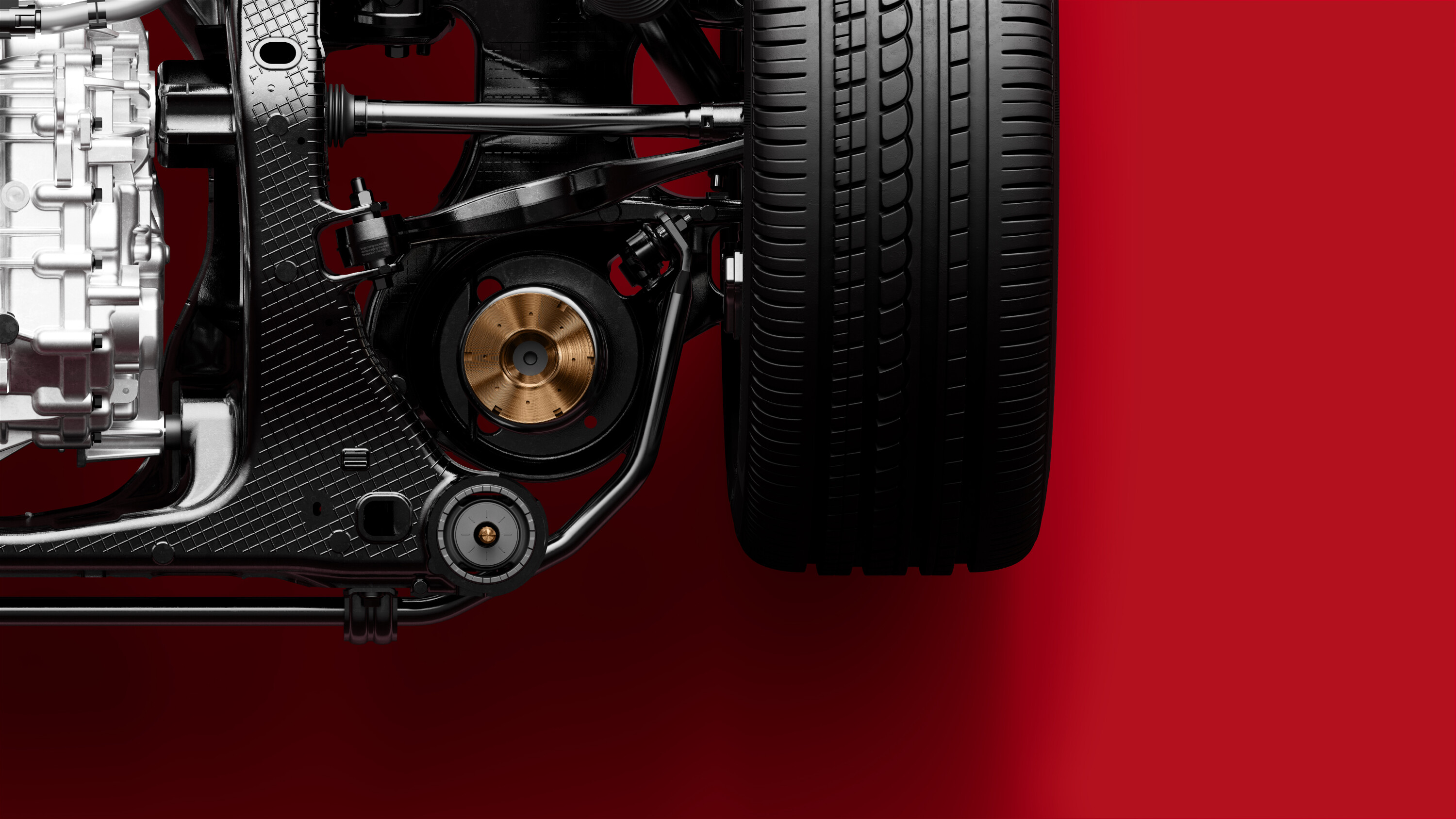
Semi-active suspension is available for dual-motor variants, while the drive optimisation feature will prioritise range or performance, depending on the mode selected.
The performance mode enhances “responsiveness from the powertrain and engages both motors at all times for full power delivery and best performance”, while the range mode reverts to rear-wheel-drive only for efficiency.
| Efficiency | Long Range Dual motor | Long Range Single motor |
|---|---|---|
| Energy consumption* | 16.7-16.8 kWh/100km | 14.8-14.9 kWh/100km |
| Range target (WLTP)* | Up to 560km | Up to 600km |
| Drag coefficient | 0.269 Cd |
1
Exterior design and dimensions
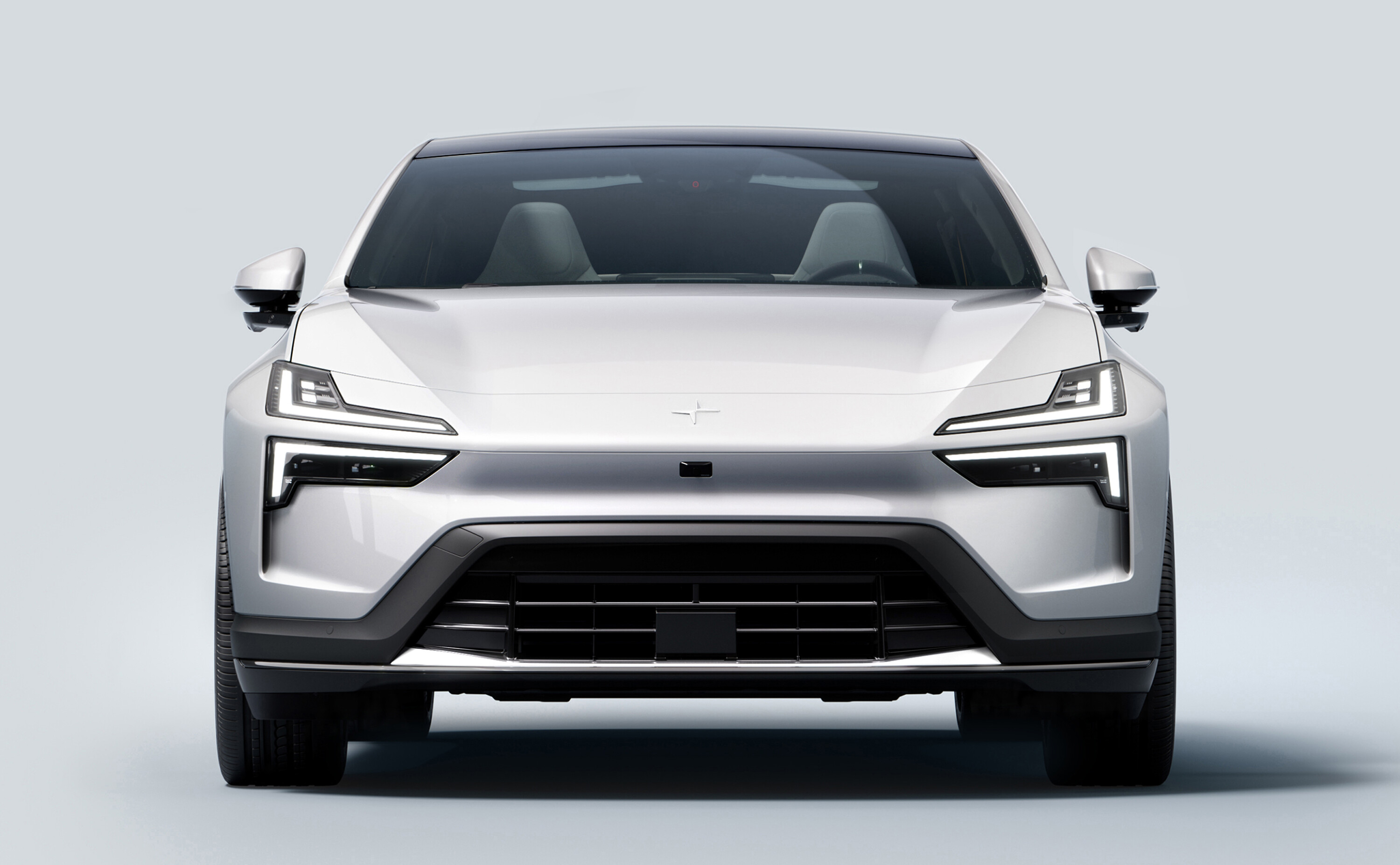
Up front, the Polestar 4 wears split LED headlights with a boomerang-shaped signature, a sleek air curtain, and an exposed lower grille for battery cooling.
The side profile is highlighted by the coupe SUV shape, with a swooping roofline. It also features chunky tyres, alloy wheels measuring up to 22 inches, flush door handles, and side-mounted cameras.
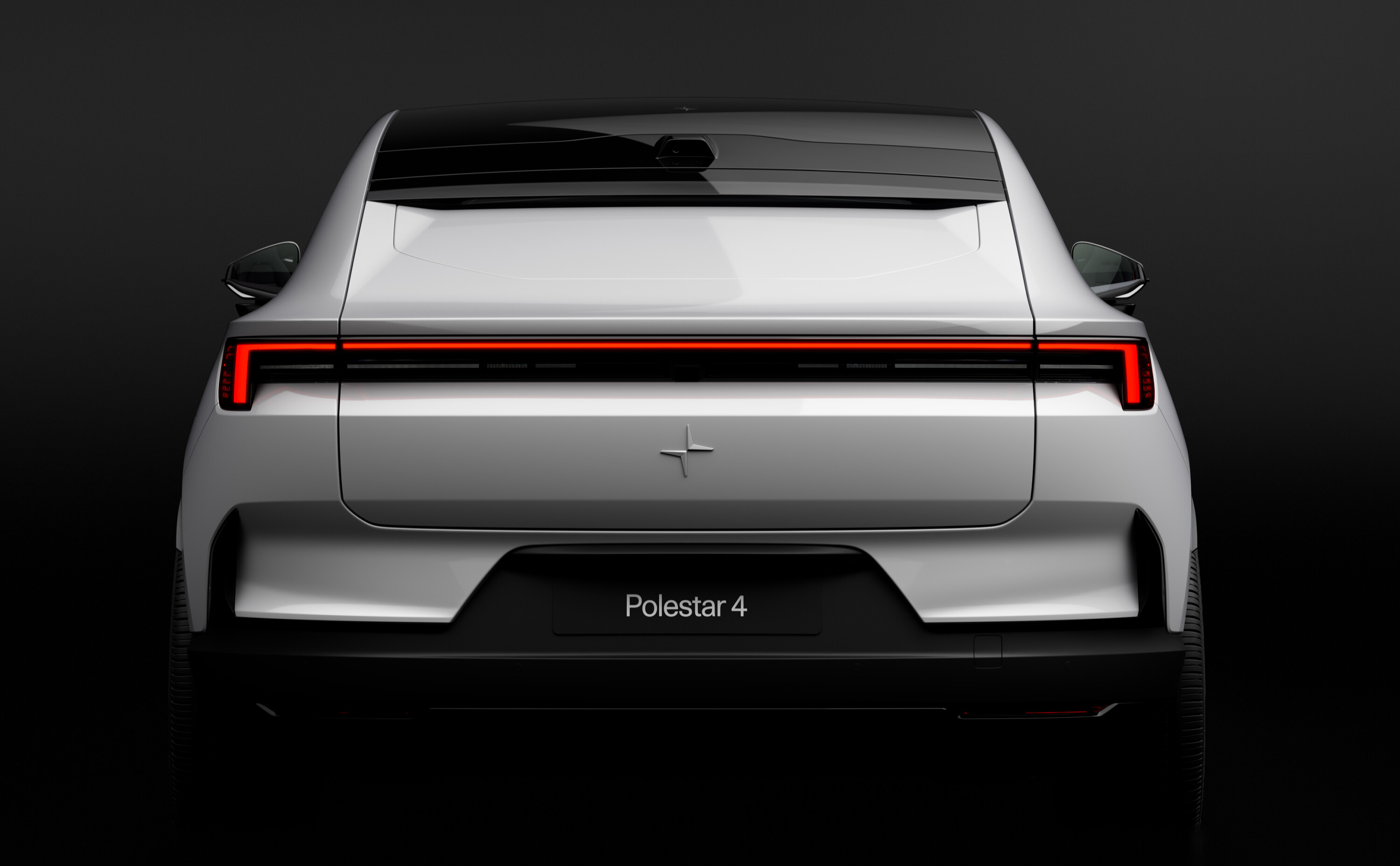
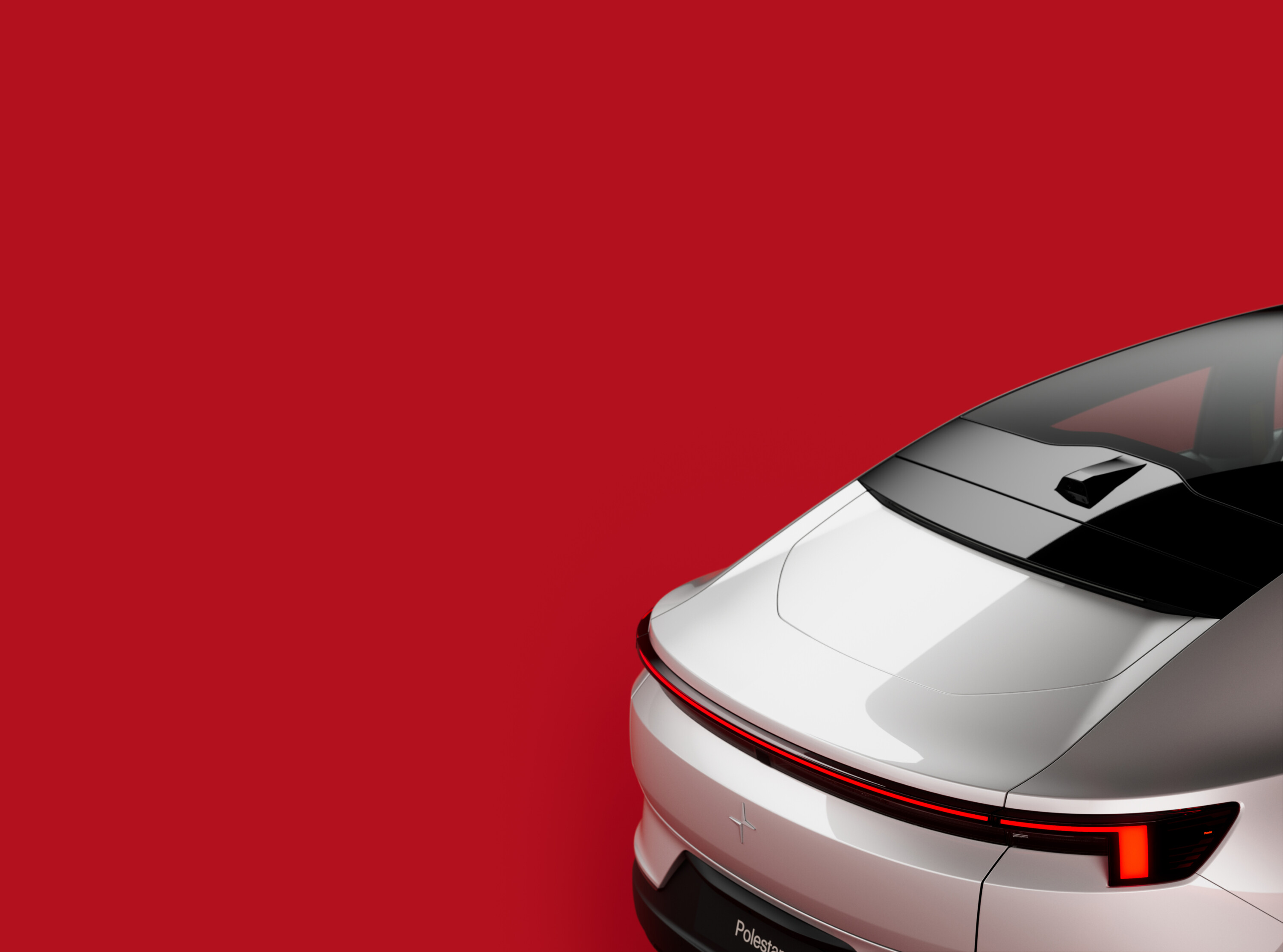
A full-width LED tail-light bar features at the rear, while the roof-mounted camera system provides the vision for the digital rear-view mirror to replace the traditional rear window.
1
Polestar’s design chief, Maximilian Missoni, said this improves safety while providing a “unique experience” for passengers.
As with the Polestar Precept concept, removing the rear window allows the full-length glass roof to extend to the tailgate, with optional electrochromic technology for “opaque or transparent execution,” similar to the Porsche Taycan and recently unveiled Volkswagen ID.7.
Measuring 4839mm long, 2139mm wide (including mirrors) and 1544mm tall, with a 2999mm wheelbase, the Polestar 4 is roughly in line with the Polestar 3 large SUV.
1
For context, Australia’s top-selling electric SUV, the Tesla Model Y, is approximately 100mm shorter in length, width and wheelbase. The Hyundai Ioniq 5 also has a 3.0-metre wheelbase – though it’s smaller in other dimensions.
| Dimensions and weight | |
|---|---|
| Wheelbase | 2999mm |
| Length | 4839mm |
| Height | 1544mm |
| Width incl. mirrors | 2139mm |
| Ground clearance | 166mm |
| Turning circle kerb to kerb | 11.6m |
| Kerb weight | 2232-2351kg |
| Weight distribution | 50:50 |
| Front storage compartment | 15 litres |
| Rear luggage capacity | 500 litres |
| Rear cargo capacity | 1536 litres |
| Towing capacity | 2000kg (dual), 1500kg (single) |
| Tongue weight limit | 100kg |
| Roof load limit | 75kg |
1
Interior comfort and technology
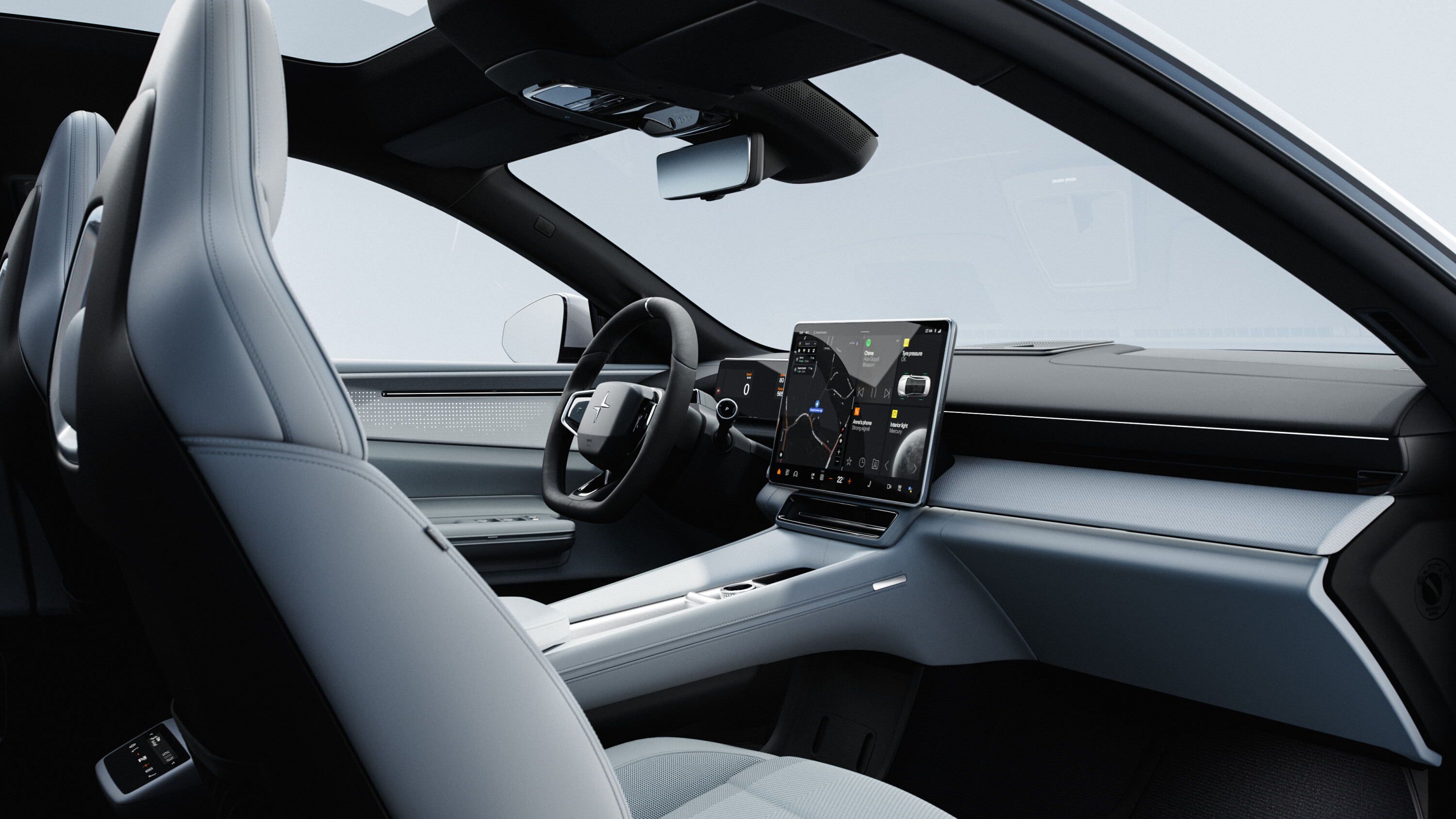
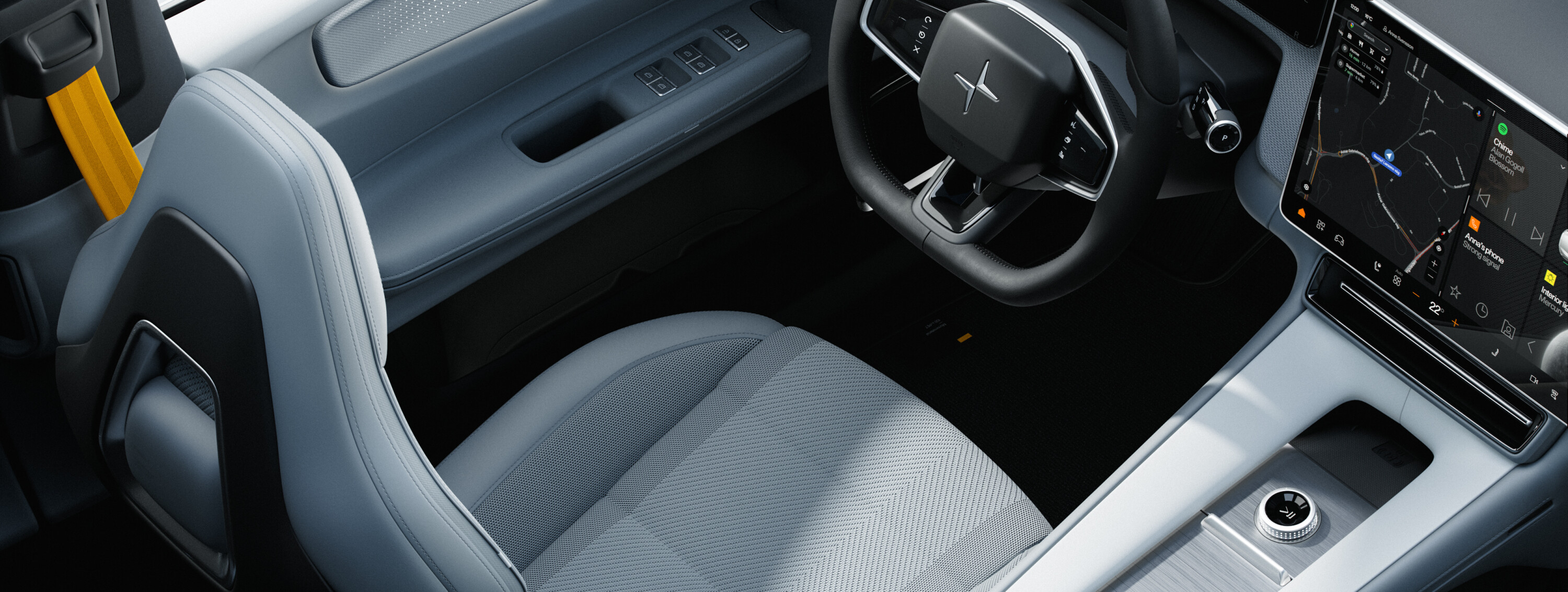
Inside, the Polestar 4 is similar to the latest Polestar and Volvo electric vehicles, with a freestanding 15-inch Android Automotive infotainment system powered by an automotive-focused Snapdragon system-on-a-chip.
As with other Android Automotive systems, the Polestar 4 has Google built-in, with Maps, Assistant, and the Google Play app store to download third-party applications. It supports over-the-air updates “for new features and improvements to be sent remotely to all vehicles.”
A 10.2-inch digital instrument cluster with speed, battery and range information is positioned ahead of the driver, along with a 14.7-inch head-up display with a snow mode to switch the text from white to yellow.
1
A secondary media and climate control screen is available for rear passengers, similar to the updated Tesla Model S and Model X.
A 12-speaker, 1400-watt Harmon Kardon audio system is standard, with the optional Nappa Pack increasing the speaker count to 16, with two additional units in each front headrest.
Safety and option packages
A range of option packages will be available, including the Plus, Pilot and Performance packs.
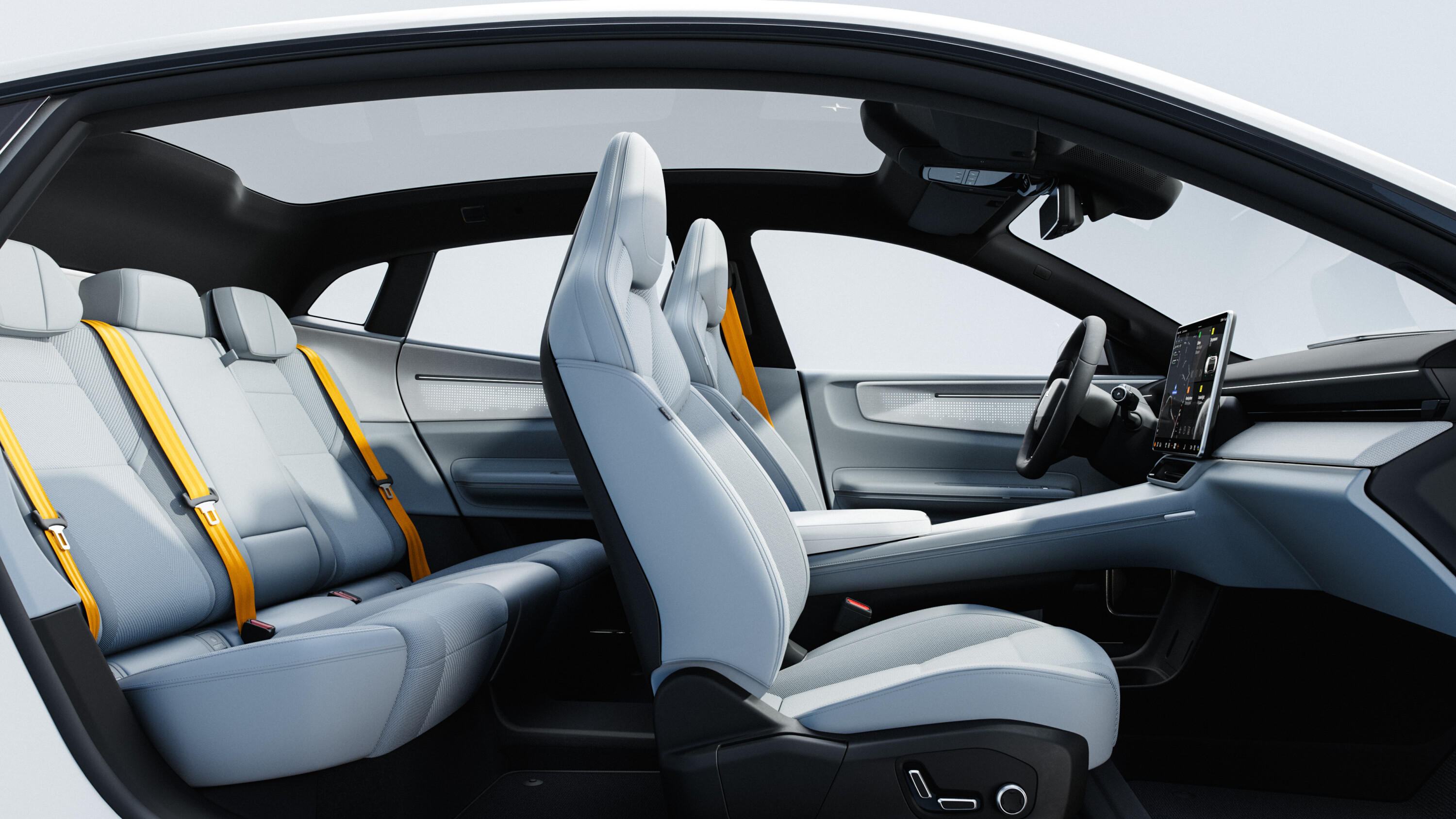
Body-coloured lower cladding, additional interior illumination, and the electrochromic glass roof will be offered with the Plus Pro pack, while the Nappa Pack adds vegan Nappa leather upholstery with ventilation, massaging and headrest speakers.
1
The Pilot Pack includes the semi-autonomous Pilot Assist system, while the Performance Pack – exclusive to the Long Range Dual Motor – adds 22-inch wheels, four-piston Brembo brakes, unique chassis tuning, and “Swedish gold details for the brakes, seat belts and valve caps.”
The Polestar 4 features up to nine airbags, while the Mobileye SuperVision Advanced Driver Assistance System provides twelve cameras, one radar and twelve ultrasonic sensors.
As with the Volvo EX90, it has a driver monitoring camera – which does not record video – to monitor the driver’s eyes and head movements.
1
Availability
The 2024 Polestar 4 will commence production in China in November, with a “full-scale” global launch – including Asia Pacific – due early next year.
Wheels understands the Polestar 4 will launch in Australia shortly after the previously-revealed Polestar 3, which is set to launch here in the first quarter of 2024 from $132,900 plus on-road costs.
Local pricing and full details for the Polestar 4 will be confirmed closer to its local launch.
MORE
Everything Polestar
⚡ More EV stories to help you choose the best car for your needs
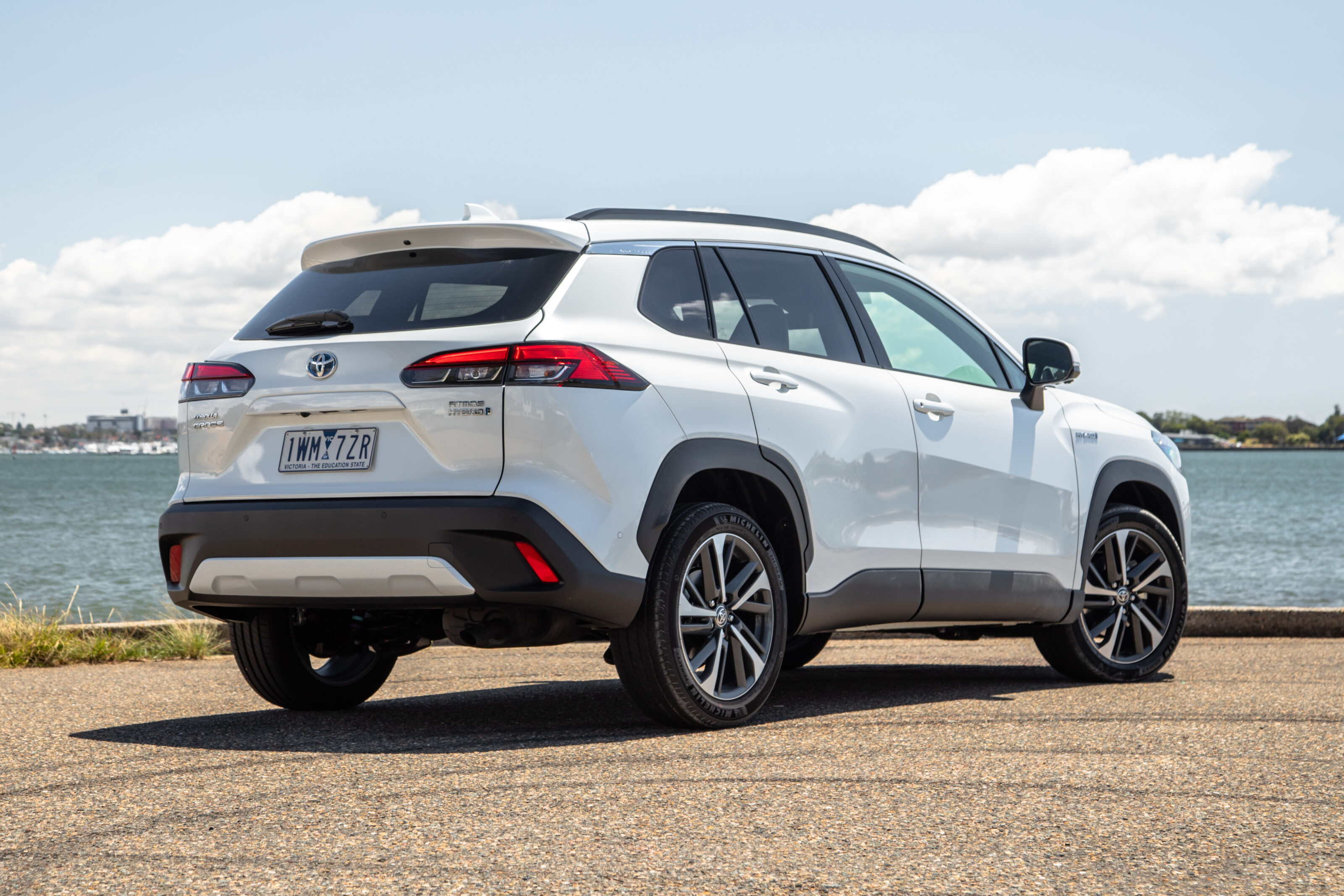
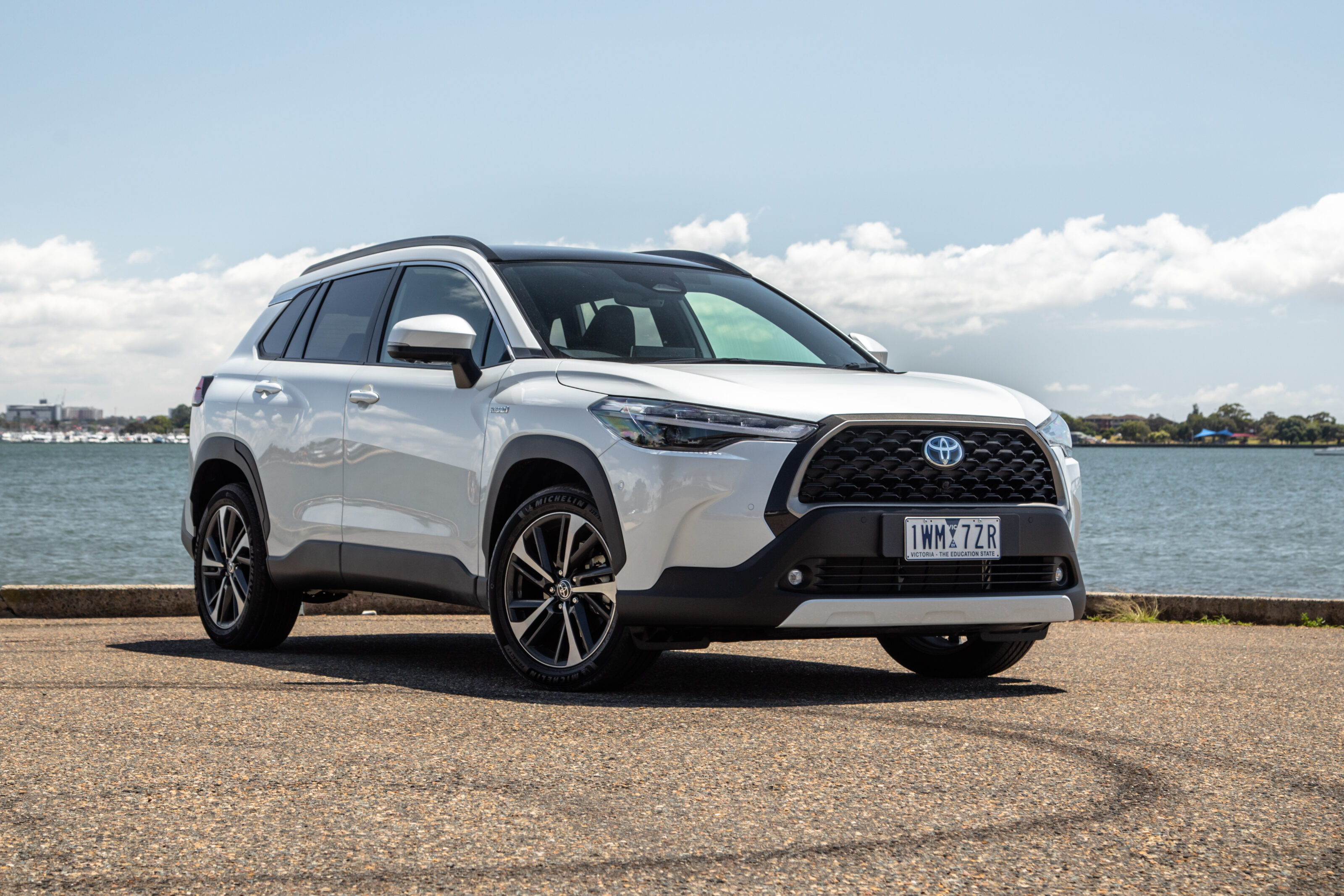
No surprises, the Corolla Cross has been the instant smash-hit Toyota was expecting.
Any Toyota with ‘hybrid’ in the name is box-office gold – and if it hadn’t been popular, a lot of Toyota executives would have a lot of thinking to do.
Toyota told us the GX hybrid would be the most popular, and that seems to be about right. The company also thought far fewer people would buy the all-wheel drive hybrid than the front-wheel drive, an interesting contrast to the RAV4.
And really, when you’re at the price point of the front-wheel drive Corolla Cross Atmos hybrid, you’re probably thinking, wait, maybe I should get a RAV4? I’ve been thinking the same thing, so let’s have a look and see what you get for fifty-odd grand on the road.
1
JUMP AHEAD
- How much is it, and what do you get?
- How do rivals compare on value?
- Interior comfort, space and storage
- What is it like to drive?
- How much fuel does it use?
- How safe is it?
- Warranty and running costs
- VERDICT
- Specifications
How much is it, and what do you get?
The Corolla Cross petrol range starts in the mid-thirties with a front-wheel drive petrol.
The GX is a decent amount of car for the money if you’re not fussy about how quickly you can go (because it’s not at all quick) or how many gadgets you have.
Up in the mid-forties, it’s quite a different proposition with lots of equipment, tech and extra safety gear.
For $46,060 before on-road costs ($3000 cheaper than the AWD) you get a front-drive Corolla Cross Atmos hybrid with:
| 2023 Toyota Corolla Cross Atmos FWD hybrid features | |
|---|---|
| 18-inch alloy wheels | Keyless entry and start |
| 9-speaker JBL-branded stereo | Multi-zone climate control |
| Auto LED headlights | Power-adjusted front seats with memory |
| Auto parking | Power tailgate |
| DAB+ digital radio | Reversing camera |
| Digital instrument panel | Sat-nav |
| Electrically operated rear door locks | Sunroof |
| Heated and folding rear-view mirrors | Tyre repair kit |
| Heated front seats | Wired Android Auto |
| Heated steering wheel | Wireless Apple CarPlay |
| Imitation leather interior | Wireless phone charging pad |
1
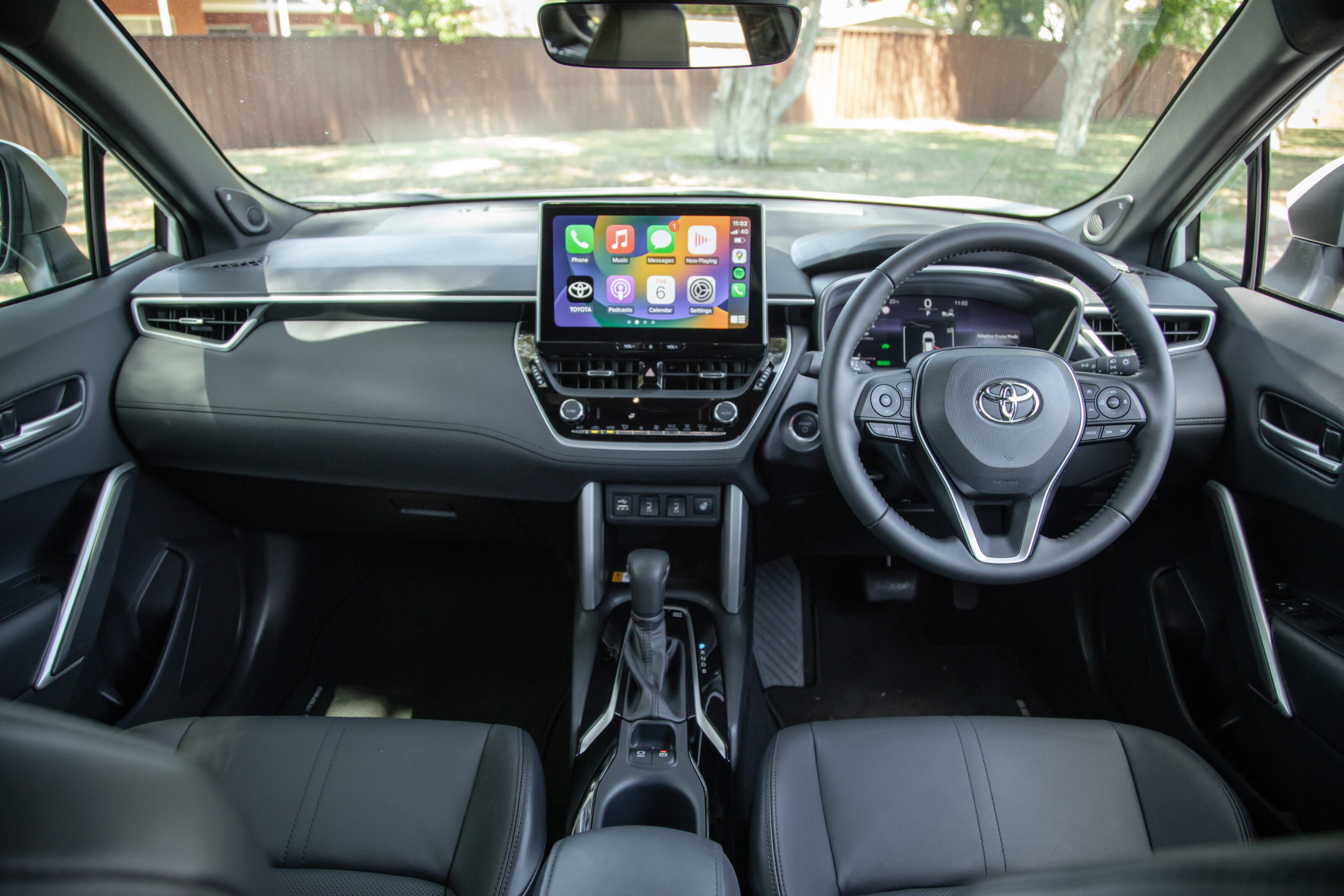
The Atmos picks up the ‘nanoe’ climate control system which allegedly filters out all sorts of stuff that we’d all rather not breathe. It also scores a more “premium” leather wrapping on the steering wheel, wireless charging, three extra speakers and a larger digital dashboard.
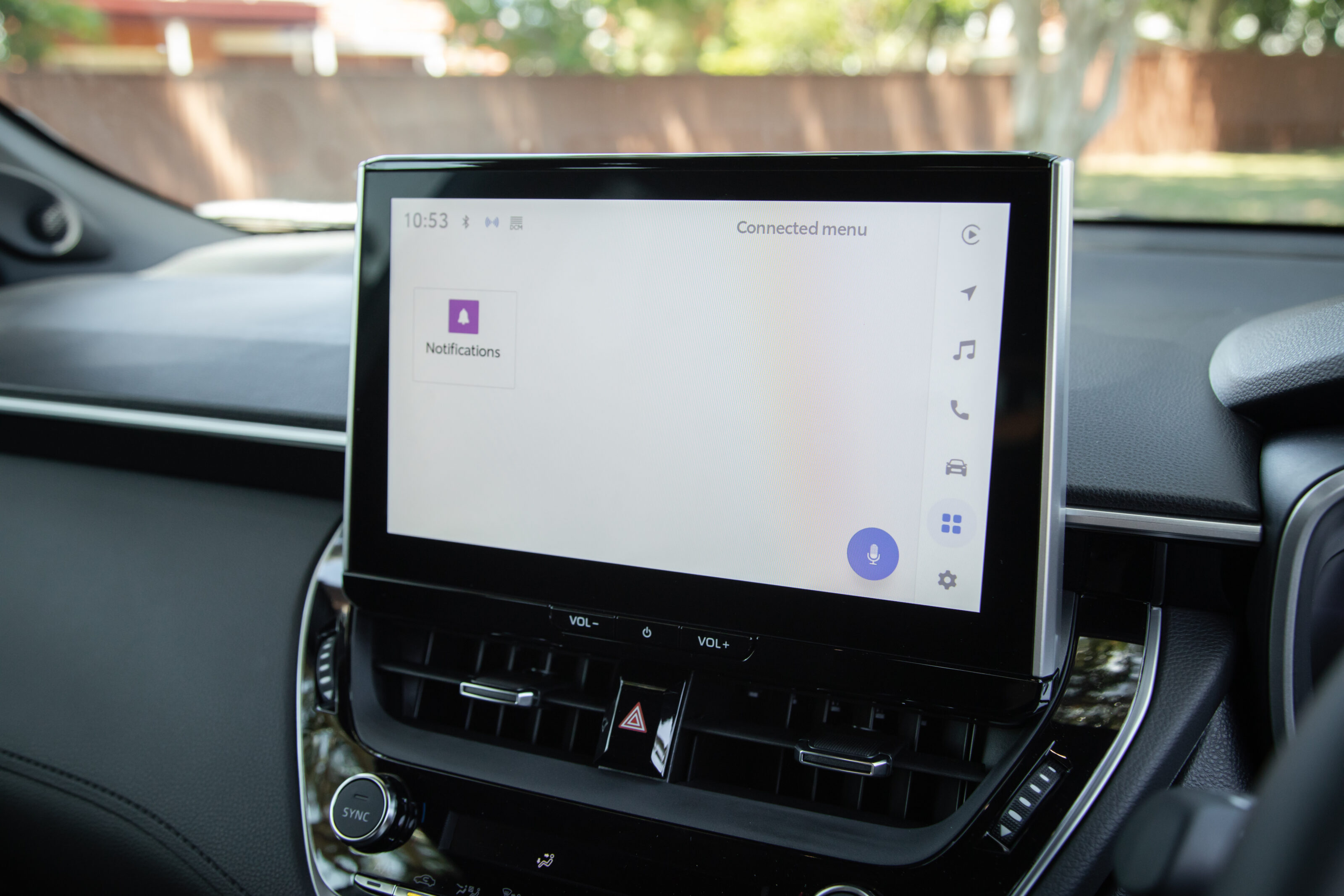
It shares the bigger 10.5-inch media screen with the GXL, sacrificing the volume dial for a pair of volume switches that just don’t cut it. What does cut it is the shiny new media system that replaces the awful junk Toyota shipped for years. It was unspeakably bad and this new system, while fiddly for some functions, looks way better and is way better, with sat-nav thrown in for free. Sadly not free is Toyota Connected Services.
Well, it is for the first twelve months but after that, they want to sting you a Disney Plus/Binge worth of dollars to maintain the full system. If you don’t want everything, you’ll be hit for roughly an Amazon Prime’s worth.
1
That’s $9.95 for the remote access features and another $12 for the advanced navigation features if you’re not into streaming services.
I can’t say I think any of the advanced features are must-haves (especially if you have a “mobile telephone”). Some folks do come to rely on them, so to whack you nearly $200 a year to keep them is a bit cruddy. I’d want this sort of thing covering the warranty period rather than just twelve months, but I’m sure Toyota would counter by saying “we’re giving buyers a choice”.
How about a medium SUV?
Comparisons
Medium SUV comparison: 2023 Mega Test
Thinking of buying a new mid-size SUV this year? We test eight of the best and most popular contenders to see where you should spend your money
How do rivals compare on value?
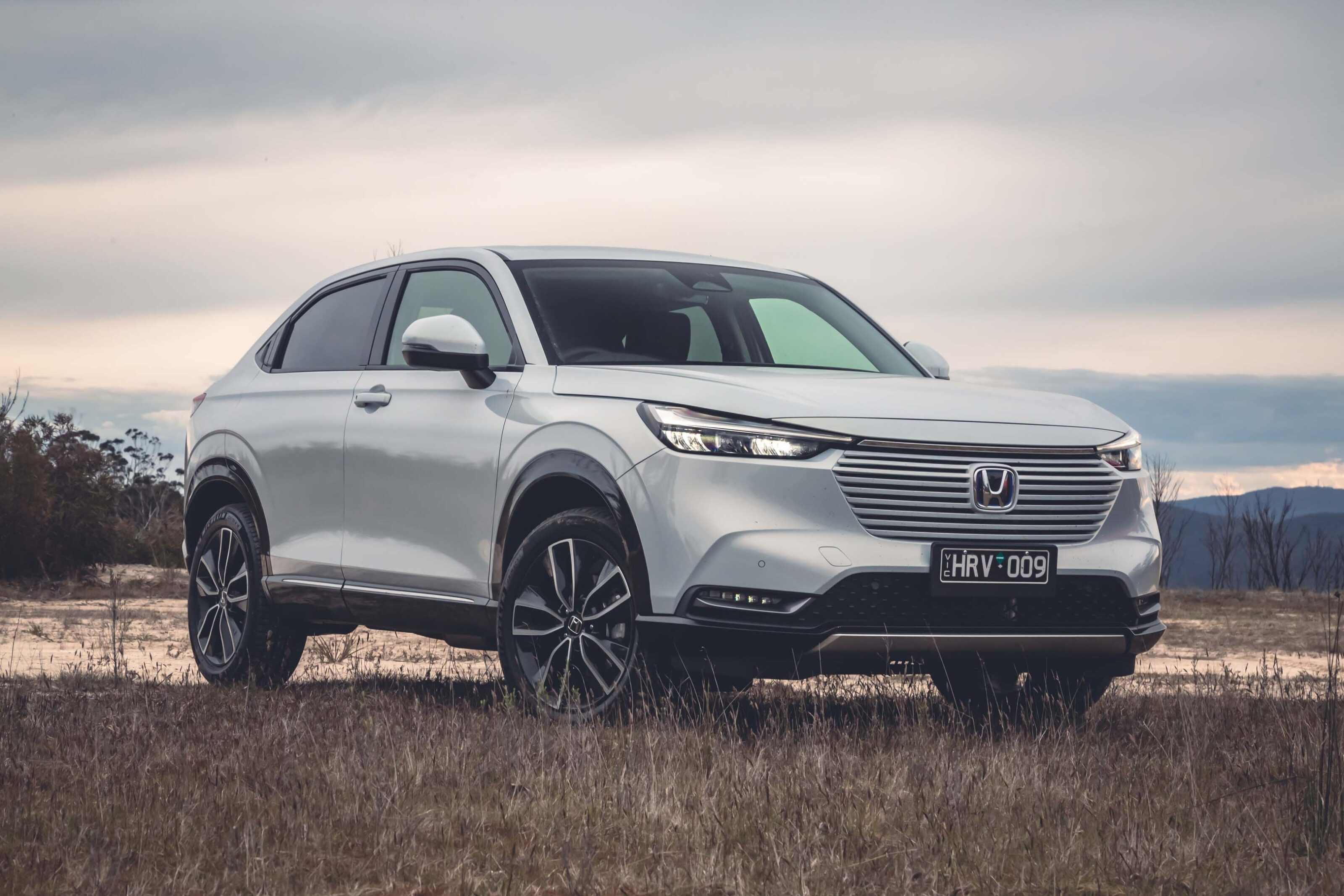
Honda’s HR-V is $47,000 drive-away for the top-spec L hybrid. That’s pretty sharp against the Atmos and it does have the better – if strictly four-seat – interior. But the HR-V is down on power and doesn’t quite have the same on-road vigour.
It shares the same five-year warranty length but is slightly cheaper to service at $199 per visit but maintenance intervals are shorter, with just a 10,000km allowance.
Kia’s Niro hybrid is a less well-known contender and, like the Honda, is not quite as good all-round but shines in some places. It has a longer, simpler-to-understand warranty, no subscription charges and I think it looks the business.
It remains baffling that Kia doesn’t do a Seltos hybrid because that would really give the Corolla Cross a run for its money. The Niro doesn’t really, at $44,380 for lower-spec S and $50,030 for the GT-Line (both before on-road costs).
1
Interior comfort, space and storage
This segment of the market is frustrating in a few ways, because almost every car in it has odd specification choices.
In common with the Kia Seltos, only the top-grade Corolla Cross has a rear centre armrest. Call me crazy, but families who might like that feature don’t always have heaps of cash to splash and want somewhere to put the kids’ water/juice/bucket of Red Bull.
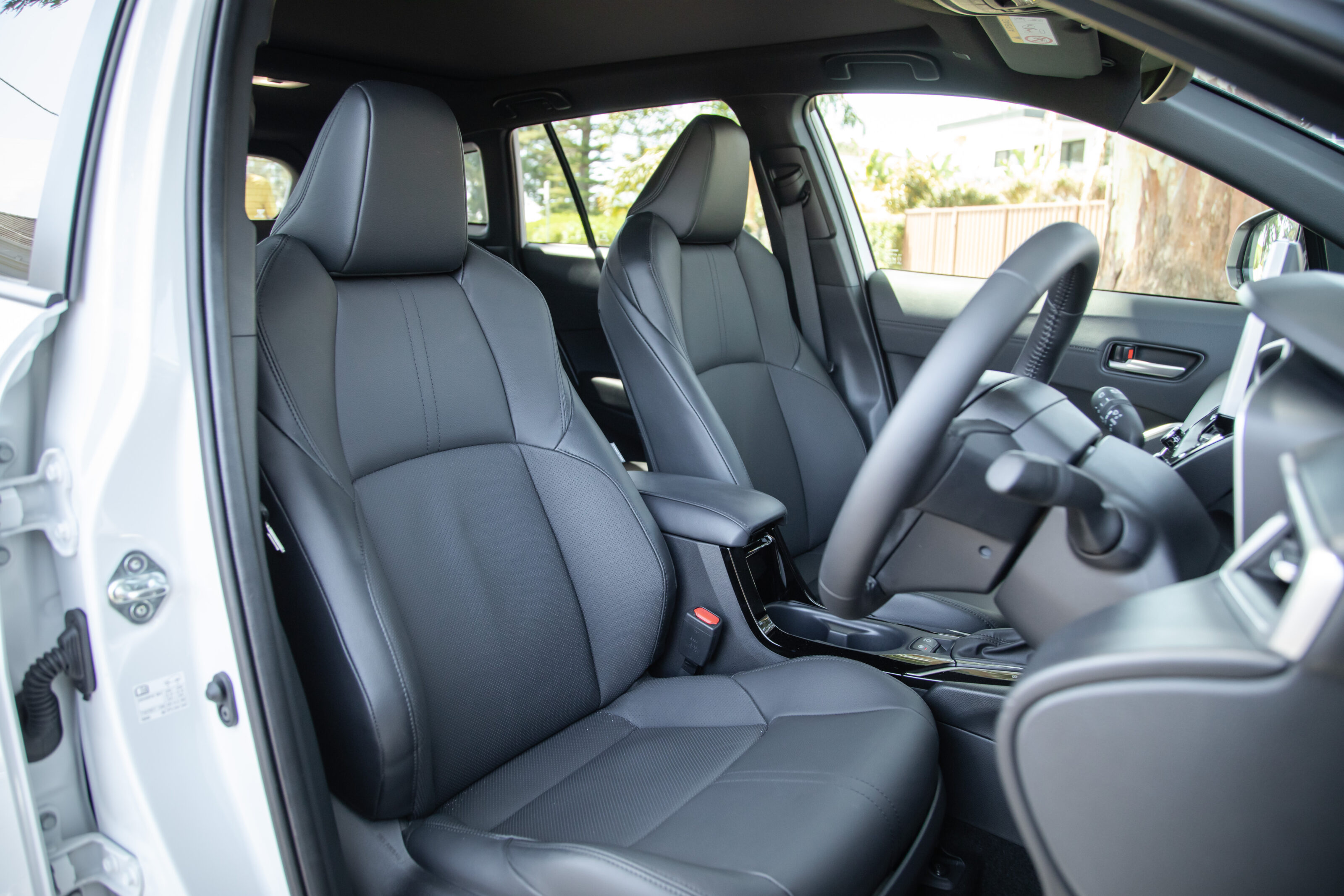
But once you’re past that quirk – which, as I say, won’t trouble you in the Atmos – the rear seat is quite a good place to be, with a good view out, plenty of foot room under the high-set front seats and a decent amount of knee and leg room.
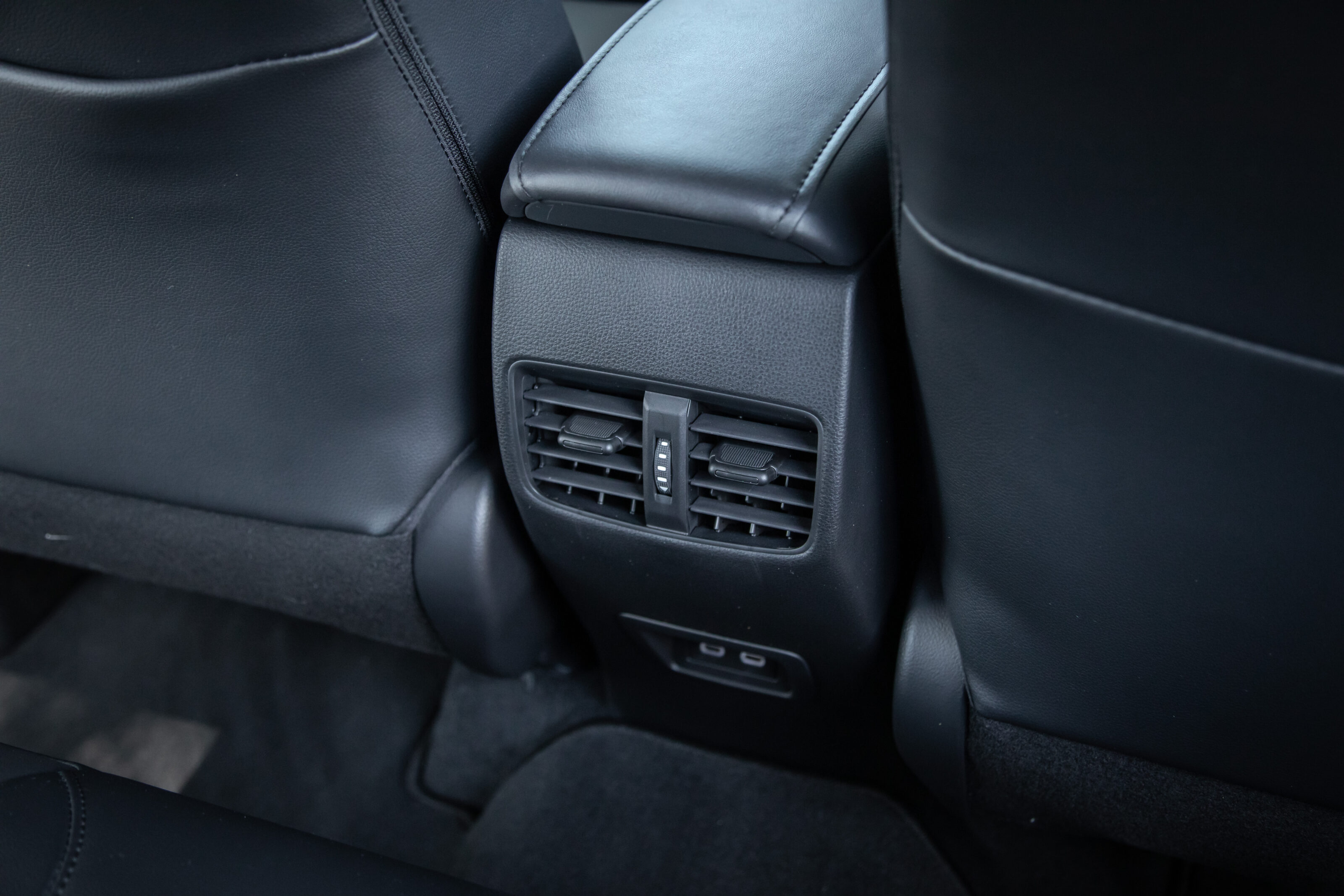
Three across is doable if the middle person is small but as is the case on so many cars, it’s not the nicest place to sit. There are two USB-C connectors for rear occupants, along with air vents and bottle holders in the doors.
1
As with most other new Toyotas, the front seats are excellent. Comfortable in all the right places, my only criticism is that they’re set too high and you’re left with the feeling you’re sitting on the car rather than in it. But the seats are so comfortable you’ll forgive it unless you’re really tall.
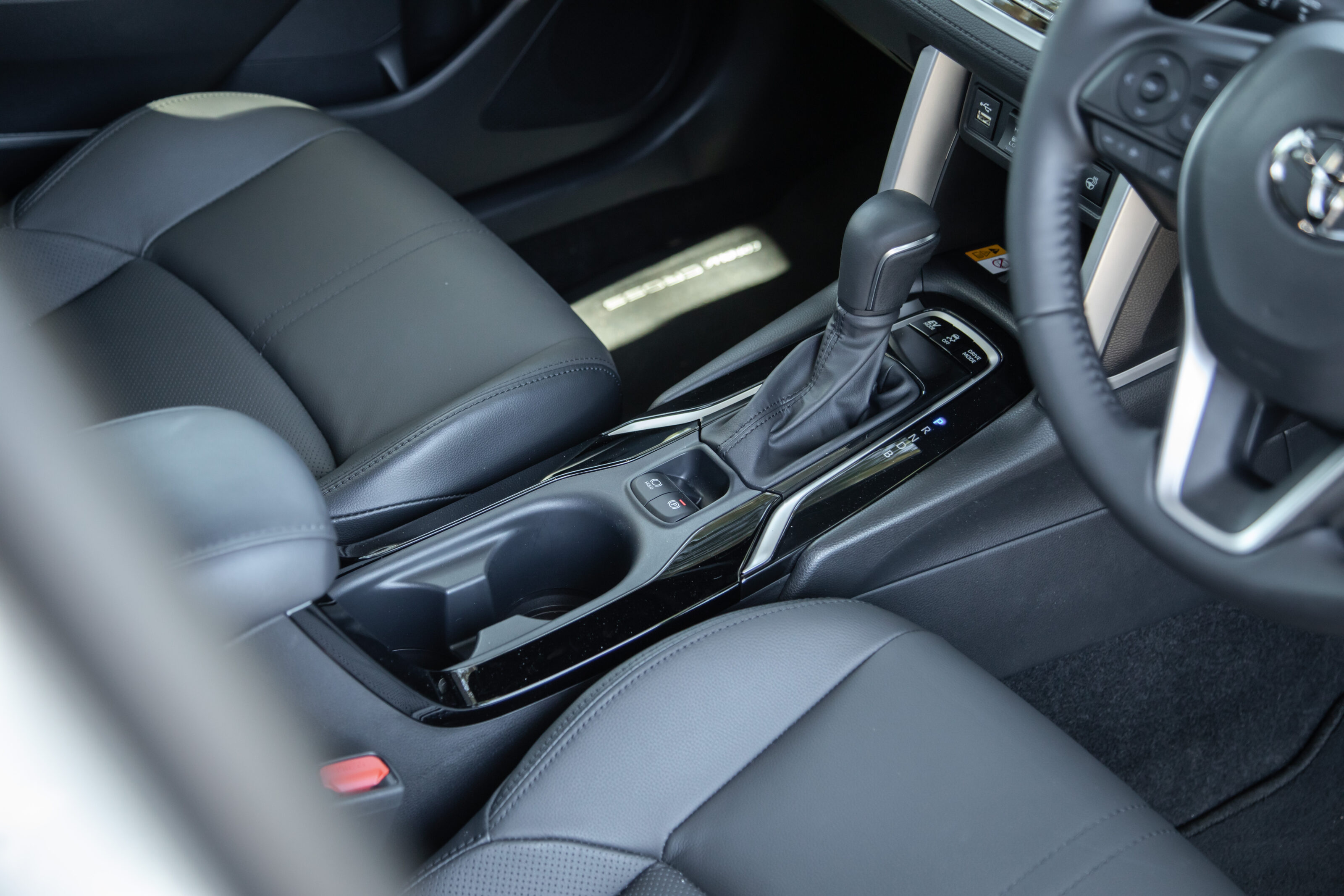
There’s a wireless charging pad and USB-A socket beside it as well as a USB-C port in the console bin, which isn’t huge but rather handy. A pair of cup holders do the job in the console, too, and the doors each have good pockets and small bottle holders.
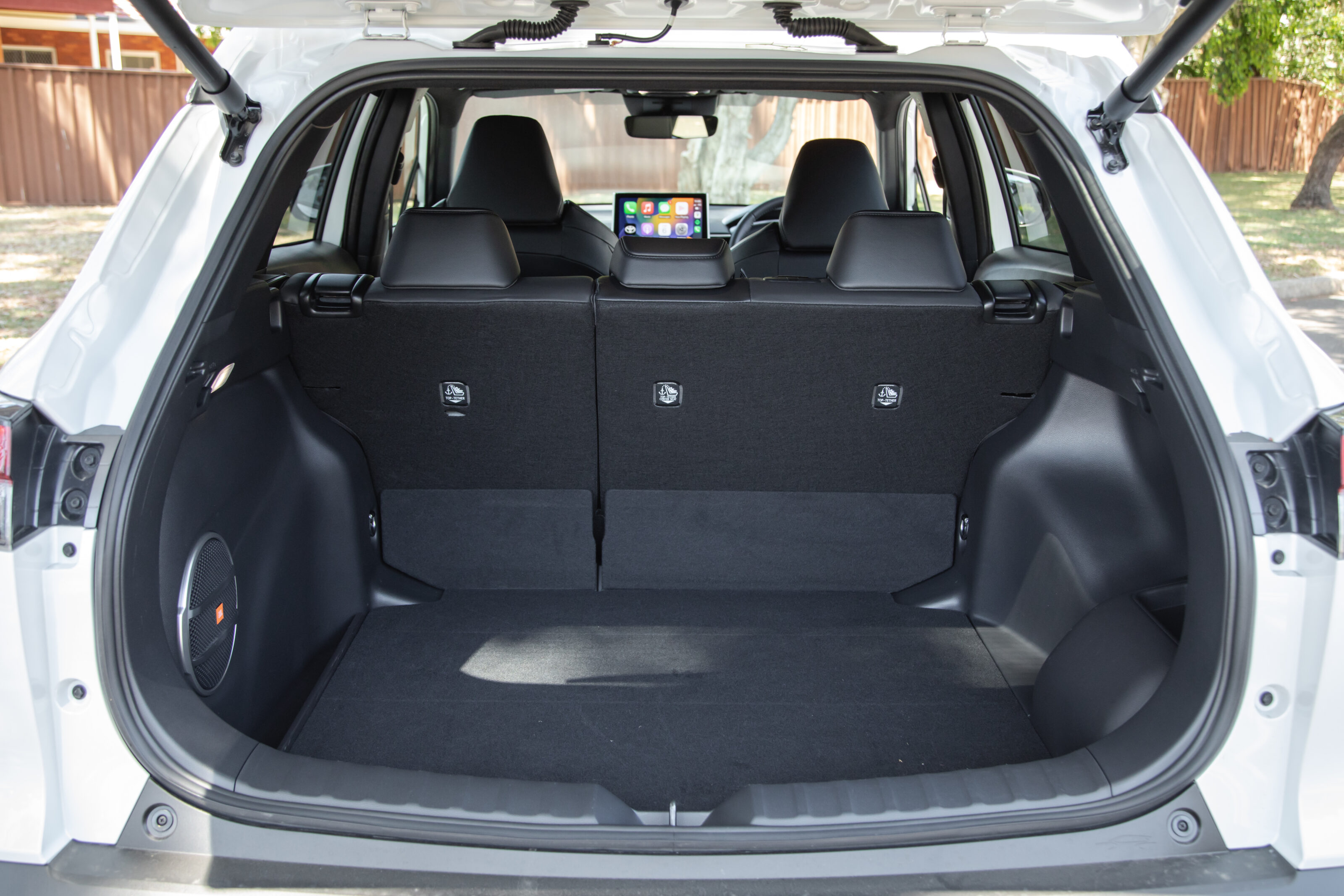
2023 Toyota Corolla Cross Hybrid boot space
The Corolla Cross’s boot space is down on some in the class, by about 30 litres. Sporting 390L, it misses the magic 400 mark by not much but as the years go by, fewer cars in this class have less than that number.
Still, it’s much better than a Corolla hatch.
1
What is it like to drive?
The front-wheel drive Corolla Cross hybrids are an interesting mix. The chassis is basically the same as the base petrol-only car with a torsion beam rear end, even on the top-spec Atmos.
| 2023 Toyota Corolla Cross Atmos FWD hybrid drivetrain | |
|---|---|
| Drive | front-wheel |
| Power | 146kW @ 6000rpm |
| Torque | 190Nm @ 4400-5200rpm |
| Compression ratio | 14.0 : 1 |
| Electric motor | front |
| Electric power and torque | 83kW/206Nm |
| Combined power | 146kW |
| Combined torque | NA |
| Battery | lithiumi-ion |
| Transmission | continuously variable |
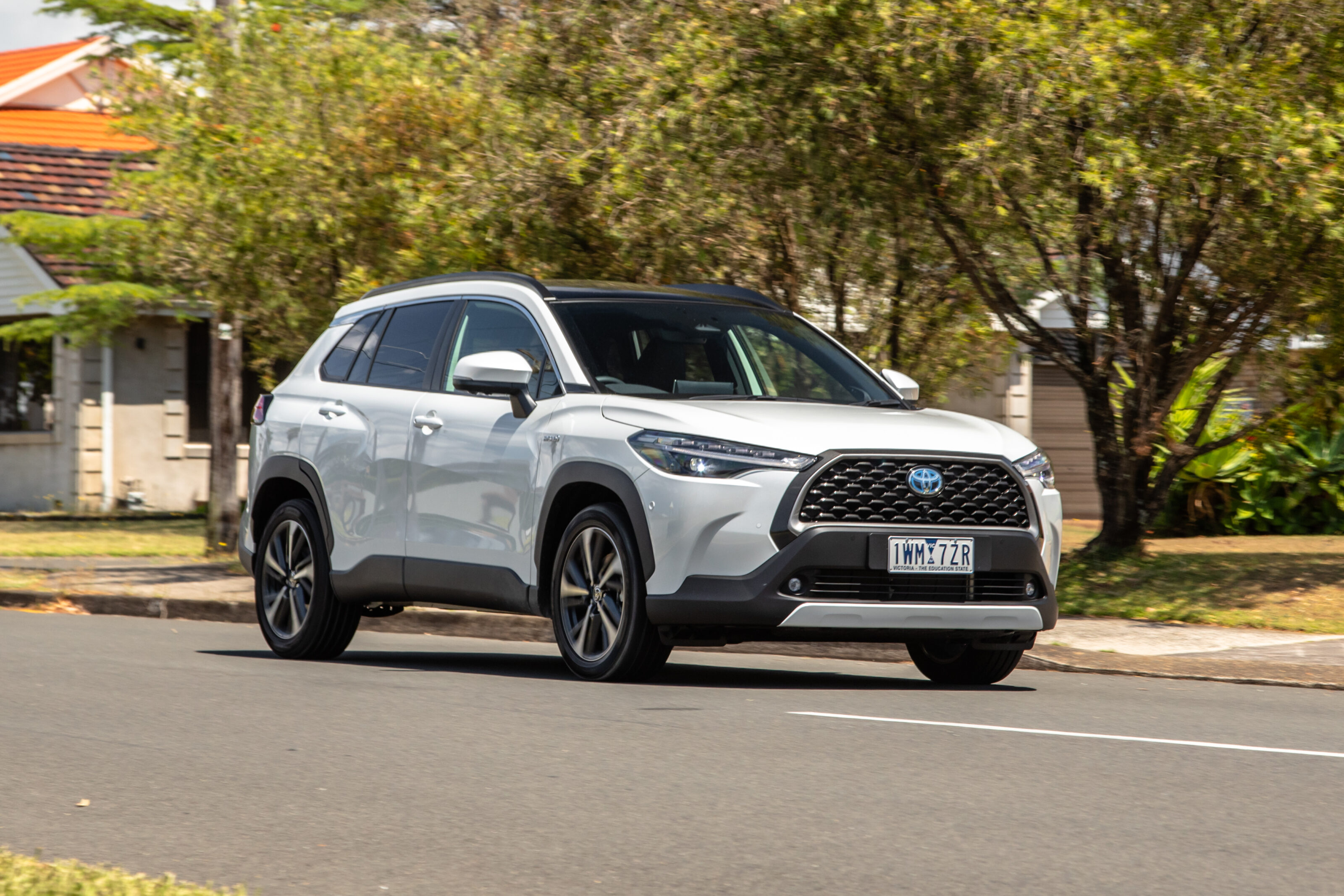
1
As with every other Toyota hybrid, the automatic continuously variable transmission (CVT) handles the power-to-wheel duties and, with all the development over the years, has become much more agreeable.
The front-wheel drive hybrid packs 146kW all up from its 112kW 2.0-litre internal combustion engine and 83kW electric motor. The ICE brings 190Nm to the electric motor’s 203Nm but there’s no reliable combined torque figure.
It’s probably quite a healthy figure because there’s plenty of power to spin the front wheels on greasy surfaces and it’ll even chirp out of a corner if you punch the throttle.
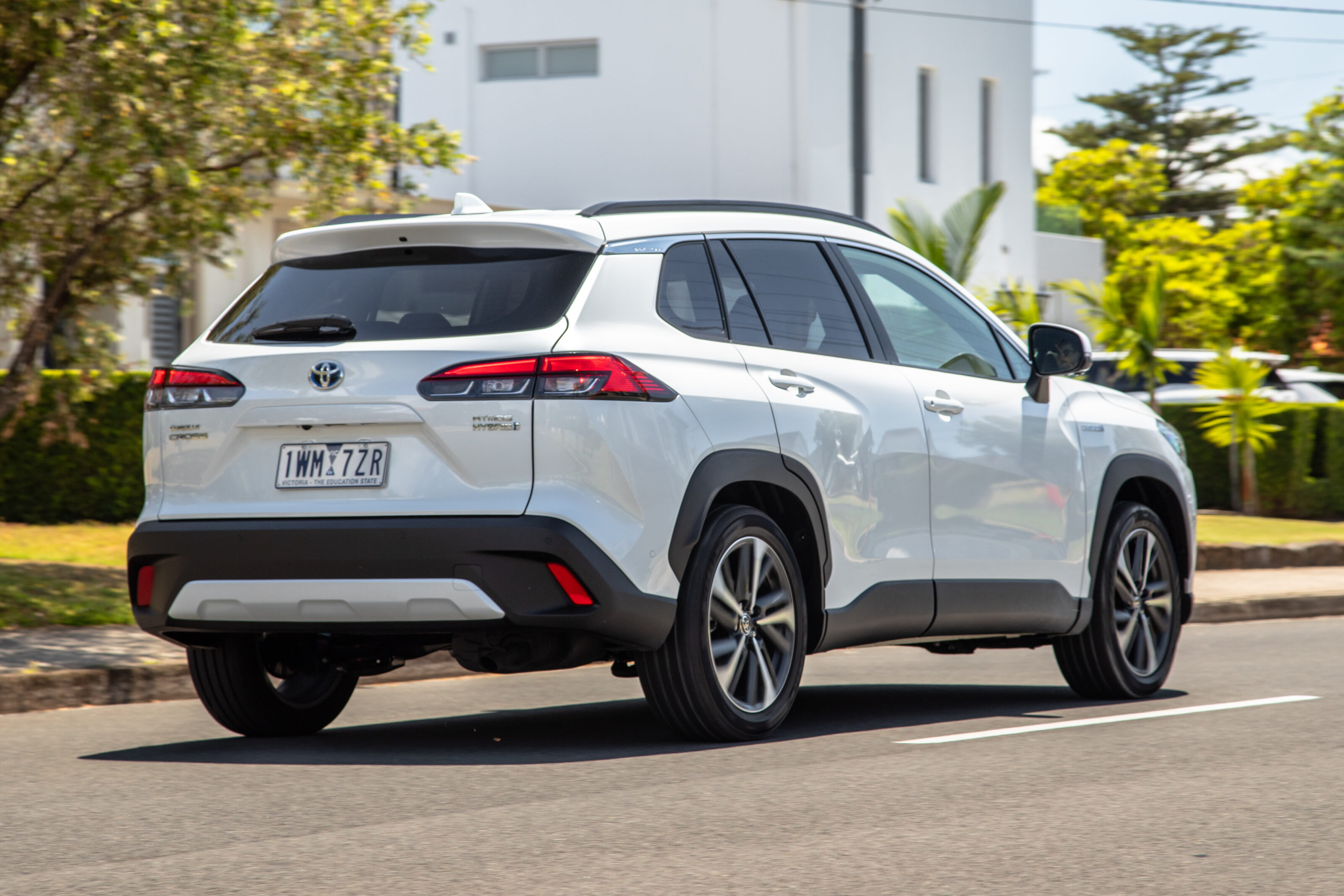
1
For front-seat passengers, the ride is pretty good and if that’s all you have to worry about, it’s a terrific car.
It also steers quite nicely as long as you’re not too enthusiastic about mashing the accelerator.
It’s really only enthusiastic drivers and/or rear-seat passengers who will notice the torsion beam suspension of the Atmos FWD. The rear will skip over those nasty rubber speed bumps and is a little less planted in fast cornering. While that’s hardly a core reason for buying a Corolla Cross, it’s worth knowing.
The ride is otherwise pretty composed, with only big bumps able to upset its relaxed demeanour.
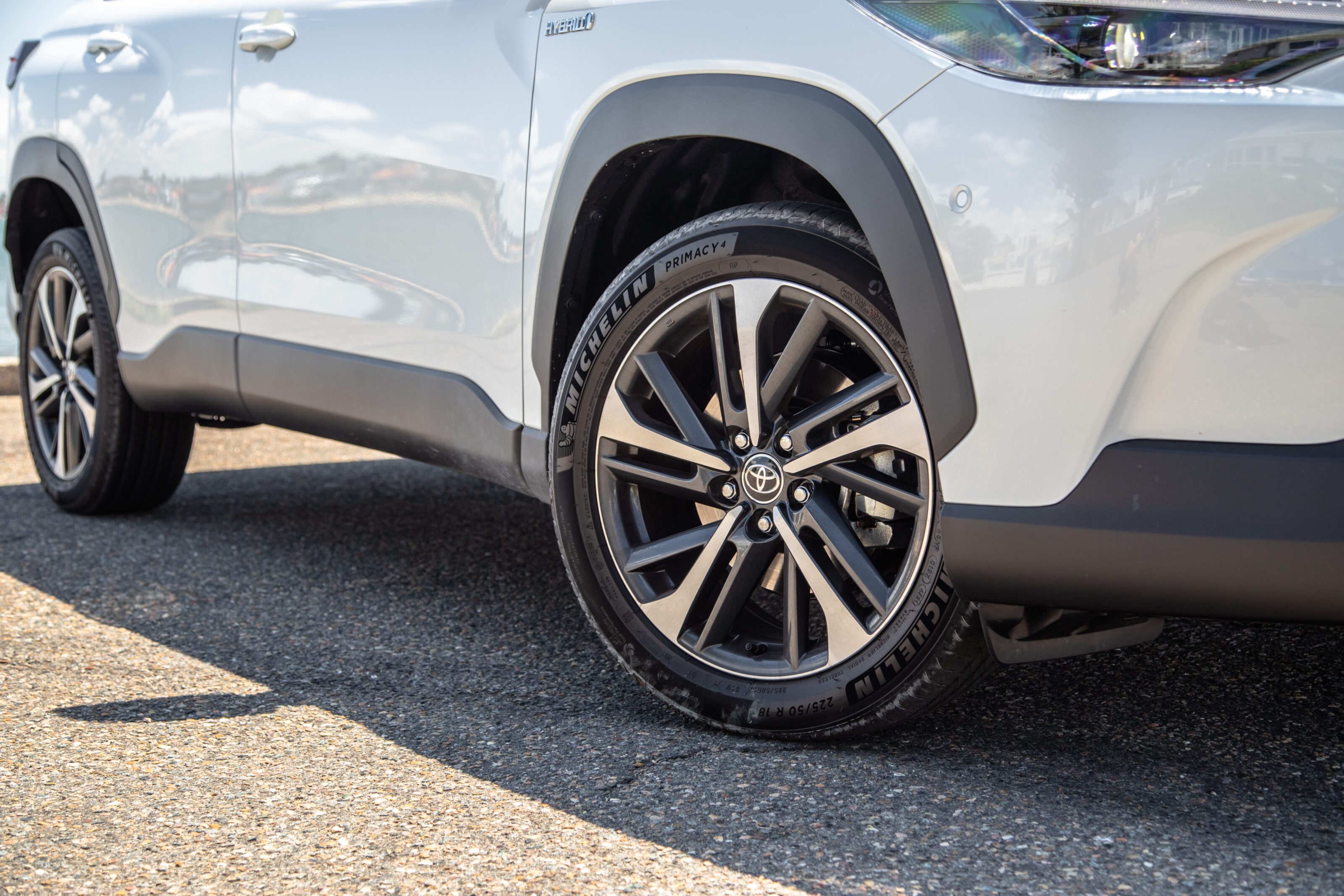
1
How is it on fuel?
Toyota hybrids are famously easy on the gas and even with 1550kg to drag around, the ADR testing delivered a 4.3L/100km score on the combined cycle.
I got 5.2L/100km in a stinking humid week in Sydney with mostly suburban running and a few 80km/h runs thrown in, which I reckon is good going.
| Toyota Corolla Cross Atmos FWD fuel economy | |
|---|---|
| Fuel economy (ADR combined) | 4.3L/100km |
| Fuel economy (trip computer) | 5.2L/100km |
| Fuel economy (at the pump) | 5.2L/100km |
| Fuel type | 91 RON unleaded |
| Fuel tank capacity | 36 litres |
The Cross is tall and hardly an aerodynamic wonder, but you can easily cover about 680km between fills. If it’s fuel economy you’re really after, get a Corolla, save on the upfront cost and knock a litre off the real-world consumption.
Its mildly absurd 36-litre fuel tank is tolerable given the impressive return on fuel economy. The trip computer and the pump agree with my real-world week, which burnt fuel at 5.2L/100km.
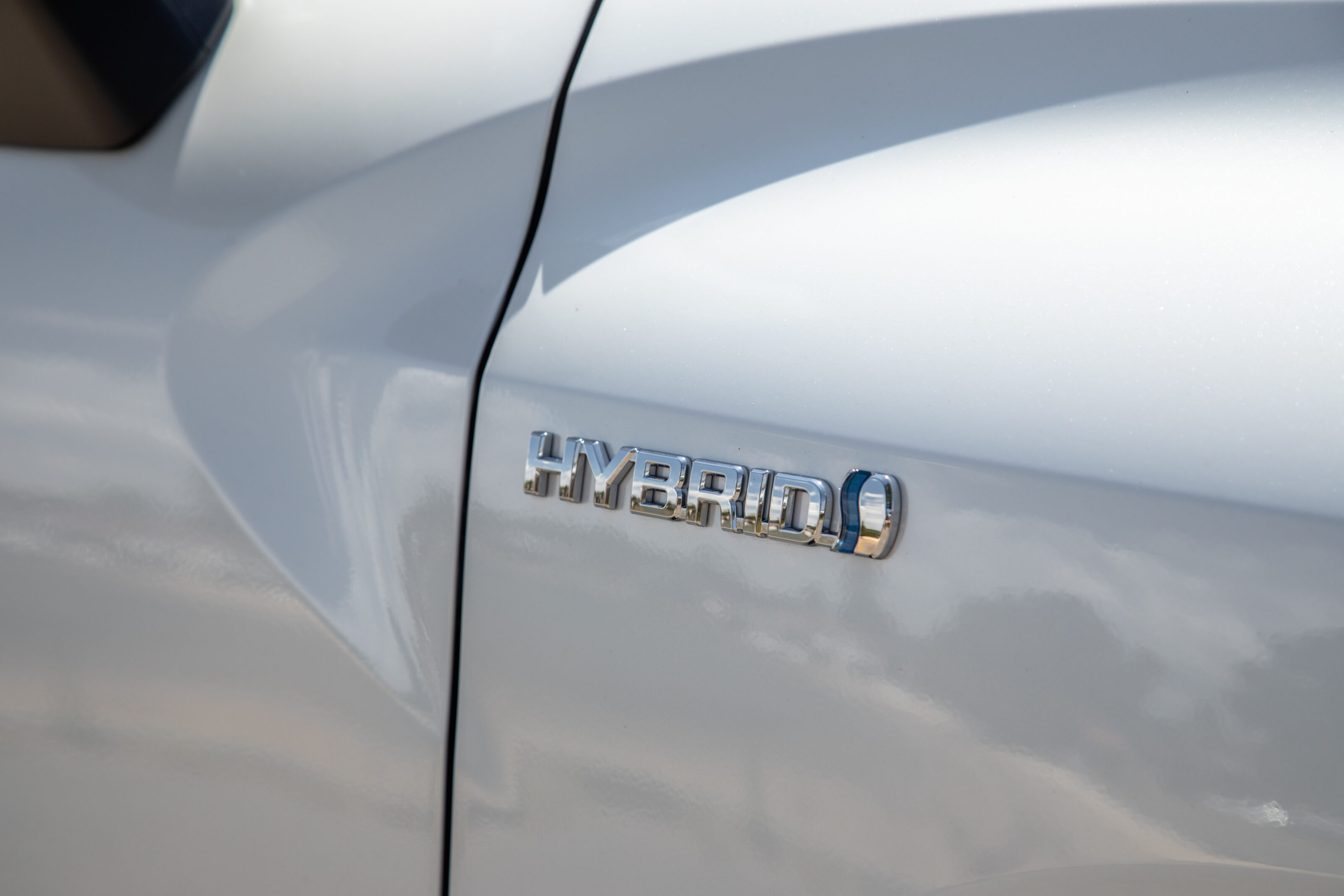
1
How safe is it?
The five-star ANCAP safety rating for the Corolla Cross results from a pretty healthy set of numbers across the entire range.
The Atmos only picks up a couple of bits and pieces over the GXL, which itself really only grabs the Parking Support Brake (PKSB) feature over the GX.
| 2023 Toyota Corolla Cross Atmos FWD hybrid safety features | |
|---|---|
| 8 airbags | ABS |
| Stability and traction controls | Forward AEB (high and low speed) |
| Forward collision warning | Reverse cross-traffic alert |
| Reverse AEB (low-speed) | Front cross-traffic alert |
| Lane departure warning | Lane-keep assist |
| Driver attention detection | Safe exit warning |
| Blind-spot monitoring | 360-degree cameras |
The forward auto emergency braking (AEB) features daytime pedestrian and cyclist detection as well as operating at city and highway speeds. The low-speed PKSB turned out to be a bit finicky, though.
A tall hedge lines the left side of our driveway and more than once when we tried to back out, the toys would go out of the pram. The car was convinced it was going to hit something solid and would jam on the brakes. That got real old real quick.
1
Ironically, moving across to the right and close enough to almost scrape the driver’s mirror down the side of the house, no drama. My wife has little patience for this kind of thing and mine wore thin by the end of the week.
The following week we had an all-wheel drive GXL which behaved far better, so it’s possible that the over-sensitive Atmos had something wrong with it, like a misaligned sensor, possibly on the left-hand side.
There are two ISOFIX points in the back row of seats and three top tether anchors.
Warranty and running costs
Toyota’s five-year, unlimited-kilometre warranty applies to the Corolla Cross, with the driveline warranty extending a further two years if you service at an official dealer.
Capped-price servicing applies for the first five services – which are spaced at 12 months/15,000km – and cost $250 each, $5 more than the hatch. That works out at $1250 over five services, which is pretty good going. Prices are up by $25 per service since launch.
1
If you like the Toyota Connected Services features after the first 12 months, you’ll have to pay $9.95 per month for remote connectivity to locking, engine start and climate control. If you want to keep the fancy sat-nav features, that’s another $12 per month.
The feature set shrinks if you don’t pay but the sat-nav remains operable in a basic and very useable form.
1
VERDICT
One of the things I really appreciate about any hybrid Corolla Cross is that they’re not gutless, but they also deliver excellent fuel economy and refinement.
There’s a reason they’re flying out the door.
The Atmos, though, isn’t the one I’d have. Sure, it’s got lots of nice things, but not enough to justify the price increase and it really did have me looking at RAV4 prices and considering my theoretical position as a buyer. I’d prefer to step down to a GXL AWD or even save a few more bucks on a GXL FWD if I wasn’t fussed about the extra oomph (and traffic-jam-friendly EV capability).
Either way, you’re not making a mistake, though, which is the most Toyota thing ever.
MORE
Everything Toyota
MORE
SUV Buyers Guide
| 2023 Toyota Corolla Cross Atmos FWD hybrid specifications | |
|---|---|
| Body | 5-door, 5-seat small SUV |
| Drive | front-wheel |
| Power | 146kW @ 6000rpm |
| Torque | 190Nm @ 4400-5200rpm |
| Compression ratio | 14.0 : 1 |
| Electric motor | front |
| Electric power and torque | 83kW/206Nm |
| Combined power | 146kW |
| Combined torque | NA |
| Battery | lithiumi-ion |
| Transmission | continuously variable |
| 0-100km/h | 7.5 seconds (claimed) |
| Fuel consumption | 4.3L/100km |
| Weight | 1550kg |
| Suspension | MacPherson struts front/trailing arms rear |
| L/W/H | 4460/1825/1620 |
| Wheelbase | 2640mm |
| Brakes | 305mm ventilated discs front/281m solid discs rear |
| Tyres | 225/50 R18 Bridgestone Alenza |
| Wheels | 18-inch alloy (space-saver spare) |
| Price | $46,050 + on-road costs |
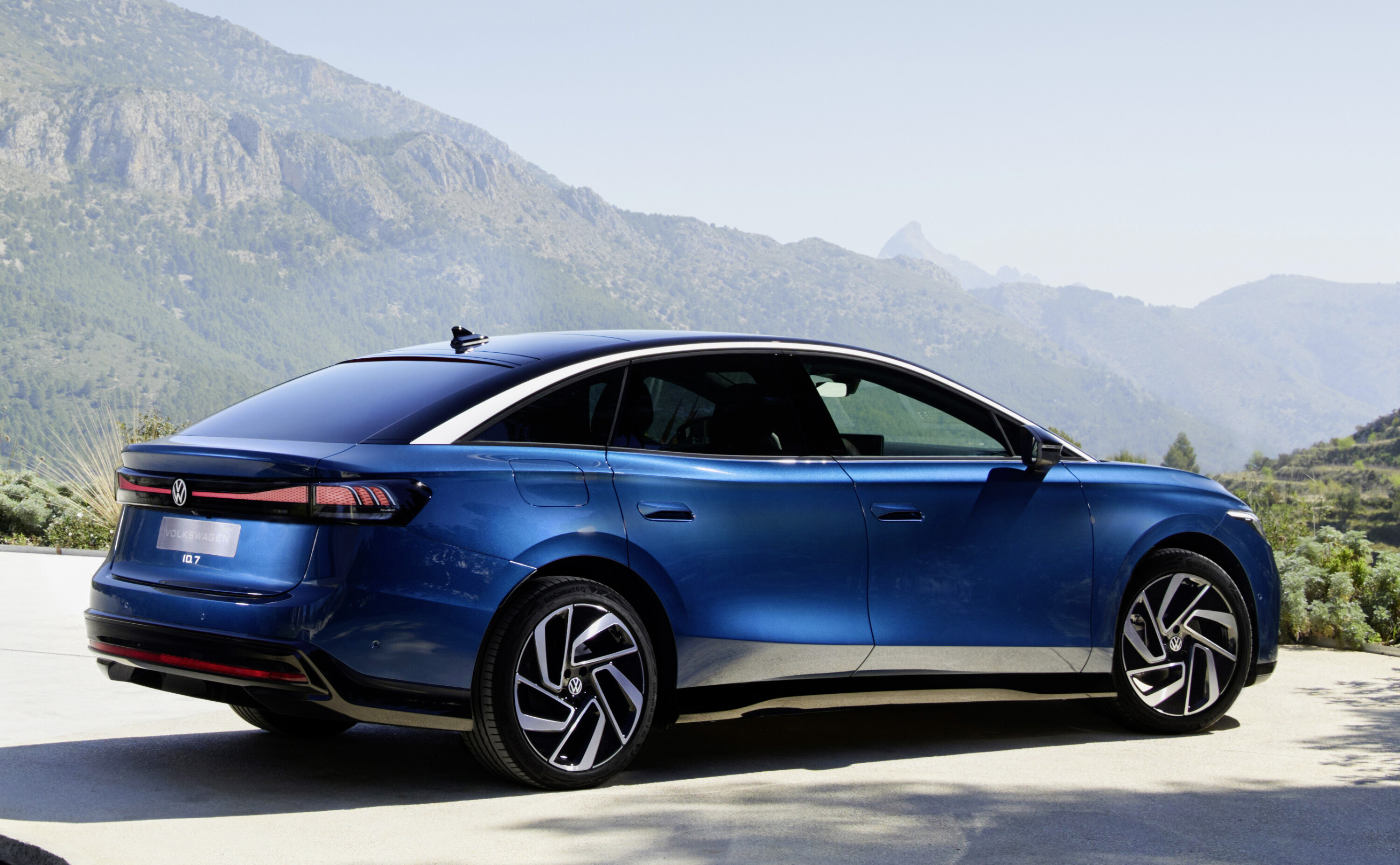
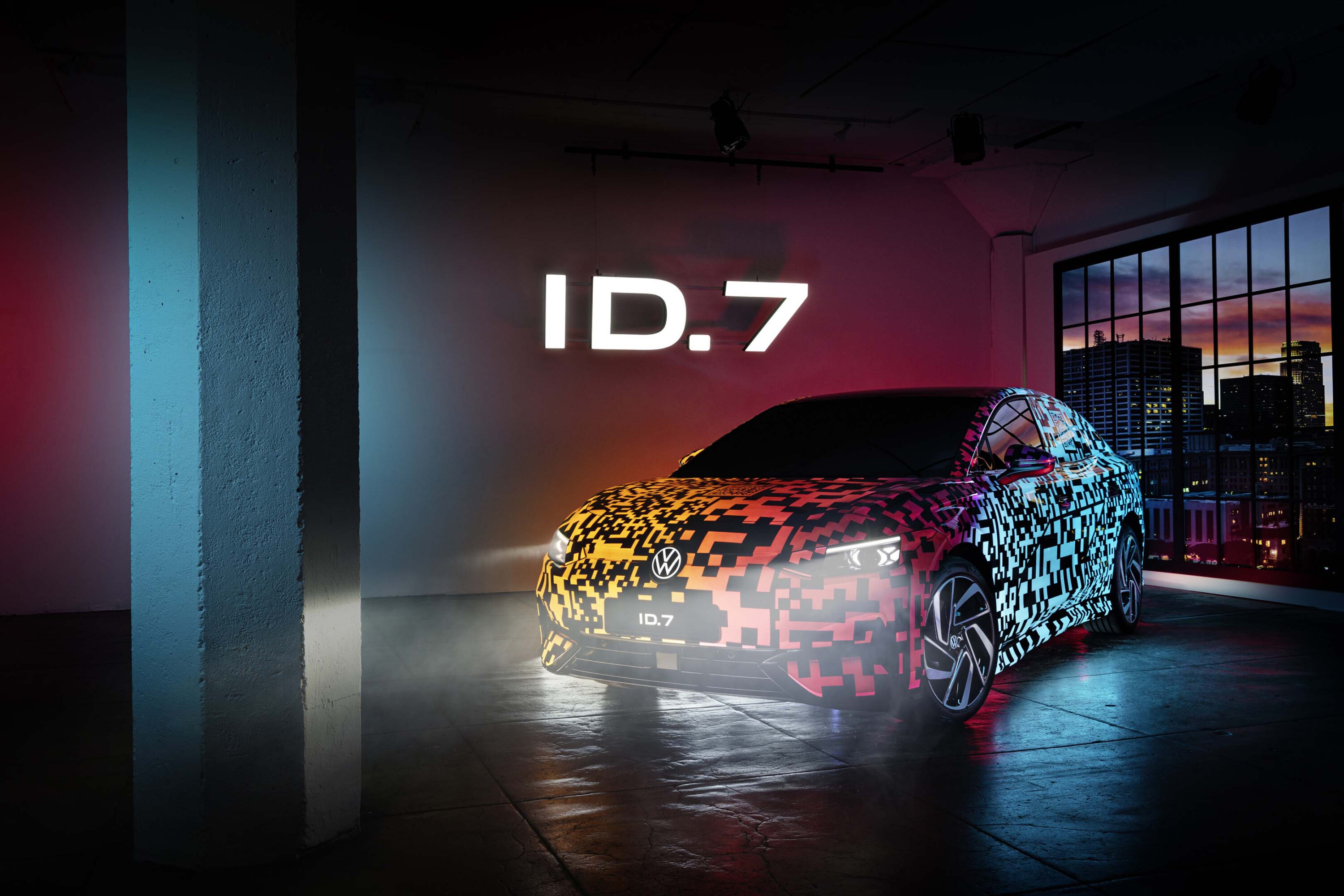
The all-electric 2024 Volkswagen ID.7 sedan has debuted, ahead of its launch in Europe, China and North America.
Snapshot
- 2023 Volkswagen ID.7 all-electric sedan revealed
- Aerodynamic focus allows for 700-kilometre range
- Not coming to Australia u201cat this pointu201d
While Volkswagen has confirmed the ID.7 will be built in right-hand drive for the United Kingdom, the brand’s local arm has confirmed it won’t reach Australia.
“Volkswagen Australia is planning for several new electric vehicles to follow the ID.3, ID.4, ID.5, ID.Buzz and ID.Buzz Cargo. At this point, the ID.7 is not for our market as our focus will be on our electric SUV range,” said a spokesperson for the brand.
Under the skin, the ID.7 rides on Volkswagen’s dedicated rear-drive MEB electric vehicle architecture, as found underneath the ID.3, ID.4, ID.5 and ID.Buzz.
1
Pitched as a rival for the popular Tesla Model 3, and the Polestar 2, the ID.7 will be Volkswagen’s flagship electric vehicle – at least for now.
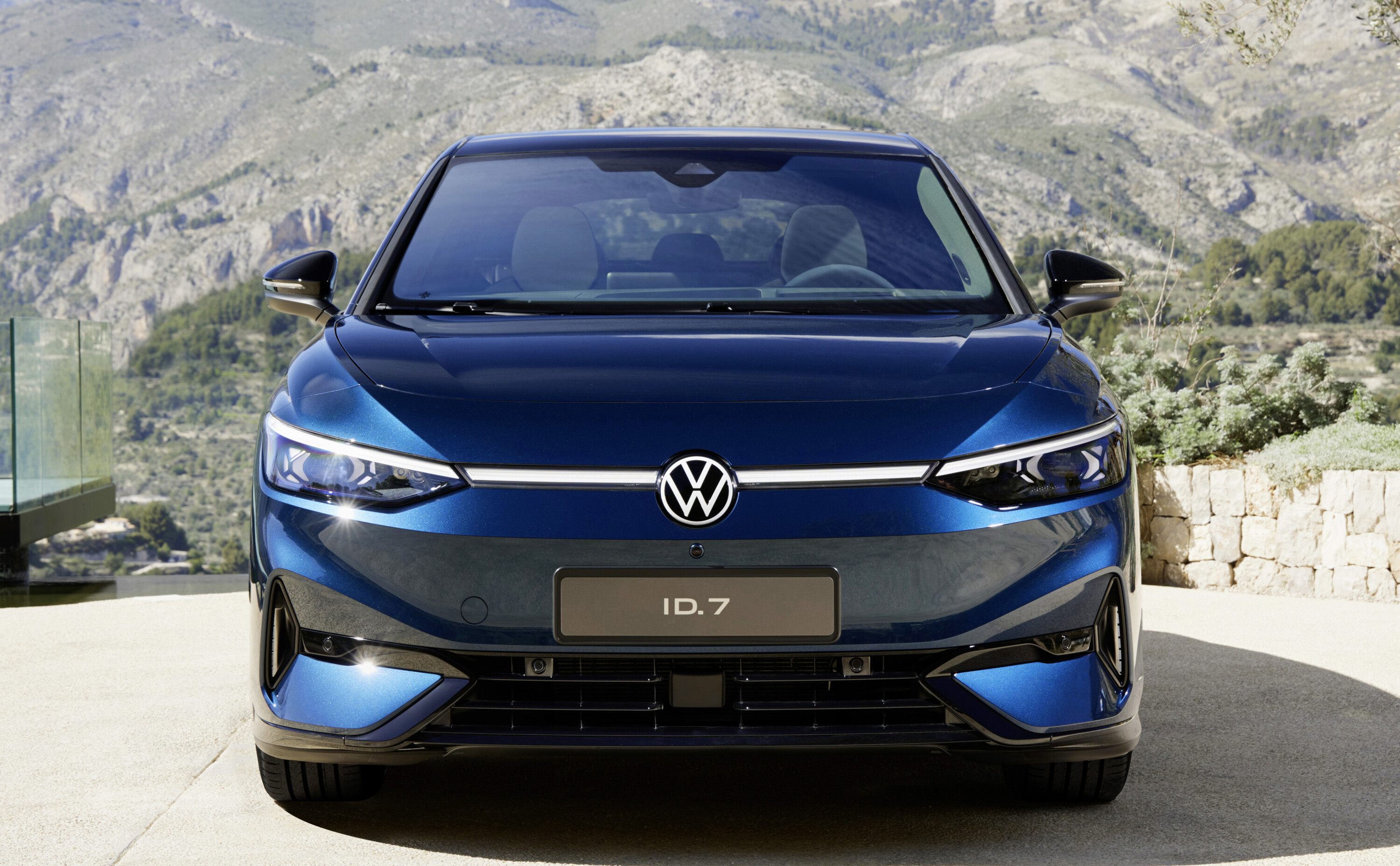
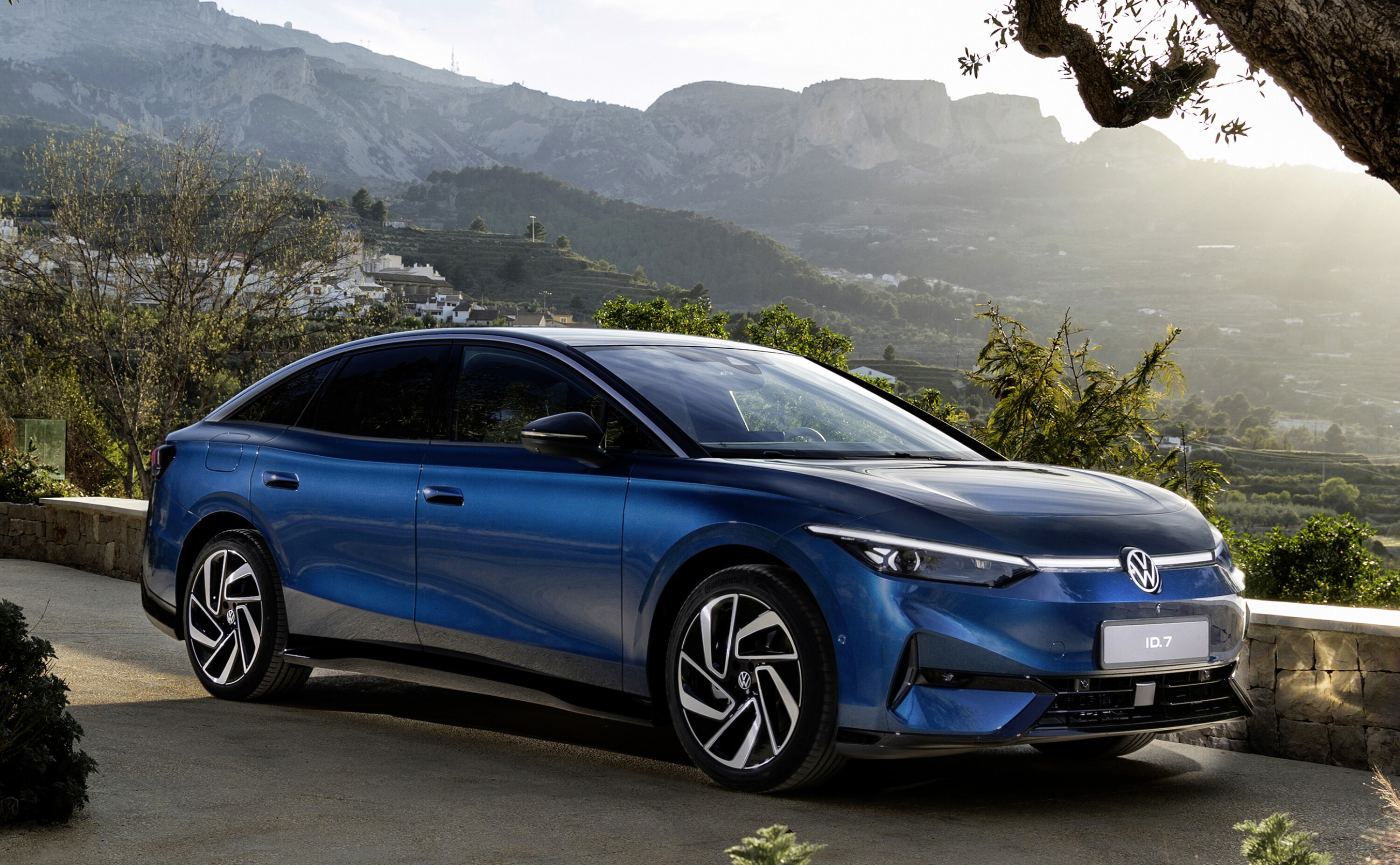
First previewed by the ID.Vizzion and ID.Aero concepts, the all-electric “fastback saloon” prioritises aerodynamics, with a flat undercarriage and sleek body allowing for a drag coefficient of 0.23 – matching the Tesla Model 3.
It is powered by Volkswagen’s new rear axle-mounted electric motor, codenamed AP550. It produces 210kW and approximately 550Nm, with no all-wheel-drive option.
1
Two battery sizes are offered, with the entry-level Pro sporting a 77kWh (82kWh gross) battery, with support for 170kW fast charging. It has a WLTP-rated 615-kilometre driving range.
Stepping up to the flagship Pro S, the battery grows to 86kWh (91kWh gross), with a WLTP-rated 700-kilometre driving range and 200kW fast charging support.
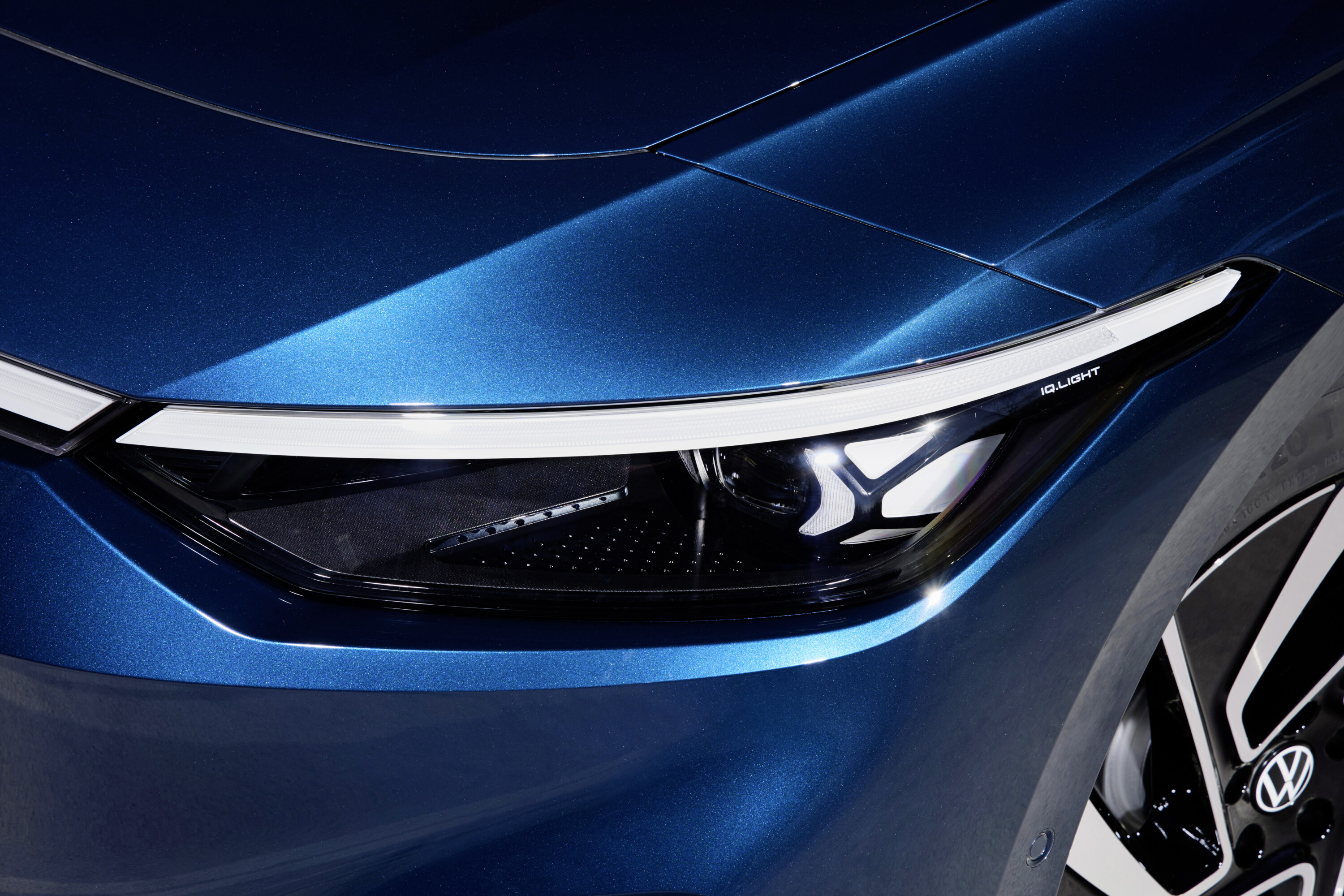
Up front, the ID.7 looks similar to Volkswagen’s all-electric range, with slim LED headlights, a full-width daytime running lamp strip, and an aero-focused bumper with air curtains.
1
The side profile is again familiar, with a large greenhouse, a white feature line, flush door handles borrowed from the ID.4 and ID.5, and alloy wheels measuring up to 20 inches.
At the rear, the ID.7 features a simplistic look, with full-width LED tail-lights and a gloss-black lower bumper.
Measuring 4961mm long, 1862mm wide and 1538mm tall, with a 2966mm wheelbase, the ID.7 is larger than the Passat and Arteon sedans. For context, the now-axed Passat sedan is 214mm shorter, 42mm narrower and 82mm lower, with 175mm less between the axles.
Advice
Australia’s best electric cars for 2023
We’ve tested nearly every EV below six figures in Australia to rank the best on sale today
1
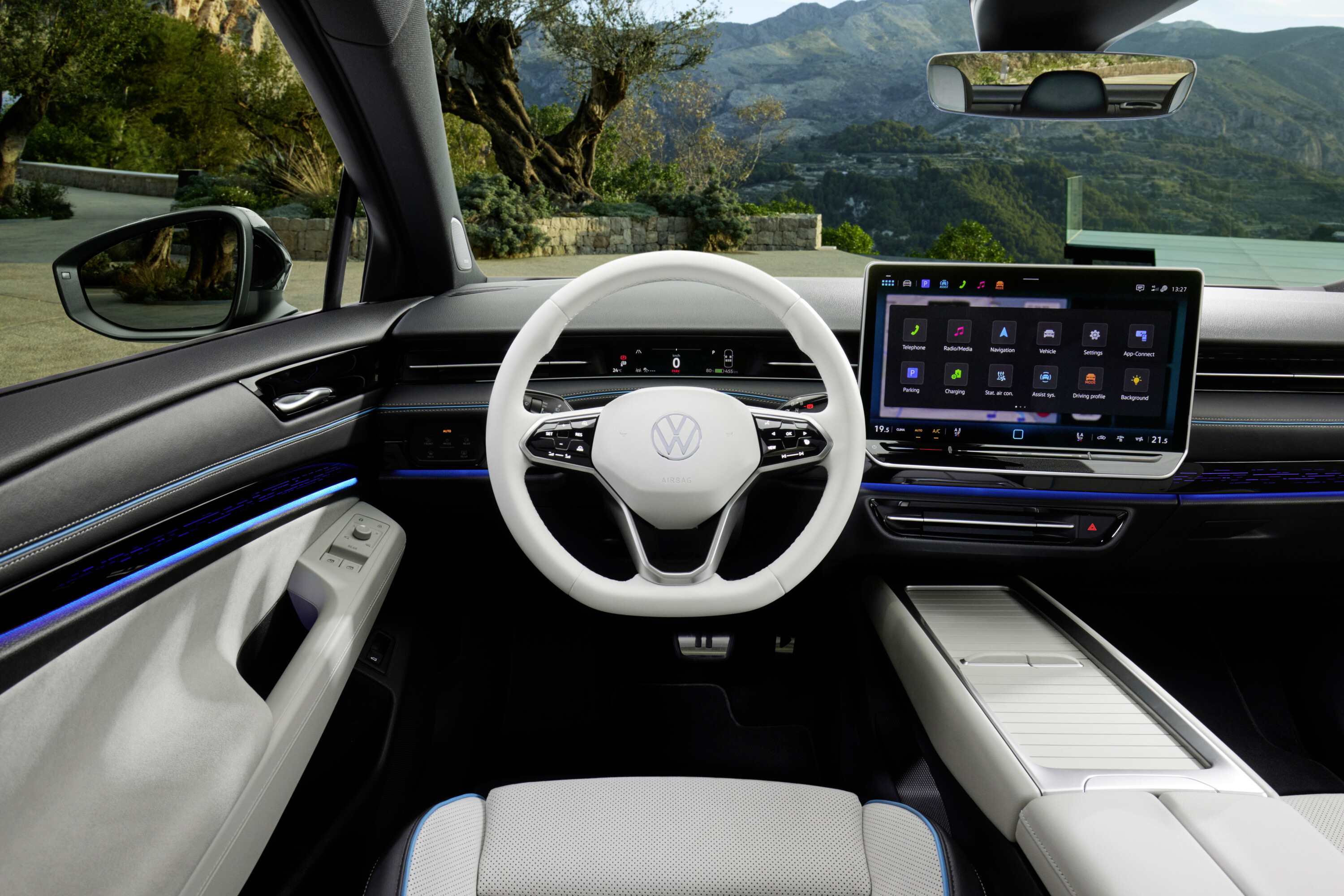
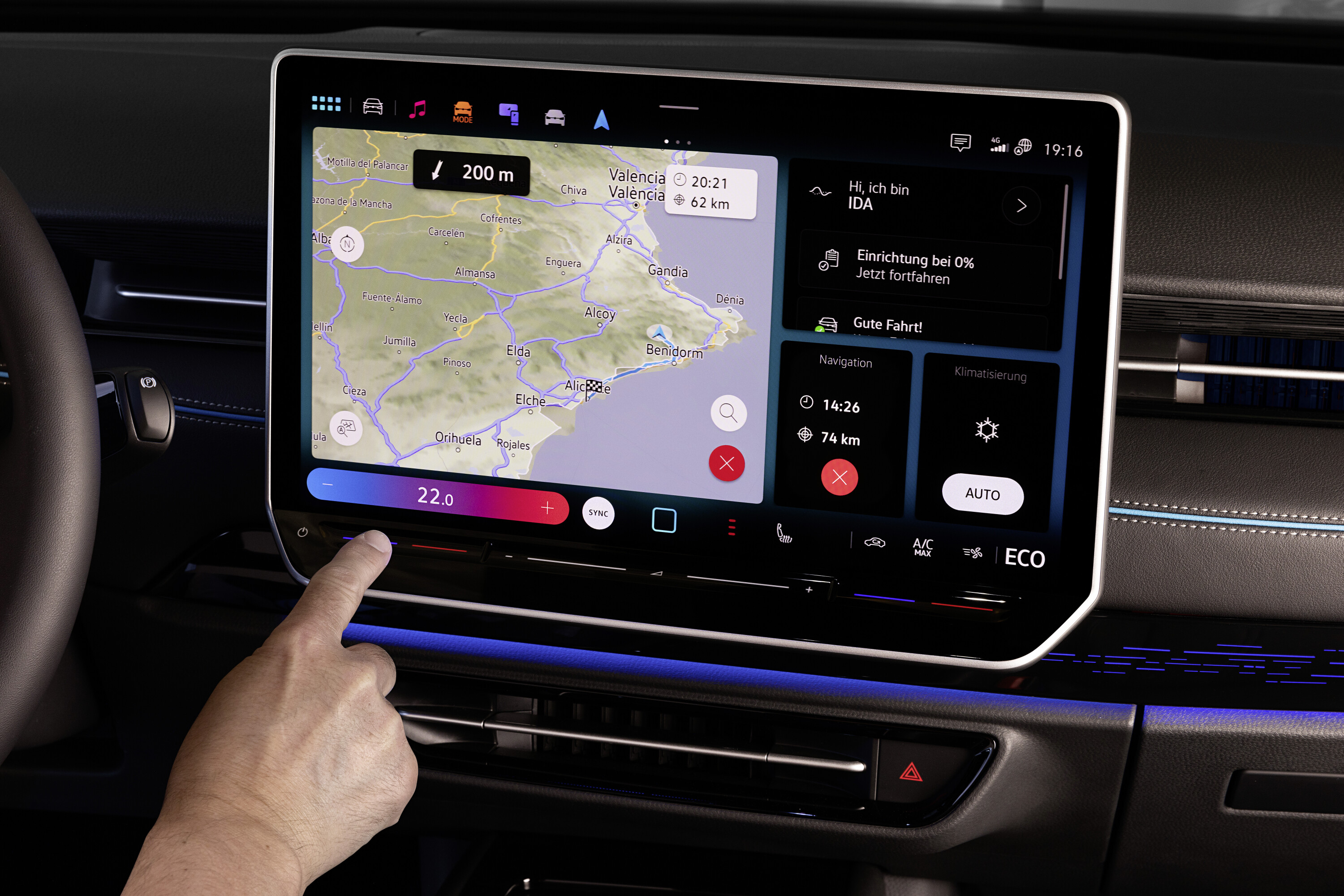
Inside, the ID.7 is headlined by a large 15-inch infotainment system running Volkswagen’s latest software. The brand claims the “graphic interface and menu navigation have been largely reconstructed”, with additional customisation and touch bars.
The controversial touch sliding control panel below the screen remains, however, it is now backlit. In addition, the capacitive-touch steering wheel has been retained, with a gloss black finish. The new-generation Tiguan, due later this year, will return to physical tactile switches.
A simplified instrument cluster positioned ahead of the driver is standard, displaying legally necessary information, such as speed and warning lights, and the battery charge level.
1
Volkswagen has also fitted a “smart air conditioning” system that activates when the vehicle key is detected nearby and can distribute air over a specified area.
Voice commands can control the air-conditioning system. For example, if the driver says, “Hello Volkswagen, my hands are cold”, the vehicle will activate the heated steering wheel and direct warm air towards the steering wheel for five minutes.
In addition, the ID.7’s windscreen sensor will detect the sun’s position to prioritise cooling warmer zones of the interior on hot days.
1
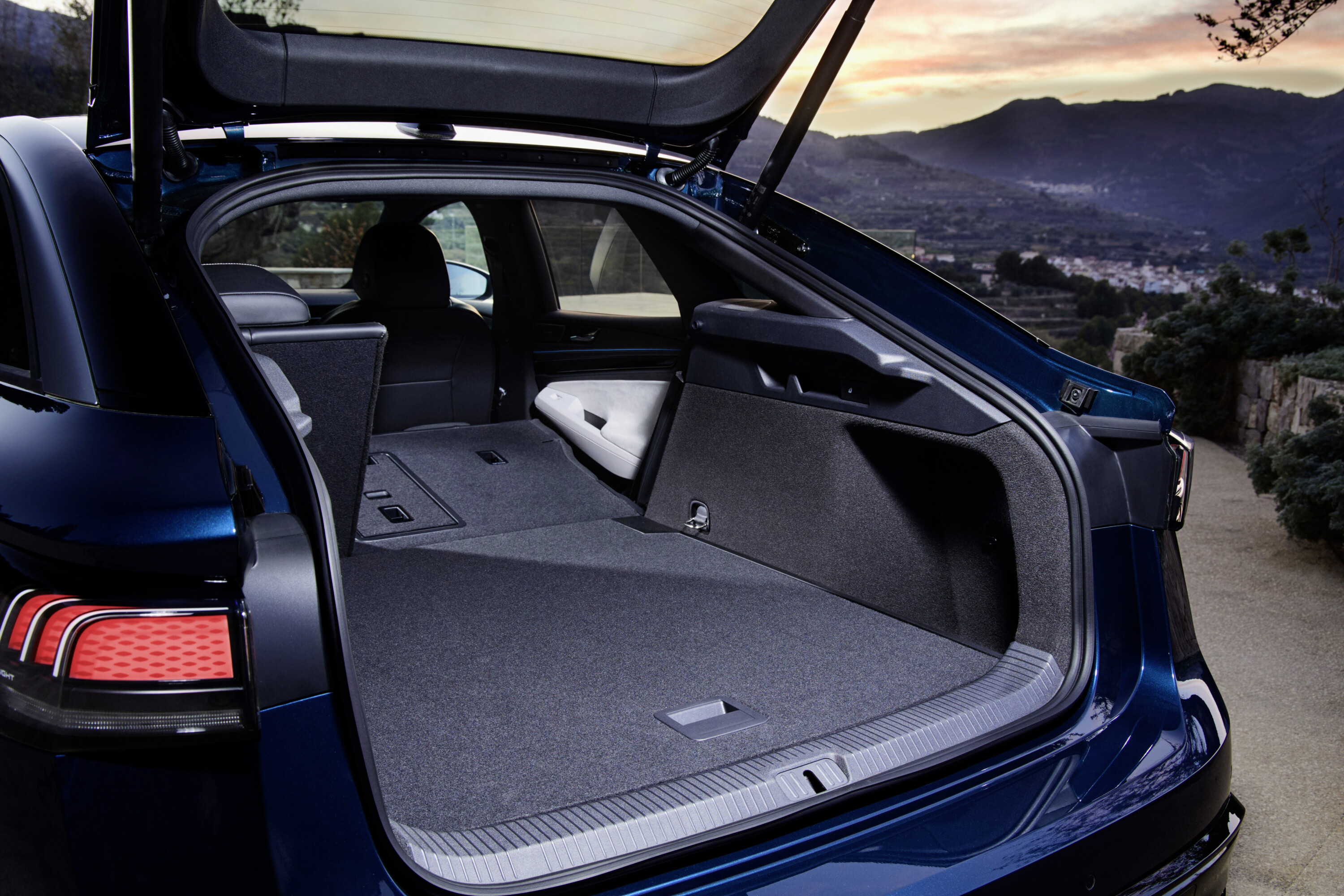
Other interior features include; available 14-way power-adjustable front seats with automatic heating or ventilation, a massaging system with up to 12 air cushions, and an optional panoramic sunroof with a controllable opaque or transparent layer, similar to the Porsche Taycan.
Volkswagen’s semi-autonomous highway driving system – known as Travel Assist – has been enhanced for the ID.7 with assisted lane changes, though it lacks the technology to compete with Tesla’s ‘Enhanced Autopilot’ and ‘Full Self-Driving’ systems.
The vehicle also features an updated automatic parking system with memory, allowing the driver to save parking positions for the car to park itself from the owner’s smartphone.
1
The 2024 Volkswagen ID.7 electric sedan will be produced in Emden, Germany for Europe and North America, while a localised version for the Chinese market was unveiled overnight at this week’s 2023 Shanghai Auto Show.
It will replace the internal-combustion Volkswagen Passat sedan, which ended production for Europe and Australasia in early 2022. The next-generation Passat will only be offered in wagon form, though it has yet to be locked in for Australia.
A wagon version of the Volkswagen ID.7 – previewed by the 2018 ID. Space Vizzion concept – is expected to debut within the next 12 months.
MORE
Electric Cars
⚡ More EV stories to help you choose the best car for your needs
Snapshot
- Ultra luxury EV debuts at Auto Shanghai
- Special Maybach drive mode
- Extreme NVH suppression in second row
- First Mercedes product with sustainable leather
If you’ve been holding out on buying an EV because they simply weren’t opulent enough, then you’ll be pleased to hear Mercedes-Maybach has unveiled its indulgent EQS 680 SUV at China’s largest motor show, Auto Shanghai. The Maybach EQS SUV will come to Australia in mid-2024.
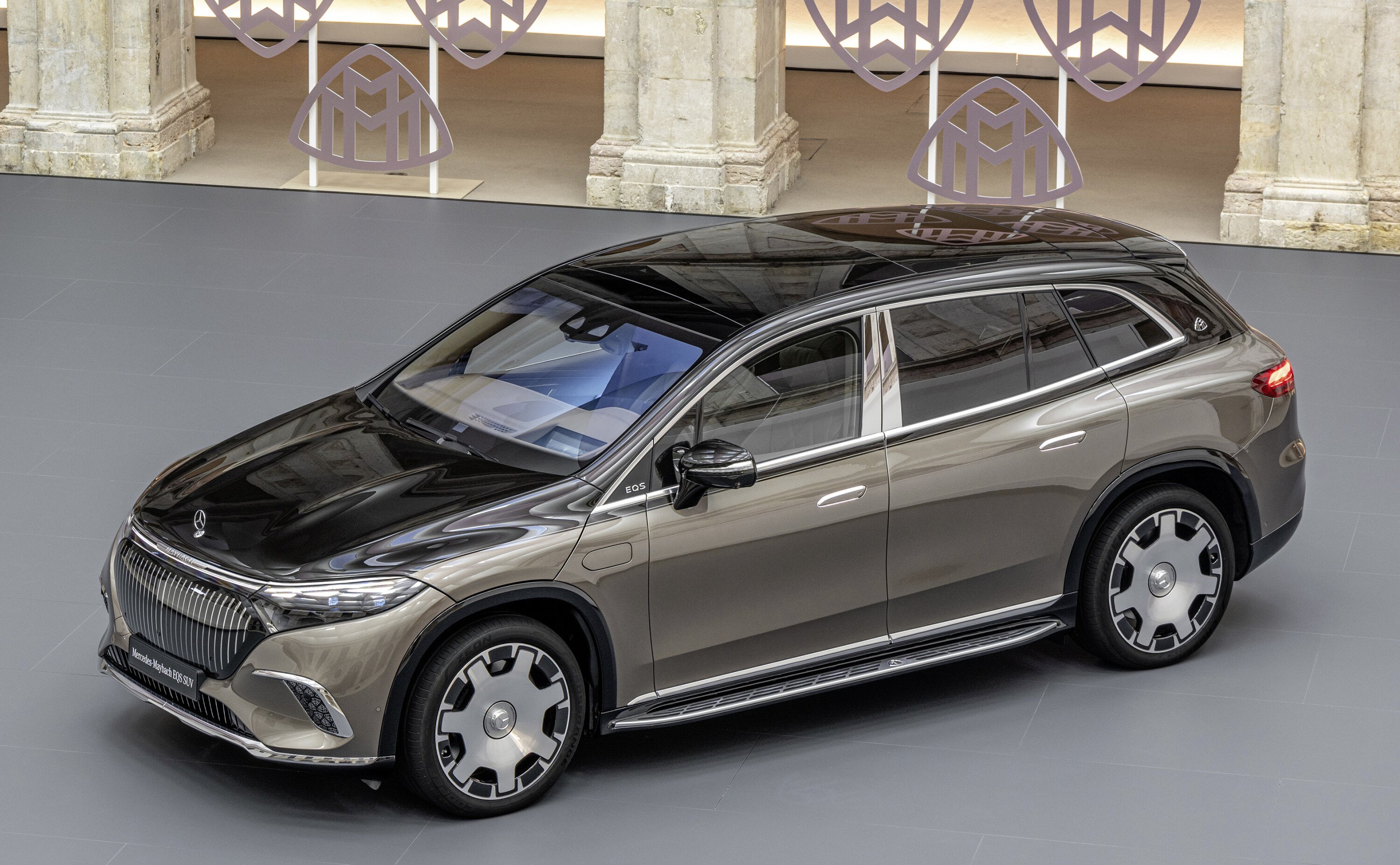
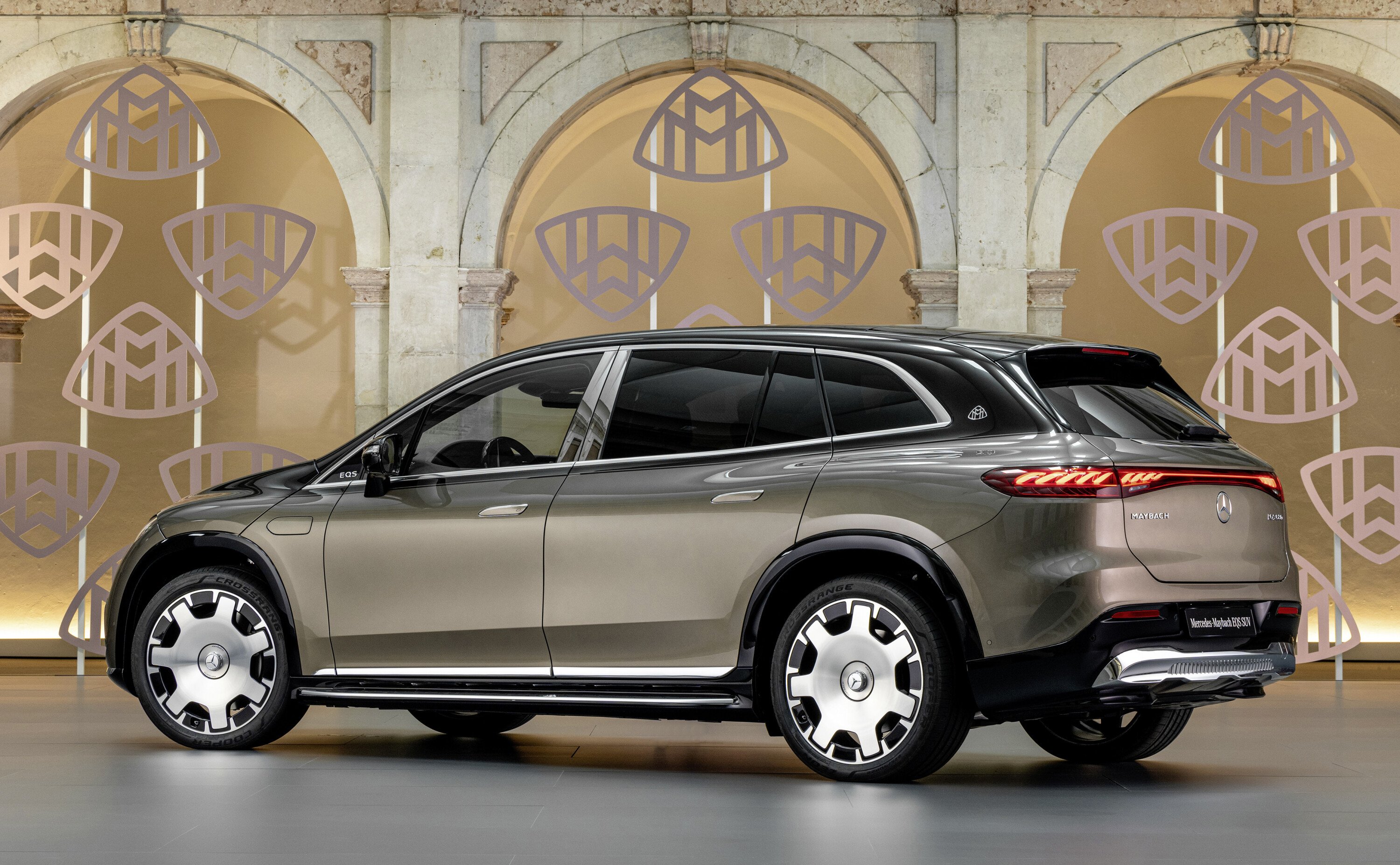
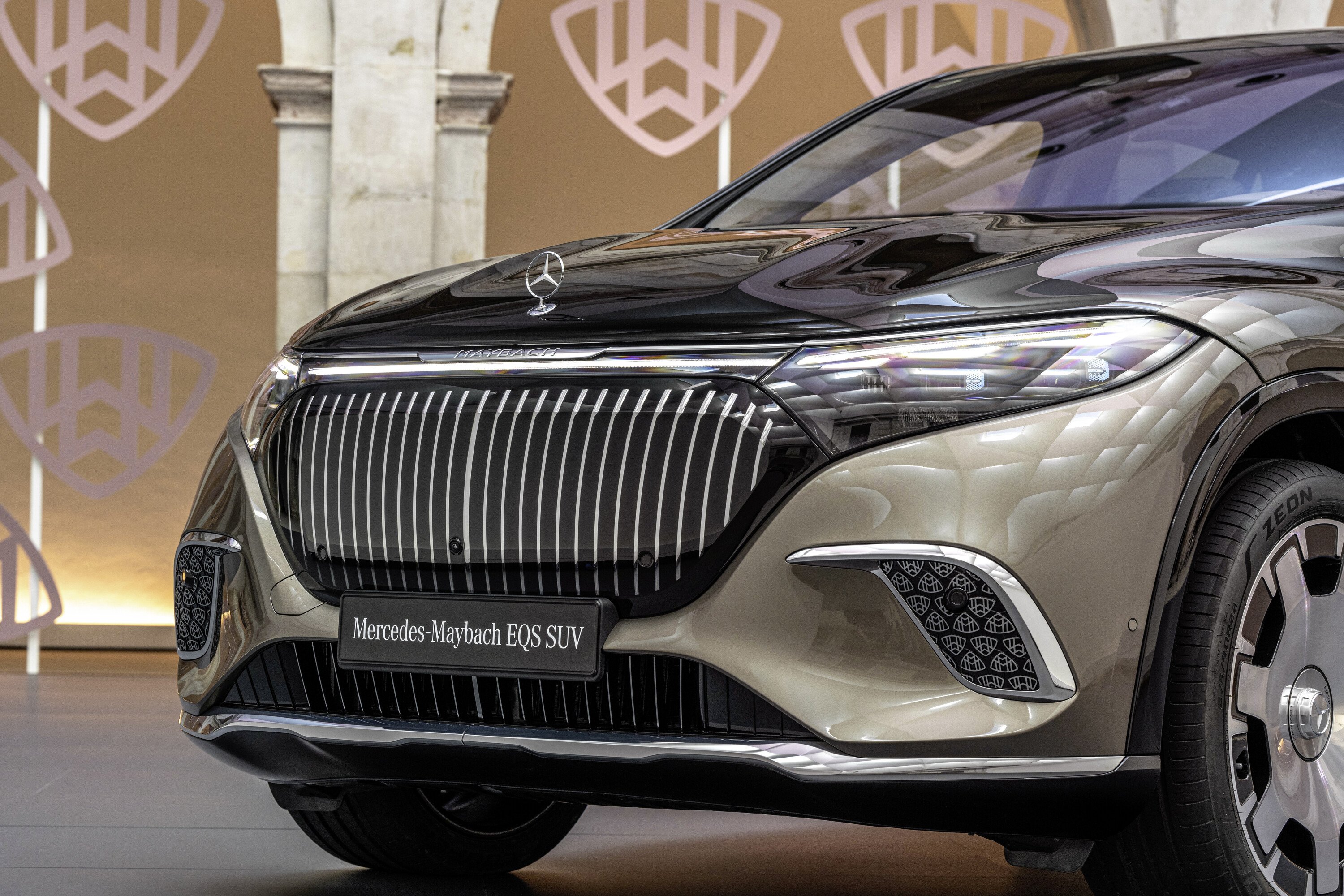
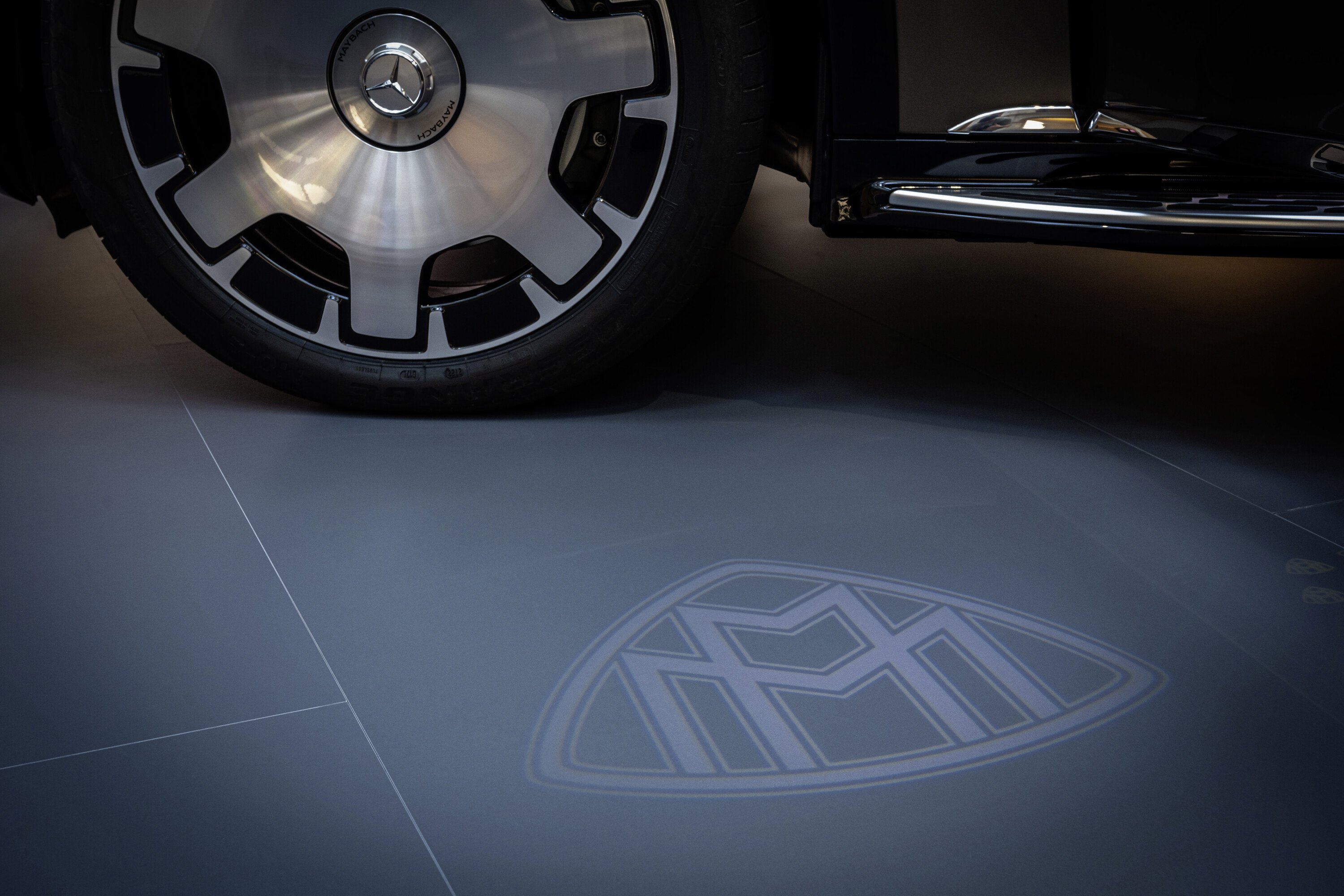
The EQS 680 SUV becomes Maybach’s first-ever electric car; it wears the brand’s signature two-tone paintwork, monobloc-inspired alloy wheels, and even retains the luxury carmaker’s classy bonnet star.
Maybach claims 484kW/950Nm, all-wheel drive, and a circa-600km driving range, but when it comes to the EQS SUV, it’s more about luxury appointments than roving range or outright speed.
“The Mercedes-Maybach EQS SUV is a milestone in our brand history. For us, it embodies nothing less than the redefinition of automotive excellence in the age of electromobility. Our customers can look forward to an absolutely top-class electric driving experience – with the aura of the extraordinary that is typical of Maybach,” said Daniel Lescow, head of Mercedes-Maybach.
1
Up front, the EQS’s imposing black grille gets chrome accents, there are Matrix LED headlights, and the Maybach logo is incorporated into the LED lighting signature. Where Mercedes-Benz products get black exterior trim, the Maybach EQS gets chrome door pulls and trim around the windows to accentuate its 5125mm length.
At the rear, the full-width LED lighting signature emphasises the EQS’ two-metre width with more chrome on the tailgate including the badging, rear apron, and lip spoiler. The 21- or 22-inch forged alloy wheels are a signature Maybach design.
The car pictured is finished in a two-tone Velvet brown body with an Onyx black roof, it’s one of five hand-painted colour schemes. The others are high-tech Silver/Obsidian black, Tigh-Tech silver/Nautical blue, Obsidian black/Selenite grey, Obsidian black/Kalahari gold.
1
It’s all about the passengers
The EQS SUV may be imposing from the outside, but what’s inside really matters.
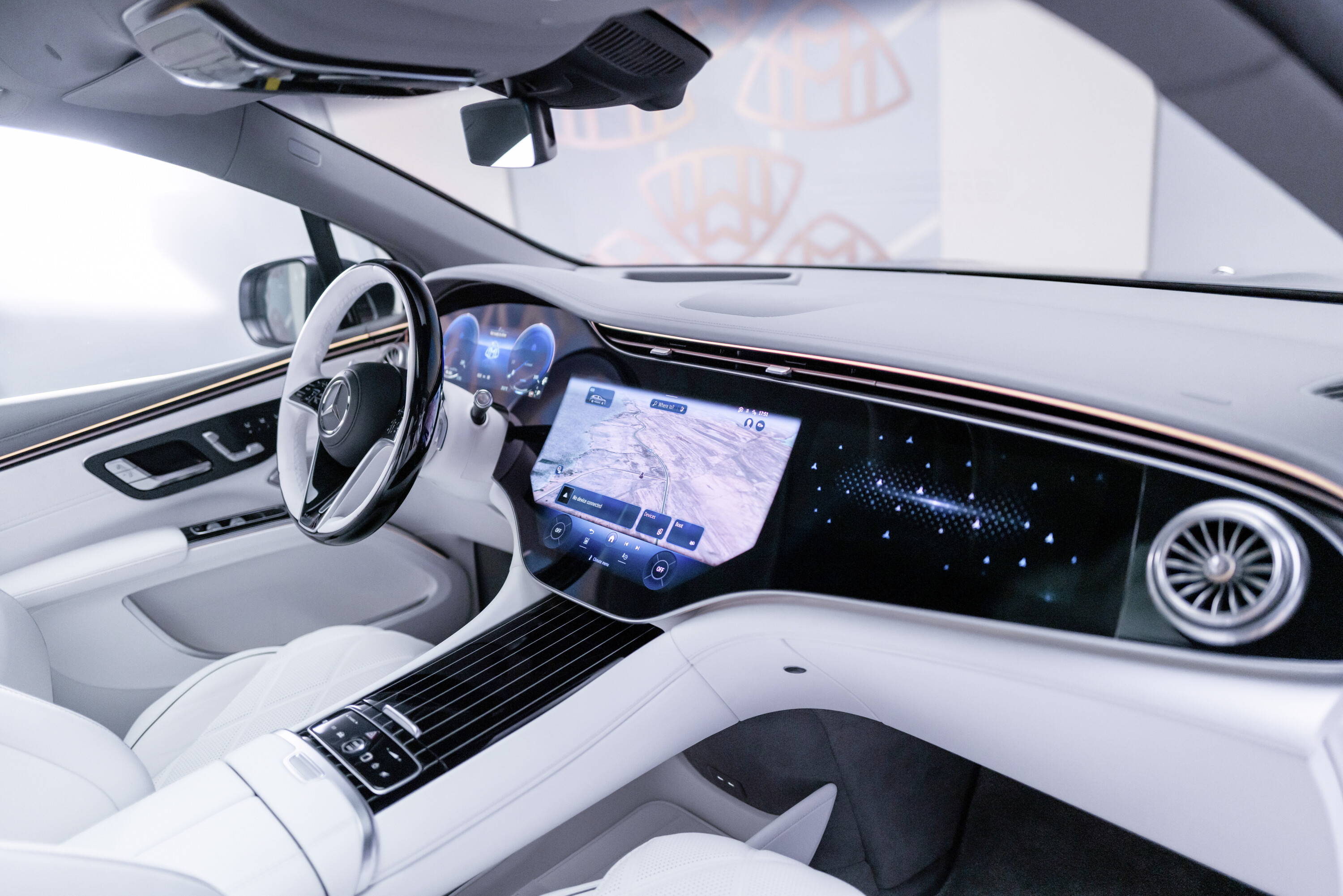
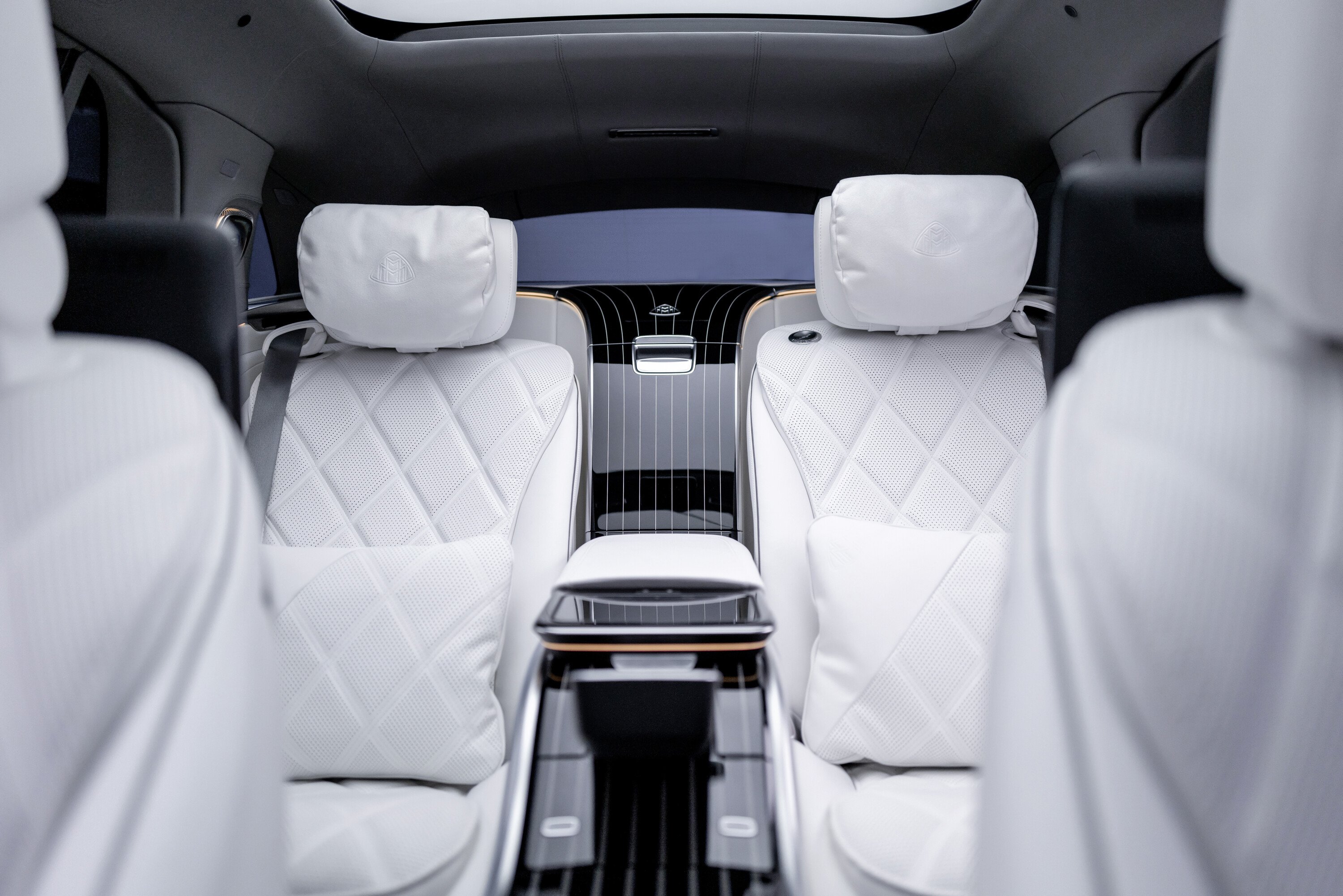
The front seats are heated, ventilated, and appointed in sustainably-tanned Nappa leather in your choice of Espresso brown/Balao brown pearl or Macchiato beige/Bronze brown pearl. Optionally, Manufaktur grade Crystal white/Silver grey pearl (pictured) is available.
Building on the EQS SUV’s ‘zero layer’ interfact concept, the Maybach gets the same touchscreen in the front but with a bespoke Maybach mode that animates the driving cluster. There’s also a front passenger touchscreen and HEPA-filtered cabin ventilation with active pollen and pollution sensors.
1
Music is rendered through a 15-speaker Burmester 4D sound system with myriad settings for each passenger. Those in the back also get Burmester headphones with their own sound and EQ settings.
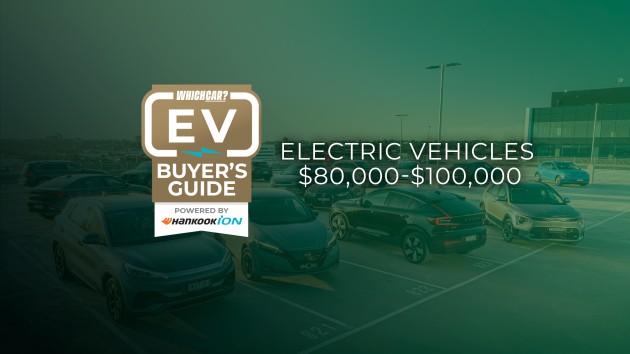
And the back seat is really where you want to be, with twin 11.6-inch touchscreen mounted on the back of the seats with ‘MBUX high-end rear seat entertainment’ representing a step up from the regular Benz EQS. It means rear passengers can modify navigation directions from the back seat, while the centre console has been redesigned to better flow into the rear quarters.
Comparisons
Best Electric Cars, $80k-100k: Luxury EVs tested
This is part three of our price-based EV buying guide, comparing Australia’s electric cars priced between $80,000 and $100,000
1
There’s also technology such as gesture control, and the Maybach gets the portable MBUX tablet, just like the Benz EQS.
The EQS 680 SUV’s individual rear bucket seats are electrically-adjustable and equipped with heating, ventilation, as well as specific heat pads for the neck and shoulder and a massage function that incorporates a calf massage.
By selecting chauffeur mode, the non-driver side rear seat goes into full recline and the passenger seat moves out of the way. There are two temperature-controlled cup-holders, a shelf for the MBUX tablet, and electric roller blinds to block out unwanted light.
1
Silence inside the EQS
The Maybach EQS 680 SUV has the same encapsulated drive units that are doubly decoupled via rubber mounting points to minimise vibration. The Maybach gets extra acoustic foam in the wheel arches, body panels, and beneath the car to better suppress road noise.
With the EQS 680’s focus on rear passengers, Maybach turned its attention to keeping the back seat silent.
To accomplish this, the Artico-appointed parcel shelf is actually a fixed bulkhead in the Maybach EQS. It seals the boot off like a sedan to improve NVH suppression. Additionally, the EQS 680 SUV features laminated glass all around. There’s more wind deflection, covers, seals, and improved geometry for the sunroof.
1
Powertrain and chassis
Air suspension is standard and it can be raised by up to 35mm to deal with rough roads. The four-wheel steering gives a maximum 10-degree rear angle to improve the EQS SUV’s behemoth turning circle from 11.9 to 11 metres.
Eco, Sport, Off-road and Individual programs remain for the damper and spring settings, but Comfort mode has been replaced by a bespoke Maybach setting that’s said to be ultra-plush, and maximise rear occupant comfort.
The EQS 680 SUV’s power figures are what you might describe as ‘more than adequate’. Its twin electric motors produce 484kW/950Nm. In such a large SUV, that’s good for a 0-100km/h time of 4.4 seconds.
Mercedes-Maybach is claiming a provisional driving range of 600km, from the same 107.8kWh battery as the Benz EQS. It will fast-charge at up to 200kW, for a 10-80 per cent fast-charge in 30 minutes.
1
MORE
Electric SUVs
⚡ More EV stories to help you choose the best car for your needs
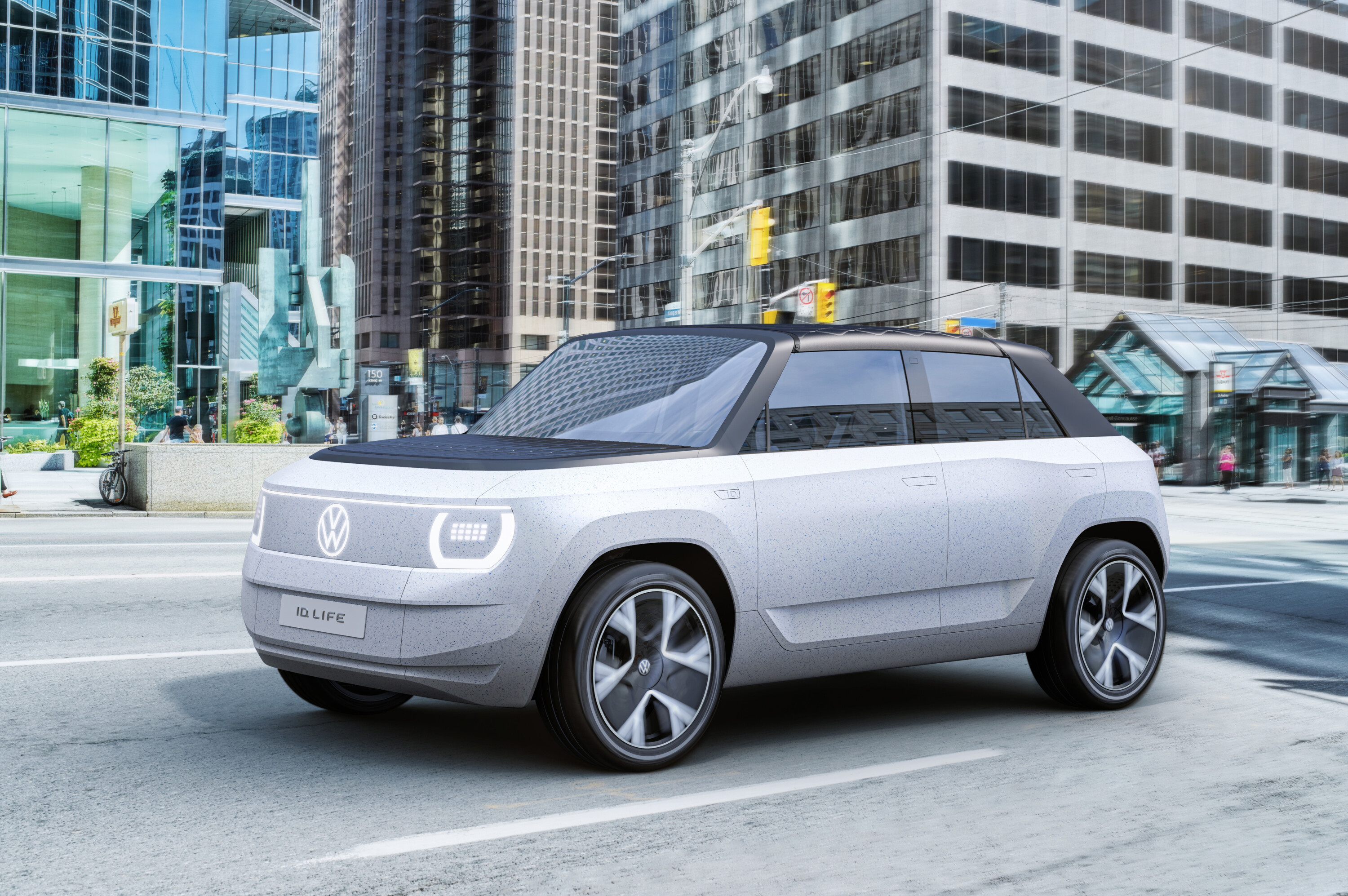
Volkswagen brand CEO Thomas Schäfer has shed more light on what to expect from its much-anticipated affordable electric ‘people’s car’.
Snapshot
- VW ID.2 is Europe-focussed, wonu2019t be under $40,000
- Production hub in Spain, including prismatic battery
- Cheaper $30,000 ID.1 EV coming by 2027
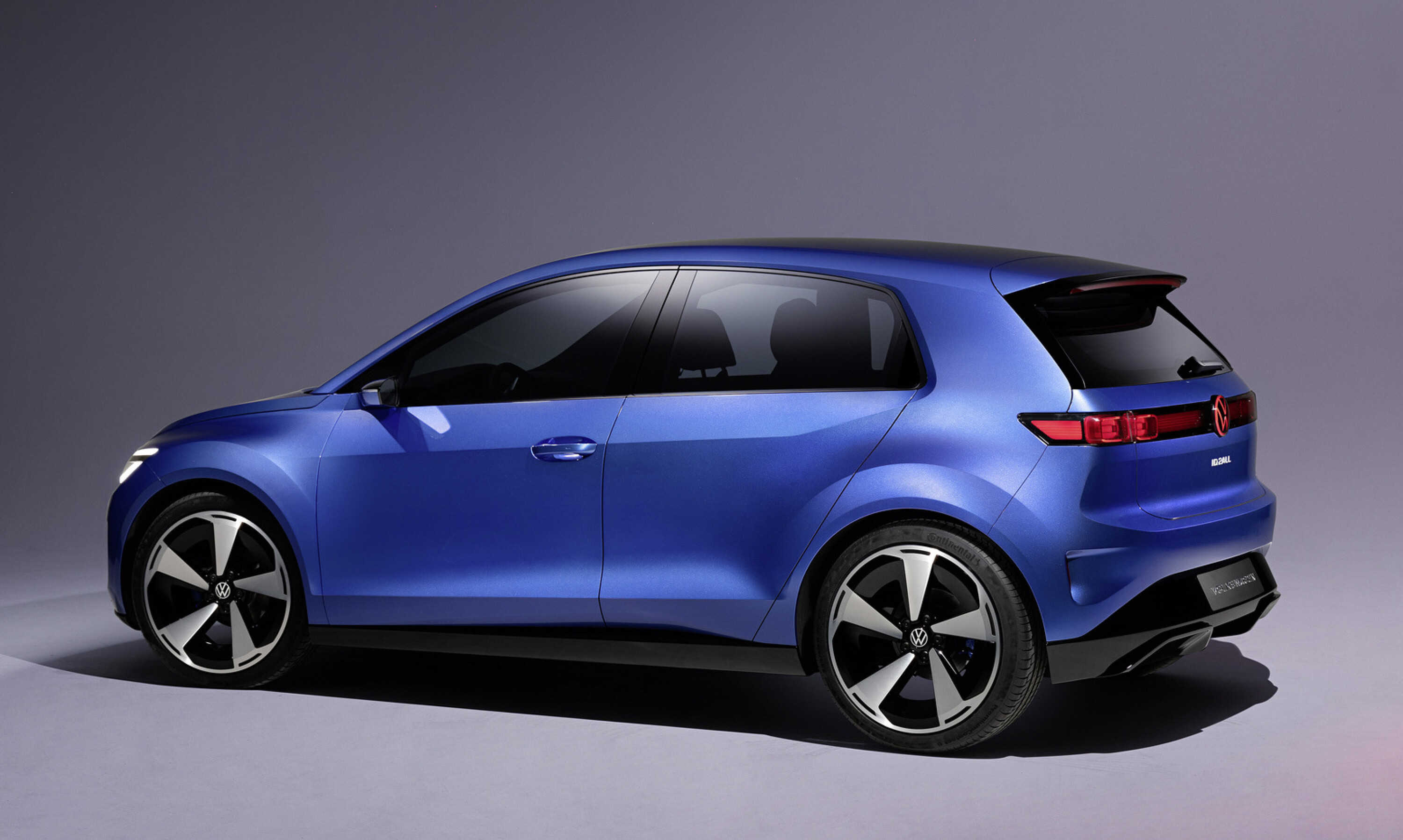
Speaking with Automotive News Europe, Schäfer confirmed one of his first moves after taking the seat in July 2022 was to commission a new concept previewing the entry-level Volkswagen ID.2 electric hatchback, which reportedly sparked controversy internally.
Entry-level EVs will be profitable
The boss said the affordable Modular Electric Toolkit (MEB) Entry platform electric vehicles – including the Volkswagen ID.2 hatch and related SUV-styled model, along with the Cupra Urban Rebel and Skoda city SUV – won’t be priced under (the equivalent of) $40,000, and will be profitable.
1
“We cannot have margins below 6 percent. With the scale we have with four vehicles from three brands [on the same MEB Entry platform]… I guarantee we can (be profitable),” Schäfer said.
“We are not a charity. We intend to make money.”
Schäfer also said that, while a smaller MEB Entry-based model will be rolled out globally, the Volkswagen ID.2 is “mainly a European vehicle.”
Higher-specced ID.2 models are also possible, such as a hot GTI version, but Volkswagen is “definitely not going to… repeat what we did in the past and sell a confusing amount of variants.”
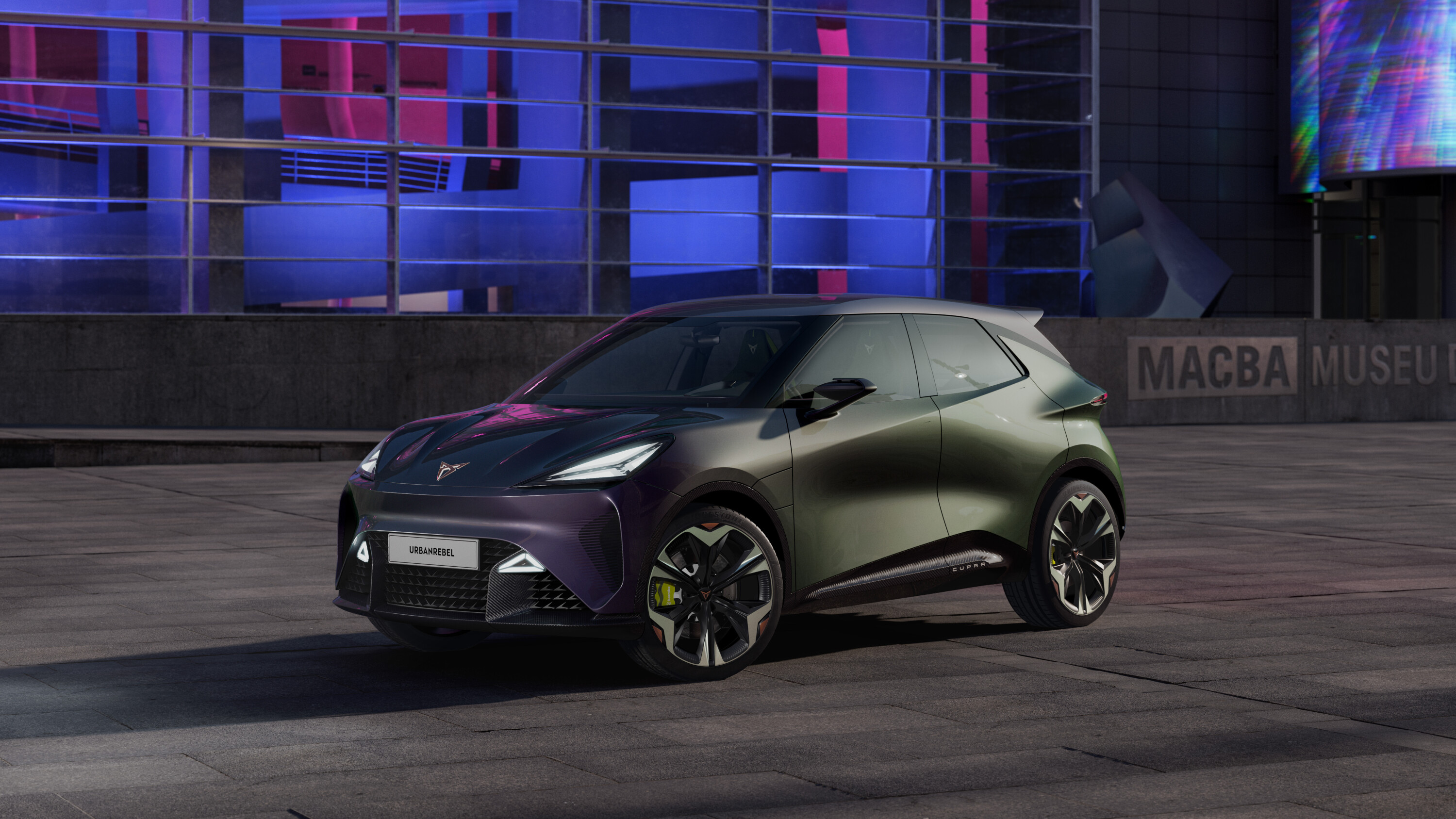
1
Made in Spain, ‘industry-standard’ battery
The ID.2 and Cupra Urban Rebel electric hatches will be produced in the same factory in Martorell, Spain, whereas the yet-to-be named VW and Skoda city SUVs will be made in a separate Pamplona, Spain plant from the second half of 2025.
The affordable EVs will all share the same battery packs from Volkswagen’s new Sagunto, Spain battery plant from 2026. However, in the interim, the group will get its batteries from the Salzgitter, Germany factory and external supplier Northvolt.
Both the energy dense lithium-ion nickel-manganese cobalt (NMC) and longer life-cycle lithium-iron-phosphate (LFP) battery packs are on the cards.
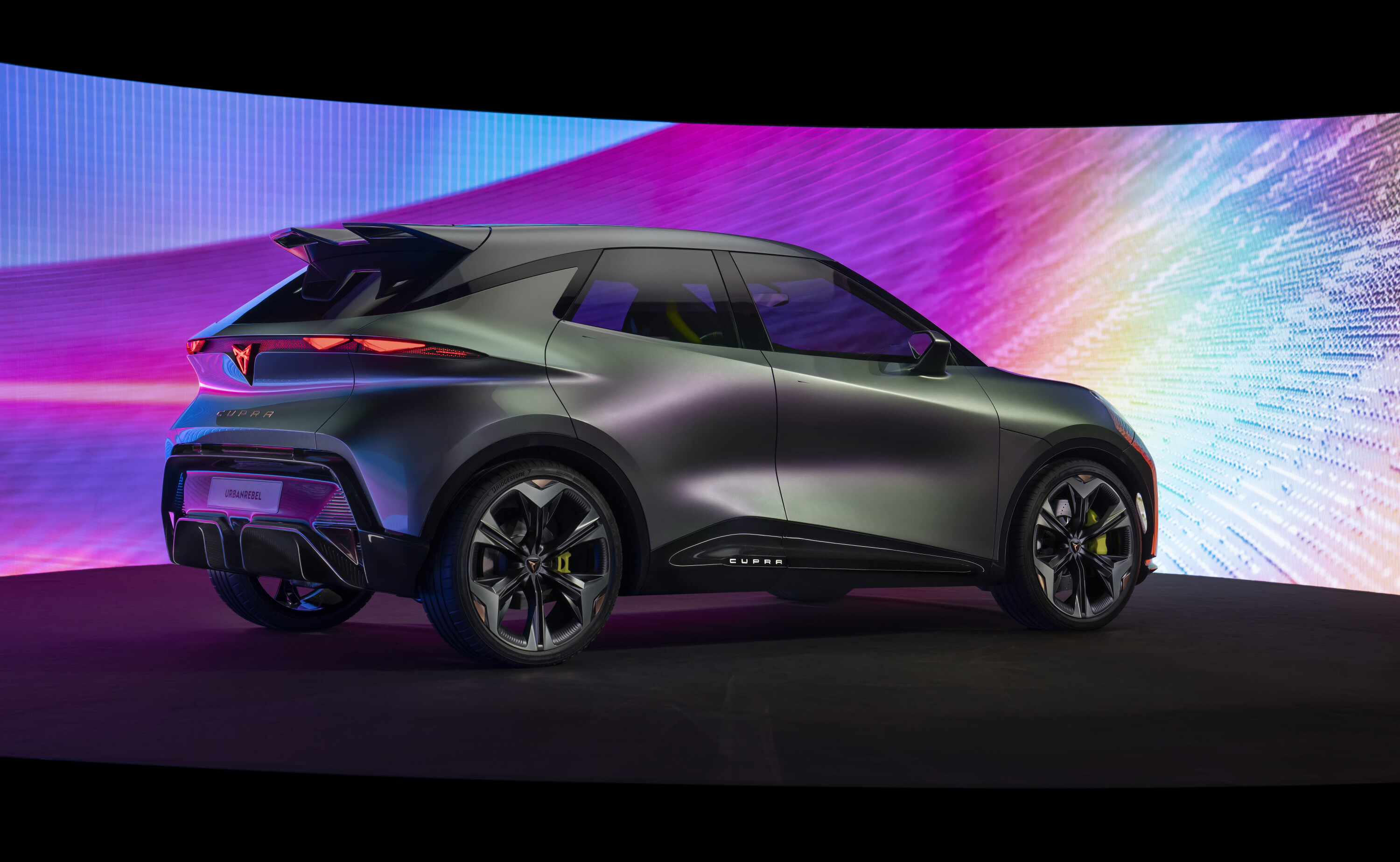
1
“The new Unified cell from our PowerCo subsidiary will be scaled across all models, factory by factory. That will give us a real cost advantage,” Schäfer told Automotive News Europe.
“The Unified prismatic cell gives us enough density, and we think it’s going to be the industry standard going forward.
“To get a car below 25,000 euros, that has no compromises with safety and range, is literally impossible at the moment.”
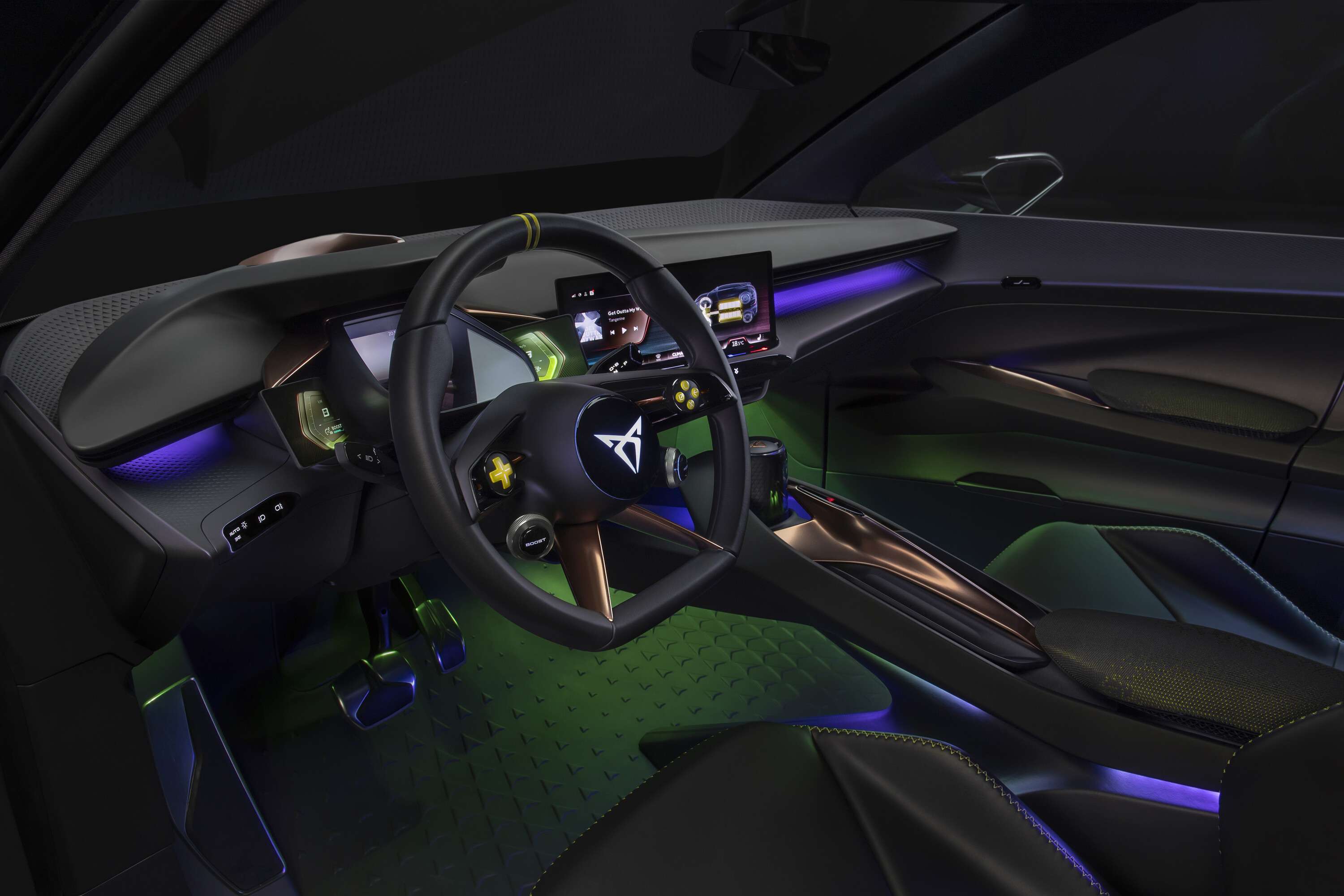
1
Even cheaper VW ID.1?
An even cheaper sub-$30,000 Volkswagen ID.1 has been mooted to launch by 2027 “at the latest” in a joint project with the Skoda brand.
However, it’s unlikely to adopt the already cheaper MEB Entry platform, and the brands are looking at whether to produce it in-house or via an external partner.
“Either you solve the riddle with scale, downsize the battery, or you find a partner and scale it even more. It’s not clear yet. We have four working streams in parallel at the moment,” Schäfer told Automotive News Europe.
The new model will come after the Volkswagen E-Up micro electric hatch is discontinued in mid-2024, due to new United Nations Economic Commission for Europe (UNECE) rules for cybersecurity.
Schäfer claims it would be “too expensive” to integrate a new electronic architecture into the E-Up, so it is “better to develop a new car right away.”
1
2035 European ICE ban concessions
After a push led by Germany successfully made the European Commission explicitly exempt combustion engines powered by synthetic fuels beyond 2035, Schäfer claims that he and Volkswagen Group CEO Oliver Blume didn’t lobby for it.
“[It’s] unnecessary noise from my point of view. By 2035 [combustion engines] are over anyway,” Schäfer told Automotive News Europe.
“We said by 2033 we’re done. By 2030 we plan that 80 percent of our vehicles sold in Europe are battery electric, so why spend a fortune on old technology that doesn’t really give you any benefit?
“It’s not Mr. Blume behind it. I guarantee that. This discussion around e-fuels is widely misunderstood. They have a role to play in existing fleets, but won’t replace EVs.”
1
⚡ More EV stories to help you choose the best car for your needs
Commonwealth Bank (CBA) has joined Westpac as another ‘big four’ bank offering lower interest rates on electric vehicle loans.
Snapshot
- CBA introduces lower EV interest rates targeted for businesses
- Up to one per cent rate discount for eligible electric and hydrogen vehicles
- 0.5 per cent rate discount for EV charging stations, battery storage assets
For new and used electric and hydrogen vehicles valued up to $250,000, CBA is discounting up to one per cent off the standard rate.
Additionally, assets such as EV charging equipment, battery storage systems, LED lighting upgrade projects and solar, wind and hydro-powered hardware are eligible for a 0.5 per cent discount.
CBA general manager of asset finance Christ Moldrich said this targets businesses to help them improve their environmental, social and governance (ESG) responsibilities, and take advantage of the federal government’s Instant Asset Write-Off scheme before it expires on June 30.

1
“This new green asset finance offering is designed to assist companies in the manufacturing, logistics and construction sectors who are focused on lowering their running costs and energy wastage, while also reducing carbon emissions,” Moldrich said.
“Our financing solutions cover up to 100 per cent of the purchase price of these assets, as well as supporting infrastructure such as chargers and batteries.
“There is a range of terms to suit different cash flow needs and the ability to use the purchased equipment as security for the loan also enables businesses to free up their working capital for other purposes.”
1
Remember to always assess your financial situation and seek professional advice before applying for a loan.
It’s a similar move to Westpac (which supports hybrids as well), but Bank Australia has stopped providing loans for petrol or diesel vehicles entirely and Pepper Money includes free 12-month/2000kWh Evie Networks public charging credit.
Meanwhile, Origin Energy recently launched a salary-sacrificing EV subscription service for employees who want to take advantage of the fringe benefits tax (FBT) exemption and have the flexibility of being able to switch between EV models.
MORE
Car Finance
⚡ More EV stories to help you choose the best car for your needs
The Volkswagen Group has developed a new-generation electric motor that promises to bring greater driving range and higher performance outputs.
Snapshot
- MEB drive APP50 brings up to 210kW/550Nm
- Optimisations bring efficiency and power based on 15-year-old experience
- Expected to debut in VW ID.7 sedan
Codename: APP550
Mission: All MEB EVs from late 2023.
The rear-wheel-drive power unit will be introduced in the fourth quarter of this year, destined for models built on the company’s Modular Electric Toolkit (MEB) platform.
It outputs up to 210kW of power and around 550Nm of torque, depending on the electric vehicle’s gear ratio.
For reference, the Volkswagen ID.4 and ID.5 GTX electric SUVs produce up to 220kW and 460Nm, and can accelerate from 0-100km/h in 6.3 seconds claimed.
Advice
Australia’s best electric cars for 2023
We’ve tested nearly every EV below six figures in Australia to rank the best on sale today
1
Optimised hardware
More power, greater efficiency.
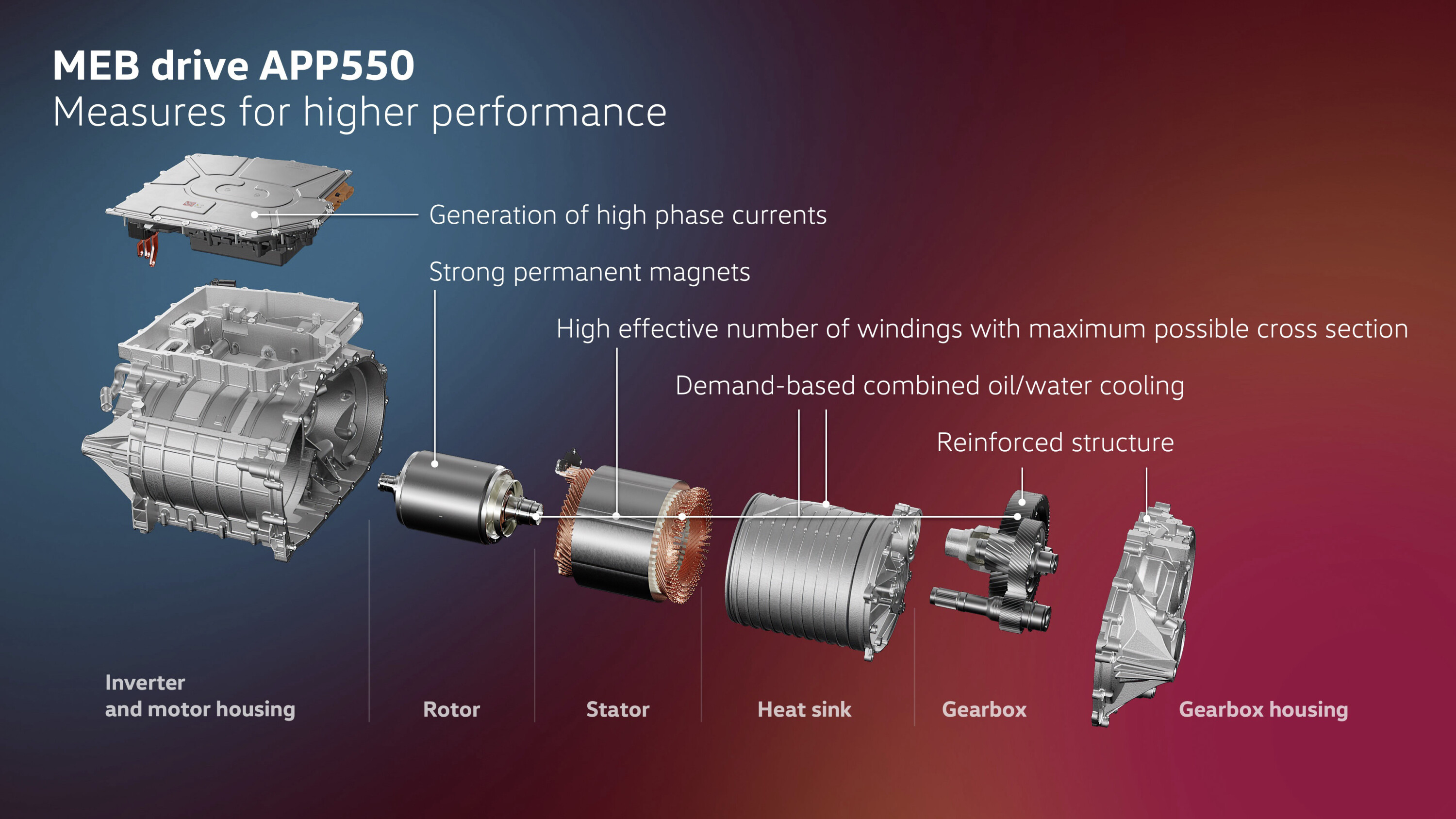
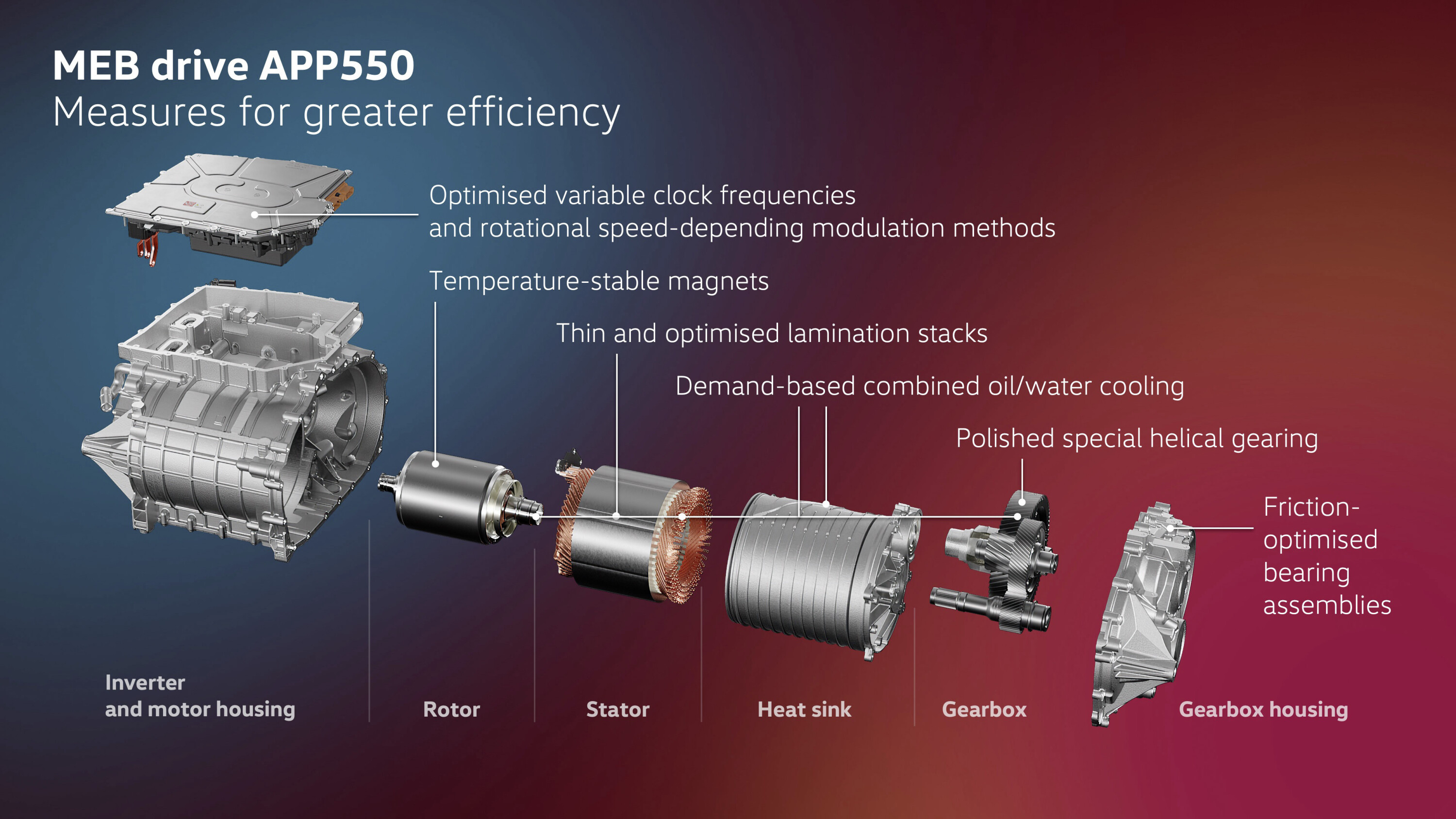
Volkswagen says the new powertrain achieves higher torque levels due to an “enhanced stator with a higher effective number of windings and a larger wire cross-section”, more powerful permanent magnet rotors that have higher load capacity, and an inverter that’s able to supply high-phase currents needed for greater power and efficiency.
A number of components, including the thermal management system, were also optimised.
An energy-saving cooling system can operate without an oil pump, the unit is able to independently cool itself via the gear wheels of the gearbox, and there’s ‘specially-formed’ components for oil supply and distribution.
1
The new system will be produced at its components plant in Kassel, Germany.
“We have been developing electric drive motors and their gearboxes for 15 years now, and have also been producing them here at our location for over 10 years,” said the Volkswagen Group’s head of electric drive unit technical development, Alexander Krick.
“Drawing on our many years of experience, we optimised the overall system through, among other things, the use of special electrical sheets and customised machining processes, and were thus able to significantly increase efficiency.”
1
Which EVs will have the new motor?
The more efficient and powerful APP50 drive unit is expected to debut in the Tesla Model 3-rivalling Volkswagen ID.7 flagship electric sedan – which is promised to deliver around 700 kilometres of driving range.
It’s compatible with MEB-based electric cars only, so there’s potential that it’ll trickle down into models such as the Volkswagen ID.4 and ID.5 SUVs, Cupra Born warm hatch and Skoda Enyaq SUV, alongside new forthcoming models including the Cupra Tavascan coupe SUV.
However, the more affordable upcoming Volkswagen ID.2, Cupra and Skoda small EVs are unlikely to adopt it since they use a front-wheel-driven MEB Entry architecture.
