
Of course, this data is available to Google and Apple, just as it is when using your phone directly.
The general manager of Mitsubishi’s electrified powertrain engineering division, Takashi Shirakawa, acknowledged that battery electric vehicles (BEVs) are the future for both Mitsubishi and the auto industry as a whole.
In the brand’s mid-term plan (up to the end of 2025) there are no plug-in hybrids slated for release – but that doesn’t mean Mitsubishi has lost interest in PHEVs.
“We are trying to stand up in the niche market until 2050 with PHEV because some customers need PHEV, and most OEMs do not make PHEV a priority”, Shirakawa-san told Wheels.
If we continuously improve PHEVs, our product may attract some customers because PHEVs compensate for the lack of performance from battery EVs.
1
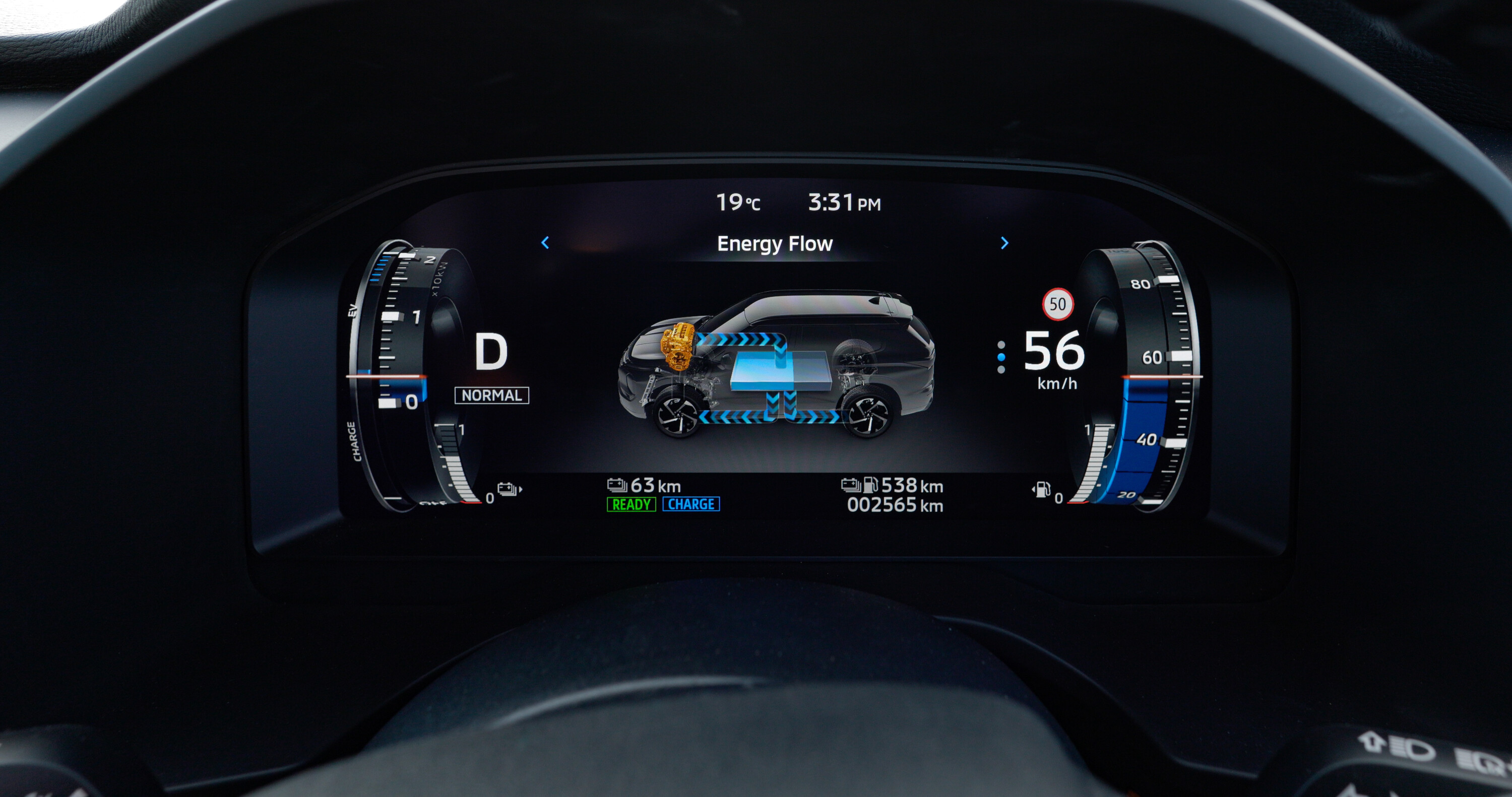
It’s simple, if there’s demand and you’re the only company investing in innovative solutions (like the Outlander’s plug-in powertrain, that features a single-speed front transaxle and independent rear motor, which is very different from Volkswagen and BMW’s attempts), then you’ll reap the rewards.
“If we continuously improve PHEVs, our product may attract some customers because PHEVs compensate for the lack of performance from battery EVs. Of course, BEV is an excellent solution, but it’s quite a unique product. So that is our current strategy”, Shirakawa-san added.
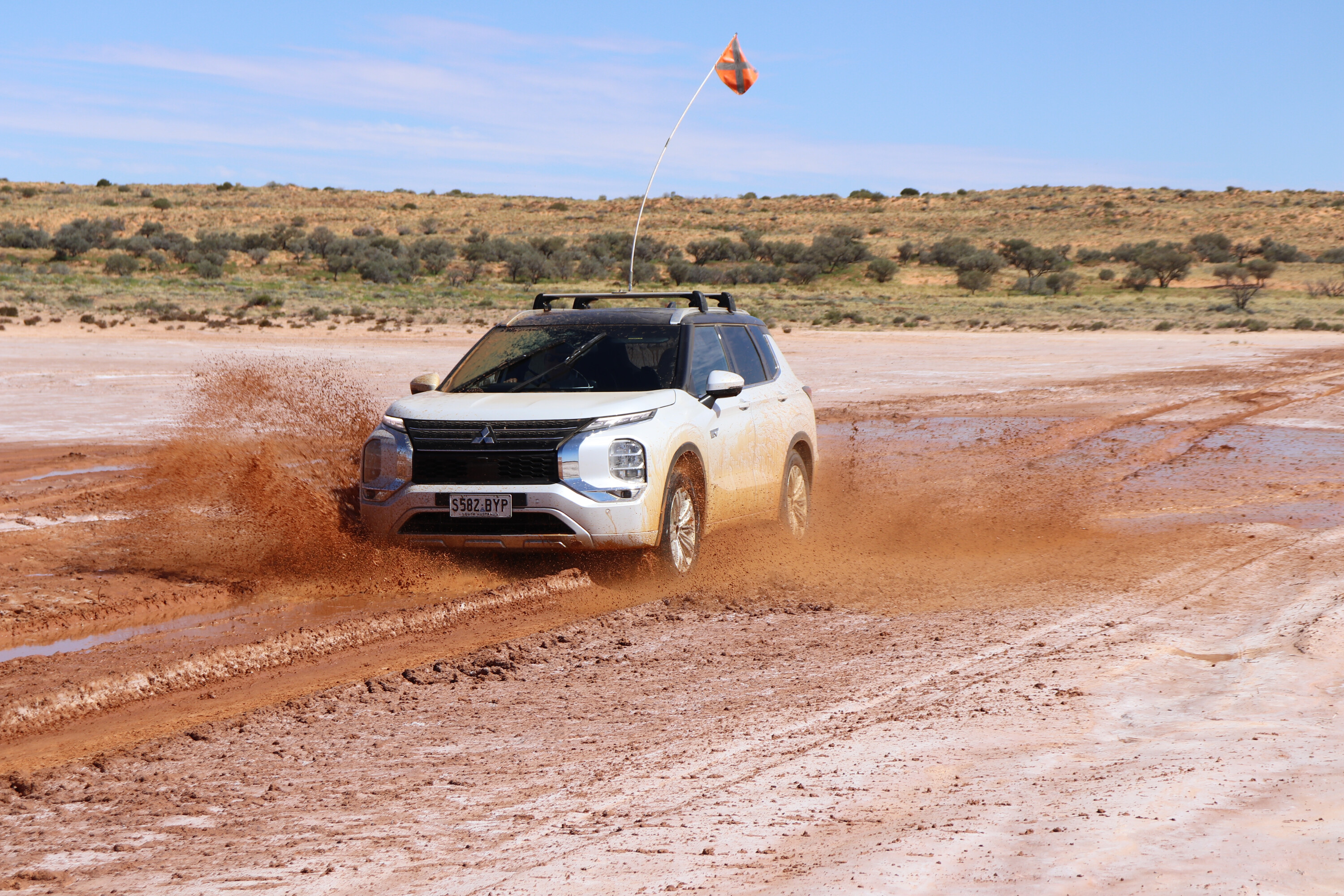
As the Alliance leader on PHEV tech, Mitsubishi’s solution also reflects its intended growth regions – ASEAN and Oceania – where grid energy is produced with a higher CO2 footprint (Mitsubishi’s data centres on 600g/kWh in ASEAN, 300g/kWh in Oceania, and the EU roughly 150g/kWh) meaning the impact of BEVs is less significant, or even worse, than an efficient combustion vehicle.
1
This equation isn’t quite so clear-cut in Australia (especially if you have solar panels installed and charge at home), but the brand believes that plug-in hybrids are still the cleanest solution for a slice of the population.
The other concern in Mitsubishi’s growth regions is cost. It’s why vehicles that are cheap to build, such as body-on-frame SUVs and utes, are popular, and Mitsubishi thinks the cost of a BEV that is able to satisfy the needs of customers may be prohibitively expensive.
Shirakawa-san points out that it isn’t the functionality of the BEVs in question here, but rather the high cost of materials such as Nickel and Cobalt, that will give smaller-batteried plug-in and traditional hybrid technology a leg-up in some markets.
It’s never been sold new in Australia, but chances are you’ve heard of the Mitsubishi Delica – and there are plenty of them here.
In your mind, it’s also likely associated with some bizarre suffix and sticker pack – think Chamonix, Space Gear, Star Wagon, or Jasper.
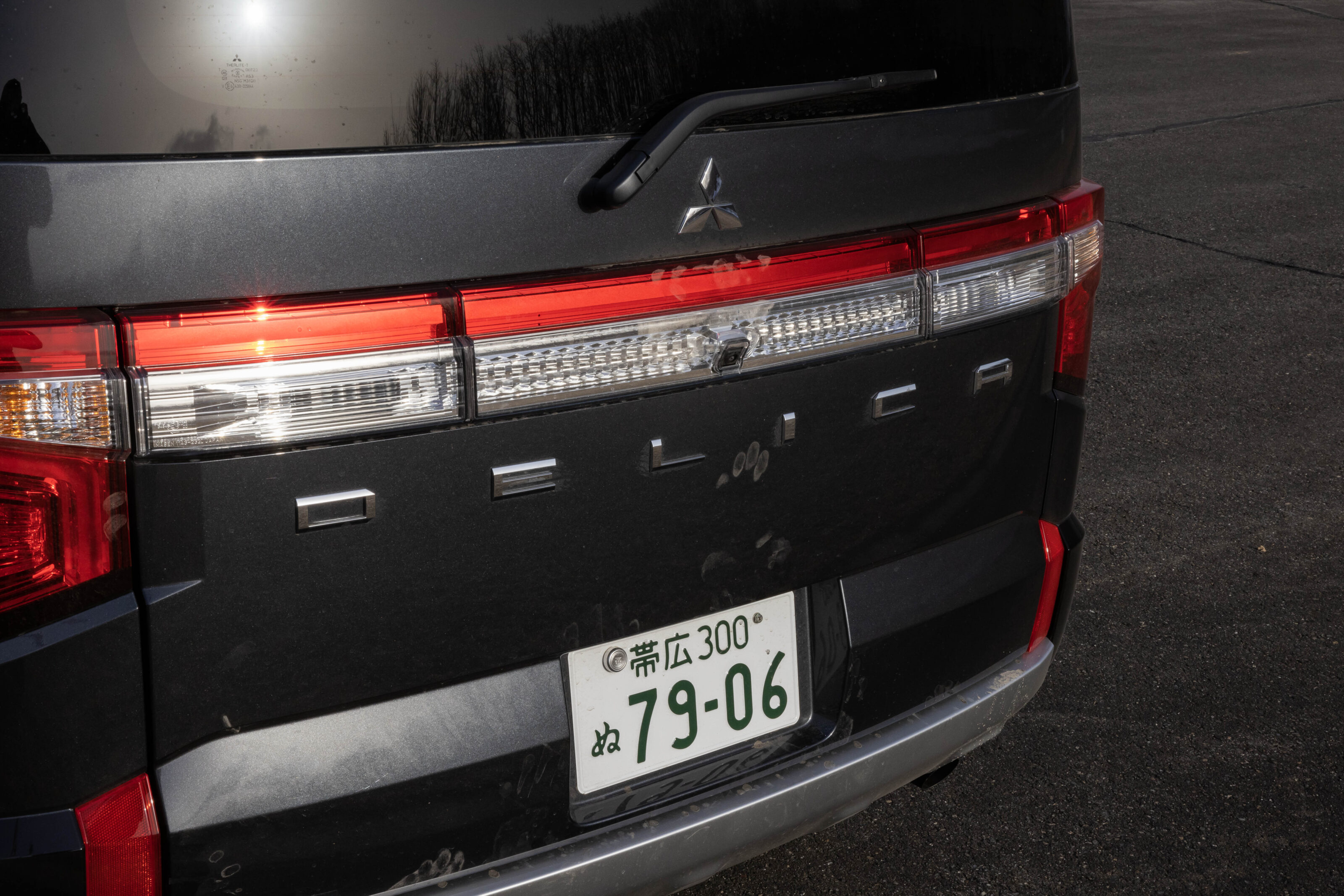
Our Delica interest was piqued at Mitsubishi’s Tokachi cold-weather proving ground. Between experiencing a rally-spec Triton at full noise and being let loose in Outlander PHEVs, a Delica was the shuttle of choice. When a spare 30 minutes presented itself, we asked the brand’s local boss of marketing and product strategy, Oliver Mann, if we could have a steer. Oliver said he’d see what he could do.
We then learned that Mitsubishi Motors Australia actually has a current model Delica hidden away at its Adelaide headquarters, as it was brought over for market evaluation. Don’t get too excited, though, because even if the Delica is green-lit for Oz, we’ll be waiting until the next generation debuts sometime after 2025.
MORE
Mitsubishi previews future: New Triton & Pajero Sport, 7-seat Kluger rival, electric ute confirmed!
1
JUMP AHEAD
- What is a Delica, and how much does it cost?
- How’s the interior?
- What’s it like to drive?
- Would it work in Australia?
- Specifications
What is a Delica, and how much does it cost?
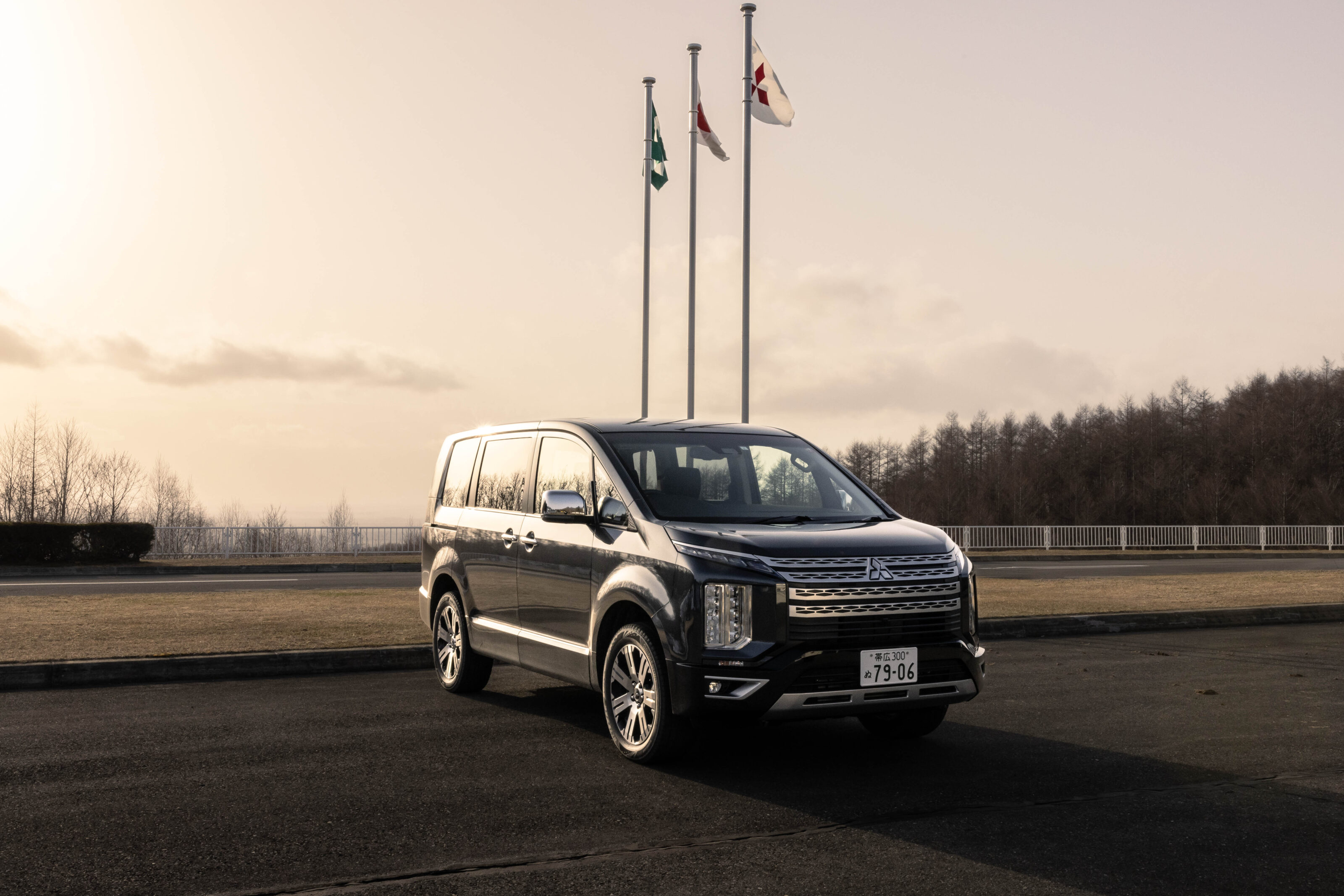
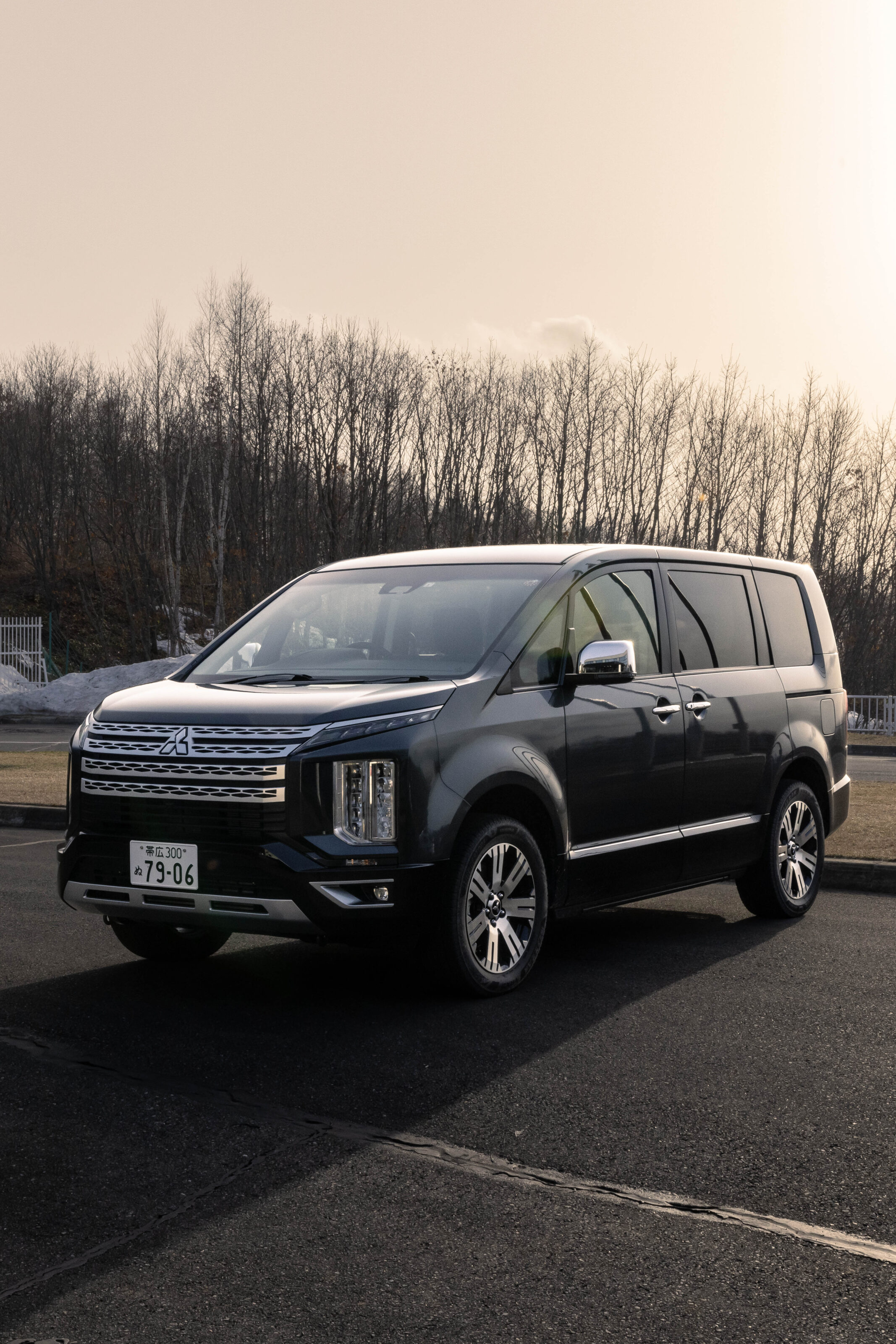
I guess you could call the Delica a minivan (or people-mover like a Kia Carnival), but with lifted suspension, rugged off-road tyres, selectable 4WD and a diesel engine, it’s not really a Volkswagen Multivan or Toyota Granvia rival. The Delica is its own thing. The evaluation car was sent to Australia to “explore as a concept, whether it would be of interest in the context of Australian market”, according to Mann.
It’s also a little long in the tooth. The fifth-gen Delica launched domestically in 2007 and sold for 12 years with only minor model-year updates until the deep facelift of 2019. It still rides on the same previous-gen Outlander platform (that can trace its roots back to the CJ Lancer) but is now powered by a 2.3-litre version of the Triton’s diesel powerplant.
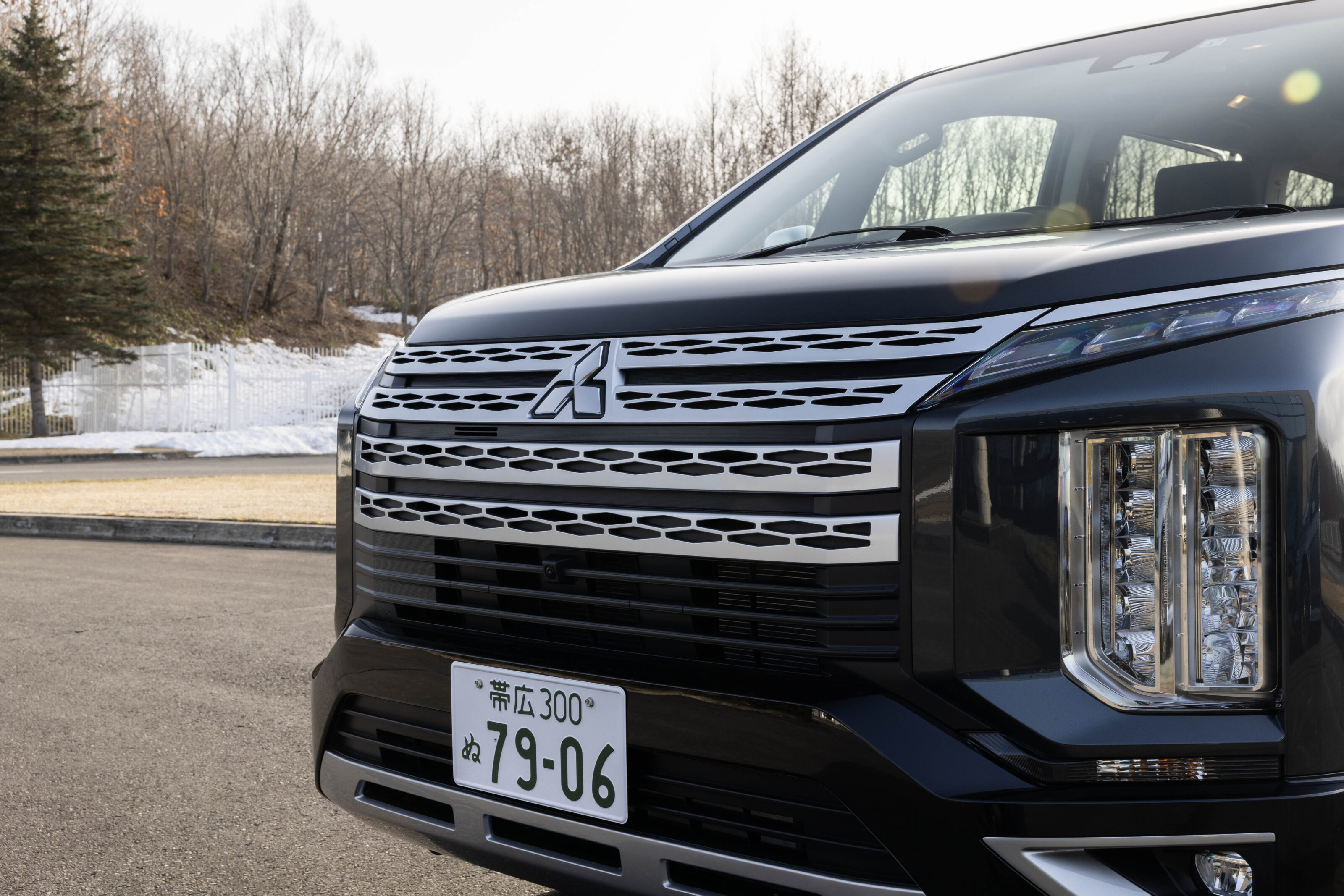
We drove a mid-spec Delica G that costs JPY¥4,103,000 – about AU$46,300. Looking at equivalent Outlander pricing between Australia and Japan suggests a 10 per cent increase over the direct conversion once landed, putting this Delica at around AU$52,000 here.
1
There are a few grey-import fifth-gen Delicas in the classifieds, and a 2021 facelift D:5 like ours will set you back over $70K.
Modified and high-spec examples push into the $80K region. Pre-facelift petrol CVT models are available, but for those looking to head bush, we’d recommend spending more on the diesel.
In Japan, the Delica is stung with consumption tax that makes it more expensive than the default transport, which is kei cars (or the train in Tokyo), so sales sit around 1000 per month. According to Mitsubishi’s local product planners, Delicas are typically bought by larger families and those who like adventure.
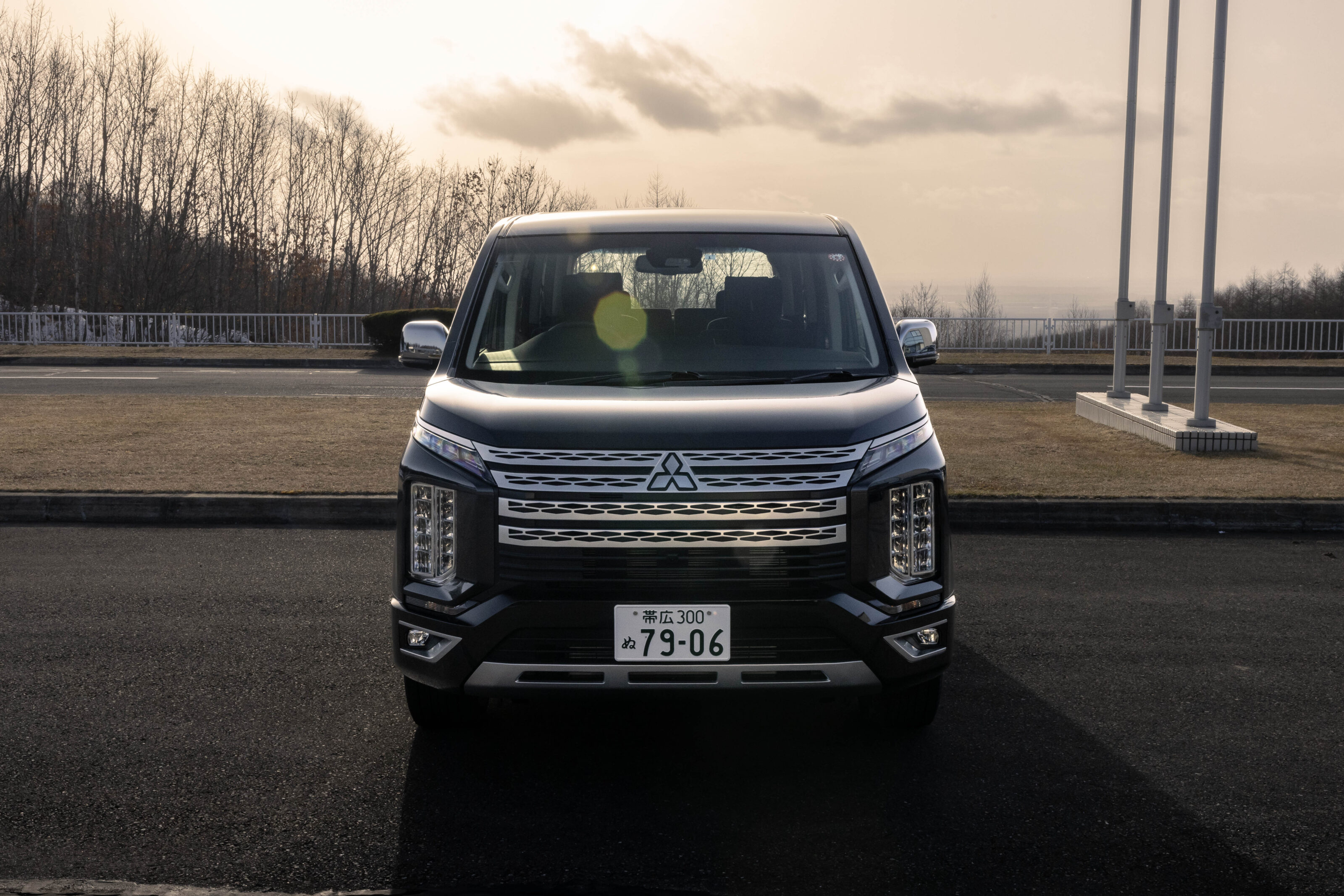
After sitting and researching the Delica over lunch, it was delightful to see Oliver come into the room at the end of the day’s activities with the keys to the latest D:5 Delica in the car park.
1
How’s the interior?
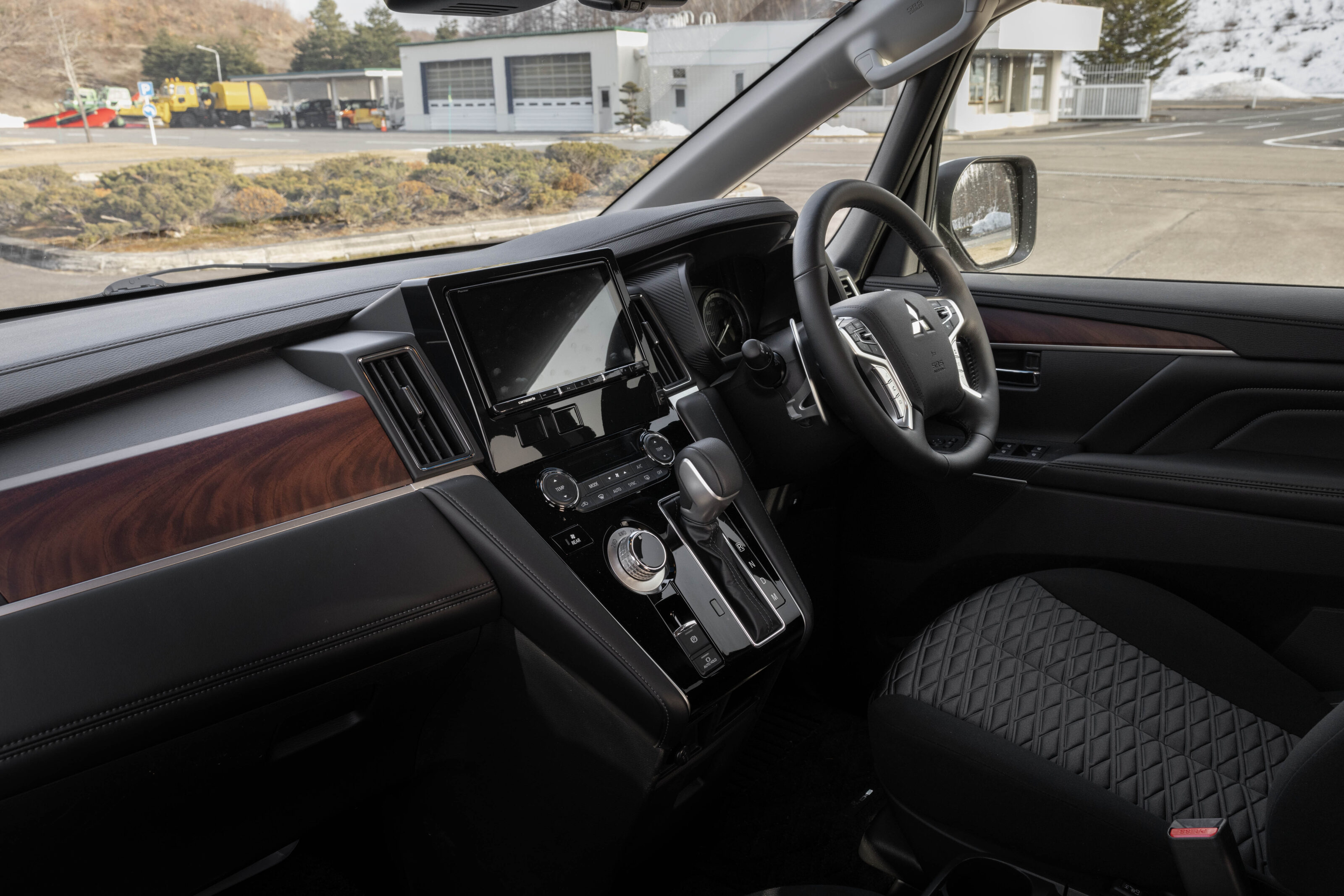
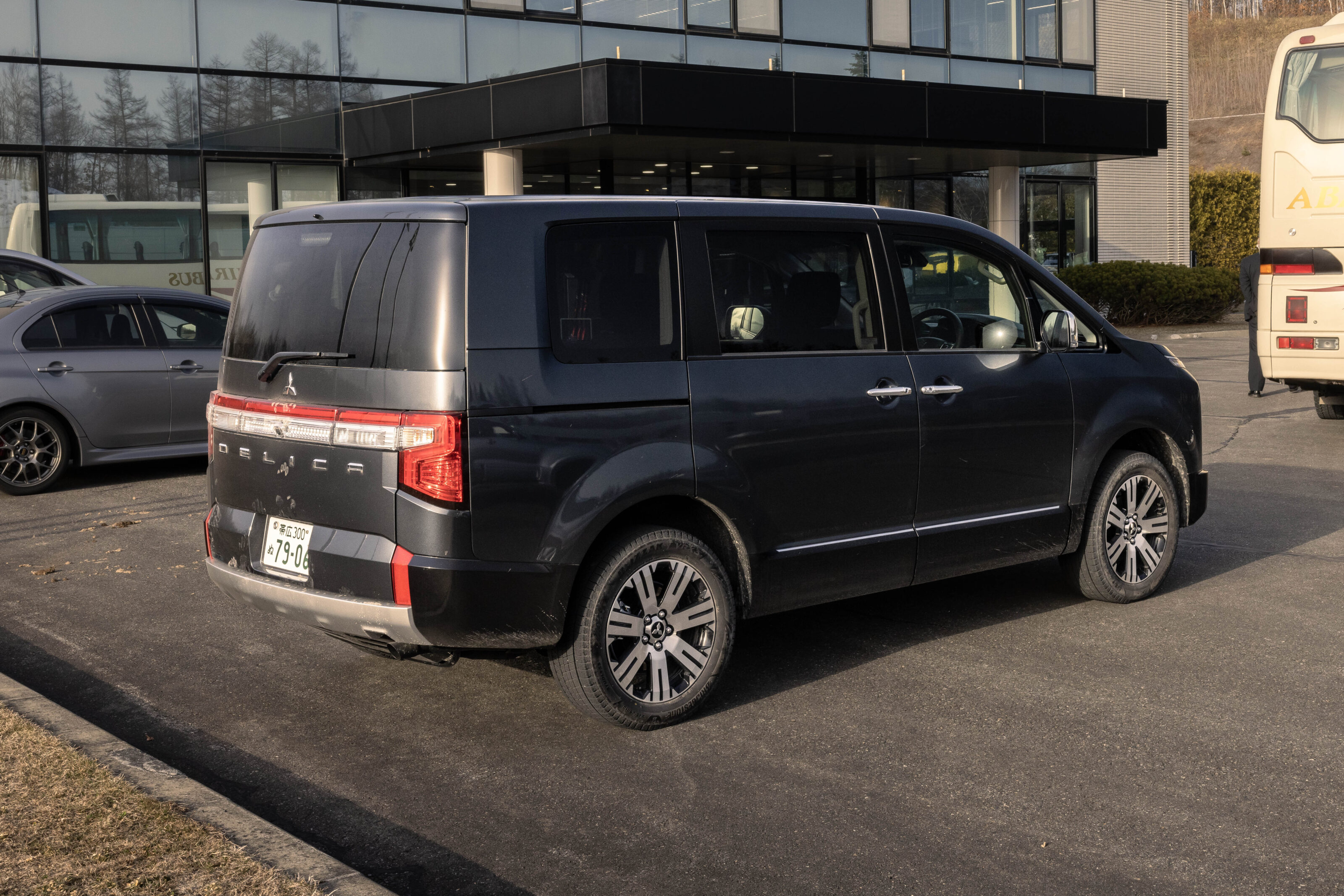
It may look space-age outside with its LED lighting, reflective 18-inch alloys and Minecraft styling, but inside the design is very much current Triton – right down to the steering wheel, touchscreen and instruments.
Plastics are what you’d expect for this kind of price: not standout, but not overly scratchy or nasty. The Delica G’s upholstery is a fleece-like material that’s warm and snuggly in Japanese winters. Less sweat-absorbent leather is optional with the G-Power pack or P trims, which would suit Australia’s warmer conditions better.
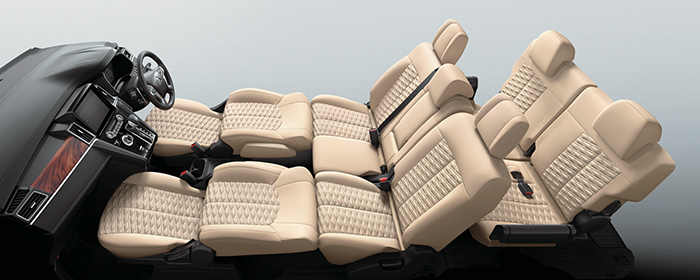
Where the Delica really excels is space efficiency. For starters, it’s available in eight- or seven-seat configurations (with second-row captain’s chairs) and the third row is easily removable to free up more boot space. The second row is also on sliders, giving a minimum of 1.2 metres or maximum of 1.61 metres of load length behind (when in two-seat mode).
2
If you want to take a nap, all three rows of seats can be squished flat in two configurations (see pictures) for front- or back-seat snoozing. There are plenty of clever storage spaces, including lots of bottle holders, luggage and clothes hooks scattered around the cabin.
A few taps into a search engine and you’ll unearth all manner of Japanese aftermarket accessories for the Delica. There’s even a flagship Jasper model that sends you on your way with red-stitched water-repellent upholstery, mud flaps, and requisite sticker pack.
2
What’s it like to drive?
It was a brief experience through Tokachi proving ground’s ribbon-like transit roads with Ralliart chief (and Dakar racer) Hiroshi Masuoka riding shotgun, but there’s plenty to like.
As Tokachi is a cold-weather proving ground finished in 1996, the asphalt has been subjected to many a harsh winter, and has the cracks to show it.
The Delica largely rides well, if a little on the firm side in typical Japanese fashion. The trade-off is good body control and little roll. We wonder if some more on-road touring-biased 18-inch rubber would improve the ride over the chunky winter tyres fitted. The steering is extremely light – perhaps emphasised by the four-spoke Triton/Pajero Sport wheel we’re used to putting more force through – but accurate and consistent.
What surprised most was the slick calibration of the eight-speed automatic that shifts delicately through its ratios to harness the 2.3-litre turbo-diesel four-cylinder’s 107kW/350Nm outputs. Surprisingly, though related to the Triton’s vocal powerplant, the Delica’s 2267cc engine is vastly smoother, with excellent refinement levels for a diesel.
1
It’s relatively efficient, too, rated at 7.4L/100km on Japan’s JC08 combined cycle (very similar to NEDC/ADR combined). With its 64-litre fuel tank, the roving range should be around 870km from a fill-up.
Safety is a little unknown for the Delica, as it hasn’t been appraised by Euro NCAP, ANCAP, or any American authorities. The latest car is equipped with driver aids such as front AEB, blind-spot monitoring, auto high-beam, rear cross-traffic alert and adaptive cruise control.
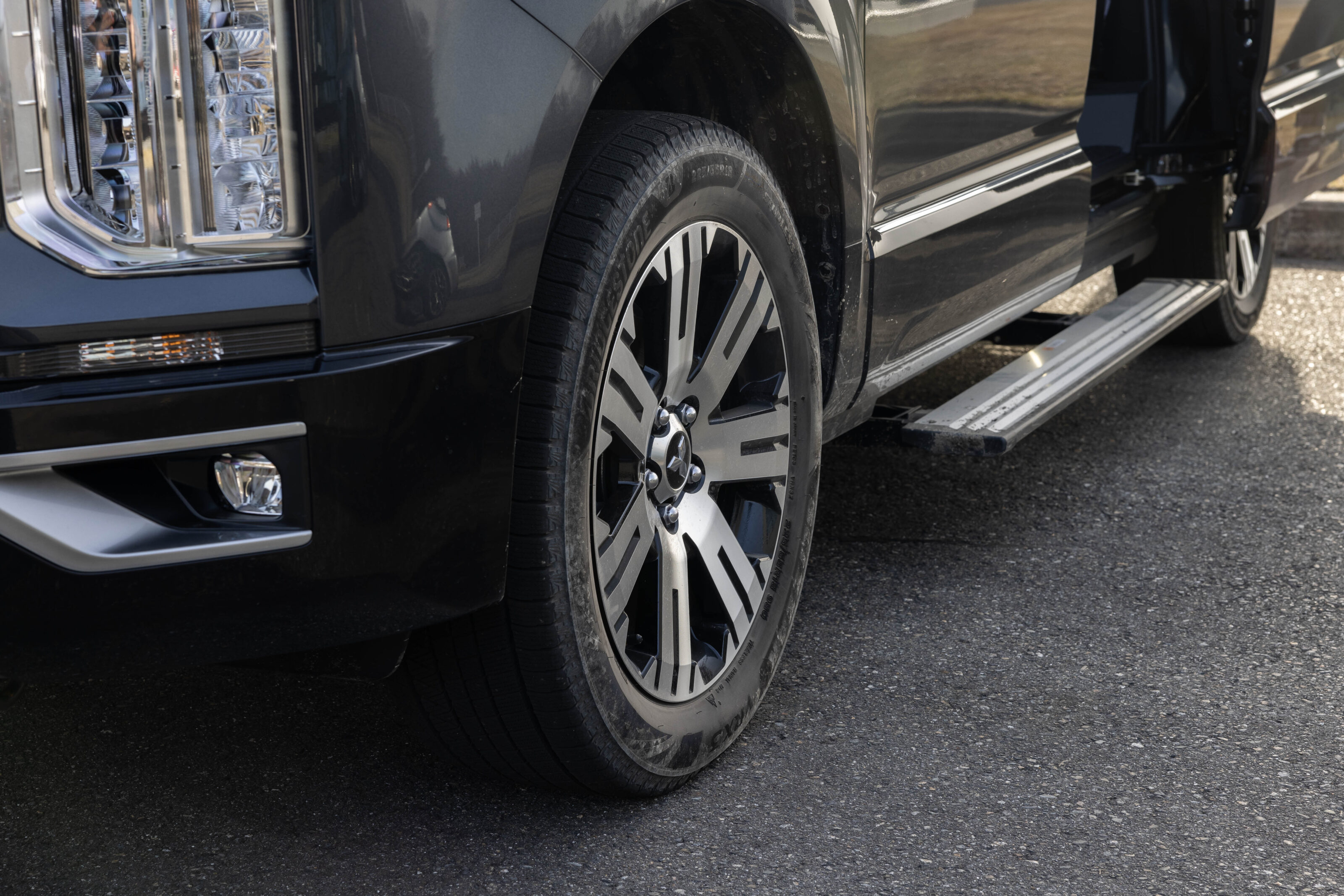
Another trick up the Delica’s sleeve is its torque-on-demand ‘AWC’ AWD system – the same found in previous-gen Outlanders. It’s not a rival for the Triton’s Super-Select II 4WD with its available locking rear diff, but the system is smart.
1
In 2WD, 100 per cent of drive is sent to the front axle. You can then lock the Delica in 4WD, sending 50:50 drive to both axles as standard with the electronically-controlled centre diff staying responsive to traction losses.
For loose surfaces, such as snow or more hardcore off-roading, 4WD Lock apportions more torque to the rear axle to maximise grip.
The Delica won’t be as capable as a Pajero Sport, Triton, or Suzuki Jimny over rocky and testing terrain (as illustrated by the table below), but should be a sweeter drive on black-top.
| Measurement | Mitsubishi Delica | Mitsubishi Pajero Sport |
|---|---|---|
| Length/width/height | 4800/1795/1875mm | 4825/1815/1835 |
| Wheelbase | 2850mm | 2800 |
| Approach angle | 24u00ba | 30u00ba |
| Departure angle | 21.5u00ba | 24u00ba |
| Rampover angle | 18.5u00ba | 23u00ba |
| Ground clearance | 185mm | 218mm |
Could it work in Australia?
Don’t hold out hope that Mitsubishi will introduce the Delica here, and it certainly won’t come this year.
Why? Well, the Delica doesn’t have a defined segment to play in, and – although big in Australia – Mitsubishi isn’t a power player in Japan so it doesn’t have bottomless reserves like Toyota does. Each model must therefore be chosen, and business case made, very carefully.
It wasn’t in reference to the Delica – rather the three-row ASEAN-market XPander – but John Signoriello, executive officer, global marketing and sales, offered insight into what Mitsubishi Australia needs to justify a new model with specific ANCAP and emissions requirements.
1
“We used to sell Grandis; we could sell 50 a month. Maybe if we did [a campaign] we might sell a few more, but it would average around 50 a month…. for that sort of volume, there won’t be a business case. Not for 50 a month… It just doesn’t make sense when you’re limited on your resource base.”
But unlike Grandis, XPander, or the electric eK X Kei car, the Delica nameplate already resonates with Australians. Probably only a few niche enthusiasts are dedicated enough to know right now, but a solid campaign positioning it as a practical, adventure-ready SUV alternative could be just what Mitsubishi needs.
The car is under consideration, but Mitsubishi Australia isn’t having regular discussions about its suitability. Given the length of the Delica’s life cycle (Japan still gets the same basic vehicle as it did in 2007), and the fact a silhouette isn’t pictured in Mitsubishi’s mid-term business plan, we expect a new model after 2025.
1
Perhaps the new Delica will be based on the new Outlander’s CMF-C/D platform, offering plug-in hybrid power and that car’s S-AWC AWD system. Who knows. Of the vehicles not sold in Oz, the Delica seems Mitsubishi’s most suitable for Australia’s current go-anywhere zeitgeist.
But Mitsubishi has bigger fish to fry. Bringing the new Triton to market and positioning it correctly is hurdle one, and then it’s time to replace the aging ASX – seemingly a mammoth task – before new Pajero Sport arrives.
Delica fans, all you can do is keep your fingers crossed and pester your Mitsubishi dealer.
| Mitsubishi Delica G 4WD specifications | |
|---|---|
| Price | A$46,300 (direct conversion) |
| Drivetrain | |
| Engine | 4cyl, 2.3-litre, DOHC, 16v, turbo-diesel, direct-injected |
| Layout | Front engine, transverse, AWD |
| Power | 107kW |
| Torque | 350Nm |
| Gearbox | 8 speed automatic |
| Chassis | |
| Body | Steel, 5 doors, 7/8 seats |
| L/W/H/Wu2013B | 4800/1795/1875/2850mm |
| Track (F/R) | 1540/1535mm |
| Weight | 1950kg |
| Fuel/tank | Diesel / 64 litres |
| Economy (combined ADR81/02) | 7.4L/100km |
| Suspension | Front: struts, coil springs, stabiliser bar. Rear: multi-link, coil spring |
| Steering | electric rack-and-pinion |
| Tyres | Yokohama all-season |
| Tyre size | 225/55R18 |
| Safety | |
| ANCAP rating | NA |
| 0-100km/h | 5.3 seconds (claimed) |
The facelifted 2024 Mercedes-Benz GLS upper-large SUV has debuted in Europe.
Snapshot
- 2024 Mercedes-Benz GLS facelift revealed
- Updated upper-large SUV gains a refreshed look and new technology
- Due in Australia in the third quarter; pricing and features to be announced closer to launch
The new-look GLS is scheduled to arrive in the third quarter of 2023, with local pricing and features to be announced closer to its debut.
First launched in 2019, the GLS facelift positions it to continue the battle with the BMW X7, with both vehicles fighting it out as the best-seller in Australia’s premium upper-large SUV segment.
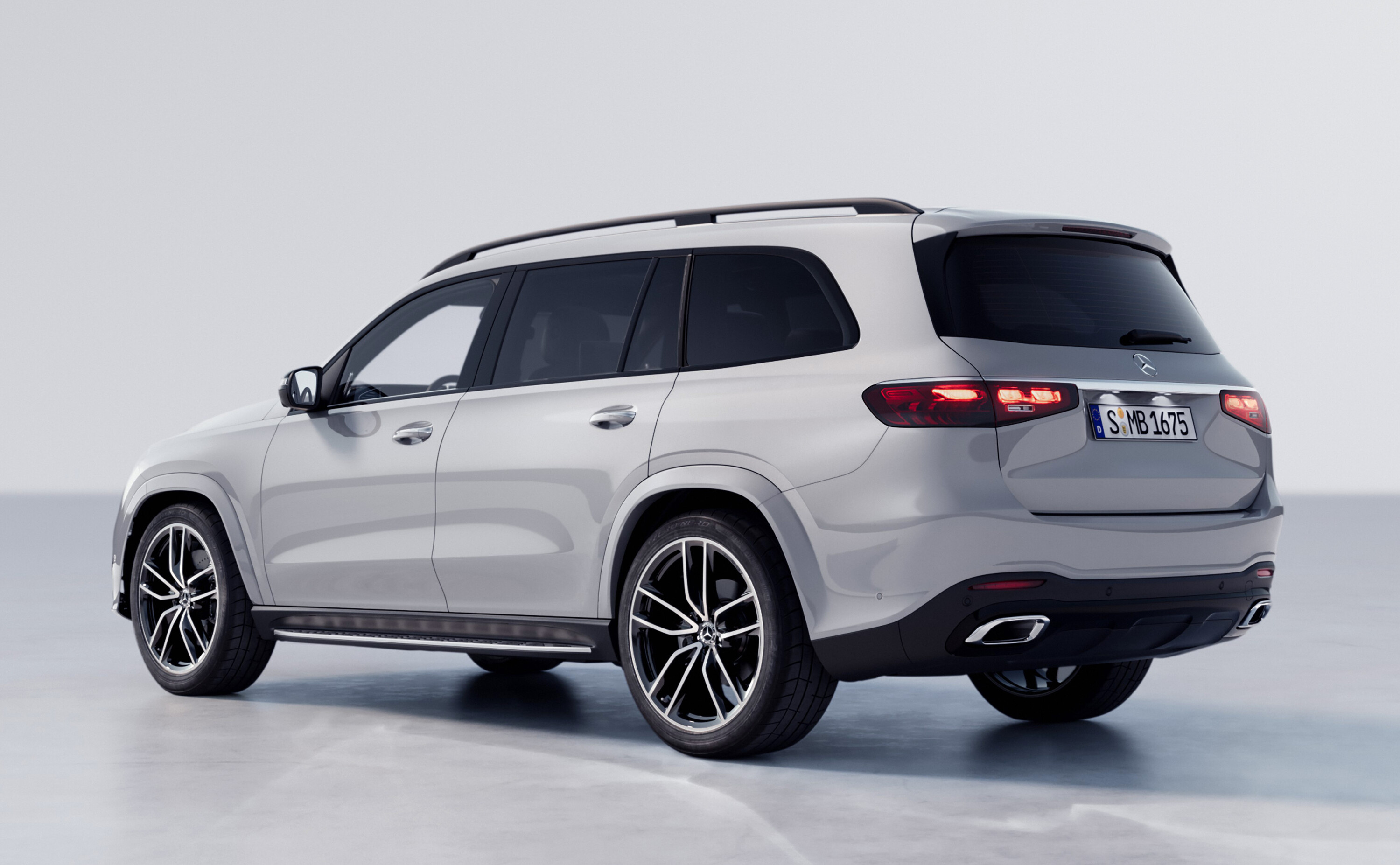
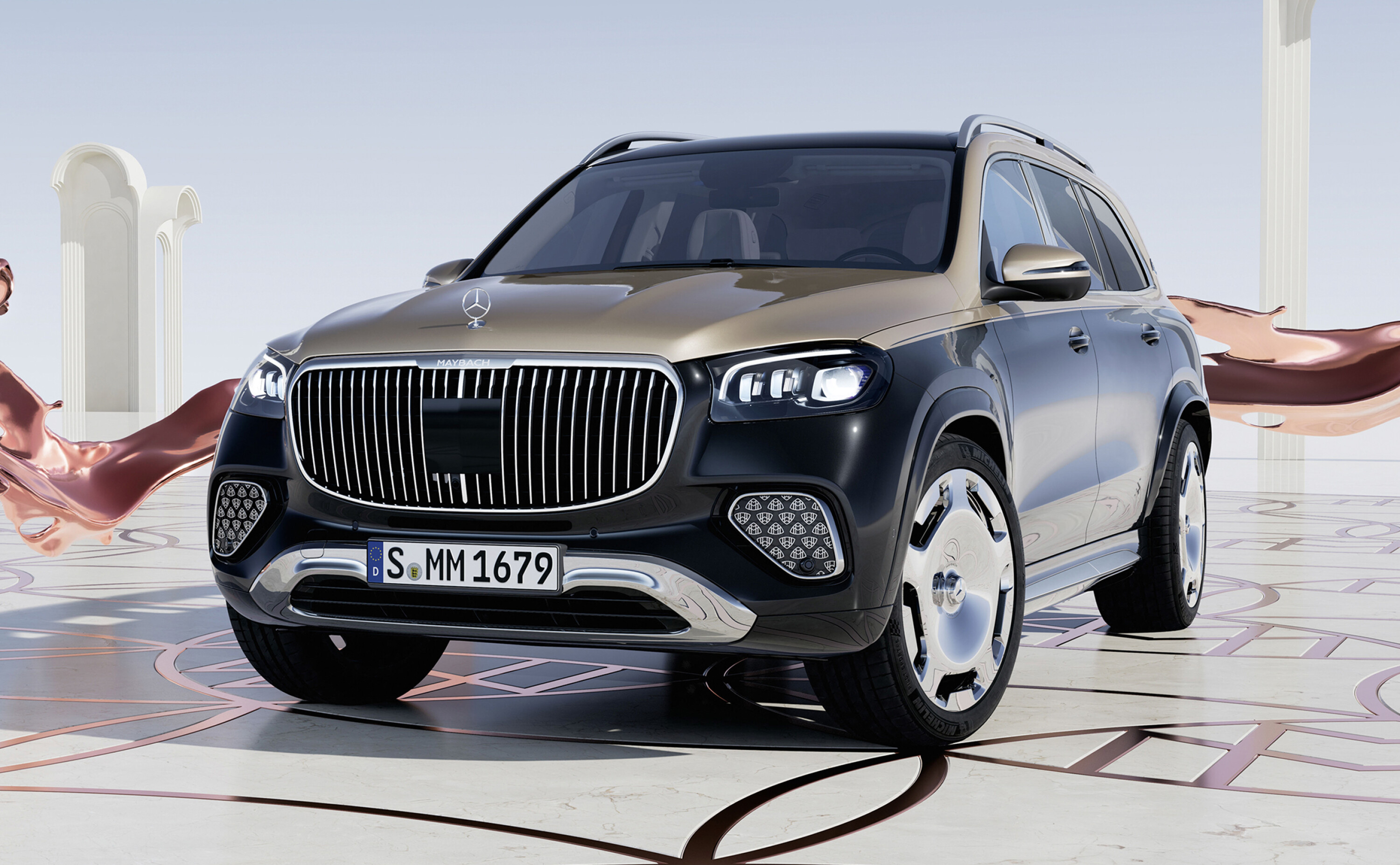
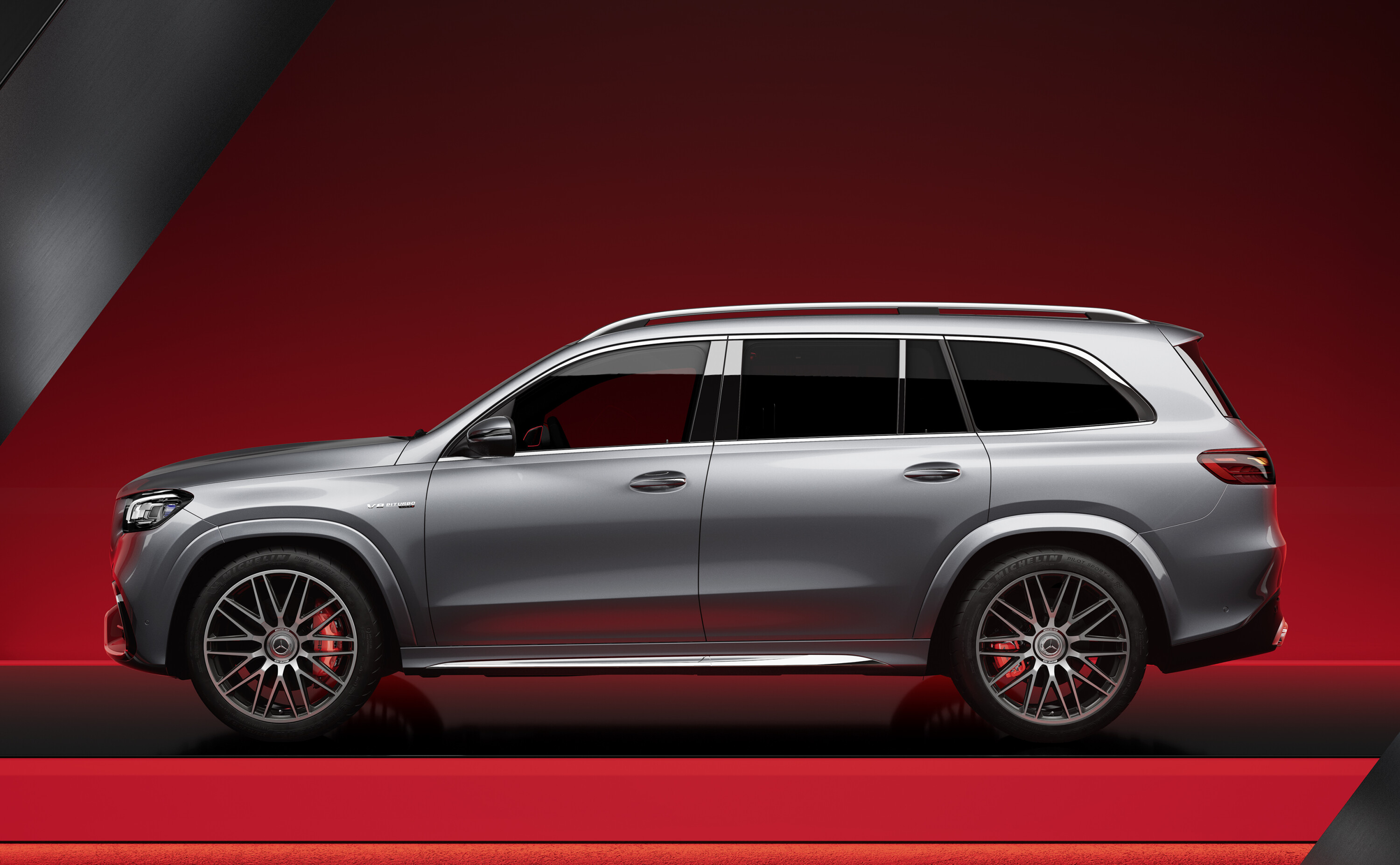
It is headlined by an exterior refresh with a larger grille, new headlight and tail-light graphics, revised bumpers and new alloy wheel designs.
1
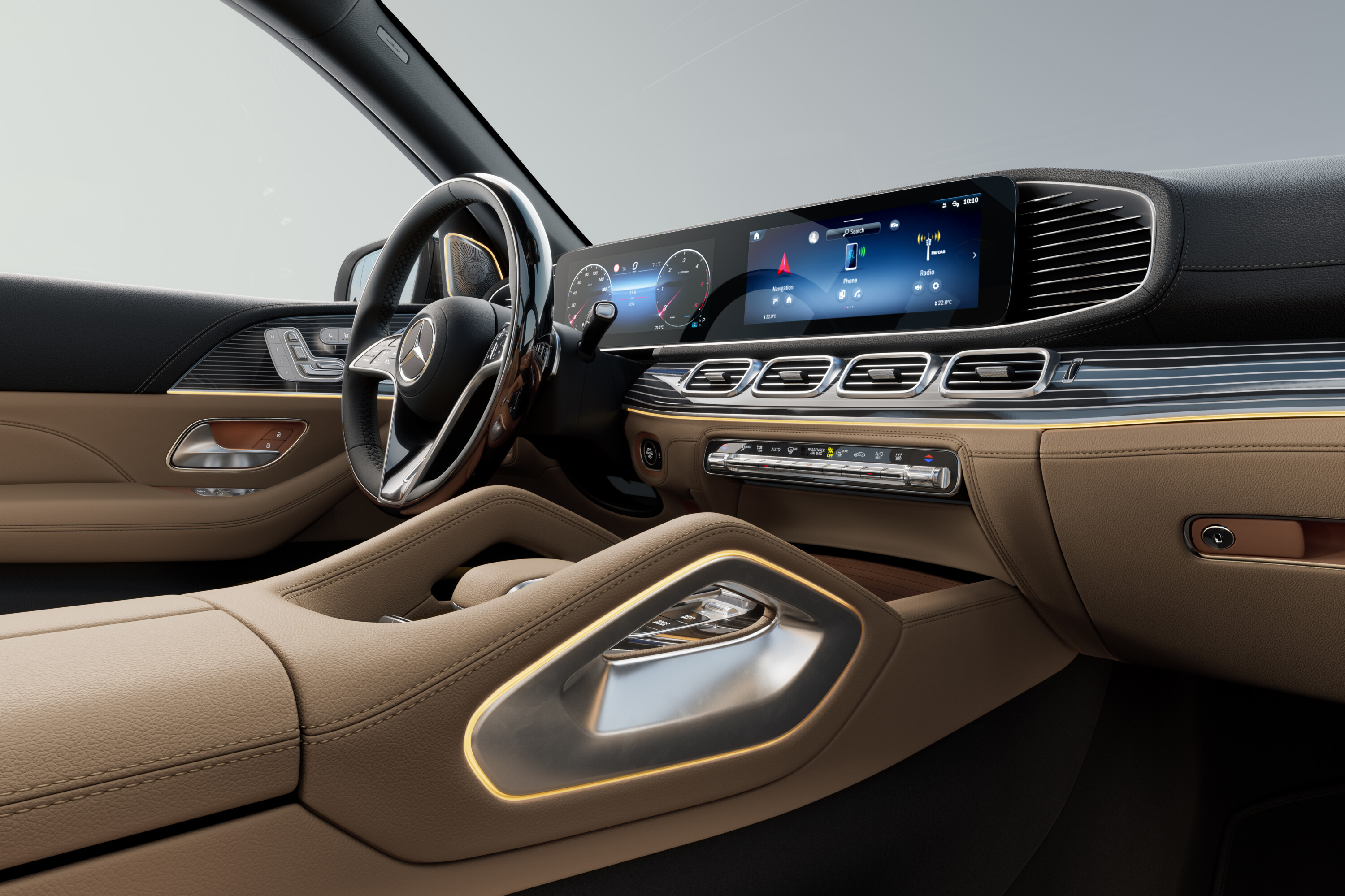
Inside, the brand’s latest steering wheel – as found in the latest S-Class and all-electric EQS SUV – features with touch-sensitive buttons and a unique two-spoke design for the GLS AMG 63.
Across the range, the air vents are now finished with real metal louvres – previously limited to the Maybach GLS – while additional trim colours have been added.
In addition, the gloss black piano lacquer finish is no longer exclusive to the Maybach, joining two new leather upholstery colours: Catalana beige and Bahia brown.
1
The new second-generation MBUX infotainment system is featured, but it remains on dual 12.3-inch screens, unlike the S-Class and EQS SUV’s larger portrait-orientated central display.
New additions include wireless Apple CarPlay and Android Auto, the ability to speak to the ‘Hey, Mercedes’ voice assistant without saying the keyword, an ‘off-road’ drive mode, and trailer maneuvering assist.
It also receives two additional bolts on the trailer coupling to support the transport of e-bikes, while technology additions also include optional 100-watt USB ports in the centre console and an available MBUX Multi-Seat Entertainment System for second-row passengers.
The updated Mercedes-Maybach GLS 600 gains an optional 23-inch forged alloy wheel with a wheel bolt cover, an ambient lighting system with a unique pattern, and diamond-pattern quilting in the centre sections of the seat sections and backrests.
1
Under the bonnet, the facelifted GLS range has more power, with improved 48-volt mild-hybrid technology for the GLS 450, GLS 580, GLS 350d and GLS 450d.
The entry-level GLS 450 is up 10kW to 280kW and 500Nm, while the diesel GLS 450d – previously GLS 400d – is up 27kW and 50Nm to 243kW and 700Nm.
As for the performance-orientated AMG GLS 63, it is unchanged at 450kW and 850Nm, while the Maybach GLS 600 is also unchanged at 410kW and 730Nm, though the 48-volt mild-hybrid system now adds 16kW of boost.
1
When will the 2024 Mercedes-Benz GLS go on sale in Australia?
The facelifted 2024 Mercedes-Benz GLS will arrive in Australian showrooms in the third quarter of this year (July to September inclusive), with local pricing and features to be announced closer to its launch.
Currently, the Mercedes-Benz GLS is priced from $171,700 before on-road costs, rising to $395,900 plus on-roads for the Maybach GLS600. Last year, the GLS was narrowly outsold by the BMW X7, which is the best-selling upper-large SUV above $100,000 in Australia.
It will be joined by the all-electric Mercedes-Benz EQS SUV this year, with the Maybach EQS SUV set to debut on April 17 at the Shanghai Auto Show.
The 2023 Tesla Model 3 electric sedan has again returned to a more-affordable price.
Snapshot
- 2023 Tesla Model 3 pricing reduced
- RWD and Long Range reduced by $3000
- Performance down slightly
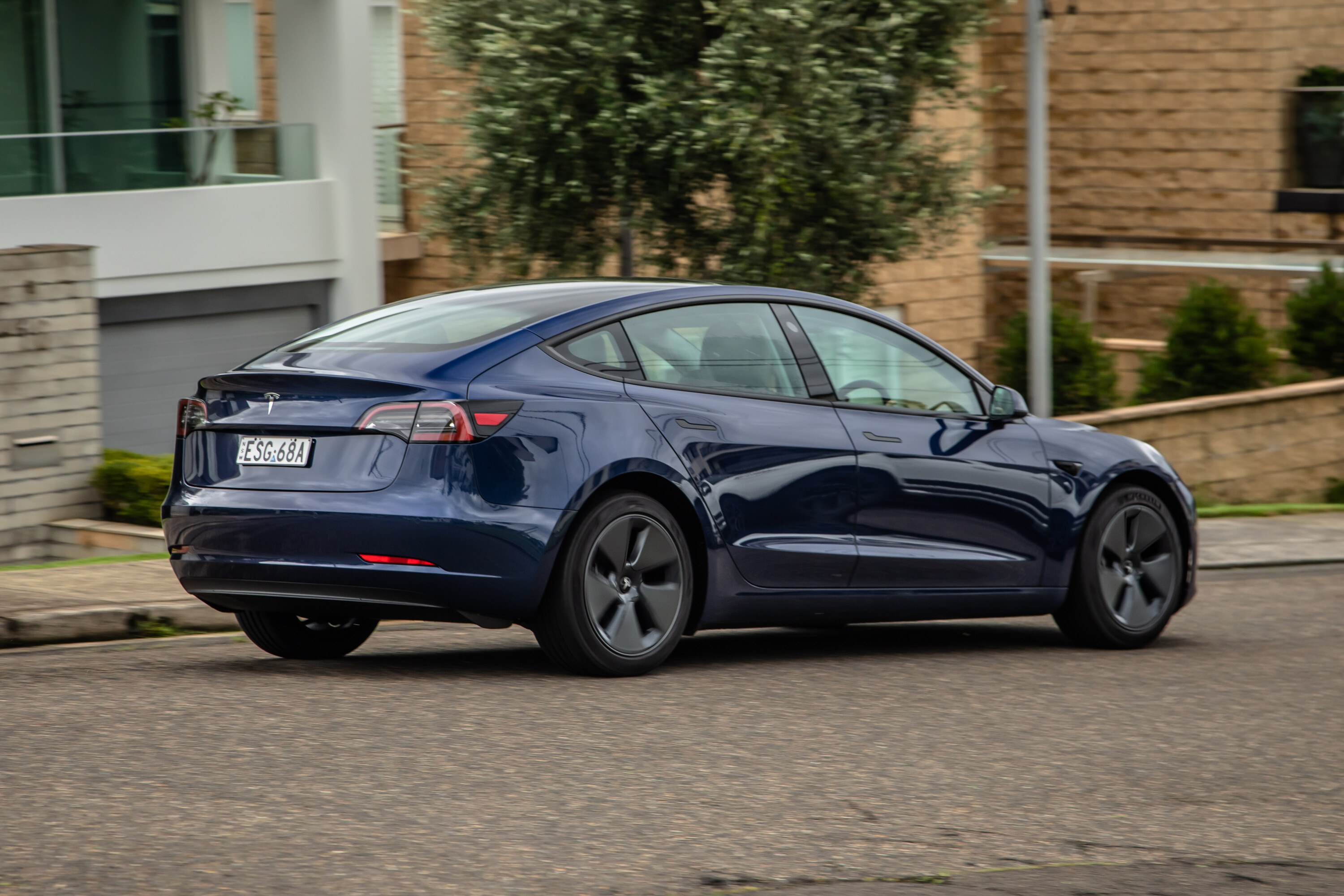
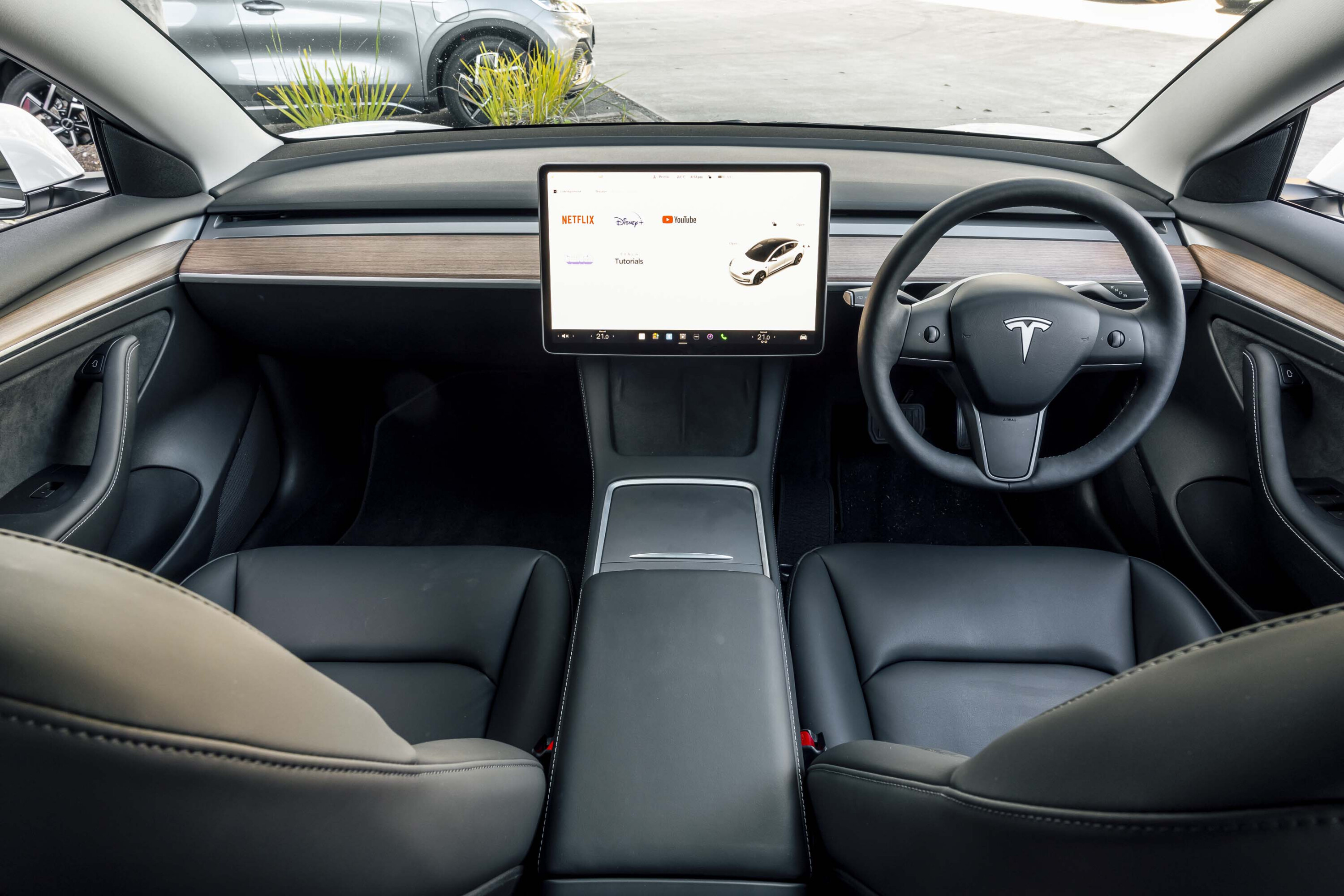
Tesla has applied a $3000 price reduction for select Model 3 variants this week, following a previous significant cut in early January.
It is now priced from $60,900 before on-road costs for the single-motor Rear-Wheel Drive variant, down from $63,900.
The mid-spec Long Range is now listed at $73,900 – down $3000 – while the flagship Performance is down $65 to $89,835, including luxury car tax.
1
The latest price cut has reduced the Model 3’s pricing to the second cheapest ever in Australia, with a small number available for $59,990 before on-roads in early March 2022 – before pricing climbed to $65,500 prior to the reduction in January 2023.
First launched in late 2019, the Model 3 has received several price adjustments, with updated pricing listed at random on Tesla’s consumer website – unlike other traditional carmakers.
VFACTS new-car sales data reveals the 2023 Tesla Model 3 is not only Australia’s best-selling electric car, but also the highest-selling passenger vehicle.
To the end of February, 5598 Model 3s have been registered in Australia, with the electric sedan outsold by the popular Ford Ranger and Toyota HiLux.
1
Tesla Model 3 pricing – April 2023
Prices exclude on-road costs.
* includes Luxury Car Tax
MORE
Everything Tesla
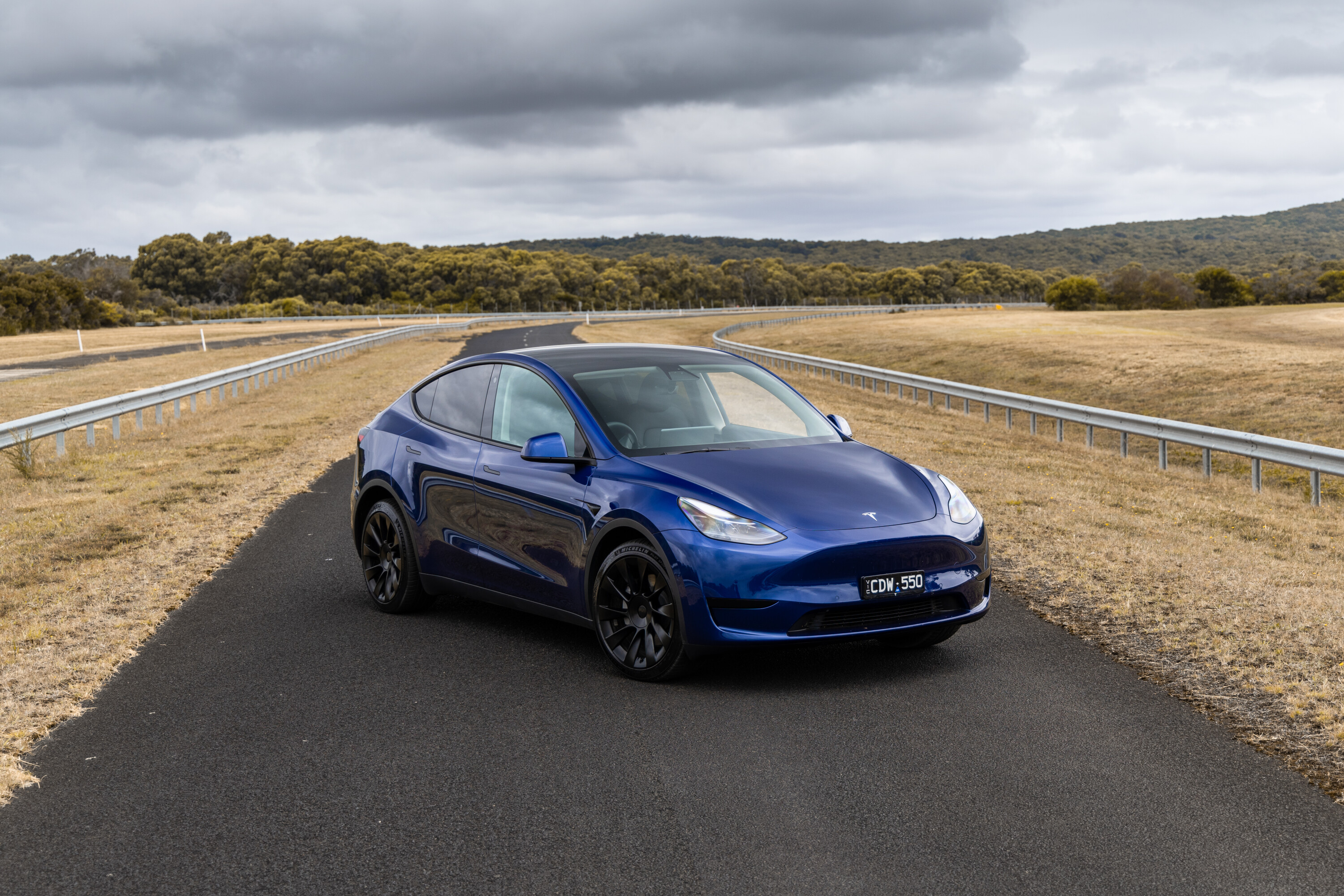
The Tesla Model Y Long Range AWD is now available to order with first Australian deliveries expected between May-June 2023.
Snapshot
- Model Y Long Range available to order
- 533km WLTP driving range; twin-motor AWD
- Local deliveries to begin in May
With twin-motor AWD, a claimed 0-100km/h sprint of 5.0 seconds, 533km WLTP driving range, and an $81,900 (before on-road costs and luxury car tax) starting price, the Long Range AWD sits between the base Standard Range, and flagship Performance trims.
The Long Range adds a handy 79km of driving range over the base car, and 19km compared to the rapid Performance, using a 75kWh (according to typically accurate EV Database) NCM battery pack.
Compared to the same spec Model 3 Sedan (that offers 13km more range), the Model Y medium SUV commands an extra $8000.
Catch up on Model Y
1
Like the other Model Ys, the Long Range AWD features DC fact-charging capability up to 250kW, allowing it to climb from 10-80 per cent in 27 minutes at a V3 Supercharger or public 350kW station.
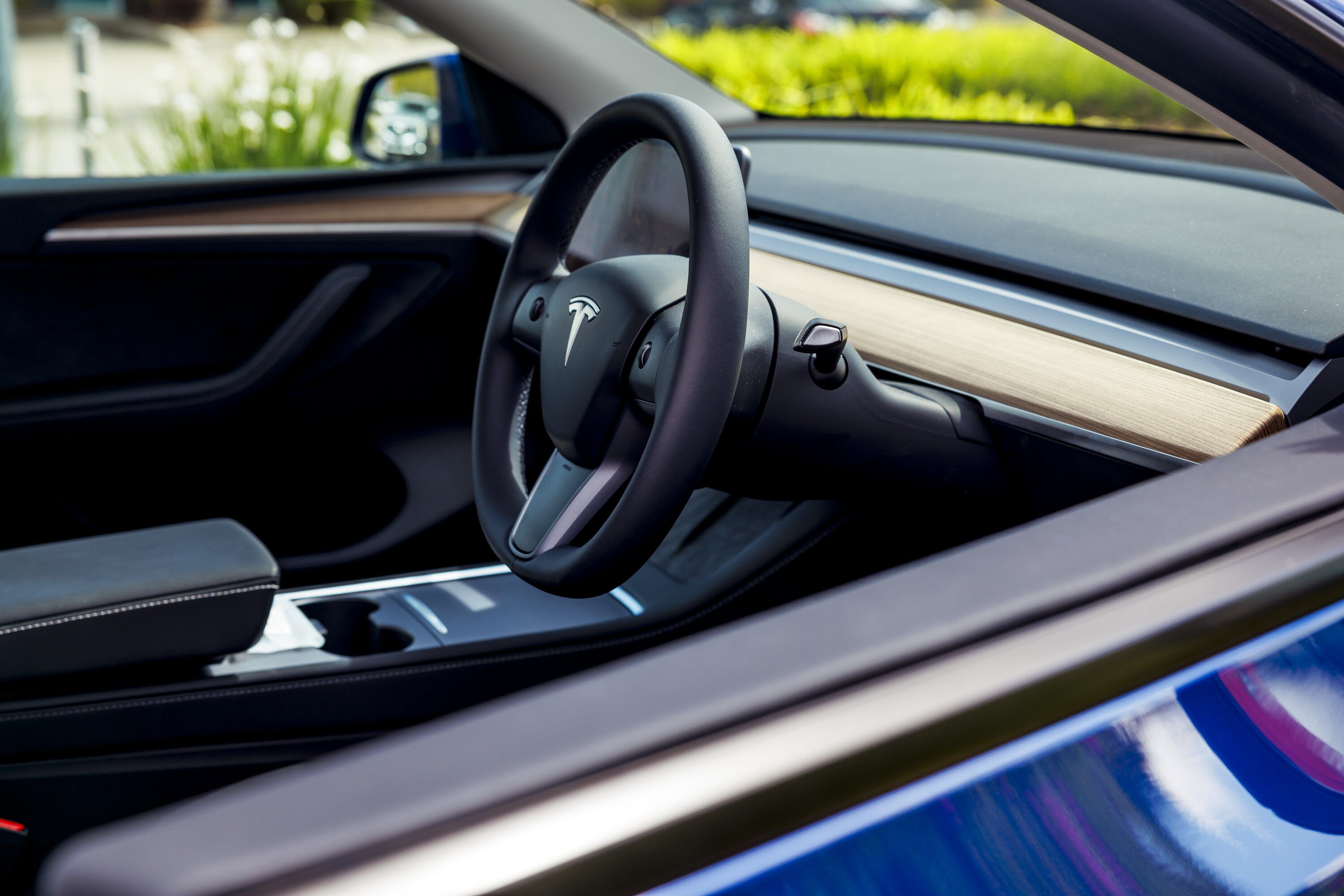
The Long Range’s feature list reads very closely to the standard car and Performance, with little to distinguish the variant from its stablemates save for a small ‘Dual Motor’ badge.
| 2023 Tesla Model Y Long Range AWD features | |
|---|---|
| Twin-motor AWD | 19-inch u2018Geminiu2019 wheels (20-inch u2018Inductionu2019 wheels $2400) |
| 533km driving range (WLTP) | All black premium interior (black and white $1500) |
| 5.0 second 0-100km/h time | 15-inch central touchscreen |
| 217km/h top speed | 2158 litre cargo capacity |
| 1979kg kerb weight | HEPA air filtration system |
| Five-seat configuration | Fixed glass roof |
1
Tesla offers the same five colours for the Long Range, with optional 20-inch ‘Induction’ wheels ($2400) and black and white upholstery ($1500). Enhanced Auto-Pilot ($5100) and Full-Self Driving ($10,100) are available too.
With the addition of the Chinese-built Long Range AWD, Tesla’s Model Y line-up now offers a variant to suit most tastes and budgets.
It also gives the Model Y greater ability to compete with legacy manufacturers’ options in the space, such as the Kia EV6 GT-Line AWD ($87,590), Hyundai Ioniq 5 Epiq AWD ($85,000), and Polestar 2 twin-motor ($74,300), and forthcoming Ford Mustang Mach-E.
MORE
Everything Tesla
Snapshot
- Four-door, four-seat performance SUV
- Concept previews future production model
- Rival for BMW X6, GLE Coupe, even Cayenne Coupe GT
- Revised design hints at GV80 wagon facelift
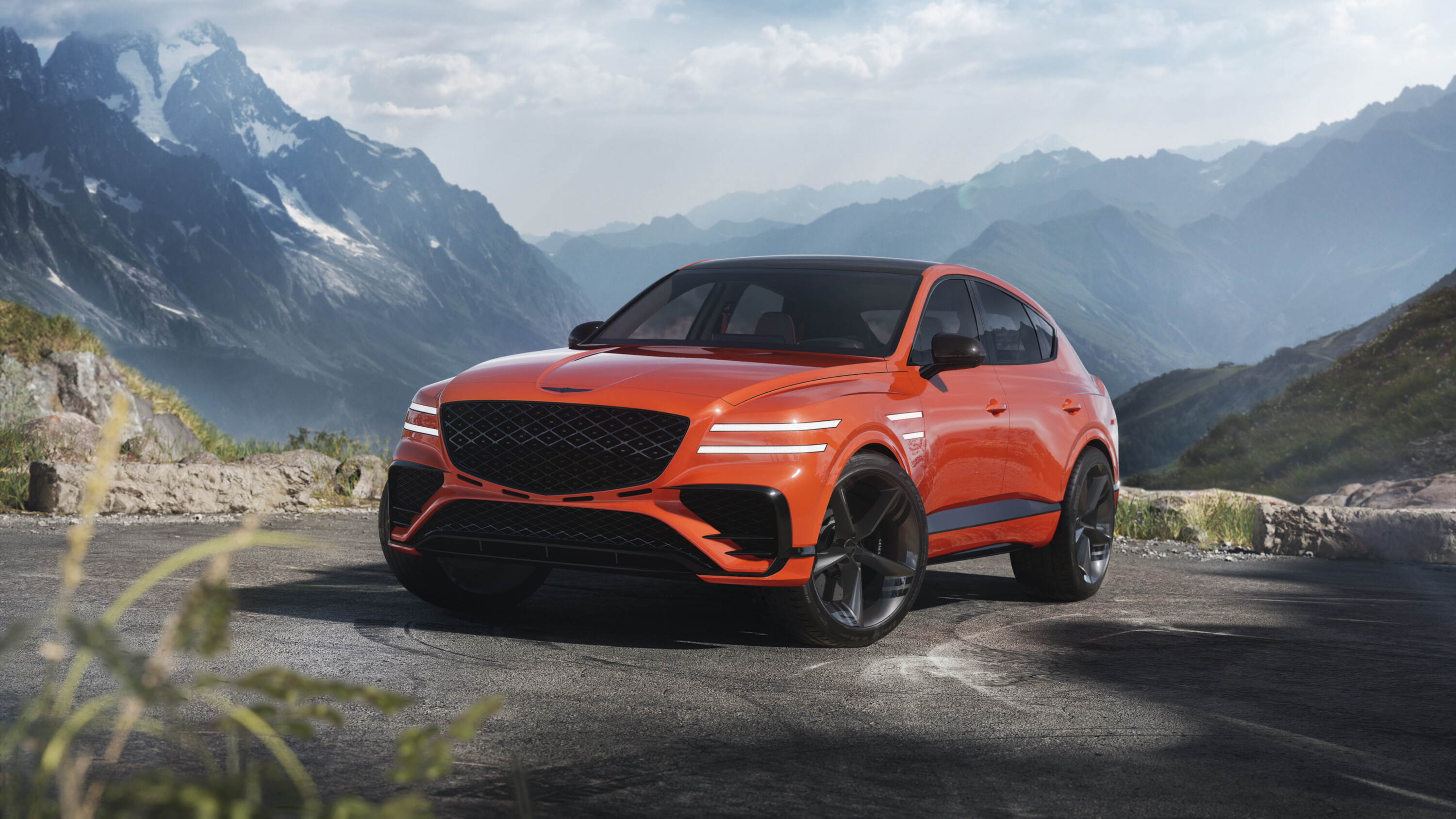
Genesis has pulled the wraps off its GV80 Coupe concept that previews a future production model to rival the BMW X6, Mercedes-Benz GLE Coupe, and Porsche Cayenne Coupe.
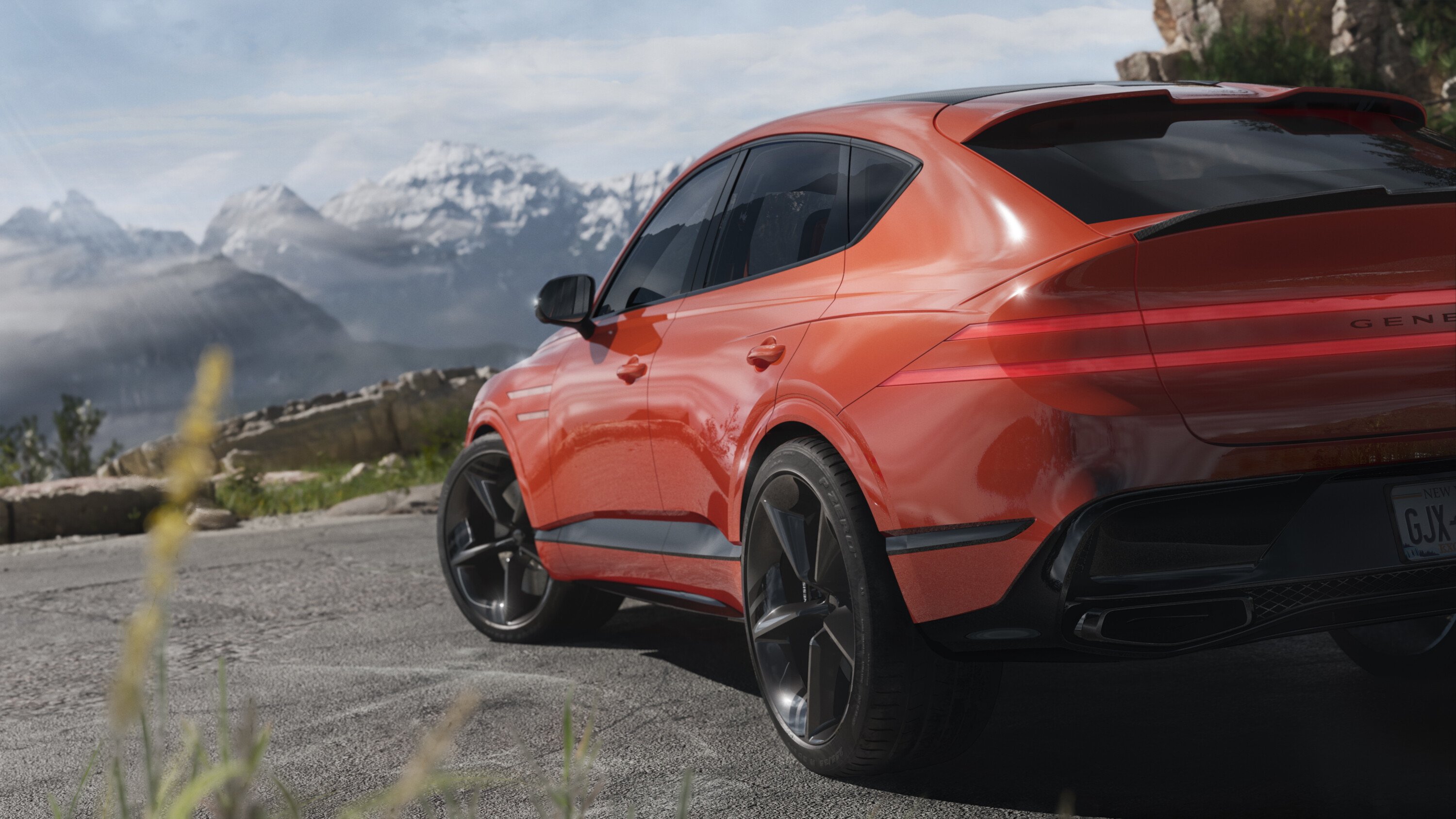
Finished in Magma red paint, the Coupe cops a more aggressive front valance than the current GV80 wagon with even slimmer LED headlights and a new G-Matrix grille design, which could point to an imminent facelift.
The rear end is where the interest is, with the GV80 Coupe’s roofline plunging like Porsche’s Cayenne Turbo GT towards a dramatic (and downforce-producing) ducktail.
1
There’s a mix of elements from the Aston Martin DBX and Kia EV6 GT in the rear end’s styling, we think. The tail is finished off by a pair of LED lighting signatures to emphasise the GV80’s width.
It’s not all visual, with the GV80 Coupe concept wearing lightweight forged five-spoke alloy wheels and rocking a carbon fibre roof to lower the centre of gravity.
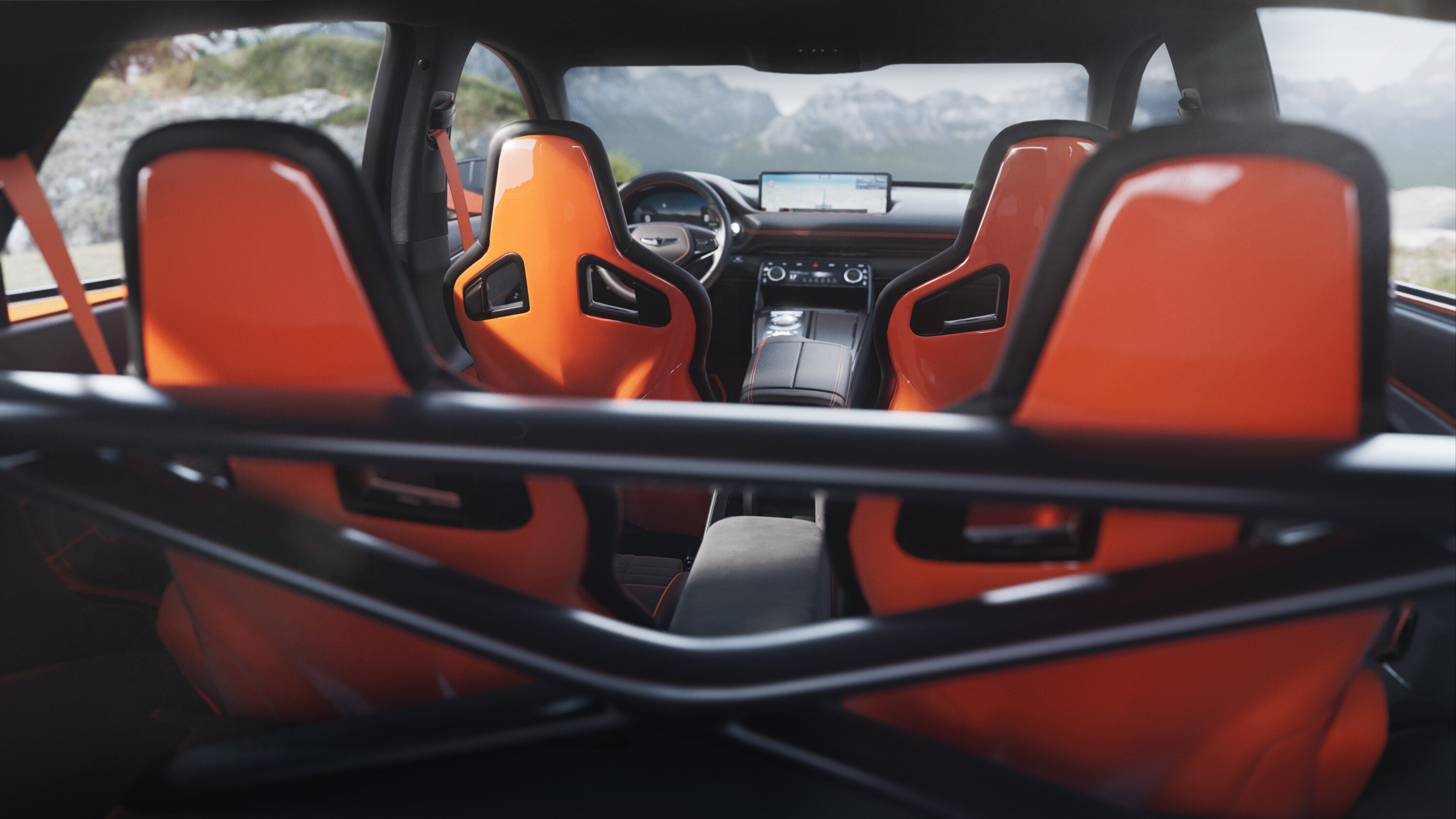
Inside, Genesis demonstrates its new-found performance intentions with a strictly four-seat layout featuring individual suede- and nappa leather-appointed carbon fibre-backed buckets, a roll bar, and a matching liveried helmet.
4
The GV80 coupe’s reveal follows Genesis’s promise to pivot into high-performance and emotional vehicles, which will culminate in a range of sporty EVs, including a roadster and two-plus-two.
While Genesis is on the way to full electrification, it’s likely the production GV80 Coupe will be powered by a combustion engine, perhaps a worked-over version of the 279kW/520Nm 3.5-litre twin-turbo petrol V6.
Genesis could develop an electric version – as it’s done with Electrified G80 sedan – by utilising the GV60 Performance‘s two electric motors and 77.4kWh battery for 360kW (or more) and torque vectoring drift mode.
1
The GV80 Coupe is a way of further distinguishing the Genesis brand from its Kia and Hyundai relations, as executive vice president for design at Hyundai Motor Group, Luc Donckerwolke, pointed out.
“At its inception, the Genesis brand began creating luxury sedans, which evolved into the G70, G80, and G90 models… over the past seven years, we have added more lifestyle-oriented models to the portfolio, such as our GV80 and GV70 SUVs.
“Now we are pushing the envelope with more emotional cars that elevate Genesis’ performance and dynamic attributes”, Donckerwolke added.
MORE
Everything Genesis
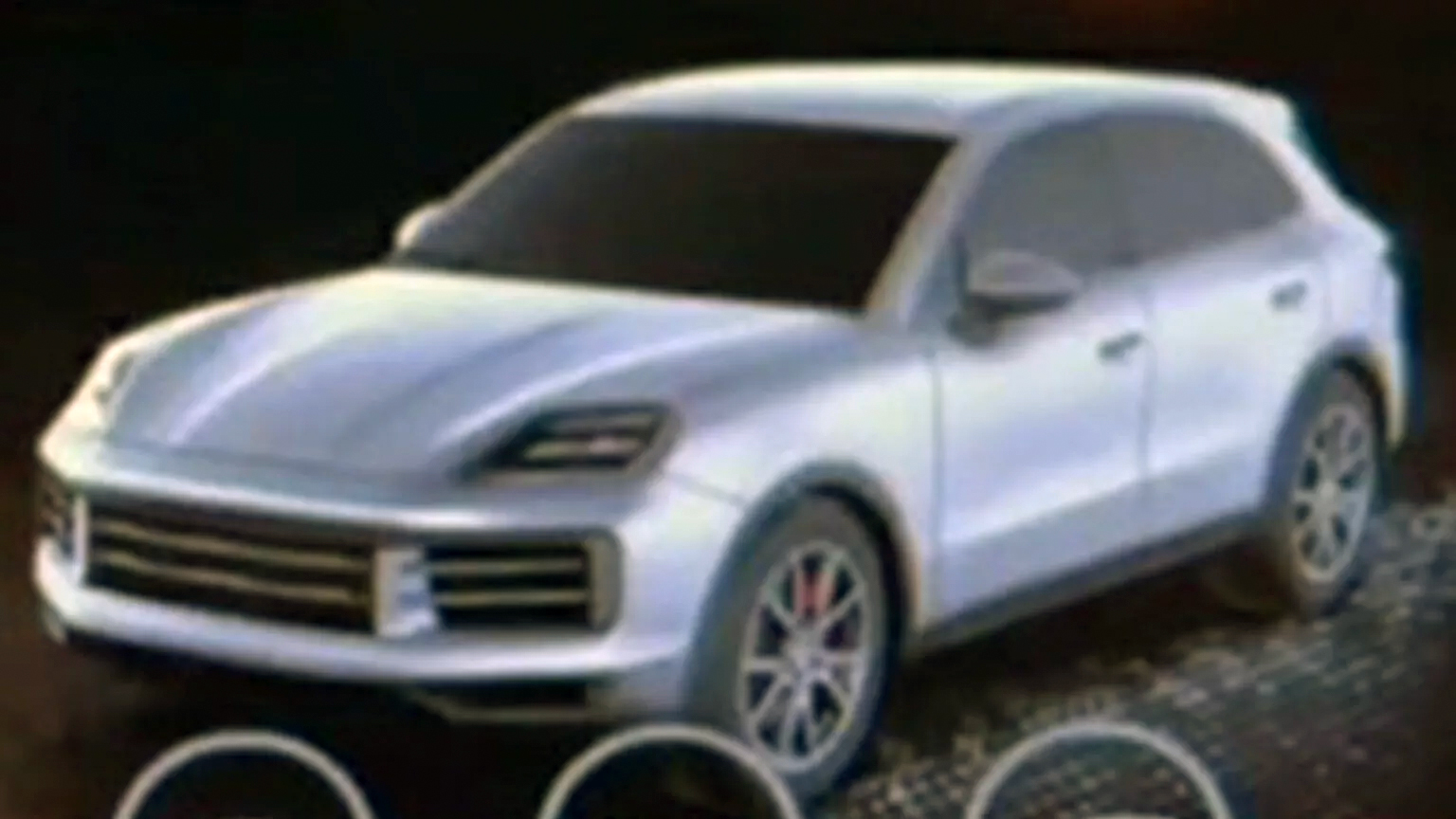
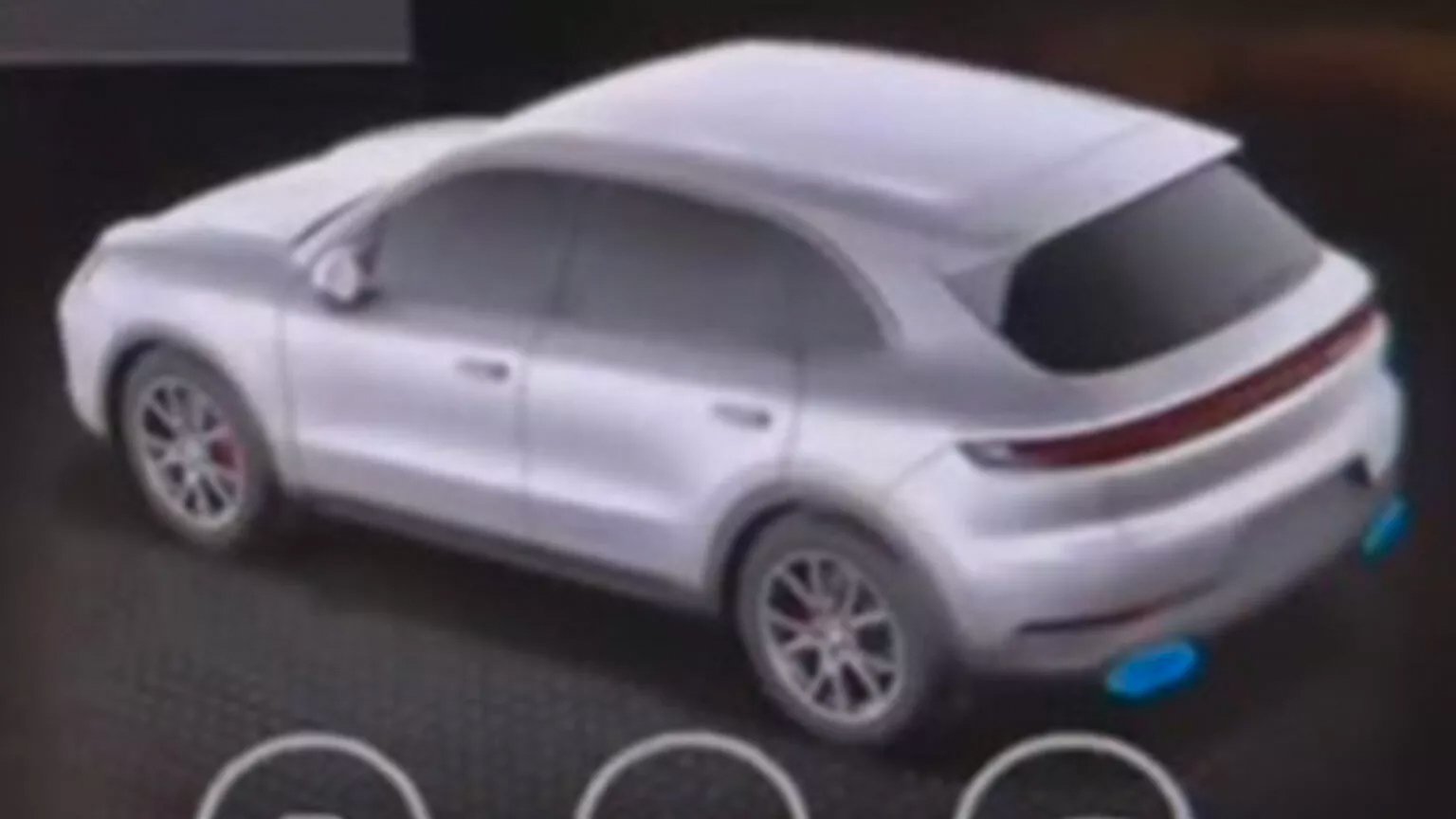
Porsche’s new 2024 Cayenne has been revealed a little earlier than planned, thanks to its own infotainment marketing shots showing the car in the dash display.
Of course, it might also have been deliberate…
The images, posted to Instagram, show what has long been expected of the new SUV, with Taycan-inspired lights standing out at the front end, above a wide grille with a pair of fins delineating the outboard intakes.
At the rear, a streamlined light bar is on show, again drawing inspiration from the Taycan and the brand’s hero 911 sports car.
The new Cayenne’s shape is otherwise familiar, as all new Porsche models tend to be.
Watch for the new Cayenne to make its big debut this month, and get all of the latest official news in our earlier story below.
1
1
The story to here
March 30: The updated interior of the 2024 Porsche Cayenne has been revealed ahead of its full debut in April.
Snapshot
- 2024 Porsche Cayenne interior revealed
- New all-digital instrument cluster; passenger display; revised cabin design
- Updated luxury SUV to debut in April
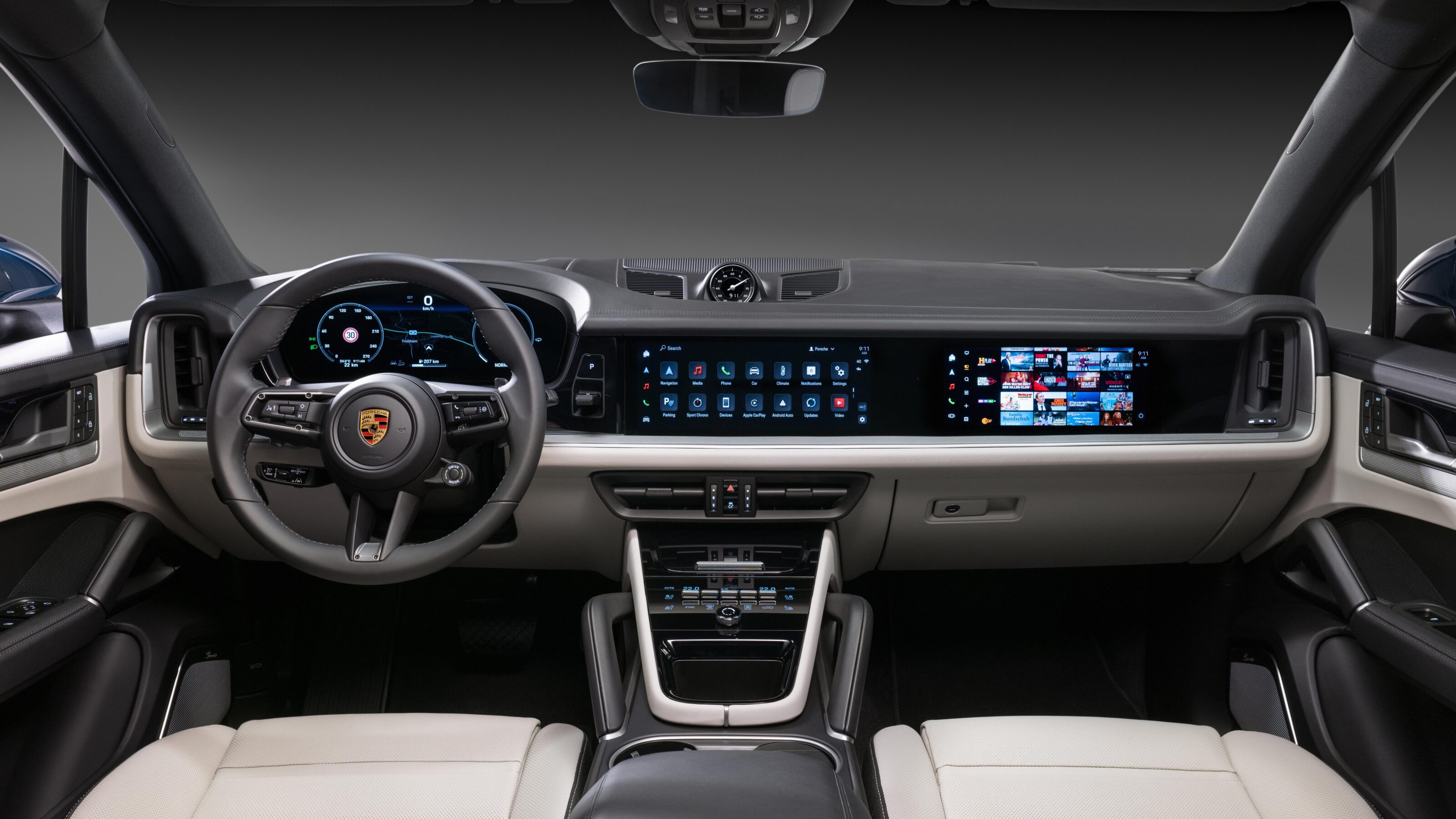
1
With a world premiere set for April 18 at the 2023 Shanghai Auto Show in China, Porsche has provided an early glimpse at the facelifted luxury SUV’s cabin.
It is headlined by the addition of a slimmer, all-digital 12.65-inch curved instrument cluster similar to the Taycan, replacing the previous hooded unit.
This means the Cayenne is the first internal-combustion Porsche to omit the brand’s trademark analogue tachometer and a display on either side, in a move expected to be followed by the all-electric Macan and 718.
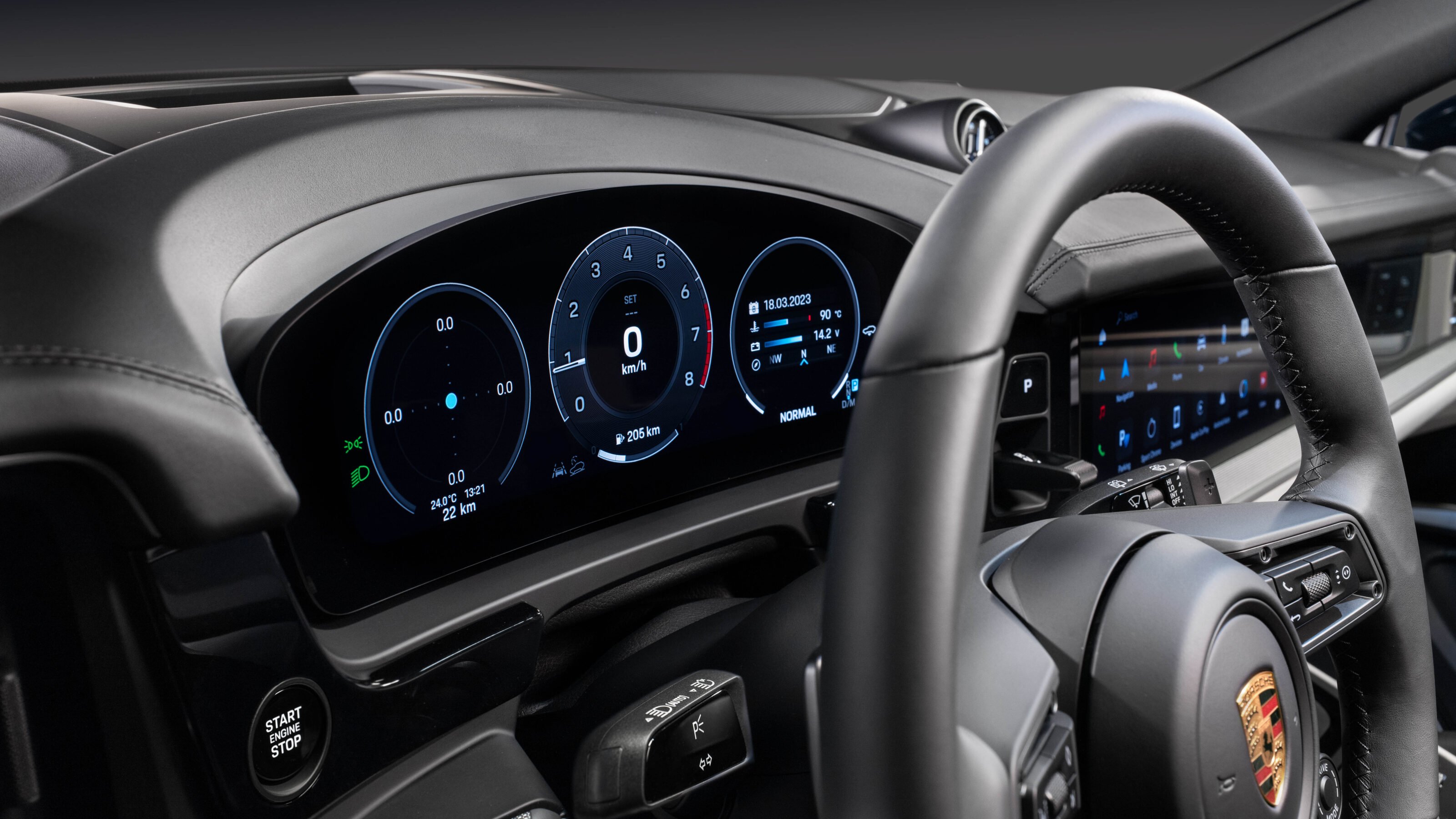
1
It supports seven display views, including a night vision view and a classic mode to digitally mimic Porsche’s traditional five-tube instrument cluster.
As for the rest of the cabin, Porsche has added an optional interactive passenger display – again, borrowed from the Taycan.
It is a 10.9-inch touchscreen display, with a “special film across the screen” to ensure it isn’t visible from the driver’s seat. The unit supports various entertainment options, including video and music streaming.
1
The central 12.3-inch infotainment system supports a new in-car video function from aggregate streaming provider Screenhits TV and enhanced interaction with third-party voice control systems, such as Siri, to control vehicle functions.
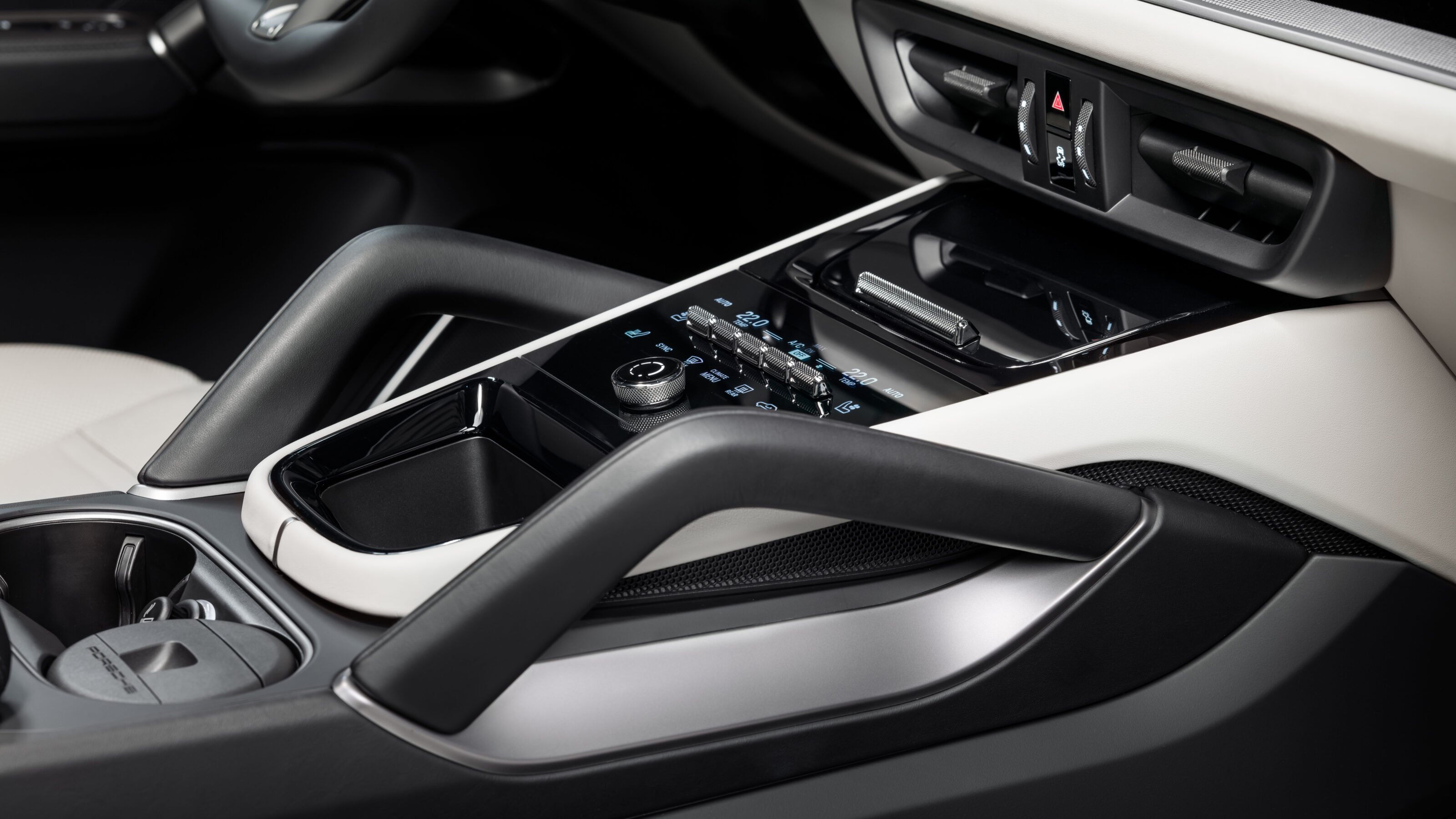
Elsewhere, Porsche has fitted a new engine stop/start button, an updated dashboard layout, and louvre-less air conditioning vents for a more streamlined look.
1
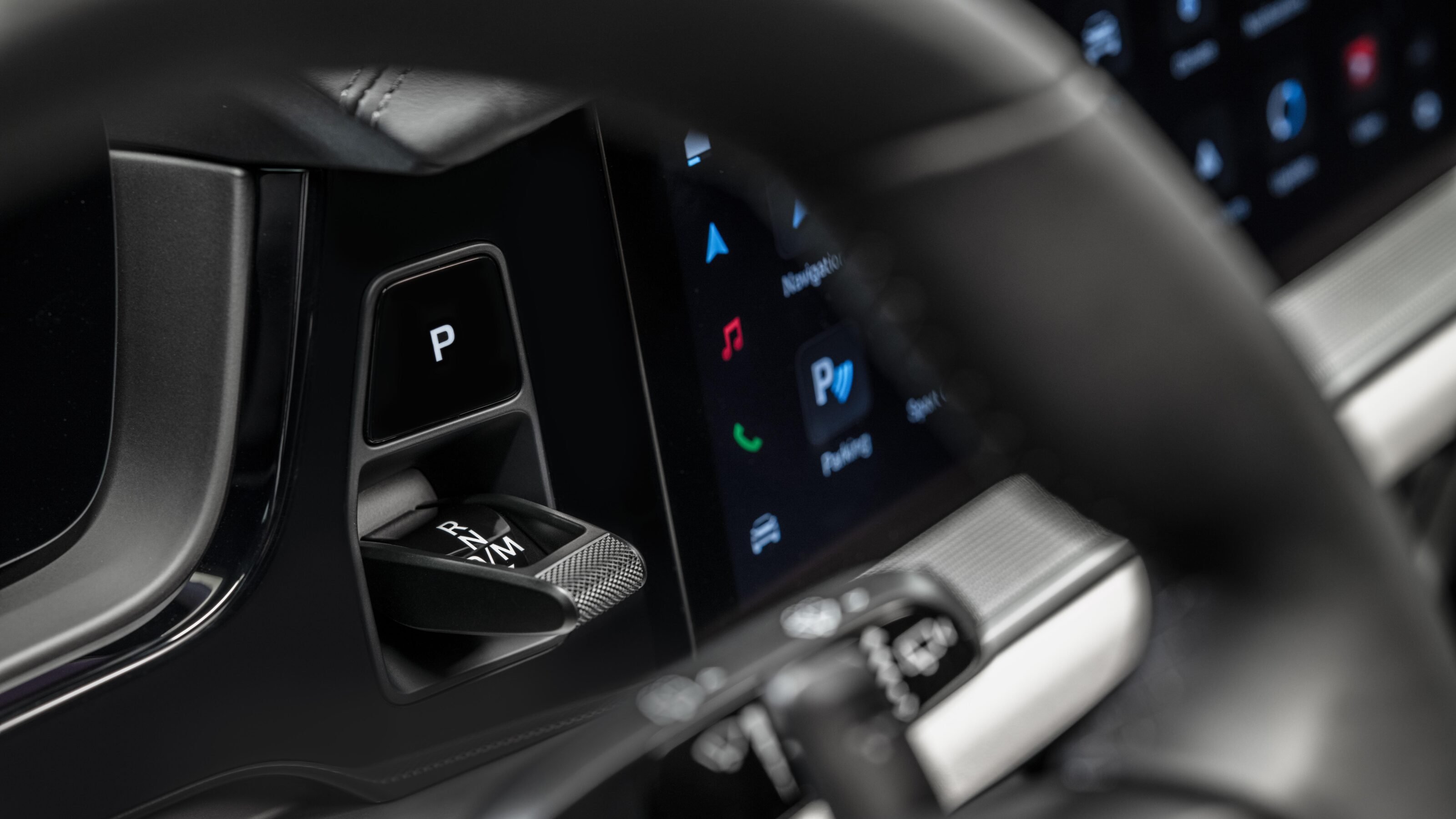
There’s also a 911-derived steering wheel, a 15-watt wireless phone charger with cooling, additional USB-C ports, a repositioned shift-by-wire gear selector, and a simplified centre stack.
The facelifted 2024 Porsche Cayenne will feature a new “semi-active” chassis, designed to emphasise a wider range of capabilities between on-road and off-road driving – although it’s unlikely we’ll see any sudden mountain-dominating, Range Rover-rivalling talents debut with what is primarily a road-focused luxury SUV.
An all-electric Cayenne will follow in 2026, giving Porsche another important model in advance of Europe’s 2035 ban on internal-combustion vehicles.
MORE
Everything Porsche
MORE
Large SUVs
Snapshot
- Rebranded SsangYong reveals three electric concepts
- KG electric ute, off-road large SUV, and Korando successor
- All set to launch by 2025
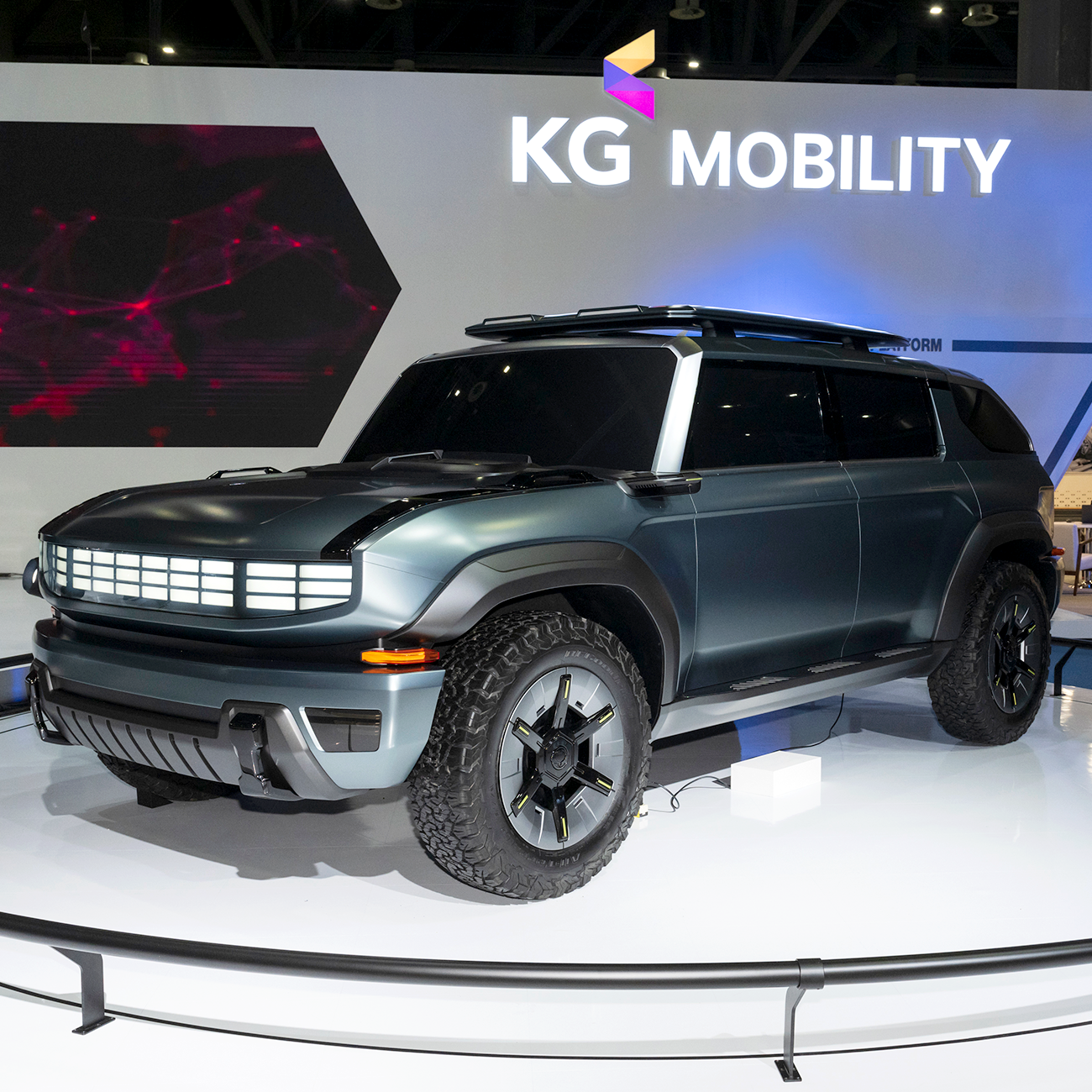
Reborn South Korean carmaker KG Mobility (formerly SsangYong) has reinforced its comeback with a trio of rugged-looking concepts on display at the Seoul Mobility Show – and they’re all set for launch by 2025.
The KG O100 electric ute is designed for urban environments, with an aggressive front, wheel arch cladding and roof rack, ‘straw storage’, and vehicle-to-load (V2L) plugs at the rear tray to act as a mobile power station.
The Ford Ranger-sized electric pickup is based on the new Torres EVX mid-size SUV. It is expected to launch in its home country later year using BYD’s lithium-iron-phosphate (LFP) Blade Battery providing up to 420 kilometres of claimed driving range, a buttonless interface with a 12.3-inch touchscreen, and an estimated starting price tag of only $34,400 (₩30,000,000).
Catch Up
- Ssangyong settles debt through ‘corporate rehabilitation’
- Torres electric off-roader teased, Australian launch confirmed
- KG Mobility rebrand set in stone at March investor day
1
Additionally, the KG F100 is a large electric SUV featuring a blocky Toyota FJ Cruiser-esque design, configurable kinetic LED lighting block across the front (in lieu of a grille) with a digital gesture function, and large off-road terrain tyres.
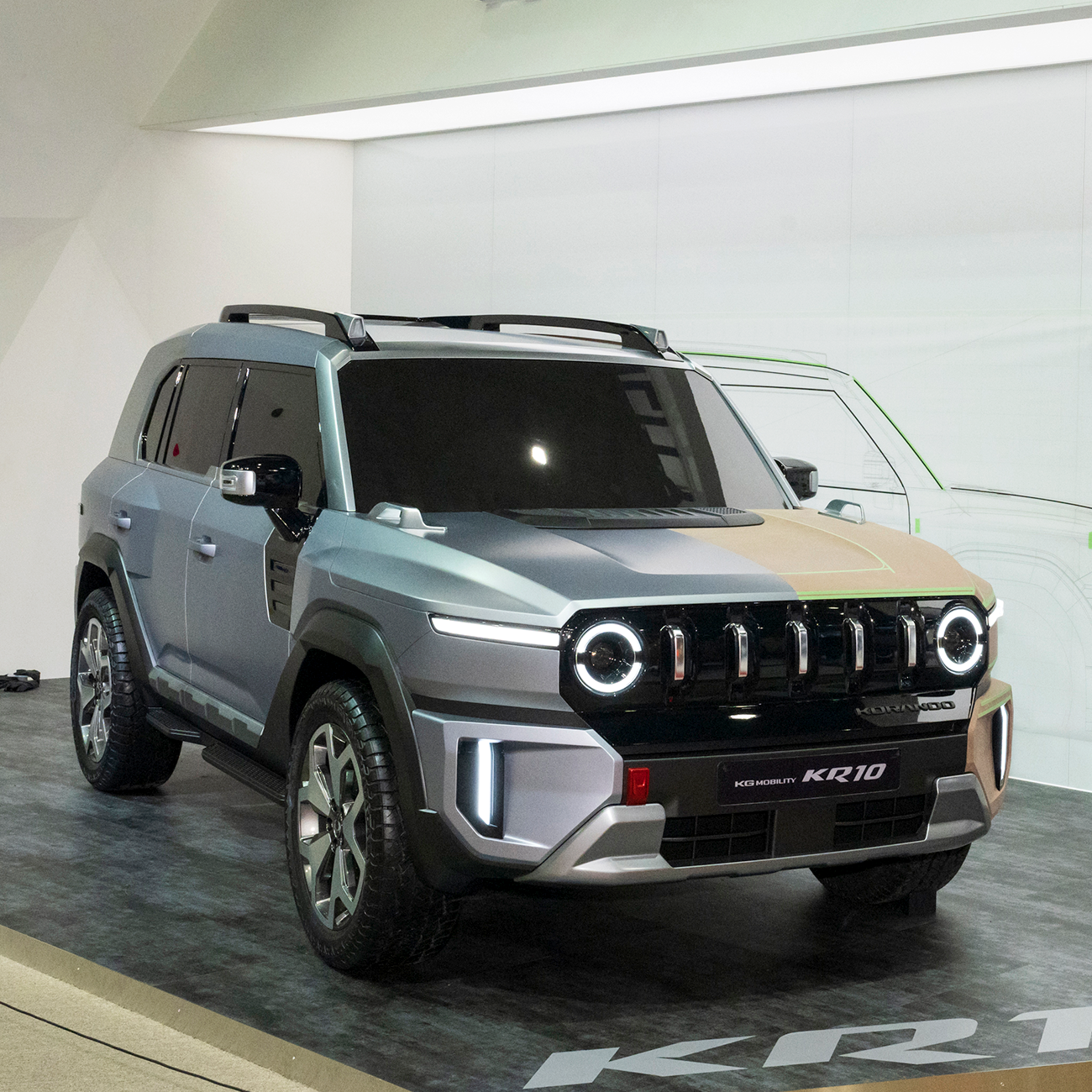
Meanwhile, the KG KR10 is set to be the electric successor to the current SsangYong Korando medium SUV with an overall more rugged and boxier design, Jeep-inspired slat grille, and circular daytime running lights
All three concepts are currently under development and will launch by 2025 to directly rival Hyundai and Kia’s electric vehicles.
1
SsangYong entered bankruptcy in late 2020 citing COVID-19 pandemic challenges and, after multiple attempts to find a buyer, chemical and steel company KG Group acquired it for a reported A$385.47 million (₩335 billion) in mid-2022.
The South Korean carmaker posted its first quarterly profit since 2016 late last year, largely on the back of its success with launching the new Torres SUV in 2022.
In Australia, the brand relaunched in 2018 and continues to offer an unchanged vehicle line-up today, including the Korando medium SUV, Rexton large SUV and Musso dual-cab ute, with the exception of the Tivoli small SUV being discontinued.
MORE
Everything Ssangyong
MORE
Electric Cars
Snapshot
- Mysterious R32 EV teased
- One-off electric concept car converts R32 Skyline GT-R
- Passion project from Nissan engineer
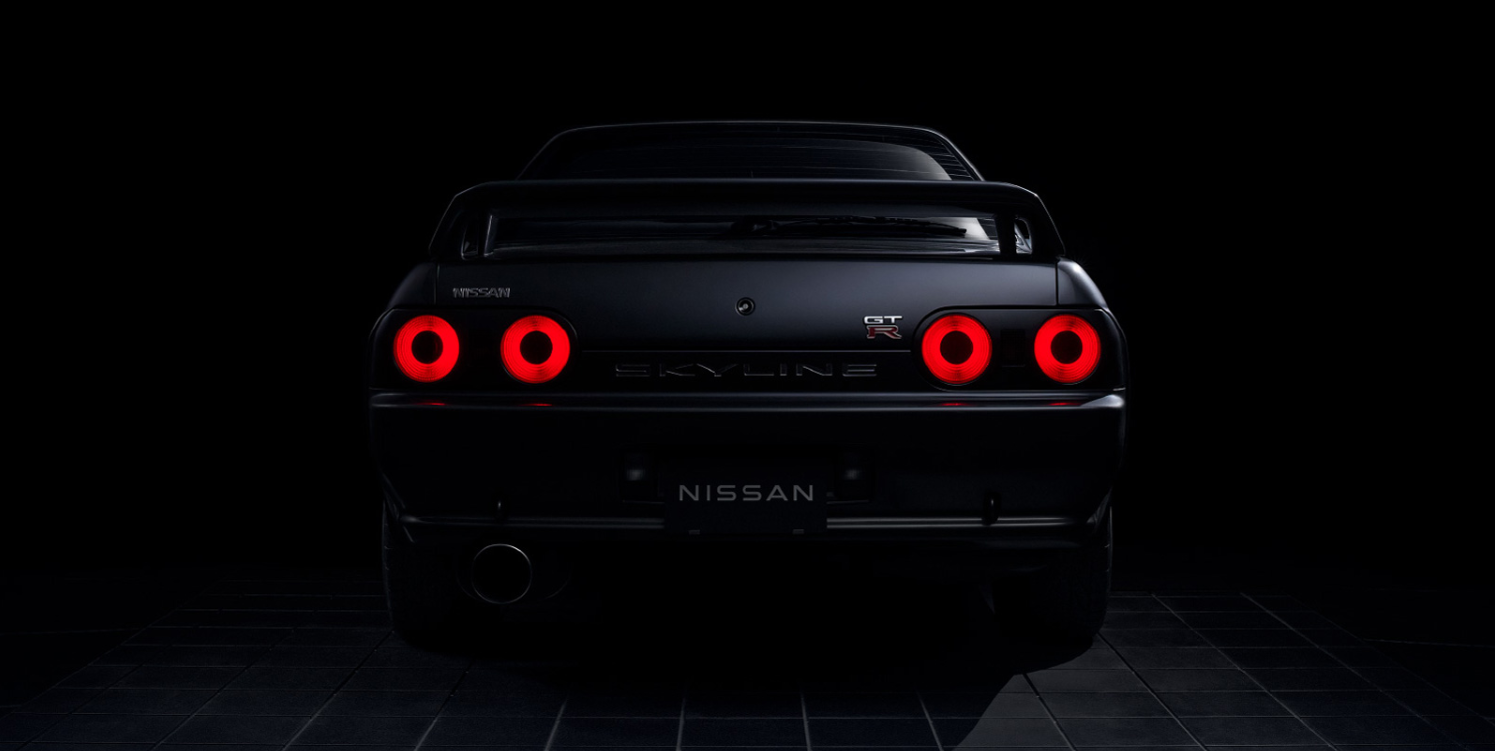
Nissan is fitting electric power into the iconic R32 Skyline GT-R, but it’s just a one-off concept car… for now.
The Japanese carmaker posted a now-viral video on Twitter depicting the rear of the 1989 to 1994 third-generation sports car with the startup sound of its 2.6-litre inline six-cylinder twin-turbocharged petrol engine, then the title ‘R32 EV’.
Nissan states in the post that the R32 Skyline GT-R EV prototype is one of its engineer’s passion projects.
It’s uncertain when the converted electric classic will make its full debut, but it seems the Japanese automaker has planned a drip-feeding marketing campaign across its Twitter and Instagram pages.
1
But judging by the video, the engine startup sound does suggest that the pure-electric Skyline will feature an artificial exhaust speaker system similar to the Dodge Charger EV concept’s Fratzonic setup or the Abarth 500e hot hatch’s strumming guitar and roaring engine Sound Generator feature.
Three generations after, the R35-series Nissan GT-R was released in 2008 and discontinued in Australia in late 2021 due to stricter Australian Design Rules (ADR) side impact standards.
However, Nissan recently gave it a 2024 model-year facelift overseas to keep the 16-year-old all-wheel-drive sports car alive.
A new generation model is expected in the coming years, with previous rumours pointing to hybridisation to meet increasingly strict emissions standards in Japan and overseas or even go all-in full battery-electric propulsion.
The company recently upped its electrification plans with 19 all-electric models to launch globally by 2030, along with eight hybrids. So, the Nissan R32 EV concept could be a sign of more to come…
Nissan currently makes the ageing Leaf EV hatchback – which dates back to 2011 – and sells the Ariya medium electric SUV overseas using shared alliance underpinnings with the forthcoming Renault Megane E-Tech crossover.
It also debuted a raft of new-generation vehicles recently in Australia, including the Qashqai E-Power and X-Trail E-Power that use an unconventional series-only hybrid drivetrain setup.
MORE
Everything Nissan
MORE
Electric Cars
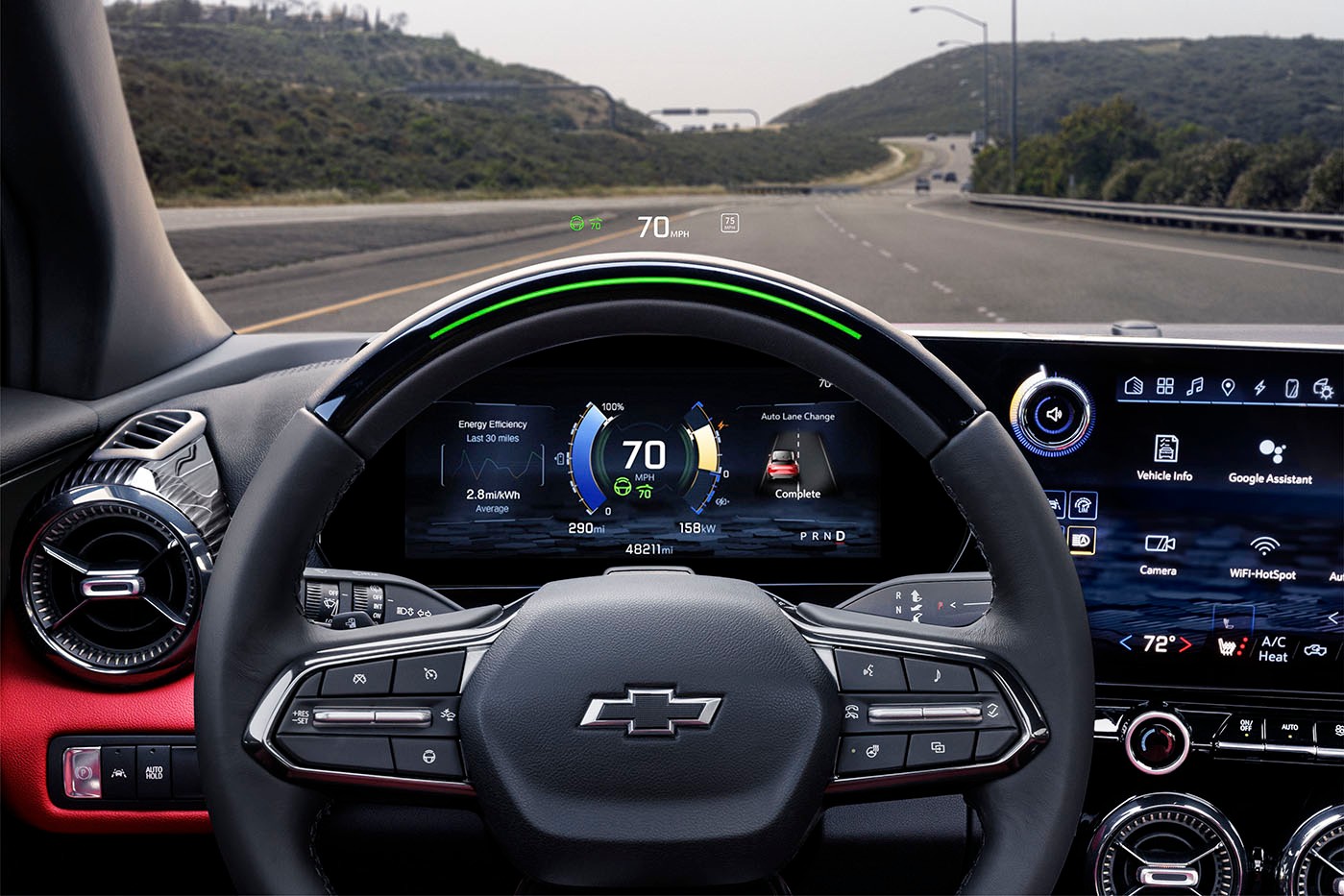
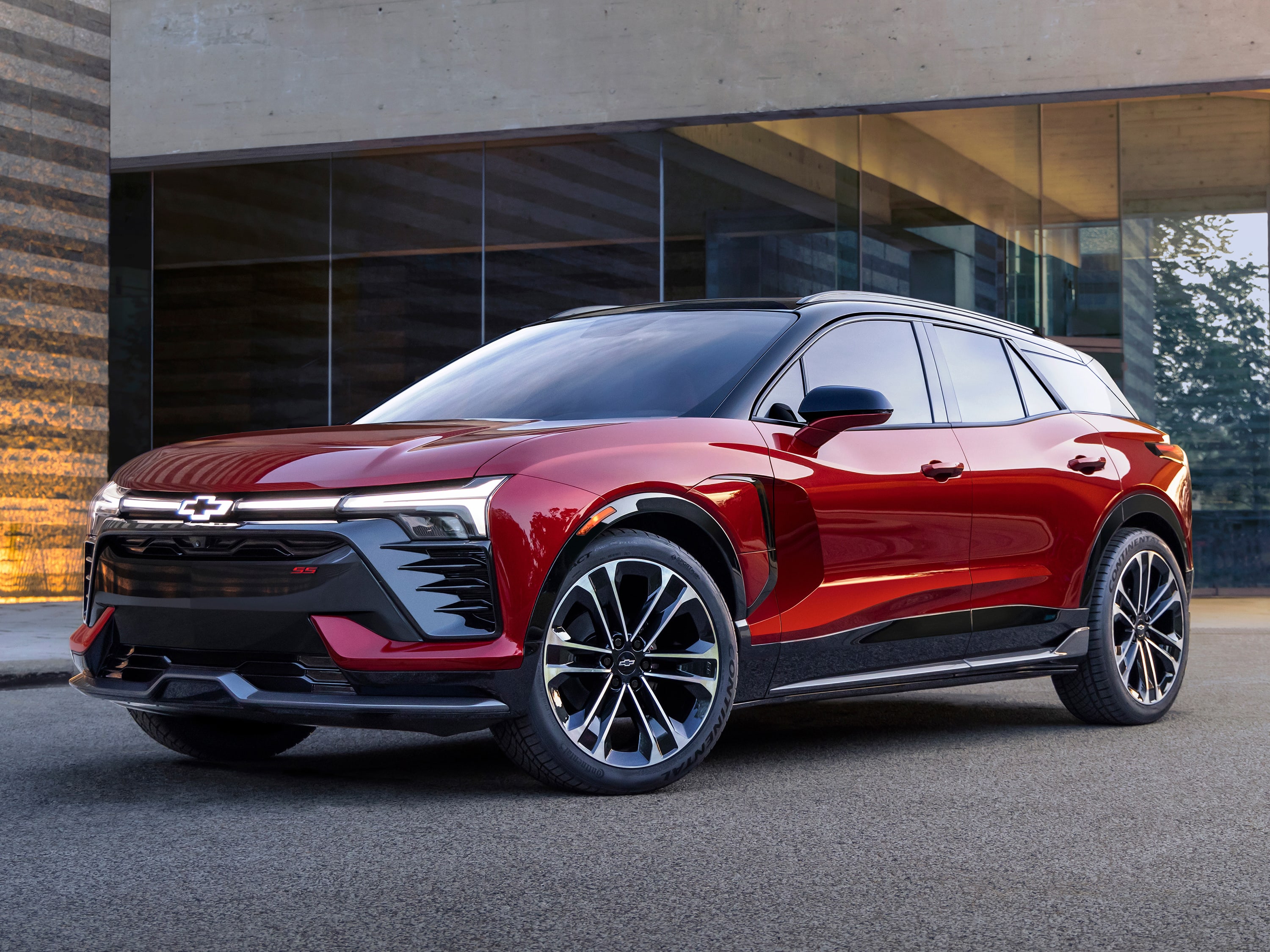
In a strangely shortsighted turn that is likely to be reversed after the first round of customer feedback hits dealers, General Motors has confirmed its next generation of electric vehicles won’t support Apple CarPlay and Android Auto.
Instead, they will use a native Google-based infotainment system, including native versions of common apps like Google Maps, Google Assistant, Audible, and Spotify.
1
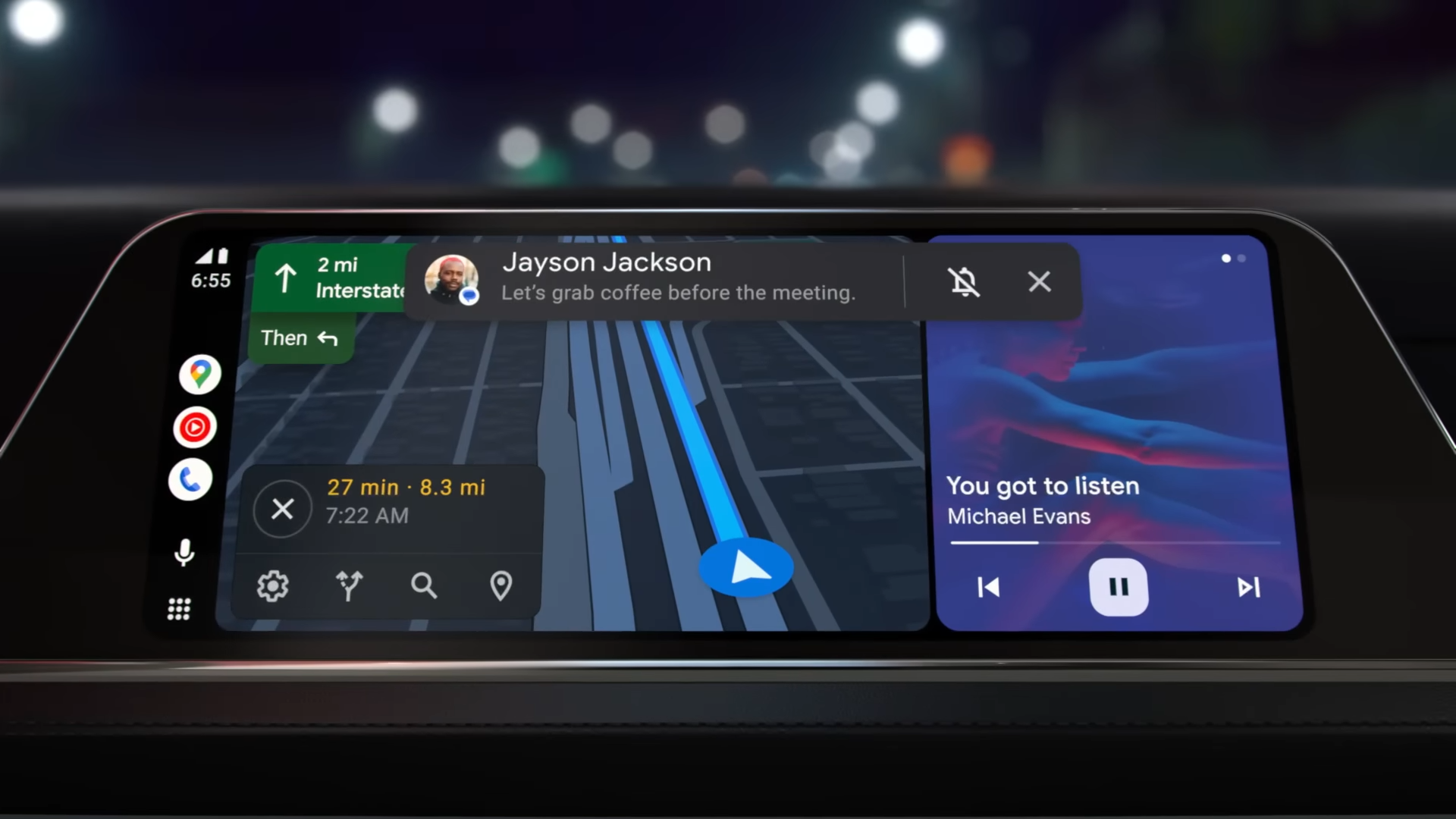
This isn’t uncommon, but so far, no brand that uses Google’s services has decided to block Android Auto and Apple Carplay phone mirroring in the process, disallowing the now ubiquitous ability to project a familiar phone-like interface to the car’s main display.
The change is understood to be driven by a desire to capture more data on its customers’ driving, entertainment, and charging habits – because, right now, information displayed through Android Auto and Apple Carplay is not shared with the carmaker, leaving them blind to much of the user’s activity.
1
No surprises, this data will likely be used to inform future subscription-based features and functions in the car, as many automakers are seeking to generate more revenue beyond their traditional business model.
Some of GM’s argument appears contentious, such as suggesting it’s the most effective way to provide a better experience for the driver – particularly when it comes to the navigation and charging experience, despite brands like Volvo and Polestar excelling in that space, using only the integrated Android Automotive infotainment platform (which now also offers Apple CarPlay, after an initial delayed rollout).
In an email to tech website The Verge, GM’s communications boss for digital business said: “the vehicle can know more than the phone does” – but, again, there is little reason that a car’s native features cannot coexist with CarPlay and Android, given both are merely a layer of projection similar to running a virtual instance of Microsoft’s Windows inside the Parallels app right there on the MacOS desktop.
Below: Android Auto (top) and Apple CarPlay (bottom) in their current forms
1

1
Thankfully, GM’s existing models won’t suddenly lose their Android Auto and Apple CarPlay capability, meaning Australian buyers of Chevrolet models currently sold here will still have the infotainment they’re used to.
It seems likely, however, that next-generation Chevrolet models sold in Australia could be impacted by this decision.
Interestingly, a massive (and controversial) coming upgrade to Apple CarPlay lists a number of brands among its partners – but GM is not among them.
It will be interesting to see how buyers respond to GM’s decision. While many ‘regular’ motorists have proven eager to embrace CarPlay and Android Auto, others have criticised the increasingly phone-like and distraction-heavy evolution of infotainment in today’s cars. Of course, GM’s new interface is unlikely to be any less feature-packed and distracting.
