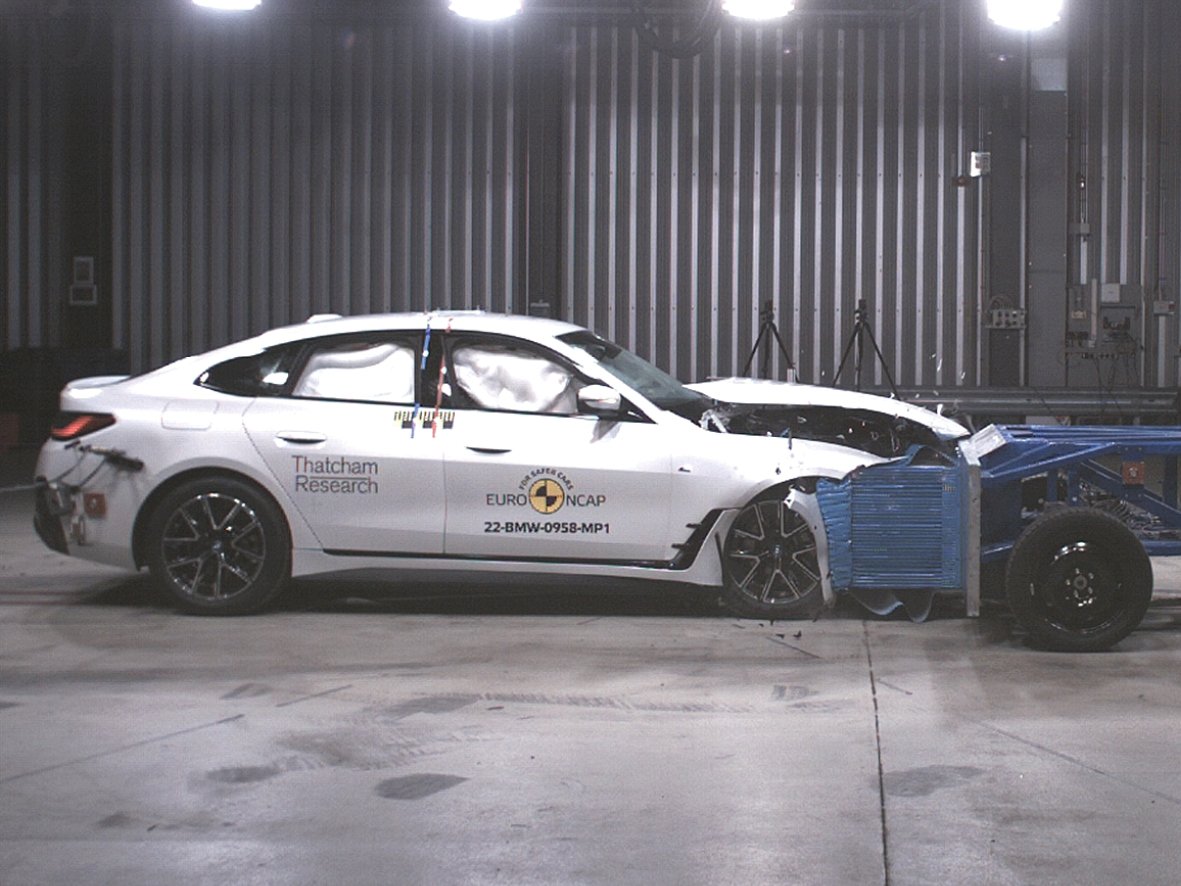
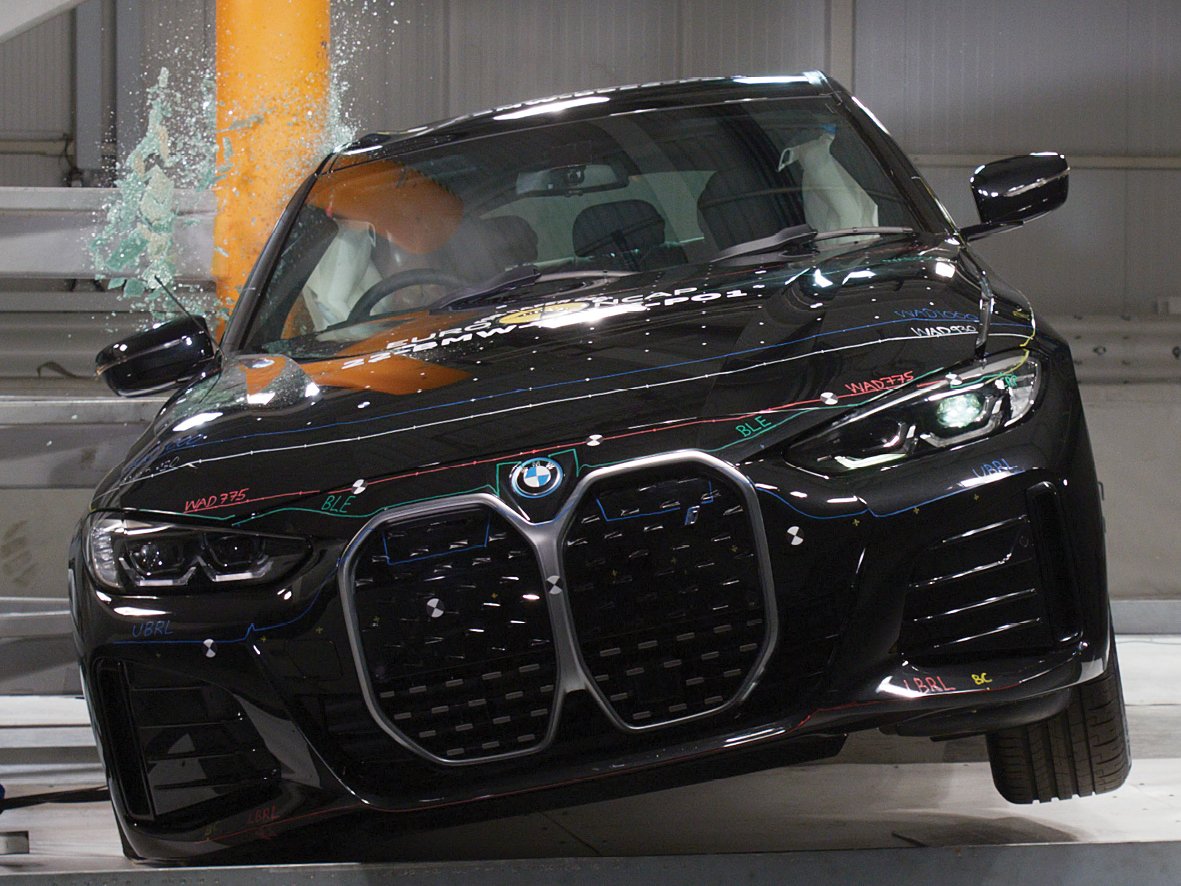
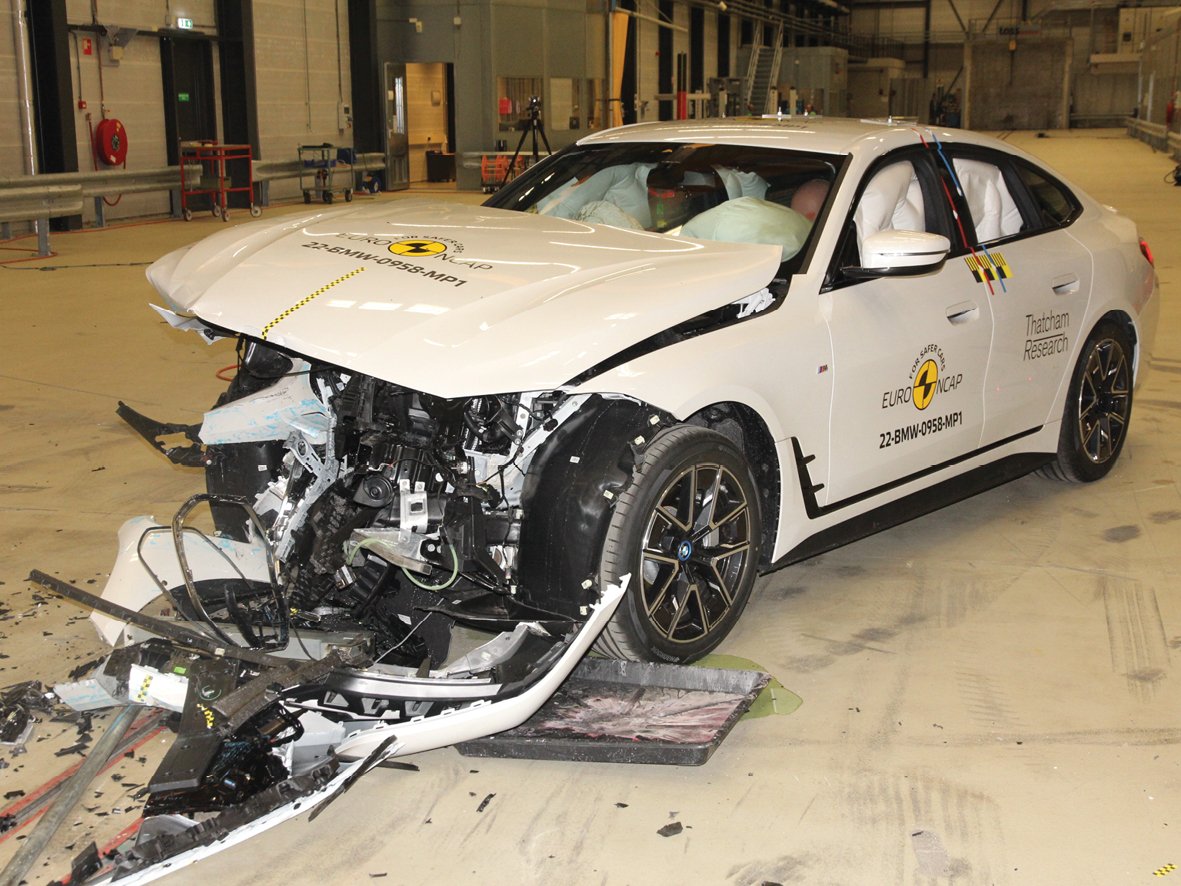
The BMW i4 electric sedan has received a four-star ANCAP safety rating.
Snapshot
BMW i4 receives four-star ANCAP safety rating
Acceptable results for physical crash performance, but active safety falls short of threshold
Applies to all variants sold from March 2022
It is part of the first batch of vehicles to have a score released in 2023, joining the Peugeot 308 – which also fell short of a five-star score – and the top-scoring GWM Ora, Alfa Romeo Tonale and Citroen C5 X.
This score applies to all variants of the BMW i4, first launched in Australia in March 2022.
The result is based on testing conducted by sister organisation Euro NCAP in 2022.
1
It scored 87 per cent for adult occupant protection (33.30 out of 38 points), 89 per cent for child occupation protection (43.62 out of 49 points), 71 per cent for vulnerable road user protection (38.66 out of 54 points) and 62 per cent for safety assist (10.07 out of 16 points).
A safety assist score of at least 70 per cent is required to obtain a five-star safety rating.
While the related, internal-combustion BMW 3 Series and two-door 4 Series have five-star ANCAP safety ratings, this is based on less-stringent testing conducted in 2019.
1
The four-door BMW 4 Series Gran Coupe – the internal-combustion twin to the i4 – remains untested.
ANCAP said the active safety equipment fitted to local i4 examples is improved compared to European versions – including junction assist for its autonomous emergency braking system – but BMW Australia didn’t provide a vehicle for local assessment.
“BMW advised ANCAP that the AEB and lane support systems fitted to locally-specified vehicles is of a higher standard than the systems tested in Europe, yet BMW did not put the vehicle forward to ANCAP for verification testing to confirm performance of these systems,” said ANCAP.
5
It also noted the lack of a front-centre airbag, which can prevent a potentially deadly head clash between the driver and front passenger in a side-impact collision.
Standard safety equipment includes; autonomous emergency braking with junction assist, lane departure warning, lane-keep assist, blind-spot monitoring, rear-cross traffic alert, adaptive cruise control with a speed limiter, and traffic sign recognition.
Six airbags (dual frontal, side head and side chest) are fitted as standard.
South Kingsville man nicked over damage to mobile traffic camera cars
Three separate incidents said to have occurred
One threat involved a tomahawk axe
Melbourne cops have arrested a cyclist today accused of launching multiple attacks on mobile camera cars in the city’s western suburbs.
Three separate incidents occurred, say police – one on December 4, 2022, and two on January 25 this year.
In the first, the man allegedly threw white paint over a mobile speed camera car, which was parked up in Blackshaws Road, South Kingsville, at the time.
In the second strike, which occurred in Civic Parade, Altona, the man was passing a camera car on a bike when he allegedly became verbally aggressive towards the operator, spitting on the window and punching the driver’s side mirror.
1
It’s alleged the man then returned an hour later and again splashed white paint over the vehicle and threatened the operator with a tomahawk axe.
Detectives raided a property on Blackshaws Road in South Kingsville this morning, but made the collar at an address in Maidstone Street, Altona, a short while later.
The 53-year-old man has been charged with criminal damage, abusing a road safety camera operator, threatening a road safety camera operator, threatening to inflict serious injury, possessing a dangerous article and other offences.
He appeared before Melbourne Magistrates’ Court today. More to follow.
You’ve probably heard of GWM, be it via the Ute, Haval SUVs or even the Funky/Good Cat electric cars making noise in Europe and China.
But you may not be aware that GWM is a 39-year-old Chinese manufacturer that sold over one million vehicles in 2022. Of that massive number, about 900,000 GWM products remained on Chinese turf.
It’s no secret that China is a huge market, but GWM’s eyes are set on global expansion. Exports increased 20 per cent from 2021-22 and, being the brand’s largest single export market, Australia will play a big role in GWM’s success.
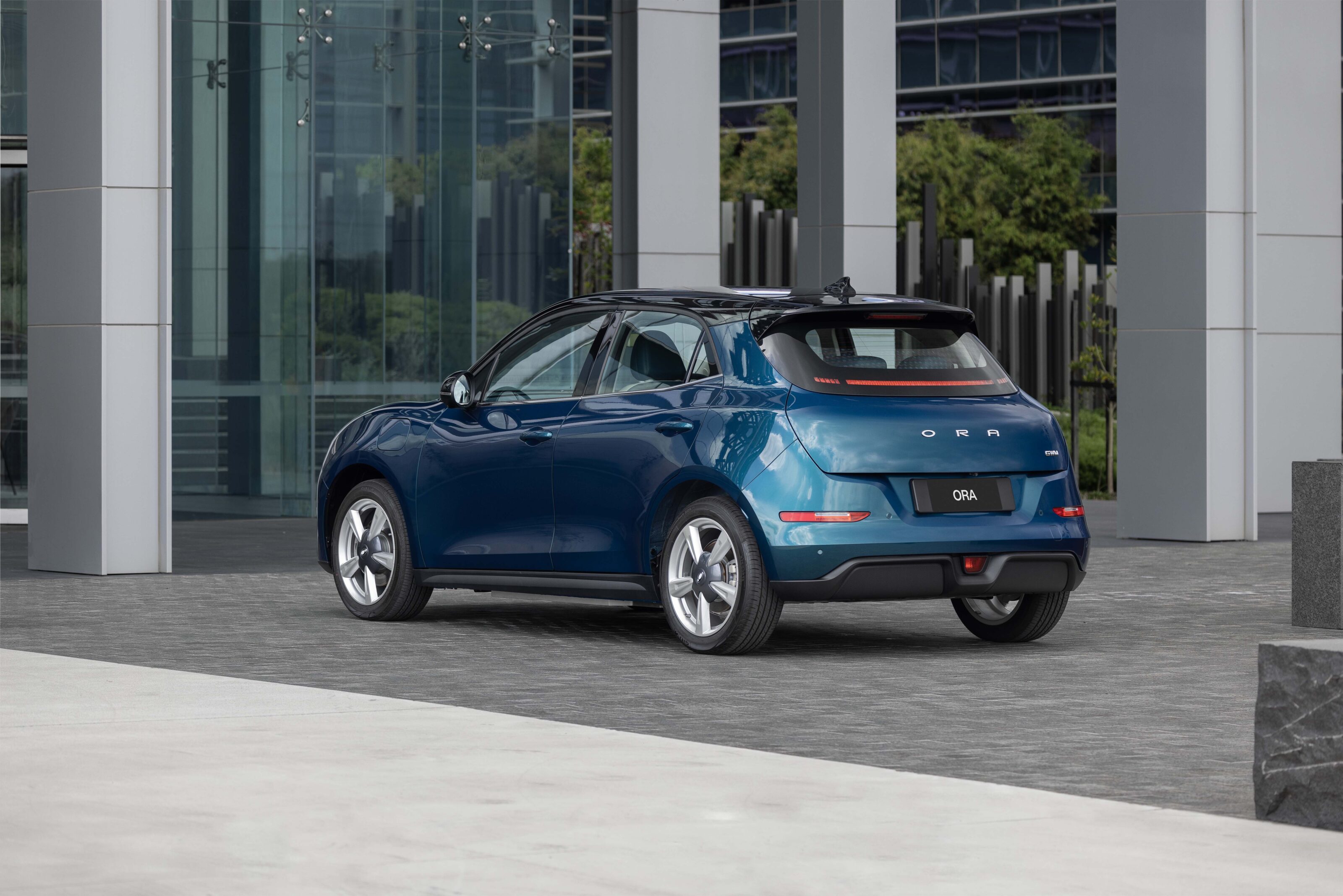
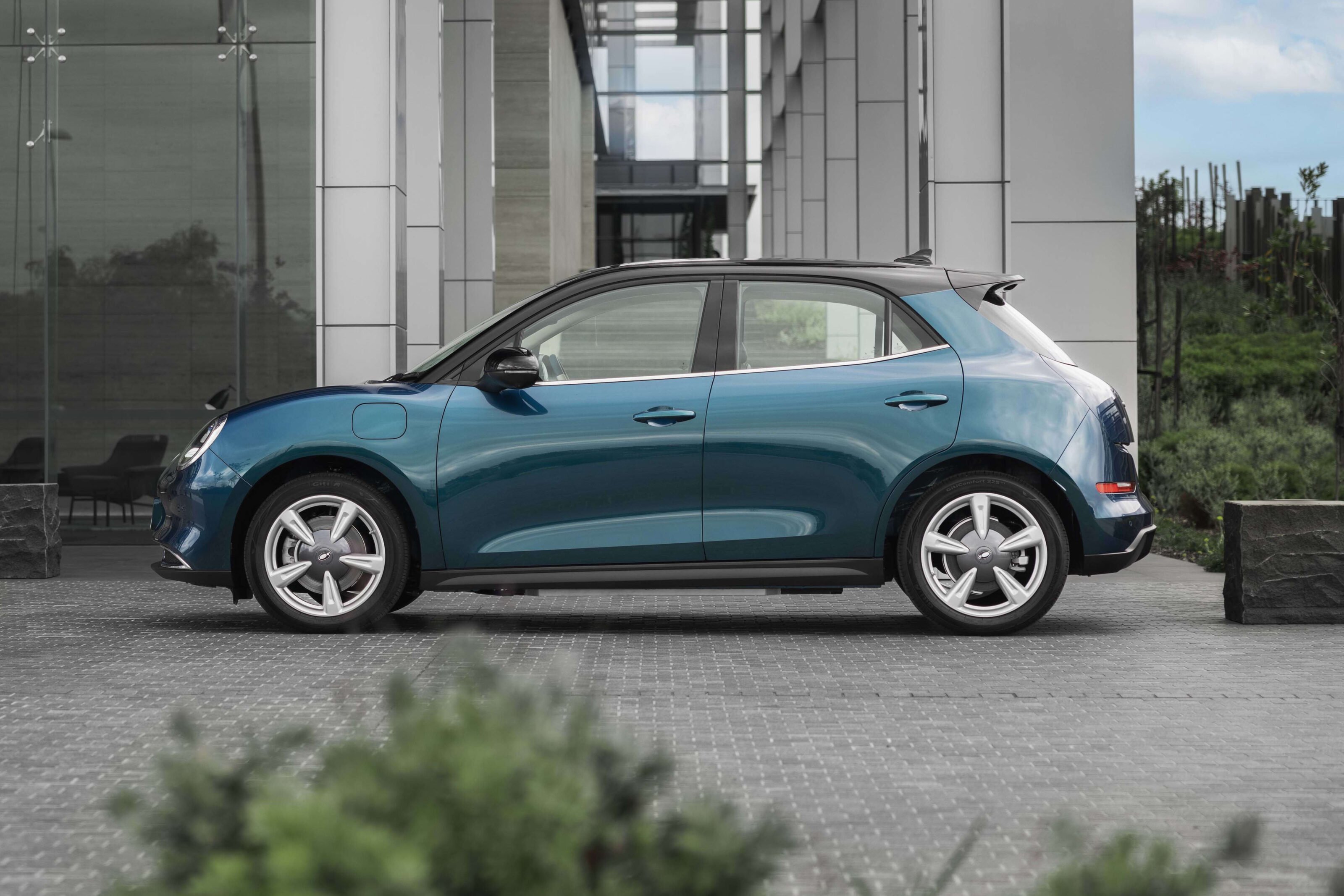
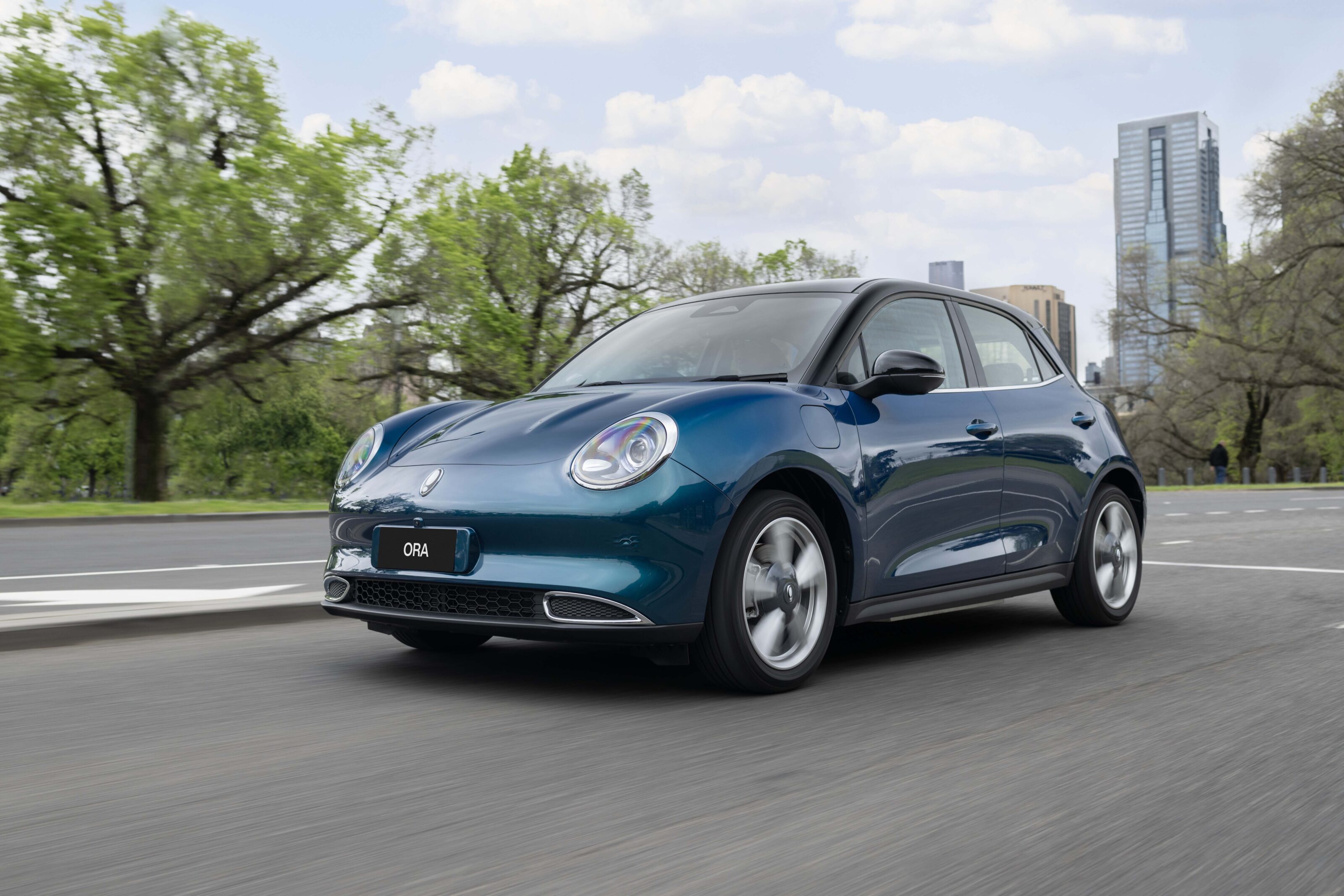
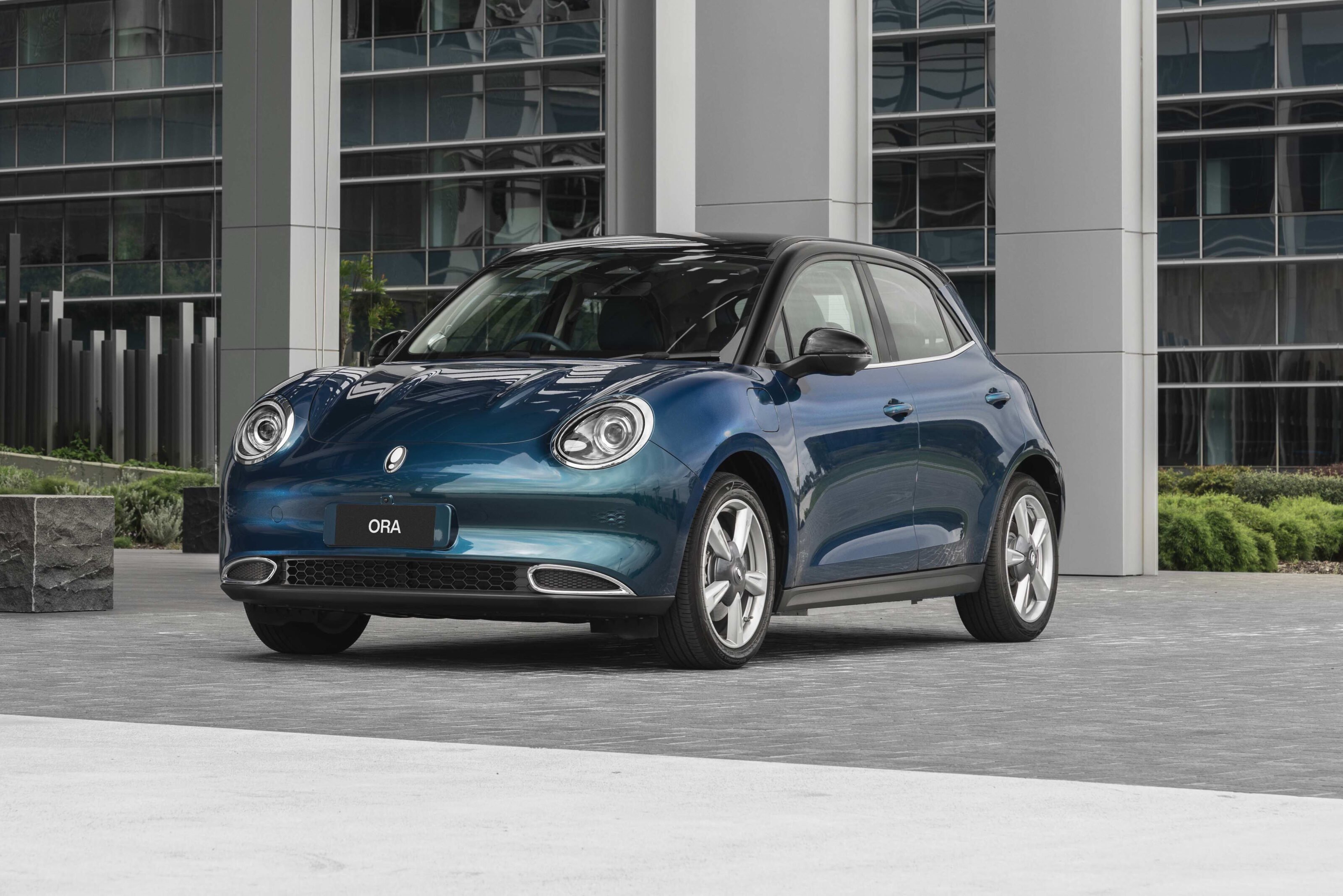
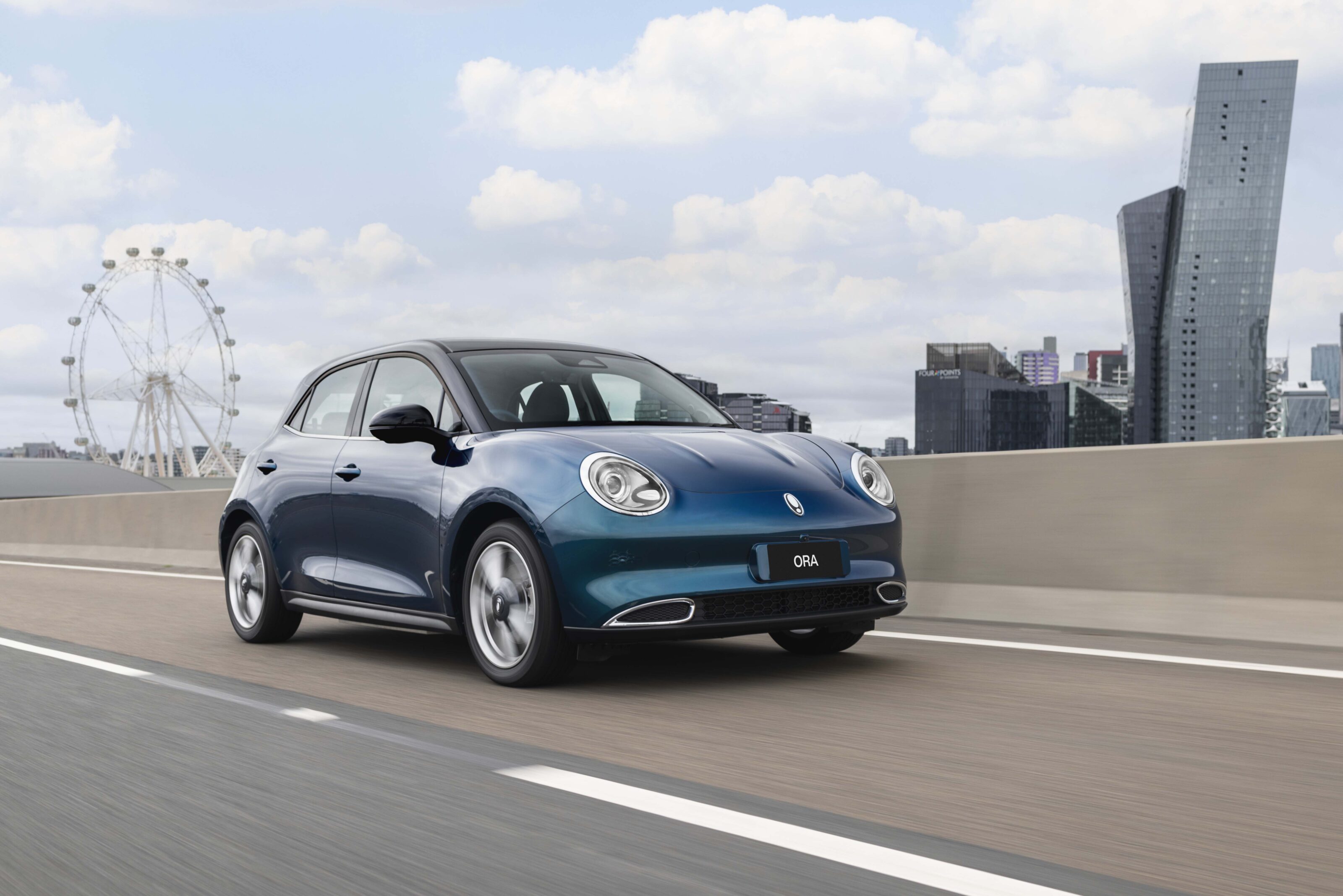
GWM has ditched the Funky Cat/Good Cat badging for the introduction of its first electric vehicle in Oz under its ‘One GWM’ expansion plans. The small electric hatchback that will hit dealers in April will be known simply as the GWM Ora here.
About the size of a Volkswagen Golf, the Ora lands with a $43,990 (before on-road costs) starting price allied with a 310km WLTP driving range – dead even with the starting price of an MG ZS EV Excite.
With Ora drive-away pricing starting at $44,490 in the Northern Territory, it should undercut the ZS Australia-wide, but with states and territories differing in their incentives, pricing becomes a little muddy.
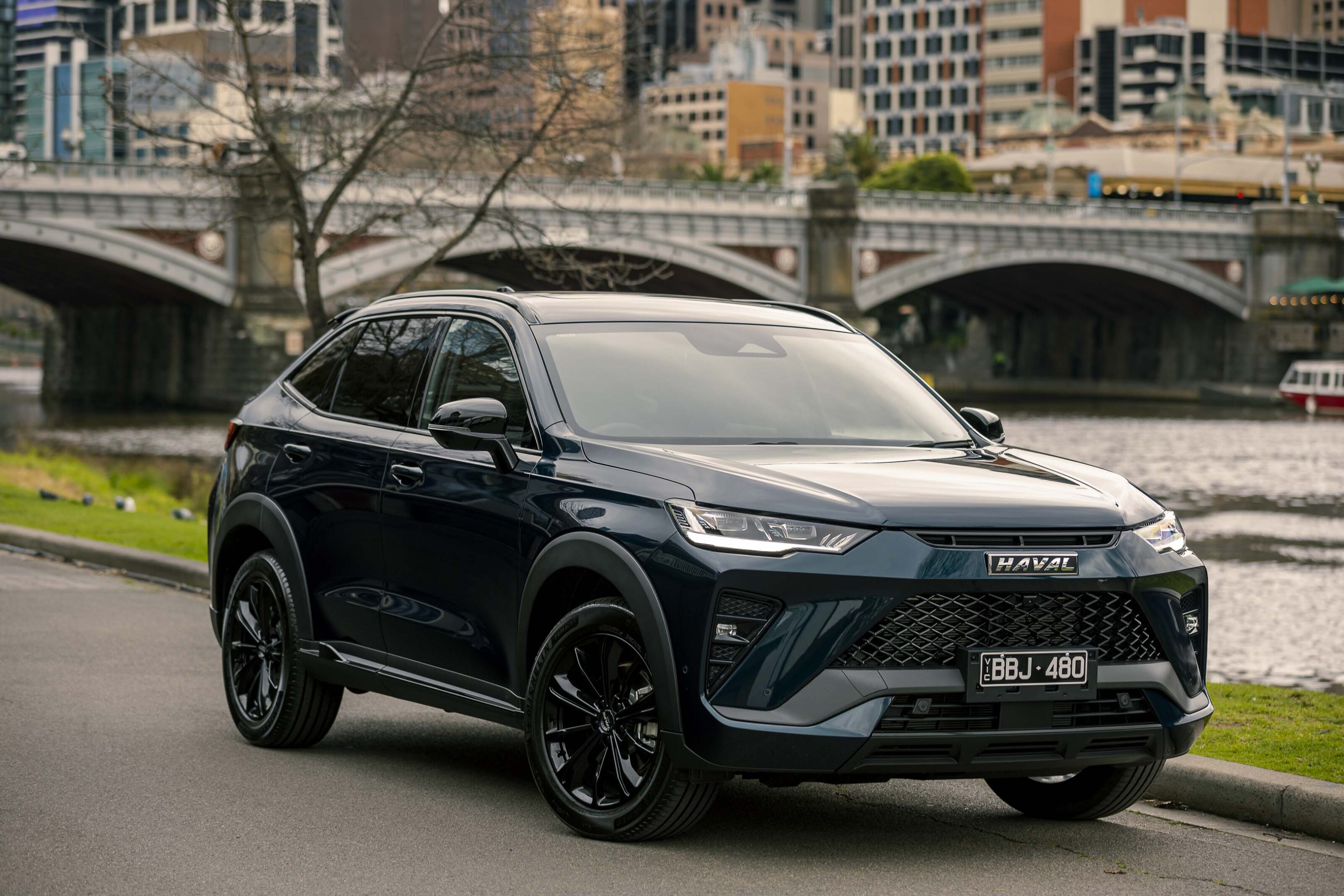
It is based on the (unfortunately named, but quite innovative) ‘LEMON’ platform that, like BMW’s cluster architecture, can be stretched into three different segments, allowing everything from this electric Ora to the related Haval H6 GT to be built on it. Neat.
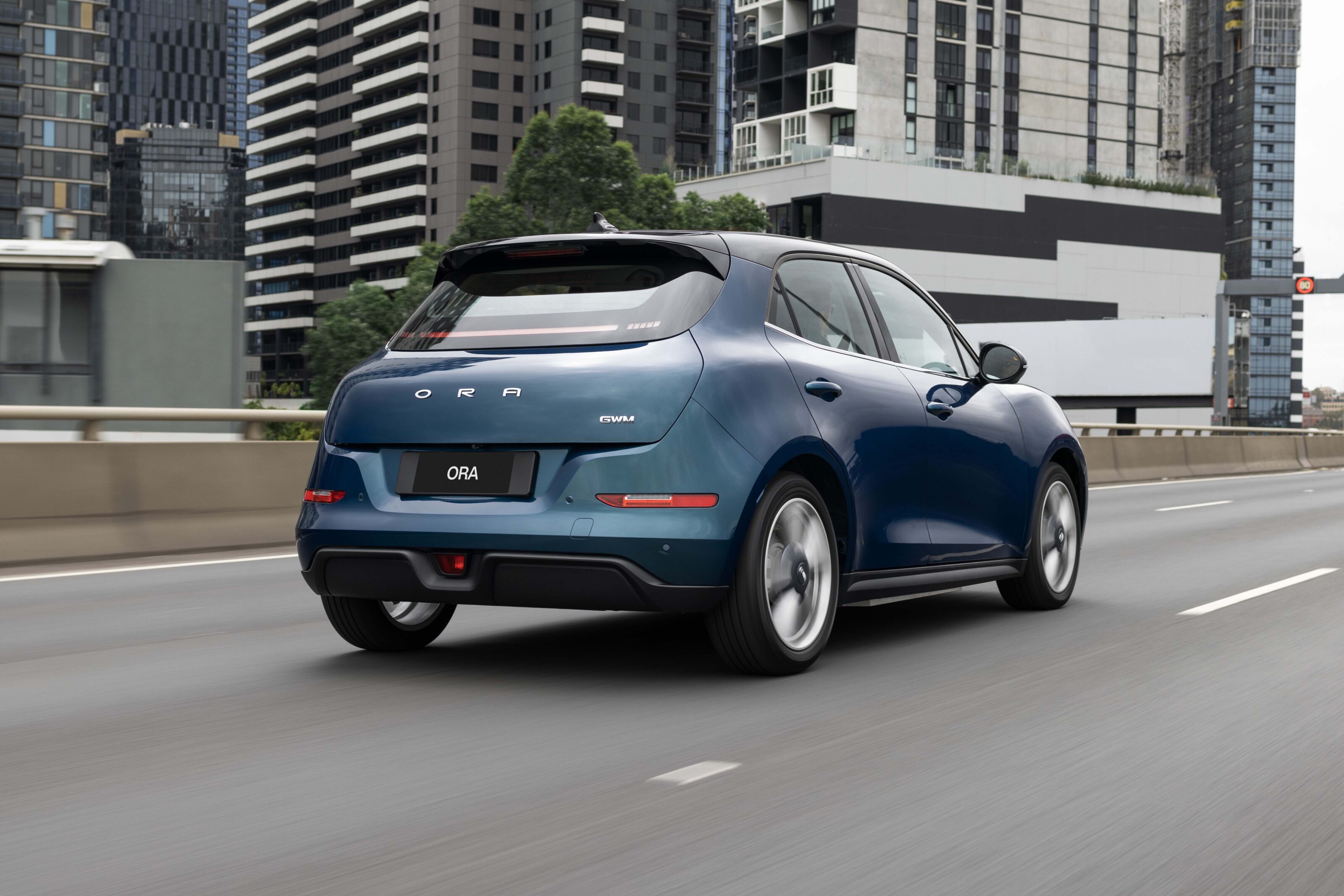
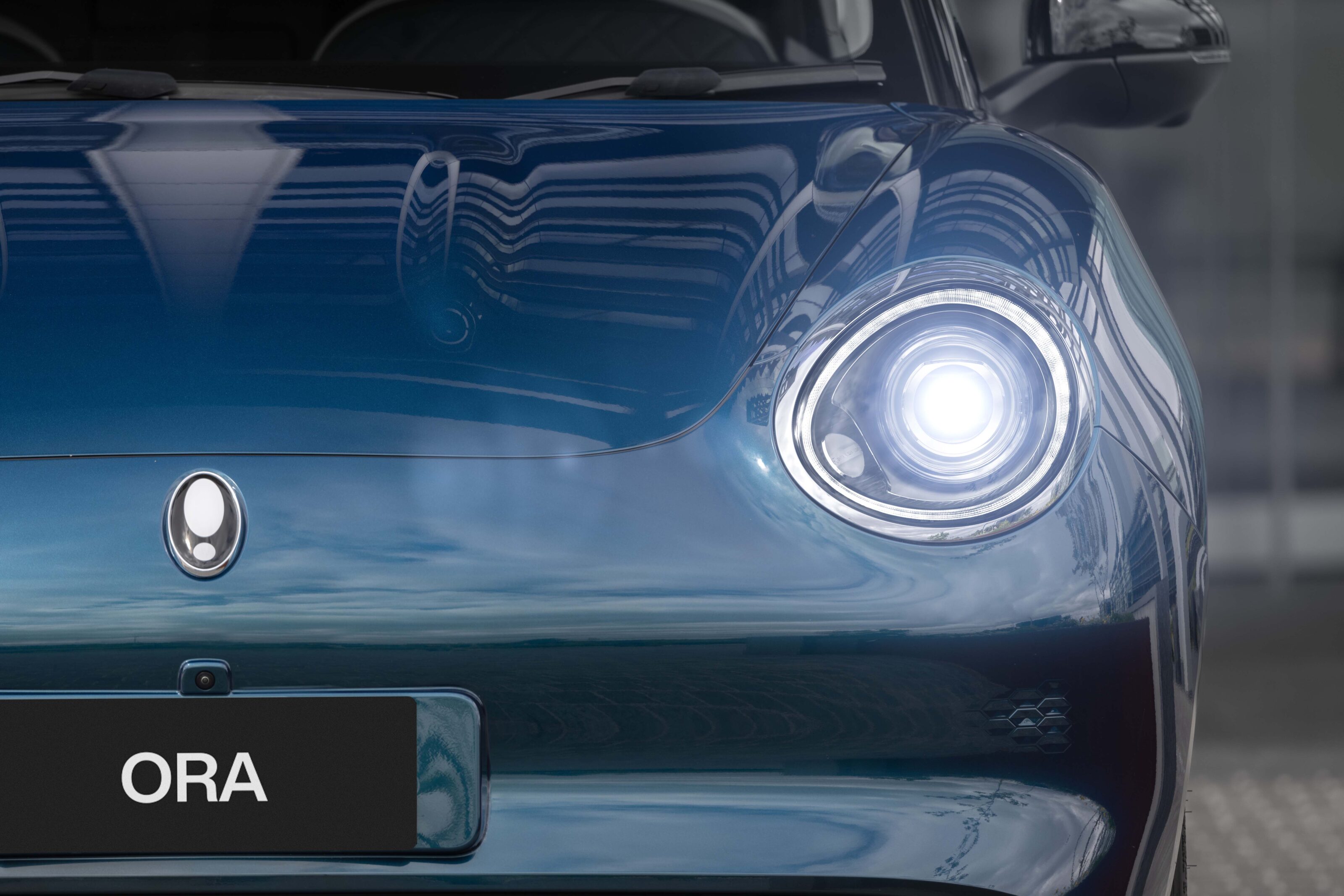
There’s some spunk to its design, with little fish scale details sprinkled on the front bumper and traditional taillights banished in favour of LEDs behind the tailgate glass. Proportionally, it’s a little strange, but the unique appearance is part of Ora’s charm.
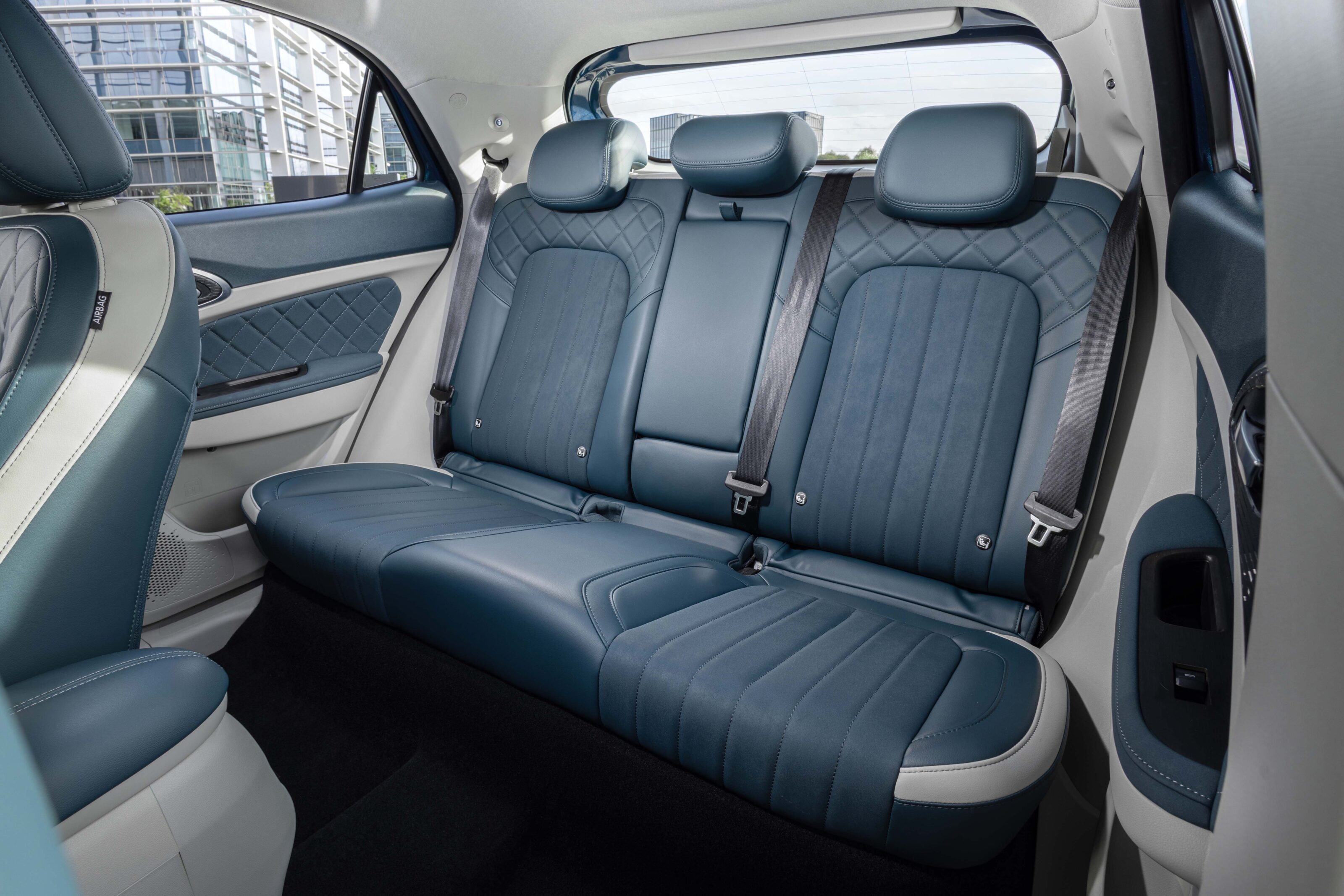
GWM has locked in three Ora trims for Australia, with five exterior colours – including the Aurora Green pictured – to choose from. Four paints are paired with black upholstery, but our test car shows off the two-tone turquoise/cream colour scheme paired with the Aurora Green paint.
GWM Ora standard features
10.25-inch digital driveru2019s display
Keyless entry
10.25-inch multimedia touchscreen
LED headlights
18-inch alloy wheels
Surround-view camera
6 speakers
Vinyl upholstery
6-way power driveru2019s seat adjustment
Wired Android Auto
Dual-zone climate control
Wired Apple CarPlay
1
Jumping up to the larger battery pack doesn’t bring any added equipment for the Ora, only a 110km driving range bump. The only way to get a little more out of your Ora is to head for the $53,990 (before on-road costs) GT trim, which adds:
GWM Ora GT extra features
Automatic parking
Power tailgate
Heated windscreen
Red brake calipers
Panoramic sunroof
Sporty 18-inch alloy wheels
Power driveru2019s seat with memory
Sporty bumpers and grille
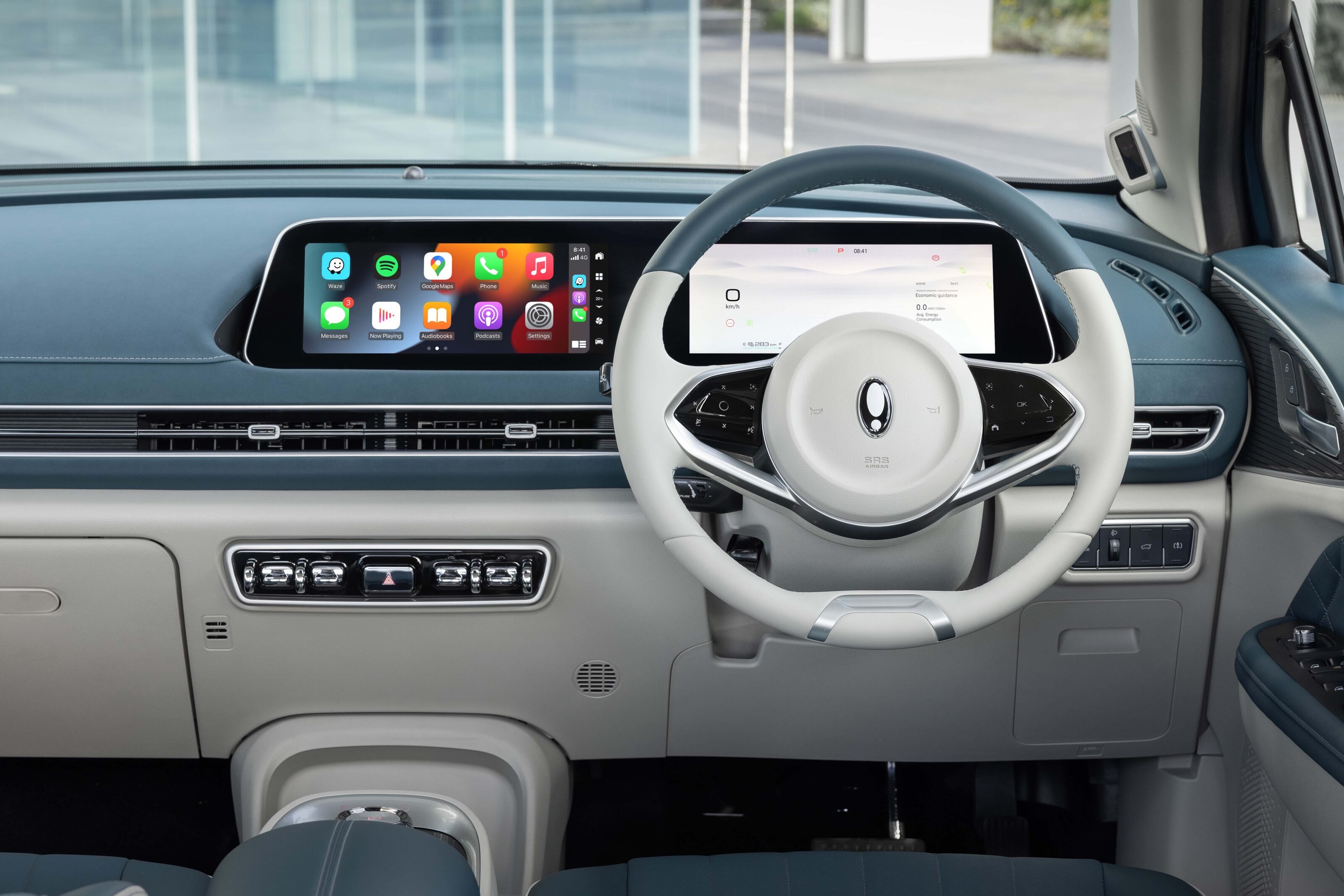
The Ora’s touchscreen is responsive but as with many contemporary EVs, a large number of the HVAC functions are hidden behind menus and layers within the touchscreen. There are, at least, a few shortcut buttons below the screen.
With such a brief interaction it’s hard to truly evaluate the usability of the touchscreen, other than to say it’s a very different user interface to your typical big-five brands.
With previously budget-oriented brands such as Kia, Hyundai, Toyota and Subaru electing not to play in the sub-$50K electric vehicle space, innovative and quirky EVs are leaving their mark in Australia.
Australia’s cheapest electric car, the MG ZS EV (from $42,990 drive-away), isn’t one of them, though. The slightly more expensive Chinese compatriot, BYD’s Atto 3 ($48,011 before on-road costs), certainly is.
Like the Ora, the Atto 3 is bursting with technology and quirky cabin details, though the rollout of BYD’s smartphone connectivity and moving-target warranty promises has drawn scepticism. GWM’s more established dealer network and longer presence in Australia may end up being a big drawcard.
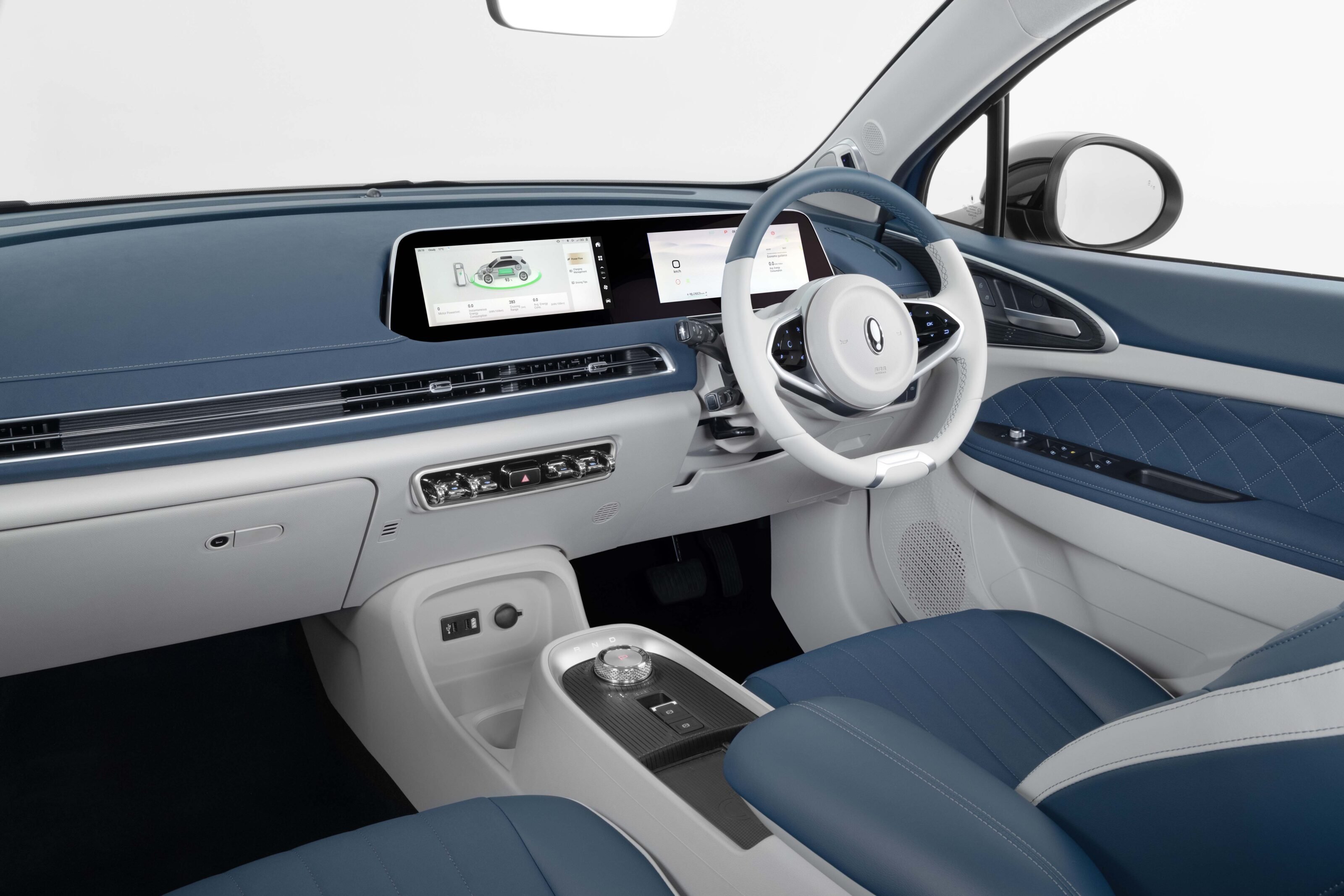
Current GWM and Haval products have adventurous cabins, but the colour-coordinated electric Ora will have you exclaiming wows and expletives as you hop in.
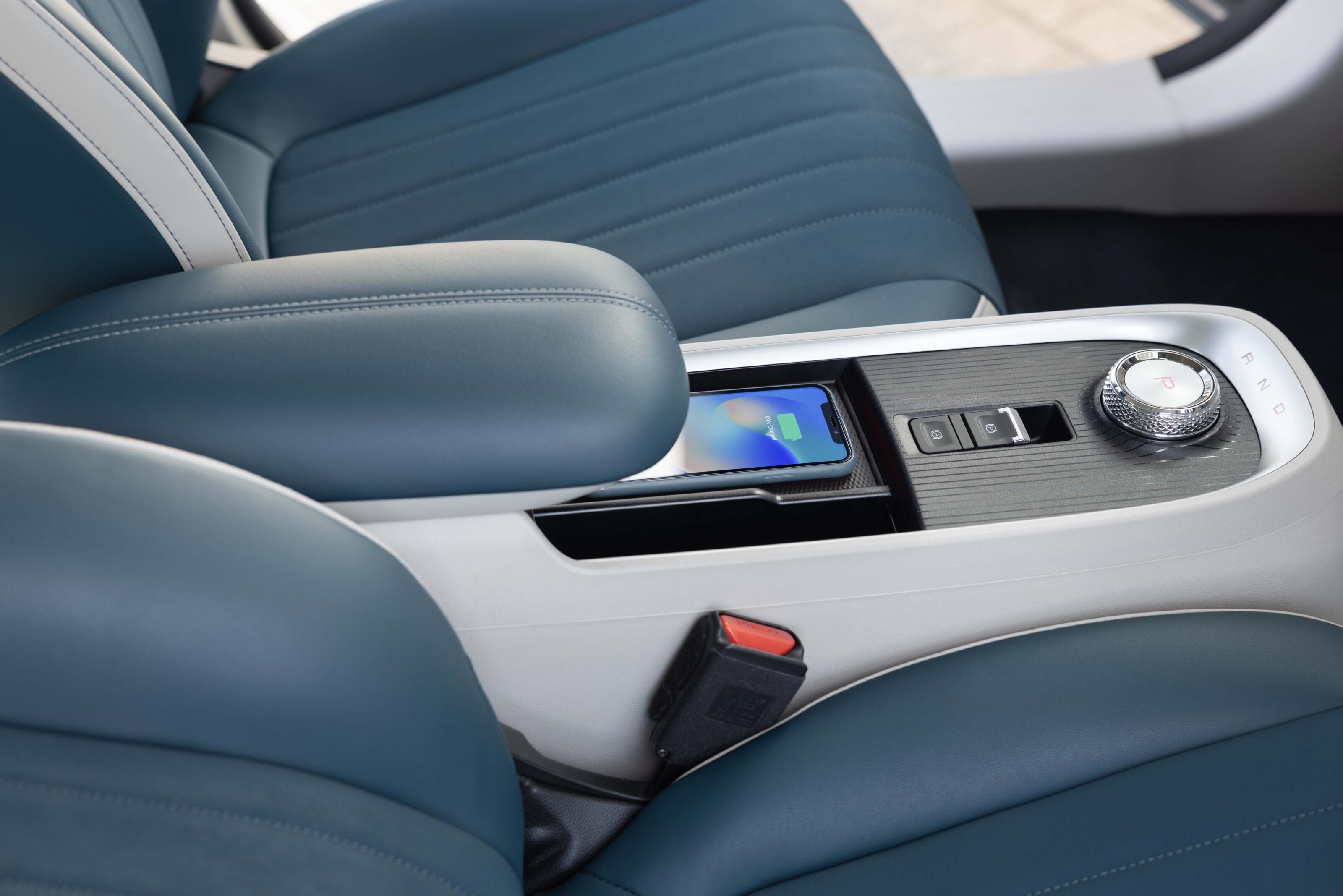
The funky Mini-inspired HVAC shortcuts on the centre console, sparse buttoning, Hyundai Ioniq 5-esque central storage area and retro-futuristic styling with textured seats are fun details. Although plushly upholstered in colourful leatherette to match the paintwork, the pews lack under-thigh support or tilt for taller drivers.
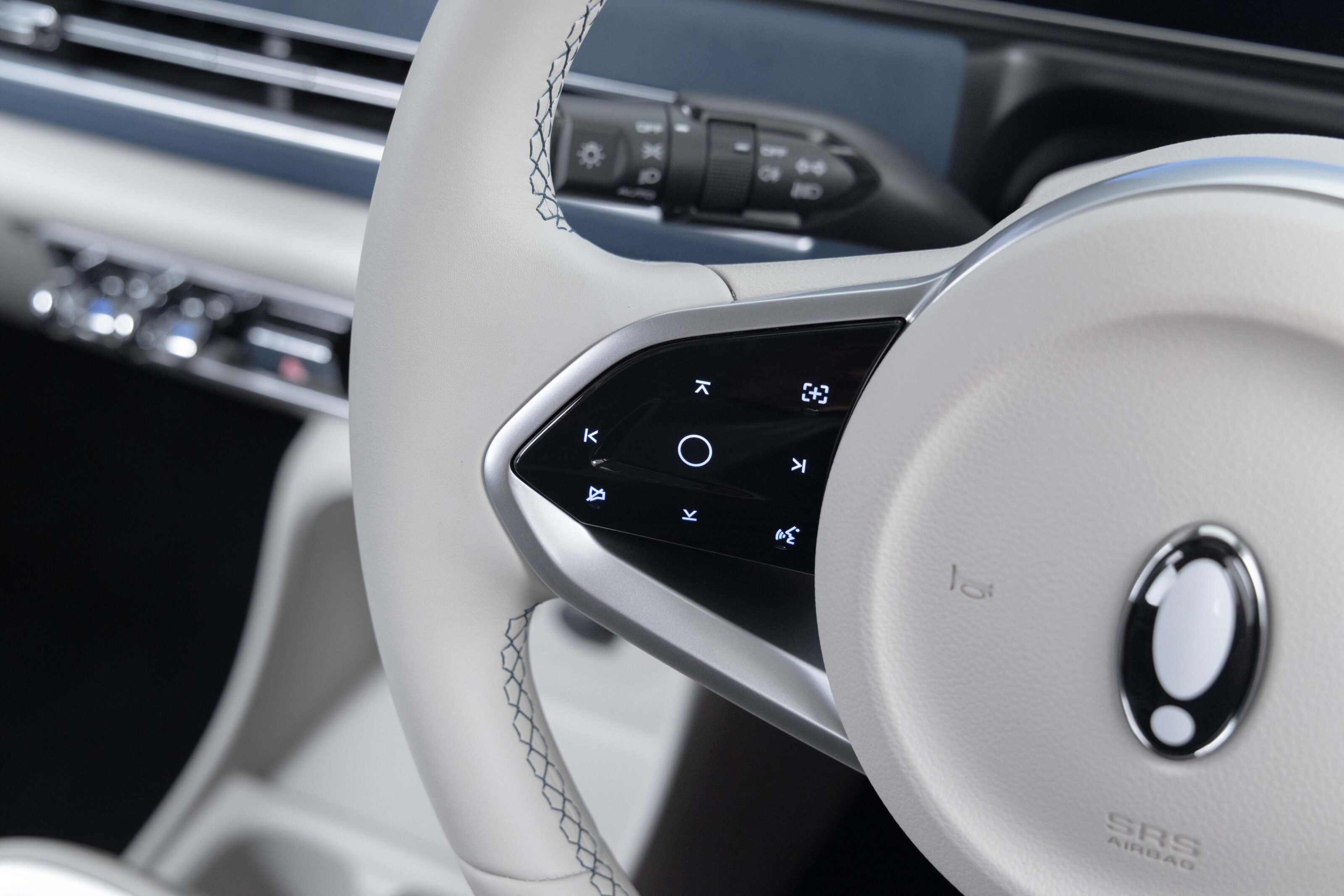
Style has come at the cost of some basic cabin ergonomics, too. Starting with the driving position, which is particularly awful (and trust me, with an Alfasud and Renault Sport Clio in the garage, I know a bad driving position when I feel one). The large steering wheel is set too far away from the driver, with inadequate telescoping adjustment.
1
Odd driving positions sometimes help with packaging, and that’s the case with the Ora. As the driver needs to sit close to the pedals to reach the wheel, the rear quarters are remarkably spacious and airy.
At 188cm tall, I had generous knee and toe room, and decent headroom. You don’t need to step up to a small or medium SUV to fit four in comfort (or five with reasonable ease).
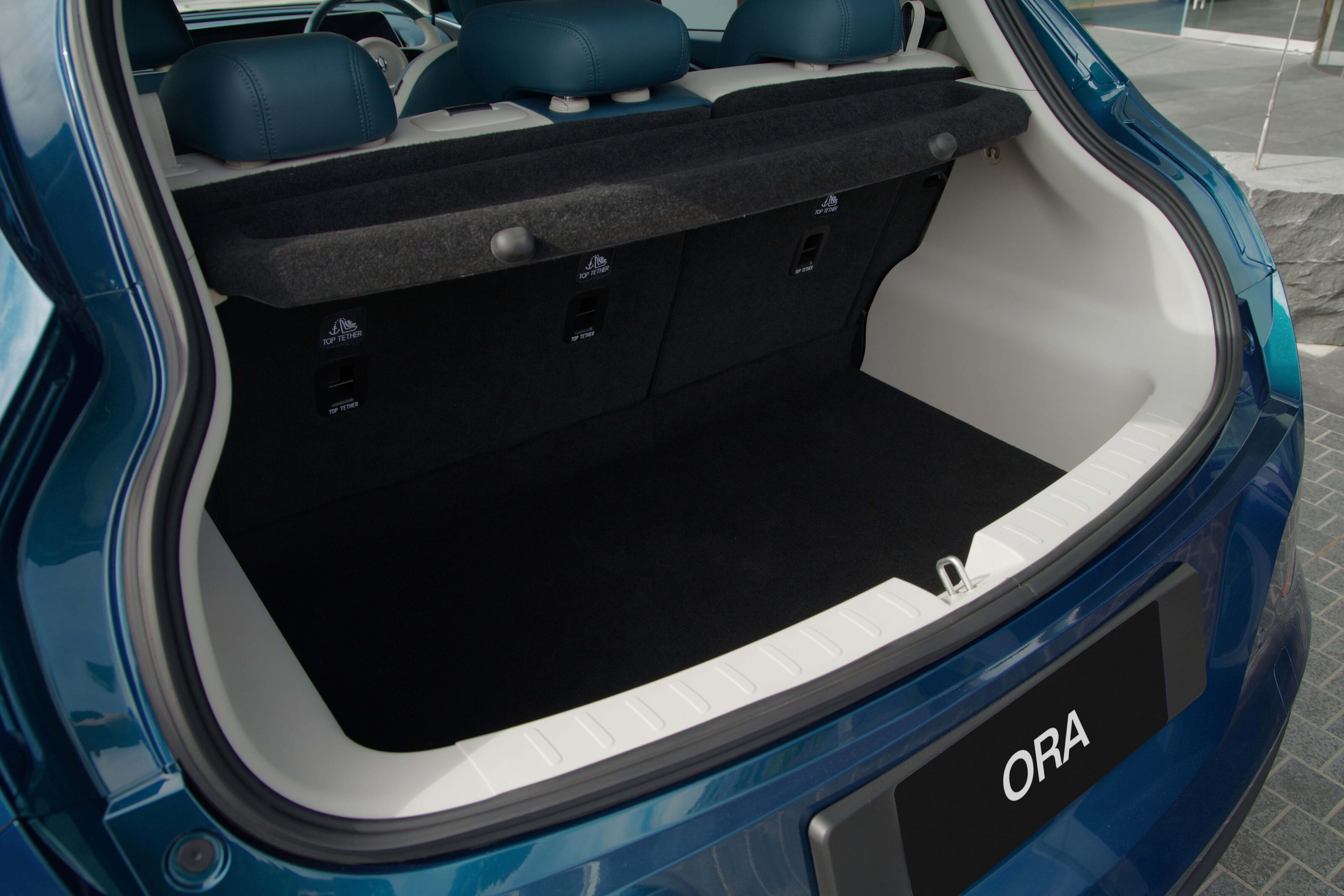
Where the Ora does suffer next to most small hatchbacks is boot space. We’re not sure why it’s this way, but the boot lip rises a good 35cm above the boot floor, meaning you have to lift heavy items a long way up to fit in the 228L space. There’s no space-saver spare included either.
Our time with the Ora may have been brief, but there’s a lot to talk about from this new brand. For a start, you don’t have to start it. Like a Tesla or Polestar, you just sit on the seat, put your foot on the brake, select ‘Drive’ with the rotary gear selector and you’re away.
The camera on the A-pillar has facial recognition too. How this works in practice, we’re not entirely sure yet, but GWM said there’s the capability to automatically adjust settings and preferences for each driver. Creepy, perhaps, but something Subaru has also offered for a while.
All Oras have a single, front-mounted electric motor capable of deploying 126kW of power and 250Nm of torque. GWM claims a 0-100km/h sprint in 8.4 seconds, which feels on the money for its 1540kg kerb weight.
1
The Ora doesn’t bound off the line like a scalded, err, cat, owing to GWM’s sloppy throttle response calibration. It’s doughy to the point of absurdity. You can nail the throttle and count to two before anything meaningful happens, like old-school turbo lag.
Except that a similar thing happens when you lift in the one-pedal drive mode, the Ora taking a moment before full retardation is applied. It’s a little unnerving for the engaged driver.
But I can see a benefit here; like you might smooth data on a graph to make it easier to interpret, the soft throttle may make for less spiky driving for those with the dreaded taxi foot.
The steering is similarly vague. The retro two-spoke wheel doesn’t feel connected to the front 215/50 R18 Gitisport tyres, and the rack is super light and rather slow in its responses.
1
For its intended function as a city car, the Ora’s chassis is adequate. The body rolls, but it settles well enough once turned into corners and crucially, provides a plush and comfortable ride.
Our first taste suggests a more natural flow through corners than the heavier and bigger BYD Atto 3. The GWM Ora is no drivers EV, but that’s OK. It’s comfortable, quiet and serene in the cabin, requiring nearly no skills as a pilot.
The compact dimensions of the Ora and its conventional (from the inside) glasshouse also mean this is an easy EV to see out of, and the narrow body should make it easy to thread through the city.
The Ora is available with two battery sizes. The smaller of the two (and the car we drove) is a 45.4kWh (usable) lithium-ion pack for a WLTP driving range of 320km, relying on a 14.6kWh/100km efficiency rating.
A larger pack offers 59kWh of usable capacity, for a 420km driving range with slightly lower 14.1kWh/100km consumption. With a near-identical 60kWh battery, the long-range Atto 3 matches the Ora for stamina.
GWM is currently sourcing batteries from CATL, the world’s largest battery manufacturer. However, there are plans afoot to install SVolt batteries, a company in which GWM is heavily invested.
1
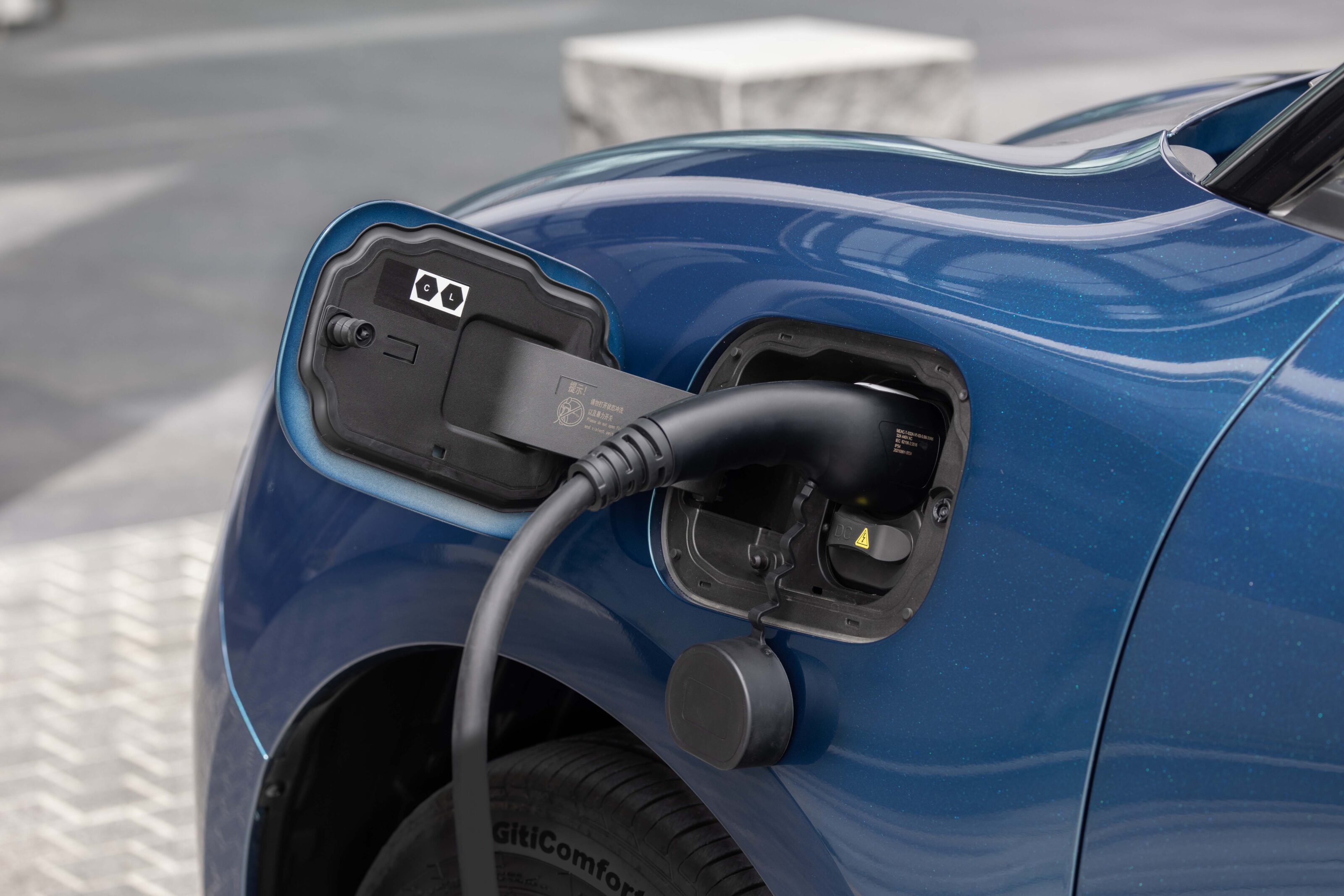
Using a DC fast charger, the Ora will take on electricity at a rate of 80kW, for a 10-80 per cent recharge in 41 minutes for the standard range battery, or 58 minutes for the extended range pack.
Home charging on an 11kW three-phase wallbox will take six hours and 30 minutes for a full charge, and a 240-volt wall plug 30 hours.
The Ora scored five-stars in 2023 ANCAP safety testing, recording particularly high marks (92 per cent) for adult occupant protection, and 93 per cent in safety assistance.
We were not able to properly evaluate driver assistance systems such as lane trace assist and adaptive cruise control in the controlled proving ground environment.
1
GWM Ora safety features
360-degree camera
Lane follow assist
7 airbags
Rear AEB
Adaptive cruise control
Rear cross-traffic alert
Blind-spot monitoring
Traffic sign recognition
Front auto emergency braking with pedestrian, cyclist and junction detection
GWM has not confirmed warranty coverage or capped-price servicing costs for the Ora yet, though as it matures in Australia, the brand will look to stay consistent with its seven-year warranty.
At launch, executives showed interest in warranties potentially even longer than seven years if possible, but anything shorter than seven years with unlimited kilometres was comprehensively ruled out.
The GWM Ora deserves its Funky Cat nameplate in other markets. This is a seriously different and intriguing electric vehicle.
On paper, the value proposition is there with loads of technology and a respectable WTLP driving range of over 400km for the extended-range vehicle.
The GWM Ora is no drivers EV, but that’s OK. It’s comfortable, quiet and serene in the cabin, requiring nearly no skills as a pilot. But, for an electric vehicle to mobilise the urban masses, its comfort and refinement ought to be enough for most.
GWM’s Tank 300 is here, and we’ve had a proper run off-road. Get Tristan Tancredi’s thoughts here.
He mentions the Wrangler, like, SIX TIMES. Six!
▶ Story continues
Snapshot
Disparate SUV and EV specialists to fall under u2018One GWMu2019
Simplifies experience for Australians
Push for u2018New Energy Vehiclesu2019 (NEVs)
ICE still important in Oz
‘One GWM’ may sound like a heavy-handed government movement in a far off dystopian universe, but in truth it’s the Chinese carmaker’s latest plan to increase market share globally.
The most obvious manifestation is in the newly-launched Ora. The small EV is known as the Good Cat in China, or Funky Cat in the UK. The Cat name is gone for Australia; let a solitary tear slip out of your ducts if you need, but it’s a decision that will likely pay off.
To sell more cars, GWM needs to increase global appeal. Of the million-plus vehicles it built last year, GWM sold nearly 900,000 at home.
Exports accounted for around 170,000 sales (16 per cent), with 25,042 destined for Australian shores according to official VFACTs figures. That makes us GWM’s biggest export market, and second most profitable after Russia.
With such a volume of cars on sale in its China home market, it’s understandable that GWM has spin-off brands at home, where there’s enough population to appreciate each nuanced name.
This means more streamlined branding for all the vehicles, and a more consistent experience. Expect plenty more hybrid and electric vehicles in the future, with new models such as the Dargo and Lightning Cat under consideration, and even electrified variants of GWM’s Ute.
Not all of GWM’s China brands translate well to western audiences. Haval, Tank and Ora – which specialise in SUV, off-road and EVs respectively – are relatively harmless, but the Poer utes and Wey plug-in hybrids don’t port across quite as seamlessly.
Nor, for that matter, would Funky Cat resonate with most Australians. We’re a pretty switched-on bunch when it comes to names, and won’t back down from making fun of them either.
“We’ve been slowly evolving through that in the last two or three years to the point now where every piece of advertising we do is under that One GWM banner, and GWM is the only name we actually advertise with”, explained head of marketing and communications, Steve Maciver.
1
“We still talk about Haval, and we still talk about Ora, in terms of important model series, those are names that we have to continue to get out”, Maciver added.
The simplification also ought to aid GWM’s local recognition. Instead of having four or five different brands at a dealership, all will fall simply under the GWM banner.
For that, buyers will be treated to a consistent seven-year/unlimited kilometre warranty, a matching period of free road-side assistance and capped-price servicing.
1
‘One GWM’ is all about electrification
“That [one GWM] strategy is something that we’re beginning to hear about, not just in Australia, but it is a global change as well,” Maciver told motoring media.
“For those of you that have been close enough to the company, remember the company was trading under Haval motor Australia, but we’re now realigning everything under that one GWM banner.
“It’s not just a name change; this is about essentially changing our focus as a company.
1
“We are moving forward, it’s our introduction to ‘New Energy Vehicles’ (NEV). We said before, we are planning to release a bucketload of NEV models; 50 NEV models will be launched by 2025; 80 per cent of all new GWM vehicles will be NEV between now and 2025″, said Maciver.
“That’s a massive change to happen in the next two or three years”
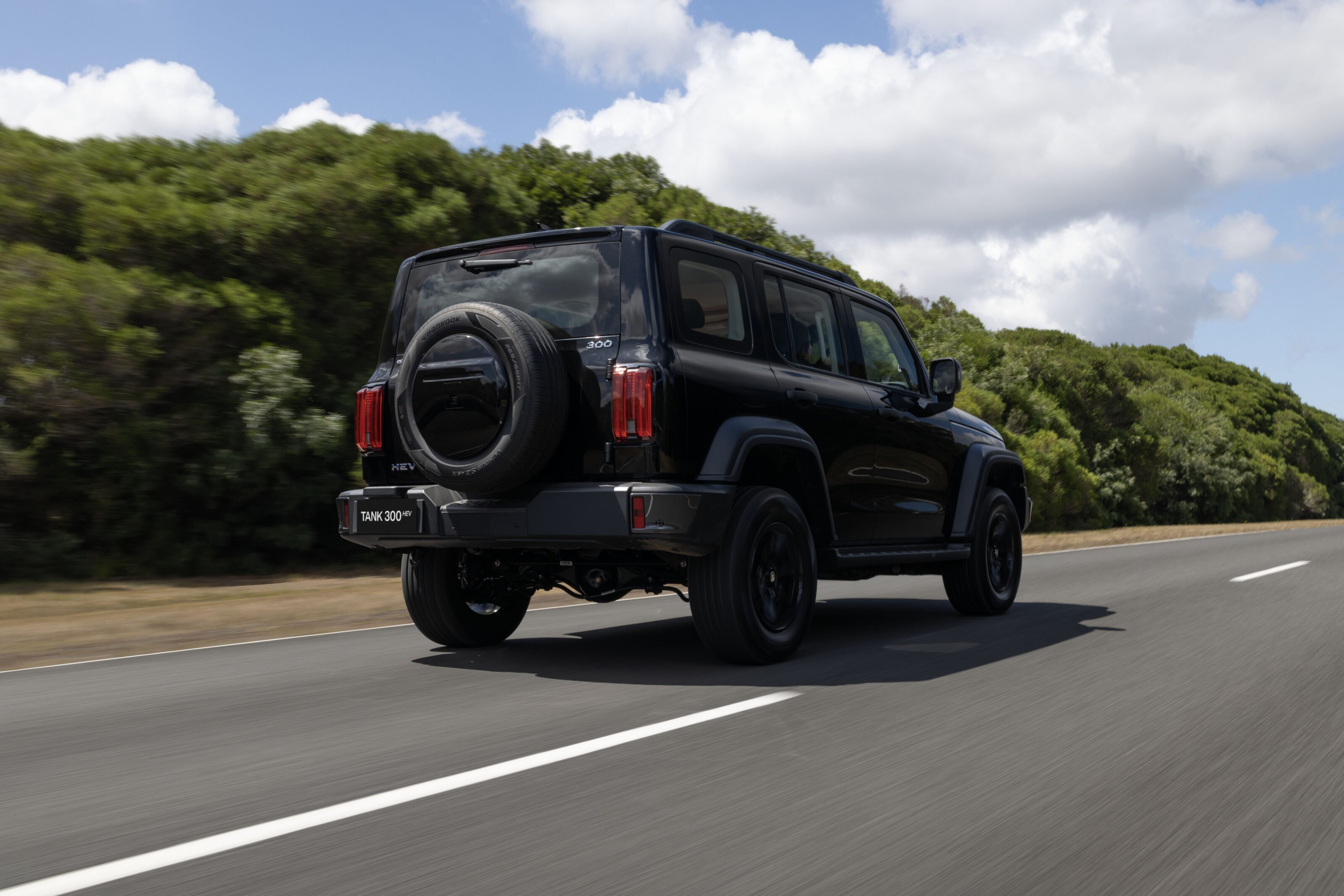
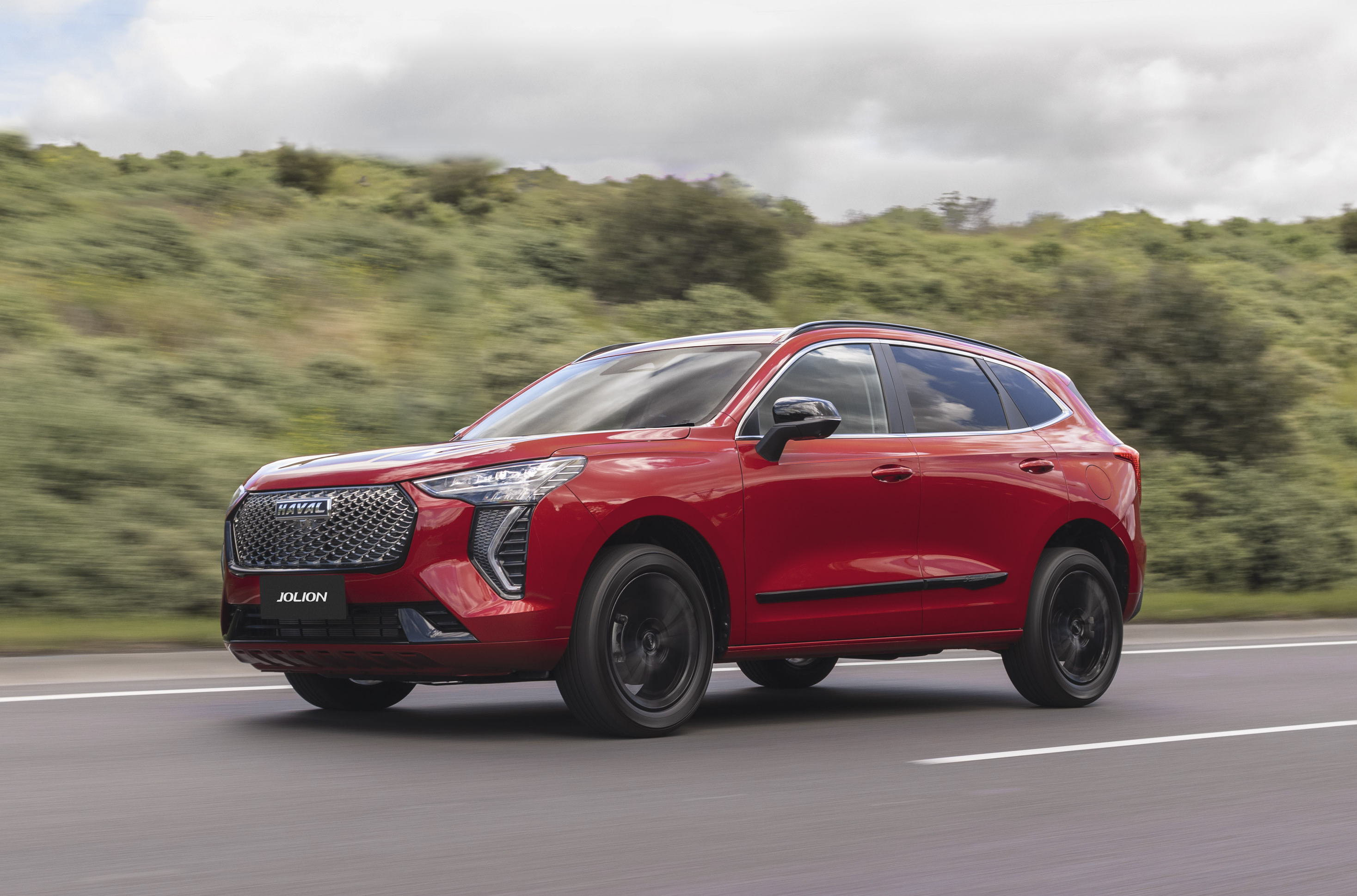
This started with the introduction of Haval H6 and Jolion hybrid variants, and continues with the latest addition of Tank 300 hybrid.
1
What about pure EVs in Australia?
GWM has identified separate global markets as most suited to certain powertrains. Australia fits into what GWM terms a “market demand” landscape. This is subject to change, naturally, as the other example given was a “policy-driven” market, with Korea and Europe under that banner.
The difference is what succeeds in each area. For Australia, EV adoption is mainly driven by personal decisions, with freedom from legislation (at least at the moment) to continue driving combustion and hybrid vehicles, and EVs chosen by those who suit.
“We don’t really see Ora, making up [30-40 per cent] of our volume that quickly,” said Maciver, as a result of Australia’s relaxed emissions policies. He didn’t rule out change though, adding: “as the industry changes, and as customer demand comes on, who knows.”
1
“The other car that we’ve talked about today, which has the potential to deliver more volume and to deliver that volume more quickly, is Tank 300.”
So while GWM will launch Ora, and put plenty of effort into getting sales for the electric small car, Maciver and the team believe hybrids will dominate in the interim.
With H6 and Jolion Hybrids already up to 30 per cent sales share, Maciver postulated “within a year to 18 months, Hybrid is going to be outselling ICE within our Haval range.”
“[The 2023 Haval Big Dog] was a car that was under consideration,” GWM’s head of marketing and communications, Steve Maciver, has told Wheels.
“We decided that [Big Dog] was probably not the right model for us, not the right technology for this market at this stage.
“That said, a new model – the Dargo – has now been unveiled. And again, that’s another car which is on our radar.”
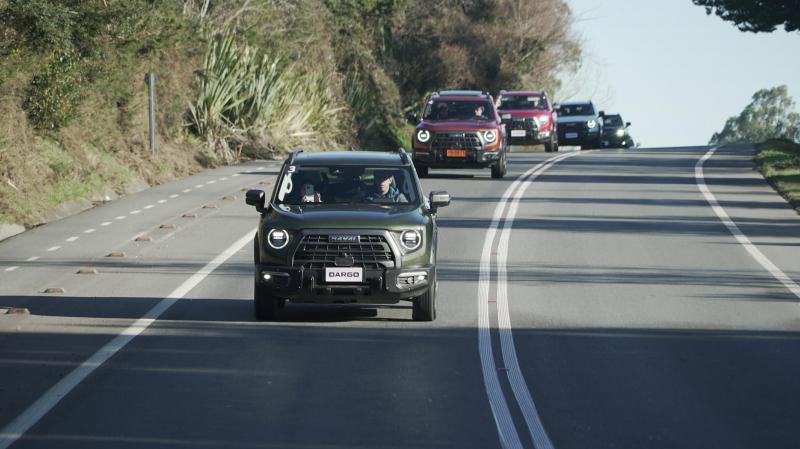
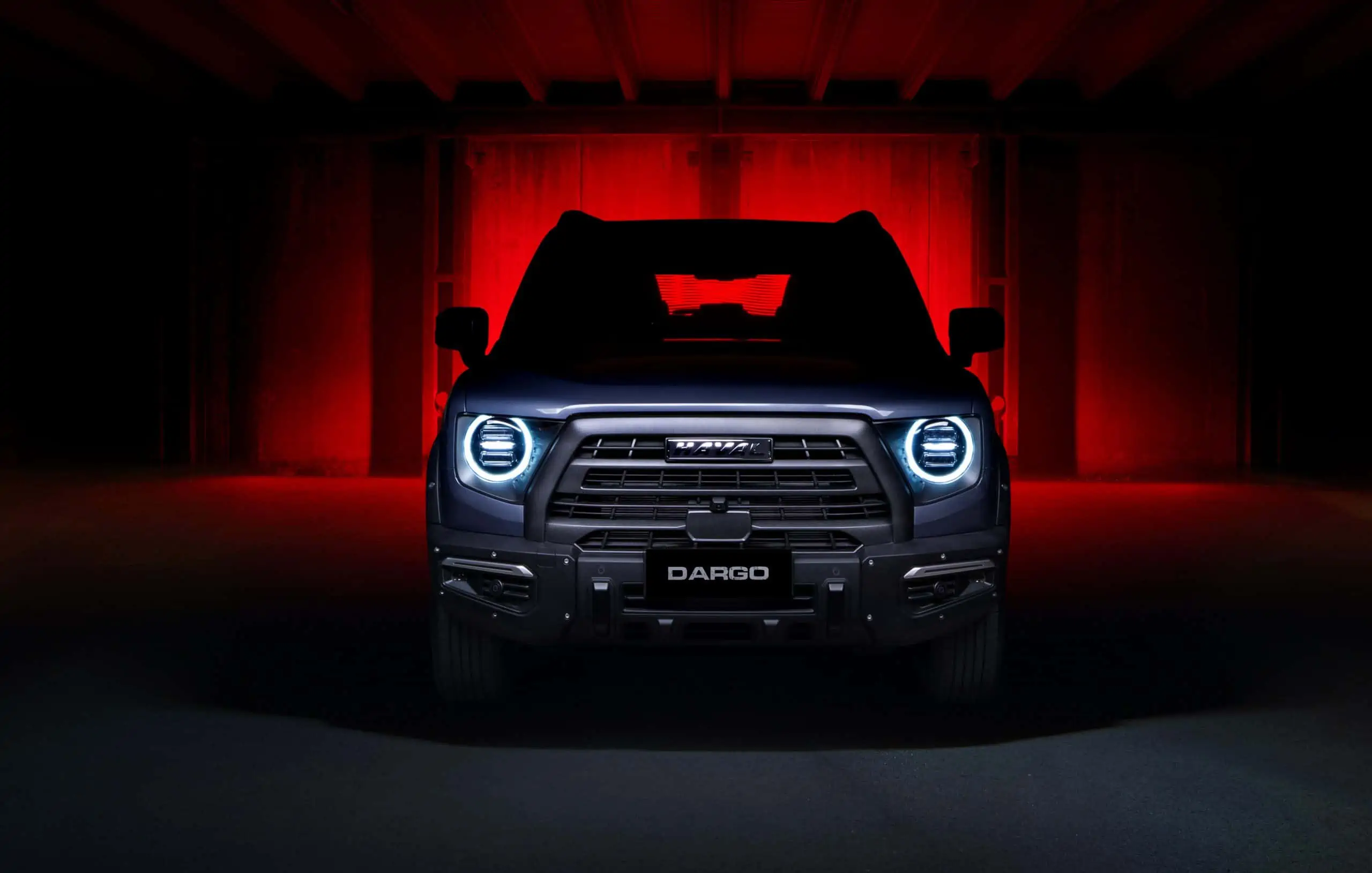
The Dargo is essentially the same vehicle as the Big Dog, using all the same underpinnings, but with a fresher engine. Its Dargo name not named after an alpine town in Victoria, rather the Pinyin pronunciation of ‘Big Dog’.
It’s the badge GWM has chosen to run with for the global example of its boxy Haval SUV, and features a more powerful and modern 2.0-litre turbo-petrol engine as seen in our H6, rather than the 1.5-litre the Big Dog launched in China with. It’s currently on-sale in South America.
Given Dargo uses the same underpinnings and powertrain technology as the Haval H6, we could expect a starting price under $50K for a front-drive model, climbing above that threshold for a more richly-equipped AWD trim – if it comes to market.
Measuring 4620 millimetres long, 1910mm wide and 1780mm tall, the Dargo is similar in its dimensions to a typical medium SUV – a segment already covered in Australia by Haval’s H6.
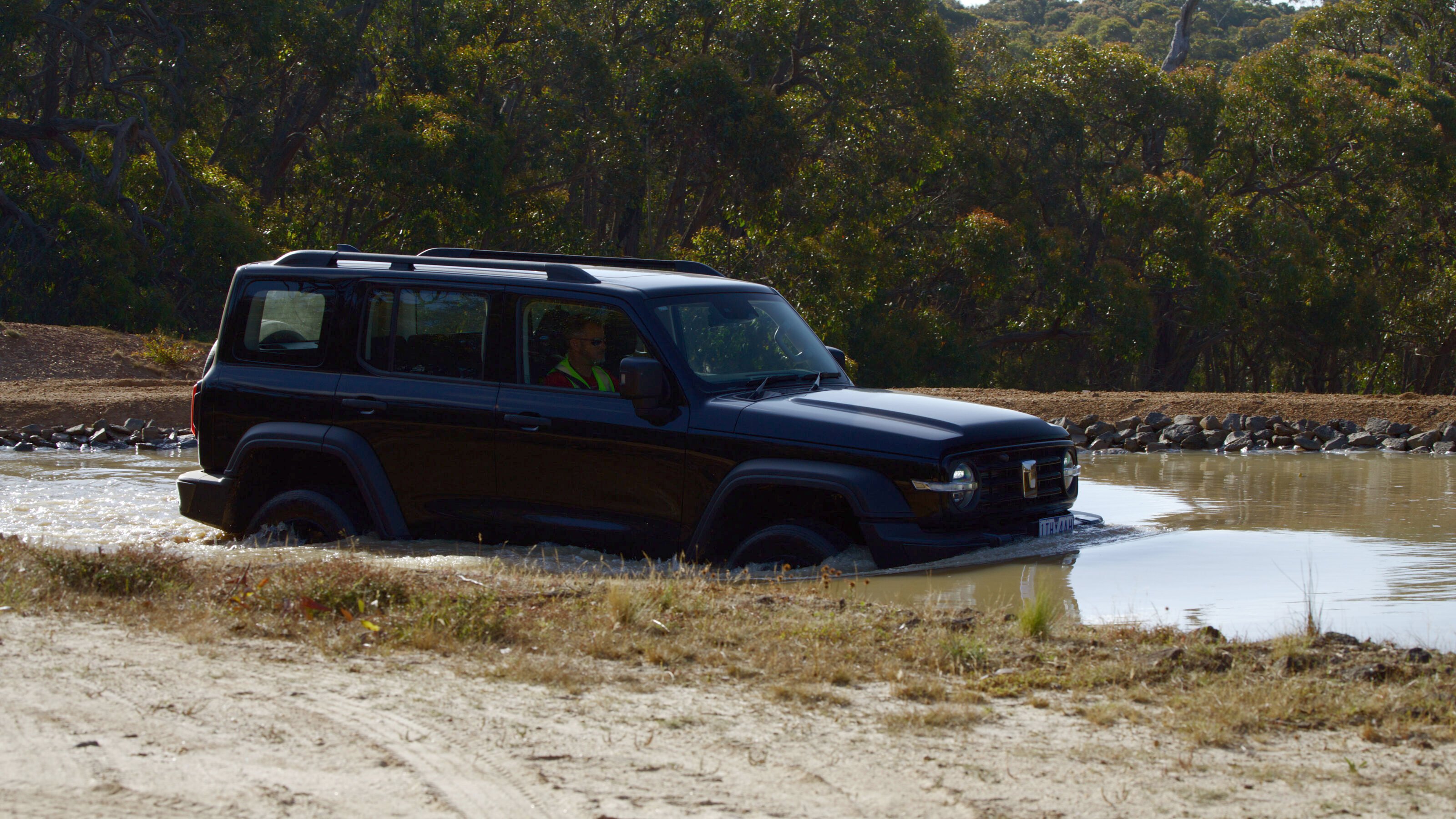
The Dargo, though, has a more off-road pitch than the H6. Dargo’s bluffer styling and advertised centre diff-lock communicate a more capable soft-roader, though it isn’t as hardcore as the Tank 300 hybrid which just launched in Australia.
Unlike the Tank 300 – which sits on a ladder-frame chassis – the Dargo utilises Haval’s modular Lemon platform, shared with the Jolion and even the Ora EV.
The Dargo is powered by a 2.0-litre turbo-petrol four-cylinder in global markets, and were it to hit Australia that would likely stay the same. Outputs are 146kW/325Nm – slightly different to the H6’s in Australia (150kW/320Nm), likely down to unique homologation processes.
2
Globally, the Dargo is available in front-wheel or all-wheel-drive, though were it to come here it would likely be in AWD form only. A seven-speed dual-clutch automatic transmission is standard.
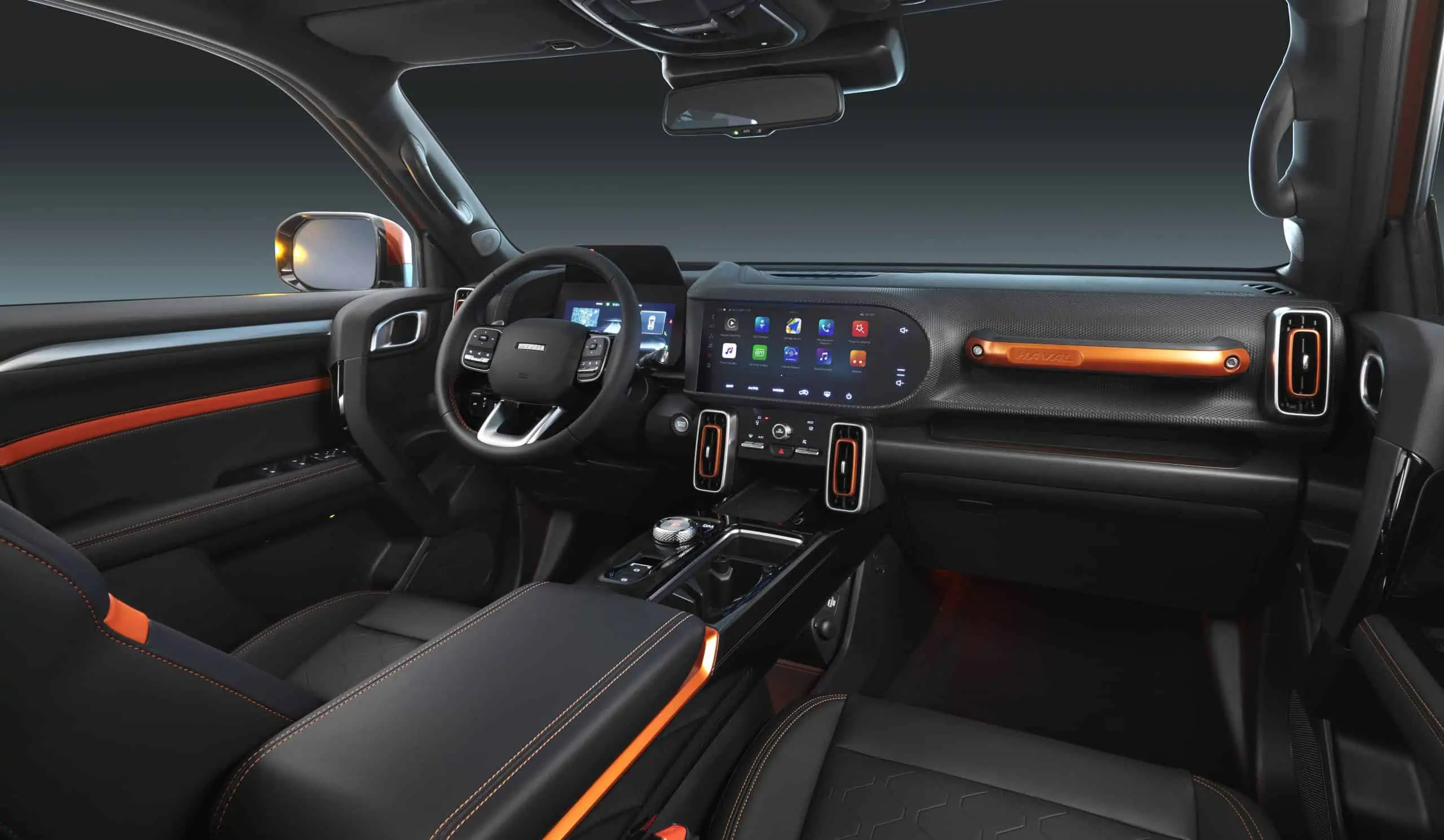
Inside, the Dargo gets some suede-cloth appointments, but keeps familial lineage with other Haval products, including the steering wheel, digital driver’s display, 12.3-inch infotainment touchscreen and general cabin architecture.
Far from being confirmed for our market, Maciver noted GWM Australia is keeping its options open to everything: “You’re beginning to see the expansion of the range. If we can get those cars. Again, [Dargo] is another one that’s not yet confirmed, but one that we are looking at.”
The 2024 Toyota Grand Highlander – a longer, wider and taller version of the Kluger – has debuted at the Chicago Auto Show.
Snapshot
2023 Toyota Grand Highlander revealed
Larger sibling to the Kluger with more room and 2.4-litre turbo-petrol hybrid
Unlikely for Australia, but not ruled out
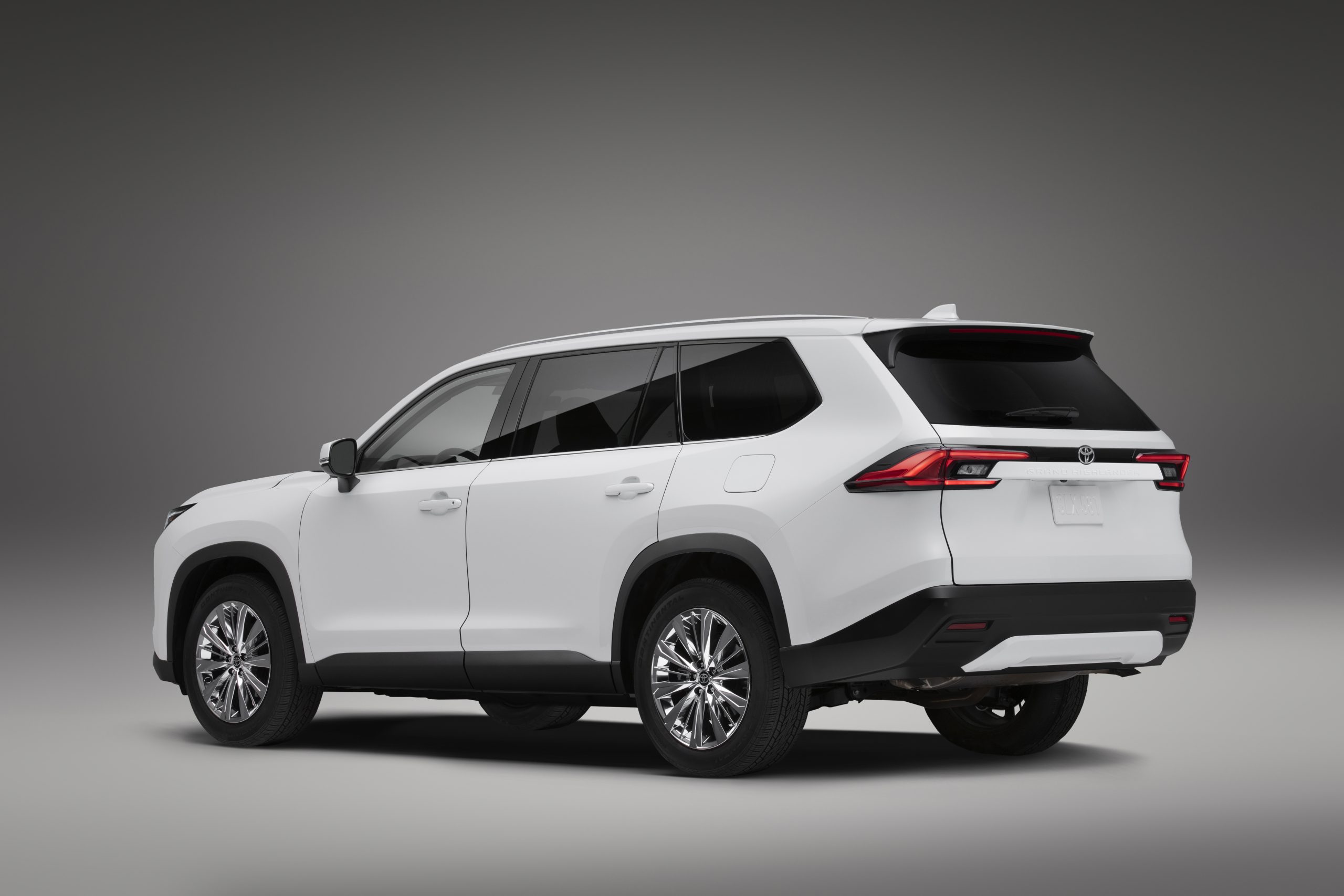
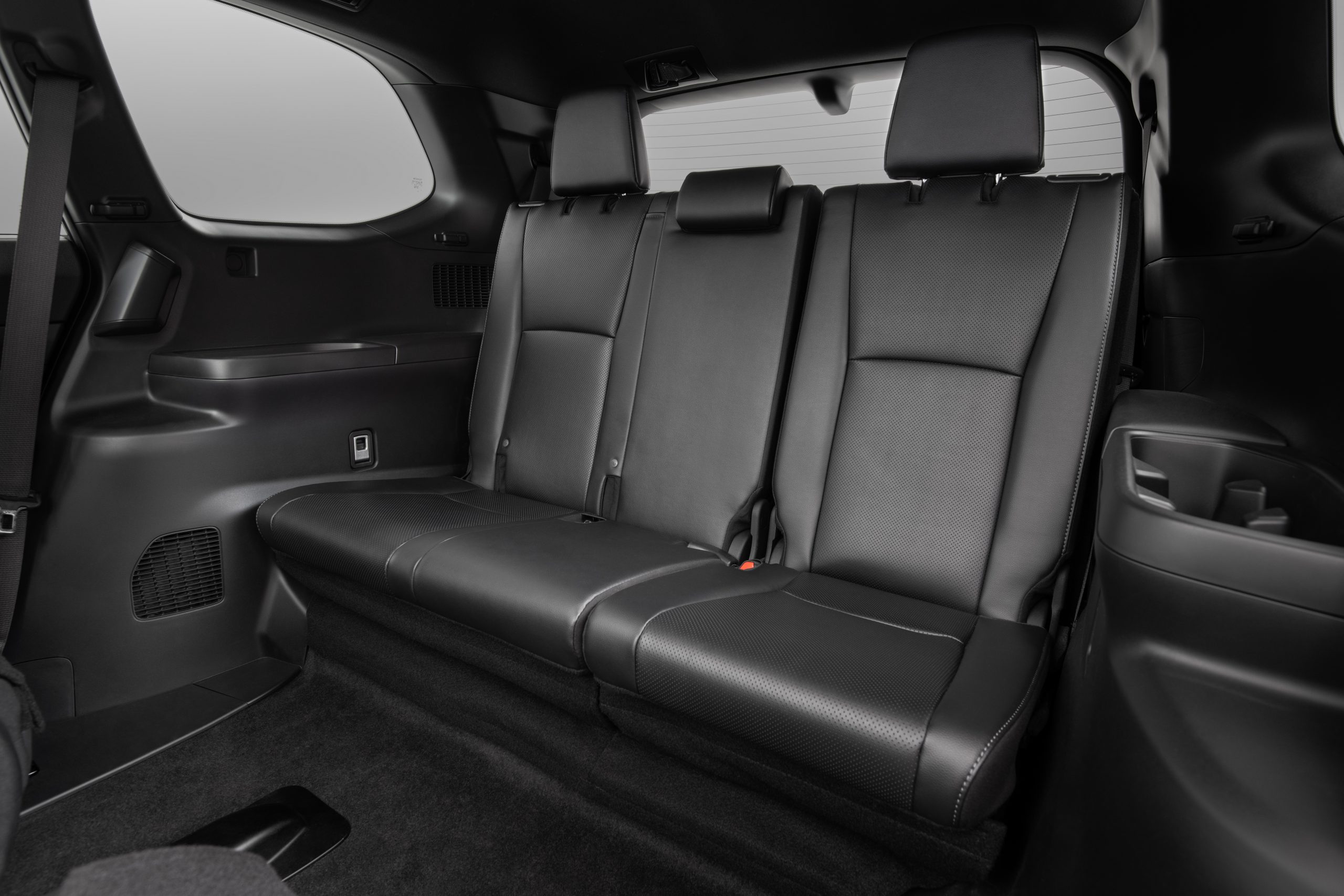
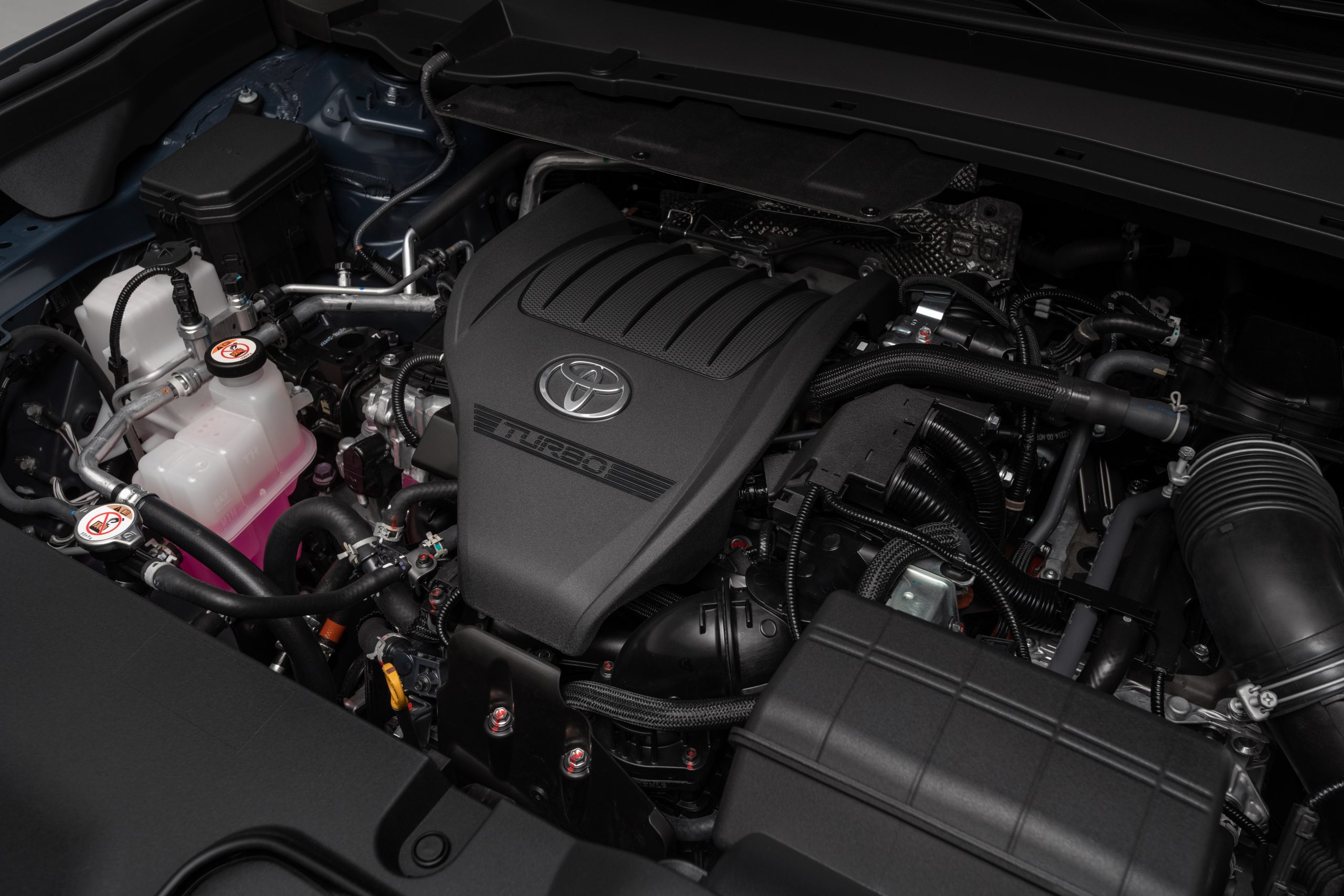
As a relative to the Kluger – sold elsewhere as the Highlander – the roomier vehicle features a unique, boxier design similar to the smaller RAV4, “adult-sized” third-row seating, and an available 2.4-litre turbo-petrol hybrid system borrowed from the Toyota Crown and Lexus RX.
While it hasn’t been ruled out entirely for Australia, a spokesperson for Toyota’s local arm said it has no news to share about the Grand Highlander at present, with right-hand-drive production looking unlikely.
“Toyota is always considering exciting new models as they become available for our market, but we have no announcements to make today.”
1
It will be built alongside the Kluger in Indiana, USA – however, the tweaked interior is likely to see a right-hand-drive variant ruled out.
In addition, the LandCruiser 300 Series is available for customers looking for a roomier three-row SUV option, but it is considerably more expensive.
According to US media, the Grand Highlander has a 2946-millimetre wheelbase, and measures 5116mm long, 1989mm wide and 1806mm tall – making it 165mm longer, 58mm wider and 50mm taller than a Kluger, with an additional 102mm between the axles.
It is also roughly the same length as the popular Kia Carnival people-mover.
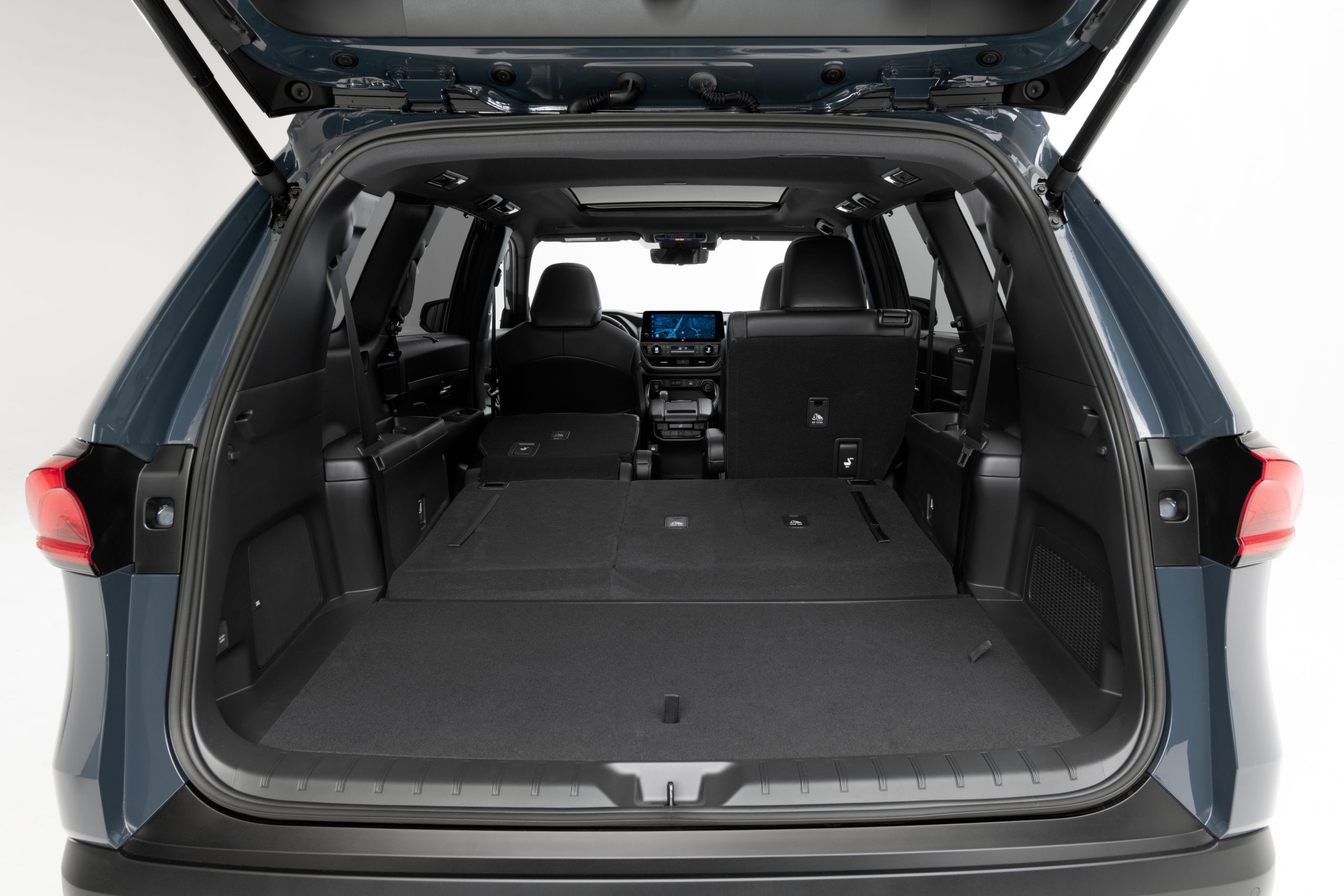
With a larger footprint, the Grand Highlander has improved second-row legroom (up 140mm), while it has 25mm more headroom and around 50 millimetres of additional shoulder space.
As standard, eight-passenger seating is offered, with available second-row captain’s chairs on the flagship Platinum grade.
1
Like the Mazda CX-8 and CX-9 LE, the captain’s chairs are heated and ventilated – but, as with the Hyundai Palisade and Nissan Pathfinder, it eschews a fixed centre console for a walk-through to the third row.
Toyota claims it offers 595 litres of space behind the third-row – 142L more than a Kluger – or 2775L with the rear-most seats folded, measured to the roof.
Under the skin, the Grand Highlander is underpinned by the same TNGA-K architecture as the Kluger, but with additional rigidity to reduce noise, vibration and harshness levels.
In addition, Toyota says it has redesigned the rear suspension for a more comfortable ride, and to maximise space in the third-row and boot area.
1
As with the Kluger, the Grand Highlander will be offered with a 2.4-litre four-cylinder turbo-petrol – which replaces the long-running 3.5-litre naturally-aspirated V6 for 2023 – or a 2.5-litre naturally-aspirated petrol-electric hybrid.
The updated Toyota Kluger will arrive in Australia later this month with the 2.4-litre turbo-petrol and additional technology, including a 12.3-inch infotainment system.
However, the Grand Highlander is headlined by the addition of the brand’s ‘Hybrid Max’ powertrain that combines the internal-combustion 2.4-litre turbo with two electric motors, for a total system output of 270kW and 542Nm.
It is matched to a six-speed automatic transmission and offers all-wheel drive, while the turbo-petrol and regular hybrid are front-wheel drive with optional AWD.
While the powertrain is identical to that used in the not-for-Australia Toyota Crown and slightly less powerful than the Lexus RX500h, it has been retuned to allow for a 5000-pound towing capacity (2268 kilograms).
It offers a 0-60mph (0-97km/h) sprint time of 6.3 seconds.
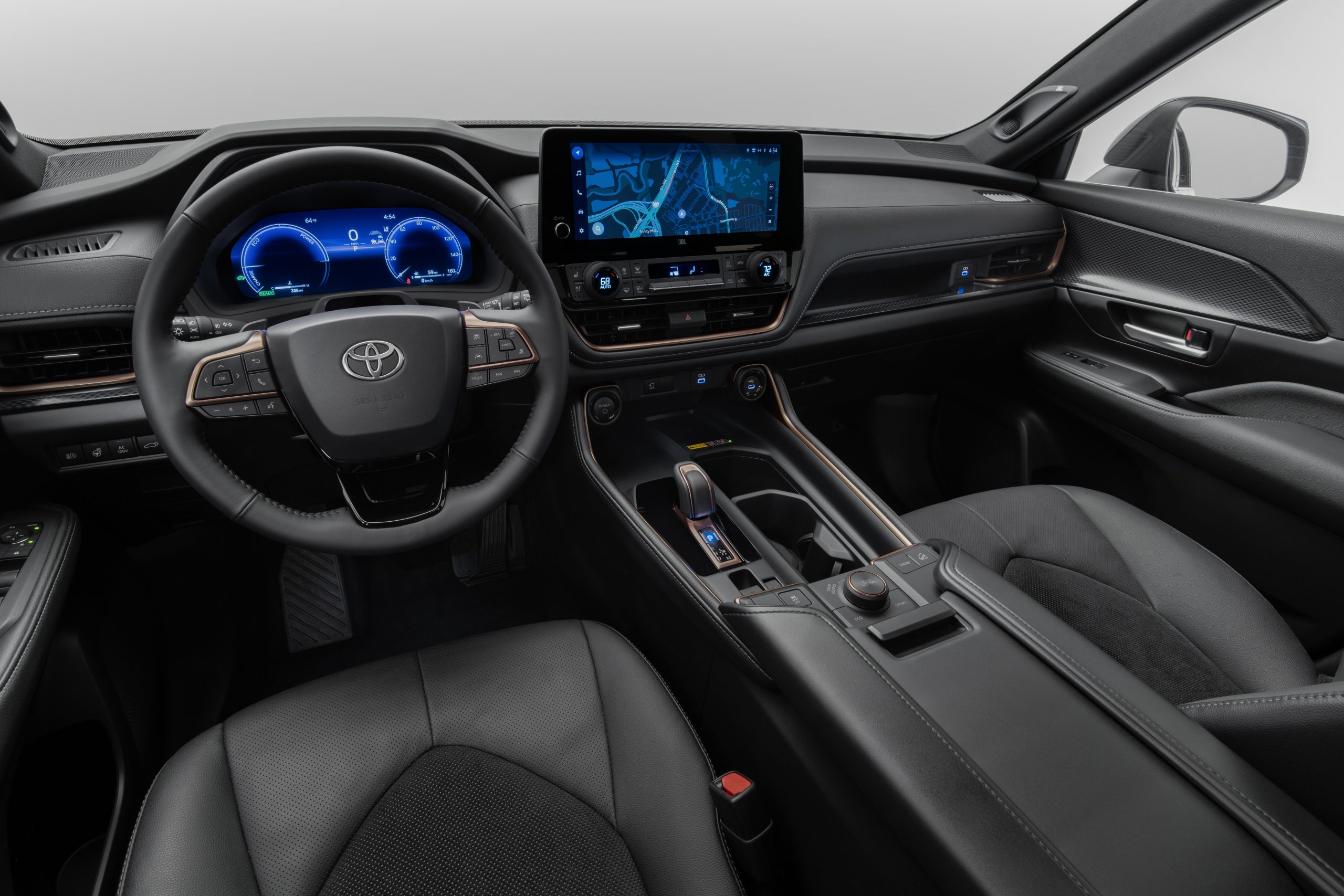
Inside, the Grand Highlander includes a standard 12.3-inch infotainment system, an available 12.3-inch digital instrument cluster, an 11-speaker JBL audio system, seven USB-C ports, and 13 cupholders.
The 2024 Toyota Grand Highlander will commence production in the United States later this year.
Shannons is offering a chance for two lucky fans to visit London for the 2023 Goodwood Revival, billed as the world’s greatest historic motor race meet.
Taking place on September 8-10, the 11-day trip will take winners to the event, providing premium economy air fares, luxury four-star accommodation in London and Hampshire, car hire and $5000 spending money (or $10,000 if you’re an eligible Shannons member).
If your motoring enthusiasm extends to vehicles of the two-wheeled variety, you’ll be keen to know that an all-new Indian Motorcycle Scout Bobber is also up for grabs.
1
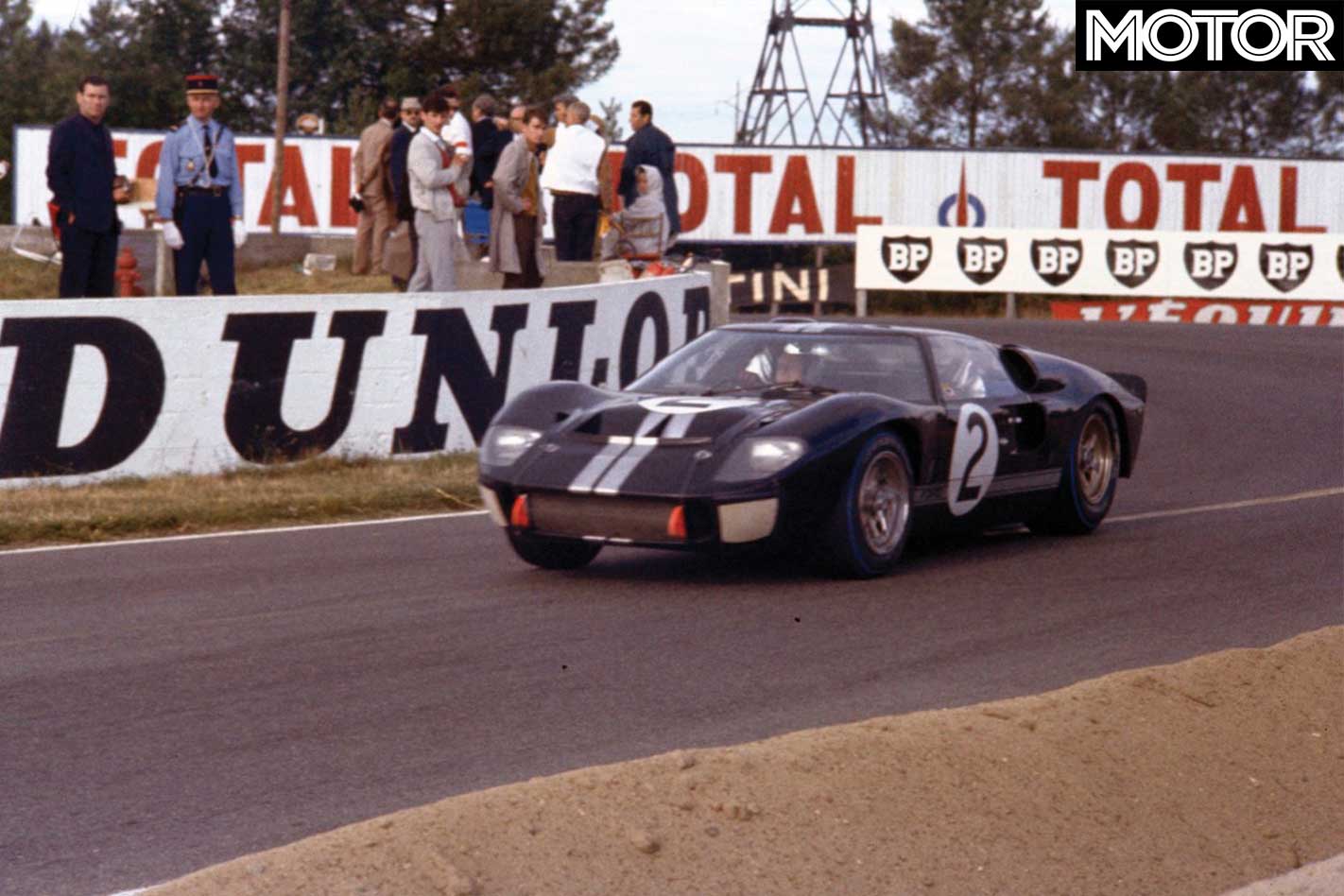
Taking place shortly after the world-famous Goodwood Festival of Speed, the 2023 Goodwood Revival will be celebrating its 25th anniversary this year. As part of the festivities, the event will feature the iconic cars that were designed by the famed Carroll Shelby, the man responsible for the timelessly cool AC Cobra and Ford GT40, and who was played by Matt Damon in the acclaimed 2019 movie Ford v Ferrari.
These vehicles will feature in an on-track display which will also include the MC-TC, the car in which Shelby himself made his debut.
If you’re interested in winning a chance to attend this historic event, or to go in the draw for over $98,000 in prizes, visit the Shannons Goodwood page here.
The competition closes on the 30, June 2023 (AEST).
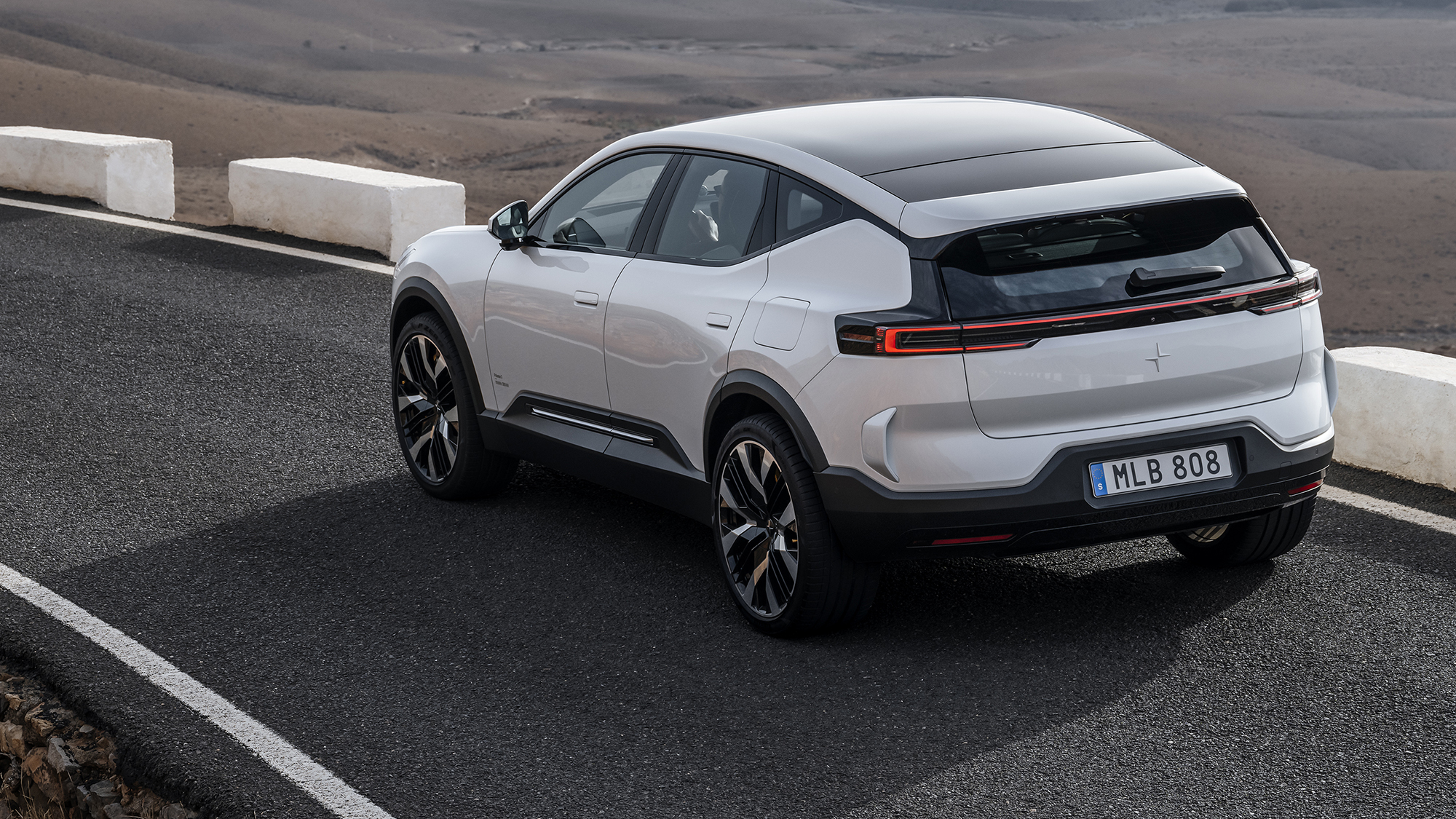
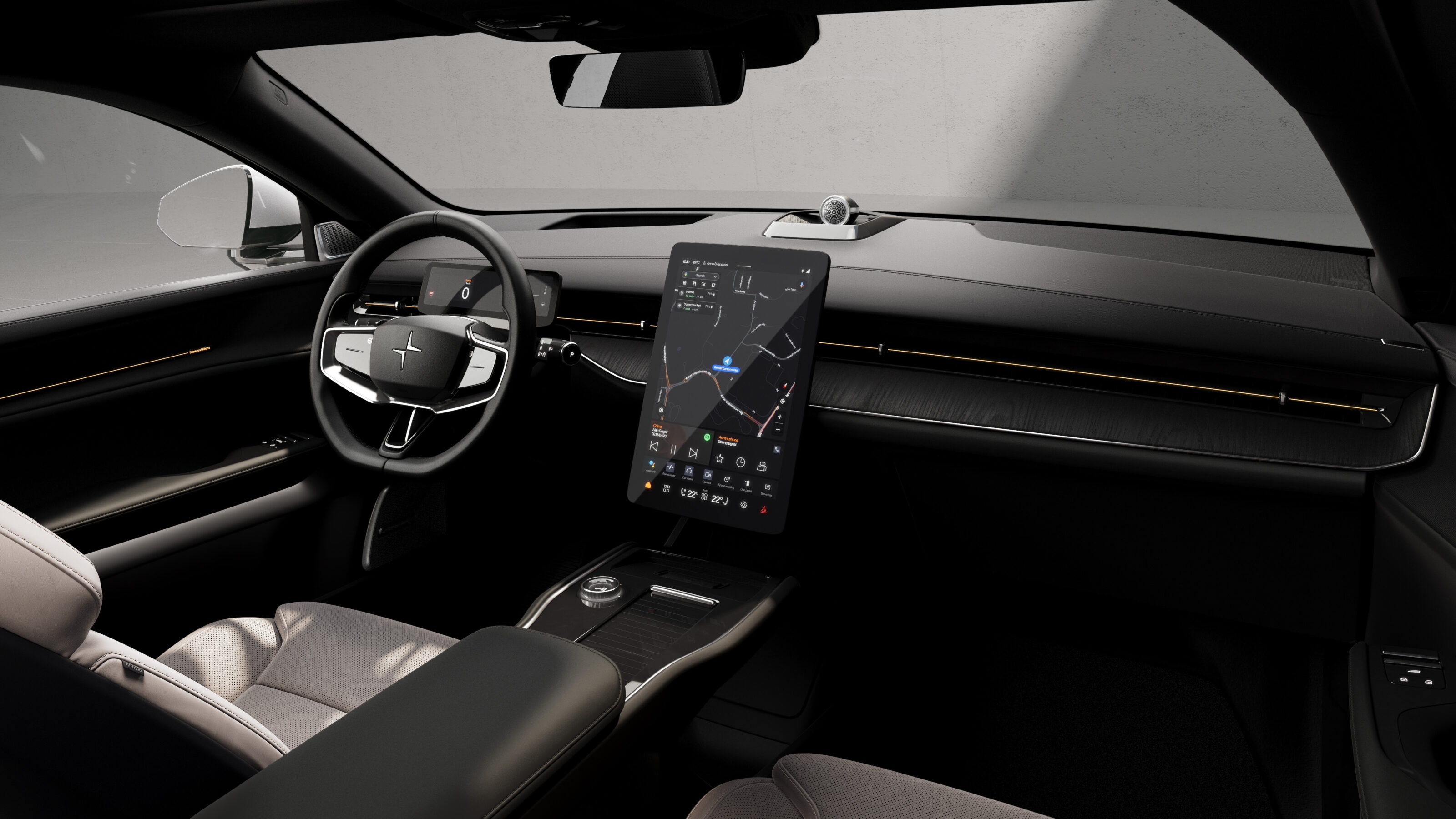
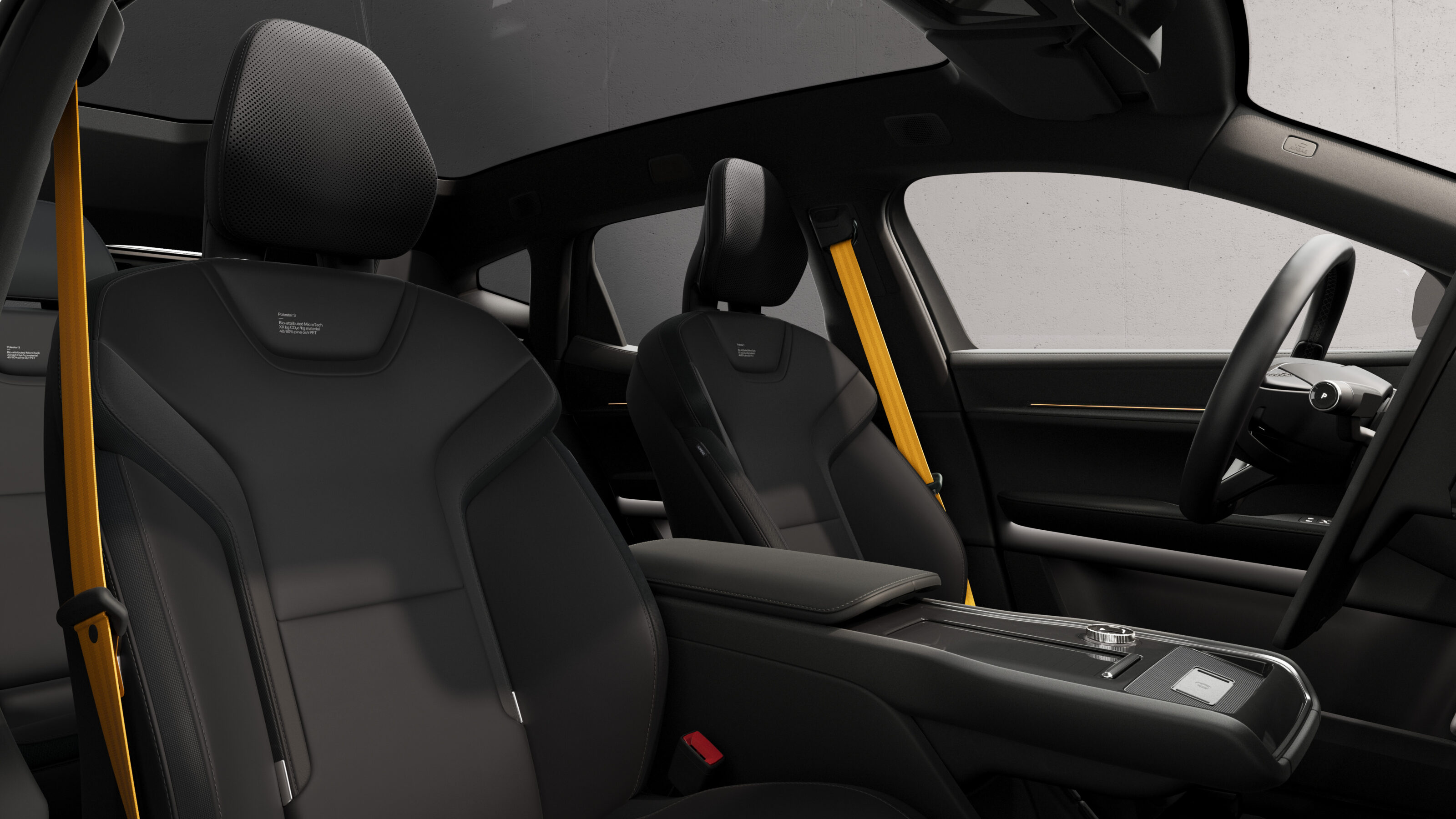
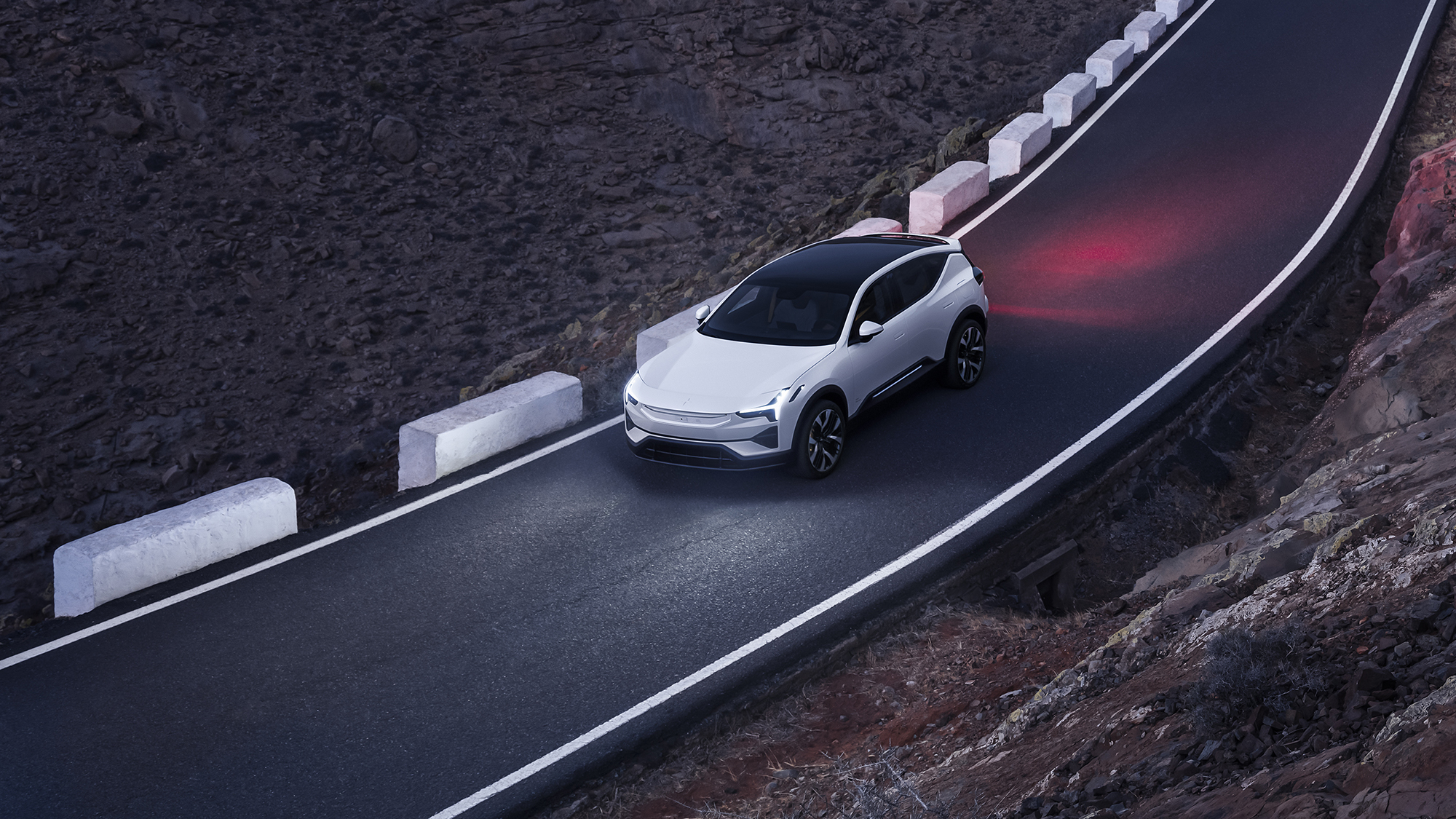
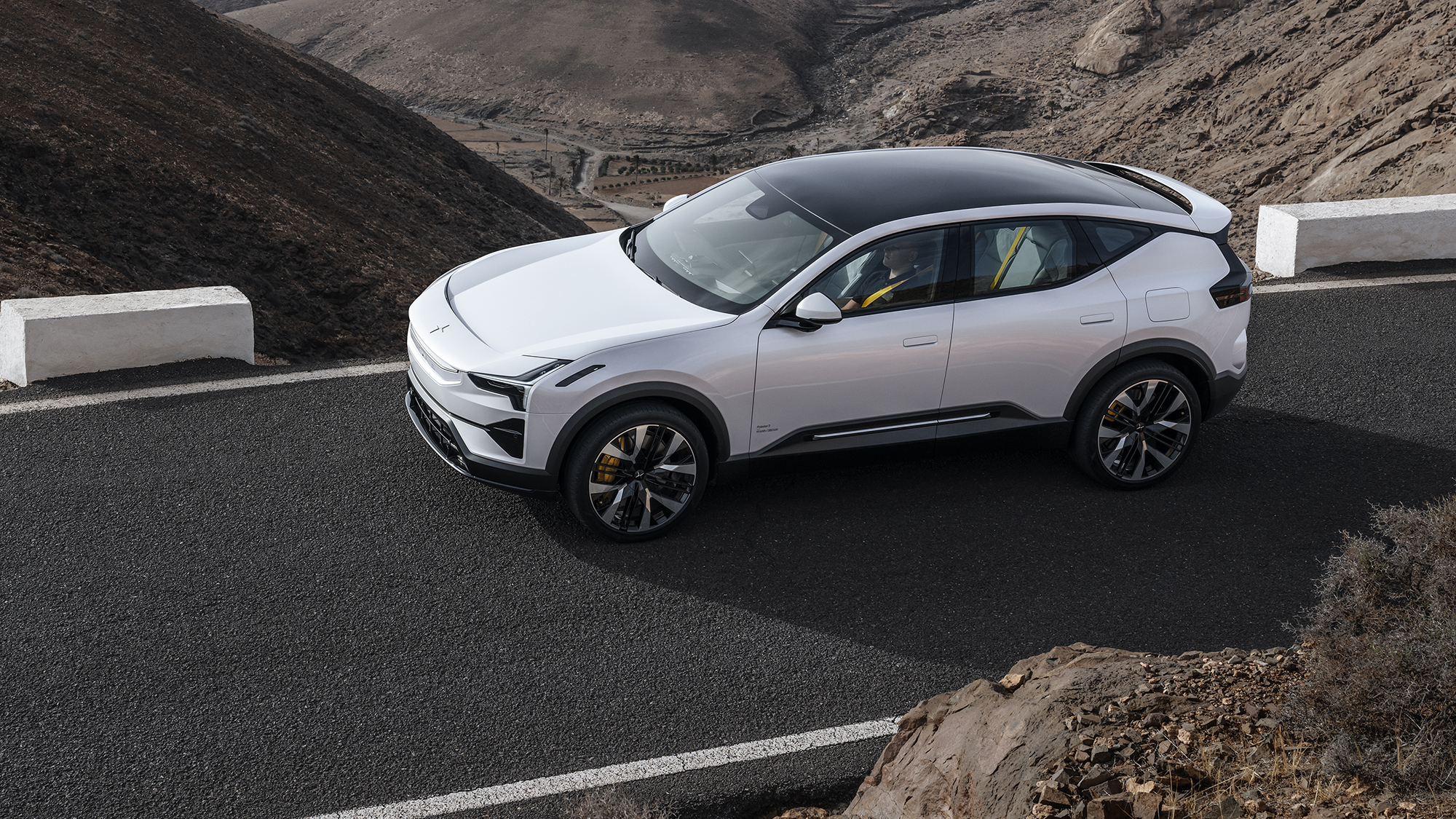
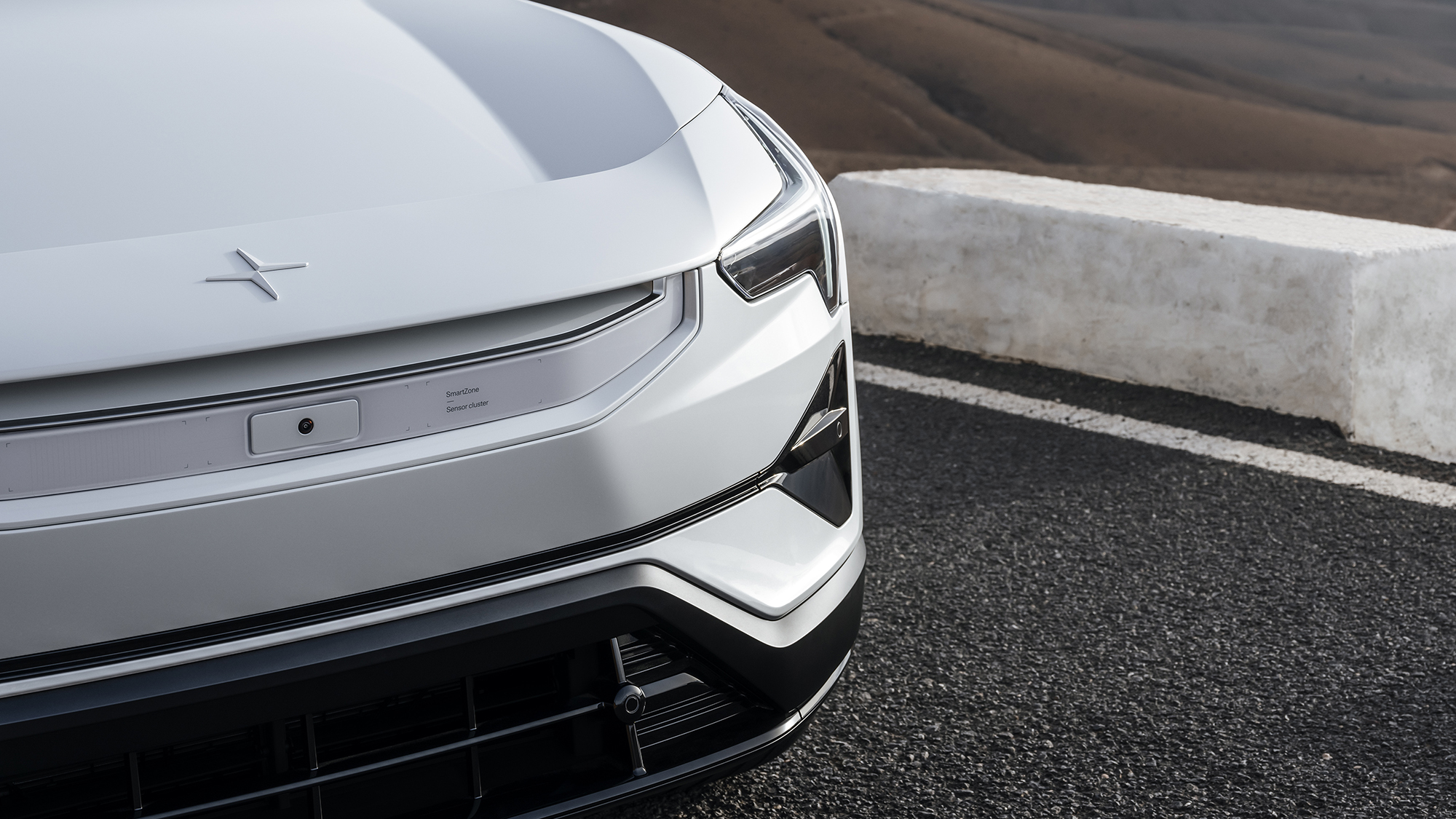
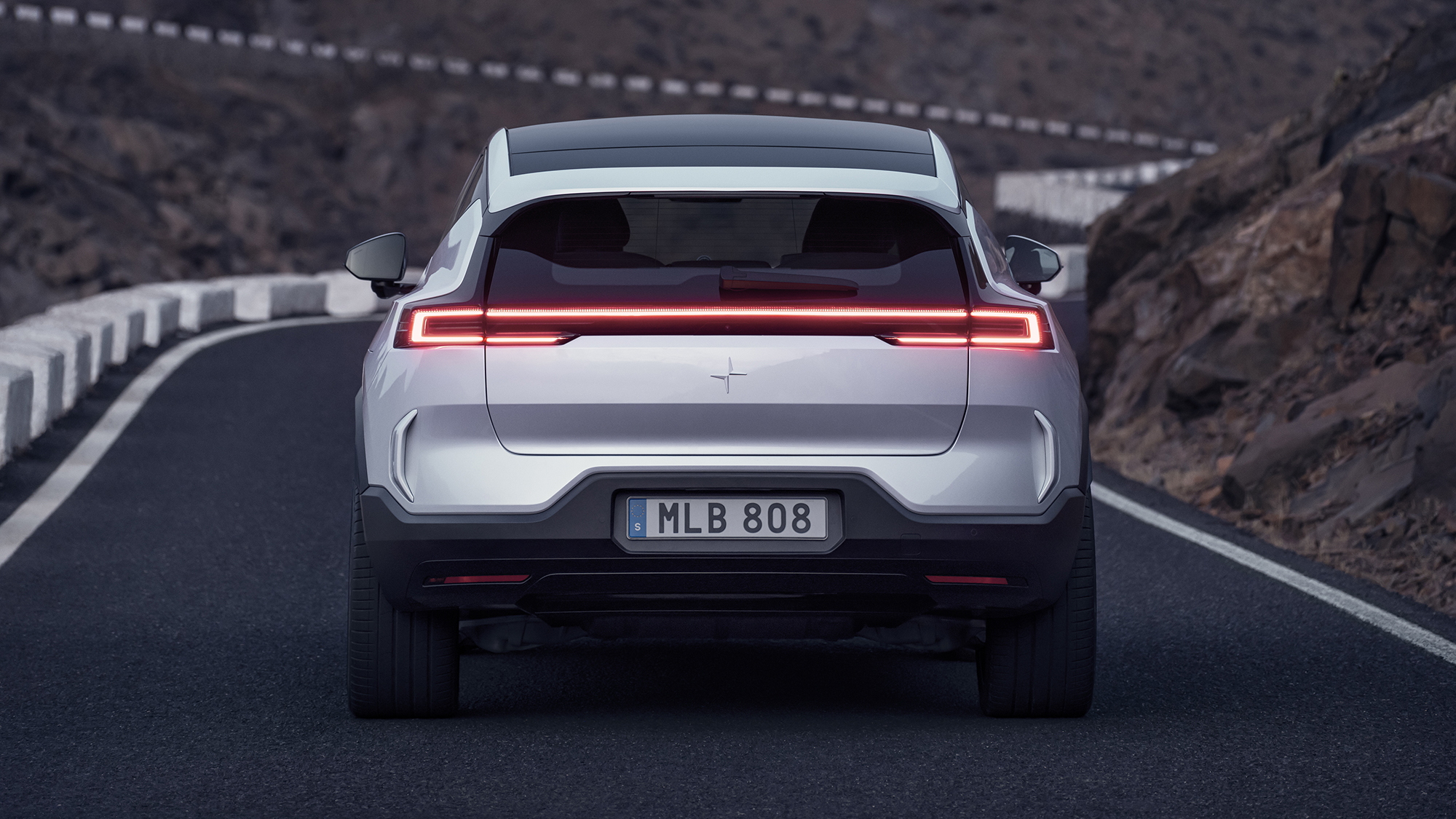
The electric 2024 Polestar 3 large SUV will launch in Australia next year.
May 2023: Production delays push back Australian timing
As modern cars become increasingly dependent on software, Volvo and Polestar have confirmed their related big new SUVs need a little more time. No techbro ‘move fast and break things’ here…
Following its unveiling in October 2022, Polestar’s local arm has confirmed details for the five-seat EV, with a single variant set to be offered at $132,900 before on-road costs.
Pre-orders are now available on the brand’s website, with a $1000 refundable deposit required.
This is on par with Polestar’s previous $135,000 prediction – and it includes a comprehensive list of standard equipment at launch, including the standard-fit Pilot and Plus packages for the first model year.
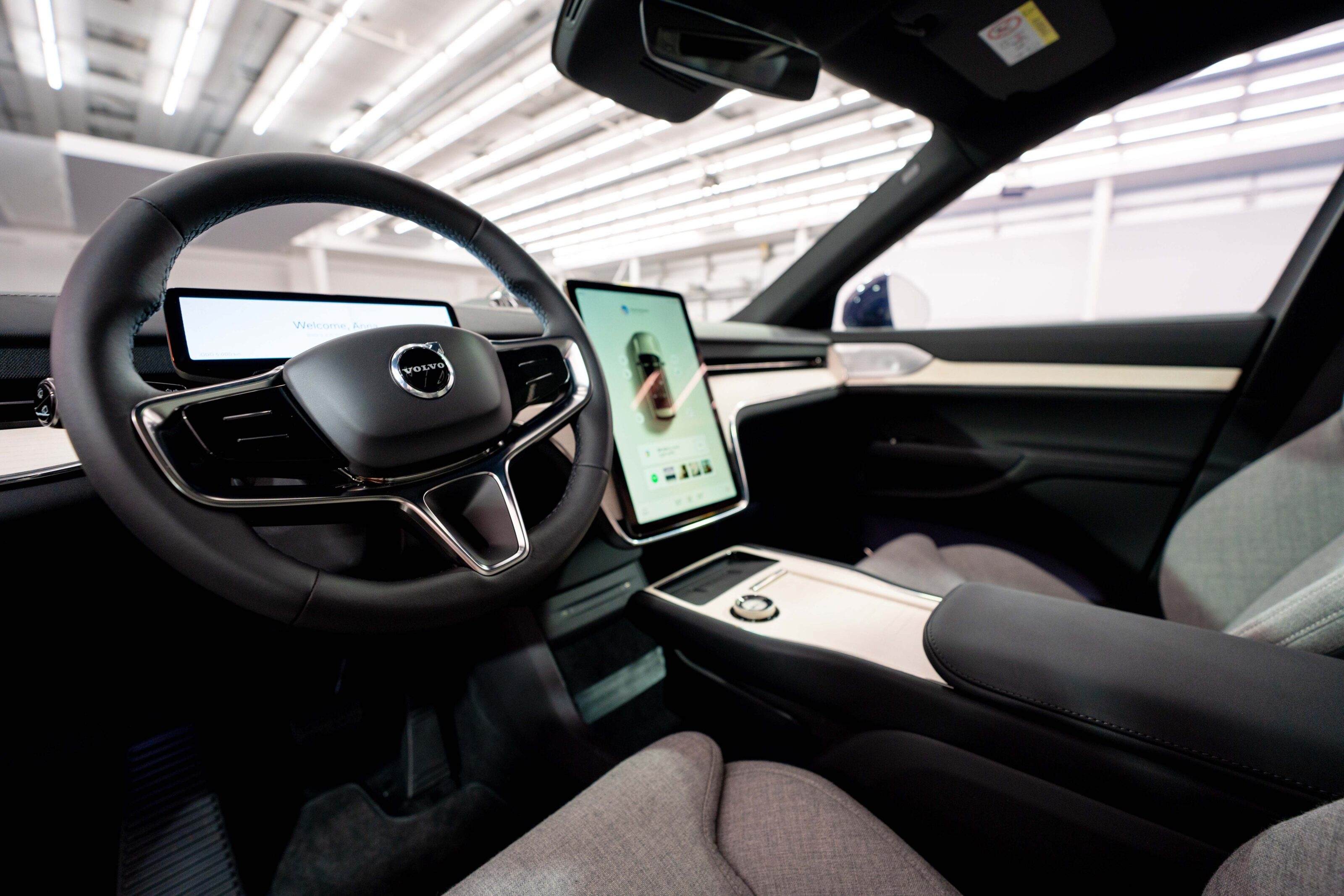
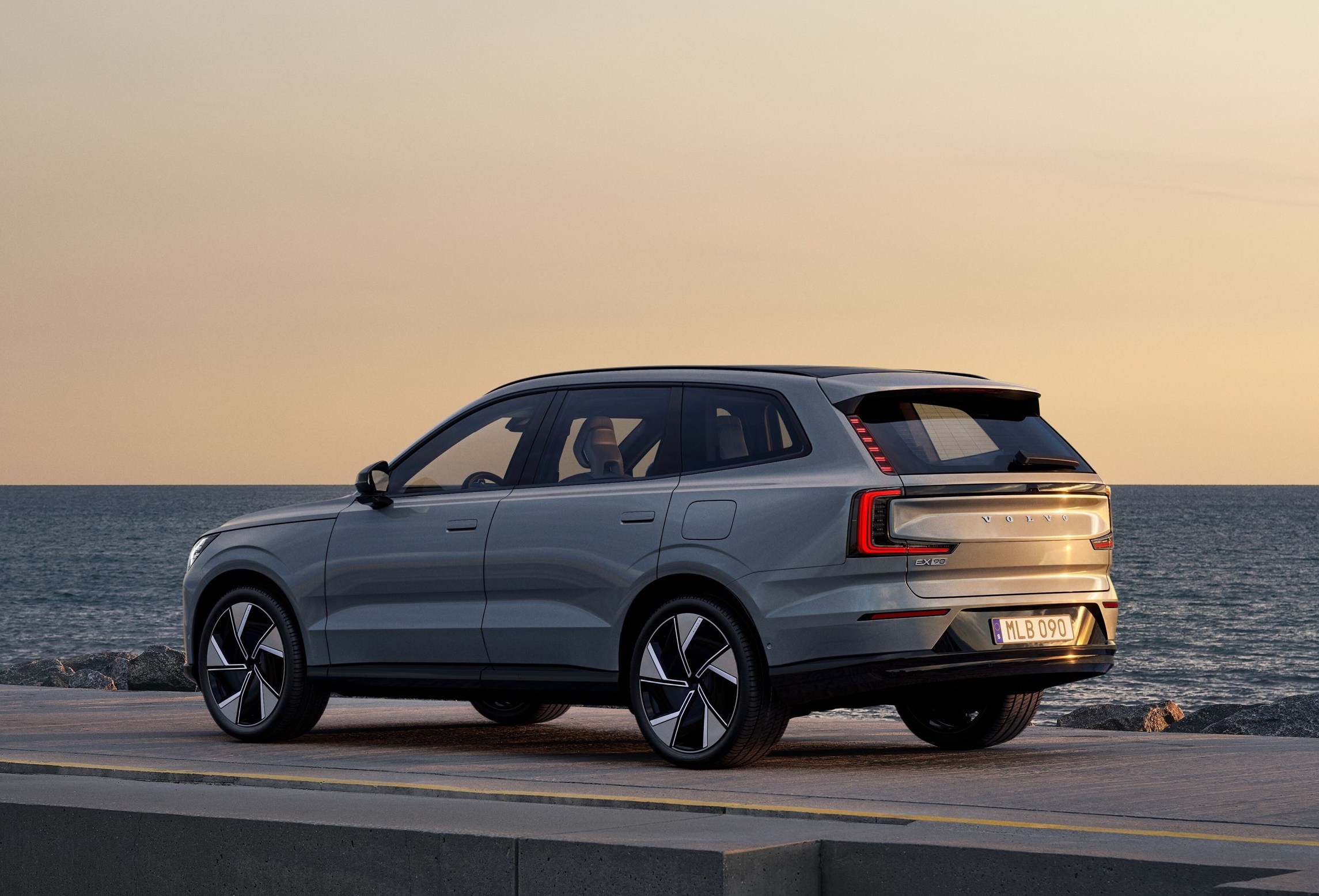
Under the skin, the Polestar 3 is based on the SPA2 dedicated electric vehicle architecture, as found in the related Volvo EX90 due here in 2024.
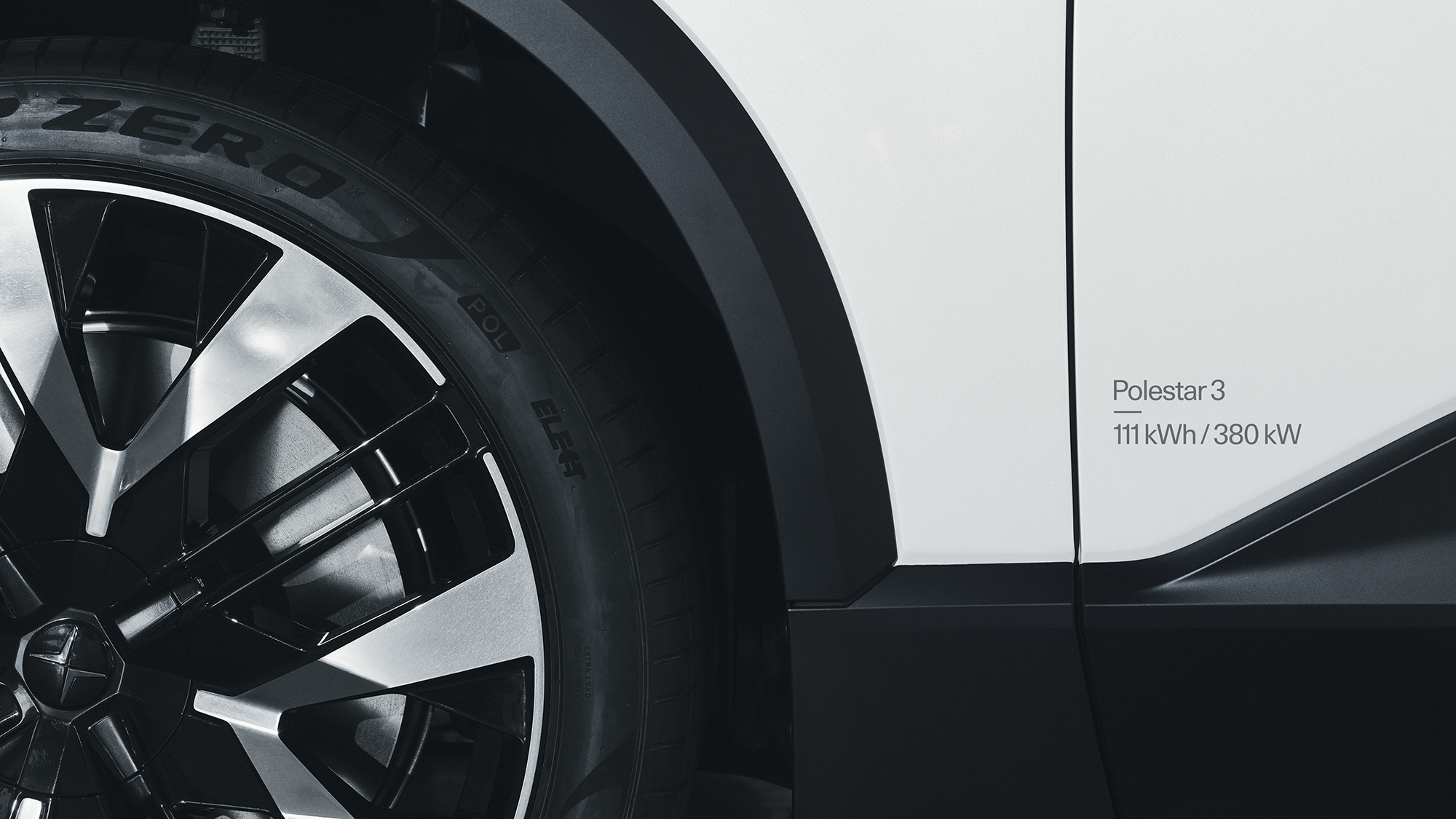
The optional Performance Pack – available for $9000 – includes a power boost to 380kW and 910Nm, up from 360kW and 840Nm in the Long Range.
While these vehicles offer a range of powertrains, the Polestar 3 is, for now, exclusively offered in dual-motor, all-wheel-drive form – with more-affordable single-motor standard and long-range variants expected in the coming years.
The dual-motor, all-wheel-drive variant is also expected to receive a price drop next year, with the Pilot and Plus packages set to move to the options list.
The $135,900 entry-level BMW iX xDrive40 is equipped with a 77kWh battery pack, claiming a WLTP driving range of 425km. The more directly comparable xDrive50 – available only in $169,900 xDrive50 Sport form – packs a 112kWh battery with a claimed 630km range.
△
Less impressive are the E-Tron’s figures. The $139,900 E-Tron 50 boasts a 71kWh battery pack with a claimed driving range of around 330km, while the $148,900 E-Tron 55 has a 95kWh battery with a driving range of around 420km.
△
Both lines offer flagship performance models in the form of the iX M60 and the E-Tron S. The M60 sits above all in price and performance (details here), but the E-Tron S, and the iX xDrive 50, are comparable to the Polestar 3 with its optional Performance Pack installed.
Wireless Apple CarPlay will become available in a free over-the-air software update in the fourth quarter of 2024.
Polestar notes the Pilot Pack – including adaptive cruise control – and the Plus Pack will be standard-fit at launch, with a cheaper Polestar 3 without these features likely in the future.
A large CATL-supplied 111kWh 400-volt lithium-ion battery pack is found underneath the Polestar 3, providing energy to a dual-motor system – one motor at each axle for an all-wheel drive arrangement.
Running at its fastest on a 250kW ‘ultra-rapid’ DC fast charger (which ramps up and down as needed to preserve the battery cells), the Polestar 3 will take its battery from 10 to 80 per cent capacity in 30 minutes.
When connected to an AC charger, it will support up to 11kW for a 0-100 per cent charge time of 11 hours.
1
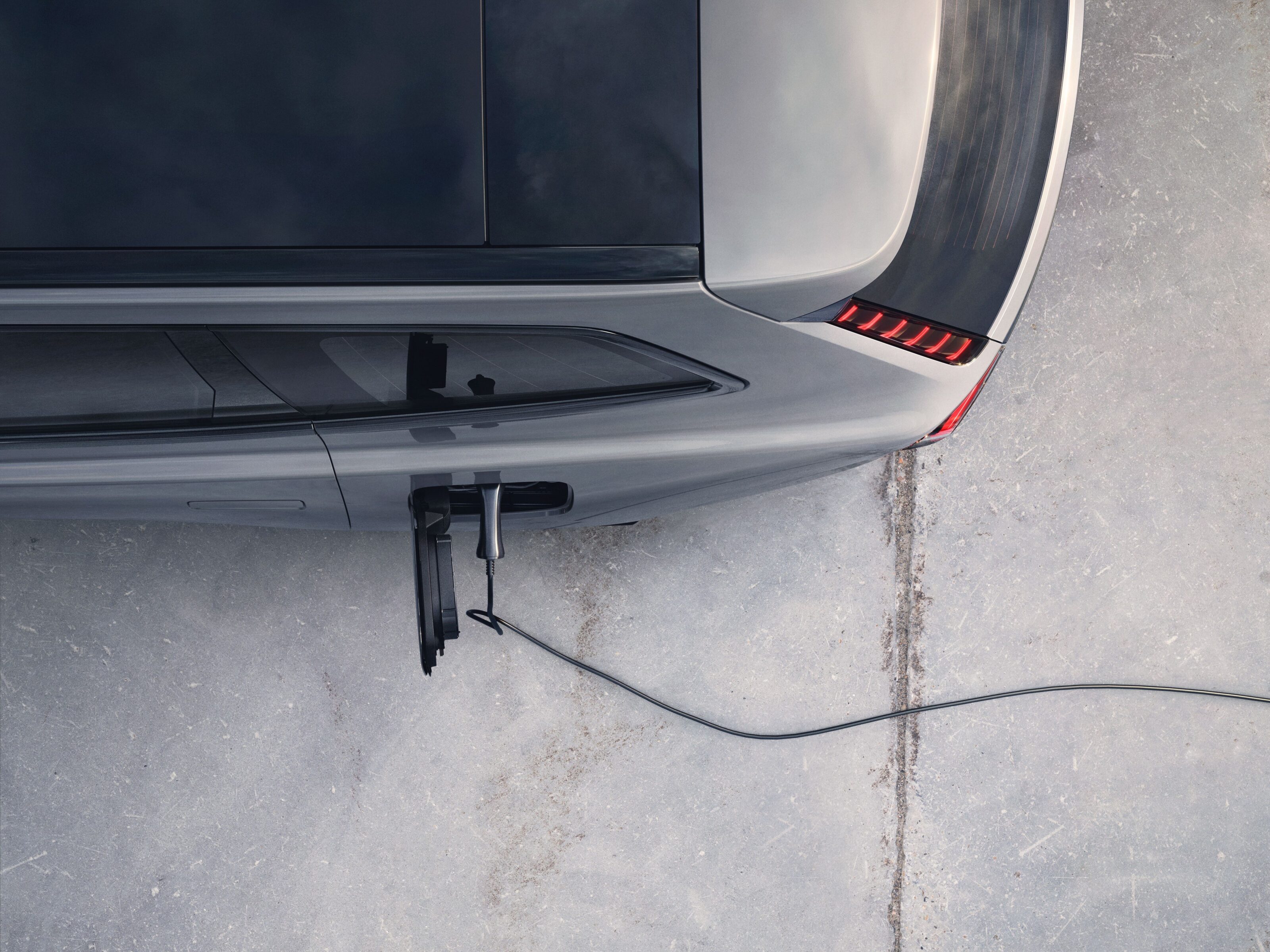
Like its upcoming platform sibling, the Volvo EX90, the Polestar 3 features bi-directional charging, allowing it to offer V2L (vehicle-to-load; powering homes and devices or appliances) and V2G (vehicle-to-grid, feeding any additional solar energy into a city’s power grid to benefit from feed-in tariff programs).
Polestar says the 3 has achieved a preliminary WLTP driving range of up to 610km – matching Hyundai’s smaller new Ioniq 6 sedan (77.4kWh battery) – with an efficiency of around 20-21kWh/100km
As a proper large SUV, the Polestar 3 rides on a 2985-millimetre wheelbase, and measures 4900mm long, 2120mm wide (including mirrors) and 1627mm high. Ground clearance is listed at 211mm.
2024 Polestar 3 boot space
The 2024 Polestar 3 has a 484-litre boot capacity. Folding the second row increases luggage capacity to 1411 litres. It has a 32-litre under-bonnet luggage compartment.
As with the Polestar 2, the Polestar 3 will be sold in Australia with a five-year, unlimited-kilometre vehicle warranty, an eight-year/160,000-kilometre battery warranty (or if its charge capacity drops below 70% in the first eight years), and a 12-year corrosion warranty.
Polestar Connect is included for three years, and roadside assistance is complimentary for the first five years.
The 2024 Polestar 3 electric SUV will arrive in Australia sometime around the middle of 2024 – later than the original ‘early 2024’ schedule. Details at the link below.
China critical to driving down supply chain cost and emissions
Bjorn Annwall, Volvo Cars‘ Chief Commercial Officer, says the company is all in on electric for 2030.
The brand took the bold step of announcing this target and its intention to go fully-electric in Australia by 2026 over the past few months.
Annwall sees the progress to electrification around the world as inevitable.
“We put our strategy in place quite some time ago. There are so many reasons why the world will electrify,” he told Wheels. “It starts from a sustainability perspective – consumers want that. And it’s also better technology. You get into a car and it has no noise, great torque, it’s just a better technology and that will happen.
“Different governments, it will ebb and flow as to how much they lean into it. The US Government is leaning in much more. The Swedish Government has leaned in very heavily and now it’s starting to lean back because now it’s happening anyway.”
1
Annwall says that Volvo’s strategy makes sense because the carmaker is poised to capitalise on the move to EVs due to its size and market positioning. Volvo is targeting 1.2 million cars a year by the middle of this decade with continued growth as the proportion of ICE cars dwindles. That’s an increase of half a million sales in two to three years.
“We think it’s a very good strategy to be strong and gain market share in a growing part of the market and give up market share in a shrinking part of the market,” he said.
“I don’t know if the full market will be 20 or 50 or 80 or 90 per cent fully-electric in 2030, given we have one per cent of global market share, it doesn’t really matter. We need to be really good in the part that has electrified and gain market share in that. That’s our strategy.”
Part of this strategy has seen Volvo spin-off its engine-making division into a separate entity. This was partly due to branding issues for other nameplates within the Geely group, but also underlines Volvo untethering itself from internal combustion engines (ICE).
1
Volvo had two ICE factories, one in Sweden and one in China, along with a large department responsible for development. That part of the business is now separate and is an external supplier.
“There are a lot of difficulties in the BEV transition,” he said, referring to various supply chain issues and environmental concerns around the production of EV batteries.
“It’s not as simple as solving all our problems – far from it – but it’s a good step in the right direction. And then we need to tackle all these problems. One is to make sure we get the battery raw materials in an efficient way, in a safe way, but that we also that we get a much better recycling process in place from the get-go.”
Annwall sees that there is still a lot work to come on reducing the carbon emissions from the supply chain given the amount of steel and aluminium in the cars. Part of that is recycling, and he believes that Volvo – and perhaps by extension the industry – should take the lead on finding solutions.
1
“Unless you design the cars from the beginning for recyclability, it’s going to be very, very hard. Today we do a bad job because we’re gluing things together, mixing and matching. The actual value you get from the car is much lower than if you have a clean way.”
Vertical integration is another key to this. Annwall agrees with the idea that pivoting to EVs is an opportunity to reassess how much of the car is under Volvo’s direct control. Industry darlings Tesla and BYD both claim large margins for their businesses owing to their high level of vertical integration. This approach means that the carmaker itself has greater control over the production and development of key components.
“It is and we are re-assessing it and we are getting more vertically integrated in a different way,” the CCO added. “I think both the shift to EV – which I think is more of a shift to core compute based vehicle architecture – that’s one big driver. And another is the electrification. And on both of those we are getting more vertically integrated.
1
“Clearly, you can’t be premium automotive if you don’t have your own ICE production in the past, because it’s such a big piece of the material cost and you need to have that under control. Now, we’re becoming a fully-electric company, we’ve spun off all our ICE development and all of our ICE factories and instead are using those resources to make electrical propulsion more efficient. And part of that next S curve of getting that more efficient is better chemistry, electric motors, inverters and battery management.
“But it’s also how all of that plays together. Getting that integrated into the vehicle architecture. As an example, our next-generation vehicle architecture that’s going to underpin the replacement of the XC60, we will take the third step of our electric architecture. There the battery cells will actually be glued into the floor of the vehicle and will be a structural element of the car.”
He describes the current battery architecture as like a Russian doll, where cells are placed in packs which are put in a module that you put in a box in the car.
1
“You can take away a lot of cost and drive efficiency by doing it that way. So there we’re integrating vertically back, because as a premium OEM in the future electrified market, you need to have control over that optimisation piece. It’s also a big part of the material cost of the car.
Asked whether the overall approach would improve margins (ie drive down cost), Annwall says it should.
“To some degree, that’s right. In the past, we were stuck in the Tier 1s. If you wanted to change out the system, there was a lot of complication. Now with separate hardware and software, it’s easy to change the hardware, so you’re changing the structure of the supply chain. It’s more complicated than you think.
1
“If you look at an engineering organisation, every system is its own department and every department has its own Tier 1 supplier. And they’re actually doing most of the development if we’re really honest. Now all of a sudden, we need take over much more of the development. It used to be very simple, because you have this department called Complete Vehicle. They basically said you get this much space and this much cost – they were the kings. They were mechanical guys working with geometry.
“Now you come into the core architecture-based guys. Now the guys who sit on the core architecture, they are the kings. They tell you how much space you get on the processing power, you’re completely changing who’s the king. We have 7000 people and that’s why we’re doing all this change all at once. We’re going fully-electric, fully core compute architecture at once. We’re not trying to do ICE and BEVs at the same time. Some of our competitors are trying to that. It’s very hard to drive an organisation of 7000 people with two kings.”
Another factor to this integration – and reducing emissions – is to “produce where you sell and source where you build”, which Annwall says is part of the China factory strategy.
1
He credits the company’s manufacturing presence in China as a way to help reduce emissions, but also cost, as it brings the factory closer to the actual supply chain rather than reducing the cost to build. He says the efficiencies aren’t necessarily in the factory, but the supply chain.
“I don’t see a big shift in cost because we are in China. We need to be in China so we can supply China and the neighbouring countries. But that is not a game changer in itself. It didn’t start twelves years ago with Chinese ownership, the whole industry has been on a slow boat to China for thirty years,” he said.
With the battery being glued into the car and being a part of the structure, the obvious question for buyers is how that will affect the ownership proposition given the finite life of a battery. Based on current thinking – and a lack of education and/or certainty around battery longevity – that’s bound to play on the minds of buyers.
1
“You can still tweak some things when they’re glued in. You need to make sure you engineer it so it holds as long as the car holds. And that the whole car gets recycled at the same time. We’re not releasing that car right now, we’re releasing it mid-decade and then I can give you a straight answer [for how long the car will last] then. We need to make sure we recycle the full car, not just the batteries.”
Annwall also believes that cost parity with ICE cars is critical and will happen around 2025.
“If we don’t get electric cars as affordable as ICE cars have been in the past, or in the same ballpark, I don’t think we’re going to get the full public recognition for driving this change. I think it’s really important that we get cost parity between BEV and ICE. Our whole technical roadmap is geared to achieve exactly that.”
1
He did concede that premium manufacturers will find it easier to achieve the price parity target.
“It’s probably easier achieved for a premium manufacturer than a for a mass car manufacturer, and that’s why it can happen much quicker for Volvo. We’re a relatively small brand with a positioning as safe and sustainable, so of course we can drive this quicker than a cheap mass brand. But I firmly believe we can get there.”
Car companies are working towards electrification, but much of the world’s generation – around sixty to seventy per cent – is still based on fossil fuel, leading to accusations that EVs are just moving the problem somewhere else.
1
“The whole thesis of electrification doesn’t hold if we burn coal or oil to produce electricity. The world won’t reach the 2050 targets if we continue with fossil-fuel powered electricity. We need much more [renewable] primary energy. I’ve always said that’s not Volvo’s job, our job is to provide electric cars and that we work with our suppliers to come up with less CO2 demanding technologies and drive recycling. That’s what we’re good at, that’s the kind of part of the world that we can affect.
“We’ve also been forced to work with some of our suppliers to really help them build more fossil-free and primary energy production. We gang up some Tier 3 suppliers in an area and together they invest in a windmill park or solar to help accentuate this. Our target is climate neutral by 2040, but by 2025 we should take down the CO2 of each car by forty per cent with 2018 as a baseline. We give up the [climate] numbers every quarter.
“We need to take out the CO2 from our Tier 2 suppliers and we need get them off fossil fuels. And of course it goes with the usage phase as well. I’m frustrated, I think the world is too slow in building up climate neutral primary energy.”
1
Customers will inevitably want to know how they can close the loop on their energy production, as many have done in Australia by investing in solar and battery technology for their homes or businesses.
Asked whether Volvo would consider offering solar and battery packages to support their customers, he says Volvo can be part of the solution.
“The best friend of wind and solar is a battery or some kind of electricity storage. With the EX90 you have 100kWh worth of battery bi-directional charging capability sitting next to your house or your office, that’s a very good free storage point,” he said. “We’re thinking through how in a home energy management system you can connect that storage. Those type of things we’re really investigating how we can take a more active part and encourage Volvo customers to be part of that.”
The Austin 7 Club, in association with the HMRAV, has announced that the 46th Historic Winton car and motorcycle event will take place on May 27 and 28, promising excitement for enthusiasts and fans of motorsport.
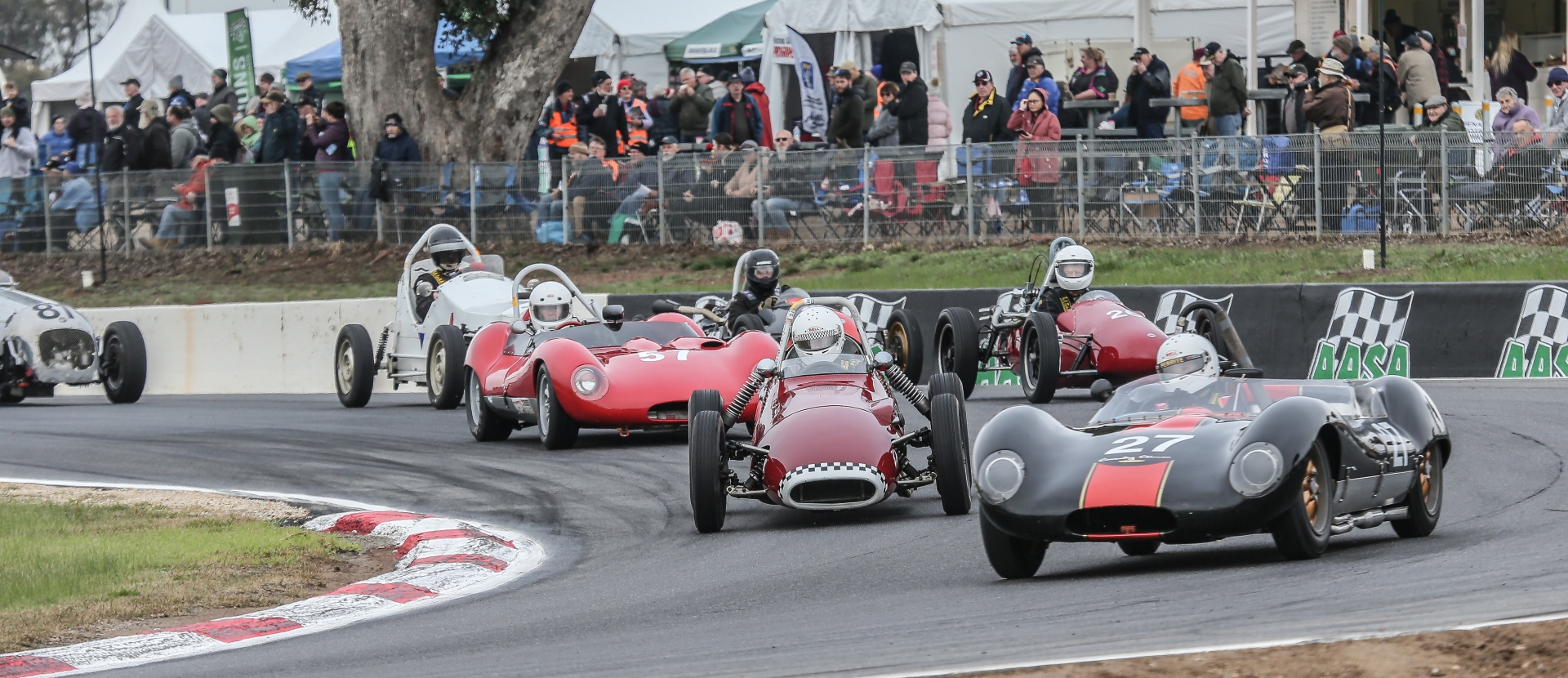
The event will feature races, displays and a busy marketplace of motor-related goods and paraphernalia. Boasting vehicles that are celebrating anniversaries of up to 120 years, along with many 60s and 70s era Holdens, fans of these classics will have no shortage of beauties to behold.
“It’s great to see that in amongst the anniversaries, three Australian milestones stand out – the EH Holden turns 60, the FJ Holden will be 70, and the anniversary of the start of the adventurous Redex Trials that saw cars touring the Australian countryside from 1953 – 1998,” said Austin 7 Club President Len Kerwood.
1
46th Historic Winton anniversary list
120 years
Buick Motor Company, Ford Motor Company, Standard Motor Company, Harley Davidson
110 years
Morris Oxford Bull Nose, Aston Martin.
100 years
Alvis 12/50, Amilcar CGS, BMW Motorcylces, MG, Triumph (cars).
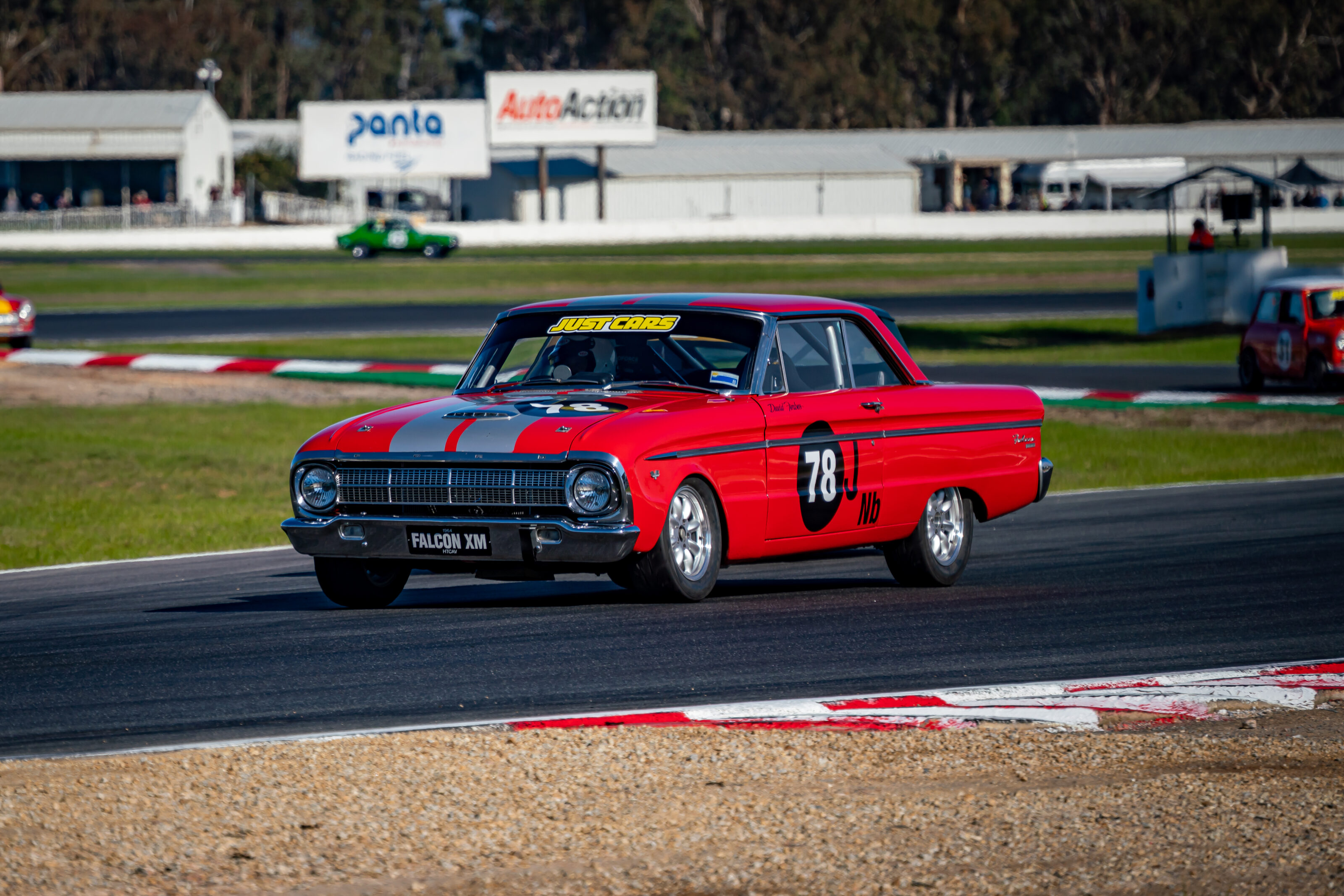
Kerwood was equally enthusiastic about the prospects of the race meet, which will hold a new event as part of the 2023 fixture – a Regularity race for N Class “tin tops” touring cars up to 1965.
1
“This will be staged for the first time and is expected to add to the spectacle,” Kerwood said.
“The traditional highlight of the Sunday Parade returns, which always has crowds enthralled.
“We get a lot of requests to join in the Sunday Parade because everyone wants to do of lap of Winton Motor Raceway in their ‘pride and joy’ car, motorbike, bus, fire engine or other mode of land transport.”
Event and camping ticket sales are now available and can be purchased at a discount price from Ticketbo.