
For everything you need to know about the updated 2024 BMW X5 M Competition and X6 M Competition, click here.
Snapshot
- Polestar and Rivian warn simply buying EVs is not enough
- Automotive industry projected to pass 1.5-degree target by at least 75 per cent by 2050
- EV transition, renewable electricity, and sustainable supply chain needed
Polestar and Rivian have warned that simply switching to electric vehicles in isolation is not enough to curb the climate crisis and meet carbon neutrality goals.
According to the EV-only upstarts, and modelling by consulting firm Kearney using open-source data, the automotive industry is set to overshoot the United Nations Intergovernmental Panel on Climate Change’s (IPCC) 1.5-degree celsius global warming threshold by at least 75 per cent by 2050.
Passenger vehicles today account for 15 per cent of all greenhouse gas emissions globally.

1
The report recommends automakers must adopt a trio of levers globally and work collaboratively to; completely switch to a battery-electric vehicle (BEV) only fleet, power BEVs exclusively with fossil-free energy, and ensure the supply chain is environmentally sustainable.
“Car companies may be on different paths when it comes to brand, design, and business strategies, and some won’t even admit that the road to the future is electric,” Polestar’s head of sustainability, Fredrika Klarén, said.
“I believe it is, and that the climate crisis is a shared responsibility, and we must look beyond tailpipe emissions.”
1
Switch to EVs
According to the report, the market share of BEVs globally must grow from six per cent to nearly 100 per cent by 2032 to stay on the 1.5-degree target for 2050.
The exhaust emissions from conventional petrol and diesel engine passenger cars have the most impact, generating 60 to 65 per cent of the car’s total life cycle emissions – which BEVs eliminate entirely.
By switching completely to BEVs, it’ll reduce the current projected emissions offshoot from the current 75 to 50 per cent.
1
While it acknowledges alternative zero-emission technologies such as hydrogen fuel-cell electric vehicles (FCEVs), the report emphasises that BEVs are the dominant technology that is currently more feasible to deploy at mass scale.
Polestar, Rivian and Kearney also admit there are “significant socioeconomic implications that vary by region, posing challenges especially in regions with high population density and relatively low disposable income.”
Other key barriers to EV adoption remain: charging, ‘range anxiety’ and upfront cost.
| Internal combustion engine car total life cycle emissions makeup | |
|---|---|
| Fuel consumption | 61% |
| Maintenance | 3% |
| Fuel/electricity production | 20% |
| Vehicle manufacturing | 16% |
Renewable energy
Additionally, it urges the electricity grid needs to shift from a global average of 39 per cent to 100 per cent fossil-free energy by 2033.
By switching to BEVs only and achieving complete fossil-free electricity, it would reduce the emission overshoot from 50 per cent to 25 per cent.
An electric car fleet charged with the current global average electricity mix today already reduces lifetime emissions by 35 to 46 per cent compared to combustion-engined vehicles across a 240,000km lifespan (varies by region).
The report also suggests behavioural change is needed from EV owners, too.
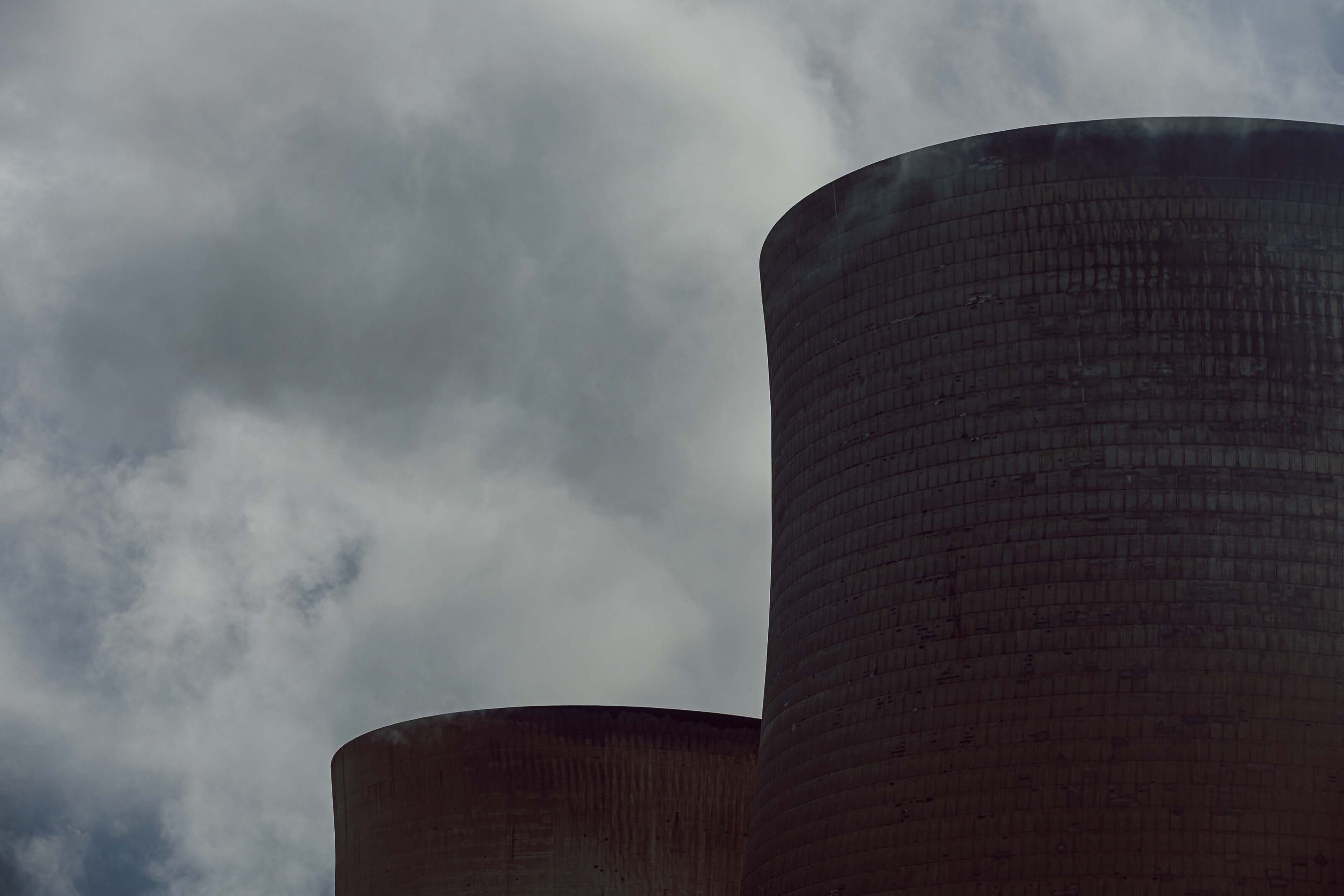
This includes ‘smart charging’ when there’s leftover electricity (instead of peak times), plugging-in at fossil-free energy usage locations, and real-time feedback on driving behaviour. Vehicle-to-grid (V2G) bidirectional charging is another opportunity to reduce or even eliminate the reliance on polluting power plants too.
1
Sustainable supply chain
But the biggest challenge is reducing supply chain emissions, according to Polestar, Rivian and Kearney.
To keep on the 1.5-degree goal, the vehicle manufacturing and supply chain needs to reduce greenhouse gas emissions by 81 per cent by 2032.
It admits BEVs currently have around 35 to 50 per cent higher supply chain emissions than traditional petrol- and diesel-powered cars – primarily due to large high-voltage battery packs – which contain expensive and mining-intensive cobalt, lithium, nickel, and other rare earth materials.
Battery cell and pack manufacturing need to achieve a 100 per cent electrification, and increased electrification of material extraction and processing.
1
Overall, the largest footprint for both powertrains is steel, iron and aluminium due to the amount and type of energy used in manufacturing, representing 40 to 60 per cent of greenhouse gas emissions in the passenger vehicle supply chain.
Only with all three levers in place – including a complete BEV switch, renewable energy source, and sustainable supply chain production – can we meet the 1.5-degree IPCC target by 2050.
The report recommends reducing emissions in material production or the amount of material used, replacing low-impact battery chemistries, such as lithium-iron-phosphate and sodium-ion tech, or utilising smaller batteries with more robust and faster public charging networks. End-of-life battery recycling and repurposing is also a challenge.
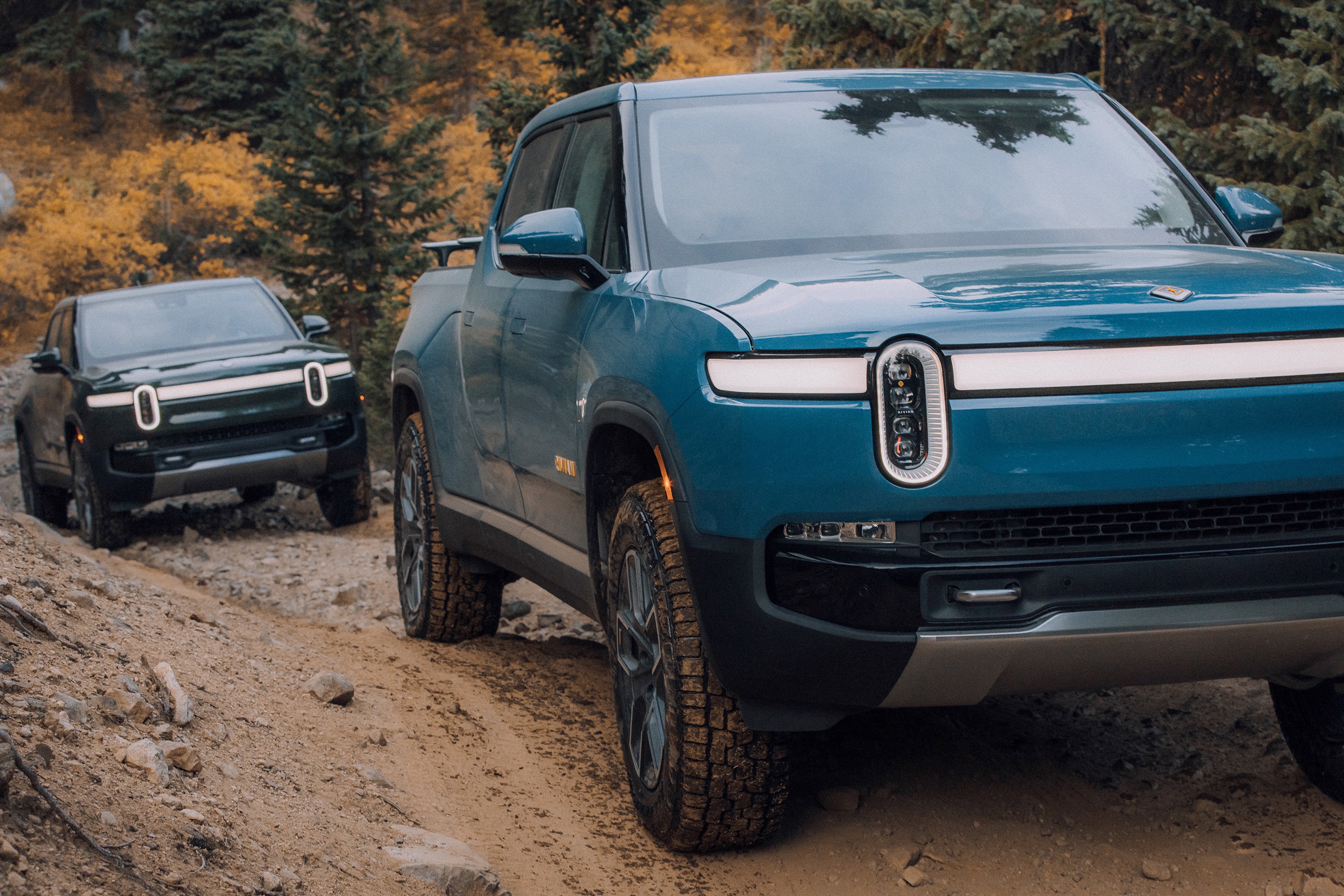
1
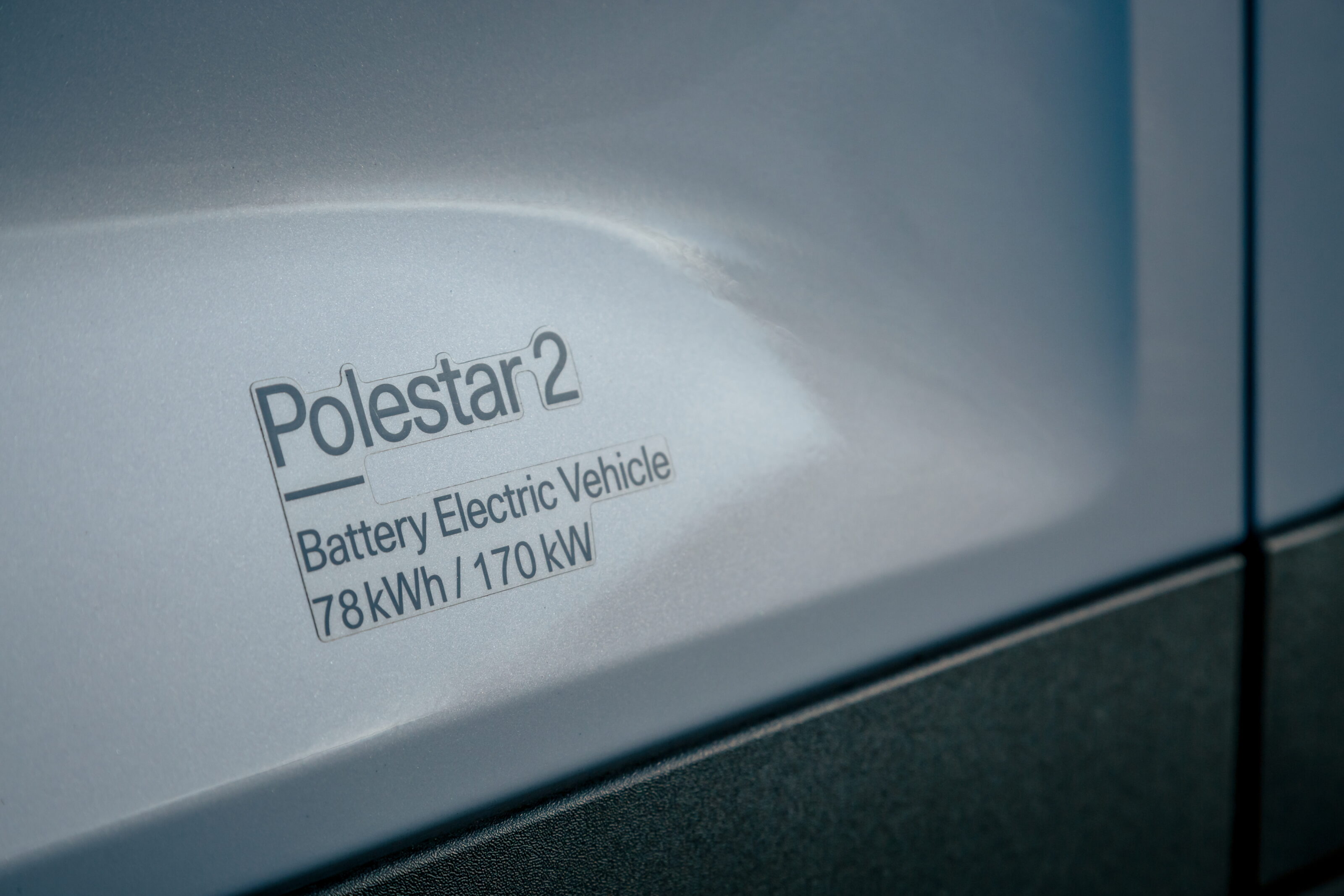
Sino-Swedish automaker Polestar, which commissioned this report with Rivian, was the first car brand to track the cobalt supply chain of its Polestar 2 liftback battery when it launched globally in 2020 using a third-party company.
The forthcoming 2024 Polestar 2 facelift will extend the tracing to mica and leather materials, while the Polestar 3 large SUV will go even further with lithium, nickel, and wool to ensure such materials are sourced and produced responsibly.
Key makeup of BEV vs ICE greenhouse gas emission estimated impact
| BEV (78% supply chain emissions) | ICE (73% supply chain emissions) | |
|---|---|---|
| Battery | 27% | N/A |
| Aluminium | 27% | 30% |
| Steel and iron | 16% | 30% |
| Electronics | 9% | 10% |
| Manufacturing | 8% | 13% |
| Polymers | 7% | 10% |
| Other (fluids, metals, copper, tyres, glass, natural materials, and undefined) | 6% | 7% |
Comparisons
Best Electric Cars Under $65k: Affordable EVs Rated
Welcome to part one of three price-based EV buying guides, this one focused on the most affordable electric cars available in Australia today
Comparisons
Best Electric Cars, $65k-80k: Australia’s premium EVs tested
In part two of our three price-based EV buying guides, we compare Australia’s electric cars priced between $65,000 and $80,000
If you’re prepared to spend more on your electric vehicle, you’ll find a wealth of models that offer a luxurious experience, most of them with quick acceleration and long driving ranges. See our stories below for your options. READ: Best and worst EVs priced $65k-$80kREAD: Best and worst EVs priced $80k-$100k |
UPDATE, February 2023: E-Tron GT now in Australia, and we’ve driven it
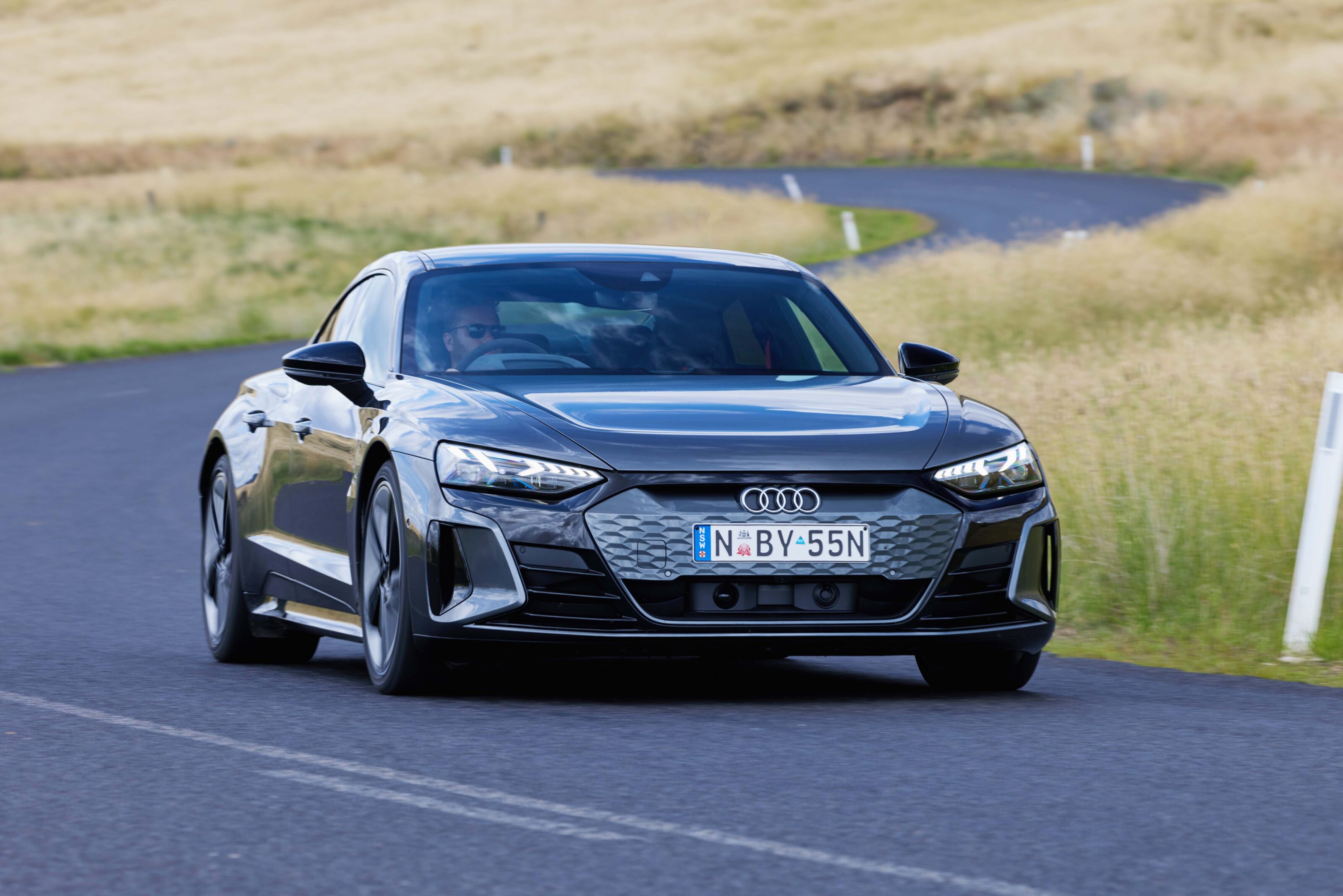
The Audi E-Tron GT is finally on sale in Australia, and we’ve now had a good steer of it. Read Inwood’s launch review at the link below.
1
The story to here
The 2022 Audi E-Tron GT electric sedan is now on sale in Australia, priced from $181,700 before on-road costs.
Snapshot
- RS range gets its first electric model
- Faster than R8 V10 Performance in boost mode
- First E-Tron to be made in Germany, others are built in Brussels
5
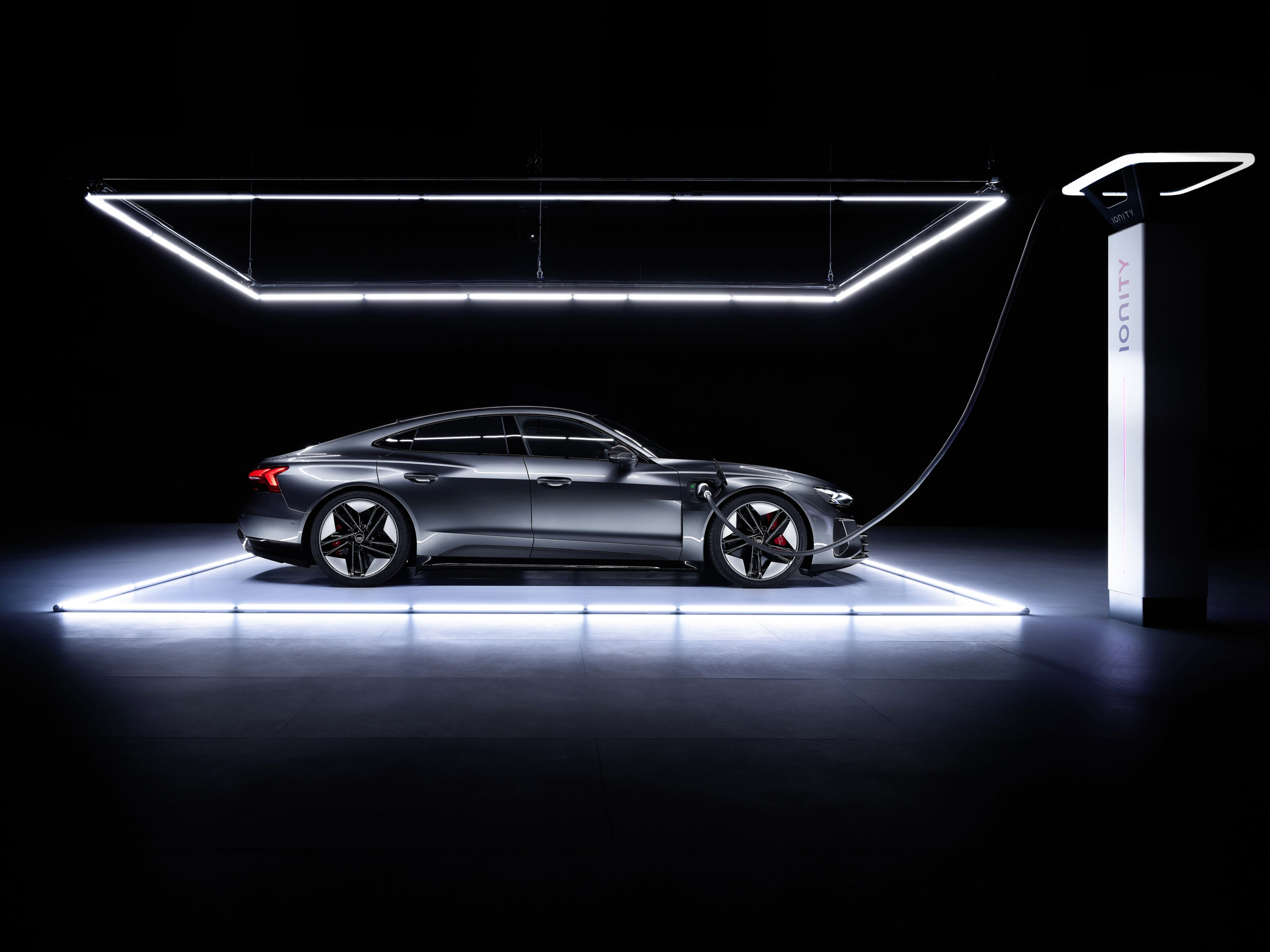
On top of the standard E-Tron GT’s arrival, the first electric RS model to come from Audi will also be launched in Australia, with the flagship RS E-Tron GT flexing its muscles as the marque’s most powerful road-going car yet.
Built on the same production line as the R8 in Neckarsulm, Germany, the process of creating the latest addition to the E-Tron fleet is entirely net carbon-neutral.
Audi RS E-Tron GT sets the EV benchmark at Bathurst
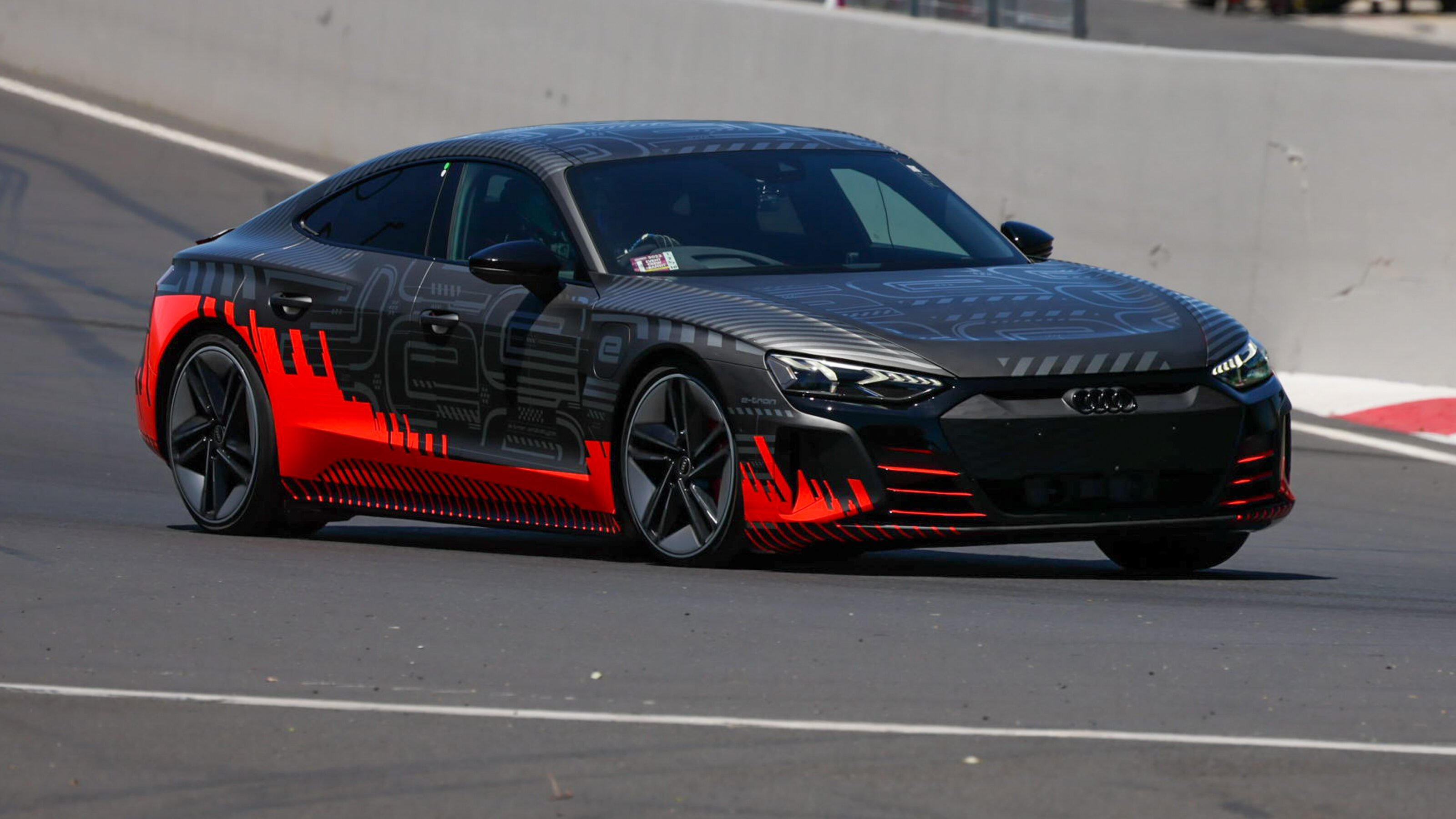
To celebrate the Australian debut of its latest all-electric model, Audi sent its RS E-Tron GT performance flagship to Mount Panorama to set an initial benchmark for future EVs.
The benchmark lap was set in the lead-up to the weekend’s Bathurst 12 Hour endurance race – cleverly allowing Audi to avoid any upset with the marketing team at stablemate Porsche, which last year used its popular Taycan S electric sedan to set a lap record at The Bend in South Australia.
Driven by Audi Sport driver Christopher Mies, the RS E-Tron GT bolted around the circuit with a lap time of 2:28.15.
10
Mies is also the current official lap record holder at Mount Panorama, having set a time of 1:59.2910 at the 2018 Challenge Bathurst event in an Audi R8 LMS race car.
A new record was also set this past weekend for the Bathurst 12 Hour, with a hot 2:01:053 set by Maro Engel in the #999 GruppeM Mercedes-AMG car.
The RS E-Tron GT’s lap time may not be in contention for the overall fastest time, but its 2:28:15 puts it right in the mix with a number of dedicated racing cars and more than a few production-series Sports Cars at the circuit.
Watch Audi’s video below
https://www.instagram.com/p/CoRBFQVIiKp
Story continues: E-Tron pricing
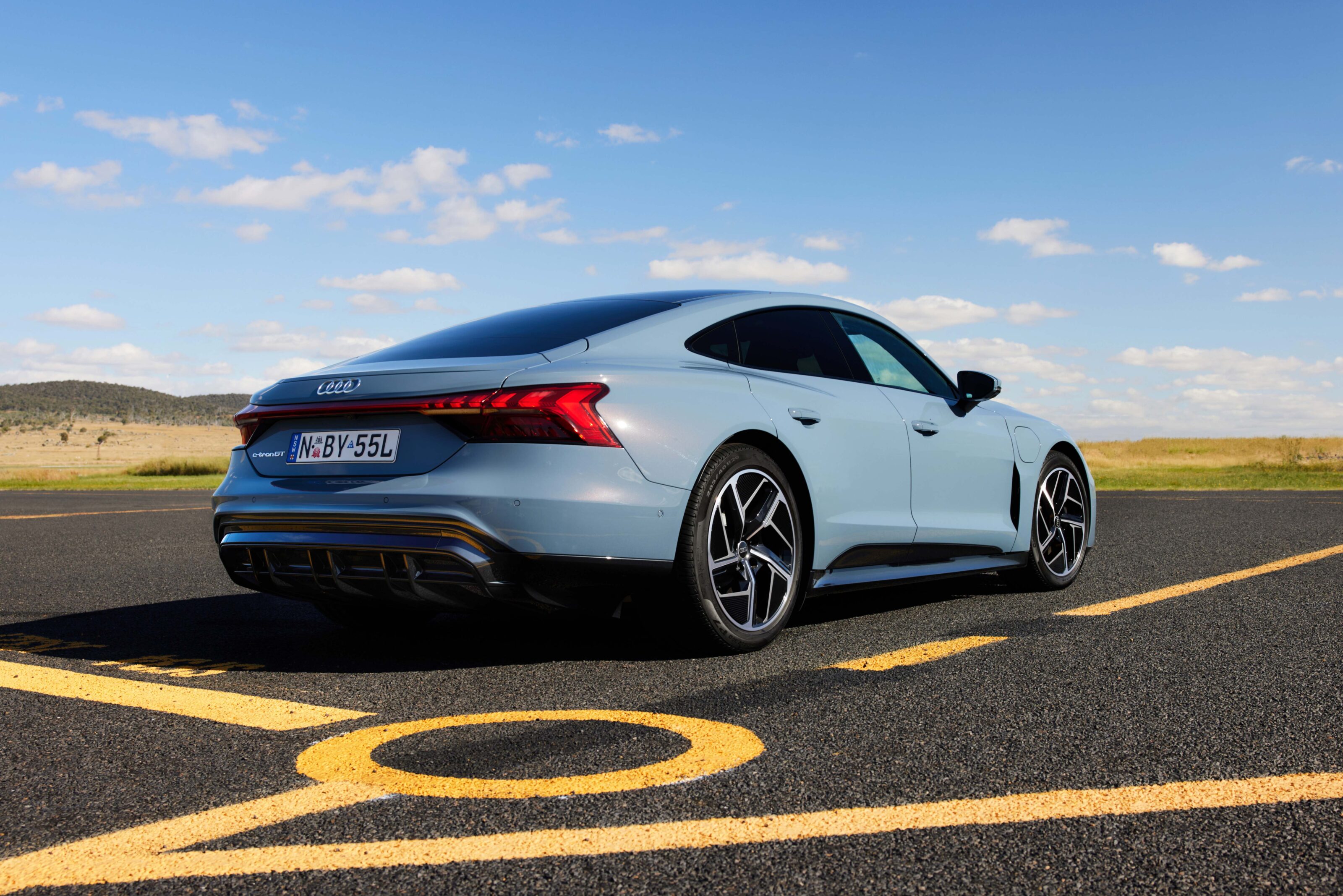
The Audi E-Tron GT will come to Australia in two variants – the entry-level GT and the range-topping RS E-Tron GT, although local buyers miss out on the Carbon Black highlights edition available in European markets.
Priced from $181,700, the GT will be $13,000 more affordable than the Porsche Taycan 4S it shares the Volkswagen Group’s bespoke J1 platform with, while the RS is a whopping $26,600 less expensive than the Taycan Turbo.
| Variant | Price |
|---|---|
| E-Tron GT | $181,700 |
| RS E-Tron GT | $249,700 |
7
Features
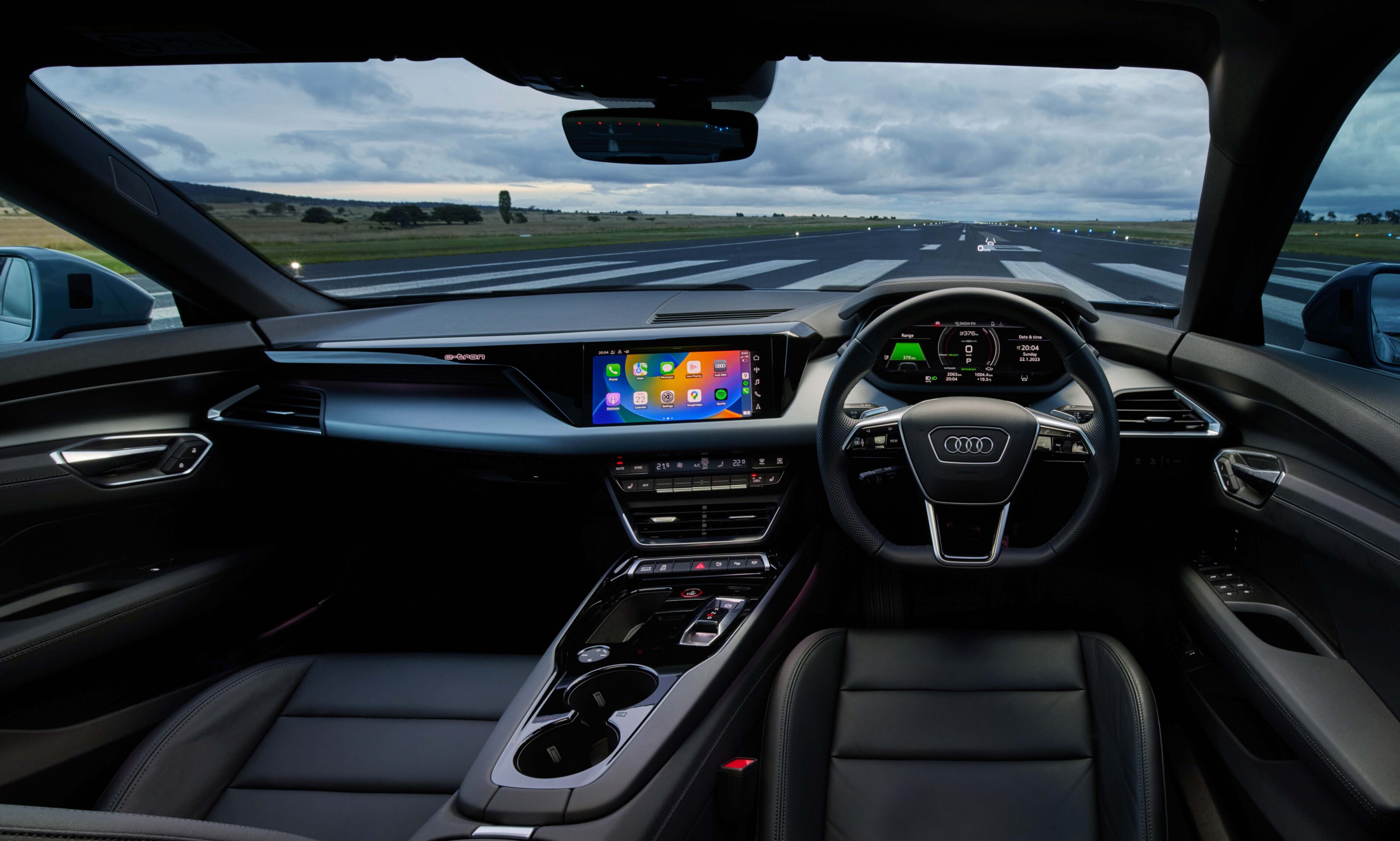
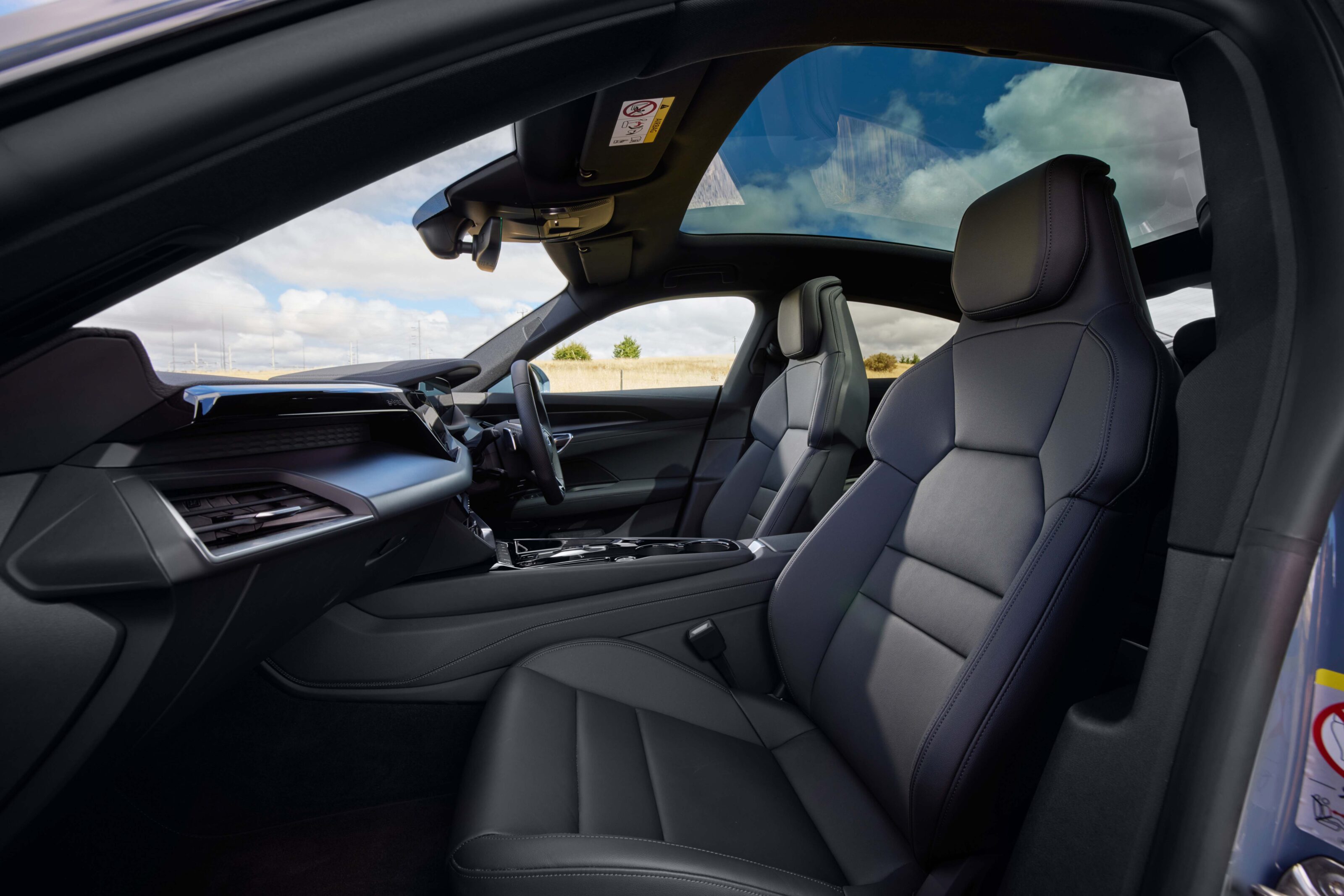
The Audi E-Tron GT comes loaded with standard equipment in both grades, including:
| Combination leather interior; part leather, part Dinamica microfibre |
| Three-spoke leather steering wheel (plus heating in RS) |
| 10.1-inch infotainment touchscreen |
| 12.3-inch digital instrument cluster using Audi Cockpit Plus |
| Wireless Apple CarPlay/Android Auto |
| Wireless Qi phone charging |
| DAB+ radio |
| Head-up display |
| 350L boot space |
| 14-way adjustable Sports Seats Plus (18-way Pro are optional) |
| Heated and ventilated seats (massage is optional) |
| Bang and Olufsen 3D Premium Sound System with 16 speakers |
| E-Tron Sport Sound |
| Three-zone climate control (with pre-conditioning)u00a0 |
| 20-inch five-twin-spoke wheels (21 inch options available) |
| Ceramic brakes (carbon fibre ceramic optional) |
| Matrix LED headlights, LED rear lights, light sequencing and dynamic turn signal (Audi Laser Light optional) |
| Panoramic glass roof (carbon fibre-reinforced polymer roof optional) |
| Ambient lighting (30 colours, six colour profiles) |
| Adaptive air suspension |
| Rear axle differential lock |
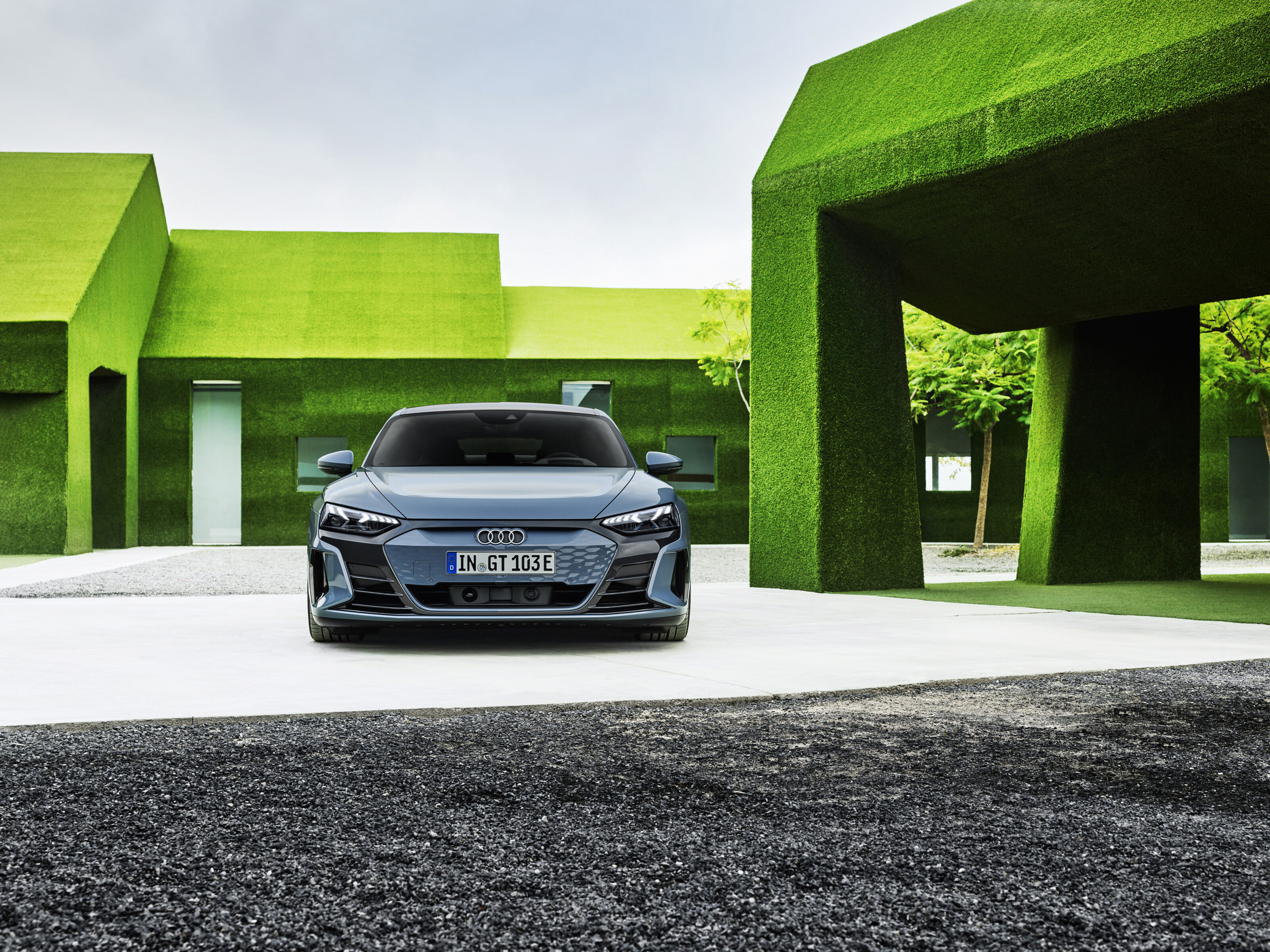
Perhaps surprisingly, all nine exterior paint finishes are a no-cost option for both the GT and RS, with only Ascari blue and tactical green existing as RS-exclusive colours.
3
Options
As to be expected, Audi offers a large range of optional packages for the E-Tron GT, allowing prospective owners to customise their car for an extra premium.
Carbon and black exterior styling package – $17,500 (GT), $15,000 (RS)
| Front side air intakes, side sill trim and rear diffuser insert in carbon |
| Carbon roof (removes panoramic fixed glass sunroof) |
| Carbon exterior mirror caps |
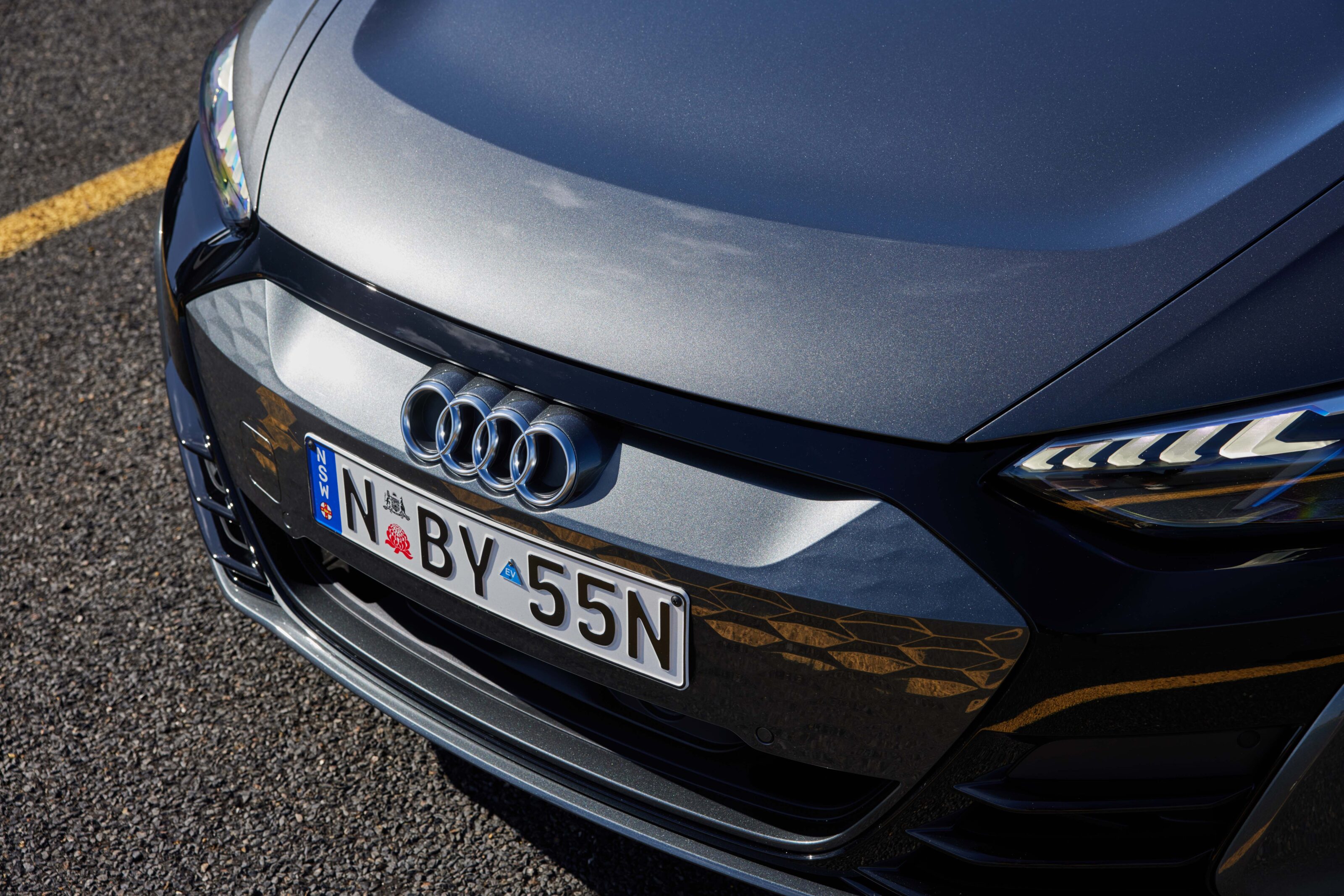
| Black badge package; Audi rings front/rear and model badges in black |
| Black exterior styling package; grille surround, front spoiler, side sill trims and rear diffuser in high-gloss black (GT only) |
Dynamic plus package – $10,500 (GT only)
| e-Quattro sport differential with torque vectoring |
| All-wheel steering |
| Performance braking system with tungsten carbide coating |
| Red brake calipers |
Premium plus package – $6400 (GT only)
| 20-inch alloy wheels in 5-twin spoke offset design in black, diamond turned finish |
| Colour interior ambient lighting package |
| Privacy glass |
| Air quality package including ioniser |
| Door sill trims with illuminated aluminium inlay |
1
Dinamica interior package – $8000 (GT only)
| Sport plus front seats with 14-way adjustment inc. 4-way lumbar support |
| Electronically adjustable thigh support |
| Dinamica seat upholstery with leather appointed side bolsters and head restraints |
| Dinamica headlining in black |
| Centre console surround, door inserts and upper instrument panel (virtual cockpit) in Dinamica |
Sensory package – $8400 (RS only)
| Front seats with massage function |
| Heated outer rear seats |
| Air quality package with ioniser |
| Door sill trims with carbon inlay, illuminated with Audi Sport emblem |
| Dinamica headlining in black |
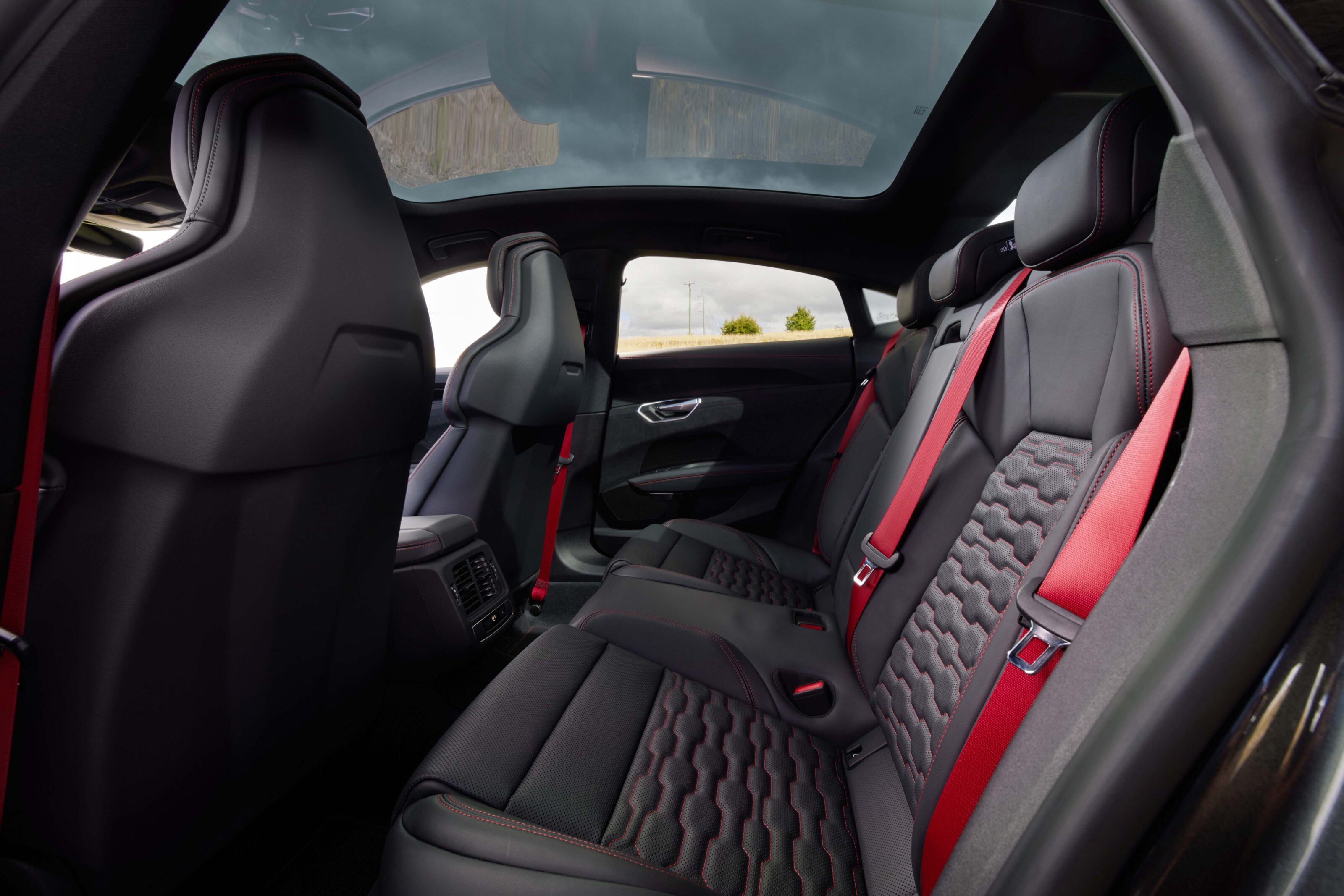
RS red/grey design package – $4550
| Steering wheel in Alcantara, black with stitching in express red or grey |
| Upper dashboard, centre console and door armrests in fine Nappa leather, black with stitching in express red or grey |
| Centre console surround, door inserts and upper instrument cowl in black Dinamica |
| Seatbelts for front and outer rear seats in black with red or grey edges |
| Floor mats in black with contrasting stitching in express red or grey and RS logo on front mats |
1
Drivetrain and performance
The E-Tron GT is one of the few offerings in Audi’s stable where its RS derivative is virtually identical to the regular models, both outside and under the skin, with each variant sharing the same bodywork and dual-motor drivetrain that features an automatic two-speed gearbox on the rear unit.
From the outside, the E-Tron GT’s four-door sedan body stretches 4989 millimetres long. Within that lies a 2900mm wheelbase, while it also measures 1964mm wide and 1414mm high. Unladen, the GT tips the scales at 2351kg, while the faster RS packs on another 71kg for a 2422kg result.
Starting with the base GT, the all-wheel drive model boasts 350kW of power and 630Nm of torque in its standard mode, with boost mode helping to develop an extra 40kW – sending it to 100km/h in 4.1 seconds. In both regular GT and RS guises, it relies on a 93.4kWh (85.7kWh) lithium-ion battery pack.
The first electric RS model from Audi can propel itself from 0-100km/h in 3.6 seconds, or 3.3 seconds in boost mode, to a top speed of 250km/h. It’s good for 440kW of power and 830Nm of torque, though again switching to boost mode ups the ante, pumping out 475kW – making it more powerful than the R8 V10 Performance (nee Plus).
It has three driving modes: comfort, efficiency and dynamic. In comfort the electric motors work together in a way that conserves the most energy, while efficiency prioritises front-wheel drive. In dynamic the character is more rear-heavy, and on slippery road surfaces, when high power is needed or in fast cornering more torque can be distributed to the rear wheels around five times faster than with a mechanical Quattro drivetrain.
4
Driving range and charging
The RS E-Tron GT can squeeze between 429 and 472 kilometres of driving range from the battery when tested on a Worldwide Harmonized Light Duty Vehicles Test Procedure (WLTP) cycle.
At the moment, Audi says AC charging is set at 11kW and will take the battery from five per cent to 80 per cent charge in 9.5 hours.
Right now, a faster 270kW DC charging will slash that time again to just 22 minutes, identical to its Taycan Turbo stablemate.
The electric motors can also generate 0.3g under regenerative braking while recovering 265kW.
Energy consumption is rated at 23.6kWh/100km and 22.0kWh/100km for the GT and RS respectively.
7
Safety
The E-Tron GT comes with three safety assistance packages.
| Adaptive cruise assist (including adaptive cruise control with stop and go, distance indicator, traffic jam assist and lane guidance assist) |
| Active lane assist |
| Autonomous Emergency Braking (AEB); up to 85 km/h for pedestrians, 250 km/h for vehicles |
| Rear collision pre-sense; seat belt pre-tensioning, automatic window/sunroof closing |
| Blind spot warning system |
| 360 degree cameras including kerb view function |
| Park assist |
| Intersection crossing assistu00a0 |
| Collision avoidance assist |
| Cross traffic assist rearu00a0 |
| Exit warning system |
| Light and rain sensor |
| Turn assist |
| Car finder with remote signal |
| Emergency call |
| Online roadside assistance |
| Acoustic vehicle alerting system |
| Attention assistu00a0 |
| Electronic Stabilisation Control (ESC) with electronic wheel-selective torque control |
| Tyre pressure monitoring systemu00a0 |
| Anti-theft alarm system (RS only) |
7
Warranty and servicing
Like all Audi models registered since the start of 2022, the E-Tron GT has a five-year/unlimited kilometre warranty, with servicing intervals every 15,000km/12 months.
Owners are also treated to a number of six-year bonuses, ranging from a Chargefox subscription, Audi scheduled servicing and roadside assistance, all of which are complimentary for the first 72 months.
Availability
The 2022 Audi E-Tron GT is now on sale through the manufacturer’s dealer network.
MORE
All Audi
Snapshot
- T-Roc range remains with ample supply of 4313 units
- 4Motion availability will impact orders on Tiguans 132TSI, 147TDI and 162TSI
- Tiguan Allspace, Passat wagon, Alltrack, Arteon and Touareg models continue to have strong supply
Volkswagen has detailed its second quarter supplies, with R-division models such as the Golf R and Golf R wagon set to have orders paused for the foreseeable future due to a components shortage.
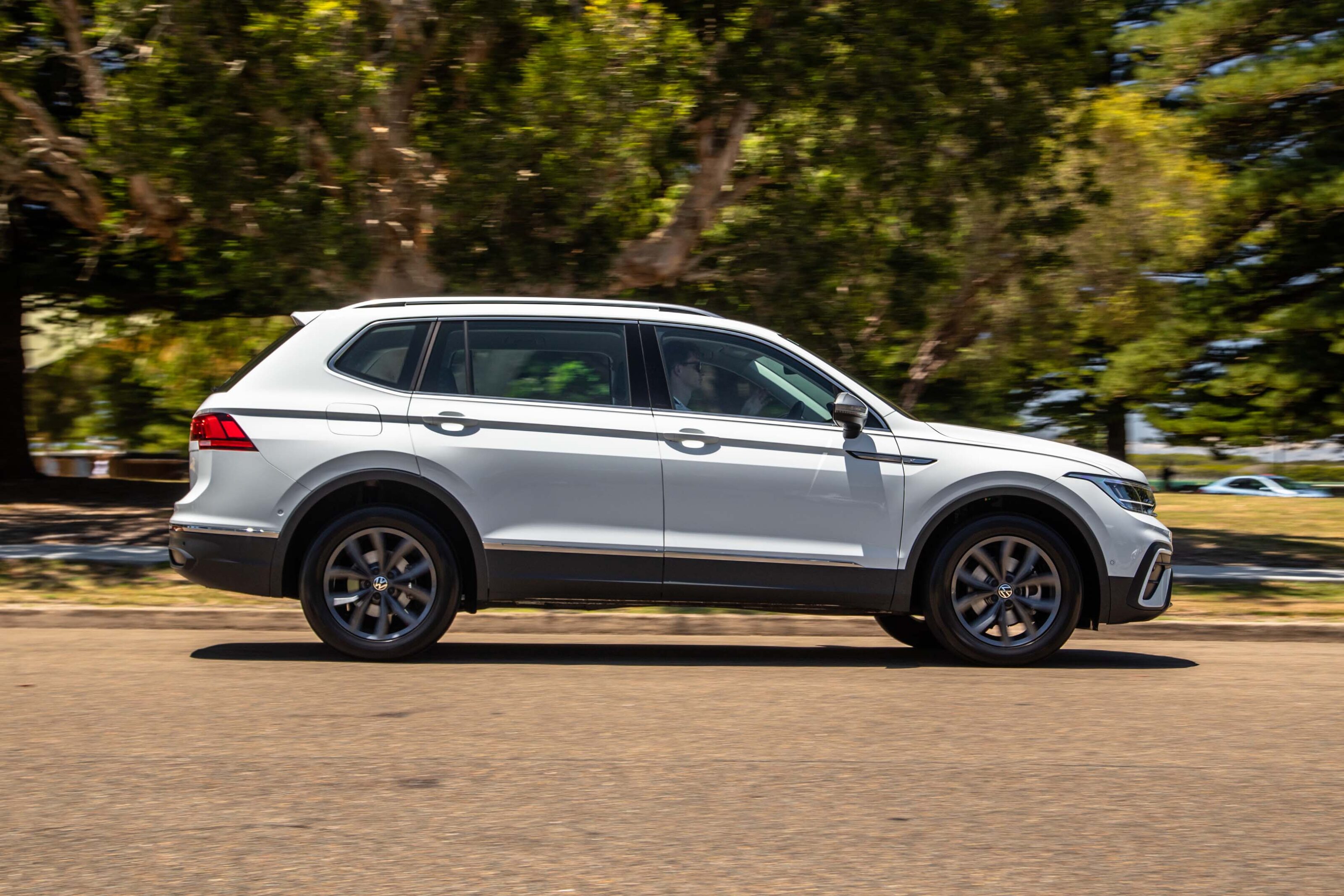
Dealer stock of the Tiguan and Tiguan Allspace remains solid, although availability of VW’s 4Motion system will restrict supply of the 132TSI, 147TDI and 162TSI Tiguan variants from the second quarter onwards, with orders being paused until further notice.
At the time of writing, VW says there are 3572 units of these Tiguan variants in Australian dealerships, with the 132TSI currently selling for $49,990 drive-away.
1
Improved production for Australian Tiguan R models has resulted in more deliveries, but new orders have also been paused due to strong demand and these ongoing component issues.
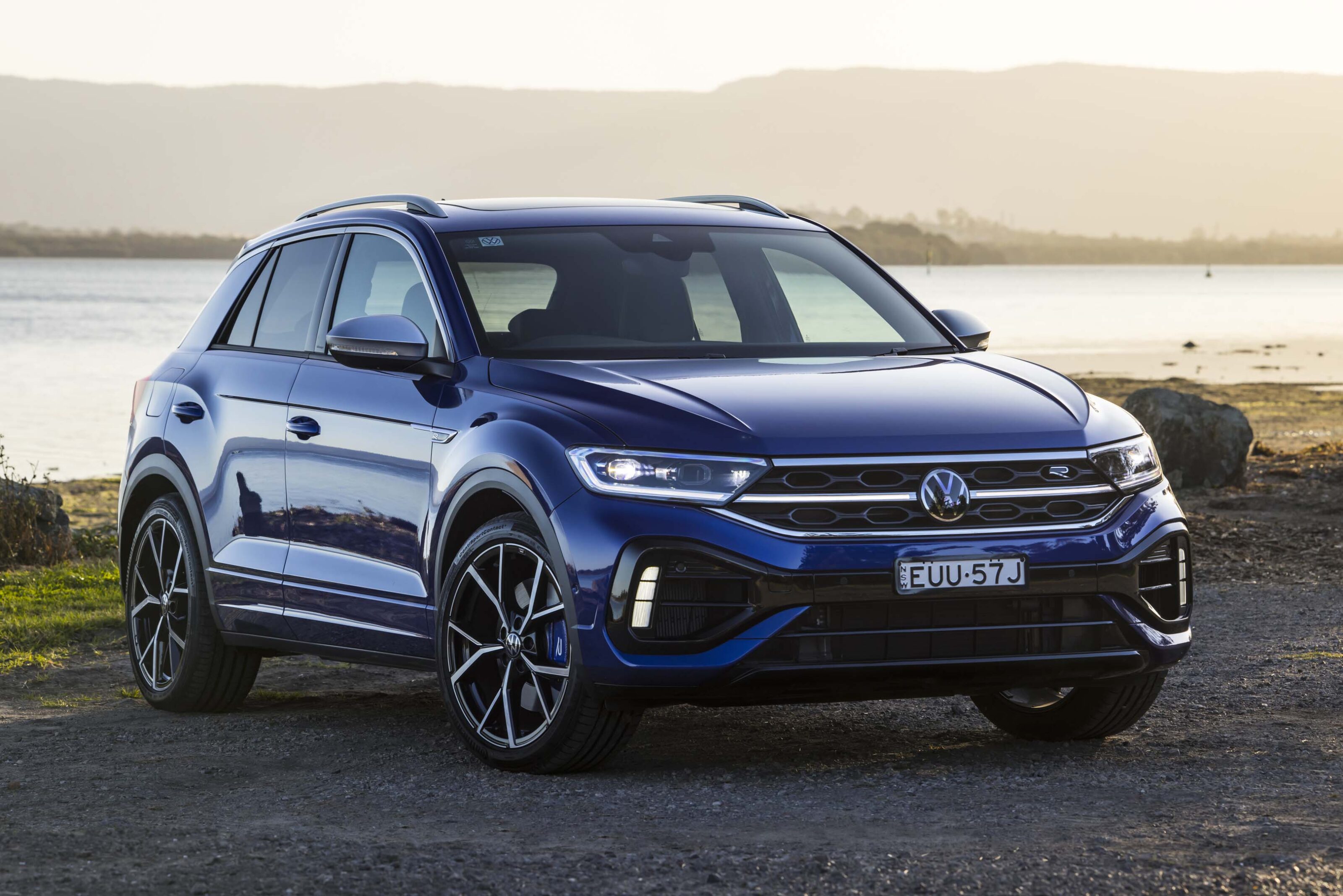
Non-4Motion variants, such as the Tiguan 110TSI Life, will see improved supply going forward, while ample stock remains on T-Roc Style and R-Line models. Volkswagen says there are more than 1200 orders for the T-Roc R SUV currently being fulfilled, while 4313 units of other T-Roc variants are available across Australia.
“Volkswagen is in a strong position for Tiguan 132TSI, Tiguan 162TSI Monochrome and Tiguan Allspace Adventure deliveries in the first quarter of this year, before 4Motion deliveries are impacted in the second quarter,” said Volkswagen Passenger Vehicles Director, Michal Szeniecki.
1
“It became increasingly important to balance this with improved Tiguan 110TSI Life and Tiguan R supply. The 1000 Tiguan R orders will be assisted by this, while additional T-Roc and T-Roc R stock will help balance continuing restrictions on Golf.”
In December 2022, Volkswagen launched its ownership portal, which allowed customers to stay informed on the whereabouts and expected delivery time of their purchase.
As of February 2023, Price My Car indicates the average wait time for a Volkswagen is currently 136 days, which is down from an August 2022 peak of 213 days. Prior to the March 2020 outbreak of COVID-19, the average waiting period was approximately 41 days.
MORE
Best SUVs under $60k
UPDATE: South Australia’s Parliament has passed a law to rescind the State’s planned electric vehicle tax due to come into effect in 2027.
Snapshot
- Previous Liberal State Government introduced legislation for an EV road user charge from 2027
- Recently-elected Labor Government is seeking to repeal the tax
- Survey showed 7 in 10 prospective EV buyers in SA were put off by the proposed tax
The South Australian Government’s Motor Vehicles (Electric Vehicle Levy) Amendment Repeal bill was passed this week, scrapping the former Government’s EV Tax.
The bill’s passage comes as research from the Australia Institute shows that interest in purchasing an EV has increased significantly among South Australians.
“The decision to repeal the tax has come at a key moment for electric vehicles in South Australia, as their popularity is increasing across the state and the political spectrum,” said Noah Schultz-Byard, SA Director at The Australia Institute.
“A little over a year ago, just one in 10 South Australians said their next car was definitely going to be an EV. Now, one in four motorists say they will avoid petrol power altogether and opt for an EV when they’re next shopping for a car.”Our earlier story continues below unchanged.

1
The story to here
May 2022: The new South Australian Government is seeking to repeal legislation passed last year which will introduce a controversial electric vehicle tax in the state from 2027.
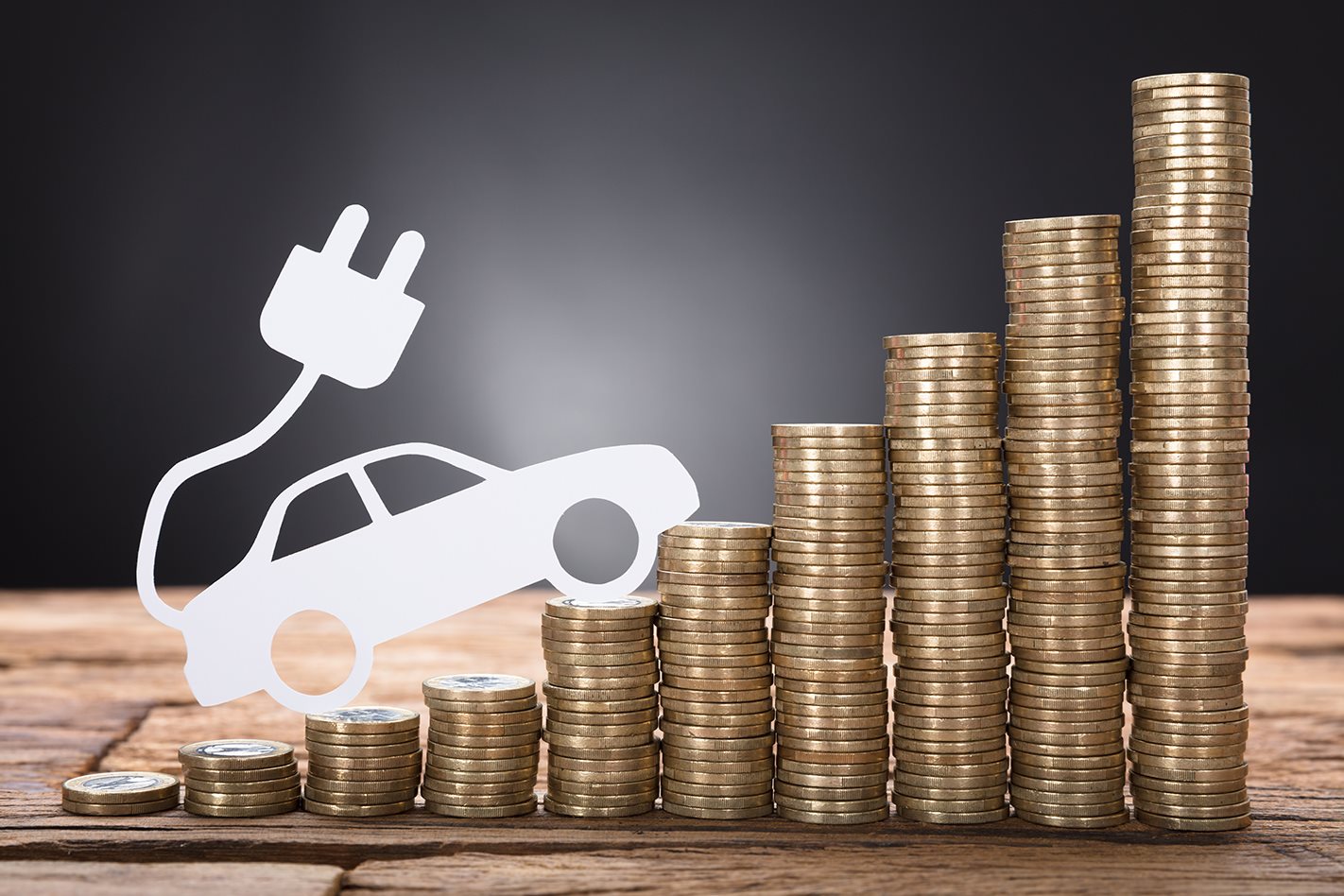
The tax involves electric vehicle owners being charged 2.5 cents per kilometre from July 1, 2027, or when EV uptake hits 30 per cent – with plug-in hybrid vehicles due to pay 2c/km.
The legislation was first introduced by the local Liberal Party in 2021 when it was in power. However, in March this year, new Premier Peter Malinauskas led the Labor Party to victory in the South Australian state election, with the repealing of the EV tax listed as one of the Party’s top priorities once it came to power.
1
Last week the Motor Vehicles (Electric Vehicle Levy) Amendment Repeal Bill 2022 was introduced to the South Australian Parliament and, if passed, will result in the road user charge’s implementation being scrapped.
“We want more South Australians making more environmentally friendly choices, not putting in barriers that dissuade them,” said Minister for Transport and Infrastructure, Tom Koutsantonis.
“The feedback we received from the community was overwhelming, the Liberals’ decision to introduce this tax would have reduced community uptake.
“We are calling on Opposition Leader David Speirs and the Liberals to admit they made the wrong call by putting this tax in place and back this [change to the] legislation.”
1
The South Australian Government is now the first State Government to attempt to repeal a proposed road user charge, going against the grain of its Labor-led counterparts in Victoria and Western Australia.
While Victoria implemented its widely-criticised tax from July 1, 2021, Western Australia will be doing so from July 2027 – as will New South Wales, although the latter could introduce it before the proposed date if uptake surpasses 30 per cent.
A recent study by the The Australia Institute showed 70 per cent of potential EV buyers in South Australia were put off purchasing a vehicle which would be subject to the tax, while the same number of people also supported the Government reducing the cost of EVs through subsidies and incentives.
Roughly 40 per cent of South Australians have considered an EV as their next vehicle, and that number may continue to rise after the Australian Labor Party won the Federal Election over the weekend, having promised a number of motoring-related policies to reduce the up-front and ongoing price of EVs.
South Australia introduced a $3000 subsidy to buyers purchasing an EV worth up to $68,750 last year, although this was only limited to the first 7000 applicants. Its current incentives continue to include three-years’ free registration and up to $2000 to install EV smart chargers at home (limited to 7500 households).
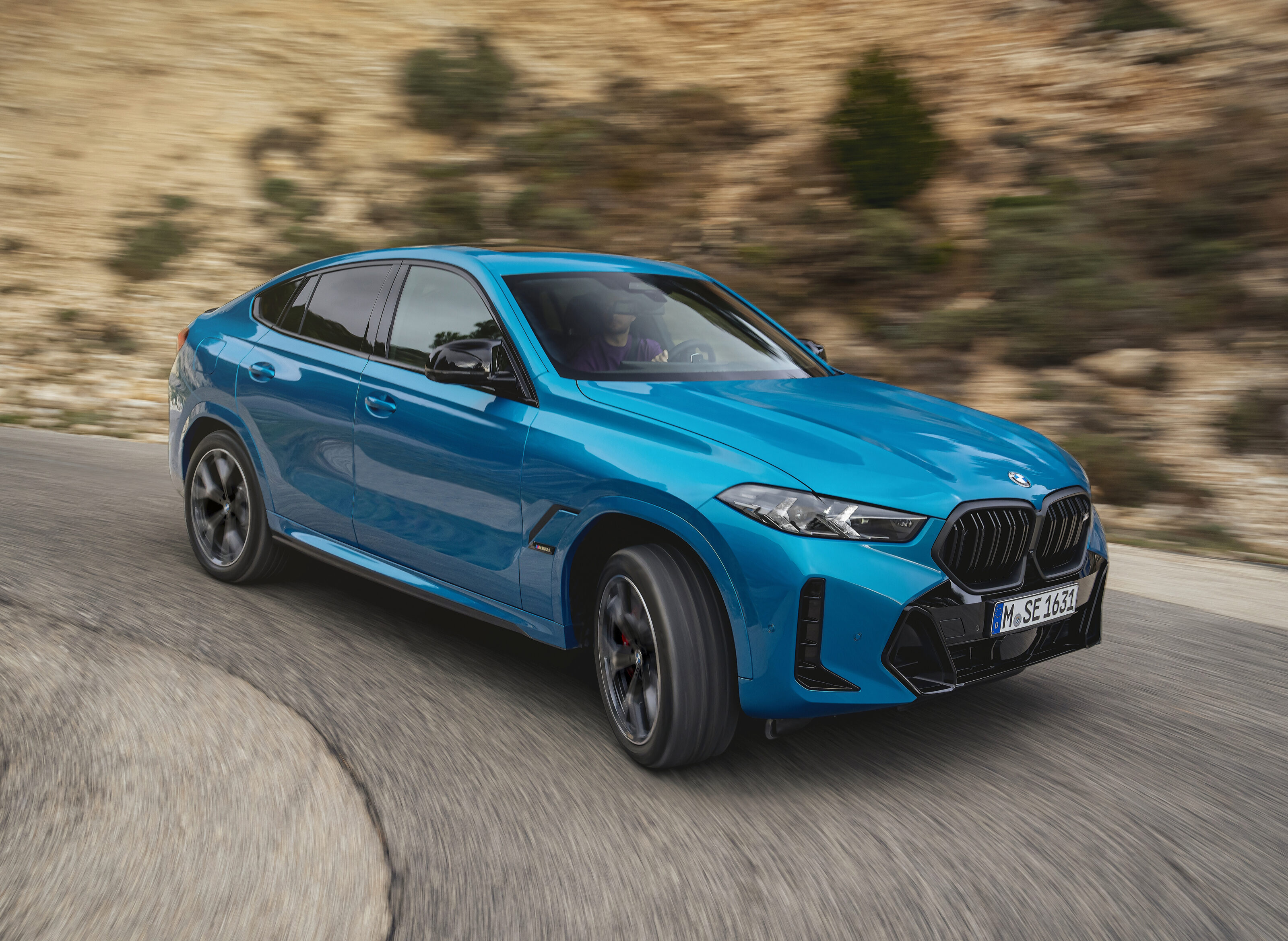
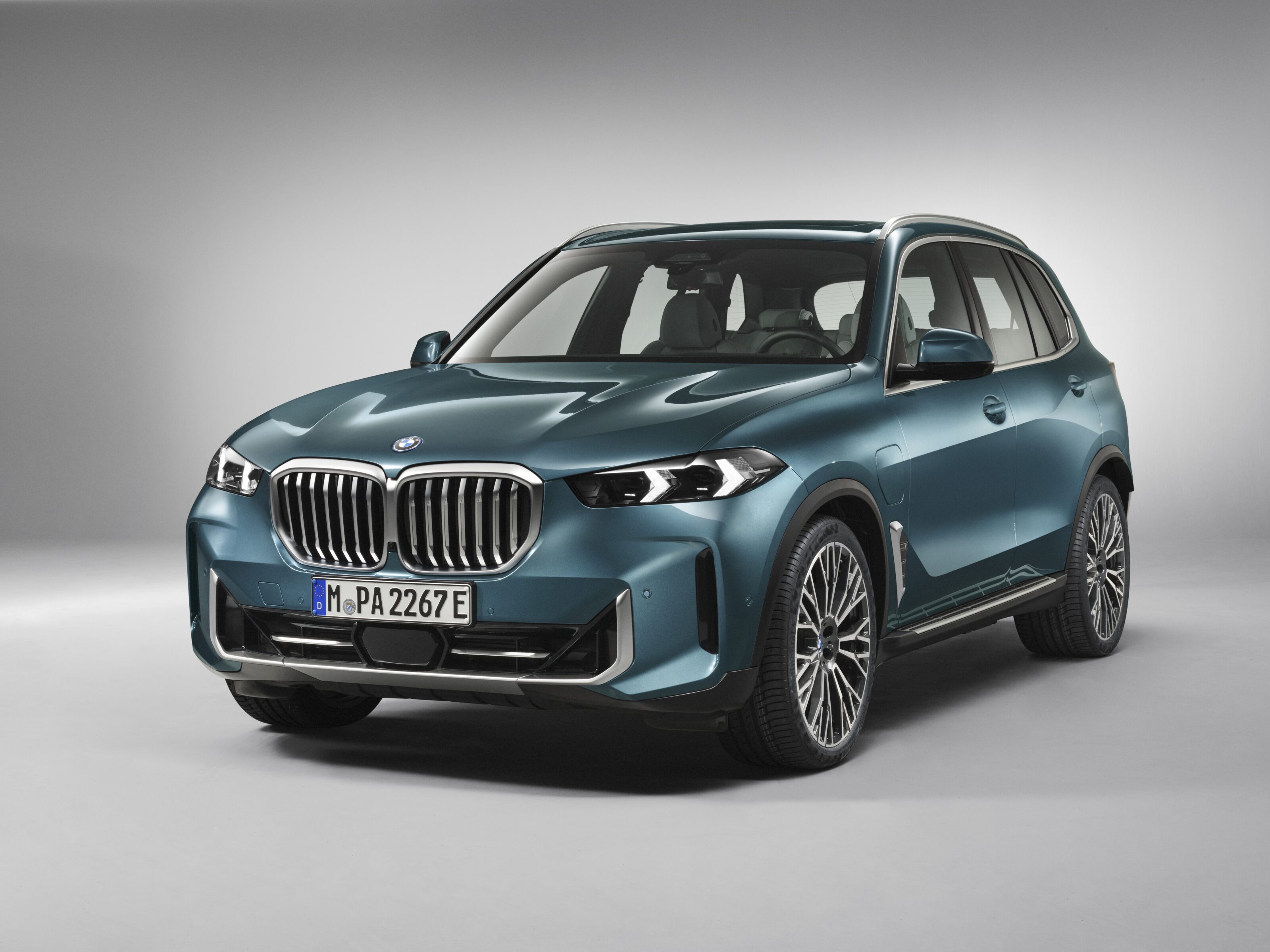
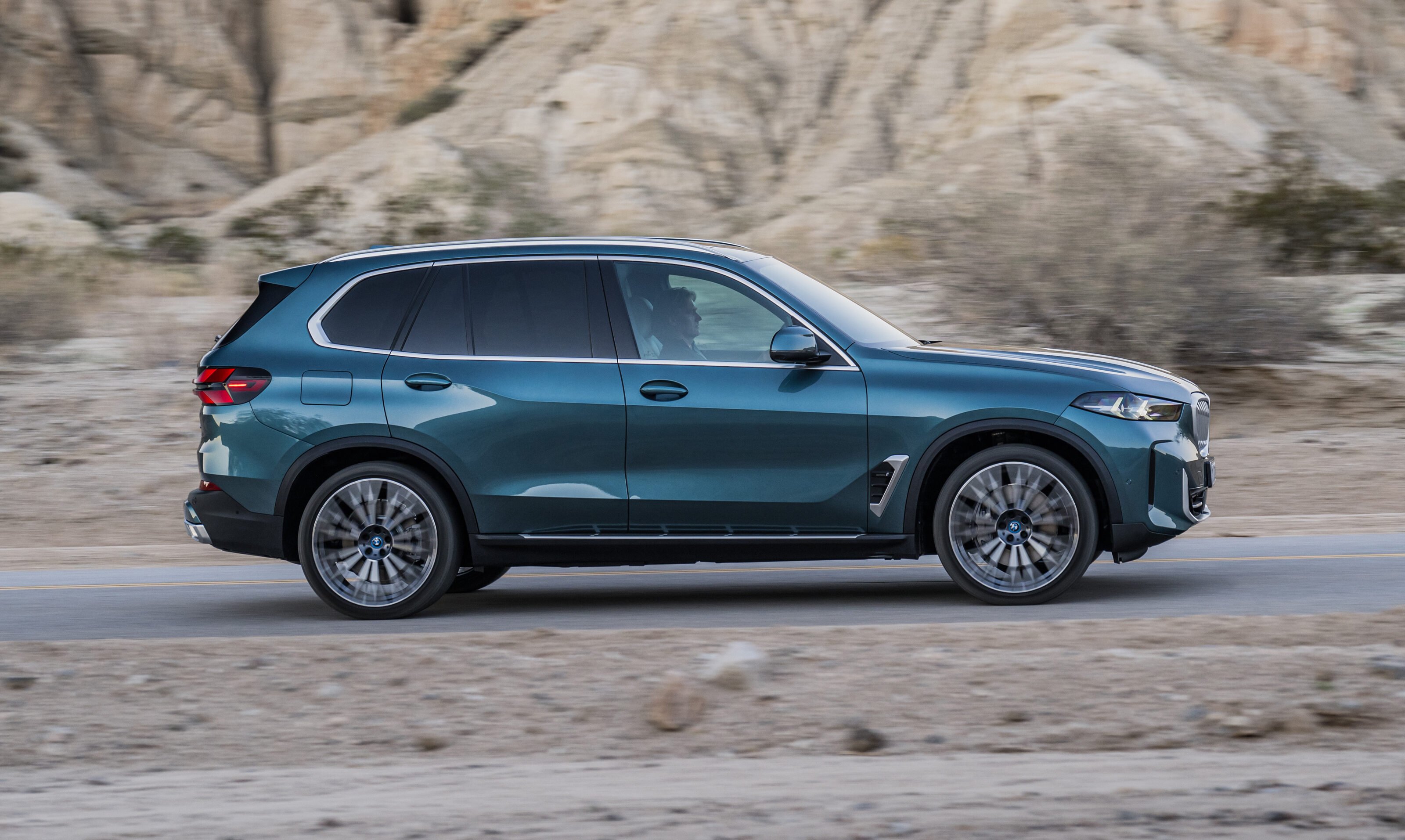
The facelifted 2024 BMW X5 and 2024 BMW X6 twins have debuted.
Snapshot
- 2024 BMW X5 and X6 update revealed
- Facelifted large SUV inspired by the latest X7 and 3 Series
- Revised front end, curved display and more power; expected in Australia later this year
UPDATE: 2024 BMW X5 M & X6 M revealed, priced for Australia
Both vehicles will arrive in Australia in the third quarter of 2023, with an $8000 price hike for the entry-level xDrive30d and xDrive40i.
The updated BMW X5 and X6 follow the refreshed Mercedes-Benz GLE revealed last week, and imminent facelifts for the Audi Q7 and Q8 siblings, and the Porsche Cayenne.
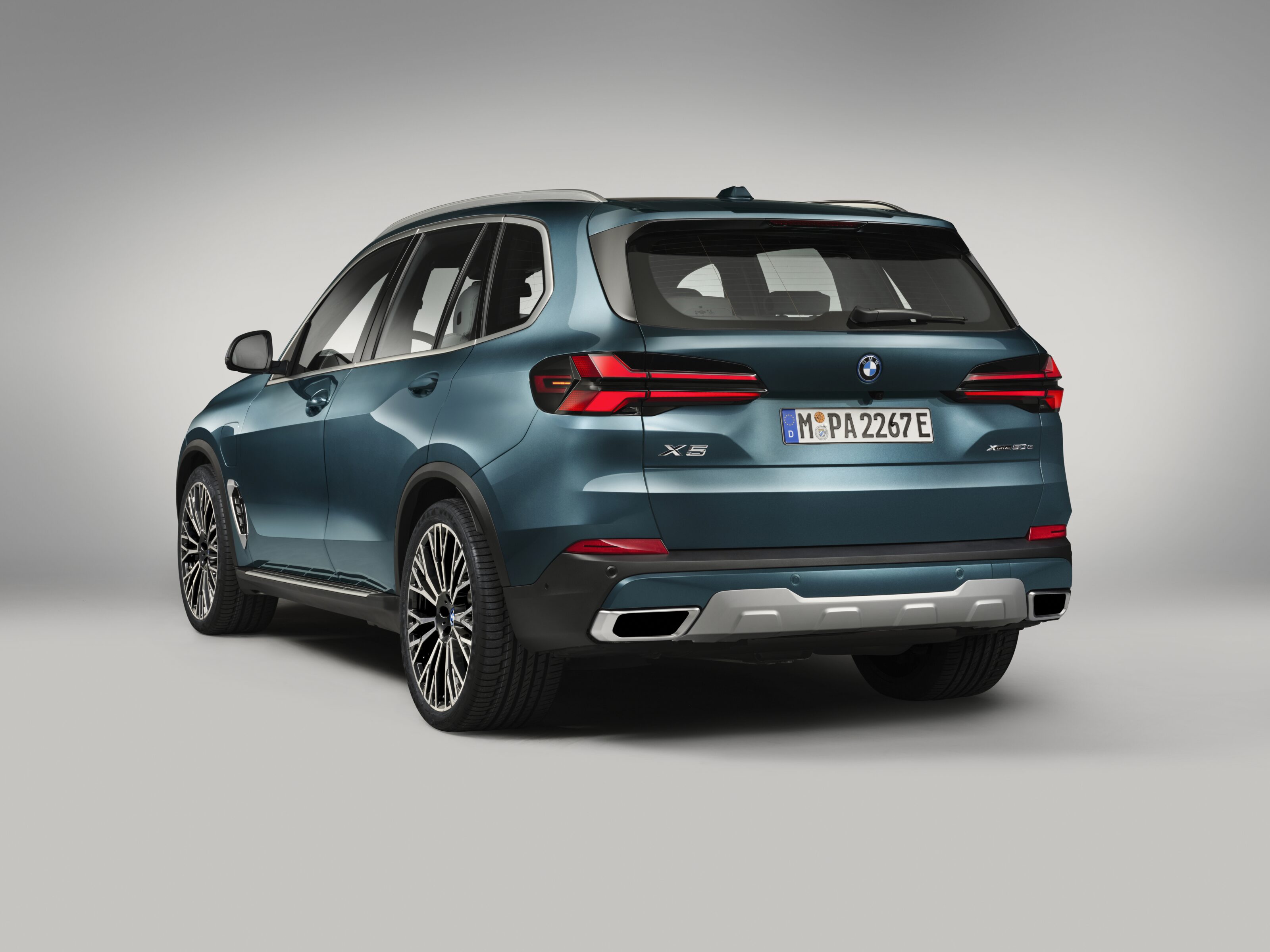
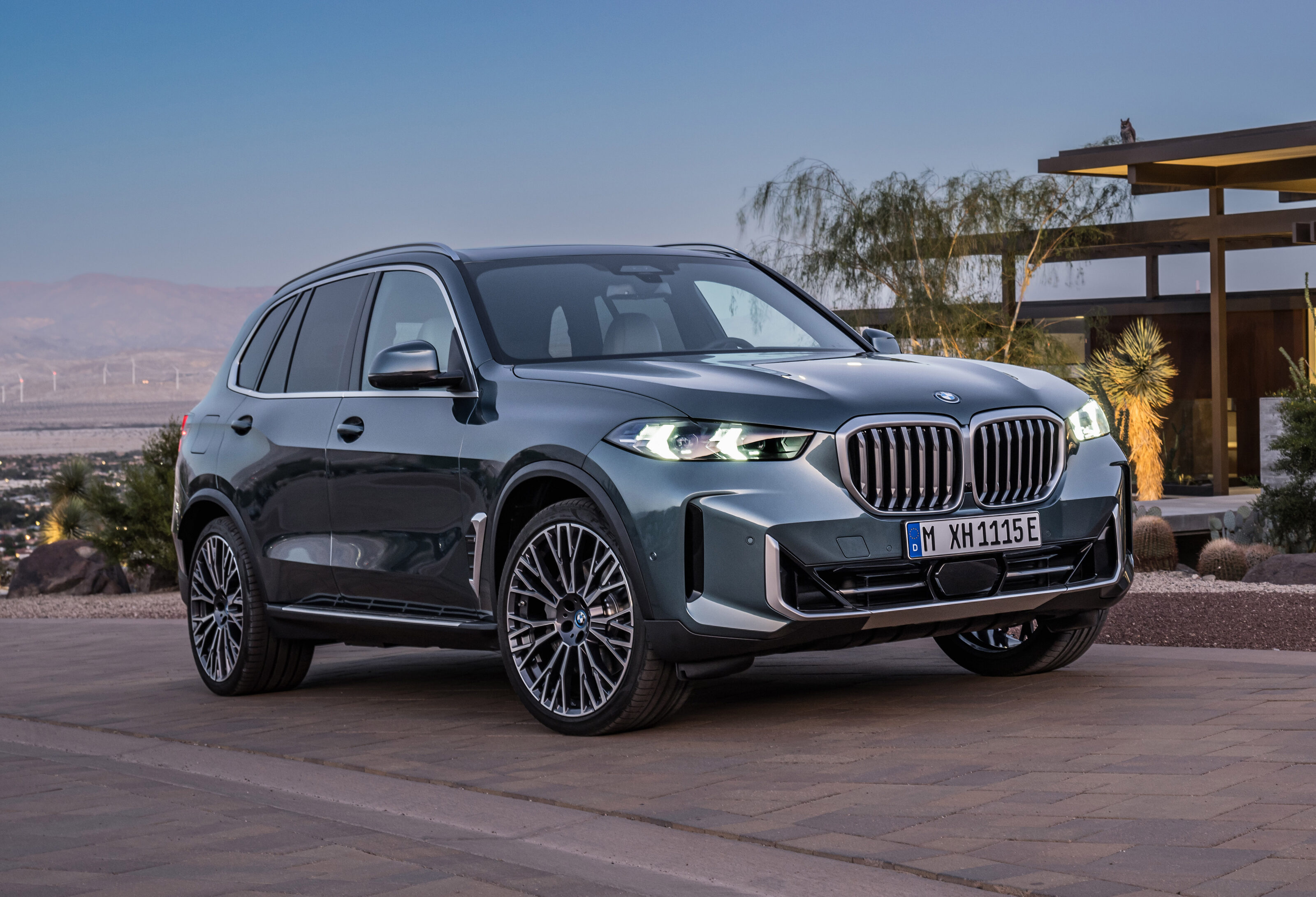
Up front, it features 35-millimetre narrower LED headlight units inspired by the latest X7 and 3 Series, with arrow-shaped daytime running lamps.
1
A revised lower bumper – with an ‘octagonal front-end signature’ for M Sport variants – and grille sculpting also feature, while the X5 is now available with an illuminated grille on six-cylinder variants.
Other design changes include new air vents on the front guards, a redesigned LED tail-light signature, and an M Sport Pro design pack with a louder exhaust system, red brake calipers, and M Sport seat belts.
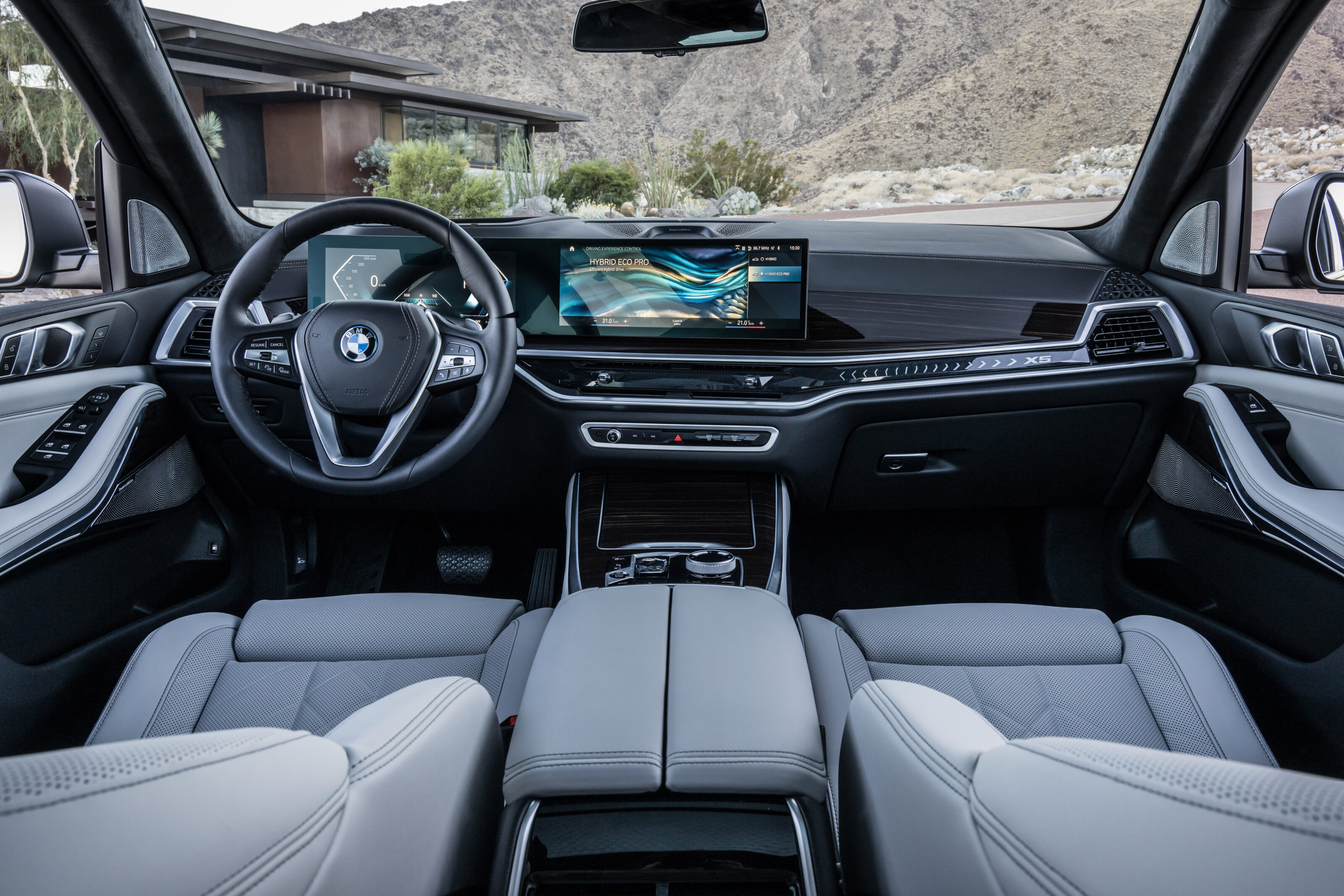
Inside, the updated X5 and X6 are fitted with BMW’s latest iDrive 8 operating system, with a curved display featuring a 14.9-inch infotainment screen and a 12.3-inch digital instrument cluster.
1
As with the updated X7 and 3 Series, this has seen most climate controls shifted to the infotainment system, while the physical volume, radio tuning and demister buttons remain.
In addition, it now sports a smaller, toggle-style gear shifter, an illuminated dash strip with X5, X6 or M badging, reshaped air vents, and standard wood interior trim.
Technology revisions include; a semi-autonomous highway driving assist, junction-turning assist for the autonomous emergency braking system, automatic speed limit assist, traffic light recognition, emergency stop assistant, and an improved automatic parking system with up to 200 metres of memory.
Under the bonnet, BMW has revised the powertrain lineup, with each model utilising an all-wheel drive system and an updated eight-speed torque-converter automatic.
1
As before, a 3.0-litre six-cylinder turbo-diesel is found in the xDrive30d. It is now paired to a 48-volt mild-hybrid system, with a power bump to 219kW and 670Nm, revisions to the oil delivery system and injectors, and steel pistons.
The petrol-powered xDrive40i is now more powerful with 280kW and 520Nm – up 35kW and 70Nm – and a 0-100km/h sprint time of 5.4 seconds.
Peak torque can be boosted to 540Nm with the mild-hybrid system.
The plug-in hybrid xDrive50e is now matched to a 25.7kWh lithium-ion battery – up 25 per cent – with 360kW and 700Nm, and a 0-100km/h time of 4.8 seconds.
1
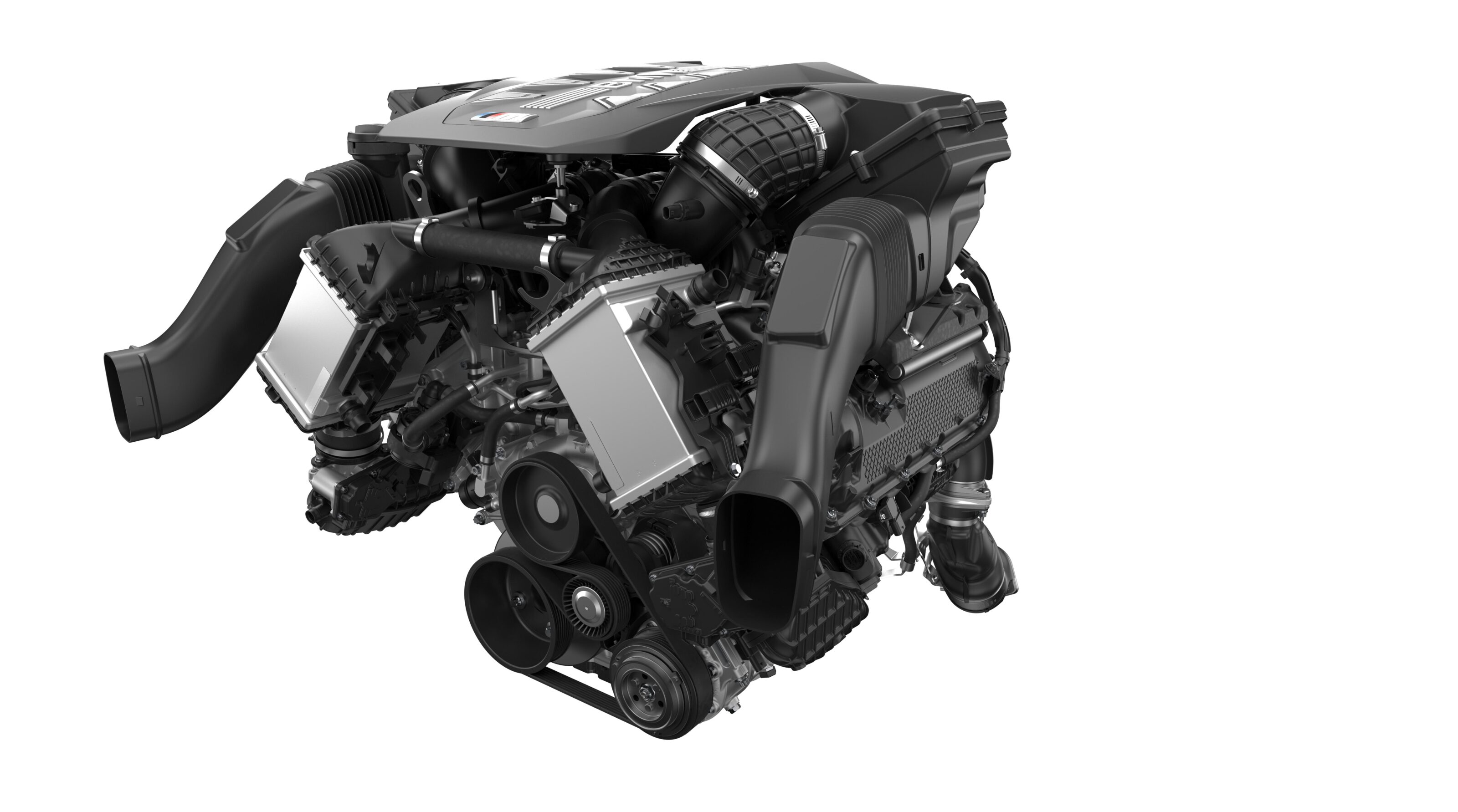
Following its debut in the facelifted BMW X7, the X5 and X6 M60i – replacing the M50i – feature the brand’s latest ‘S68’ 4.4-litre twin-turbo petrol V8.
It produces 390kW and 750Nm – identical to the pre-update M50i – with a cross-bank exhaust manifold, revised bi-symmetrical turbochargers, external engine oil cooling, a reinforced crankshaft drive, a new oil pump and a weight-minimised oil sump.
However, the mild-hybrid system allows for a temporary power boost of up to 9kW and 200Nm, with a 0-100km/h sprint time of 4.3 seconds.
1
Pricing
2024 BMW X5 pricing
2024 BMW X6 pricing
1
Features
2024 BMW X5 features
2024 BMW X6 features
1
Availability
The updated 2024 BMW X5 and 2024 BMW X6 will arrive in Australia between July and September.
Last year, the X5 and X6 were narrowly outsold by the Mercedes-Benz GLE.
MORE
Everything BMW
UPDATE: Bad news if you’ve been waiting for Audi to plunge into the hugely popular dual-cab ute segment – it doesn’t look like it’s going to happen after all.
The prospect of a four-ringed dual-cab was first raised last year when Audi’s global CEO Markus Duesmann was quoted as saying: “I can’t promise that we will do one, but we are looking into it.”
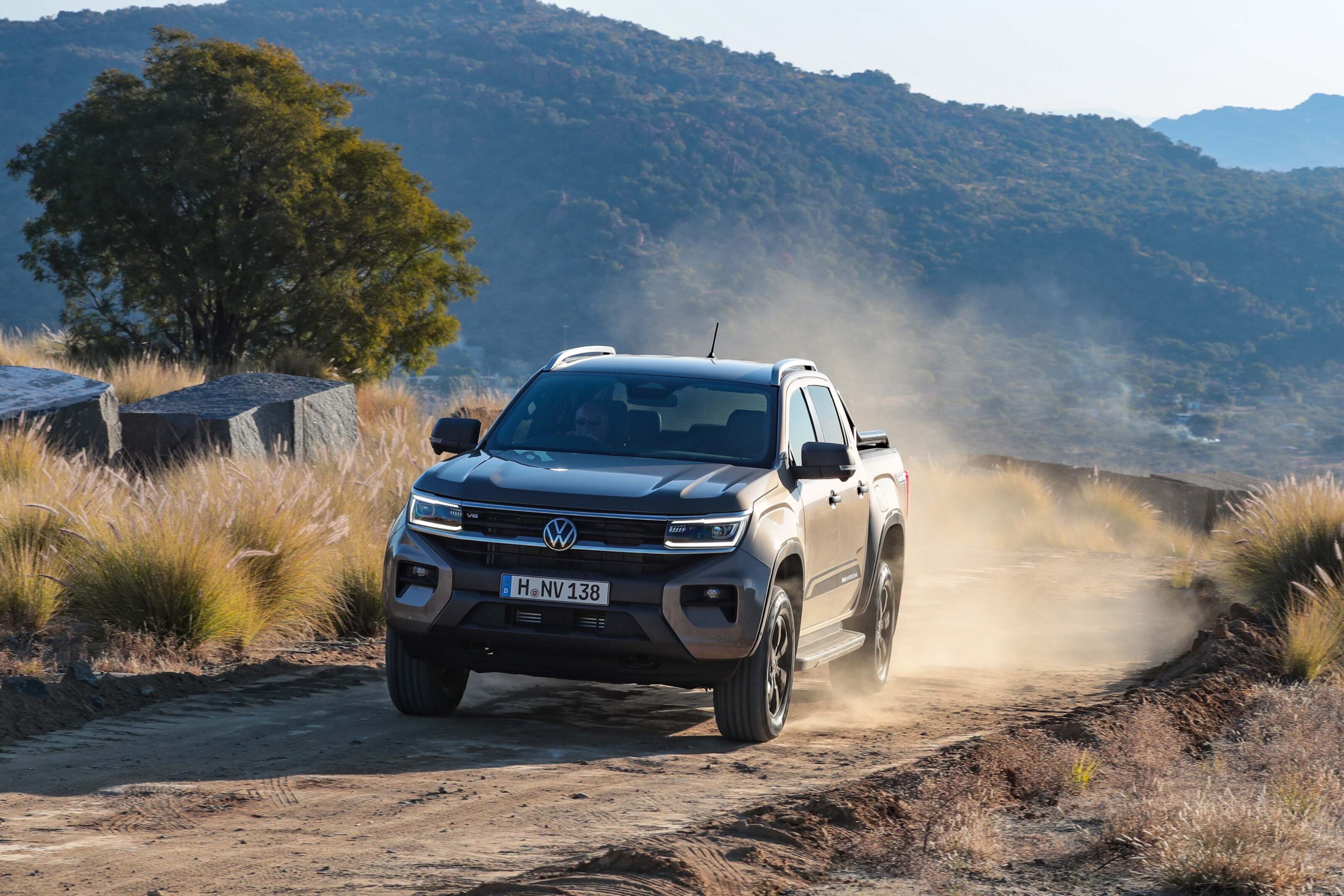
Naturally that sent the rumour mill into overdrive with many speculating Audi could use its Volkswagen Group connections to rebadge the new-gen Amarok or invest in a completely fresh all-electric model for later this decade.
We even had the a set of renders knocked up to show you what an Audi dual-cab ute could look like.
But Audi Australia’s managing director, Jeff Mannering, has since poured cold water on the idea and all-but ruled it out.
1
“I have no knowledge of an Audi dual-cab,” he told Wheels. “I think I saw an artist’s impression maybe three or four years ago but that was a long time ago. I haven’t even seen a blueprint or a plan for it, so it’s not on our radar I can tell you.”
When asked if Audi would welcome a potential dual-cab ute to the Aussie range, Mannering replied: “I don’t know, I don’t know whether a dual-cab ute fits in with Audi so much. I know some other Germans have had a go at it; I don’t know how successful that was.” (Not very. – Ed.)
“I’m not Markus Duesmann, but if he said we’d do it, whether you’d even bring it to Australia would depend on what spec it is and what engine was in it.
“If you started development now, how long would it take? It’d be 2027/2028 maybe even 2029 and then you’re going to have to say, ‘will it be a typical ute with a diesel engine or will it be an electric ute?’ Possibly it could be, but there’s no plan that I know of.”
32
No Audi ute doesn’t mean no Audi ute…
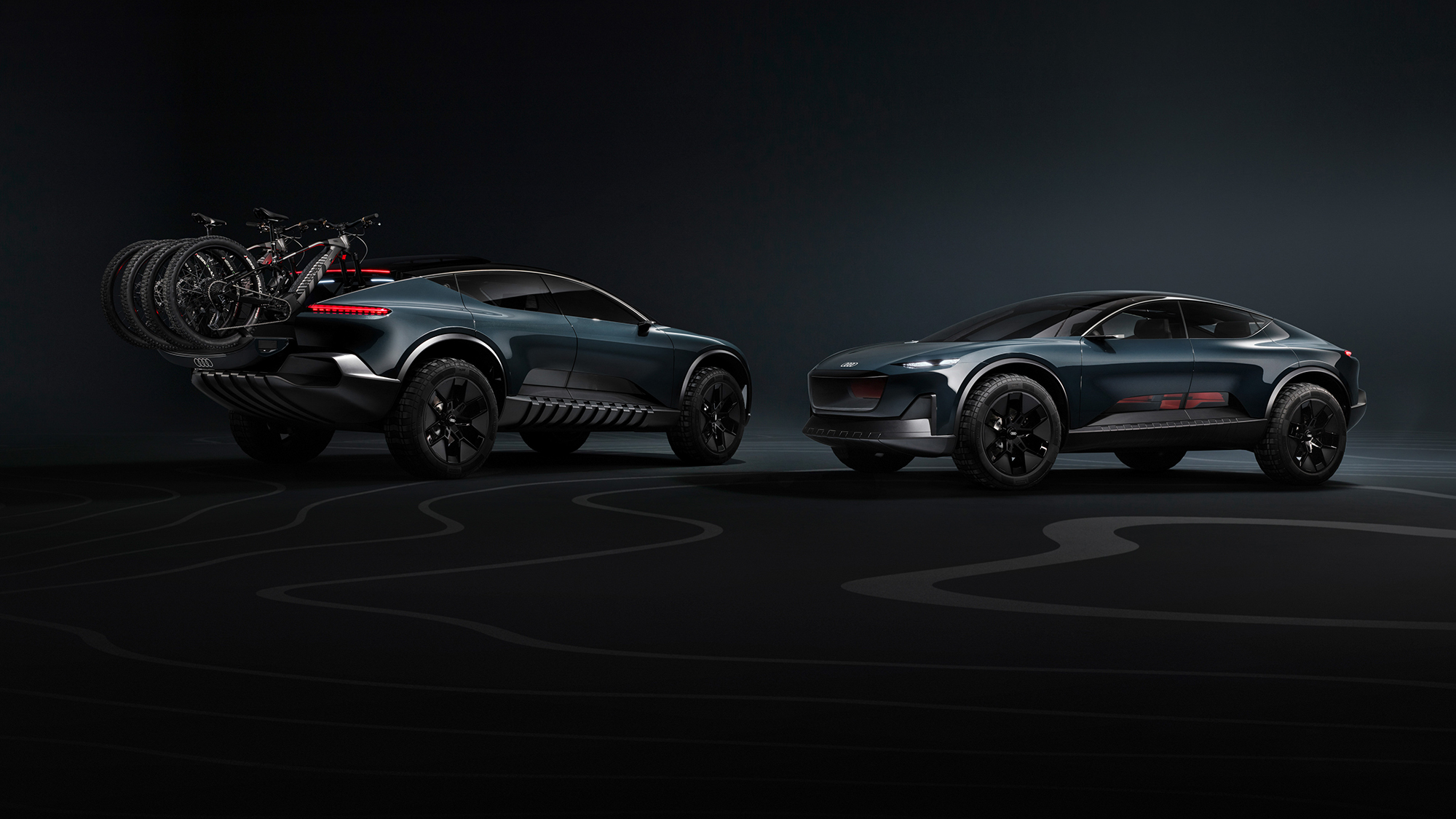
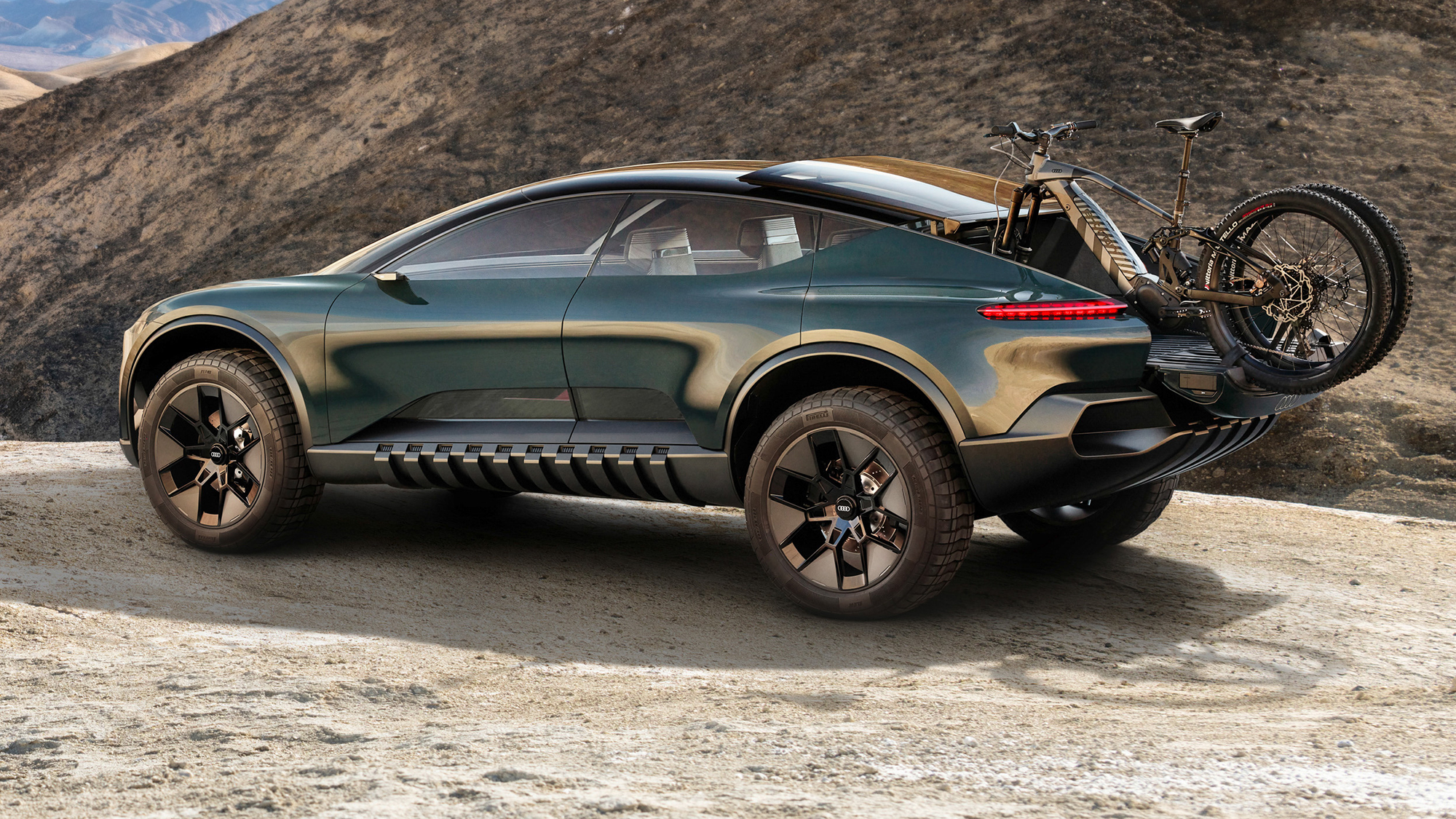
Interestingly, just days after our man Inwood spoke with the local Audi boss, the company’s European mothership unveiled a sorta-kinda ute-like concept: the Audi Activesphere.
Ostensibly a jacked-up four-door coupe with massive off-roading rubber at each corner, the Activesphere ties in a mini-ute boot with a bottom-hinged tailgate and a sliding glass roof to create an open cargo area. As if the industry’s kite-high designers and marketers haven’t dreamed up enough ways to combine traditional body styles…
As the concept images show, Audi may not have the appetite for a conventional ute, but it’s clearly open to the idea of a more stylish and recreational take on the old model.
1
MORE
Ute Buyers Guide
1
The story to here
August 2022: An Audi ute? Amarok-based model rendered
Audi could enter the ever-popular dual-cab 4×4 ute segment in the coming years, if previous suggestions come to fruition.
In March 2022, Audi CEO Markus Duesmann hinted at a four-ringed pick-up model at the company’s annual earnings conference, stating (via Autocar): “I can’t promise that we will do one, but we are looking into it.”
“Actually, we will present – not too far from now – maybe something,” he added, with no further detail, including whether this refers to a concept model or an official confirmation.
1
It is unclear how Audi plans to develop a ute, should it be given the tick of approval.
However, the development time would likely take several years, missing the 2025 deadline for the unveiling of Audi’s last all-new petrol or diesel model.
Therefore, the utility would likely feature a battery-electric powertrain to rival the Ford F-150 Lightning, Rivian R1T and Chevrolet Silverado EV – or smaller vehicles, such as a potential Ford Ranger Lightning.
Audi will begin phasing out internal-combustion vehicles in the early 2030s, excluding the Chinese market.
1
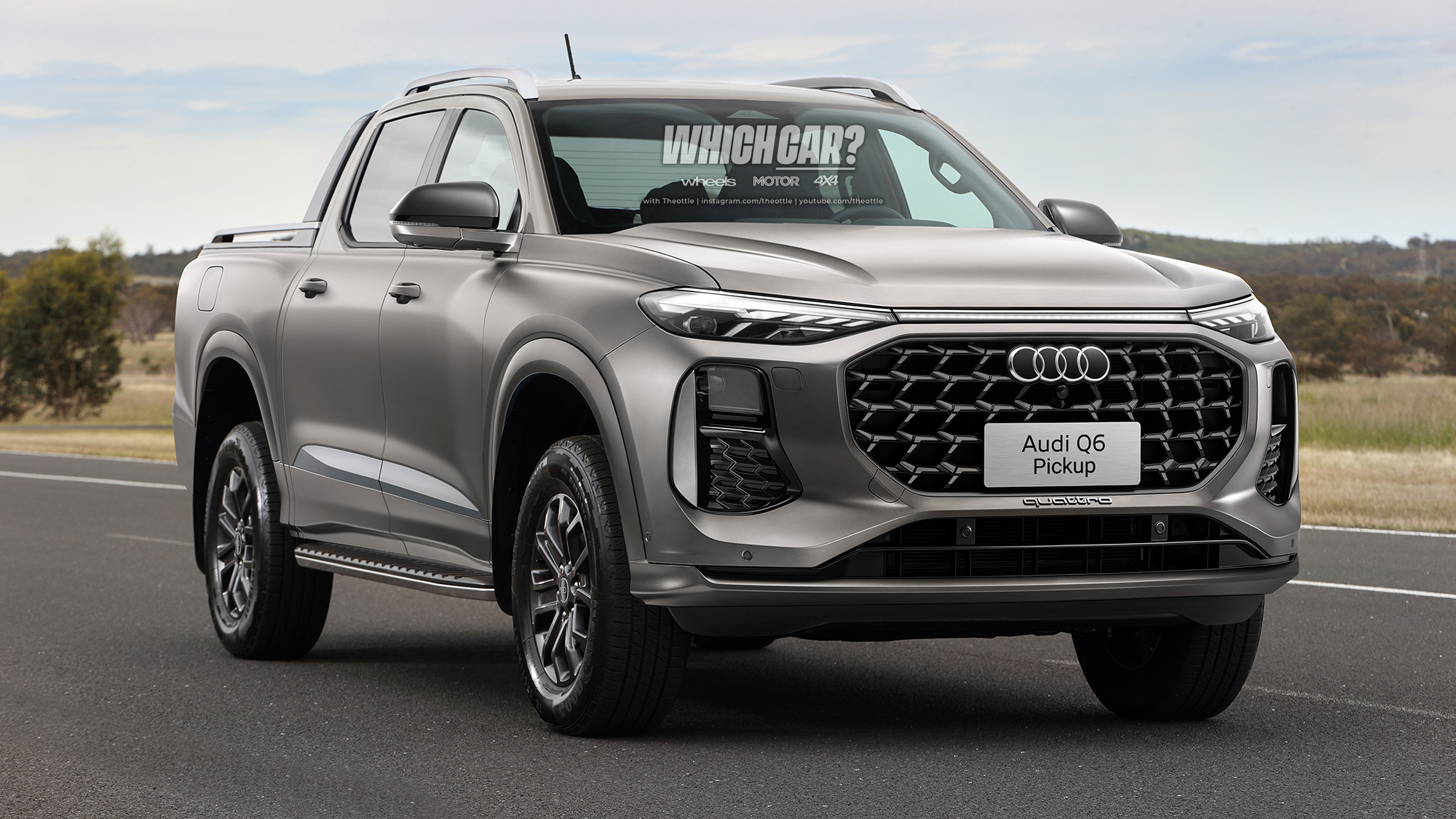
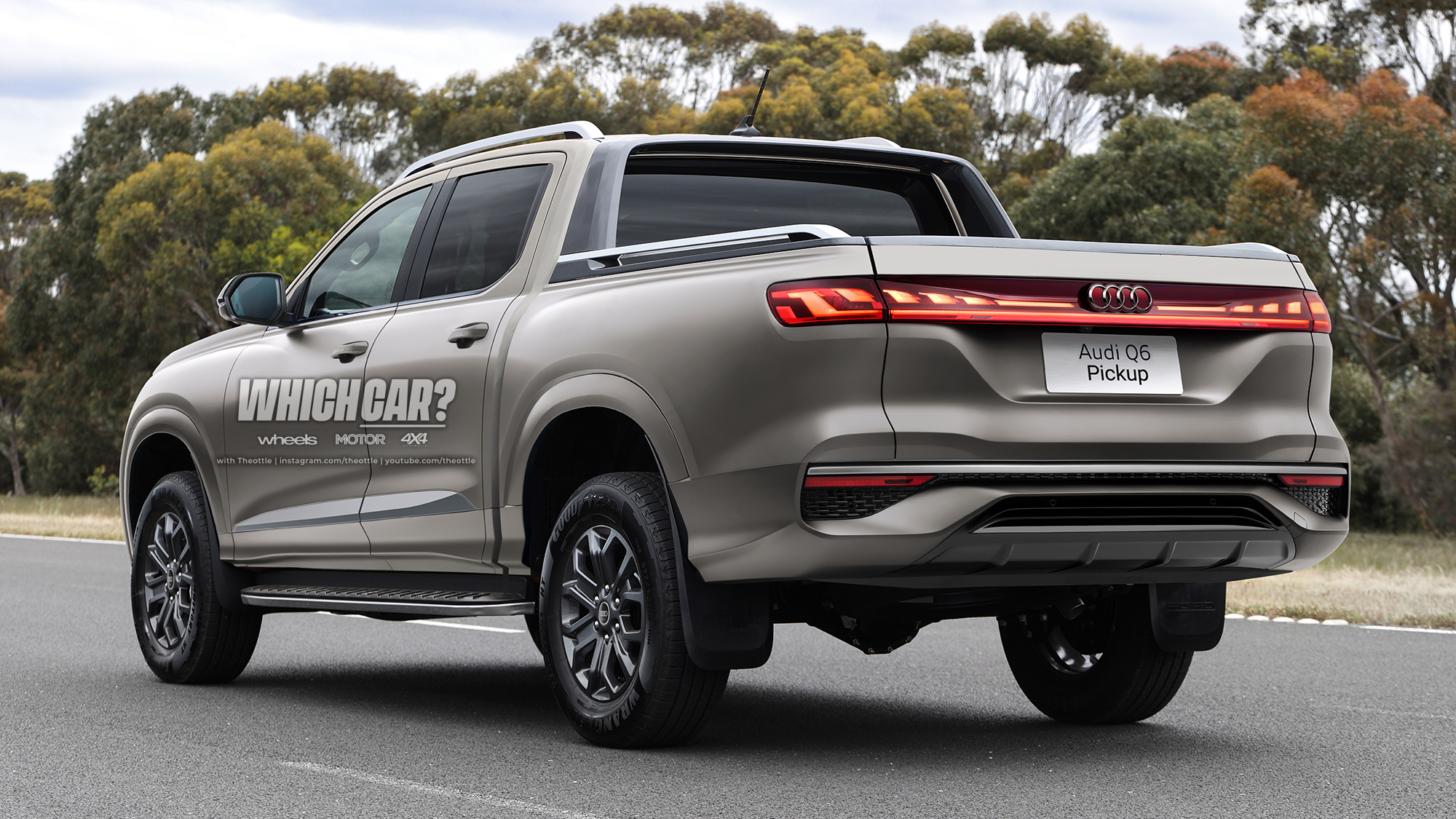
In the meantime, rendering artist Theottle has imagined a potential Audi ute, with inspiration coming from the recently-revealed Q6 large SUV designed for the Chinese market, to demonstrate the brand’s styling when applied to a ute body.
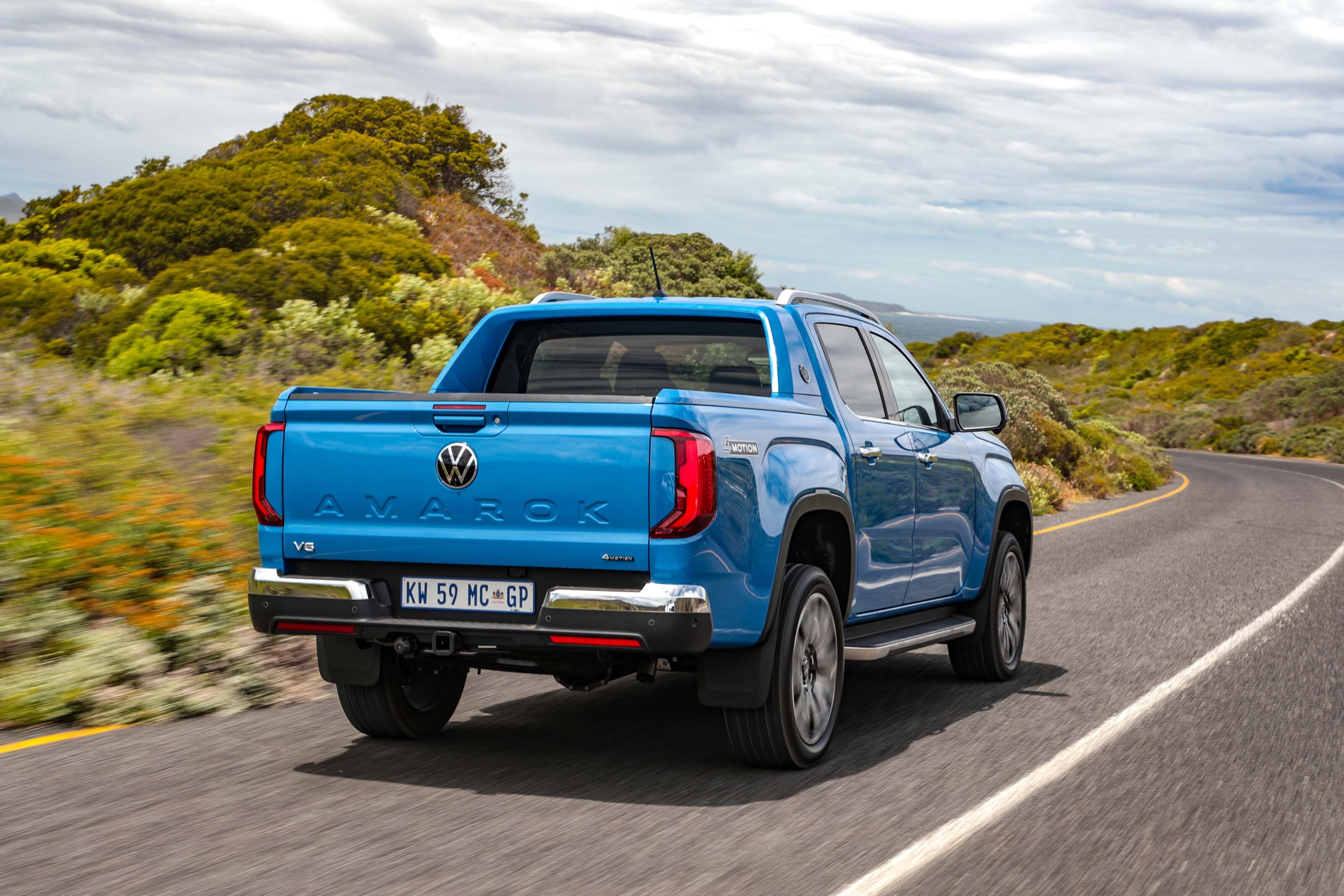
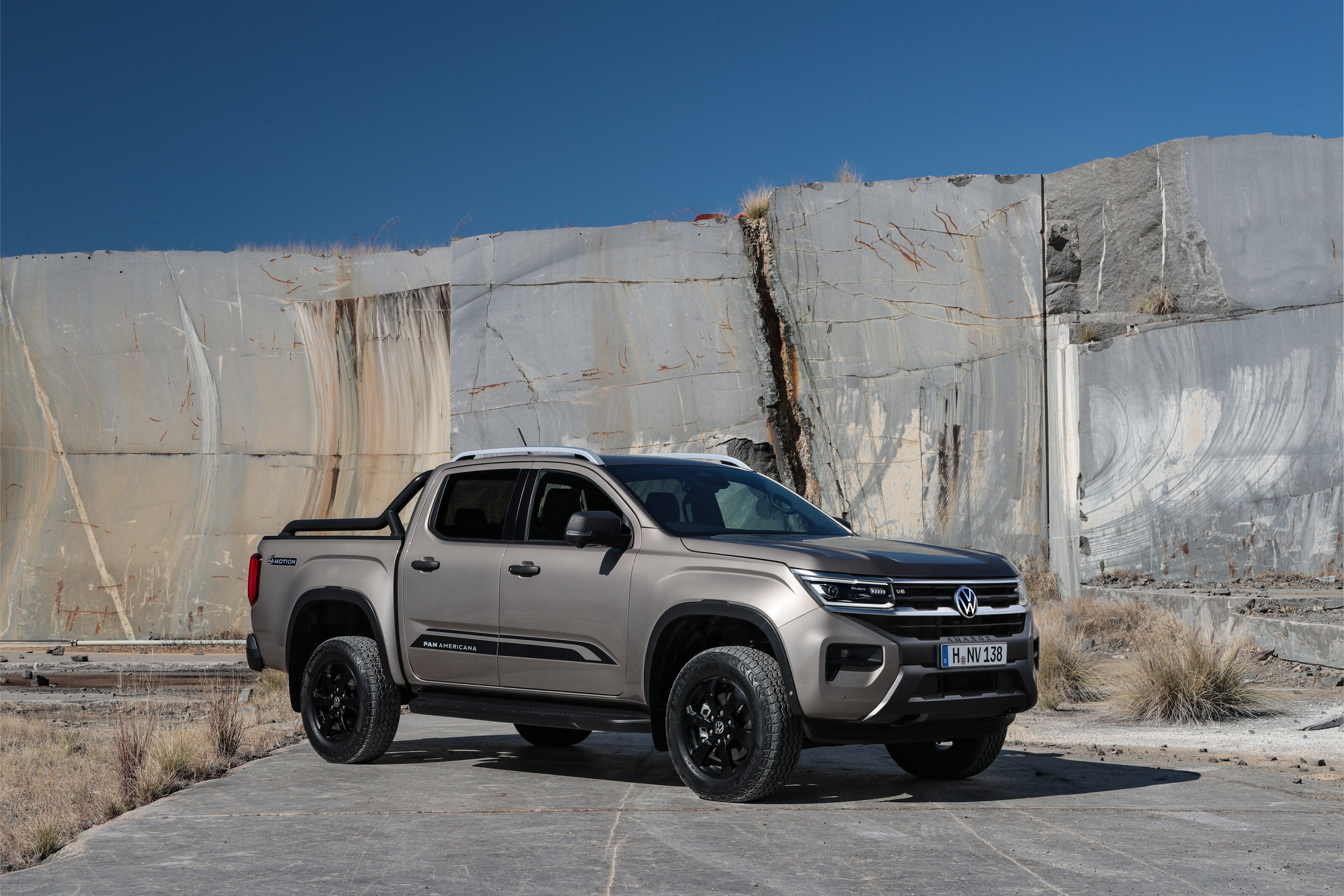
The rendering uses the new-generation, Ford Ranger-based Volkswagen Amarok as its core, with modifications including; a full-width rear light bar, slim headlights, a large singleframe grille and ‘quattro’ all-wheel-drive badging.
This approach is less likely since the short-lived Mercedes-Benz X-Class, which was based on the current Nissan Navara, demonstrated low demand for a prestige ladder-frame workhorse, in addition to the growing shift towards electrification – a move led by luxury brands, including Audi.
1
Mercedes-Benz produced the X-Class between 2017 and 2020 with an optional V6 diesel mill, before it was axed due to low sales in key markets and cost-cutting initiatives.
In addition, unlike Mercedes-Benz, Audi has no significant experience in developing and selling commercial vehicles; however, it could leverage support from the Volkswagen Commercial Vehicles division.
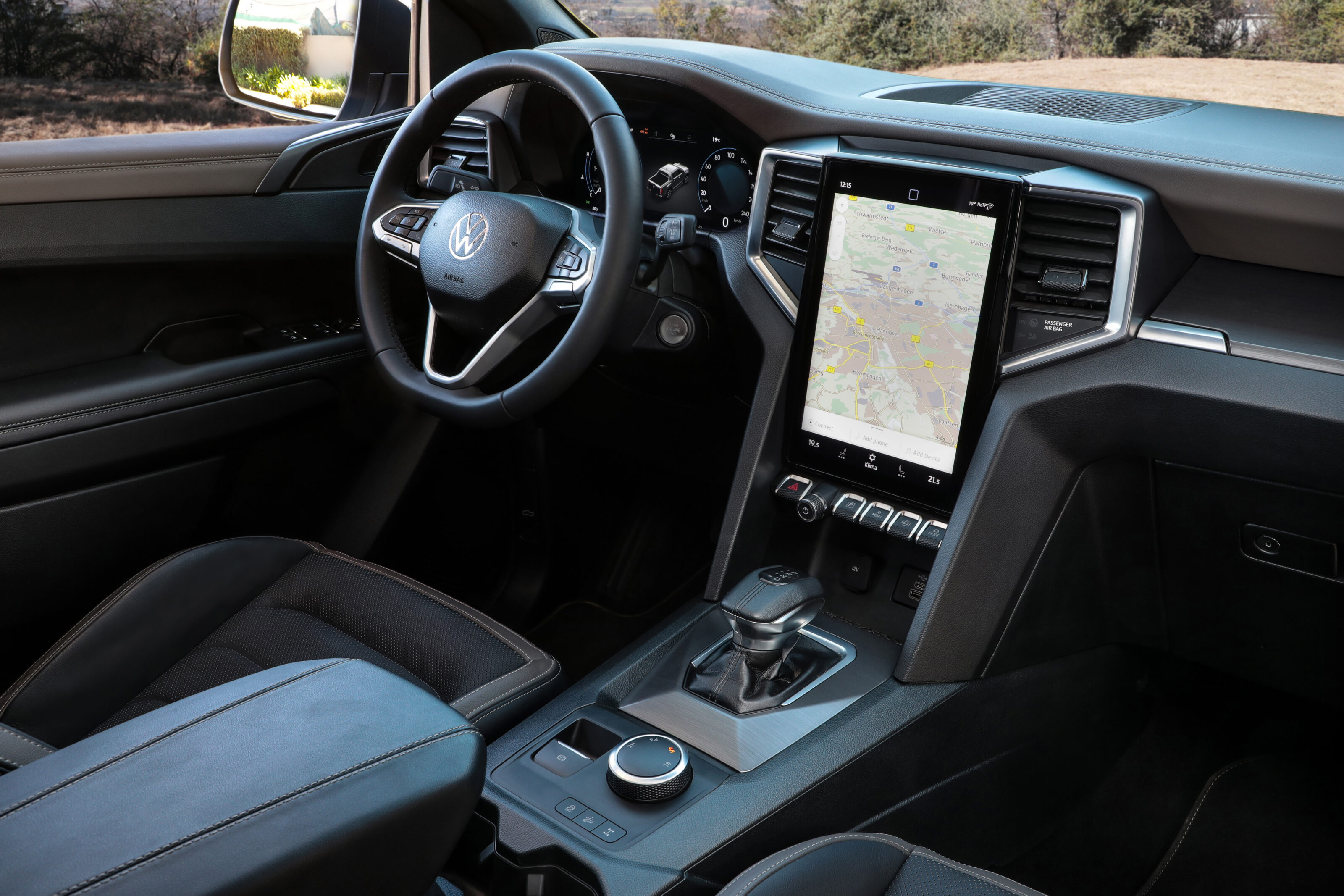
One option could be to develop the Volkswagen Group’s first ute on a dedicated electric vehicle platform, such as the existing MEB architecture found on the Q4 E-Tron or the forthcoming PPE architecture set to underpin the Q6 E-Tron.
1
The rear-drive Premium Patform Electric (PPE) architecture has been jointly developed with Porsche, offering air suspension, all-wheel steering, torque vectoring and the company’s latest-generation software components, with a new infotainment suite based on the Android Automotive operating system.
More costly utes are proving successful in Australia, with the Ford Ranger Raptor joining rival brands such as Mazda, Nissan and Volkswagen in offering range-topping models – albeit with an off-road focus.
The momentum is also growing in the United States, with examples including the luxurious Ford F-150 Platinum, GMC Sierra Denali and Toyota Tundra Capstone, as well as the performance-orientated Ram 1500 TRX and Ford F-150 Raptor R.
MORE
Ute Buyers Guide
MORE
Everything Audi
Old-school car guys hate to hear it, but Volvo’s Chief Commercial Officer Bjorn Annwall says that the future of automotive is the software-defined vehicle.
Snapshot
- Volvo moving to software-defined vehicle architecture
- EX90 was u201cborn digitalu201d
- Volvou2019s direct model will drive better customer experience
Speaking to Wheels at a Volvo event in the company’s home town of Gothenburg, Sweden, Anwall says the EX90 seven-seat electric SUV marks a turning point in the company’s history.
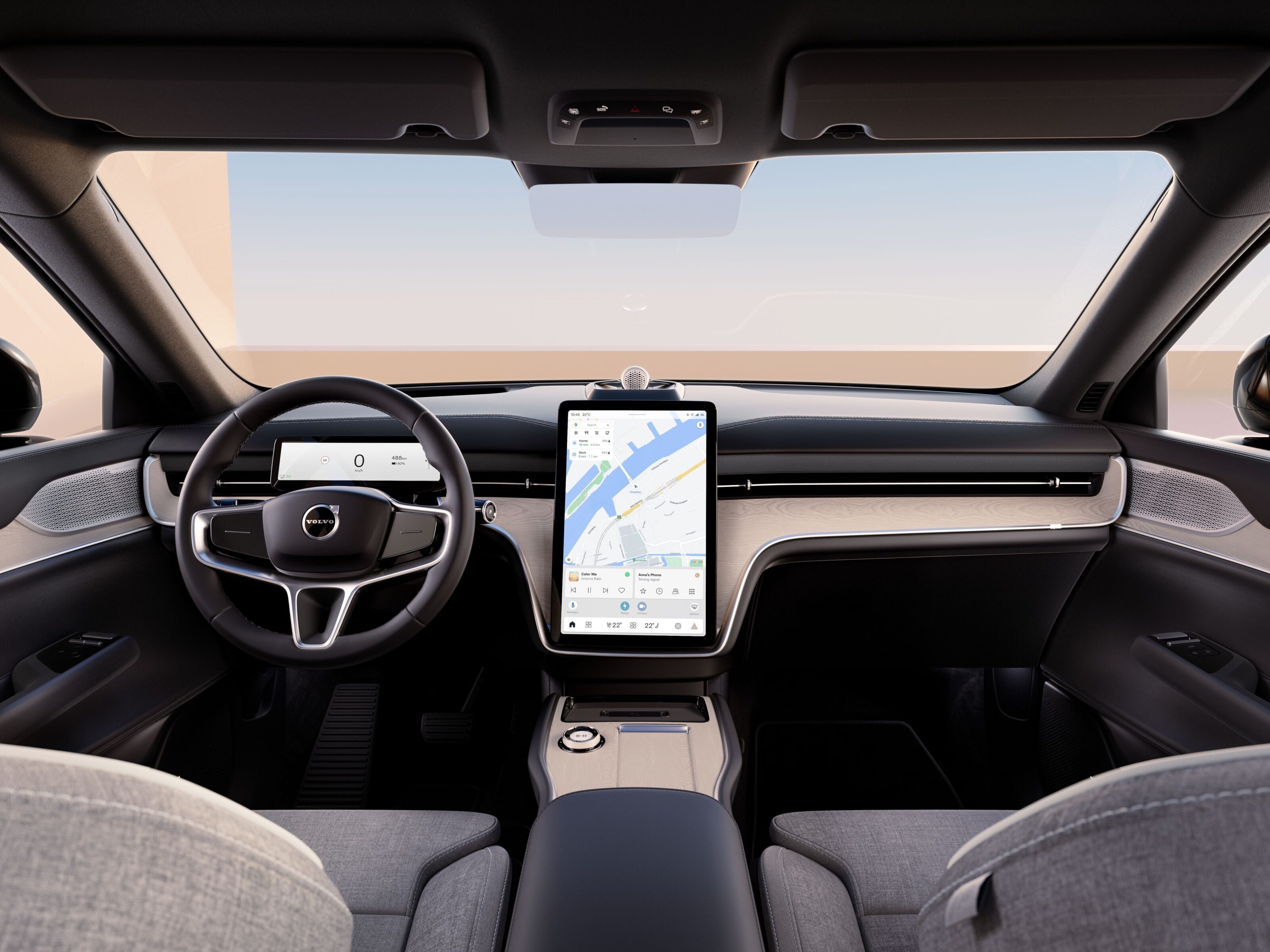
“This car was born digital,” he said, referring to the company’s first core computing architecture.
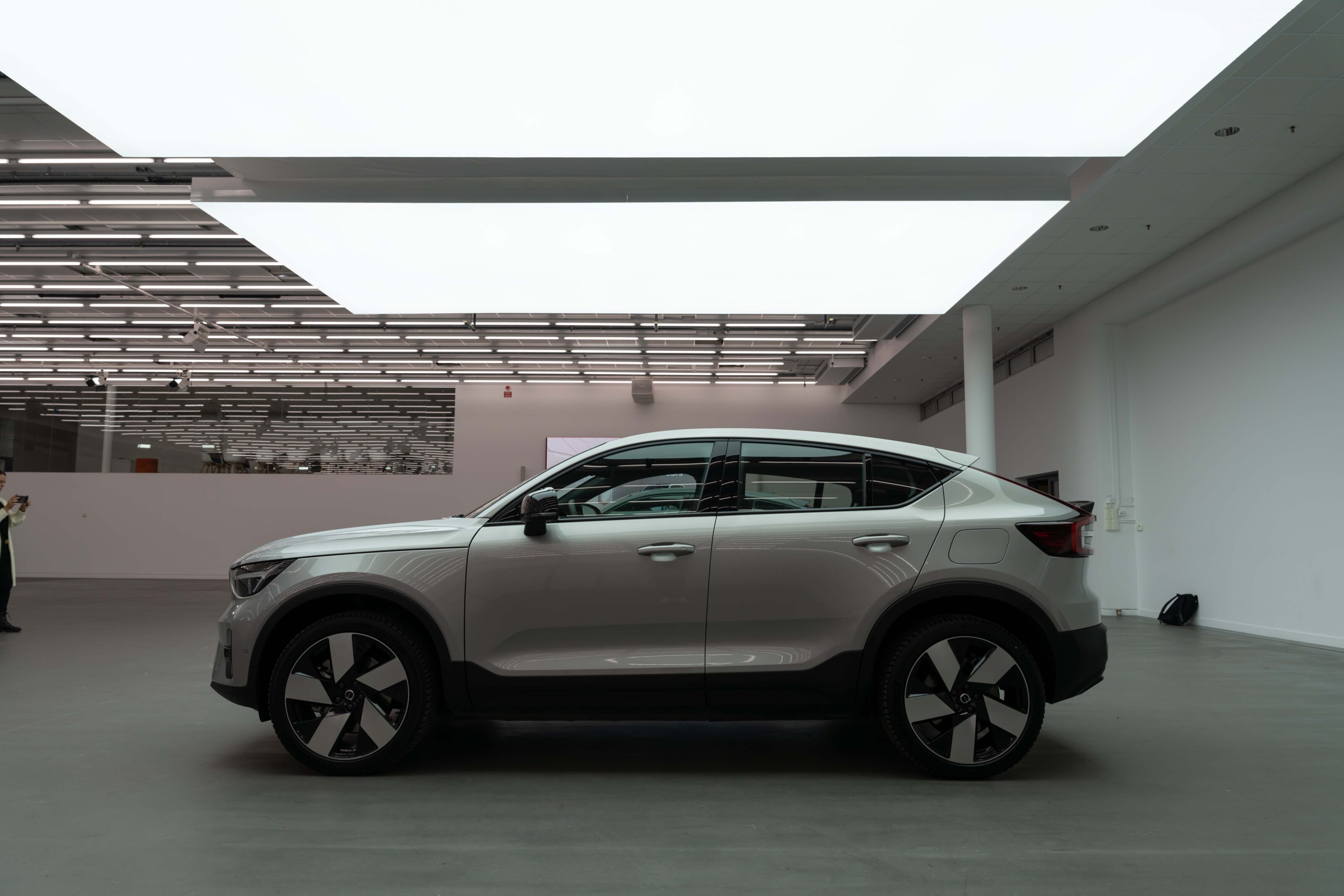
“Brainlifts are going to be more important than facelifts,” he added, referring to the way the company will be able to roll out new features and functionality to Volvo cars over the air – including features that improve the safety and augment the autonomous driver assistance features.

2
This fits with the way some carmakers are moving towards longer lifecycles for a model, while delivering improvements via software.
“More of the consumer benefit will sit in the software rather than the hardware. And then what’s the monetisation model of that? Our firm view is that we’re not going to skin our customers for a dollar for a small feature,” he said.
“You’re buying a premium car, you should be able to have great functionality and that should be upgraded over time. If there is something we should ask for more through a subscription, it has to be a step-change function better and a meaningful thing.
“For instance, full autonomous driving would be an example. Customers will accept they’ve bought a great Volvo, but it now has this great autonomous driving functionality. Yes I can pay another X bucks for that functionality. We’re not going to charge for small things.”
2
Shifting to a software-defined vehicle model means a big change in the supply chain.
“A car is 90 systems that you buy from Tier 1s and put them all together. And you get 90 black boxes with ECUs, with its own software in it and every time you need to change it you need to change the software. And, by the way, the compatibility between all of these never kind of works,” the CCO added.
“You need to take control, you own the electrical architecture and the core compute architecture and you take over much more of the core compute. We’re still going to need suppliers, but we’re not going to ask them to give us a hardware piece and a software piece, we’re going to ask them for the hardware piece.
“And if we ask them to do a software piece for us, we say here is the API (application program interface, a way of providing access to other systems in a standardised way), here is how it integrates, we see the code, it’s not a black box.”
1
“We can’t take over all of that at the same time, but the most crucial pieces we’re taking over. We’re taking over the AD (autonomous driving), ADAS, the infotainment, a lot of the vehicle behaviour and so forth.”
While Volvo’s future is electric, Annwall doesn’t see a significant role for the carmaker in improving charging infrastructure.
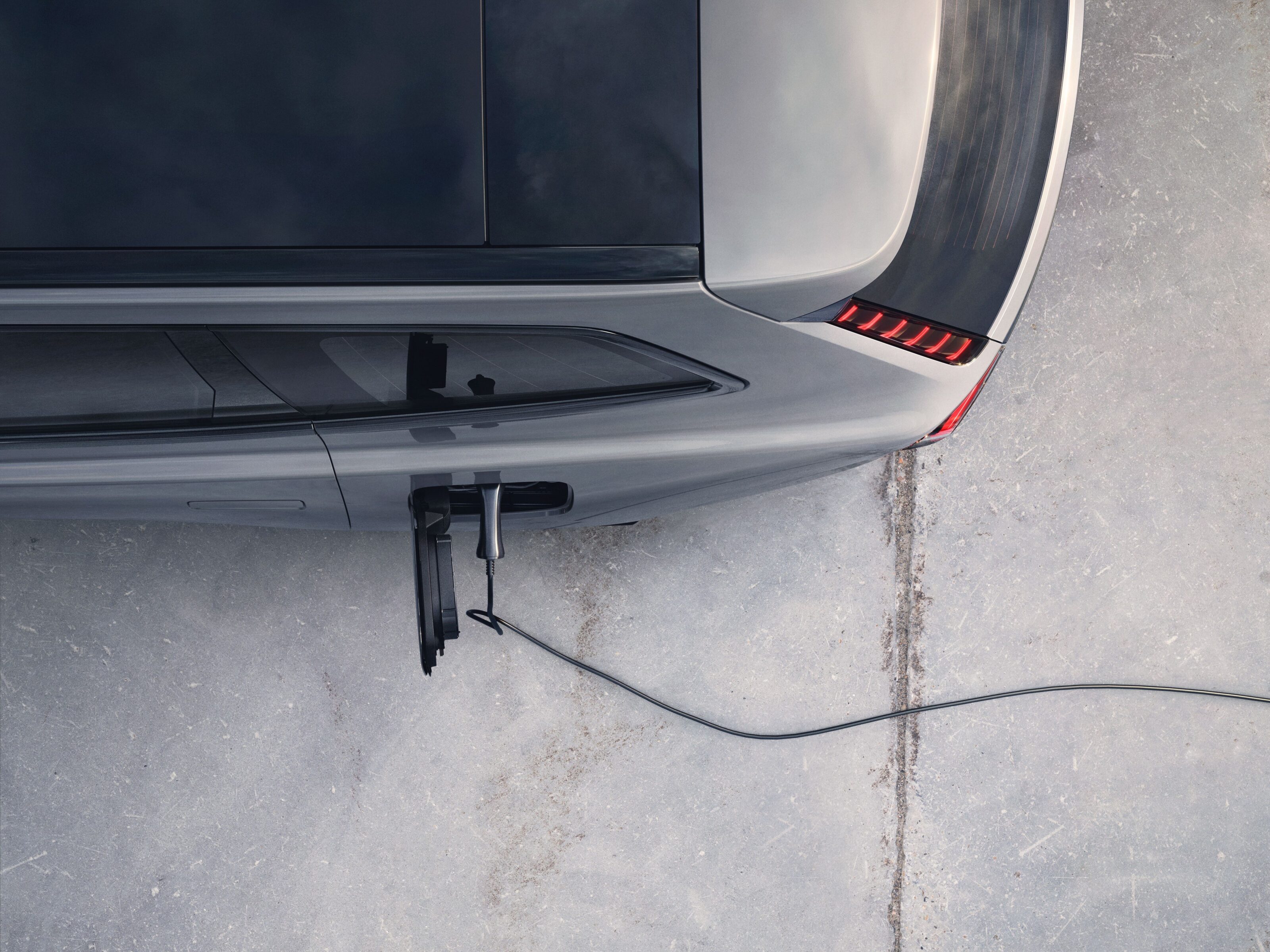
“That’s another of the key things that needs to be in place for the whole world to become fully electric. That’s an area where we spend less time in terms of actually building the infrastructure. In some parts of the world it’s kind of solving itself.
“In the northern part of Europe it’s already there and is coming quickly because the interest from the gas stations and hospitality industry to build it out is there. But in some parts of the world it’s going far too slow,” he said.
1
“We are not doing a Tesla Supercharging network. That was a brilliant idea 10 years ago, now we see that’s coming along quite quickly.
What we are putting our money on is making sure that Volvo consumers have access to fast charging in a very simple way, so that you can find it easily with your app or in the car.”
Another part of the company’s digital future is a change in the way the cars are sold. Volvo’s intention is to go direct to the customer in the same way Polestar has, reducing the involvement of dealers and also eliminating price negotiation.
“The reason we’re going direct is not to cheap-change our retail partners, it is to deliver a better consumer experience. We’re rebuilding our go-to-market model where you have volvocars.com as the foundation and then classical omni-channel approach. In order to drive that in a good way, we need to share the consumer data with the retailers in a good way.
“We as Volvo need to take much more responsibility setting the price and owning and drive the inventory flows. It doesn’t make sense to have 2500 inventory points around the globe. We can steer that in a much smarter way.”
1
“We’re not doing this for the production or procurement guys, we do this for the consumer’s sake. There’s a lot of administrative hassles in the process today that can take away that just drives cost. We can focus the retailers on what the retailers are really good at and that’s convincing the customer that Volvo is the right car for me, service the cars, help to understand the car.
“They shouldn’t sit and price haggle and work in five different administrative systems to get things done. They shouldn’t have a lot with cars on their balance sheet. Why do we use small dealers as balance sheet carriers? It doesn’t make sense.”
He was quick to point out that retailers are still critical to Volvo’s success because customers want a way to physically interact with the car.
“There is a more efficient model. Bottom line is clear: we need retail partners because the physical presence is still important. In order for retail partners to be there and be great, they have to be profitable. But the business model changes for them as well.
“Most of our retail partners maybe five years ago weren’t too happy about it but I think it’s not we who invented the internet or e-commerce. Now the discussion has gone from, ‘why the hell are you doing this, you’re evil?’ into ‘when can we get this done?’”
1
Annwall rejects the idea that a direct strategy is always an agency strategy but rather the agency model is a legal framework to make it happen, as in the UK market. Asked whether dealer profitability comes from reducing the number of people a dealer needs to employ to sell, Annwall suggested that could happen.
“If you take the UK model, what changes for a retailer is that the balance sheet more or less goes away because he or she is not sitting on the cars. Top line goes down a lot because you’re not charging the full car, they’re basically getting a commission for selling the car. You don’t need as many people because you’re not negotiating the price anymore, that’s too big a part of the car purchase today.
“We honestly don’t know if it’s going to be 10 per cent who [buys] a car completely online and 90 per cent who do it exactly the way as in the past or the other way around. It will evolve over time, but you don’t have to be Einstein to conclude that it will be less and less physical part of the consumer journey over time. We need to have a system who want a lot of online, those who want a lot of offline and those who want both.”
1
“We honestly don’t know if it’s going to be 10 per cent who [buys] a car completely online and 90 per cent who do it exactly the way as in the past or the other way around.
Finance is a lucrative part of selling cars despite it being so competitive. A direct model will mean Volvo-branded finance will become a more prominent part of the buying process. Annwall says Volvo customers are the kinds of people you would want looking after your house while you’re on holiday, meaning they’re also good finance customers.
“With subscription we take much more of the responsibility for that ourselves. It used to be outsourced to these other companies. We have the best customers, they have the highest credit rating, they take care of things, they’re likeable, reliable people. Exactly the same people you want to sell financial and insurance products to. But today Volvo customers are subsidising Alfa Romeo or BMW customers. We can insource much more of that and by doing that build a closer relationship with our customers. That’s part of our strategy.”
Volvo on Demand has performed well in urban areas in Sweden and is part of the overall direct-to-consumer strategy.
1
“As we roll out all our digital direct capabilities in the UK and we will continue in other markets, we will add Volvo On Demand as part of that offering. It’s not a different business model, it’s not a different business, it’s part of how you get access to Volvo.
“You can buy it outright, you can get a loan or a lease or flexible subscription. Or you can sign up to Volvo On Demand which means you get access to a car when you need it. It’s not always going to be the same car, but you have the security that you have access to it,” he said.
“Our subscription offer has been very successful for us in two aspects. One, it has a very high degree of conquest. If you ask them why did you finally come to Volvo, this way of having a car is good and now we really love the Volvo. So it’s a conquest tool for us.
“And the other thing is that the average age of the customers who choose subscription is 10 to 12 years younger. It’s a good conquest tool for young customers. I’d rather conquest young customers than old customers because it gives us a longer future.”
1
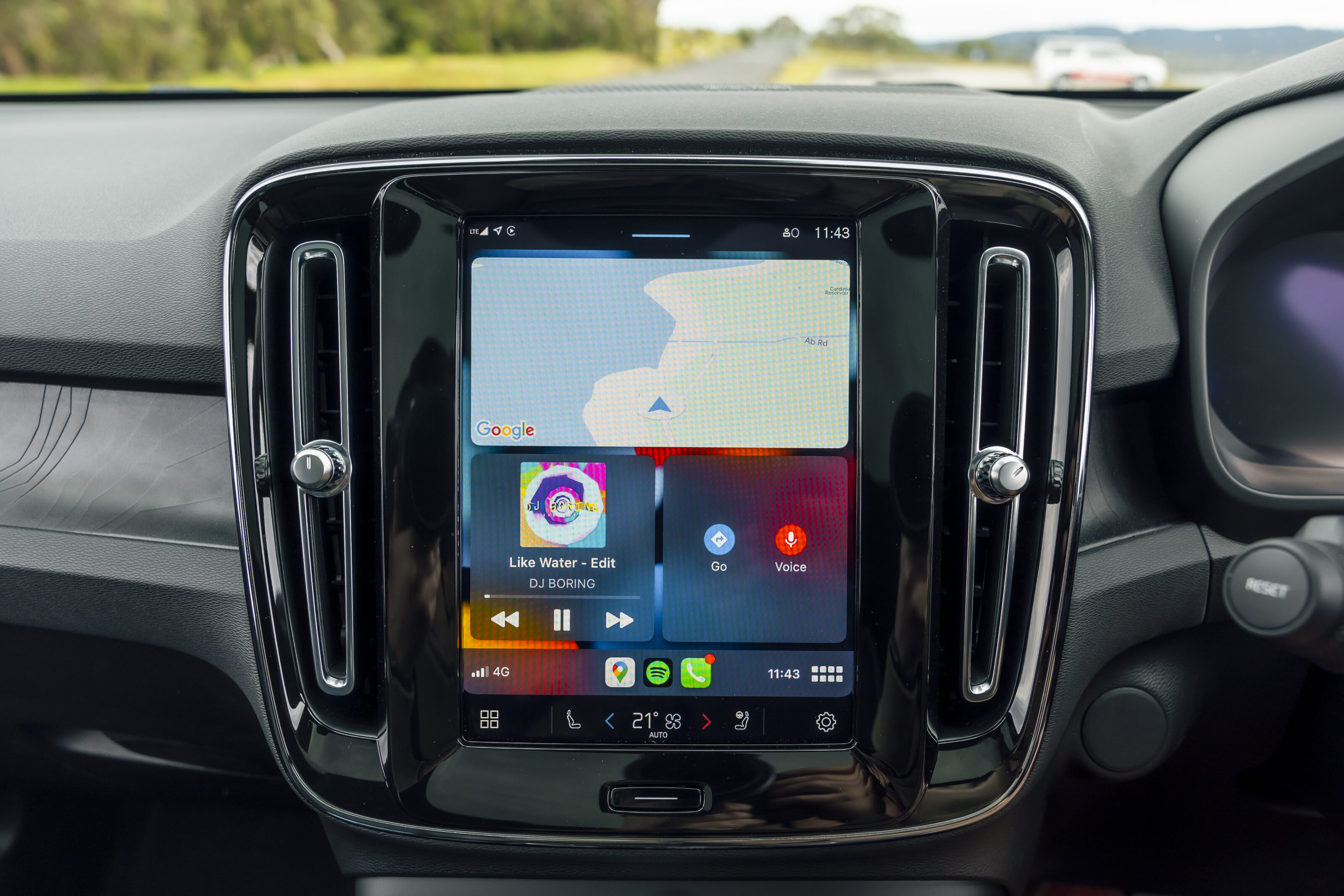
Volvo’s recent appearance at CES signalled a deepening relationship with search giant Google. Annwall explained that being selective with partners as part of the shift to electrification was all part of delivering a better customer experience and isn’t worried Google might push Volvo out of the way in the customer relationship and intellectual property.
“I don’t think Volvo can do a better map than Google. I don’t think Volvo can do better voice recognition system than Google. And I don’t care a single bit that when you sit in a Volvo that you say ‘Hey Google’ rather than ‘Hey BMW’ or whatever. I think consumers are used to saying ‘Hey Google’ and that’s the best voice recognition.
He added with a smile: “As a benefit, the one out of a hundred times it doesn’t understand it, the customer gets annoyed at Google rather than Volvo.”

1
“Google already won the game of owning the data ecosystem of our consumers. The epicentre of our consumer’s digital existence is the phone and not the car. The car will never be the epicentre of the data ecosystem. So what you need to do is decide what is the relevant place for the car in the data ecosystem. There’s always a risk in collaborating but I think it would be a bigger risk doing this ourselves.”
A more digital business means a great risk of a cyber attack on either customer data or the cars themselves and Annwall accepts that cybersecurity is hugely important.
“Cybersecurity is something we invest a lot into. With over-the-air updates you introduce potential new entrances for people who want to do the wrong things. Of course, that’s why we need to be very cautious about how we secure those entrances. It’s good to be in a company like Volvo where the safety question’s always at the very centre in any development.”
1
Annwall’s task to take Volvo into the future is a big one. Volvo is going first with an all EV strategy, mirroring the kind of start-up thinking that has served Tesla and Rivian.
Casting off the costs and marketing confusion of running two separate product lines will be tested in Australia first with a transition to all EVs in 2026.
Watching a century-old company pivot in such a short space of time will be very interesting.
MORE
Everything Volvo
Justin Hocevar is no stranger to adventure and a challenge.
As if earning a living as a motorcycle courier on London’s notoriously dangerous streets in his early 20s wasn’t enough of a testament to his fortitude, the trip home to Australia after four years in the UK was completed using a Honda XRV750 Africa Twin and 12-month overland adventure.
Of course, the journey would have been far simpler by air, but Hocevar tells Wheels that a yearlong odyssey through countries including Iran, Pakistan and Nepal teaches you a few things that the inside of a Boeing 777 cannot.
“Going out into the unknown leaves a mark on you that you can approach anything and everything, and your consideration of the possibilities is a little broader,” he said. “But also it leaves you with a longing for doing things a bit differently and not taking the path well-trodden.”
1
Over a long and varied career in the Australian automotive industry, Hocevar’s resume includes a tenure with BMW helping to transform Motorrad from a range of motorcycles for grey nomads into a vibrant adventure brand, and turning Renault’s flat-lining sales into five years of growth from his first year at the helm.
But the longing for adventure and a desire to break the mould isn’t fading with experience. In fact, his latest venture is arguably the most ambitious and risky – leading challenger brand Ineos into the fearsomely fickle Australian market.
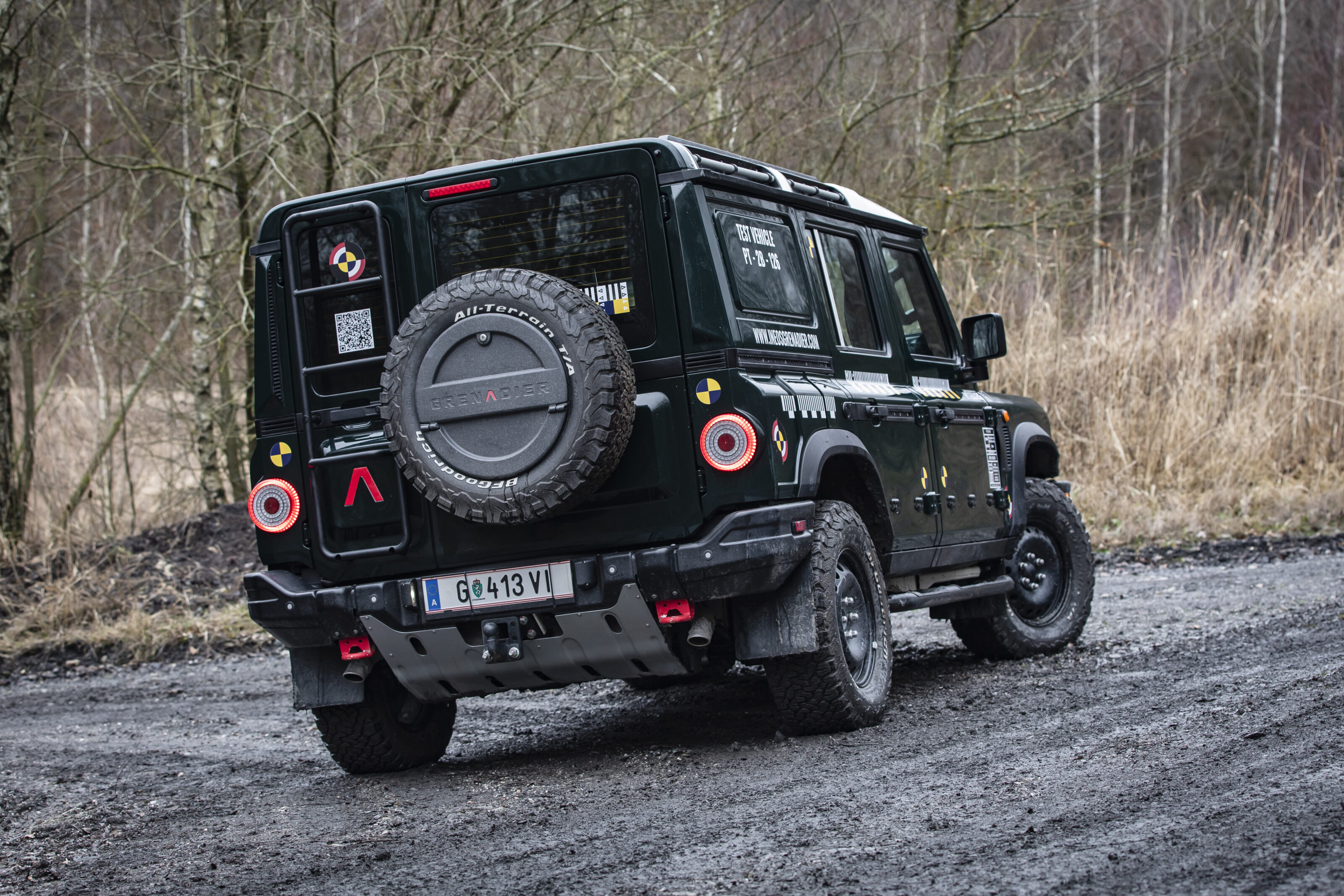
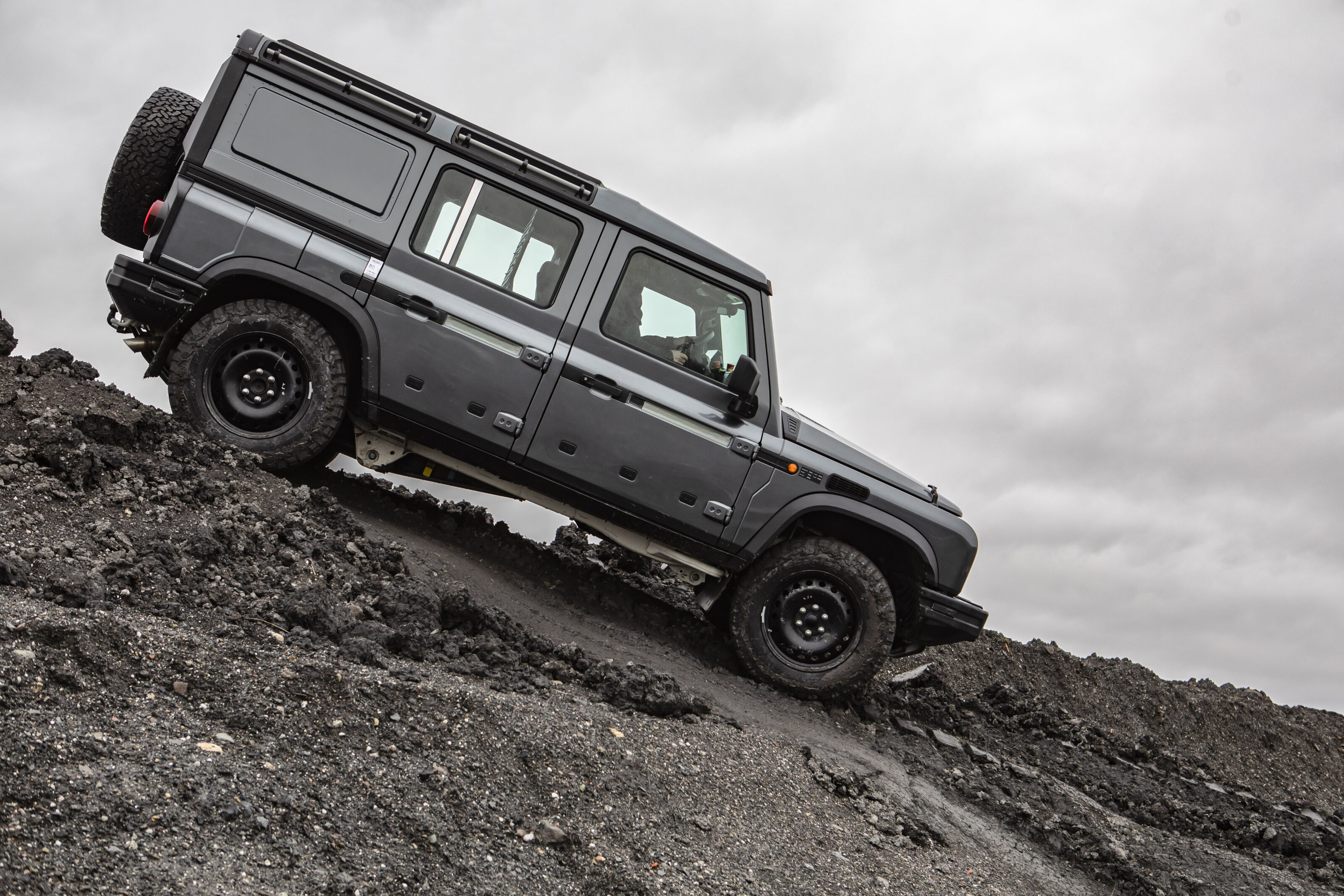
Conceived over beers at Ineos Motors founder Jim Ratcliffe’s favourite pub and sharing its name, the Grenadier large 4×4 will lead the charge around the world’s respective markets, funded by the company’s giant chemical industry ventures. If you’re seeing more than just a likeness to the retired Land Rover Defender then you’re not mistaken.
1
The Grenadier was created to fill the gap left by departed old-school 4x4s including the Defender, but sales are coming from a diverse range of customers, according to Hocevar. Either way, they’re coming in thick and fast with order books in all regions filling faster than Ineos expected. “Australia has particularly outperformed expectations,” he reports.
“When we first opened our orders we blew out to 18 months of production and that gave us the ability to go back and re-craft the Australian plan.”
After proving the potential Down Under, Ineos was able to negotiate a larger share of global supply, and while Hocevar didn’t reveal exact numbers, the extra supply reduced wait times to eight months – but continued interest has since extended it back out to a year.

1
Interestingly, mournful Defender owners only constitute a small number of those placing deposits in Australia, and while there was significant interest from the Land Rover community, the lion’s share is coming from far bigger brand followers.
“We’ve spoken to a lot of Toyota people, quite a few Nissan people, that are still hanging on to their Y61s. But then we get people who are in Rangers and Amaroks. We’re not chasing huge amounts of share from companies like that, we’re just presenting an alternative to what those brands do now.
“We provide a credible, durable, reliable, quality 4×4 for those people who feel they’ve been left behind.”
In many cases – including a large contingent of customers who placed $800 reservations – the local audience has everything crossed for a Ford Ranger and Toyota HiLux rival.

2
“There’s a lot that are waiting for news on the dual-cab, and the dual-cab will come,” confirmed Hocevar.
Any similarity to the Defender ends with the Grenadier’s exterior with unique body-on-frame construction, twin live axles and a choice of diesel or petrol six-cylinder engines courtesy of BMW, but Hocevar’s approach to the Australian market is equally unorthodox.
Unlike many other automotive startups, the Britain-based company does not see itself as the Google of cars and instead has far more in common with a very different sector of transport to offer an antidote to “Jellybean SUVs on monocoques”.
“We’ve approached this almost like a truck company would. Much longer model cycle, no need for fancy cosmetic updates. Let’s recognise that each individual vehicle has a unique purpose and downtime is money. Sure we’ll have to evolve…but right here right now, we’ve got everything you need and nothing you don’t.

1
Of course, Hocevar could have tried to do it the old fashioned way and introduce Ineos with a more conventional business model, but an unusual vehicle requires an unusual treatment with everything from the company’s beautiful architectural premises in a converted bakery in Melbourne’s west, to the focus on a regional network and direct-to-consumer contracts.
Commerce is littered by startups that focused too much on the product, neglected the peripherals and failed, but it doesn’t take long talking to Hocevar to realise that Ineos is about far more than a compelling off-road vehicle. This is a company that’s looking at the full picture and isn’t scared to take risks.
With a focus on more “purposeful vehicles,” ongoing hydrogen fuel-cell development, 29 agents locked in around Australia, a year’s worth of orders, and the first Grenadiers rolling off boats right now, it looks like Ineos has pulled the pin out of a pineapple and tossed it into the Australian 4×4 market.
MORE
Everything Ineos
Um, at the risk of sounding like we don’t know, how long is a piece of string?
There are probably more variables that determine tyre life than there are brands of tyres for sale in Australia. Start doing burnouts and donuts (heaven forbid) and a brand new set of tyres might last a couple of minutes. Do the right thing by your tyres and you might get anything up to 100,000km out of them. Or anything in between.
But let’s assume you’re not a serial hoon and you drive like a normal homo-sapiens. Even at that point, there are still many, many variables.
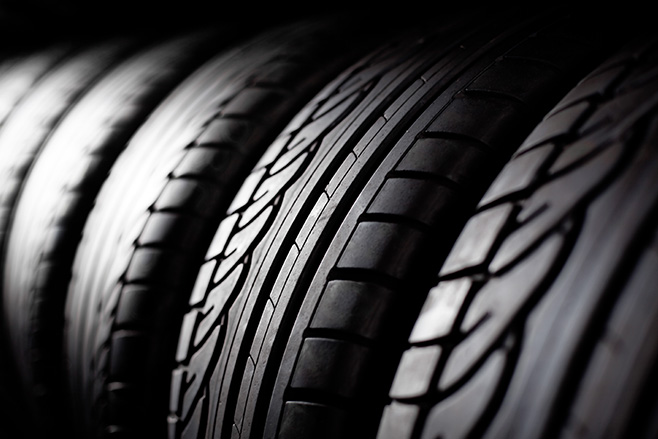
You can extend tyre life by making sure the inflation pressures are checked and adjusted regularly and by rotating the tyres front to rear every 20,000km or so.
1
Wheel alignment is also critical and this should be checked every 12 months (or any time you clout a kerb or median strip).
Worn suspension can shorten a tyre’s life and stop-start driving in urban traffic will wear tyres out faster than running in highway conditions.
Towing a trailer can shorten tyre life, too, and really high-performance tyres naturally wear faster because the rubber their tread is made from is physically softer.
Even the coarseness of the individual little stones that make up the bitumen in your part of the world can make a difference.
But taking all that into consideration, if you can squeak 60,000km or so out of a set of tyres on a conventional hatchback or sedan, you’ve done pretty darn well.
A special edition has been created for the 2023 Volkswagen Tiguan to help overcome supply issues.
Snapshot
- 2023 Volkswagen Tiguan 162TSI Monochrome special edition
- Available in five-seat, regular-wheelbase or seven-seat Allspace guise
- Priced from $53,390 plus on-roads; based on popular R-Line grade
First published in August 2022, the story has been updated – and pulled forward – to reflect the local arrival of the Volkswagen Tiguan Monochrome special edition.
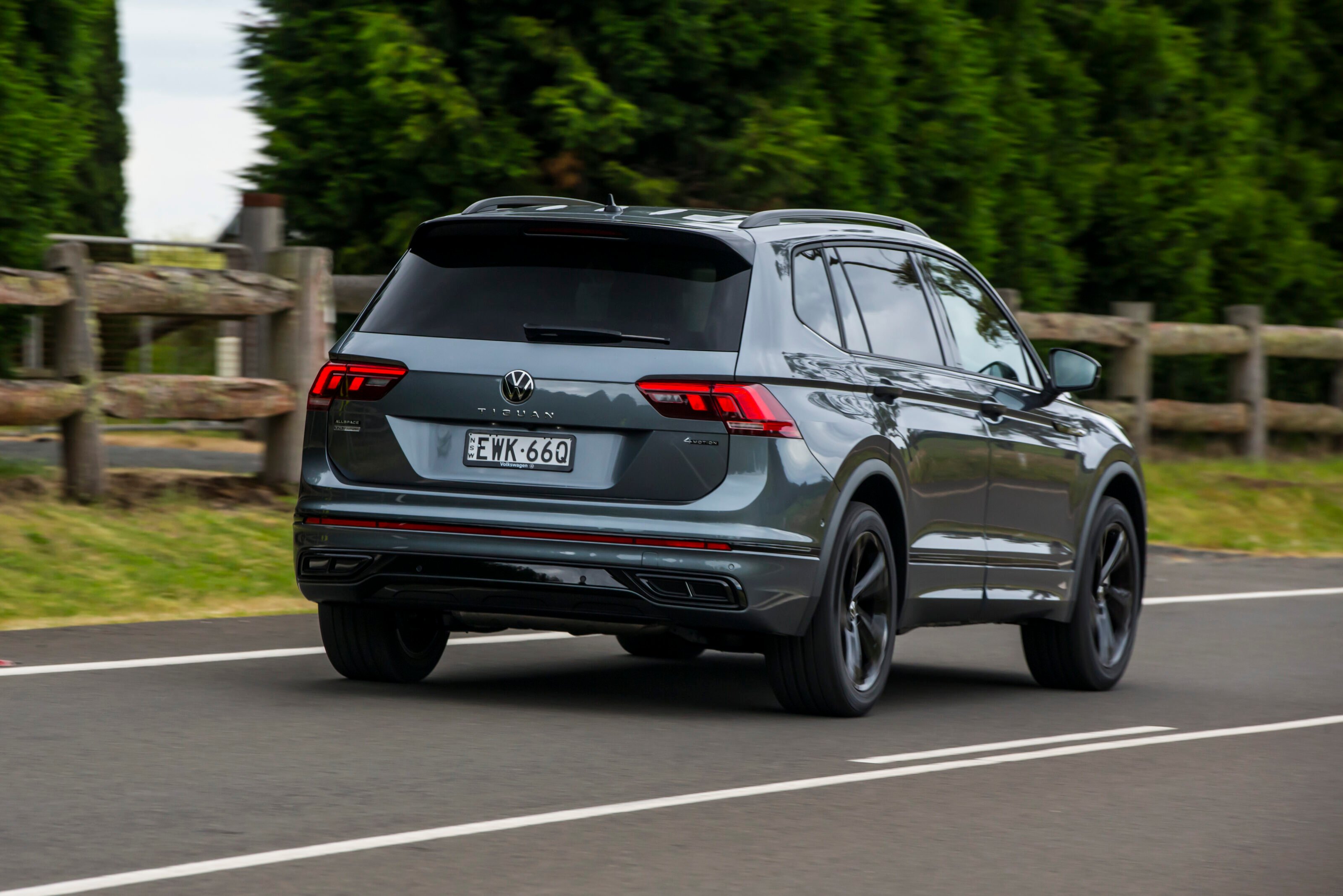
The 2023 Volkswagen Tiguan Monochrome and Tiguan Allspace Monochrome save $4400 and $4600, respectively, by deleting some equipment from the equivalent 162TSI R-Line spec on which each model is based.
Monochrome editions can be ordered now for immediate delivery, with the Tiguan priced from $53,390 and the Tiguan Allspace version costing from $55,690.
1
The special editions borrow their name from the Touareg Monochrome introduced in 2018, though that model was a higher-specced, higher-priced version of the 150TDI designed to boost sales in a runout phase.
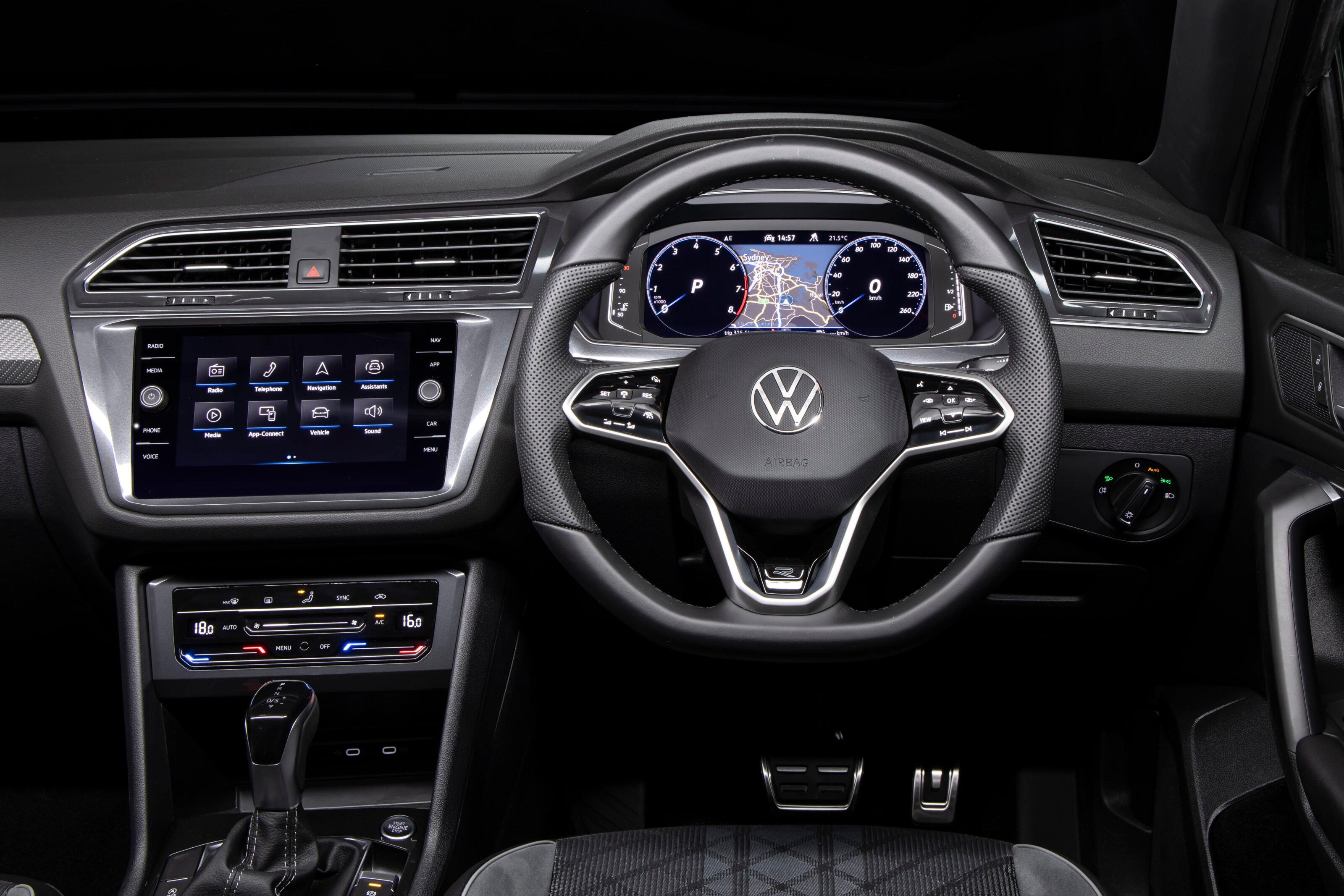
Monochrome editions offer a lower price by deleting a range of features from the R-Line, including the electric front seats, heated seats, leather upholstery and a 9.2-inch infotainment touchscreen. The latter is replaced by an 8.0-inch touchscreen, and the seats are fabric.
Metallic paint is standard, with a choice of silver, grey, or black. A three-layer oryx white is a $900 option. The only other option is a $2000 panoramic sunroof.
Monochrome Tiguan variants are further differentiated in the range with 19-inch gloss-black ‘Valencia’ alloy wheels, 90 per cent dark tinted rear windows, and a Black Style Package that adds several black exterior elements in addition to the rims.
1
They miss out on the same features that the MY23 162TSI R-Lines currently lose owing to the semiconductor supply crisis: side assist, rear traffic alert, and proactive occupant protection system for the standard-wheelbase model (unavailable on any Tiguan Allspace).
Volkswagen Australia said the Monochrome editions join the newly announced Tiguan R Grid Edition and previously announced Tiguan Allspace Adventure five-seater, as models designed to speed up delivery to customers of SUVs with particularly popular drivetrains.
The VW Tiguan Monochrome and Tiguan Allspace Monochrome share the 162TSI’s 162kW/350Nm 2.0-litre turbocharged petrol engine, with all-wheel drive and a seven-speed dual-clutch gearbox.
VW Australia is looking at a bumper sales finish to the end of 2022, with 9000 vehicles set to be delivered by boat in either November or December.
2023 Volkswagen Tiguan pricing
Prices exclude on-road costs.
