
Snapshot
- 2023 Maserati GranTurismo exterior revealed
- Petrol versions powered by the Nettuno twin-turbo V6
- Full reveal imminent u2013 including all-electric Folgore
UPDATE: 2023 Maserati GranTurismo revealed
The next-generation 2023 Maserati GranTurismo has officially debuted with petrol and electric power.
For everything you need to know, click on the read more link below:
Here it is: Our first look at the next-generation 2023 Maserati GranTurismo.
Maserati has showcased the exterior of its Mercedes-AMG SL competitor in a teaser campaign ahead of its imminent debut.
The second-generation GranTurismo coupe replaces the previous version, which ended production in 2019 after a 12-year run.

A replacement for the GranCabrio convertible is expected to follow in 2024.
Under the bonnet, the new GranTurismo Modena and Trofeo will be fitted with a twin-turbo V6 engine – and joined by an all-electric Folgore version.
The petrol mill, codenamed ‘Nettuno’, is currently used in the MC20 sportscar and Grecale medium SUV.
Maserati hasn’t confirmed power outputs for the GranTurismo; however, it produces 463kW and 730Nm in the MC20, and 390kW and 620Nm in the Grecale Trofeo – up 52kW and 100Nm over the outgoing 4.7-litre Ferrari-sourced V8.
As for the electric GranTurismo Folgore – the Italian word for lightning – it was recently teased driving on Californian roads during the 2022 Monterey Car Week.
It will be the flagship variant with a tri-motor electric powertrain, which Maserati claims will produce more than 883kW.
According to Maserati design boss Klaus Busse, the GranTurismo Folgore will complete the 0-100km/h sprint in a claimed 2.6 seconds, with a 200mph (322km/h) top speed and an 800-volt charging architecture.
The design of the GranTurismo is similar to the outgoing model, but it sports a refreshed look similar to newer Maserati vehicles, such as the Grecale and MC20 according to Drive.
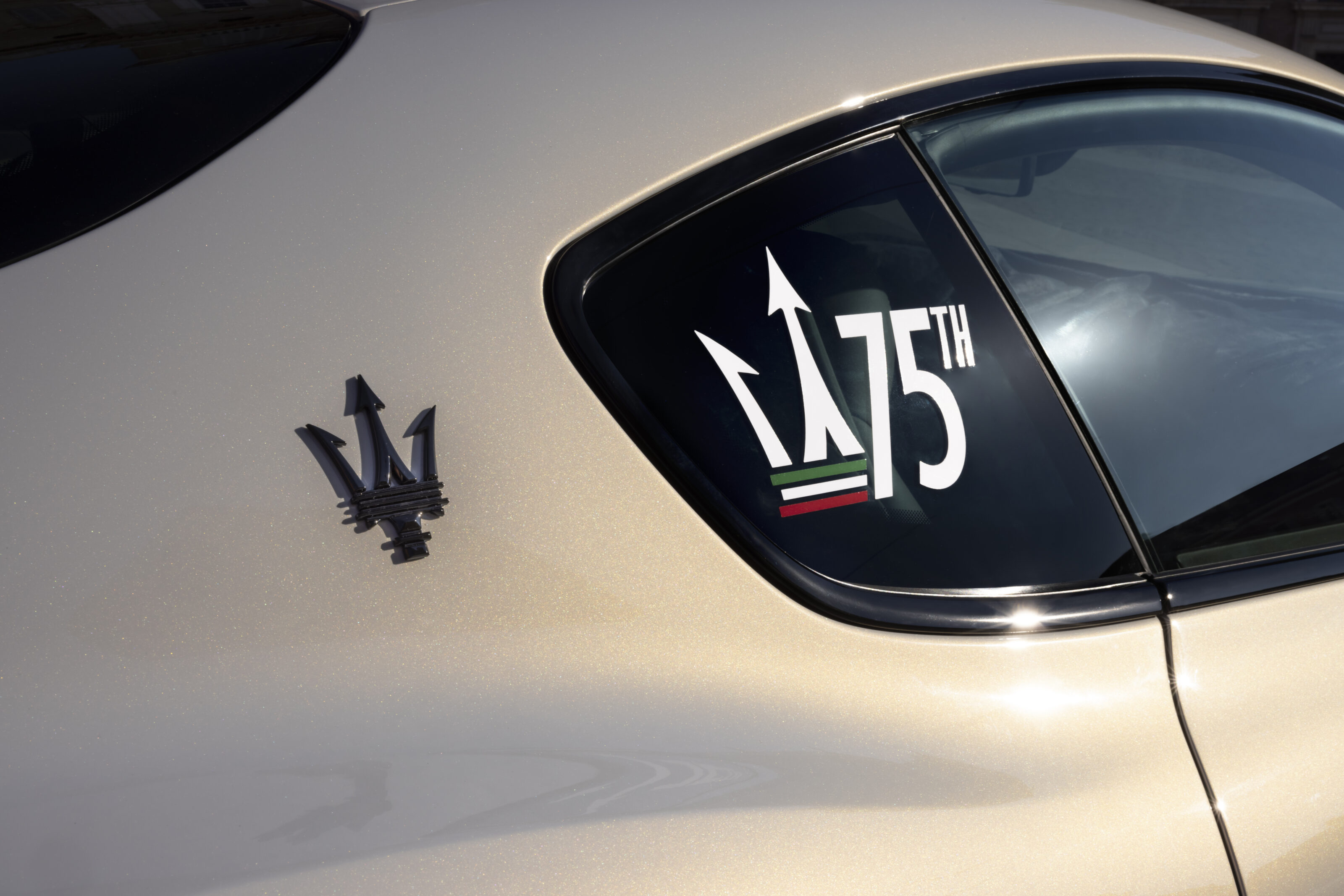
Up front, the GranTurismo sports a wide grille and functional air vents in the lower bumpers, while Maserati’s iconic side vents remain.
A pair of slim tail-lights similar to the MC20 feature, along with quad exhaust tips mounted at the edges of the rear bumper.
The full reveal of the 2023 Maserati GranTurismo – including its interior, which is expected to be similar to the Grecale – is imminent, so stay tuned to Wheels for the latest information.
“There’s going to be a lot of iterations, so give us some time.”
Snapshot
- Existing schedule already locked for 24 months
- Coming sales peak could open door for Australian orders
- Local range could include Bronco and Bronco Sport
Ford’s highest executive has offered a glimmer of hope that its Bronco and Bronco Sport lifestyle-focused SUVs might still make it to showrooms Down Under, if all other demand for the duo can be satisfied first.
The Blue Oval has previously thrown water on any hopes the Bronco models may be offered in Australia, confirming left-hand drive only for the model range, thereby excluding them from the local line-up.
However, Ford’s top exec has confirmed that while the pair of SUVs are indeed only being made in LHD for now, right-hand drive versions will be considered if the company can find capacity in its manufacturing facilities.
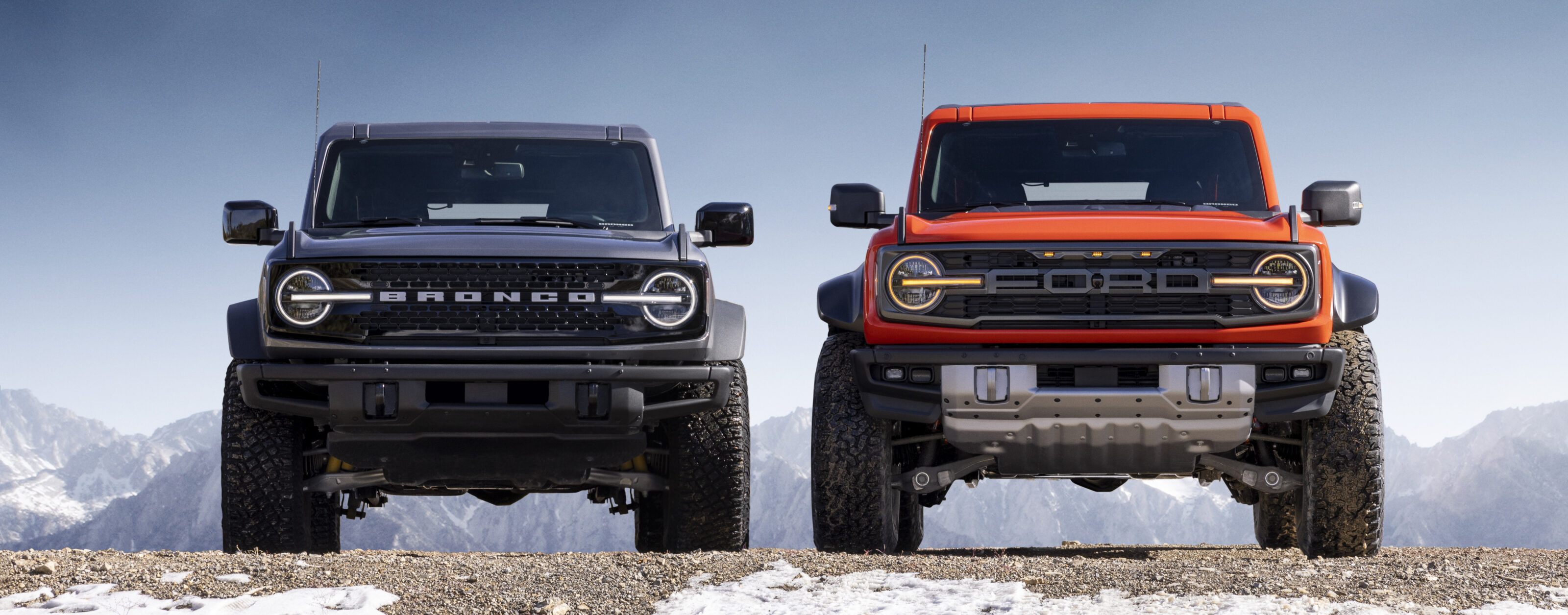
Ford president and CEO Jim Farley explained that the Bronco and Bronco Sport will be in high-demand for about 24 months, but once sales have peaked, there may be an opportunity to offer the models in smaller markets.
“We can do Bronco and Bronco Sport for the globe for sure, but we have, like, a year or two order bank, so we have a lot of work to do on our capacity before we can even consider something like that,” he said.
Ford’s iconic Mustang coupe and convertible received a warm welcome and record-breaking sales when it was offered in Australia as a factory-built RHD for the first time in 2016, and Farley explained the same approach could be applied to the Bronco brace in time.
“Of course it can be engineered just like Mustang, but you have to invest in the capacity and it’s the first or second inning of building up the Bronco line-up. There’s going to be a lot of iterations, so give us some time.”
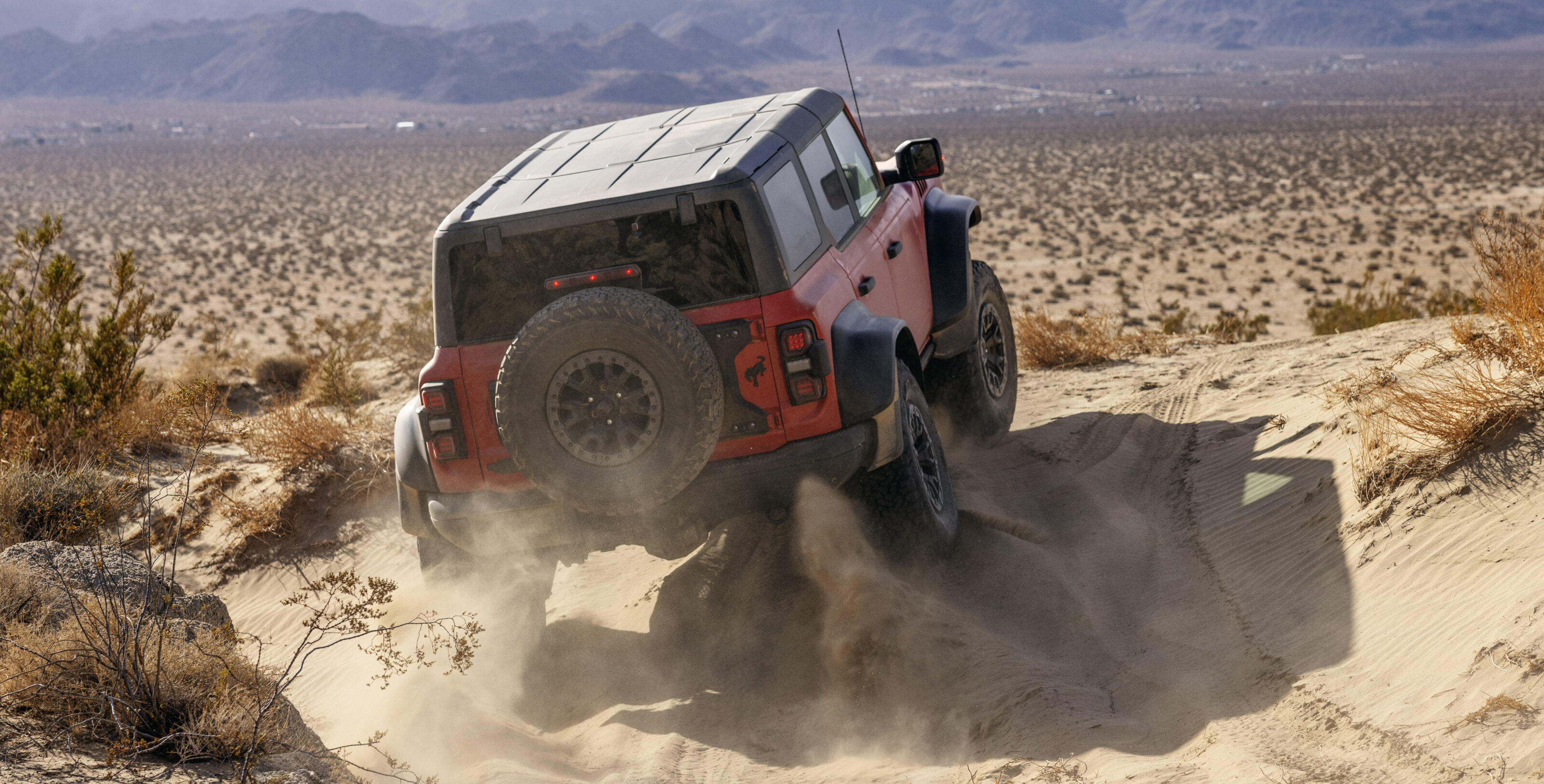
Ford has recently confirmed it will offer the F-150 plus-size ute with conversions to RHD on Australian turf starting early next year however, making the business case stack up for smaller less expensive vehicles with skinnier margins is harder.
That means it’s unlikely the Bronco and Bronco Sport models will make it Down Under as part of a conversion partnership program like the F-150, but factory RHD production will make more sense to Ford’s bean counters – just like Mustang.
If they were to arrive in Australian showrooms, the Bronco would provide a compelling lifestyle and off-road-focused rival to Jeep’s popular and cult-followed Wrangler, while the Bronco Sport would compete in the midsize SUV class against the likes of Toyota’s RAV4.
Seventh-gen Mustang as the final petrol model? “We’re not going there, no, no way, no. The customers will decide.”
Snapshot
- Expect petrol power for the NEXT Mustang, too
- Even meaner Dark Horse variant coming
- You can thank the electric Mustang Mach-E, by the way
Ford has confirmed the iconic Mustang soundtrack is safe long into the eighth generation, with petrol powered engines confirmed for both the freshly revealed seventh-gen model, as well as its successor.
Speculation has previously suggested the new 2023 Mustang would introduce some form of electrification alongside petrol power, marking the final swansong for the model. However, not only has Ford now rolled-out a petrol-only two-powertrain line-up, Ford’s top executive has revealed that it won’t be the last.
When asked if the seventh-gen Mustang would be the final petrol version at its reveal in Detroit, Ford president and CEO Jim Farley made it clear that a V8 would be available as long as a demand existed.
We’re not going there,” he said, “No, no way, no. The customers will decide.
“That’s what we’re doing with our ICE business, we’re going to keep investing, keep our ICE products really exciting but make them more opinionated. We want to be opinionated about our products.”
While some manufacturers are being forced to cull popular petrol-powered models regardless of the customer demand, Farley explained that Ford is in an enviable position when it comes to corporate average emissions, thanks in part to the Mustang’s electric sibling. (You’re welcome, Mach-E haters – Ed.)
“The good thing is that we are investing in the seventh generation because we have Mustang Mach-E, because we’re number-two in the US for electric, because we’re number-two in the US for hybrid. That gives us the ability to do this.
“Other competitors are buying credits for emissions and they can’t come out with this kind of vehicle. We can. It’s so exciting that, in a way, the Mustang Mach-E allowed this car to happen.”
In addition to the returning four-cylinder Ecoboost and V8 GT variants, Ford used the reveal to introduce a new performance V8 halo variant dubbed the Dark Horse – a road-going Mustang that will evolve through two additional S and R versions into a GT3 racer to take on the grueling Le Mans 24 Hour.
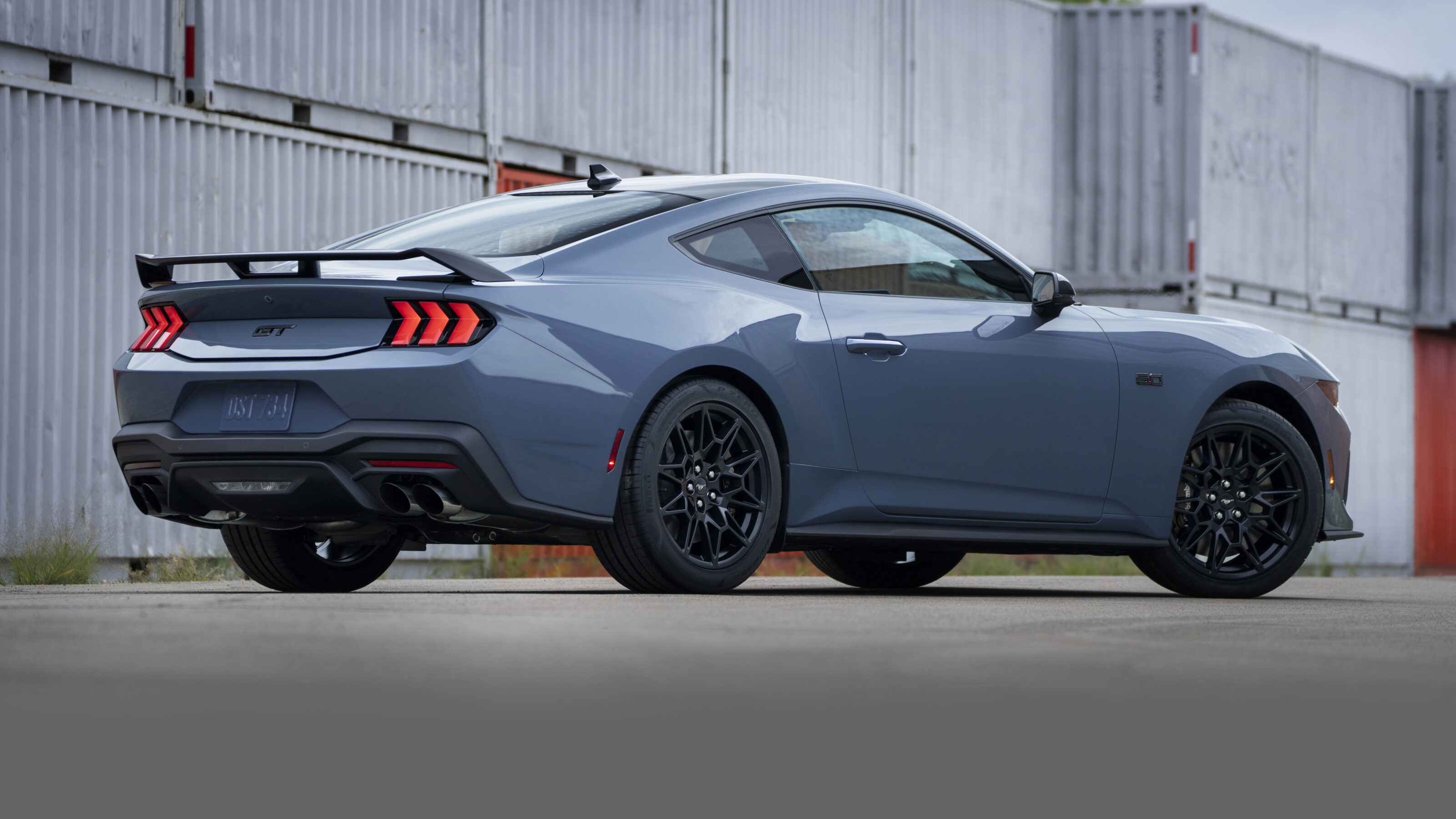
However, Farley revealed that a further, even more hardcore homologated version would emerge to bridge the gap between Dark Horse R and Le Mans conquering racer.
“To go to Le Mans you need a road car. You should be asking what that car’s about but I couldn’t tell you. So there’ll be more,” he promised.
“What I’m saying is that to compete at Le Mans, we need breakthrough technology to win against Ferrari and Porsche. They are the established players and we are the dark horse.
“For us to go and win at Le Mans we have to bring something very special.”
Toyota production is now at record levels despite ongoing supply chain issues, Wheels understands.
Speaking at the launch of the new 2023 Toyota GR86 this week, Sean Hanley, Vice President of Sales and Marketing in Australia, said that though production had been hampered overseas throughout this year, Australia’s positioning as seventh biggest market worldwide had helped secure allocation.
“Toyota Australia has enjoyed a market share greater than 20 per cent for 11 of the last 12 months and 21 of the last 24 months,” Hanley told us.
“And while year-to-date at the end of August the rest of the industry was down 2.1 per cent, Toyota’s sales were up 3.2 per cent – and we’ve now been able to increase deliveries for this year.
“Over the last two-and-a-half years, Toyota has applied multiple measures to strengthen the supply chain and has prioritised production of high demand models. While this is an evolving situation, my assessment is that those measures are having a positive impact.”

So far this year Toyota has sold 161,558 vehicles locally compared with 156,555 by the same point in 2021. But delivery delays remain an issue, and overall, according to Price My Car, the average wait in July for a Toyota was 251 days – compared to 172 days in January.
The quickest to get hold of is the Kluger large SUV at 117 days, followed by the Camry sedan with a 148 day average wait and HiAce van with a 150 day delay.
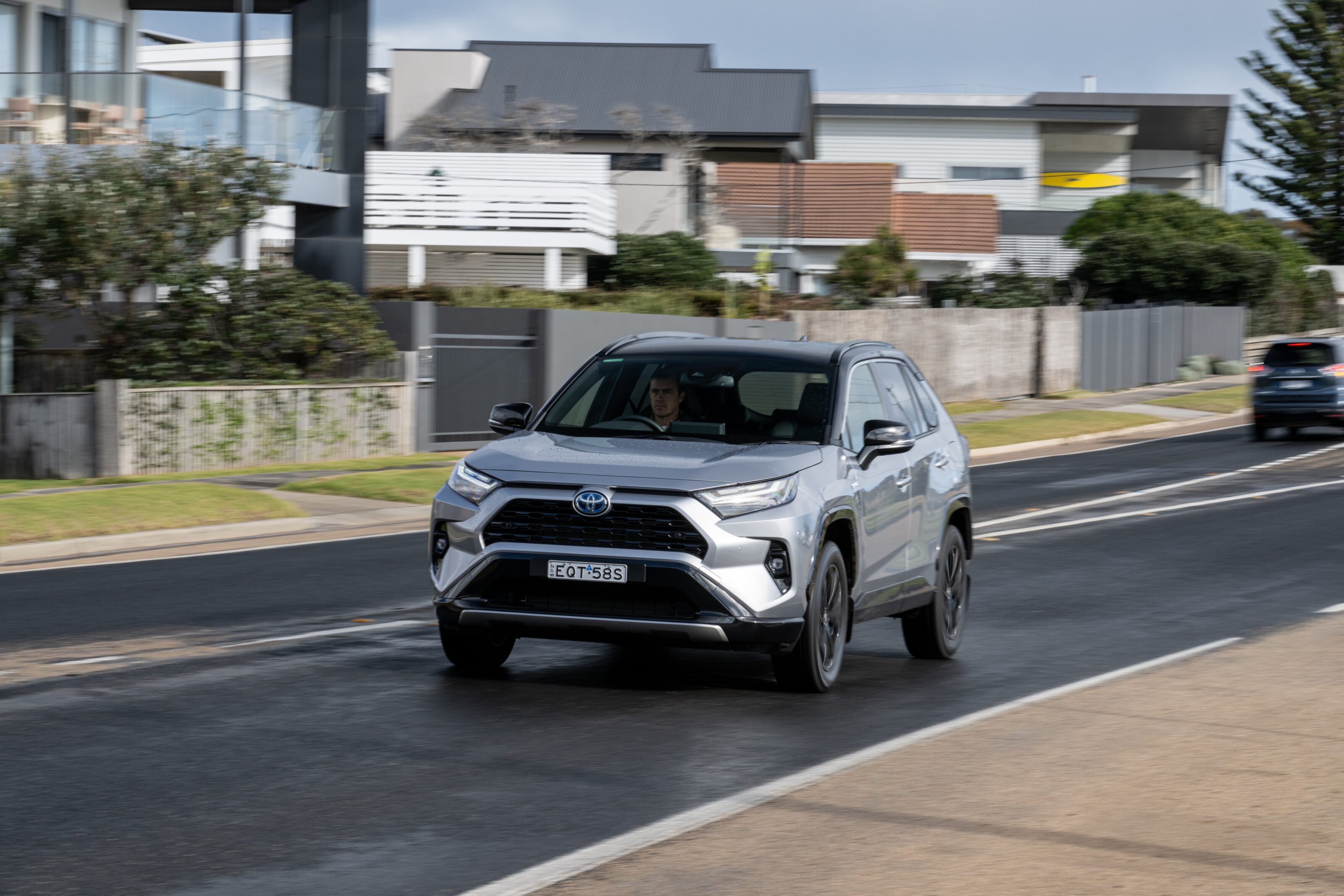
The worst affected is Australia’s most popular SUV, the mid-sized RAV4 – which buyers have to wait, on average, 339 days for – and the LandCruiser 300, which has a 280 day delay.
The long waits come off the back of a number of key problems for Toyota happening overseas throughout the year.
The Japanese firm was forced to suspend production at its plant in Chengdu, China, in August as severe power restrictions hit the region due to its worst heatwave in 60 years.
And Toyota had already twice this year prior to that cut its global production targets and cancelled new orders of vehicles – once in June when it slashed a further 50,000 units from its global production forecast, citing semiconductor supply issues and parts-supply disruptions, and again in July when it suspended production at its Motomichi plant and shuttered its Takaoka facility for a fortnight.
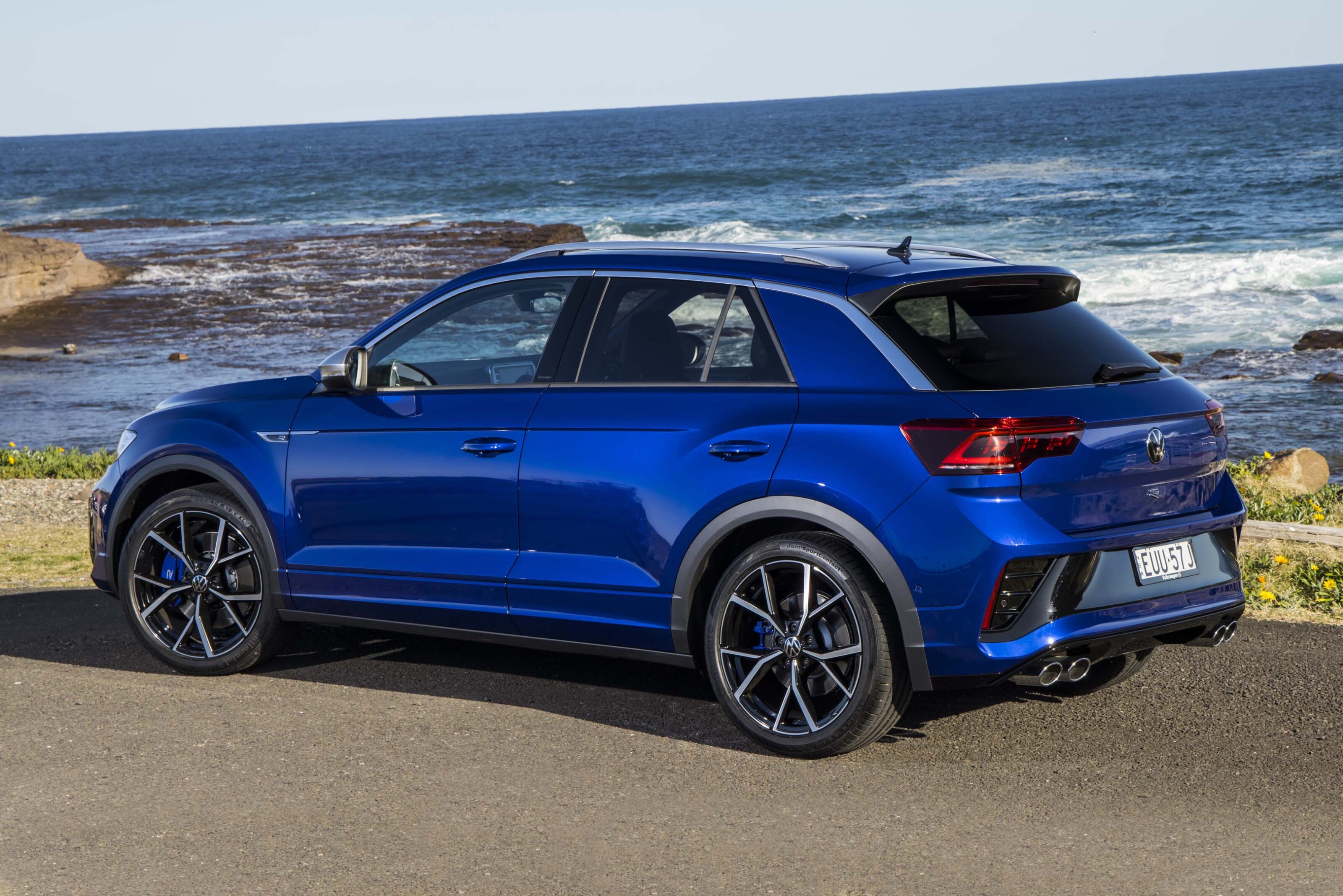
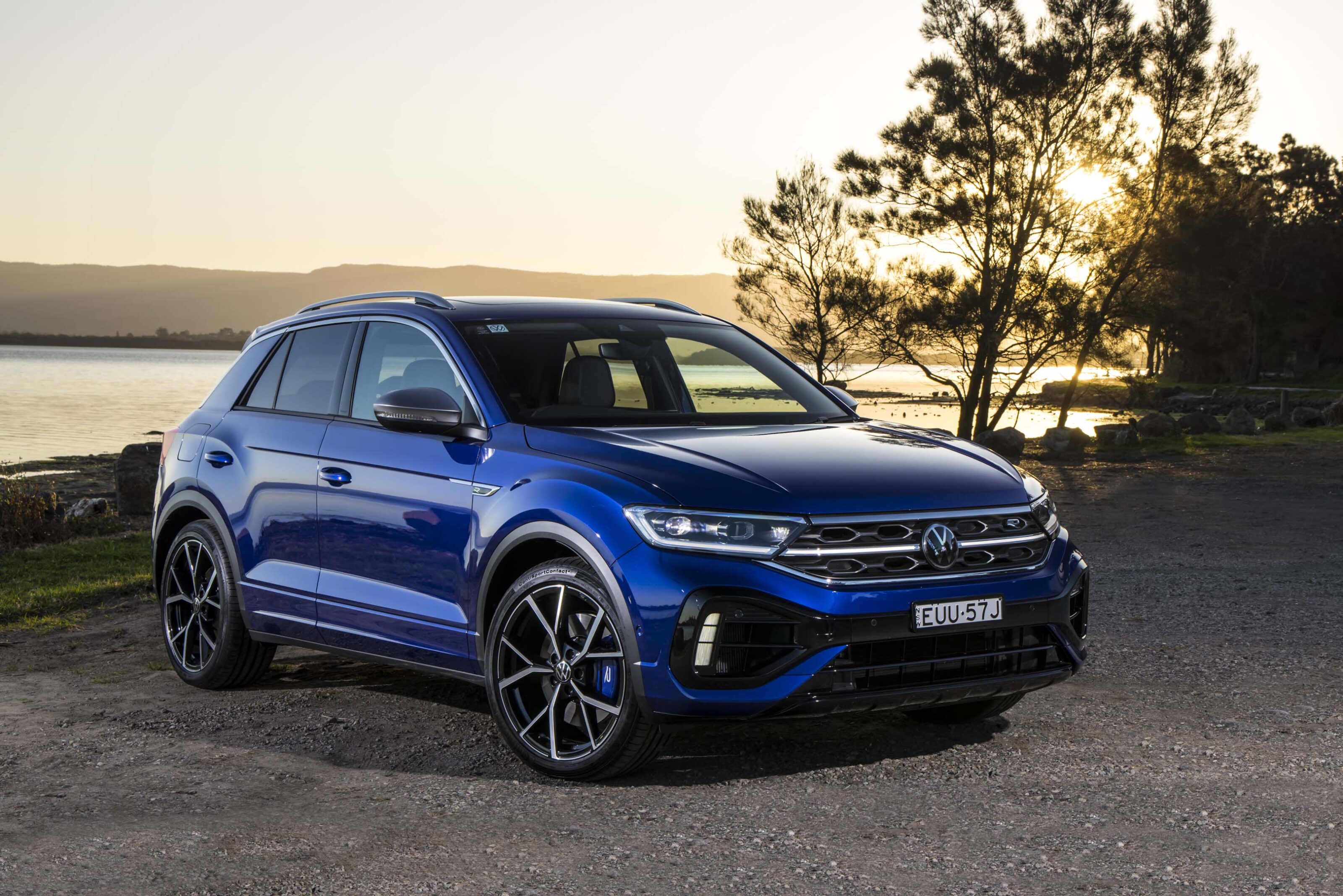
The fastest version of VW’s small SUV has been on sale in Europe since 2019 but wasn’t offered in Australia when the T-Roc was introduced in 2020. Now it’s been installed at the top of a freshly updated T-Roc line-up.
It expands a range of R models that now comprise the Golf R hatch, Golf R wagon and Tiguan R medium SUV (with the Touareg R hybrid due in early 2023).
Quick compact SUVs potentially threaten the future of hot hatches, of course, as buyers – including petrolheads – continue to flock towards the high-riding body style.
Is the T-Roc R a vehicle that could sway keen drivers away from the cult Golf R?
JUMP AHEAD
- How much is it, and what do you get?
- How do rivals compare on value?
- Interior comfort, space and storage
- What is it like to drive?
- How is it on fuel?
- How safe is it?
- Warranty and running costs
- VERDICT
How much is it, and what do you get?
Priced from $59,300, the T-Roc R undercuts the Golf R hatch and wagon twins that are respectively priced at $65,990 and $68,990 (all before on-road costs).
That’s still a big jump over a 2018 Golf R Grid that was priced below $50,000, though that Grid badge has been reintroduced for a cheaper variant that drops some equipment to increase the chances of a speedier delivery to customers. The T-Roc Grid is priced from $54,300 before on-road costs.
Grid Editions, which are due in December, drop Premium LED tail-lights with dynamic indicators, side assist with rear traffic alert, and proactive passenger protection system from the regular T-Roc R.
They also replace Matrix LED headlights with Performance LED headlights and ditch Nappa leather seats for sports pews in cloth/microfleece. Finally, electric driver’s seat adjustment makes way for manual adjustment.
A regular T-Roc R costs $14,050 more than the mid-spec T-Roc 140 TSI R-Line but goes to some lengths to justify the extra spend.
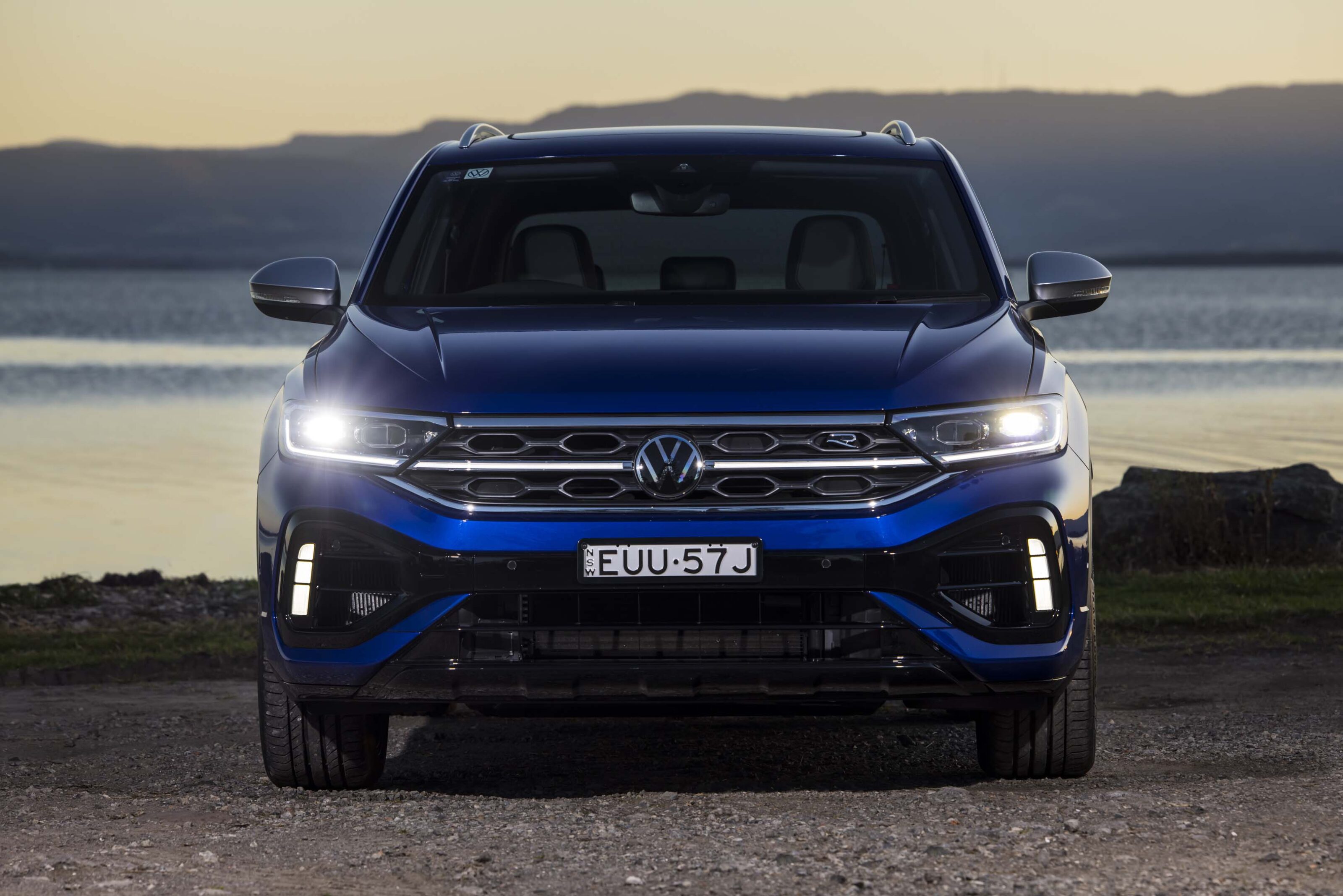
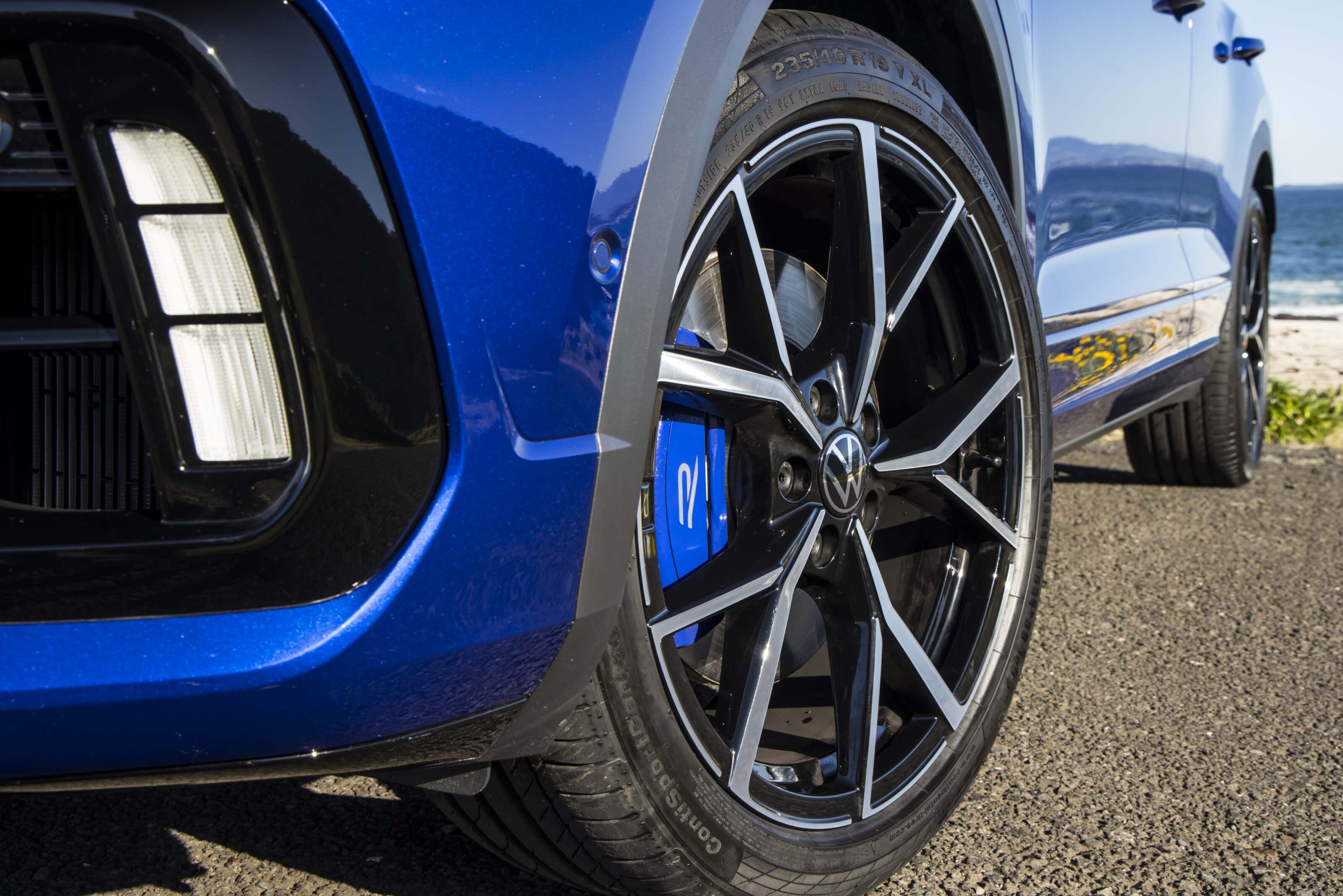
Beyond its more powerful engine, the R’s additional standard equipment includes metallic paint, bigger (19-inch) wheels, adaptive dampers, Matrix LED headlights, LED tail-lights with sequential indicators, auto tailgate, and a larger infotainment display.
Options are simple: a panoramic sunroof ($2000), 300W Beats audio system ($700) and Lapiz Blue matte dash inserts ($200).
How do rivals compare on value?
Hyundai’s Kona N is a compact performance SUV priced from below $50,000, though it’s front-wheel drive only and has a less powerful engine.
Closer rivals to the all-wheel drive T-Roc R are the $61,900 (plus on-road costs) Mini Countryman JCW Sport and the Formentor VZx from newly arrived Spanish VW Group brand Cupra (and shares the R’s mechanicals).
There’s also Audi’s close relative, the SQ2, which is priced from $66,900 plus on-road costs.
Luxury brands BMW and Mercedes ask more yet again for their takes on the compact performance SUV breed: $70,500 for the X2 M35i Pure and $90,859 for the AMG GLA45 (both before on-road costs).
The BMW is no faster; the Mercedes is slower. So, based purely on speed, the T-Roc R looks good value.
Interior comfort, space and storage
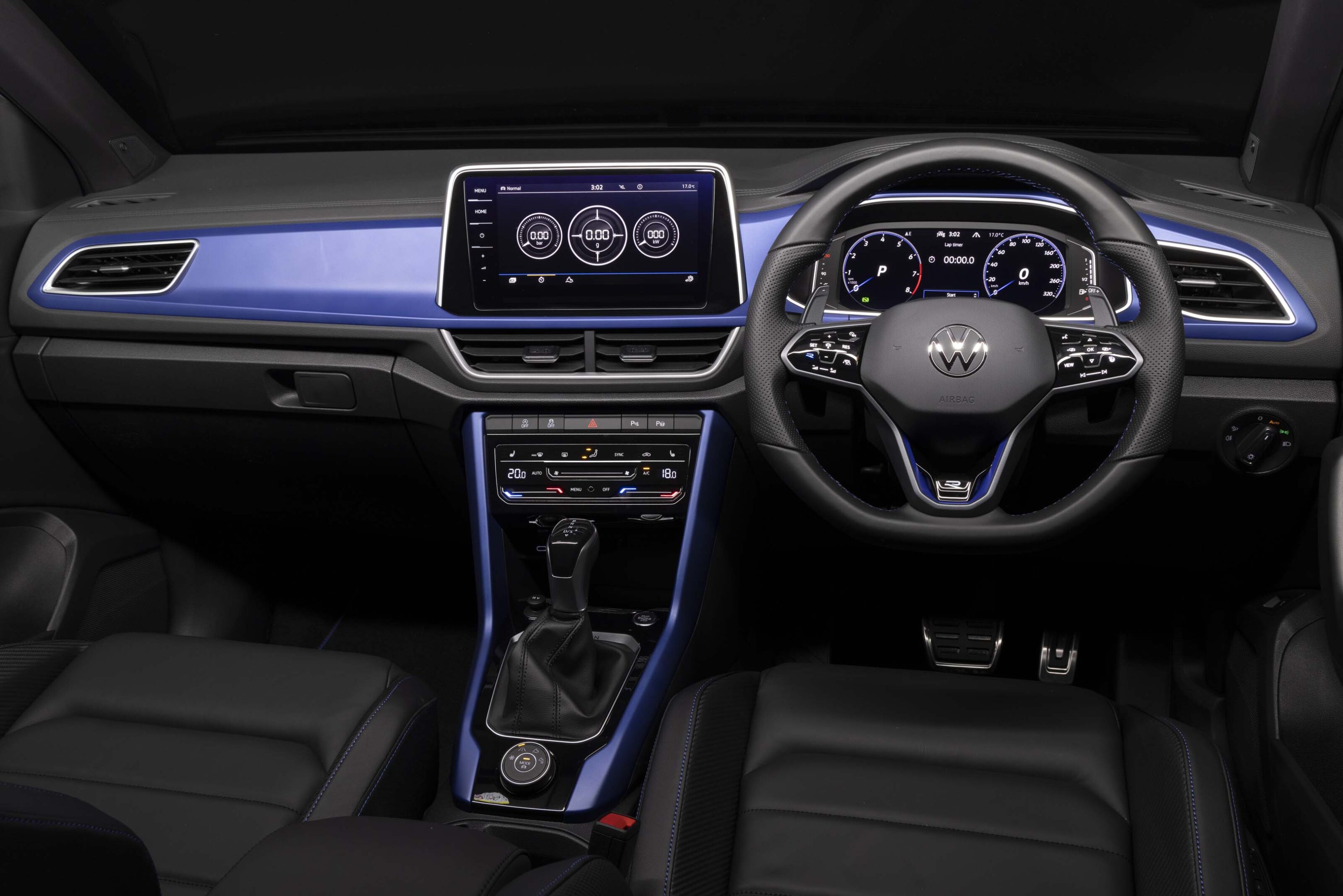
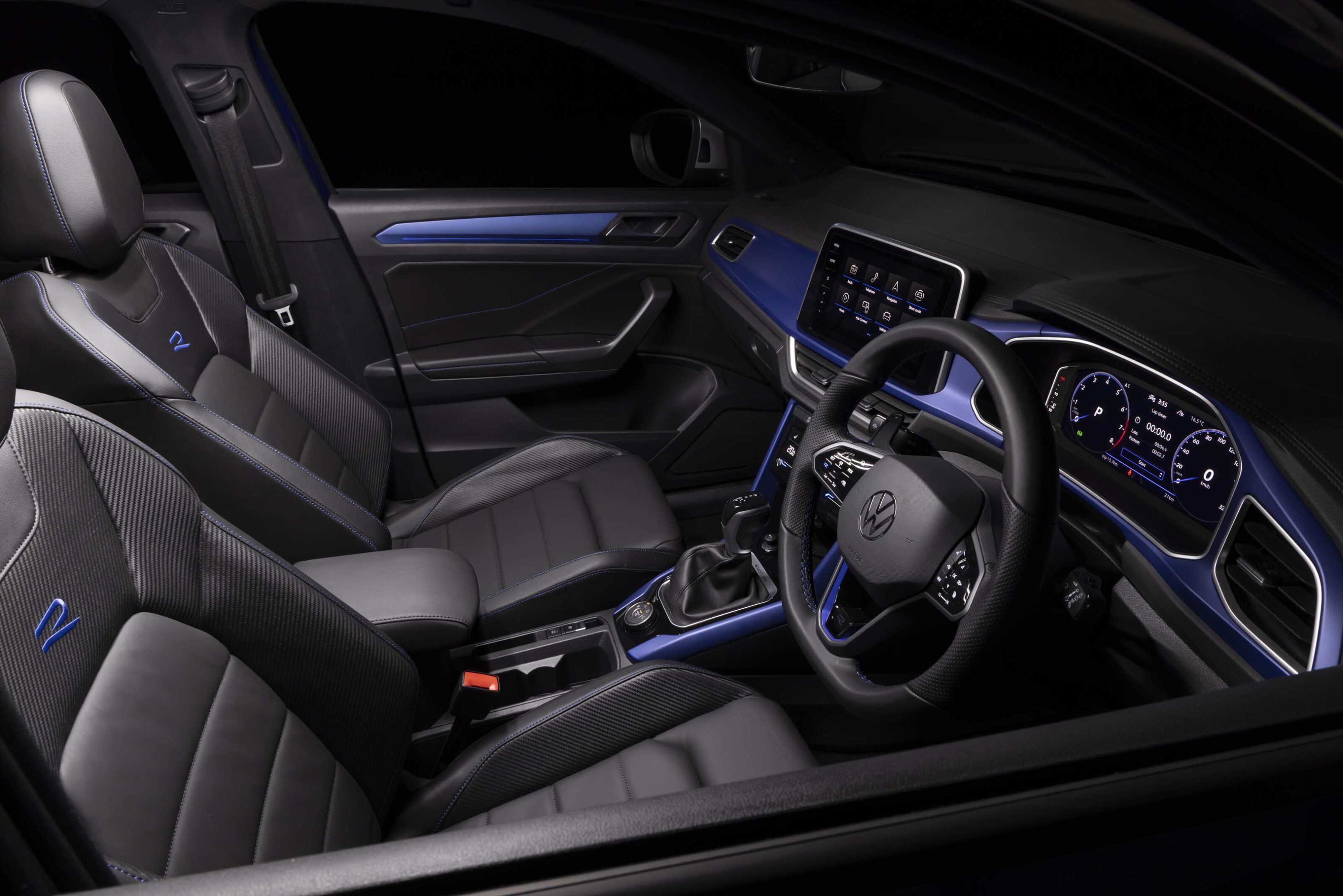
Unless you have an aversion to azure or there’s an obvious clash with your preferred exterior colour (such as Kings Red), we’d recommend paying $200 for the Lapiz Blue matte dash inserts that bring some extra life to the T-Roc R’s cabin.
It also helps further distinguish the cabin from that of the T-Roc R-Line, though where that model comes with cloth/microfleece seats as standard the R gains Nappa leather-appointed upholstery with blue stitching.
R owners are also treated to heated front seats and steering wheel.
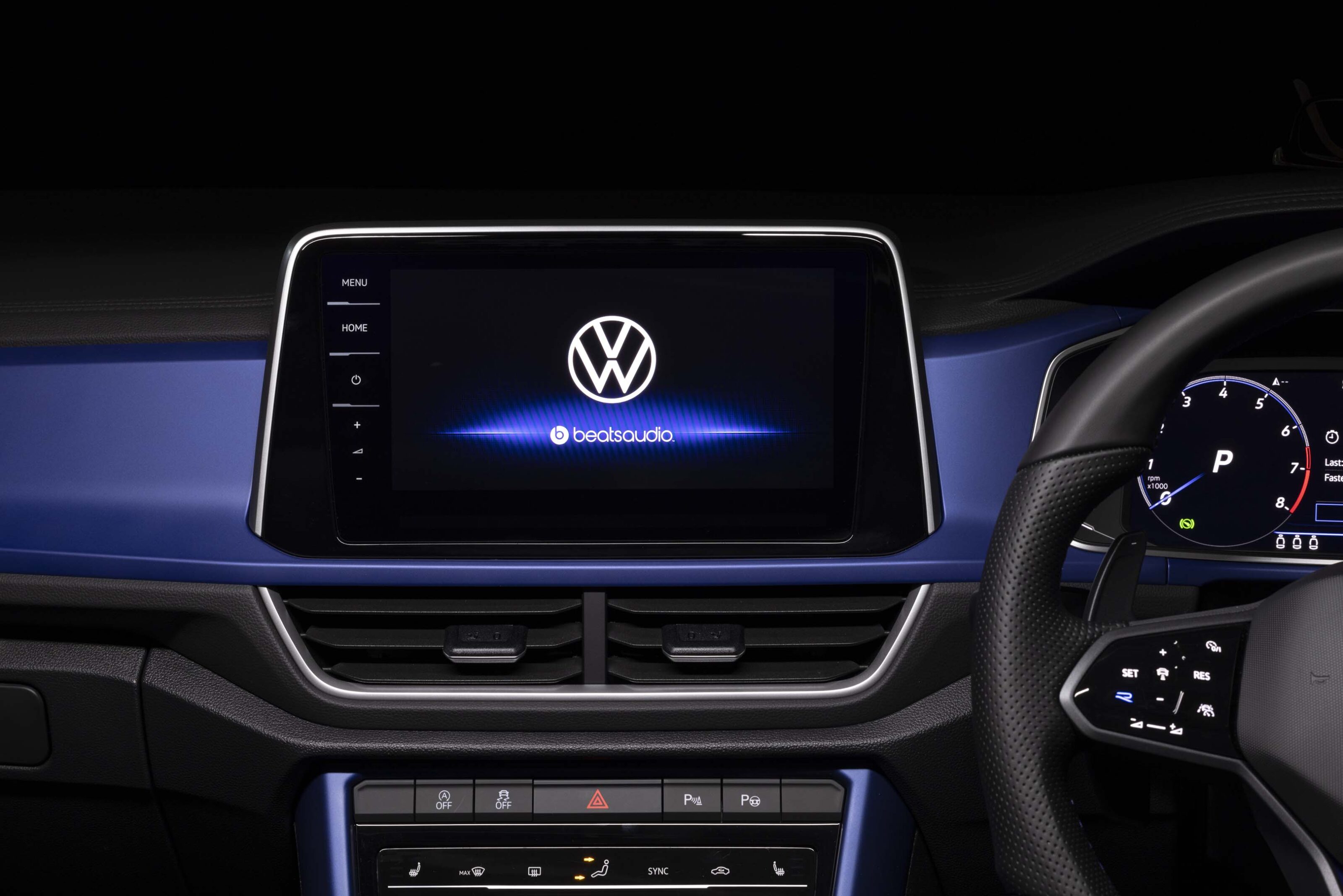
The T-Roc is based on the previous-generation Golf, in case you were wondering why it doesn’t have a similarly minimalist cabin to the Mk8. There’s still a regular gear selector rather than a transmission toggle on the centre console, for example, while the T-Roc has a dedicated climate control panel where it’s integrated into the Golf’s infotainment system.
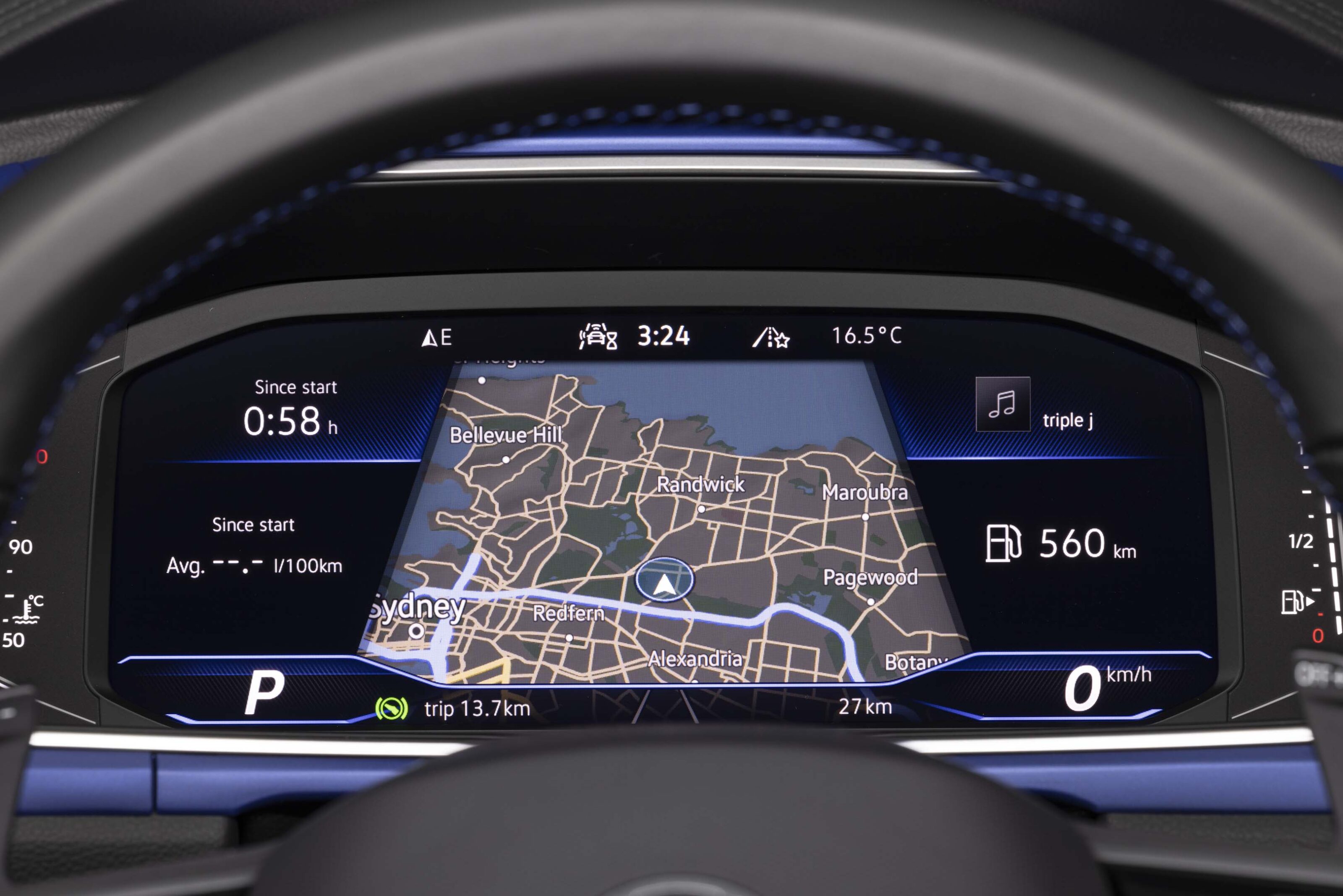
Call that an ergonomic plus for T-Roc owners, as this makes temperature, fan speed and air recirculation adjustment much easier.
Volkswagen added a soft-touch dash top for the T-Roc’s update; more elsewhere would have helped it exude the same perception of high quality as the Golf R.
There’s an abundance of useful storage areas, not least the big door pockets. A wireless charging tray, joined by two USB-C ports, is an important contemporary inclusion.
Rear-seat space isn’t generous but there’s a decent amount of legroom for passengers, particularly those not troubling six foot. There’s plenty of head clearance and lots of toe room under the front seats.
Bench comfort, particularly in the scalloped outboard seats, is excellent.
Boot space of 392 litres isn’t significantly more than the luggage volume of the Golf R hatch and is positively small when compared to the 611 litres of the Golf R wagon.
The seatbacks fold in a 60:40 split configuration, however, to provide some extra cargo flexibility, while there’s also a ski port.
What is it like to drive?
Very much like a high-riding Golf R – though a Mk 7.5 to which it’s more closely related.
The T-Roc R misses out on the Mk8 Golf R’s torque vectoring rear diff that can apportion 100 per cent of power to one rear wheel, and the SUV lacks the hatch’s extra layer of agility.
Make no mistake, though, that the T-Roc R is still a highly capable and highly entertaining vehicle in the tight stuff, with understeer kept at bay impressively and excellent traction thanks to a fast-acting AWD system and an abundance of grip from the Continental ContiSportContact 5 rubber.
The R rides a touch lower than regular T-Rocs and, especially with the adaptive dampers in Race, body roll is more restrained.
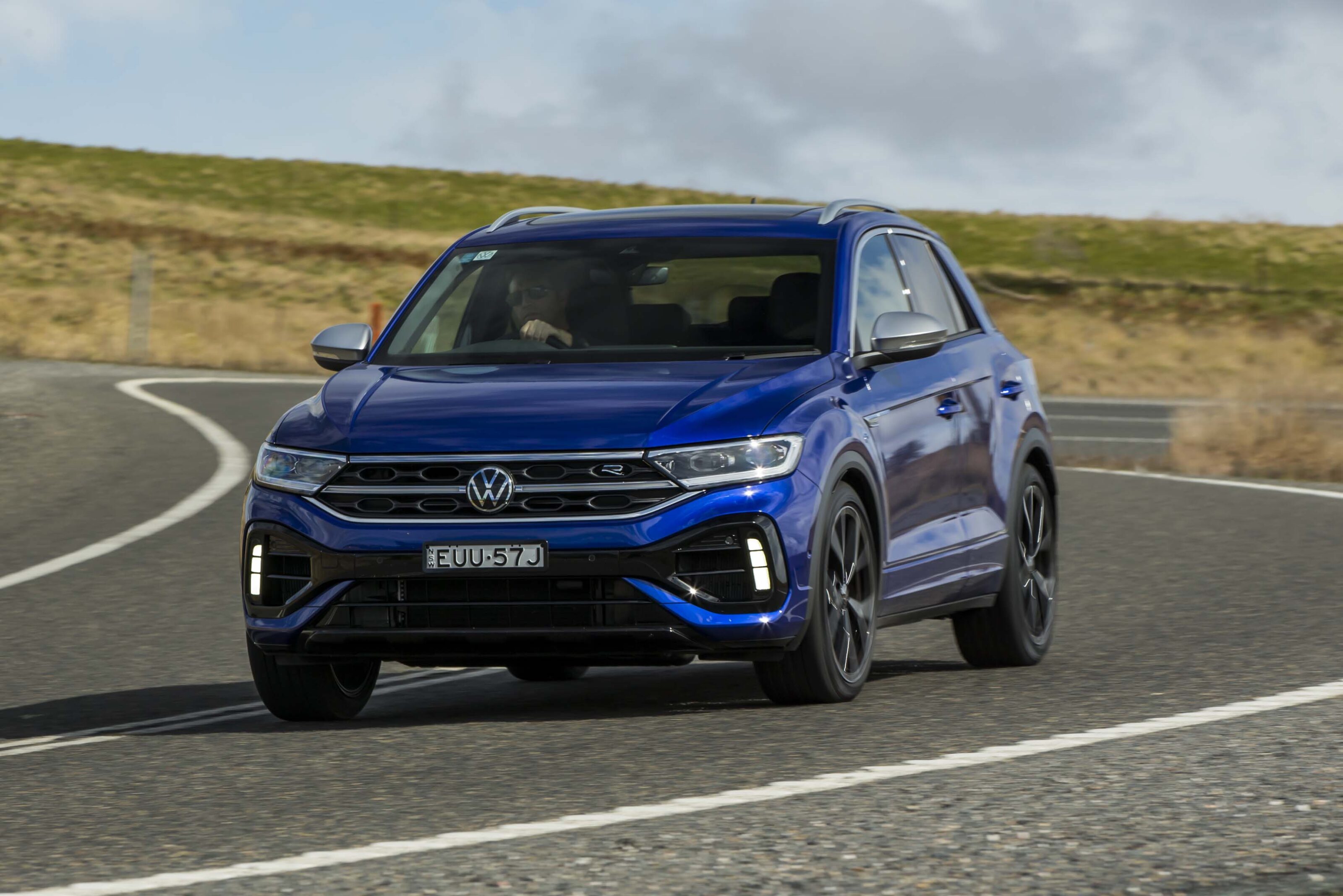
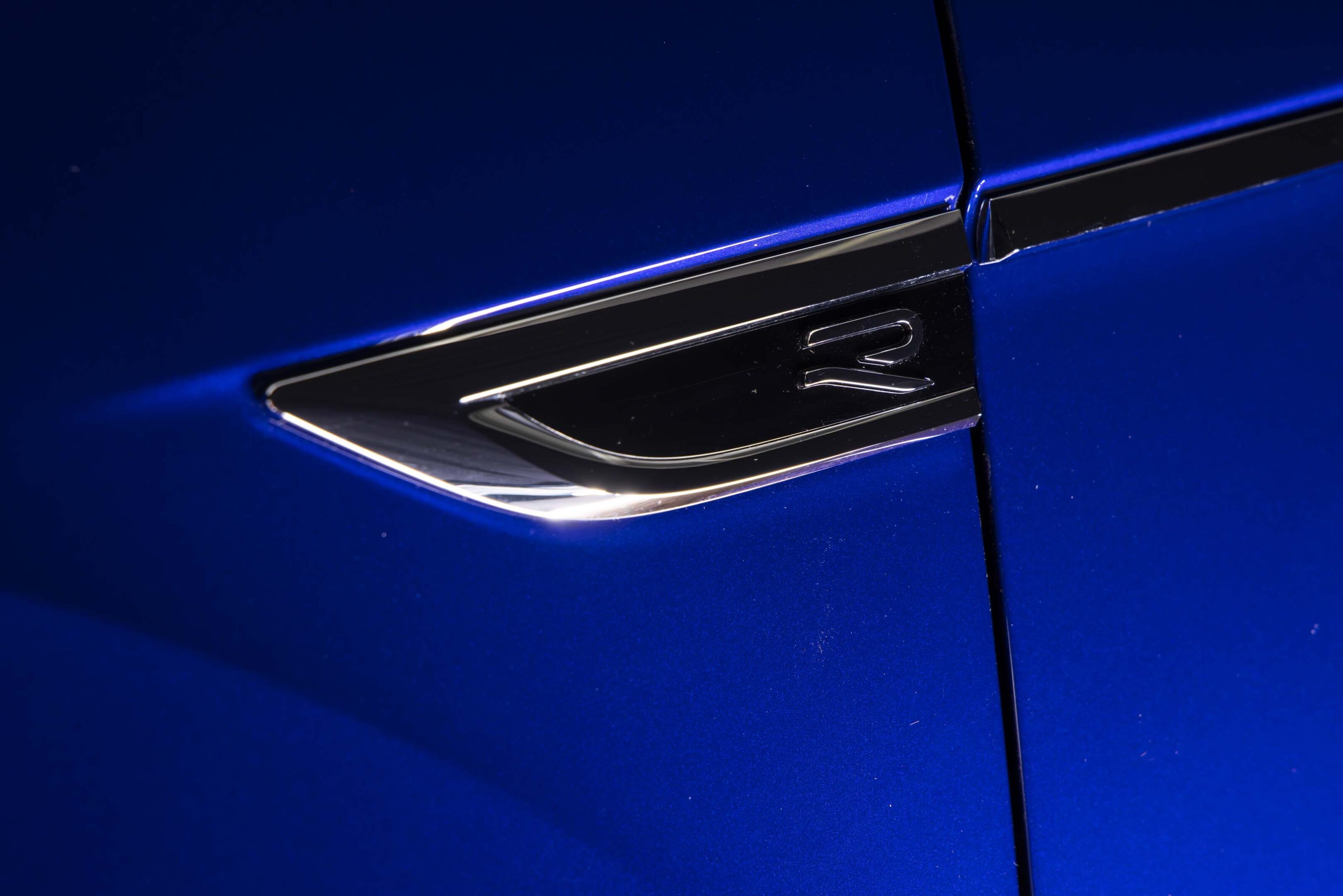
A Race button on the steering wheel offers conveniently quick access to the T-Roc’s more aggressive modes, though the customisable Individual setting is also useful.
This allows the dampers to be set to a softer setting, for example, for bumpier country roads where the stiffer Race calibration can induce constant vertical movement – or sphincter-clenching moments on major dips.
Regular readers of VW product reviews won’t be surprised to learn the T-Roc R’s steering is lacking in meaningful feedback. It’s geared to provide quick turn-in, however, and there’s reassuring accuracy.
Strong, easily modulated brakes complete a set of controls that provide the driver with ample confidence.
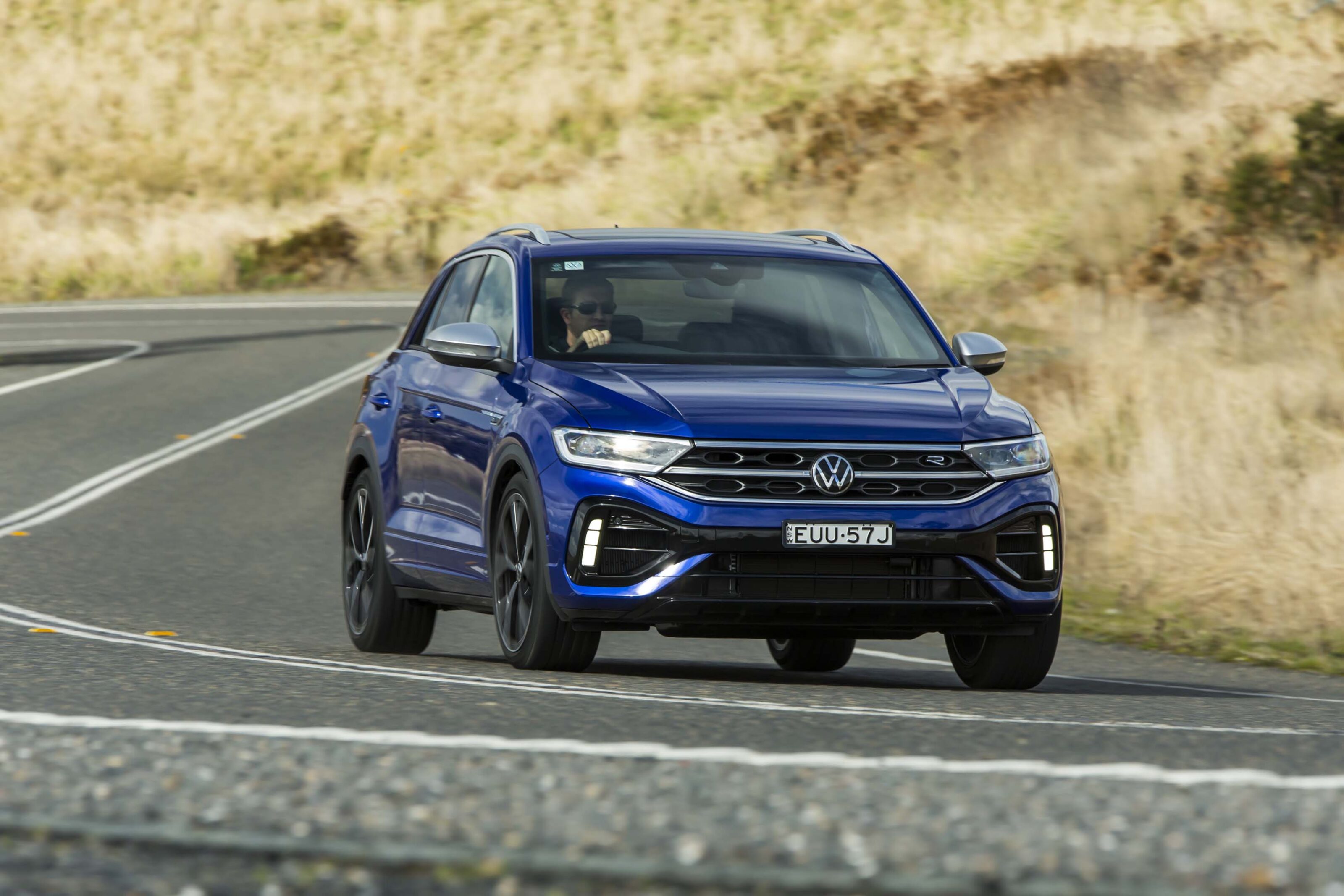
There’s plenteous pace delivered by VW’s well-known 2.0-litre turbo, with no suggestion the T-Roc R wouldn’t match, or even better, its 4.9-second 0-100km/h claim in an owner’s hands.
Some extra aural drama is just missing. While the four-cylinder sounds suitably angry in Race mode, there are none of the pops and bangs you get from Hyundai’s Kona N.
Unlike other markets such as the UK, there’s no option to add an Akrapovic exhaust.
Importantly for what is still ostensibly a family SUV, the engine’s flexible nature and suspension’s adaptability combine to make the T-Roc R an easy vehicle to live with every day.
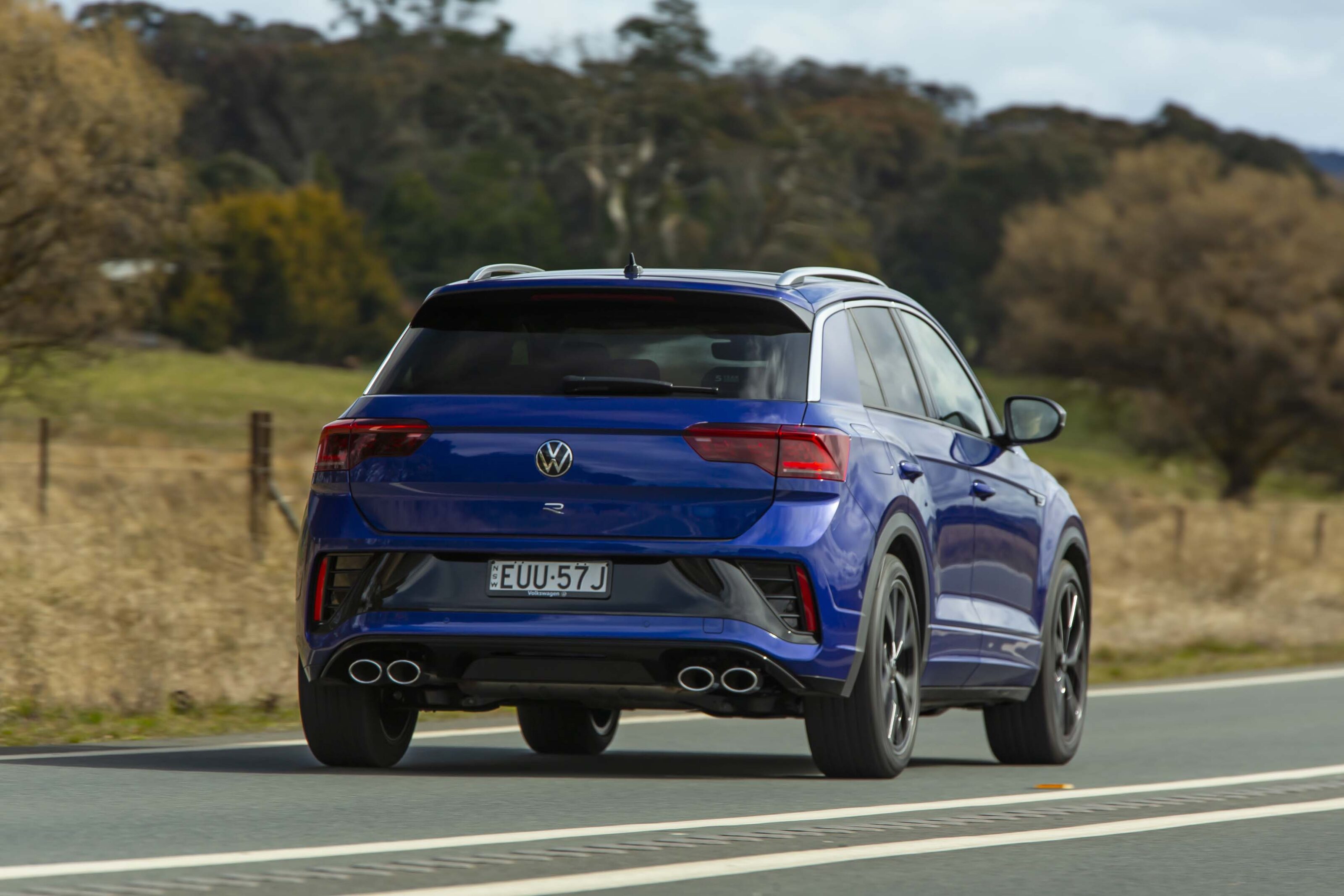
The ride is inevitably firmer and less compliant compared with the particularly plush base T-Roc, the 110 TSI Style, but the Comfort mode has a decent degree of suppleness and prevents any nasty jolts.
A drive from the far side of Canberra to Sydney also proved the R’s seats can provide hours of comfort as well as making the driver feel secure in corners.
The engine stays very much in the background when cruising, too, though road noise can spoil the peace – especially on coarser country roads. However, the level of tyre roar from our Continental-shod R was no worse than that from the 140 TSI R-Line we tested featuring Bridgestone Potenzas (also 19s, though optional).
How is it on fuel?
The T-Roc R officially consumes 95 RON premium unleaded at a rate of 8.3 litres per 100km.
That’s an extra litre of fuel every 100 kilometres compared with the mid-range 140 TSI T-Roc, which isn’t a bad trade-off for the R’s noticeable extra performance.
We registered an average of 7.7L/100km on the trip computer for our drive from Canberra to Sydney. Expect an average in double figures for more typical everyday usage.
How safe is it?
The VW T-Roc scored a maximum five-star ANCAP rating in 2017.
Blind-spot monitoring and rear cross-traffic alert are two (related) features not found on other T-Roc variants owing to supply issues.
Otherwise, the R comes with the same driver aids, including fatigue detection, lane-keep assist and lane departure warning, low-speed auto-braking for parking, front and rear parking sensors, and adaptive cruise with semi-autonomous steering mode.
Warranty and running costs
Volkswagen backs the T-Roc range with a five-year, unlimited-kilometre warranty.
Servicing plans for the R vary between $1600 (for three years) and $2800 (for five years); regular 110 TSI and 140 TSI T-Roc variants are slightly less expensive to maintain.
VERDICT
With R-badged Golfs disappearing from affordable performance territory, the T-Roc R is a welcome addition to the range.
Although the Golf R wagon offers greater practicality, has a more advanced all-wheel-drive system, and a more powerful engine, it costs nearly $10,000 more.
Arriving with the benefits of the updated T-Roc range’s improved cabin materials and tech, the R variant is a very likeable, well-rounded compact performance SUV.
The upcoming, cheaper Grid version could be even more tempting.
2023 Volkswagen T-Roc R specifications
| Model | Volkswagen T-Roc R |
|---|---|
| Body | 5-door, 5-seat compact SUV |
| Drive | All-wheel drive |
| Engine | 2.0-litre four-cylinder turbo petrol |
| Transmission | 7-speed dual-clutch auto |
| Power | 221kW @ 5300-6600rpm |
| Torque | 400Nm @ 2000-5300rpm |
| 0-100km/h (claimed) | 4.9 seconds |
| Fuel consumption (combined) | 8.3 litres per 100km (95RON) |
| Weight | 1519kg (tare) |
| Boot space | 392 litres |
| Suspension | Front strut / multilink rear |
| Length/Width/Height | 4236/1819/1575mm |
| Wheelbase | 2595mm |
| Turning circle | 11.1m |
| Brakes | Ventilated discs (f/r) |
| Tyres | 235/40R19u00a0 |
| Wheels | 19-inch alloy u2018Estorilu2019 |
| Price | From $59,300 |
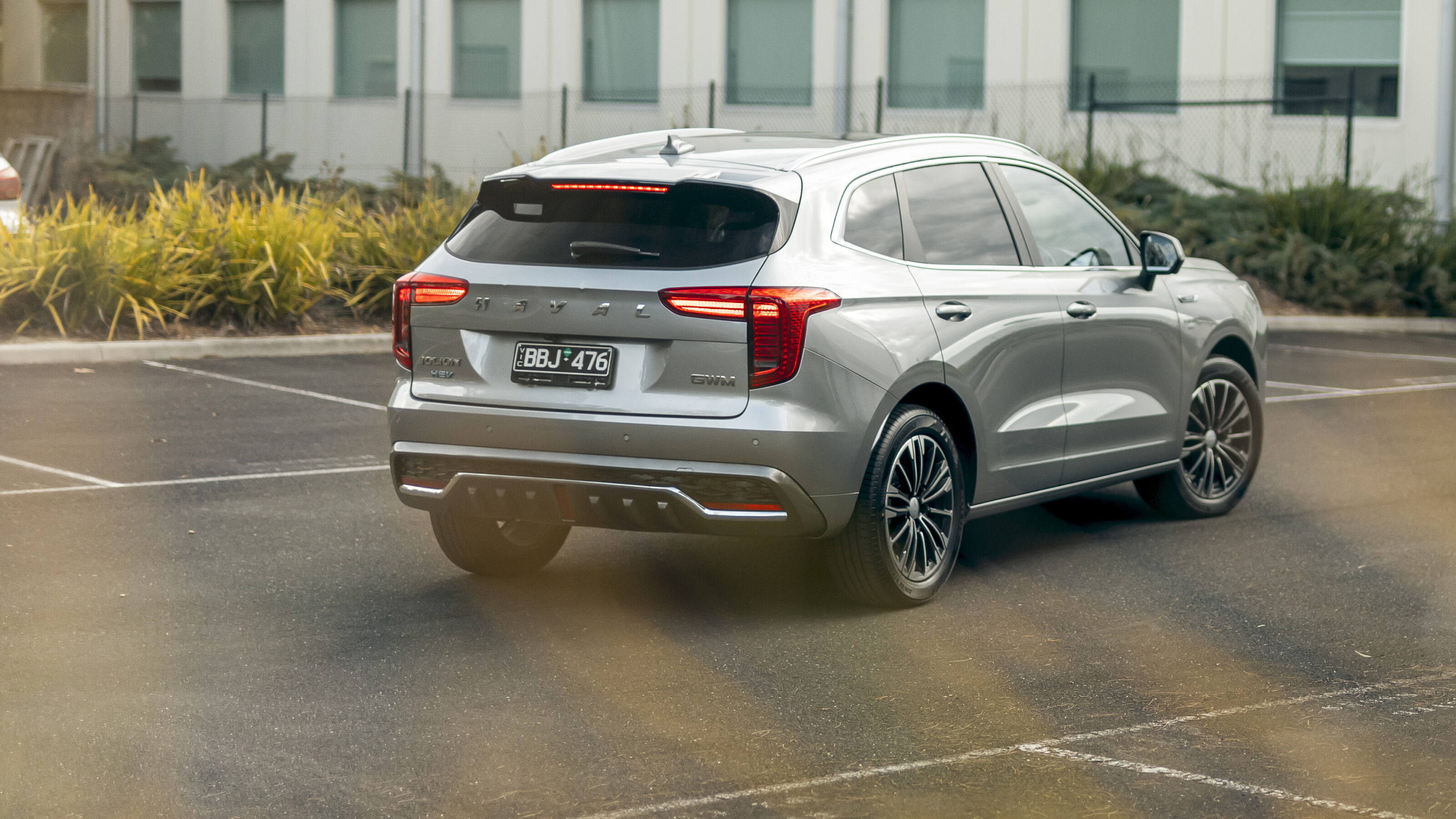
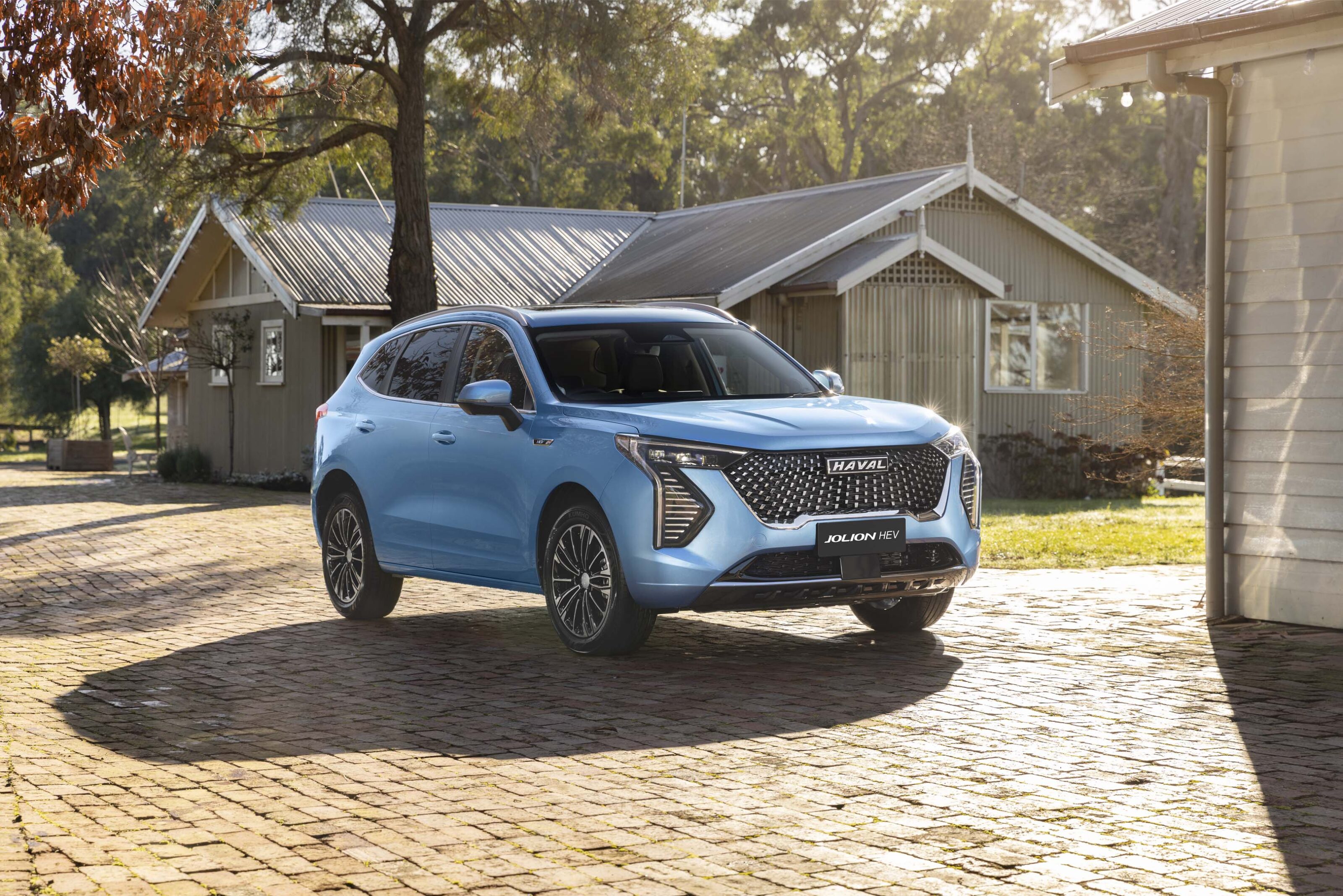
Can I make a candid admission? I’d seen a few GWM Haval Jolions knocking about. Every time I’ve pulled up alongside one I had much the same thought and that was “What the heck has gone so badly wrong in your life that you find yourself behind the wheel of a Haval Jolion?”
I’d then concoct scenarios of car-crash divorces, crypto investment disasters and inept no-win, no-fee lawyers who never won. In short, the Jolion seemed to me a particularly distressing distress purchase. Then I drove a Jolion Ultra Hybrid and realised I’d not so much rushed to judgment than torn the space-time continuum a new one in my haste.
I’m not here to tell you that this is the greatest compact SUV to ever turn a wheel. But it’s far from the worst and if, like me, your views were perhaps a little behind the curve, it’s one that has the capacity to deliver a very pleasant, albeit chastening, surprise.
JUMP AHEAD
- How much is it, and what do you get?
- How do rivals compare on value?
- Interior comfort, space and storage
- What is it like to drive?
- How is it on fuel?
- How safe is it?
- Warranty and running costs
- VERDICT
How much is it and what do I get?
The asking price for the privilege is the princely sum of $40,990. I’m sure many of you were expecting that number to begin with a three rather than a four, but that is a drive-away price, so compare it to rivals with an RRP in the $35,000 ballpark and you’ll be comparing eggs with eggs.
Slotting into the Haval range below the larger H6 Hybrid, the Jolion replaces the little-lamented H2 and is $5000 cheaper than its weightier sibling.
In case you’re trying to get a handle on size, the Jolion measures 4472mm in length and 1841mm in width. It sits on a 2700mm wheelbase, which means it sits midway between, say, a Mazda CX-30 and a CX-5 or a Toyota C-HR and a RAV4. Think Kia Niro, Subaru XV or Nissan Qashqai and you’re in the right ballpark.
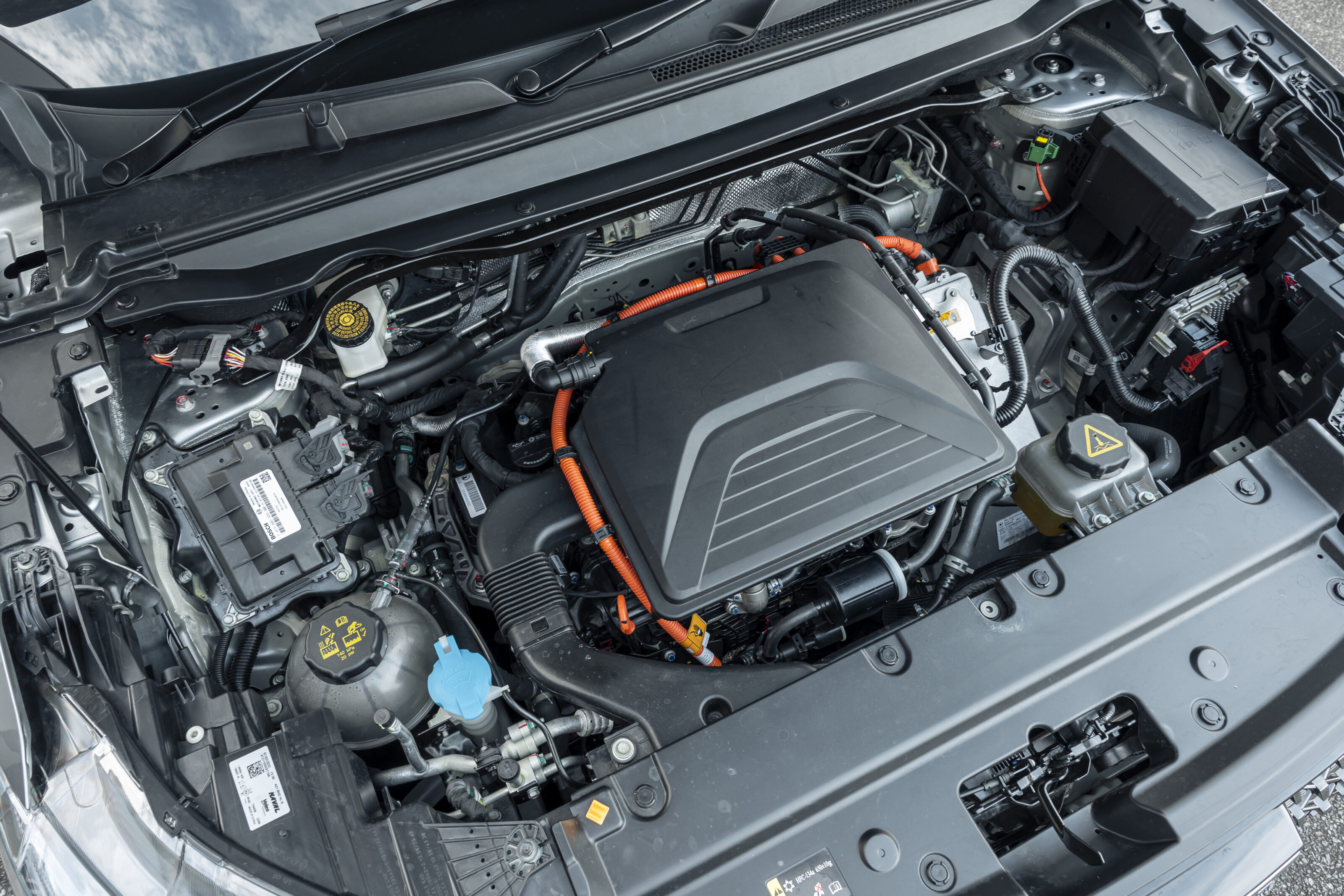
The Ultra Hybrid is the range-topping Jolion model, sitting above the non-hybridised Premium, Lux and Ultra versions. It’s also the most powerful, thanks to the assistance of a compact 1.8kWh battery that drives a BorgWarner DHT115 permanent magnet synchronous electric motor.
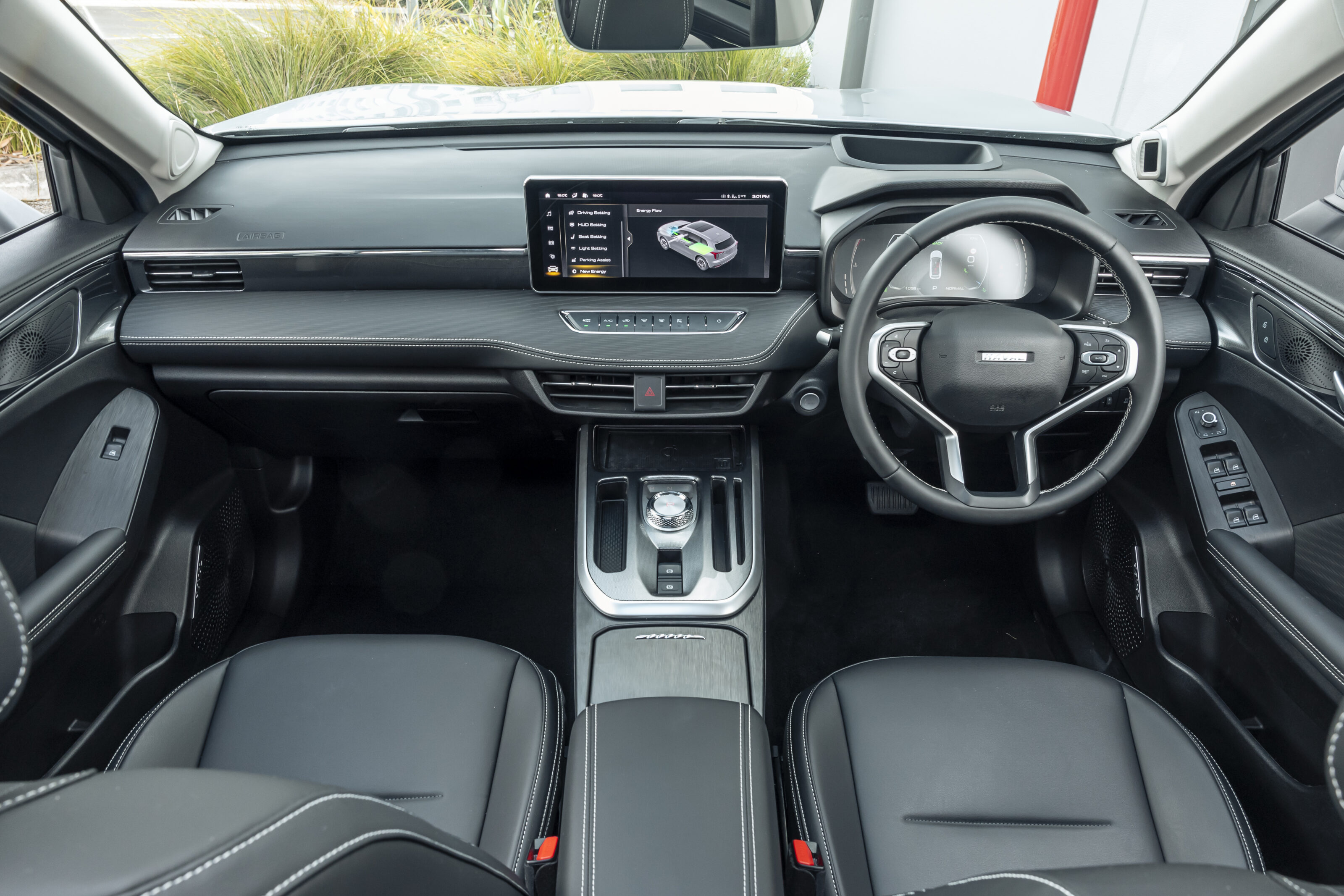
As befits the flagship model, GWM has ransacked the toy cupboard and emptied virtually everything into the Jolion Ultra Hybrid. With no fewer than 14 radars and six cameras, it even claims to deliver Level 2+ autonomous driving.
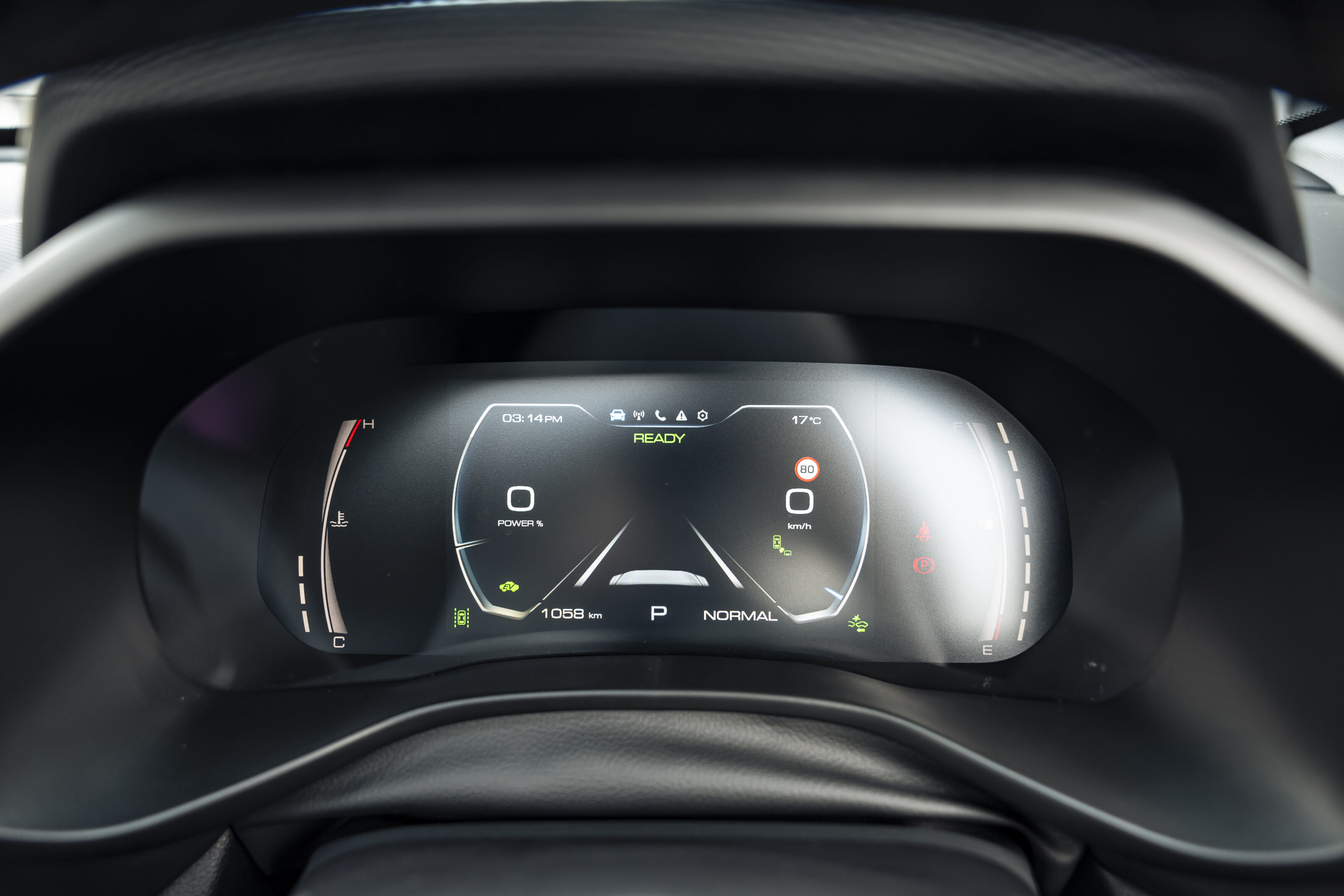
There are also 18-inch alloy wheels, LED headlights, a leather-trimmed steering wheel, heated front seats, dual-zone climate control, a panoramic sunroof, a 12.3-inch colour infotainment touchscreen, a head-up display, wireless charging (but no wireless Android Auto or Apple CarPlay functionality) electric windows and tailgate and a suite of safety systems that includes traffic sign recognition, auto parallel parking and adaptive cruise control. And breathe.
It’s worth noting that the only standard non-cost paint finish is Hamilton White. If you’d rather have Smoke Grey, Glacier Blue, Mars Red, Azure Blue or Golden Black, you’ll need to rustle up another $495. This is the only optional extra available on the Ultra Hybrid.
How do rivals compare on value?
If you want a hybrid SUV that’s much the same size, comes with an identical-length seven-year warranty, is fitted with less standard equipment and develops less power and torque, feel free to shell out an additional $15K for a Kia Niro HEV GT-Line.
And there in a nutshell is the Jolion’s value proposition. It’s not too hard to figure out, is it?
Alternatively, there’s the Subaru XV, which in range-topping Hybrid S trim will cost over $47K to drive away and is also down on equipment, space and its mild hybrid set-up lacks grunt compared to the Jolion. One advantage the Subaru does have, and which will endear it to many, is all-wheel drive.
Like the baby Kia, the Jolion’s hybrid drive system can perform all sorts of tricks, but sending drive to the rear treads as well isn’t one of them. Yep, this is purely a front-drive vehicle so forget about beating a path into the wild red yonder.
In truth, there’s little in the hybrid-powered market that can directly compare with this Jolion and retails at around $35,000 before on-road costs. Mazda MX-30? Nope, the hybrid system’s too feeble.
The Toyota Yaris Cross and C-HR hybrids are too small. A Honda HR-V e-HEV L, as good as it is, is another 10 grand down the road. Hyundai has nothing comparable. Nor Nissan, even with its all-new Qashqai.
Interior comfort, space and storage
The Haval Jolion is a relatively generously cut thing, for passengers at least. Its wheelbase is a few centimetres longer than the likes of the Subaru XV or the Nissan Qashqai and this, coupled with the panoramic glass sunroof, gives the Jolion’s cabin a pleasantly airy feel.
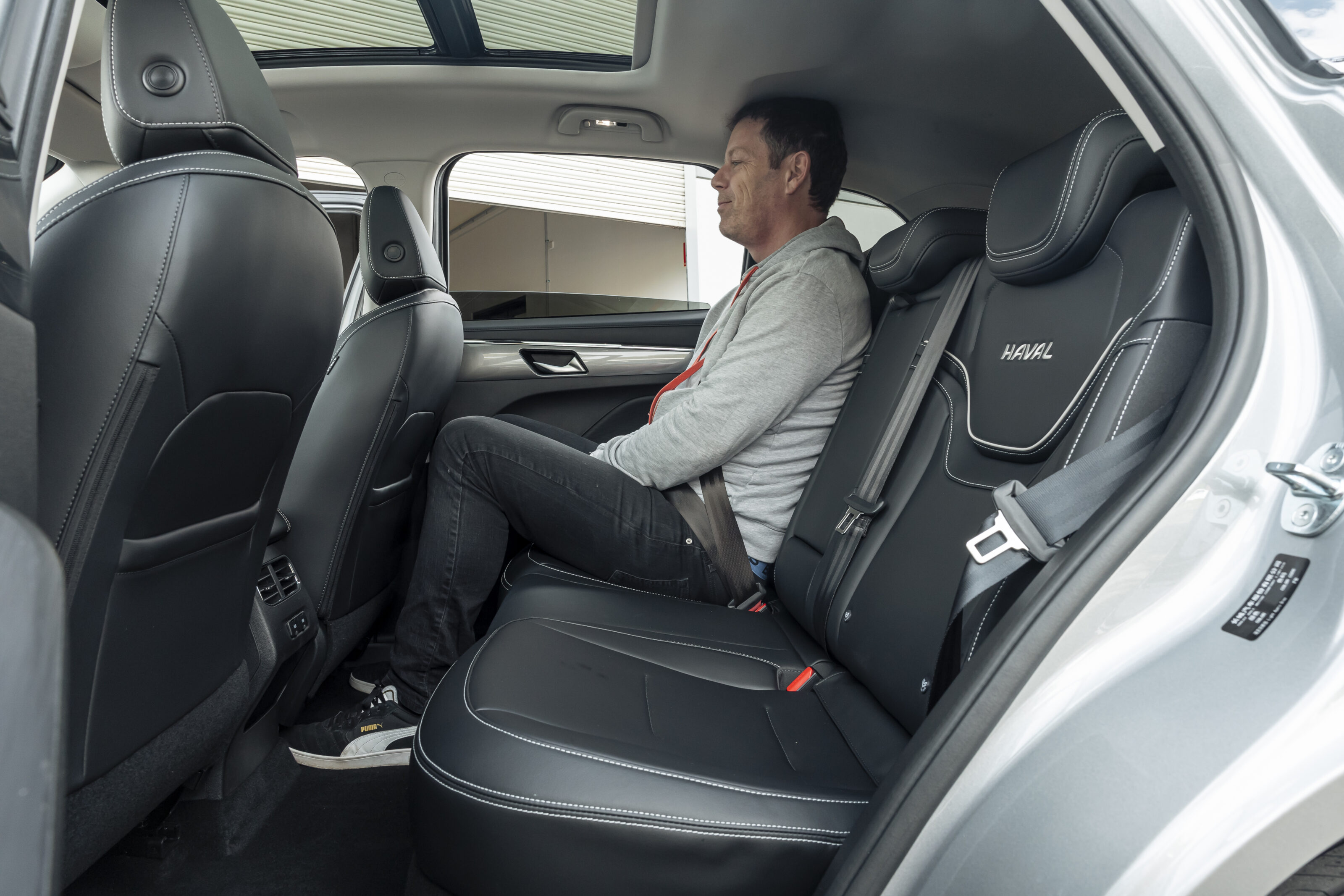
Let’s break with convention by jumping into the back first. Park yourself behind a tall driver in most compact SUVs and you’d normally be considering the possibility of some sort of deep vein thrombosis after a few minutes. Failing that, coupe-like roof profiles would have you looking like you were auditioning for a part as Quasimodo after any sort of lengthy drive. The Jolion is surprisingly accommodating here.
All but the tallest adults and gangly teens will be able to get comfortable in the back, with plenty of knee room and enough space beneath the front seats to slide feet comfortably. Headroom is also pretty good, with the glass roof stopping shy of the head pocket at the back.
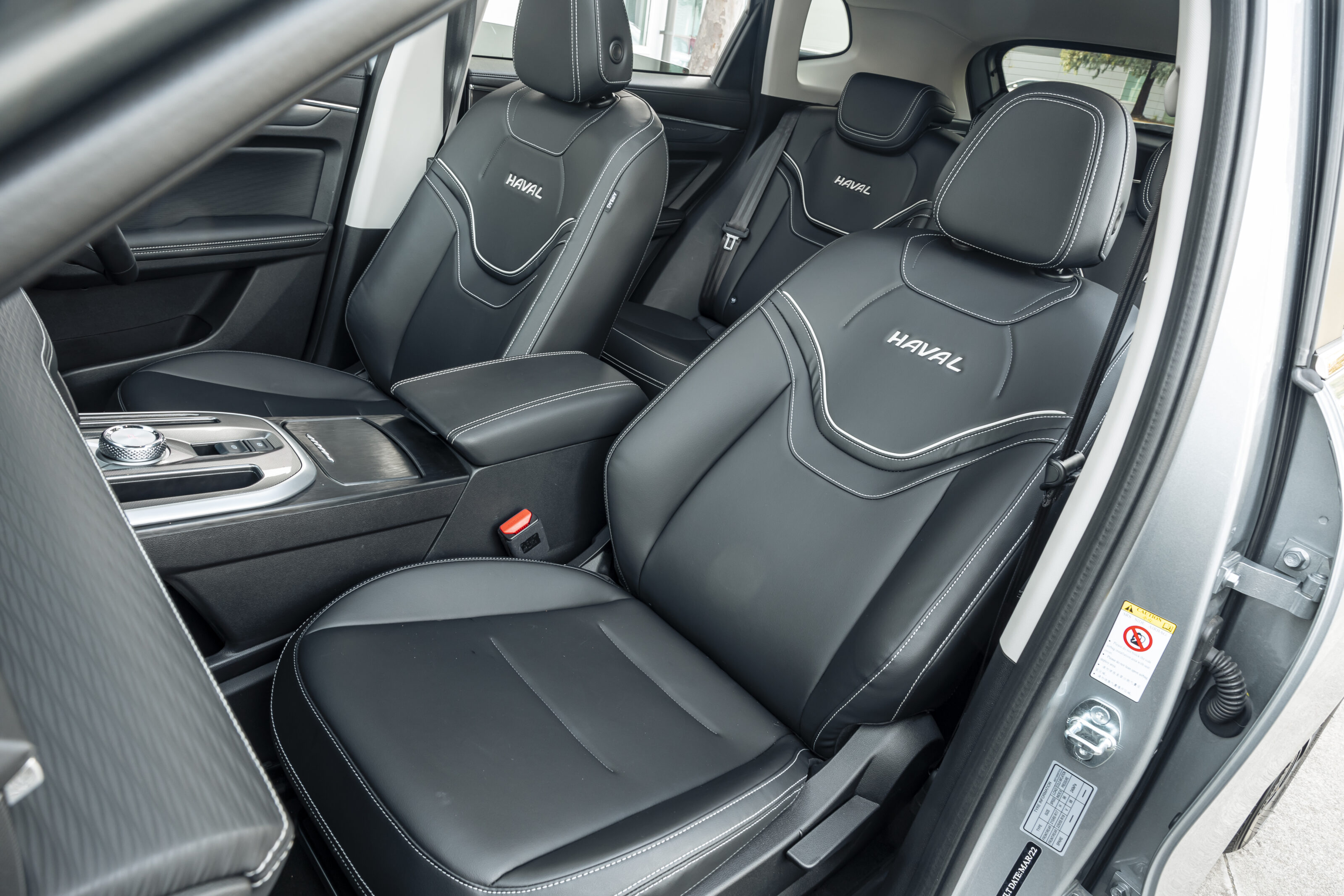
The Haval Jolion is a relatively generously cut thing, for passengers at least, with a wheelbase a few centimetres longer than the likes of the Subaru XV or the Nissan Qashqai
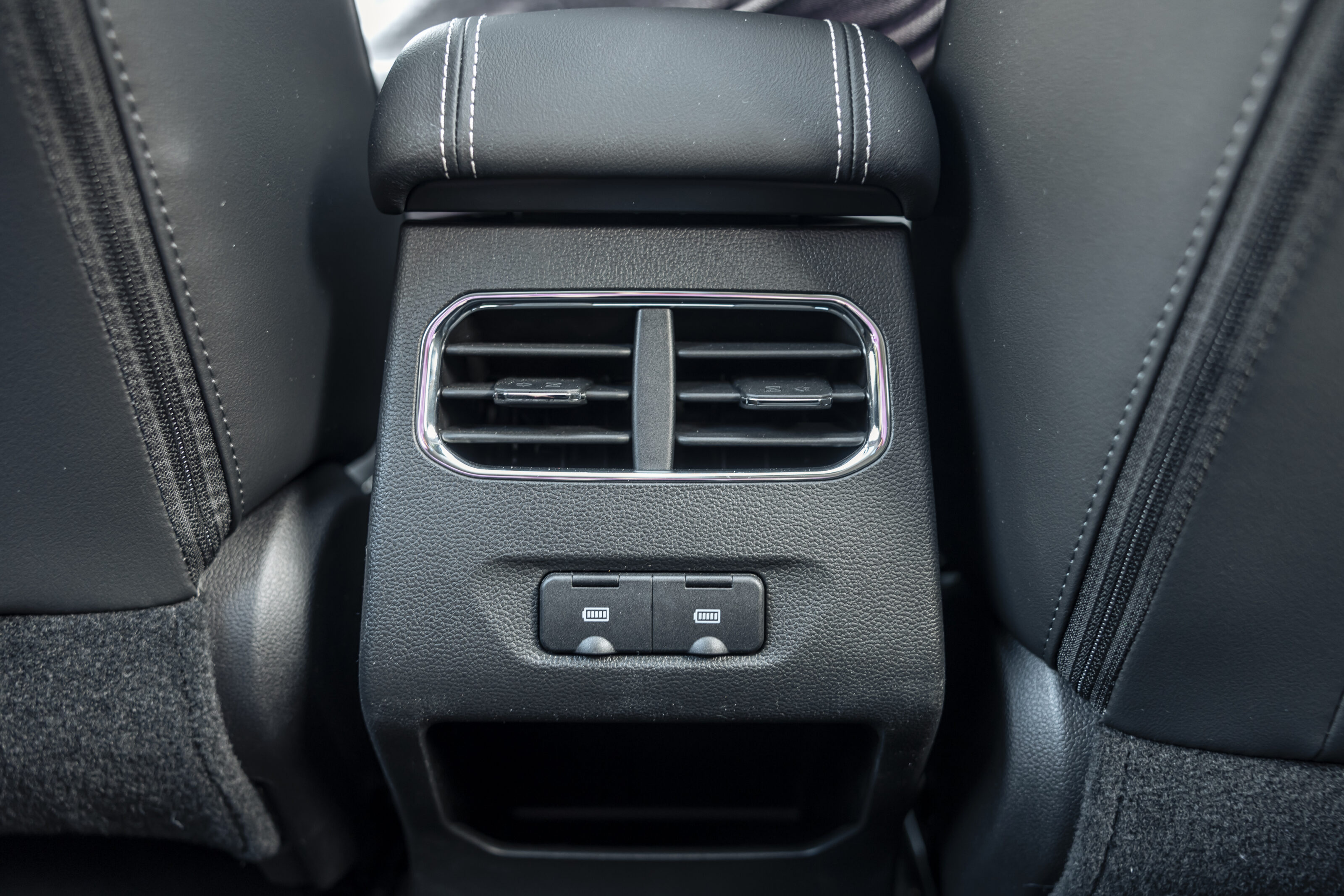
Rear occupants get a pair of low-mounted central air vents, electric windows and a pair of USB ports to plug their mobile antisocialities into, there are respectably sized door bins and a map pocket on the front seat backs.
All three seating positions in the rear get proper three-point seat belts although the centre row cushioning is a bit unfriendly. There are child seat top tether anchors on all three positions and ISOFIX attachments on the outer seats.
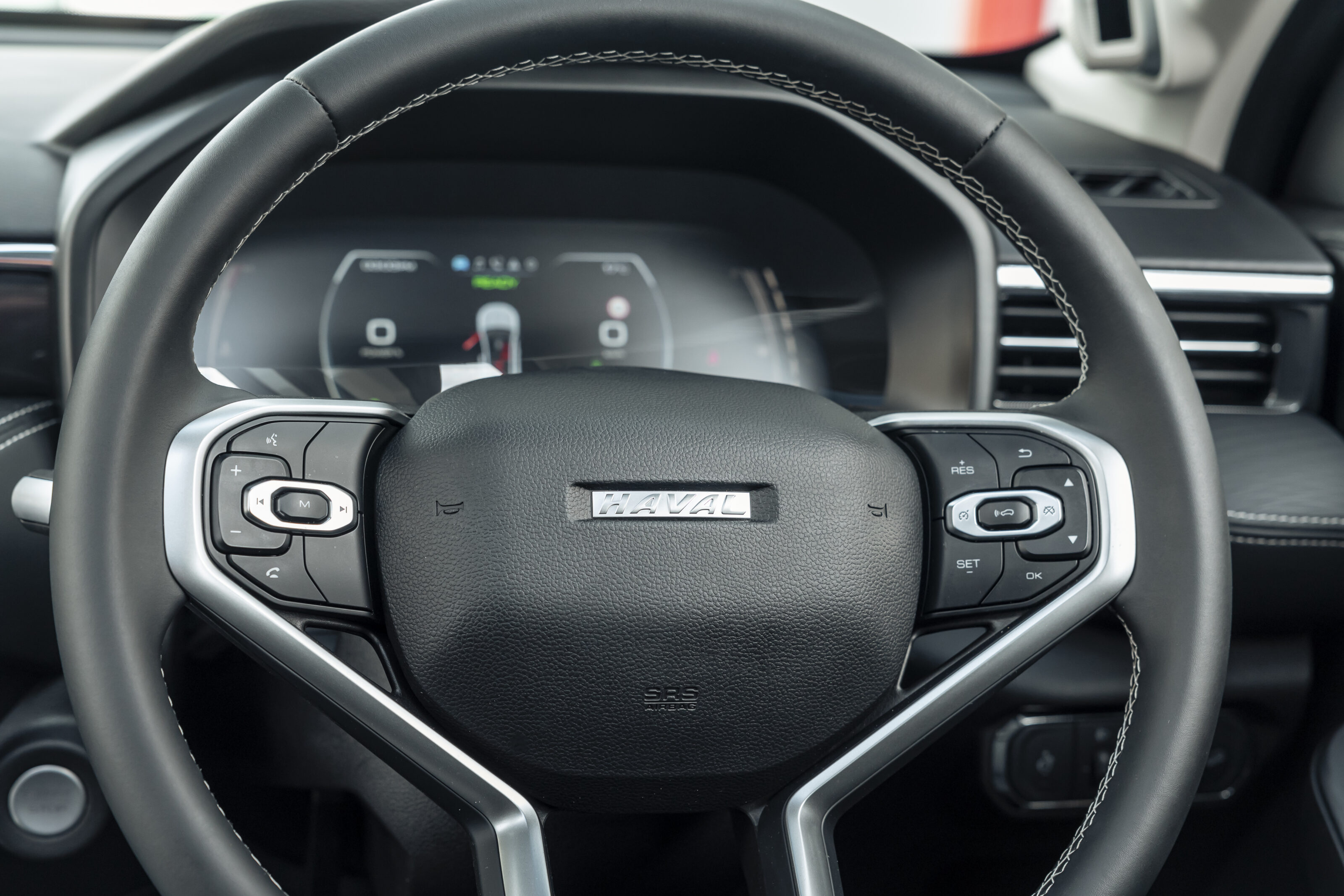
Up front, the biggest black mark is a steering column that adjusts for tilt but not for reach, which means that some may be sitting a little closer to the wheel than is ideal. There are also a couple of ergonomic issues that suggest a less than comprehensive consideration of the car’s right-hand drive markets.
The USB slots are virtually on the floor, on the passenger side of the centre console. And having a home button on the widescreen infotainment system is great, but put it in the corner near the driver rather than opposite side out of arm’s reach.
Otherwise, the cabin gets a lot right for this particular price point. The seats look like leather but Haval calls the material Comfort-Tek and it does a fairly good facsimile of hide. The contrast stitching quality is decent and there are four monogrammed Haval logos on the seats. The Harman-branded door speakers look a bit plasticky, but the audio quality is respectable from the six-speaker installation.
The overall aesthetic design of the dash architecture is also a good deal better than you might be expecting, with a sensible layering of technical finishes, soft-touch items and harder plastics. It’s quite minimalist, with a small smattering of physical buttons and much of the interaction running through the central touchscreen.
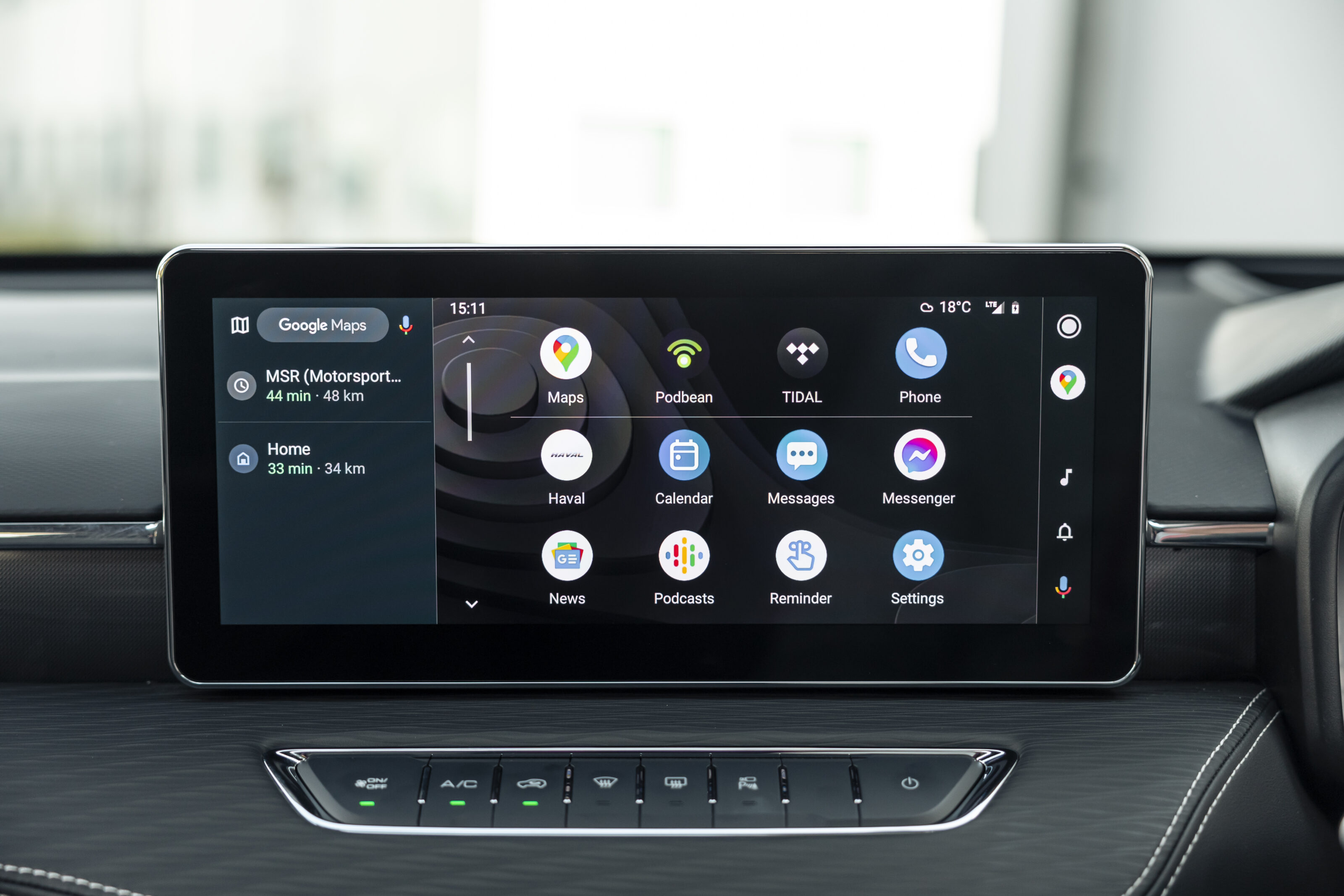
This is hampered by the fact that the Jolion is ported with no built-in satellite navigation. Okay, so it’s fine to assume that users will be mirroring their phones either through Android Auto or Apple CarPlay, but this comes with a bit of a caveat. Firstly, as mentioned previously, there’s no wireless functionality, so you may well find yourself groping around in the passenger footwell for your cable every time you get into the vehicle. Not ideal.
Secondly, Android Auto takes up the whole screen. There’s no home or escape or back button that takes you to the car’s other functions.
If you wanted to, say, change the drive mode, you’d first need to press one of the physical air-conditioning buttons, then the vehicle button, scroll up and then select ‘New Energy’, scroll the right-hand screen up and then select ‘Driving Mode’ and then choose whether you need to be in Normal, Sport, Economy or Snowfield. By which time you’ve probably changed your mind or worse.
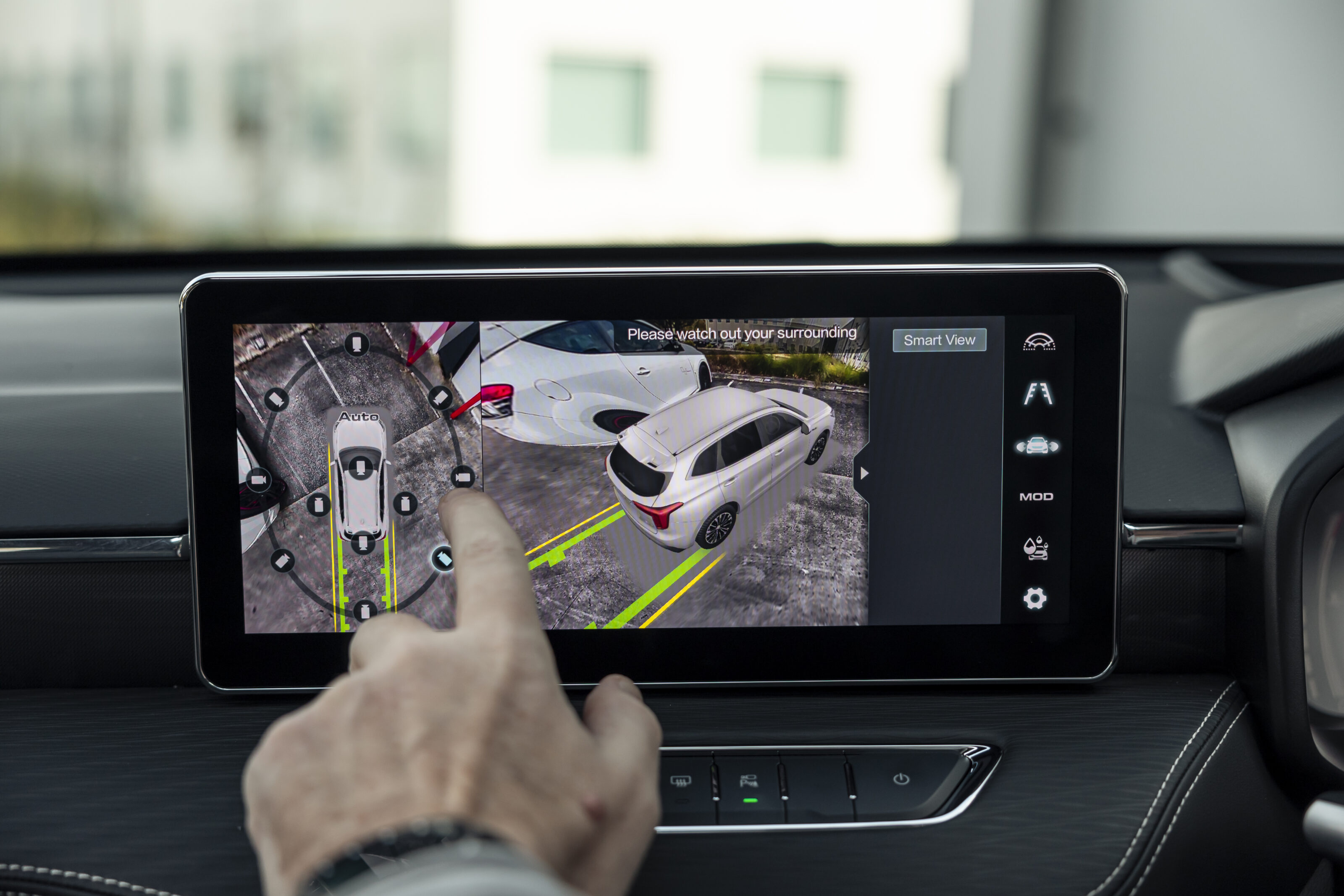
Haval has packed a tonne of functionality into the centre display but unless it can get on top of the user experience, it’s just exacerbating a problem. At present, there are too many functions that are buried elbow-deep in menus, often with tiny buttons that need to be jabbed at on the move. A few more physical buttons or an always-on Home or Back function would work wonders here.
As indeed would a bit of thoroughness when translating to that little-known and obscure language, English. Activating the reversing camera only to see “Please watch out your surroundings” flash onto the screen doesn’t fill you with confidence in the Jolion’s interface.
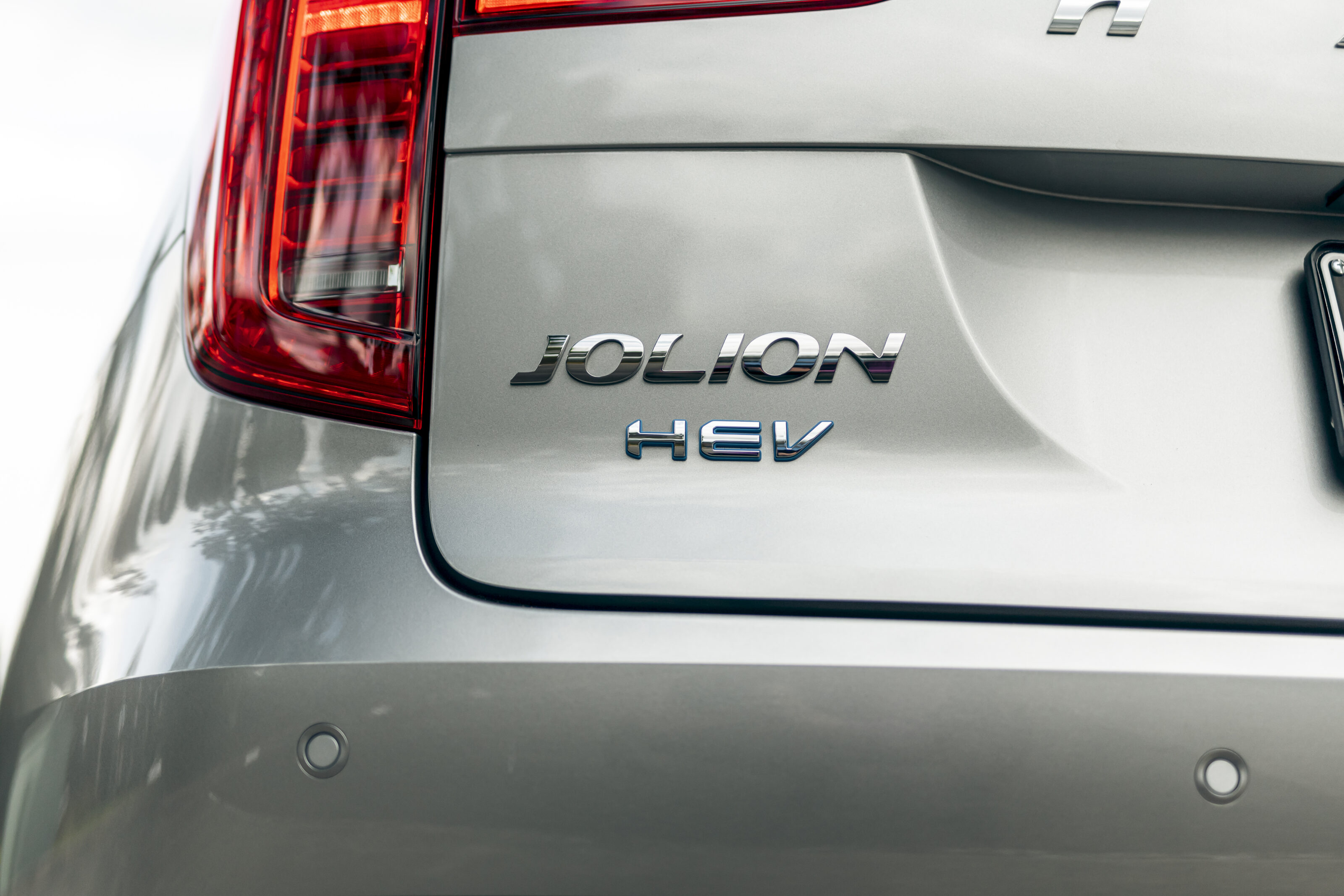
Neither does seeing the warning that “The fuel in the mailbox should be prevented from aging.” In case you were wondering, the Jolion’s mailbox holds 55 litres of the stuff and it can run on anything with a RON rating of 91 or better.
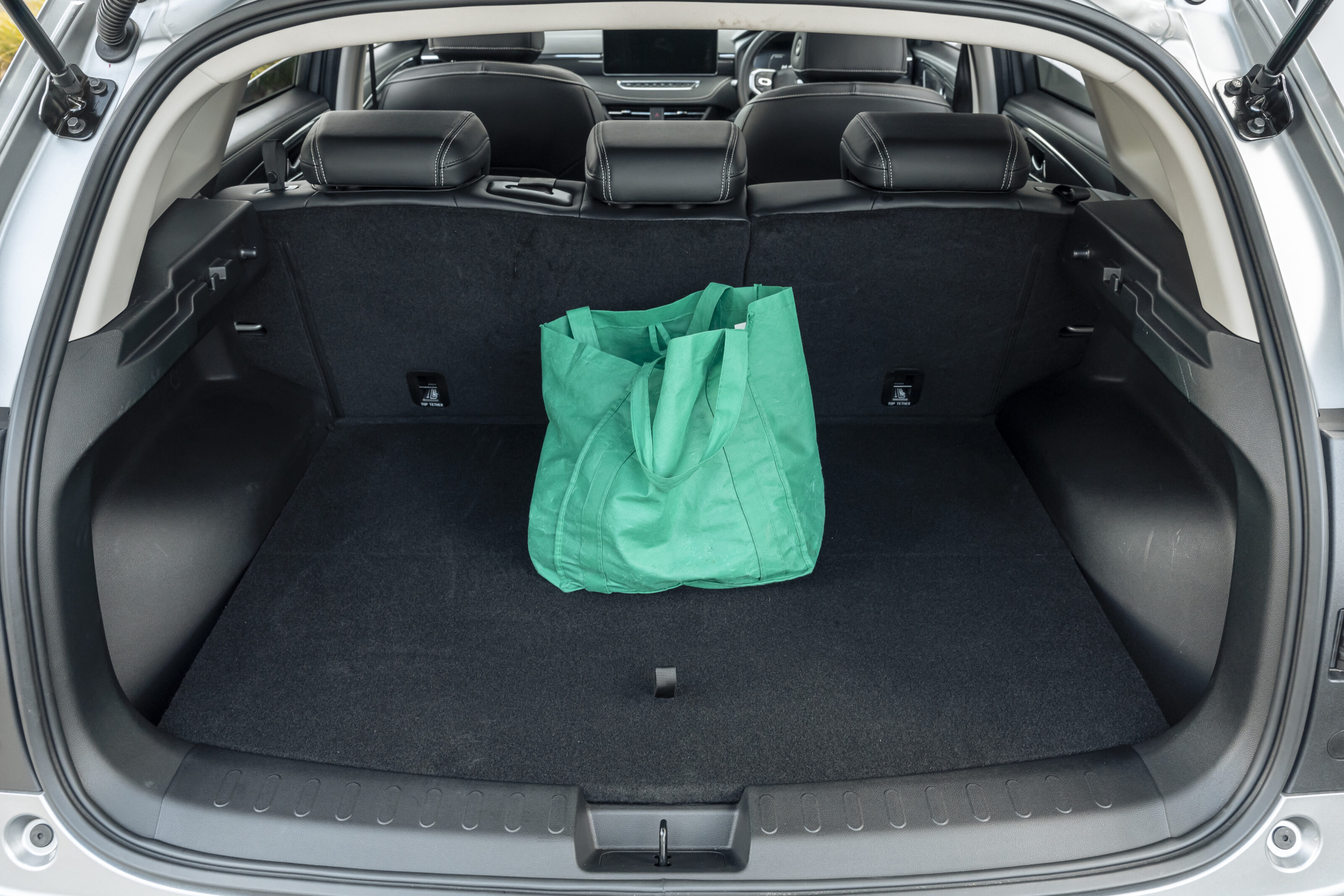
Moving aft, the boot has a strong latching mechanism that sometimes requires a good slam, setting the cheap number plate holder on this car clanging. Overall space is a little down compared to the other Jolion models due to the higher floor beneath which is the battery pack.
Instead of the 430 litres with the seats in place and 1133 litres with the 60:40 split rear bench folded, the hybrid manages 390 and 1069 litres respectively.
Another point to consider is that other Jolion models also package a space-saver spare beneath the boot floor whereas the hybrid driver has to cross their fingers and hope that a can of mobility foam will be enough to limp them to assistance.
What’s it like to drive?
Haval’s marketing material talks at length about the hybrid drive system’s ability to work as a parallel hybrid (where the electric motor works to assist the petrol engine), or in series mode (where the petrol engine is used to charge up the hybrid battery) as well as a full EV mode.
I’d looked forward to playing with each of these drive modes in turn, but the Jolion’s not really configured like that. It prefers that you just drive the thing and it decides which mode works best. And after driving one for a while, I had no real issue with that. It does a great job of figuring out which drive mode you need to be in and when.
At low speeds, the Jolion switches between full EV mode and series mode, effectively in its most economical mode when schlepping about town. On suburban roads (typically between 35km/h and 80km/h) it then switches to parallel mode under acceleration or when travelling uphill.
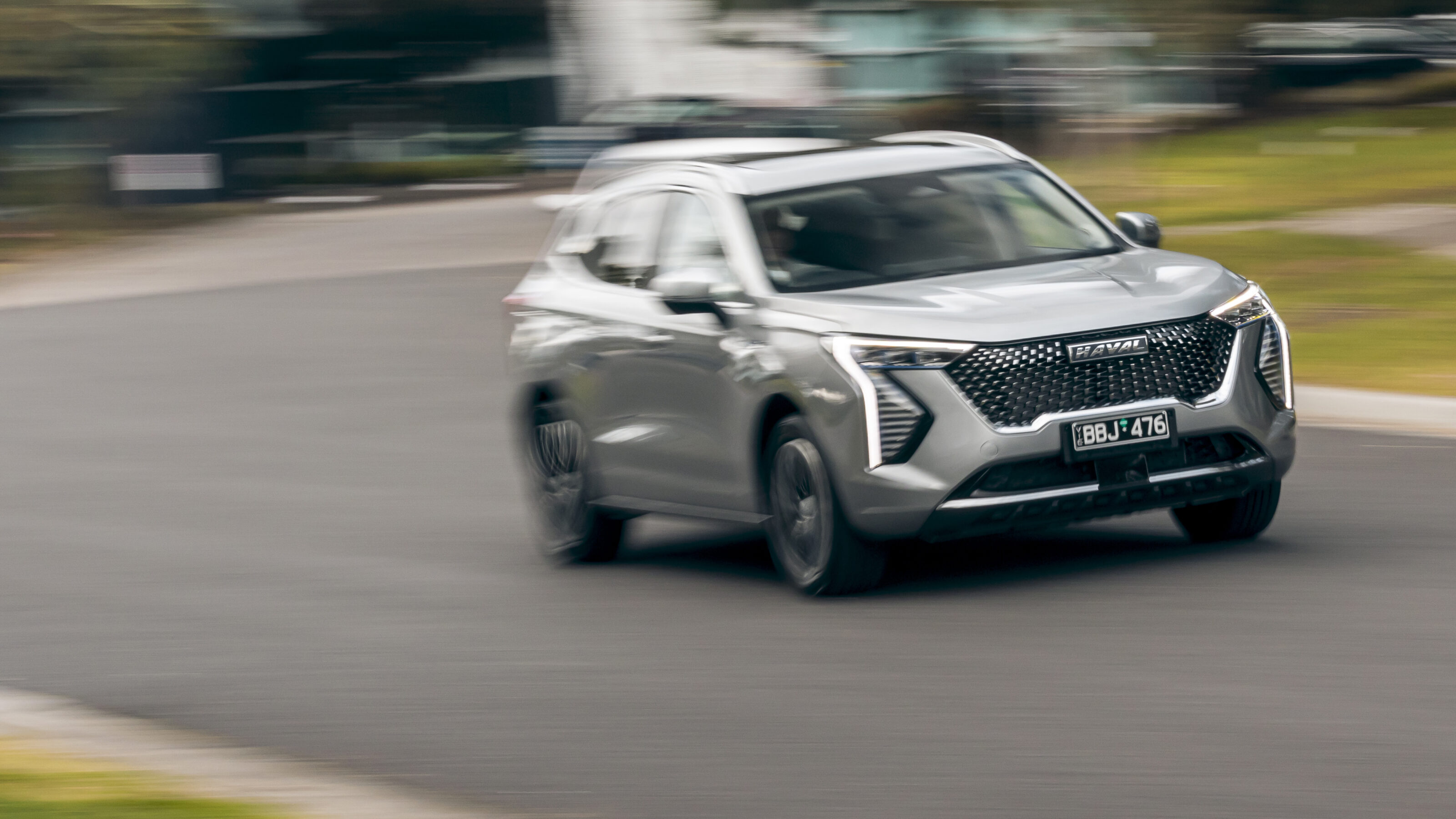
At speeds above 40km/h, the engine drives the front wheels directly, delivering a five per cent efficiency boost compared to series mode. At speeds greater than 80km/h, the engine and the electric motor again work in parallel, providing a handy torque boost when accelerating.
In practice, this means that you’re not always 100 per cent certain what exactly the Jolion is up to beneath you.
The two-speed automatic transmission features D1 and D2 ratios alongside the usual Park, Reverse and Neutral, and there are times when the engine seems to murmur along happily and others where it can get a bit thrashy and raucous.
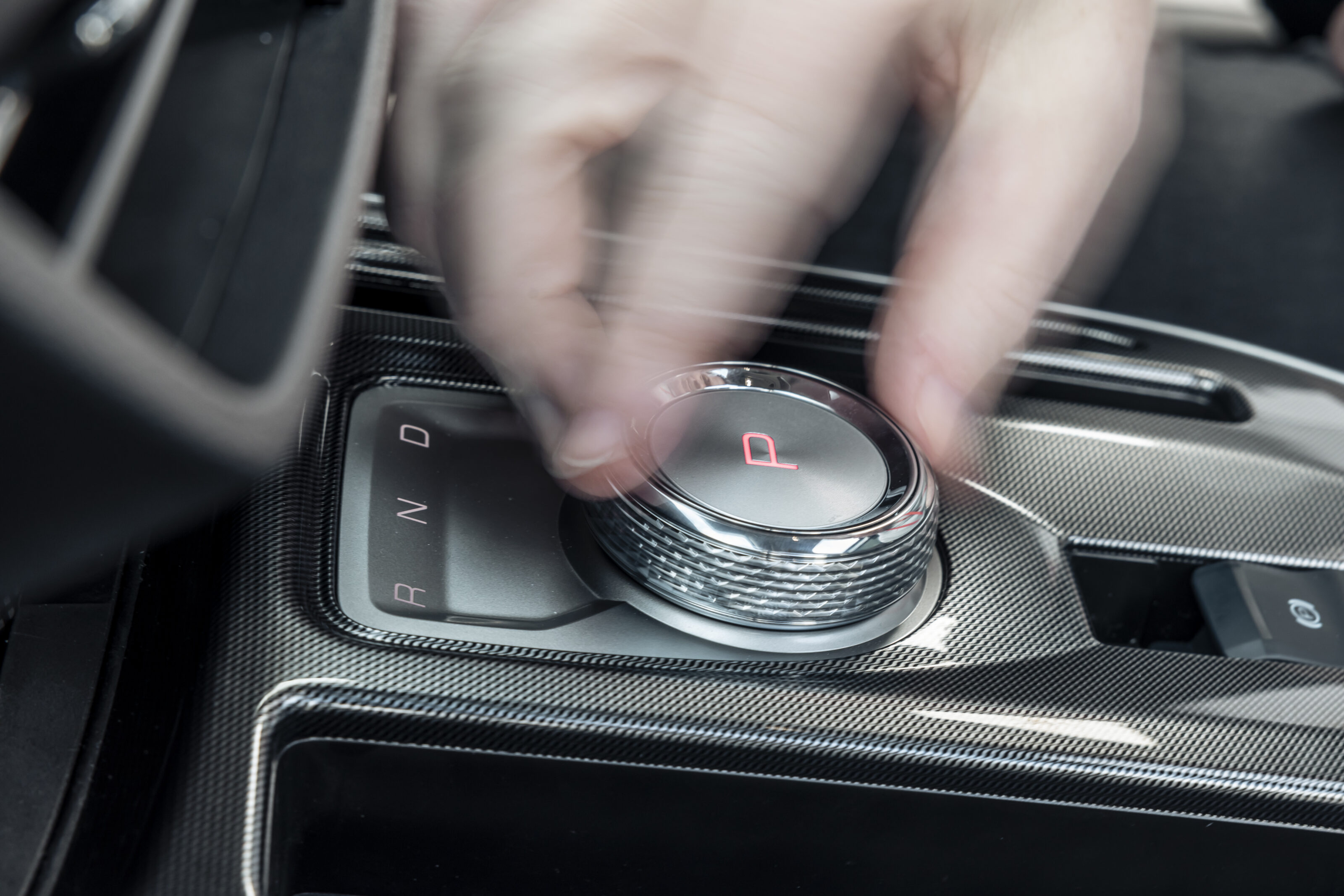
The rotary gear selector is okay once you get used to it. It has no stop function, spinning freely, and the indicator lights for the gears are so dim that you often need to shade them with your hand if you’re unsure. Once you get more familiar with it, you know that a couple of clicks clockwise will put it into gear and a couple of clicks anti-clockwise will put it into reverse.
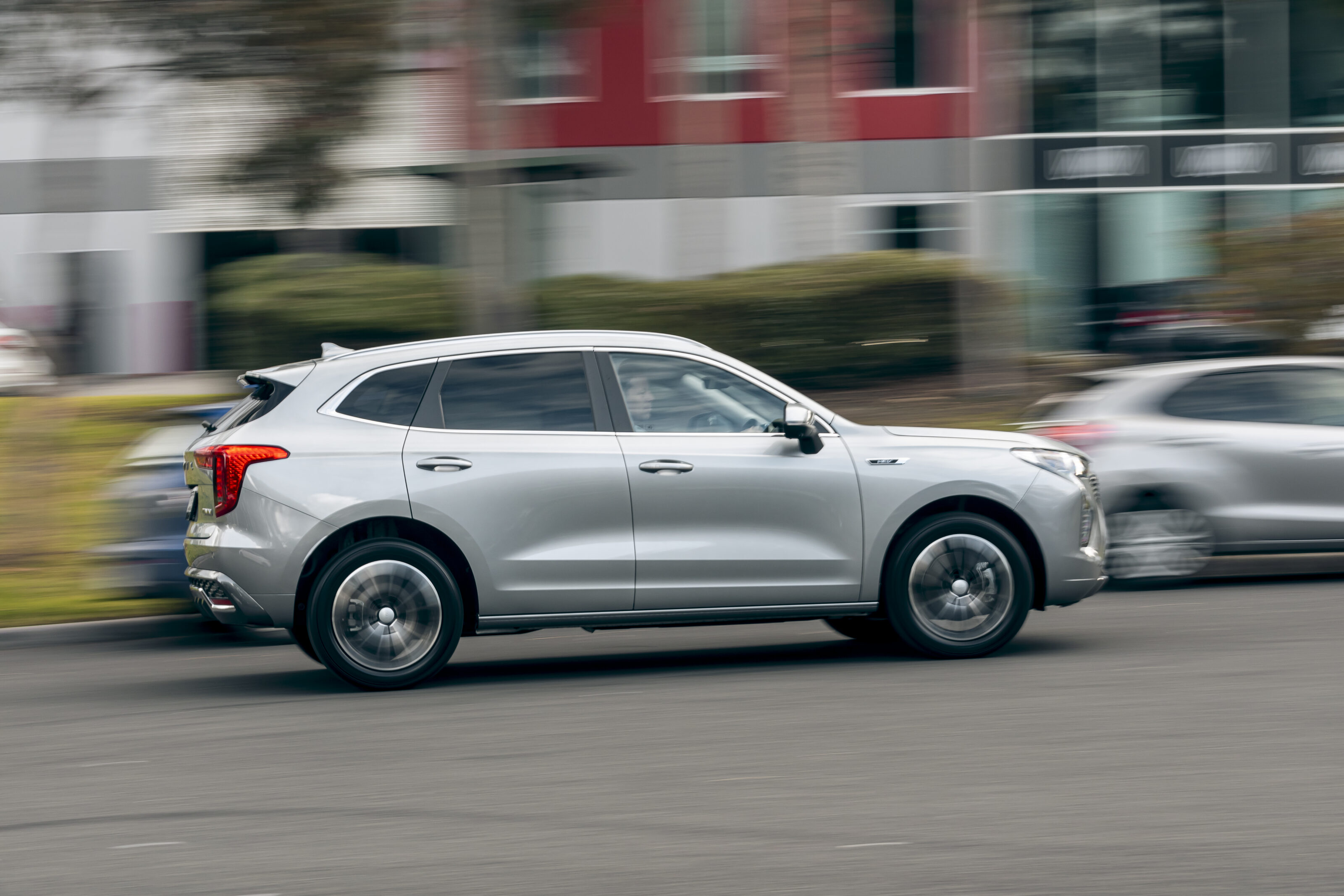
Let the Jolion do its own thing and it’s a decidedly amenable thing to amble about in
Three regenerative braking modes enable you to vary the degree of off-throttle deceleration and therefore the amount of kinetic energy harvested into the lithium-ion battery as the car slows.
You can also enable a one-pedal mode that is decidedly mild in its operation. Yes, it will eventually bring the Jolion to a halt should you step off the throttle, but it feels a little too gentle to inspire a great deal of faith in typical stop-and-start city traffic.
The conventional brakes are respectable enough but more impressive is the way that GWM has finessed the transition from regen to old-school friction. It’s way more impressive than many far more expensive rivals in this regard. I recently drove a sixty-grand Cupra Formentor hybrid and the pedal feel was nowhere near as faithful as this humble Haval.
Let the Jolion do its own thing and it’s a decidedly amenable thing to amble about in. It’s not hugely rapid, packing 139kW and 375Nm, but we timed it at 8.9 seconds to 100km/h, so it’s got enough herbs about it to hustle if you’re intent on that.
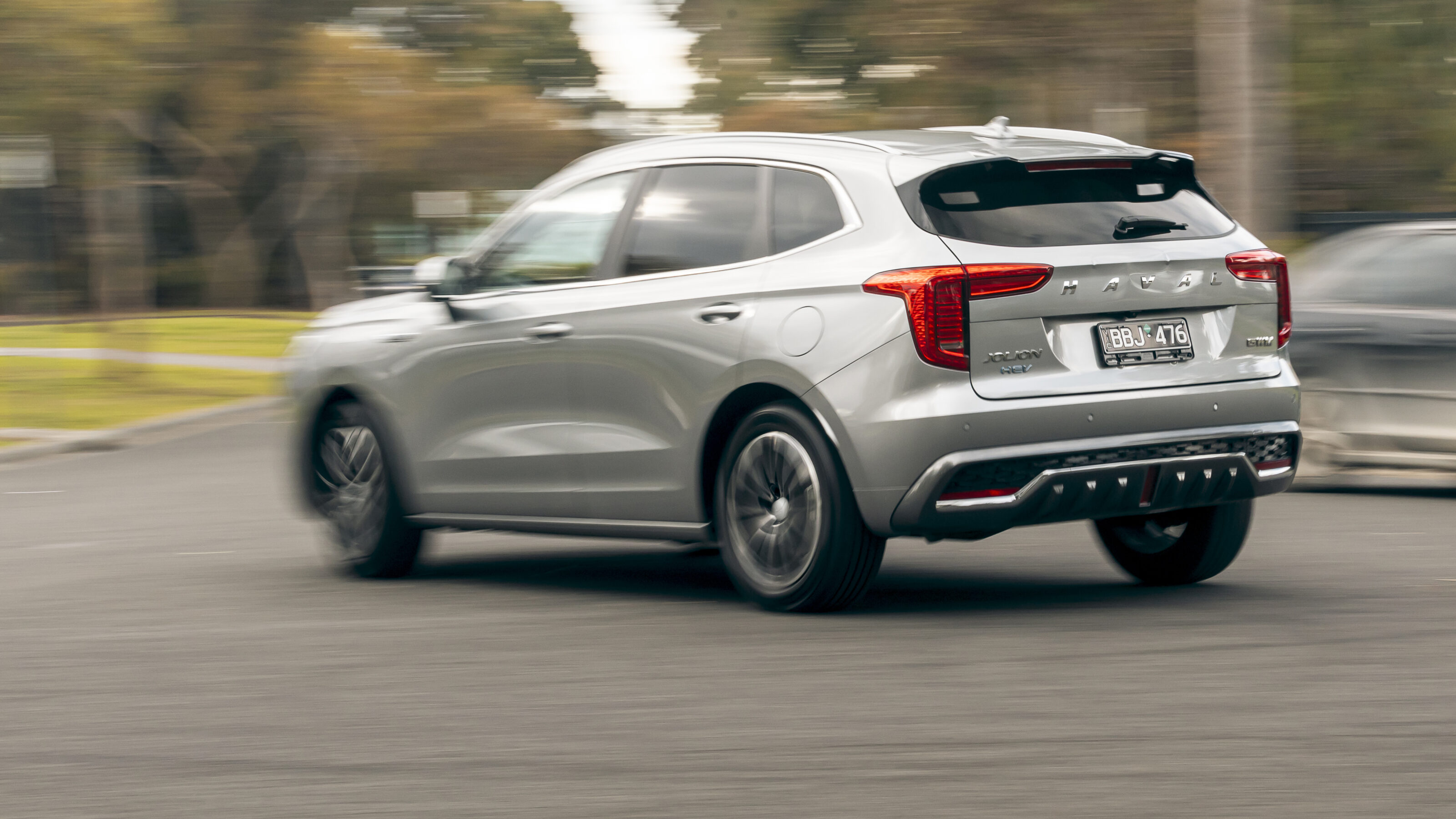
Its body control is softish but never slovenly. Ride quality is also very good, with power take-up being nicely polished, transitioning between drive modes and up and down its binary transmission very cleanly. At 2.7 turns lock to lock, the steering is benign, but there’s never anything in the way of nasty surprises from it.
Although the 225/55 R18 Kumho Solus HS63 tyres aren’t the last word in dynamic focus, that generous sidewall does at least deliver enough squish to burnish away typical Aussie B-road battle scars. They’re not quite so great when trying to ascend a steep dirt road, with a little axle tramp entering the fray.
The all-seeing eye of the driver monitoring system peers at you balefully from the A-pillar, the camera attempting to detect whether you’re about to nod off or are otherwise distracted. It looks a bit Orwellian when you first get into the car but it did nothing to interject while I was driving so I had no issue with it.
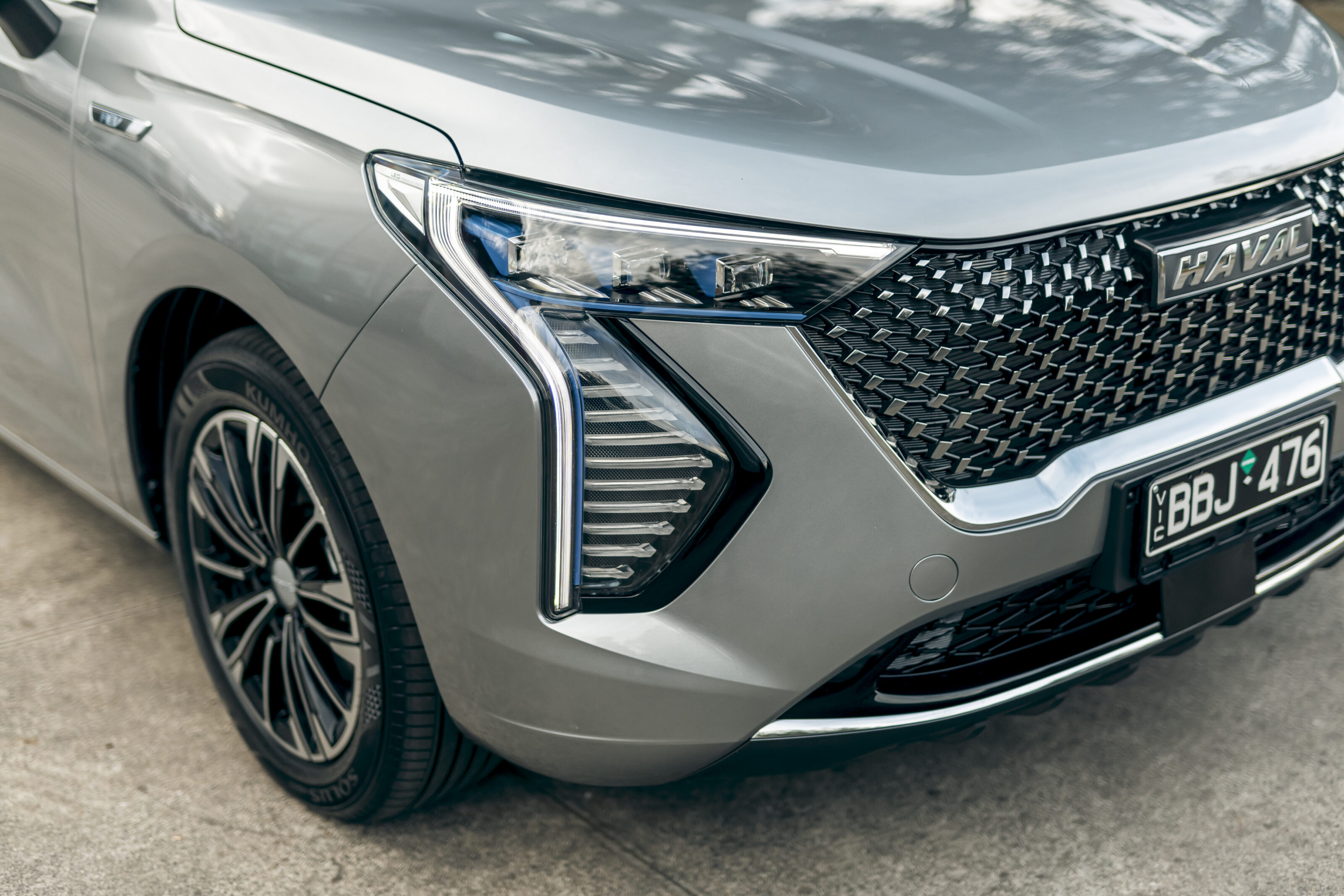
Also of note is the power of the LED headlights. There’s ample illumination on dipped beam, but flick to main beam and you unleash a scarcely credible barrage of photons.
One poor pedestrian I managed to pick out looked like one of those guys on the deck of a ship who was told specifically not to look at the nuclear test. His retinas probably now have the surface consistency of Pringles.
Ride quality is also very good, with power take-up being nicely polished, transitioning between drive modes and up and down its binary transmission very cleanly
How is it on fuel?
None of our testers drove the wheels off the Jolion while it was on test, instead leaning into its relaxed personality.
After 250km on mixed roads, the fuel consumption figure was 7.6L/100km against a claimed economy figure of 5.0L/100km.
That’s pretty much on par with the more efficient cars in the class, with the hybrid version of the Kia Niro returning a claimed 4.9L/100km. By contrast, a Subaru XV hybrid is said to do 6.5L/100km on the combined cycle.
Interestingly, the Jolion’s data screen for fuel efficiency is a tangled web of weirdness, logging every single aspect of the car’s energy usage. At one point it showed fuel usage of 49L/100km, which provoked a moment of panic before it was apparent that this had been for a mere seven-second boost.
How safe is it?
The Jolion has yet to be ANCAP tested and we can’t presume a five-star rating, but it’s reassuring to know that its bigger sibling, the H6, aced the 2022 testing.
A massive stack of safety kit is included as standard with the Jolion Ultra Hybrid. Indeed it’s hard to know where to start. Rather than try to wade in and categorise the features, here’s a list of them instead:
| Dual front, dual front-side, centre and curtain airbags |
| Seatbelts with pre-tensioners front and rear |
| Electronic stability control |
| Traction control |
| Secondary collision mitigation system |
| Hill descent control and hill-start assist |
| Traffic sign recognition |
| Tyre pressure monitoring system |
| Rear parking sensors |
| 360-degree surround-view camera |
| Adaptive cruise control |
| Emergency lane-keeping and lane centring |
| Rear cross-traffic alert with braking function |
| Automatic emergency braking |
| ISOFIX child seat anchors |
| Forward collision warning |
| Blind-spot monitoring and lane change assist |
| Rear collision warning |
| Driver drowsiness detection camera system |
| LED headlights |
| Automatic windscreen defogger |
In practice, the safety systems seem to work very well, with little in the way of false interventions, on the highway at least. The lane-keep assist can be a bit intrusive if you’re hustling along a quiet country road, often tugging annoyingly at the steering wheel.
It takes quite a delve into the menus to switch it off, but it’s worth the effort for a more faithful steering feel. On major roads, the adaptive cruise control is a boon and is one of the better examples of its ilk.
One slight oddity is the Jolion’s propensity to flash its hazard lights. It’ll do this if you switch into Sport mode and will also give a flash if traffic passes close to its rear end. It’ll even do it if it detects a jolt to the vehicle, such as if you drive over an abrupt lateral seam in the road surface or hit a bump.
Halfway through our time with the vehicle, it also took to sounding a faint bleep whenever the speed limit was exceeded by 7km/h.
Warranty and running costs
The GWM Haval Jolion Ultra Hybrid is sold with a seven-year / unlimited-kilometre warranty, along with five years of roadside assist and capped-price servicing, which help bolster confidence in what is to many still a relatively new brand.
GWM’s roadside assist deal covers all of Australia and aside from the usual roadside repairs and towing, also includes locksmith services if you’ve lost a key, fuel top-up if you’ve taken your eye off the gauge and emergency taxi service of up to $50 if you’re really in a rush.
The servicing schedule and pricing are pretty transparent, with details listed below.
| First service | 12 months/10,000km | $210 |
|---|---|---|
| Second service | 24 months/25,000km | $250 |
| Third service | 36 months/40,000km | $350 |
| Fourth service | 48 months/55,000km | $450 |
| Fifth service | 60 months/70,000km | $290 |
The prices are the maximum payable for standard scheduled servicing under normal operating conditions for the nominated months/kilometres (whichever occurs first) up to a maximum of five services.
You may be expected to pay for normal wear and tear items such as tyres and brake pads, with possible extras for maintenance for vehicles that have been treated to what GWM Haval calls ‘severe driving conditions’.
VERDICT
The Jolion hybrid vastly exceeds the expectations of its price point and that alone may be reason enough to buy
In order to underline the achievements of the GWM Haval Jolion Ultra Hybrid, it’s first worth focusing on its place in the market. It’s the cheapest hybrid SUV of this size and therefore it stands to reason that it ought to be the least competent car in that particular class.
The fact that it delivers not only a huge slug of equipment, plenty of space for adults front and rear, a slick and technically intriguing hybrid drivetrain and respectable dynamics isn’t what we were expecting.
In that regard, the Jolion hybrid vastly exceeds the expectations of its price point and that alone may be reason enough to buy.
Yes, some ergonomic issues need addressing, but none of them are absolute deal breakers. Despite the fact that the infotainment system isn’t the easiest to operate, for the most part, you can just leave the vehicle in its default setting and it works very well.
You think you’ll want to play around with drive modes and regen settings, but the fact is that the calibrations are good enough to leave to their own devices.
What you’re left with is a vehicle that looks reasonably handsome, drives well, is stacked with safety gear and other kit, and comes with an unlimited-kilometre seven-year warranty for $41K on your driveway. That’s hard to beat.
In fact, it’s not much more than you’d pay for an absolute bottom-drawer, entry-level VW Golf hatch.
There are some fairly obvious ways that GWM can improve the Jolion, but a huge majority of the engineering decisions have gone the right way with this quietly impressive vehicle.
It’s like pitching up at Maccas and discovering they’re selling a perfectly serviceable filet steak for six bucks. Of course, there will be some who’d still find reasons not to partake, and that’s up to them.
But don’t rush to judge until you’ve tried it.
2023 Haval Jolion Ultra Hybrid specifications
| Model | GWM Haval Jolion Ultra Hybrid |
|---|---|
| Engine | 1497cc petrol-electric hybrid |
| Max power | 139kW (combined system output) |
| Max torque | 375Nm (combined system output) |
| Transmission | 2-speed ‘dedicated hybrid’ auto |
| Weight | 1530kg |
| Economy | 5.0L/100km (claimed) / 7.6L/100km (as tested) |
| 0-100km/h | 8.9sec (as tested) |
| Price | $40,990 drive-away |
| On sale | Now |
Ford will return to compete in the 24 Hours of Le Mans with the freshly revealed seventh-generation Ford Mustang.
Official confirmation of the racing program happened in Detroit at the launch of the latest generation pony car, as well as the reveal of the more powerful 2023 Ford Mustang Dark Horse.
A GT3-spec racing version of the road car has been confirmed to be in development for some time, but this is the first indicator from Ford on what categories it intends to compete in with the motorsport-prepared Mustang.
Allowing Ford to take the Mustang to the 24 Hours of Le Mans is a rule change set to take place in the coming years where the GTE class will be replaced with a GT3-based ruleset.
“The Mustang GT3 will be eligible [for Le Mans] in 2024,” said Mark Rushbrook, global director, Ford Performance Motorsports. “We look forward to seeing Mustang race there.”
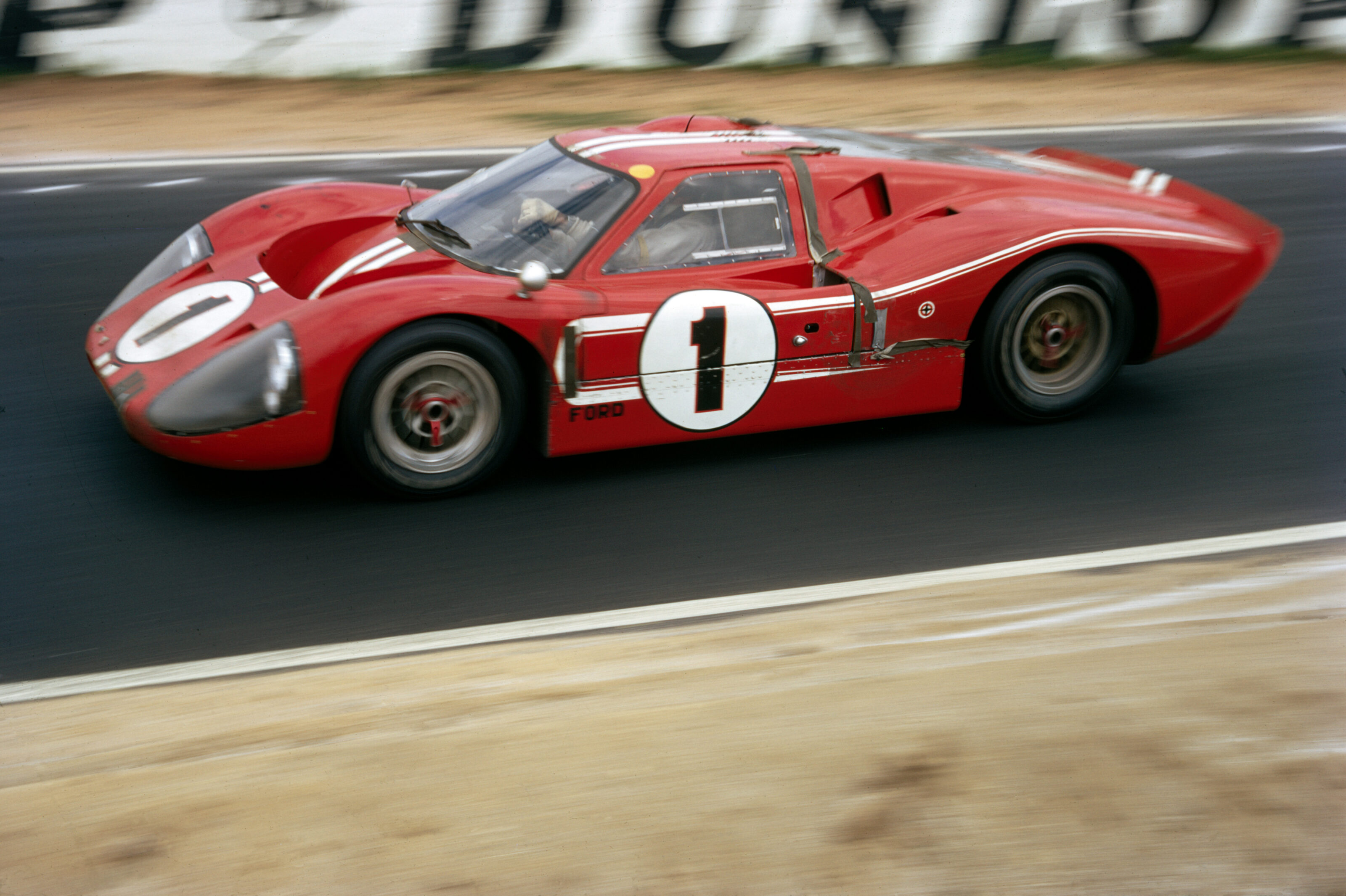
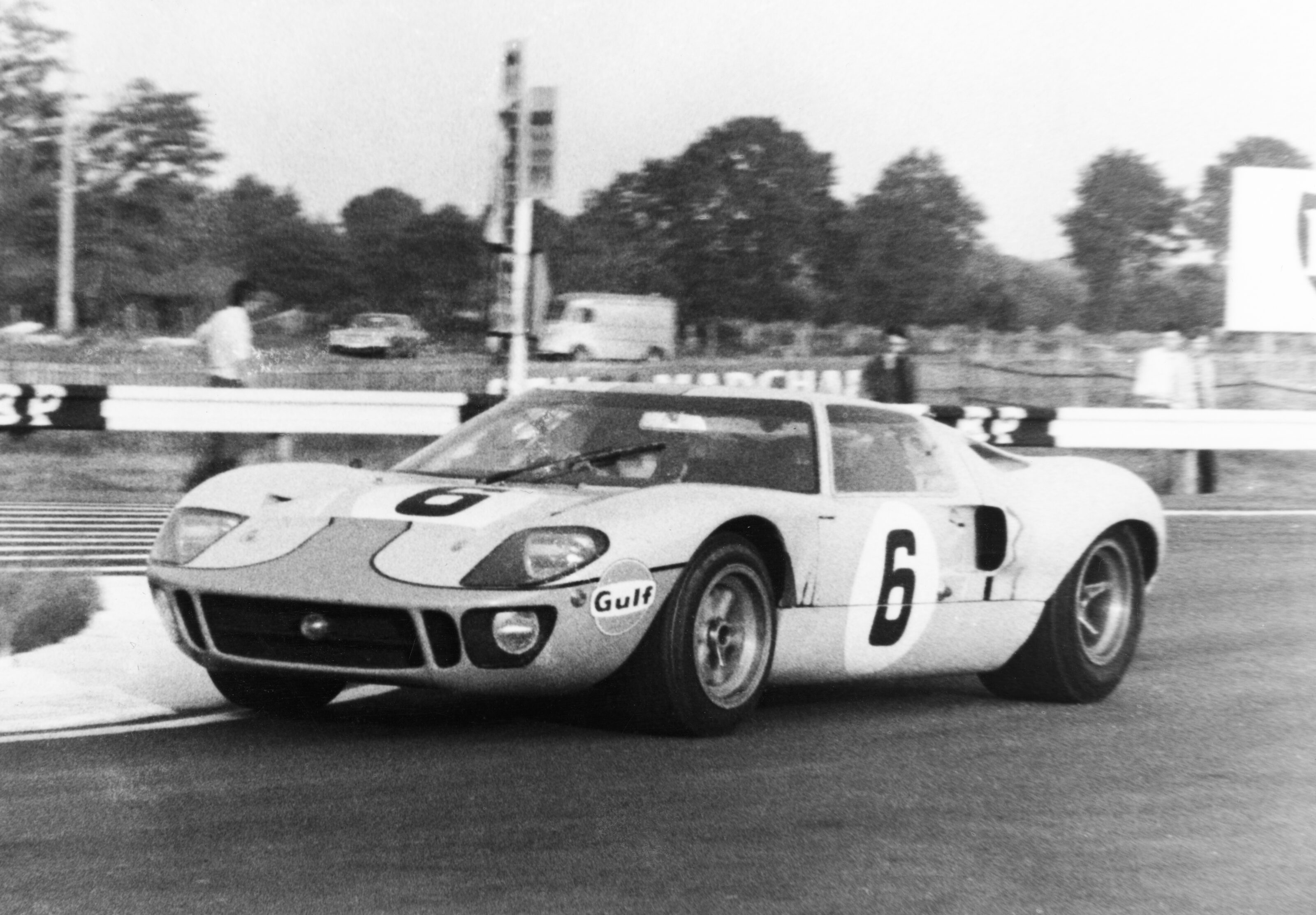
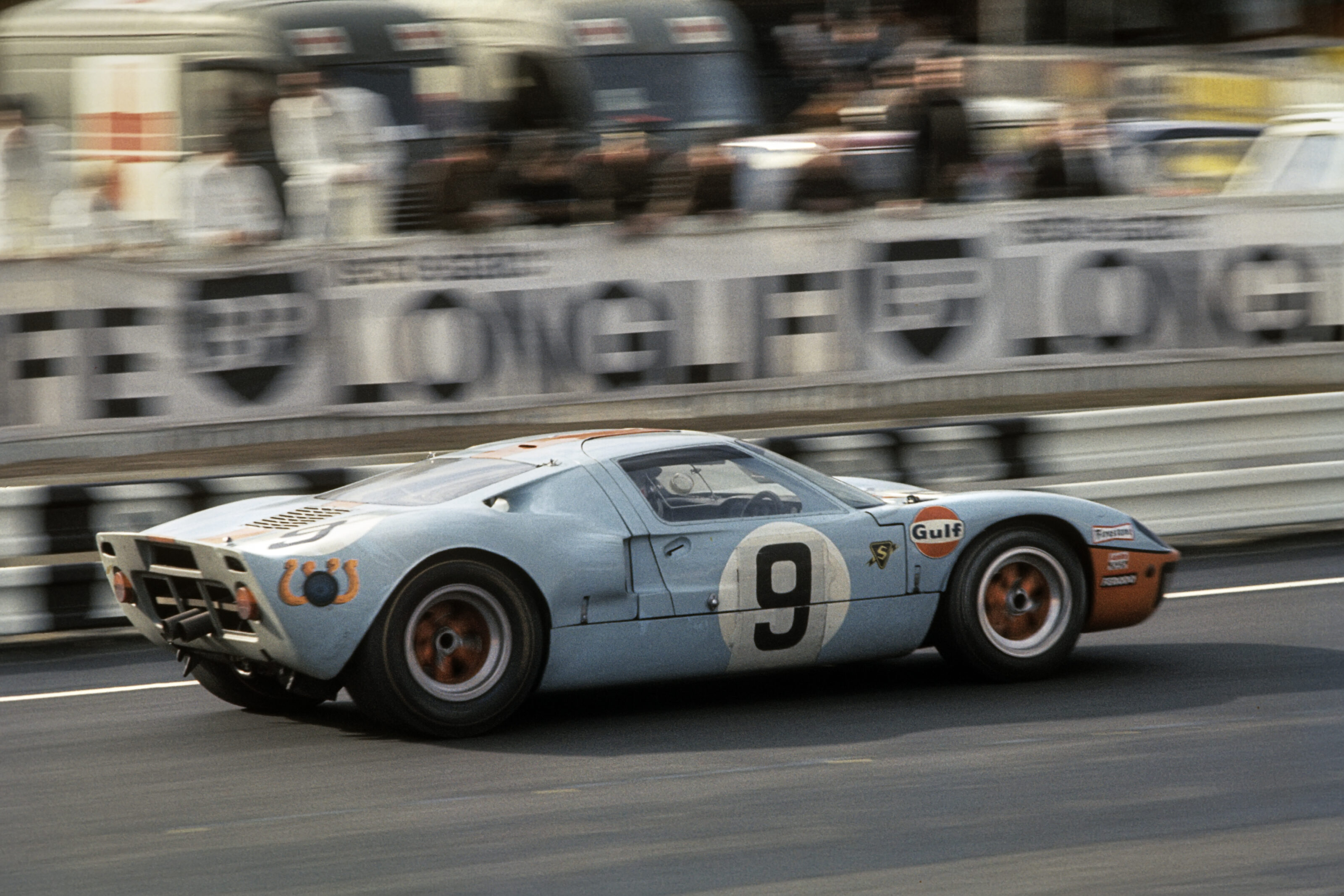
Ford’s history at the 24 Hours of Le Mans stretches back to its debut at the endurance classic in 1964. In 1966 its GT40 sports car claimed all three podium positions in one of the event’s most iconic races.
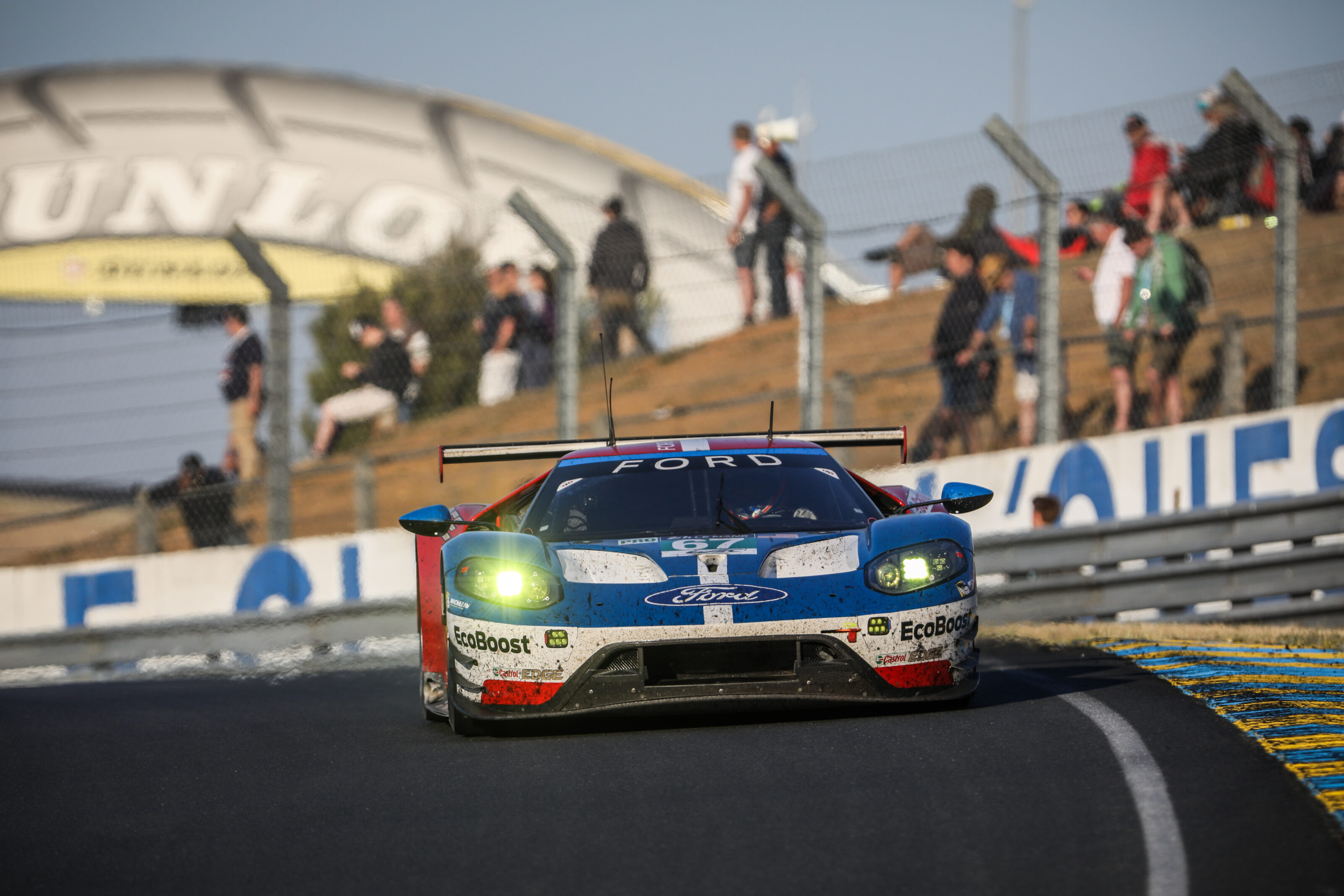
To commemorate the anniversary of the legendary 1-2-3 finish, Ford returned to Le Mans in 2016 competing in the GTE category with its reborn GT supercar, claiming both first and third in class.
The Mustang’s 2024 entry won’t be its first in Le Mans history, with the iconic nameplate having previously competed in both 1967 and 1997.
“Mustang is raced at all the great tracks around the world, but there is no race or track that means more to our history than Le Mans,” said Bill Ford, executive chair, at the road car’s reveal in Detroit.
“It’s where we took on Ferrari and won in the 1960s and where we returned 50 years later and shocked the world again.”
A GT3-spec Mustang also opens up eligibility to compete in several other iconic endurance races. From 2024 Ford will be able to compete for outright victory at the Bathurst 12 Hour in Australia, Nürburgring 24 Hour in Germany, and Spa 24 Hour in Belgium, while contending for class honours at events like Le Mans, and the Daytona 24 Hour and Sebring 12 Hour in the USA.
To compete, and be competitive, at Le Mans, Ford will also likely contest the entire World Endurance Championship (WEC) season. It last competed in WEC with the GT supercar in the GTE class.
The modern Ford GT program was a skunkworks project with the road car’s development following in the shadow of the racer’s primary focus – winning class honours at Le Mans on the 50th anniversary of the original GT40’s outright victory.
The GT’s official factory racing program, competing both natively in North America’s IMSA championship and WEC, was ended in 2019.
Since then, the GTE category the GT competed in has seen gradually diminishing field sizes, and is set to be replaced by the similar but subtly different GT3 ruleset in 2024.
While GT3 cars will be eligible, there are still some final details of the rulebook that are yet to be finalised before 2024, such as how the Balance of Performance will be homologated.
A number of racing variants of the new Mustang were shown as renderings at the car’s reveal in Detroit. Along with the GT3-spec racer that will compete at Le Mans, the Gen3 Supercar was shown which will debut locally next year.
Snapshot
- 2023 Ford Mustang Dark Horse revealed, confirmed for Australia
- Features a modified 373kW 5.0-litre V8
- Seventh-generation Mustang to race in the Supercars Championship from 2023
A more powerful 2023 Ford Mustang Dark Horse has been unveiled – and it will join the seventh-generation range in Australia.
Ford revealed the latest addition to the performance-focused Mustang line-up – the first in 21 years, following the Bullitt – after the standard EcoBoost and GT variants were showcased at the Detroit Auto Show.
It will become the flagship variant of the Mustang range – at least until the Shelby models return, but don’t expect to see those officially in Australia.
Check out our reveal story on the 2023 Ford Mustang for a full run-down on the seventh-generation model.
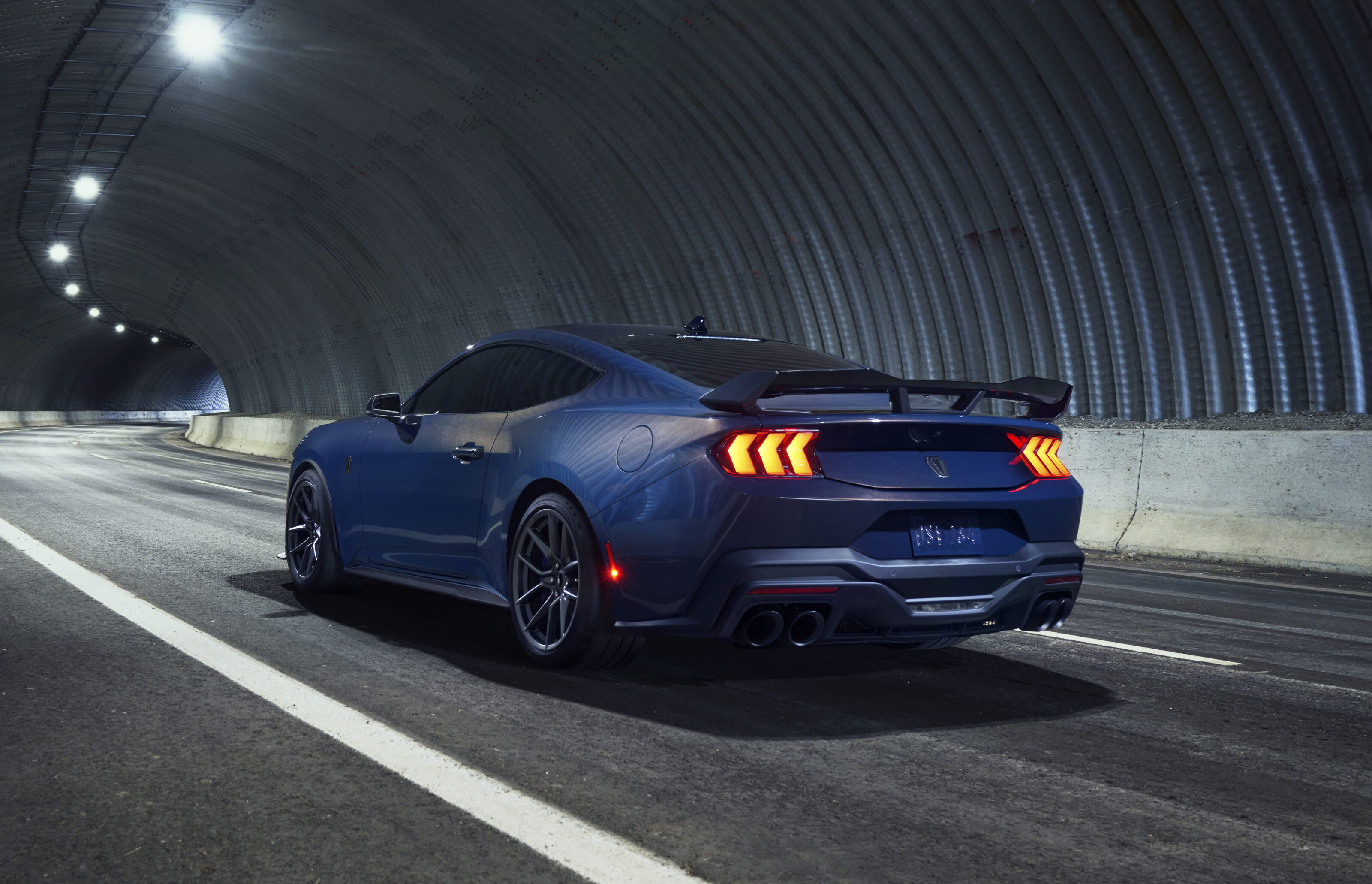
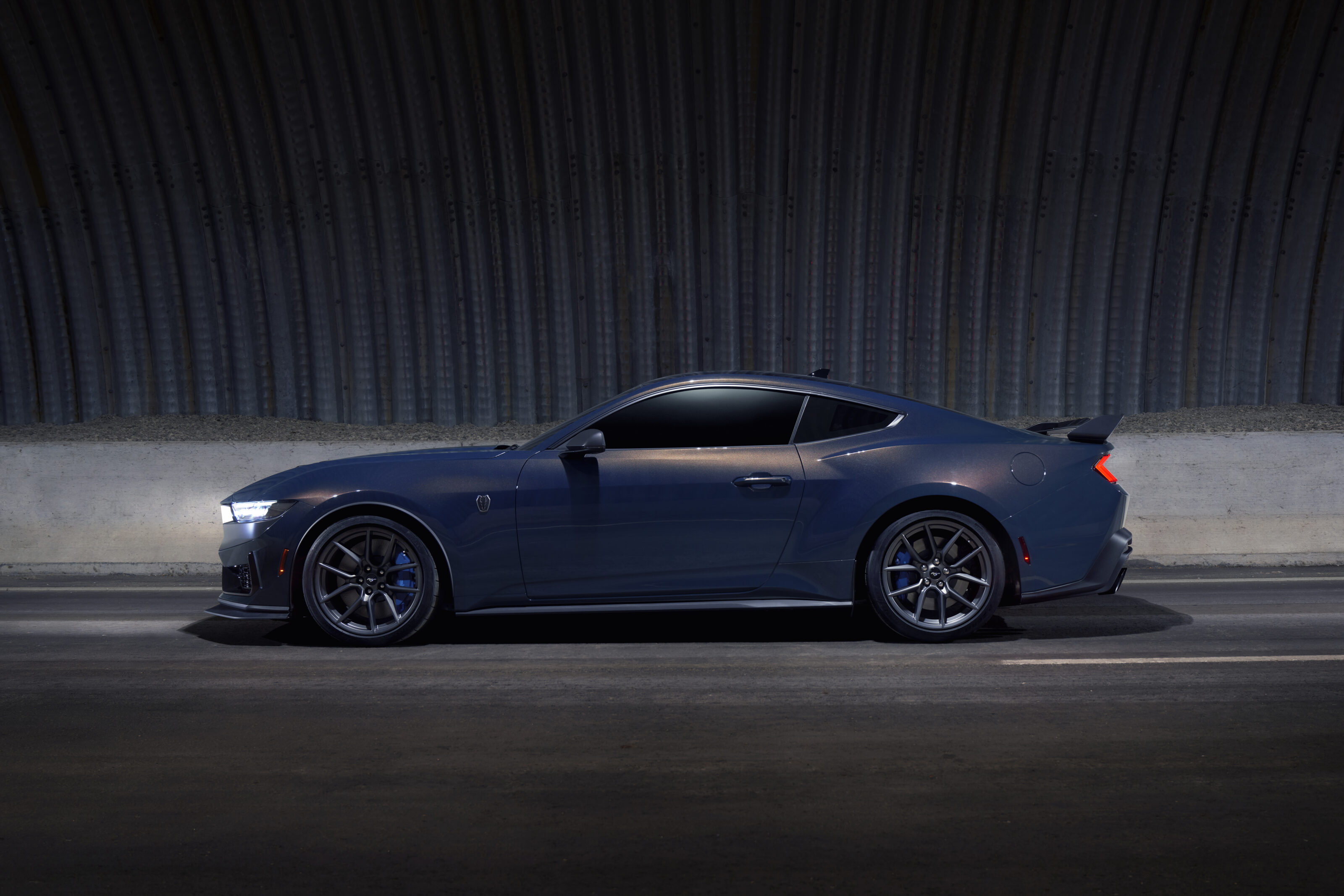
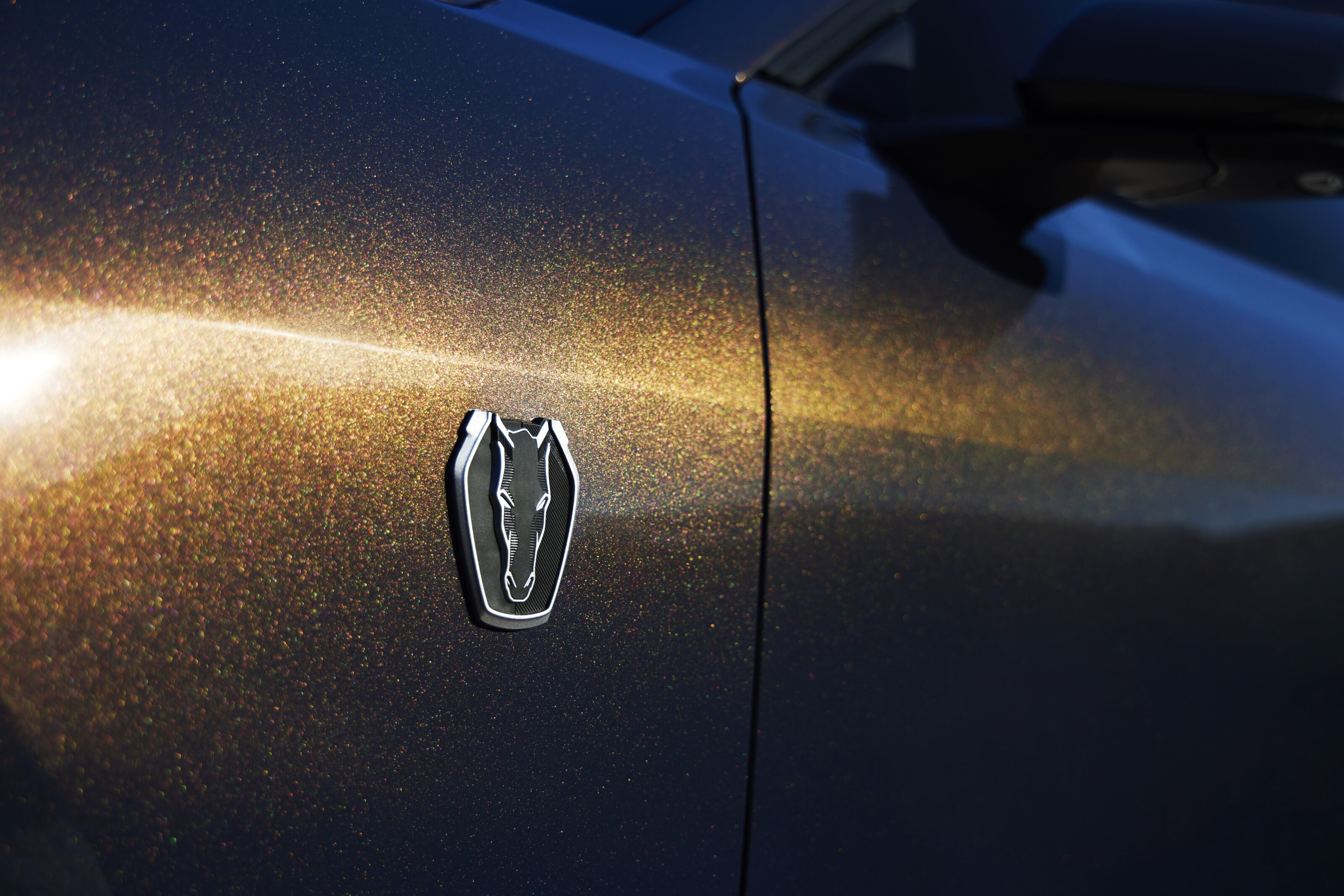
While the Dark Horse nameplate trademarked in June was initially expected to feature on a final send-off black accent package for the outgoing model, it is now officially on the boot of the new S650 version – and it packs a punch.
Under the bonnet, the Mustang Dark Horse is powered by a ‘specially modified’ 5.0-litre naturally-aspirated V8.
Ford global CEO Jim Farley told Wheels the Dark Horse will have “more than 500 horsepower” (373kW), with final outputs still to be confirmed.
Ford has yet to disclose numbers for the Mustang GT, but claims significant revisions have boosted power and torque beyond the current 339kW and 556Nm.
Expect power in the Mustang GT to be less than the Dark Horse, then.
“With sinister looks and a specially modified 5.0-litre V8, Dark Horse will set a new benchmark for Australian street and track performance,” said Ford Australia in a media release.
Engine modifications include; piston connecting rods from the latest GT500, a dual throttle-body intake design for extra breathing, a lighter radiator, a rear axle cooler, an auxiliary engine oil cooler, and more powerful cooling fans.
A six-speed Tremec manual transmission – as found in the Mustang Mach 1 and Shelby GT350 – is standard with a 3D-printed titanium shifter, or an optional 10-speed torque converter automatic shared with the standard model.
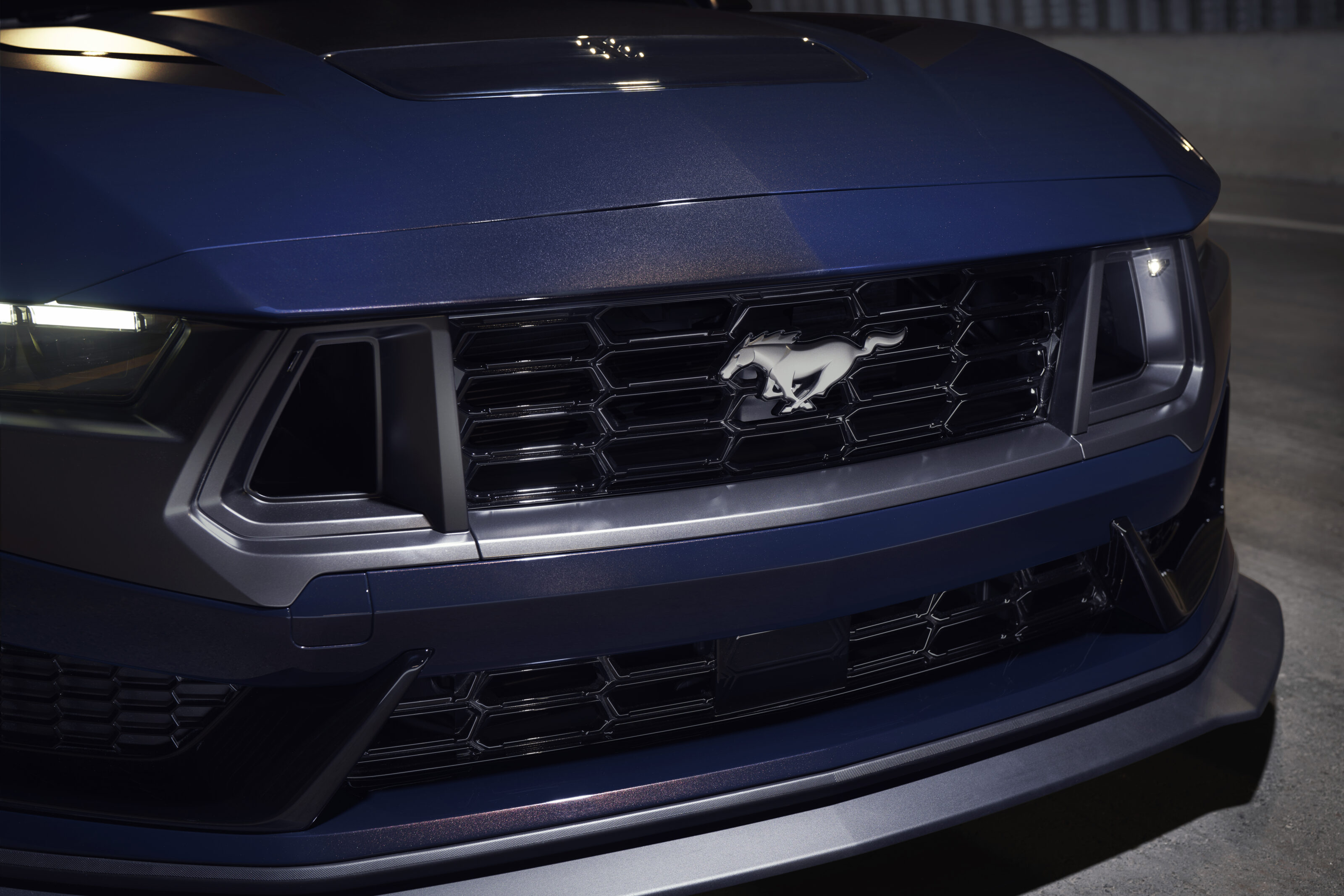
Up front, the Mustang Dark Horse, unsurprisingly, wears darkened LED headlights, a gloss-black grille with pronounced trapezoidal nostrils, and a unique lower bumper.
A set of lightweight carbon fibre wheels supplied by Australian company Carbon Revolution will be available in the ‘States, with standard examples featuring staggered 19-inch alloys.
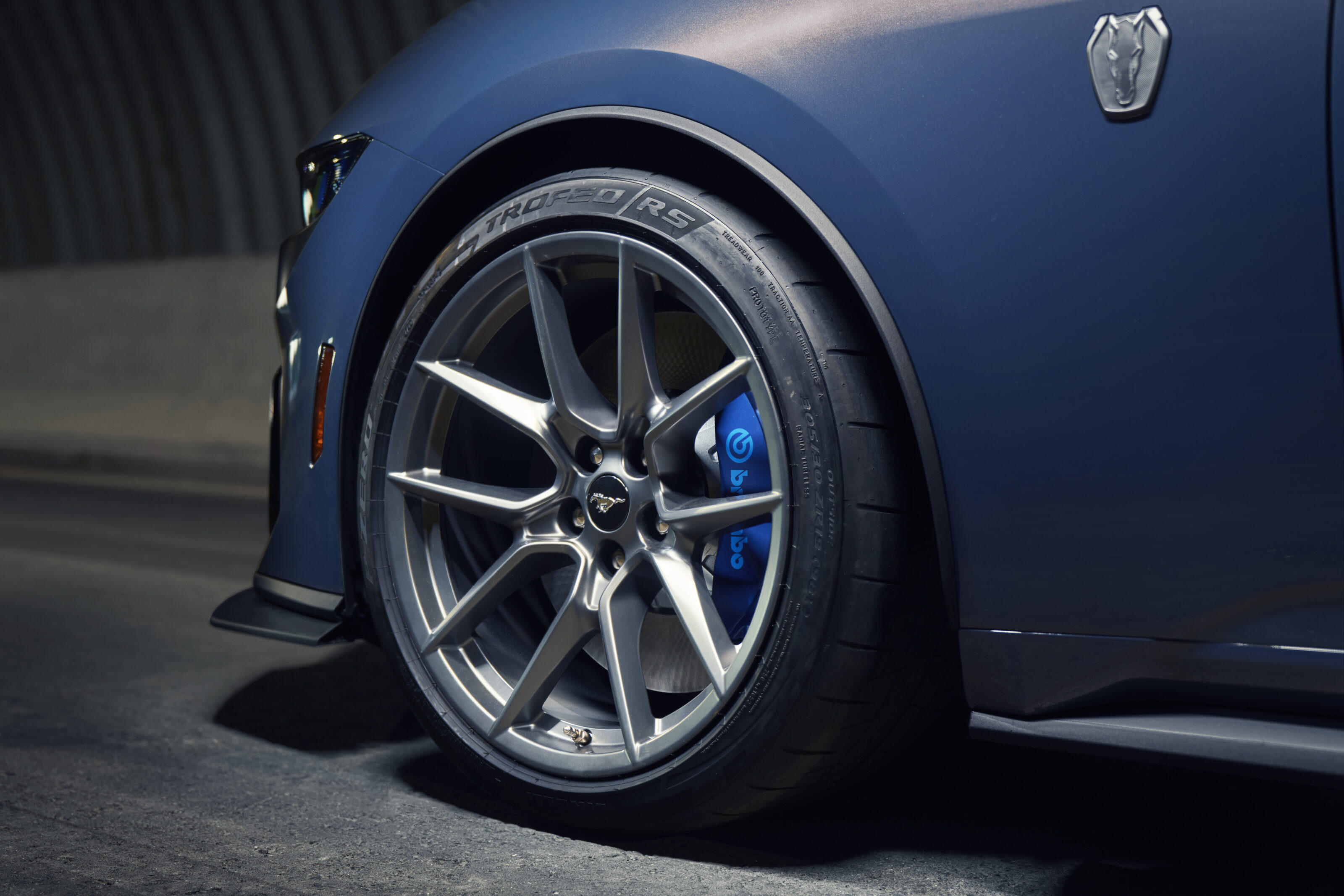
In addition, the Mustang Dark Horse wears Pirelli P Zero tyres as standard and includes adaptive suspension, a larger sway bar, heavy-duty front dampers, a strut tower and an under-bonnet engine brace.
It shares its Torsen limited-slip rear differential – previously exclusive to the Mach 1, but not in Australia – and six-piston front and four-piston rear Brembo brakes with the Mustang GT.
An optional handling package adds a rear wing with an integrated gurney flap similar to the Ford GT, stiffer springs, larger front and rear sway bars, and wider Pirelli Trofeo tyres.
Inside, the Mustang Dark Horse sports a thicker suede-wrapped steering wheel with blue stitching, extending to the door panels, seats, gear shifter and centre console.
The regular Mustang’s chrome highlights are now dark metallic gloss, while blue upholstery will be optional.
Local timing for the 2023 Ford Mustang Dark Horse is unknown. Expect more information closer to the Mustang EcoBoost and GT launch in late 2023.
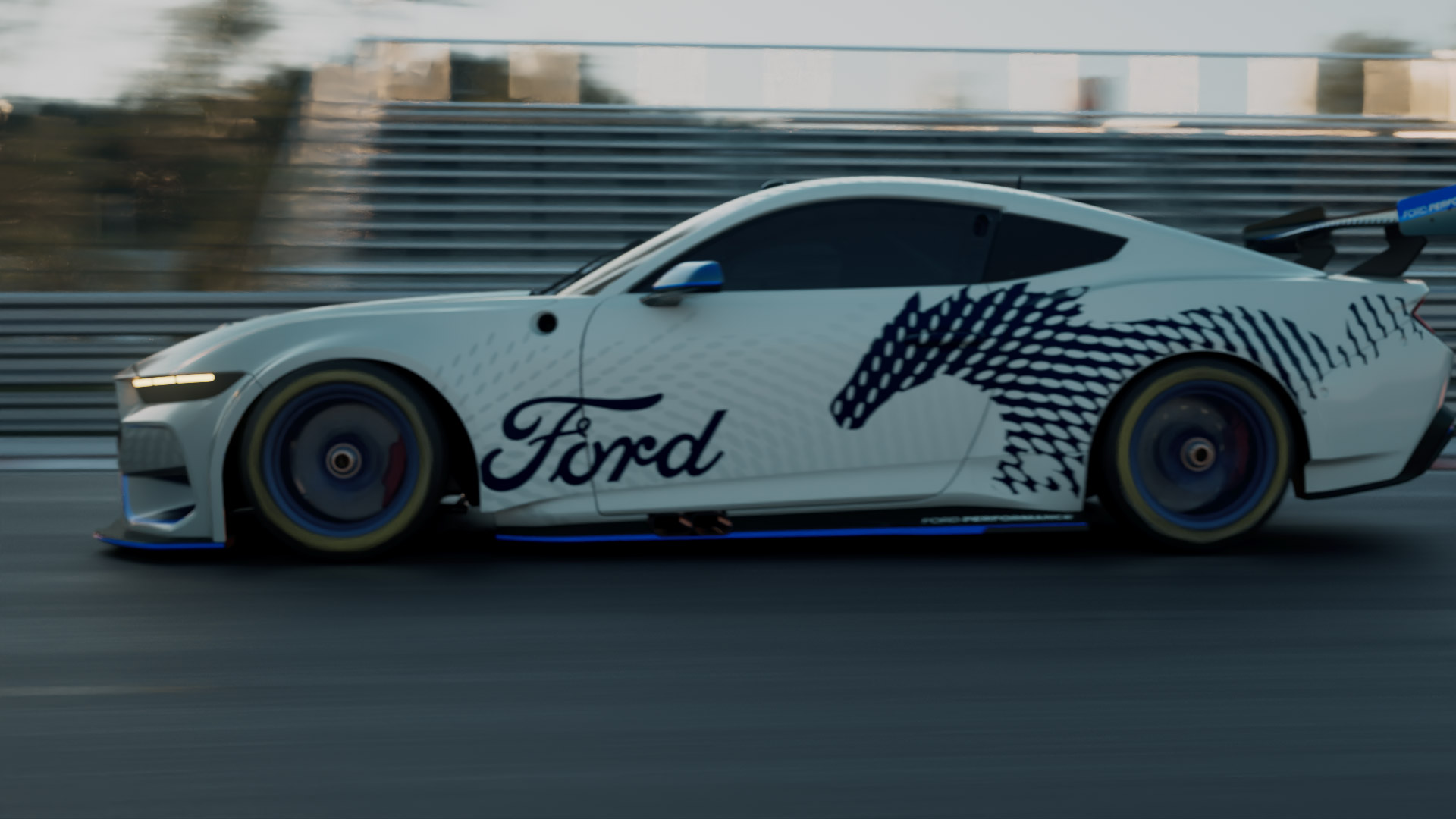
2023 Ford Mustang confirmed for Supercars Championship, as race models debut
Ford has confirmed the Dark Horse will form the basis for a redesigned Mustang in the Supercars Championship, which will face the newly-added Chevrolet Camaro from the 2023 season.
Next year’s season will see Walkinshaw Andretti United, perhaps the best-known Holden team in Supercars, defect to Ford in a massive coup for the Blue Oval.
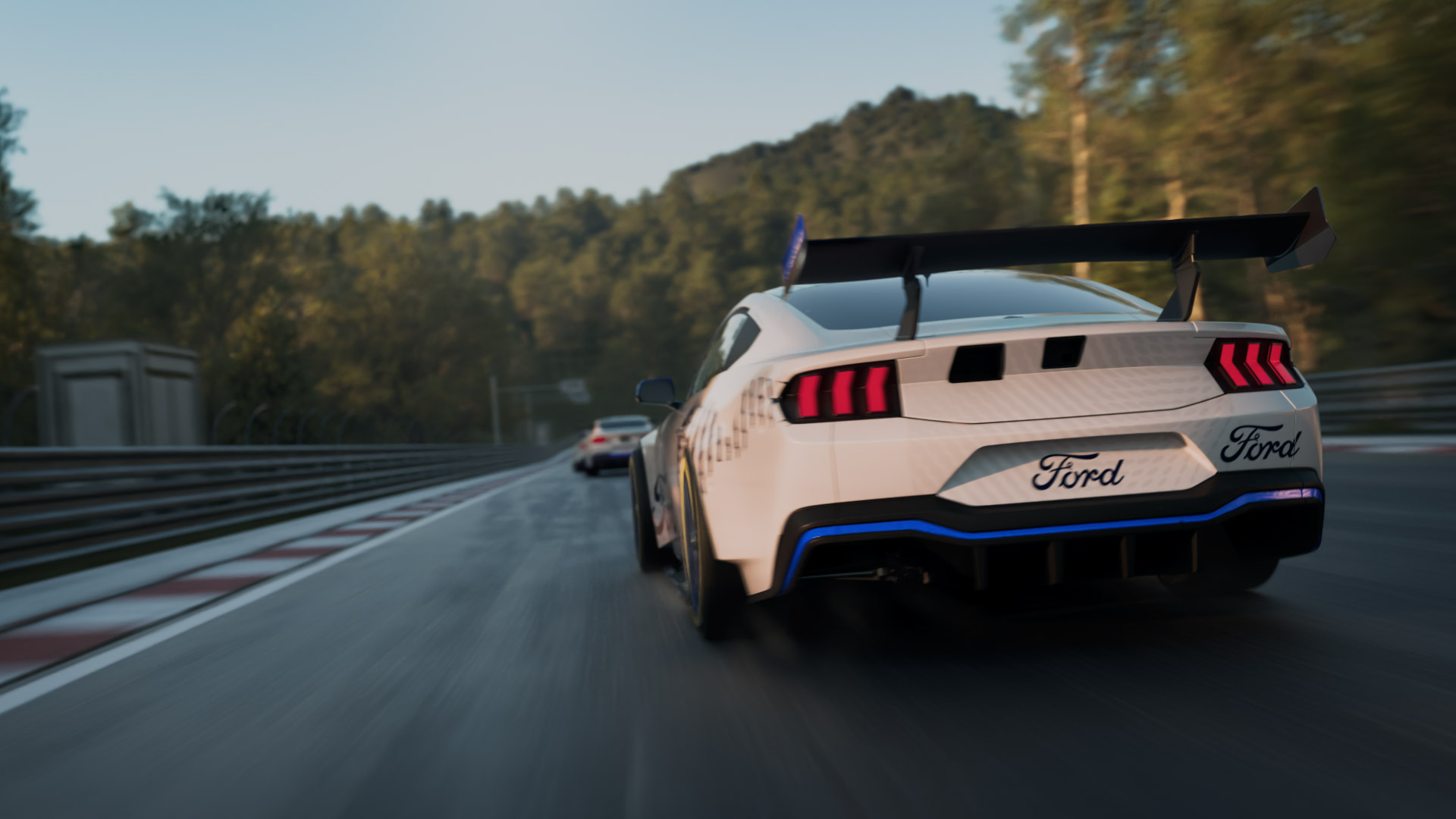
In addition, the company has announced two track-only models of Mustang Dark Horse: the Dark Horse S and Dark Horse R.
As a stripped-out version of the road car, the Dark Horse S features an FIA-certified roll cage, safety nets, a race seat with safety belts and a quick-disconnect steering wheel.
Overseas, factory-backed Ford teams will return to the GT3 and Le Mans, joining NASCAR, GT4 and NHRA Factory X racing.
May 2023: New Mustang delayed for Australia
Order books for the sixth-gen Mustang closed in 2022, and now keen buyers will have to wait until early 2024 for the new generation.
SEPTEMBER 2022: New Mustang revealed!
All the details on Ford’s new-generation Mustang – and some of it is sure to polarise old-school fans.
Key Points
- 5.0 V8 and 2.3 turbo carry over with improvements
- Ecoboost now auto-only
- Unique designs differentiate GT from Ecoboost
- Drifter handbrake standard
- Arriving Australia late 2023
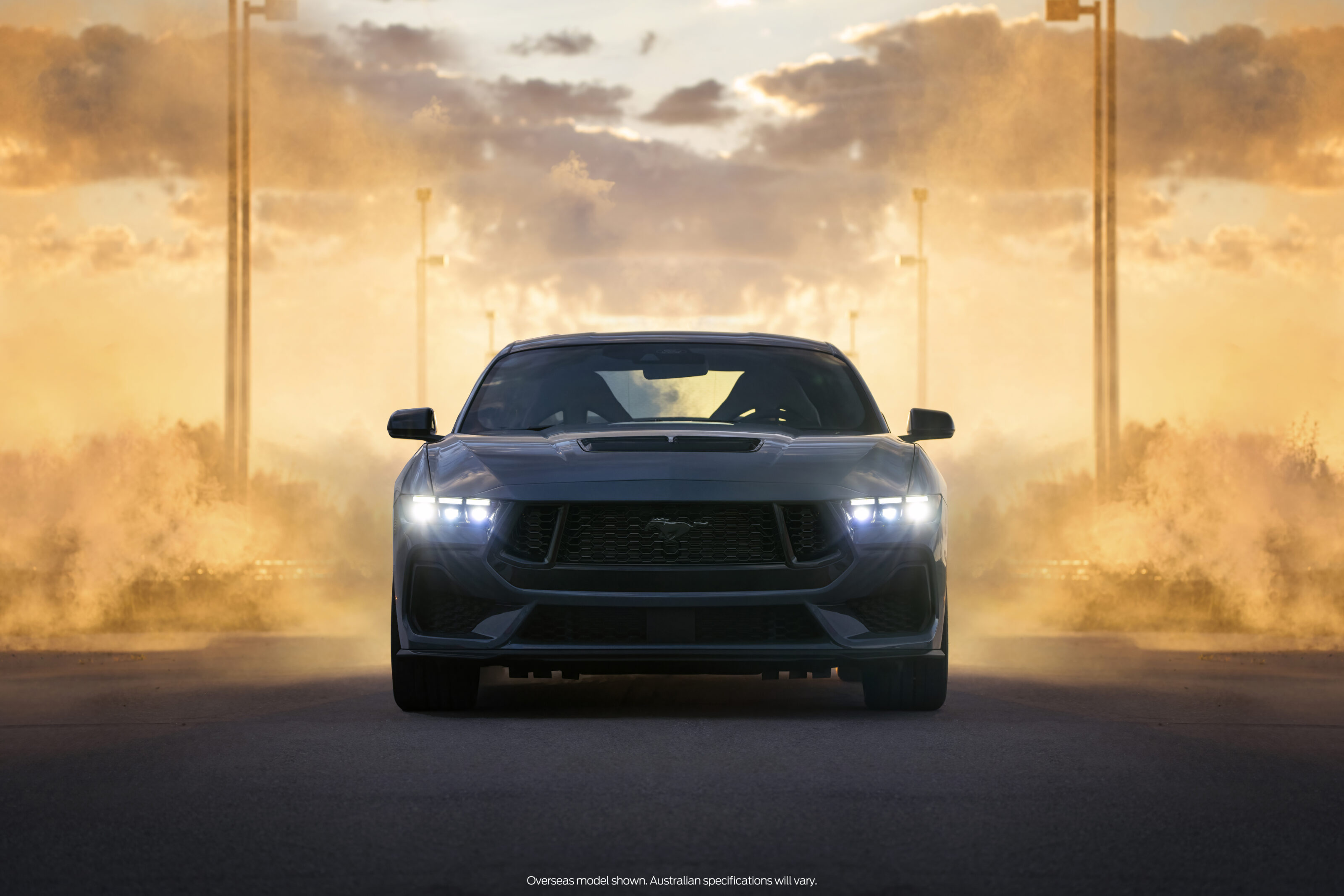
Ford has pulled the covers from its seventh-generation Mustang sports coupe and convertible, revealing an incremental evolution of the iconic Pony Car design, rather than a daring ground-up overhaul.
Full details for the 2023 Mustang are yet to be released, including exact power and performance figures as well as an Australian launch date, but Ford Australia says late 2023 is most likely that this stage.
In the meantime, the Blue Oval has now offered a first full view of the next-gen model, along with some high-level technical information to keep us keen.
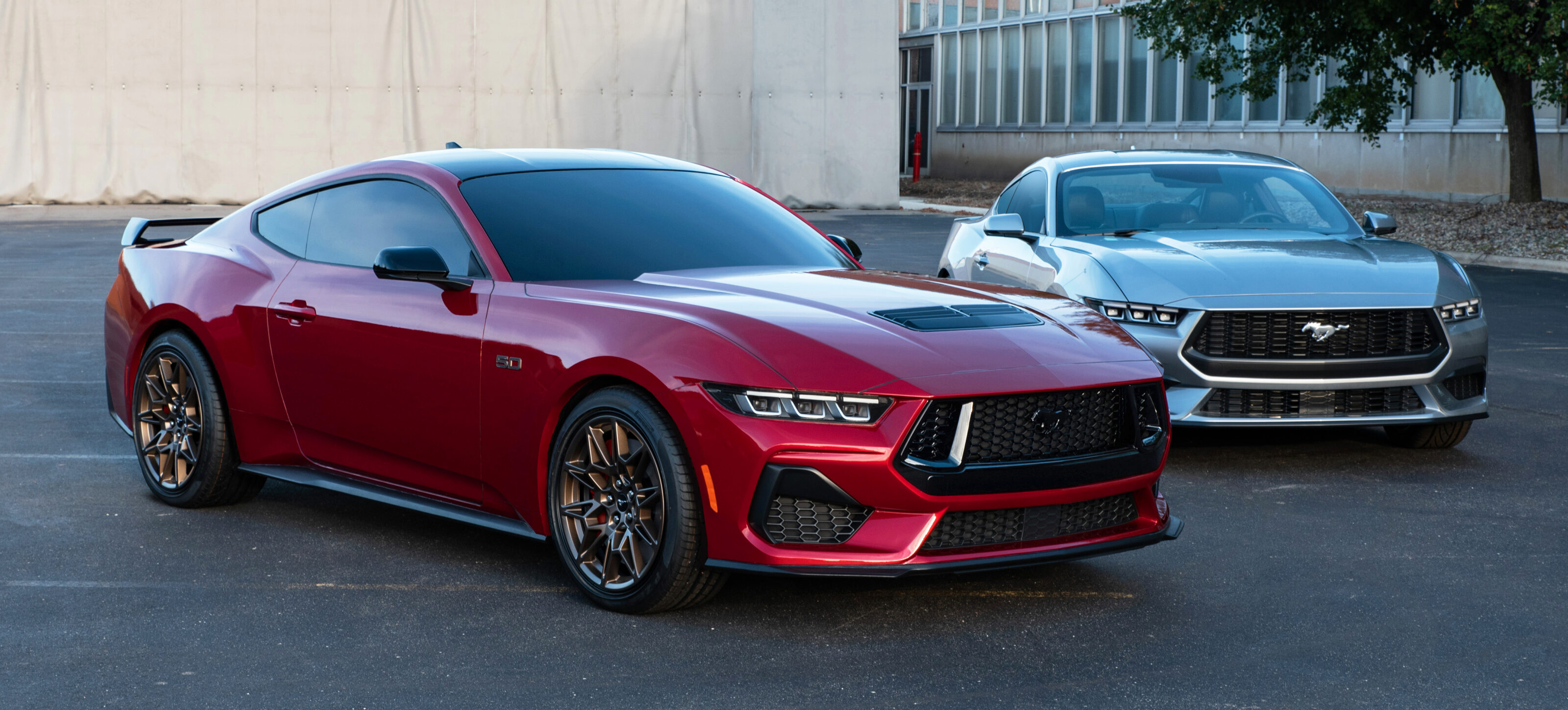
Like the sixth-generation Mustang that launched in 2014, the new model will continue to be offered as the performance hero GT with a naturally-aspirated 5.0-litre V8, while a 2.3-litre turbocharged four-cylinder will again power the Ecoboost.
Power and torque figures for either variant are yet to be confirmed, but Ford says a significant revision of both engines has increased power and torque, as well as efficiency in both cases.
Lift the bonnet of the 2023 GT and the changes are immediately obvious with twin throttle bodies and induction replacing the previous single inlet, combined with less conspicuous steel oil pan, revised cam timing and redesigned exhaust manifolds to maximise power with the increased airflow.
Visual changes to the 2.3-litre engine are less obvious but mechanically more extensive with revised bore and stroke, new turbocharger, revised fuel delivery and injectors along with new camshaft design.
As before, the GT will be offered with a choice of six-speed manual gearbox or an ‘improved’ 10-speed automatic transmission, but the manual Ecoboost has been discontinued and is now only on offer as an automatic.
For the sixth-generation Mustang, German designer Kemal Curic – the same man who led the design of the sixth-gen car – applied the same exterior design to both 2.3-litre and 5.0-litre variants. But, significantly, the new versions can be easily identified with individual styling now differentiating the pair.
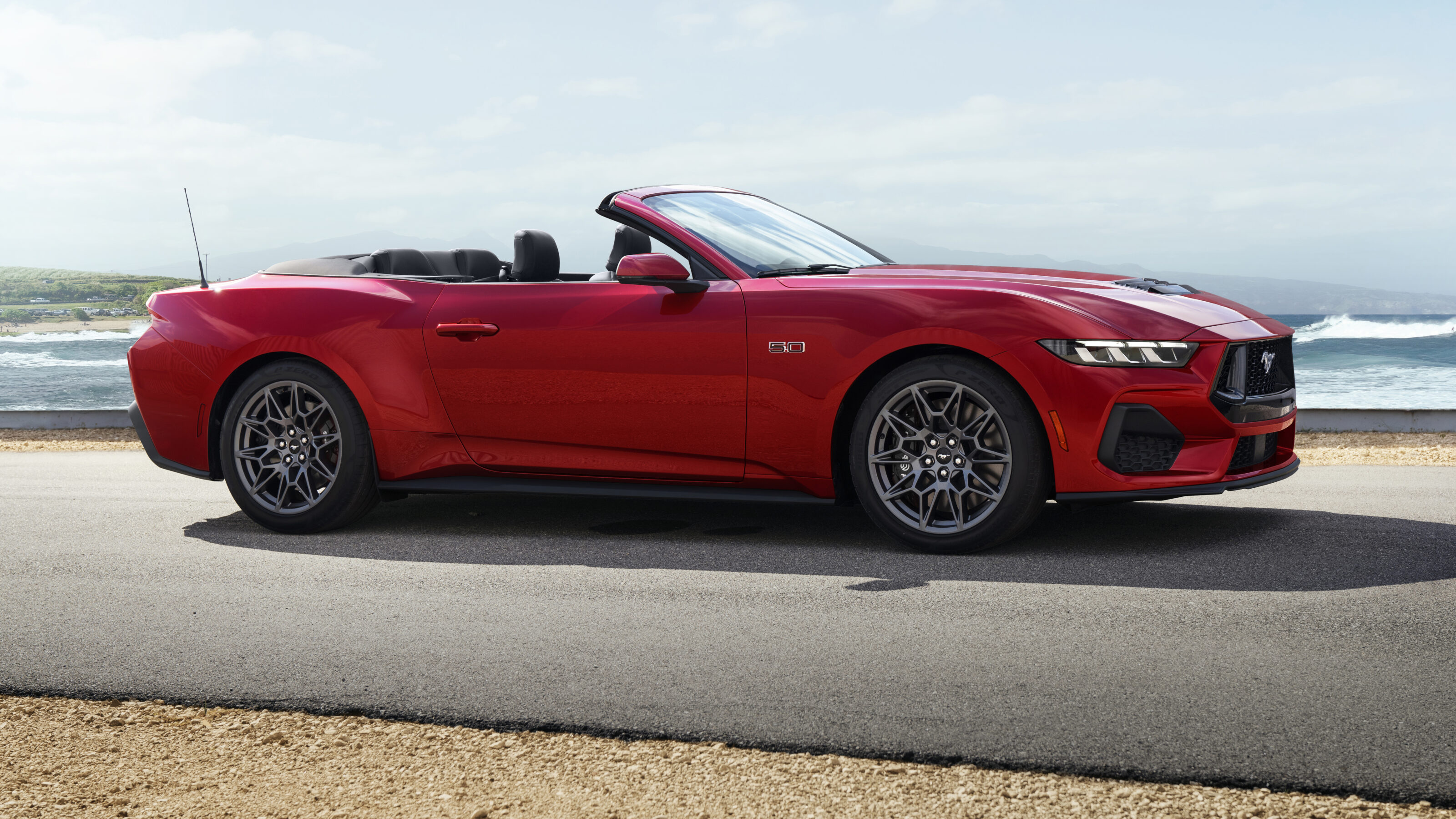
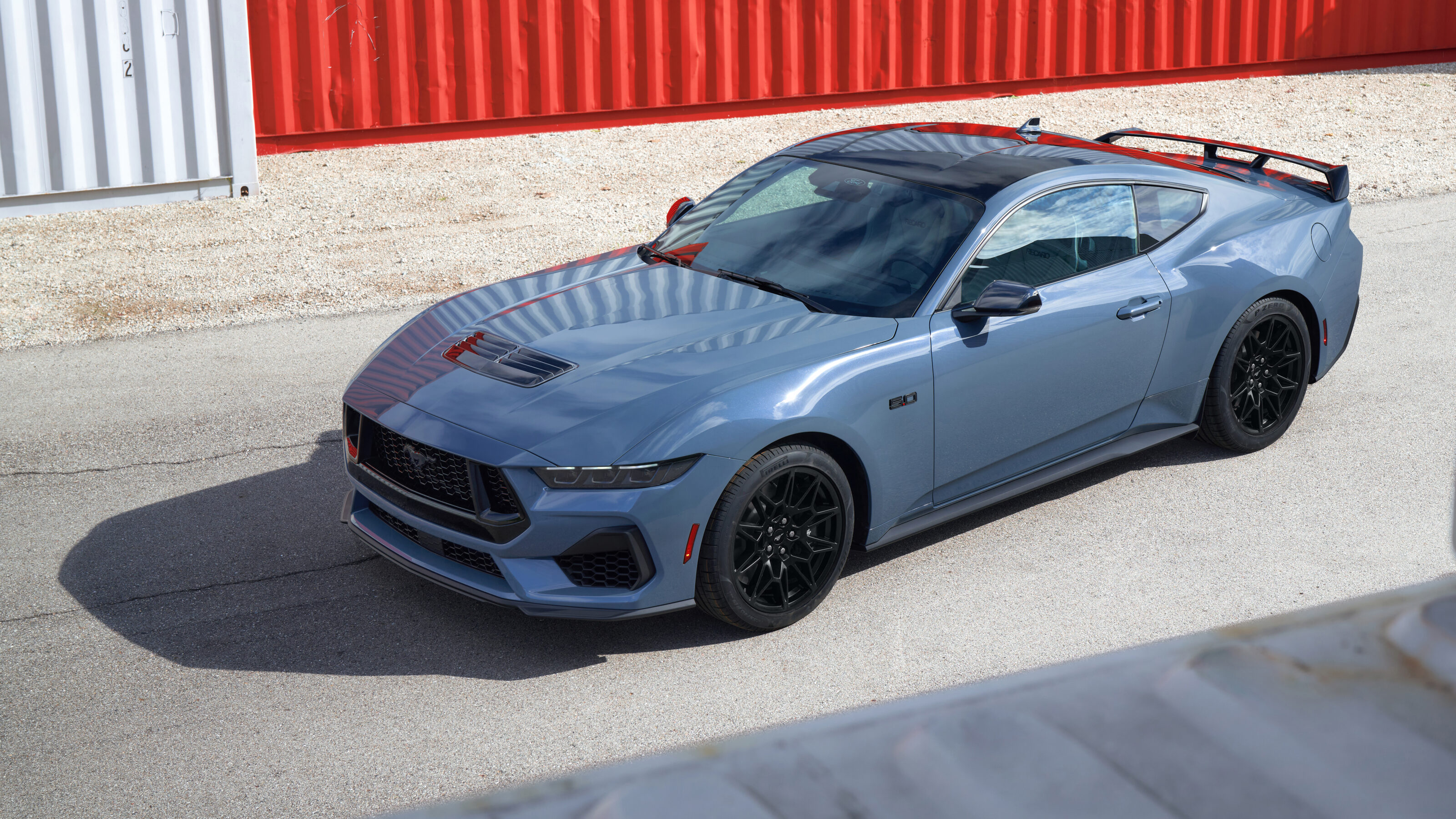
While the Ecoboost has more subtle front vents, grille and splitter framing a tri-bar projector LED headlamps, the GT has more aggressive front-end styling with bigger air scoops, extended splitter, a functional extractor vent in the bonnet and ‘nostrils’ incorporated into the grille design.
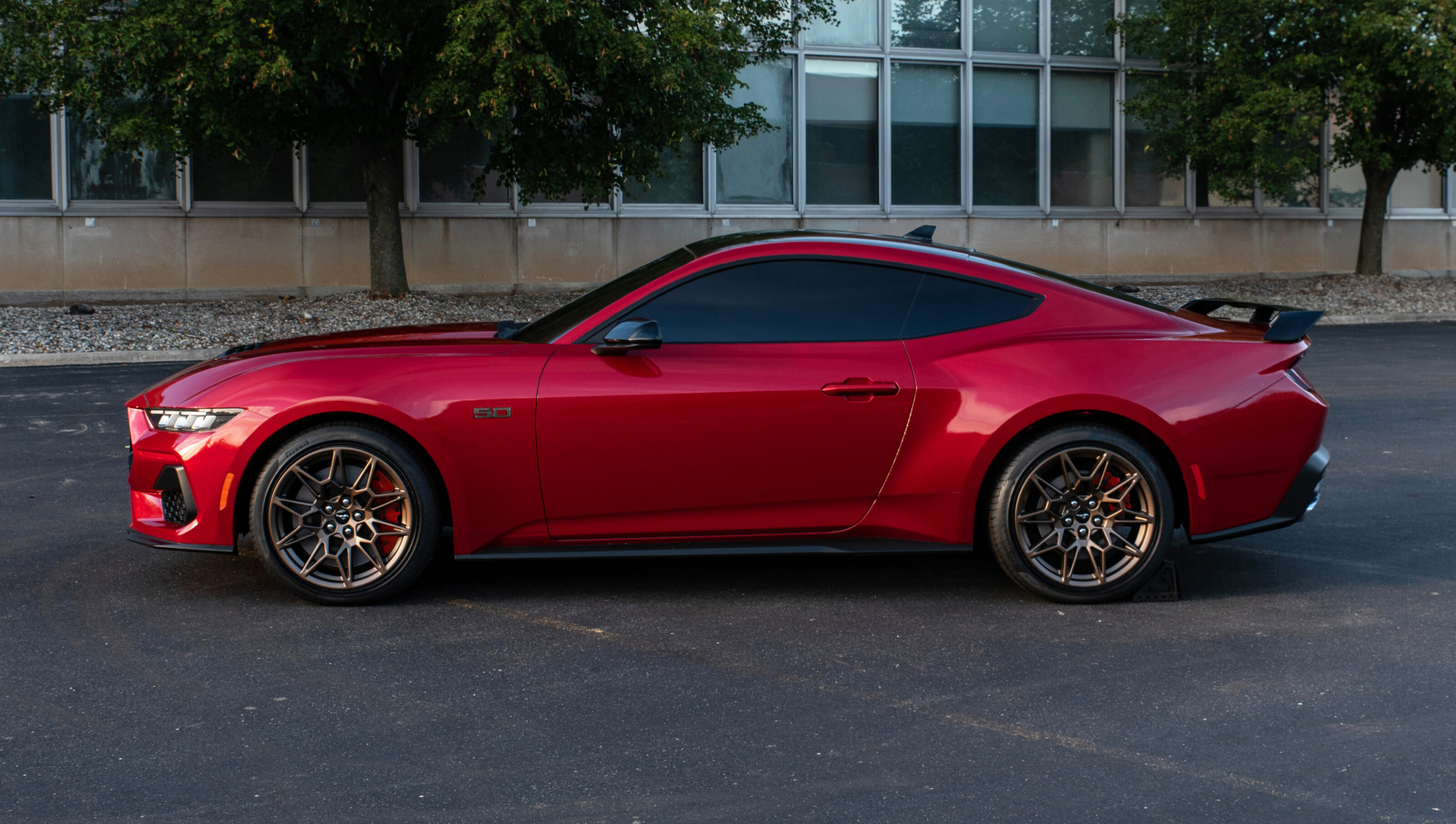
Overall, the Mustang’s profile, broad stance and ‘coke bottle’ inspired overhead view is still immediately recognisable, while features such as the deep V-shaped boot undercut have been accentuated along with a lowered beltline for a more aggressive stance.
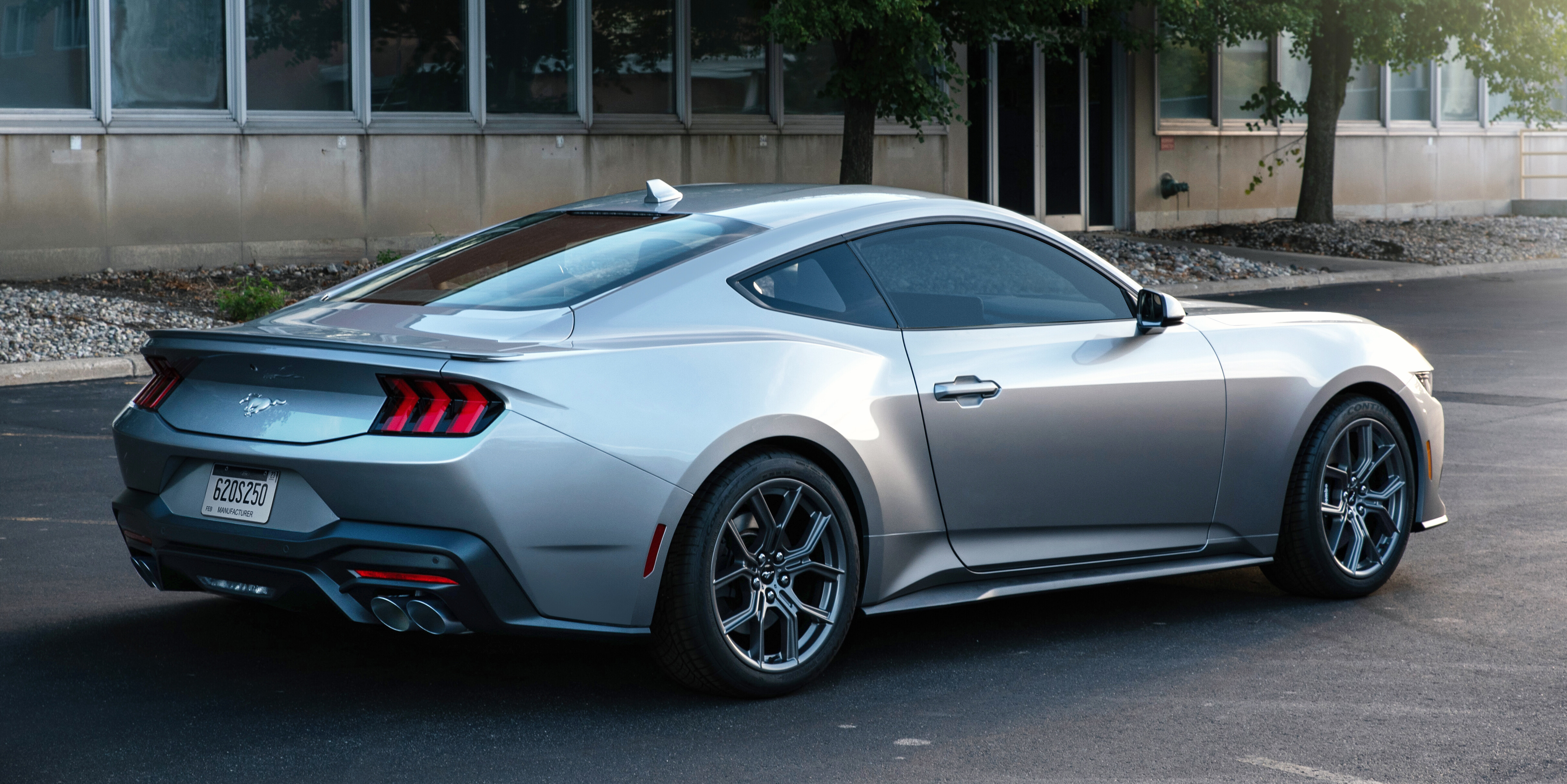
At the tail end, four-cylinder Mustangs have dual exhaust pipes, while the V8 has a quad design with both featuring revised tuning for an optimised but ‘legal’ note. New to the 2023 Mustang is a noise cancellation system to remove undesirable mechanical sounds as well as adding in some augmented noise to enhance the natural soundtrack.
Wheels sizes include 17-, 18- and 19-inch designs, along with a number of brake upgrade packages also available.
In the largest form, 19-inch wheels house six-piston Brembo calipers at the front end while four-piston versions on the rear axle are a first for the model.
Depending on the body colour combination, brake calipers can be optioned in a choice of black, silver, red or Grabber Blue with contrasting Brembo or Mustang lettering.
As before, the Mustang palette is generous and the new model is available in a choice of 13 paint colours including a pair of new hues – Vapor Blue and Yellow Splash 3C, while a ‘Sinister’ Bronze customization pack applies bronze finishes to wheels, badges and other trims where available.
All versions are equipped with a limited-slip differential with a traditional clutch type for all but the higher-tier Performance grade GT and Ecoboost, which get a Torsen type LSD.
Steering feel improved, says Ford, thanks to a completely new steering system including rack, stiffer column and revised mounts. A faster steering ratio has sharpened the front end response, complemented by lower drag and reduced lift at speed all round.
Ford was unable to confirm kerb weight for the new Mustang, but it says the figures will be ‘comparable’ with the previous model, which ranged from about 1700kg to 1855kg for the GT convertible.
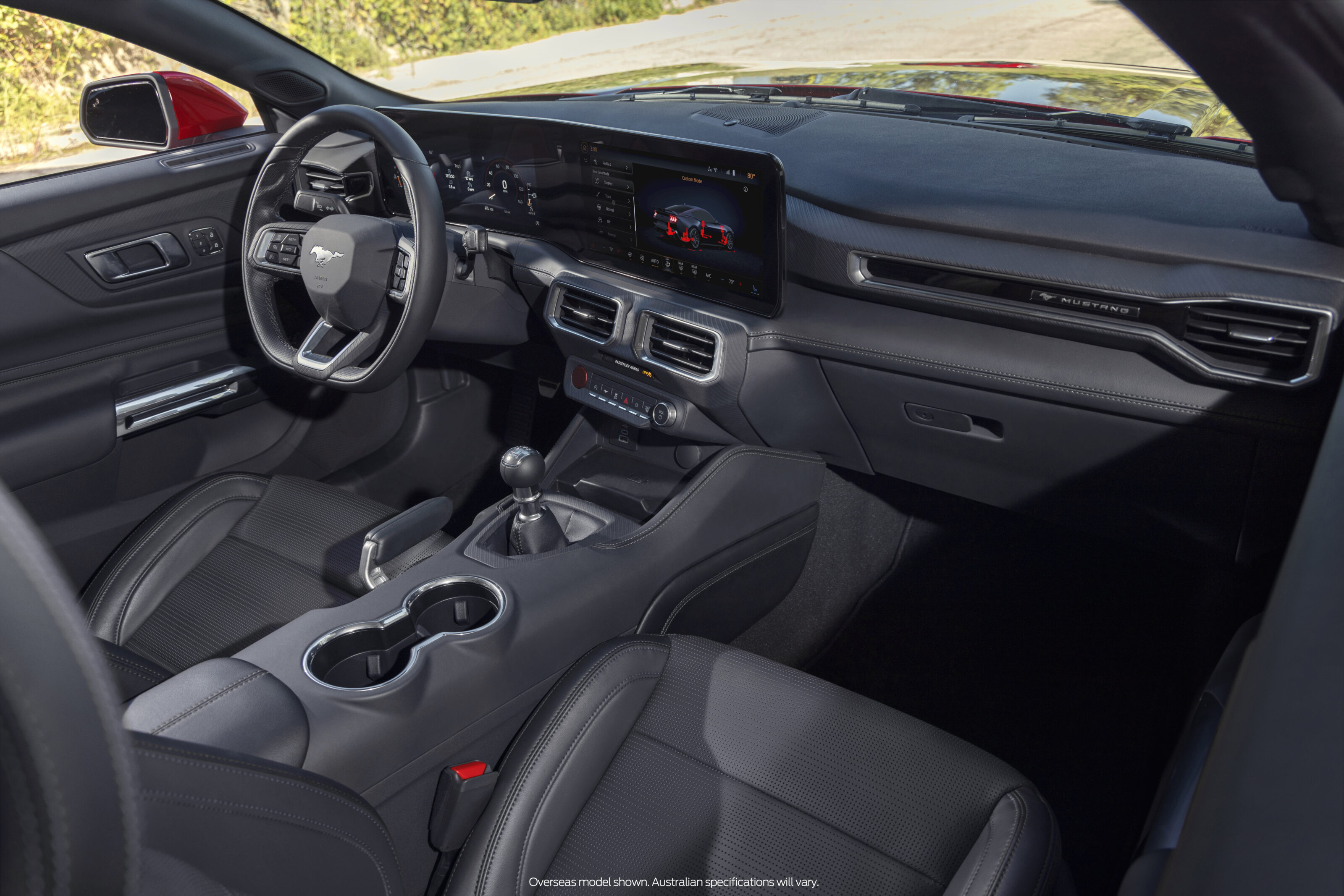
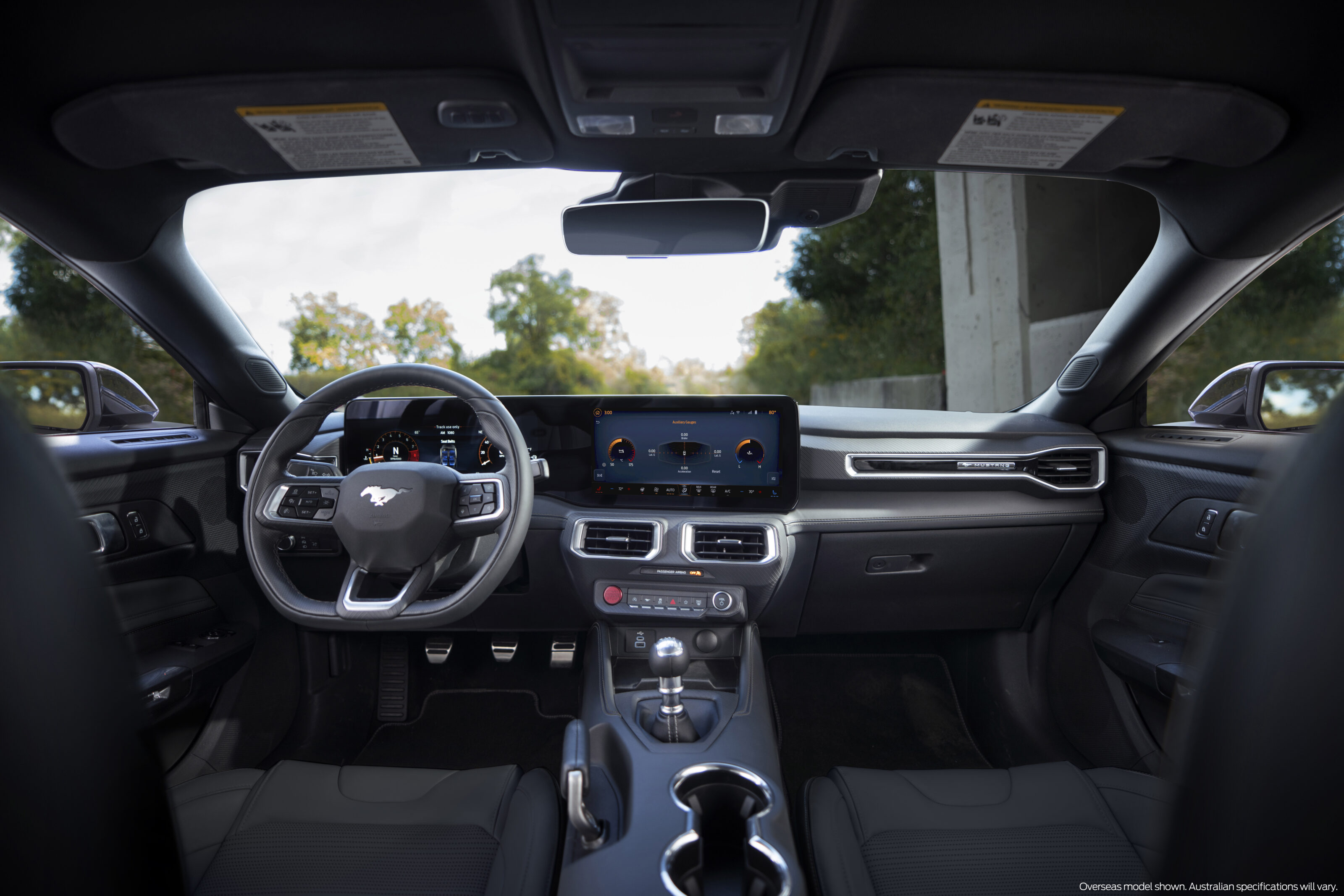
Inside, the 2023 Mustang has undergone a similar gradual evolution, including its digital instrument cluster and central touchscreens, which are now connected under a single continuous pane and have grown to 12.4 inches and 13.2 inches respectively.
Some of the Mustang’s quirky cabin touches, such as mechanical toggle switches and machined aluminium finishes, have been superseded by a simplified layout that incorporates almost all climate and audio controls into the larger touchscreen.
The removal of some dash clutter has allowed more space to be liberated in the central console storage, which can now accommodate a phone along with wireless device charging.
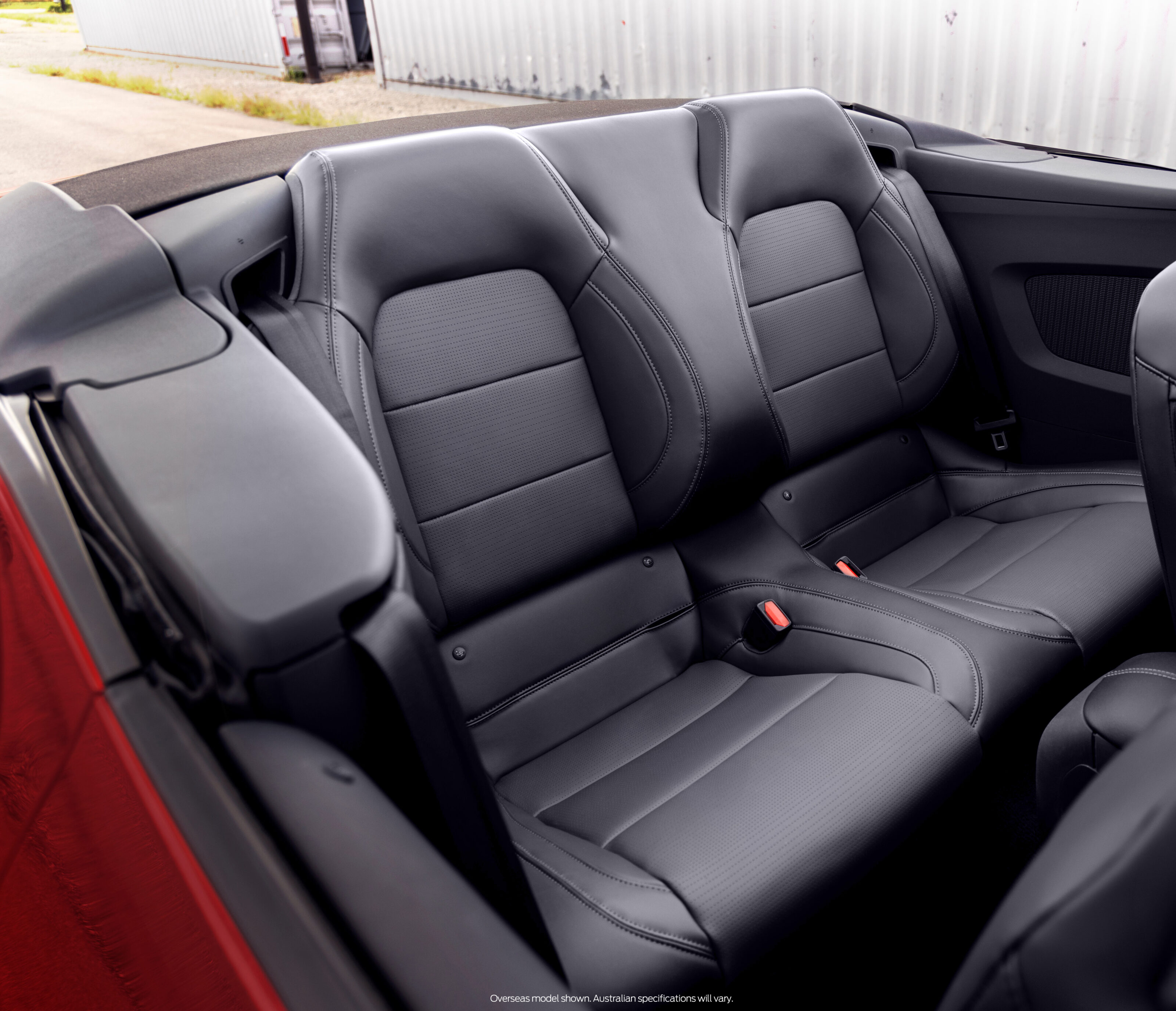
Hide-effect materials for the seats and dash have been replaced by ‘white noise’ grain or a new ‘carbonite’ effect that mimics carbon-fibre weave, while a fine ‘laser grain’ can be found all about the Mustang from the front splitter to the speaker covers, where the linear pattern is continued through the perforations.
As before, Recaro seats will be available as an option but the interior upholstery palette has grown to include a new Space Gray lighter tone or Carmine Red wine colour and can be matched with colour-coordinated or striped seatbelts.
Perhaps taking inspiration from Jeep, the new Mustang hides a number of Easter egg surprises about its cabin, although we’ll not detail them here to save the fun of discovery for owners.
Mustang owners who hoon responsibly will welcome the return of the line-locker function that allows perfect tyre-warming burnouts, and is now provided with a stopwatch to perfectly time tyre-roasting recipes.
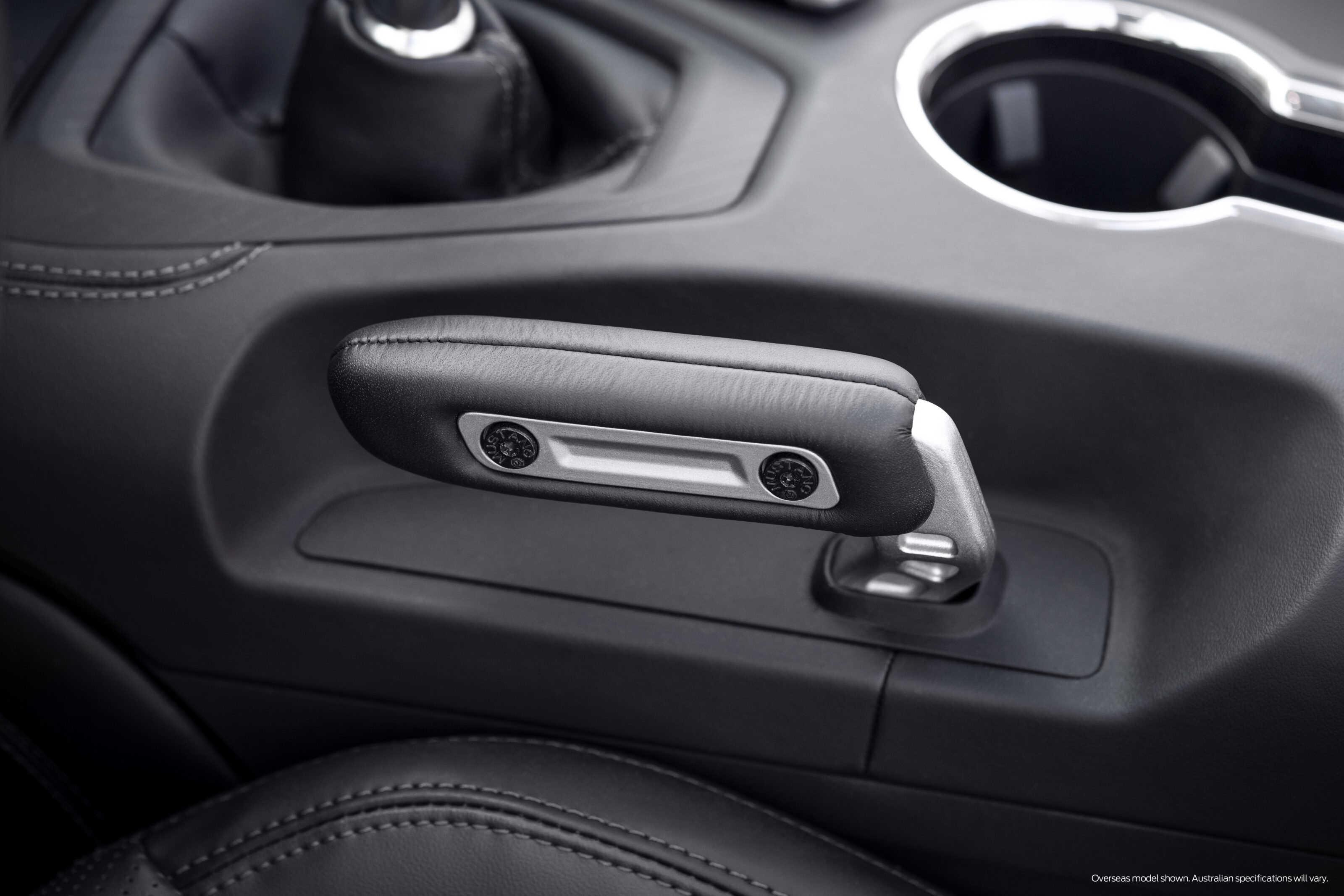
It’s accompanied by another unique feature and a handbrake lever which is oldschool-mechanical in operation, but controls an electro-hydraulic drift brake. Capable of generating up to five times more braking force for the rear wheels than a conventional cable park brake, the PPB was developed to allow easier drifting … where safe to do so. (Ford Australia has asked, however, that we note the PPB has not yet been confirmed for our market.)
A flat-bottomed steering wheel replaces the gen-six round version for all new variants, along with fewer buttons and a new silver mode switch and more angular centre trim.
Mustang owners who dislike their neighbours will appreciate a new remote start function that allows the Mustang’s engine to be revved from a distance, using the key fob.
Its cabin is said to have been inspired by jet fighters, with an instrument and display layout angled toward the driver and a more immersive interior. The distinctive ‘double brow’ dashboard design has been dropped, however, to accommodate the larger pair of digital screens.
Ford’s technology team brought touches from the gaming world to the new Mustang, including the ‘unreal engine’ display which illustrates vehicle drive modes, transmission and engine settings, using a 3D rotating image akin to video game setup screens.
There’s retro revivals too, with a new Fox-themed digital display customisation option that harks back to 1980s graphics, and even switches the dials to green at night as a nod to the Fox platform Mustang that ran from the late 1970s to the early 1990s.
As before, a unique Track cluster design is activated in the most potent driving mode, with new touches including a tachometer needle that changes colour along with the shift light, and choices of three or five digital auxiliary gauges which have now been moved to the central screen.
In response to poor safety ratings in some countries, the new Mustang has more driver assistance and safety features, including AEB with adaptive cruise control that functions down to stop-start traffic, speed sign recognition and lane departure assistant to name a few. Full safety specs will be available soon.
While petrol powered Mustangs are now confirmed safe for another generation, any plans to introduce a rumoured hybrid Mustang in this seventh-gen form have been abandoned.
Watch for more details to come in the weeks and months ahead.
Snapshot
- EV sales almost tripled in 2021
- SUVs and utes accounted for more than half of sales
- Report lays bare Australia’s lagging fuel-efficiency progress
Emissions from new cars sold last year fell by just two per cent – even though the number of electric vehicles almost tripled in the same time period.
An annual report out today created by the National Transport Commission (NTC) has found that the paradigm isn’t shifting as much as it should be because Aussies are buying SUVs and utes in such high numbers – and typically these segments have fewer EVs to choose from.
In 2021 alone, sales of 4×4 and 4×2 utes increased by more than 43,000, and the number of large SUV shifted went up by around 25,000. The emissions intensity for many of these popular vehicles exceeds 210g/km, with no option yet in Australia to purchase an electric ute.
The transport sector currently accounts for 18 per cent of Australia’s CO2 emissions and the cars we drive are the largest contributor.
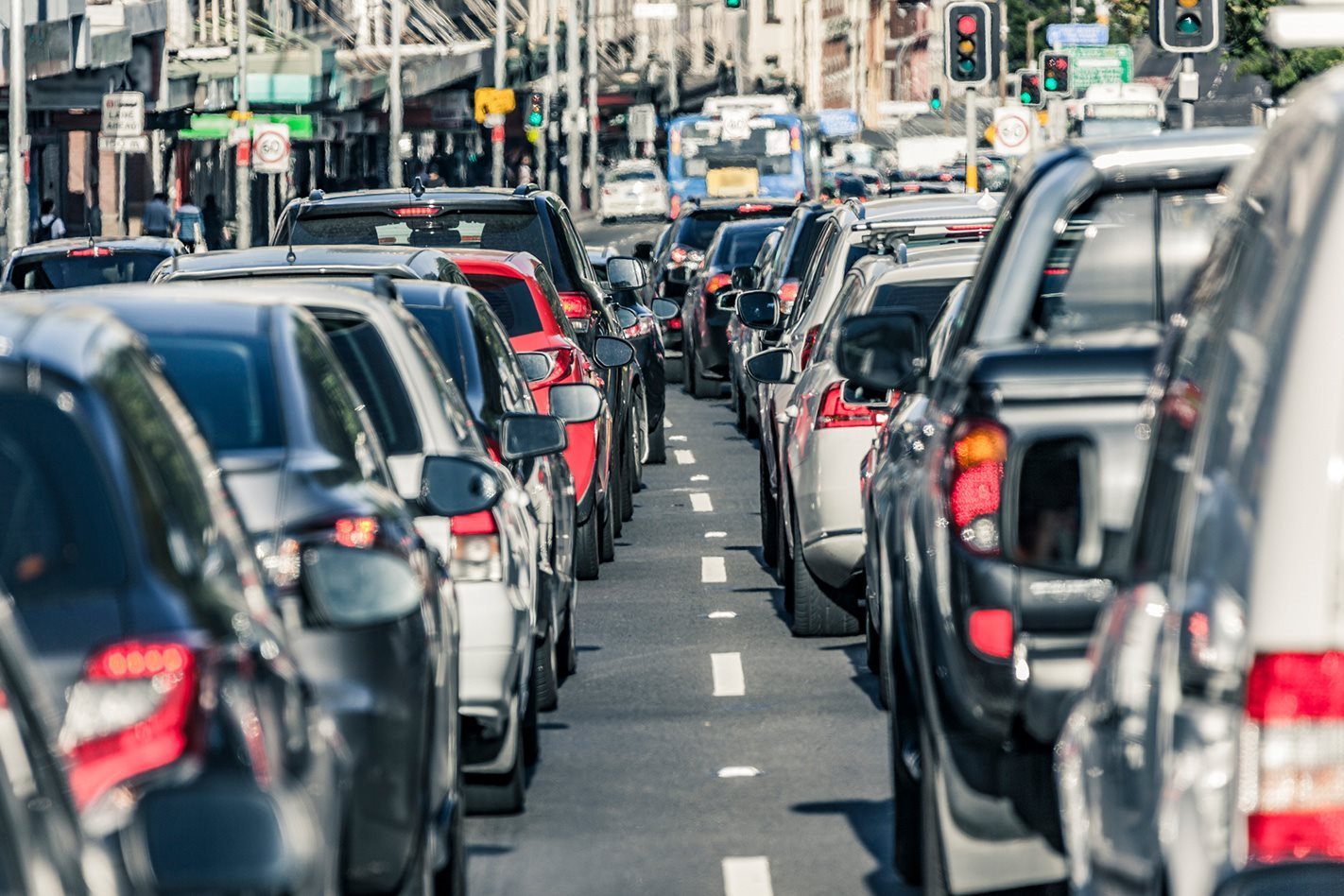
The report, which uses data provided by the Federal Chamber of Automotive Industries (FCAI) also revealed that; half of all new car sales were SUVs in 2021 – up from a quarter of all sales a decade ago – while only one in 10 sales was of a small vehicle, down from a quarter.
The document backs the idea that Australia is falling further and further behind other countries when it comes to CO2 emissions – a topic which has been at the forefront of industry discussion (including at last month’s inaugural EV Summit) in recent years.
Of all new passenger cars sold in Australia last year, 45 per cent had an emissions intensity of 160 g/km or less, compared with 90 per cent of all new cars sold in Europe.
One particularly interesting observation noted in the report was that if all new cars sold were ‘best in class’ for emissions, Australia’s total CO2 output for lighter passenger vehicles and small SUVs would have reduced by 91 per cent and larger SUVs and utes would be down 47 per cent.
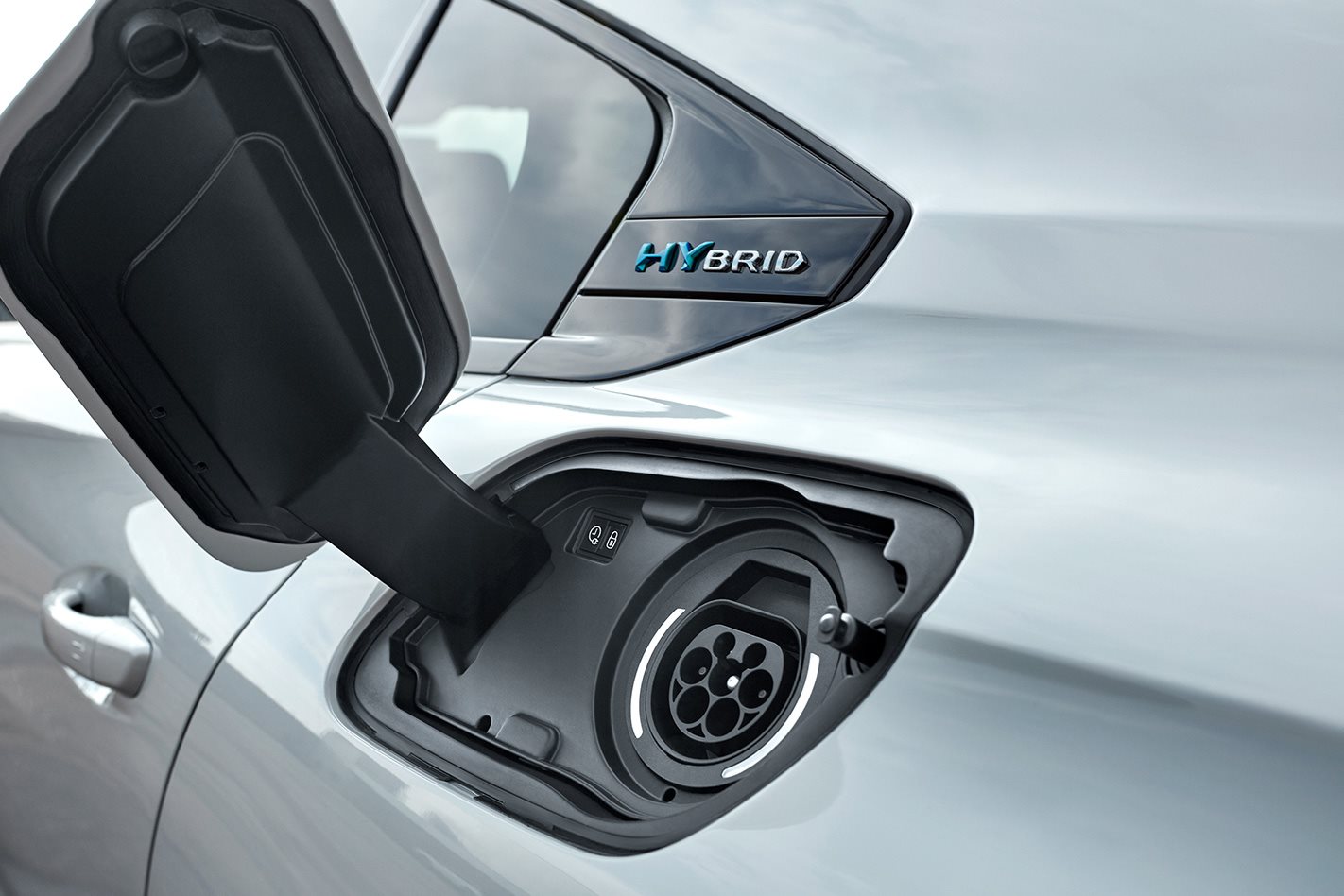
As a result, we’ve crunched the numbers to show what vehicles were the ‘best in class’ versus what the top sellers were in 2021.
Interestingly, there is some crossover between the two, showing there is starting to be an appetite for cleaner versions of the cars we like best.
2021 – The cars we bought
| Segment | Model/variant best-selling in 2021 | CO2 in g/km | Sales |
|---|---|---|---|
| Micro (MA) | Kia Picanto | 117 | 6591 |
| Light (MA) | MG3 | 159 | 13,774 |
| Small (MA) | Toyota Corolla | 139 | 28,768 |
| Medium (MA) | Toyota Camry | 169 | 13,081 |
| Large (MA) | Kia Stinger | 236 | 1407 |
| Upper-large (MA) | Mercedes-Benz S-Class | 188 | 263 |
| Sports (MA) | Ford Mustang | 282 | 2827 |
| People-movers (MA) | Kia Carnival | 186 | 5862 |
| SUV light (MA) | Mazda CX-3 | 144 | 12,873 |
| SUV small (MA) | MG ZS | 163 | 18,423 |
| SUV medium (MA) | Toyota RAV4 | 150 | 35,751 |
| SUV large (MA) | Toyota Landcruiser Prado | 211 | 21,299 |
| SUV upper-large (MA) | Toyota Landcruiser wagon | 253 | 15,078 |
| SUV light (MC+NA) | Mazda CX-3 | 144 | 12,873 |
| SUV small (MC+NA) | MG ZS | 163 | 18,423 |
| SUV medium (MC+NA) | Toyota RAV4 | 150 | 35,751 |
| SUV large (MC+NA) | Toyota Landcruiser Prado | 211 | 21,299 |
| SUV upper-large (MC+NA) | Toyota Landcruiser wagon | 253 | 15,078 |
| Ute 4×2 (MC+NA) | Toyota HiLux | 239 | 13,214 |
| Ute 4×4 (MC+NA) | Ford Ranger | 220 | 45,986 |
| Van (MC+NA) | Toyota HiAce Van | 217 | 9726 |
2021 – The cars we should have been buying*
| Segment | Model/variant best in class in 2021 | CO2 in g/km | Sales |
|---|---|---|---|
| Micro (MA) | Mitsubishi Mirage (petrol) | 109 | 2198 |
| Light (MA) | Mini Cooper (electric) Toyota Yaris hybrid (petrol-electric) | 0, 76 | 1866, 4495 (Yaris total) |
| Small (MA) | Nissan Leaf (electric) Hyundai Ioniq (petrol-electric) | 0, 79 | 367, 484 (Ioniq total) |
| Medium (MA) | Peugeot 508 (electric-petrol) Toyota Camry hybrid (petrol-electric) | 40, 96 | 240, 13,081 (Camry total) |
| Large (MA) | Porsche Taycan (electric) BMW 530D (diesel) | 0, 134 | 531, 605 (5 Series total) |
| Upper-large (MA) | Porsche Panamera (electric-petrol) BMW 620D GT (diesel) | 56, 122 | 48, 64 (6 Series total) |
| Sports (MA) | Audi A3 (petrol) | 120 | 223 |
| People-movers (MA) | Volkswagen Caddy (diesel) | 129 | 180 |
| SUV light (MA) | Toyota Yaris Cross hybrid (petrol-electric) | 86 | 7828 (total) |
| SUV small (MA) | MG ZS EV (electric) Kia Niro (petrol-electric) | 0, 88 | 18,423 (ZS total), 742 |
| SUV medium (MA) | Mercedes-Benz EQC 400 4M (electric) Toyota RAV4 hybrid (petrol-electric) | 0, 107 | 5763, 35,751 (RAV4 total) |
| SUV large (MA) | Audi E-Tron (electric) Lexus RX450H (petrol-electric) | 0, 131 | 108, 1879 (RX total) |
| SUV upper-large (MA) | Land Rover Range Rover (electric-petrol) Audi Q8 (diesel) | 64, 181 | 166 RR (total), 349 |
| SUV light (MC+NA) | Suzuki Jimny (petrol) | 146 | 3350 |
| SUV small (MC+NA) | Jeep Compass (diesel) | 150 | 1363 |
| SUV medium (MC+NA) | BMW X3 XDrive30E (electric-petrol) Land Rover Discovery Sport (diesel) | 73, 148 | 4242 (X3 total), 843 |
| SUV large (MC+NA) | Volvo Car XC90 (electric-petrol) Toyota Kluger hybrid (petrol-electric) | 49, 128 | 1323 |
| SUV upper-large (MC+NA) | Audi Q8 (diesel) | 181 | 349 |
| Ute 4×2 (MC+NA) | Nissan Navara (diesel) | 166 | 2069 |
| Ute 4×4 (MC+NA) | Nissan Navara (diesel) | 147 | 13,214 |
| Van (MC+NA) | Renault Kangoo (electric) Volkswagen Caddy Van (diesel) | 0, 129 | 732 (Kangoo total) |
*Eds. note: These are the cars the NTC’s report says we should have bought to bring down emissions, not Wheels‘ own view!
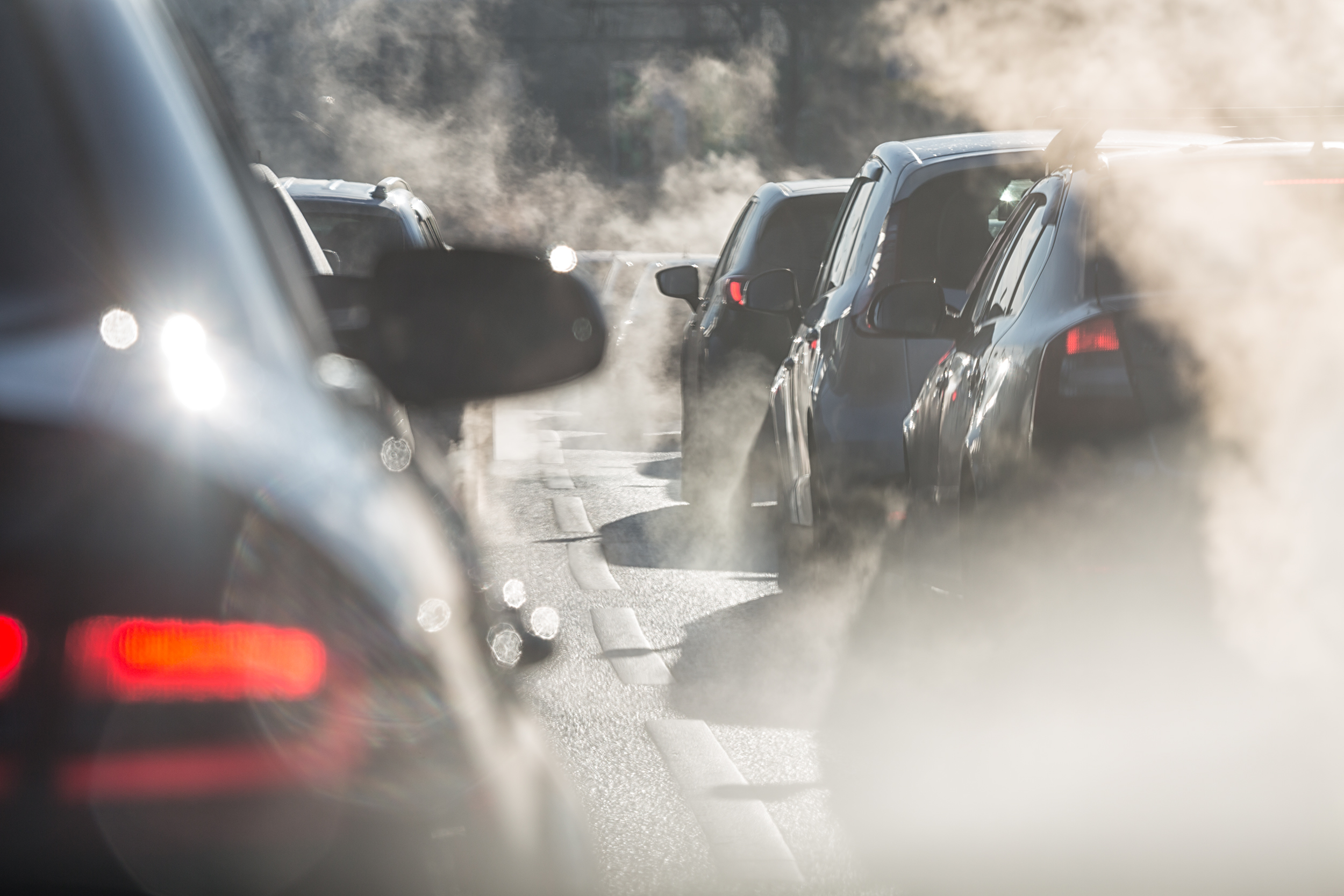
“Australia has some catching up to do with other countries. Today, battery and plug-in hybrid electric vehicles represent just 0.23 per cent of the nation’s 18.4 million cars and light commercial vehicles on our roads,” a spokesperson for the NTC said.
“Based on trends observed in other countries, increasing investment in public recharging stations, preferential tax arrangements and other incentives, and the adoption of emissions standards can lead to significant uptake in greener vehicles.”
Sandra McKay, executive leader for facilitated reform at the NTC, told Wheels governments – both at state/territory and federal levels – use the data as a benchmark against how their policies are performing.
“They use the report to look at how they are doing, particularly around EV incentives, to see what impact these are having,” she said.
“It’s also a useful guide on trends, what has changed over the course of 10 years or so. The tripling of battery-electric vehicles and doubling of hybrids (admittedly off a small base) shows we’re at a tipping point. You only need look at New Zealand to see how quickly uptake can change. A lot of people think with the right policies, such as an emissions standard, we can see significant change.”
Asked if she expects the report to play a key role in the upcoming consultation on a national fuel-efficiency standard, McKay said: “We’ve shared it with the Federal Government and we assume that it will. Hopefully it does. Policy reform is ripe for discussion.”
