
Snapshot
- Honda monthly sales surpass 2021 levels for the first time since agency model switch
- 20 more cars sold compared to May last year
- Year-to-date sales still down, new HR-V on-sale now
Honda’s move to an agency model might have resulted in a sales dip last year, but solid performance for the brand in May are showing a more positive picture following its move to fixed pricing.
In July 2021, Honda transitioned its dealership network from franchise operations to a direct sales or agency model, taking ownership of the stock and setting non-negotiable, fixed prices across Australia while aiming.
While the switch resulted in an almost immediate drop in sales, Honda remained steadfast, with targets being met as the brand adjusted its approach away from quantity and more towards quality, premium sales.
Now 10 months on, Honda has recorded greater year-on-year sales over a one-month period for the first time since it implemented the agency model, with the 1423 units sold this May beating the 1403 shifted 12 months prior.
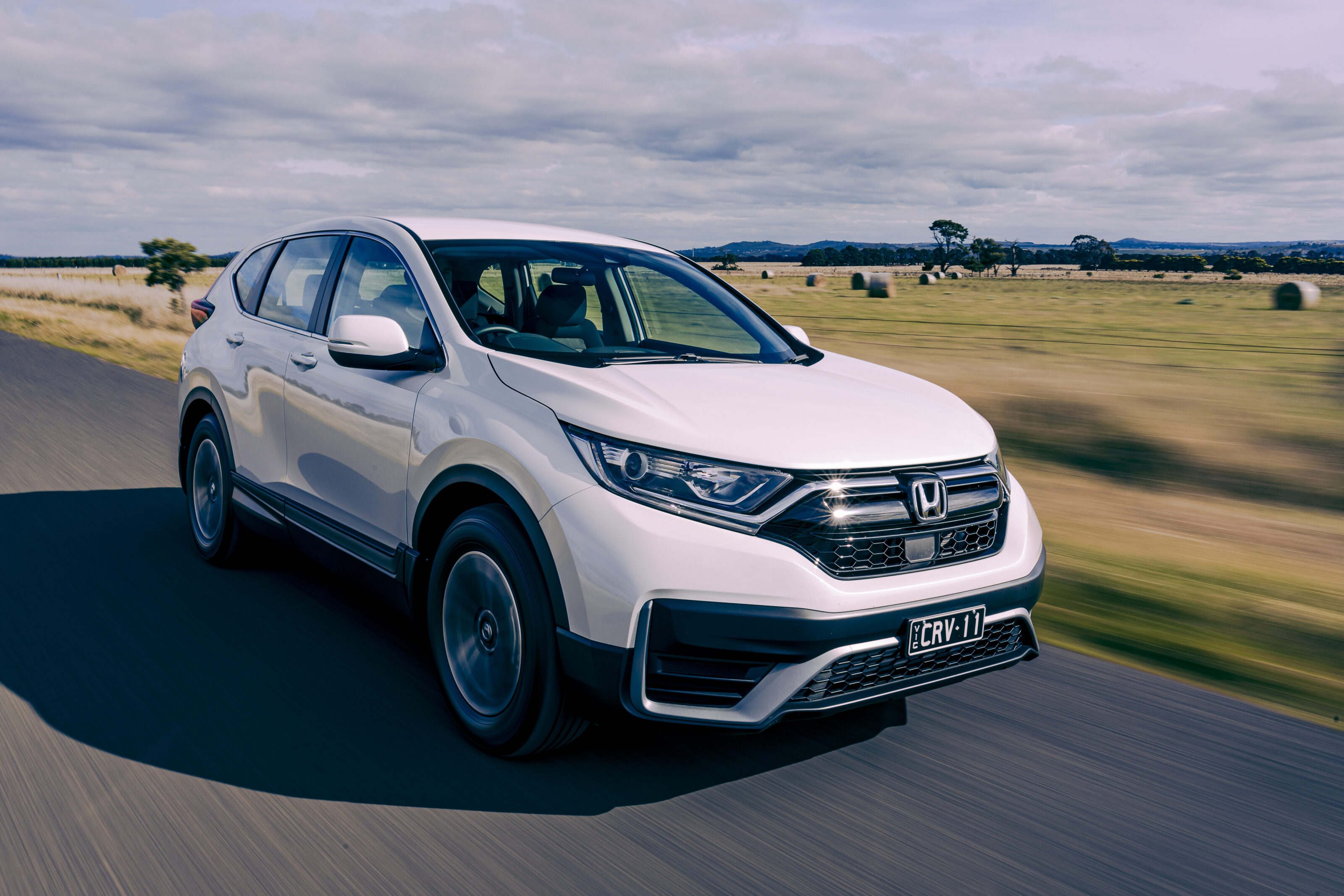
Although the manufacturer’s post-switch peak of 1640 sales was recorded in December last year, this figure was still 37 per cent lower than the 2619 vehicles registered at the same point in 2020.
Of the five models currently offered by Honda in Australia, only the CR-V and Accord recorded higher sales than last year, with the 861 units of the crossover SUV shifted (compared to 577 in May 2021) while the Accord notched up seven sales for the month, three more than last year.
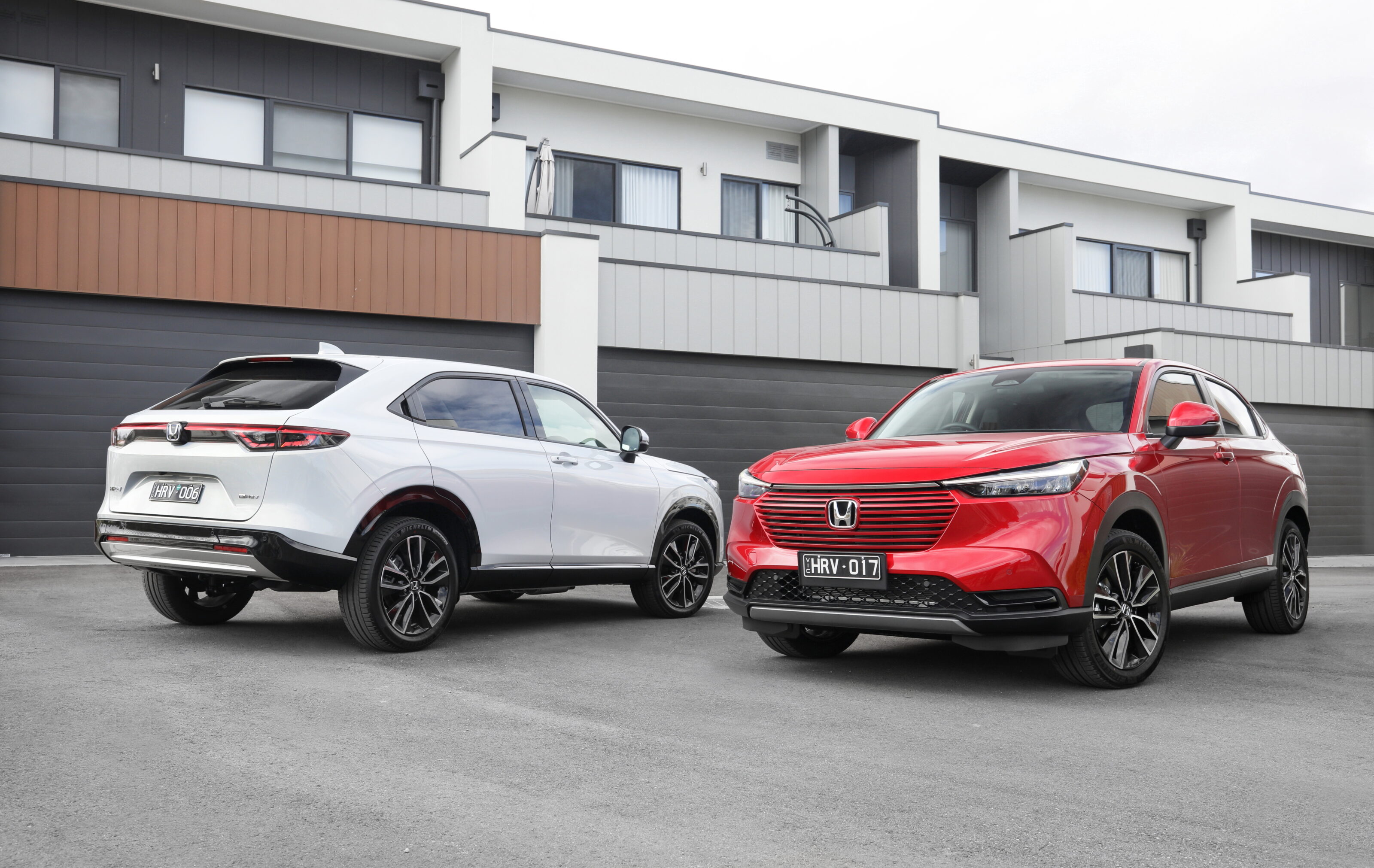
The new Civic also had its best month of the year, as 98 examples found new homes, still 34 units down on its predecessor’s efforts in May last year with year-to-date sales have dropped from 1840 to 361 – although it’s important to note the Civic range has been reduced to one solitary grade compared to the five of its predecessor.
Despite meeting Honda’s sales expectations, the Civic has been the driving factor behind the manufacturer’s year-on-year slump, with its 80 per cent drop contributing to the brand’s 33 per cent overall decrease year-to-date, with 6585 cars delivered compared to 9794 at the end of last May.
With the Odyssey set to disappear from showrooms, Honda’s line-up will soon be reduced to just four models, although the new HR-V with its hybrid variant and the upcoming, next-generation CR-V could provide Honda the long-term boost it wants over the next few years.
Honda Australia sales over an 18-month period
| Month | Sales |
|---|---|
| Dec. u201820 | 2619 |
| Jan. u201821 | 2290 |
| Feb. u201821 | 2017 |
| Mar. u201821 | 2376 |
| Apr. u201821 | 1706 |
| May. u201821 | 1403 |
| June. u201821 | 977 |
| July. u201821 | 822 |
| Aug. u201821 | 941 |
| Sep. u201821 | 926 |
| Oct. u201821 | 1100 |
| Nov. u201821 | 1362 |
| Dec. u201821 | 1640 |
| Jan. u201822 | 1173 |
| Feb. u201822 | 1408 |
| Mar. u201822 | 1508 |
| Apr. u201822 | 1073 |
| May. u201822 | 1423 |
The recent shift towards the agency sales model has been touted as the next big threat towards Australia’s automotive dealership industry.
Within the past 12 months, both Honda and Mercedes-Benz have implemented the agency model in Australia, which not only removes the ability for prospective buyers to negotiate on price, but also takes away stock ownership from the dealer itself – instead putting it in the control of the manufacturer.
While Honda compensated its former dealer network, Mercedes-Benz is currently gearing up for a legal battle against 38 dealerships seeking $650 million in compensation, who claim they signed the new agency agreement under duress.
Speaking at the Australian Automotive Dealer Association’s (AADA) Convention and Expo in Brisbane, law firm HWL Ebsworth’s Evan Stents – who’s firm is representing the group of dealers currently suing Mercedes-Benz – said the court battle “is probably the most important legal case in the history of the Australian automotive industry and franchising”.
In his opinion, Stents explained the agency model was a threat to dealers, with the revised Franchising Code of Conduct still omitting protections for franchisees being taken over by franchisors.
“There are always gaps, just when you think you’ve got everything covered something new emerges – and probably the biggest threat that’s been identified now is what’s happening with the conversion of some networks to an agency model,” said Stents.
“We know Honda and now Mercedes-Benz have moved to an agency model. That’s what’s called ‘franchisor opportunism’ where they have a developed market and they decide to take that market back in effect – acquiring the goodwill that’s been developed by the franchisees and paying no consideration for it.
“There’s been talk about existential threats to the industry – but this is a key threat, because if the goodwill of dealers is not protected, then there’s a lack of confidence in investing in the industry.”

Stents believes the agency model might have a role to play, but the court case between Mercedes-Benz and its dealers could influence the Federal Government to make further changes to the code.
“The issue of protecting goodwill has been kicked around now for the last 20 years in government reports and franchising. But no one’s done anything about it to protect it and now it’s not theoretical anymore,” he added.
“We all know, because it’s well reported in the media, that the Mercedes dealers are having a monumental battle at the moment to protect their investment in their dealerships and to be compensated for their goodwill.
“I’m not suggesting here that agency models are wrong. But what I am suggesting is that if a franchisor is going to convert to an agency model, there needs to be fair compensation paid to the franchisees – because without it, it undermines the whole confidence in investing in that sector.
“It shouldn’t be up to the Mercedes-Benz dealers to have this battle on their own in the courts – we need government intervention to protect that. It’s critical, not just for this sector of motor vehicle dealers, but for all franchising.”
The Federal Chamber of Automotive Industries – Australia’s peak body for carmakers – believes manufacturers have to adapt to the changing demands of consumers, as with any other industry.
“I think our sector is no different than any other sector of the economy – everything seems to be changing,” FCAI Chief Executive, Tony Weber told the conference this week.
“People right across the economy are looking at different ways and they expect different ways to be serviced, to both buy the product and also have the product serviced – which is unique for us as an industry because you buy the car, but you need to have that relationship ongoing.
“Inevitably consumers will drive change and my members [manufacturers] compete against one another.
“They compete at two levels – they compete on the product they sell and the service that they provide afterwards. So inevitably the consumer’s always right, and that will main change broad.”
Apple’s popular CarPlay infotainment system will take on even more of an iPhone or MacBook look in the coming year, with the launch of a new enhanced version that integrates more deeply with its host vehicle.
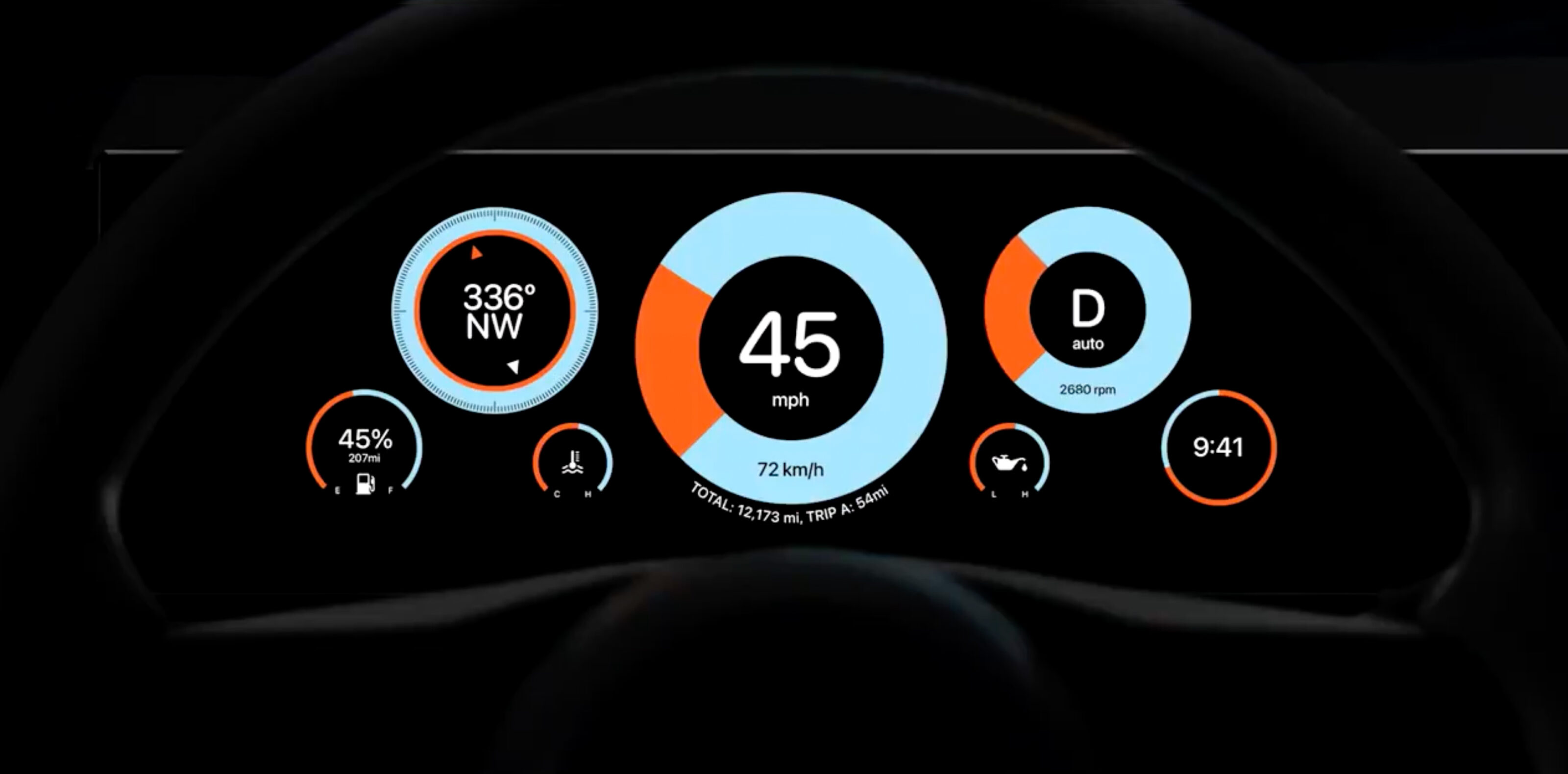
Just like the new Google-based operating systems used in vehicles from Volvo/Polestar and Stellantis, among others, the new CarPlay system will reach out with its own Apple-styled controls for heating and cooling – right through to the speedometer, fuel and temperature gauges in the display behind the steering wheel.
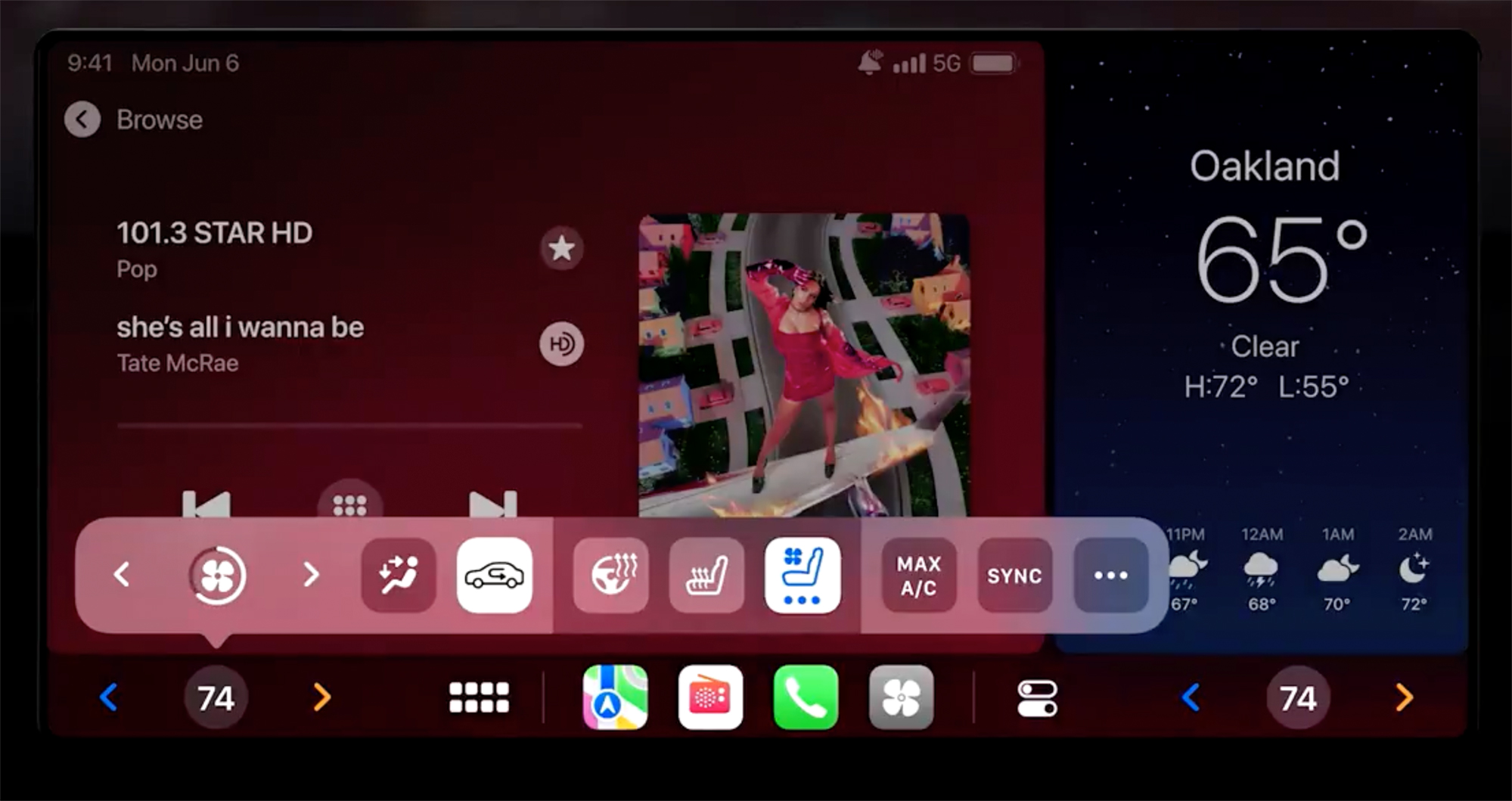
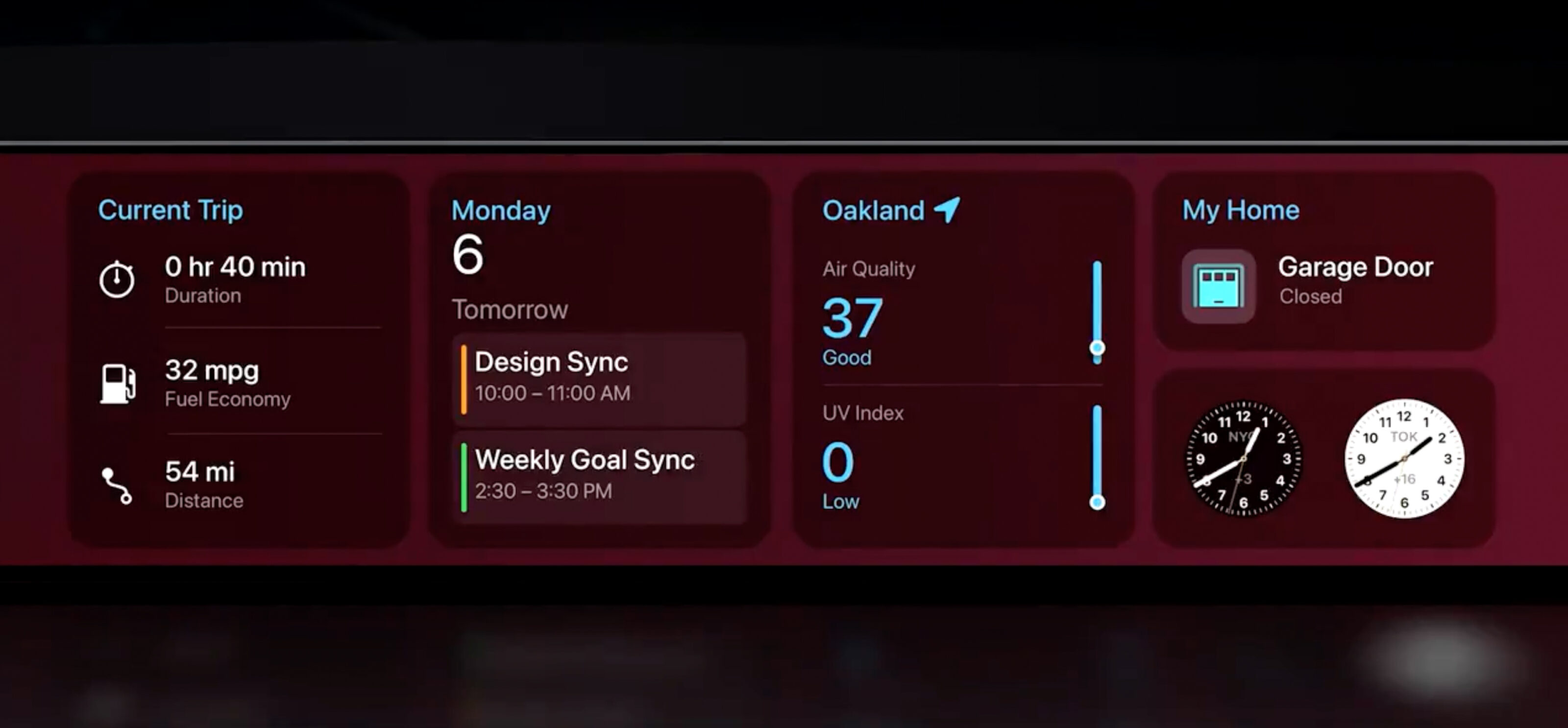
A video released by Apple (see the embedded tweet below) shows the CarPlay update will also offer widgets for your calendar, home controls (integrating with gadgets compatible with Apple’s Home platform), weather forecasts and air quality.
Apple says the first vehicles to support the new system will be announced in late 2023 (yes, late next year), although it has already confirmed a long list of partner brands, including Ford, Lincoln, Mercedes-Benz, Infiniti, Honda, Acura, Jaguar, Land Rover, Audi, Nissan, Renault, Volvo, Polestar and Porsche.
Volvo is an interesting mention, because it has already transitioned newer models to its Google-based Android Automotive infotainment, and while it promised in 2021 that Carplay will return as an option for Apple users, it has not yet surfaced.
Full details on the new version of CarPlay are still to come. One item still to be clarified is whether partner auto brands will fully replace their entire infotainment systems with Apple’s platform (as brands using Google have done) or – as with the current CarPlay system – merely offer it as a projection over their existing built-in interface when an iPhone is connected.
But, given the list of brands above – most having made huge investments in their own infotainment – it seems unlikely this new version of CarPlay is intended as anything more than an expanded version of the existing system’s wired and wireless iPhone projection method. Google’s Android Automotive, on the other hand, is built directly into vehicles as its base infotainment system.
Will my car get this upgrade?
It’s unclear at this point if the full spread of new CarPlay features will work on current CarPlay-comptible models.
If recent history is any indicator, your current car might get at least the widgets screen, but features requiring deeper access to the vehicle’s computers – like heating/cooling, speedometer, selected gear, fuel and temperature gauges – will likely be exclusive to upcoming new cars not yet on sale.
Related video
The lingering effect of widespread supply chain issues has dented traditional end of the financial year (EOFY) sales in the automotive industry, but there are still some deals to be had in 2022.
Typically, new car buyers can look towards purchasing a vehicle before June 30, as vehicle manufacturers aim to clear as much stock as possible before the new financial year kicks off.
However, the COVID-19 pandemic has caused widespread supply issues due to production and shipping constraints, largely caused by a shortage of semiconductor chips, which has caused many brands to increase vehicle prices – and scrap deals.
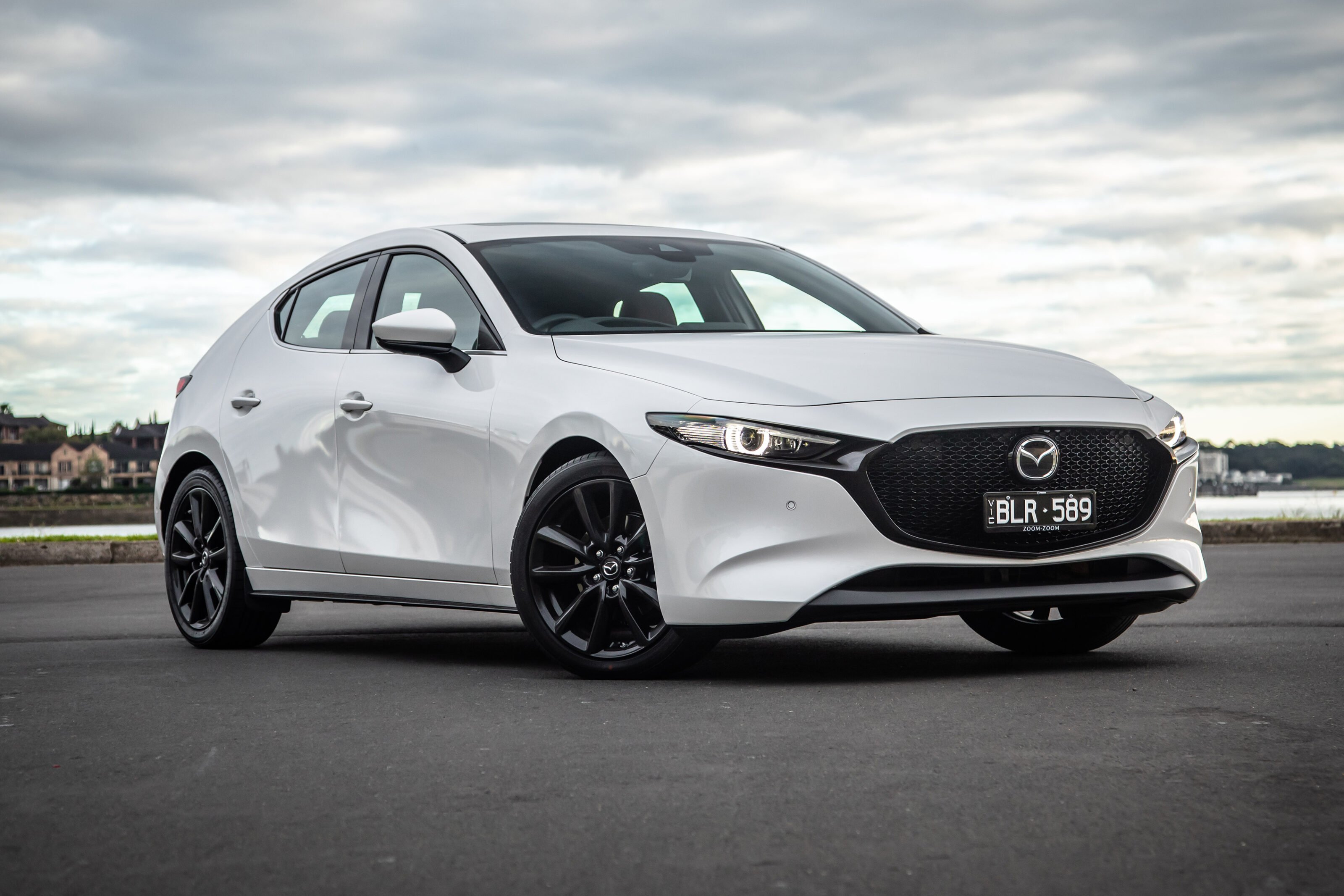
The good news is, if you are looking to secure a bargain on a brand-new small SUV or hatch in Australia, deals can still be had at Audi, Hyundai, Mitsubishi, Nissan, Peugeot, Skoda and Volkswagen – although most aren’t specifically referred to as ‘EOFY’ savings.
A spokesperson for Mazda Australia said the company has offers in place for EOFY; however, Mazda 2, 3, CX-3, CX-30 and MX-30 buyers will need to enquire at their local dealership as the brand is not offering fixed national drive-away offers at present.
The news is less favourable for buyers looking at purchasing a small car from BMW, Ford, Haval, Honda, Jeep, MG, Ssangyong, Toyota, and Volvo.
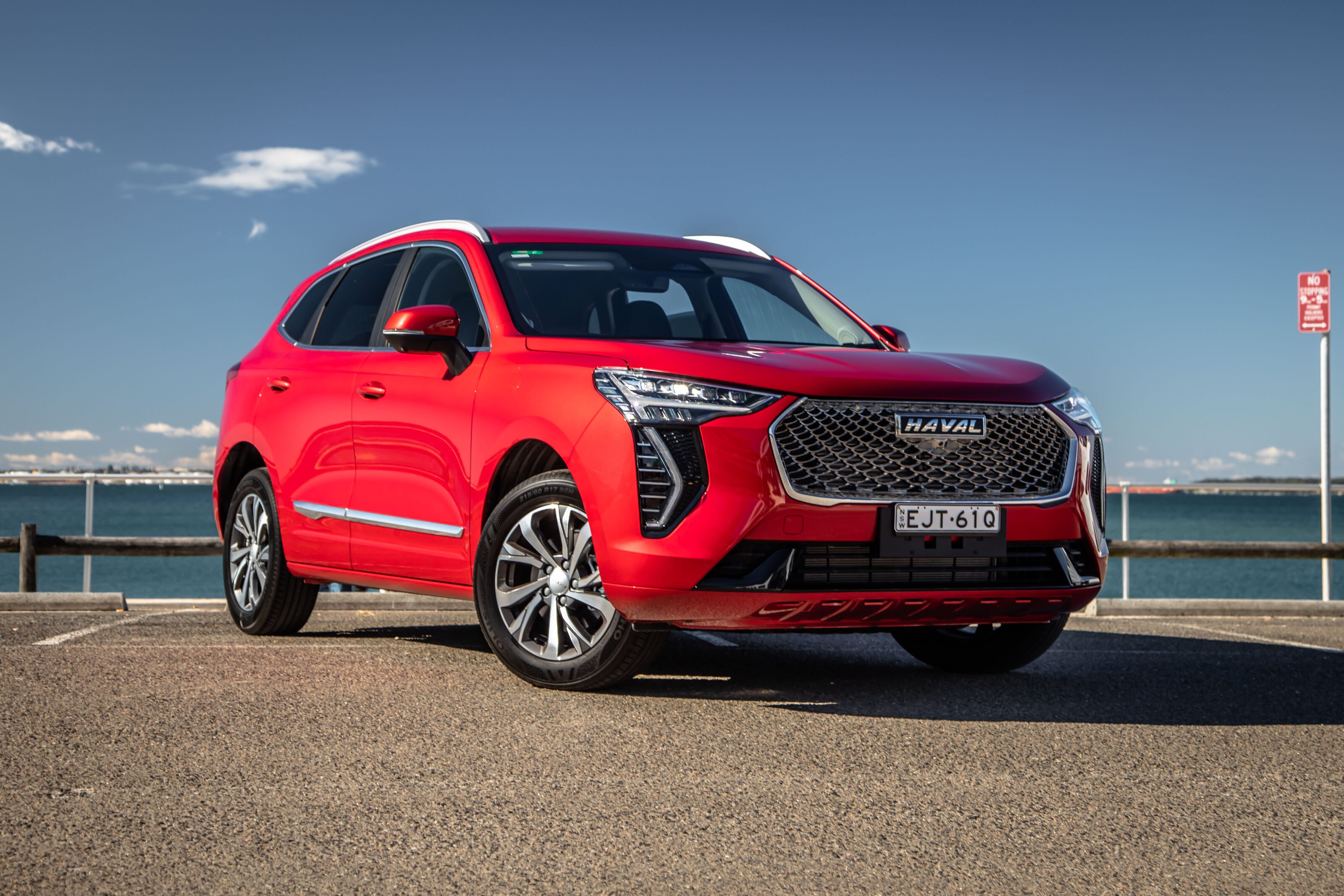
Honda believes EOFY sales aren’t relevant given its ‘Price Promise’ – having changed to a fixed-price agency model at the start of the current financial year – while the other brands said no deals are planned for 2022.
GWM Haval said it seeks to “offer the best possible drive-away price to all customers at all times”, with the entry-level Haval Jolion Premium permanently listed at $28,490 drive-away.
WhichCar is awaiting a response from Lexus and Suzuki for any potential last-minute deals involving each marque’s range of small SUVs and cars, including the Lexus UX and Suzuki Swift.
Meanwhile, French brand Renault is encouraging buyers to ‘beat the price rise’ set for July 1, with retail pricing set to increase by up to $2210 across its entire line-up.
Audi

This year, Audi is offering the 2022 A1 35 TFSI and 2022 Q2 35 TFSI with a 3.98 per cent annual comparison rate until June 30, 2022.
The brand claims this will get you into the A1 from $130 per week and Q2 from $161 per week, provided certain conditions are met.
This includes a $13,355 final payment and maximum 50,000 kilometre allowance for the A1 over a five-year term. A similar deal applies for the Q2, although the final payment is $16,163 should buyers wish to retain their vehicle.
It is important to note various factors could affect your ability to meet these exact conditions, such as different loan terms and conditions, on-road cost differences between states, and opting for metallic paint.
Hyundai
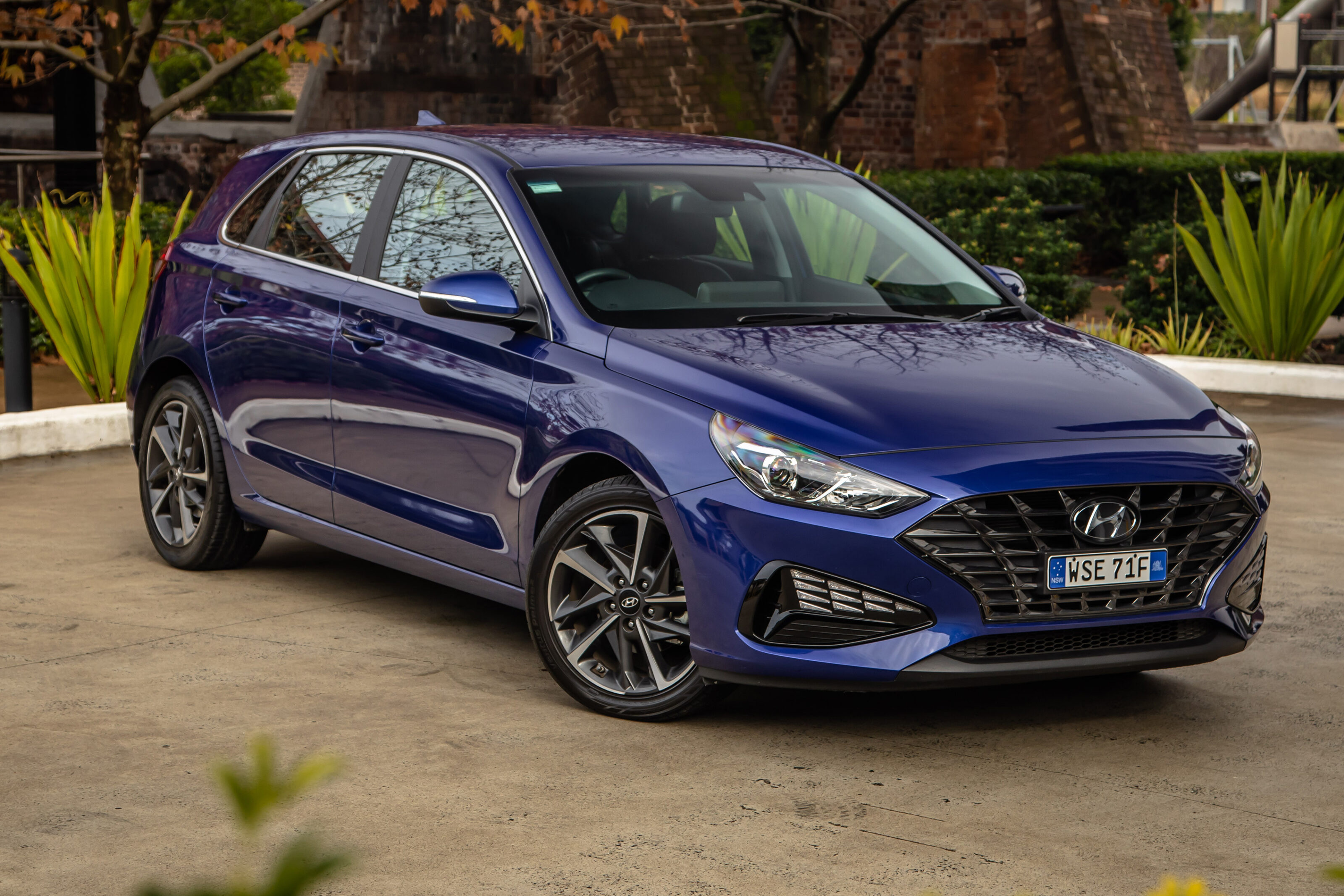
Hyundai, like most others, does not have a specific EOFY sales promotion in 2022. However, its second-quarter sales will continue until June 30, 2022.
This includes drive-away pricing for the entry-level Venue, i30 Hatch and Kona ranges.
These promotional prices can be found in the tables below:
i30 Hatch
| Model | RRP | Drive-away price |
|---|---|---|
| i30 (man.) | $23,720 | $25,990 |
| i30 (auto) | $25,720 | $27,990 |
| i30 Active (auto) | $27,220 | $29,990 |
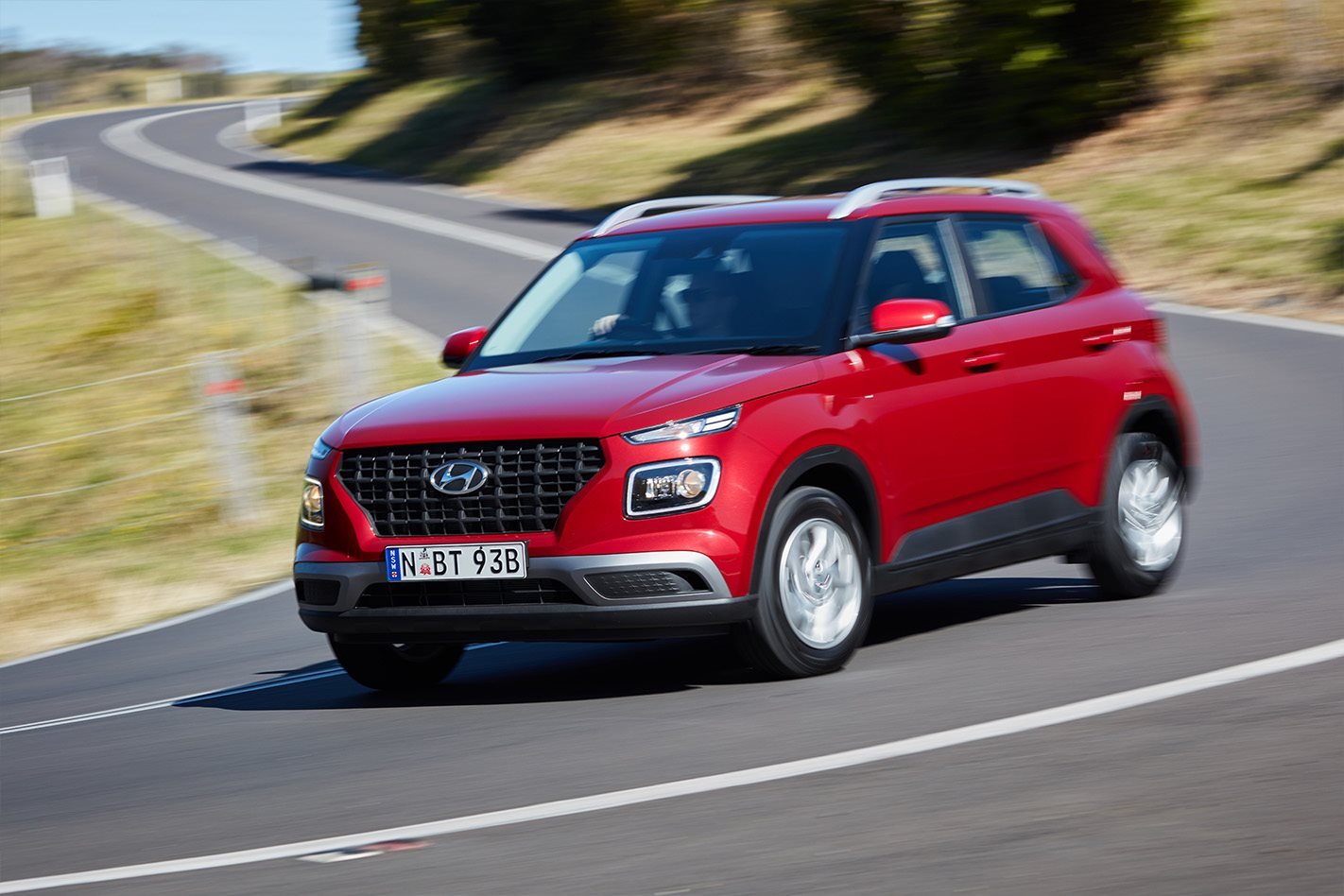
Venue
| Model | RRP | Drive-away price |
|---|---|---|
| Venue (man.) | $21,240 | $24,490 |
| Venue (auto) | $23,260 | $26,490 |

Kona
| Model | RRP | Drive-away price |
|---|---|---|
| Kona (auto) | $26,900 | $29,490 |
Kia
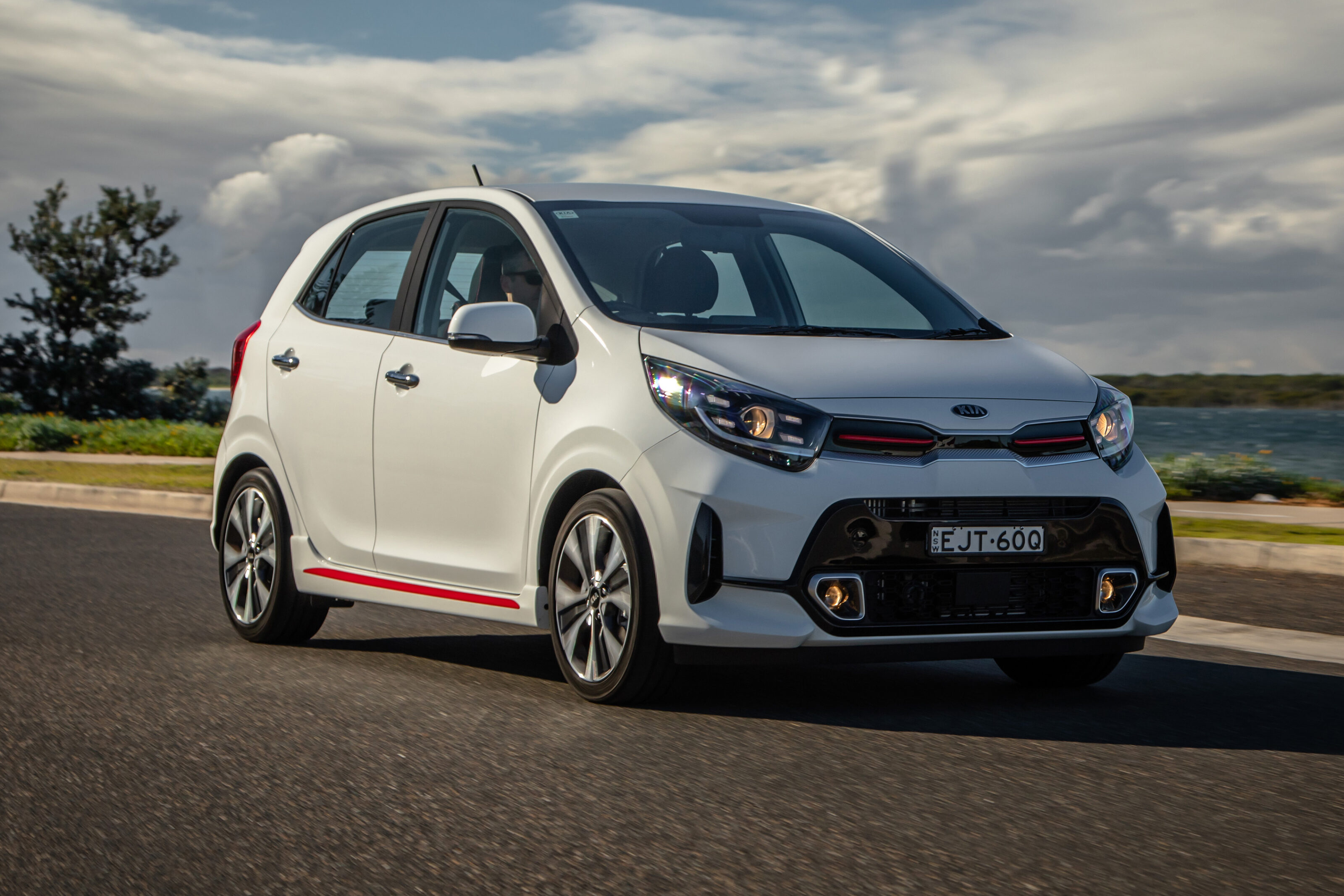
Kia does not have a end of the financial year promotion in 2022, as has been the case for the past few years.
However, its reoccurring offers – set to officially expire on June 30, 2022 – include drive-away deals across the majority of its small car range, including; the Picanto, Rio, Cerato and Stonic.
These prices can be found in the tables below:
Picanto
| Model | RRP | Drive-away price |
| GT-Line (man.) | $17,440 | $19,990 |
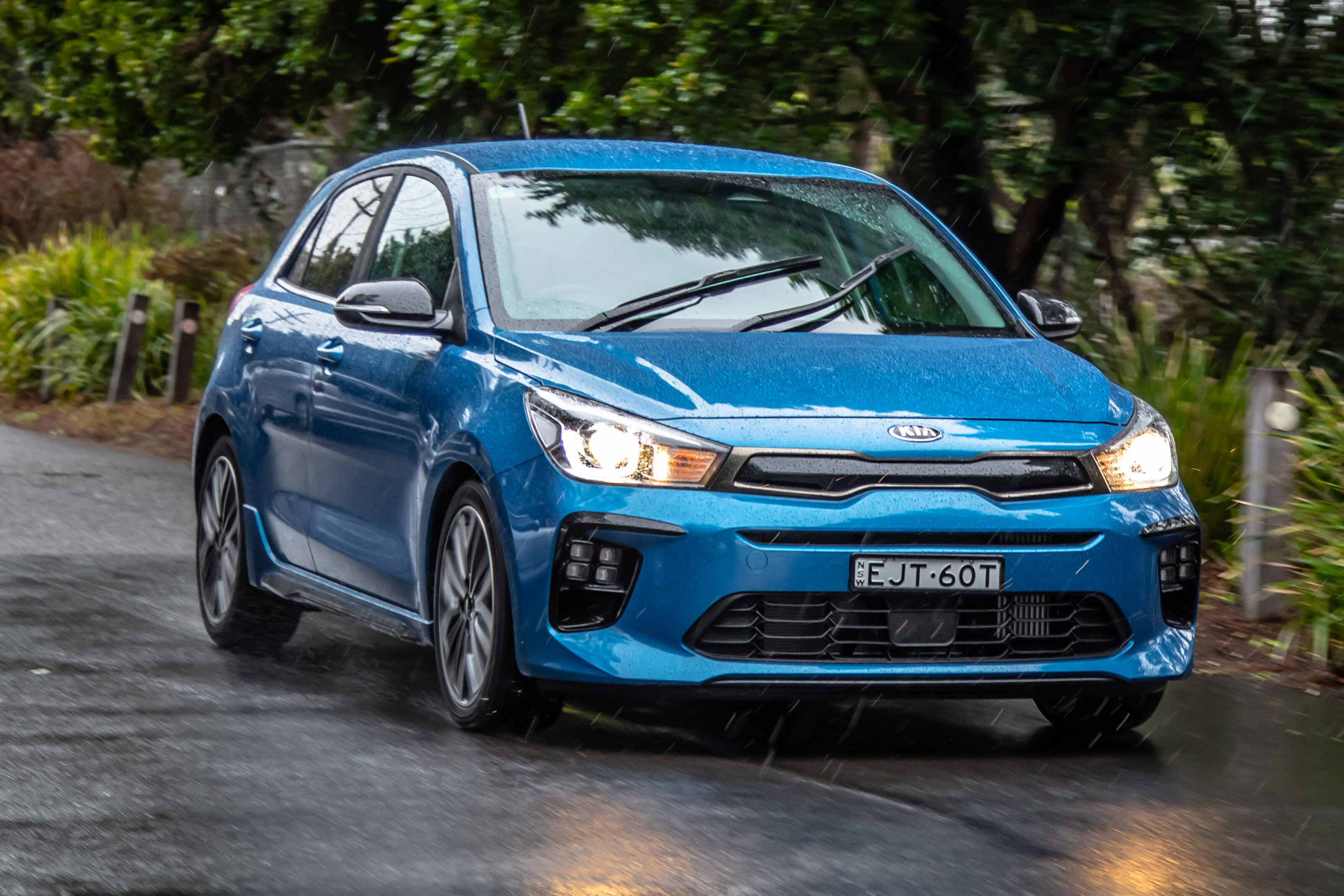
Rio
| Model | RRP | Drive-away price |
| GT-Line DCT | $25,590 | $27,990 |

Cerato
| Model | RRP | Drive-away price |
|---|---|---|
| S sedan (auto) | $25,990 | $27,490 |
| S hatch (auto) | $25,990 | $27,490 |

Stonic
| Model | RRP | Drive-away price |
|---|---|---|
| Sport (auto) | $26,490 | $28,190 |
Mercedes-Benz

Mercedes-Benz is offering complimentary dealer delivery fees across its range of new and demonstrator vehicles – including the smaller A-Class, B-Class and GLA – until June 30, 2022.
However, this offer only applies to vehicles available for immediate delivery – with built-to-order or in-transit vehicles and electric vehicles, such as the EQA small SUV, excluded.
Effective from January 1, 2022, the brand has moved to a fixed-price agency model, allowing buyers to pay a similar price no matter which dealership they visit, but removing the ability to negotiate on the total cost of a vehicle.
Mitsubishi
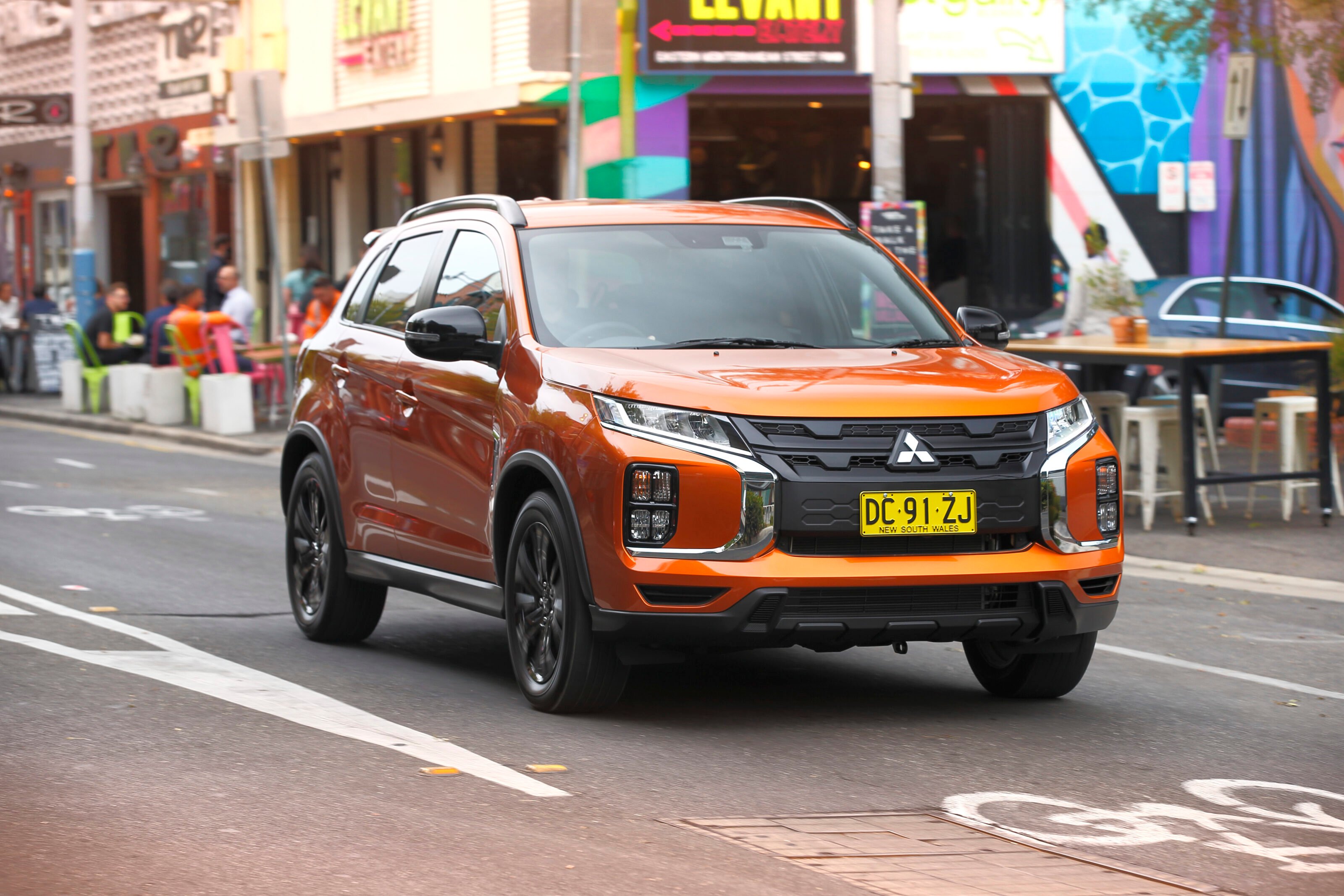
Mitsubishi is one of the select few brands offering a specific EOFY sales campaign for 2022, with savings available for the popular 2022 ASX and 2022 Eclipse Cross small SUVs.
These national drive-away prices can be found in the tables below:
ASX
| Model | RRP | Drive-away price |
|---|---|---|
| ES (man.) | $24,990 | $26,490 |
| ES (CVT auto) | $27,240 | $28,740 |
| ES ADAS | $28,990 | $30,490 |
| MR | $28,990 | $30,490 |
| LS | $29,740 | $31,490 |
| GSR | $31,990 | $34,490 |
| Exceed | $34,490 | $38,340 |
EOFY drive-away deals are also available for remaining limited-edition 2022 ASX ES-L, MR Plus and XLS Plus stock. Speak to your local Mitsubishi dealer for more information.
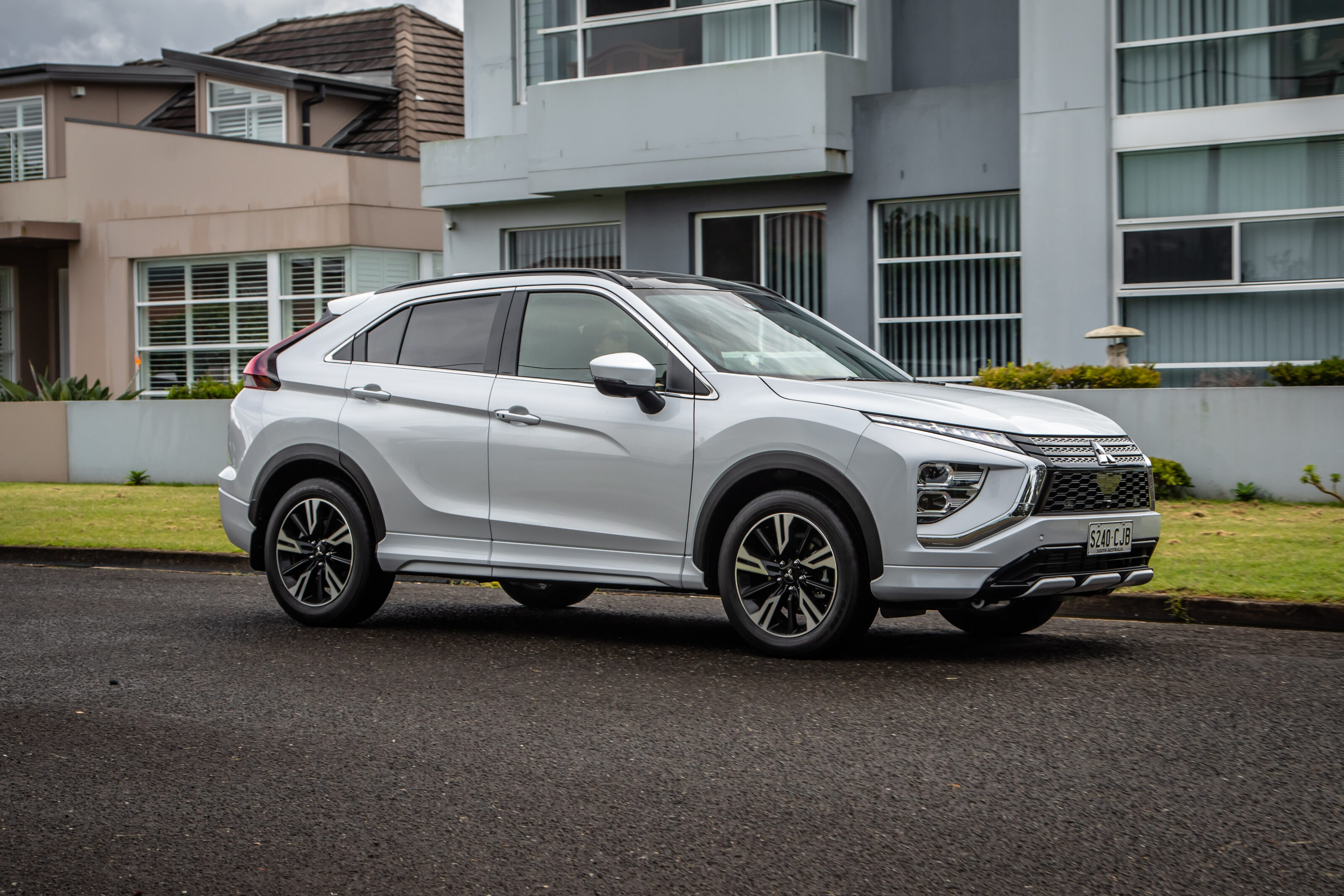
Eclipse Cross
| Model | RRP | Drive-away price |
|---|---|---|
| ES FWD | $31,490 | $33,190 |
| LS FWD | $33,490 | $36,190 |
| LS AWD | $35,990 | $39,190 |
| Aspire FWD | $36,240 | $39,190 |
| Exceed FWD | $39,490 | $42,690 |
| Exceed AWD | $41,990 | $45,540 |
| ES PHEV | $46,990 | $50,490 |
EOFY drive-away deals are also available for remaining limited-edition 2022 Eclipse Cross XLS and XLS Plus stock. Speak to your local Mitsubishi dealer for more information.
Nissan
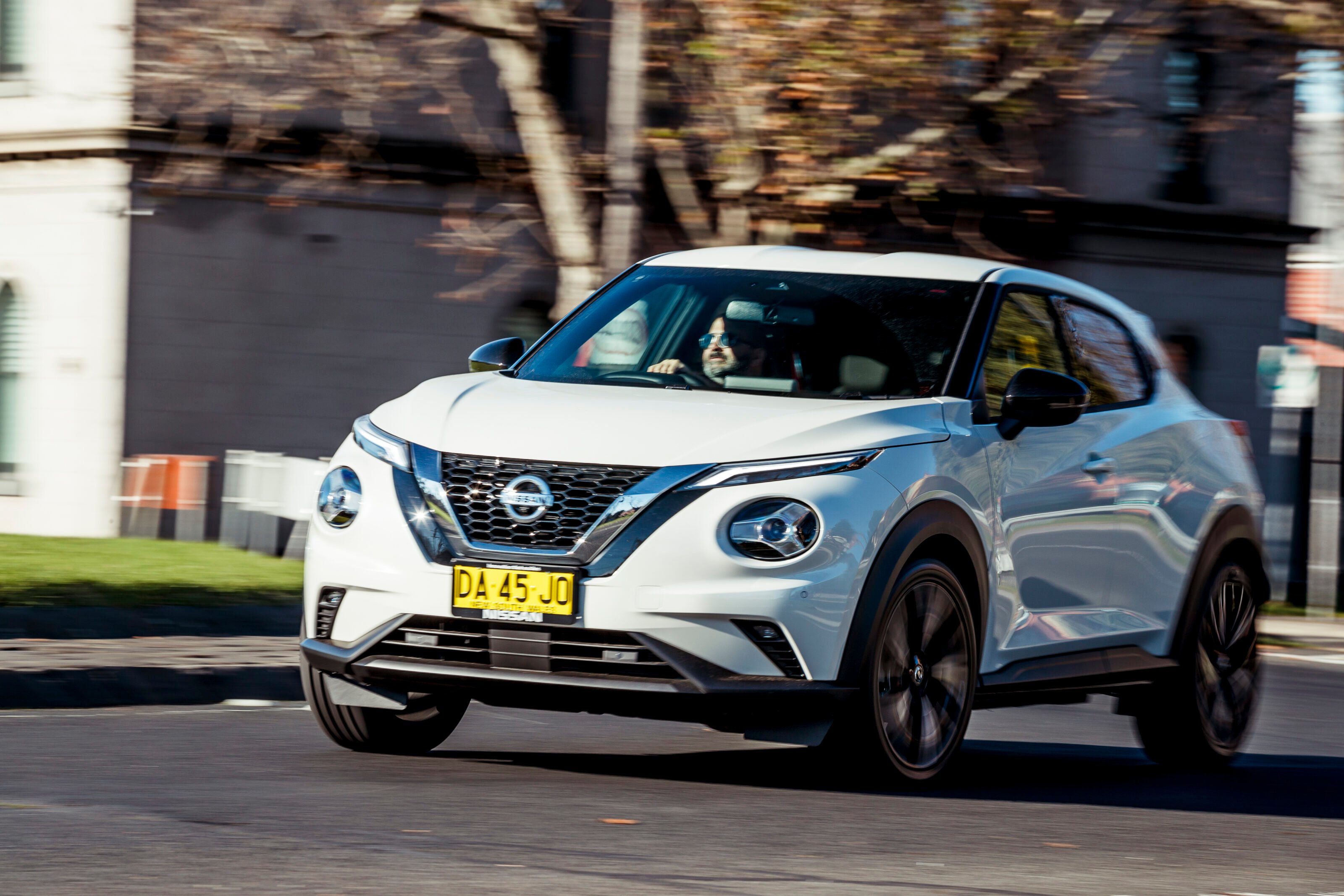
As with most other brands, Nissan isn’t offering a price-led campaign during the current supply chain chaos.
However, the company is hoping to encourage buyers to purchase a 2022 Juke small SUV or 2022 Leaf electric hatch under its in-house finance program, offering a 1.9 per cent annual comparison rate on a 48-month lease across each model’s line-up.
An updated Nissan Leaf is scheduled to arrive locally in August, offering a revised look and updated driver assistance systems, along with a $1000 price increase across the range.
Peugeot
In an effort to clear any remaining demonstrator stock, the local distributor for Peugeot has deals available until June 30, 2022, for model-year 2021 vehicles ready for immediate delivery.
This includes the Peugeot 2008 small SUV.
However, a spokesperson for Peugeot Citroën Australia said “customers are encouraged to contact their local Peugeot retailer to learn more about the current offers available on selected MY21 demonstrator models,” including exact pricing details.
The next-generation 2023 Peugeot 308 is expected to launch in the coming months, with local pricing and features to be confirmed soon.
Skoda
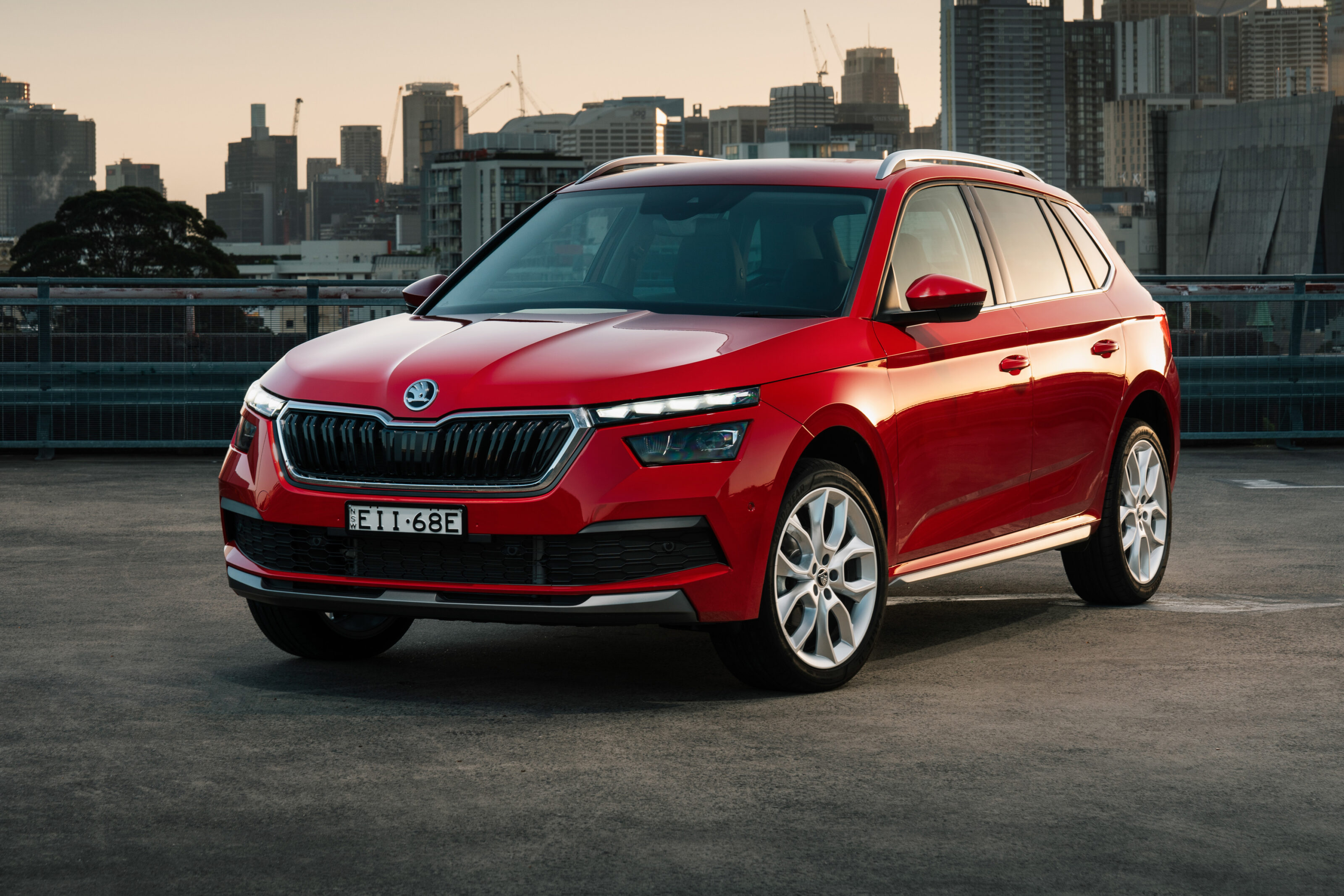
Much like most other European brands, which have been affected greatly by the chip crunch, Skoda does not have a price-led campaign for EOFY in 2022.
Instead, the Czech marque is including a seven-year warranty when buyers purchase a seven-year service pack for a brand-new vehicle until June 30, 2022.
This extended warranty was initially available for all Skoda vehicles purchased between September 13, 2021, to December 31, 2021. It is now limited to those who purchase an eligible service package with their vehicle.
The brand’s standard warranty, available across its range – including the Scala hatchback and Kamiq small SUV – is a five-year/unlimited-kilometre program.
Volkswagen
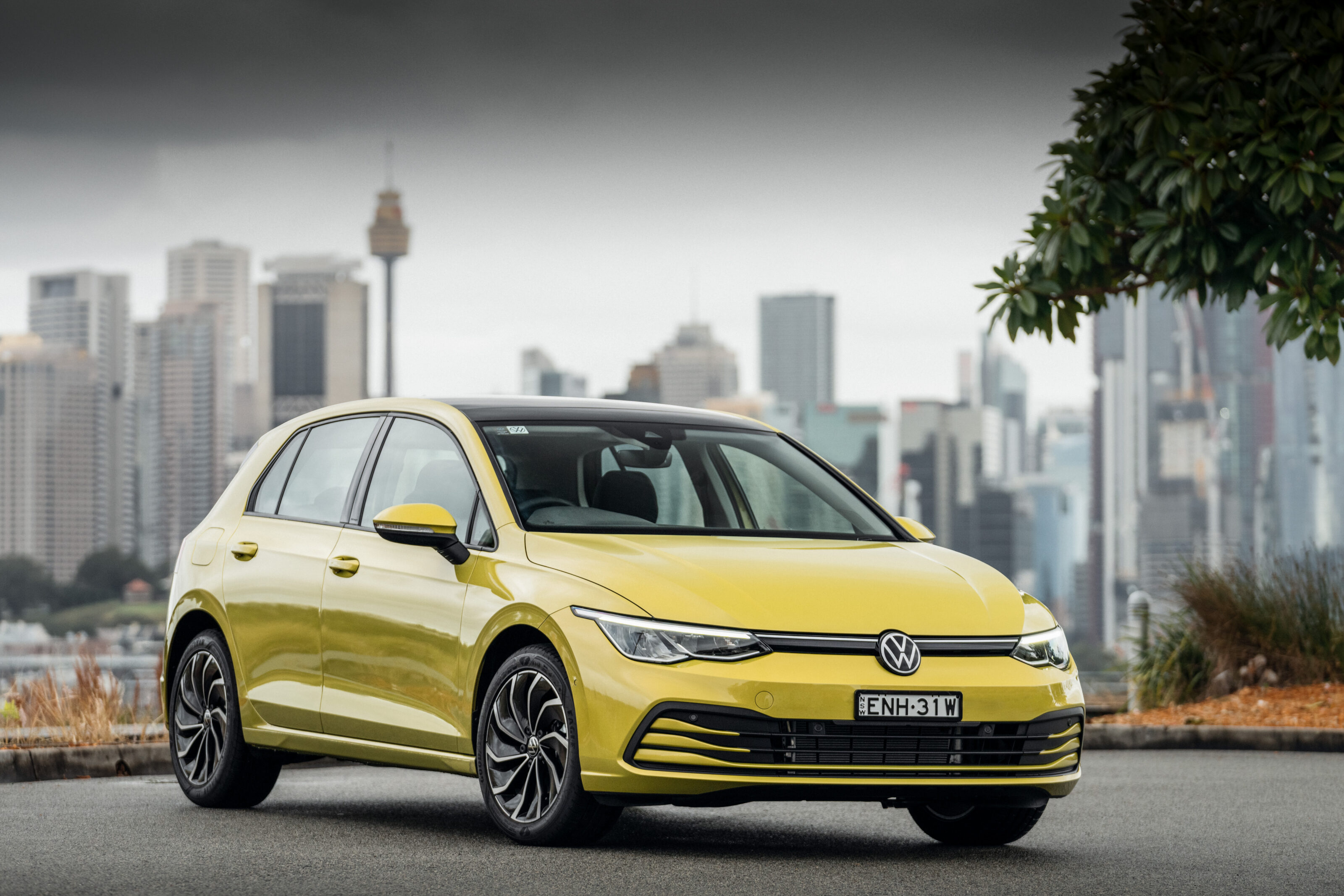
Like many other brands, a spokesperson for Volkswagen Australia confirmed the marque would not enter the EOFY sales race this year.
However, its has deals – set to expire on June 30, 2022 – across the new-generation 2022 Mk8 Golf and 2022 T-Cross ranges.
These drive-away prices can be found in the tables below:
Golf
| Model | RRP | Drive-away price |
|---|---|---|
| 110TSI | $34,690 | $39,512 |
| 110TSI Life | $36,990 | $41,913 |
| 110TSI R-Line | $39,990 | $45,039 |
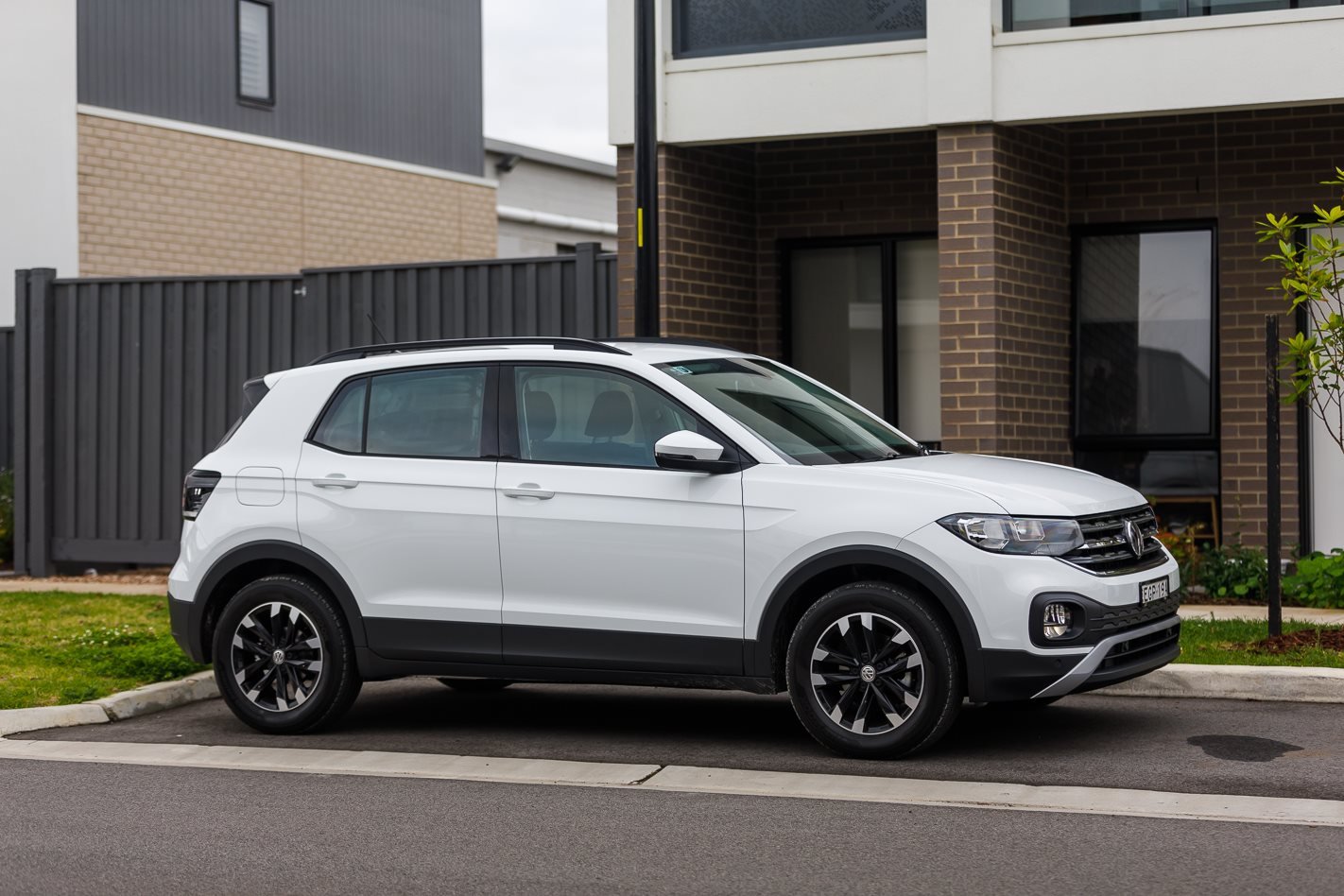
T-Cross
| Model | RRP | Drive-away price |
|---|---|---|
| 85TSI Life | $30,750 | $34,470 |
| 85TSI Style | $33,750 | $37,546 |
However, as this deal applies to both in-stock and built-to-order vehicles, an extended wait time is possible for a Golf or T-Cross that is yet to roll off the production line.
EOFY 2022 stories
I’ve dreamed of driving a Formula 1 car all my life. But I never dreamed that, when it finally happened, I would be driving it in a room tucked away on an anonymous industrial estate on the outskirts of Bristol, in the west of England.
It began exactly as I imagined, exactly as I’ve seen a thousand times on TV: Cinched tightly into a hip-hugging carbonfibre tub, gripping a butterfly steering wheel festooned with brightly coloured buttons. Pirelli slicks towering over my knuckles as I look down the track. A voice crackling in my helmet: “Radio check.”
“I hear you.” There’s an incessant, industrial-strength drone in my ears, the sound of a 1.5-litre turbocharged V6, idling at 5000rpm. “Right, you’re good to go,” says the voice. “It’s best to feather the throttle a bit in the first four gears. Otherwise, all you get is wheelspin.”
“Okay.”
Full disclosure: I’ve always found driving games interminably boring. No matter how sophisticated their responses, how realistic their visuals, they’re a poor substitute for the real thing.
None has ever, even for a moment, given me the quiet satisfaction, the simple joy, I get from driving a real car on real roads in the real world. Even when that drive has been nothing more challenging than mooching down to the shops for a morning coffee.
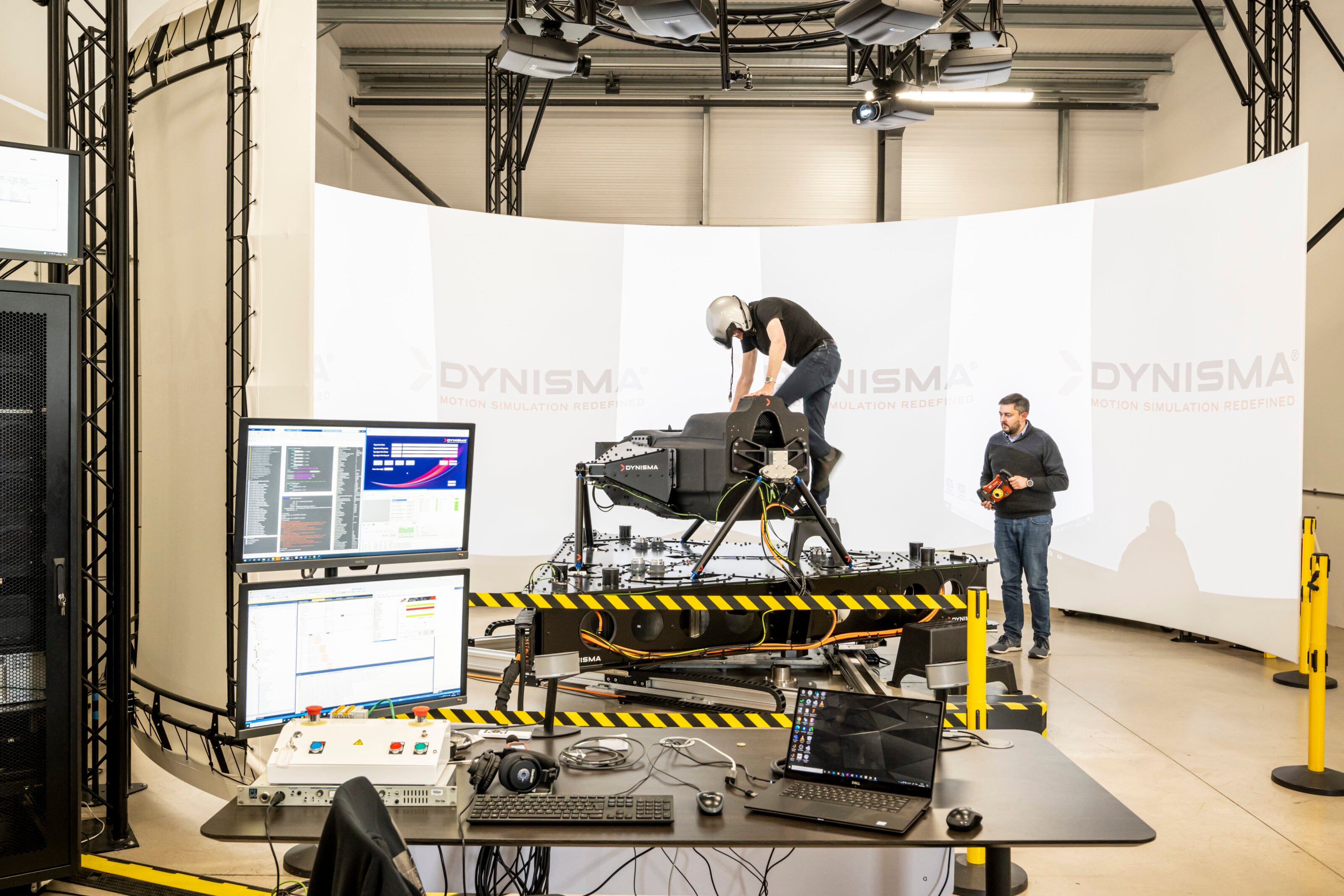
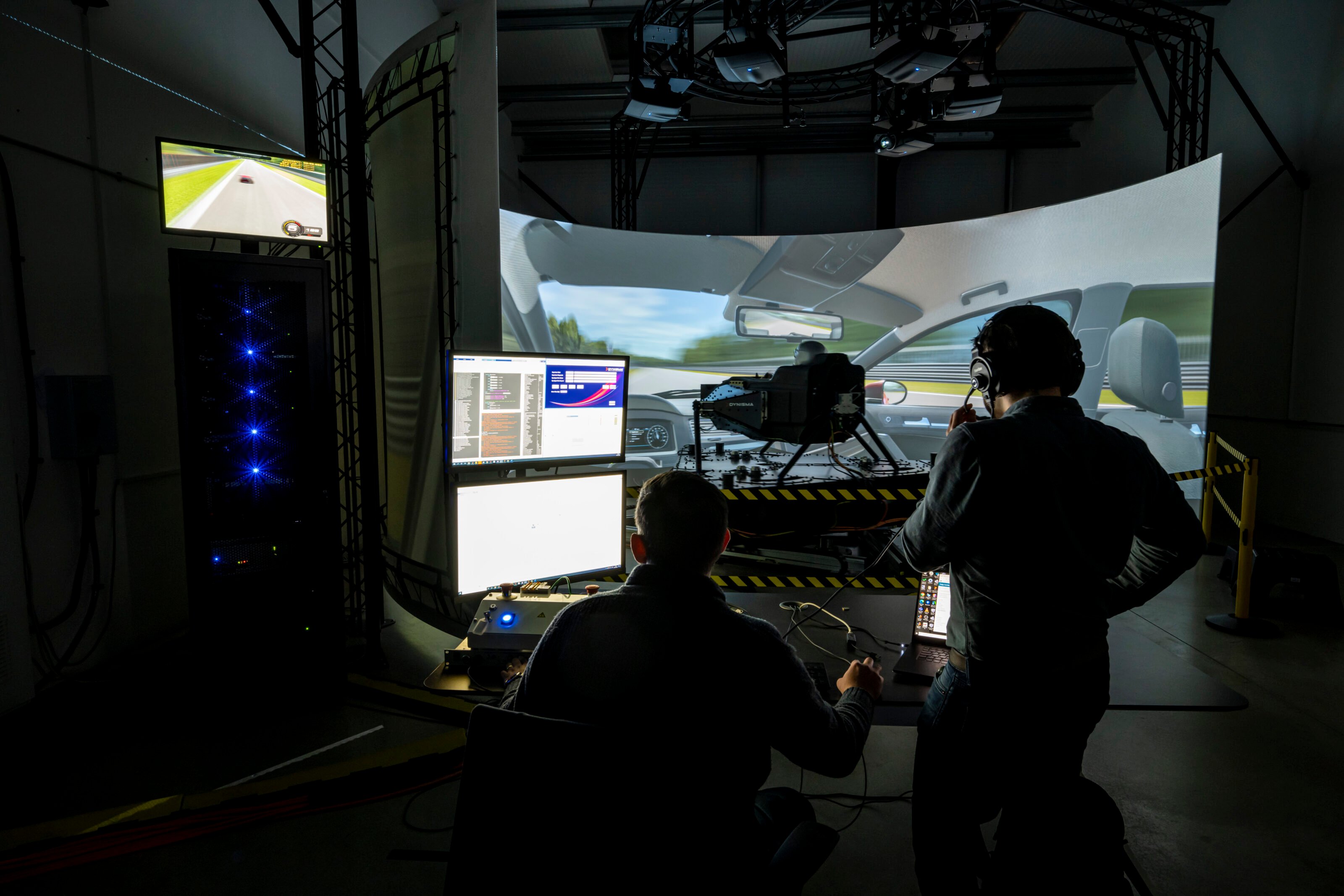
The Dynisma DMG-1 simulator is different, however.
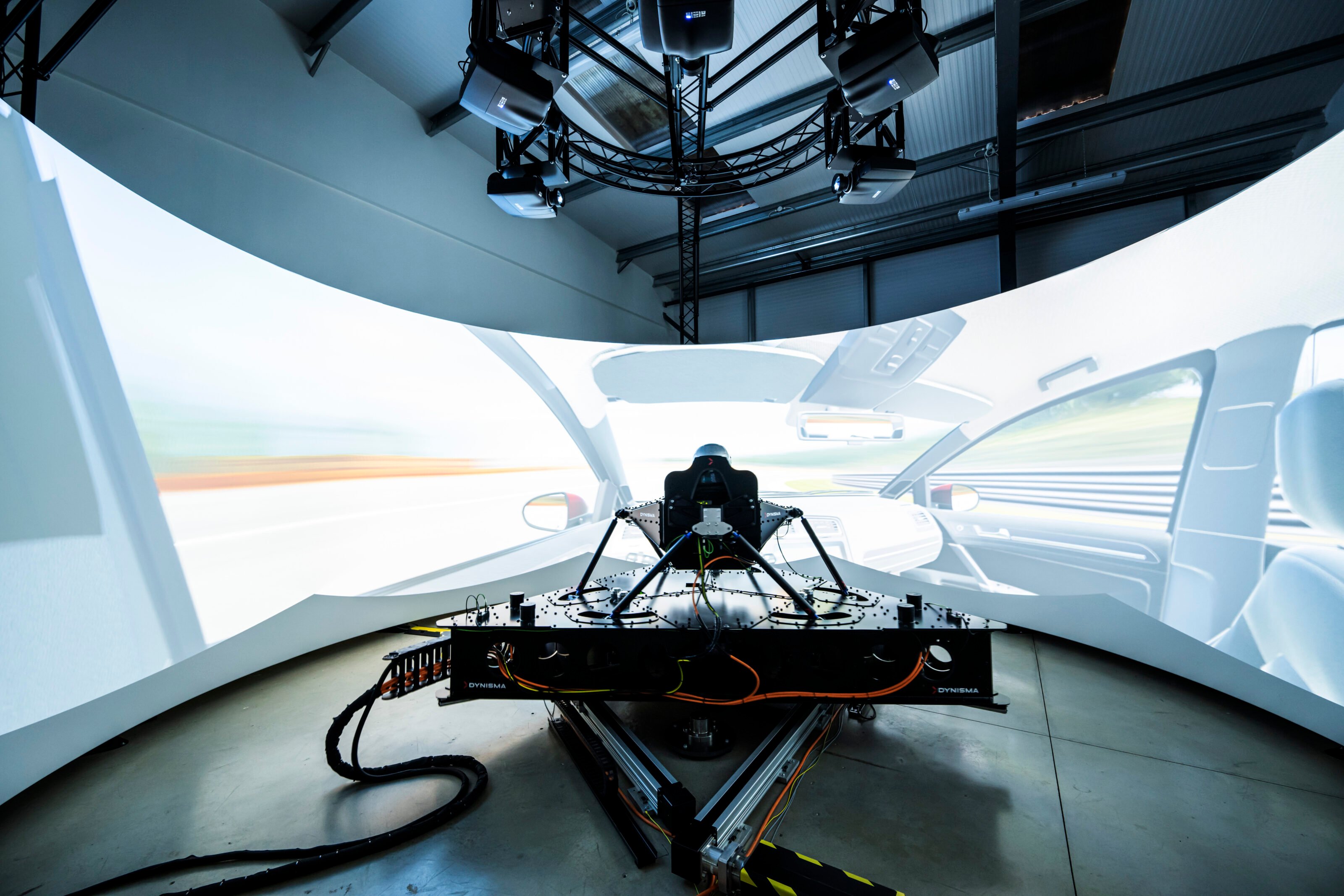
All these armchair experts who say today’s F1 cars are too easy to drive? They don’t know what they’re talking about
It might look like top-end gaming hardware, but the Dynisma DMG-1 is a serious vehicle development tool. An enhanced version of the one I’m driving has, since its installation at Maranello in mid-2021, been helping the Ferrari F1 team hone the dynamic performance of the scarlet F1-75 grand prix cars being driven with great panache this year by Charles Leclerc and Carlos Sainz Jr.
Simulators are nothing new in F1, especially as teams in recent years have been restricted to a mere handful of days of actual on-track test sessions. So, what makes the Dynisma different from the rest? And different from any driving game you’ve ever experienced?
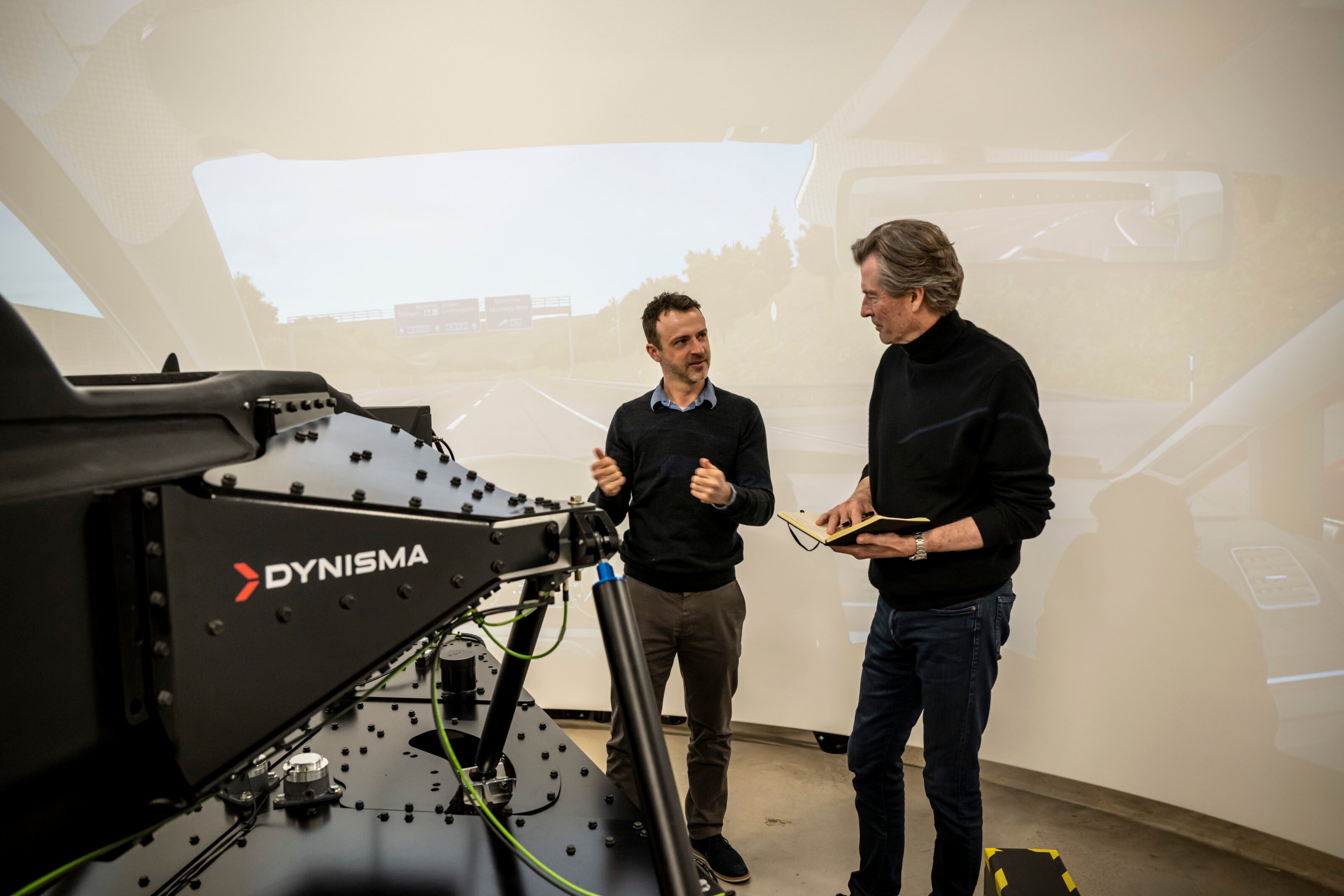
In the first instance, speed. “Our simulator has a latency of between three and five milliseconds,” says Dynisma CEO Ash Warne, “whereas our competitors have a latency of anything from 15 to 50 milliseconds.”
Latency is the delay between a simulator system registering an input, either from digitised externalities such as road surface, tyres or suspension, or from the driver in the form of steering, braking and acceleration, and then generating a relevant and accurate motion output for the driver to experience. It is the bugbear of all driving simulators, no matter whether you’re at work for a Formula 1 team or sitting at home trying to lap Mount Panorama on Gran Turismo 7.
Warne says Dynisma’s ultra-fast motion generators mean its simulators can be made to accurately replicate real-world F1 car dynamics. “From asking our motion platform to cue oversteer and it being felt takes between three and five milliseconds,” he says. “It’s imperceptible.”
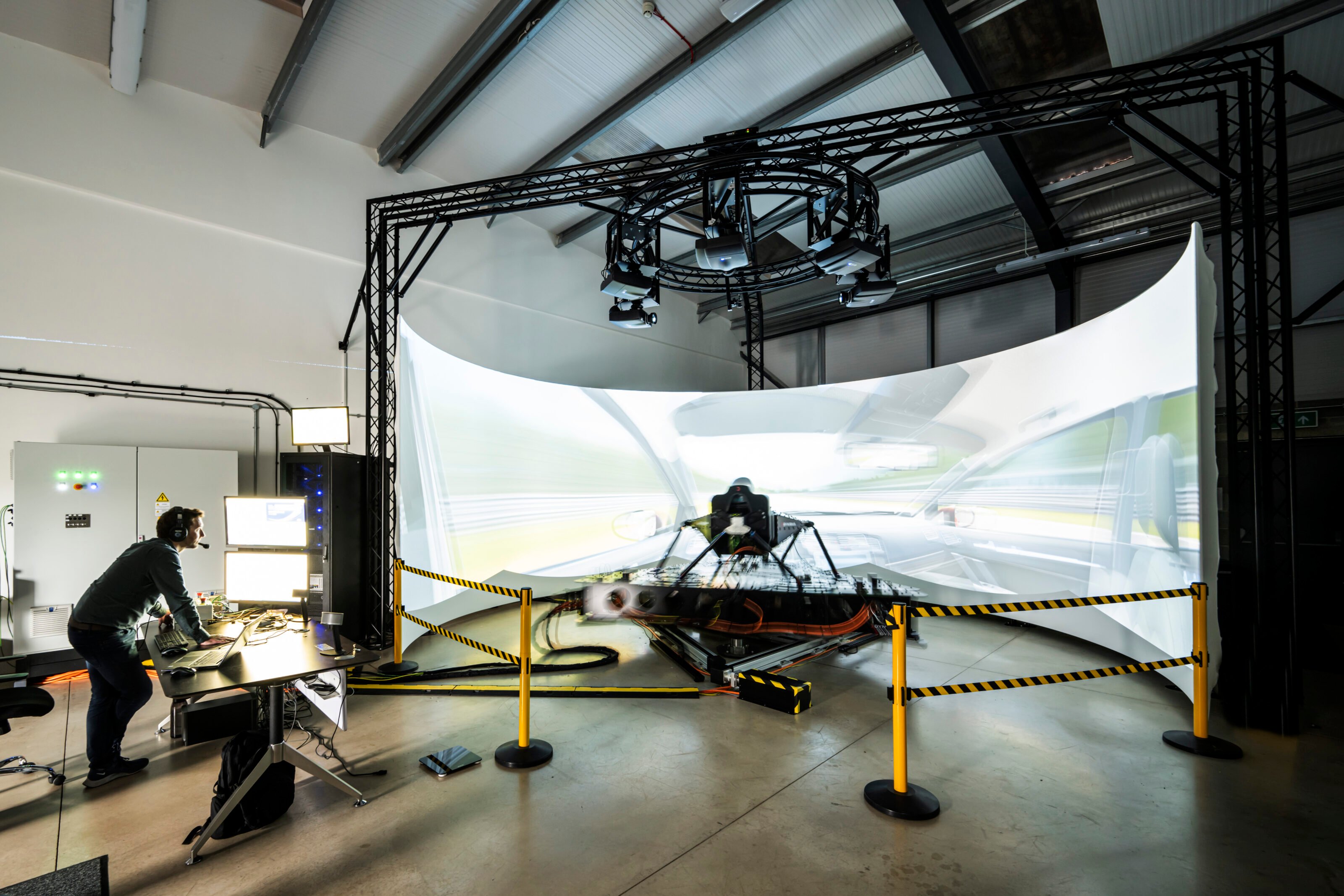
And it’s not just the F1 machinery that benefits. Popping a wheel over the kerb and onto the grass on the exit of McPhillamy Park might raise a laugh from your mates as your digitally rendered 911 GT3 launches into the kitty litter and ricochets off the crash barrier. In real-life racing the consequences of mistiming and misjudgement can be much more meaningful.
“If you have a latency of 50 milliseconds or more in a simulator, that’s potentially increasing the reaction time of the driver by 50 percent, which in the context of an elite athlete is ludicrous,” says Warne. “There’s no other athlete training where you would tolerate forcing their performance to be 50 percent worse in the training tool.”
But it’s not just the speed. The bandwidth of the Dynisma system, which at up to 100Hz or more across all axes is five times better than any other system, means it can put vibrations and movements through its platform that contain more information than other simulators. “When you drive it, you easily see why that’s relevant,” Warne says. “Every time you go over a curb or a rumble strip, for example, you feel the vibrations.”
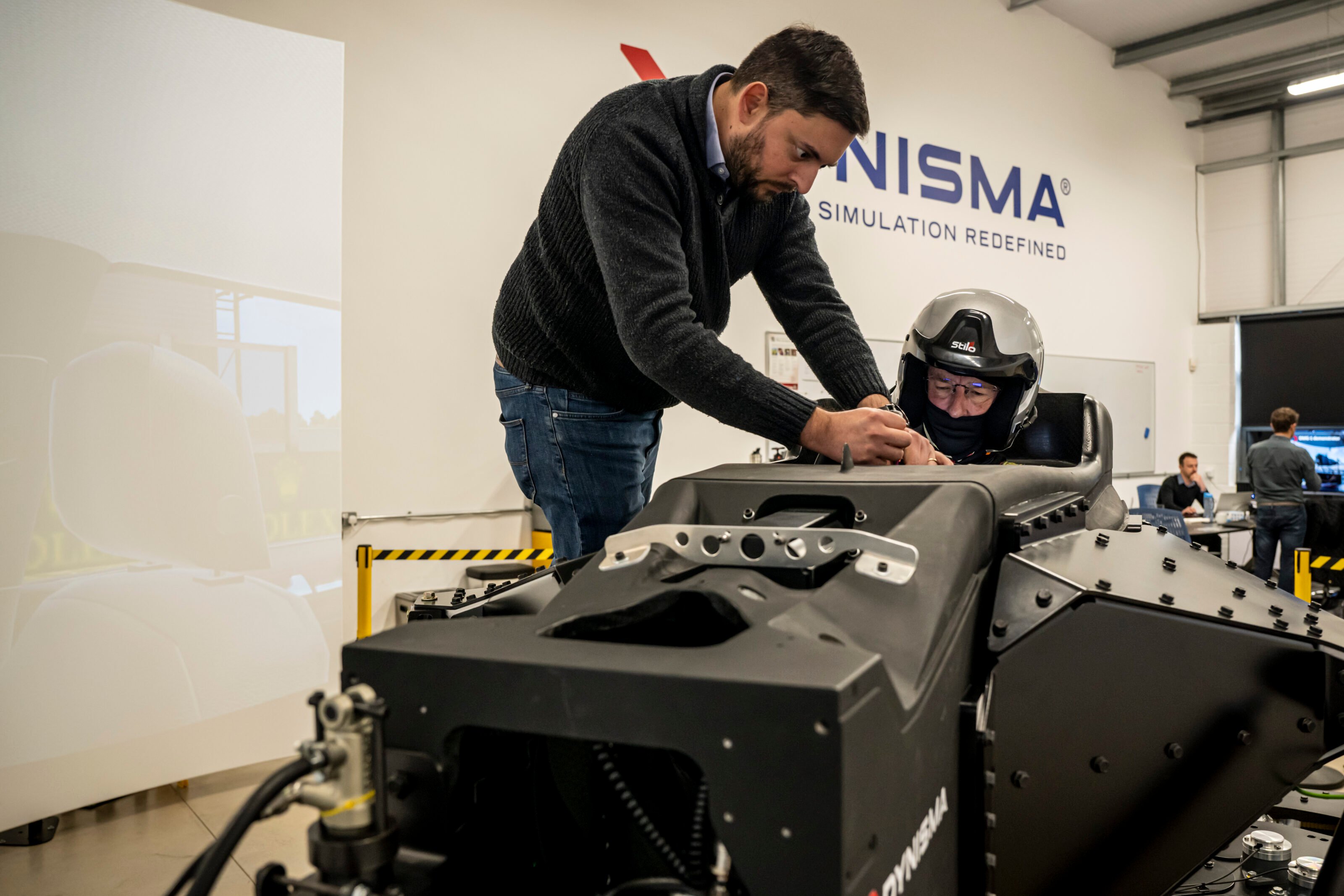
Right now, though, I’m simply trying to get my hand-eye coordination to the point where I can place the front tyres somewhere in the vicinity of apexes in the corners that are rushing towards me at bewildering speed.
I’m driving a digital avatar of a generic 2019-spec F1 car, its acceleration, braking, grip levels and steering weighting all accurately reproduced. Just keeping up with the sheer, unremitting pace of the thing is exhausting.
I’m reminded of the time I tested a McLaren Senna at Silverstone, thinking as I exited the Abbey-Farm Curve left-right at the end of the start-finish straight at 200km/h, flat in fourth, that I’d never connected a pair of apexes so quickly. Climbing out of the car, I’d felt like a racing god.
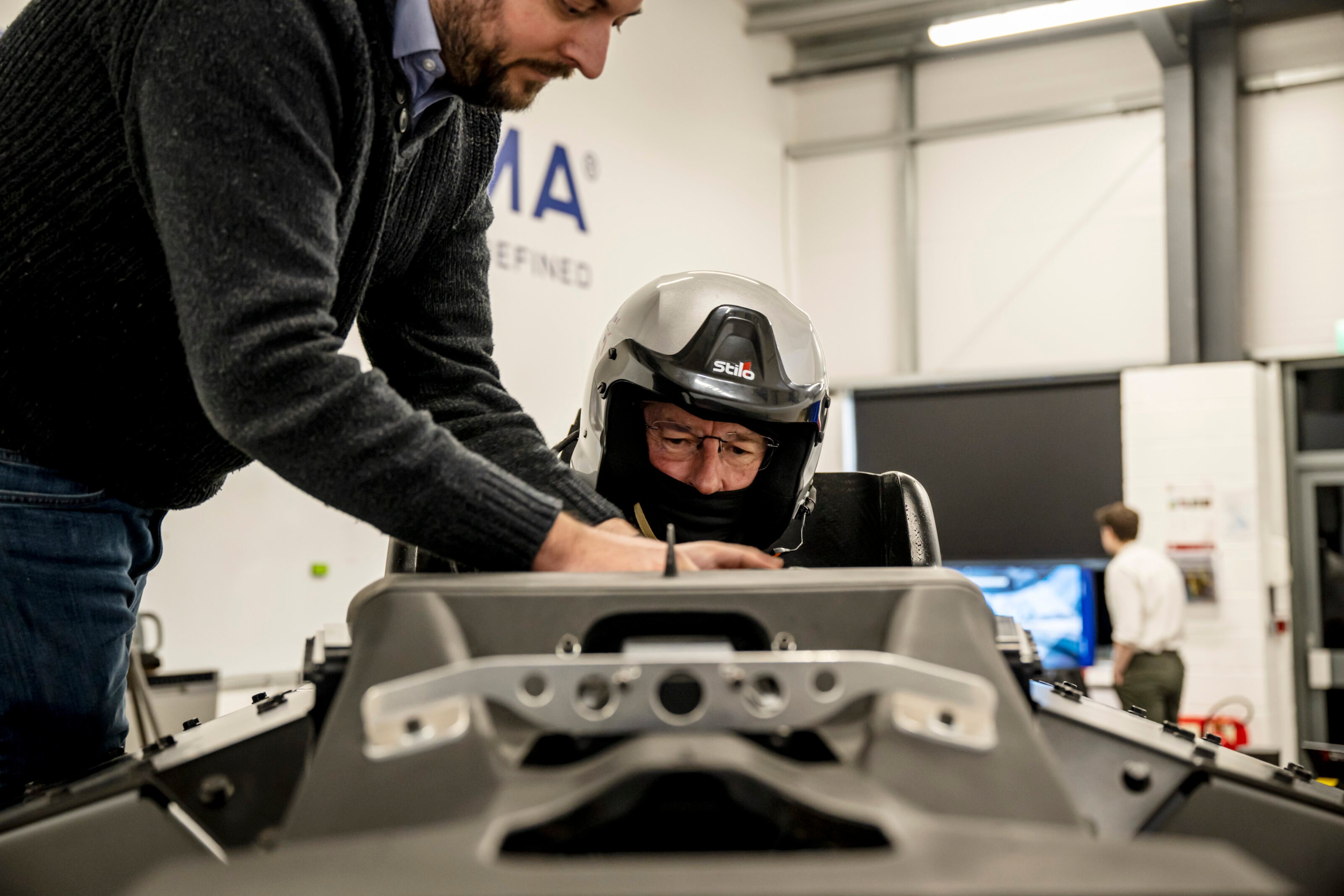
Then I learned Lewis Hamilton had been through there in eighth gear the year before on his qualifying lap for the British Grand Prix.
All these armchair experts who say today’s F1 cars are too easy to drive? They don’t know what they’re talking about. And that’s just in terms of getting your brain, your eyes, your hands, and your feet to keep up with how fast stuff happens, never mind the brutal physicality of it all.
Peak loads of 5g under braking are commonplace. What does that feel like? It feels like driving your car into a wall at 16km/h. Like having a mini car crash every lap, says Mark Webber.
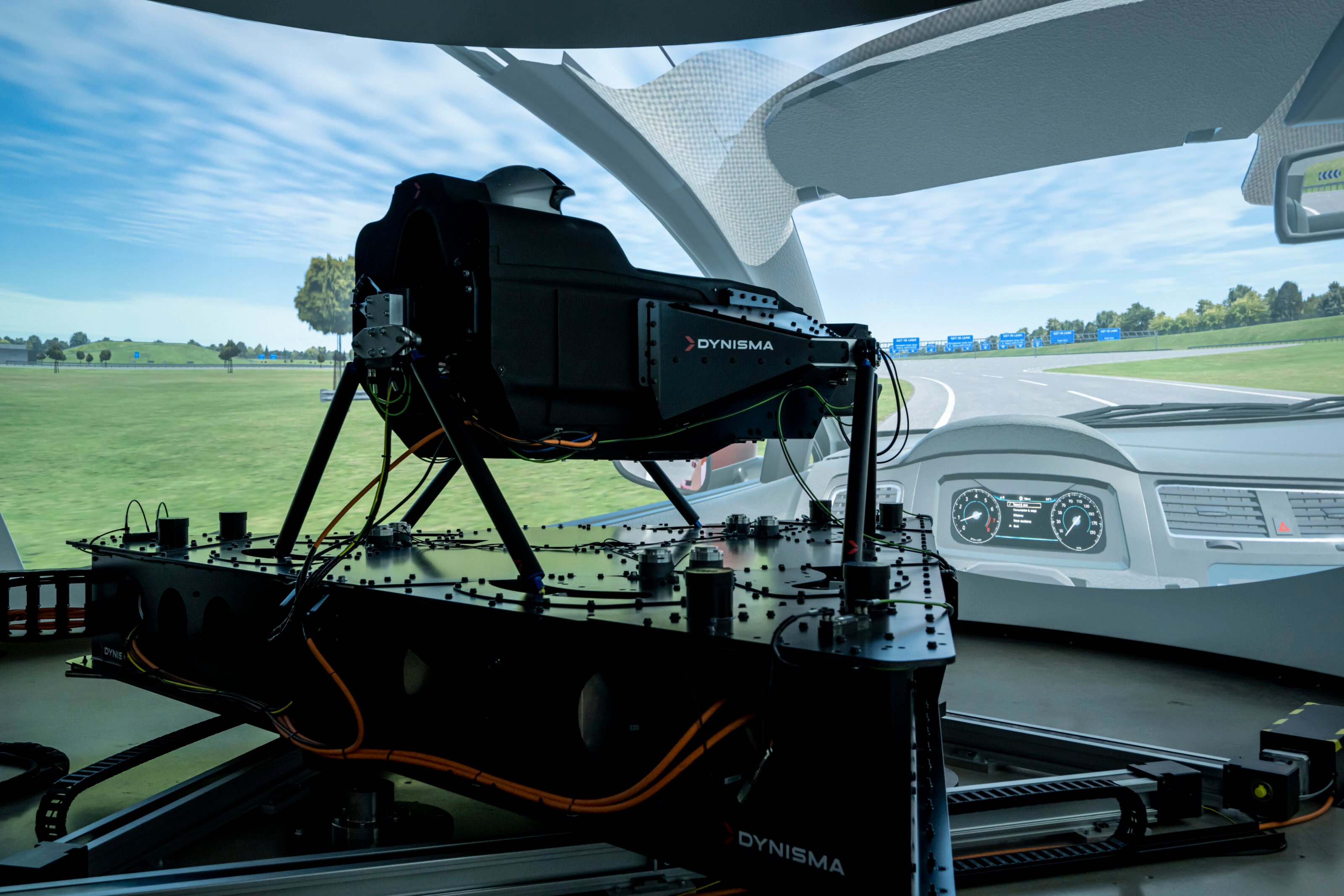
No simulator can replicate the g-loads – sustained or otherwise – you get from an F1 racer. But what the Dynisma simulator can do is make its drivers feel how the real-world car it’s been set up to replicate will respond to any given input. Action, reaction. In pretty much real time.
Beyond feeling some deliberately initiated understeer in low-speed, second-gear corners, and the tail twitch if I got too ambitious with the throttle on the exit, my F1 avatar felt utterly nailed to the track.
At no point, even in eighth gear corners, did I get near to its digitally defined limits of aero and mechanical grip, that mysterious event horizon at the edge of an F1 car’s dynamic envelope that only the world’s best drivers ever confidently explore.
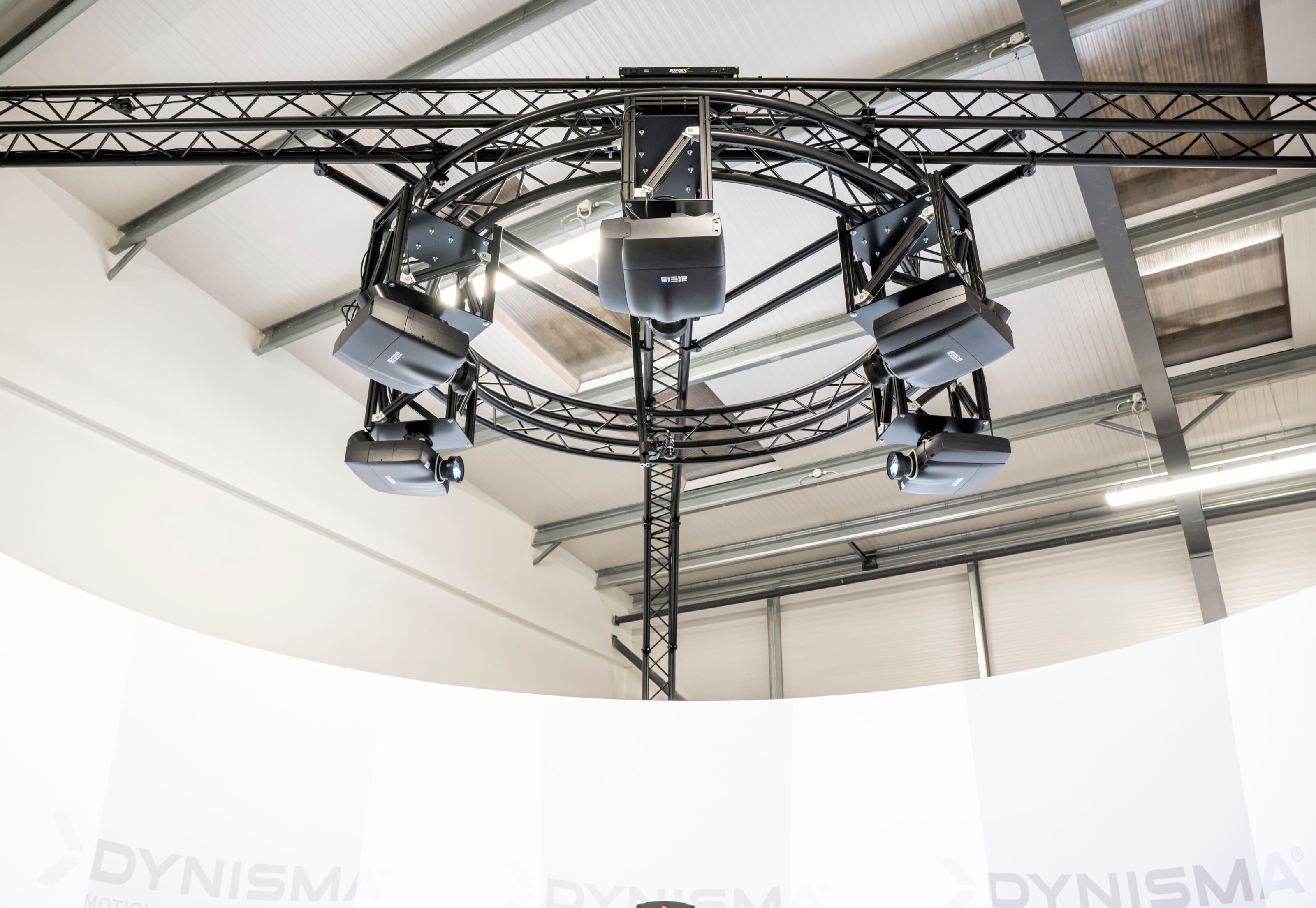
I got a better sense of the DMG-1’s level of feedback driving what Ash Warne described as a generic mid-engine GT3 racer on tyres with grip levels roughly halfway between a performance road tyre and a race slick and a tail-happy chassis set-up.
My clumsy braking in the GT3 avatar – I found it hard to accurately modulate my brake inputs without the correlating factors of g-loads on my body and in my inner ear – would result in what felt exactly like rear-wheel lock-up, my bum feeling the tail instantly snapping left or right, depending on corner direction and track camber.
Through fast corners I could feel the tyres nibbling at the edge of adhesion through the steering and the seat, and could sense the rear end would let go if I wasn’t careful with the throttle to keep the car balanced. Once, under brakes, I clearly felt the left front wheel lock, a clonk from the suspension and a tug on the steering wheel.
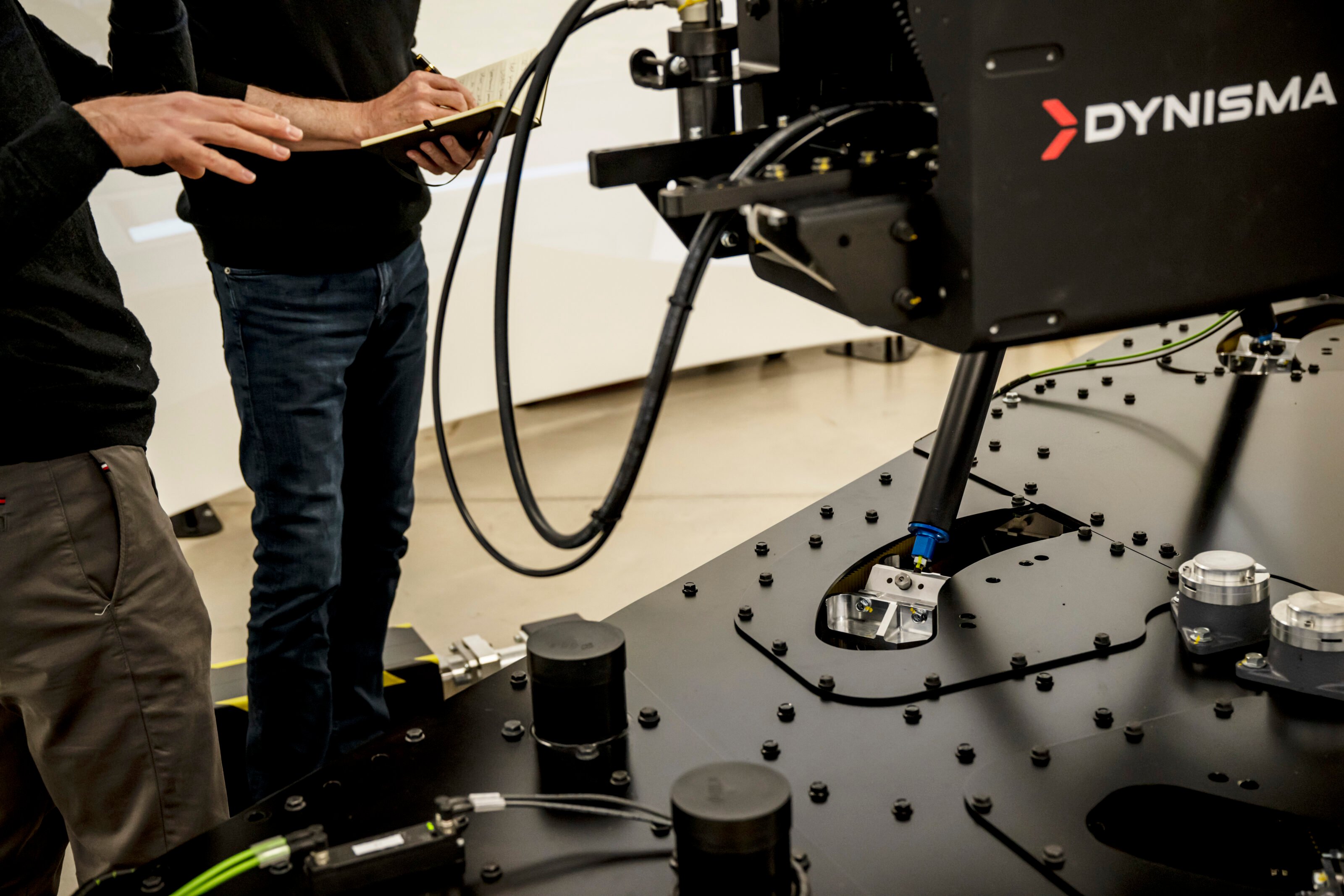
The carbon tub bucked and bounced if I took too much high kerb through a chicane. Running wide over the sawtooth kerbs on a corner exit produced a juddering though the steering and the seat of my pants.
Apart from the lack of g-forces, it felt surprisingly real, the sensations very much like those I experienced driving both the Mercedes-AMG GT and Lamborghini Huracan GT3 race cars a couple of years ago.
The carbon tub bucked and bounced if I took too much high kerb through a chicane
Dynisma was founded in 2017 by Warne, who previously led simulator development efforts at both the Ferrari and McLaren F1 teams. His leadership team includes Nik Garrett and James Golding, both of whom also worked on simulator development for the Ferrari F1 team, and mechanical engineer Matt Bell, who led jet-engine development teams at Rolls-Royce.
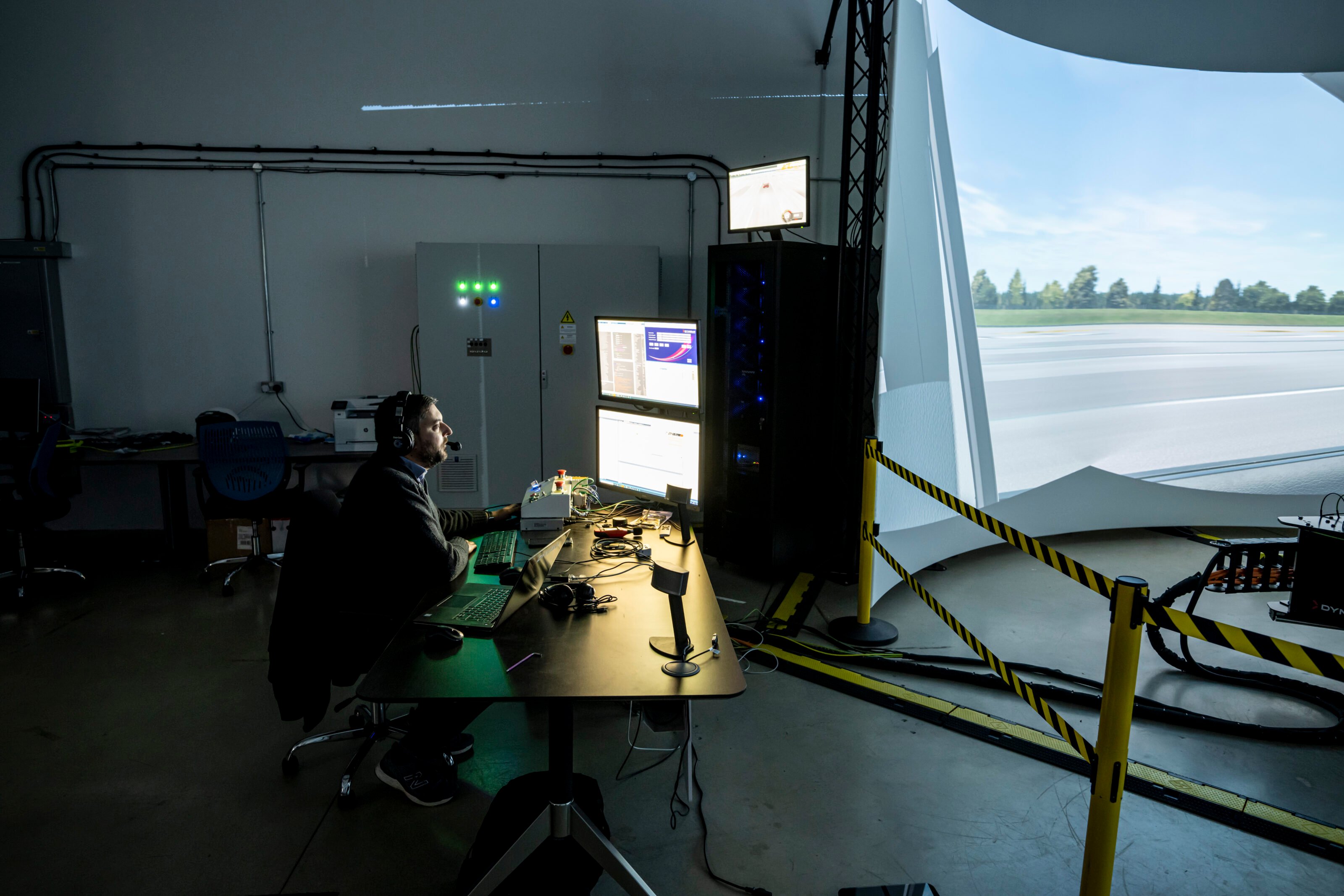
Building simulators that help make F1 Ferraris go faster is glamorous stuff. But the Dynisma team believes building simulators that can help manufacturers build better road cars is a far more profitable business. Especially in today’s EV era.
As more and more vehicles have near-noiseless electric powertrains with near-identical power and torque curves and batteries that weigh the same, along with autonomous control systems with near-identical response mechanisms, even subtle differences in ride, handling and NVH are going become more noticeable. And that’s where Dynisma comes in, Warne says.
To give me an idea of how a Dynisma simulator optimised for road-car testing could be used in the vehicle development process, the tracks on the screens around me are replaced by a digital replica of a typical special surfaces test area at a proving ground.
And though the interior projected on the screens looks like a Volkswagen Golf – as it was, somewhat confusingly, when I drove the digital GT3 – Warne says the DMG-1’s carbonfibre tub is now an avatar for a large rear-drive sedan.
He won’t tell me what it is. “What size wheels?” I ask. “Eighteen-inch,” he concedes.
I drive at 60km/h over embedded metal strips ranging in height from 5mm to 20mm, over small drop-offs and ledges like those you find on concrete slab freeways in the Unites States, and over the randomly arranged cobblestones universally known as Belgian pave, just as I’ve done at proving grounds all over the world.
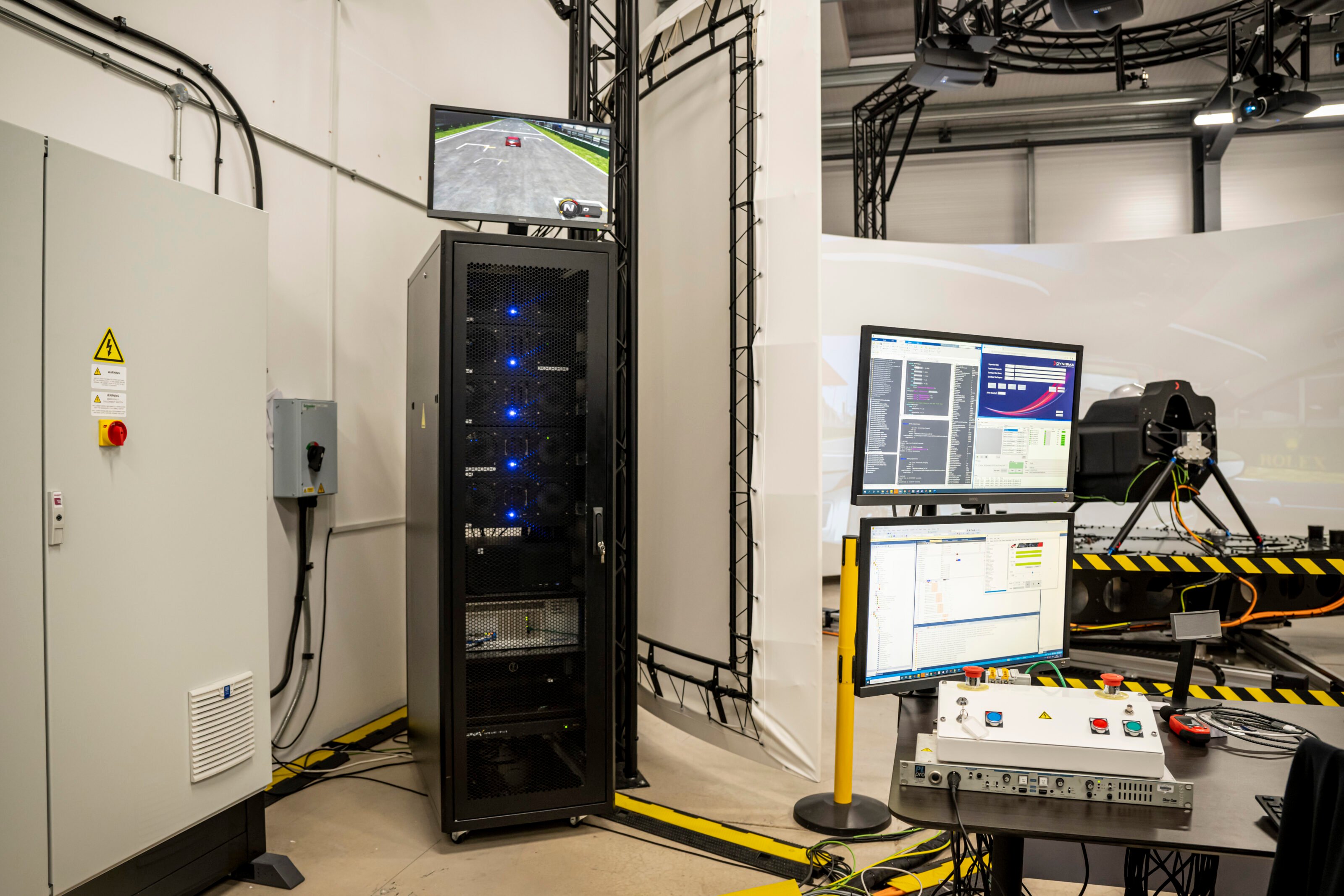
There is no road surface noise or feel between the obstacles, which makes it easy to focus on the noises and motions they induce.
It’s uncanny. I’m hearing and feeling a Mercedes, familiar muted thumps coming from the suspension accompanied by familiar gentle body motions. Afterwards, I venture that it felt like I was driving an E-Class, with 40-series Michelin tyres on those notional 18-inch rims. “Impressive,” Warne smiles, but annoyingly won’t confirm whether I’m right.
Virtual reality. It’s long been the dream of driving simulators. No-one’s there yet, and until there’s a technology that can enable simulators to replicate sustained and meaningful g-loads, no-one’s likely to get there.
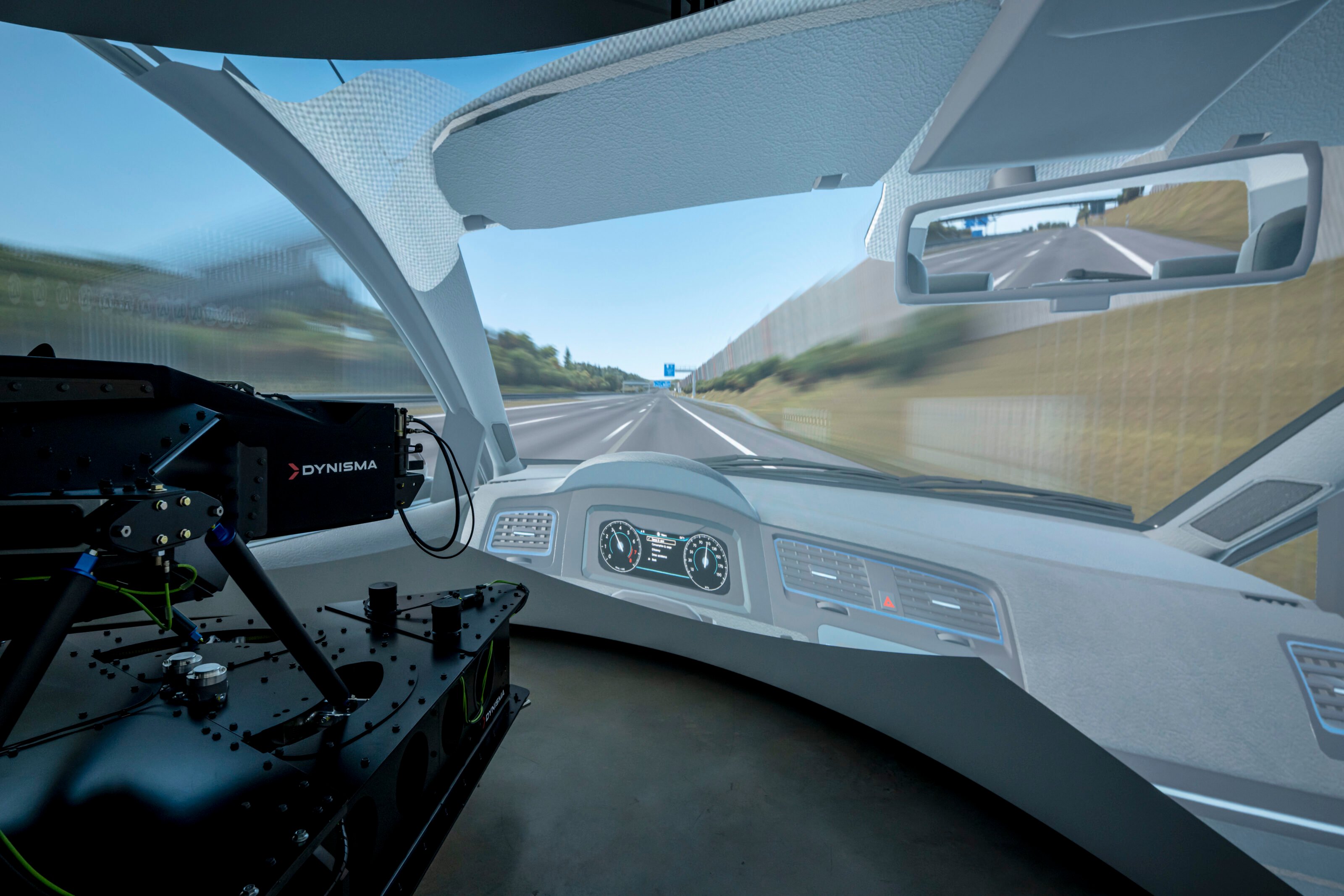
But there’s no question the Dynisma DMG-1 makes key elements of simulated vehicle motions and behaviours feel, well, virtually real. And that means big benefits for manufacturers as they can evaluate hundreds of different suspension set-ups, back-to-back, without spending time and money building physical test mules.
The road-car optimised version of the DMG-1 simulator, the Dynisma DMG 360X, has a platform with a greater range of vertical motions than the racing simulators and can also spin through 360 degrees.
Depending on spec, it costs between $3m and $8m. In the context of a typical new-vehicle development budget, that’s a rounding error.
Game on.
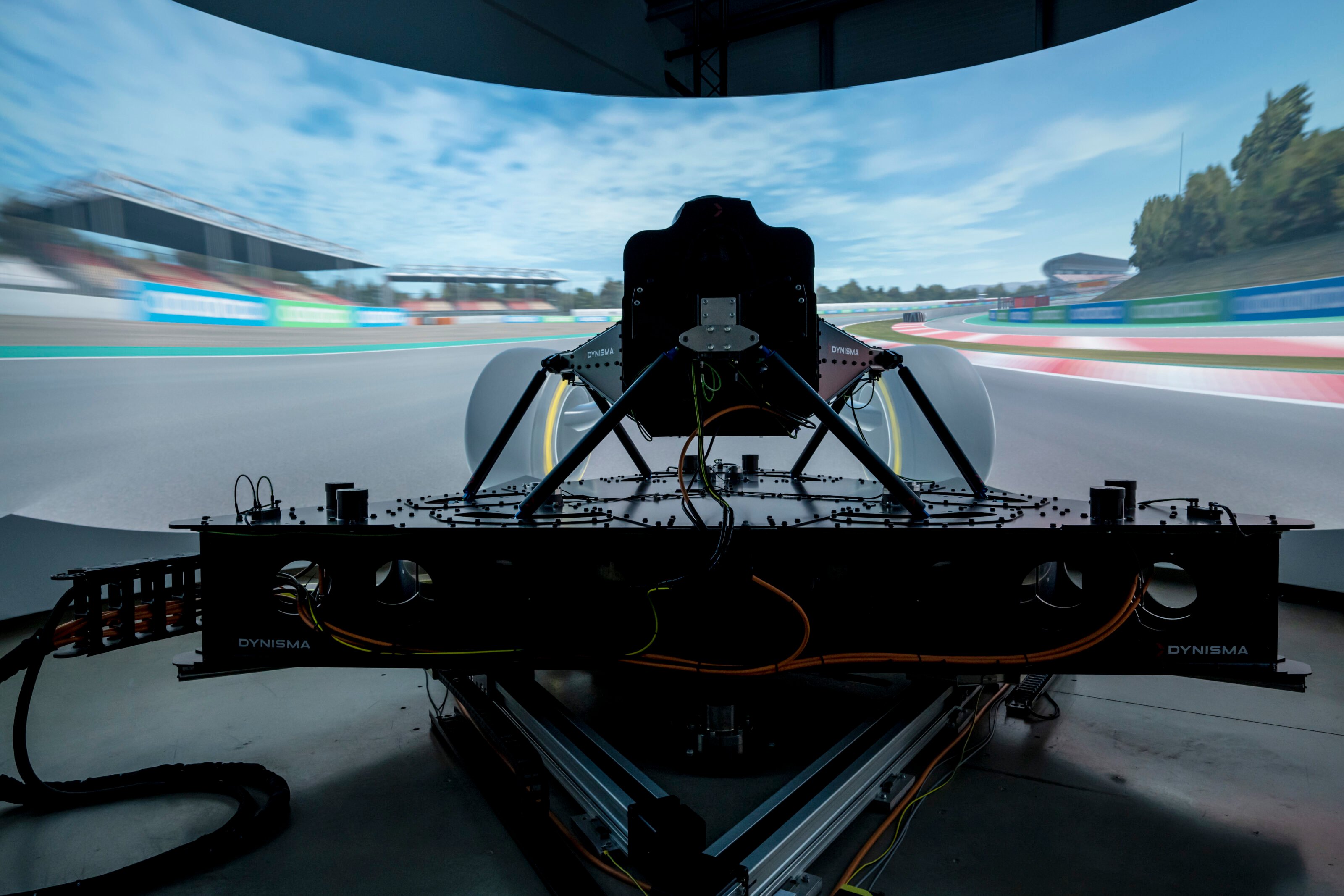
3 things you need to know
1. Bandwidth on the run
High bandwidth facilitates motion realism not possible on conventional motion platforms. With DMG technology delivering up to 100Hz, the driver is given far more information on the state of the car and track. Accurately transferring this information to the driver is how the DMG set-up delivers the most immersive driving experience.
2. Faster than you
With latency as low as 3-4 milliseconds, DMG claims instantaneous vehicle dynamics feedback. This means the driver can react faster to events such as oversteer and that visual stimuli such as kerb strikes are provided faster than even 240Hz projectors are able to update.
3. Make it your own
Any type of car or motorsport variation can be designed, built and integrated to the Dynisma simulator. This includes custom-built chassis/cockpits, replicas of existing cars, or prototypes.
It’s well accepted that cars are fashion items as much as a functional means of transport. And just like other fashionistas, cars also occasionally need a little Botox or lip-fillers, in order to maintain visual appeal as age creeps up.
It has long been common practice in the auto industry to give a car a minor ‘nip and tuck’ after a few years. Colloquially known as ‘face lifts’, the industry refers to these refreshes with terms like Mid-Cycle Upgrades.
Developing a new-generation vehicle architecture is a very expensive exercise. When Holden released the all-new VE model back in 2006, it was called the ‘Billion Dollar Baby’. Many years of development and hundreds of millions of dollars in tooling and manufacturing-plant investment go towards that eye-watering, up-front bill.
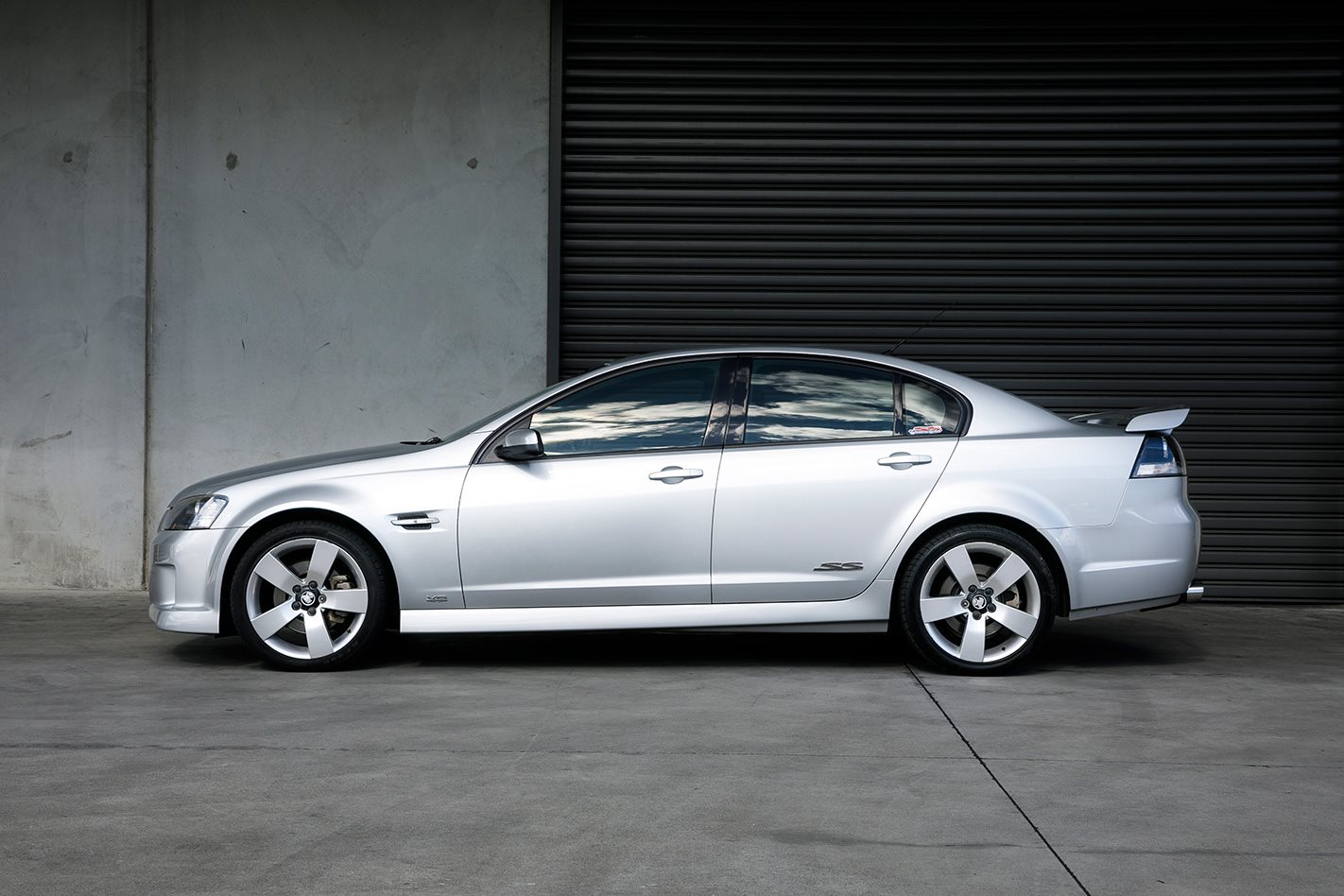
These costs need to be amortised over a number of years, so it’s not uncommon for a vehicle architecture to hang around for up to a decade. Along the way, the automotive landscape changes so it is imperative to remain agile and respond to market expectations.
There are a number of factors to consider when determining the timing and scope of a facelift. Aside from cosmetic visual changes, car makers also need to keep abreast with regulatory changes, which can often affect the appearance of the car. Consider the heightened awareness of pedestrian-protection, which has had a dramatic influence on vehicle design.
Equally important is changes in fuel consumption and emission standards, which occur on a regular basis. Powertrains need to be frequently upgraded, and regulation changes may not conveniently coincide with the original launch of the new model. As a side note, it will be interesting to watch how EVs will be regulated in the future.
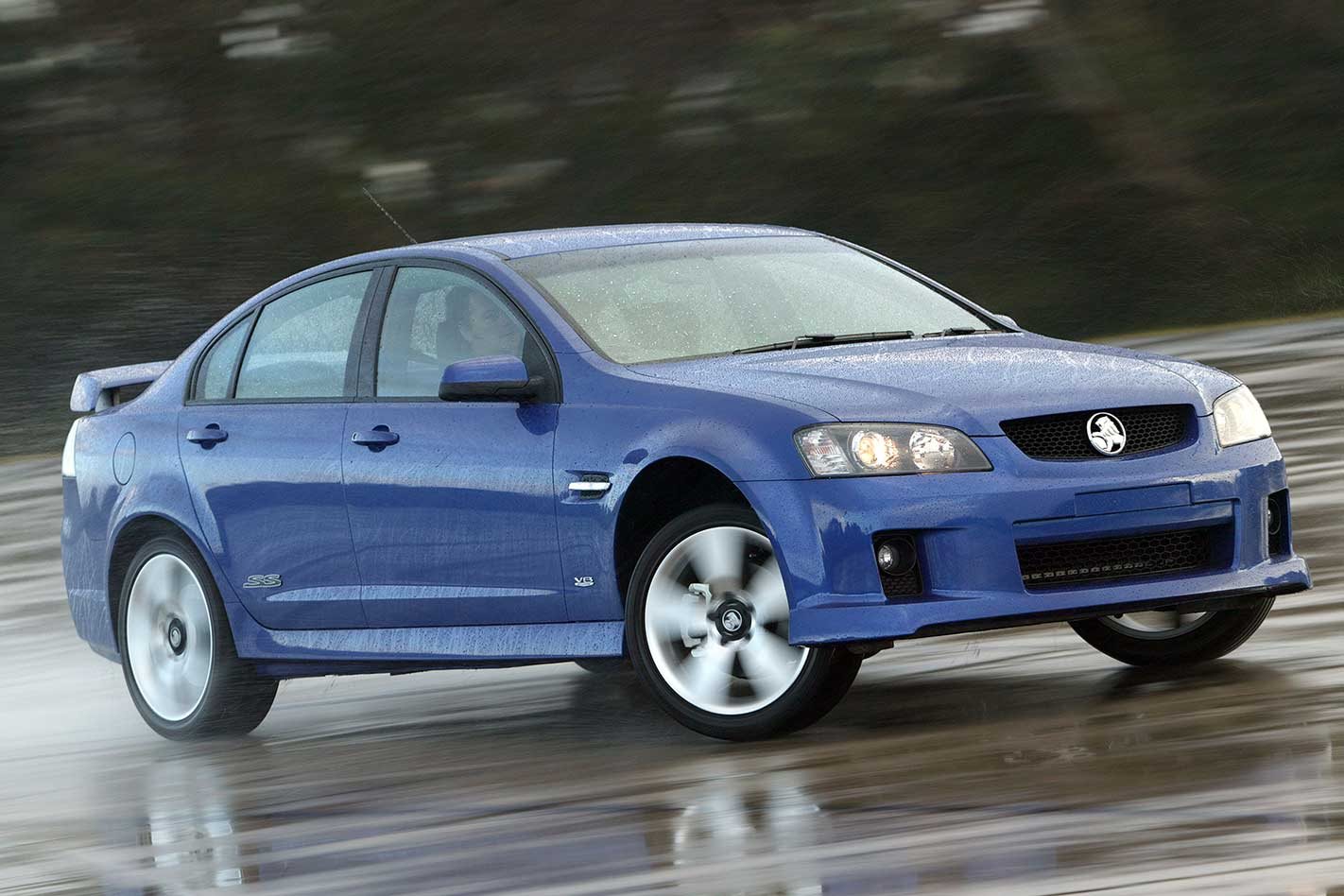
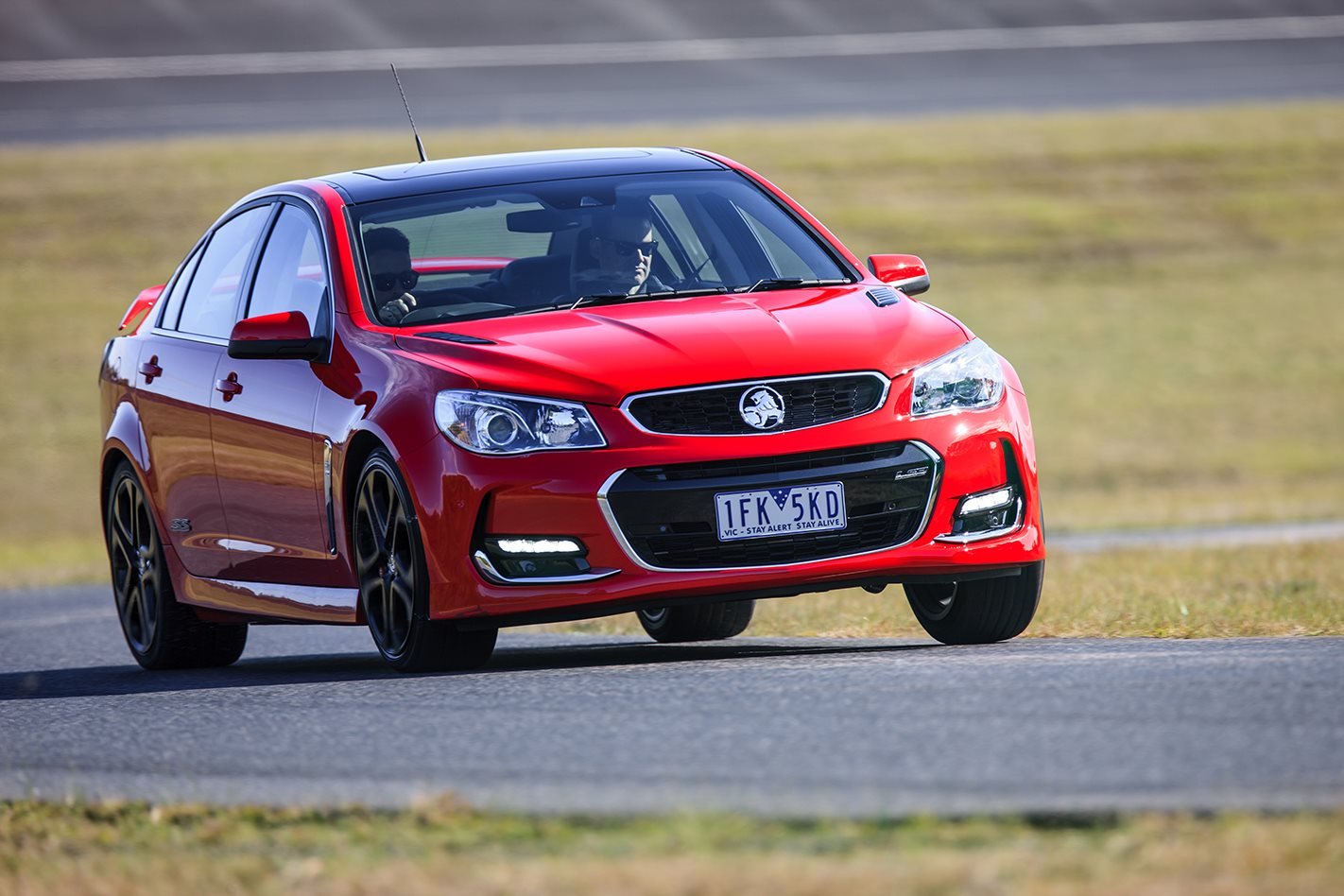
Similarly, general advances in new technology and features will occur during the lifespan of the model, so facelifts are midstream opportunities to roll in these new innovations. Another great example is the recent advances in infotainment technology. Interior design has been completely revised as flat screens have replaced conventional gauges and controls.
All of these factors play a part in the framing of a facelift and car makers aim to combine as many of these upgrades into one change, in order to create the biggest bang-for-buck. Ideally, the upgrade would occur about three years into the lifecycle and include styling changes, mechanical upgrades and new technologies.
Despite all of this, most people associate facelifts with styling changes. Interestingly, people can respond very differently to a facelift re-style. Some people will vehemently argue that the original model is always the best because it is the purest interpretation of the designer’s vision.
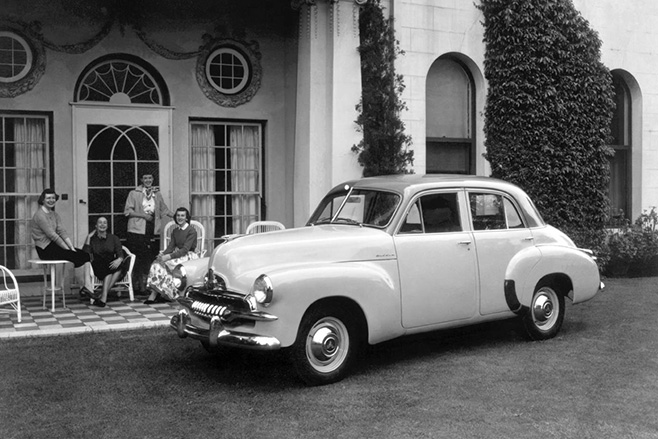
Certainly, there are many examples of botched facelifts. But there are equally many examples of minor restyles which have enhanced the original vision, sometimes with only small changes.
As I always say, styling is an entirely subjective topic so not everyone will agree with me, but I’d point to a number of Aussie facelifts which I believe were improvements on the original.
Going right back to early Holdens, I think the FJ enhanced the FX and the FC improved the FE. Similarly, I prefer the EH over the EJ, and the HR over the HD. However, I will concede the original HQ was cleaner than the subsequent models.
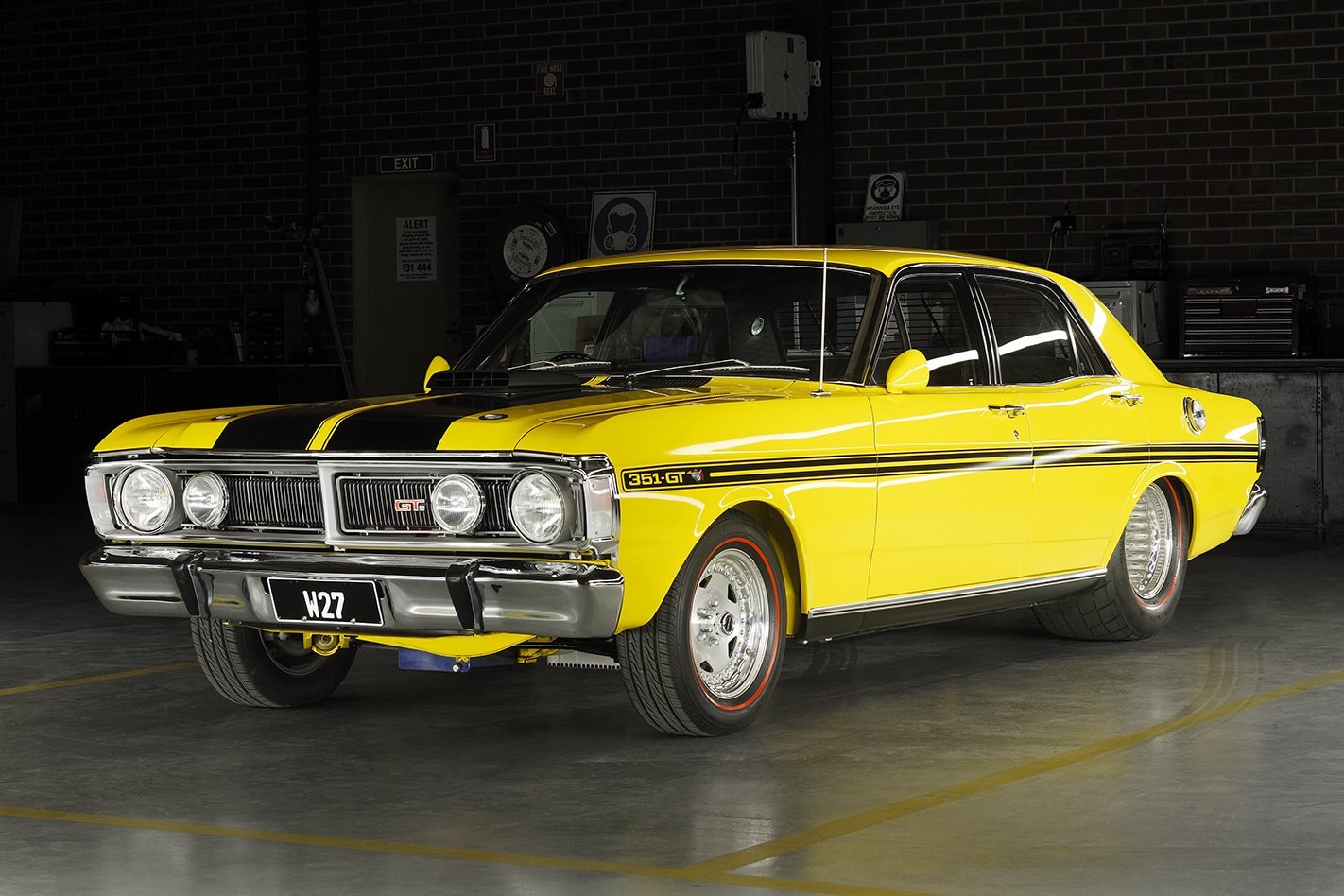
Ford’s XY Falcon was the most memorable of the XR, XT and XW predecessors and the XB Falcon added a degree of Ford boldness to the elegant XA, to name a few.
Australian car makers had always been adept at facelifts, in response to our unique circumstances. Our comparatively smaller volumes dictated that new-vehicle architectures had to endure for a longer period than overseas versions. It also meant that we had to derive multiple body-styles from the same architecture, like sedans, wagons, utilities and coupes.
The Aussie auto industry has a storied history of delivering solutions through clever thinking and pragmatic improvisation.
Richard Ferlazzo is the former GM Holden Design Director.
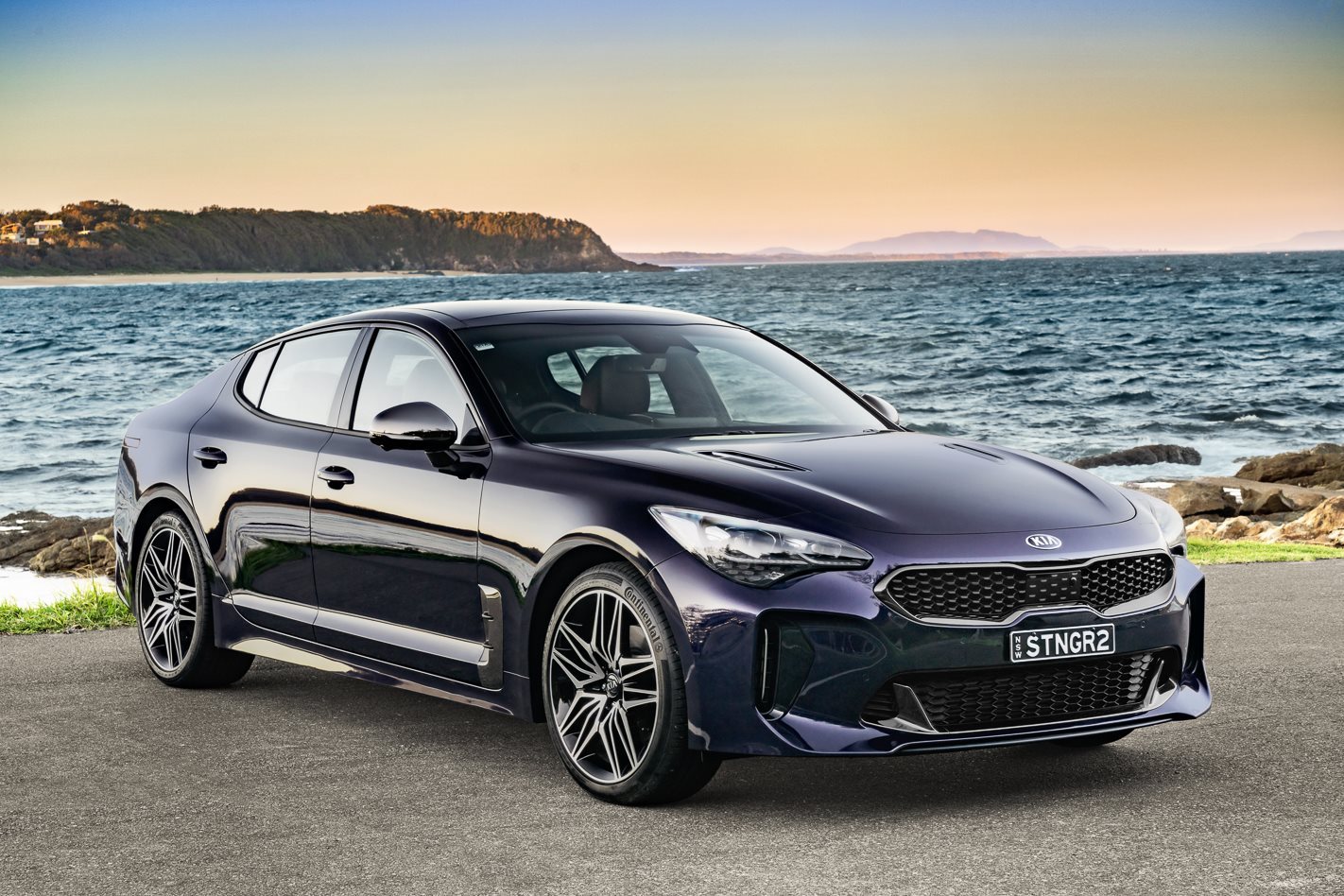
The Kia Stinger achieved record sales last month, surpassing 400 registrations for the first time since its 2017 debut.
Kia sold 428 units of its sporty sedan in May, according to official industry figures for the month. The Stinger outsold models such as the BMW 3 Series and Mercedes-Benz C-Class and was only 140 units shy of matching the Toyota Camry.
Kia Australia says improving supply of the Stinger was particularly strong in May. The result was a 163 per cent increase on May 2021.
After a modest 77 sales in January, Stinger new-car registrations exceeded 300 for the first time in February (314 units), followed by 236 and 316 sales in March and April, respectively.
Previously, the best Stinger month was June 2020 (247 units), while 223 sales (October 2017) was the best result in its debut year.
There has been consistent speculation that production of the current Stinger could end relatively prematurely, possibly by the end of 2022.
Kia Australia said it hopes the Stinger will continue for some time yet, especially given its current sales performance.
“If the Stinger is on borrowed time, we would have to find [approximately] 350 units a month [from elsewhere in our showroom],” said the company’s chief operating officer, Damien Meredith.
“We haven’t heard anything official from Korea about the end of [Stinger] production; the longer it goes on, the better it is for us as a company – it’s amazing, given the [supply crisis] circumstances, that this car is doing [about] 350 sales a month.”
The Stinger is averaging about 325 sales per month so far this year since February.
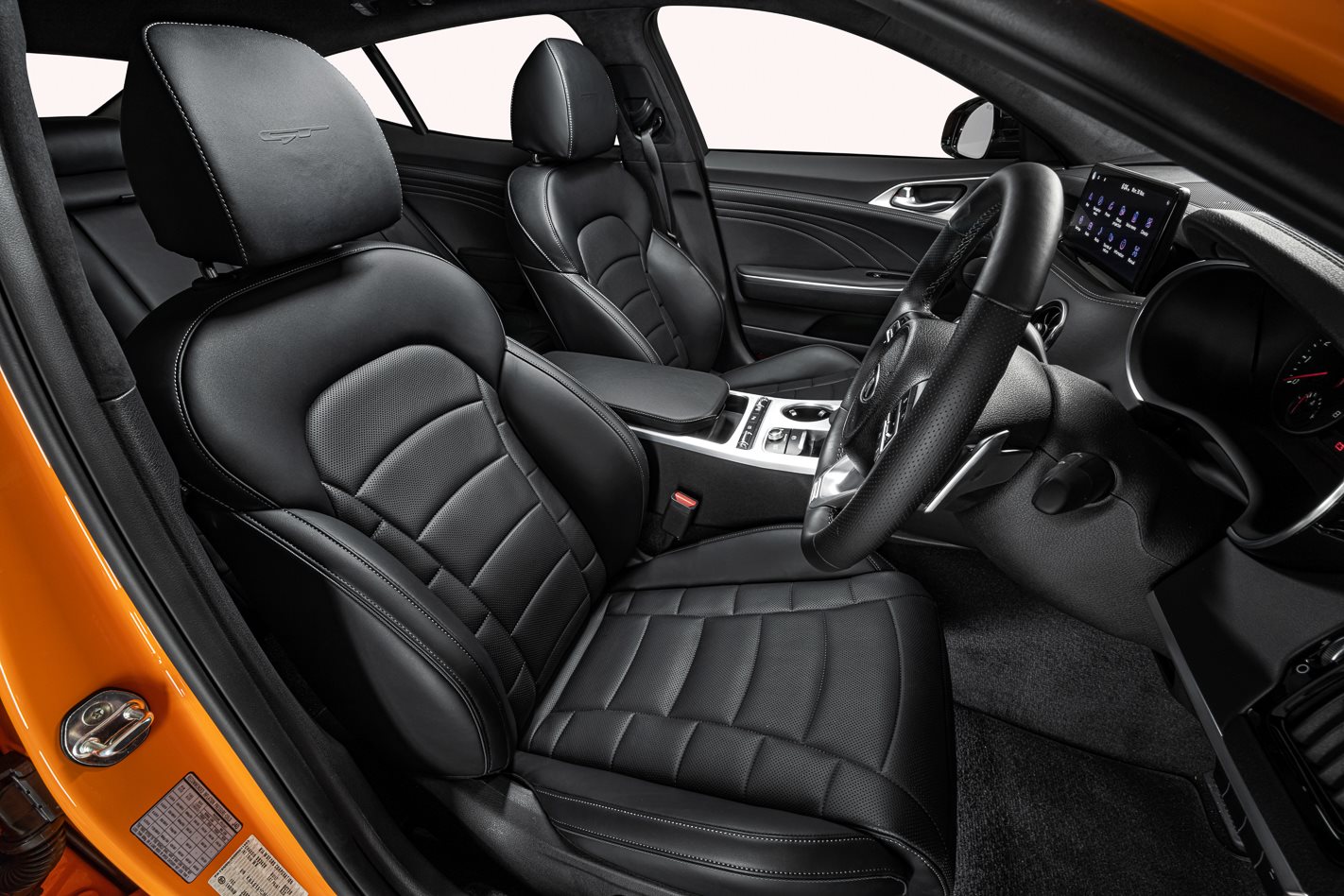
The Stinger’s success combined with increased sales of the Skoda Superb to make the Large Cars under $70,000 the biggest growth segment for May (counting segments featuring more than a single vehicle).
It also contributed to an industry first for Kia, which outsold Mazda and Hyundai to be the second most popular brand for the month, behind a dominant Toyota.
Solid, if unspectacular, growth aided Kia’s cause – with the company’s sales up three per cent compared to this time last year where major supply issues reduced Mazda’s sales over the same period by nearly 40 per cent.
The Stinger wasn’t Kia’s biggest growth model in May. The Niro hybrid/PHEV/EV jumped 178 per cent, albeit based on smaller volume of 100 units last month.
Year to date sales for the Stinger are now up 76 per cent.
UPDATE, June 6, 2022: Volkswagen ID.7 to become fully-electric Passat successor
The Volkswagen Passat’s electric replacement has been named, with reports suggesting the ID.7 Tourer will become VW’s EV wagon.
As reported by Electrifying.com, the Spaze Vission concept will spawn the next addition to Volkswagen’s electric line-up as the long-roof Passat’s successor, with trademark patents suggesting it will wear the ID.7 Tourer nameplace.
Although Volkswagen has been reducing its sedan offerings – dropping the four-door Passat in Australia last year – an ID.7 could still exist as the brand’s electric saloon option, with the ID. range covering everything from hatchbacks to SUVs and vans, such as the ID. Buzz.
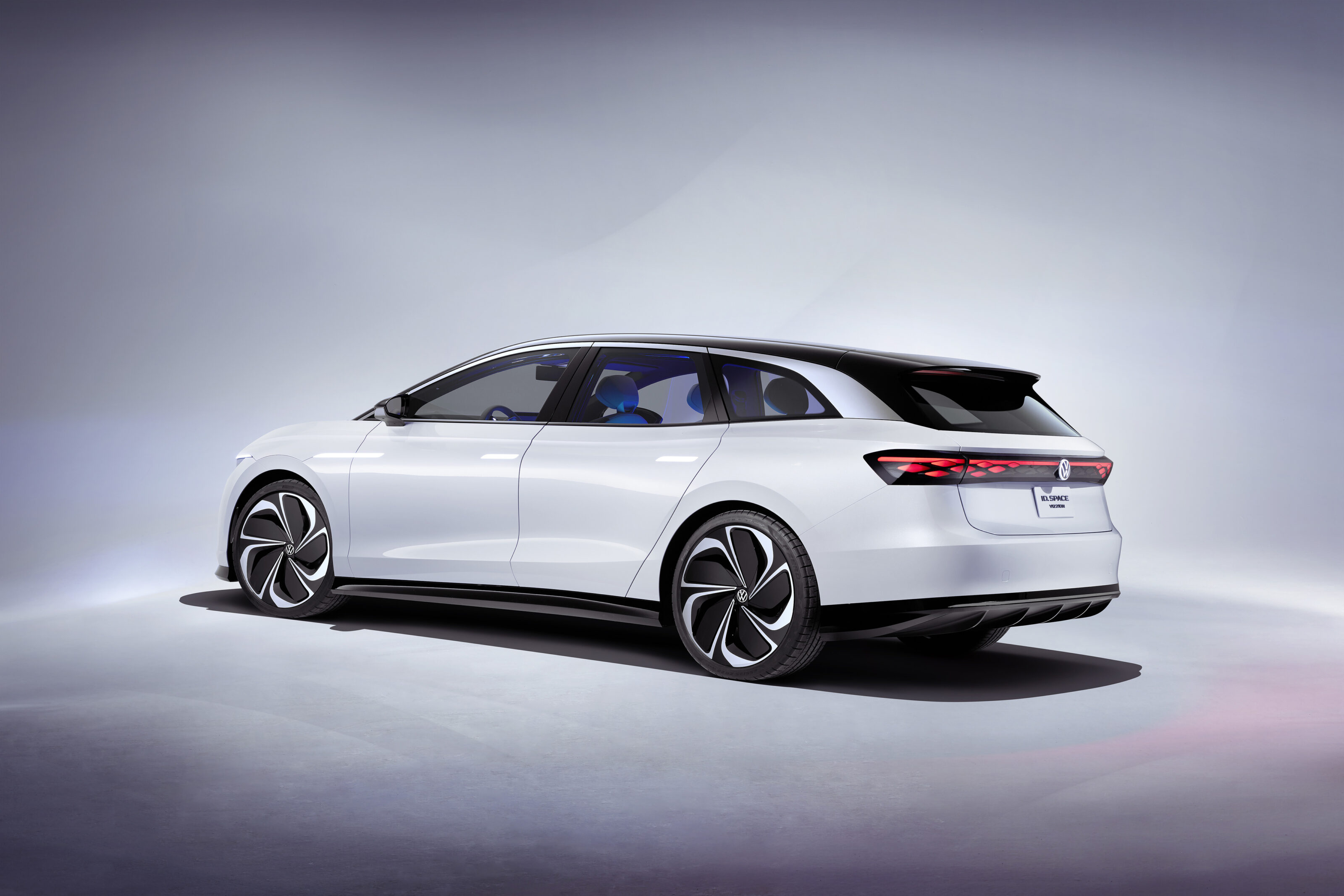
As with the rest of the ID. line-up, the ID.7 Tourer is expected to be underpinned by the MEB architecture, featuring a 77kWh battery pack and dual-motor, all-wheel-drive powertrains.
Read on below to find out what we know so far about the ID.7.
The story to here
March 17, 2022: Volkswagen teases Aero B as all-electric Passat successor
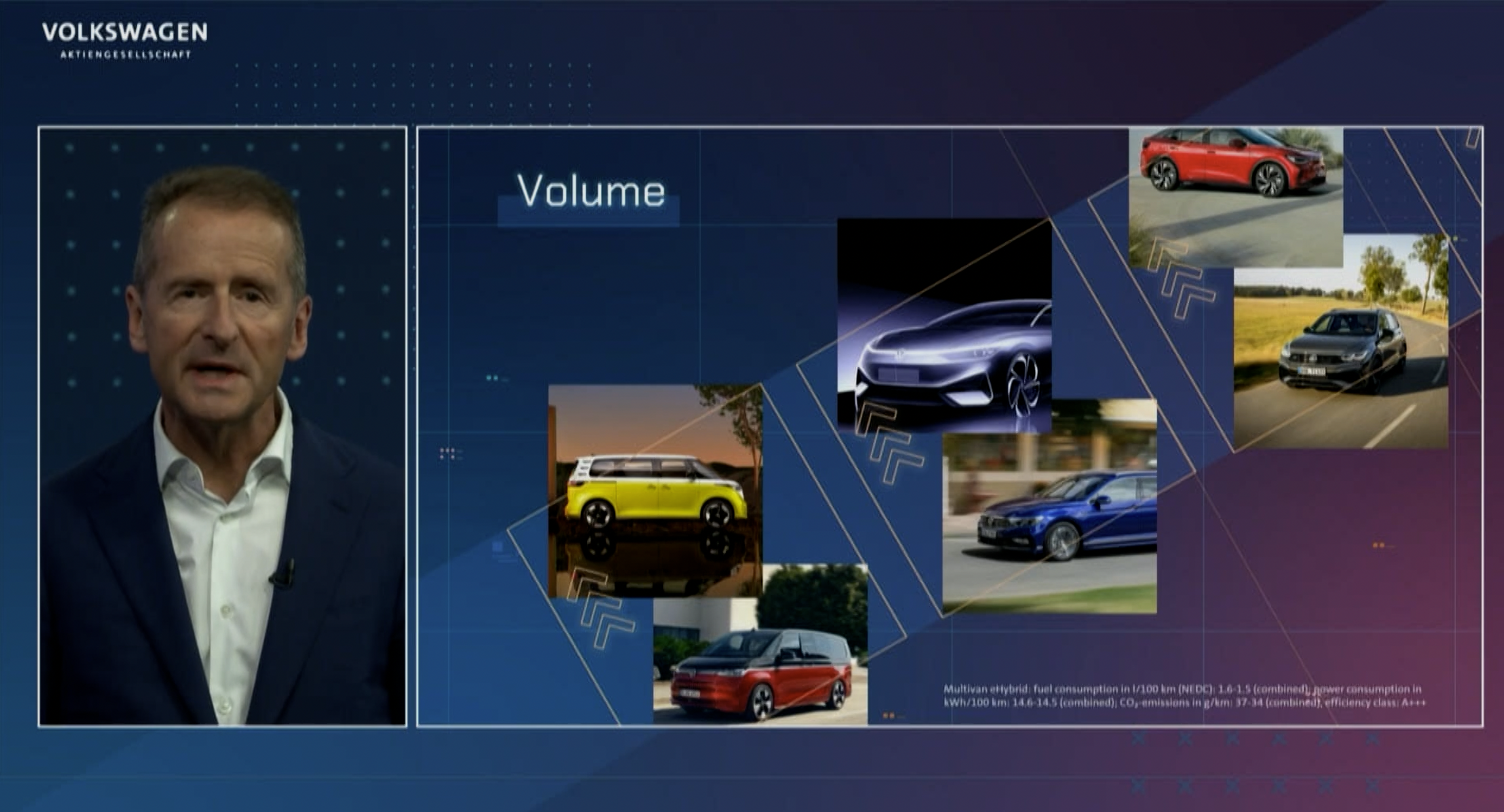
Volkswagen CEO Herbert Diess has teased what will become the successor to the Passat, VW’s first electric sedan.
During the brand’s annual press conference on Wednesday, Volkswagen’s chief executive showed off the company’s future plans regarding its electric vehicles and which current models they will succeed in the coming years.
It’s the first time we’ve seen any plans of what Diess calls the “Aero B”, a model set to replace the Passat as Volkswagen’s first fully-electric sedan offering, with a 2023 launch likely.
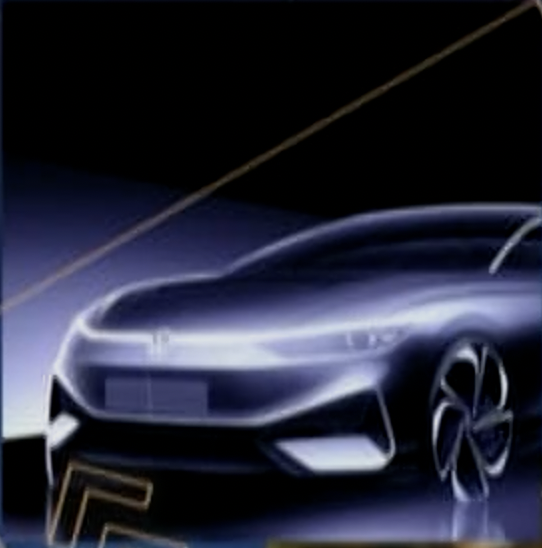
Although it could be renamed as ID Aero or some other alphanumeric combination to fit in with the existing ID range, the Aero B will likely continue to use the MEB architecture found across VW’s electric line-up.
Just like the ID. 4 and ID. 5, expect the Aero B to launch as a single-motor, rear-wheel drive model first, before dual-motor, all-wheel-drive variants join the fray later on – potentially wearing the GTX badge to denote its performance aspirations.
Styling cues from the existing ID models can already be seen with a wide LED light, which stretches across the front corners, in addition to the large lower air intakes and its black and chrome wheels.
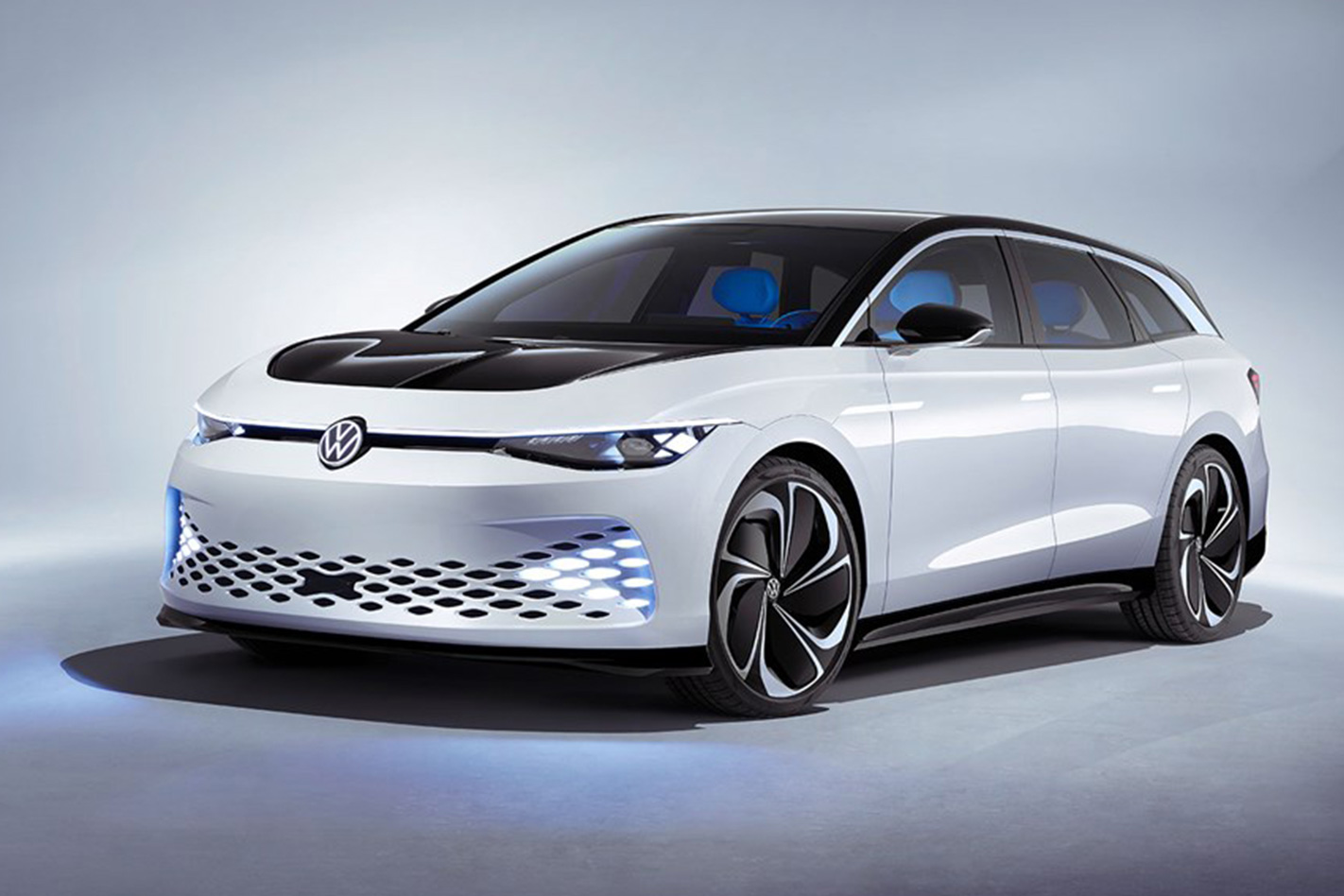
In fact, its front styling is quite similar to that of the ID Space Vizzion which was unveiled at the 2019 Los Angeles Motor Show, although the concept was a wagon rather than a four-door sedan.
In Australia, the current Passat has been reduced to being sold in wagon guise only, with low sales triggering Volkswagen to ditch the sedan and keep just the more expensive Arteon fastback as the German manufacturer’s sole mid-sized, four-door offering.
Australian car dealers have been told to diversify as consumer demands change, with the growing popularity of electric vehicles altering how businesses operate.
The next step for dealers – especially those selling EVs – could mean branching out into at-home solutions for buyers, with solar panels and battery packs potentially becoming the next up-sell items for consumers.
Speaking at the Australian Automotive Dealer Association’s Convention and Expo in Brisbane, Deloitte motor industry services director Andrew Moore said dealers need to be better educated to deal with EV-related topics, such as off-the-grid solutions, with a number of EVs featuring Vehicle-to-Grid (V2G) – which can be used to put their charge back into the home.
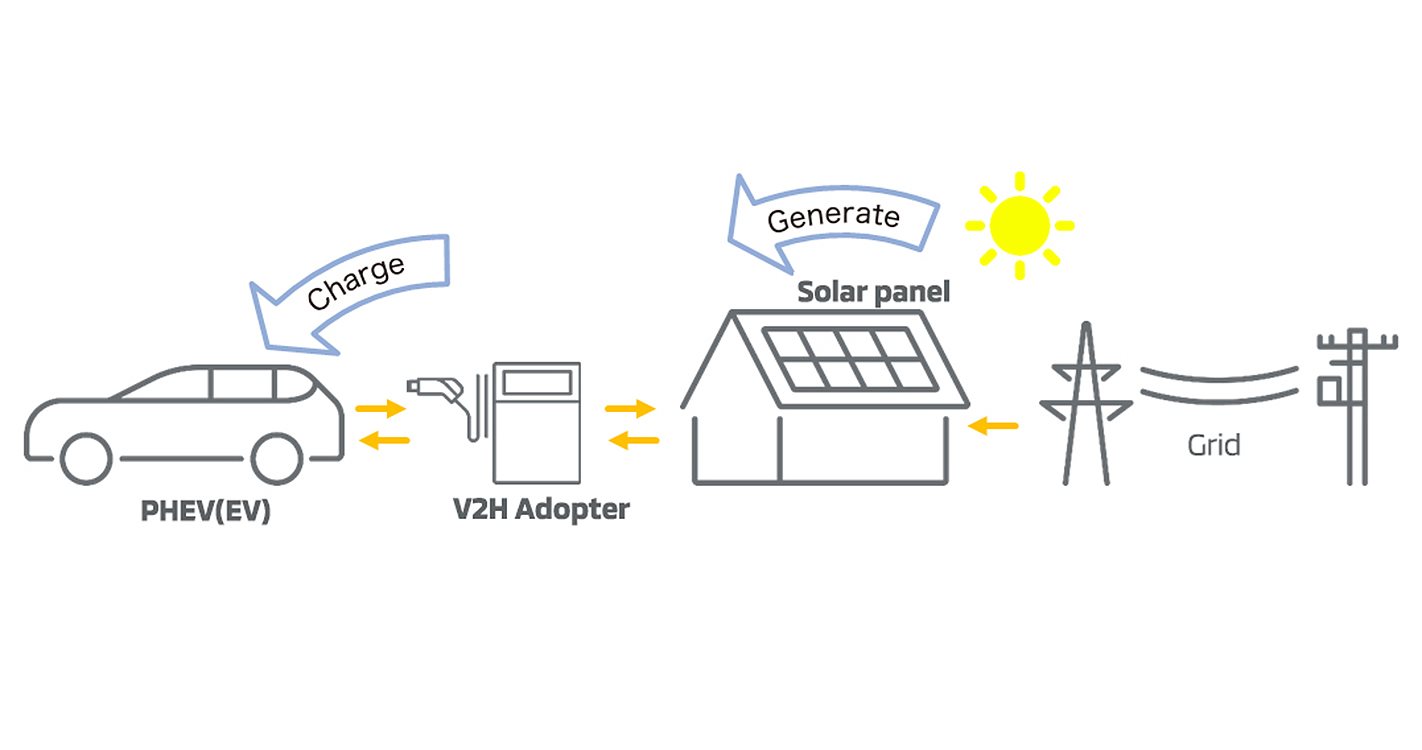
“A lot of consumers are walking into dealerships, asking a lot of questions about EVs and the dealers that aren’t selling EVs probably struggle with those answers,” said Moore.
“I think there’s an opportunity to educate dealers, more particularly sales staff and technicians, for the future to start to own that ecosystem a little bit.
“Perhaps the car dealership of the future is more about solar panels, charging stations, putting that all together – what you link in from a grid point of view. So perhaps there’s opportunities for dealers to own segments that they never had before, because previously it was just a car; now it’s a car plus a mobile battery plus an energy source.”
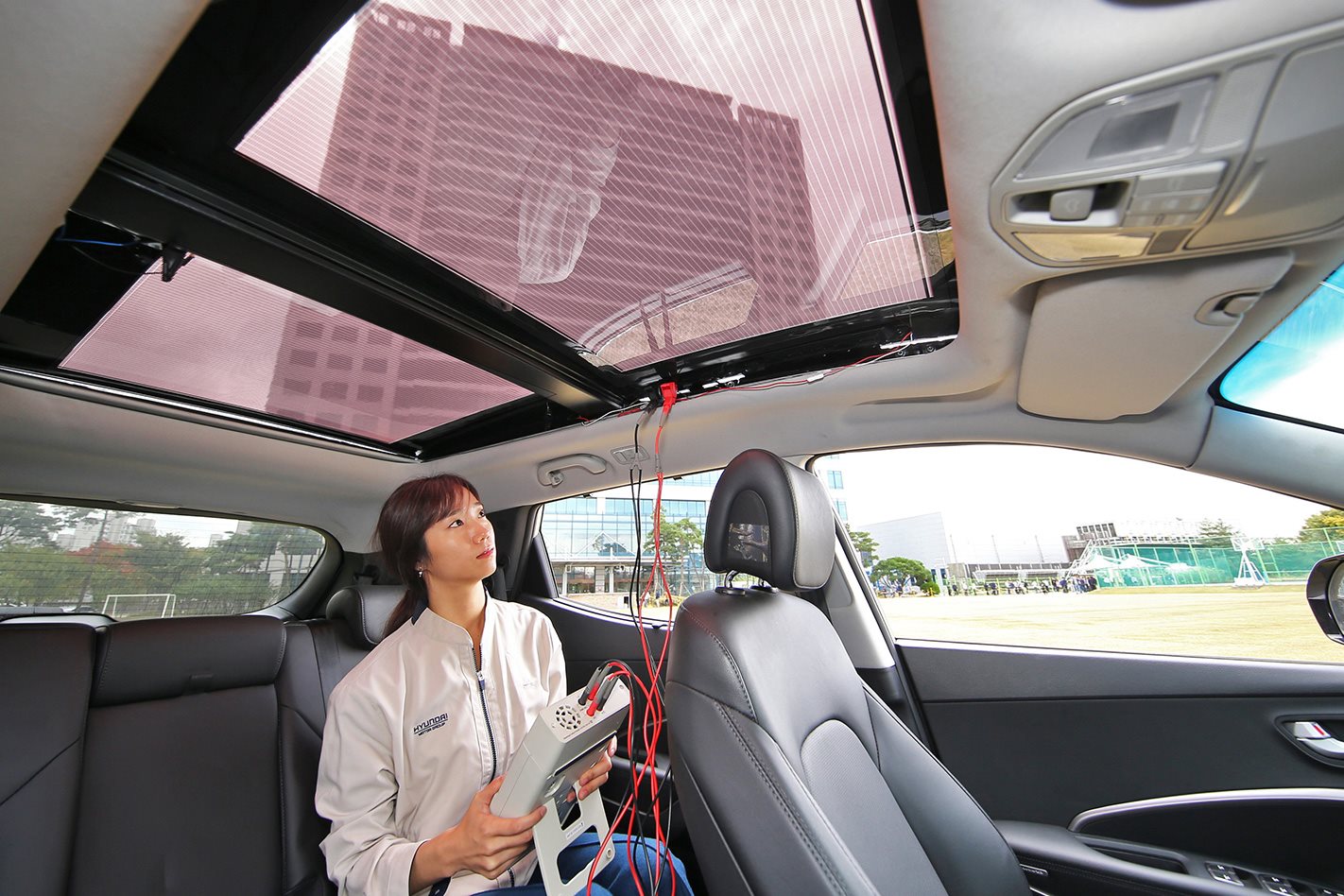
While Moore acknowledges the difficulty in preparing workshops for EVs, he reiterated the importance for educated dealers through his background as a director at both Suzuki Australia and Renault.
“Obviously there are challenges around setting up the workshop for EVs, so dealers are investing in that,” Moore added.
“My observation more from an OEM perspective is that the dealers which had a good flow of EV customers were able to become experts and start to talk about the infrastructure.”
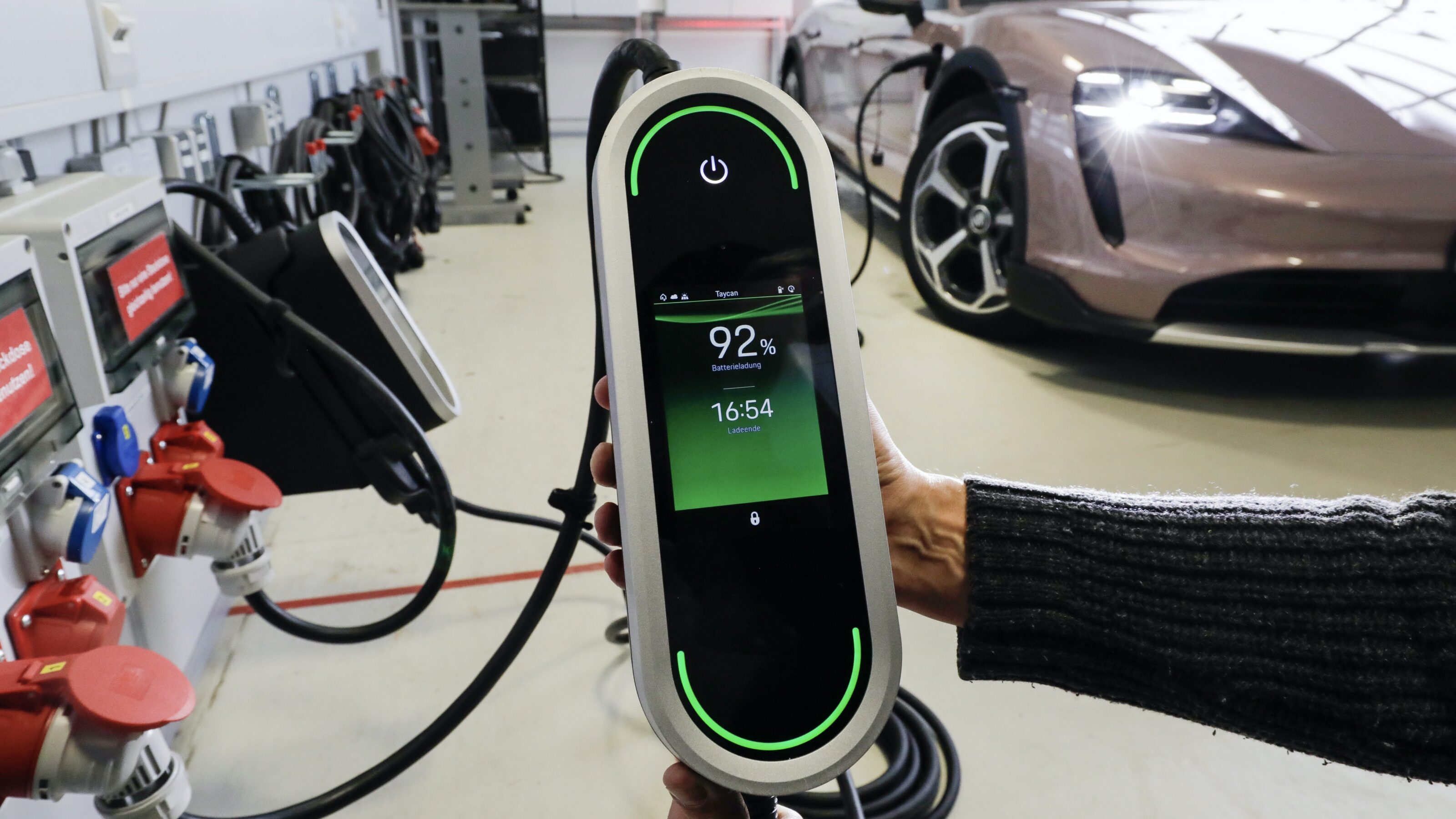
Volkswagen Group Australia’s Managing Director, Paul Sansom, believes the V2G technology will be “a game changer”, with the prospect of the Group’s technicians expanding to service more than just vehicles presenting itself as an exciting challenge.
“This is the game changer for Australia, for everywhere, when the car does become the solar-powered source of battery storage,” said Sansom.
“When you’ve created your own home, your own ecosystem it’s great for you personally, and it’s great for the grid, it’s great for the environment.
“Our mechanics, who work on these highly sophisticated products, are trained and we’re ready. The beauty of being a group is that everything we learn in Audi [with E-Tron], we’re now rolling out across the rest of our group brands for training purposes.
“We’ve invested in a new training facility in Melbourne to ensure that we’ve got the right facilities because it’s different to train a technician for an electric vehicle. So we’re ready, but it’s actually taking it a step further and thinking what’s beyond just servicing the electric vehicle.”
Snapshot
- Fiat Chrysler Automobiles (now Stellantis) has plead guilty to emissions cheating
- Manufacturer was first charged in 2017
- Australian models and customers unaffected
June 6: Firm pleads guilty in US
Fiat Chrysler Automobiles (FCA) has pleaded guilty to cheating emissions in the US, resulting in a fine of US$96 million (AU$133.1m) and having to forfeit gains to the tune of US$203.6m (AU$282.2m).
The American arm of automotive conglomerate Stellantis reached an agreement with the US Attorney’s office on Friday, following the Department of Justice’s criminal investigation which covered 101,482 vehicles made between 2014 and 2016 fitted with the second generation EcoDiesel V6 engine.
Though the agreement is still subject to the Federal Court’s approval, all consumer claims are said to be settled, so no further recalls are required.
Read on for more details in our original story below.
The story to here
May 26: Stellantis looking to make plea deal
The United States division of Stellantis, Fiat Chrysler Automobiles (FCA), will reportedly pay around US$300 million (AU$423m) in penalties after reaching a plea deal to resolve a multi-year emissions fraud probe.
As reported by Reuters, the car maker is set to plead guilty after being charged with criminal conspiracy relating to its evasion of emissions requirements for over 100,000 diesel-powered Jeep and Ram vehicles in North America.
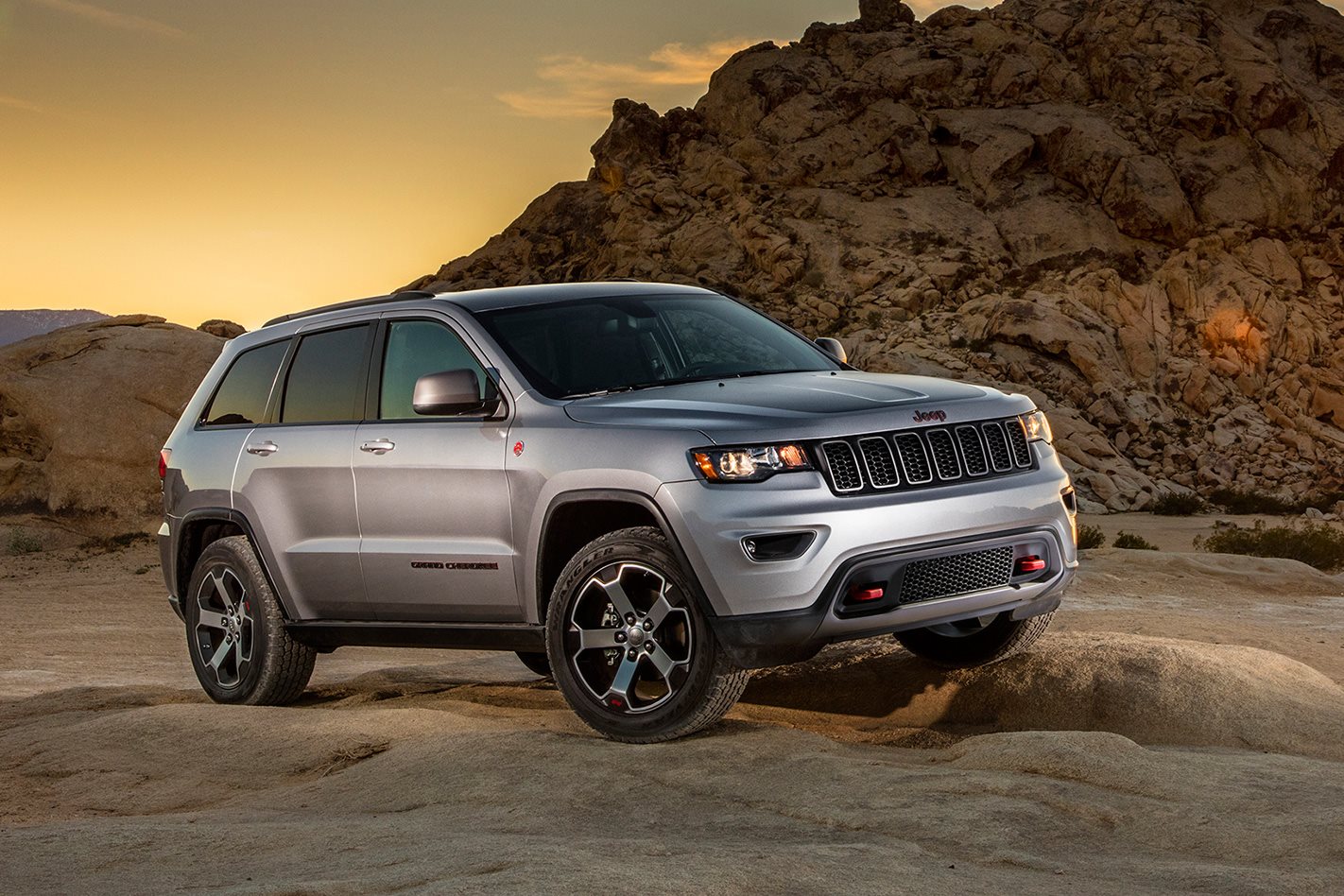
It’s understood the 3.0-litre V6 ‘EcoDiesel’ engines fitted to Jeep’s Grand Cherokee SUV and Ram’s 1500 pick-up between 2014 to 2016 were equipped with software which allowed the vehicles to pass stringent emissions tests, despite violating clean-air laws in real-world driving.
The investigation and subsequent processes have taken over five years to reach this point, with FCA having first been accused by the US Environmental Protection Agency of using hidden software in January 2017.
FCA was sued later that year by the US Government’s Department of Justice over the EPA’s claim, with the first charges handed down in 2019 – resulting in the manufacturer having to pay roughly US$800 million (AU$1.1billion) in a raft of fines, recalls and customer compensation settlements.
Bosch – suppliers of the engine control units (ECU) for the vehicles – was also made to pay customers US$27.5m (A$38m) in the settlement for its part, while also agreeing to hand over USD $103.7million (A$144m) to 50 jurisdictions.
While the Grand Cherokee was Jeep’s best-selling vehicle in Australia between 2014 and 2016, the US case didn’t affect local examples of the SUV.
