
Snapshot
- Lamborghini to pursue internal combustion engines past 2030
- Entire line-up to be electrified by 2024
- European Union set to ban ICEs from 2035
The transition away from internal combustion engines and towards total electrification seems inevitable for a majority of manufacturers, but for Lamborghini the fight isn’t over yet.
As the European Union is set to ban the production of ICEs from 2035, a large number of manufacturers have started to electrify their line-ups, including Lamborghini – which plans for its entire model range to become plug-in hybrid by 2024.
However, its move to a fully-electric fleet hasn’t yet been confirmed, with CEO Stephan Winkelmann now saying the firm plans to keep going with ICE production beyond 2030 – just five years before the fossil-fuelled powerplant is outlawed.
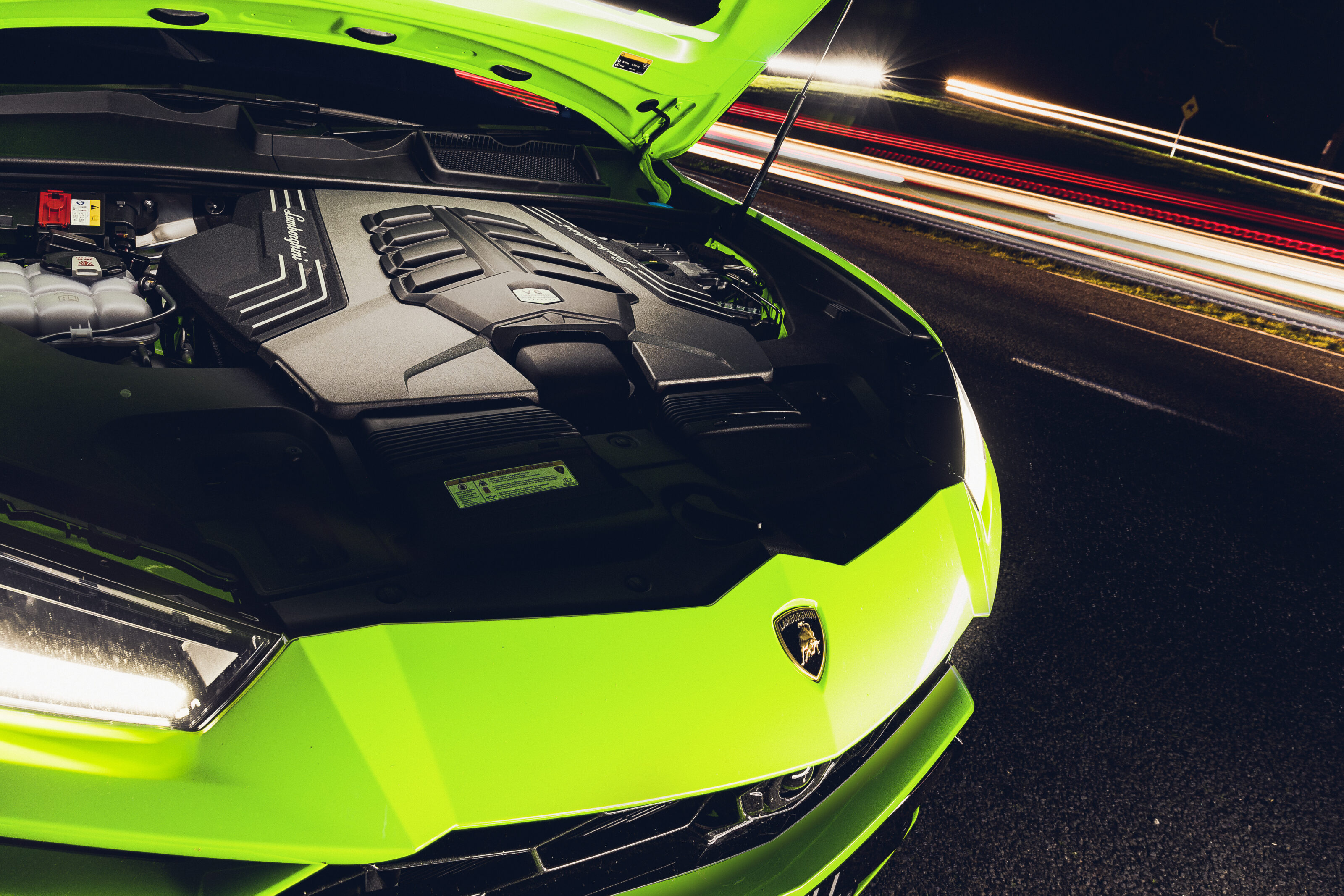
In an interview with Welt am Sonntag, Winkelmann said the development fuels could keep ICEs alive, although an all-electric Lamborghini is still in the pipeline.
“One possibility would be to keep the combustion engines alive with synthetic petrol,” said Winkelmann.
“After hybridisation, we will wait and see whether it will be possible to offer vehicles with a combustion engine beyond 2030.
“We assume that our customers will accept these [electric] cars – if the promise is kept that the performance of the vehicles is better than that of the previous generation.
“The combination with the electric drive will give our vehicles more power, coupled with a better CO2 balance.”

Should Lamborghini decide to accelerate its plans to introduce an all-electric model, it could borrow the J1 or Premium Platform Electric (PPE) architecture from its fellow Volkswagen Group brands, Audi and Porsche.
As reported in September 2021, the Italian Government is also pushing the European Union to be more lenient with its ban on ICE production, asking for exemptions to be given to manufacturers such as Lamborghini, Ferrari and Pagani.
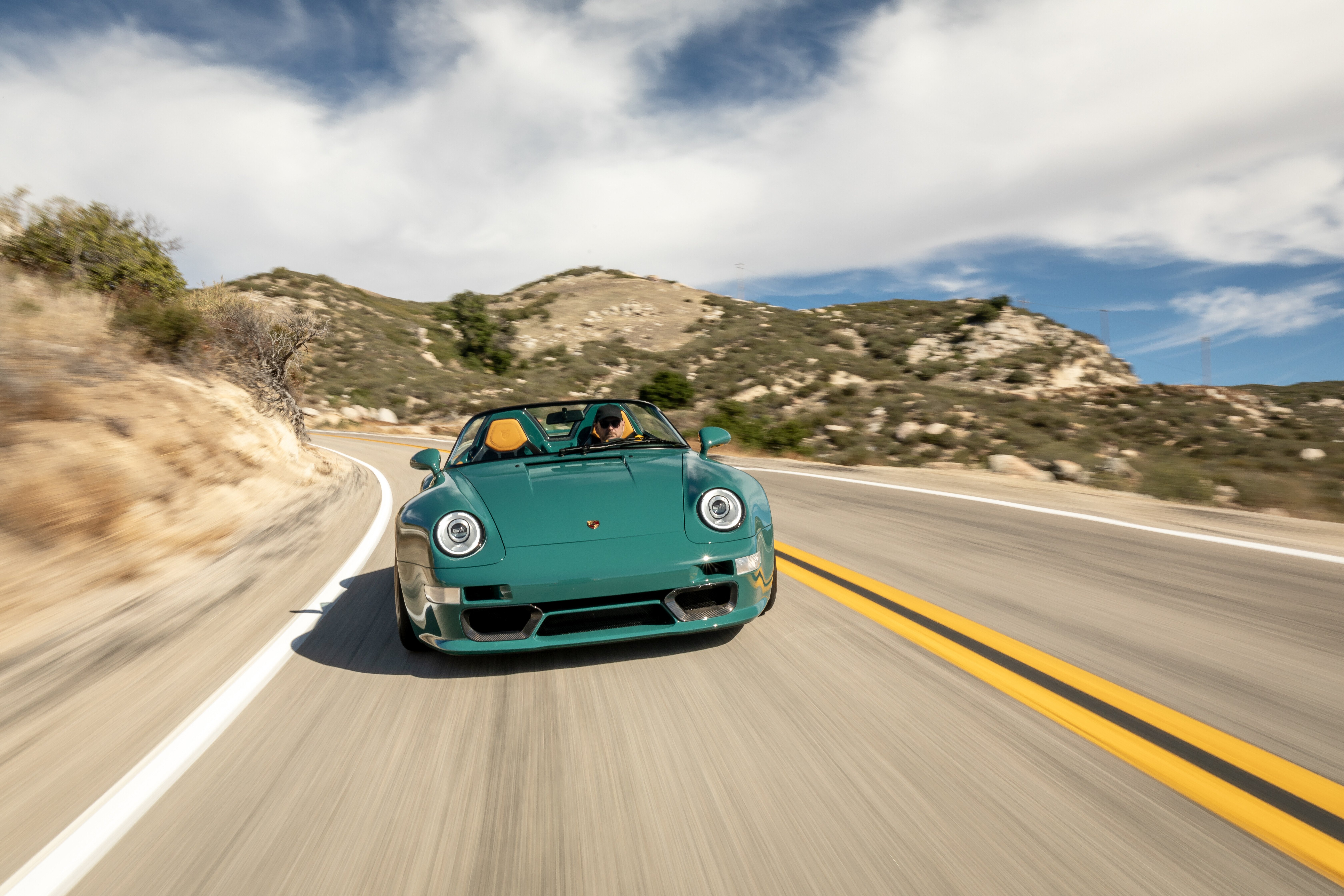
We’re on route 243, climbing out of Banning, up Mt San Jacinto before heading back over to Palm Springs. It’s warm, even for California, the unseasonable heat particularly welcome today, because, besides the rakish windscreen borrowed from a 964 Speedster, there’s no concessions to weather protection with the car I’m in. I first visited Gunther Werks back in 2017 to drive its 400R. That prototype car became the Coupe, a car that Gunther Werks is just now completing its 25-production run of, with each model individually commissioned by its exacting customers. This is their next model, the Speedster.
Like the Coupe the thinking behind the Speedster is a ‘what if?’ question. Initially proposed by Gunther Werks owner, Peter Nam, specifically, Nam asked what if Porsche continued to build air-cooled 911s and applied the same thinking that it does to the modern day GT3? The answer is the best 993 I’ve ever driven, though this Speedster’s making me re-consider that. Like the Coupe, the Speedster will be built in a run of just 25, and if you’re interested, you’re too late. It’s sold out. No mean feat for a car costing in excess of $850,000 if you’ve selected a few options, as, I’m told, everyone does.
Technically, and unsurprisingly, it’s nearly identical to its Coupe relation, though the body’s required a lot more strengthening, because while the 993 cabriolet was reasonably stiff back when it was launched, things have moved on a bit since then, and the Speedster’s packing a bit more punch.
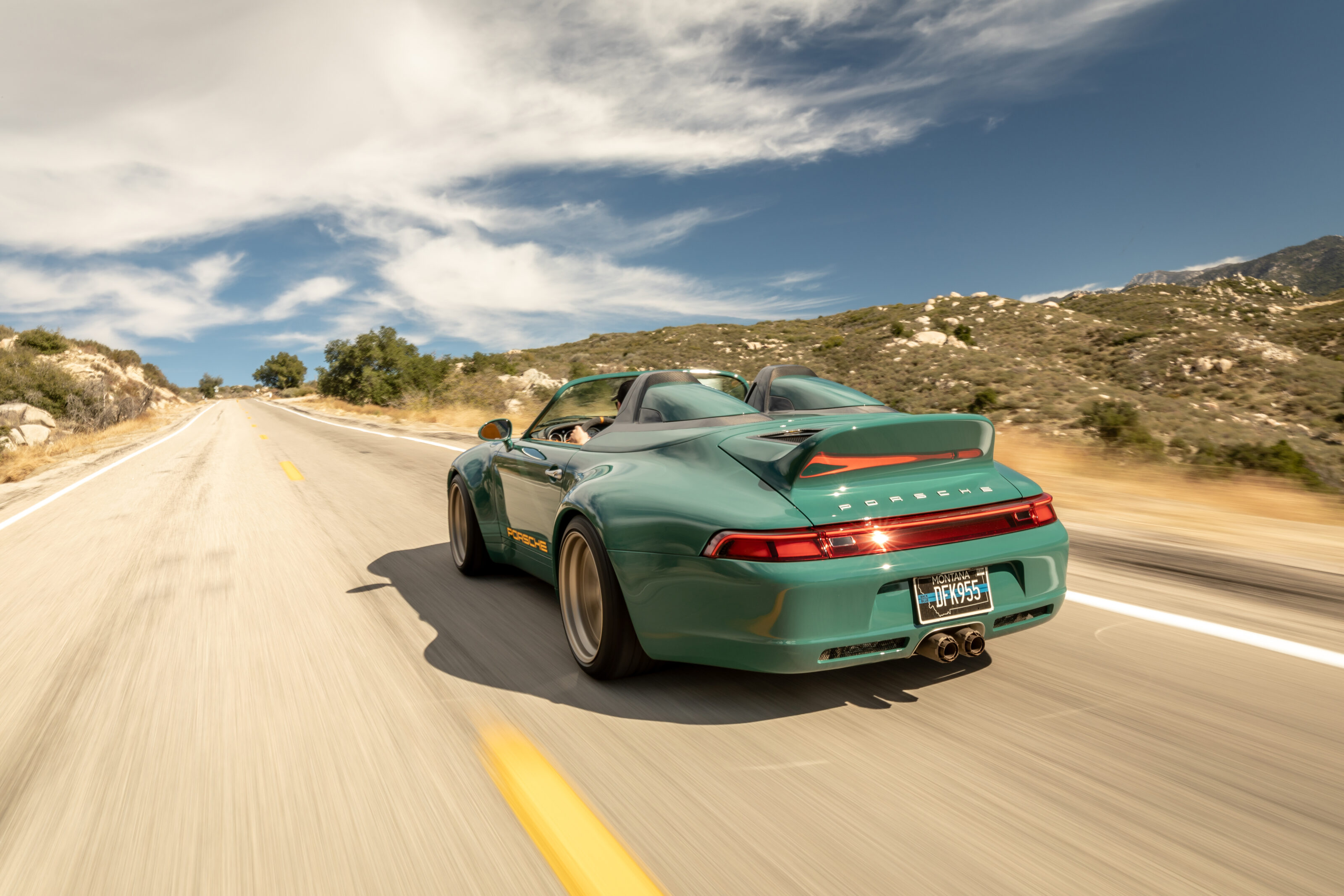
Gunther Werks approached Trevor Harris to give the Speedster the stiffness required to exploit the changes they make to it. Harris’s CV covers designing cars to compete in everything from Pikes Peak to F1, so he’s usefully qualified. His input to the Speedster gives it a torsional stiffness figure that’s 50 per cent greater than that of a stock 993 coupe.
To enable that he’s double walled the sills, while there’s also a latticework of strengthening, as well as rollover protection in that clamshell area covering where the rear seats once were in the donor Cabriolet’s body. The entire body is built from carbon fibre, which means even with all the additional stiffening, the Speedster weighs in at just 1256kg.
This stiff skeleton has allowed Gunther Werks’ chassis guru, Cary Eisenlohr, of Eisenlohr Racing Products, a hugely stable platform to hang the suspension off. Here, on the Speedster prototype, that means Gunther Werks optional JRZ electronic set-up.
You’ll not have missed the wider front and rear, that width increase applied to give a square track. The tyres underneath those carbon fibre wings are huge, with the lightweight 18-inch front wheels measuring 11-inches wide, shod with 295/30/18 Continental ExtremeContact Sport tyre.
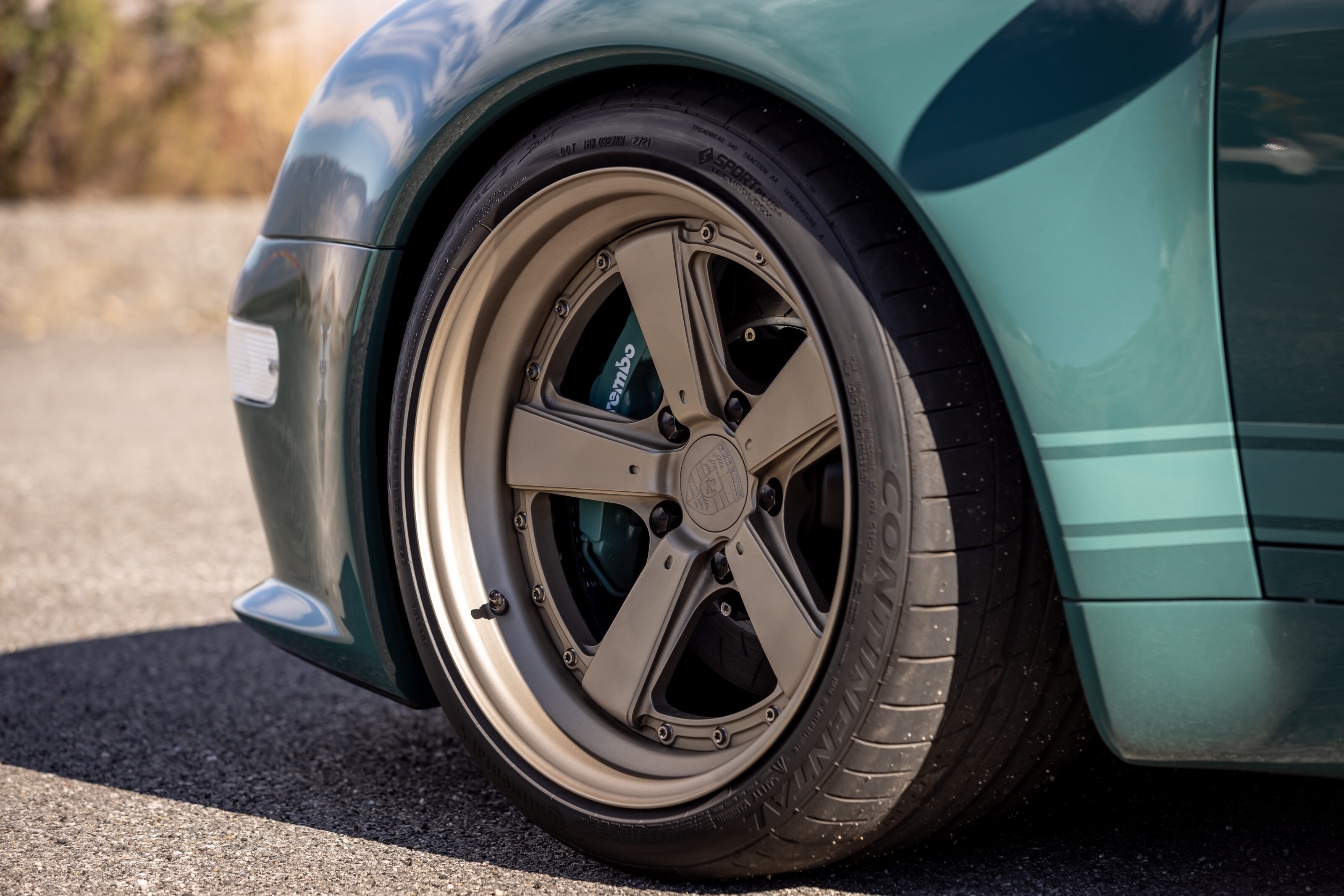
The rear increases that to 13-inches wide, with a 335/30/18 tyre. The wheels are the Gunther Werks T-6061 forged aluminium three-piece rim, though there’s the option of a centre lock forged magnesium wheel with Dymag carbon-fibre barrels, which drop the unsprung weight of each wheel unit in half.
Not that there’s any issue with the ride quality and precision as it’s currently specified, the worry that such a sizeable contact patch of rubber would translate to a busy ride is simply not the case. Those electronic dampers undoubtedly help, because despite the ability to pick between a default, or comfort or sport modes, the system constantly monitors what’s going on, at a rate of 1000 times a second, to balance ride comfort along with taut responsiveness. It does so very convincingly indeed.
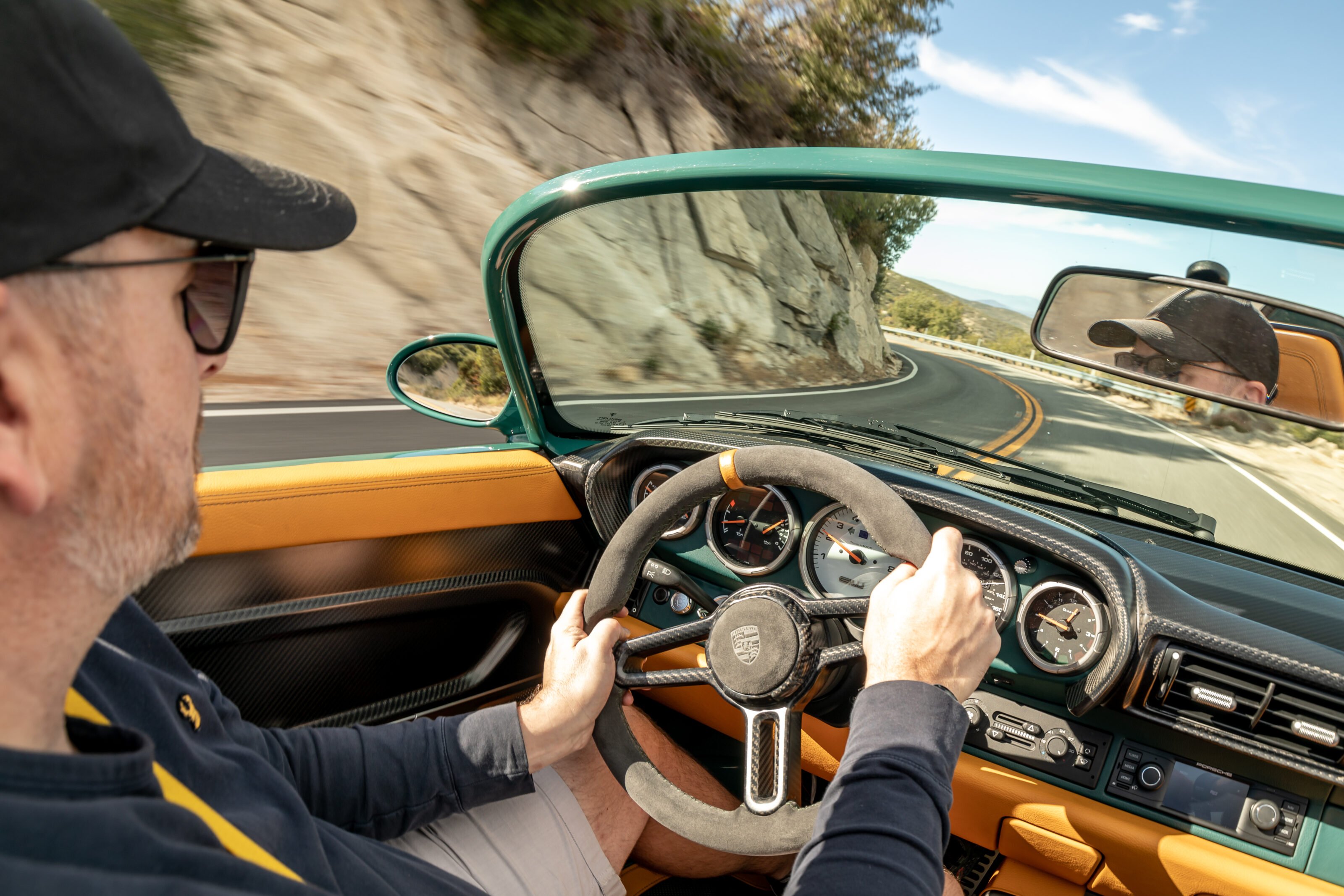
There’s masses of mechanical grip, the Speedster’s square stance making for a quick, accurate front axle. Turn-in precision is, with the exception of its Coupe relation, unlike any air-cooled 911 I’ve ever driven before. The steering response isn’t just immediate in its movement, but fine in its weighting, with detailed information coming to your hands via the beautifully contoured hollow carbon fibre steering wheel that’s Gunther Werks’ own design. It also looks fantastic.
The way the front end responds is echoed in the way what’s under the duck-tailed engine cover out back conducts itself. Again, Nam’s cherry-picked expertise, with Jeff Gamroth from Rothsport Racing being responsible for the air-cooled flat-six. Enlarged to 4.0-litres, it’s an absolute masterpiece, the build using the original casing, but featuring custom internals and auxiliaries specified, and in many cases entirely designed, by Gamroth himself.
There are billet barrels and crank, Mahle pistons and forged conrods, equal length stainless steel headers, coil on plug ignition and a GT3 plenum, with a fuel injection system and throttle bodies of Gamroth’s own design. Even the cooling fan, which looks all but identical to a stock 911, is completely bespoke, having been redesigned by engineers whose day job is designing jet turbine blades.
Their input not just significantly improved airflow, but did so while reducing weight, drag and power usage. Further, sizeable, reductions in parasitic losses have been made in areas such as the power steering, with the fitment of an electric pump for the hydraulic system. It not only uses a fraction of the power of the stock set-up, but is significantly lighter, too.
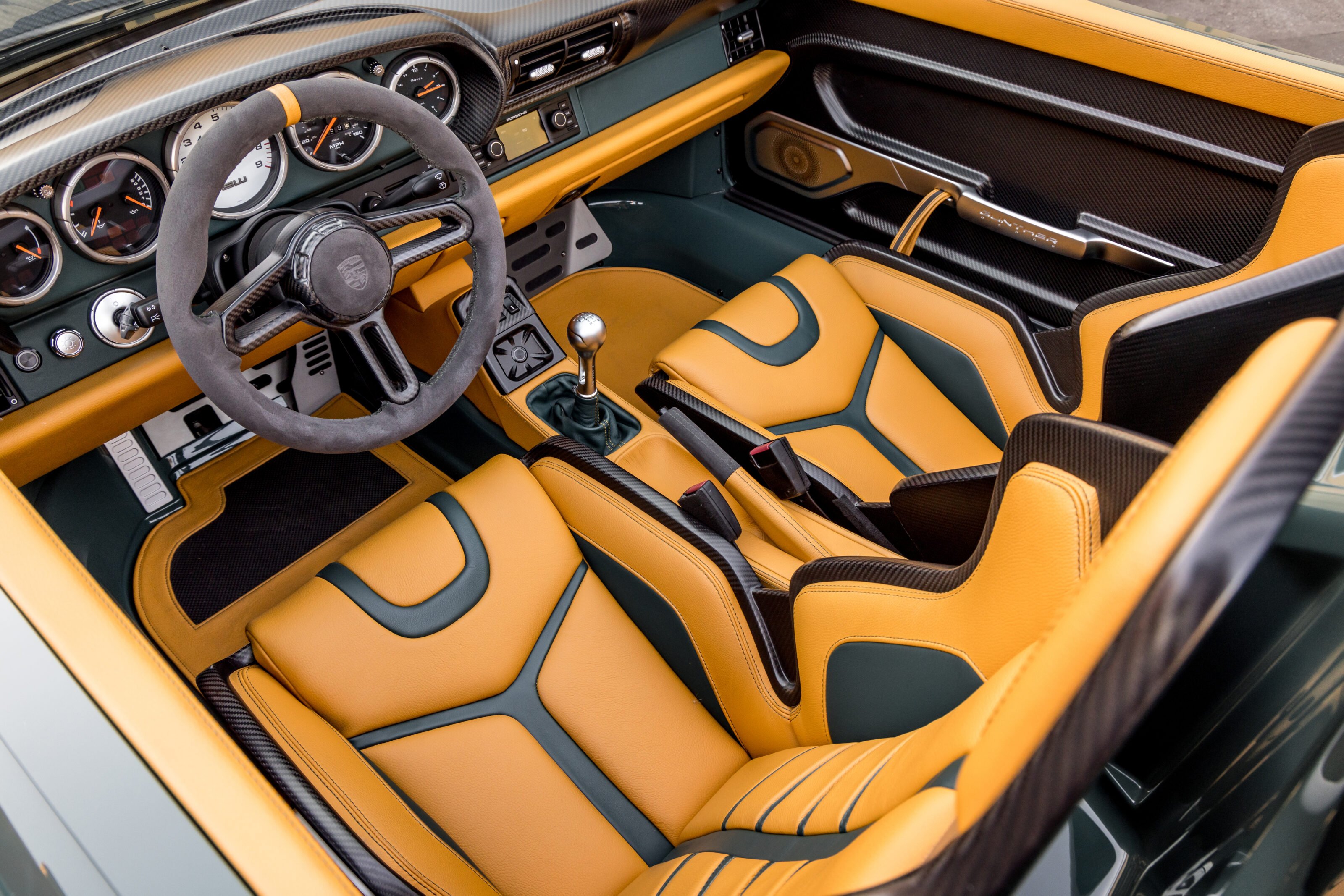
The result is an air-cooled engine with a specific output of more than 73kW per litre. Gunther Werks quotes 294kW without the Sport button pressed, with 316kW available the second the dual-mapped Motec ECU modes are in play. It really is an engine that needs to be experienced to be believed. The lightened internals, in conjunction with the lightweight flywheel deliver lightning response, it revving seemingly without any internal inertia, that immediacy matched by all the other controls in the car.
The gearshift from the six-speed manual is quick and light, though a slightly shorter throw through its travel would improve it further. It’s pretty much the sole area where I’d be asking for a change in the set-up. Elsewhere it feels so correct, the way it translates input to response being so utterly faithful and pure it connects in a way that’s uncommon, if not completely unheard of today.
Add a soundtrack that’s pure racer as you reach the 7800rpm redline, that you find yourself wringing it out to its maximum at every opportunity, the glorious sound of it filling the valleys, and ricocheting off the rock walls that punctuate the drive on the 243.
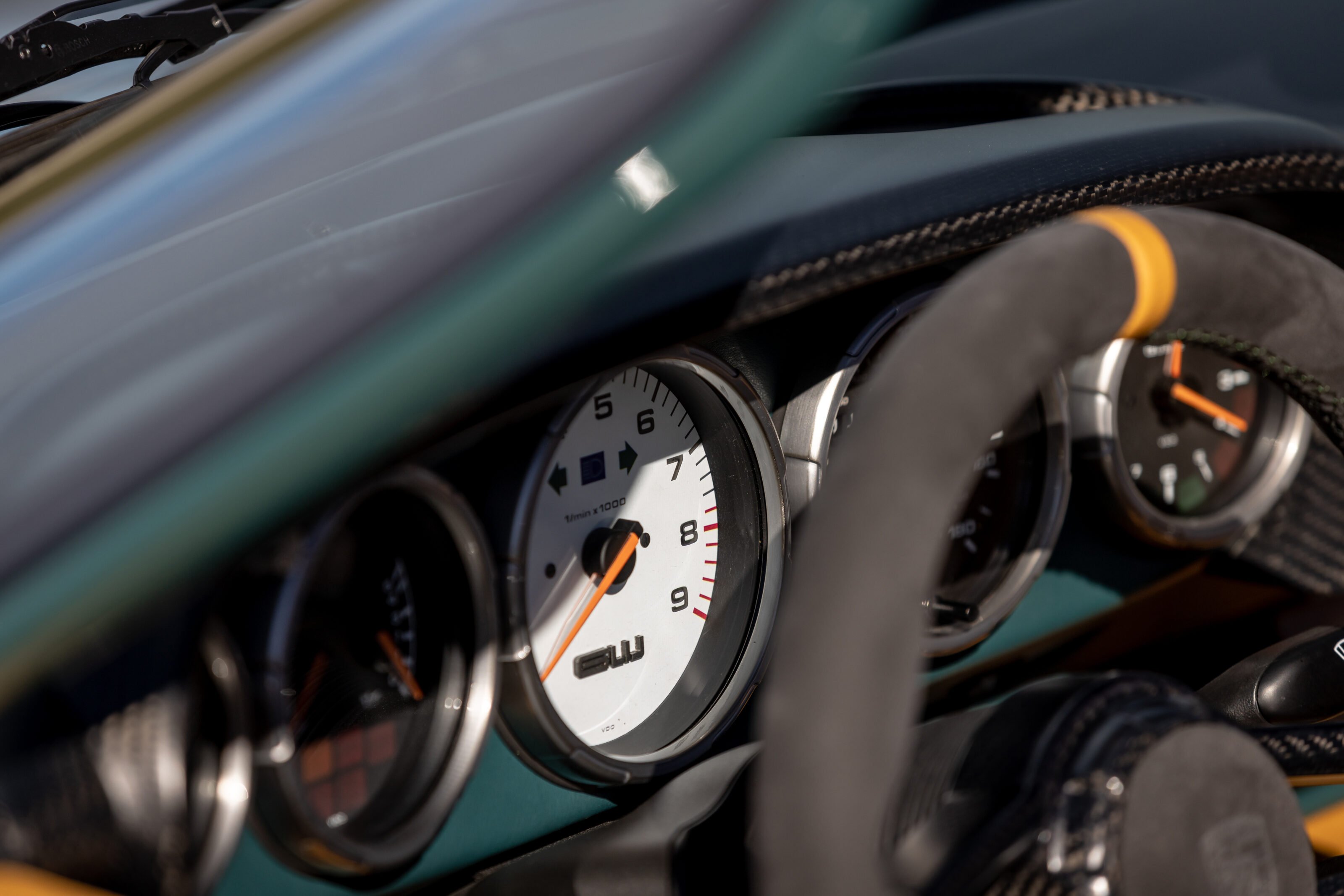
Despite its obvious beauty and exacting attention to detail throughout, Gunther Werks set out to build a driver’s car first, and it delivers exactly that, with old-school thrills and engagement applied via contemporary engineering and knowledge. It’s apparent in the way it changes direction, or the way the engine delivers its ample performance, that 316kW not having to work too hard to propel the Speedster’s low mass to eye-widening effect.
That’s true too of the brakes, which are never short of stopping power, the pedal being the perfect platform to roll your foot off for rev-matched downshifts that delight. Every. Single. Time.
Over the already extraordinary Coupe, the Speedster gains an elemental level, which, rightly, could be construed as compromise in less than perfect circumstances, but here, on this undulating, switchback ribbon of tarmac and in this weather there’s genuinely no other car I’d rather be driving. It really is that good, a blast from the past, engineered forward, and very convincingly indeed.
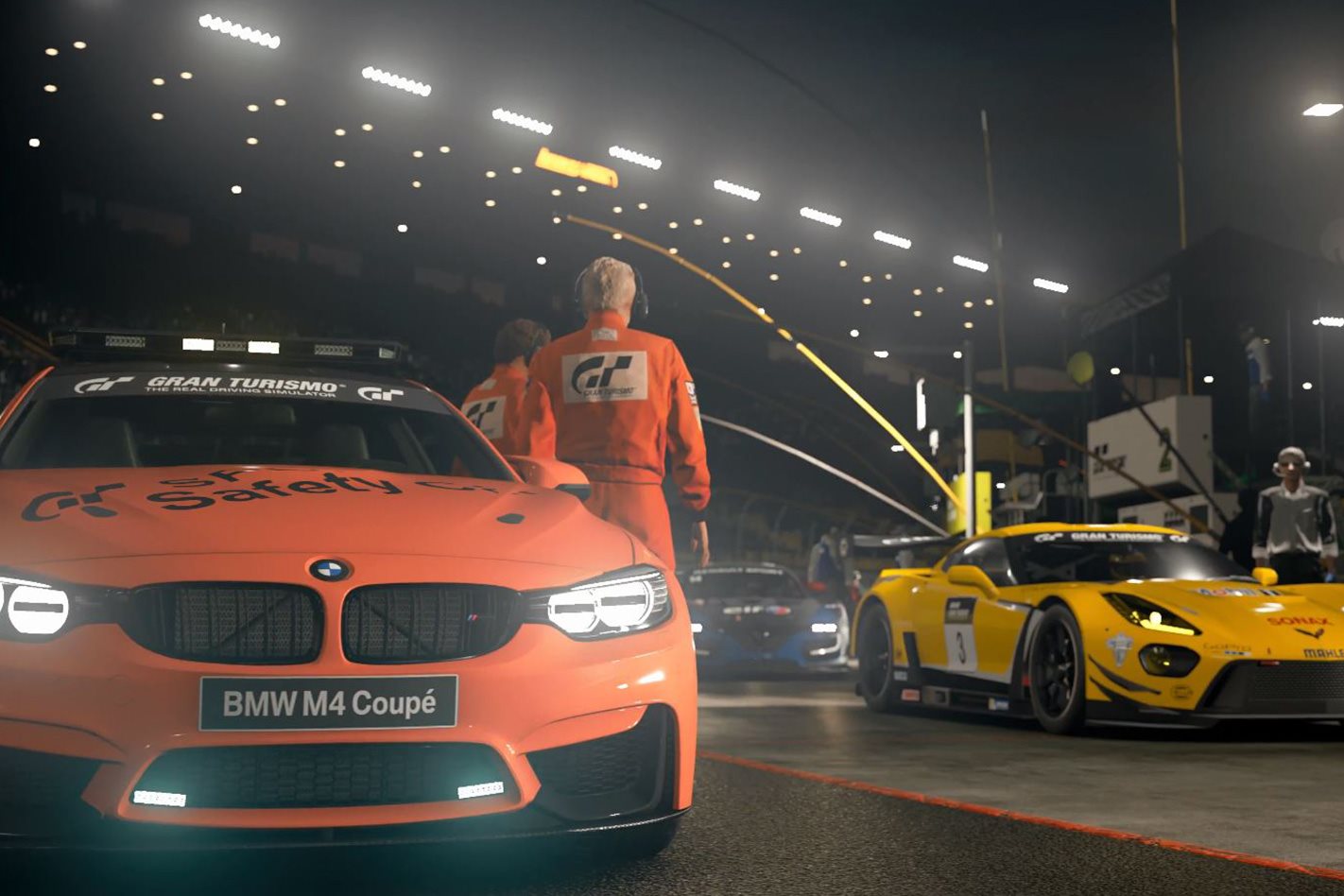
Sony has unveiled an artificial intelligence program (API) capable of beating the world’s best video game racing drivers.
Led by Sony AI, the development of GT Sophy was completed in conjunction with Polyphony Digital and Sony Interactive Entertainment to assist with access to Gran Turismo Sport, its APIs and the world-leading racing community.
As the “first superhuman AI agent”, GT Sophy is said to be capable of outracing 95 per cent of human players after two days, with further improvements to lap times in the following week.
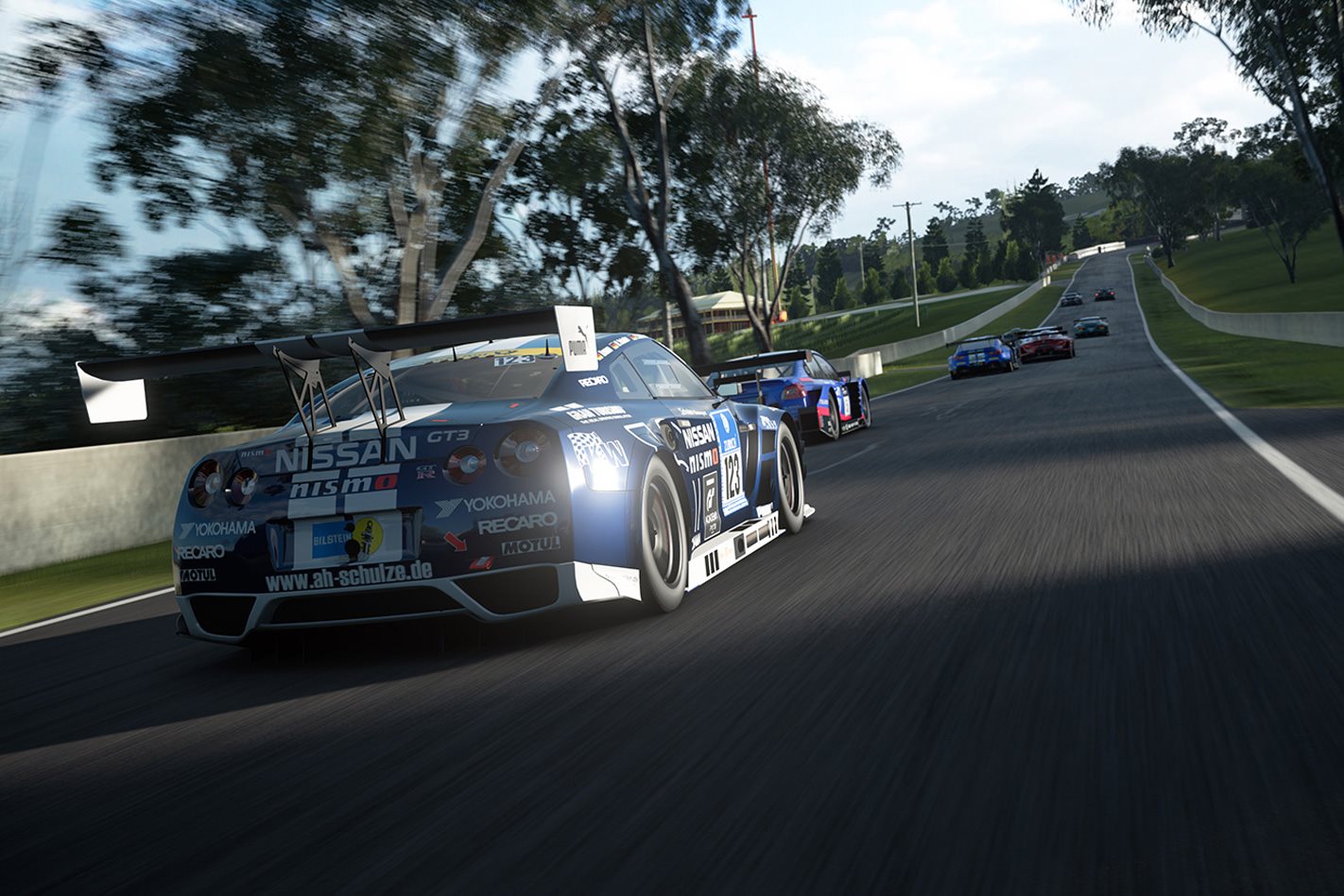
Sony AI claims GT Sophy has been trained to master vehicle control, racing tactics and etiquette to ensure it can complete high-level driving skills with top sportsmanship, avoiding at-fault collisions and respecting the driving line of opponents.
To train GT Sophy, the companies utilised a method referred to as reinforcement training. Fed information from multiple Gran Turismo titles, the AI was created to maximise fast lap time rewards and minimise penalties for collisions, essentially allowing it to master the game.
However, in a video explaining the process, the team of Sony engineers – led by Peter Wurman, director of Sony AI America – speak on the need to carefully fine-tune the ‘reward program’ to ensure the AI wouldn’t develop an aggressive racing style.
“Gran Turismo Sophy is a significant development in AI whose purpose is not simply to be better than human players, but to offer players a stimulating opponent that can accelerate and elevate the players’ techniques and creativity to the next level,” said Hiroaki Kitano, CEO of Sony AI.
“In addition to making contributions to the gaming community, we believe this breakthrough presents new opportunities in areas such as autonomous racing and driving, high-speed robotics and control.”
Sony also concedes GT Sophy still has plenty to learn. For instance, when driving on a long straight, the AI will overtake at the first opportunity, which can lead to an opponent taking advantage of GT Sophy’s slipstream to pass back.
According to Sony, it is currently working on integrating GT Sophy into future Gran Turismo games, but no information was provided on when this might occur.
Right off the bat, I’m going to blame you – dear reader – for the plight of Ford’s shrinking passenger vehicle line. You’ll see, though, that it’s a transparent attempt to create tension in your mind that I’m genuinely mad at you. I’m not really; it’s just a literary device to keep you reading, so play along, it should be a laugh.
The Focus wagon was an early casualty within a year of going on sale, the Focus hatch is now gone unless it’s an (excellent) ST, the (again, excellent) Fiesta can only be had in ST form and apart from that, it’s SUVs and utes. Oh, and Mustangs. The Focus and Fiesta are both great cars and you let them die. Shame on you. Collectively of course. Don’t feel too bad though, some of you did what you could.

The Ford Puma is probably not going to die but it should be in far ruder health than it is. While folks are still unaccountably buying thousands of the two oldest SUVs in the market – Mazda’s still-good CX-3 and Mitsubishi’s emphatically not very good ASX – the Puma struggled to just over 3000 units in 2021. If you’d been desperate for a car last year and bought most other compact SUVs and not this one you probably paid too much and waited too long.
You can tell I feel very strongly about this. And not because I’m a Ford fan per se – I’ve never owned one. But when I stand back and look at just how good is the Puma and how ordinary some of its competition is, I have to wonder what on earth is going on.
Pricing and Features

Your $32,340 buys you this mid-spec ST-Line, which sits above the base-spec Puma and below the ST-Line V (for Vignale). You get 17-inch alloys, a six-speaker stereo, single-zone climate control, leather wheel, digital dashboard, cloth seats, reversing camera, cruise control, auto LED headlights, auto wipers and a space-saver spare.
An 8.0-inch touchscreen familiar from the Fiesta ST and Focus sprouts out of the dashboard offering sat nav, DAB+, AM/FM as well as Apple CarPlay and Android Auto. It works quite well and runs Ford’s SYNC3 system which is a far cry from its earlier efforts and vastly better than some of its segment fellows’ software. Sadly the phone integrations require USB.
One USB-A port is awkwardly placed in the console next to the driver’s left knee and there’s a USB-C port in console bin. This means the wireless charging pad is really only useful for a second phone in the car.
When I stand back and look at just how good is the Puma and how ordinary some of its competition is, I wonder what on earth is going on

The Puma’s safety equipment includes six airbags, the usual traction and stability controls, forward AEB, lane keep assist with lane departure warning, traffic sign recognition, forward collision warning and if you stick it on its roof or into a tree, it will call in the cavalry for you if there’s mobile coverage.
The forward AEB and collision warning works at both high and low speeds.
The $990 Park Pack adds self-parking, adaptive cruise control, blind-spot monitoring, evasive steering assist and front parking sensors. Irritatingly, there is no reverse cross-traffic alert or rear AEB available even as an option.

The Puma range scored a five-star ANCAP safety rating in 2019.
The other options on the ST-Line are a selection of $650 paint colours and the $750 electric tailgate which also adds keyless entry and the $2000 panorama roof which nicks headroom but not too much.
Comfort and space

The ST-Line’s Goldilocks spec includes an improved pair of front seats with more adjustment, support and a slightly sportier fabric combination. I found them very comfortable but they are manually adjusted so if you’re sharing this with another driver of very different proportions to you, that might be worth knowing.
You get a handy phone spot with wireless charging at the base of the centre stack, two cupholders in the console and door pockets with bottle holders.
When you remember that it’s based on the Fiesta, Ford has taken the extra height afforded by the SUV bodyshell and actually delivered more space as a result

Moving to the rear, you get small door pockets to put some small things. What you don’t get is an armrest or cupholders, nor do you get rear air vents, a bit of a hobby horse of mine. The seats themselves are comfortable and my lanky son folded himself through the small-ish door apertures but was comfortable enough for the short Christmas Day trip to my parents (“Can I take my car?” No. “Why?” I need you to test the back seat for me. It’s also not your car.)
The boot is a huge 410 litres when you add together all of the space. The boot floor lifts to reveal a really big secondary space and the spare is under there as well. This kind of space really embarrasses many cars of similar dimensions as well as some in the next size up. When you remember that it’s based on the Fiesta, Ford has taken the extra height afforded by the SUV bodyshell and actually delivered more space as a result.
On the road

If it’s Euro style you want in your engine, the Puma delivers. Ford has gone with a tiny 1.0-litre turbocharged three-cylinder, which spins up 92kW at 6000rpm and 172Nm between 1500rpm and 4500rpm. That’s an impressive number for a displacement the same as a milk carton. Power is delivered to the front wheels via a seven-speed twin-clutch automatic transmission which is…well, it’s not the best but at least it isn’t a CVT or the terrible old PowerShift transmission that got everyone up in arms.
Rather sadly, we don’t get the 48-volt mild hybrid offered in Europe and for some insane reason we also don’t get the full-fat ST version, with Ford Australia probably mumbling something about it only being manual or whatever. I get the price-sensitivity of the hybrids and a general buyer apathy in this segment about those sorts of things but locking out the ST, especially given this car’s global platform in the WRC from 2022, seems a mite silly. Australians have been, historically speaking, rather fond of rallying connections (*cough* Yaris GR *cough*).
Anyway.

I’m going to tell you right now that the Puma is a ball of fun to drive, specifically in ST-Line form. It rides a little lower than the entry-level but shares pretty much everything else with it. As is the Ford way, the steering is really quick, with a fantastic change of direction, not something you commonly associate with a small SUV.
Few cars in this segment have any kind of get up and go – it’s almost like there’s legislation limiting compact SUVs to around 100kW/200Nm. A Toyota C-HR with a 1.2-litre turbo four isn’t nearly as sprightly. The 1.0-litre triple sounds terrific in a fairly distant kind of way and delivers its power and torque without the peakiness you might expect from such a small turbo engine.
As is the Ford way, the steering is really quick, with a fantastic change of direction, not something you commonly associate with a small SUV

The transmission could be a little more enthusiastic – and is in Sport mode, one of the several selectable modes – but is really the only part of the drivetrain I’m not in love with. And the mode selection button is in a stupid place on the console, not readily identifiable and every time you start the car, it reverts to the less capable comfort mode.
Ford of Europe’s chassis department is clearly staffed with a bunch of hoons who are entirely correct when they apply a sporting philosophy to a chassis. There’s a reason that someone who steps out of a Corolla and into, say, the driver’s seat of a rear-wheel drive 1 Series (RIP) and says, “Oh, this feels much better.” Firmish damping, lots of thought put into the way it brakes, steers and turns delivering that nice-to-drive feeling for most people and, “Oh, this is good” for people who care about how the car feels.

A little disappointing was the real-world fuel consumption. I got an even 8.0L/100km in the week and a bit I had it – granted the climate control probably had to extract more water from the air than is normal given how disgustingly humid it was in late December/early January in Sydney, but it’s a fair way off the claimed 5.3L/100km of the ADR figure. The WLTP of 5.8 is closer, but not close enough.
Ownership

Ford’s competitive 5-year/unlimited-kilometre warranty comes with a four-year/60,000km fixed-price service package. Each of the first four services (up to four years) is $299 and you’ll need to visit the dealer once every 12 months or 15,000km. After that, it seems to move up to $320 per service, which is still okay going if not outstandingly cheap.
The Ford website actually gives service pricing well beyond the first four years, but only guarantees the price of the first four.
Ford will hand you a loan car if you’ve remembered to book one.
VERDICT

Nothing else in the segment is quite like it and I’m firmly of the opinion that if more people considered the Puma in their search, they’d buy it after driving it. Not even the more expensive (and inexplicably hybrid) Toyota C-HR GR Sport is as much fun as the Puma, good as it is.
The Puma is at least the right car for the market it’s just that the market isn’t paying it the attention its overall quality suggests it should. And that’s a shame because while it isn’t the best at every single thing it does, it’s better than so many others in the segment.
| Body | Five-door compact SUV |
|---|---|
| Drive | FWD |
| Engine | 1.0-litre turbo three-cylinder petrol |
| Transmission | Seven-speed twin-clutch |
| Power | 92kW @ 6000rpm |
| Torque | 170Nm @ 1400-4500rpm |
| Bore/stroke (mm) | 71.9 x 82.0 |
| Compression ratio | 10.5 : 1.0u00a0 |
| Fuel consumption | 5.3L/100km (combined) |
| Weight | 1287kg |
| Suspension | MacPherson strut front/torsion beam rear |
| L/W/H | 4207mm/1930mm/1548mm |
| Wheelbase | 2588mm |
| Brakes | 278mm ventilated disc front / 271mm solid disc rear |
| Tyres | 215/55 R17 |
| Wheels | 17-inch alloy wheels (spae-saver spare) |
| Price | $32,340 + ORC |
McLaren Racing has joined forces with Lego Technic to create a new car kit based on the team’s 2022 Formula 1 racer.
Although its livery is based on the 2021 car, the set was developed around the updated Formula 1 rules for 2022, reflecting the changes made to the field this year.
At 13 centimetres in height, 65cm in length and 27cm in width, the model will require plenty of room to construct and store, with Lego putting the total piece count at 1432. This includes stickers featuring McLaren Racing’s sponsors, ensuring the kit remains as realistic as possible.
The set also includes a V6 engine with moving pistons, as well as a steering system, suspension and a differential lock.

In addition to the bricks, stickers and other components included in the box, Lego will also provide a “coffee-table-style” book explaining the close collaboration between McLaren Racing and the toy company.“We are excited to unveil the unique Lego Technic model of our McLaren F1 car, a fun and engaging product that celebrates our 2021 season livery while giving fans a hands-on interpretation of the new 2022 F1 car design,” said James Key, McLaren Racing’s technical director.
“This has been made possible by an agile collaboration with the Lego Group team, [which has] truly embraced the spirit of our brave and bold approach to design. The final product looks fantastic, and we cannot wait to make this available to our fans.”
The 2022 McLaren Racing Formula 1 Race Car will go on sale globally from March 1, 2022, with local fans able to get their hands on the Technic kit for $280.
Snapshot
- Shelby-built Toyota 2000GT offered for auction in the US
- The 2000GT has long been Japan’s most valuable car
- Was one of three cars built by Shelby for Toyota’s American racing program in the late 1960s
While there’s no doubt that the values of Japanese icons like the Nissan Skyline GT-R, Toyota Supra, Mazda RX-7 and so on have recently gone through the roof, there is still one car which stands head and shoulders above the rest: the Toyota 2000GT.
The 2000GT is considered the true beginning for Japanese sports metal, and has been a car which has consistently commanded seven figure sales prices at auctions long before anything else from the land of the rising sun started appreciating.
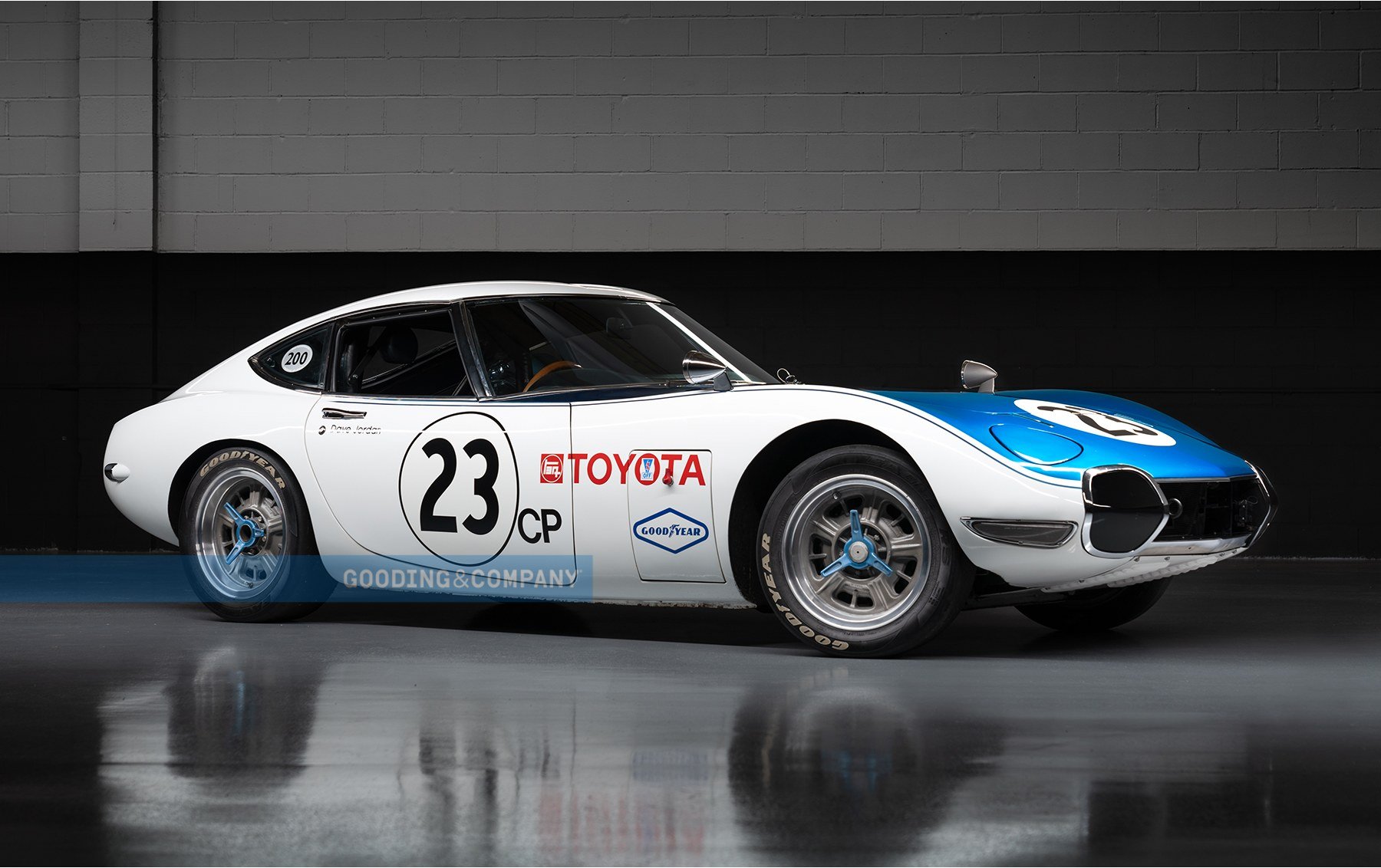
While any 2000GT is a unique beast, this one could take the cake for the most desirable of the lot.
This exact car was part of Toyota’s brief collaboration with Carroll Shelby and his Shelby American race team, as Toyota was looking to change their image with a successful racing campaign in SCCA C-Production category in the US.
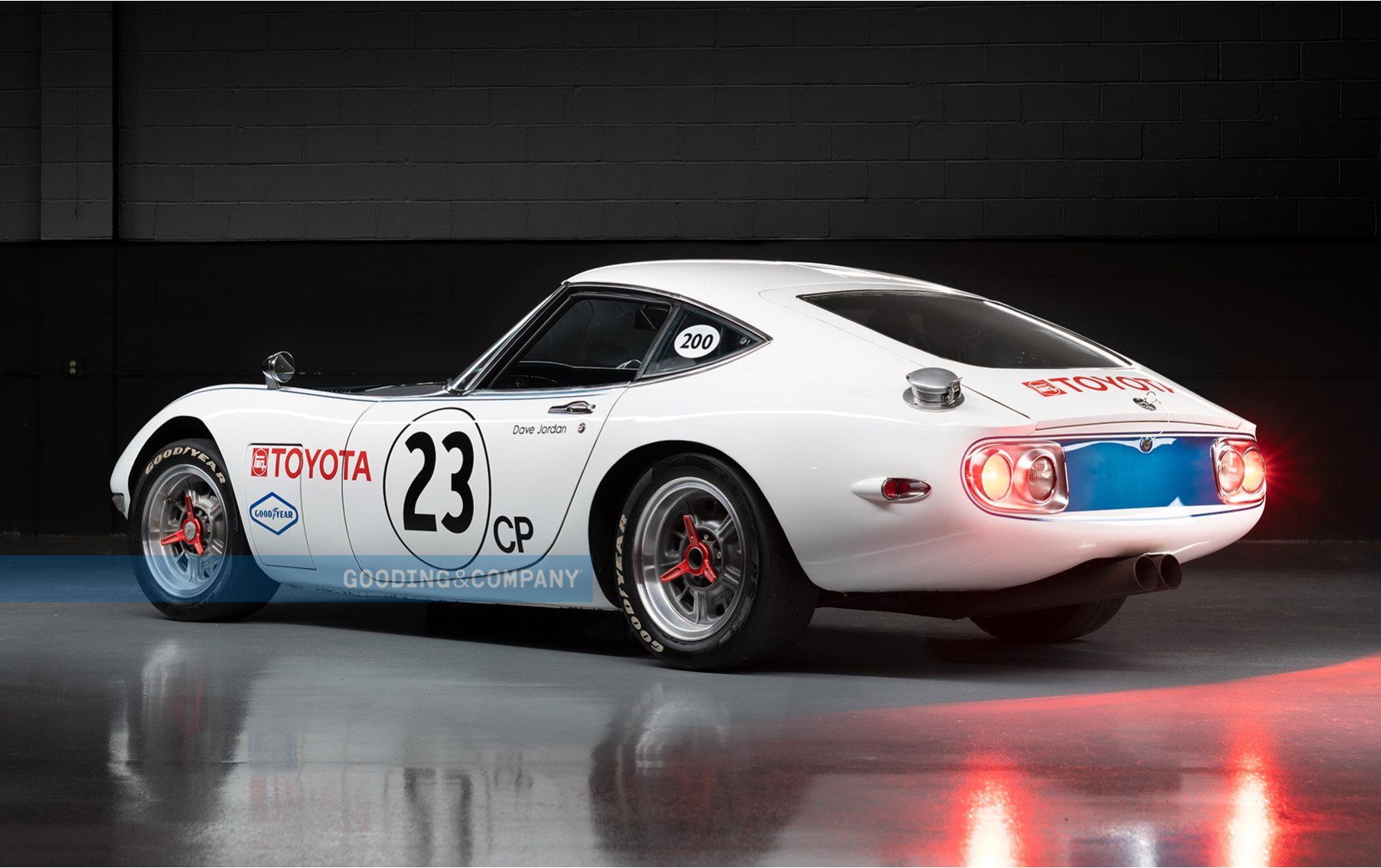
The 1967 chassis MF10-10001 was not only one of three 2000GT’s prepared by Shelby American, but the auction house also claims it to be the first serial-numbered 2000GT ever built.
The book Toyota 2000 GT: The Complete History of Japan’s First Supercar, says MF10-10001 was completed in September 1966, making it the first of just four pre-production cars.
Those cars were used for promotional duties in the US, before eventually landing in the hands of Shelby to help kick start Toyota’s racing aspirations.
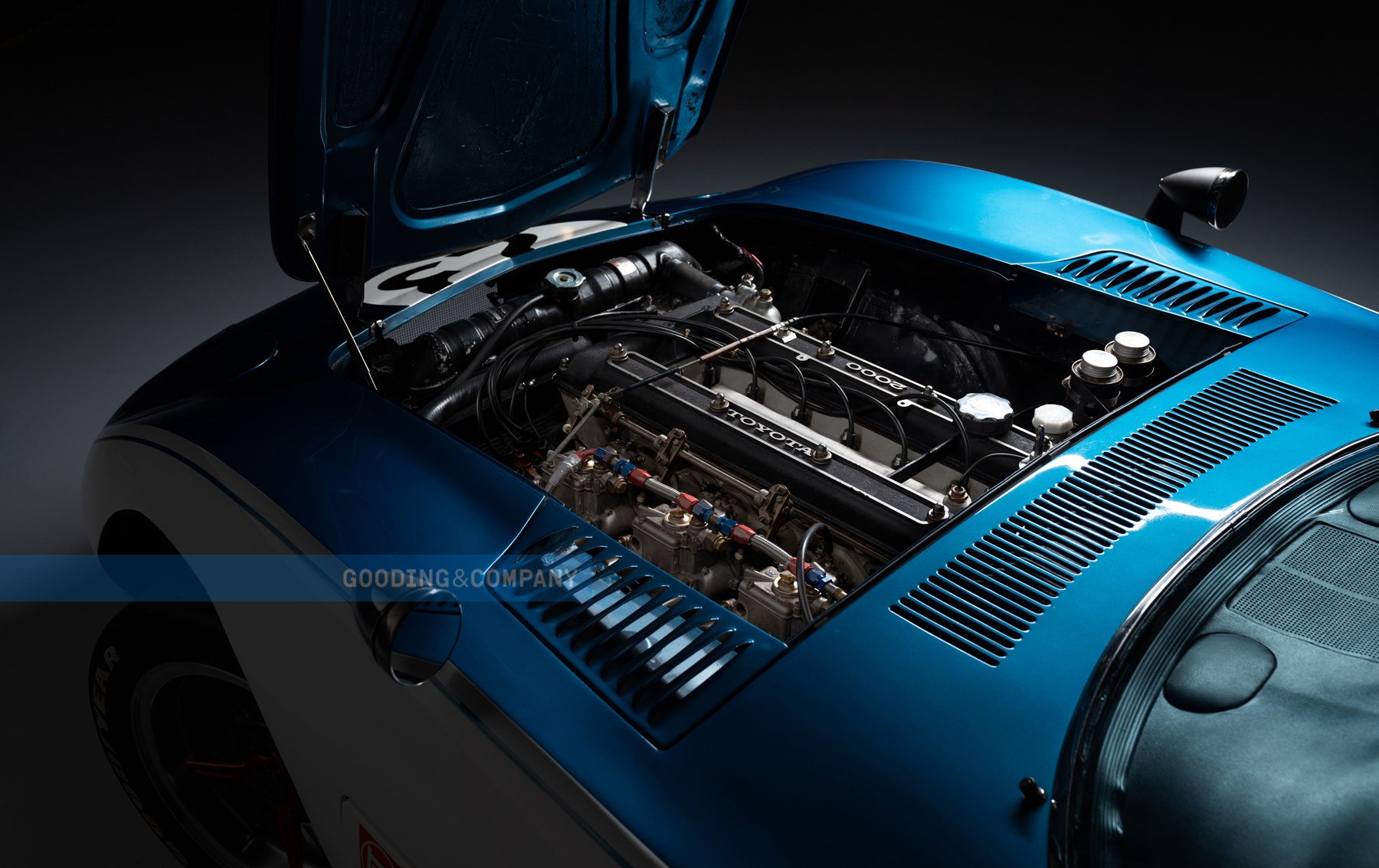
The 2.0-litre, twin cam six cylinder engine remained during the migration from street to race car for this 2000GT, but adjustable Koni shocks, a diff oil cooler, dual megaphone exhausts, Halibrand wheels and upgraded brakes were all fitted to prepare it for racing.
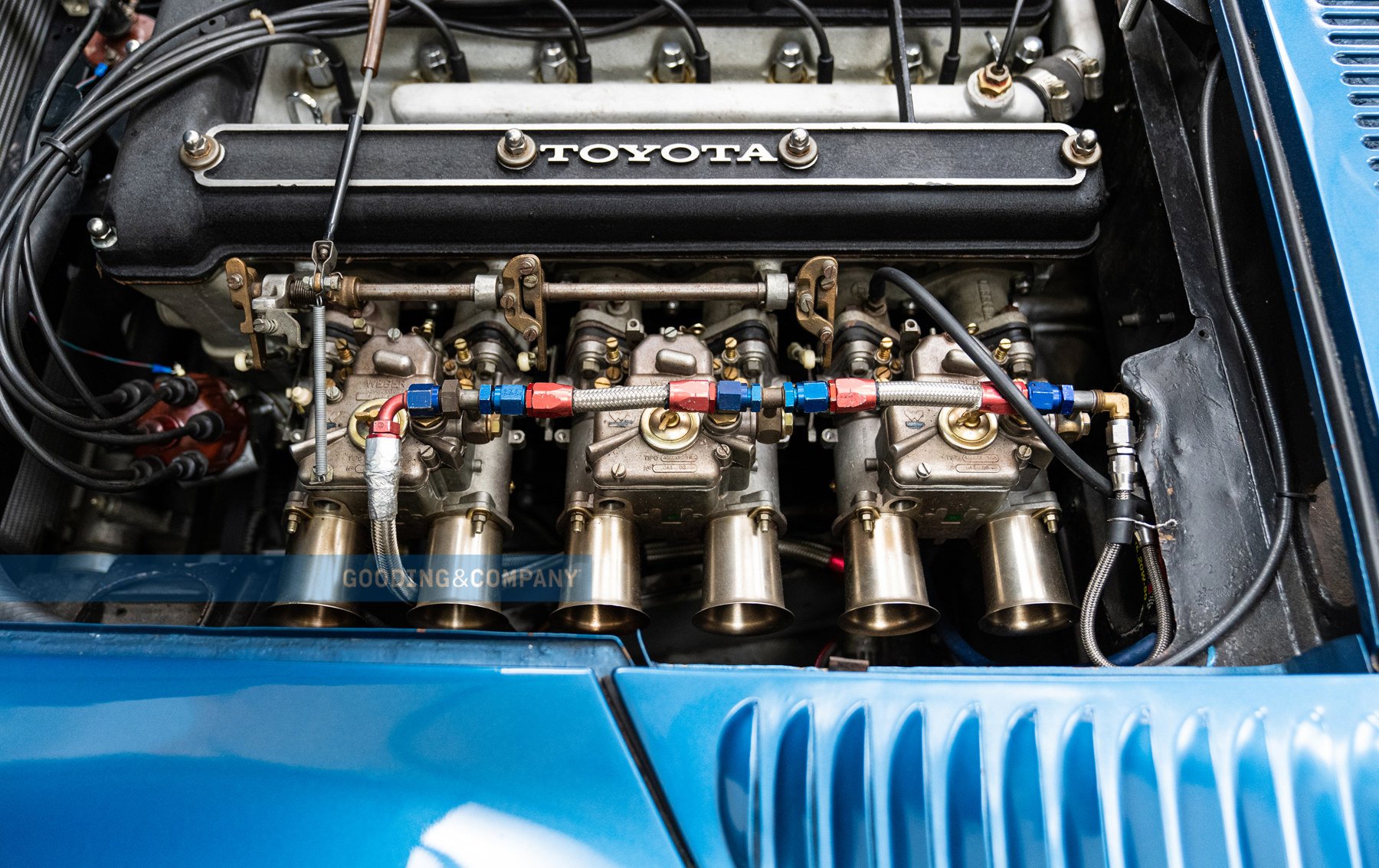
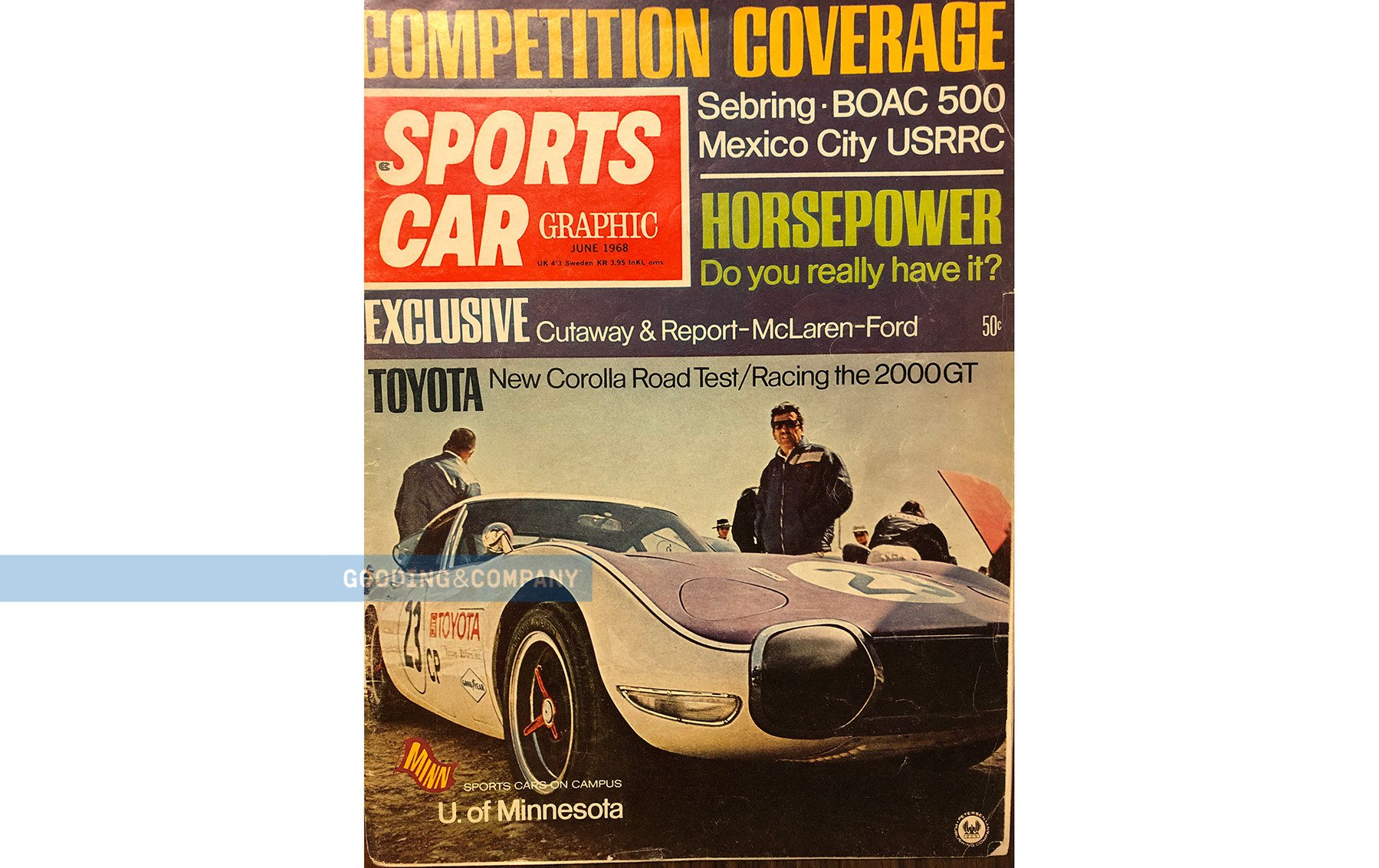
During their racing campaign in 1968, the three Shelby-prepared 2000GT’s (two race cars, one spare) were driven by Dave Jordan and Scooter Patrick, who yielded the Toyota team fourth in the overall teams championship in SCCA’s National Championship that year.
Toyota shifted their racing focus shortly after so the 2000GT became a marketing tool for a little while, before making its way into the current owners hands in 1980.
The owner completed a body-off restoration to the car’s original 1968 racing spec, which was completed in 1994.
The car has since been used at many historical events, including the likes of the Goodwood Festival of Speed and the Monterey Historic Automobile Races.
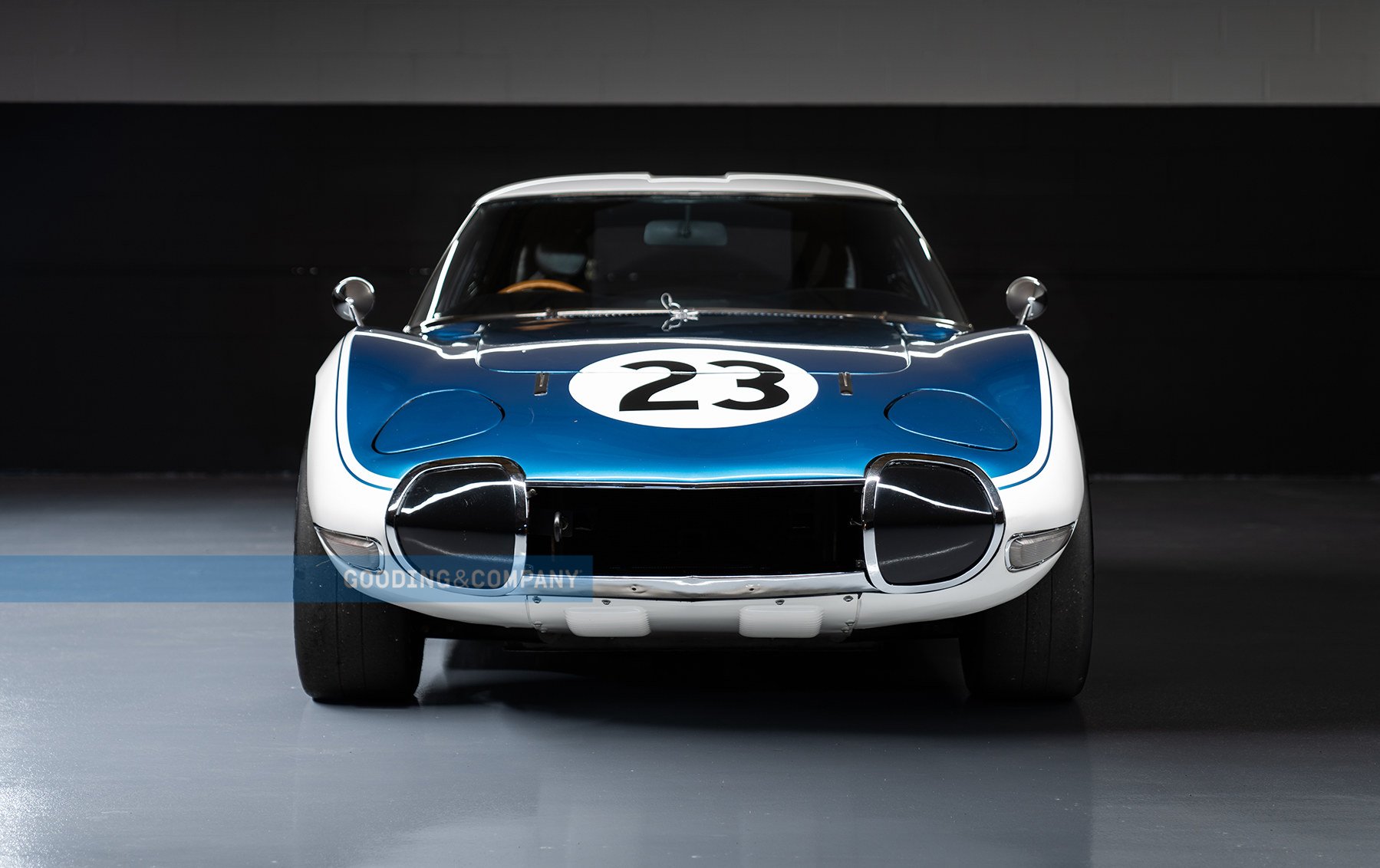
This is the first time the 2000GT has been offered for public sale since 1980, with the Gooding & Company’s Amelia Island auction kicking off on March 4.
Only 351 2000GTs were built, and with the historical significance of this one unparalleled, it’s anybody’s guess on how much it’ll sell for – but we’d expect a figure of at least US$1.5million.
Snapshot
- Anti-vaccine mandate protests in Canada affecting North American vehicle production
- Ford, GM, Honda, Stellantis and Toyota forced to cut back assembly across each side of the border
- Australian models, including the Ford Mustang and Toyota Kluger, currently unaffected
Major automakers in North America are beginning to feel the impact of the anti-vaccine mandate protests in Canada.
Ford, General Motors, Honda, Stellantis and Toyota have reportedly scaled back production across each side of the border, with ongoing blockades at border crossings making it difficult to source components and parts for vehicle production.
The protests are an additional blow for an automotive industry currently grappling with the global semiconductor chip shortage and other issues related to the COVID-19 pandemic, causing existing production headaches.
Ford Canada is this week running its factories at Oakville and Windsor in Ontario at a reduced capacity, while its plants in the United States have enough components to keep production steady – at least for now.
There is no current impact for the local Ford line-up, with the Mustang being the only US-built model – albeit with a Canadian-sourced 5.0-litre V8. The recently-discontinued Endura large SUV was produced at the Oakville factory.
As reported by Reuters, a spokesperson for Ford’s Canadian division said the brand is “looking at all options to keep our plants running.” The company is believed to be considering freighting parts into Canada by air to combat blockades at the border crossing, ensuring it can continue producing engines at its Windsor plant.
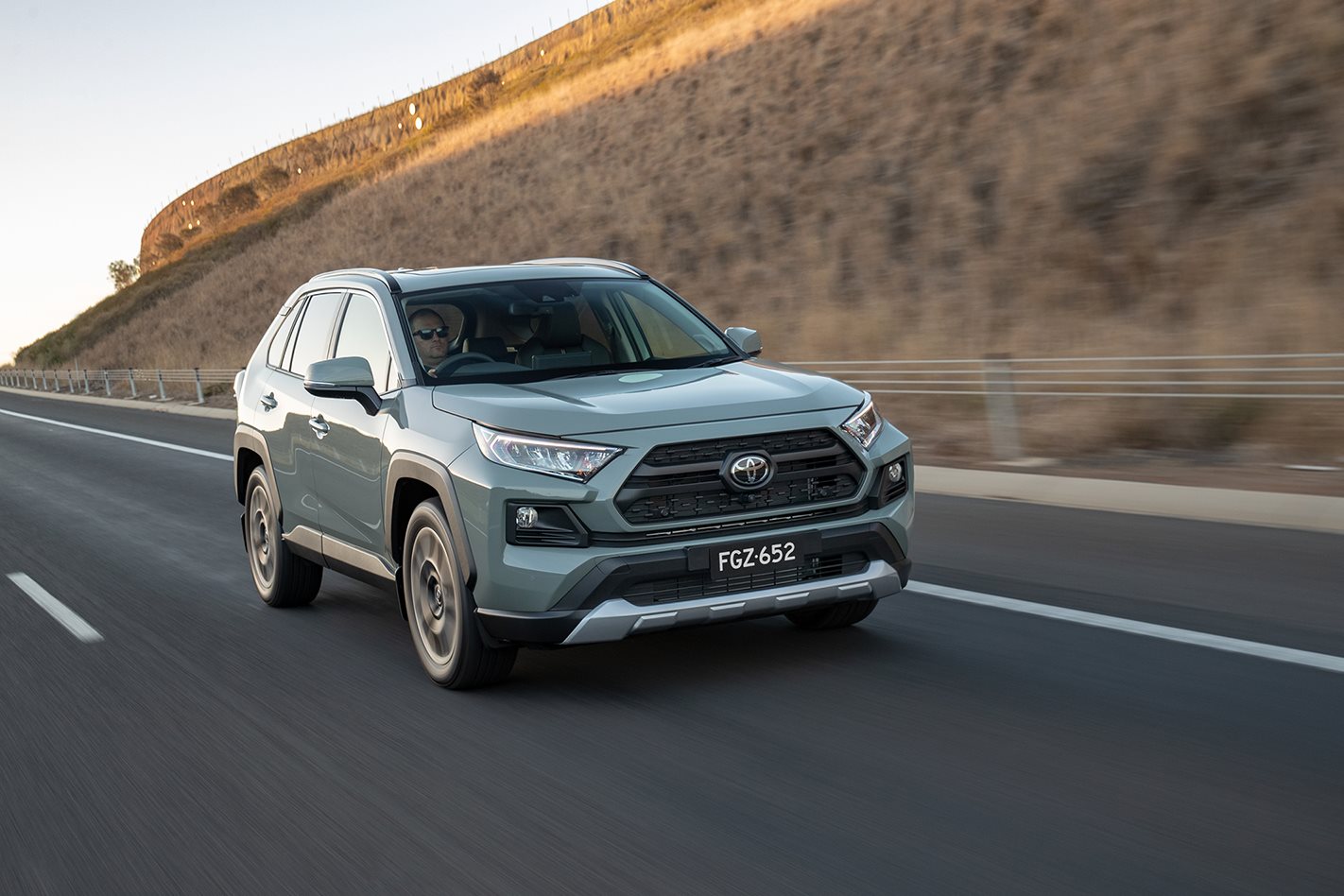
Toyota Motor Manufacturing Canada says its production lines in Canada have been affected, with its facilities in Cambridge and Woodstock, Ontario — which build the Toyota RAV4 and Lexus RX for North America — likely to remain idle for the rest of the week.
Australian examples of the Toyota RAV4 and Lexus RX are produced in Japan.
Industry group Global Automakers of Canada said, “owing to the integrated nature of the automotive industry, US assembly plants are also being adversely impacted by a shortage of parts from Canada,” in a tweet published on Friday (Australian time).
Toyota temporarily took its plants in Kentucky and Ottawa offline due to the supply chain chaos, while General Motors also cancelled a shift at its plant in Lansing, Michigan. The Toyota Kluger (known as Highlander overseas) is currently unaffected, with the large SUV produced in Indiana for the global market, including Australia.
Meanwhile, Stellantis was forced to cut production on two shifts earlier this week at its plant in Windsor, which produces the Chrysler Pacifica, Voyager and Grand Caravan minivans.
Honda was also affected by the issue on Wednesday and Thursday. The Japanese company does not sell any vehicles built in North America for the Australian market.
With aid from several hundred heavy-duty trucks being used to block traffic, the protesters are demanding an end to Canada’s vaccine mandates and COVID-related restrictions, including the requirement for businesses to check for proof of vaccination.
The crossing that has the auto industry and American government officials concerned most is the Ambassador Bridge, which connects Windsor and Detroit. It typically handles approximately 7000 commercial vehicles and more than AU$420 million worth of goods – AU$70 million of which is estimated to consist of vehicle parts.
We like to believe a Hyundai Tucson N is in the works at the company’s Namyang proving ground in South Korea, preparing to take on VW’s upcoming Tiguan R.
It may happen but remains in our imaginations for now – as does a dedicated N-Line version.
Contrary to expectations – based on initial Hyundai information, to be fair – the Tucson’s N-Line treatment arrives not as a specific trim grade but rather as an option pack available for all models.
N-Line versions of the i30 hatch, i30 sedan and Kona are all paired exclusively with a 1.6-litre turbocharged petrol engine and benefit from more advanced suspension set-ups. Even all-wheel drive in the case of the Kona.
The N-Line-flavoured aesthetics can be matched with the same engine in the Tucson, yet also a non-turbo 2.0-litre petrol or 2.0-litre turbo-diesel.
November 21, 2023: New-look 2024 Tucson revealed
Hyundai’s top-selling vehicle updated with Santa Cruz-like front end, plus a new-look dashboard inspired by the Kona and Santa Fe
Story continues: 2022 Tucson Highlander N-Line review
Pricing and Features
N-Line addendums are quite extensive for an outlay that ranges between $1000 and $3500 depending on trim grade.
The pack is more expensive for base and Elite Tucsons, where it adds LED headlights and tail-lights, 19-inch wheels, 10-inch digital driver display and auto high beam. The base model also gains LED indicators for the side mirrors.
All this is standard on the regular, $50,000 (plus on-road costs) Highlander, as are the bigger wheels – so the range-topper simply adopts the different N-badged rims if you tick the $1000 N-Line option.
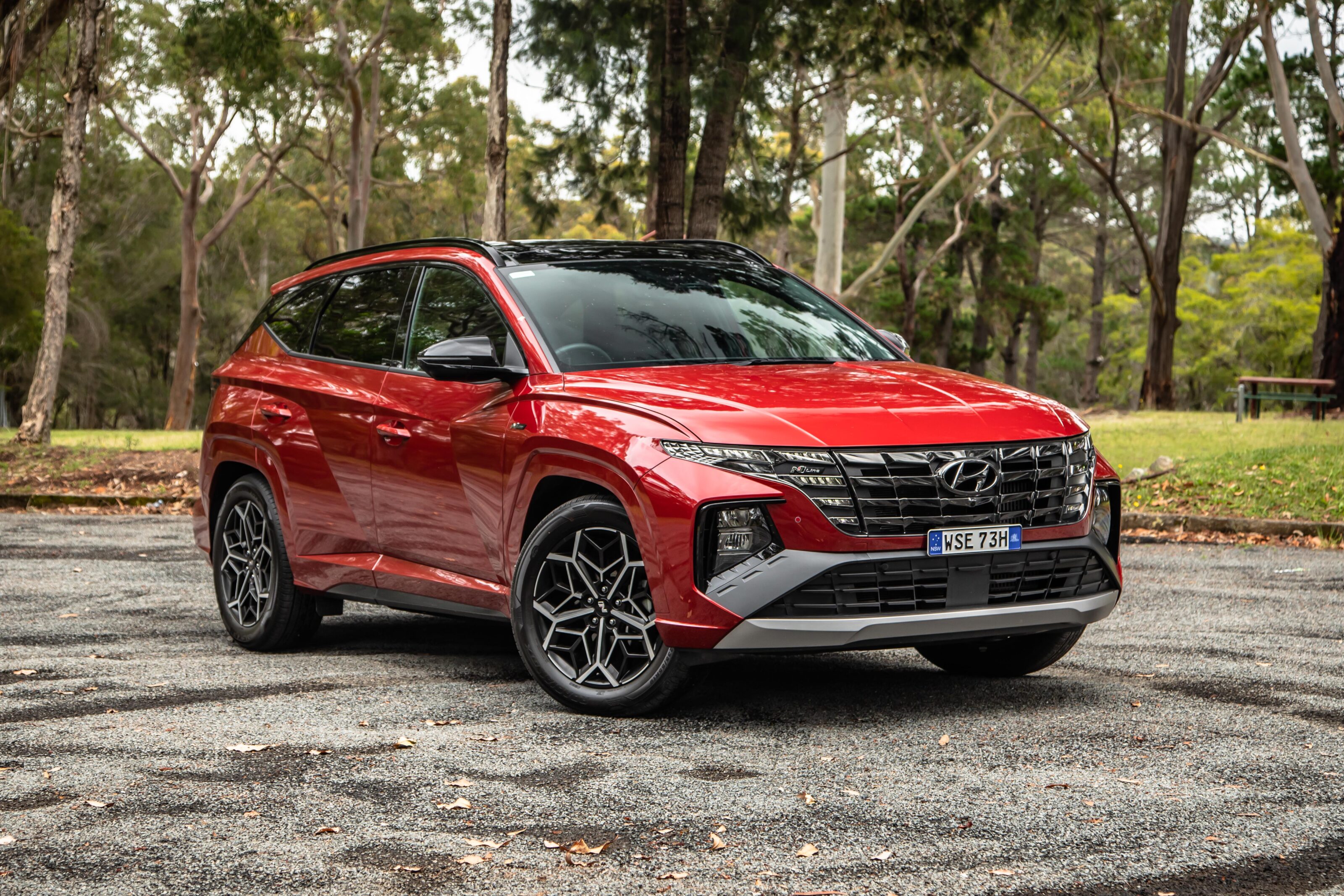
The sportier embellishments tie in completely naturally with the bolder, more aggressive design of the latest Tucson
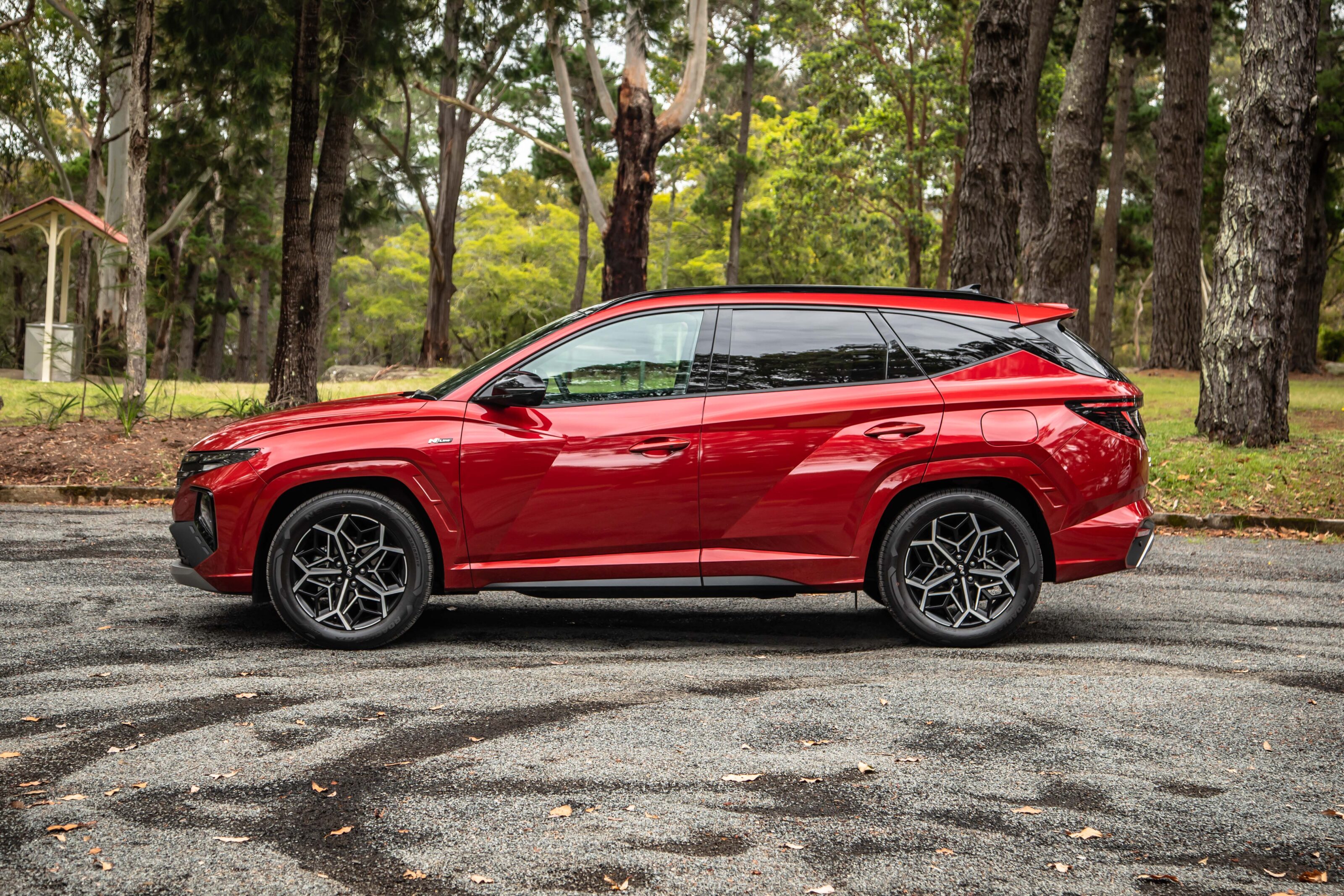
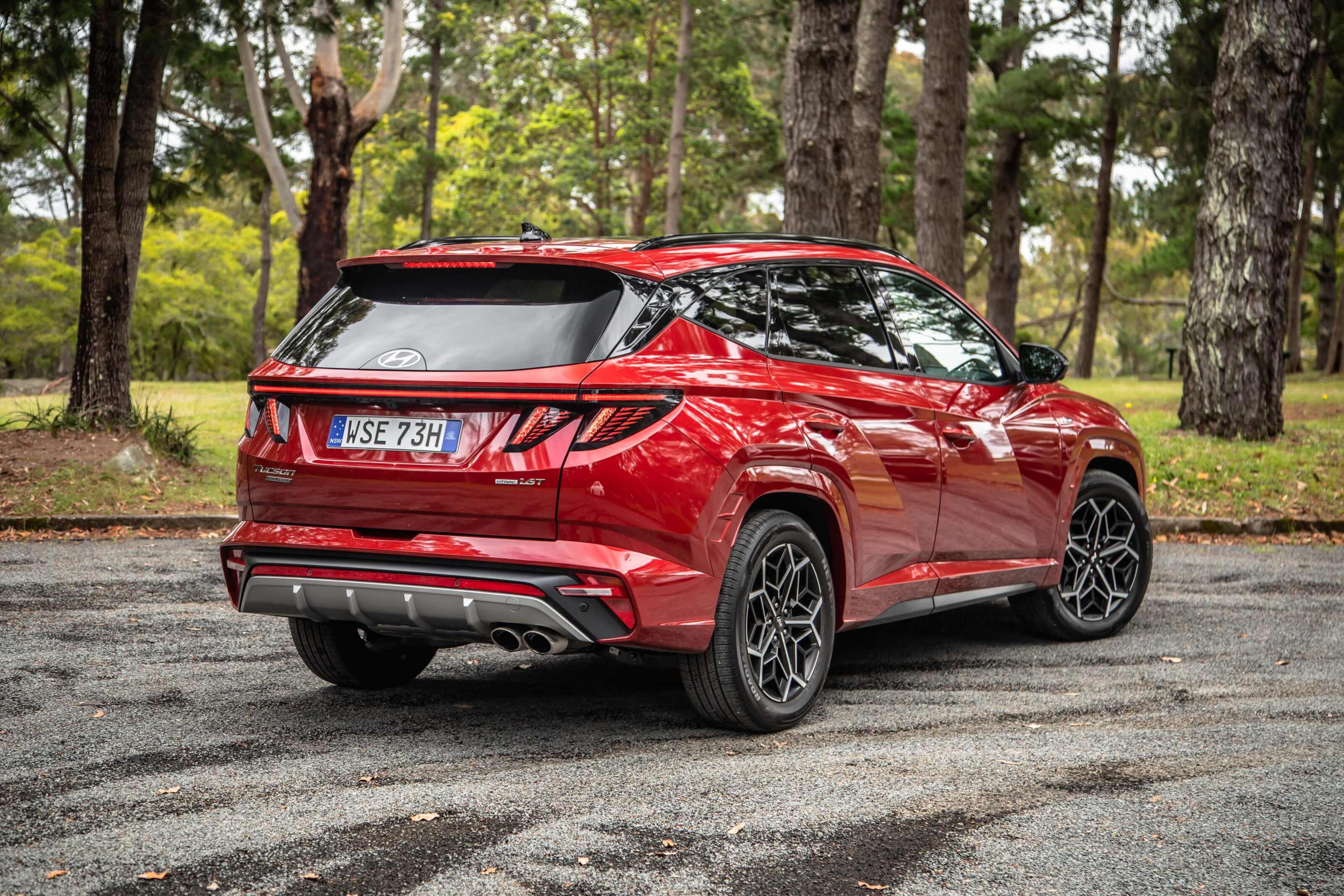
Elsewhere for the exterior N-Line treatment, the front end adopts a gloss effect for the dark chrome grille, there’s a deeper-chinned bumper and a black surround for the LED headlights. At the rear, there’s a revised design for the bumper, skid plate and roof spoiler.
Lower cladding swaps from black to body colour, then there’s the rather fetching Crimson Red only available with the N-Line pack and applied to our Highlander test vehicle.
The sportier embellishments tie in completely naturally with the bolder, more aggressive design of the latest Tucson.
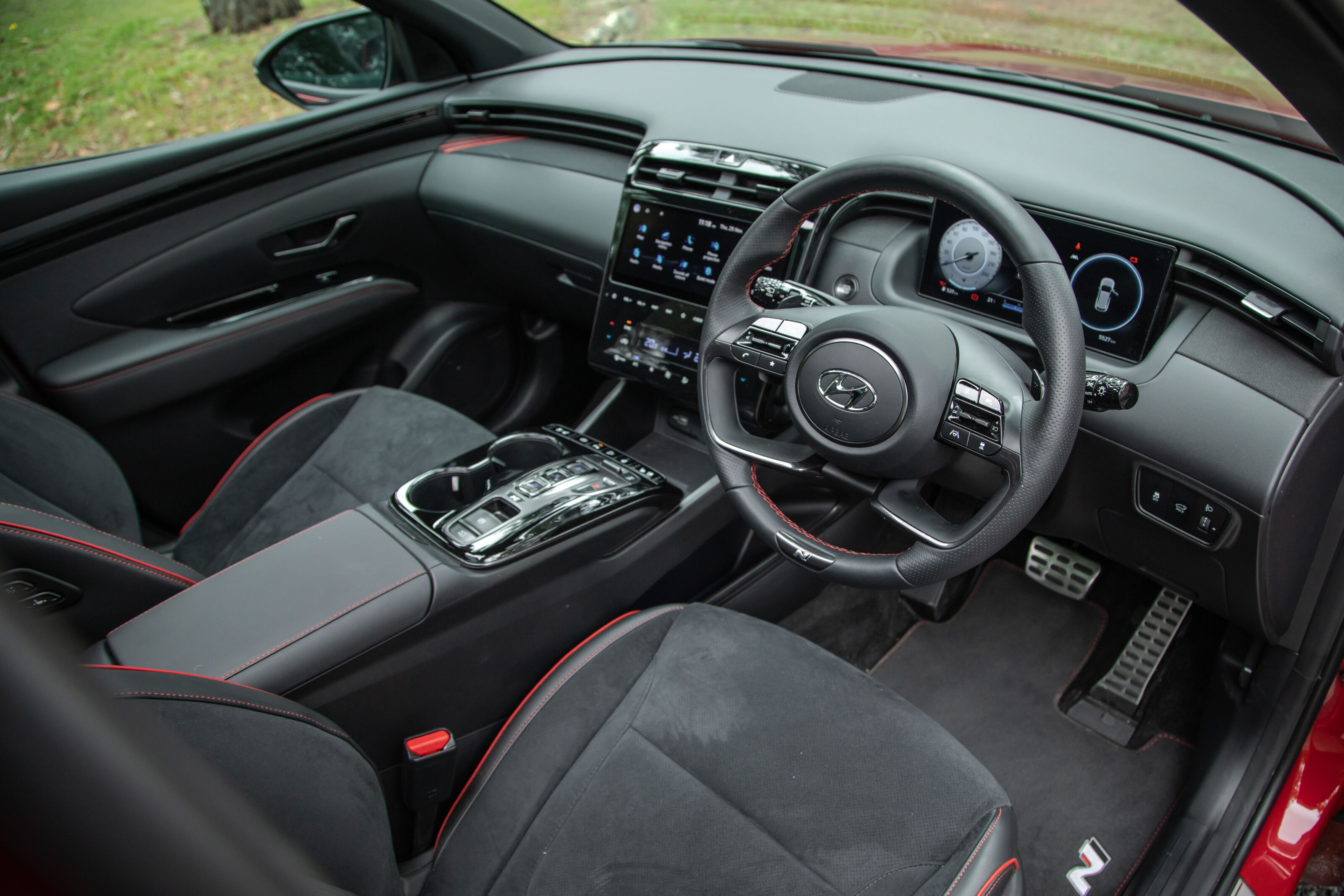
N-Line touches are obvious inside, too – most notably the highly tactile upholstery that combines suede cushions and seatbacks with leather-appointed bolstering. There’s a plastic N badge for the front seats.
There’s also the almost obligatory red stitching and an N-logo steering wheel with perforated grips borrowed from the Sonata N-Line.
Front-drive Tucsons again an N-Line gear knob as they have a regular lever where AWDs have a rotary controller.
As otherwise a Highlander model, this Tucson is heavily specced.
Comfort and Space
The sportier N-Line theme doesn’t upset the upmarket nature of the Tucson’s cabin, which combines tangible material quality with smart design elements – such as the continuous vent strips that blend into the central, square infotainment/HVAC dash console.
Where there are cheaper plastics, they’re slightly better disguised than they are in its twin-under-the-skin Kia Sportage GT-Line.
The fabric trim applied to parts of the dash and doors is reminiscent of the soft-touch material introduced on the Holden VF Commodore.
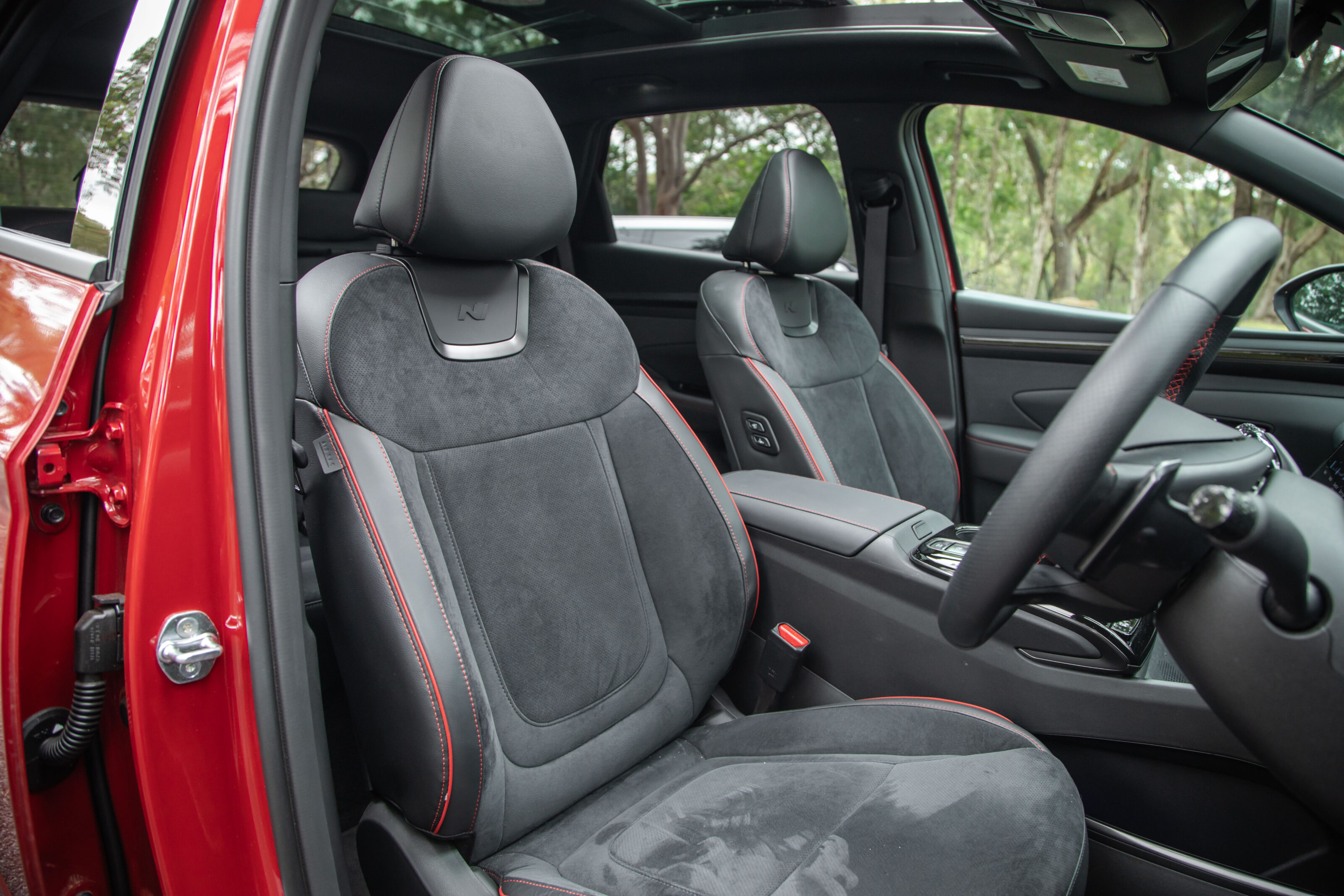
As with the Sportage, some longer-legged occupants may find the front-seat cushions shorter than ideal for longer trips. Limited seat-height travel also doesn’t allow for the lower position that some might prefer.
We found the front seats of the new Mitsubishi Outlander Exceed, which happened to be along for some photography, more comfortable generally, including much better under-thigh support.
There’s a good level of storage up front, including door cubbies that are better sized for bottles than those in the Sportage. One-touch windows feature front and rear, too, where they’re limited to the fronts on the Sportage GT-Line.
The sportier N-Line theme doesn’t upset the upmarket nature of the Tucson’s cabin, which combines with tangible material quality with smart design elements

The Highlander is the only trim grade where inductive smartphone charging is included. Its cabin also adds ventilation to the front seats (also heated from Elite upwards), position memory settings for the driver’s seat, heated steering wheel, auto-dimming rearview mirror, panoramic roof, and a fine-sounding Bose audio system.
A 10-inch centre touchscreen serves up an infotainment interface that takes little time to learn, has tidy visuals, and is responsive.
Maturely designed graphics are also presented in the driver display, which incorporates secondary blind spot assistance via a camera feed when indicators are used.

There’s no option to customise the layout, as with some rival driver displays such as the VW Tiguan’s Digital Cockpit – which includes the ability to feature a nav map so the central infotainment system can be used for other functions.
You also lose the digital speedo if you want other driving information in the central section of the display, not helped by the lack of a head-up display.
The Tucson’s significant size increase for this generation may lose the compact footprint but the benefit is significantly more rear legroom. The Highlander’s pano-roof doesn’t come at the expense of head clearance, either.
Its angled and scalloped bench, plus ventilation, ensures comfort isn’t supplied only by space.
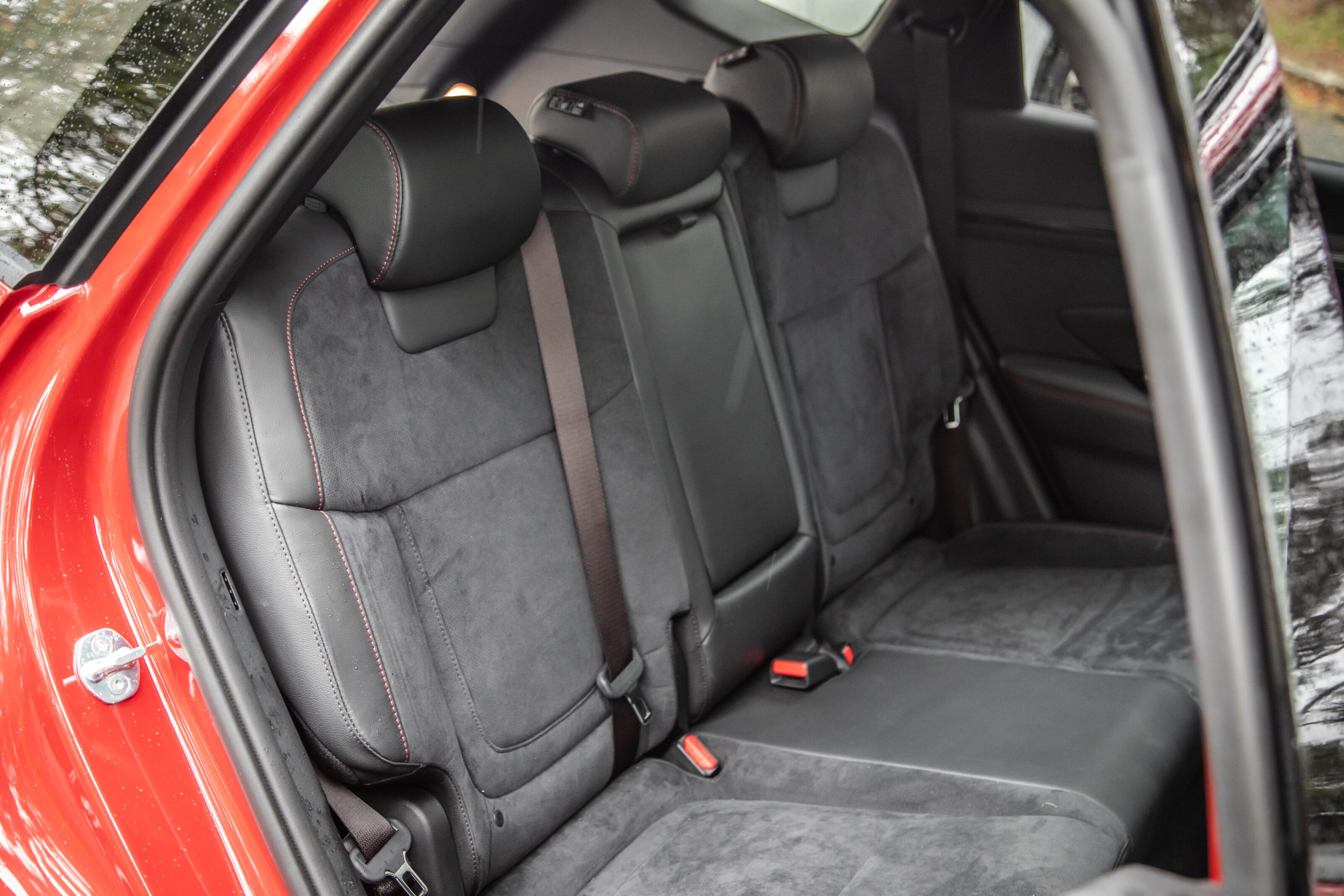
It has plentiful storage options, too, with dedicated bottle holders in the doors, net pouches, and a fold-down centre armrest with cup holders. Unusually, the Tucson goes with dual USB-A sockets where its Kia equivalent features USB-C ports.
Highlander spec provides an auto tailgate that will open if you stand in front of it for a few seconds with the keyfob on your person.
That accesses a large boot complete with full-size spare wheel under the floor and release levers for folding the 60:40 split seatbacks.
On the Road

All Tucson models come with a long list of driver aids, including useful features such as speed limit notification, adaptive cruise control and an alert that lets you know when a stationary car ahead has moved off.
Less helpful sometimes is the lane-keep system, which activates above 60km/h and has a habit of interfering unnecessarily with the steering. It can be switched off by holding a button on the steering wheel but is on as a default setting.
When off, the steering is easier to appreciate for its effortless and predictable responses throughout its arc.

The Tucson’s suspension wasn’t treated to the usual extensive tuning by Hyundai Australia’s local engineering team, and it is telling, if not leading to a deal-breaking situation.
While Hyundai’s mid-size SUV cushions occupants nicely from nasty potholes, the damping is less effective at isolating the cabin from small- to medium-size bumps or road joints. The Tucson can feel particularly busy on country roads.
It’s here, however, where the Hyundai’s well-sorted handling can be savoured.
The suspension wasn’t treated to the usual extensive tuning by Hyundai Australia’s local engineering team, and it is telling, if not leading to a deal-breaking situation

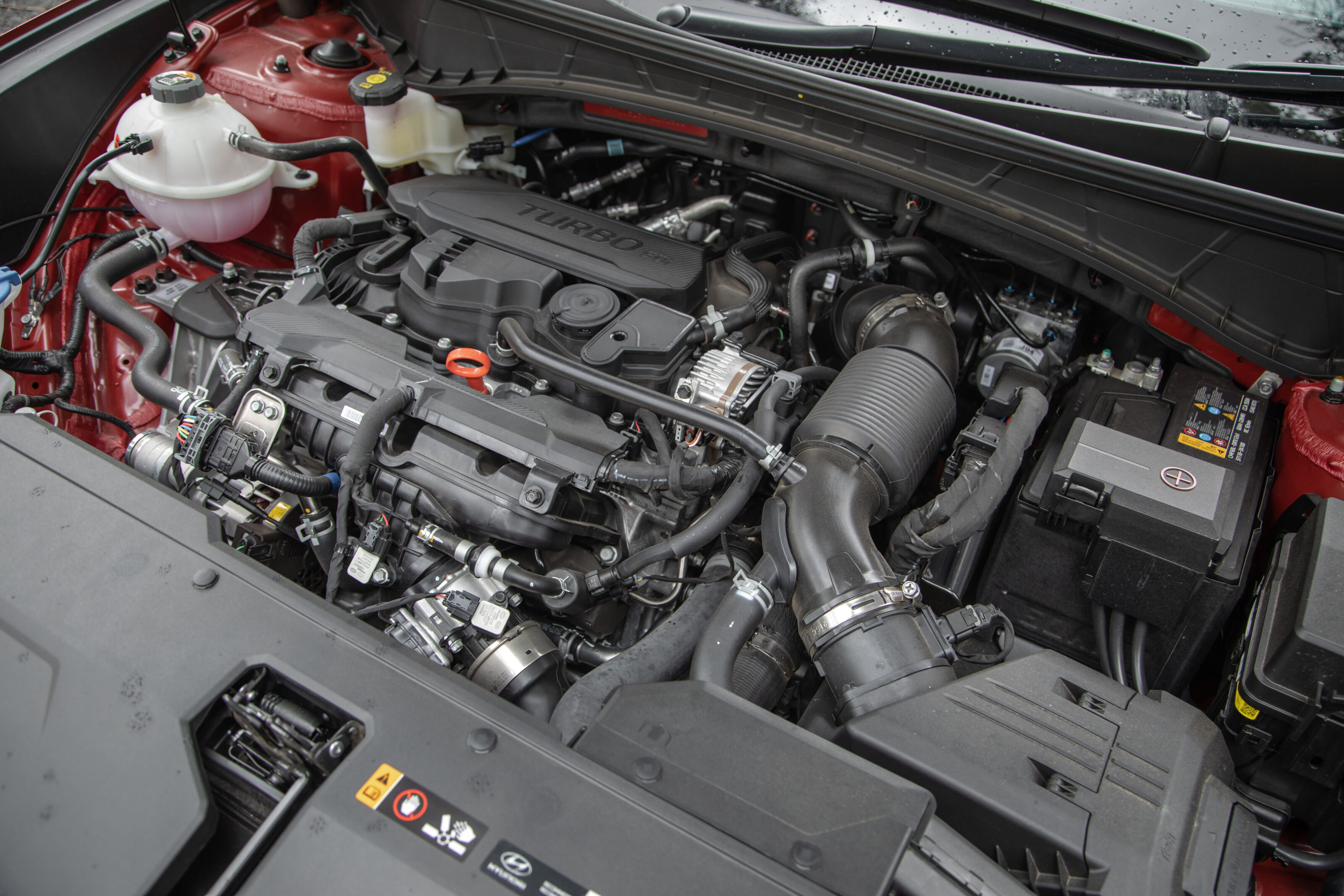
For all the changes for the fourth-generation Tucson, none were under the bonnet. A 2.0-litre petrol remains the sole choice for the base model, while Elite and Highlander are also available with a 1.6-litre turbo-petrol or 2.0-litre diesel.
The turbocharged four-cylinder petrol seems a natural pairing for a model wearing an N-Line badge.
Installed in a circa-1700kg Tucson that’s much heavier than an i30 N-Line hatch with the same engine, however, this SUV can’t replicate the hatch’s spirited performance.
At 265Nm, the maximum torque feels about 100Nm down from where it needs to be.
Several direct rivals serve up more punch for similar money, such as VW’s Tiguan 162TSI (162kW/350Nm) and Mazda’s CX-5 GT Turbo (170kW/420Nm). Or there’s the Ford Escape ST-Line AWD with outputs of 183kW and 387Nm for just $40,990 before on-road costs.
Hyundai does have a 213kW/422Nm 2.5-litre turbo petrol – fitted to the front-drive Sonata N-Line – and that model’s eight-speed dual-clutch auto would likely also be preferable to the seven-speed version fitted to the Tucson.
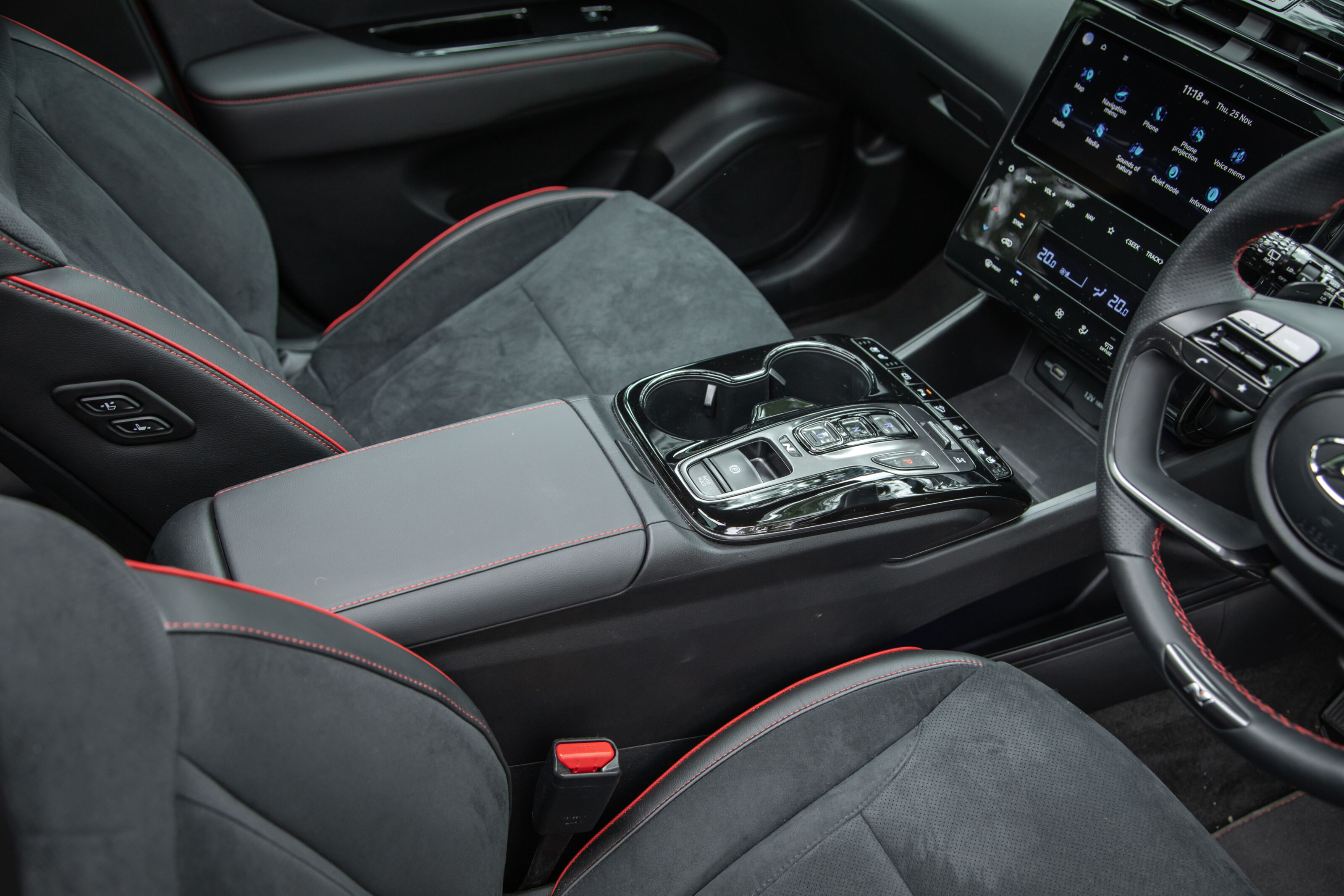
Slow at responding to increased throttle pressure, the seven-speed transmission can occasionally cause rev flare as it startles awake, while it’s slower at changing gears than is usual for this type of transmission, which pre-engages the next ratio.
The pick of the engines remains the diesel that offers both stronger pulling power and better efficiency. It’s a good return for just an extra $2100-odd in drive-away pricing.
Official fuel consumption for the turbo-petrol Tucson is 7.2L/100km, with 91 RON acceptable. Our trip computer indicated as high as 14.1L/100km during some suburban running, and down in the nines during testing that included some freeway and country roads.
Ownership

The Tucson comes with a five-year warranty. Service intervals are shorter for the turbo-petrol compared with the regular petrol or diesel – every 10,000km rather than 15,000km.
Each upkeep visit costs $319 for the first five years, peaking at $640 at the seventh before becoming cheaper again.
Service costs are slightly more expensive for the diesel.
Verdict

Choosing the N-Line option is more a question of styling preference than financial consideration – even more so for the Highlander. It doesn’t alter the Tucson’s status as a thoroughly modern and practical mid-size family SUV that’s just missing some suspension refinement and a convincing petrol engine.
We’d still like to see a proper, dedicated N-Line variant with something more potent in the engine bay, regardless of any potential future full-fat N model.
2022 Hyundai Tucson Highlander N-Line 1.6T specification
| Body | five-door medium SUV |
|---|---|
| Drive | on-demand AWD |
| Engine | 1.6-litre turbocharged 4cyl petrol |
| Transmission | 7-speed dual-clutch auto |
| Power | 132kW @ 5000rpm |
| Torque | 265Nm @ 1500-4500rpm |
| Bore stroke (mm) | 75.6 / 89.0 |
| Compression ratio | 10.5: 1 |
| 0-100km/h | Not available |
| Fuel consumption | 7.2L/100km (combined) |
| Weight | 1679kg |
| Suspension | front struts / rear multi-link |
| L/W/H | 4630mm/185mm/1665mm |
| Wheelbase | 2755mm |
| Brakes | 305mm ventilated disc front / 300mm solid disc rear |
| Tyres | Nexen Roadian GTX 235/55R19 |
| Wheels | 19-inch wheels (full-size spare) |
| Price | $51,000 plus on-road costs |
When the curtains dropped on the original Lotus Elise at the Frankfurt Motor show in 1995, it debuted the brand’s biggest step-change in focus since the revolutionary Type 75 Elite of the 1970s.
The Elise, named after the granddaughter of Lotus and Bugatti Chairman, Romano Artioli, was a watershed model for the niche British marque. At half the price of the Series 2 Elan, and a third of a new Esprit, the Elise would go on to become Lotus’ most successful model ever and sparked a lineage that would endure more than two decades and three vehicle generations.
Today, we cast gaze over the Series 1 cars, produced from 1996 as the genesis of the modern Lotus era, and arguably securing its survival to this day.
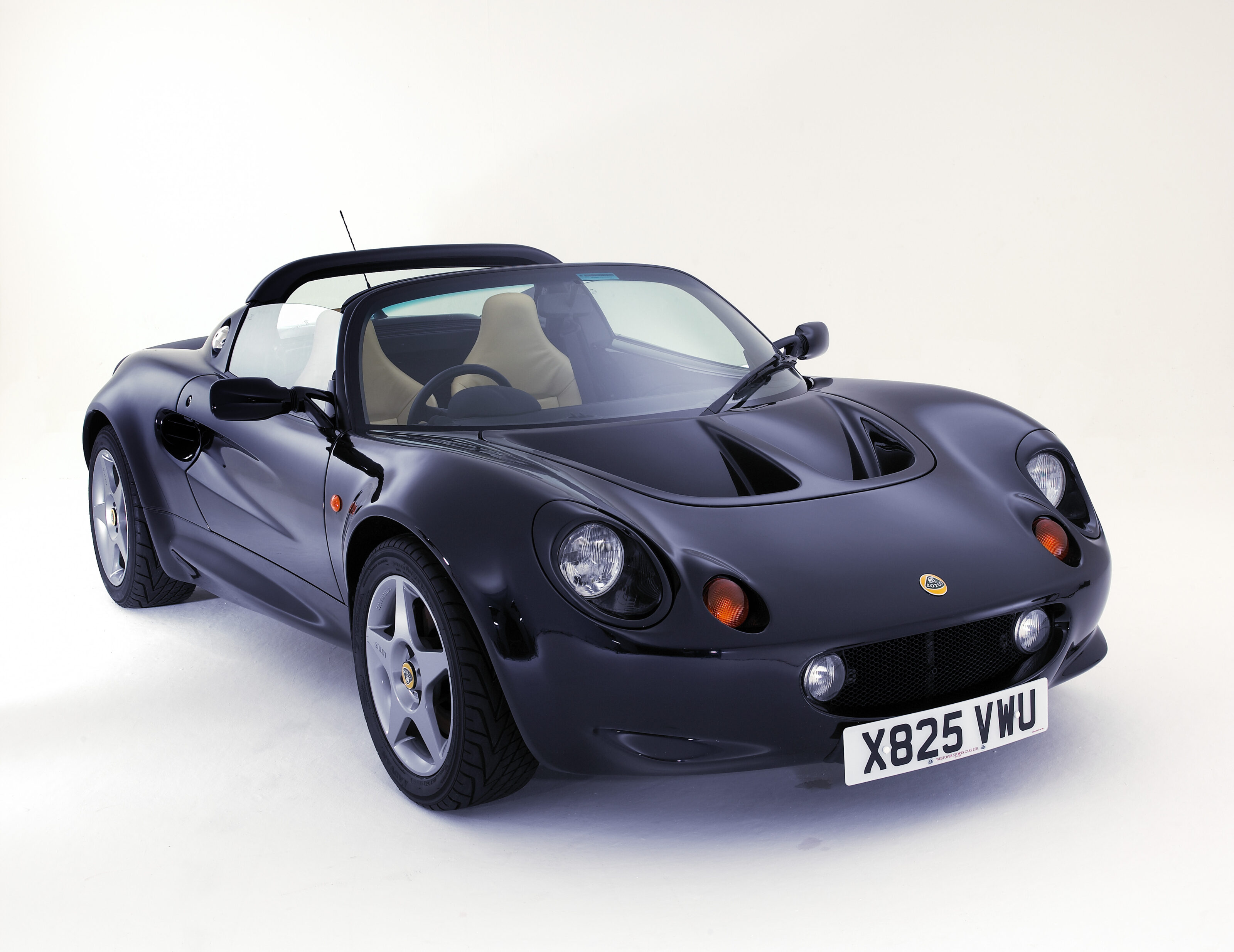
Beyond its lauded dynamics, the original Elise was a technical pioneer, too. With a kerb weight of less than 750kg, the Elise championed an innovative epoxy-bonded anodised aluminium chassis, over which a fibreglass body was fitted in place, suspended by double wishbones front and rear. The only places you’ll find steel within the car are the roll bar, galvanised rear subframe and bonded-in suspension mounts.
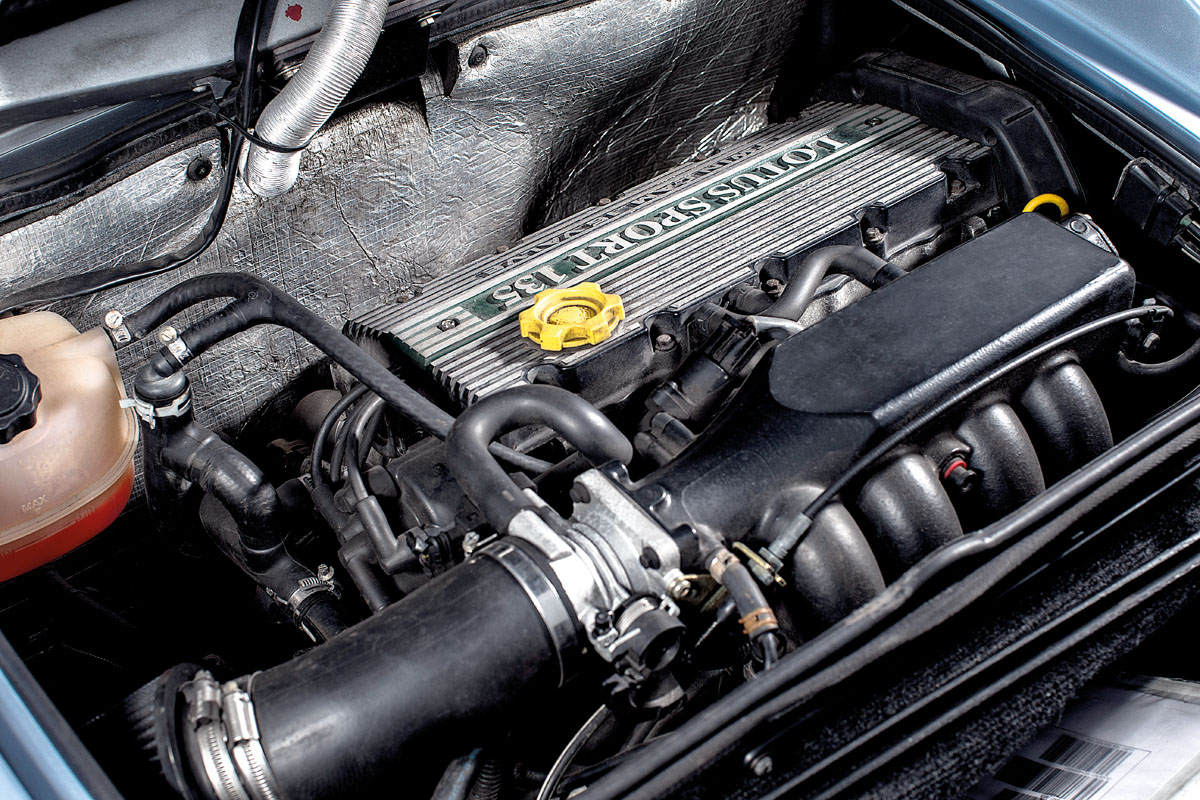
Rover 1.8-litre K-Series engines were initially adopted from the MGF and, despite their age, seemed well-suited to the racy Elise with their double overhead cams, 16 valves and aluminium construction. Mustering up just 88kW, the Lotus’ lithe kerb weight allowed for a brisk sprint of around 5.9-seconds from 0-100km/h and 100-0km/h in about 3.5 seconds.
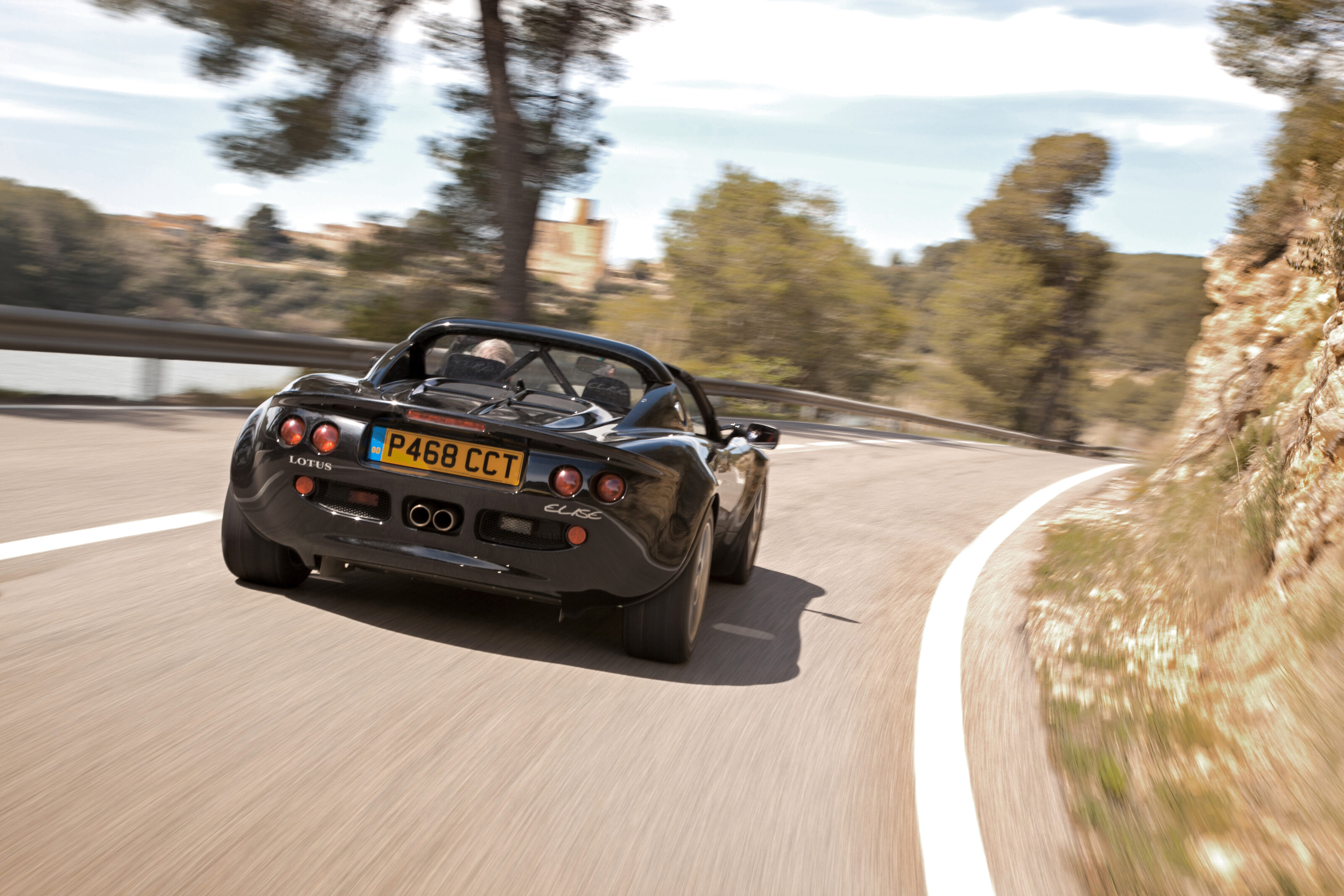
The Elise launched at a pivotal time for Lotus, with Malaysian carmaker Proton purchasing majority shares in 1996, following years of financial turmoil and various changes in ownership between Toyota, GM and a Luxembourg-based trust led by Artioli.
As enthusiasts increasingly seek to preserve a piece of analogue motoring under the twilight of internal combustion, the original Elise offers an incredible driving experience and great value in the context of a red hot used car market. It will be remembered as the most pivotal model in securing Lotus’ future.
Essential Checks
In The Market
There were myriad upgraded variants throughout production, along with more than a few limited editions. The general advice, however, is to buy an Elise primarily based on condition rather than outright specification.
The 111S introduced Rover’s VVC variable cam timing, lifting power to 107kW. The Series 1 Exige launched in 2000, based on the Elise with a fixed roof and featuring a VHPD (Very High Performance Derivative) version of the trusty 1.8-litre Rover K producing 132kW.
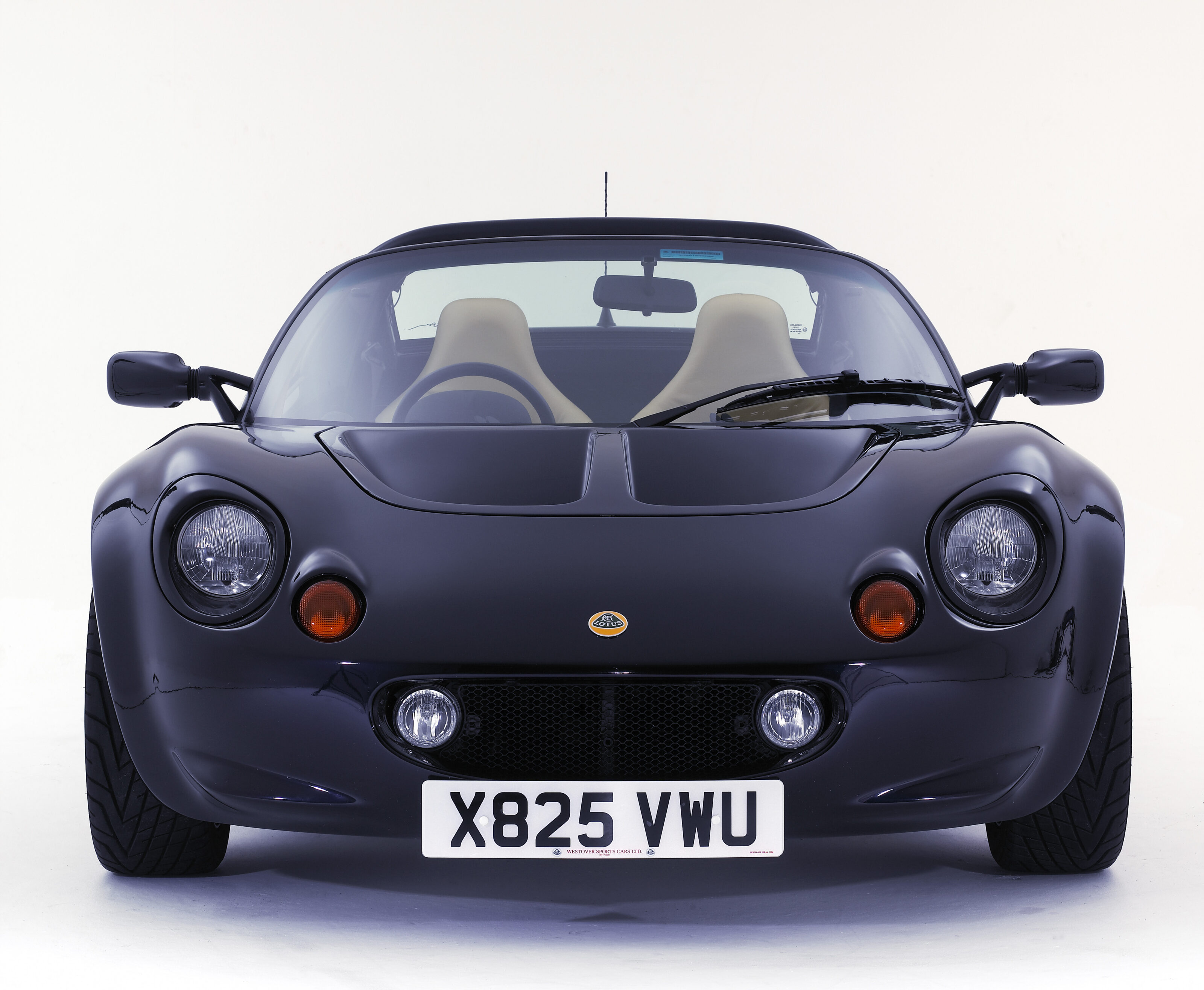
Racier Sport 135, 160 and 190 editions were also produced in limited numbers and are markedly rarer on the local market. It’s believed that just five Sport 190s were delivered to Australia.
A satellite factory in Malaysia, operated by Proton owners, produced Elise S1s from knock-down kits, painted at Hethel prior to export. Malaysian-built cars were exported to Australia and can be identified by a ‘B’ suffix located in the 11th position of the VIN, while original Hethel-built cars are stamped with an ‘H’.
Body & Chassis
Soft fabric roofs are flimsy and prone to breaking around the security mechanism, hardtop roofs are more durable but generate cabin noise and were never completely waterproof.
The bespoke nature of their fibreglass bodies also means that panel gaps can be inconsistent. When inspecting for prior accident damage, pay closer mind to the aluminium chassis. Much of it is visible from the interior, but also inspect underneath the car for ripples in the aluminium, and for corrosion on the steel rear subframe. Owner advice says to avoid cars with any frame or chassis damage.
Engine & Transmission
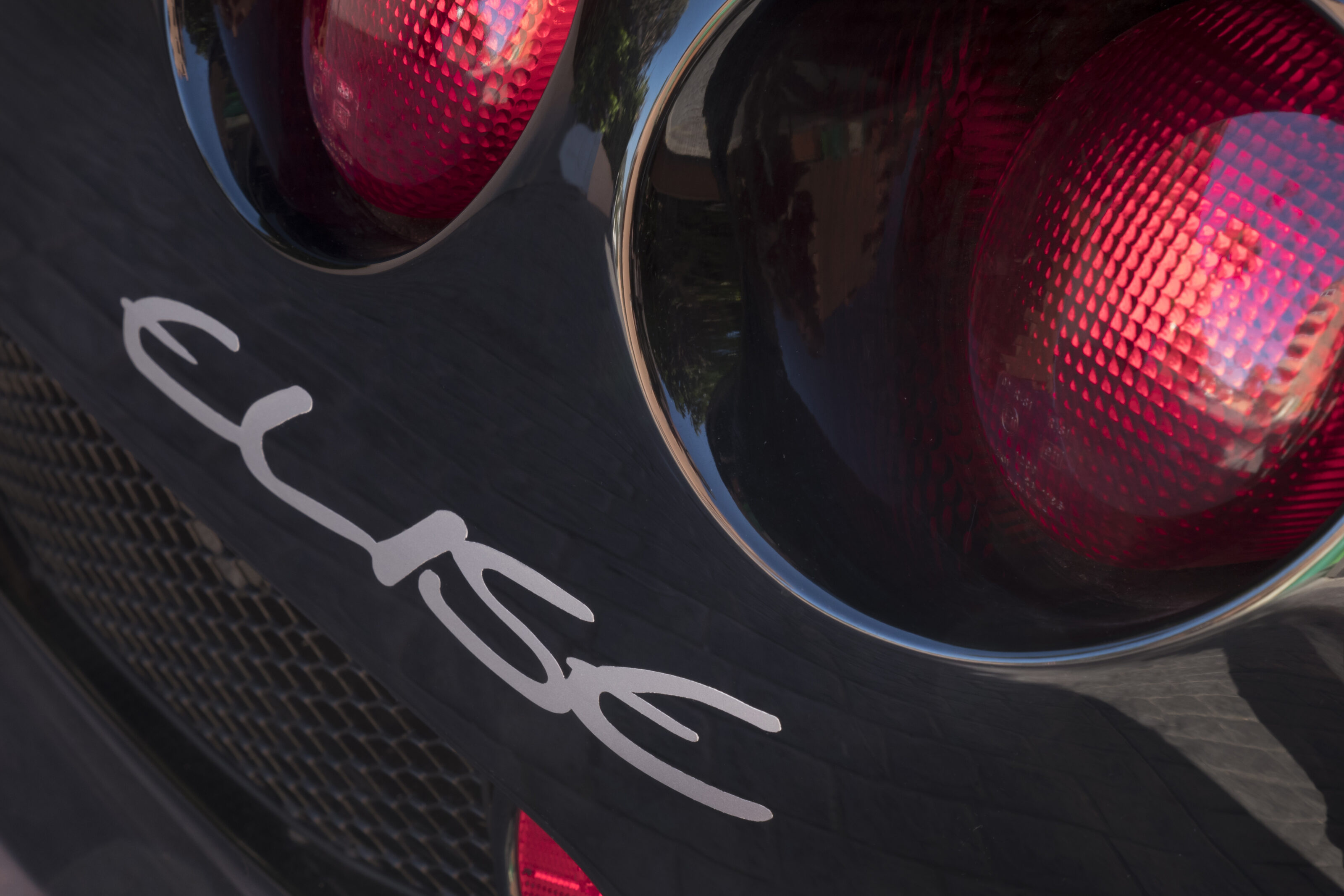
The Rover K-Series has a bad reputation for head-gasket failure, so check the oil filler cap for ‘mayonnaise’ which forms as water condenses (not a problem), or when water and oil mix (very much a problem). The small capacity water-cooling system can leak from ageing plastic radiator end caps, inspect for leaks before and after test driving.
Servicing should occur annually or every 15,000kms, while cambelt replacement intervals occur every 80,000kms (more frequently in sportier variants).
A poor gear shift action may signal worn linkages or synchromeshes that need replacing.
Suspension & Brakes
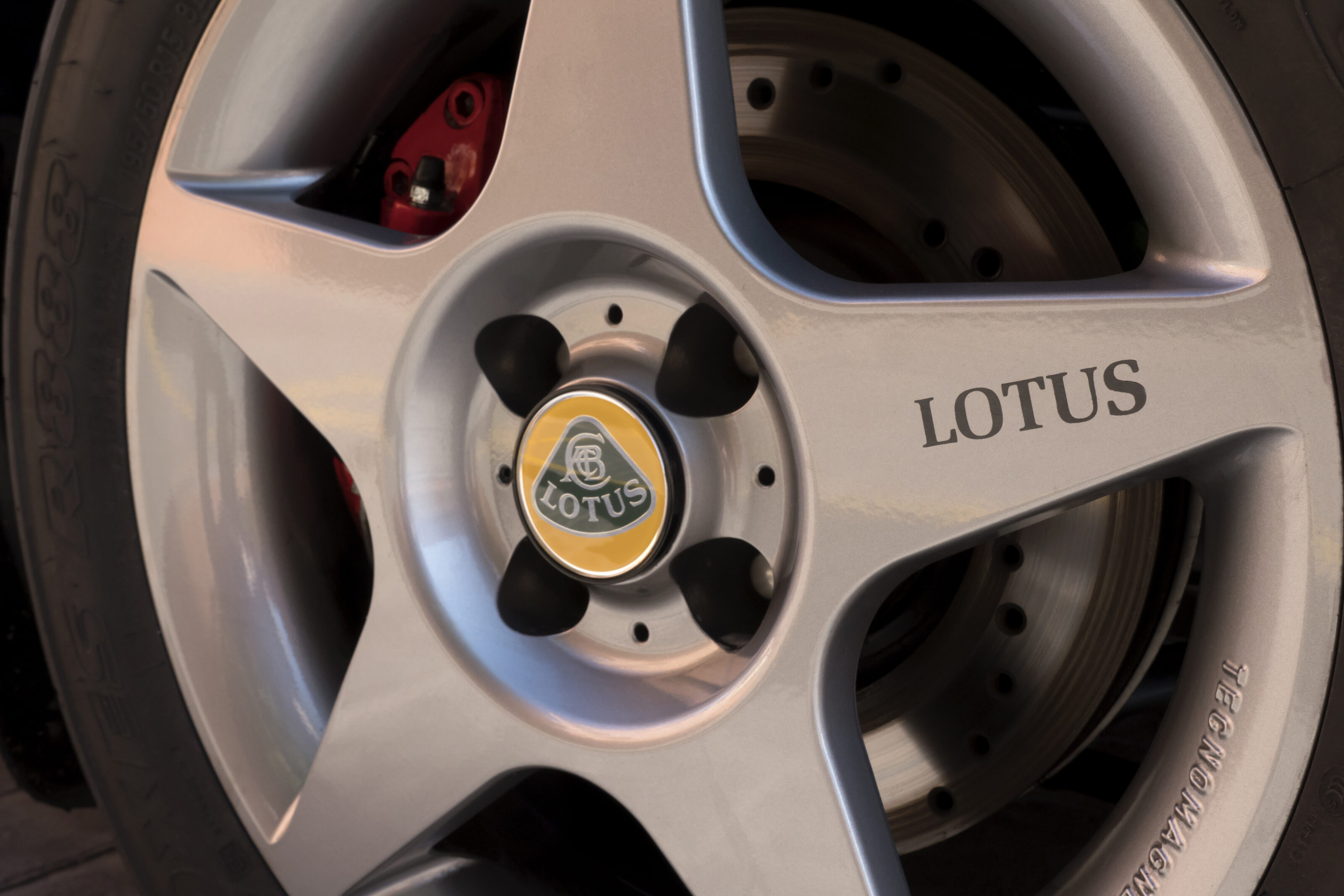
Rear toe links, ball joints and dampers are the most prone to wear, although the Elise is said to still handle well even with tired bushings.
The bespoke nature of the epoxy-bonded chassis means that any damage to suspension mounts will require significant and costly specialist repairs.
Interior & Electronics
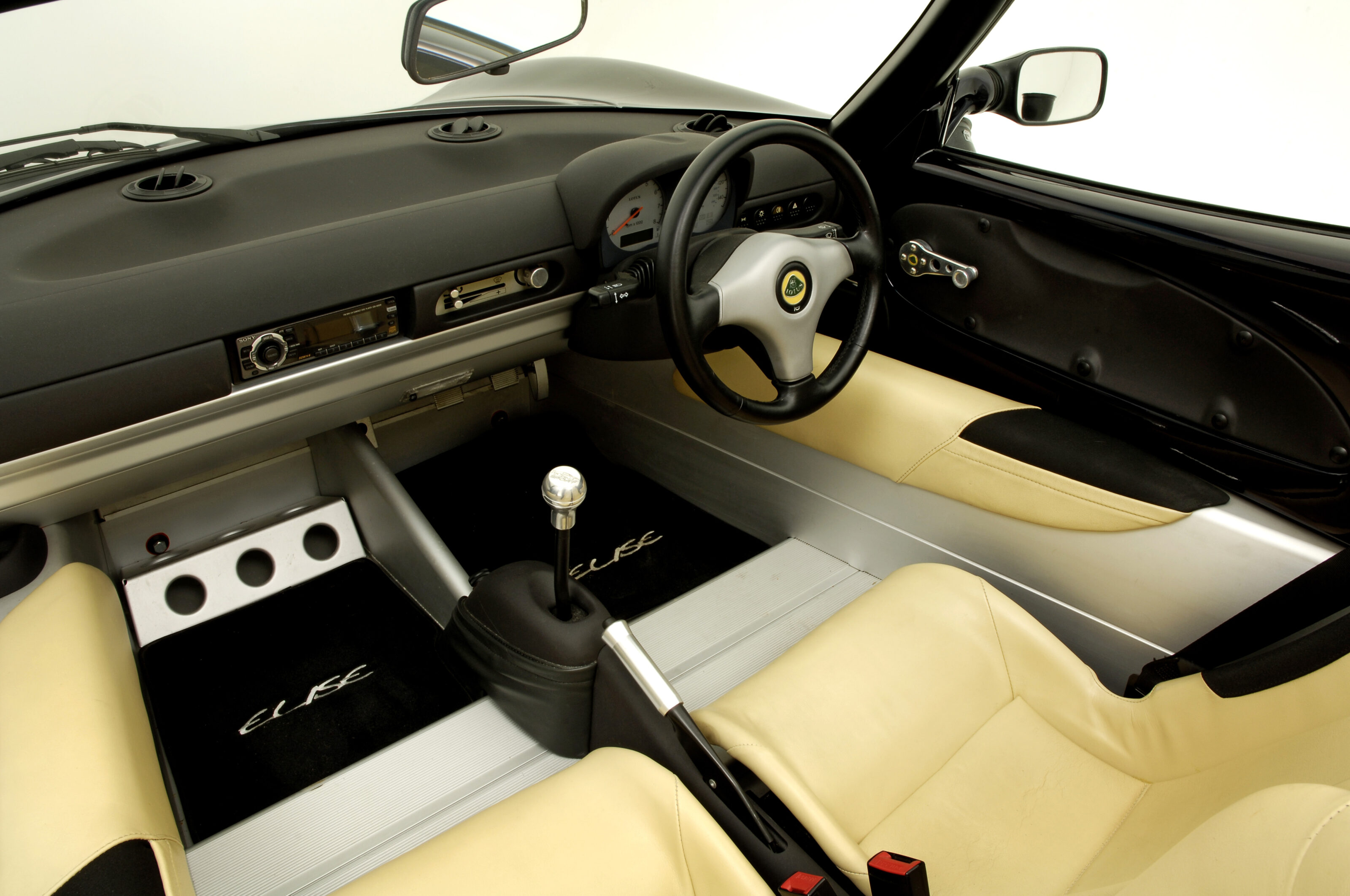
Air vents placed atop the dash source air from forward facing inlets. As a result, dust and small debris is prone to being spat at you within the cabin. Fine mesh over the air inlet vent helps minimise dust, although owners suggest that regular cleaning of your dashtop is simply inescapable.
Window winders can also grow stiff from ageing and warped runners. A usually simple fix is made far more complicated by the Elise’s bonded doors.
Lotus Elise S1 specs
Three other options you may consider
The Obvious: Caterham Super 7
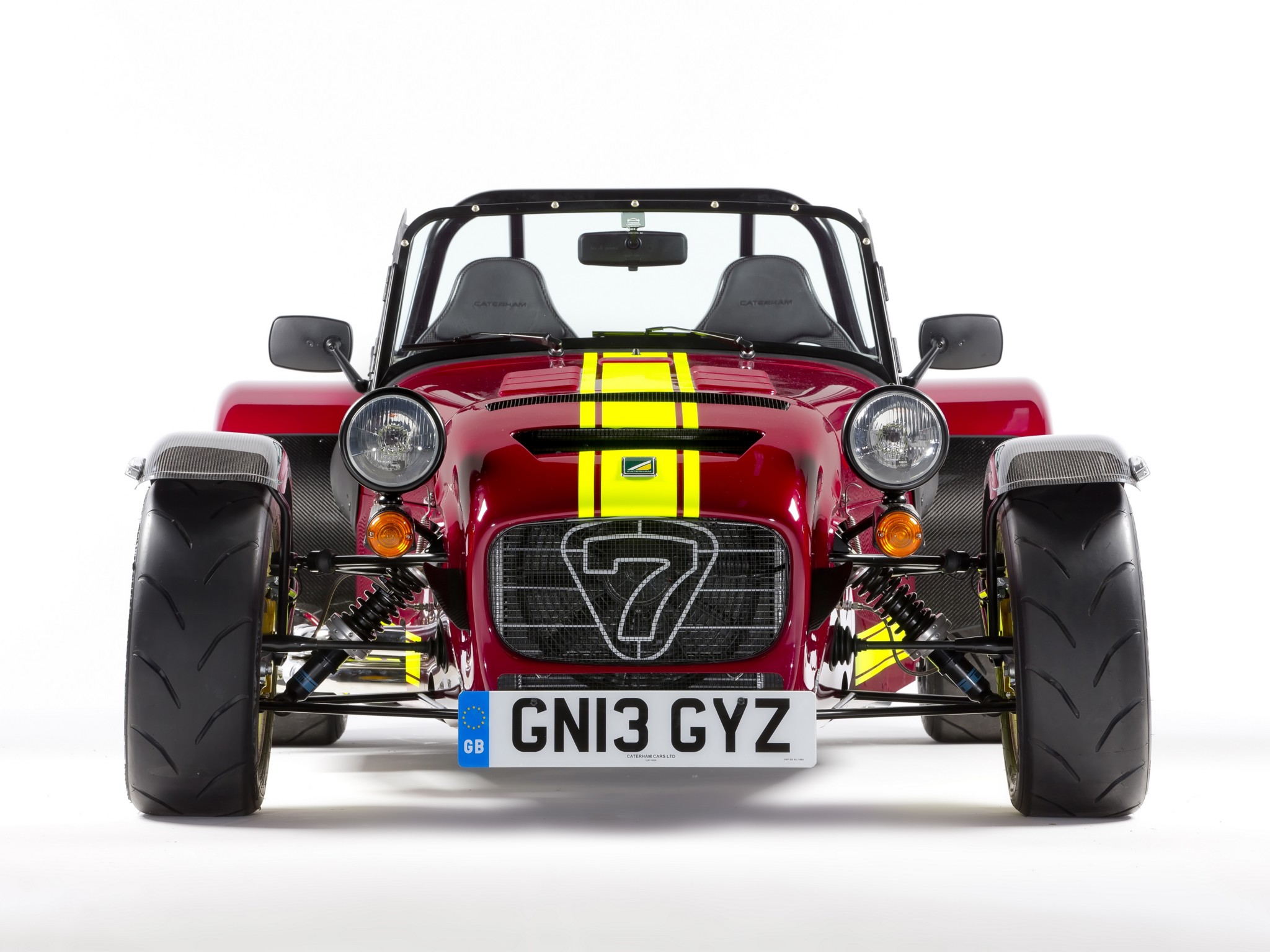
A faithful rendition of Lotus’ original Seven, built by Caterham since the early ’70s. They embody Colin Chapman’s original vision and are around $50k (when they appear).
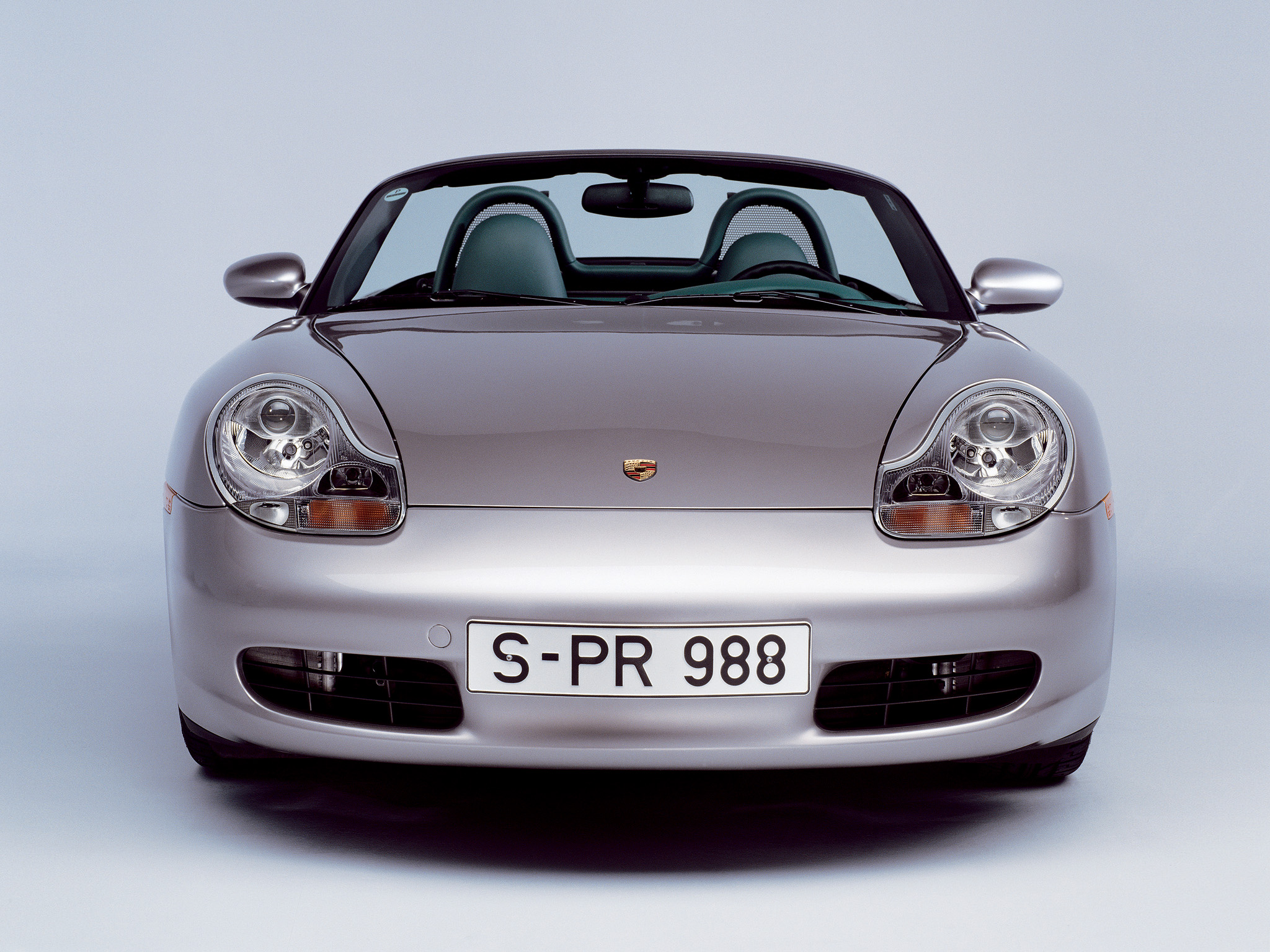
The Unexpected: Porsche Boxster 986/987 Boxster
Porsche’s early Boxsters offer a fantastic drive bundled with keen value. Early manual 986s begin at mid-20s while 987s can easily be had for $50k and change.
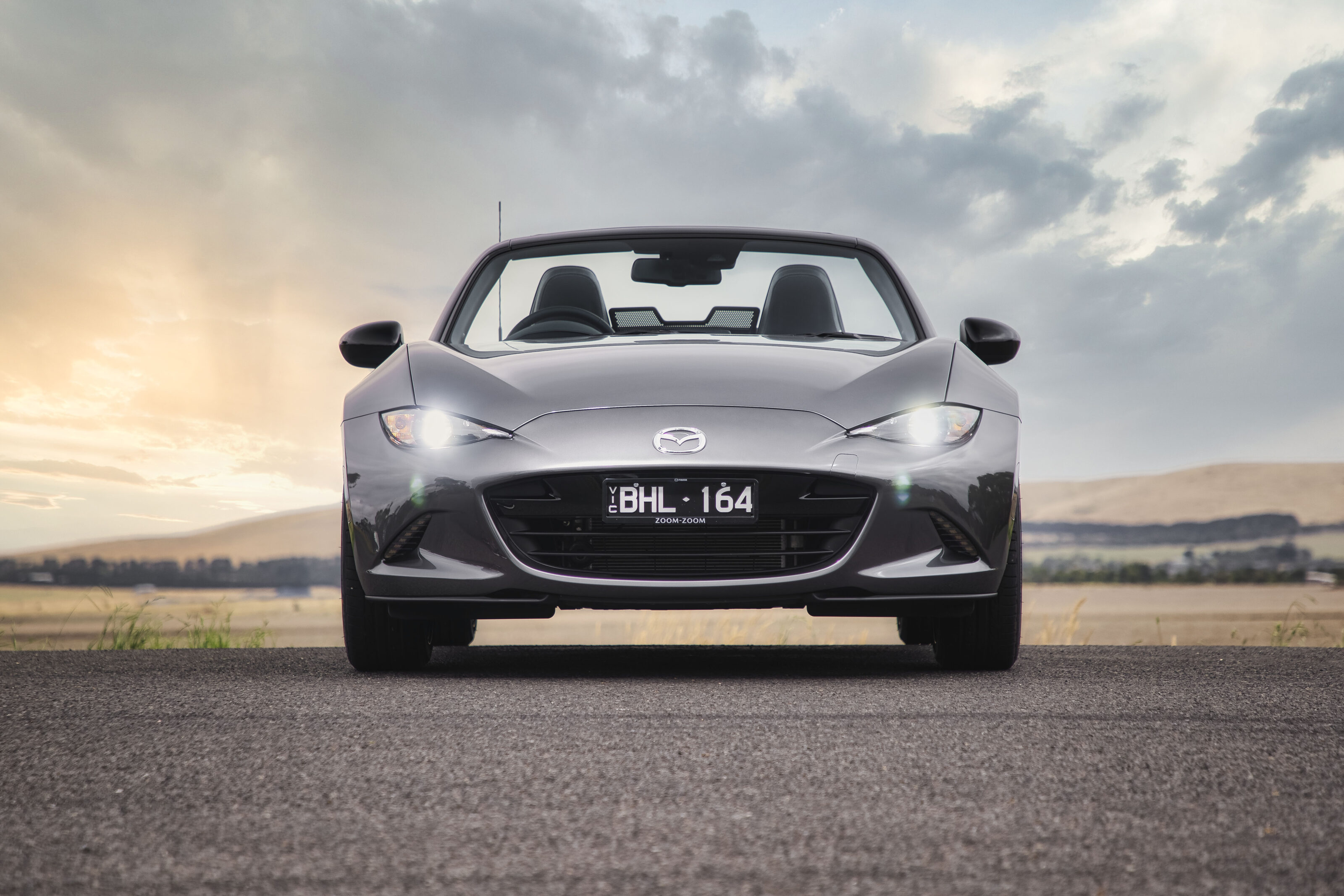
The Oddball: Mazda MX-5 GT RS
Want the driving experience and the new car experience? Ask Trent Giunco just why we love the MX-5 GT RS so much. It is absolutely sublime at any speed.
Snapshot
- Only two Skoda 1100 OHC Coupu00e9s were ever made
- The hand-crafted aluminium body was crafted from scratch
- The restoration marks Skoda Motorsport’s 120th anniversary
The Skoda Museum and Skoda Prototype Centre have joined forces to rebuild the classic 1100 OHC Coupé racing car.
The build has been created to mark the 120th anniversary of Skoda Motorsport.
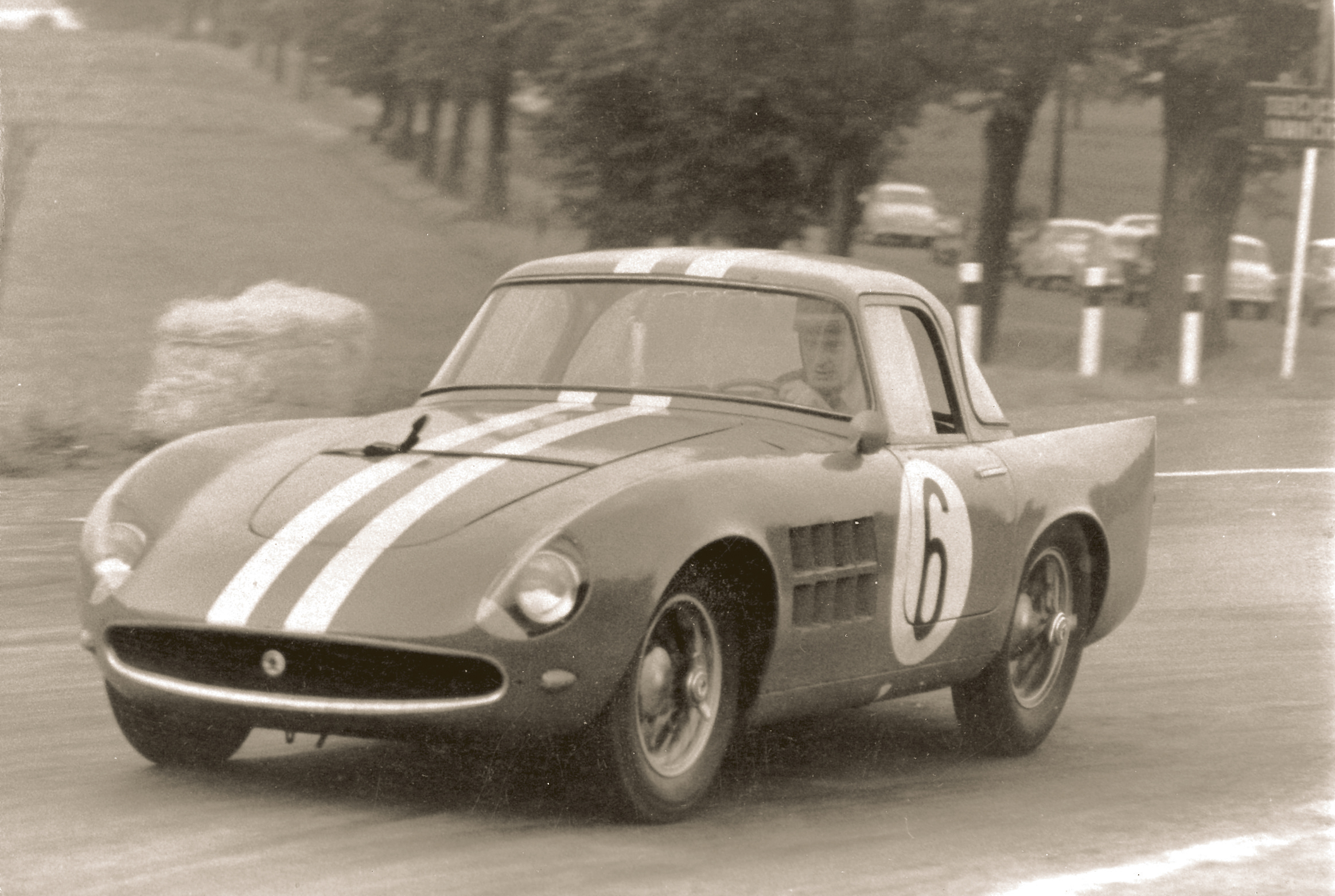
Based on the open-top 1110 OHC circuit racer, just two 1100 OHC Coupés were completed in 1959 and 1960, but their careers were cut short in 1962 due to regulation changes that led to the 1100cm3 racing category being abolished.
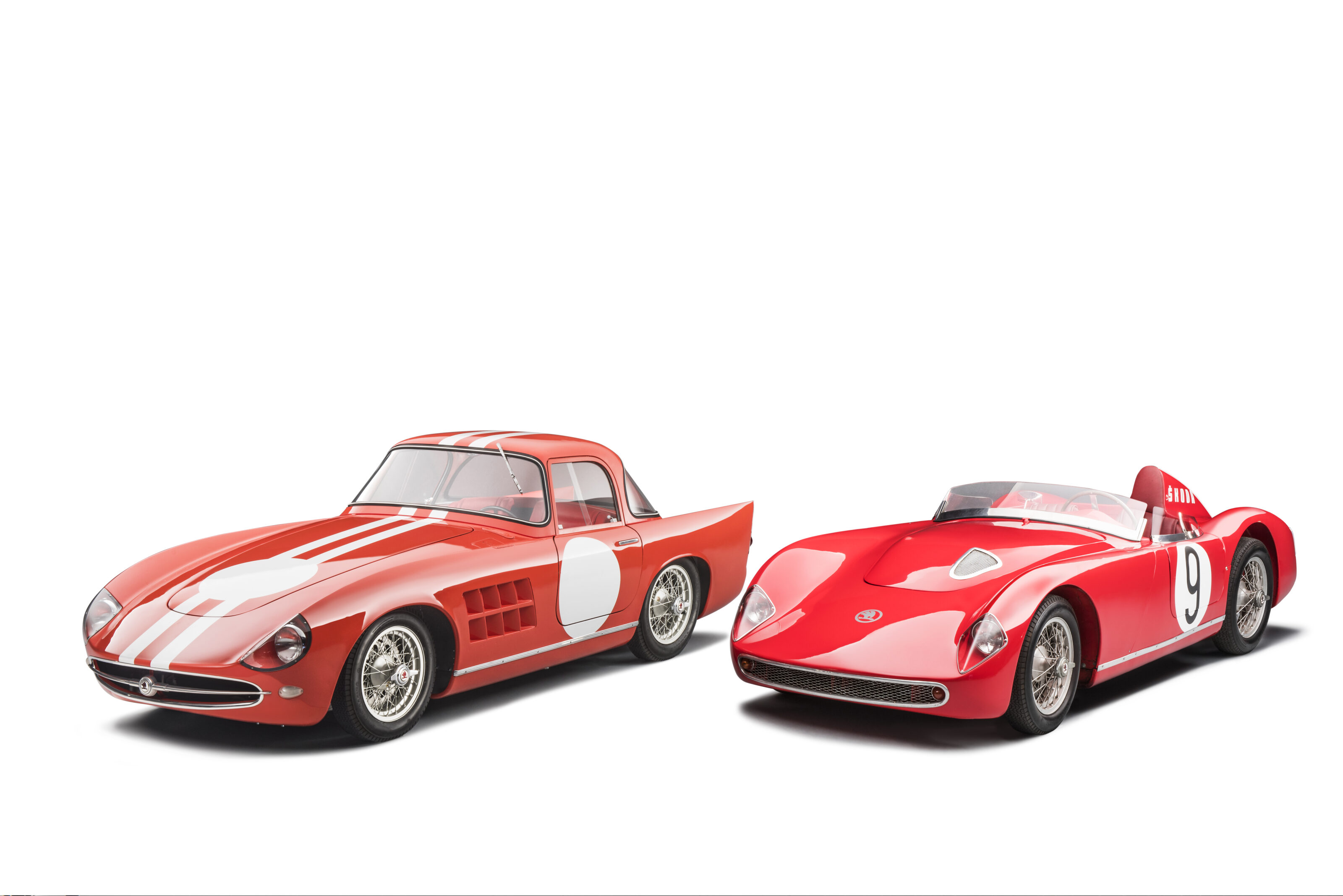
They were both privately sold in 1966 and subsequently destroyed in road accidents. However, several components survived, including the lightweight truss frame (which had been trisected) the front axle and other parts, with the Skoda Museum purchasing them from a private collector in 2014.
The museum also sourced one of the original engines, which was on display at a technical college.
With original drawings from the Skoda archive, the entire chassis was restored, along with a newly reconstructed radiator and fuel tank.
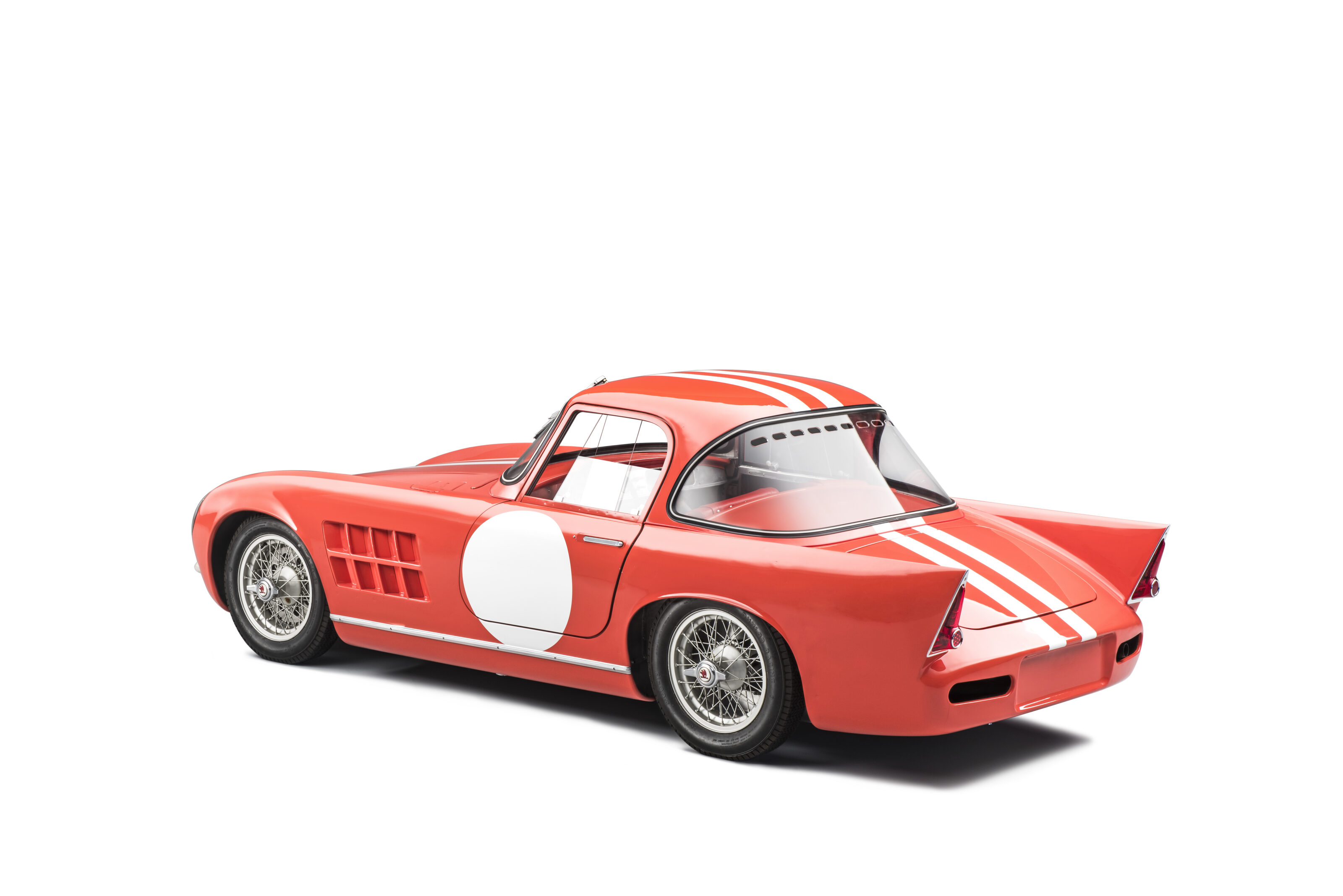
It was originally planned to display the Coupé remnants next to the museum’s open-bodied 1110 OHC. However, it was decided to reconstruct it as a fully functional vehicle instead.
Painstaking rebuild
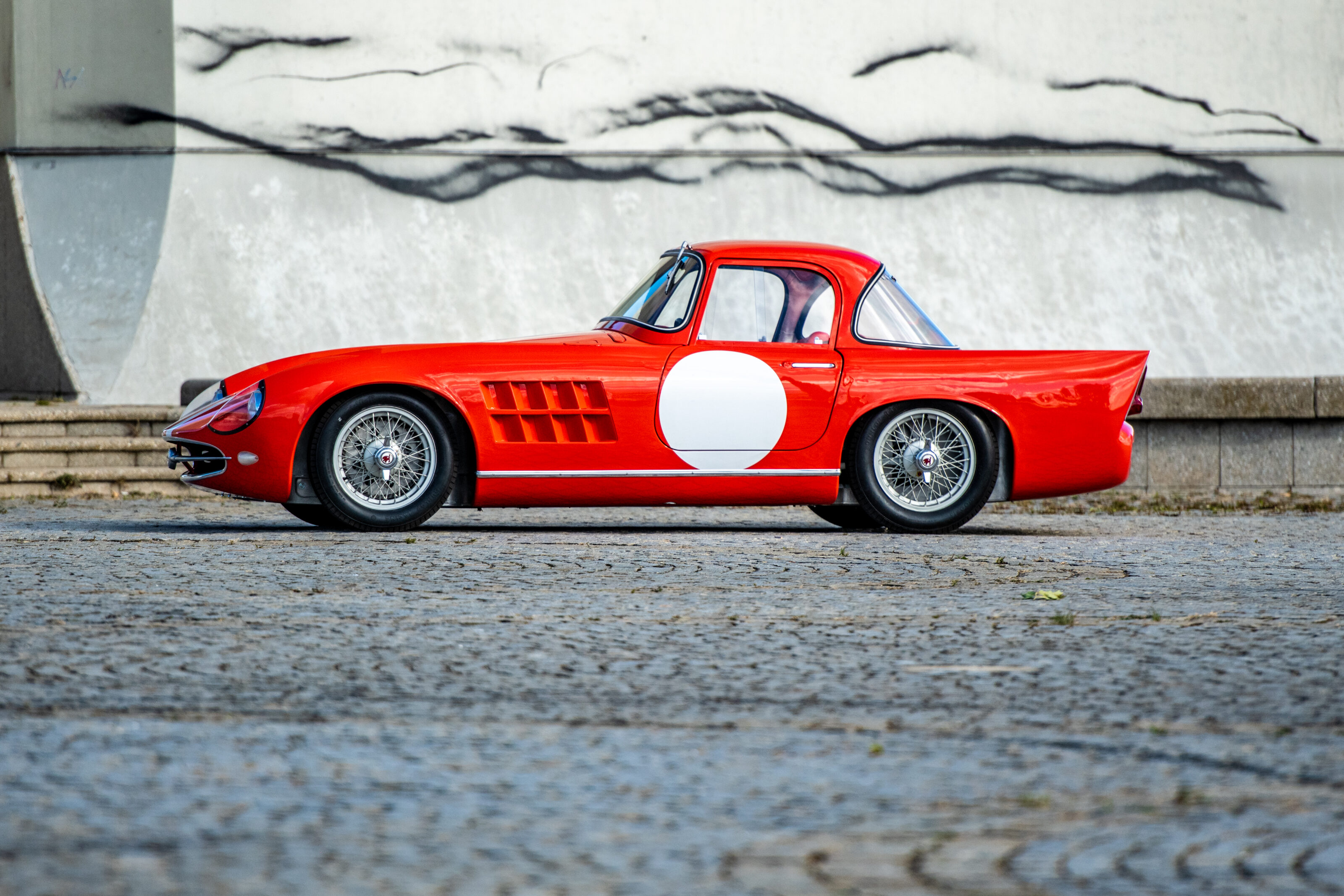
The project’s biggest challenge was to reconstruct the hand-crafted aluminium body from scratch. This saw the restoration workshop team work closely with colleagues from the Prototype Centre, who created 3D grid drawings based on scans of the original 1:1 scale 2D blueprints.
This allowed the experts to view the car from all sides in the virtual studio and, with the help of old photos and sketches, recreate the shapes of individual elements – such as the areas around the headlights and triangular tail-lights.
Miniature models were also created followed by full-scale mock-ups of the front and rear body corners.
After all the adjustments were approved, Skoda engineers began working on the partition walls, the wheel arches and other body elements.
The bodywork was created from 0.8 millimetre and 1 mm thick aluminium sheets, which were manually welded and beaten to shape during the reconstruction.
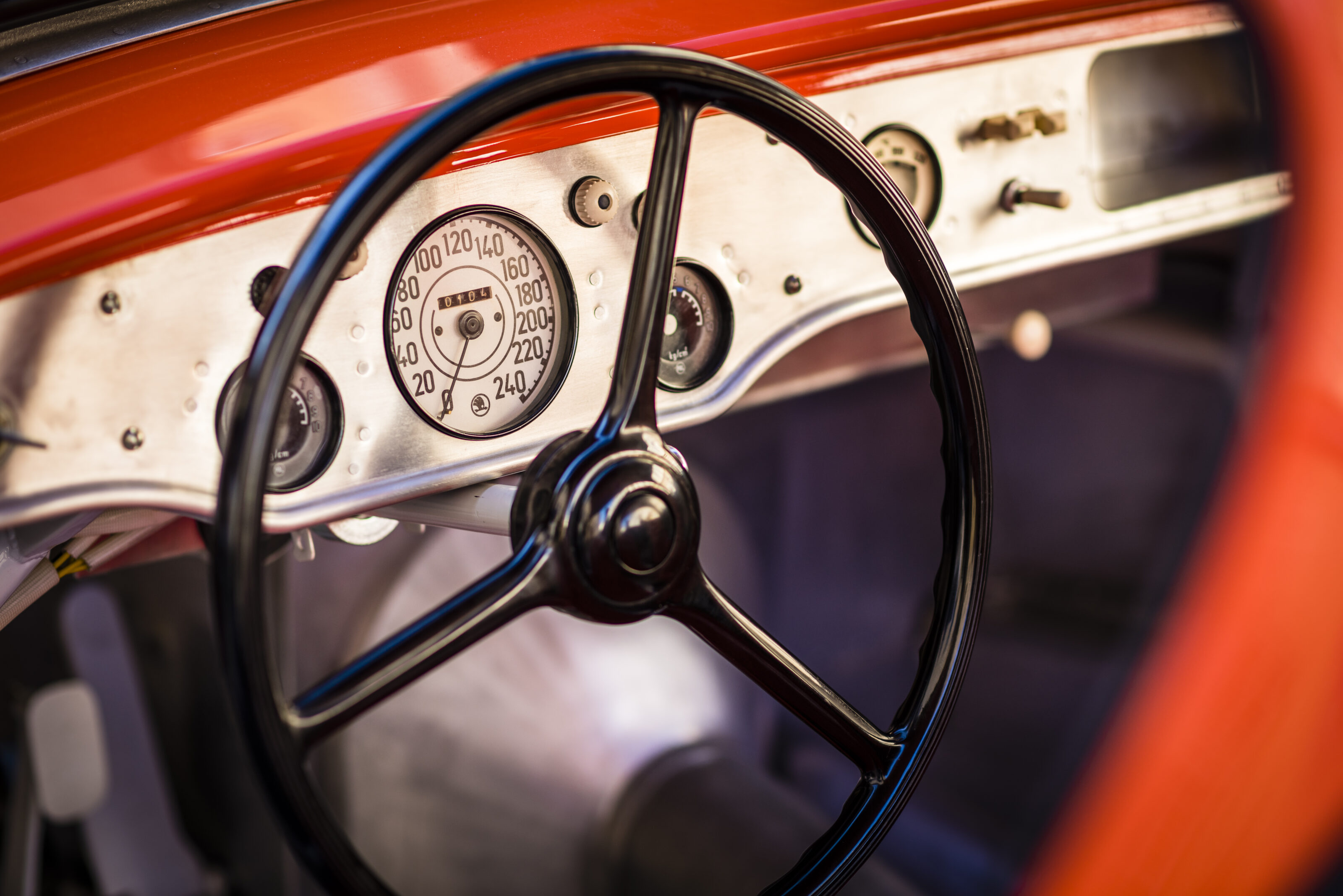
The elaborate project to completely reconstruct the vehicle also required numerous parts that were used in production Skoda vehicles at the time.
The outer door handles were the same as those on the Skoda 1200 ‘Sedan’, with some switches and the ignition lock also used in the Skoda 440 Spartak and Octavia.
The three-spoke steering wheel finished in black plastic was adopted from the Skoda Popular – the Czech carmaker’s bestseller during the pre-war period.
Skoda 1100 OHC Coupe in detail
The diminutive Skoda 1100 OHC Coupé took advantage of a lightweight, yet rigid, truss frame welded from thin-walled tubes.
A trapezoidal suspension, consisting of two triangular wishbones arranged one above the other, was used for the front wheels, while a coupling axle with trailing arms was installed at the rear.
The engine was located behind the front axle and, along with the assembly unit comprising rear axle differential and five-speed gearbox, achieved an almost ideal weight distribution and excellent handling.
Power came from a naturally-aspirated in-line four-cylinder engine. The cylinder and crankcase were made of aluminium and were derived from the Skoda 440 Spartak, as was the crankshaft.
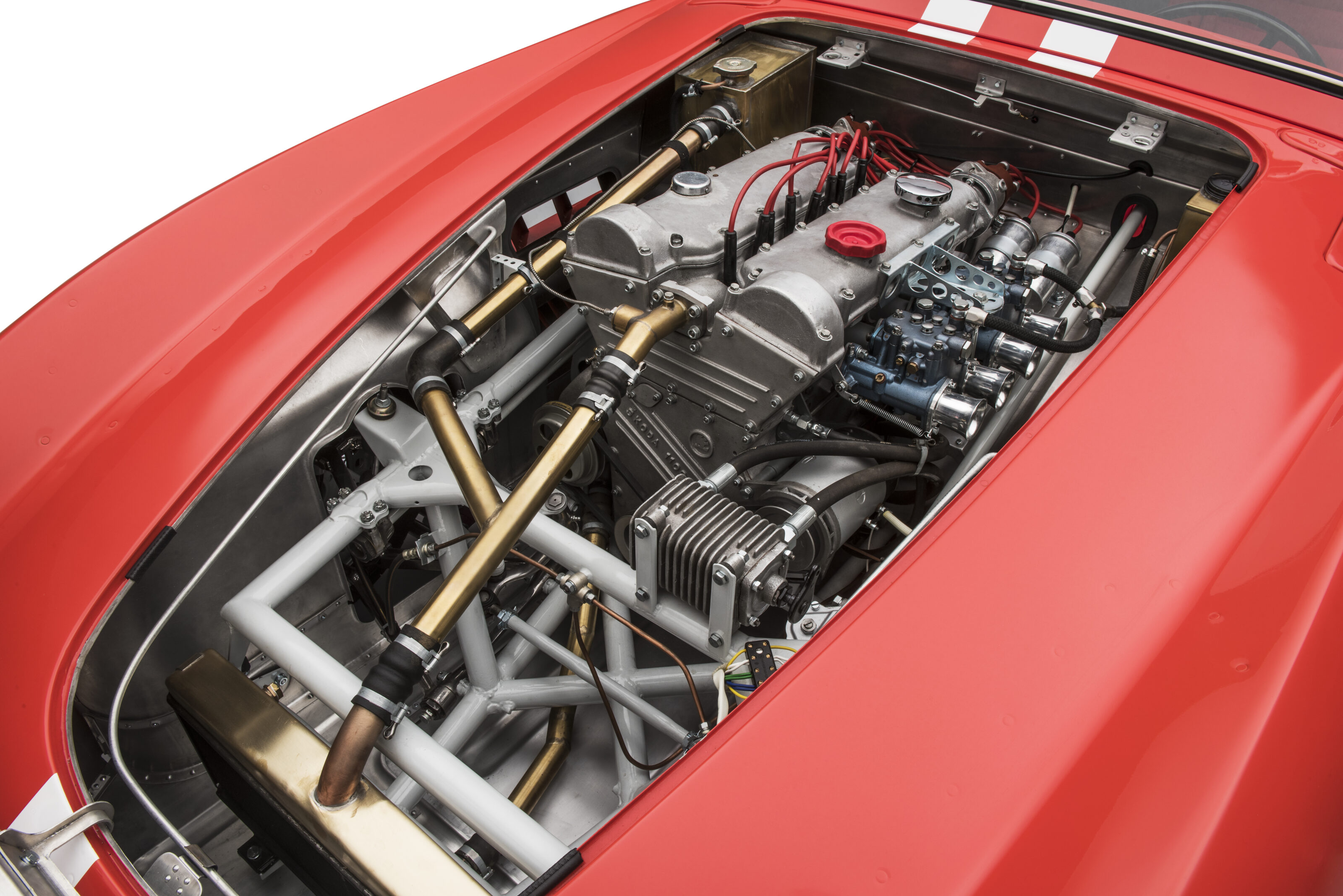
However, the racing car significantly exceeded the Spartak’s output of 29.4kW at 4200rpm thanks to its optimised combustion chambers and OHC valve drive, a compression ratio of 9.3:1, two carburettors, double dynamo battery ignition from Bosch, Scintilla Vertex magnetos and many other modifications.
The resulting output was 67.7 kW at 7700rpm, and it could reach up to 8500rpm in short bursts.
That’s not much power by today’s standards, but depending on the overall gear ratio, which could be adjusted according to the specific racetrack, the two-seater with aluminium bodywork and an unladen weight of just 555 kilograms reached a top speed of around 200km/h.
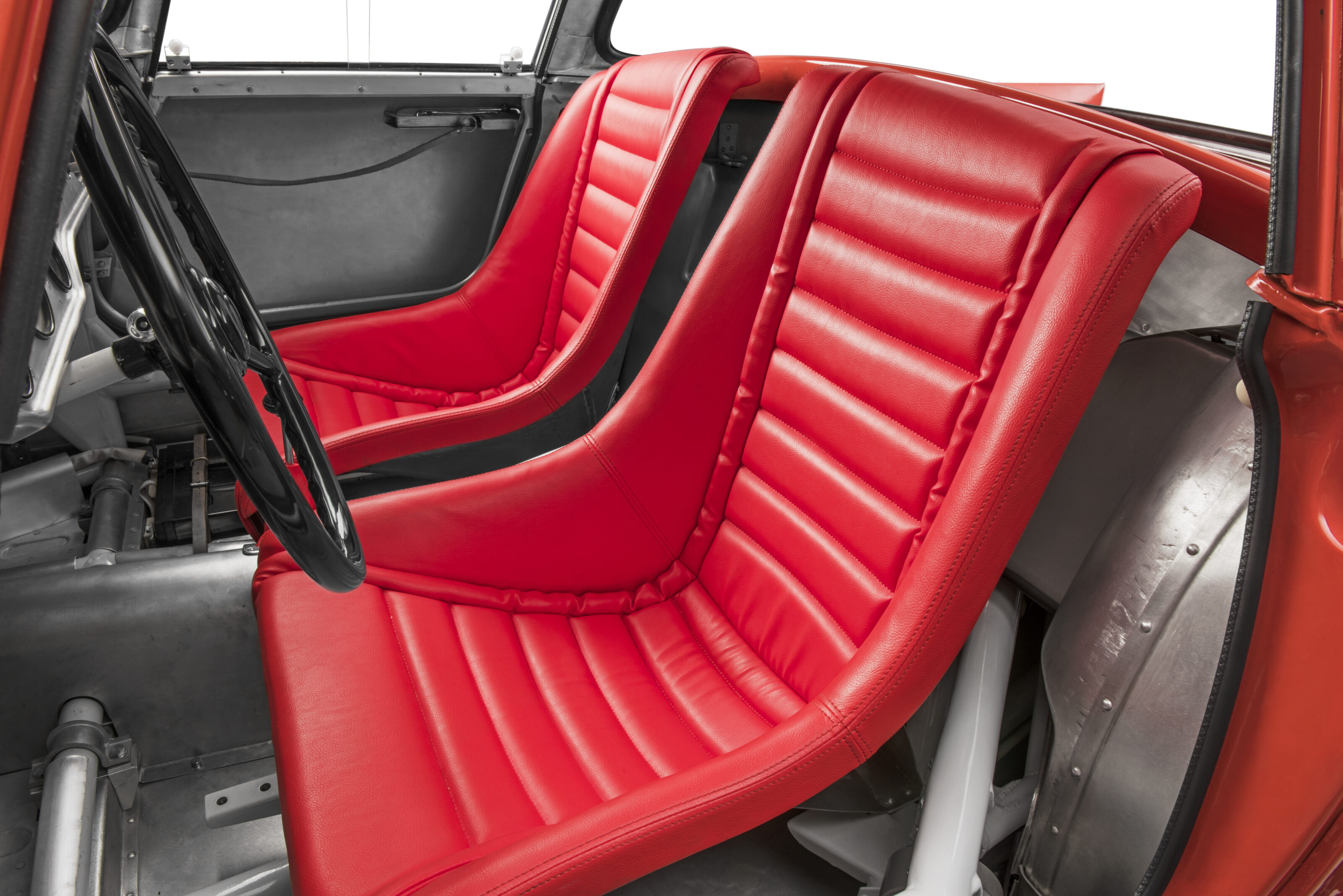
Dual-circuit brakes always ensured effective deceleration, and to reduce the unsprung mass, rear drum brakes were mounted on the differential gear.
Both coupés were originally clad with a bare anodised finish, but painted red during the 1962 racing season.
Click on any picture to see the full gallery.
