
Albert Biermann is doing wonders at Hyundai’s N division. Between the hotted up i20, i30, and Kona, the Korean performance division is on a roll. However, we think it’s time it tackles something a bit more challenging – and much bigger!
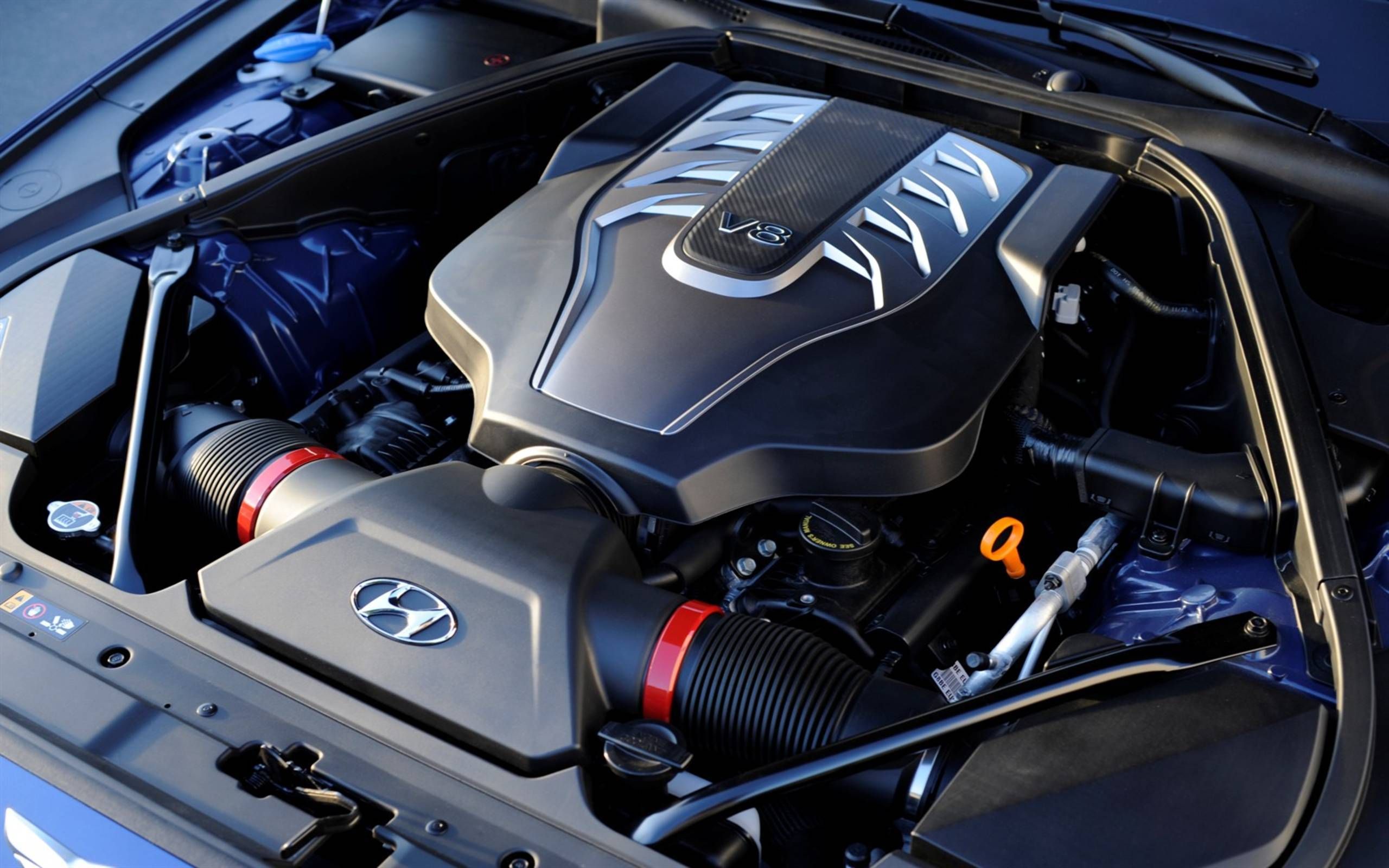
Behold our vision for the Hyundai Santa Cruz N. A supercharged V8 dual cab that will be the pride of Seoul.
The Santa Cruz debuted earlier this year exclusively for North America (boo!), and right-hand drive production is already a hard no from Hyundai. But that hasn’t stopped us envisaging a future where Biermann’s N division made things right with a performance variant.
Phrases like ‘solid rear axle’, and ‘body-on-frame’ would send shivers down most performance car enthusiast’s spine. But just because we desire a bit more driving purity doesn’t mean we should miss out on any potential performance dual-cab shenanigans.
So instead of following in the off-road Baja-style footsteps of Ford’s Raptor family and Ram’s Hellcat-powered TRX, the Santa Cruz N would play to its strengths on tarmac. Think of it as a Korean homage to the sports utes of old like the Dodge Ram SRT-10.
“The result would be a supercharged V8 dual cab that could harass super sedans and also haul modest cargo”
There are a variety of engines that would be suitable for this application, the most modern of which is the twin-turbo V6 Smartstream G3.5 T-GDi found in a number of Genesis models. However, we think that the old-school vibe of the Santa Cruz N deserves a more hardcore powerplant. That’s why we’d slide a supercharged version of the oft-overlooked Tau V8 under the bonnet.
Sports suspension, low(ish) profile rubber of the performance-orientated compound, a more vocal and angry exhaust system, some subtle body tweaks, and a series of deliciously ostentatious colours to choose from would be among key changes.
The result would be a supercharged V8 dual cab that’d harass super sedans while hauling modest cargo. Sound rad? We thought so as well. Read on to discover the finer details of how we’d make it all work.
Want to play fantasy product planner with us? Send your best ideas to [email protected]
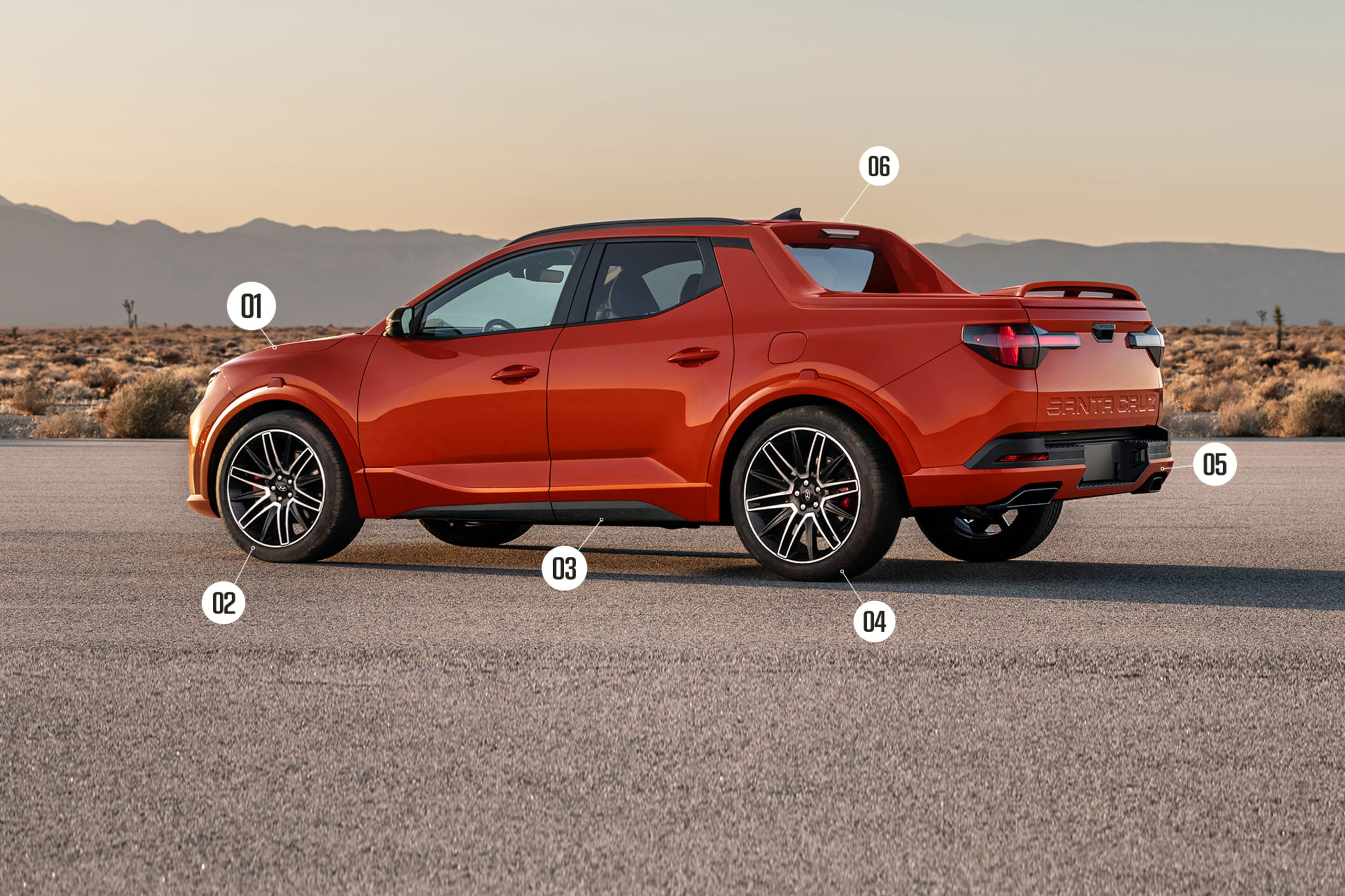
How We’d Build It
01. Tau About Town
The 4.6-litre supercharged engine under the bonnet would be a tweaked production version of the Tau V8 Hyundai showed at SEMA in 2009. Power would come in at 350kW/600Nm, thanks to a screw-type supercharger and water-to-air intercooler. Cylinder deactivation will help keep fuel consumption (relatively) in check.
02. Rubber Down
Continental SportContact 6 XL rubber will give the Santa Cruz N a sure-footed stance and confidence in mixed conditions. Power will be sent to all four wheels at all times, while Hyundai’s new eight-speed dual-clutch ’box will change gears.
03. Track Backed
The Santa Cruz N would be more comfortable on a race track than the Mexican peninsula thanks to suspension fine-tuned on the Nürburgring (because the James May idiom about it ruining cars is patently false).
04. Rings of Steel
A two-tonne kerb weight will require some serious stoppers. N division will demand not only sizeable drilled rotors, but six-pot calipers up front (four out back), with thicker pads.
05. Scream ‘n’ Shout
The Santa Cruz N would offer plenty in the sound department thanks to a full sports exhaust system as standard. Subtle isn’t in the remit for a V8 sports ute.
06. Neck Breaker
On the topic of subtlety, the Santa Cruz N will be available with a veritable rainbow of colour options. The Tau V8 and exhaust system will ensure you a heard before seen, but only just.
Bentley has made a new addition to the Bentayga SUV’s option list, in the form of 22-inch wheels fashioned from carbon fibre.
The luxury UK carmaker says the 10-spokes are the largest of their sort ever fitted to a production car. Developed in conjunction with Italian manufacturer Bucci Composites, each weighs six kilograms lighter than an alloy equivalent, cutting a total of 24kg from the Bentayga’s unsprung mass.
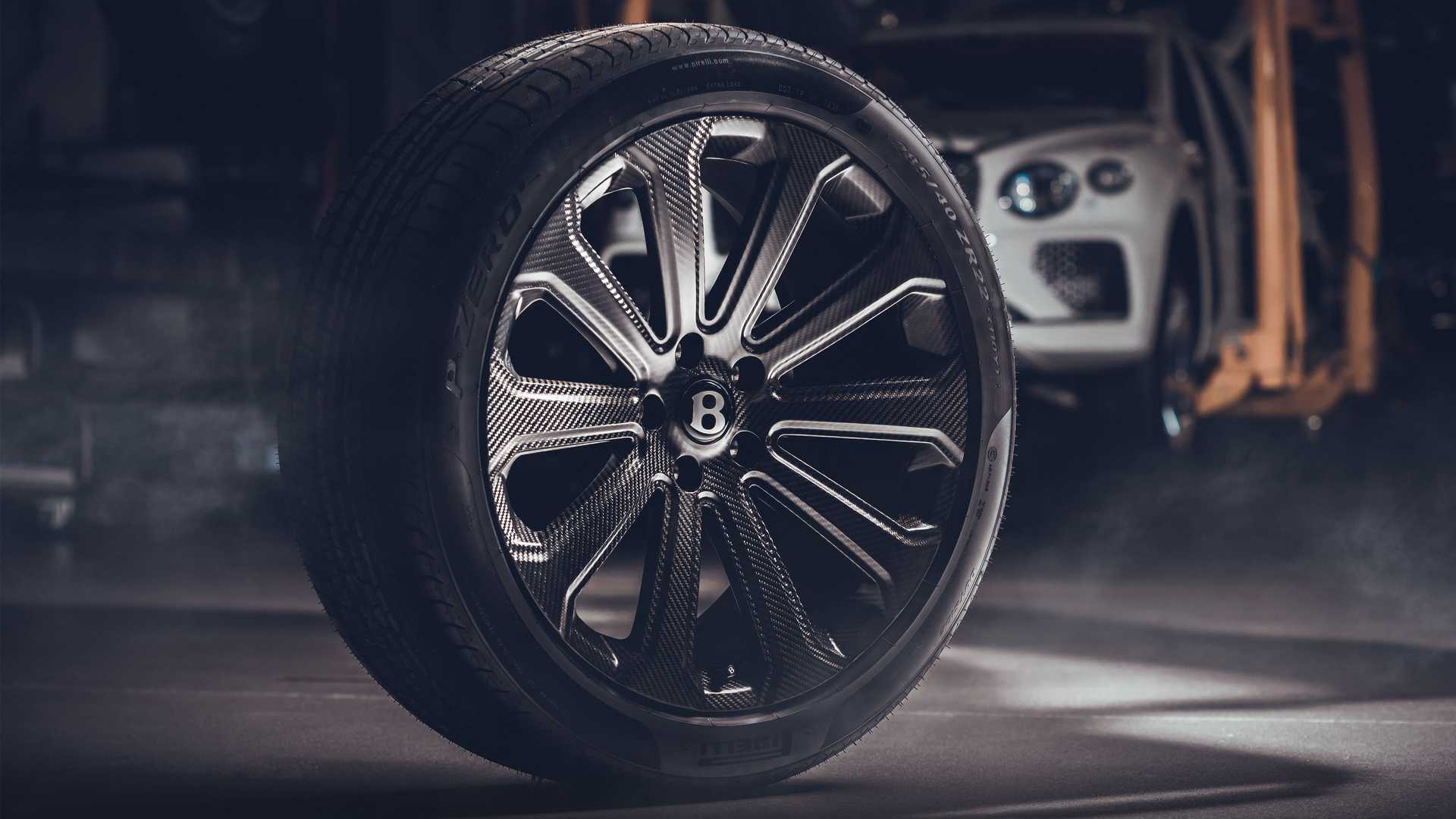
The design was comprehensively tested by German inspection group TÜV, which involved biaxial stress and impact testing to ensure safety and reliability on a variety of demanding surfaces. According to Bentley, the engineering process took five years in total, and was capped off with testing on the iconic Nürburgring circuit.
Bentley claims the carbon fibre wheels offer a number of benefits over traditional steel or aluminium designs.
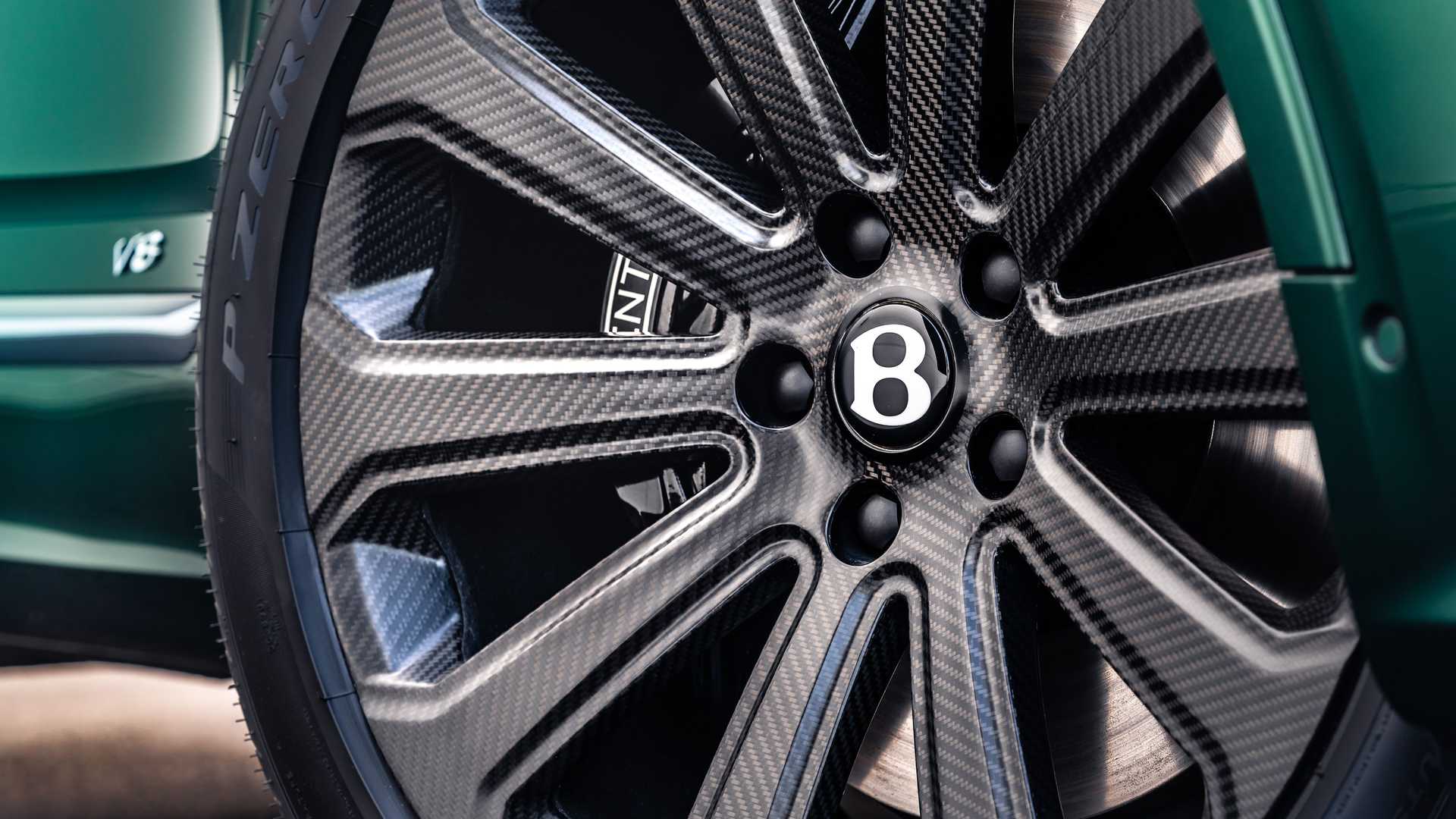
They include bolstered safety, as carbon fibre weave allows air to escape more slowly than with aluminium, plus marginal improvements in braking thanks to weight reduction.
Tyre wear is also purportedly reduced, with a stiffer wheel resulting in less bending and more consistent contact between it, the tyre and road surface.
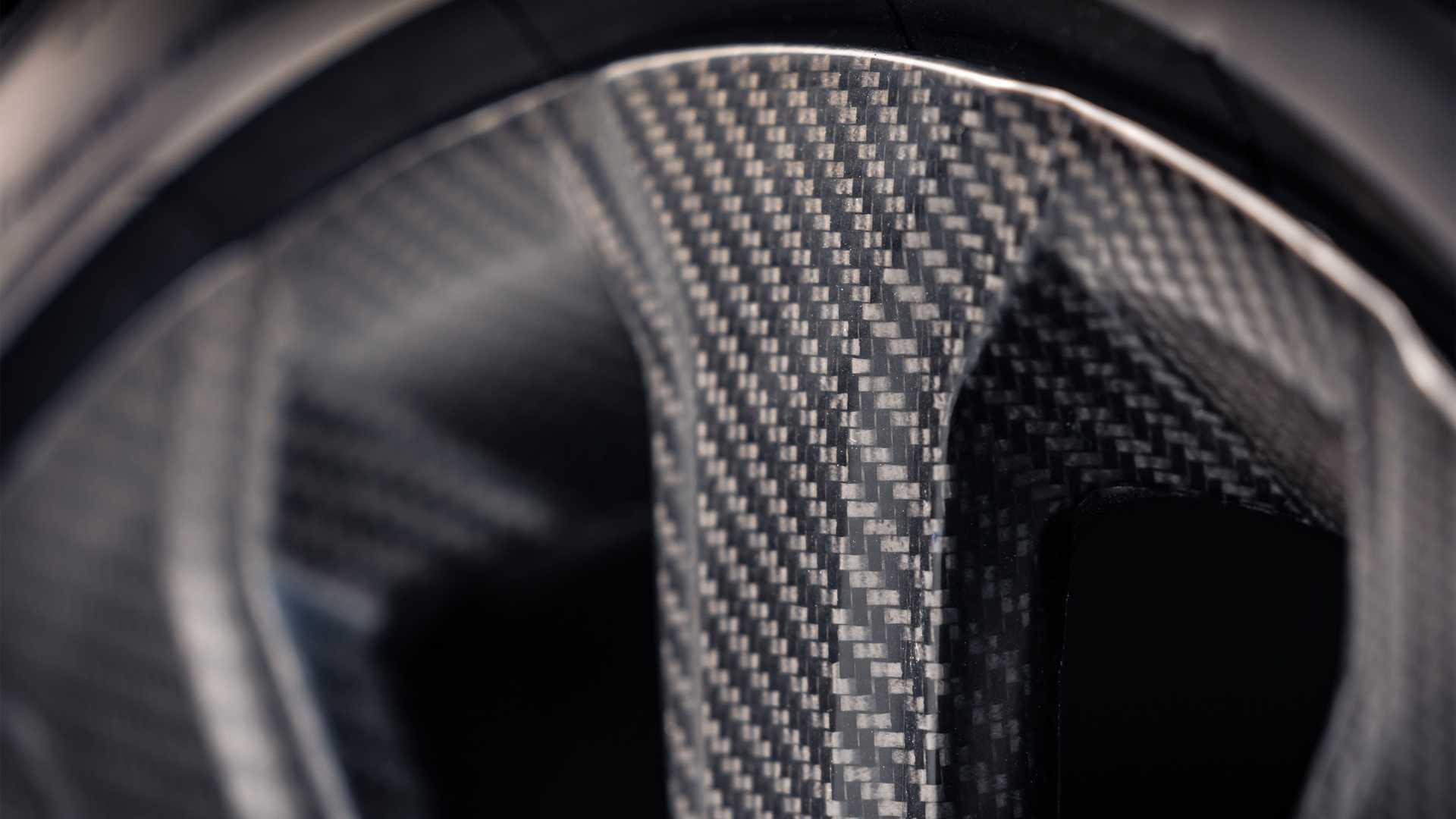
No mention of price has been made, but the rims will be available through Bentley’s coachbuilding division, Mulliner, later this year. A set of conventional alloy 22-inch Bentayga wheels can be ordered online for around $8000, so it’s reasonable to expect the carbon fibre units to wear a five-figure price.
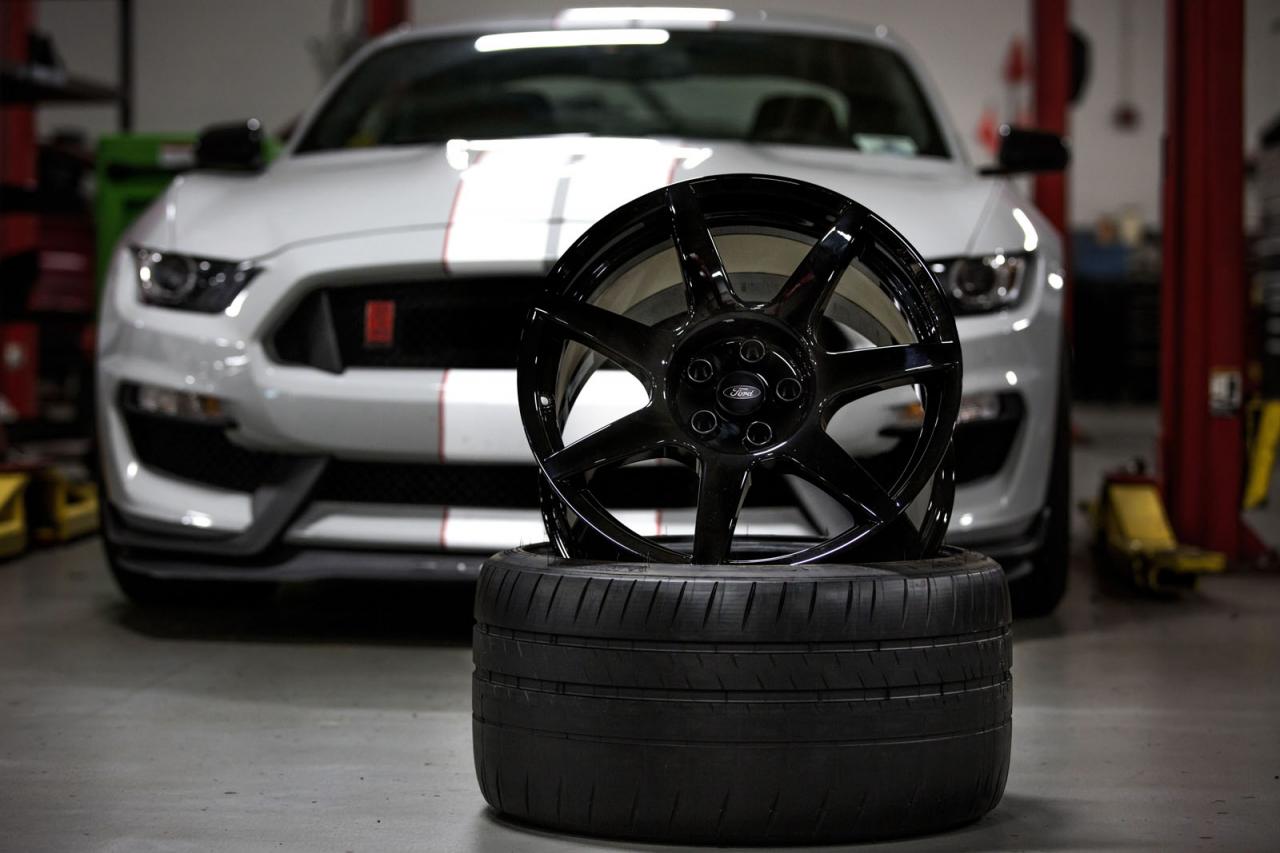
Some of the world’s first mass-produced carbon fibre car alloys came from Australia, with Geelong’s Carbon Revolution producing 20-inch units for the 2015 Shelby GT350. Prior to that, the company manufactured an optional carbon fibre package for Ferrari’s 488 Pista.
A handy feature on the new Mercedes-Benz EQS will set buyers back an annual premium, with the Stuttgart firm confirming it will unlock the full potential of its rear-wheel-steering technology as a subscription service.
While all versions of the all-new electric S-Class equivalent will roll out of dealerships with a maximum rear-wheel-steering angle of 4.5 degrees, German publication Auto Motor und Sport reports over-the-air updates from Mercedes unlock the full 10 degree range of rotation.
Setting German buyers back an extra €489 (AU$783) per year through the Mercedes me Store, a three-year package is also available for €1169 (AU$1870), representing a €298 (AU$477) saving over renewing the subscription every 12 months.
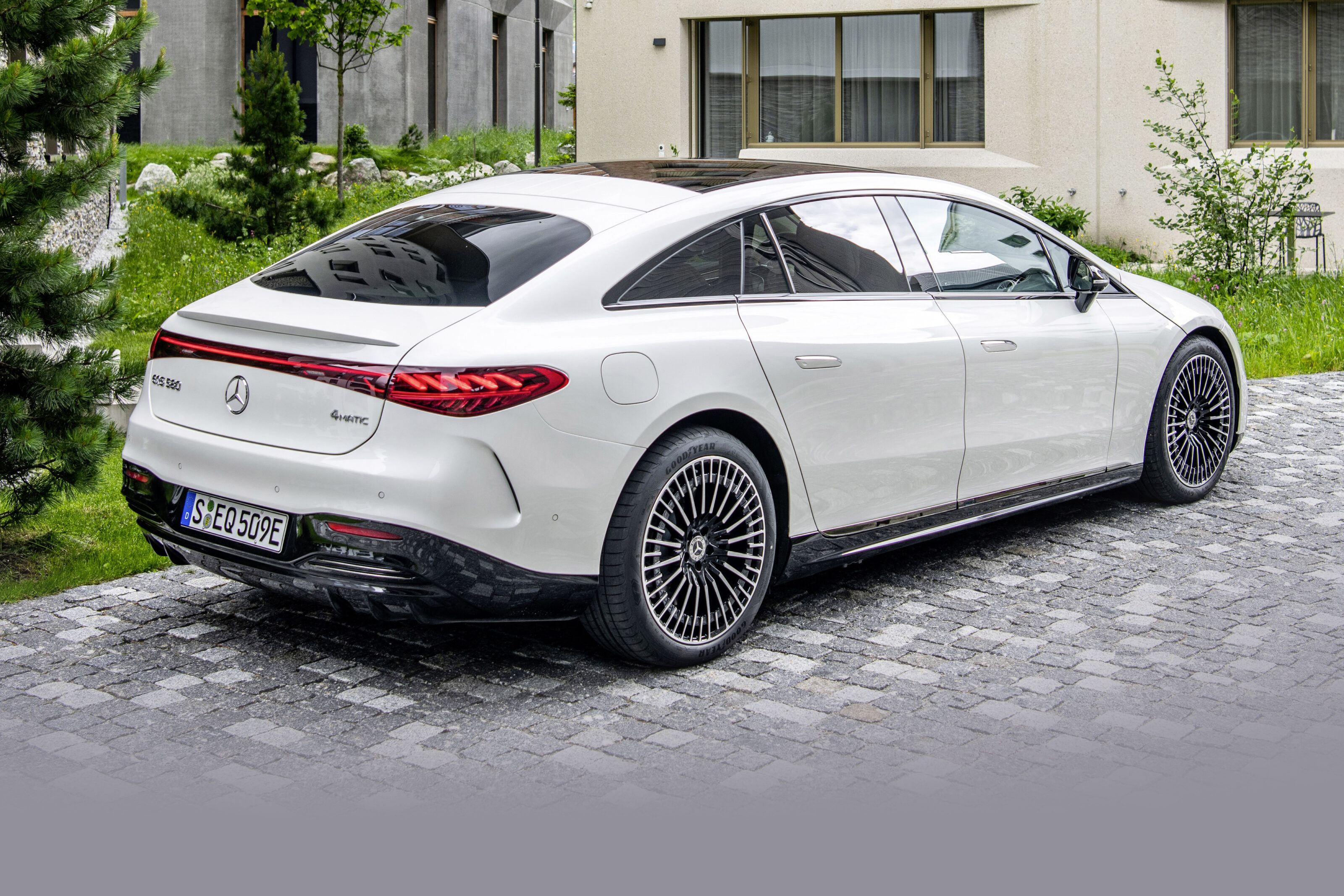
However, Mercedes only offers the increased steering angle if an EQS is equipped with its parking package and 360-degree camera, a €1130 (AU$1808) option, bringing the base cost of the higher-degree up to €1619 (AU$2591).
A spokesperson for Mercedes-Benz Australia told Wheels it had not determined the spec of local cars and whether it will adopt the subscription service.
“There’s nothing to announce regarding a program like this for Australia, and it’s also too soon to comment on local EQS spec as our line-up is still being determined,” they said.
Our own John Carey was able to get behind the wheel of the EQS and remarked the rear-wheel-steering system made it feel like a shorter vehicle than its 5.2-metre length would have you believe.
Snapshot
- NQ5 Sportage underwent six months of testing in Australia
- Kia’s ride and handling team has worked on local suspension tunes for over a decade
- New generation model expected later this year or early next
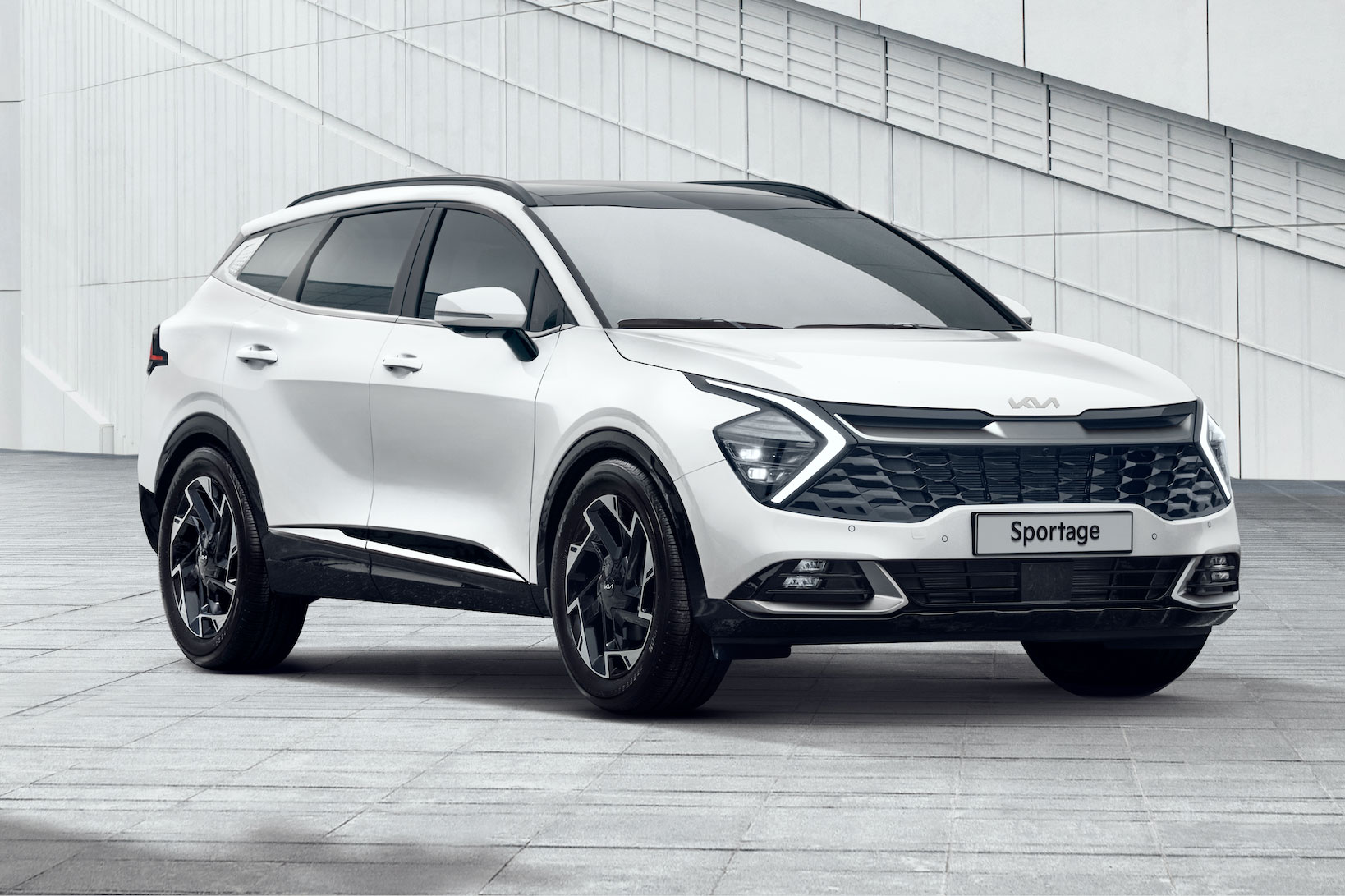
Kia Australia has unveiled images of its fifth-generation Sportage SUV undergoing testing in New South Wales, being put through its paces on local roads by the company’s ride and handling team.
The South Korean manufacturer has developed suspension tunes for its local offerings for more than a decade and will be applying the same process to the new NQ5 Sportage, set to be released next year to replace the QL which was first launched in 2015.
According to the brand’s local arm, the SUV’s suspension development took place over a six-month period throughout urban and rural NSW, with the test mule notching up thousands of kilometres covered in black camouflage to hid its true identity.
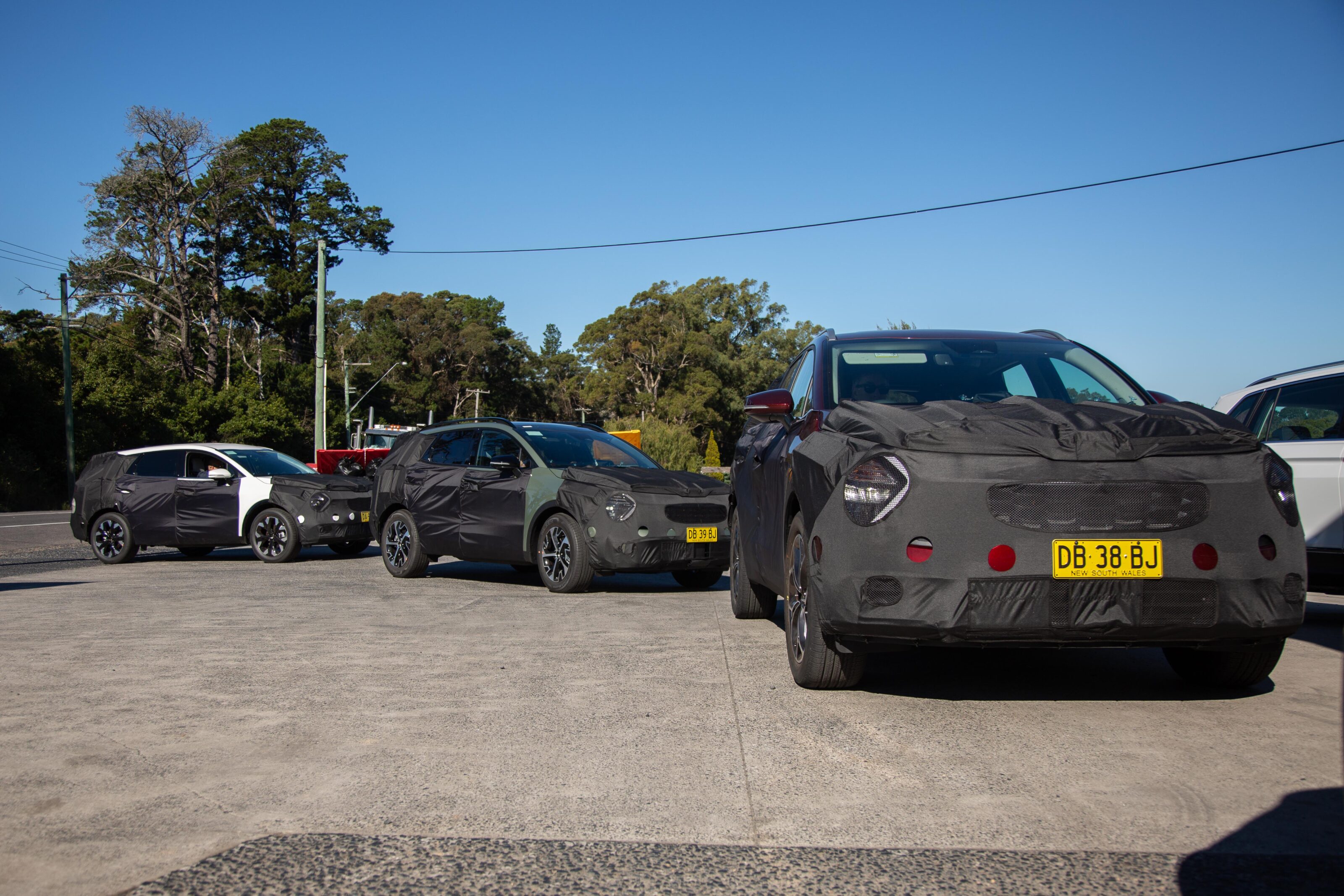
Despite the global pandemic restricting international team members from travelling to help undertake testing in person, Kia Australia’s ride and handling engineer, Graeme Gambold, said the NQ5 Sportage’s suspension has been developed with Australian customers in mind.
“The QL was already dynamically competent, however, the new model must be better,” said Gambold.
“As usual, our NQ5 Sportage tune will be unique compared to other regions. We’re trialling all available spring rates globally suited, in order to flatten the ride and minimise body-roll.
“NQ5 will also apply Mando shock absorbers which feature an advanced valve technology, as first seen on MQ4 Sorento.
“Due to Covid-19 complications, we’ve been forced to apply the tuning via a ‘correspondence process’, whereby we order shock absorber production samples in batches, air-freighted for testing, rather than having a dedicated damper engineer based here for the duration of the tune.
“While it has been a challenge and taken a little longer than usual, NQ5 is sporty, youthful, fun to drive – yet comfortable, and capable of soaking up even the harshest of road conditions.
“While it’s a high bar, I’m confident it will be an even better ride than its predecessor.”
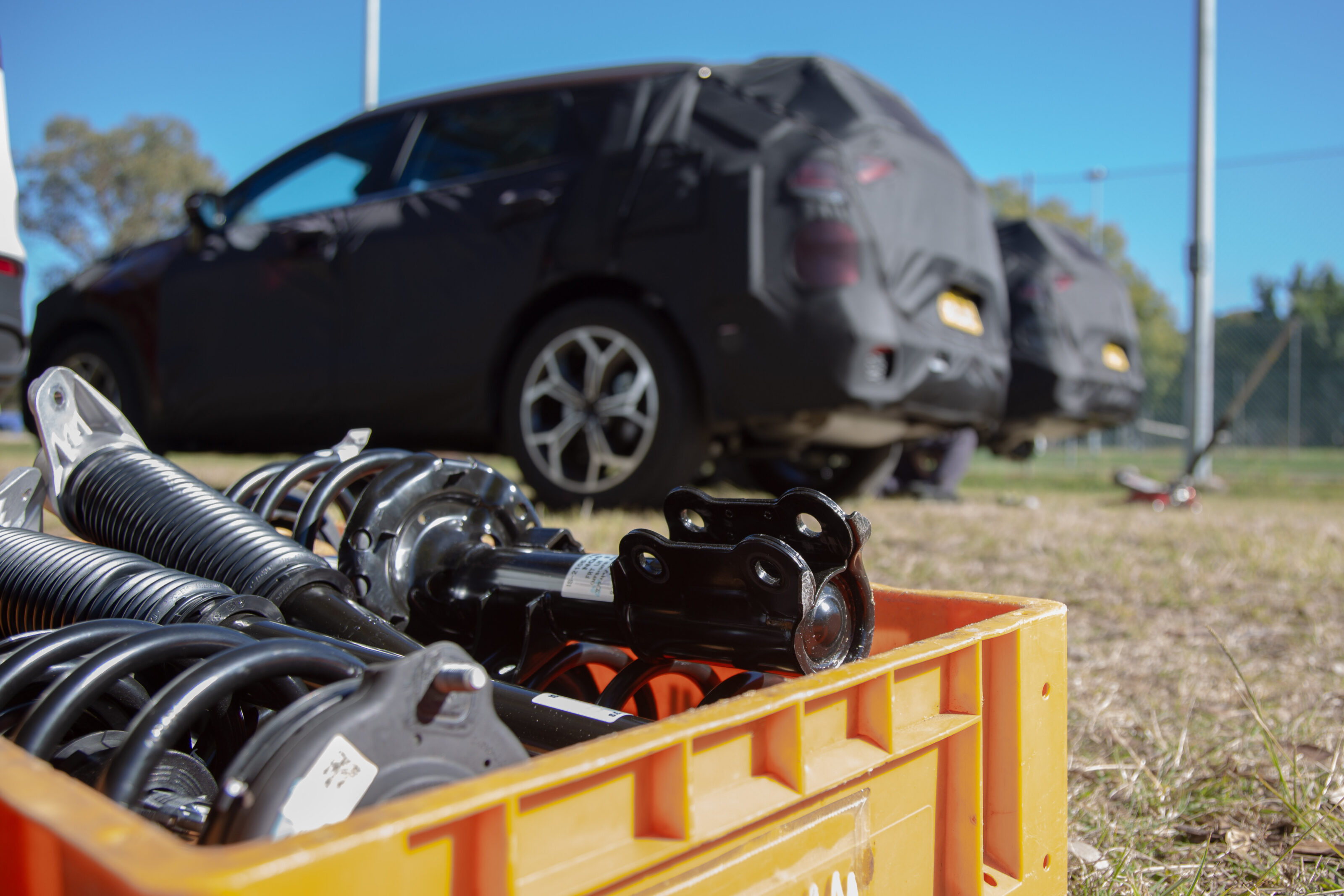
Kia Australia’s Chief Operating Officer, Damien Meredith, reiterated Gambold’s thoughts, believing the local testing program is necessary for the Sportage to succeed in Australia.
“Tuning our vehicles to suit Australian conditions is a huge factor in the satisfaction of our drivers and has attributed significantly to the growth in our overall sales,” said Meredith.
“Localisation remains an important process for our product range, and despite the constraints posed by Covid-19, Graeme and the Product Planning Team, together with Namyang, have persevered to work around the obstacles to deliver an Australian product to suit our roads and driving styles.
“The fifth-generation Sportage promises to be an excellent all-round package.”
Powering the new Sportage will be a range of three engines – 1.6-litre and 2.0-litre turbocharged petrol options and a 2.0-litre turbo-diesel.
The 2022 Kia Sportage is set to land in Australia late-2021 or early-2022.
Snapshot
- 4C production wrapped last year
- Tribute to Alfa’s ’60s racer
- Arriving now
Alfa Romeo has unveiled more details and pricing of its last-ever 4C.
Just fifteen of the 4C 33 Stradale Tributos are set to arrive on Australian shores, with pricing from $123,000.
The Tributo’s name pays homage to the famed Alfa Romeo 33 Stradale — a mid-engined, race-bred sportscar built by the Italian marque in the 1960s.
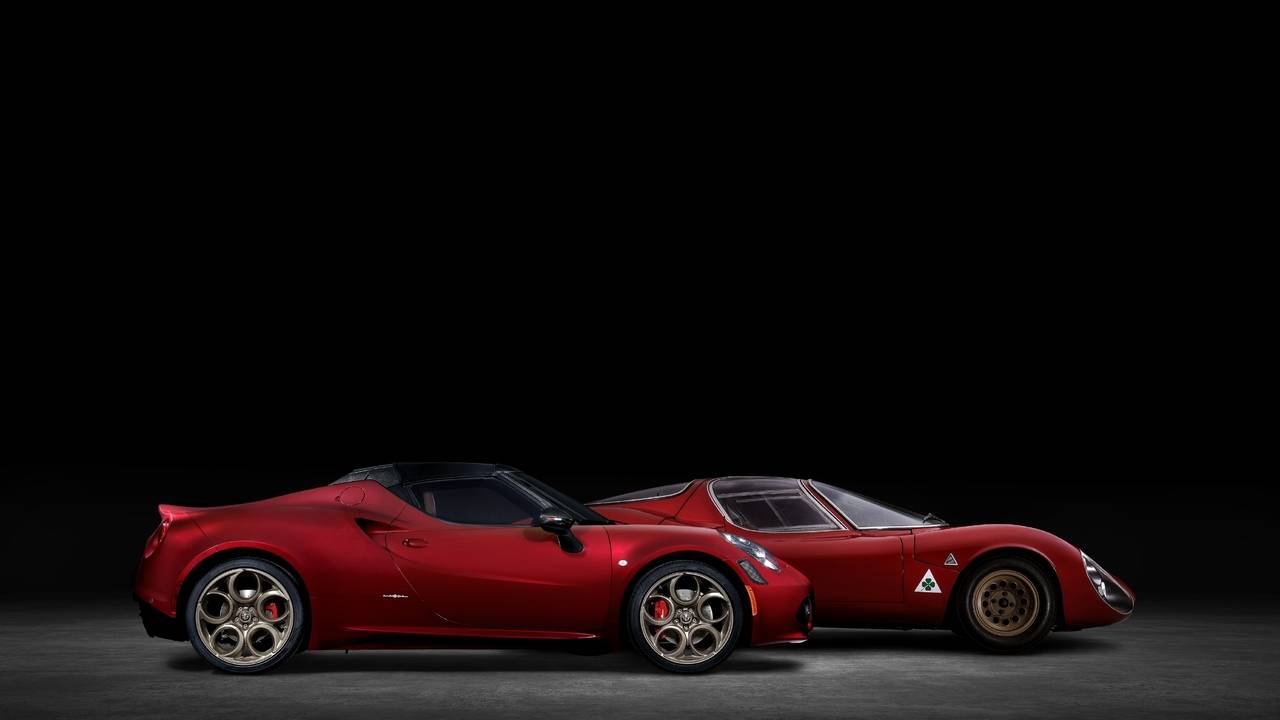
Announced late last year, Aussie numbers are split between 10 Coupes and five Spider convertibles.
The special editions use a bimodal titanium exhaust system from Akrapovic, which the carmaker says offers “maximum Alfa Romeo sound when the vehicle is in Dynamic and Race mode.”
Though this has been available previously, it was an extra cost option. The mid-mounted, 1.8-litre turbo four is otherwise untouched, making 177kW and 350Nm through a six-speed dual-clutch transmission.
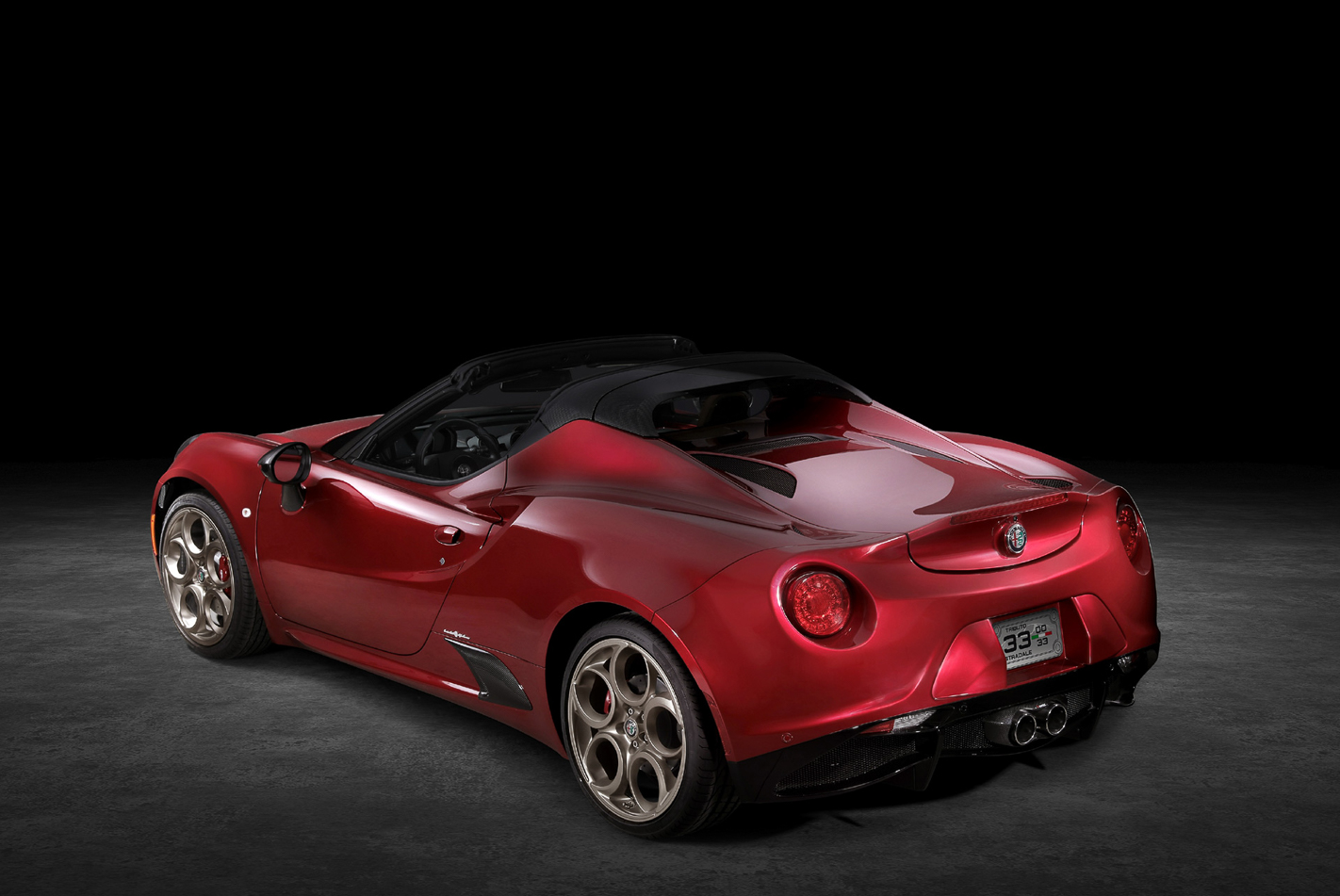
Externally, each car wears ‘Special Ville d’Este’ red paint, gold-finished wheels and smatterings of carbon fibre, including mirror covers and front fascia vents – plus a carbon fibre roof or rollbar on the Coupe and Spider respectively.
The air intake and rear diffuser are finished in piano black. A ‘Centro Stile Alfa Romeo’ badge appears too, paying tribute to the company’s design house. Bi-xenon headlights also make the cut as standard equipment.
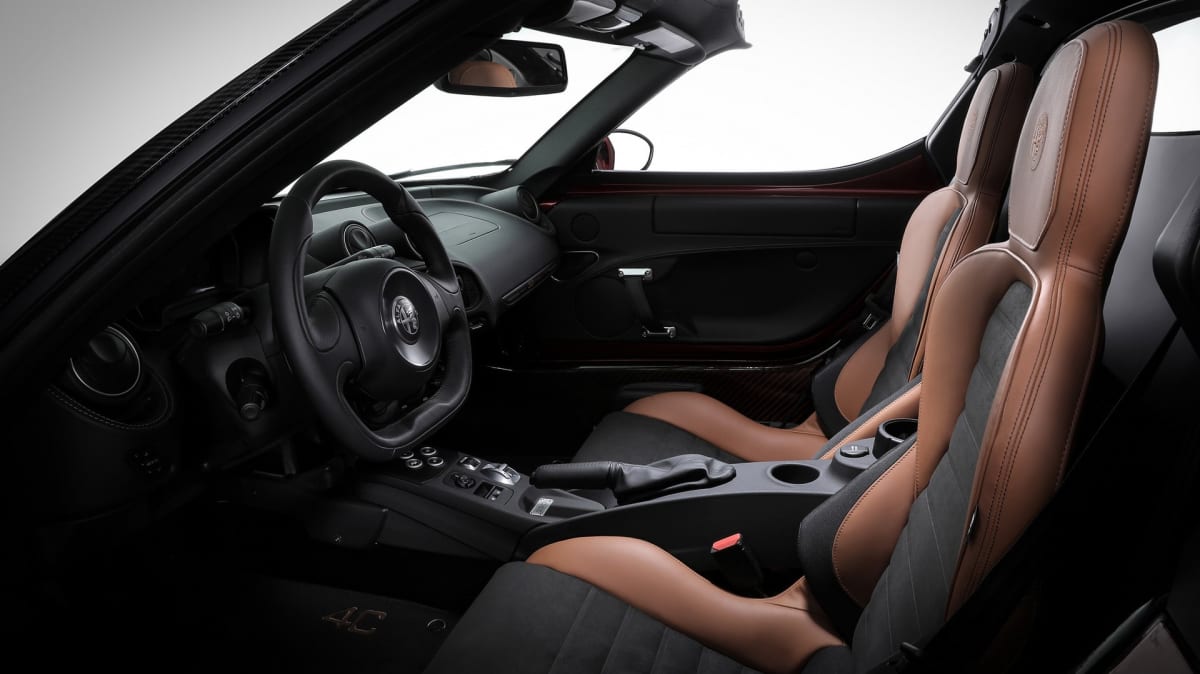
On the inside are uniquely-finished two-tone seats, a leather-stitched upper dashboard and an individually-numbered ‘33 Stradale Tributo’ plaque. It all rests within a red carbon fibre tub.
As mentioned above, pricing will begin at $123,000 (before on-road costs) for the Coupe body. It’s a considerable jump on the standard 4C Coupe’s $89,000.
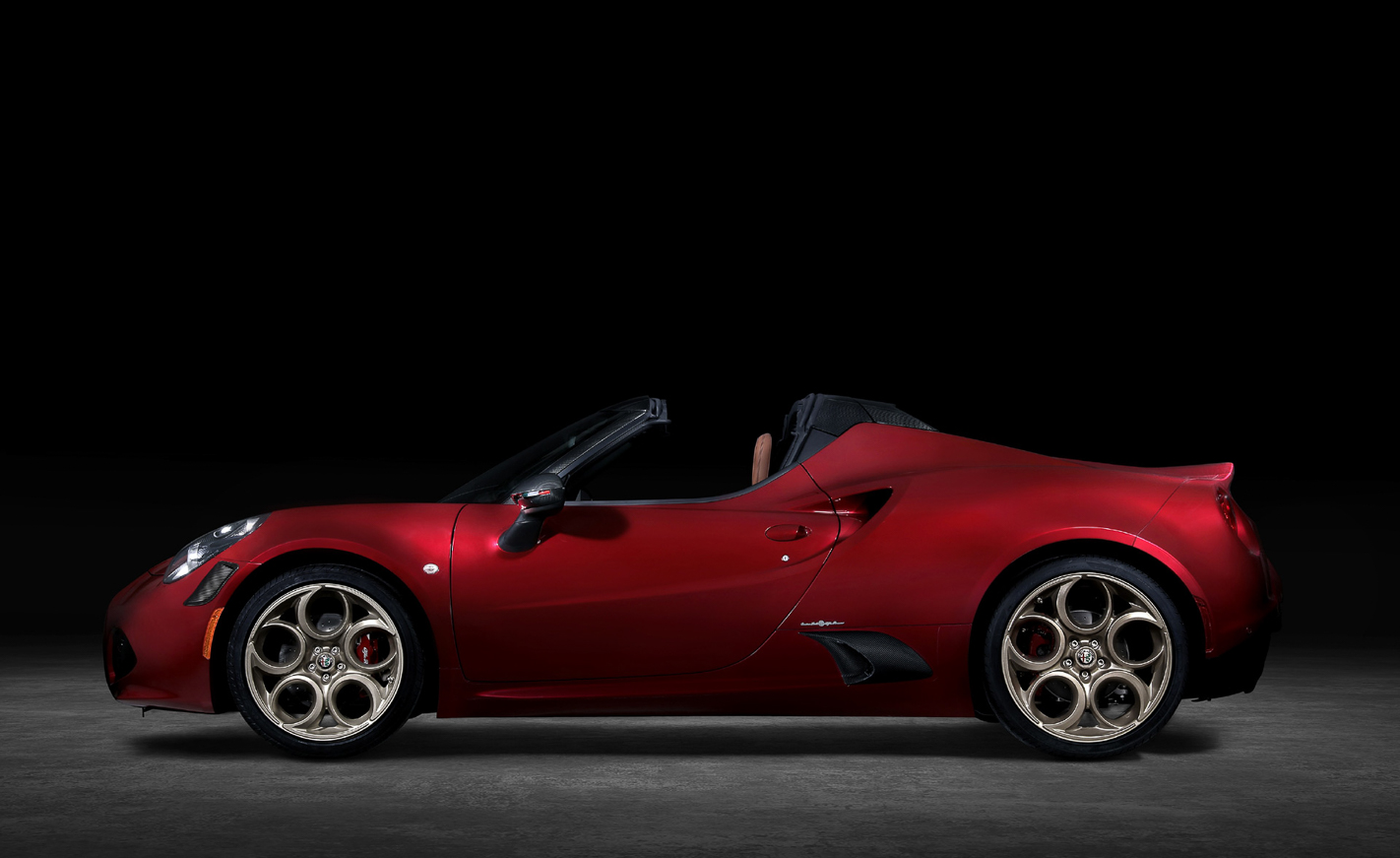
Priced higher again is the convertible Stradale Tributo Spider, coming in at $133,000 before on-roads. In comparison, the regular Spider retails for $99,000. That equates to a $34,000 premium to get your hands on either final edition car.
The 895kg 4C reached Australia in 2015, moving a record 149 units that year. Over its six-year life in Australian dealerships, around 300 sold in total. Alfa Romeo confirmed it was being axed in 2019, with the last cars rolling out of the Modena plant last year.
The Alfa Romeo 4C 33 Stradale Tributo is arriving at dealerships now, with customer deliveries expected to start in August.
Snapshot
- Modern take on a French icon
- Carbon fibre bodywork
- 294kW turbocharged engine
The restomod scene – recreating a classic car using modern materials and methods – is booming and companies are beginning to stretch beyond the usual Porsche 911, Jaguar E-Type and Land Rover Defender.
A quartet of Los Angeles-based Frenchmen made up of; car designer Alan Derosier, ex-stuntman Charly Bumps, mechanical engineer Alexander Decleves and racecar builder Pierre Chaveyriat, created Legende Automobile and the first fruits of their labour is the Renault 5 Turbo 3.
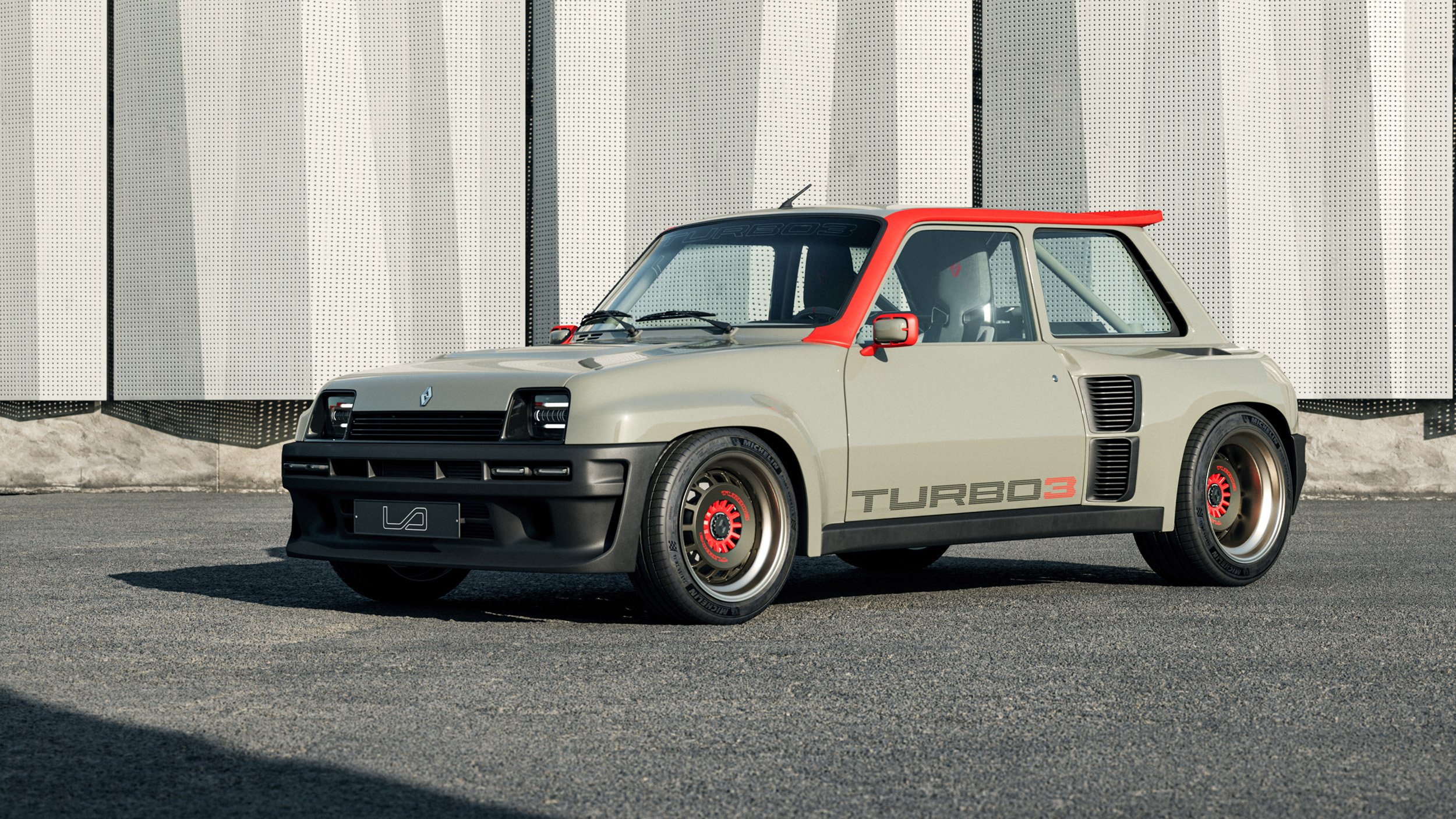
A modern reimagining of the iconic Renault 5 Turbo, the mid-engined, rear-wheel drive hatchback has been created to take advantage of the wild Group B rallying regulations. Legende Automobile aims to take the best part of the more exotic Turbo and more affordable Turbo 2, while using modern technology to improve its electronics and reduce weight.
Not all the technical details have been revealed, but those that have promise a tantalising package. The body is predominantly carbon fibre and has been widened, with the other dimensions adjusted accordingly to retain the original proportions.
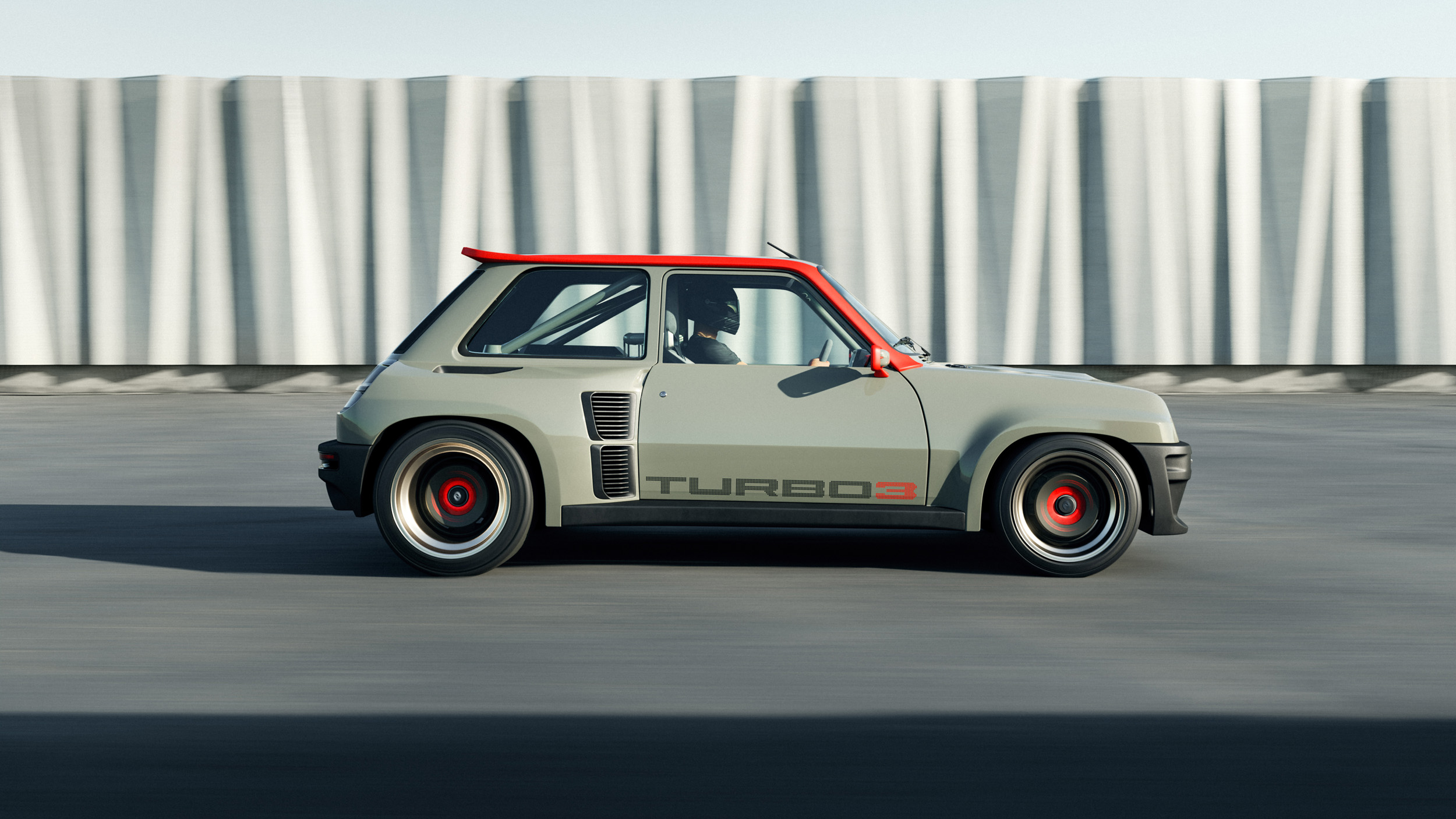
The fattened bodywork allows the fitment of 16 x 8.0-inch rims at the front and massive 17 x 11.0-inch rims at the rear wrapped in Michelin Pilot Sport 4 S tyres. Two different wheel designs will be available, while LED lighting is used front and rear.
Like the original 5 Maxi Turbo rally car, which won the 1985 Corsica rally at the height of Group B’s pomp, double wishbone suspension is used front and rear, modified to make the most of the increased footprint.
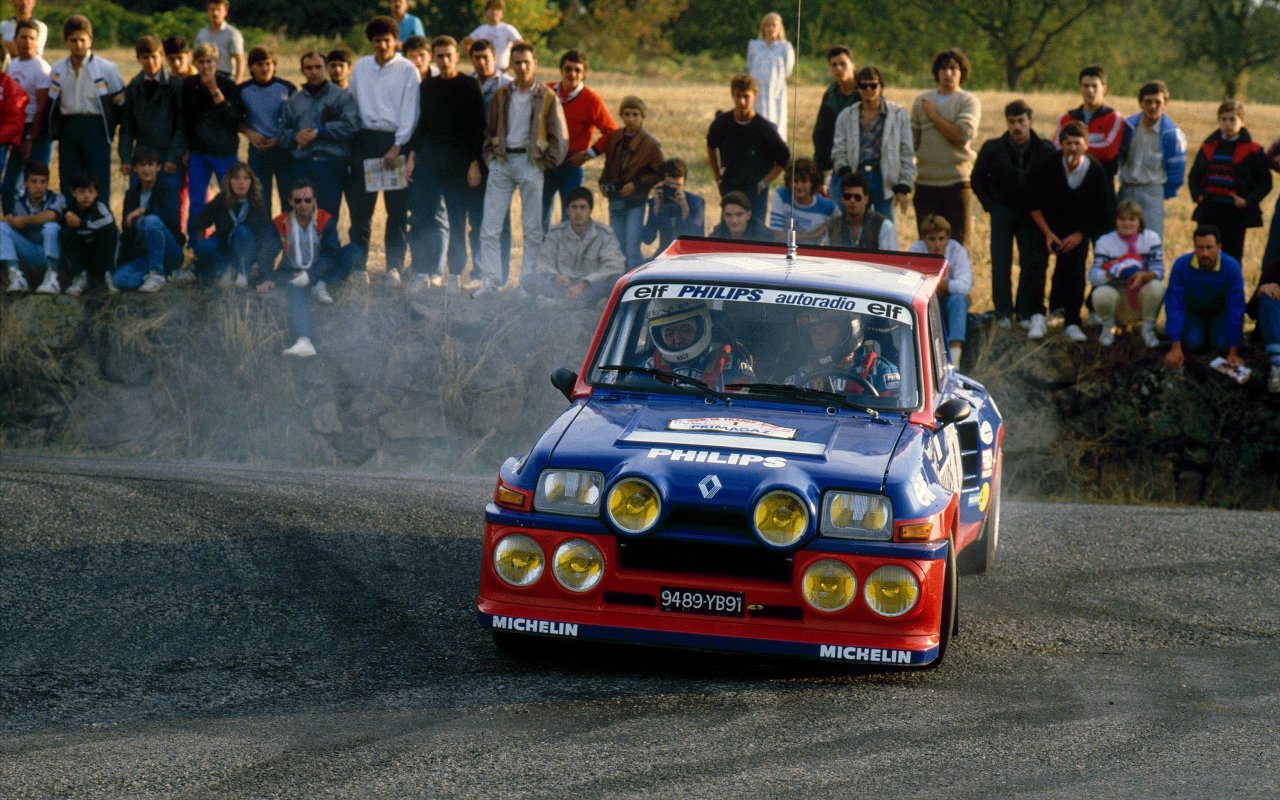
Engine choice is currently unknown, other than it is “turbo-powered”, but output is said to be in the region of 400hp (294kW). There are three pedals but the clutch will only be needed for starting and stopping thanks to the upright sequential gear lever which sits between the seats, Legende saying: “Paddle shifters have their place, but for this machine, we wanted an old-school mechanical shifter to give the driver full control.”
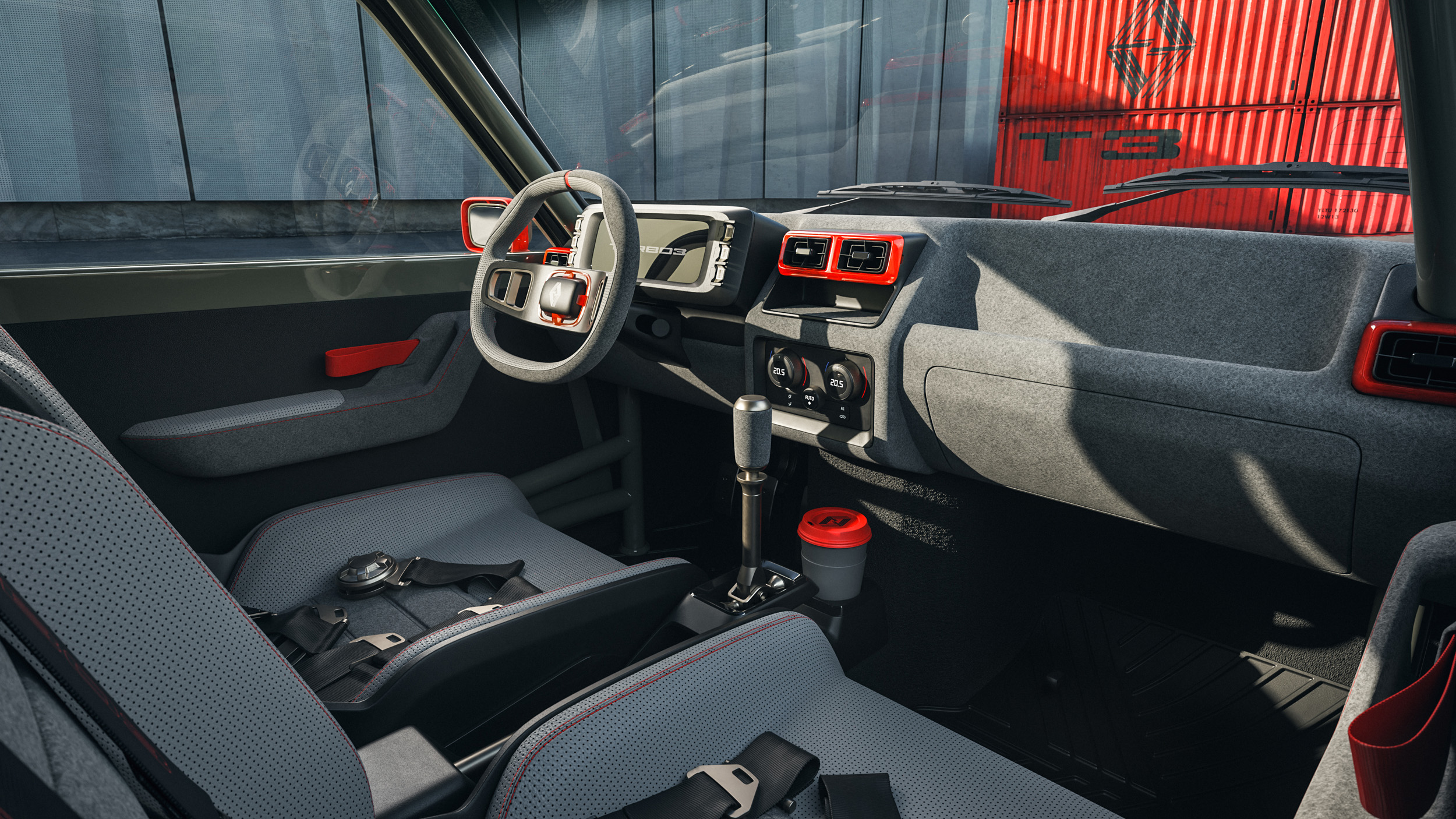
The interior is race car chic with little in the way of creature comforts, though there is heating, air-con, a cup-holder ahead of the gear lever and a large digital instrument display. Otherwise there is a full roll-cage, thin-backed bucket seats, five-point harnesses and fabric door pulls.
Pricing is unknown, as is the build run, but we suspect it’s firmly in the “if you have to ask…” category. Legende says: “[We] set out to create a machine for people [who] are as passionate about driving as we are. We ignored all financial advice and spared no expense in making sure that this is the best possible version of the B-segment icon.”
Snapshot
- SVR name notably absent from current Defender V8
- BMW power likely for new model
- Expect to pay well-above $200,000
Jaguar Land Rover is reportedly working on an even faster version of its Defender SUV, with BMW-sourced power on the horizon.
The new Defender would presumably wear the SVR badge, denoting it as a top-spec car in line with the existing Range Rover Sport SVR. The name is notably absent from the just-released Defender V8, indicating Jaguar Land Rover (JLR) intends to save it for a higher-performance car — one which may arrive as soon as 2023.
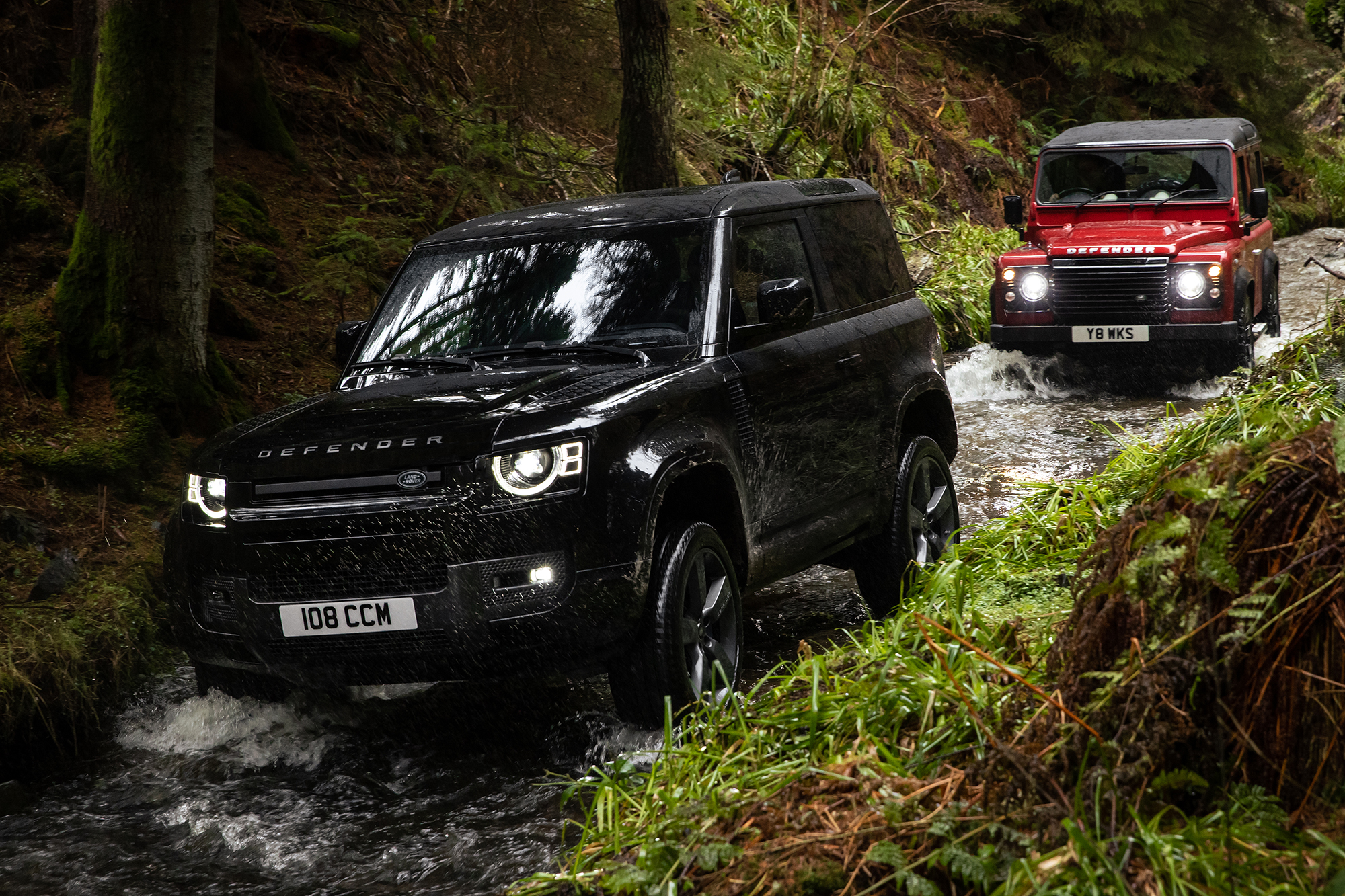
Launched this year, the 2022 Defender V8 joins 2020’s four and six-cylinder models. The V8 is available as either a short-wheelbase 90 or long-wheelbase 110, which bodes well for the future SVR to appear in both guises.
While there’s nothing official from JLR so far, MotorTrend reports the Defender SVR would likely use BMW’s 4.4-litre, twin-turbo V8. In the current BMW M5 CS, the engine offers 467kW, and 750Nm of torque.

Even if detuned for the SVR, it would remain a considerable increase over the current Defender V8. That car is powered by the marque’s own supercharged 5.0-litre V8, making a more-than-respectable 386kW/625Nm.

If BMW’s twin-turbo 4.4 does make its way into the SVR, it wouldn’t be a first for Land Rover. Between 2003 and 2005, the third-generation Range Rover could be optioned with an earlier iteration of BMW’s 4.4-litre V8, as well as a Bavarian diesel six. Land Rover of South Africa also offered a BMW six-powered Defender between 1997 and 2001.
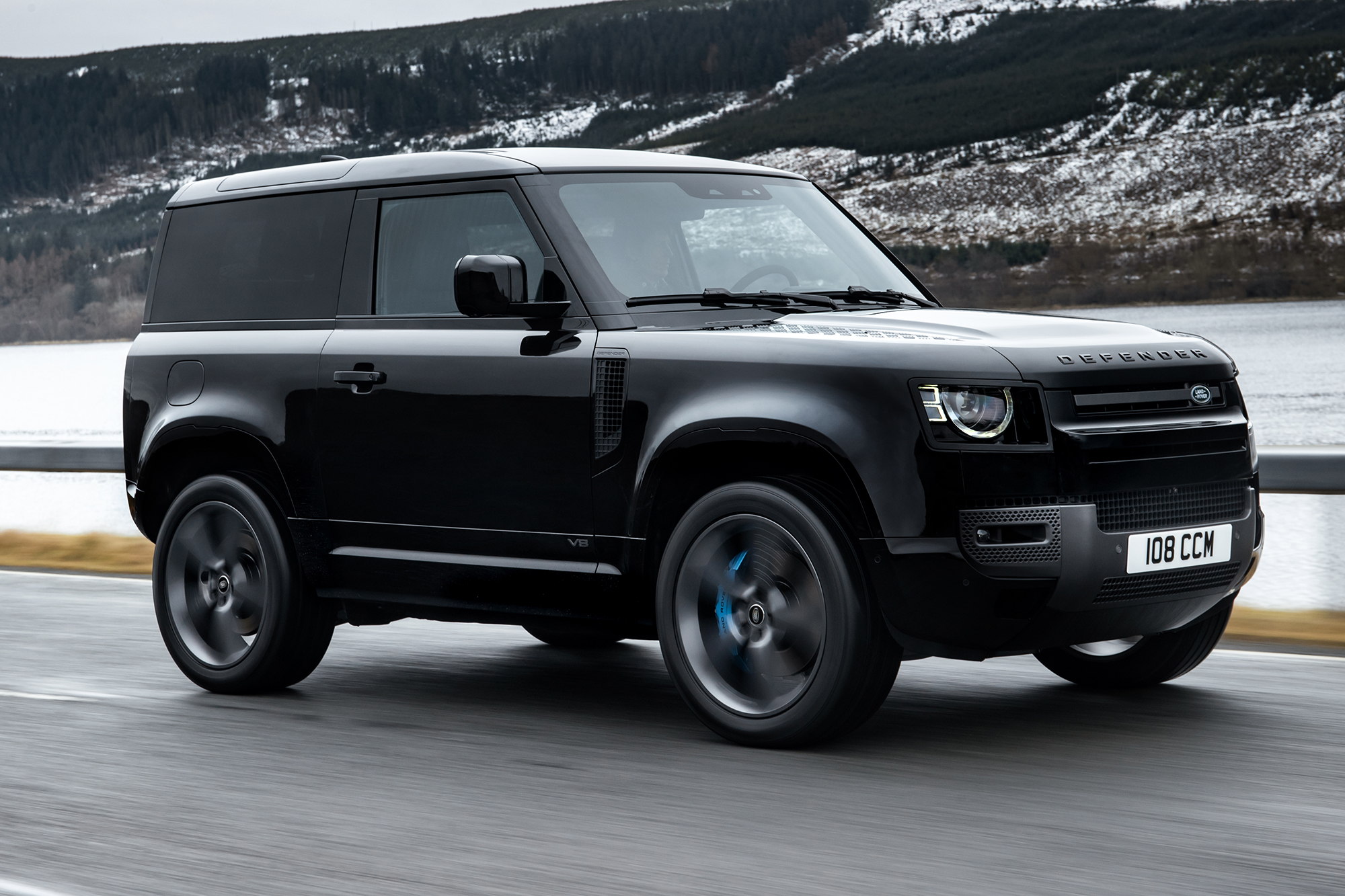
It’s safe to assume the SVR would be priced well above the current range-topping Defender V8, which begins at $200,540 (plus on-road costs) in Defender 90 form. The cheapest 2022 Land Rover Defender is the 90 P300, at $71,500 before on-road costs.
Snapshot
- Thirty vehicles to be delivered for one project in 2023
- Two trucks coming next month for separate program
- Xcient Fuel Cell has reduced CO2 emissions in Switzerland already by almost 600,000kg
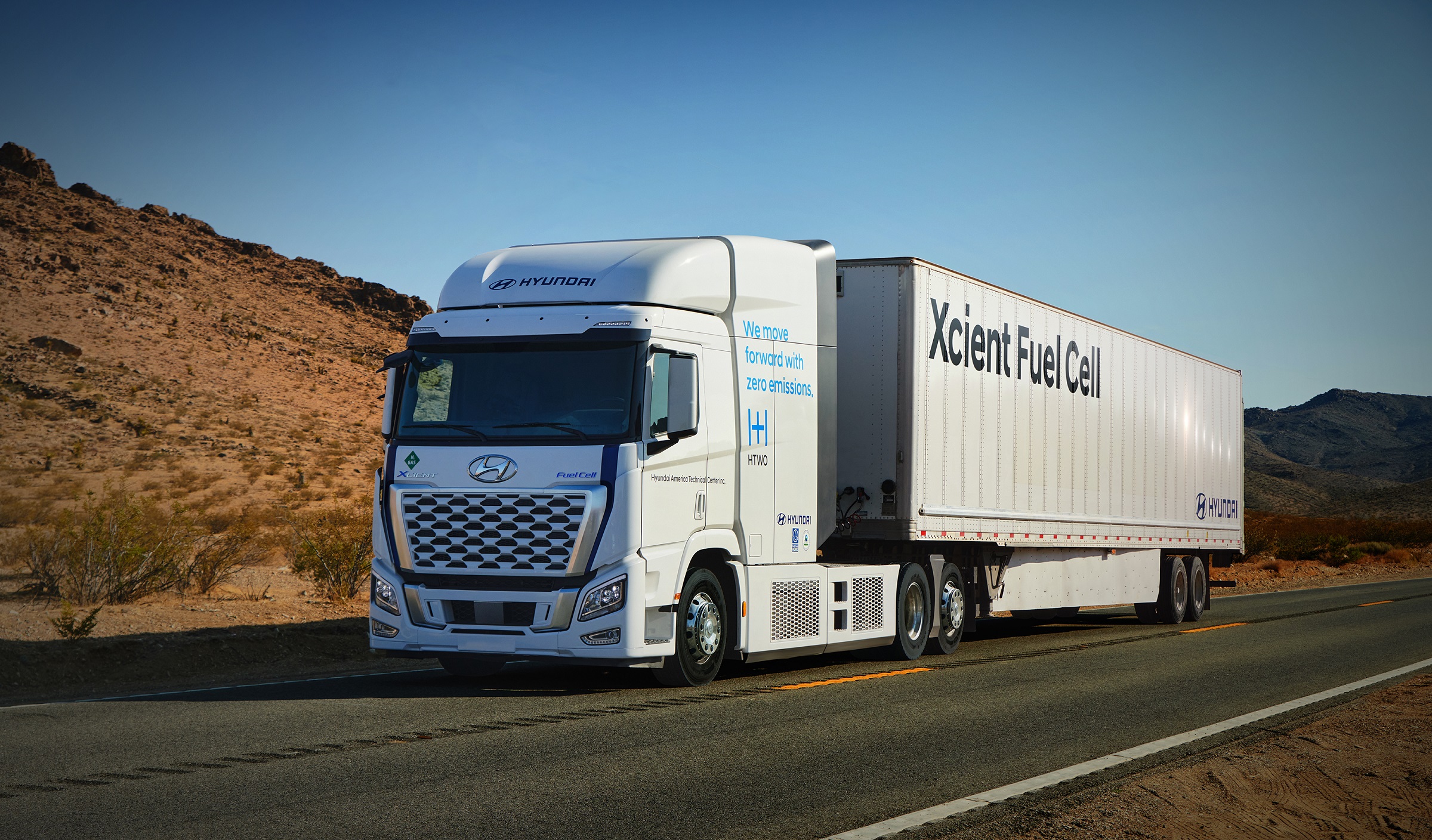
Hyundai is to roll out its newly-developed hydrogen fuel cell electric trucks in California as part of a major project to clean up the region’s air quality.
The demos the Korean marque will bring into the US, as part of two publicly-funded programs, are based on its Xcient Fuel Cell vehicle – the world’s first mass-produced, heavy-duty truck powered by hydrogen boasting an 800 kilometre driving range.
The first initiative will be led by a consortium made up of the Center for Transportation and the Environment (CTE) and Hyundai, and will involve 30 examples, sporting 6×4 drive axle configuration, hitting Californian roads from the second quarter of 2023.
This will be funded by US$22million (AU$29.8m) in grants from California Air Resources Board (CARB) and the California Energy Commission (CEC), as well as another US$7m (AU$9.5m) boost from the Alameda County Transportation Commission and the Bay Area Air Quality Management District.
The consortium also plans to establish a high-capacity hydrogen refuelling station in Oakland, California, which will be able to support as many as 50 vehicles topping up an average of 30 kilograms of fuel.
“These investments will support zero-emission trucks and infrastructure development and deployment as part of the US market ecosystem. Public and private project partners have come together to take a big step forward in decarbonising freight and goods movement, as part of CARB and CEC’s clean air initiatives,” said Hannon Rasool, Deputy Director of Fuels and Transportation Division at the California Energy Commission.
The second 12-month pilot program, slated to begin in August this year, aims to counter the emissions of diesels in the state by introducing a further two Xcient Fuel Cells – funded by a US$500,000 (AU$678,000) grant from the South Coast Air Quality Management District and US Environmental Protection Agency (EPA).
Hyundai will also work with the market leader in hydrogen refuelling stations in California, First Element Fuel (FEF), to utilise three facilities in the region to top up the fleet.

“We look forward to seeing this important fuel cell project from Hyundai come to life,” said Ben J. Benoit, South Coast AQMD’s Governing Board chairman. “The development of long-haul zero-emission technology is key to reducing emissions which will provide immediate benefits to our air and our communities.”
In 2020, Hyundai announced its plan to deliver 1600 Xcient Fuel Cell trucks to Europe by 2025.
Debuting last year in Switzerland when the first 46 units were delivered, the Xcient Fuel Cell has been put through its paces in testing, carrying out more than one million kilometres of driving in real-world conditions. During this time it has reduced CO2 emissions by an estimated 630 tonnes (572,000kg) compared to its diesel counterparts.
The carmaker says it will use what is learned from these projects to develop its zero-emissions commercial fleet in the US.
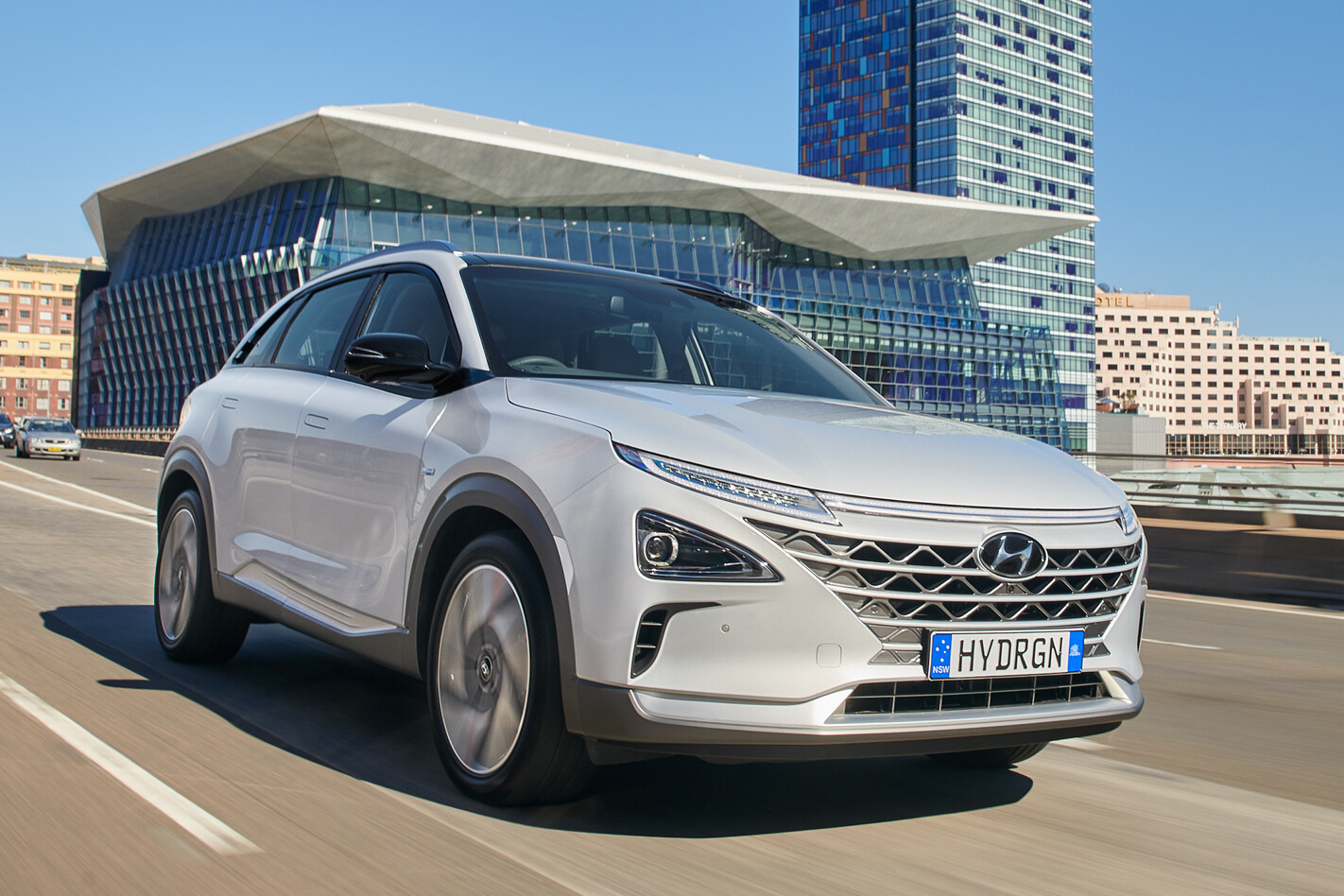
Meanwhile Down Under, earlier this year Hyundai registered the first fleet of hydrogen fuel cell vehicles seen in Australia. The brand’s 20-strong cache of Nexo crossover SUVs hit the road in March as part of the ACT government’s fleet, the first hydrogen-powered vehicles to be used by a government in Australia.
Snapshot
- Markets to increase from nine to 18
- Polestar Destinations to improve on Polestar Spaces approach
- More test drive and service centres coming
Swedish electric performance brand Polestar says it will have doubled its global presence by the end of this year – expanding from just nine markets to 18, including Australia.
On top of this, the Volvo off-shoot plans to increase its retail offering two-fold in the same timeframe by stepping up from its current ‘Polestar Spaces’ approach, where its products are represented in city-centres, to its new ‘Polestar Destinations’ concept which also makes it easier for potential buyers to view and collect cars out-of-town.
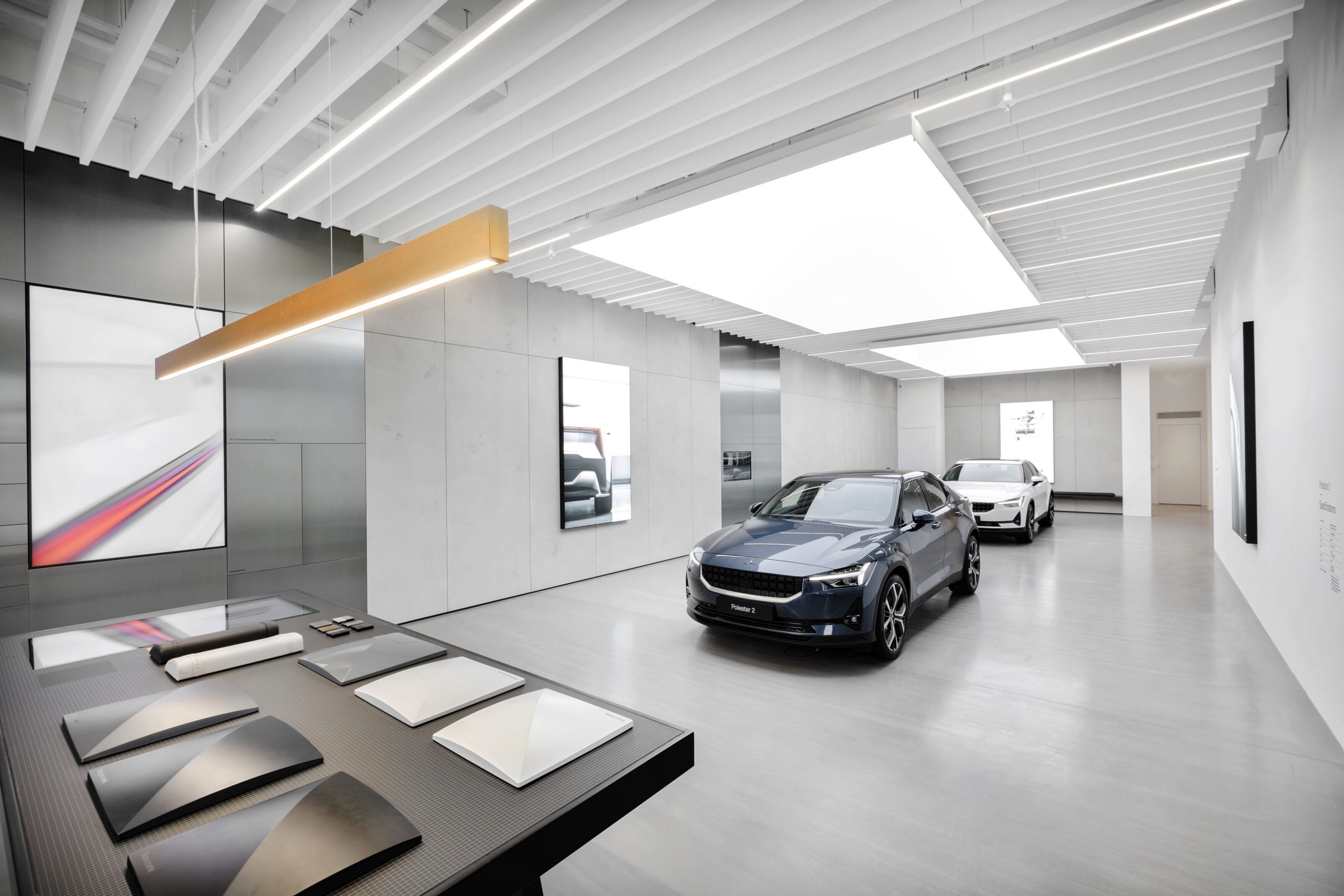
The boost to its retail presence means the carmaker will, by year’s end, have around 100 physical sites around the world – including some temporary pop-ups. There will also be sixty test drive locations and more customer handover centres to meet demand for the Polestar 2, as well as an ambition to bump up its 650 service points to 780.
“We are expanding both within markets in which we already have a presence and into new markets extremely rapidly. As a brand that has only been fully operational for just over 12 months, this sort of footprint is unprecedented,” said Thomas Ingenlath, Polestar CEO.
“We aim to expand at a similar rate in terms of new markets in 2022 as well.”
The news of the marque’s expansion follows the announcement last week of the company’s new management line-up for Australia, with execs coming on board from parent company Volvo, as well as Nissan and from outside the automotive industry.
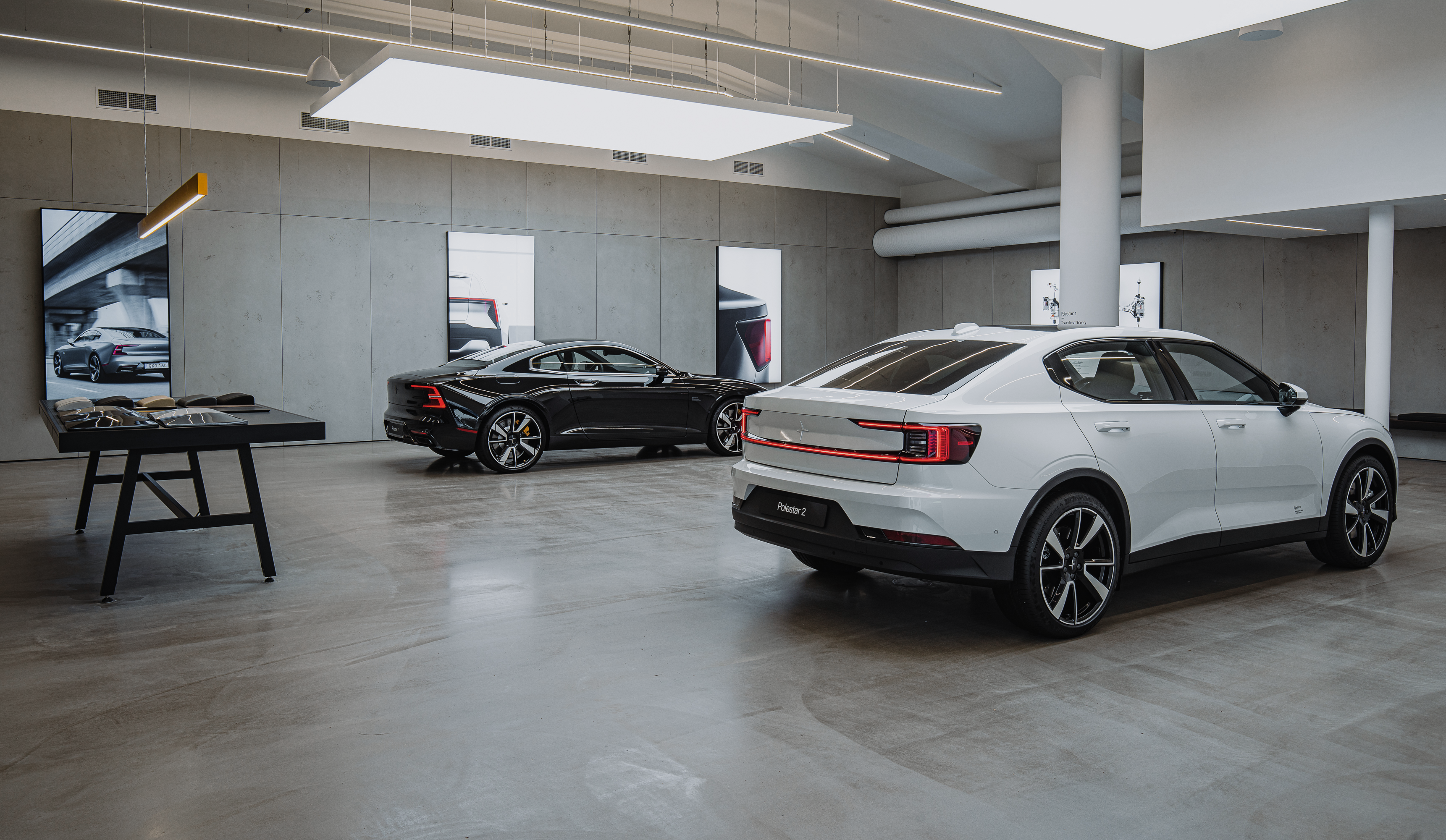
Despite branching off from Volvo in 2017, Polestar still utilises many of the manufacturing capabilities of the larger manufacturer – though the former says it has no further plans to up its shares in the latter, having recently increased its stake back up to almost 50 per cent.
Polestar became a dedicated EV brand in 2019 after the release of the Polestar 2.
The Polestar 2 electric vehicle – a coupe-like five-door liftback with a raised SUV stance – will make its Australian debut just before this year is out. The Polestar 1 never made it to our shores.
Polestar’s Australian launch will come roughly one year after it launched in the US, where customer deliveries of the Polestar 2 began in December 2020 – a few months later than intended, thanks to Covid-19.
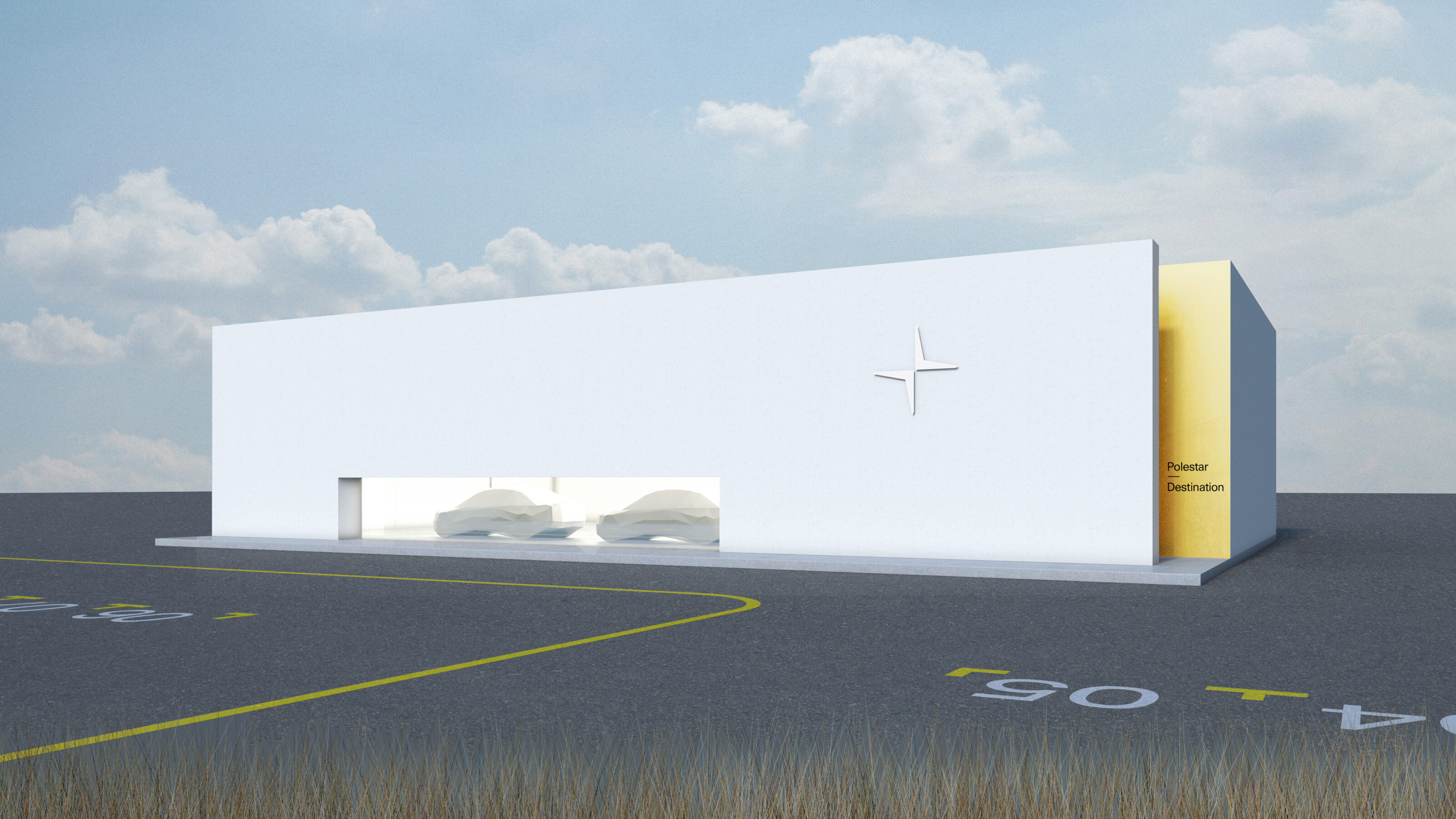
“Polestar sees considerable potential in the Australian market, which is why it will be one of the first markets to launch as part of the company’s Asia Pacific expansion,” said Polestar Australia boss Samantha Johnson at an event in May.
The Polestar 3, which is based on Volvo’s next generation electric architecture, will be built at the parent company’s plant in Ridgeville, South Carolina next year, and by mid-decade it expects to be producing models in Europe too.
It marks the first time since the acquisition of Polestar by Geely that the specialist vehicles will be made outside of China – the Polestar 1 and 2 being assembled at factories in the country since 2017.
A Precept concept vehicle, revealed in February 2020, has also been confirmed for future production, with a new video series offering fans a look behind the scenes at how it is conceived and crafted.
1938 was a vintage year for Italian car designers. It gave us Leonardo Fioravanti, Giorgetto Giugiaro and Marcello Gandini. These three men, each in their own particular way, were responsible for the legendary Lamborghini Countach, which celebrates its 50th anniversary this year.
Of course, it’s Gandini. It always was. The Geneva Motor show of 1971 was Gandini’s finest hour. Not only did Lamborghini show the astonishing Miura P400 SV, it also unveiled the car that set a trajectory for the modern supercar that endures to this day.
Giugiaro didn’t care for Gandini. When the latter applied for a position with Carrozzeria Bertone in 1963, it was Giugiaro who blocked his way. Gandini was patient, and when Giugiaro left for Ghia two years later, the 27 year-old designer had better luck.
Now, consider the timeline. Gandini was hired as a junior stylist and one of his very first jobs was to work on clothing the rolling Miura chassis that Lamborghini had originally presented at the 1965 Turin Show.
Sant’Agata couldn’t claim credit for inventing the mid-engined sports car, as Rene Bonnet had already brought the delightful Matra Djet to market, but the Miura moved things into a new realm and Gandini was responsible for creating the clamshell front and rear ends to wrap around the compact passenger cell.
The louvred rear window and the flip-up headlamps were obvious Gandini garnishes. He even sketched the Miura badge, replete with bull’s horns and tail.
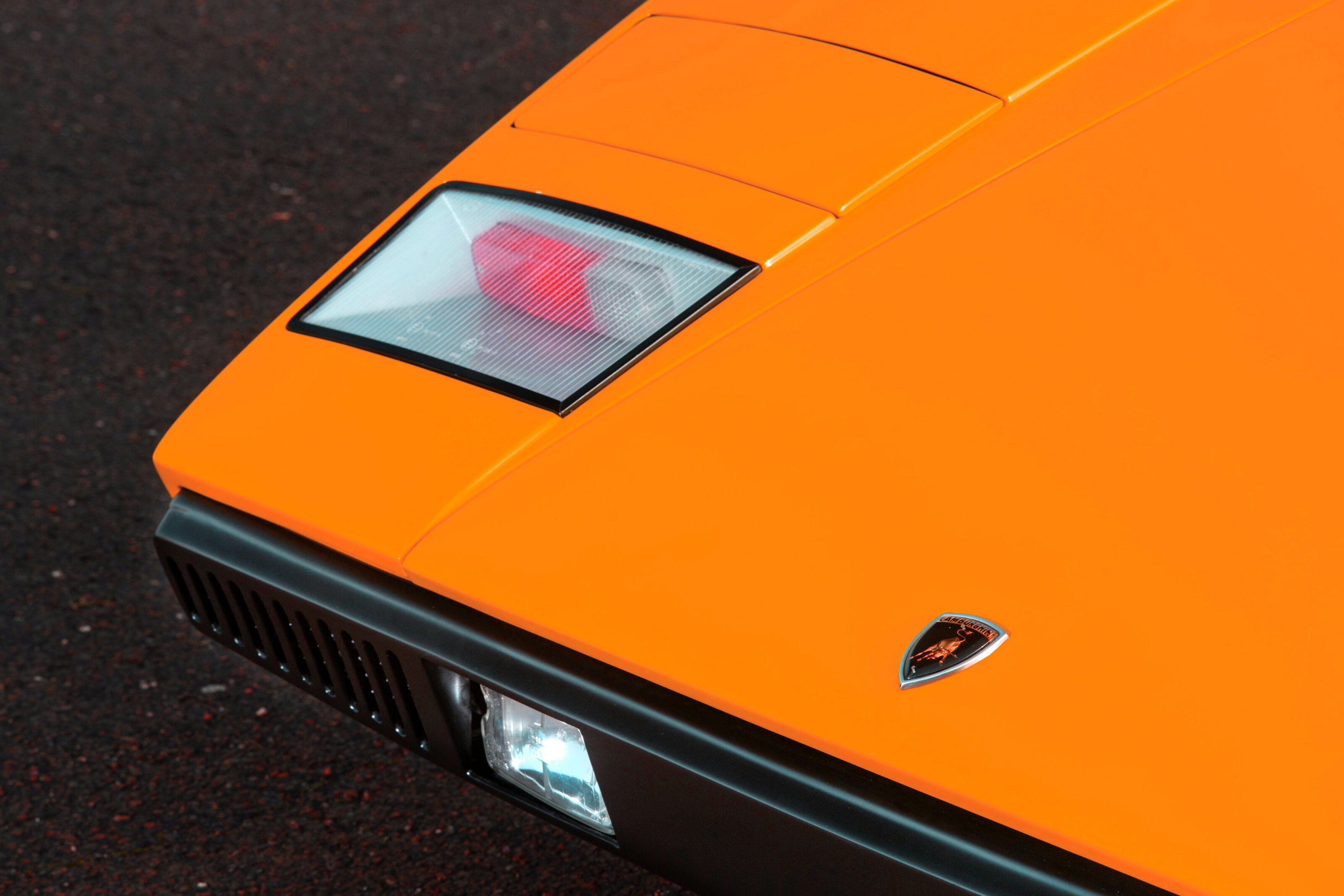
To this day, Gandini and Giugiaro disagree on much about the Miura. The latter feels that the Miura was his work and that Gandini merely completed what he had started. Naturally, Gandini has a different opinion.
“In the autumn of 1965, Ferruccio Lamborghini, Paolo Stanzani and Gianpaolo Dallara came to me and proposed that I work with them on a project,” he says.
“I didn’t start straight away because I still had a few projects to finish, so in the end I produced the first sketches in late November. I remember that by 10.00pm on Christmas Eve, 24 December 1965, we had practically finished the model in wood and ecowood. We managed to beat Father Christmas to it by a couple of hours. Then the car was made in January and February and presented in March.”
Depending on who you believe, Gandini had seemingly come from nowhere, with no formal design qualifications to create the shape of the very first supercar within the space of twelve months or, well, he didn’t. That’s by the by. What we do know is that there’s no Giugiaro influence at all in what came next, the astonishing Countach. The extremity of its design was fuelled by Gandini’s desire to obliterate the influence of Giugiaro.
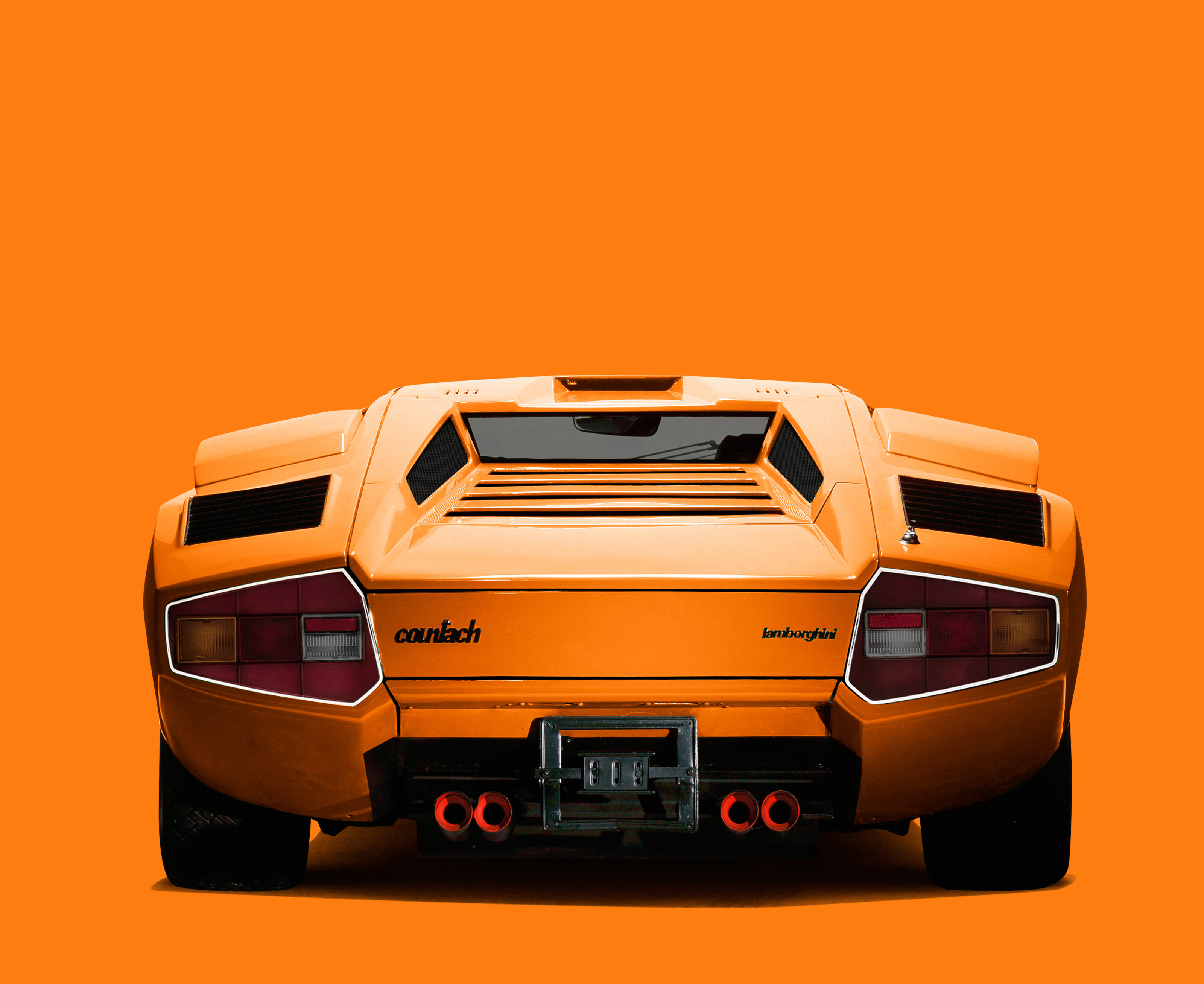
“You won’t find a photograph of the Countach on the walls of Gandini’s studio”
“The fact is that the Countach represented a clean break from some of the car industry’s consolidated practices. It didn’t refer to any other previous cars. It was not in people’s eyes; tastes had not been educated to appreciate it. Initially it was a culturally alien form, but within a few years it became an object-symbol,” says Gandini.
Time tends to move slowly at Sant’Agata. It’s rarely been a place where there seems in much of a rush to get things done. In a market where buyers want the newest and shiniest things, Lamborghini’s supersports cars are the Huracan, which has been on sale for seven years, and the Aventador, which has been around for 10. It’s quite remarkable, therefore that the Countach appeared a mere 60 months after the Miura was unveiled, and instantly consigned its predecessor to the back catalogue.
The yellow 5.0-litre LP500S that appeared on the show stand in Geneva was a chimera. Beneath its alien skin, it featured a shortened half-spaceframe chassis and engine that wasn’t to see production, the prototype eventually meeting its end being driven into a concrete block at the MIRA facility north of Nuneaton, in what has to be the world’s most pointless and tragic crash test.
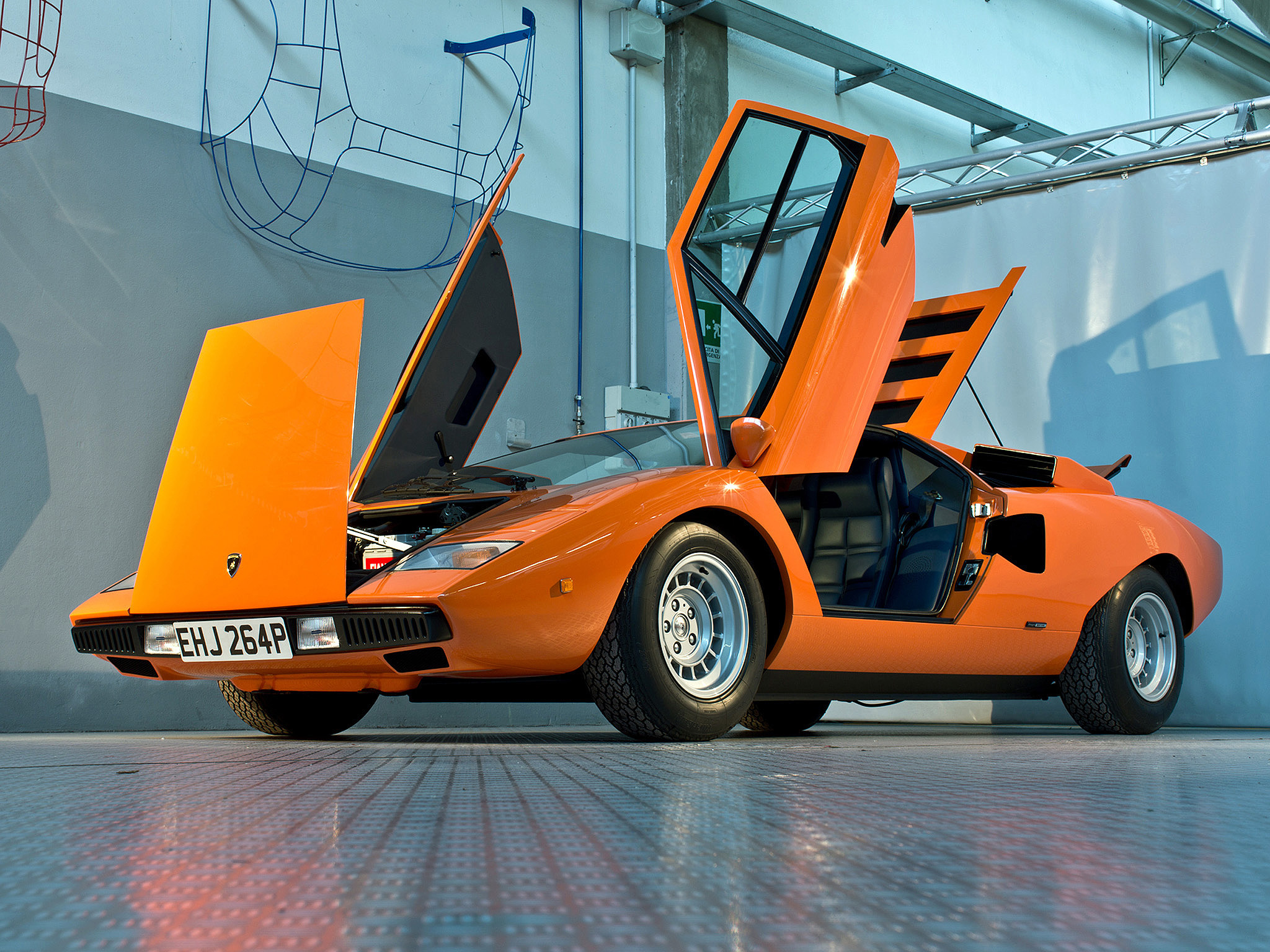
Even then, production was not guaranteed. At around the same time that flashbulbs were popping at Geneva, Lamborghini’s tractor operations were struggling. Without that cashflow and with the oil crisis looming, Ferruccio Lamborghini was unconvinced by the numbers around the Countach.
After a protracted bout of arm-twisting by engineers Stanzani and Bizzarrini, he was talked into a wager. If test driver Bob Wallace could drive the prototype from Sant’Agata down to the Targa Florio in Sicily and back without it breaking down, Lamborghini would green light production. In May 1972, Wallace sounded the horn outside Ferruccio’s office and shook hands with the old man, who smiled, shrugged and returned to work.
Between the 1971 Geneva Show and the first LP400 customer deliveries in 1974, the Countach changed a great deal. Out went the 328kW 5.0-litre V12 and in came a 276kW 3929cc unit developed from the Bizzarrini powerplant in the Espada. Likewise the chassis changed, adopting a full tubular spaceframe which weighed 90kg less than the show cars’ steel plate lash-up.
Steel body panels made way for aluminium bodywork, the electronic dash was ditched and breathing was improved using air scoops and NACA ducts. After smashing 20 of the two-piece side windows trying to fit them, Lamborghini relented and fitted a simpler three-pane arrangement.
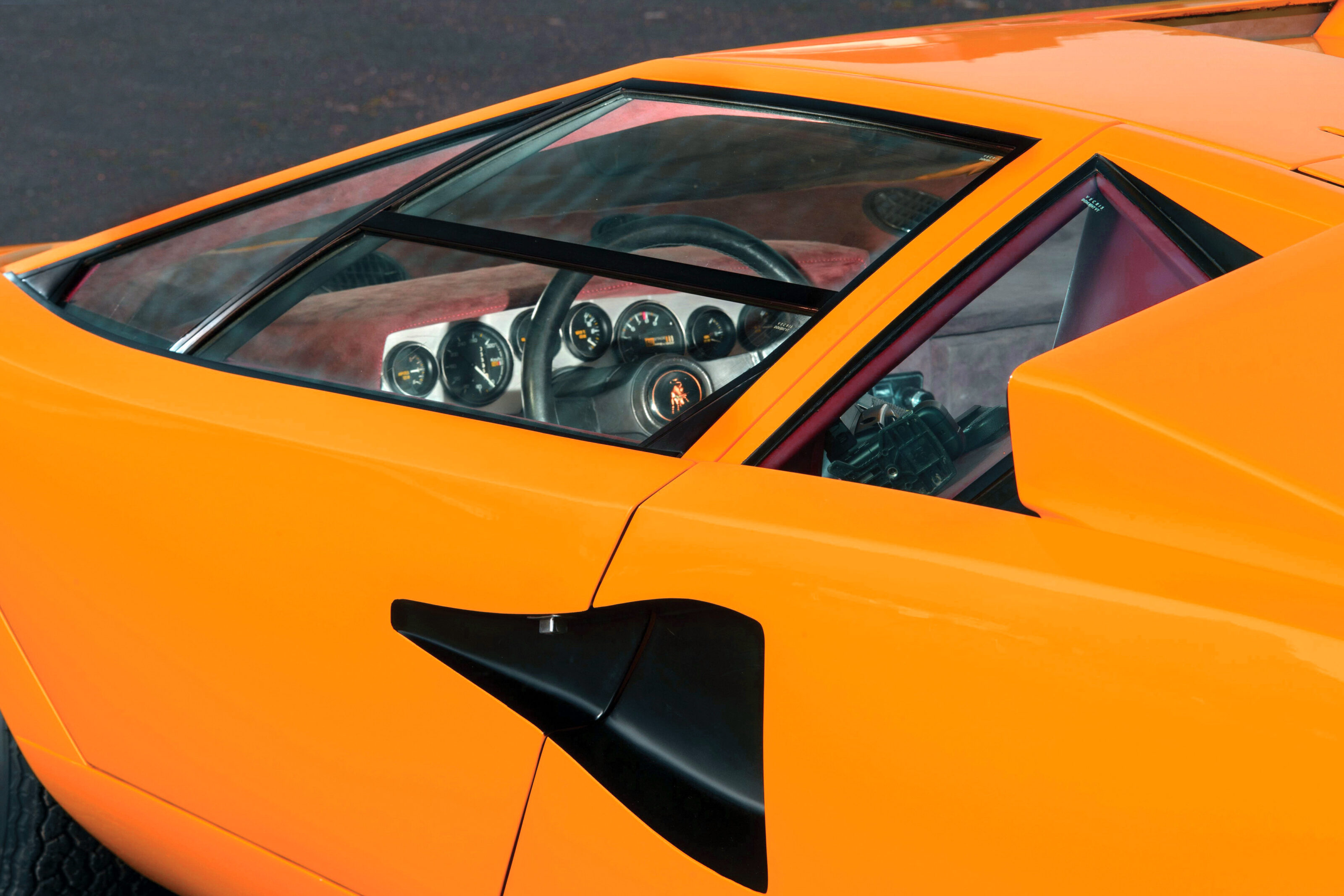
The Countach entered production in LP400 guise, but it wasn’t long before Austrian-Canadian multimillionaire and F1 team owner Walter Wolf wanted something more special. And what Mr Wolf wanted, he tended to get, unless you choose to bring F1 constructors’ championships into the mix.
Wolf’s vision for the Countach changed its direction for good. Out went the sensuality of the original shape and in came a car that would launch millions of bedroom wall posters. Tacked-on wheelarch extensions, teledial alloys, huge Pirelli P7 tyres, the iconic but aerodynamically hopeless arrow-section rear wing and, most importantly, a 5.0-litre engine. Wolf ordered two of these cars, one red and the second finished in Bugatti Blue, and these were to become the basis for the LP400S, which arrived in 1978.
Enter Leonardo Fioravanti. Every story needs an anti-hero and, as far as Sant’Agata is concerned, here’s your man, because Fioravanti is cast as the wrecker, the man to demolish a fifty-year-old myth. You probably know the story already. Ferrari was selling Fioravanti’s front-engined 365 GTB/4 Daytona, which instantly appeared a relic when the Countach launched. And after that, Ferrari followed Lamborghini with another Fioravanti design, the 365 GT/4 BB, playing mid-engined catch up.
Except that’s all baloney. It never happened.
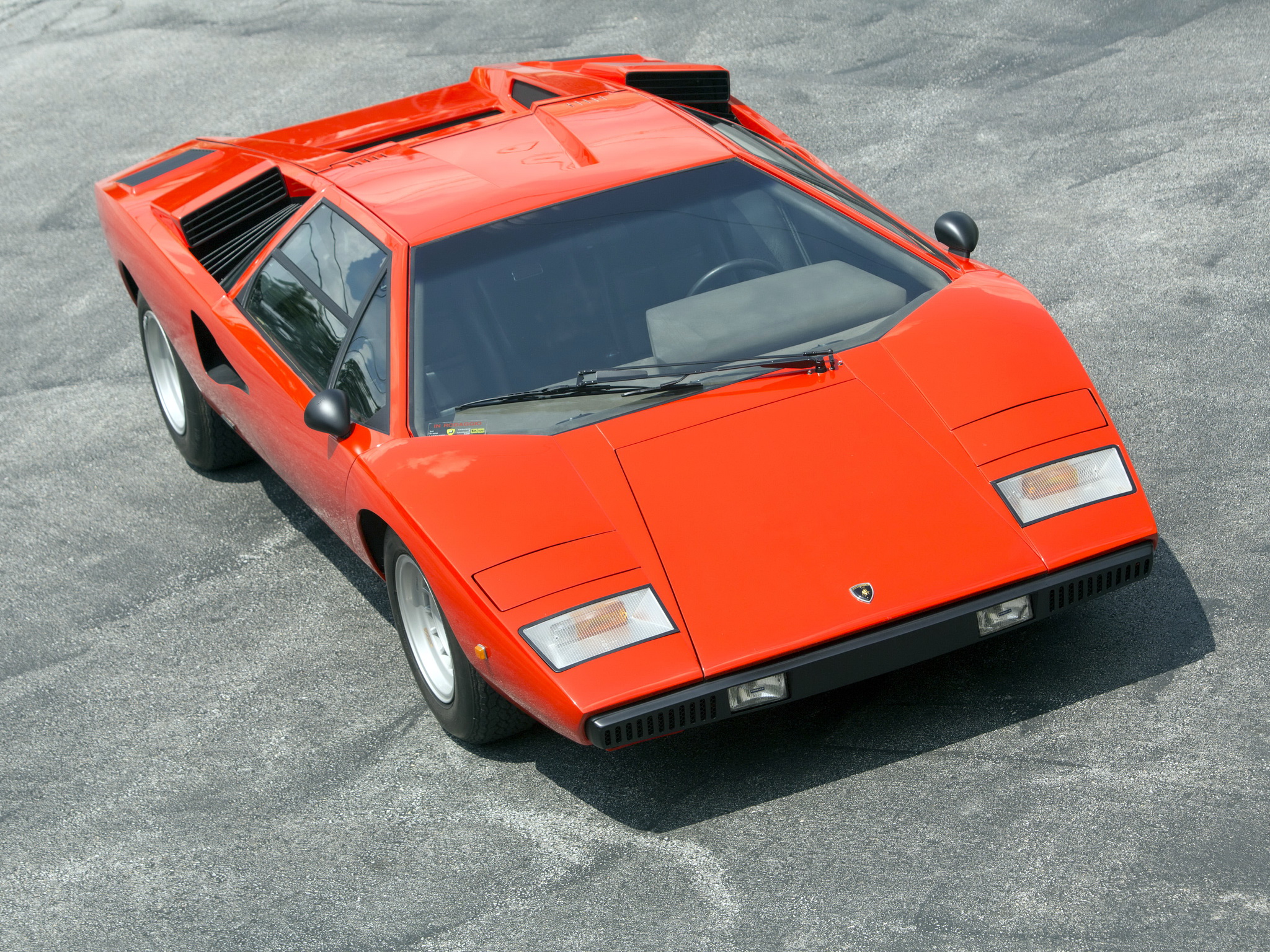
The first Ferrari BB was shown at the same 1971 Turin Show as the Countach prototype and beat it to market, customers taking delivery a year before any paying punters got the keys to a Countach. At this stage, Ferrari had more experience in building mid-engined cars than Lamborghini, with more than 3000 Dino-badged 206 GT and 246 GT/GTS models rolling from Scaglietti’s gates. The BB never had to play catch up either. Between launch and the end of its life in 1982, it outsold the Countach by better than five to one.
Fioravanti then reprised that success with the BB’s replacement, the Ferrari Testarossa. Lamborghini designed the 5.2-litre Countach QV in response to Testarossa development, and not vice versa. In three years from 1985, Lamborghini sold 610 units of the angriest production Countach. By contrast, Ferrari sold more than 1000 Testarossas every year across its seven year production run.
So perhaps Lamborghini’s spinning of the Countach yarn is a filigree of tall tales and exaggerations. This is a car that sold, on average, 122 units per year across its sixteen-year lifespan. Marcello Gandini doesn’t care for sales figures, nor does he particularly care about the one thing that defined the Countach, its aesthetic.
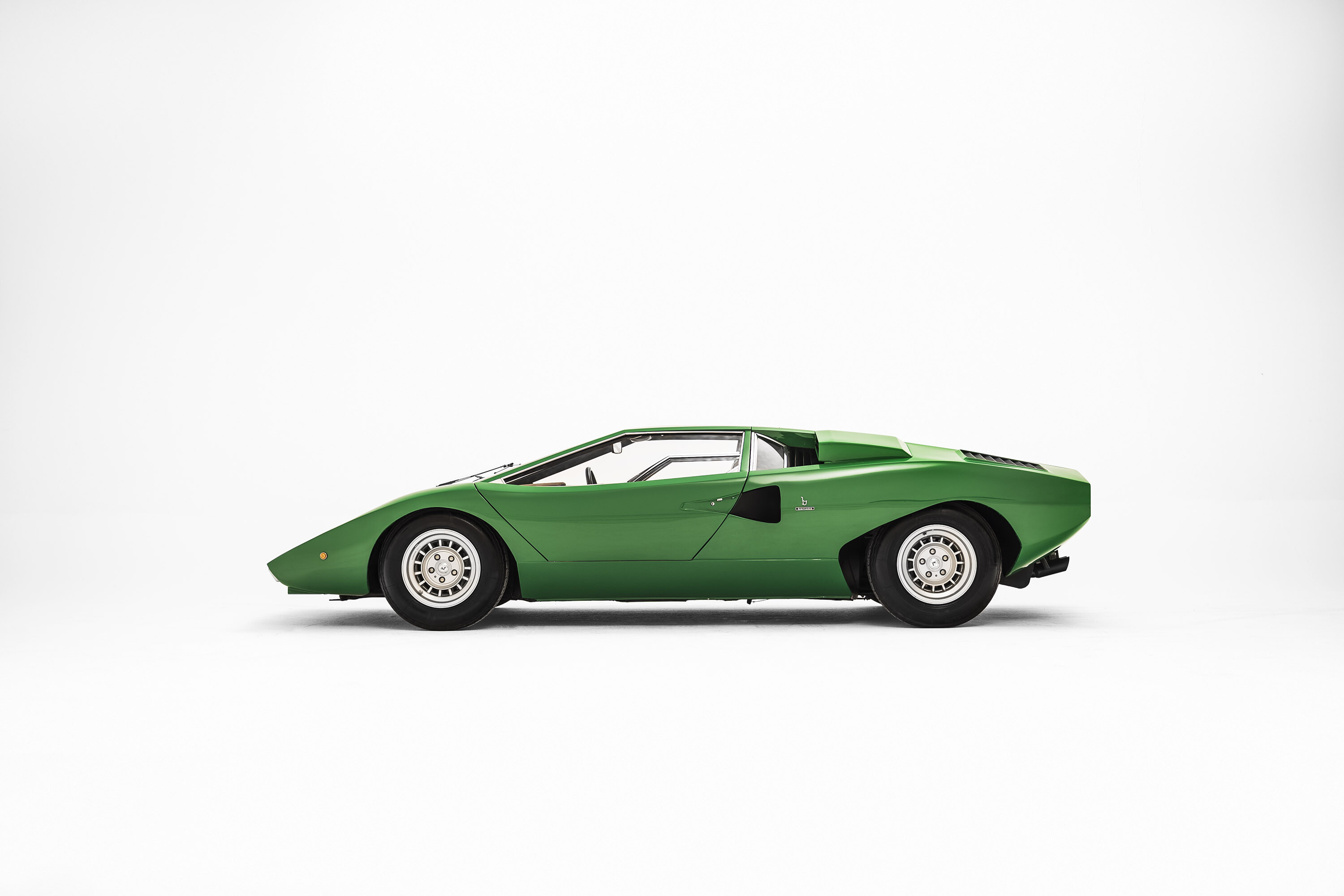
“Just styling is not fun,” he says, preferring to concentrate on assembly, mechanisms and architecture. Gandini’s next commission after the Countach was for Ferrari, with the Bertone-credited 308 GT4, a hat tip by Ferrari to the quality of his work for the tractor boys across the Emilian plain.
So perhaps the Countach is a car that has always benefited from a certain fudging of fact. Its adherents don’t care and nor do we. The reason nobody remembers that the 365 GT/4 BB was present in the show hall in Turin back in ’71 speaks volumes.
There was only one word on showgoers’ lips. Countach!
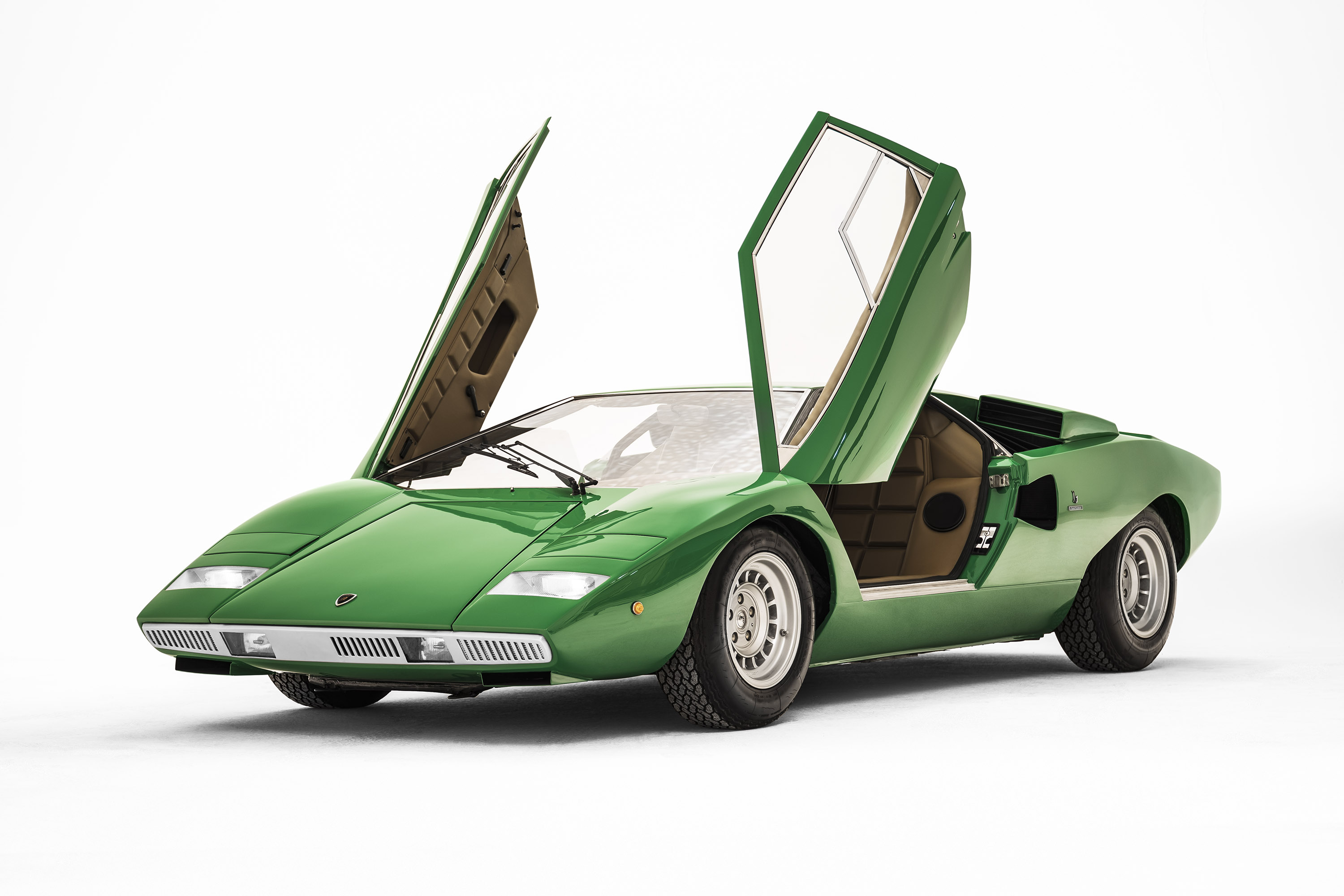
Half a century on, its impact has barely palled.
By today’s standards this automotive colossus is minuscule, taking up less space on the road than a modern Ford Focus.
Gandini doesn’t think of it as his finest work, preferring instead the similarly petite Lancia Stratos HF. No matter. Somewhere between the romance and reality is the story of how the work and influence of three men resulted in the definitive supercar. You won’t find a photograph of the car on the walls of Gandini’s studio.
“My archive is generally the waste paper basket, which I keep under here. I prefer the archive of memory: it easily erases the disagreeable items.”
