
Snapshot
- New ‘flippy’ electronically adjustable touchscreen
- 2+2 seating for the first time since 1989
- Expected to ride on new Modular Sports Architecture (MSA) platform
The interior of the 2022 Mercedes-AMG SL – the first SL developed in-house by the sub-brand – has been revealed, with the grand tourer’s cabin taking strong influence from both the S-Class and AMG GT.
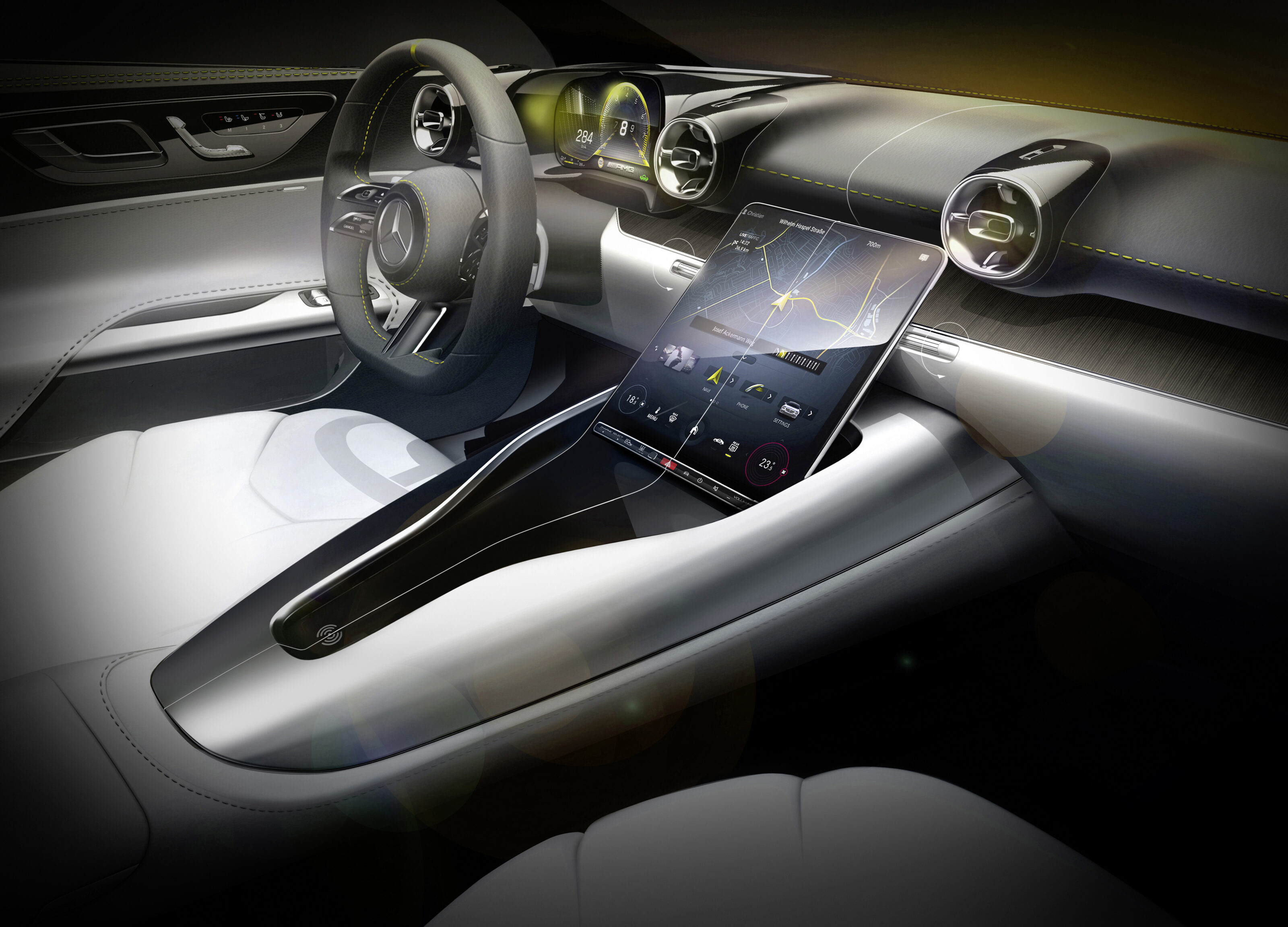
The 11.9-inch portrait touchscreen, powered by Mercedes-Benz’s latest-generation MBUX system, can now be electronically adjusted to avoid glare caused by sunlight when driving with the top down.
Owing to the performance credentials of the AMG brand, the company has adapted the software in the SL to show content and views specific to AMG, with a performance drive mode and ‘track pace’ lap-time tracking available.
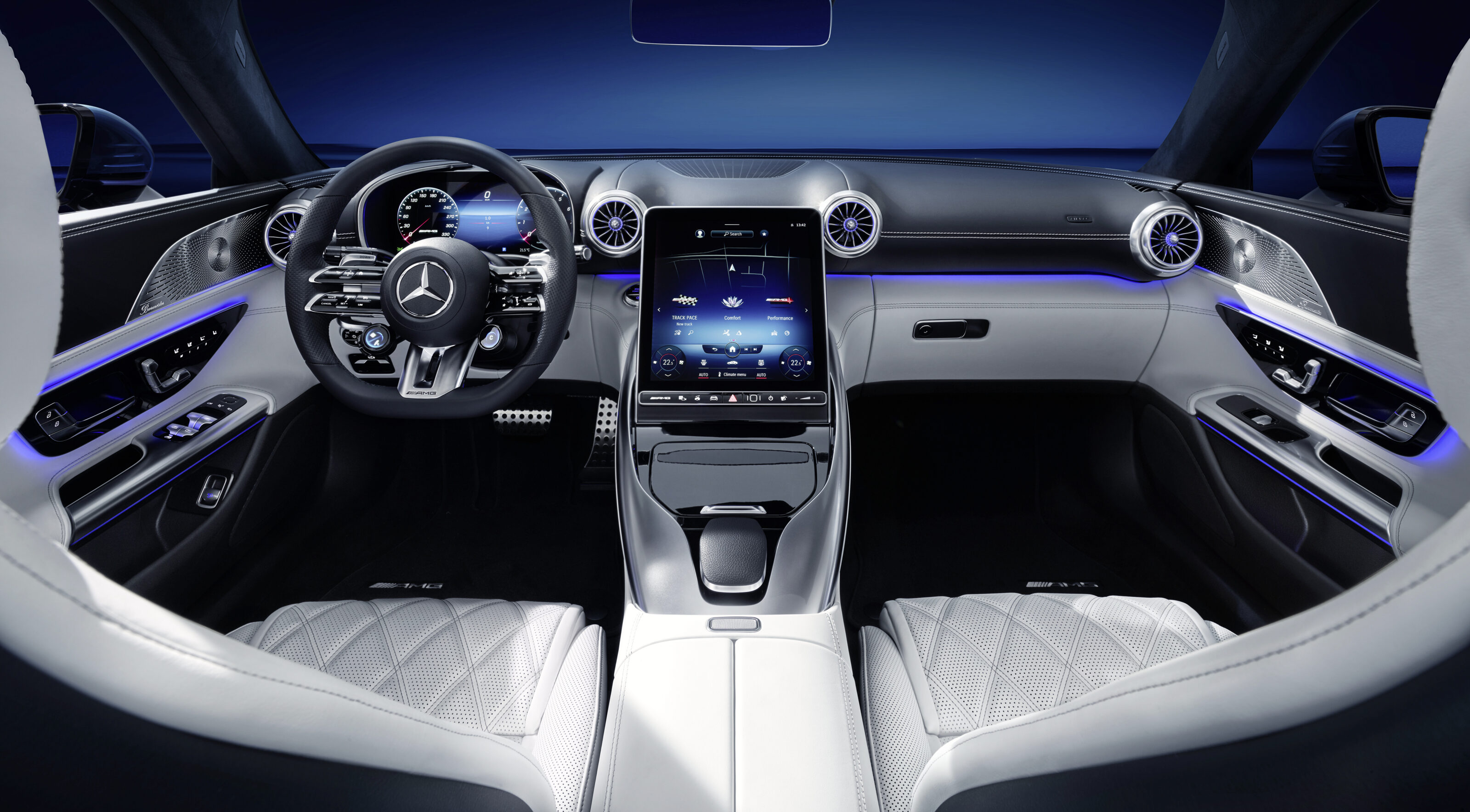
Unlike recent Mercedes-Benz models, the SL’s 12.3-inch instrument cluster has been placed within a visor to avoid reflections caused by sunlight. It can be adjusted with a range of views which will also extend to the available head-up display – a feature the company claims will “display relevant cues and actions three-dimensionally.”
A Burmester sound system and ambient lighting with up to 64 different colour options will also be available.
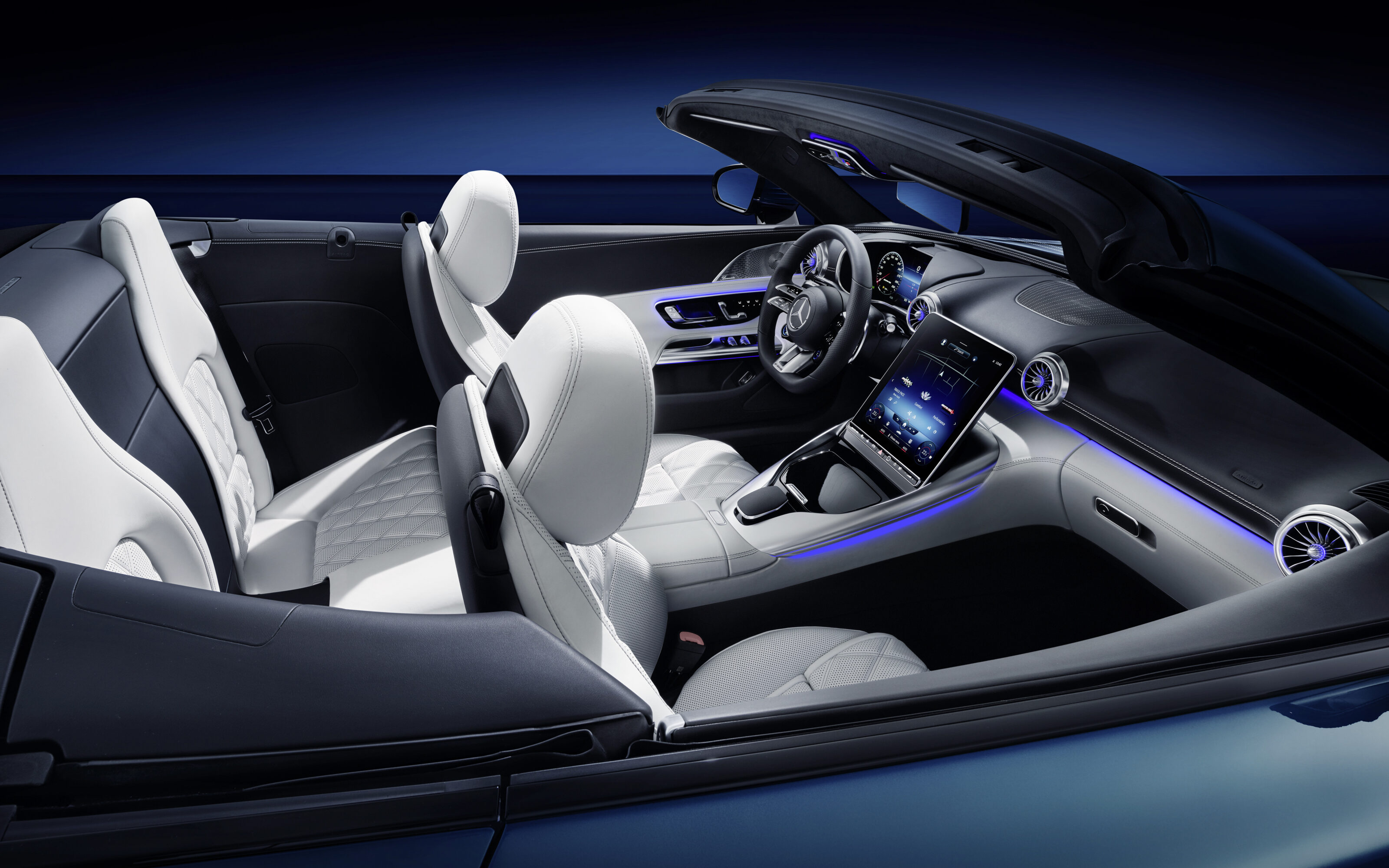
For the first time since the R271 generation in 1989, the SL will be standard with four seats – with space for people up to 1.5m tall on offer in the rear – which can also be folded flat to maximise luggage space. A draught-stop is available when the rear seating is down to protect the driver and passenger from wind on their necks.
Trimmed in leather as standard, the front seats are offered with a choice of either a Sport or Performance design. In terms of upholstery, SL buyers will be able to choose from Nappa leather with diamond stitching, or combination Nappa leather and Dinamica microfibre with yellow or red contrast stitching.
Mercedes-AMG claims the interior of the new SL has been inspired by a “mix of analogue geometry and [the] digital world” – divided into two sections, separated by four turbine-style air-conditioning vents.
“The SL is an icon of the brand with the three-pointed star: This roadster has stood for automotive fascination and desire for decades. A great opportunity and challenge for design, because every designer wants to create icons,” said Gorden Wagener, chief design officer for parent company Daimler.
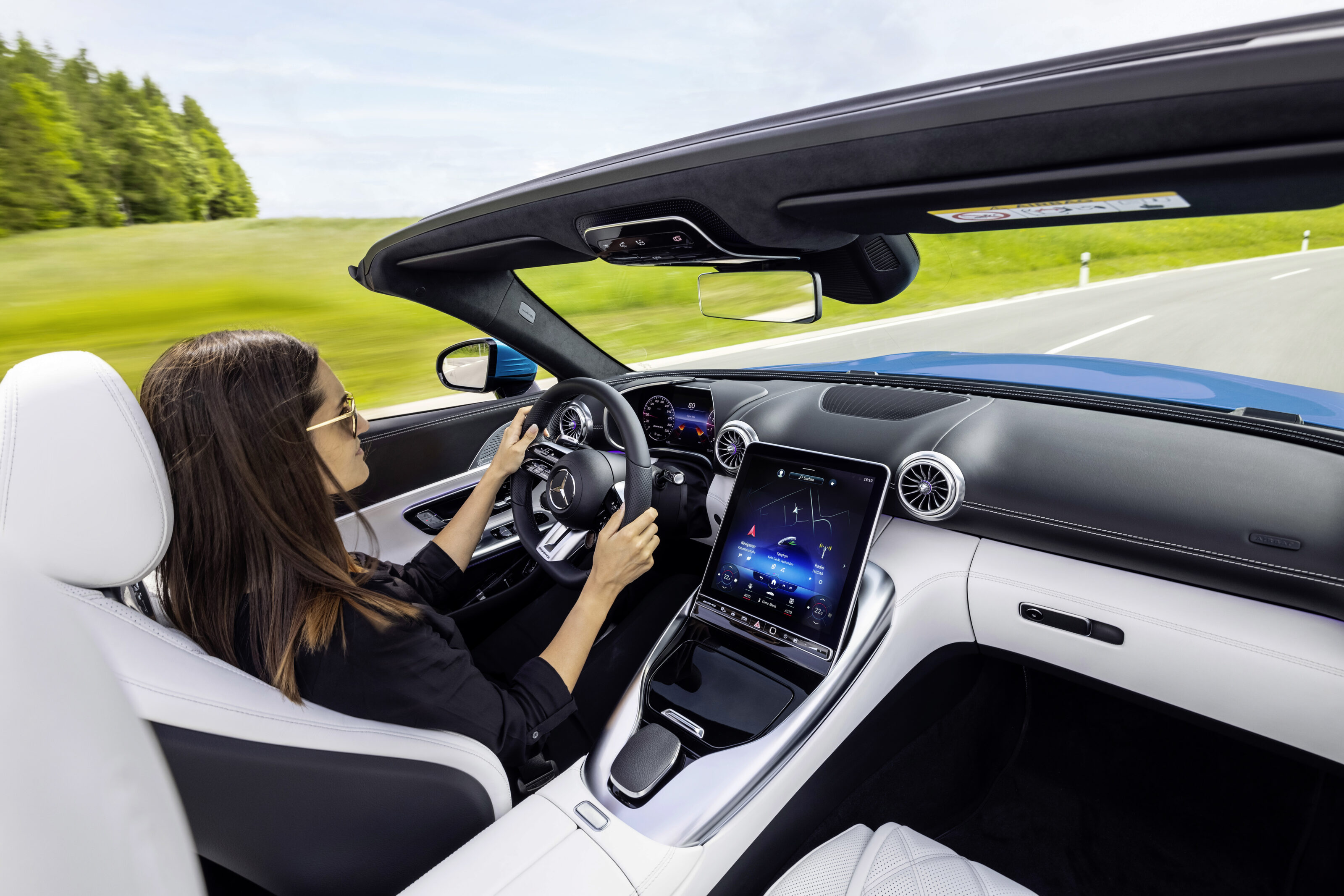
“The result is a revolutionary interior experience caught between digital and analogue luxury.”
Set to replace the GT Roadster, the SL is expected to be unveiled in the coming weeks, with the previously more luxury-orientated model rumoured to come with a range of AMG powertrains – from the turbocharged inline-six SL 43, to the high-performance V8 plug-in hybrid SL 73 E 4MATIC+.
The new SL is anticipated to be the first offering from Mercedes-AMG to ride on the brand’s new Modular Sports Architecture (MSA) platform, likely to be shared with the next GT which is rumoured to be coming during the first half of 2022.
Snapshot
- Victorian EV subsidy scheme came into effect on May 2
- Dealers were expected to apply the discount at the point of sale u2013 but only one company did
- Application process now open for buyers who hadn’t been given money off
Electric vehicle buyers who missed out on a $3000 discount due to the Victorian Government’s “confusing” subsidy scheme, are now finally receiving their cash back.
Solar Victoria, on behalf of the Victorian Government, is now in the process of rolling out the subsidy to buyers of zero emissions vehicles (ZEV) after it was found only one manufacturer had been passing the savings directly on to customers.
The scheme was introduced on May 2, 2021 and covered any sub-$68,740 ZEV purchased from the starting date, with the idea being dealers would knock off $3000 from the vehicle’s price (before on-road costs) instead of customers having to apply for the rebate themselves.
However, as WhichCar previously revealed, due to confusion over how the process worked, most dealerships selling cars under the price limit were not passing the subsidy directly on to customers – leaving Government agency Solar Victoria to repay the owners itself. According to the organisation, only one manufacturer has been confirmed as passing on the subsidy so far.
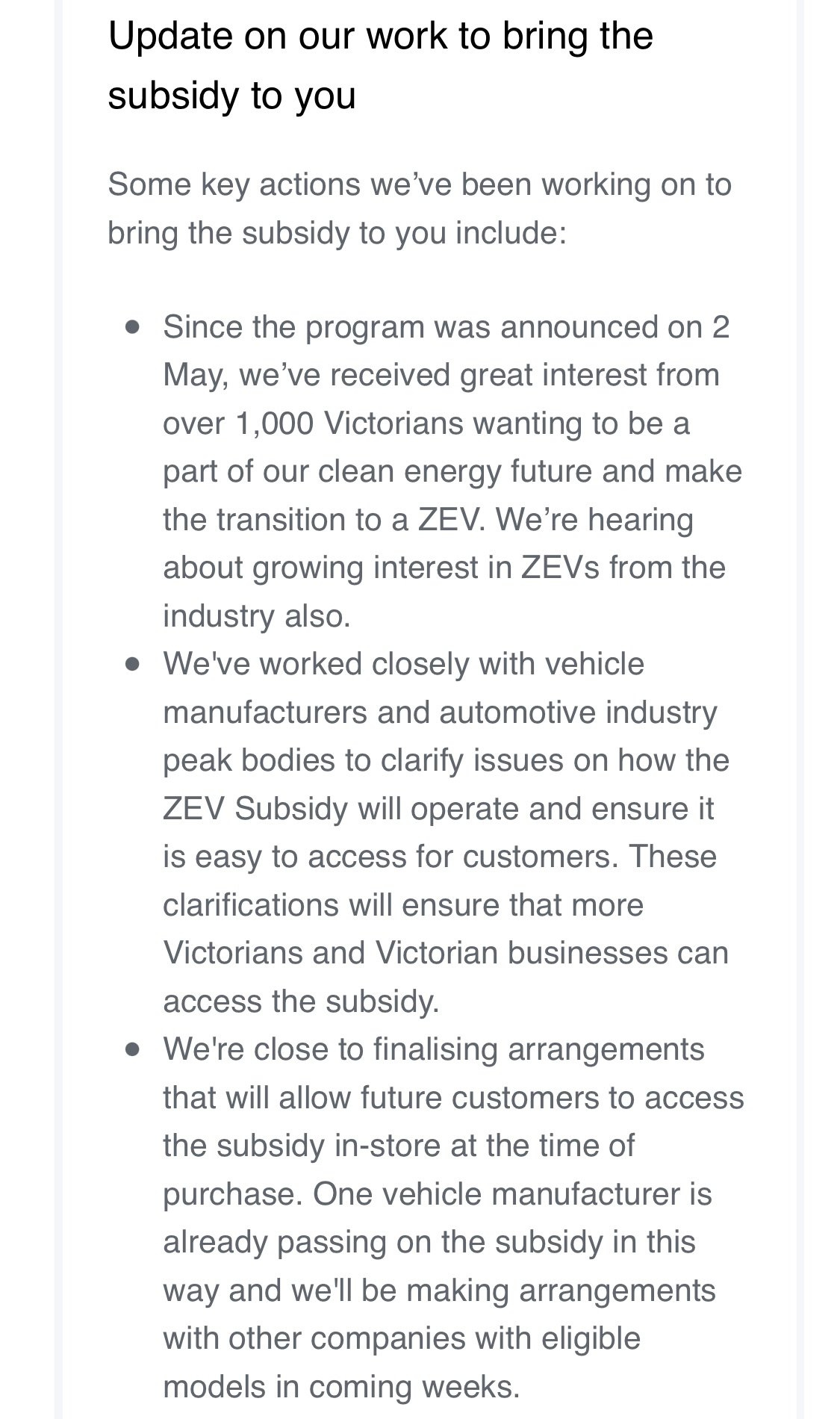
In a letter to new ZEV owners seen by WhichCar, Solar Victoria said has been working with carmakers to try and simplify the process.
“We’ve worked closely with vehicle manufacturers and automotive industry peak bodies to clarify issues on how the ZEV subsidy will operate and ensure it is easy to access for customers,” it said.
“We’re close to finalising arrangements which will allow future customers to access the subsidy in-store at the time of purchase.
“One vehicle manufacturer is already passing on the subsidy in this way and we’ll be making arrangements with other companies with eligible models in coming weeks.”
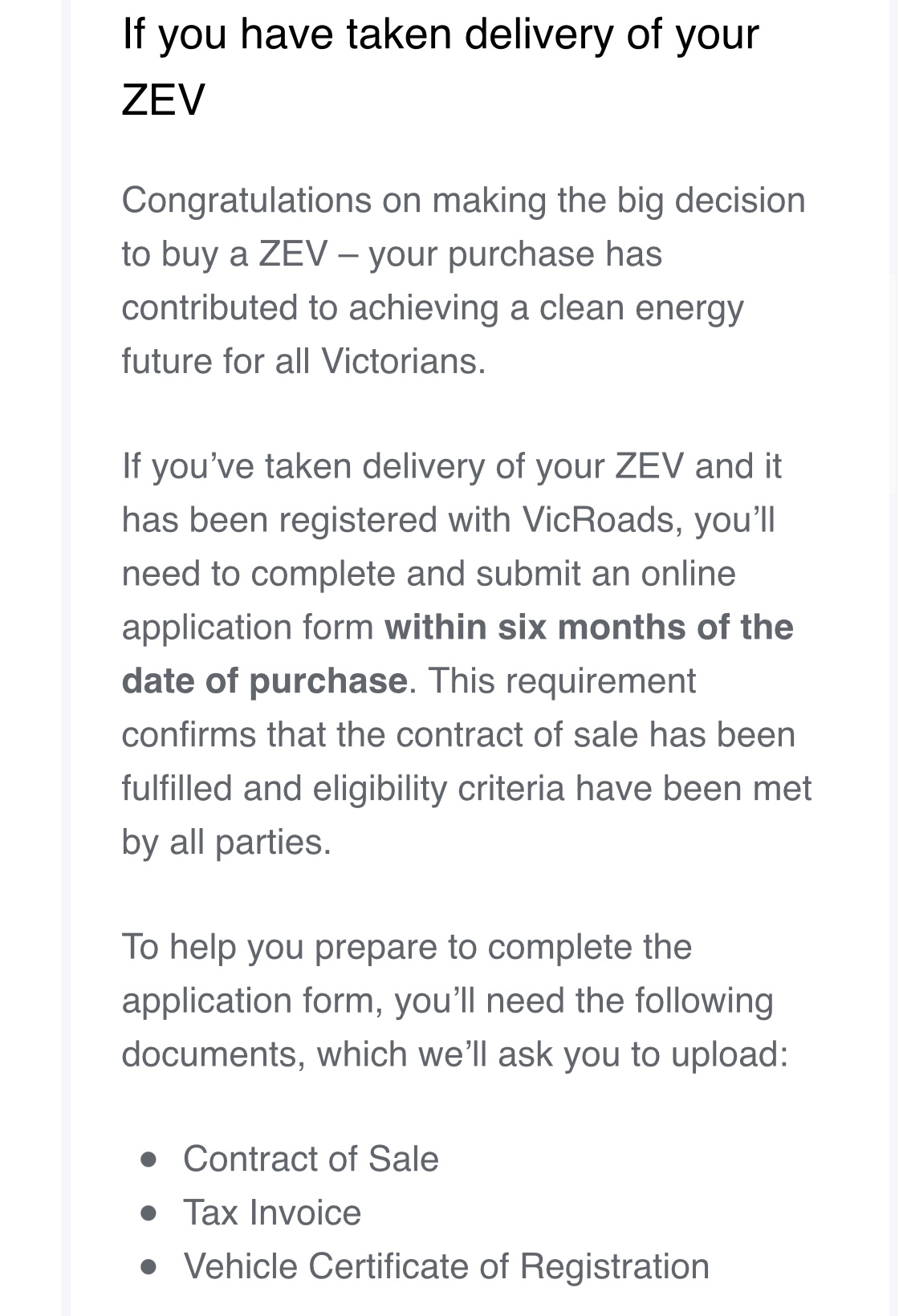
A Solar Victoria spokesperson told WhichCar the direct rebate from the Government agency to buyers who hadn’t already been given the discount by dealers would only last until the point-of-sale process is properly implemented, though no specific time frame has been given.
“This is an interim payment method to ensure no one misses out if they purchased an eligible ZEV between May 2 and when the point-of-sale process is implemented,” said the spokesperson.
“It also means they don’t have to wait longer for payment. When the point-of-sale discount is implemented in the coming weeks, the subsidy will be automatically applied on purchase for eligible buyers.
“We know that more than 600 eligible ZEVs have been purchased since the subsidy was announced.
“We expect to see a proportion of these buyers apply for the subsidy.”
Although it confirmed 600 people have bought EVs under the scheme, it has ‘received interest’ from more than 1000 Victorians who want to transition to electric.
Despite the setbacks and delays in the subsidy’s introduction, Solar Victoria said applications will be processed quickly.
“We’ll be working hard to process applications as quickly as possible. This is a streamlined process, and likely to enable a turnaround of five to 10 days,” they added.
A source told WhichCar Victorian car dealers had been given no notice of the subsidy scheme coming into effect, finding out through the media just hours before it was brought into effect.
While they conceded the subsidy is supportive of encouraging the public to buy EVs, they said the roll-out was “disorganised” and dealers were hesitant to apply the discount directly as it would mean a direct loss of income for the business, at least until the rebate arrived over two months later.
In contrast, they added the New South Wales State Government was proactive in its talks with manufacturers in the lead up to the implementation of its own EV scheme.
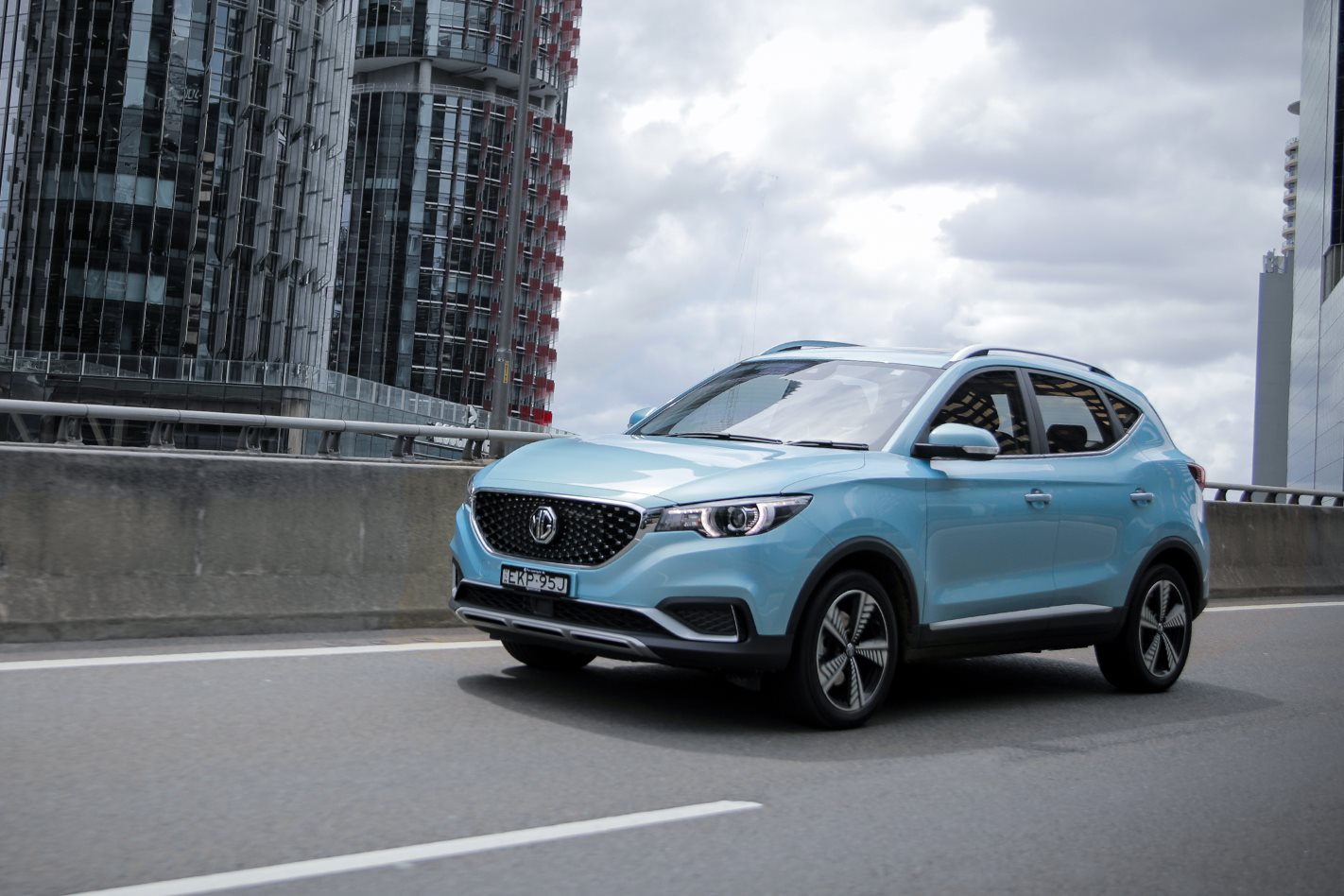
In addition to the subsidy scheme, as previously reported, Victorian ZEV owners started paying a road user charge of 2.5c/km for an EV or 2c/km for hybrids from July 1 – having to submit their odometer readings to VicRoads with photographic evidence of distanced travelled in order to avoid their vehicle registration being cancelled.
A letter from VicRoads to one new ZEV owner seen by WhichCar has revealed that travel on private roads or agricultural lands is exempt from the charge – but only when odometer readings or logbook entries are kept as evidence to prove which travel was public and which was private.
If you don’t think we’re living in a golden age of small hot hatches, let me give you a quick rundown of what you can buy today – the new Golf GTI Mk8, the Ford Focus ST, the Renault Megane RS, the Honda Civic Type R, the Hyundai i30 N (shortly to get a big update) and the Mercedes-AMG A35. A whole new brand, Cupra, is coming to Australia with hot hatches and fast SUV crossovers at its core. You can squeeze in the Octavia RS to this list – and probably a few more – given the price and punch on offer.
The choices are nearly endless and complex. So if you don’t have any preconceived ideas about brand, where the hell do you even start?
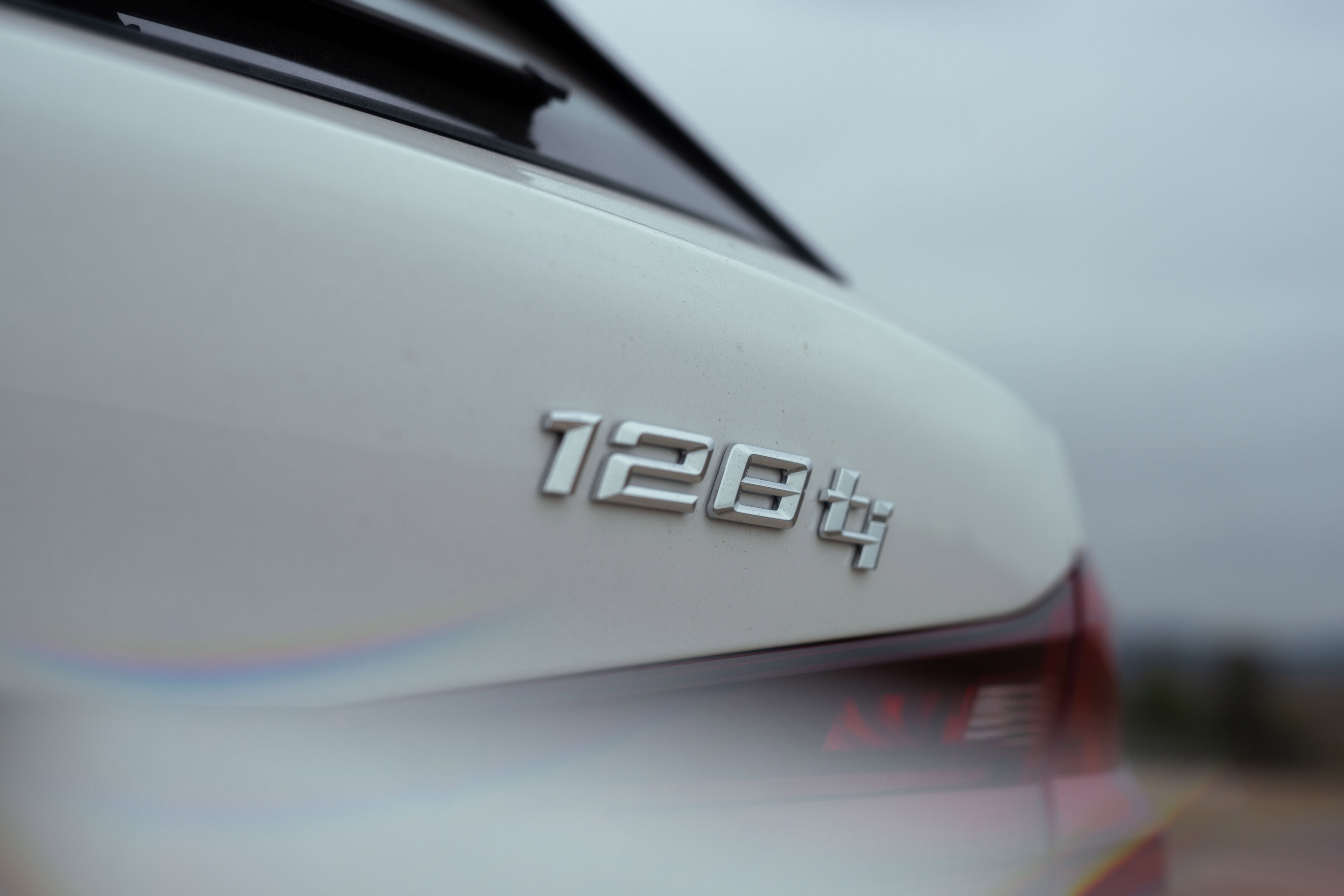
In the hope of making matters worse, BMW has resurrected a classic nameplate and glued it to the back (and stitched it into the armrest) of its capable but thoroughly anonymous hatchback, the 1 Series, to create the 128ti.
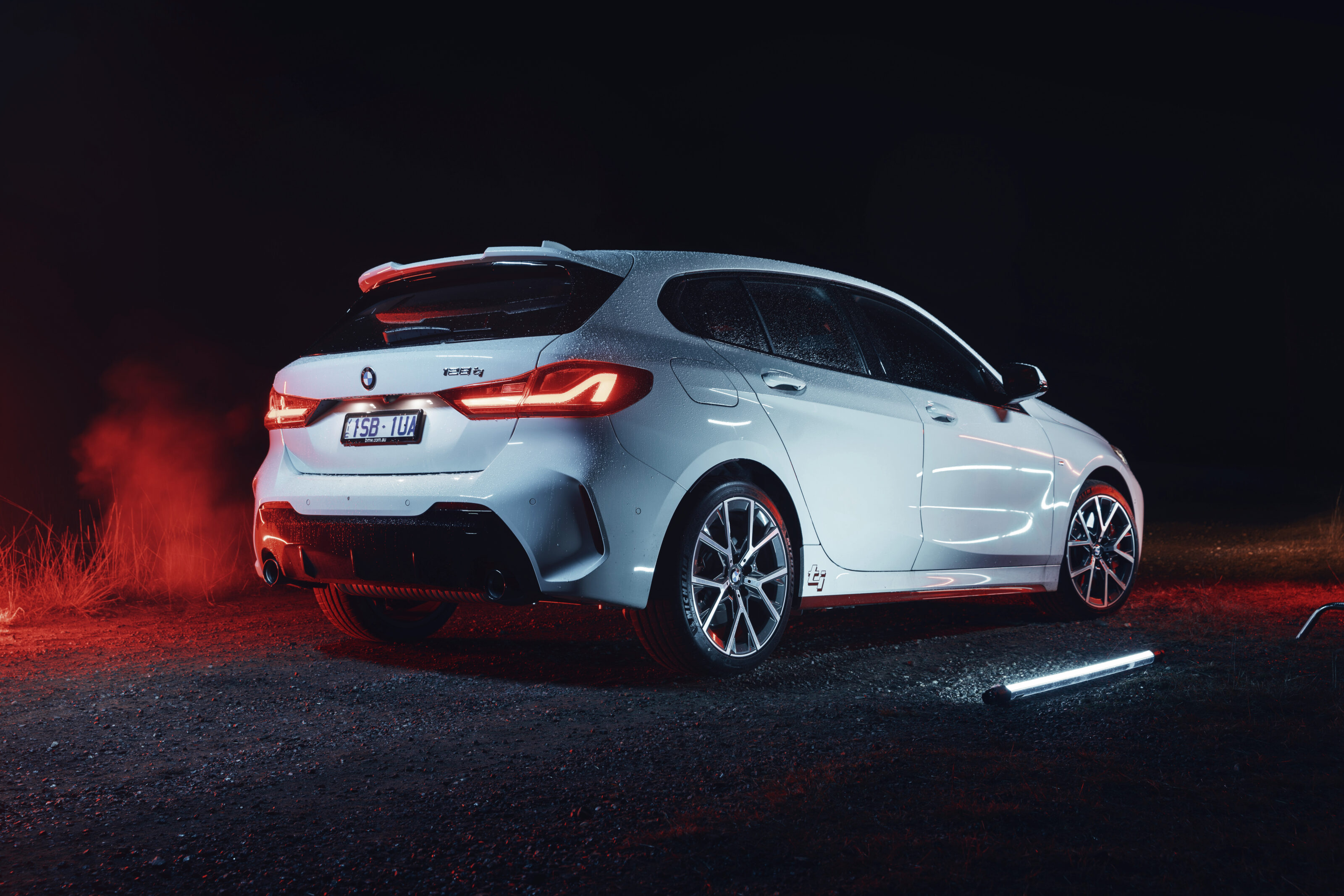
For a few years now, BMW has tried to excite us with the M135i xDrive and while it’s very fast and competent, it’s not as much fun as most of the cars I’ve named. Most of the makers of that long list of cars cracked the code of a front-wheel-drive platform’s potential literally decades ago. When the front-wheel-drive 1 Series arrived, we lost the rear-wheel-drive 125i M Sport and the delectable M140i, which was damn good value in its final years and absolutely superb to go with it.
Conspicuous by its absence on the new BMW 128ti is an M in the name. It would have been really easy to throw an M in front of 128i and call it an M Performance car. I don’t know if that’s an admission that M Performance hasn’t hit the lofty heights BMW had hoped, but using the fabled ti badge for the first time in a long time isn’t pulling any punches either.
Pricing and Features
For $56,900 plus on-roads, the 128ti is yours. Yes, that is a heck of a lot more than the i30 N and Focus ST, but it’s astoundingly close to the Renault Megane RS, which is a great car but not a near-sixty grand car.
The segment’s longtime – but recently challenged – benchmark, the VW Golf GTI is a mid-$40K propos-…wait, no, that’s not right. It’s now $53,100 plus on-roads.
So until about twenty words ago, the BMW looked like it was expensive against its obvious rival, but it’s really not when you put it into context. It’s just that the Ford and Hyundai are cheap these days.
The VW has more stuff than the BMW, so if you’re keen to know more about how they stack up against one another, my colleague Curt has put them head-to-head for Wheels magazine. So ssh. Spoilers.
Before you touch the long list of options and packages, you get 18-inch alloys, six speakers, dual-zone climate control, keyless entry and start, cruise control, electrical seat adjustment, sat-nav, active LED headlights with active high beam shadowing, head-up display, auto parking, wireless charging, reversing camera, front and rear parking sensors and a tyre repair kit in place of a spare.
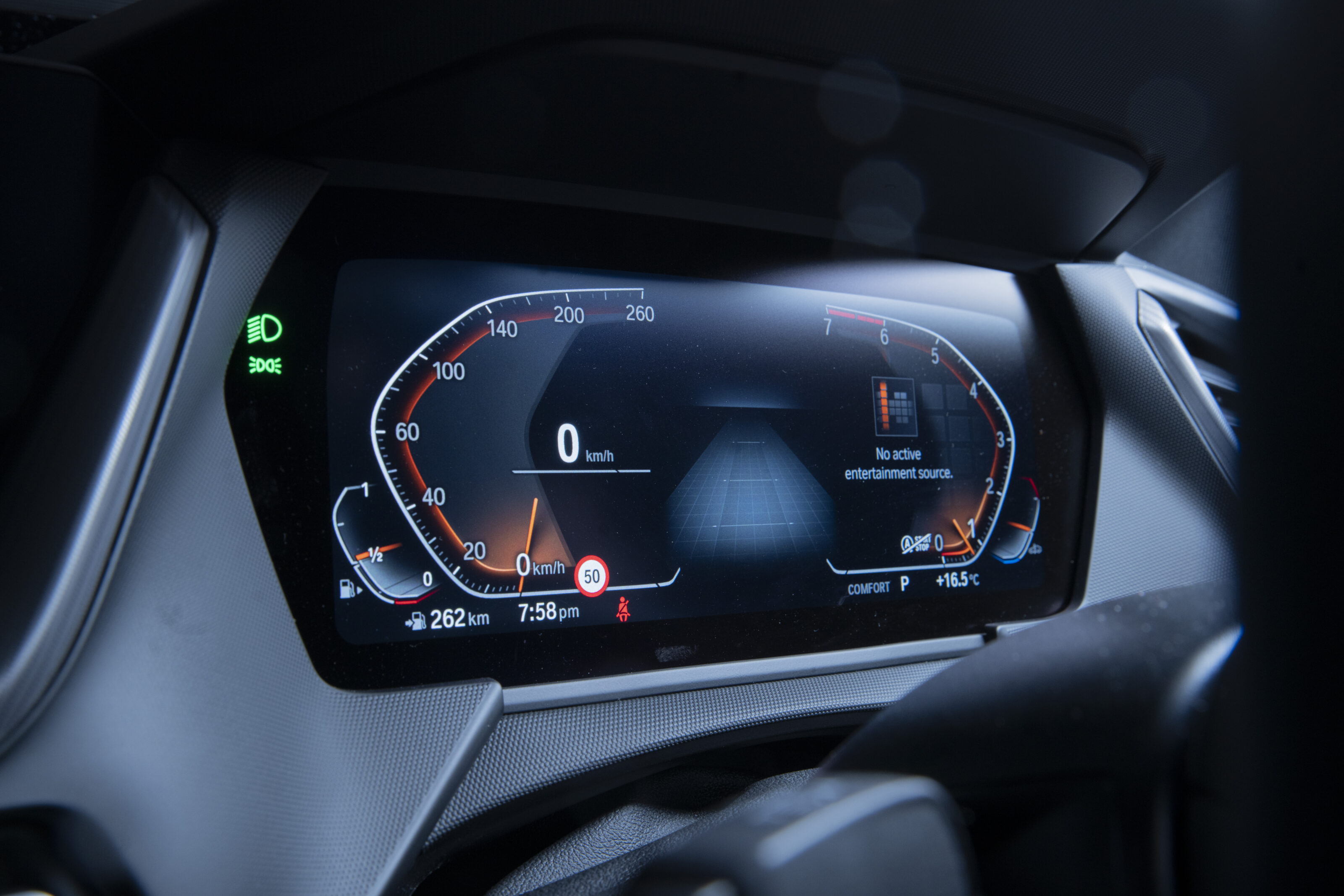
BMW OS powers a 10.25-inch touchscreen and the 12.3-inch Live Cockpit digital instrument panel. The six-speaker stereo is perfectly fine and as the car is reasonably quiet – at least on a decent surface – so there’s plenty of grunt to fill the cabin with sound.
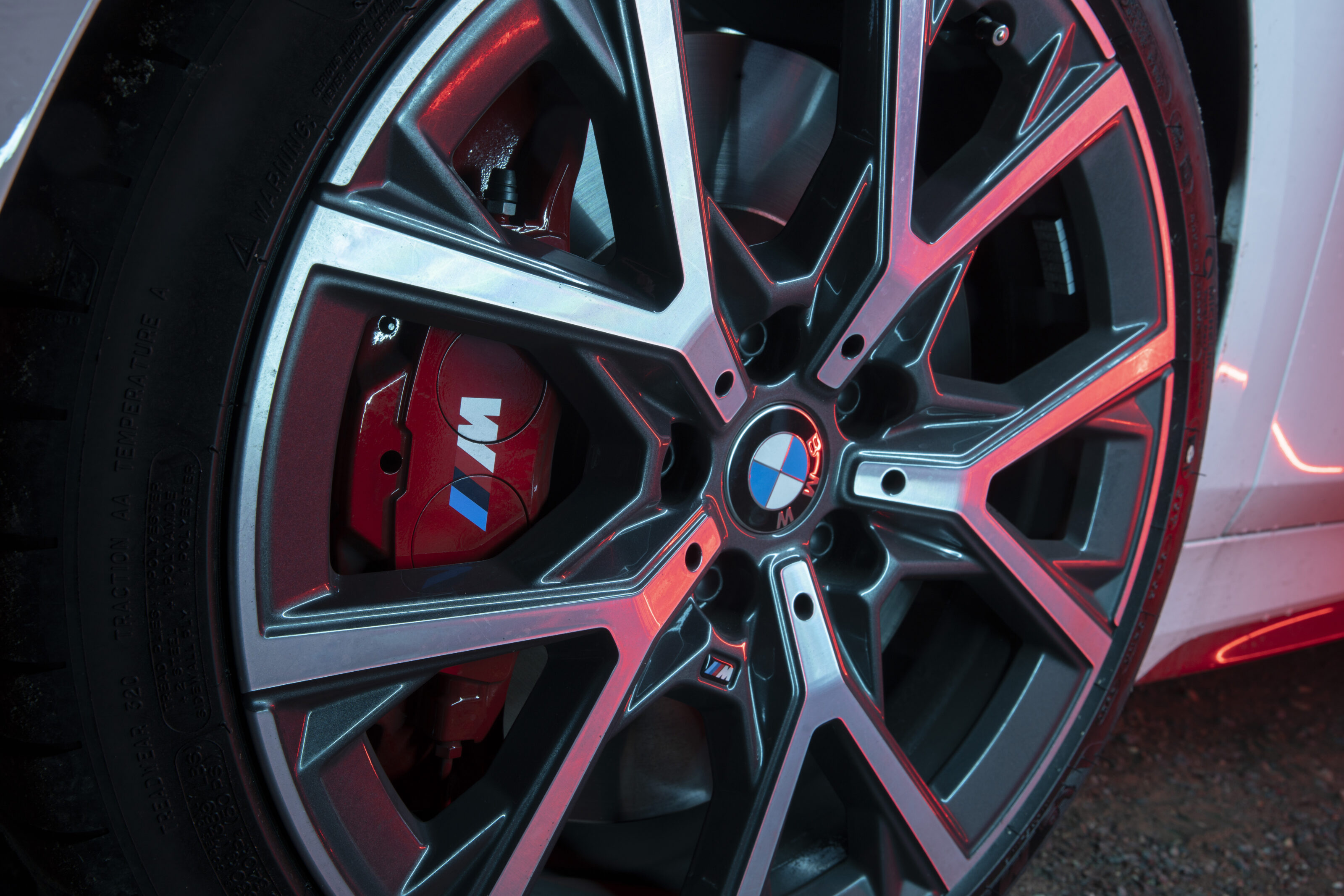
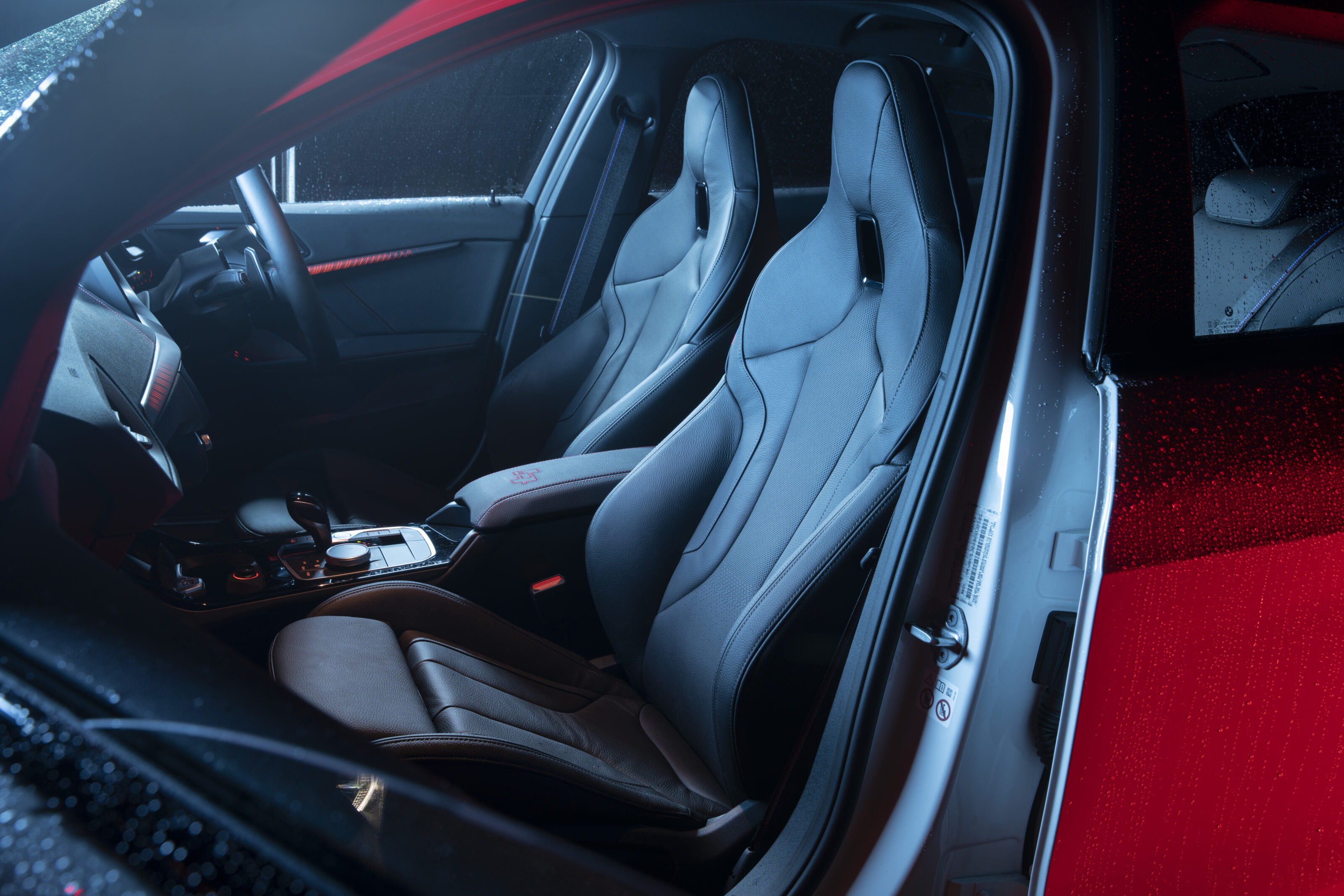
Curiously, the excellent M Sport front seats are a no-cost option and I’m wracking my brains for a good reason not to have them – they’re much better looking than the standard seats and I daresay are just better. They’re not restrictive, either, so…uh…tick that box. The car I drove has Michelin Pilot Sport 4 tyres that are BMW-developed, although like the M3 and M4, you might get similarly fettled tyres from other manufacturers.
Curiously, the excellent M Sport front seats are a no-cost option and I’m wracking my brains for a good reason not to have them – they’re much better looking and I daresay are just better.
There are lots of options to choose from. This car had the $2000 panoramic sunroof fitted, steering wheel heating ($308) and heated front seats ($576).
It didn’t have active cruise control (which is a not very modest $653), the absence of which felt weird in such a tech-laden car. You also have to pay for tyre pressure monitoring, which is baffling.
A five-star ANCAP safety dating back to the Before Times (2019) comes courtesy of six airbags, the usual traction and stability systems, forward AEB, forward collision warning, blind-spot monitoring, lane-departure warning, lane-keep assist and rear cross-traffic alert.
The forward AEB has night and day pedestrian detection (8km/h to 85km/h), daytime cyclist detection and works at up to 80km/h for other vehicles.
Comfort and Space
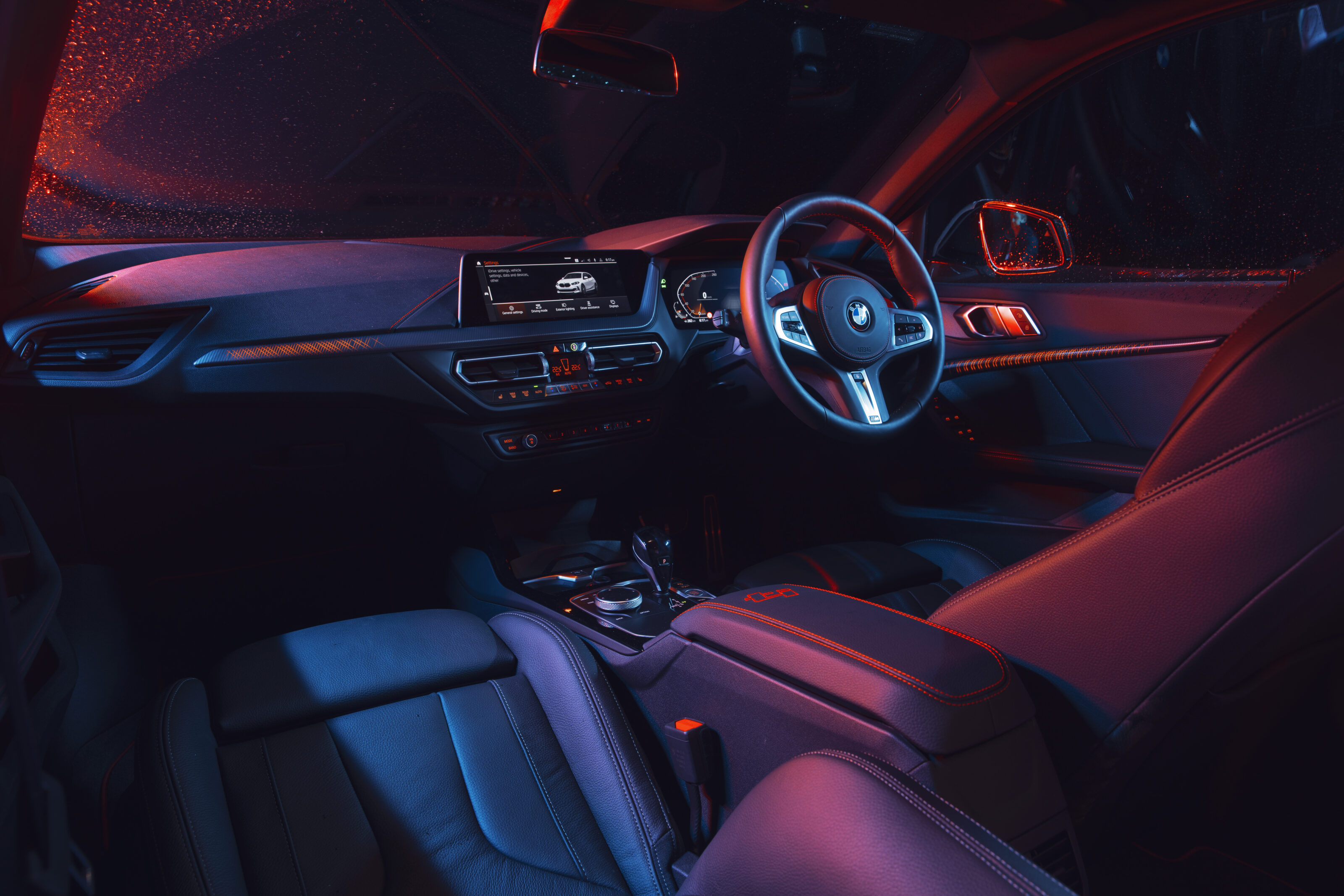
A 1 Series cabin is hardly the largest on the market, so it’s best we start with the rear seat.
Fundamentally, it’s fine. At just on 180cm I can fit behind my driving position, but the way the glasshouse narrows towards the Hofmeister kink means it’s a little claustrophobic. Headroom is fine, though, but if you’re three across the back there will be a mess of feet in the footwells owing to the transmission tunnel and the seat isn’t really wide enough unless one of you has no hips.
You do get an armrest, two USB-C chargers and two cupholders though, so that’s not bad at all. If you’re carrying tall people, ditch the sunroof option and spend the money on better goodies.
As this car was fitted with the excellent M Sport front seats, they were superbly comfortable. I spent a long day in the car, both droning along freeways and motorways and then firing down some very challenging roads in sometimes tricky conditions. The Alcantara finish means you’re held in by both the bolsters and the material, so I wasn’t slipping about and got out after a long day feeling fresh as a 45-year-old man can.
The wireless charging under the climate controls is good because it holds your phone in place, but isn’t so buried in the dash that you’ll forget it. The wireless Apple CarPlay and Android Auto mean the Qi pad is an even more useful inclusion and in this case actually fits larger phones. BMW 1ers formerly had charging pads under the armrest (which in this car has a big ti logo stitched into it and it looks amazing) and the old-school catch mechanism was too small for big phones.
Also up front, you get two cupholders ahead of the shifter and bottle holders in the doors. It’s a terrific cabin, with probably a few too many buttons but unlike some cars in this niche, it doesn’t sacrifice ergonomics for a clean everything-in-the-screen approach.
Cargo space starts at a competitive 380 litres but if you drop the back seat’s 40/20/40 arrangement, you get 1200 litres, which is a lot. It’s best not to get too ambitious with flat packs, however, as the load space is compromised by the wheelarches.
On the Road
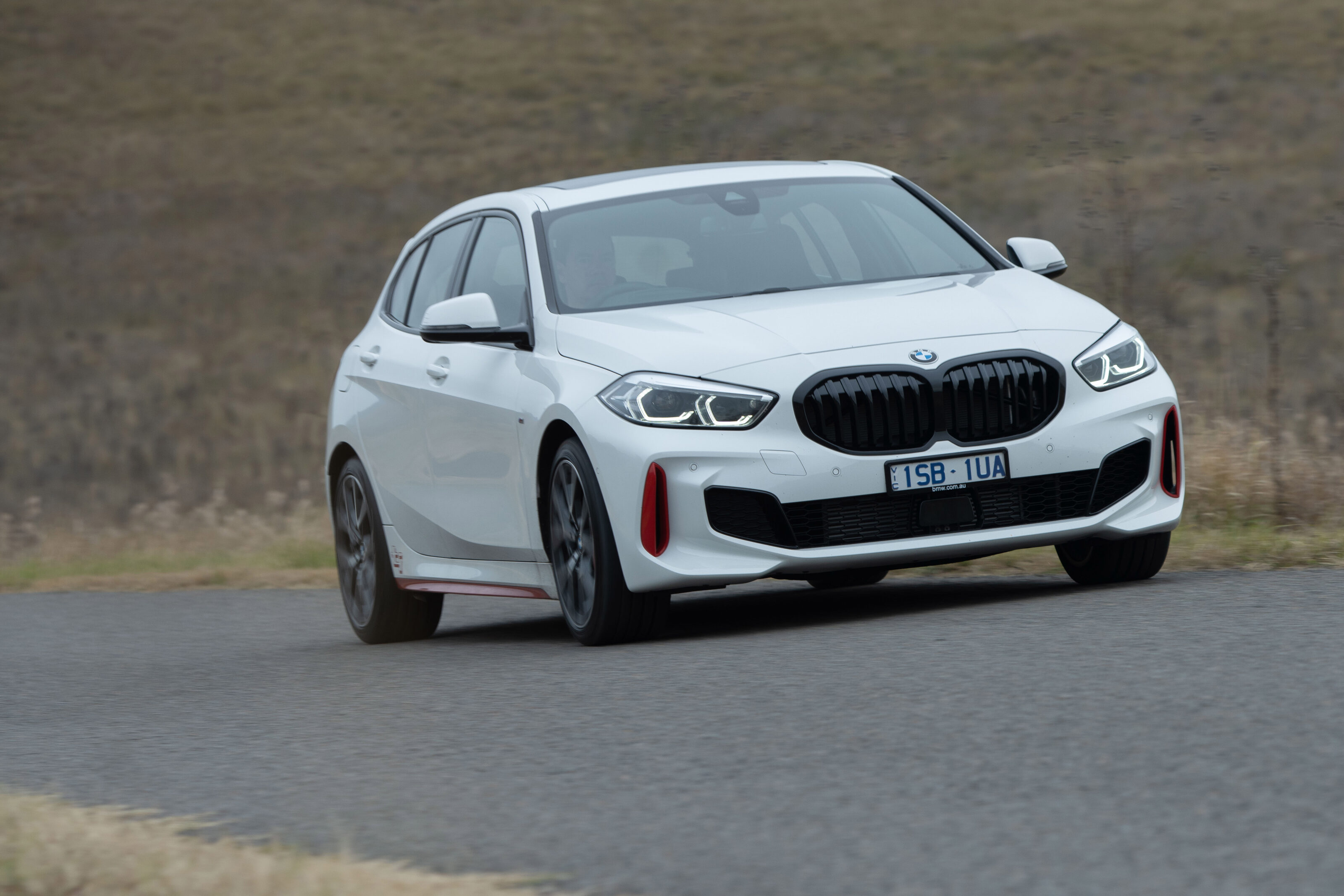
The 128ti is notable for what it doesn’t have. Take a (much more expensive) M135i xDrive and ditch the all-wheel drive in favour of front-wheel drive, which sheds 80kg in the process. But keep the Torsen front diff, we’re not going crazy here. It still weighs 1445kg, but that’s the better side of 1.5 tonnes for a hot hatch.
Changes to the chassis include a reduction in stiffness to cut understeer (counterintuitive, but there you are), the traction control setup from the i3S EV and a bespoke, static setup for the springs and dampers. Adaptive damping isn’t available and as you’ll soon learn, you may not miss it.
Springs and dampers are stiffer than those of the M135i and the 128ti sits 10mm lower.
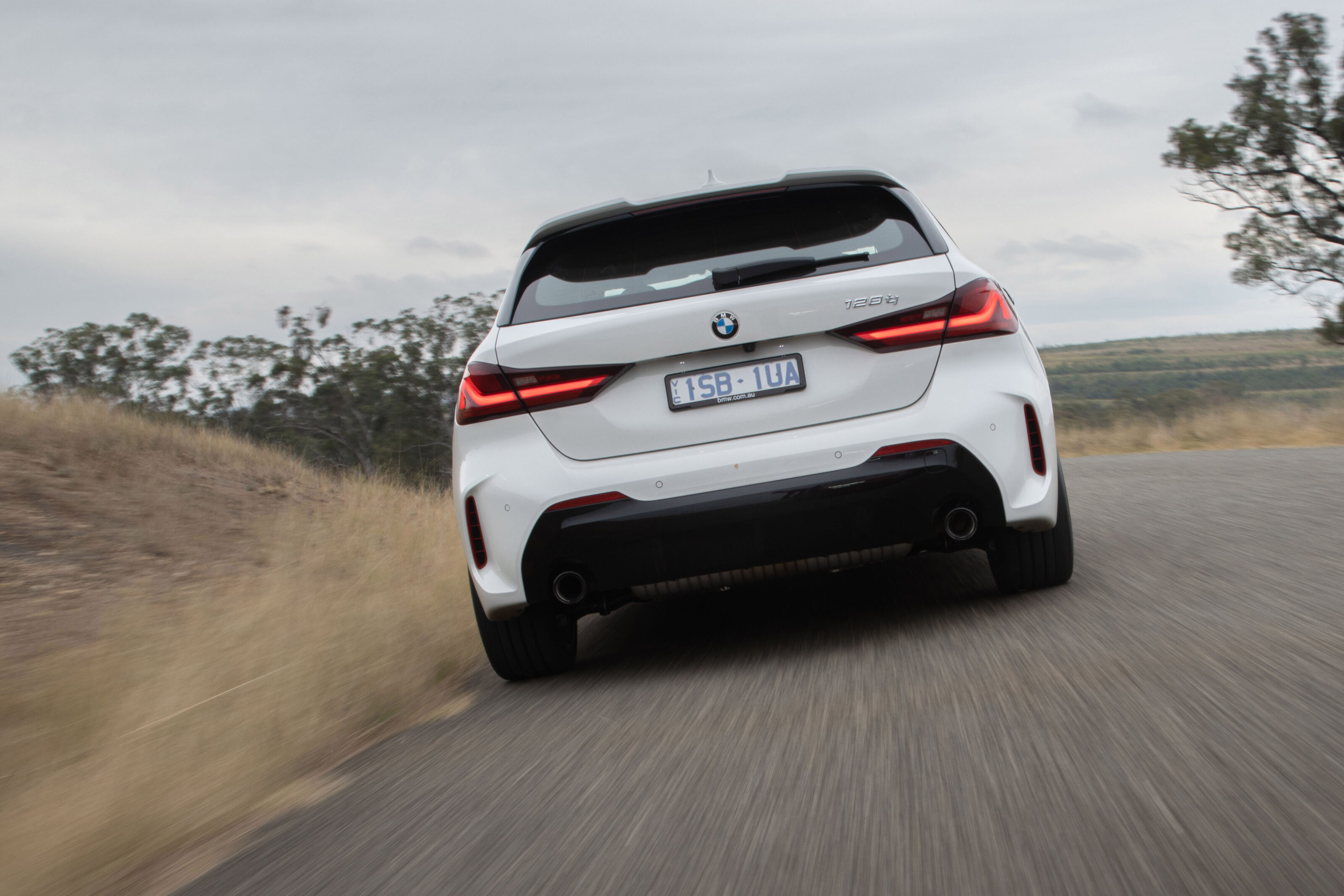
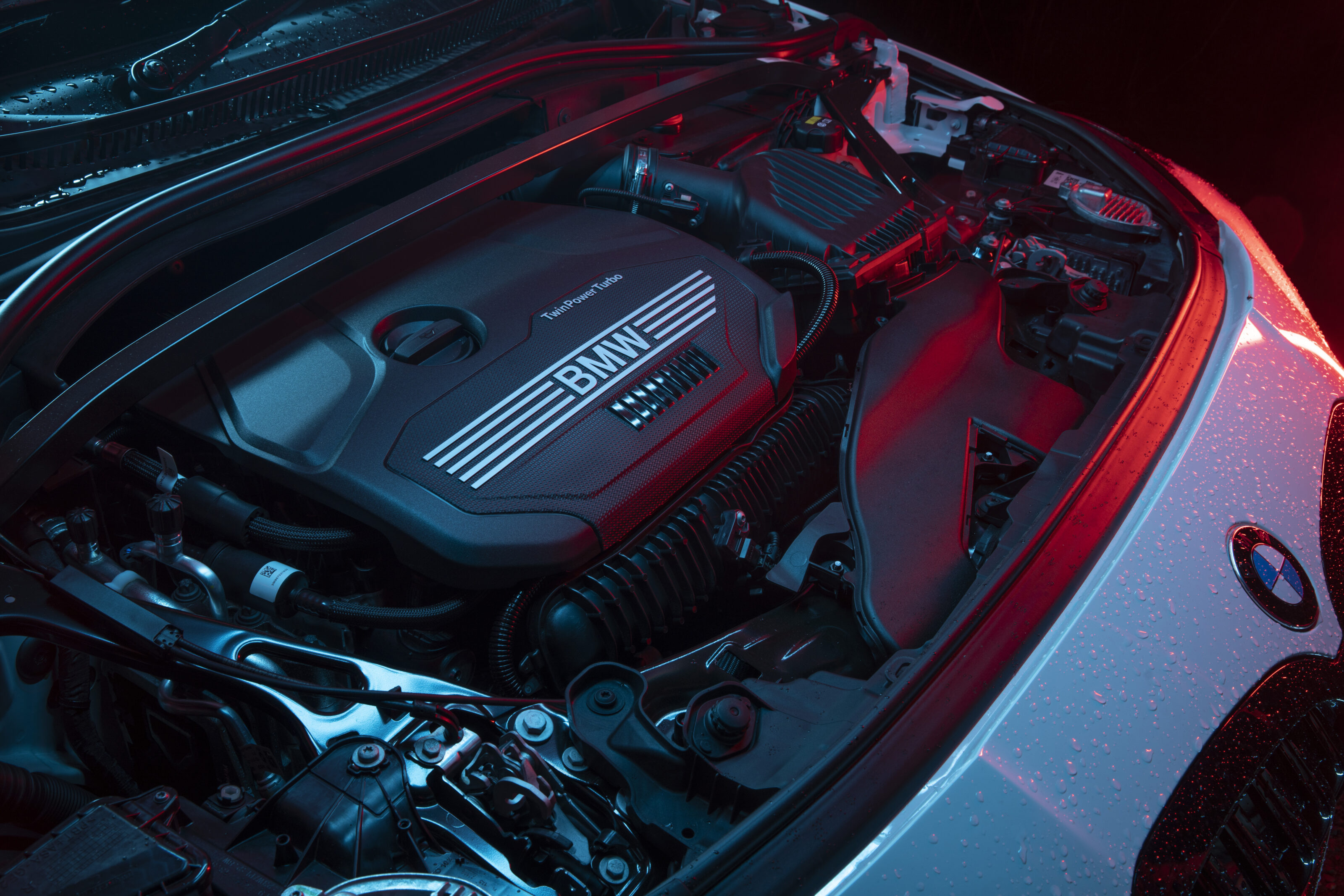
BMW’s B48 four-cylinder twin-scroll turbo steps down from its dizzying numbers in the M135i, dropping 45kW to 180kW at 6500rpm. Torque also steps down to a more front-drive-friendly 380Nm, available in a wide band from 1500rpm to 4400rpm.
You hear more from this engine in sport mode, too, with a happy burble and crackle with the window down and an aggro induction sound inside, albeit amped up by the stereo. Here’s a fun pub fact: this engine also powers the enduringly odd Morgan Plus Four. Yeah, the car made out of wood.
I wasn’t supposed to be in this car. A colleague fell foul of Sydney’s COVID outbreak and I was parachuted into the seat. That’s part one of possibly too much context. Part two is probably slightly more important – I have owned four examples of the rear-drive 1 Series. The fourth is currently in my lanky son’s possession (while I, bizarrely, pay all the bills) and despite being nearly six years old, it’s lovely to drive.
So I am – and remain – deeply suspicious of the cheaper-to-make front-wheel-drive 1er and I also hold deep resentment for the vast majority of customers who claimed they didn’t even know the old car was rear-wheel drive. I mean…
You hear more from this engine in sport mode, too, with a happy burble and crackle with the window down and an aggro induction sound inside, albeit amped up by the stereo.
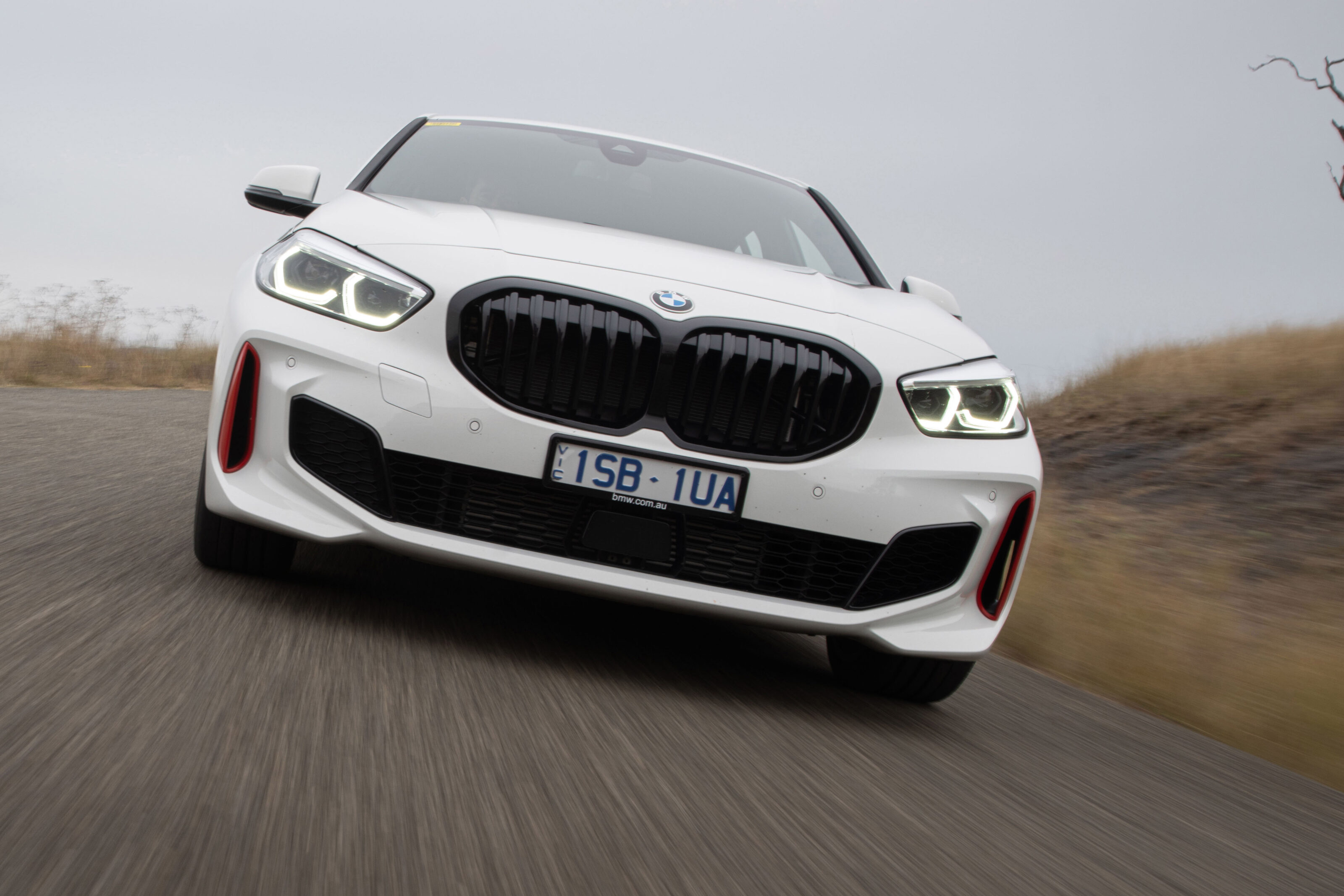
My initial impression was that everything was pretty solid – motoring home it felt firm but had good compliance where it needed it, especially on the urban nonsense that passes for Sydney’s road network. I was intrigued by it already because it just felt better than the M135i from the start. The chassis is more fluid and the engine feels more at home with less power. The eight-speed automatic is smooth and is a nice change from the twin-clutch gearboxes in some rivals.
A long motorway run made me go a bit pale. To be fair, Sydney’s toll roads all seem to be built with the worst surfaces imaginable and the 128ti jittered a bit for some miles until the surface settled to something resembling properly smooth, without the endless joins and weird sticky stuff that made the Michelins sing like a car alarm in a distant suburb.
I was initially worried about it then drove a competitor that had adaptive damping, which wasn’t remarkably better in Comfort mode and wasn’t as compliant in Sport. So the compromise of the ti’s static setup wasn’t so bad after all.
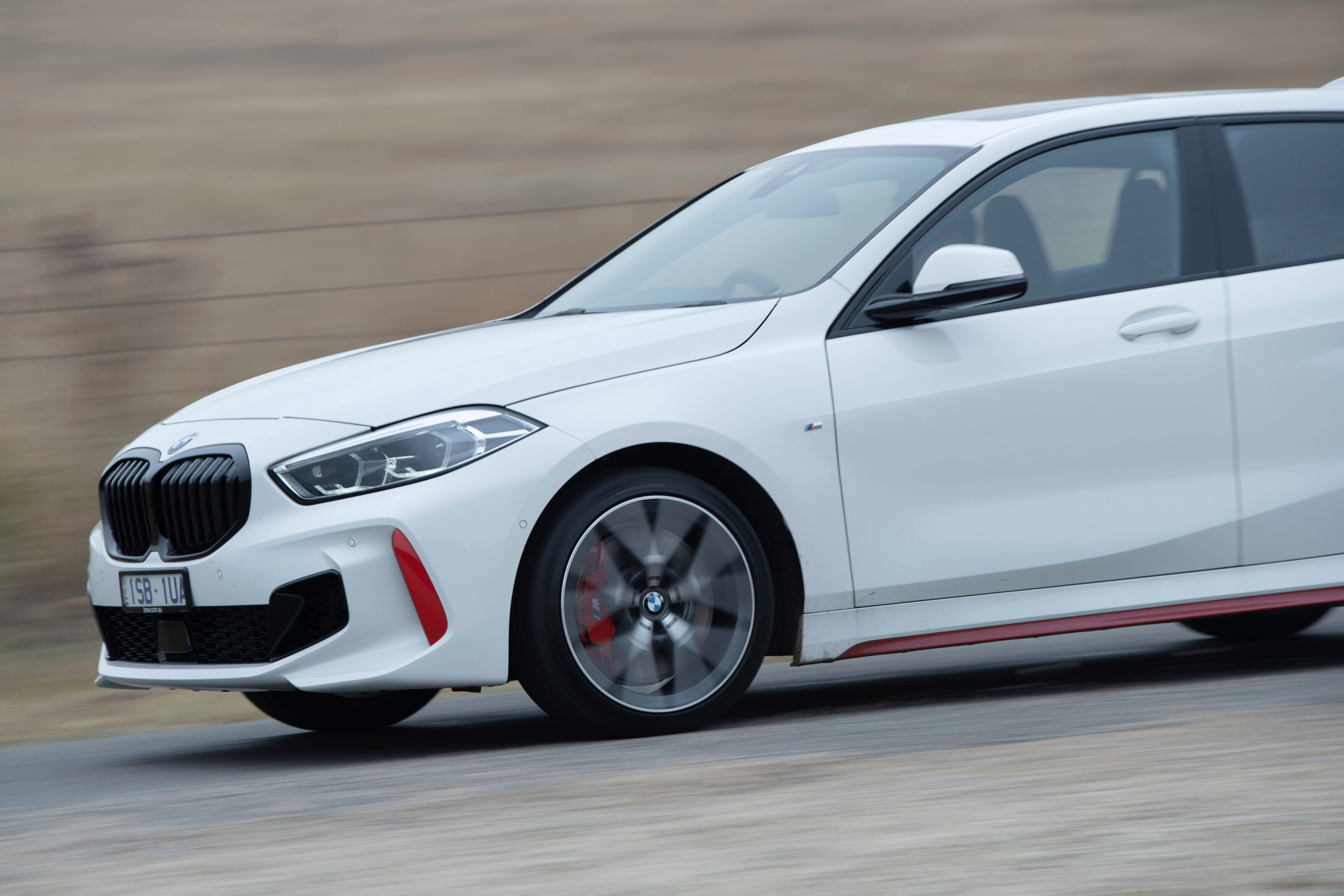
So I took “not so bad after all”, chucked it at a set of corners and it became sublime. This is an absolute ripper of a chassis. BMW has taken its own path with a front-wheel-drive setup, so it doesn’t just feel like a big Mini. The steering is nicely weighted and balanced beautifully against strong, responsive brakes – four-pistons up front, just to make sure.
Where the M135i struggles to turn in, the 128ti is settled and happy, finding the apex with less protesting from the tyres and a more stable feel. The throttle goads you into having fun on corner exit, conspiring with the Torsen LSD to stop things going wide. The engine’s great wallop of torque hauls you towards the horizon and the tricksy stability and traction control systems quell torque steer.
The best thing is that unlike some M cars, mid-corner bumps don’t re-align your vertebrae or have you pre-emptively clenching things before you hit the bump. You can concentrate on the fun.
And that’s what this car is: heaps of fun. It’s a car you drive rather than it driving you and BMW has even conjured up a calibration for the Aisin eight-speed auto that blends crisp upshifts when you want them and smooth, clean, city slurring when you need them.
Ownership
I get weary of writing this, but BMW’s (yes, and Audi’s) three year/unlimited kilometre warranty is outclassed by fellow Germans Mercedes as well as other premium brands. I don’t think customers are not asking for this so it remains a mystery to me why BMW continues to be so stingy.
Perhaps to soften that blow, the 128ti’s servicing costs no more than the three-cylinder 118i’s $1650 for five years/80,000km, which you do have to buy upfront because BMW dealers like it if you roll it into your finance. That’s only $330 per year for servicing which has to be about the cheapest for a car of this type. It’s an easy $550 cheaper than the Golf GTI, significantly cheaper than the Megane and even cheaper than the Civic Type R’s $1805 plan for five years.
VERDICT
Viewed within the BMW range, the 128ti is by far the most compelling 1 Series to arrive on the UKL2 platform it shares with the Mini. Shorn of the AWD gear and fettled with a much lighter touch, the 128ti goes after the VW Golf by pursuing a similar engineering philosophy – sensible power, sympathetic electronics, lots of grip and go.
It’s not only cheaper than the M135i, it’s genuinely more exciting to drive. You’re far more involved in the decisions and the stability systems place more trust in you. It’s more playful because the whole package is less heavy-handed than the M Performance counterpart.
And with a price – if not a matching equipment list – that puts it on the same section of the shopping list as a hardcore Honda, iconic VW and raucous Renault, the 128ti is definitely one of 2021’s good surprises.
2021 BMW 128ti specifications
| Body | five-door hatchback |
|---|---|
| Drive | FWD |
| Engine | 2.0-litre turbo four-cylinder |
| Transmission | eight-speed automatic |
| Power | 180kW @ 6500rpm |
| Torque | 380Nm @ 1500rpm-4400rpm |
| Bore stroke (mm) | 82 x 94.6 |
| Compression ratio | 11.0:1 |
| 0-100km/h | 6.3 sec (claimed) |
| Fuel consumption | 6.8L/100km (combined) |
| Weight | 1445kg |
| Suspension | MacPherson strut (front); multi-link (rear) |
| L/W/H | 4319/1799/1434mm |
| Wheelbase | 2670mm |
| Brakes | ventilated disc (front); ventilated disc (rear) |
| Tyres | 225/40 R18 |
| Wheels | 18-inch alloy wheels (no spare) |
| Price | $56,900 + ORC |
Pity the tyre. While the internal combustion gets all the attention as it faces an existential threat, the tyre – vital to every car big, small, fast and slow – has probably made even larger proportional gains but has done so with little fuss or bother.
While the masses prepare to mourn the death of the internal combustion engine, a new era is poised to dawn for the tyre. One that promises ever greater vehicle integration, improved safety, and most importantly, easier to access levels of data.
The first example of this is Pirelli’s Cyber Tyre – fitted as standard to the new McLaren Artura. What makes the Cyber differ from the P Zero rubber fitted to other performance cars of the Artura’s ilk is a sensor that is built into the carcass of the tyre. Say hello to the world’s first ‘smart tyre’.
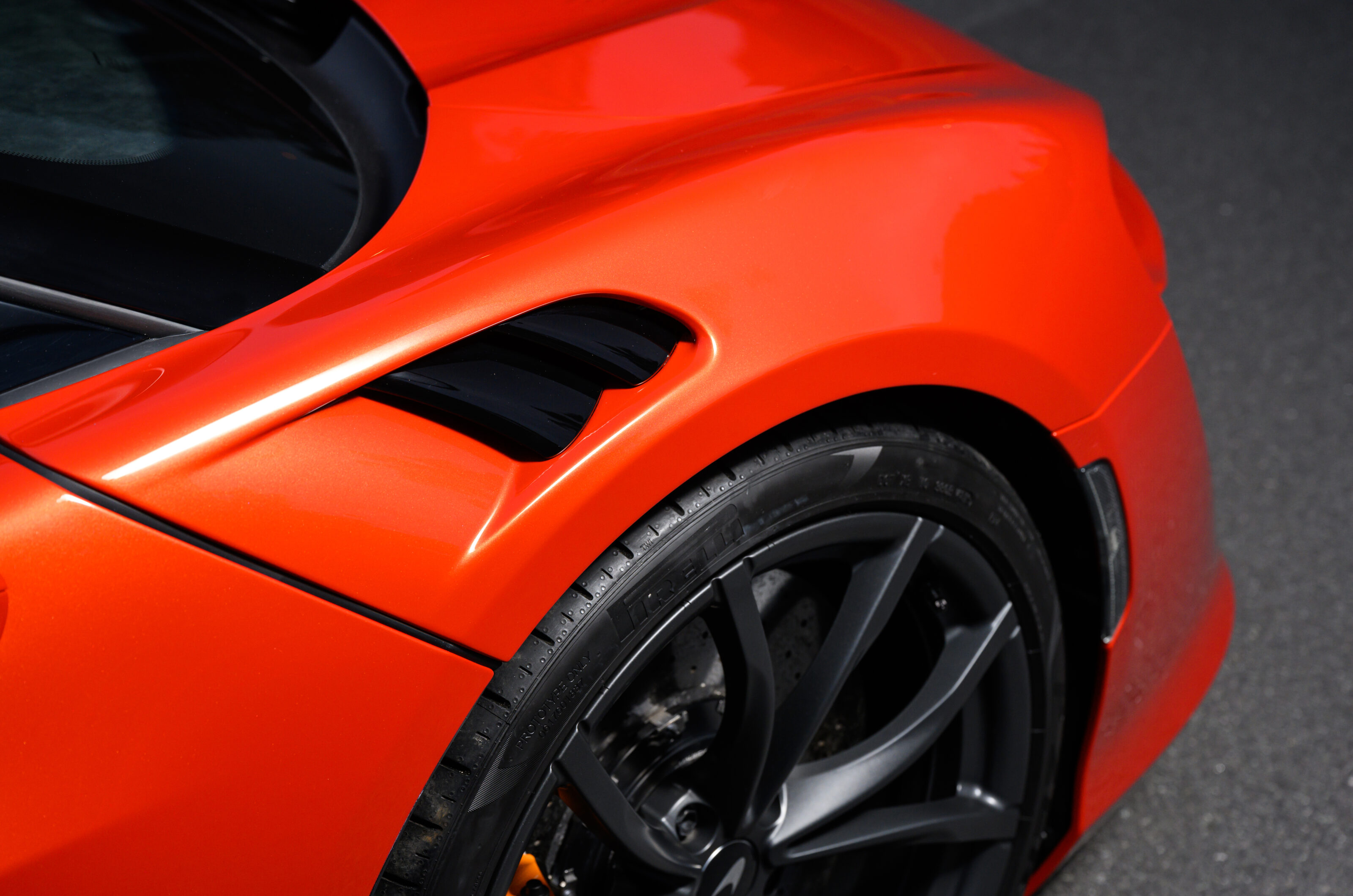
Tyre sensors aren’t completely new. However, previously they were located in the valve stem in the wheel rim. This limited both the amount and accuracy of information that could be relayed back to the car’s computer. Pirelli is working with OEMs to ensure that the Cyber tyre and a vehicle’s ECU communicate directly to each other.
In its simplest form, Pirelli’s Cyber tyre creates a ‘passport’ for the rubber, which documents whether it’s a winter or summer unit, the speed rating, load index, and ideal pressure. Adding to this it records up-to-date information such as current temperature and pressures.
Currently, the Cyber tyre’s functions are rudimentary – warnings when speed ratings are exceeded, along with the basic functions of current tyre-pressure monitors. The main difference is how accurate the information is, and how quickly it is transmitted.

By linking the vehicle’s computer and tyre sensor, Pirelli says its tyres have the potential to assist adaptive suspension settings, detecting heavy loads, and telling the car to increase settings like, say, pre-load to suit. Additionally, systems like ESC and traction control can be tweaked to correlate with decreasing tyre wear, or changed conditions such as wet or icy roads.
Where McLaren’s application of the technology has us at MOTOR excited is on the track. With the in-tyre sensors providing more accurate information in regards to pressures and temperatures, the Woking engineers, alongside Pirelli, were able to develop a pseudo digital race engineer.
This provides drivers with an indication when the tyres have reached their optimal temperature, as well as warnings on when to cool the rubber back down.
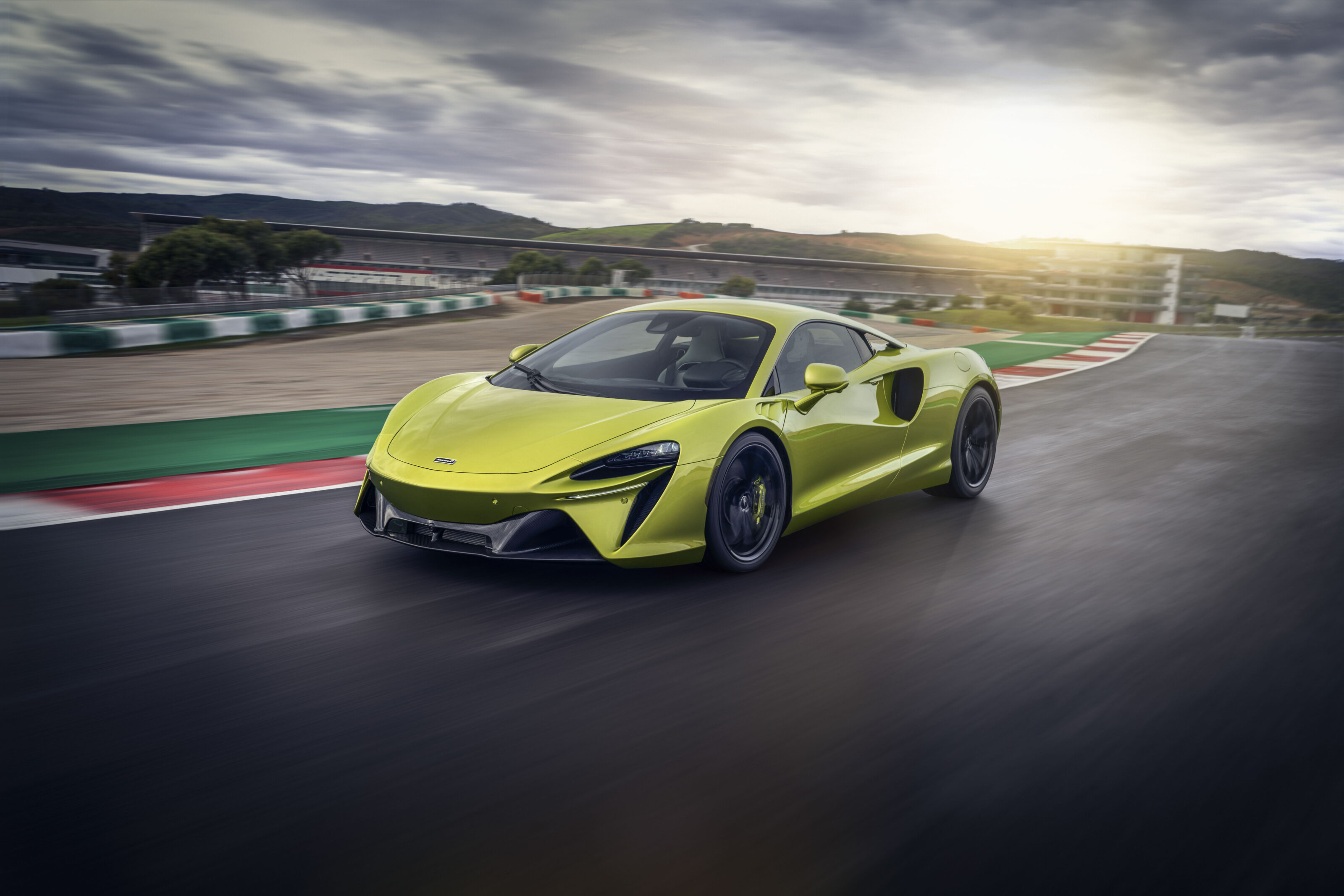
There are further developments in the near future, which will appear alongside expansions of 5G technology and infrastructure. The sensor used in Pirelli’s Cyber tyre is 5G compatible, allowing it to transfer information to not just the car it is fitted to, but surrounding vehicles as well.
Say a vehicle fitted with smart tyres is driving down a road, hits a large patch of water and begins to aquaplane. With the right 5G infrastructure, it would be able to ping a nearby cell tower, which would then alert a following vehicle of the hazard ahead, helping make the driving experience safer for other road users.
While debuting on a McLaren, Pirelli says its technology will soon be able to filter down to more affordable vehicles. This is because while the Cyber tyre doesn’t do much to a vehicles profit margins on a per-unit basis, higher-end vehicles are currently best suited to maximise the smart rubber due to more advanced safety, suspension, and drivetrain systems.
Want the secret to unlocking extra speed at a track day in 2031? It’ll probably have more to do with what rubber you have on each corner of your car than a trick set-up or power-boosting turbo.

Why performance cars will benefit first
Pirelli’s Cyber tyre is currently only available in two variations – the P Zero and P Zero Trofeo. That’s because performance applications will make the most of the technology in the early days. Expect other tyre manufacturers with high-performance manufacturer links to reveal similar systems and products in the not-too-distant future.
Changing pressures
Continental is working on what it calls a ‘Dynamic Pressure’ system, which will be able to change a tyre’s pressures on the fly. This means you can go from pressures best suited to improving fuel efficiency, to track-ready readings, without needing to stop.
V2x gon’ give it to ya
The Cyber tyre concept works perfectly for vehicle-to-everything (V2X) communication systems. Once properly developed, your tyres will be linked to other road users, traffic lights, and more.
EVs just want to have fun
With more performance-orientated electric vehicles on the market, Michelin has had to develop a new tyre that caters to their specific requirements. The Pilot Sport EV has been designed with the eco-friendly track day enthusiast in mind.
Material development
Moving away from performance and toward sustainability, several tyre companies are experimenting with building tyres out of renewable materials. Goodyear uses waste from processing rice husk ash, and converts it into silica for tyres in China.
Snapshot
- First Lexus built from ground up as EV
- Likely based on Toyota bz4X platform
- Plug-in hybrid SUV also in production
Lexus has confirmed it will launch its first EV underpinned by a dedicated electric car platform in 2022.
While the UX-300e compact crossover, due on Aussie shores in November, is already all-electric, it’s built upon existing hybrid architecture rather than a bespoke EV base.
The upcoming standalone EV was previewed with the stylish LF-Z concept, which features a lower stance than existing Lexus SUVs and a number of performance-oriented design cues, reports Autocar.
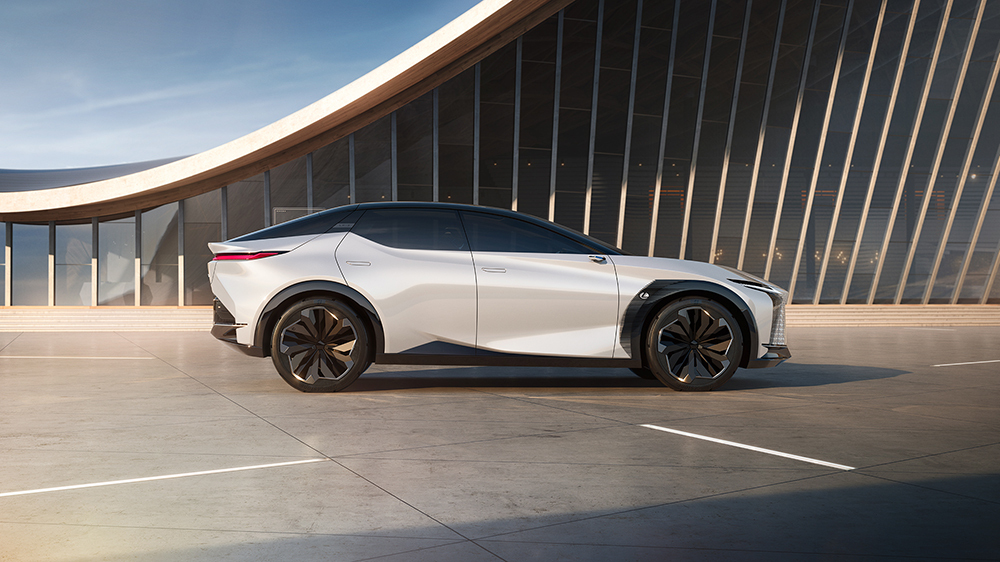
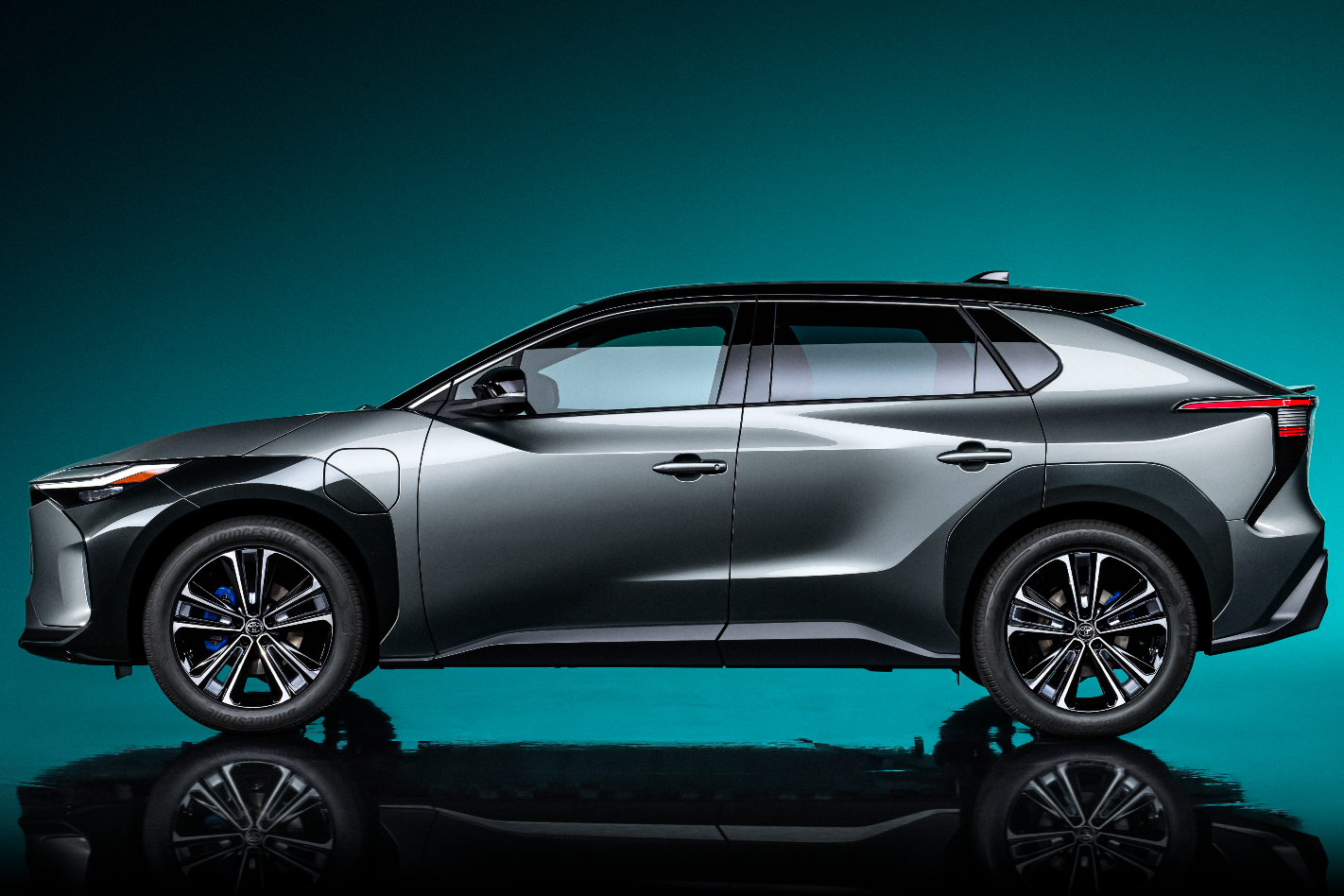
It’s believed the production version of the Lexus EV will use Toyota’s bZ (Beyond Zero) platform, which underpins the 2022 bZ4X. The new Toyota is powered by a dual-motor, all-wheel-drive system which will likely be carried over to the new Lexus, though power, range, and charging specifics are yet to be revealed.
The as-yet unnamed SUV will be the first of several new EVs from the luxury Japanese brand, which plans to have 10 hybrid or fully-electrified models on offer by 2025. While most talk so far has surrounded SUV and crossover body styles, Lexus says every car in its line-up will have some form of electric assistance within the next four years.
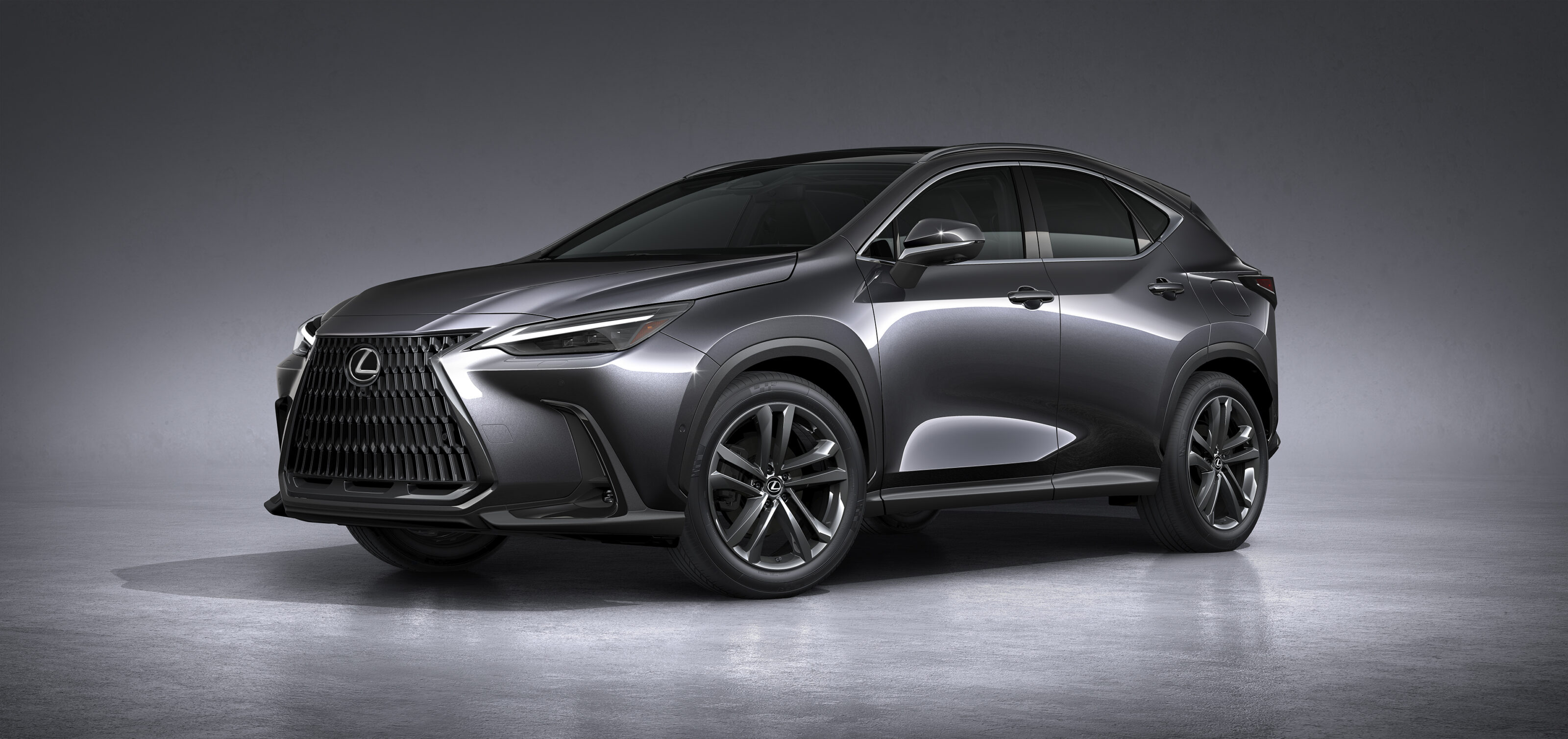
A plug-in hybrid (PHEV) version of the Lexus NX SUV will also be released this year, based on the RAV4 PHEV’s architecture.
The NX will be the first PHEV to wear a Lexus badge, though so far only the internal combustion models are locked in for Australia. PHEV technology has been slower to reach Lexus than parent company Toyota, which unveiled its plug-in Prius back in 2011.
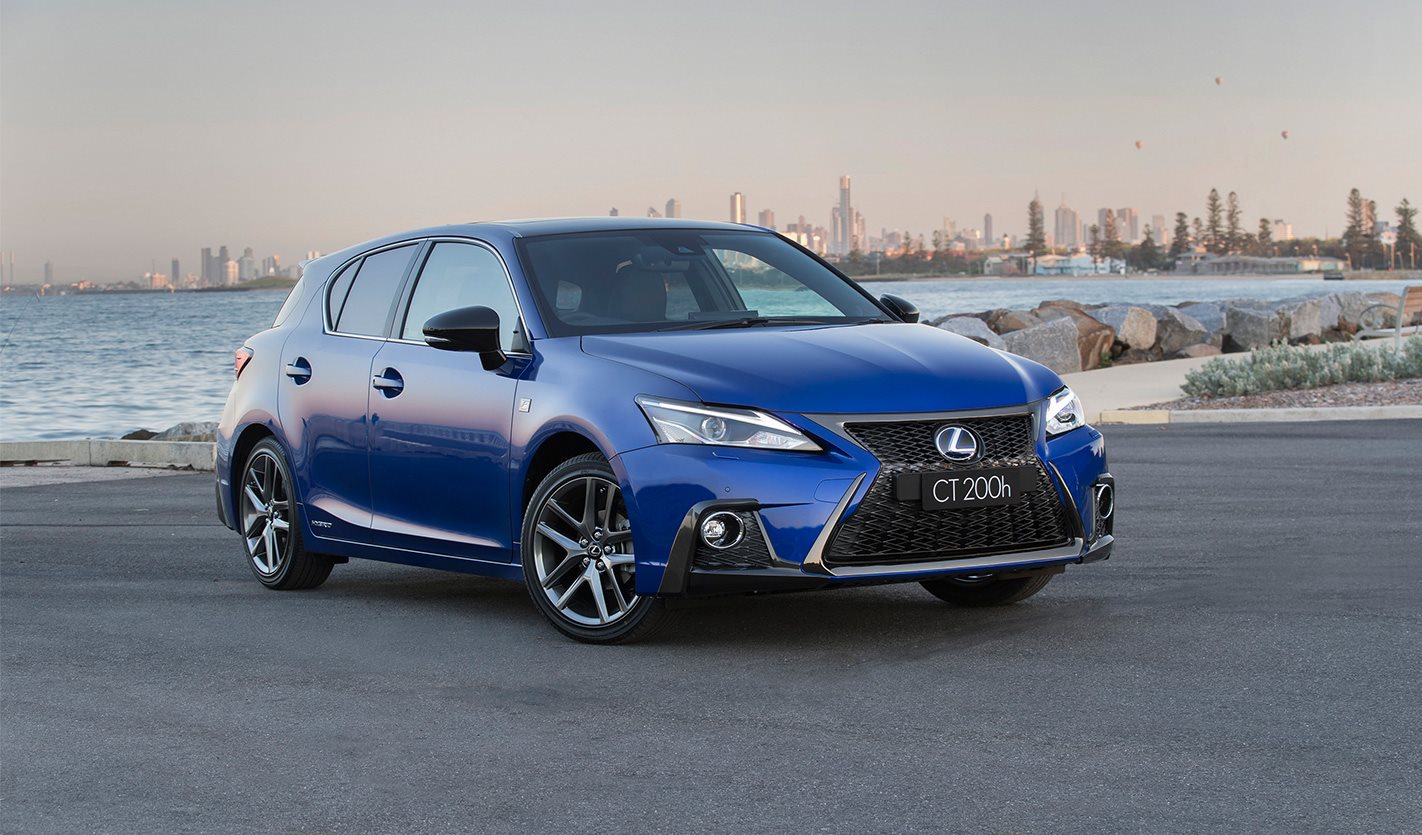
Recent changes to the Lexus range extend beyond the EV sphere, with new Australian Design Rules forcing the CT, RC and almost-new IS off the market from this November.
Aside from the new UX and NX models, Aussie consumers can expect Lexus product launches in January and February 2022 – one of which will be the LandCruiser 300 Series-based LX off-roader.
Snapshot
- Scalable Systems Platform could underpin 40 million vehicles
- VW AG targets phasing out ICEs in Europe by 2035
- Driverless shuttles to be rolled out from 2025
The Volkswagen Group’s next electric architecture will be used to unify all of its future EVs, doing away with specific platforms by taking a more universal approach.
Dubbed the Scalable Systems Platform (SSP), it will replace the five existing platforms which underpin a range of cars from the Volkswagen Group, such as the MQB (Golf, A3, Octavia), MLB (A7, Macan), MSB (Panamera, Continental), MEB (ID.3) and PPE (Macan EV).
Set to be introduced in 2026, the SSP is a part of the Group’s move to electric vehicles with an aim of dropping internal combustion engines in Europe by 2035 – something which the Australian arm believes isn’t sustainable here due to current emissions legislation.
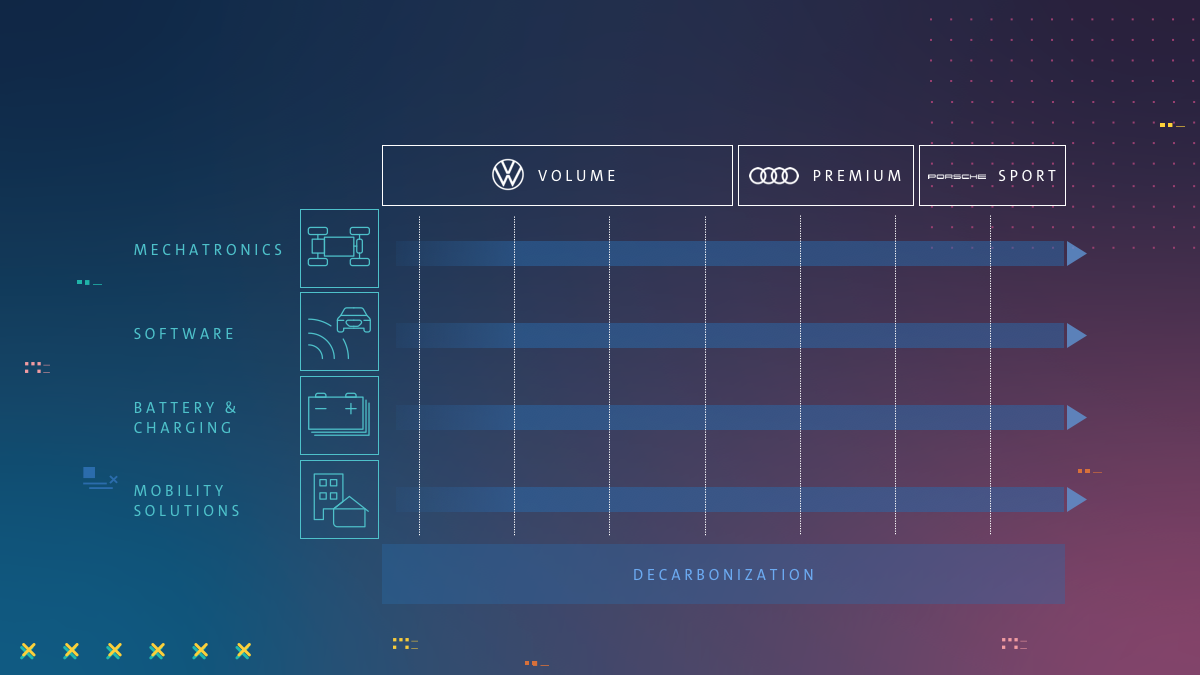
With adoption mooted to be swift, more than 40 million Volkswagen Group cars are expected to be based on the SSP throughout its life cycle. That number is around four times its current annual output and larger than any other EV manufacturer, giving it a significant profit boost thanks to lower production costs.
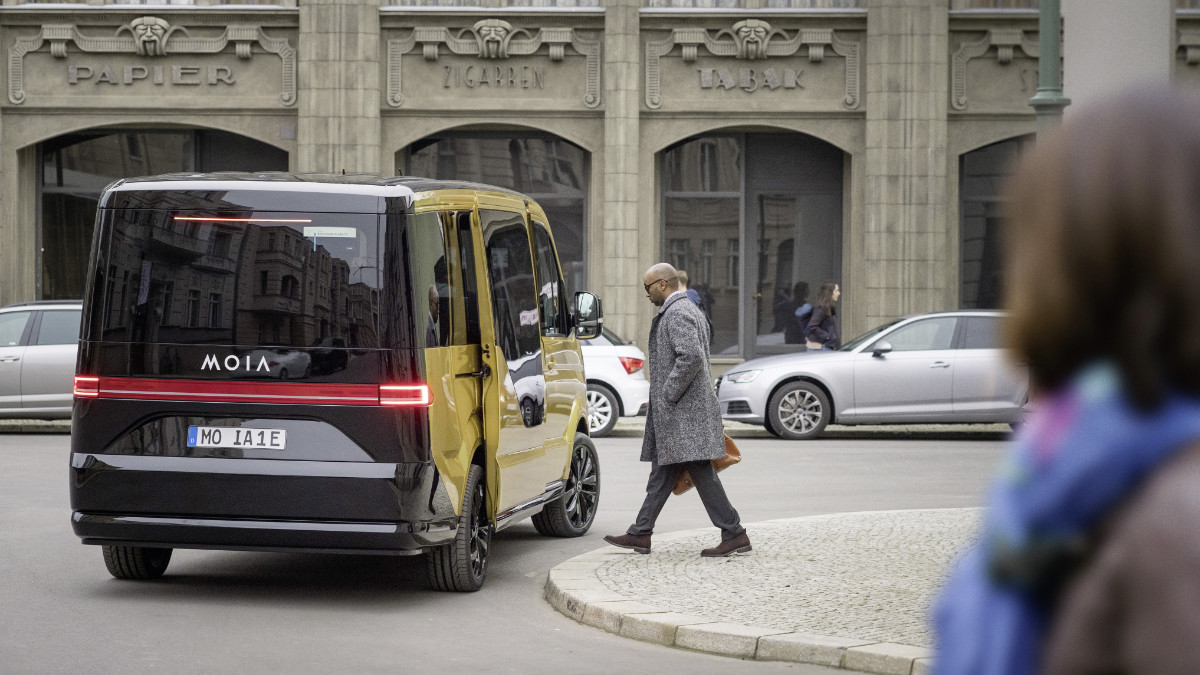
Driving forwards in its push towards autonomous driving, the Group is developing driverless shuttles for business use with self-driving tech platform company Argo AI (co-owned with Ford), targeting a roll-out throughout Europe in 2025, with the United States following shortly after.
And to support the high production numbers of EVs, a common battery cell design will be introduced from 2023, while six more battery factories will be constructed in Europe by 2030 – bringing production costs down by around 50 per cent.
A new joint venture between Volvo Cars and its parent company Geely will see the two form a new, standalone firm to produce a range of internal combustion engines as the world moves towards electric vehicles.
Aurobay will take over from Volvo in producing ICEs for its range of existing vehicles while the Swedish manufacturer focuses on its EVs, targeting 50 per cent of vehicle sales to come from fully-electric cars by 2025 with an ultimate aim of 100 per cent electrification by 2030.
Volvo’s existing assets from its Swedish engine plant, including research and development staff, will be moved across to Aurobay over the coming months, as will assets from the Volvo and Geely engine plant in China.

Geely is set to benefit from the joint venture through its acquisition of Volvo’s combustion engine experts, helping the development of its hybrid power units too, which will be instrumental in the transition from ICEs to EVs.
The announcement comes off the back of a large range of investments by Volvo in joint ventures relating to the production of its future vehicles, from the formation of an in-house battery development company and a commitment to developing fossil-free steel, to its plans to use LiDAR tech in autonomous vehicles.
Volvo is already taking steps towards lowering emissions, having ditched diesel power in its Australian range of the updated XC60 SUV as all variants score hybrid assistance.
Vietnamese automotive manufacturer VinFast is looking to increase its global recognition by opening offices in the United States and Europe, expanding worldwide with its range of electric vehicles.
Reuters reported the Vietnam-based company has plans to build a presence in California, while the manufacturer’s parent company, VinGroup, confirmed some personnel have relocated from South-East Asia to North American ahead of the expansion.
“VinFast has set up representative offices in five international markets and will soon open showrooms in California,” said VinGroup.
“VinFast USA’s CEO has already relocated to the US from Vietnam recently.”
After recording 30,000 sales in Vietnam last year, VinFast initially planned to shift 56,000 electric vehicles next year – but had to reduce the target to 15,000 units thanks to the global semi-conductor shortage, currently causing major delays across the automotive and electronics industry.
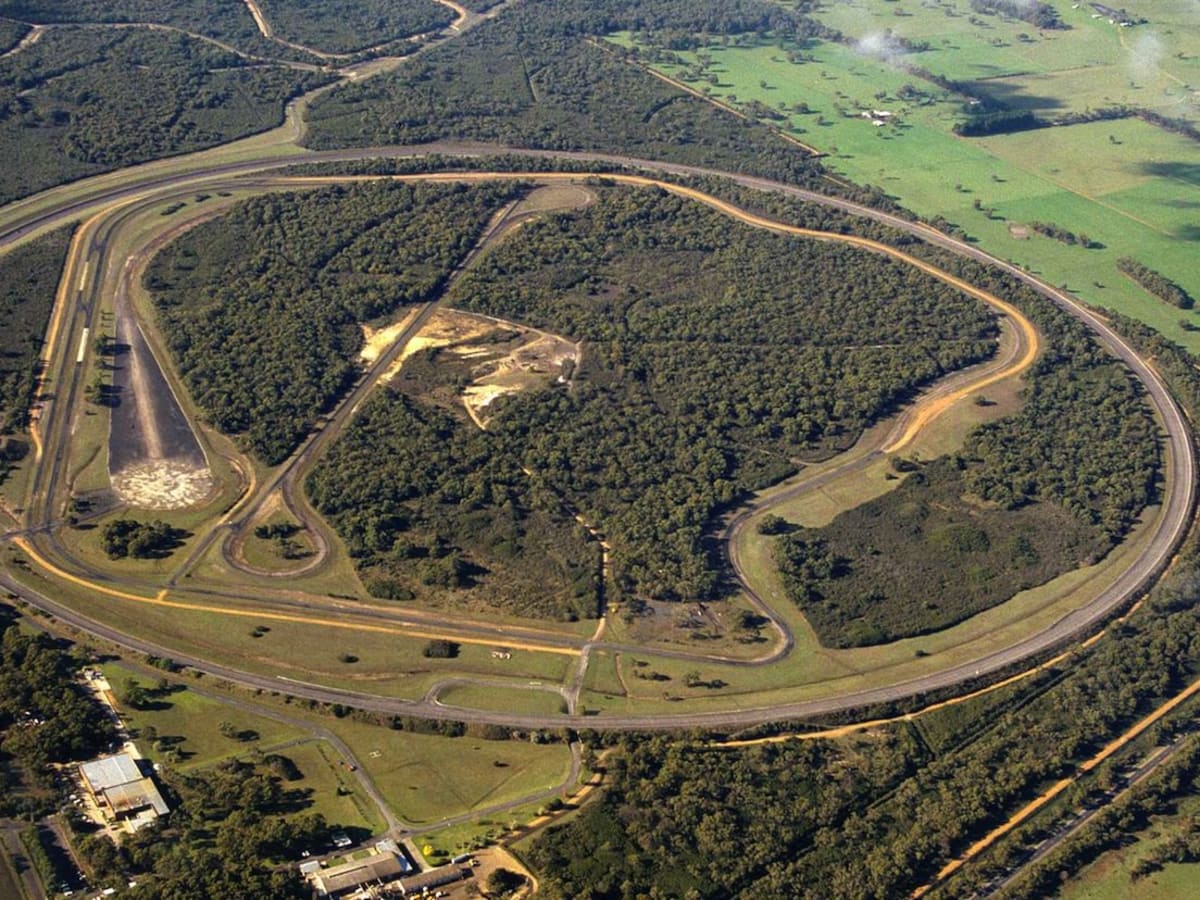
VinFast had aimed at having a large presence in Australia by purchasing the ex-Holden Lang Lang proving ground in Victoria, and hiring around 100 ex-Holden, Ford, Toyota and JLR employees to head up its local research and development arm at its new Port Melbourne facility – Automotive Technology Institute 2.
However, a restructuring of the Melbourne office in May led to a number of redundancies and resignations, including former deputy CEO of product development, Kevin Yardley, as detailed by Bruce Newton in the July 2021 issue of Wheels.
Despite playing a part in the development of VinFast’s three new models (VF E34, VF 32 and VF33), the company has no intention of selling its cars in Australia, instead focusing on other global markets to reach its sales targets and break even.
Ford has announced it is ditching diesel engines in its F-150 truck range in favour of hybrid power, though deliveries will continue until the end of 2021.
According to Ford specialist publication Ford Authority, the oil burning V6 engine will no longer be a part of the truck’s power plant options due to a higher popularity for the EcoBoost petrol V6 and the hybrid-assisted PowerBoost V6, both making more power and torque than the outgoing diesel.
Despite being the least powerful engine in the F-150 line-up, the 3.0-litre diesel is $500 more expensive than the 3.5-litre EcoBoost petrol for North American buyers and features a smaller list of extras, missing out on an optional 36 gallon (136 litre) fuel tank as well as Ford’s Pro Power Onboard which turns the truck into a mobile generator.
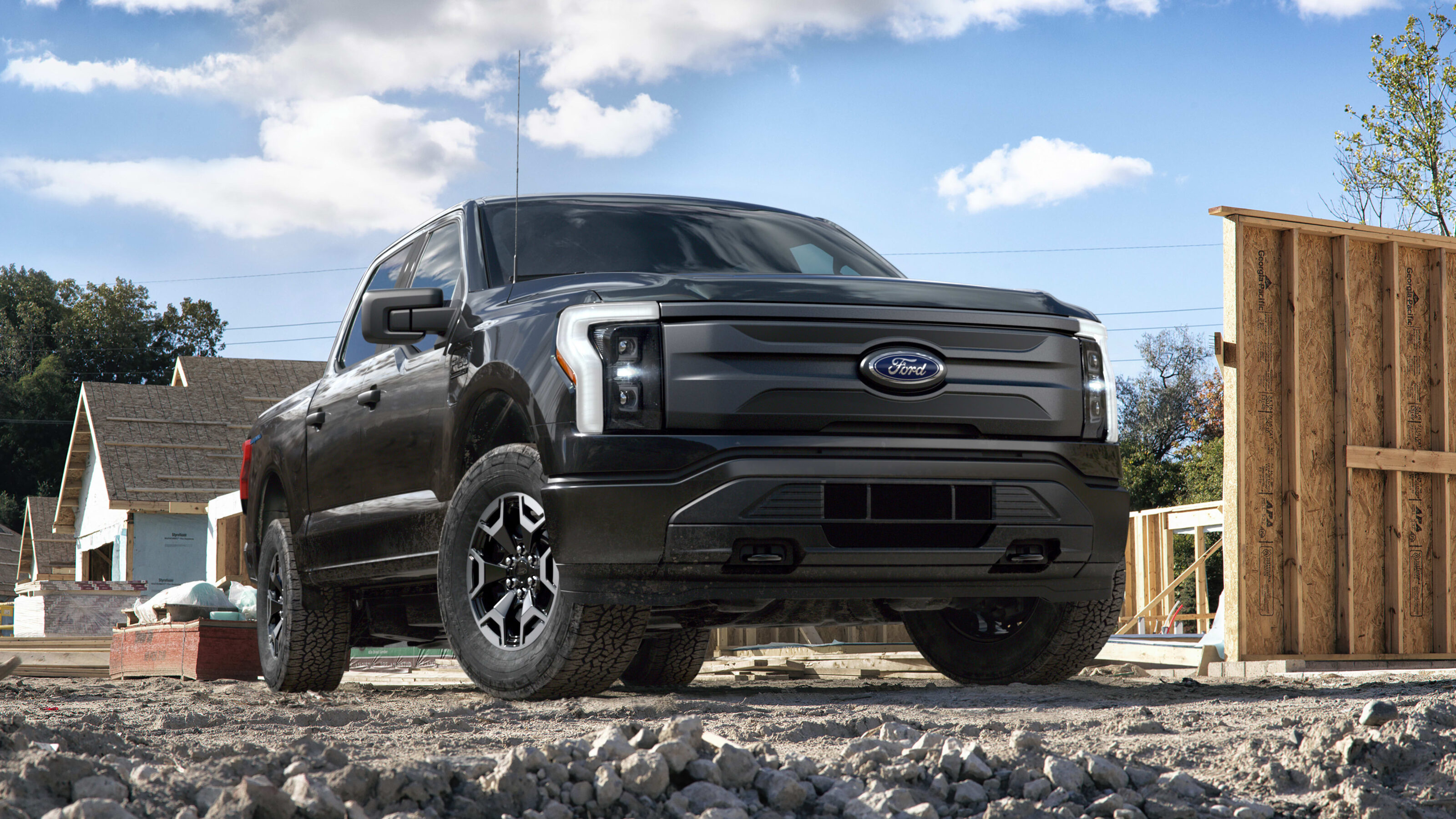
The PowerBoost hybrid V6 also boasts better fuel economy than the diesel, achieving 24mpg (9.8L/100km) and 23mpg (10.2L/100km) respectively, despite power and torque figures of 320kW/773Nm and 186kW/597Nm.
Ford announced its all-new range of electric F-150 trucks in May, powered by batteries and electric motors with both domestic and commercial variants available, producing 318kW/1051Nm in base trim with an optional larger battery pack boosting the power to 420kW.
Though unavailable in Australia, the F-150 is the highest-selling vehicle in the United States, a title it has held for over 30 years with the truck currently in its 14th generation.
This is a battle between the old and the new. Mazda has done its thing with the CX-3 for a long time now, sharpening the saw, keeping things going with little fanfare but still plenty of sales, comfortably winning its segment in May.
Put together third and fourth place in the segment – from those automotive minnows Toyota and Volkswagen – and the Mazda number is still higher. Only Kia got anywhere near it with the Stonic, but it was still more than the Ford Puma’s 426 sales behind.
Why am I throwing all these numbers at you? Because there’s an important one – the CX-3 has been around in its current form for almost seven years, which in car terms is phenomenally old. But it doesn’t look it. It still looks fresh and – obviously – buyers agree.
It’s been a while since I drove one of these so it has been like meeting an old friend for coffee, catching up, seeing what’s new. When the changes Mazda make are sometimes so small, so detail-obsessive, sometimes it’s actually more like catching up with an old patient who hasn’t been in for a skin cancer check for a while.
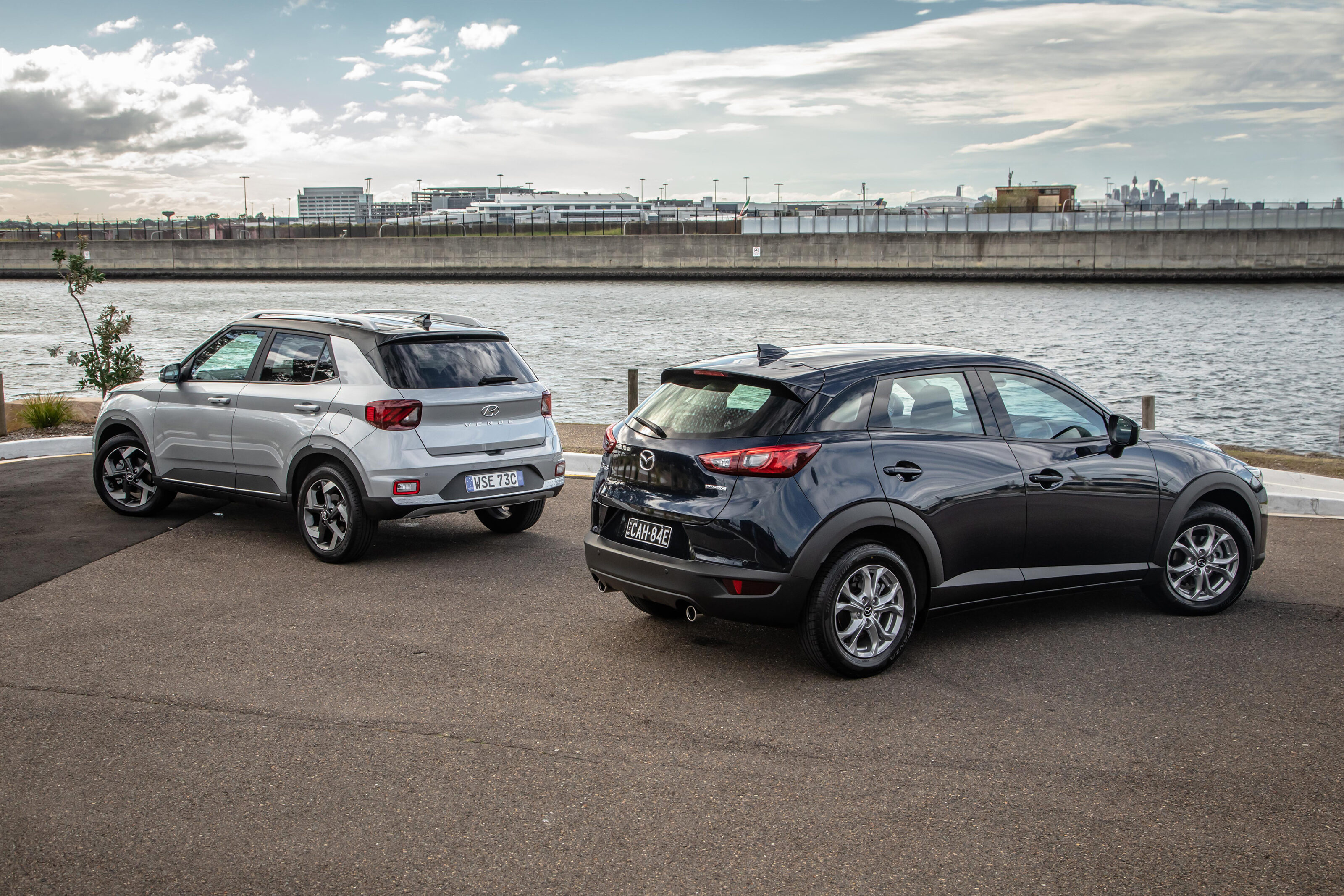
Trailing the CX-3 with just over 500 sales – or a couple of better sales guys short of a third of CX-3 sales – is the Hyundai Venue. The Venue is Hyundai’s long-awaited entry into the light SUV segment and now stands as Hyundai’s cheapest car after the welcome departure (for us, anyway) of the old soldier Accent.
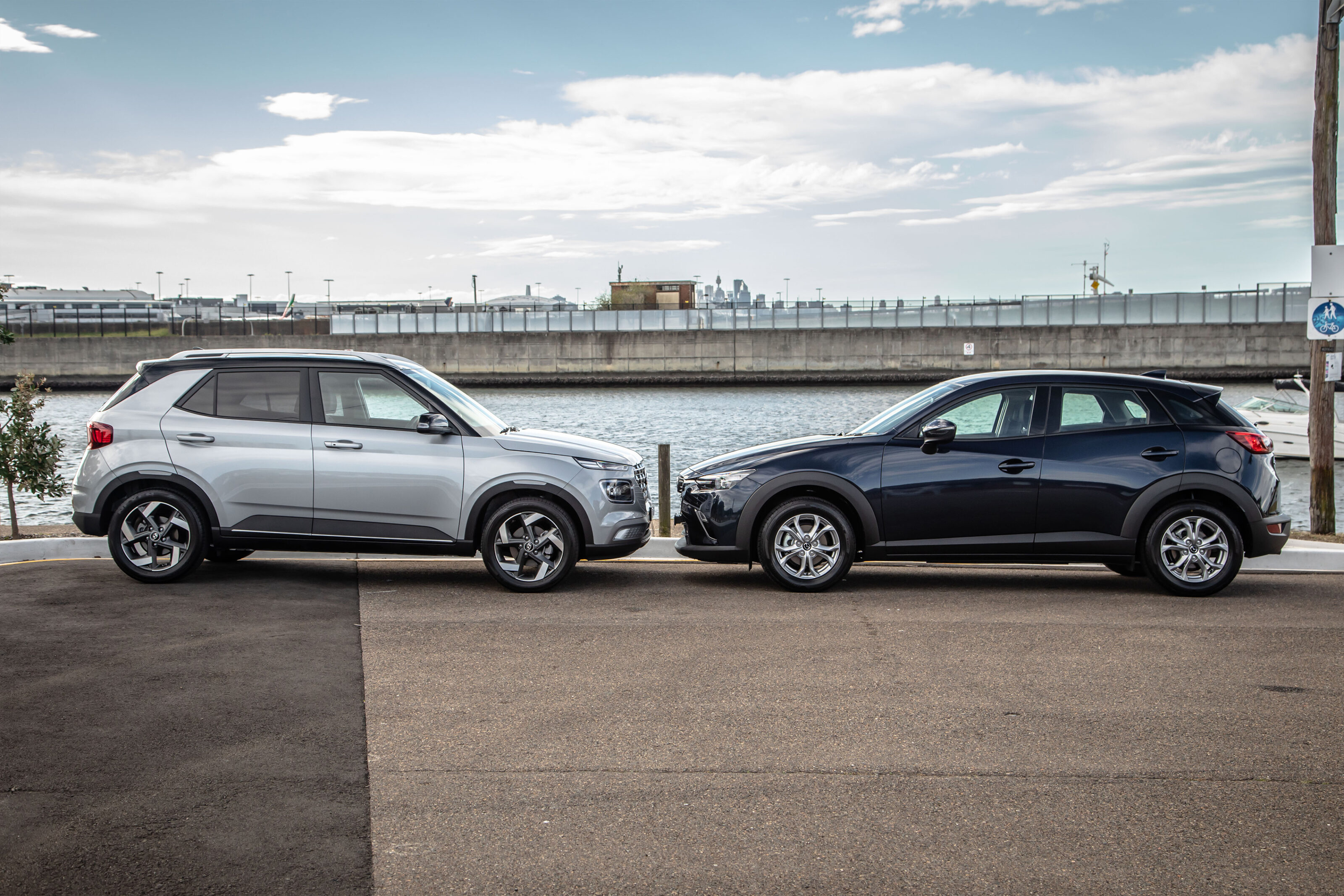
The Venue rides on a newer platform but is smaller in every external physical dimension compared to the Mazda, yet somehow manages to be bigger inside.
Pricing and Features
The Maxx Sport is the second tier of the CX-3’s extensive range, although some recent pruning of all-wheel-drive variants has brought the number of choices somewhat under control. Priced at $27,640 before on-roads, it’s not exactly loaded with fun but has one of the more complete safety packages in the class. Which is impressive given its age.
You get 16-inch alloys, a six-speaker stereo, climate control, reversing camera, keyless entry and start, rear parking sensors, sat-nav, auto wipers and headlights (still halogen, I’m afraid), leather shifter and steering wheel, folding power door mirrors and a space-saver spare.
The tired-looking version of MZD Connect (aka “the old one”) powers the 7.0-inch touchscreen, a rarity now in the Mazda range as the company ditches fondle slabs for rotary dial control only. It’s looking a bit pixelly and the hardware is a bit slow, but it does have Apple CarPlay and Android Auto and yes, it’s still better than anything Toyota dishes up.
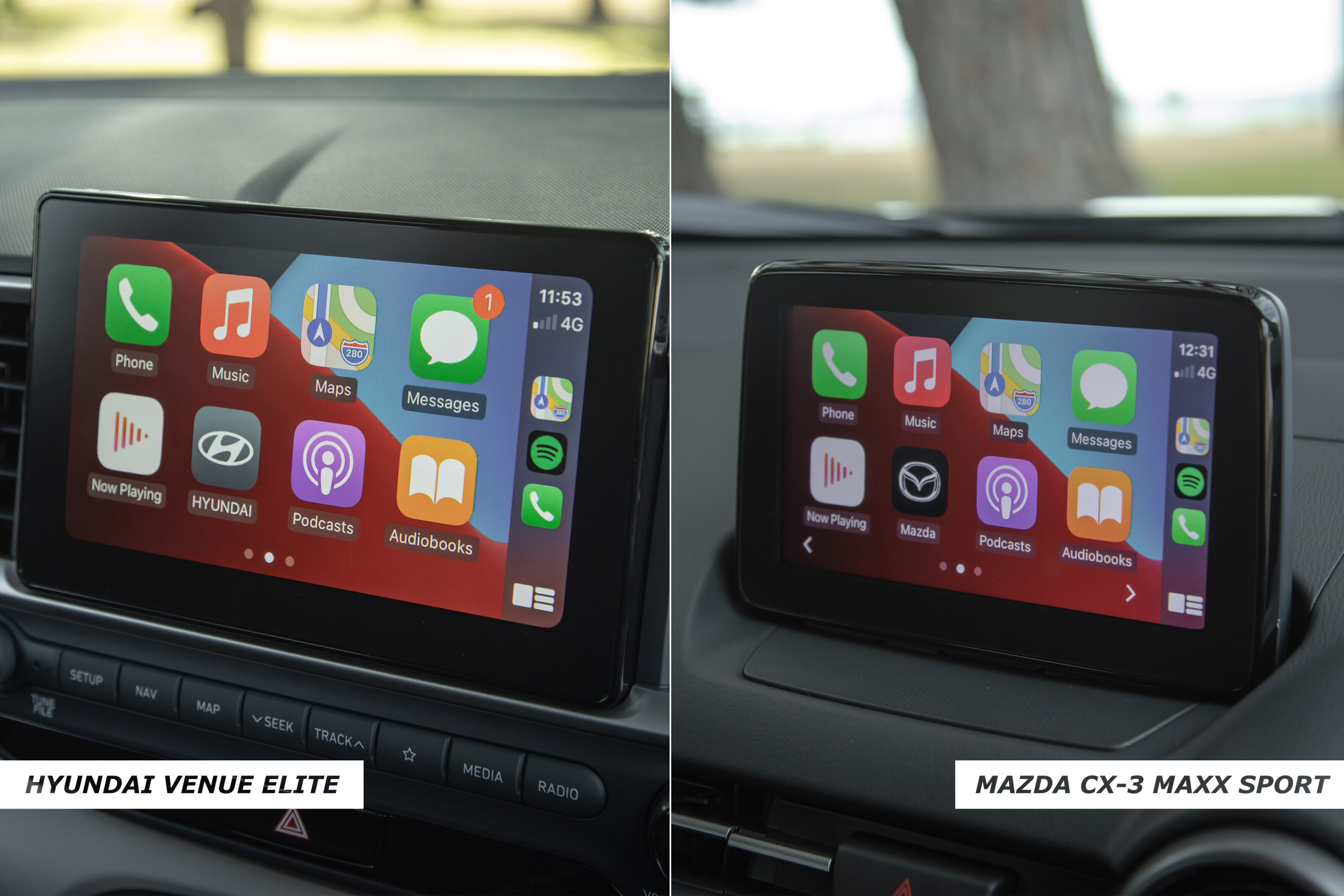
On the safety front, the CX-3 Maxx Sport has six airbags, ABS, stability and traction controls, forward AEB (4km/h-80km/h) with pedestrian detection and reverse AEB (2km/h-8km/h), reverse cross-traffic alert and blind-spot warning. Those last two are additions over the Neo Sport and compared to the Hyundai, the main extra is the rear AEB that works in concert with the reverse cross-traffic alert.
The CX-3 carries a five star ANCAP rating from six years ago. I’m not entirely sure what it would get now – mostly because ANCAP has wild, mad moments and delivers surprises – but five stars would be a stretch without a centre front airbag.
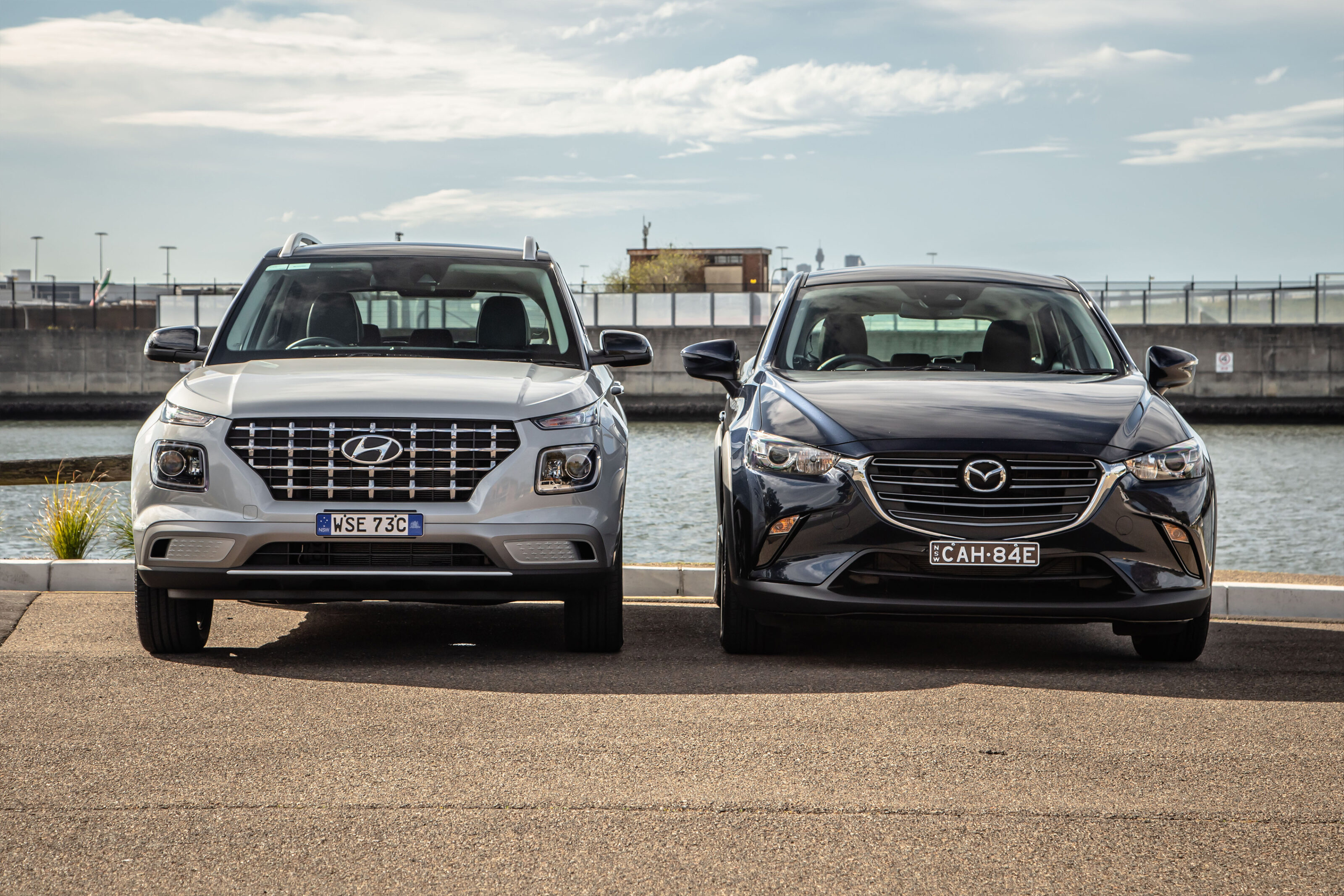
You can tell the Hyundai is a much newer car just by looking at it. Whereas the CX-3 landed when cars were a bit samey (and it, therefore, stood out), the Venue is bold, blocky and Minecraft-inspired 8-bit.
I’m a fan, obviously because it’s good to see some fun ideas on a car like this. Buyers are conservative at this level so having a laugh doesn’t always work well. The car has a consistent design theme in the little details and it looks great.
Buyers are conservative at this level so having a laugh doesn’t always work well. The car has a consistent design theme in the little details and it looks great.
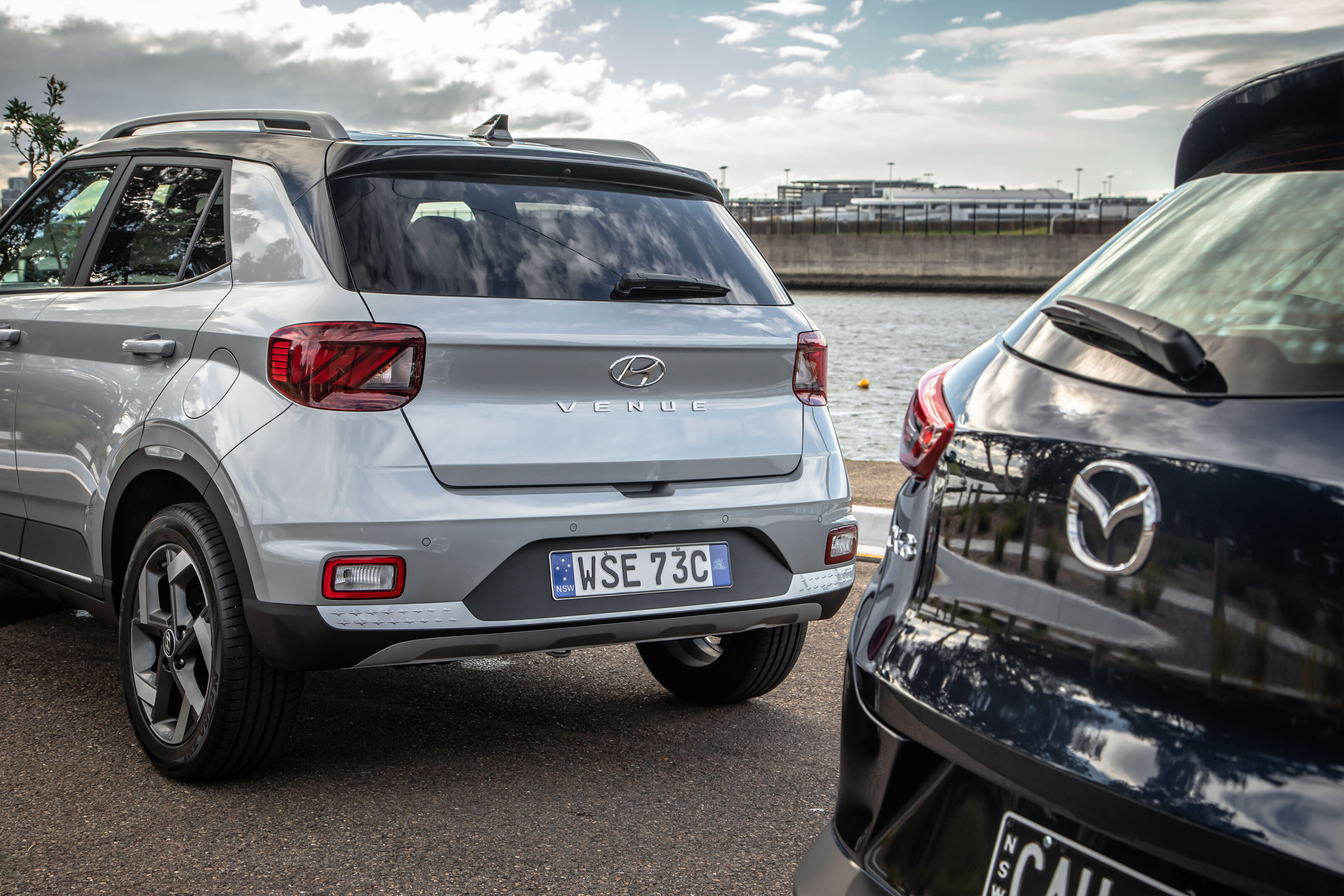
The Venue Elite is priced about the same as the Maxx Sport, but is the top of a three-car range. The Venue never finds the lofty heights of the mid-$40k mark like the CX-3, but makes do without things like all-wheel drive. But the Maxx Sport is a direct competitor and is priced that way.
For $26,740 – $900 cheaper than the Mazda – the Elite has 17-inch alloys, 8.0-inch touchscreen, six-speaker stereo, climate control, reversing camera, keyless entry and start, cruise control, sat-nav, auto headlights, auto high beam, power windows and mirrors and a space-saver spare.
It comes with six airbags, ABS, stability and traction controls, forward AEB with pedestrian detection, forward collision warning, reversing camera, lane keep assist, driver attention detection, blind-spot monitoring and rear cross-traffic alert. Along with two ISOFIX and three top-tether anchors.
The Venue scored four ANCAP stars in September 2019. It lost a star owing to its less advanced type of AEB but the forward AEB does work at up to 180km/h for other vehicles and up to 60km/h for pedestrians (day and night) and cyclists (day).
Comfort and Space
The CX-3’s boot is a very small 264 litres. Well, the litres are standard, but the boot has only about 70 per cent of what others in the segment have. It’s comprehensively out-litred by the Venue, Kia Stonic, and smashed by the Volkswagen T-Cross with its sliding rear seat.
Obviously, boot space isn’t a huge consideration among buyers because, as I’ve already said, the CX-3 beats them all in the sales race. If you fold down the rear seats, available space rises to 1174 litres.
Similar could be said for the rear seat accommodation. Despite the 3 in its name, the CX-3 is based on the small and perfectly-formed Mazda2, a car I like very much because I’ve never had to ride in the rear seat.
I’ve once spent time in the back of a CX-3 behind my wife (for science, you see) who is 174cm tall and I was not very comfortable. My knees were very buried in the seatback but there was some relief for my feet, with enough space to stretch my toes under the seat.
Harking back to a simpler time, the CX-3 has just one USB port and no rear air vents.
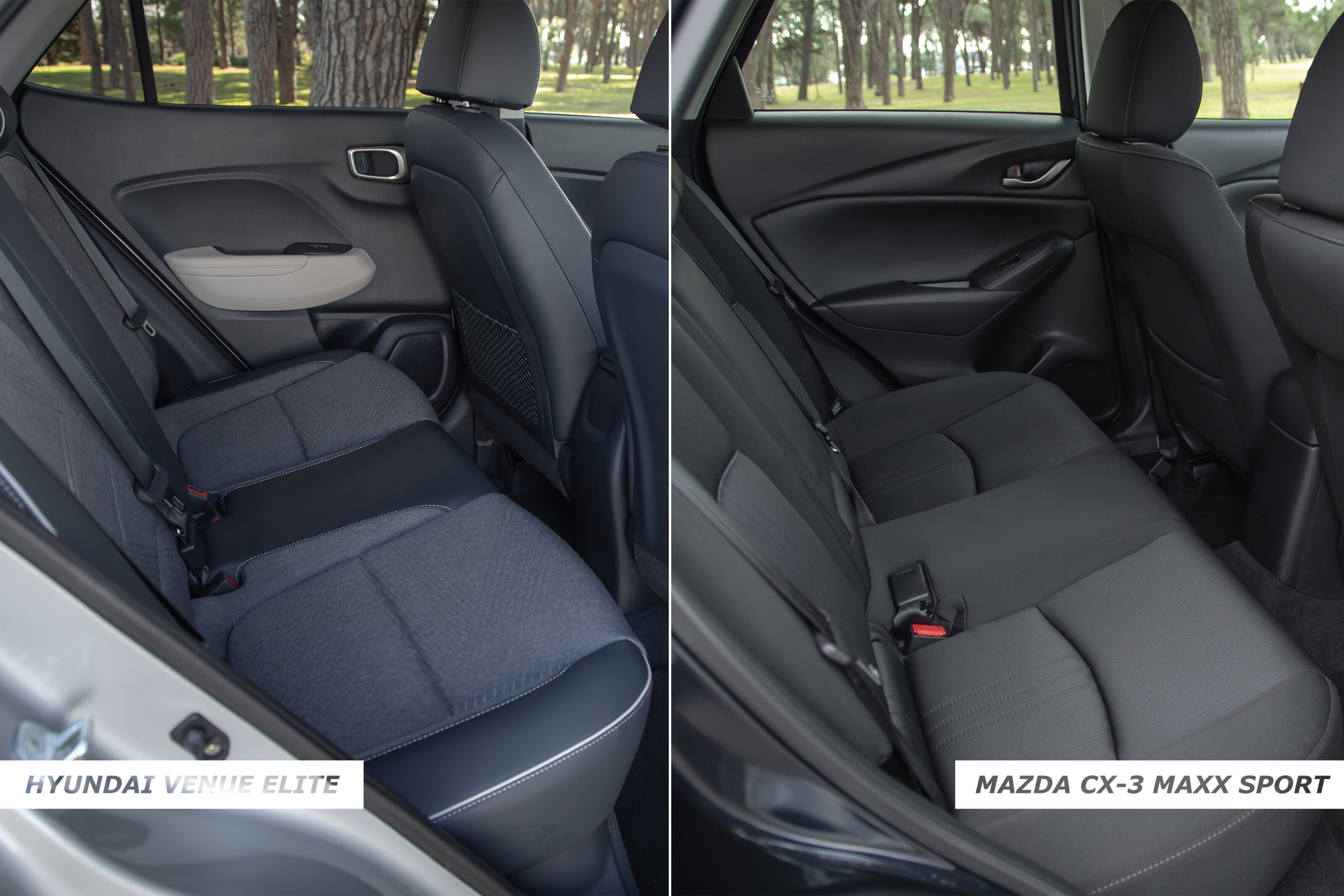
The Venue has a better rear seat, with space enough for me behind my driving position – I’m a hardly lofty 180cm – and a couple of inches clearance to the roof. My head does feel a little close to the C-pillar but given most rear-seat occupants are going to be kids (at least I hope so), that shouldn’t be an issue.
Knee and legroom are better in the Venue and I was going to say something clever like, “But the Venue has a longer wheelbase,” except it doesn’t. So the CX-3’s packaging is clearly sub-optimal compared to the Hyundai.
Thing is, the CX-3 has a centre armrest and cupholders whereas the Venue’s rear seat is a bit grim for further amenities. So while the Hyundai is more spacious, the CX-3 tries to soften the blow of its tight confines with some useful accoutrements.
At 355 litres, the Venue’s boot is rather generous and isn’t much short of the larger Kona. The boot’s false floor can be left at loading-lip height or you can slide out and re-insert it in a lower position to liberate the full capacity.
For some reason, Hyundai doesn’t quote a seats-down cargo capacity, but it’s likely to be in the order of 900-1000 litres. With the seats folded, the space doesn’t have the huge step of some cars in the class and neither does the CX-3.
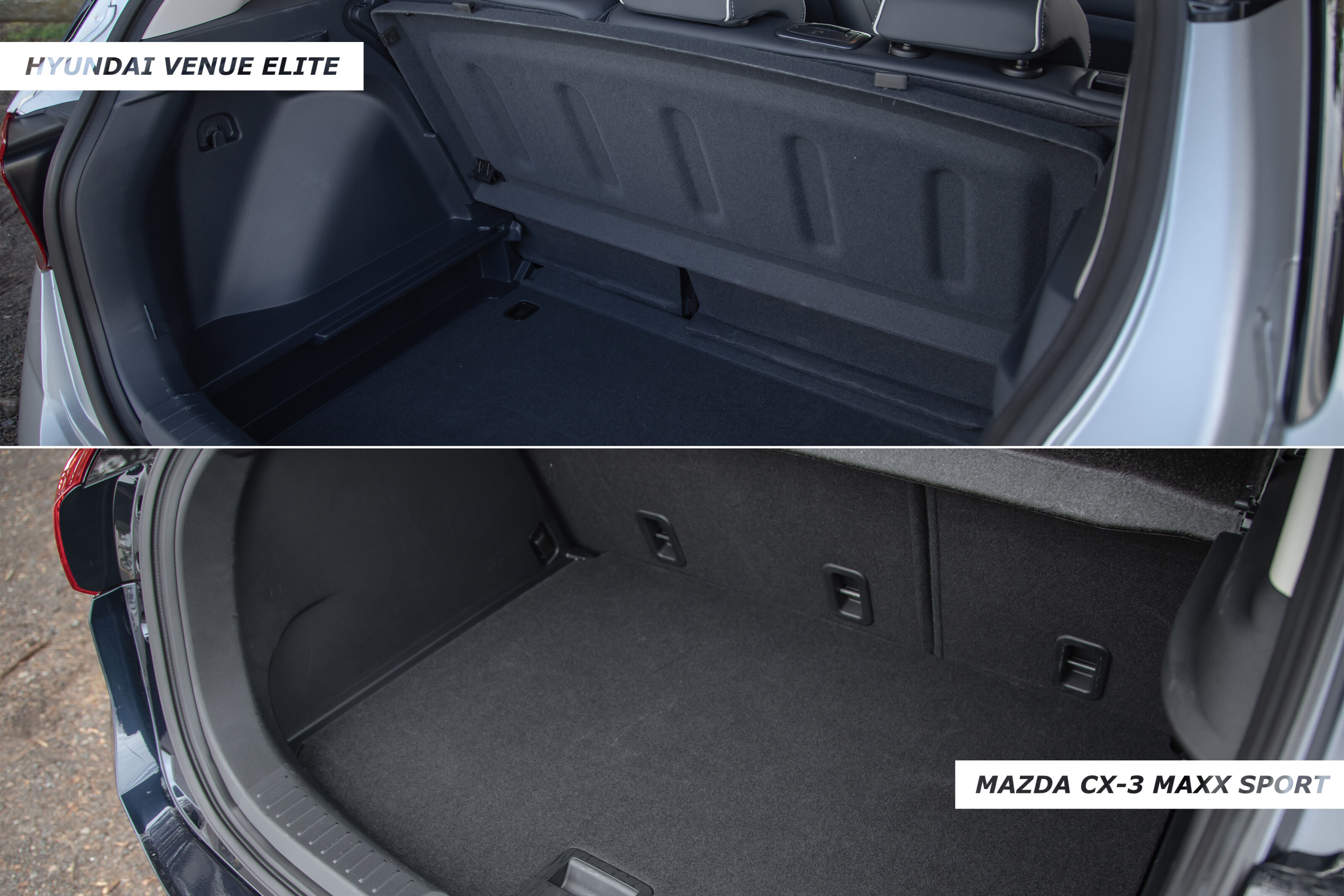
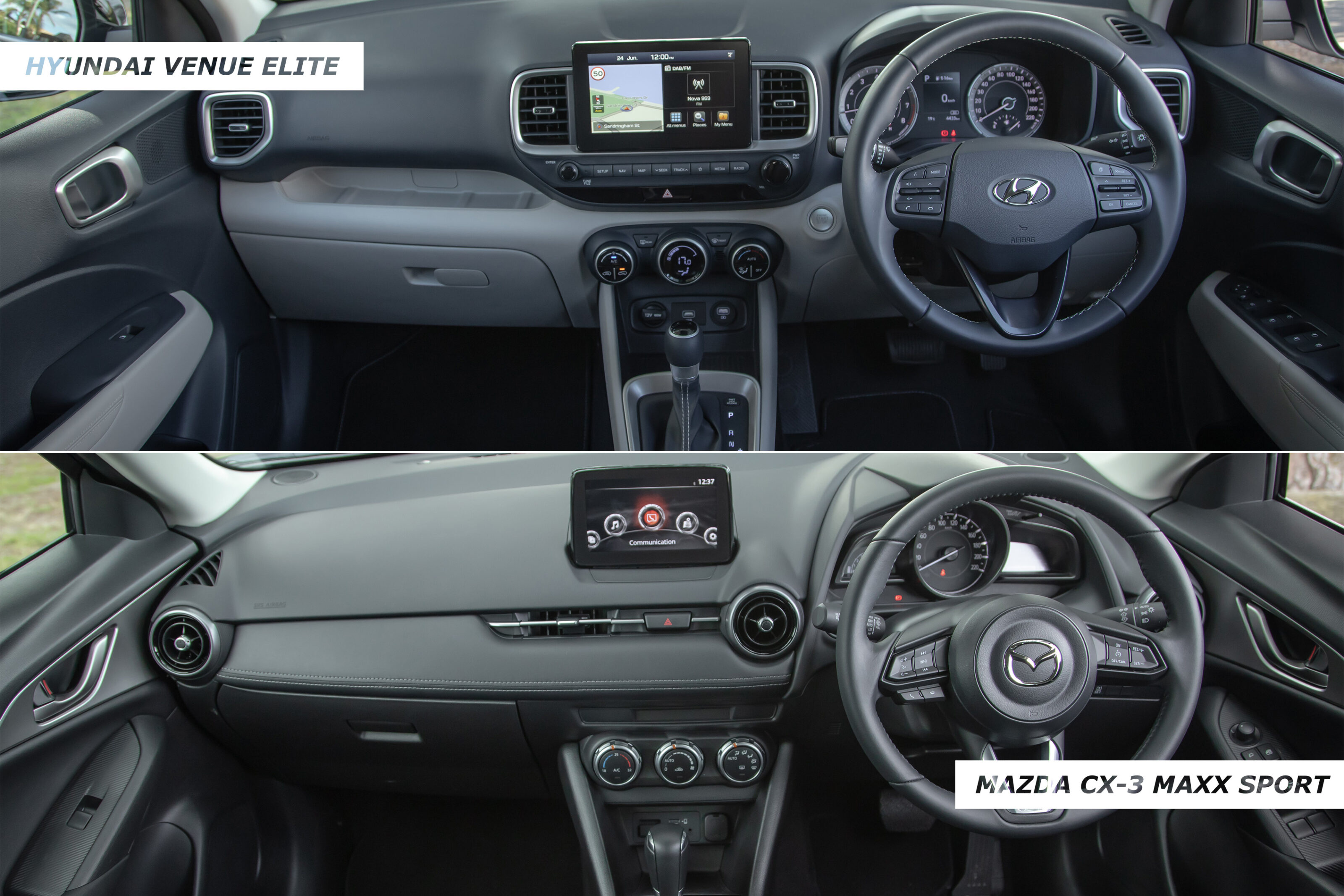
Both cabins are quite pleasant but have quite different approaches to design. The Mazda’s is very conventional but definitely going for classy.
Muted tones, circular air vents but reasonably large expanses of blank space. Large for a car this small, anyway. Both feature sensible cloth interiors with leather or leather-like shifter and steering wheels and modestly-sized screens that fit the size of the cabin.
I’m a big fan of the big, simple to use knobs, dials and physical switches in both cars, especially the Hyundai.
The CX-3’s cabin, however, is darker. The slimmer glassline contributes to the rather dashing looks but does nothing to lighten the mood inside.
Hyundai counters with a more upright glass box plonked on the body that lets in heaps of light and the pale grey of the trim as well as the deep navy blue and light grey of the dash and console architectures – along with a lighter headliner – ensure the Venue feels bigger and more upright, contributing to the SUV vibe.
While the Hyundai is more spacious, the CX-3 tries to soften the blow of its tight confines with some useful accoutrements.
On the Road
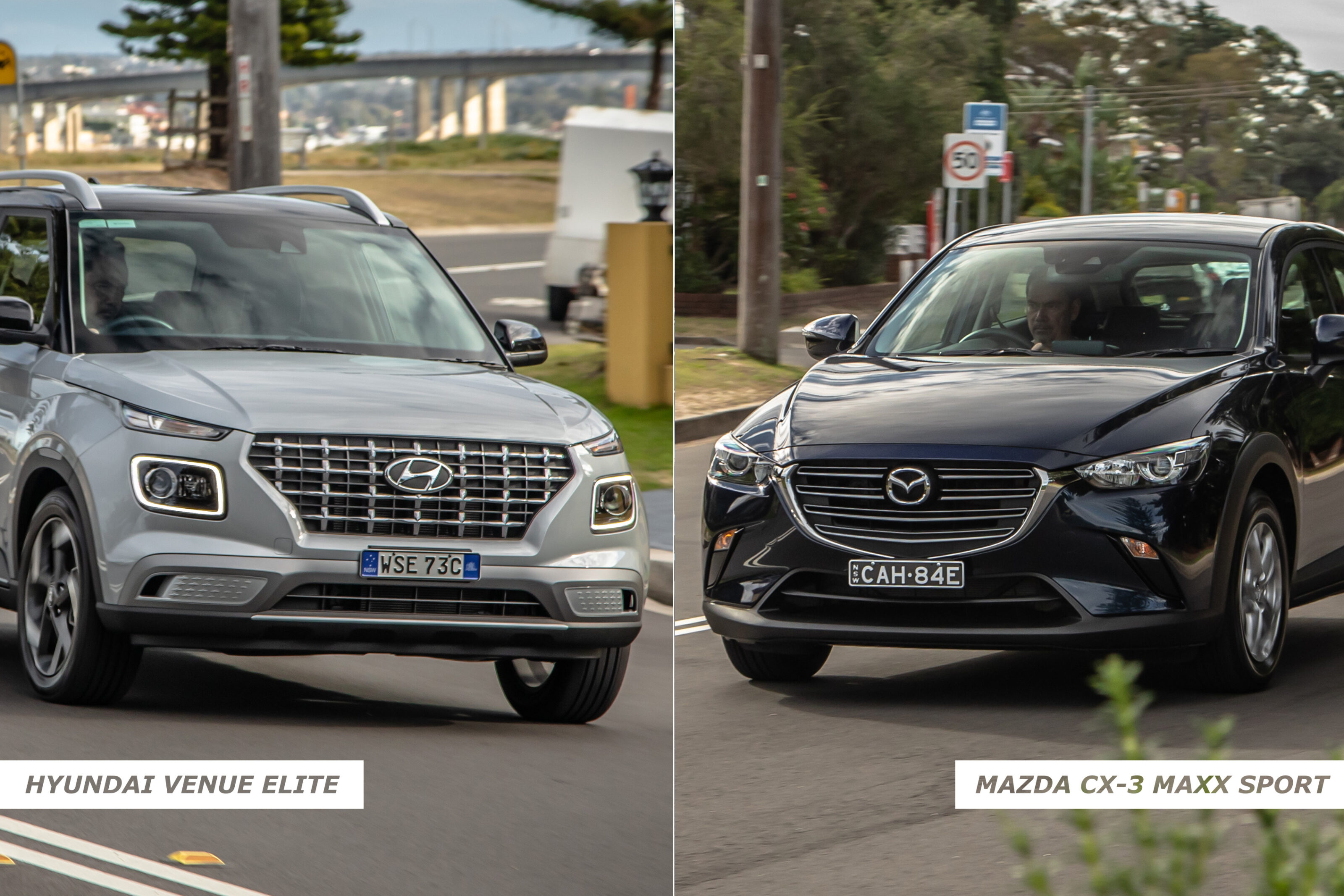
Mazda’s 2.0-litre four-cylinder SkyActiv engine is pretty good here in the CX-3, the company obviously deciding the 2’s 1.5-litre was not going to be up to the job. It kind of explains part of the price difference between the 2 and the CX-3.
For your accelerating and cruising pleasure, the Mazda conjures up 110kW at 6000rpm and 195Nm at 2800rpm, which isn’t bad at all. Added to that you’ve got yourself a six-speed automatic transmission as Mazda has so far resisted the cost-cutting urge to go CVT.
Over at Hyundai, the company has fitted the familiar 1.6-litre four-cylinder that has been around for a while. The Venue may be slightly lighter, but there’s a decent gap down to the power figure – 90kW at 6300rpm – and a bigger gap down to the torque number of 151Nm at 4850rpm.
The weight difference is just 50kg, so the gap is not bridged by lightness. Like the CX-3, the transmission is a six-speed torque converter automatic, although one wonders if that is long for this world given the Kona has fallen to the new Hyundai CVT (which honestly is pretty good).
The Mazda feels quicker because it is, dispatching the 0-100km/h run in around nine seconds while the Venue takes another two or so seconds. Around town it’s not much of an issue, of course, but the overtaking performance of the CX-3 is superior as is its ability to take a gap in traffic.
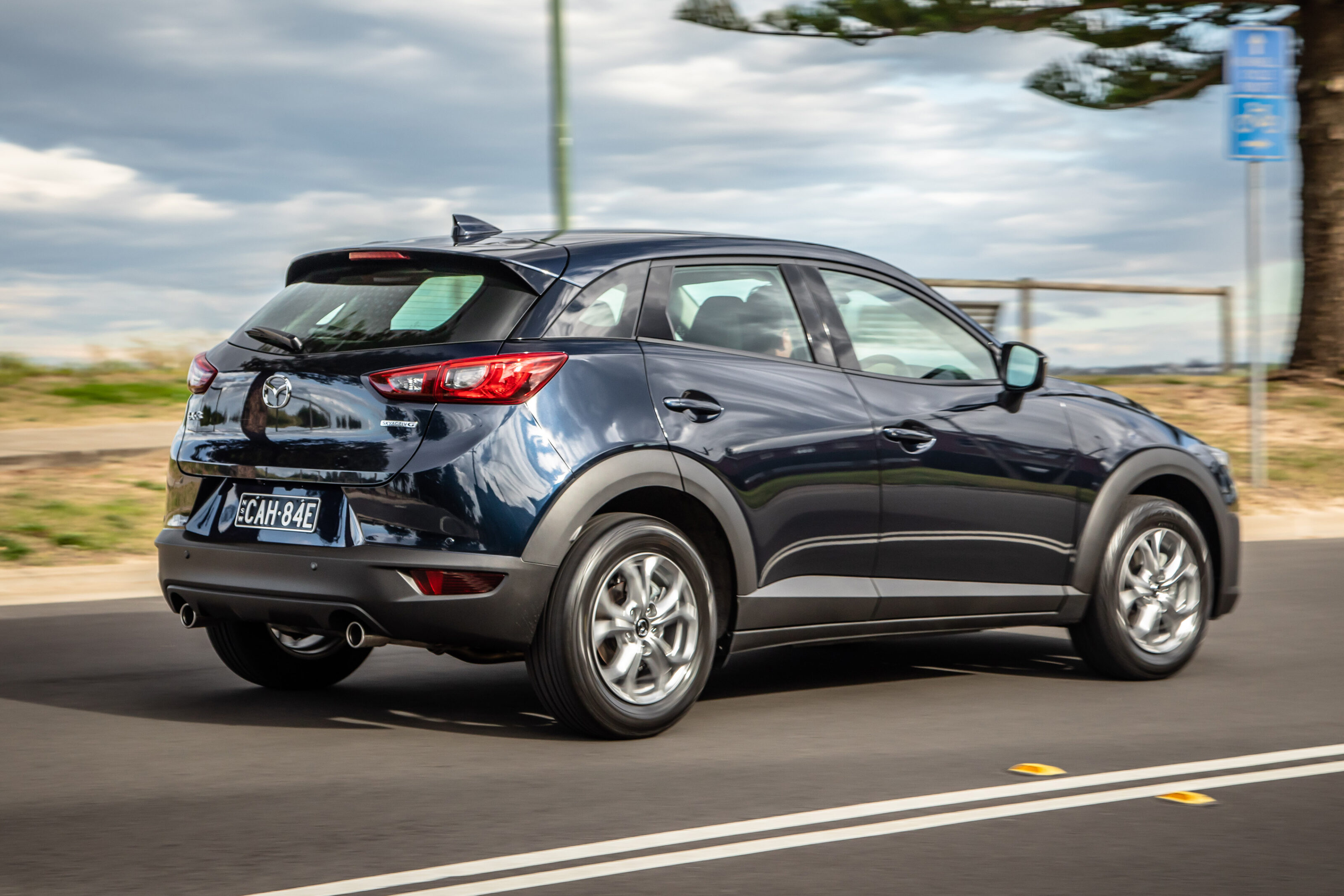
What I quite like about the Venue is the unexpectedly aggressive take-up of the transmission. I mean, it’s not going to snap your neck, but it responds more eagerly than I would have expected so it really feels like the calibration is set for darting about town. And dart you can because, like the CX-3, it’s quite light, rolls on a good chunk of rubber and has really good steering. I quite enjoyed scything about the place in it as it does feel a little more agile than the CX-3.
The key word here is feel, though, because there’s not much to complain about in the Mazda. I’ve always really liked the way the CX-3 goes, with good responses from the throttle and gearbox and plenty of torque to pull the reasonably light body along, something Mazda has worked very hard at achieving with a slightly bigger car.
The power steering has improved steadily over the years and gives useful feedback as you pound around town, is quick enough to react when you need to do something fast and also makes it a doddle to park. Although the reversing camera is pretty iffy, the reversing sensors are not, so it works out okay.
They’re both terrific city cars, which you’ll probably gather is where they spend most of their time in most cases. The CX-3 has long been a good tourer, despite a little bit of road noise at speed, so that’s an easy tick. The Venue acquitted itself very nicely on the freeway, too.
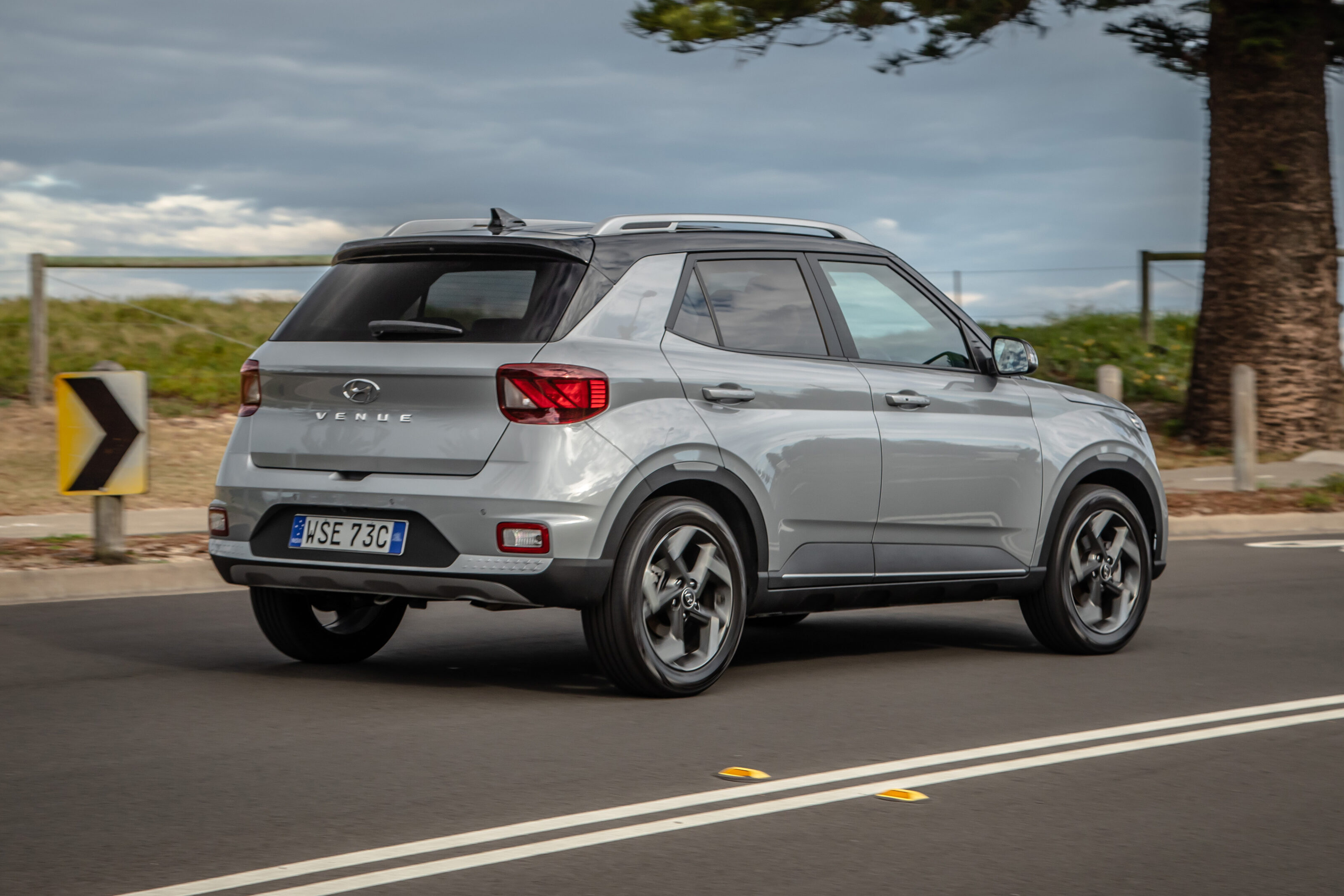
Amusingly, the Venue comes with traction programs on top of the three drive programs – Snow, Mud and Sand, none of which I would imagine too many customers test to any great degree. If it’s half as good as Peugeot’s similar system on its front-wheel-drive cars, it’d be great. Mazda makes do with a Sport mode that isn’t all that interesting.
When it comes down to fuel, the Hyundai has the edge. During the week I had it I managed 7.9L/100km in mostly city driving, which is better than when I last drove it, stacking up well against the 7.6L/100km combined figure. Mazda’s official combined cycle figure is an unlikely 6.3L/100km.
I’ve never got anywhere near that over the years and this time was no exception, with a 8.1L/100km number. Blame m’colleague Curt for that, he had the car for most of the time. And it is that little bit more fun to drive, so it’s easily forgiven.
What’s not so easily forgiven are the very ordinary headlights on the Venue. They’re quite yellow and a bit of a throwback in this age of LED everything.
Ownership
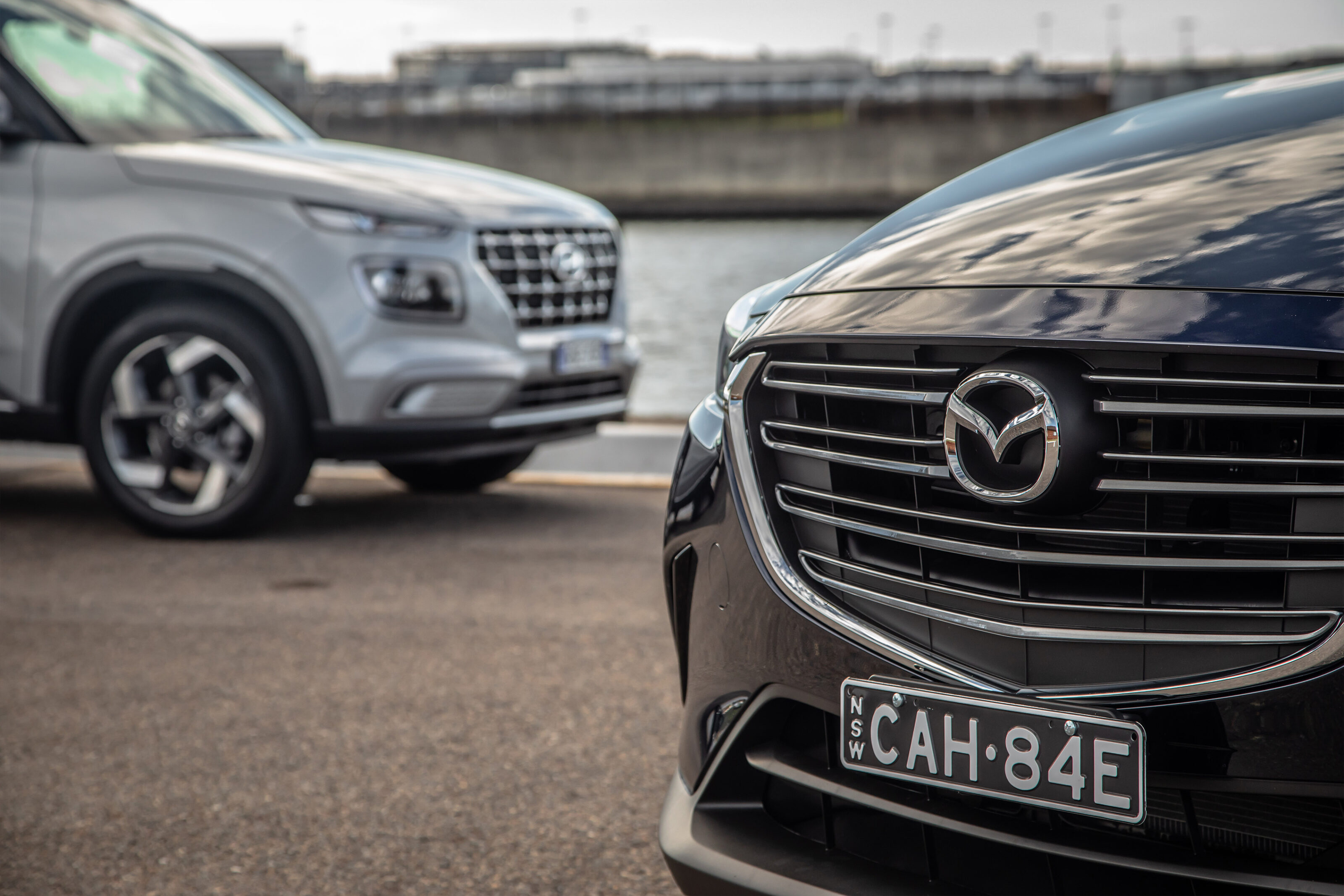
Both Mazda and Hyundai offer five-year, unlimited-kilometre warranties, with Mazda fronting you five years of roadside assist. Hyundai offers you an extension of 12 months on the roadside assist for up to ten years as long as you keep servicing with a dealer.
You need to return to the dealer every 12 months or 15,000km and all Hyundais carry a lifetime service plan, meaning you’ll know what pretty much any service is going to cost you for the life of the vehicle.
The first five years costs $1575, for an average of $315 a year, which is not bad going and stacks up well against the CX-3.
You see, Mazda expects to see you every 12 months or 10,000km, which is starting to look a bit rich in this segment when the engine doesn’t have a turbo bolted in.
Service prices alternate between $331 and $391 for the first five years, costing $1775 over five years and averaging out at $355. Yeah, okay, it’s $40 but if you do more than 10,000km per year but less than 15,000km, it’s going to work out more again.
VERDICT
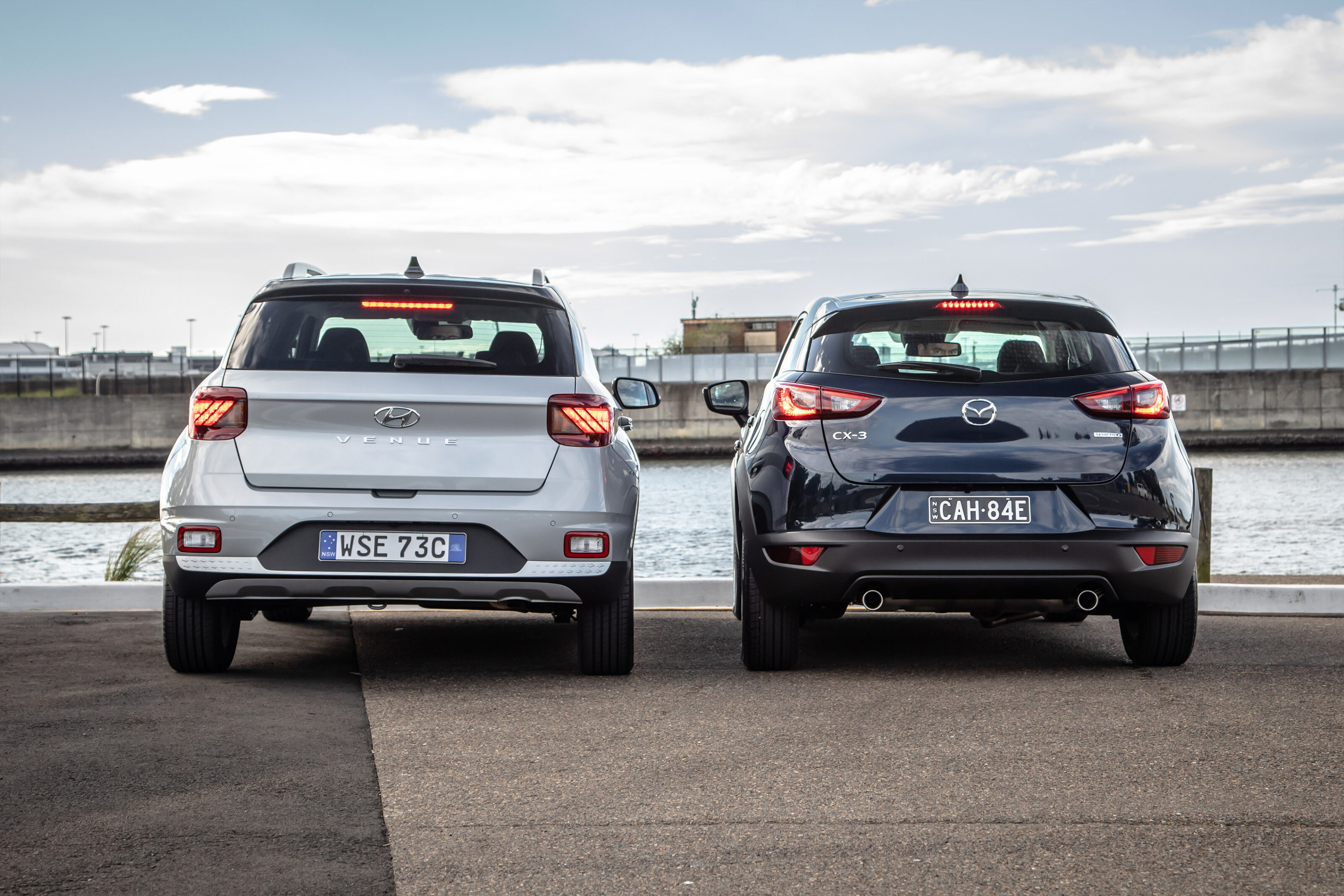
The CX-3’s staying power is remarkable but it’s not like it’s an identical car to the one we first drove all those years ago. Years of tiny refinements have kept it in the game, without any great fanfare or splashy PR or marketing campaigns yelling about “the all-new Mazda CX-3” that actually just had a new damper valve and a power steering tweak.
You have to respect the confidence of the company to just keep working at the car. It has taken almost this long for the CX-3 to start feeling a little old, though, particularly the cabin technology. But it’s still great to drive and comes with an impressive safety package.
Hyundai’s venue was extremely late to the party, so late it arrived around the same time as a competing Volkswagen. And that’s saying something. The Elite is probably a bit much for most tastes because what it has over the Active is mostly frippery, but for the money provides a compelling proposition against the CX-3.
It’s not as powerful and therefore not as quick but it drives really nicely, has lots of stuff and has more cargo and occupant space. And it’s cheaper to buy and own.
Like the CX-9 versus Santa Fe, it’s a close one. Neither delivers anything that makes you slap your forehead (people do that right?) and say, “Of course! This is the car for me!” This one is going to come down – again – to whether you want a particular badge or visual aesthetic.
For me, the Venue just makes it through the gate because I just liked it a bit more. That could be something tremendously shallow like the fact the Venue is newer and shinier which, again, shows how close is the battle. And for Mazda to keep the CX-3 in the game so successfully for so long, it must have been ahead of its time.
2021 Hyundai Venue Elite vs Mazda CX-3 Maxx Sport specifications
| u00a0 | Hyundai Venue Elite | Mazda CX-3 Maxx Sport |
| Body | five-door compact SUV | |
| Drive | FWD | |
| Engine | 1.6-litre four-cylinder | 2.0-litre four-cylinder |
| Transmission | six-speed automatic | |
| Power | 90kW @ 6300rpm | 110kW @ 6000rpm |
| Torque | 151Nm @ 4850rpm | 195Nm @ 2800rpm |
| Bore/stroke | 77.0mm x 85.4mm | 83.5mm x 91.2mm |
| Compression | 10.5 : 1.0 | 13.0 : 1.0 |
| 0-100km/h | 11 sec (est) | 9 sec (est) |
| Fuel consumption | 7.2L/100km (combined) | 6.3L/100km (combined) |
| Weight | 1225kg | 1297kg |
| u00a0Suspension | MacPherson strut (front); torsion beam (rear) | |
| u00a0L/W/h | 4040/1770/1592mm | 4275/1765/1535mm |
| Wheelbase | 2520mm | 2570mm |
| Brakes | 280mm ventilated disc (front); 262mm solid disc (rear) | 280mm ventilated disc (front); 265mm solid disc (rear) |
| Tyres | 205/55 R17 Nexen | 215/50 R16 |
| Wheels | 17-inch alloy wheels (space-saver spare) | 16-inch alloy wheels (space-saver spare) |
| Price | $26,740 + ORC | $27,640 + ORC |
NOTE: On mobile phones, the above table is best viewed in ‘landscape’ view.
