
Snapshot
- Local launch delayed by a few months
- Second-generation sportscar will be faster and more powerful than predecessor
Update, May 31: Subaru Australia has told WhichCar its next-generation BRZ will most likely be launched locally in December, with customer deliveries expected at the same time.
The hotly anticipated two-door sports coupe was expected to be released slightly earlier in the fourth quarter of 2021, however, it now seems certain we’ll have to wait just that bit longer before we see the BRZ Down Under.
It’s not been confirmed at this stage why the BRZ’s local launch has been pushed back, but with the global semiconductor shortage affecting almost every automaker in the world, we’d hazard a guess it has something to do with the delay.
May 3: The 2021 Subaru BRZ has been teased on a recently added section of the Japanese automaker’s website that allows Aussie buyers to register their interest in the new two-door coupe.
The second-generation sportscar is due for a local launch later this year, with Subaru confirming customer deliveries will begin in quarter four of 2021.
Pricing and specifications are still to be unveiled, however, new details indicate the six-speed automatic variant of the BRZ will come with a revised sport mode and Subaru’s EyeSight driver assist technology – a first for the moniker.
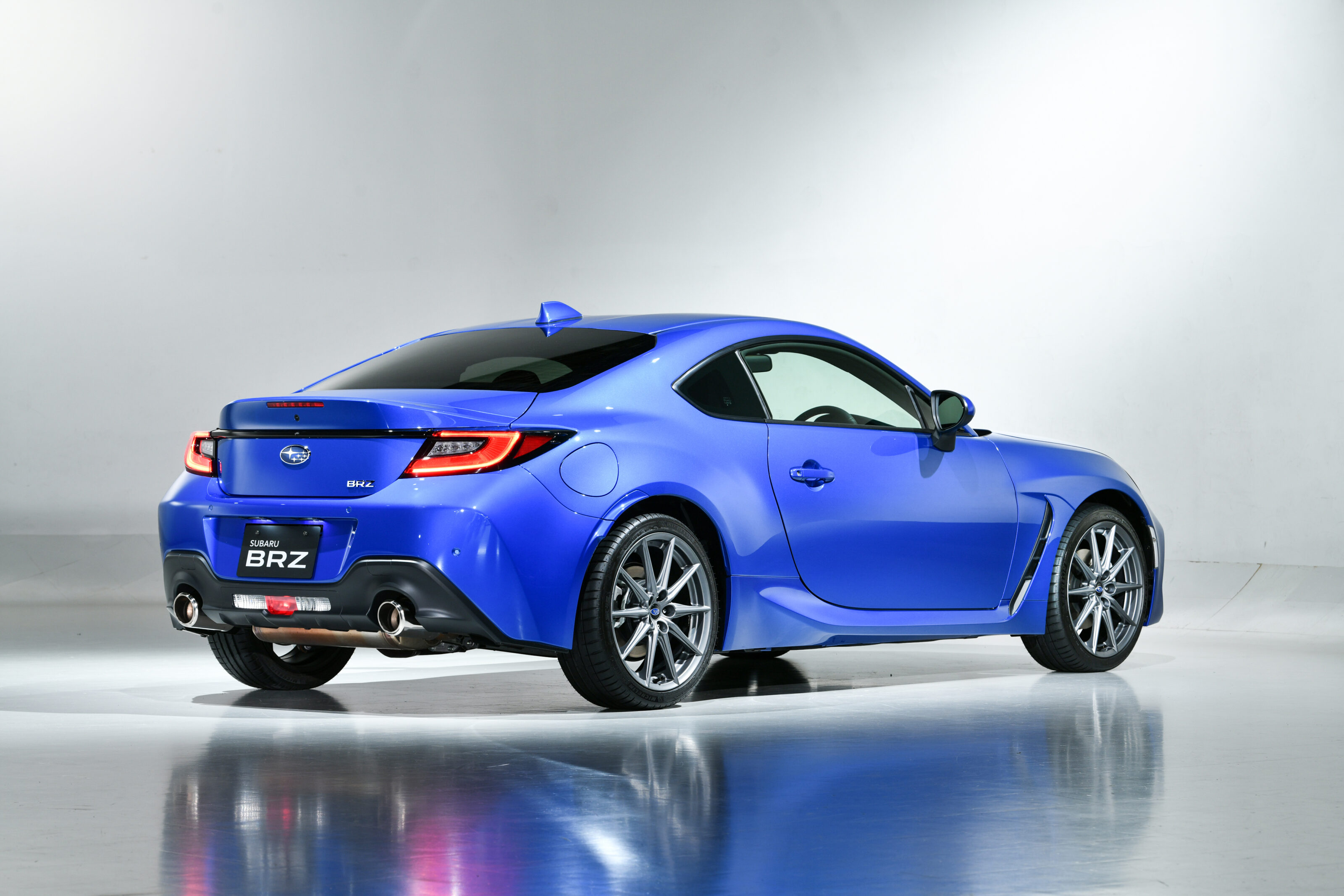
The carmaker was also keen to point out that less than 50 examples of the current-generation BRZ were left in Australia.
Aside from revised styling that gives the sportscar an overall more mature and sophisticated appearance than the car it will replace, the new BRZ also gets a significant bump in performance, not only mechanically, but also dynamically.
The 2.0-litre four-cylinder boxer engine has been bored out to 2.4-litres, and the increased displacement has brought with it a power bump to the tune of 170kW and 250Nm (up 18kW and crucially 32Nm on the outgoing BRZ).
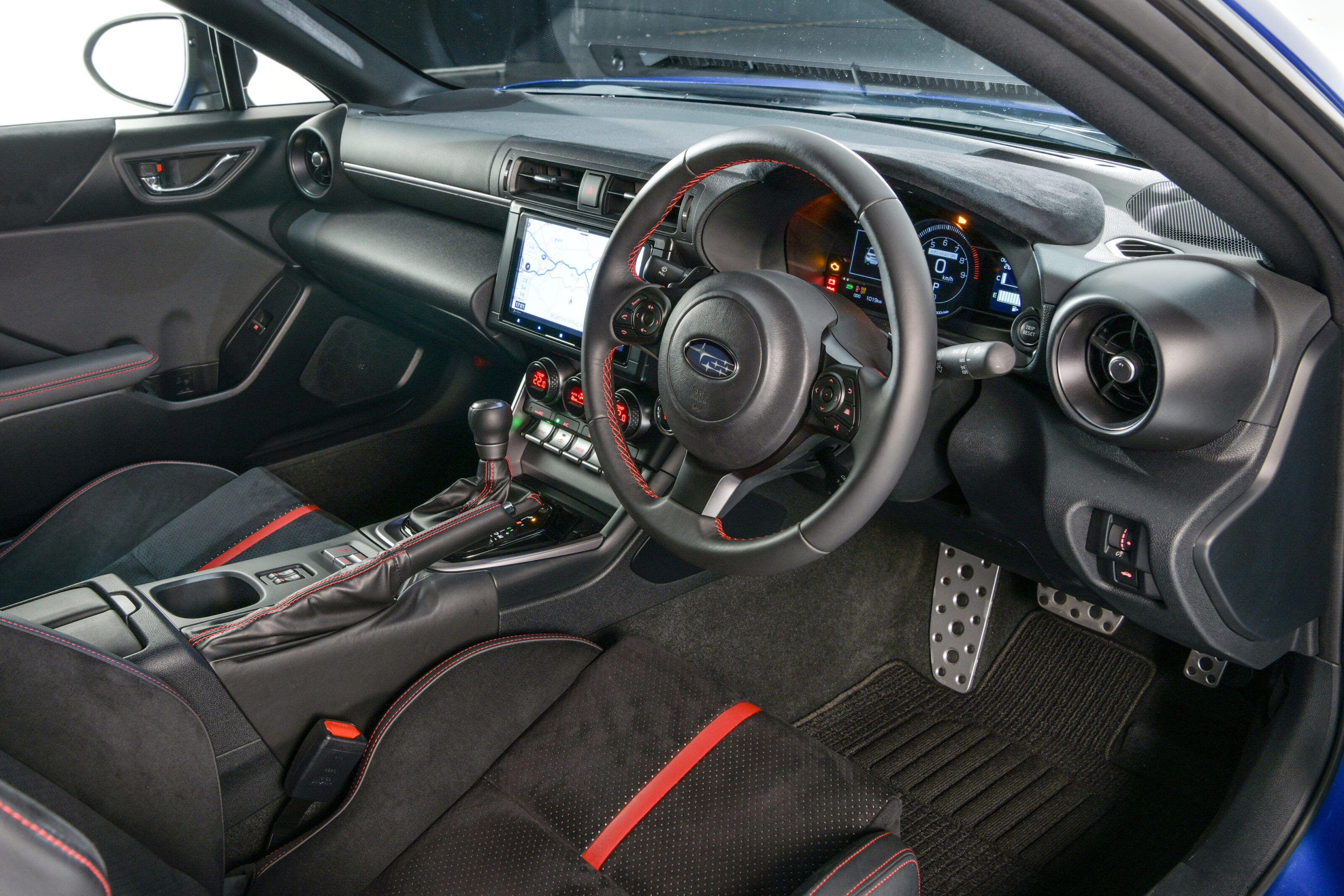
This increased shove is said to fix one of the current BRZ’s biggest problems – the disappointing lack of torque which occurs roughly halfway through the car’s rev range.
Speaking of redlines, the new BRZ’s has dropped compared to its predecessor, now revving to 7500rpm rather than 7700rpm.
A thoroughly reworked chassis provides approximately 60 per cent more front lateral bending stiffness and roughly 50 per cent more torsional rigidity than the current iteration of the sportscar.
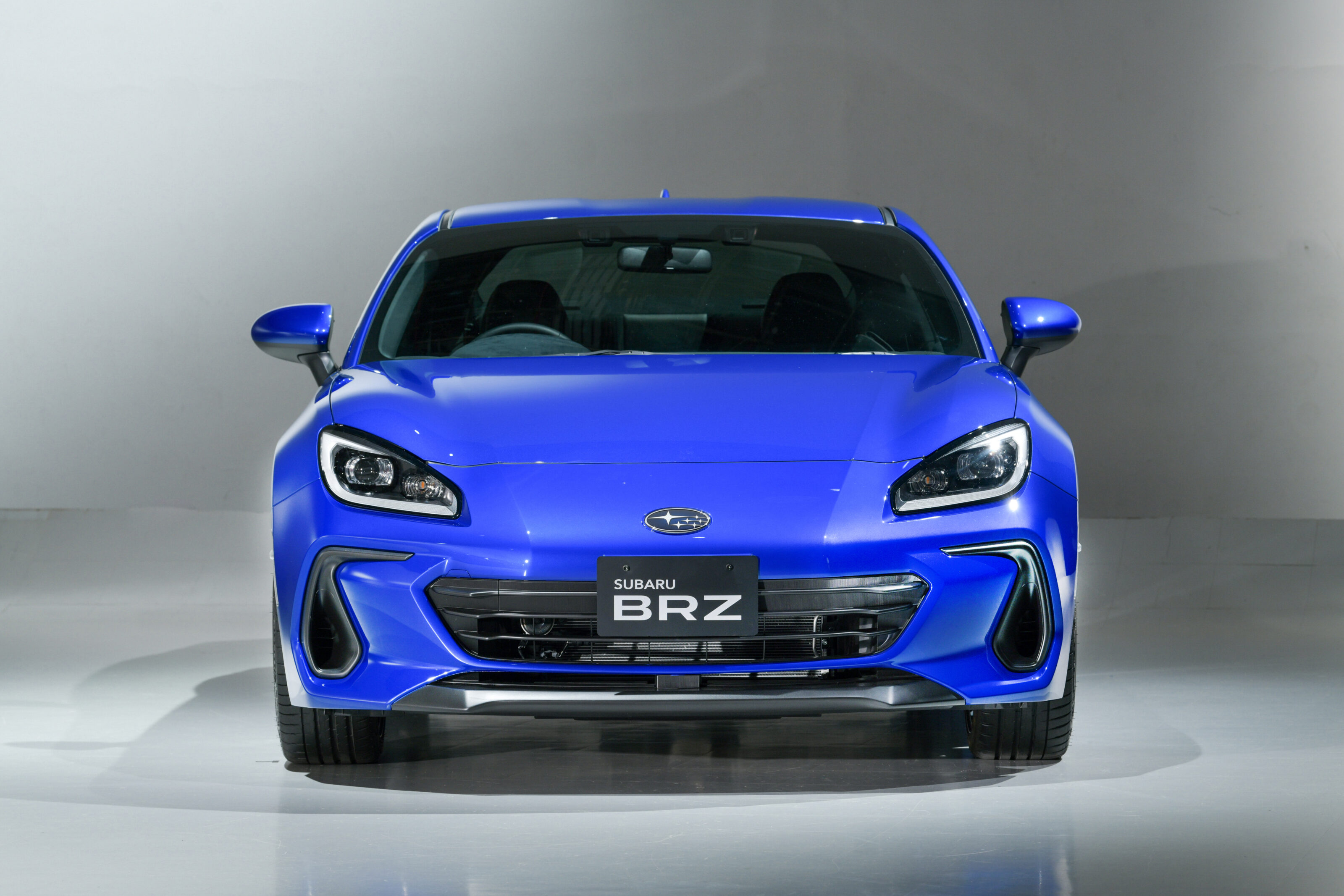
Subaru says the taught new body translates to a better steering, nimbler handling and a more composed sportscar all round, which should make for a better experience on both road and track.
Be sure to circle back to WhichCar as we bring you more details about the new 2021 Subaru BRZ.
Snapshot
- First official look at new-gen Sportage
- Familiar engines expected, although turbo-petrol potential exists
- Australian debut confirmed for late 2021
UPDATE, May 31: After what seemed an eternity of spy photos – thanks to COVID-19 slowing down the testing process – official teaser images of the upcoming 2022 Kia Sportage have finally been released.
As expected, the new Sportage will feature a boomerang-like daytime lighting design up front, in what could be a new signature look for the brand.
Although not clear from these images, the new medium SUV’s driving lights will sit outboard of the daytime lights, nestled inside the hook shape.

The new Sportage’s roof and belt lines will taper to the high-set rear window, above tail lamps that complement the lighting signature shown at the front end.
A strong character line runs forward from the tail lights, adding to the muscular forms created by the more naturally flared wheel arches beneath.
Inside, the new Sportage will follow in the footsteps of other new-generation models with an expansive infotainment unit running from behind the steering wheel and across to the centre of the dash.
The display appears as one unit in the below teaser image, although it is likely two separate displays embedded behind a single acrylic panel.
That huge display is bordered by vertical air-conditioning vents, with the centre vent running into a character panel along the length of the dash.

When will the 2022 Sportage come to Australia?
The new Sportage will make its Australian debut in the third quarter of 2021, with an official global unveiling set to occur “in the coming weeks”.
For more details on the new-generation SUV, see our continuing coverage below.
You can also click on the images in this story to see more in our gallery.
Mike Stevens
The story to here
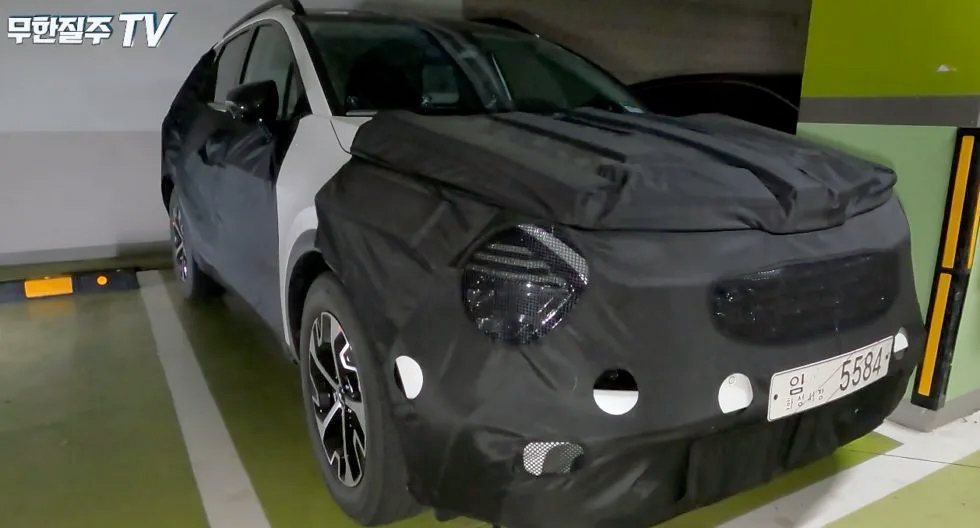
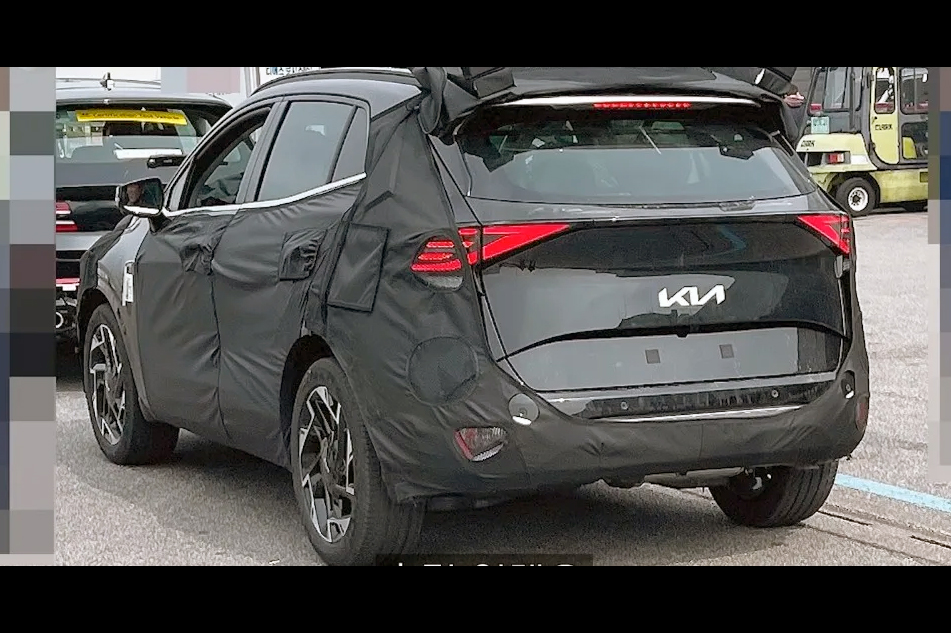
UPDATE, April 2: A key spy photo published in the Korean press have delivered a revealing look at the upcoming new 2022 Kia Sportage – particularly its backside.
While there is still plenty left to be revealed, this new image shows a pair of sharply tapered tail-lamps beneath a high-set rear window, flowing down to the futuristic new KIA logo. (Or ‘KVI’ as some punters have noted on social media.)
The new photo, posted to enthusiast page The Korean Car Blog, is understood to represent a look at the standard ‘short wheelbase’ model, with a stretched version expected to appear – just as Hyundai has offered standard and long-wheelbase versions of its big Santa Fe SUV in generations past.
Expect the new Sportage to ride on the same architecture that underpins the new Hyundai Tucson, with petrol, diesel, and petrol-electric hybrid engines on offer – however, Australian buyers, as noted below in our earlier coverage, will not be offered the hybrid.
The new 2022 Sportage is expected to be revealed sometime by July, although the company has yet to make an announcement.
An Australian debut is confirmed for later this year, although, as with all things, that timing could be revised to an early 2022 date. We’ll know more in the months ahead.
Mike Stevens
October 1, 2020: Kia has confirmed that Australian customers will not be offered a hybrid version of the new Sportage small SUV when it arrives late next year, but a powerful and efficient T-GDi engine could introduce turbo petrol performance for the first time.
Speaking to WhichCar, a Kia Australia spokesperson explained that all local Sportage stock is sourced from the car maker’s South Korean factory, with no option to select from other global production facilities, including the Zilina Plant in Slovakia where the model’s first hybrid version will be built.
However, the Gwangju plant that supplies Australian Sportages produces a version powered by a 1.6-litre turbocharged four-cylinder petrol engine, alongside the 2.0-litre naturally aspirated petrol, the 2.4-litre version and 2.0-litre turbo diesel that forms the current local line-up.
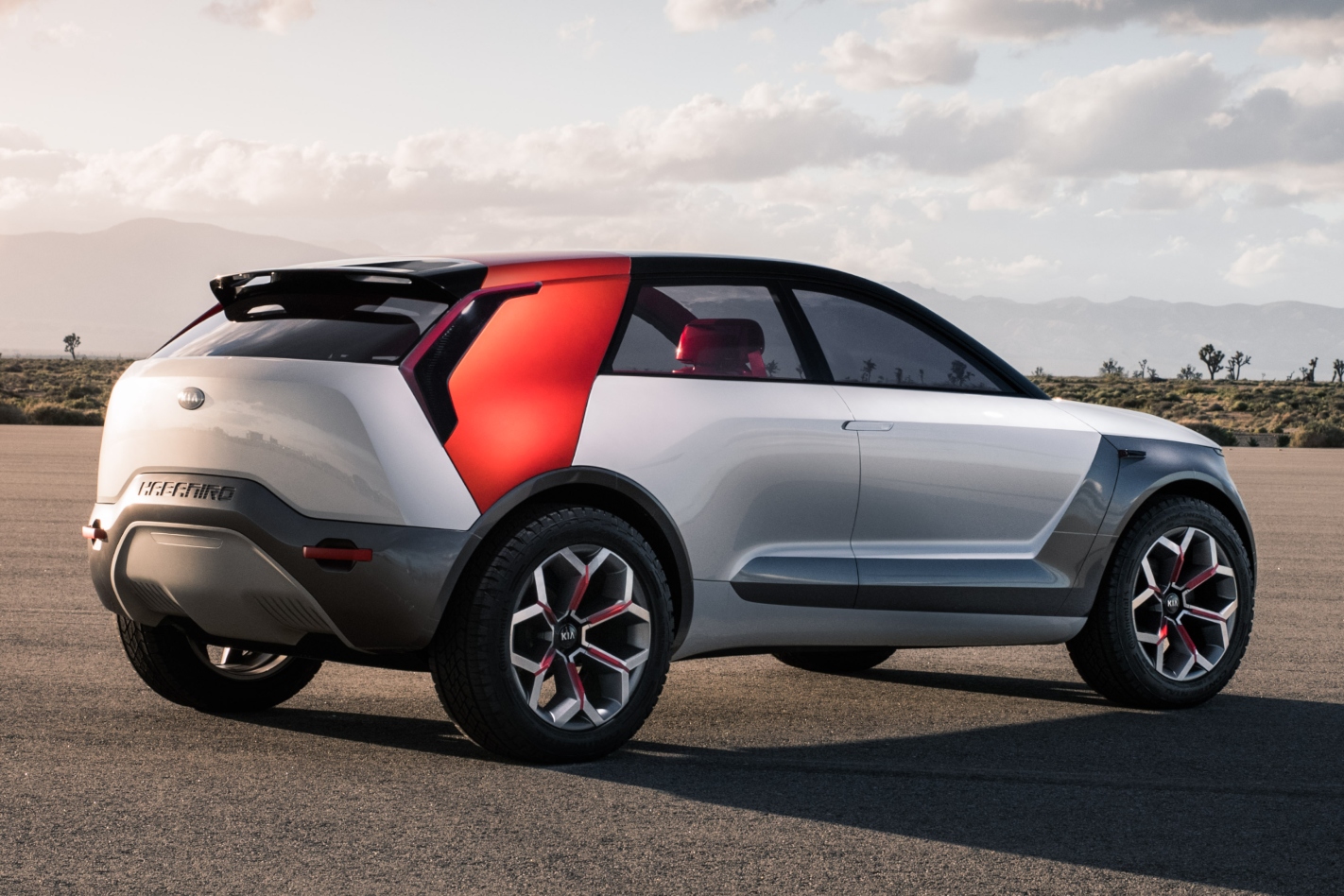
Introducing a sportier 1.6-litre turbo would align with Kia’s strategy to roll out more driver-focused options under its GT and GT-Line sub brands – a commitment that’s already introduced range-topping turbo petrol versions of the Picanto, Rio, Cerato and Optima.
While the T-GDi 1.6-litre’s standard output of 130kW is similar to the 2.4-litre’s 135kW, it trumps the naturally aspirated engine on torque with 265Nm vs 237Nm.
Perhaps more importantly though, the smaller engine has a more feisty 150kW tune available, which provides the decent performance found in the Cerato GT. As a bonus the smaller engine returns significantly better fuel economy than the 2.4-litre in both states of tune.
A 130kW version would likely take over the GT-Line variant from the current line up, while a 150kW Sportage would introduce a new GT variant.
Sister brand Hyundai has been offering the well rounded turbo engine under the bonnet of its closely related Tucson for some time, and will continue to sell a 1.6-litre turbo version in the freshly revealed model, due to land in Australia ahead of the Sportage in the first half of 2021.
Kia, however, says it is not in a position to discuss the fifth-generation Sportage’s details this far out from its launch, prolonging the silence around the popular model.
While the company has been vocal about the various range updates and other new model introductions, there has been virtually no noise relating to the 2021 Sportage.
No recent concepts hint at the design direction for the new model, nor have any technological titbits been leaked into the public sphere. Even pictures capturing a prototype under development in South Korea reveal little-to-no new information thanks to heavy disguises.
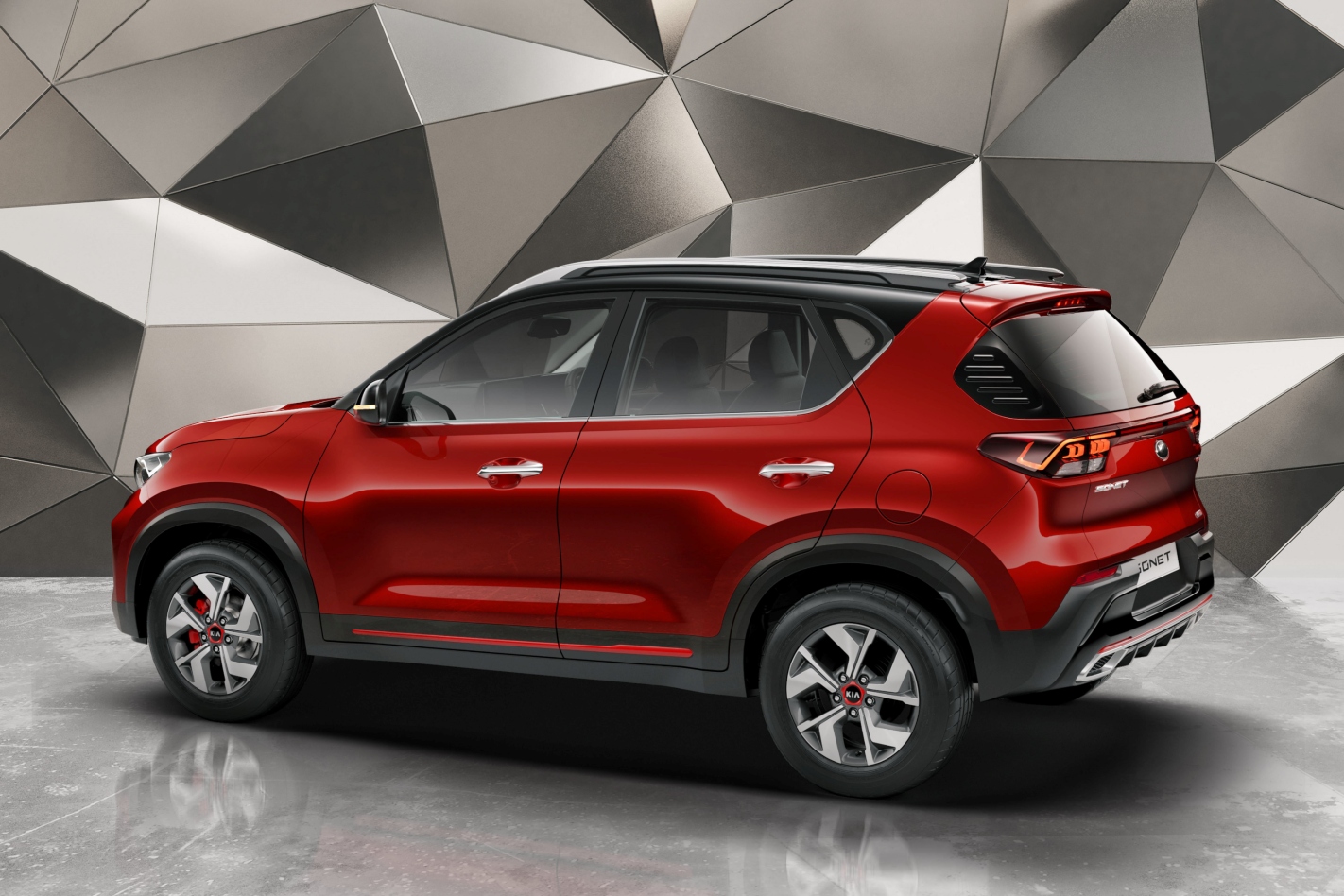
The company’s Sonet compact SUV that was recently launched in India may offer a few hints at what a new Sportage could look like. While the charismatic model is not chalked for Australia, as the most recent new high-rider to emerge from the car maker, it’s likely to preview family resemblances.
The current Sportage model was treated to a facelift (or PE, as Kia refers to it) in early 2017 so the local launch in late 2021 would align with Kia’s typical five-year lifecycle for mainstream passenger and SUV models.
With a global launch of the new Sportage planned for April 2021, it’s unusual for the company to have not already cranked up the publicity and hype machine, but don’t expect it to remain that way for long.
Snapshot
- Electronic control circuit board in the ABS system may be faulty
- ABS circuit board could be exposed to moisture, which could cause a fire
- Hyundai will repair affected vehicles free of charge
Hyundai has recalled 1203 examples of the 2015-17 Hyundai Genesis and 124 examples of the 2018 Genesis G80 after an issue was identified within the vehicles’ braking system.
According to Hyundai, an electronic control circuit board in the Anti-Lock Braking System (ABS) may be faulty due to a manufacturing error.
This means the circuit board could be exposed to moisture, and if that happens, there’s the possibility of a short circuit.
Hyundai also says the short circuit could occur even when the vehicle is switched off, as it is constantly powered.
If that does occur, there’s an increased risk of a fire. However, Hyundai said: “The short circuit does not affect the functioning of the brake system.”
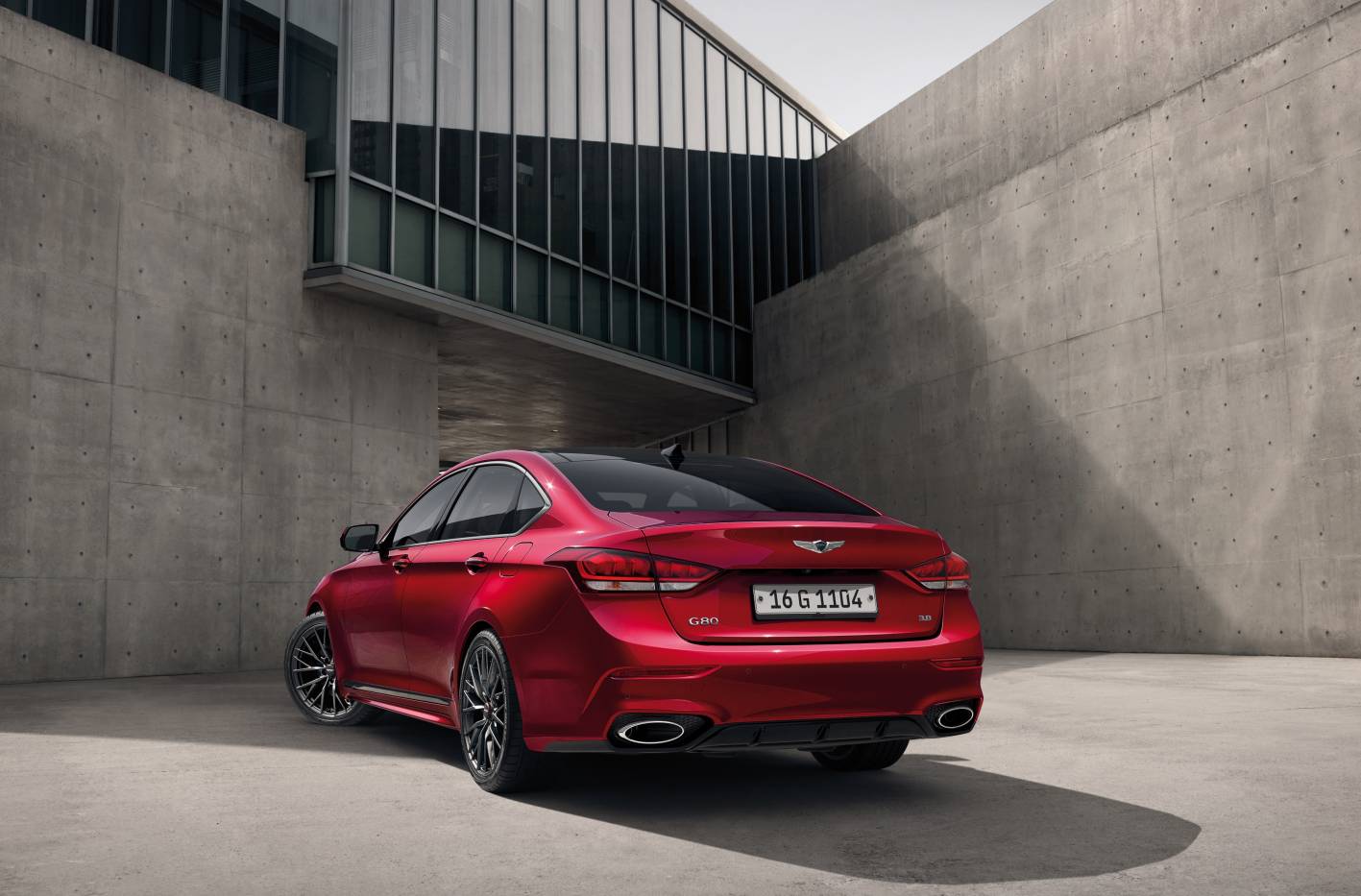
Owners of affected vehicles are recommended to park their car in an open area, away from accelerants or things that could catch fire easily. Vehicles must not be parked in a garage.
Hyundai will contact owners and arrange a time to take their vehicle to a preferred authorised dealership for a free-of-charge repair.
Anyone wanting more information about the recall can contact Hyundai’s Customer Care Centre on 1800 186 306.
The Korean automaker has also shared a full list of the affected vehicles’ VIN numbers. For 1203 examples of the 2015-17 Hyundai Genesis, click here. For the 124 examples of the 2018 Genesis G80, click here.
UK finance firm Money.co.uk has decided to think outside the box – or rather, fuel tank – and give the EV makeover to some of cinema’s most recognisable cars.
Dubbing its project “iconic cars e-imagined”, they’ve gone to some extensive lengths to give us a glimpse of what the next generation of film reboots may look like – provided there are some generators nearby to keep the star cars topped up.
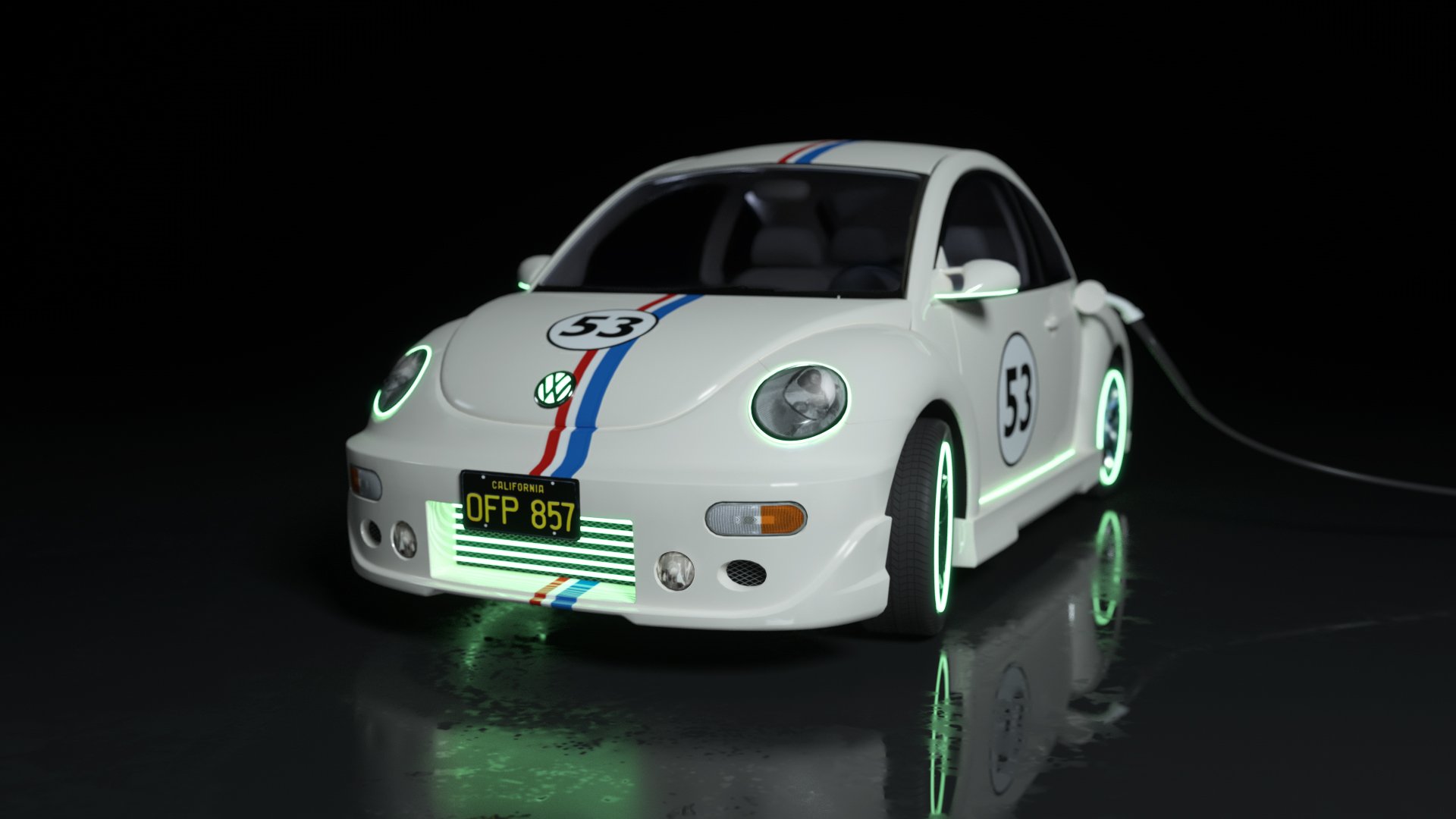
The original Beetle may be one of the most divisive cars in history, which conjures up passionate feelings on both sides of the fence, although Herbie seems universally loved by all on the big screen.
As Volkswagen has been wheeling out more and more cars in their ID range of EVs, perhaps Herbie could be true to his San Francisco roots and go green for the planet.
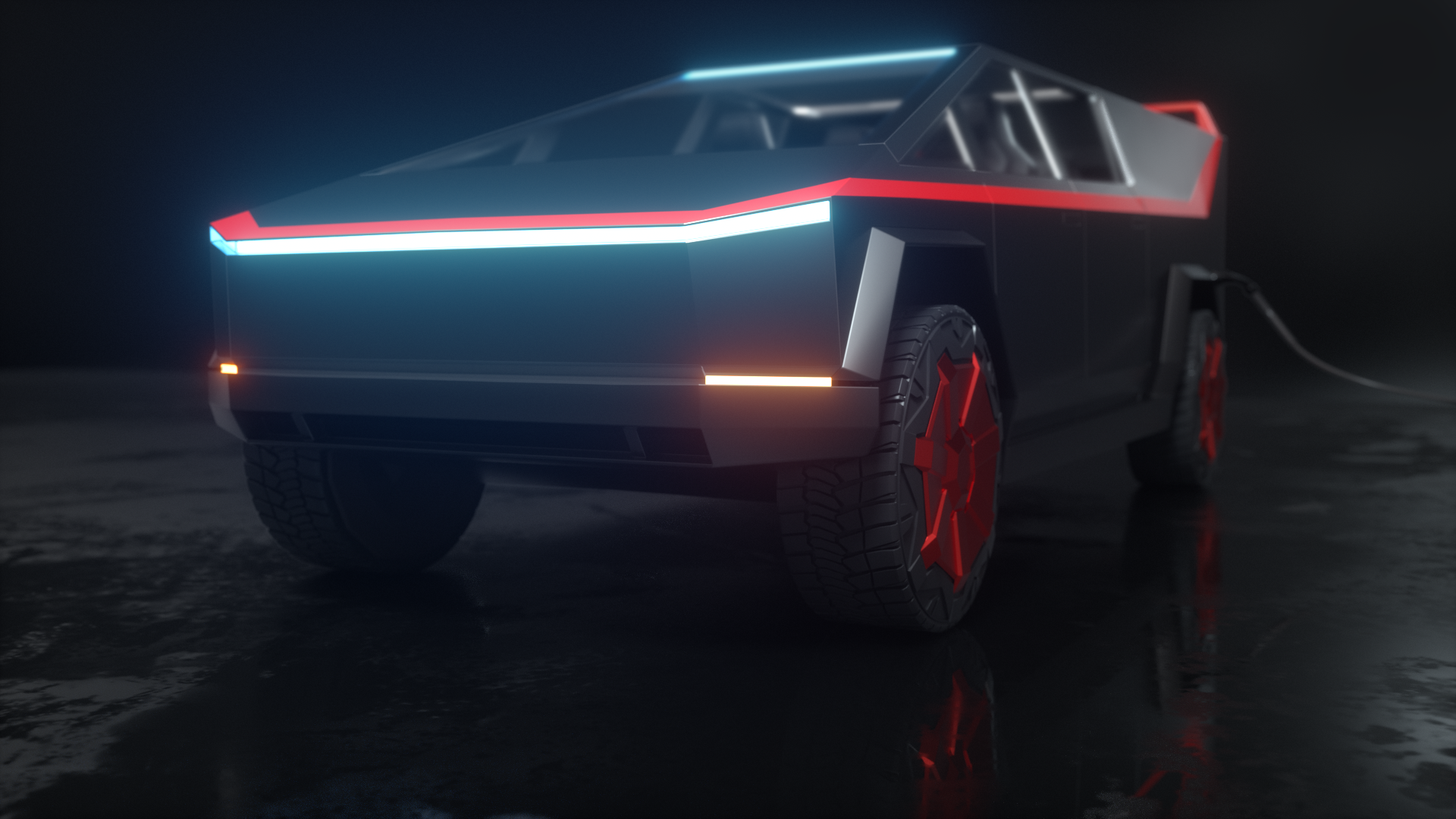
The GMC Vandura is a far cry from being what anyone would describe as ‘eco-friendly’ but the Tesla Cybertruck could easily be modified to fit Faceman, Howlin’ Mad, Hannibal and B.A. – plus their substantial amount of artillery inside.
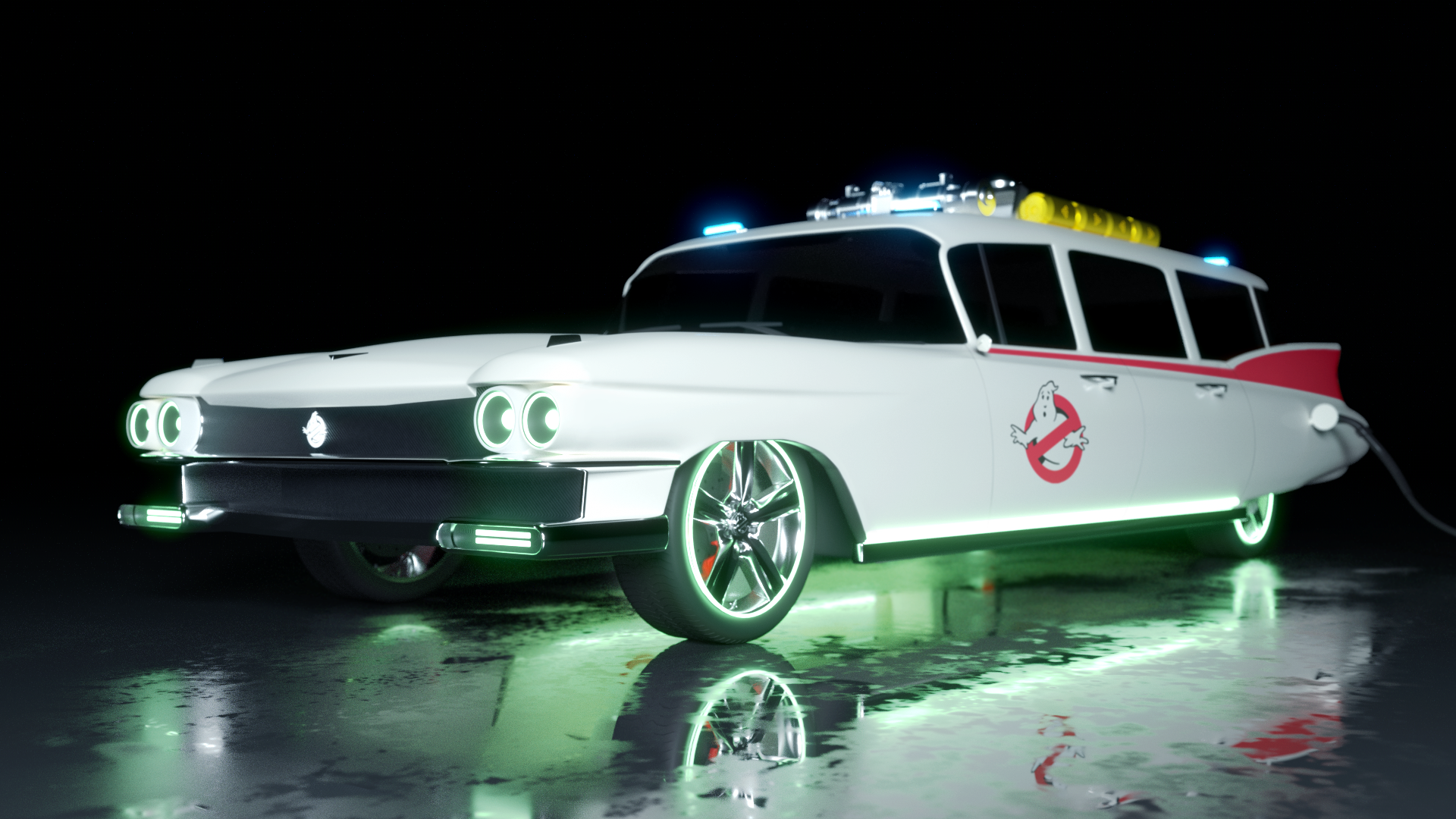
Ray Stanz won’t need to take out three mortgages to pay for this version of the classic 1959 Cadillac Miller-Meteor Futura, but it would probably be a few dollars more than the $4800 the original Ghostbusters paid for their car.
As emissions penalties get higher and higher in big cities around the world, what could be better than going electric in a car which lives in New York City?
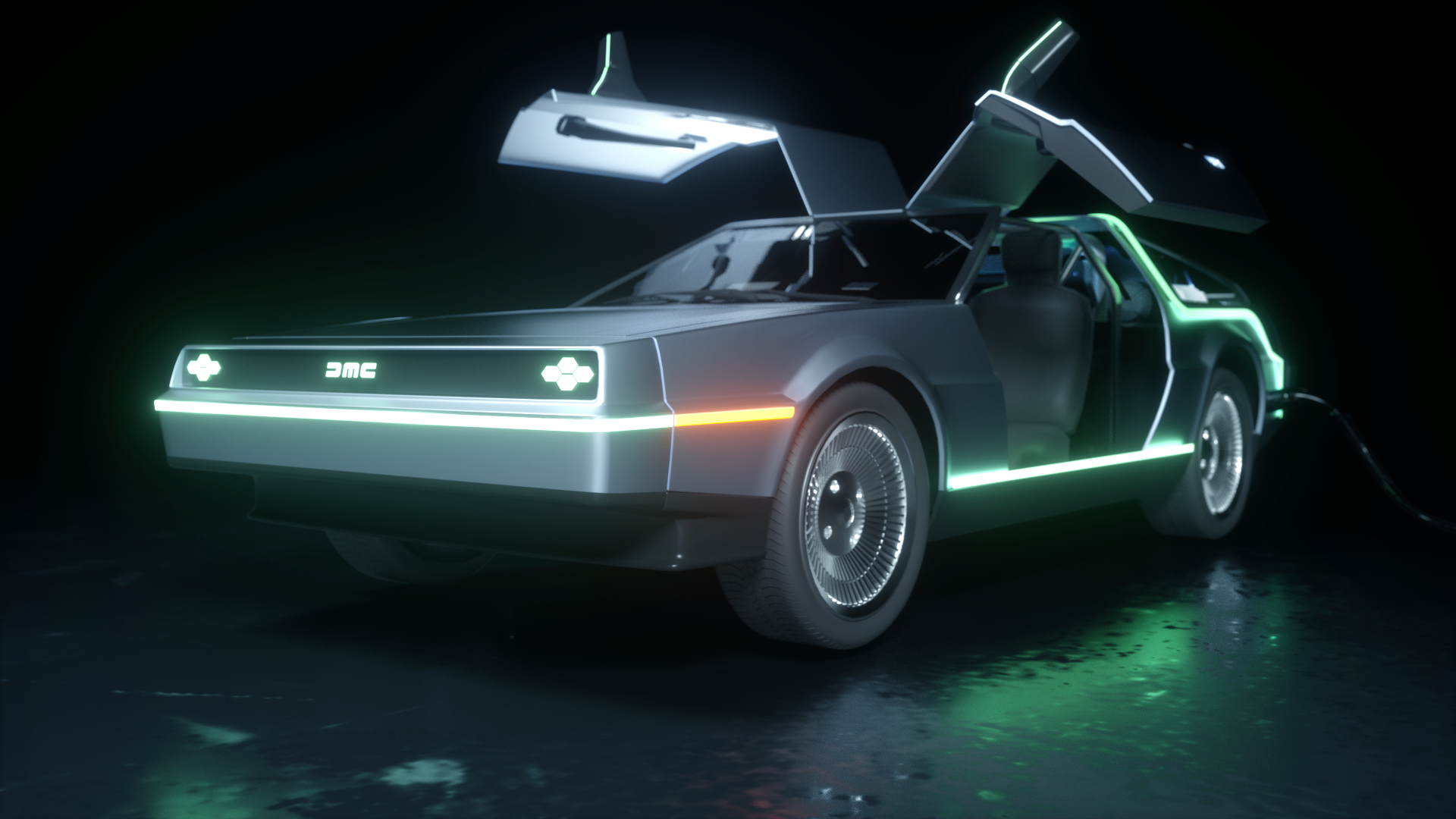
Even though John DeLorean’s vision was to have a rotary engine in his DMC Delorean but had to settle for a PRV V6 due to production winding up for the Wankel, could you imagine how much cooler the star of Back to the Future could’ve been if it utilised a working EV platform back in 1985?
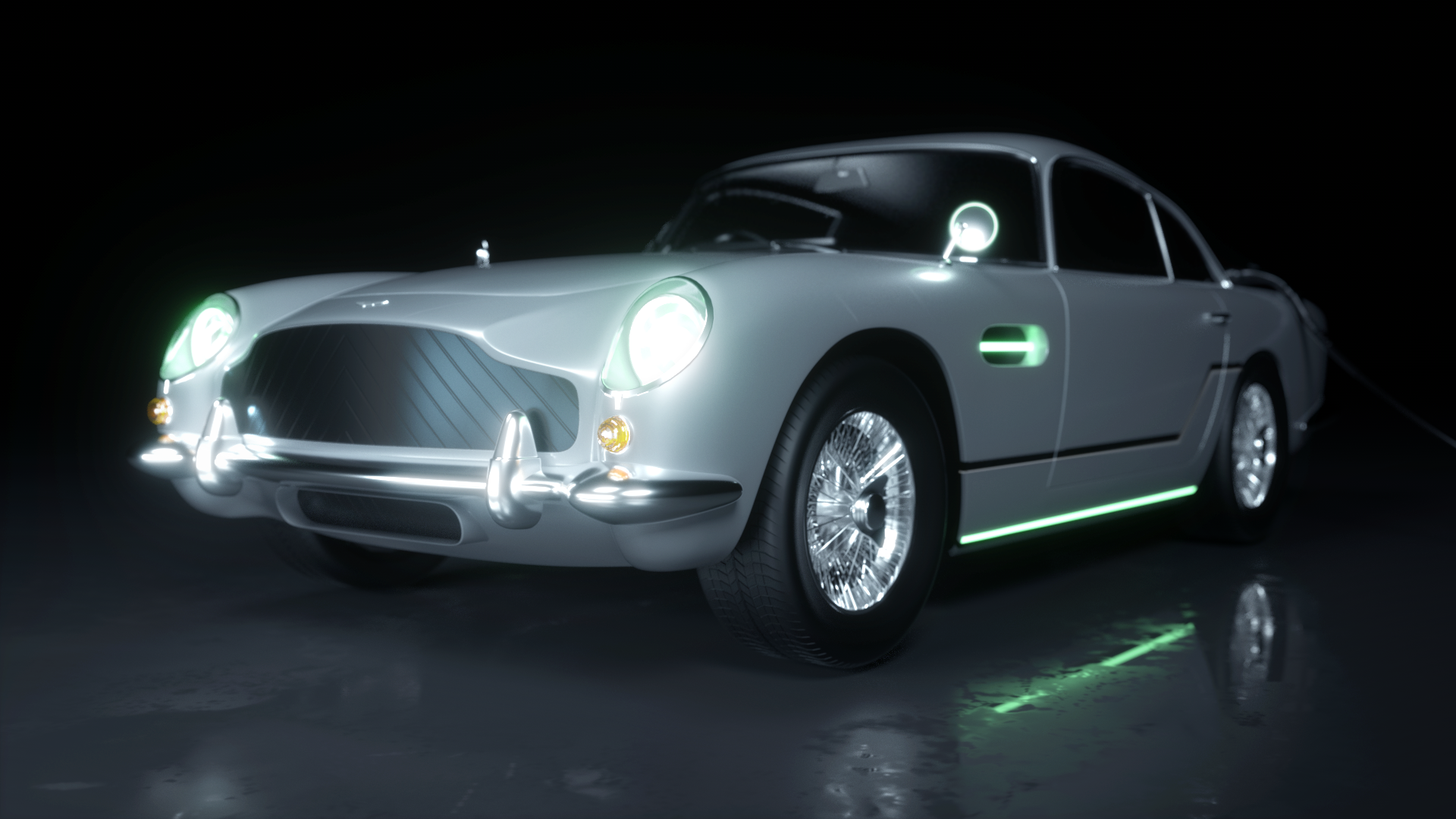
Bond, James Bond has gone through many cars in the past – BMW Z8, Lotus Esprit, Mustang Mach 1 among them – but none are as iconic as the straight-six DB5 first seen in Goldfinger.
As the world comes to terms with the next Bond potentially not being a white male, why not fully embrace the future with a reliable electric upgrade to the DB5 – dubbed EB5 in this instance.
UPDATE, November 25, 2022: Updated 2023 Kia Seltos now in Australia
Kia’s updated 2023 Kia Seltos range is now in Australia, and we’ve driven it. Get the full story, and video, at the link below.
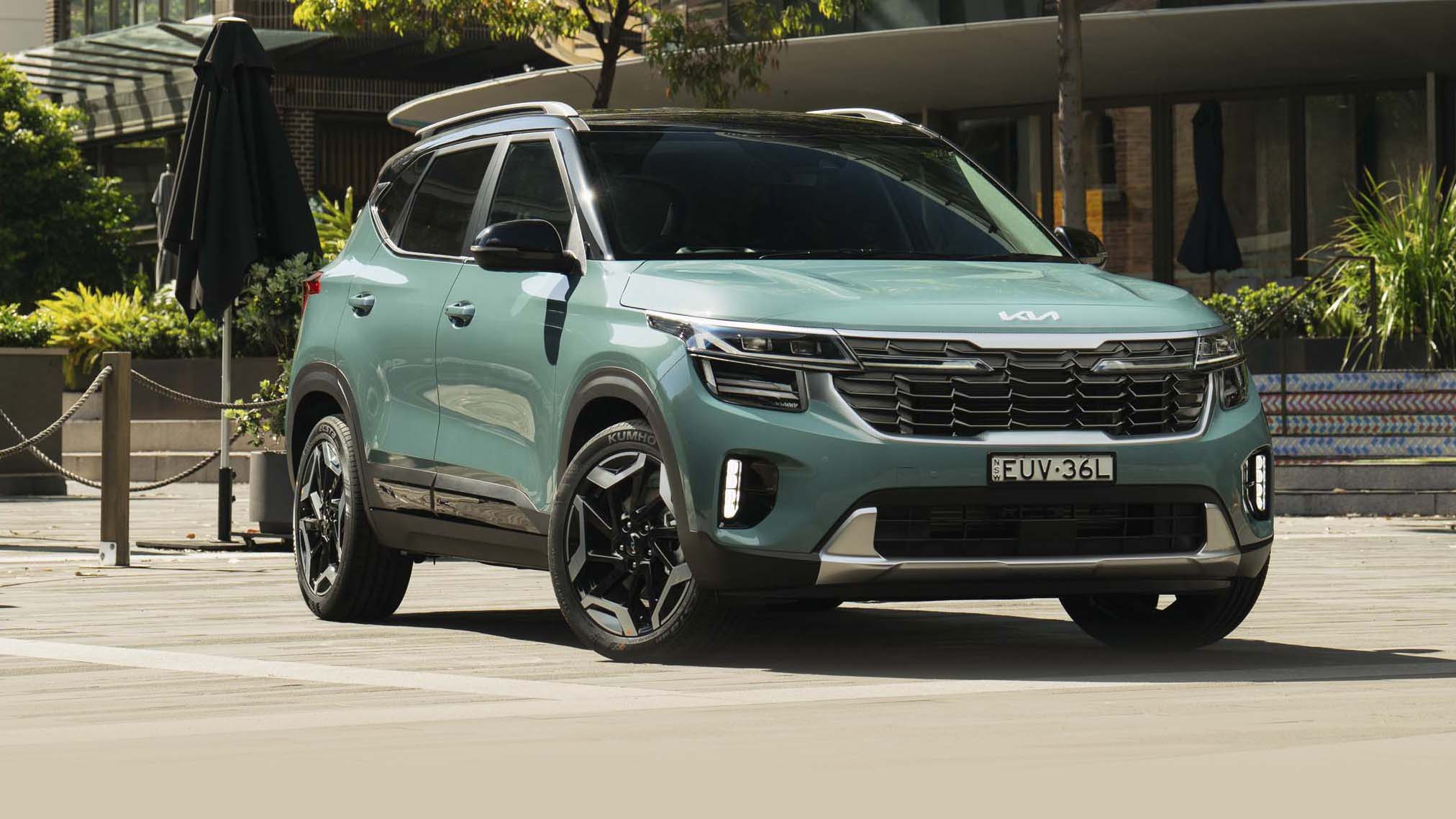
Story continues: 2021 Seltos GT-Line review
Small SUVs outsell small cars these days, and the Kia Seltos is one of the relatively fresh models catering for all those buyers seeking a higher seating position (and an arguably more interesting body style).
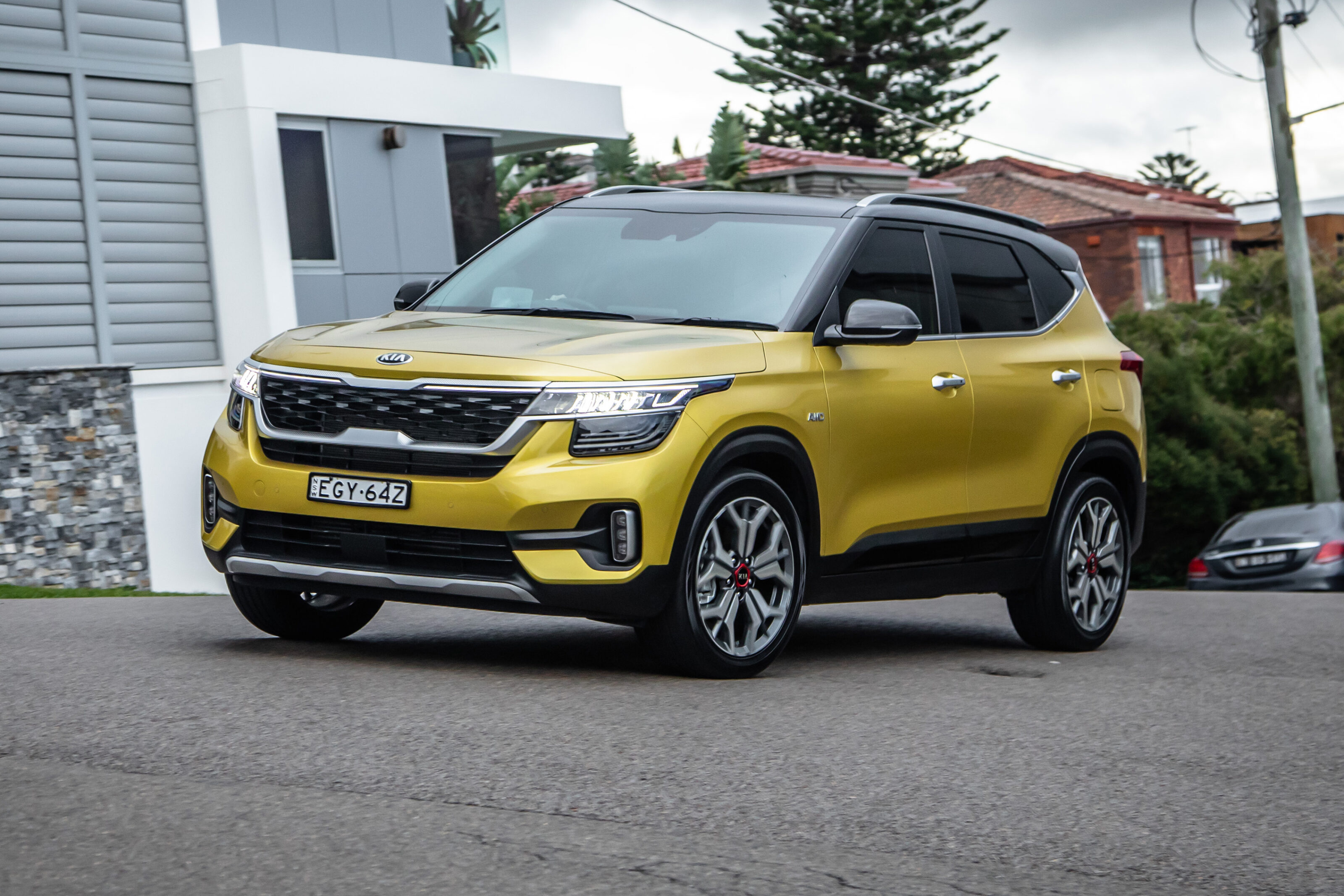
The GT-Line is the flagship model, priced from $42,200 (or about $44,300 driveaway).
It’s lost some of its value compared to when the GT-Line cost $41,990 driveaway in 2019 and 2020, though still offers plenty of features to tempt those who want more trinkets than they would typically get from a similarly priced but lower-specced model from the next SUV segment up.
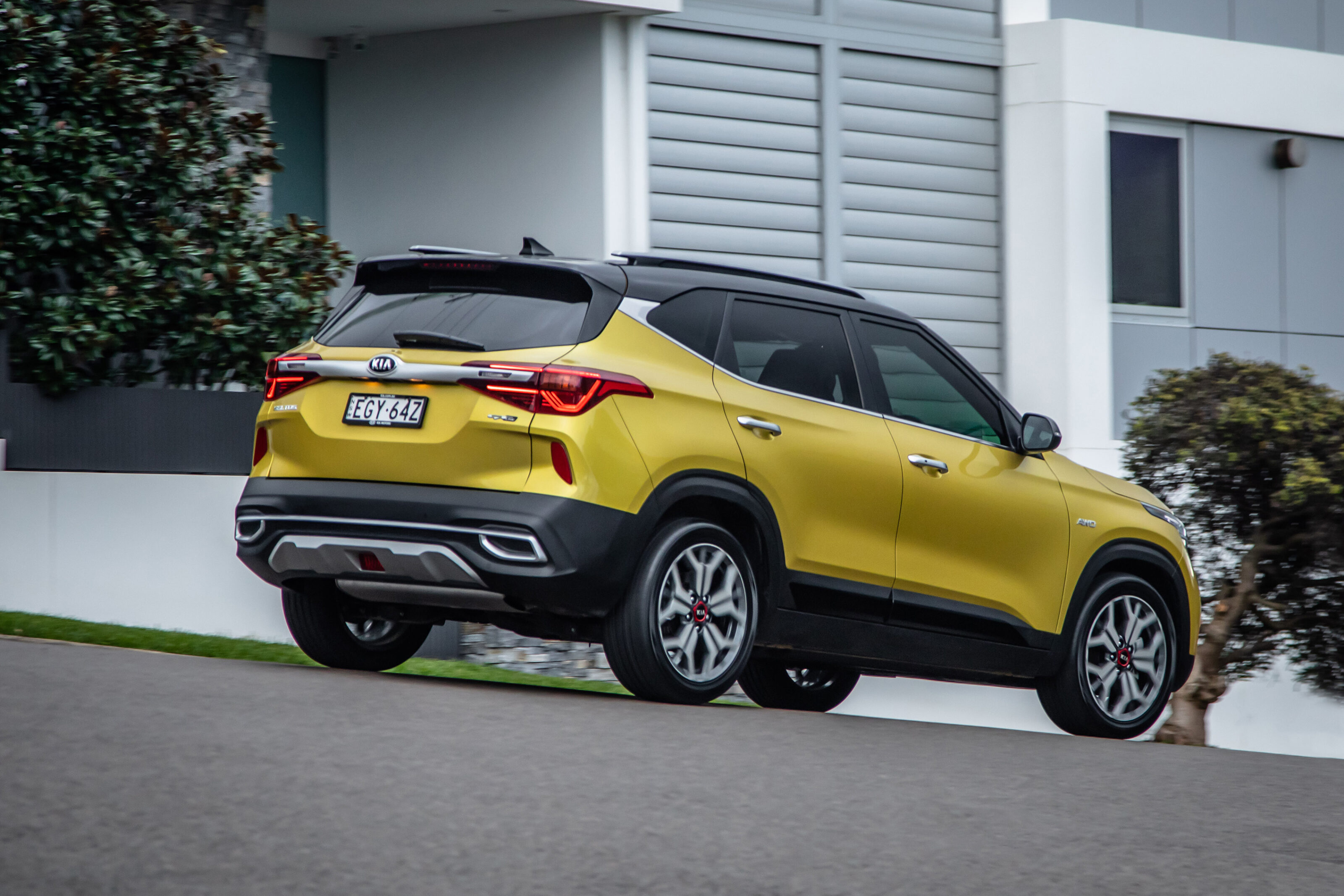
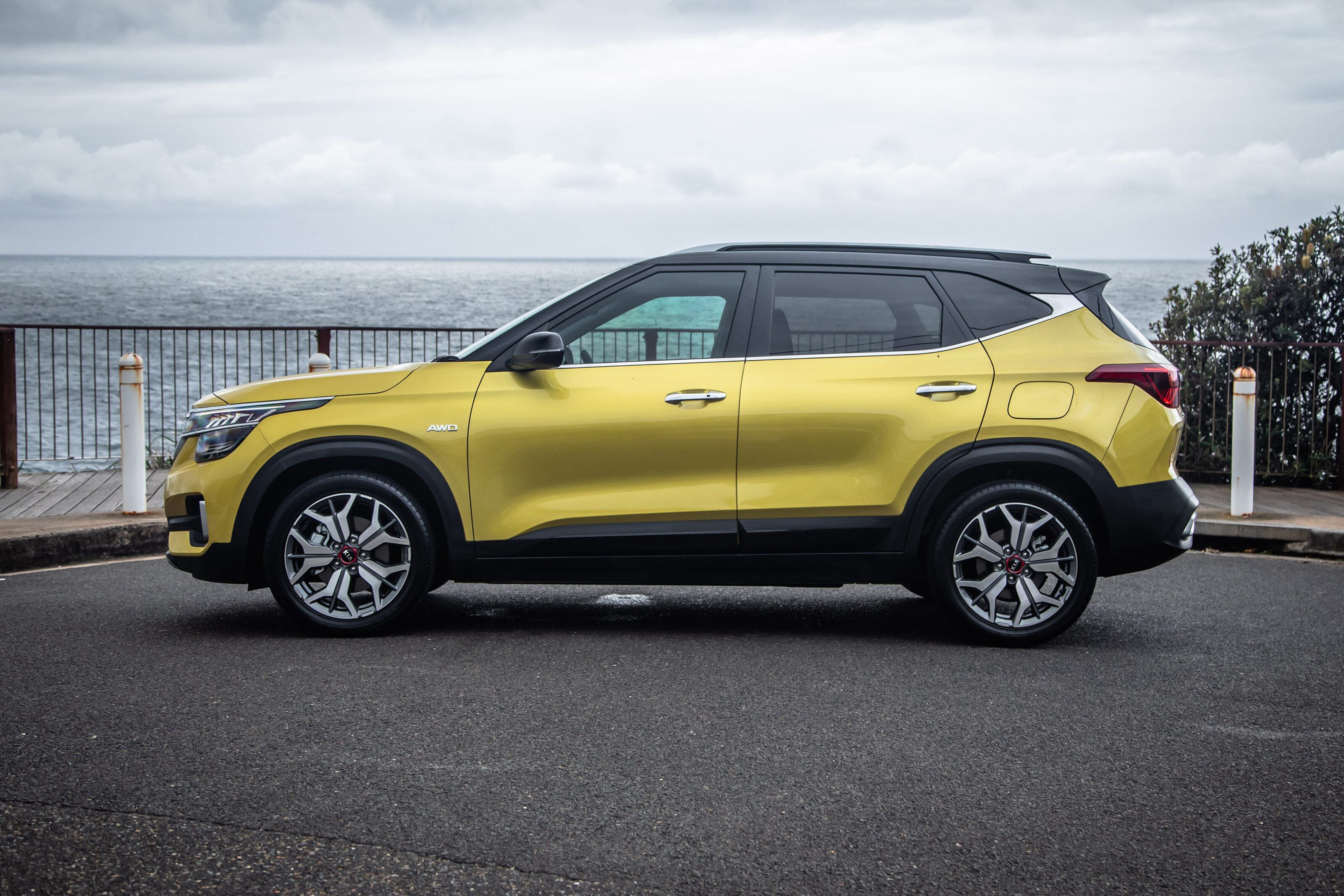
Many features are also range exclusives, including LED headlights and our GT-Line’s exterior colour combination of black roof and ‘Starbright’ yellow. Pick the ‘Clear White’ with black roof, and with that angled C-pillar treatment, the Seltos can do a fine imitation of a Volvo XC40 R-Design in the same scheme.
The GT-Line’s cabin also presents a heated steering wheel, fancier upholstery, electric front seats with heating and cooling, a tilt/slide sunroof (not available on two-tone paint jobs), head-up display and Bose audio system not available on other trim grades.
Every Seltos comes with an all-black interior, though, and a splash of colour here and there would help lift some of the sombreness. And while there are softer trim parts for key touchpoints, the overriding impression of quality is not as high as you’ll find in the rival Mazda CX-30 or Skoda Kamiq.
The ‘Premium’ seats aren’t finished in real leather, either.
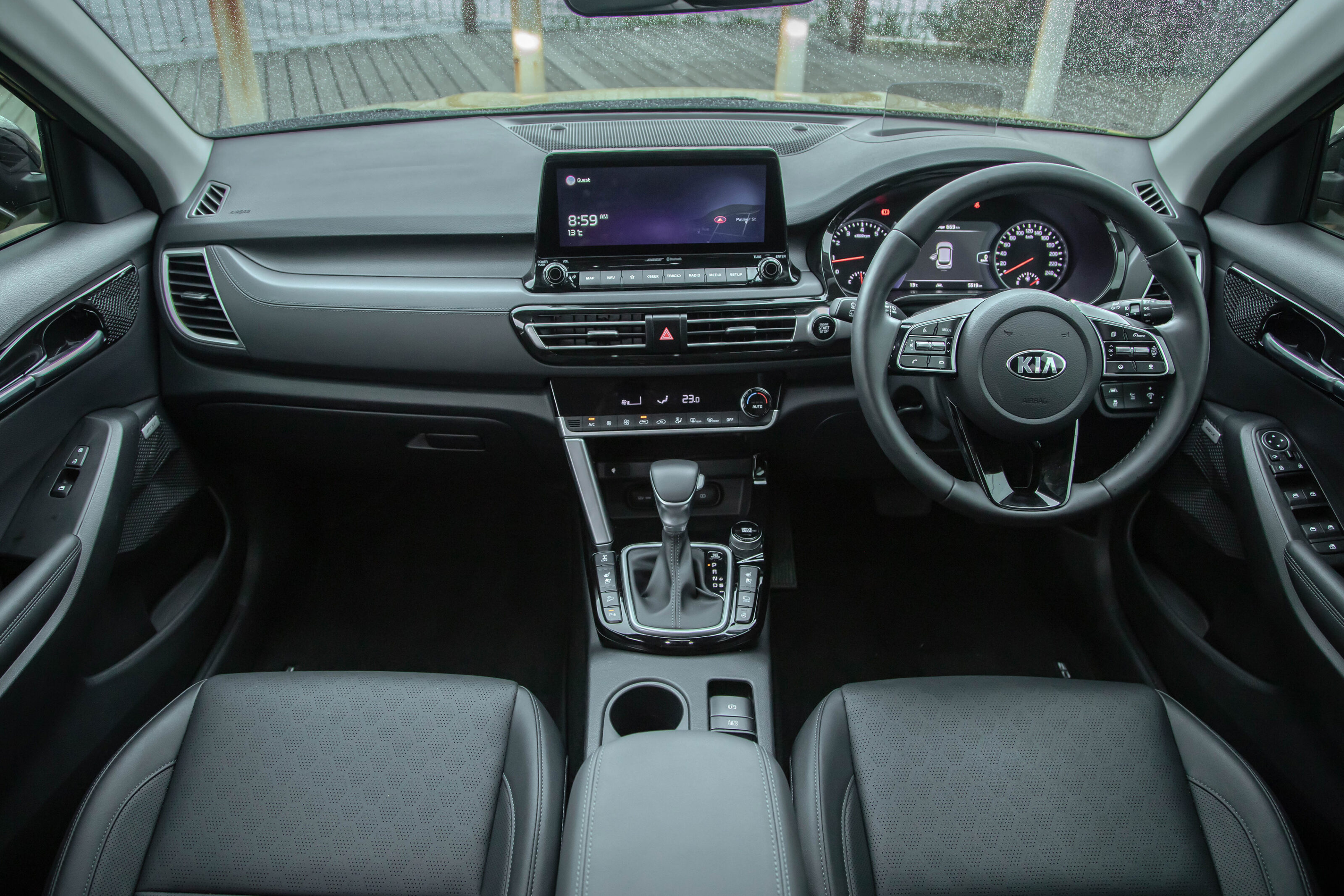
The GT-Line also misses out on some convenience features expected for a range-topping model at this price point.
Only the driver’s window has one-touch operation, there’s no full keyless entry (you instead press a button on the door handle), there’s no auto tailgate and the windows won’t auto-shut when locking the car (a feature found on more affordable SUVs such as the Ford Puma ST-Line V).
Ergonomics, practicality, and infotainment are all strong cards, however.
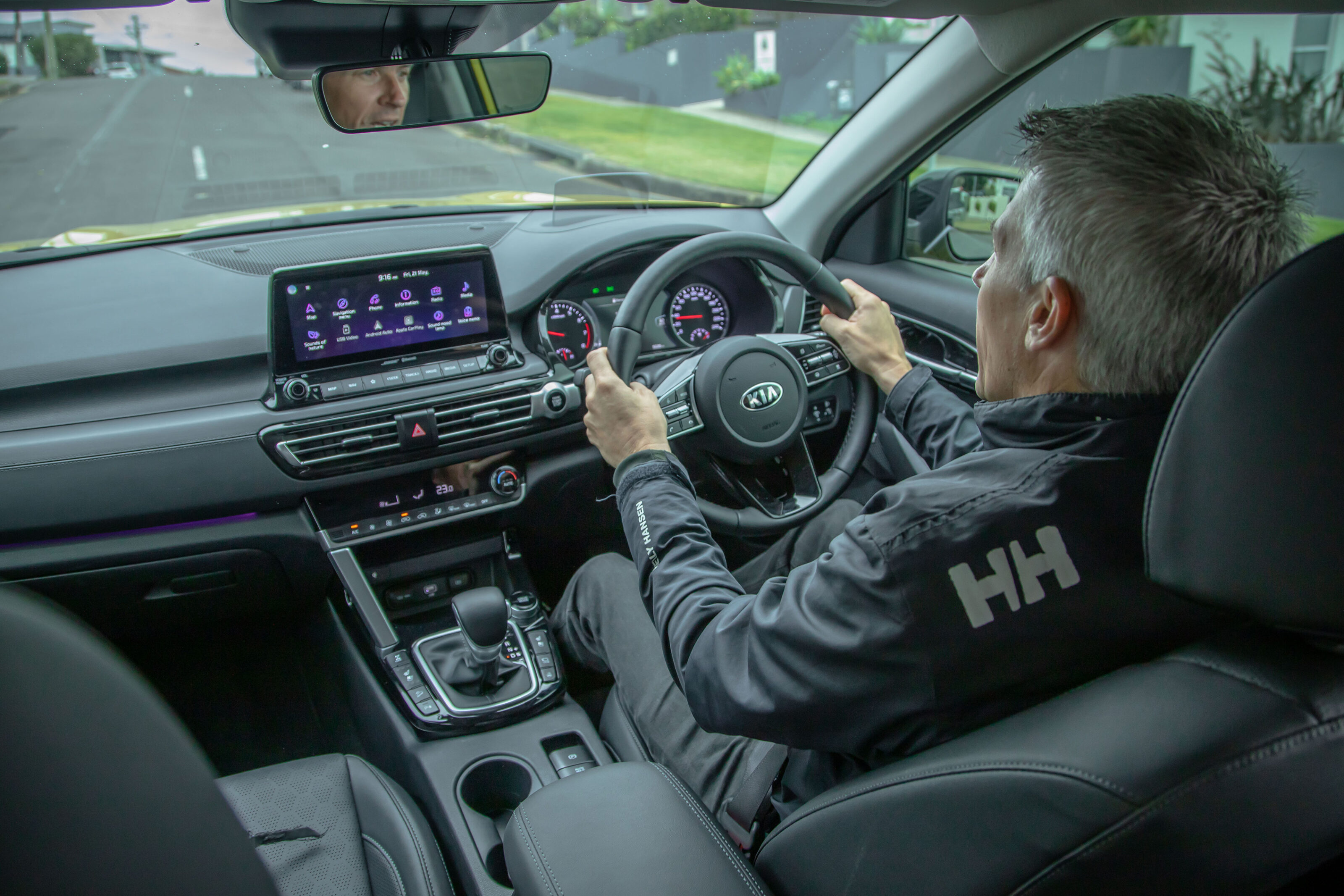
The 10.25-inch touchscreen is currently the largest display in the segment and it’s put to good use with an attractive array of function icons for the main menu. It’s simple to navigate and there’s a minimal pause when making selections.
Qi wireless smartphone charging is also specific to the GT-Line (though Kia will surely need to make it standard across the range soon, with the feature becoming increasingly common).
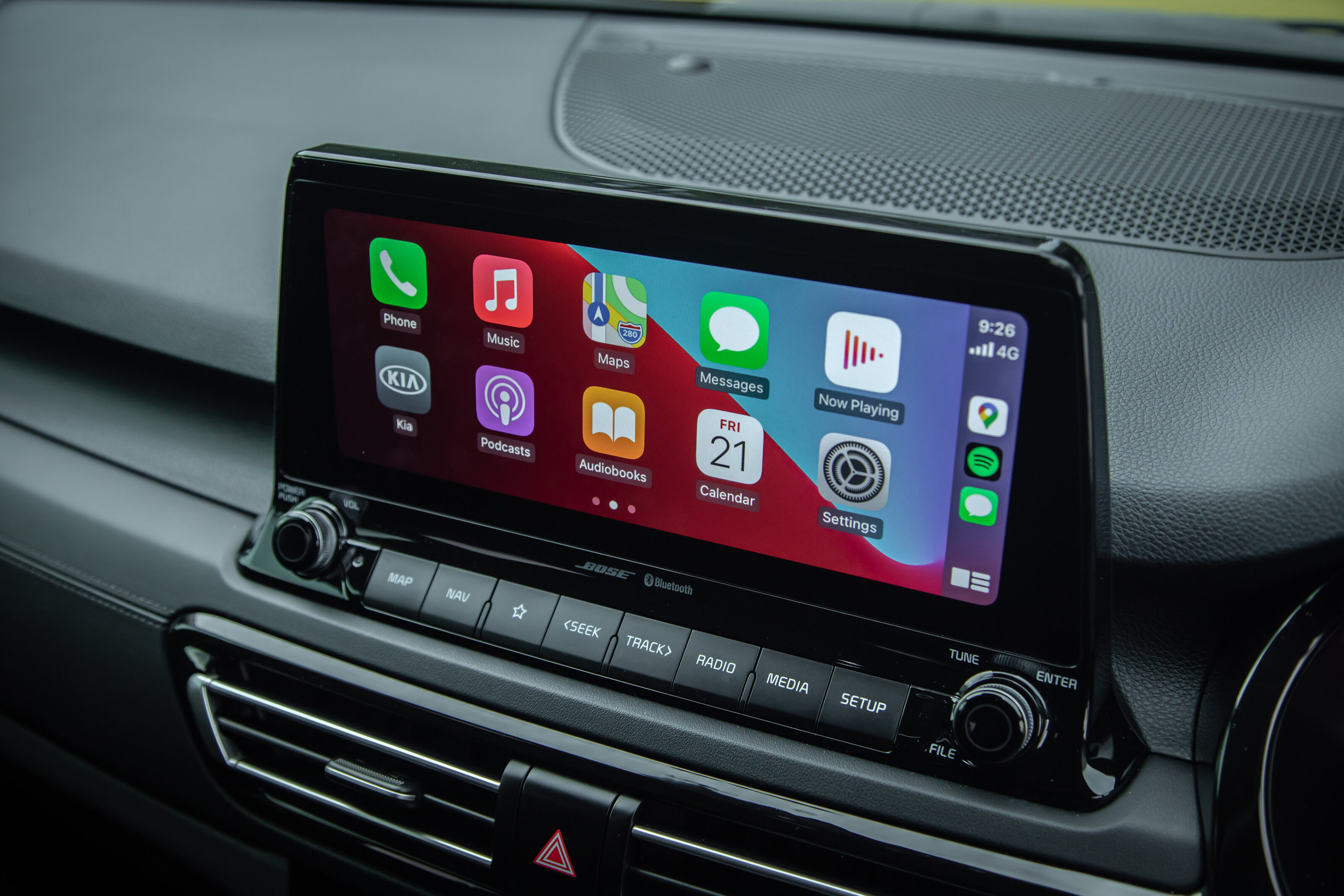
For now, only the base Seltos S offers wireless Apple CarPlay and Android Auto, but the other grades including GT-Line have the wired equivalent of the smartphone-mirroring tech.
The bassy Bose system is enjoyable in isolation and comes with matching ambient lighting. If you’re an audiophile, though, we think you’ll better appreciate the Bose audio in the CX-30 Astina, the Beats system in the Volkswagen T-Cross, or the Skoda Premium Audio available in the Kamiq.
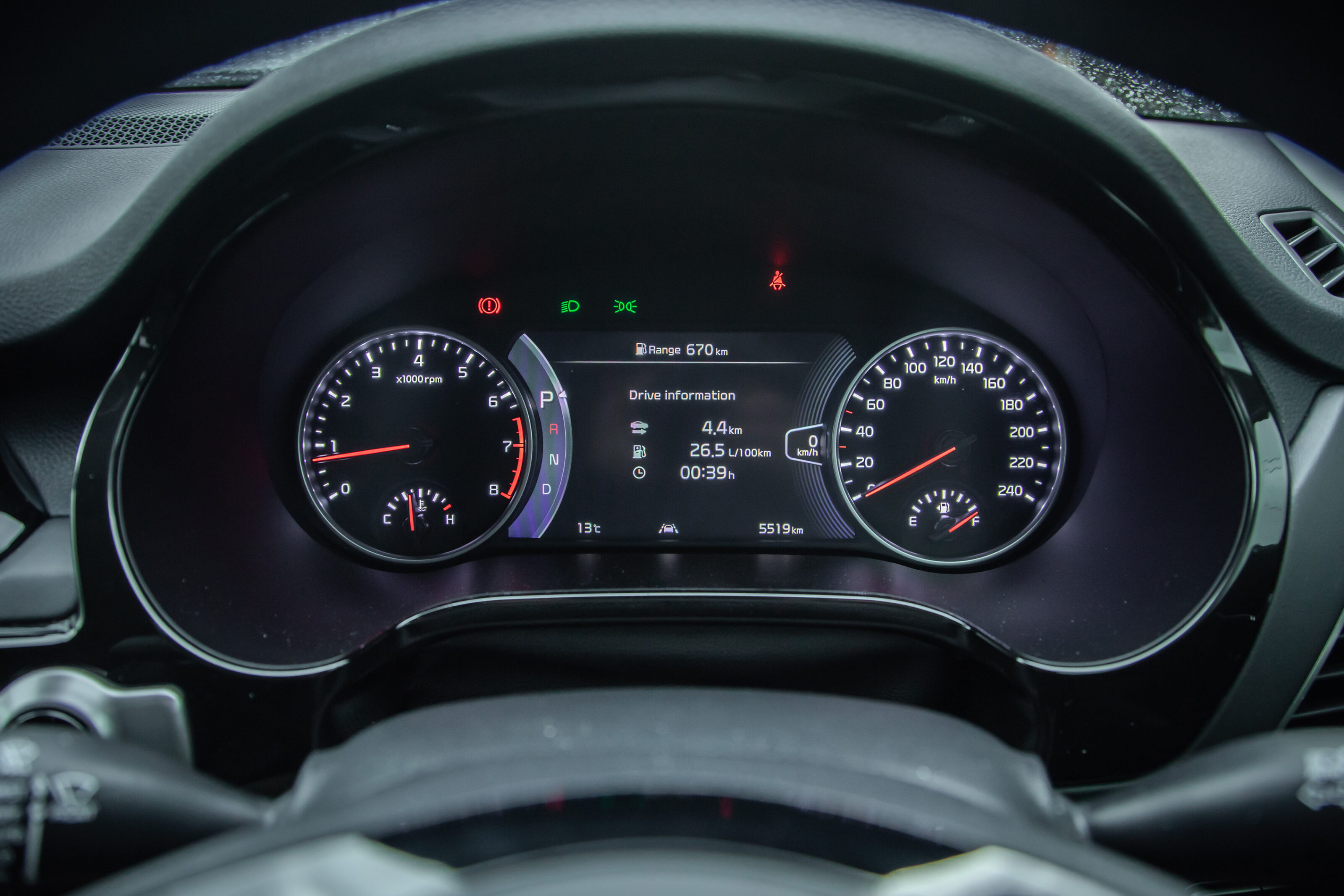
Those VW Group SUVs, as well as more affordable compact SUVs such as the Puma, provide fully digital driver displays, where the Seltos GT-Line features only a 7.0-inch infographics panel between its analogue dials.
A head-up display projects information such as speed, posted speed limits and nav guidance onto a transparent plastic panel (rather than the windscreen).
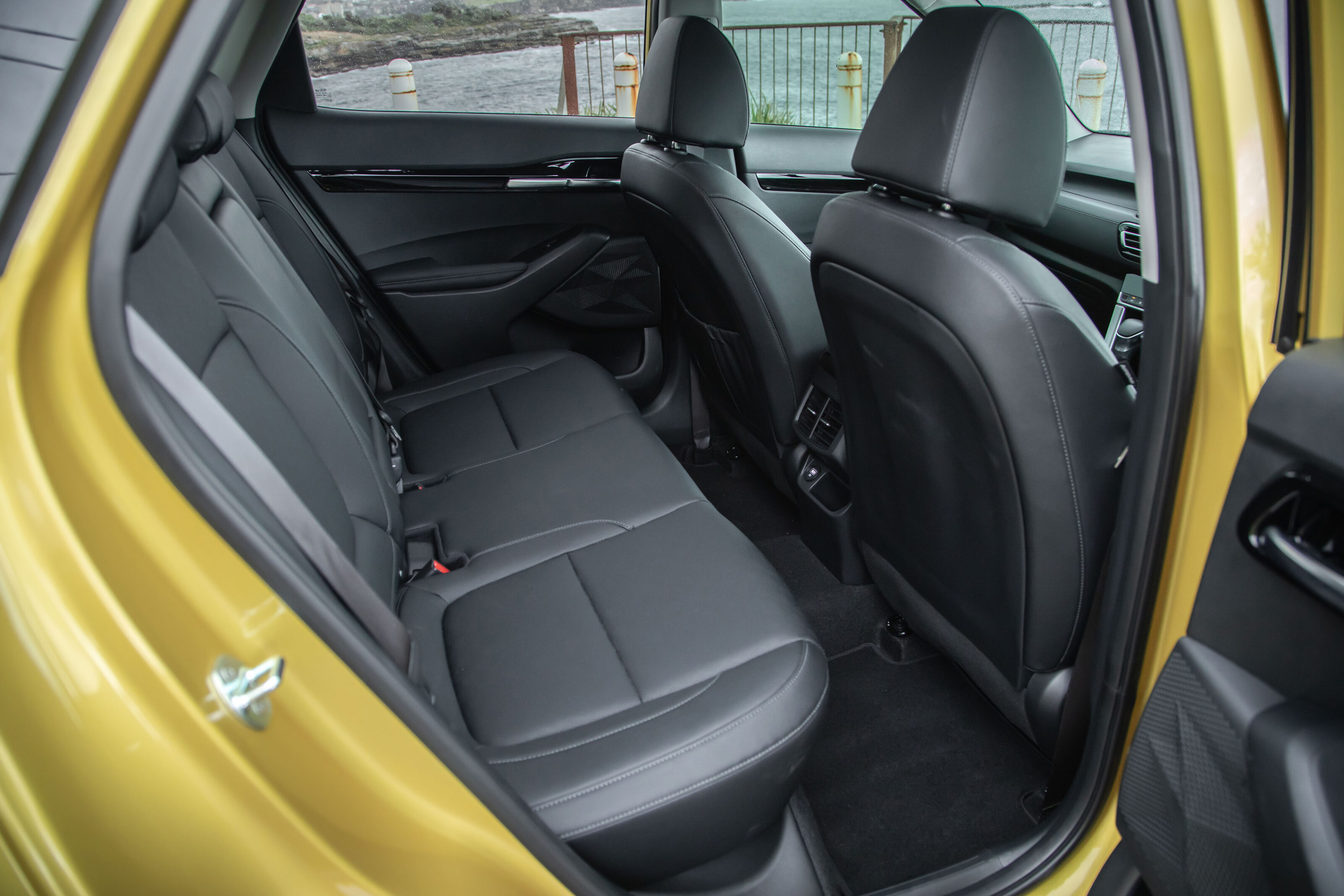
At 4370mm, the Seltos is neither the longest nor the shortest SUV in its segment. Yet its rear-seat space is well above average, with headroom and knee room more than sufficient to keep taller passengers happy.
Kids in child seats should appreciate the space, too, while tall rear windows help with vision out and allow extra light into the rear seat.
The comfortable bench is complemented by two-stage recline for the seatbacks and rear vents, as well as a centre armrest with cupholders. GT-Line is the only Seltos to include a USB port in the back.
Many features are also range exclusives…the Seltos can do a fine imitation of a Volvo XC40 R-Design in the same scheme
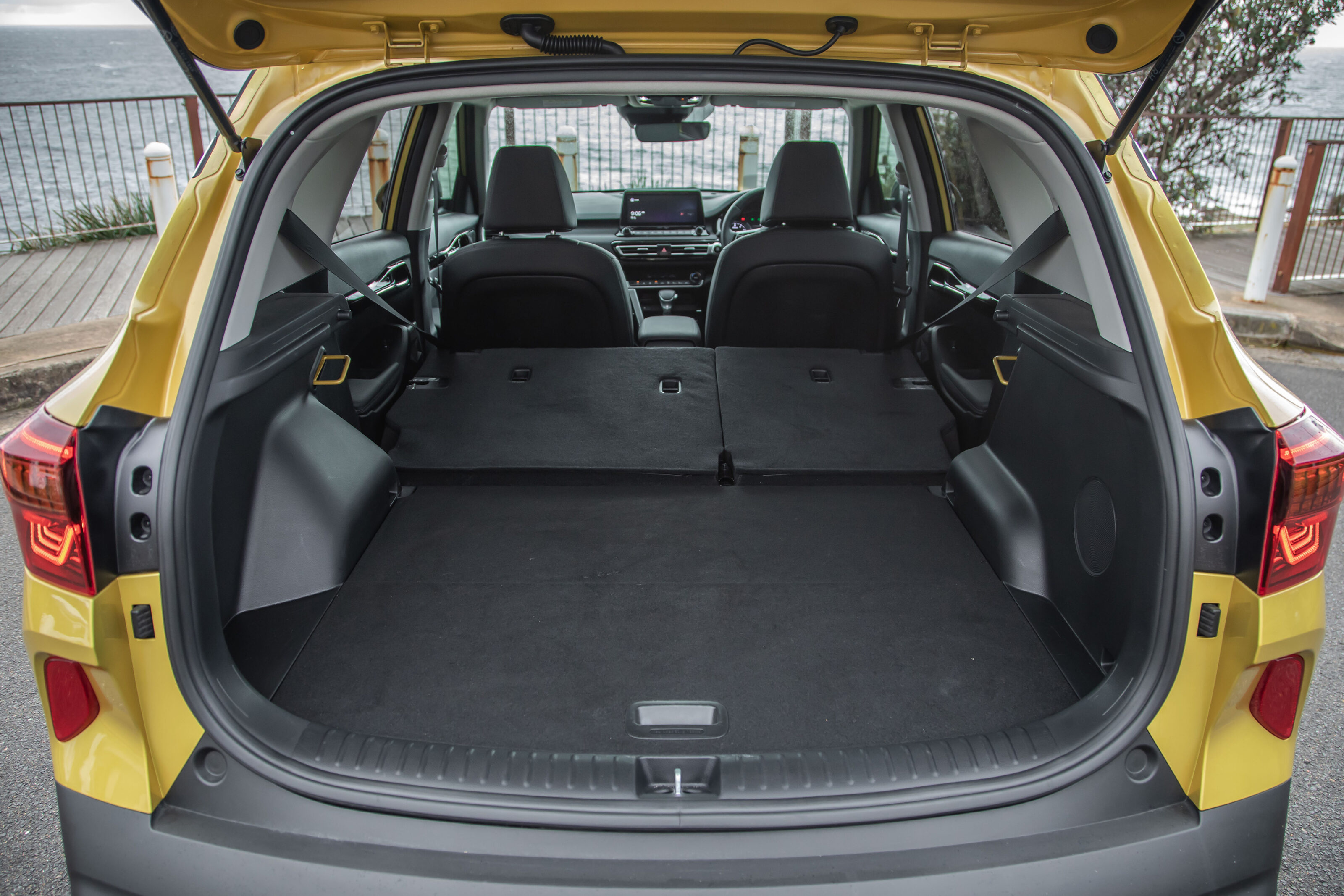
Boot space is another plus for the Seltos. At 433 litres, there’s significantly more luggage capacity than in Kia’s smaller SUV, the Stonic (358L), and more than key rivals including the twin Hyundai Kona (364L), Mitsubishi Eclipse Cross (341L), Skoda Kamiq (400L), Subaru XV (310L), and Toyota C-HR (377L).
It’s only a handful of litres behind the biggest boots in the class, which belong to the Jeep Compass (438L) and Honda HR-V (437L).
There’s nothing fancy about the boot – some compact SUVs have more versatile set-ups such sliding rear benches (VW T-Cross, for example) or adjustable floors (Ford Puma, for example), or storage options galore (such as the Kamiq). But many owners will appreciate the full-size spare under the Kia’s boot floor.
The GT-Line features an engine and suspension upgrade over most other Seltos models except for the all-wheel-drive version of the next-grade-down Sport+.
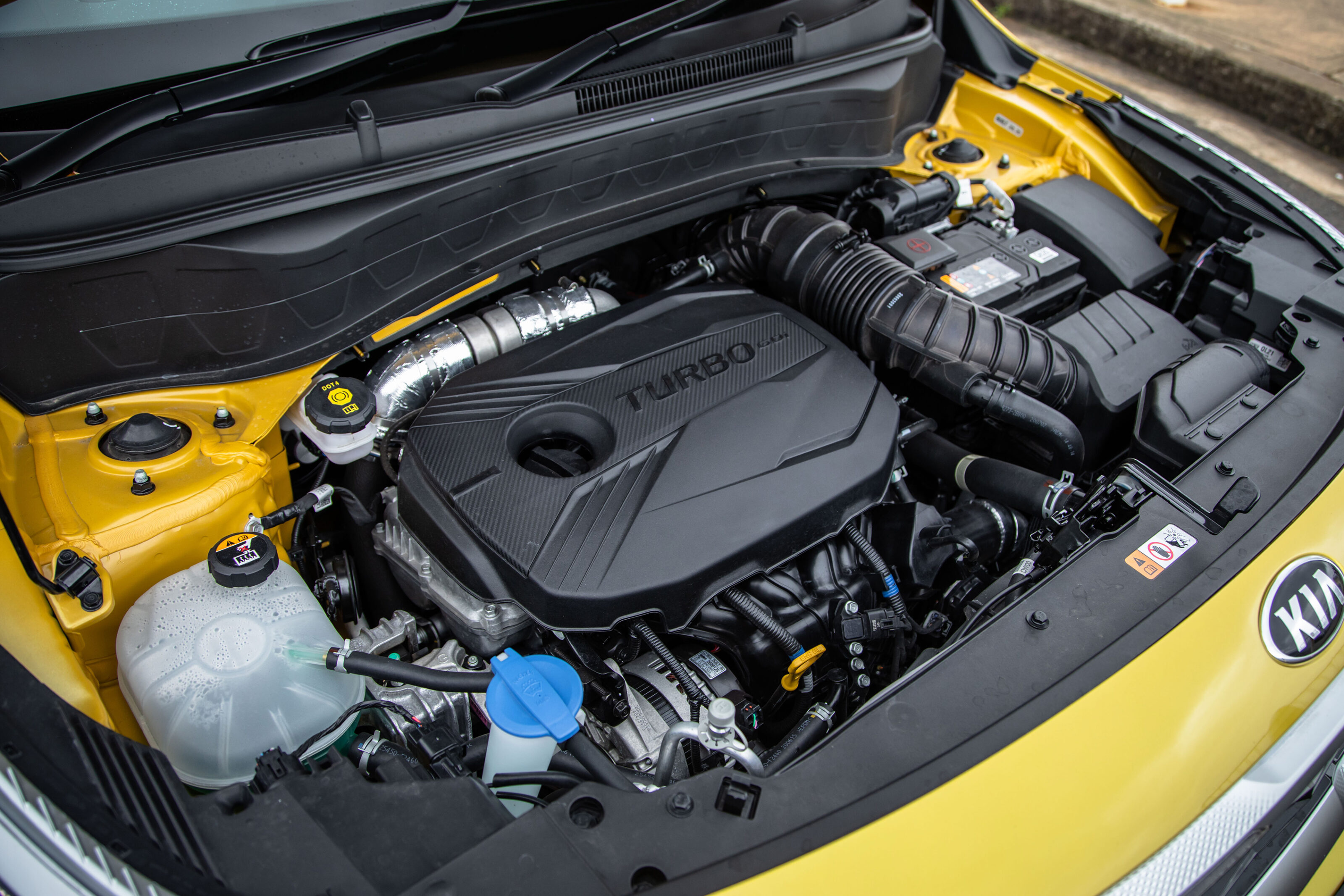
Where most variants are powered by a 110kW 2.0-litre petrol engine and feature a torsion beam semi-independent rear suspension layout, the top-two Seltos models gain a 130kW turbocharged 1.6-litre petrol and a more sophisticated, fully independent multi-link set-up at the back.
Forget the kilowatts, though, because it’s the turbo engine’s ability to generate peak torque of 265Nm between 1500 and 4500rpm that lends the GT-Line (and Sport+ AWD) performance that is far above the segment average let alone the relatively weak 2.0-litre (with 180Nm that doesn’t arrive until a high 4500rpm).
When Wheels magazine pitted the GT-Line against a Mazda CX-30 G25 Astina and Toyota C-HR Hybrid Koba in a comparison test last year, the Kia was the quickest-accelerating vehicle of the trio – though it also benefits from an on-demand all-wheel-drive system where these rivals are front-drive only.
The seven-speed dual-clutch auto isn’t as responsive as some competitors using similar transmission technology, though the shifts are generally smooth and the Seltos GT-Line moves away from standstill with less hesitation than many DCT-equipped compact SUVs.
This all makes for easy driveability that any owner will appreciate daily. Lower fuel consumption would be preferable, though.
While the official figure is 7.6L/100km, our indicated consumption swung between mid-8.0s and low-9.0s even with some freeway driving. The engine is tuned to run on regular unleaded, at least.
Refinement is also an area Kia could target for the Seltos’s mid-life update, which based on typical lifecycles would be expected around 2022 or 2023.
Depending on speed, the turbo engine can be buzzy or droney and tyre noise starts to become intrusive on coarser road surfaces.
There’s agreeable ride quality around town and on the open road, though another future revision could be to make the suspension a bit more relaxed on country roads.
With one of the highest hip points in the segment, the Seltos’s elevated seating brings excellent forward, side and rearward vision.
There’s also blind-spot assistance, as well as plenty of other driver aids such as adaptive cruise control. Not all are great, though.
The lane-following function and lane-keep assist systems are particularly tempting to switch off, or keep disengaged, as they interfere too regularly with the steering.
While lane-keep always defaults to on every time the car is switched on, the Seltos is pleasant to steer around town as the system only works above 60km/h if, that is, you haven’t switched it off.
One downside to choosing a 1.6L turbo Seltos, such as the GT-Line, is servicing. Intervals are shorter at 10,000km and visits are slightly more expensive compared with the 15,000km-interval 2.0-litre Seltos variants.
With three years currently setting owners back $1080 and five years costing $1989 in total, several rival models are cheaper to maintain.
A seven-year factory warranty is a big plus on the ownership side, with most competitor models stuck on five years.
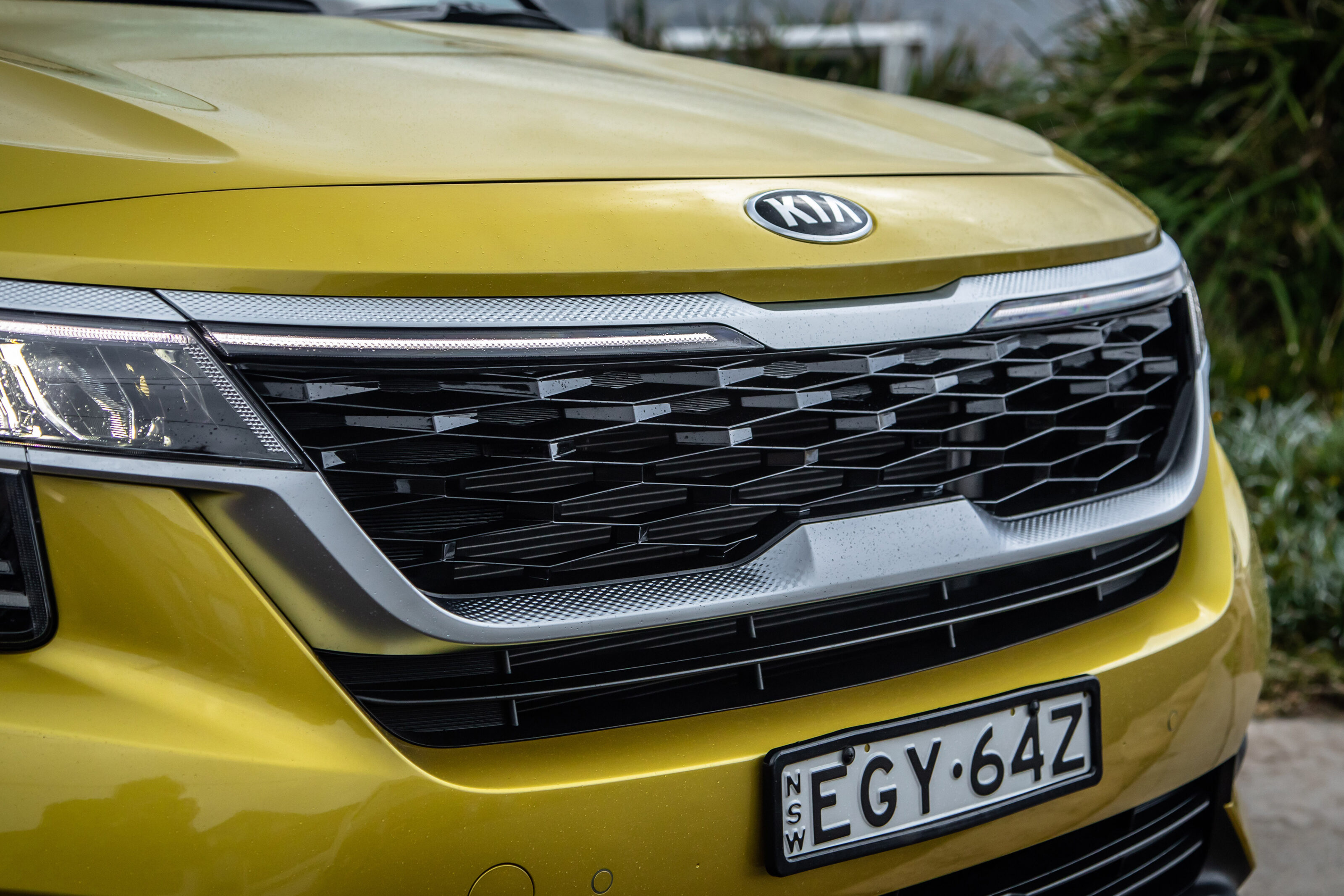
Forget the kilowatts, though, because it’s the turbo engine’s ability to generate peak torque of 265Nm that lends the GT-Line performance that is far above the segment average
If you want a more premium cabin experience, consider a (less practical) Mazda CX-30 Astina or (just as practical) Skoda Kamiq Monte Carlo; if you’d like a bit of fun factor to the driving experience, try out Toyota’s C-HR Koba or Ford’s Puma ST-Line V.
But while there are some rough edges to the Kia Seltos GT-Line and some flagship-style features are missing, there’s still a small SUV here that will please many owners with its performance, practicality and a fairly generous amount of kit.
Depreciation can be a dirty word, but what is the bane of sellers is often buying bliss for others. Original owners will bear the brunt of the downward dip, while second-hand buyers can save some serious coin waiting for their dream cars to drop in price.
There exists a particular sweet spot for semi-modern sports cars, where notable models aren’t yet old enough to be considered properly classic or nostalgic, but are still swept aside in the face of newer, more desirable metal. It’s this space that the Aston Martin V8 Vantage has seemingly been residing for the past few years.
Originally costing more than $250,000 when new, the Aston Martin V8 Vantage was the brand’s most lithe and agile offering. It was aimed squarely at the Porsche 911 buyer, and currently sits at less than half its as-new sticker price on the used market.
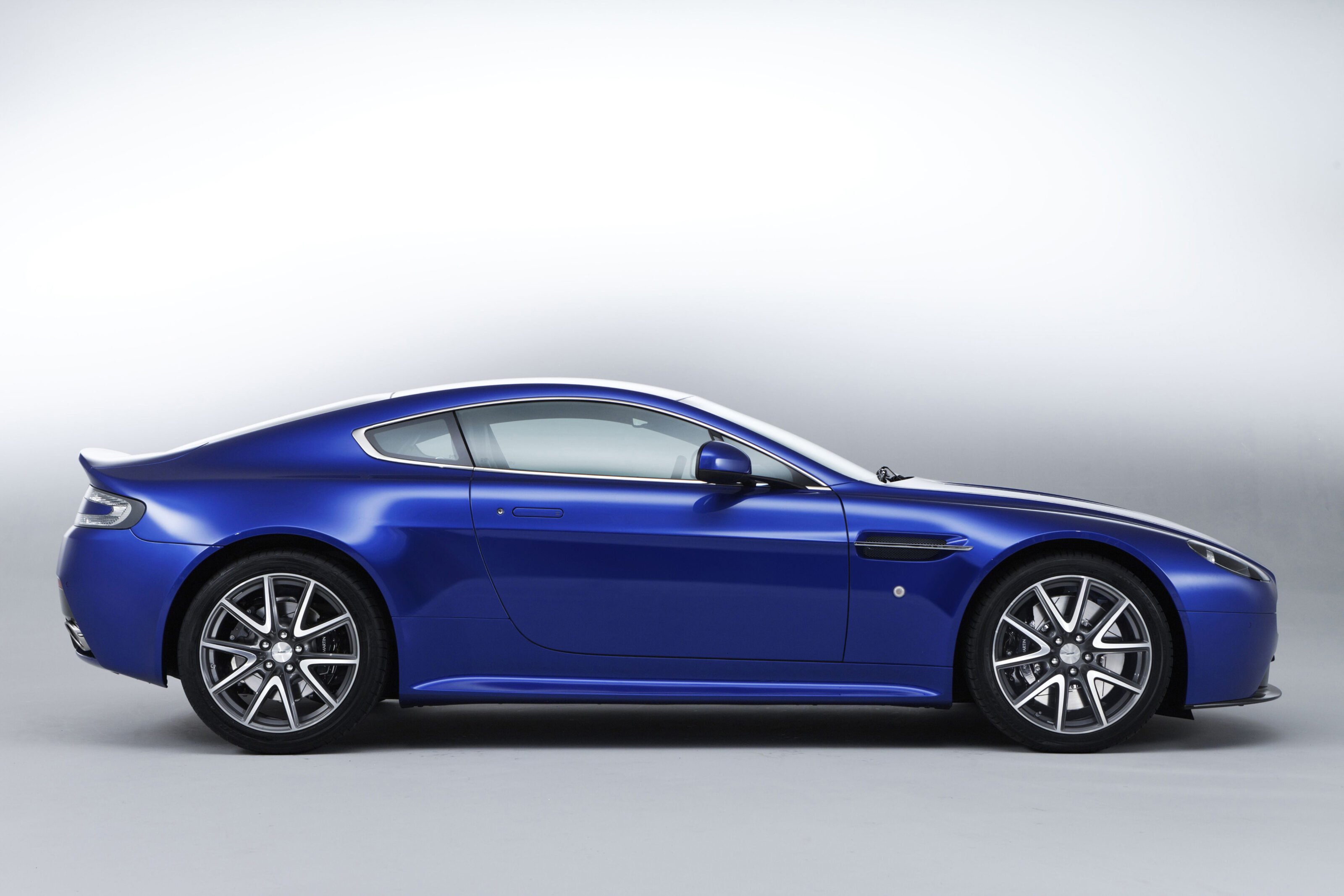
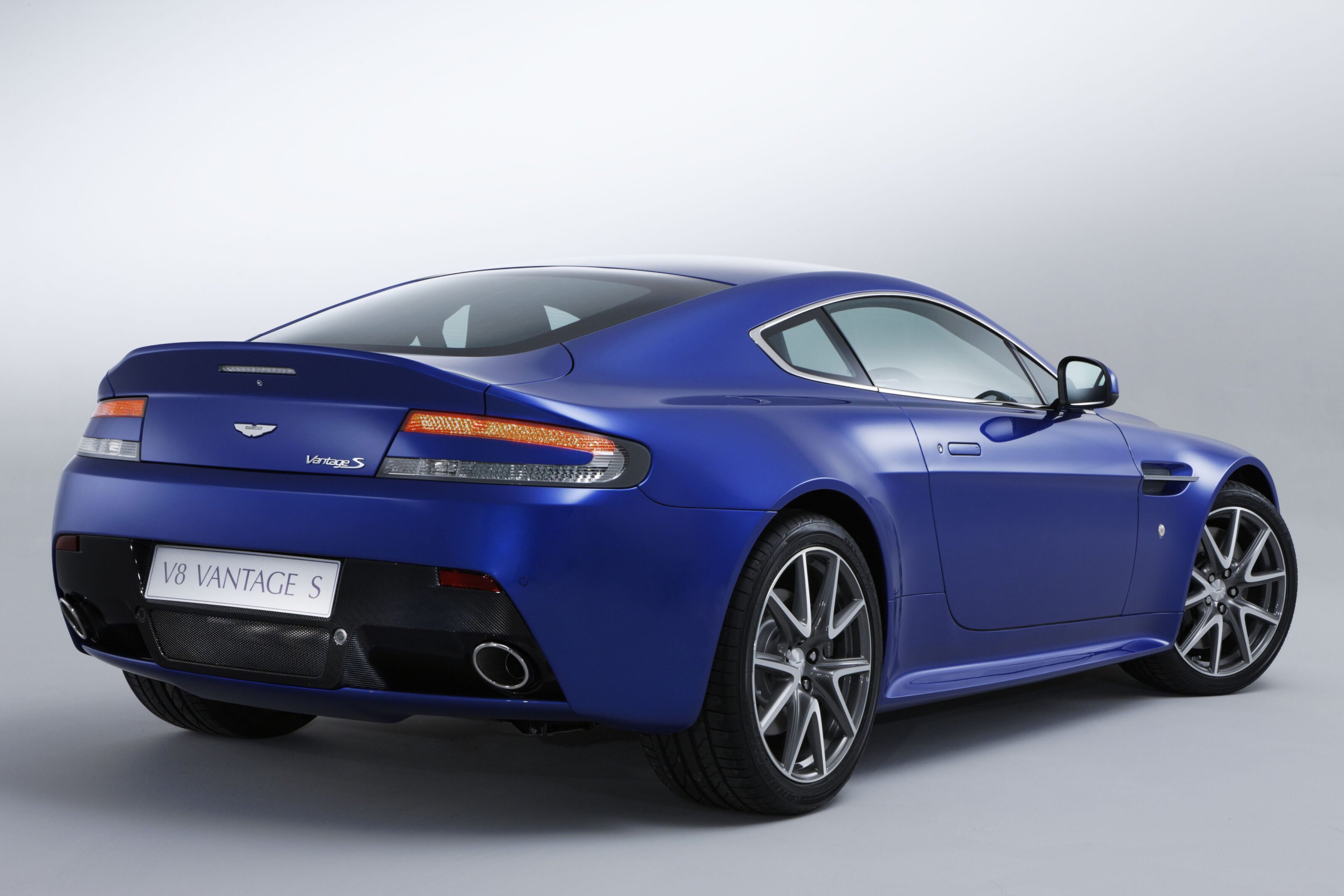
Designed by Henrik Fisker, the baby Aston was based on the same bonded aluminium VH architecture of the DB9; measuring just as wide, yet 25cm shorter, giving the Vantage a squarer footprint with a muscular stance.
A watershed model for the brand, the V8 Vantage was first produced in 2005, remaining in production all the way through to 2017.
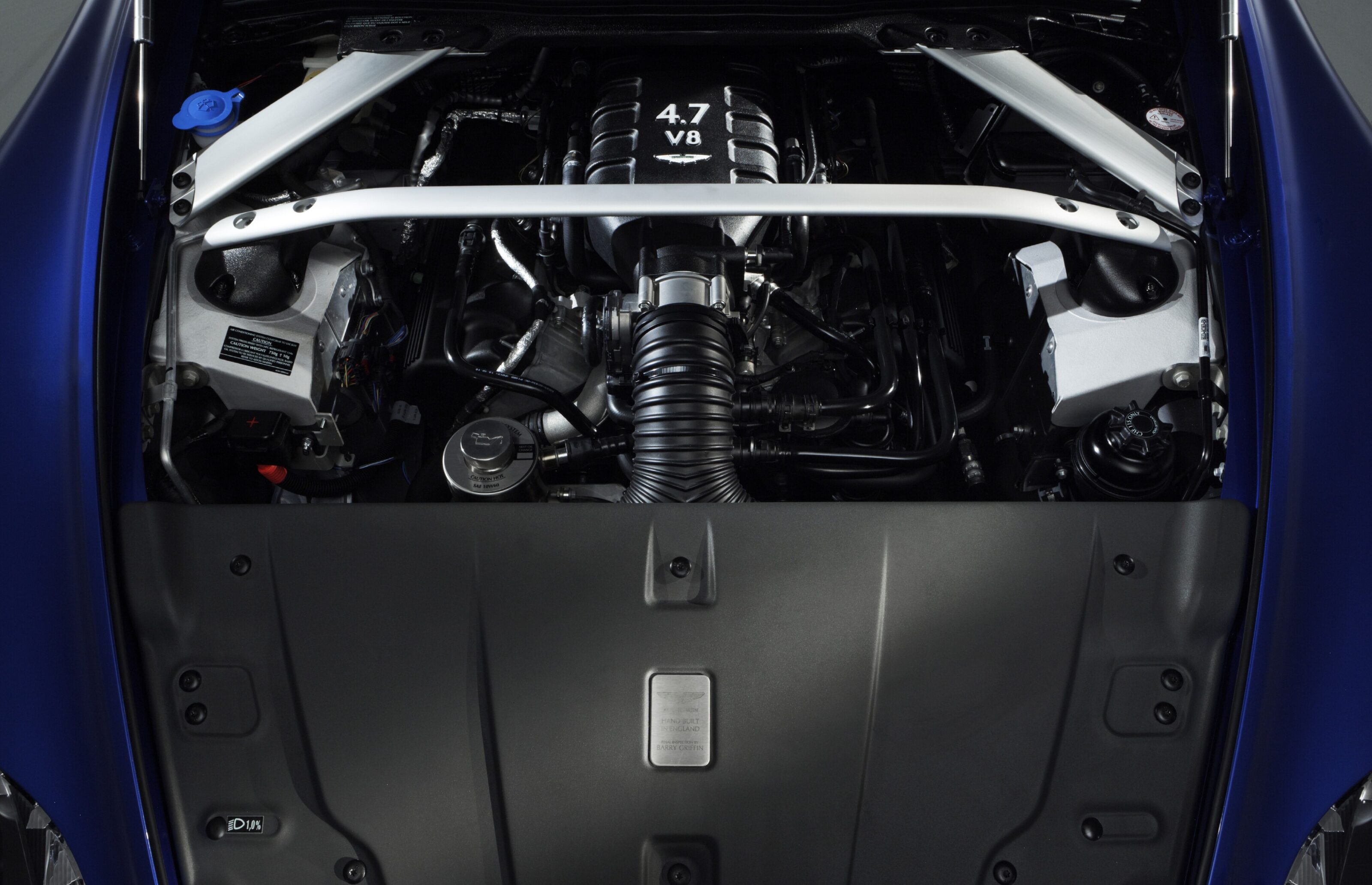
Early cars were plumbed with Aston’s quad-cam 4.3-litre dry-sumped V8 capable of 283kW at 7000rpm (and 410Nm at 5000rpm), however, a 2008 update saw displacement and power swell to 4.7-litres and 313kW. The quad-cam V8 was loosely based on the Jaguar AJ-V8 design, but was hand-assembled with in-house internals and ancillaries at Aston Martin’s Cologne factory in Germany, alongside its V12.
In updated 4.7-litre guise, the V8 Vantage boasts a claimed 0-100km/h time of 4.3 seconds (4.9 in the 4.3-litre), and is available in both six-speed manual configuration, as well as Aston Martin’s Sportshift II automated-manual transmission.
The V8 Vantage arguably defined the modern era of Aston Martin, and as premium manufacturers increasingly shy away from free-breathing large-capacity engines, we suspect that many will gaze upon these rear-drive V8s with much the same regard as V8 Astons of old.
“The V8 Vantage arguably defined the modern era of Aston Martin”
Essential Checks
In the market
The V8 Vantage was the brand’s most successful model yet, so they should prove easy to find on the second-hand market. Pre-update 2005-2008 cars are available for as little as $85,000, while post-facelift cars – as well as the sharper Vantage S – begin at around $125,000.
It appears values have been shoring up over the past few years, yet will still offer an ownership experience that feels far more expensive than the actual buy-in requires. If you’re considering a brand-new M4 or C63, the second-hand Aston arguably offers a more ‘special’ ownership experience, for less money, and could also prove to be a smarter place to park your money in the short term.
Manual examples are markedly less plentiful; however, there are a number currently on the market which don’t exhibit any discernible price discrepancies to the self-shifting examples. These will likely hold more long-term collector interest into the future as nostalgia grows for these modern classic Astons.
Body & Chassis
Most examples on the market display very meagre mileage so obvious degradation should be minimal. Signs of water entering the boot can indicate blocked drain holes while the presence of any rust may indicate a dodgy repair. Aluminium trim on early cars is also known to corrode and whiten, often afflicting wing mirror stays, door bottoms and interior door handles. Paint blemishes aren’t unheard of, and are most often observed at the base of the A-pillar.
Engine & Transmission
The Vantage’s V8 powertrain is known to be a durable unit, however, proper maintenance should be adhered to. Alternator belts are known to squeal when cold, although this can be rectified by adjusting the belt tensioner, or with an aftermarket pulley kit.
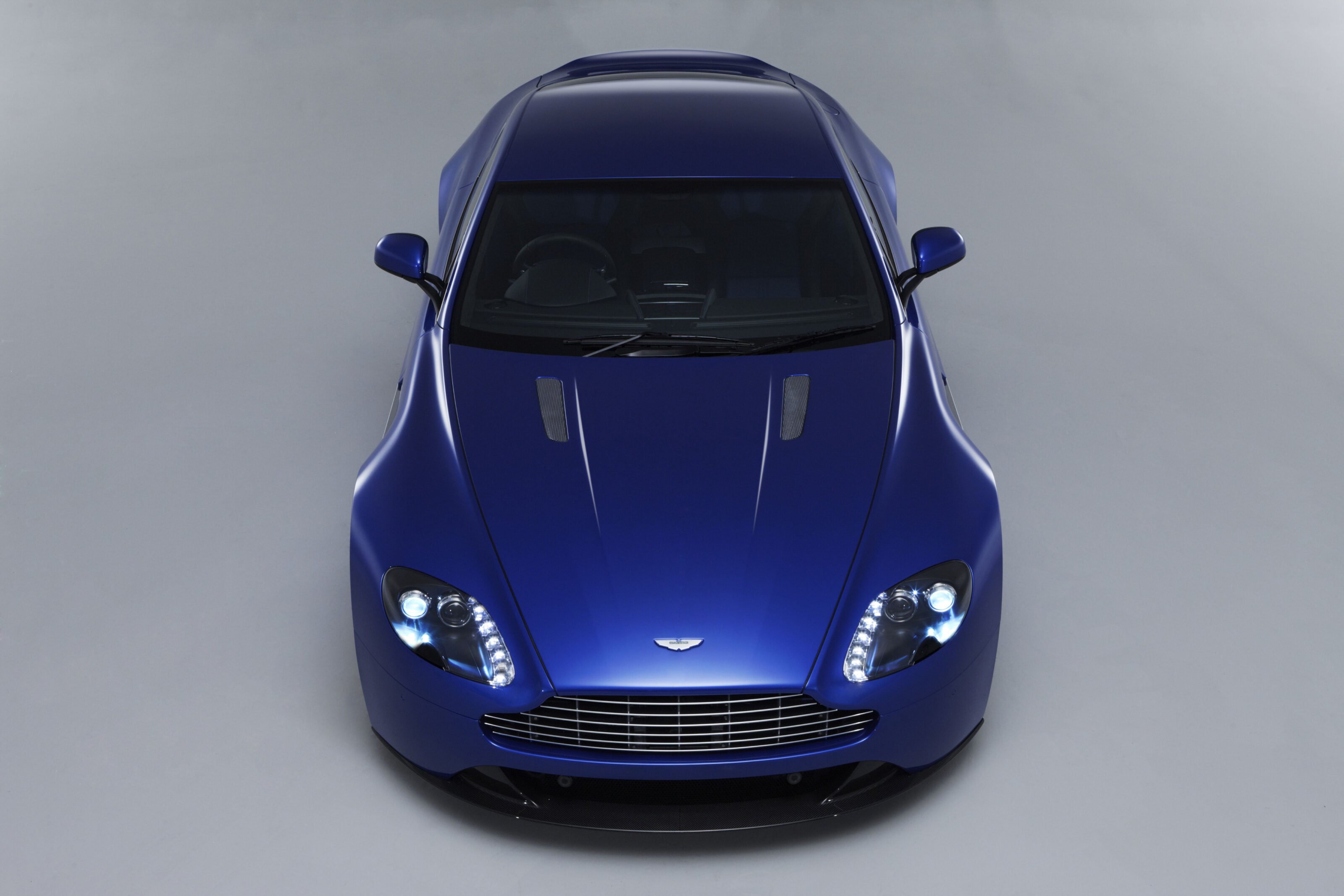
The exhaust features intricate butterfly valves which open above 4000rpm to release a more vocal bellow. If you seek a more theatrical soundtrack – or just hate your neighbours – remove fuse #22 to keep the valves open from zero rpm.
Suspension & Brakes
With very few high-mileage examples on the market; suspension, brakes, bushings and other wear-prone components should still have plenty of life in them.
Conversely, cars in disuse can often develop their own problems as parts that usually move become problematic, so an independent inspection by a marque specialist is highly recommended for prospective purchasers.
Interior & Electronics
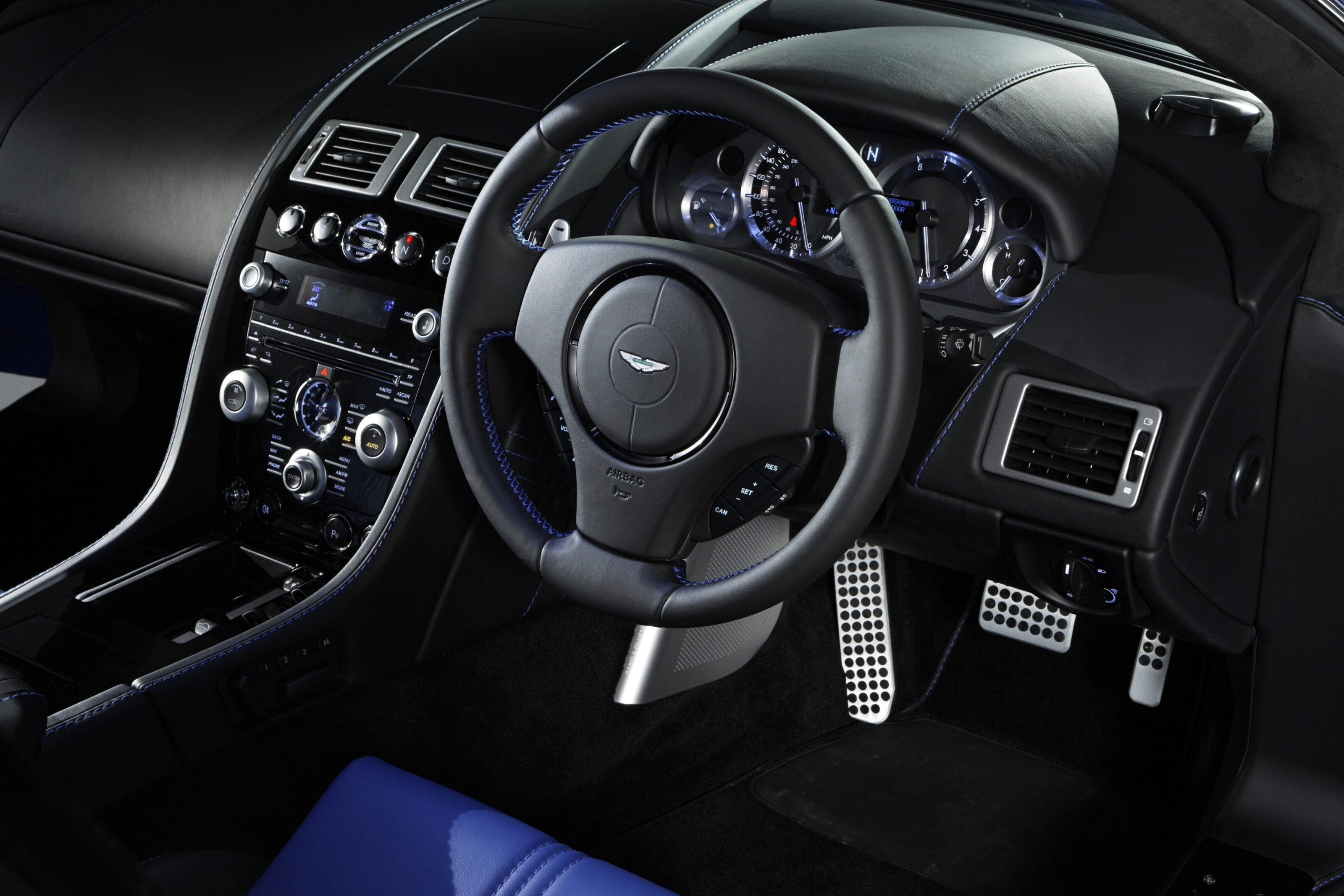
Software bugs with the car’s central locking system were known to afflict early cars, however, problematic examples should have been long fixed under warranty. Elsewhere, the sat-nav system can grow slow over time, while the fancy flip-up display screen itself operates via plastic gears which can become brittle and break with age.
Again, most local examples aren’t heavily used so leather materials shouldn’t display obvious signs of wear. Leather dashboards were known to shrink due to frequent rapid temperature changes, although this will mostly impact cars that live outside in the sun.
Aston Martin V8 Vantage specs
Body: 2-door, 2-seat coupe Engine: 4735cc, quad-ohc, 32v, V8 Power: 313kW @ 7300rpm Torque: 470Nm @ 5000rpm Transmission: 6-speed manual/7-speed automated manual Weight: 1705kg Used Range: $80,000-$130,000
Three other options you may consider
1. Porsche 997 Carrera Rivals when new, and still to this day: the Porsche 911 is the most obvious alternative to the GT Aston. It is the sharper scalpel, and can be had quite a bit cheaper than the Brit. But would it feel as special?
2. Bentley Continental GT It may not boast the performance credentials of the Aston Martin, and certainly not the Porsche, but a 6.0-litre W12 for the price of a mid-spec 3 Series is seriously tempting stuff.
3. Mercedes-Benz CL63 AMG Another luxury-oriented powerhouse, the CL63 boasts AMG’s famous 6.2-litre V8 in a more exotic SWB S-class body. You can also swing a V12 CL600 in this price range, if you’re brave.
Whether you’re preparing for a track day, shopping for a gift – or just yourself – these are the coolest car products we’ve been drooling over lately.
Bibendum 1980 “Racing” figurine – $95 – collectors.michelin.com
Michelin’s Bibendum figures are big business in vintage automobilia collecting. And they’re still being made! This one is limited to 150 pieces and comes with a certificate of authenticity.

Piloti Avenue driving shoes – $233 – Piloti.com
Handmade in Portugal, these Piloti Avenue driving shoes feature a thin communicative sole and patented Roll Control 2.0™ heel. They’re versatile and wearable, and nowhere neat as lairy as actual race boots.

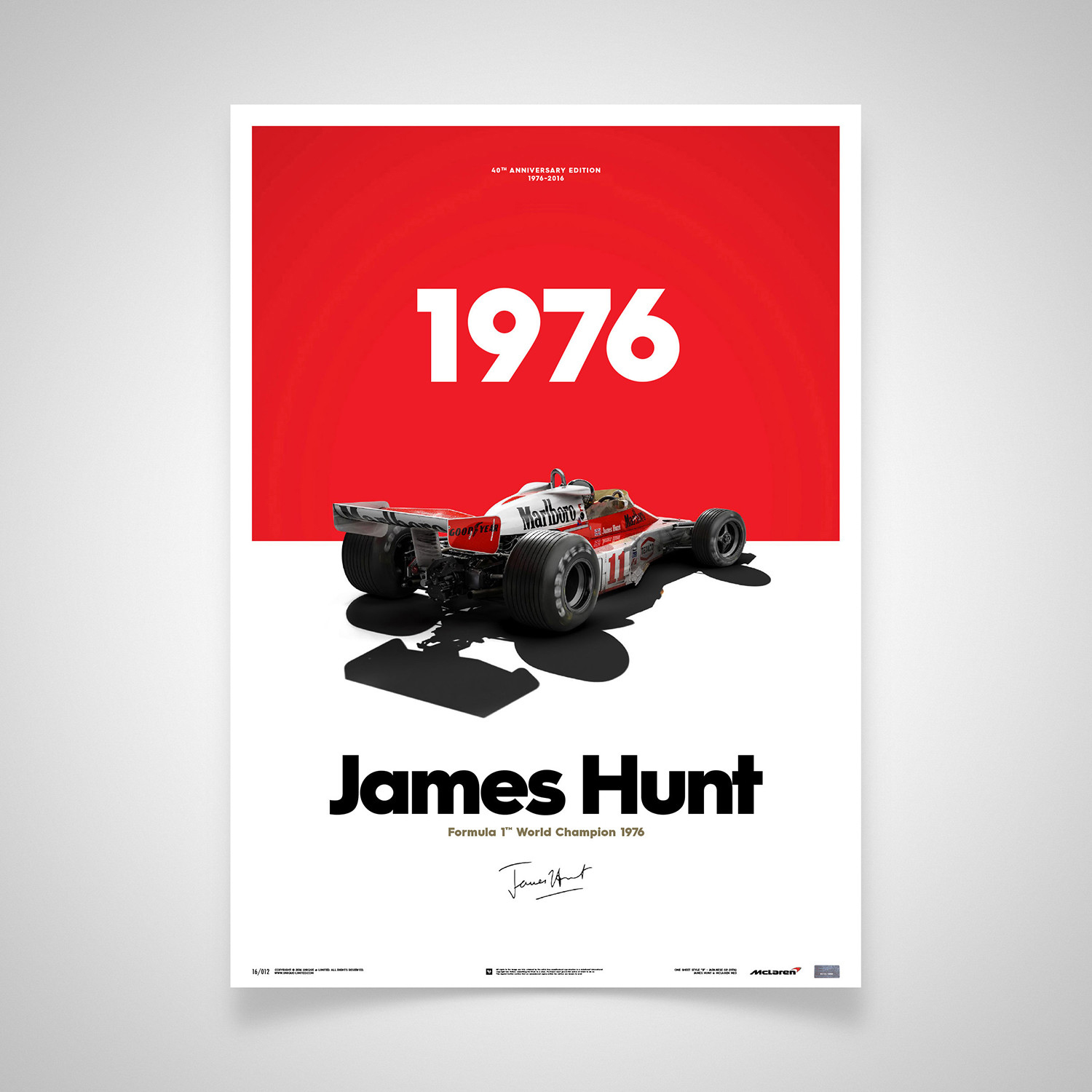
James Hunt 1976 Japan GP limited edition print – $135 – automobilist.com
This officially licenced print is limited to 1000 serialised units and reflects Hunt’s 1976 Championship-winning race in Japan.
1973 911 RSR T-shirt – $42 – curecollection.com
Vintage motorists should love this 1973 RSR t-shirt. A portion of profits from all Cure Collection products go towards the Cancer Research foundation, too!

Chopard Mille Miglia GTS Azzurro – $10,680 – chopard.com
Limited to 500 pieces in celebration of the ‘world’s most beautiful race’, Chopard’s GTS Azzurro Chrono comprises a stainless steel and rose gold 43mm case with their in-house 01.08-C self-winding movement.

Track Pack
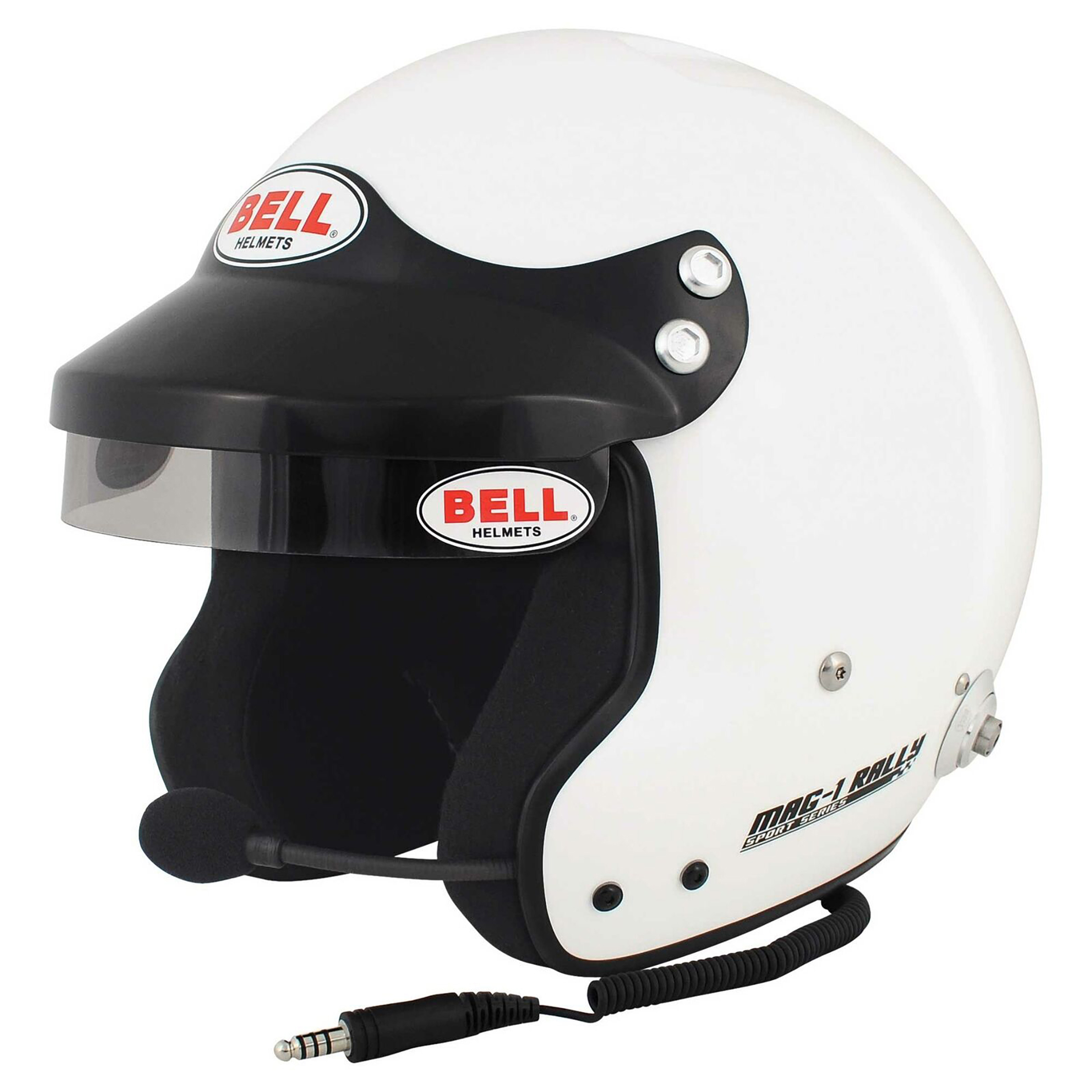
Bell Mag-1 Rally Helmet – $779 – raceline-racewear.com.au
This open-face helmet from Bell is a cost-effective lid which comes compatible with Peltor intercom systems and boasts a lightweight shell with Snell SA2010 homologation. Optional Hans posts are a $105 extra.
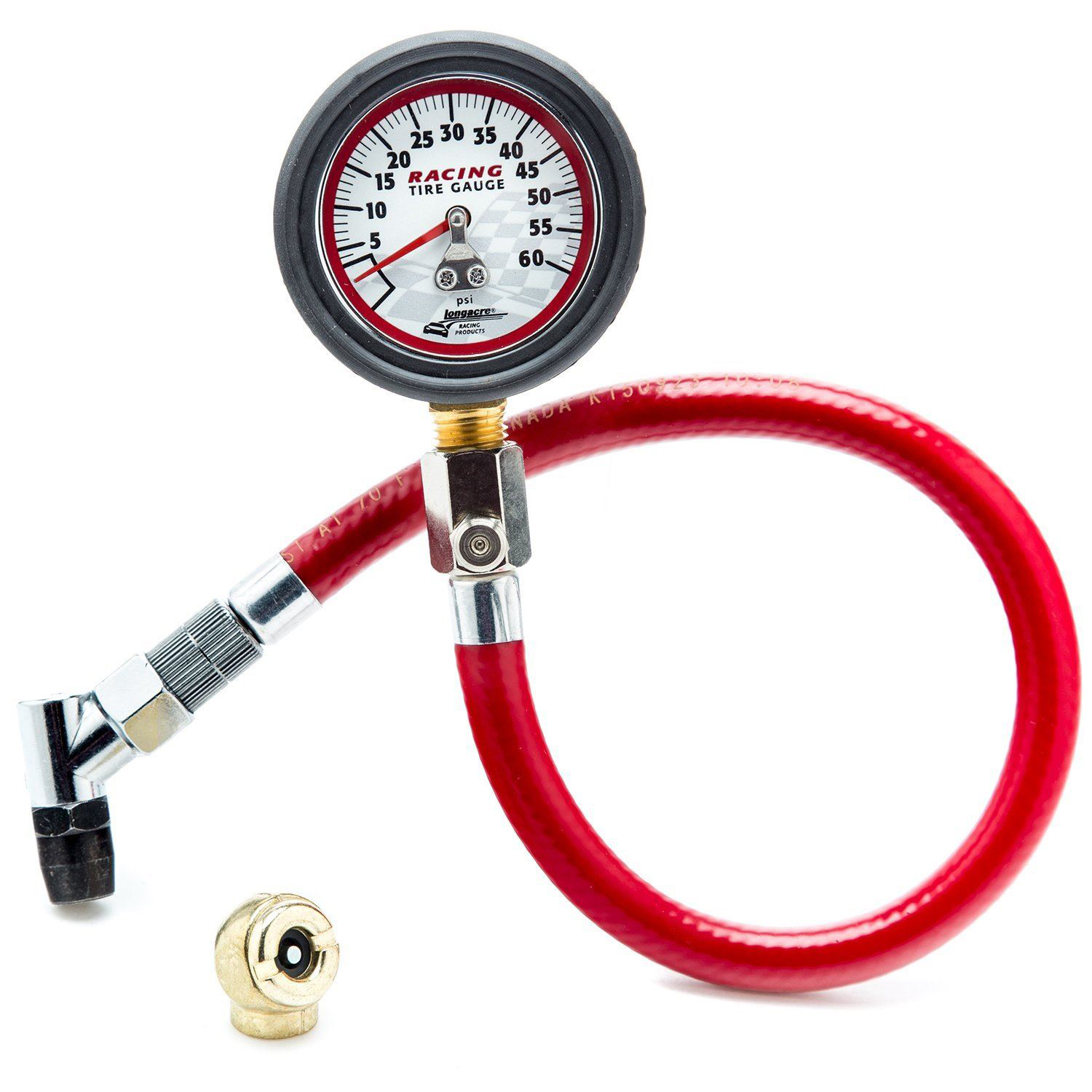
Longacre 0-60psi tyre pressure gauge – $69 – autosport.com.au
A tyre pressure gauge is essential. This analogue Longacre unit measures 0-60psi and has a 14-inch hose with two chuck attachments.
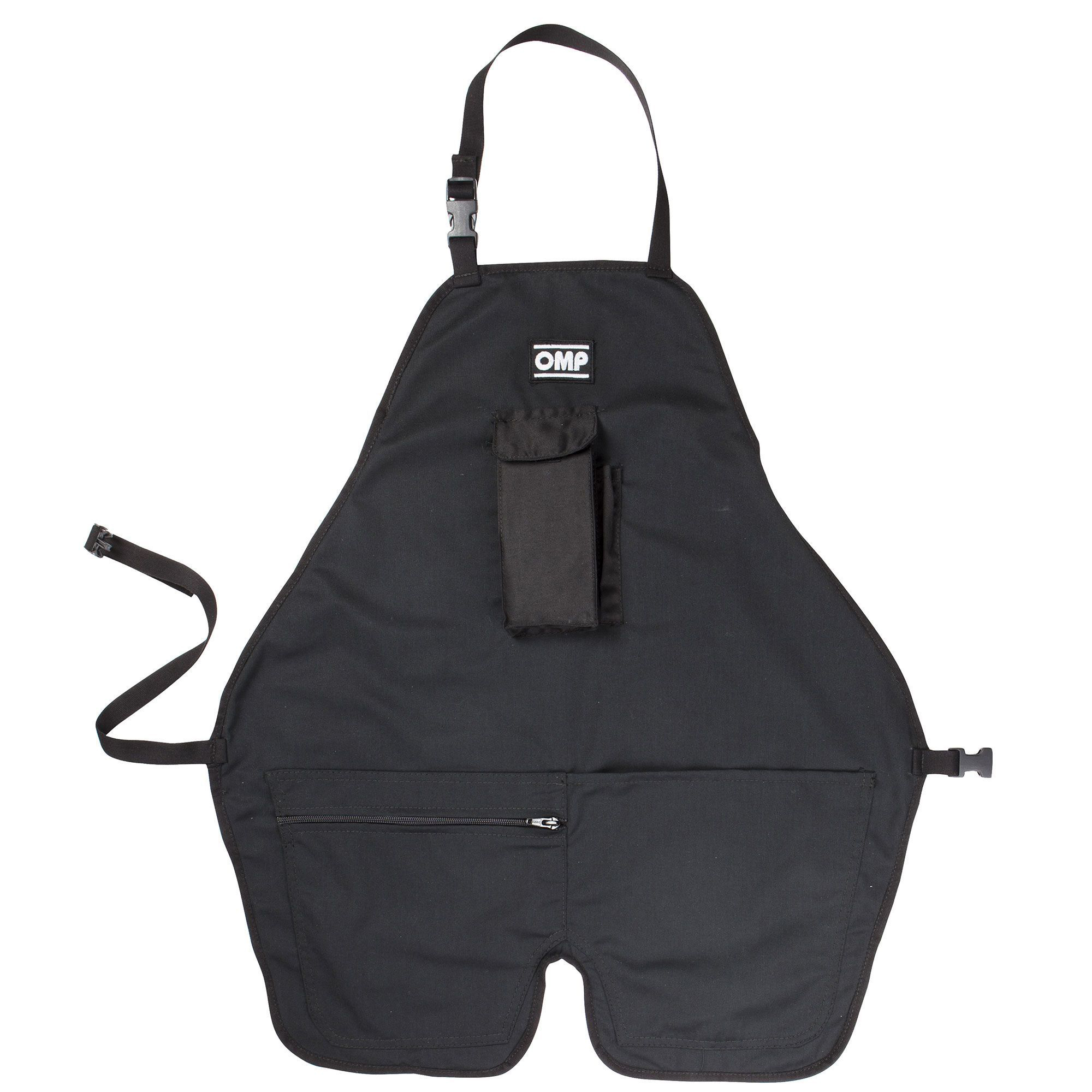
OMP Mechanics Apron – $44 – demon-tweeks.com
Between track days, you’ll likely be busy with car maintenance and repairs. Keep clean with this OMP mechanic’s apron made from hard-wearing cotton. It has a number of handy pockets.
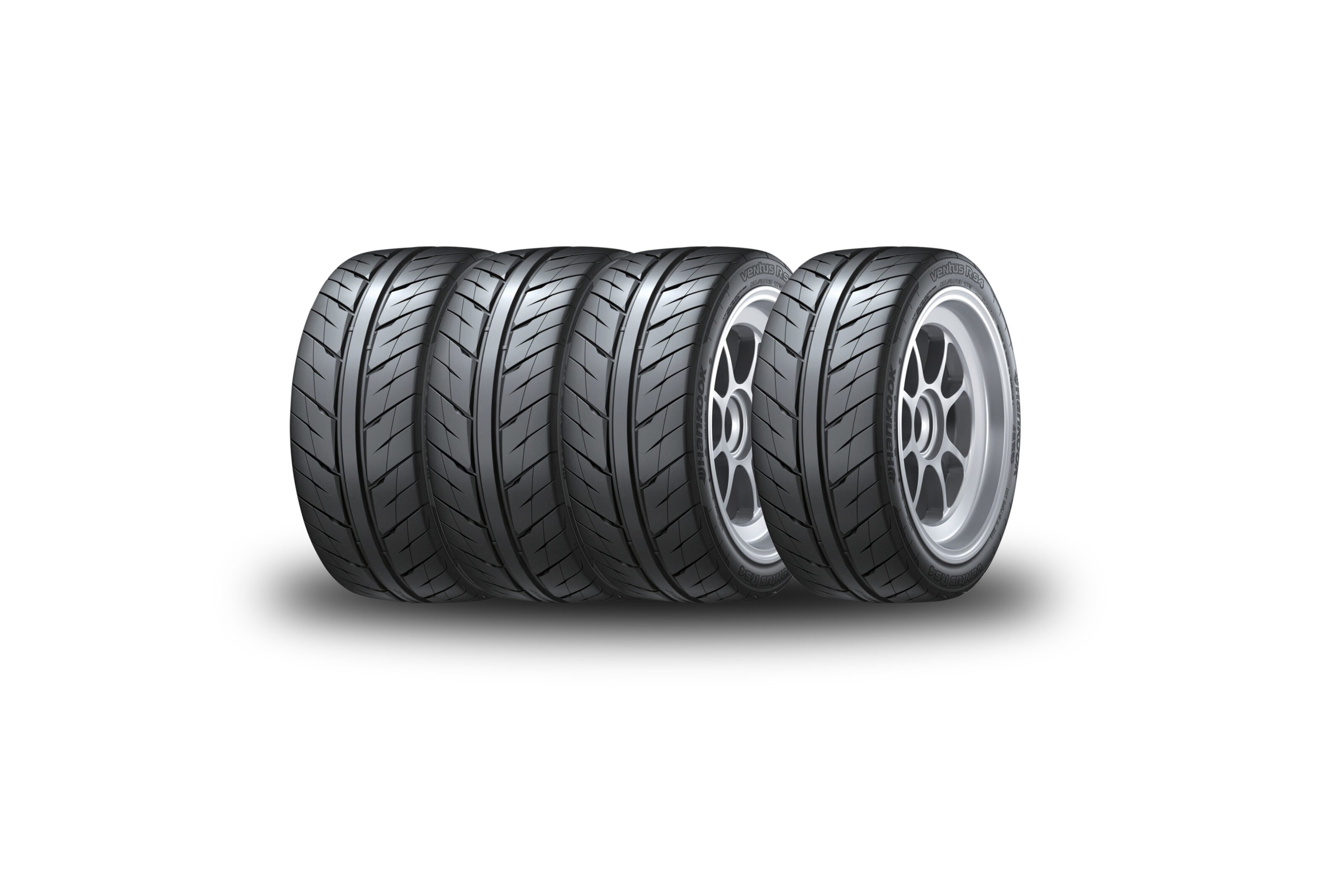
Hankook Ventus R-S4 tyre – $295 – jaxtyres.com.au
Hankook’s latest R-S4 improved upon the popular R-S3 considerably, and offers similar grip levels at a lower price than other trackday favourites.
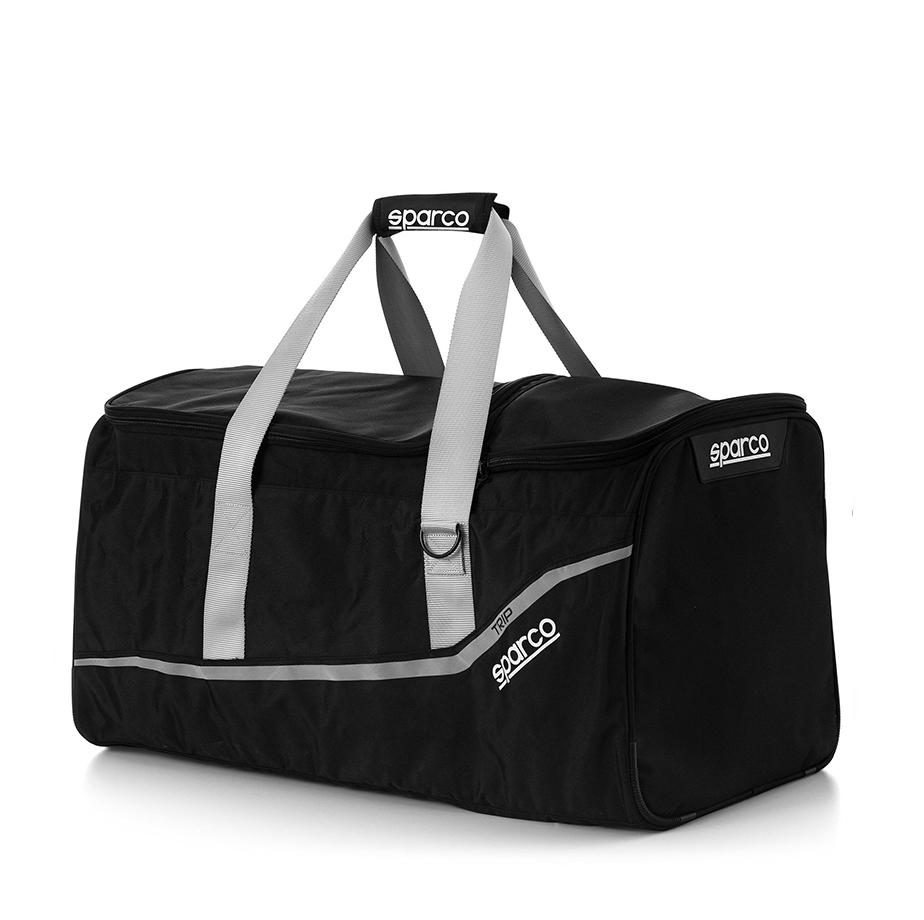
Sparco Trip3 Travel Bag – $105 – racedeal.com.au
Whether it’s clothes or equipment, the Sparco Trip3 makes light work of transport with reinforced sides, rubber feet and an adjustable shoulder strap.
Snapshot
- Second iteration of Inspiration Series scores new wing and wheels
- Prices start at just under $220,000
- Available in V6 hybrid and V8 form
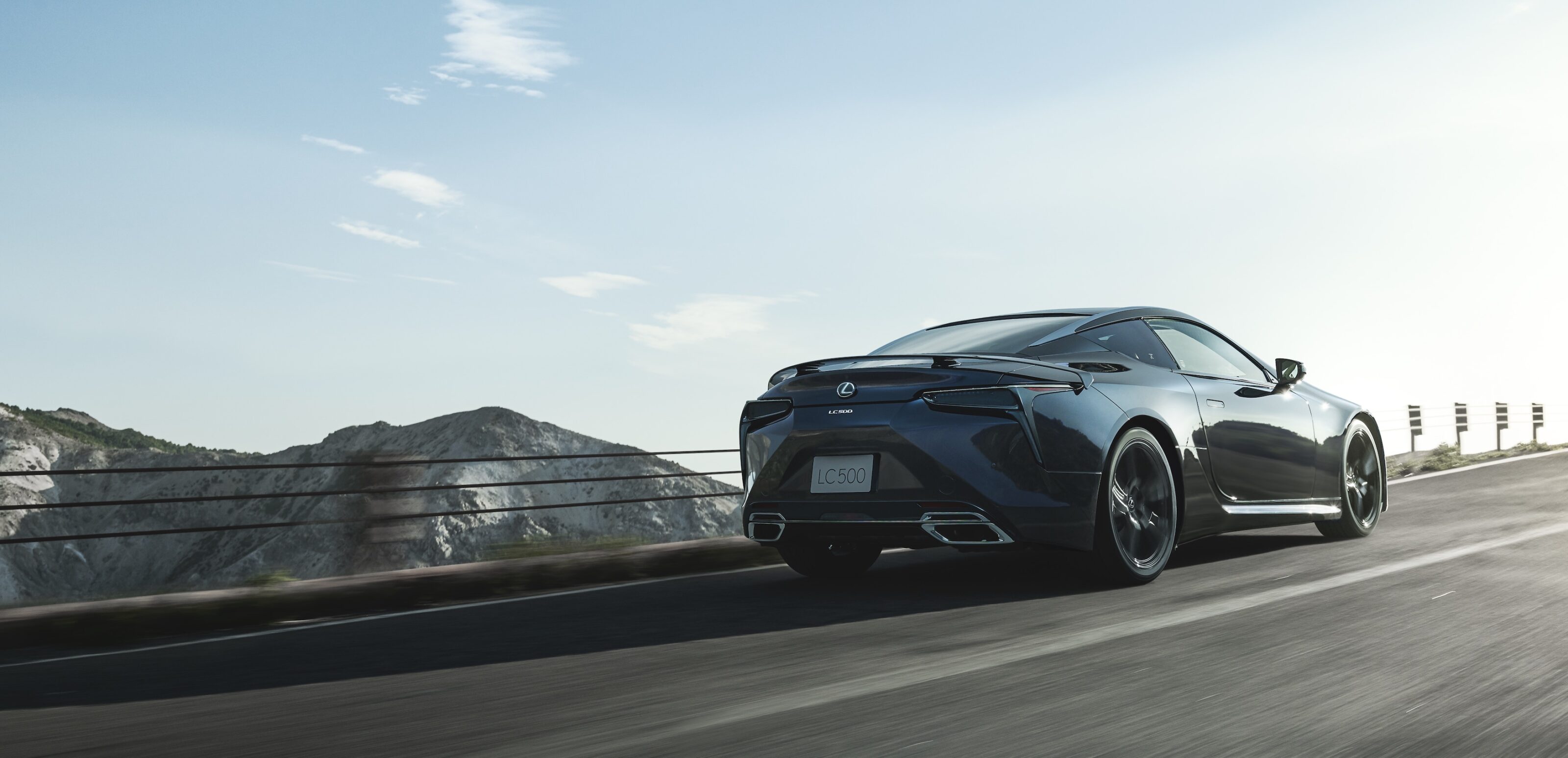
Lexus has returned its Inspiration Series for the LC500 and LC500h range in extremely limited numbers, with prices starting from $219,393 and $219,553 respectively.
The pricing reflects a $25,000 premium over the standard LC range and a $14,000 jump from the first Inspiration Series model that appeared in late 2019 as a special edition limited to “fewer than 10 units”.
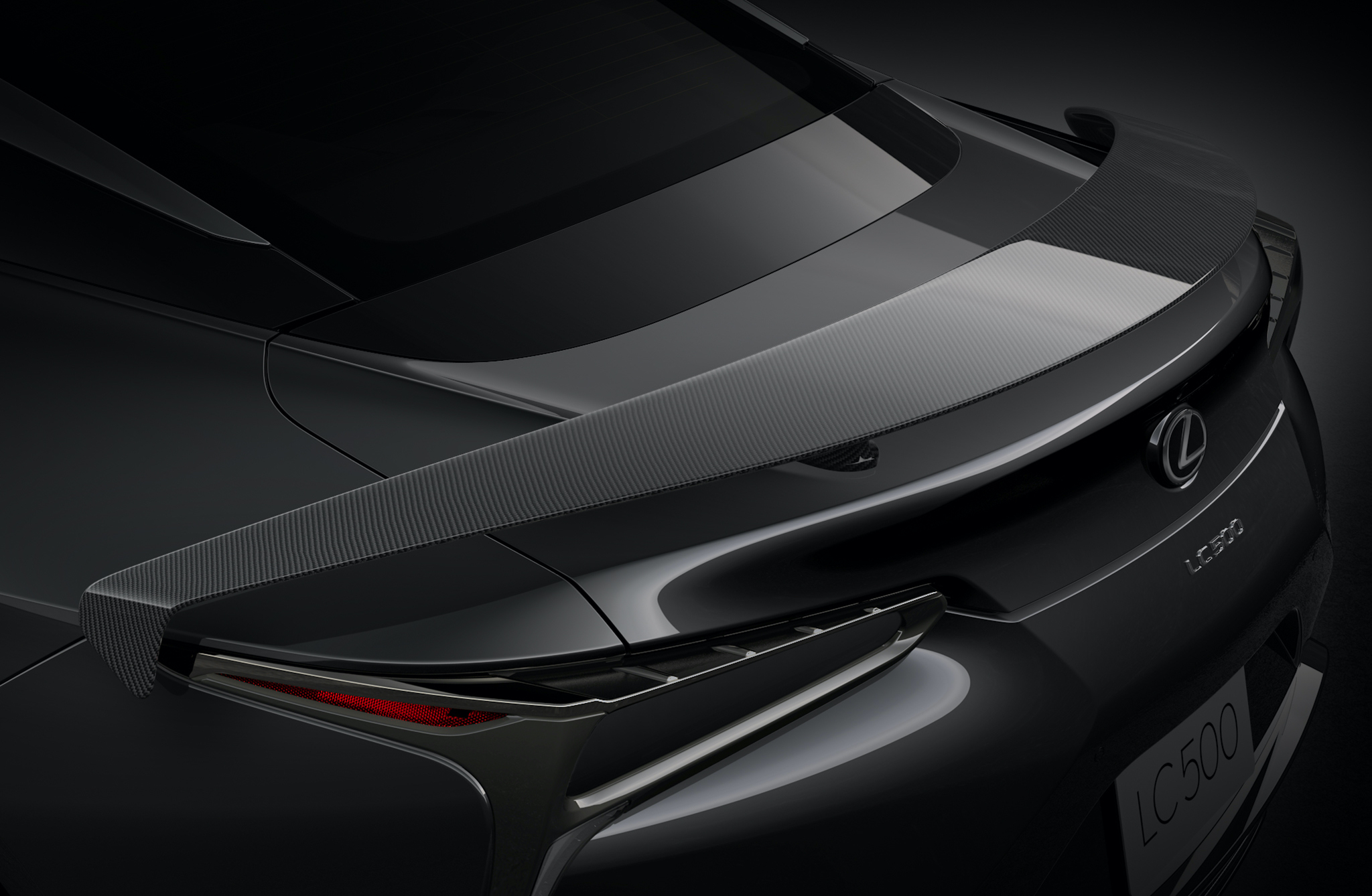
The biggest change has come from the exterior of the car as Lexus has developed a new carbon-fibre rear wing for the Inspiration Series, in partnership with air race pilot, Yoshihide Muroya.
Lexus claim the revised wing isn’t there merely for show, or to add extreme motorsport levels of downforce, but rather to reduce drag and help enhance ride comfort in the LC while maintaining the same front-to-rear balance of the standard car.
Bespoke 21-inch, ten-spoke alloys fill the guards, finished in black to reflect some of the other darkened highlights on the Inspiration Series, found on the front grille surround and headlights.
Prospective buyers of the Inspiration Series have three paint options – White Nova, Sonic Silver and Onyx, the lighter two of which will contrast the black highlights around the car.
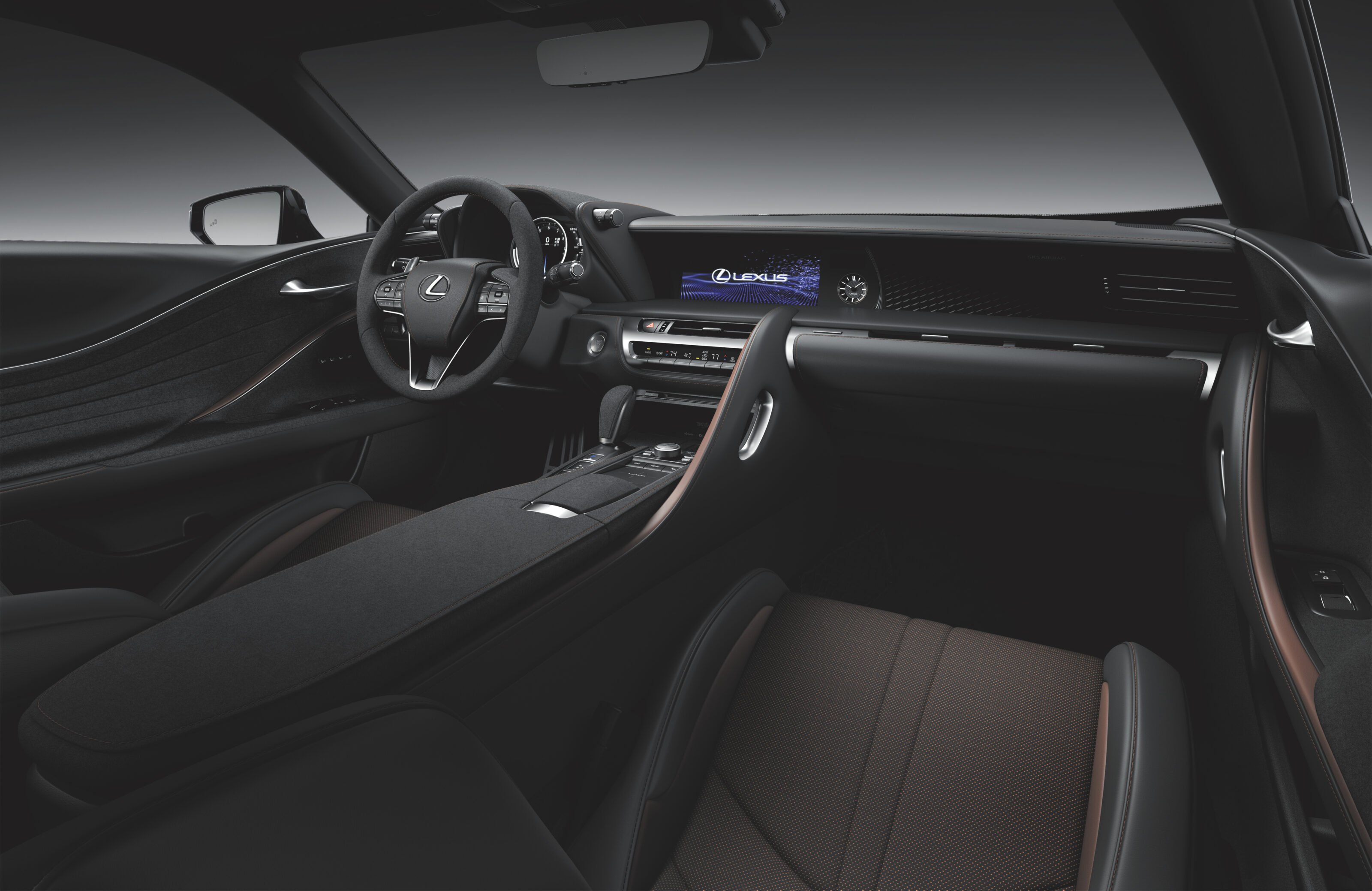
Stepping into the cabin, special Inspiration Series carbon-fibre scuff plates welcome its occupants, while the interior materials get a generous dose of Alcantara to the steering wheel, door and centre console panels as well as the inserts on the revised leather seats, said to provide 18 per cent more hip support than before.
Power and torque figures remained unchanged from the standard LC models, with 351kW/540Nm in the V8 LC500 and a combined 264kW coming from the V6 hybrid in the LC500h being put to the rear wheels through a limited-slip differential.
The Inspiration Series variants benefit from changes made to the LC range last year, both having an update to their transmission tuning with sharper response for the 10-speed auto in the 500, and 4-speed auto with six-speed CVT in the 500h.
Suspension geometry and stiffness was revised too with new dampers, springs and roll bars all round to enhance the driving feel over the previous LC.
The LC Inspiration Series, limited to fewer than five units, is available as an order-only model through Lexus dealers.
As lazy Sundays go this one will take some beating. It’s 10am and the MOTOR crew is standing on the runway at Mudgee Airport in country NSW.
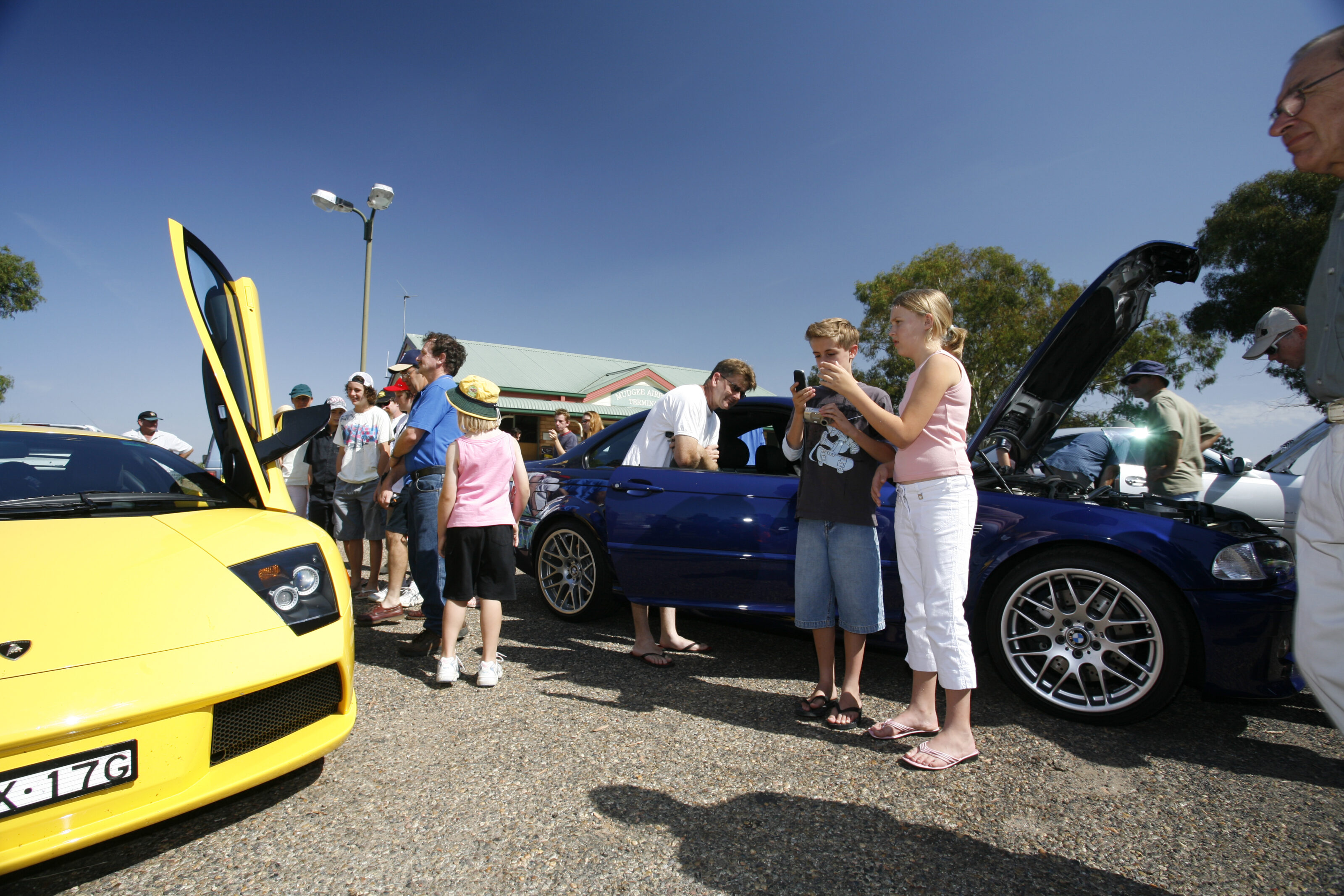
Parked on the taxi way is $1.4 million worth of exotic metal and carbon fibre, amassing a total of over 1300kW. The list of just four cars comprises Lamborghini’s 426kW V12 Murciélago, Merc’s even more powerful 450kW twin-turbo V12 CL65 AMG, Porsche’s brand spanking Cayman S, and BMW’s M3 Comp Spec.
This article was first published in the May, 2006 issue of MOTOR
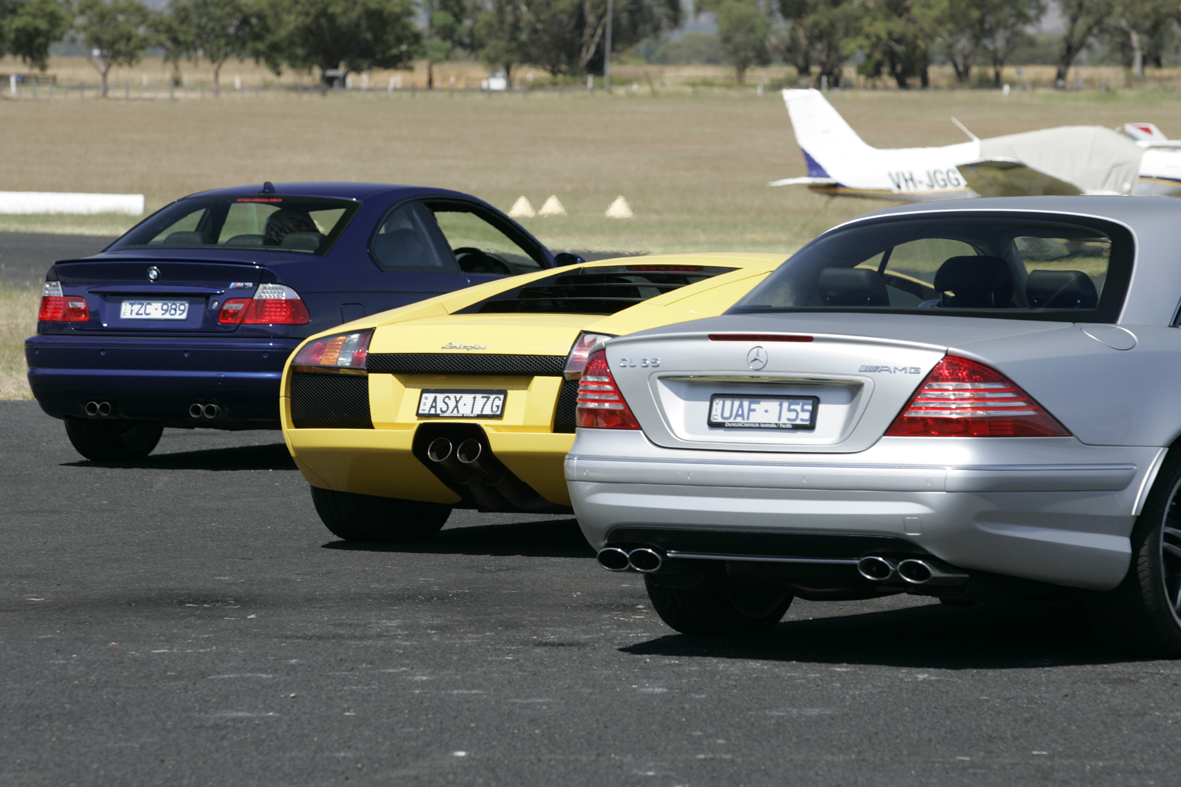
We’re here for a taste of Mudgee’s upcoming Wings, Wheels & Wine festival in which MOTOR will be participating at the end of April. Today, though, is a low-key day designed to give locals and the assembled mainstream media a taste of things to come at the main event.
Keen to kill two birds with the one V12, we’re also here to check out the Mudgee airstrip to see if it’s suitable for future performance testing, and maybe as a venue for our brand new League of Nations PCOTY.
You see, since budget airline Jetstar kicked us off Avalon’s fabulous three-kay runway, MOTOR’s been searching for our next high-speed home. We’ve tried the 1700-metre runway at Albury, and the 1200m strip at Cootamundra (which, currently, is our preferred option thanks to its very grippy and well-maintained surface).
Despite the Mudgee runway measuring only 1700m (of which about 500m is required for braking), the cars are running some big speeds today. We’ve set braking markers at 1000m, 1100m and, lastly, at 1200m.
Even the final braking marker is conservative but at these speeds you want to be safe, not sorry.
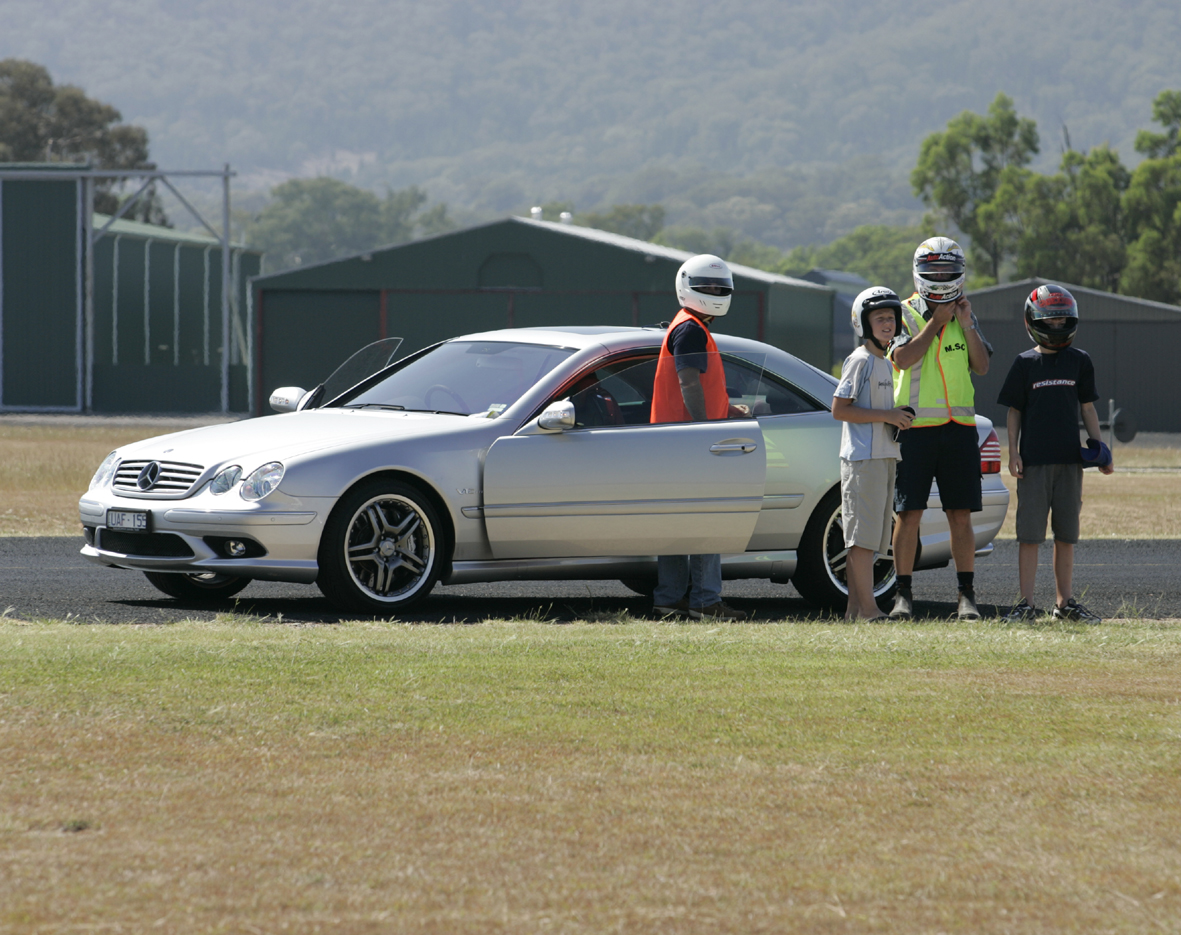
With rolling starts, the BMW M3 and Porsche Cayman S are touching 240km/h as we switch from full power to full brakes at the 1200m marker. Both cars are tracking perfectly at these speeds and make the tough transition to braking with the ease you expect of big-dollar German engineering.
The $460,000 Mercedes CL65 certainly has big-dollar engineering, and with its gorgeous full-size body and V12 Biturbo badging it’s one of the crowd favourites. Again, with a rolling start (we’re not here to do acceleration testing on the cars), the big automatic Mercedes is stuttering on its 250km/h speed limiter just past the first marker.
At this pace, the CL65 is sniffing side-to-side over the runway’s centre line, and it moves around more under brakes. Still, it does the most runs of the day and its temp gauge doesn’t even flicker in the 30-degree heat. And whether it’s one-up or with three passengers on board, the 1000Nm V12 does the business. One observer reckoned it’d tow a boat and still hit 250. We reckon it’d tow the Titantic and still do the number.
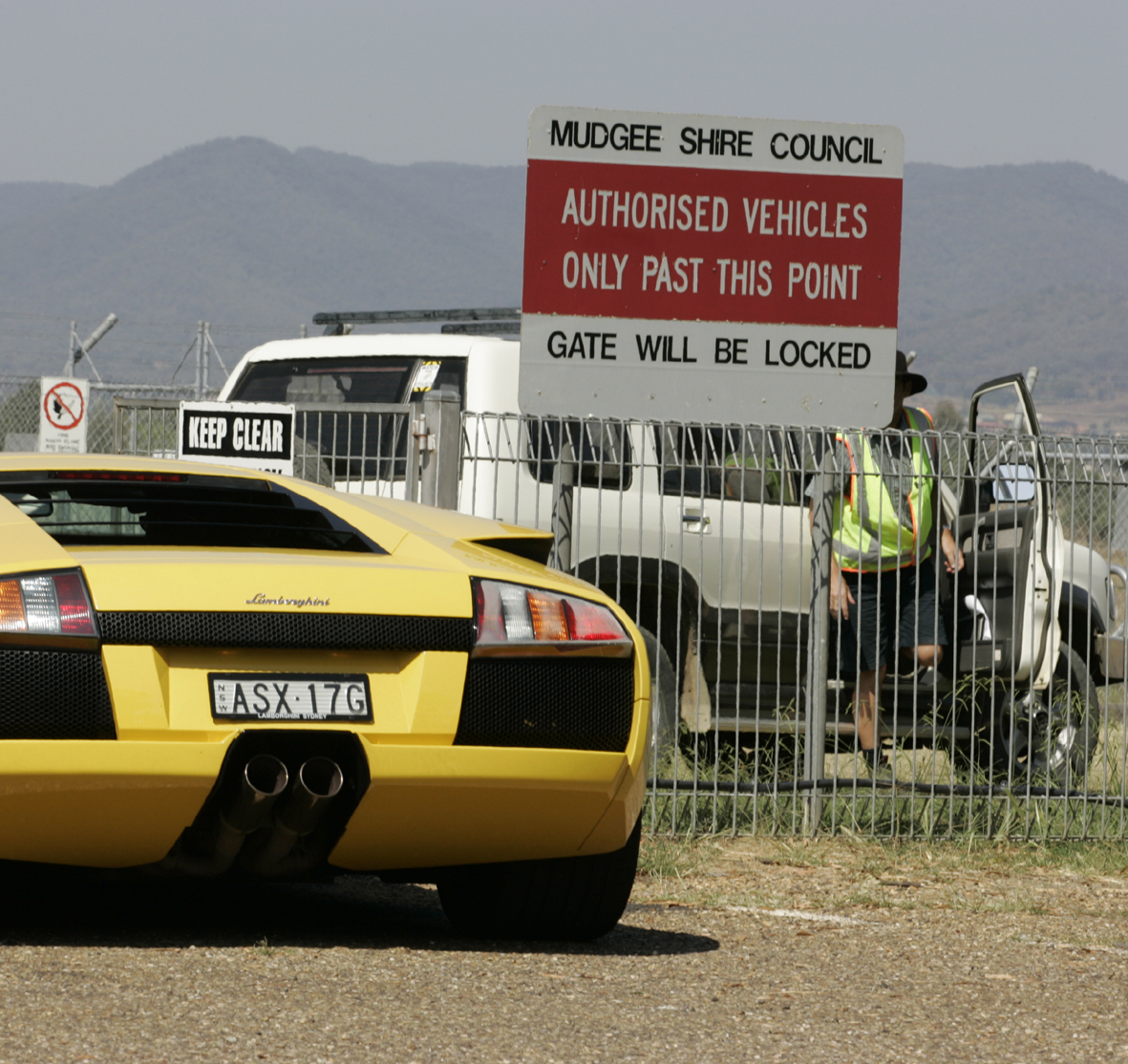
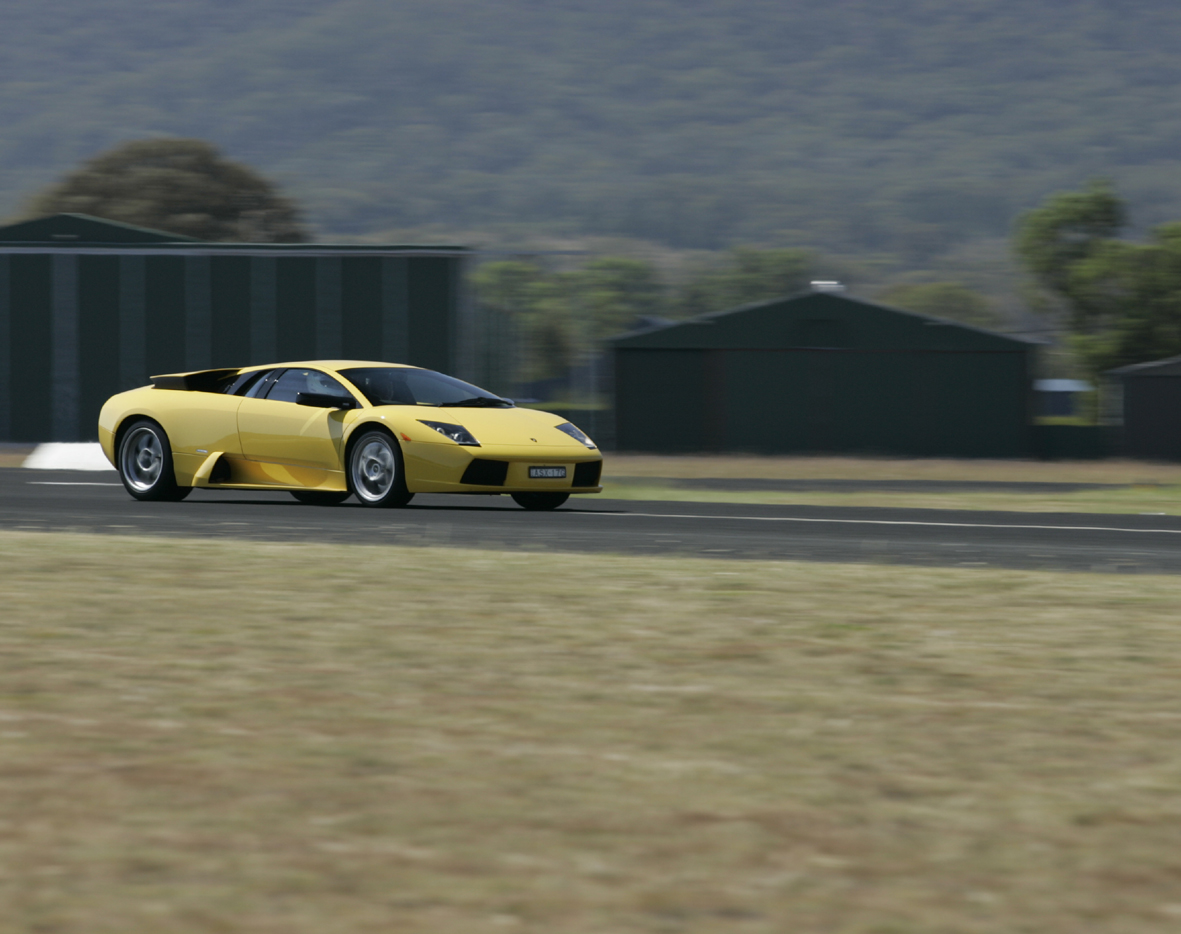
The bright yellow Lambo is undoubtedly the star of the day and lives up to its fearsome reputation on the airstrip. The Murcie runs to over 100km/h in first, but third gear is the killer gear – delivering one long slug of addictive acceleration. As the first braking marker looms at the one-kay mark, the speedo needle is standing straight up at just over 240km/h. Over the next 200m, the Lamborghini V12 digs deeper and somehow finds another 30km/h, as the incredible engine makes a big lunge at the redline. That’s 270km/h in fourth gear, with two more cogs to come.
And, remember, this engine has just been superseded by a bigger, more-powerful and revvier unit in the upcoming Murciélago LP640. Eek!
Under brakes the Lambo is just as impressive (maybe more so). A couple of us suggest moving the last braking marker to squeeze a fraction more speed, but sanity prevails once we realise it’d take the rest of the runway to see 300km/h.
With testing complete we park all four cars in town to plot our return and allow the amassed crowd to get a closer look
It’s been a long while since team MOTOR have returned to a runway for high-speed testing. Stay tuned as we look to chase terminal velocity in today’s fast car vanguards in the near future!
Make sure to subscribe to ensure you don’t miss the ultimate Vmax comparison test.
Get chatting to any car enthusiast about the best models that have been through their garage over the years and I would bet hard cash that, at the first pause in the conversation, their gaze will wander to a 1000-mile doe-eyed stare accompanied by the declaration “I should have kept that car”.
It’s a romantic, idealist notion that you’ve likely considered yourself for at least one of your previous cars, but while it might seem like a great plan on a simplistic level, allow me to put your mind at ease – keeping any of the cars you used to own is almost always a terrible idea. A common misconception is that your old banger would now be worth its weight in gold and, if you’d kept hold of it, an early retirement would be on the cards. This couldn’t be further from the truth.
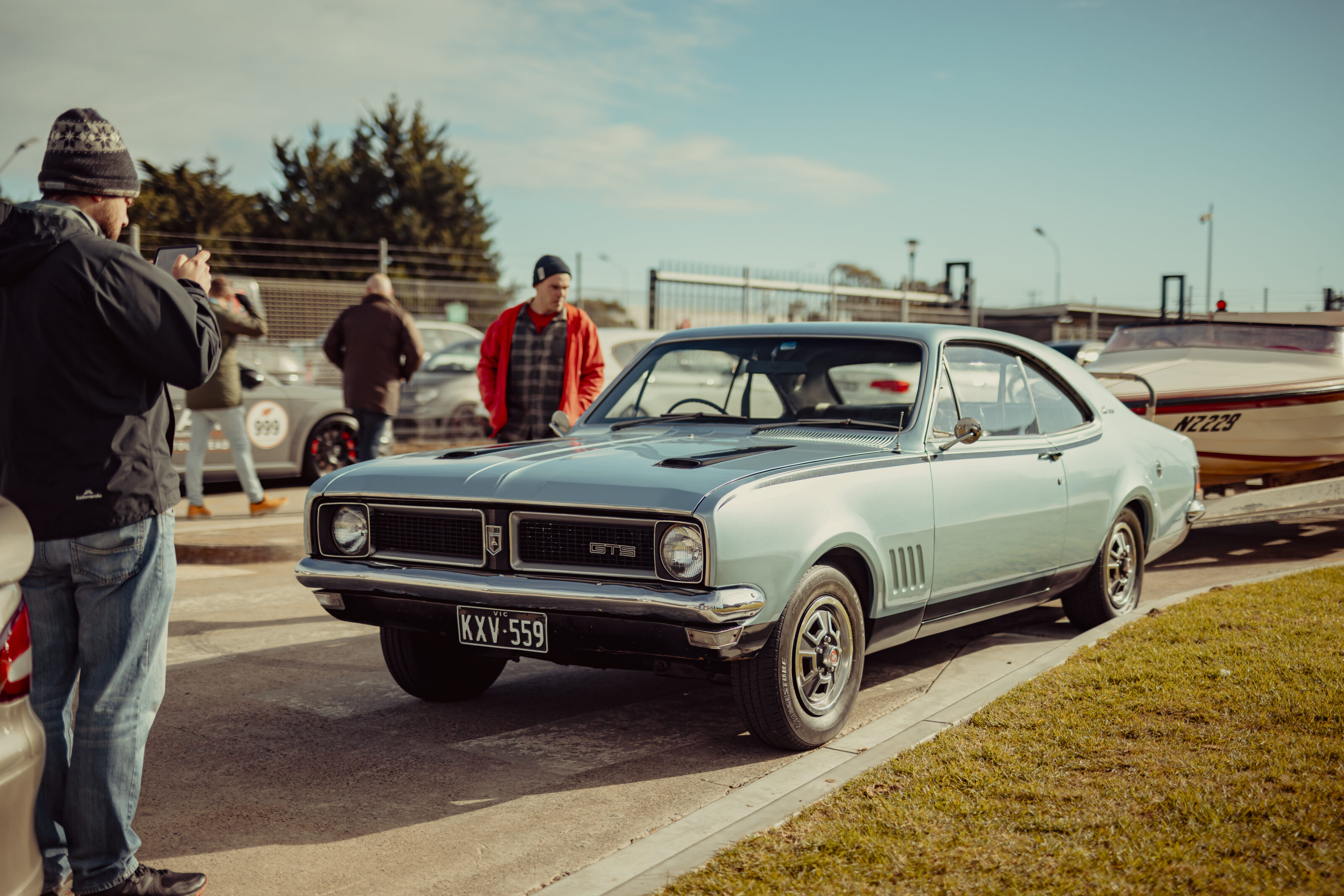
Unless you regularly washed your HK Monaro with brick acid it’s almost certain that the classic would be worth more than you let it go for, but value is extremely relative.
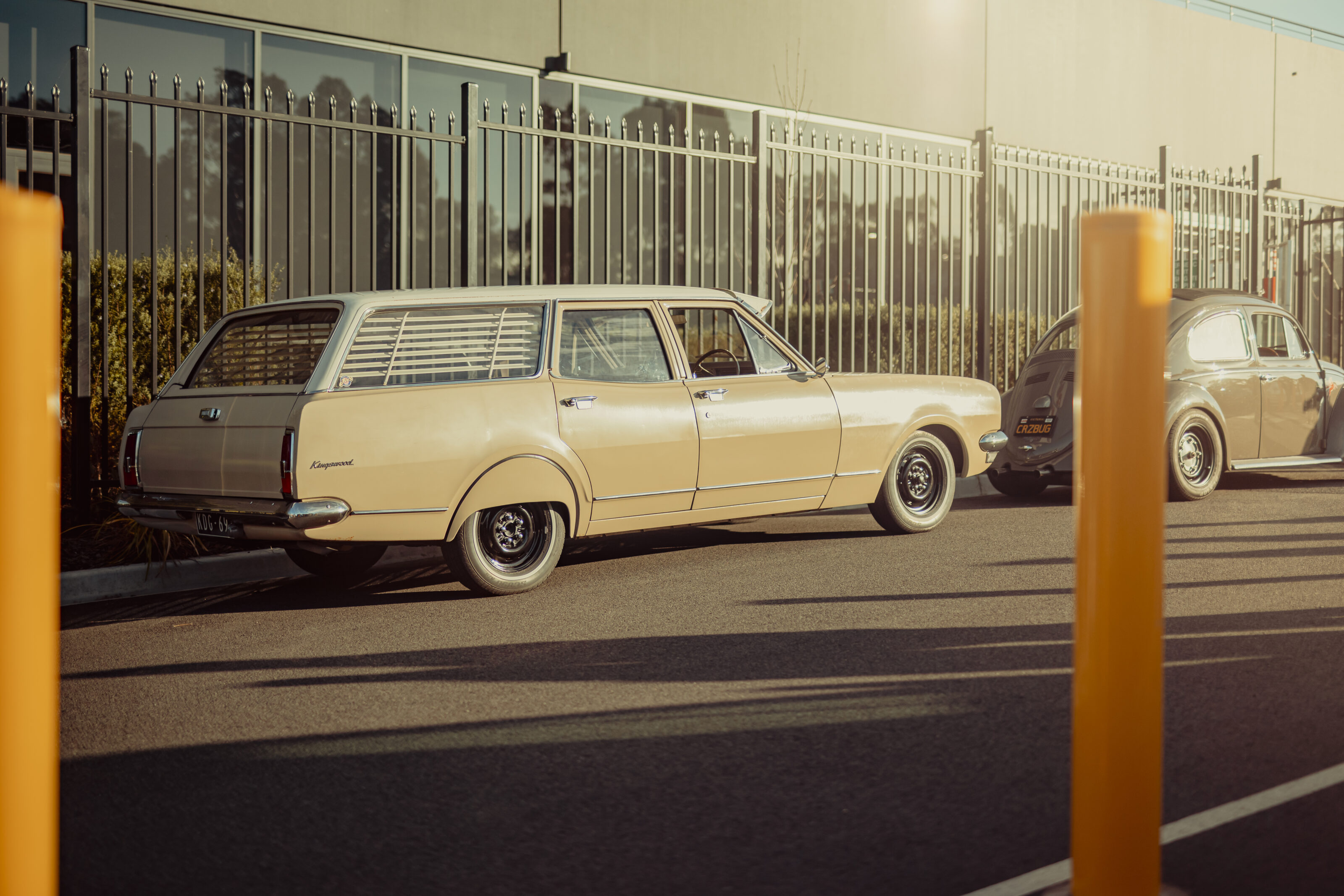
For a start, inflation means a sale price is always going to look less impressive by today’s figures but even the actual value increase after compensation is not pure profit in your pocket. Anyone who has ever owned and run a car knows they are about as expensive as a pokie addiction and the cost of ownership doesn’t simply cease just because it’s your weekender.
It’ll still need registering and insuring, and every time you yank the cover off it and try to go for a drive it will ask for a new battery, or head gasket, or simply won’t run at all. And if you don’t have the space at home, where are you going to keep it and at what cost?
All of these expenses eat into the perceived value increase and that nest egg you thought you were sitting on. Let’s take a hyperbolic example to really understand the problem. Yes, the Ferrari 250 GTO is not a bad investment if you have ever been faced with the opportunity to own an example of the 1960’s icon.
While its as-new price of $23,000 might seem like a steal, it translates to about $310,000 in today’s money. However, the same car would be worth upwards of $63m so it’s still not a bad investment right? But bear in mind you would have needed to keep that car for 60 years and I’m not sure I know many people who had $300k in 1962 and are still alive to reap the reward today.
You might be pining over your long-lost car purely for nostalgic reasons and, even though it might not be worth much these days, the opportunity to occasionally leap behind the wheel and relive your youth is why you should never have parted ways. Here too, you will be bitterly disappointed.
You may remember your XF Falcon being a viciously fast and surgically precise road rocket, but if you were ever reunited with it today it would be a withered old hag. It was never great, yet you were also spoilt by all the better cars you have owned since.
I know all of this because I did the exact opposite of everything I have advised above and I still own the BMW I bought 12 years ago. In the time it has been registered to me the value has steadily plummeted and probably only just recovered in recent years to what I paid for it in 2009. Over that time I have haemorrhaged approximately twice that sum in ownership with mods and maintenance. By modern car standards it is slow, unsafe, small, inefficient, noisy and there is absolutely no sane reason I should have kept it. And yet I did and I wouldn’t have changed a thing… maybe one thing actually.
While owning an old car might make almost zero economic sense, it makes perfect emotional sense and every time I turn its key, The Rude (as it’s affectionately known) reminds me of all the reasons I love cars and driving. It sounds great, to my eyes it’s beautiful, it’s a joy to tinker with and there’s only one like it.
So what would I do differently? Instead of moving my poor car around to all its various homes, I should have bought a small workshop or warehouse in 2009 and, in the ensuing years, its little home would have appreciated far faster than any marque or model could have matched. Smart cars cost cash, but the smart money is in property. To be continued…
