
Snapshot
- 2024 Peugeot 2008 facelift arrives in Australia
- GT Sport flagship dropped, circa-$1000 price rise for Allure and GT
- Facelifted E-2008 electric variant due in Australia at a later date
The facelifted 2024 Peugeot 2008 small SUV has arrived in Australia.
Peugeot Australia has announced details for internal-combustion versions of the updated 2008, with the facelifted 2024 Peugeot E-2008 electric SUV due to arrive in Australia at a later date.
Petrol versions of the 2008 are available in Allure and GT variants. The previous GT Sport flagship was dropped from the line-up in mid-2023.
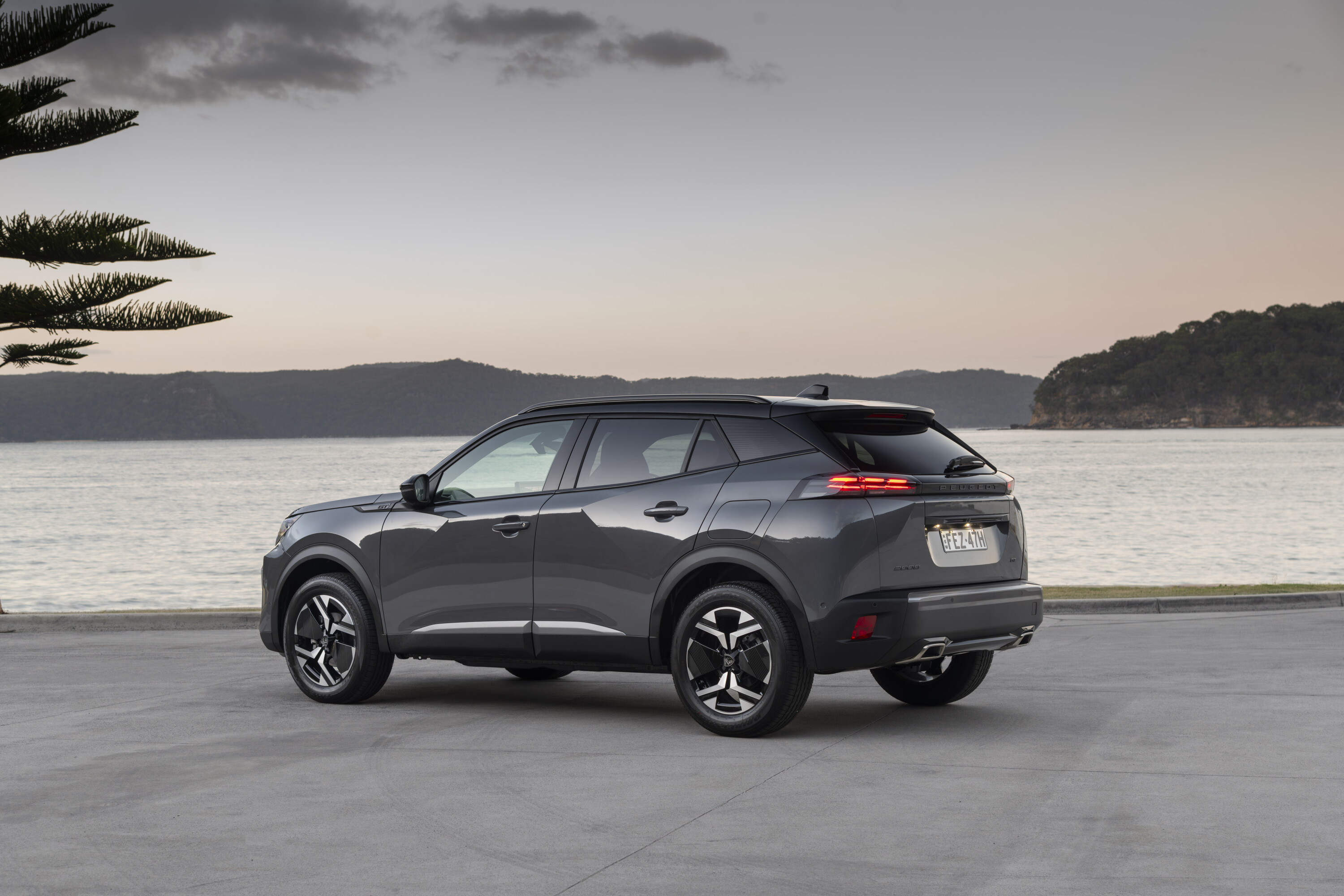
Most features from the GT Sport have now been added to the GT, including adaptive cruise control, heated front seats, lane-positioning assist, and a power-adjustable driver’s seat with massage function.
The GT is not fitted with the GT Sport’s Nappa leather-accented upholstery, while its black 18-inch alloy wheels are available as a $2500 Style Pack that also adds a sunroof.
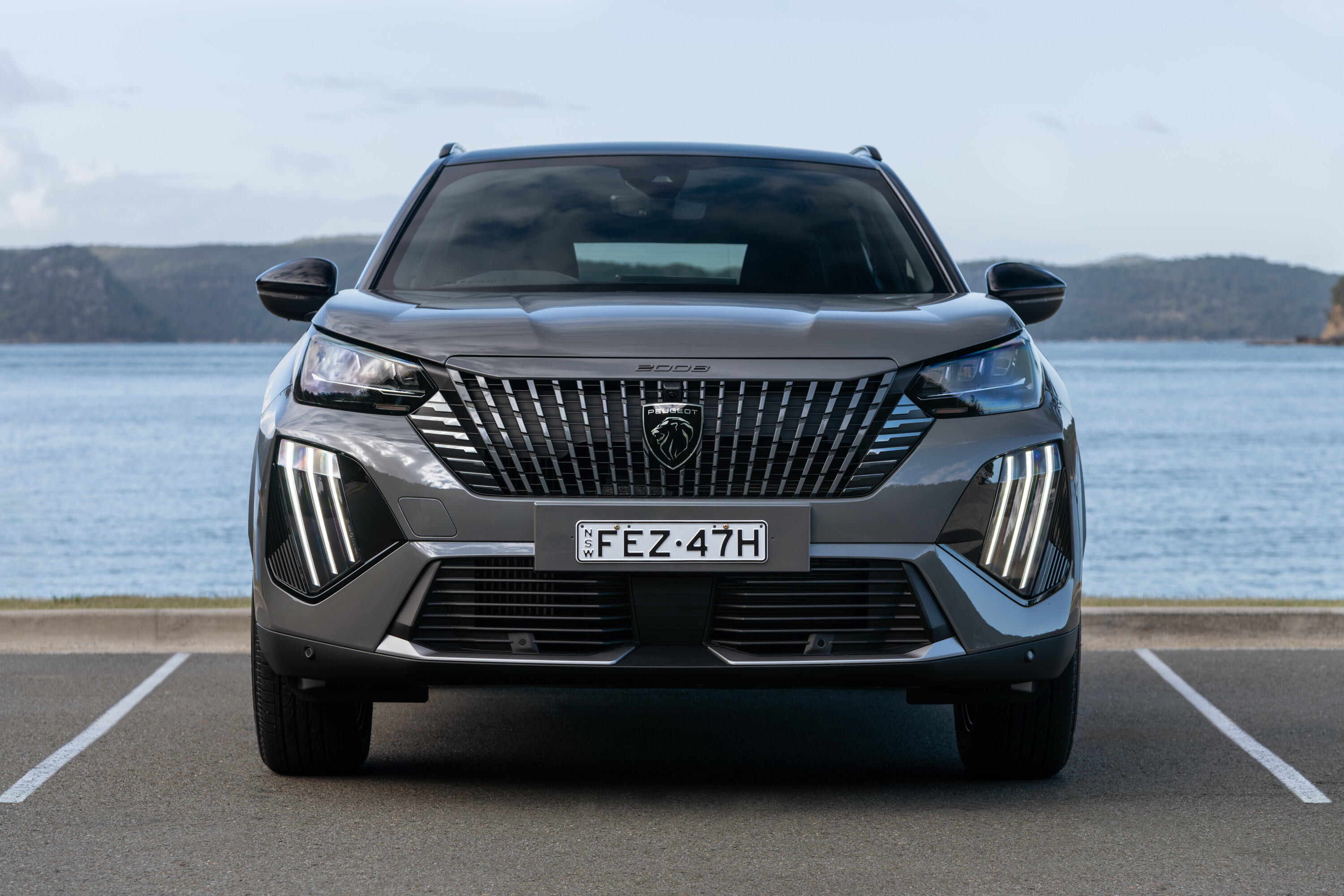
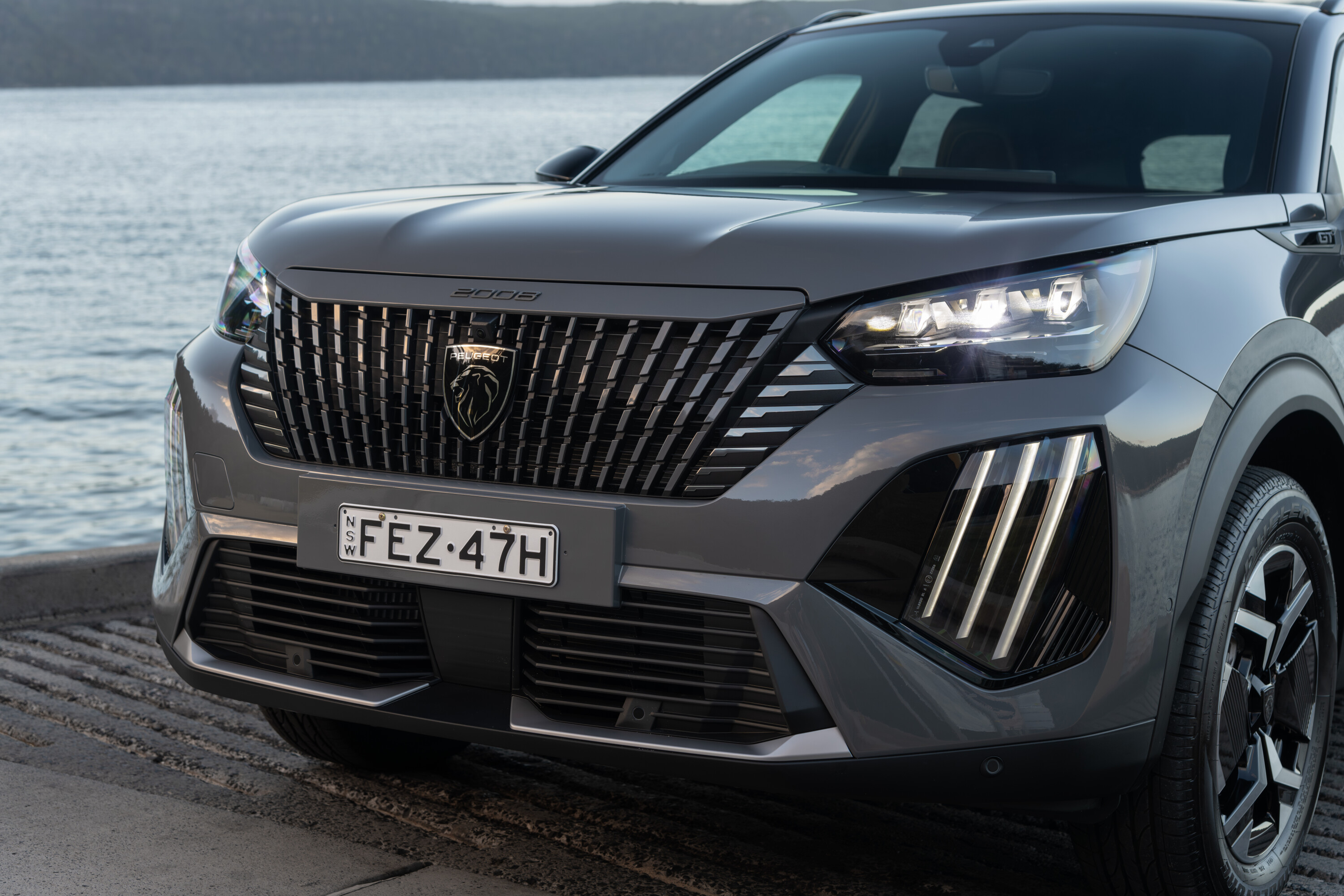
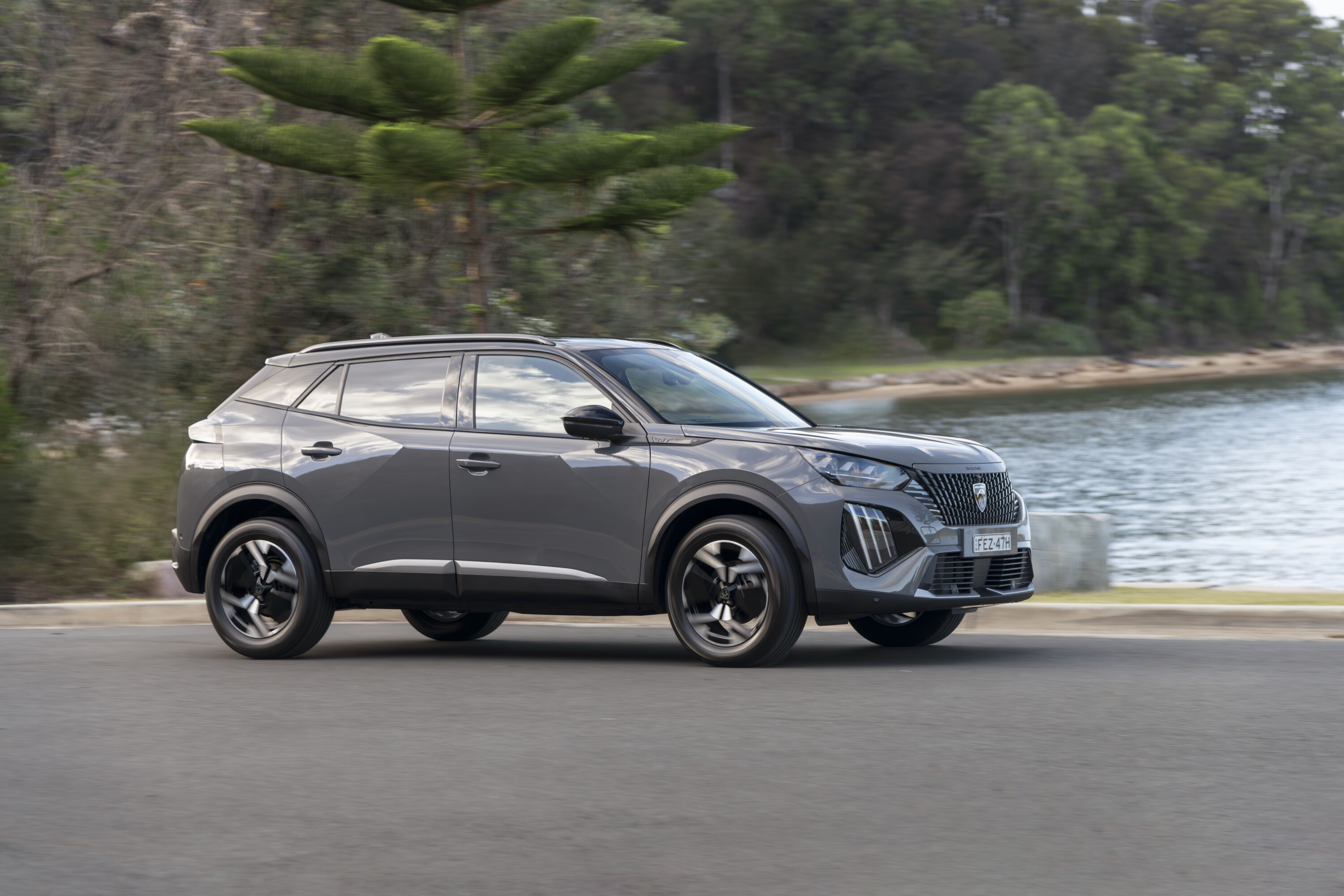
First detailed almost 12 months ago, the latest 2008 has a refreshed exterior design with Peugeot’s new lion badging, updated three-claw daytime running lights, a revised grille with body-coloured slats, 3D-effect tail-lights, chrome exhaust pipes, and black side mirrors.
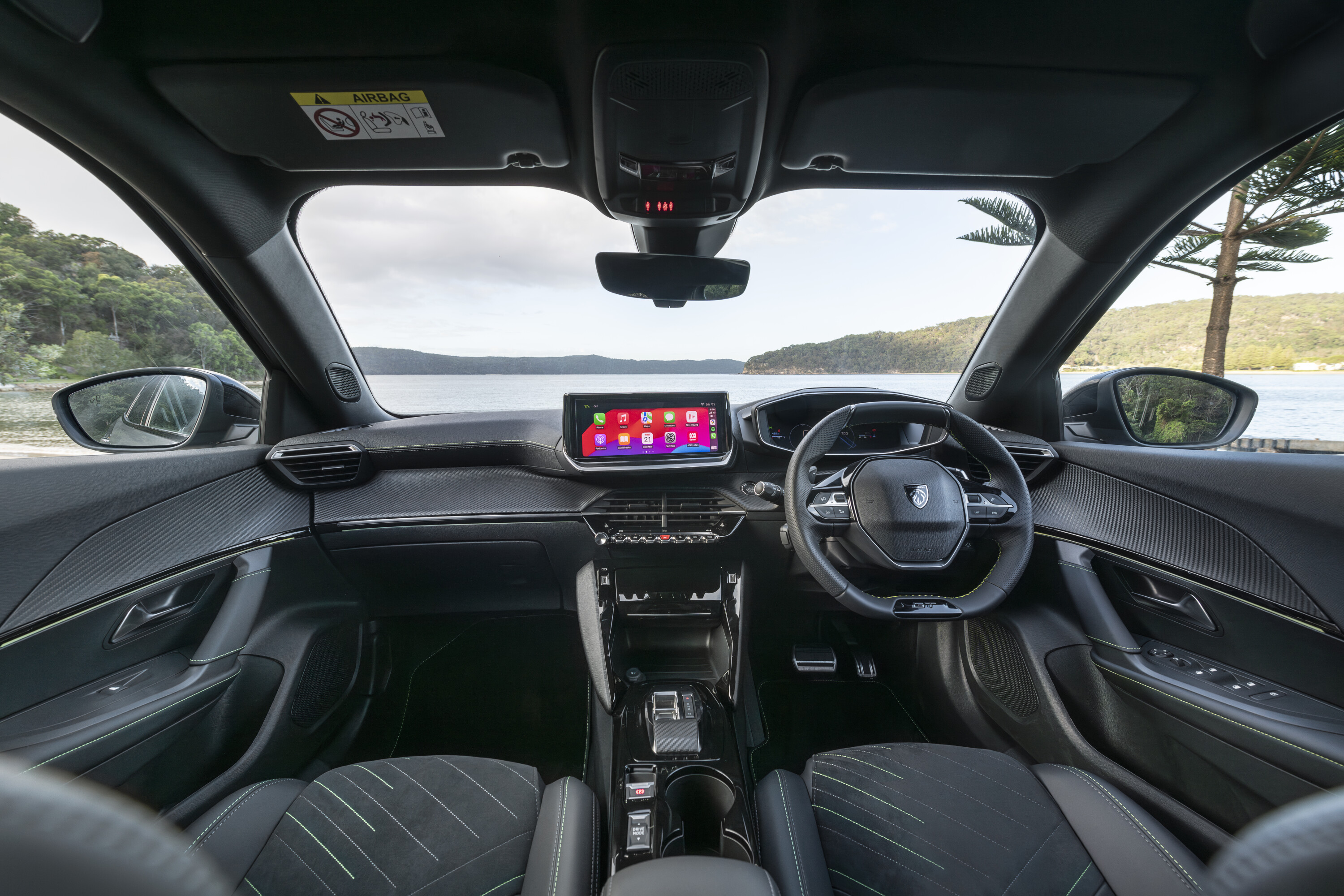
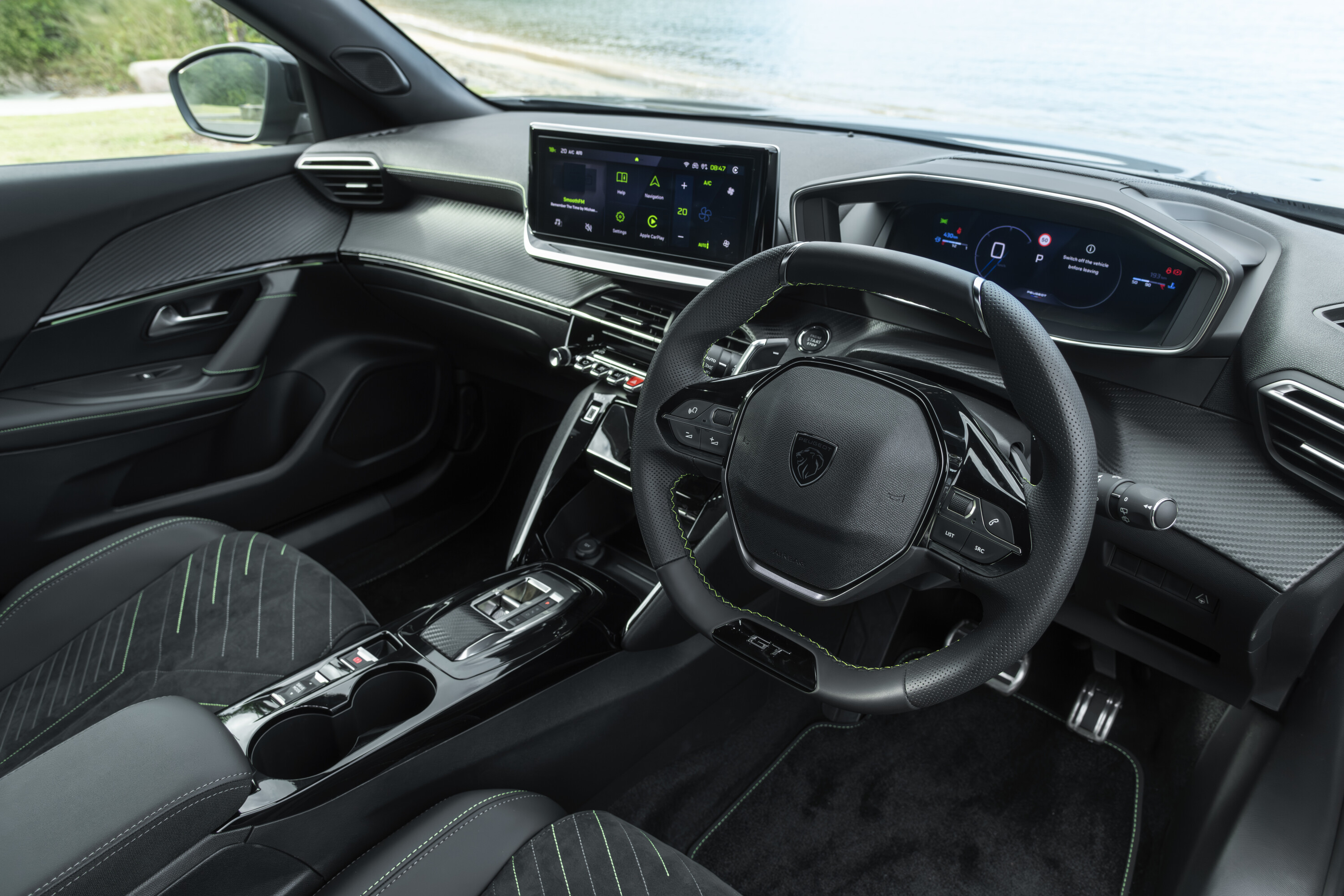
Inside, all variants receive updated trims and four USB-C charge ports to replace USB-A sockets, while the GT adds an ambient light strip on the dashboard linked to the selected drive mode and a 3D-effect function for its digital instrument cluster.
The 10-inch touchscreen now runs Peugeot’s latest infotainment system with wireless Apple CarPlay and Android Auto support, as well as built-in games including Tic-tac-toe, Hangman and 2048.
Other additions include front parking sensors, close obstacle detection when reversing, improved rear-view camera visibility, and proximity unlocking and locking as the driver walks towards or away from the vehicle.
Peugeot Connected Services is standard on the facelifted 2008, which allows for access to connected satellite navigation and over-the-air software updates.
The service requires a subscription, which can be purchased on Peugeot’s website or on the ‘MyPeugeot’ application – though a complimentary three-year trial period is included from the warranty start date.
Prices for the facelifted 2024 Peugeot 2008 have increased by around $1000 for the Allure and GT.
2024 Peugeot 2008 pricing
| Variant | Pricing | Change |
|---|---|---|
| Allure | $39,990 | up |
| GT | $44,490 | up |
| Prices exclude on-road costs.u00a0 | ||
2024 Peugeot 2008 features
| 2024 Peugeot 2008 Allure features | |
|---|---|
| 17-inch alloy wheels | Manual cruise control |
| 10-inch infotainment system | Rear-view camera |
| Wireless Apple CarPlay and Android Auto | Front and rear parking sensors |
| DAB+ digital radio | Tyre under-inflation detection |
| Six-speaker audio system | Single-zone climate control |
| USB-C charge ports (2x front, 2x rear) | Autonomous emergency braking |
| 10-inch 2D digital instrument cluster | Forward collision warning |
| Full-LED headlights | Multi-collision braking |
| Keyless entry and push-button start | Lane-keep assist |
| Fabric upholstery | Lane departure warning |
| Auto-dimming rear-view mirror | Driver attention alert |
2024 Peugeot 2008 GT features
| In addition to Allure | |
|---|---|
| 10-inch 3D digital instrument cluster | Full-grain leather-wrapped steering wheel with green stitching and GT badgingu00a0 |
| Wireless phone charger | Front and rear carpet floor mats |
| Built-in satellite navigation | Black-painted roof and spoiler |
| Voice control | Frameless auto-dimming rear-view mirror |
| Eight-colour ambient lighting | Illuminated vanity mirrors |
| Full-LED adaptive headlights | Puddle lamps |
| DRL integrated fog light function | Front door scuff plates |
| Bolstered-profile front seats | Alloy pedals |
| Alcantara and leather-accented upholstery with green stitching | 360-degree camera view |
| Power-adjustable driveru2019s seat with electric lumbar adjustment | Lane following assist |
| Heated front seats | Blind-spot monitoring |
| Massaging driveru2019s seat | Adaptive cruise control |
2024 Peugeot 2008 options
| GT Style Pack u2013 $2500 | |
|---|---|
| 18-inch black alloy wheels | Sunroof |
| 2024 Peugeot 2008 available colours | |
|---|---|
| Sellenium grey (new) | Okenite white (new)* |
| Nera black* | Artense grey* |
| Elixir red# | Veritgo blue# |
| * Metallic paint, $690 | # Premium paint, $1050 |
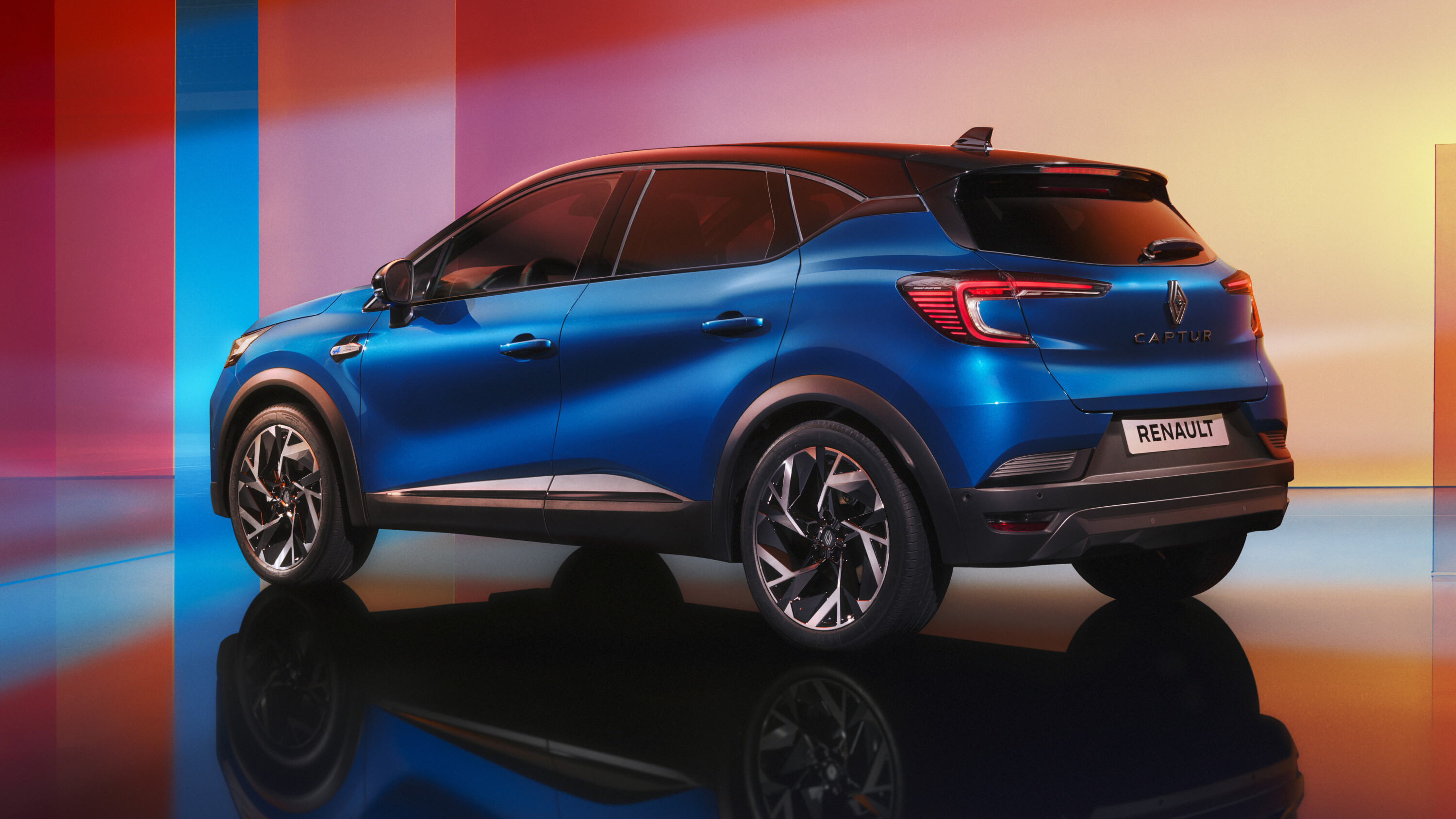
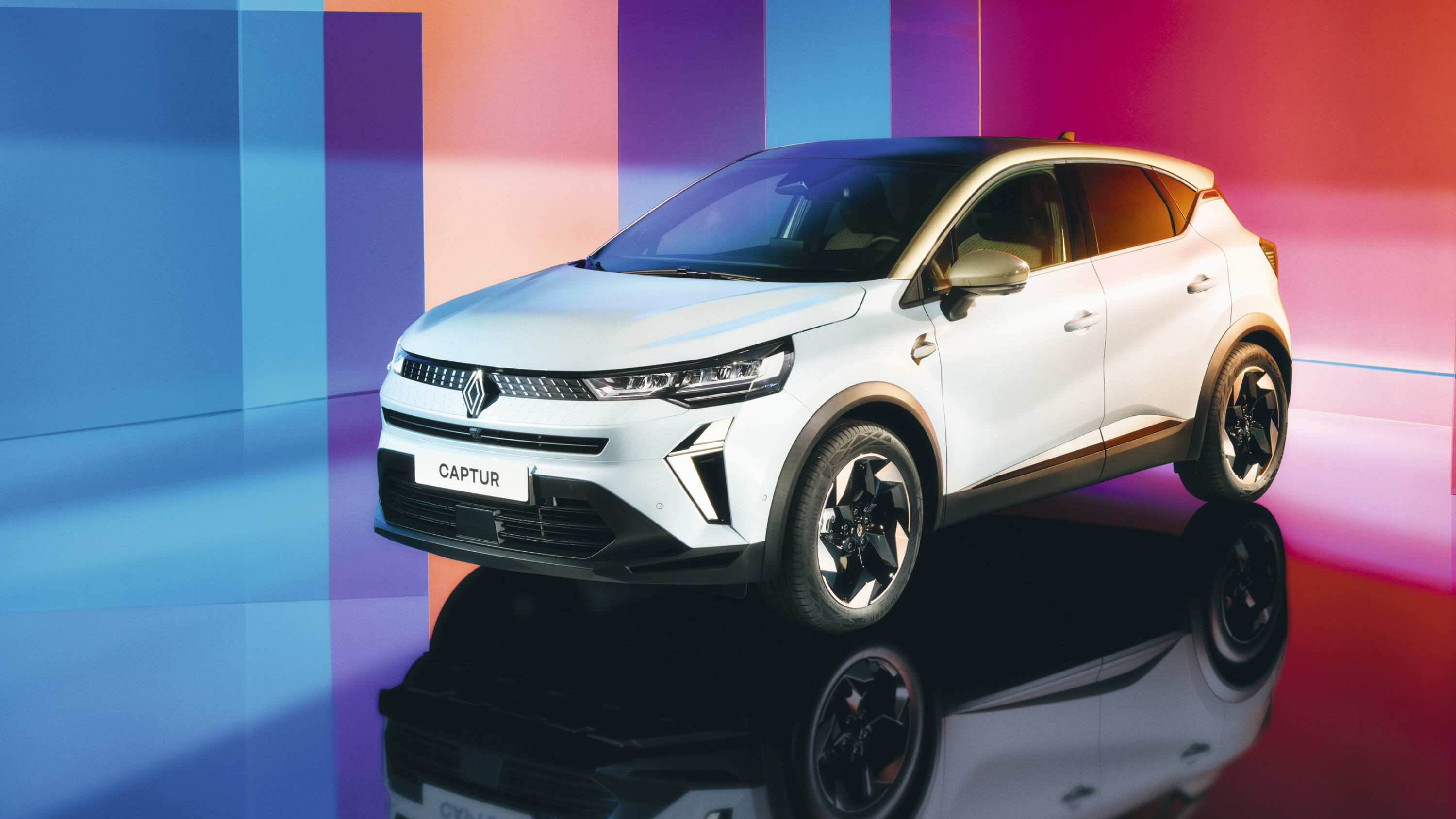
The updated 2025 Renault Captur has been revealed in the UK showing off new front-end styling, updated tech and new hybrid powertrain ahead of its expected Australian arrival in early 2025.
While Australian pricing, specifications and exact timing is yet to be confirmed, the new Captur has been unveiled in the UK with a three-tier model line-up offering two powertrains.
Like the Clio hatchback it shares its CMF-B platform with, the older Renault corporate front-end look has been ditched for the first major restyle of the second-gen Captur since 2021.
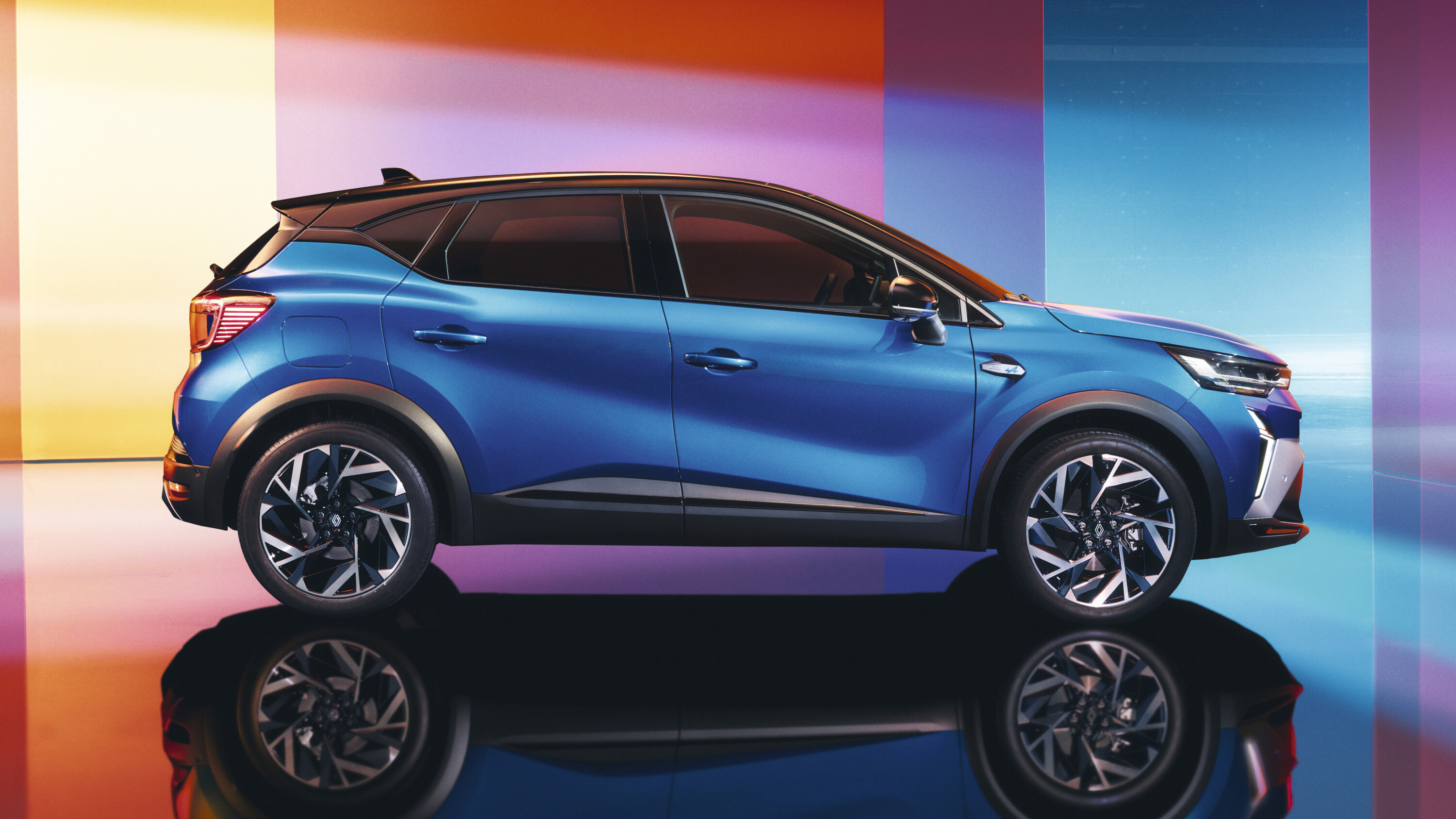
The major changes bring a sharper nose including new full LED headlights – standard on all UK models – as well as a new bonnet, grille and lower front bumper.
The doors and roofline are unchanged – carrying over details including the front mudguard grille – with minor tail-light revisions in a barely changed rear end.
New colours and wheel patterns will further distinguish the 2025 Captur from its predecessor, led by the new Ceramic Grey and continuing to offer Diamond Black roof colour options.
In Australia, the current Captur is offered in three trim levels, starting with the Life, Zen and flagship Intens versions.
Entry-level versions in the UK use 17-inch alloys with 18-inch wheels on higher-spec models, and 19-inch Michelin-shod versions on the flagship – called ‘Alpine’ in the UK.
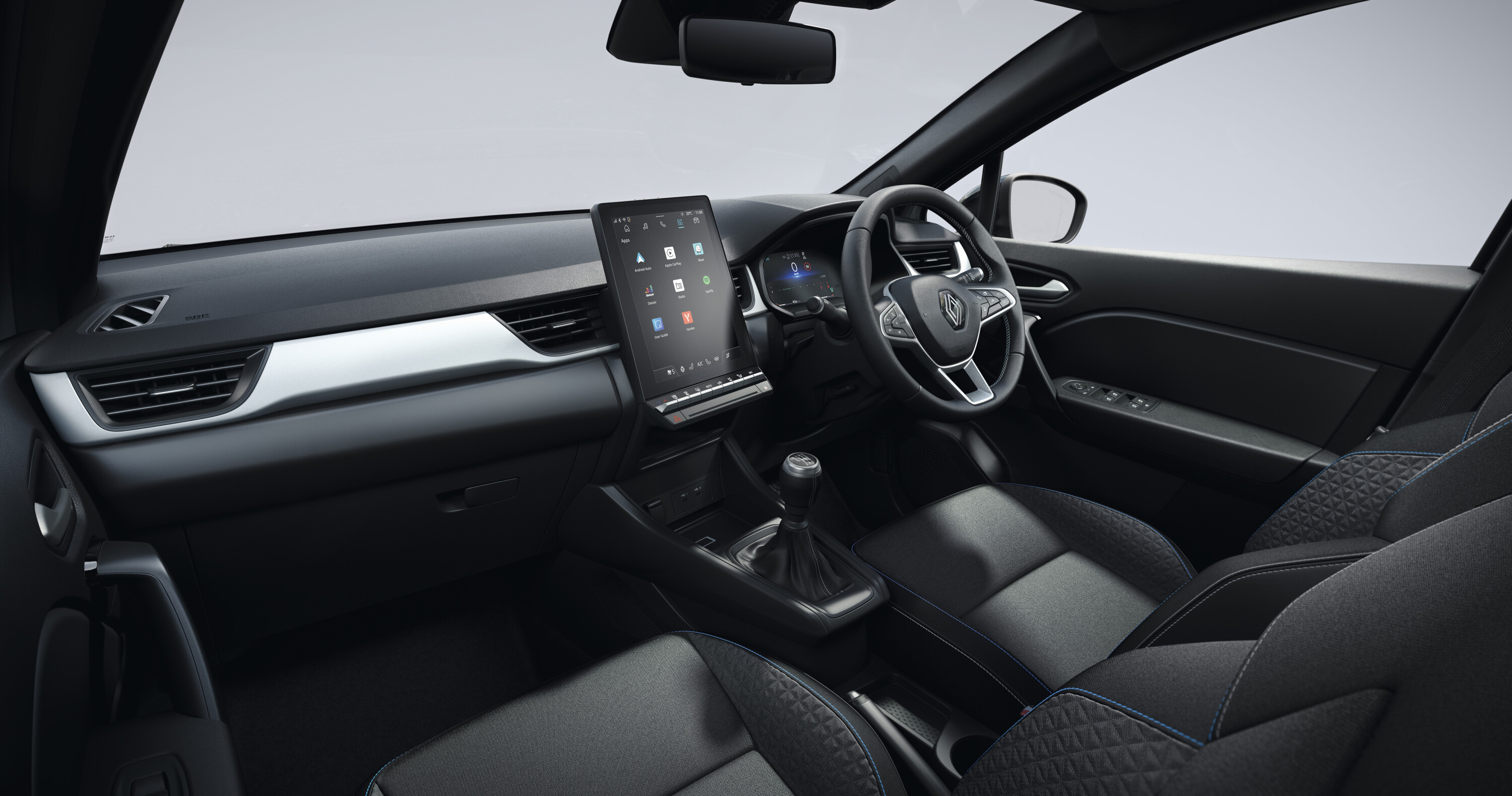
Cabin changes include a 10.25-inch instrument cluster and larger 10.4-inch infotainment screen – the largest screen in the current Captur being 9.3-inches – bringing wireless Apple CarPlay and Android Auto as well as USB-C ports for faster charging.
The inclusion of Android 12 software is a world-first for a B-segment vehicle, according to Renault, with Captur’s RLink system also offering Google services.
There are also new cabin materials designed to offer a more premium feel, but a concerted effort by Renault to offer no leather or chrome as part of the car maker’s push towards greater sustainability.
Instead, there’s grey fabric in low-spec Captur evolving to add yellow stitching and a diamond-pattern trim in the mid-spec, while the top level Captur – called ‘Alpine’ in Europe – presents a blue and grey cabin treatment extending to a dash covering.
The entry-level UK spec Captur runs a carryover 67kW/160Nm 1.0L three-cylinder turbocharged petrol engine and six-speed manual, but Australian models are expected to take only the new hybrid drivetrain.
The hybrid combines a 69kW four-cylinder petrol engine and semi-automatic transmission with two electric motors; a 36kW e-motor and an 18kW high-voltage starter generator for a combined 108kW and 205Nm.
Teamed with a 1.2kWh battery pack, the hybrid has a fuel figure of 4.7L/100km which compares favourably against the current car’s best claim of 5.4L/100km (highway).
In Australia, the hybrid is set to replace the 133kW/270Nm 1.3-litre turbocharged four-cylinder petrol engine and seven-speed dual-clutch automatic offered in the current Captur.
Curiously, the Captur hybrid features an exterior warning sound for pedestrians, composed by French artist Jean-Michel Jarre and functioning at up to 30km/h.
As well as the new powertrain, suspension upgrades and new shock absorbers promise a more dynamic driving experience.
What will the 2025 Renault Captur cost in Australia?
The 2025 Renault Captur is expected to cost slightly more than its current $39,500 (before on-road costs) starting price when it arrives in Australia in the first quarter of 2025.
Sales of hybrid and plug-in hybrid vehicles grew by 20 per cent in 2023 – accounting for one in 10 new-car sales.
More options are on the way in 2024, for buyers who maybe aren’t quite ready to commit to a fully electric car or are simply looking for a vehicle that delivers better fuel economy than a regular petrol or diesel model.
Toyota and Lexus, as the pioneers of hybrid technology, are in the mix, of course, though there are also significant combustion-electric models from the likes of Hyundai and Kia.
There’s even a first plug-in hybrid from Volkswagen, while we also cover new models featuring ‘mild hybrid’ 48-volt technology.
JUMP AHEAD
Small SUVs
Medium SUVs
- BYD Seal U
- Citroen C5 X Plug-in Hybrid
- Hyundai Tucson Hybrid
- Jeep Compass 4xe
- Kia Sportage Hybrid
- MG HS
- Mercedes-AMG GLC63 S E
Large SUVs
Passenger cars
Utes
Sports cars
- Chevrolet Corvette E-Ray
- McLaren Artua convertible
Crossovers
Small SUVs
Cupra Formentor VZe
The Spanish brand is moving to give its models a more instantly recognisable face with triangular lighting, and the Formentor will see such adjustments in the coming weeks, alongside the updated Leon hatchback and Born electric car.
The 2024 Formentor was snapped previously at a Cupra preview event and featured on sites such as Cochespias. The VZe plug-in hybrid uses a 1.4-litre petrol engine teamed with a battery pack and electric motor to drive the front wheels via a six-speed DSG automatic.
Lexus LBX
The new most affordable Lexus model, the LBX arrived in the first half of 2024 as the posh spin-off of the Toyota Yaris Cross baby SUV.
The LBX does share a platform and similar 4.2-metre length with the Toyota, but it features different styling treatments for its exterior and interior.
And while it utilises the same three-cylinder petrol engine under the bonnet, the Lexus adopts a bigger NiMh battery to drive its more powerful (100kW) hybrid set-up.
A three-model range comprises a front-wheel-drive Luxury or Sports Luxury and an all-wheel-drive Sports Luxury. In addition to an extra (rear) electric motor, the AWD features a more sophisticated multilink rear suspension and higher equipment level Sport Luxury includes a 13-speaker Mark Levinson audio system.
With its entry-price kicking off at $47,550 before on-road costs, Lexus’s new most affordable variant is on sale now.
Nissan Qashqai e-Power
A year after the launch of the latest-generation Qashqai, Nissan’s small SUV gains a new, more economical variant.
The Nissan Qashqai e-Power arrives as a rival to hybrid versions of the Toyota Corolla Cross, Honda HR-V, and Haval Jolion.
Unlike current Qashqai models powered by 1.3L four-cylinder engine, the e-Power follows the same tech route as the X-Trail e-Power – combining an electric drive motor with a petrol engine used as a generator.
As with Nissan’s midsized SUV, the e-Power variant sits at the top of the Qashqai range – priced from $51,590 before on-road costs.
That means it commands a $4200 premium over the petrol-engined Ti.
Toyota C-HR
Toyota’s style-driven compact SUV arrived in early 2024 in second-gen form – this time with hybrid-only drivetrain options.
The front-wheel-drive GXL and Koba models pair an Atkinson cycle 1.8-litre four-cylinder petrol with a 70kW/142Nm electric motor (17kW more than before thanks to twice as many motor magnets) for a total 103kW output.
The base car’s economy is 0.3L/100km better than before at 4.0L/100km.
At the top of the range, a new GR Sport variant grabs the 2.0L petrol and electric motor combination from Toyota’s other small SUV, the Corolla Cross, to offer all-wheel drive and total power of 146kW.
Pricing has jumped dramatically, with the 2WD C-HRs increasing by more than $11,000, or 35 per cent.
Medium SUVs
BYD Seal U
The Seal U plug-in hybrid SUV looks set to arrive in 2024 as a rival to the Mitsubishi Outlander PHEV.
Although not yet officially announced for Australia, government documents show the Seal U has been approved for sale here, with two ‘DM-i’ plug-in hybrid models – both listing all-electric driving range.
Pricing has likewise not been confirmed, but a starting point in the neighbourhood of $52,000 – where it would take on the ageing MG HS ‘Plus EV’ plug-in hybrid – could be on the cards.
Citroen C5 X PHEV
After a mighty long delay, Citroen’s plug-in hybrid high-riding C5 X is nearly here. It was expected in 2023, but will now arrive sometime in the first half of 2024.
The plug-in hybrid pairs a 133kW/250Nm 1.6-litre turbo petrol engine with an 80kW electric motor and 11.9kWh battery for around 50 kilometres of claimed electric driving range.
The C5 X is Citroen’s first plug-in hybrid to be offered in Australia.
Hyundai Tucson Hybrid
Tucson became Hyundai’s best-selling model in 2023, overtaking the brand’s perennial local No.1, the i30 small car.
The Tucson will receive a further boost mid year, when not only does a facelifted model arrive but it will include the nameplate’s first hybrid drivetrain.
Crucially, it gives Hyundai a direct rival to the popular Toyota RAV4 Hybrid.
The Tucson Hybrid, which uses a version of the petrol-electric system in the larger Santa Fe SUV, won’t be quite as economical, though – at least according to official figures.
WLTP-rated combined-cycle economy is 5.9L/100km for the front-wheel-drive Tucson Hybrid, compared with 4.8L/100km for the 2WD RAV4 Hybrid.
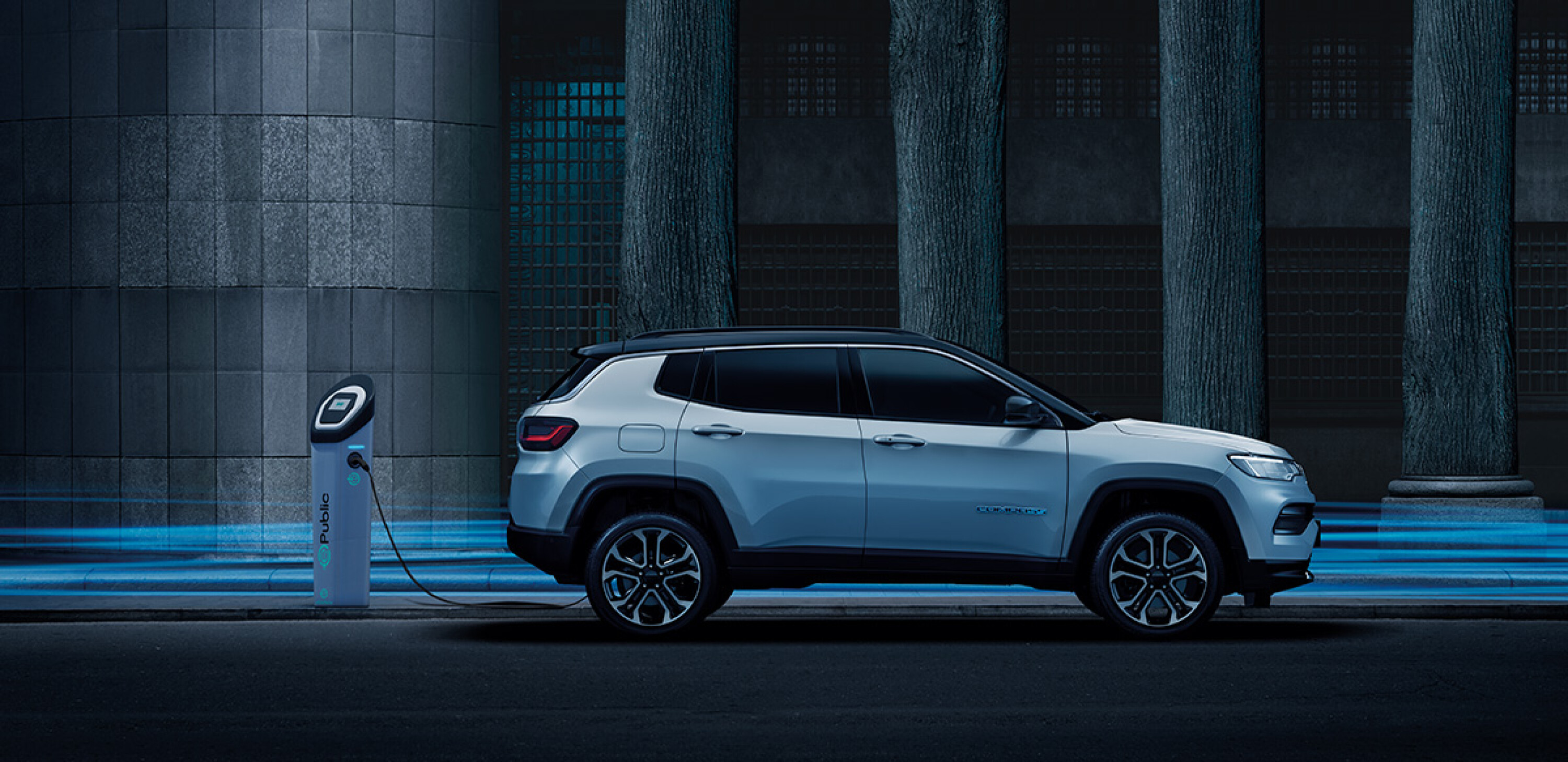
Jeep Compass 4xe
Jeep’s entry-level model is ditching regular combustion engines in 2024.
In place of the 2.4L ‘Tigershark’ petrol and 2.0L turbo-diesel four-cylinder engines will come an e-Hybrid model featuring a 48V-boosted turbo petrol and a plug-in hybrid 4xe (four-by-ee) variant.
The mild-hybrid Compass compact SUV is front-wheel drive and claimed to offer limited electric-only driving for start-up, low-speed driving, and parking.
More power and all-wheel drive are provided with the 177kW Compass 4xe, using a similar set-up to the Grand Cherokee plug-in hybrid.
Both variants are due in the first half of 2024.
Kia Sportage Hybrid
Kia’s petrol-electric Sportage mid-size SUV arrived in March to take on the Toyota RAV4 hybrid.
There are two specs with the SX fitted with 17-inch alloy wheels, cloth upholstery and a 12.3-inch screen costing $45,950 and the leather-upholstered GT-Line flagship (now with heated steering wheel) $55,420, both before on-road costs.
The top-spec GT-Line steps down to 18-inch alloys (normally 19s) for aerodynamic purposes. Braked towing capacity for the hybrid matches petrol auto Sportage variants at 1650kg.
Kia’s front-wheel drive hybrid powertrain sends its 169kW/350Nm outputs through a six-speed torque converter automatic. Its ADR 81/02 combined consumption rating is 4.9L/100km, just 0.1L/100km shy of a RAV4 hybrid.
The hybrid powertrain is expensive, though, marking an $8400 premium over the 2.0-litre petrol SX and $5700 compared to the GT-Line AWD petrol.
An entry-level Sportage Hybrid S or mid-spec Sportage Hybrid SX+ will not be offered at launch due to limited supply.
MG HS Plus EV
It’s not officially revealed, but we know a new generation of MG’s midsized SUV will debut in 2024.
Patent images point to a rebadged Roewe RX5 already on sale in China.
Details are extremely limited for now, though a plug-in hybrid variant – currently badged Plus EV in Australia – is again anticipated.
The HS is a crucial model for MG as it competes in Australia’s most popular vehicle segment.
Mercedes-AMG GLC63 S E
Like the wagon versions, the GLC 43 gets a mild-hybrid four-cylinder producing 310kW/545Nm while the 63 S E Performance uses the same setup as the C 63 sedan – that means 500kW and 1020Nm for the medium SUV.
Pricing and features are yet to be confirmed but don’t expect much change from $160K for the GLC 43, while the 63 will likely push $200,000 before on-road costs.
Large SUVs
Think of the Tank 500 as China’s answer to the Toyota Prado replete with a hybrid powertrain.
While it is closer in size to the Toyota LandCruiser 300 Series, the GWM Tank 500 starts at just $66,490 drive-away for the Lux Hybrid variant.
It features a 358kW/615Nm petrol-electric hybrid powertrain with a nine-speed automatic, low-range transfer case and locking front differential.
The range-topping Tank 500 Ultra Hybrid is priced at $73,990 drive-away and adds partial Nappa leather upholstery, a 12-speaker sound system and a locking front differential.
Braked towing capacity for the GWM Tank 500 is rated at 3000 kilograms, equivalent to the current Toyota Prado but down on the Ford Everest’s 3.5-tonne capacity.
Hyundai Santa Fe Hybrid
A petrol-electric variant will once again play flagship as a dramatically styled fifth-generation Santa Fe lands in the second quarter of 2024.
It will also be the sole drivetrain at launch, though turbo-petrol power is expected to arrive later to offer more affordable alternatives, with the outgoing large SUV’s diesel four-cylinder and V6 petrol engines heading for the exit.
Santa Fe’s hybrid drivetrain will again combine a 1.6-litre turbo petrol engine with an electric motor, with part-time all-wheel drive. Total outputs are 169kW and 350Nm.
The current Santa Fe Hybrid starts from $63,000, but expect a price increase for the replacement.
Mazda CX-90 PHEV
Mazda’s posher seven-seater SUV debuted in 2023 with six-cylinder turbo petrol and turbo diesel engines. While these inline motors feature (very) mild-hybrid tech with the ability to coast with the engine off, they don’t have the potential to save as much fuel as a hybrid.
Thankfully, that changes in 2024 with the addition of a PHEV (plug-in hybrid vehicle) variant. Although official fuel consumption has yet to be confirmed, the PHEV’s combination of 2.5-litre four-cylinder petrol engine and electric motor is guaranteed to bring better figures than either the petrol or diesel 3.3L six-cylinders – 8.2L/100km and 5.4L/100km, respectively.
As a PHEV, the plug-in CX-90 offers some limited electric-only driving – up to 42km, officially.
The downside is that, based on the Mazda CX-60 range that also offers a variety of drivetrains, the PHEV can be expected to ask a significant price premium over the six-cylinder models.
Mazda will also release its first ever CX-80 large SUV in 2024, which may also be offered with a plug-in hybrid powertrain.
Toyota Prado ‘i-Force Max’
The all-new Toyota Prado goes on sale mid-year with 48-volt technology, though a full hybrid hasn’t been ruled out for Australia.
In North America (and China), where the model will be known as the LandCruiser 250, the Prado is available with an ‘i-Force Max’ drivetrain combining a 2.4-litre turbo petrol engine and electric motor integrated into the eight-speed auto gearbox.
It produces combined outputs of 243kW and 630Nm to offer more grunt than the 150kW/500Nm 2.8-litre turbo diesel and 48V battery combo in the only drivetrain confirmed for our market so far.
As the full hybrid, unlike the 48V system, can also power wheels with the electric motor, it should also be more economical, though Toyota has yet to provide any fuel consumption estimates.
Volkswagen Touareg R
Volkswagen’s first plug-in hybrid for Australia will, perhaps surprisingly, be a model wearing the German brand’s performance ‘R’ badge.
The VW Touareg R, which has been delayed a couple of times, will finally arrive in March – as part of a facelift for the wider line-up of the large, five-seater SUV.
Where other Touareg models employ diesel power, the R features a 250kW 3.0-litre turbo-petrol V6 borrowed from the related Audi Q7 55 TFSI, matched to a 100kW electric motor.
In total, the Touareg R produces 340kW and 700Nm to become the most powerful series-production VW yet.
Although its 5.1sec 0-100km/h claim is slower than the 4.9 seconds of the now-discontinued 310TDI V8, a 14.3kWh lithium-ion battery pack provides a 51km electric-only driving range to help achieve low official fuel consumption of 3.3L/100km.
Passenger cars
MG3
The new MG3 was revealed in February, with the brand’s Australian arm confirming it will offer a hybrid option when it lands in late 2024.
The hybrid system combines a 75kW/128Nm 1.5-litre four-cylinder petrol with a 100kW/250Nm electric motor for a 143kW total system output.
It has a 1.83kWh battery and offers four drive modes: Electric-only, series-hybrid, ‘series and charge’, ‘drive and charge’, and parallel-hybrid.
A WLTP-rated combined fuel consumption of 4.4L/100km is claimed, compared to 6.7L/100km for the outgoing model under the less stringent ADR testing cycle.
Pricing is still to be confirmed, although MG Australia has confirmed that “due to advancements in technology, safety and specification”, the new MG3 will not be priced from under $20,000 when it arrives in local showrooms.
Honda Accord
After being told we’re not getting the new hybrid-only Accord several times, Honda’s finally flipped – the midsize sedan is coming to Australia after all.
Pricing is yet to be set for the hybrid-only Accord that’s set to arrive in the second quarter of 2024(April-June inclusive) in a single e:HEV RS trim.
The Accord e:HEV RS uses Honda’s fourth-gen hybrid system, the same found in the current CR-V. It employs a 2.0-litre Atkinson cycle petrol engine and twin electric motors for total outputs of 152kW and 335Nm.
We expect the Hyundai Sonata and Toyota Camry rival to carry a premium over the smaller Civic hybrid ($55,000 drive-away) and arrive in dealers priced around $60-65K drive-away.
Honda Australia has yet to confirm where it will source Accord production (it’s built in the United States, China, and now Thailand) however, Thailand is most likely.
Toyota Camry
The ninth-generation Camry will go fully hybrid when the range launches in the second half of 2024.
Despite Toyota claiming the midsize sedan is a new generation, it’s really a deep facelift with new bumpers, freshened sheet metal, and jazzed-up cabin. The key hard points are unchanged from the eighth-gen sedan.
Toyota claims “lighter and more compact electric motors” produce more power – likely employing the new NiMh battery chemistry found in the Japanese Aqua hatch and global Lexus LBX.
North American markets get the option of AWD for the first time but Aussie cars will keep front drive.
Inside, there’s design influence from almost every new Toyota: C-HR, bZ4X, Crown and more.
The new 8- or 12.3-inch multimedia touchscreen has fresh software for wireless Apple CarPlay and Android Auto, and the available ‘Hey, Toyota’ intelligent assistant.
Pricing is yet to be announced but expect it to move North from the current $35,051 (before on-road costs) Ascent petrol variant.
Utes
BYD ute
The highly ambitious Chinese brand BYD (Build Your Dreams) will continue its Australia product assault in 2024 with at least two new vehicles – one of which, crucially for this market, is a dual-cab ute.
Already spotted testing on local roads, the as-yet-named rival for the likes of the Ford Ranger, Toyota HiLux and Mitsubishi Triton will initially be offered with a plug-in hybrid drivetrain.
BYD is said to be targeting a 1000-kilometre-plus driving range for the petrol-electric Ute.
An all-electric version of the BYD Ute will follow around 12 to 24 months later in 2025 or 2026.
GWM Cannon Alpha
The GWM Cannon Ute’s bigger brother is on its way to Australia, bringing more carrying space and greener motoring from mid 2024.
When it arrives, the Cannon Alpha will be the first hybrid ute in Australia, beating the new Ford Ranger PHEV to market by a few months at least, along with others like the hybrid HiLux and the recently teased BYD plug-in hybrid ute.
As a big brother to the Cannon already sold in Australia, the Cannon Alpha measures 5440mm long (+30mm over the Cannon), 1991mm wide (+57mm) and 1924mm tall (+38mm), rolling on a 3350mm wheelbase (+120mm).
In Australia, the Cannon Alpha will be sold with a 2.0-litre turbo petrol hybrid powertrain, its combustion and electric motors combining to deliver 255kW and a huge 648Nm. On their own, the motors produce 180kW/380Nm and 78kW/269Nm respectively.
Isuzu D-Max mild-hybrid ute
Stepping into carbon neutrality, Isuzu reveals hybrid and EV concepts, with some headed for Australia.
The 2025 Isuzu D-Max High-Lander MHEV is powered by a 1.9 litre “DDi Blue Power” turbo-diesel engine, combined with a 48V mild hybrid drivetrain.
Isuzu Thailand states that this setup is designed “to reduce the engine workload during startup, reducing vibration and helping to reduce CO2,” with no power, range or technical figures speculated yet.
Toyota HiLux 48V
Don’t call it a hybrid, says Toyota of its ‘V-Active’ 48-volt electrical system now available on 2024 HiLux SR, SR5, and Rogue trims.
Toyota’s 48-volt strengthened 2.8-litre diesel engine generates the same 150kW at 3400rpm and 500Nm between 1600-2800rpm as regular HiLuxes, though is said to improve fuel efficiency by up to five per cent compared to the conventional diesel powertrain.
Toyota has yet to quantify efficiency improvements.
When charged through regenerative braking, Toyota says the 48V battery sends up to 12kW and 65Nm of additional power and torque, respectively, through the motor generator to the engine “to enhance acceleration, power and efficiency”.
Prices are available, though, with V-Active equipped SR models between $1025-1605 dearer, and the technology fitted standard to SR5 and Rogue dual-cab trims.
Initial examples will begin arriving in March/April.
Toyota Tundra
It’s all but official that Toyota will take on the Ford F-150, Ram 1500 and Chevrolet Silverado with its own US-sourced full-size pick-up.
A few hundred ‘prototype’ examples of right-hand-drive-converted Tundras will be the hands of cherry-picked Australian customers by April, as part of an intensive local development program.
While Toyota Australia makes us wait longer for official confirmation, the local Tundras – converted by local company Walkinshaw Automotive Group – feature an ‘i-Force Max’ petrol-electric drivetrain with 326kW and 790Nm.
Sports cars
Chevrolet Corvette E-Ray
Chevrolet’s latest-generation sports car icon has hitherto been offered in Australia with a normally aspirated V8 engine, but this year gains electrified power for the first time.
Confirmed a year ago for this market, the Corvette E-Ray hybrid links the 6.2L ‘LT2’ V8 found in the regular coupe and convertible with a 119kW/170Nm electric motor.
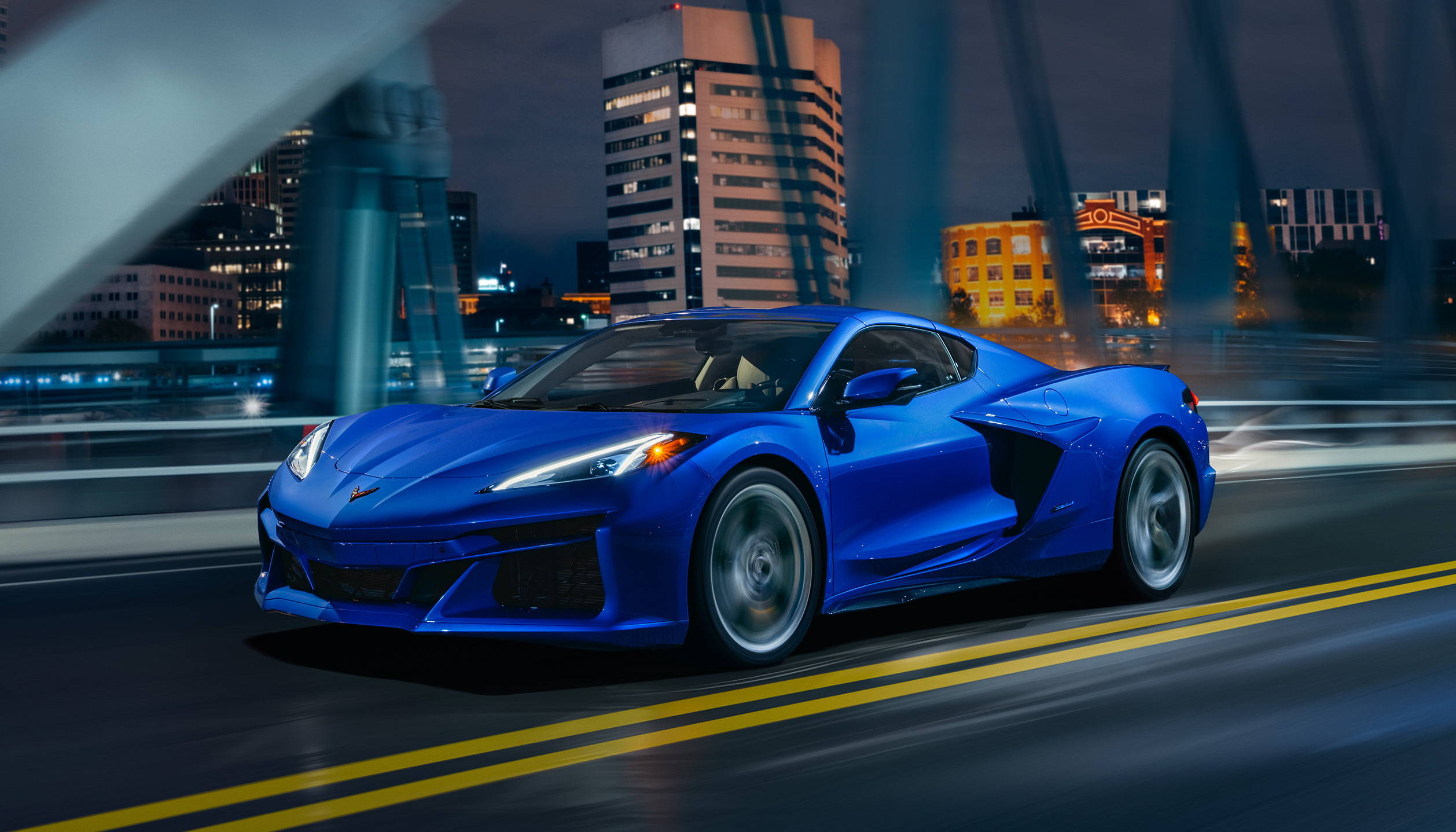
With a total power output of 448kW not far behind the 475kW of the track-and-road-focused Z06 also coming this year, the E-Ray is actually the fastest-accelerating Corvette with a claimed 0-60mph (0-97km/h) time of 2.5 seconds and a quarter-mile (0.4km) time of 10.5 seconds (a tenth quicker than the Z06).
Pricing for the Corvette E-Ray has yet to be confirmed, but expect a number north of $250,000.
Crossovers
Peugeot 408
Part sedan, part SUV, Peugeot’s 408 will arrive in the third quarter in just one model grade with a sole powertrain option.
Which is no shame, really, as sampling petrol and hybrid 408s in Europe reveals the 165kW petrol-electric option in question to be the prime choice. It combines a 1.6-litre turbo-petrol with an 81kW electric motor and 12.4kWh battery pack for 0-100km/h in 7.8 seconds and 64km of electric-only range.
A price tag is yet to be confirmed, but it’s safe to expect a bit of a premium for going so bold. An estimate based on its 308 sibling suggests it’ll start north of $70,000, although Peugeot goes hard on standard equipment these days and the 408’s interior will drop your jaw with its design while feeling immaculately put together.
This is a premium player and a far cry from outdated French car cliches.
“Those foam brushes will ruin the paint on your car”
I’m almost certain this is the advice most people will receive when they first purchase a new car.
You see, the self-service car wash presents a double-edged sword: a quick and cost-effective way to maintain your car’s cleanliness but at the same time you’re risking potential damage if it’s not done correctly.
However, a Brisbane-based car detailing expert Jack Dew (@detailking [↗️]) seems to have cracked the code, offering a blueprint for an efficient, cost-effective and safe car wash process that’s taken TikTok by storm. His bio further proved his confidence as “The King of Detailing ?”.
The viral video which has amassed 6.5 million views so far proves that there are plenty of people who don’t actually the best practice when it comes to cleaning your car yourself… until now.
@detailking How to use the self serve car wash safely! #detailing #xyzbca #brisbane #carwash #foryou ♬ original sound – DetailKing
How to DIY at your local car wash
At the heart of this expert’s method is a streamlined, five-step routine designed to maximise cleanliness while protecting the vehicle’s integrity—all within a ten-minute timeframe and around $10.
Let’s take a closer look at each step.
Tackle the tyres first
Tyres can be the dirtiest part of the car and require special attention. Use a dedicated tyre cleaner, but apply it carefully to avoid splashing onto the car’s paint, which could cause damage. And don’t take our word for it, the machine itself notes not to get any of the solution onto any other part of your car.
Applying the cleaner directly to the ground first can help control the spread and ensure not to get any of it on the paint.
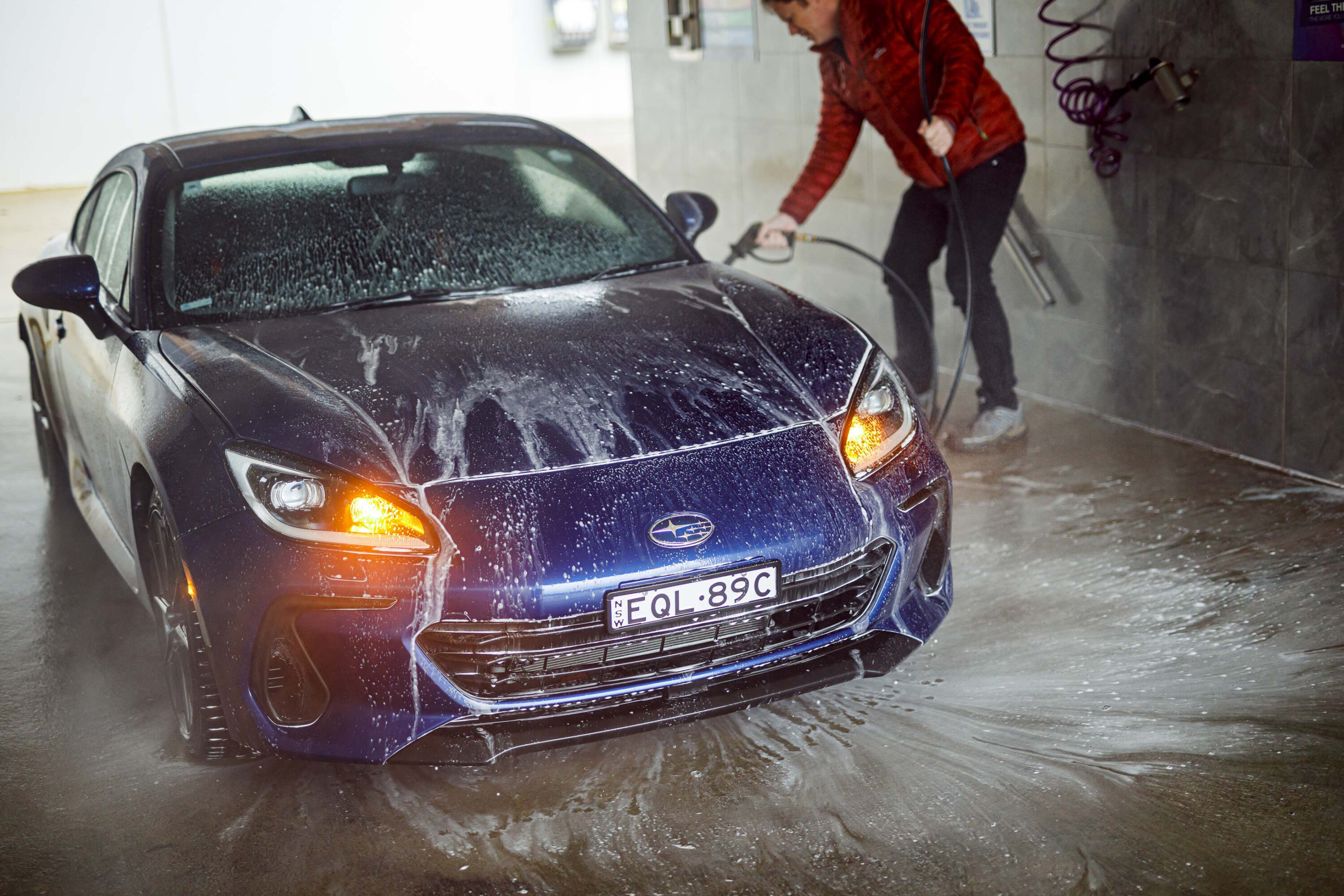
The Pre-Soak Phase
Following the tyre cleaner, the next step involves a generous application of pre-soak solution over the entire vehicle. This helps loosen dirt and grime, making the subsequent washing steps more effective. Jack suggests you “spray it on the ground” to watch for the solution to change colour ensures you’re using the right products without harming the paint.
One commenter noted that contactless washing didn’t work to clean marks off her car to which the creator responded that the “chemicals should loosen the dirt, scrubbing is never good”. But if those pesky marks need the extra nudge that a “wash mit and bucket” is the safest option.
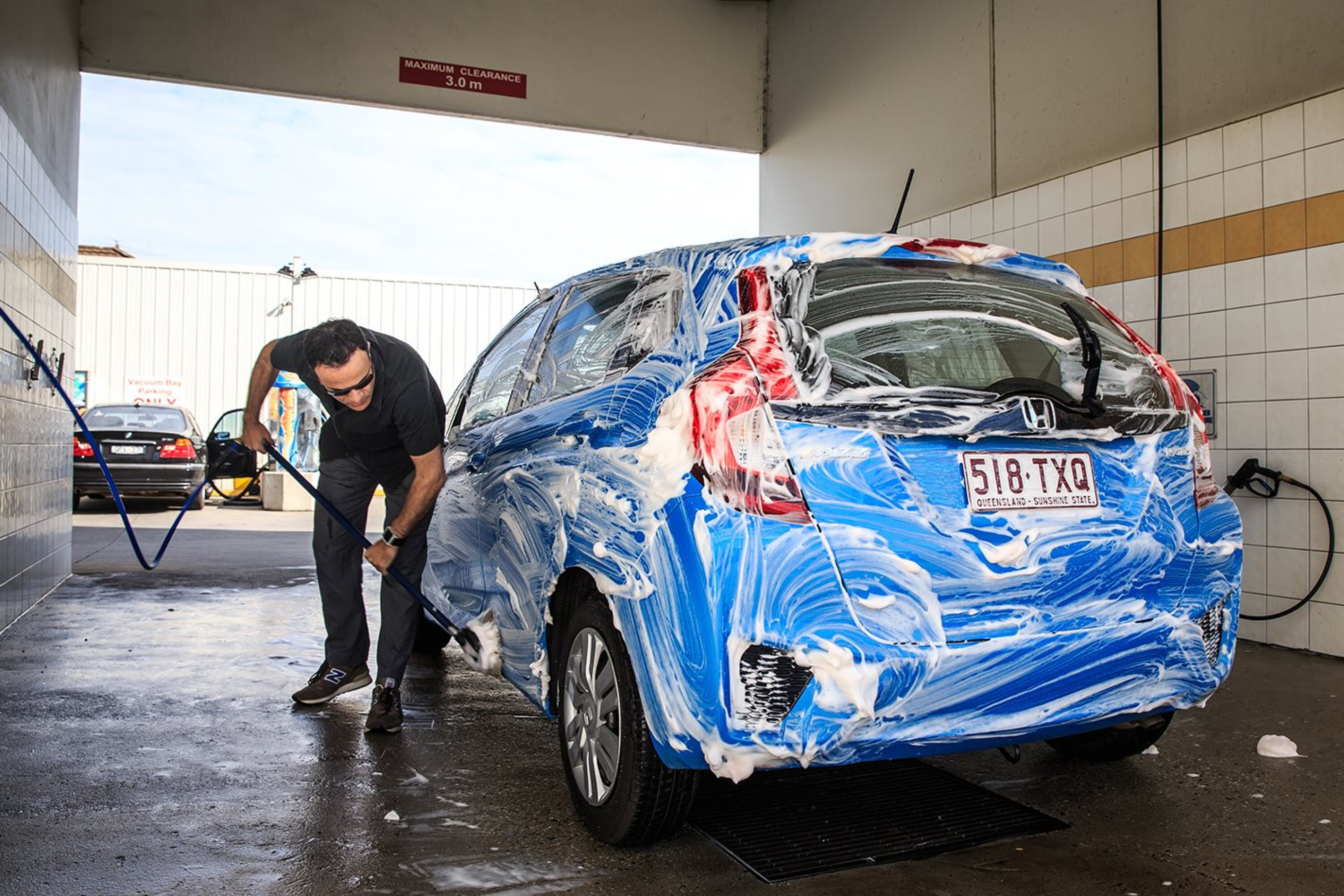
Foaming Brush With Care
Perhaps the “most controversial step” at any self-service wash is the foaming brush. The key here is to thoroughly rinse the brush with soap via the water nozzle before using it on your vehicle to remove any debris that could scratch the paint.
Jack notes that some people use the brush to remove mud off their car, which could end up being spread onto yours, causing scratches. He recommends using the brush solely on the wheels to avoid any risk to the car’s actual body and proceeds to rinse it off before moving to the next step.
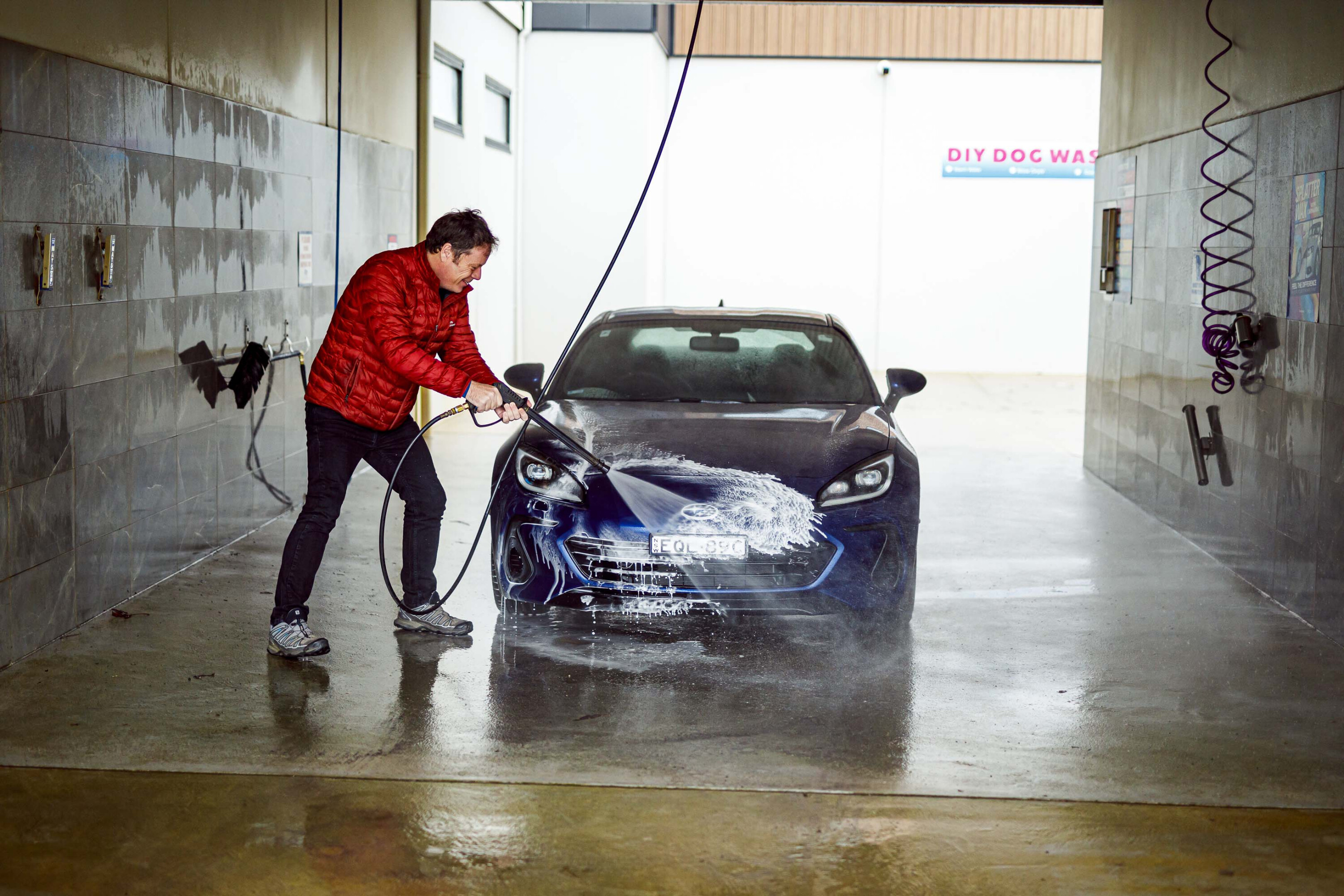
Splatter Wax for the Finish
Applying a layer of wax not only adds a gleaming finish to your vehicle but also provides an additional layer of protection until the next wash. He calls it “arguably the best part” of the process.
Once the splatter wax has been applied he follows it up with a high pressure wax to ensure the vehicle is protected. After rinsing the vehicle off with water, water drops will bead down the car
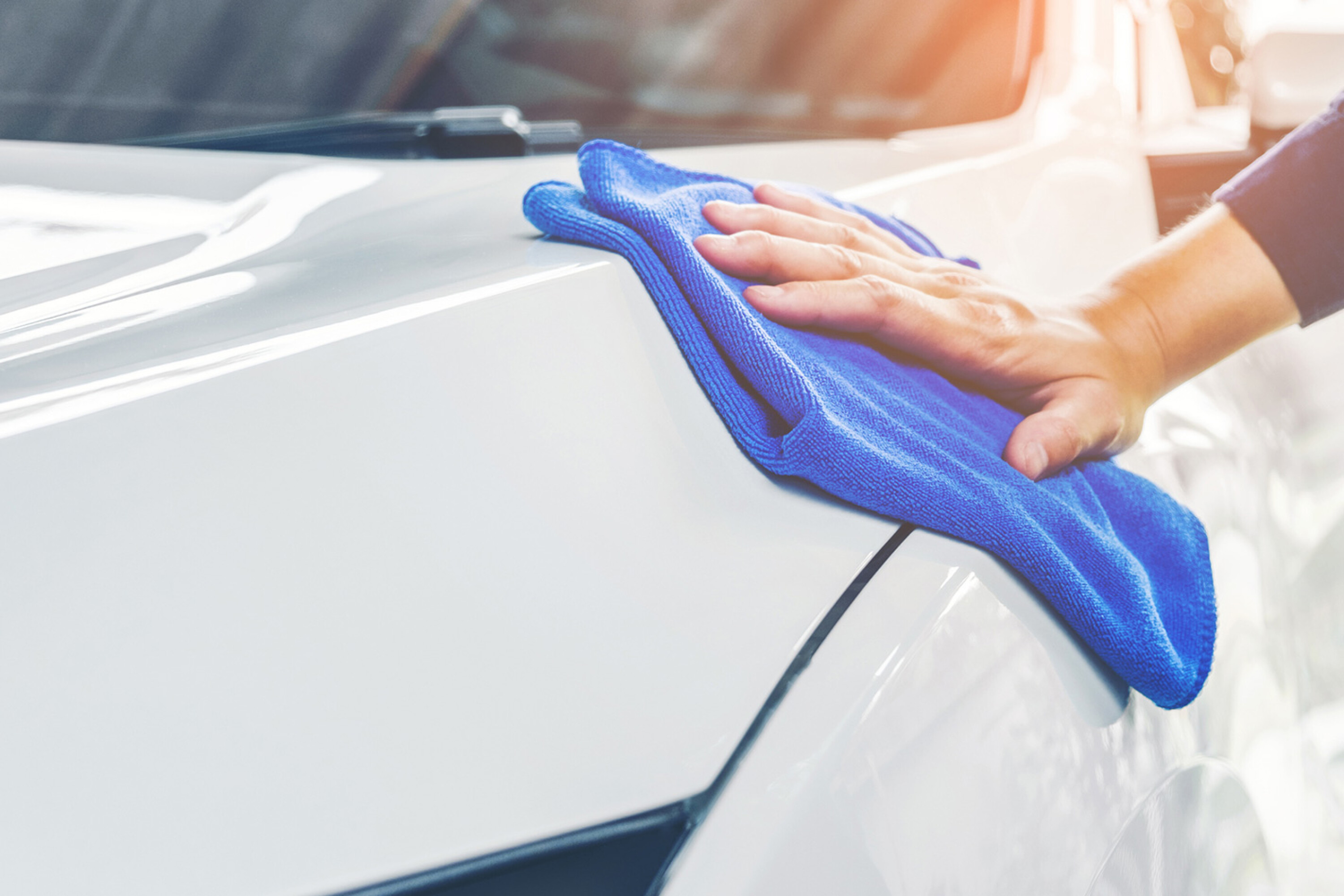
Drying Off
The final step involves hand drying your vehicle with a clean, soft towel. This is crucial for avoiding water spots and ensuring your car looks its best. Starting from the top, work your way down to prevent drips on already dried areas.
As an expert detailer, Jack noted that he doesn’t get much time to clean his own car after working on clients vehicles all day, so the self-service car wash allows him to safely and quickly get the job done during a quiet evening.
If the experts are saying it themselves, maybe the foaming brushes are better left alone, I think to myself, while using the foaming brush.
Snapshot
- First Australian details confirmed for facelifted 2025 VW T-Cross
- Light SUV receives more standard features and standalone R-Line flagship variant
- Due to arrive in Australia in September
First Australian details for the 2025 Volkswagen T-Cross have been announced ahead of its launch later this year.
Volkswagen Australia has confirmed the facelifted T-Cross will arrive in local showrooms in September with more standard equipment – and a dedicated R-Line variant to replace the current option package.
All variants – Life, Style and R-Line – will receive a Travel Assist function for semi-autonomous highway driving, softer and higher-quality dashboard plastics, and an 8.0- or 10.25-inch digital instrument cluster.
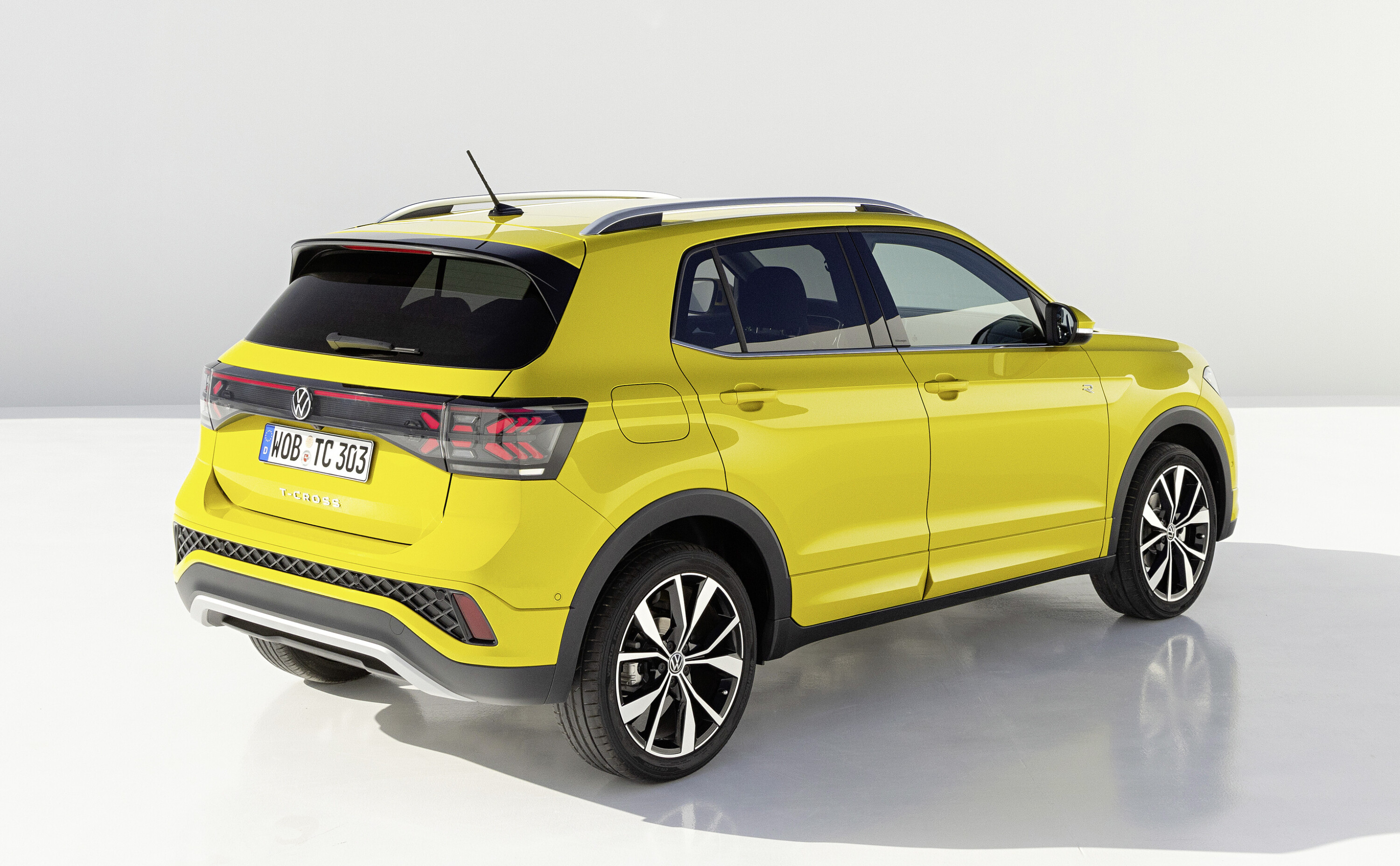
The entry-level Life also adds some features previously exclusive to the Style, including LED headlights (replacing halogens), blind-spot monitoring and rear cross-traffic alert.
It also receives adaptive cruise control, automatic high beam, automatic parking, and proactive occupant protection when an imminent collision is detected.
Style and R-Line variants add matrix LED headlights with an illuminated grille strip and leatherette dash and door inserts, while content previously limited to the optional Sound & Vision package will become standard-fit.
This includes built-in satellite navigation, wireless Apple CarPlay and Android Auto, voice control and a 10.25-inch digital instrument cluster.
The R-Line variant was previously available as an option pack for the T-Cross Style, but it has become a standalone model as Volkswagen Australia has removed all optional equipment to reduce complexity – except for premium paint.
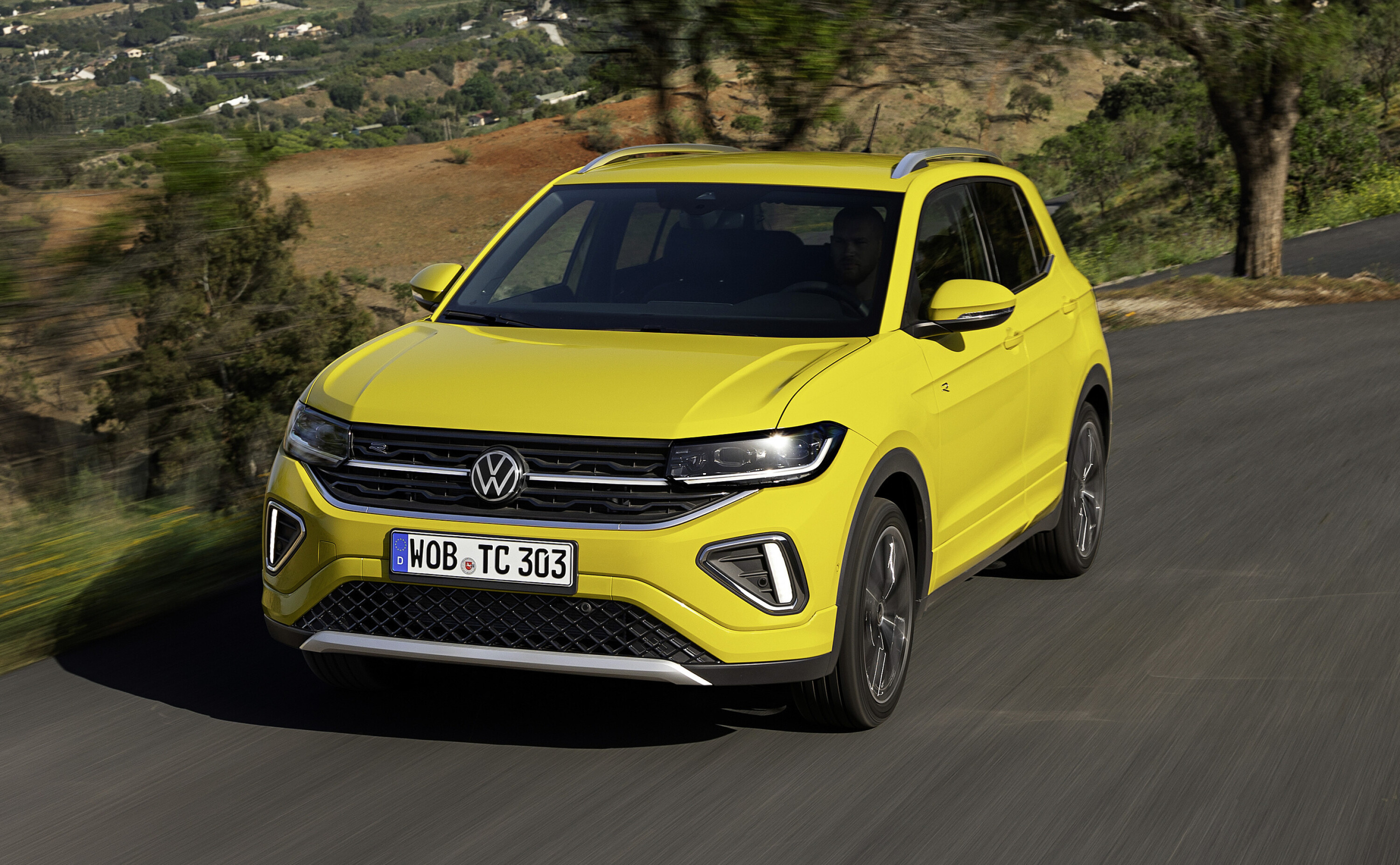
Over the T-Cross Style, the R-Line adds unique exterior styling, new-look 18-inch alloy wheels, selectable drive modes, rear privacy glass, a 300-watt Beats audio system, cloth and microfibre upholstery, and alloy pedals.
Prices for the facelifted 2025 Volkswagen T-Cross are due to be confirmed closer to its launch, though modest rises can be expected to account for the added features and updated design.
The current T-Cross is priced between $30,990 and $33,490 before on-road costs – excluding available option packages.
A Volkswagen Australia spokesperson told Wheels there is limited stock available for the pre-facelift T-Cross Style ahead of the new model’s arrival. It has been removed from the vehicle’s online configurator.
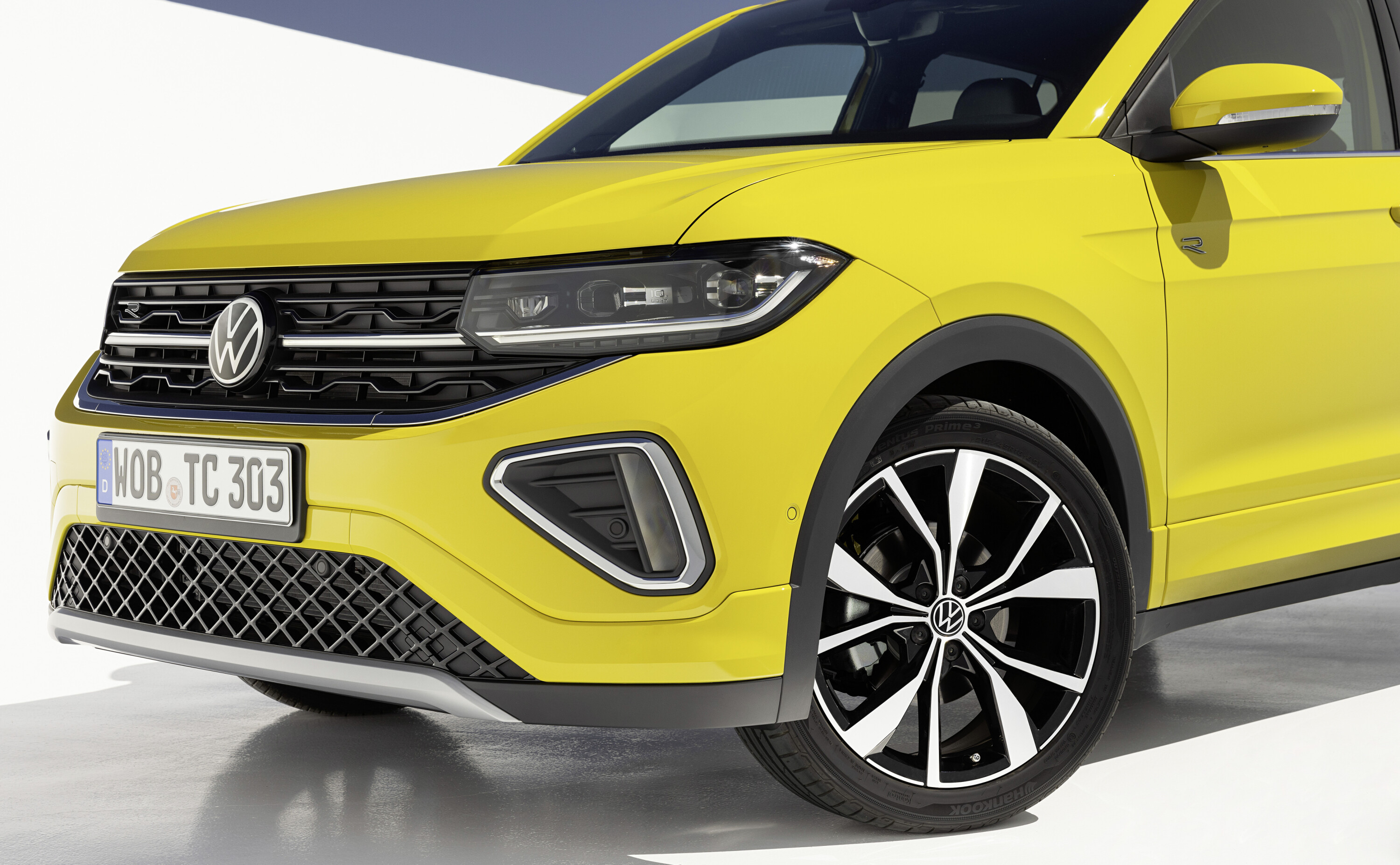
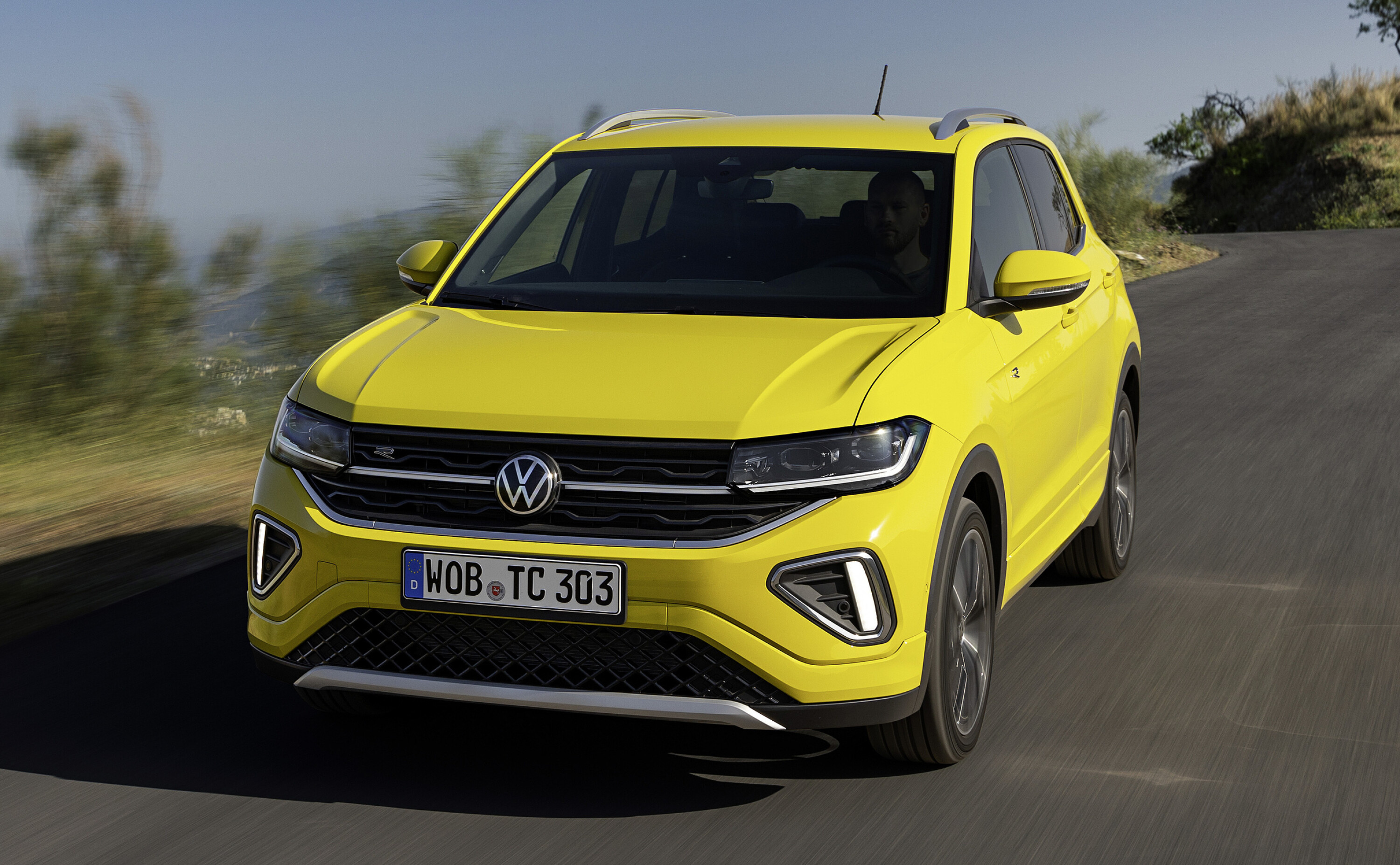
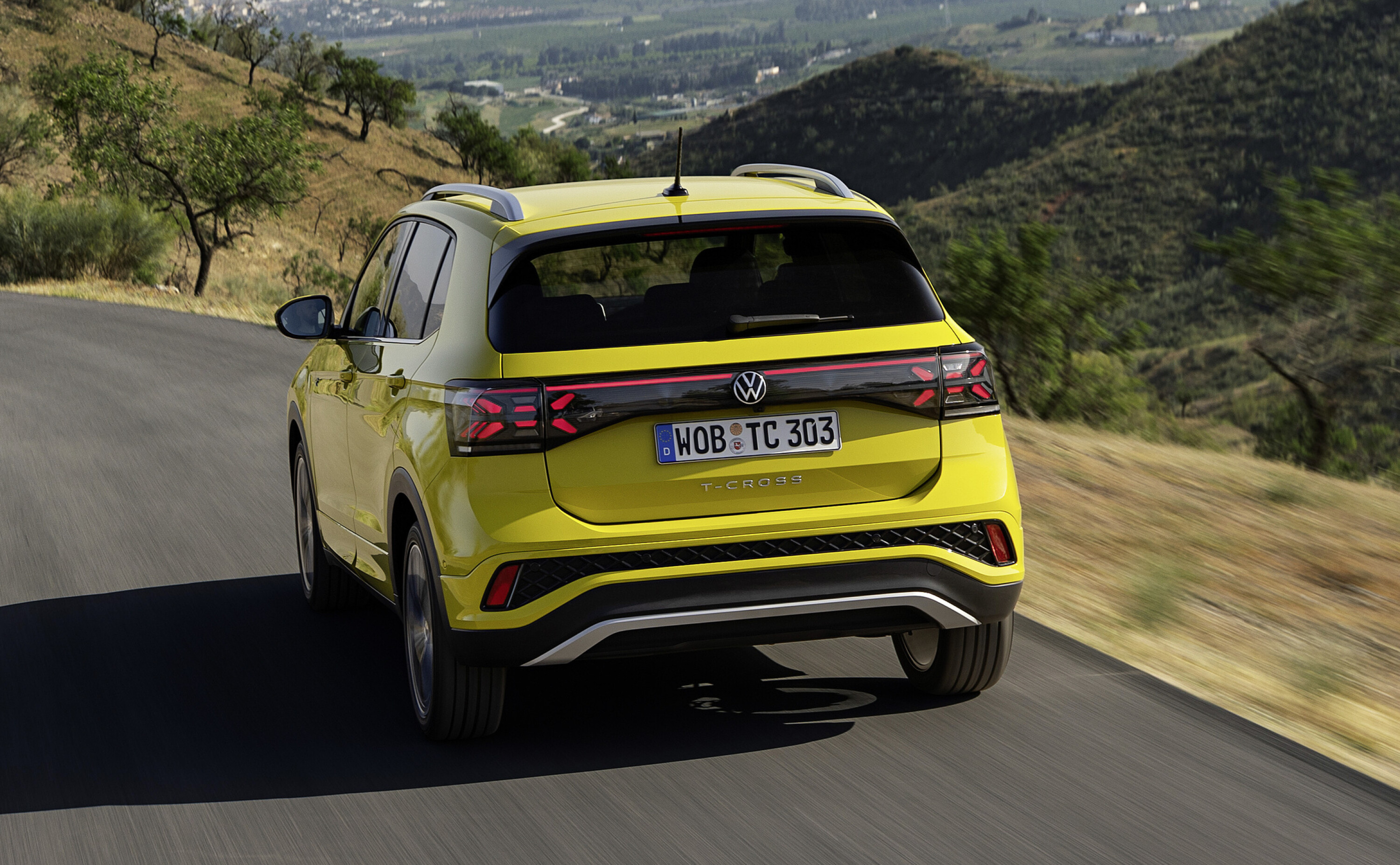
First revealed in July 2023, the facelifted T-Cross receives an updated front end inspired by larger Volkswagen SUVs – including the small T-Roc – with reshaped headlights and a new lower bumper design.
It also sports new alloy wheel designs, X-shaped LED tail-light graphics, and an updated rear bumper.
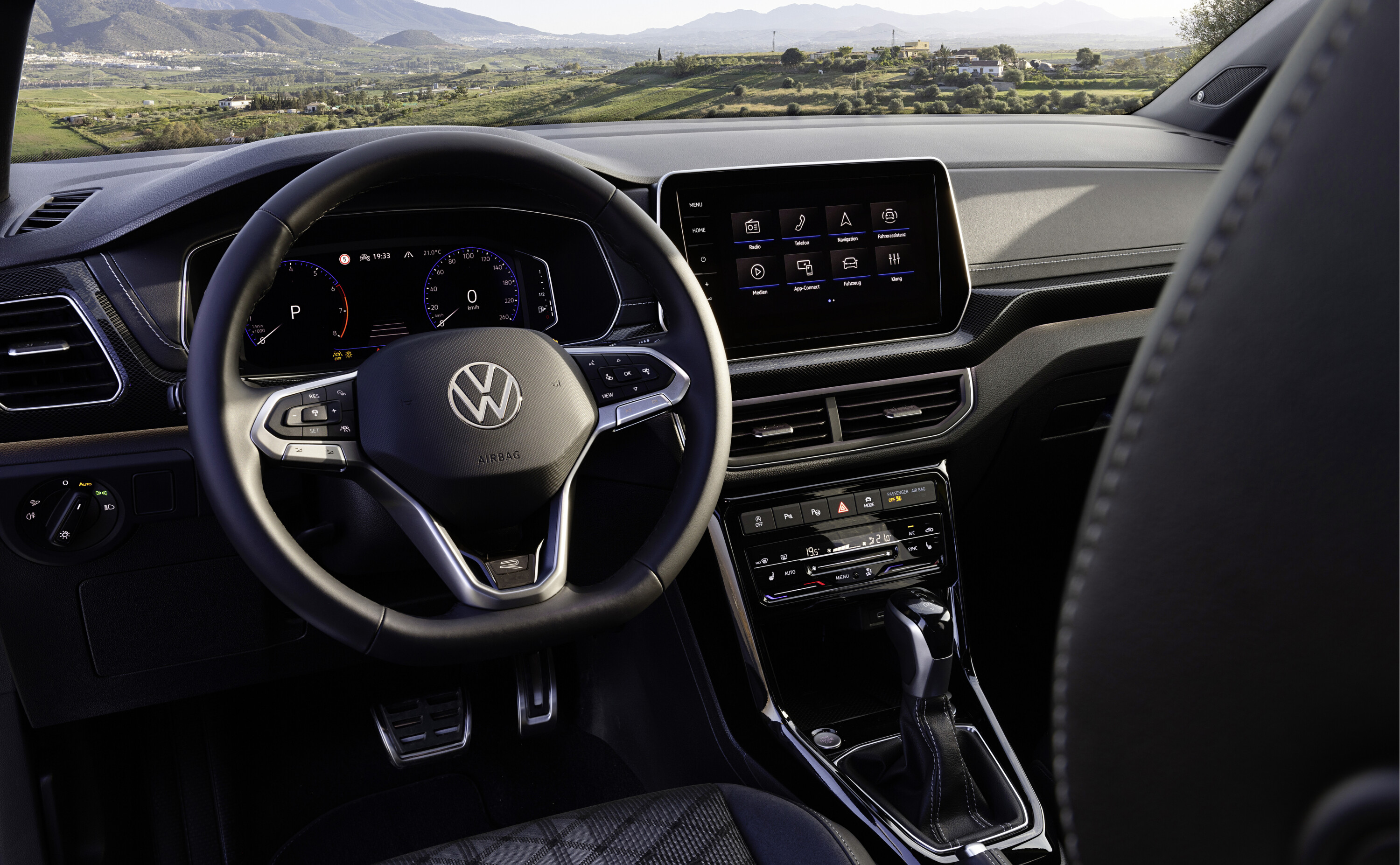
Inside, there is a redesigned dashboard with softer materials and a freestanding infotainment system, akin to the larger T-Roc small SUV.
Under the skin, the T-Cross remains based on the VW Group’s smaller MQB A0 platform, sharing its underpinnings with the Volkswagen Polo hatch, the one-size-up Skoda Kamiq small SUV, and the Audi A1.
The 85kW/200Nm 1.0-litre turbo-petrol three-cylinder engine will remain in Australia, paired with a seven-speed dual-clutch automatic transmission and front-wheel drive.
2025 Volkswagen T-Cross features
| 2025 Volkswagen T-Cross 85TSI Life features | |
|---|---|
| LED headlights (new) | Wireless phone charger |
| Blind-spot monitoring (new) | Leather-wrapped steering wheel |
| Rear cross-traffic alert (new) | Paddle shifters |
| Adaptive cruise control (new) | Power-folding side mirrors |
| Automatic high beam (new) | Black roof rails |
| Automatic parking (new) | Four USB-C charge ports |
| Proactive occupant protection (new) | Manual air-conditioning |
| Travel Assist semi-autonomous highway driving (new) | Manually-adjustable front seats |
| 8-inch digital instrument cluster (new) | Front and rear parking sensors |
| 16-inch alloy wheels (new design) | Rear-view camera |
| 8-inch infotainment system | Autonomous emergency braking (vehicle, pedestrian, cyclist) |
| Wired Apple CarPlay and Android Auto | Lane-keep assist |
| DAB+ digital radio | Lane departure warning |
2025 Volkswagen T-Cross 85TSI Style features
| In addition to 85TSI Life | |
|---|---|
| Matrix LED headlights (new) | Voice control (new) |
| Illuminated grille strip (new) | 17-inch alloy wheels (new design) |
| Leatherette dash and door inserts | Ambient lighting |
| Built-in satellite navigation (new) | Keyless entry and push-button start |
| Wireless or wired Apple CarPlay and Android Auto (previously wired-only) | Dual-zone climate control |
| 10.25-inch digital instrument cluster (new) | Chrome roof rails |
2025 Volkswagen T-Cross 85TSI R-Line features
| In addition to 85TSI Style | |
|---|---|
| 18-inch alloy wheels (new design) | 300-watt Beats audio system |
| R-Line exterior styling | Cloth and microfibre upholstery |
| Selectable drive modes | Alloy pedals |
| Rear privacy glass | |
2025 Volkswagen T-Cross pricing
| Variant | New 2025 price | Current 2024 price |
|---|---|---|
| T-Cross 85TSI Life | $TBC | $30,990 |
| T-Cross 85TSI Style | $TBC | $33,490 |
| T-Cross 85TSI R-Line | $TBC | $36,090 (Style w/ R-Line Package) |
| Prices exclude on-road costs | ||
Snapshot
- 2025 Audi S3 receives more power to match newest VW Golf R sibling
- Mid-life update for all-wheel-drive hot hatch and sedan
- Due in Australia later in 2024
The 2025 Audi S3 hot hatch and sedan have debuted with more power boost to match its Volkswagen Golf R corporate sibling.
As detailed in February, the all-wheel-drive S3 has received a mid-life facelift with performance improvements – including a power boost for its 2.0-litre four-cylinder turbo ‘EA888’ engine from 228kW/400Nm to 245kW/420Nm (up 17kW and 20Nm), which is aligned with the latest version of the related Volkswagen Golf R hot hatch.
The S3’s 0-100km/h sprint time has improved one-tenth of a second to 4.7 seconds – which still falls short of the 4.6-second result claimed for the newest Golf R.
Other improvements include a new rear-biased ‘dynamic plus’ drive mode borrowed from its more-powerful RS3 sibling, which sends as much torque as possible to the rear axle to increase oversteer.
The drive mode also automatically shortens the gearshifts and increases the idle speed from 200 rpm to 1300 rpm.
There is also a revised tune for the S3’s engine and transmission, with a higher starting torque for the seven-speed dual-clutch automatic achieved through stronger compression of the clutch pack.
In addition, the shift time for gearshifts under full load has been halved.
Another feature borrowed from the RS3 is a torque splitter, which allows for fully variable torque distribution between the rear wheels with an electronically controlled multiple disc clutch on each drive shaft to distribute it between the rear wheel on the inside and the outside of the curve.
Audi has also fitted stiffer suspension, a revised progressive steering ratio, updated electronic stability control and torque vectoring programming, and larger front brake discs with a higher thermal and load capacity.
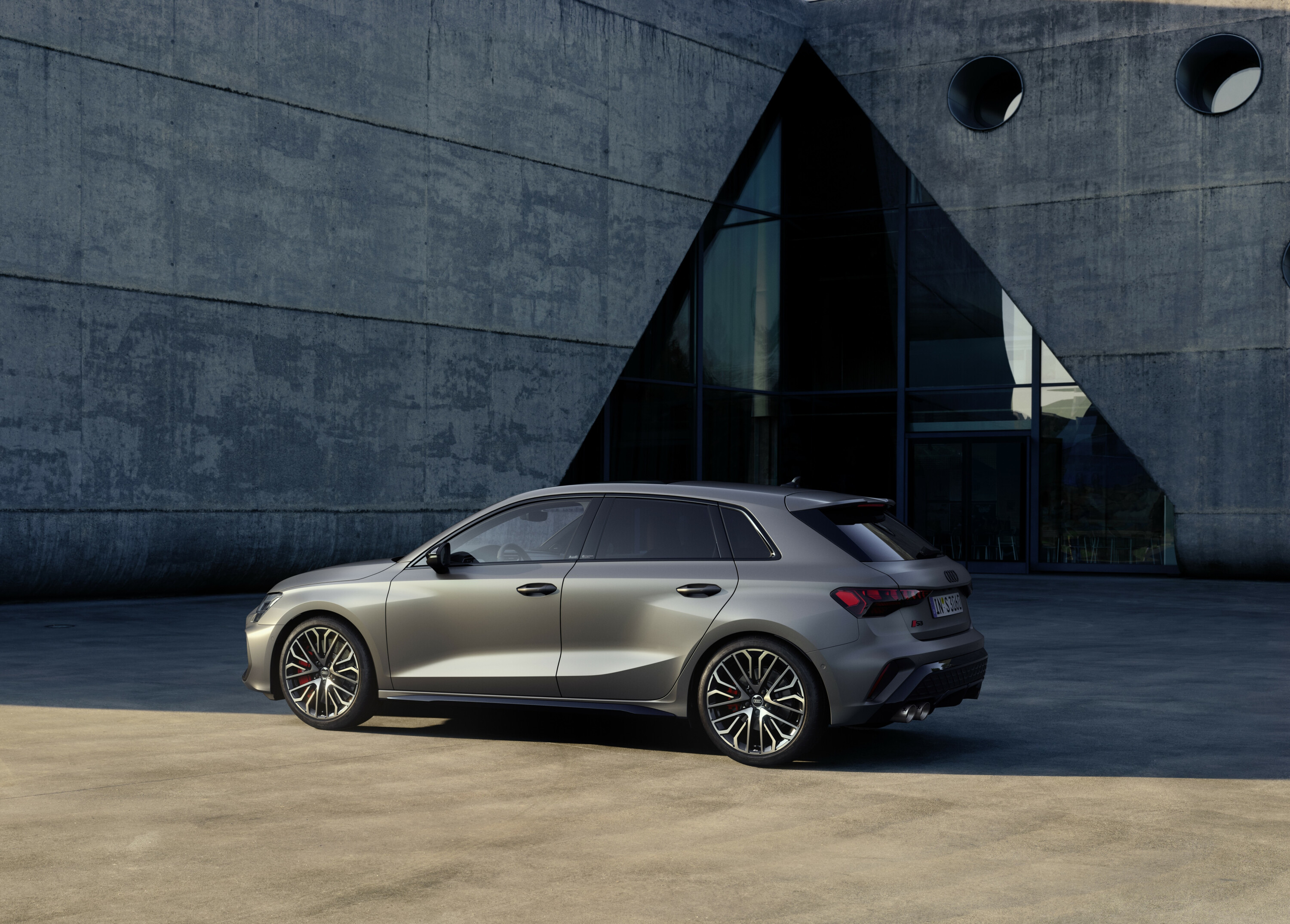
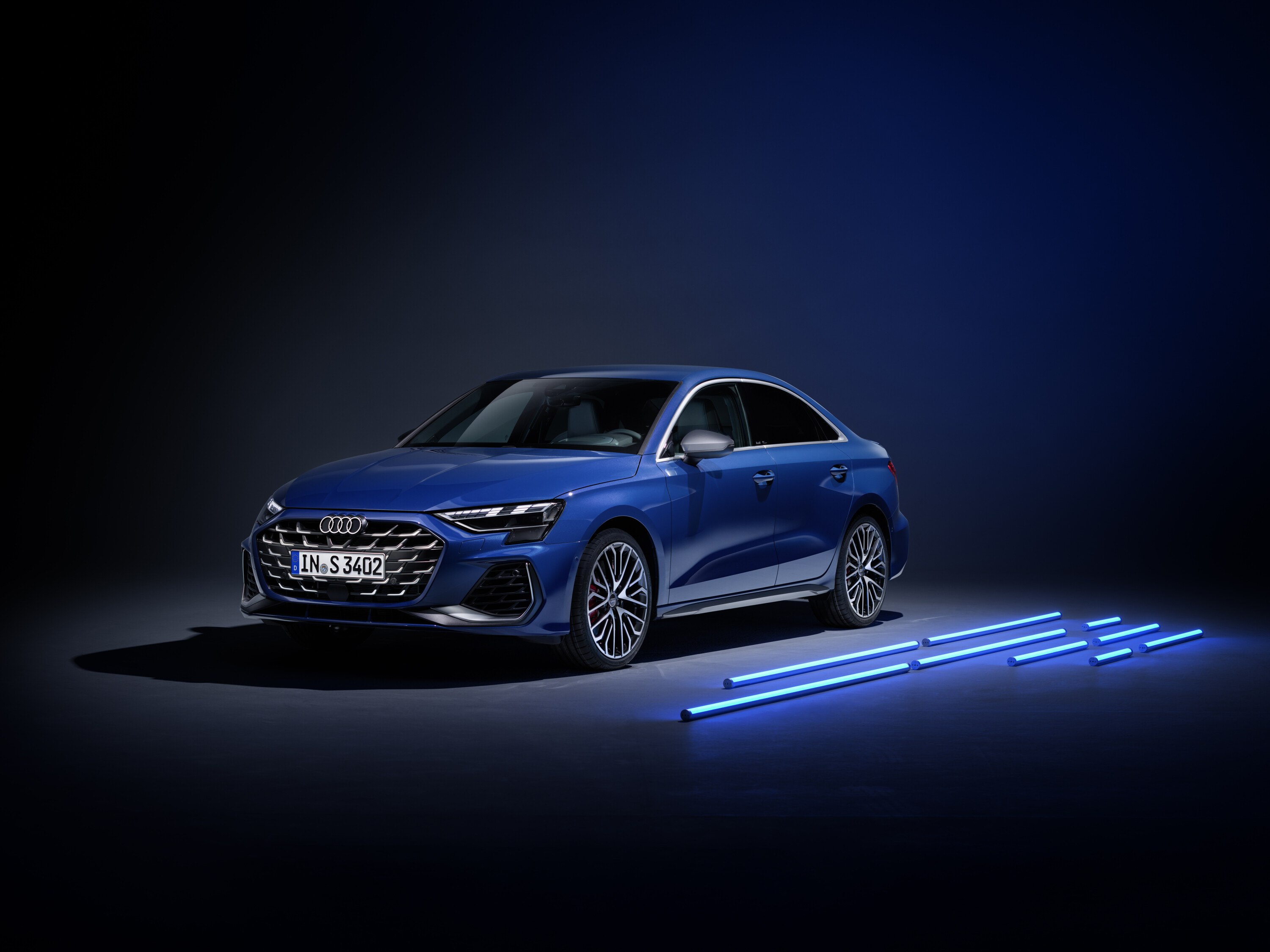
As with the facelifted A3 revealed last month, exterior design revisions for the S3 include a flatter and wider grille, an updated lower front bumper, a new rear bumper, and four new colours: district green, ascari blue, progressive red and matte daytona grey.
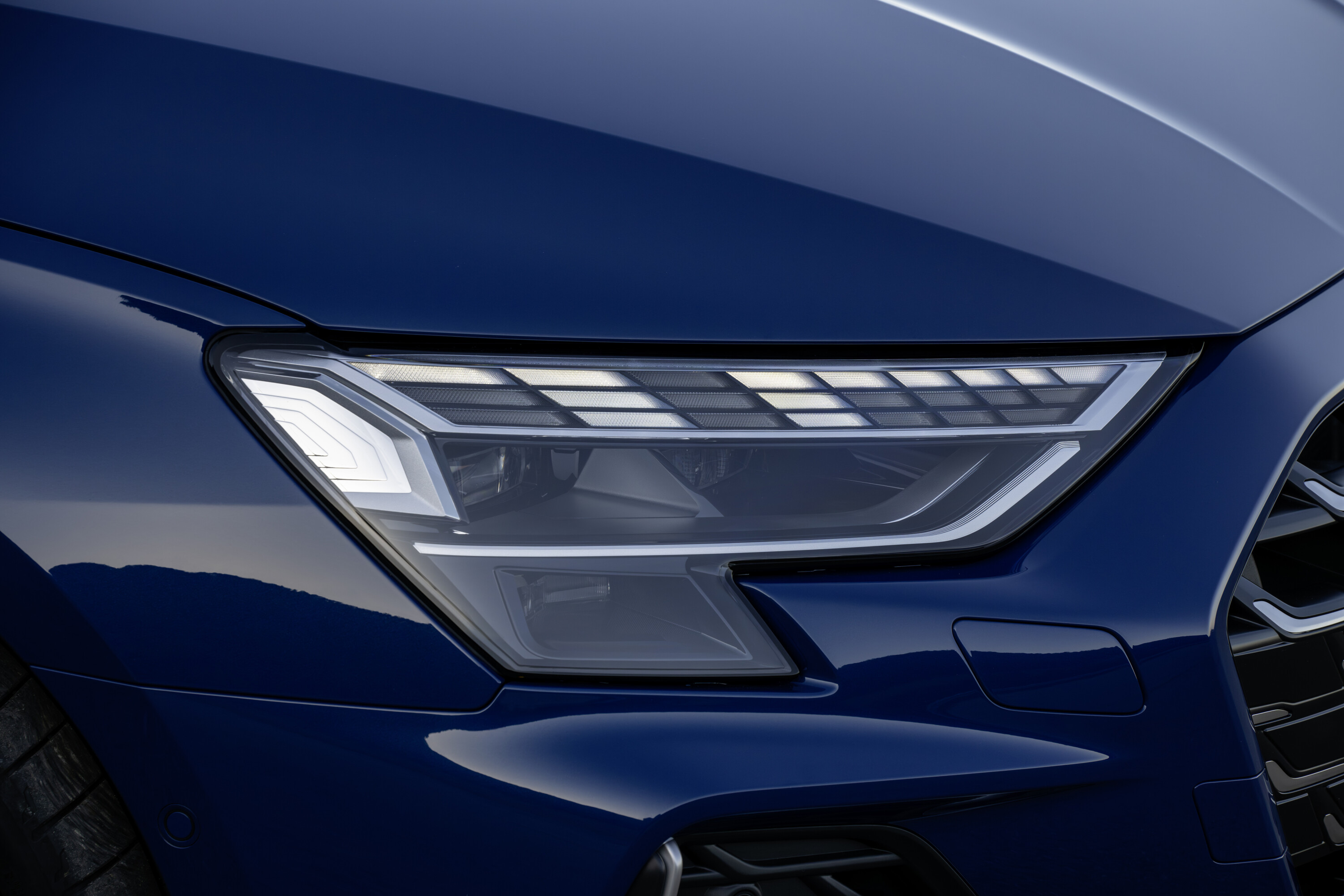
New headlights that allow drivers to choose between four different daytime running light signatures are fitted, which also support different coming home/leaving home scenarios.
The customisable digital daytime running lights – which debuted in the Q4 E-Tron electric SUV – are possible with the 24-pixel elements in three rows on the upper edge of the housing.
Inside, the updated S3 features thinner air vents to emphasise the width of the cockpit, an updated centre console with a new finish and a flatter gear shifter toggle, and a newly optional Sonos audio system with 3D surround sound.
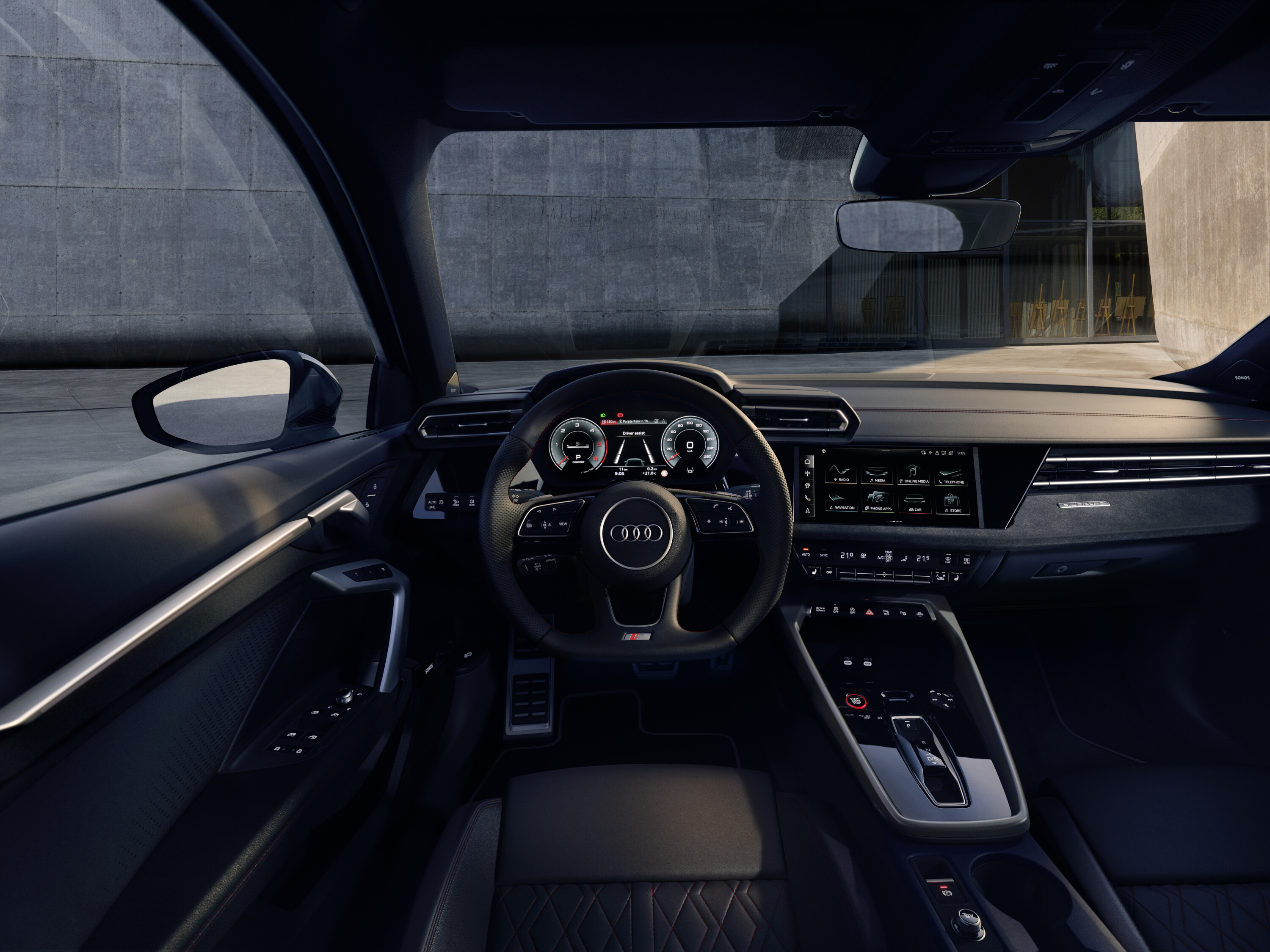
The ambient lighting system has been extended to the doors, footwell, centre console and cup holders, while the insides of the front doors are now backlit with the fabric panel laser-cut 300 times to enable this feature. Up to 30 colours can be selected via the infotainment system.
The adaptive cruise control – which is already standard-fit in Australia – now includes a lane change function that uses data from the rear radar to determine if it is possible to change lanes and assist the driver.
Like the A3, the updated 2025 Audi S3 hatch and sedan are due in Australia towards the end of 2024, with more details – including pricing and features – to be confirmed closer to launch.
April, 2024: Sportage Hybrid on sale in Australia
Kia has finally introduced a petrol-electric version of its Sportage midsized SUV to compete with the all-conquering Toyota RAV4 Hybrid.
STORY CONTINUES
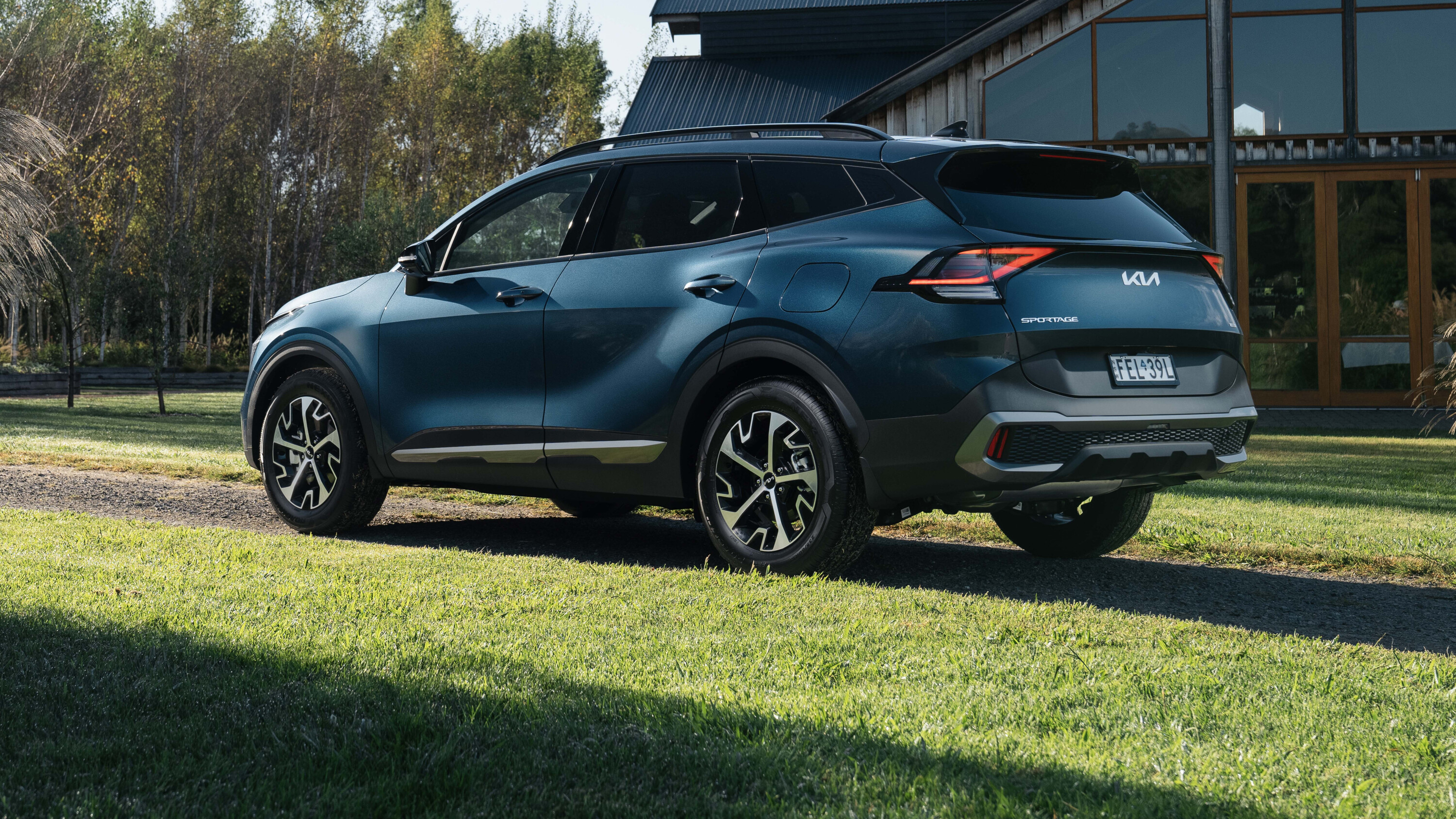
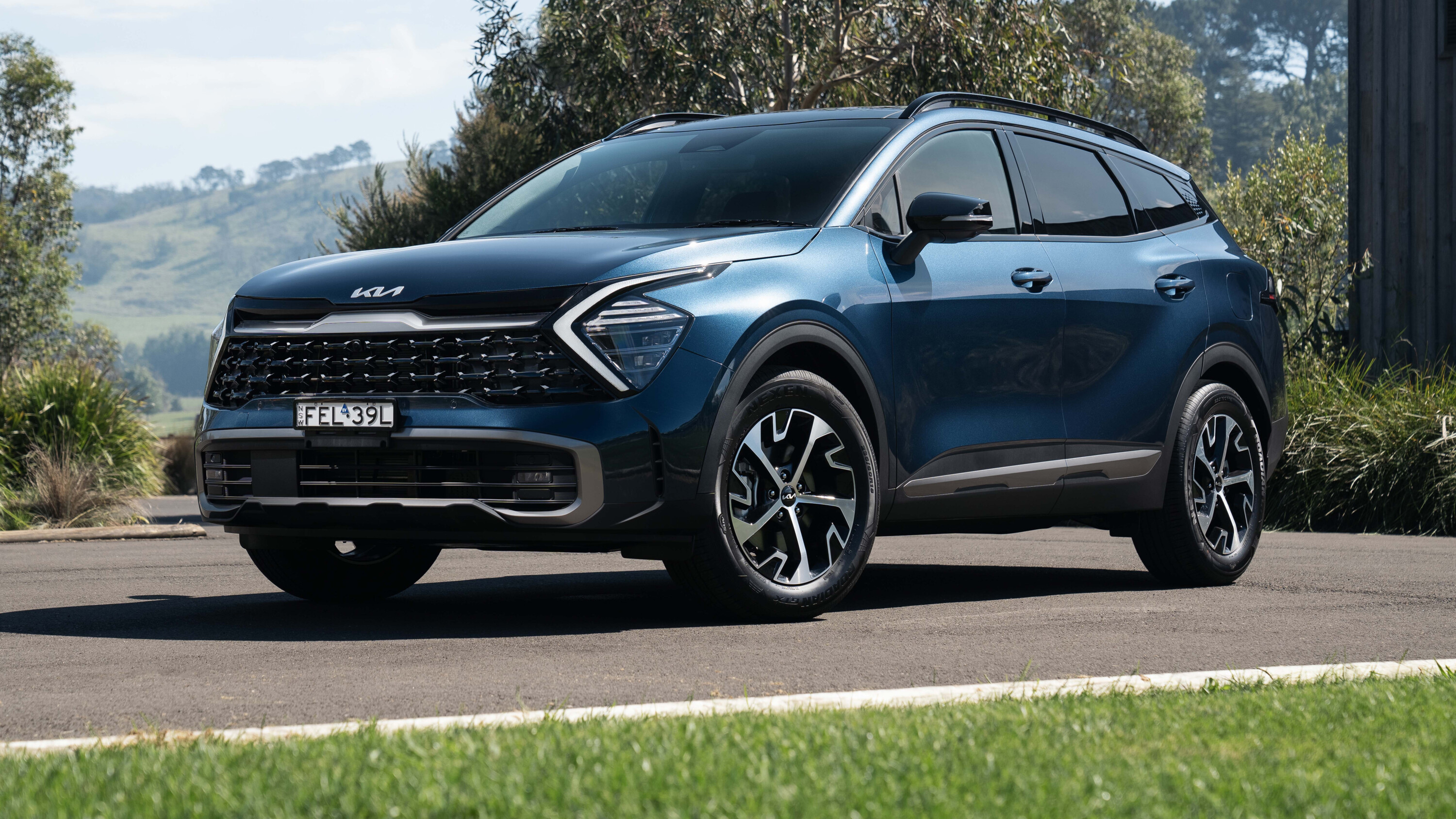
The 2024 Kia Sportage Hybrid has arrived in Australia in two variants.
Kia Australia has announced pricing for the two-variant Sportage Hybrid line-up, which will start from $45,950 before on-road costs – or around $50,000 drive-away – for the SX variant.
The top-of-the-range Sportage Hybrid GT-Line becomes the most expensive variant in the nameplate’s history at $55,420 before on-road costs, or around $60,000 drive-away.
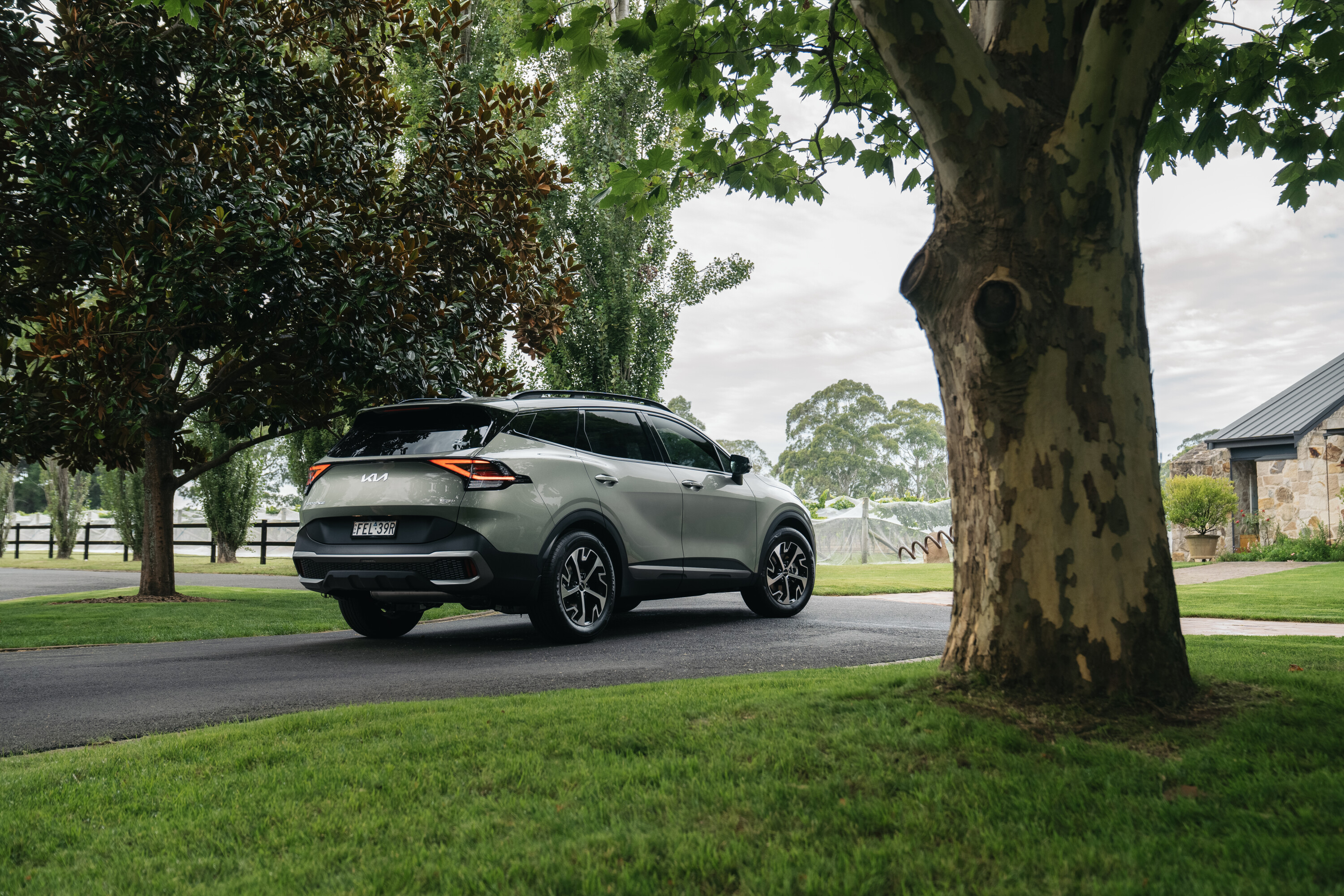
An entry-level Sportage Hybrid S or mid-spec Sportage Hybrid SX+ will not be offered at launch due to limited supply.
“The Sportage range is an integral part of Kia’s sales initiatives and we anticipate sales of the HEV to be around 300 per month, contributing 20% of total Sportage sales volume,” said Kia Australia chief executive officer Damien Meredith.
The hybrid powertrain – which will launch exclusively with front-wheel-drive – is $8400 dearer than the SX 2.0-litre non-turbo petrol FWD, $5700 dearer than the GT-Line 1.6L turbo-petrol AWD, and $2700-$3200 dearer than SX and GT-Line 2.0-litre turbo-diesel AWD models.
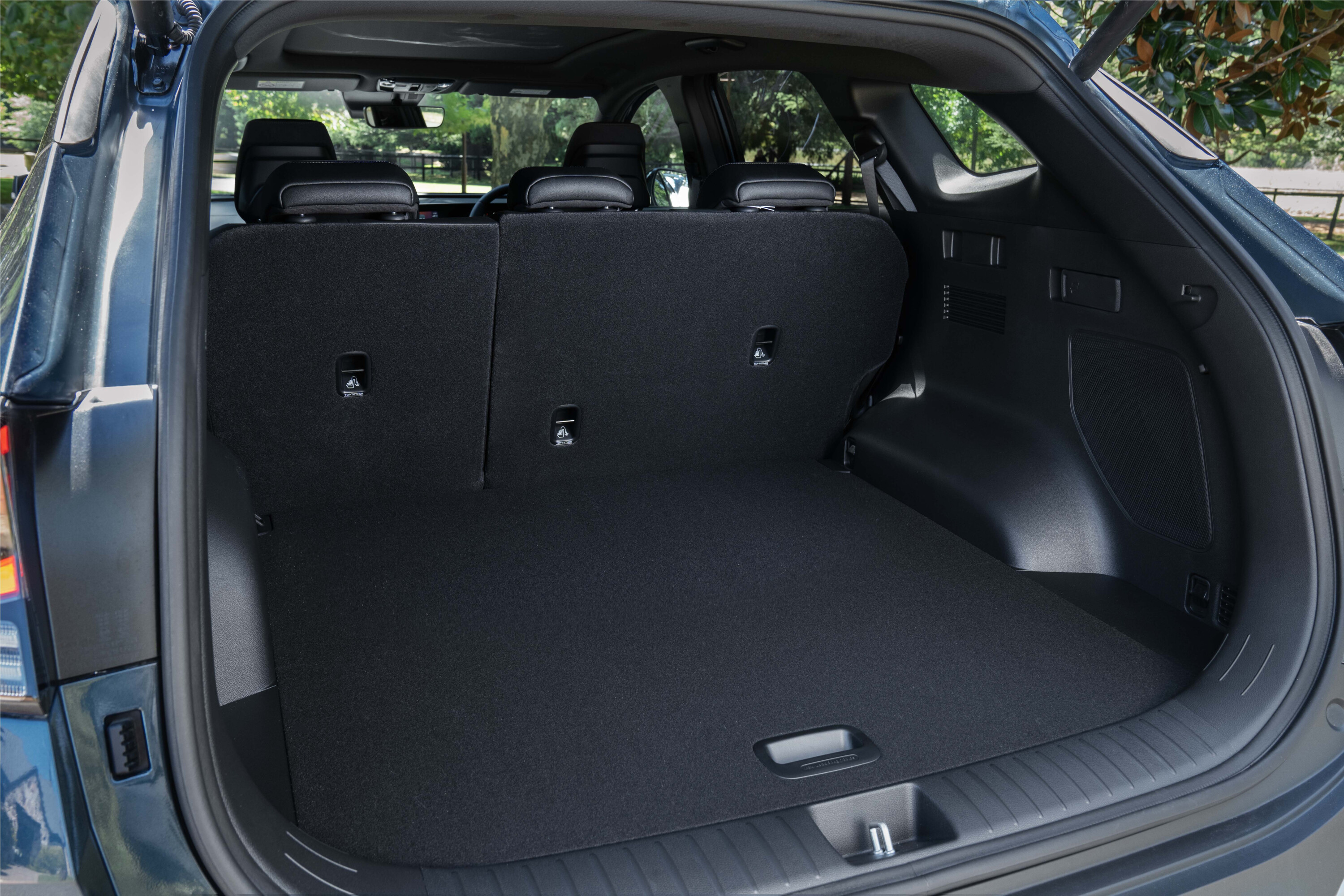
Compared to petrol and diesel variants, the hybrid models feature a space-saver spare wheel instead of a full-size unit.
The SX Hybrid also has a dial-type shift-by-wire gear selector, while the GT-Line Hybrid has a Sportage-first heated steering wheel.
However, the GT-Line Hybrid is fitted with smaller 18-inch alloy wheels shared with the SX – down from 19-inch – for aerodynamic purposes.
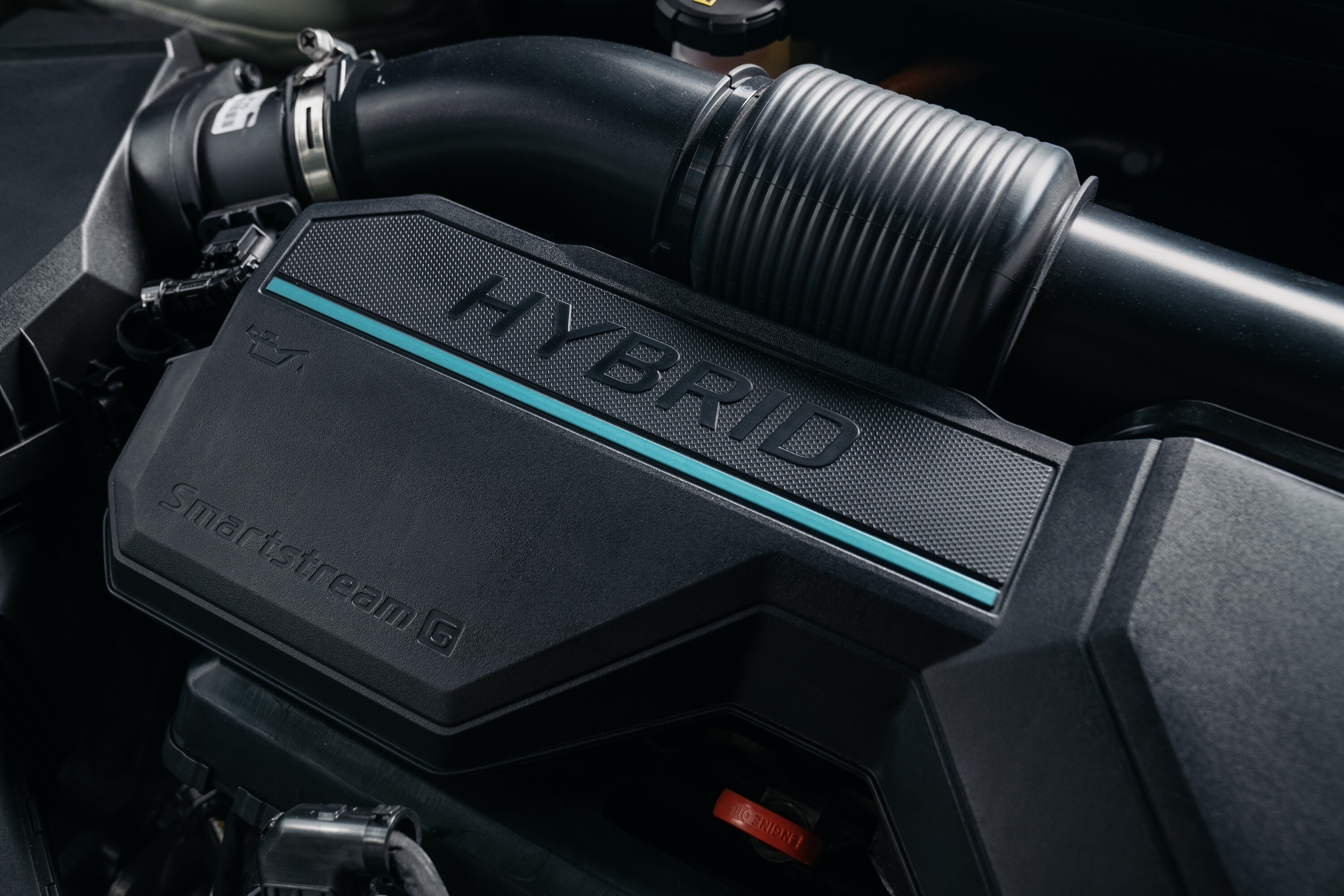
The Sportage Hybrid’s powertrain mimics that of the Sorento Hybrid, with a 1.6-litre four-cylinder turbo-petrol engine linked to an electric motor, supplemented by a small 1.49kWh battery that can only be recharged by the petrol engine – not a plug.
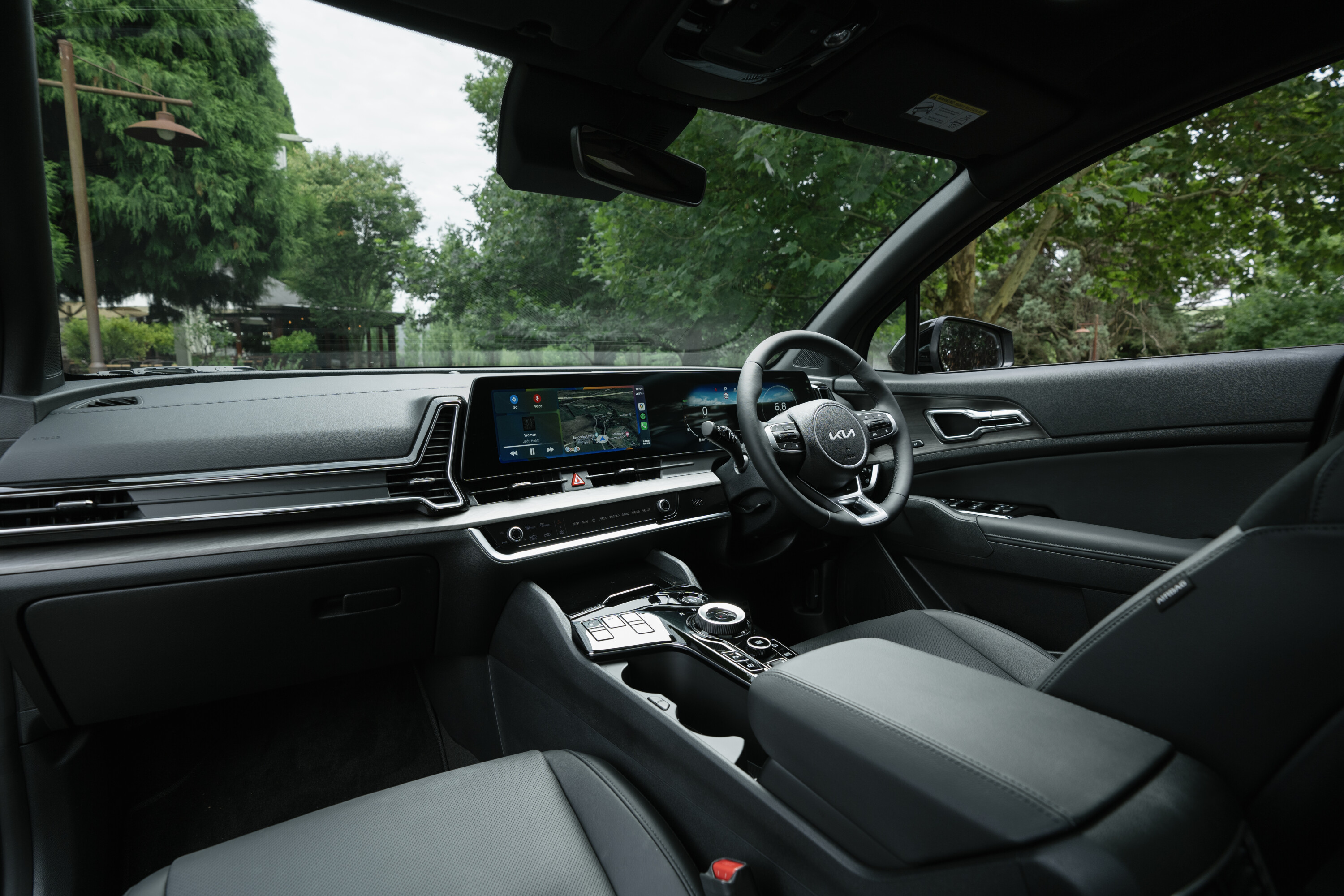
It has a 169kW/350Nm total system output, with a six-speed torque-converter automatic transmission sending power to the front wheels.
Braked towing capacity for the Sportage Hybrid matches 2.0-litre non-turbo and 1.6-litre turbo petrol automatic variants at 1650kg.
VFACTS new-car sales data reveals the Kia Sportage was Australia’s sixth-favourite internal-combustion mid-size SUV in 2023 with 15,747 sales, behind the Toyota RAV4 (29,627), Mitsubishi Outlander (24,263), Mazda CX-5 (23,083), Hyundai Tucson (21,224) and Subaru Forester (16,381).
2024 Kia Sportage Hybrid pricing
| Model | Pricing |
|---|---|
| Sportage SX Hybrid FWD | $45,950 |
| Sportage GT-Line Hybrid FWD | $55,420 |
| Prices exclude on-road costs.u00a0 |
If you’re concerned about energy consumption but aren’t yet ready to take a punt on an EV purchase, then the Kia Sportage Hybrid is among the burgeoning number of combustion-electric vehicles on offer to make your wallet tingle and your inner efficiency nerd titter with delight.
The front-drive, turbo-petrol hybrid Sportage has been two-and-a-half years in the making for Australia, but it’s a case of better late than never given its excellent 4.9L/100km combined fuel consumption figure, its punchy 8.0-second 0-100km/h acceleration claim, and its relatively attainable $46-55K pricing.
True competitors remain relatively scarce – Toyota RAV4 Hybrid ($42-$58K), Nissan X-Trail e-Power ($50-$58K), Subaru Forester Hybrid ($44-$50K), Honda CR-V e:HEV RS ($60K), Haval H6 Hybrid ($42-$46K) and soon, the Hyundai Tucson Hybrid (its mechanical twin) – giving the good-value Sportage Hybrid a strong chance of swaying punters away from the default Toyota.
Kia expects its two-variant Hybrid line-up to add 300 incremental sales a month, constituting about 20 percent of the Sportage model mix.
JUMP AHEAD
- How much is it, and what do you get?
- Interior comfort, space and storage
- What is it like to drive?
- VERDICT
- Specifications
How much is it, and what do you get?
Both the SX Hybrid ($45,950) and GT-Line Hybrid ($55,420) feature an identical drivetrain and wheel/tyre package.
The 132kW/265Nm 1.6-litre direct-injection turbo-petrol four, 44kW/264Nm electric motor and 1.49kWh lithium-ion battery are shared with the larger Kia Sorento Hybrid (and its Hyundai Santa Fe Hybrid sister) – making 169kW/350Nm in combined outputs, with a simple six-speed automatic transmission transferring grunt exclusively to the front wheels.
For maximum efficiency, both the SX and GT-Line share the same machined-face 18-inch alloy wheels (from the regular Sportage SX), wearing fairly chubby Hankook Dynapro 235/60R18 tyres.
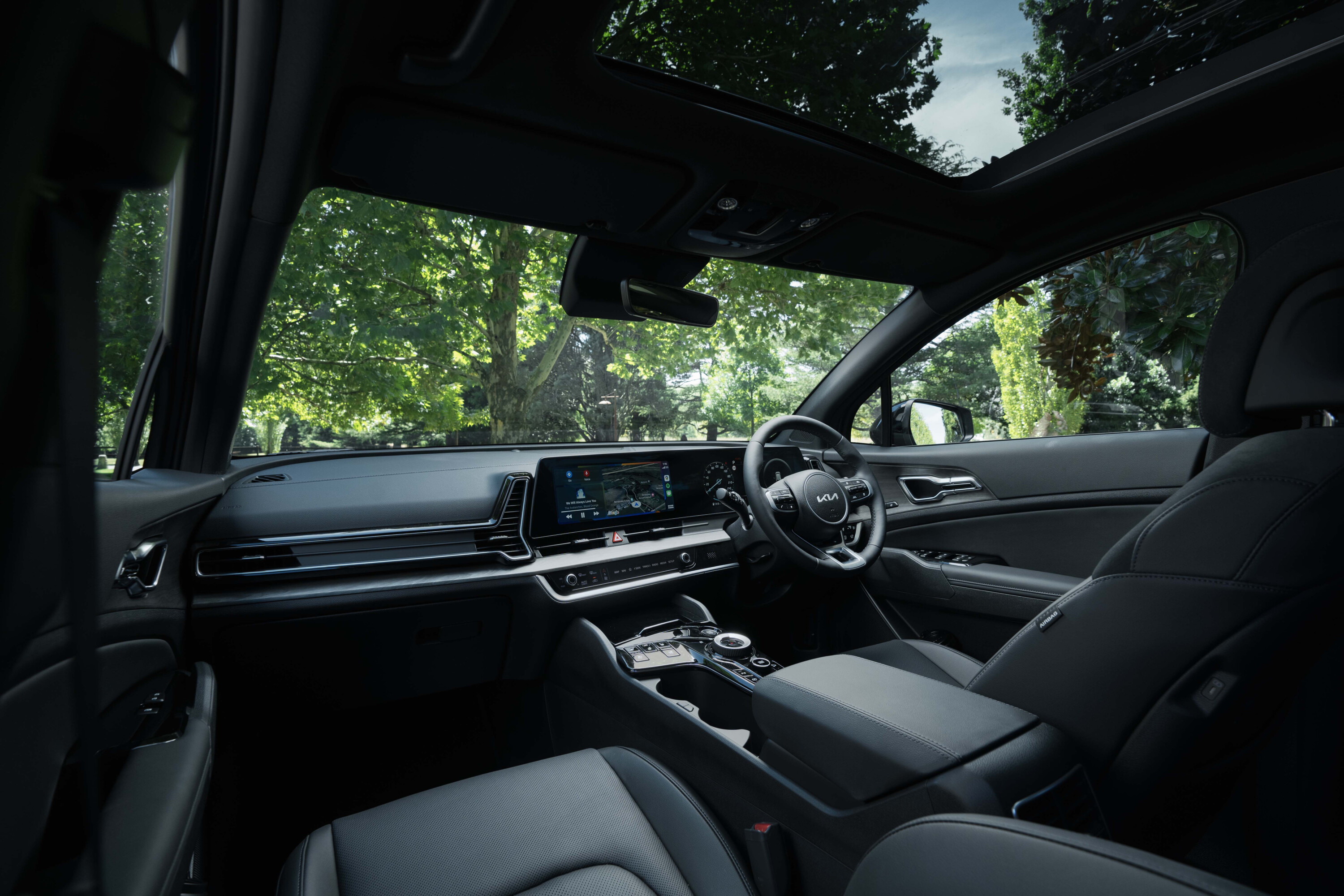
Above: A panoramic sunroof is among exclusive features for the GT-Line
External visual differences between the two specs are modest – mainly front-bumper design (with LED fogs in GT-Line), plus full-LED head/tail-lights, roof rails, black mirrors, rear privacy glass, hands-free electric tailgate and keyless entry/start for GT-Line, plus two unique paint colours (Snow White Pearl, Jungle Wood Green).
But inside, the GT-Line steps up significantly with its panoramic glass sunroof, leather-faced upholstery with Alcantara inserts, heated/cooled 8-way electric front seats (with driver’s memory), heated steering wheel, surround-view and blind-spot monitoring, curved 12.3-inch digital instrument cluster, wireless phone changing, 64-colour ambient lighting, auto-dimming rear-view mirror, rear-seat USB-C outlets, eight-speaker Harman Kardon audio and a luggage net, plus a few other easy-carry features.
Interior comfort, space and storage
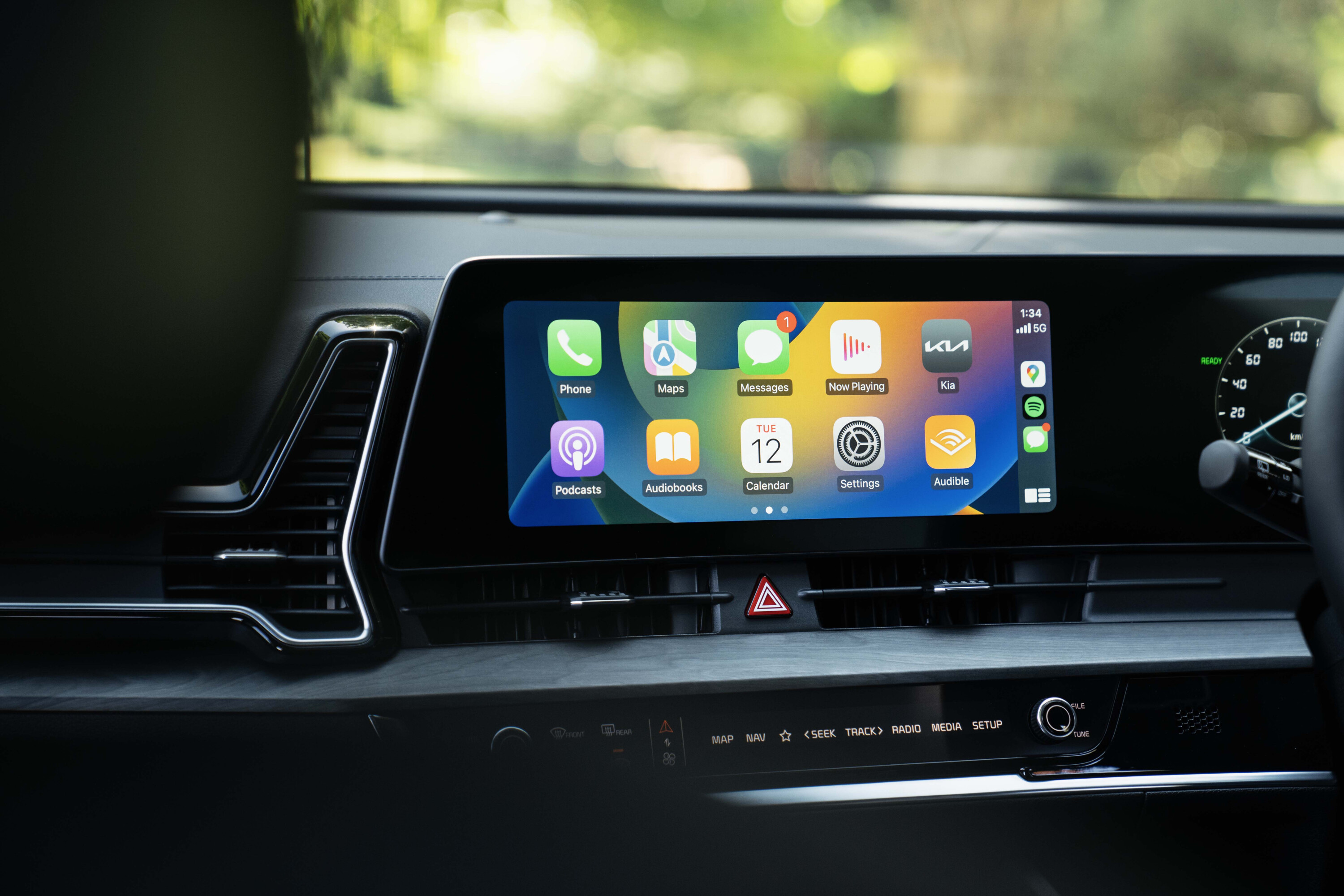
Both Hybrid variants swap the regular Sportage’s gearshift selector for a shift-by-wire dial and trade a full-size spare wheel for a space-saver.
And both variants share hugely roomy interiors with excellent seat comfort, expansive all-round vision and enormous boots, with an extra-low floor level available to shove in a serious amount of stuff.
The SX’s light grey headlining lightens the mood over the GT-Line’s all-black alternative, though the flagship’s huge sunroof (with electric blind) is great compensation, and its interior tech not only looks classy but operates slickly.
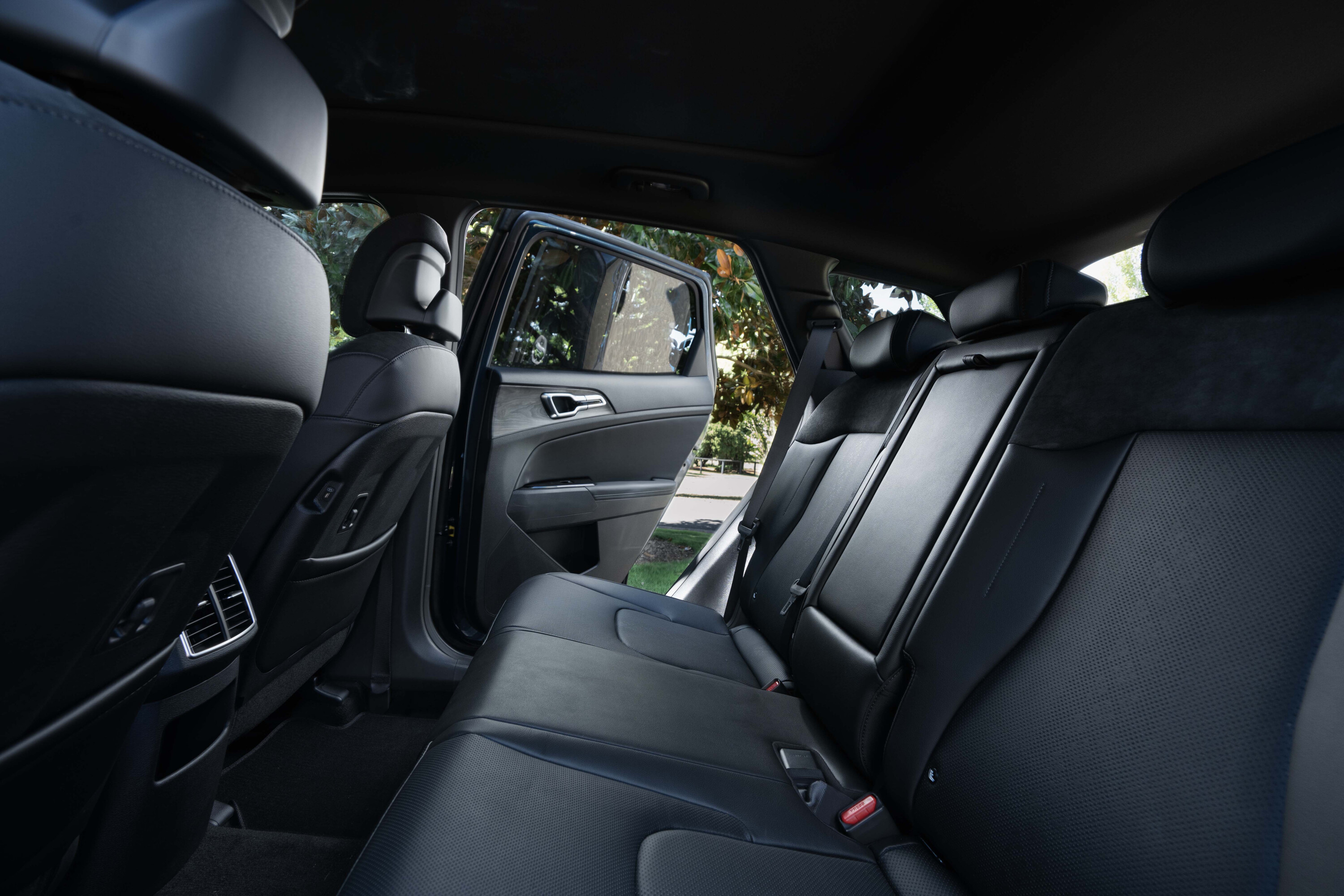
The GT-Line’s Harman Kardon audio quality deserves praise, though it lacks wireless smartphone mirroring, which seems a bit odd in 2024 (given that the MY24 Hyundai Sonata’s similarly curved 12.3-inch multimedia set-up features wireless Apple CarPlay).
Ambient lighting aside, a bit more interior colour would also be appreciated, as well as a trim inlay for the dashboard that tries a bit harder to not look like cheap, mottled plastic.
And the Sportage’s door trims continue the old-school Korean trend of failing to house anything larger than a 600ml beverage bottle, which doesn’t match contemporary hydration trends.
What is it like to drive?
The headline appeal of both Sportage Hybrid variants isn’t their equipment or their space – it’s the efficacy of their new drivetrains.
Compared with the Sportage diesel, there’s similar torque, though without the instantaneousness of its response, while compared with the 1.6 turbo-petrol there’s a battery-fed silkiness and smoothness to the Hybrid, combined with the more leisurely nature of only six gears to choose from, rather than seven (from a dual-clutch ’box).
According to international data, the Sportage Hybrid is actually the quickest of its brethren, at least from a standing start – 0-100km/h in 8.0sec for the front-drive compared to around 9.0sec for both the 1.6T AWD and 2.0D AWD (and a dismal 11.7sec for the 2.0-litre auto).

The Hybrid will easily spin its front wheels off the line, which makes quick getaways into fast-moving traffic a slightly dramatic affair, yet for the most part the best aspect of this drivetrain is its effortlessness.
It feels far more soothing and rewarding when driven briskly instead of forcefully, and with relatively tall gearing in the upper ratios, sometimes asking for a bootful of throttle response doesn’t really translate into a whole lot of additional momentum. You’re better off basking in its cruising refinement – and the excellence of our as-tested fuel consumption of 6.0L/100km, as well as the potential range of more than 1000km on a tankful.
Stumble on a twisty road in the Sportage Hybrid and you’ll be more than pleasantly surprised. For a vehicle weighing only 52kg less than the AWD diesel, there’s a litheness to its handling and precision to its poise that blends beautifully with the torquey ease of its drivetrain.
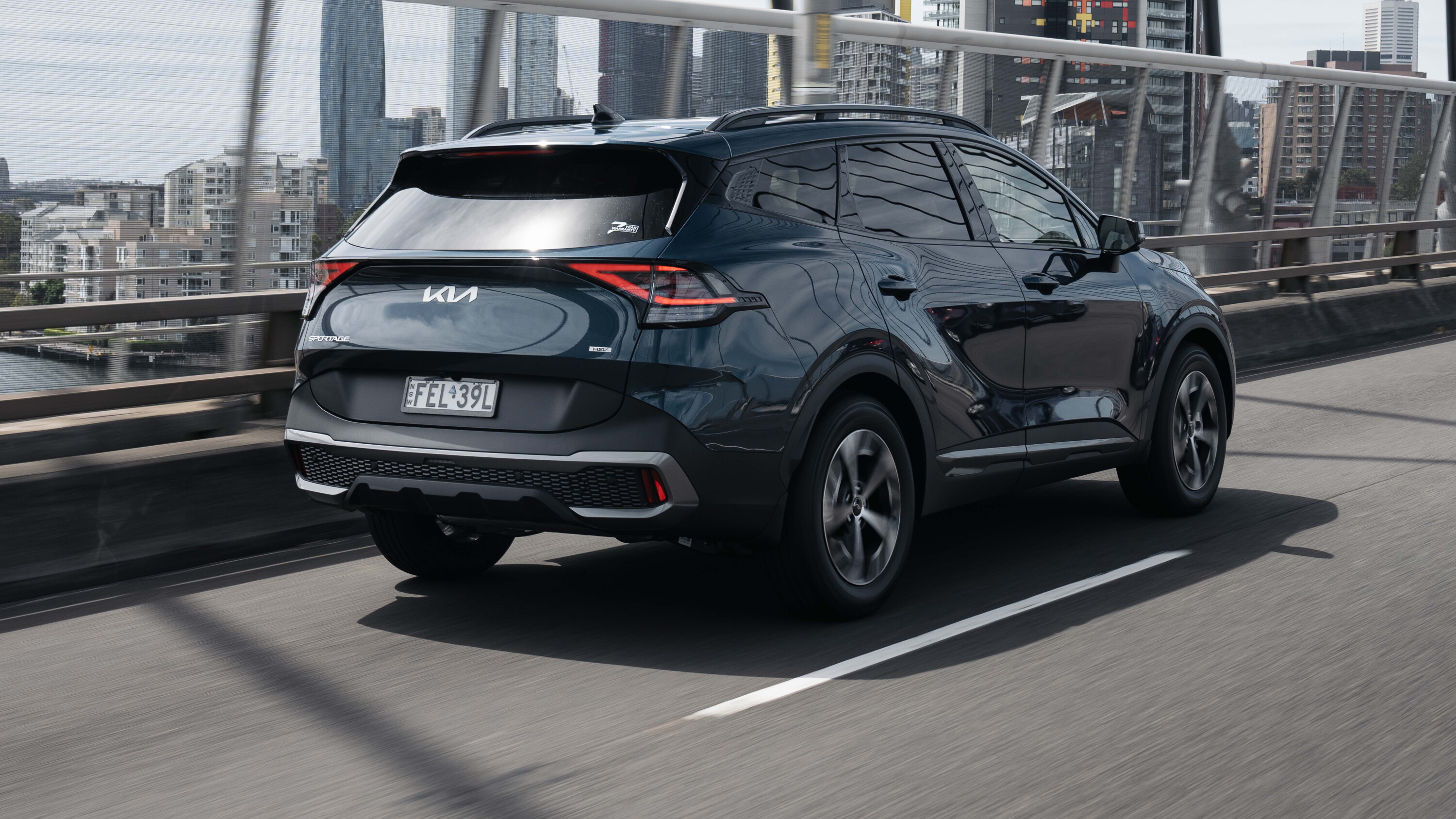
Those unlikely-looking Hankooks hang on gamely, and there’s a consistency to the weighting of the Sportage’s slack-free steering that also complements everything seamlessly.
And this dynamic cohesion isn’t spoiled by a too-stiff ride, either. It’s more well-disciplined that actually firm, with terrific body control for this type of vehicle – making the Sportage Hybrid a fine bet for a fully loaded adventure. Kia’s Australian suspension tune has really paid dividends here.
You don’t even need to drive it in Sport mode to get the best from it – Eco (the default) or Normal modes are both fine – because the GT-Line offers steering-wheel paddles to keep it surging through its leggy ratios. And the steering is arguably sweeter in Normal anyway, so best to leave the car to itself and stick to directional duties.
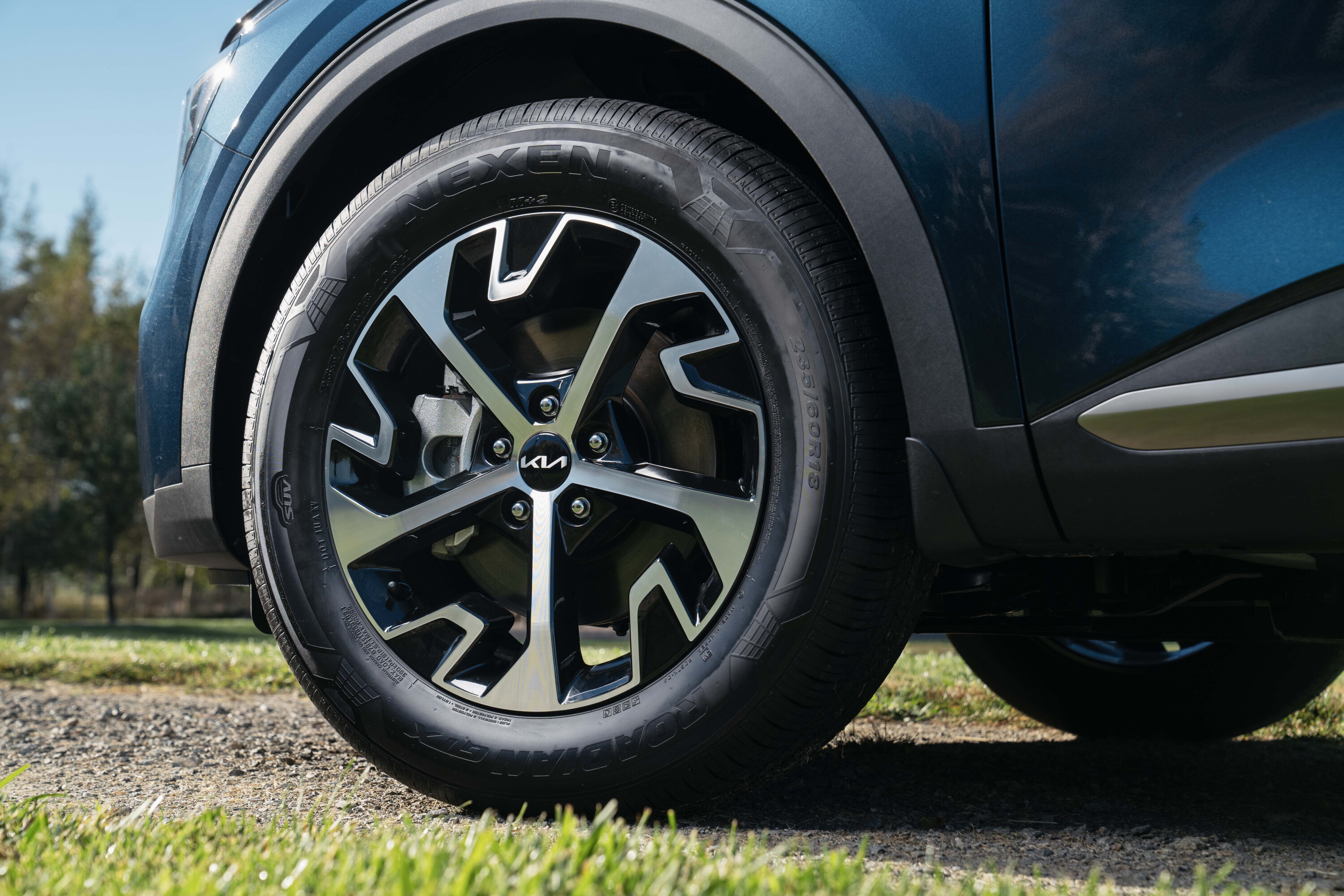
Even the brakes feel strong – big 325mm vented front discs and 300mm solid rears – without any noticeably artificial feeling to the pedal action.
Apart from typically over-eager lane-keep assistance (which can be easily disabled via a wheel-spoke button, though does automatically re-engage with the adaptive cruise), the Sportage Hybrid’s safety electronics generally work unobtrusively, with both SX and GT-Line sharing all main active-safety features apart from rear AEB, which is only available on GT-Line.
They also share a 1650kg braked towing capacity (same as the non-hybrid petrols), a 12-month/10,000km recommended servicing schedule and a five-year capped-price servicing cost of $2930, which is $426 more than the non-hybrid Sportage 1.6 turbo, yet more than double the cost for a RAV4 Cruiser Hybrid 2WD ($1300), which also offers a 15,000km distance interval.
VERDICT
So is the Sportage GT-Line Hybrid worth the $5500 additional spend over a GT-Line 1.6T AWD or the extra $2500 over an equivalent diesel?
If you value refinement, effortless performance, and an outstanding range of up to 1061km on a tank (based on the official combined fuel figure), then it’s hugely appealing.
The diesel’s calculated range is only 857km, while the non-hybrid petrols top out at 750km (1.6T) and just 667km (for the gutless 2.0 auto), so unless you really need AWD, the Hybrid offers the finest drivetrain … for a premium.
It would be a slightly better SUV with the traction benefits of AWD, and it would be nice if the GT-Line offered a unique wheel design, but, apart from that, there’s sophistication here in spades.
| 2024 Kia Sportage GT-Line Hybrid specifications | |
|---|---|
| Price | $55,420 (before on-road costs) |
| DRIVETRAIN | |
| Engine | 1598cc 4cyl, DOHC, 16v, direct injection, turbo |
| Electric motor | Permanent magnet synchronous |
| Battery | 1.49kWh lithium-ion polymer |
| Compression ratio | 10.5:1 |
| Drive | Front-wheel drive |
| System power | 169kW |
| System torque | 350Nm |
| Transmission | 6-speed automatic |
| CHASSIS | |
| L/W/H | 4660/1865/1680mm |
| Wheelbase | 2755mm |
| Track (f/r) | 1615/1622mm |
| Weight | 1738kg |
| Boot | 586 u2013 1872 litres |
| Fuel/Tank | 95 RON/52 litres |
| Economy | 4.9L/100km (combined) |
| 6.0L/100km (tested) | |
| Suspension | Front: struts, A-arms, anti-roll bar |
| Rear: multi-links, coil springs, anti-roll bar | |
| Steering | Electric power-assisted |
| Front brakes | Ventilated disc (325mm) |
| Rear brakes | Solid disc (300mm) |
| Tyres | Hankook Dynapro HP2 |
| Tyre size | 235/60R18 103H |
| SAFETY | |
| ANCAP rating | 5 stars |
| 0-100km/h | 8.0sec (claimed) |
2023 Mazda CX-60 long-term review
JUMP AHEAD
Welcome
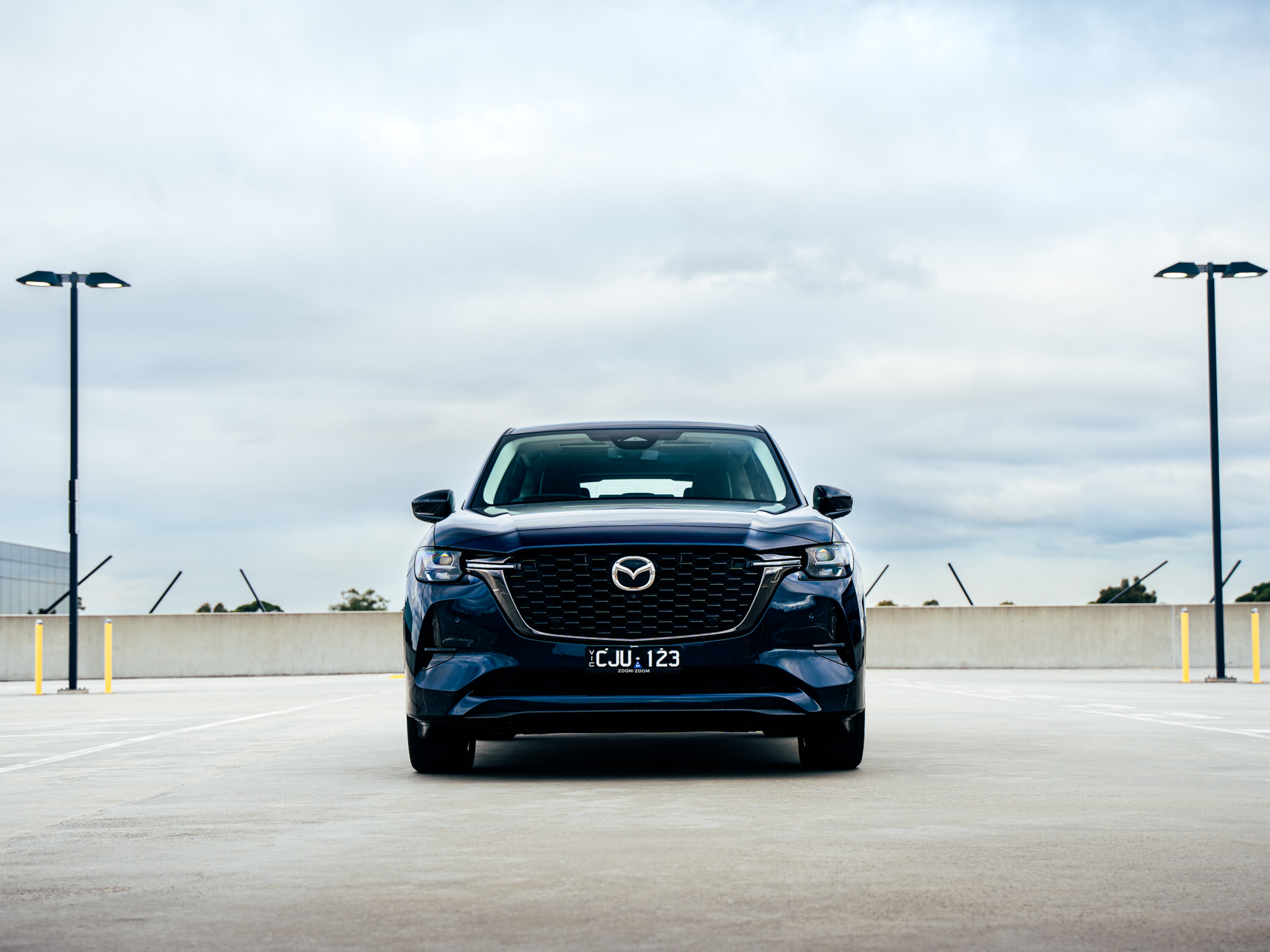
Model: Mazda CX-60 D50E GT Vision Price as tested: $71,800 + on-road costs This month: 733km @ 6.4L/100km
Things we like so far
- Nearly everything is brand new; platform, engines, transmission
- 3.3L diesel is grunty, refined and efficient
- Engaging handling for a big SUV
Not so much…
- Ride quality is way too firm
- Powertrain is frustratingly clunky and ungainly at low speed
- Restricted touchscreen functionality of the centre display
There’s a lot riding on the Mazda CX-60’s broad, chiselled shoulders. As the debut model built off the Japanese brand’s much-hyped Large Platform, it feels like Mazda’s first proper shot at fulfilling its promise to “go premium”.
It’s also our first taste of Mazda’s new engine line-up, the CX-60 introducing three fresh powerplants under its long nose: A pair of 3.3-litre inline six-cylinder turbos (one petrol, one diesel) and the brand’s first plug-in hybrid, which combines Mazda’s existing 2.5-litre petrol with a 17.8kWh battery and single e-motor.
But here’s the thing; when we drove the CX-60 for the first time at the local launch, we were a little underwhelmed. The engines were impressive and the cabin felt luxurious, but the CX-60’s sense of ‘premiumness’ was let down by suspension that was too firm and a gearbox that was jerky and cumbersome.
It felt uncharacteristically underdone by Mazda standards and that raised more questions than answers.
Which is exactly why we wanted to add a CX-60 to our long-term test fleet. Over the next three months, we’re going to test all three engines and also sample two of the three available trim grades as we look to get further under the CX-60’s skin.
School runs, weekends away, fast country-road blasts and inner-city driving are all part of the plan to better understand the CX-60’s strengths and weaknesses. First up is the mid-spec CX-60 GT with the 3.3-litre diesel. It’s fitted with the optional $2000 Vision Pack which takes its RRP to $71,800 before on-road costs. Here’s how month one played out.
Day 1
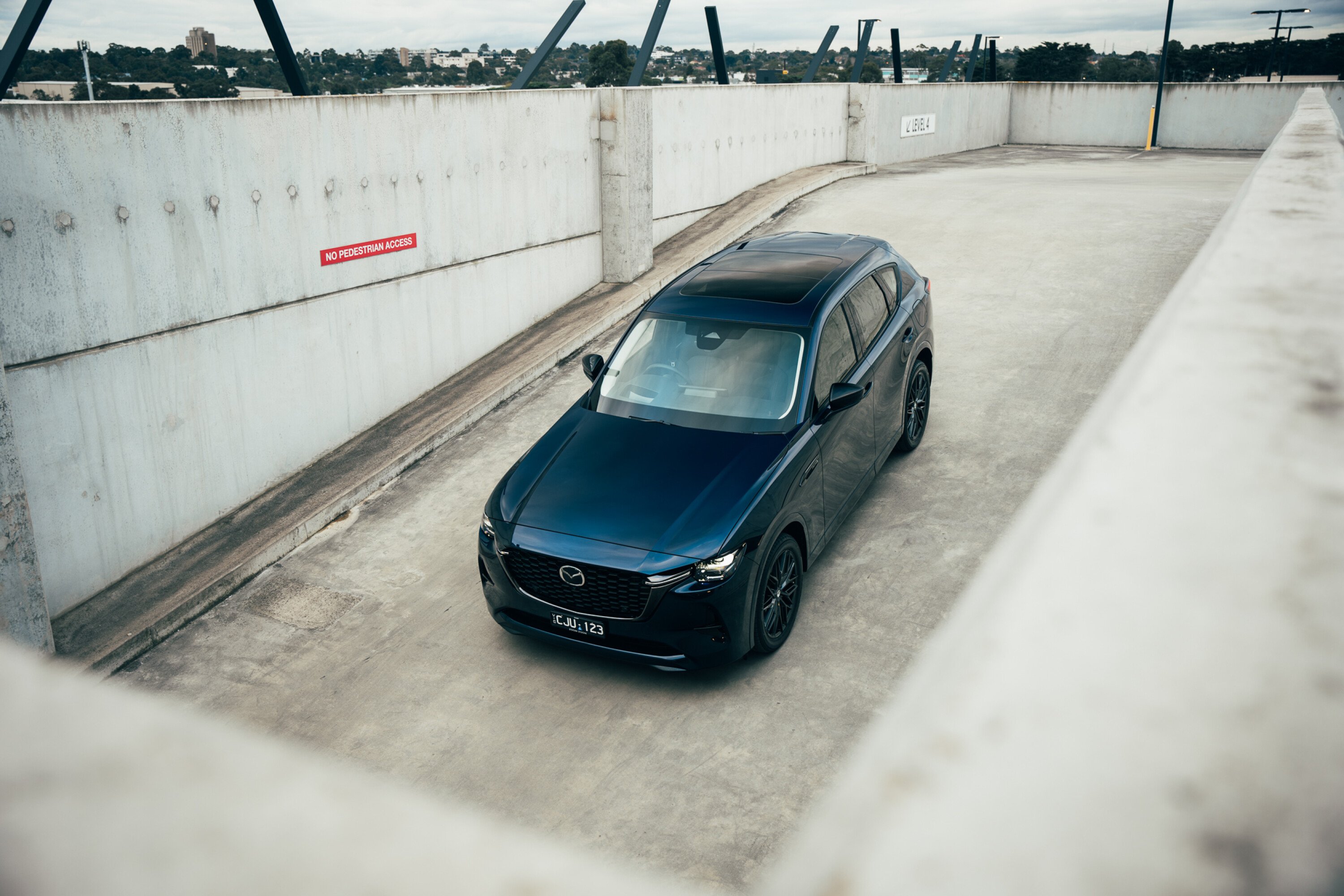
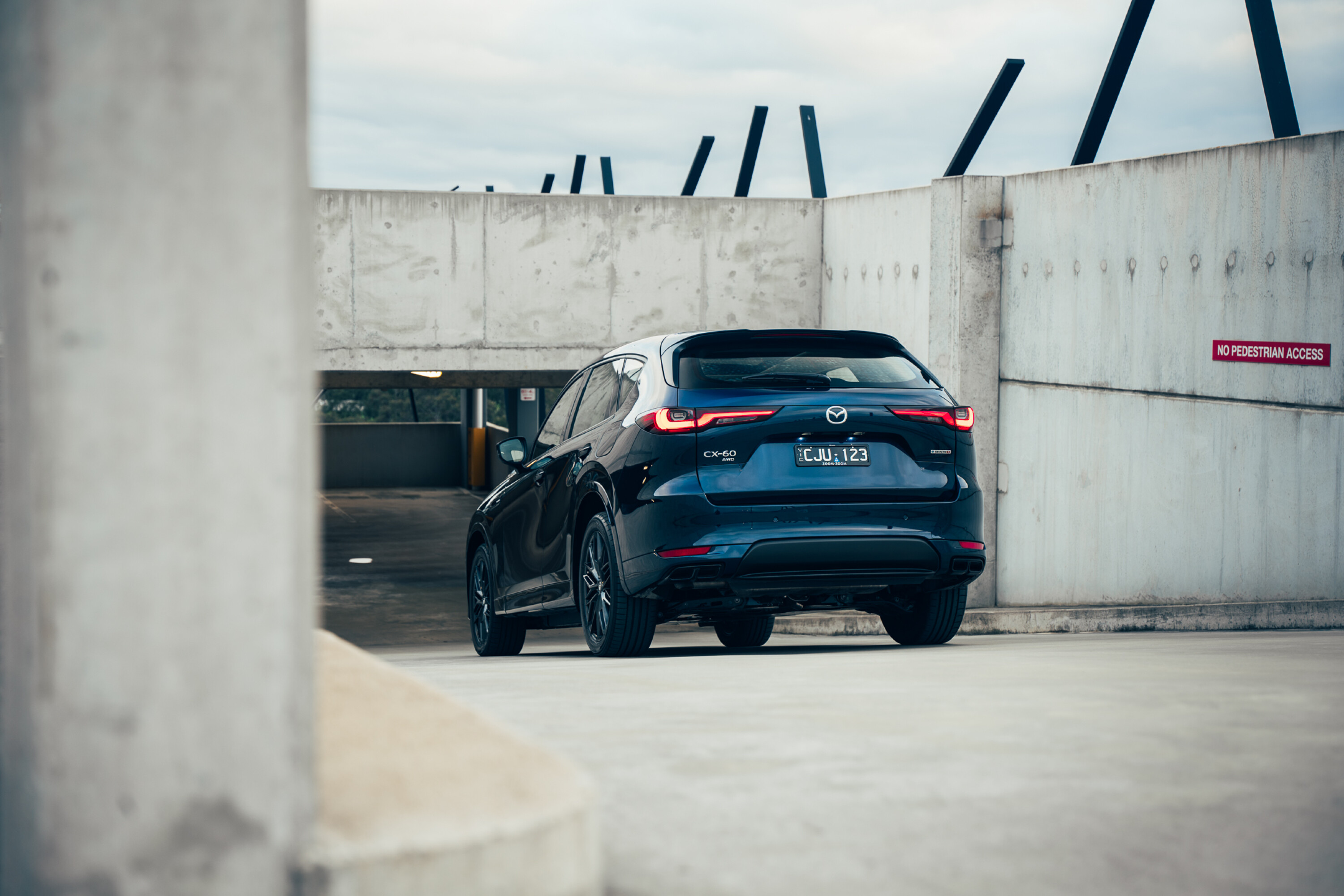
Collection day from Mazda HQ and first impressions are overwhelmingly positive. Mazda’s mid-size flagship looks great, which is a big relief. In pictures, the CX-60 can look a touch slab-sided and blocky – I’ll admit to having some reservations about the exterior design – but in the metal, it translates into a medium SUV that has real presence.
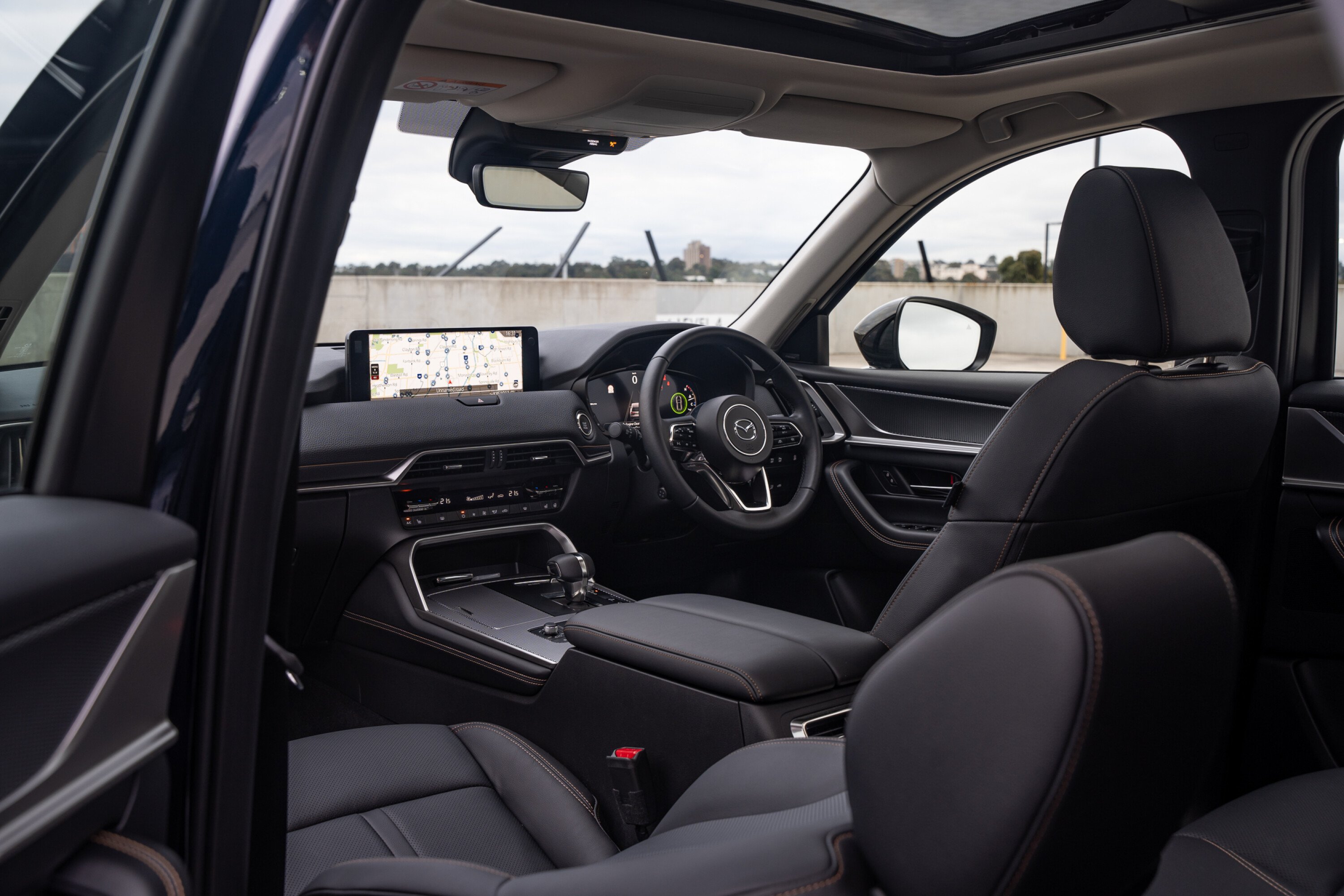
Great cabin, too. Our mid-spec GT tester has a slightly sombre colour scheme but its mix of black leather and dark plastics still feels premium and everything is tightly screwed together.
And the fundamentals are all there: a sporty ‘legs out’ driving position, comfy seats, decent storage and an elegant, leather-trimmed steering wheel.
It also feels impressively well-equipped for a mid-spec model. There are heated leather seats, a heated steering wheel, a panoramic sunroof and wireless phone charging. The tech on offer is impressive, too.
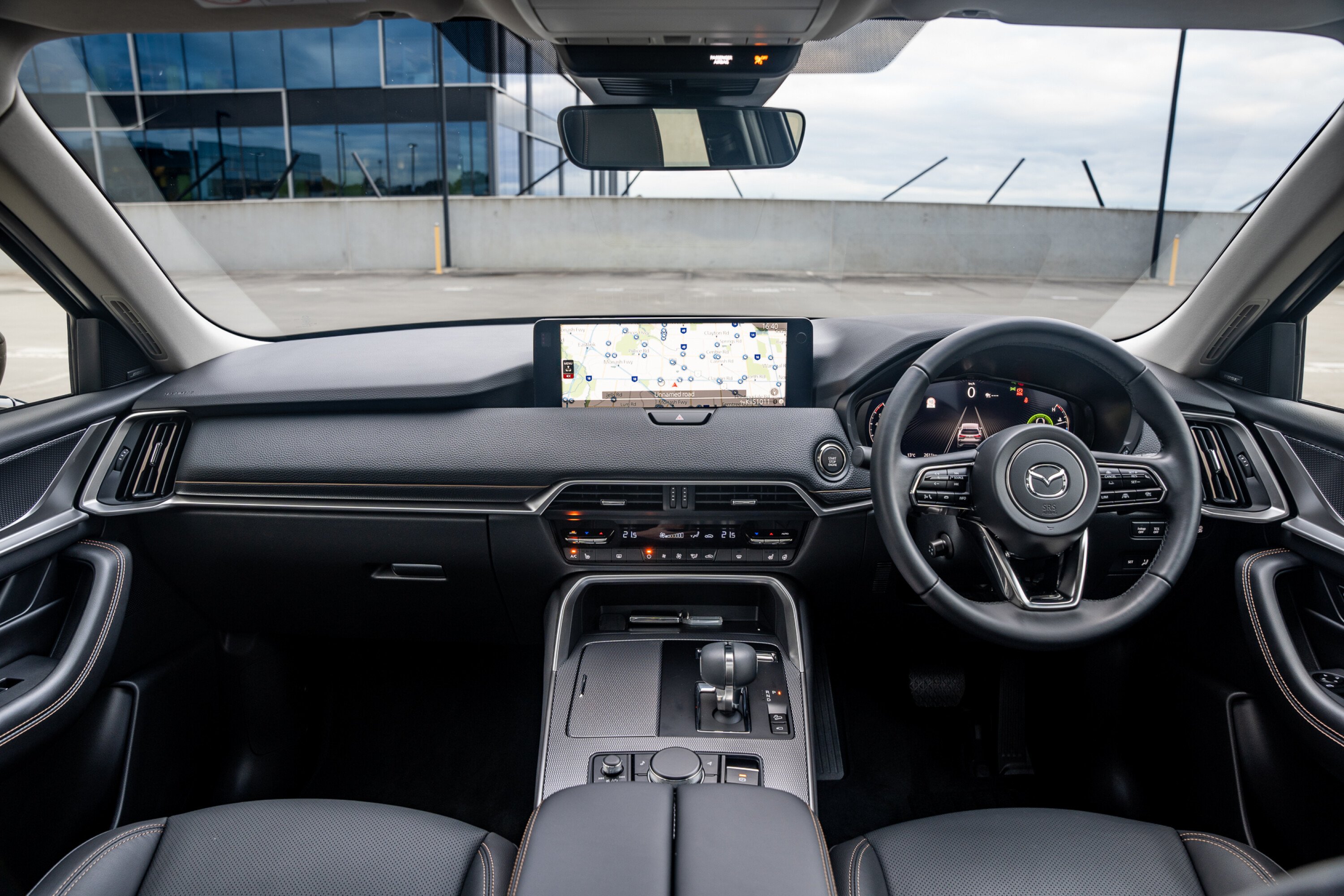
The digital dial cluster and head-up display are both clear and adorned with elegant fonts (BMW could learn a thing or two from the simplicity on display here) and the 12.3-inch centre screen is Mazda’s biggest yet.
But the absolute best thing about the CX-60’s cabin? How simple it is to use. There are buttons for all the key controls, the ergonomics are bang on, and the design is restrained and tastefully done.
Is it Mazda’s best cabin yet? Absolutely. Does it feel comfortable and premium? Yes on both fronts.
Day 7
We’ve hit a few speed bumps, folks. Given the CX-60 focuses on luxury and Mazda’s desire to go premium, I was expecting the CX-60’s suspension to be soft and pillowy.
But the opposite is true – it’s surprisingly taut and sporty. GT models and above ride on 20-inch alloys (the base Evolve has smaller 18s) and the ride quality is overly firm in everyday driving. It even verges on harsh over really rough roads, which is a shock given Mazda typically nails the compromise between sporty handling and everyday comfort.
A bigger issue, however, is the transmission. The eight-speed unit was developed in-house by Mazda and it’s unpleasantly clunky and jerky at low speed. The shift logic feels at odds with the torquey diesel, too.
Rather than surfing the torque in stop-start traffic and holding the same gear as you blend in the throttle, the auto is overly keen to kick down, which makes the CX-60 feel cumbersome rather than effortless. It’s a ’box that rarely feels like it’s in the right gear at the right time, meaning it’s easy to ‘catch it by surprise’ and then be forced to wait as it shifts down a cog.
Some odd noises have also started to appear. There’s a pronounced grinding from the drivetrain at low speed when you lift off the throttle, almost like the clutch is partially engaged or a bearing is scraping.
And I’ve noticed a peculiarity about the diesel’s soundtrack. Most of the time the big 3.3-litre diesel sounds impressively tough – fake noise is played through the speakers to give it a deep, almost V8-like soundtrack – but on start-up it takes a few seconds for the augmented noise to begin.
So you get a burst of genuine diesel sound before the deeper, more pronounced fake noise starts, which spoils the illusion a little.
Day 14
Time to stretch the CX-60’s legs. We have a family holiday planned by the seaside, which should provide the perfect opportunity to test the Mazda’s open-road behaviour.
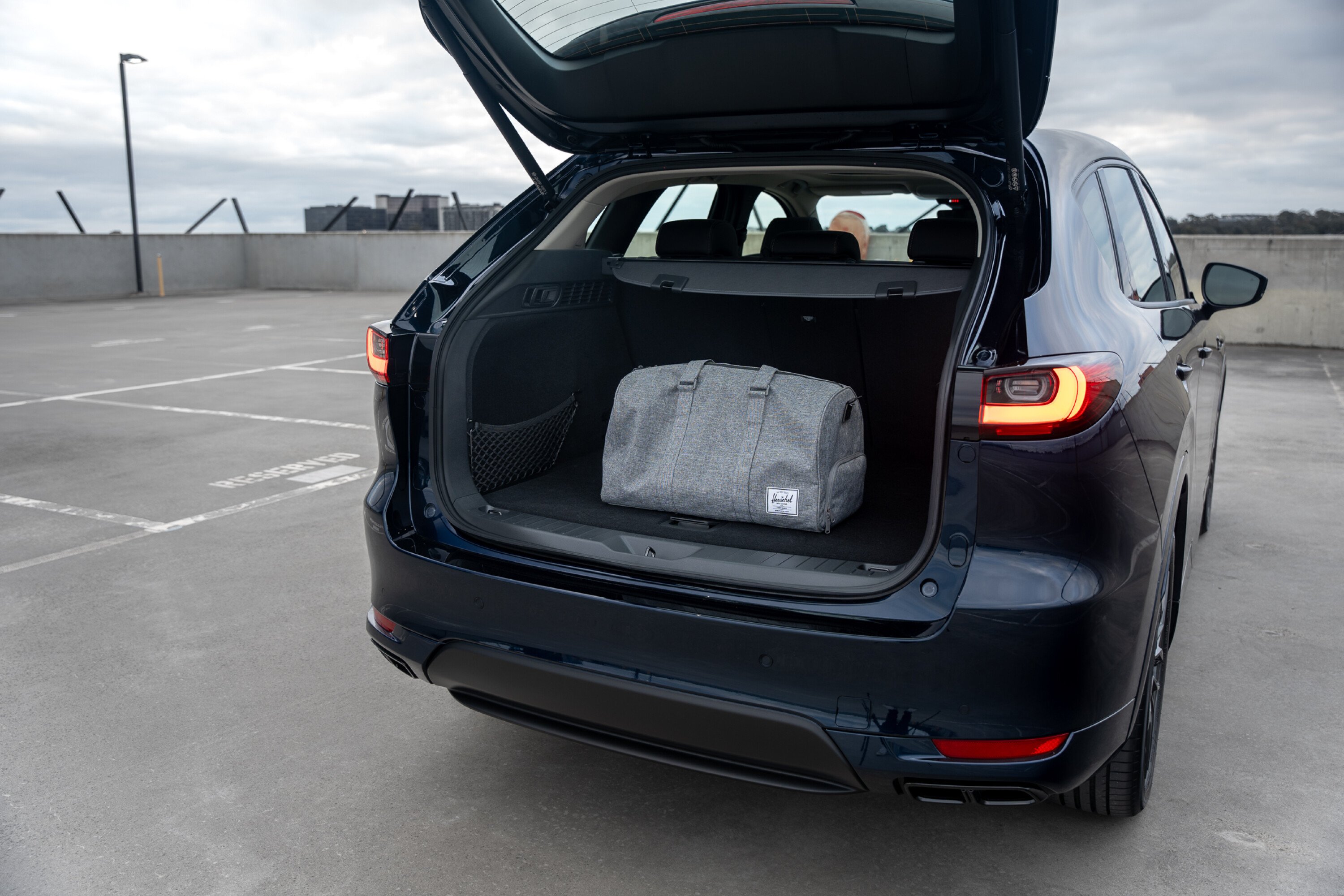
But first, the boot. We’re only a family of three but we don’t pack light. Multiple suitcases, a high chair, a travel cot and enough kids’ toys to entertain a small city are all crammed into the CX-60’s rear end and it all fits comfortably.
Officially the CX-60 offers 570 litres of luggage capacity behind the rear seats, which puts it on par with a Toyota RAV4 and Nissan X-Trail but miles ahead of other mid-size rivals like a Honda ZR-V (380L) and even the Mazda CX-5 (438L).
The driving experience also improves away from the city. This is a great engine. The 3.3-litre turbo-diesel is entirely new and it feels modern, powerful and responsive.
With 187kW/550Nm on tap and a 48-volt mild hybrid subsystem, there’s ample performance to execute easy overtakes and it’s impressively quiet at a cruise.
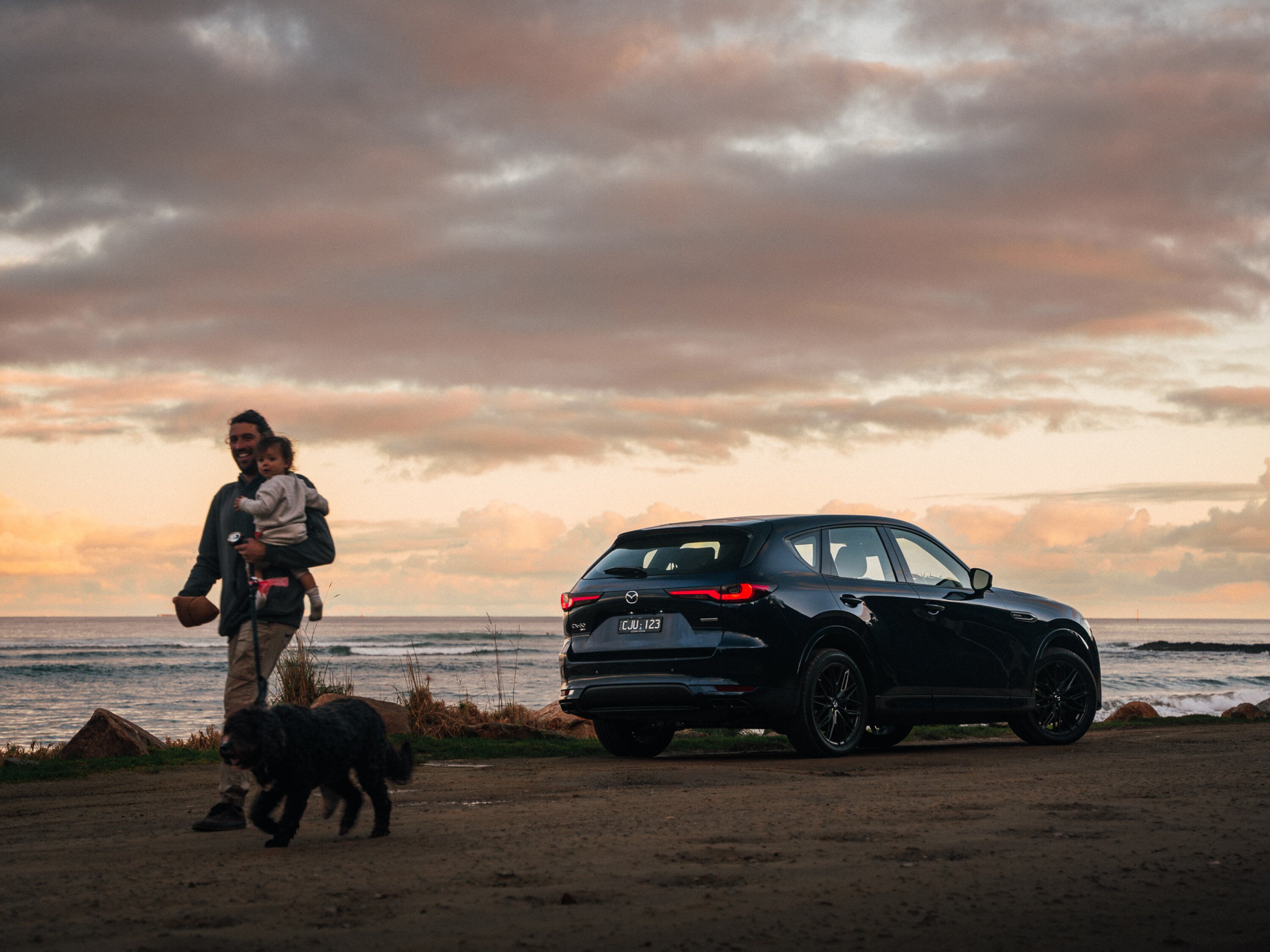
The whole car is, actually, with only some distant tyre roar on coarse chip surfaces spoiling the cabin’s serene sense of calm.
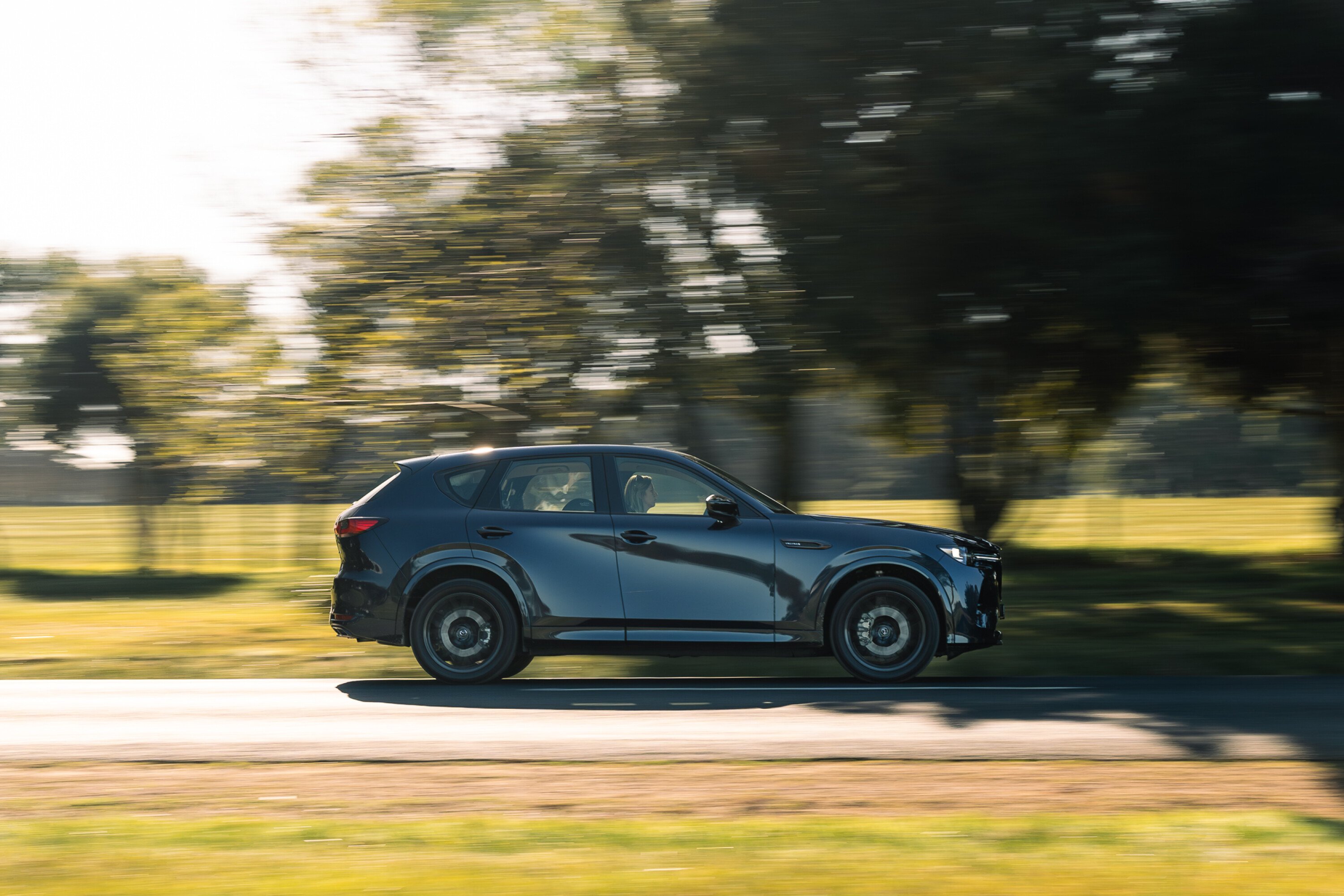
It’s surprisingly engaging to drive on twisty roads, too. Body roll is nicely contained and the steering is meatily weighted, which combines with the grunty engine to make the CX-60 a fun SUV to pedal quickly.
But is that the right focus for a family car? I’d happily give up some of that handling nous for some extra ride comfort…
No complaints about the rear seat. There’s ample room for adults to sit behind one another, there are dedicated rear air vents, tri-zone climate control and the backrest folds 40:20:40.
Day 21
After 700km or so, the CX-60 needs a drink. I’ll admit to some concerns here. At 1990kg, the CX-60 is no lightweight, and the 3.3L diesel is a big engine by modern standards so it could be thirsty.
Clearly, I worry too much. With the tank brimmed, the Mazda swallows 47L of diesel to return a real-world economy figure of 6.4L/100km. Given it took in a fairly even mix of urban and freeway driving, that’s impressively frugal.
Day 30
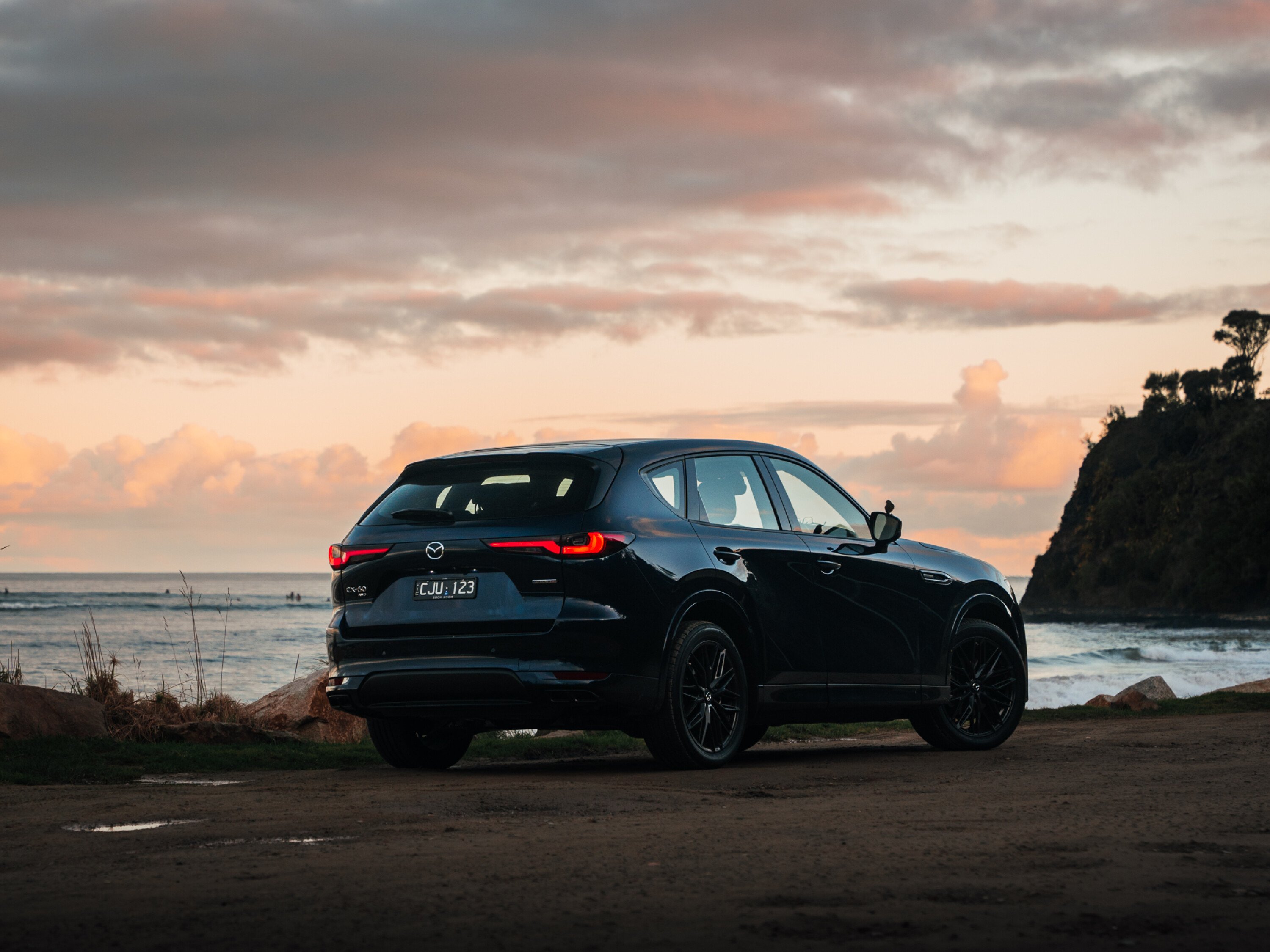
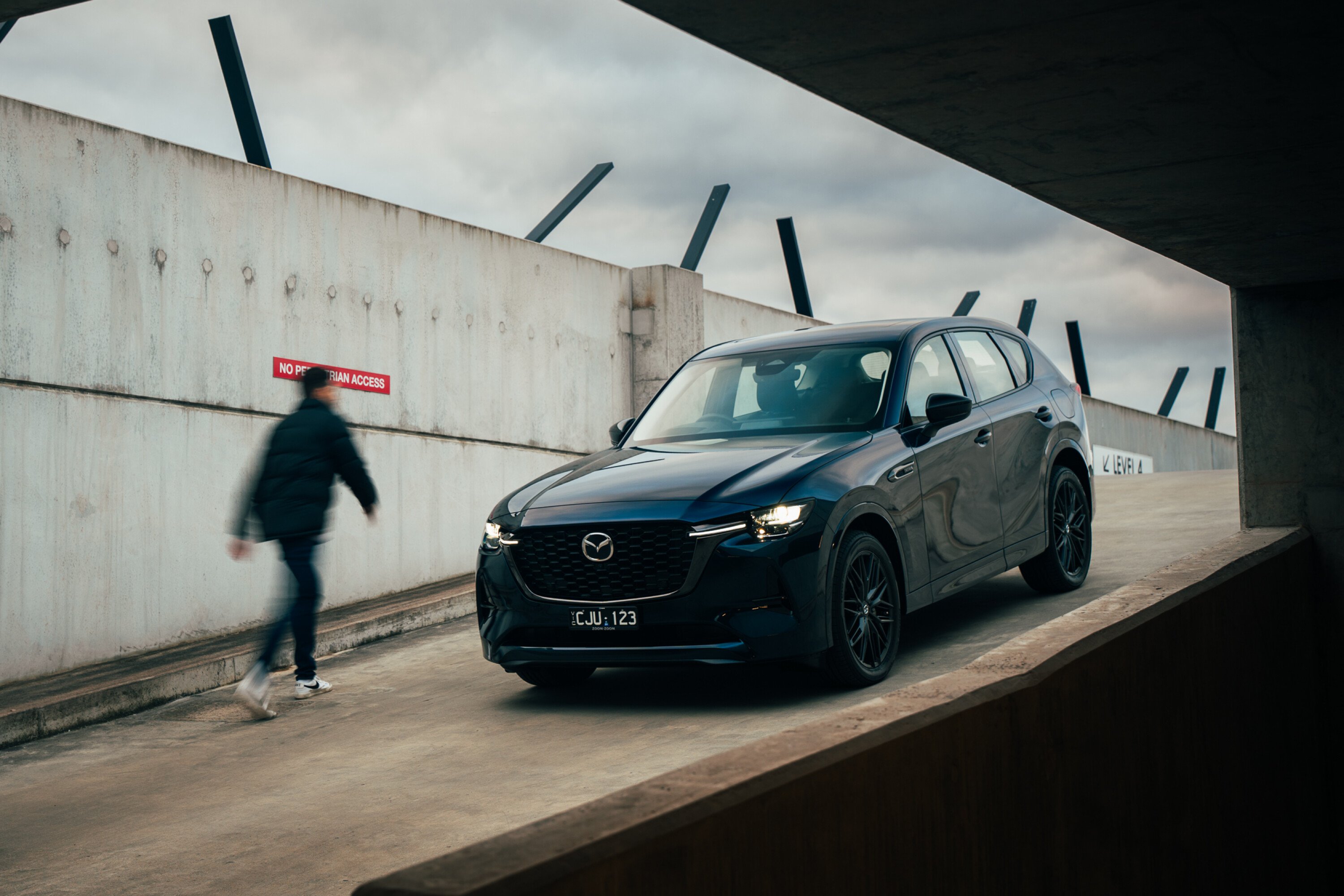
It’s swap day, which means the 3.3L diesel is heading back to Mazda and will be replaced with the plug-in hybrid. The drive back to Mazda’s HQ gives me time to reflect on how CJU123 has stacked up. The bones are good, there’s no doubt about that.
The exterior design is sharp, the cabin is nicely executed and the diesel is a highlight. Kudos, too, for Mazda’s sheer ambition in building a brand new platform, its own gearbox and three fresh powertrains. But for all the core goodness, the diesel CX-60 lacks some finesse.
Its transmission is the weakest link, followed by the overly firm ride, though both of these issues should be able to be ironed out come facelift time. It’s also possible the PHEV’s injection of some instant, low-down electric assistance could help soothe the CX-60’s low-speed jerkiness. Tune in next month to find out.
PART 2
Goodbye diesel and hello hybrid as Inwood slips into Mazda’s first-ever plug-in
- Model: Mazda CX-60 P50E GT Vision
- Price as tested: $82,900
- This month: 554km @ 6.5L/100km
Things we like
- PHEV is surprisingly quick for a big family SUV
- Hybrid version has a higher braked towing capacity than diesel
- Longer servicing intervals than diesel
Not so much…
- Ride quality is still too firm
- Powertrain is frustratingly clunky and ungainly at low speed
- PHEVu2019s real world economy gains are minimal
Let’s face it, Mazda hasn’t exactly been a trail-blazing pioneer when it comes to electrification.
Where rival brands like Hyundai, Kia and Toyota have all forged ahead with multiple hybrid and fully electric models, Mazda has been slower to dive head first into the world of excited electrons.
And that’s entirely understandable. Aussies tend to have a warped view of Mazda simply because it’s so successful here. Thanks to a hard won reputation for excellent customer service and for making cars that are reliable and fun to drive, Mazda is a sales juggernaut Down Under and has long been our country’s second-best selling brand.
Globally, however, it’s a much smaller player. Crunch the number for 2022 and Mazda doesn’t even scrape into the top 15 for worldwide sales.
And unlike lots of other brands, Mazda isn’t nestled within the secure bosom of a large parent company either, so every new model and every major investment has to be successful. The risks of a large money project failing don’t bear thinking about…
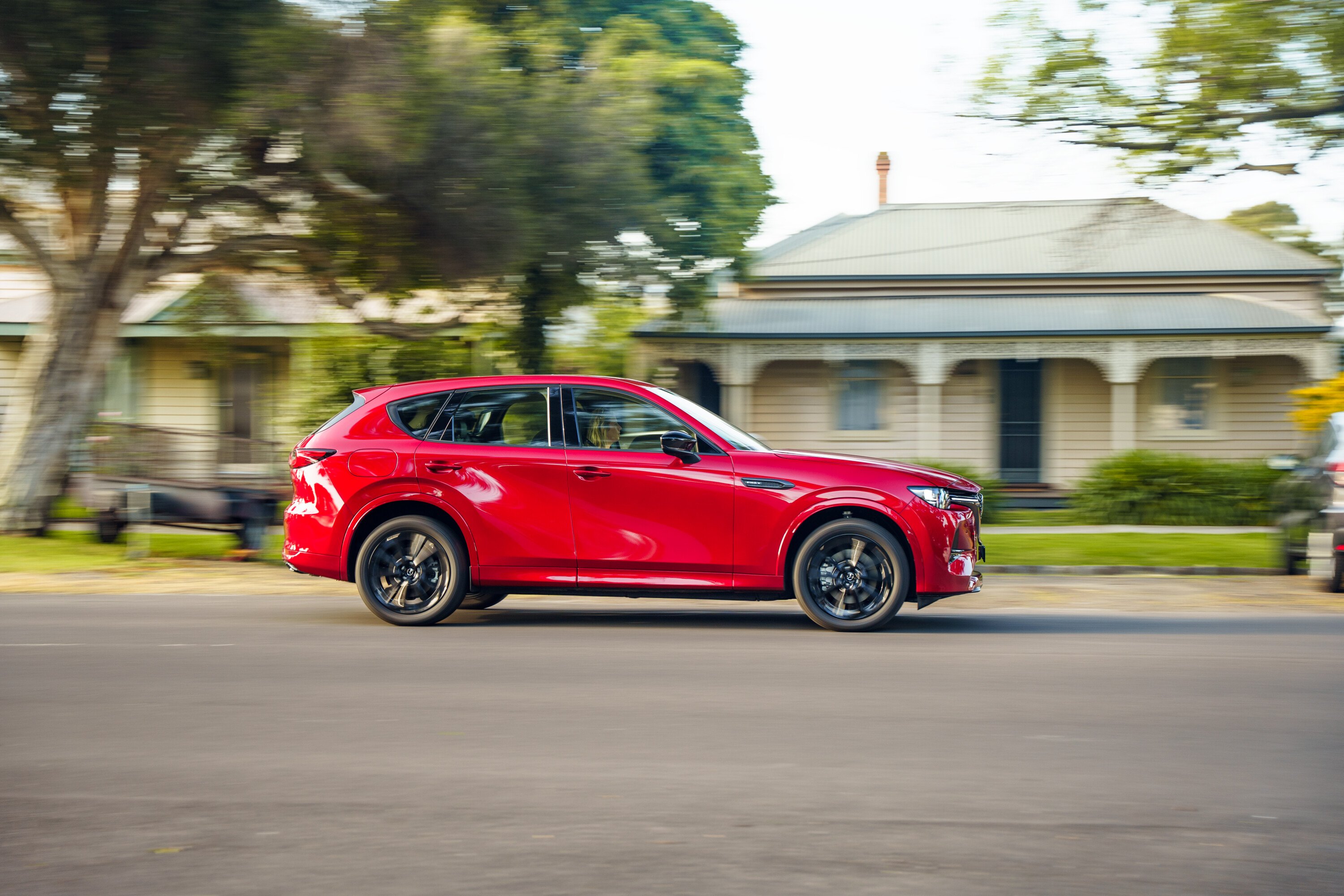
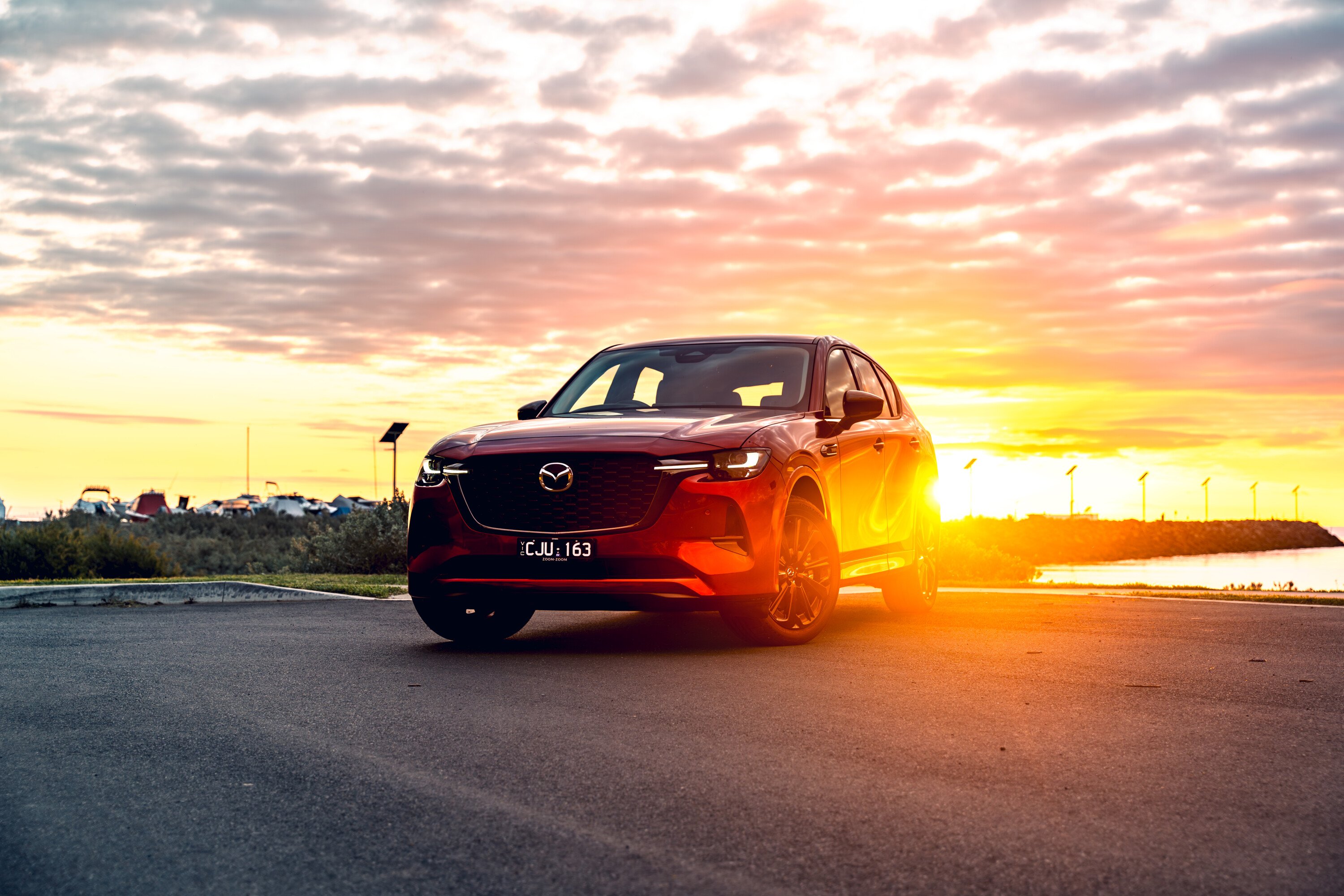
All of which makes the bright red SUV you see here fairly significant. This is the (deep breath) Mazda CX-60 P50E GT Vision and it’s the Japanese brand’s first ever plug-in hybrid. And boy, oh boy, does it make a strong first impression.
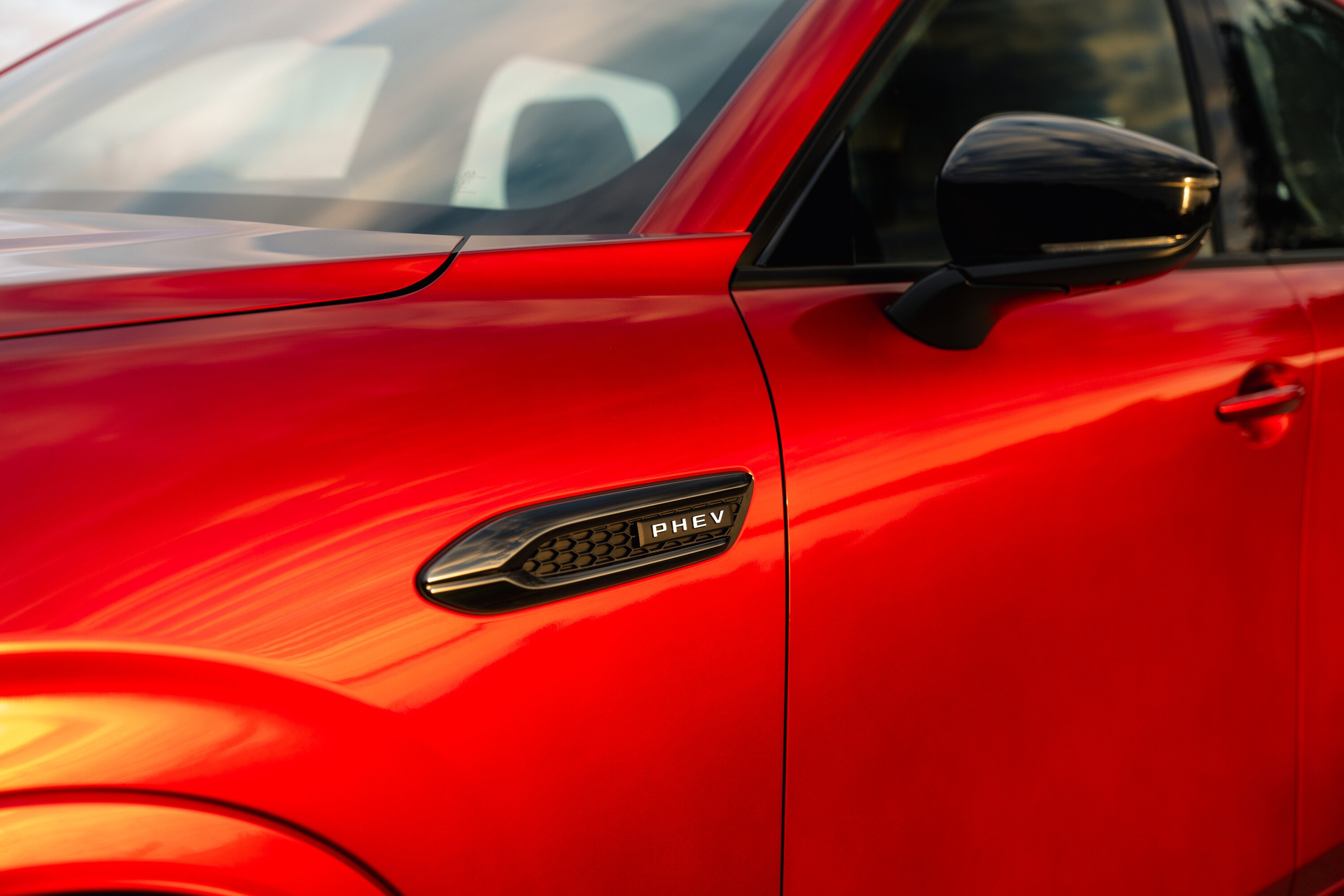
Given the ‘green’ fuel-saving image of hybrids, you might expect the CX-60 PHEV to be the least powerful and performance focused of the range but actually the opposite is true.
Run an eye over the CX-60 spec sheet and you’ll see the PHEV version churns out 241kW and 500Nm. That makes this one of the most powerful vehicles Mazda has ever made. And despite weighing a porky 2139kg (+150kg compared to a diesel CX-60) if you flatten the throttle you’ll rocket from 0-100km/h in 5.8 seconds. That’s hot hatch fast.
Be gentler with your right hoof and EV mode will also provide 76km of electric-only range, which is decent although about par for the course for PHEVs these days. A Mitsubishi Outlander PHEV, for example, offers 84km of EV range.
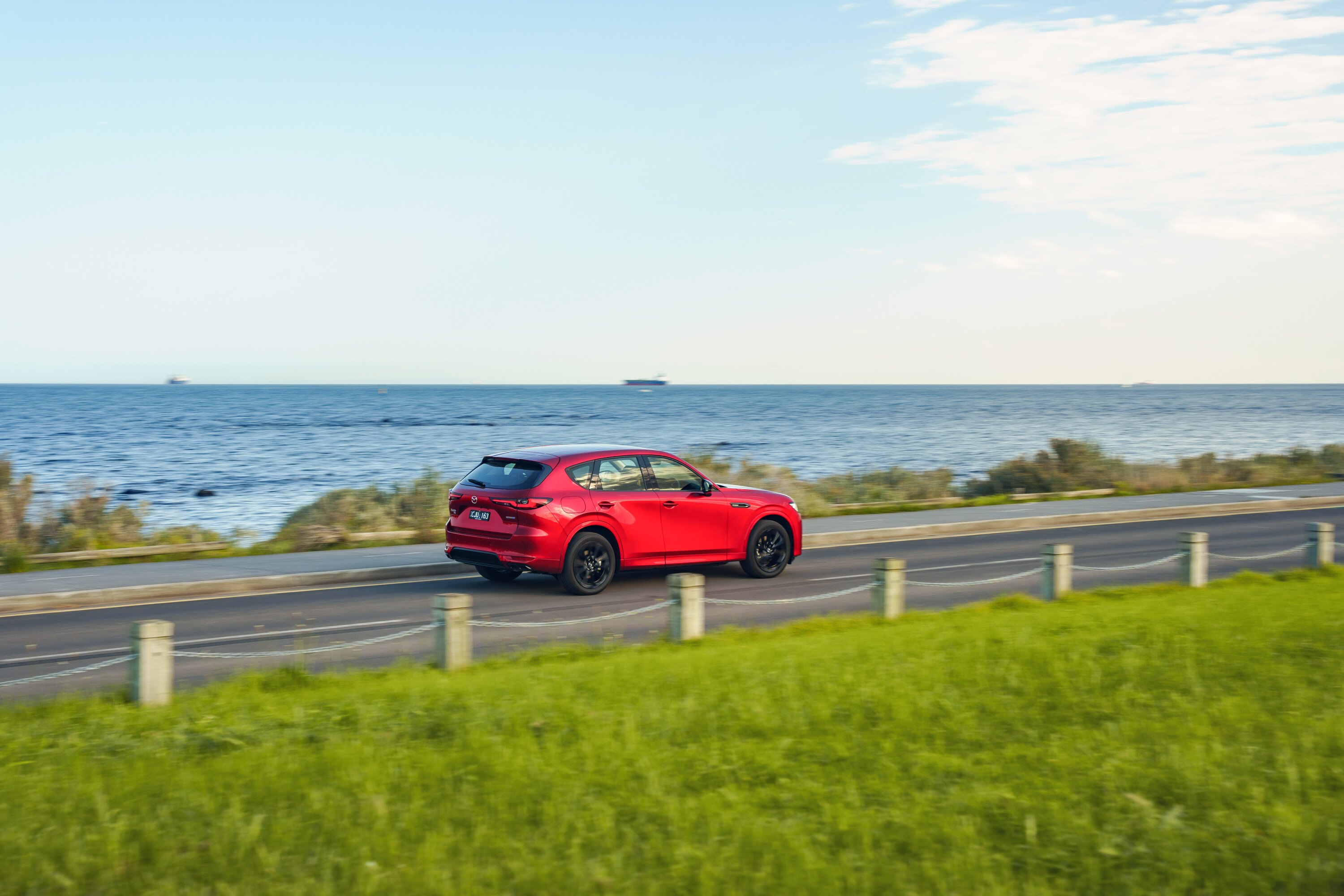
So far, so good then, but how does the PHEV compare to the diesel-powered CX-60 we ran in these pages last month?
The comparison is intriguing given both cars are exactly the same trim level — mid-tier GT with the optional $2000 Vision pack — meaning the only difference between them is the exterior colour and the powertrain. And sadly for the PHEV, it’s the diesel that’s the clear pick of the two…
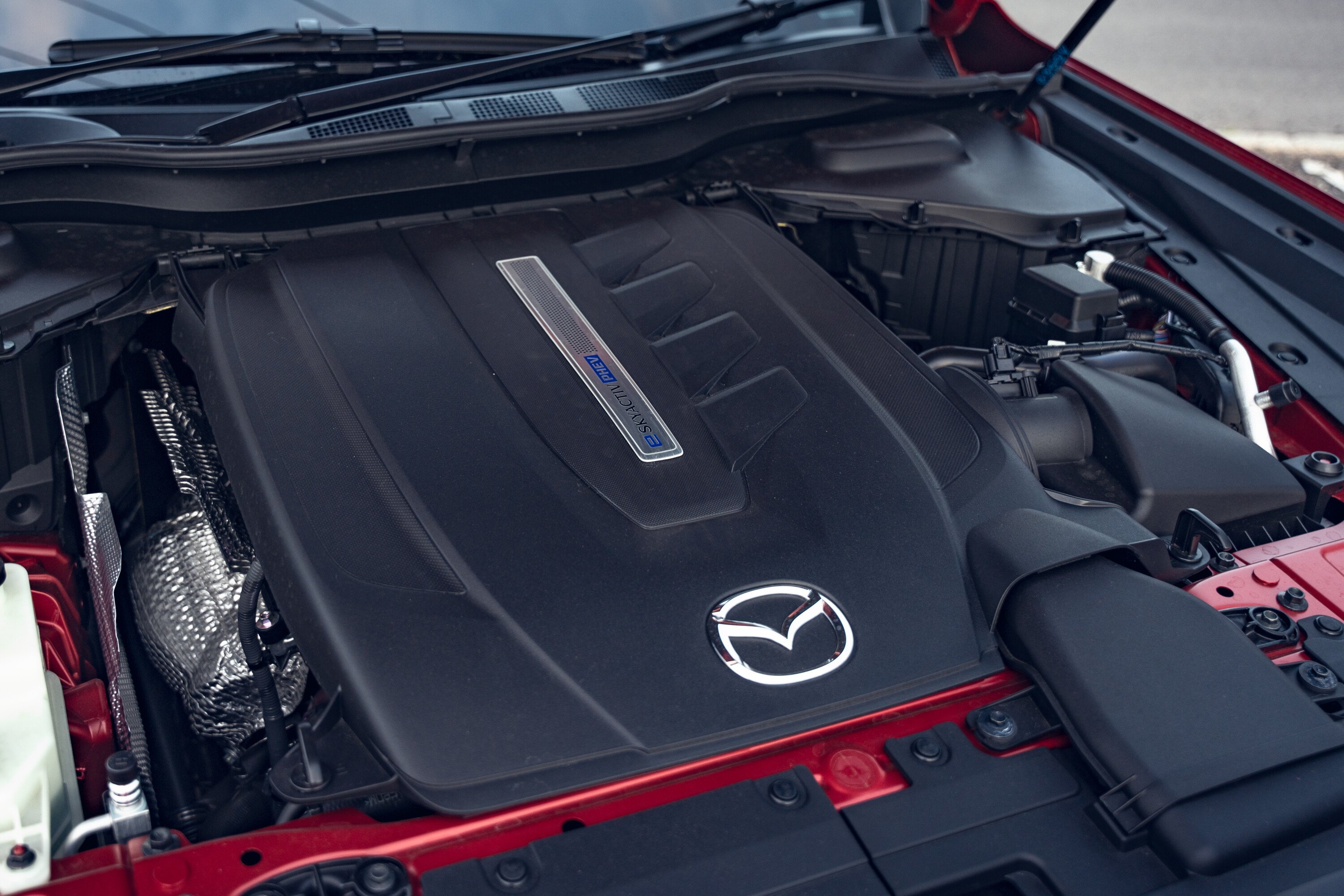
The CX-60 PHEV combines Mazda’s existing 2.5-litre petrol engine with a single electric motor that’s fed by a 17.8kWh battery pack. The e-motor is wedged between the engine and eight-speed gearbox and even in EV mode, the CX-60 is all-wheel drive.

On its own, the electric motor makes 100kW/270Nm which is enough to propel the CX-60 about in fuel-saving silence. You’ll be lucky to make it the full 76km, however.
Like most cars, the CX-60’s official consumption figures are fairly optimistic. The battery’s claimed electrical consumption is 14.8kWh/100km but our average was just over 20kWh.
It’s the same story for fuel efficiency. Like all PHEVs, the CX-60’s official combined figure is unrealistically low at 2.1L/100km. Our fuel reading saw the PHEV drink 6.5L/100km, which is actually fractionally more than the 6.4L we used in the diesel.
And while it’s undoubtedly quick, you need to engage Sport mode for the PHEV to feel properly muscular.
And in terms of drivability and performance, the PHEV has some issues. I’d been hoping that the injection of the e-motor’s instant, low-down torque would help to iron out the loow-speed jerkiness and hesitation we encountered in the diesel CX-60 but sadly the same issues remain. If anything, they’re actually more pronounced, thanks to the occasional clumsy handover between electric-and-petrol propulsion.
And while it’s undoubtedly quick, you need to engage Sport mode for the PHEV to feel properly muscular. The petrol hybrid also lacks the refinement and smoothness of the 3.3L turbo diesel. The oiler sounds better, too, and is better at executing effortless overtakes on the open road.
All of which makes the PHEV’s price premium a difficult pill to swallow. Spec-for-spec, the PHEV is $10,941 pricier than an equivalent diesel. We know which one we’d pick…
PART 3
Flagship petrol brings some luxe appeal; gearbox and ride issues remain
- Model: Mazda CX-50 G40e Asami SP
- Price as tested: $75,750 + on-road costs
- This month: 437km @ 10.7L/100km
Things we like
- Azami trim grade + SP pack feel properly premium
- Mazda has introduced fixes for the firm ride and jerky gearbox
- 3.3L petrol is smooth and responsive
Not so much…
- We’re yet to try the updated suspension/gearbox
- Big turbo petrol is thirsty
- Azami model grade is getting pricey
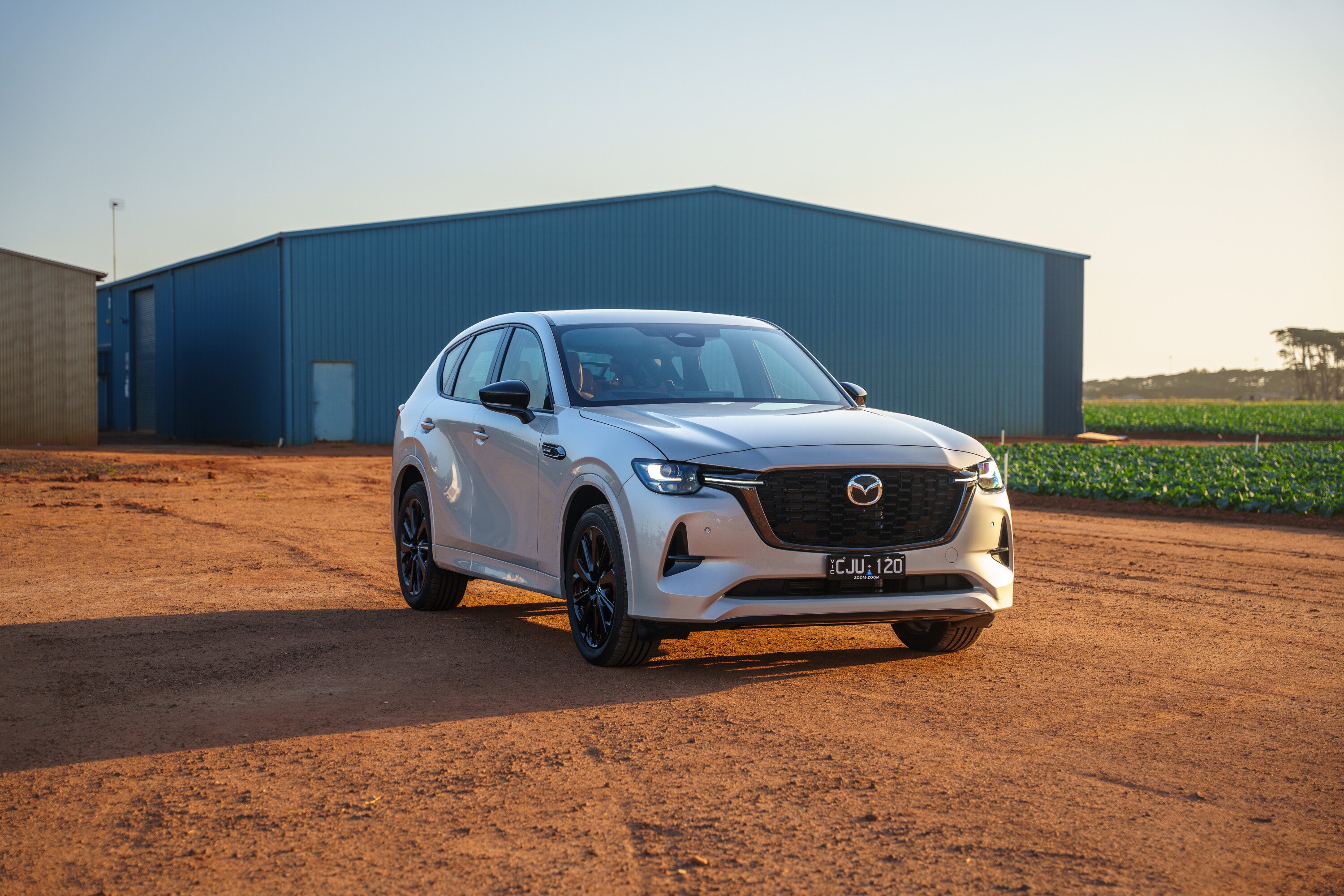
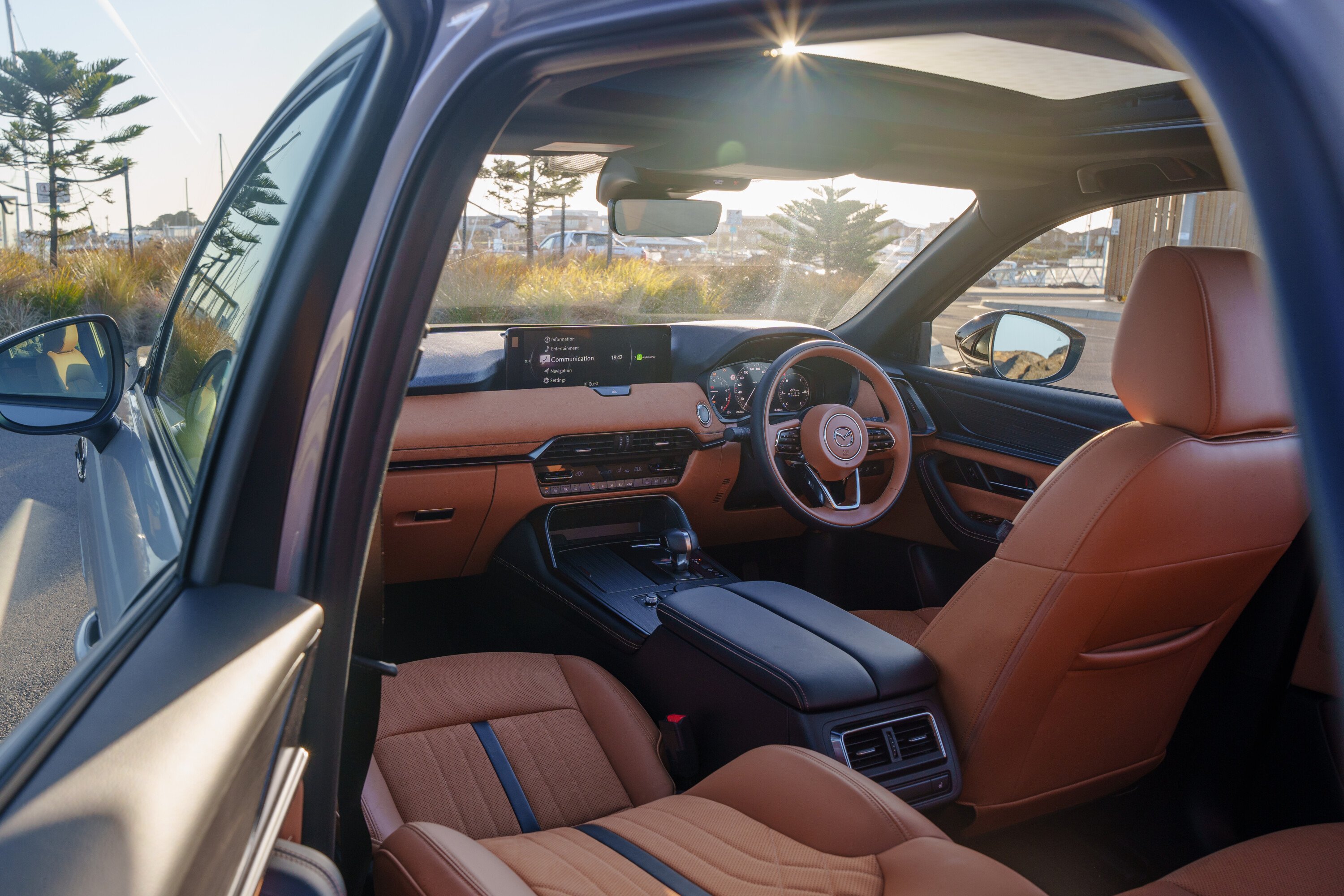
“Gee whizz, this is F-L-A-S-H!” She doesn’t know it but my friend, who is now gazing around the tan-trimmed cabin in disbelief — “Are you sure this is a Mazda?” — has just perfectly encapsulated what the CX-60 is hoping to achieve.
A premium push has been on Mazda’s radar for years and this kind of reaction, where buyers start to compare a humble Mazda with richer rivals from Volvo, Volkswagen and even BMW and Mercedes, is exactly what CX-60 was designed to do.
So why has it been elusive, until now? This is the third CX-60 to join the Wheels garage (our grand plan was to try a different engine and trim level each month) and while the previous examples have looked smart and felt solidly screwed together, none have elicited such a glowing response from family and friends.
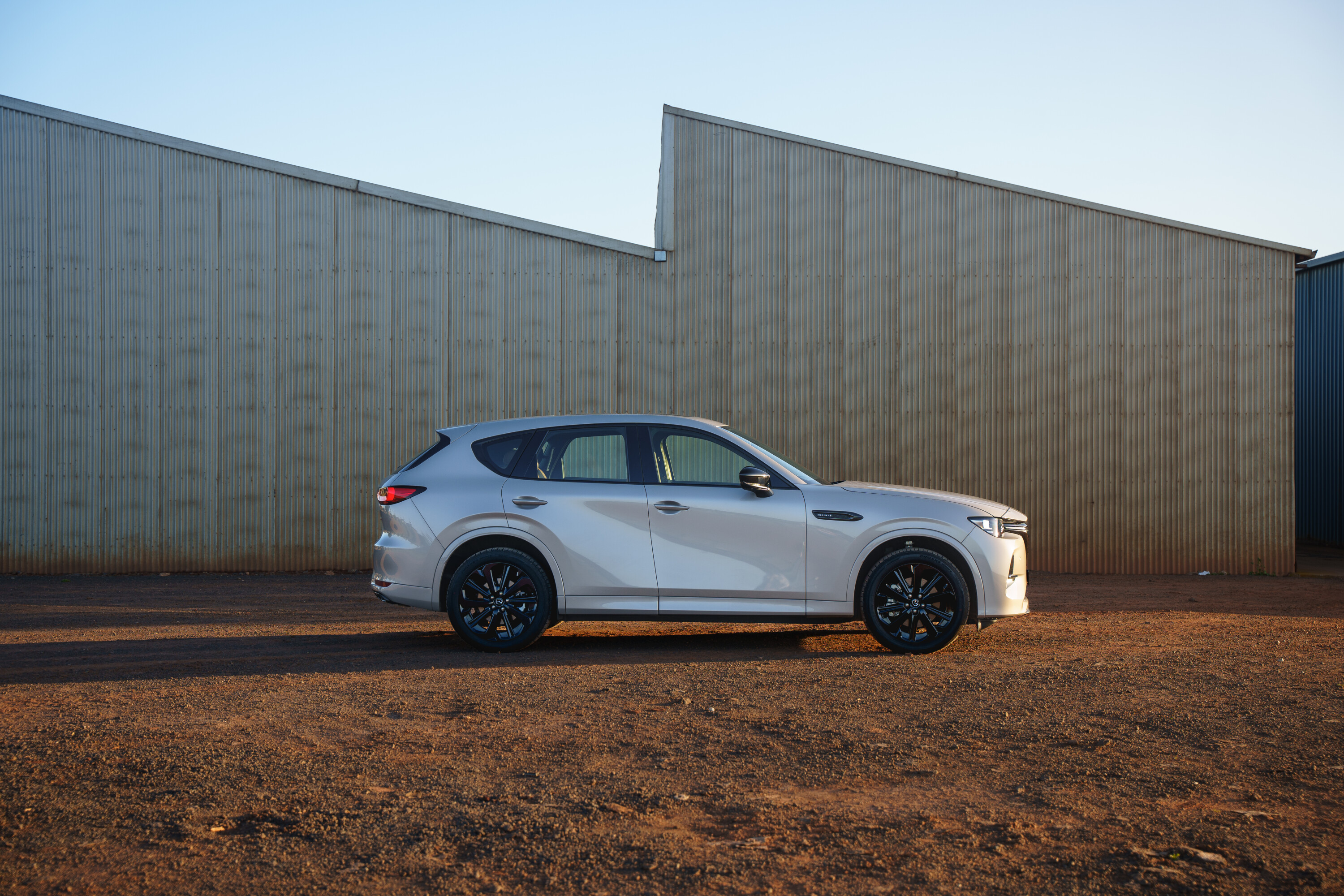
Most of that is down to this CX-60’s spec. So far we’ve run mid-tier model grades but this example is the flagship G40e Azami and it brings a welcome dose of glitz and glamour.
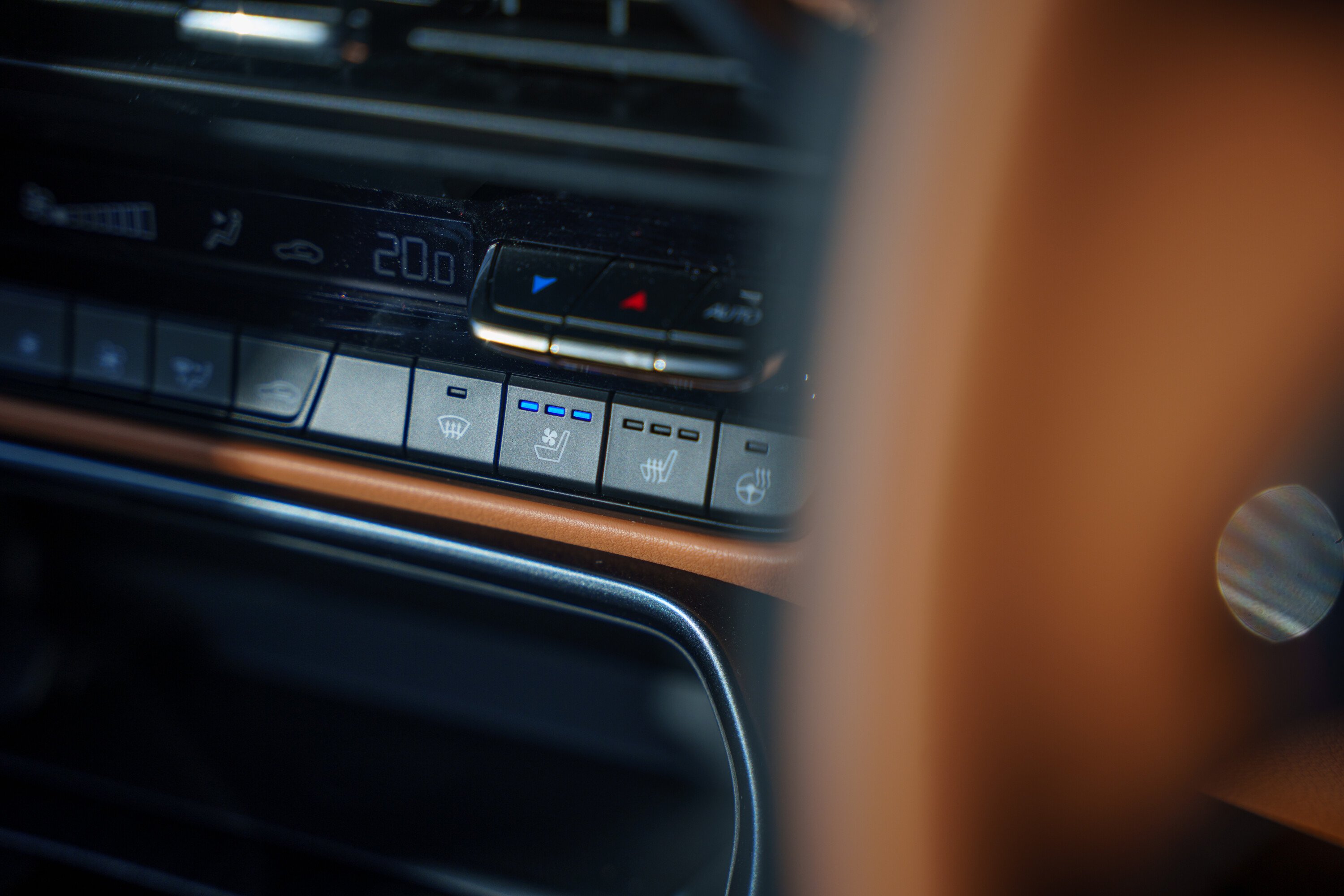
On top of the already well-specced GT model, the Azami adds a different design for the 20-inch alloys and front grille, adaptive LED headlights, nappa leather seats, ventilated front seats, a 360 surround view camera, a frameless rear-view mirror and front cross-traffic alert.
This particular car also carries the optional SP package which, for an additional $2000 dollar-bucks, adds black metallic alloys, gloss black exterior detailing and trims the seats, dash and steering wheel in tan nappa leather.
It’s a tasteful tan, too — more Ferrari-esque than the orange-hued tan leather you get in a Mitsubishi Outlander — and it’s a big part of what elevates this CX-60’s cabin from “Oh this is nice” to “blimey, this is fancy!”. The perforated backrest inserts are even diamond stitched and the overall result is a cabin that fully delivers on its promise to look and feel premium.
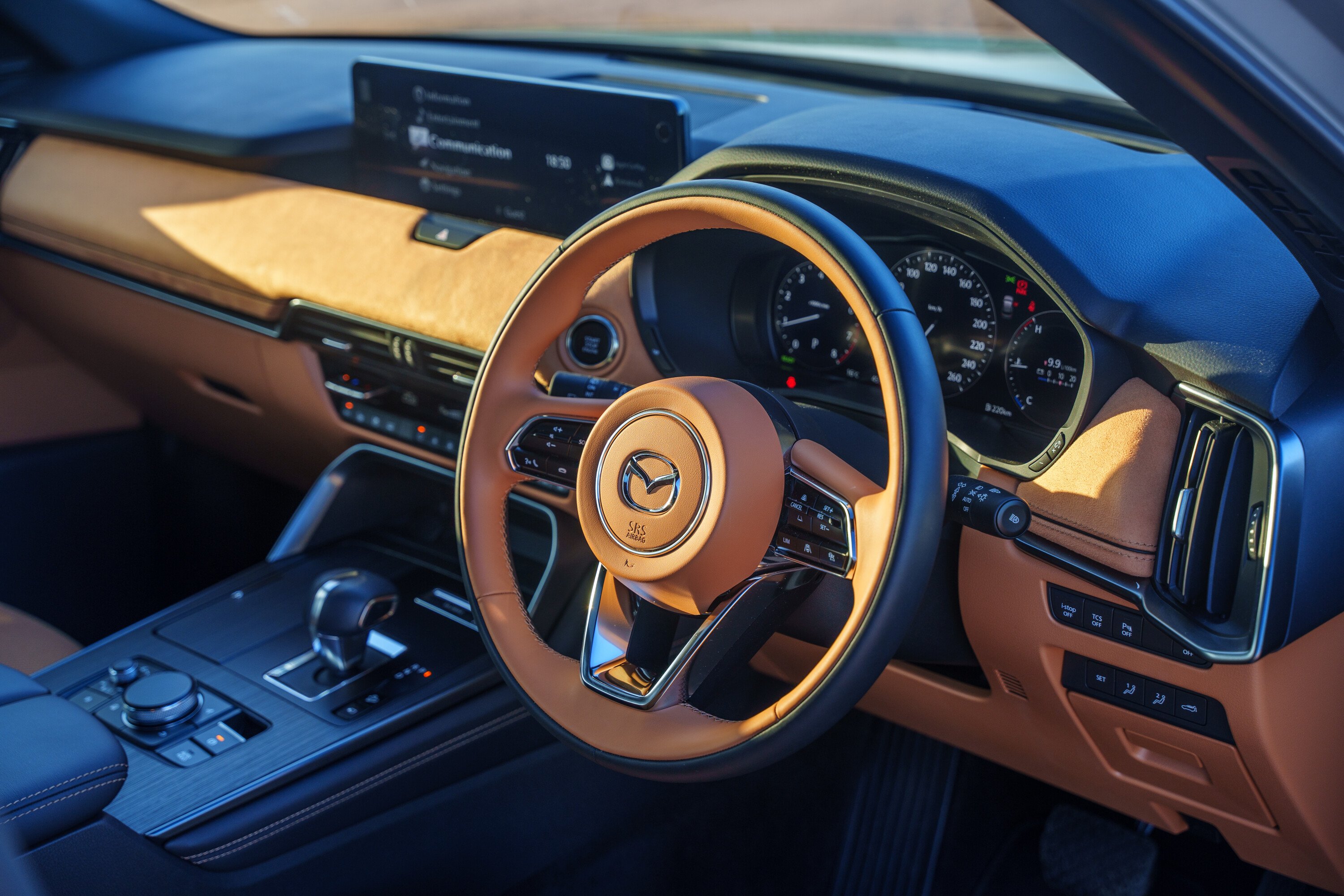
Naturally, though, you have to pay for the privilege. With the optional SP pack included, this Platinum Quartz CX-60 will set you back $75,750 of your hard-earned, before on-road costs. We’re firmly entering premium territory, then, and for the same money you could score an AWD Volvo XC60. A base model BMW X3 isn’t that far away, either…
Neither of these rivals have a thumping great six-cylinder engine, mind. We’ve already sampled the CX-60’s diesel and plug-in hybrid powertrains and this month we’re switching to the 3.3-litre turbo petrol. Of all the donks, this is the one I’m most excited about. Like the similarly sized diesel, the 3.3L petrol is all-new and arranges its cylinders in a straight line rather than a Vee for the promise of greater smoothness and, hopefully, a more evocative sound.
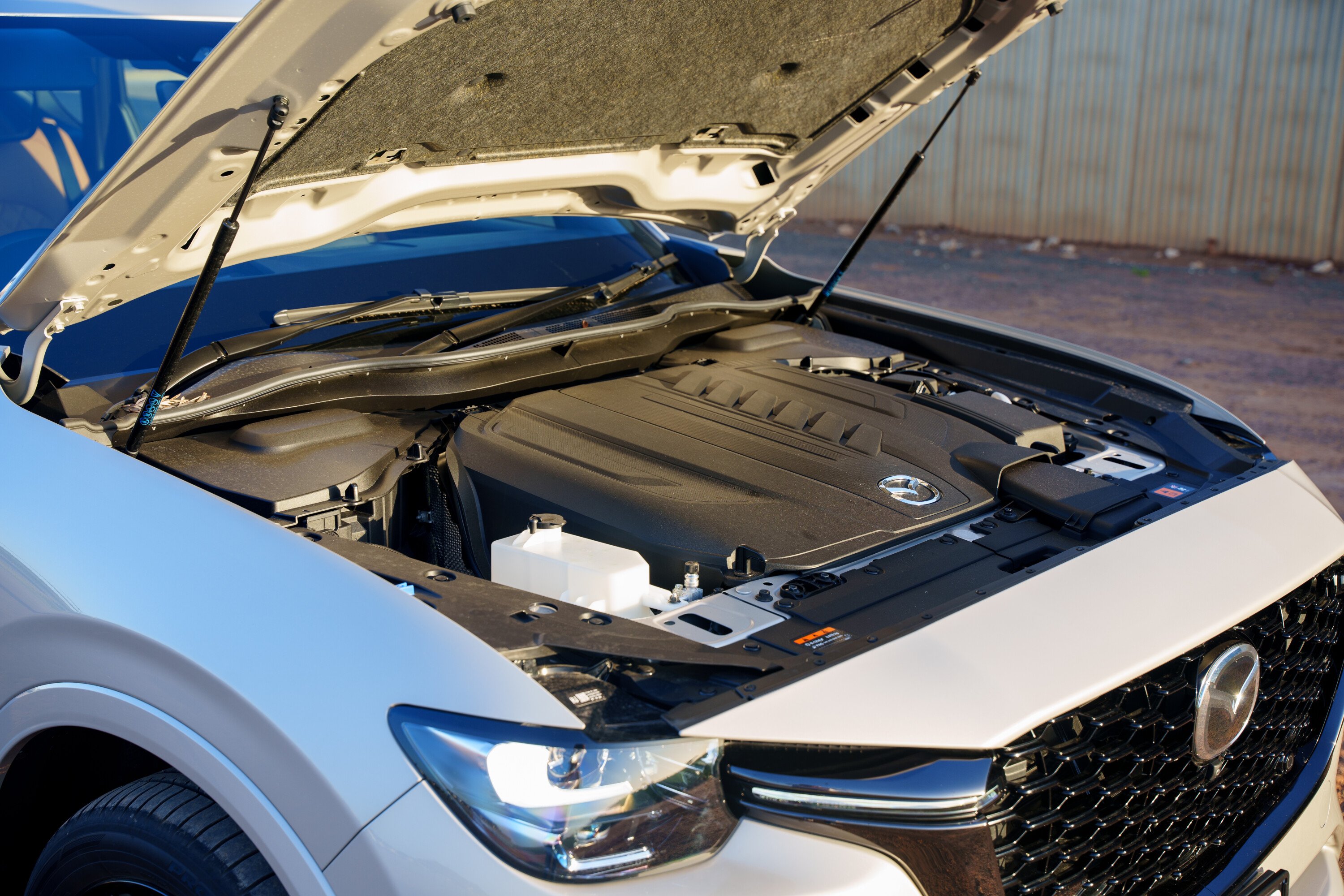
Outputs sit at a healthy 209kW/450Nm, and Mazda claims the new donk is gutsy enough to propel the 1950kg petrol CX-60 from 0-100kmh in 6.9 seconds.
It’s a good engine, no doubt, and we’ll applaud any company still willing to invest in an entirely new combustion architecture in 2024, but the 3.3L petrol falls short of being great. Weirdly, it sounds more like a V6 and while it is responsive and quick, it’s not as eager or as effortless as the torquier 3.3L diesel, especially around town.
By modern standards, it’s a bit of a drinker too. Both 3.3L units are mild-hybrids but the petrol drank 10.7L/100km over a mix of urban and highway driving, which is well up on the 6.4L we saw in the diesel. That’s a 67.2% increase for any maths nerds out there.
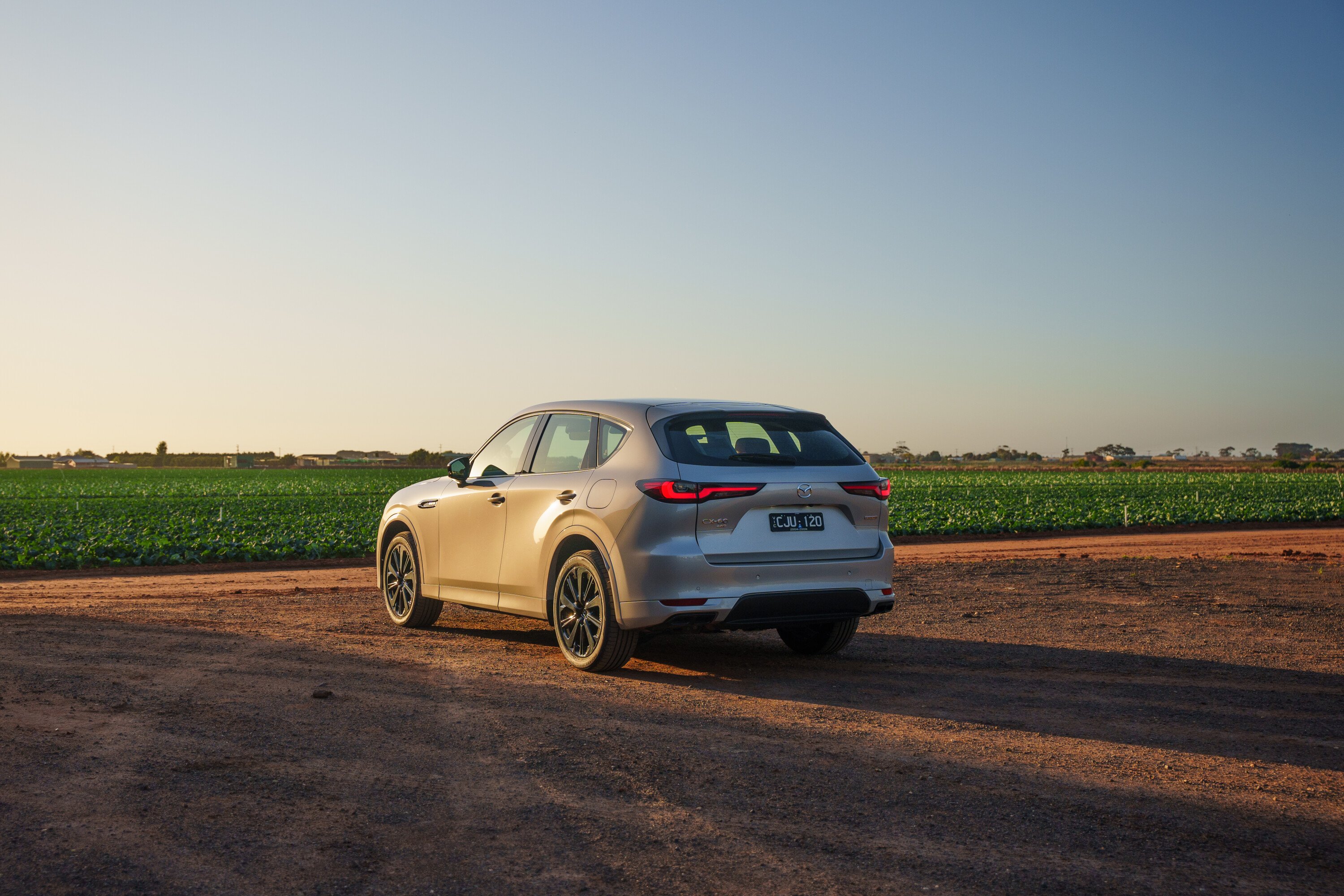
So what have we learned over the last three months? Well for a CX-60 to feel properly posh, we now know you need a flagship Azami and either the optional SP or Takuma packages. Both packs are $2000 and are a must if you want a cabin that feels a step above Mazda’s usual (admittedly excellent) interiors.
We’d also tip the diesel as the best engine on offer, with the 3.3L petrol a close second and the clumsy and expensive — but fast — plug-in hybrid the least easy to recommend.
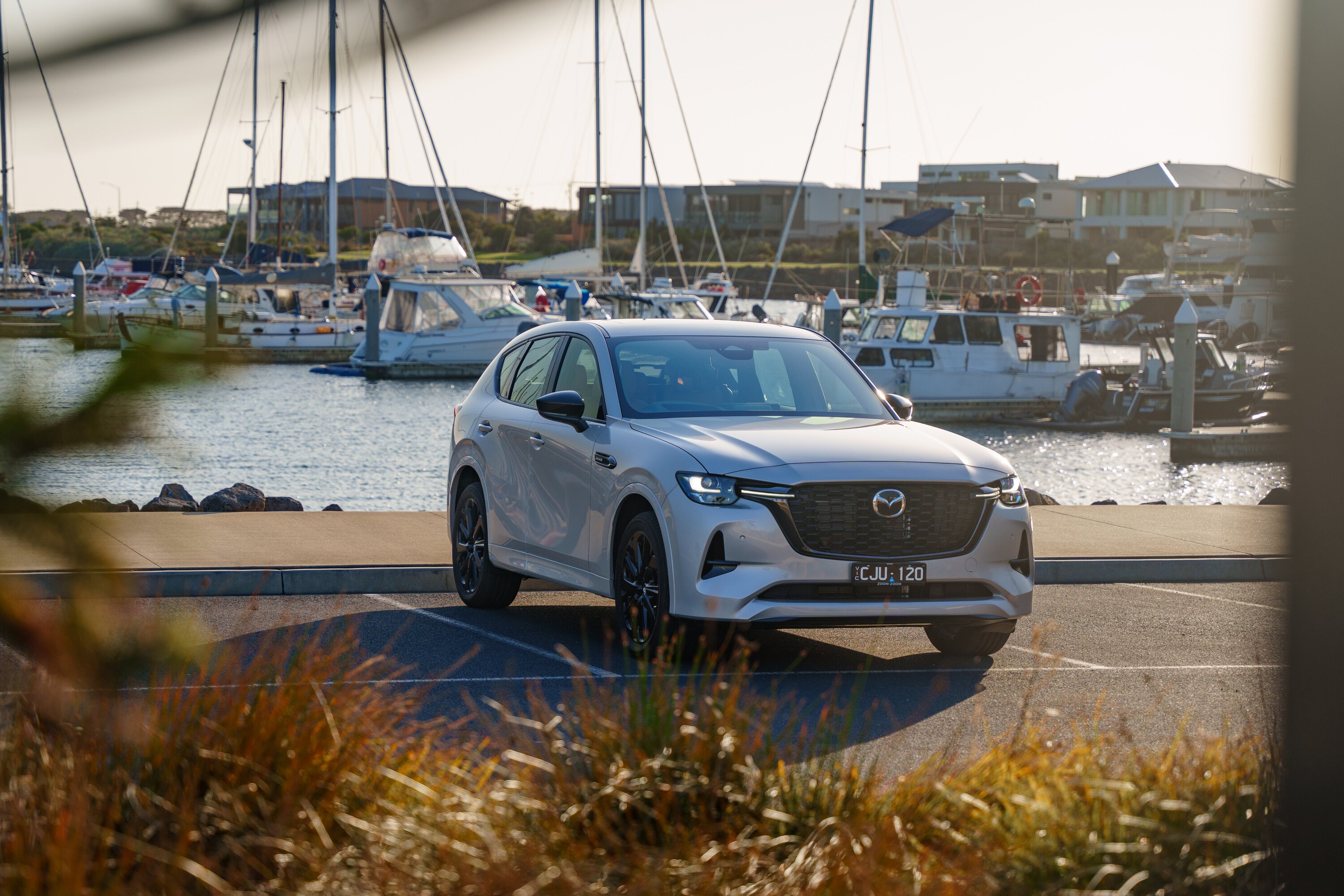
The bigger thing for Mazda to focus on, however, is how the CX-60 rides. All three of the cars we tested felt too firmly sprung, especially over potholes/speed bumps and on poorly maintained country roads.
On this front, though, we have good news: Mazda has listened to customer feedback and is now offering buyers the chance to fit different rear dampers free of charge. We’re yet to try the revised set-up, though applaud Mazda for offering a fix. Here’s hoping adaptive dampers are on the agenda come facelift time, which should go even further to delivering a more suitable ride.
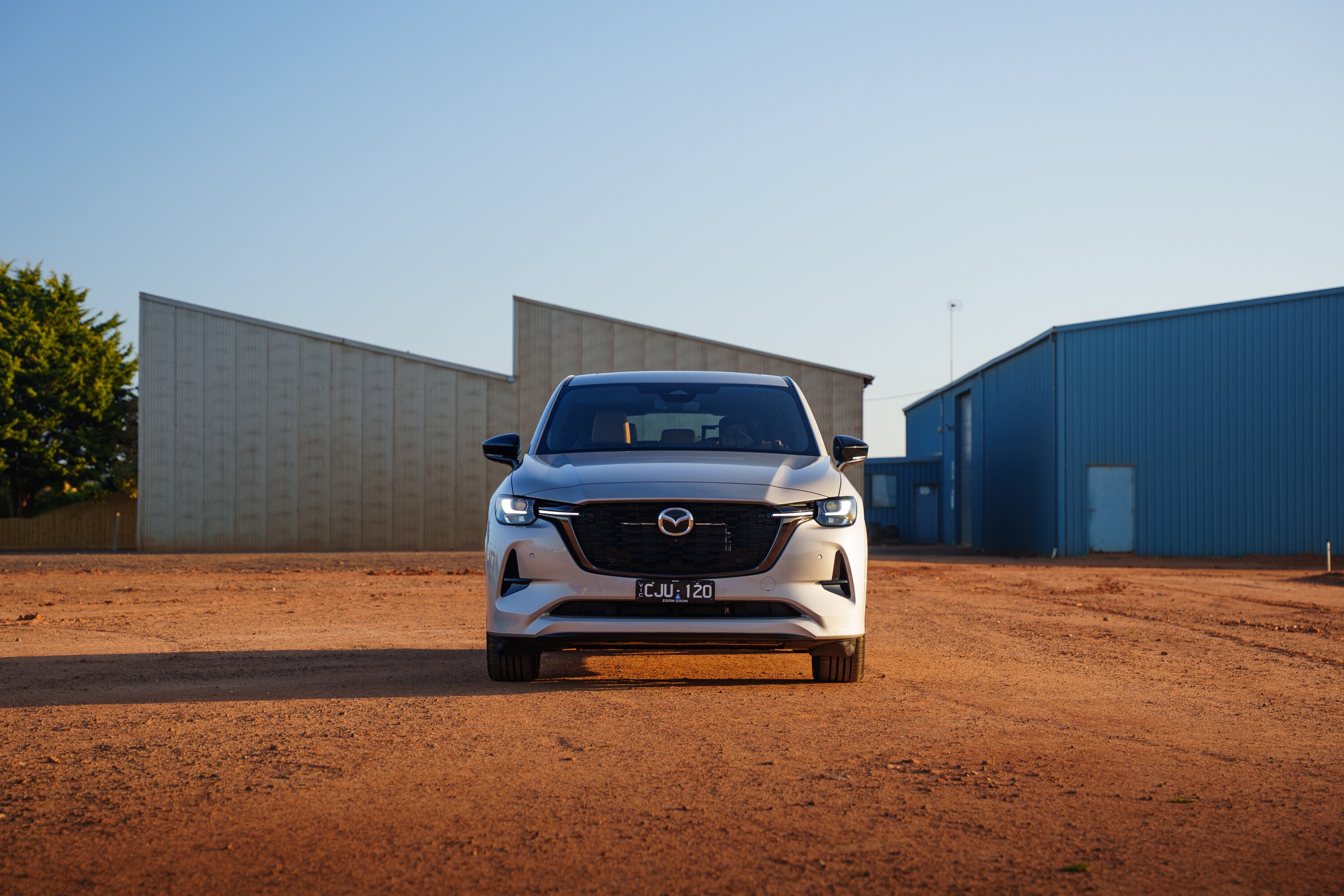
Mazda is also offering a fix of sorts for our other primary CX-60 criticism: its jerky and laggy eight-speed automatic. An update to the powertrain control module is designed to iron out the gearbox’s issues, which are most obvious at low speed and can make the CX-60 feel dim-witted.
Again, we’re yet to try to an updated CX-60, but if Mazda can improve the ride and gearbox, there’s a great family SUV here just waiting to emerge. Until then, the CX-60 isn’t so much a genuine rival to the established premium players as a foreshadowing of what’s possible.
It’s handsome, spacious, well equipped and, providing you can stretch for an Azami, genuinely luxurious. It just needs some finesse, which Mazda is already injecting.
A recent trend on social media has nostalgically transported me back to my childhood, a time when I was convinced that turning on the interior lights of a car was akin to breaking the law. It turns out after asking around, that I wasn’t alone in this belief.
Lately, a wave of TikTok videos has been spotlighting this misconception for the new generation as well.
@daliaelichavez They acted like the police were on their way dude????? #fyp #comedy #childhood #parents #relatable #foryou ♬ original sound – Chevy2funnyy
These videos evoke memories of my own experiences, like the times my father would descend into a frenzy whenever I flicked on the cabin lights to shed some light on my copy of “Twilight,” a book I deemed essential reading during our drives to camping trips.
As we mature and begin to scrutinise the tales of our youth — pondering whether our beloved dog truly was sent to a farm upon losing his sight, or if flipping on the car’s interior lights while driving was genuinely against the law — we can shed light on one of those mysteries. Regrettably, I must be the bearer of sobering news regarding the other: your dog, indeed, passed away.
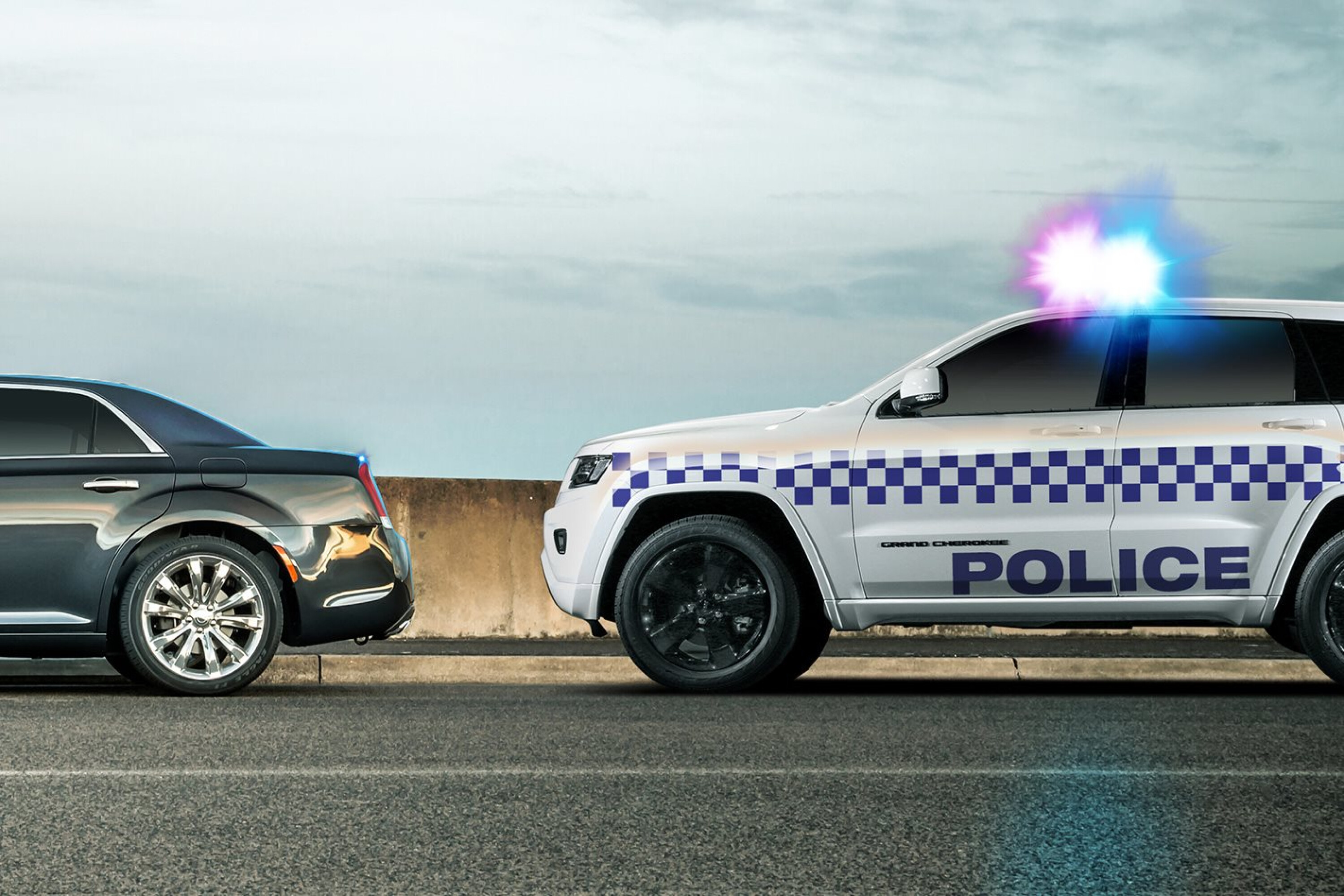
Is it illegal to drive with interior lights on at night?
Having the interior car lights on while driving is not, in itself, illegal. However, as with many aspects of driving, the situation isn’t entirely black or white.
There are nuances to using car lights that could, in certain scenarios, lead to you being pulled over by law enforcement.
Because, in fact, the laws in question pertain to driving while distracted or without a clear view.
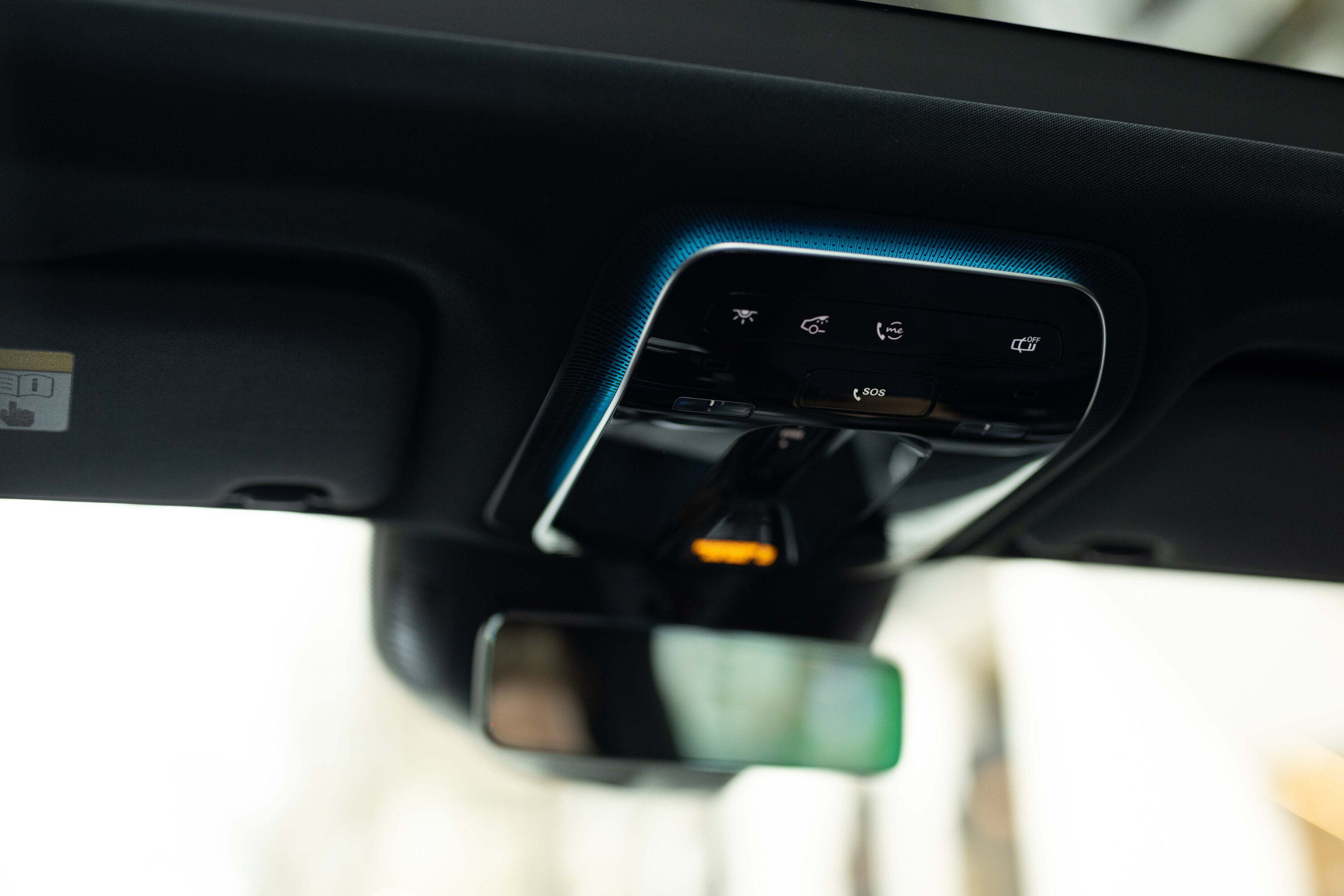
It’s also important to recognise that not all interior lights have the same impact.
The smaller, less intrusive lights known as “map lights,” typically don’t illuminate the car’s interior significantly. These are usually the ones found on or near the sun visor, used to illuminate objects nearby like, well, a map. These lights have a subdued glow that is unlikely to cause issues.
The main overhead light, sometimes known as a dome light — the one that automatically turns on when a door is opened — can create problems. Its brighter illumination can cause a glare effect on the windshield, potentially obstructing the driver’s vision. This is where the legal grey areas emerge.
Visibility is obviously key to safe driving, and anything that compromises a driver’s ability to see clearly is a concern for law enforcement.
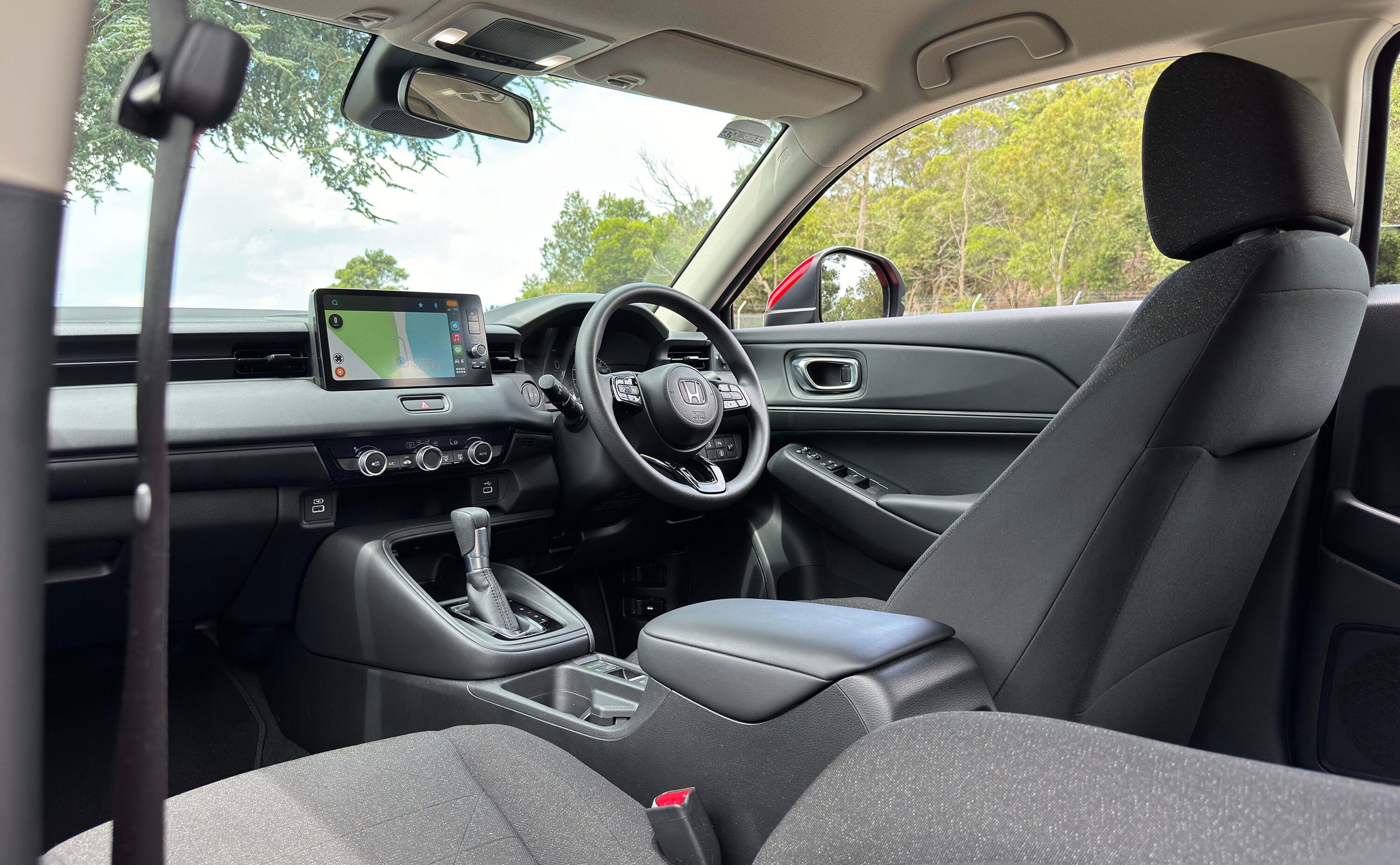
If a police officer observes your vehicle lit up brightly enough and believes that it compromises your visibility or control, you could be pulled over.
Thus, you could indeed be ticketed for distracted driving or for driving with an obscured vision, based on the judgment of the officer who spots you.
To sum it up, while flipping on the interior light for a quick check — perhaps to confirm you’ve picked up the right book in the Twilight series is generally fine — it’s best to avoid using interior lights while the vehicle is in motion.
It’s not just about avoiding fines; it’s about maintaining optimal visibility and safety. So, while it might not be the crime of the century our parents led us to believe, it’s still a practice best avoided.
