Better performing NMC vs longer-lasting, cheaper LFP
New battery tech is emerging to address concerns
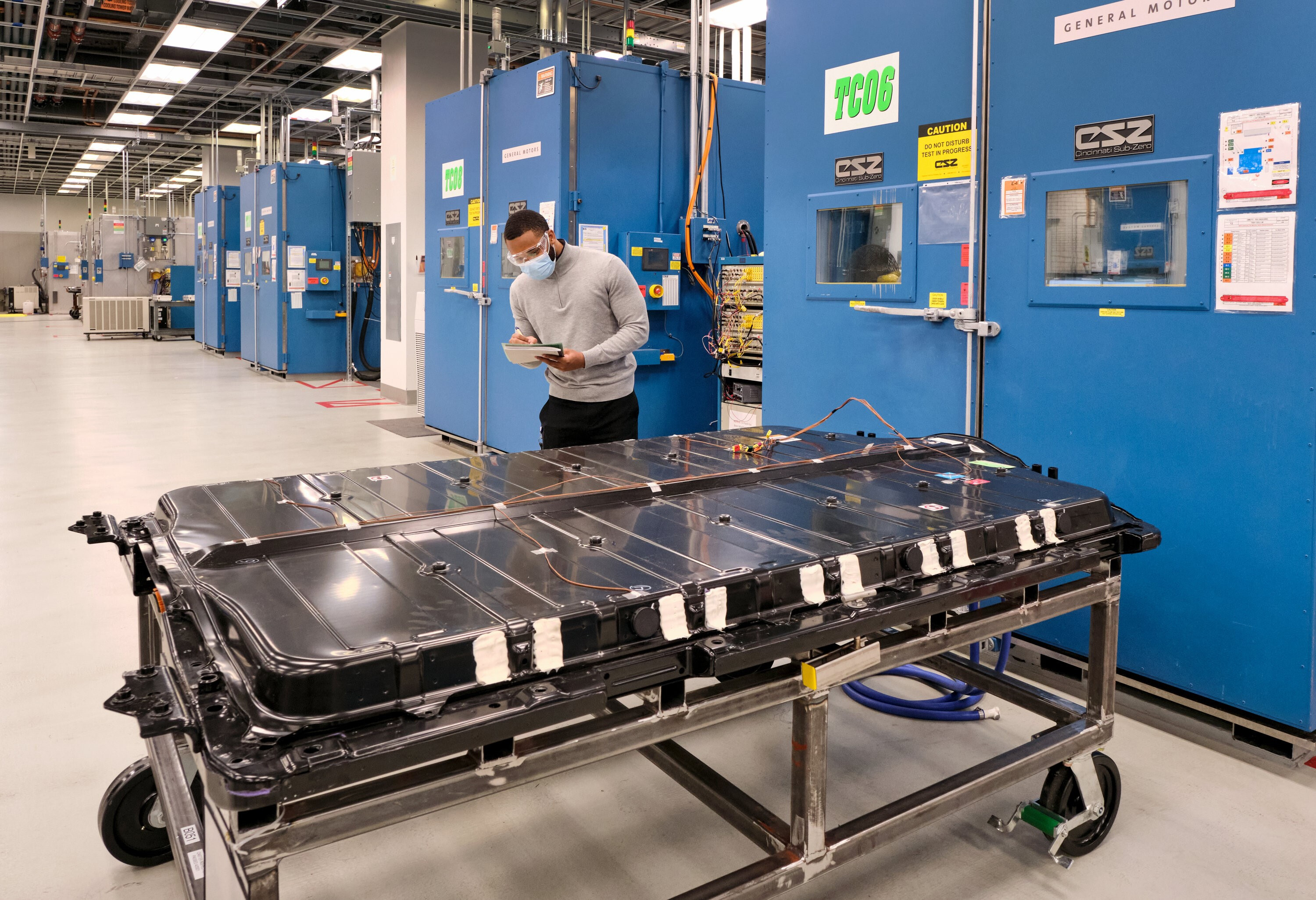
Battery packs are central to power electric vehicles, but not all are created equally.
Car brands often use terms such as ‘lithium-ion’ and ‘LFP’ in marketing material, but what do they mean? Importantly, what are the differences and which is best for your needs when considering the electric switch?
The electric car battery is the key source of ‘juice’ to power the electric drive unit and vehicle.
It is a large, high-voltage energy storage block that’s positioned underneath the vehicle, similar to a fuel tank.
Conventional EV battery packs are made up of a number of smaller module blocks, which contain cells within them (either pouch, prismatic or cylindrical shaped).
The cells are made up of a cathode (positive terminal), a separator with liquid electrolyte, and an anode (negative terminal).
Charged particles (ions) need to move from cathode to anode via the electrolyte when charging – and vice versa when discharging – in order for electrons to move around between cathode and anode current collectors.
Ultimately, the process of moving ions and electrons will charge and discharge a battery.
What’s a structural EV battery?
‘Structural batteries’ are emerging, where cells are directly embedded within the vehicle chassis, eliminating the need for space- and weight-wasting modules in a pack enclosure.
The BYD Seal debuted the unique construction in Australia, which is said to enable the electric sedan to be more space efficient, sit lower for better aerodynamic efficiency, and improve body stiffness.
However, this design has been questioned by vehicle design engineer and advisor Sandy Munro, who told Reuters [↗] that structural batteries have “zero repairability” in the event of an accident.
A variety of contentious raw materials making up each part of an EV battery. Differences in the cathode side in particular result in the three key battery types available today.
Lithium-ion (Li-ion) batteries are the most common type in new EVs today, with two main cathode chemistry makeups.
⚡️ NMC
The good
High energy density
Good charging performance
More recyclable materials
The not so good
Shorter life cycle
Higher thermal runway risk
Unsustainable, expensive materials
Nickel-manganese-cobalt (NMC) is the most common battery cathode material found in EV models today due to its good range and charging performance.
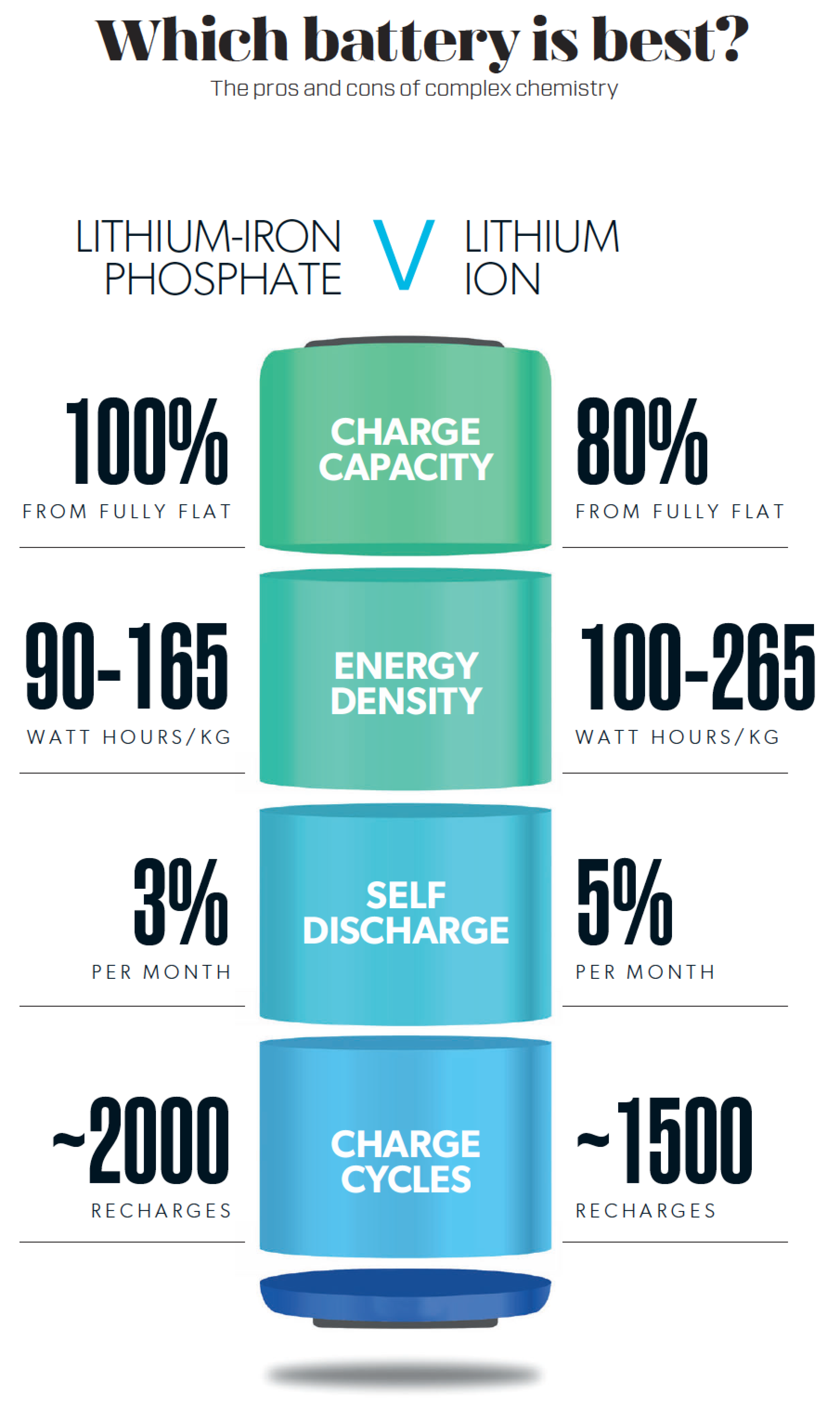
The key advantage for NMC batteries is higher energy density up to around 250Wh/kg – which means it can provide longer driving range by packing more energy in the volume of each cell and be space-efficient.
However, due to this, its cells have lower thermal stability and tend to reach the thermal runaway point earlier – a dangerous chain heating reaction causing a difficult-to-extinguish fire.
On the other hand, due to lithium-ion’s global prevalence, there are more facilities set up to repurpose and recycle these materials once they eventually reach their end-of-life.
NMC also has a shorter lifespan by only being able to handle an estimated 1000 to 2000 full recharging cycles (0 to 100 per cent counts) depending on the manufacturer. But, the capacity may already degrade by around 40 per cent after 1000 cycles, according to Poworks [↗].
Most car brands recommend an 80 per cent everyday charging limit on NMC packs to maintain good health.
Lithium-ferrous-phosphate (LiFePO 4) cathodes are emerging in more lower-priced, entry-level EV models as it’s cheaper to produce.
⚡️ LFP
The good
Longer-lasting life cycle
Cheaper to produce, enable more affordable EVs
Lower thermal runaway risk
The not so good
Lower energy density, heavier
More temperature-sensitive charging
Still relies on lithium, less recyclable content
Lithium-iron-phosphate (LFP) batteries address the disadvantages of lithium-ion with a longer lifespan and better safety.
Importantly, it can sustain an estimated3000 to 5000 charge cycles before a significant degradation hit – about double the longevity of typical NMC and NCA lithium-ion batteries.
Deep full recharging to 100 per cent also doesn’t drastically impact the battery health, which is why there’s generally no recommended daily charging limit to allow always utilising the full driving range capabilities. Regular full charging is in fact encouraged to help calibrate the cells.
The better stability also means it’s less susceptible to generating thermal runaway in the event of a short circuit or severe crash; it’s safer to operate in extremely low and high temperature environments.
However, LFP batteries are heavier and have lower energy density of up to around 150Wh/kg.
Therefore, it typically offers less driving range than the equivalently-sized lithium-ion pack.
The chemistry is also more sensitive to low temperatures, resulting in a higher chance of DC charging speed throttling during colder climates.
While it doesn’t contain any environmentally contentious cobalt, nickel and manganese, it still relies on the expensive lithium material.
Even though it has a smaller carbon footprint from the factory, the lack of said materials means it overall has less recyclable content than a typical lithium-ion battery – with the industry still working to improve extraction processes for LFP.
⚡️ Sodium-ion battery – emerging alternative to LFP by using sodium instead of supply-limited lithium, in order to be cheaper with similar LFP advantages and disadvantages (learn more here). No new car currently features it, but BYD will reportedly debut it on the entry-level Seagull EV in China.
⚡️ Solid-state battery – expected to be the answer to Li-ion and LFP woes with a solid electrolyte and less raw materials, providing long range, fast charging, a lighter weight, and reduced thermal runaway risk. EVs are expected to debut in around 2030, though it will be initially expensive.
Meanwhile, lithium-ion (with NMC and NCA cathodes) provides more driving range, faster charging performance, and contains more recyclable content with today’s facilities.
In many respects, it’s the old ‘horses for courses’ argument, though the next few years will see significant improvements in EV batteries.
Importantly, EV battery producers and car manufacturers today already pack a range of provisions to ensure they are safe to use on our roads – regardless of the battery type.
EVs (79%), PHEVs (146%) more reported reliability issues than ICE
Study concluded automakers still need to refine new EV tech
Hybrids were generally more dependable than pure ICE
Consumer Reports [↗] has found electric vehicles have 79 per cent more reliability problems than traditional internal combustion engine (ICE) vehicles.
The organisation’s annual car reliability survey covered more than 330,000 vehicles from American owners dating back to three years – analysing 20 potential problem areas, including drivetrain, leaks and touchscreen systems.
Alarmingly, plug-in hybrid electric vehicles (PHEVs) fared even worse with 146 per cent more reported problems than pure ICE vehicles, because of the complexity of having both ICE and EV drivetrains.
1
“They’re having growing pains”
Senior director of Consumer Reports’ auto testing Jake Fisher said key reported EV reliability issues include; the electric drive motors, charging(unrelated to home or public infrastructure), and battery.
“Most electric cars today are being manufactured by either legacy automakers that are new to EV technology, or by companies like Rivian that are new to making cars,” Fisher said.
“It’s not surprising that they’re having growing pains and need some time to work out the bugs.”
The popular Tesla Model Y electric SUV also improved its reliability record, joining its Model 3 sedan twin with a ‘recommended’ rating.
The American consumer advocacy firm ranked Tesla near the middle for brand reliability with “pretty solid” powertrains – driven by its decade-long manufacturing experience.
However, participants continue to report build quality issues.
This included; irregular paint, broken trim, faulty door handles, and boot doors that don’t close.
Hybrid cars more reliable than ICE?
In contrast to pure EVs and PHEVs, hybrid cars had 26 per cent fewer reported problems than conventional ICE vehicles.
Consumer Reports attributed it to automakers having more experience in producing traditional hybrids – which combine an ICE engine with a small electric motor and battery – with less high-tech features, such as large displays.
Most hybrids are also from manufacturers that “tend to produce reliable vehicles overall, such as Toyota, Hyundai, and Kia.”
It’s worth noting that ICE vehicles are have also become more tech-laden, similar to EVs.
For example, the latest Ford Ranger ute features a large portrait-orientated touchscreen to operate the climate control and even toggle the rear differential lock, along with electronically-operated door handles.
Some models defied the trends in the Consumer Reports survey.
REVIEW: 2024 Hyundai Santa Fe international first drive
Bigger. Bolder. But better? We head to Hyundai’s home market to find out if the latest Santa Fe should have its large SUV rivals quaking in their boots.
PRICING: Tesla’s Cybertruck goes official
He did it. Elon Musk’s Cybertruck dream is now real, with the first customer deliveries done – two years late, and nowhere near the claimed price.
VW Tayron in, Tiguan Allspace out
The Volkswagen Tayron will soon replace the long-wheelbase Tiguan Allspace. It’s expected in Australia later in 2025.
Cheap Dacia Duster revealed, Australia likely!
The Renault line-up in Australia is set to be bolstered by “shockingly affordable”, rebadged versions of Dacia’s Duster and Bigster SUVs.
With the IONIQ 6 being an all-new model line, and this being the first time the Korean brand has tried a Black Friday sale, it has little precedent or context to compare that result to.
Still, with 468 sales recorded to the end of October (November results due next week), 55 represents a handy 11% bump – and Hyundai’s happy to call it a success.
“We need to react immediately in some creative way that keeps the retail going”
The company hasn’t confirmed it’ll lock in another sale this time in 2024, but, speaking with Wheels today, Hyundai Australia communications manager Guido Schenken said it’s a positive result that “could lead to us potentially revisiting the concept next year”.
Whether that would be with the IONIQ 6 or a different model remains to be seen, although Hyundai Australia chief operating officer John Kett told media at last week’s Kona Hybrid launch these sorts of initiatives are important when the dealers have less capacity to run their own special sales as needed.
“This is our chance to test initiatives,” Mr Kett said. “You’ve seen the journey: we sold it (IONIQ 6) online, and now we’re bringing the network online. One of the things you recognise when you’re running this business model is that typically, under franchise, the dealer will discount, lose their margins, get together with the dealer council, complain, so then you put an incentive on and, quite rightly it corrects itself.”
“So what we’re trying to do is, we’ve got to run that dealer retail role immediately, so that when we see long inventory positions happen on a colour or a trim, we need to react immediately in some creative way that keeps the retail going and protects that new innovative margin that we’ve put in place for our dealer network. It’s a real learning curve for us,” he said.
November 20: Hyundai launches Black Friday sale for IONIQ 6 EV
The 2023 Hyundai IONIQ 6 electric sedan will offer a complimentary trim upgrade valued at up to $10,500.
Hyundai Australia has confirmed it’s running a ‘Black Friday’ event for the model-year 2023 IONIQ 6, running from Friday November 24 to Monday November 27.
The brand said approximately 600 vehicles are available to purchase nationwide, with a complimentary upgrade from the IONIQ 6 Dynamiq RWD to the Techniq AWD, or the Techniq AWD to Epiq AWD.
1
Upgrading from a base Dynamiq RWD to a mid-spec Techniq AWD would cost $10,500, while the price difference between the Techniq and flagship Epiq – with standard digital side mirrors – is $5288.
The offer does not apply to the recently-announced 2024 Hyundai IONIQ 6, which saw the addition of a Model 3-fighting $65,500 entry variant, a standard heat pump and battery preconditioning, the deletion of the Techniq variant, a new Epiq RWD model, and optional digital side mirrors.
Hyundai Australia has also launched a new stock locator for the IONIQ 5 and IONIQ 6 electric cars, which are exclusively sold online and then delivered to select dealers, and listed wait times on its web configurator.
VFACTS new-car sales data reveals 468 examples of the initially supply-constrained IONIQ 6 have been sold in Australia since it launched in March, compared to 15,718 Tesla Model 3s.
Hyundai isn’t the only company offering a complimentary model upgrade this end-of-year. Stellantis Australia is allowing buyers to jump to a higher spec of the Alfa Romeo Giulia and Stelvio, along with the Jeep Grand Cherokee and Gladiator, at no cost until December 31, 2023.
Tesla is also offering discounts for pre-update Model 3 stock in its online inventory, ahead of the launch of a facelifted model in Australia between January and March 2024.
For a full run-down on end-of-year new car deals available in Australia, click here.
A variety of factors impact charging times and not achieve advertised speeds
EVs should mainly slow charge at home or work, fast charging rarely needed
As Australia’s electric vehicle market grows, you’ll read more about kilowatts (kW) and kilowatt-hours (kWh) – instead of fuel litres (L).
The amount of power an EV battery can store dictates how far you can drive before needing to plug in for a recharge, just like the volume of a fuel tank.
But, it’s also important to also consider how long it takes to charge – especially when you venture on long road trips that are beyond the driving range limits of an EV and require public charging stops.
Here’s the top fastest-charging EVs in Australia, what contributes to charging speeds, and what to consider when making the electric switch.
JUMP AHEAD
This is a detailed story, but our index of jump links right here will help you skip to the parts you need most.
These EVs boast a claimed 10 to 80 per cent charge time of 30 minutes or less, according to each manufacturer.
In order to achieve the claimed speeds, the vehicle must be plugged into a DC (direct current) fast charging station that outputs the same or higher power rate than the maximum DC charging input capability of each model (as detailed below).
Figures are correct as at the time of publication and apply to all variants of each model, unless otherwise stated. Charging times are claimed by each automaker, but may differ in reality.
1While Hyundai, Kia and Genesis claim their EVs are ‘compatible’ with a 350kW DC charging station, the real-world peak charging rate is actually 240kW DC
2Usable battery size unknown
3Manufacturer has not detailed a 10 to 80 per cent charge time
This story focuses on ‘DC’ fast charging, but what’s the difference with ‘AC’ power? And, what’s a ‘usable’ versus ‘gross’ battery? Learn more in our guide linked below.
How fast an EV recharges all depends on the power source output and model power input capabilities.
Electricity flows from the grid via distribution lines, to voltage transformers, the power outlet or charging station, and then via a cable into the vehicle.
Then, the EV’s battery management system (BMS) software controls the rate of volts and amps coming in (explained below).
If on slow AC power, an inverter also converts the energy to DC power to store in the battery.
This energy transfer process contains about 10 to 15 per cent charging losses and ultimately impacts the speed of charging, expressed in the number of kilowatts (kW).
✋ The limits of EV charging speeds
Charging station output – the AC/DC charging station has a maximum energy speed output(kW) based on the stall and grid connection capabilities
Vehicle power input – each model has maximum slow AC and fast DC charging speed capabilities, which is the fastest rate a vehicle can take in under optimum conditions
Battery percentage – batteries are more stressed out at a higher percentage, so the BMS will slow down the charging speed over time, especially between 80 to 100 per cent, to maintain a healthy battery
Battery temperature – if cells are outside their optimum temperature range (too hot or too cold), the BMS will throttle the power input, regardless of how fast a charging station can output
Charging station output – the AC/DC charging station has a maximum energy speed output(kW) based on the stall and grid connection capabilities
Vehicle power input – each model has maximum slow AC and fast DC charging speed capabilities, which is the fastest rate a vehicle can take in under optimum conditions
Battery percentage – batteries are more stressed out at a higher percentage, so the BMS will slow down the charging speed over time, especially between 80 to 100 per cent, to maintain a healthy battery
Battery temperature – if cells are outside their optimum temperature range (too hot or too cold), the BMS will throttle the power input, regardless of how fast a charging station can output
All EV batteries feature sophisticated active and passive cooling systems to manage the significant amount of heat generated by fast charging and discharging.
This is all controlled by the BMS, since how efficiently the cooling system moves heat away from the individual battery cells can affect the charging speed to avoid stressing the cells while charging, causing excessive degradation, and maintaining good thermal safety.
Cooling systems can also be reversed to warm the battery during very cold weather.
Some EVs, including the BYD Atto 3, Tesla Model 3 and Hyundai Ioniq 5, include heat pumps as standard – which is a more energy efficient way to heat or cool the interior air-conditioning and the battery pack by repurposing waste heat from the electric drive unit.
How fast electricity is delivered to an electric car is similar to filling a drink bottle.
Current (amps) is like the water quantity flow
Voltage (V) is akin to the amount of water pressure
Current (amps) is like the water quantity flow
Voltage (V) is akin to the amount of water pressure
u200bu200bSimilar to slowing down the tap pressure as water fills at the top to prevent overflowing, after the 80 per cent mark, charging speeds slow dramatically in EVs u2013 regardless of the battery type.
For example, plugging in from 10 to 80 per cent typically takes the same time as the last 20 (going from 80 to 100 per cent) – which can effectively double your waiting time for not much range gain, unless a full charge is necessary.
This is why 10 to 80 per cent charging times are mostly quoted, as it offers the best range-for-time value.
Additionally, the higher the ‘pressure’ of current, the faster electrons can be charged into the battery – enabling more driving range to be pushed into the cells in a shorter time.
That’s the ‘secret sauce’ to the circa-20 minute rapid charging times of models, such as the Hyundai Ioniq 6, Porsche Taycan and Lotus Eletre. Unlike most other EVs which use up to 400 volts, they adopt a more advanced 800-volt class battery architecture.
The key word is ‘class’, as 400V and 800V are generalised terms. For example, the 800V class Kia EV6 electric SUV actually has a 697-volt battery system to be exact.
Plug in from a low battery percentage, in warm weather or drive a bit (preferably on highways) before arriving at the station
On equipped EVs, enable the active battery preconditioning function (usually by navigating to the charging station in the built-in maps or manually) to heat up the battery before arriving (it will use more juice, though)
Plug in from a low battery percentage, in warm weather or drive a bit (preferably on highways) before arriving at the station
On equipped EVs, enable the active battery preconditioning function (usually by navigating to the charging station in the built-in maps or manually) to heat up the battery before arriving (it will use more juice, though)
An 800-volt class electric car may seem superior, but it doesn’t always result in a faster charging time.
Standard 400V class EVs, such as Tesla Model Y (Long Range and Performance), Polestar 3, and Volvo EX90 can reach ultra-rapid 250kW DC speeds – so what’s the difference?
They require pulling more current, which generates more heat for the battery and could trigger the BMS to throttle down the charging power – resulting in a theoretically slower overall charge time than an 800V EV.
An 800V class battery architecture is more expensive, but theoretically allows for sustained high charging speeds for longer – even when connected to the more common 400V DC public charging stations (after conversion).
It produces less heat,enables thinner and lighter charging cables (if the station is exclusively 800V), and is advantageous for performance driving when discharging, too.
However, there’s a key caveat to the 400- vs 800-volt debate…
Carmakers only quote the maximum charge rate number in kilowatts (kW). But, in reality on a public DC fast charging station, owners will only hit the advertised peak speed under optimum conditions.
In warm climates, after an initial burst, the BMS will progressively slow down charging speeds as the battery fills up and as heat builds up quickly.
In cold climates, the BMS will only accept a very low charge rate at first, before ramping up as the battery heats up, and slow again as a higher percentage is reached.
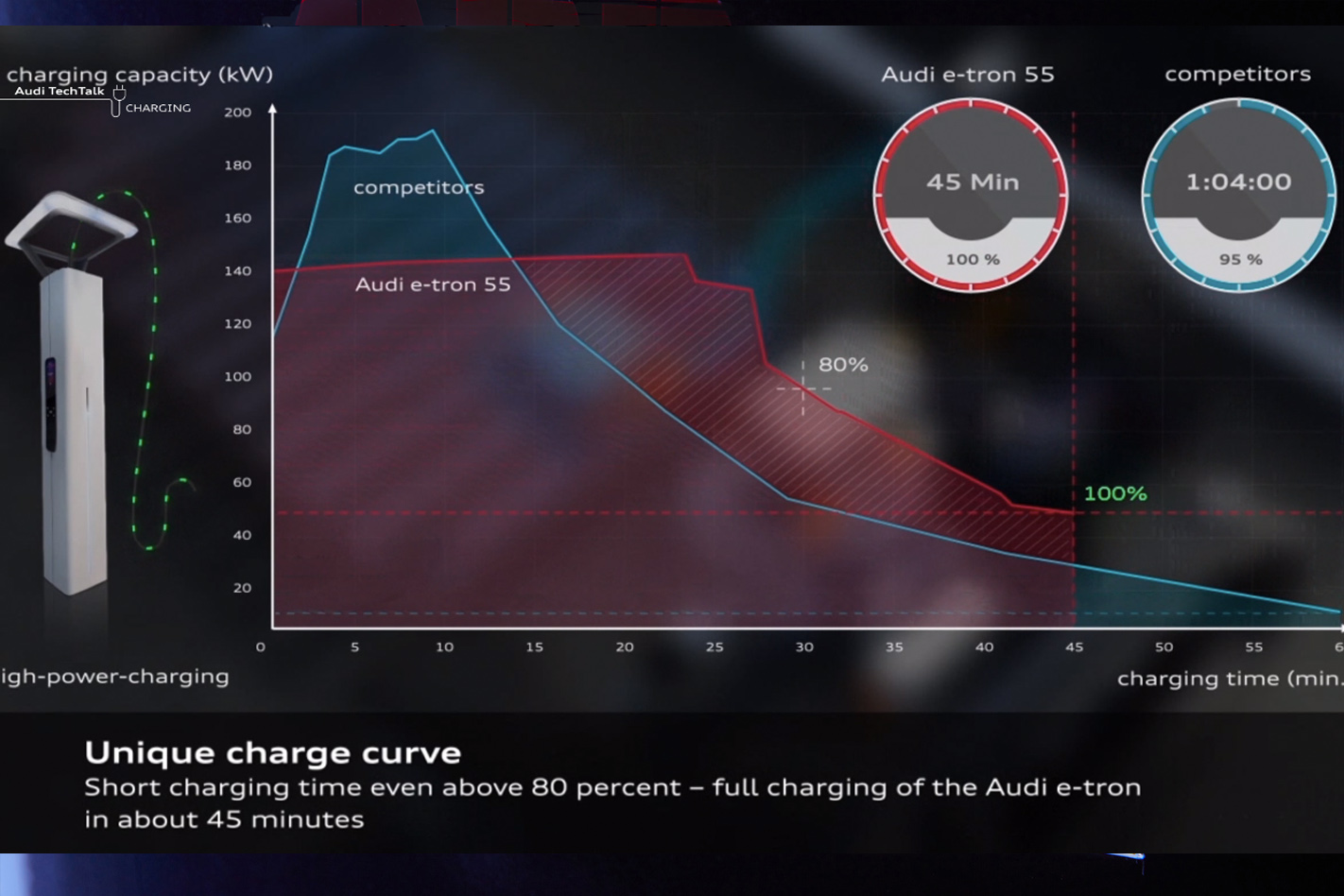
As demonstrated by the previous generation Audi E-Tron SUV’s charging curve graph below, an EV with a 140kW DC peak charging rate can be quicker to charge by sustaining higher speeds for longer – compared to an EV with a faster 200kW DC capability that only peaks for a short period and then dramatically throttles speeds.
1
Similarly, a smaller battery with a decent enough DC charging speed may take a similar time than a larger battery with faster peak charging capability.
EV content creator Bjørn Nyland [YouTube ↗] found the Tesla Model Y RWD with BYD’s 400V class lithium-iron-phosphate (LFP) Blade Battery (which is unavailable in Australia at the time of publication) can hold the maximum 170kW DC speed until around 48 per cent, before slowing.
This resulted in an overall charging time on par with the larger-battery, 800V class Hyundai Ioniq 6 – demonstrating that 400V EVs can charge as fast too, but not all.
While fast charging specs may seem tempting, remember that speed isn’t everything. Realistically, you don’t always need to charge an EV quickly.
The ideal, cheapest and most convenient way to own an EV is to slow charge at home overnight (or when there’s solar panel energy).
Instead of constantly stopping to refill akin to a petrol or diesel car, a three-pin socket or installed wall box will provide more than enough range at the start of every day for the typical Australian commute.
If you need to rely on public DC fast charging infrastructure when on longer-distance road trips or for work (eg: rideshare drivers), you’ll be taking that charging stop time as an opportunity to take an essential rest break, eat and go to the bathroom.
Adapt to understand kW and kWh of energy – instead of litres of fuel – know the EV’s AC/DC charging limits, and the variety of factors can impact charging times (instead of achieving advertised speeds).
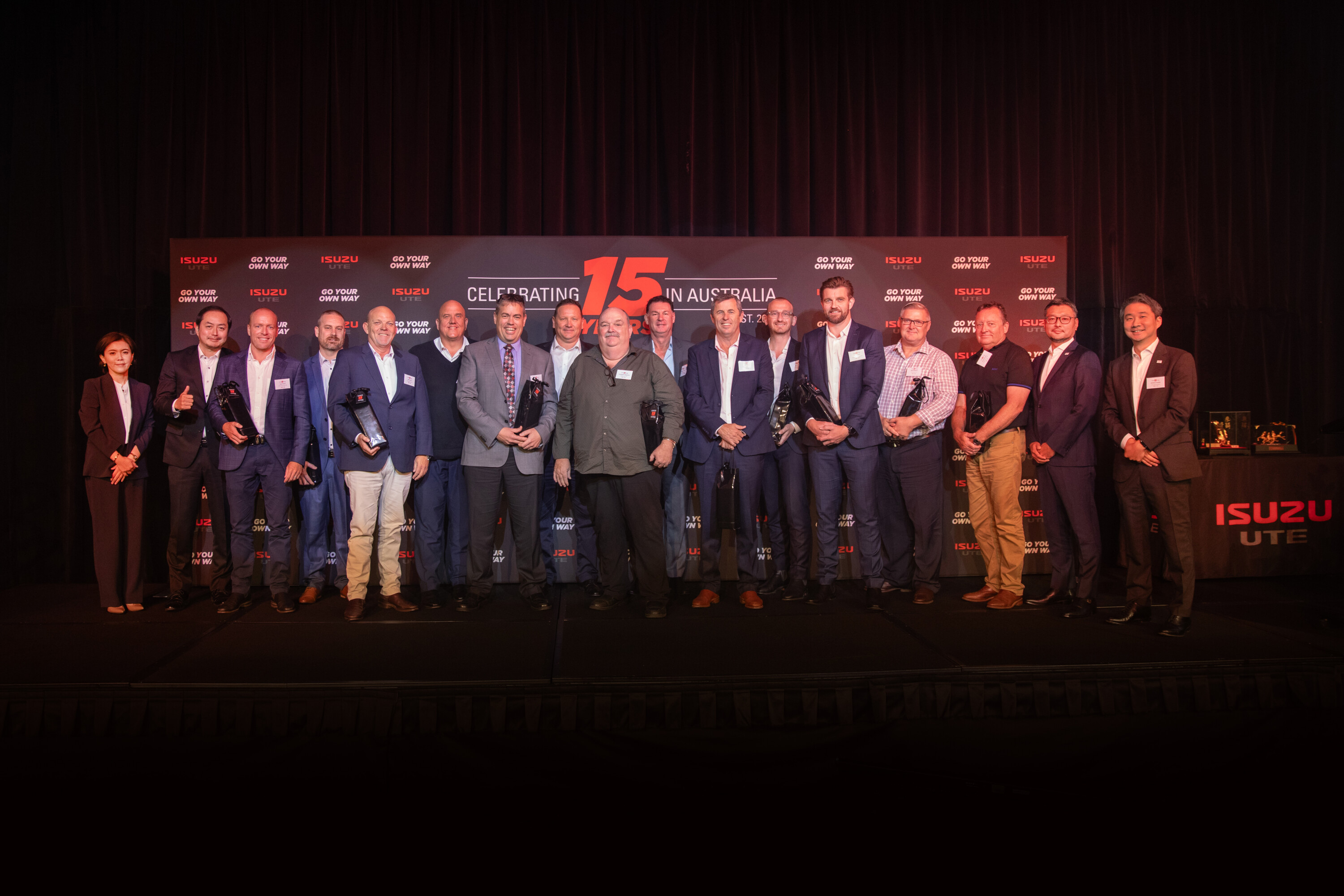
Isuzu Australia is targeting more than 40,000 sales by the end of 2023 to add another milestone in its 15th anniversary.
The company this week announced it had delivered more than 300,000 vehicles since the D-Max ute was launched locally in October 2008.
Isuzu’s D-Max ute accounts for nearly three-quarters of the 302,801 total with 218,620 deliveries. The related MU-X SUV, which launched later in December 2013 and remains the brand’s only other showroom vehicle, has gone to 84,181 Australian customers.
Isuzu has already surpassed its previous sales record, with 36,501 registrations to the end of October 2023 compared with the 35,735 units shifted in 2021.
1
The Japanese brand is second only to Tesla in terms of sales per vehicles offered.
Year to date, Isuzu is the 10th best-selling brand in Australia, and trails eighth-placed Tesla by just 3484 units.
Isuzu celebrated 15 years in Australia with a Gold Coast event for employees, dealers, and company delegates from Thailand (where the D-Max and MU-X are built) and Japan.
“It is quite fortuitous that we welcomed our 300,000th vehicle to an Australian home while celebrating our 15-year anniversary at the same time,” said Junta Matsui, Isuzu Ute Australia’s managing director.
Acknowledging recent Wheels Best awards for both the D-Max and MU-X – Best Value Ute and Best Value Off-road SUV, respectively – Matsui said the company was confident it could end the year with an even more impressive sales milestone.
“It’s great to see that both customers and the Australian motoring media have recognised the D-MAX and MU-X as two of the best-value vehicles available on sale today.
“With healthy levels of vehicle stock landing at dealers locally and this year shaping up to be the biggest year ever for our brand, we are optimistic that this positive trajectory will continue towards the end of the year as we aim for over 40,000 vehicle deliveries in 2023.”
Results for first round of real-world testing deliver interesting revelations
Only four of nine vehicles were within 2 per cent of ADR lab ratings
Several vehicles exceeded regulated level of noxious pollutants
The Australian Automobile Association (AAA) has released results from the first round of its $14 million real-world fuel efficiency exercise.
As many have suspected for some time, the ADR 81/02 figure typically quoted by manufacturers is not a great representation of real-world driving. The WLTP standard used in Europe seems to be more realistic, but the AAA is interested in getting closer to figures that owners see.
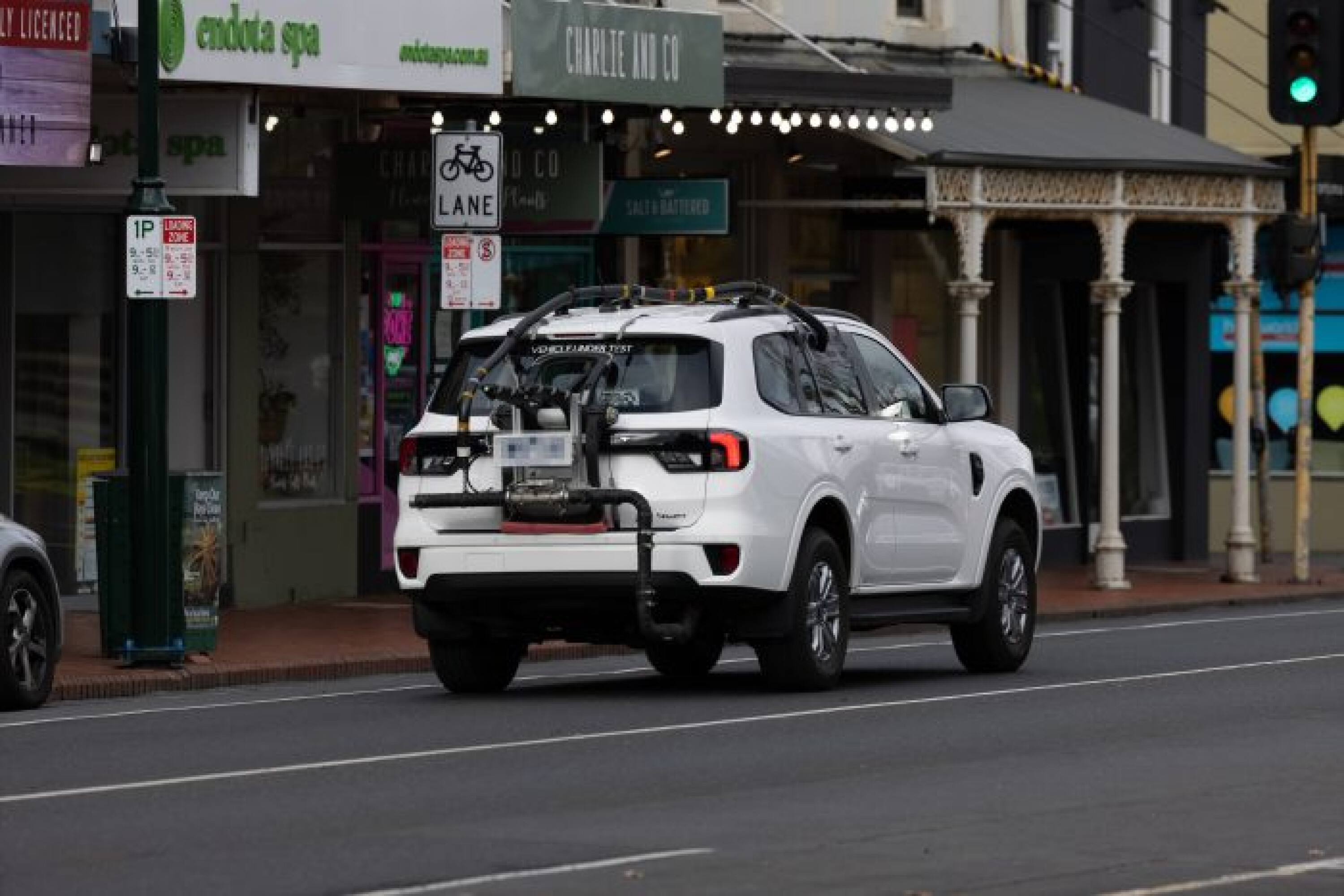
The AAA’s 93km loop around Geelong takes in Australian road conditions, from urban ratruns to highway driving to more accurately simulate real-world conditions.
Along with fuel consumption testing, the AAA also strapped equipment onto the nine popular SUVs to measure particulate, carbon monoxide, NOx and other noxious emissions.
Three tested vehicles released more pollutants than is legal within laboratory limits and were tested on 95 RON premium petrol, where some only require 91.
“This Program gives consumers the information they need about each car’s fuel efficiency and environmental performance, and it will drive down demand for models that over-promise and under-deliver”, said AAA managing director Michael Bradley.
To make sure the tests were consistent, the AAA used a Toyota RAV4 reference vehicle which was subjected to 23 tests; its results varied by less than 2.5 per cent.
“These results will improve motoring affordability for Australians, while cleaning up our light vehicle fleet,” said Mr Bradley of the government-funded project which has bi-partisan support.
1
The results
Of the nine vehicles tested, four returned results within 2.5 per cent of their ADR combined figures with the remaining five between 8-13 per cent above lab ratings.
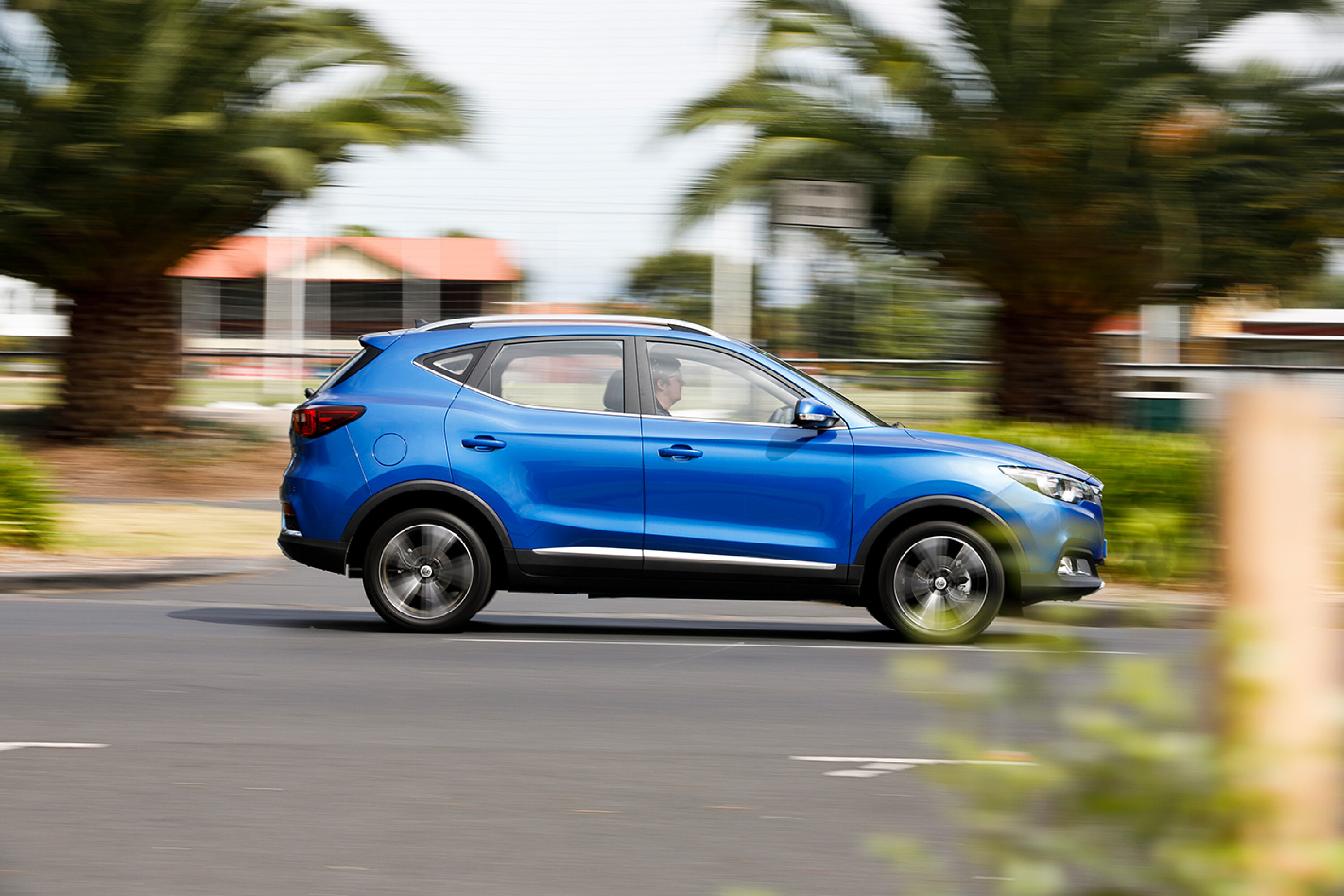
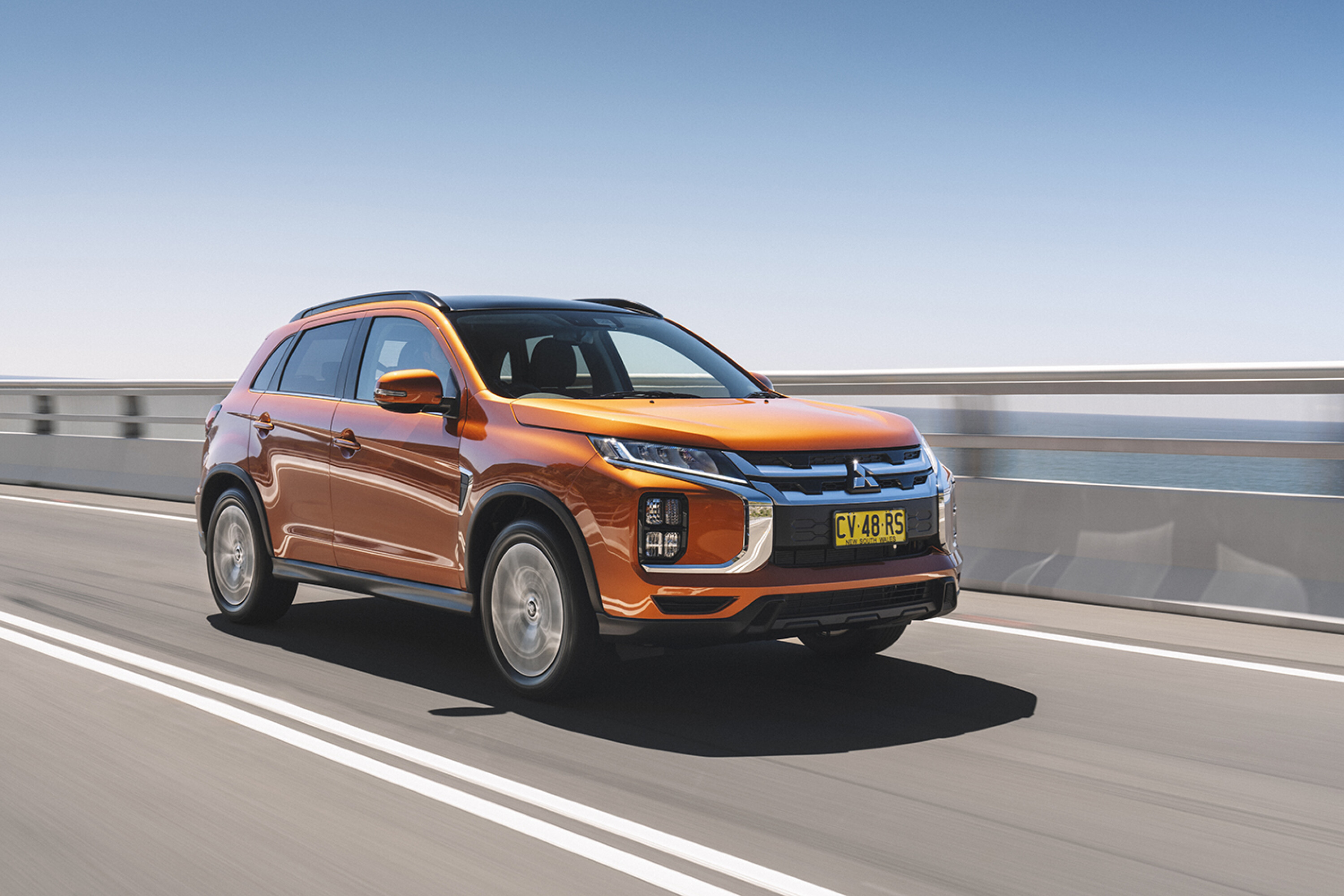
The Mitsubishi ASX and MG ZS had other issues, though, with the pair of small SUVs emitting more than twice the lab-allowable grams per kilometre of carbon monoxide (CO) during the tests.
1
MG’s small SUV also emitted high levels of particulates, defined as solid particles with a diameter greater than 23 nanometres. It measured 6.75×10¹¹ and, along with the Nissan X-Trail (8.06×10¹¹), exceeded the proposed Euro 6d 6×10¹¹ mg/km limit.
For the sole diesel, Hyundai’s Tucson, the issue was high levels of NOx emissions, with 237 mg/km recorded by averaging three tests. That exceeds the current 180 mg/km limit and is the best part of three times the proposed Euro 6d level.
1
Results in tables
Fuel efficiency results
Model
Real-world result
ADR 81/02 rating
Variance
Ford Puma 1.0T
5.7L/100km
5.3L/100km
8%
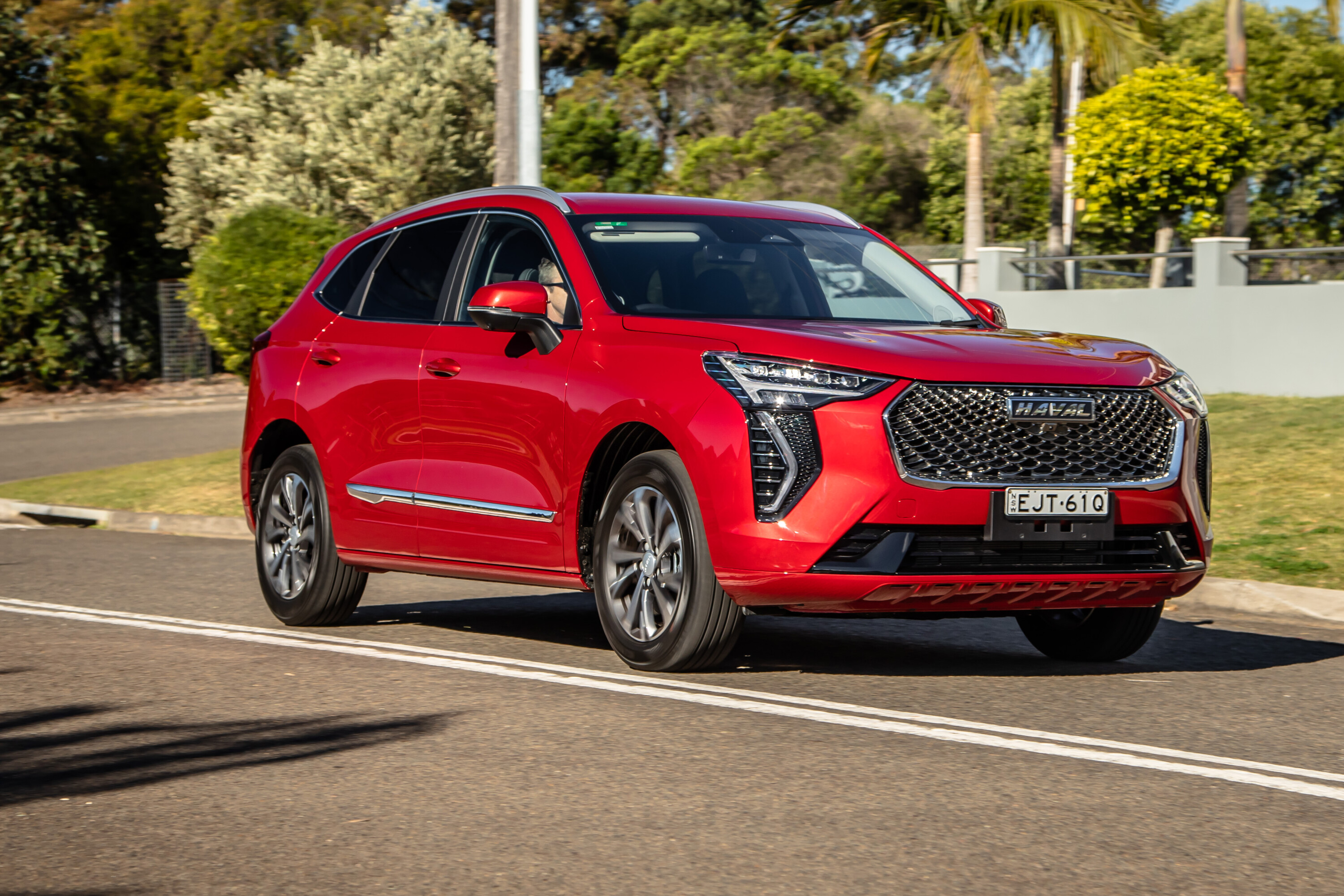
Haval Jolion 1.5T
7.9L/100km
8.1L/100km
-2%
Hyundai Kona 2.0L
7.0L/100km
6.2L/100km
13%
Hyundai Tucson 2.0TD
6.2L/100km
6.3L/100km
-1%
MG ZS 1.5L
7.7L/100km
7.1L/100km
8%
Mitsubishi ASX ES 2.0L
8.2L/100km
7.6L/100km
8%
Nissan X-Trail 2.5L
7.3L/100km
7.4L/100km
-2%
Toyota RAV4 2.0L
6.8L/100km
6.0L/100km
13%
Toyota RAV4 Hybrid
4.8L/100km
4.7L/100km
2%
CO2 emissions
Model
Real-world result
ADR 81/02 rating
Ford Puma 1.0T
134g/km
121g/km
Haval Jolion 1.5T
183g/km
186g/km
Hyundai Kona 2.0L
161g/km
148g/km
Hyundai Tucson 2.0TD
164g/km
163g/km
MG ZS 1.5L
174g/km
165g/km
Mitsubishi ASX ES 2.0L
186g/km
176g/km
Nissan X-Trail 2.5L
168g/km
174g/km
Toyota RAV4 2.0L
155g/km
134g/km
Toyota RAV4 Hybrid
111g/km
107g/km
Noxious emissions results
Type of pollutant
NOxmg/km
COmg/km
THCmg/km
THC+NOx
PNmg/km
Current official mandated lab limit (ADR 79/04)
60
1000
100
230
No limit
Future proposed mandated lab limit (Euro6d)**
60
1000
100
170
6×10(power of 11)
Puma 1.0T
6
302
16
–
5.55×10(power of 9)
Jolion 1.5T
8
128
21
–
9.05×10(power of 10)
Kona 2.0 I4
27
303
13
–
1.13×10(power of 11)
Tucson 2.0 I4
237
41
–
284
1.67×10(power of 11)
MG ZS
22
2207
65
–
6.75×10(power of 11)
Mitsubishi ASX ES CVT
23
2850
30
–
1.94×10(power of 11)
Nissan X-Trail
5
95
7
–
8.06×10(power of 11)
Toyota RAV4 2.0
16
277
32
–
1.73×10(power of 11)
Toyota RAV4 Hybrid
4
67
15
–
1.66×10(power of 11)
Over the next four years, the AAA intends to put 200 cars and SUVs through the same procedure and tabulate the results.
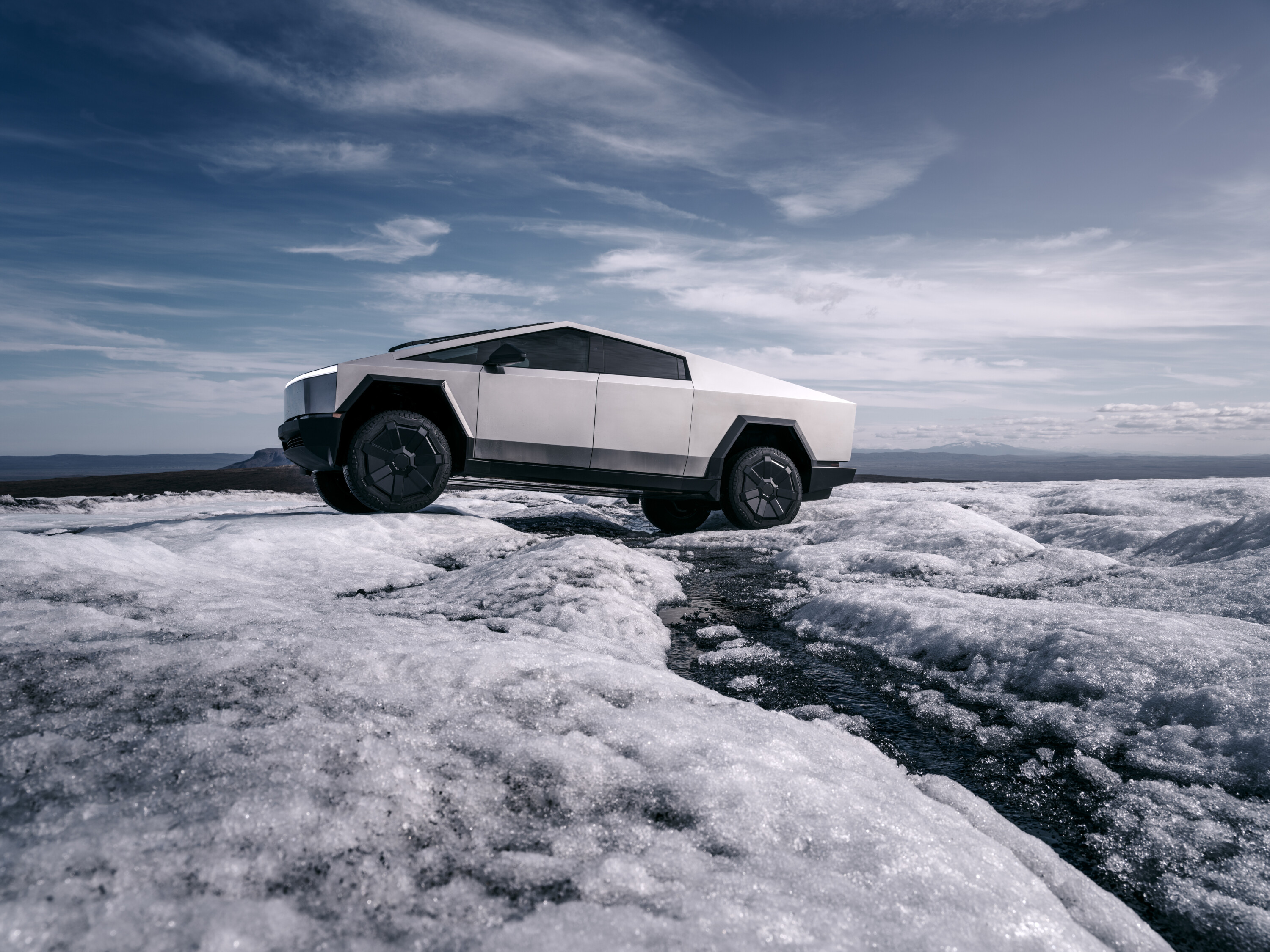
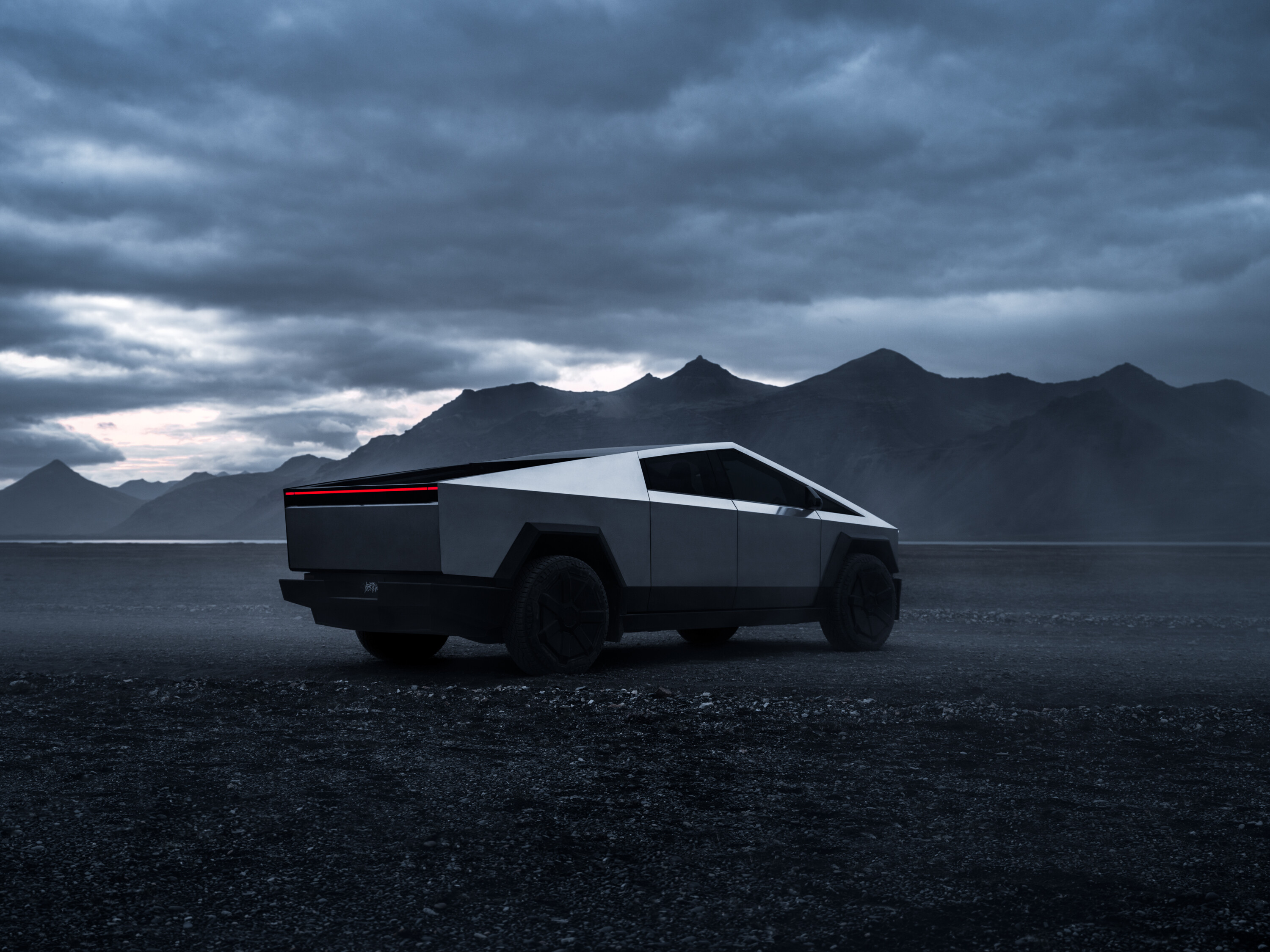
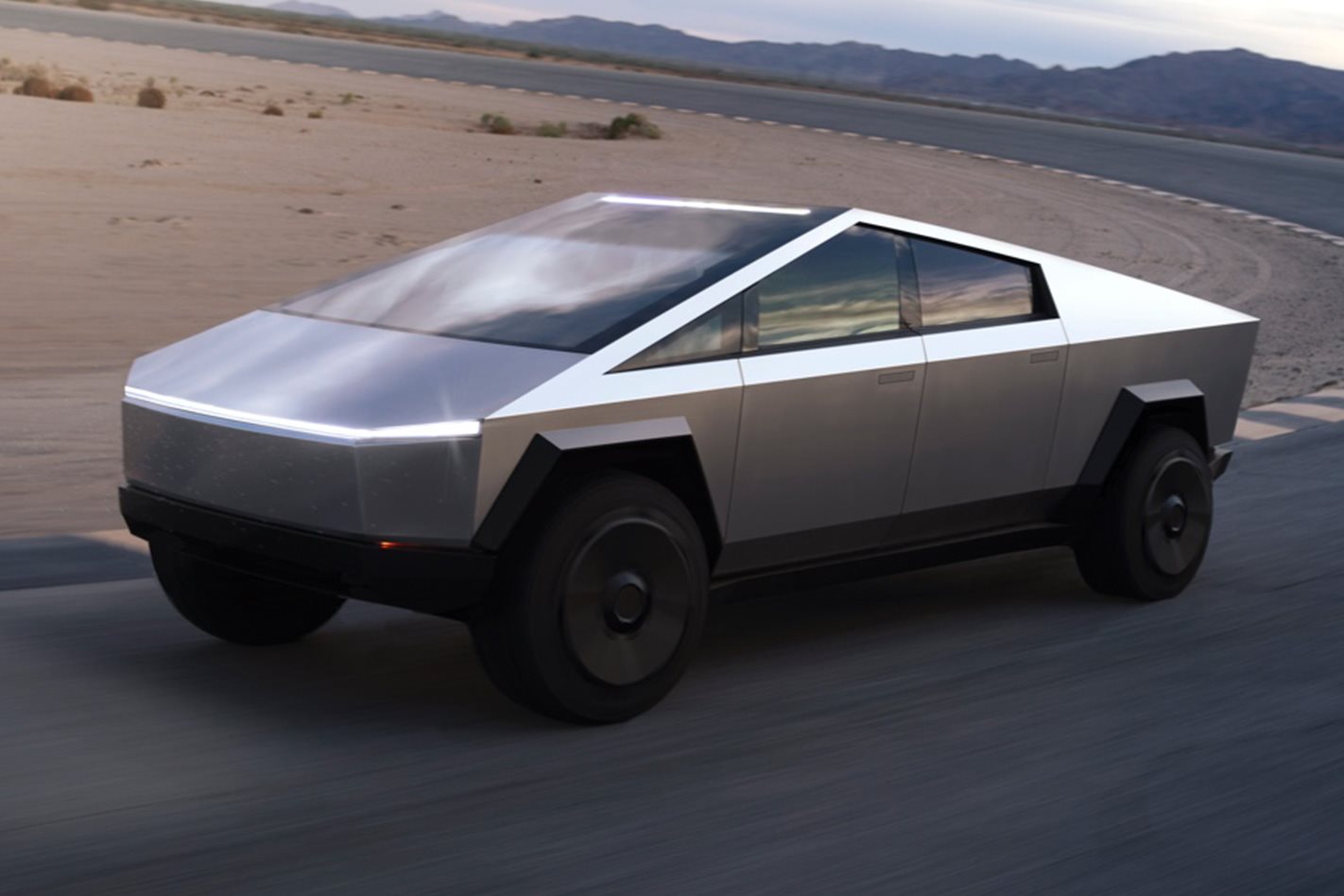
You might be glad, or you might’ve hoped it wouldn’t happen – but Elon’s teenage wet dream, the Cybertruck, is actually real and finally in customer hands.
Snapshot
As with many Tesla models, Cybertruck deliveries massively delayed
Tesla expects to build 250,000 Cybertrucks annually by 2025
Just 10 Cybertrucks delivered in first batch
It’s two years late, nearly AU$46,000 more expensive than initially claimed, packs a shorter driving range, and isn’t expected to come to Australia.
As reported in May last year, Tesla had quietly removed the Cybertruck from its Australian website, and today’s news hasn’t brought any changes on the local front. A “Get Updates” button remains, however.
The company has yet to confirm plans for a right-hand-drive version of the Cybertruck, and it’s unclear if Australian Design Rules would allow the big truck on our roads.
The basics
AWD and RWD, three motor configurations
In 2024, the Cybertruck will be offered in dual-motor AWD and tri-motor AWD Cyberbeast forms, while a more affordable single-motor RWD version is promised for 2025.
Tesla Cybertruck pricing
Shocker: Prices are way up on the original plan that saw over a million people put a deposit down
With today’s event came news that the Cybertruck is now priced from AU$92,000 to AU$151,000 – up from originally promises prices ranging from AU$60,500 to AU$106,00.
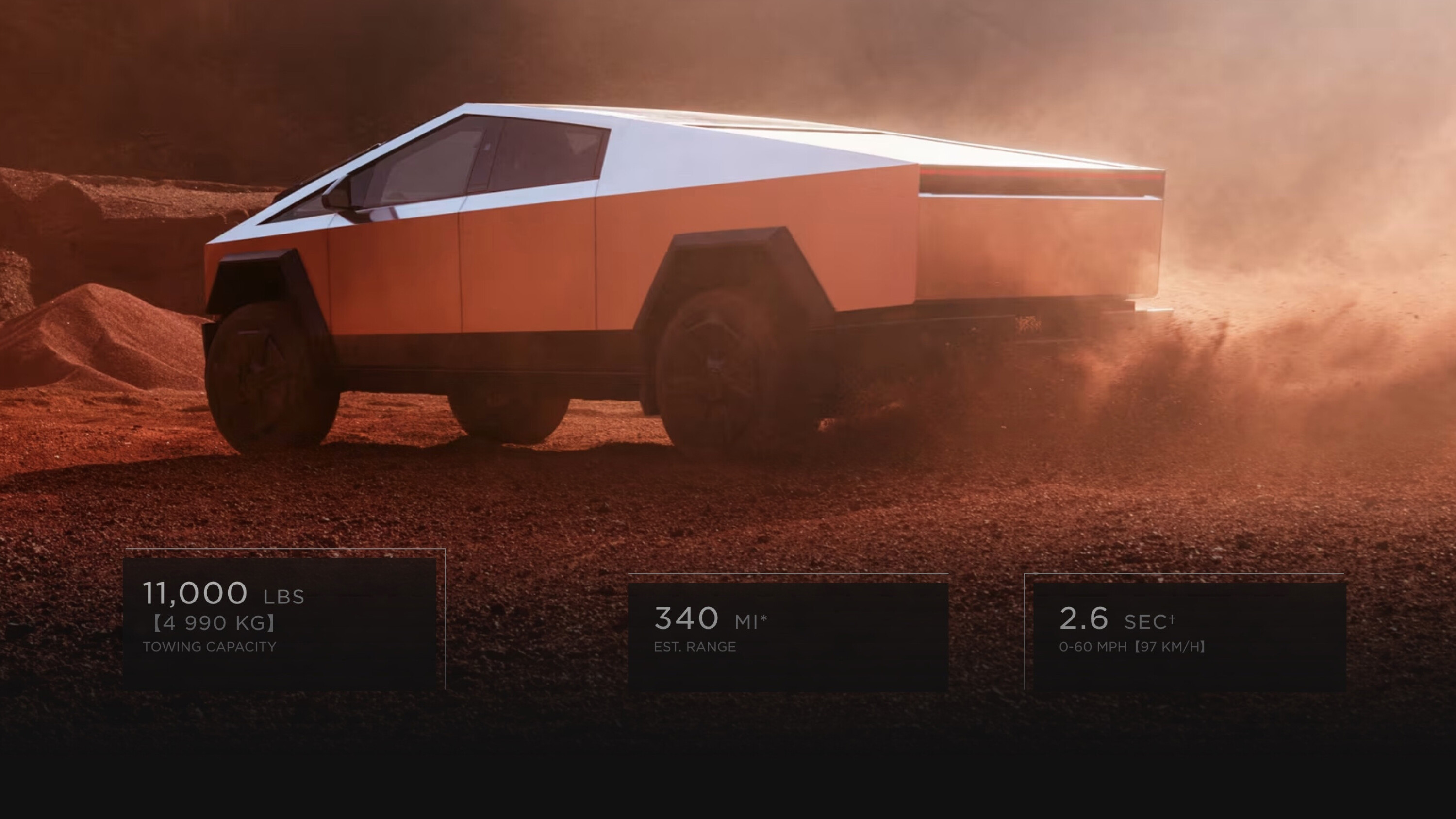
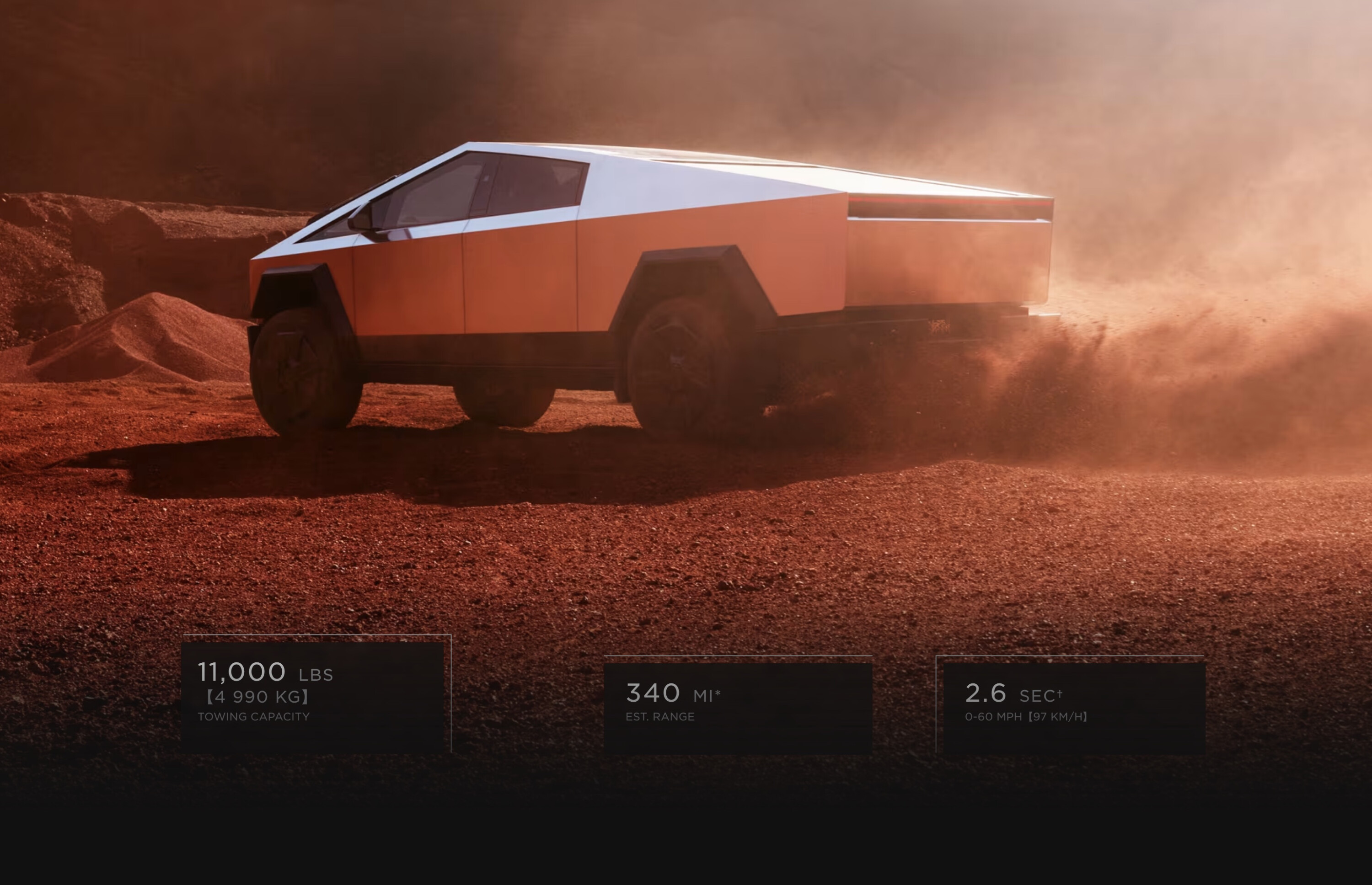
Tesla says the Cybertruck will pull 11,000lbs (4990kg), with a payload capacity of 1134kg.
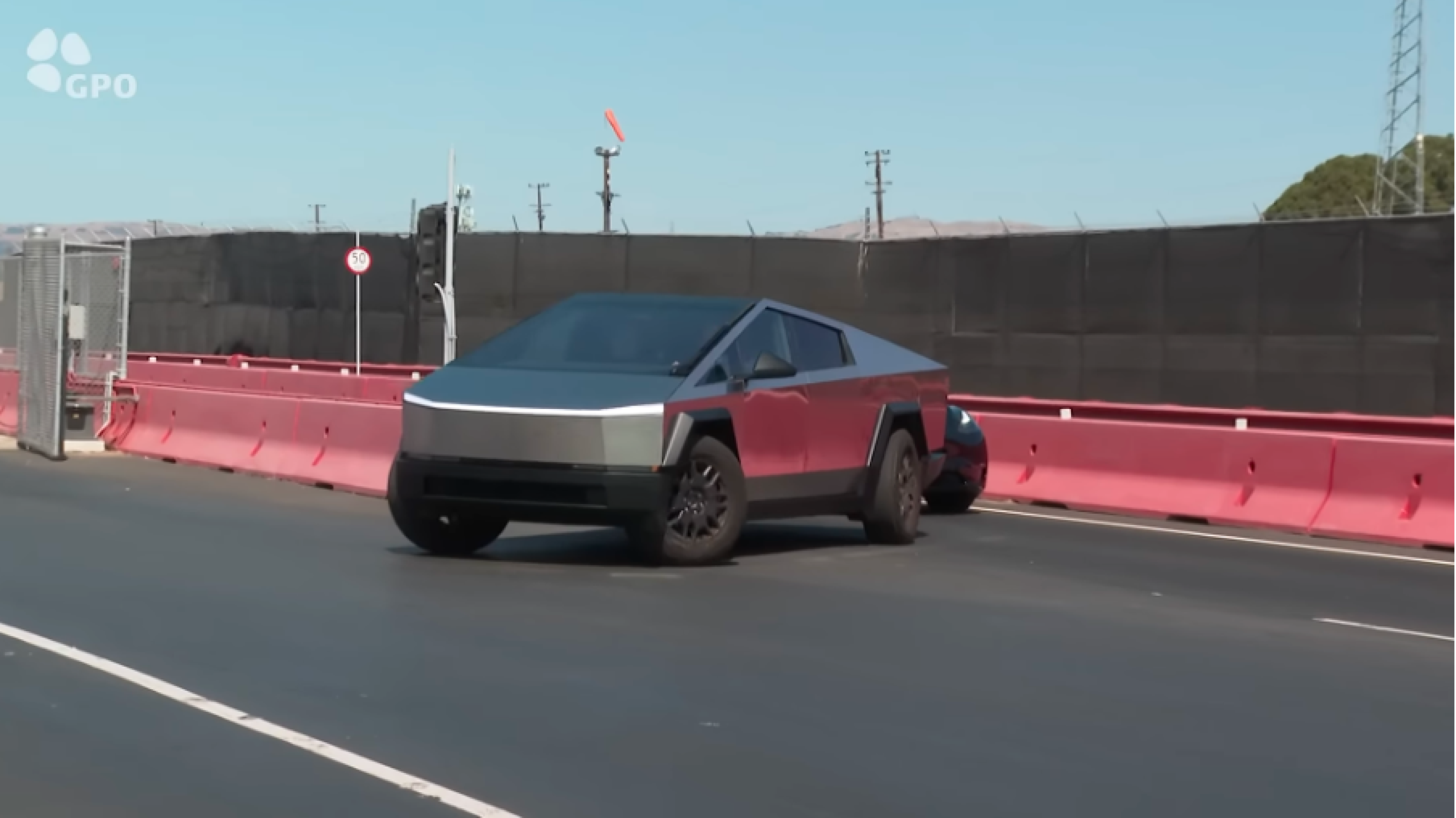
The ‘lucky’ few to have taken delivery today will be treated to a Cyberbeast flagship that can drag a Porsche 911 “while towing a 911”. (See the end of our Instagram reel, posted below.)
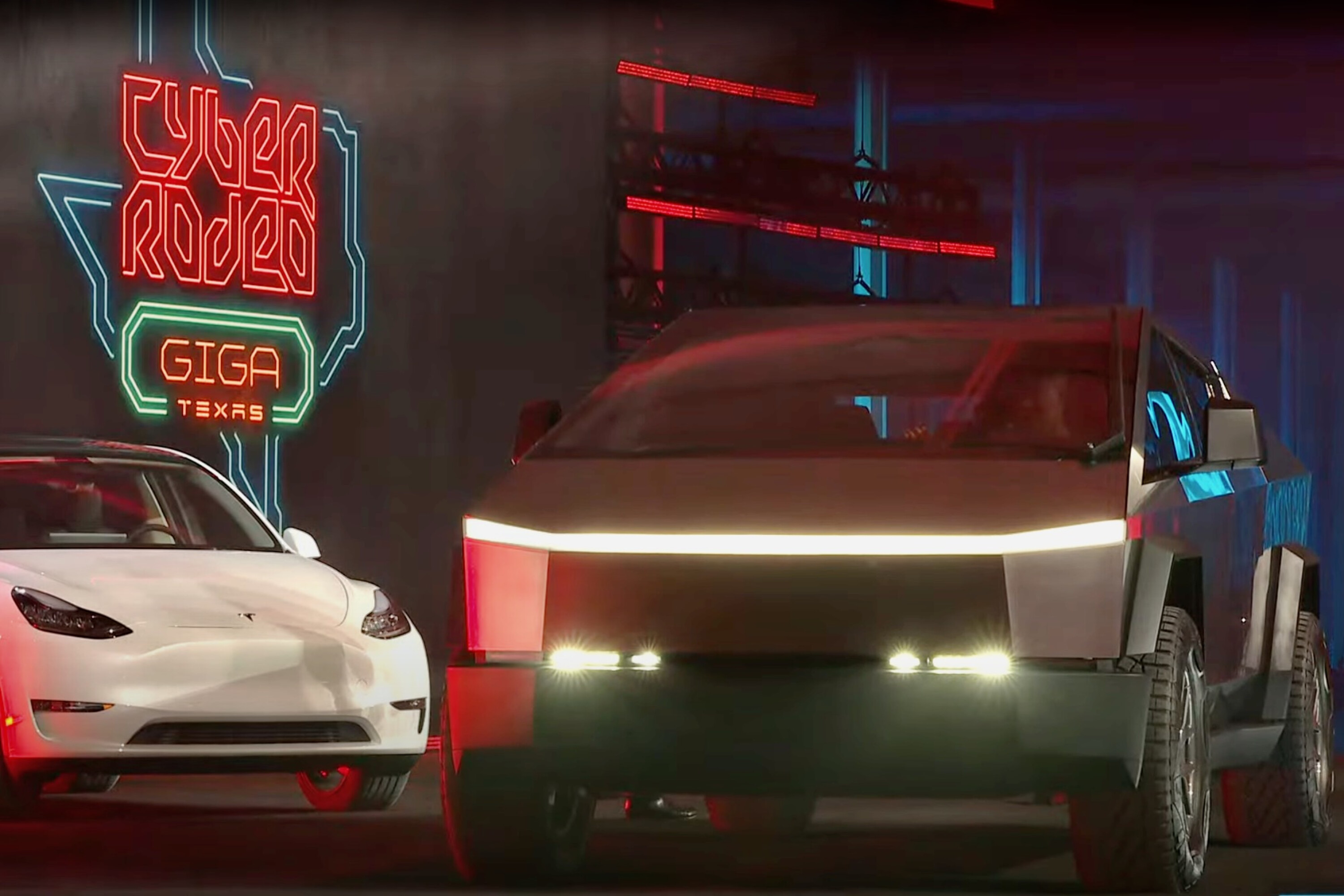
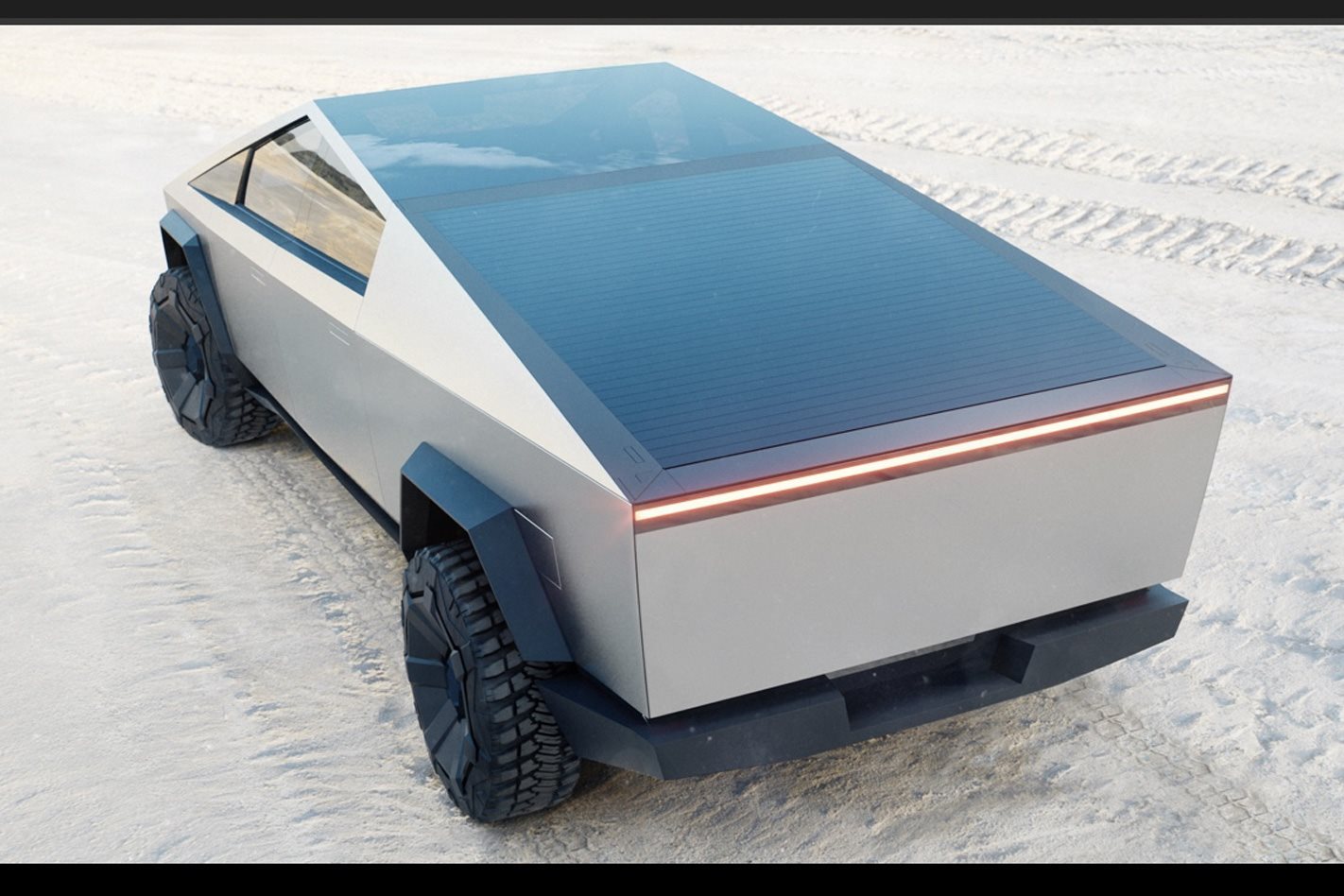
The Cybertruck is also not without a number of changes from the original concept revealed on stage all those years ago, including production-friendly (and maybe a little more pedestrian-friendly) tweaks to the bumpers, as well as the lighting at both ends.
1
Cybertruck dimensions: How big is it?
The Cybertruck’s final measurements are 5683mm in length on a 3810mm wheelbase, 2200mm in width and 1791mm tall.
By comparison, a Ford F-150 measures 5890mm long on a 3690mm wheelbase, 2030mm wide and and 1960mm tall.
1
Cybertruck driving range and tow rating
Likewise, promised driving range for the Cybertruck was in the realm of 800 kilometres with a 6350kg towing capacity (14,000lb), but these have dropped to 547km and 4990kg. Not exactly small numbers, though.
To make up for it, Tesla says it will also sell a “toolbox-sized” range-extending battery pack that can sit in the tray.
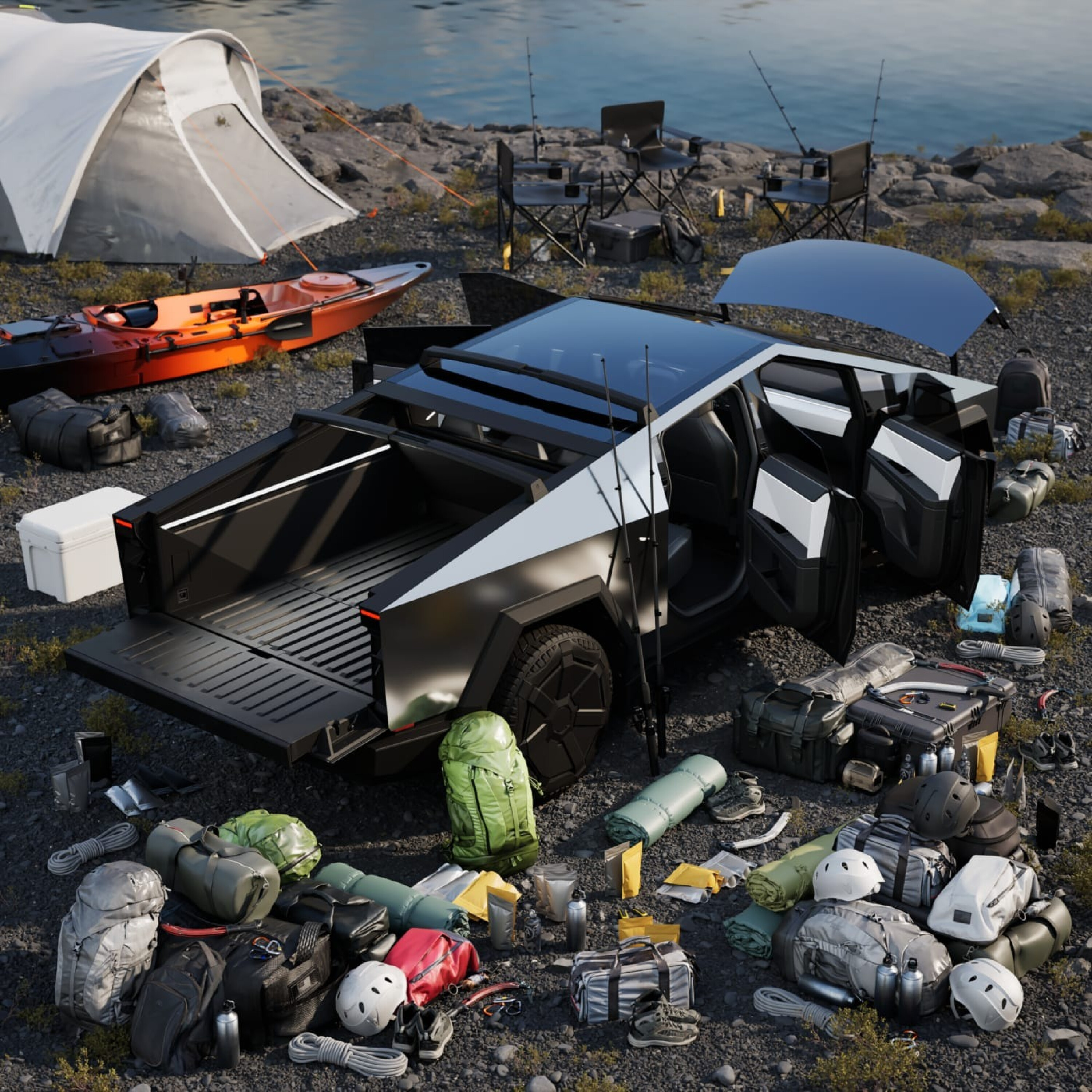
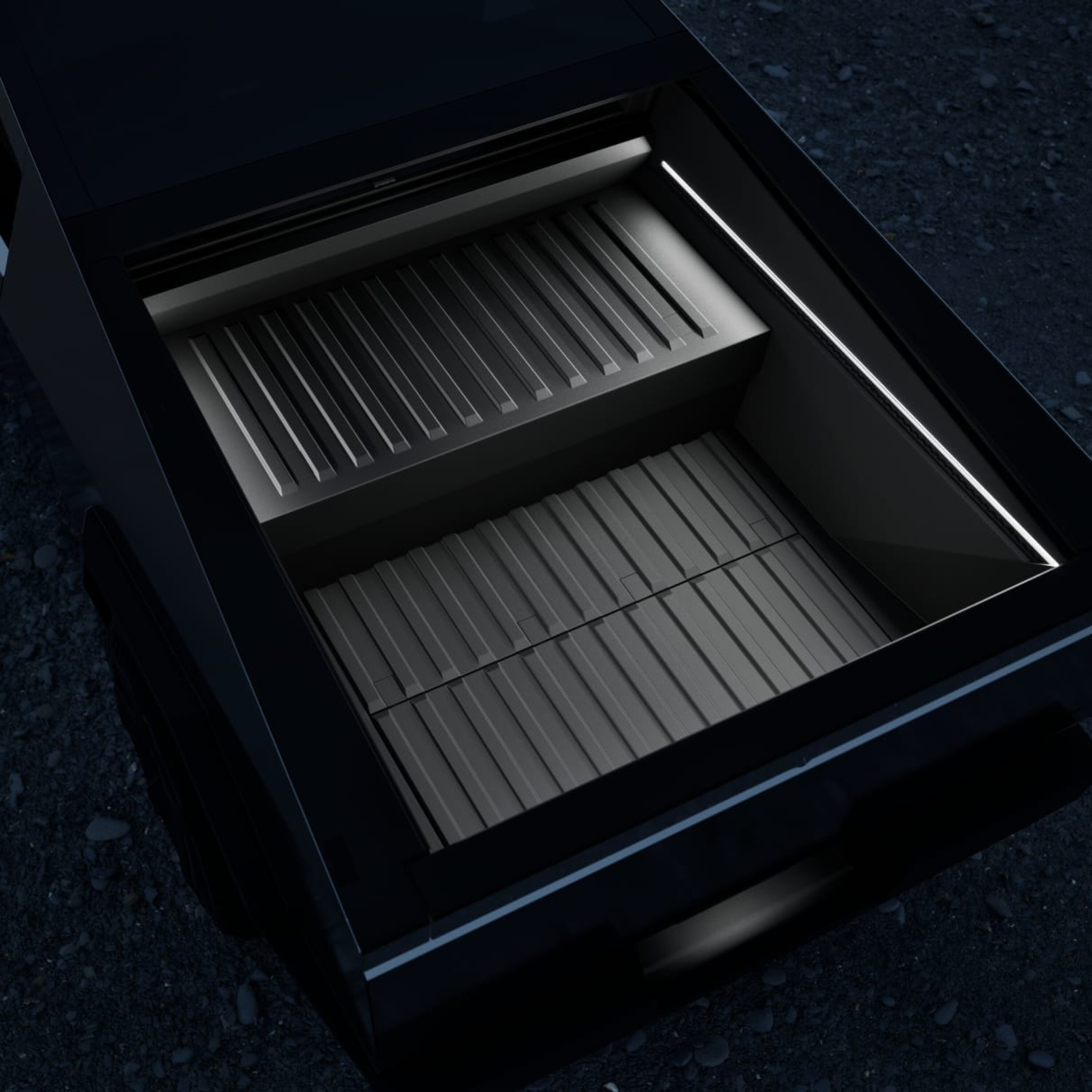
A “super-tough composite” tray dispenses with the need for a bedliner, says Tesla, and is big enough to handle 1.22m x 2.44m construction loads.
0-100km/h: How quick is the Tesla Cybertruck?
One figure the Cybertruck has met is its promised super-quick acceleration, powering from zero to 100km/h in 2.7 seconds in top-shelf tri-motor Cyberbeast form.
“We have a car here that experts said would be impossible, that experts said would never be made,” Elon Musk said on stage today.
“I think it’s our best product, I think it’s the most unique thing on the road, and finally the future will look like the future.”
Musk maintains that the Cybertruck is bulletproof, playing videos today to prove its durability. Likewise, the armoured glass that failed on stage with the concept was this time able to resist a fresh assault.
1
VIDEOS
Tesla Cybertruck specifications
For now, the figures below come direct from Tesla’s Cybertruck website. Some figures have not yet been made available.
1
1
CHARGING
Cyberbeast
Cybertruck All-wheel drive
Cybertruck Rear-wheel drive
Supercharging Max/Payment Type
250kW max; pay per use
Charging Speed
Up to 128 miles (205km) added in 15 minutes
Up to 136 miles (218km) added in 15 minutes
Not supplied
1
WARRANTY: Tesla Cybertruck (America)
Basic Vehicle
4 years or 50,000 miles (approx 80,000km), whichever occurs soonest
Battery & Drive Unit
8 years or 150,000 miles (approx 240,000 kms), whichever occurs soonest
Did you know that ANCAP was only the second new car assessment program in the world and actually beat Euro NCAP to the punch?
Established in 1993, the Australasian New Car Assessment Program was a response to the drive for safety in the United States led by the National Highway Traffic Safety Administration (NHTSA).
In 1978, the Yanks started using crash test dummies to evaluate the safety of vehicles going further than existing standards that were more concerned about how a car survived a stack than its occupants.
1
Benz and Volvo were innovating safety equipment to sell cars, but the lower end of the market was suffering from unsafe vehicles.
In Australia, 10.5 per 100,000 people were dying in car crashes in the ’90s. Today that number is down at around 4.5 per 100,000. That’s still too high, but a marked improvement that wouldn’t be so significant were it not for crash-testing bodies making noise about vehicle safety.
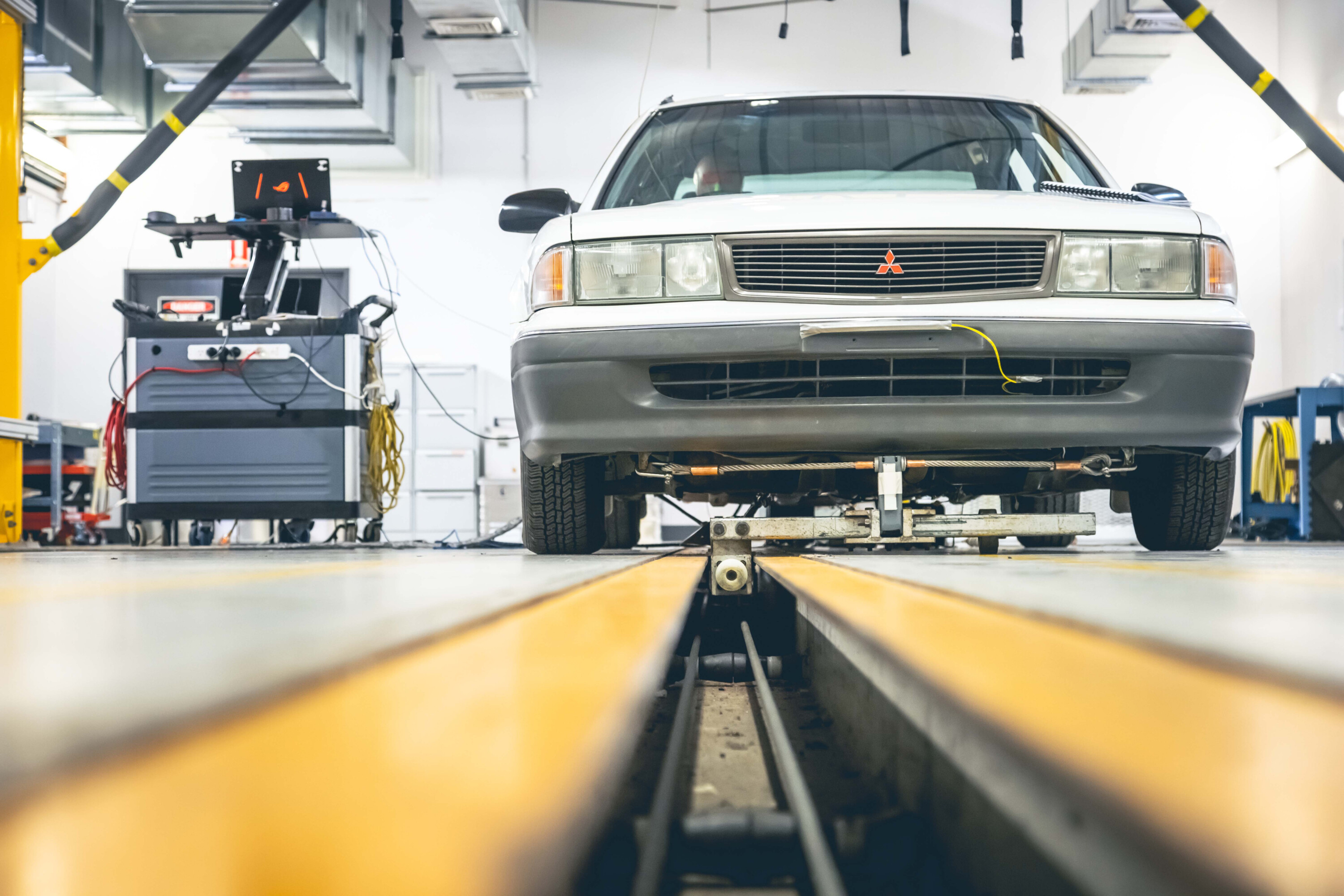
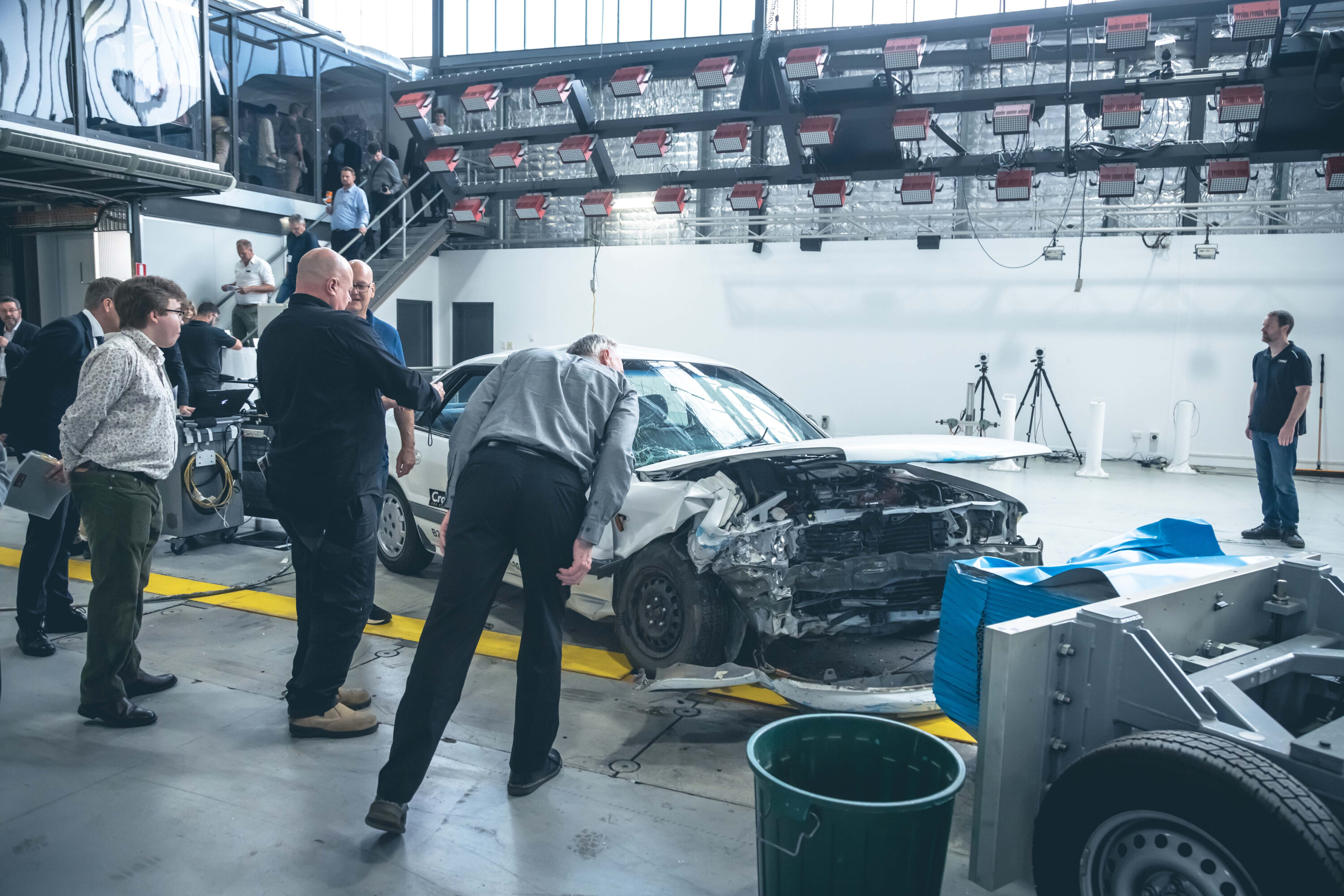
To celebrate 30 years of ANCAP, Wheels and the crash-testing body teamed up to find a suitable victim to illustrate just how far vehicle safety has come.
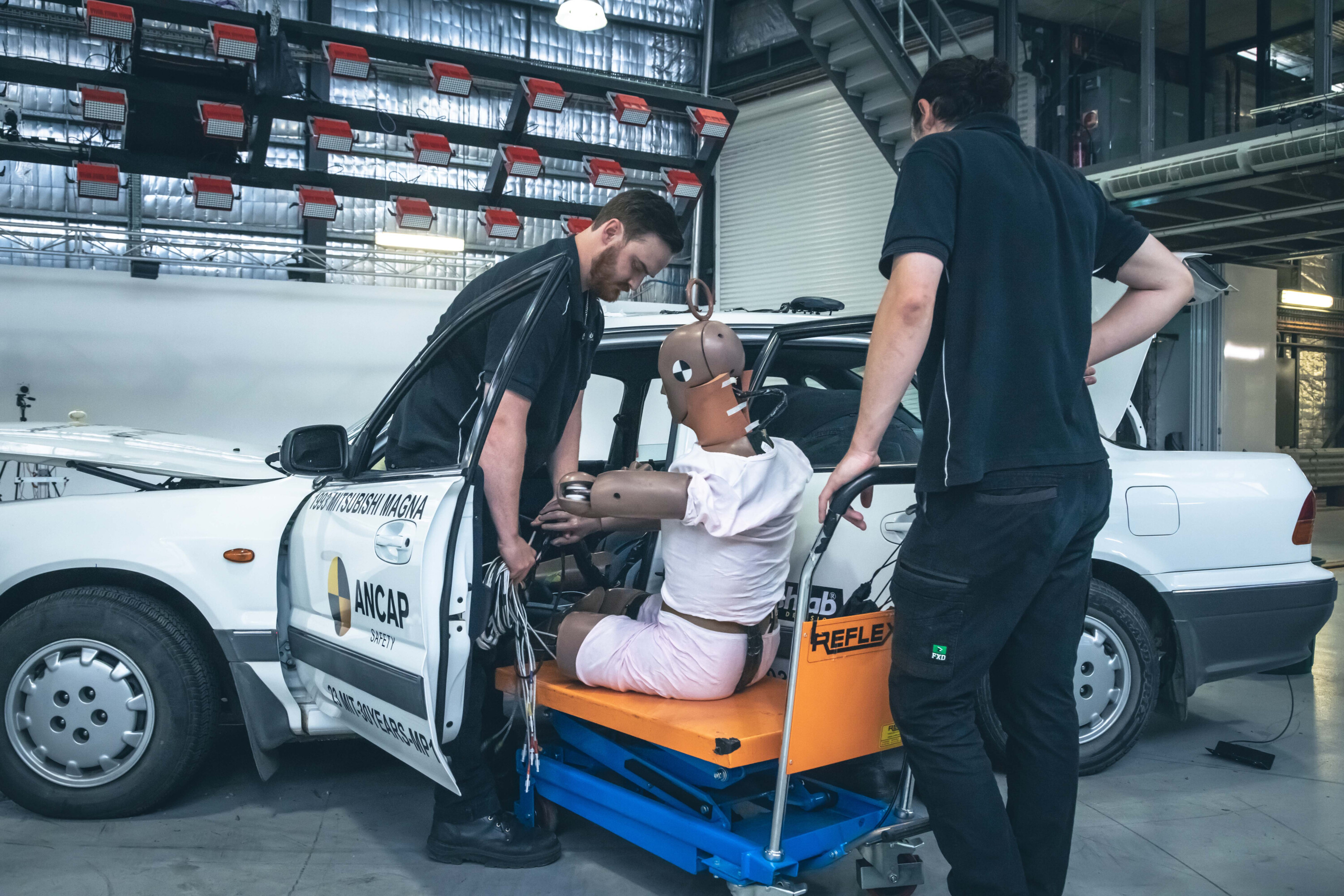
With 58,000kms on the clock wearing original FGD 057 Victorian Garden State State Plates, the mid-spec Magna Exec (with fetching blue velour upholstery) had its registration cancelled in July last year when it was bought by a young South Australian father looking to get a vintage motor at an affordable price.
2
We snaffled it up for $2800 after he decided on a safer machine to transport his kids, and it was shipped to Crashlab for a date with a barrier.
The poor thing. Our example is almost too good to crash. But think of this non-running Magna as one that passed its body onto science; the world is richer in knowledge thanks to this dad-spec car from the ’90s getting munched.
Most reviews you’ll read on this site labour the active safety features now expected to avoid crashes. The Magna has none of that, just four three-point belts and a centre lap sash – not even an airbag.
1
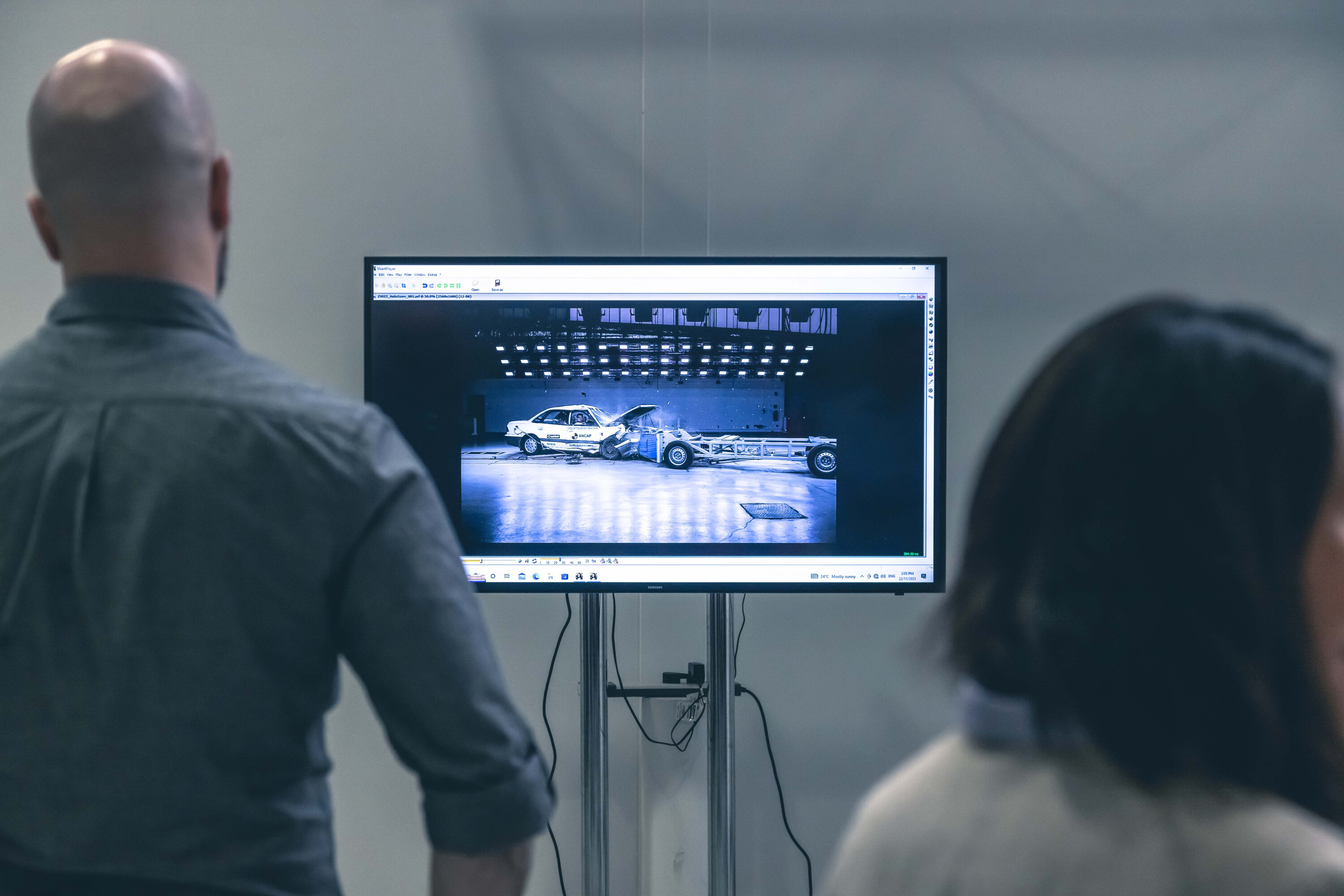
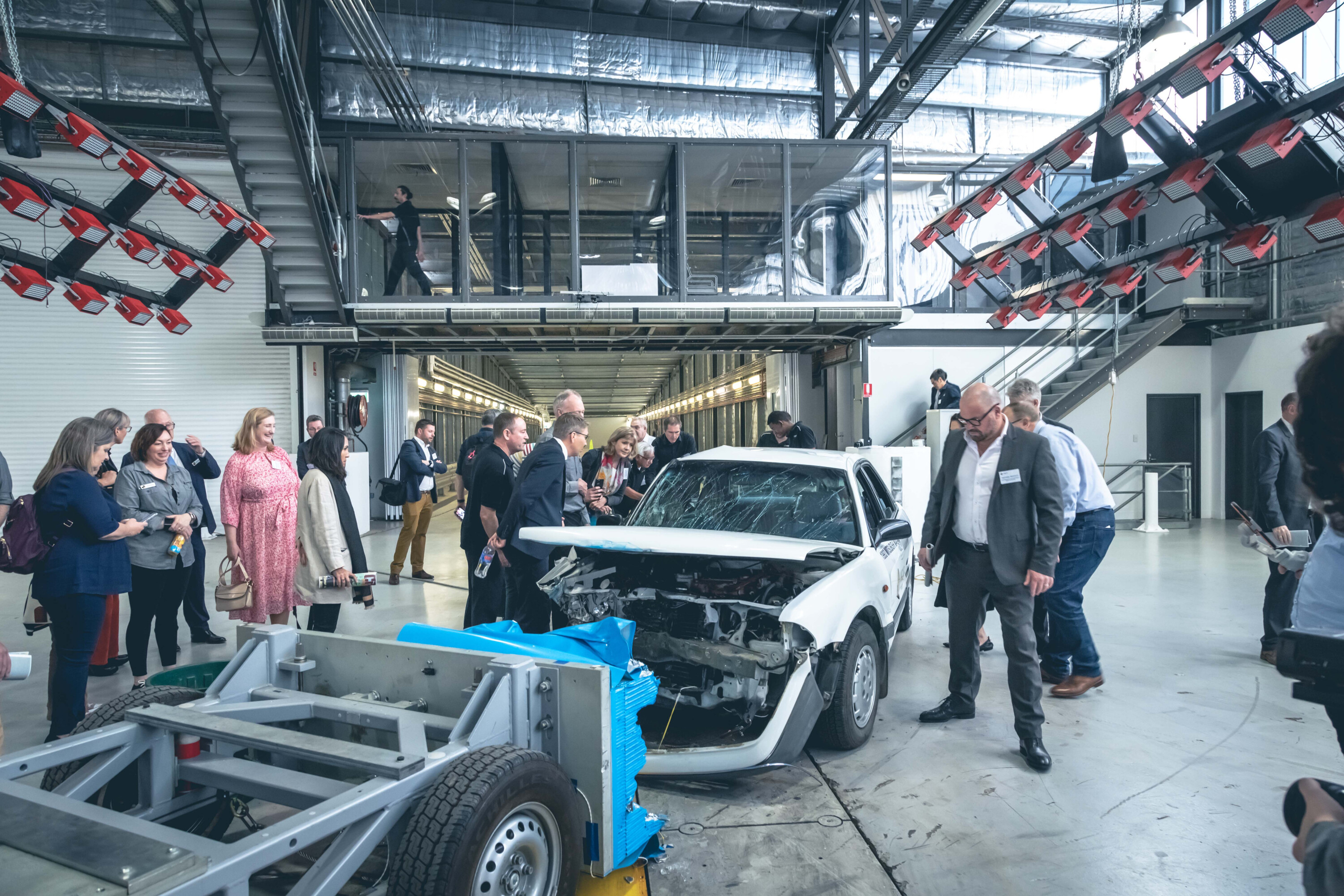
Crashlab’s 100,000 Lux LEDs flood the room with light. A high-pitched shriek signals the Magna’s imminent demise as it barrels towards the barrier.
Crunch. That’s it. The initial hit and energy transfer looks promising, but the Magna’s front end is tamped like a bed of coffee beans as the body reaches maximum compression. It’s a brutal watch.
Without airbags, the risk of skull fracture and brain injury – potentially fatal injuries – are significant in the Magna.
The dummy’s head registered 107 g worth of force. To put that in context, Formula 1 drivers experience up to 6 g in corners, while Romain Grosjean’s fiery 2020 crash registered 67 g.
It’s also more than twice the force occupants of a modern five-star car would experience in the same crash; ANCAP says that could be the difference between life and death.
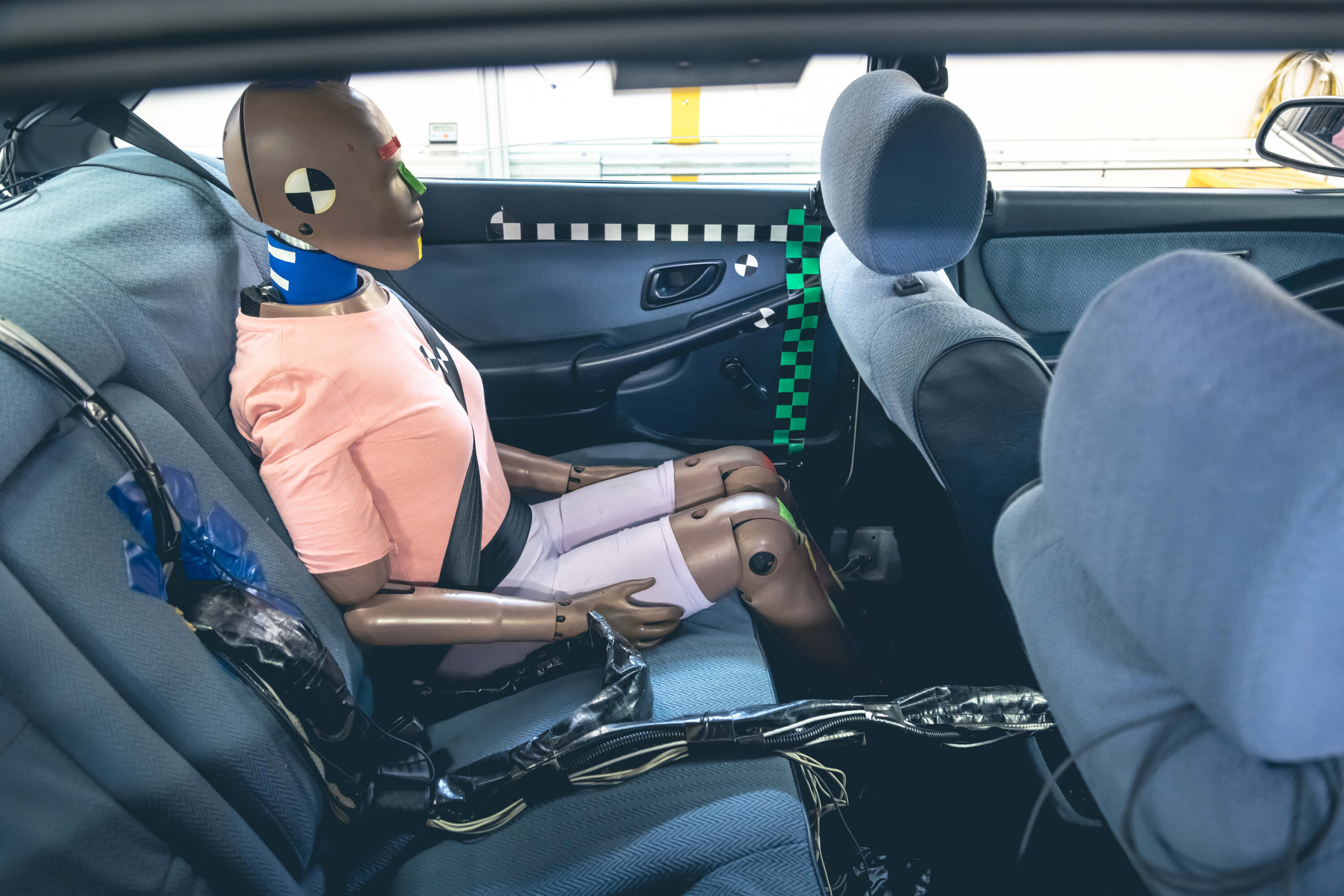
There was pronounced footwell intrusion and high femur loading on the dummy’s left leg, too (expect a fractured limb at least) and while things initially seemed better in the rear, the Magna’s seatbelts aren’t modern items with pre-tensioners.
The 5th percentile female’s knees connected with the lower portion of the front passenger seat as she slipped out from under the belts – a phenomenon known as ‘submarining’.
With only one crash test performed ANCAP isn’t star-rating the Magna but scoring zero out of 16 possible points for the frontal offset impact would not bode well for a 2023 five-star rating.
The chances of having a crash at just 50km/h and escaping minor injuries are not high in this vehicle; they are in modern cars. And it’s not just the Magna, results from this modern test are consistent with the level of force seen in original testing.
ANCAP is not about to start going back in time and safety rating cars. Instead, this stunt is about promoting awareness and how its role has changed.
“Our founders were originally met with strong resistance from vehicle manufacturers, yet today, they’re the ones bringing forward new and innovative ways to prevent road crashes and leading the way in vehicle safety improvements”, said ANCAP CEO Carla Hoorweg of the significant development that’s occurred over the last three decades.
December 1: Cybertruck headline details revealed at Delivery Event
The Tesla Cybertruck offers a near-5000kg towing capacity, a one-tonne-plus payload, and performance that the US tech company says makes it “faster than a Porsche 911 while towing a 911″.
Tesla boss Elon Musk revealed the first key details of the problem-plagued electric truck, which was first shown in prototype form more than four years ago.
“Once in a while, every five to 10 years or so, a product comes along that is rare; so rare that it seemingly is impossible,” said Musk in Tesla’s live Delivery Event broadcast on the X social media platform he owns.
“[This is] a car that experts said is impossible, said would never be made. I think it is our best product, the most unique thing on the road. It will look like the future.
“It’s more truck than a truck, and it’s a better sports car than a sports car – all in the same package.”
1
UPDATE: Cybertruck pricing and specs
You might be glad, or you might’ve hoped it wouldn’t happen – but Elon’s teenage wet dream, the Cybertruck, is actually real and finally in customer hands.
Musk claims the Cybertruck’s Tesla-designed steel alloy construction will have no corrosion, doesn’t need paint, and helps give the truck greater torsional stiffness than a McLaren P1 supercar.
This time there was also a successful demonstration of the Cybertruck’s Tesla Armor Glass, with no windows shattering when struck by a baseball as they did in a 2019 demonstration.
Tesla also showed a video of a machine gun firing bullets at the Cybertruck, leaving only dents in its side.
“Why did we make it bulletproof? Why not?!” said Musk with a smile.
Tesla revealed several new details to prove it is more than just a show truck.
1
It is quoted with a towing capacity of 11,000Ibs (4990kg) and a payload capability of 1134kg. A “super-tough composite” tray dispenses with the need for a bedliner, says Tesla, and is big enough to handle 1.22m x 2.44m construction loads.
In another video, Tesla conducted a ‘Truck Pull’ comparison test that involved a 40,000Ib (18,144kg) truck-sled and two key electric rivals: the Ford F-150 Lightning and Rivian R1T.
Tesla says the Cybertruck pulled the sled to 317.75ft compared with 257ft for the Rivian and 207ft for the Lightning.
1
In a final, cheeky video, Tesla showed the Cybertruck beating a Porsche 911 in a drag race – while towing a 911.
A 0-60mph (0-97km/h) time of 2.6 seconds is quoted for the Cybertruck, with the quarter mile covered in 11 seconds (while towing the 911, Tesla said).
This performance is specific to the flagship Cyberbeast model, which is priced from US$99,990 ($151K).
Cybertruck prices start at US$60,990 ($92,000) for the base, RWD model, while a mid-range AWD costs from US$79,990 ($121K).
The longest estimated electric range is 340 miles (547km) for the mid-range AWD model. Tesla estimates 250 miles (402km) for the base RWD and 320 miles (515km) for the Cyberbeast.
Musk claims the Cybertruck will provide “off-road performance” with features including adaptive air suspension with auto-adjusting dampers and 300mm of travel, ground clearance of up to 432mm, and locking differentials.
1
Other features include torque vectoring and a steer-by-wire system that varies how much the front wheels turn based on speed.
The Cybertruck’s turning circle is tighter than that of the Model X large SUV, according to Tesla.
Tesla concluded its Delivery Event by handing over the first production Cybertrucks to the first owners.
Proper deliveries won’t begin until 2024 for the AWD and Cyberbeast models, with the RWD entry model due in 2025.
The Cybertruck is not currently expected to be offered for sale in Australia.
Our original story, below, continues unchanged
October 20: Cybertruck release date confirmed
Tesla chief executive Elon Musk has confirmed Cybertruck deliveries will start from December 1 (Australian time).
The delivery launch event at the company’s Austin, Texas ‘Gigafactory’ will mark four years and one month after the controversial electric ute first debuted in prototype form.
At the company’s latest quarter three 2023 earnings call [YouTube ↗], Musk told investors and analysts: “We dug our own grave with Cybertruck.”
u201cCybertruck is one of those special products that comes along only once in a long while [and] are just incredibly difficult to bring to market, to reach volume, to be prosperous,u201d Musk said.
According to the CEO, Tesla has had to invent how to bend hard stainless steel, large 9000-tonne castings and stampings, and a new low- and high-voltage architecture to produce the Cybertruck.
However, the American company admitted it could face “enormous challenges” in ramping up production for the Cybertruck to make a return on investment.
Tesla claimed it can produce more than 125,000 Cybertrucks per year, potentially increasing to 250,000 by 2025.
Musk also teased the upcoming affordable Tesla ‘Model 2’ electric car will be the opposite of the Cybertruck by being “much more conventional in terms of the technologies we’re putting into it”, and expects it to ramp production faster to meet anticipated high volume demand.
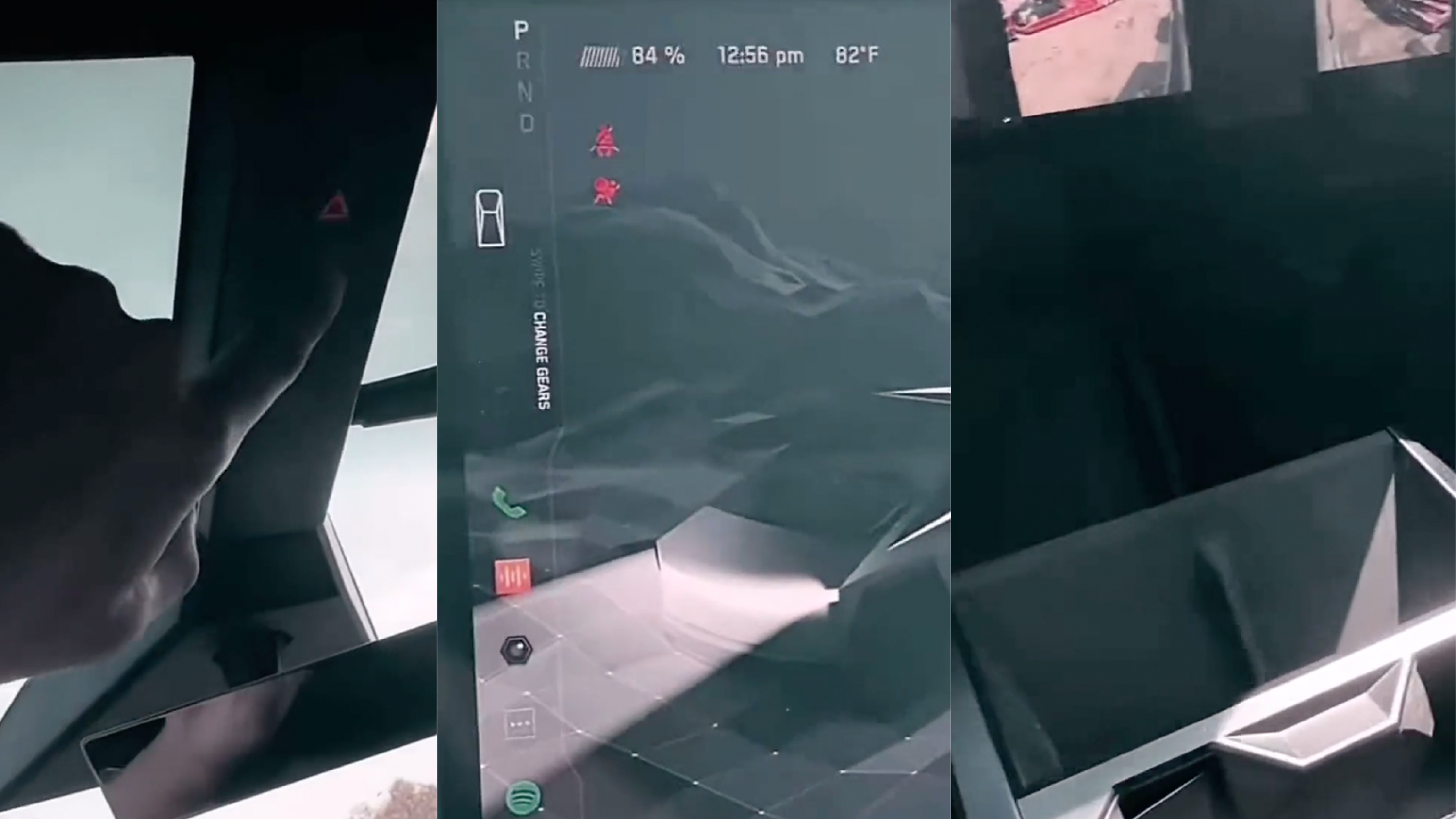
A new unverified video has revealed what appears to be a near-production version of the Tesla Cybertruck’s interior.
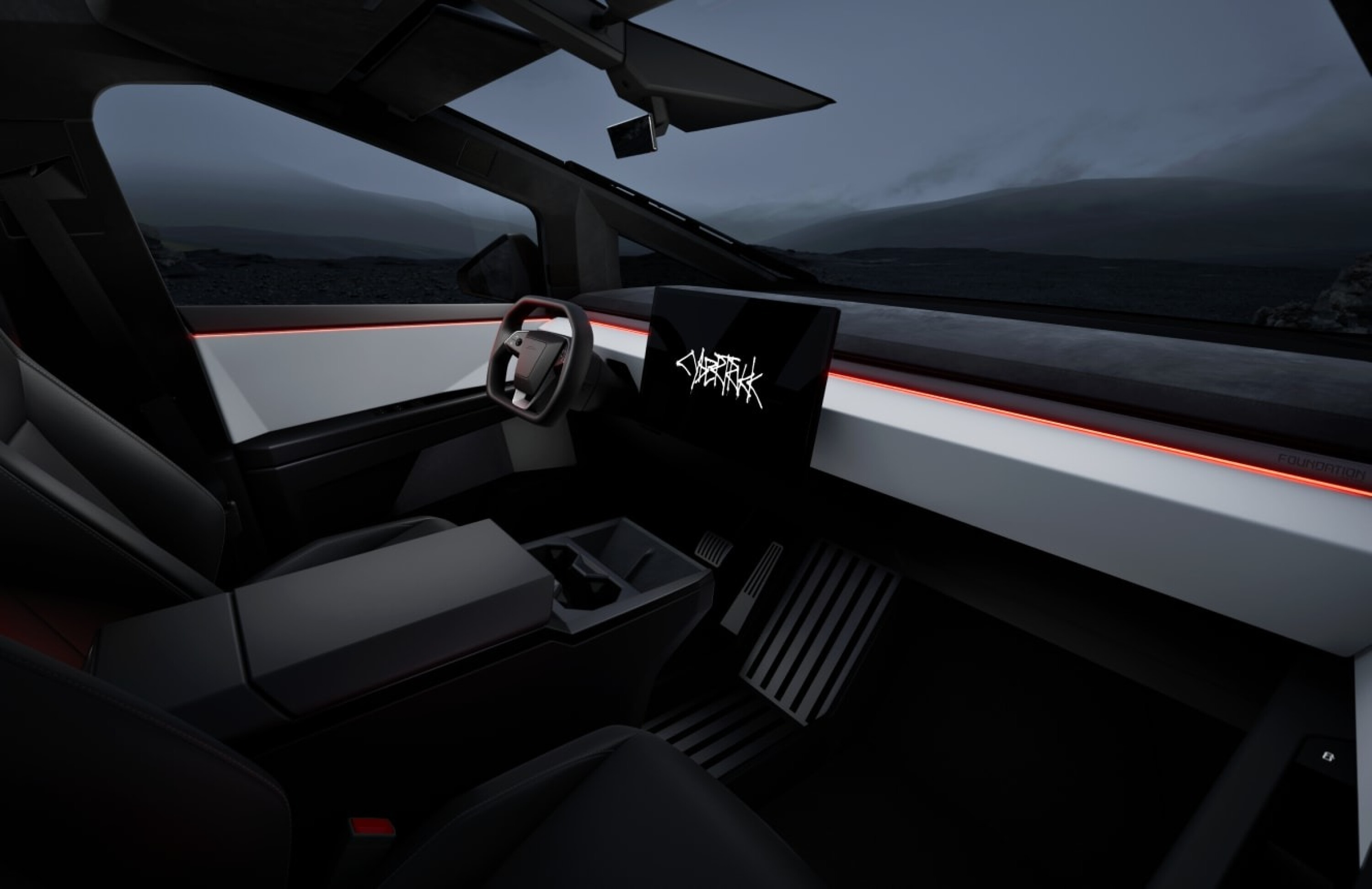
Posted by Russian content creator vlad vein [YouTube ↗], it depicts the electric ute’s unique cyber-themed user interface on its central touchscreen, with a row of app shortcuts and the climate control positioned on the driver’s side for easier reachability (instead of the bottom as per current Tesla vehicles).
The ‘floating’ centre console also features dual Qi wireless charging pads – slanted more than the Model 3 sedan and Model Y SUV – and angular-shaped cup holders.
The front windscreen sun visors appear to be attached ahead of the glass itself – reminiscent of the Model X, though the fixed panoramic glass roof doesn’t extend into the windscreen – and the hazard light button is mounted on an angular piece housing the front camera and rear-view mirror.
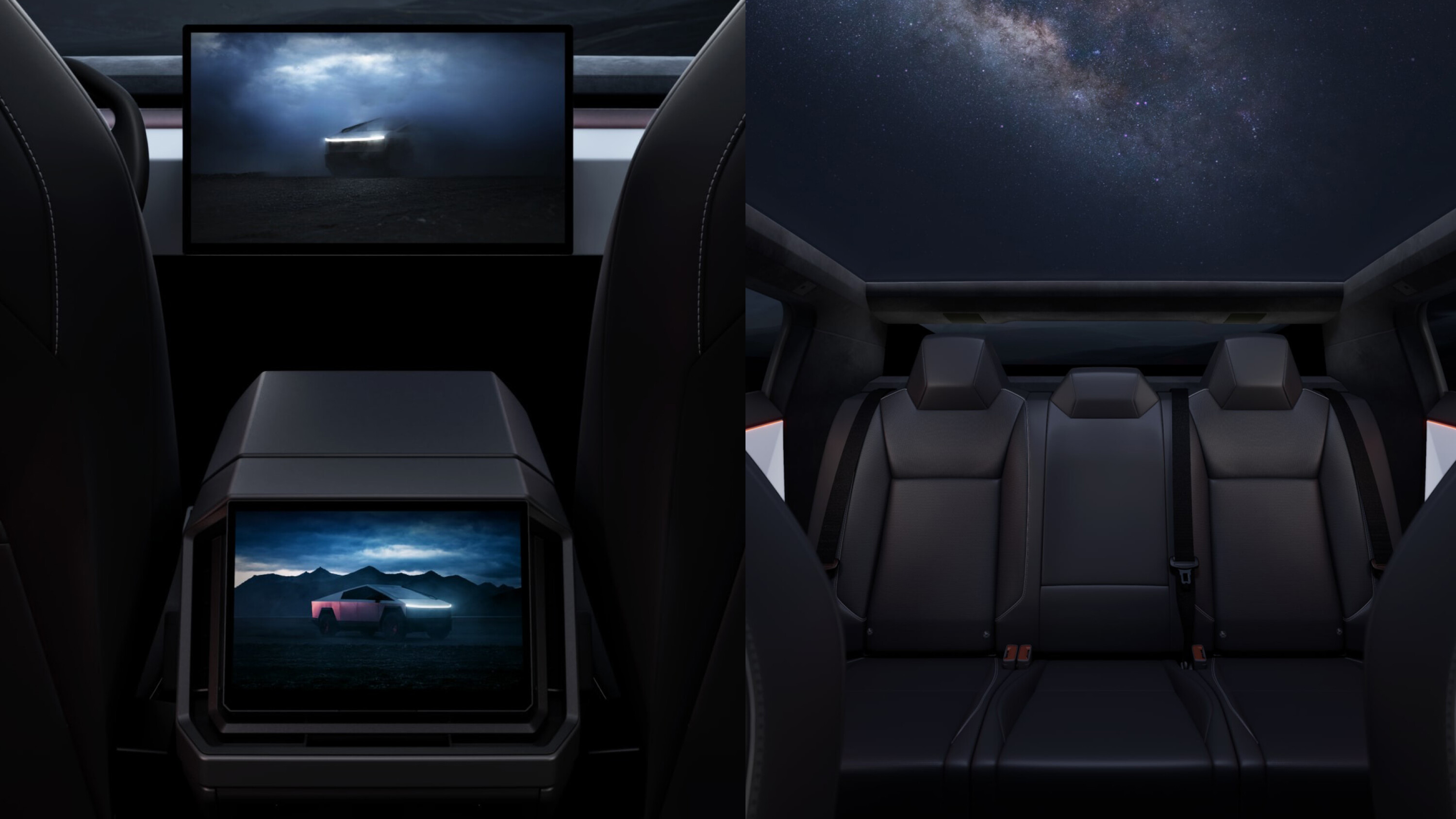
The rear passenger armrest also folds down the entire middle seat and headrest, similar to the upcoming 2024 Model 3 facelift.
As per previous photos, the futuristic electric truck features a closed-yoke steering wheel with touch-sensitive turning indicators and a drive selector via the touchscreen in lieu of physical stalks.
1
The video is unconfirmed, and it appears the person filming wasn’t meant to be in the vehicle. Even though pre-production examples have only been seen testing in North America, the content creator is based in Russia.
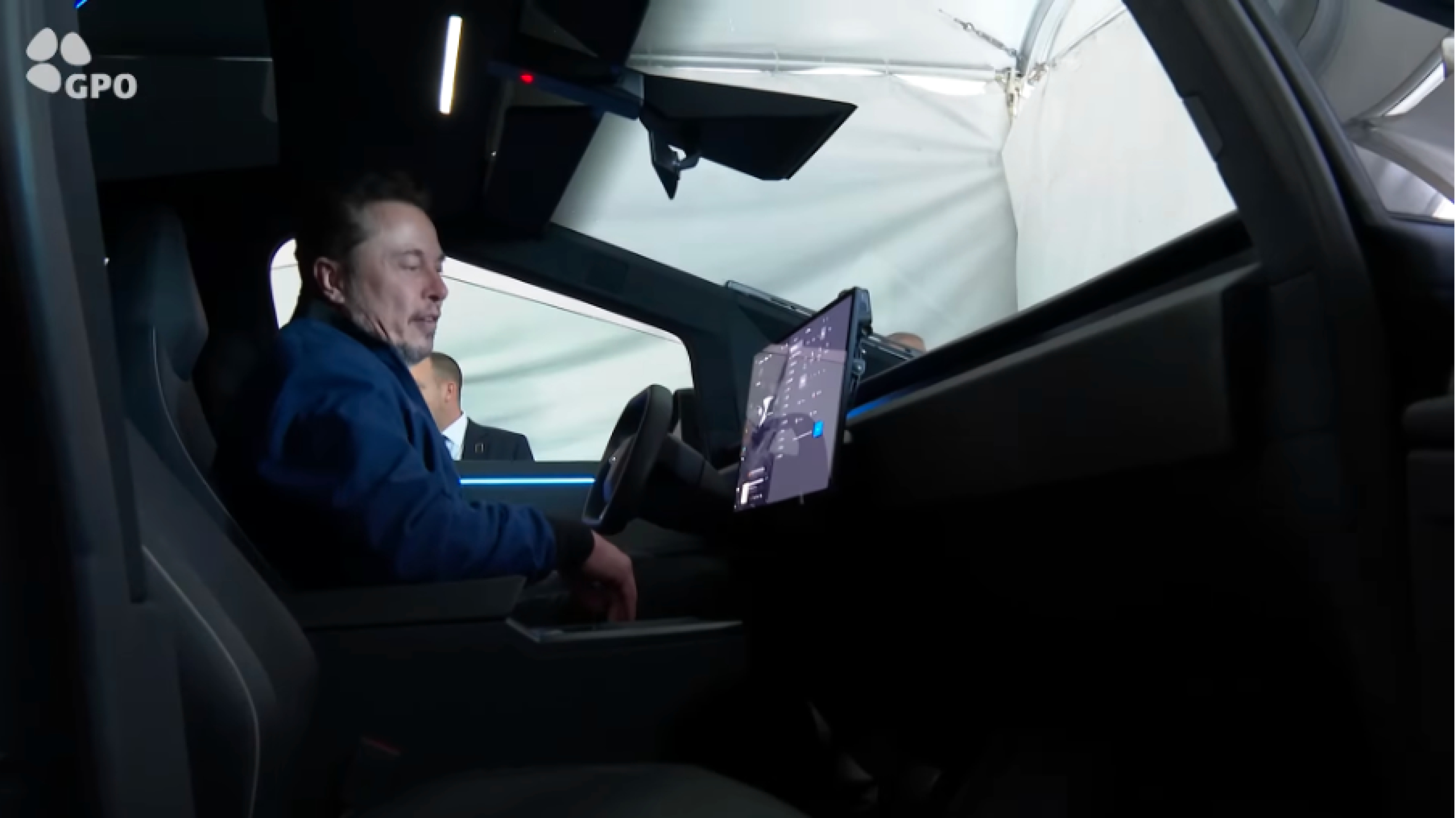
Last month, a Tesla factory tour with Israeli Prime Minister Benjamin Netanyahu also showed off the interior with full-width ambient lighting strips across the dashboard and door cards [YouTube ↗].
The controversial Cybertruck electric ute is expected to start deliveries in North America later this year – four years after its debut – but an Australian launch isn’t expected, with original reservations refunded to potential customers in 2022.
Five months after Tesla released the most frustrating crash-test video of all time (watch it below, if you like), it seems the Cybertruck has actually been crashed. And this time, we get to see the aftermath.
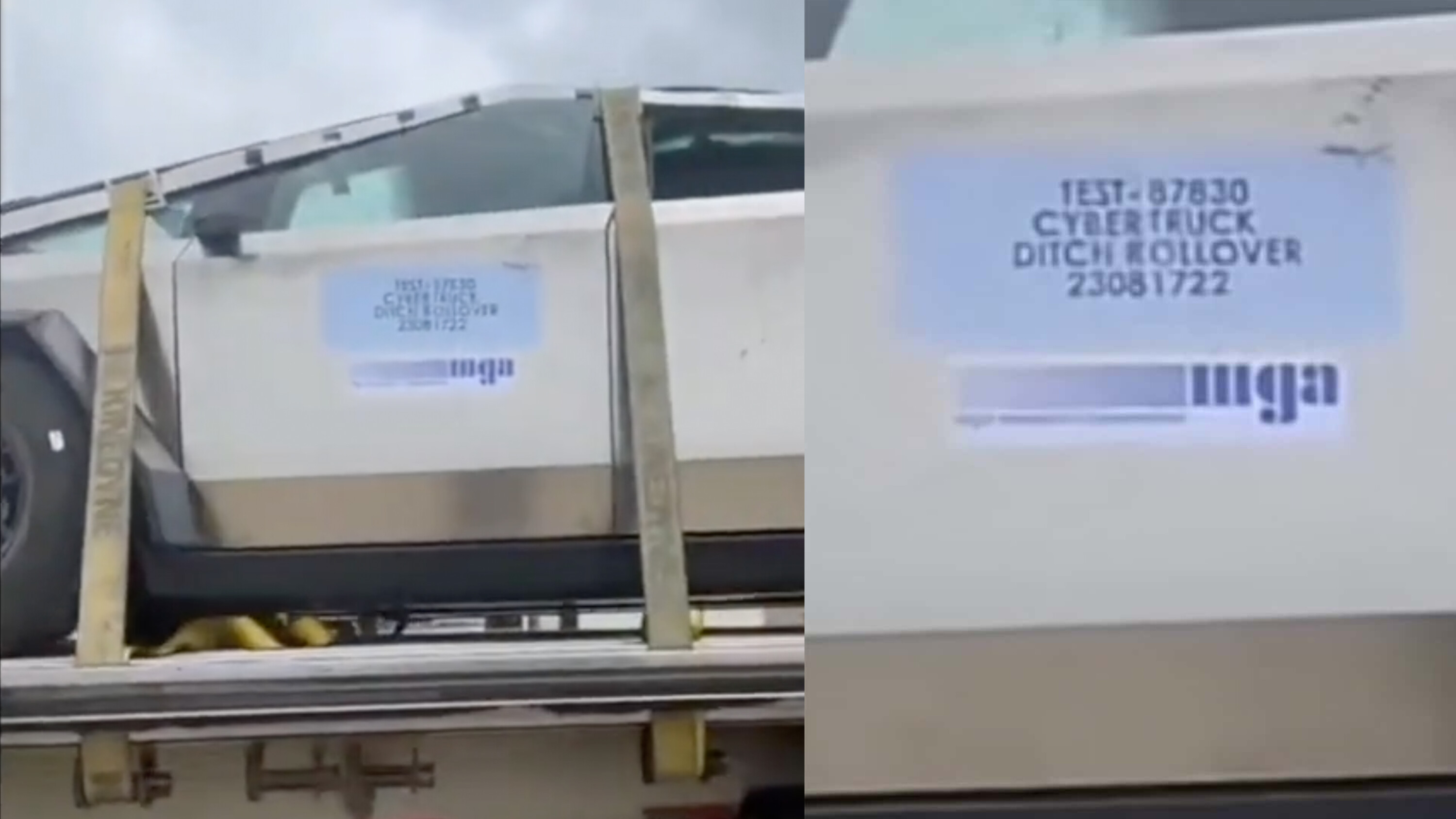
A video of a banged up Cybertruck has been posted to TikTok by Chicago company CTL Logistics, with a sticker on the truck’s door seeming to confirm it had been subjected to a ‘ditch rollover’ test.
The video has since been taken down but not before it was saved by some savvy members of the Cybertruck Owner’s Club.
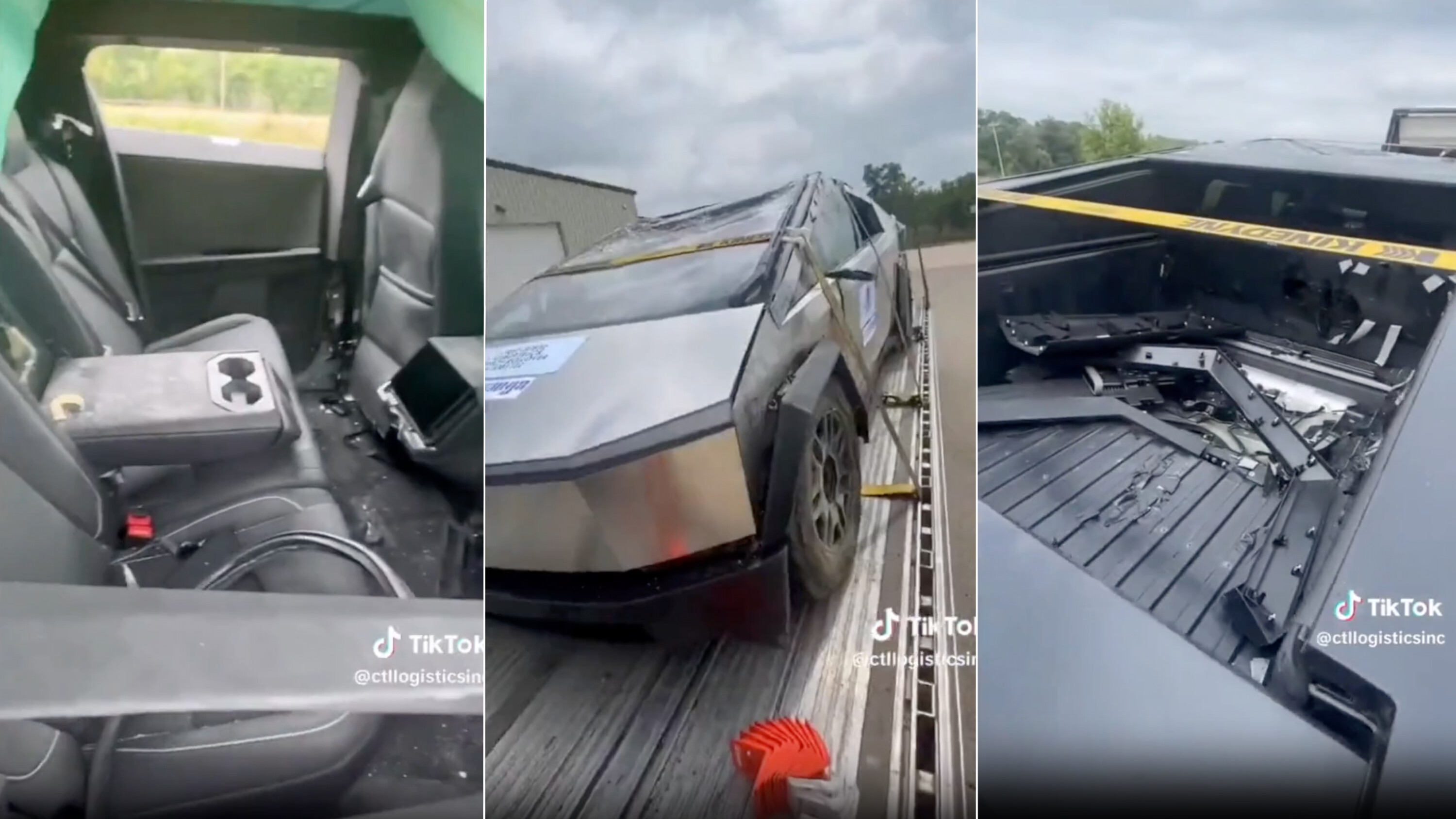
While we don’t actually get to see the Cybertruck being crashed, the video does provide some new details. We get a look inside the rear of the cabin, for example, which shows a tablet touchscreen on the back of the centre console (similar to the updated Model 3) and twin octagonal cupholders inside the centre arm rest. The video also shows just how narrow the rear glasshouse is, so don’t expect much in the way of outward vision if you’re a backseat passenger.
1
The Cybertruck’s airbags have deployed in the rollover and the angular exterior is pretty secondhand, with the roof, windscreen and exterior panels all showing visible damage. We also get a brief look inside the Cybertruck’s tray which is loaded up with broken bits of bodywork.
1
The video is the latest bit of news to suggest that Tesla is finally gearing up to put the Cybertruck into production. Videos of other, less crashed, Cybertrucks on the back of trucks, cruising the streets and even being filmed in Iceland have all been published.
May 26: New photos offer a first look at Cybertruck interior
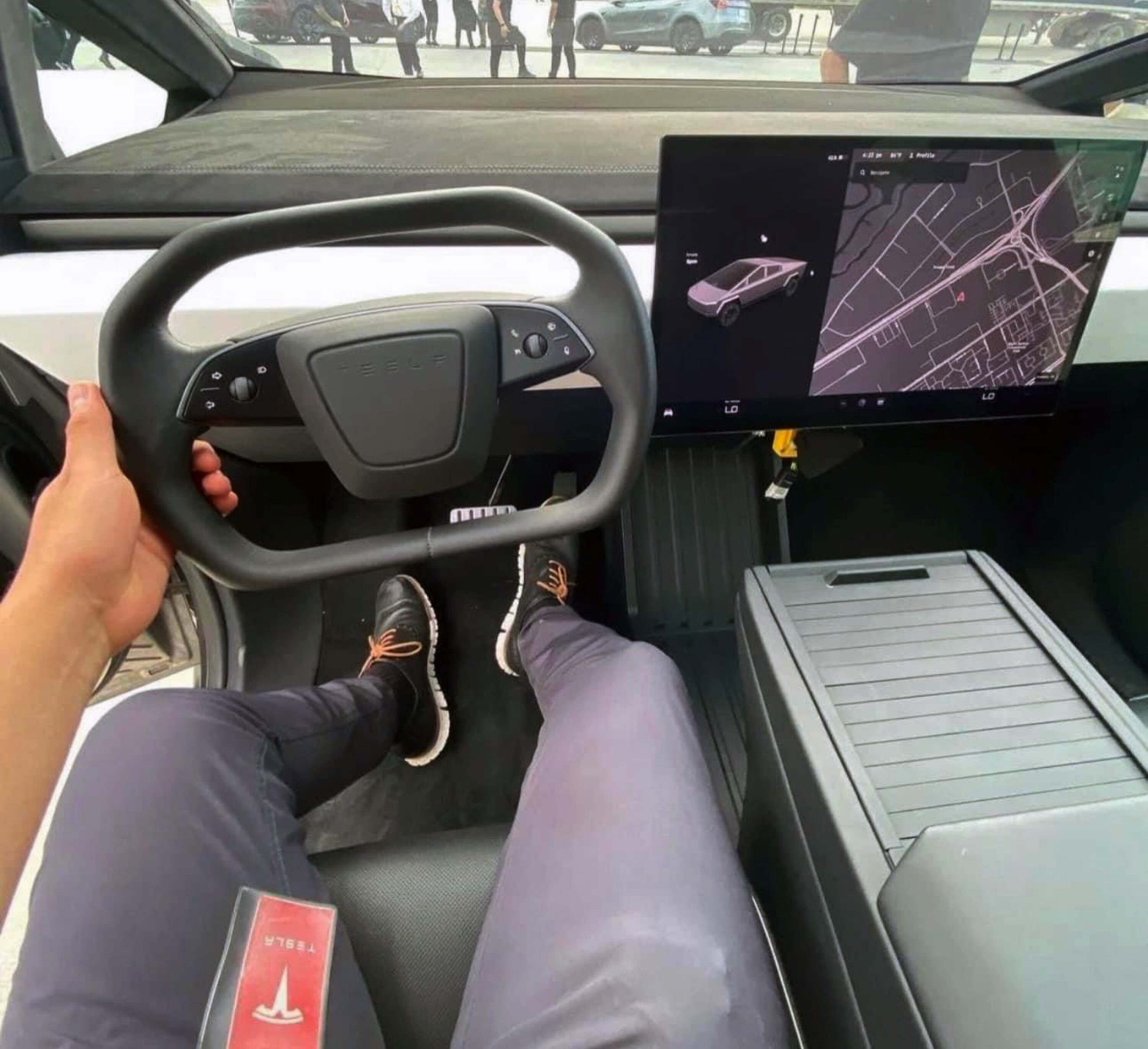
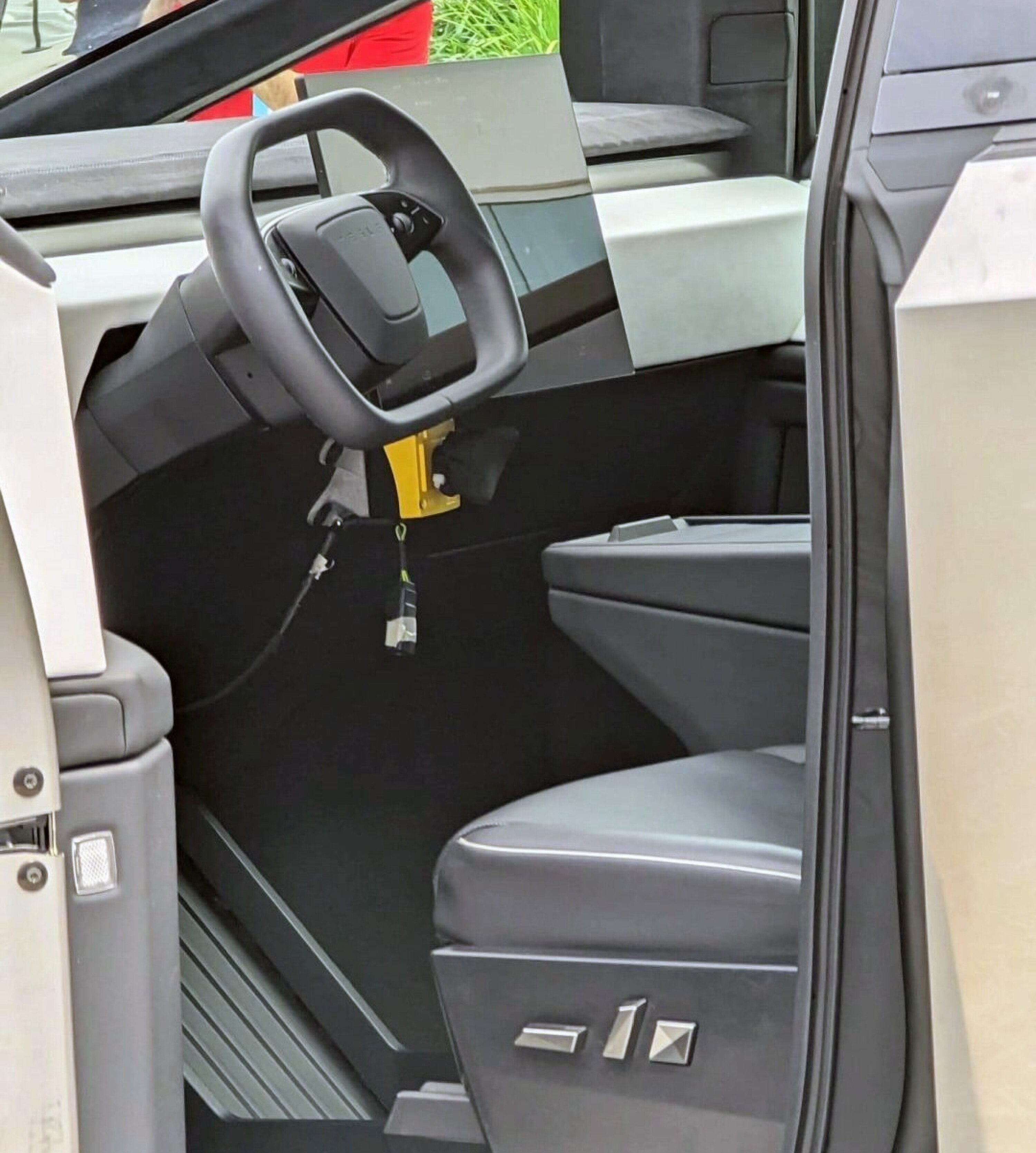
The photos, posted to the Cybertruck Owners Club [↗] (if ever a more hopeful group existed…), shows the view from the driver’s seat, snapped by a guest at a recent shareholder event in Texas.
Although not a comprehensive view, the photos show a new-design steering ‘wheel’ with a distinctly flat racing-like rim at the top and bottom, rather than the open-topped yoke introduced with the updated Model S and Model X in late 2021.
1
The new, vaguely hexagonal tiller – more of a munted squircle, for lack of a proper geometric term – appears to retain the switch panels of the existing yoke, flanking a new legless horn pad.
The requisite huge display dominates the centre of the dash, while an entire paddock of dashboard reaches forward into the long windscreen, potentially offering owners a cosy sleeping nook on a warm summer’s afternoon as the Cybertruck charges. I mean, why not? If nothing else, there’s a market here for a specialised rag-on-a-stick [↗] to clean the bottom edge of the window.
1
Elsewhere, we see that the promised folding centre seat is gone, with what looks to be a fixed console between the driver and front passenger positions.
That’s all there is to know, for now, but if Elon holds true to his promise of launching his big damn doorstop later this year, we should see more in the weeks and months ahead.
April 4: Cybertruck shown in crash-test teaser video
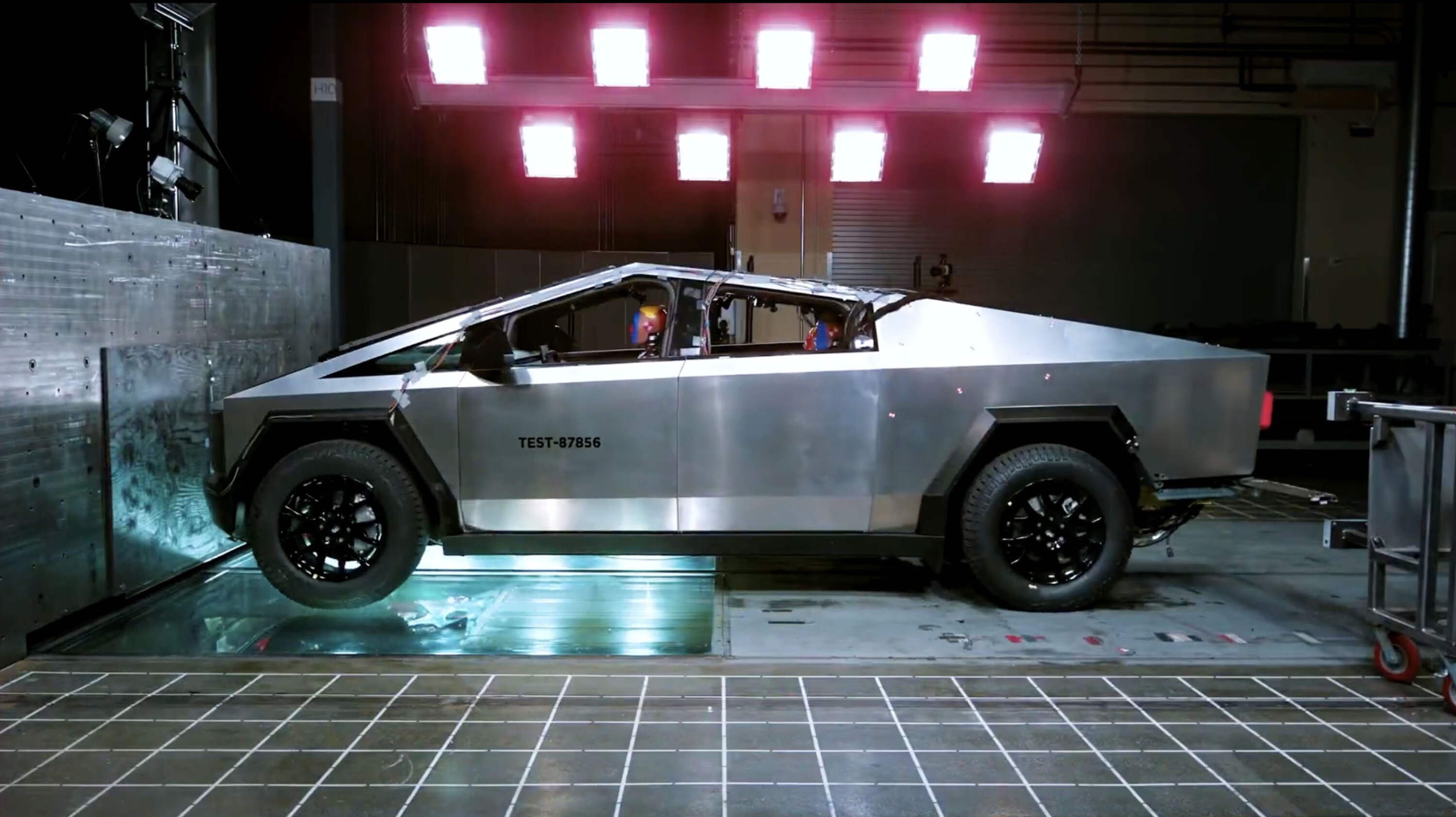
Ahead of a full reveal later this year, Tesla has teased the Cybertruck undergoing a crash test.
The video, shared to Twitter by Tesla, shows a Cybertruck with ‘Test’ written on the side heading towards a wall in a crash-testing facility with four dummies on board.
The 37-second video quickly cuts between multiple angles with slow-motion and full-speed clips spliced together, though we never actually see the Cybertruck hurtle into the wall.
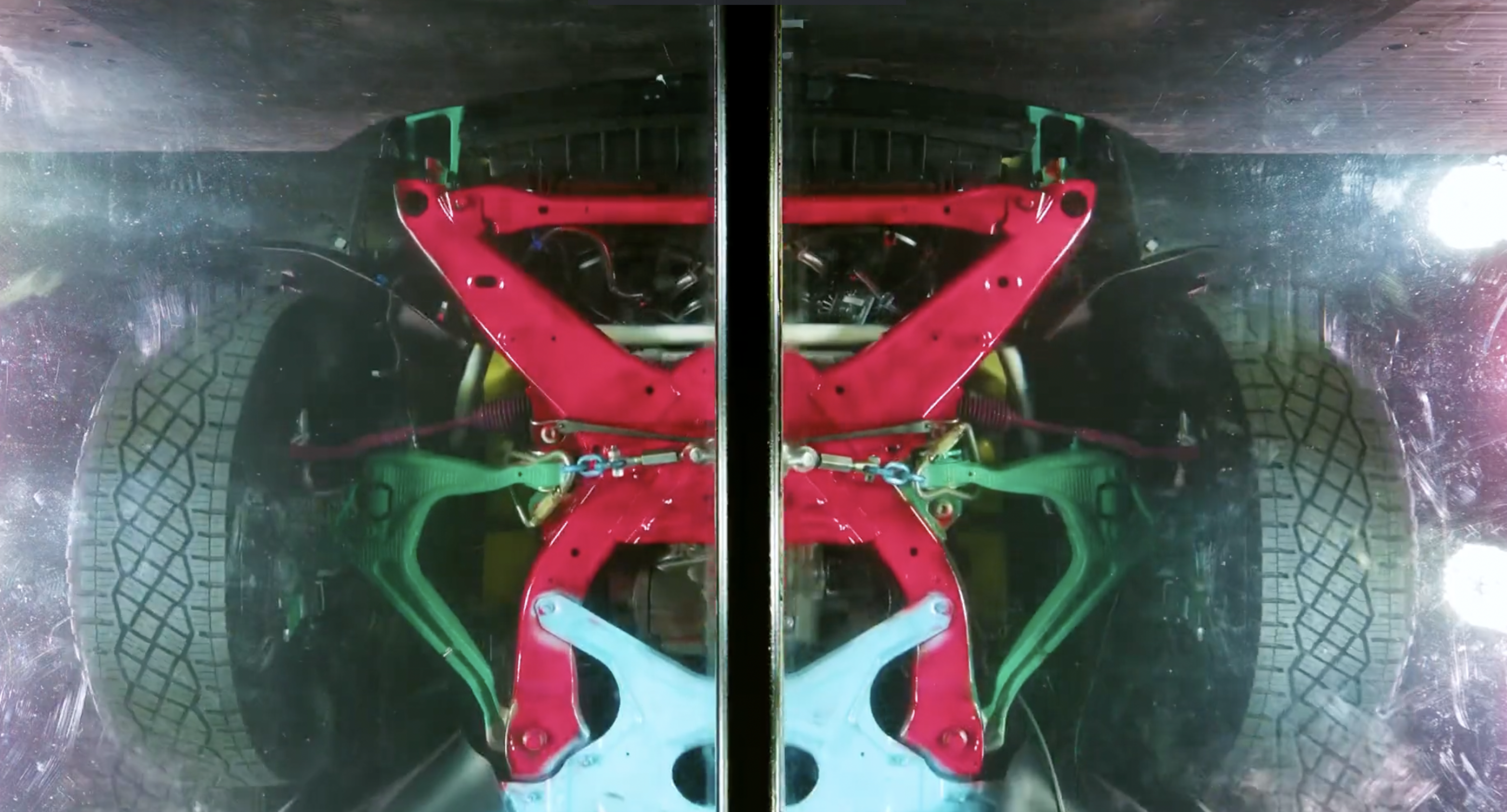
We’re also treated to a quick brief view of the Cybertruck’s underpinnings where we can see the front structure and view of the suspension.
The image appears to show a double wishbone suspension configuration – a more advanced system than the average ute’s struts – for Cybertruck’s promised air suspension.
1
Tesla has promised a full unveiling of its electric pick-up later this year.
However, it has yet to enter mass production, with the initial late 2021 production forecast delayed indefinitely.
Following comments by Tesla CEO Elon Musk in 2022, the brand’s design boss, Franz von Holzhausen, now claims the Cybertruck will arrive later this year.
“We knew we had to improve the [manufacturing] process further. And with Cybertruck, we designed a vehicle around a vision that actually started with the manufacturing process. In this case, the materials dictated the design,” he said at the Investor Day event today.
“[Forming full hard stainless steel] forced us to think about designing something in a way that you couldn’t normally stamp panels. You couldn’t form them in a traditional way – so you ended up with very linear bending processes that are just not in automotive [and] manufacturing language today.
“It’s a super dynamic truck and it has all the functionality you would expect out of any of the other competitive trucks. And the best thing about it: it’s coming this year.”
1
As reported by dedicated EV publication Electrek, a “pre-production Cybertruck beta” was unveiled at Investor Day, providing our best look yet at the production-ready version.
While it retains the concept’s outlandish triangular-like shape and stainless-steel construction, the latest Cybertruck prototype features a revised front design, a large windscreen wiper, and traditional side mirrors.
Inside, the Cybertruck has a new steering wheel design to replace or complement the original yoke-style wheel. While it’s a more traditional shape, it isn’t completely round, either.
1
In addition, there appears to be a newly-designed centre console and a central entertainment screen for rear passengers, as found in the Model S and Model X.
Elon Musk has apologised for the delay in bringing the Cybertruck to market, but he has promised the pick-up will enter production in 2023.
In mid-2022, Tesla removed the Cybertruck from its global websites – including Australia – and deleted pricing and specifications for the pick-up on its United States site.