
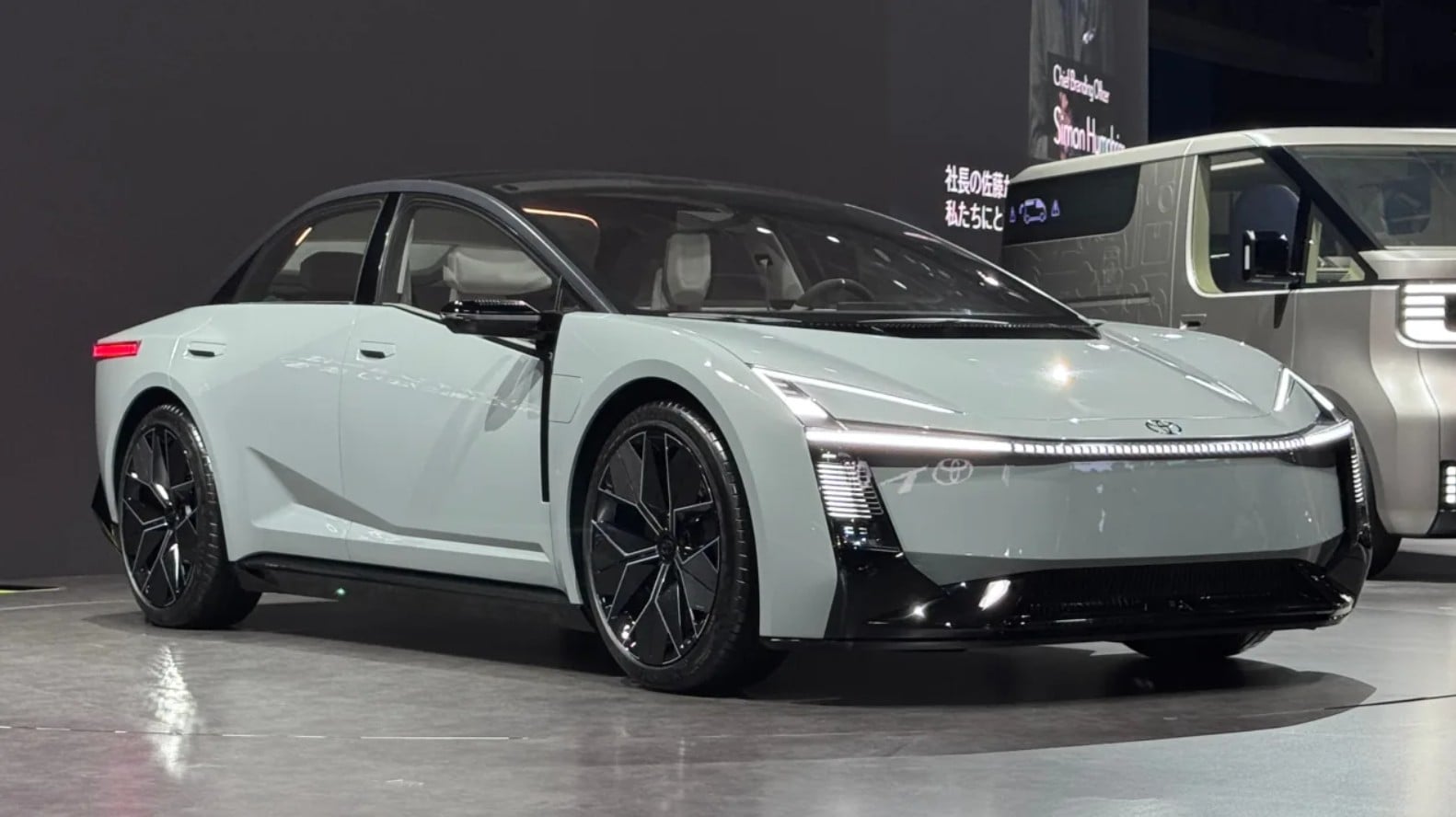
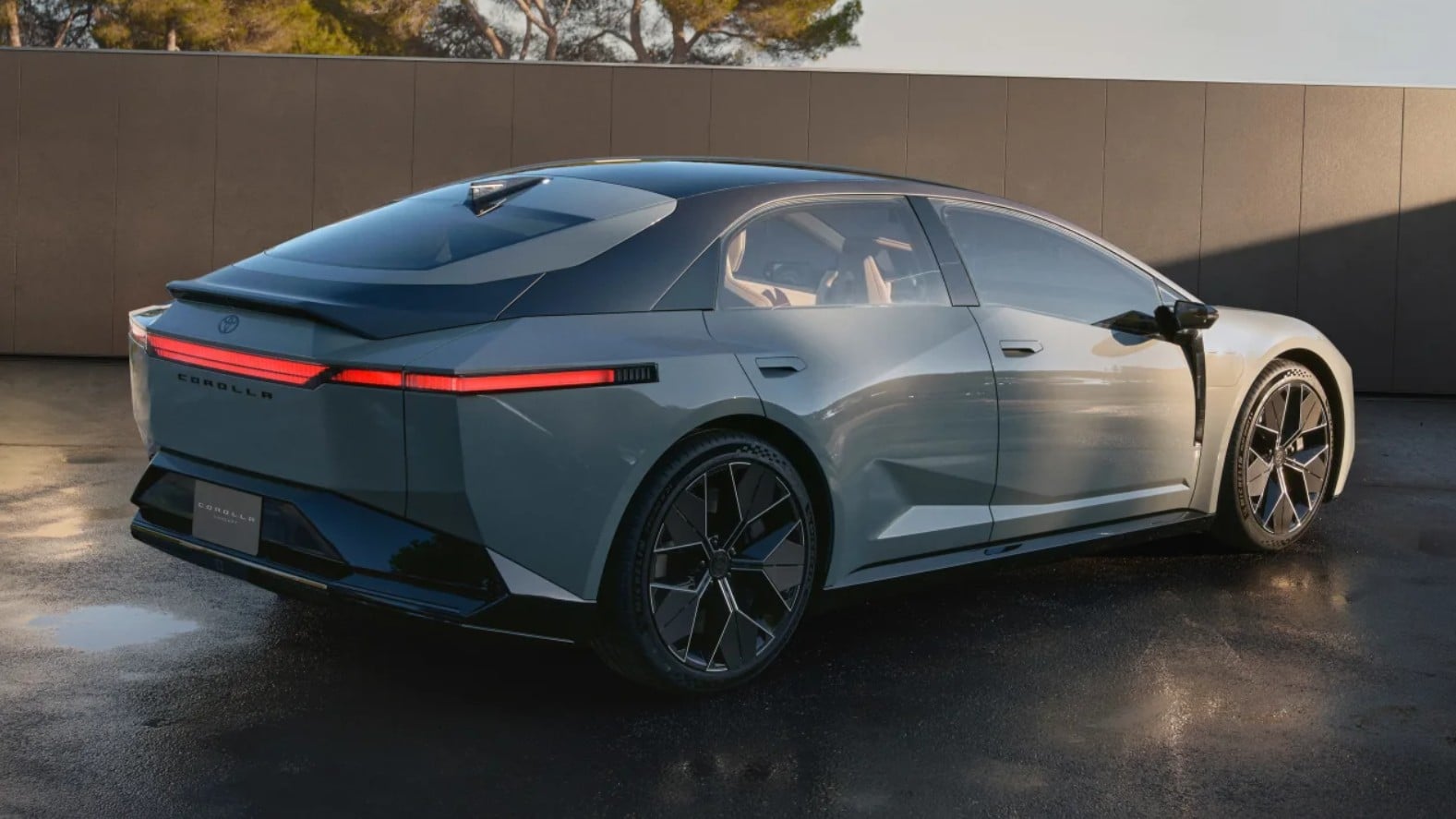
Toyota revealed a concept for its upcoming 13th-generation Corolla at the 2025 Japan Mobility Show, set to go on sale in 2027.
Shown as a saloon, the model emphasises adaptability: internal-combustion engine, hybrid, plug-in hybrid or fully electric variants will all share the same platform, without compromises in space or practicality.
The floor has been engineered to accommodate batteries beneath it while retaining room for a petrol engine up front, enabling Toyota to tailor the car for markets including Australia, where both ICE and EV buyers coexist.
One confirmed powertrain is a new 1.5-litre four-cylinder hybrid system, which can serve in series hybrid mode or as a range-extender in a PHEV. For performance models, a turbocharged 2.0-litre four-cylinder is also expected, potentially delivering around 298 kW (400 hp) for a future GR variant.
The concept’s exterior drops the familiar Corolla profile entirely in favour of a dynamic, low-slung glasshouse and extended windscreen, creating an airy cabin feel. Side windows dip lower than usual, and the roofline flows into a sculpted duck-tail rear spoiler that blends saloon familiarity with coupe-like flair. Toyota’s design chief admitted the interior and exterior elements are “challenging” what the Corolla should look like.
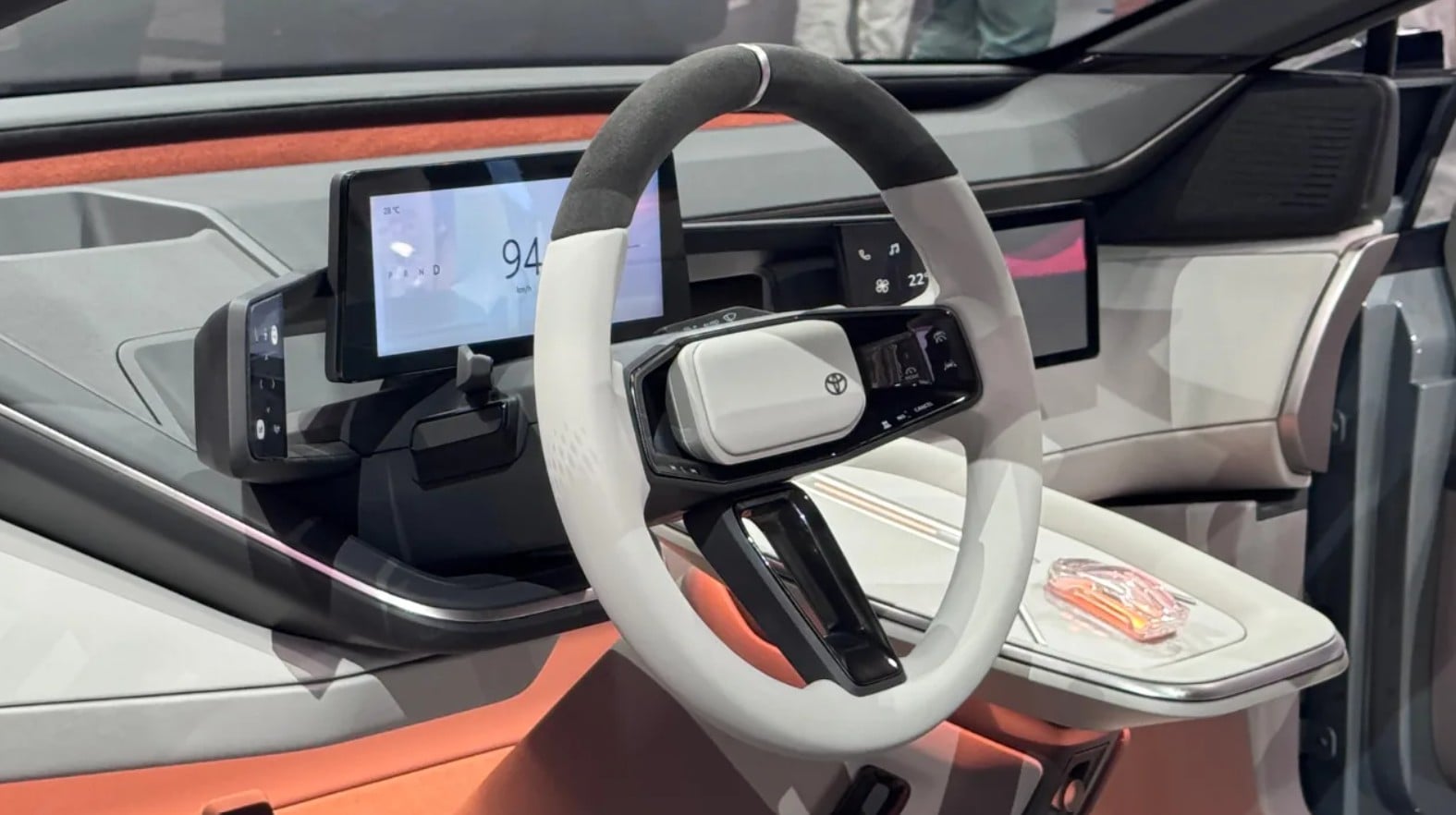
Inside, driver and passenger each get separate displays: a column-mounted screen ahead of the driver for instrumentation and driving info, and a larger central screen for infotainment and passenger use. The centre console is minimalist, housing only essential controls and wireless charging.
Toyota says the platform flexibility means the Corolla’s proportions won’t change regardless of powertrain, so buyers choosing ICE, hybrid or electric versions will enjoy the same interior space and versatility. Pricing and Australian release details have yet to be announced, but the concept signals Toyota’s intent to keep the Corolla fresh, relevant and technically flexible in an era of rapid automotive change.
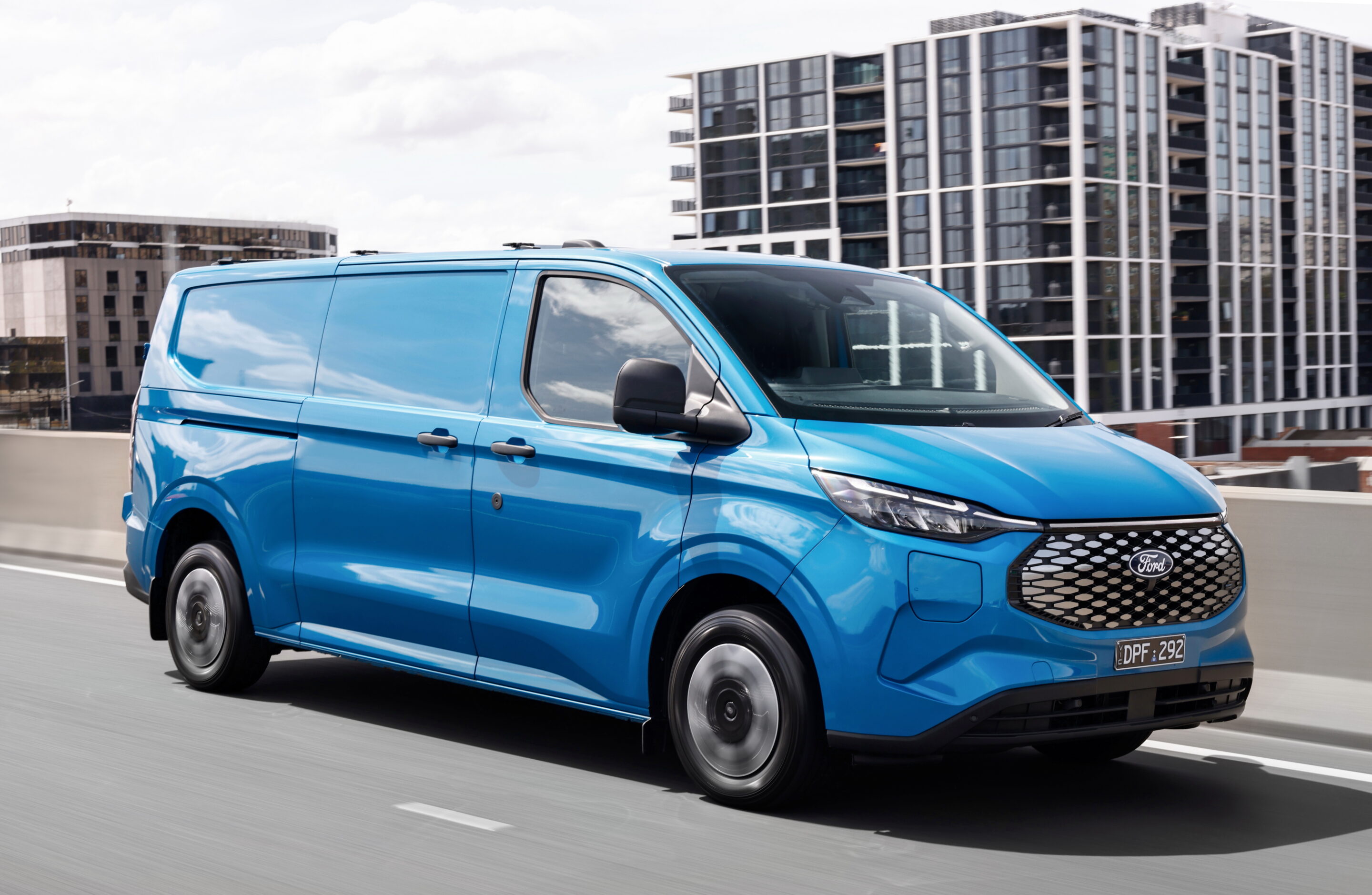
Aussie ute owners are being urged to consider a van instead for their next work purchase. The call comes from Ford Australia, as it launches an all-new line-up of Transit vans including a fully-electric model with a claimed range of 307 kilometres and a sportier Trail version with all-wheel drive and extra ride height.
There are five models in the fresh Transit crew, with three powertrains and two lengths, priced from $61,990. Ford currently holds second spot in the van sales stakes, behind – predictably – Toyota, and wants to highlight the Transit without threatening its Ranger pick-up hero.
“If I was a tradie, carrying a lot of things and wanting to be secure, I’d choose a Transit Custom,” said Ambrose Henderson, marketing director of Ford Australia, during the Australian press preview in Melbourne. “But it’s horses for courses. For me, it’s down to what you do with your vehicle every day.”
“Our view is we’re providing choice to customers. So they can choose what works best for them.
We at Ford are immensely proud of the Ranger and its heritage. But the nature of work is evolving, and so are the needs of Australian businesses.”
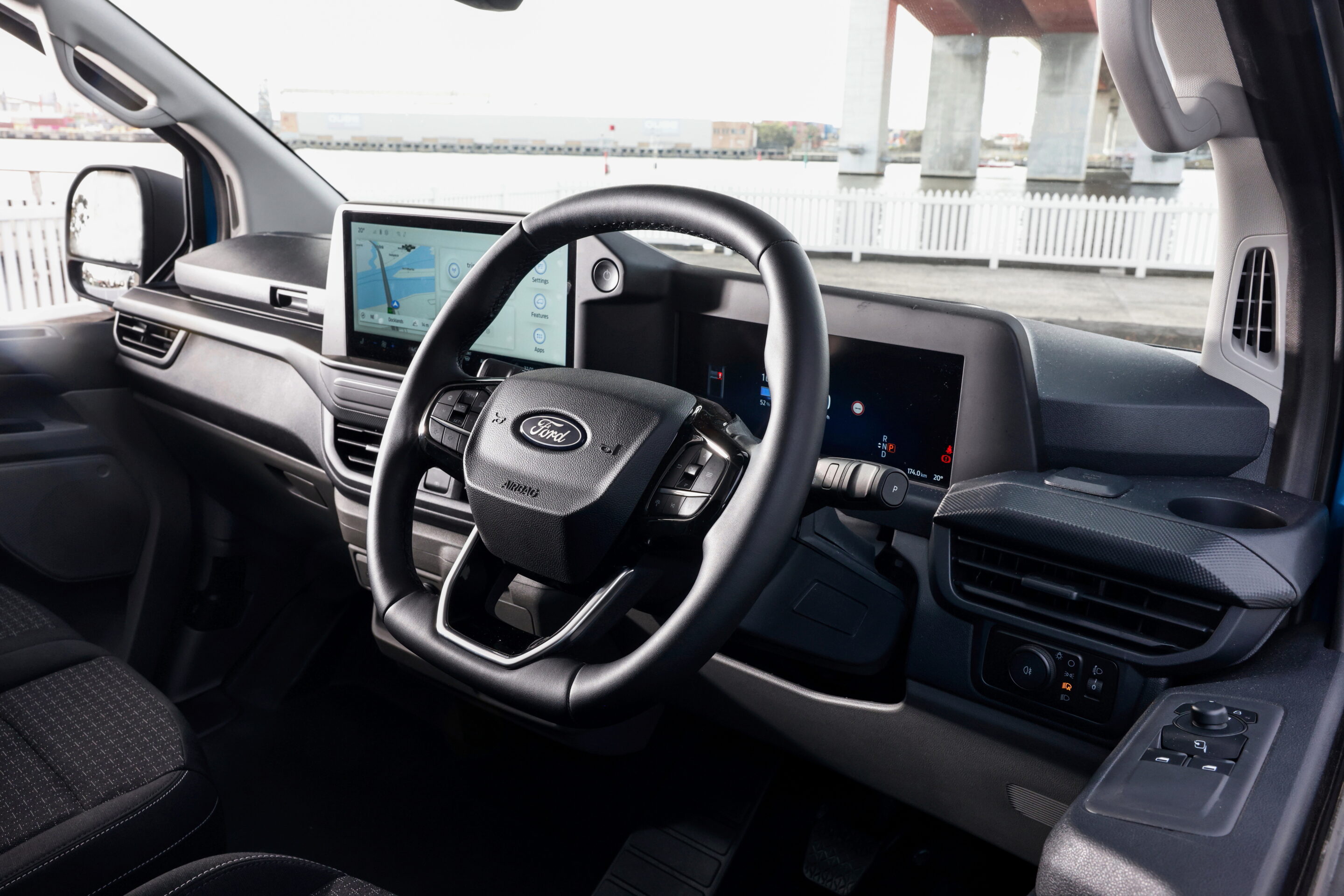
The new model is the sixth generation of the Transit, tracking back to the 1960s, but it’s hard to pick the visual difference, beyond a flat-bottom steering wheel and a cleaner screen-focussed dash in the cabin.
The new line-up opens with the long-wheelbase Custom Trail at $61,990 and moves through the Trend-grade plug-in hybrid from $67,590 to the flagship e-Transit Custom Sport at $77,990. In comparison, Ranger utes on the Ford fleet are priced from $55,000 for the Black Edition dual-cab, based on the latest driveaway deals.
Ford says the new Transit is built on a completely-new platform that gives the flexibility for different wheelbases, with a choice between front, rear and all-wheel drive, as well as diesel, PHEV and EV powertrains. It said the newcomers are 100 kilos lighter, 50 per cent more rigid and have an aerodynamic edge of up to 15 per cent.
One hidden advantage of the battery conversion is independent rear suspension because of limited space in the back end for old-school – and cheap – leaf springs.
The e-Transit will also help with Ford’s compliance plan for the Federal Government’s New-Vehicle Efficiency Standard.
“Vans, particularly hybrid and electric vans, will be incredibly important in the New Vehicle Efficiency Standard (NVES) landscape,” said Henderson. “However, these vans will only become important if they’re attractive to the customer, which is why we’re offering multi-energy solutions across our Transit Custom line-up so that the customer can choose.”
Pricing
| Transit Custom Trail long-wheelbase | $61,990 |
|---|---|
| Transit Custom PHEV Trend long-wheelbase | $67,590 |
| Transit Custom PHEV Sport short-wheelbase | $69,990 |
| e-Transit Custom Trend long-wheelbase | $77,590 |
| e-Transit Custom Sport short-wheelbase | $79,990 |
But Ford admits the Transit only gets a 4-Star safety rating from EuroNCAP, which could impact on government and fleet sales in Australia, even if it has a full complement of ADAS technology.
Product boss Ian Foston, a transplanted Australian now working in Turkey with Ford Pro Europe, said the new Transit is much more than just a ‘white van’ workhorse.
“There is something for everybody. There is utility,” he began. “We also talk to people about how they customise their Transit. How they show their personality. There is more storage in this product. And that came from research from customers.”
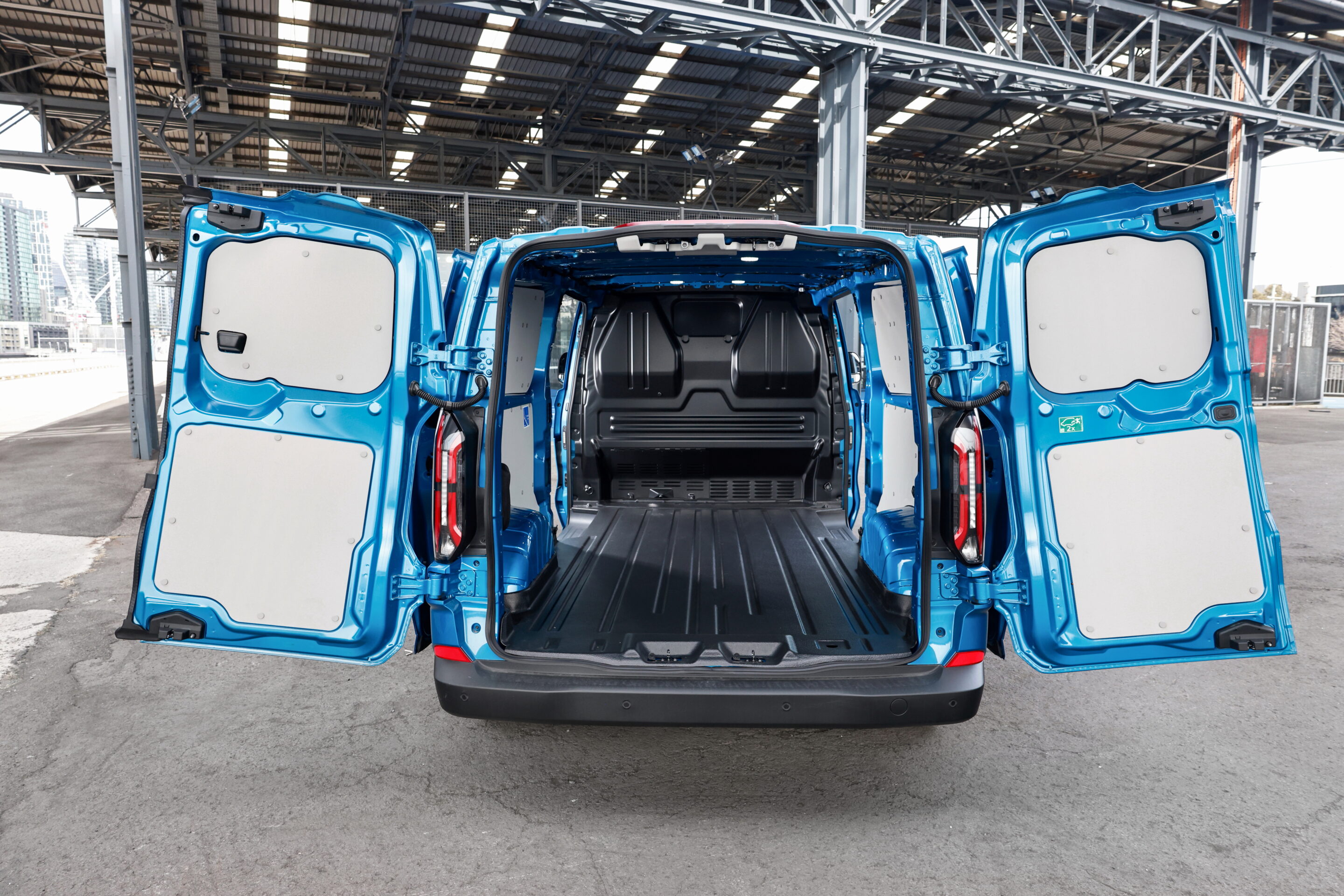
Engineering work even includes frontal airbags which fire from the area behind the sunvisors, freeing space in the dashboard for a second glovebox and other storage. But the key is still the big box on the back, with more storage space, bigger side apertures and rear doors which fold out and away from the load space. The floor is also completely flat.
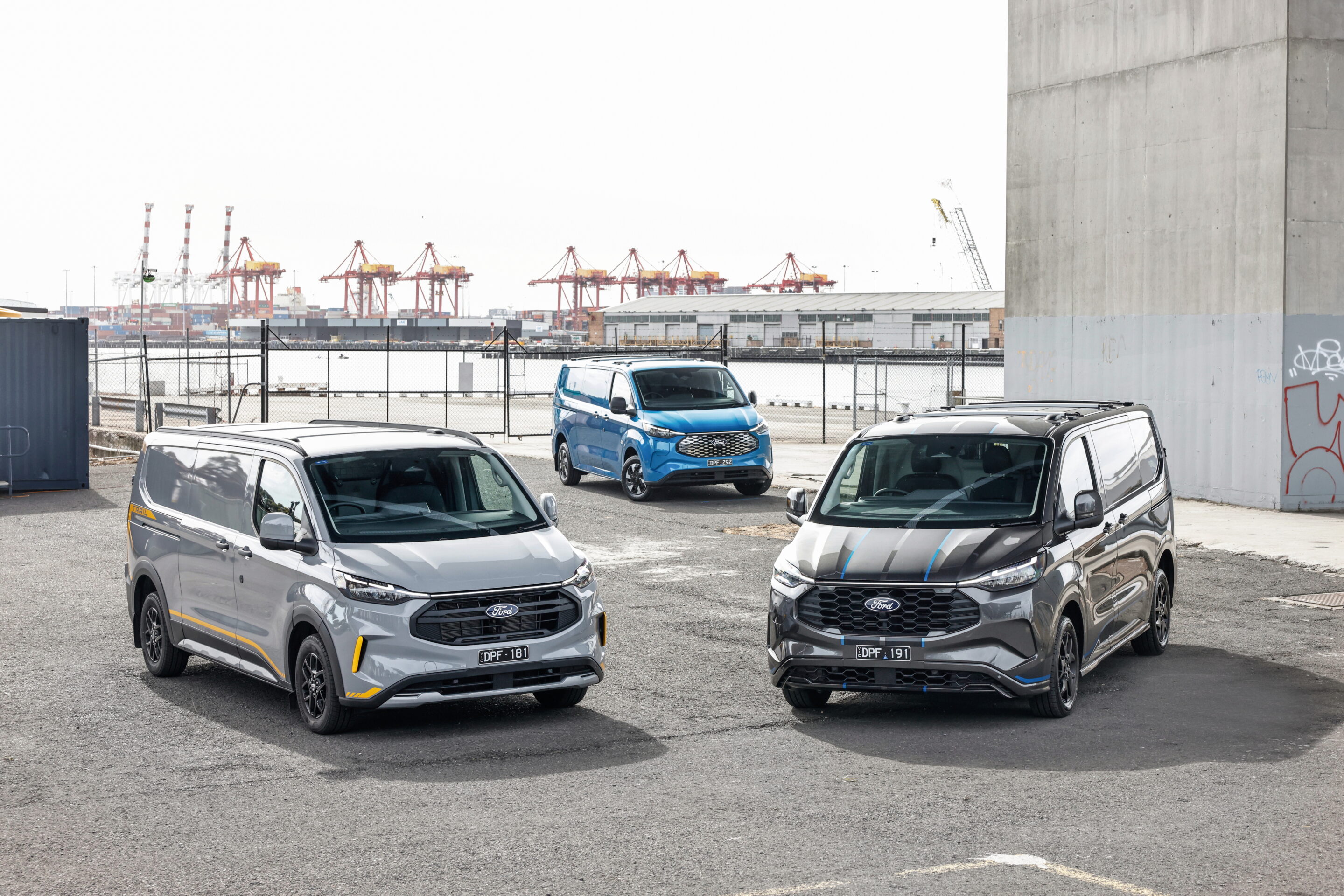
While he highlights the technical features of the van, he admits he is happiest with the new Transit Sport and its potential for lifestyle used including mountain biking and surfing.
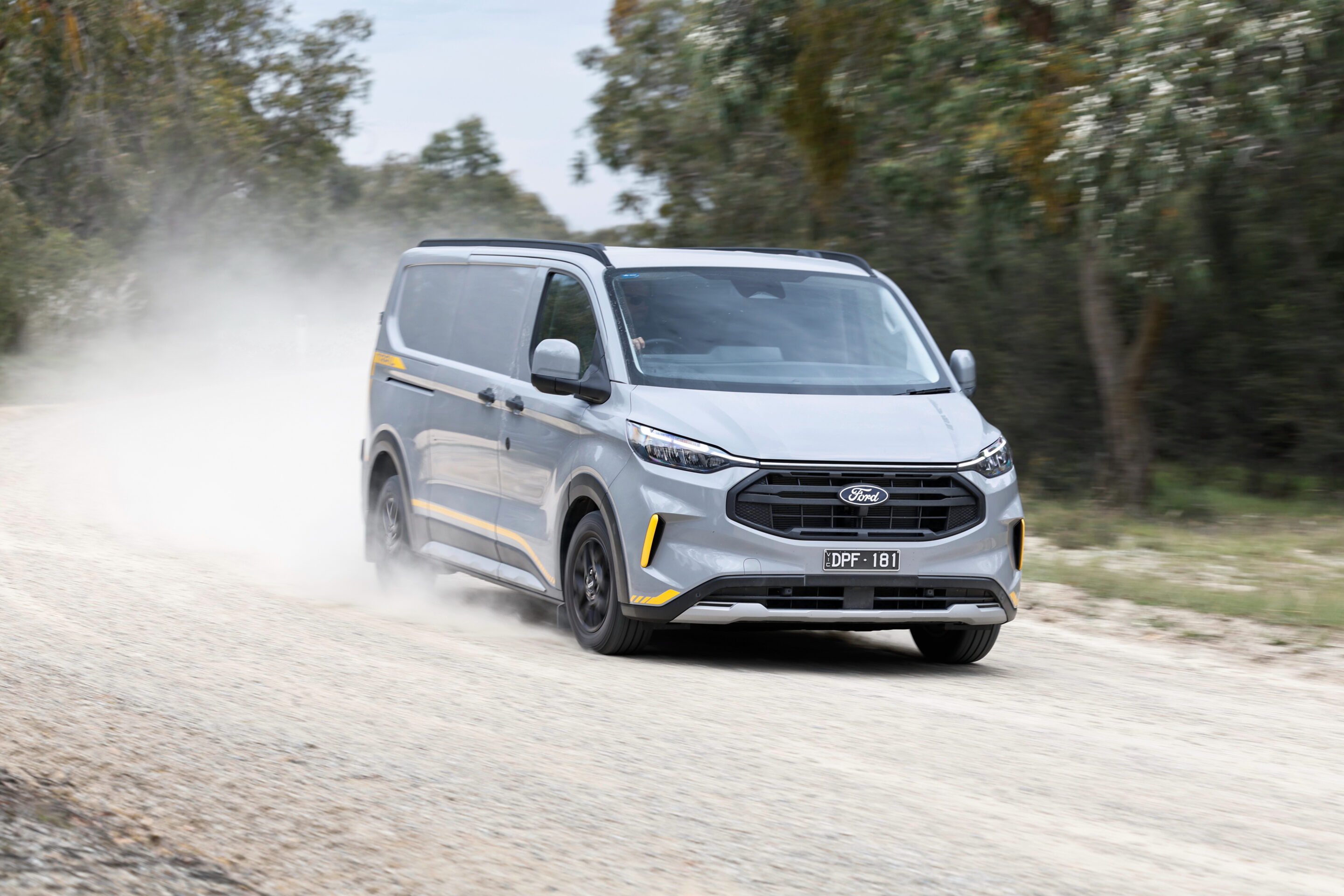
“Transit Trail is my favourite. It’s got some really, really great technology. All-wheel drive, underbody protection, good approach and departure angles, all-terrain tyres.
“It’s a blank canvas. We tried to pitch this at a mid-level spec. It works for customers who use the Transit for adventure”.
Specs
| Trail | 125kW/390Nm turbo-diesel, 8-speed automatic, active all-wheel drive |
|---|---|
| Custom PHEV | 171kW/400Nm combined, 54km EV range, eCVT transmission with 3 drive modes |
| e-Transit | 160kW/415Nm e-motor, 64kWh, 307km range |
Ahead of its November launch, Chinese newcomer brand GAC has announced the Australian specifications of its first model. While pricing is yet to be revealed, the mid-sized GAC Aion V SUV will be offered locally in two models with a 75.26kWh battery for up to 510km of range (WLTP). Even in the entry-level model, standard features include heated and ventilated front seats, synthetic leather upholstery and a full suite of active safety features.
The Aion V range will use a 75.26kWh LFP battery that can be charged at up to 180kW on a DC charger for a claimed 10-80 per cent charge time of as little as 24 minutes. The claimed WLTP range for the Aion V is 510km and its claimed efficiency is 16.7kWh/100km.
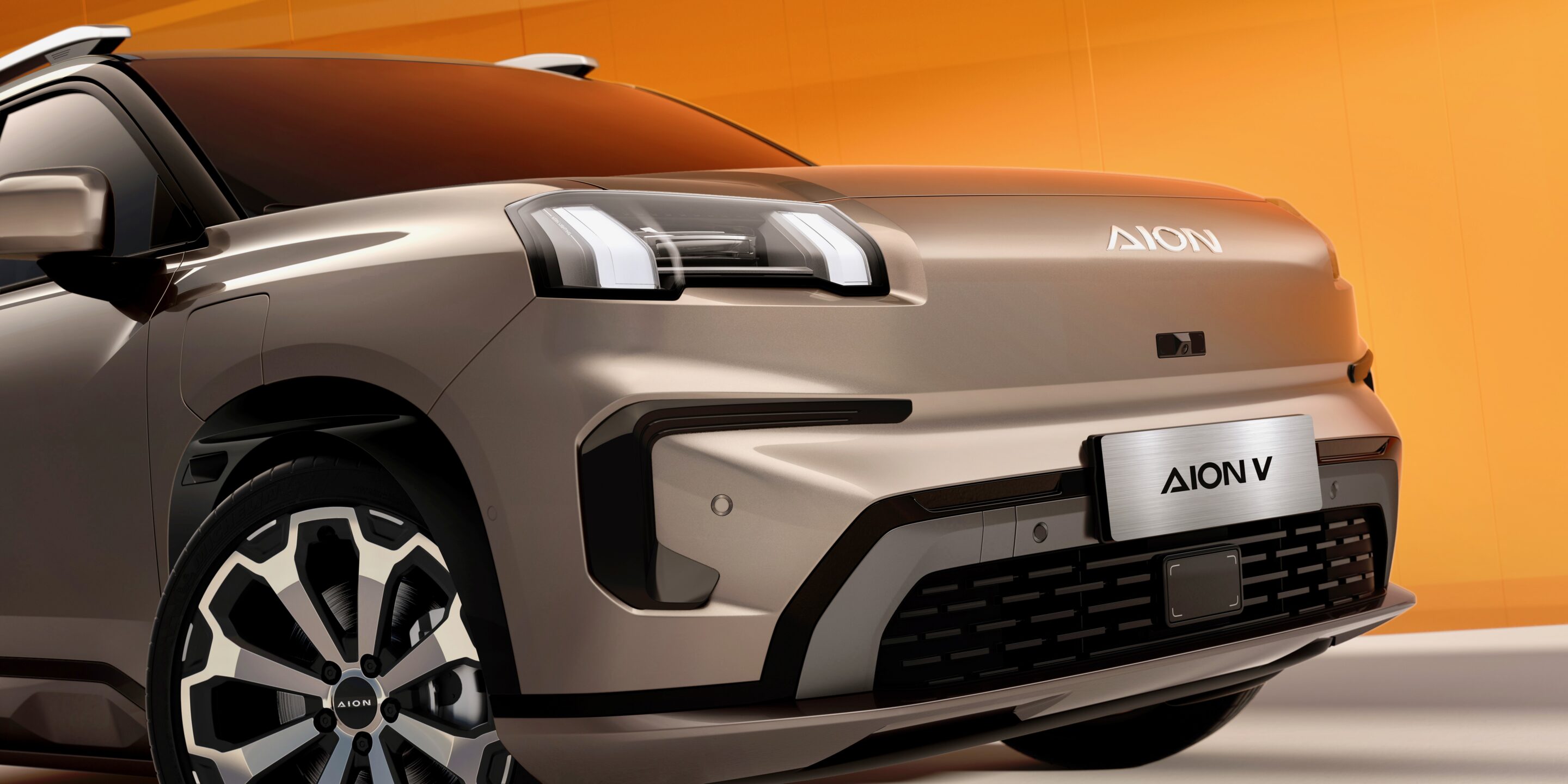
The Aion V uses a front axle-mounted 150kW/210Nm electric motor. It measures 4605mm long, 1854mm wide, 1686mm tall and rides on a 2775mm long wheelbase, while the claimed bootspace is between 427 litres with the seats up and 978 litres with them folded.
GAC Aion V Premium standard features:
- 19-inch alloy wheels
- Tyre repair kit (space-saver spare is optional)
- Automatic LED lighting
- Panoramic sunroof
- Auto-folding/heated mirrors
- Roof rails
- Keyless entry with push button start
- Electric tailgate
- Heated synthetic leather steering wheel
- Synthetic leather upholstery
- Electric front seat adjustment with memory
- Heated and ventilated front seats
- Heated rear seats
- Dual-zone automatic climate control
- Heat pump
- 8.8-inch digital driver’s display
- 14.6-inch touchscreen with online navigation and music
- In-car wifi
- FM/DAB+ digital radio
- Apple CarPlay and Android Auto
- Mobile phone remote vehicle control
- 3x USB ports
- Wireless phone charger
- Interior ambient lighting
- Vehicle-to-load (V2L) functionality
Aion V Premium safety features:
- 7x airbags
- Autonomous emergency braking (AEB)
- Adaptive cruise control
- Adaptive lane guidance
- Traffic sign recognition
- Lane departure warning
- Auto high beam
- Blind-spot monitoring with rear cross-traffic alert (with braking)
- 360-degree camera
- Front and rear parking sensors
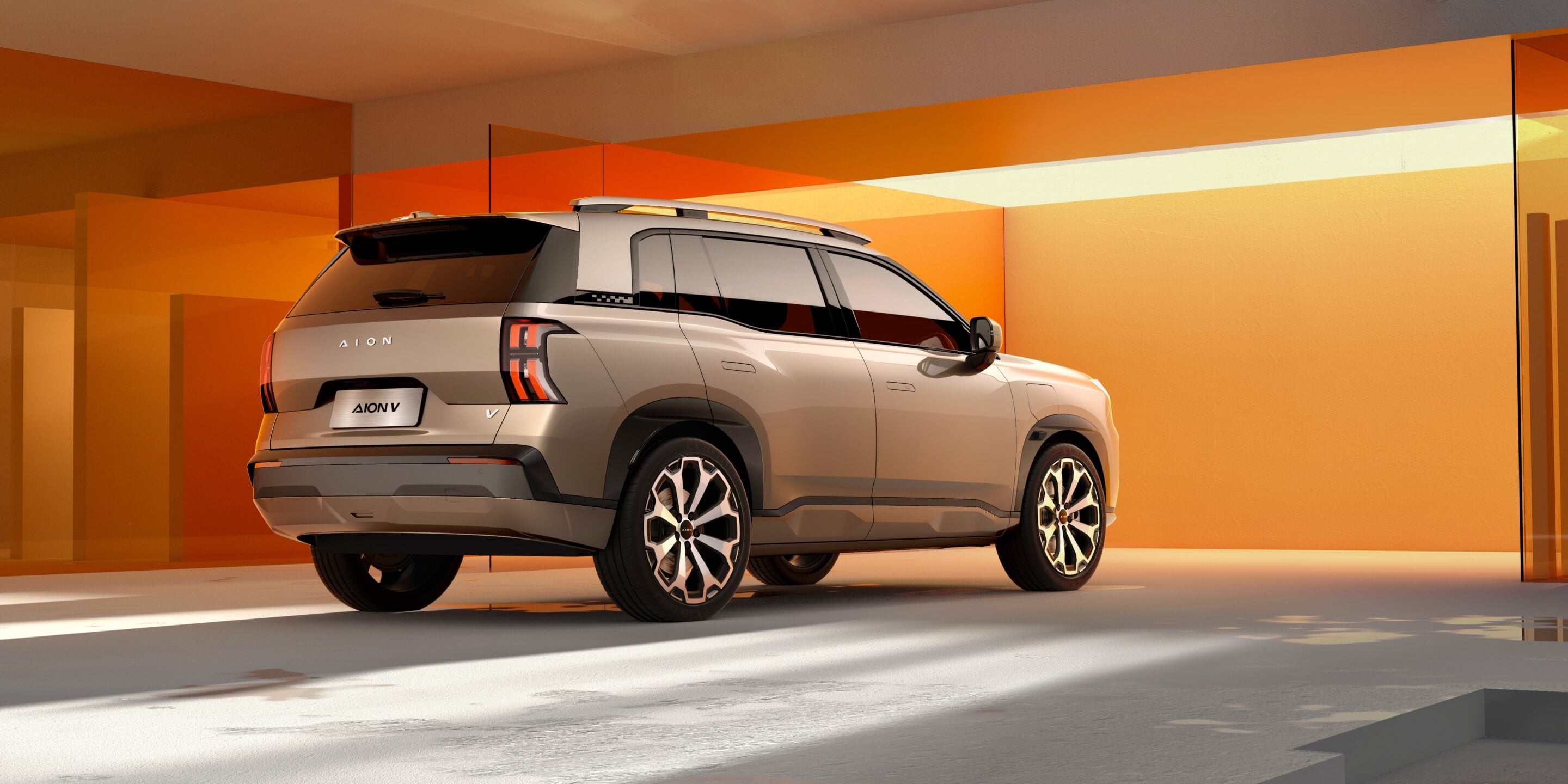
Aion V Luxury model adds:
- Leather upholstery
- Massaging front seats
- Second-row tray table
- 6.6 litre in-car refrigerator
- PM2.5 sensor
The GAC brand will launch in Australia in November, with local pricing to be revealed then.
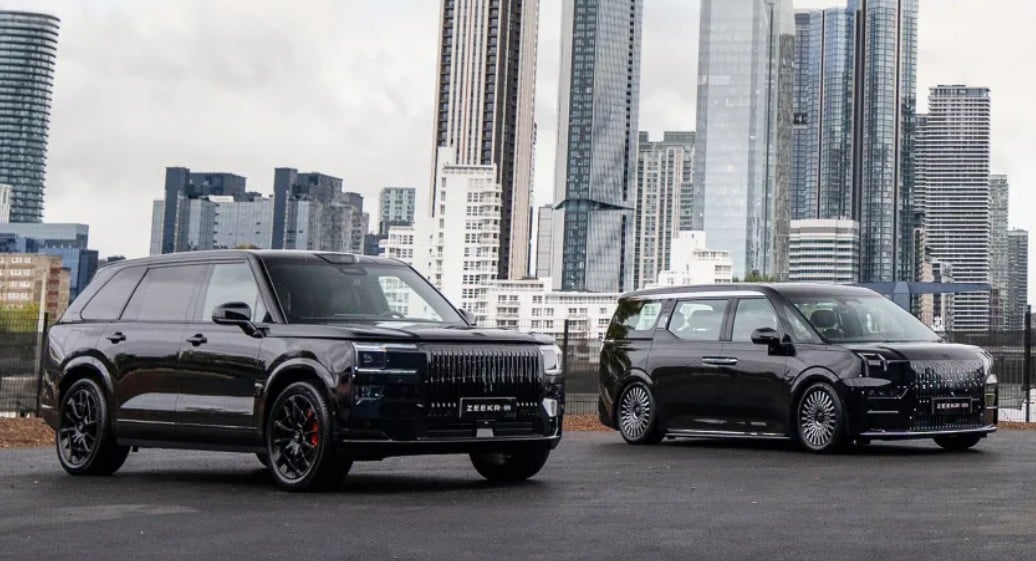
Chinese electric-vehicle maker Zeekr has showcased the 9X, a full-size plug-in hybrid SUV built to take on premium German rivals, as part of its push into Europe and beyond. The company confirmed it aims to launch in markets including Germany, the UK, France and likely Australia within the next 12–18 months.
The 9X uses a 2.0-litre turbocharged four-cylinder engine paired with three electric motors on a 900-volt architecture, producing a combined output of up to 1,030 kW (approximately 1,381 hp). Zeekr also claims a sub-3.1-second sprint from 0–100 km/h and an EV-only range around 380 km CLTC (roughly 236km WLTP). Charging from 20 per cent to 80 per cent can take just about nine minutes.
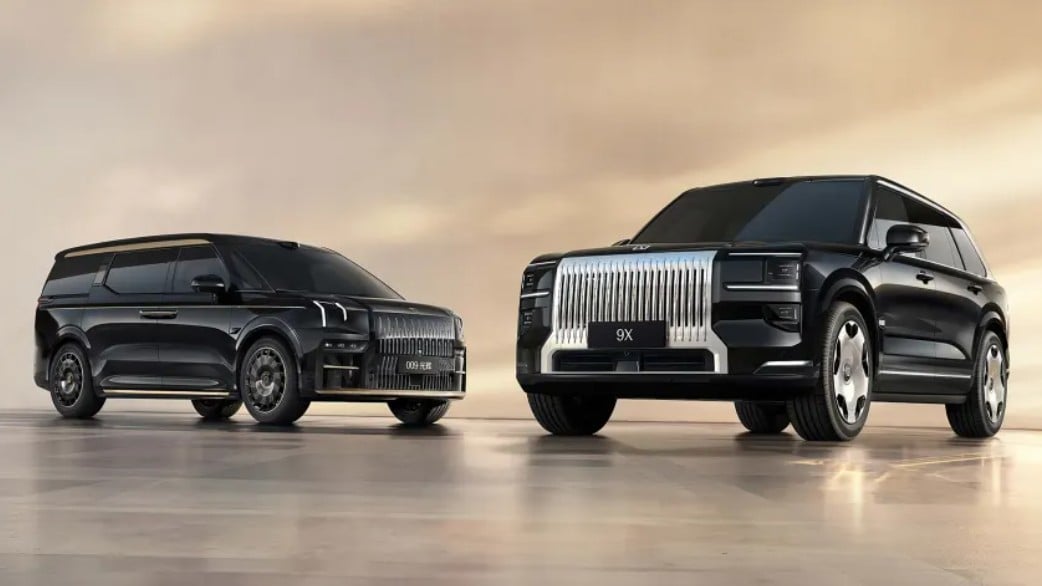
Although right-hand-drive production hasn’t been confirmed, Zeekr says it is evaluating adaptation for markets like Australia, where the brand already sells the 7X SUV. Zeekr’s European CEO, Lothar Schupet, said the UK is “one of the priority markets” and that Zeekr sees itself competing directly with BMW and Audi.
The 9X’s styling nods to luxury SUVs such as the Rolls-Royce Cullinan, with imposing dimensions, a commanding grille, and premium touches throughout. It adds to the brand’s existing EV family including the 001, X and 7X models. With its headline figures and luxury positioning, Zeekr intends the 9X to be its performance flagship.
For Australia, the launch of the 9X would mark a major step in Zeekr’s global ambitions – transitioning from niche newcomer to serious competitor in the premium SUV segment. Local timing and pricing remain unannounced, but the overshadowing spec sheet positions the 9X as a disruptive option for buyers seeking both luxury and technical performance.
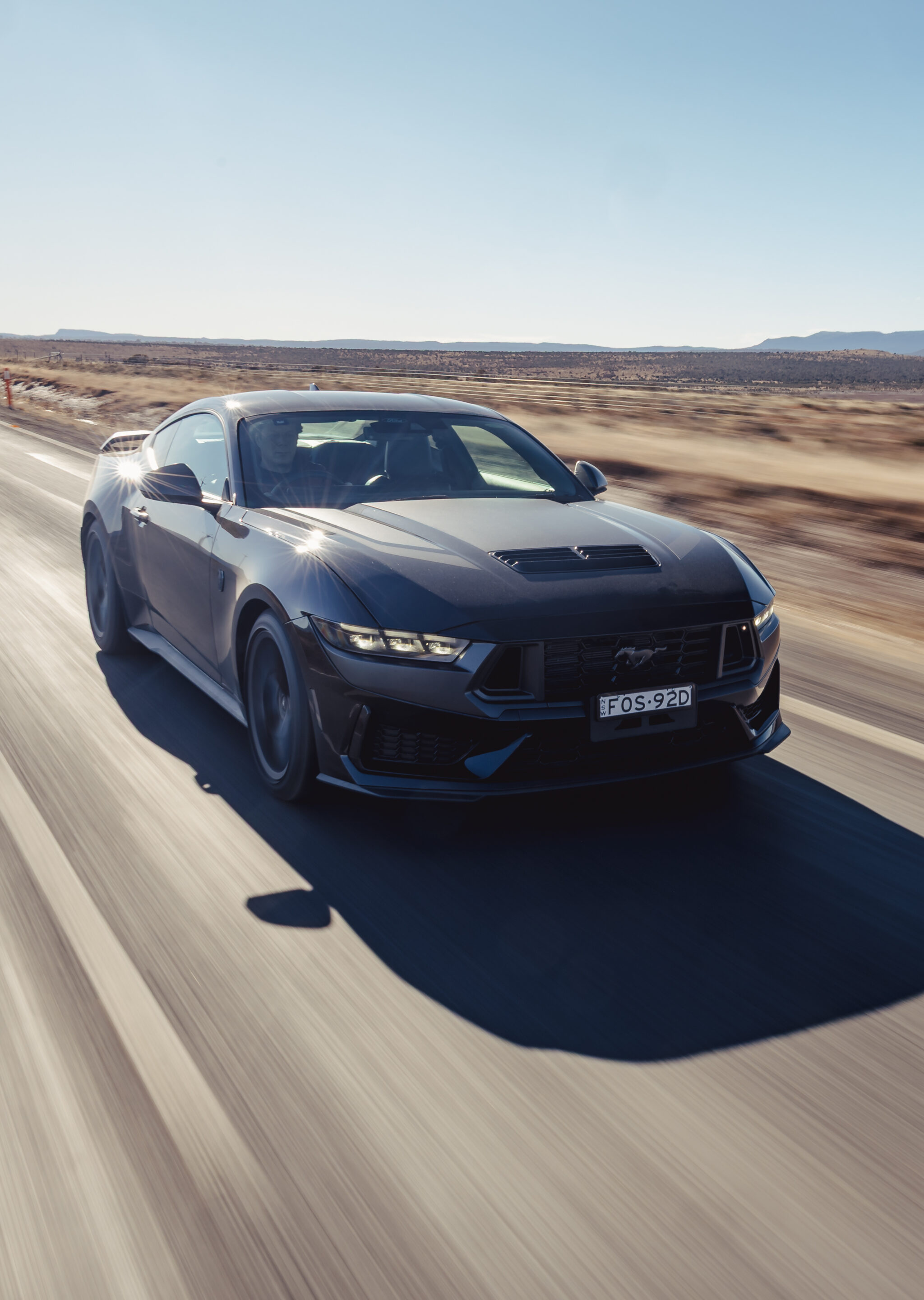
The Ford Mustang could live forever.
The hero car for the blue oval brand has received a string of go-faster upgrades and updates in recent times with support from the highest levels of Ford management in Detroit. Company president Jim Farley has raced in the Mustang Cup at Le Mans and vice-president Jim Baumbick, on a rapid-fire visit to Australia, could not contain his enthusiasm for the historic performance car.
“I can’t imagine a Ford Motor Company without a Mustang,” Baumbick, told WhichCar by Wheels in an exclusive interview.
Baumbick was visiting Ford’s product development hub at Broadmeadows on one of his final stops as head of advanced product development, cycling planning and programs for FoMoCo, before taking up a new job as president of Ford Europe in November.
He has been closely tied to the Product Development Centre in Melbourne for a decade, eventually rising to the top of the engineering division at the company and helping to drive the renewed emphasis on internal-combustion models.
He showed enthusiasm for everything around the Mustang program, from right-hand drive development to Supercars racing.
“We’re going to keep the pedal down on Mustang,” Baumbick said. He confirmed the Mustang would continue as a key model for the company, to the extent that future planning around electrification and emissions was done to ensure it would not be threatened.
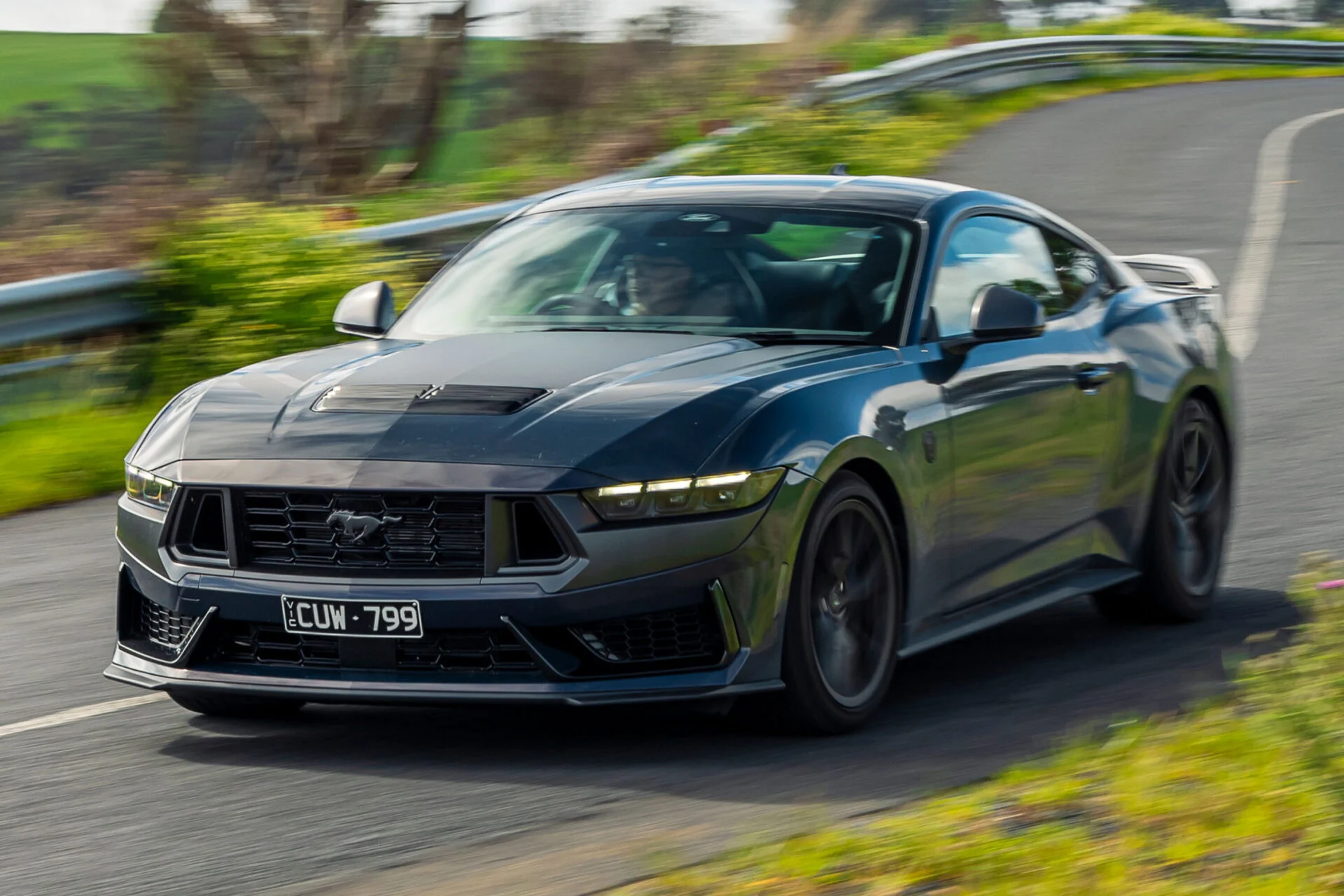
“I’ve been doing the (product) cycle plan for the company since 2017-2016 and we always had a product-led approach to our emissions and CO2. Ours was designed to ensure that we could continue to lean on Mustang. “And that’s why you have a Dark Horse.”
Baumbick said some of Ford’s rivals – “I’ll let you decide who those are” – had “run out of juice” in their efforts to protect their combustion hero cars.
“Our was always product led,” he emphasised. “I think there is a lot of opportunity, a huge amount of value, and a wild following of passionate customers on Mustang.”
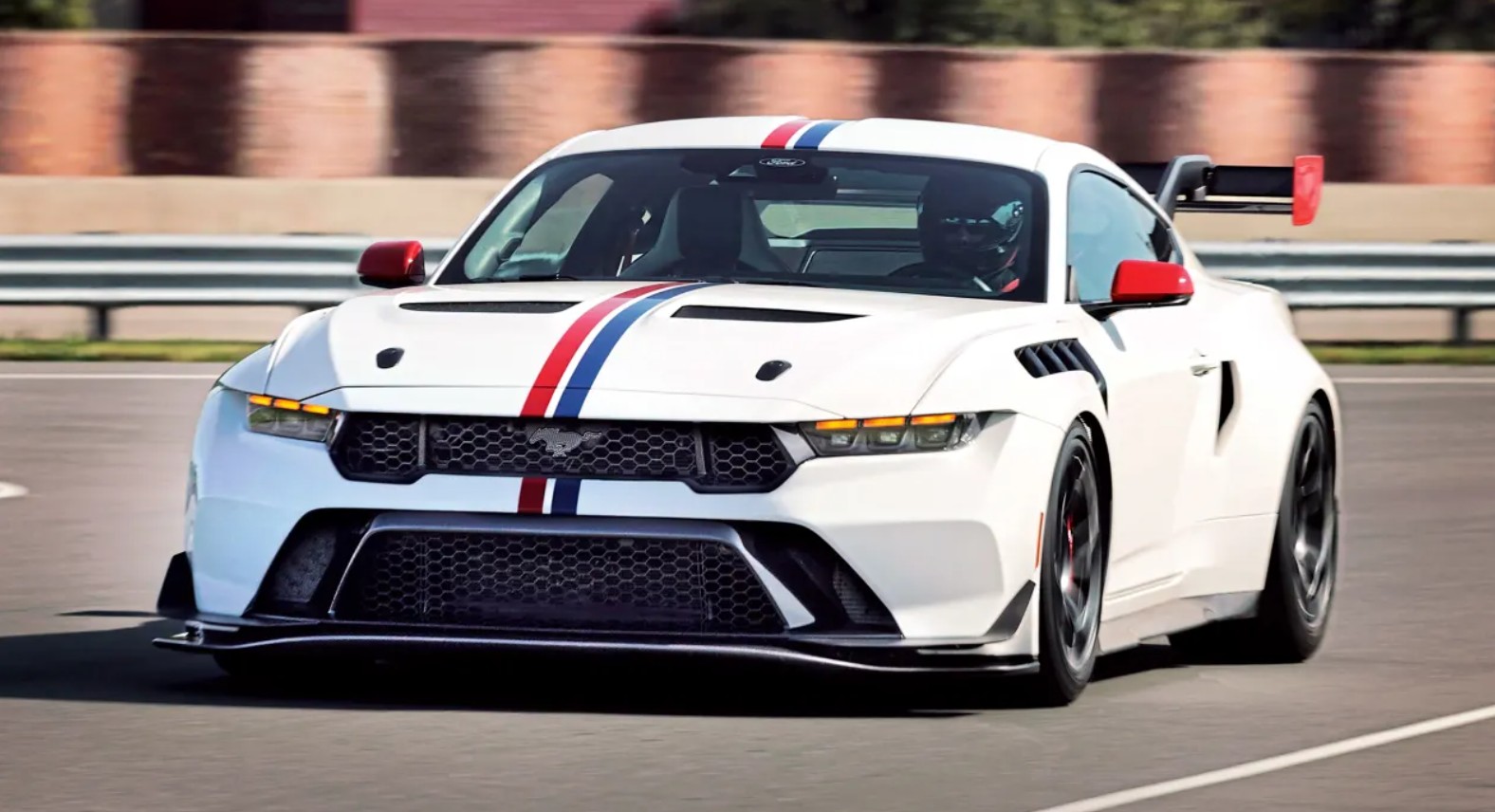
According to Baumbick, Ford’s use of the Mustang in motorsport — from Supercars to NASCAR stock cars and GT sports car racing at Le Mans – was key to polishing the badge. He had watched the Gold Coast street race and could not contain his enthusiasm. “I was transfixed watching the 500,” he said.
But Baumbick emphasised that Ford’s motorsport programs with the Mustang are linked to showrooms. “We’re augmenting that with our ‘Race to Road’ strategy. You’re seeing it play out here if you watch the (Supercars) race.”
He also highlighted development of the latest Mustang GTD, even though the race-ready road car is a sell-out in the USA and not coming to Australia.
“You can see that ladder all the way up. The creation of the GTD was inspired by the GT3 (race car),” he said. “The GTD is an incredible apex representation of Mustang. Some of those cars you can buy, as a customer, and some you can’t. We just wanted to unleash engineers, without constraint, to show them what we could do with that vehicle.”
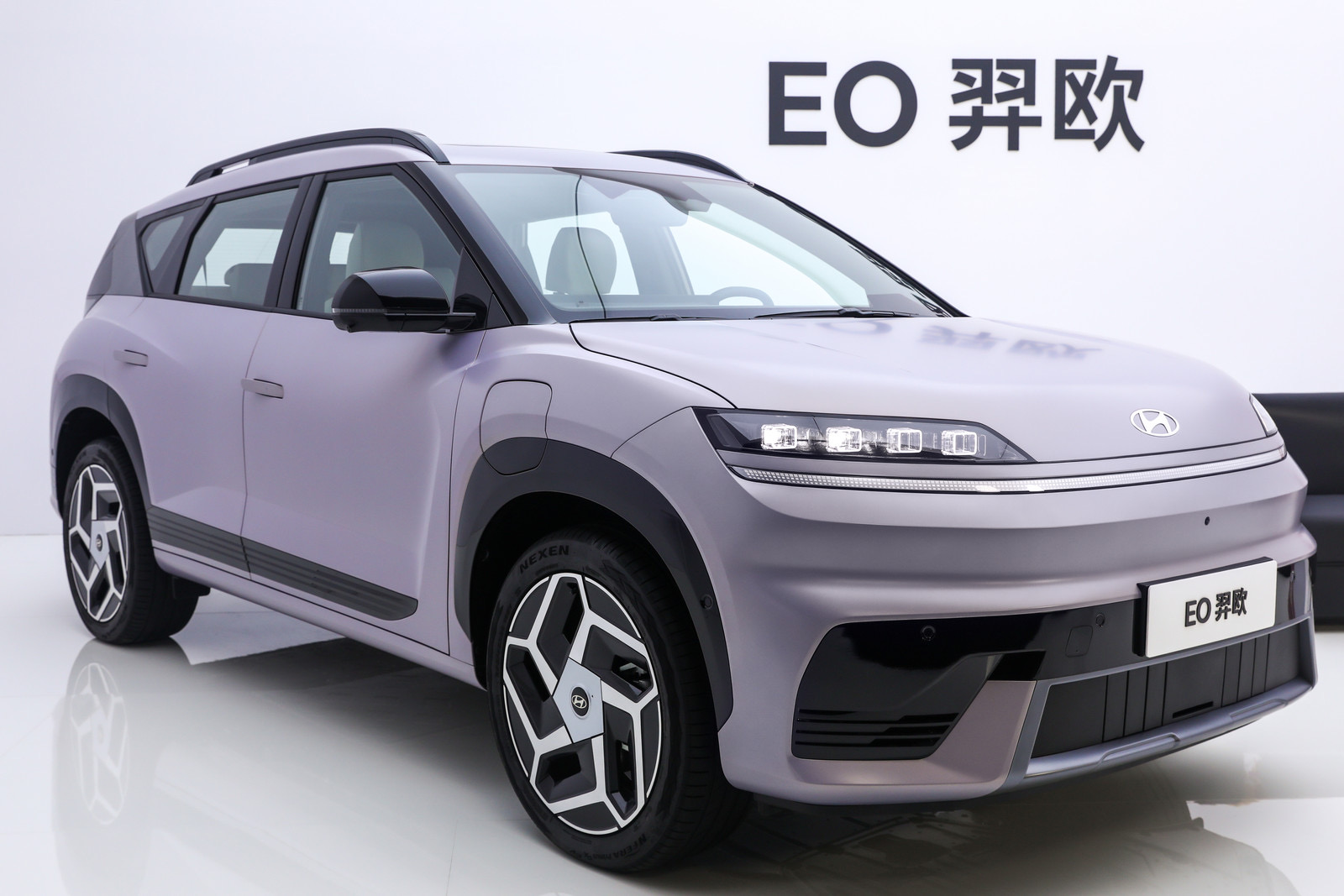
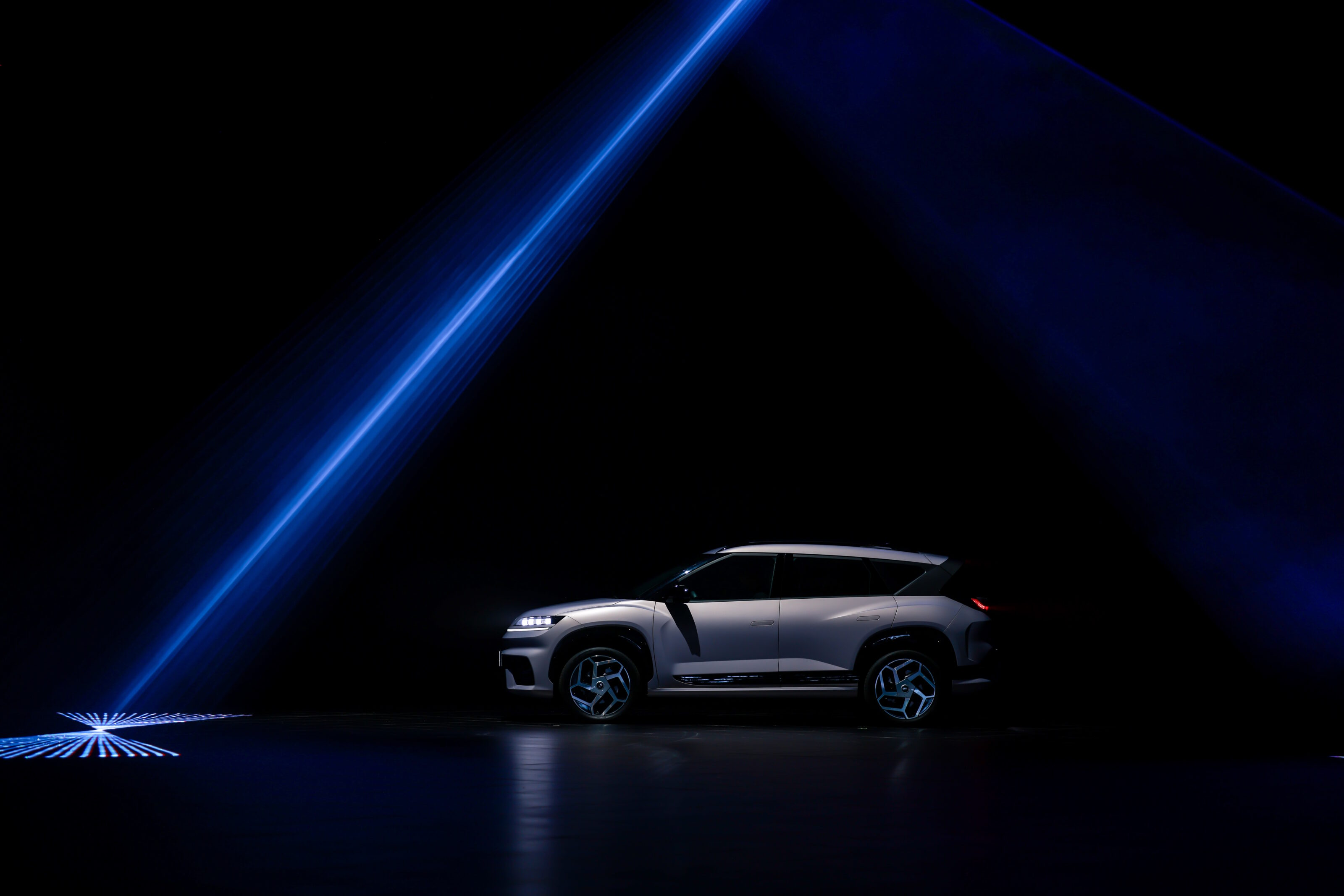
Hyundai Motor Company, together with its joint venture Beijing Hyundai, has revealed its latest electric vehicle strategy for China alongside the debut of an all-new SUV, the Hyundai ELEXIO. The model will serve as a cornerstone for Hyundai’s regional electrification plans and will arrive in Australia in early 2026.
Built on Hyundai’s Electric Global Modular Platform (E-GMP) – the same foundation used by the Ioniq 5 and Ioniq 6 – the ELEXIO combines global EV technology with locally developed systems tailored to the Chinese market. Hyundai describes the model as its first dedicated EV created under the brand’s regional mantra: “In China, For China, To Global.”
The ELEXIO’s design features clean, upright proportions, crystal-style LED headlights, and a durable, high-strength body intended to balance comfort with structural rigidity. Measuring as a mid-size SUV, it targets both urban and long-distance drivers seeking a premium yet practical electric vehicle.
Inside, the ELEXIO adopts a 27-inch 4K ultra-wide digital display powered by a Qualcomm Snapdragon 8295 chip, supporting AI-assisted features and multi-screen functionality. A “Cyber Eye” heads-up display projects driving data with high clarity, while Dolby Atmos audio and BOSE eight-speaker sound systems enhance cabin ambience.
The SUV offers 506 litres of boot space, expandable to 1,540 litres, and includes 46 storage compartments. Safety equipment includes a nine-airbag system, extended curtain airbags, and a high-strength steel body structure comprising over 77 per cent of the frame.
Underneath, the ELEXIO houses an 88.1 kWh battery pack capable of an estimated 722 km range (China Light-Duty Vehicle Test Cycle) – equivalent to over 500 km on WLTP standards. Using DC fast charging, the battery can be replenished from 30 to 80 per cent in roughly 27 minutes.
The ELEXIO is the first of several models in Hyundai’s expanded New Energy Vehicle (NEV) lineup for China, which will grow to include additional sedans and SUVs by 2030.
Full Australian pricing and specifications will be announced closer to launch, with local deliveries expected to begin in the first quarter of 2026.
The Australasian New Car Assessment Program (ANCAP) has handed down three new results as part of its latest new car safety testing, with two five-star ratings for the IM 5 and IM 6 – part of MG’s new premium IM range – and a three-star rating for the new Renault Duster.
The IM 6 electric mid-size SUV achieved a five-star ANCAP safety rating, performing strongly in all crash tests, according to ANCAP. It achieved one of the highest frontal offset (MPDB) test scores to date under current ANCAP protocols (7.54 points out of 8.00).
Its IM 5 sedan sibling delivered an equally confident result, earning a five-star rating across all variants. In frontal and side impact testing, the IM 5 maintained a stable passenger cell and provided solid protection to adult occupants. Families will note its 91 per cent Child Occupant Protection result, with child dummies well protected in both frontal and side collisions.

The IM 5 demonstrated similar collision avoidance capabilities to its SUV sibling, with both models impressing in their ability to reliably respond to pedestrians, cyclists and motorcyclists in both autonomous emergency braking (AEB) straight-line and turning scenarios.
“The safety ratings for the premium IM 5 and IM 6 demonstrate MG’s ability to deliver vehicle safety at a high level. It’s encouraging to see this level of performance, and we hope to see these features carried across the broader MG range,” ANCAP Chief Executive Officer Carla Hoorweg said.
However, the Renault Duster enters the Australian market with a three-star ANCAP safety rating, based on Euro NCAP testing. Full points were awarded for protection of the driver in the oblique pole crash test, and for the driver and child passengers in the side impact test. The frontal offset and full width tests delivered more mixed results, including weak protection of the driver’s chest in the MPDB test.
While fitted with an autonomous emergency braking system, this was shown to be less effective in more advanced test scenarios, such as in turning or head-on scenarios, and at higher speeds. The Renault Duster does not respond to an overtaking or oncoming vehicle in emergency lane-keeping scenarios. These limitations contributed to scores of 60 per cent for Vulnerable Road User Protection and 58 per cent for Safety Assist – the latter limiting its overall rating to three stars.
Australians will soon be able to confirm their identity online using their driver’s licence photo, as the federal government expands its national facial recognition framework.
The Face Verification Service (FVS) — a system that matches a person’s face to their official identity documents — will begin incorporating driver’s licence data through the National Driver Licence Facial Recognition Solution (NDLFRS).
Until now, identity verification has relied on the Document Verification Service (DVS), which compares document details such as licence or passport numbers against government records. The new approach will add biometric verification, allowing a person’s live image or selfie to be matched to the photo already stored on their licence or passport.
The Attorney-General’s Department says the FVS aims to make identity checks faster and more secure while reducing the risk of fraud. It can only be used with an individual’s consent and is currently limited to federal government services. In future, access could extend to state and territory agencies and selected private organisations, but only under formal agreements that enforce privacy and security standards.

Western Australia will be the first jurisdiction to integrate its driver’s licence data into the system by late 2025, initially for government use. Private companies, such as financial institutions and telecommunications providers, could gain access the following year, enabling customers to verify their identities for services like account setup or age confirmation.
A spokesperson for the department said the goal was to “provide a secure way to access services and help combat identity crime,” but emphasised that participation would remain voluntary.
Individuals who prefer not to have their information included in the NDLFRS can opt out by notifying their state or territory road authority, which issues their licence.
Australians do not need to renew or update their licences or passports for the system to work, as existing data will automatically be included once a jurisdiction joins the program.
The government says the expansion is part of broader efforts to modernise digital identity verification, giving people more control over how they prove who they are while helping protect against the rising threat of identity theft and fraud.
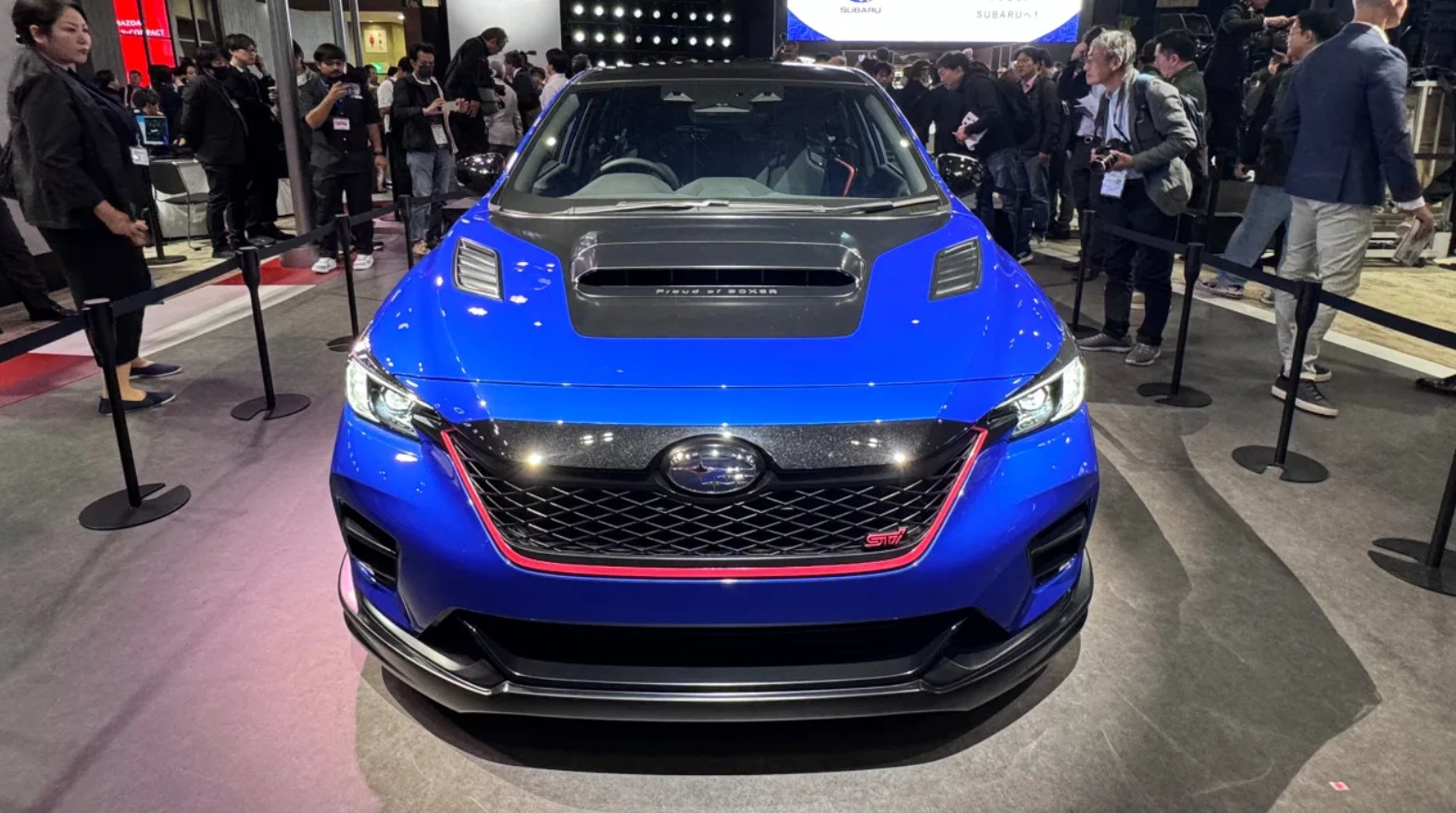
Subaru has offered a glimpse into the next chapter of its STI performance division, revealing two striking concept vehicles – the Performance-E STI and Performance-B STI – at the Japan Mobility Show.
The pair represent Subaru’s dual focus on electrification and tradition, with the Performance-E signalling an all-electric future and the Performance-B drawing directly from the current Impreza hatchback.
Subaru describes the Performance-E STI as a vision for its next generation of sports cars, designed with both aerodynamic efficiency and everyday usability in mind. While technical details remain scarce, the concept’s aggressive styling and heritage cues suggest a dual-motor all-wheel-drive system, aligning with the brand’s performance DNA.

Finished in STI’s signature dark blue with gold wheels and pink badging, the concept nods to Subaru’s rally past – particularly the 30th anniversary of Colin McRae’s 1995 World Rally Championship victory in the Impreza. Design elements include a large rear wing, vented bonnet, aerodynamic wheel vents, and a prominent rear diffuser, all wrapped into a four-door body style that blends modern performance aesthetics with nostalgic details.
In contrast, the Performance-B STI offers a clearer connection to existing Subaru models. Based on the latest Impreza, it shares the hatchback’s proportions and headlight design but adds a wider front wing, reshaped grille, and new bonnet to create a more muscular stance.

Subaru confirmed that the Performance-B STI uses the company’s signature Boxer engine and Symmetrical All-Wheel Drive, though it stopped short of revealing output figures or further mechanical details.
The concepts arrive at a time when STI’s presence in production models has been limited. Subaru has yet to release a full WRX STI version of its current-generation sports sedan, with markets like Australia instead receiving the WRX tS – a variant that incorporates chassis upgrades but no major performance increases.
While Subaru has made no commitments to production, the two concepts strongly hint that the STI badge is far from retired. The Performance-E STI, in particular, could preview how Subaru plans to retain its rally-bred identity in the electric age – balancing heritage with technology for a new era of performance.
Honda Australia has confirmed that the Honda Super-ONE, a compact electric vehicle designed for city use, will go on sale locally in the second half of 2026.
Unveiled at the Japan Mobility Show 2025, the production Super-ONE evolves from the Honda Super EV concept first shown at the Goodwood Festival of Speed earlier this year. The small-scale model will join Honda’s expanding electric range following the new Prelude coupe and updated CR-V and ZR-V e:HEV hybrids.
Honda Australia president Jay Joseph said the Super-ONE offers a practical solution for urban commuters seeking a compact, fully electric vehicle. “Developed from Japanese Kei car principles, the Super-ONE blends small-car agility with Honda’s design and engineering focus,” he said.

Measuring under 3.6 metres long and 1.6 metres wide, the Super-ONE is tailored for dense urban environments, with tight-turning agility and light steering suited to narrow streets and busy parking spaces. The compact proportions and short overhangs are designed to make the car easy to manoeuvre while maintaining a confident stance.
The Super-ONE features a “Boost Mode”, allowing the driver to temporarily increase power for rapid acceleration. In a nod to traditional performance cues, the system also generates synthetic engine sounds that rise with the simulated gear shifts, creating a more engaging driving experience despite the EV drivetrain.
Testing has been carried out in Japan’s major cities as well as on longer regional routes to refine both performance and charging compatibility. Honda says the model will support multiple charging standards, with Australian versions to undergo additional evaluation to ensure local suitability for infrastructure, climate, and safety standards.

Joseph said the company’s focus on quality extends into its new electric range. “The Super-ONE will launch in Australia following completion of local testing to ensure it delivers the ride comfort, safety and reliability customers expect from Honda,” he said.
Positioned as an accessible, city-focused EV, the Honda Super-ONE will join a growing field of compact electric models as the brand transitions toward full electrification in the coming decade.

