
A woman emailed the other day, asking for help to sue Toyota over the migraine headaches she believed were being created by all the ‘bings and bongs’ from the Advanced Driver Assistance Systems (ADAS) in her new car.
Around the same time, there was a survey which said more than 20 per cent of Australian drivers turn off at least one ADAS system whenever they go driving.
Then came the Kia Tasman, which was touted as a 5-Star safety success despite the rating only applying to some, not nearly all, of the new South Korean utes.
Now I have read comments which say there is no need for tyre-pressure monitors in new cars, even though they are compulsory in Europe and the USA… and despite Australia going through
a pothole pandemic.
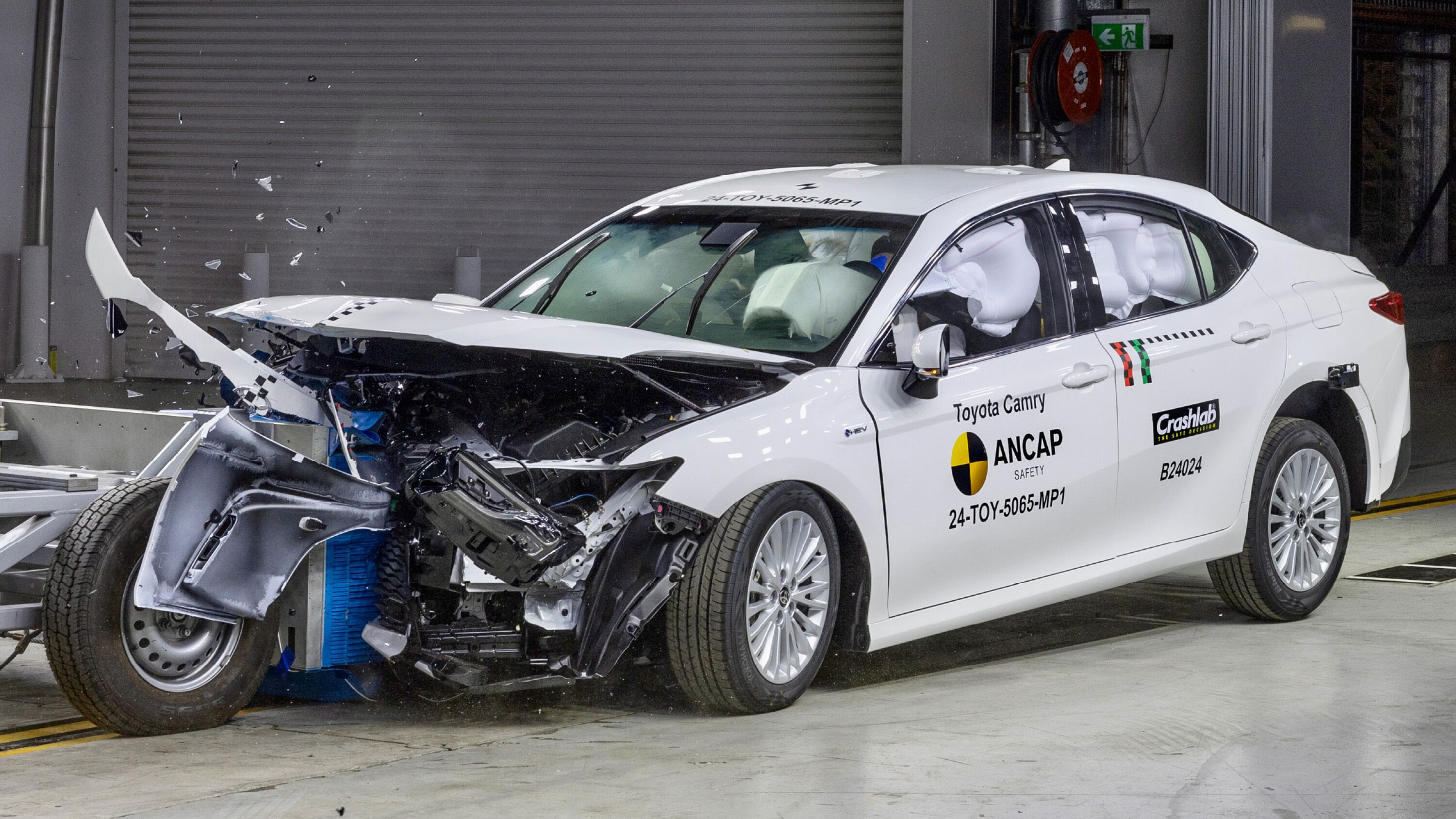
These various strings tighten in Canberra, at the office of the Australasian New Car Assessment Program (ANCAP).
ANCAP has become the self-appointed judge-and-jury on all things road safety in Australia, creating a binary landscape where its 5-Star test score is acceptable and anything else is not. It’s the same with any response to its ratings,or questions, where positive is good and negative is not.
I have been an ANCAP booster since day one, which was way back in 2001 when Renault trumpeted the world’s first 5-Star NCAP rating for its then-new Laguna model in Sydney. Subaru was quick to add its support to ANCAP as an unofficial agreement between carmakers to ignore the test results – at best – came unglued.
The original chairman of ANCAP, Lauchlan McIntosh, was a calm and sensible leader who chipped away to create a positive push for new-car safety at a time when it only rated around #6 in most people’s list of key considerations for a new-car purchase.
During a brief period in public relations, with Hyundai, I experienced the malaise first-hand. The Hyundai Excel of the time only came with a single, driver’s-side airbag and the only way to get people to pay extra for a passenger airbag was to bundle it with an option pack that included a CD player.
Toyota Australia’s firebrand marketing chief, Bob Miller, was even more blunt. “If the car dies, the passenger dies too,” he once told a press gathering, in a quote that was – thankfully for him and his employment – ignored by the assembled media as just another off-the-cuff gag.
But, more recently, there have been lots of questions and doubts around car safety and the ANCAP world.
“They have lost the plot,” a former ANCAP insider texted me recently.
“I have no idea what it is doing with its time and money,” said another.
What’s gone wrong? Why did ANCAP see the need earlier this year for a costly television blitz with its ‘Choose Safety’ advertising campaign?
It is hugely well funded and most of the heavy lifting on laboratory crash testing is actually done by EuroNCAP, not the crew in Canberra. Is it time to ask some serious questions about ANCAP, or
perhaps provide a kick in the pants?
A couple of car companies have sniffed around the target, but then stayed quiet because they cannot afford to be labelled as ‘anti safety’. They also see no effective response to the emotional blackmail around buying something without 5 Stars.
There is plenty more to consider, including educating people – particularly parents of first-car buyers – on the difference between the various ANCAP testing programs. What was a 5-Star car in 2015 is definitely not a 5-Star performer in 2025, an important distinction for
second-hand shopping.
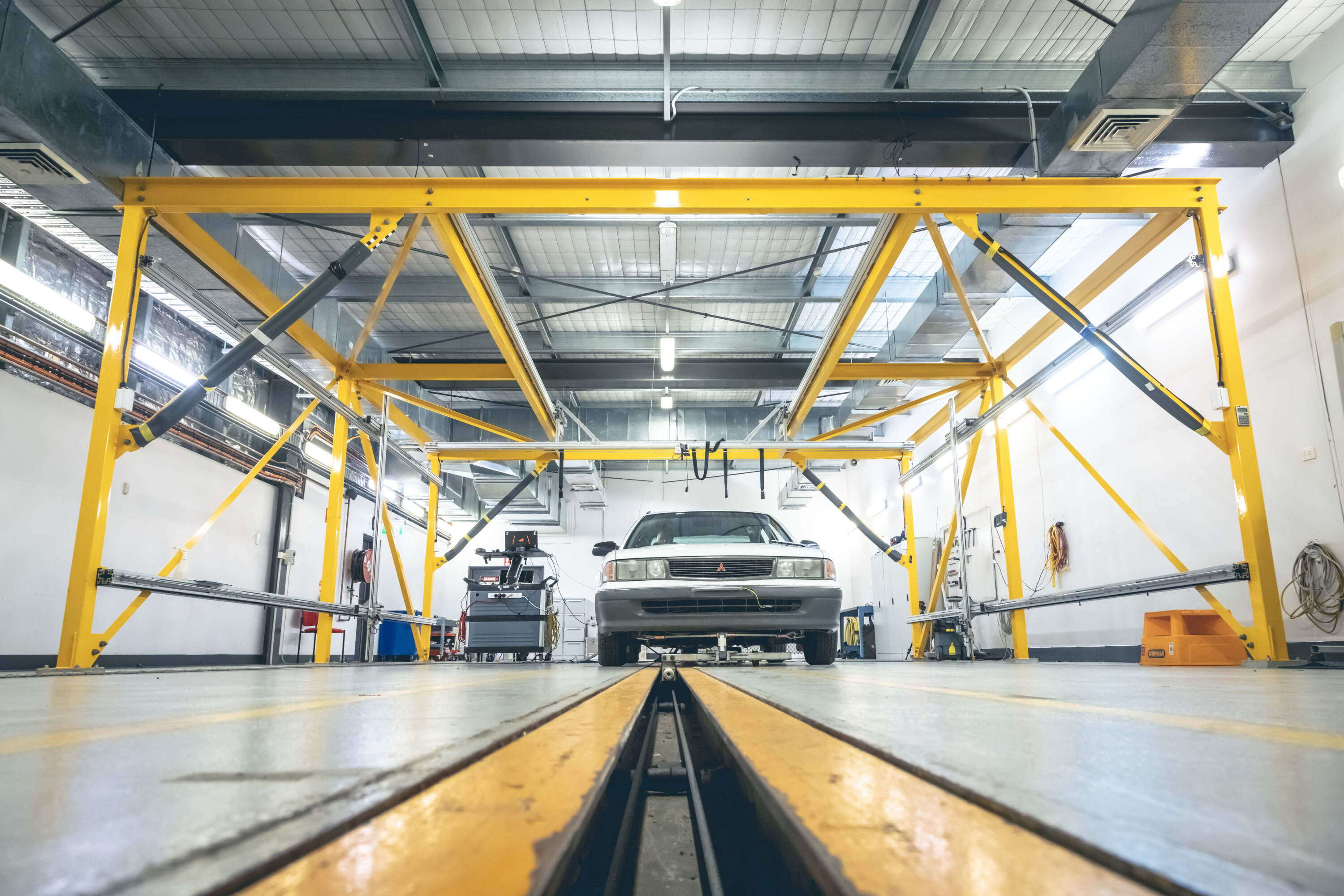
More directly and recently, ANCAP was happy to announce the Kia Tasman as having the same 5-Star safety rating as the Ford Ranger and Toyota HiLux, even though their test scores came from 2022 and 2019, not the updated standard for 2025.
Do parents also understand that 5-Star safety is now taking its tentacles well beyond occupant safety into things like back-seat child reminders and protection of pedestrians who have blundered onto the road while watching their smartphone?
Do they understand that the cost of ADAS systems, now essential for a 5-Star score, has helped to kill baby cars with sub-$20,000 pricetags because it costs around $5000 just to install the electronic safety net?
As the father of a 16-year-old learner driver I’m getting a fresh education on road safety and the value of ANCAP testing.
The worst news of all is that, even in a 5-Star car world, we’re still putting 1-Star drivers on the road every day.
This article originally appeared in the October 2025 issue of Wheels. Subscribe here and gain access to 12 issues for $109 plus online access to every Wheels issue since 1953.
The speed with which Chinese manufacturing can bring new technology to a model, or that model to market, is staggering. Say what you like about challenger brands from that part of the world, but the pace of change and development, is unlike anything the automotive industry has ever seen.
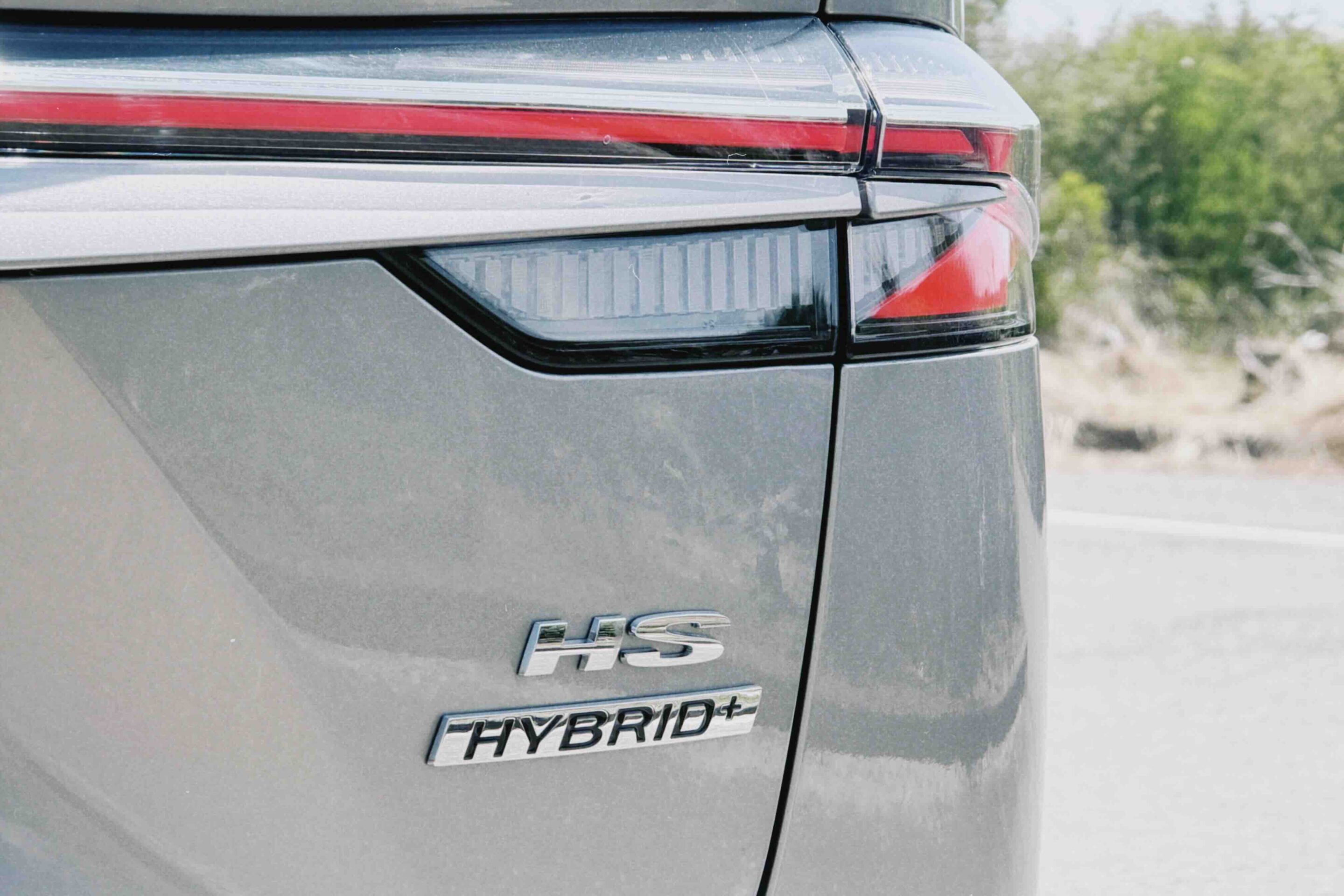
The latest model to land on Australian shores from a surging MG is the newest version of the established HS medium SUV, the 2026 HS Hybrid+, promising real world hybrid efficiency and driving ease, ensuring you can slice a fair wedge out of your weekly fuel bill. Blow for blow, if you’re comparing two vehicles in the same segment, the non-hybrid version would use 40-50 per cent more fuel to do the same job. Switch to a hybrid therefore, and you’re taking half as much money out of your pocket each time you fill up.
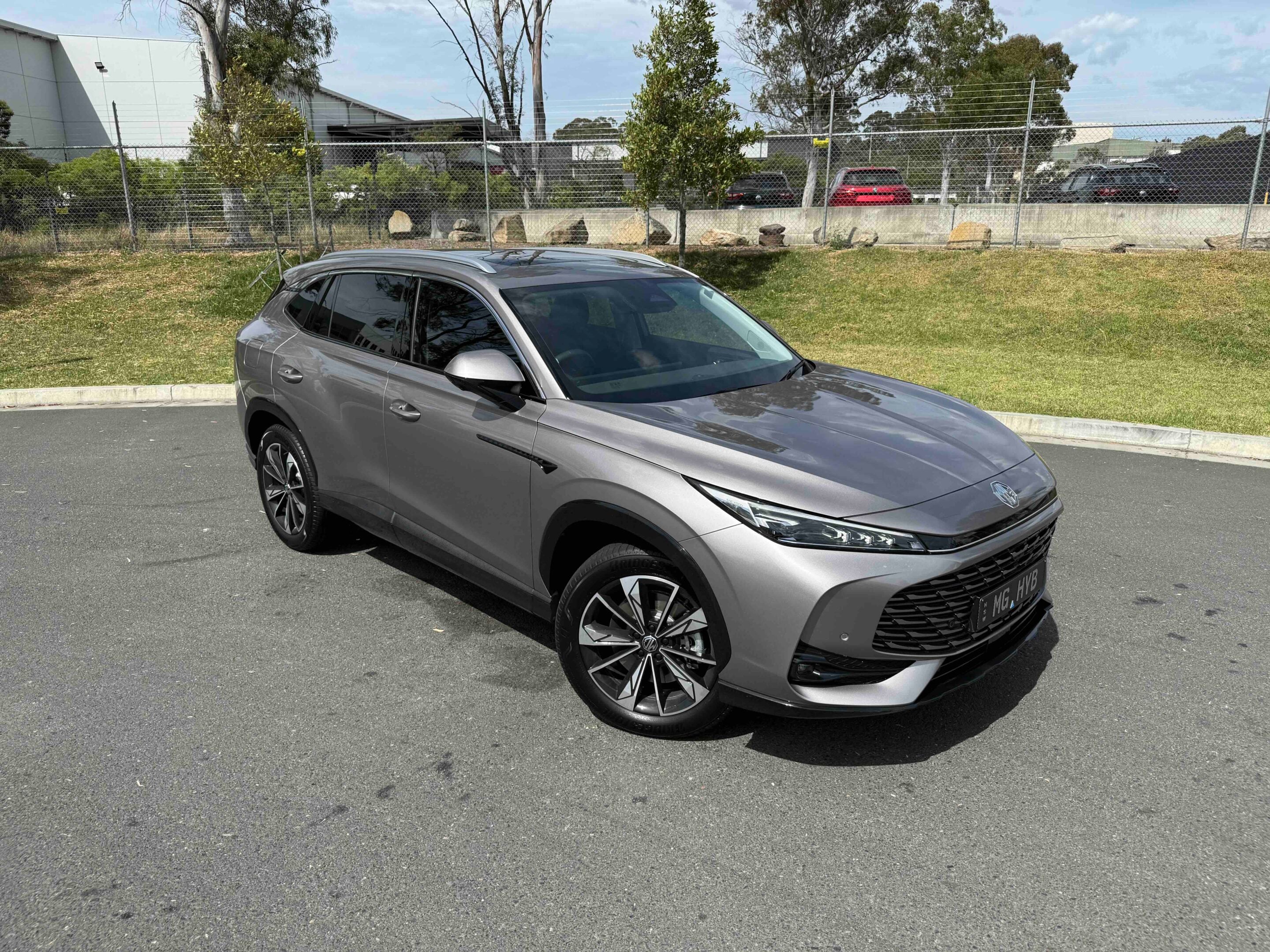
And, importantly, you don’t need to change anything about the way you drive. There’s no new behaviour to learn, no charging hardware required at home, and perhaps most importantly, no reliance on public charging infrastructure either. Just do what you’ve always done while using a lot less fuel.
On paper, then, the specs of the new HS Hybrid+ look spot on for the intended buyer. The 1.5-litre petrol four cylinder has combined outputs of 165kW and 340Nm and uses a claimed 5.2L/100km on the combined NEDC cycle. On test, covering just beyond 200km, we saw live figures at cruising speeds as low as 4.0L/100km, while our average rounded out at 4.9L/100km. Our specific 90km urban run, with no highway and an average speed of 48km/h, netted an impressive indicated average of just 4.3L/100km. In short, it is as efficient as MG claims it is.
As impressive as the efficiency is, the price is even more of a highlight, launching with drive away pricing of $40,990 for the Excite model grade and $44,990 drive away in Essence guise. Buy a new Hybrid+ before November 2, and MG will throw in a $1000 fuel voucher – which will take you a while to work through given how efficient this HS is. Keep in mind, you will need to use premium fuel for the Hybrid+, which means 95 RON Is a minimum.
This segment is overflowing in Australia with the likes of RAV4, CR-V, Tucson, Sportage, X-Trail, Haval H6, and Forester all now offering hybrids of varying grades and efficiency, and all attempting to dominate the sales charts. It’s fair to say, though, that such sharp pricing should see MG make a decent impact in the category.
The Hybrid+ is available as a front-wheel drive only, unlike segment favourite RAV4, which is available in AWD form. Do you need AWD in this segment? Not really, and certainly not if you do most or all of your driving around town.
MG quotes a tare weight of 1656kg, and the battery size is 1.83kWh. Key to the efficiency of the energy storage and usage is the water-cooled battery, which according to MG, lifts the battery’s efficiency by a whopping 300 per cent compared with an air-cooled system.
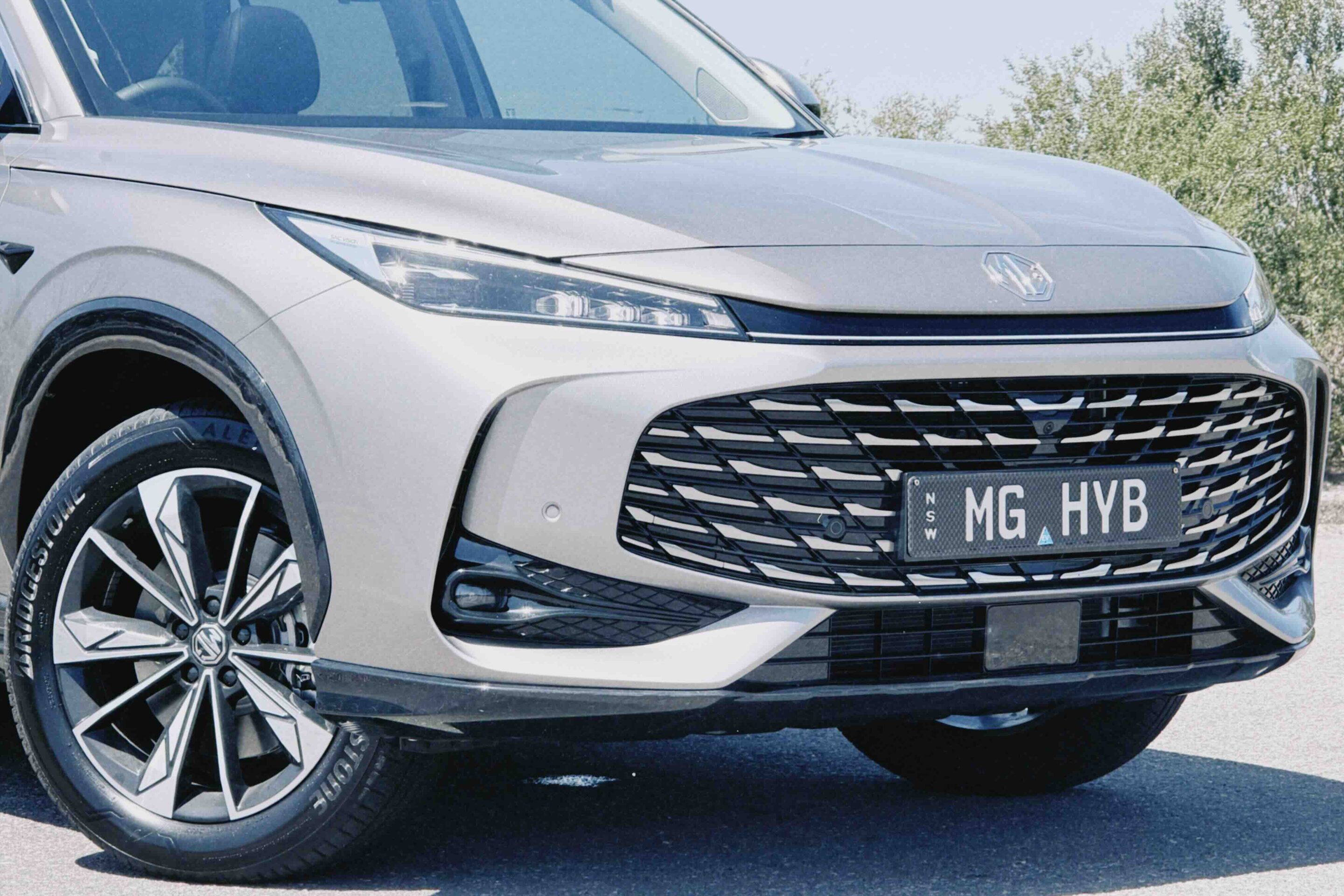
This petrol version of the HS gets a five-star ANCAP safety rating from 2024 testing, but this model hasn’t been tested as yet. You do get a 10-year/250,000km warranty if you service the vehicle within MG’s dealer network. If you don’t, it’s a seven-year/unlimited kilometre warranty. There’s also capped price servicing, that covers the first seven years and a service is required every 12 months or 15,000km.
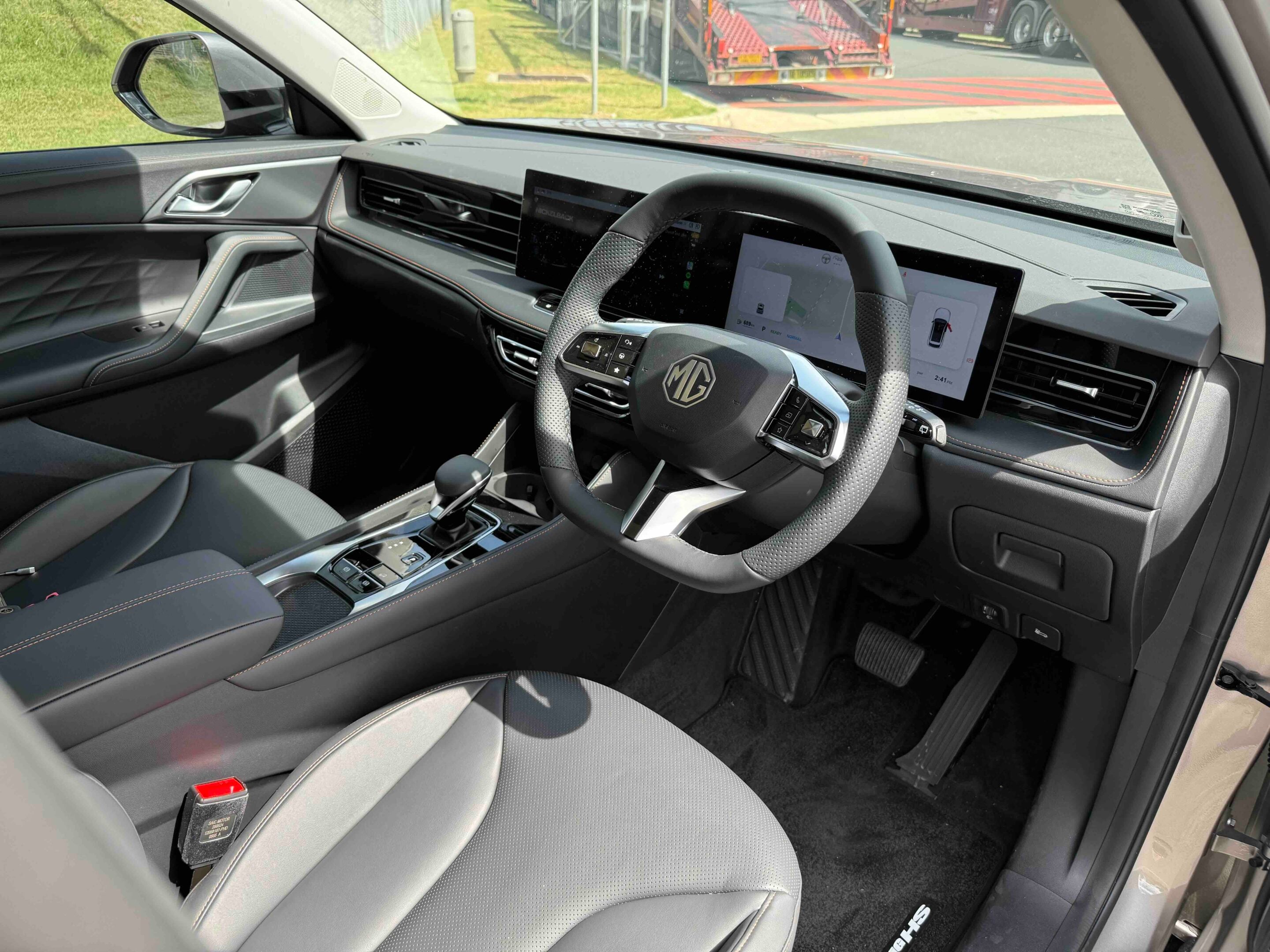
Our brief, first test drive, illustrates some impressive polish to the HS performance. Some of the electric driver aids are a little too enthusiastic (though not manic), and we’d prefer more physical buttons for controls like audio volume, for example, but there is little to gripe about.
The infotainment system worked well for us on test, the smartphone connection was reliable, the screens easy to read and the graphics clear. Sometimes the touch response wasn’t as snappy as we’d like, but again, that’s nit picking. Call clarity was also excellent on test and the driver display is customisable to display what you want to look at.
The most impressive element of the drive experience is how quiet and refined it is. Bump absorption is excellent, and the suspension never struggles to deal with even the worst of the urban road network. Even repeated corrugated stretches don’t unsettle the suspension. That premium feel extends to the lack of wind and tyre noise entering the cabin. It really is an enjoyable place to spend some time whether you’re crawling around town or cruising on the highway.
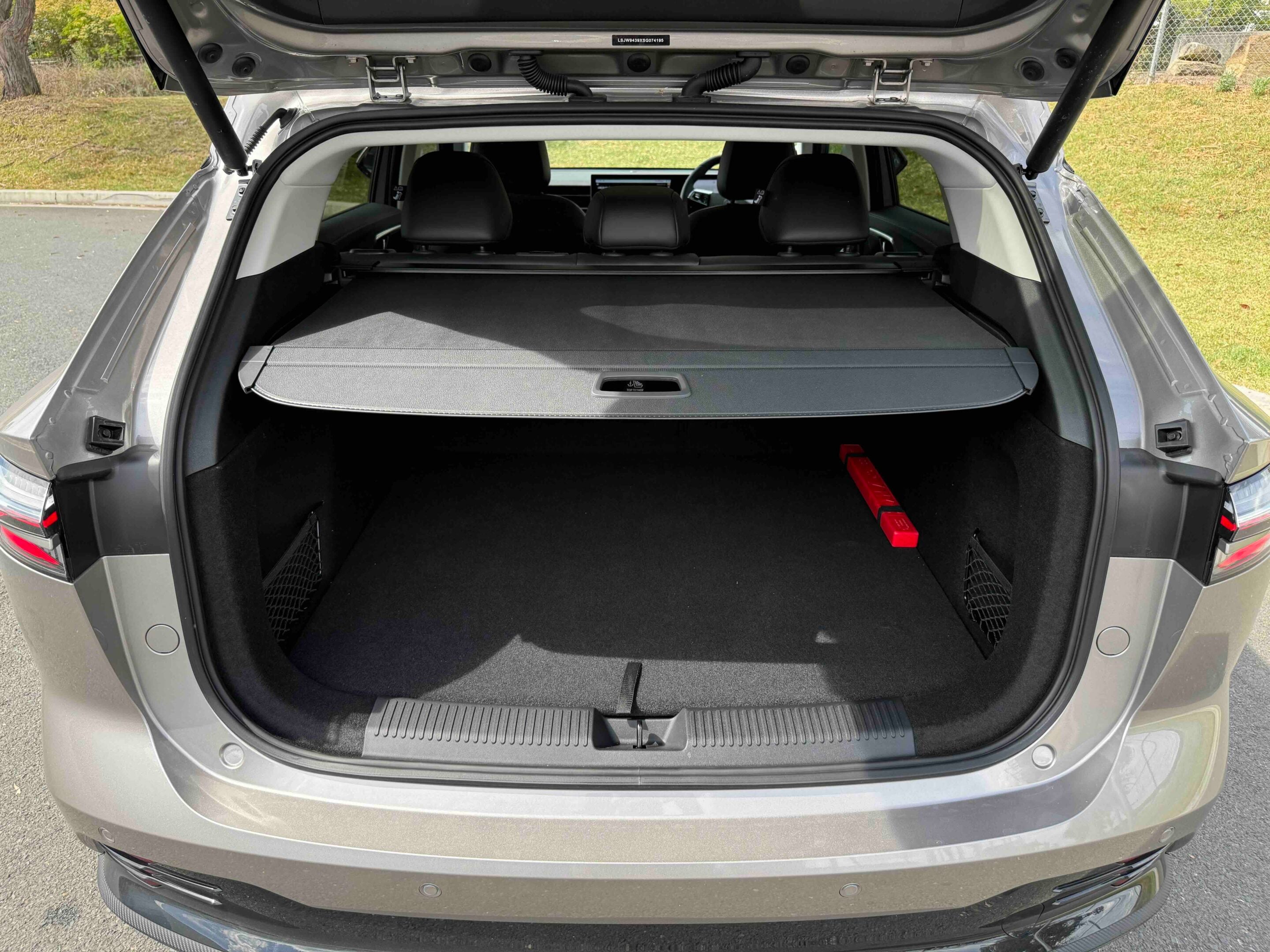
The brakes worked well, the steering was nicely weighted and the turning circle was effective for tight city work as well. The rear-view camera offered up a clear image when you’re moving around at low speed parking, too. We didn’t test the second row extensively, but the 2765mm wheelbase means you get plenty of cabin space and there is appreciable legroom even behind a tall driver. Likewise the luggage area which expands from 507 litres to 1484 litres with the second row folded down.
On first impression, this a strong offering for MG in a crowded segment that gets ever more competitive by the month. With sharp pricing and solid standard equipment, it’s worth taking a look if you’re shopping in the medium SUV segment.
Specifications
| Model | MG HS Hybrid+ Essence |
|---|---|
| Price | $44,990 (DA) |
| Body | Five-door, five-seat SUV |
| Drive | Front-wheel drive |
| Drivetrain | 1.5L Turbo Petrol 4 Cylinder |
| Battery | 1.83kWh NCM lithium iron water cooled battery |
| Power | 165kW |
| Torque | 340Nm |
| Transmission | 2-Speed Hybrid Transmission |
| Consumption | 5.2L/100km, 1000km range (TNFC) |
| Kerb weight | 1656kg |
| 0-100 | TBC |
| L/W/H/W-B | 4670/1890/1655/2765mm |
| Boot space | 507L/1484L |
| Warranty | 7yr/unlimited km (min), 10yr/250,000km (conditional) |
| Safety rating | Not Tested (5 star ANCAP 2024) |
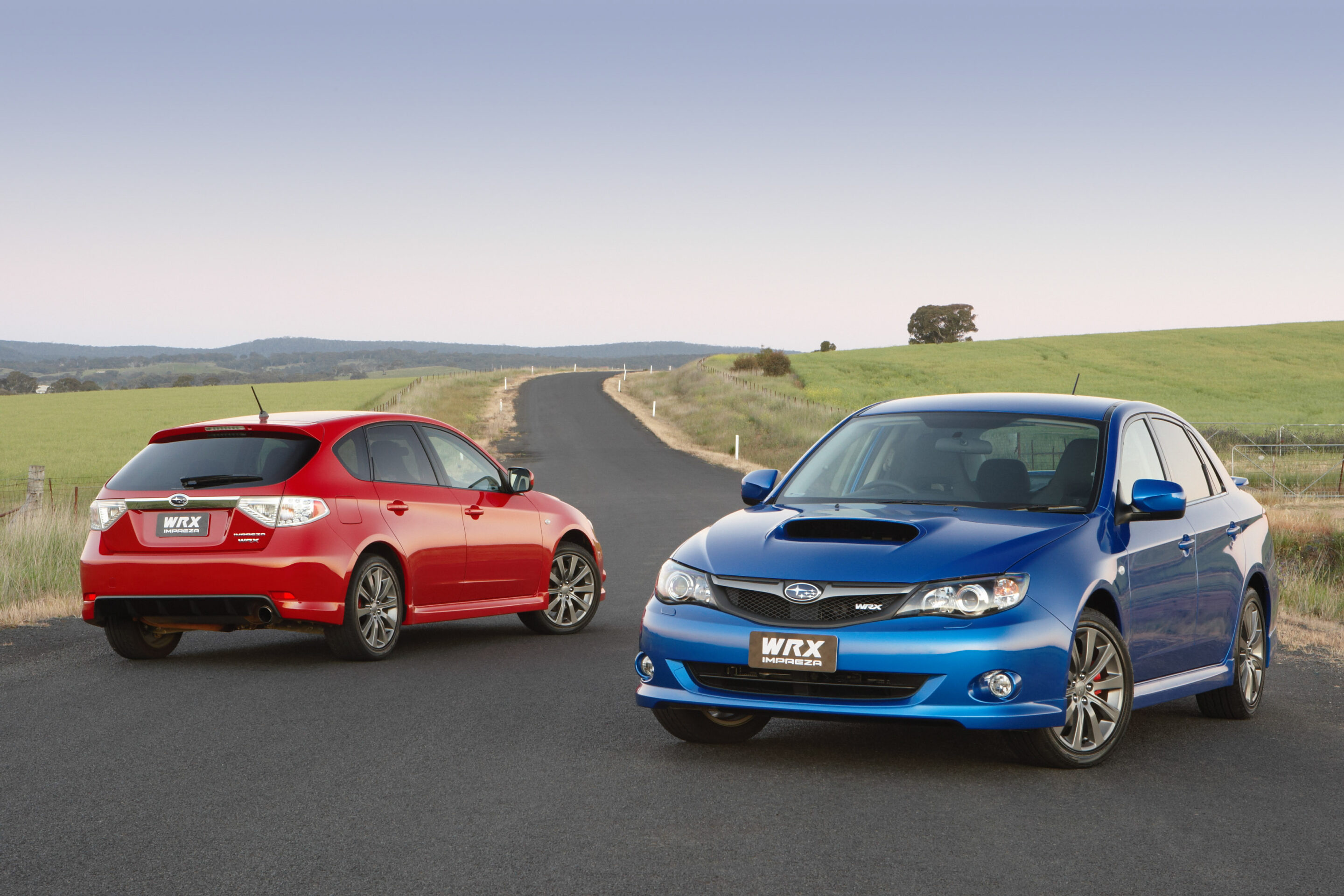
Subaru Australia is celebrating a major achievement for its most famous performance model, with more than 70,000 WRX and WRX STI vehicles now sold nationwide since the turbocharged icon first arrived in 1994.
Lovingly dubbed the “Rex” by fans, the all-wheel-drive WRX has become one of Australia’s most enduring performance cars – blending everyday practicality with rally-proven engineering and unmistakable attitude. From its origins as the Impreza WRX to today’s fifth-generation model, it has been a defining force in shaping Subaru’s performance DNA and building one of the strongest enthusiast communities in the country.
Subaru Australia General Manager Scott Lawrence said the milestone reflects the deep connection between the WRX and its loyal fanbase.
“WRX has always been more than just a car,” Lawrence said. “It represents fun, confidence, and connection – a feeling that’s resonated with Australians for more than 30 years. From the rally stages to the open road, it’s built a passionate and loyal community.”
The WRX’s legend grew even stronger with the arrival of the STI variant in 1998, a model that cemented Subaru’s global motorsport reputation. Featuring high-performance engineering honed through the World Rally Championship, the WRX STI became synonymous with precision, control and pure driving excitement.
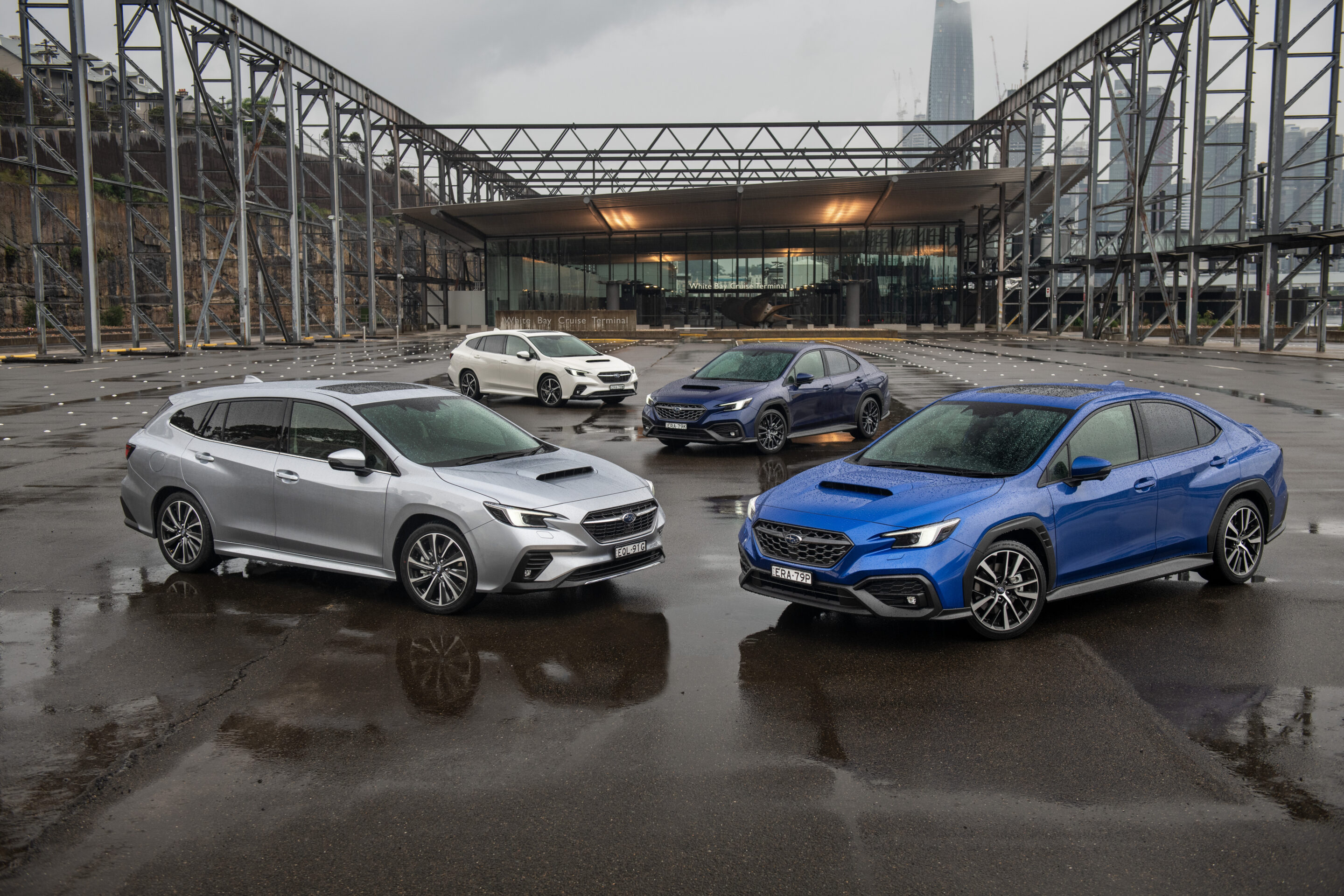
Over the years, the WRX has evolved through five generations, winning multiple awards and spawning owner clubs and enthusiast events across Australia. Each iteration has refined the formula – delivering more power, sharper handling and greater everyday usability without losing the distinctive boxer-engine soundtrack that fans adore.
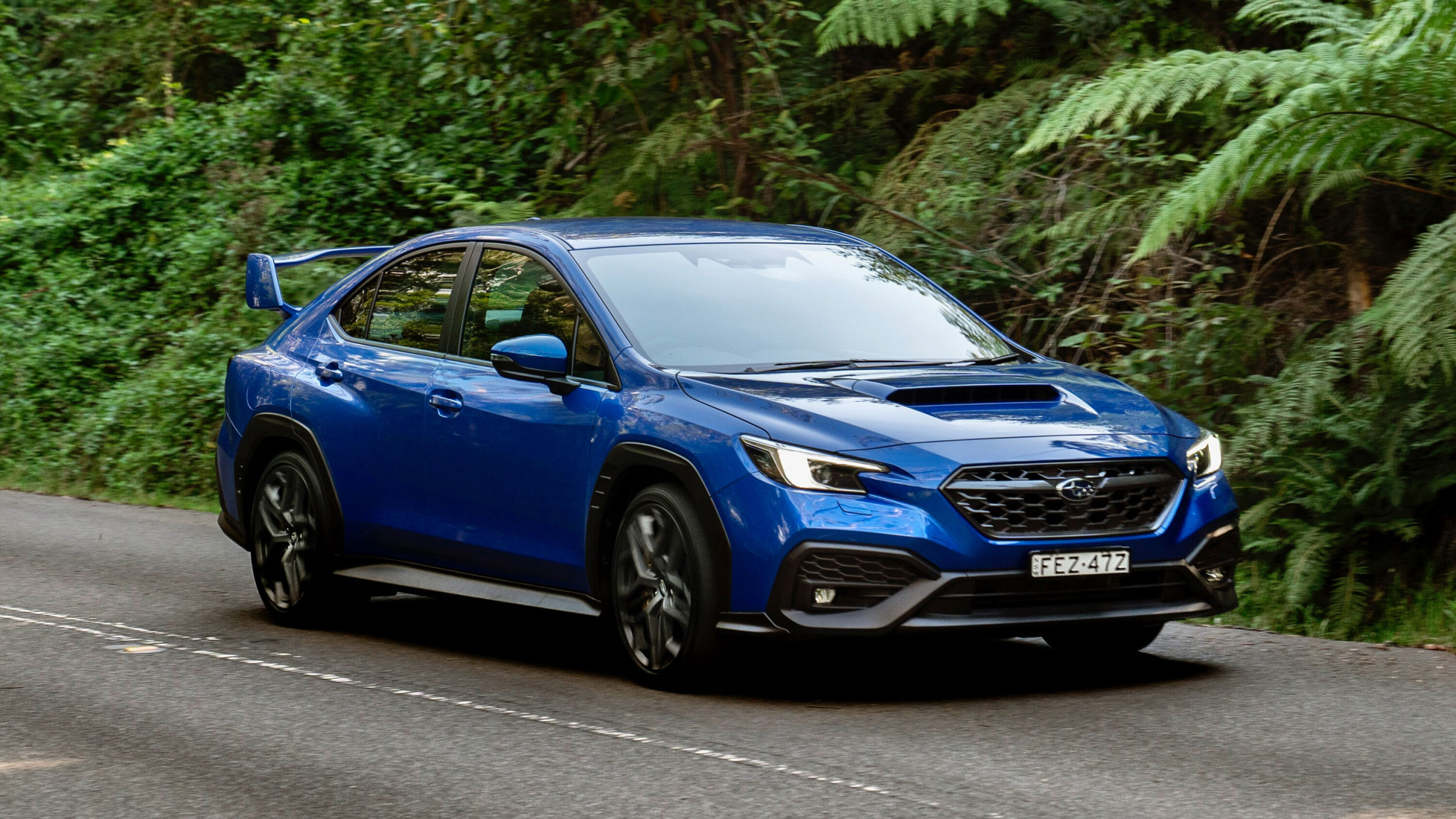
The latest chapter in the story is the WRX tS Spec B (below), launched in 2025, which pays tribute to the car’s heritage with Brembo brakes, STI-tuned suspension and a signature rear spoiler reminiscent of classic generations.
As Subaru looks toward an electrified future, the WRX remains at the heart of its performance line-up – a symbol of power, control and driving passion that continues to thrill Australians, generation after generation.
Rex Timeline
1993 – Impreza WRX originally previewed at the 1993 Sydney Motor Show
1994 – Impreza WRX first launched in Australia featuring a 2.0-litre turbocharged ‘boxer’ engine and all-wheel drive.
1998 – First WRX STI sold in Australia, followed by the release of the limited-edition WRX STI 22B to commemorate Subaru’s 40th anniversary and its World Rally Championship wins.
2000 – The second-generation Impreza WRX arrived and went through several facelifts, known as the ‘bugeye’, ‘blobeye’, and ‘hawkeye’ generations.
2007 – The third-generation Impreza WRX arrives with improved performance and reduced weight
2014 – The fourth-generation WRX introduced as standalone model, separating it from the Impreza nameplate.
2021 – The current fifth-generation WRX launches with a new 2.4-litre turbocharged Boxer engine
2024 – Subaru celebrates 30 years of WRX in Australia
2025 – WRX AWD tS Spec B introduced launches Australia, paying homage to the WRXs of the past with Brembo brakes, STI-tuned suspension and a large rear spoiler.
Millions of Victorians could soon pay significantly more if they miss a fine payment, with the state government planning steep increases to late-fee penalties in a bid to boost revenue and cover enforcement costs.
Under a proposal from the Department of Justice and Community Safety, late-payment charges – applied to unpaid tolls, speeding tickets, and other infringements – would jump by up to 73 per cent next year. The penalty reminder notice fee would rise from $29.20 to $50.40, while the final demand notice would climb from $151.50 to $186.80.
The government argues the move is needed to offset the growing cost of chasing unpaid fines, insisting that residents already have several opportunities to pay or appeal before penalties apply. The changes are forecast to increase annual fine revenue by around $40 million, pushing the total to approximately $160 million – enough, officials say, to fund the full cost of enforcement.

However, community legal services have slammed the proposal, warning it will disproportionately affect Victorians already struggling with rising living costs. In a comment to The Age, Shifrah Blustein, managing lawyer at Inner Melbourne Community Legal, described the policy as a “tone-deaf cash grab,” saying her office was “inundated” with people seeking help to manage mounting fines.
“This is just going to make life harder for many people,” Blustein said. “It’s the people who can’t afford to pay who will get penalised.”
The government considered an alternative option to reduce fees for concession cardholders but rejected it, saying the change would fail to recover enough revenue.
Last financial year, the Allan government collected nearly $946 million in fines, including those issued for speeding, toll evasion and other statutory breaches. Officials say the new measures won’t affect those who pay or contest fines promptly and stress that flexible repayment options remain available for people in special circumstances.
Still, critics note that unpaid tolls can quickly spiral – with a missed $10 toll sometimes ballooning into hundreds once additional charges are applied. Similar measures have been discussed in Queensland, where the state faces about $160 million in unpaid fines and has considered tougher collection tactics.
Public feedback on Victoria’s proposed fee hikes is now open through the government’s online consultation portal.
The Ford Mustang RTR has been revealed in the USA as a new high-performance variant of the turbocharged four-cylinder Mustang range. Developed with learnings from the Mustang in the Formula Drift championship, the Mustang RTR doesn’t add more power to the standard Mustang EcoBoost but does employ a number of new features to make it faster – such as anti-lag technology, upgraded Brembo brakes and suspension components taken from the Dark Horse.
The key upgrades to the RTR include an active exhaust with four selectable modes and quad tailpipes, a unique steering gear with increased travel, Brembo brakes from the Mustang GT with six-piston front/four-piston rear callipers, front and rear sway bars and a rear subframe from the Mustang Dark Horse. In addition, the RTR features a unique stability control tune in track mode and the ‘MagneRide’ adaptive dampers on the regular Mustang range are also optionally available.
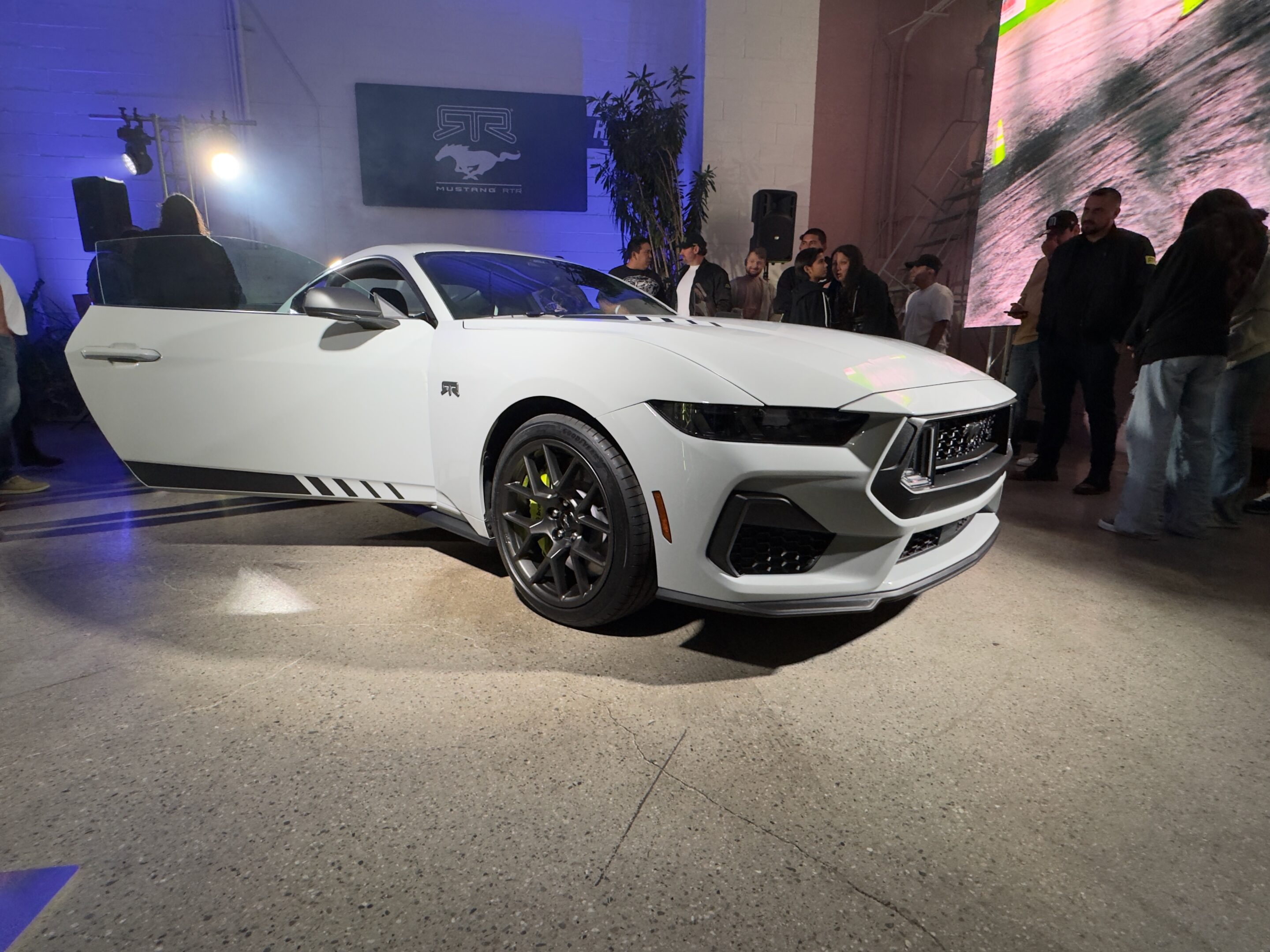
The Mustang RTR is based on the EcoBoost coupe and its 2.3-litre turbocharged four-cylinder petrol engine is unchanged, aside from slightly earlier spooling of its turbo thanks to new anti-lag tech. In the USA, it makes 235kW of power and 475Nm of torque – 3kW and 1Nm more than Australia’s version – and a 10-speed automatic transmission is standard.
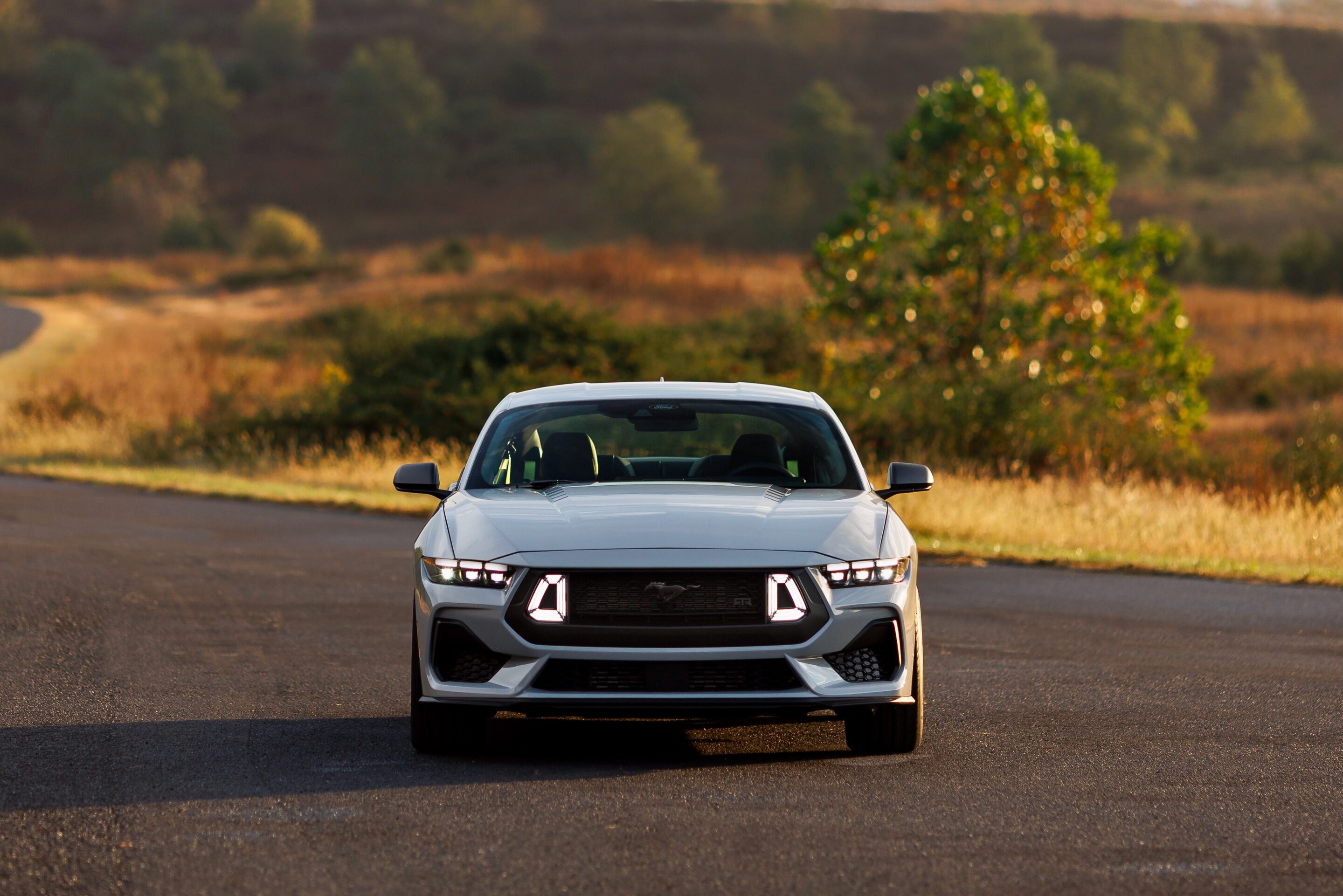
The Ford Mustang RTR is recognisable from the outside with features such as the Mustang GT’s front fascia, lit nostrils, RTR badging, dark exterior elements, 19-inch wheels, lime green brake callipers, exterior graphics and a black rear spoiler.
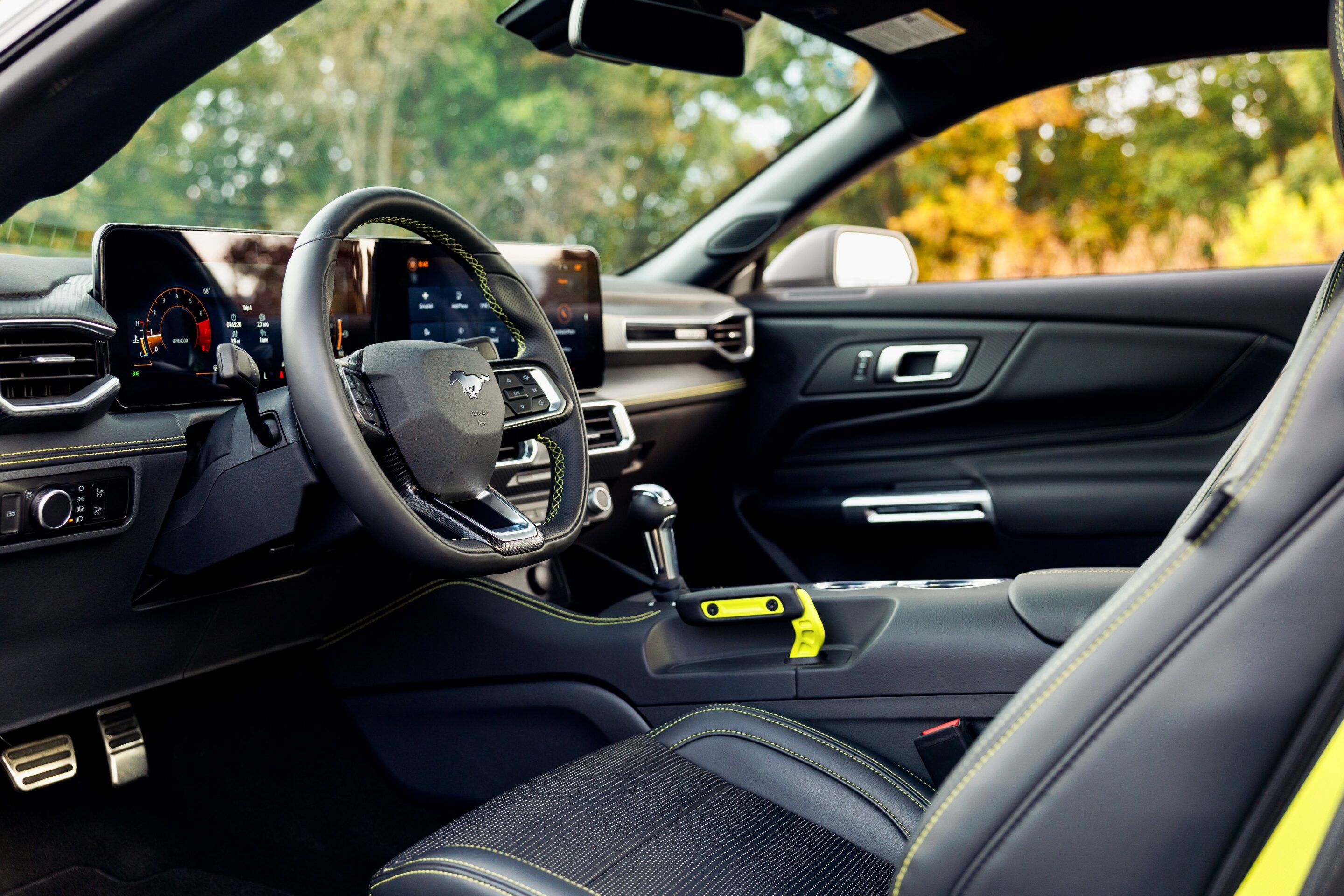
The RTR’s cabin includes additional lime accents on the seats and seatbelts, with lime green stitching on the dashboard, centre console and door pockets. The ‘Drift Brake’ hand brake – standard on all Australian Mustang models – is also lime green in colour.
“When we set out to develop a new kind of performance Mustang in partnership with Vaughn Gittin Jr. and RTR, our mission was simple: produce the most exciting, fun-to-drive turbocharged Mustang ever,” said Mustang Chief Engineer Laurie Transou.
“We succeeded. This is Formula Drift championship-winning knowhow, Mustang EcoBoost balance and affordability, and the race-proven performance technology from Mustang Dark Horse in a factory-built Mustang, direct from Flat Rock Assembly. With the RTR Package, this Mustang is truly Ready to Rock.”
Alas, Ford Australia has declined to comment on the RTR aside from saying that it’s not for the Australian market, though hopefully at least some of its features will make it down under.
Toyota has officially announced that its long-awaited V8-powered supercar will be revealed on December 4, marking the brand’s most exciting performance debut in over a decade. The new front-engined hyper GT will serve as the spiritual successor to both the legendary Lexus LFA and the iconic Toyota 2000GT.
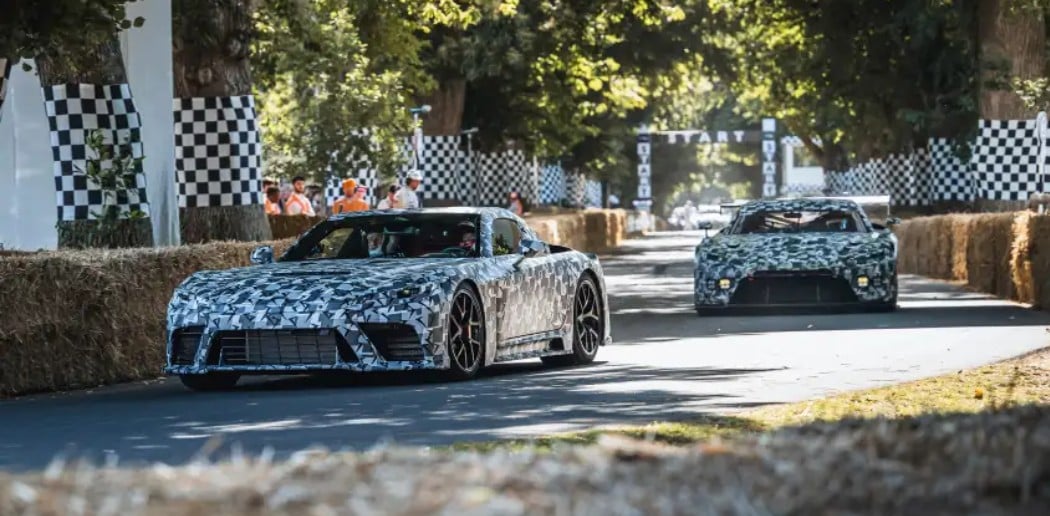
The program has been an open secret for months, with disguised prototypes making several public appearances – most memorably during the Goodwood Festival of Speed (below) – but now Toyota is finally set to pull the covers off officially.
Toyota has released just one official image so far, showing a partial front view that highlights a sleek LED headlight, sculpted bonnet lines, and a large, aggressive lower intake. However, sharp-eyed fans spotted a wider shot of the same car on trackside signage at Fuji Speedway, revealing more of the bodywork and confirming a GR (Gazoo Racing) badge on the lower grille.
That GR branding confirms the car’s development under Toyota’s motorsport division, though it’s still unclear whether the production version will wear a Toyota or Lexus badge.
While official details remain tightly guarded, Toyota has teased the car’s engine note in promotional clips leading up to the 2025 Tokyo Mobility Show – and there’s no mistaking the sound of a high-revving V8. Early reports suggest a twin-turbocharged setup, possibly paired with hybrid assistance in road-going form.
Output figures are still speculative, but insiders expect performance in line with rivals such as Ferrari and McLaren. That means a potential power figure north of 700 horsepower (around 520kW), ensuring this new halo car can hold its own among today’s top-tier supercars.
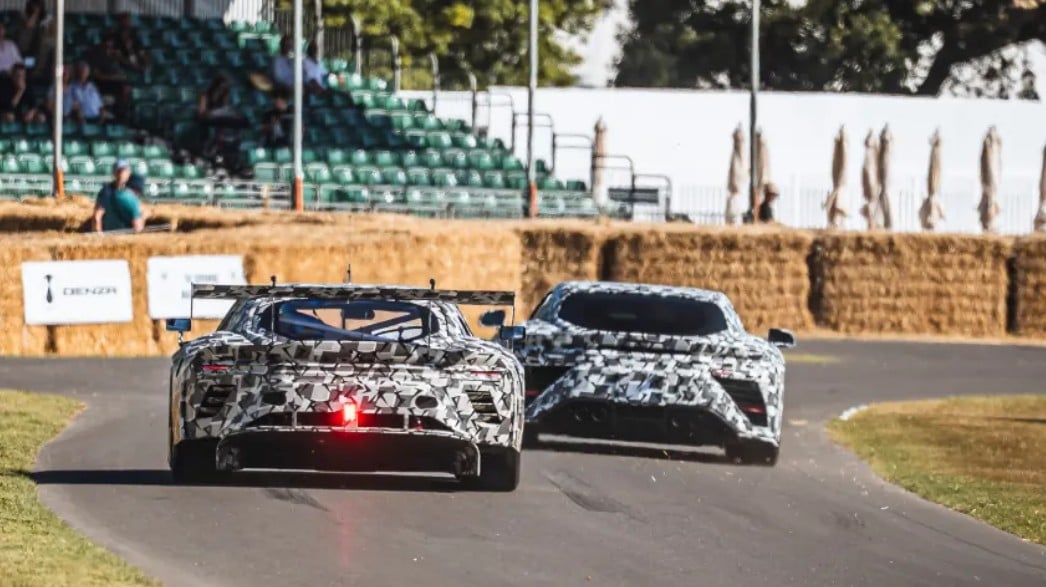
Judging from its proportions, the car’s front-mid engine layout places the V8 behind the front axle for optimal balance – a configuration reminiscent of the Mercedes-AMG GT. Power is expected to be sent to the rear wheels via a transaxle gearbox with a limited-slip differential and quick-shifting automatic transmission. Whether Toyota opts for a dual-clutch system or a more traditional automatic remains to be seen.
Lightweight construction will be key to performance. The body is rumoured to use carbon-fibre-reinforced materials, following in the footsteps of the Lexus LFA, which was famous for its advanced composite chassis when it launched in 2011.
Toyota isn’t just building this supercar for the road. The company plans to race the car in the GT3 category, competing against the likes of Ferrari, Porsche, Lamborghini, McLaren, BMW and Aston Martin. The road-going version will serve as the homologation model for Toyota’s GT3 entry – mirroring the development approach of the GR Yaris, which was designed in parallel with Toyota’s World Rally Championship program.
This alignment between road and race versions ensures that performance, aerodynamics, and chassis technology are developed hand in hand – a hallmark of Gazoo Racing’s engineering philosophy.
Whether the finished product carries a Toyota or Lexus badge, this car is poised to become the brand’s next flagship performance model, showcasing Toyota’s ambitions in both road and track performance.
With the official debut set for December 4, the countdown is on – and early indications suggest we could see the GT3 race version competing as early as 2026.
The Mercedes-Benz GLC is the company’s quiet achiever. Its sales are up by 48 per cent year on year, and it’s easily the biggest selling model in the Australian line-up, more than doubling the sales of the A-Class hatch and tripling the registrations of the C-Class sedan. In other words, it’s a vehicle that Mercedes can’t afford to get wrong.
While it’s a strong performer, since the diesel models have been deleted from the range, there’s been one area where you could criticise it. With an all-petrol range, you had to make a very deliberate choice between economy and performance. The only way you could have both was by choosing the $214,000 Mercedes-AMG GLC 63 S with its plug-in hybrid technology, but that was clearly a model beyond the budget of the average GLC customer.
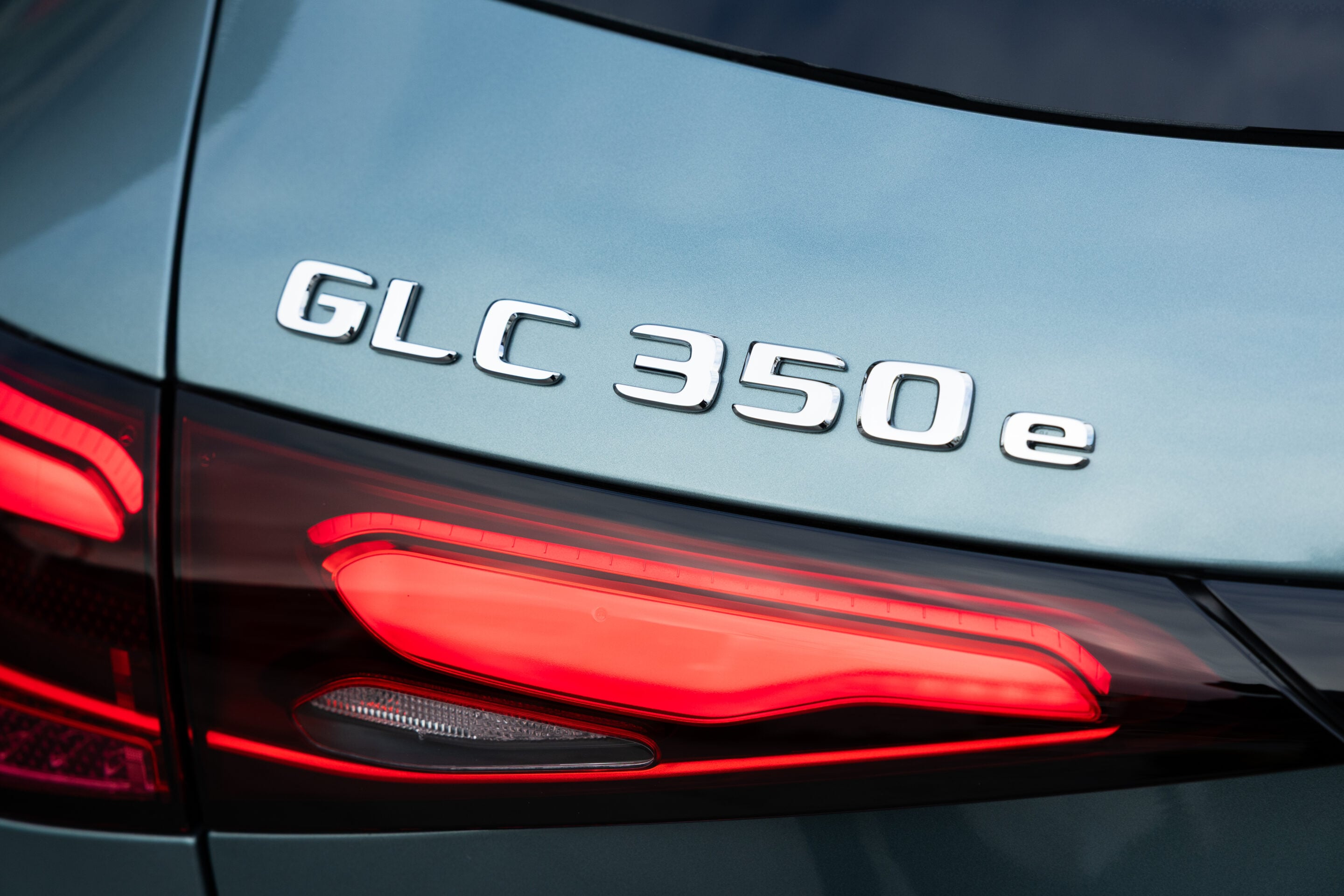
That now changes with the introduction of the GLC 350e plug-in hybrid. Wearing a price tag of $99,900 plus on-roads, it’s less than half the price of the next-most expensive plug-in GLC and yet still packs a decent punch, with a system output of 230 kW and 550 Nm. That compares favourably to the 190kW and 400kW from the current petrol-engined GLC 300, a vehicle that’s around $5000 pricier.
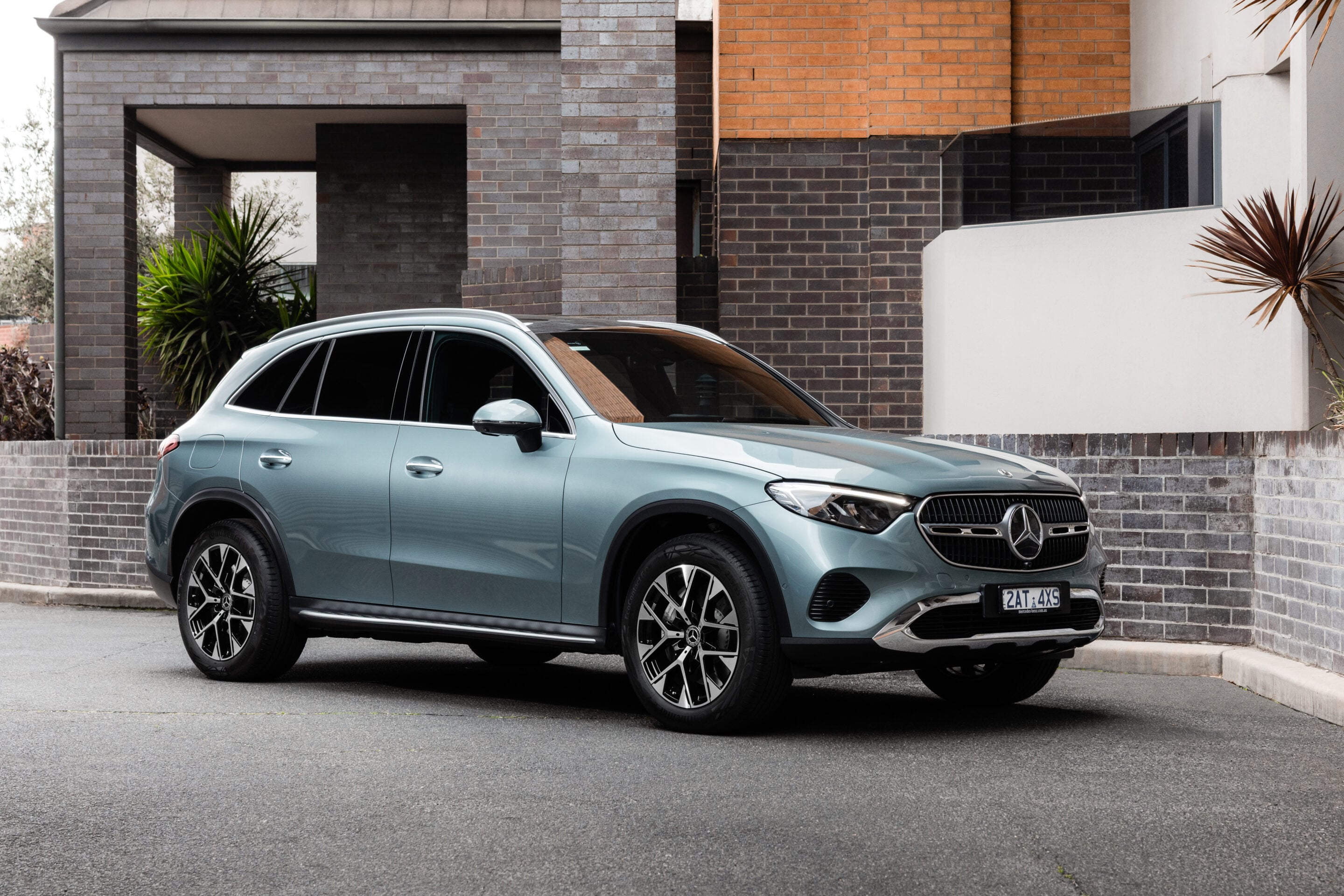
Standard equipment includes the Avantgarde trim pack with chrome pack and polished aluminium roof rails, a head-up display, LED headlights, tow-bar pre-installation, a panoramic sunroof, Artico seat trim, the transparent bonnet manoeuvring aid, digital radio, wireless Apple CarPlay and Android Auto, self-levelling comfort suspension and powered, heated front seats with memory function.
Bringing the GLC 350e in at less than $100,000 (just) is a smart move on Mercedes’ part, and the vehicle feels well equipped for that particular price point. As well as the above equipment, buyers can count on a 12.3-inch driver’s display, an 11.3 inch central display, a wireless phone charger, the Ambient Lighting Plus pack, anthracite timber finish for the dash and self-levelling air suspension at the back. One omission that is sorely missed is the Burmester premium stereo that the C 350e gets as standard.
Mercedes also offers a trio of dress-up packs for the GLC 350e. The $6000 Sport Package adds AMG Line exterior and interior details such as sport seats, multifunction sports steering wheel in nappa leather and wheel arch liners in vehicle colour. This package also adds larger brake discs on the front axle and swaps out the standard 19-inch alloys for larger 20-inch wheels. The Night Package can be added to the Sports Package for another $1300, and this features high-gloss black exterior elements and 20-inch wheels in black finish.
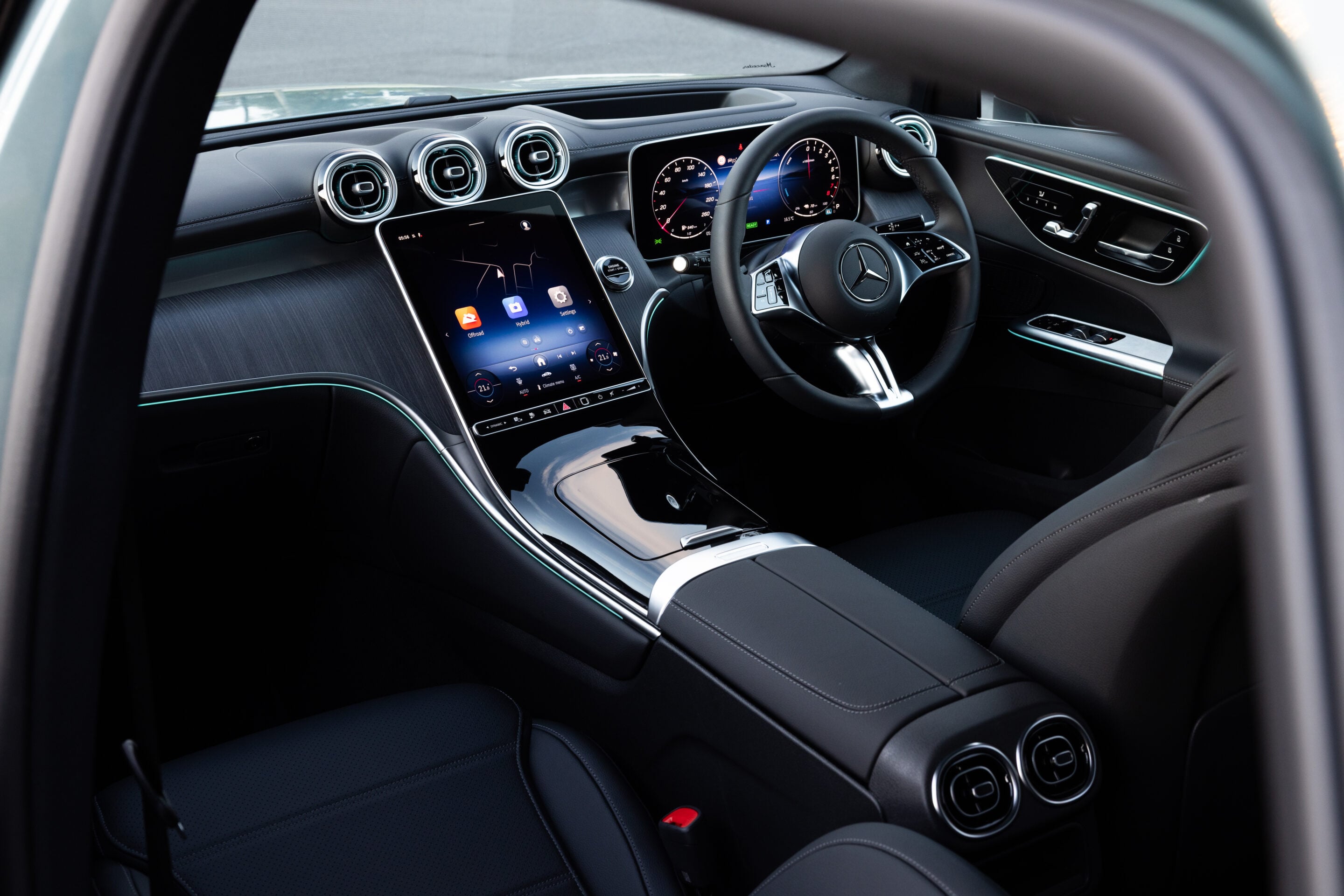
Should you really want virtually every box ticked, opt for the $7600 Plus Package which bundles the Driving Assistance Plus Package, Burmester surround sound system, Digital Light package with Adaptive Highbeam Assist Plus, Guard 360° Vehicle Protection Plus, heat and noise-insulating acoustic glass, and MBUX Augmented Reality Navigation.
Charge the 25.28kWh (net) lithium-ion battery to capacity and Mercedes claims you’ll have an NEDC-validated range of 132km before the two-litre petrol engine is forced to whir back into life. On a public DC charger, the GLC 350e will recharge at a maximum rate of 60kW, so a 10-80 per cent juice-up will take 29 minutes. Go for three-phase home AC power at 11kW and 0 to 100 per cent will take 2 hours 45 minutes. Unlike the C 350e sedan sibling with which the GLC 350e shares much of its plug-in tech, the fuel tank is no smaller than its purely petrol-powered brethren, in this case measuring 62 litres.
Rather cheekily, Mercedes will charge you a $1500 option price for a DC charging cable, but that’s offset by the fact that none of the six paint colours carry a price premium. In case you were wondering what they were, well Polar White is the standard colour and Graphite Grey Metallic, Obsidian Black Metallic, Verde Silver Metallic, High-Tech Silver Metallic and Spectral Blue Metallic are listed as no-cost options. On the inside, black Artico is the default trim, but two-tone Neve grey and black, and two-tone Sienna brown and black are also no-cost options. It all seems suspiciously generous.
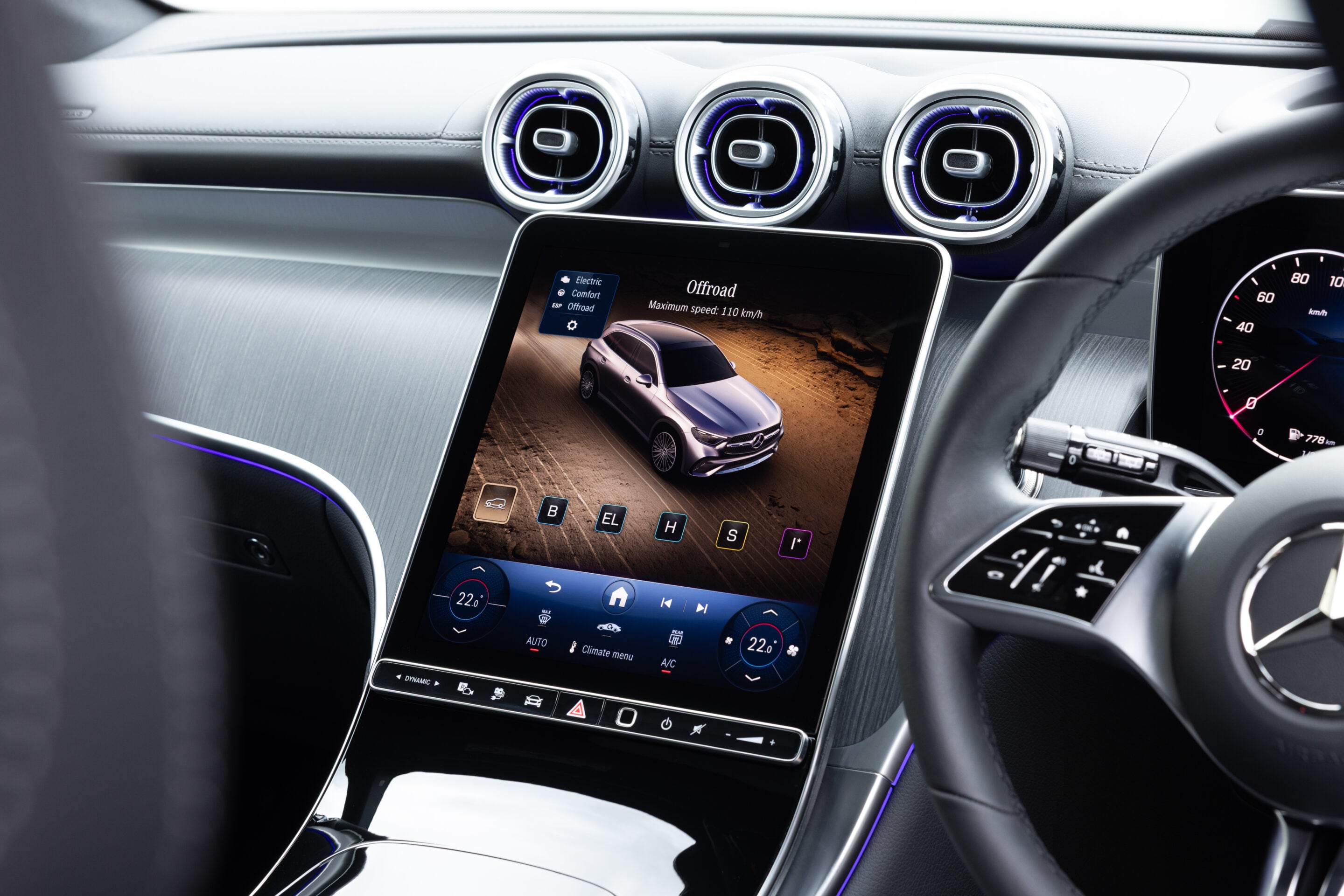
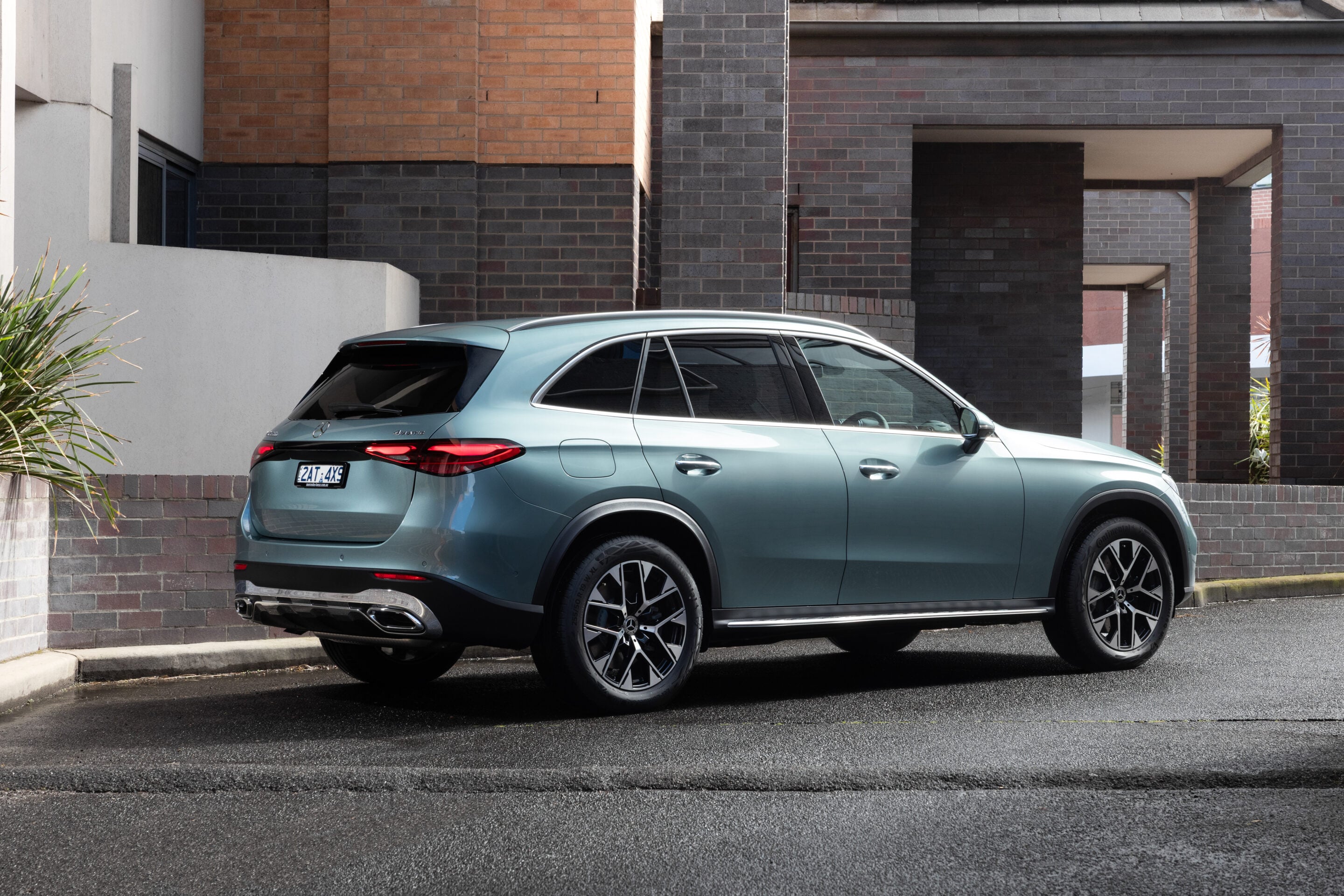
Even with the 19-inch wheels, the 255/50 Continental EcoContact tyres have a generous measure of sidewall, which helps improve ride quality. In order to keep its masses in check, the GLC has tended to ride on the firm side, but this rubber really gives an additional layer of plushness which is most welcome. Only on really poor surfaces does the vehicle start to jostle a little, but it’s nothing at all serious. Body control is otherwise very good indeed, both in pitch and roll. As well as the usual Off Road, Sport and Individual drive modes, the GLC 350e also introduces a trio of hybrid-specific modes: Battery Hold, Electric and Hybrid. Rather curiously, there’s no Charge mode where the battery level can be optimised by using the internal combustion engine as the generator.
The GLC 350e can certainly get a hustle on when required. Give the throttle a determined prod and it’ll jet through 100km/h in just 6.7 seconds, which makes it about half a second behind the petrol-engined GLC 300. What’s more surprising is the sound it makes when you open the taps. At first you cynically nod to yourself that the sound is from the speakers, but Mercedes claims there’s no artificial sound symposer fitted to the GLC 350e and that the soundtrack is exhaust sound entering the cabin via a resonator.
Of course, most won’t choose the GLC 350e if they’re certified lead-foots, but most will appreciate the logic and smarts that have gone into finessing this hybrid system. The shift paddles are a case in point. Switch the Dynamic Select mode into Sport and the paddles act as conventional sequential shifters. Any other mode and they switch function, managing the hybrid battery’s energy recuperation instead.
Flick the left paddle and you can engage D- for maximum re-gen, and this functions almost like a one-pedal driving mode. It won’t bring the GLC to an absolute stop, but step off the accelerator and it feels like you’ve driven into molten bitumen. There are two other modes with less retardation and less re-gen, but maybe the most interesting mode is D AUTO which uses not only the sat nav, but also the vehicle’s radar array to interrogate the road ahead and intelligently adjust the re-gen on the fly. For the most part, it’s very subtle but it works well. The paddle configuration is one of those ideas that, after you’ve sampled it, you feel should be the default solution for plug-in hybrids.
The way the M254 engine chimes in and out and works in concert with the rear-mounted electric motor is slick. Just about the only part of the system that doesn’t feel 100 per cent resolved is the feel of the brake pedal. When you’ve merely engaged re-gen and not the friction braking system, the brakes can feel a little less than linear in their application. It’s a minor quibble and something that you’d probably get accustomed to quickly, but it’s a rare glitch in the GLC 350e’s dynamic arsenal.
We didn’t get the opportunity on our test route to completely attempt to exhaust the claimed 132km range figure, preferring instead to test the vehicle’s hybrid capability instead. In this mode, the available range figure inched down very slowly on a mix of country and suburban roads. Mercedes claims an overall NEDC fuel consumption figure of 1.2L/100km. In case you’re wondering why that’s better than the lighter and more aerodynamically efficient C350e, it’s because the GLC has a bigger battery pack and so its drive logic tends to resort to firing up the internal combustion engine on fewer occasions.
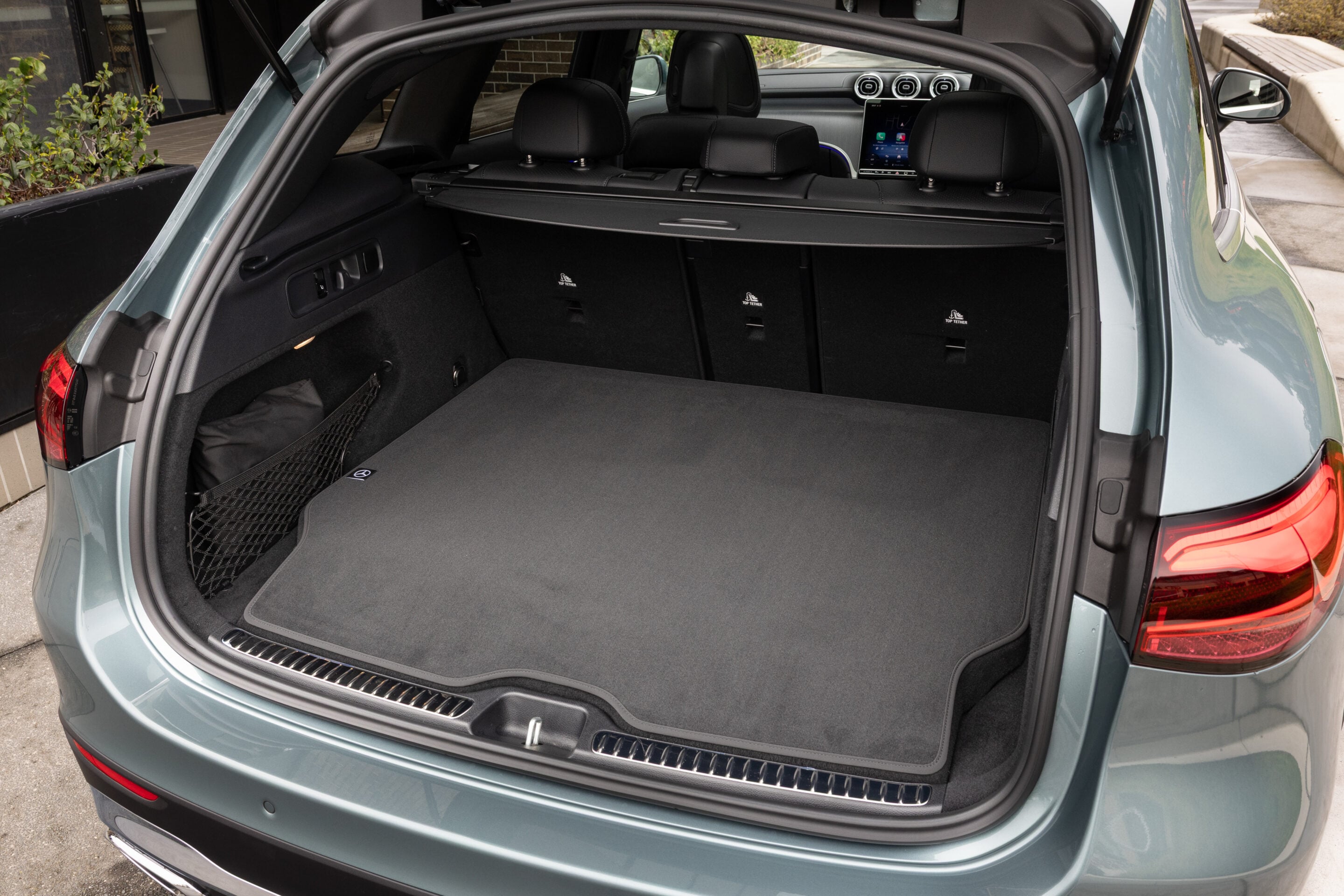
Mercedes has to fit that 96 pouch cell lithium-ion battery somewhere and beneath the boot floor is the chosen solution. This means that there’s no spare wheel packaged with the GLC 350e, the vehicle being supplied with a can of mobility foam and a compressor instead. It also means that buyers lose about 40 litres of luggage space as the boot floor is raised ever so slightly. The GLC has a little trick to claw back 60 litres of space where the rear seats can be moved to a more vertical position.
Other than that, the pluses and minuses of the GLC 350e mirror those of the GLC range as a whole, a vehicle that scores plenty of positives. One piece of very welcome good news is that as this second generation GLC matures, quality control seems to have taken a step up and the interior squeaks and rattles that could be apparent in early cars were notable by their absence.
The Mercedes-Benz GLC 350e feels a mature, well thought through and well positioned product. It’s one of those vehicles that doesn’t shout its talents from the rooftops, so if you want to sample one of the industry’s quiet achievers, you know what to do.
Specifications
| Model | Mercedes-Benz GLC 350e |
|---|---|
| Price | $99,900 before on-roads |
| Engine | 1999cc 4-cylinder, DOHC, 16v, turbo, plug-in hybrid |
| Peak power | 230 kW |
| Peak torque | 550 Nm |
| Transmission | Nine-speed automatic |
| 0-100 km/h | 6.7 seconds |
| Battery size | 31.2kWh (gross) 25.28Wh (net) |
| Electric range | 132km (NEDC) |
| Fuel tank: | 62L |
| L/W/H/WB | 4717/1920/1641/2888mm |
| Towing | 2000kg (braked) |
| Warranty | 5yrs/unlimited km |
| Available | Now |
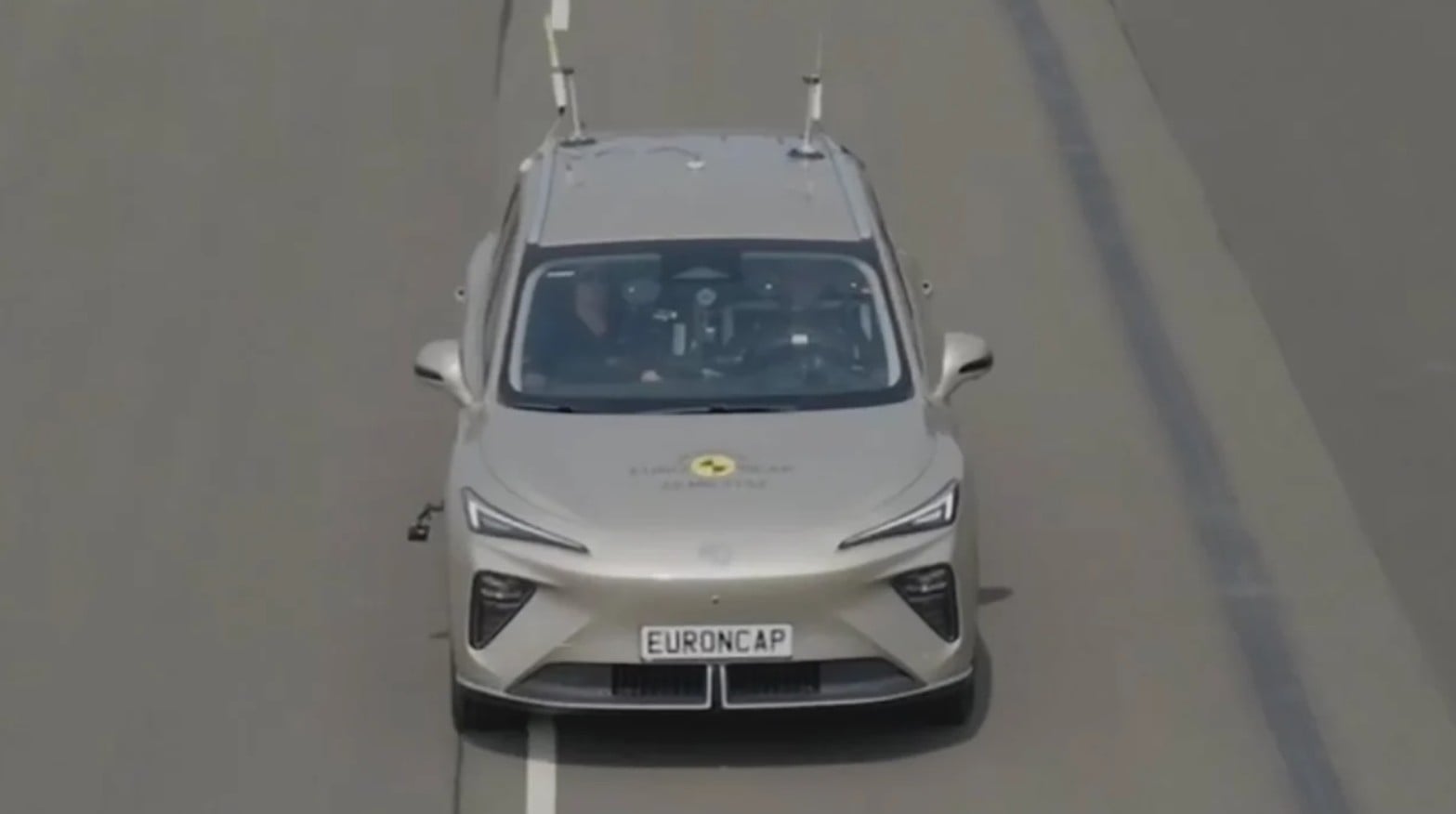
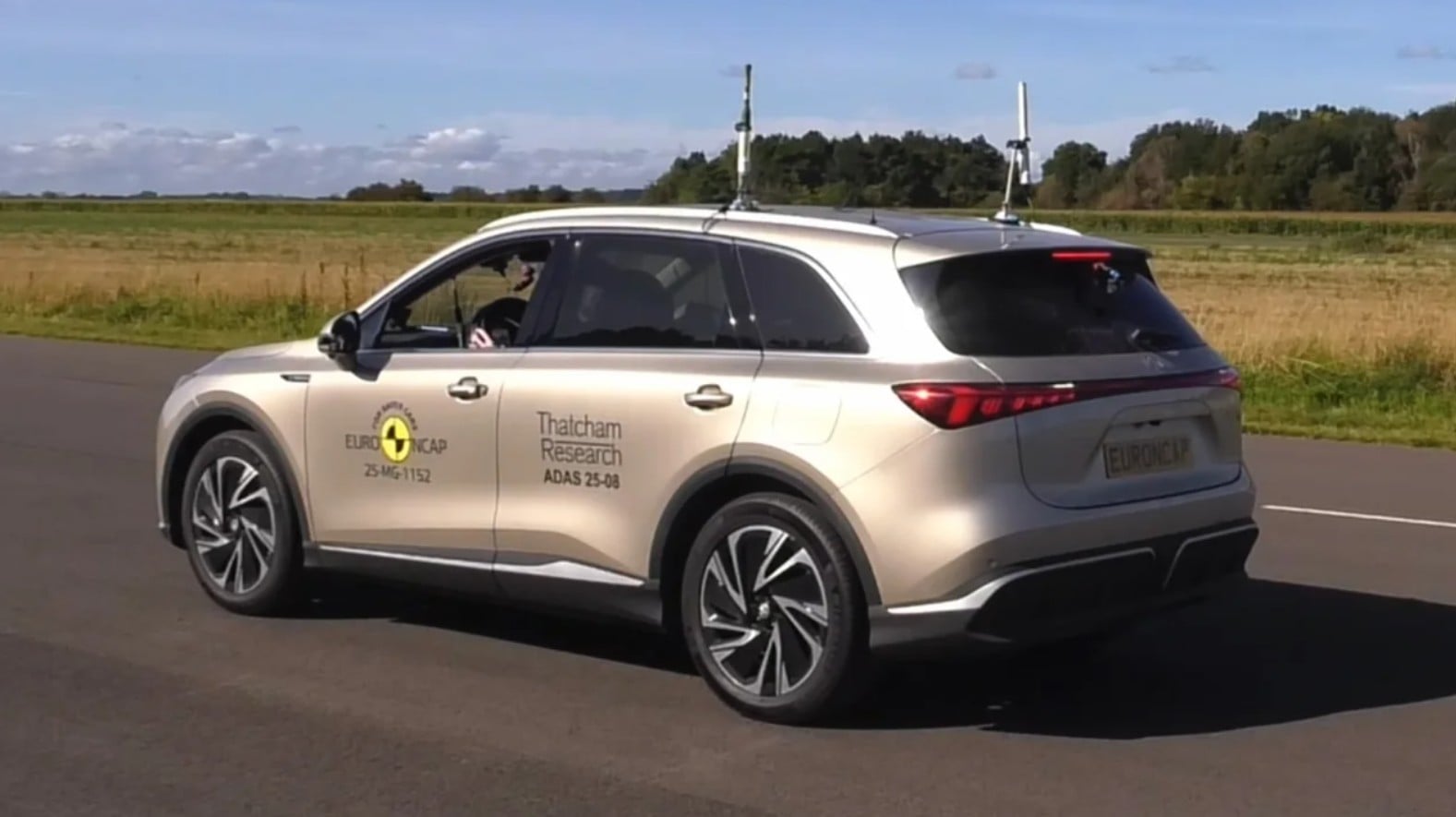
The upcoming MGS6 EV has been accidentally uncovered – not through an official launch or press photos, but via Euro NCAP’s crash test footage, giving the world its first look at MG’s next all-electric SUV in rather dramatic fashion.
While it’s not the debut MG likely planned, there’s a silver lining: the new model achieved a five-star safety rating from Euro NCAP, performing strongly across all key categories. The S6 EV earned 92 per cent for adult occupant protection, 85 per cent for child occupant safety, 84 per cent for vulnerable road users, and 78 per cent for safety assist systems – an impressive result for the yet-to-be-announced model.
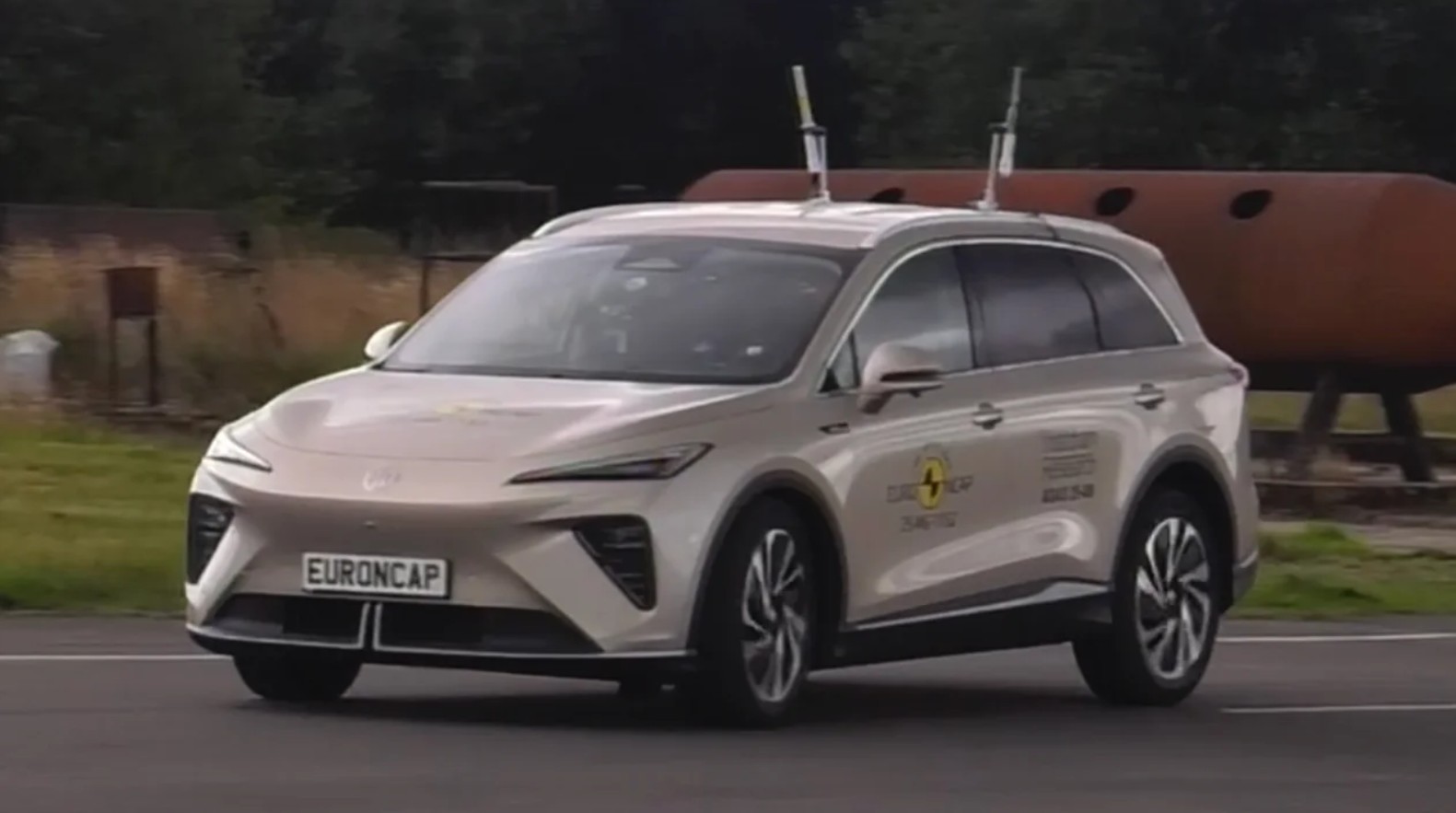
Stylistically, the S6 EV draws inspiration from the smaller MGS5 EV, but introduces several notable changes. It sports sharper headlights, revised front and rear bumpers, and a longer wheelbase. The rear design features a slimmer full-width light bar, chrome accents, and a faux diffuser, giving the SUV a more premium, athletic stance.
The extended overhang and boxier rear profile suggest a roomier cabin and larger cargo area compared with the S5 EV. Screenshots from the crash-test footage reveal a fully digital instrument cluster and a three-spoke steering wheel similar to MG’s current EV range, though the rest of the cabin remains under wraps. Expect a large central touchscreen in line with the brand’s latest design language.
MG hasn’t officially confirmed technical details, but the new model is expected to ride on the Modular Scalable Platform (MSP) that also underpins the MG4 and S5 EV. This platform can accommodate wheelbases up to 3100mm, giving the S6 EV room for a larger battery – likely the 77kWh unit from the MG4 Extended Range.
Given that the S5 EV offers up to 480km on a charge, the S6 could push that figure closer to 550km, bringing it into competition with mid-size electric SUVs such as the Skoda Enyaq, Volkswagen ID.4, and Nissan Ariya. Charging speeds should sit around 140–150kW, enabling a rapid 10–80 per cent top-up in about 30 minutes.
MG executives have previously hinted that the brand plans to expand into new SUV segments as part of its EV growth strategy. The S6 EV will likely sit above the S5 EV and below the upcoming IM6 SUV, targeting the popular C-segment category where models like the Renault Scenic E-Tech and VW ID.4 currently dominate.
According to sources in the UK, MG plans to offer three variants of the S6 EV when orders open towards the end of November. Pricing has yet to be confirmed, but early indications suggest it will maintain MG’s reputation for strong value.
An Australian launch is expected in the next few months, following European deliveries. The addition of the S6 EV will give MG one of the most comprehensive electric SUV line-ups in the country, spanning from the affordable MG4 hatch to the larger IM6.
KGM has broadened its Torres SUV range with the introduction of a new hybrid powertrain, designed in collaboration with Chinese electric vehicle giant BYD. The new “Dual-Tech Hybrid” system is aimed at enhancing the Torres’ competitiveness in the ever-crowded mid-size SUV segment and has just been rolled out in Europe.
Formerly known as SsangYong, the Korean automaker has long been known for offering strong value for money, and the Torres Hybrid appears to follow that formula. UK pricing is expected to start from around A$68,000 for the top-spec K40 trim, undercutting the entry-level petrol K30 variant by roughly A$1,500.
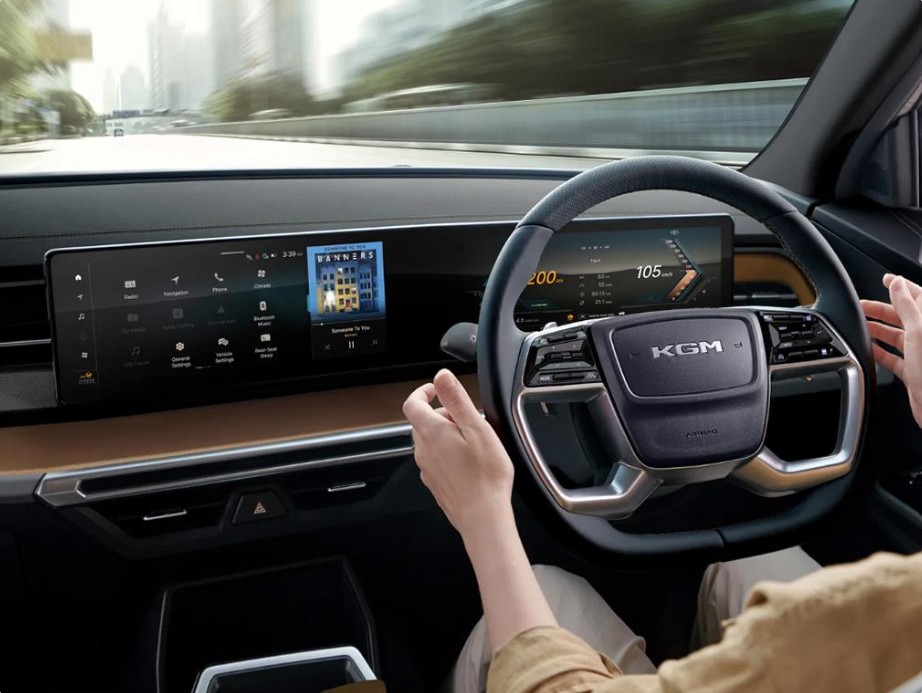
Under the bonnet, the Torres Hybrid pairs a 1.5-litre turbocharged petrol engine with two electric motors, driving through a six-speed e-DHT automatic transmission. The system produces a combined output of 175hp and 300Nm, which propels the 1,670kg SUV from 0–100km/h in about 9.0 seconds, before reaching a top speed of 180km/h. The hybrid system also enables the Torres to tow up to 1,300kg, making it suitable for light caravans and small trailers.
KGM says the hybrid setup allows for up to 95 per cent of city driving on electric power alone, with EV-only operation possible at speeds of up to 100km/h. A three-stage regenerative braking system recovers energy while slowing down. Official fuel economy is rated at 6.1L/100km, which is respectable though not class-leading – rivals like the Toyota RAV4 Hybrid and Nissan Qashqai e-Power remain more efficient on paper.
This marks KGM’s first-ever hybrid powertrain, and it comes with nine distinct driving modes to optimise performance for various conditions. Drivers can select from EV mode for electric-only operation, HEV mode for the best balance between petrol and electric power, or an engine-only mode to conserve battery charge.
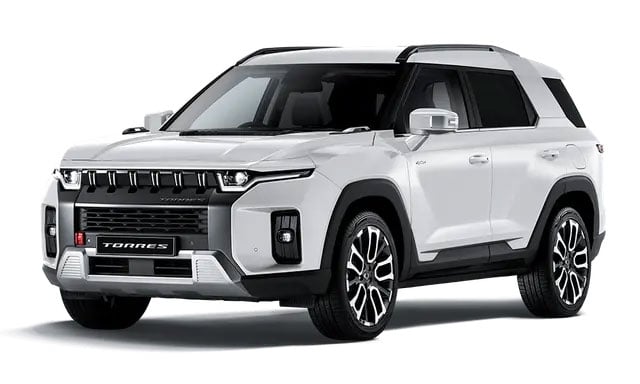
The Torres Hybrid joins the existing petrol-powered Torres and the all-electric Torres EVX, creating a full range that covers every major powertrain type. The K40 trim level includes a host of premium features, such as dual 12.3-inch displays (one for infotainment and one for the instrument cluster), heated and ventilated power-adjustable front seats, dual-zone climate control, a reclining rear bench, and ambient interior lighting with 32 selectable colours.
A comprehensive suite of driver-assistance technologies and safety systems rounds out the offering, including adaptive cruise control, lane-keeping assist, blind-spot monitoring, and autonomous emergency braking.
KGM says the Torres Hybrid will arrive in Australian showrooms by late 2025, with a starting price below $50,000 expected for entry-level grades. Once launched, it will compete directly against established favourites such as the Toyota RAV4 and Mazda CX-5 — but with the added appeal of BYD-developed hybrid technology and KGM’s reputation for robust value.
Plug-in hybrids represent one of the hottest niches in the Australian car market at the moment. Sales of PHEVs are up 144 percent against last year, with many of those sales coming at the expense of pure battery-electric cars. Doesn’t it seem a bit strange, then, that Mercedes-Benz, a company with some track record with plug-in hybrids, has only been able to offer the massively expensive AMG C63 S E performance for those that want the ability to charge overnight?
Until 2021, you could buy the previous generation C 300e but, in a case of history repeating, Mercedes was probably some way ahead of its customers in its push to electrification. Thankfully some measure of rectification has arrived in the shape of the new Mercedes-Benz C 350e. Priced at $98,200 plus on-roads, it’s a mere $100 more than the standard C 300 which performed well in a recent Wheels group test versus the BMW 330i and the Audi S5.
The timing actually works beautifully for Mercedes, given that there’s no Audi A5 on offer right now with plug-in capability, and BMW Australia has quietly deleted the 330e PHEV from its rationalised line-up in order to concentrate on the fully electric i4 eDrive 35. In other words, it’s as if the two biggest rivals have rolled out a red carpet and invited Mercedes to have at it, for the time being at least.
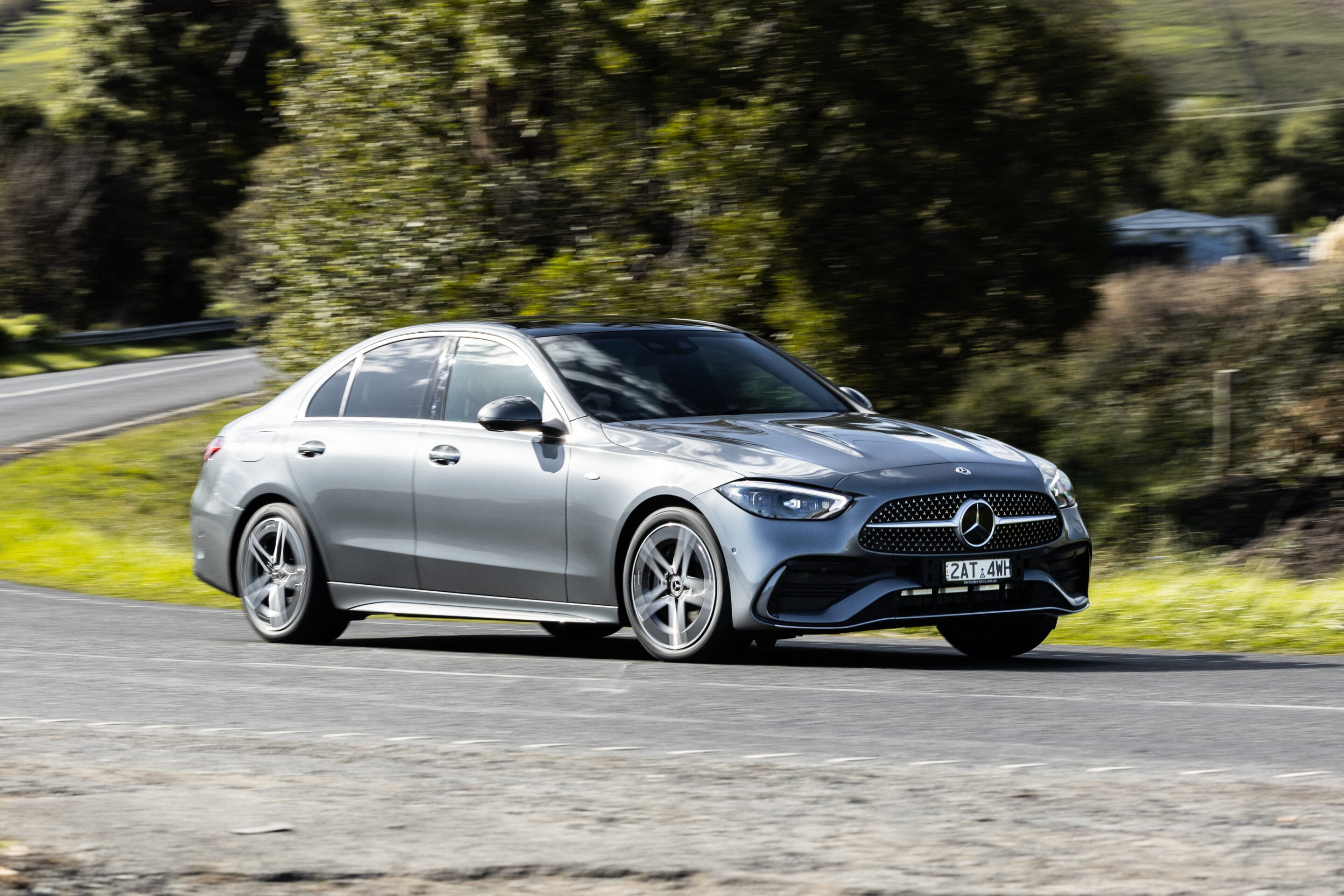
Those with longer memories might well recall that Mercedes have offered a C 350e plug-in hybrid in Australia before. That car arrived in 2015, and didn’t do particularly well, largely due to the fact that it had a claimed electric-only range of 31km, with real-world use hovering around the 25km mark. It was also quite underpowered, the 60kW electric motor struggle to heave 1705kg of car up the road. It’s instructive to see how far the tech has developed over the course of a decade.
Whereas the current petrol-engined C 300 makes 190kW and 400Nm from its 2.0-litre four-cylinder engine, that additional $100 outlay nets you 230kW and 550Nm from the new C 350e. Its 2.0-litre internal combustion engine fronts up with a relatively understressed 150kW and 320Nm while an electric motor chimes in with up to 95kW and 440Nm, both of these power sources combining to drive solely the rear axle.
In terms of equipment, the C 350e mirrors the provision of the C 300, which means AMG Line styling, heated sports front seats with memory function, a flat-bottomed steering wheel, head-up display, Artico trim and ambient lighting for the cabin, a panoramic sunroof and keyless start. It also features as standard a 15-speaker, 710-watt Burmester stereo, Digital Light projector LED headlights (including Ultra Range high beam) and comfort suspension with rear self-levelling. Driving Assistance Package Plus, which promises ‘partially automated driving’, is also standard, as is augmented reality satellite navigation.
There’s also a couple of welcome features on this plug-in model that you might not expect to find. The first is self-levelling air suspension on the rear axle, which keeps the body (and lights) level even with a heavy load in the back. The other is pre-entry climate control which means that you’ll never have to get into a freezing or baking car again. Simply set it to activate five minutes before you’re due to leave and the cabin will be at your perfect temperature.
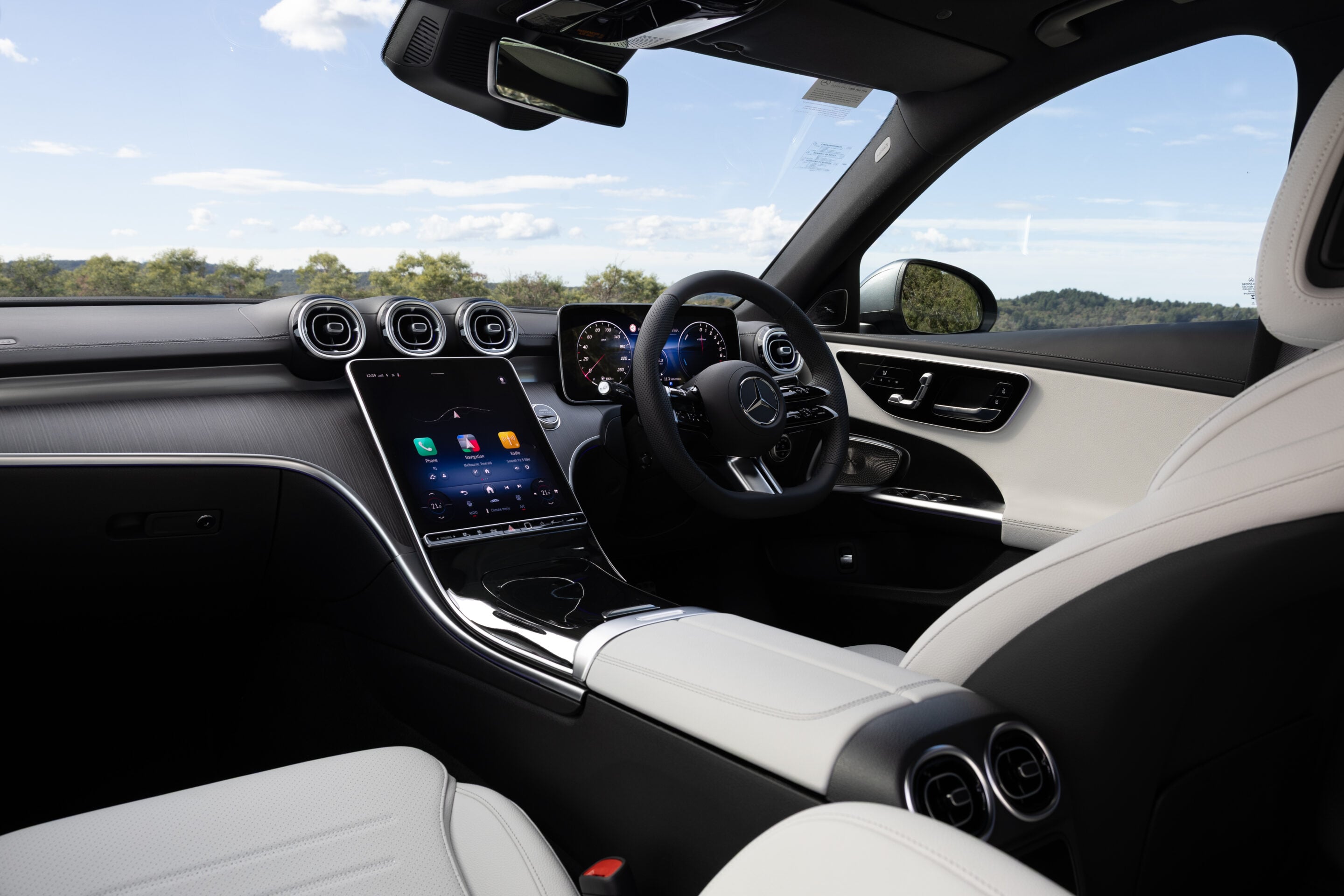
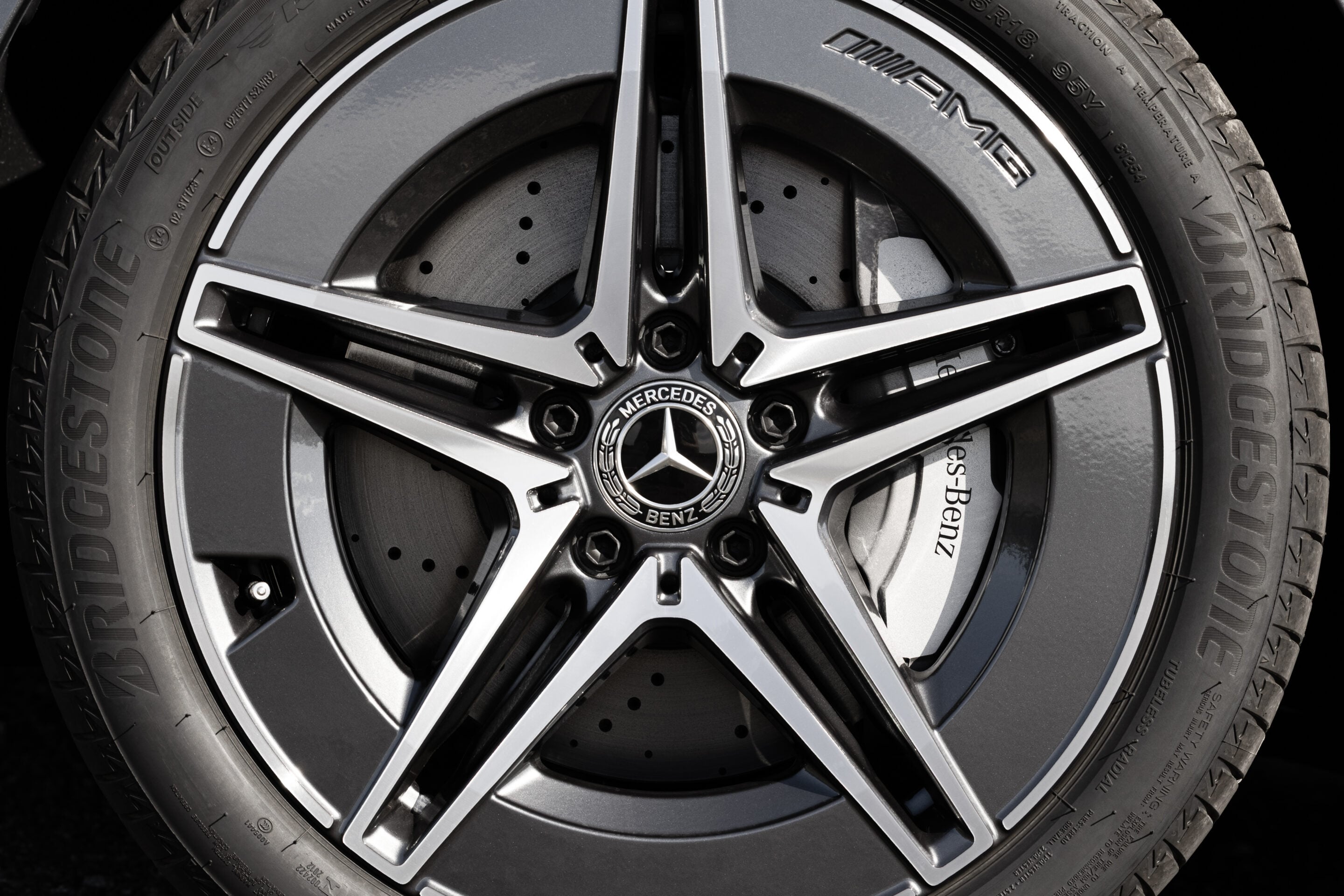
Perhaps the wisest decisions on the C 350e’s spec sheet are the eighteen-inch wheels and the Comfort suspension setup, which together deliver a beautifully polished ride quality. If you’re particular about a smooth ride and haven’t quite decided whether you ought to get the C 350e and the C 300, get the plug-in hybrid. It’s noticeably better. It’s also significantly more cossetting than its SUV sibling; the GLC 350e. If you miss the days when a Mercedes-Benz rode with maturity and an imperious disdain for surface imperfections, then this C 350e emerges as a very welcome throwback.
In certain regards it’s a little bit off that it does, because the C 300 will stay in the range. Mercedes admits that the PHEV might not appeal to older buyers, but should they choose the mechanically more conservative C 300 instead, they’ll be buying a firmer riding car, albeit still not one that feels like a trolley jack on poor roads.
The hybrid system is beautifully polished, offering a trio of PHEV-specific drive modes. Battery Hold retains the charge you have in the 96-cell pouch-type lithium ion battery. Switch to Electric and you can drive on pure electric power at speeds of up to 140km/h. Hybrid mode does exactly what you expect, blending electricity and fossil fuel where required and recuperating smartly to keep adding juice to the 19.53kWh (net) battery pack where possible.
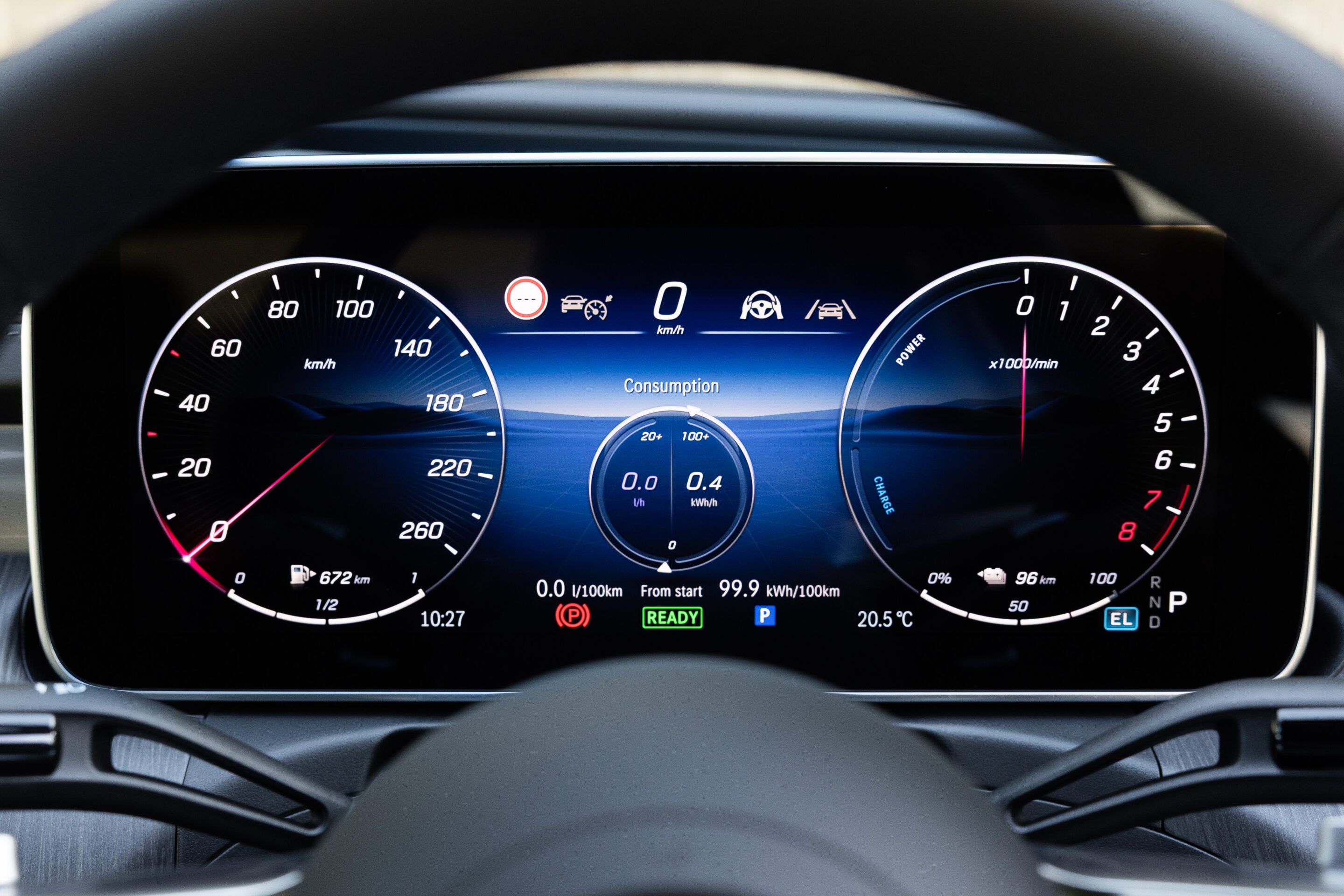
The way the wheel-mounted paddles are calibrated is so smart it needs to become industry standard for PHEVs. When in Sport mode, they function as sequential gear shifters, allowing you to ping up and down the nine-speed transmission at will. In any other mode, their functionality changes to adjustable electric recuperation. Click the left-hand paddle to enter D- mode, which offers maximum re-gen. It’s a great way of keeping speed in check on downhill grades while feeding the battery and acts as a near one-pedal mode, without quite having the ability to bring the car to a dead stop. There’s also a balanced D setting and a more freewheeling D+ mode.
It’s effective too. We set out on our drive loop with 100km of electric range showing. After 86km of driving across a mixture of urban and country roads, it was still registering 66km of range remaining. When fully charged, Mercedes claims an NEDC range of 104km, and given how clever the recuperation system is, that seems achievable. As is always the way with plug-in hybrids, the NEDC fuel consumption figure is almost meaningless, in this case being quoted as 1.5L/100km. The C 350e also requires 95RON fuel and the fuel tank is also a little smaller than that fitted to the rest of the C-Class range, measuring 50 litres versus the usual 66L.
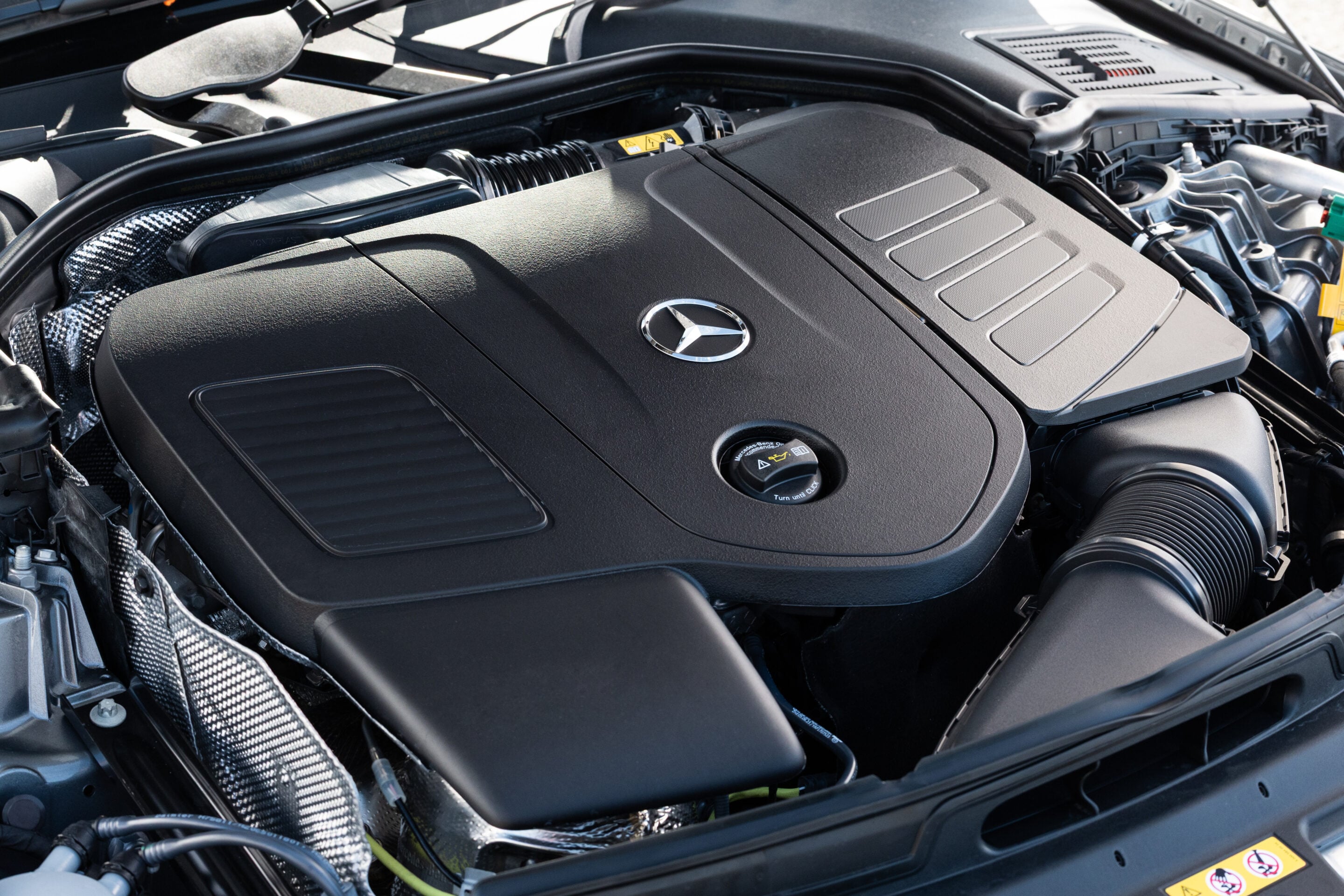
The M254 2.0-litre internal combustion engine is refined enough for the most part, and engages smoothly when under way. It only sounds a bit gravelly when it kicks in at idle. When both the engine and the 95kW electric motor are entrained together, the C 350e accelerates strongly. The factory claims a 6.1-second 0-100km/h time and full throttle will have the 225/40 R18 Bridgestone Turanza T005 tyres at the limit of their available traction.
The steering is well-geared and accurate, in-car refinement is excellent, and the Artico-upholstered sports seats offer decent support when cornering. At times, the engine can hold a gear too high in hybrid mode which can be momentarily annoying, and the first part of the brake pedal’s travel, as it begins to engage the electric motor’s re-gen, doesn’t feel entirely natural. The box that houses the head-up display could also be upholstered in something less reflective, as on sunny days it can cast a reflection on the windscreen right where the driver’s eyes are typically trained.
Accommodation in the vehicle is respectable for this class of car, with the C-Class’s 2865mm wheelbase being 14mm longer than a BMW 3 Series but 37mm shorter than an Audi A5. There’s more space in the rear than both, however, although the back seats feel a little austere with just a set of vents and no USB ports, coupled with a chunky transmission tunnel.
The boot opens electronically and features a set of buttons to automatically drop the rear seats. Unfortunately, the battery is packaged beneath the boot floor, which robs about 40L of space. Normally cutting the available space by less than 10 percent wouldn’t be a make or break issue, but in the case of the C-Class sedan, the boot was already quite long but not very high. Making its height lower still will mean that many typical holiday hardshell suitcases just won’t fit. This is probably the car’s biggest practical shortcoming. Fitting the battery there also means that there’s no spare wheel, so the C 350e relies on the sidewalls of its run-flat tyres to get you out of a spot.
The C 350e is also rechargeable from either an AC home setup or a DC fast charger, although the latter capability represents a $1500 option. At home, using an 11kW wallbox, it’ll charge from empty to full in two hours. On a public DC charger, it’ll recharge at a peak rate of 55kW, which will get you from 10-80 percent in 20 minutes. The Mercedes me Charge Public system also allows you to find and navigate to a Chargefox charger, start the session and pay using either the infotainment system, the Mercedes me Charge RFID card or the Mercedes me phone app.
It’s easy to be seduced by the idea of the Mercedes-Benz C 350e. Refined, relatively inexpensive to run, well equipped, possessed of genuine accelerative punch and yet agreeably discreet, it’s a strong package. The tight boot is the only real demerit point, but if you’re not in the habit of loading your sedan to the gunwales, it’s otherwise hard to fault.
It also serves to remind us how good cars of this type can be. Sales of the C-Class are down by 31.2 percent year on year, with the 3 Series and A4 faring even worse. Registrations of heavier, less efficient SUVs have grown correspondingly. After driving the C 350e, not needing to own an SUV seems a privilege. Try it. You’ll see.
Specifications
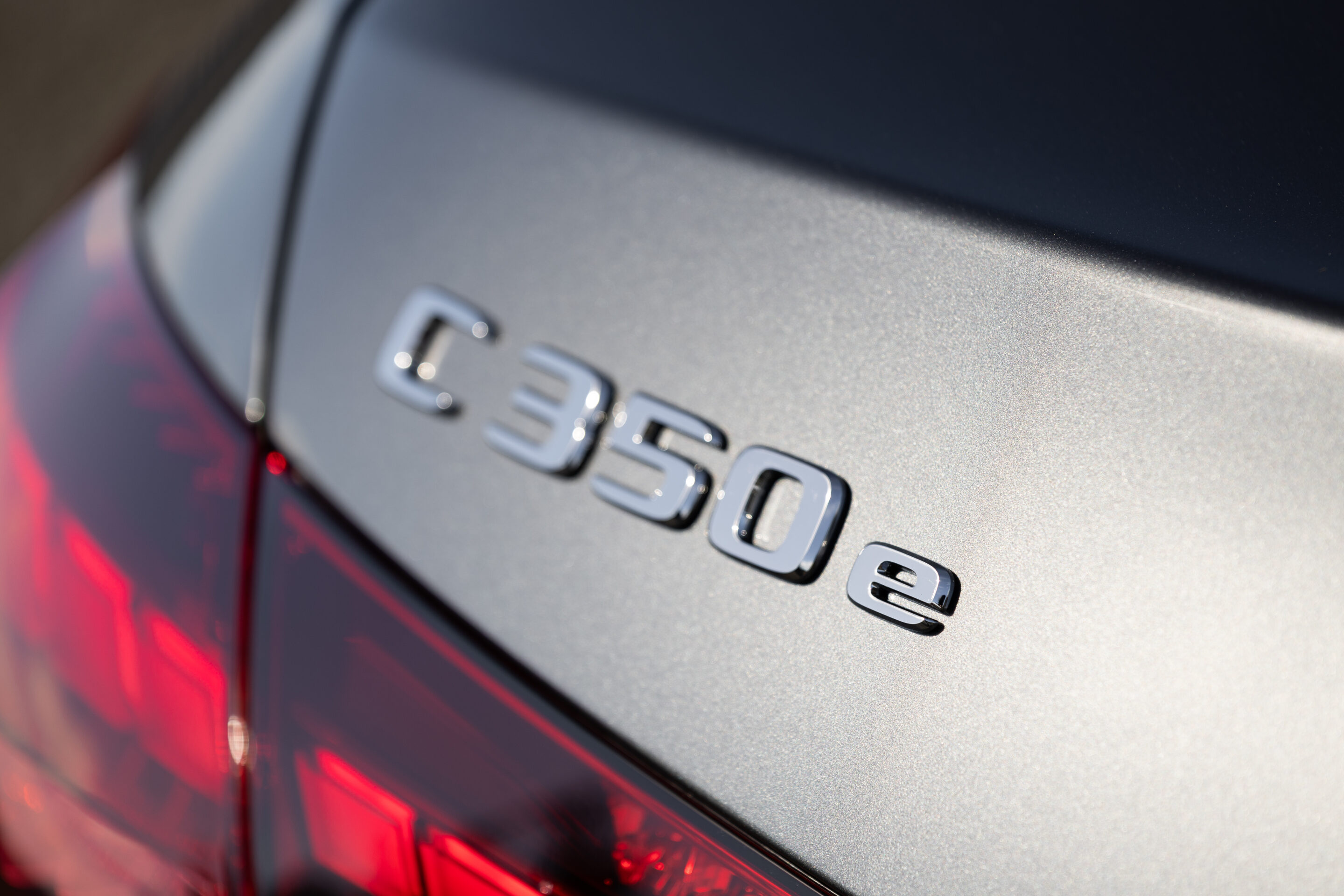
| Model | Mercedes-Benz C350e |
|---|---|
| Price | $98,200 before on-roads |
| Engine | 1999cc 4-cylinder, DOHC, 16v, turbo, plug-in hybrid |
| Peak power | 230 kW |
| Peak torque | 550 Nm |
| Transmission | Nine-speed automatic |
| 0-100 km/h | 6.1 seconds |
| Battery size | 25.4kWh (gross) 19.53kWh (net) |
| Electric range | 104km (NEDC) |
| Fuel consumption | 1.5L/100km (NEDC combined) |
| Fuel tank | 50L |
| L/W/H/WB | 4755/1820/1450/2865mm |
| Warranty | 5yrs/unlimited km |
| Available | Now |
