Best Medium SUVs in Australia
Looking to get into a brand-new mid-size SUV? Our stories below will guide you to the model that best suits your needs:

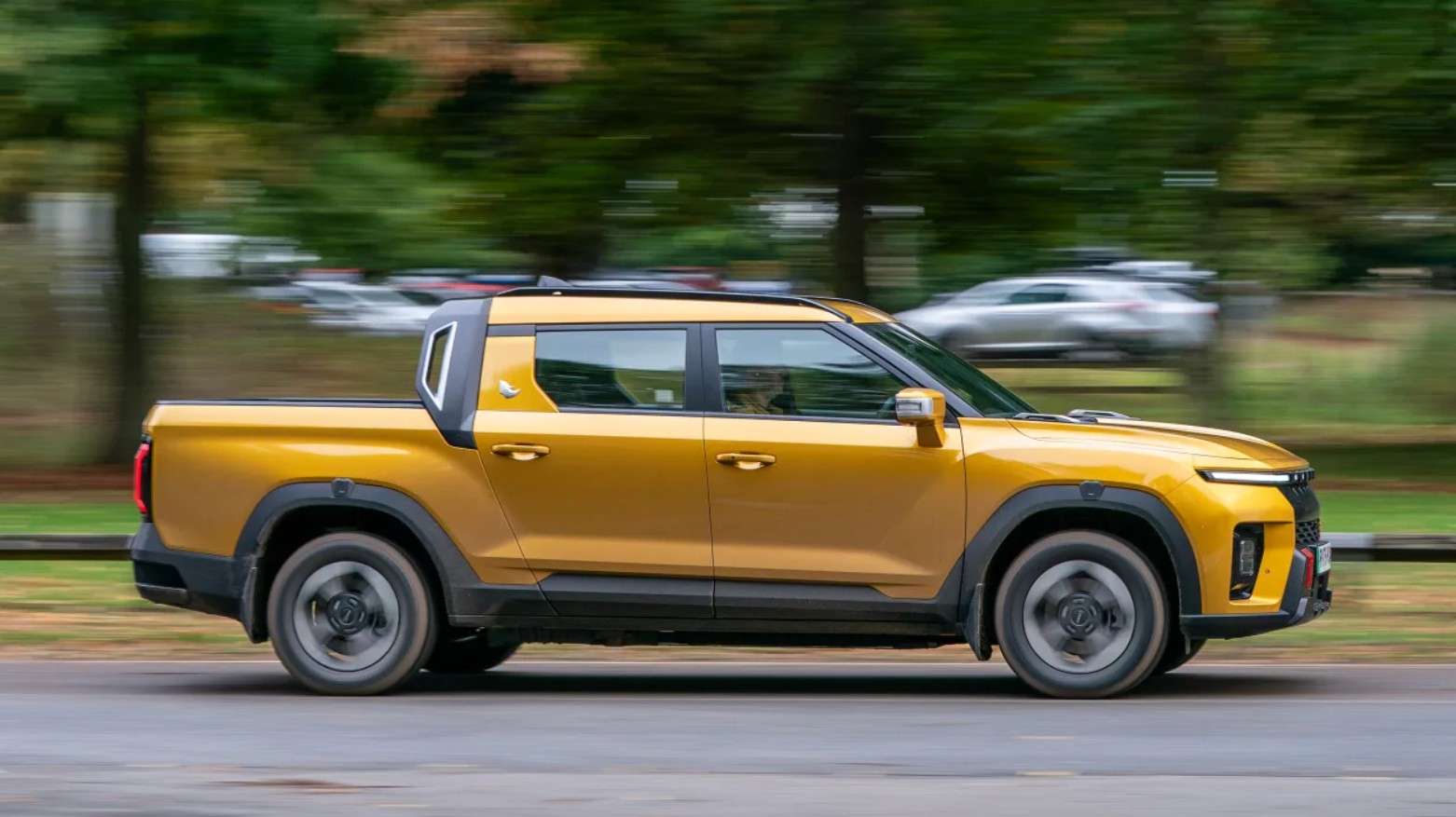
KGM, formerly known as SsangYong, has revealed the Musso EV, an all-electric version of its popular pick-up, promising a blend of comfort, equipment and everyday usability.
The Musso EV enters a segment that has been slow to embrace electrification. Yet early impressions suggest it is one of the most convincing electric utes to date, even if its payload capacity lags behind rivals.
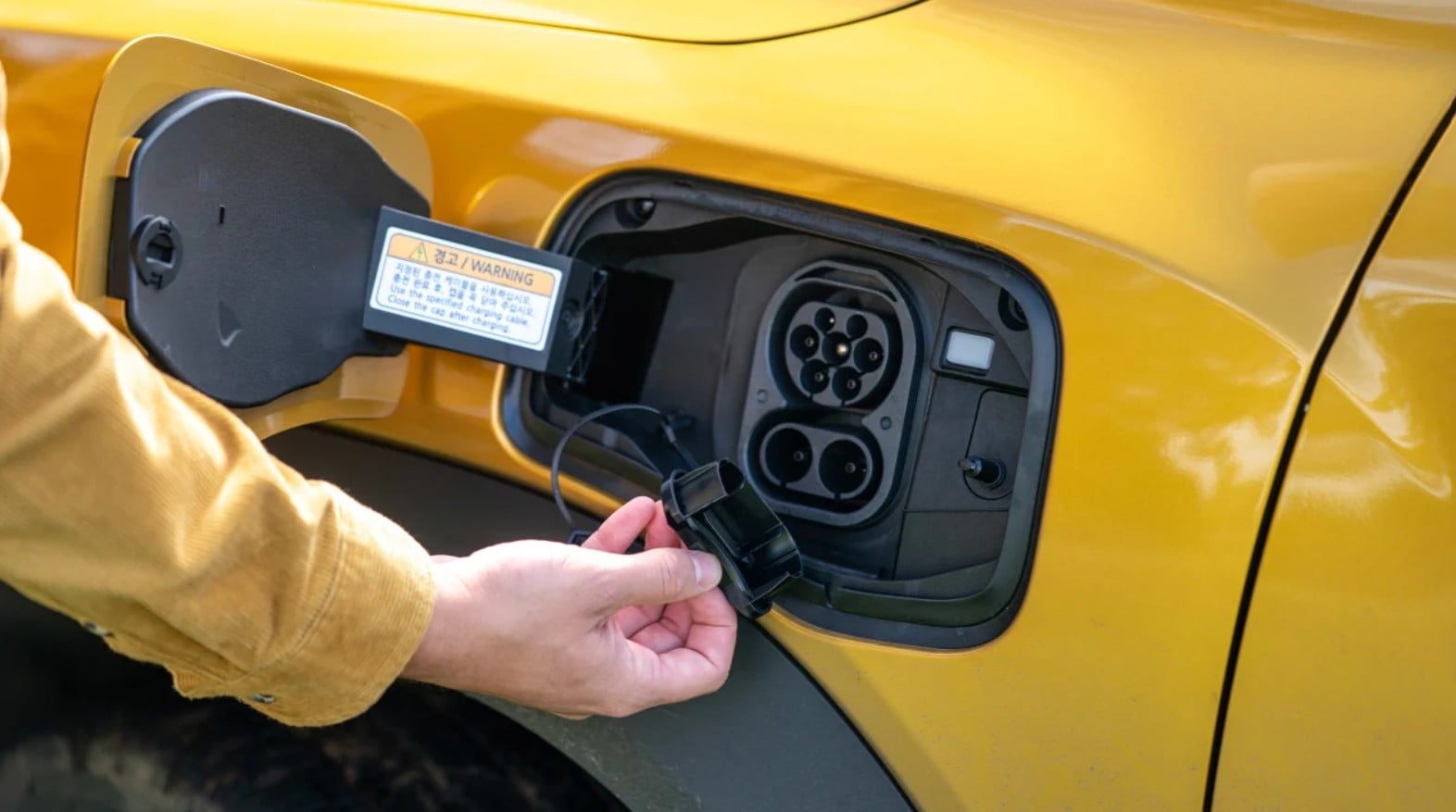
In a drive of a pre-production model in the UK, we experienced the dual-motor, all-wheel drive system delivering 304kW and 339Nm, allowing the ute to sprint from 0–100km/h in around eight seconds. Power is delivered smoothly, with little road noise and only mild wind intrusion at higher speeds. Range is rated at up to 380km on the WLTP cycle, while fast-charging at up to 120kW can replenish 80 per cent of the battery in just over 30 minutes.
A single-motor front-wheel drive powertrain is also expected to be offered in the Australian from early 2026.
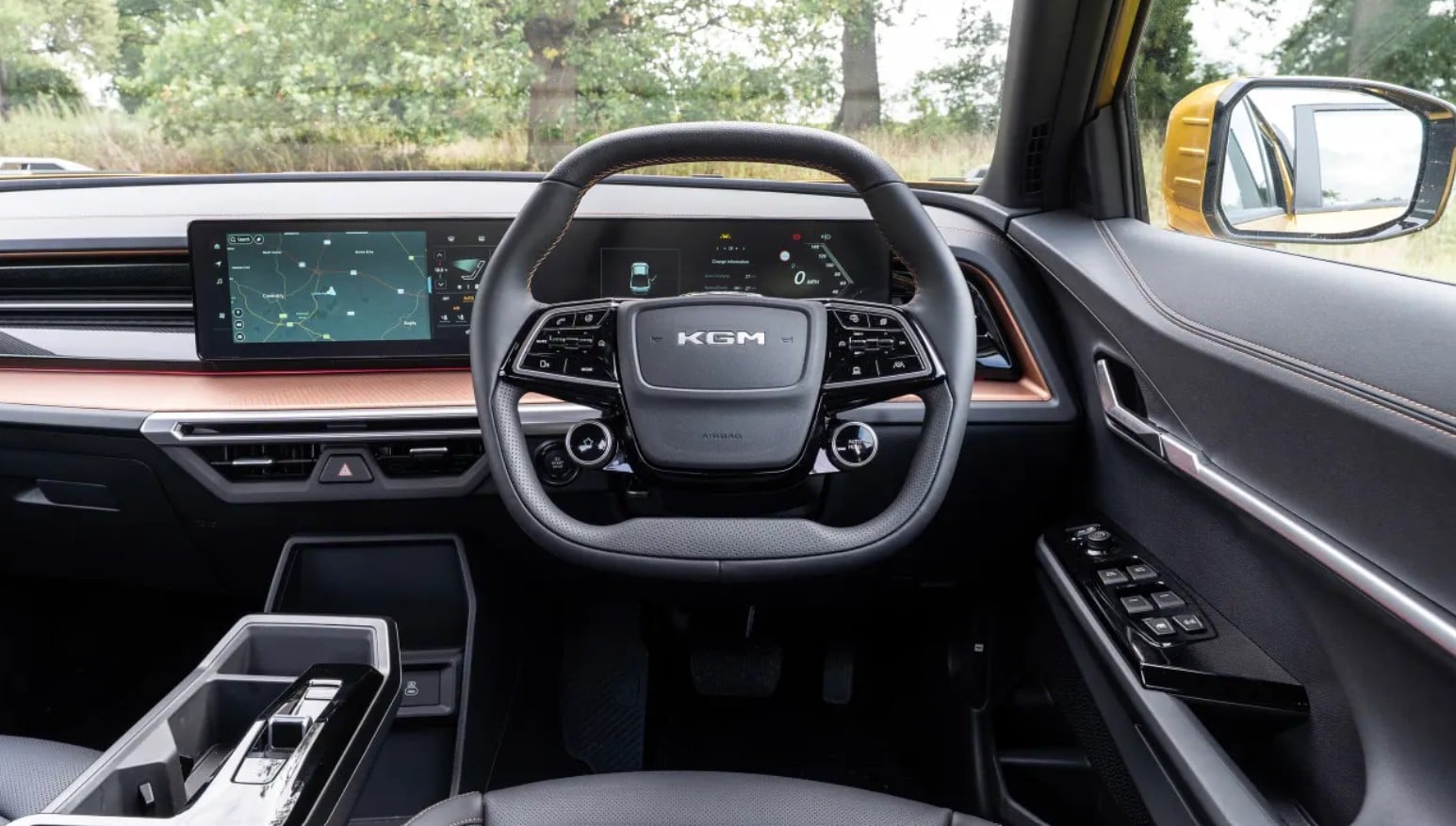
Inside, the Musso EV feels more premium than many competitors. Heated and ventilated Nappa leather front seats with power adjustment are standard, as are heated rear seats, a heated steering wheel, dual-zone climate control and Vehicle-to-Load (V2L) functionality for powering laptops or tools. The cabin is anchored by twin-screen infotainment displays with copper-coloured trim, giving it a distinctly modern feel.
Practical touches include 17-inch alloy wheels, side steps and full LED headlights, alongside a suite of driver-assistance features. However, some systems prove overzealous, particularly lane-keeping assist, which can tug at the wheel unnecessarily, though it can be switched off.
On the road, the Musso EV is comfortable and composed, with a multi-link rear suspension providing a smoother ride than traditional leaf springs. Yet that design decision limits its payload to just 690kg, well below the tonne typically expected in this class. Braked towing capacity is rated at 1,800kg, also behind diesel rivals.
Still, the Musso EV’s quiet driving experience, generous cabin space, and strong equipment list make it appealing for buyers not needing maximum payload. For urban users and families, the ability to travel more than 380km per charge with much lower running costs than diesel could prove persuasive.
If KGM can refine its load-carrying ability in future updates, the Musso EV could emerge as one of the most compelling options in Australia’s growing electric ute market.
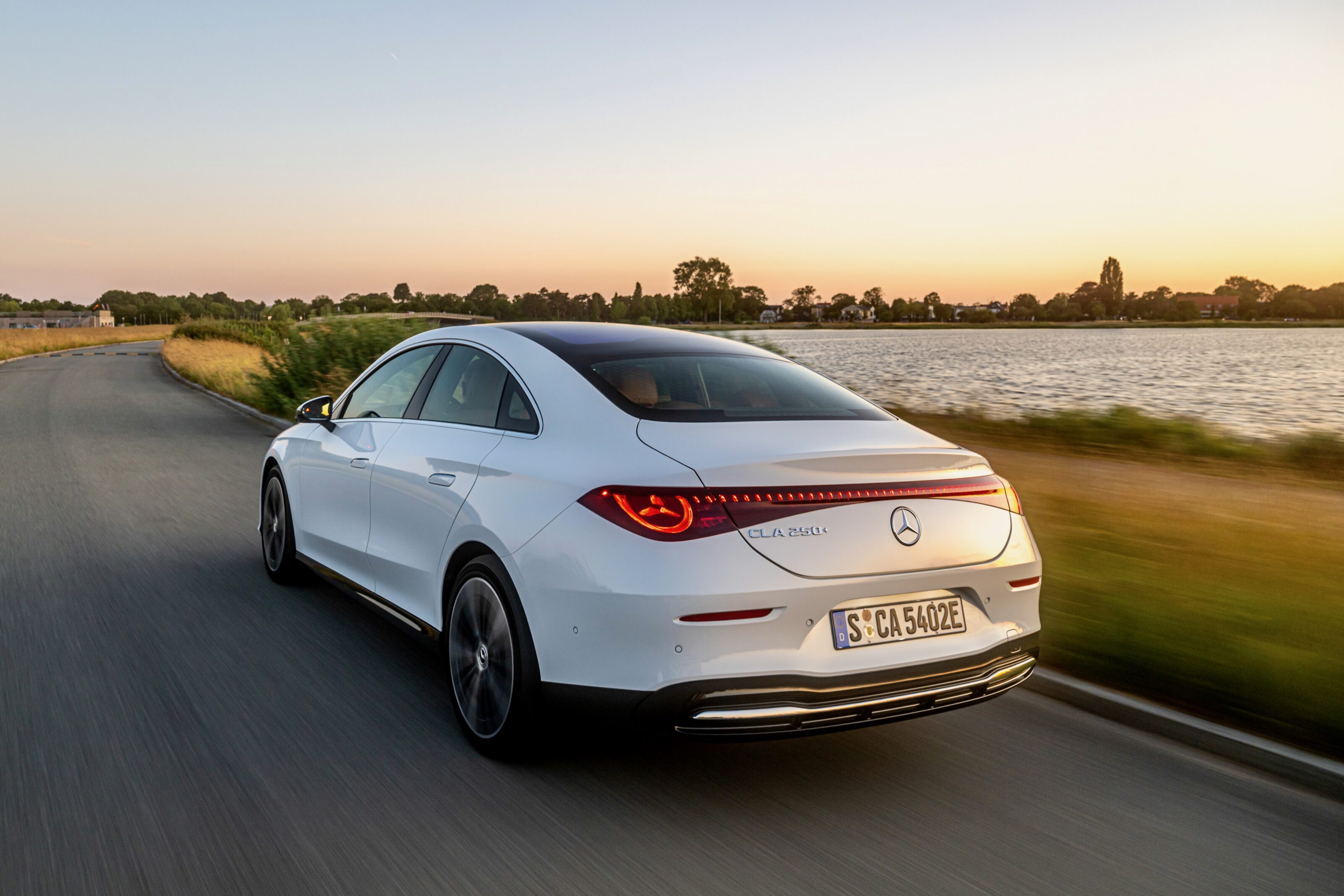
The world has come a long way from the first mass production electric cars like the first Nissan Leaf and its 160km of range, with the latest Mercedes-Benz CLA offering a WLTP-rated range of 792km. Its these big improvements in range that Mercedes-Benz Chief Technology Officer Markus Schäfer wondering how much range buyers actually need.
“I think that [the new electric CLA’s range of almost] 800km is a great offering, and it’s achievable in real life too. Now thanks to latest in battery technology, regardless of weather, we’re seeing higher ranges than ever before,” he said.
“The question is: do we really need more than 800km of range? And you have way faster charging than before too. That’s something we’re going to figure out with our customers, if they want and need more than that.”
Asked how much more range Mercedes-Benz could get out of current technology EV products, Schäfer said that battery and efficiency improvements were what the company is currently exploring versus simply adding more battery.
“Of course, you can push the battery cells up, the battery sizes up and add more range, but do customers actually need that? That also adds weight, charging time and cost to both us and the customer. You can have a 200kWh battery for over 1000km of range, but the cost and weight would be too high.”
As with today’s model lineup, the brand will still offer a wide range of drivetrains in the future, and while there will still be customers who want the maximum range possible, the company is predicting that the majority will choose mid-range batteries instead.
“I think for mainstream, volume models that 600km is the sweet spot for most people and that take range in this sort of segment [the CLA] would be most popular. But there are still customers who want the 800km range. Today you have a C 180, a C 400, a C 43 and so on, a broad offering, but the highest take rate will take happen between 500km – 600km.”
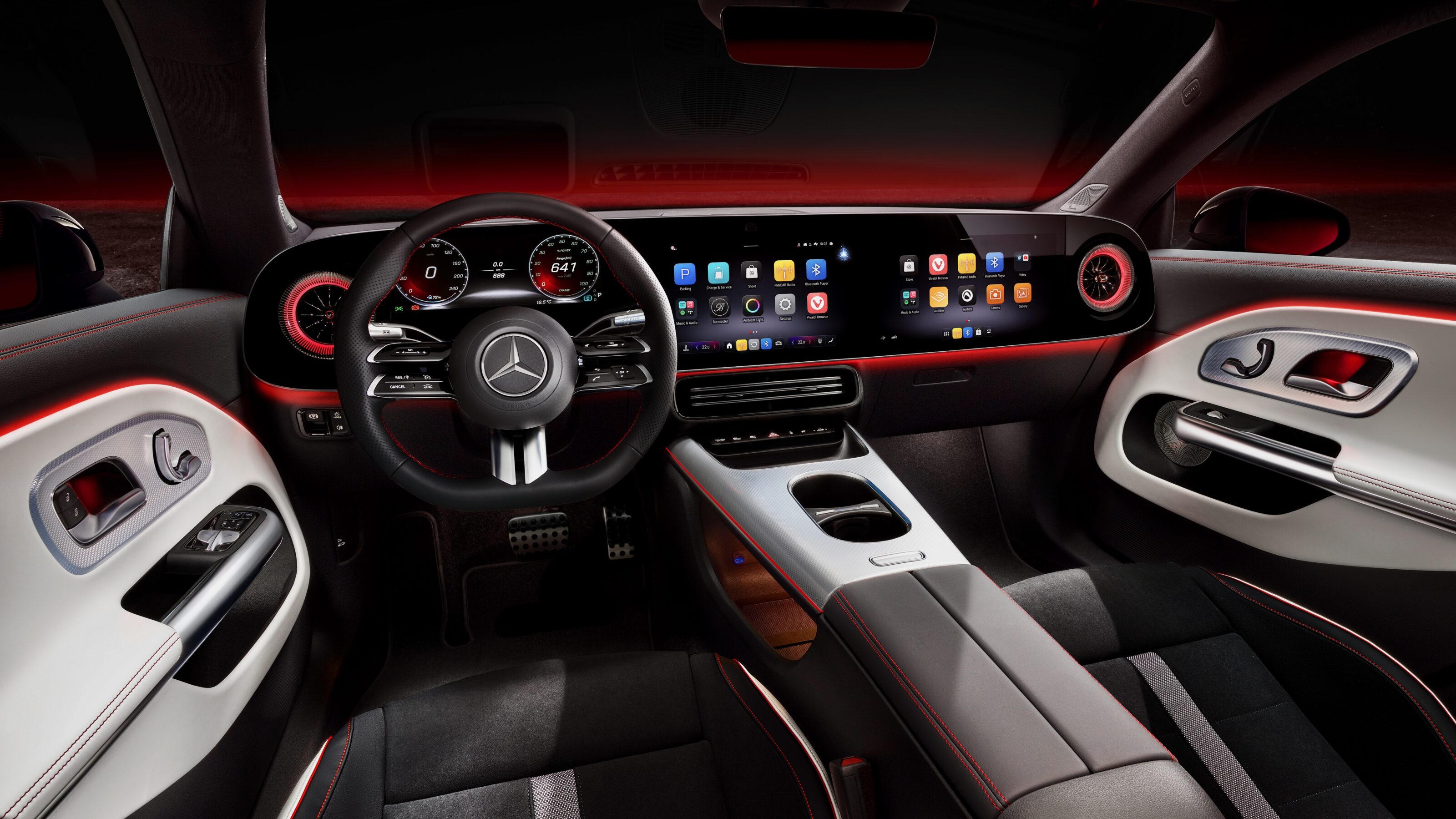
The biggest factor influencing which drivetrain is chosen, according to Schäfer, is charging infrastructure and how much charging speeds have improved.
“People may still choose 500km of range from their car, but 500km of range today is not the same as 500km of range even five years ago thanks to charging speed improvements – the CLA can now add 325km of range in just 10 minutes of charging, for example, so why choose the longest range?”
The next-generation CLA, with both hybrid and fully electric drivetrains, will launch in Australia
sometime in 2026.
Everyone loves a fast wagon. If you’re an enthusiast that has to make concessions to everyday life, it’s a chance to have your cake and eat it too.
Whether it’s taking the kids to sport or hassling supercars at a track day, the right fast wagon can answer every motoring question along with earning plenty of cool points from fellow enthusiasts.
While the SUV onslaught over the last couple of decades has thinned the ranks, there have still been some exceptionally desirable five-doors available and here are our top 10, presented in alphabetical order.
To put a little twist on things, they had to be available in Australia and only one vehicle per manufacturer, otherwise you’d end up with four or five Audis. Let’s get stuck in.
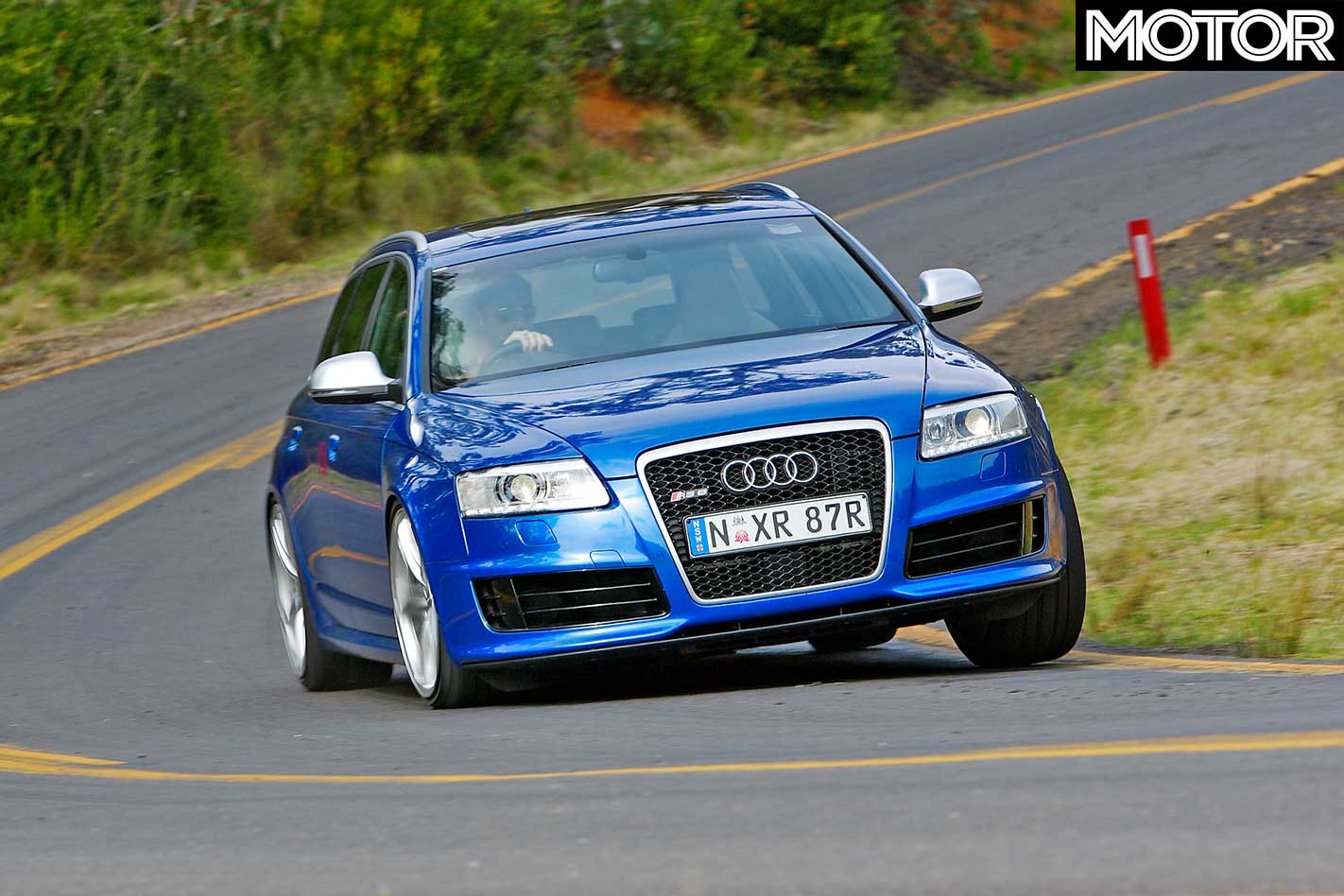
Speaking of Audis, you can make a strong case that no manufacturer does a fast wagon better than Audi. From the original RS2 through generations of RS4, not to mention some cracking ‘S’ cars, it’s the RS6 that arguably best embodies the ethos.
Any and all are great, but if we have to pick just one it’s the C6. It’s possibly the plainest looking, which only makes the fact it has a 5.0-litre V10 WITH TWO TURBOS developing 426kW/750Nm all the more mad.
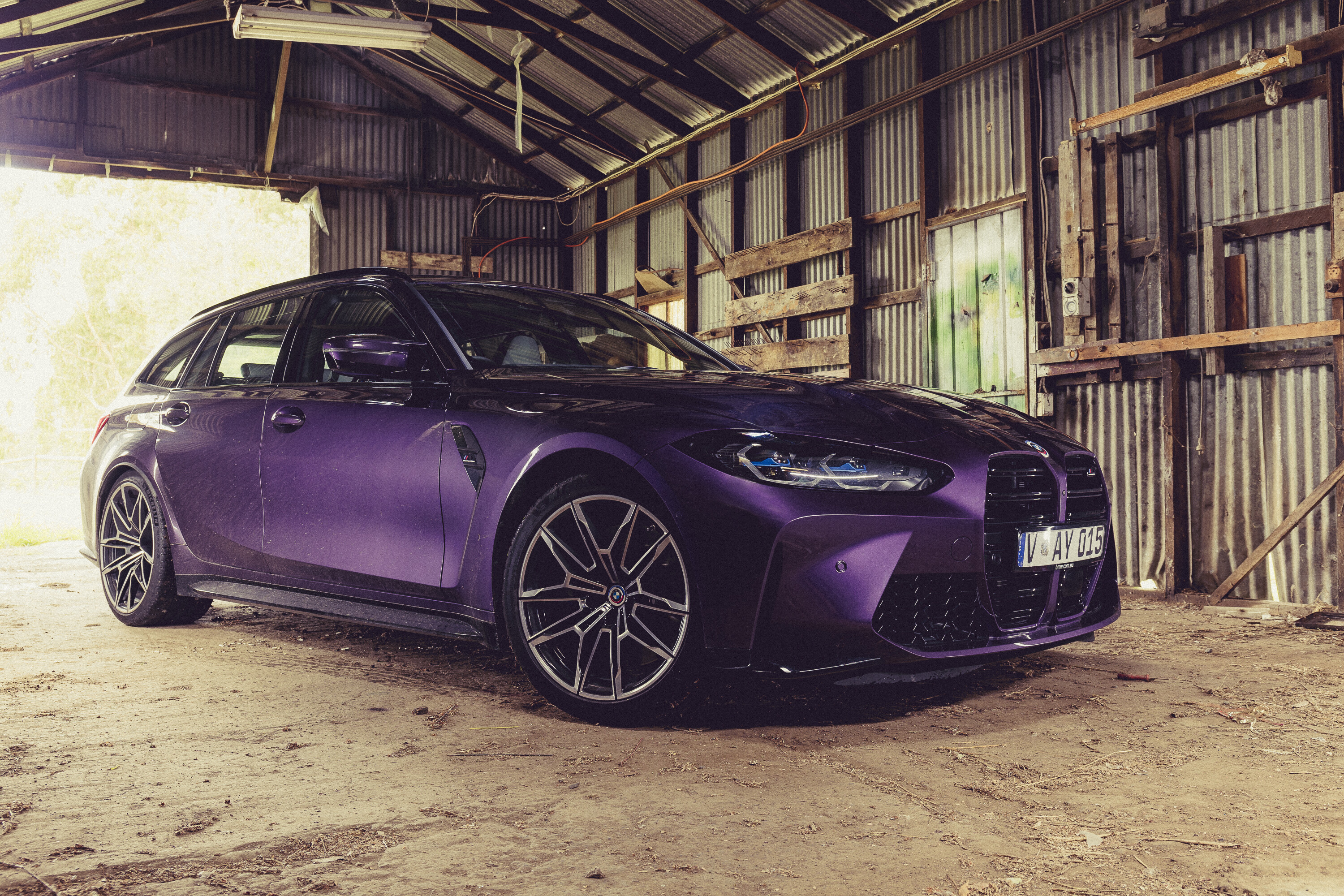
Why did it take BMW so long? It’s worth mentioning Alpina here as its B3 and B5 were great cars, but the latest G81 M3 Touring is just so right.
The combination of (heavily) rear-biased all-wheel drive, that fabulous twin-turbo straight-six and carefully honed M Division dynamics make it a driving weapon yet it’s more than adept at handling the daily grind. Not to mention it looks the absolute business.
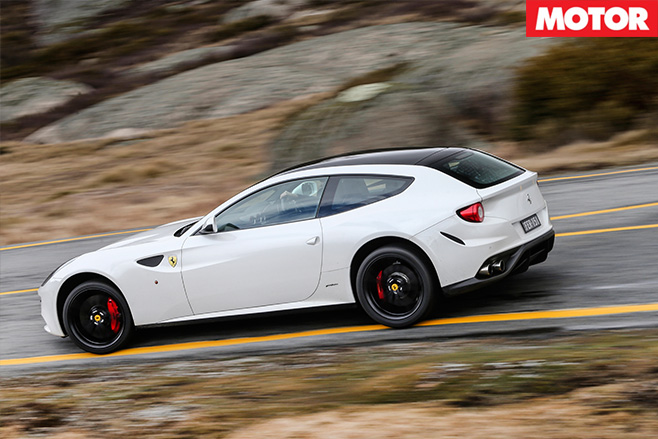
Is this a wagon? Or a hatch? Who cares, it has a 485kW/683Nm 6.3-litre V12 and can hit 335km/h flat-out while carrying four in comfort. And the FF isn’t just a four-seater on the spec sheet, either, with genuine space for adults in the rear and a decent boot.
Combine this with the clever all-wheel drive system and you have a Ferrari for four seasons. It was superseded by the GTC4 Lusso that lifted outputs to 507kW/697Nm and kept Ferrari free from SUVs for another five years.
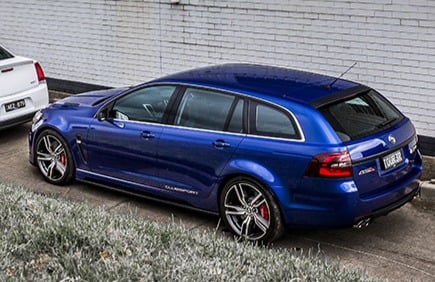
Driving purists might point to the naturally aspirated manual versions of the HSV Clubsport Tourer produced over the years, but for sheer impact it’s hard to go past 400kW and 671Nm of supercharged 6.2-litre V8.
Sadly, while HSV would’ve loved to have continued to offer a manual, Holden stopped building manual VF II wagons, leaving the six-speed auto as the only option for the Gen-F2 range. Regardless, it was a monster of a car with plenty of room for spare rear tyres.

Wagon-loving Mercedes fans are spoiled for choice. The rarity of the W202 C43 or W211 E55 Estates, the attitude of the W204 C63, but it’s the combination of both that gives the CLS63 S Shooting Brake the nod.
The looks might be an acquired taste, but a 430kW/800Nm 5.5-litre twin-turbo V8 has universal appeal, especially when driving just the rear wheels, something only right-hand drive markets got to enjoy, left-hookers being 4MATIC.
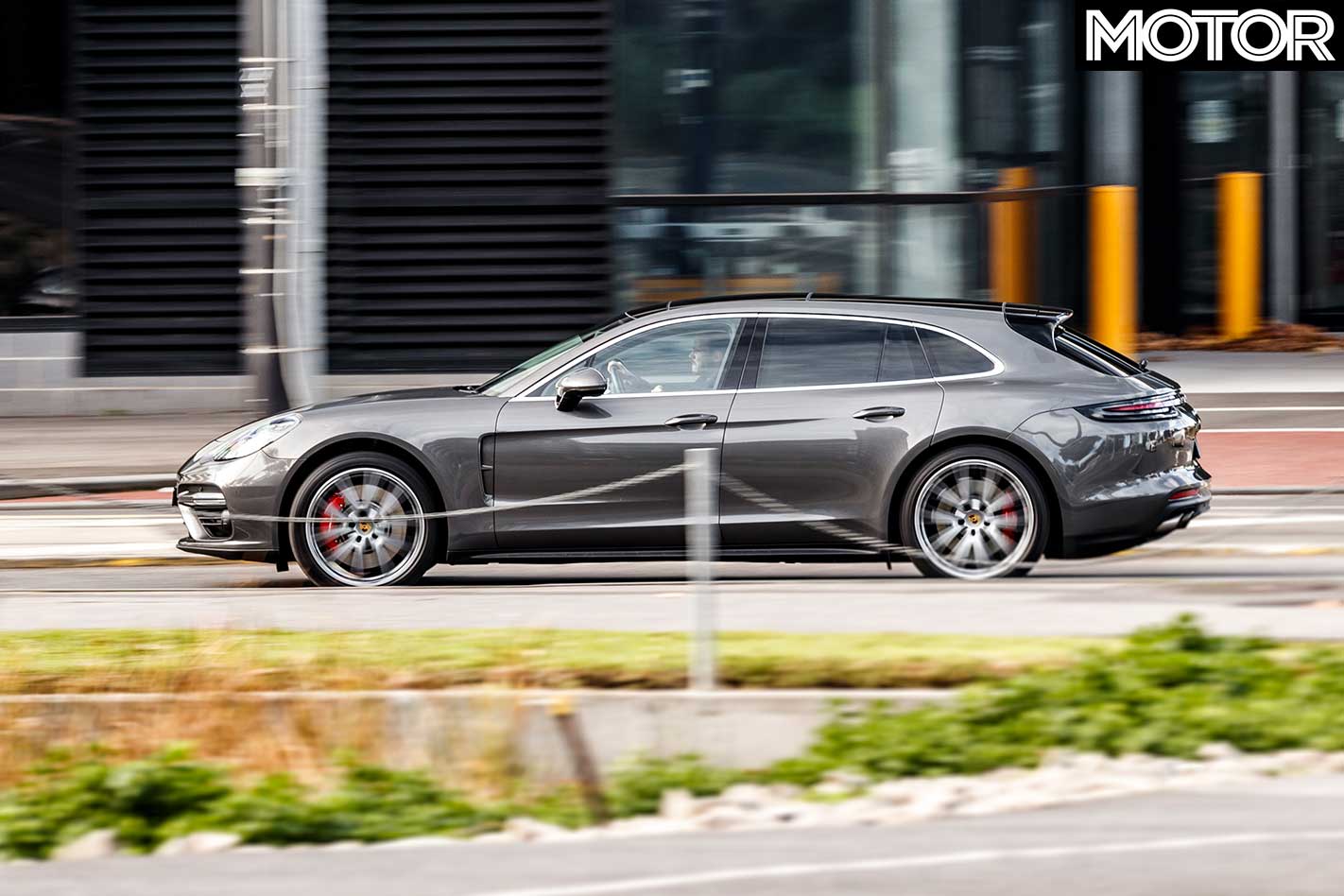
The Porsche Panamera Turbo Sport Turismo might prove the phrase false by being not only a jack of all trades but a master of them, too. Unbelievable speed – we clocked 0-100km/h in 3.36sec when we tested it – typical Porsche dynamics yet room for the kids and their cricket gear, a beautiful interior and excellent ride comfort.
It’s a little configuration dependent, but possibly the Sport Turismo’s greatest trick is making a Panamera look good, not traditionally a strong suit of Porsche’s luxo limo. Sadly, insufficient demand led to the wagon being discontinued for the third-generation Panamera.
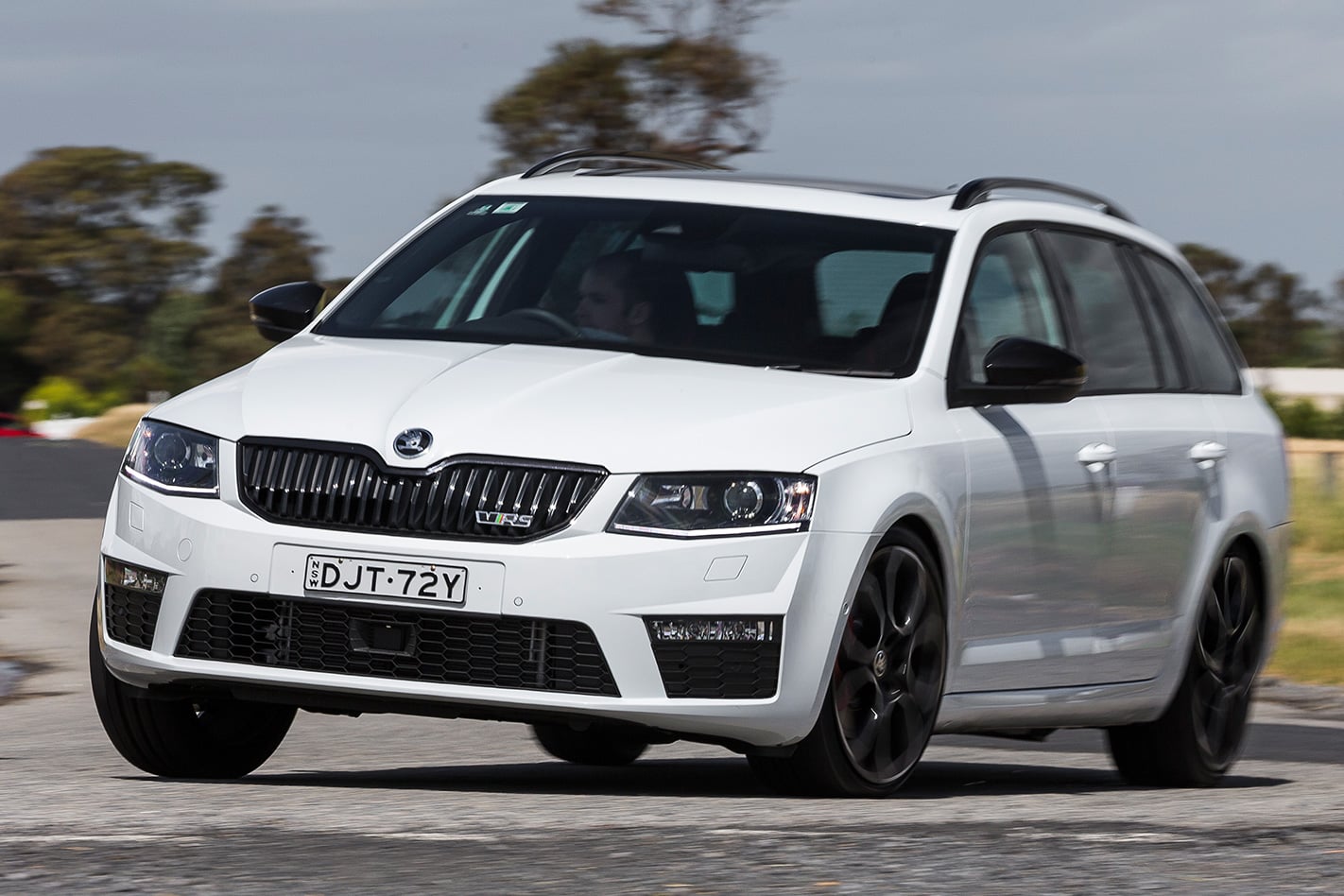
If you don’t drive a Skoda Octavia RS Estate, are you even a cyclist? Skoda’s sponsorship of professional cycling over the years has resulted in a roof-mounted carbon race bike practically being a factory option.
It also marks the driver as quite the connoisseur, as for almost 20 years the Octavia RS has offered deceptive pace, excellent value, exceptional practicality and finely honed dynamics in a package that flies under the radar, itself a handy attribute.
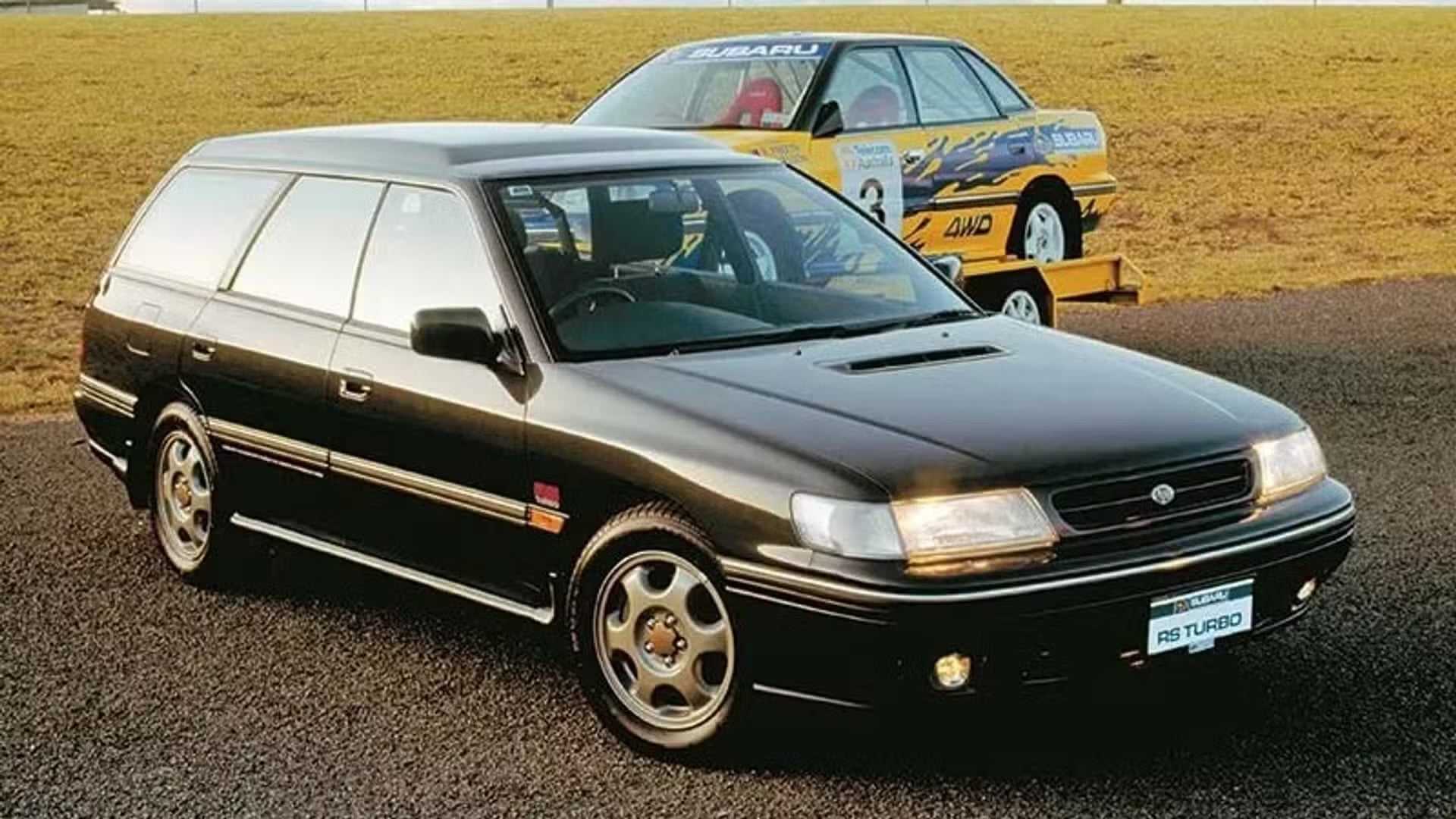
Before there was the WRX, there was the Liberty RS Turbo, a tough as nails – just take a look at how many have 300,000km+ – four-wheel drive flyer that established Subaru as a legitimate performance brand and laid the foundation for what would become next.
Producing 147kW/260Nm, it could keep anything V8 in sight in a straight line and leave it for dust in the corners, especially if rain or dirt was involved. The more ‘grown-up’ Liberty also avoided the reputation – and clientele – that the later WRX would attract.
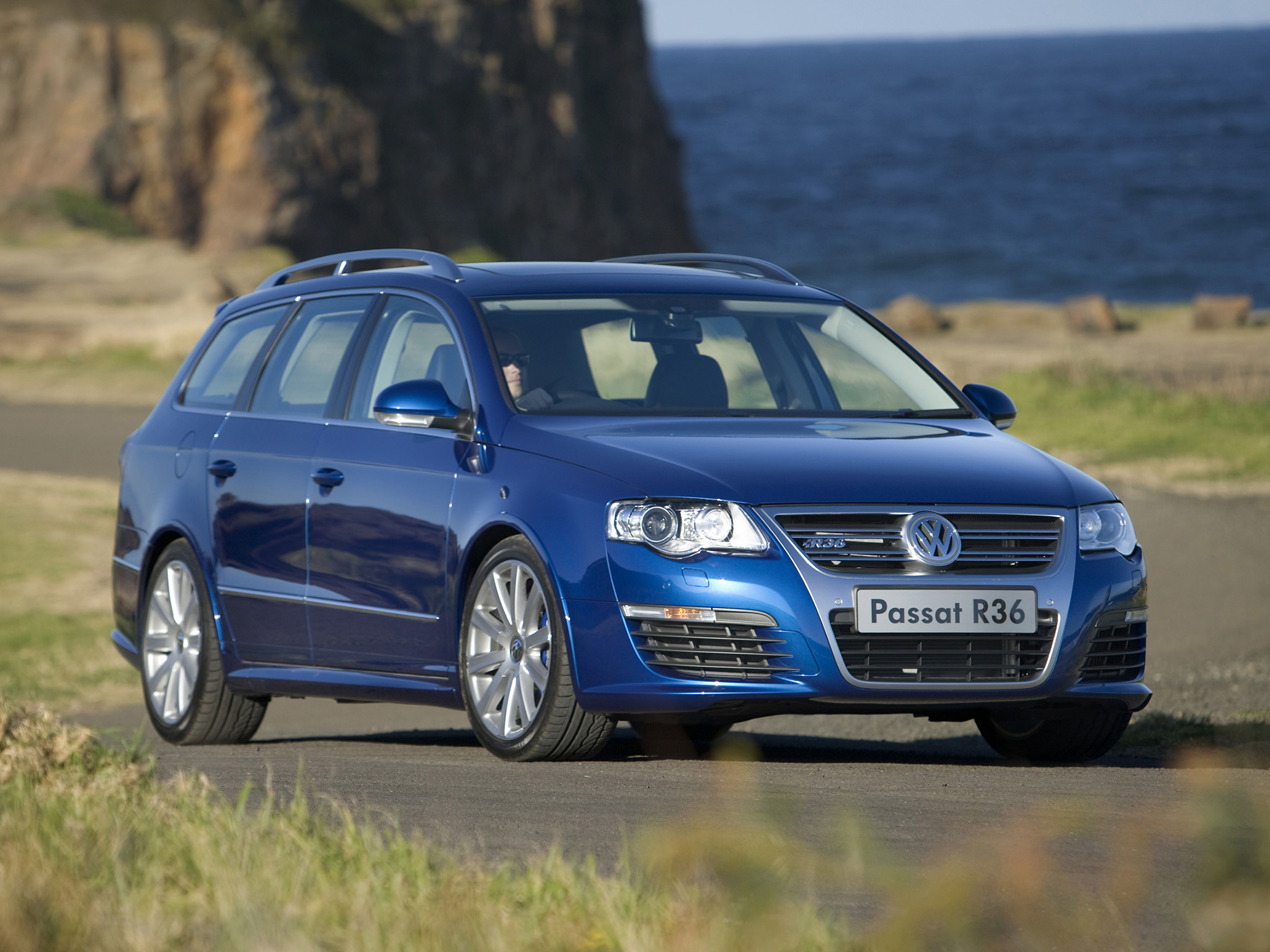
Once again fast five-door Vee Dub fans have an embarrassment of riches to choose from: Arteon Shooting Brake, Passat 206TSI Wagon, Golf R Wagon, there are no bad choices here, but our selection is the Passat R36.
From an era when the Volkswagen Group seemed determined to offer every conceivable engine configuration – this era of Passat had 13 different engine options! – it teamed a 220kW/350Nm 3.6-litre V6 with all-wheel drive, handsome styling, plenty of luxury features and one of those new-fangled double-clutch gearboxes.
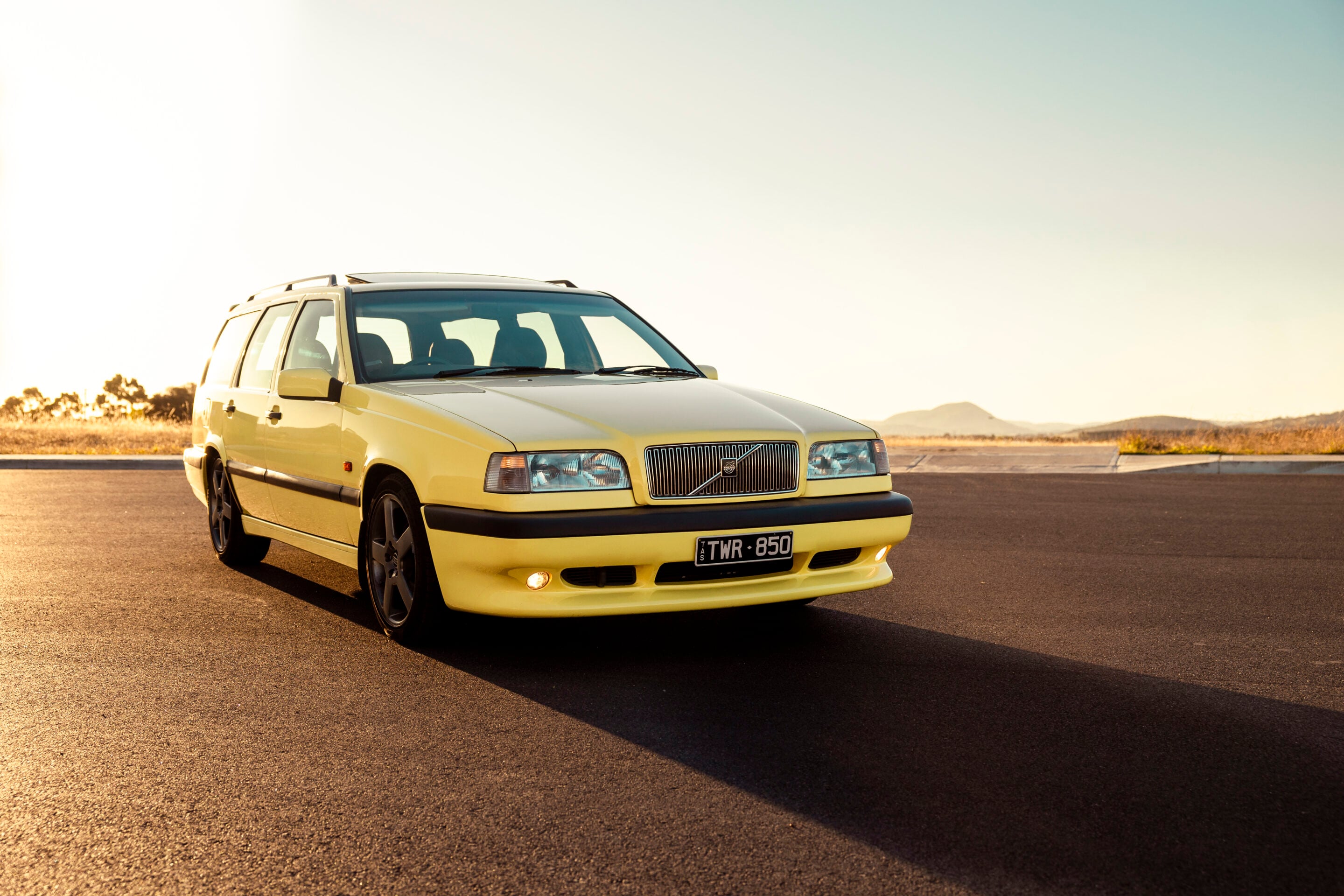
Australia knew about fast Volvos. Kiwi Robbie Francevic won the 1986 Australian Touring Car Championship in a 240T, but no one, in Australia or otherwise, was prepared for when Tom Walkinshaw Racing took the covers off an 850 Estate race car for the 1994 British Touring Car Championship.
A year later Tony Scott ran one of the five-doors in the Australian Super Touring series, giving some race cred to the extremely limited – just 25 examples across sedan and wagon – 850 T5-R examples available to the public.
In 1996 the 850 T5-R became the 850R, outputs from the turbocharged 2.3-litre five-cylinder increasing from 177kW/300Nm to 185kW/330Nm, an awful lot to put through just the front wheels. For noise and cool factor, though, it’s hard to beat.
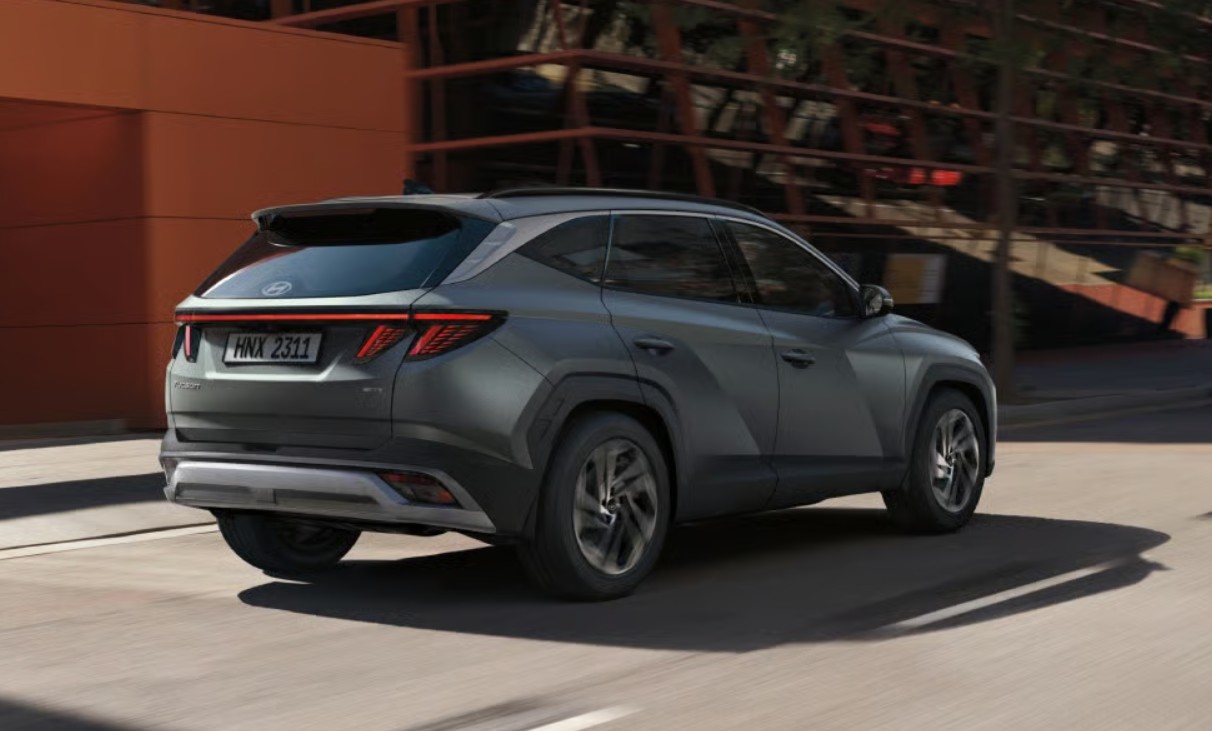
The Hyundai Tucson has been named the Wheels‘ Best Medium SUV 2025, cementing its place as one of Australia’s most popular family vehicles.
Now in its fourth generation, the Tucson has become Hyundai’s second-best-selling model locally and the country’s fourth-best-selling medium SUV overall this year. Its winning formula blends value, technology, comfort and a hybrid-focused line-up.
A significant shift for the latest Tucson is its emphasis on hybrid power. Hyundai has streamlined the range, retiring the 1.6-litre turbo-petrol engine and offering buyers a choice between a naturally aspirated 2.0-litre petrol or the petrol-electric hybrid.
For those wanting all-wheel drive or the flagship Premium variant, the hybrid is the sole option – a benefit, not a compromise. Producing 169 kW and 350 Nm, the hybrid combines strong performance with impressive efficiency, rivalling Toyota’s RAV4 Hybrid while offering availability across every specification, something its Kia Sportage cousin cannot match.

The Tucson’s cabin is another highlight. The recent mid-life update introduced a crisp 12.3-inch touchscreen running Hyundai’s new ‘ccNc’ infotainment software, with features such as wireless Apple CarPlay and Android Auto, live connected services and over-the-air updates.
Practicality is a stand-out for the Tucson: the rear seat area is among the most spacious in class, while the boot offers 582 litres of luggage capacity, expanding to a cavernous 1903 litres with the rear seats folded.
On the road, the Tucson impresses with its refined driving manners. The hybrid delivers smooth acceleration in urban settings and maintains composure on highways, with handling tuned for Australian conditions. While its efficiency advantage shines in the city, it remains a confident long-distance tourer.
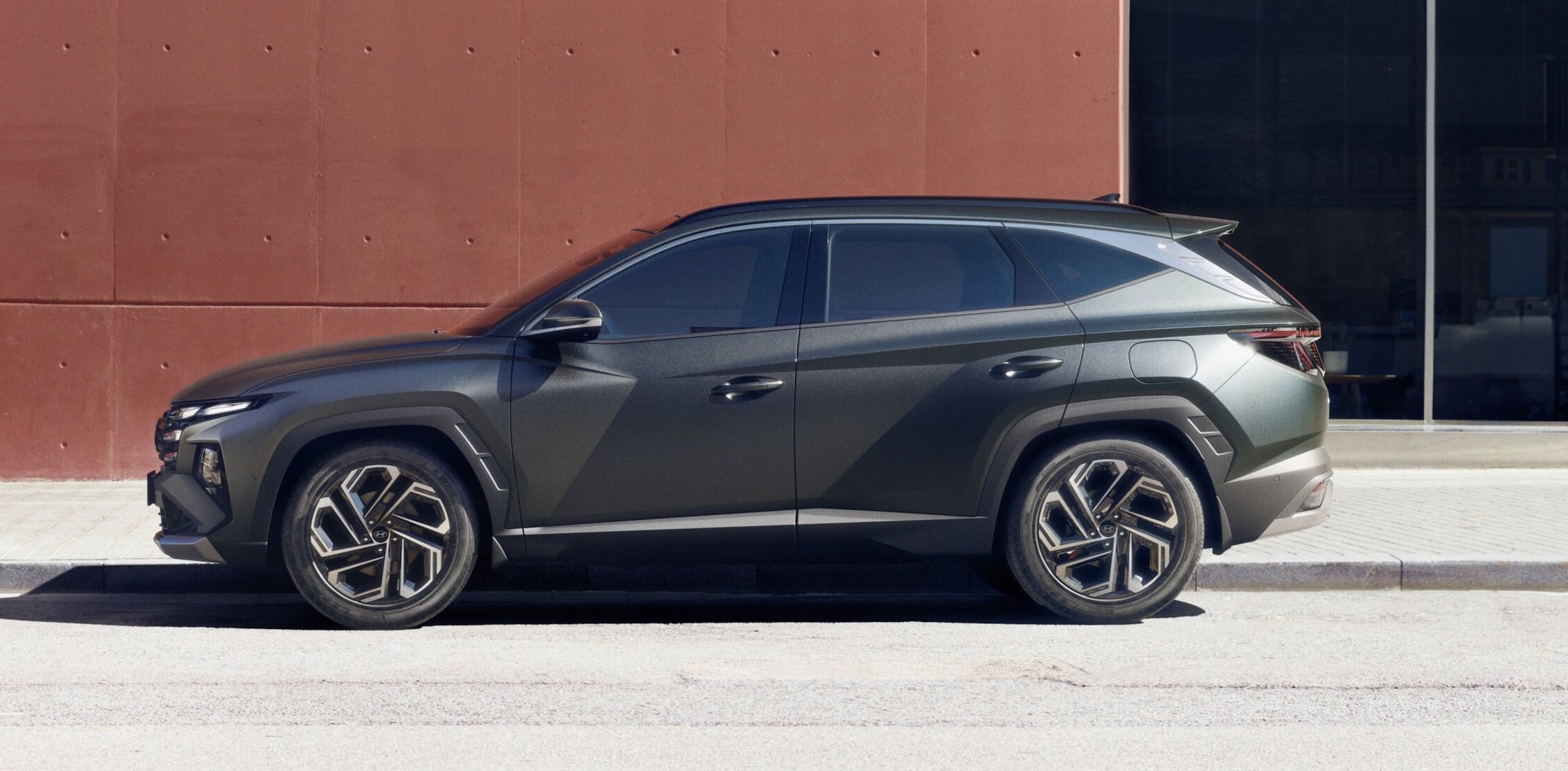
Value also plays a big role in the Tucson’s appeal. Pricing starts at $38,100 plus on-roads, undercutting some rivals, and Hyundai’s servicing costs remain lower than Kia’s despite shared mechanicals. For vehicles registered after June 1, 2025, Hyundai now offers a seven-year warranty, provided all scheduled services are carried out at an authorised Hyundai dealer.
In awarding the Tucson, the Wheels judges highlighted its combination of efficiency, practicality, and everyday liveability. The removal of the turbo-petrol option only strengthens the case for the hybrid, making it the smart choice for most buyers. Add in roomy packaging, advanced technology, competitive pricing and low ownership costs, and it’s clear why the Hyundai Tucson has emerged as the standout in Australia’s most competitive SUV segment.
Looking to get into a brand-new mid-size SUV? Our stories below will guide you to the model that best suits your needs:
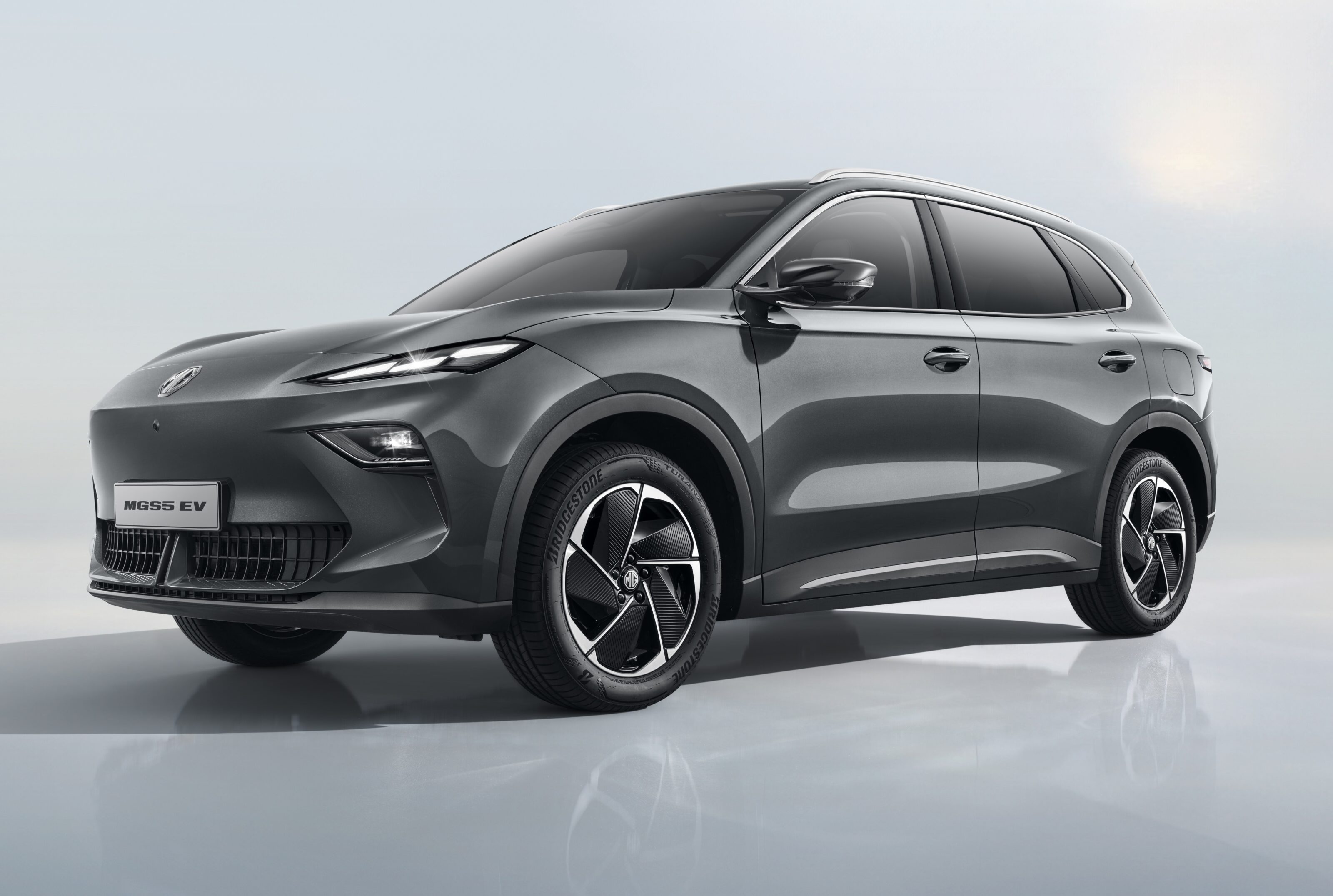
Price: $40,490 (Excite 49kWh); $42,990 (Essence 49kWh); $44,990 (Excite 62kWh); $47,990 (Essence 62kWh)
Battery size/claimed range: 49kWh, 340km WLTP (Excite 49kWh); 49kWh, 335km WLTP (Essence 49kWh); 62 kWh, 430km WLTP (Excite 62kWh); 62kWh, 425km WLTP (Essence 62kWh)
Power/torque: 125kW, 250Nm
Dimensions (L/W/H/WB): 4476mm/ 1849mm/ 1621mm/ 2730mm
Bootspace: 453L; 1441L with seats folded.
Warranty/roadside assistance/service intervals: 10-year/250,000km warranty with roadside assistance for the same length of time; servicing occurs once-yearly/every 25,000km (whichever comes first) and the five-year/125,000km service cost is $1,967 or $393 on average annually.
| Driving | |
| Interior | |
| Practicality | |
| Overall value | |
MG’s latest EV launched into Australia this year offers an attractive mix of practicality, impressive range options, modern safety tech and a much-improved interior.
It’s at the ‘compact crossover’ end of the medium segment (some people would insist it be called ‘small) but its dimensions put it on par with rivals listed here.
Buyers can choose between two trim levels – the entry-level Excite and the more premium Essence – and both are offered with either a 49kWh or a 62kWh battery. The larger pack is capable of delivering up to 430km of driving range under WLTP conditions when paired with the Excite and its smaller wheels, while the Essence fitted with the 49kWh setup manages around 335km due to its bigger wheels and additional features.
Charging is competitive, with the smaller battery able to accept up to 120kW and the larger unit up to 150kW, allowing a 30 to 80 per cent top-up in as little as 19 minutes under ideal conditions. Power comes from a rear-mounted motor producing 125kW and 250Nm, which enables the car to sprint from zero to 100 km/h in around eight seconds before topping out at 170 km/h.
On the road, the MGS5 EV benefits from MG’s new Modular Scalable Platform, shared with the MG4 hatchback, giving the SUV a more grown-up feel. Ride quality is smooth once up to speed, though the suspension feels a little firmer at lower speeds over bumps. Drivers can select from multiple regenerative braking modes, including low, medium, high, one-pedal and an adaptive setting, each altering responsiveness to suit preference.
The interior represents a clear step forward from MG’s earlier EVs. Materials are softer to the touch, storage spaces are better thought out, and the overall layout is more intuitive. A 12.8-inch touchscreen sits at the centre of the cabin and introduces wireless smartphone mirroring for the first time in an MG electric model sold in Australia, while a large digital driver’s display provides key information directly ahead. The Essence grade adds further comfort and convenience through heated and electrically adjustable front seats, synthetic leather trim, a panoramic glass roof and a 360-degree camera system.
Practicality is another strength, with generous rear-seat space that offers good legroom and headroom, complemented by wide-opening doors and ISOFIX mounting points. The boot measures 453 litres with the seats upright, expanding considerably when folded flat, making it well suited to family duties.
Overall, the MGS5 EV is a significant improvement over its predecessor, offering range flexibility, modern technology and a noticeably more upmarket interior. It may leave enthusiasts wishing for more power or an extended-range version, but for Australians wanting a practical and well-rounded electric SUV, it fits the bill.
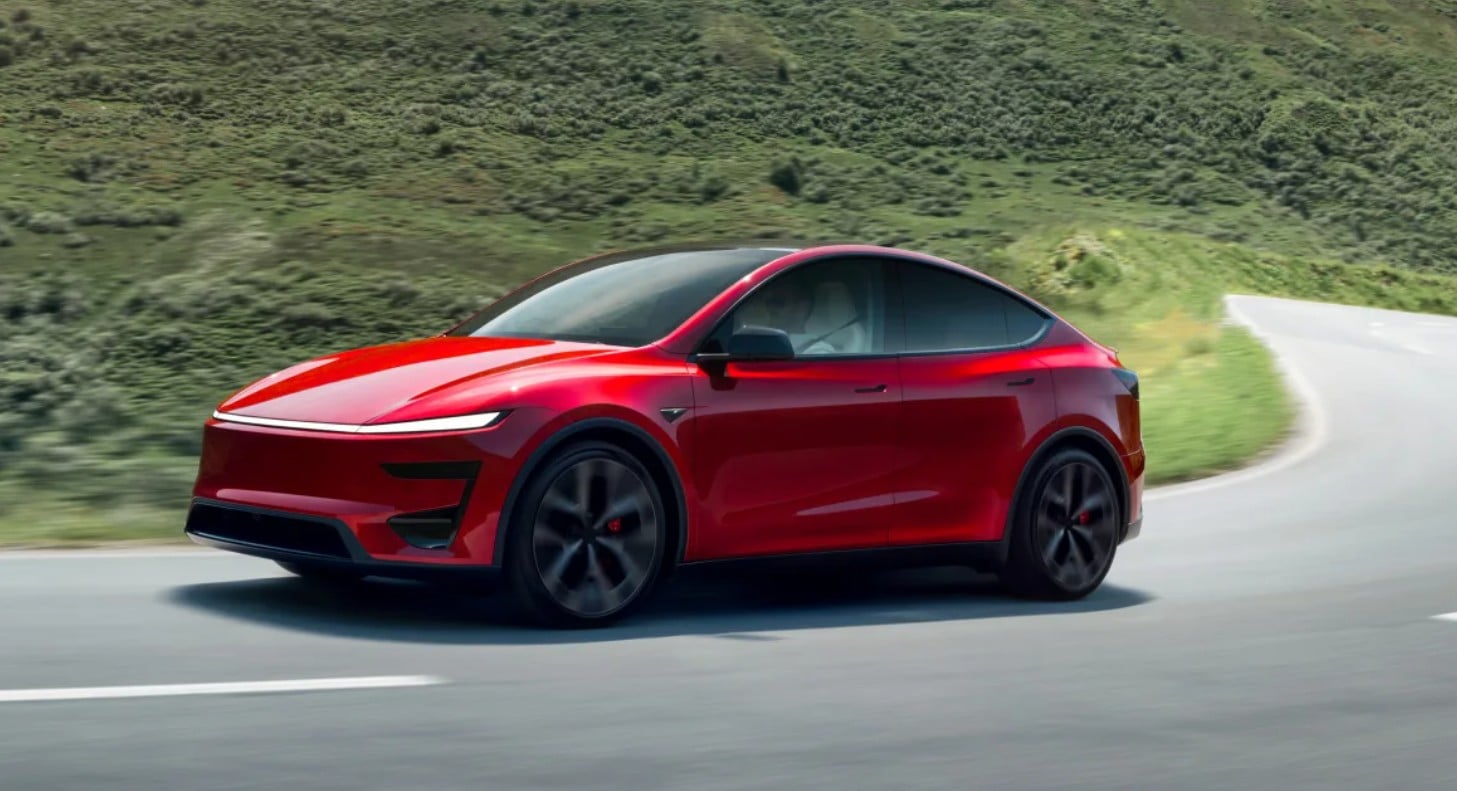
Price: From $58,900 drive-away (RWD version); from $68,900 (Long Range AWD)
Battery size/claimed range: 62.5 kWh LFP, 466 km WLTP (RWD); 84.85 kWh (NMC), 551 km (Long Range AWD)
Drivetrains/power/torque: RWD 220kW, 350Nm; Long Range AWD 393kW, 690Nm. AWD Performance 397 kW, 690 Nm
Dimensions (L/W/H/WB): 4792mm/ 1982mm/ 1624mm/ 2890mm
Bootspace: Up to 822L behind second row, expanding to 2022L with seats folded.
Warranty/roadside assistance/service intervals: 4-year/80,000 km vehicle warranty; battery 8 years/192,000 km.
| Driving | |
| Interior | |
| Practicality | |
| Overall value | |
Tesla’s overall appeal may have been dented by Elon’s bizarre right-turn into US politics but the Model Y continues to feature prominently in charts for Aussie EV sales, its blend of cutting-edge tech, everyday practicality and enhanced range still an attraction.
This year’s ‘Juniper’ update brought styling tweaks, updated tech and longer range. We’re also expected to see the new Tesla Model Y Performance before the end of 2025.
What remains is that driving the Model Y is like wielding an electric arrow – instant acceleration, a smooth, silent glide, and smart handling. The suspension has been refined in the Juniper version, delivering a quieter cabin and supple ride over Aussie roads. The updated turn stalk, replacing previous touch controls, is a welcome tactile upgrade. That said, the minimalist interface means most operations happen through the touchscreen – it becomes intuitive but it’s also potentially distracting.
Inside, the split-first-class, minimalist cabin is anchored by a huge 15‑inch central touchscreen, now larger and more responsive. The update adds a rear 8‑inch screen for backseat passengers, ventilated front seats, ambient lighting, and a panoramic glass roof – features rare at its price.
There’s a surprising amount of storage, too, including a front trunk (frunk) and a cavernous rear boot that swallows daily gear or weekend haul.
Available in Rear-Wheel‑Drive and Long Range AWD formats, the Model Y offers up to 331 kW and 590 Nm in top trims. The RWD model delivers around 466 km WLTP range, while the AWD Long Range stretches to 551 km. The RWD accelerates from 0–100 km/h in 5.9 seconds, while the AWD unleashes a 4.3‑second sprint.
The 2025 (Juniper) Tesla Model Y’s strengths lie in spacious practicality, impressive range, rapid charging, and an immersive, futuristic interior, keeping it on pace as more and more competition emerges.
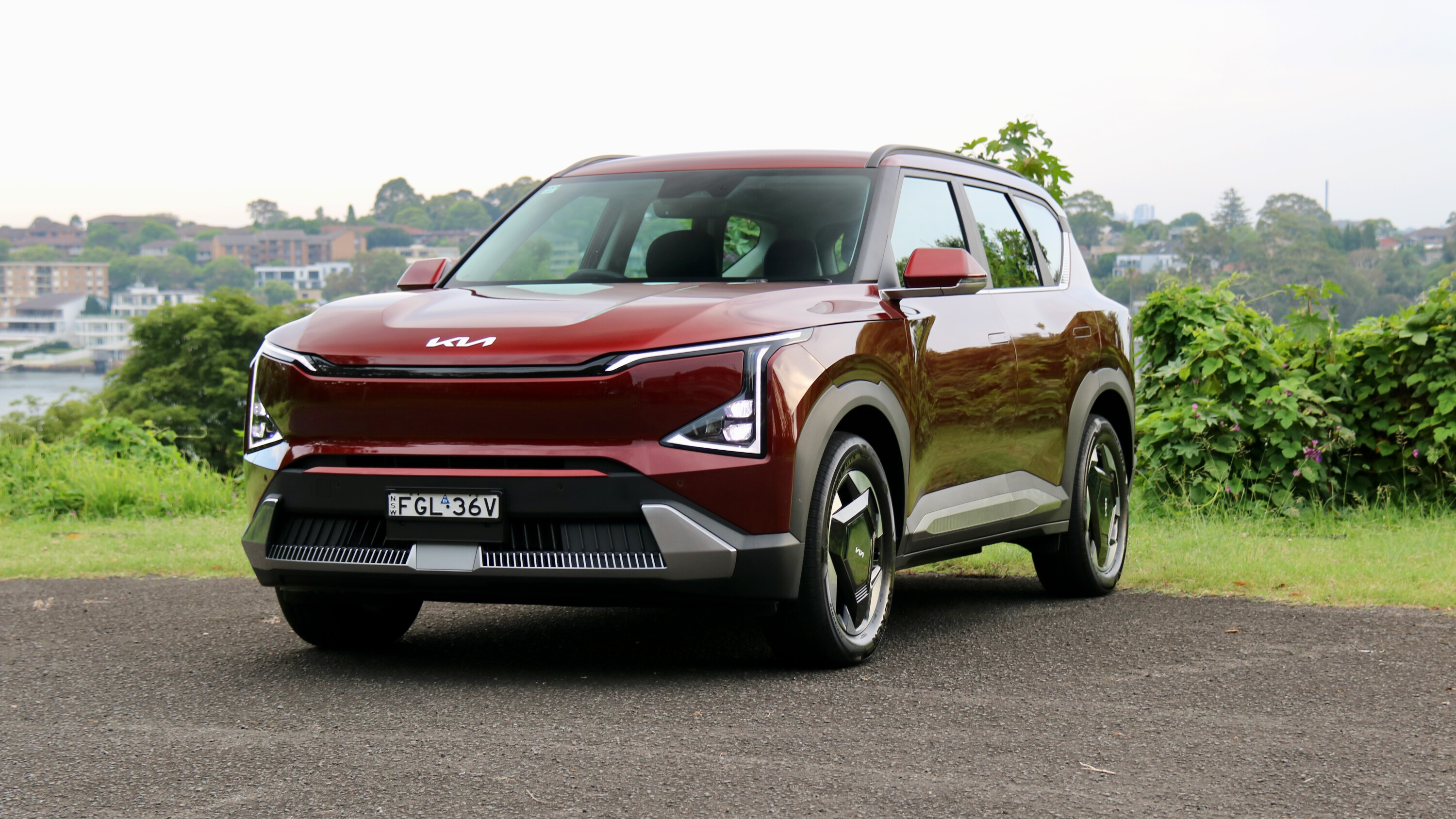
Price: From $56,770 drive-away Air (Standard Range): $61,170 Air (Long Range); $64,770 Earth AWD; $71,770 GT‑Line AWD
Battery size/claimed range: 64.2 kWh, 400 km WLTP (Air Standard); 88.1 kWh, 555 km WLTP (Air Long Range): 88.1Kwh 500 km (Earth), 470km (GT‑Line AWD)
Power and torque: Air Standard:160 kW/310 Nm; Air Long Range 160 kW/310Nm; Earth / GT‑Line AWD: 230 kW/480 Nm
Dimensions (L/W/H/WB): 4615mm/ 1875mm/ 1715mm/ 2750mm
Bootspace: 513L boot, expands to 1714L
Warranty/roadside assistance/service intervals: 7 years/unlimited km warranty
| Driving | |
| Interior | |
| Practicality | |
| Overall value | |
The Kia EV5 arrived on Australia’s mid-size electric SUV scene earlier this year as a strong new contender, offering sharp pricing, a focus on practicality and genuinely long EV range – exactly what makes a family-friendly electric crossover stand out.
At roughly Model Y dimensions, the EV5 maximises interior space. Rear passengers enjoy excellent legroom and headroom, comfortably seating three across the back. Clever details add to its practicality: rear USB ports sit above seatback pockets, and a centrally placed pull‑down cup‑holder includes in‑seat phone storage. The front cargo frunk provides 67 litres, and the boot holds a commendable 513 L – expandable with the seats folded. Hidden under-floor compartments offer bonus storage for those essential on-the-go bits.
EV5’s styling echoes Kia’s EV9 and EV6, though more compact and accessible. Its hard-edged yet refined lines, plus a standout light signature, give it a contemporary, head-turning look without being polarising. Inside, the triple-screen dashboard (two 12.3″ displays plus a 5″ climate screen) convey a high-tech feel, though cabin materials lean toward the practical rather than plush.
Entry-level Air Standard Range carries a 64.2 kWh battery delivering about 400 km WLTP. Opting for the Air Long Range jumps you to an 88.1 kWh pack and up to 555 km WLTP, while the mid-spec Earth AWD and hi-spec GT-Line AWD offer dual-motor AWD setups with 230 kW/480 Nm output,. Charging tops at 102 kW on base models and 140 kW on others – fast enough for daily life but a shade behind the segment’s quickest.
The EV5 delivers a refined, composed ride. Most editions feel quiet and comfortable – suited for family duties and long trips. AWD trims add reassuring grip and extra push, while the RWD versions stay light and efficient. The steering is smooth, the ride compliant, though high-speed wind noise creeps in on open roads. Kia’s longstanding 7-year unlimited warranty and affordable servicing underscore its value.
Kia EV5’s long-range, versatile cabin space, and streamlined performance make it a compelling rival to Tesla’s Model Y. While interior presentation could be sharper and charging faster, the EV5 treads a well-balanced line between functionality, comfort, and affordability.
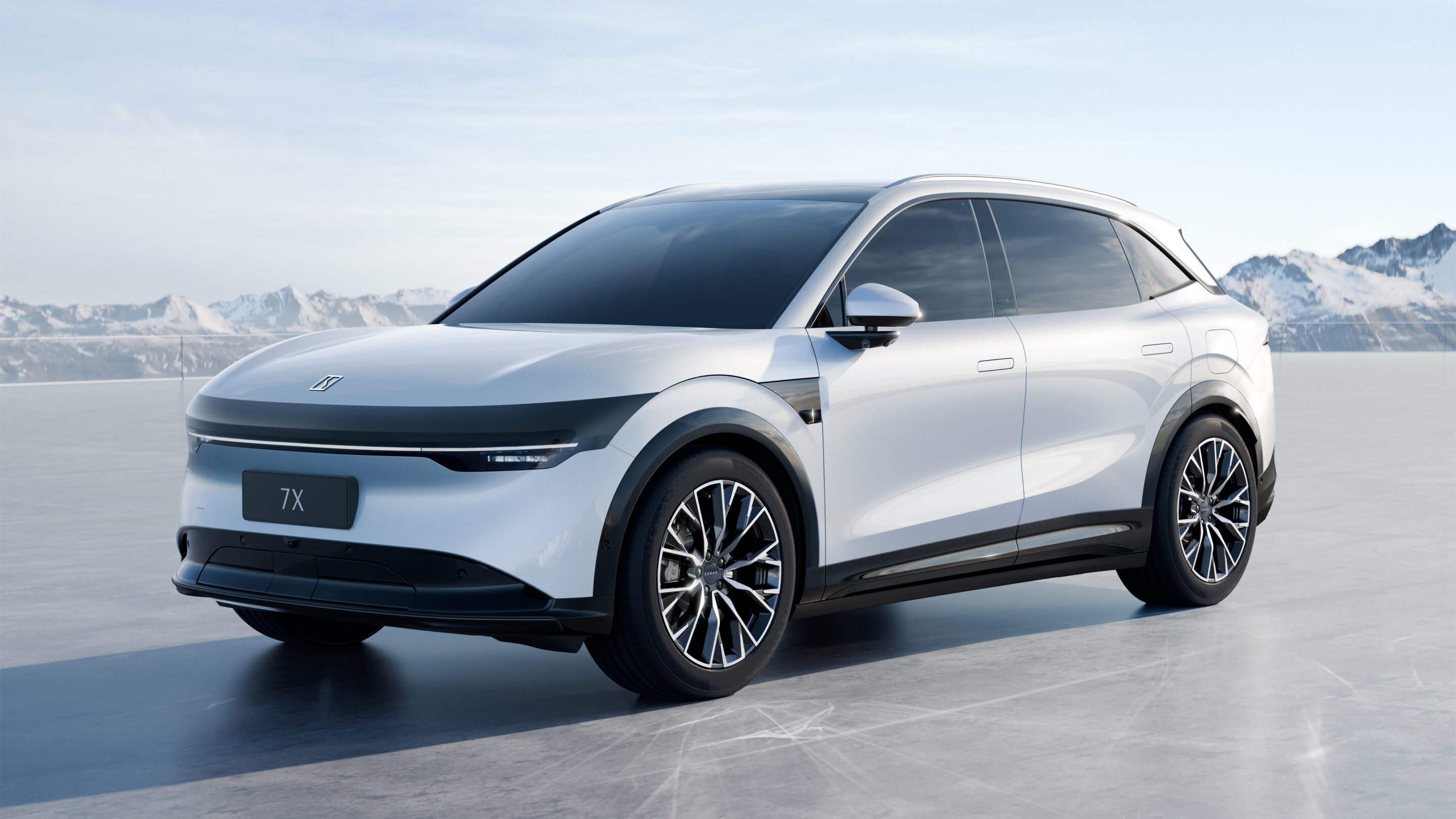
Pricing: $57,900 (RWD); $63,900 (Long Range RWD); $72,900 (Performance AWD)
Battery size/claimed range: RWD: 75kWh, 480km range (WLTP); Long Range RWD: 100kWh, 615km (WLTP); Performance AWD: 100kWh; 543km (WLTP)
Power/torque: RWD variants: 310kW/440Nm. AWD Performance: 475kW/710Nm
Dimensions (L/W/H/WB): 4825mm/ 1930mm/ 1666mm/ 2925mm
Bootspace: 765L boot, expands to 1978L; 62L front trunk
Warranty/roadside assistance/service intervals: 5 years, unlimited km warranty; 8 years/160,000km battery warranty; 5 rears roadside assistance
| Driving | |
| Interior | |
| Practicality | |
| Overall value | |
The Zeekr 7X arrives on the Australian scene with all the flair and ambition of a Tesla Model Y rival – but with longer range, lightning-fast charging, and a luxurious cabin that signals it’s here to shake up the premium EV compact SUV category.
The Zeekr 7X impresses with a lavish, tech-forward cabin. Nappa leather trim on seats, which offer heating, ventilation, and six massage modes. Rear passengers get adjustable leg rests, a fold-down armrest with screen controls, and bonus entertainment via OLED screens. The dashboard is dominated by a sleek 16-inch infotainment panel, paired with a 13.5-inch instrument display and an optional 36-inch augmented-reality head-up display. Practicalities include a capacious boot and a 62 L front trunk. The experience is sumptuous and comfortable.
Visually, the 7X balances clean, sculpted lines with advanced detailing. It adopts the “Hidden Energy” design ethos: a streamlined front, frameless doors, and touchless handles for refined minimalism. Its eye-catching light bar façade also doubles as an interactive LCD, reinforcing its tech-heavy appeal. Built on Geely’s SEA 800V architecture – the same platform behind Polestar models – the Zeekr delivers aerodynamic polish and future-ready engineering.
The RWD base model runs a 310 kW motor for 480 km WLTP range, while the Long Range RWD variant steps up to a 100 kWh battery and extends the range to 615 km. The top-tier Performance AWD treats drivers to 475 kW and 710 Nm of torque, along with a brisk 0–100 km/h in 3.8 seconds. Despite the dual-motor setup, it still delivers 543 km of range. An industry-first “Golden Battery” enables 10–80 per cent DC fast charging in just 13 minutes (RWD) or 16 minutes for larger packs – all thanks to its 800 V system and 450 kW charging compatibility.
Australian testing reveals a vehicle that’s smooth, quiet, and confident. The 7X manages bumps thanks to its adaptive air suspension. Steering is light and precise, making it feel nimble in both city streets and open highways – though not quite as dynamically sharp as BMW or Porsche rivals. Another minor gripe: the in-house navigation system falls short of the slickness found in Google-based systems.
The Zeekr 7X packs premium design, long range, fast charging speeds and refined comfort at a price below many European rivals. Though not the sportiest to drive, it is exceptionally smooth, tech-laden, and family-friendly.
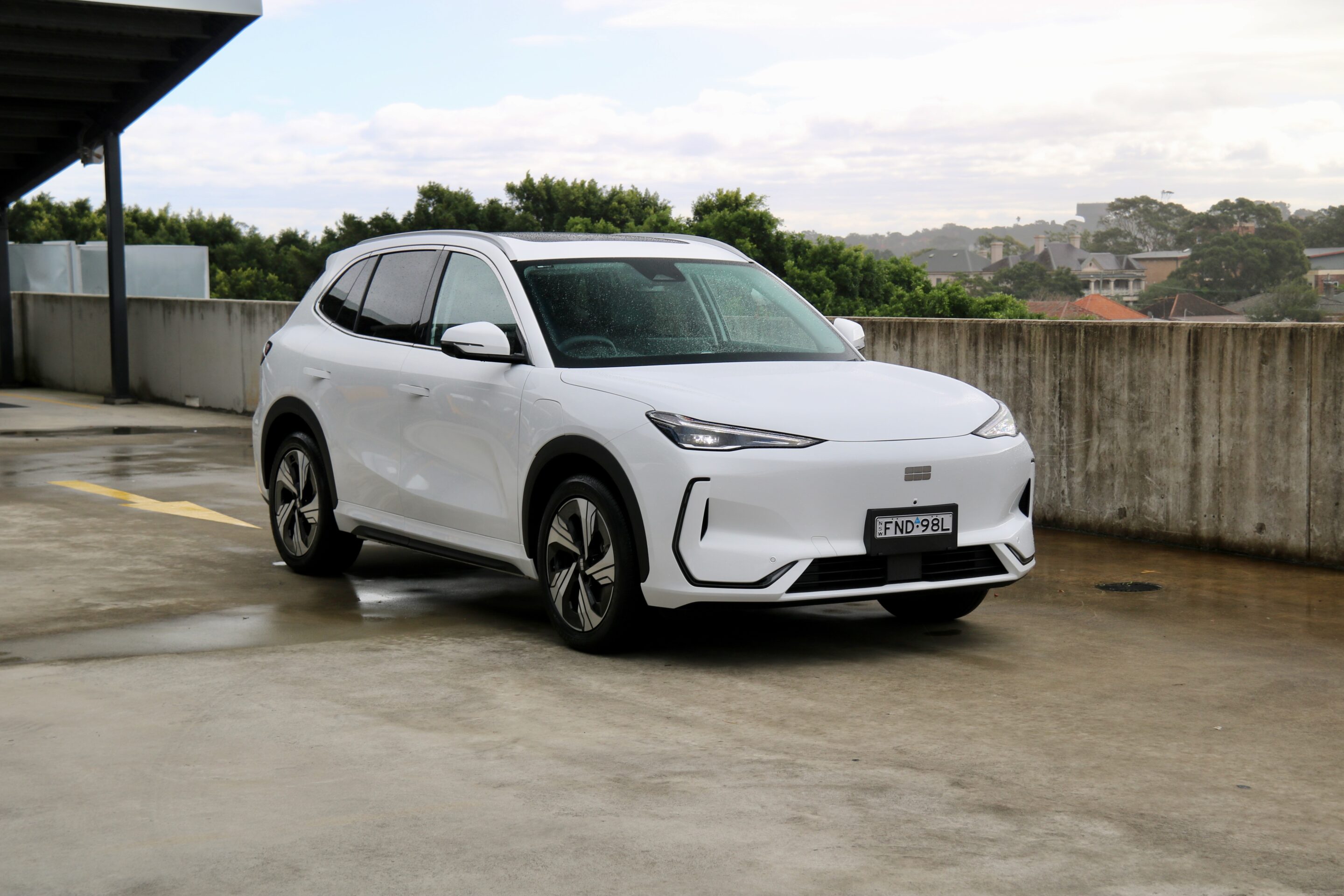
Price: From $40,990 before on-road costs (Complete); $44,990 (Inspire)
Battery size/claimed range: 60.2 kWh, 430 km (Complete); 410 km (Inspire) (WLTP)
Power/torque: 160kW, 320Nm
Dimensions (L/W/H/WB): 4615mm/ 1901mm/ 1670mm/ 2750mm
Bootspace: 302L, 410L (expanded), 1877L (2nd row down)
Warranty/roadside assistance/service intervals: 7 Year Unlimited KM Vehicle Warranty; 8 Year Unlimited KM Battery Warranty; Up to 7 Years Free Roadside Assist
| Driving | |
| Interior | |
| Practicality | |
| Overall value | |
Positioned as a practical alternative to expensive rivals like the Tesla Model Y, the EX5 brings sharp pricing, modern tech, and solid performance, all wrapped in unassuming yet premium packaging.
With dimensions comparable to a Toyota RAV4, it ticks the right boxes for families. The 2750 mm wheelbase ensures ample rear-seat legroom and headroom thanks to its flat floor design. Though the cabin materials lean more practical than luxurious, features like a 15.4‑inch touchscreen infotainment system, 10.2‑inch digital instrument cluster and ADAS suite elevate the experience, especially in the higher Inspire model, which adds a panoramic sunroof and head-up display.
The EX5 operates on a front-wheel-drive setup, powered by a single electric motor producing 160 kW and 320 Nm – enough for a smooth and responsive urban drive. Buyers can choose between two LFP battery options: 49.5 kWh for 430 km WLTP range and 60.2 kWh stretching that to up to 430 km or higher, depending on conditions. Charging tops out at 100 kW DC, while onboard AC charging handles up to 11 kW.
The EX5 impresses with smooth handling, confident steering, and a calm, road‑friendly ride – traits honed during Australian tuning, which benchmarked it against the Tesla Model 3 and BYD Atto 3. With a 0–100 km/h sprint time of 6.9 seconds, it delivers enough punch for most scenarios.
It also significantly undercuts rivals like the Tesla Model Y and Kia EV5 on price, starting from $40,990 before on-road costs for the base Complete model – or around $44,400 drive-away – and $44,990 for the Inspire (about AU$48,500 drive-away. Geely also offers a 7‑year/150,000 km warranty, along with limited complimentary servicing and charging credits – boosting its appeal for cost-conscious buyers.
Its spacious practicality and solid performance mean the EX5 will appeal to budget-driven EV buyers. While its interior trim isn’t as polished as premium European rivals, its tech-forward features and decent warranty make it a smart choice.
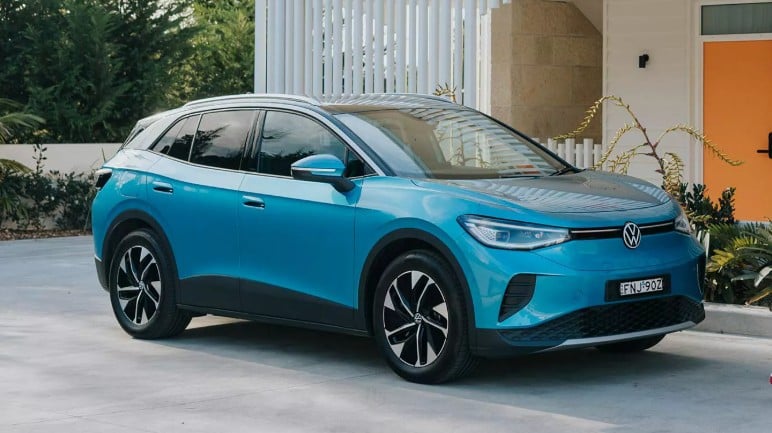
Price: From $59,990 (Pro RWD); $69,990 (GTX AWD)
Battery size/claimed range: 82 kWh, 544 km WLTP (Pro); 82kWh, 511 km WLTP (GTX)
Power/torque: 210kW, 545Nm (Pro); 250kW, 545 Nm (GTX)
Dimensions (L/W/H/WB): 4585mm/ 1852mm/ 1640mm/ 2766mm (Pro); 4583mm/ 1852mm/ 1624mm/ 2769mm (GTX)
Bootspace: 543L; 1575L (rear seat folded)
Warranty/roadside assistance/service intervals: 5 year unlimited kilometre new vehicle warranty; 12 months (petrol, diesel and plug-in hybrid vehicles) or up to 24 months (electric vehicles) of roadside assistance; 6-year care plan, $1,785
| Driving | |
| Interior | |
| Practicality | |
| Overall value | |
:Still unmistakably Volkswagen, the ID.4 delivers soft curves and subtle design updates. The updated Pro version sports a new front electric motor of 210 kW and 545 Nm in rear-wheel drive form, adding presence and class. A refreshed interior features a 12.9‑inch infotainment screen with illuminated sliders, adaptive ambient lighting, and the sleek new ‘Progressive’ steering—elevating the visual appeal without straying far from familiarity.
Spaciousness is a strong suit – plenty of room for rear passengers, easy access, and impressive practicality. The tailgate opens to a 543L boot that swells to 1575L when seats fold – ideal for weekend runarounds. Supported by tri-zone climate control, ergo-active seats, and a sunroof, the interior is decidedly comfortable.
The ID.4 fleet in Australia comprises the Pro (RWD) with a 210 kW motor paired to a battery with 77 kWh of useable power and claimed range of 550 km, while the GTX all-wheel drive version adds a second motor for a total of 250 kW and ups DC fast charging to 175 kW.
The Pro feels smooth and relaxed, more suited for longer distances, while the GTX adds zip with a 0–100 km/h time of 5.4 seconds.
The ID.4 impresses as a daily drive, offering a refined, composed experience behind the wheel. Even with updated steering tuning and adaptive dampers, it leans toward ease over sportiness. The tech integration is neat, with VW’s digital cluster and new menu systems feeling intuitive after a short learning curve.
The Volkswagen ID.4 brings a dependable, value-packed option to the mid-sized EV SUV class. It may not be the flashiest, but it delivers practicality, comfort, and a build quality that aligns with VW’s legacy.
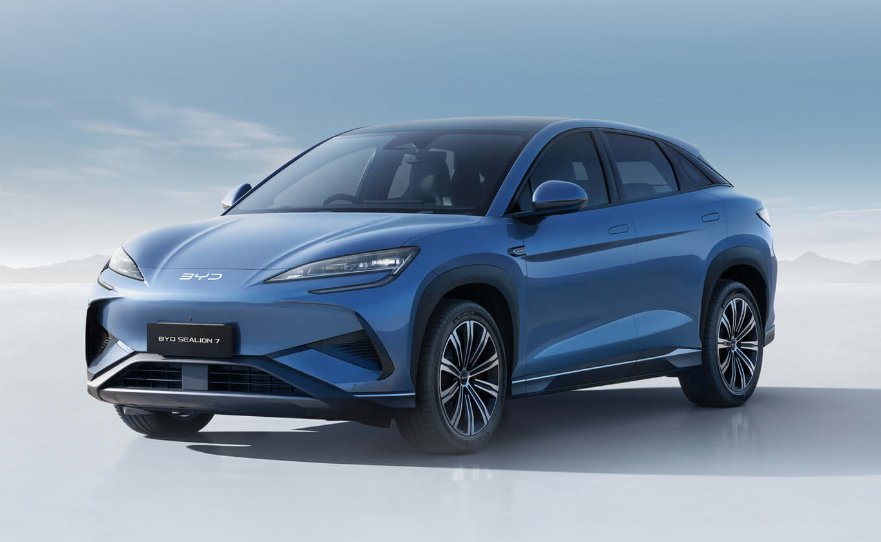
Price: From AU$54,990 (Premium single-motor) to AU$63,990 (Performance dual-motor) before on-road costs
Battery size/claimed range: 82.5 kWh, 482km WLTP (Premium); 82.5 kWh, 456km WLTP (Performance)
Power/torque: 230kW, 380Nm (Premium); 390kW, 690Nm (Performance)
Dimensions (L/W/H/WB): 4830mm/ 1925mm/ 1620mm/ 2930mm
Bootspace: 500L
Warranty/roadside assistance/service intervals: 6 years/150,000kms; 12 months of complimentary roadside assistance from delivery date (after July 22, 2025); first scheduled service at 5,000km or 3 months; regular service intervals every 20,000km/12 months\.
| Driving | |
| Interior | |
| Practicality | |
| Overall value | |
Another mid-size electric SUV aimed at de-throning Tesla’s Model Y and taking on Kia’s EV5, the Sealion 7 undercuts Tesla with its single-motor Premium RWD starting at $54,990 and the twin-motor Performance AWD from $63,990.
The Premium variant packs a rear-wheel drive motor kicking out 230 kW and 380 Nm. This delivers smooth acceleration and a solid 482 km WLTP range, while the Performance model pushes the total output to 390 kW / 690 Nm, with a spritely 0–100 km/h sprint in just 4.5 seconds and a claimed range of 456 km.
Inside, the Sealion 7 offers a considered, thoughtfully designed cabin. Both trims come with a rotating 15.6-inch infotainment screen, a 10.25-inch driver display, and an optional head-up display. Premium touches include 19-inch alloys, LED lighting, a panoramic sunroof, and a powered tailgate. The Performance adds 20-inch alloys, a heated steering wheel, and heated rear seats for added comfort.
Interior space is generous and the build quality is solid. Rear seat legroom is commendable, and the panoramic roof keeps things bright.
On the road, the Premium performs in an assured, relaxed fashion. The Performance brings more urgency but its kerb weight and less-than-tailored dynamics work against it during some manoeuvres. Nevertheless, the ride is quite compliant and refined.
In a crowded segment, the BYD Sealion 7 stands out with its competitive pricing, generous features and spacious cabin. Minor quibbles such as firm seats and a muted driving experience don’t distract from the fact it’s worthy of serious consideration by families and EV enthusiasts alike.
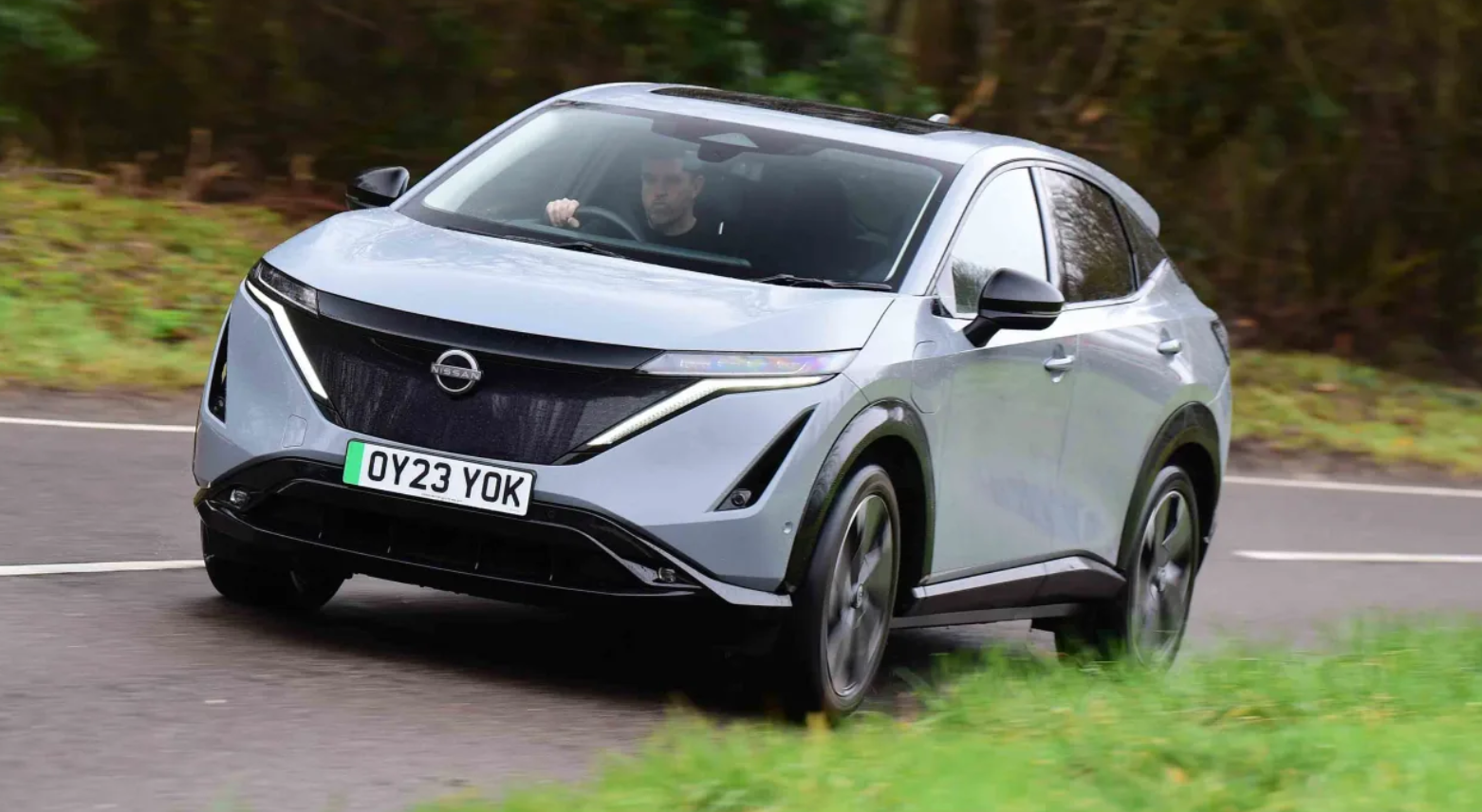
Price: From $55,840 (Engage); $59,840 (Advance); $63,840 (Advance+); $71,840 (Evolve e-4orce)
Battery size/claimed range: 63kWh, 385km WLTP (Engage, Advance); 87kWh, 504km WLTP (Advance+, Evolve)
Power/torque: 160kW and 300Nm (Engage, Advance); 178kW, 300Nm (Advance+); 160kW (front), 160kW (rear), 600Nm (Evolve e-4orce)
Dimensions (L/W/H/WB): 4595mm/ 2172mm/ 1660mm/ 2775mm
Bootspace: 466L (seats up); 1350L (seats down); 408L (seats up); 1280L (seats down) (Evolve)
Warranty/roadside assistance/service intervals: 10-year or 300,000 km, provided you service your vehicle at authorised Nissan dealers under the Nissan MORE program; separate Lithium-Ion Battery Capacity Warranty covers the vehicle’s battery against excessive capacity loss for 96 months or 160,000 km, whichever comes first; up to 10 years of 24-hour roadside assistance
| Driving | |
| Interior | |
| Practicality | |
| Overall value | |
Nissan’s long-awaited Ariya mid-size electric SUV has finally arrived in Australia with four grades available from early September. All trims offer front-wheel drive or Nissan’s new e‑4ORCE dual-motor AWD.
International reviews suggest the Ariya seeks to strike a balance between luxury and function. All models come equipped with dual 12.3-inch screens, wireless Apple CarPlay, navigation, climate control, and a wireless charger. Higher trims introduce amenities like a panoramic roof, heated front and rear seats, a Bose 10‑speaker audio system, and a head-up display. The cabin is ‘lounge-like’ thanks to generous the car’s generous length and wheelbase proportions.
On the road, the Ariya delivers a composed, compact drive with its advanced AWD offering enhanced stability in the top grade Evolve. Adaptive drive modes tailor performance well to road conditions, but let’s not pretend it’s sporty in the handling sense – this is bread-and butter medium SUV territory for shops-school-run-occasional roadtrip missions, prioritising comfort and refinement over agility.
The pricing challenges rivals like Tesla and BYD by offering premium comfort and class-competitive range, while the conditional 10-year warranty ups the attractiveness.
With nice design, a good standard equipment list and assured drive, it enters this crowded segment promising reliability over bells-and-whistles flashness, with solid electric capability for the energy-conscious buyer.
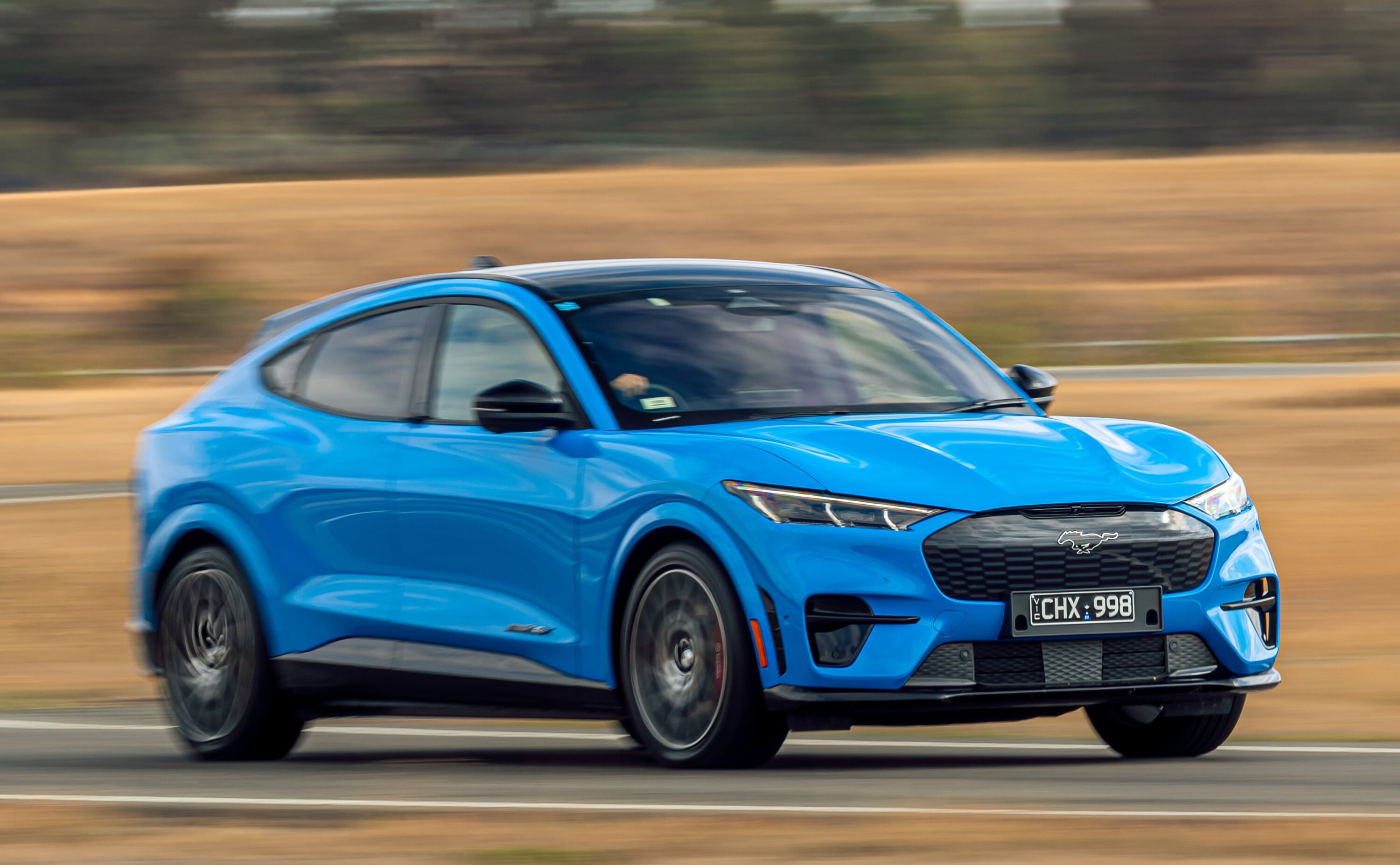
Price: From $63,000 drive-away (Select); $77,000 (Premium); $94,000 (GT)
Battery size/claimed range: 71kWh, 470 km WLTP (Select); 91 kWh, 600km WLTP (Premium); 91 kWh, 490km WLTP (GT)
Power/torque: 198kW, 430Nm (Select RWD); 216kW, 430Nm (Premium RWD); 358kW, 860Nm (GT AWD)
Dimensions (L/W/H/WB): 4728 mm/ 1881 mm/ 1634 mm/ 2984mm
Bootspace: 402L boot with an additional 134L frunk
Warranty/roadside assistance/service intervals: Five-year, unlimited-kilometre New Vehicle Warranty; battery – eight years or 160,000 kilometres; up to seven years roadside assistance; five years approx. $785.
| Driving | |
| Interior | |
| Practicality | |
| Overall value | |
Introduced to Australian in 2023, the Mach-E is offered in three trims in Australia: Select RWD, Premium RWD and the dual-motor GT AWD, delivering between 470 km and 600 km (WLTP) of driving range depending on model. Acceleration ranges from a leisurely 6.6 seconds in base trims to a blistering 3.7 seconds 0–100 km/h in the GT.
The Mach-E presents with clean, modern cabin featuring an upright centre touchscreen and a digital driver’s display in a space recalling Scandinavian minimalism, along with quality leather surfaces and intuitive controls.
Does it behave like a Mustang, but in SUV form? The entry-level Select is certainly keen and responsive, and the GT is a firmer ride but the model in general is adaptive and forgiving. While bendy roads will expose its SUV size, general cruising is smooth and quiet.
Having said that, it’s not a traditional Mustang but a more-than-capable midsize EV for drivers who want tech and Ford character but also fuel efficiency and a reliably comfortable daily driver.
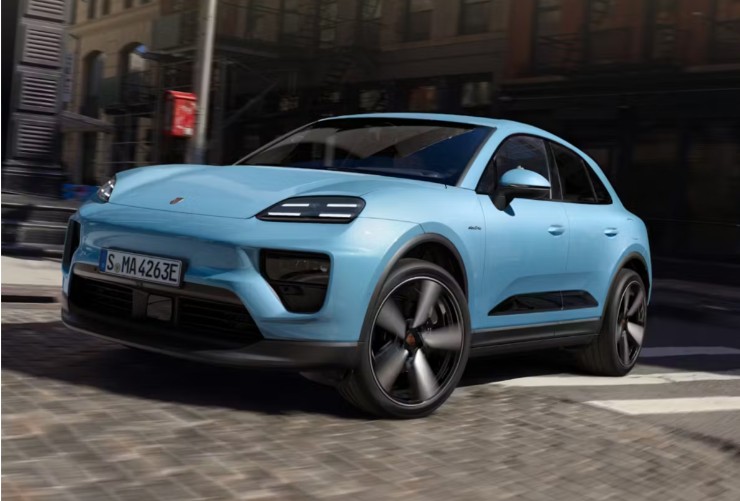
Price: $128,400 plus orc (Porsche Macan RWD); $134,400 plus orc (Porsche Macan 4 Electric); $149,300 plus orc (Porsche Macan 4S Electric); $184,400 plus orc (Porsche Macan Turbo Electric)
Battery size/claimed range: 100kWh (95 kWh useable), 516 km WLTP (Macan 4), up to 591 km (Macan Turbo)
Power/torque: 250 kW, 563 Nm (max, with launch control)
Dimensions (L/W/H/WB): 4784mm/1938mm/1623 mm/ 2893mm
Bootspace: 510L; 1318L (rear seats down)
Warranty/roadside assistance/service intervals: 3 years, unlimited kms; 8-year/160,000km warranty for the high-voltage (HV) battery; roadside assist for duration of warranty; 24 months or 30,000km, $2995 over 5 years
| Driving | |
| Interior | |
| Practicality | |
| Overall value | |
Porsche’s fully electric version of its popular Macan rides on the brand’s advanced PPE (Premium Platform Electric), utilising a standard 100 kWh battery (95 kWh usable) and delivering power via single or dual motors, depending on the trim.
There are currently four variants: RWD base, Macan 4 (AWD), Macan 4S (performance AWD) and range-topping Macan Turbo Electric. Performance scales briskly – with the 4S reportedly covering 0–100 km/h in just 4.1 seconds and the Turbo Electric in 3.3 seconds.
The line-up offers WLTP ranges up to 613 km – though real-world testing may deliver more modest results. Thanks to fast 800‑volt architecture, 270 kW DC fills the battery from 10-80 per cent in just over 20 minutes.
It’s unmistakeably Porsche inside – a sweeping dashboard with dual digital displays (12.6″ digital cluster, 10.9″ infotainment) plus optional 10.9″ front‑passenger display, haptic controls, and generally high build quality with premium materials. The electric iteration keeps the minimalist aesthetic of the original Macan but update the tech offering. Adaptive air suspension and driver aids ensure both comfort and practicality.
Faithful to the badge, the electric version retains the iconic Macan silhouette – muscular yet aerodynamic, with active cooling vents and sleek LED lighting. It also drives with precision, poise and agility despite the weight of the electric drivetrain.
The high-end turbo variant also offers head-up display, performance sound tuning, and advanced driver tech.
The Porsche Macan Electric delivers on its promise as a luxury electric SUV but it’s far from a bargain and you’ll need to be a committed EV advocate to invest in this more efficient and energy responsible example of Porsche’s renowned driving dynamics.
Looking to get into a brand-new mid-size SUV? Our stories below will guide you to the model that best suits your needs:
Full disclosure – this isn’t your normal Wheels first drive. Most of the time, we get to spend a few hours with the vehicle in question in which to form our opinions. The Toyota LandCruiser 300 Hybrid? Mere minutes, on a closed circuit. Still, in that regard it’s probably not too different to the breathless first reports you’ll read on, say, a new Ferrari hypercar where drivers are strapped in and sent for a handful of laps around Fiorano.
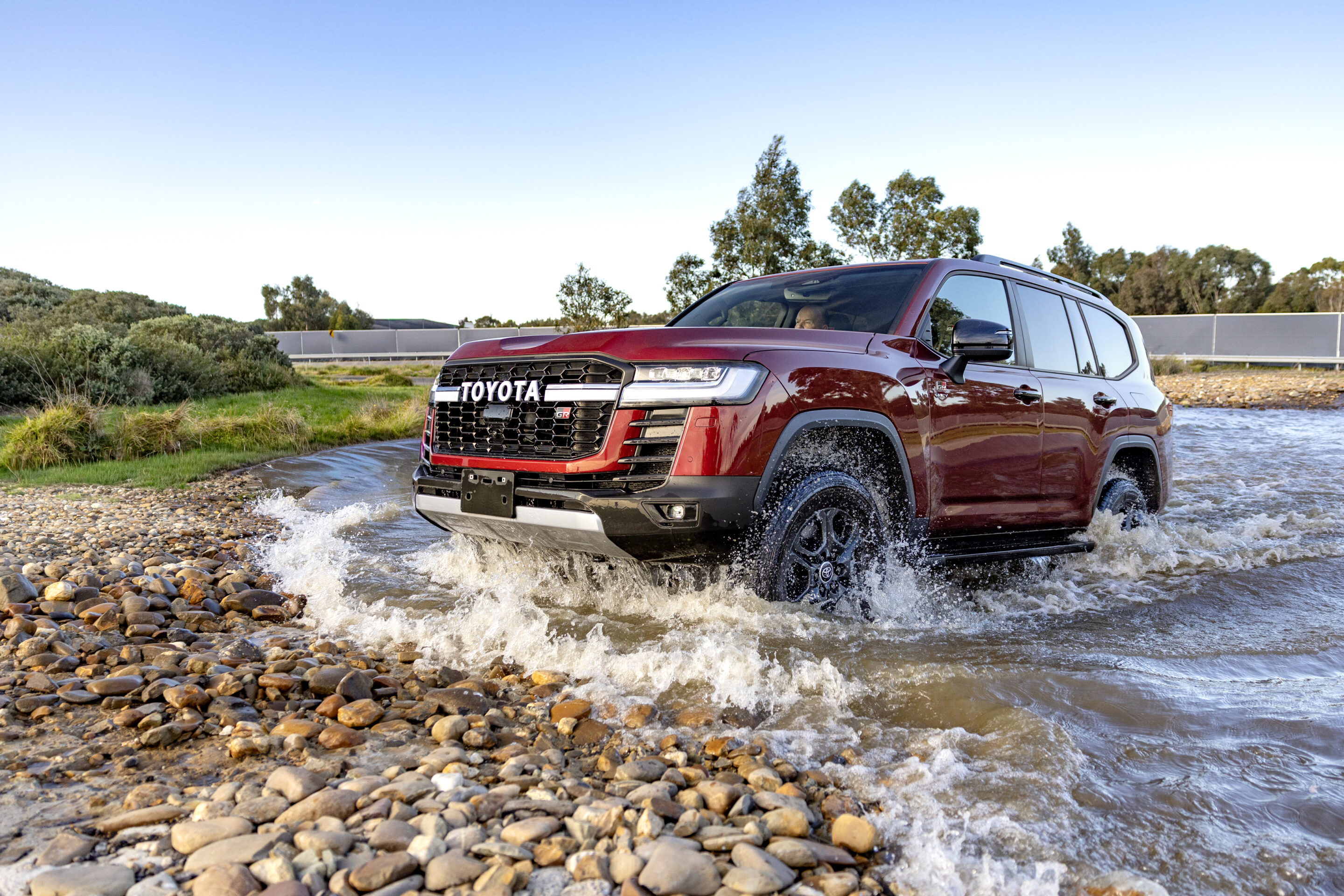
Breathless isn’t how you’d describe the experience in the new electrified LandCruiser. In fact, most of it was undertaken at little over walking pace, rock crawling and wading. The big takeaway you’ll need to know about this vehicle is that it’s been designed to offer the same level of off-road ability as the existing LC300 turbodiesel. In other key regards it effortlessly outshines the existing model.
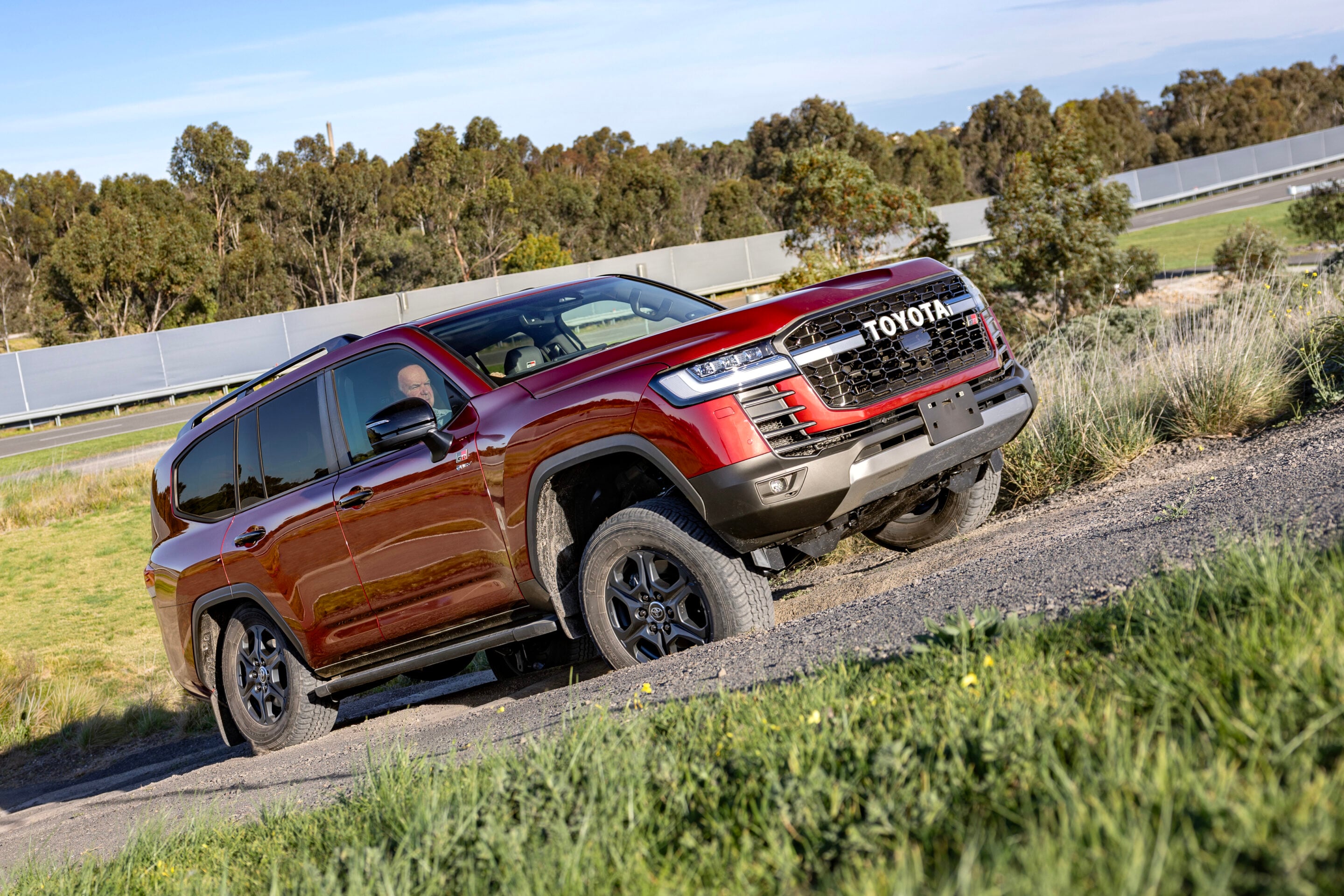
Let’s rewind a moment. The dual effects of the COVID pandemic and the subsequent components shortage meant that sales of the LVC300, which was originally planned for late 2021, were slow to ramp up. Toyota registered 13,152 LandCruiser sales in 2022, as the model range transitioned from LC200 to LC300, stepping up to 15,035 in 2023 and plateauing at 15,257 in 2024. This year, it looks as if Toyota will struggle to match that figure, having registered 7722 sales by the end of August. Some added impetus to LandCruiser sales therefore wouldn’t go amiss.
With hybrid vehicles currently accounting for 48.9 per cent of Toyota Australia‘s output, and demand growing steadily, the answer presents itself. Although Toyota was very sparse on hard details on the Aussie market LC300 hybrid, providing no technical specifications, no pricing and no equipment specifics, here’s what we do know.
It’ll arrive Down Under in April 2026, it’ll be offered solely in top-spec GR Sport and Sahara ZX trim grades, and it’ll use much the same drivetrain that’s currently plumbed into the big Tundra ute. That means a 3.4-litre twin-turbo six driving through a 10-speed gearbox.
This marks a subtle but interesting divergence in Toyota’s policy regarding its hybrid cars. From now on, the company splits its hybrid offerings under two separate categories: Efficiency and Performance. The LandCruiser falls into the latter bucket, its drivetrain optimised for heavy payloads, towing and off-road ability.
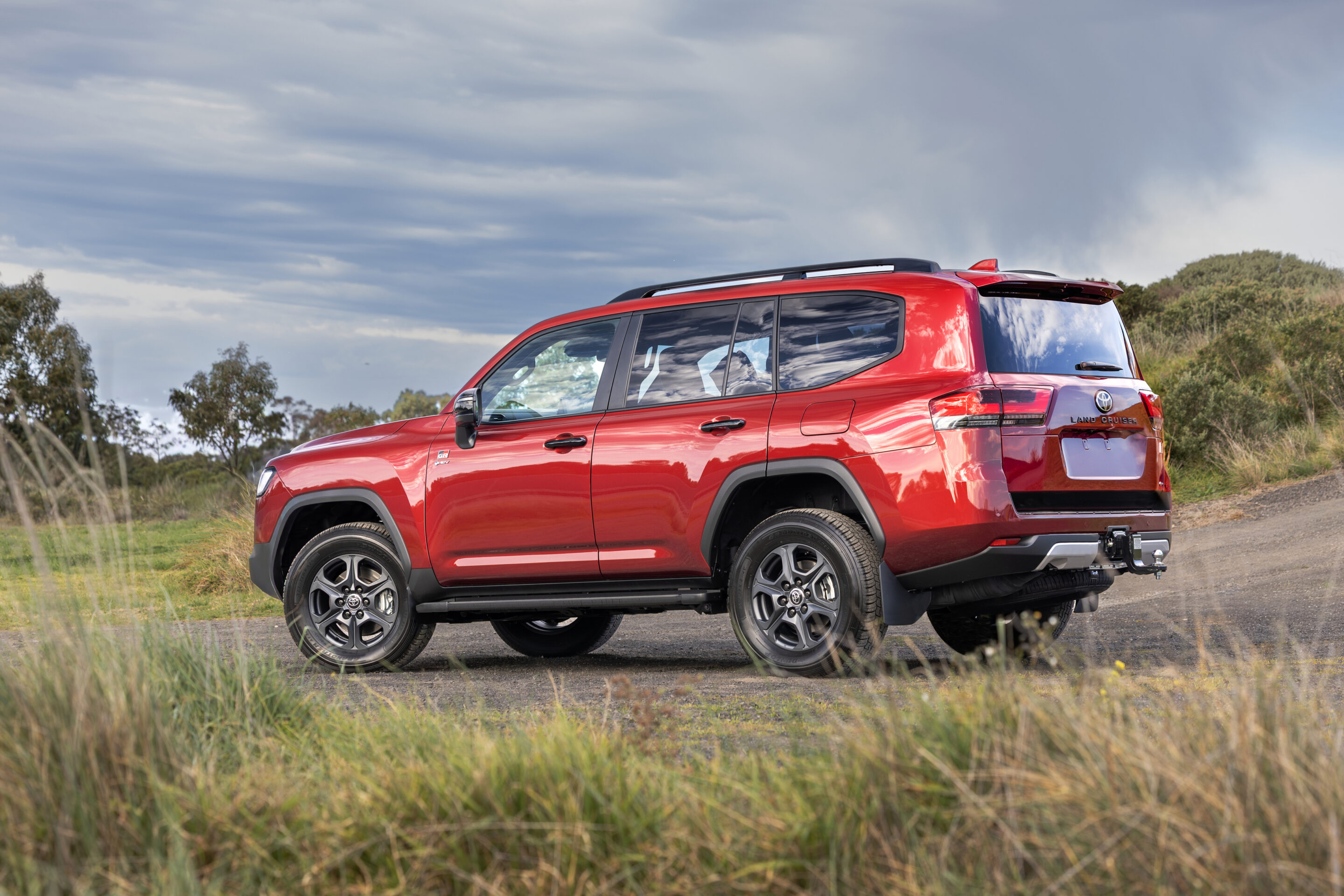
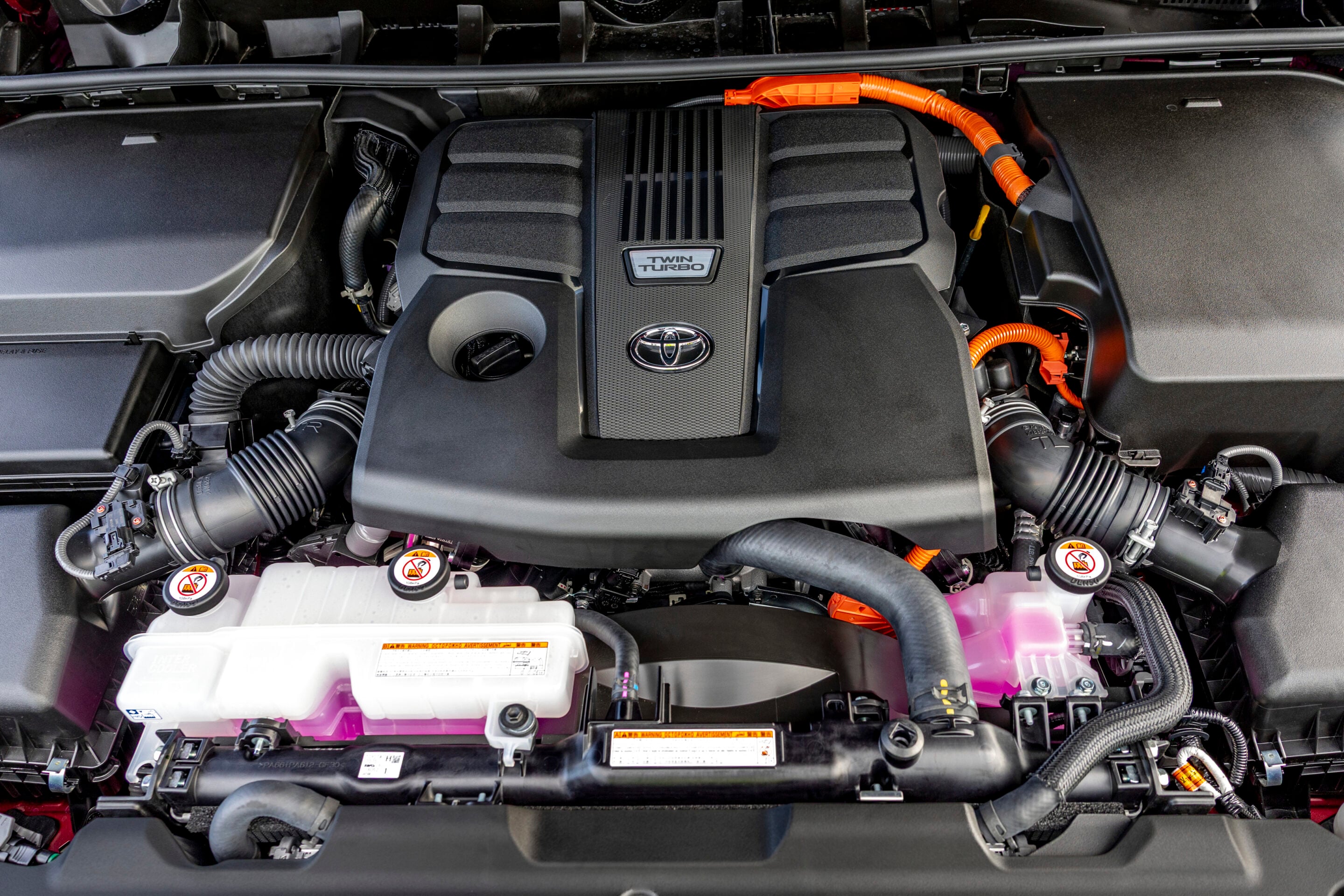
“Coming on the Sahara ZX and GR Sport grades only, it is a parallel hybrid system with the petrol engine and the electric motor generator able to be used in parallel to provide maximum performance or individually to drive the wheels, depending on the load and the driver input,” explains Austin Ward, Senior Product Planning Specialist. “We call this our one motor hybrid, as it uses a single electric motor generator that is placed between the petrol engine and the automatic transmission, creating a linear hybrid system.”
Engine start-up, electric only driving, electric power assistance, a stop-start system and energy regeneration from recovered kinetic energy under braking are all managed via the single motor generator and hybrid battery. The single motor generator is connected to a clutch that marshals switching between the two power sources depending on the load and the driver input, with the petrol engine constantly in operation at speeds of over 30km/h. Below that speed, the LC300 Hybrid can operate on electric power alone, which is also used to boost acceleration at higher speeds or under heavy load. Drive torque, whether generated from the electric motor generator or petrol engine or both, is delivered to the driveline via that 10-speed gearbox with a lock-up torque converter.
Out on the test track, it feels exactly as you’d expect. Step-off is brisk, with a 0-100km/h sprint covered in around six seconds, accompanied by a modest flashing of the traction control light. Refinement is excellent, although as in many cars where you take one sound out of the aural landscape, you tend to notice another, in this case the slight singing of the A/T tyres on smooth bitumen.
According to Toyota’s presentation, peak engine torque arrives at 2400rpm, but peak electric motor torque starts at 0rpm and tails off at 1400rpm. This means that in terms of overall system torque, 2400rpm is your sweet spot, generating the full 790Nm quota. Beyond that, torque decreases gently, with 700Nm still available at 3800rpm. By way of comparison, 700Nm is the maximum amount of twist action you’ll see from a 3.3-litre turbodiesel LC300, so the hybrid version has it outmuscled across the rev range you’ll typically be using.
The wading depth is the same 700Nm figure as the diesel, and ground clearance and approach, breakover and departure angles are the same too. One area where the hybrid is slightly different is the fact that the 1.87kWh nickel-metal hydride battery pack sits beneath the luggage bay floor and has thus lifted the floor height, albeit only by a few millimetres. It also means that Toyota can’t package a third row of seats back there, so it’s a maximum of five-up.
Crawling over a rocky track showed how finely tuned the torque response of the electric motor is. Engaging the ‘crawl’ mode allows you to tailor the forward speed using a twist dial. Selecting one or two on the five-position dial will keep you below walking pace, and just when it feels as if the car is coming to a halt, just enough torque is applied to then clamber over the obstacle and no more. It’s impressive and this level of fine control will be a boon for those who are trying to tackle a particularly rocky part of a route without sitting the vehicle hard onto its side steps, a noted vulnerability of the stock LC300.
The hybridised LandCruiser has been on sale in the United Arab Emirates since June of this year, so we can make some reasoned assumptions based on that car. This 340kW version returns a fuel economy figure of 9.1L/100km, which remains in the same ballpark as the 8.9L/100km figure for the Aussie diesel models. It’s also supplied with a 1500W AC inverter that supplies 220v power. Given that Australia is the largest market for LC300, and had a huge hand in formalising the launch specifications of the vehicle, there’s not a lot of specific localisation required for the Hybrid. Nevertheless a pilot program has been instigated to assess whether any details need fine tuning.
Toyota still believes its planetary gear set architecture is the best solution for hybrids whether they’re efficiency focused or performance biased. “I think at the moment, it’s still the most efficient technology, and it’s proving to be very engaging to customers,” says Sean Hanley, Toyota Australia’s VP for Sales, Marketing and Technology. “We see no need to change, albeit you don’t ever stop. You can’t stop, you’ve got to keep developing.
“I often talk about speed to market being kind of yesterday’s hero, and people get very alarmed by that, but I think it’s really important that you have the quality, durability, reliability, (and the confidence in the technology,” he notes. “This is still superior in the eye of a customer. So whilst you can’t afford to stop developing, I’m not suggesting that for a moment, you don’t have to be first all the time, you’ve just got to get it right when you do launch it.”
Given that the existing GR Sport and Sahara ZX turbodiesel versions of the LandCruiser are priced at $146,160 and $146,910 respectively, charging a premium for the hybrid version is likely to make these versions of the LC300 the most expensive Toyota-badged cars ever sold in Australia. Will there be a ready market for them? We wouldn’t be against it.
Price: From $38,100 plus on-road costs
Drivetrains/fuel economy/CO2 emissions: 2.0-litre four-cylinder, 6-speed auto, 2WD, 115kW/192Nm, 8.1L/100km, 184g/km; 1.6-litre four-cylinder turbo hybrid, 6-speed dual-clutch, 2WD or AWD, 172kW/367Nm, 5.3L/100km, 140g/km
Dimensions (length/width/height/wheelbase): 4640/1865/1665/2755mm
Bootspace: 582L – 1903L
Warranty/roadside assistance/service intervals: Five-year/unlimited km – extendable to 7 year/unlimited km through dealer servicing, service-activated, annual/every 10,000km
Five-year service cost: 2.0L: $1871 ($374 per year), hybrid: $2042 ($408 per year)
| Driving | |
| Interior | |
| Practicality | |
| Overall value | |
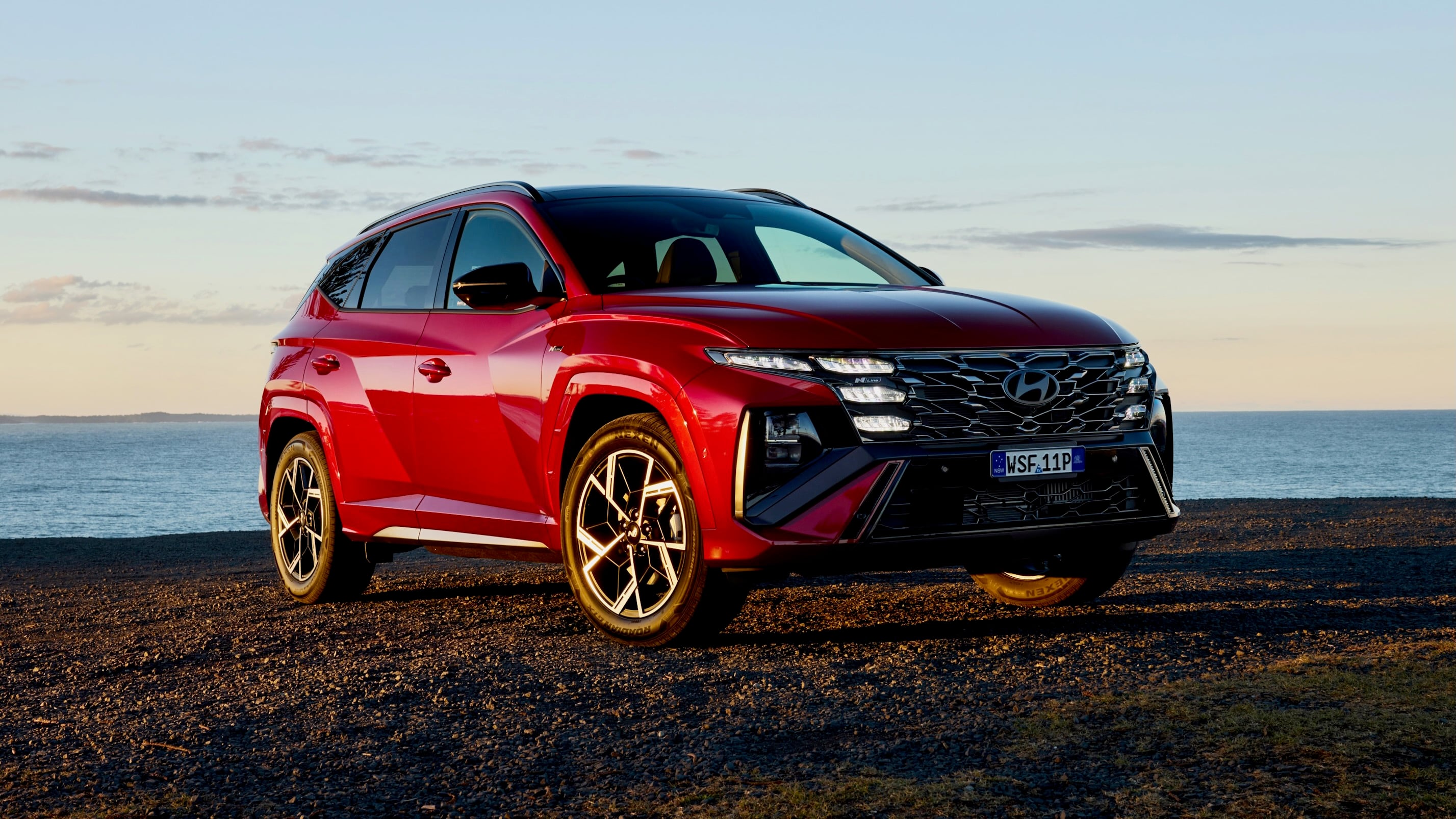
Now in its fourth generation, the Hyundai Tucson is so far the brand’s second-best selling product in Australia and is also the fourth-best selling mid-size SUV in 2025. There’s clear appeal to the Tucson then, including its value for money, airy and spacious cabin and hybrid-focused model range. Pricing starts at $38,100 plus on-road costs and unlike its Kia Sportage cousin, the hybrid drivetrain is available in every specification.
In fact, hybrids make up the majority of the Tucson lineup with the former 1.6-litre turbo-petrol engine recently shelved, leaving just a naturally aspirated 2.0-litre petrol engine and the hybrid available. If you’re wanting all-wheel drive or the top-spec Premium, the hybrid is your only option and that’s a good thing because it’s powerful yet efficient, and also quite refined. The Tucson’s driving experience is one of the best in the mid-size SUV segment as well.
Part of the mid-life update to the Tucson range was a new 12.3-inch touchscreen featuring Hyundai’s latest ‘ccNc’ software. It’s well featured across the range, including wireless Apple CarPlay and Android Auto smartphone mirroring, live services and over-the-air updates. Front seat comfort, even in the entry-level model, is impressive and the rear seat space is spacious. Boot space is also quite large for the segment with 582 litres with the seats up and a massive 1903L with them folded.
For vehicles registered after June 1, 2025, Hyundai now offers a seven-year warranty, provided all scheduled services are carried out at an authorised Hyundai dealer. Prior to that date the Tucson is covered with a five-year/unlimited km job with service-activated roadside assistance and much less expensive servicing than its Kia cousin, despite the same drivetrains, from under $1900 for five years.
Overall, the Hyundai Tucson is one of the shining stars in the mid-size SUV segment and its recent update has only made it better, making it our pick of this year’s Best Medium SUVs and the best under $40K. Killing the former 1.6-litre turbo-petrol engine might have disappointed some, but forcing buyers wanting more power than the base 2.0-litre engine into the hybrid is great as its efficiency is far superior, while it’s also more powerful. The Tucson’s cabin is roomy for a family, and its boot is one of the largest in the segment as well. Add in reasonable service costs, good value pricing and long equipment lists, and it’s clear why the Hyundai Tucson has so many Australian fans.
Price: From $36,990 plus on-road costs
Drivetrains/fuel economy/CO2 emissions: 2.5-litre four-cylinder, CVT, 2WD or AWD, 135kW/244Nm, 7.4-7.8L/100km, 180-183g/km; 1.5-litre three-cylinder turbo hybrid, CVT, AWD, 157kW/330Nm, 6.1L/100km, 174g/km
Dimensions (length/width/height/wheelbase): 4680/1840/1725/2705mm
Bootspace: 465L – 1667L
Warranty/roadside assistance/service intervals: Five-year/unlimited km – extendable to 10
years/300,000km through dealer servicing, 12 months, service extendable, annual/every 15,000km
Five-year service cost: $1995 ($399 per year)
| Driving | |
| Interior | |
| Practicality | |
| Overall value | |
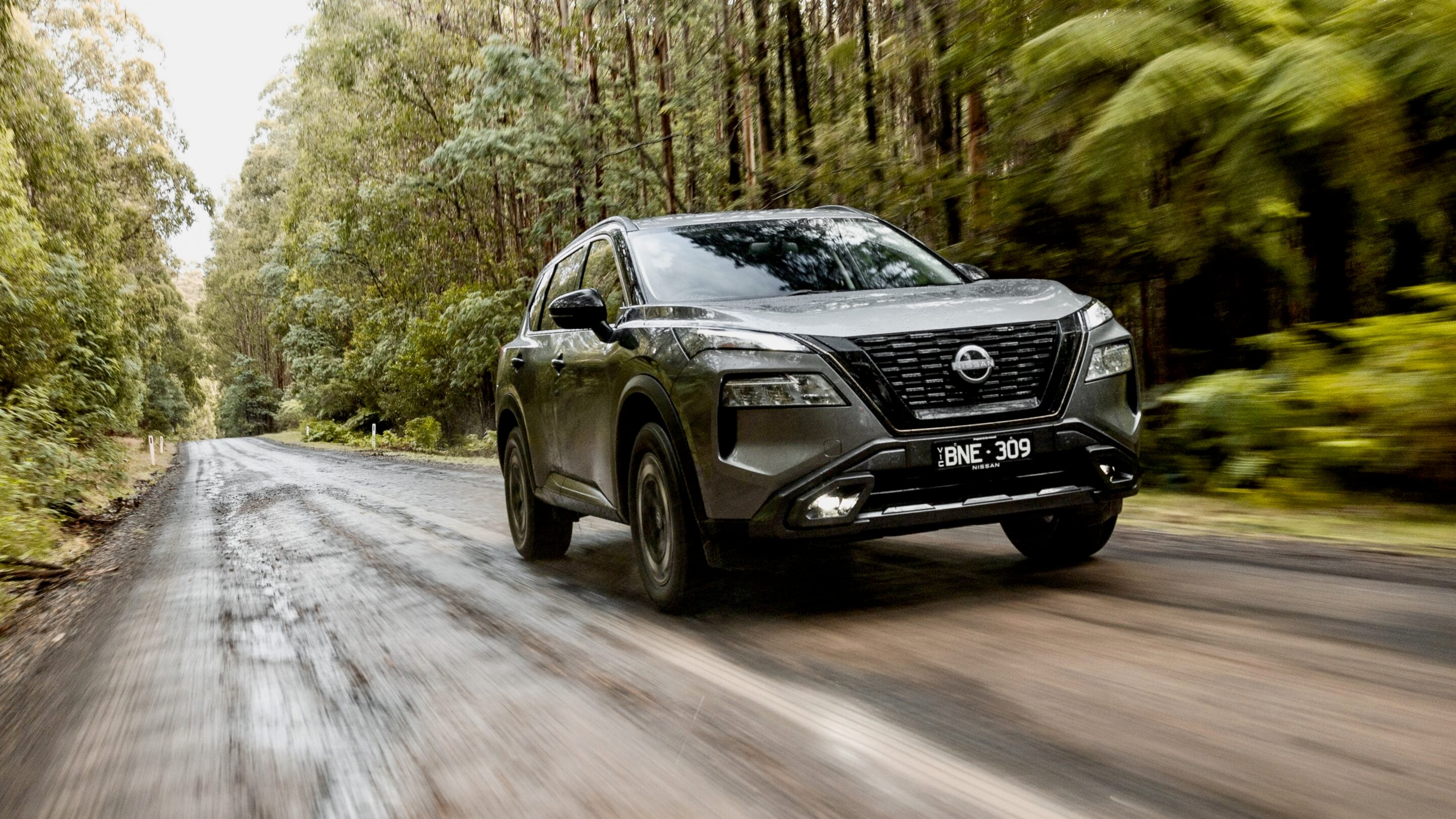
Nissan’s X-Trail has long been a family favourite, but it’s the brand’s clever e-Power hybrid technology that is helping to set it apart in today’s crowded medium SUV segment — and is a key reason it has been crowned Wheels Best Medium SUV 2025: Hybrid.
Unlike conventional hybrids, Nissan’s e-Power system uses a petrol engine solely to charge the battery, while the wheels are driven entirely by the electric motor. The result is EV-like smoothness and instant torque, but without the need to plug in. For a family, the obvious benefit is significantly improved fuel efficiency, lower emissions, and a refined driving experience, making the X-Trail one of the most economical choices in its class.
That efficiency doesn’t come at the expense of practicality. The hybrid X-Trail offers 575 litres of boot space, expanding to 1667 litres, more than enough for school runs, sports gear, or road trips. Rear doors that open almost 90 degrees make fitting child seats and loading kids a breeze, while the roomy second row ensures comfort for growing families.
Inside, the cabin feels more premium than its price suggests. Soft-touch materials, clear high-resolution screens, and smart storage solutions combine with a sensible layout that keeps physical buttons for essentials like climate control. It’s a user-friendly environment designed to reduce distractions while driving.
On the road, the e-Power system delivers a quiet, composed ride that’s tuned more for comfort than outright excitement — a welcome trade-off for families who value refinement. All-wheel drive adds peace of mind in wet or gravel conditions, while the compliant suspension smooths out the daily commute.
The package is sweetened by Nissan’s long warranty coverage — five years/unlimited km, extendable to 10 years/300,000 km with servicing — the longest in the new car market. Servicing costs remain competitive at $1995 for the first five years.
With its unique hybrid drivetrain, spacious and practical interior, premium cabin feel, and long warranty support, the Nissan X-Trail e-Power is a winning option as a family SUV.
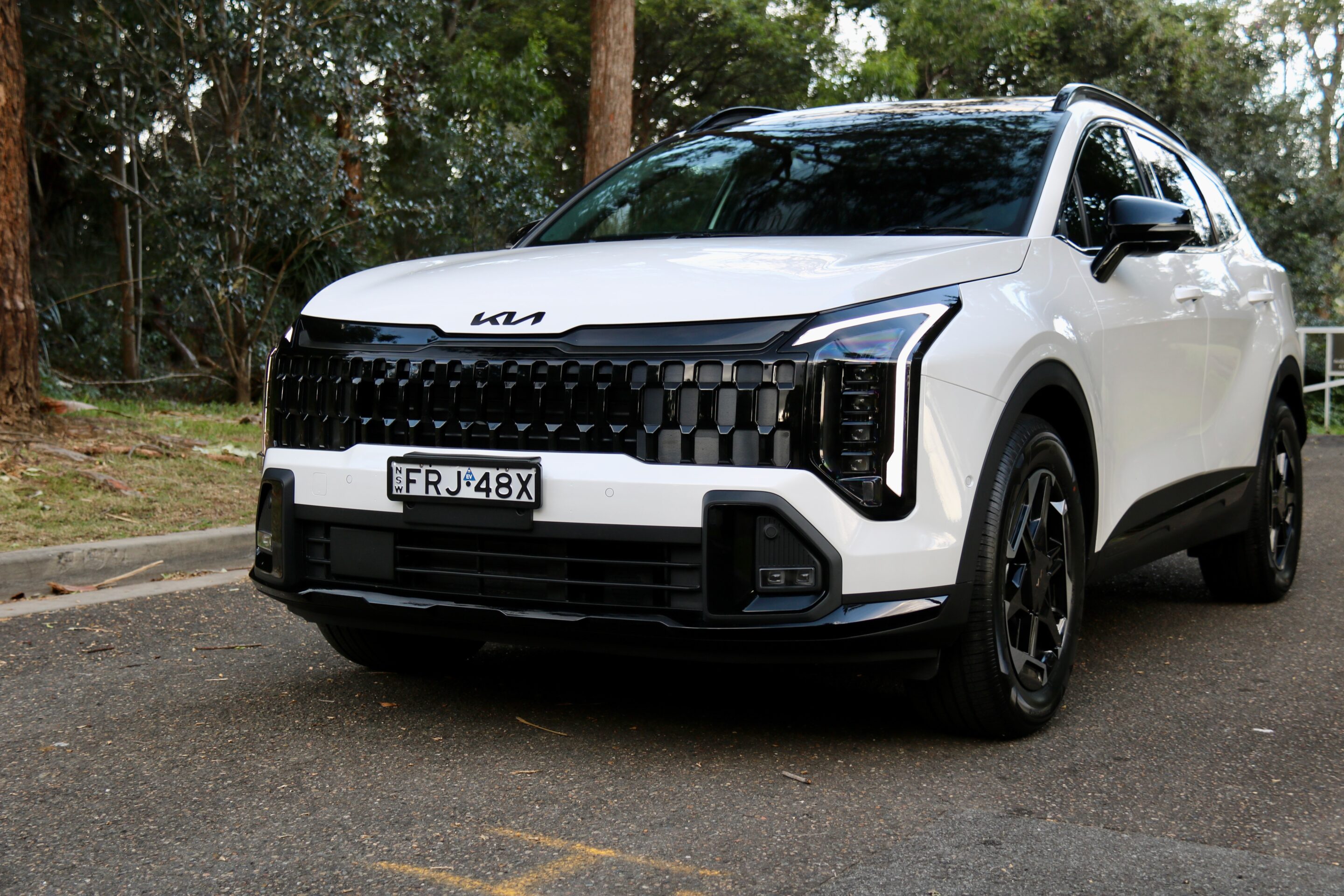
Price: From $37,990 plus on-road costs
Drivetrains/fuel economy/CO2 emissions:
2.0-litre four-cylinder, 6-speed auto, 2WD 115kW/192Nm, 8.1L/100km, 184g/km; 1.6-litre four-cylinder turbo-petrol, 8-speed auto, AWD, 132kW/265Nm; 1.6-litre four-cylinder turbo hybrid, 6-speed DCT, 2WD or AWD, 173kW/367Nm, 4.9-5.3L/100km 110-121g/km; 2.0-litre four-cylinder turbo-diesel, 8-speed auto, AWD, 137kW/416Nm, 6.3L/100km, 163g/km
Dimensions (length/width/height/wheelbase): 4685/1865/1665-1680/2755mm
Bootspace: 543-586L – 1829-1872L
Warranty/roadside assistance/service intervals: Seven-year/unlimited km, up to eight years,
annual/every 10,000km (1.6T and hybrid) or 15,000km (2.0L petrol and diesel)
Five-year service cost: $2467 ($493 per year – 2.0L petrol), $2562 ($512 per year – 1.6T), $2613
($522 per year – hybrid 2WD), $2666 ($533 per year – hybrid AWD), $2708 ($542 per year – diesel)
| Driving | |
| Interior | |
| Practicality | |
| Overall value | |
Kia’s recently updated Sportage medium SUV is, like its Hyundai Tucson cousin, an excellent all-round mid-size SUV that brings a lot to the table: a big range of drivetrains – the largest range of the segment – and an excellent driving experience, as well as a very practical and spacious cabin.
Plus, being a Kia, it’s great value for money and is covered by a long warranty. Prices for the Sportage range start at $37,990 plus on-road costs for the entry-level S 2.0-litre petrol auto, rising to over $60,000 +ORC for the top-spec GT-Line hybrid AWD. Regardless of the model chosen, the Sportage is well equipped, especially in facelifted form. The least expensive Sportage Hybrid is the second-from-base SX, which is priced from $46,450 +ORC – we’d like to see the sophisticated hybrid drivetrain added to the base S for more accessibility.
Unusually in an era where car makers are cutting down on drivetrain options, Kia offers petrol, turbo-petrol, hybrid and even diesel powerplants in the Sportage. Which you should buy depends on your needs – the petrol options are thirsty, while the hybrid is efficient but expensive to buy and diesel fuel isn’t best suited to everybody. We’d go the hybrid, but it really depends on your driving.
In the cabin, the Sportage feels spacious thanks to its wide dashboard layout and huge curved display incorporating both the infotainment system and driver’s screen. Cabin storage is good, while the rear seat is quite roomy for two taller adults. Bootspace is minimum 543 litres in petrol and diesel forms (it’s a higher 586L in the hybrid because it lacks a full-size spare wheel), which is large in the segment.
Kia’s seven-year/unlimited km warranty was once the industry benchmark but has now been matched by a number of manufacturers – thankfully, seven years is still a long time. Service pricing, however, isn’t cheap – even the least technically impressive 2.0 litre petrol engine costs almost $500 annually to service. But while some aspects of the Sportage aren’t cheap, it’s still a surefire all-rounder that’s great to drive, practical and importantly for many, available with hybrid power.
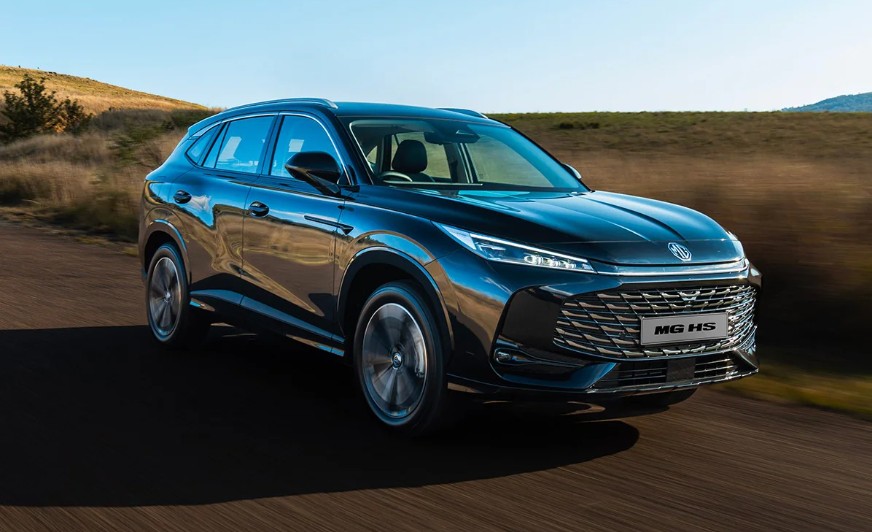
Price: From $33,990 drive away
Drivetrains/fuel economy/CO2 emissions: 1.5-litre turbo four-cylinder, 7-speed DCT, 2WD, 125kW/275Nm, 6.9L/100km, 156g/km; 1.5-litre turbo four-cylinder hybrid, CVT, 2WD, 165kW/340Nm, 5.2L/100km, 119g/km; 1.5-litre turbo four-cylinder plug-in hybrid, CVT, 2WD, 220kW/350Nm, 0.7L/100km, 17g/km
Dimensions (length/width/height/wheelbase): 4670/1890/1655/2675mm
Bootspace: 507L – 1484L
Warranty/roadside assistance/service intervals: Seven-year/unlimited km – extendable to 10
years/250,000km through dealer servicing, up to 10 years, annual/every 15,000km
Five-year service cost: $2354 ($470 per year – 1.5T petrol)
| Driving | |
| Interior | |
| Practicality | |
| Overall value | |
MG’s new product roll in Australia continues at a rapid pace, with the brand completely renewing its Australian line-up in a very short period. The HS mid-size SUV is one of the latest additions, replacing the short-lived first-generation model with a massive glow up: it’s far more modern inside and out, it’s better equipped across the range and it also now has two hybrid options.
Prices for the HS start at just $33,990 drive away for the entry level Vibe, but even the top-spec Essence petrol model doesn’t get you far over the $40,000 mark. The most expensive HS, the top-spec Essence plug-in hybrid, is just over $55,000 drive away – or thousands less than an equivalent Mitsubishi Outlander PHEV. As we’ve come to expect from the modern MG brand, the value equation for the HS is strong.
The cabin of the HS is one of the most modern-looking in the segment, with plenty of soft leather-like materials covering the surfaces that are touched most commonly, including the sides of the centre console to rest knees against. It’s practical too, with plenty of storage solutions, though the 12.3-inch touchscreen could be easier to use with very little in the way of shortcuts to help access features such as the climate control. The HS’s 507-litre boot is a little smaller than most in the segment.
The HS offers three drivetrains in Australia, all centred around a 1.5-litre turbo-petrol engine: a regular petrol variant, a hybrid and then a plug-in hybrid. The regular hybrid is yet to go on sale but the plug-in hybrid offers a claimed 81km of EV range and low fuel consumption, even with its battery depleted. The HS’s driving experience is otherwise unremarkable, with a compliant but fidgety low-speed ride quality and a seven-speed dual-clutch transmission on the 1.5T.
MG’s standard seven-year warranty is extended to a total of 10 years/250,000km if serviced through an MG dealership, and service pricing for the first five years is reasonable at $2354 for the 1.5-litre turbo-petrol. Overall, the MG HS presents compelling buying in the medium SUV segment thanks to its value equation, well-trimmed cabin, long standard equipment list and range of drivetrains, including two hybrids, offsetting the confusing touchscreen and no wireless phone mirroring.

Price: From $36,740 plus on-road costs
Drivetrains/fuel economy/CO2 emissions: 2.0-litre four-cylinder, 6-speed auto, 2WD, 115kW/200Nm, 6.9L/100km, 161g/km; 2.5-litre four-cylinder, 6-speed auto, 2WD or AWD, 140kW/252Nm, 7.2-7.4L/100km, 167-172g/km; 2.5-litre turbo four-cylinder, 6-speed auto, AWD, 170kW/420Nm, 8.2L/100km, 191g/km
Dimensions (length/width/height/wheelbase): 4575/1845/1680/2700mm
Bootspace: 438L – 1340L
Warranty/roadside assistance/service intervals: Five-year/unlimited km, five years, annual/every
15,000km
Five-year service cost: $2195 ($439 per year – 2.0L), $2227 ($445 per year – 2.5L), $2630 ($526
per year – 2.5L turbo)
| Driving | |
| Interior | |
| Practicality | |
| Overall value | |
Despite an all-new model already revealed and many newer rivals, the Mazda CX-5 is still the second-best selling medium SUV in Australia, with almost 14,000 sold to the end of July.
Mazda’s sexy ‘Kodo’ design hasn’t changed much since the original CX-5 was released in 2012, but it gives it a sharp and distinctive look in the mid-size SUV segment. The long, shark-like nose and rich-looking available Soul Red Crystal colour only add to the CX-5’s stylistic appeal, as do details such as the all-LED exterior lighting and wheels up to 19-inches in size.
On the inside, while the CX-5 is feeling a bit dated against newer and more tech-heavy rivals, its quality is still among the best in the segment – especially the top-of-the-range Akera with its Nappa leather trimmings. But even in the entry-level Maxx, the switchgear in the cabin has excellent weighting and the bits of chrome add class to the cabin. It’s not the most practical mid-size SUV, however, with a tight back seat and a boot that’s one of the smallest in the segment.
Three four-cylinder petrol engines are available: a 115kW 2.0-litre, a 140kW 2.5-litre and a 170kW turbocharged 2.5-litre, all with a six-speed auto as standard and there’s no hybrid drivetrain yet available. Regardless of engine, the CX-5 drives sweetly, with a fun chassis and a connected driving feel that’s above its rivals. And the CX-5 still rides quite well, even on larger wheels of the more expensive models in the line-up.
Mazda’s five-year warranty is looking short these days, though at least it has roadside assistance for the full warranty duration and regardless of where it’s serviced. Service pricing is reasonable for the naturally aspirated engines, but expensive for the turbocharged donk and thanks to that and its thirsty real world fuel consumption, the CX-5 2.5T will be costly to run. But regardless, it’s clear why the Mazda CX-5 is an Australian favourite after all these years.
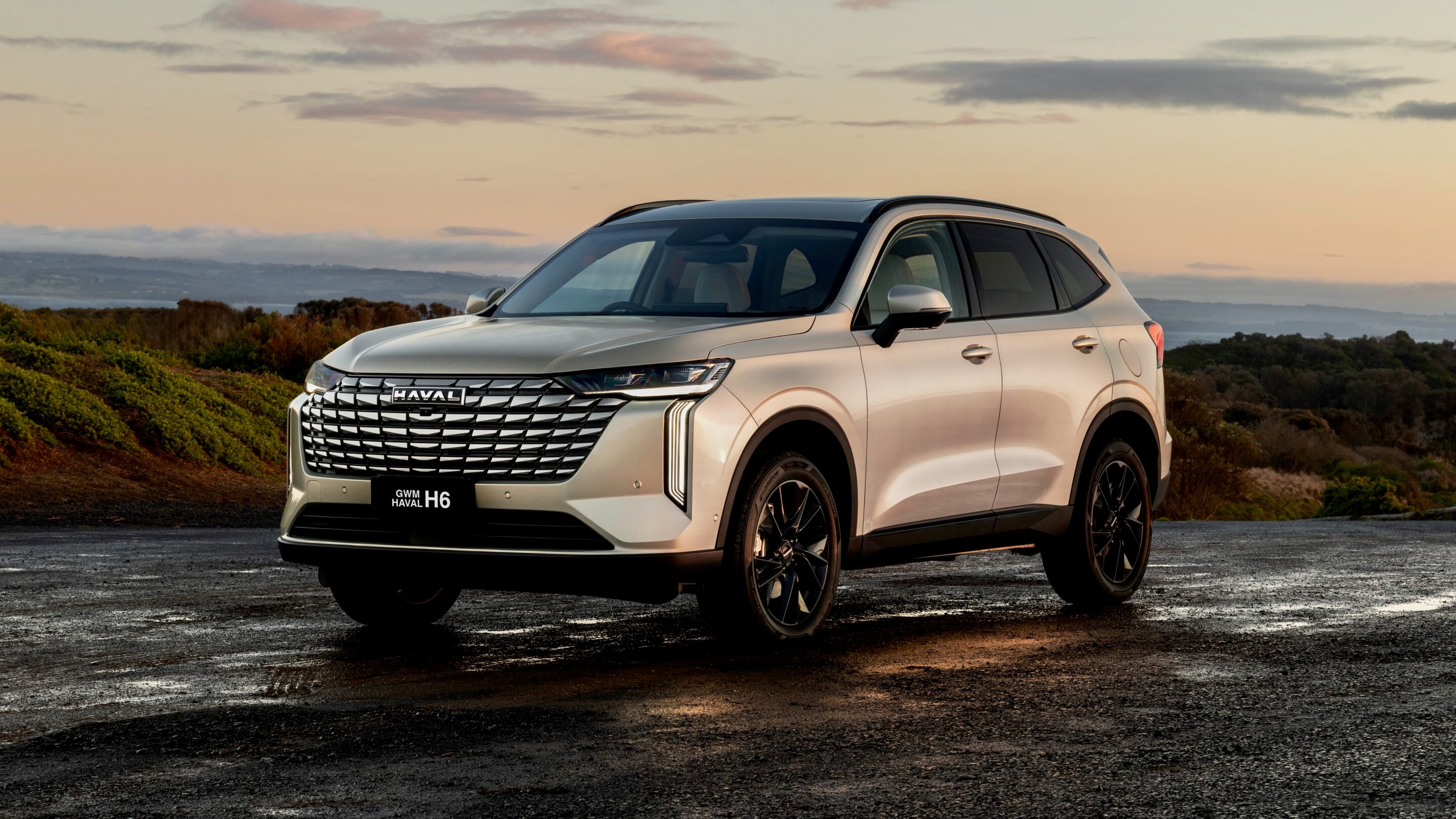
Price: From $35,990 drive away
Drivetrains/fuel economy/CO2 emissions: 2.0-litre turbo four-cylinder, 9-speed DCT, 2WD, 170kW/380Nm, 7.4L/100km, 170g/km; 1.5-litre turbo four-cylinder hybrid, CVT, 2WD, 179kW/530Nm, 5.2L/100km, 120g/km; 1.5-litre turbo four-cylinder plug-in hybrid, CVT, 2WD or AWD, 240kW/540Nm (2WD) – 268kW/760Nm (AWD), 1.0-1.1L/100km, 22-25g/km
Dimensions (length/width/height/wheelbase): 4703/1886/1730/2738mm
Bootspace: 560 litres – 1445/1485 litres
Warranty/roadside assistance/service intervals: Seven-year/unlimited km, five years, annual/10,000km for the first year and then every 15,000km afterwards
Five-year service cost: $2110 ($422 per year – 2.0T), $2145 ($429 per year – hybrid), $2220 ($444 per year – PHEV)
| Driving | |
| Interior | |
| Practicality | |
| Overall value | |
GWM’s Haval H6 was recently given a comprehensive mid-life update with updated styling, a new model line-up, value increases and not one but two new plug-in hybrid drivetrains making up to a massive 268kW of power.
The turbocharged 2.0-litre four-cylinder petrol engine remains the entry-level engine but now making 170kW of power, while the new plug-in hybrid drivetrains offer up to around 80km of electric driving range (WLTP) from their 19kWh battery. We’d choose the 1.5-litre turbo hybrid drivetrain, which makes a strong 179kW of power and 530Nm of torque – more than a RAV4 hybrid. Its claimed fuel consumption is higher than the RAV4 at 5.2L/100km, but still low.
On the road, the Haval H6’s ride is a little firm at low speed but go further and it quickly wins back points with those smooth hybrid drivetrains offering more than enough grunt and impressive refinement with little in the way of road and wind noise at speed.
The H6’s cabin saw a new 14.6-inch touchscreen added with the update, which added features such as wireless smartphone mirroring, though still no integrated sat-nav. Like the pre-updated model, the H6’s touchscreen controls the vast majority of functions in the car – including, now, even the headlights with the update – though a row of buttons below the screen help a bit with functionality. The rear seat is spacious for the segment and three adults will fit fine, while the bootspace is a large 560 litres with the seats up.
The H6 is covered by GWM’s seven-year/unlimited km warranty with five years of roadside assistance and five years of capped price servicing totalling only $2220 for the PHEV, which is the most expensive in the range.
In the end, it’s the bang for buck which ensures it wins the Value section of these awards: that hard-to-ignore price combined with strong equipment levels and three hybrid drivetrain options is so attractive in cash-strapped times.

Price: From $29,990 drive away
Drivetrains/fuel economy/CO2 emissions: 1.5-litre turbo four-cylinder, 7-speed DCT, 2WD, 137kW/275Nm, 7.0L/100km, 163g/km; 1.5-litre turbo four-cylinder plug-in hybrid, CVT, 2WD, 255kW/525Nm, 1.4L/100km, 33g/km
Dimensions (length/width/height/wheelbase): 4513/1862/1696/2670mm
Bootspace: 356L – 1500L
Warranty/roadside assistance/service intervals: Seven-year/unlimited km, 12 months, annual/every
15,000km
Five-year service cost: $1445 ($289 per year – 1.6T), $1595 ($319 per year – PHEV)
| Driving | |
| Interior | |
| Practicality | |
| Overall value | |
With cars such as the Tiggo 4 and the Tiggo 7, Chery is making a name for itself with some of the best value cars on the market. Priced from just $29,990 drive away for the entry-level SE, the Tiggo 7 gives buyers a mid-size SUV for the price of a small SUV and it’s been a long time since we’ve seen a mid-sizer priced at under $30,000.
Chery launched the Tiggo 7 Pro a few years ago with a larger line-up that also included an all-wheel drive variant, though it was rejigged not long afterwards with a mild update to just the SE and SE+, with both using a new 108kW 1.5-litre turbo-petrol engine and a six-speed dual-clutch gearbox.
Standard equipment on both variants is lengthy, including dual 12.3-inch screens, synthetic leather upholstery and a full range of active safety features.
The cabin of the Tiggo 7 feels modern thanks to the big screens and stitched synthetic leather trim on many surfaces, while it’s also more ergonomic than many rivals thanks to the inclusion of the touch panel on the lower dashboard to control the climate control instead of hiding controls in the touchscreen. There are many storage spots inside, though the back seat and boot aren’t as large as many rivals, so be sure to test that out to see if it suits you.
As for drivetrains, buyers can choose either a 1.5-litre turbo-petrol engine or new 1.5-litre turbo-petrol plug-in hybrid drivetrain making an impressive 255kW of power, but also claiming an impressive 1200km range and combined fuel consumption of just 1.4L/100km when charged. Of course, the Tiggo 7 PHEV is more expensive than the petrol model at $39,990 drive away, but it’s also the cheapest plug-in hybrid on the market.
The Tiggo 7 isn’t as good to drive as many rivals, however, thanks to an unsettled ride quality and a jerky transmission. The PHEV variant is also too powerful and its grunt can overpower the chassis. However, for the value-focused buyer, there’s lots to like: a good quality and modern cabin experience and the option of an efficient and quite powerful plug-in hybrid drivetrain. For many buyers, what more could you want?
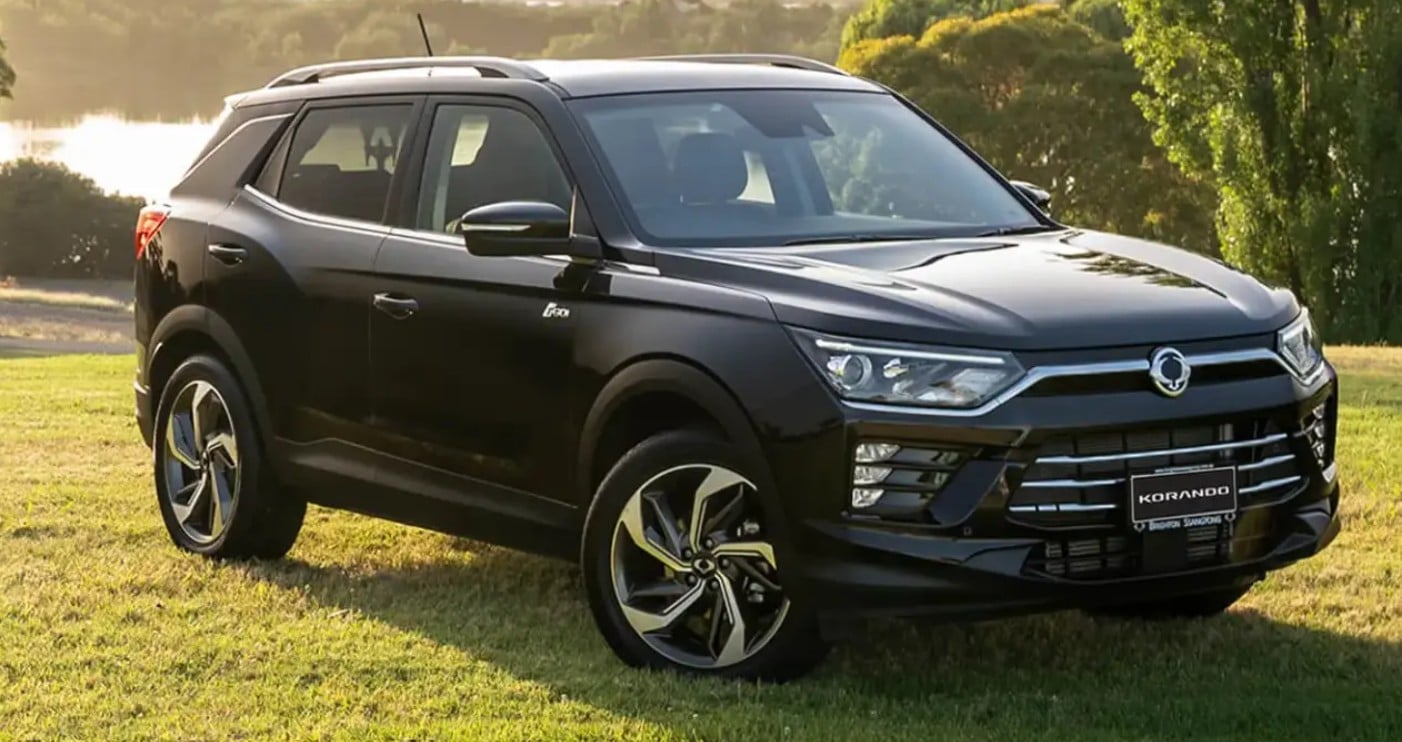
Price: From $33,000 drive away
Drivetrains/fuel economy/CO2 emissions: 1.5-litre turbo four-cylinder, 6-speed auto, 120kW/280Nm, 7.7L/100km, 179g/km
Dimensions (length/width/height/wheelbase): 4450/1870/1629/2675mm
Bootspace: 407L – 1104L
Warranty/roadside assistance/service intervals: Seven-year/unlimited km, five years, annual/every
15,000km
Five-year service cost: $1898 ($379 per year)
| Driving | |
| Interior | |
| Practicality | |
| Overall value | |
The Wheels’ Best Medium SUV 2025 awards wouldn’t be complete without entrants from brands that we think you should be considering, and the KGM (formerly SsangYong) Korando is one such product. While some rivals are larger and offer more practicality, the Korando is a worthy option for a mid-size SUV, one that we think deserves more attention.
Priced from just $33,000 drive away, the Korando offers excellent value for money. Features on the entry-level ELX include 18-inch alloy wheels, dusk-sensing automatic headlights, LED front and rear daytime running lights, cloth and synthetic leather upholstery, autonomous emergency braking (AEB), lane keeping assistance, blind-spot monitoring and rear cross-traffic alert. The upper-spec Ultimate adds leather trim, larger 19-inch wheels, a sunroof, an electric tailgate, a 360-degree camera and 10.25-inch digital driver’s display.
Regardless of model chosen, the Korando features a turbocharged 1.5-litre four-cylinder petrol engine making 120kW of power and 280Nm of torque, which sends power to the front wheels through a six-speed automatic transmission. It’s a refined drivetrain, while the driving experience feels European thanks to taut suspension and a quick steering feel. We wish the former diesel option were still available, however.
The Korando’s cabin is well featured and good quality, including soft touch materials on the dashboard and door tops. The seats are quite comfortable and even feature heating on the ELX, with ventilation and driver’s electric adjustment added with the Ultimate. Rear seat space is plentiful for two adults, though three will struggle to fit. The 407-litre boot also shows the Korando’s smaller dimensions in the segment.
The Korando’s seven-year warranty is one of the best in the segment and the $1898 basic service cost over five years is affordable as well. Overall, the KGM Korando deserves to sell better in Australia thanks to its appealing size, strong value for money, willing turbo-petrol engine and taut ride and handling. While some rivals are more modern and more practical inside, and it could be more fuel efficient, the Korando is a very appealing product, especially for its bargain pricing.

Price: From $39,990 plus on-road costs
Drivetrains/fuel economy/CO2 emissions: 2.5-litre four-cylinder, CVT, 2WD or AWD, 135kW/245Nm, 7.5-7.8L/100km, 170-177g/km
Dimensions (length/width/height/wheelbase): 4720/1862/1742/2706mm
Bootspace: 485L – 1466L
Warranty/roadside assistance/service intervals: Five-year/unlimited km – extendable to 10
years/200,000km through dealer servicing, 12 months – extendable up to four years with dealer
servicing, annual/every 15,000km
Five-year service cost: $1700 ($340 per year)
| Driving | |
| Interior | |
| Practicality | |
| Overall value | |
The Mitsubishi Outlander is a big selling product in Australia thanks to its practical cabin, long warranty (if serviced at Mitsubishi), cheap servicing, good value for money and modern styling. Recently given a mid-life update, the Outlander is now a better product for medium SUV buyers and offers some unique selling points, including new Yamaha audio.
For now, just one drivetrain is available: the same 135kW 2.5-litre four-cylinder petrol engine that was in the pre-updated model, again matched to a CVT automatic transmission and either front- or all-wheel drive. A 185kW plug-in hybrid drivetrain is yet to launch with the facelifted model, but will likely again offer more than 50km of all-electric driving range and DC fast charging capability.
While the update to the Outlander doesn’t look all that different – it added some revised lighting and new alloy wheel designs – under-the-skin changes are far more noticeable. A dynamic package rethink has seen its driving experience improve massively, with a more supple ride and more feelsome steering adding more appeal, even for keener drivers.
The Outlander’s cabin is modern and well featured, with even the entry-level ES now featuring a 12.3-inch touchscreen with wireless smartphone mirroring. The whole range also now features an eight-speaker Yamaha sound system, with the top-spec Exceed Tourer adding an upgraded and impressive 1650-watt 12-speaker unit, also from Yamaha. The rear seats of the Outlander haven’t changed with the update, with the second row still spacious and the optional third row still quite tight, just like its Nissan X-Trail cousin that it shares so much with.
The Outlander is covered by a five-year/100,000km warranty that looks short by industry standards, but can be extended up to a very long 10 years/200,000km in total if serviced though a Mitsubishi dealership. As before, the Mitsubishi Outlander’s appeal lies in its value equation and practicality, but its recent subtle and worthwhile update has made it more appealing than ever before thanks to revised suspension settings, more in-car tech and excellent audio systems.
Looking to get into a brand-new mid-size SUV? Our stories below will guide you to the model that best suits your needs:
Queensland’s artificial intelligence-powered cameras, which detect drivers using mobile phones or failing to wear seatbelts, are facing scrutiny over privacy and oversight shortcomings.
A review by the Queensland Audit Office found the Department of Transport and Main Roads (TMR) had not properly assessed the ethical risks associated with the program, reports Yahoo News Australia. According to the report, safeguards such as human review processes may not be robust enough to ensure fairness before fines are issued.
The investigation also criticised the state’s wider AI governance, noting that the Department of Customer Services, Open Data and Small and Family Business – responsible for the government’s AI ethics framework – has limited oversight of how agencies actually deploy such technologies.
It also found that the phone and seatbelt camera program bypassed the required ethical checks before its launch, leaving questions unanswered around image recognition accuracy, how driver photographs are stored, and whether human input is sufficient in decision-making.
The scale of the program is significant. In 2024 alone, the AI cameras conducted more than 208 million assessments. Around 137,000 cases were reviewed manually, leading to 114,000 fines being issued and generating revenue exceeding $137 million.
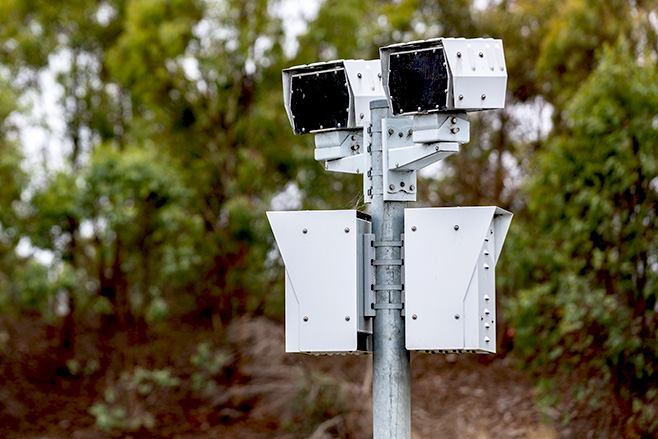
Despite the findings, Transport Minister Brent Mickelberg defended the system, telling Yahoo News Australia that existing safeguards are in place. “The privacy of Queenslanders is something we take extremely seriously,” he said.
He added that TMR is already addressing the recommendations from the Audit Office. “The Department has existing governance arrangements in place for the Mobile Phone and Seatbelt Technology program, which are well-positioned to manage ethical risks,” Mickelberg said.
The minister also confirmed to the outlet that a new AI Strategic Roadmap is being developed to strengthen oversight and provide greater privacy protections for motorists.
The report highlights the growing tension between the benefits of AI-driven enforcement and the risks posed to privacy, with Queensland now under pressure to ensure its road safety programs align with broader ethical standards.
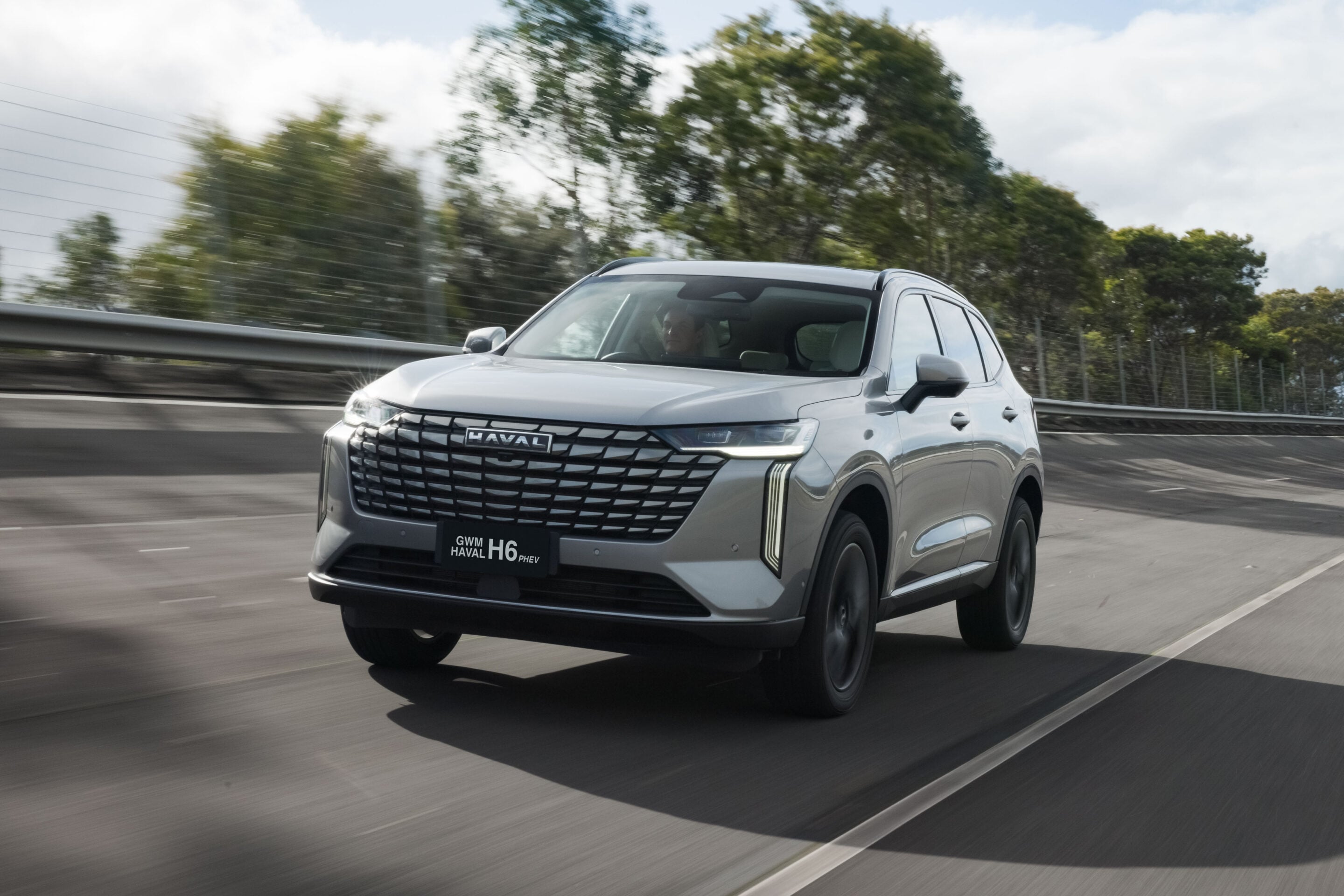
Price: From $35,990 drive away
Drivetrains/fuel economy/CO2 emissions: 2.0-litre turbo four-cylinder, 9-speed DCT, 2WD, 170kW/380Nm, 7.4L/100km, 170g/km; 1.5-litre turbo four-cylinder hybrid, CVT, 2WD, 179kW/530Nm, 5.2L/100km, 120g/km; 1.5-litre turbo four-cylinder plug-in hybrid, CVT, 2WD or AWD, 240kW/540Nm (2WD) – 268kW/760Nm (AWD), 1.0-1.1L/100km, 22-25g/km
Dimensions (length/width/height/wheelbase): 4703/1886/1730/2738mm
Bootspace: 560 litres – 1445/1485 litres
Warranty/roadside assistance/service intervals: Seven-year/unlimited km, five years,
annual/10,000km for the first year and then every 15,000km afterwards
Five-year service cost: $2110 ($422 per year – 2.0T), $2145 ($429 per year – hybrid), $2220 ($444
per year – PHEV)
| Driving | |
| Interior | |
| Practicality | |
| Overall value | |
GWM’s Haval H6 was recently given a comprehensive mid-life update with updated styling, a new model line-up, value increases and not one but two new plug-in hybrid drivetrains making up to a massive 268kW of power.
The turbocharged 2.0-litre four-cylinder petrol engine remains the entry-level engine but now making 170kW of power, while the new plug-in hybrid drivetrains offer up to around 80km of electric driving range (WLTP) from their 19kWh battery. We’d choose the 1.5-litre turbo hybrid drivetrain, which makes a strong 179kW of power and 530Nm of torque – more than a RAV4 hybrid. Its claimed fuel consumption is higher than the RAV4 at 5.2L/100km, but still low.
On the road, the Haval H6’s ride is a little firm at low speed but go further and it quickly wins back points with those smooth hybrid drivetrains offering more than enough grunt and impressive refinement with little in the way of road and wind noise at speed.
The H6’s cabin saw a new 14.6-inch touchscreen added with the update, which added features such as wireless smartphone mirroring, though still no integrated sat-nav. Like the pre-updated model, the H6’s touchscreen controls the vast majority of functions in the car – including, now, even the headlights with the update – though a row of buttons below the screen help a bit with functionality. The rear seat is spacious for the segment and three adults will fit fine, while the bootspace is a large 560 litres with the seats up.
The H6 is covered by GWM’s seven-year/unlimited km warranty with five years of roadside assistance and five years of capped price servicing totalling only $2220 for the PHEV, which is the most expensive in the range.
In the end, it’s the bang for buck which ensures it wins the Value section of these awards: that hard-to-ignore price combined with strong equipment levels and three hybrid drivetrain options is so attractive in cash-strapped times.
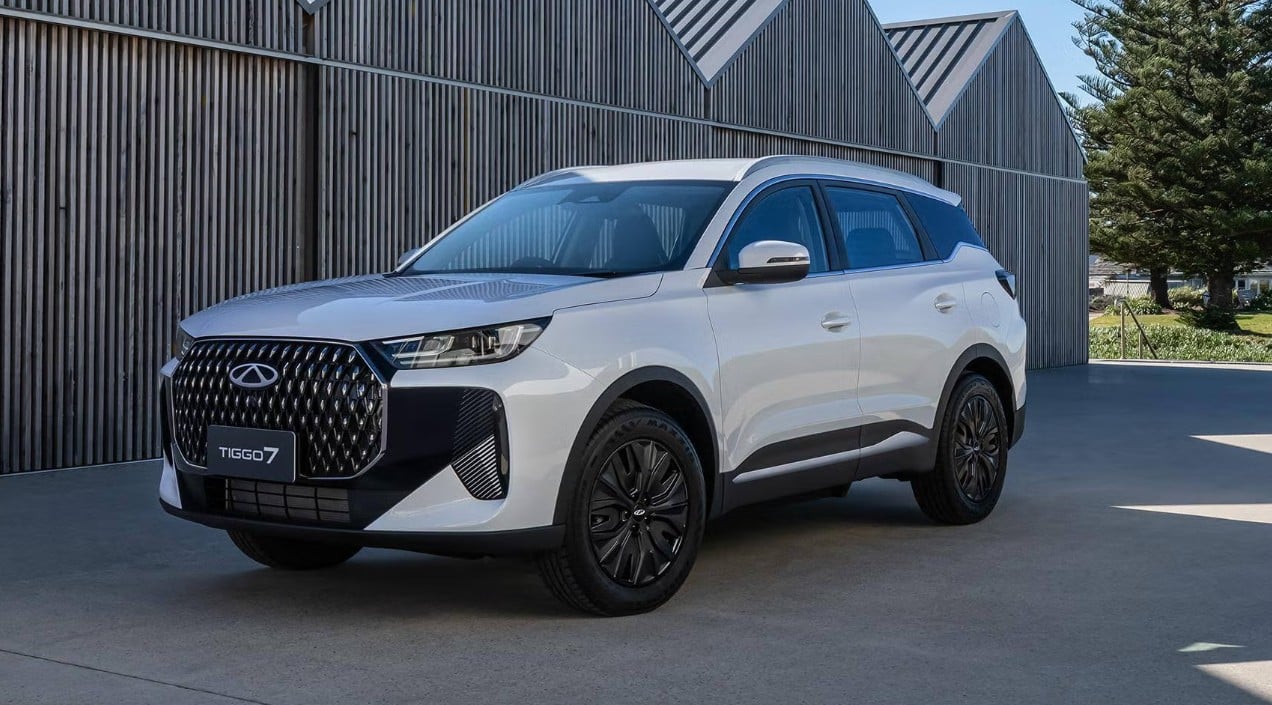
Price: From $29,990 drive away
Drivetrains/fuel economy/CO2 emissions: 1.5-litre turbo four-cylinder, 6-speed DCT, 2WD, 108kW/210Nm, 6.9L/100km, 158g/km; 1.5-litre turbo four-cylinder plug-in hybrid, CVT, 2WD, 255kW/525Nm, 1.4L/100km, 33g/km
Dimensions (length/width/height/wheelbase): 4513/1862/1696/2670mm
Bootspace: 356L – 1500L
Warranty/roadside assistance/service intervals: Seven-year/unlimited km, 12 months, annual/every
15,000km
Five-year service cost: $1445 ($289 per year – 1.6T), $1595 ($319 per year – PHEV)
| Driving | |
| Interior | |
| Practicality | |
| Overall value | |
With cars such as the Tiggo 4 and the Tiggo 7, Chery is making a name for itself with some of the best value cars on the market. Priced from just $29,990 drive away for the entry-level SE, the Tiggo 7 gives buyers a mid-size SUV for the price of a small SUV and it’s been a long time since we’ve seen a mid-sizer priced at under $30,000.
Chery launched the Tiggo 7 Pro a few years ago with a larger line-up that also included an all-wheel drive variant, though it was rejigged not long afterwards with a mild update to just the SE and SE+, with both using a new 108kW 1.5-litre turbo-petrol engine and a six-speed dual-clutch gearbox.
Standard equipment on both variants is lengthy, including dual 12.3-inch screens, synthetic leather upholstery and a full range of active safety features.
The cabin of the Tiggo 7 feels modern thanks to the big screens and stitched synthetic leather trim on many surfaces, while it’s also more ergonomic than many rivals thanks to the inclusion of the touch panel on the lower dashboard to control the climate control instead of hiding controls in the touchscreen. There are many storage spots inside, though the back seat and boot aren’t as large as many rivals, so be sure to test that out to see if it suits you.
As for drivetrains, buyers can choose either a 1.5-litre turbo-petrol engine or new 1.5-litre turbo-petrol plug-in hybrid drivetrain making an impressive 255kW of power, but also claiming an impressive 1200km range and combined fuel consumption of just 1.4L/100km when charged. Of course, the Tiggo 7 PHEV is more expensive than the petrol model at $39,990 drive away, but it’s also the cheapest plug-in hybrid on the market.
The Tiggo 7 isn’t as good to drive as many rivals, however, thanks to an unsettled ride quality and a jerky transmission. The PHEV variant is also too powerful and its grunt can overpower the chassis. However, for the value-focused buyer, there’s lots to like: a good quality and modern cabin experience and the option of an efficient and quite powerful plug-in hybrid drivetrain. For many buyers, what more could you want?
Price: From $40,990 plus on-road costs
Drivetrains: Single motor front axle, 160kW/320Nm
Battery/peak DC charge rate: 60.2kWh LFP, 100kW
Claimed WLTP range: 410 – 430km
Dimensions (length/width/height/wheelbase): 4615/1901/1670/2750mm
Bootspace: 410L – 1877L
Warranty/roadside assistance/service intervals: Seven-year/unlimited km, service activated up to seven years, annual/every 20,000km
Five-year service cost: $1487 ($298 per year)
| Driving | |
| Interior | |
| Practicality | |
| Overall value | |
Even though many of its sub brands such as Volvo have been on sale in Australia for decades, China’s Geely only launched its own brand earlier in 2025. So far, just one product is on offer: the EX5 electric mid-sizer, though there’s also a PHEV equivalent named the Starray that’s due to arrive soon. The EX5 is one of the cheapest EVs on the market, but does it have anything else going for it?
Priced from just $40,990 plus on-road costs, the EX5 is offered in two specifications: entry-level Complete and top-spec Inspire, with even the Complete equipped with 18-inch alloy wheels, a huge 15.4-inch touchscreen, electric front seats with heating, a 360-degree camera and a full active safety suite. The top-spec Inspire further adds a 13.8-inch head-up display, 16-speaker sound system, panoramic sunroof, larger 19-inch wheels and even massaging front seats for only $4000 more.
For now, there’s only a single drivetrain available in the EX5 range: a front single motor making 160kW of power and 320Nm, giving the EX5 reasonable pep off the line. That draws power from a small 60.2kWh battery, giving the EX5 a WLTP range of up to 430km and peak DC fast charging of 100kW. While that’s a great range for an urban EV, we’d like to see a longer-range version added.
The driving experience of the EX5 is, well, soggy – the ride is quite soft and even smaller bumps have its body control struggling to keep it in check. The interior of the EX5 is is fairly minimalist in design, with only a few shortcut buttons – and a volume knob, thankfully – but every other feature inside is controlled through the huge 15.4-inch touchscreen. It looks sharp and it’s quick to respond to touch as well, though its functionality could be better as some menus make little sense. The rear seat of the EX5 is huge, with ample room in all directions for taller people, and while the 410-litre boot may seem small initially, it actually features a large under-floor box that adds significantly to the size. With the seats folded, there’s a huge 1877 litres on offer.
Geely’s Australian warranty is a seven-year/unlimited km job with up to seven years of roadside assistance. The EX5 must be serviced annually/every 20,000km, and five years/100,000km of servicing costs just $1487 or $298 per year. Overall, while there are negatives to the EX5 such as the soft driving experience, lack of long-range battery option and a sometimes confusing touchscreen, there’s also plenty to like such as the value equation, long warranty and practicality.
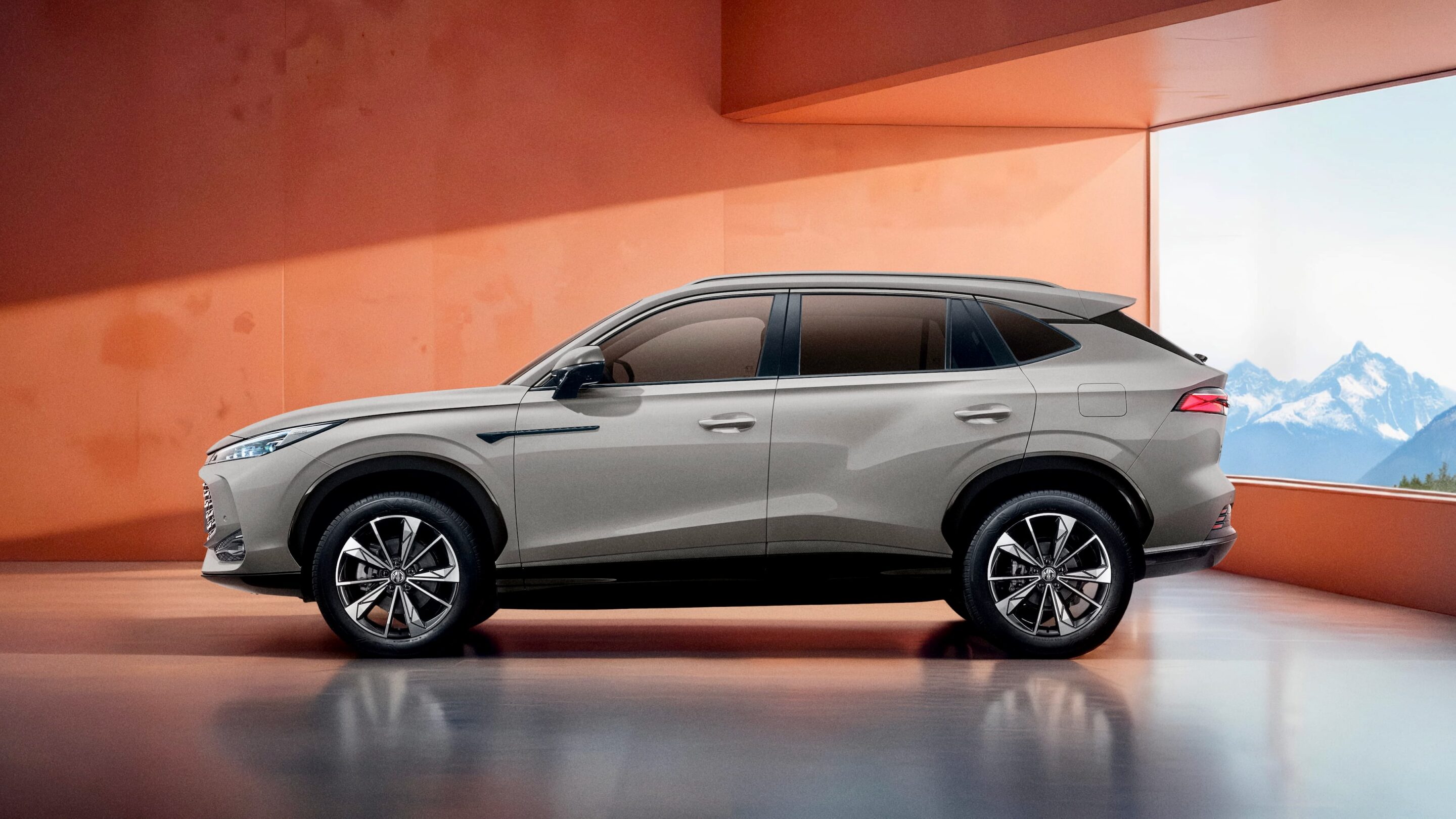
Price: From $33,990 drive away
Drivetrains/fuel economy/CO2 emissions: 1.5-litre turbo four-cylinder, 7-speed DCT, 2WD, 125kW/275Nm, 6.9L/100km, 156g/km; 1.5-litre turbo four-cylinder hybrid, CVT, 2WD, 165kW/340Nm, 5.2L/100km, 119g/km’ 1.5-litre turbo four-cylinder plug-in hybrid, CVT, 2WD, 220kW/350Nm, 0.7L/100km, 17g/km
Dimensions (length/width/height/wheelbase): 4670/1890/1655/2675mm
Bootspace: 507L – 1484L
Warranty/roadside assistance/service intervals: Seven-year/unlimited km – extendable to 10
years/250,000km through dealer servicing, up to 10 years, annual/every 15,000km
Five-year service cost: $2354 ($470 per year – 1.5T petrol)
| Driving | |
| Interior | |
| Practicality | |
| Overall value | |
MG’s new product roll in Australia continues at a rapid pace, with the brand completely renewing its Australian line-up in a very short period. The HS mid-size SUV is one of the latest additions replacing the short-lived first-generation model with a massive glow up: it’s far more modern inside and out, it’s better equipped across the range and it also now has two hybrid options.
Prices for the HS start at just $33,990 drive away for the entry level Vibe, but even the top-spec Essence petrol model doesn’t get you far over the $40,000 mark. The most expensive HS, the top-spec Essence plug-in hybrid, is just over $55,000 drive away – or thousands less than an equivalent Mitsubishi Outlander PHEV. As we’ve come to expect from the modern MG brand, the value equation for the HS is strong.
The cabin of the HS is one of the most modern-looking in the segment, with plenty of soft leather-like materials covering the surfaces that are touched most commonly, including the sides of the centre console to rest knees against. It’s practical too, with plenty of storage solutions, though the 12.3-inch touchscreen could be easier to use with very little in the way of shortcuts to help access features such as the climate control. The HS’s 507-litre boot is a little smaller than most in the segment.
The HS offers three drivetrains in Australia, all centred around a 1.5-litre turbo-petrol engine: a regular petrol variant, a hybrid and then a plug-in hybrid. The regular hybrid is yet to go on sale but the plug-in hybrid offers a claimed 81km of EV range and low fuel consumption, even with its battery depleted. The HS’s driving experience is otherwise unremarkable, with a compliant but fidgety low-speed ride quality and a seven-speed dual-clutch transmission on the 1.5T.
MG’s standard seven-year warranty is extended to a total of 10 years/250,000km if serviced through an MG dealership, and service pricing for the first five years is reasonable at $2354 for the 1.5-litre turbo-petrol. Overall, the MG HS sells solidly in the mid-size SUV segment thanks to its strong value, well-trimmed cabin, long standard equipment list and range of drivetrains, including two hybrids, which offset issues such as a confusing touchscreen and no wireless phone mirroring.
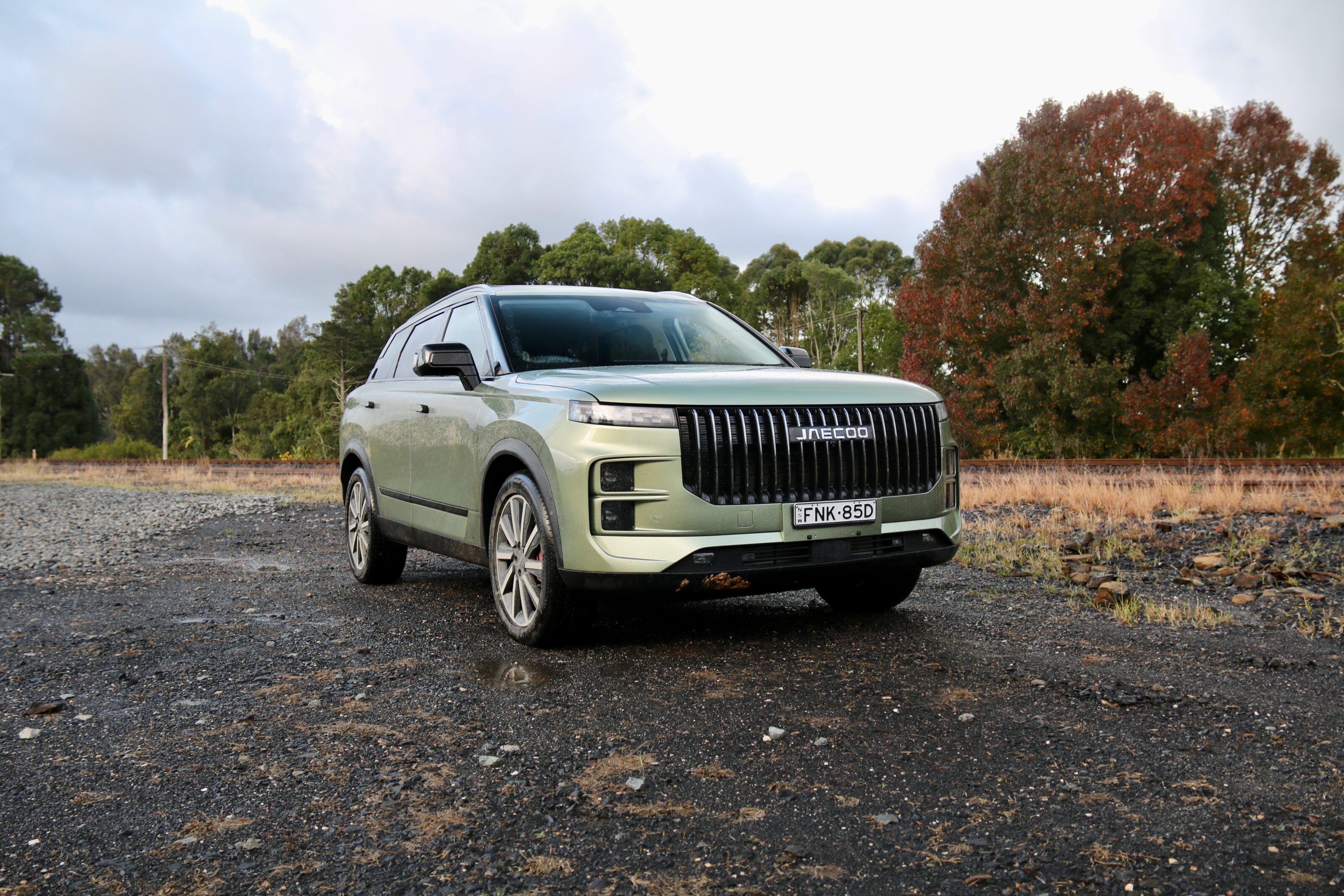
Price: From $34,990 drive away
Drivetrains/fuel economy/CO2 emissions:
1.6-litre turbo four-cylinder, 7-speed DCT, 2WD or AWD, 137kW/275Nm, 7.0L-7.8L/100km, 163-
181g/km; 1.5-litre turbo four-cylinder plug-in hybrid, CVT, 2WD, 255kW/525Nm, 1.0L/100km, 17g/km
Dimensions (length/width/height/wheelbase): 4500/1865/1680/2672mm
Bootspace: 424L – 1349L
Warranty/roadside assistance/service intervals: Eight-year/unlimited km, up to eight years,
annual/every 15,000km
Five-year service cost: $1725 ($345 per year – 1.6T 2WD), $1925 ($385 per year – 1.6T AWD),
$1895 ($379 per year – PHEV)
| Driving | |
| Interior | |
| Practicality | |
| Overall value | |
You’ve probably not heard of the new-to-Australia Jaecoo brand – a combination of the German word “Jäger” (hunter) and cool – but thanks to its strong value equation, we think you soon will.
Jaecoo is Chinese giant Chery’s more premium sub brand and the mid-sized J7 is the first product it launched in Australia. The J7 is based on the Chery Tiggo 7, but is fancier to look at and touch, more expensive but better equipped and can be purchased with all-wheel drive.
Pricing for the J7 starts at $34,990 drive away, and there are four models on offer: petrol Core, Track and Ridge, and the SHS plug-in hybrid at the top of the range. Standard equipment, even on the Core, is impressive with synthetic leather, 18-inch alloy wheels and powered front seats as standard. We think the mid-spec Track ($37,990 drive away) is the variant to buy as it further adds a 360-degree camera, power tailgate, dual-zone automatic AC and a wireless charger.
Petrol models use a turbocharged 1.6-litre petrol engine making 137kW of power and 275Nm of torque, which sends grunt to either the front or – in the case of the Ridge – all four wheels through a seven-speed dual-clutch transmission. The J7 is not sporty and loves to roll in corners but it handles urban bumps well. The J7 Ridge AWD also provides some amount of off-road capability for a mid-size SUV, and the 255kW plug-in hybrid is quite rapid – more than enough to overwhelm the front wheels.
Centre of the cabin is a huge 14.8-inch touchscreen with features such as wireless smartphone mirroring and satellite navigation. It’s quick to use and quite bright, but it needs an extra layer of shortcuts as it can be distracting to use. The J7’s cabin otherwise displays a good level of quality with plenty of synthetic leather surfaces, excellent storage options and reasonable space for two adults in the rear seat. The J7’s smaller sizing in the segment means that its boot space isn’t huge, however, at just 424 litres with the seats up and 1349 litres with them folded.
Where the J7 adds value is its aftersales program with an impressive standard eight-year/unlimited km warranty with eight years of roadside assistance as standard. There’s also eight years of capped price servicing and the first five years of servicing ranges from $1725 to $1925, or $345 to $385 per year.
While there are cheaper alternatives, the Jaecoo J7 is still strong value for money if you’re after something a little bit fancier than the norm with its premium vibe, handsome styling and stacks of standard equipment. The driving experience could be improved, however, and it’s definitely at the smaller end of the segment, but still offers more than enough for value-focused buyers to consider.
Price: From $33,000 drive away
Drivetrains/fuel economy/CO2 emissions: 1.5-litre turbo four-cylinder, 6-speed auto, 120kW/280Nm, 7.7L/100km, 179g/km
Dimensions (length/width/height/wheelbase): 4450/1870/1629/2675mm
Bootspace: 407L – 1104L
Warranty/roadside assistance/service intervals: Seven-year/unlimited km, five years, annual/every 15,000km
Five-year service cost: $1898 ($379 per year)
| Driving | |
| Interior | |
| Practicality | |
| Overall value | |
The Wheels’ Best Medium SUV 2025 awards wouldn’t be complete without entrants from brands that we think you should be considering, and the KGM (formerly SsangYong) Korando is one such product. While some rivals are larger and offer more practicality, the Korando is a worthy option for a mid-size SUV, one that we think deserves more attention.
Priced from just $33,000 drive away, the Korando offers excellent value for money. Features on the entry-level ELX include 18-inch alloy wheels, dusk-sensing automatic headlights, LED front and rear daytime running lights, cloth and synthetic leather upholstery, autonomous emergency braking (AEB), lane keeping assistance, blind-spot monitoring and rear cross-traffic alert. The upper-spec Ultimate adds leather trim, larger 19-inch wheels, a sunroof, an electric tailgate, a 360-degree camera and 10.25-inch digital driver’s display.
Regardless of model chosen, the Korando features a turbocharged 1.5-litre four-cylinder petrol engine making 120kW of power and 280Nm of torque, which sends power to the front wheels through a six-speed automatic transmission. It’s a refined drivetrain, while the driving experience feels European thanks to taut suspension and a quick steering feel. We wish the former diesel option were still available, however.
The Korando’s cabin is well featured and good quality, including soft touch materials on the dashboard and door tops. The seats are quite comfortable and even feature heating on the ELX, with ventilation and driver’s electric adjustment added with the Ultimate. Rear seat space is plentiful for two adults, though three will struggle to fit. The 407-litre boot also shows the Korando’s smaller dimensions in the segment.
The Korando’s seven-year warranty is one of the best in the segment and the $1898 basic service cost over five years is affordable as well. Overall, the KGM Korando deserves to sell better in Australia thanks to its appealing size, strong value for money, willing turbo-petrol engine and taut ride and handling. While some rivals are more modern and more practical inside, and it could be more fuel efficient, the Korando is a very appealing product, especially for its bargain pricing.
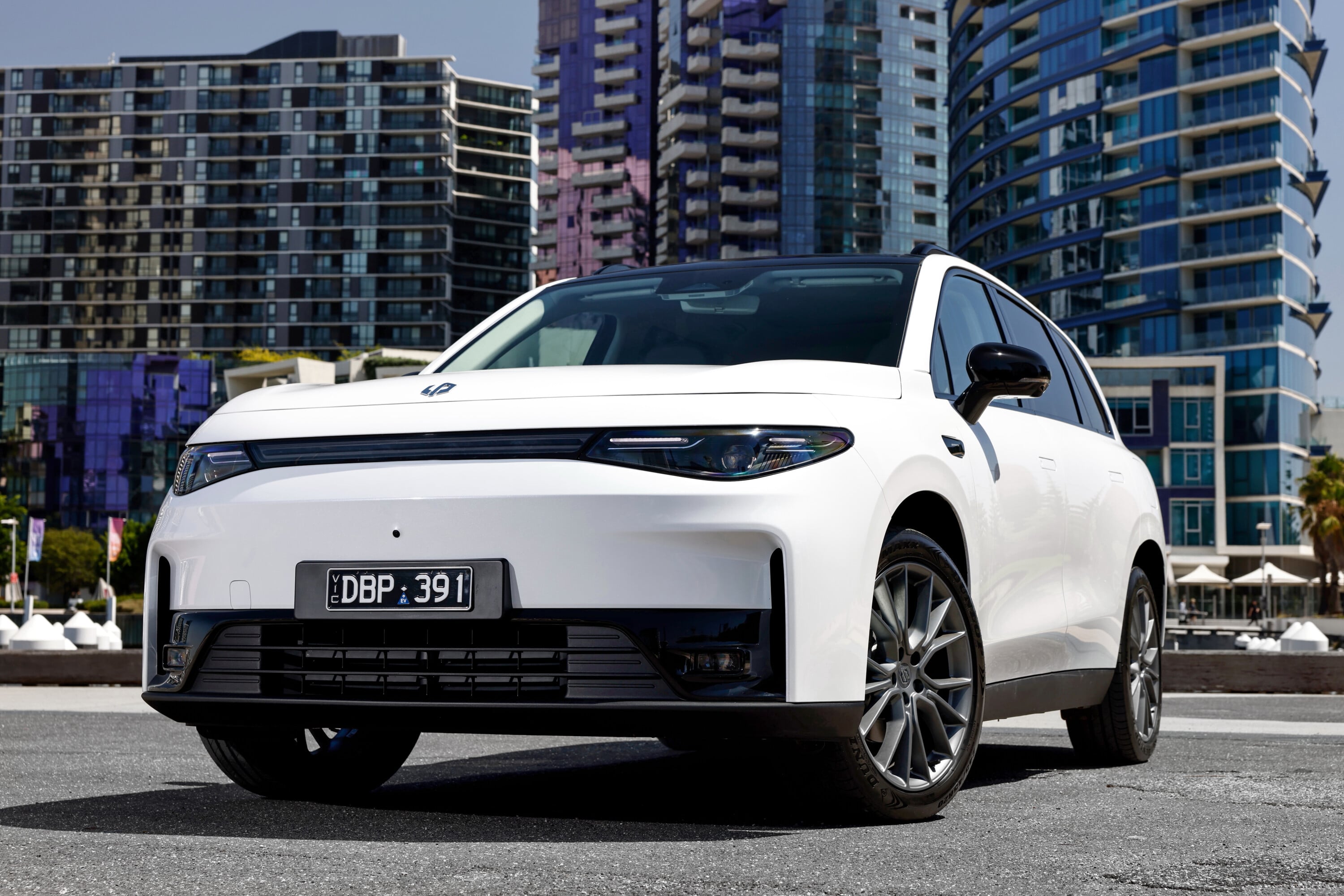
Price: From $43,888 plus on-road costs
Drivetrains/fuel economy/CO2 emissions: 1.5-litre turbo four-cylinder plug-in hybrid, 2WD, 158kW/320Nm, 28.4kWh LFP battery, 170km range (NEDC) 0.9L/100km, 21g/km; Single motor, 160kW/320Nm, 69.9kWh LFP battery, 425km range (WLTP)
Dimensions (length/width/height/wheelbase): 4739/1900/1680/2825mm
Bootspace: 546L – 1375L
Warranty/roadside assistance/service intervals: Six-year/150,000km, eight years, annual/every 10,000km (PHEV)/20,000km (EV)
Eight-year service cost: $3000 ($375 per year – EV), $4000 ($500 per year)
| Driving | |
| Interior | |
| Practicality | |
| Overall value | |
Are you struggling to keep up with the list of new brands to the Australian new car market? You’re not alone, but you should pay attention because many of these new brands are offering excellent value for money. Leapmotor, a Stellantis-backed Chinese brand, is one of them with this C10 mid-size SUV, starting from just $43,888 plus on-road costs for the entry-level Style REEV (the EV is $45,888 +ORC). But Leapmotor also offers both fully electric or range-extender plug-in hybrid drivetrains, and both are some of the least expensive on the market.
Standard equipment for the Style includes 18-inch wheels, LED lighting, a panoramic glass roof, synthetic leather upholstery, a 14.6-inch touchscreen with over-the-air updates, a 12-speaker sound system and a full active safety suite (but more on that later). The upper-spec Design (priced from $47,888 +ORC for the PHEV or $49,888 +ORC for the EV) adds larger 20-inch wheels, a power tailgate, heated and ventilated seats and fancier upholstery, and we’d stick with the Style for now.
There are two drivetrains to choose from in the C10 range: an EV with a 160kW/320Nm motor on the front axle that uses a 69.9kWh LFP battery for a claimed 425km range (WLTP) or a 158kW/320Nm 1.5-litre range-extender plug-in hybrid that uses a 28.4kWh battery for a claimed 170km of range (NEDC). The EV costs only $2000 more, but the range extender PHEV is fairly unique in Australia and according to Leapmotor, can travel up to 1150km per combined charge and tank. Both drivetrains provide ample performance, though their driving experience could be better thanks to underdamped suspension and overzealous active safety features.
The inside of the C10 is quite typical of modern Chinese cabin designs: lots of synthetic leather trim around, a huge central screen and not much else. Quality is good, though there’s not much in the way of texture. The touchscreen takes a while to get used to, and – somehow in 2025 – there’s no Apple CarPlay or Android Auto smartphone mirroring, which would increase usability significantly. However, cabin storage is excellent, and the rear seat space is ample as well. Bootspace ranges from 546 litres in the EV with the seats up (581L in the PHEV) to 1410 litres with the seats folded (1375L in the EV).
Leapmotor covers the C10 with a six-year/150,000km warranty with eight years of roadside assistance and capped price servicing, while the battery is also covered by an eight-year/160,000km job too. The battery in the PHEV can be charged at up to 65kW, fast for a PHEV, though the EV’s 84kW peak is slow. Overall, those looking for a comfortable, well equipped, efficient and cost effective mid-size SUV to buy will find lots of value in the Leapmotor C10 as it ticks a lot of boxes.
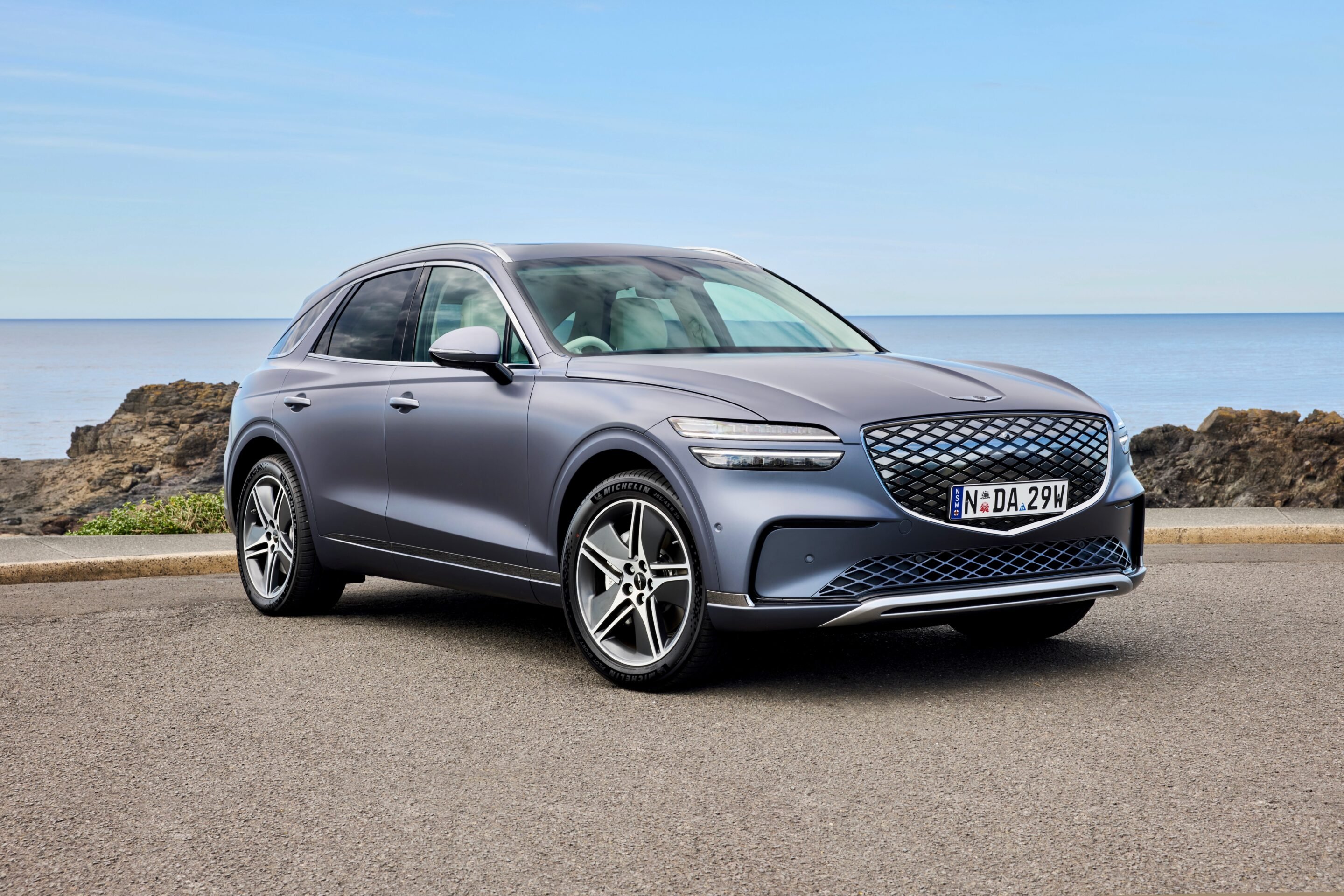
Price: From $78,700 plus on-road costs
Drivetrains/fuel economy/CO2 emissions: 2.5-litre turbo petrol four-cylinder, 8-speed auto, AWD, 224kW/422Nm, 10.3L/100km, 235g/km; 3.5-litre turbo petrol V6, 8-speed auto, AWD, 279kW/530Nm, 11.3L/100km, 257g/km; 84kWh lithium ion battery, dual-motor AWD, 360kW/700Nm, 462km range (WLTP)
Dimensions (length/width/height/wheelbase): 4715/1910/1630/2875mm
Bootspace: 503L – 1678L
Warranty/roadside assistance/service intervals: Five-year/unlimited km, five years, annual/every 10,000km
Five-year service cost: Included in the price
| Driving | |
| Interior | |
| Practicality | |
| Overall value | |
While some out there will no doubt think that value simply refers to the least amount possible, the Genesis GV70 proves that something can cost a reasonable of money, but still be great value for money. While Genesis’ products aren’t cheap – the plush interiors are the giveaway – they fly the value flag well with a loaded equipment inclusion list that doesn’t require any options ticking, included servicing for five years.
The mid-sized GV70 SUV is the brand’s best-selling product locally and pricing starts at $78,700 plus on-road costs for the entry-level 2.5T Advanced, making it at least $5000 better value than key rivals. Standard equipment on that includes 19-inch wheels, a panoramic sunroof, leather upholstery, heated and ventilated front seats and a 27-inch dashboard display. Move up the range to the $87,800 +ORC Signature and features such as Nappa leather upholstery, a 16-speaker Bang & Olufsen sound system, adaptive high beam and even an aroma diffuser are added. The top spec Signature Sport 3.5T is priced around $33,000 less than the equivalent BMW X3.
Inside the GV70 is one of the best cabins in the medium SUV segment with rich materials, excellent ergonomics and many features to keep occupants entertained. The huge 27-inch display handles both the infotainment and driver’s display, and can be controlled through either touch or using the controller wheel on the centre console. Cabin storage could be better, as could rear seat space, but the boot is large at 542 litres (503 litres for the EV) with the rear seats up and as much as 1678 litres with them folded.
For now, there are three drivetrains in the Australian GV70 range, all with all-wheel drive: the entry-level 224kW 2.5-litre turbo-petrol, 279kW 3.5-litre turbo-petrol V6 or a 360kW dual motor electric drivetrain that uses an 84kWh battery for a claimed 462km of range (WLTP). None of them are particularly efficient but they do provide good performance, with the 2.5T’s 224kW power figure eclipsing the 150kW Audi Q5 noticeable.
On the road, the GV70 impresses with a well sorted ride and handling balance, excellent sound insulation and subtle safety aids that are there to assist and not hinder.
Part of Genesis’ strong value equation is that five years/50,000km of servicing is included in the price of each GV70, and the brand will even pick up and drop off your car on service day and provide you with a loan car free of charge (if you’re within 70km of a Genesis service location).
Included servicing and they’ll collect your car for you and provide a loaner for five years: how’s that for value? The Genesis GV70 is not a cheap car, but it is excellent value for money thanks to its healthy standard features, price advantage over rivals, lovely cabin quality, sorted driving experience and aftersales experience.
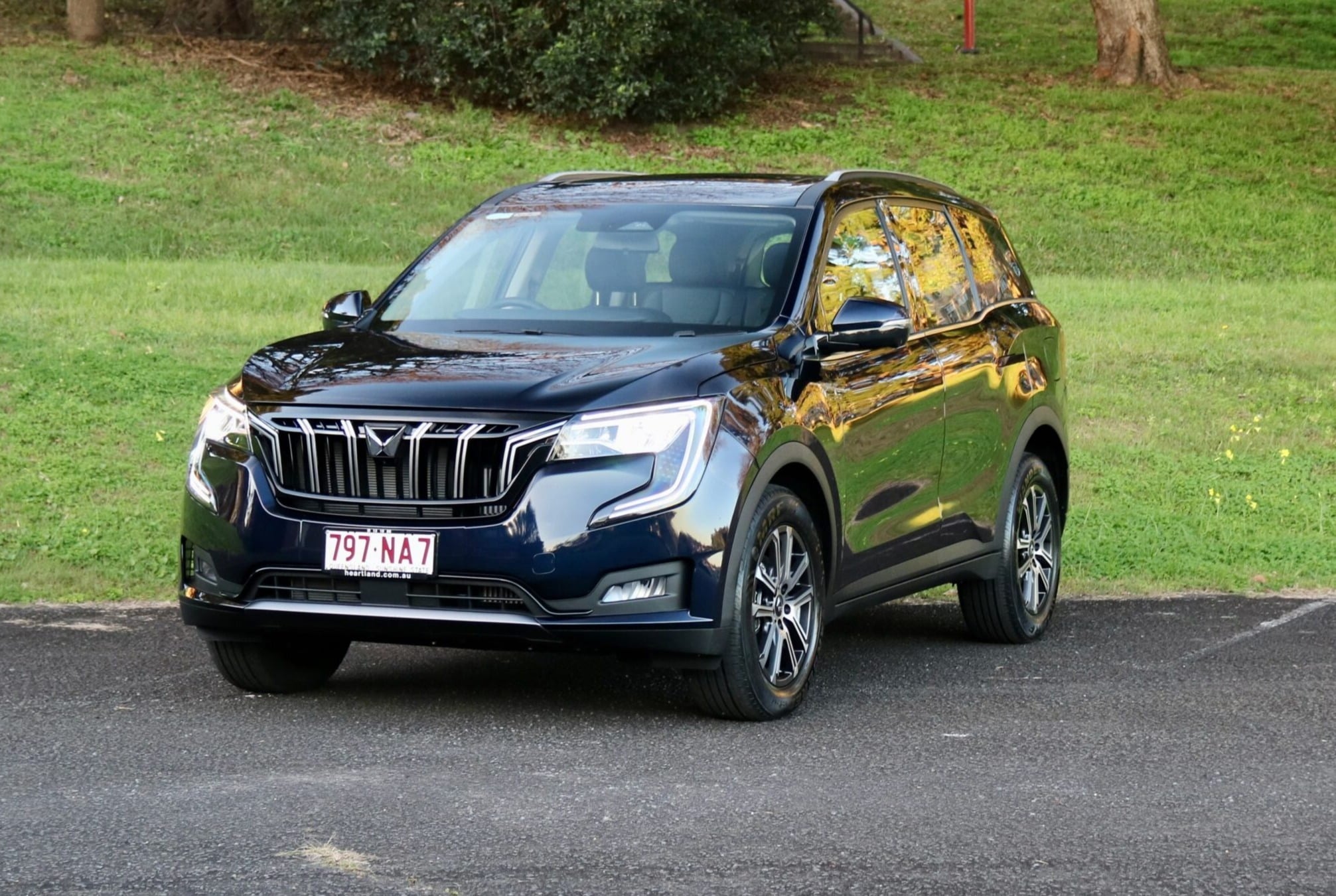
Price: From $39,990 drive away
Drivetrains/fuel economy/CO2 emissions: 2.0-litre turbo four-cylinder, 6-speed auto, 2WD, 149kW/380Nm, 8.3L/100km
Dimensions (length/width/height/wheelbase): 4695/1890/1755/2750mm
Bootspace: 150L – 650L
Warranty/roadside assistance/service intervals: Seven-year/150,000km km, five years, annual/every 15,000km
Four-year service cost: $1781 ($445 per year)
| Driving | |
| Interior | |
| Practicality | |
| Overall value | |
Indian giant Mahindra has earned a strong reputation for those wanting reliable workhorses to get their jobs done since it first went on sale in Australia in 2007. Nowadays, its top selling vehicle locally is the XUV700 mid-sizer SUV, which is one of Australia’s cheapest seven-seaters priced from just $39,990 drive away. But is there more to the XUV700 than its low pricing?
Two XUV700 models are on offer in Australia: the entry-level AX7 and the upper-spec AX7L, and both are very well priced – even the L is only $42,990 drive away. We’d recommend the AX7L as its standard features include 18-inch alloy wheels, LED lighting, a panoramic sunroof, synthetic leather upholstery, dual 10.25-inch screens and even a 12-speaker Sony sound system, with seven airbags, AEB, adaptive cruise with adaptive lane guidance, blind-spot monitoring and a 360-degree camera handling safety duties.
Just one engine is offered in Australia: a punchy 149kW/380Nm 2.0-litre turbo-petrol, sending grunt onto to the front wheels through a six-speed automatic transmission. It’s a really good unit that pulls the XUV700 well, though we’d like to see both hybrid and all-wheel drive options added to the line-up.
The XUV700’s driving experience is mature and refined, and while it’s not that sporty, it’s extremely comfortable and handles our rubbish roads well.
The XUV700’s interior is modern and clean, and very easy to use. Quality is fine for the price, especially the classy leather-like trims on the dashboard and doors. Storage is excellent, while the 10.25-inch touchscreen is sharp to look at but is a bit slow to use, and also lacks features such as satellite navigation. The second row is comfortable and relatively spacious, helped by the large side windows and massive panoramic sunroof, but the third row is definitely a kids-only zone. Still, unlike the majority of mid-size SUVs, at least the XUV700 has a third row. Behind the third row is 150 litres of bootspace, which opens up to a big 650 litres with the third row folded (no figure is available for the second row folded too, but it’s still quite a large and tall space).
Mahindra covers the XUV700 with a long seven-year/150,000km warranty, and while its service intervals are a little odd – the first yearly service is due at 10,000km while each one afterwards is then due at another 15,000km – four years of servicing costs just $1781. You can see why the XUV700 is Mahindra’s best-selling car in Australia as it’s excellent value for money, it drives well, it’s practical, good quality and well equipped. Sure, there are no hybrid or all-wheel drive options, and its service intervals are unusual, but there’s strong value for money on offer with the XUV700.
Looking to get into a brand-new mid-size SUV? Our stories below will guide you to the model that best suits your needs:
Mazda Australia has announced that the Mazda BT-50 range is now available with a new 2.2-litre four-cylinder turbo-diesel engine. Replacing the former 1.9-litre option, the new 2.2-litre will form the entry point to the BT-50 range. As with its Isuzu D-Max twin, the 2.2L is more powerful and more fuel efficient than the 1.9L, and features a new eight-speed automatic transmission.
The new engine makes 120kW of power and 450Nm of torque (+10kW and 50Nm versus the 1.9-litre) and thanks to the added outputs, the 2.2-litre now matches the larger 3.0-litre engine with braked towing capacity of 3500kg.
Importantly as well, the new 2.2-litre engine is also more frugal than the 1.9-litre, with reductions in fuel consumption of up to 0.7L/100km (depending on the model). For example, the XS dual cab pick up 4×2 is now rated at 6.3L/100km on the combined cycle, and its CO2 emissions are rated at 167g/km – the 1.9-litre in the same spec consumed 7.0L/100km and 184g/km.
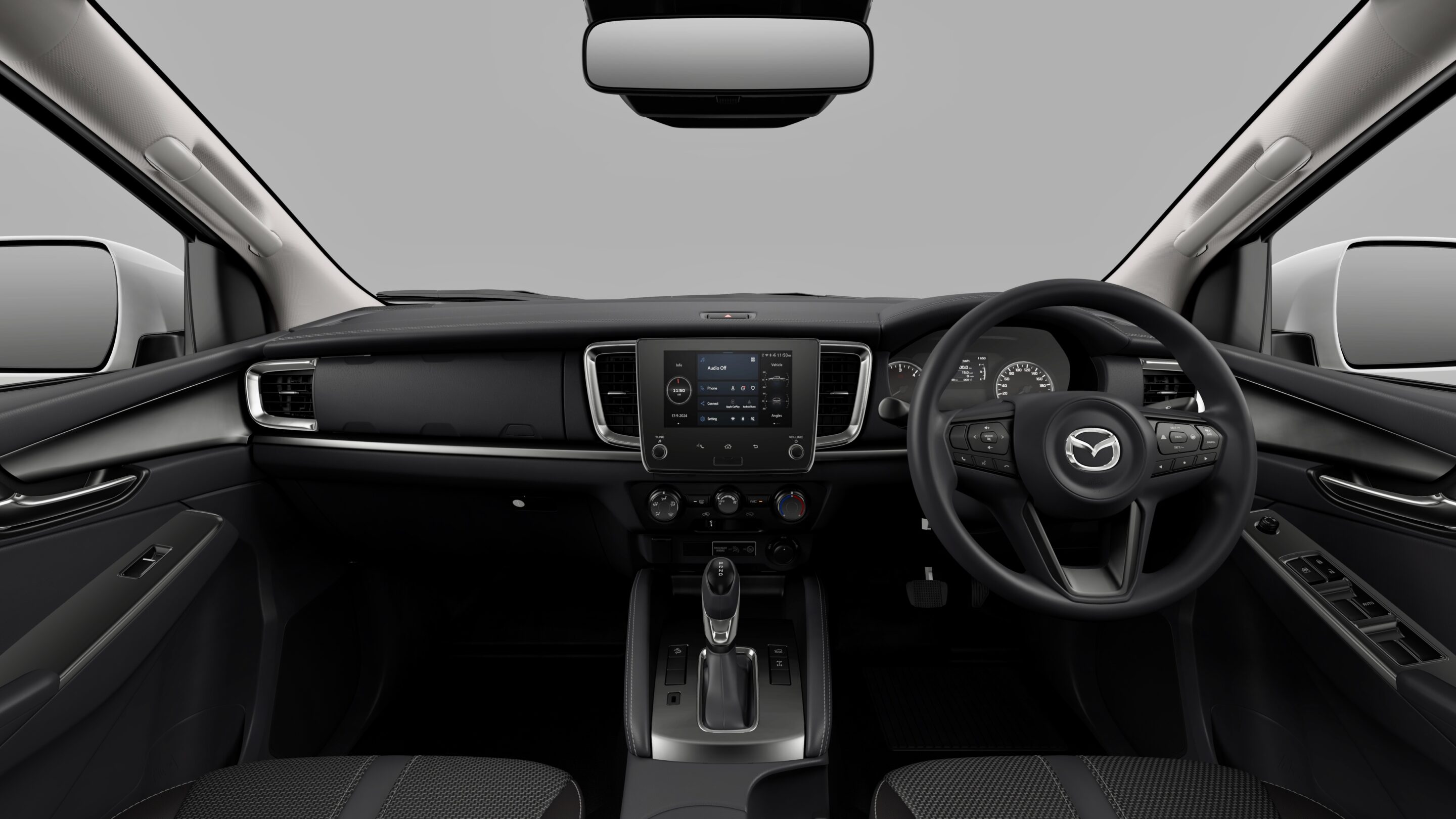
Available only in entry-level XS in either single cab chassis, dual cab chassis or dual cab pickup forms for now, standard features for the Mazda BT-50 with the 2.2-litre turbo-diesel include automatic LED headlights, automatic wipers, an 8.0-inch touchscreen with wireless Apple CarPlay and Android Auto, air-conditioning and safety features such as AEB, adaptive cruise control with stop and go functionality, lane keeping assistance and blind-spot monitoring.
The XS dual cab pickup also features alloy wheels as standard, while the 2.2-litre engine has also spawned three new variants in the BT-50 range: a dual cab chassis 4×2, a dual cab pick up 4×4 and a dual cab chassis 4×2. Unlike the D-Max however, the 2.2-litre engine is unavailable in higher models.
Other changes to the BT-50 range include a stop-start system for the larger 3.0-litre diesel, which reportedly cuts fuel consumption by up to 11 per cent, while the XTR and GT models now feature a tow bar as standard equipment.
Price rises of up to $1500 have accompanied the updates to the Mazda BT-50, with the entry-level XS single cab chassis 2.2-litre now priced from $37,900 plus on-road costs, which is $1500 more expensive than the former 1.9-litre XS base model.
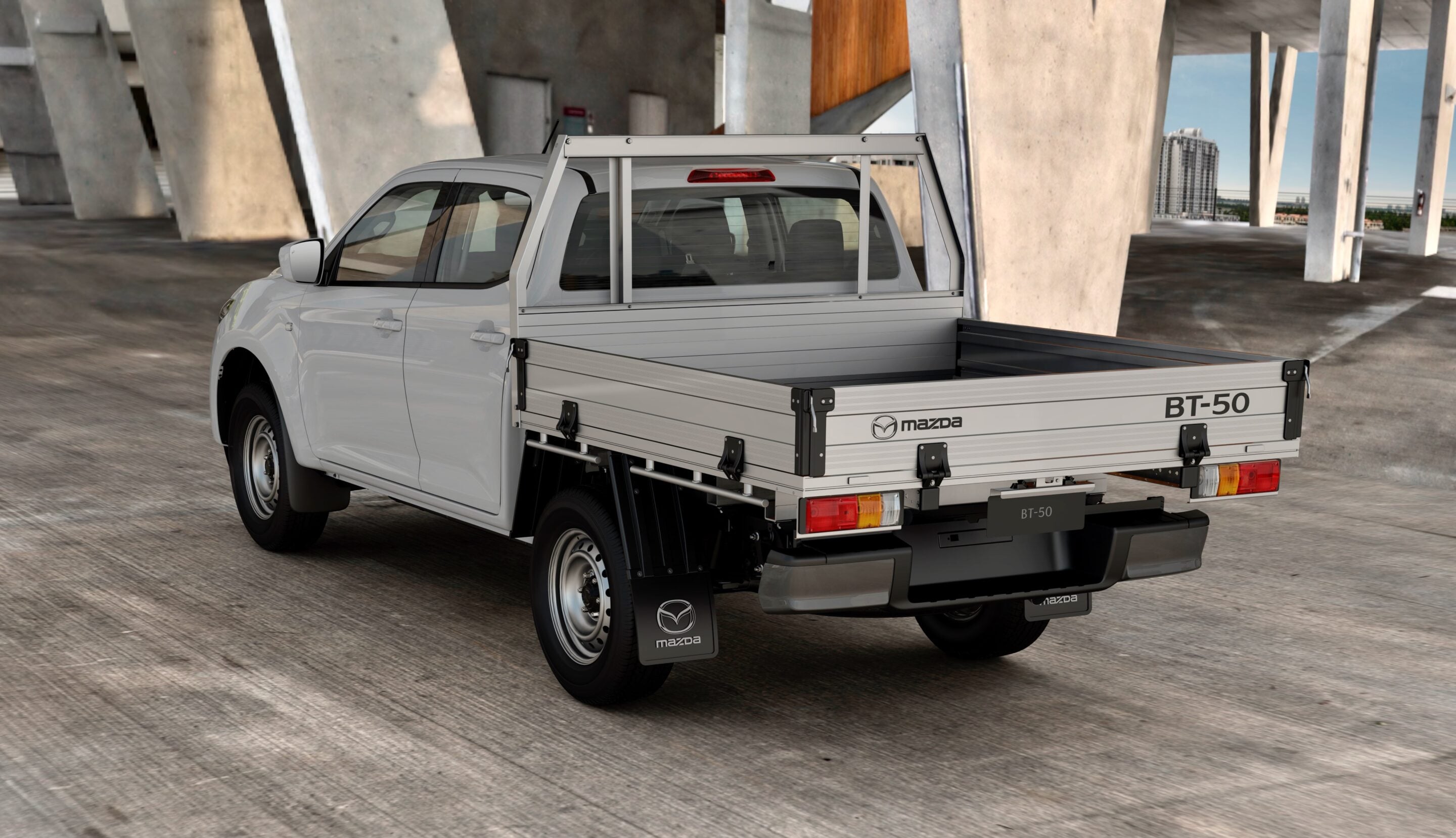
| XS single cab chassis 4×2 2.2L | $37,900 (+$1500 compared to XS 1.9L) |
|---|---|
| XT single cab chassis 4×2 3.0L | $40,400 (+$1000) |
| XT freestyle cab chassis 4×2 3.0L | $44,000 (+$1000) |
| XT dual cab chassis 4×2 3.0L | $47,910 (+$1300) |
| XS dual cab pick up 4×2 2.2L | $46,710 (new) |
| XT dual cab pick up 4×2 3.0L | $49,210 (+$1000) |
| XTR dual cab pick up 4×2 3.0L | $54,240 (+$450) |
| XT single cab chassis 4×4 3.0L | $48,250 (+$1000) |
| XT freestyle cab chassis 4×4 3.0L | $52,000 (+$1000) |
| XS dual cab chassis 4×4 2.2L | $53,120 (new) |
| XT dual cab chassis 4×4 3.0L | $55,620 (+$1000) |
| XTR dual cab chassis 4×4 3.0L | $61,100 (+$1450) |
| GT dual cab chassis 4×4 3.0L | $64,520 (+$1500) |
| XS dual cab pick up 4×4 2.2L | $54,720 (new) |
| XT dual cab pick up 4×4 3.0L | $57,220 (+$1000) |
| XTR dual cab pick up 4×4 3.0L | $63,200 (+$450) |
| GT dual cab pick up 4×4 3.0L | $66,620 (+$450) |
| SP dual cab pick up 4×4 3.0L | $71,950 (+$450) |
The updated Mazda BT-50 range will enter local Mazda dealerships soon.
