
President Donald Trump’s 25 per cent tariffs on imported vehicles and auto parts, implemented in April 2025, are significantly impacting non-U.S. carmakers, leading to production cuts, price increases, and strategic shifts in manufacturing locations.
In the United Kingdom, Lotus (main image, above), the iconic sports car manufacturer owned by China’s Geely, announced plans to cease production at its Hethel plant after more than 70 years. The decision, influenced by a 55% drop in U.S. exports due to the tariffs, puts 1,300 jobs at risk. Lotus is considering relocating operations to the United States to mitigate the impact of the tariffs.
The broader UK automotive industry is also feeling the strain. Vehicle production in May 2025 fell to its lowest level since 1949, with a 33 per cent year-on-year decline. Exports to the U.S. plummeted by 55 per cent, prompting manufacturers like Jaguar Land Rover and Aston Martin to suspend shipments to the American market.

Japanese automakers are not immune. Toyota reported a 24.7 per cent drop in vehicle exports to the U.S. in May, despite a global sales increase. The company is seeking exemptions from the tariffs, which are set to increase further unless a resolution is reached.
In response to the tariffs, some automakers are adjusting their operations. Volkswagen has introduced an “import fee” for affected vehicles, while Nissan has halted U.S. orders for certain models built in Mexico. Stellantis has paused operations in North American plants and furloughed workers.
Analysts warn that the tariffs could lead to a 15-20 per cent decrease in new auto demand in the U.S. this year, as higher prices deter consumers. The tariffs are also expected to raise car prices by $5000 to $10,000, further impacting sales.
While the Trump administration argues that the tariffs will boost domestic manufacturing, the immediate effects suggest significant challenges for non-U.S. carmakers, potentially leading to long-term shifts in global automotive production and trade dynamics.
Things we like
- A bargain hot hatch
- Strong performance, excellent chassis
- Surprisingly practical
Not so much
- Costs more than it used to
- Firm ride noticeable on rubbish roads
- Iffy clutch action
| Rating |
|---|
Australians are suckers for performance cars, a fact quite evident in what we drive. Many brands such as BMW M, Mercedes-AMG and Volkswagen’s R maintain a strong presence here off the back of their performance credentials.
Hyundai’s N division also enjoys strong success in Australia, with enthusiasts – sorry, that’s ‘Nthusiasts’ in Hyundai jargon – loving its go-fast products, so much so that a lot of its models are now produced solely for the Australian market.
The i20 N hot hatch is one of them, which left European markets in 2024 thanks to the region’s ever-tightening emissions laws. But Europe’s loss is Australia’s gain, because we are one of two markets globally that continues to receive the i20 N. We aren’t sure how long that will continue, so should you be snapping up an i20 N before it’s too late?
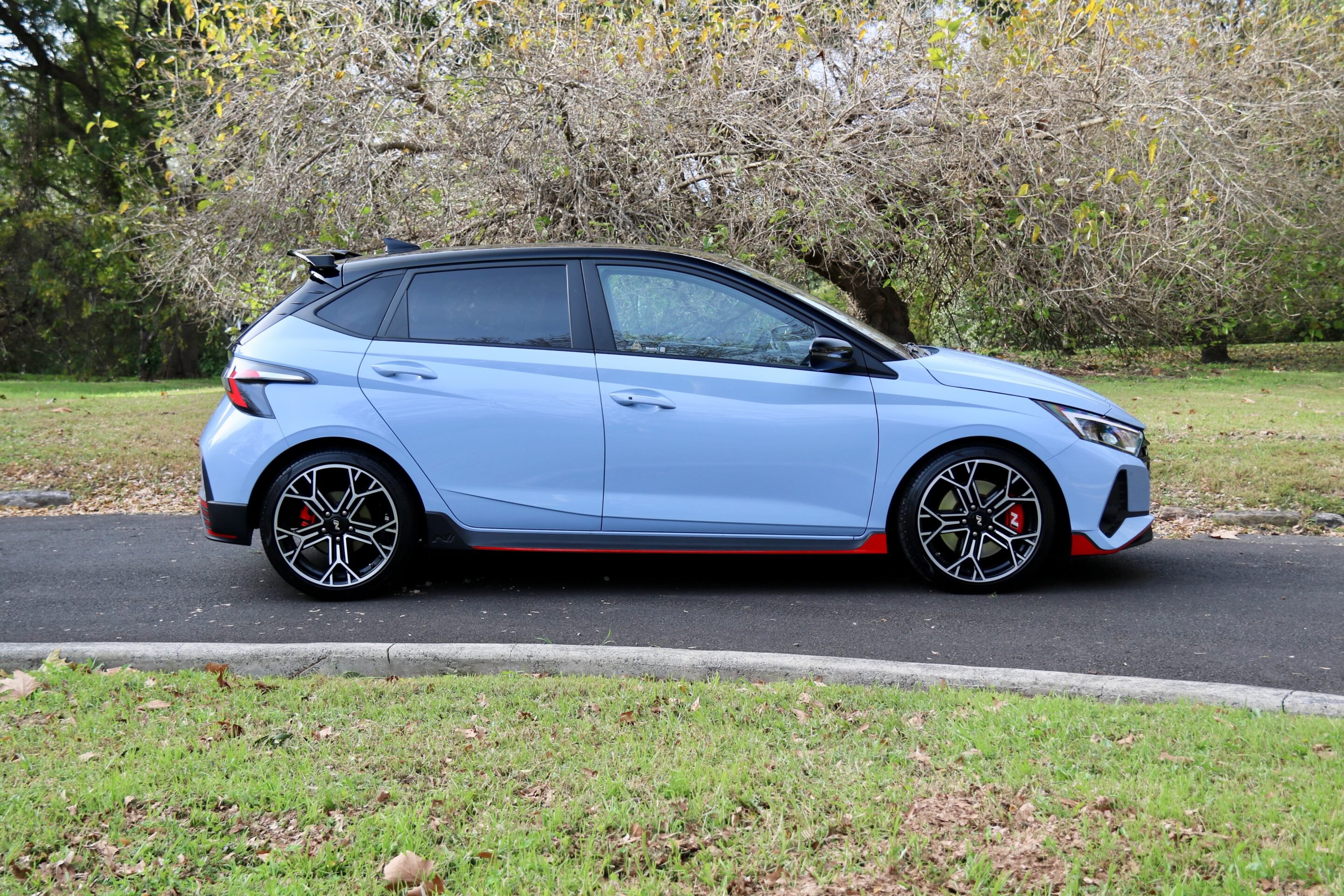
Price and equipment
There’s just one i20 N variant in Australia, which is priced from $36,500 plus on-road costs. That’s noticeably higher than when it first launched locally priced at $32,490 +ORC, though since that time it has gained some pieces of extra equipment such as the company’s Bluelink live services and a mild facelift.
Notably, with former rivals such as the Ford Fiesta ST and Renaultsport Clio no longer produced, the Volkswagen Polo GTI now priced from $41,790 +ORC and the Toyota GR Yaris another step up at over $60,000 once you drive away from the dealership, the i20 N has the sub-$40k hot hatch market to itself.
Hyundai i20 N standard features
- 18-inch alloy wheels with a space-saver spare
- Dusk-sensing automatic LED headlights
- Rain-sensing automatic wipers
- Rear privacy glass
- Keyless entry with push button start
- Heated and auto-folding mirrors
- Sports seats with cloth and leather upholstery
- Leather steering wheel, hand brake and gearknob
- Single-zone automatic climate control
- 10.25-inch digital driver’s display
- 10.25-inch touchscreen with BlueLink live services
- Satellite navigation with live traffic
- Wired Apple CarPlay and Android Auto
- Bluetooth calling and audio streaming
- Bose sound system
- Wireless phone charger
- 3x USB charging ports
- Cruise control with a speed limiter
- Selectable driving modes such as sport and N
- Active variable exhaust
- Automatic rev matching
- Launch control
- Performance driving data system
- Alarm
i20 N safety equipment
- 6x airbags
- Autonomous emergency braking (AEB) with pedestrian detection
- Lane keeping assistance with lane departure warning
- Adaptive lane guidance
- Blind-spot monitoring with rear cross-traffic alert
- Driver attention monitoring
- Traffic sign recognition
- Auto high beam
- Rear occupant alert
- Tyre pressure monitoring
- Front and rear parking sensors
- Reversing camera
The i20 N has not been tested by ANCAP and is therefore unrated for safety. However, the non-N i20 was tested by Euro NCAP and earned a four-star rating with scores of 76 per cent in adult protection, 82 per cent in child protection, 76 per cent in vulnerable road user protection and 67 per cent for safety assistance.
i20N options
- Premium paint: $595
- Black roof (only on certain colours): $1000
Interior, practicality and boot space
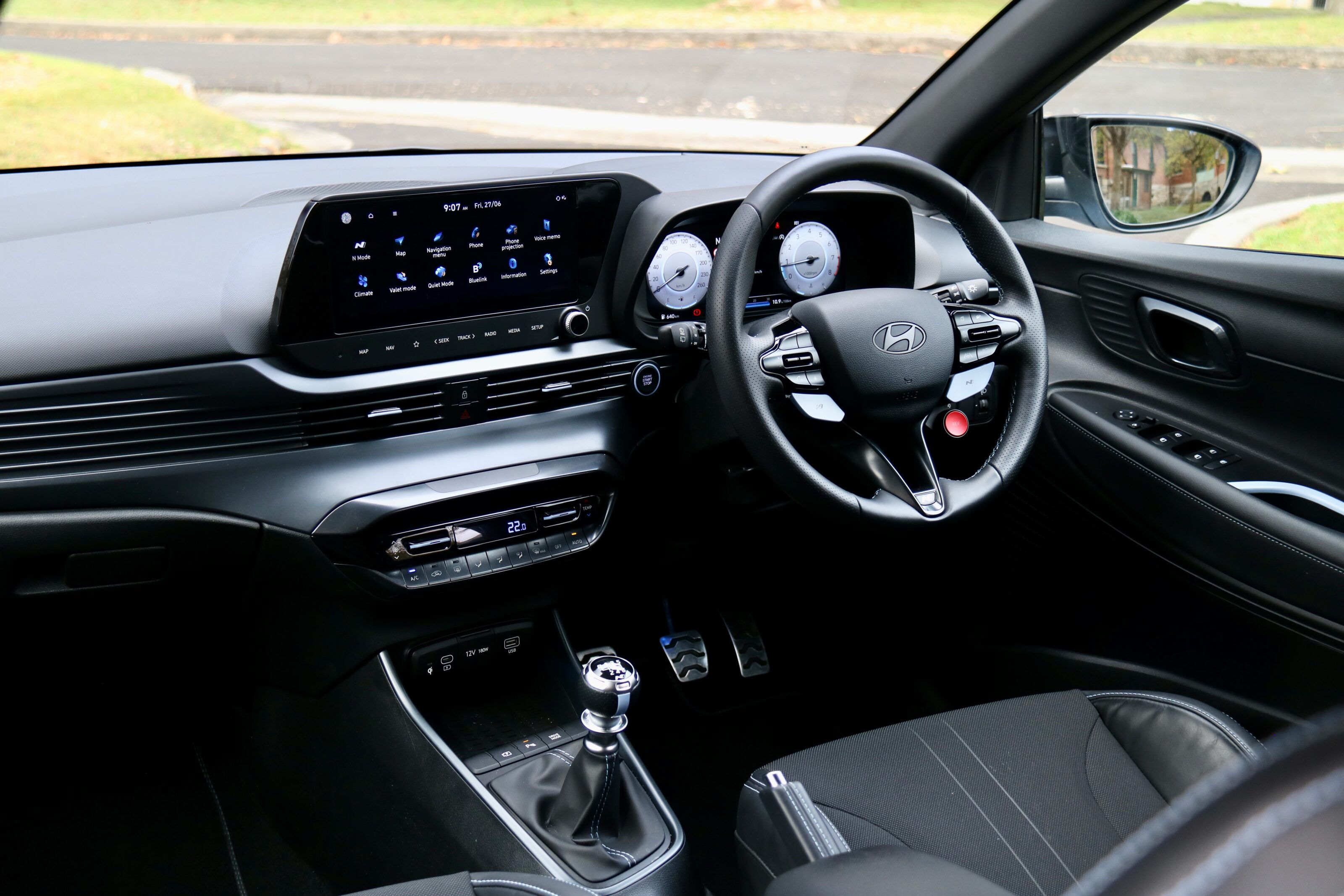
The interior of the Hyundai i20 N is filled with clues as to its performance: the light blue trim pieces on the sports seats, a meaty shifter and steering wheel, big N buttons and aluminium pedals all feature proudly, as you’d expect for a performance model. It’s also suitably dark, as urban racers tend to be, with little in the way of colour aside from the aforementioned blue touches.
Quality inside the i20 N is good, with a well screwed together feel, though little in the way of soft touch materials. Importantly, the major touch points – such as the steering wheel, gearknob and handbrake – all feel great and the driving position is excellent. Seat comfort is also impressive for bolstered sports seats, though lumbar adjustment and heating would be nice additions.
Centre of the cabin is a 10.25-inch touchscreen with features such as sat-nav with live traffic, wired – not wireless – smartphone mirroring and DAB+ digital radio. It’s an older Hyundai system but is still quite easy to use, and the graphics are crisp as well. The Bose sound system sounds good as well, with a punchy sound to suit the hot hatch feel well.
Of interest to car nerds are the seemingly endless ways to view stats about your driving in the N screen with lap times, oil temperature, throttle position and turbo pressure all featuring.
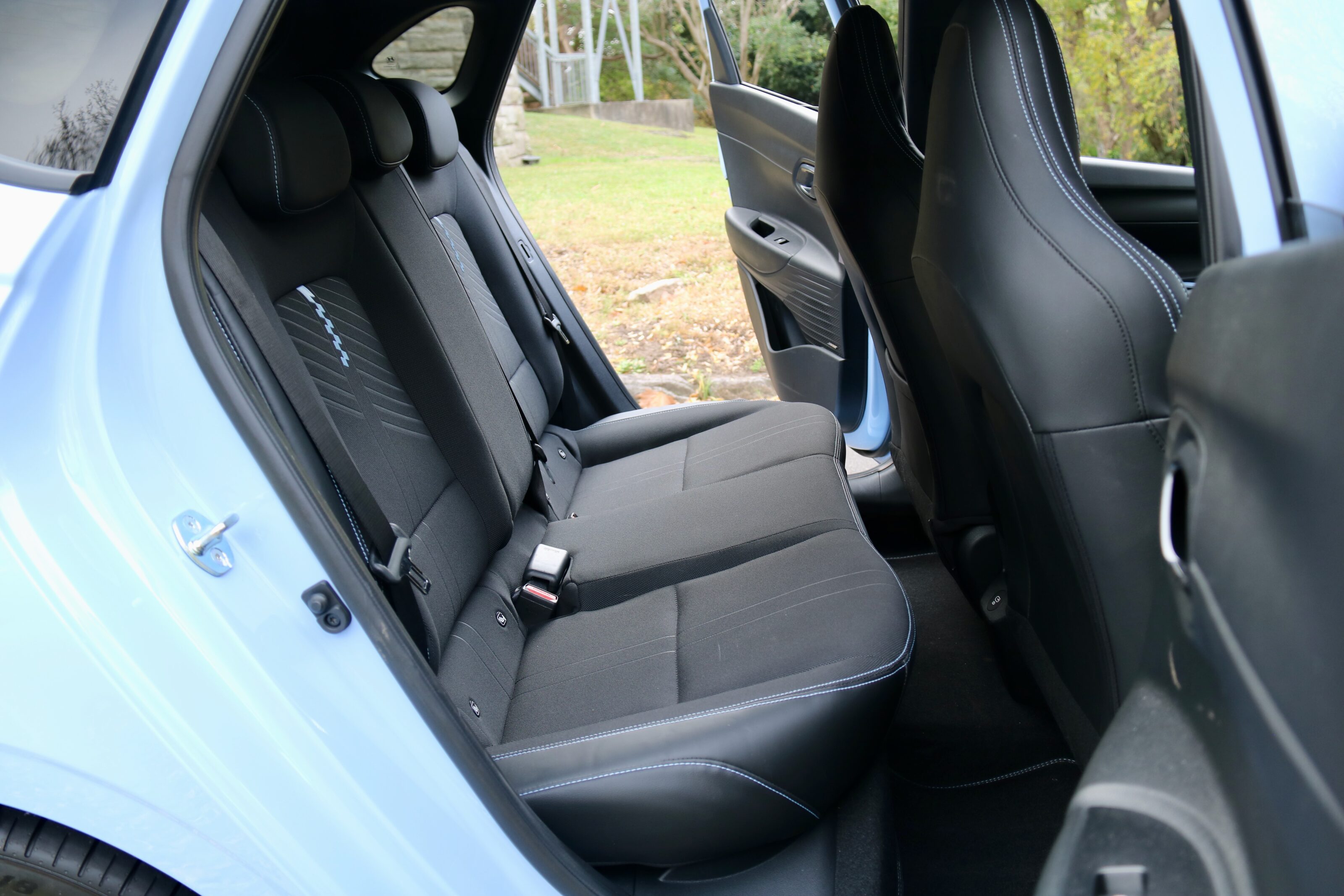
The i20 N’s cabin is somewhat practical with door bins, a medium bin underneath the sliding armrest, a tray underneath the dashboard with a wireless charger and two small cupholders in the centre console.
Move to the rear seat, and two adults will be surprisingly comfortable thanks to ample space, particularly for headroom, and a flat floor. There are a few amenities on offer such as door pockets, a map pocket, a USB-C charging port and a slot for a wallet or phone – plus two ISOFIX points and three top-tether points for child seats.
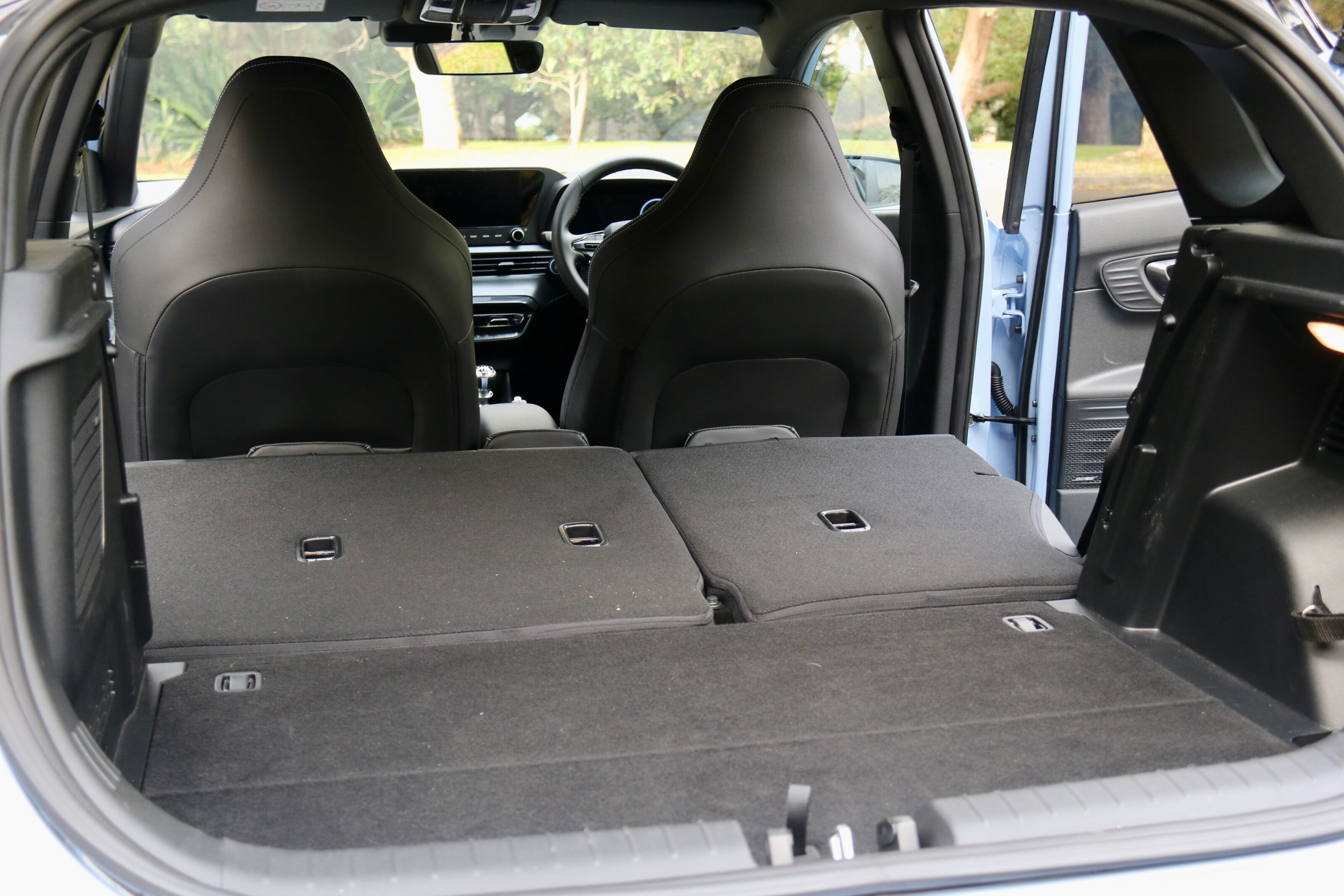
The boot of the i20 N measures 310 litres with the seats up and 1123 litres with them folded, which are good numbers for its size. Helping practicality further are a dual-level boot floor, a bottle strap, side storage, a few hooks and that the parcel shelf can be storage against the backrest. Impressively, underneath the boot floor is a space saver spare wheel.
Under the bonnet
The i20 N uses a turbocharged 1.6-litre four-cylinder petrol engine making 150kW of power and 275Nm of torque (304Nm on overboost). It sends its grunt to the front wheels only through a six-speed manual transmission. It will reportedly hit 100km/h in 6.7 seconds, with a top speed of 230km/h.
Hyundai claims that the i20 N will use 6.9L/100km of fuel on a combined cycle, and we used 8.2L/100km in driving skewed towards urban. Remarkably, the i20 N can use 91RON regular unleaded fuel to fill its 40-litre fuel tank.
On the road
As you’d expect from a Hyundai N product, the i20 N shines on the road. It’s tenacious, quick and loud; all qualities we expect from a hot hatchback. Firstly, it’s quick: at a claimed 6.7 seconds to reach 100km/h, the i20 N zips, even in normal driving mode. The full 304Nm of torque on overboost hits from just 2000rpm, and by then you’re rocketing through the rev range.
As we’ve seen in the larger i30 N, the i20 N’s N modes are quite configurable with different settings for the steering, throttle and exhaust to tailor the driving experience to your tastes. In normal mode, it’s quietish but move it to sport and then N modes, and it becomes a different beast with pops and a much louder note from the exhaust.
As for handling, the i20 N is a riot and in some ways feels better than the i30 N, largely thanks to its lesser weight. The steering is appropriately meaty to tackle corners, the chassis is tight and thanks to the limited-slip differential and grippy Pirelli P Zero rubber that was developed for Hyundai’s N cars, it corners very well. Like the i30 N, lift-off oversteer is more than possible but it always feels quite planted.
The suspension is firm, it must be said, and you can really feel that around town or on bad road surfaces but on higher-speed roads such as highways, it’s actually quite comfortable. Road noise is noticeable at those speeds, however, but this is a budget car after all.
The i20 N is also well equipped for active safety features. While it does lack adaptive cruise control, it’s otherwise well catered for with auto emergency braking, lane keeping and blind-spot assistance, driver attention monitoring and traffic sign recognition – yep, the one that dings at you if it thinks you’re speeding that’s difficult to switch off.

Service and warranty
The i20 N is covered by a five-year/unlimited km warranty with 12 months of roadside assistance that’s extended by a further 12 months with each dealer service.
Its service intervals are once-yearly/every 10,000km and five years/50,000km of servicing costs a quite reasonable $1925 ($385 annually).
Verdict: Should I buy a Hyundai i20 N?
If you’re searching for a fun car under $40,000, the i20 N is one of precious few options remaining and luckily, it’s also one of the best. Sure, a GR Yaris is faster and a Polo GTI is more comfortable, but the i20 N is just so fun to drive, it’s excellent value for money, it goes well, it’s well equipped, it’s surprisingly practical and it’s got a lot of hot hatch attitude: it sees a curved road sign ahead and asks if you want N mode to tackle the corners. Need we say more?
Sure, there are downsides: it’s quite firm around town, the odd clutch action can result in a lot of stalling, its infotainment is a bit dated compared with Hyundai’s newest system, and it costs more than it used to. But it’s also a great car and we need to thank Hyundai Australia for still selling it here. Once again, if it suits your needs, go out and buy an i20 N – especially while you’re still able to.
i20 N rivals
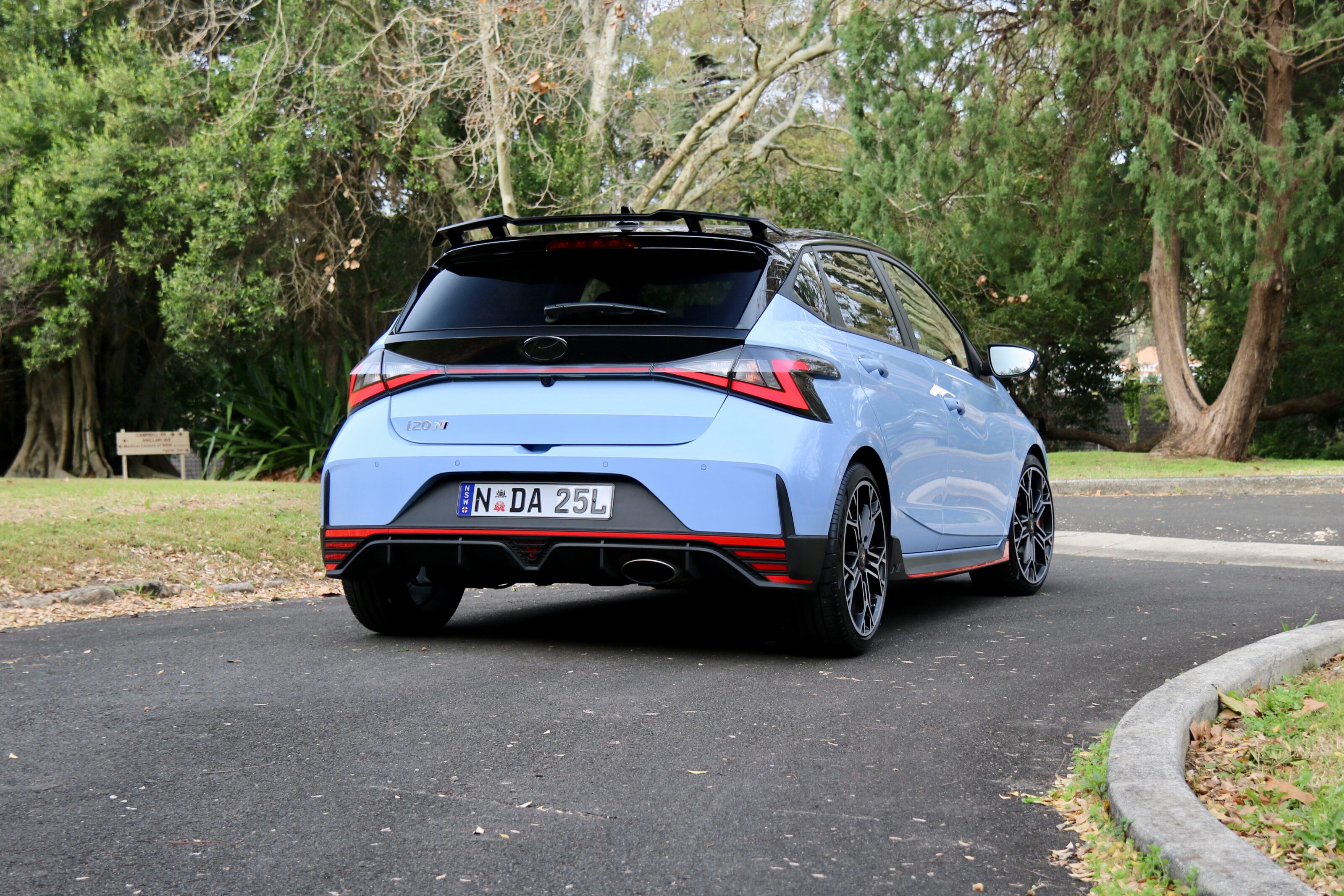
The Toyota GR Supra Track Edition has gone on sale in Australia priced from $105,295 plus on-road costs. Ushering in a number of upgrades to make it more dynamic, the Track Edition is likely the final version of the sixth-generation GR Supra in Australia.
Immediately noticeable are the Track Edition’s matte black 19-inch alloy wheels and red brake callipers, front and rear wheel arch aero flats, upgraded front tyre spats and carbon fibre ducktail spoiler.
As part of the upgrade to the GR Supra’s dynamic package, the Track Edition adds a larger front anti-roll bar, aluminium brackets for the front and rear anti-roll bars, reinforced rubber bushings from the front control arms and a stiffer subframe mount.
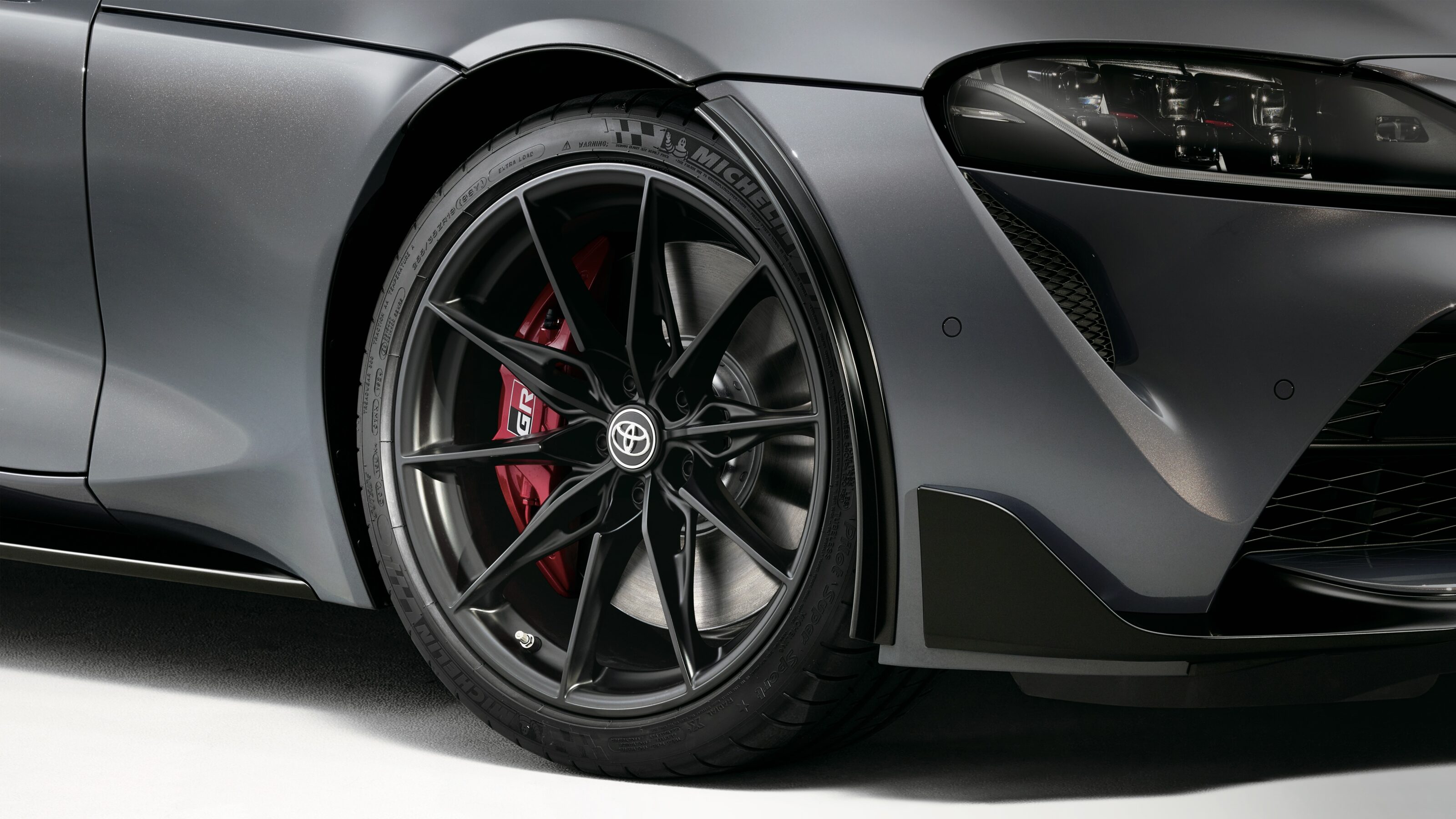
Revised fixing points further stiffen the chassis of the GR Supra Track Edition, while a negative adjustment to the front camber combine with the suspension upgrades to ensure handling is tighter, according to Toyota.
Reprogrammed control mapping for the power steering and limited-slip differential have been implemented to match the upgraded suspension components, while upgraded 374mm front brakes help improve stopping power.
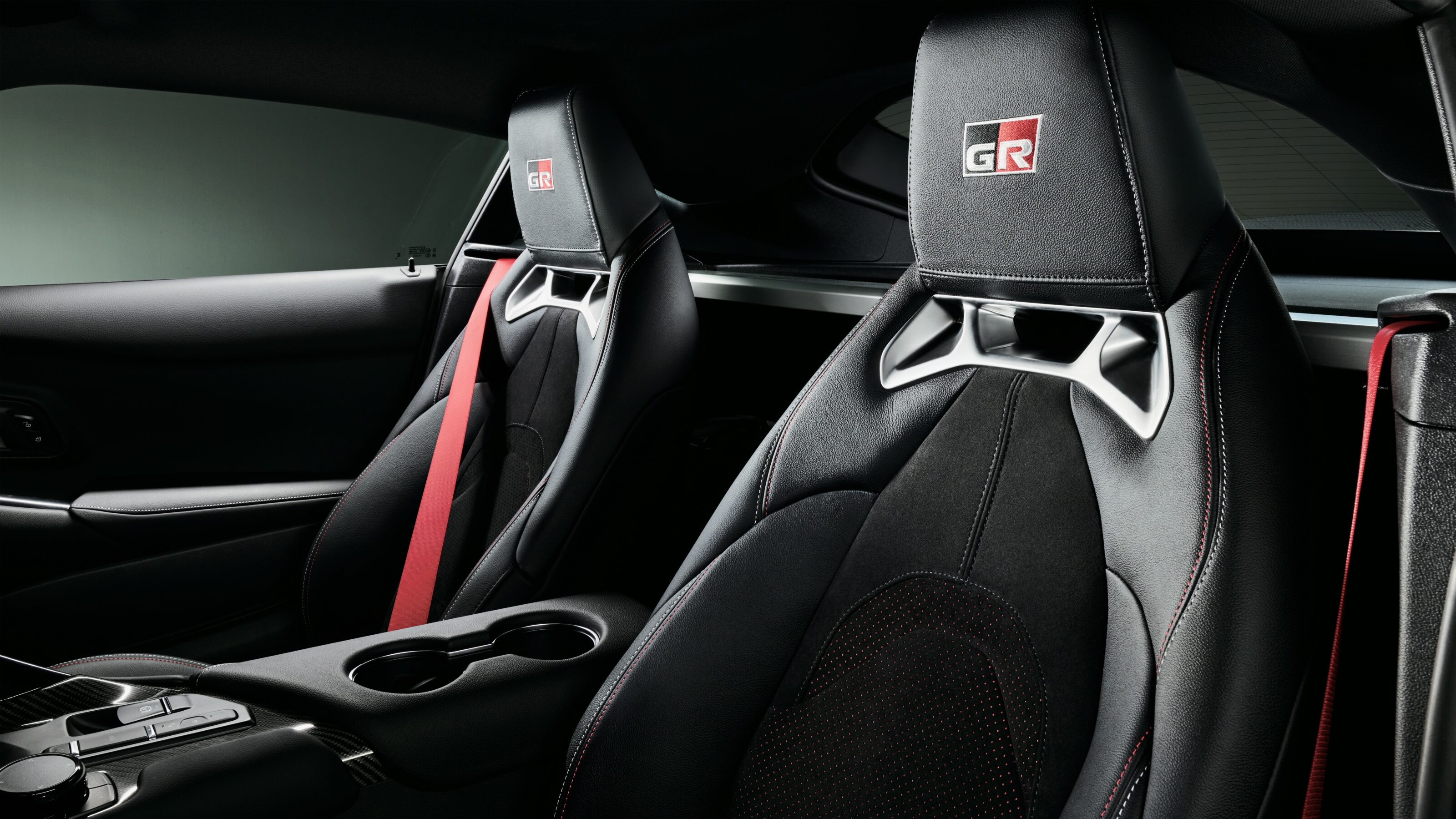
Inside, the Track Edition uniquely gains red seat belts, black suede upholstery with embroidered GR logos on the headrests, and on manual grades, a red ring around the shift knob.
Under the bonnet of the GR Supra is unchanged, with the 285kW/500Nm turbocharged 3.0-litre inline six-cylinder engine available with either six-speed manual or eight-speed automatic transmissions.
Based on the upper-spec GR Supra GTS, the GR Supra Track Edition also includes features such as a head-up display, 12-speaker JBL sound system, wireless phone charger, electric seat adjustment, heated seats, LED exterior lighting, adaptive suspension and a suite of active safety features such as AEB, adaptive cruise control (auto only), lane keeping assistance, blind-spot monitoring with rear cross-traffic alert and a reversing camera.
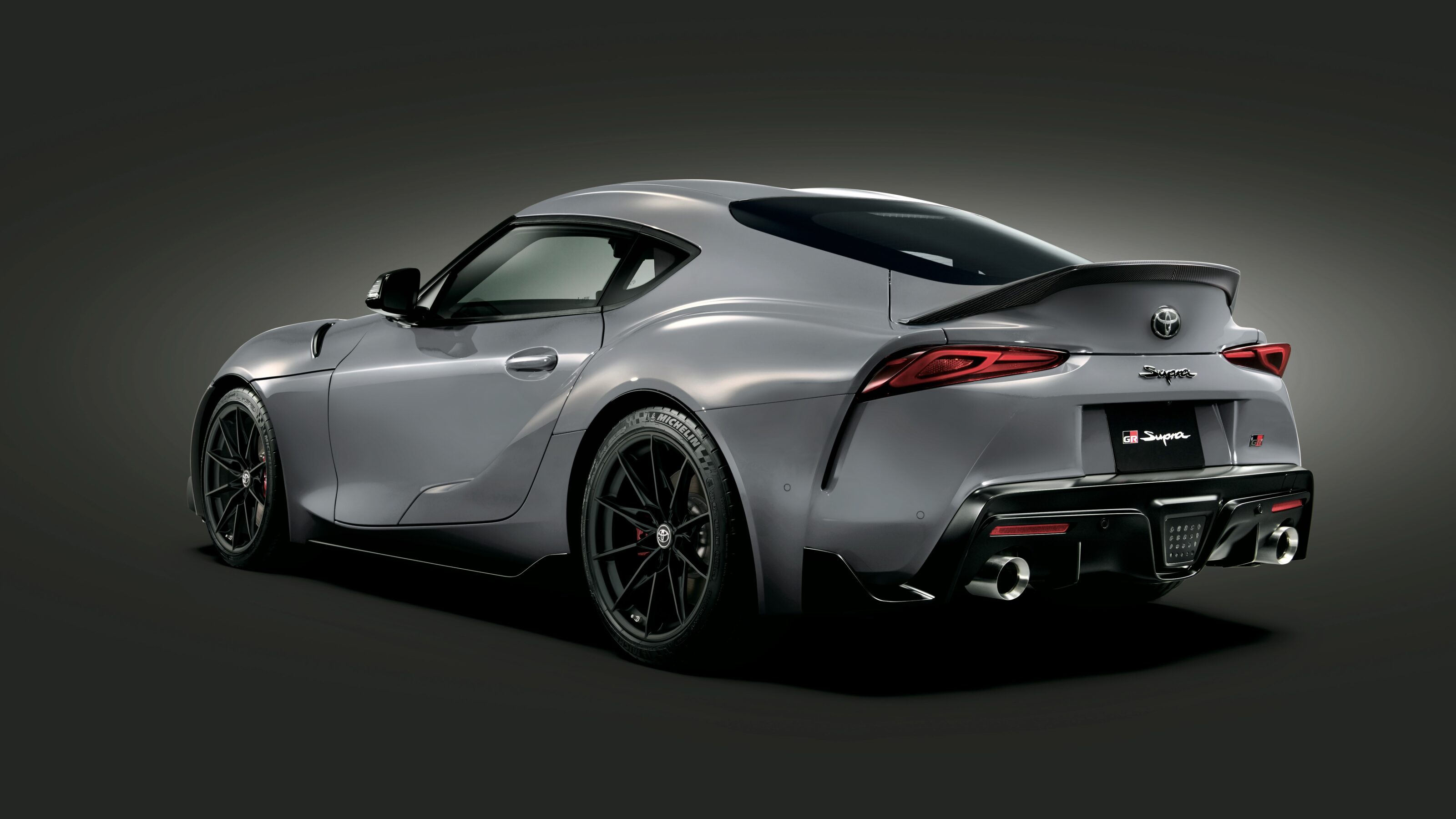
2025 Toyota GR Supra pricing (plus on-road costs):
| GT | $86,295 |
|---|---|
| GTS | $96,295 |
| Track Edition | $105,295 |
The Toyota Supra Track Edition will land in local Toyota dealerships in July.
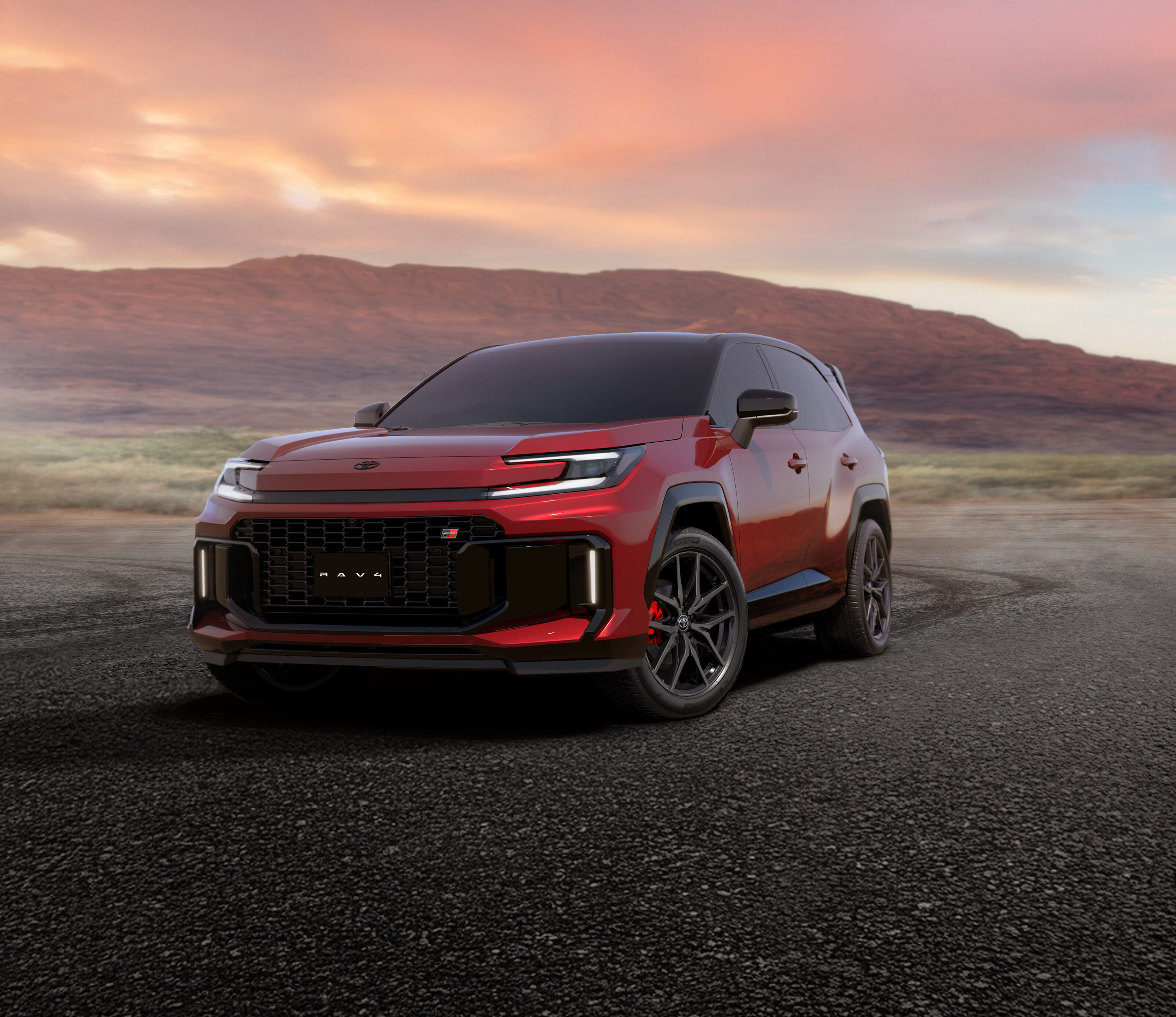
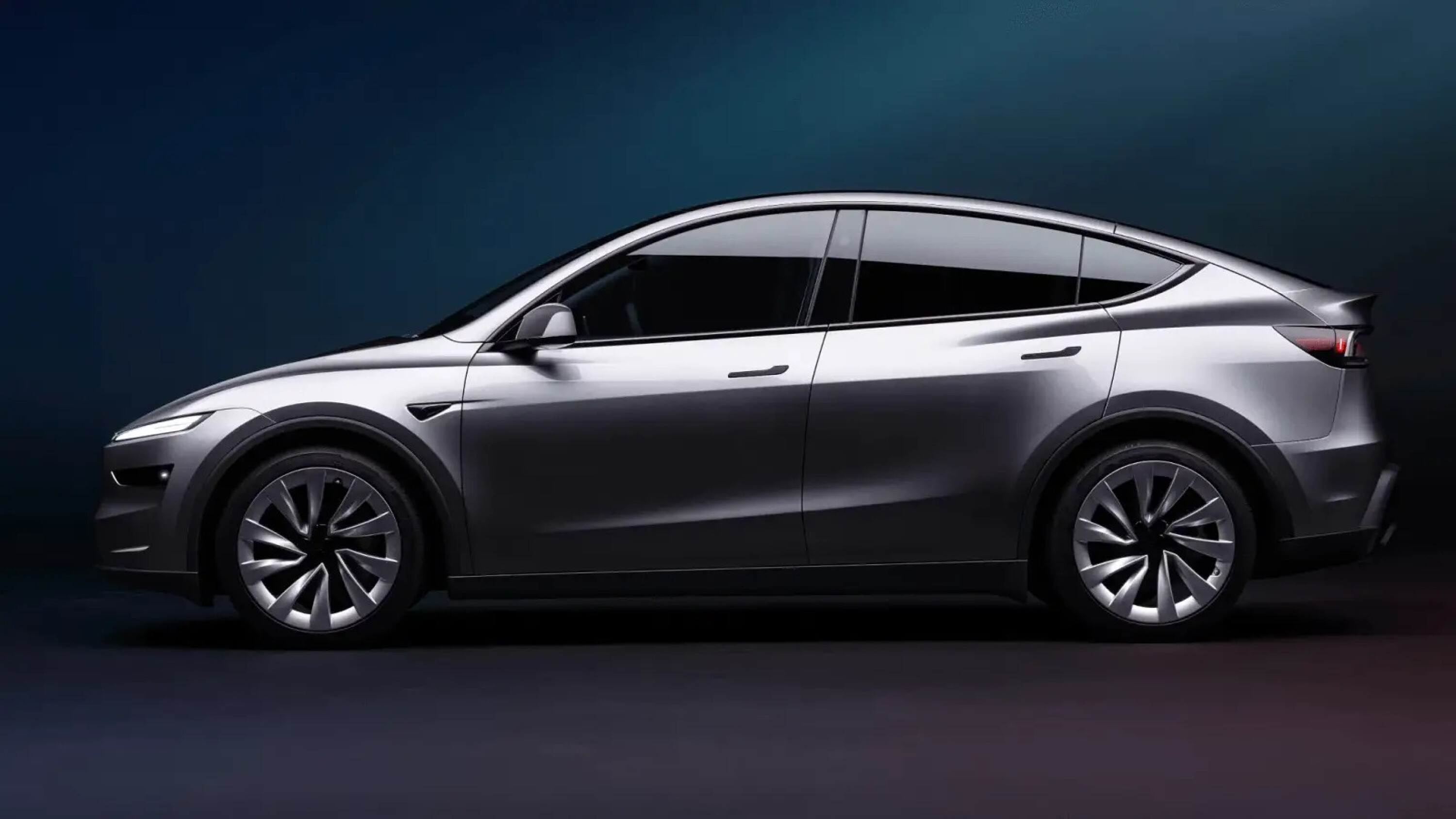
Toyota is back on top of the world’s best-selling cars list for 2024, after the ever-popular RAV4 outsold the Tesla Model Y by less than 3000 units, according to data complied by Car Industry Analysis’ Felipe Munoz.
At 1,187,000 units, the RAV4’s total sales increased by 11 per cent for the year, almost doubling the sales of its Camry sibling, which came in at eighth place.
The RAV4’s result is especially impressive given that the current model is in its final year of production, with the recently-revealed 2026 model arriving in global showrooms next year.
While the Model Y’s sales result was three per cent off that of 2023, 1,185,000 vehicles is still an impressive number and it was joined on the list by the Model 3 sedan t 560,000 sales (a 10 per cent improvement).
Behind the top two was the Toyota Corolla Cross with an 18 per cent jump to 859,000 sales and the Honda CR-V on 854,000 sales.
Toyota‘s domination of the list continued with the Corolla sedan on 697,000 sales and HiLux ute at 617,000 sales, as well as the aforementioned Camry on 593,000 sales.
Behind the Corolla and HiLux was the Ford F-150 on 595,000 sales – an impressive result given that it’s really only sold in North America – and add 10 up the list was the BYD Qin on 502,000 sales.
According to Munoz, the sales figures are based on data from 153 markets, accounting for about 99 per cent of global new car sales.
| Model | Sales |
|---|---|
| Toyota RAV4 | 1.187 million (+11%) |
| Tesla Model Y | 1.185 million (-3%) |
| Toyota Corolla Cross | 859,000 (+18%) |
| Honda CR-V | 854,000 (+1%) |
| Toyota Corolla sedan | 697,000 (-11%) |
| Toyota HiLux | 617,000 (-15%) |
| Ford F-150 | 595,000 (-2%) |
| Toyota Camry | 593,000 (-8%) |
| Tesla Model | 3 560,000 (+10%) |
| BYD Qin | 502,000 (+6%) |
What would you say to someone planning to attend the 24 Hours of Le Mans for the first time?
When I first went there I was taken by, you can say, a storm about the whole thing. You really knew this was a special place. You really feel that sort of energy. The history and heritage, it’s going to hit you in all places.
As a spectator, I’d suggest if you can get one to one the locations like Indianapolis, right in the forest. There are a few shortcuts to some places, but maybe just go the traditional way to see the cars at high speed. Don’t just fall for the trap of being around the paddock and the tribunes around the start-finish straight. Get out and see where the car is really arriving at 330, 340… and then nailing it on the brakes going into these very special corners.
What specific preparations do you take before an endurance race, and how do you manage the pressure that comes with racing?
[Before a race] you know already the energy is changed in the whole team – the engineers, the mechanics, your teammates. You really feel this is an important one and so there’s a lot of inner strength that you want to do really well. You don’t want to make mistakes. You want to be fast. You want to be consistent.
I tended always to do a lot of fitness training. It gave me the inner will or strength or confidence to say, yeah, I’m in pretty good shape. I made sure that I was durable by doing things like running and cycling, and mixing it with – well, nowadays it’s paddle, but back then it was squash or tennis. Games where you had to have a small focus because it’s always the small mistakes {that count} when you lose a race or even when you crash.
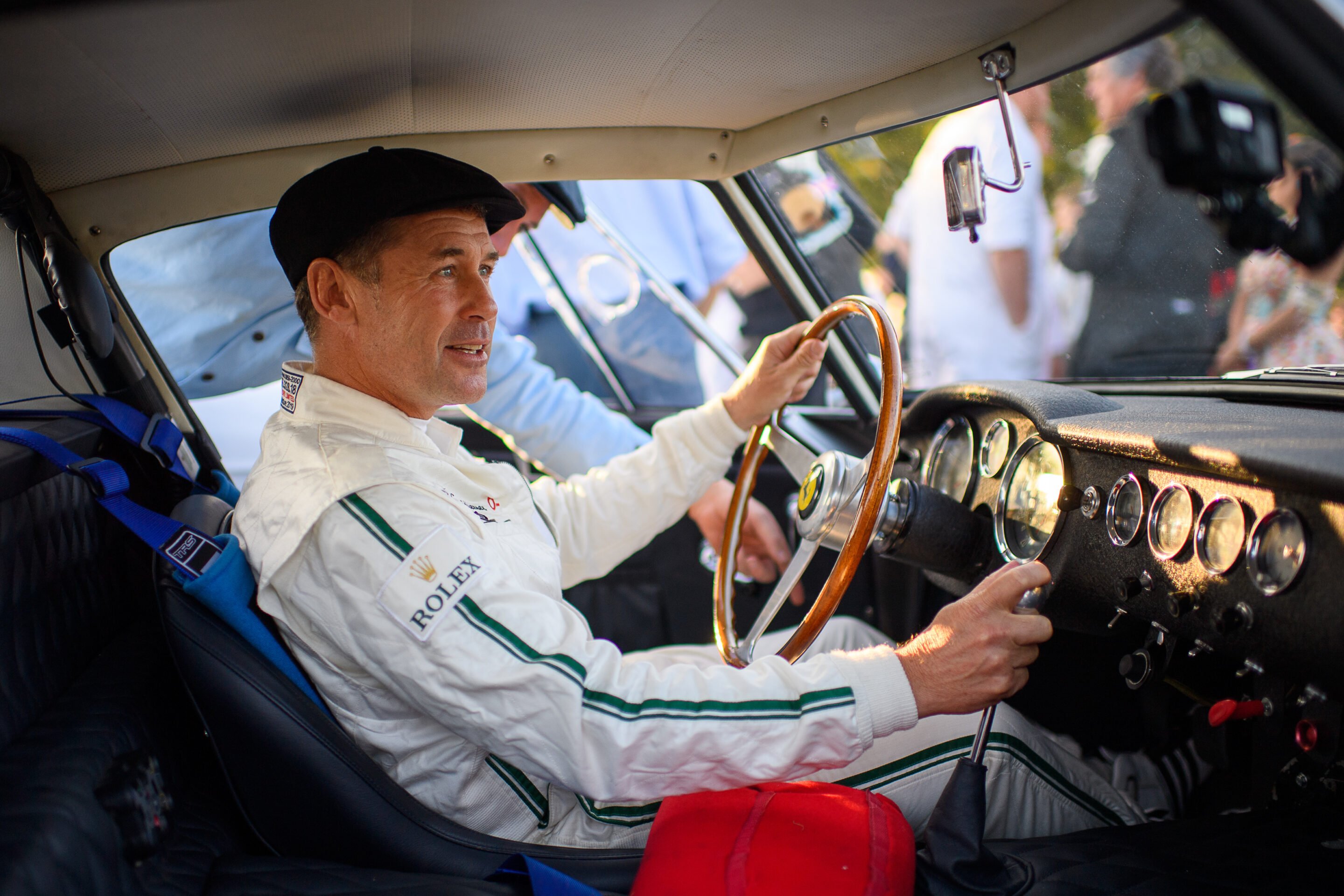
You also take a deep look into the bad times. You take a deep look into the times when you didn’t succeed. And when you dig into these things, you can really go a long way in ensuring it doesn’t happen again. Defeats like 1999 at Le Mans with BMW, retiring. We were nearly four laps in the lead … we had 17 minutes in the lead. Those 17 minutes is the most devastating time of my professional life.
When you need to dig deep, I just think a little bit about those times. Then I can tell you I can go a long way further with whatever whatever issues or problems or challenges I have right in front of me.
In your career, did you have a moment where you had to completely change your approach to a race in order to secure a win?
In these endurance races – and especially at Le Mans with the rain and the night sessions – you always have to have the ability to sort of switch focus. Endurance races are very unpredictable many times, just with traffic. Every lap you can pass between seven or even 11 eleven cars, and you have to be razor sharp in the way you approach every corner.
And driving in the rain. It’s a 13.68 kilometre long circuit, it’s three times longer than a conventional Formula One circuit. The rain can start at some places and only wet part of the track , not the full circuit, so that creates a bit of drama to work with your team, with the engineers, what tyres you should be on.
Mentally, that’s where you have to change your approach to win the next corner. If you want to win this [wet] part of the track, then you’re going to crash. Giving yourself the freedom of being a little bit slow now to optimise for the situation.
From your perspective, do you think your record will ever be broken?
No, no, never [laughs]. No, I hope so in one day. I was really happy the way that Jacky Ickx, he embraced me winning because when I won my seventh Le Mans victory in 2005 and surpassed his record.
Going back to the hotel, I started to listening on my mobile phone and on my answering machine, there was a message from Jacky Ickx already. He was saying, “Tom, how wonderful, unbelievable, you deserve this. I’m opening a bottle of champagne with Katja, his wife, and we are celebrating you beating my record.”
So I’m just saying that if somebody beats my record, I will do it like him.
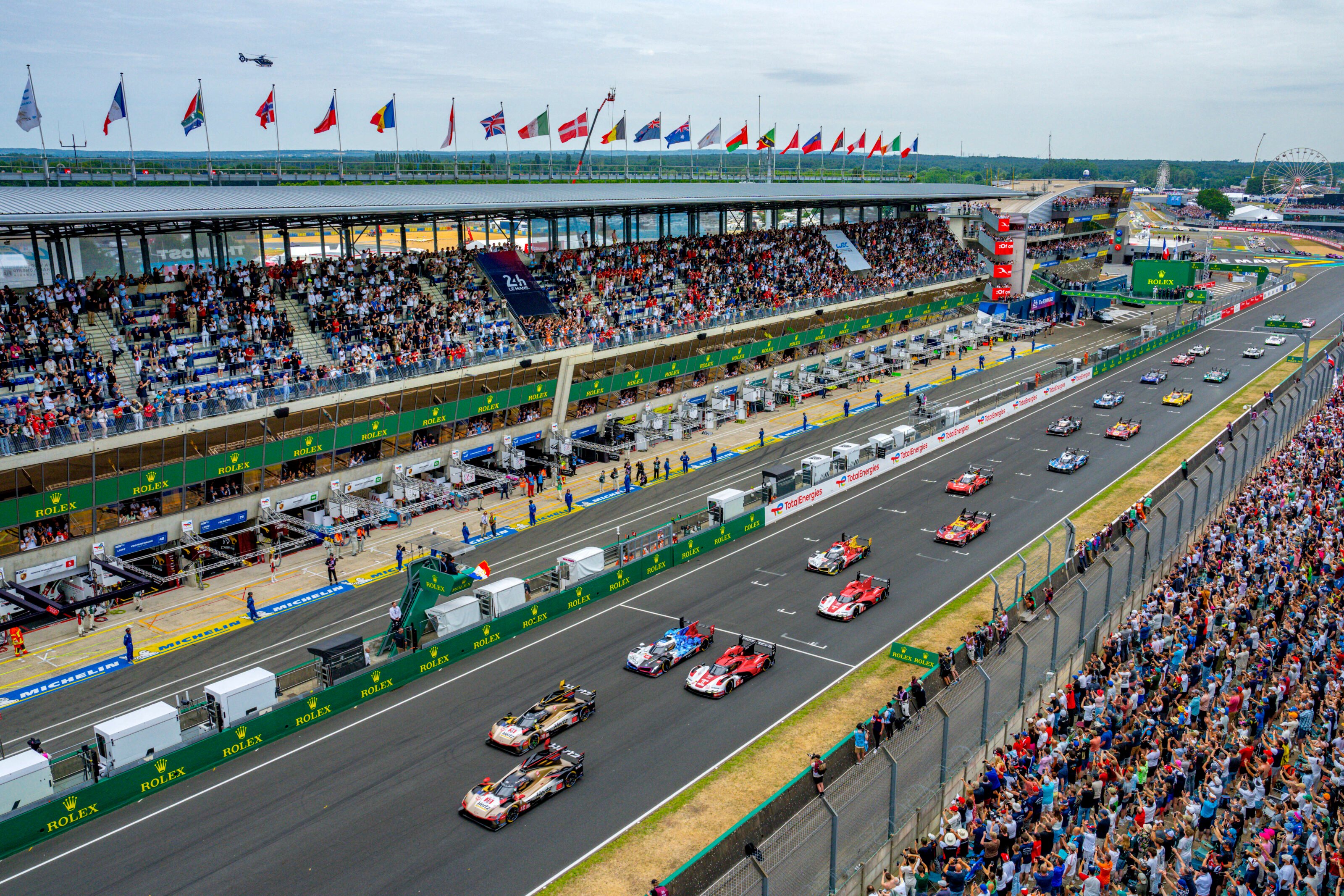
How has Le Mans changed over the years?
Over the times, the three decades I have been there racing, a lot of things have evolved.
The light technology going from halogen to xenon, going into LED. My last couple of Le Mans races, I had high beams with laser light. That technology helped me, especially at night.
The race itself, they have put some new tarmac onto the racetrack. They have made the racetrack more safe.
They’ve moved a lot of barriers and – I would say – made it more forgiving as well in many ways. They put a lot of stadium lights around the circuit, which is perfect for us as the fans as we can really see the cars perform, but it also makes it easier to drive during the night.
Certainly the first races at Le Mans, it was dark everywhere, apart from the pit and the pit straight and the pit lane. You needed to have clean headlights to make sure you found the way.
Also, what you see now is that there are so many manufacturers which you can easily identify. You can watch any car and you can see that’s an Alpine, that’s a BMW, that’s a Ferrari, that’s a Porsche, that’s a Lamborghini.
The cars are a little bit heavier, a little bit less powerful, a little bit more simplified, but they are much more on a level playing field. And that means any mistakes at Le Mans nowadays, it can be more difficult to recover from. It’s really important that you are extremely clean in your strategy and your approach to the racing.
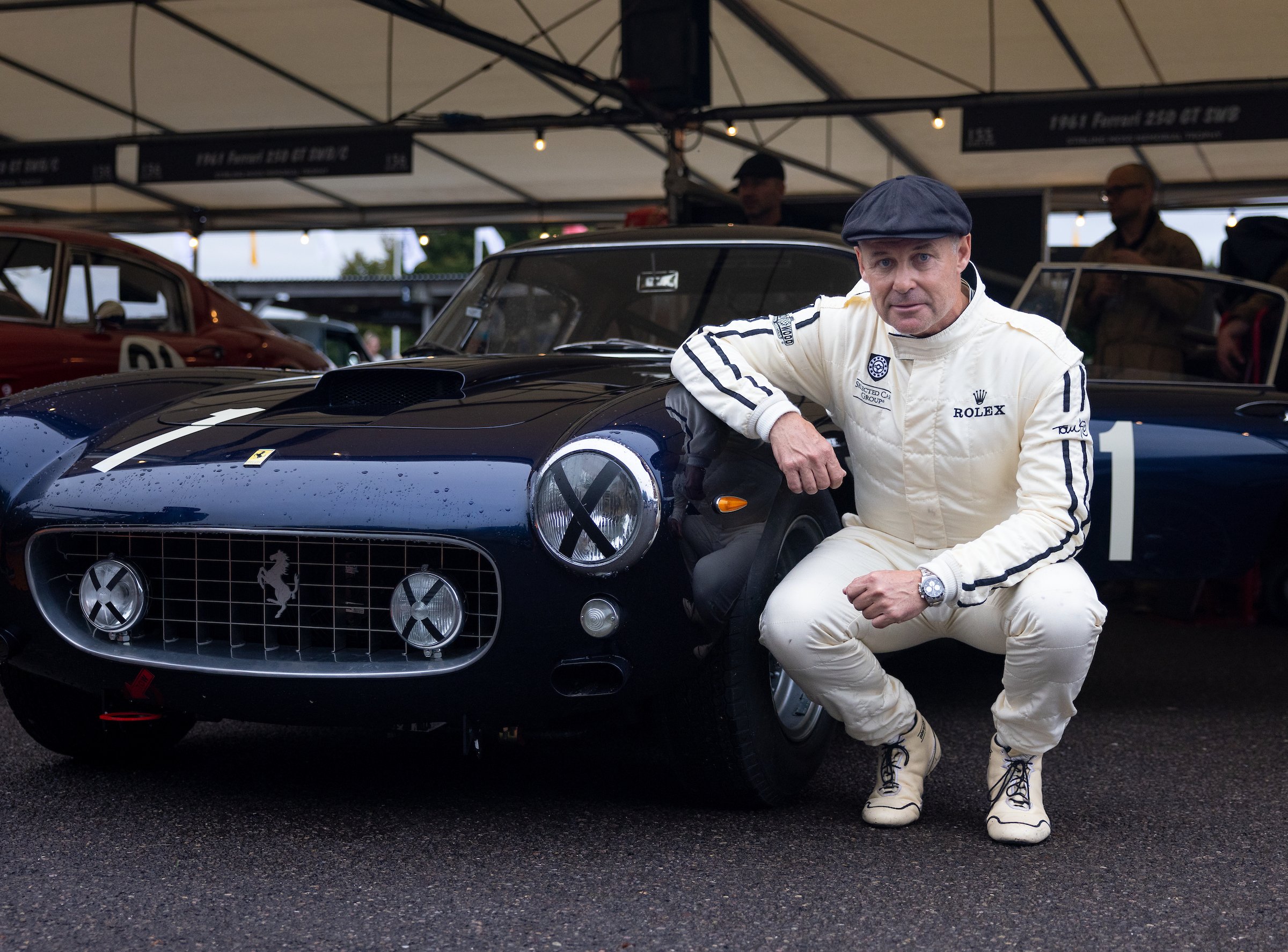
Are you truly happy talking about past achievements or does an old car racer always miss the pure adrenaline of racing?
Yeah, I mean, a private answer would be, yes, I do miss it. Because once a racer, always a racer.
The adrenaline, the rush you get from the very first time I was sitting next to my father in a Ford Escort Mark 2 driving through a forest, not being able to see anything else than trees. And this will always be there. But I have never regretted the time I stopped. Look, I was 47 when I retired and I saw people over 50 who were still racing and I didn’t want to be that.
I definitely wanted to stop when I was still pretty rapid. And I’m happy I finished my last race on the podium. Otherwise, I might have been thinking about a comeback. I’m really happy to still work within the sport and happy to get my adrenaline from commentating or watching the races.
And I get to drive a little bit sometimes in some historic events, like Goodwood in the UK, supported by Rolex.

You’ve been a Rolex testimonee for 15 years – can you share some of the memorable moments that you have experienced with the brand?
I can only say I was extremely proud when they kindly reached out to me and said they would like me to be involved as a testimonee in the years going forward.
And 10 years [supporting] Formula One, Le Mans since 2001. And the Pebble Beach motorsport reunion, the Quail, all the things which happen around the Concours d’Elegance. Rolex is the only one supporting all these fantastic historical events.
Since 2010, I’ve also gone to Goodwood and, in the last five years, it has been every year. I’m now a house captain and the Goodwood revival is a great way to celebrate. And the way Rolex supports that is unique.
I remember Le Mans in 2005, being on the podium and receiving the green box [with a Rolex watch]… I have special memories around that watch. And if it’s not on your arm, you want to know where it is. And sometimes when I’m traveling or whatever, I can sometimes think, oh, by the way, where did I put the watch? And then I need to call my wife or call one of my kids just to make sure it’s secure.
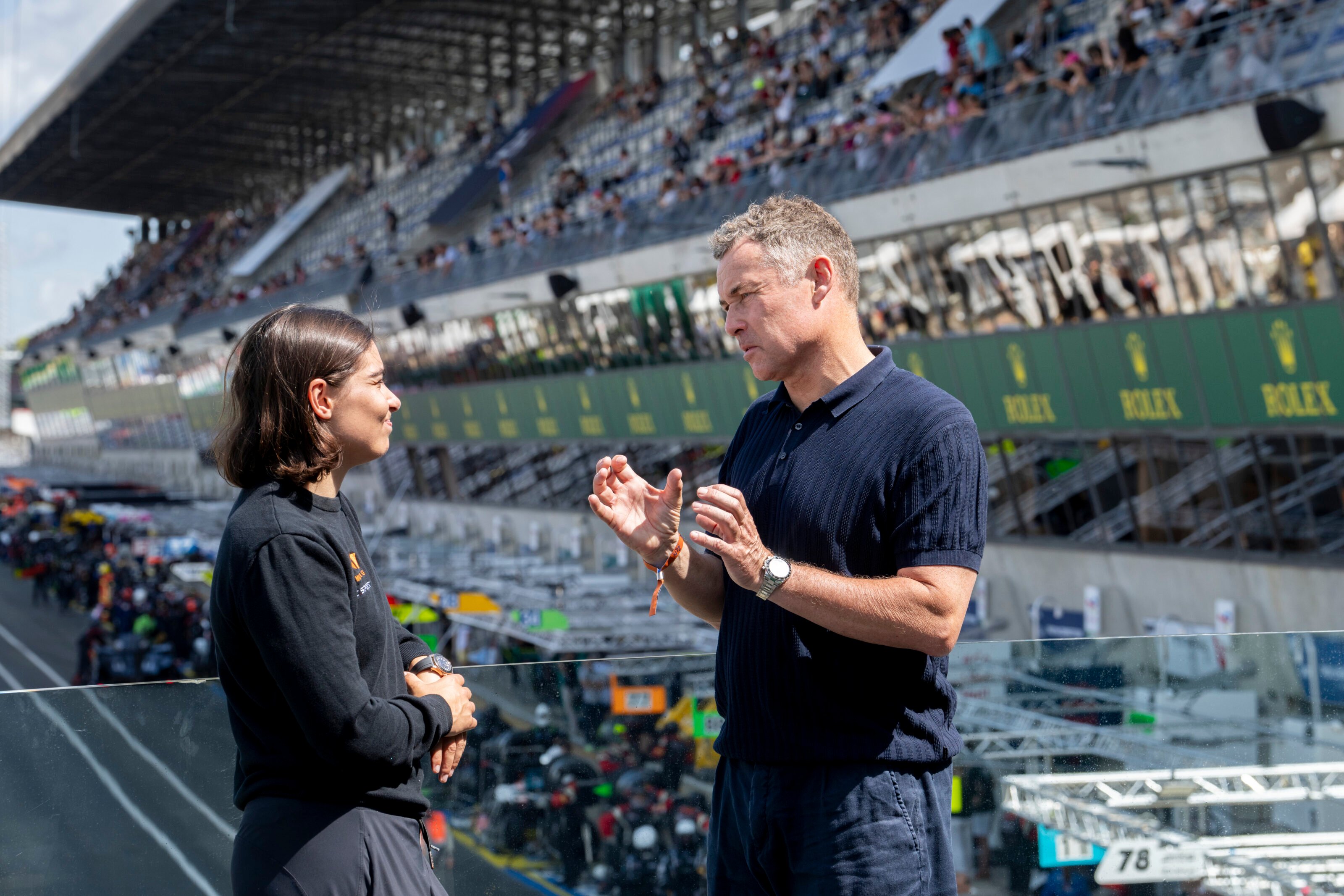
How has your perspective on time, both as a racing driver and as a person, evolved over all of these decades?
Now I’m old enough to say time is precious. The older you get, the more you value it. When I was racing, it was all about compressing time, making time as short and fast as possible. And after doing that, then you have to make it consistent. It’s one thing is to be as fast as possible but then you are asked to do it consistently.
This was the way to perceive time for me, when I was racing, because that was what gave me the chances, more possibilities to progress in motorsport.
Ahead of a likely early 2026 Australian release, Nissan has revealed its next-generation e-Power hybrid tech in the Qashqai small SUV. While the maker has boosted the performance of the system, it’s also made it quieter and even reduced its fuel consumption: it’s now rated at just 4.5L/100km on the WLTP cycle.
Based around a new 1.5-litre turbocharged three-cylinder petrol engine, the third-generation of Nissan’s e-Power hybrid set up adopts the company’s ‘STARC’ combustion cycle that reportedly increases thermal efficiency by as much as 42 per cent and the previous engine’s variable compression tech has been rendered redundant. A larger turbo has also been fitted.
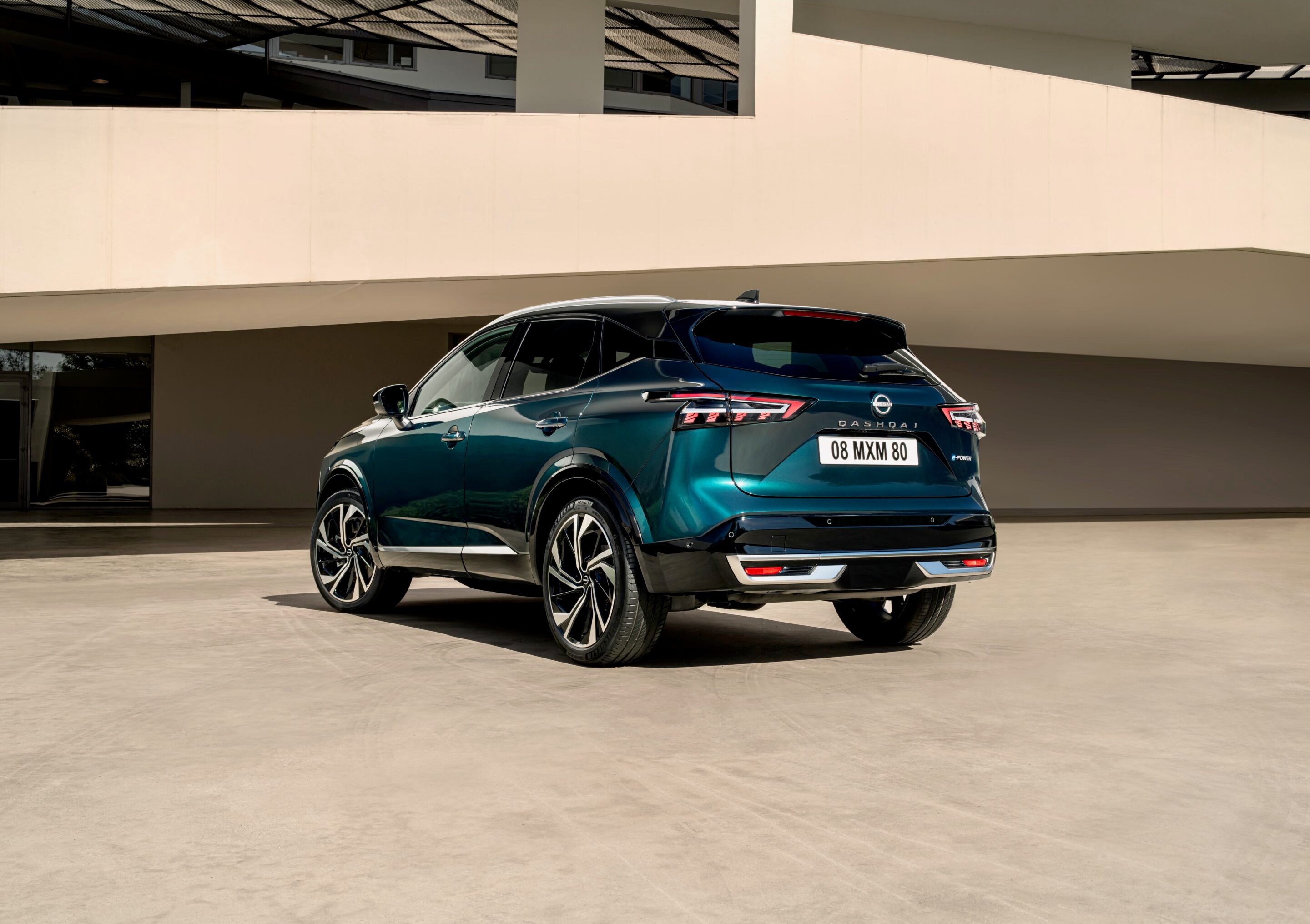
Now making 11kW more power at 151kW, the new e-Power hybrid system now consumes just 4.5L/100km of fuel on the WLTP cycle, while its CO2 emissions have been cut from 116g/km to just 102g/km. That has resulted in a 16 per cent improvement in real world fuel consumption, including a 14 per cent improvement at highway speeds, and it touts a claimed 1200km range.
Nissan also claims that the new e-Power hybrid system is up to 5.6 decibels quieter than before for enhanced refinement.
The new e-Power drivetrain has reportedly been developed to be 20 per cent cheaper to produce as well, hinting at lower prices, and its service intervals have been extended from 15,000km to 20,000km thanks to a new more efficient lubrication system.
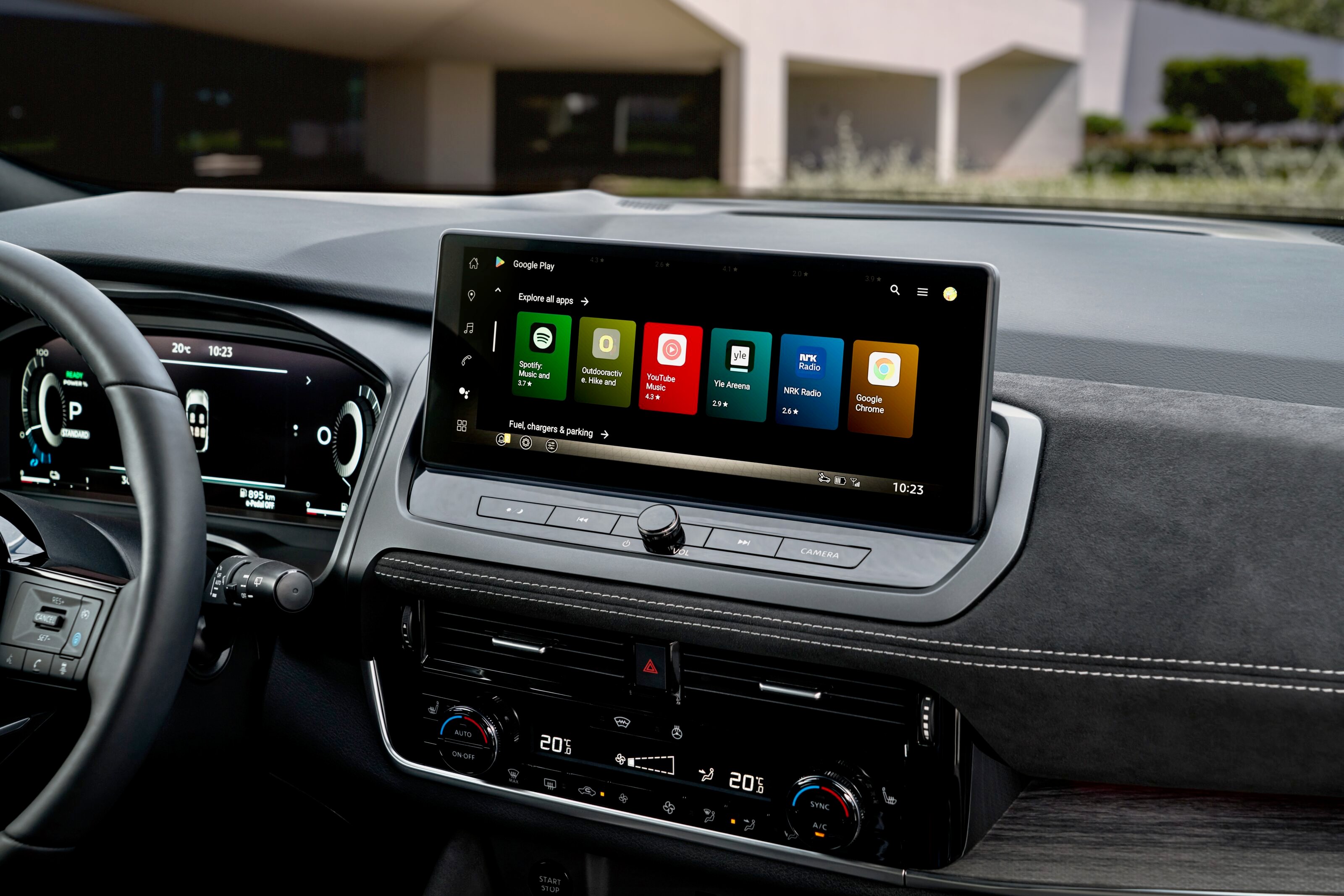
Nissan has also added new Google built-in infotainment software to the updated Qashqai, with access to the Google Play Store to download apps, and with Google Maps navigation as well.
The updated Qashqai also sees an upgraded version of the brand’s ‘ProPilot’ driver assistance tech with improved multi-lane autonomous driving interfaces for better traffic monitoring.
While the new e-Power drivetrain has debuted in the Qashqai, it’s likely to end up in the larger X-Trail as well.
Australian details are yet to be announced, but the new-generation Nissan e-Power hybrid system will likely end up on local shores sometime in early 2026.
A strangely shaped roundabout in Sydney’s southwest has triggered confusion, near-collisions, and widespread ridicule – and even the local council admits it doesn’t know how it got approved.
The “diamond roundabout,” located in Austral in the Liverpool City Council area, has become a viral sensation after drone footage revealed drivers struggling to navigate the unconventional design. Many motorists are seen making multi-point turns or, out of frustration, simply driving over the central structure.
Despite plenty of space for a conventional circular layout, the diamond shape was approved and built — prompting Liverpool City Councillor Peter Ristevski to demand answers.
“My inbox last night was bombarded with over 300 responses asking, ‘what is going on? You guys can’t even build a roundabout,’” Ristevski told Today. “They’ve pretty much lost confidence in the council, which is very concerning.”
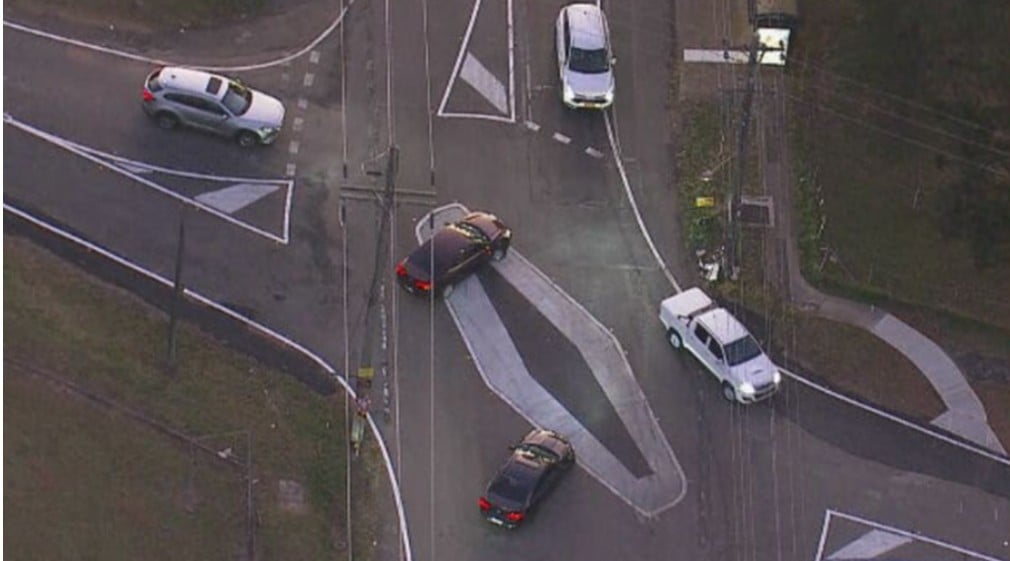
The councillor, currently attending the Australian Local Government Conference in Canberra, said the issue has become a national embarrassment. “I’ve had every single councillor here in Australia rip into me about this roundabout,” he added.
Ristevski could not confirm how much ratepayers had spent on the roundabout’s installation, but suggested the mishap stemmed from outsourcing to third-party contractors. “It’s a pretty good reflection of where things are at with council,” he admitted.
Channel Nine host Karl Stefanovic didn’t hold back in his criticism, saying ratepayers would now be forced to fund the fix for what he called an “absolute joke”.
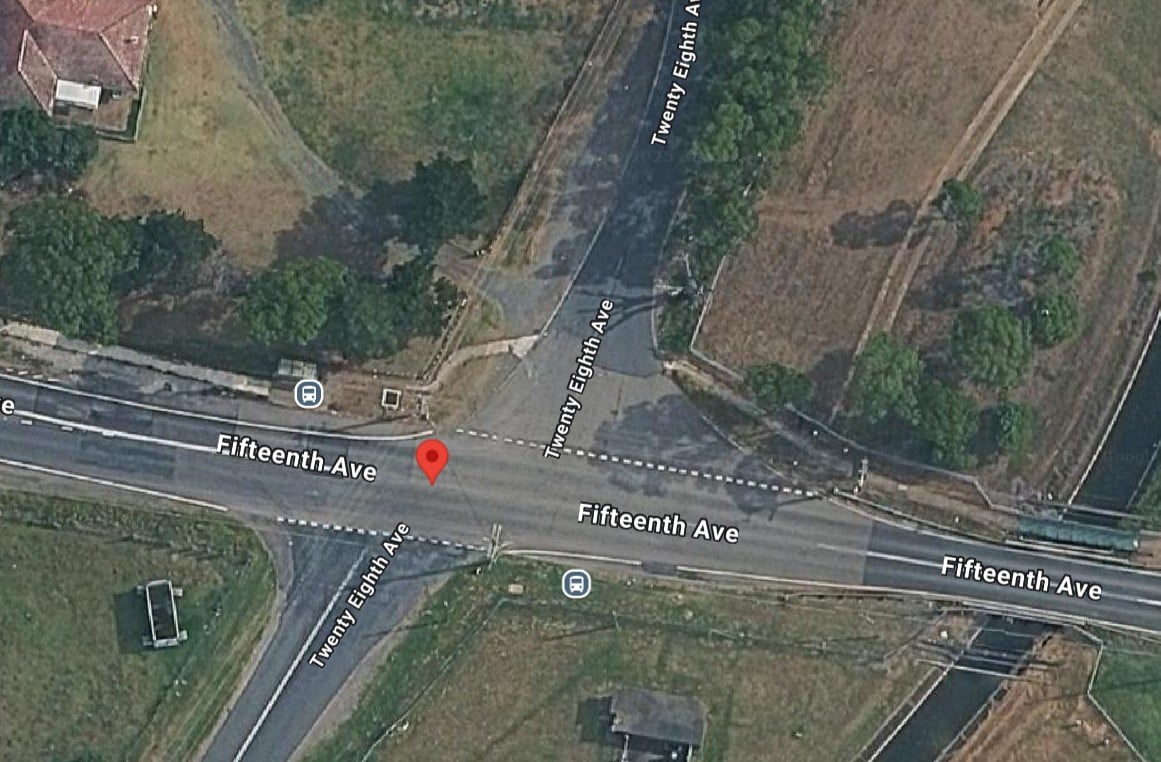
With public backlash mounting and videos of the intersection circulating widely online, Liverpool Council has been left red-faced – and scrambling to explain how one of Sydney’s most bizarre traffic designs made it off the drawing board. An internal investigation is now underway.
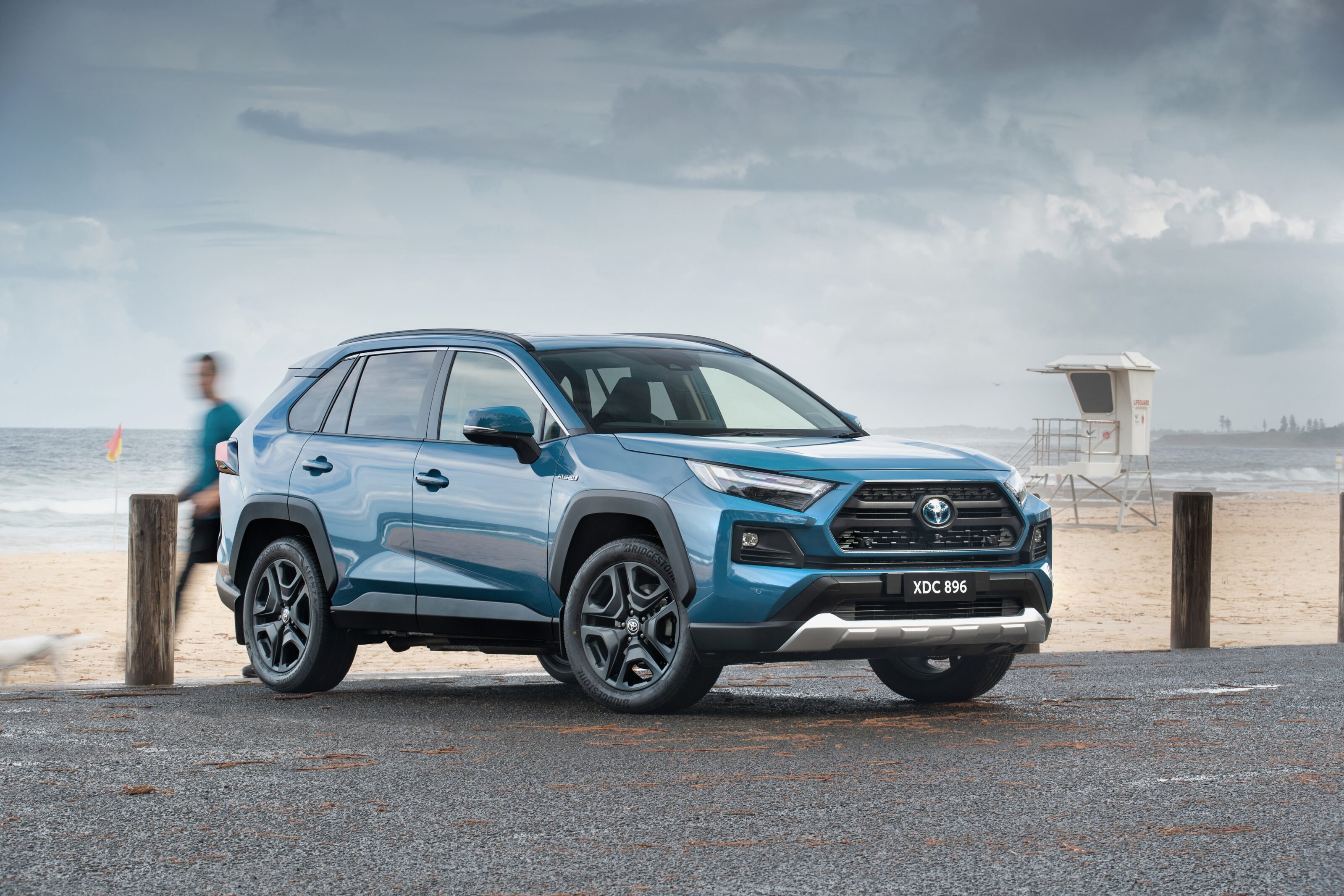
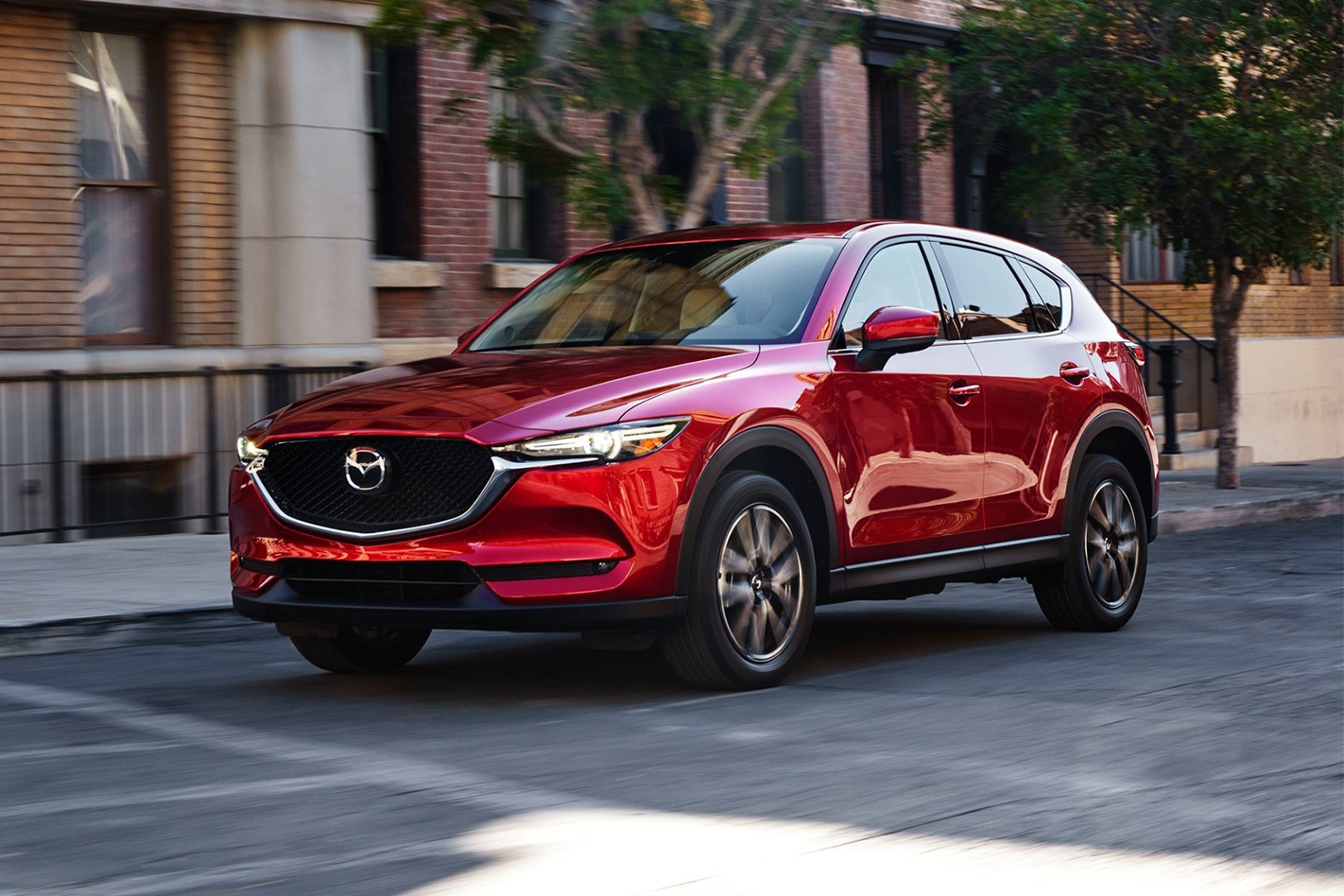
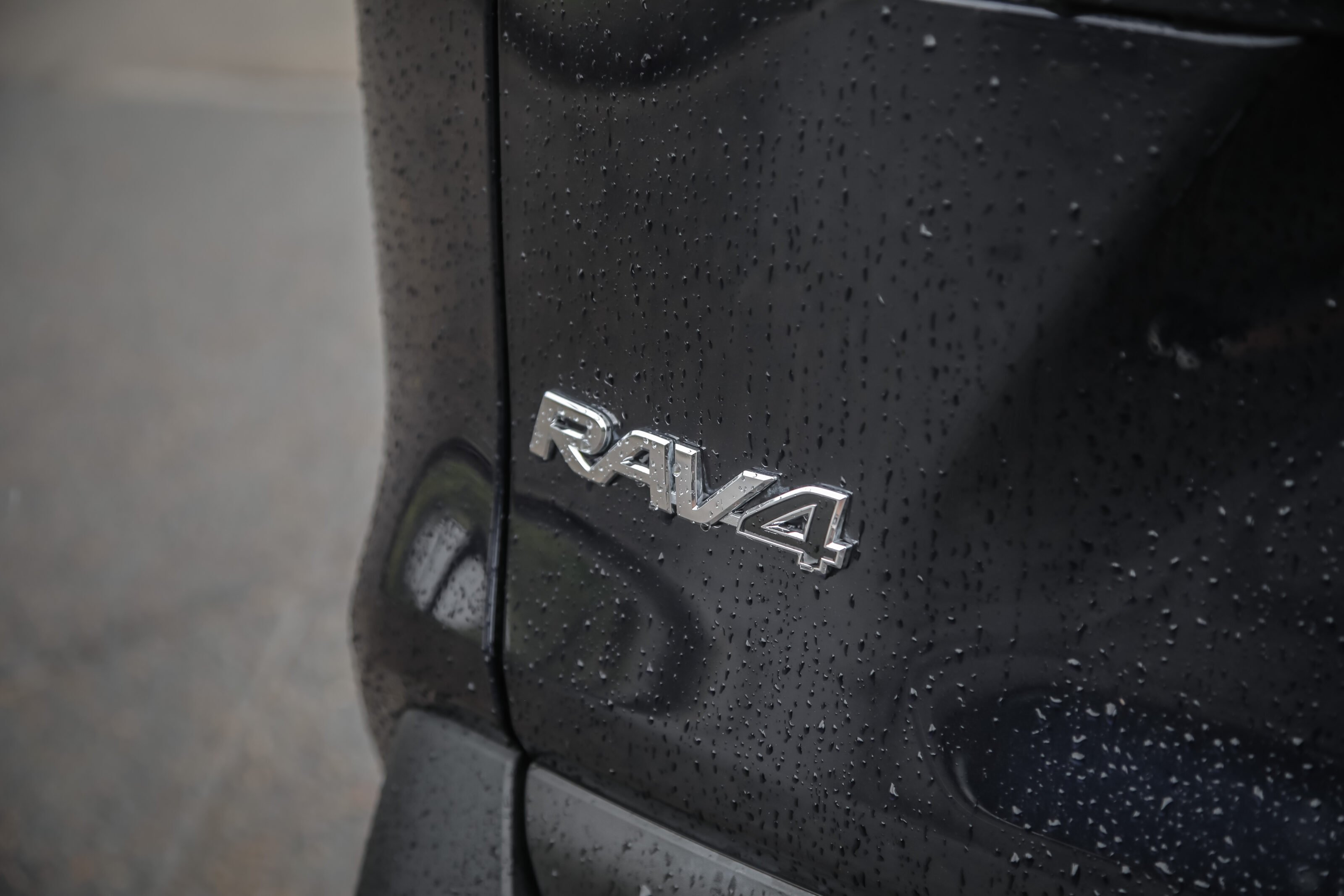
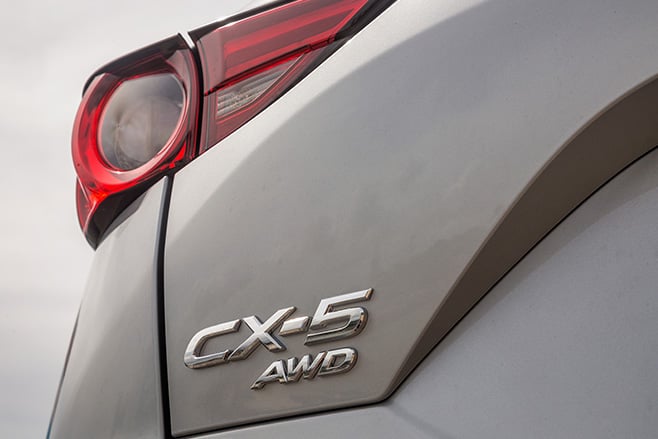
They might not be the freshest offerings, but according to the sales figures Aussies don’t really care. The Toyota RAV4 regularly battles the dual-cabs at the pointy end of the local charts and is dominant in its segment, but the Mazda CX-5 continues to hold its own as the third most popular medium SUV, only slightly trailing the Mitsubishi Outlander.
Does the Toyota deserve its place atop the family friendly pile? Should more people consider the Mazda? Is it a case of wait for the all-new generations of each that aren’t far away? Let’s put them head-to-head and see what we find.
Pricing
As you might expect, both the Mazda CX-5 and Toyota RAV4 offer fairly extensive ranges, the former spanning from $36,590-$55,000 plus on-road costs (ORCs) and the latter a little more expensive at $42,460-$58,360 (+ORCs) now it’s an all-hybrid affair.
For the purposes of this article we’ll focus on a couple of upper-middle variants, the $50,310 (+ORCs) Mazda CX-5 G25 GT SP and $51,410 (+ORCs) Toyota RAV4 Cruiser Hybrid. If you want some more grunt, the CX-5 GT SP also comes in turbocharged G35 guise for $52,810 (+ORCs) while added traction can be had in the all-wheel drive RAV4 Cruiser Hybrid eFour for $54,410 (+ORCs).
Both brands offer a five-year/unlimited-kilometre warranty, though Toyota extends this to seven years on the drivetrain. Likewise, service intervals for both are 12 months or 15,000km, but whereas the RAV4 is $1350 over the first five visits, the Mazda is $2227.
Toyota does charge $99/year for roadside assistance, however, whereas Mazda throws in five years’ complimentary coverage. White is the only standard RAV4 colour, with all others $705, while Mazda offers the flashier silver-beige Platinum Quartz, blue and black at no cost, with other options adding $795.
Dimensions
Given all these cars are heavily benchmarked against one another, it should come as no surprise that the Mazda CX-5 and Toyota RAV4 are separated by millimetres. The RAV4 is 25mm longer, 10mm wider, 5mm taller and 7kg heavier, though its wheelbase is 10mm shorter. Nothing in it basically.
Where the two do differ, though, is in interior space. The RAV4 not only has a much larger boot at 580 litres to the Mazda’s 483, there’s significantly more room in the back seat, too, the CX-5 being a tight in terms of adult legroom.
| Mazda CX-5 | Toyota RAV4 | |
|---|---|---|
| Length | 4575mm | 4600mm |
| Width | 1845mm | 1855mm |
| Height | 1680mm | 1685mm |
| Wheelbase | 2700mm | 2690mm |
| Weight | 1693kg | 1700kg |
| Boot space | 438L | 580L |
| Charge time 10-80 per cent* | 23min | 15min |
Equipment
As befits their spots towards the top of their respective trees, there’s plenty of fruit to be found in the Mazda CX-5 GT SP and Toyota RAV4 Cruiser. They’re a fairly close match in most regards and while the table below isn’t exhaustive, it should cover the obvious features most will be after.
| Equipment | Mazda CX-5 GT SP | Toyota RAV4 Cruiser |
|---|---|---|
| Wheels | 19-inch | 18-inch |
| LED headlights | X | X |
| Sunroof | X | X |
| Roof rails | – | X |
| Electric seats | 10-way driver’s, six-way passenger | 10-way driver’s, eight-way passenger |
| Heated seats | Front | Front |
| Ventilated seats | – | Front |
| Climate control | Dual-zone | Dual-zone |
| Power tailgate | X | X |
| Keyless entry | X | X |
| Stereo | 10-speaker | Nine-speaker |
| USB ports | 2 x USB-C, 2 x USB-A | 4 x USB-C, 1 x USB-A |
| Head-up display | X | – |
Powertrains
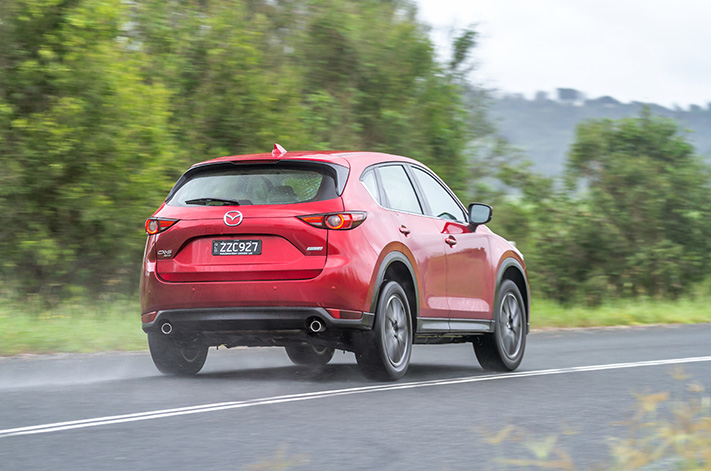
While 2.5-litre four-cylinder petrol engines feature under the bonnet of both the Mazda CX-5 GT SP and Toyota RAV4 Cruiser there are plenty of differences in their operation. The Mazda’s Skyactiv engine sends 140kW/252Nm to all four wheels via a six-speed automatic gearbox.
If you’re a keen driver, the extra $2500 for the 170kW/420Nm turbocharged version could be money well spent as it gives the CX-5 genuinely enjoyable punch but it comes with a commensurate increase in fuel consumption. The standard version claims 7.4L/100km on the combined cycle.
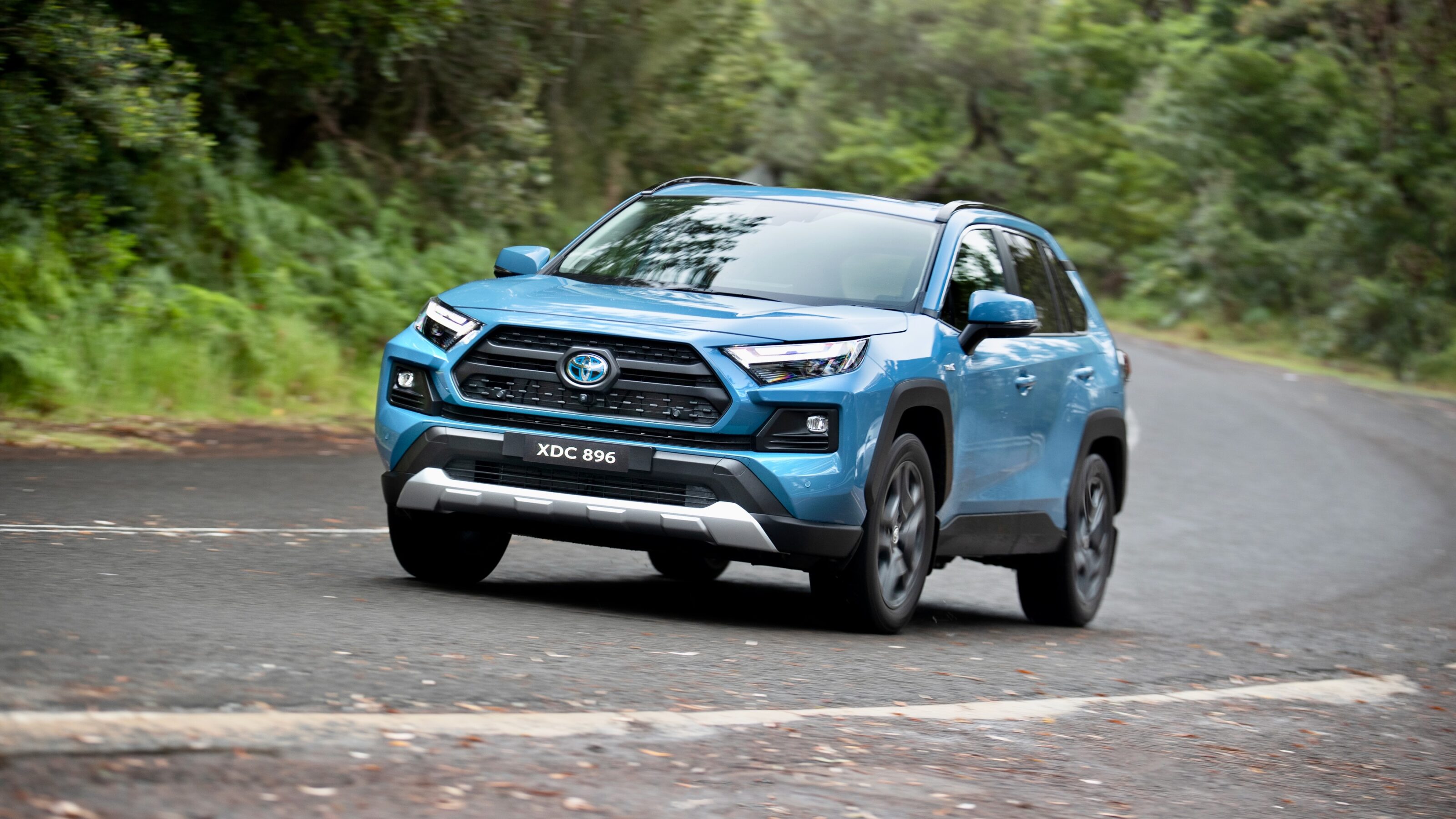
Hybrid assistance means the RAV4 can offer the best of both worlds. Not only is it more powerful at 160kW/221Nm (the latter figure being the engine figure only), its claimed combined fuel consumption is just 4.7L/100km. And that’s no test anomaly, it’s a relatively representative figure.
Unless you really need the added traction of all-wheel drive the extra $3000 for the eFour is questionable value, though it can tow 1500kg (braked), whereas the 2WD is limited to 480kg. Both the Mazda and Toyota are happy with 91RON fuel.
Technology
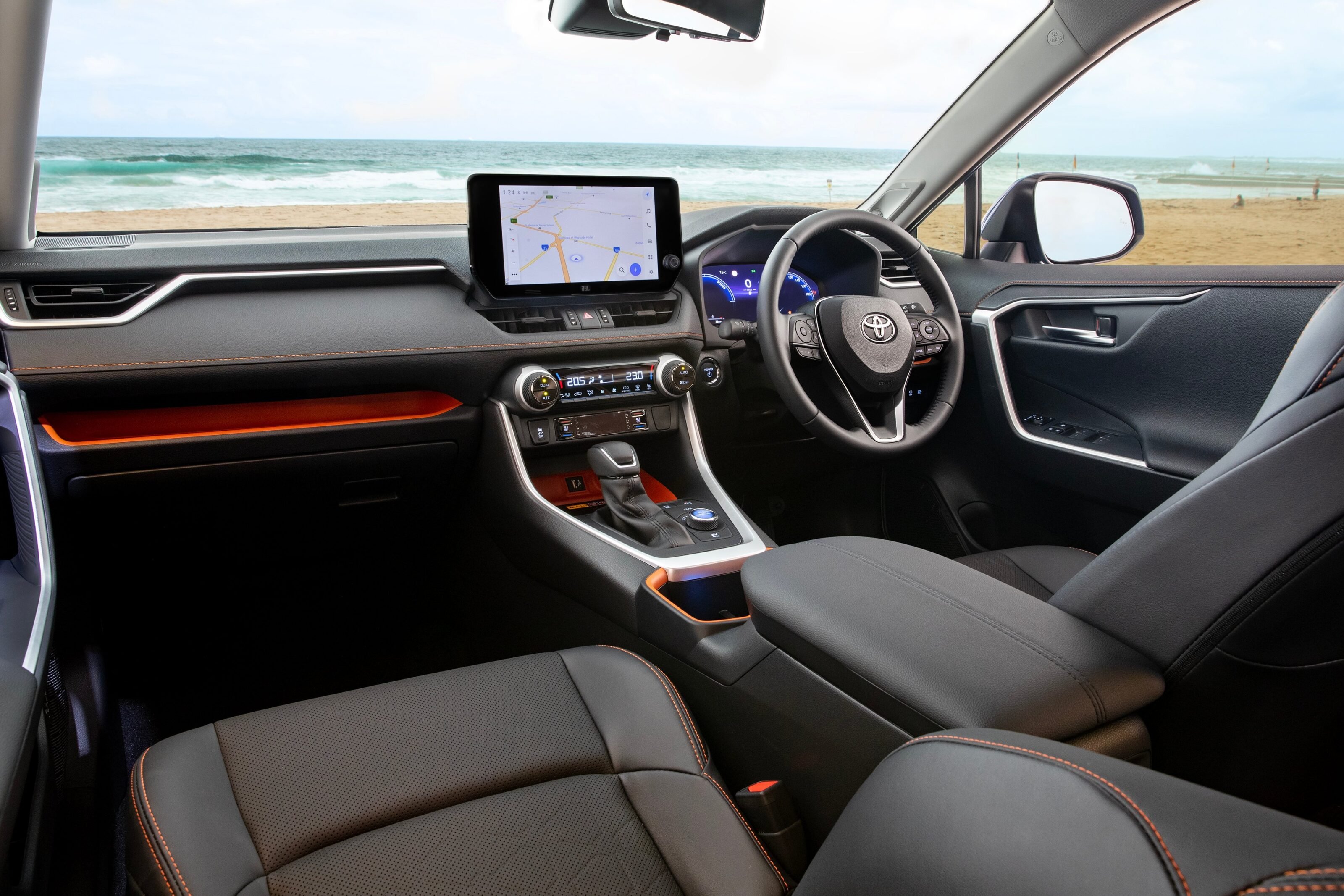
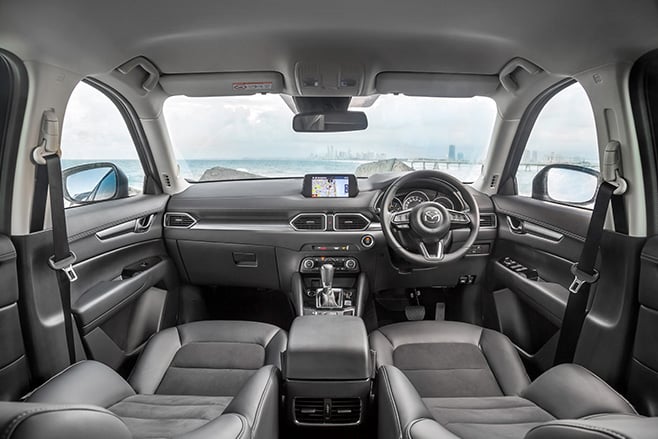
While older vehicles at their cores, the Mazda CX-5 and Toyota RAV4 have received regular updates throughout their life to remain competitive. The CX-5 features a 10.25-inch infotainment screen with wireless smartphone mirroring and digital radio along with a wireless charging pad and a quasi-digital driver’s instrument display.
Once more, the RAV4 is similar, though it has a completely digital 12.3-inch instrument display and the 10.5-inch infotainment screen has wireless Apple CarPlay but you need to plug in for Android Auto. Digital radio and wireless charging also feature, while Toyota offers 12 months of complimentary access to the complete Toyota Connected Services.
Following this 12-month period, SOS emergency call, automatic collision notification and vehicle information will still be complimentary but adding stolen vehicle tracking and remote vehicle functions is $9.95/month and including connected navigation and multimedia profiles lifts this to $12.50/month.
Safety
The Mazda CX-5 is now listed as unrated by ANCAP as its five-star rating from 2017 is deemed to have expired. That rating carried scores of 95 per cent for adult occupant protection, 80 per cent for child occupant protection, 78 per cent for pedestrian protection and 59 per cent for safety assist.
That latter score is particularly low, but the CX-5 has been updated in the meantime and in addition to six airbags it has all the modern active safety features as standard, including adaptive cruise control, auto-emergency braking in forward and reverse, lane-keep assist and departure warning, rear cross-traffic alert and speed sign recognition.
The Toyota RAV4 basically mirrors this, with the addition of a panoramic view monitor for better vision while parking and an extra airbag. It retains its five-star ANCAP rating, albeit an older one from 2019, with scores of 93 per cent for adult occupant protection, 89 per cent for children, 85 per cent for pedestrians and 83 per cent for safety assist.
Driving
While it might not necessarily be the top priority for most buyers, both the Mazda CX-5 and Toyota RAV4 are two of the better-driving medium SUVs available, albeit in slightly different ways.
Keen drivers will enjoy the CX-5 as it’ll happily carve through corners with accurate steering and balanced, trustworthy handling without sacrificing ride comfort. The engine needs a bit of a rev for to give its best but it’s happy to do so and the automatic is smooth and responsive.
For years the words ‘RAV4’ and ‘dynamics’ didn’t belong in the same sentence, but the latest iteration is a very impressive vehicle. Comfortable, easy to drive and the hybrid system not only improves fuel efficiency but helps the petrol engine out where it needs it most.
Conclusion
In both instances here, the sales figures don’t lie. The Mazda CX-5 won’t be for everyone, but if outright space isn’t high on your priority list then it’s a well-equipped, fine-driving SUV that’s making thousands of people a month happy.
However, the RAV4’s dominant position isn’t down to the might of Toyota’s marketing machine (though that doesn’t hurt). It’s a very difficult package to pick flaws in, with plenty of space, benchmark running costs, excellent safety credentials, all the equipment you’d need and it’s a fine drive to boot.
If having the latest and greatest isn’t that important to you, keep an eye out for deals as both manufacturers sharpen their pencils as the all-new generations of both models approach.
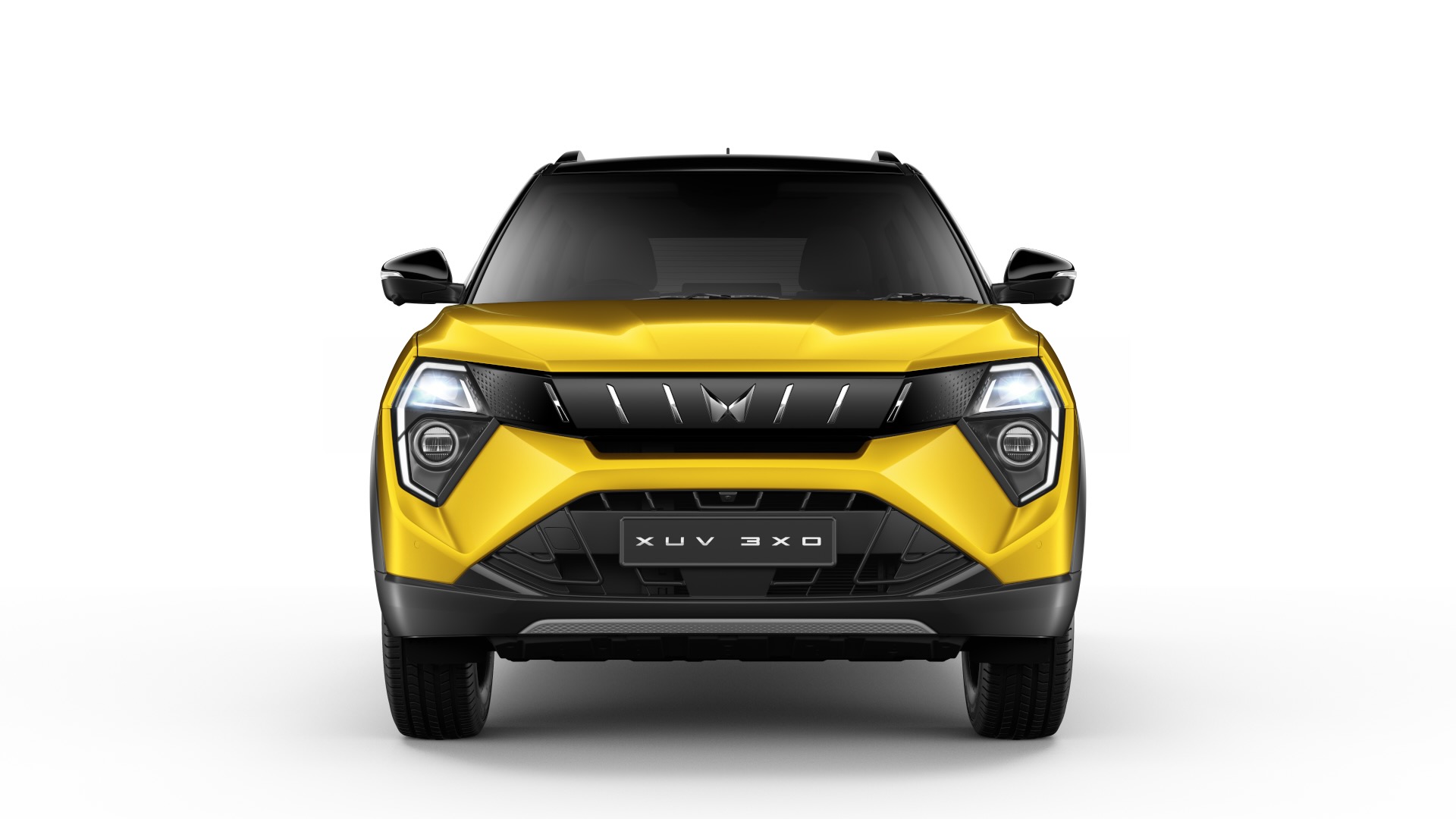
Mahindra Australia has announced that the new XUV3XO is now in local dealerships ahead of the first deliveries that commence on July 4th. The brand is yet to announce local pricing for the XUV3XO, though has given a bit more information as to its model line-up.
Two models will be available at launch: the entry-level AX5L and upper-spec AX7L, and both will be equipped with level 2 ADAS features such as autonomous emergency braking with pedestrian and cyclist detection, forward collision warning, adaptive cruise control, traffic sign recognition, lane keeping assistance and auto high beam.
There will also be dual 10.25-inch displays for the driver and infotainment system, with Apple CarPlay and Android Auto standard as well.
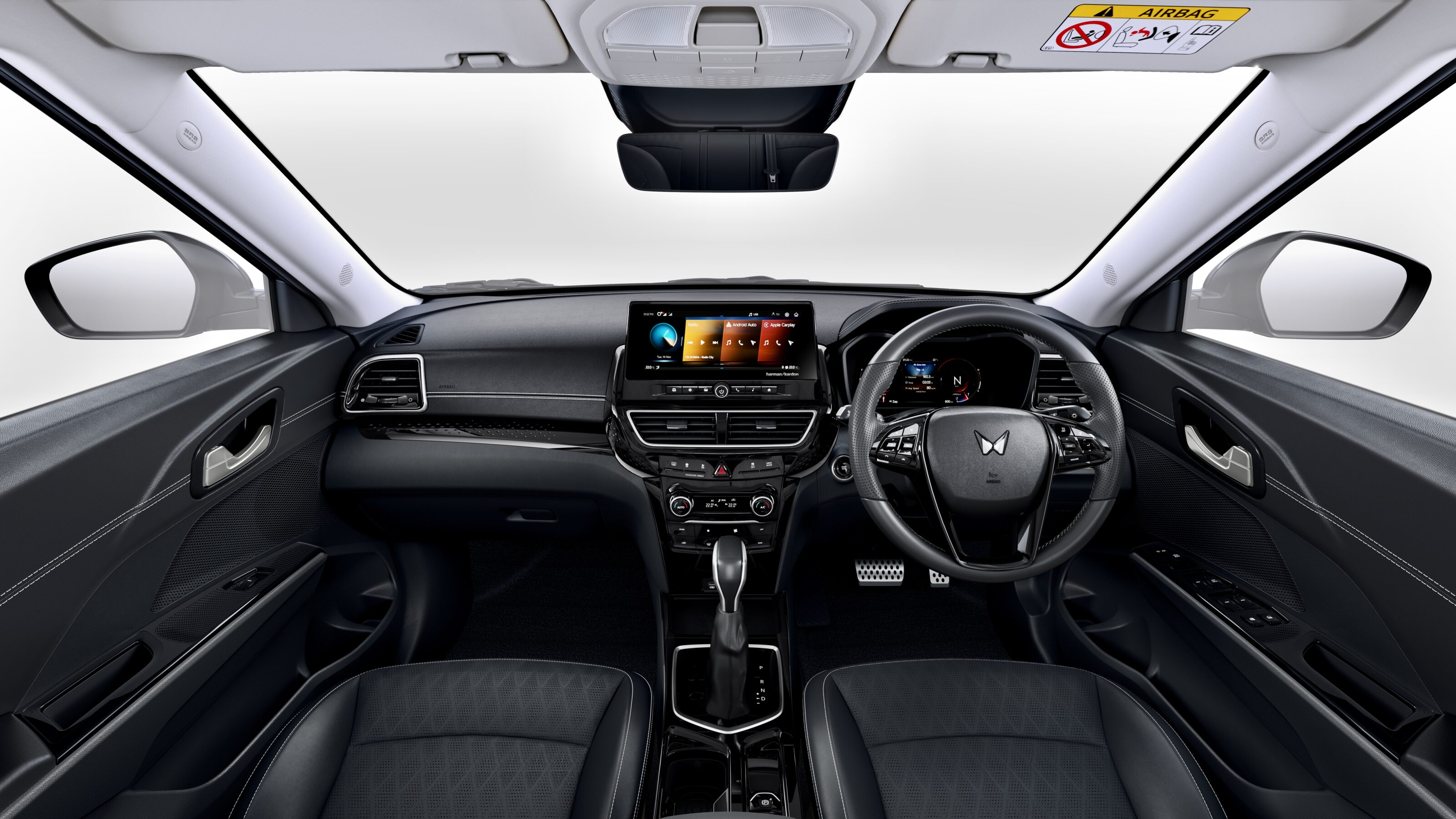
Other features available on the XUV3XO in India include a panoramic sunroof, a seven-speaker Harman Kardon sound system, a 360-degree camera (including a blind-spot camera), dual-zone automatic climate control with rear air vents, front and rear parking sensors and a wireless phone charger.
According to Mahindra, a six-speed torque converter automatic transmission will be standard across the range, and the XUV3XO will be rated at 6.5L/100km for combined fuel consumption.
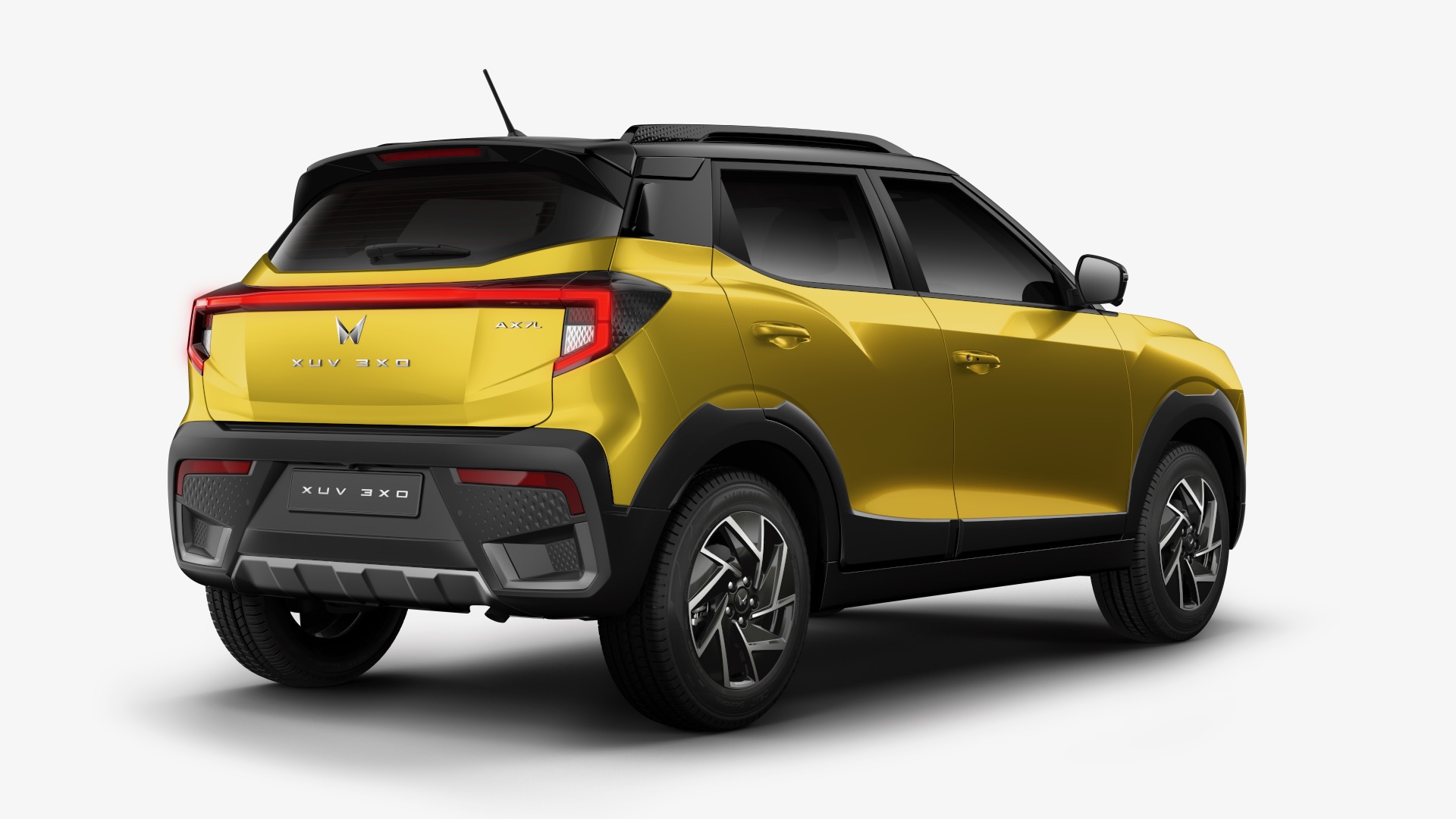
Mahindra is yet to announce any drivetrain details for Australia, though in India, the XUV3XO is available with two turbocharged 1.2-litre petrol engines (one making 82kW/200Nm and the other making 96kW/230Nm) and an 86kW/300Nm 1.5-litre turbo-diesel.
Sitting below larger Mahindra models such as the XUV700, the XUV3XO is the first small SUV offering from the brand to go on sale in Australia.
The Mahindra XUV3XO is now available to pre-order ahead of the first deliveries commencing on July 4th.
Ferrari has revealed its latest venture – and it’s not on four wheels. The legendary Italian marque has launched the Ferrari Hypersail project, a revolutionary step into the world of offshore sailing that merges its motorsport legacy with cutting-edge nautical innovation.
The Hypersail name pays tribute to Ferrari’s iconic Hypercars – symbols of speed, endurance, and advanced engineering. In the same spirit, Hypersail aims to redefine performance on water.
At the helm of this ambitious project is veteran sailor Giovanni Soldini, who will serve as Team Principal. Under his leadership, Hypersail will operate as a floating R&D lab, pushing boundaries in aerodynamics, sustainable energy, and marine engineering.

Ferrari’s own engineering team is working closely with specialists from the sailing world to oversee every phase – from concept and design to build and testing. Their combined goal: to develop a breakthrough racing vessel that showcases innovation without compromise.
At the centre of the project is a 100-foot ocean racing monohull designed by esteemed French naval architect Guillaume Verdier. This high-tech yacht will “fly” over the waves, stabilising on three points of contact, and will be entirely powered by self-sufficient energy sources – a landmark in sustainable competitive sailing.
Construction will take place in Italy, with sea trials scheduled for 2026.

