
BYD is preparing to dramatically expand its vehicle shipping fleet, reportedly ordering another 10 car carriers as the Chinese manufacturer increasingly looks overseas for growth amid weakening sales in its home market.
According to CarNewsChina, maritime industry reports claim BYD has ordered 10 pure car and truck carriers, each capable of transporting up to 9200 car-equivalent units (CEU). If completed, they would join its existing eight ships and take the company’s total fleet to 18 vessels.
The new ships are reportedly being built by China Merchants Industry at its Jinling and Haimen shipyards, with deliveries scheduled between 2027 and 2029. Neither BYD nor the shipbuilder has officially announced the order, while its value has not been disclosed.
The expansion would add another 92,000 CEU of capacity and lift BYD’s combined fleet capacity beyond 130,000 CEU. CarNewsChina estimates the additional vessels could increase BYD’s annual export shipping capability from around one million to 2.5 million vehicles.
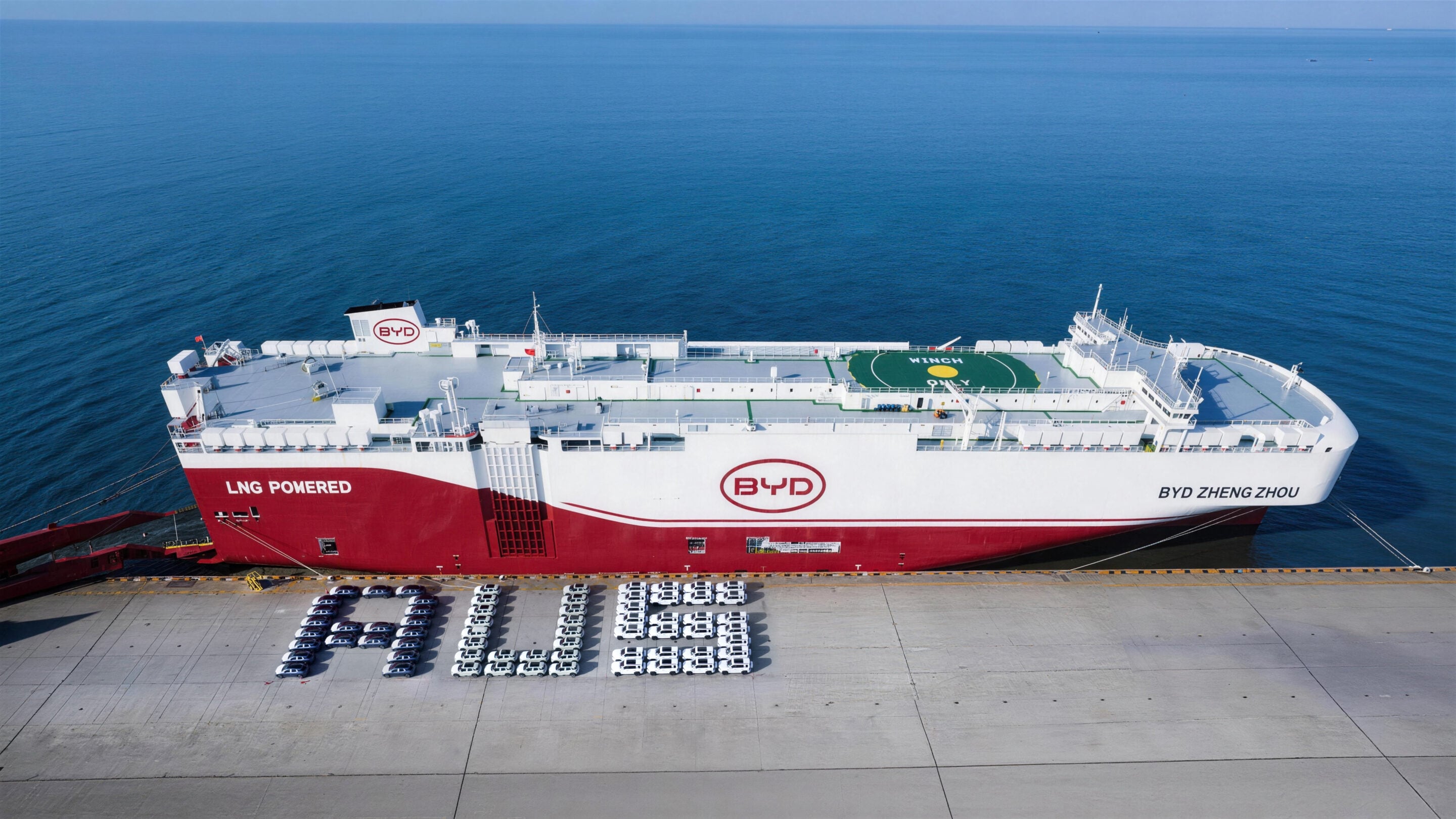
Australia has already experienced BYD’s growing reliance on its own ships. Earlier this year, the BYD Zhengzhou left Shanghai carrying 4810 BYD and Denza vehicles for Melbourne, Sydney and Brisbane (above), including more than 2000 Sealion 7 and Atto 2 electric SUVs. Around 75 per cent of the shipment had already been allocated to customers when it reached Australia.
That additional supply helped support a record June for BYD locally, when it registered 18,881 vehicles and finished just 243 sales behind Toyota.
The shipping expansion comes as international markets assume greater importance for BYD. Its exports from China reached 1.127 million vehicles during the first eight months of 2026, up 88 per cent year-on-year, while its main BYD brand’s Chinese sales fell 43 per cent to 1.15 million over the same period.
BYD generated 53 per cent of its revenue outside China during the first half of 2026, when overseas vehicle sales climbed 70.6 per cent.

That shift is also influencing its model strategy. The Seal and Sealion 7 have been withdrawn from the Chinese market as production is redirected towards export markets, although both remain on sale in Australia. The Sealion 6 had already followed a similar path earlier this year.
With more ships coming, BYD appears increasingly determined to control not just how many vehicles it builds, but how quickly it can get them into expanding overseas markets.
It took just 5m19.546s for Timo Bernhard to etch his name into the Nürburgring Nordschleife history books.
That’s how long it took the German racer to complete a lap of ‘The Green Hell’ in his Porsche 919 Evo (below), a new record that obliterated the old mark by almost a minute.
It was a remarkable lap by the Porsche driver, his 919 Evo – which had cast off the shackles of the World Endurance Championship’s pesky rulebook governing power and weight – setting a new benchmark likely to last as long as the 35 years Stefan Bellof’s previous record of 6m11.13s, set in 1983, had stood.
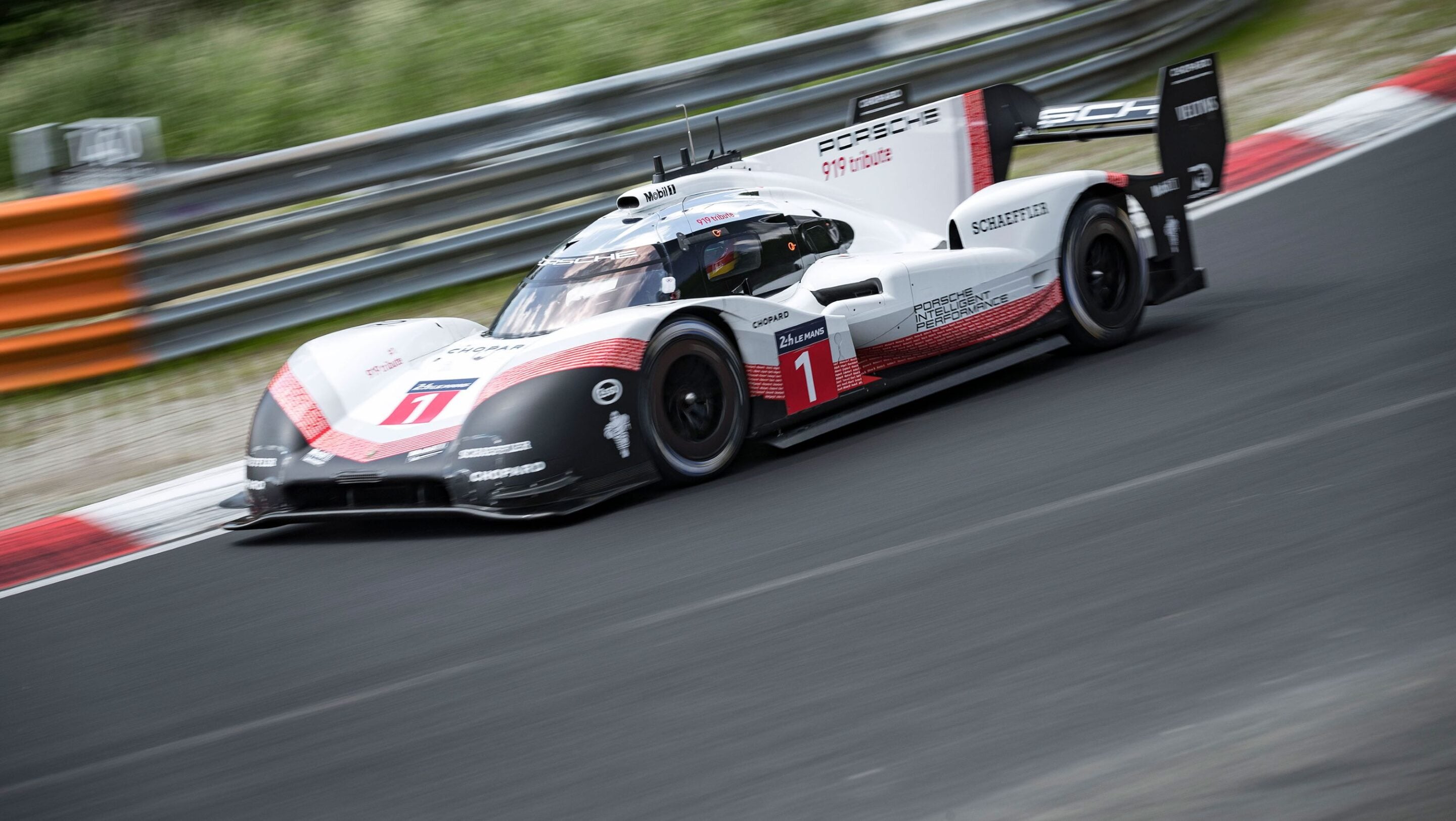
But what made Bernhard’s lap all the more remarkable was the engine crammed into the back of his Le Mans race car. No, it wasn’t one of Porsche’s famous flat-sixes, nor was it the flat-12 of previous generation prototype racers such as the 917. Instead, a turbocharged 2.0-litre V4, mated to Porsche’s trick hybrid system for total outputs of 865kW, helped to propel the German racer at average speed of 234.7km/h around the 20.8km Nordschleife. In a car weighing just 849kg. Remarkable.
Porsche chose the V4 configuration for its 2019 Nordschleife record run for packaging and economy reasons. The 919’s complex hybrid system took up space while the V4 configuration of the petrol engine, thanks to its compact dimensions, didn’t. The less space the engine occupied, the more left over for the energy recovery units, batteries, and the associated electronics needed to run them. And in motorsport, packaging and weight distribution is paramount.
The V4 as an engine isn’t completely alien to the automotive world, but it is exceedingly rare. Traditional inline fours which have powered the vast majority of four-cylinder cars throughout history are simpler in their construction, use less mechanical parts and are cheaper to build.
But that didn’t stop a handful of carmakers from experimenting with the bent-four layout. Perhaps they were lured by the prospect of increased power, thanks to shorter crankshafts which could withstand higher engine revs. Or maybe it was the idea that a V4 – thanks to better thermal management – could be more fuel efficient than its inline cousins.
Counteracting those potential gains, the inherent vibrations of a V4’s uneven firing order required complex and expensive balancing shafts. And two banks of cylinders (instead of one) necessitated more mechanical parts like crankshafts and cylinder heads, adding to the cost of production.
If there was a moment in time for the V4 engine, it came in the 1960s with several carmakers trying out the unorthodox configuration. Some are household names, some are automotive curios. All defied convention.
1963: Lancia Fulvia
It shouldn’t come as a surprise that the Italian carmaker was at the forefront of V4 technology. After all, it had been continuously building cars with the distinctive engine layout since the 1920s, starting with what is widely regarded as the first production car powered by a V4, the 1922 Lancia Lambda.
A string of V4-powered models followed over the decades, reaching a peak in the 1960s with what is – probably – the Italian carmaker’s apogee: the Lancia Fulvia.
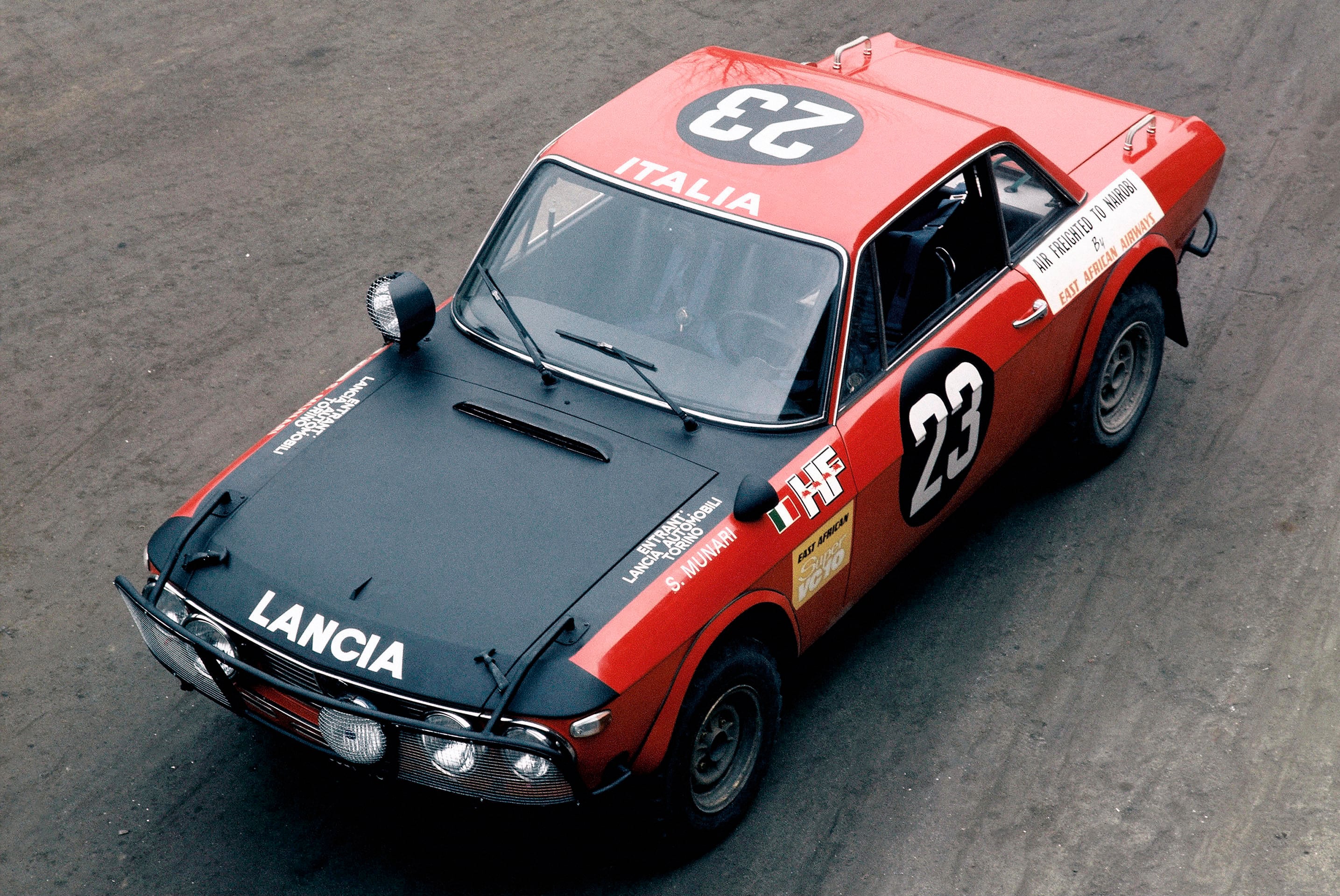
Released in 1963, the Fulvia was available as a boxy sedan, an elegant Zagato-designed fastback and a heartachingly beautiful coupe, all front-wheel drive and all powered by V4 engines, ranging in displacement from 1.1 to 1.6 litres.
Lancia’s V4 was unusual in that its V-angle was just 12 degrees with a single cylinder head (against the two heads required by V-configured engines built to the more commonly acceptable 60- or 90-degree angle). The compact nature of the narrow angle allowed Lancia’s engineers to mount the V4 at 45 degrees, lowering the centre of gravity, resulting in a beautifully balanced and handling car that could be driven with verve and vim.
Lancia’s V4 reached its zenith with the Fulvia Rallye 1.6 HF, the homologation special built for the Italian manufacturer to contest what was then the precursor to the World Rally Championship, the International Championship for Manufacturers (ICM). With 96kW in competition trim, the Fulvia 1.6 HF dominated the ICM in 1973, winning the title with almost twice as many points as second-placed Fiat. Cue V-shaped Victory signs.
1965: Ford Transit Mk1
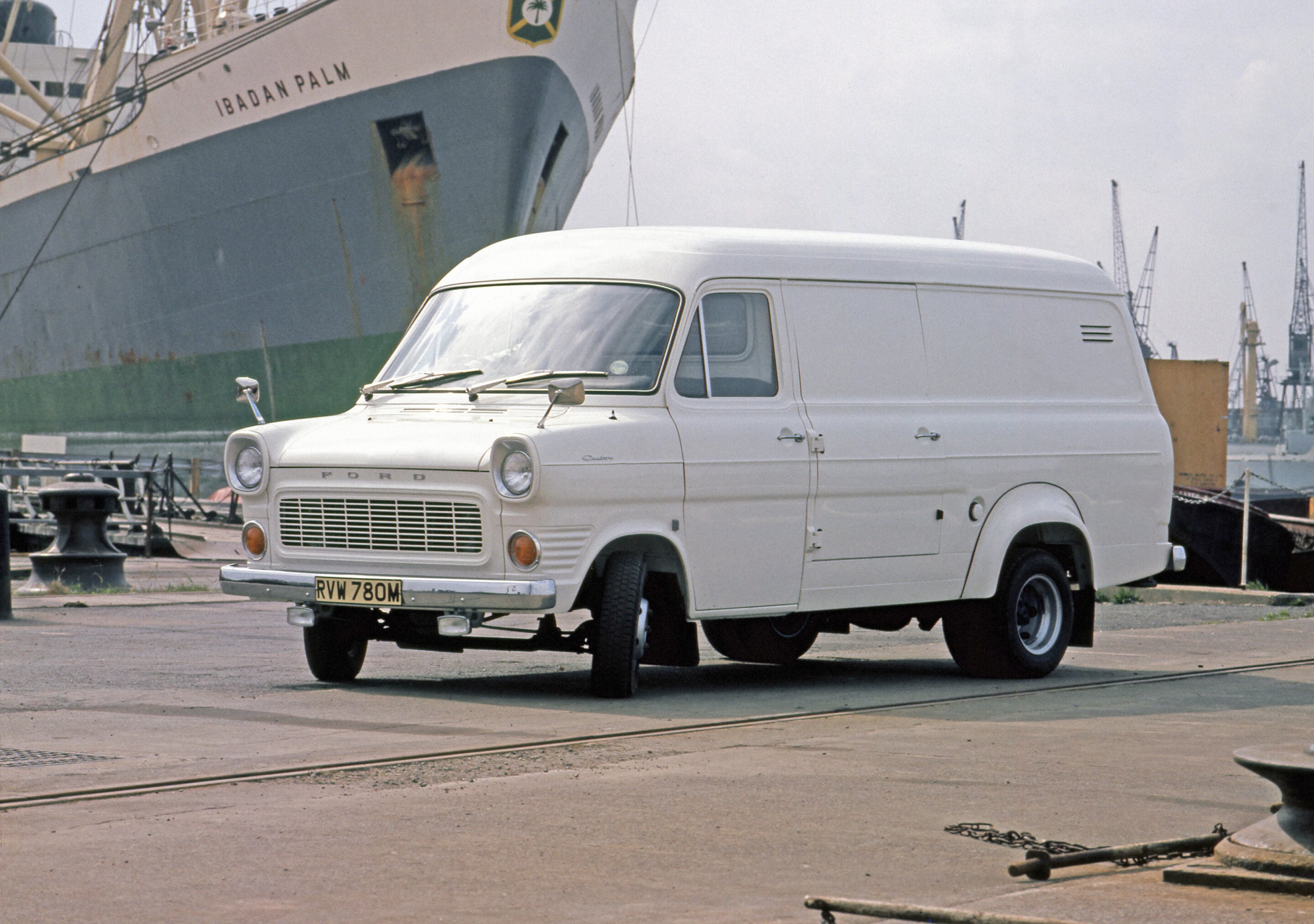
The humble Transit van was an important vehicle for Ford, emerging from the newly-merged Ford of Europe entity which brought Ford of Britain, Ford of Germany and Ireland’s Henry Ford & Son Ltd together.
Ford’s designers revolutionised the van segment with the Transit’s distinctive ‘pig snout’ design that improved packaging, driver comfort and was easier to maintain.
Under the Transit’s stubby bonnet lived a succession of V4 engines, ranging in size from 1.3-1.7L in German-built models and 1.7-2.0L in their British-built counterparts.
The V4 sat easily inside the Transit’s small engine bay, which not only improved driver comfort (they were no longer sitting over the engine) but maximised cargo space.
In the UK, the 2.0-litre Essex V4 made a healthy-for-the-time 67kW, making the Transit the fastest van on the market, leading police to declare that “Transits are used in 95 per cent of bank raids. With the performance of a car, and space for 1.75 tonnes of loot, the Transit is proving to be the perfect getaway vehicle.”
Little wonder the Old Bill called it “Britain’s most wanted van”.
1967: Saab Sonett II
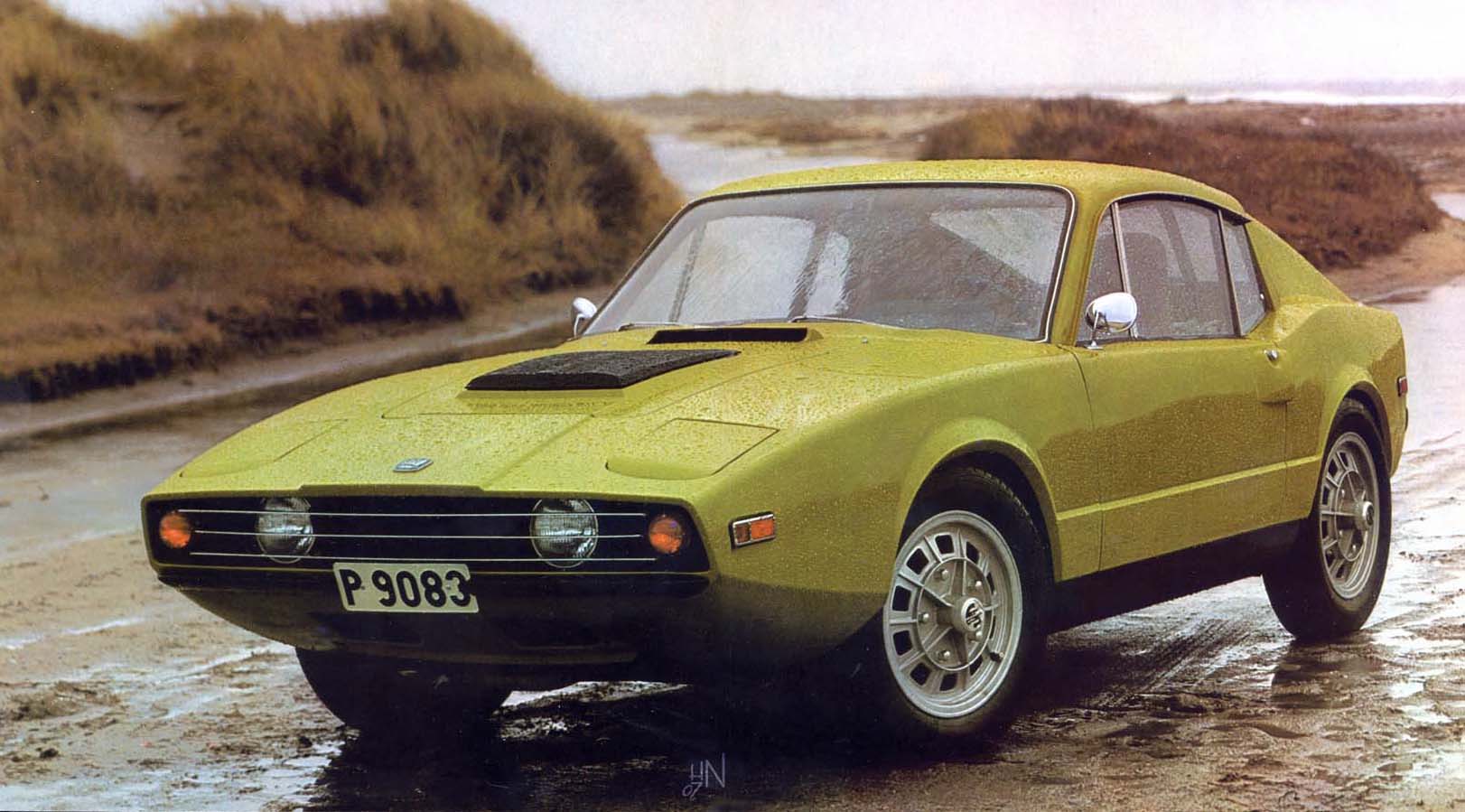
Of course Saab was going to embrace the V4. The eccentric Swedish carmaker had a reputation for its left-of-centre thinking, so when it was looking for a replacement for the thirsty – not to mention dirty – 841cc two-stroke inline-three powering its quirky Sonnet II coupe, it turned to the equally unconventional V4.
But it wasn’t an easy heart transplant for the manufacturer. The tiny 0.8L motor of the Sonnet II made for a tiny engine bay. As a result, the larger 1.5-litre Ford V4, sourced from Ford of Germany, didn’t quite fit, forcing Saab’s designers to reconfigure the Sonnet II’s bonnet to include an ungainly hump to accommodate the larger engine. Adding to the awkward vibes, the bonnet hump was offset slightly to the right so as to not impede the driver’s view.
Despite the 1.5-litre’s meagre outputs (it was good for just 48kW), the Sonnet II proved a charmer. Clothed in a fibreglass body sitting atop an aluminium frame, the Sonnet II tipped the scales at around 775kg, which gave it a surprisingly rapid top speed in excess of 160km/h. The 0-100km/h dash was over in about 12.5 seconds.
The eyesore bonnet bulge wasn’t a hit with critics, nor was Saab management particularly enamoured of the Sonnet II’s awkward proportions, fast-tracking the development of the Sonnet III (below) which made its debut in 1970 with an altogether more conventional body.
1967: Matra M530
Matra is one of the most fascinating car makers in automotive history. The French conglomerate didn’t start out making cars. Instead, its early industrial energies focused on aviation and defence technologies, including building air-to-air missiles.
But in 1964, wanting to shed its ‘merchant of death’ image, the company branched out into the automotive world, both with road cars and an ambitious world-beating motorsport program. How ambitious? How about its distinctive blue Matra race cars taking on the world’s best in F1 and at Le Mans. And then beating them.
Matra won both the F1 drivers’ (Jackie Stewart) and constructors’ championships in 1969, while at Le Mans, Matra cars won the 24-hour race outright three years running from 1972-74.
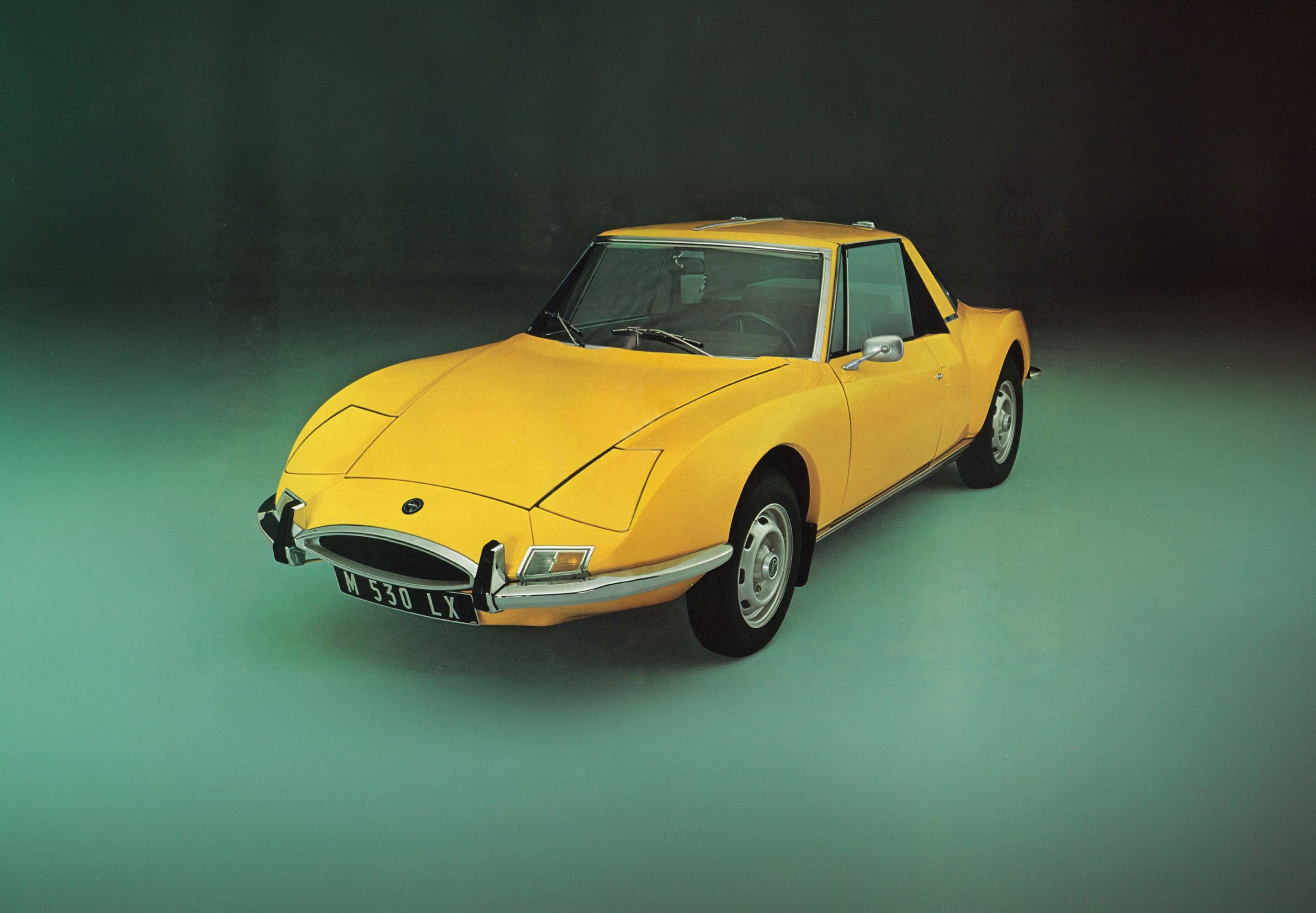
On the road-car front, the first proper Matra car – the French company had inherited the René Bonnet Djet when it took over the ailing boutique carmaker – to roll out of the factory in Romorantin was the M530, a small mid-engined, fibreglass-bodied, targa-roofed coupe that was powered by a 1.7-litre Ford V4. It wasn’t a particularly pretty coupe, nor was it especially quick (0-100km/h in around 15.6 seconds). But what it lacked in outright speed it made up for with impressive dynamics, thanks to its light weight, mid-engined weight distribution and independent suspension setup at all four corners. It might not have been a looker, or particularly fast, but the Matra M530 remained an exhilarating car to drive. Slowly.
1969: Ford Capri Mk1
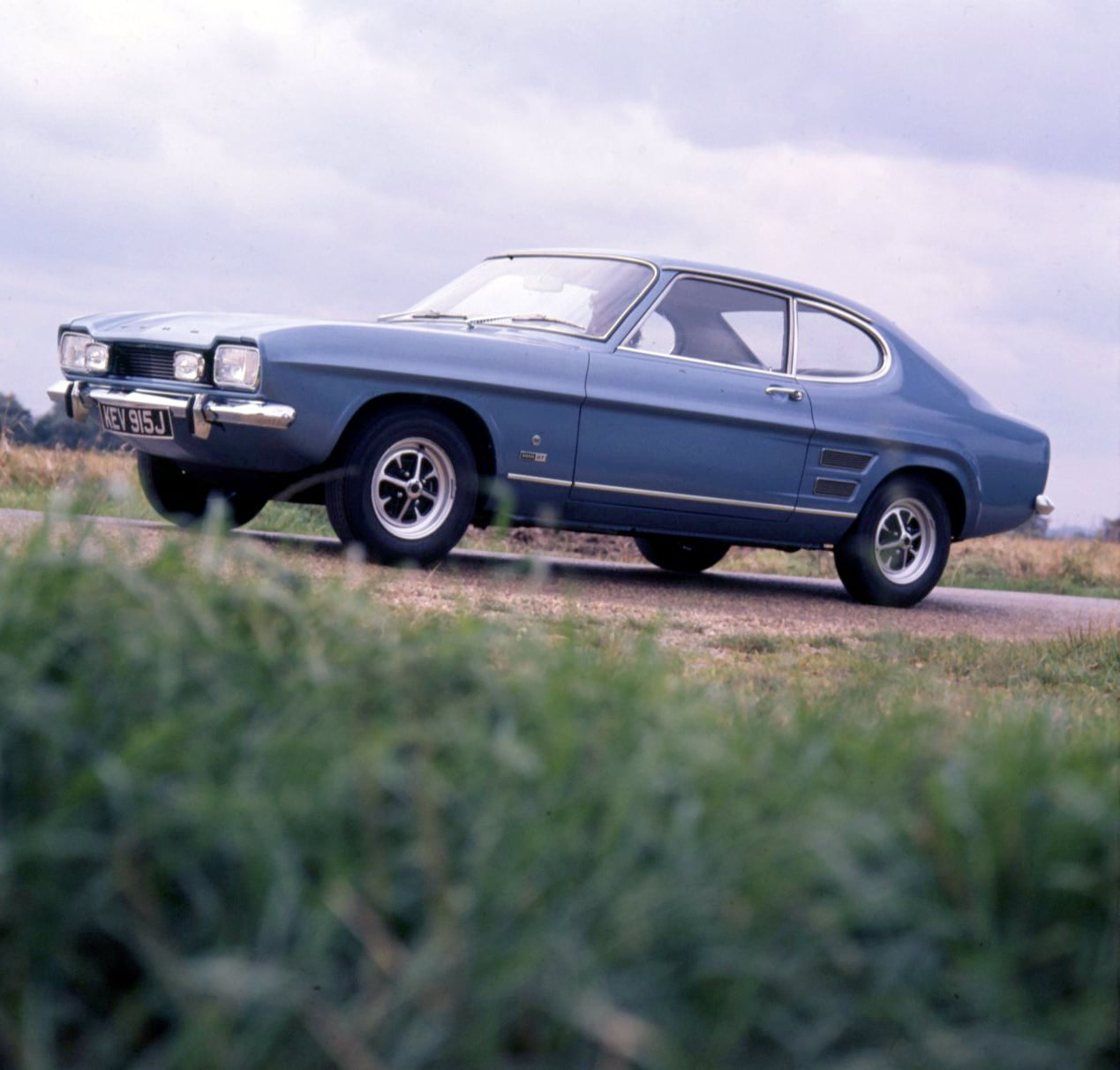
Ford of Europe’s answer to the Mustang looked the part, with handsome fastback styling and cosmetic body garnishes that promised performance but were entirely fake.
Launched in 1969 as a sports car for the masses, the original Mk1 Capri came with a smorgasbord of engine configurations – from inline-fours to the mighty Cologne 2.6-litre V6 and even a 5.0-litre V8 in the Perana Capri. In between, a selection of V4 powerplants ranging in displacement from 1.3 to 2.0 litres afforded Capri buyers plenty of choice.
The smaller German-built Taunus V4s were decent enough, but lacked the power to transform the Capri into anything but a sheep in wolf’s clothing. But the British-sourced 2.0-litre Essex V4, pilfered from the Ford Transit, was something else altogether. Outputs of 69kW and 104Nm were pretty decent for the time and when married to a sleek fastback weighing only 950kg, offered brisk performance, and certainly enough power to match the Capri’s handsome profile.
But the V4 configuration’s inherent rattles and vibrations didn’t endear it to owners, nor did its many
mechanical shortcomings such as a propensity for overheating, which would then cause the camshaft gear – made out of a resin-fibre composite – to fail spectacularly.
Little surprise, then, that when the Capri Mk2 made its debut in 1973, the V4 had been deleted from the line-up, replaced by the lusty Pinto inline-four and a meaty 3.0-litre Essex V6.
That left Saab and Lancia to fly the V4 flag through the remainder of the ’70s while Russian automaker ZAZ persisted with its rear-mounted, air-cooled V4 well into the 1990s.
And the V4’s story should have ended there. But Porsche – and Timo Bernhard – had other ideas.
The Pioneer
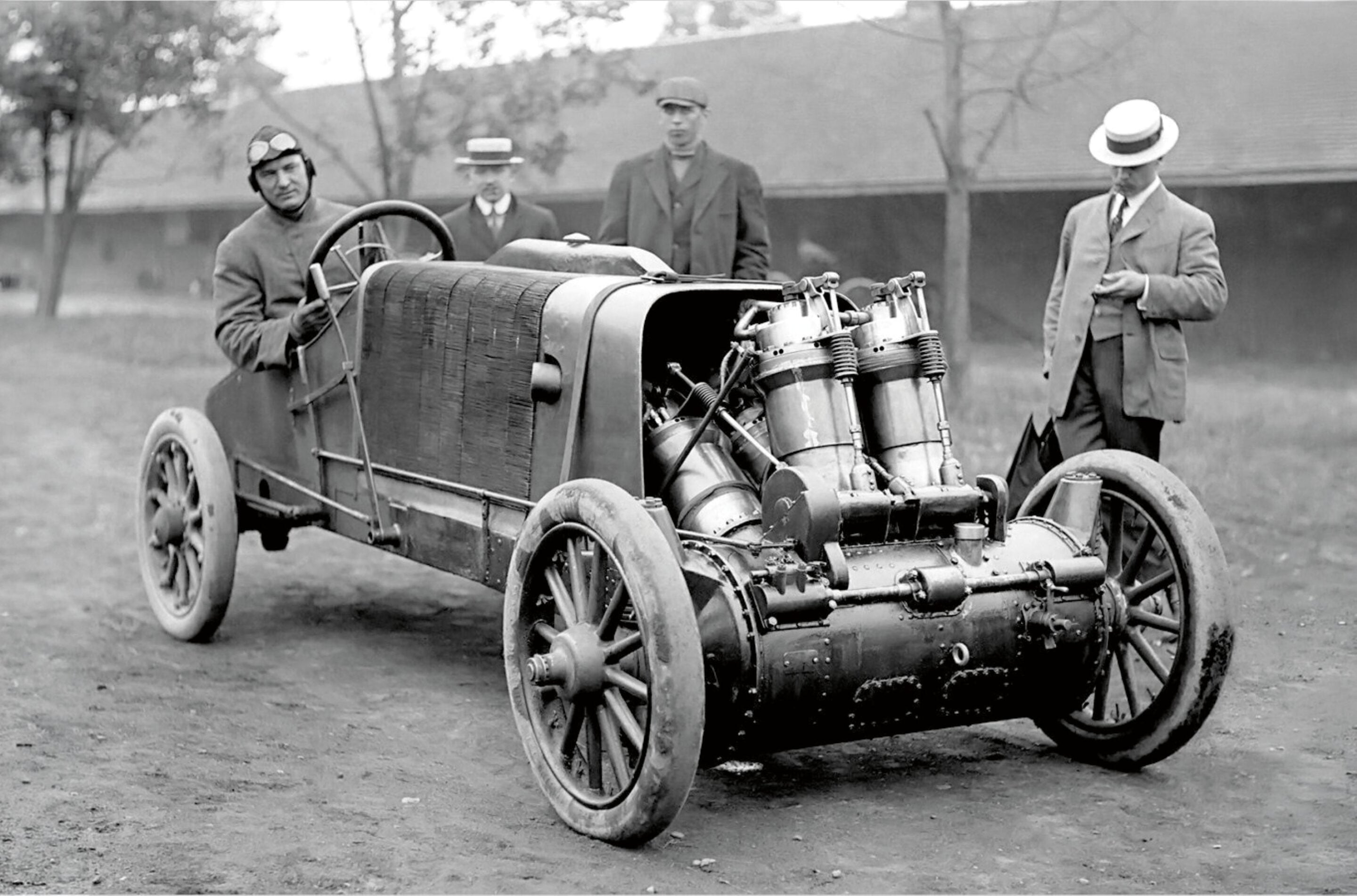
American John Walter Christie isn’t a household name today, but as a pioneer of grand prix racing, he adds an interesting footnote to this story.
A renowned engineer and inventor, Christie also dabbled in grand prix racing during its earliest days, contesting the 1907 French Grand Prix in a car he designed and built. What made his racecar so unusual wasn’t its atypical front-wheel drive platform, but rather his choice of engine, a massive 20-litre V4.
Sadly, overheating and clutch issues curtailed the V4 Special’s race, Christie completing just four laps of the 76.989-kilometre course on public roads in Dieppe.
But with a displacement of 20 litres, Christie’s V4 remains the largest engine ever used in a grand prix, a record unlikely to be broken.
This story first appeared in the September 2026 issue of Wheels magazine, now on sale. Subscribe here and gain access to 12 issues for $109 plus online access to every Wheels issue since 1953.
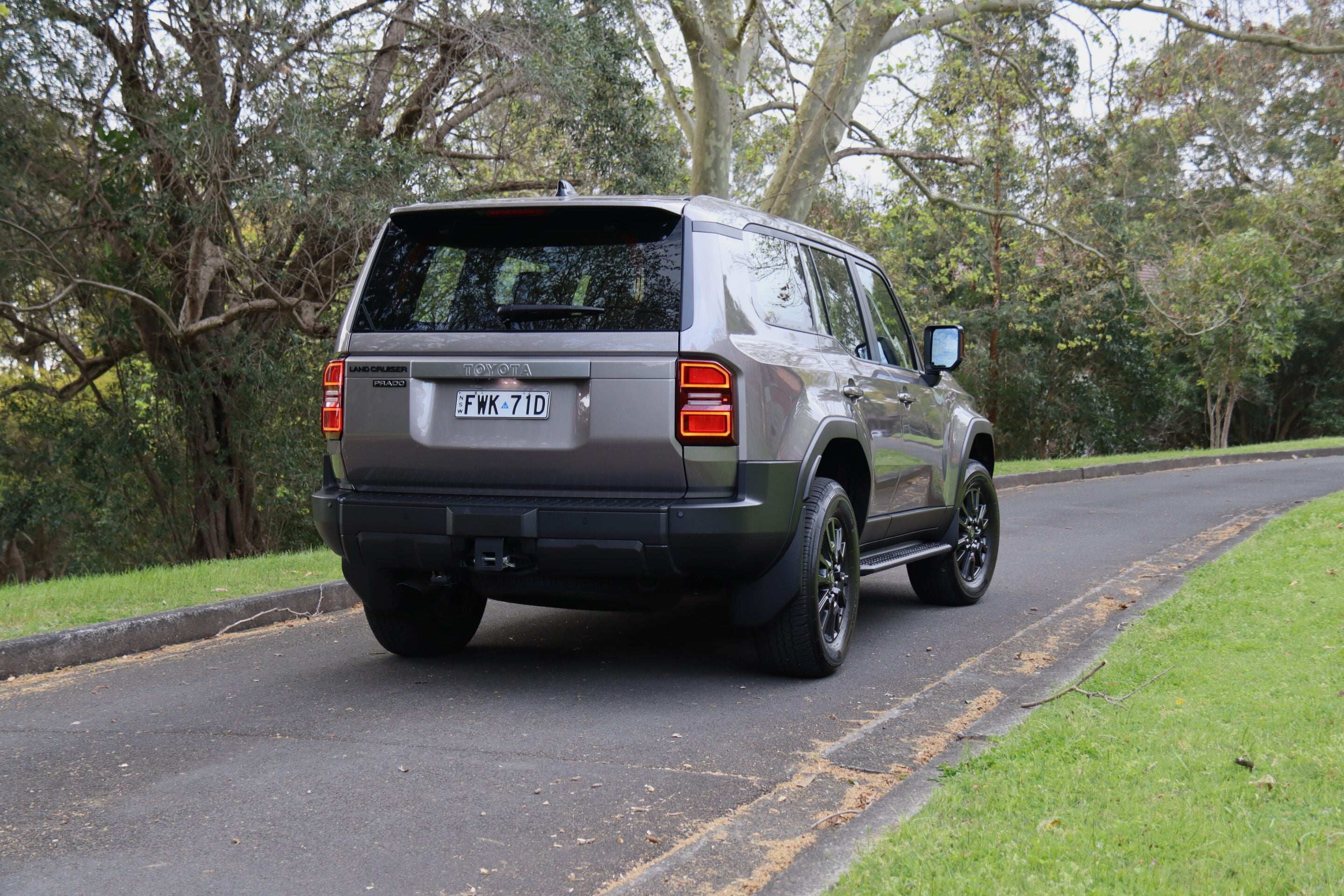
With the cost of seemingly everything on the rise, buying a new car isn’t getting any easier for many of us. Prices continue to climb, once-affordable models are creeping further upmarket and even the latest Toyota LandCruiser Prado is considerably more expensive than the model it replaced.
If you still have your heart set on the famous model, however, it at least offers an entry level model in the form of the GX.
It’s certainly not cheap but rather than piling on luxury features and pushing the price even higher, the GX keeps things simple. There are cloth seats, smaller 18-inch wheels and seating for five rather than seven, but underneath it’s still a Prado, with the same diesel drivetrain and serious off-road credentials as more expensive versions. In a world where cars keep getting more expensive, is the cheapest and simplest Prado actually the one to buy?
How much does the Prado GX cost to buy?
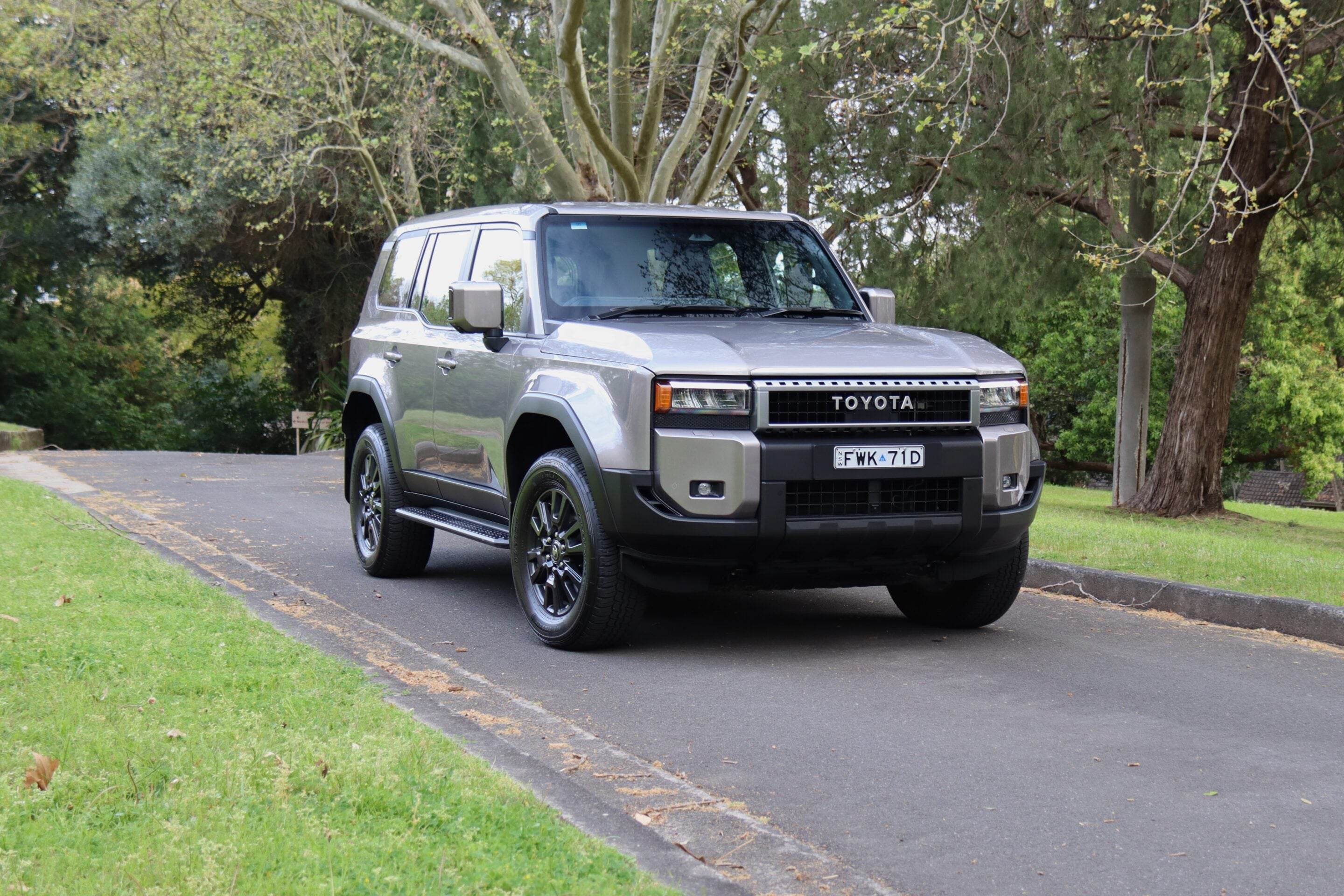
While the flagship Kakadu nudges six figures before you’ve even paid the government its share, the entry-level GX is priced from $73,200 plus on-road costs, or around $80,000 driveaway once you’ve included a premium paint like the ‘Dusty Bronze’ hue of our test car. The next-step-up GXL asks $79,665 +ORC, or $80,665 +ORC if you’re after one with seven seats.
Standard equipment on the GX includes 18-inch alloy wheels, dusk-sensing automatic LED headlights, rain-sensing wipers, side steps, smart keyless entry with push button start, dual-zone climate control, a 12.3-inch touchscreen with satellite navigation and wireless Apple CarPlay and Android Auto, a 10-speaker sound system and five USB-C ports. You also get a 7.0-inch digital instrument display, 360-degree panoramic-view camera and a 220-volt outlet in the cargo area.
Safety equipment is similarly generous, with autonomous emergency braking, adaptive cruise control, lane-keeping assistance with adaptive lane guidance blind-spot monitoring, safe-exit assistance, front and rear parking sensors, driver monitoring and even nine airbags.
Stepping up to the GXL adds synthetic leather upholstery, leather-like trim for the steering wheel and gearknob, heated and ventilated front seats, an electric tailgate, roof rails, rear privacy glass and an extra zone of climate control. Crucially for family buyers, the GXL is the first Prado model available with seven seats (+$1000). For a lot of people, the GXL is the true base model Prado because of the extra seats availability.
How practical is the Prado GX?
The cabin itself also feels anything but cheap. The 250 Series Prado’s dashboard is a dramatic improvement over its predecessor, with a more modern horizontal design, chunky switchgear designed to be used with gloves on and better material quality. There are plenty of physical buttons for important functions, rather than burying everything inside the touchscreen, and everything feels well screwed together.
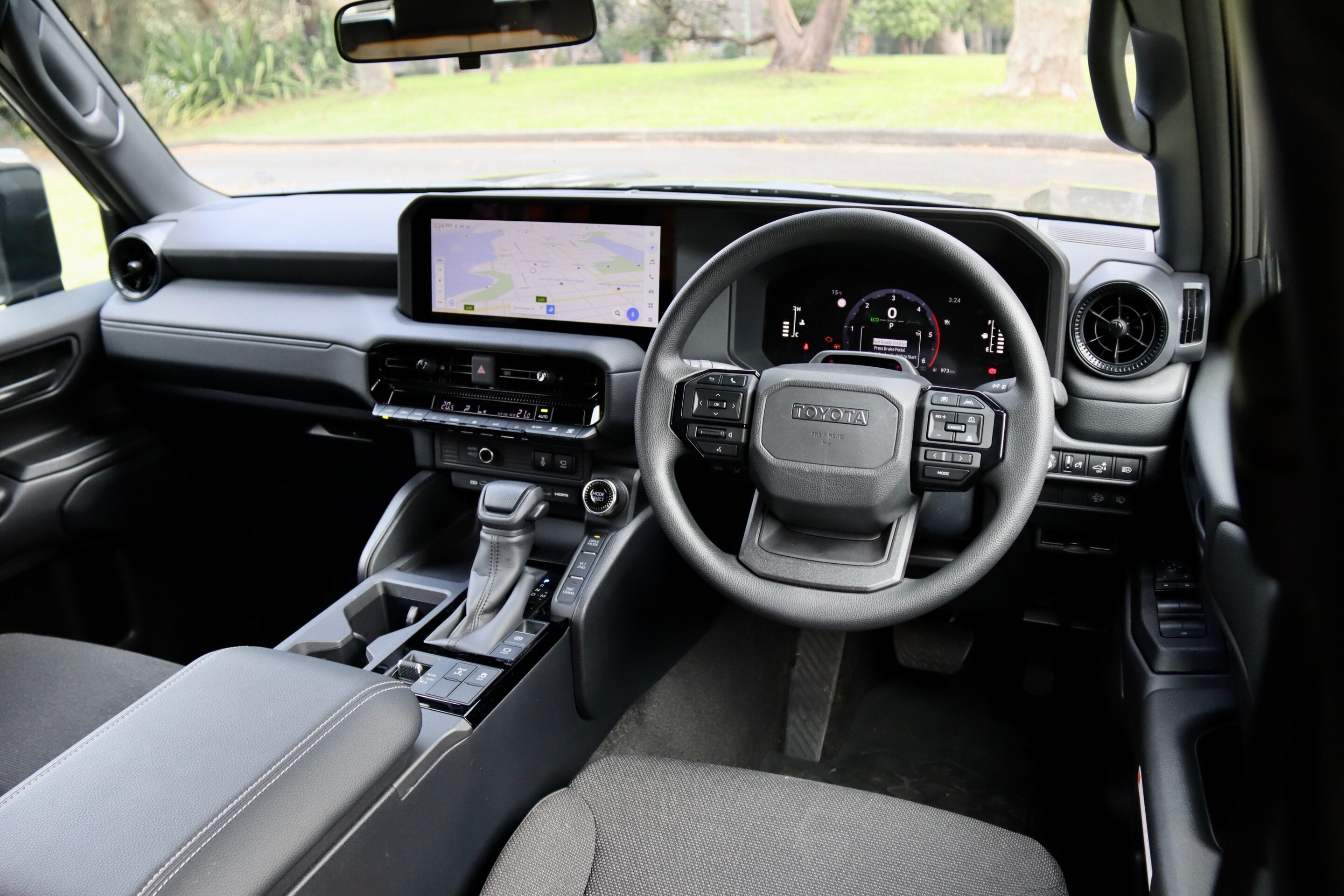
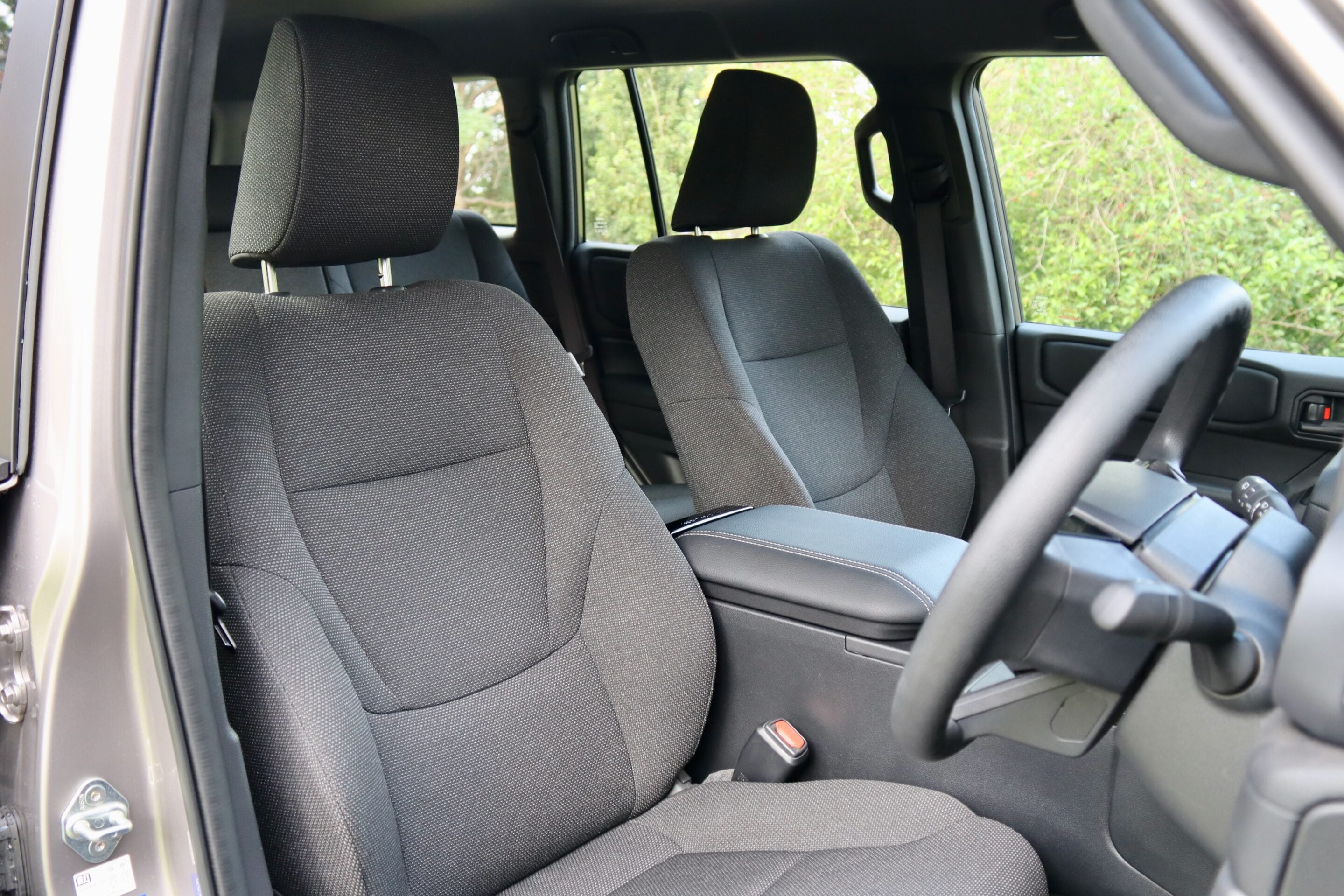
Where the GX shows its entry-level status is in some of the cabin finishes. Its seats are manually adjustable and covered in fabric, the steering wheel is urethane rather than leather and there are hardy rubber floor mats rather than plush carpet. But strangely, those things kinda suit the Prado.
There’s also excellent storage throughout the front of the cabin, the driving position is commanding and visibility is impressive for something measuring almost five metres long and nearly two metres wide. The manually adjustable seats might sound basic at this price and really should offer more adjustment, but they’re supportive and comfortable over long distances.
Space in the second row is generous, with plenty of room for adults, a reclining backrest and useful storage like bottle holders in the doors and charging points on the centre console.
Unlike the seven-seat Prado variants, the GX is strictly a five-seater, and that means it avoids one of the new Prado’s biggest packaging compromises. Seven-seat versions feature a bulky third row that eats heavily into luggage space even when folded, whereas the GX offers a vast 954 litres behind its second row. Folding the 60:40 rear seats and capacity expands to 1895 litres, which is massive.
The load floor is relatively high because the battery for the 48V mild-hybrid system is stored underneath it and isn’t flat with the second row folded. There’s still a huge amount of usable space though.
The old model’s annoying side-hinged rear door has disappeared, replaced by a more conventional top-hinged tailgate with separately opening glass that makes accessing the luggage area much easier. The separate opening tailgate glass is a genuinely useful feature as well.
What’s the Prado GX like to drive?
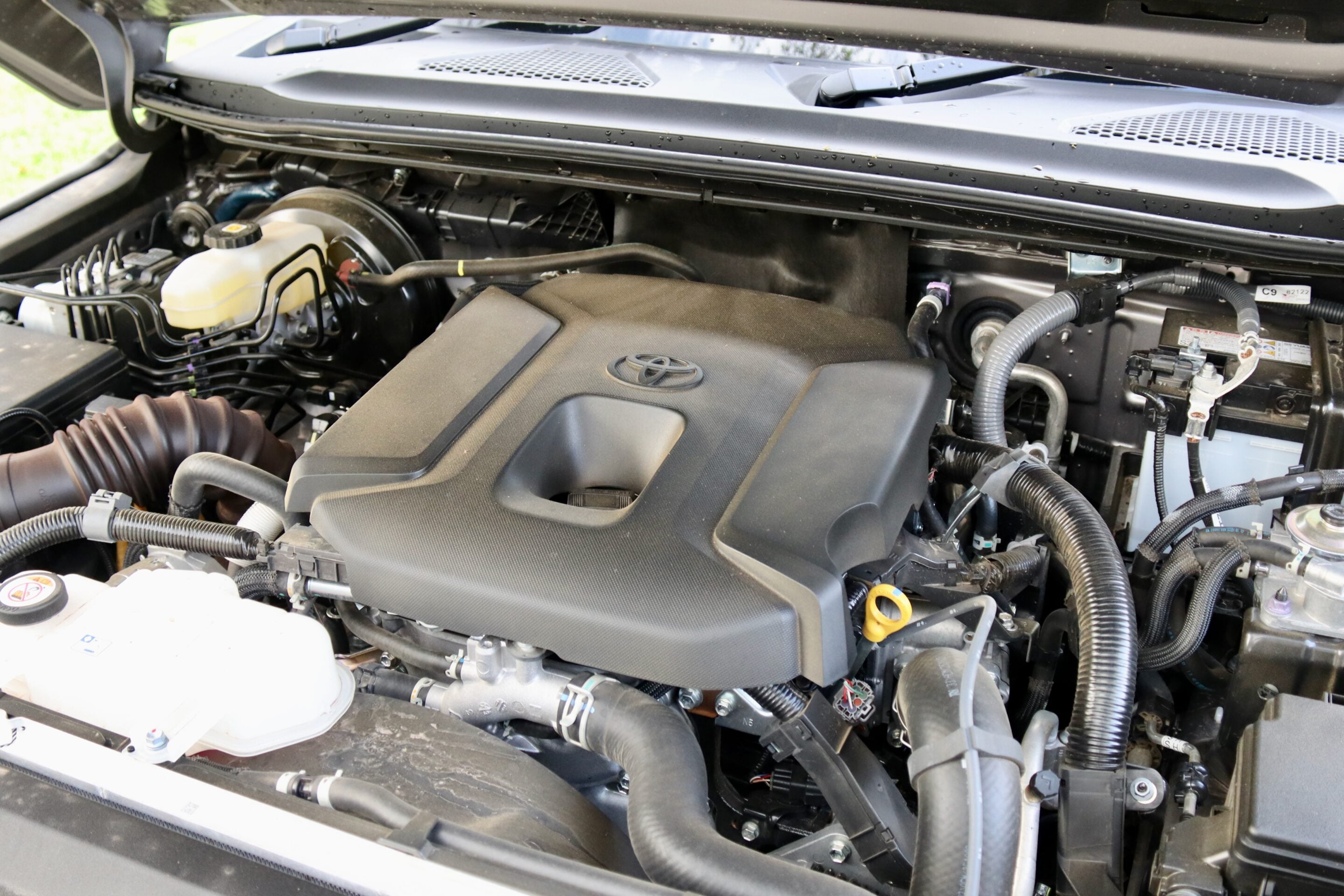
Every new-generation Australian-spec Prado uses Toyota’s familiar 2.8-litre four-cylinder turbo-diesel engine paired with 48-volt mild-hybrid assistance. Outputs remain 150kW of power and 500Nm of torque, while an eight-speed automatic transmission and permanent four-wheel-drive system with low-range gearing also still feature. On paper, those figures aren’t especially remarkable for a vehicle weighing almost 2.5 tonnes, and on the road, the Prado isn’t particularly fast.
Put your foot down and there’s more than enough performance for everyday driving, but overtaking requires planning and the engine is loud – we wish a detuned version of the LandCruiser 300 Series’ 3.3-litre V6 diesel were fitted to the Prado as it would be more refined, but also stronger. The 48-volt mild-hybrid assistance helps smoothens things out at lower speeds and the eight-speed automatic is a considerable improvement over the old six-speeder.
Toyota claims combined fuel consumption of 7.6L/100km, though our week-long consumption in mostly urban driving was 10.2L/100km. The new Prado sits on Toyota’s TNGA-F body-on-frame platform, as does the larger LandCruiser 300 Series, and feels far more sophisticated than the old 150 Series. The steering is quicker and more accurate, making it easier to place on the road and less cumbersome around town.
The Prado GX’s ride quality is excellent. Its small 18-inch wheels provide plenty of tyre sidewall, and the suspension does an excellent job of dealing with Australian roads. Even bigger bumps are well absorbed, while the body control is impressively taut too for a big off-roader, making it overall more comfortable than before. It’s obviously not a sports car and will roll through corners, but it’s well controlled and handles well considering its size and off-road intentions.
We didn’t get to try off-road driving during the loan period of this Prado GX, but previous experience tells us that it’s also excellent away from tarmac. Off-road features include low-range gearing, a locking centre differential, Toyota’s excellent off-road traction control, crawl control and downhill assist control. It can also tow a 3500kg braked trailer, though its 110-litre fuel tank is a big 40 litres less than the previous model.
How much does the Prado GX cost to service?
As with other new Toyota products, the Prado is covered by a five-year/unlimited km warranty with no roadside assistance (buyers must pay a minimum of $99 annually instead), while servicing to the scheduled program can extend the engine and driveline coverage to seven years.
Servicing is required every 10,000km or six months (whichever comes first), which is shorter than many rivals, and the first five years/100,000km of servicing costs $3950, or $790 per year.
Should I buy a Toyota LandCruiser Prado GX?
Ultimately, we think that the GX proves that choosing the cheapest model in the range doesn’t necessarily mean feeling shortchanged, as it proves that the Prado’s impressive fundamental qualities are featured across the range. That means a comfortable and composed driving experience, excellent off-road ability, a spacious cabin, strong off-road ability and all the toughness and reliability that buyers expect from the LandCruiser badge feature across the range.
Counting against it are the agricultural drivetrain that’s loud everywhere. Additionally the upper-spec GXL’s extra equipment isn’t too much extra cash and even though it’s the base model, the GX is still an expensive beast priced at around $80,000 once on-road costs are included. We’d stump the extra cash for the GXL because we think it’s the best value model, but the Prado GX proves charming in its own right, and worth consideration as a large off-road SUV.
Prado GX standard features:
- 18-inch alloy wheels with a full-size spare
- Dusk-sensing automatic LED exterior lighting
- LED front fog lights
- Rain-sensing automatic wipers
- Heated and auto-folding mirrors
- Side steps
- Keyless entry with push button start
- Dual-zone automatic climate control
- Height-adjustable manual driver’s seat
- Cloth interior trim
- Urethane steering wheel and gear lever
- 7.0-inch digital driver’s display
- 12.3-inch touchscreen
- Satellite navigation with live traffic
- Wireless Apple CarPlay and Android Auto
- AM/FM/DAB+ digital radio
- Bluetooth calling and audio streaming
- 10-speaker sound system
- 5x USB-C ports
- Sport, eco and normal driving modes
- All-weather rubber floor mats
- 9x airbags
- Autonomous emergency braking
- Adaptive cruise control
- Lane keeping assistance with adaptive lane guidance
- Blind-spot monitoring with rear cross-traffic alert
- Safe exit assist
- Traffic sign recognition
- Driver attention monitoring
- Auto high beam
- Front and rear parking sensors
- 360-degree camera
- Security alarm
Prado GX specifications:
| Price | $73,200 plus on-road costs |
|---|---|
| Powertrain | 2755cc turbocharged four-cylinder diesel + 48V mild-hybrid system |
| Power | 150kW (@ 3400rpm) |
| Torque | 500Nm (@ 1600 – 2800rpm) |
| Transmission | Eight-speed automatic, four-wheel drive |
| Claimed combined CO2 emissions | 200g/km |
| Fuel type/tank size | Diesel, 110 litres |
| Kerb weight | 2490kg |
| Dimensions (L/W/H/WB) | 4990/1980/1925/2850mm |
| Boot capacity | 954 litres (rear seats up), 1895 litres (rear seats folded) |
| Warranty | Five-year/unlimited km |
| Five-year service cost | $3950 ($790 per year) |
| On sale | Now |
Geely has launched its new TT electric sports sedan in China, combining an 800-volt electrical system, standard LiDAR and strong performance with pricing that starts at the equivalent of about $27,000.
Known as the Galaxy TT in China and simply the TT in international material, the new model is offered in five variants, comprising four rear-wheel-drive versions and a flagship all-wheel-drive Ultra.
Prices run from 129,900 yuan to 159,900 yuan for the rear-drive range, equal to approximately $27,000 to $33,200 at current exchange rates, while the limited-production Ultra costs 185,900 yuan, or around $38,600.

Those figures place it significantly below some rival electric sedans in its home market. By comparison, the latest Xiaomi SU7 starts at 229,900 yuan, equivalent to around $47,800.
The TT is based on Geely’s GEA EVO electric platform and uses double-wishbone front suspension, a five-link rear arrangement and adaptive dampers. Rear-drive versions produce 245kW, while the dual-motor Ultra develops a combined 425kW and can accelerate from 0-100km/h in a claimed 3.8 seconds.
Lotus was involved in tuning the Ultra’s chassis, with the flagship carrying a “Handling by Lotus” badge. Geely also claims the TT has set a Guinness World Record for the longest continuous drift on a wet surface, covering more than 46km.
All versions use an 800V electrical architecture and CATL Shenxing TT lithium iron phosphate batteries capable of charging at up to 6C. Geely says nearly 500km of claimed driving range can be added in 11 minutes.
The entry model uses a 63.8kWh battery with a claimed 640km CLTC range, or about 518km on the more demanding WLTP standard. A larger 75.2kWh battery extends the longest-range rear-drive version to 725km on the Chinese test cycle.

LiDAR is standard across the range and feeds Geely’s G-ASD driver-assistance system, which provides highway and urban navigation assistance. Inside, there’s a Super Eva AI assistant, flat rear floor and 23-speaker Flyme Sound audio system.
The TT measures close to five metres long with a 2920mm wheelbase. For now, Geely has announced the model only for China, with no Australian launch confirmed.
Anthony Hopkins and Al Pacino are the two biggest names in a star-studded cast for the upcoming movie Maserati: The Brothers, which tells the story of the founding of the famous marque in Italy shortly after the start of World War One.
Brothers Alfieri, Carlo, Bindo, Ernesto and Ettore established the company in a garage in Bologna on December 1, 1914. The film focuses on their battle to bring the marque to life in the face of financial problems, the incredibly dangerous racing of the period and, since this is a Hollywood take, a forbidden romance involving another of the big names attached to the project, Jessica Alba.

Tragedy touches the Maserati family as Alfieri – played by Michele Morrone – dies in 1932 due to complications from a savage accident he suffered in 1927. Carlo, the eldest brother, died of tuberculosis in 1910 before he could see the family’s automotive dream become a reality.
But there’s also action aplenty as the film traces the brothers’ attempt to become the first Italian carmakers to win the Indianapolis 500, with the trailer revealing thrilling racing sequences including one where a car is almost sideswiped off a cliff.
Hopkins, who loves classic cars and has quite a collection, plays Luca Antonelli, a financier who funds the Maserati venture. Pacino takes on the role of Vincenzo Vaccaro, a businessman who backs the brothers and invests with them.
The movie was shot in Modena, the home of Maserati’s great rival Ferrari, and at Cinecittà Studios in Rome. Maserati and classic car fanatics are in for a real treat as the makers built up to 60 Maserati models from the 1920s and ’30s. So while there’s some CGI, the filmmakers focus heavily on physical reconstructions of the famous old racers with their $170 million budget.

Producer Andrea Iervolino hailed Hopkins for getting deeply involved in the production.
“He’s really artistically involved in this movie. He’s worked a lot on the script. He also changed some of his own lines to deliver a better message. So he really cares about this movie. Sometimes when you work with such a big star, they care only about the paycheck. But this is not the case. Anthony’s really an amazing artist,” Iervolino said.
“He plays a very important role in the movie because at that time you could be a dreamer but you needed to find people who had money. At that time it was hard to find people who had money because the financial industry was not developed as today.”
The car has changed enormously over the past few decades. Some of that progress is obvious, be it electrification, huge touchscreens, a plethora of safety systems and the introduction of enough computing power to run all of those at once.
But what manufacturers see as great leaps forward are often viewed as backwards steps by buyers as gear that was once considered normal is suddenly nowhere to be found on the latest models. Here are 10 car features that have disappeared from the new car market…
1. Pop-up headlights
Pop-up headlights were especially popular from the 1970s through to the 1990s and featured on everything from affordable sports cars to some pretty exotic machinery. Examples include the NA-generation Mazda MX-5, Toyota MR2, second-generation Honda Prelude, Nissan 180SX, Chevy Corvette, Lamborghini Countach and of course, the Ferrari F40.
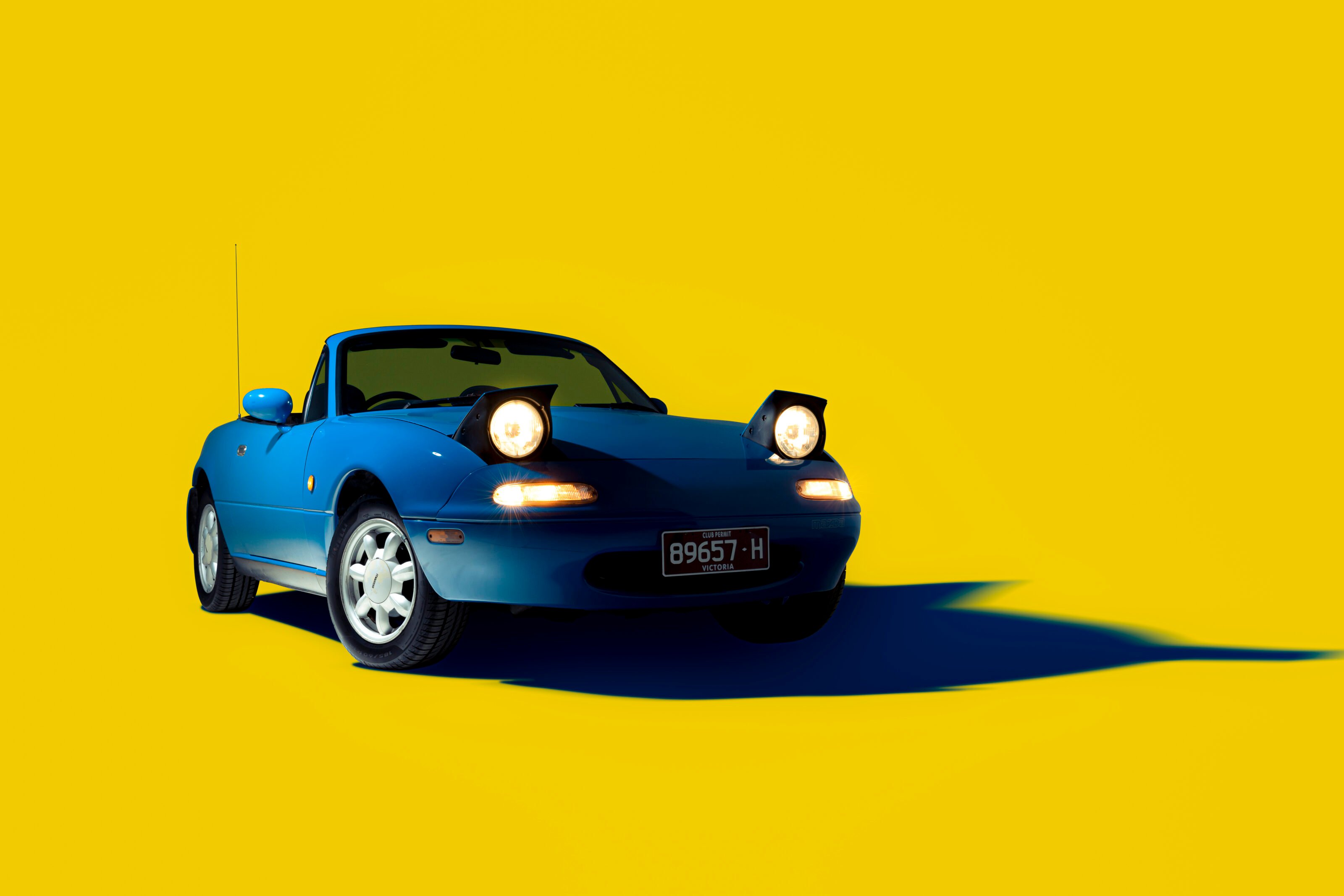
While they didn’t exactly serve a purpose beyond looks and aerodynamics – many, many cars were launched without them – there was something very cool about watching the lights raise. However, they had several problems: the mechanisms added weight, complexity and cost, while increasingly strict pedestrian-impact regulations in certain markets made designing cars with them a lot more difficult.
Improved lighting technology also played a role. Projector, xenon and eventually LED tech meant that designers could create thin, more stylised lighting units with far superior quality. By the early 2000s, pop-ups were dead and the C5 Chevy Corvette and Lotus Esprit were the last production cars that featured them. We miss them dearly.
2. Bench seats
Go back way before the millennium and three people sitting across the front of a car was far from unusual. Front bench seats were particularly common in large American and Australian cars, with models such as the Ford Falcon and Holden Kingswood offering the ability to squeeze three people across the front row and another three in the back. Go overseas and bench-seat models lasted a lot longer, like the Fiat Multipla and Honda FR-V from the early 2000s.

Combined with a column-mounted gear selector, bench seats effectively turned large sedans into six-seaters without needing three rows of pews. However, the rise of centre consoles, bucket seats, floor shifters and increasingly sophisticated safety equipment gradually killed the traditional front bench. Buyers also wanted more supportive seats, more storage and arm rests, which didn’t help the bench seat’s cause. They still exist in some markets in commercial vehicles, but are extinct in passenger cars.
3. Cassette and CD players
In 2026, there’s precisely one new car available with a CD player, and that’s the Subaru WRX. Cassette players? Good joke. For decades, cassette players were featured in almost every car. Even after CDs became mainstream during the 1990s, plenty of brands like Lexus products offered both formats as manufacturers catered for enormous existing cassette collections. Eventually the CD player took over, before suffering exactly the same fate as the tape deck: extinction.

Today, Bluetooth, Apple CarPlay and Android Auto smartphone mirroring, as well as streaming services like Apple Music and Spotify, have made physical media like CDs and cassettes pretty much redundant. Plenty of new cars don’t even have an auxiliary input anymore, let alone somewhere to insert a cassette. Let’s not even start on the screens the media is played through…
4. Manual chokes
Before electronic fuel injection became universal, starting a cold engine often required considerably more involvement than simply pressing a button. Enter the manual choke. Common on older carburetted petrol engines, a choke restricted airflow into the carburettor to enrich the fuel mixture and help the engine start when cold. Drivers would pull a knob or lever when starting, then gradually push it back in as the engine warmed.

Forget to use enough choke and the engine might refuse to start. Leave it engaged too long and you’d waste fuel, run poorly or potentially ruin the spark plugs. Automatic chokes eventually reduced the driver’s workload before electronic fuel injection made the entire process redundant. Modern cars can automatically adjust fuelling for temperature, altitude and countless other variables before you’ve even finished putting on your seatbelt. We don’t miss this one.
5. Built-in car phones
Long before Bluetooth, Apple CarPlay or even the smartphone itself, there was no greater automotive status symbol than having a telephone built into your car. Car phones became particularly associated with luxury machinery during the 1980s and 1990s. Big Mercedes-Benzes, BMWs and other high-end models could be equipped with proper telephone handsets, often mounted prominently on the centre console or tucked neatly into an armrest.
At the time, it was seriously impressive technology. Being able to make a phone call while travelling without stopping to find a payphone felt futuristic, and immediately suggested that the driver was quite important. Early systems were bulky and expensive, while later factory-integrated phones became considerably slicker. Some even featured steering-wheel controls and hands-free functionality, foreshadowing the connectivity features we now take for granted.

Then, of course, mobile phones ruined the party. As handheld phones became smaller, cheaper and more widespread, there was little reason to permanently install one in a car. Bluetooth connectivity allowed drivers to use their own phones through the vehicle’s speakers without needing a dedicated handset, which really spelled the end for the car phone.
6. Cigarette lighters and ashtrays
For decades, manufacturers built dedicated equipment for smoking into virtually every car. Most dashboards contained a cigarette lighter – that is: push it in, wait for it to heat up and it would pop back out, glowing red – while ashtrays could be found throughout the cabin. Some luxury cars even provided individual ashtrays and lighters for rear-seat passengers.
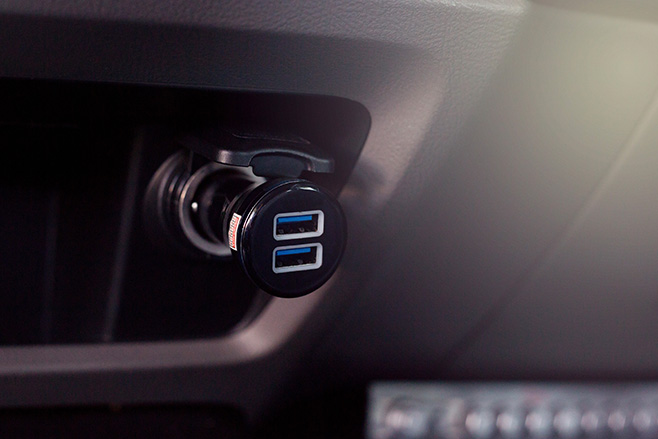
Changing attitudes towards smoking eventually made them redundant, and the cigarette lighter itself underwent one of the automotive industry’s more unusual career changes. Its 12-volt socket survived long after the lighter disappeared, becoming a convenient power source for everything: GPS units, dash cams, phone chargers and even portable fridges. But now, even the 12V socket is gradually disappearing as USB-A, USB-C and wireless charging become commonplace.
7. Manual window winders
This one really is for the older folk among us. Remember when lowering a window required exercise?Manual window winders were once completely normal, particularly on entry-level cars. In decades past, electric windows were a luxury feature often proudly listed alongside air conditioning and central locking in advertisements. By the 1990s and 2000s, power windows gradually worked their way down into mainstream models, although plenty of affordable cars continued using winders in the rear to save a few dollars and kilos.

Today, however, it’s difficult to think of a new car that still has manual window winders in Australia, but they can still be found in markets like Europe. Modern electrical vehicle architectures have made power windows relatively inexpensive to manufacture, while buyers simply expect them as standard.
8. Full-size spare wheels
This one hasn’t completely disappeared, but thanks to the explosion of hybrids and EVs on the market, it’s certainly heading that way. For decades, opening a car’s boot revealed another complete wheel and tyre hiding underneath the floor, even in something tiny like a Mazda MX-5. Get a puncture, swap it over and continue driving normally. But then came space-saver spare wheels, and increasingly since then, no spare whatsoever.

Many modern cars instead rely on tyre repair kits, while others use run-flat tyres. EVs have accelerated the trend because enormous battery packs compete for space underneath the cabin, and manufacturers are constantly looking to reduce weight. Removing a full-size wheel can save a significant amount of mass while creating additional luggage space and shaving manufacturing costs. We hope manufacturers find a way to downsize other elements and change back in the future, because you never know when you’ll need a spare.
9. Headlight wipers
There was a time when simply cleaning the windscreen wasn’t enough – your headlights apparently deserved their own tiny windscreen wipers, too. Headlight wipers became particularly associated with European cars during the 1970s, ’80s and ’90s, featuring on everything from Volvos and Saabs to high-end Mercedes-Benz models. Watching a pair of miniature wiper arms furiously sweep across the headlights was strangely satisfying.

Before today’s powerful lighting technology became commonplace, keeping the headlight lenses clear of dirt, snow and road grime could make a meaningful difference to visibility, particularly in the miserable winter conditions encountered in areas like northern Europe. But headlight design changed dramatically to suit more aerodynamic shapes, wiping out the need for them.
Xenon and LED lighting also improved illumination, while high-pressure headlight washers provided a simpler way of removing grime without miniature wiper mechanisms. Today, headlight washers can still be found on some new cars, but the wipers have vanished. They were probably only necessary every once in a while in Australia, but we still want to see them make a comeback.
10. Physical keys
This one is happening right now. For more than a century, the physical key was an essential part of driving. It got you into the vehicle, then you inserted it into the ignition barrel, twisted it and your engine came to life. Remote central locking and keyless entry then arrived, while push-button starters increasingly eliminated the need to remove your key from your pocket at all. Now some manufacturers are removing the traditional key altogether.
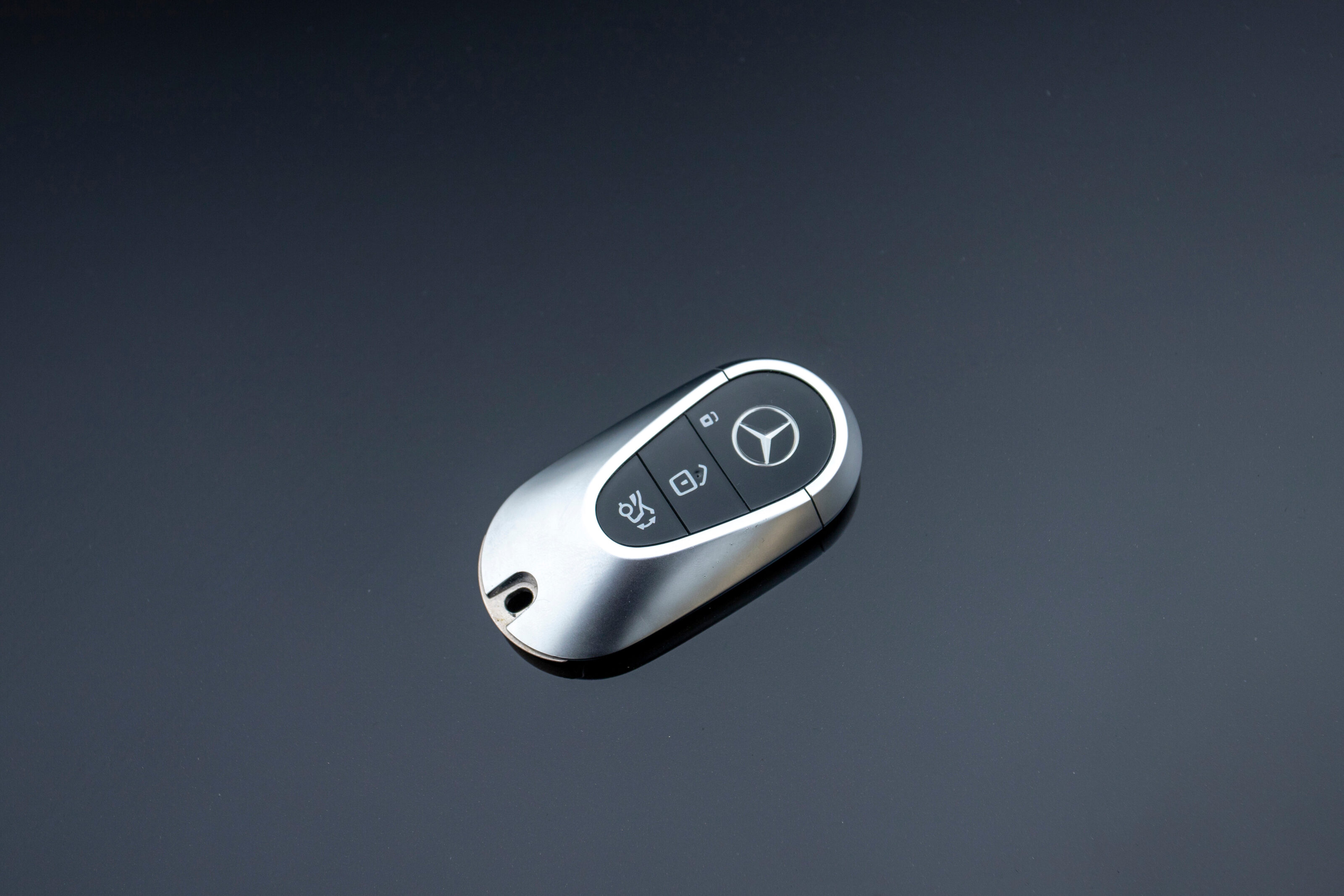
Digital keys can allow a smartphone or smartwatch to unlock and start a vehicle, while ultra-wideband technology can detect an authorised device as its owner approaches. The traditional metal key hasn’t entirely vanished yet – plenty of key fobs still contain one hidden inside for emergencies – but its days as something you actually interact with are numbered. Turning a key and hearing an engine crank into life was once the universal beginning to almost every journey. Soon upcoming generations of drivers may never experience it at all.
What else is disappearing?
Within the next five years, we think there will be more features to add to this list. CD players are already effectively gone. Manual handbrakes are rapidly being replaced by electronic buttons, analogue instrument clusters are losing ground to digital screens and traditional gear levers are being replaced by buttons, rotary controllers and column-mounted selectors.
Even physical climate-control buttons are under threat as manufacturers cram more functions into touchscreens – though, judging by the recent return of physical controls in some new models, buyers may finally be fighting back on that one.
There’s also the manual transmission. While it isn’t dead yet, particularly in enthusiast cars, its share of the new-car market continues to shrink as automatics become faster, more efficient and cheaper, while hybrids and EVs eliminate the conventional multi-speed gearbox entirely.
If you were to try to create a perfect day for an Aussie petrolhead, it would be hard to beat bringing Peter Brock and Colin Bond to Mount Panorama so they could drive the wheels off a quartet of local V8s including a 1971 Falcon GTHO Phase III. Ford’s peerless sedan went up against a 1983 HDT SS Group 3 Commodore, 1992 Falcon XR8 Sports Pack 3 and 1992 HSV Club Sport in a 1992 Wheels comparo, and if you thought it would show its age against its younger rivals, think again…
First published in the August 1992 issue of Wheels magazine, Australia’s best car mag since 1953. Subscribe here and gain access to 12 issues for $109 plus online access to every Wheels issue ever printed.
From Panorama’s pit lane you can hear the lap unfold corner by corner. The sacred sequence between Hell and Murrays can’t be seen, but the mind’s eye puts pictures to the sound of every heel and toe downchange, every slammed home upshift. Grainy black and white pictures from the high shelves of the mental archive.

The 1971 Falcon GTHO Phase Ill is alone in this fearsome foursome, audible the whole way round Bathurst’s 6.213 km circuit. Still winter air carries the sound of the dozen year younger HOT Commodore SS Group 3, too, but there’s a break in transmission over the top of the mountain. The present day HSV Club Sport Commodore and the Ford Falcon XR8 Sports Pack 3, unless they’re on Conrod, Pit or Mountain straights, you look at the stopwatch and guess.
Australia’s homespun brand of V8 performance cars have had their voices muted in the course of 21 years. And interior sound meter readings only serve to prove what is obvious from outside. But what else has changed?
That’s the question we set out to answer. Using modern methods, how would the legends stand up to scrutiny? Would myths explode in the face of the thorough objective analysis allowed by modern technology? And driven back to back round Bathurst, by drivers who were contemporary then and still are now, which would prove quickest?
Choosing the moderns wasn’t difficult. Holden Special Vehicles’ Club Sport is the rawest sporting Commodore today. Its equipment level is basic, sparse even. HSV began the creation of a Club Sport with an Executive specification car, although it does get the optional independent rear suspension that became available when VP replaced VN. HSV endows it with a 180 kW engine – 15 more than stock – sporting suspension and sticky 225/50ZR16 Dunlop 040 M2 tyres. And some aerodynamic additions.
The XR8 Sports Pack 3 is – at least until the arrival of the new GT later this year – the most sporting Falcon money can buy. Like the Club Sport, it proclaims its role with a body kit. Also like the Holden, the Ford has 16 inch alloy wheels wearing high quality low-profile rubber – 225/50ZR16 Michelin MXX – and lower, stiffer sporting suspension. Although no badge proclaims the fact, all the extras are installed in the Ford by Tickford Special Vehicle Engineering. Unlike the Holden its engine is standard, producing 165 kW – the same as an unmodified Holden 5.0 litre V8. Against this present day pair would be pitted a GTHO Phase Ill and a Brock modified SS Group 3 Commodore. Landmark cars both.

Curiosity was sharpened by the knowledge that our predecessors at Wheels had played crucial roles in manufacturing the reputations of the Phase Ill and Group 3. There’s Uwe Kuessner’s famous over-the-shoulder photograph of Mel Nichols driving the HO from the October 1971 issue, headlined The Biggest Stick. Tacho needle nearer 7000 than 6000 and speedometer face retouched to make it look as though the car was in third. It was actually in fourth. True speed? Around 220 km/h on a public road. Offence might have been taken in some quarters. Fast forward to December 1982 and read Bob Murray’s closing words on the Group 3: “And if it’s not the best sports sedan for the money in the world, I’ll stand rooted”.
There are people who treasure the cars which provoked such candid admiration. Like Paul and Vince, owners of the Phase Ill and Group 3 respectively. The Phase Ill must be one of the most original around. With wide ratio gearbox and 3.25 differential, it matches exactly the car Wheels tested in 1971. It has a genuine 40,000 miles on its odometer, and the only departures from standard are silicone brake fluid and 15 inch Globe wheels almost identical to those offered to all GTHO owners by Ford to homologate the larger diameter alloy wheels for Bathurst ’72. A set of 205/70VR15 Pirelli PS tyres were fitted for the comparison. Expert advice indicated these were the closest available modern equivalent to the car’s period tyres. With hot laps of Mount Panorama on the agenda, the use of correct vintage rubber – even if it could have been found and bought – was unconscionable.
The same course was taken with the SS Group 3, which had a set of 225/60VR15 Bridgestone S340 Eager tyres on its lrmscher alloys. This 65,000 km car is original, save for a pair of adjustable Koni rear dampers. And although it was built in ’83 and bought in ’84, its specification is the same as that first released from HOT in ’82.
But even before owners willing to aid our exercise had been found, two things
were clear.
First, the size of the Australian high performance V8 has remained pretty well constant over 21 years. Variations in wheelbase, length, width and height have not been huge. Each of the four cars would fit in a box 4900 mm long, 1900 mm wide and a little more than 1400 mm high, without much slack to spare.
Second, today’s cars are more expensive. Comparing new price with average gross weekly earnings reveals an upward trend. The GTHO cost just 52 weeks of then current wages. That’s cheap compared with the 70 required to purchase the Group 3. Even though the most recent accurate statistics presently available are from 1990, the 1992 prices of the XR8 Sports Pack 3 and the Club Sport translate to 74 weeks and 82 weeks of wages. From ’71 GTHO to ’92, the Club Sport represents a rise of at least 55 per cent in relative price.

The extra cost does pay for an elevated level of sophistication. Just how much more became apparent when the four were rolled in turn onto the dynamometer and connected to a four-gas exhaust analyser at the NRMA Vehicle Inspections Department in Sydney.
Tested at idle and at dynamometer-simulated loads equivalent to 60 km/h and 100 km/h, the modern cars convincingly demonstrated the benefits of electronic engine management and exhaust catalysers. The results give a clear idea of comparative efficiency. The hydrocarbons and oxygen present in the exhaust gas represent fuel and air that have passed through the engine unburnt. Carbon monoxide is a toxic product of combustion, one that a catalytic convertor lowers to more acceptable levels by turning it into carbon dioxide. Although carbon dioxide isn’t at all toxic, it is the major contributor (by volume) to the greenhouse effect.
Put bluntly, the modern cars were clean and the old cars were filthy. The Club Sport was slightly richer than the XR8 at idle, with a higher level of hydrocarbons. Both produced little carbon monoxide. Little oxygen remained in their exhausts, evidence of very accurate fuel metering. Higher carbon dioxide levels mean their catalytic convertors were working properly. The results, according to the NRMA engineer who conducted the tests, were representative of unleaded cars with catalytic convertors.
The lumpy idle of the GTHO meant its hydrocarbon output and oxygen count were extremely high. As the big VS got into stride, however, the HC readings fell to levels slightly lower than the SS Group 3. Both cars produced significantly more carbon monoxide and left more unused oxygen in their exhausts than the modern V8s. The readings – aside from the GTHO’s idle hydrocarbons – are typical of cars of their age.

Now consider that over the course of this comparison the GTHO consumed leaded fuel 70 per cent faster – and that’s no misprint – than the most economical car, the XR8 Sports Pack 3. The SS Group 3 had a 15 per cent greater thirst than the modern Falcon, although the old Commodore actually returned an average slightly better than its Club Sport descendant. Part of the explanation for the fuel consumption of the older cars is that they have only four speed gearboxes, as opposed to the five speeders of both Club Sport and XR8.
The much better consumption of the SS Group 3, compared with the GTHO, is partly accounted for by its lightness. As measured on a recently calibrated weighbridge, the old Commodore was easily the lightest of the four cars. Each was weighed in its trim for the performance tests at the Eastern Creek Raceway dragstrip. That is, with a half filled tank. Rounded to the nearest 10 kg, the SS Group 3’s weight was lightest by 130 kg. The GTHO was heaviest, with the XR8 and the Club Sport not far behind it.
On the dragstrip that weight proved no handicap for the conservatively estimated 260 kW of the GTHO’s 5.8 litres. The 21-year-old car was in a class of its own when it came to acceleration. Its best of several one-way runs – observing the valuable car’s 6000 rpm redline – was a 14.9 second 400 metres. The next quickest car, the SS Group 3, was almost a full second slower, with the Club Sport and XR8 hot on its hammer.
Colin Bond, who drove the cars for all the instrumented tests, including the Correvit timed acceleration runs, found it easy to overwhelm the grip of the GTHO’s Pirellis. The Falcon turned rubber into smoke without any apparent effort. And despite the GTHO’s leaf sprung rear end, axle tramp was never apparent.

Once correct launch revs had been established, quick runs proved effortless. “I was amazed how fast the GTHO is in standing start runs, ” Bond said later. “The way it just gets off the line and does it easily.” The car’s 6.8 second 0-100 km/h time – more than a full second faster than anything else – affirmed the ferocity of the Phase Ill’s take off.
The only independent rear suspension car of the four, the Club Sport, was also the sole car to exhibit any tendency to tramp during the acceleration runs. Bond also discovered the old gearboxes are better to use than those of the modern cars. “You don’t even think about missing a gear in either of the four speed cars whereas with the five speed cars, particularly the Ford, you have a bit of a wander in no man’s land,” Bond said.
The tables were reversed in the next phase of testing at Eastern Creek – Correvit recorded cornering speed and timed agility exercises, with tyre pressures raised to appropriate levels for the racetrack. Around the two left handers Wheels has used for past handling comparisons, the GTHO was slowest. The Group 3 was quicker than the old Falcon, but trailed both the modern cars. “The SS wanted to slide more than the others … the Club Sport and XR8,” said Bond. Of the XR8 Sports Pack 3 and the Club Sport, the racer preferred the Falcon. He disliked the sharpness of the Holden’s steering, which made it difficult to place the car accurately. “I just feel the steering’s a little bit snappy for me and that makes the car a bit harder to place where you really want to place it,” Bond said. “On the road, at normal speeds, it isn’t a problem. But you notice it in these exercises.” Brock’s analysis of the Club Sport’s steering the next day was remarkably similar.

Bond thought, however, the Club Sport had possibly the better chassis balance of the modern pair. “Near the limit the XR8 wanted to understeer, and there’s not that much you can do about it,” he said. “The Holden didn’t do that. It would turn into a corner and if you went too fast the whole car would slide … like in a four-wheel drift situation.”
The basic handling traits of the XR8, SS Group 3 and GTHO, Bond found basically alike, despite the differences in speed. “They’re a bit inclined to understeer on the long sweeping corners,” he said, before noting that Eastern Creek was an understeer circuit.
A similar order emerged in the times the four cars recorded through the double lane change and slalom manoeuvres. The International Standards Organisation lane change manoeuvre was entered at 100 km/h, the five cone slalom at 80 km/h. Both tests give an indication of how well a chassis copes with an accumulation of abrupt direction changes that demand fine transient responses from a chassis and accurate throttle response from an engine.
The modern pair were fastest, with identical best times. Next came the SS Group 3, with the GTHO again trailing. “The new cars are easier to drive because the throttles are a lot more progressive, ” said Bond. “In the HO particularly the throttle is jerky.” This made the Phase Ill visibly more difficult to hustle through the slalom.

At Bathurst the following morning the cars were fitted in turn with electronic equipment for measuring G forces generated by each of the cars while cornering and braking. Tyres were again inflated to suitable levels for these laps. The G-analyst was set to record direct to the memory of a laptop computer strapped in the passenger’s seat.
Rain the previous night meant the circuit was still damp in places when Bond ventured out at the start of the first two hour session at Mount Panorama, arranged with the co-operation of Bathurst City Council.
The modern cars went first – the routine; a warm up followed by a flying lap. Despite the slick sections over the top of the mountain, Bond recorded times between three minutes and three minutes 10. The circuit had dried by the time the SS Group 3 was fitted with the G-analyst and the threatening weather held off for the GTHO’s run.
In order for the G-analyst’s results to be consistent, Bond repeated the experiment at the beginning of the second test session in the afternoon, before Peter Brock drove what proved to be the fastest flying laps in each of the cars.
Although the Club Sport did prove Bond’s assessment that the present day Commodore had the best cornering grip, the XR8 trailed it by only a small margin – 1.20G compared with 1.15G. The Falcon proved, however, to have the better brakes. It was able to brake consistently harder than the Commodore. As at Eastern Creek, Bond found the XR8 the easier of the modern pair to take to the limit.
The SS Group 3’s lap time was affected by its gearing. Bond reported the car was hitting the 5000 rpm redline quite early during the blast down Conrod. “There may be a second in it if you could have gone a bit faster,” he said.
The ’80s car was able to muster the same braking force as the Club Sport, although its cornering G force peak was 1.0G, similar to the GTHO.
Unsurprisingly the GTHO’s combination of front discs and rear drums – the others had four discs, and the XR8 anti-lock as well – proved least effective.

Under hard braking the GTHO developed a tendency to lock its rear brakes, and Bond was forced to compensate with early and relatively gentle braking. Fade was noticeable in all four cars, although the race driver thought the XR8’s stoppers superior. He estimated the Ford might be good for two fast laps of Mount Panorama, while the others were good for only one.
“It’s a combination of these cars having standard pads and standard brake fluids in them,” Bond said.
He also noticed an uncomfortable jumpiness in the rear suspension of the SS Group 3 under power, traced later with the aid of Brock to the hard settings of the adjustable rear dampers.
Bond’s overall impressions? “Basically, the main difference you notice between the old cars and the new cars – just when you sit in the things – is that in the new ones the seats and seatbelts fit you better,” he said. “In the Phase Ill you’re hanging on, sliding across from one side to the other.” The big, shapeless vinyl covered buckets were a contributor to his lack of confidence in the oldest car.
There was no doubt, however, that the GTHO was fast on the circuit’s straights, able to pull its redline revs in fourth for 220 km/h plus.
Both the GTHO and SS Group 3 registered higher G-analyst values for acceleration than the modern cars – further evidence of the Commodore’s good power to weight ratio and the Falcon ‘s brutal power.
Peter Brock, after his laps in the four cars, agreed with Bond. He ranked the XR8 easiest, the GTHO most difficult, with the Commodores somewhere in between. The amazing fact is that the Mountain King recorded similar times in the XR8, Club Sport and GTHO. The SS Group 3 was the second slower that Bond judged its short top gear would cost.
An aside here. We don’t believe that hand timing is accurate to more than tenths of a second, but stopwatches do give times to hundredths of a second. The car that recorded the outright fastest lap in Brock’s hands – by a handful of hundredths – was the GTHO. But when numbers were rounded to the nearest full tenth of a second, the XR8 and GTHO ended with identical lap times.

So the progress we set out to measure and define can’t be told by lap times around the spiritual home of the Australian V8 performance car. It’s the host of changes demanded by legislators and consumers – for clean exhausts, comfort, quietness, safety – that have wrought the real changes.
Consider this – the XR8 can lap Bathurst in the same time as the GTHO with at least 95 fewer kW, using much less fuel, spewing out a fraction of the pollutants as it does so. It’s also quieter, brakes better, grips better and handles better. The same is true of the XR8 in comparison with the SS Group 3. It’s just that the gulf is not so wide.
And as well as being clearly superior in so many ways compared with the old cars – price is the only major factor where the moderns lose badly – the XR8 also beats the Club Sport. Just.
Despite the modern Commodore’s excellent balance, it’s impossible to ignore the criticisms levelled by both Bond and Brock at the car’s on-the-limit steering response. Both of them rated the Ford’s handling the most accessible. That, and its superior brakes, are enough to make it the better of the modern pair and the best of the four.
And the legends?
They bellowed … around the track and across the years .. . a reminder that performance V8s used to be more thrilling, more dramatic than they are today.
Former prime minister Kevin Rudd has called for Australia to revive its defunct carmaking industry, saying technological advances in production methods and the electric vehicle revolution have paved the way for its return.
The 26th PM was addressing the National Press Club on Thursday in his capacity as the Global CEO of the Asia Society when he made the call. He also torched the forces he believes were behind the demise of car manufacturing down under.
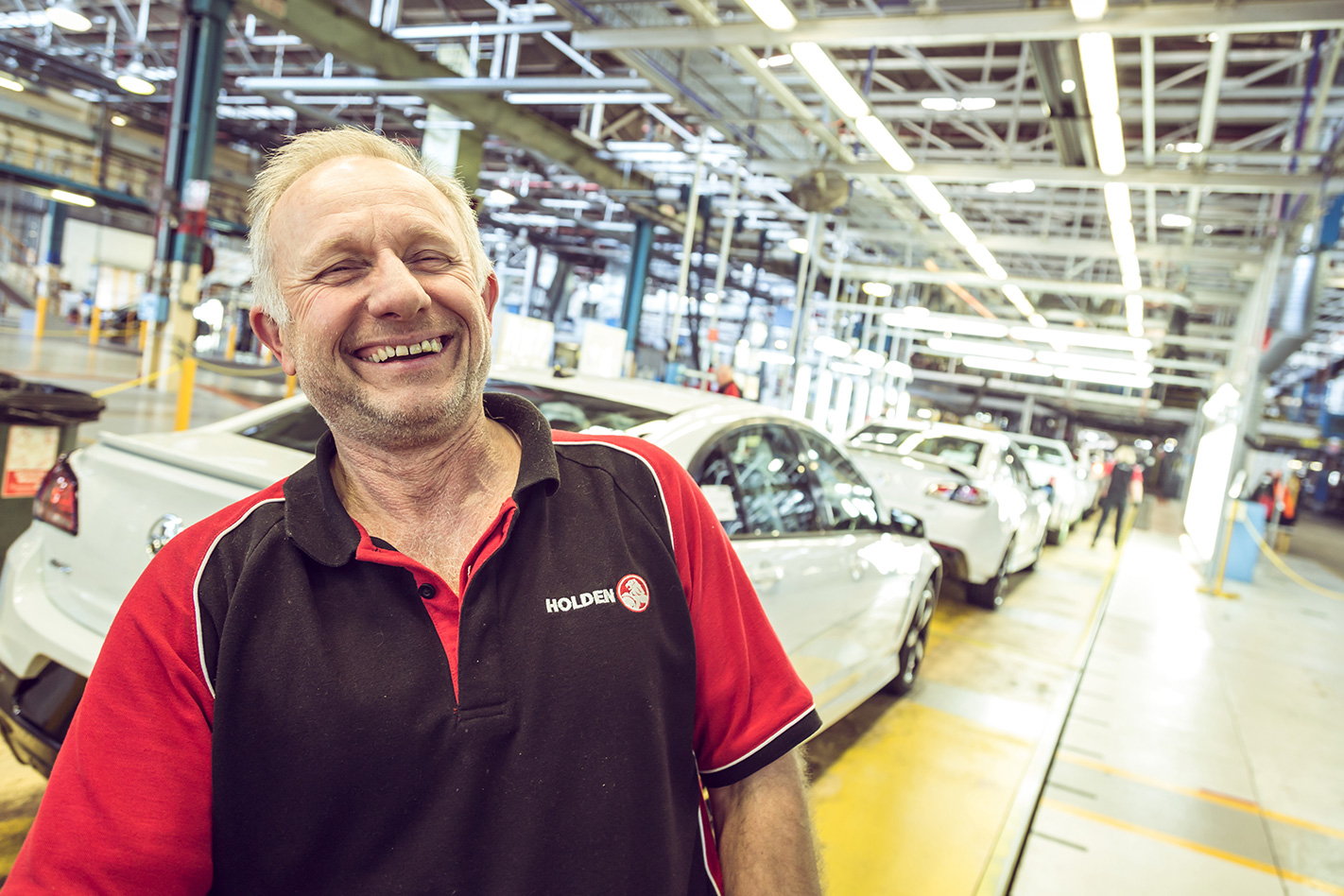
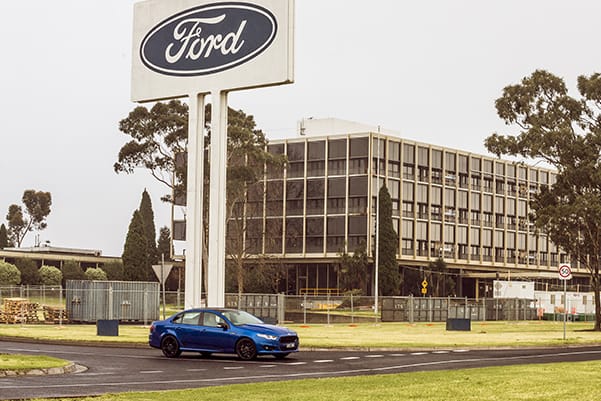
The last Australian-built Holden rolled off the production line in October 2017, shortly after Toyota closed its Melbourne plant after 54 years of operation. Ford ended 91 years of local vehicle manufacturing in October 2016.
Rudd called the automotive sector “a sovereign capability we are sorely missing” as he made scathing remarks about the Coalition’s role in the upheaval.
“Of all the shortsighted acts of economic vandalism in recent decades, the closure of our car industry by the Abbott-Hockey government stands apart,” Rudd said. “Australia under my government had one of the most modest industry subsidies in the auto world.
“But politics triumphed over reason, sacrificing tens of thousands of jobs, tearing the beating heart out of Australia’s engineering and manufacturing base, and rendering us 100 per cent dependent on auto imports.
“Now the 3D printing and EV revolutions mean we can rebuild an Australian auto sector and repair this fatal vulnerability in our national security.”
Rudd’s speech was titled “The Complacent Country” and its main thrust was that Australia now faces an “unprecedented” set of strategic, economic and technological challenges. He said the nation is living on “borrowed time” and needs a “radical change in our national mindset”.
He identified seven sectors in which government and industry can collaborate to establish world-class companies and take advantage of AI-driven growth, with car manufacturing the sixth sector on his list.
Rudd isn’t alone in his call to bring back the auto industry. Shadow industry minister Andrew Hastie did the same last September when he posted an image to social media showing him standing next to a vintage Ford Falcon and wrote, “We used to make complex things in this country… competition drove innovation in our car industry. But that’s all gone.”
Monza, September 4, 1966. A day like no other in Formula One history, and a day like no other in Australian history.
It was on this day that British driver John Surtees retired from the Italian Grand Prix on lap 32, his Cooper Maserati suffering from a fuel pump failure, handing Australia’s own Jack Brabham the third of his three Formula One world championships.
It was a significant win in more ways than one. Yes, it was Brabham’s third championship, following on from his 1959 and ’60 triumphs. But significantly, it was the first F1 championship victory for a driver in a car of his own construction, bearing his own name. It’s a feat that will – likely – never be repeated.
But more than just Brabham driving a Brabham, the BT19 that carried him to victory was the result of a distinctly Australian effort. The car itself was designed by British-born Aussie, Ron Tauranac, while the 3.0-litre V8 that powered Brabham to victory in four of the season’s nine grands prix, was designed and built by a small team, led by legendary engine builder Phil Irving, in Repco’s engine shop in Melbourne.
Nigel Tait was part of that small but dedicated team. Freshly minted with a pair of diplomas for mechanical and automotive engineering from the Royal Melbourne Institute of Technology (RMIT), Tait’s first job – in January 1966 – was in Repco’s engine shop in Richmond, where the V8s that would go on to power Brabham to his third world title were being developed.

“I applied for the job as a cadet engineer,” Tait recalls with a hint of mischief in his eyes. “And I told them all these lies about my previous history, making cars and engines and all that. And that was lucky, because I managed to get a job as a cadet, and to be at Repco.”
Tait may have, by his own admission, been a touch frugal with the truth on his job application, but he did undersell his mechanical experience just slightly.
A tinkerer from an early age, Tait was building home -made billy-carts from the age of 10 (“They were more than billy-carts. One was almost like a car. It had a roof, everything…”) before graduating to cars while still at school.
An old Austin 7, bought for £10 in around 1958 or ’59, was soon transformed into a race car.
“I took the body off, chucked it away and made a race car with a view to running it in the Austin 7 Formula,” Tait says.
This was in his last year of boarding school in Geelong and as Tait admits, the school’s chapel services were an especially productive time.
“I was able to use the time usefully by polishing things and bits [for the car],” he chuckles.
In a case of impeccable timing, Tait completed his high school studies in 1960 just as RMIT was about to launch – in 1961 – its first ever Fellowship Diploma of Mechanical and Automotive Engineering.
“It was the first time they ever had that course available and as it turned out, there were only two of us doing it,” he says.
Four years later, and armed with his diplomas, Tait – in yet another case of superlative timing – joined Repco in January 1966, just as the Australian automotive engineering business was about to become a global Formula One powerhouse. The significance of that sublime piece of timing wasn’t lost on Tait.
“I joined at the beginning of ’66, and there we were working on engines for Jack Brabham. Now, I was only a cadet, and I was under the stewardship of some of the more senior guys,” he recalls.
“But it was wonderful to be there, where we were building the engines that won the championship for Jack that year. Extraordinary.”

That those world-beating engines were made in what amounted to little more than a tin shed in a dim laneway in the Melbourne suburb of Richmond makes this story even more remarkable.
“When you consider that year, our engines – I was only a cadet, remember – but our engines powered Jack to his third world championship. And the next year Denny Hulme won and Jack came second,” Tait looks back with pride in his voice.
“So for two years on the trot… Repco was known all around the world, all of a sudden. Who’s this company, Repco? Where are they making their racing engines?” he continues. “Well, it was an old tin shed in ‘Lavatory Lane’, Richmond.”
The colourful street name has passed into motorsport folklore, a colloquial address used by Repco employees because the building’s toilets could only be accessed from the laneway.
“Truly,” reveals Tait. “If you walk down the little lane off Burnley Street, on the right-hand side, there’s a chem lab, and then there’s an office where my boss sat, and then the next thing was a door into the washer and toilets.
“And then the other side of that little laneway was the doors of the tech centre, which we called the engine lab. And that was where the racing engines were born.”
It’s an origin story a world removed from the high-octane environment of Formula One. But it’s all so typically Australian, too, a tale of smart people with clever ideas taking on what must have seemed like an insurmountable challenge and doing it with a blend of typical Aussie humour and ingenuity.

“That was where it all started, and we had, at that point, only one of [Repco’s] four dynamometers being used for the racing project,” he explains. “And [Repco engine builder and dyno technician] Michael Gasking and myself and others were the only ones building the engines… and, you know, it was hand to mouth.
“There was one time with Jack, during ’66, we were hand-to-mouth getting engines to him. One night we had to work all night, Michael and I, to finish an engine off, run it on the dynamometer and check it all out. And we had to get it air-freighted from Essendon Airport to Jack in England.
“So I took it out to Essendon Airport behind my old Rover on a trailer that I’d built myself,” says Tait before adding, “Jack’s engine! I don’t know for sure which of the four grands prix that he won that year, but certainly that engine went into his car, the BT19, and it won the championship. He won the championship.”
Even 60 years on, it still feels like Tait can’t quite believe his luck, his stories told with more than a hint of ‘pinch-me moments’ that it is impossible to not be drawn in by.
And looking around his workshop today, a discreet building in suburban Melbourne that offers no hint of the history that lies beyond its shuttered doors, it’s clear his passion for Brabham, the man and his cars, runs deep.
Tait remained at Repco even after the company stepped away from supplying F1 engines at the end of 1968 with a perfect record. Two seasons, two drivers’ championships, two constructors’ titles.

“Formula One had moved on,” says Tait of Repco’s withdrawal. “More people got involved, Cosworth came into it and it would have become prohibitively expensive and difficult, logistically, to run a Formula One program from [Melbourne].”
Without an F1 engine program, Repco continued to design and build engines for a number of Australian series, tasting success, mostly with Frank Matich, in sports car racing and later in Australia’s premier open-wheeler category, Formula 5000.
“Matich was an extraordinary driver,” says Tait. “And had he gone into Formula One, he would have been a contender for Formula One championships, I’m sure.”
But by April 1974, Repco had called time on motor racing, its energies turned towards its core – and growing – automotive parts business. Fast forward to 1986 and Repco, no longer manufacturing engine components, was looking to offload its remaining engine parts division. Tait stepped in as part of a management buy-out, setting up what would become known as Automotive Components Limited (ACL) which at its peak employed around 1000 people.
The buy-out deal included Brabham’s championship-winning BT19 as well as Matich’s fearsome all-conquering Repco-powered SR4. He still owns the SR4 today, but the Brabham BT19 is back with Repco (“they paid us a nice amount of money for it”) and spends much of its time on display in the foyer of its Melbourne headquarters, although Tait – as the official caretaker – remains very hands-on with the car he helped build.
“They wanted me to still be connected [to the BT19],” says Tait, “and also the knowledge [I have].”
But it’s more than just “knowledge” that underscores Tait’s place in history. Tucked away in a nondescript office, a filing cabinet overflows with drawings, documents, and paperwork that painstakingly detail the Repco-Brabham’s history, from concept to development, and engine test logs with meticulously recorded handwritten notes that detail specific engine outputs through the rev band. There are dates, times, places, a full historical and handwritten record of every component, every screw, nut and bolt that went into the Repco engines that conquered the world two years running.
Tait acknowledges the significance of the legacy housed in that discreet office with what I’ve come to learn over the course of an afternoon is a genuine humility.

“I’m nothing really in the scheme of things,” he says, “but it’s just wonderful to me to think that I’ve been lucky enough to put this stuff together. And I’m taking steps to make sure it stays together.
“It’s not mine, but I’m trying to make sure that it never gets seen on a footpath, you know? I would regard this as Jack’s still… I inherited most of it by looking after it during the Repco days. And I think I’ve done the right thing by making sure that it’s here.
“If it wasn’t here, it wouldn’t be anywhere.”
This story first appeared in the September 2026 issue of Wheels magazine, now on sale. Subscribe here and gain access to 12 issues for $109 plus online access to every Wheels issue since 1953.
Australia’s growing crop of affordable Chinese cars isn’t just putting pressure on established new car brands – it could increasingly give used-car buyers something to think about as well. That’s the view of Chinese newcomer Forthing, which believes the $36,990 driveaway starting price of its first Australian-spec SUV could tempt second-hand buyers into going with a new vehicle instead.
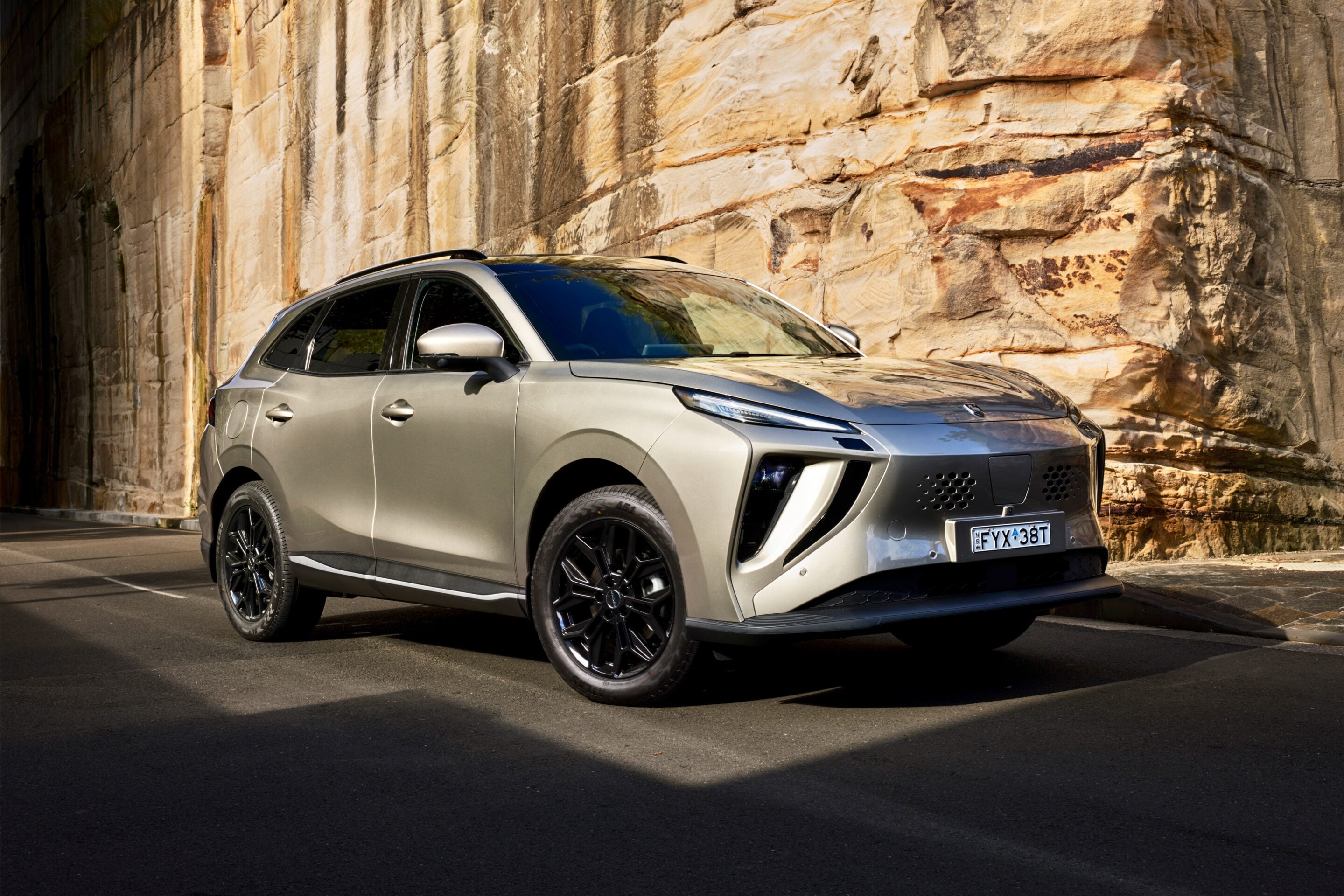
Forthing has launched locally with its new Taikon 5 medium SUV, which is offered with a choice of either range-extender hybrid or fully electric powertrains, priced from $36,990 and $38,990 driveaway respectively.
Asked what sort of buyer Forthing expects to attract in Australia, national manager Sean Garrard acknowledged it’s too early to establish a precise customer profile, but said its aggressive pricing could attract shoppers who hadn’t initially intended to buy a new vehicle.
“Given the price point, it’s quite possible that these are people considering used cars [or] bargain hunters,” he told WhichCar by Wheels, pointing to Forthing’s lengthy warranty coverage as another factor that could persuade buyers to make the leap from used to new.
“You get a seven-year, 200,000-kilometre warranty. You get eight years on the battery, for the price of what some legacy brands have as used cars,” Garrard said.
It’s an interesting proposition at a time when Australia’s new car market is being reshaped significantly by increasingly affordable Chinese vehicles. A budget of around $35,000 to $40,000 usually gives SUV shoppers the choice of a smaller new model or a larger second-hand vehicle from an established manufacturer. But the arrival of brands such as Forthing is increasingly blurring that line, with buyers able to access a brand-new electrified medium SUV at a price point that overlaps with plenty of used alternatives.
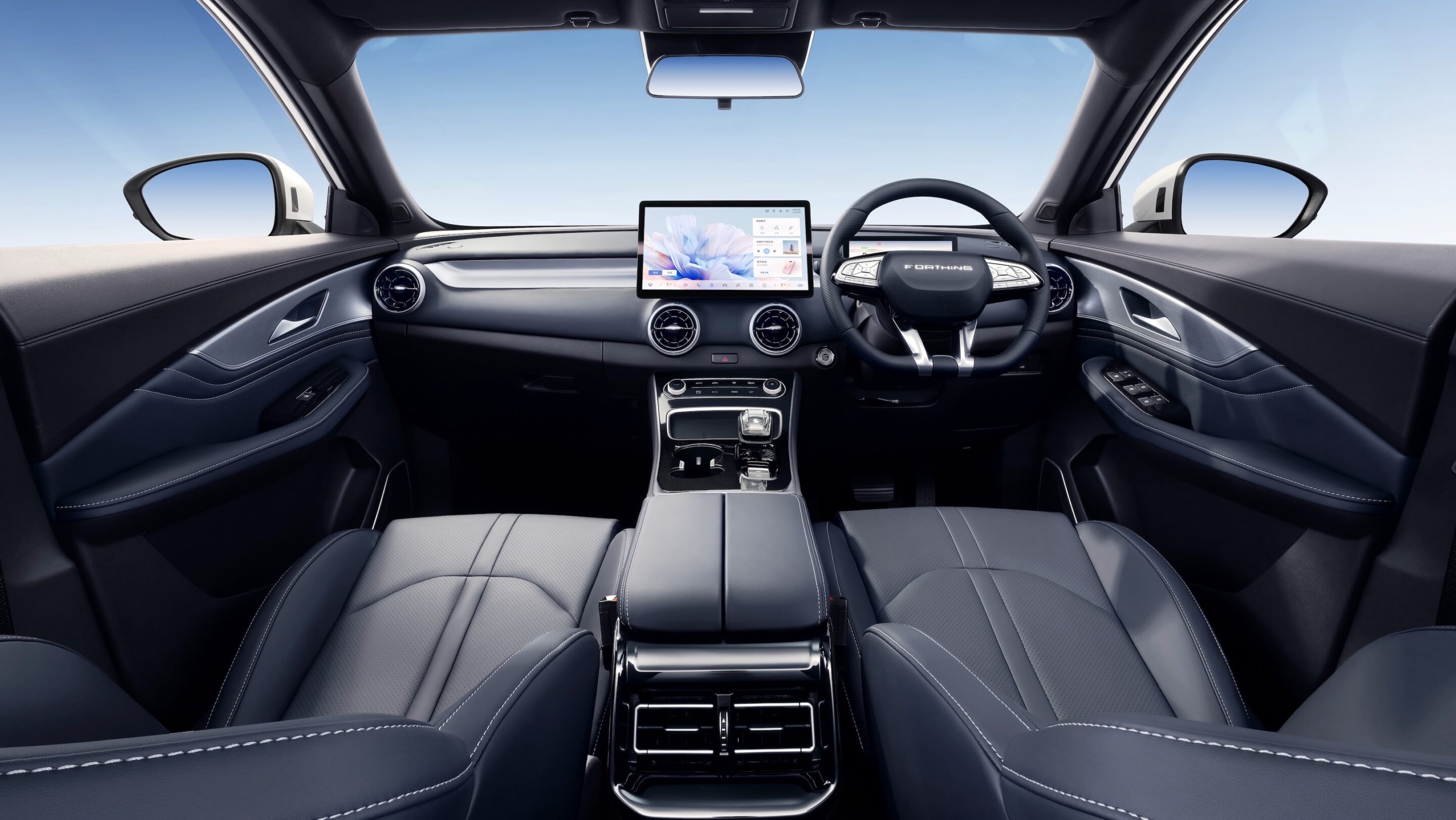
Forthing’s range-extender hybrid is particularly unusual at $36,990 driveaway as it combines a sizeable 31.9kWh battery with a petrol engine that operates solely as a generator. Unlike a conventional plug-in hybrid, the combustion engine never directly powers the wheels, giving it EV-like driving characteristics without relying entirely on charging infrastructure.
Forthing claims up to 178km of electric-only driving range on the WLTP cycle, while its combined petrol and electric range stretches to 937km. Another $2000 buys the fully electric version, which uses a 64.4kWh battery and offers up to 427km of WLTP driving range.
Of course, the equation isn’t quite as simple as new versus used. A second-hand SUV from Toyota, Mazda, Hyundai or Kia comes with an established reputation in Australia, a mature dealer and servicing network, known resale values and, depending on its age, potentially several years of remaining factory warranty.
Forthing, in contrast, is starting from scratch. While parent company Dongfeng is one of China’s largest automotive groups, the Forthing name has virtually no history with Australian consumers, and as such, its future resale values are an unknown.
The company is attempting to offset some of that uncertainty with its ownership package, including a seven-year/200,000km warranty and while it currently has 20 active Australian dealers, it plans plans to increase that number to 35 before the end of 2026.
