
The future of the Toyota Supra is secure for at least five years in Australia thanks to Supercars racing. Everything is also pointing to the GR GT, a Toyota GR concept car unveiled last year, as the next racing and showroom spearhead for Brand T.
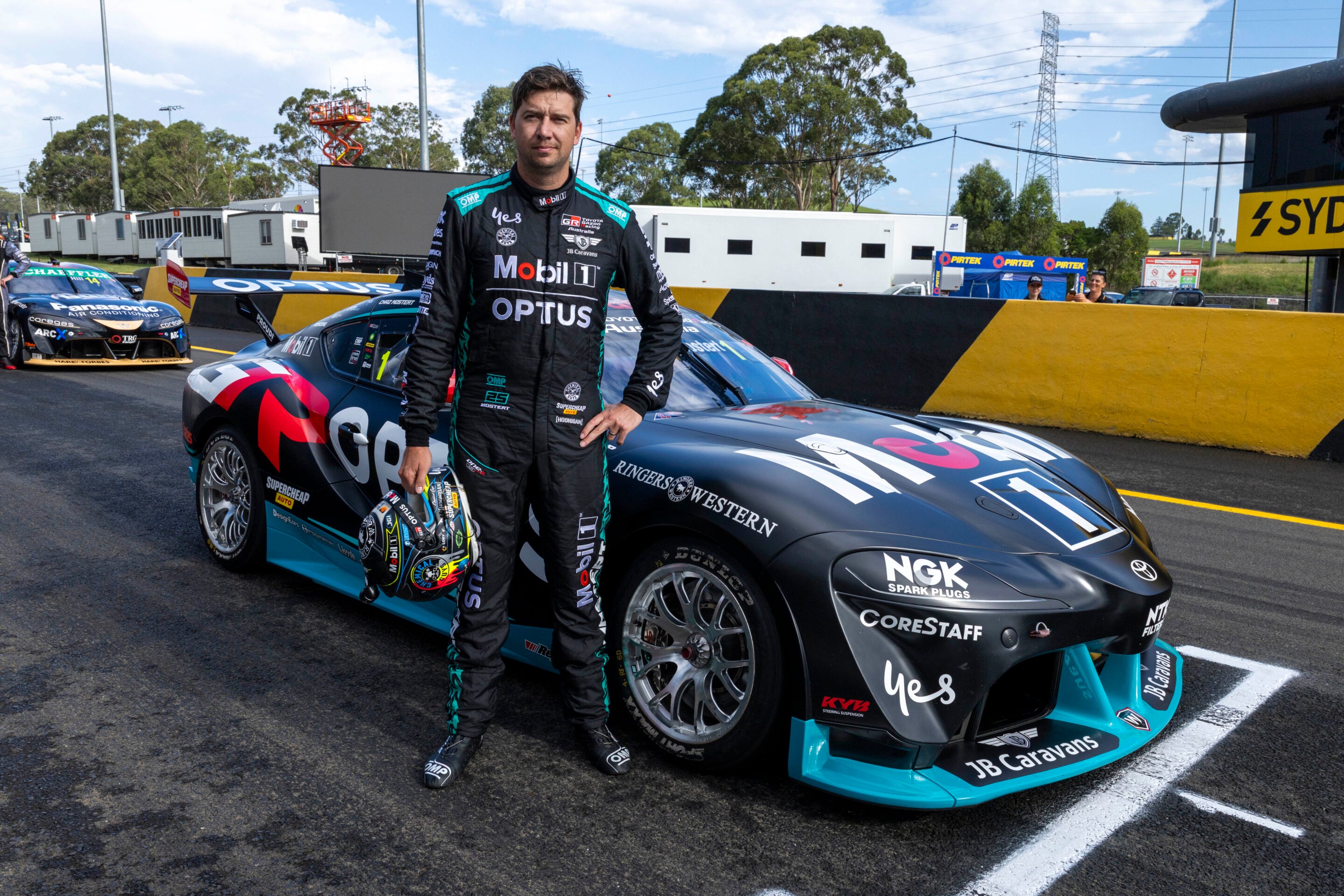
The future news comes as Toyota Australia makes its heavily hyped move into touring car racing with the GR Supra as a rival to the Ford Mustang and Chevrolet Camaro. Sydney Motorsport Park is hosting the five shiny new Supra GR racers, led by the #1 Toyota driven by defending champion Chaz Mostert.
No-one at Toyota Australia – or the teams run by Walkinshaw Racing and Brad Jones Racing – is making predictions about on-track success, but company vice-president John Pappas re-stated Toyota’s long-term commitment that mirrors its involvement in cricket and AFL football.
“This is truly a massive moment for all of us. We don’t do things by halves,” said Pappas. “We don’t enter things to lose. But we don’t want to put out too high expectations.”
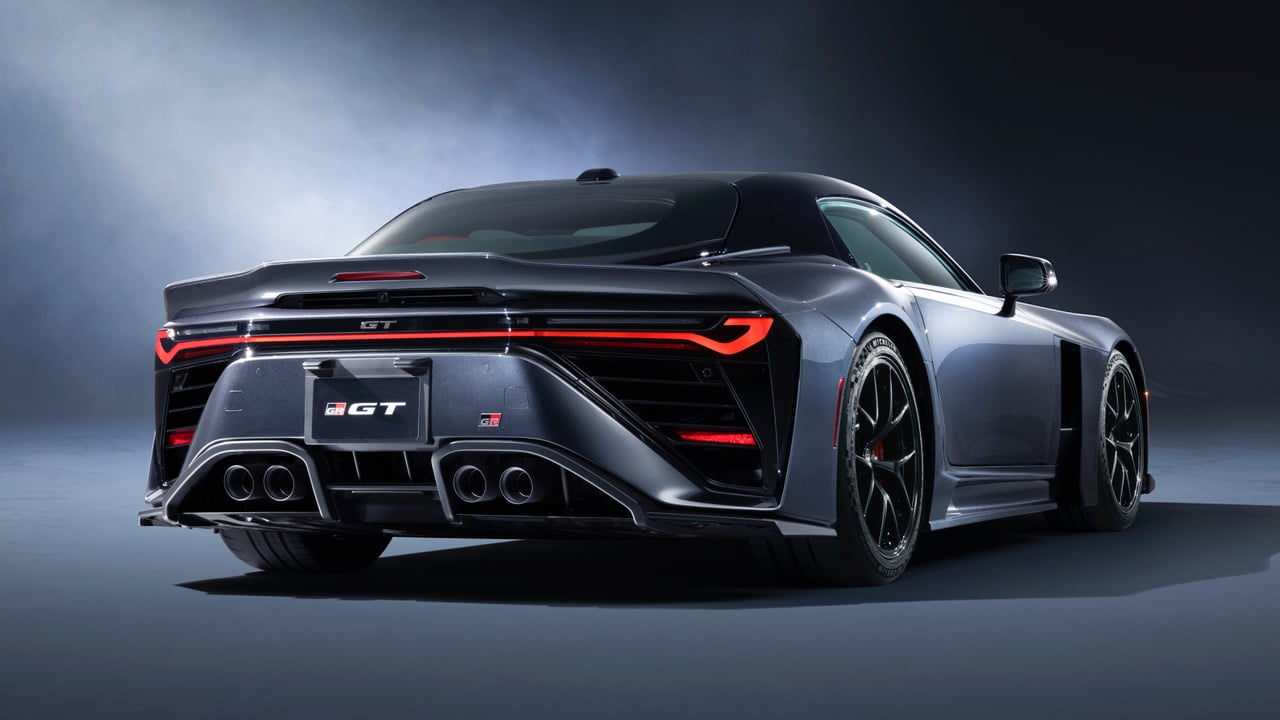
That approach extends to the future of the Supra in showrooms, even though everything is pointing directly to a GR GT with Supra badges sometime after 2027.
“That is super exciting. That vehicle. That is going to be unbelievably great for the brand.
“I would love to see that car come to Australia. But we’ve got nothing to announce today,” Pappas said. “Right now we’re focussed on the GR Supra. That’s the vehicle for us for the next five years.”
Those words indicate that the Supra-cars racing program will use the existing body shape for five seasons, even though the last customer cars were delivered in Australia last year.
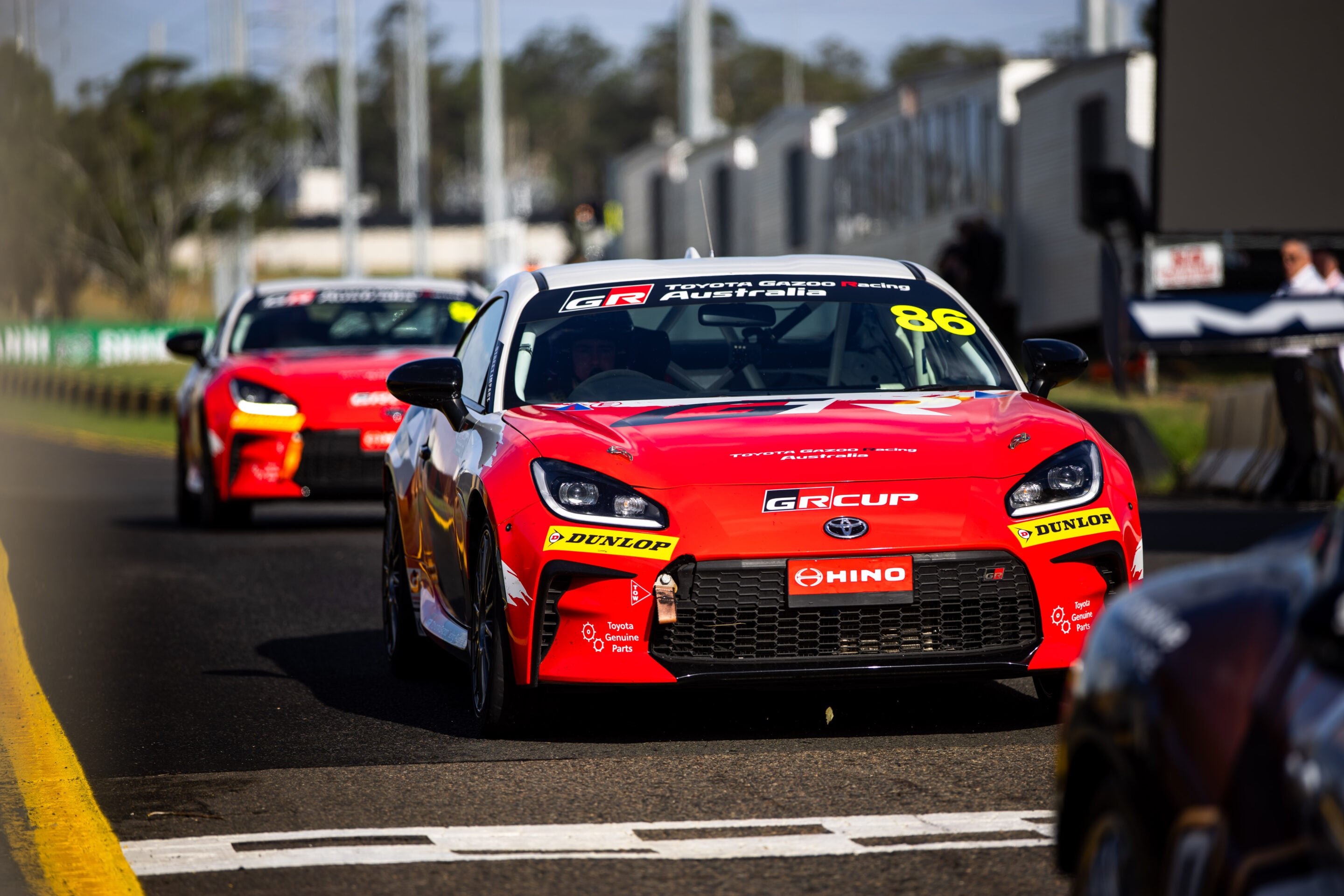
In addition to the Supercars program, Pappas confirmed Toyota’s ongoing support for the GR 86 Cup in circuit racing and a two-car attack on the Australia Rally Championship with the GR Yaris.
“This year will be the biggest year ever for Toyota in Australian motorsport. Participating in motorsport demonstrates Toyota’s passion and commitment to what we do,” Pappas said.
It is also a reflection of Toyota’s work to build a barricade against Chinese import brands, cementing the sales success of the Toyota HiLux favoured by many motorsport fans and its position as number one in showrooms.
“The more we race, the more we learn. For us it’s all about learning,” said Pappas.
Ask the average Aussie in the street what ‘autopilot’ means and the overwhelming majority would respond with an answer based on the concept that we know and understand from the way an airliner works. That is, the pilot can set some controls and effectively get up and leave the flight deck, while the plane flies itself. Now, there’s an element of simplicity to that explanation above, but the basics of it stand in regard to what non-pilots think autopilot really is.
As we know now, that concept doesn’t quite work down here on level ground, and a recent ruling in the state of California has forced Tesla to acknowledge the confusion caused by its naming convention.
As reported today by Car And Driver in the United States, Tesla is changing the name of its driver assistance features after the California Department of Motor Vehicles threatened to take away its dealer licence. The report states that ‘California had previously ruled that the “Autopilot” and “full Self Driving” names misrepresented the systems’ capabilities, violating state law’.
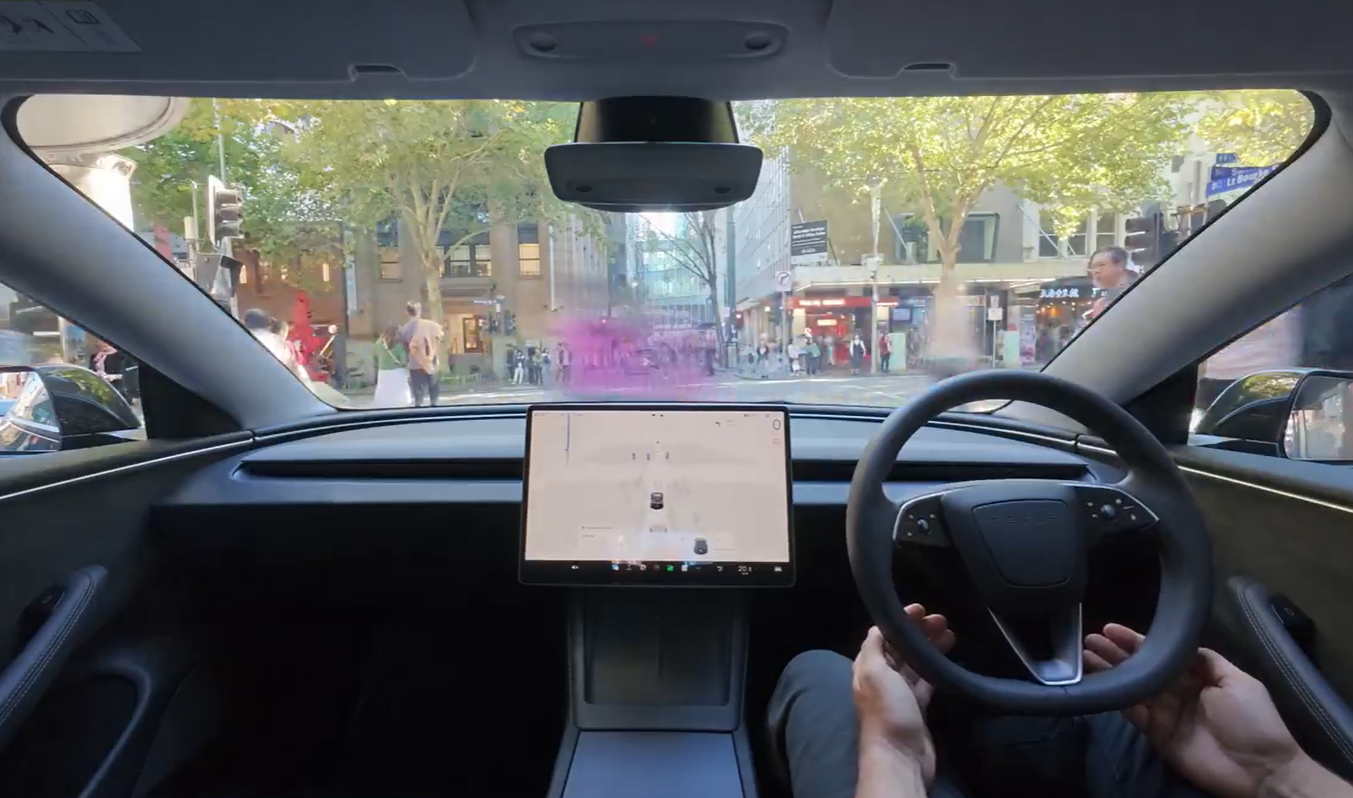
As such, Tesla has decided that ‘Full Self Driving’ will now carry the suffix ‘Supervised’ in all marketing material, while ‘Autopilot’ has been renamed ‘Traffic Aware Cruise Control’. In other words, Tesla has acknowledged that the general public – who buys new cars – is being confused by what the system is and what the system can do.
On one hand, we suspected this would always have to happen, given Tesla’s use of the terms for almost a decade, despite the fact that various levels of human interaction are required in order for the systems to keep working. Even Tesla’s most advanced self-driving system, which is currently Level 2, demands that the driver pay full attention to the road ahead for it to continue to function.
While the ruling pertained specifically to the state of California, Car and Driver reports that Tesla will adopt the new naming convention even outside the west coast state. The outlet reported that ‘Tesla will now refer to the systems by new names, even outside California, and the changes appear to have already taken place on Tesla’s website’.
What’s the range tipping point to attract a sceptical buyer to even look at an electric vehicle? Much of the feedback we see at Wheels suggests it’s 1000km – a range that seemed fanciful even a few years ago – but BYD Australia thinks the answer is a little more nuanced than simply an outright figure.
“Yeah, it’s a good question and I don’t know that the tipping point is to be honest,” BYD Australia Chief Operating Officer Stephen Collins told Wheels. “But what I do know, is that BYD at its core, is very much about battery technology and leading battery technology, so I think range is one part of it, but there are other parts too, like charging time and charging availability.”
As it is in EV manufacturing terms, China is also leading the way in the roll out of serious public charging infrastructure, aimed at making the ownership of an EV as attractive – and easy – as possible.
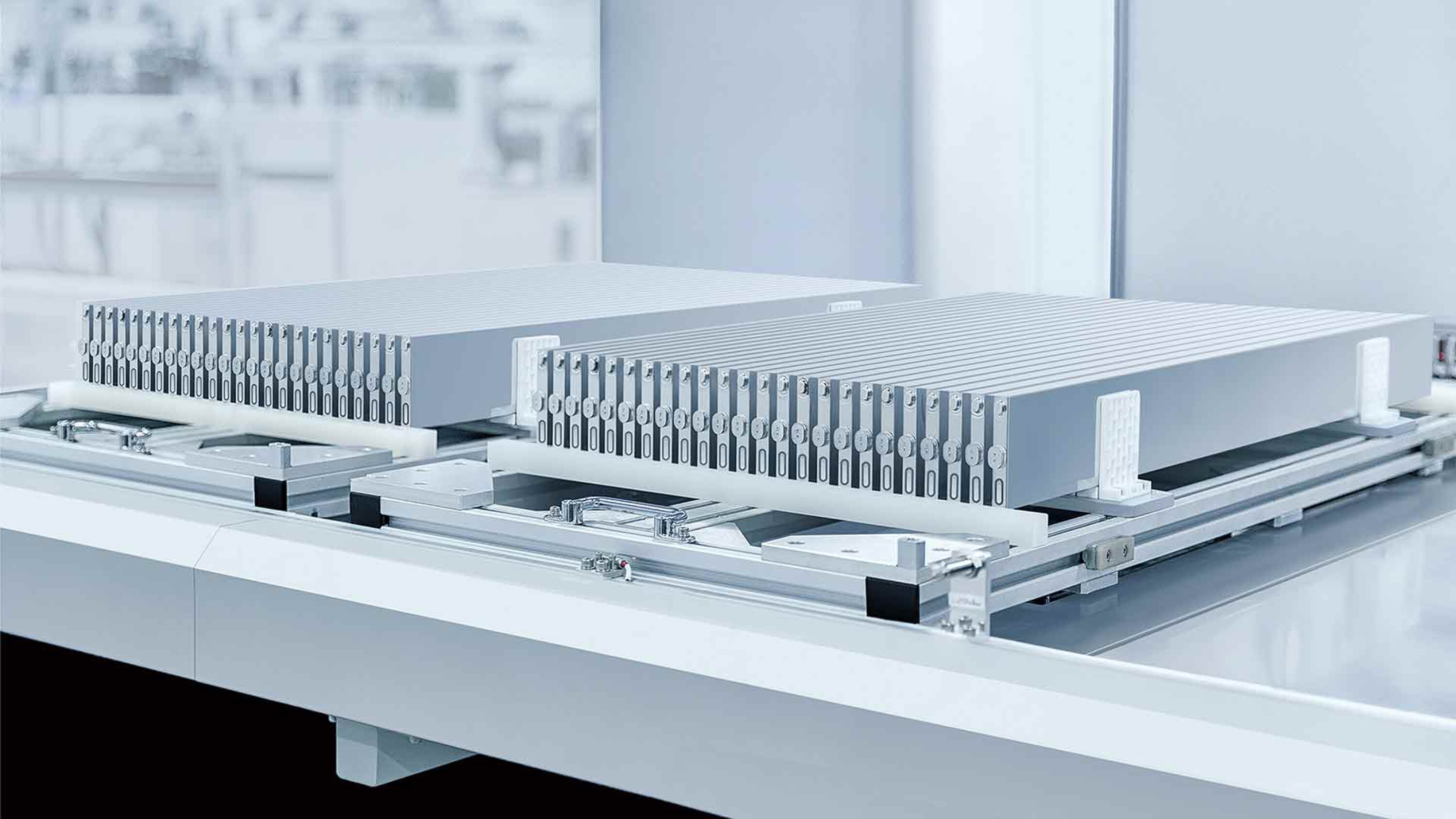
“In China, they’re just rolling out mega chargers, 1000kW, five minute charging capability,” Collins told Wheels. “So I think there are a number of answers to that question that solve some of the issues for some of the people who aren’t fully adopted yet for EVs. So I do think range is one component and like everything it’s going to keep improving as we go.”
Can Collins see a situation, then, where we get the charging infrastructure ‘right’ in this country then, given especially in remote areas or outside metro areas, its the single biggest issue for sceptical buyers in this country?
“Im not sure we’re miles away, I think we’ll get it right, it’s just an evolution,” Collins told Wheels. “We know most people charge at home, so it’s not just about the public charging infrastructure system, it’s also about getting affordable home chargers into houses.”
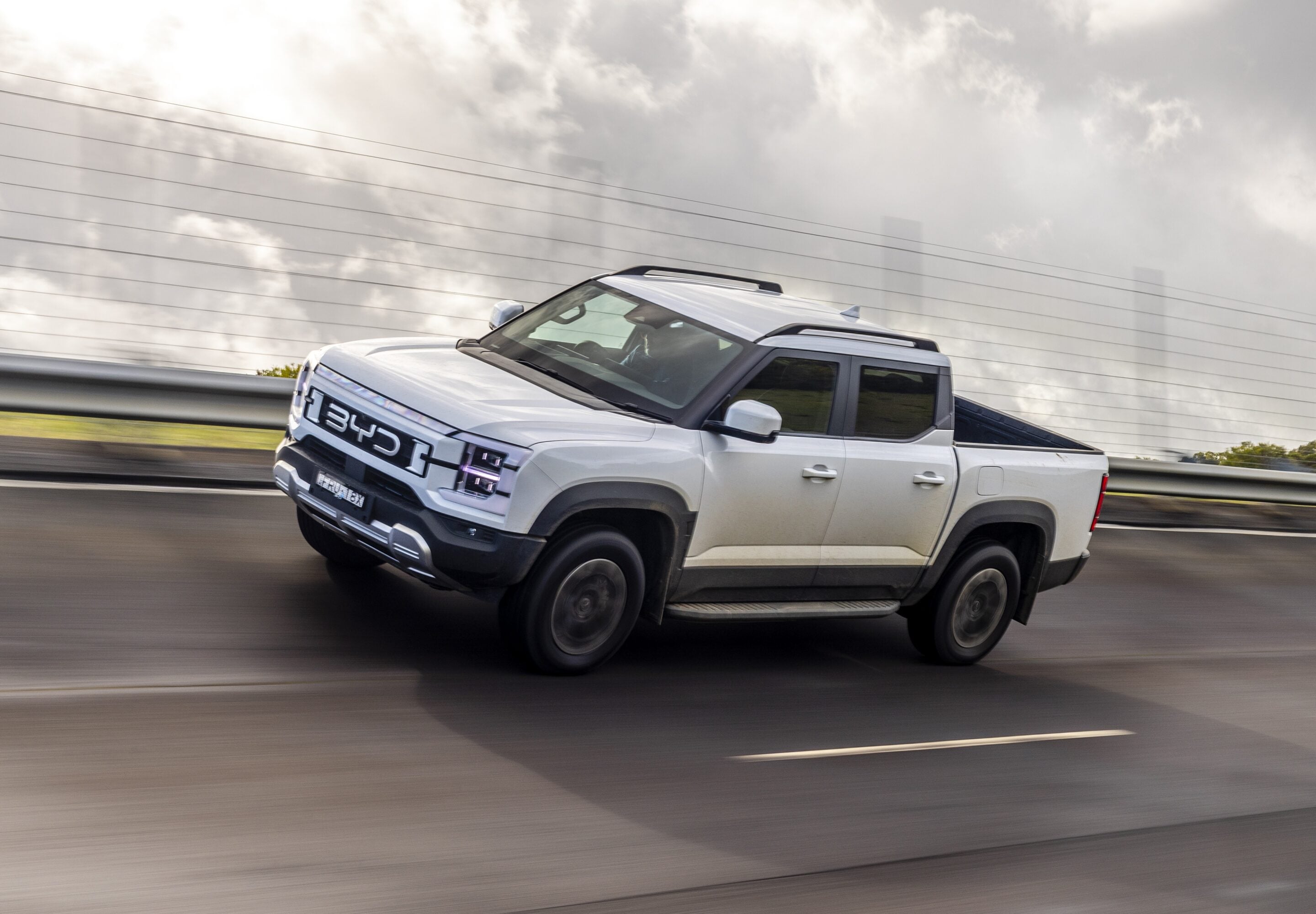
For what it’s worth, Collins says BYD isn’t expecting the government to pay for the infrastructure required to assist the uptake of EVs in Australia.
“I feel strongly there’s a role for the private sector and the public sector to play in that regard, Collins said. “What percentage either one is, I don’t know, but we’re not expecting the government to be paying for all this. We’re committed to provide infrastructure where we can as well and invest in that infrastructure.”
Chinese brand Chery had an absolute belter of a 2025. Its 34,889 sales represented a massive 176.8 per cent increase on 2024’s numbers, and Chery’s Australian product, dealer and sales expansion continued at a rapid rate. One of the successful sales increases for the brand was the Tiggo 8 Pro Max seven-seater SUV, which increased its numbers by 99.6 per cent.
Since its launch almost two years ago, Chery has removed the mid-spec Elite from the Tiggo 8 Pro Max range, leaving just the entry-level Urban and top-spec Ultimate. But it’s also made the range more accessible in pricing as the Urban is currently priced at just $38,990 driveaway. Considering that the cheapest seven-seat variant of the Nissan X-Trail asks $41,140 plus on-road costs (so around $45,000 driveaway, depending on location), the Chery looks like great value for money.
Chery Tiggo 8 Pro Max pricing (driveaway):
| Urban | $38,990 |
|---|---|
| Ultimate | $43,990 |
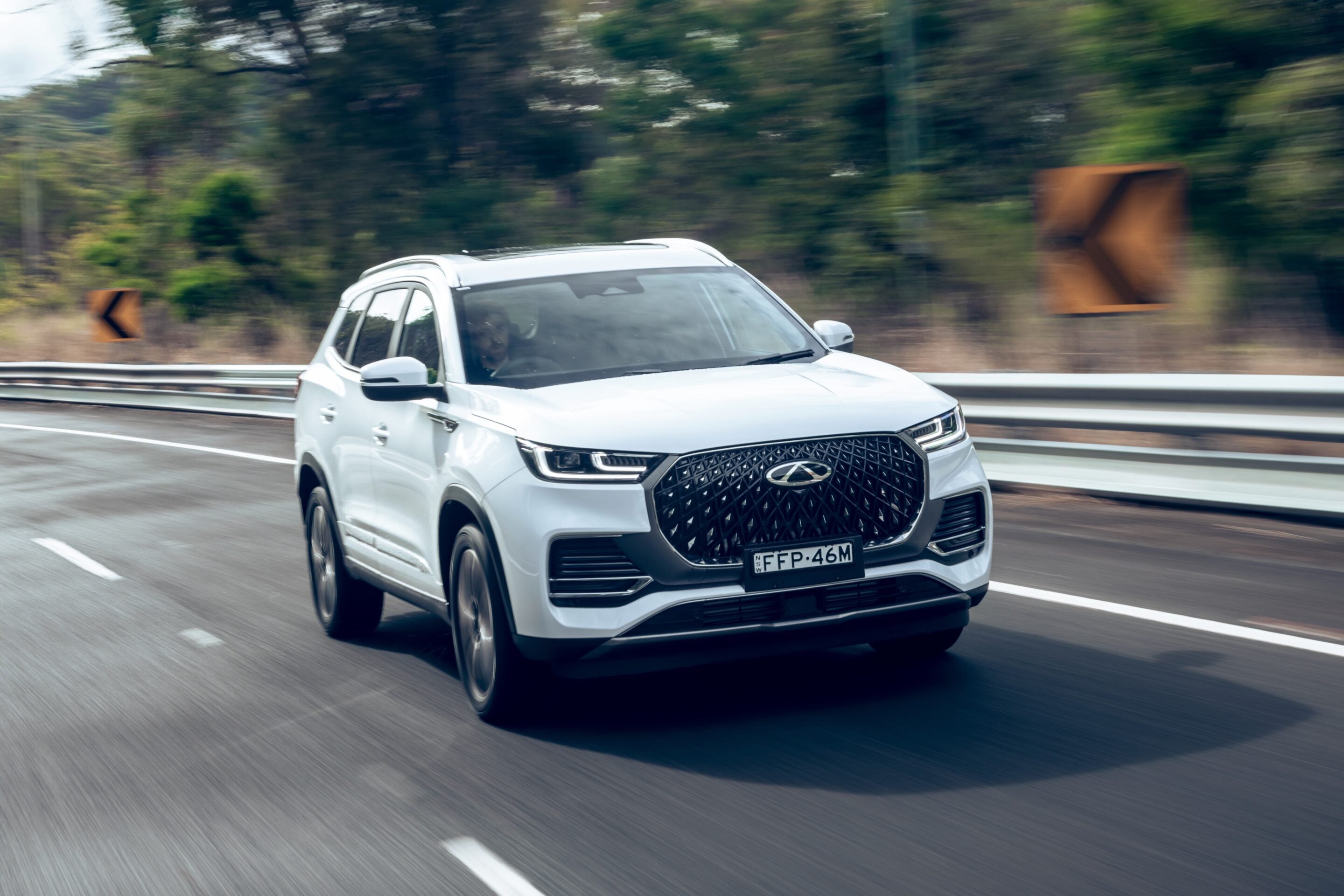
Standard equipment on both the Urban and Ultimate models is strong, with the former including 18-inch wheels, LED exterior lighting, synthetic leather upholstery, heated and ventilated front seats, dual 12.3-inch displays and a full suite of active safety kit. The Ultimate adds features such as larger 19-inch wheels, a panoramic sunroof, an all-wheel drive system, a power tailgate and a 10-speaker Sony sound system. See the full list of equipment here.
What sort of power and fuel economy does the Tiggo 8 Pro offer?
Unlike the seven-seat X-Trail, the Tiggo 8 Pro Max has proper grunt from under the bonnet. Standard across the Tiggo 8 Pro Max range is a 180kW/375Nm 2.0-litre turbo-petrol engine that is mated to a seven-speed dual-clutch transmission. Combined fuel consumption is rated at 8.7L/100km, with claimed CO2 emissions of 200g/km.
It’s a great engine with a raspy note and more than ample performance. Peak torque hits at just 1750rpm and stays until 4000rpm so that most urban driving occurs in that range and you can just ride the torque wave. The only fly in the ointment is the seven-speed dual-clutch transmission, which can stumble and get confused a bit at low speeds, but at higher speeds, it’s excellent.
The Tiggo 8 Pro Max isn’t the thriftiest car in its class, and you’ll be getting around 12L/100km in purely urban driving, but Chery does offer the Tiggo 8 CSH plug-in hybrid with a 95km electric driving range and a total range of around 1200km from a full charge and tank of fuel.
On the road, the Tiggo 8 Pro Max is refined and very comfortable. Even in the Ultimate with its larger 19-inch wheels, the ride quality is excellent and rarely unsettled. Road noise levels are low, and although it can roll around a bit in corners thanks to the soft suspension, in regular everyday driving it’s totally fine.
What’s the Tiggo 8 Pro interior like?
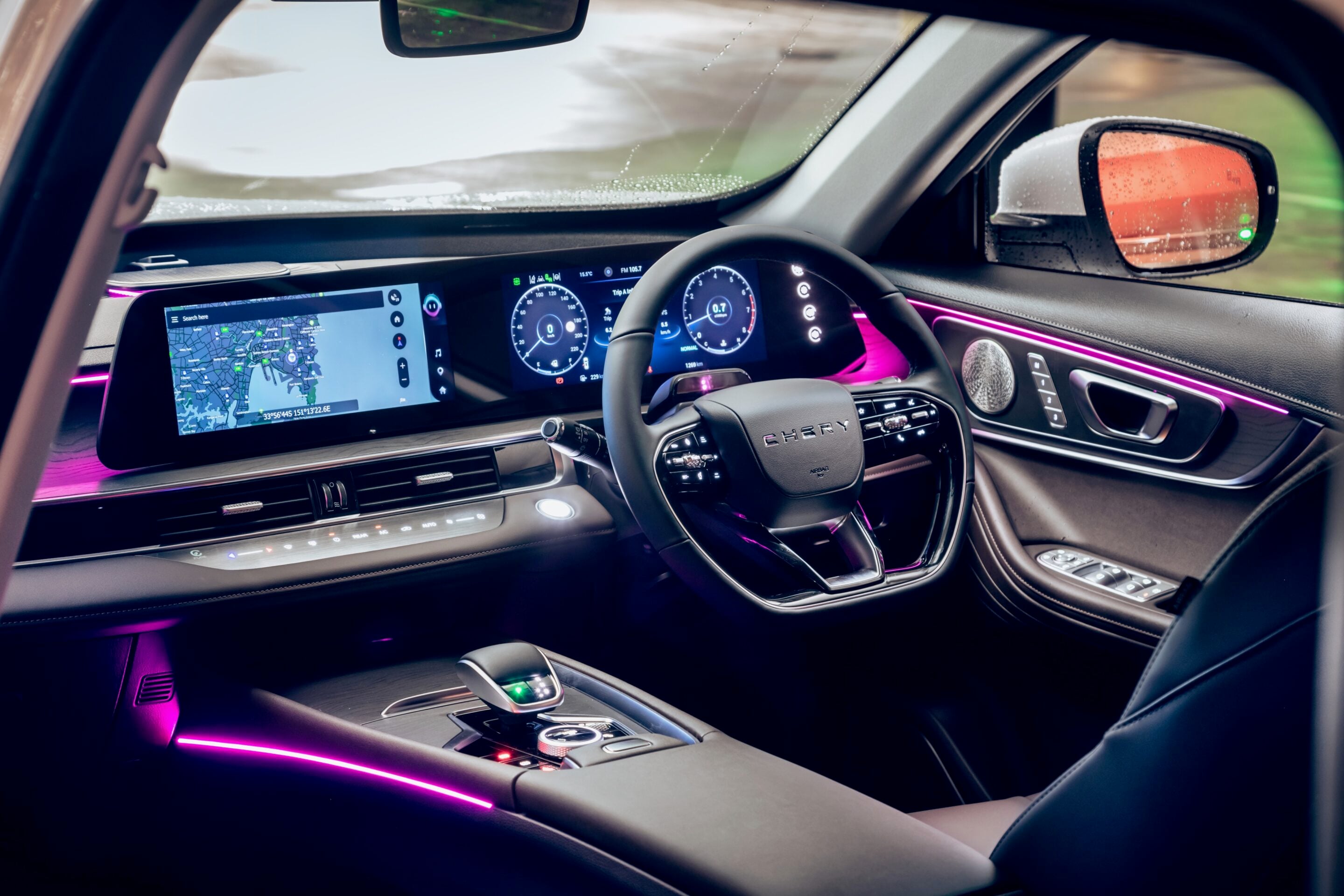
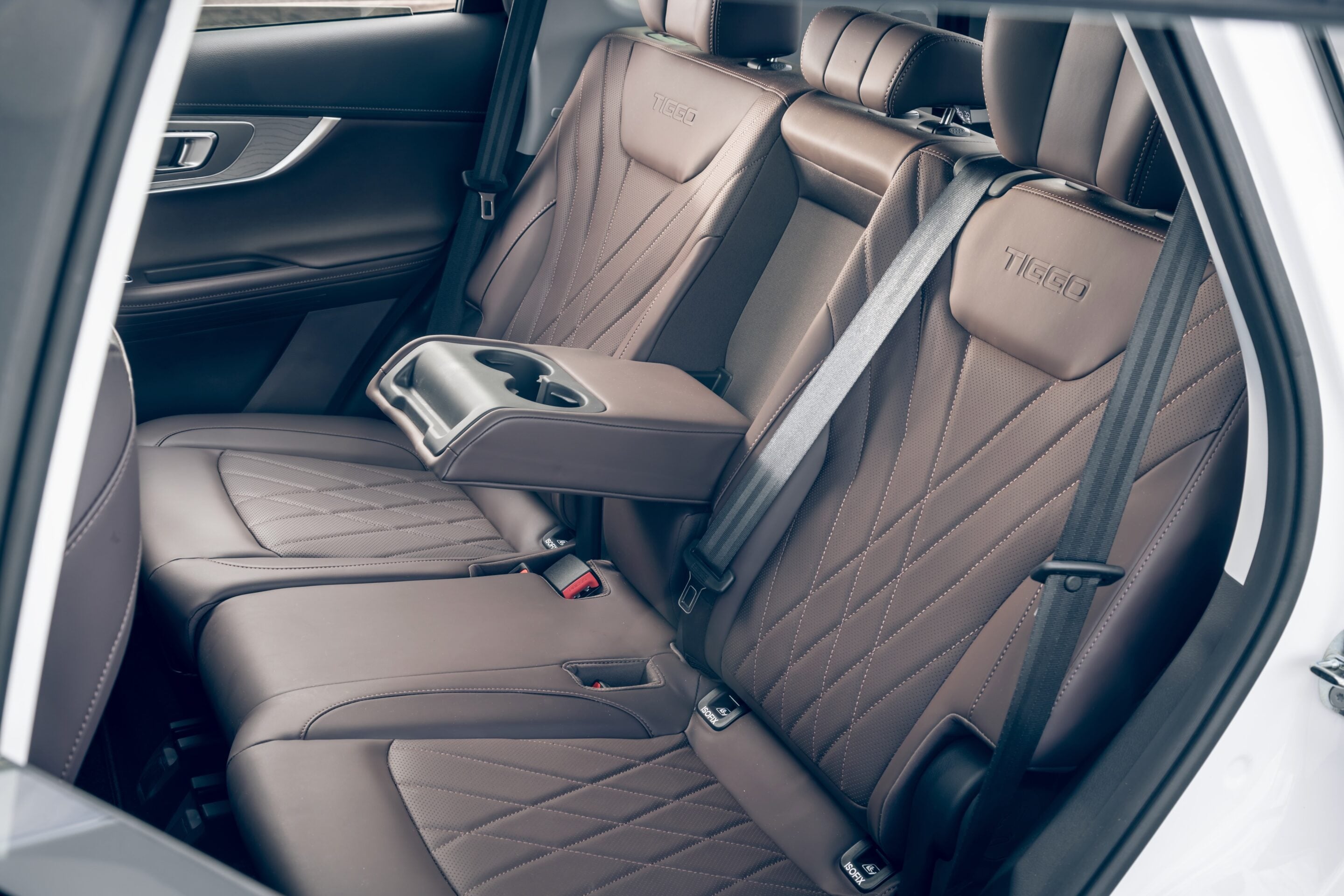
But while the driving experience is solid, it’s the cabin that needs to impress buyers as that’s where they’re going to spend their time. Here, it impresses with good quality materials, modern design and useable tech that makes it easy to interact with. Sure, some of the details are a bit chintzy, like the ‘Tiggo’ text above the rear air vents and on the seats, but it’s otherwise quite tasteful.
Centre of the cabin are two 12.3-inch screens that use identical software to other Chery models. While there’s no live functionality, it’s well featured with wireless smartphone mirroring and sat-nav. It’s generally easy to use, though some functionality could be made easier by featuring a home button on the centre console. Otherwise, the physical climate buttons and shortcuts next to the gear lever are useful.
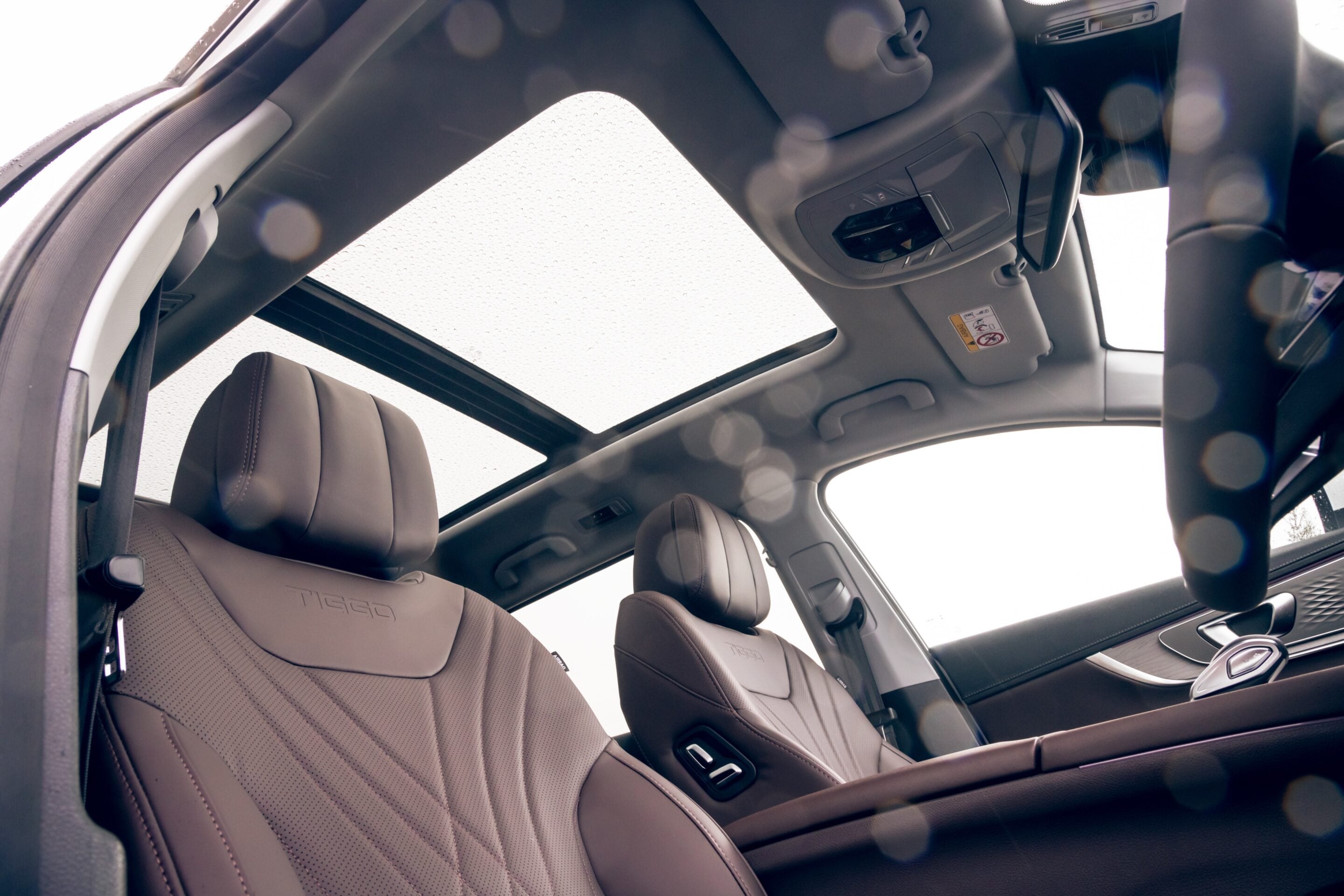
The front cabin also offers big door bins, a large box underneath the centre armrest, a big tray underneath the centre console and big cupholders. Front seat comfort is generally good, though more under-thigh support would be a useful addition.
Space in the middle row is plentiful, with ample leg- and headroom, even for taller people. There are also some good amenities on offer, such as air vents, map and door pockets, a central armrest with cupholders and two USB ports. There are also two ISOFIX and three top tether points for child seats, though the action for moving the seats forward to grant access to the third row could be easier.
The third row of the Tiggo 8 Pro Max is definitely tighter than a Santa Fe or CX-80, but larger than the tiny space of the X-Trail with noticeably more headroom on offer. Two kids would be fine there, but adults would struggle. For third row occupants there are air vents and cupholders, plus a fan speed controller in the Ultimate, though no charging ports.
With all rows in use, there is 117 litres of boot space on offer and folding the third row down unlocks 479 litres of space to the seatback (739L to the roof), but Chery doesn’t quote a figure for the second row folded as well. Regardless, it’s a practical and impressive space, especially considering the price.
Warranty and servicing
The Tiggo 8 Pro Max is covered by a seven-year/unlimited km warranty with 12 months of roadside assistance that is extended by 12 months with each service up to seven years in total. The five-year/75,000km service cost for the Tiggo 8 Pro Max is just $1495 ($299 per year).
Final verdict
Should you buy a Chery Tiggo 8 Pro Max? If you’re after a seven-seater SUV and are aware that there are more efficient and more practical rivals… but for more money, absolutely. As we’ve seen on Chery’s other models in Australia, the Tiggo 8 Pro Max offers a lot for the price with a good quality and modern cabin, a gutsy turbo-petrol engine, comfortable driving experience and long list of features.
It’s not the most fuel efficient product, though the CSH plug-in hybrid version exists for those wanting more efficiency. Overall, however, there is plenty of substance behind the headlines and the sub-$40k driveaway pricing for the Tiggo 8 Pro.
Chery Tiggo 8 specifications
| Model | Chery Tiggo 8 Pro |
|---|---|
| Price | From $38,990 driveaway |
| Engine | 2.0-litre turbocharged four-cylinder petrol |
| Peak outputs | 180kW/375Nm |
| Transmission | 7-speed dual-clutch automatic, 2WD or AWD |
| Combined fuel consumption (claim) | 8.7L/100km |
| CO2 emissions | 200g/km |
| Length/width/height/wheelbase | 4720/1860/1705/2710mm |
| Boot | 117L (3rd up to top of seatback)/479L (3rd folded to seatback)/739L (3rd folded to roof) |
| Tare mass | 1731kg |
| Warranty | 7-year unlimited km, 12 months roadside assistance (up to seven years service activated) |
| Five-year service cost | $1495 ($299 per year) |
Tiggo 8 Urban standard features
- 18-inch alloy wheels
- Roof rails
- Dusk-sensing automatic LED exterior lighting
- Rain-sensing automatic wipers
- Keyless entry with push button start and remote start
- Auto-folding mirrors that auto-drop in reverse
- Synthetic leather steering wheel
- Black synthetic leather upholstery
- 10-way electric driver’s seat with memory functionality
- Four-way electric front passenger seat
- Heated and ventilated front seats
- Dual-zone automatic climate control with rear air vents
- N95 air purification
- 12.3-inch digital driver’s display
- 12.3-inch touchscreen
- Satellite navigation
- AM/FM radio
- Wireless and wired Apple CarPlay and Android Auto
- Eight-speaker Sony sound system
- 50W wireless phone charger
- 4x USB ports
- Auto-dimming rear mirror
- Multi-colour cabin ambient lighting
Tiggo 8 safety equipment
- 10 airbags (including front centre, driver’s knee and rear side units)
- Autonomous emergency braking with pedestrian, cyclist and intersection assistance
- Lane keeping assistance with lane departure warning
- Adaptive cruise control with traffic jam assist
- Adaptive lane guidance
- Auto high beam
- Door open warning
- Traffic sign recognition
- Driver attention monitoring
- Blind-spot monitoring with rear cross-traffic alert (including braking)
- Front and rear parking sensors
- 360-degree camera
- Alarm
Ultimate model adds
- 19-inch alloy wheels
- Panoramic sunroof
- Rear privacy glass
- Power tailgate
- All-wheel drive system
- Heated mirrors with puddle lamps
- Illuminated door sills
- Third row air vents with fan speed control
- Remote window operation
- Inbuilt dashcam
- Cargo blind
- 10-speaker Sony sound system
- Illuminated sun visor mirrors
ANCAP has awarded five-star safety ratings to two new SUVs entering the Australian and New Zealand markets – the Denza B8 plug-in hybrid and the all-electric Hyundai Elexio – under its 2023–2025 assessment criteria.
The ratings reflect continued improvements in both occupant protection and active safety systems, with ANCAP noting that both vehicles are equipped with comprehensive autonomous emergency braking (AEB) and lane support technologies as standard.
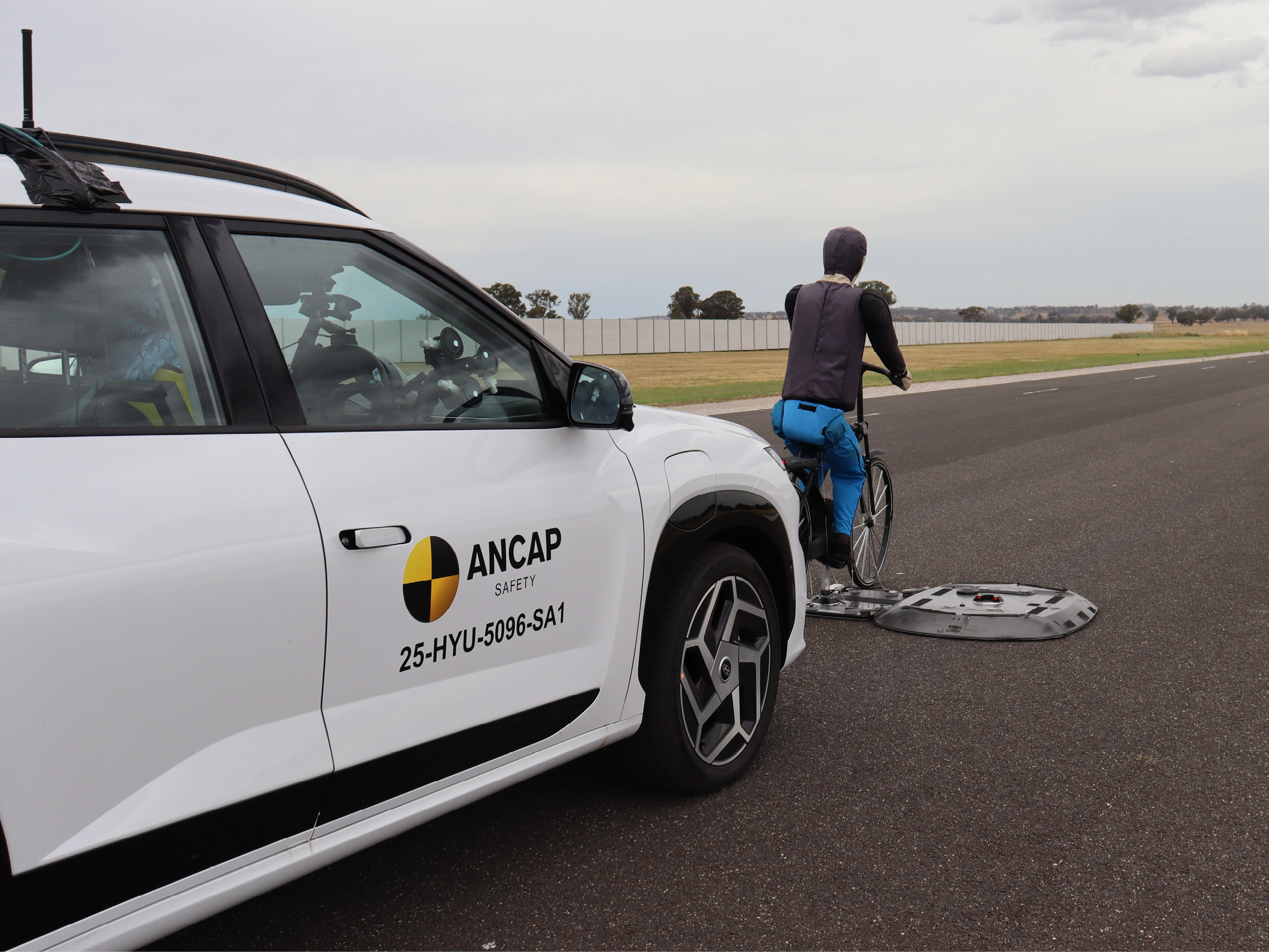
The Hyundai Elexio Medium SUV achieved strong results across all four key assessment areas. It recorded an Adult Occupant Protection score of 92 per cent and Child Occupant Protection of 87 per cent. Its Vulnerable Road User Protection score reached 83 per cent, while Safety Assist systems were rated at 85 per cent.
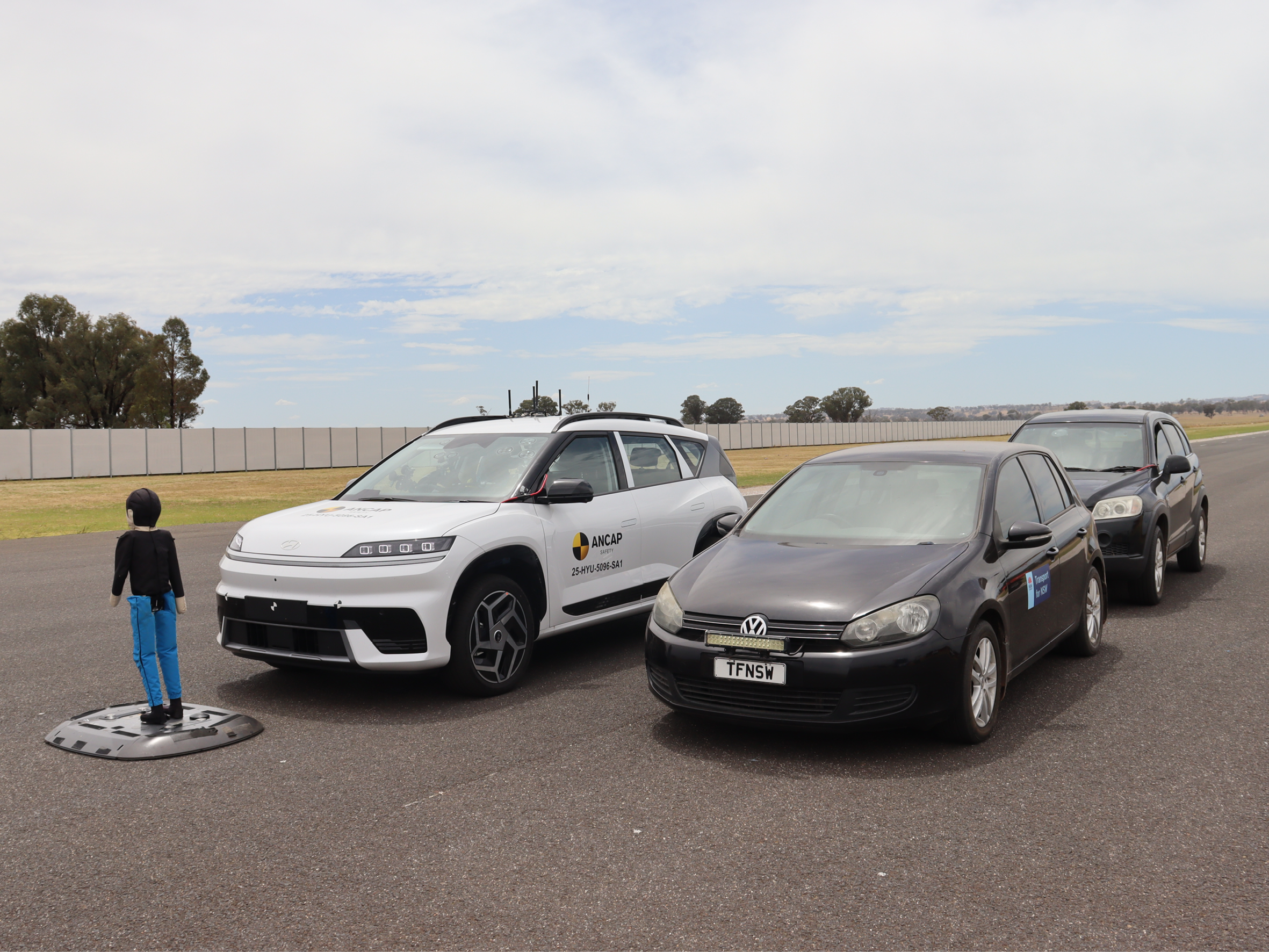
ANCAP said the Elexio performed particularly well in AEB scenarios involving other vehicles, including motorcycles. The rating follows a review of technical evidence and crash data shared with the closely related Kia EV5, with ANCAP confirming that destructive crash test results from the EV5 were applicable to the Elexio.
The Denza B8 also secured a five-star result, building on assessment of its related model, the Denza B5, which was rated in late 2025. ANCAP evaluated extensive technical documentation and test data to confirm comparable crash performance between the two vehicles.
The B8 recorded an Adult Occupant Protection score of 87 per cent and Child Occupant Protection of 89 per cent. Vulnerable Road User Protection was assessed at 75 per cent following additional front-end testing to account for design differences, while Safety Assist systems achieved 79 per cent.
ANCAP Chief Executive Officer Carla Hoorweg said buyers increasingly expect strong safety performance regardless of powertrain type.
“These five-star results demonstrate solid occupant protection combined with advanced crash avoidance technology,” she said.
Both ratings apply to all variants of the Denza B8 and Hyundai Elexio currently on sale in Australia and New Zealand, reinforcing the growing availability of high safety standards across electric and hybrid SUVs.
The same electronic fakery used by Hyundai to put personality into its Ioniq 5 N will soon be used by BMW. The Ioniq star car from the South Korean brand uses artificial engine sounds and fake gears to mimic the appeal of high-performance combustion cars, something BMW will adopt for the upcoming battery-electric M3 in 2027.
BMW M admits it needs to take a similar approach for the EV hero car of its Neue Klasse, but rejects any claim of fakery.
“We’re not pretending to be a combustion car. It’s the emotional connection,” the global head of the M division, Frank van Meel, told Wheels during a round-table interview from Germany.
“We are going to have something like emulated gearshifts and sounds, coming from our classic engines. Just to enhance the feeling.“
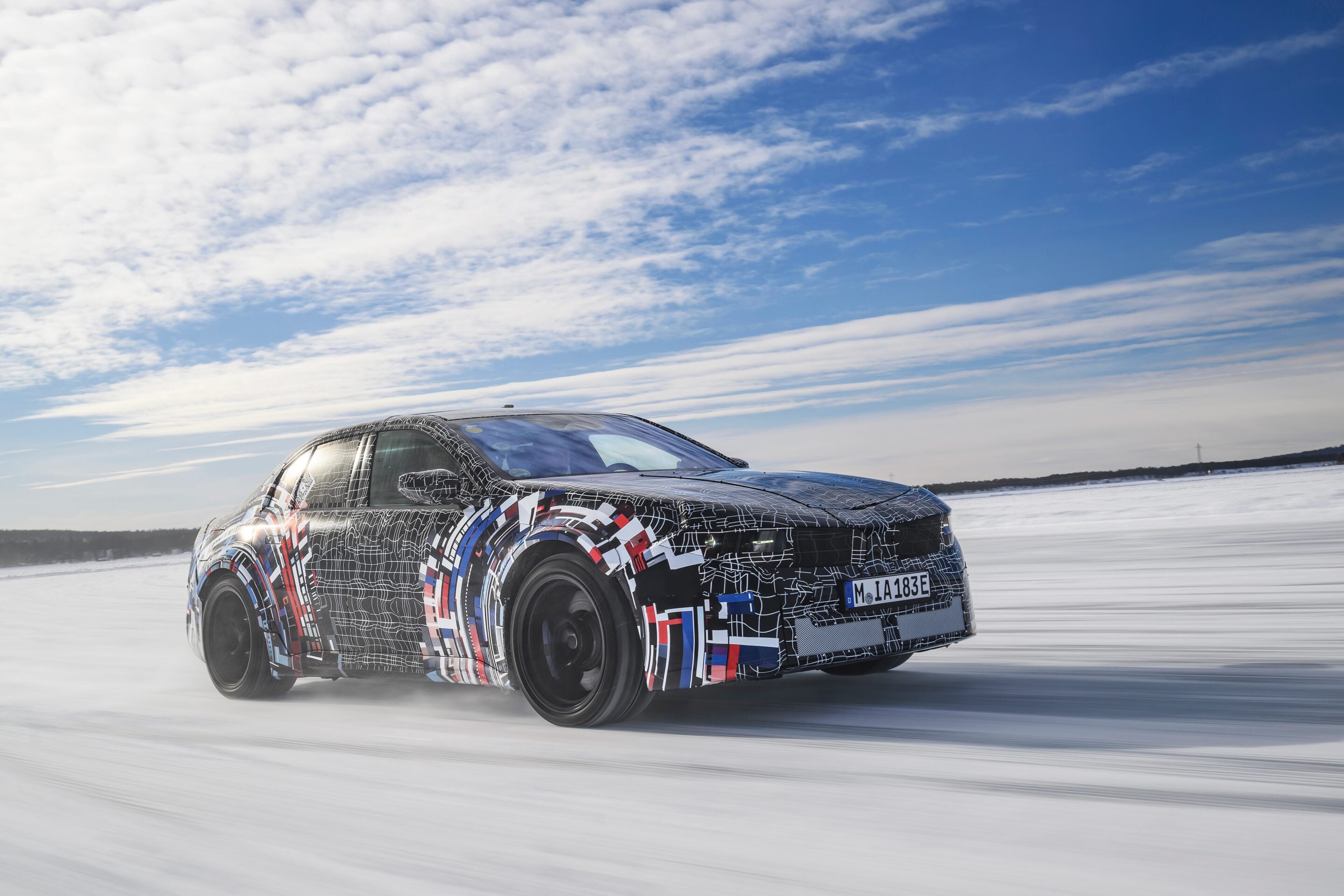
You can only connect to something you know, or feel comfortable with. The human being is trying to find something it is familiar with. Or to a human being it makes the most sense. In order to be connected to the road, you need to have acoustic feedback.”
Van Meel said it’s this long-term connection to high-performance inputs, from the scream of a combustion engine to the kicks from full-throttle upshifts, which provide enjoyment for fast-car drivers and that M is chasing for the EV M3.
“Can it be cool, can it be engaging, can it be something you want to drive? It’s about emotion,” he said. “I think we’ve got the right answers. We’re trying to take the whole community with us. To be honest, it’s going to be crazy. So I’m looking forward to that.”
He would not give any detail on the engine sound, but said it would not be completely identical to the in-line sixes or V8s from past M3s.
“You can take Star Trek sounds, you can go crazy. We will use the basic sounds of the electric motor, but adapt.”
BMW M has already shown its Precision Driving Experience prototype for the M3 EV and van Meel teased a little more detail.
“It’s an open secret we are working with four independent electric motors. It’s the vehicle dynamics that grab you at first. It is a once-in-lifetime chance to do something really great. You will have this crazy car that’s so quick, it’s quicker than anything else.”
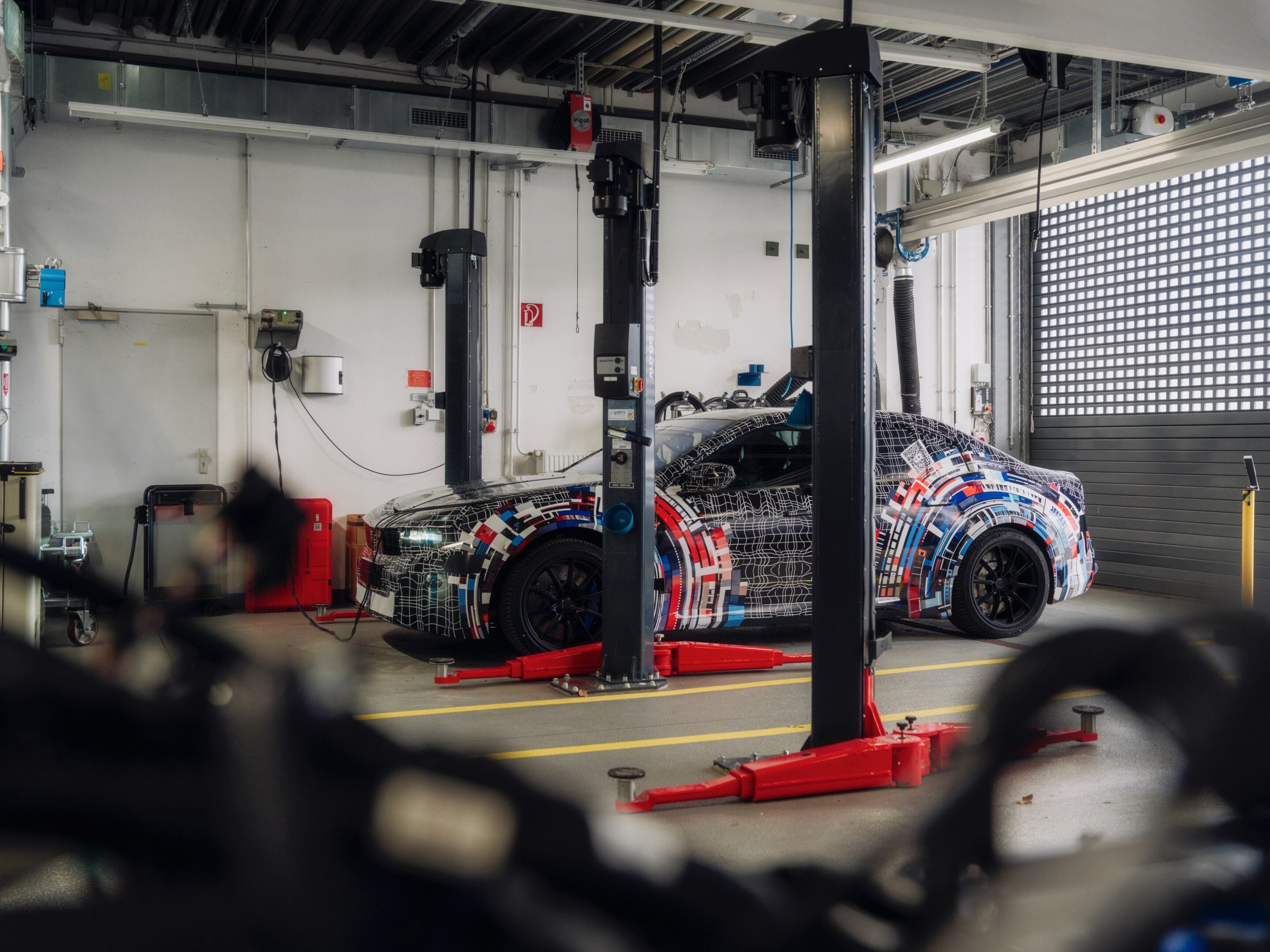
But van Meel said BMW M would take a two-road path to the future, bringing EV but retaining combustion power.
“The good news is we have both directions. So we can go on like this. You have to decide which one to take,” he said. “What makes me so positive about the all-electric one is that timing is everything. We are convinced that what we are working on right now is exactly the technology everyone has been waiting for in a high-performance car.
“It’s something to look forward to, no matter if you like electric cars or not. It’s different to everything else available on the market today. We know what we’re doing already.
“We cannot step down. We always have to take the next step. Whether it’s combustion or electric.”
Electric vehicle batteries are retaining far more of their original capacity than many buyers might expect, according to a large-scale study examining used EVs across multiple brands.
Battery analytics firm Generational analysed data from 8,000 electric vehicles produced by 36 manufacturers, covering cars aged between zero and 12 years and with odometer readings ranging from new to more than 250,000 kilometres. The results showed an average battery state of health (SoH) of 95 per cent across all vehicles studied.
That figure is significantly higher than the 70 per cent threshold typically set by manufacturers as the minimum capacity level covered under battery warranty replacement policies.
Even among older vehicles aged between eight and 12 years, the median battery SoH remained at 85 per cent. The lower 25th percentile of cars in this age group averaged 82 per cent battery health, while the best-performing examples retained up to 90 per cent of their original capacity.
Generational chief executive Oliver Phillpott said the findings challenge common perceptions around EV battery longevity.
“The data shows EV batteries are performing better than many consumers and industry observers have assumed,” he said. “Even older vehicles are comfortably above typical warranty thresholds.”
One of the study’s key findings was that vehicle age and distance travelled do not always directly correlate with battery degradation. According to Generational, some high-kilometre EVs – with more than 160,000km recorded – still returned battery health figures between 88 and 95 per cent.
The company suggested that newer, higher-kilometre vehicles may sometimes present a better battery health proposition than older, low-kilometre examples, challenging traditional used-car valuation assumptions.
The findings are likely to be welcomed by insurers and fleet operators seeking clearer data on long-term ownership costs. Generational has also proposed the introduction of standardised battery condition reports, or “battery passports”, to provide greater transparency in the used EV market.
Philip Nothard, Chair of the Vehicle Remarketing Association, said confidence in battery condition is critical for second-hand buyers.
“Potential buyers of used electric cars place a strong emphasis on battery health,” he said. “Greater transparency will help dispel misconceptions and build trust in the technology.”
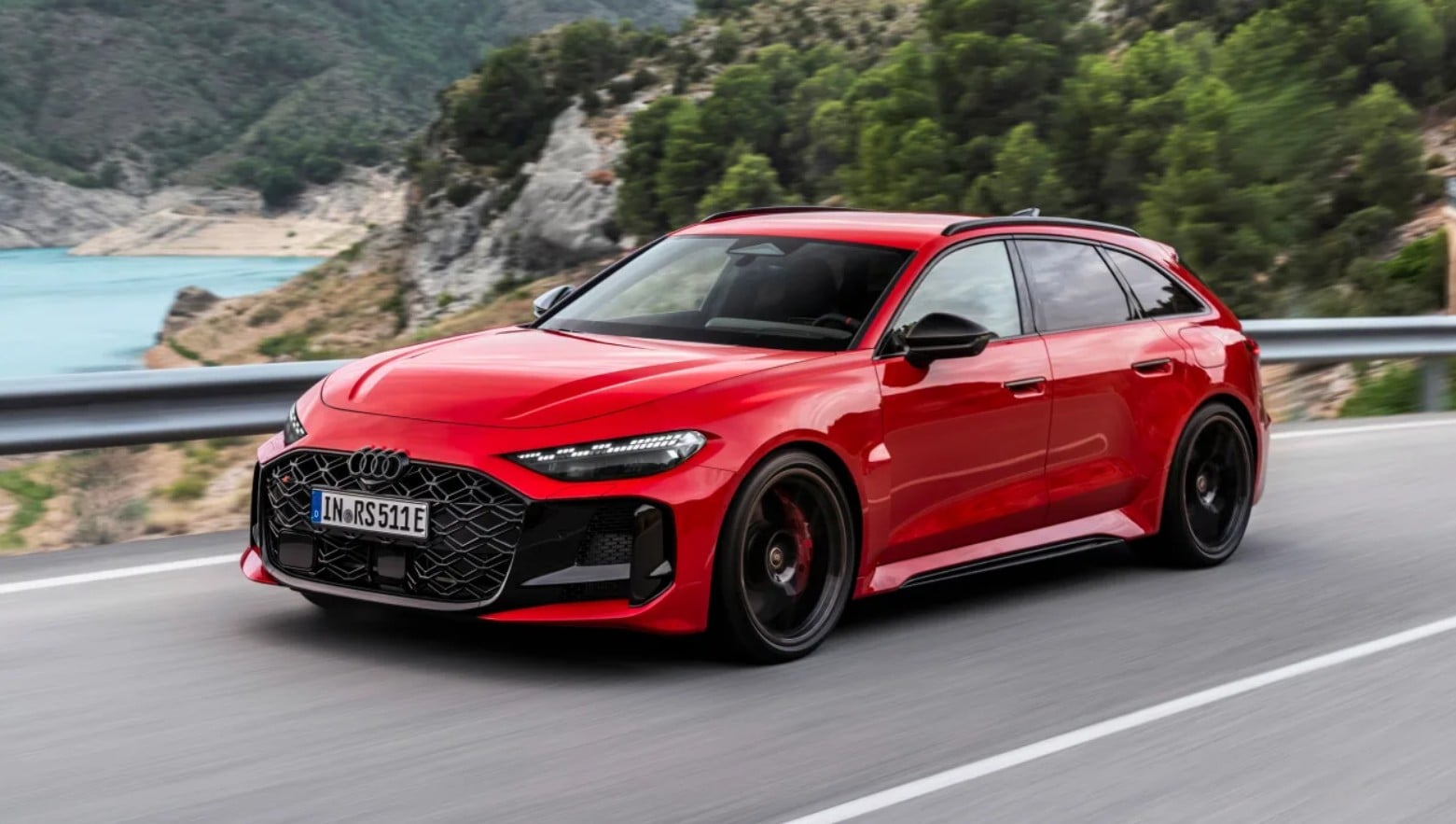
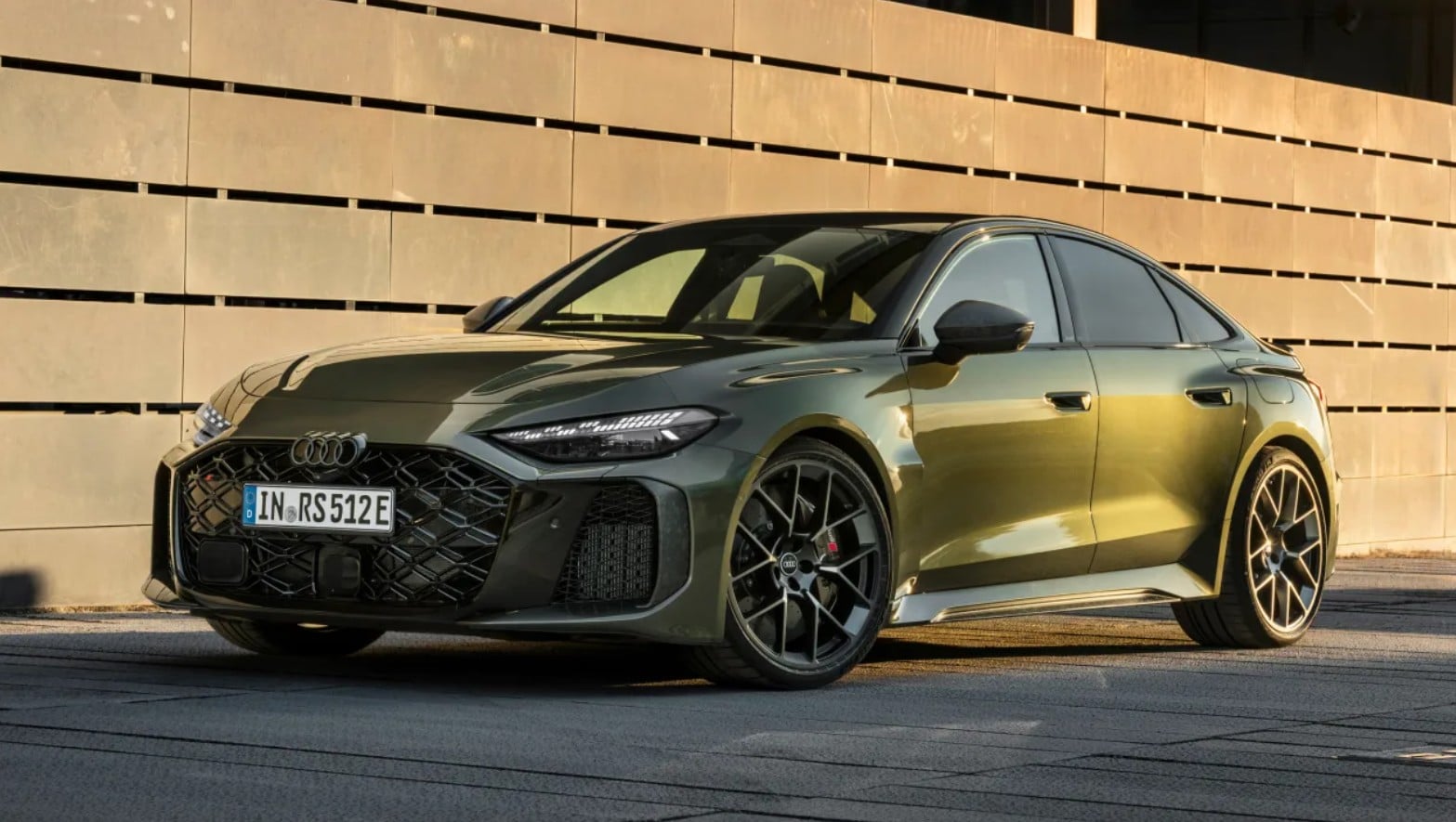
Audi has revealed the all-new RS 5, ushering in a new generation of high-performance RS models built around plug-in hybrid technology.
Available in both sedan and Avant wagon body styles, the new RS 5 pairs a heavily revised 2.9-litre twin-turbo V6 with an electric motor and 25.9kWh battery pack. Combined system output is quoted at around 470kW and 825Nm, making it the most powerful RS 5 to date.
The petrol engine alone produces 375kW, while the electric motor contributes up to 130kW and 460Nm. Audi claims a 0–100km/h sprint time of 3.6 seconds, with top speed rising to 283km/h when fitted with the optional Audi Sport Package.
The V6 has been reworked with twin-scroll turbochargers, a revised fuel injection system and water-to-air intercoolers to meet stricter emissions regulations. Power is delivered via an eight-speed torque-converter automatic transmission to a new centre differential capable of varying torque split between 70:30 and 15:85 front-to-rear.
At the rear, a revised differential integrates an electric motor to enable torque vectoring and full locking capability. Audi says the system can distribute drive between the rear wheels independently to enhance cornering performance.
Despite its hybrid hardware, Audi quotes an electric-only driving range of up to 84 kilometres (WLTP), giving the RS 5 the ability to run as a zero-emissions vehicle for short commutes.
The new RS 5 sits on Audi’s latest PPC platform and features a significantly stiffer body. Overall width has increased by 90mm, and most exterior panels are unique to the RS model. Kerb weight is substantial at 2355kg for the sedan and 2370kg for the Avant.
Suspension comprises steel coil springs with dual-valve dampers, allowing independent control of compression and rebound. Standard brakes measure 420mm at the front and 400mm at the rear, with optional carbon-ceramic discs expanding to 440mm front and 420mm rear.
Styling is markedly more aggressive than the standard A5, with flared wheelarches, a three-dimensional grille, 20-inch wheels as standard (21-inch optional), and large oval exhaust outlets integrated into a prominent rear diffuser.
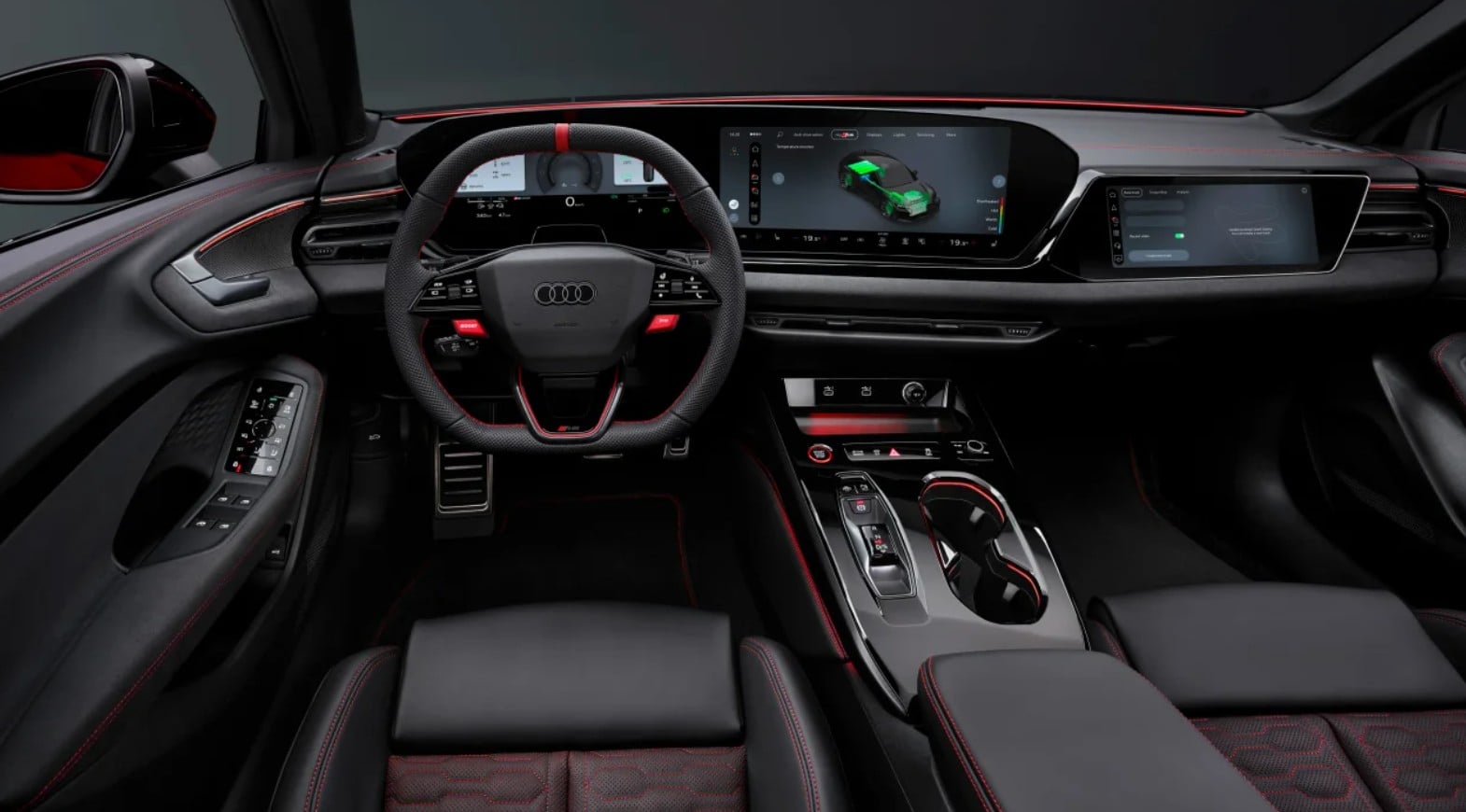
Inside, Audi’s digital-heavy dashboard layout is retained, complemented by new sports seats, carbon-fibre trim and RS-specific displays. A steering wheel-mounted Boost button unlocks maximum power for 10 seconds.
The RS 5 will compete with the BMW M3 and the evolving Mercedes-AMG C-Class range, both of which are also transitioning toward hybrid assistance. Australian pricing and availability are yet to be confirmed.
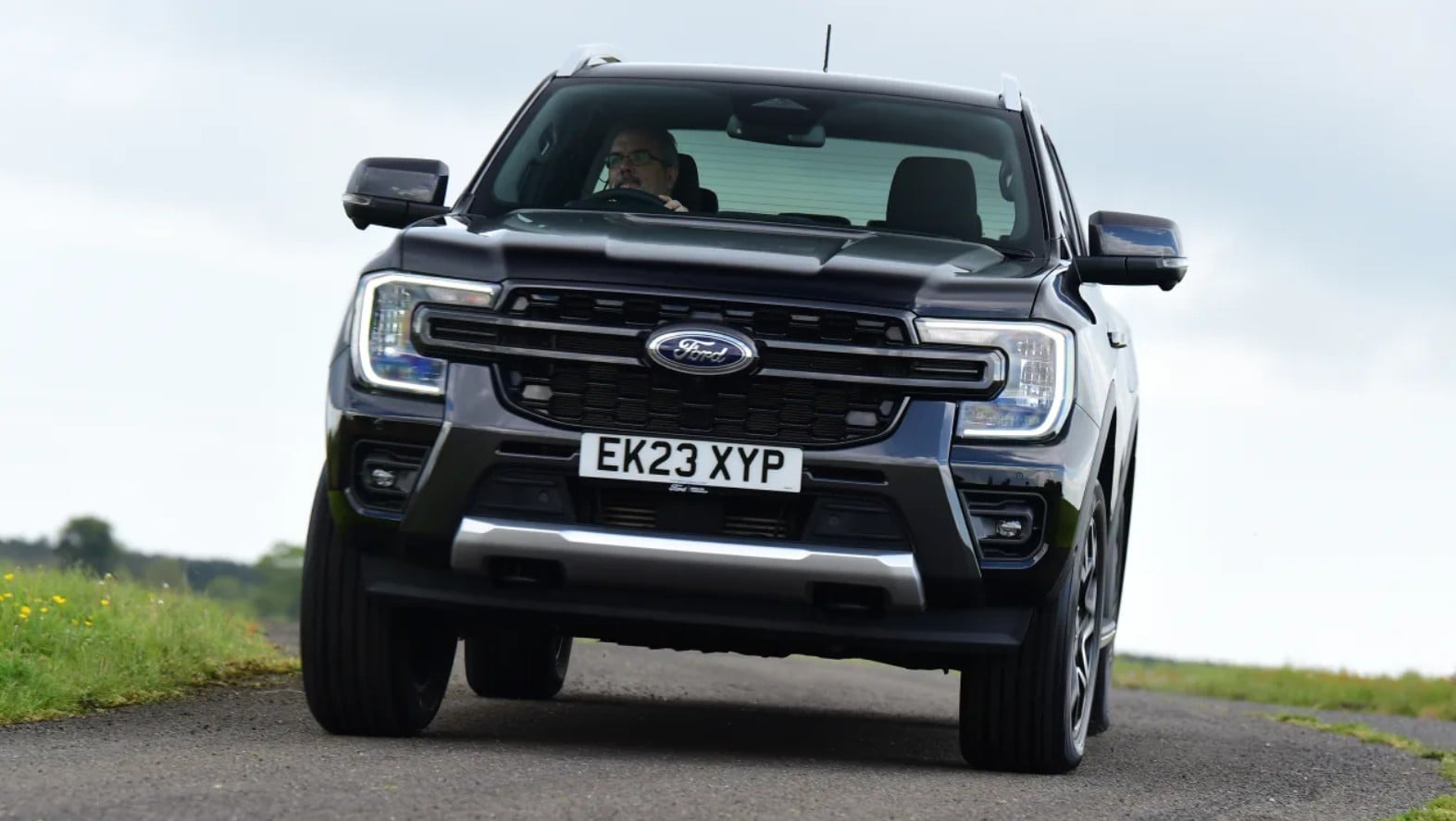
Ford has revealed further details of its planned low-cost electric pick-up, outlining how it intends to make the ambitious program profitable as competition intensifies from Chinese manufacturers.
The new model, expected to be priced from around US$30,000 (about A$45,000 at current exchange rates), forms part of a multi-billion-dollar investment in Ford’s next generation of electric vehicles. CEO Jim Farley has previously said legacy carmakers must fundamentally rethink how they design and build vehicles to remain competitive, particularly against fast-moving Chinese brands.
The new electric pick-up will initially launch in North America and is expected to be similar in size to a Ford Ranger, though it will sit on a completely different, dedicated EV platform.
A major focus of development has been efficiency. Ford engineers are targeting aerodynamic gains not only to improve driving range but to reduce battery size and cost. A teardrop-shaped bed cover, slimmer door mirrors and revised underbody fastenings are among the changes aimed at reducing drag. Air deflectors around the rear wheels and flush-mounted underbody components also contribute to efficiency improvements.
Ford says these incremental changes allow the company to achieve the same usable range with a smaller lithium iron phosphate (LFP) battery pack. The batteries will be produced at a new facility in Detroit, with the company claiming the design will deliver equivalent range with significantly less capacity than current systems, cutting weight and material costs.
Manufacturing will also change. Borrowing from Tesla’s “megacasting” approach, Ford plans to dramatically reduce the number of structural components in key chassis areas. For example, where an existing mid-size ute platform uses more than 160 structural parts in one section, the new EV platform will require just two large castings.
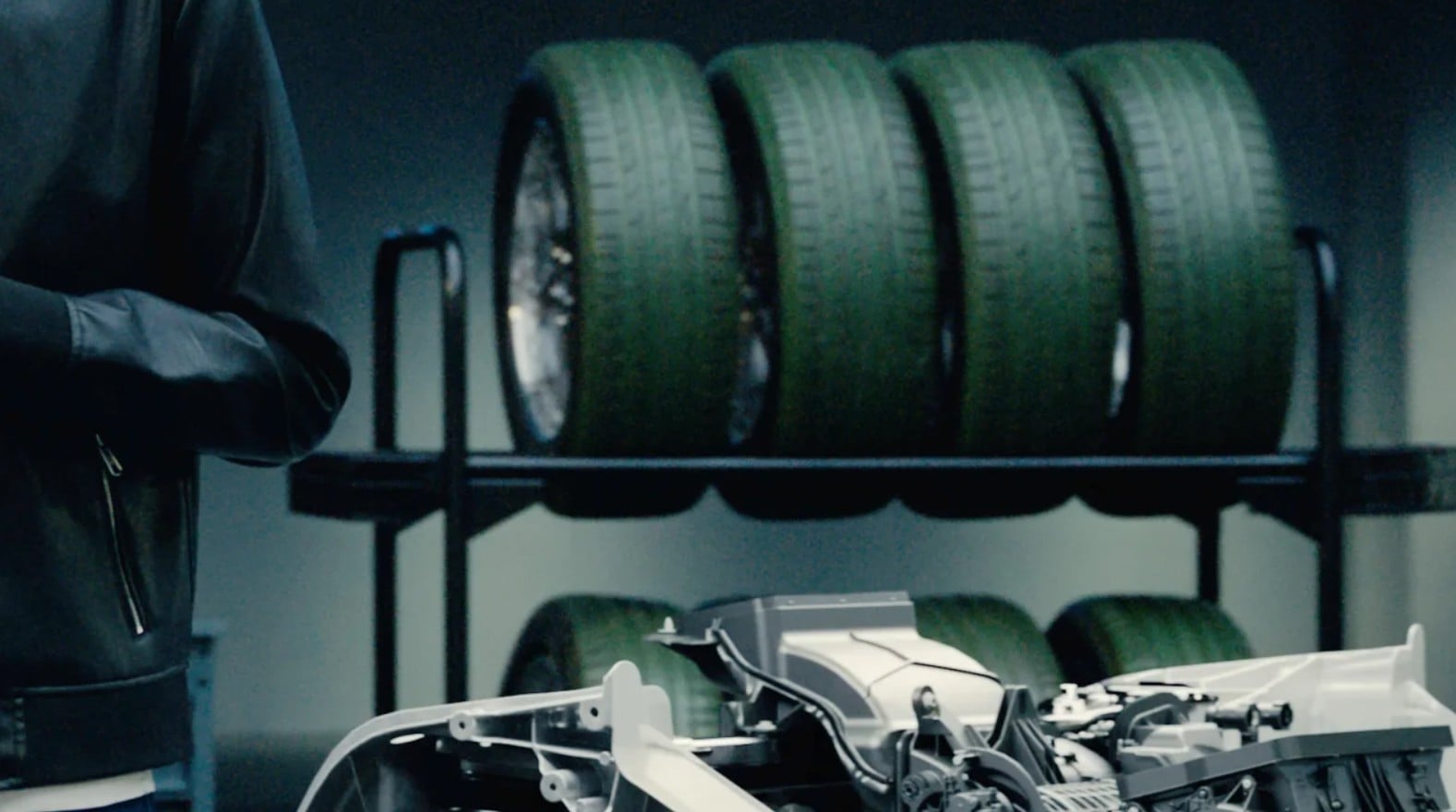
Production will follow a “tree-like” assembly process, with major sub-assemblies built separately before being brought together at final assembly.
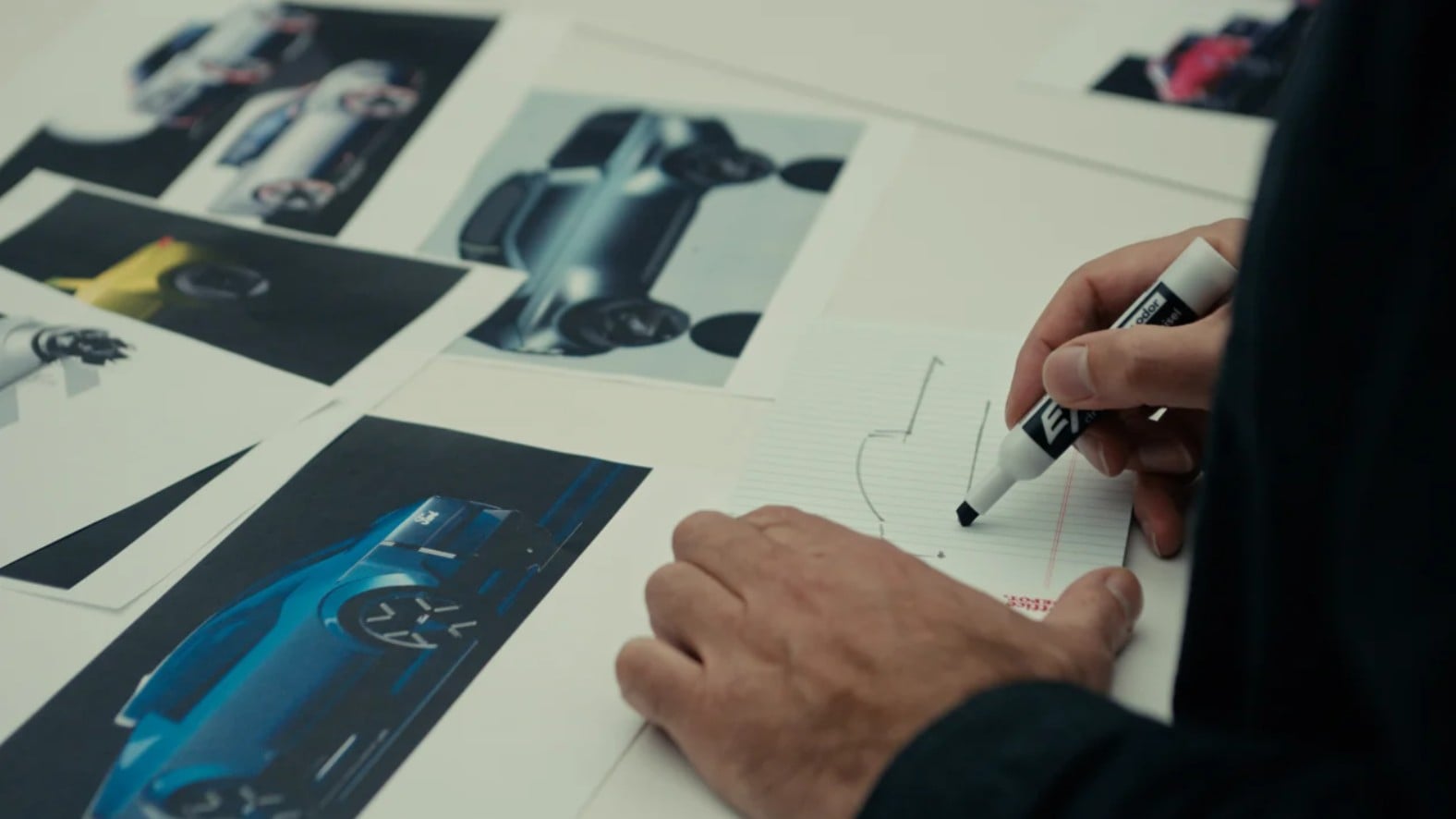
Early design sketches suggest a shorter bonnet, higher windscreen base and more upright front end than Ford’s current petrol and diesel models. Slim vertical headlights and simplified badging point to a more contemporary look.
The platform will underpin additional SUVs and commercial vehicles, and will support vehicle-to-home (V2H) functionality, allowing owners to power a home during outages.
Ford has not confirmed Australian availability, but the technology developed for this model is likely to influence the brand’s broader EV line-up globally.
A regional Victorian council will refund drivers after discovering it had been issuing parking fines above the legally permitted amount for more than a decade.
Mansfield Shire Council, located north-east of Melbourne, confirmed it is developing a refund scheme after identifying that some parking infringements issued between 2009 and 2019 exceeded the default penalty allowed under state legislation, reported Nine News Australia.
Under the Road Safety Act 1986, local councils must issue parking fines at the prescribed default amount – $41, equivalent to 0.2 penalty units – unless a formal council resolution is passed authorising a higher rate.
The report said that Mansfield Shire had issued fines of up to 0.5 penalty units, or $102, for 11 different types of infringements during the period in question, despite no formal resolution being in place.

The council estimates that approximately $34,588 was collected above the default rate, affecting around 765 fines dating back as far as 2009. An additional $10,000 may have been paid in late fees or legal costs linked to those infringements.
In a statement the council said the requirement for a formal resolution had not been clearly communicated to Victorian councils when guidelines were updated in 2009 and again in 2019.
Mayor Steve Rabie described the discrepancy as regrettable but said the council was committed to correcting the issue.
“We are not scared to address errors. We’ve identified an issue and we will fix it,” Rabie said. “If this has affected anybody – we are sorry.”
He added that the situation was “disappointing because it’s an avoidable situation”, but noted the total amount involved was relatively small when spread over many years.
“Mansfield Shire Council has not sought to make money on parking fines – we use fines to ensure fair use of parking resources for the community as a whole,” Rabie said.
The council has sought legal advice to confirm the exact amount overpaid and said eligible motorists will be contacted directly regarding refunds.
