
Unbelievably for those of us old enough to remember it, it’s been over 21 years since the last Holden Monaro rolled off the production line and more than 54 years since the last of the HG shape. Holden’s performance coupe sadly wasn’t part of the line-up when Holden shut in 2020, but remains one of its most iconic models to this day. That got us thinking – such as when we imagined a modern-day Holden line-up in November 2025 – what if Holden still made the Monaro today? What could AI create?
There’s no question that coupes and performance cars sell nowhere near as strongly as they once did, especially with the latest emissions standards plus the fuel crisis we’re currently experiencing. But we’d like to think that somehow in an alternative universe, Holden would have found a way to produce the Monaro in 2026, albeit maybe based on a potential Chevrolet Camaro.
The brief to AI: “A proper Aussie grand tourer: long bonnet, rear-drive stance, muscular but clean. Think heritage of the Holden Monaro blended with modern performance coupe vibes like a Ford Mustang and BMW M4, but unmistakably Australian.”
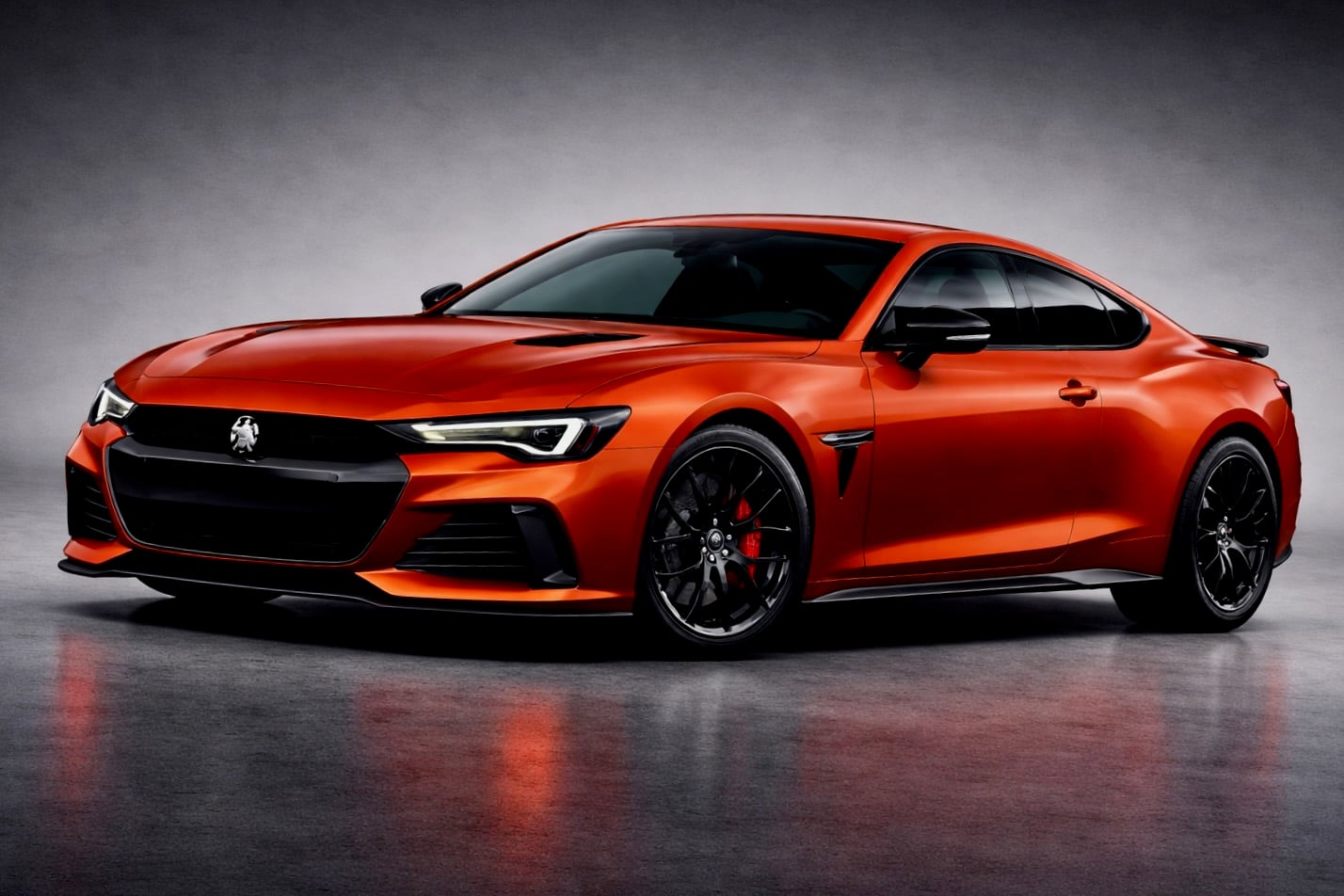
What AI produced was – we think, at least – a pretty good design for a modern-day Monaro. We’d say that the model rendered would be the equivalent of the CV8, and its aggression is noticeable thanks to sharp LED headlights, bonnet vents and the low and wide stance with the big rear haunches.
The side profile is elegant with the long bonnet and short rear deck, frameless doors and strong shoulder line running into the rear hips. At the rear is a full-width LED light bar, quad exhausts (which AI described as “real ones, not fake nonsense”) and a subtle ducktail spoiler.
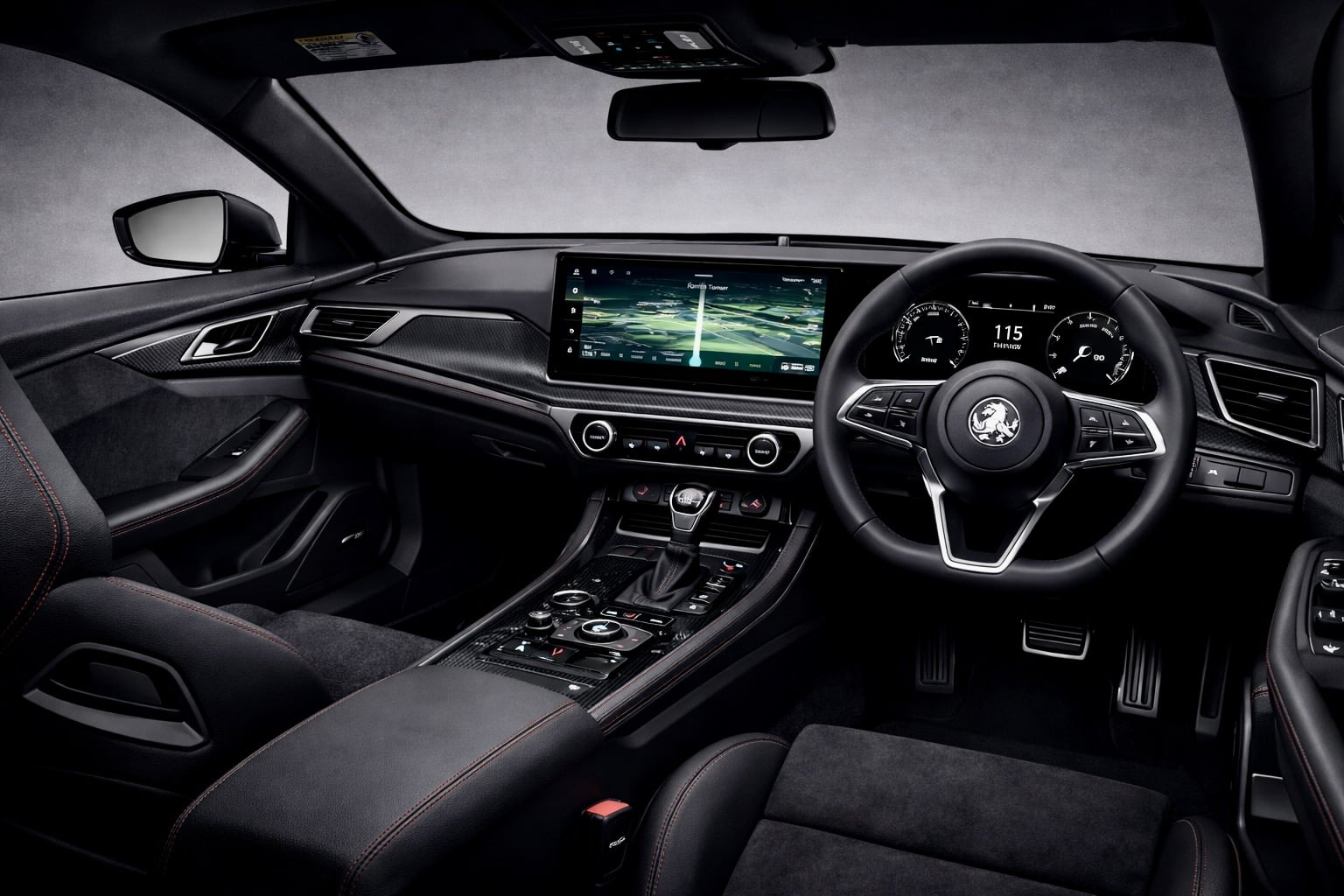
Inside the 2026 Monaro, AI rendered a driver-focused cockpit angled slightly towards the driver. A digital instrument cluster and large infotainment system feature, but many physical knobs for key controls (“because sanity matters”, says AI). Materials like leather and suede, as well as brushed aluminium and carbon trim, feature inside for an “expensive and upmarket feel”.
As for drivetrains, AI predicts that the 2026 Monaro would offer three: a 500kW 6.2-litre supercharged V8 in the model shown, a 400kW twin-turbo V6 hybrid with optional all-wheel drive and – in a sign of the times – a 600kW dual-motor electric variant with torque vectoring and a “simulated V8 character mode”. Higher-performance versions from HSV wouldn’t be out of the question either.
Regardless of the drivetrain, chassis features would include adaptive dampers, a mechanical limited-slip differential, “proper steering feel – none of that numb nonsense” and maybe even an optional track pack with carbon ceramic brakes, semi-slick tyres and stiffer suspension.
Obviously, this all is just a pipe dream and will never happen, but it’s great to be able to use a tool like AI to reimagine the dead cars of our dreams. AI said that if a 2026 Monaro were to launch, it would be more emotional than a Camaro, less clinical than an M4 and more premium than a Mustang. Basically, it would be the Aussie muscle GT that never got its proper modern send-off.
Medium SUVs continue to be the flavour of the month – well, year, no, decade… actually, make that century – and their sales show no signs of abating anytime soon. Most manufacturers offer one in some form, with some even offering two options for buyers, and they come in all different styles and with different drivetrains. Importantly, most medium SUVs offer a hybrid drivetrain of some sort, which only help their sales further. Have you got a medium SUV under consideration for your next car purchase? Here are our 10 favourites:
Honda CR-V e:HEV
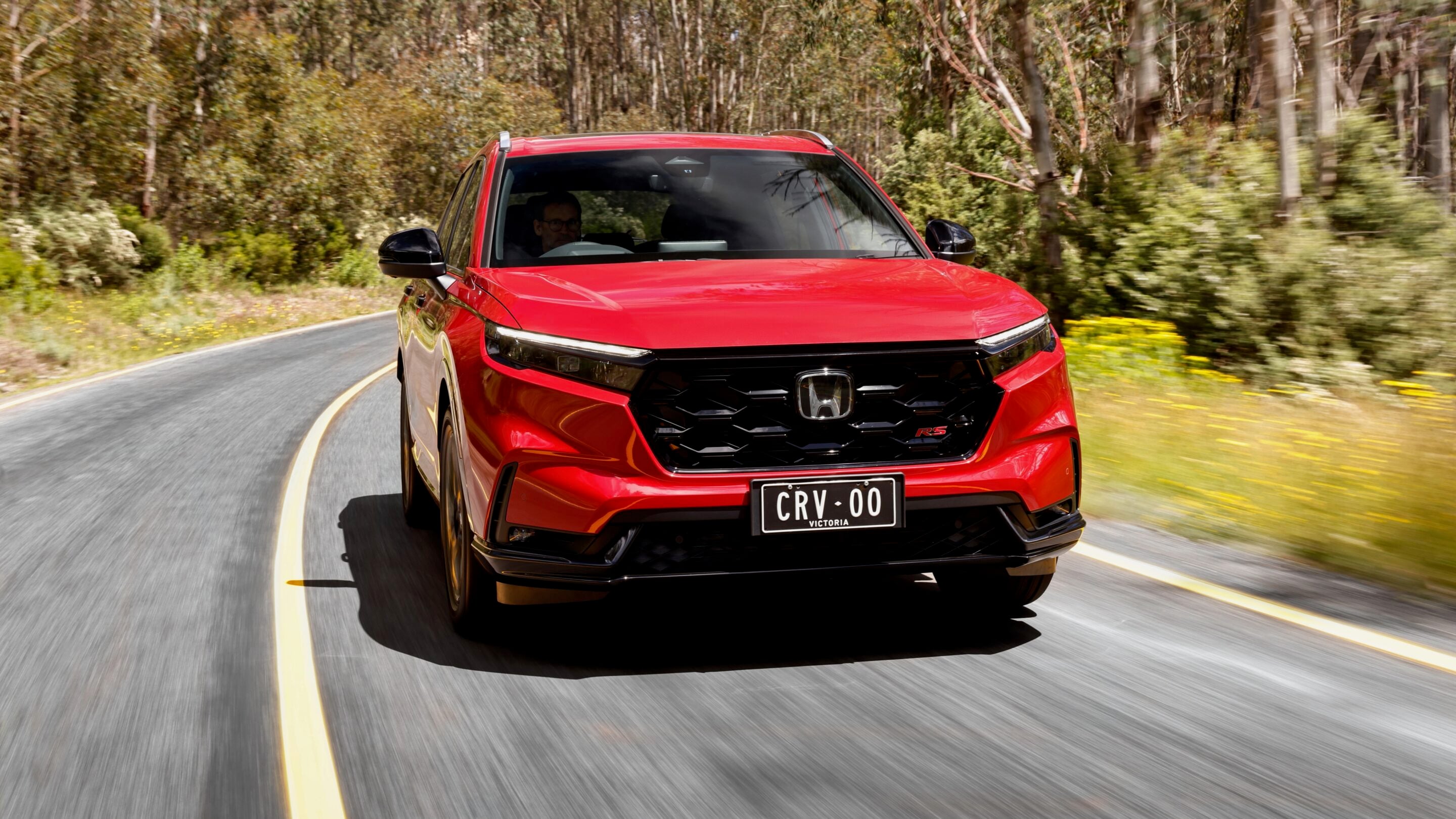
Drivetrain: 2.0-litre four-cylinder hybrid, 135kW, CVT, front or all-wheel drive
Combined fuel economy: 5.5L/100km (2WD) – 5.7L/100km (AWD)
In our view the Honda CR-V is one of the best medium SUV options currently on the market thanks to its combination of spacious cabin, quality materials, generous list of standard features, a great driving experience and its punchy yet efficient 2.0-litre hybrid drivetrain. Honda has just updated the CR-V with design and equipment tweaks, and made the hybrid drivetrain more widely available in the range with pricing starting at $49,900 driveaway for the entry-level hybrid model that’s called the e:HEV X.
BYD Sealion 5
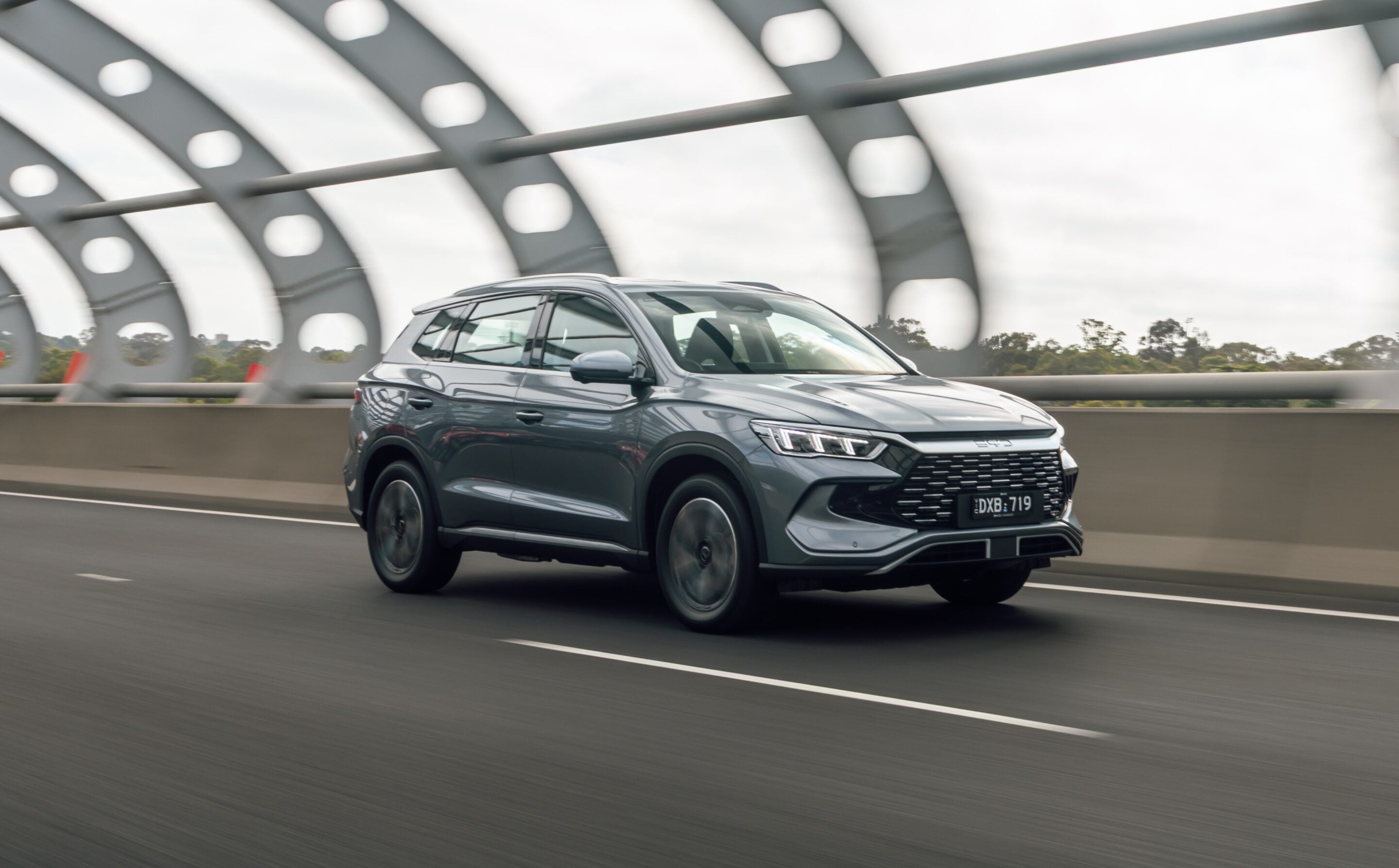
Drivetrain: 1.5-litre four-cylinder plug-in hybrid, 156kW, DHT, front-wheel drive
Battery size, electric range: 12.9kWh or 18.3kWh, 71-100km (NEDC)
Combined fuel economy: 1.2-1.3L/100km (full charge), 4.5-4.6L/100km (low charge)
The BYD Sealion 5 entered the Australian market earlier this year as Australia’s cheapest plug-in hybrid SUV, priced from $33,990 +ORC. It features an efficient plug-in hybrid drivetrain pumping out 156kW of power, but it can also travel up to 100km electrically. Two models are available with two different battery sizes and a 156kW drivetrain handles the propulsion. Fully charge it and you’ll reportedly see just 1.3L/100km of combined fuel consumption, which is more than handy in the current fuel crisis.
Chery Tiggo 7 Super-Hybrid

Drivetrain: 1.5-litre four-cylinder turbocharged plug-in hybrid, 255kW, DHT, front-wheel drive
Battery size, electric range: 18.4kWh, 93km (NEDC)
Combined fuel economy: 1.4L/100km (fully charged)
The Chery Tiggo 7 Super Hybrid used to be Australia’s most favoured plug-in hybrid SUV before the BYD Sealion 5 arrived, but it still only costs from $34,990 driveaway for the entry-level Urban model. The Tiggo 7 Super Hybrid is impressively efficient with a claimed 93km electric driving range, as well as a total range of 1200km. The Tiggo 7 is also practical and well equipped, and its stunning value for money is exactly what we expect from Chery.
Geely Starray EM-i PHEV
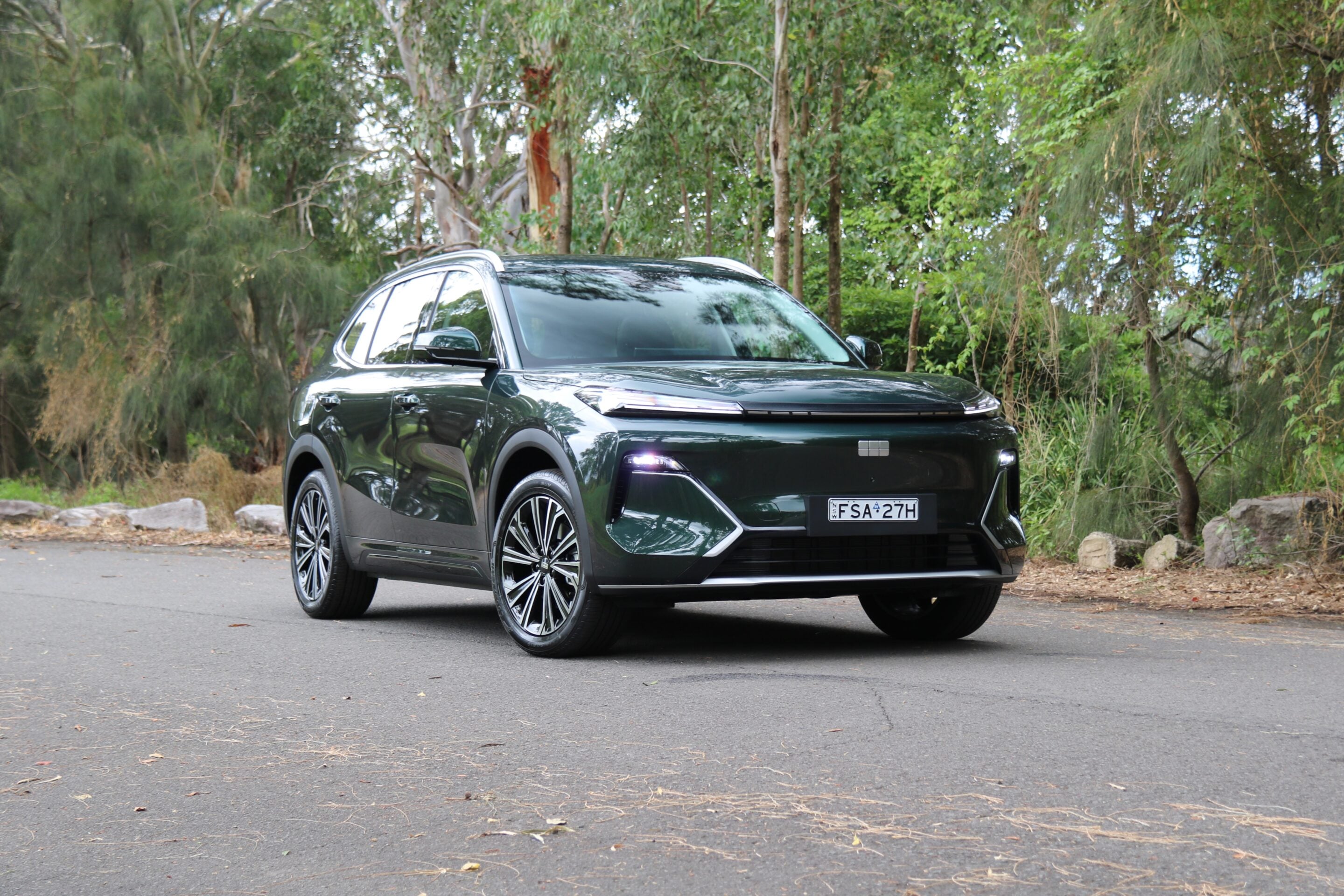
Drivetrain: 1.5-litre plug-in hybrid, 193kW, 18.4kWh battery, DHT, front-wheel drive
Claimed combined fuel consumption: 2.4L/100km
EV range: 83km
The Geely Starray entered the Australian market in late 2025 but is already selling well thanks to its healthy 83km electric range, combined fuel consumption of only 2.4L/100km (if fully charged) and handsome styling. It’s also well equipped, practical and its cabin quality is excellent – plus, its huge central touchscreen is easy to use and screen quality is quite sharp as well.
GWM Haval H6
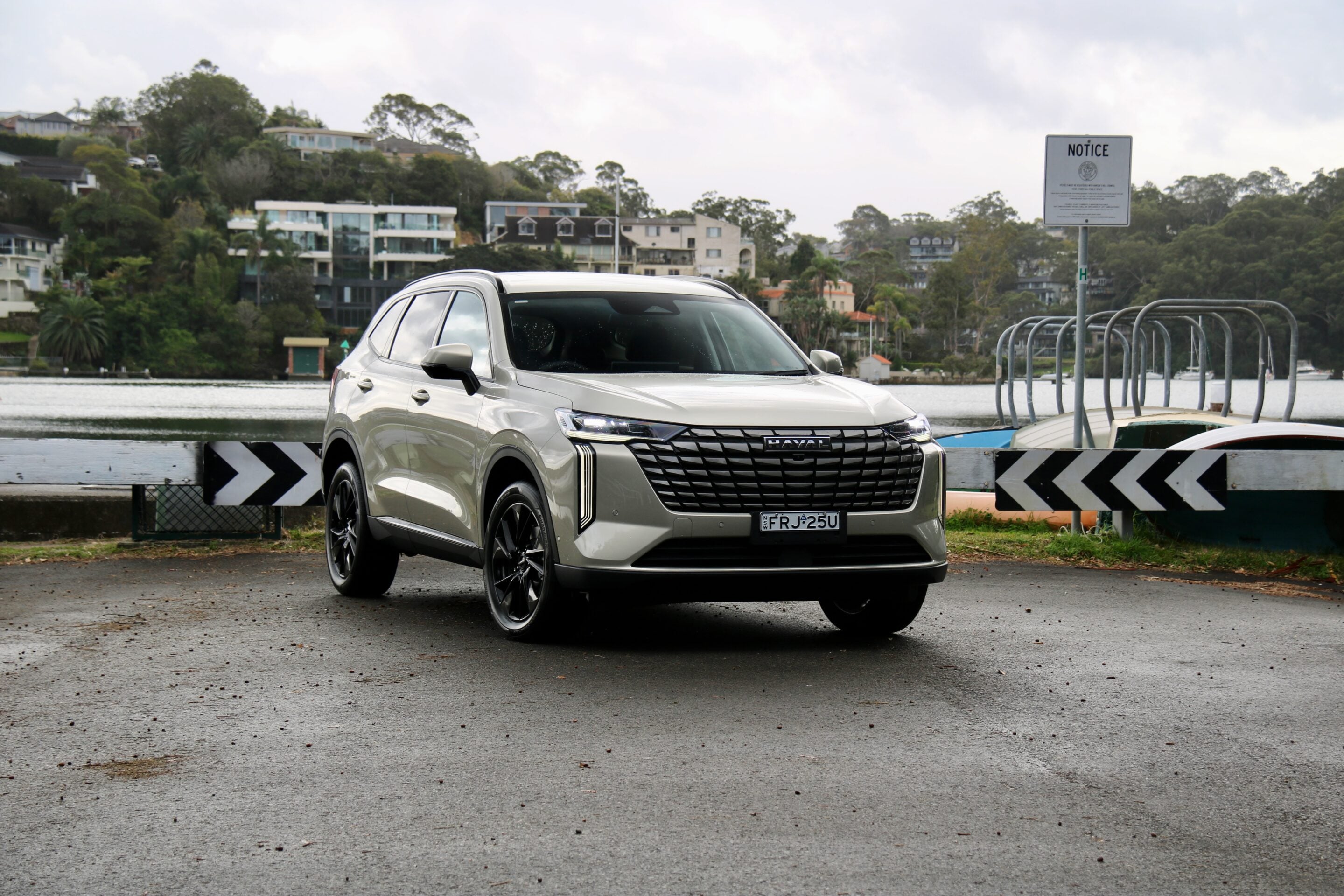
Powertrain: 1.5-litre four-cylinder turbo hybrid, 179kW, two-speed auto, front- or all-wheel drive
Fuel efficiency: 5.2L/100km
The GWM Haval H6 was given a big update last year, which improved its styling and dynamics, gave it a new infotainment system and improved its already strong value-for-money credentials even further. The base Lux hybrid is priced from just $40,990 driveaway but is often discounted further so currently it’s priced at $36,990 driveaway. Its hybrid system is punchy and gives good performance, but it’s also rated at just 5.2L/100km on the combined cycle. A plug-in hybrid with 100km of electric range is also available, which adds a new infotainment system.
Kia Sportage Hybrid
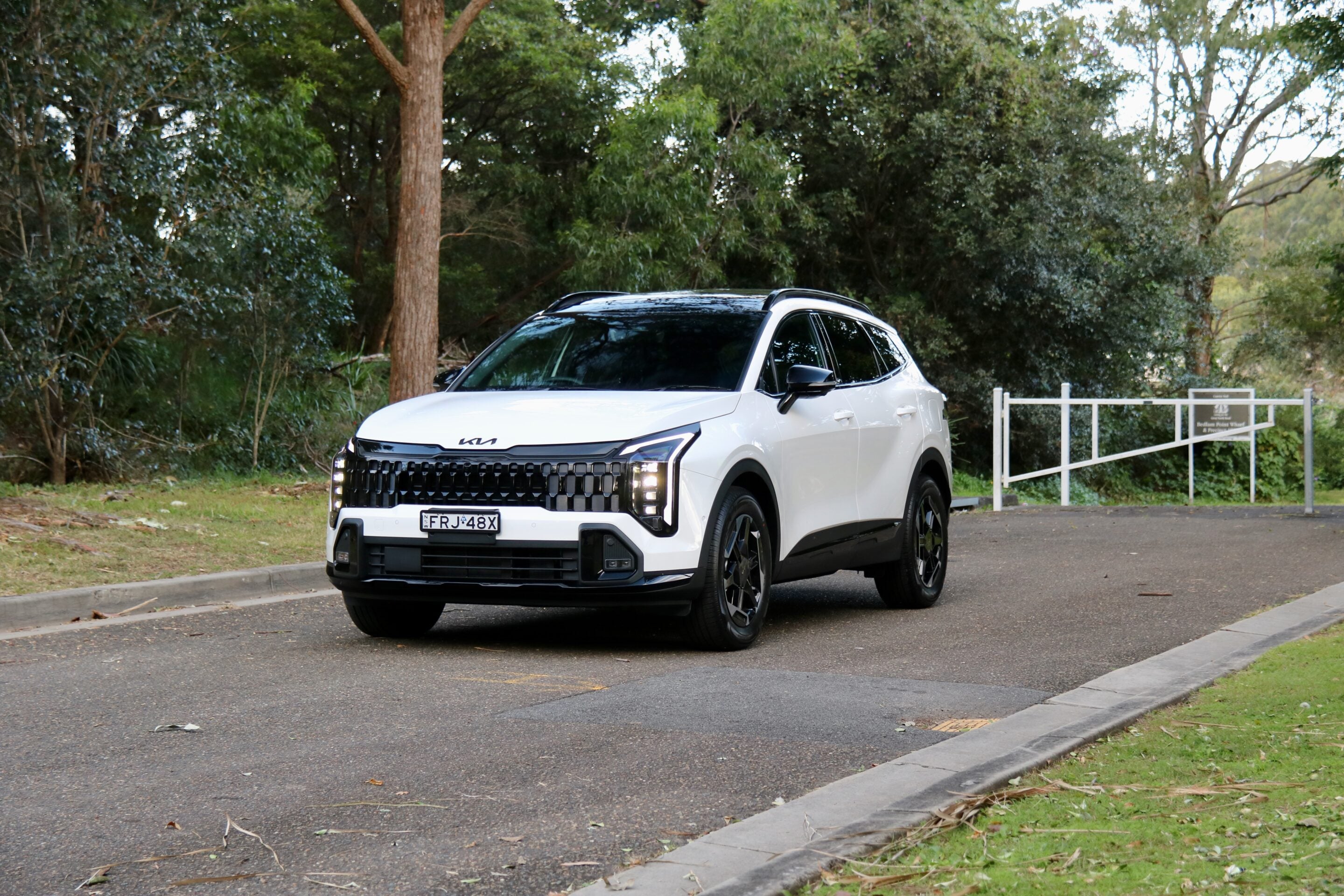
Drivetrain: 1.6-litre turbocharged four-cylinder hybrid, 173kW, six-speed auto, front- or all-wheel drive
Combined fuel economy: 4.9L/100km (2WD) – 5.3L/100km (AWD)
Kia’s Sportage is a perenially strong performer in the medium SUV segment and one of the reasons why is that it offers so much choice, with petrol, turbo-petrol, turbo-diesel and turbo-hybrids all on offer in Australia. We think that the hybrid option – albeit more expensive than the others – is the one to buy as it’s got more than enough punch and is quite fuel efficient. The Sportage is also practical, great to drive and covered by a long seven-year warranty.
Hyundai Tucson Hybrid
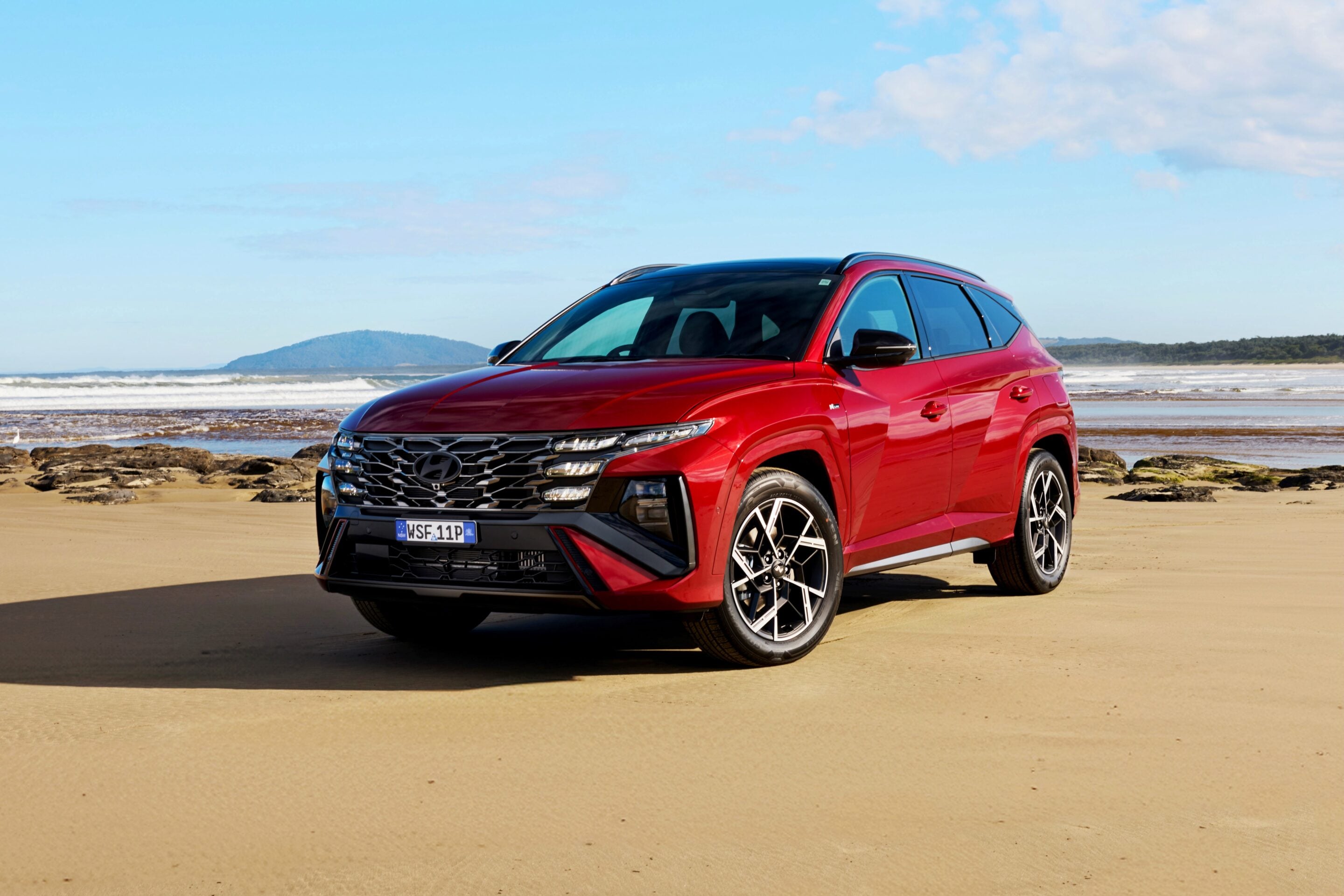
Drivetrain: 1.6-litre turbocharged four-cylinder hybrid, 172kW, six-speed auto, front- or all-wheel drive
Combined fuel economy: 4.9L/100km (2WD) – 5.3L/100km (AWD)
The Hyundai Tucson was the overall winner of Wheels Best Medium SUV 2025 and that’s because it’s spacious, well equipped, good value for money and good to drive. Its punchy and efficient hybrid drivetrain features on all models (aside from two). Fold the rear seats down and it offers the most spacious boot in the mid-size segment at a huge 1903 litres, and interior practicality is also excellent.
MG HS Hybrid+
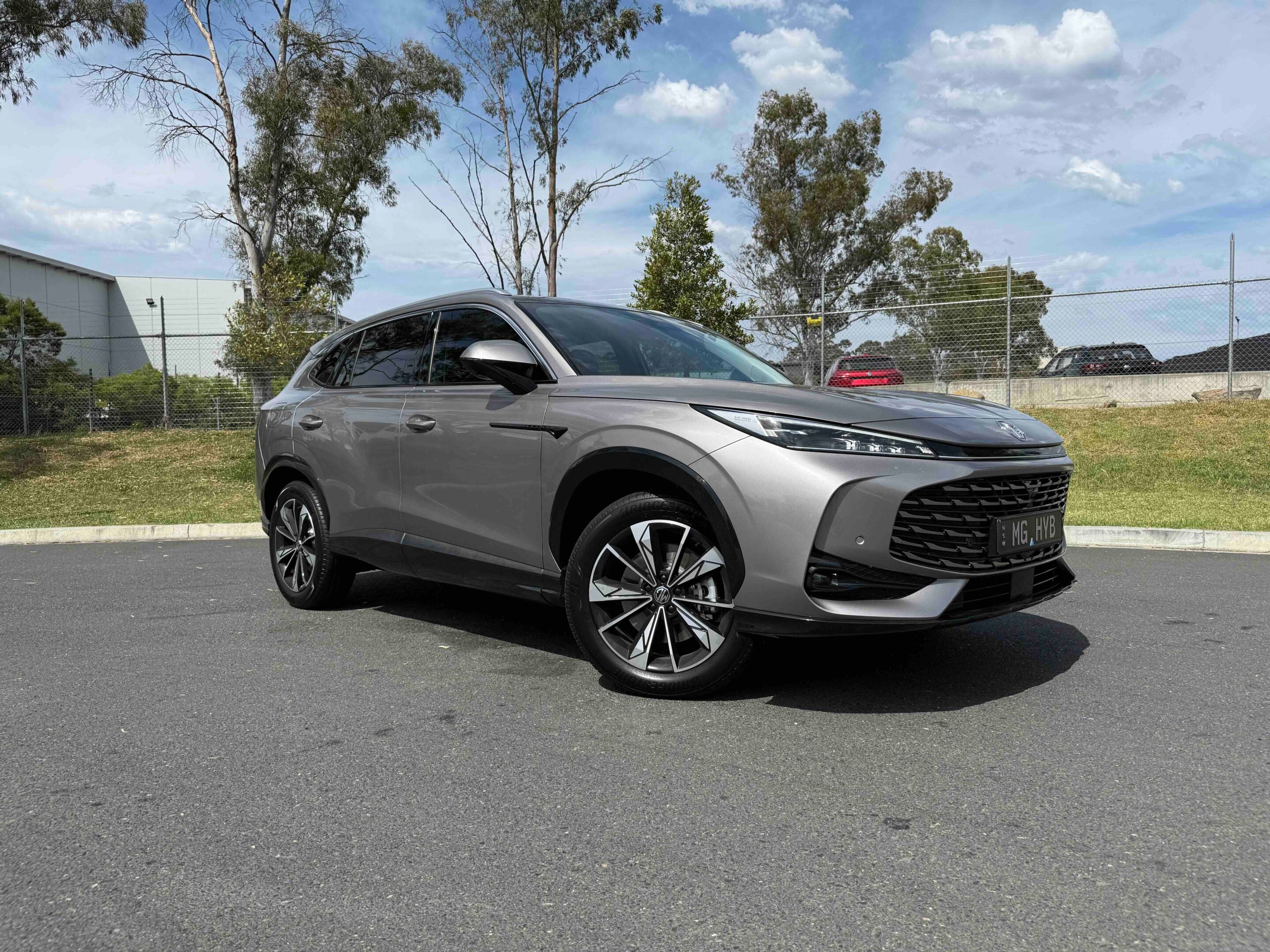
Drivetrain: 1.5-litre turbo four-cylinder hybrid, 165kW, eCVT, front-wheel drive
Combined fuel economy: 5.2L/100km
In case you missed it, the MG HS Hybrid+ came very close to winning Wheels Car of the Year 2025-26, which is no mean feat. That’s thanks to its high quality and spacious cabin, long list of standard features, solid driving experience and excellent hybrid system that provides more than enough punch but can easily match its 5.2L/100km claimed fuel consumption figure. Pricing starts from just $40,990 driveaway and the HS is also covered by MG’s long warranty program with up to 10 years of coverage.
Mazda CX-60 PHEV
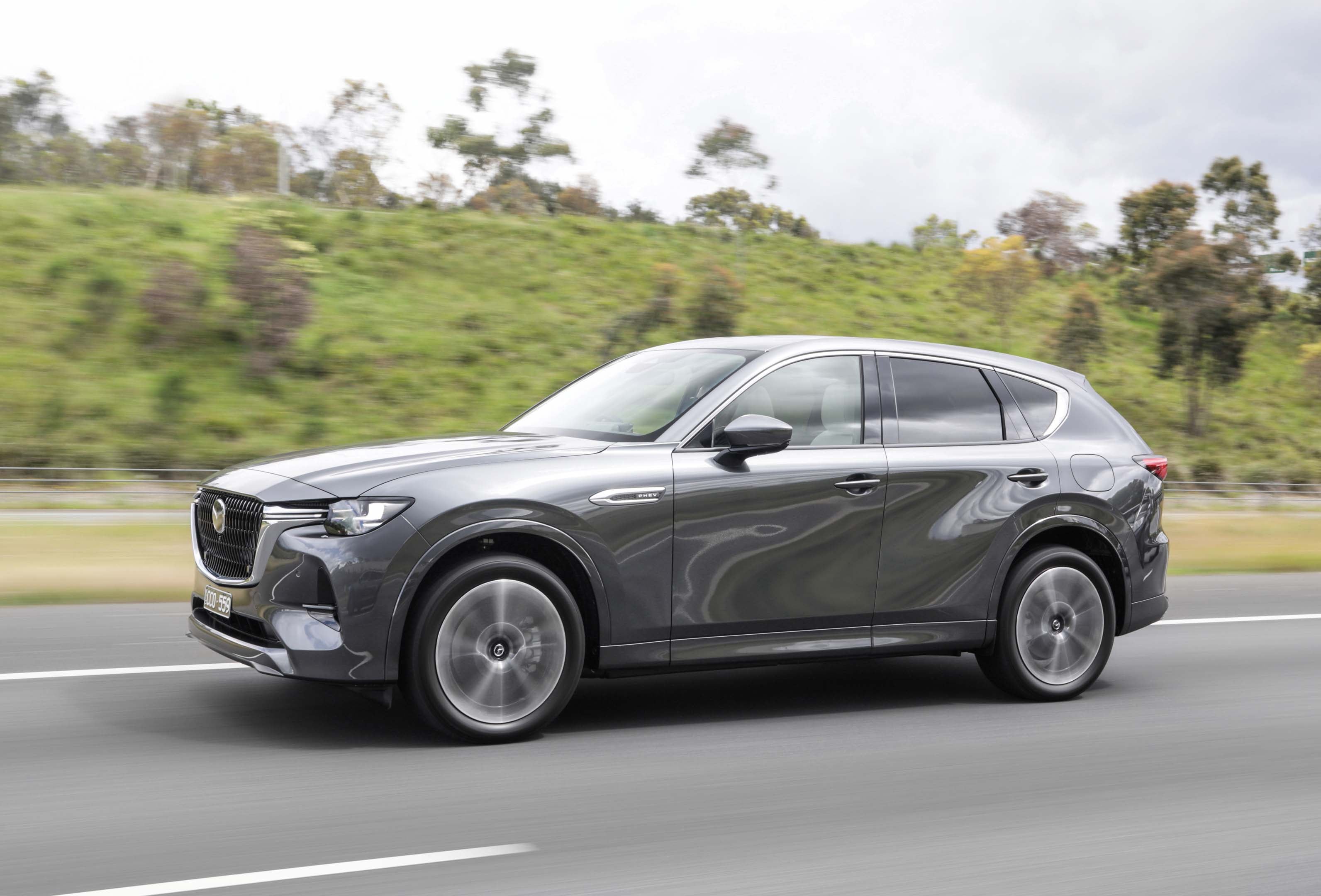
Drivetrain: 2.5-litre four-cylinder plug-in hybrid, 241kW, eight-speed auto, all-wheel drive
Battery size, electric range: 17.8kWh, 78km (NEDC)
Combined fuel economy: 2.1L/100km (fully charged)
Mazda’s first plug-in hybrid in Australia was the mid-size CX-60 before the later arrival of the larger seven-seat CX-80. Both feature a strong 241kW 2.5-litre plug-in hybrid drivetrain with up to 78km of electric driving range, which is also capable of a low 2.1L/100km combined fuel consumption (if charged). There are also mild-hybrid drivetrains in the CX-60 range, including a 187kW diesel that returns just 5.0L/100km, giving buyers plenty of options to save fuel,. Regardless, the CX-60 is a sweet steer that is fun and involving to drive.
Toyota RAV4
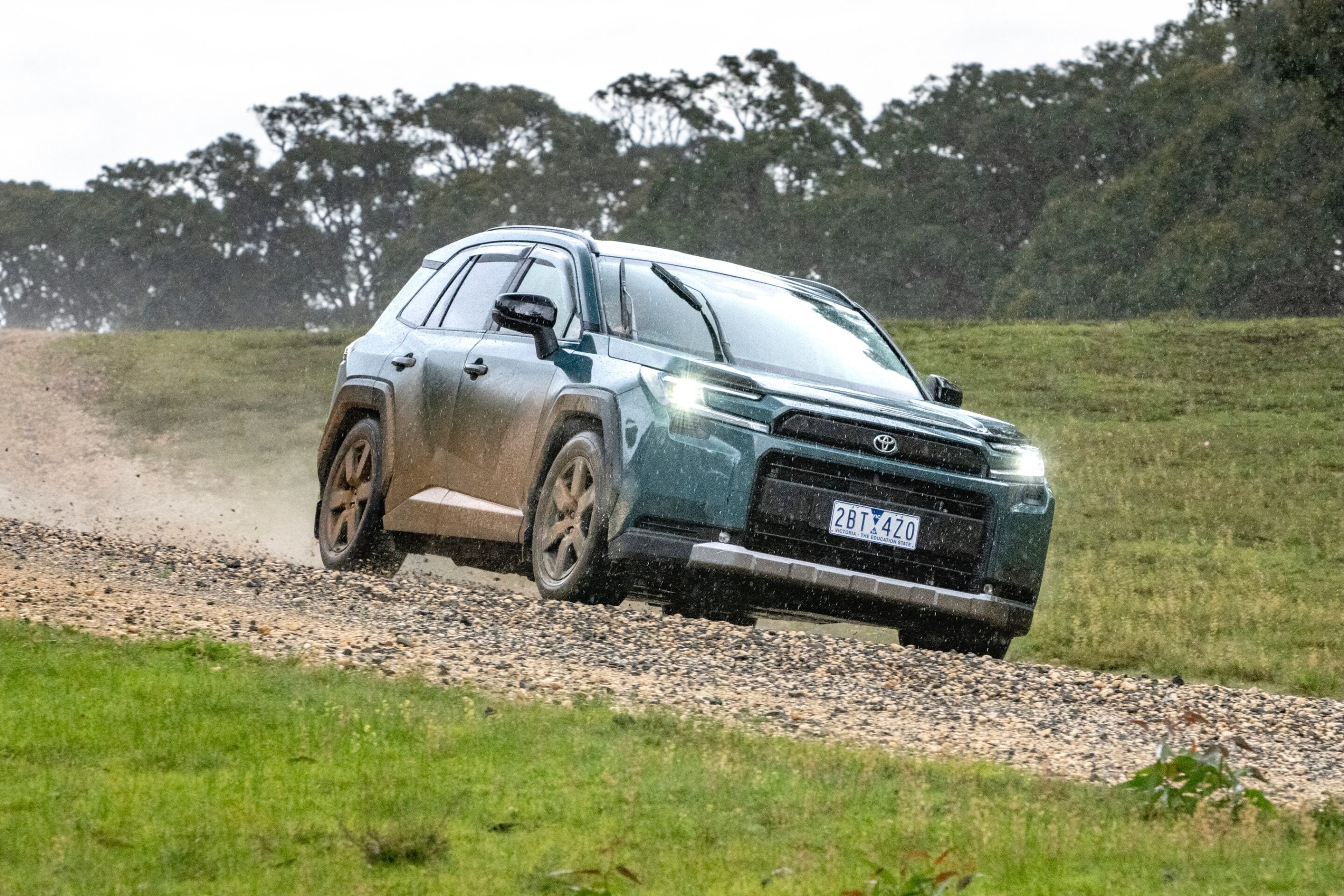
Drivetrain: 2.5-litre four-cylinder hybrid, 143kW, eCVT, front- or all-wheel drive
Combined fuel economy: 4.5L/100km
Finally, we come to the Big Kahuna of the global car industry: the Toyota RAV4. The sixth-generation model, priced from $45,990 plus on-road costs, has just hit Australian shores sporting a new look, a new cabin design, a lot more tech and an even more efficient 2.5-litre hybrid system that’s capable of using just 4.5L/100km of fuel. The new RAV4 is also more satisfying to drive than before, better equipped and we’re expecting to see a long wait list pretty soon for fans of the model.
First published in the April 1980 issue of Wheels magazine, Australia’s best car mag since 1953. Subscribe here and gain access to 12 issues for $109 plus online access to every Wheels issue since 1953.
It was in the middle of the Esses plummeting down into Dandenong Road corner at Sandown Park that I realised that Peter Brock had finally lost his marbles. He was definitely going to kill us both. There was no other explanation. I was in the left-hand seat of the A9X MHDT Torana in which he won Bathurst and I had just a helmet and no seat harness – able only to brace myself against odd bits of the roll cage.
It was the occasion of the last appearance of the Torana on an Australian circuit. It was the Friday practice before the December Sandown meeting, and everyone had gone home. There we were, under grey Melbourne skies, the bellow of the five-litre V8 echoing down the huge empty stand, saying goodbye to the last of the grunty little cars since 1970 had honed the developing skills of a whole generation of Australian race drivers.
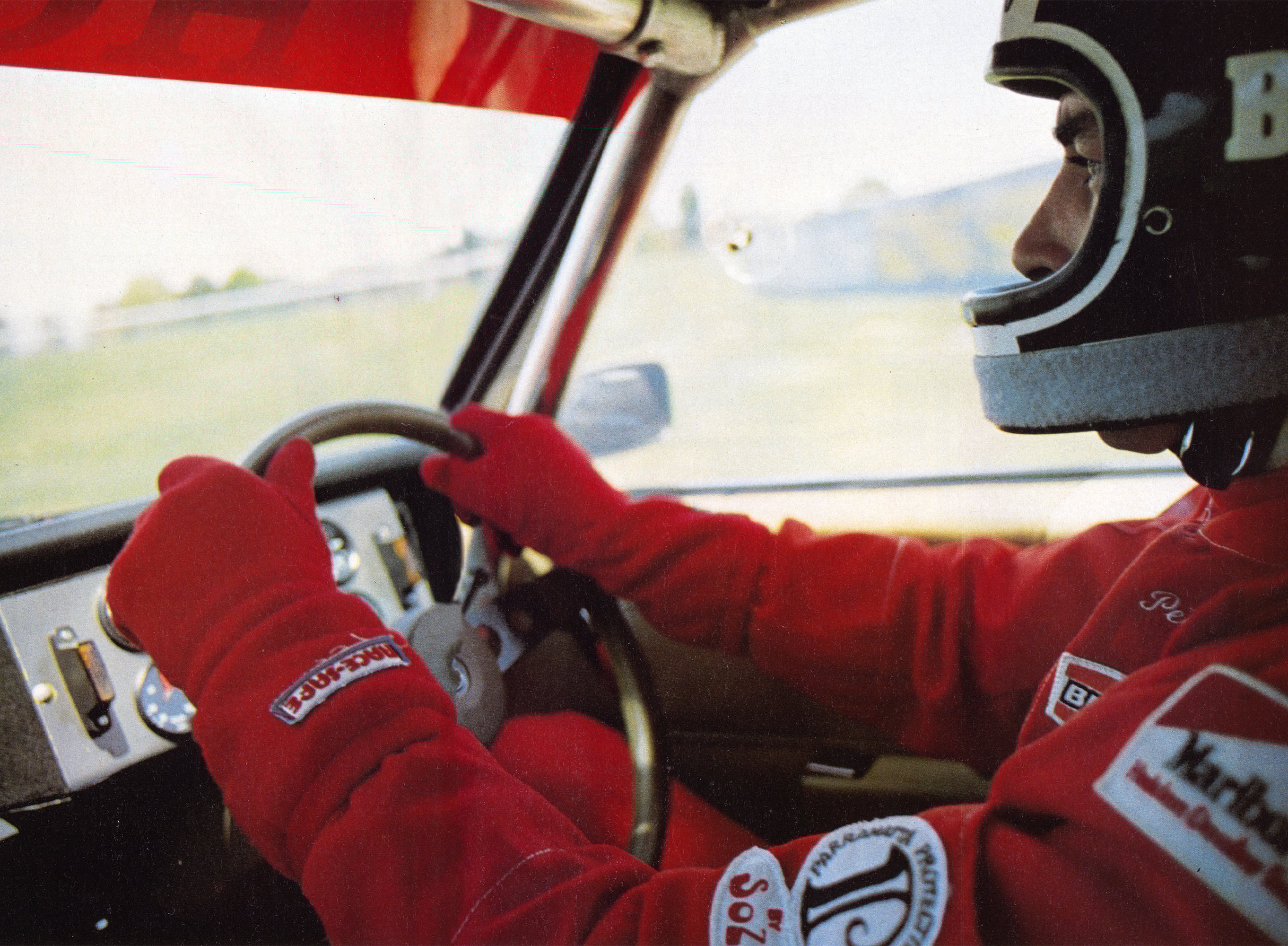
It was the Bathurst car, the car that had run away and hidden from the rest of the field to give Brock his fourth mountain title. It was still fully race-prepared as it wasn’t racing at Sandown but on the following Tuesday was due on boat for New Zealand for its last ever race appearance at Bay Park Raceway near Tauranga. The Marlboro Holden Dealer Team to all intents and purposes had run its last Australian race at the end of an incredible decade.
After half a dozen laps beside Brock I was to take the car out myself. I put in five laps before it ran out of petrol and Bruce Nowacki arrived with the trailer. We rolled it on, a little sadly; not only had I been the only Australian journalist to drive a MHDT Torana in something approaching anger I had, funnily enough, been the last driver to run it on an Australian circuit. I do not know what is going to happen to the car. I hope, like Phar Lap, they put the heart in a glass case and stuff the hide and put it on display for future generations to see.
Track-testing a serious race car doesn’t happen to journalists too often. It helps to be over 40, greying, cautious, and to have done some racing; all that applied to me, as well as the fact that I had done many race-time laps beside drivers like Frank Matich and lan Geoghegan and track-tested full-blown sedan racers like Geoghegan’s second Mustang and Peter Manton’s last and fastest Mini-Cooper, as well as more than half a dozen others.
This was not a day to play silly buggers; after all, what journalist would like to go down in history as the man who wrecked the last Bathurst Torana four days before it was due to be shipped off for its last race meeting?
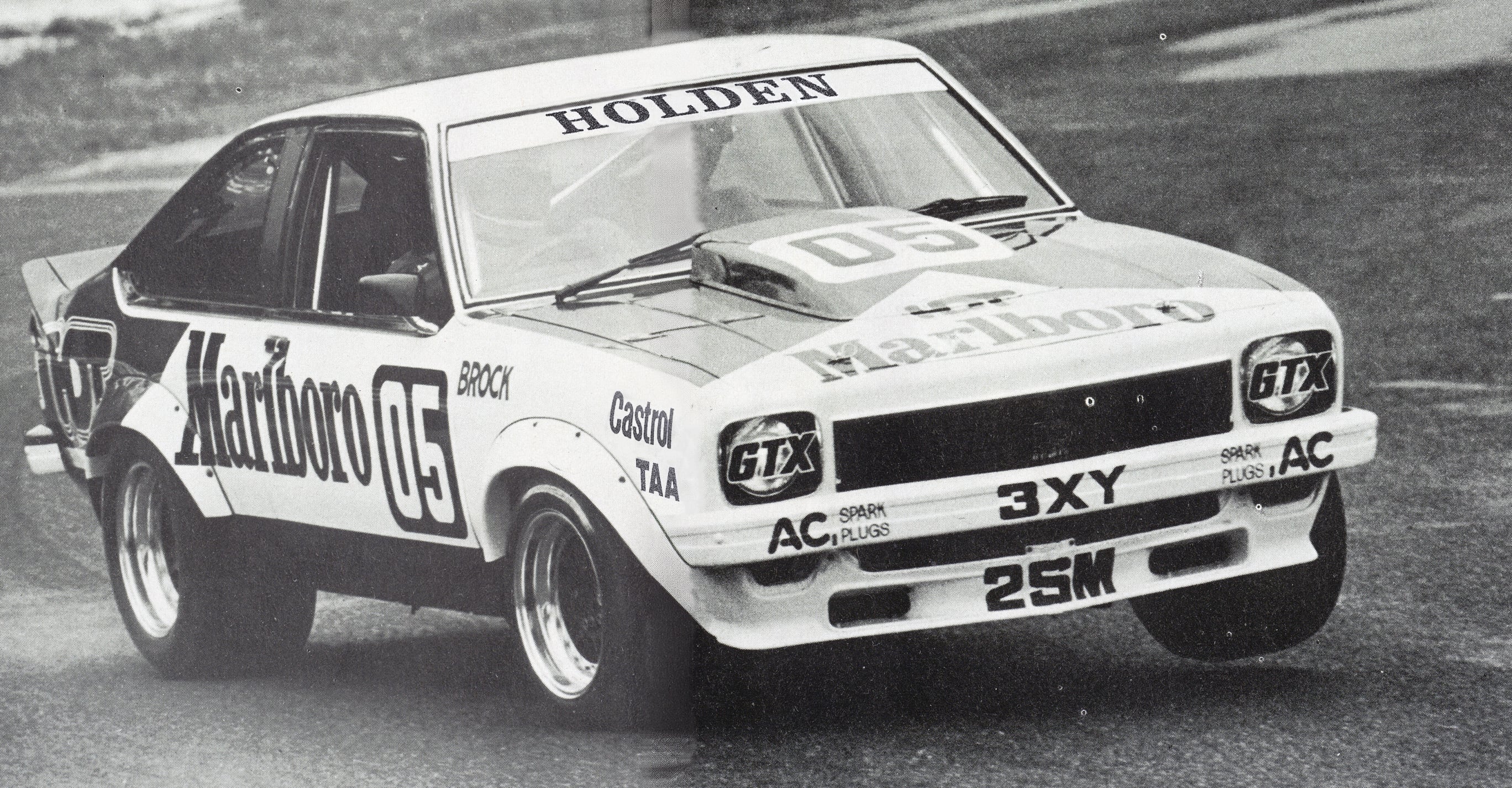
That sort of proviso doesn’t worry one overmuch. When you’re track testing a race car you’re not out to beat the incumbent’s fastest time. You are trying only to get it around quickly enough to start it singing its wild song in a key which will convey to you some of the sound and fury of a device designed entirely to get around a piece of road in the shortest possible time.
We used up the first 20 minutes to finish photography for a Playboy article I was writing on how Brock drives Sandown, corner by corner. Enough has been written and filmed on this tea-drinking Vegemite freak born 35 years ago into a Melbourne family with a long history of motor sport involvement to release me from the task of telling you his background. Yet it was still remarkable to see once again how this most relaxed and amiable of men underwent a change once he slid into the A9X for these last laps of Sandown. The already-black eyes changed, growing even blacker, shining, the pupils contracting noticeably. They are the only visible sign of the remarkable way Brock pumps up his concentration to quite extraordinary levels.
He tugs twice on the adjustment strap of the six-point harness to lock himself in even tighter, rolls his red-mittened hands twice around the stock A9X wheel, and blips the throttle twice.
Inside, the car is remarkably stock, remarkably tidy. There is a hand-fashioned dash, with a tachometer centre and smaller dials around, and the only hand-made touch is the way the gearlever sticks out of a hole cut in the floor. The floor is bare metal – required by regs when you fit mufflers. The rest of the car is stock, even the rear vision mirror. I check the roll cage, jamming the left foot onto a vertical, the right against the floor, my left hand onto a horizontal above the window and my right to the crossbar in the middle.
Brock mouths something, but through the helmets it doesn’t make sense, and then we are away.
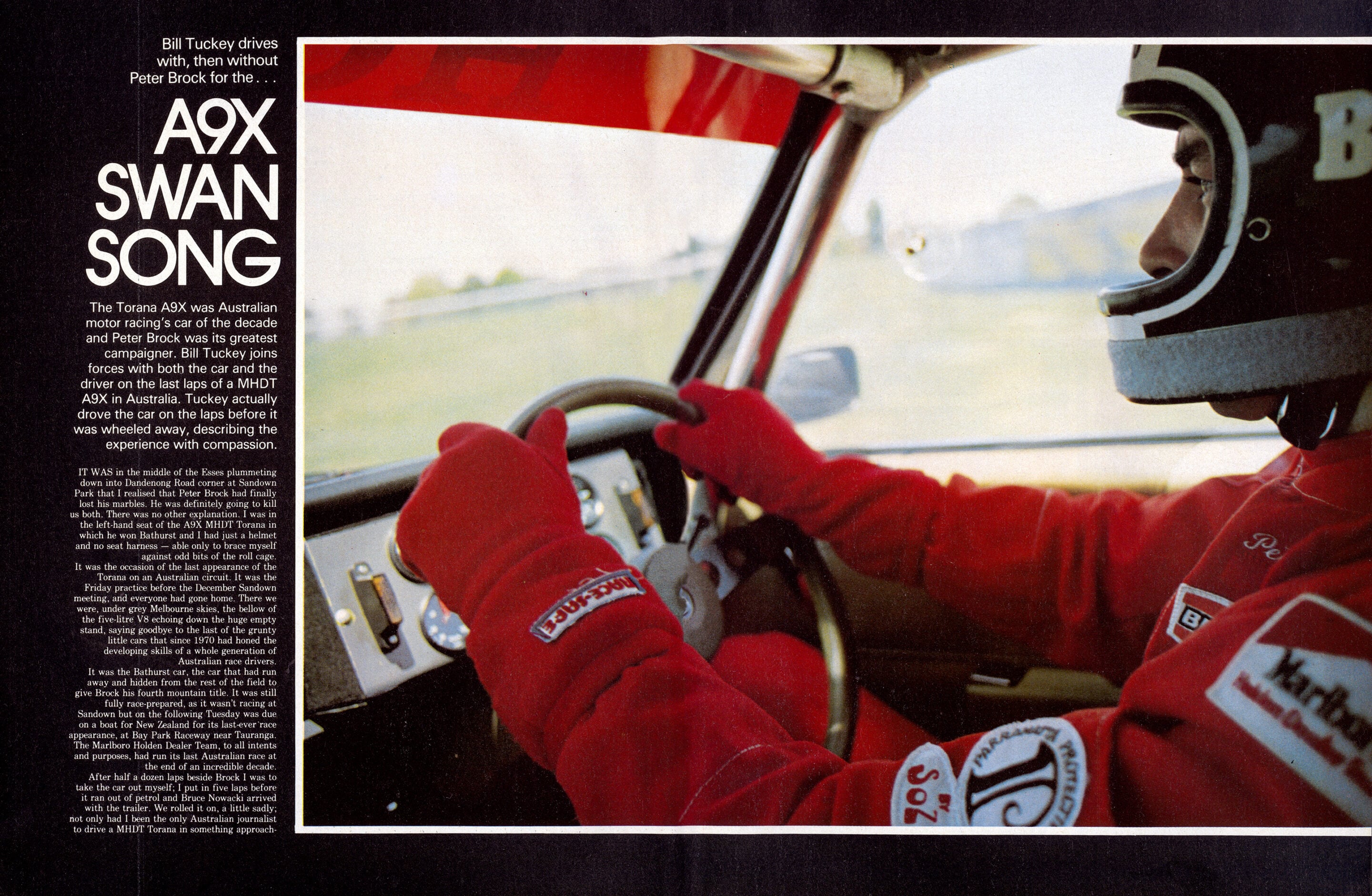
After the total blind terror of that first half lap, after we descend under the bridge and down into the esses through a red mist of shock, I just remind myself to remind myself that I had done all this before and it serves little to watch the road. Instead, you must observe the man at his work.
Brock sits closer to the wheel than you expect, He says this is because he has to put a lot of shoulder and arm into the car. His left hand is looser than the right, which is rolled tight around the rim, a bit like Brabham’s clenched grip. It is his right hand that does the work.
Out of Dandenong Road and through the Causeway and – zip! – under the Dunlop Bridge and down the straight, jiggling across to the right before the brake markers. The surprise was the ferocity of the braking. The red foot snaps onto the centre pedal and just absolutely mashes it into the floor, so hard that my legs bow and my locked left elbow bends under the force.
You don’t watch his apex because you’re waiting for the power to come on and it does, far earlier than expected, full noise all the way to the absolute edge, and snap into top and then mash on the brakes and blip-change-blip-change. The engine bangs away in backfire, and your left-hand corner is millimetres off the inside rail before you realise he has full hammer on again and cocked the left hand up for some opposite as the car runs right to the outside Armco and we pull third and then top just after the right-hand kink where Lex Davison went off and was killed by the running rail.
The slightly uphill back straight is patched and lumpy, and your helmet bangs the roll bar as you shift your backside in the stock Torana seat for a better grip. Brock backs off ever so slightly as we flash under the bridge and you jab your finger at the tacho that says 7200 in top – something like 225 km/h with that gearing and then he slams the nose down again under brakes and nips third and immediately rears the car forward again under full shout and then down again into second for Dandenong.
We ran most of our laps a little over 1:12. The most remarkable thing about it all was that everywhere – everywhere – he had that car in precisely the same place at exactly the right millisecond. His computer dialled it all in, tiny chip by tiny chip, moments before your brain registered that something needed to be done, and yet the car was always in transition between full power on and that gut-squashing braking and quick snaps between gears.
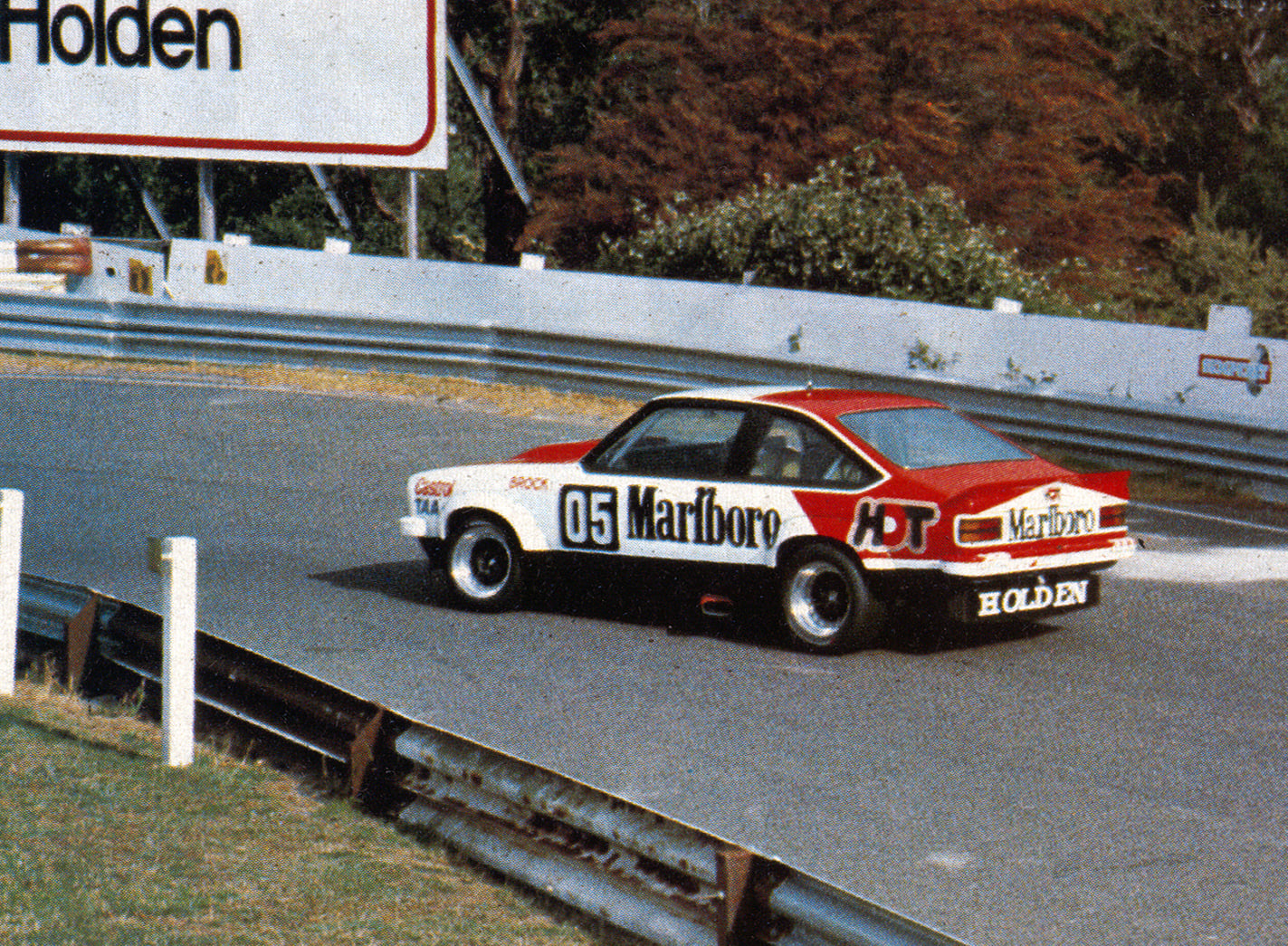
Not once in those six laps did Brock get the car off balance; not once did he have to correct a single action wrongly taken. This is what makes the man the despair of his opponents. They can cut across the grass and cock wheels up on the ripple strips and leave their braking until they can’t see through the orange mist of terror, but there he is, still in front, still absolutely, perfectly, inevitably trembling on that fine hair-trigger without even picking up a puff of dust from the verge.
Brock stopped the Torana and turned it off. It was my chance. The seat had to go back and the harness re-adjusted for my much-larger frame, and as he was strapping me in I said: “Pete I’ll stay under five grand.”
He said: “Don’t stupid: She doesn’t start working until five. Give it heaps, but don’t use more than seven.”
Seven. I should get so lucky. The confidence eroded further as the A9X refused to start for me, and after a couple of attempted push-starts Brock got back in and got the hot engine firing and held a foot on the throttle as I clambered back in and locked the harness.
“You’ll find the brakes need bit of hard work now”, he yelled into my helmet. “Use them up once or twice before giving them the big ask.”
Go away, mad child, I said to myself. It’s all right for you. I have heard all these awful stories about how different slicks are to the treaded race tyres I last used in anger.
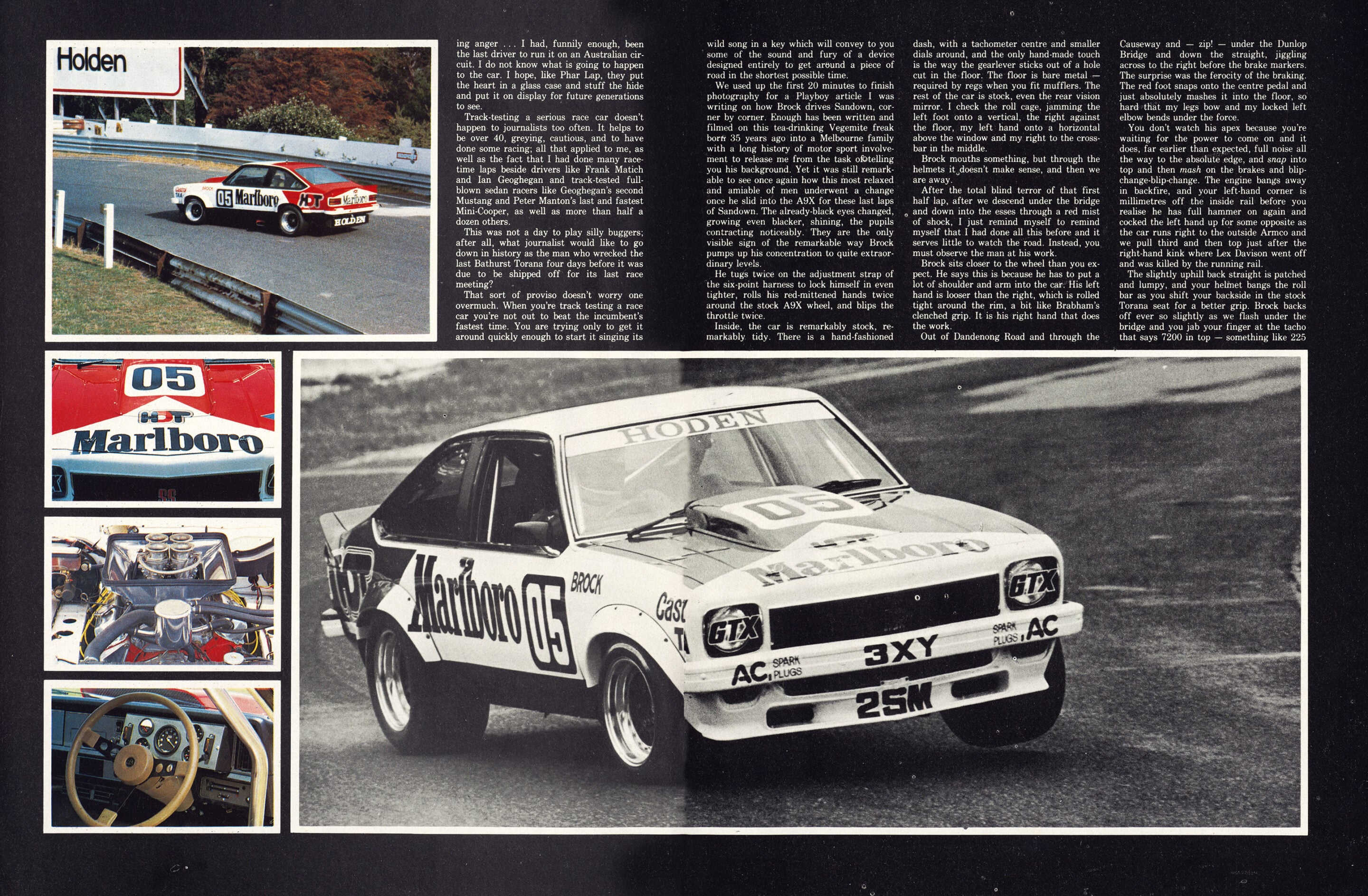
I found first, got the whole outfit rolling, picked up second, went through Peters Corner (now called People Trust Holden, I think) and hit it.
That, in itself, was one of the single pure moments of my life. I was expecting a rough, harsh, rebellious answer. I got a swiftly-rising parabola of delight.
Third, top, hard down, check tacho… 6500 at the bridge, Christ, what did he say about the brakes?… brake for third, full down again, brake, heel-and-toe feels just right, keep it out long and wide and straight and late for Dandenong Road and pick up the late apex and boot it again and oh-my-darling-lovely we came out of Dandenong Road in full wild yell in second with that marvellous toy in opposite lock as sweet and as nice as the best Ferrari. I had expected a terrified cat on polished linoleum and I was riding a moon rocket that had recognised me as a great lover, a maestro, a born killer of black bulls.
Edge to edge through the Causeway, laughing with your right cheek as we brush the Dunlop Bridge on the way through, and down the main straight the hard-edged blare of the V8 comes back off the huge stands so well that you think automatically of the mob rising with their Carna Torana banners until you check tacho and think that 7200 is enough because Bruce Nowack is standing near Dunlop Bridge biting his nails. So instead of slamming it down on brakes you back off, pop-pop, and gently lift third and go easy under Repco Bridge to hit the floor again past the pits just before you remember that brakes don’t always work and this is where Lex Davison went straight ahead with the Galaxie and ended up teetering over the dam.
It just got better, and nicer, and sweeter. I still can’t quite cope with the easy way this wonderful car reeled off those laps with never a hint of vice. Mind you, driving that sweet car, as Brock did, at 1:12 around Sandown is in another dimension: but by comparison to, say. Pete Geoghegan’s racing Mustang of 10 years ago the A9X has made heroes out of ordinary mortals.
What else do I tell you? I drove it with palm and fingertips, through precise steering: the brakes were a bit vague until you asked more and more of them; the engine felt like it would rev through the roof without complaint and it was quieter inside than you expected. It was probably very good that the thing started to miss and then ran out of fuel. Not only did we have to get out of Sandown before they slammed the gates shut at six o’clock, but I certainly would have gone faster and faster until I exceeded my blurred limits of skill and done something absolutely stupid. When I got out the seat was wet and I realised how hot it had become inside. There are no extra air ducts and half the driver’s window is covered by a perspex shield.
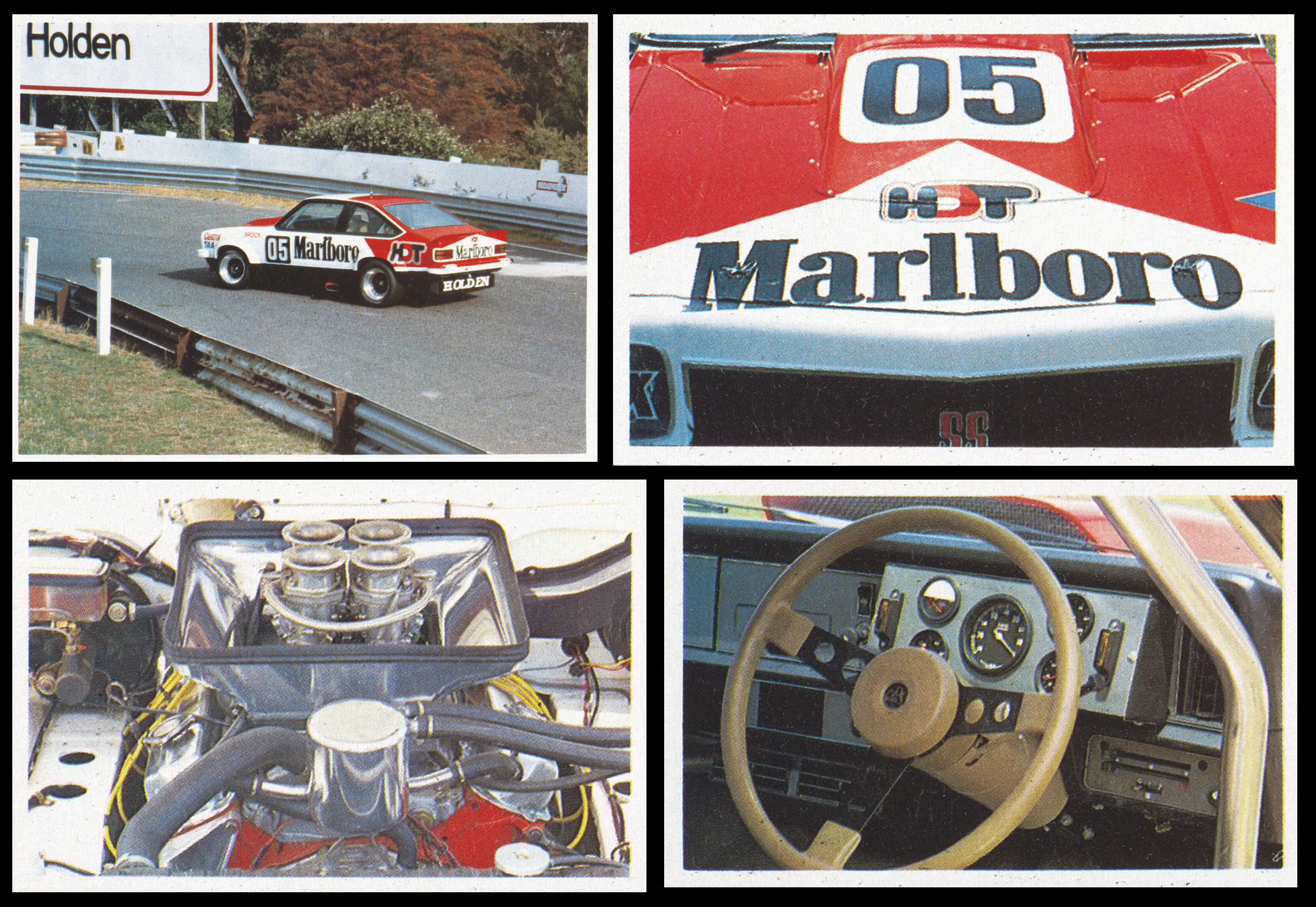
The difference between that Torana and the race cars of 10 years ago is really not all that large. Brock and I both drove the 1969 Holden Dealer Team Monaro around Bathurst, and both felt it was a strong, tough, sweet car. The real change has been in the behaviour of the animal when you ask it the big question under brakes or on a corner exit at full chat. Ten years ago you had to balance the car along a wider edge: the edge was just as sharp, but it was wider.
You could take it a long way out along the disaster line and still struggle back; I have the feeling that to get the Torana right on the lip of death you would have to be that much more measured and precise, even though it is probably easier to drive it a thousand kilometres at Bathurst than it was for Fatty Geoghegan to arm-wrestle his Mustang around for 25 laps and a memorable lap record of 2:28 or thereabouts as he did in that last Bathurst race for the big tourers.
And so we put it on the trailer, and I found myself patting it a lot, a kind of gentle stroking. I did it knowing that the Commodores will be even sweeter and nicer to drive, and probably that little bit faster which means that the edge will become even narrower.
The next morning, on the toilet, things felt strange and different. I came up with a handful of toilet paper deeply stained with blood. It was, my doctor told me, the result of tremendous stress on the big end. It stopped that evening, but it was a lesson in G-forces.
Anatomy of a winner
The man who has done more than anyone else towards the continued success and development of the Marlboro Holden Dealer Team and the Torana over the last eight years is a blonde, toothy mechanic called Bruce Nowacki.
Nowacki, now 32 and chief wrench on the Brock team that emerged from the debris of GMH’s withdrawal from motor racing at the end of last vear came into the team in 1972, under the tutorship of Harry Firth. It was here, with the Torana XU-1, that began the long process of refinement and development of a normal street sedan into the fine racing tool it eventually became.
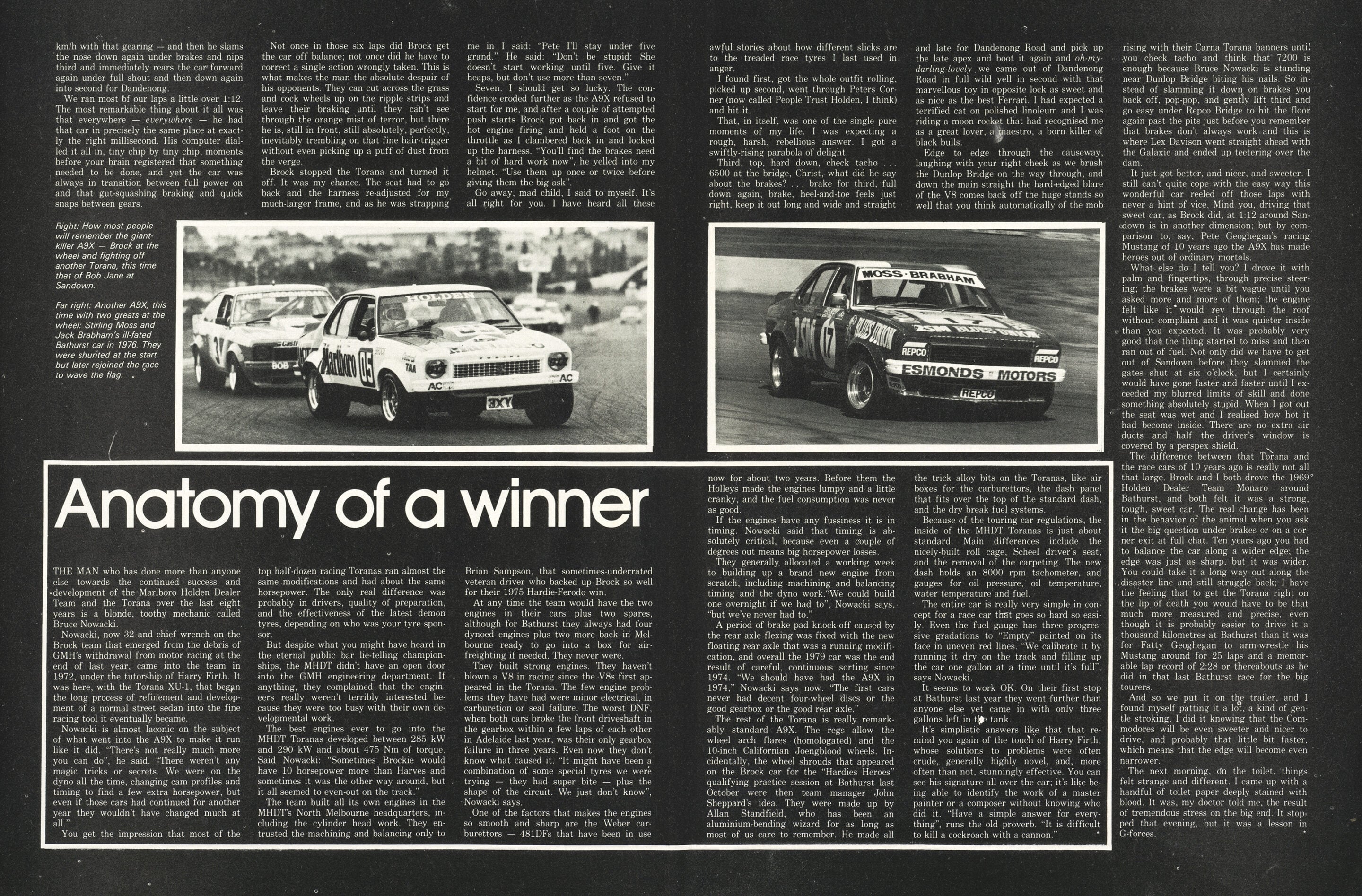
Nowacki is almost laconic on the subject of what went into the A9X to make it run like it did.
“There’s not really much more you can do,” he said. “There weren’t any magic tricks or secrets. We were on the dyno all the time, changing cam profiles and timing to find a few extra horsepower, but even if those cars had continued for another year they wouldn’t have changed much at all.”
You get the impression that most of the top half-dozen racing Toranas ran almost the same modifications and had about the same horsepower. The only real difference was probably in drivers, quality of preparation, and the effectiveness of the latest demon tyres, depending on who was your tyre sponsor.
But despite what you might have heard in the eternal public bar lie-telling championships, the MHDT didn’t have an open door into the GMH engineering department. If anything, they complained that the engineers really weren’t terribly interested because they were too busy with their own developmental work.
The best engines ever to go into the MHDT Toranas developed between 285 kW and 290 kW and about 475 Nm of torque. Said Nowacki: “Sometimes Brockie would have 10 horsepower more than Harves and sometimes it was the other way around, but it all seemed to even-out on the track.”
The team built all its own engines in the MDT’s North Melbourne headquarters, including the cylinder head work. They entrusted the machining and balancing only to Brian Sampson, that sometimes-underrated veteran driver who backed up Brock so well for their 1975 Hardie-Ferodo win.
At any time the team would have the two engines in their cars plus spares, although for Bathurst they always had four dynoed engines plus two more back in Melbourne ready to go into a box for airfreighting if needed. They never were.
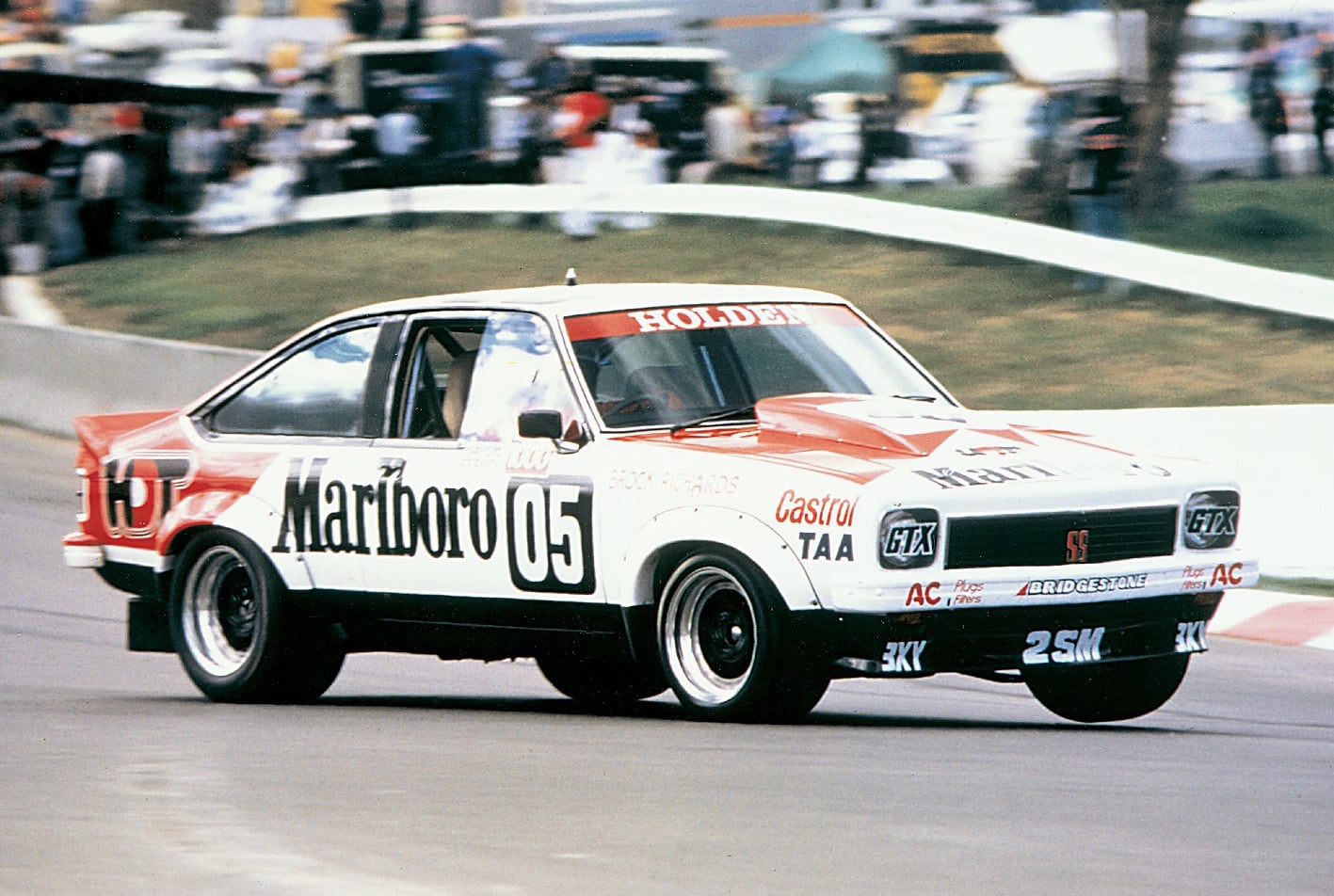
They built strong engines. They haven’t blown a V8 in racing since the V8s first appeared in the Torana. The few engine problems they have had were minor electrical, in carburetion or seal failure. The worst DNF when both cars broke the front driveshaft in the gearbox within a few laps of each other in Adelaide last year, was their only gearbox failure in three years. Even now they don’t know what caused it. “It might have been a combination of some special tyres we were trying – they had super bite – plus the shape of the circuit. We just don’t know,” Nowacki says.
One of the factors that makes the engines so smooth and sharp are the Weber carburettors – 481DFs that have been in use now for about two years. Before them the Holleys made the engines lumpy and a little cranky, and the fuel consumption was never good.
If the engines have any fussiness it is in timing. Nowacki said that timing is absolutely critical, because even a couple of degrees out means big horsepower losses.
They generally allocated a working week to building up a brand new engine from scratch, including machining timing and the dyno work. “We could build one overnight if we had to”, Nowacki says, “but we’ve never had to.”
A period of brake pad knock-off caused by the rear axle flexing was fixed with the new floating rear axle that was a running modification, and overall the 1979 car was the end result of careful, continuous sorting since 1974. “We should have had the A9X in 1974,” Nowacki says now. “The first cars never had decent four-wheel discs or the good gearbox or the good rear axle.”
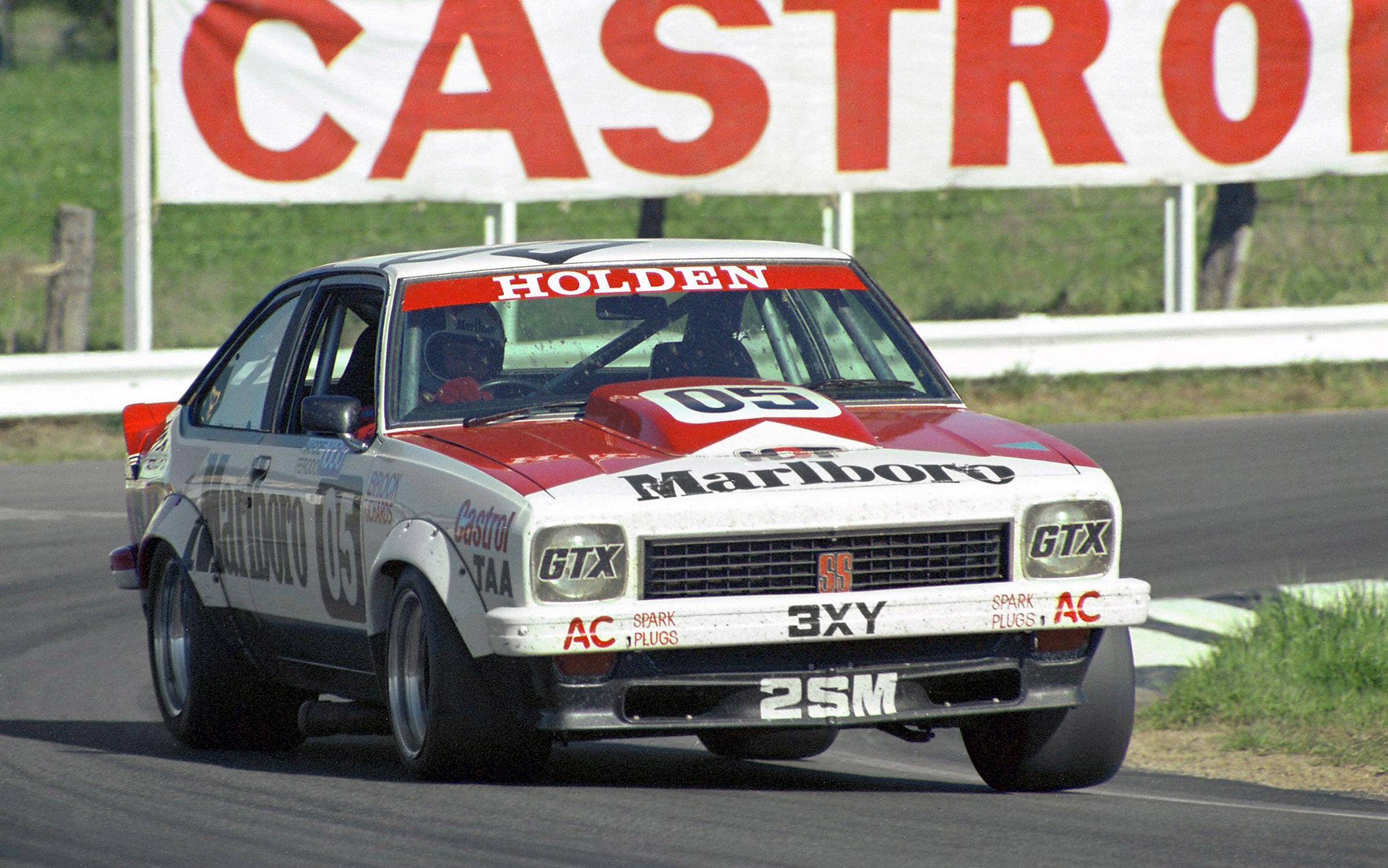
The rest of the Torana is really remarkably standard A9X. The regs allow wheel arch flares (homologated) and the 10-inch Californian Joengblood wheels. Incidentally, the wheel shrouds that appeared on the Brock car for the “Hardies Heroes” qualifying practice session at Bathurst last October were then team manager John Sheppard’s idea. They were made up by Allan Standfield, who has been an aluminium-bending wizard for most of us care to remember. He made all the trick alloy bits on the Toranas, like air boxes for the carburettors, the dash panel that fits over the top of the standard dash and the dry break fuel systems.
Because of the touring car regulations, the inside of the MHDT Toranas is just about standard. Main differences include the nicely-built roll cage, Scheel driver’s seat, and the removal of the carpeting. The new dash holds an 8000 rpm tachometer, and gauges for oil pressure, water temperature and fuel.
The entire car is really very simple in concept for a race car that goes so hard so easily. Even the fuel gauge has three progressive gradations to “Empty” painted on its face in uneven red lines. “We calibrate it by running it dry on the track and filling up the car one gallon at a time until it’s full,” says Nowacki.
It seems to work okay. On their first stop at Bathurst last year they went further than anyone else and yet came in with only three gallons left in the tank.
It’s simplistic answers like that that remind you again of the touch of Harry Firth, whose solutions to problems were often crude, generally highly novel, and, more often than not, stunningly effective. You can see his signature all over the car; it’s like being able to identify the work of a master painter or a composer without knowing who did it. “Have a simple answer for everything”, runs the old proverb. “It is difficult to kill a cockroach with a cannon.”
Australia’s fuel crisis is beginning to reshape the car market in real time, with growing evidence that buyers are turning to used electric vehicles in increasing numbers to cut running costs.
As petrol prices climb and supply concerns linger, second-hand EVs are emerging as a more accessible alternative for cost-conscious drivers. While new electric vehicles have seen steady growth in recent years, it’s the used market that is now seeing some of the sharpest increases.
Industry data reported by The Australian shows enquiries for used EVs have more than doubled in recent months, with daily sales volumes nearly tripling compared to earlier this year. The surge highlights how quickly buyer behaviour is shifting as fuel costs rise.
Auction houses are also reporting stronger demand. According to The Guardian, major Australian auction platform Pickles has recorded some of its busiest months for EV sales, with increasing confidence among buyers in purchasing second-hand electric vehicles.
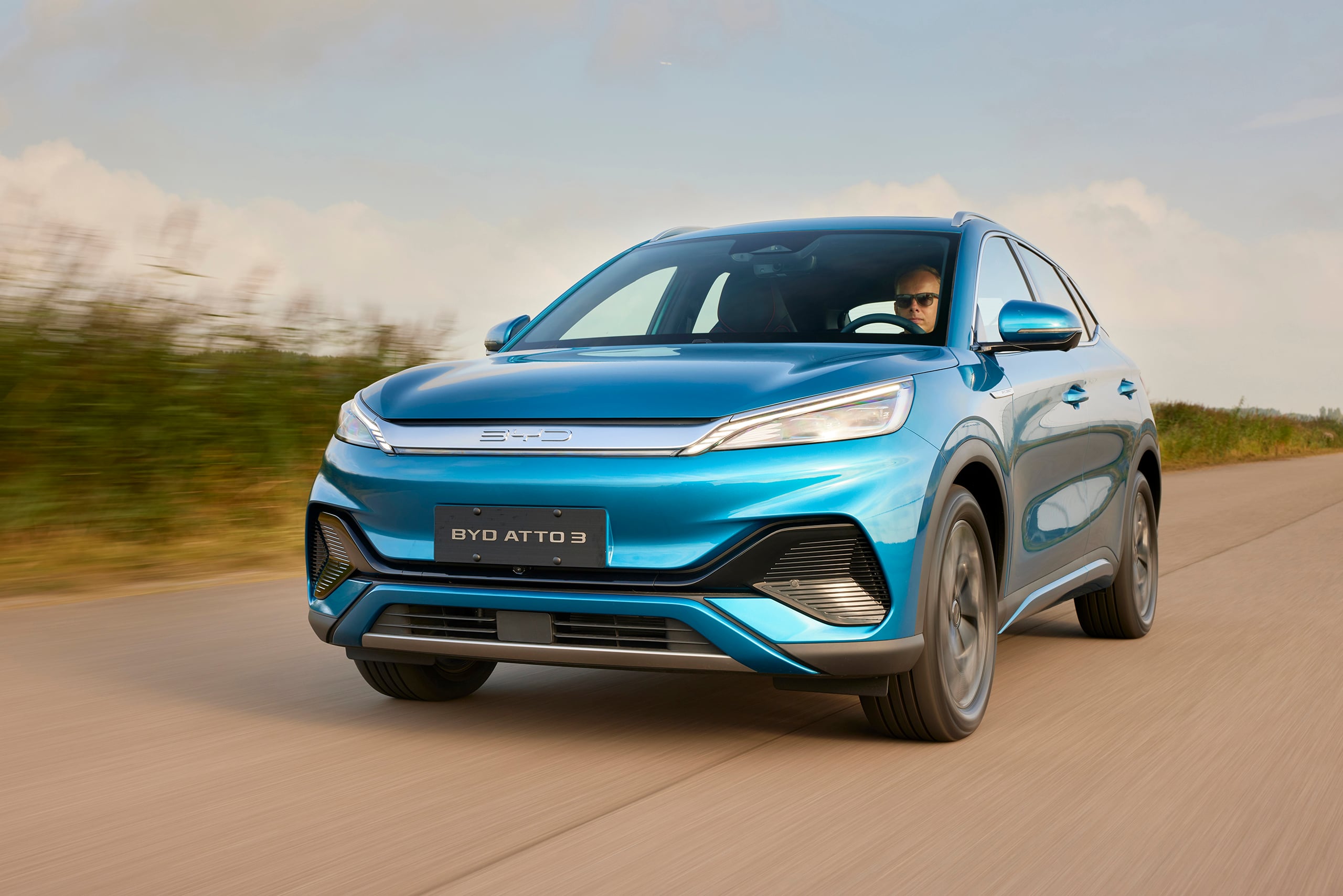
The link to fuel prices is clear. With petrol costs exceeding $2.50 per litre in some areas, and more than $3 for diesel, motorists are increasingly focused on long-term savings rather than upfront purchase price. Electric vehicles, particularly used examples, offer a lower barrier to entry while significantly reducing ongoing fuel spend.
Online search activity supports the trend. Data cited by 9News indicates searches for electric vehicles have surged in recent weeks as Australians respond to both rising prices and concerns around fuel availability.
Importantly, this shift is not limited to new cars. Reports suggest used EV sales have risen by around 30 per cent, with prices also firming as demand increases. For many buyers, second-hand options present a more practical entry point into electrification, especially as the cost of living continues to climb.
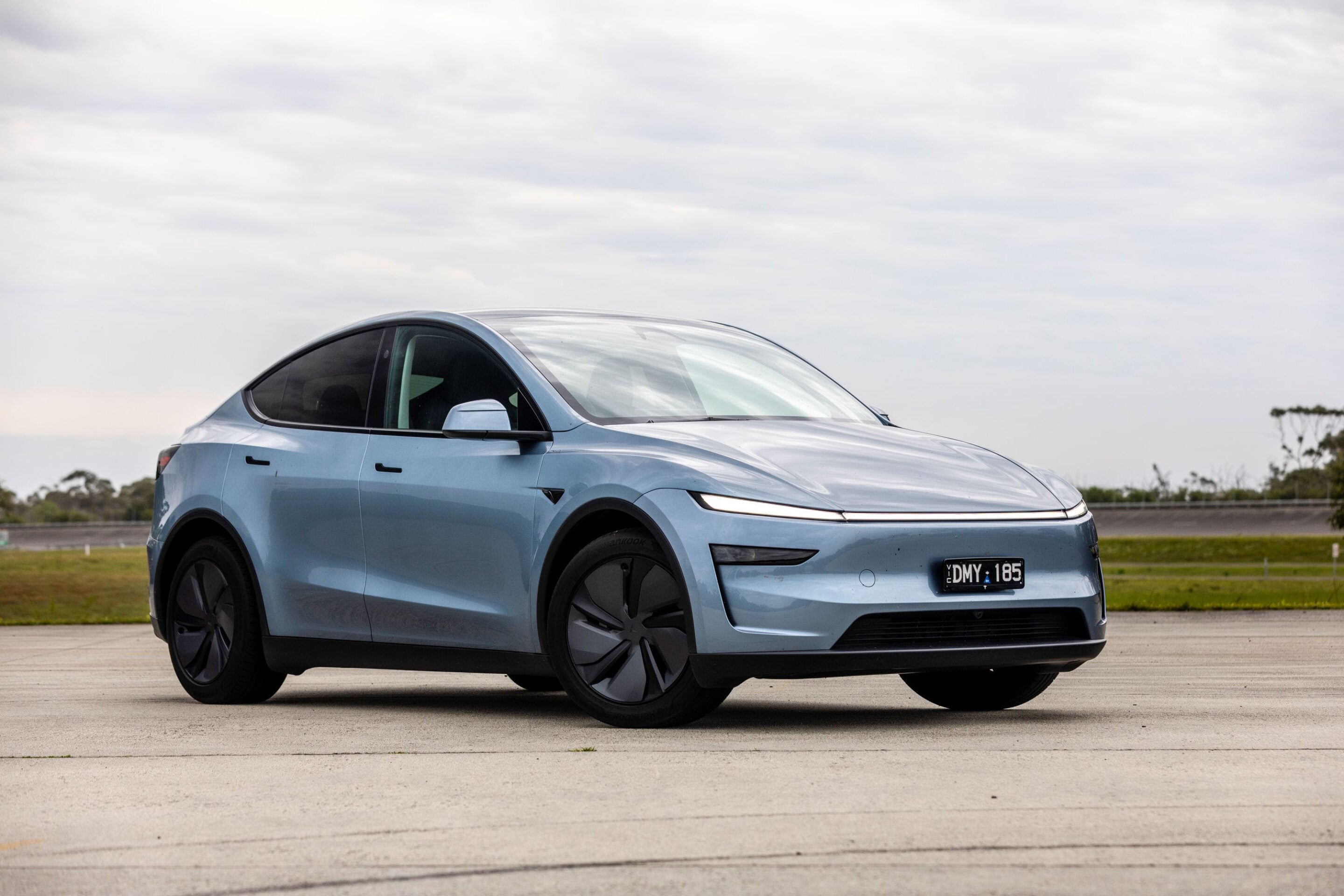
The trend reflects a broader change in priorities. Where EVs were once seen as a premium or early-adopter choice, they are increasingly being considered as a financial decision – particularly in the face of volatile fuel prices.
While supply of used EVs remains relatively limited compared to traditional vehicles, the current spike in demand suggests that segment is likely to expand rapidly in the coming years.
As fuel costs continue to weigh on households, the momentum behind used electric vehicles shows little sign of slowing.
An all-new steer-by-wire system paired with an F1-style steering yoke is the headline act on the revised Mercedes-Benz EQS due to be revealed in full on April 14.
The new electronic steering system replaces the traditional mechanical connection between the front wheels and the steering wheel. In its place, a completely digital setup which utilises actuators and computer processing power to transmit steering inputs to the wheels.
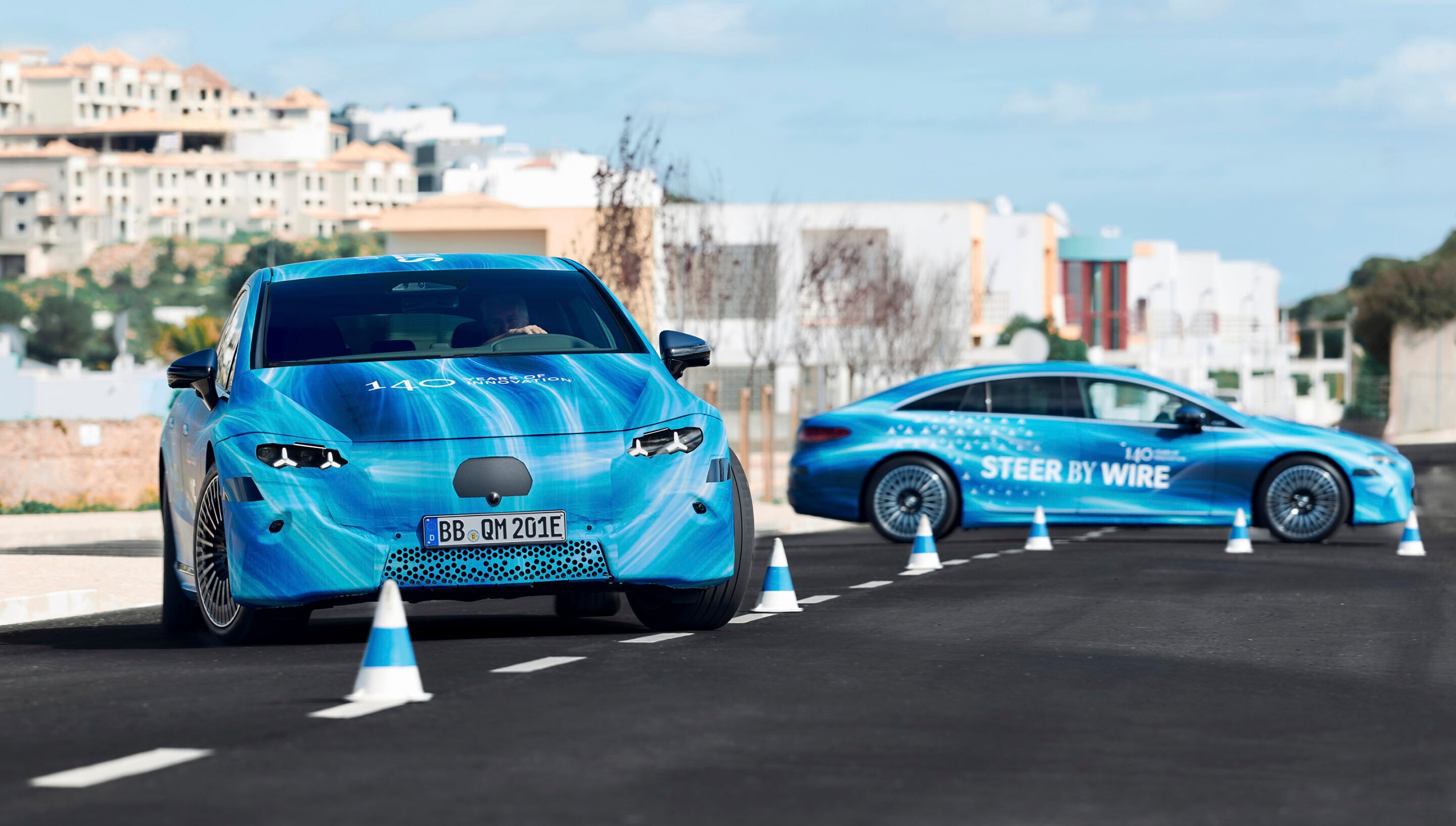
It’s not new technology. Modern aircraft have been using steer-by-wire for decades while Nissan’s luxury off-shoot, Infiniti, was the first carmaker to incorporate the zeroes-and-ones steering tech in 2014’s Q50 sedan.
It is, however, a first for Mercedes-Benz and to make a statement, it’s being released with the visual spectacle of an F1-style yoke in place of the traditional ‘round’ steering wheel.
Mercedes-Benz says steer-by-wire offers more steering precision for less effort, thanks largely to its 170-degree lock-to-lock turning ratio. A regular steering wheel turns through around 900 degrees, amounting to roughly two-and-a-half turns lock-to-lock.
The German manufacturer also claims that without the need for a physical connection to the road – there’s no steering column and no mechanical links to the front wheels – road vibrations felt through the steering wheel have been all but eliminated.
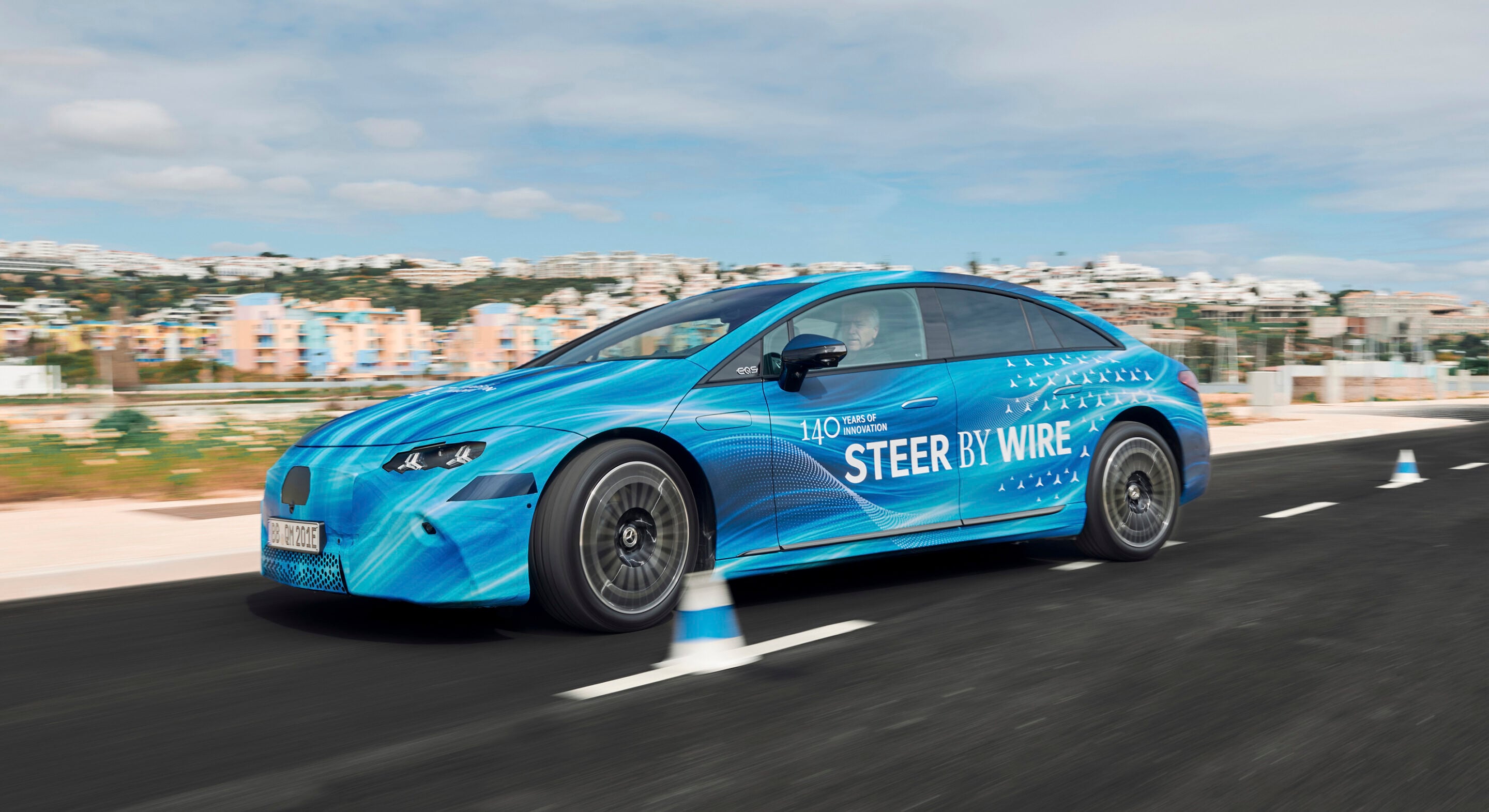
The steering yoke has also impacted positively on cabin ergonomics, with its smaller dimensions freeing up knee room for the driver while also affording an unobstructed view onto the instrument panel and through the window to the road ahead.
Mercedes-Benz has baked in redundancies into its system too, with a duplicate back-up of the steer-by-wire setup ready to take over should the first system fail.
So what’s it like to drive with Mercedes-Benz’s yoke and steer-by-wire setup?
WhichCar by Wheels had the opportunity to sample Mercedes-Benz’s latest steering tech in Portugal recently and came away impressed.
The German brand set up a short, but tight, slalom course where I was able to back-to-back the two systems, the first a regular EQS with mechanical steering and a traditional steering wheel before stepping into a heavily stickered EQS fitted with the new technology and that futuristic yoke.
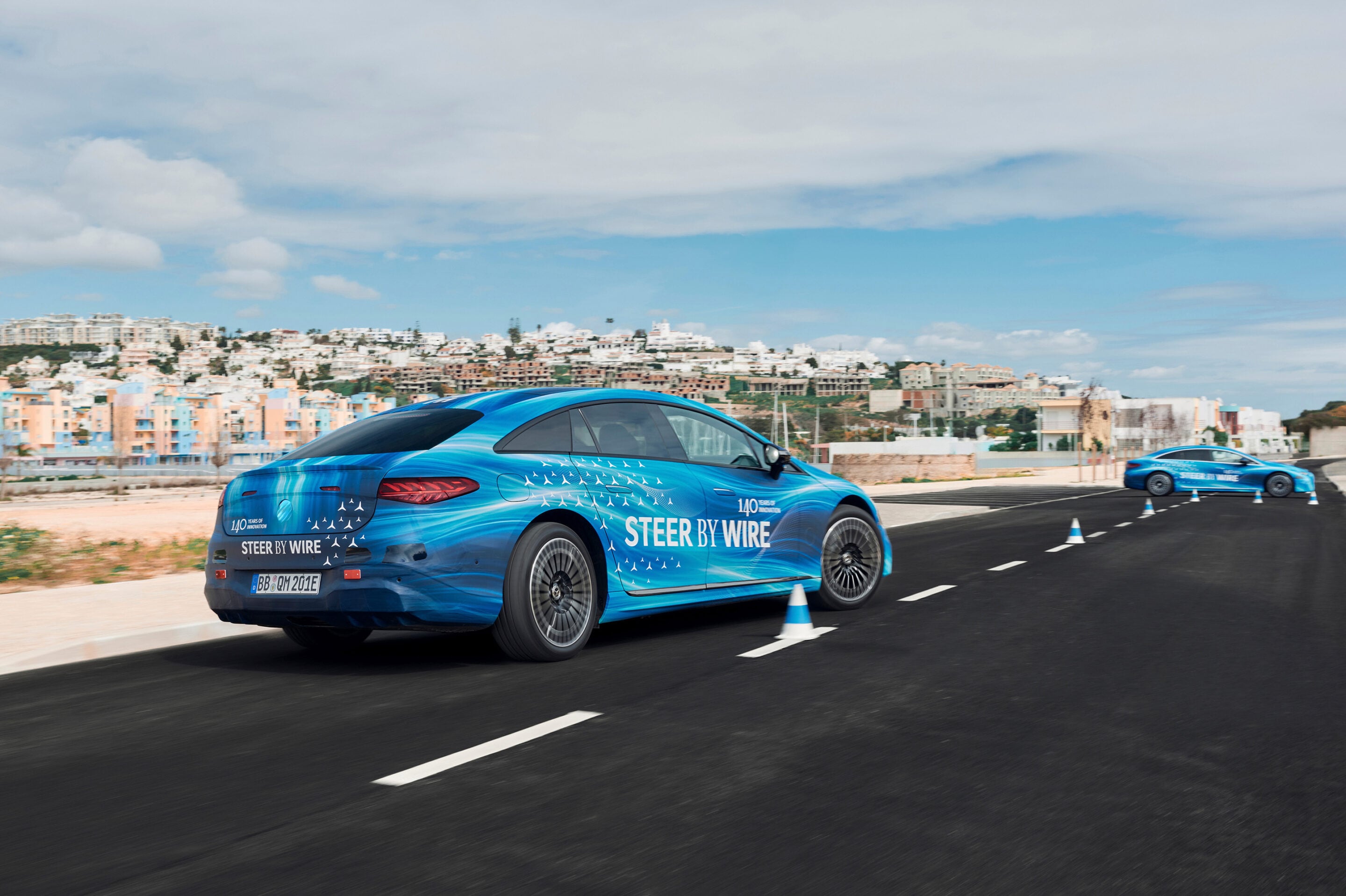
Driving the regular EQS is as you’d expect around a tight slalom course, with plenty of arm-crossing wheel-work needed to keep the circa 5.1-metre long EQS on the right path. Four-wheel steering helped with manoeuvrability, but there’s no hiding from the fact that you need to work at the wheel to effectively make each turn. My stint provided the perfect baseline for what was to come.
Next up, the teched-up EQS and its trick steering and yoke. And immediately, you can feel the benefits of the yoke as you slide into the driver’s seat. There’s more room underneath the ‘wheel’ and it looks pretty cool, too. With that big three-pointed star adorning the centre, it’s hard not to imagine you’re cos-playing Kimi Antonelli for just a few minutes.
The yoke itself feels comfortable, with hands perfectly placed in the ideal nine-and-three position, the only option thanks to its intriguing design.
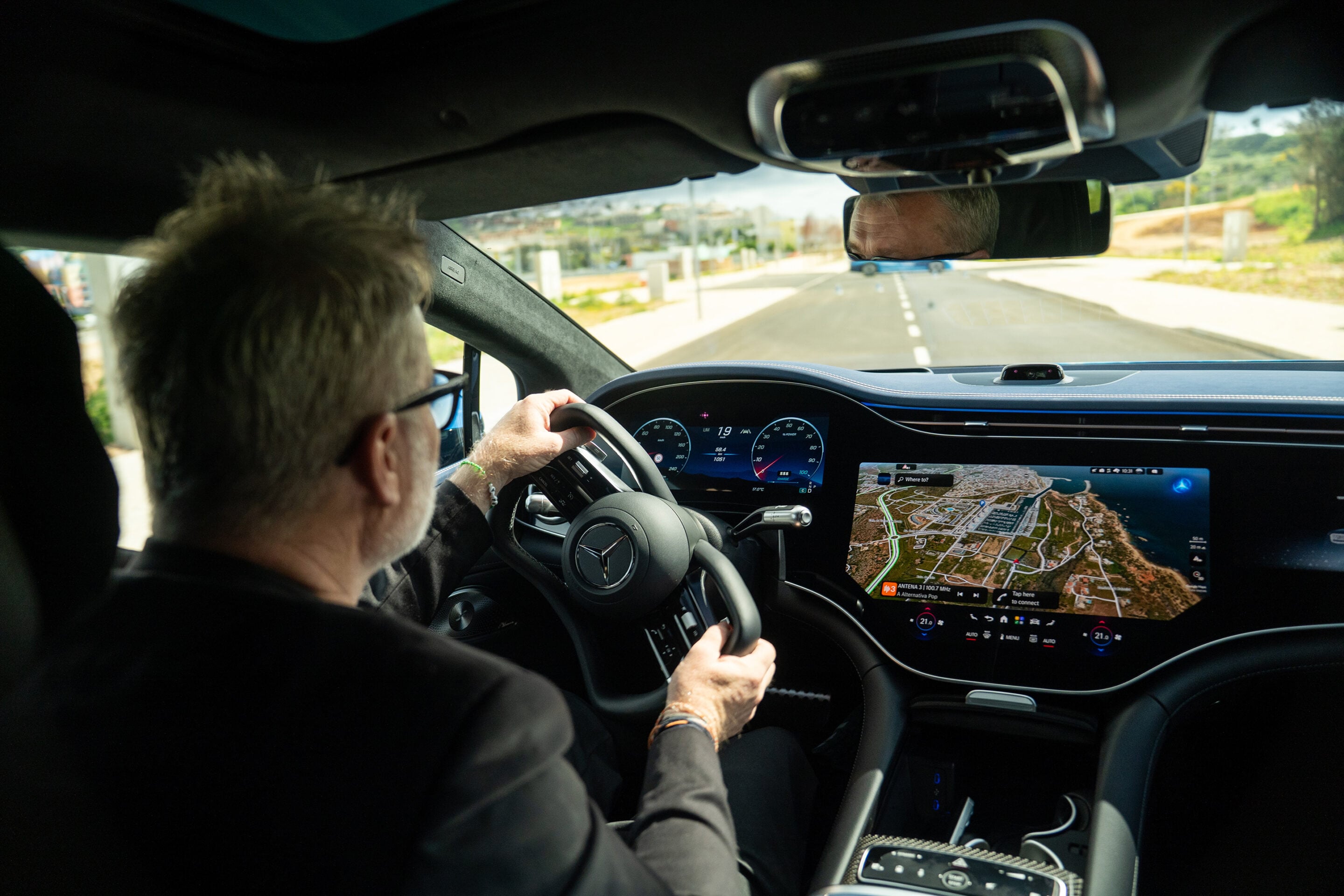
The view to the instrument display is uninterrupted, while looking to the road ahead is similarly unimpeded by what would usually be the top of the steering wheel.
Moving into the slalom course and it’s immediately apparent the new setup will take a few moments to become accustomed to so as to make required the inputs for effective turns. With only 170-degrees of input lock-to-lock, it’s easy – at first – to overcook it while your brain recalibrates to what is needed. I may have hit a cone or two on my first run simply by turning the yoke too much.
But it doesn’t take long to adjust to the steering’s directness and where the regular EQS needed plenty of wheel work through several hundred degrees of turn, Mercedes-Benz’s yoke required only minor inputs through 20-30 degrees of steering angle to complete the same sharp cornering manoeuvres. It’s a rewarding system to use, offering an accuracy and responsiveness that is the antidote to the sometimes ‘vague’ feel that continues to afflict some modern cars.
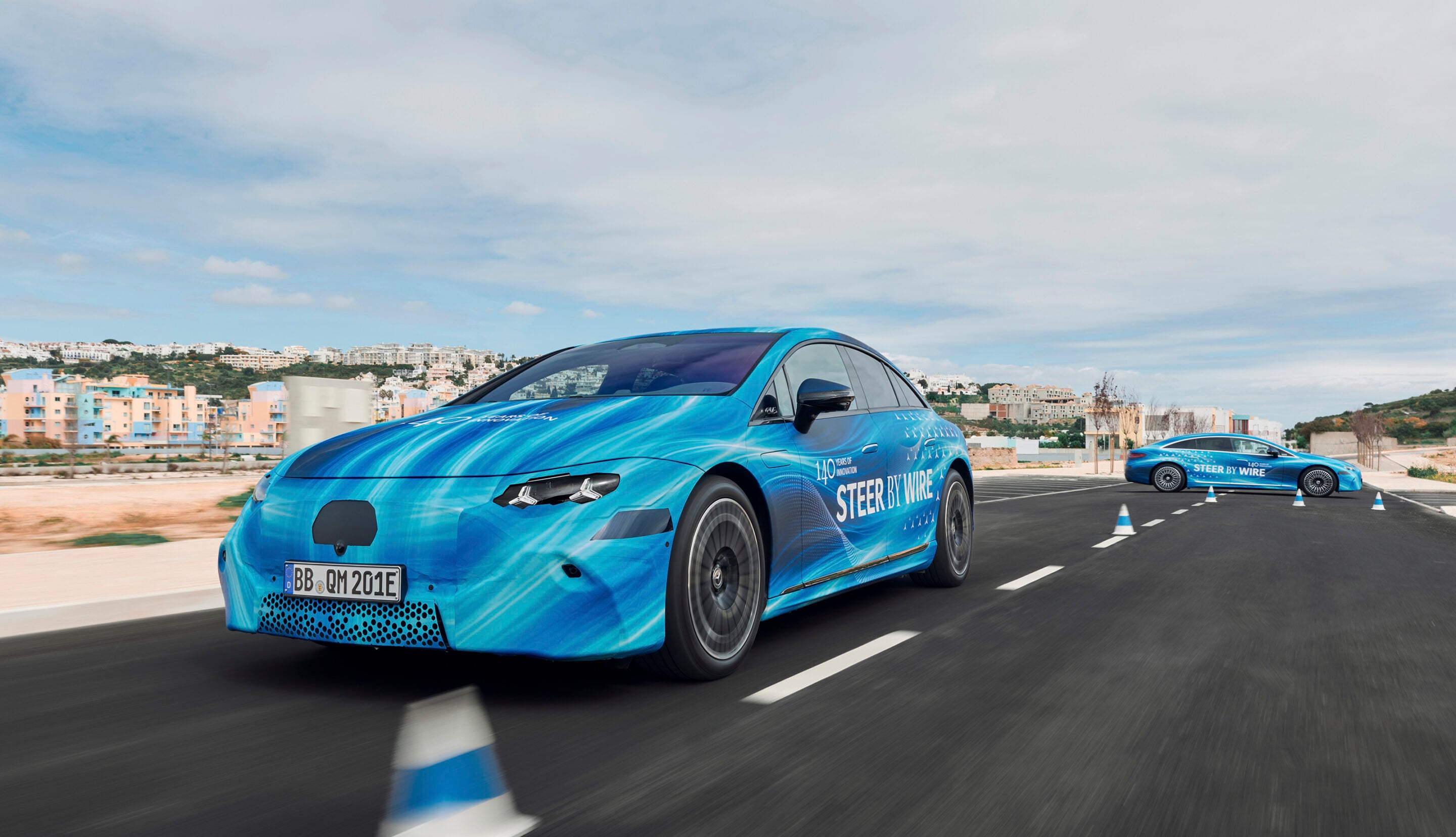
Other than confirming steer-by-wire will be available initially only on the updated EQS electric sedan, Mercedes-Benz hasn’t outlined whether it will be optional equipment (most likely) nor how much extra buyers can expect to pay for the privilege of feeling like Mercedes-AMG’s newest F1 star and current world championship leader, Kimi Antonelli.
Chery and JLR have launched their new joint venture originally announced in 2024, called Freelander. However, it’s not the former Land Rover Freelander that ended production in 2015, rather, a whole new brand based in China that will eventually offer a range of SUVs globally.
The model previewed is called the Concept 97 (1997 was the first year of production of the original Land Rover Freelander) and it’s a three-row electric or hybrid large SUV. Styled by the brand’s new design studio in Shanghai, overseen by former head of JLR design Gerry McGovern, the Freelander 97 concept shows the clear influence of Land Rover products and echoes the original Freelander.
For example, the shoulder line has been influenced by the original Freelander, and ditto the triangular window behind the C-pillar and triangular design touches all over the car. The interior of the Concept 97 is clearly influenced by JLR’s current designs, though with a huge wrap-around landscape screen sitting at the bottom of the windscreen that will likely reach production.
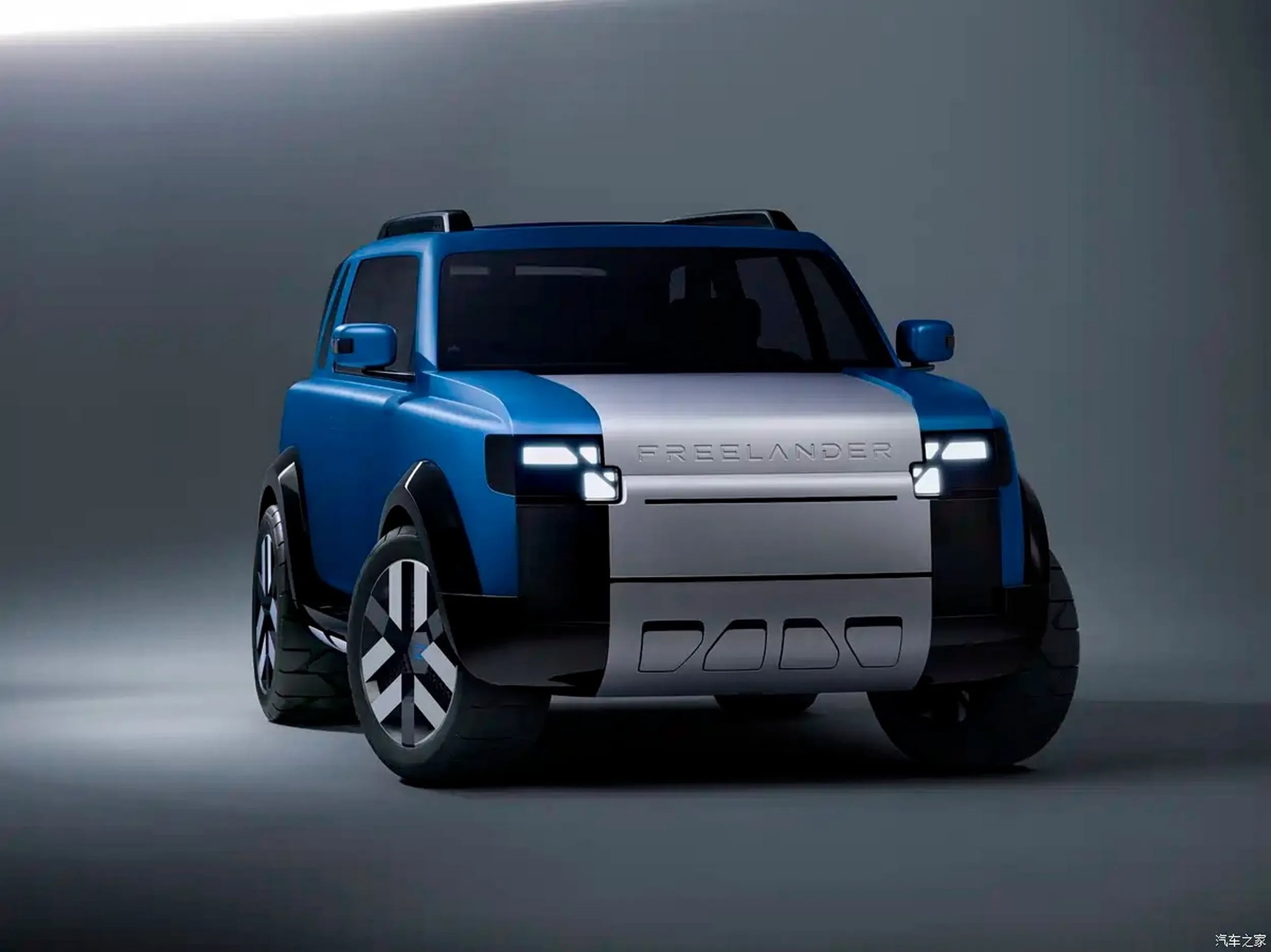
Using a six-seat three-row layout, the rear bench in the Concept 97 looks like a couch. Second-row passengers will enjoy a large drop-down screen, and the 97 features the latest Qualcomm Snapdragon 8397 chip and Huawei’s latest intelligent ADAS system.
The interior adopts a three-row six-seater configuration, with a rear bench that looks like a couch. A pillar-to-pillar display is mounted on the base of the windshield, joined by a large infotainment touchscreen. We can also see a pair of rotating dials and physical buttons on the steering wheel, alongside traditional stalks.
When production starts from later this year, the real version of the Concept 97 will use the same 800V platform as next-generation Chery products like the Tiggo 9, and will be offered in fully electric and plug-in hybrid forms with the latter likely the next-generation of Chery’s ‘Super Hybrid’ system.
After it debuts, Freelander reportedly has another five production models of differing sizes waiting in the wings and will launch a new model every six months. China is the first market Freelander will launch in, with an expansion into many global markets planned for afterwards.
Australian plans are not yet known, but considering how big Chery is locally and that its products will likely be made in right-hand drive for JLR’s UK home market, we’re expecting a local launch at some stage over the next few years.
Interest in electric vehicles is accelerating in Australia, with new data pointing to a sharp spike in consumer activity as fuel prices rise and supply concerns persist.
Figures from NRMA Insurance show EV insurance quote requests jumped 42 per cent in March 2026 alone, and are up 81 per cent compared with the same time last year. The surge coincides with global oil price volatility and ongoing uncertainty around fuel availability.
The increase has been most pronounced in New South Wales, Queensland and South Australia – states where driving distances and fuel dependency remain high.
NRMA’s head of automotive research, Shawn Ticehurst, said the data reflects a shift in how Australians are thinking about vehicle ownership.
“It’s clear consumer sentiment towards EVs is shifting,” he said, pointing to the current fuel situation as a catalyst for change.
Price shocks in the oil market have historically influenced long-term behaviour, and the latest spike appears to be having a similar effect. As petrol prices climb, more drivers are weighing the potential savings offered by electric vehicles, particularly in day-to-day running costs.
The shift is also being supported by changes within the EV market itself. Compared to just a few years ago, buyers now have access to a broader range of models across different price points, as well as a growing second-hand market.
Earlier research in 2024 suggested only a small proportion of Australians were seriously considering an EV, largely due to concerns around cost, driving range and charging infrastructure. Those barriers now appear to be easing, with improved charging networks and greater familiarity helping build confidence.
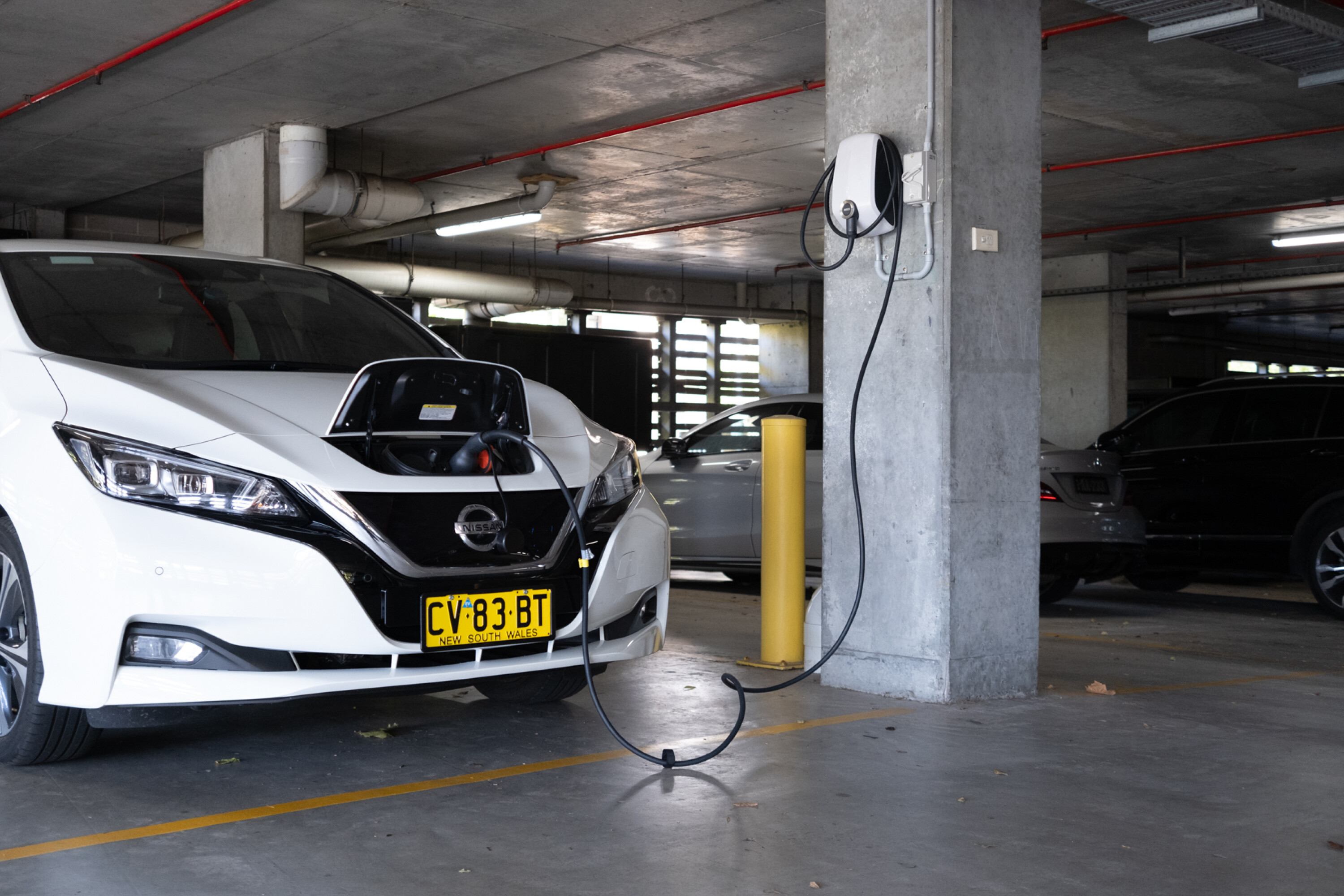
While EVs still make up a relatively small share of insured vehicles – around 2 per cent within NRMA’s broader portfolio – that figure is expected to rise significantly over the next decade.
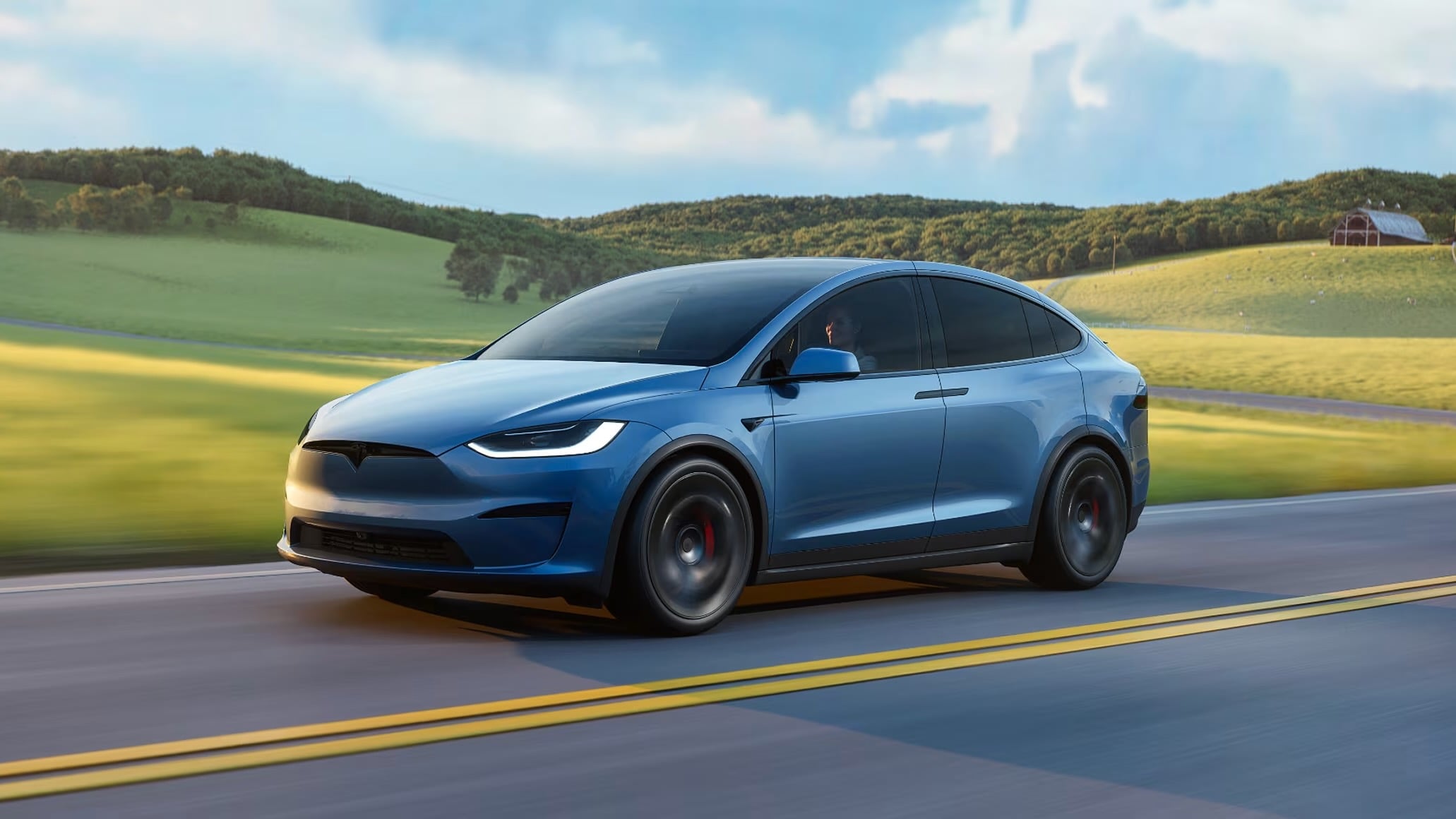
Tesla currently dominates the electric vehicles insured by the group, accounting for the majority of policies, though newer brands such as BYD, MG and BMW are gaining traction.
The data adds to growing evidence that Australia’s fuel crisis is not only impacting short-term driving habits, but may also be accelerating a longer-term shift toward electrification.
Hyundai’s performance-focused IONIQ 6 N has been named World Performance Car at the 2026 World Car Awards, continuing the brand’s recent run of success at the global event.
The award was announced at the New York motor show, where a panel of international automotive journalists selected the IONIQ 6 N as the standout performance vehicle of the year.
The result marks another milestone for Hyundai’s N division, which has been expanding its presence in the electric performance space. It also highlights the growing recognition of electric vehicles in traditionally petrol-dominated performance categories.
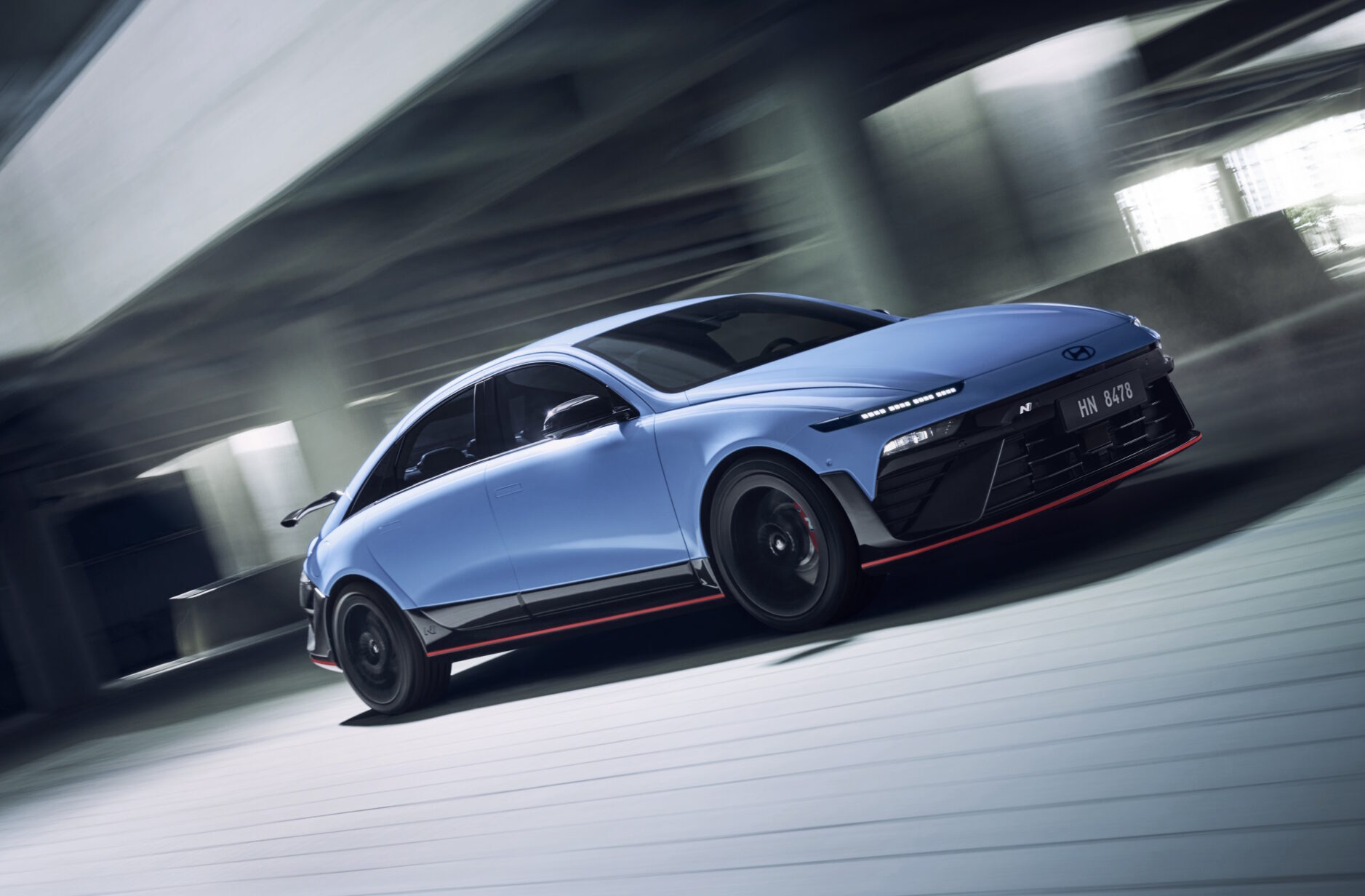
The IONIQ 6 N is built around a dual-motor electric drivetrain producing up to 478kW when its temporary boost function is activated. Hyundai claims a 0–100km/h time of around 3.2 seconds, placing it firmly in the high-performance bracket.
Alongside outright power, the model introduces features designed to replicate aspects of traditional performance cars. These include simulated gear shifts and artificial sound profiles aimed at enhancing driver engagement – an area where electric vehicles have often faced criticism.
The car also uses an 84kWh battery pack, with fast-charging capability allowing it to recharge from 10 to 80 per cent in under 20 minutes under ideal conditions.
Judges typically assess not only performance figures, but also how effectively a vehicle delivers its driving experience. In this case, the IONIQ 6 N appears to have stood out for combining strong acceleration with a focus on driver interaction – a balance manufacturers are still refining in the EV era.
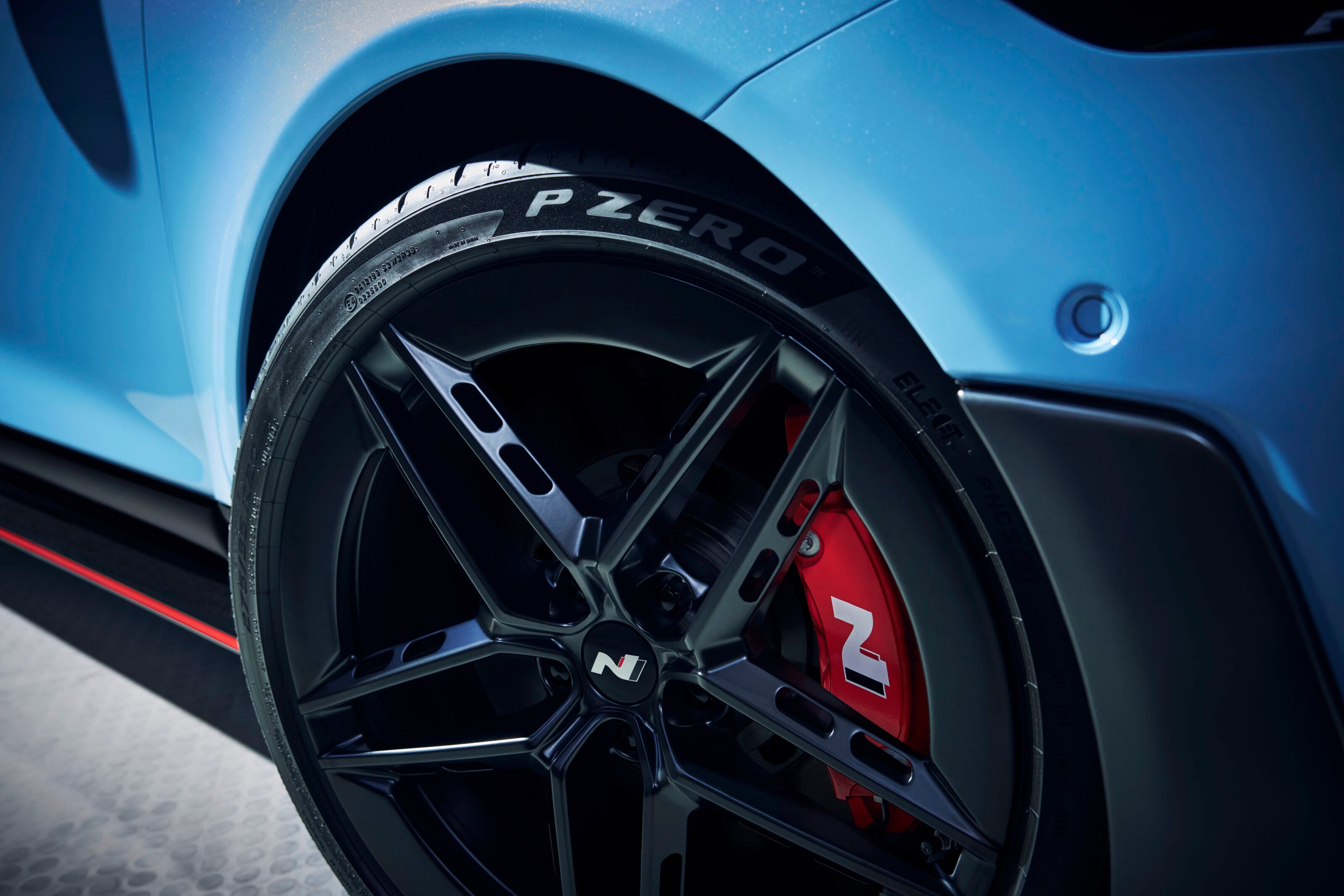
The win continues Hyundai’s strong showing at the World Car Awards in recent years. The brand has collected multiple major titles since 2022, including overall World Car of the Year and World Electric Vehicle awards for earlier IONIQ models.
The recognition reflects a broader shift in the performance segment, where electric vehicles are increasingly competing with – and in some cases outperforming – traditional internal combustion rivals.
As more manufacturers invest in high-performance EVs, the IONIQ 6 N’s win suggests that the category is quickly gaining credibility among both buyers and industry experts.
The Mazda 6e has been named 2026 World Car Design of the Year, marking the third time the Japanese brand has taken out the award.
Announced at the New York motor show, the result was decided by a panel of 98 automotive journalists from around the world, who assessed a field of 90 eligible vehicles. It follows previous wins for Mazda with the MX-5 in 2016 and Mazda3 in 2020.
The 6e is one of Mazda’s first dedicated steps into electric vehicles, and its design has been a key focus as the company transitions toward electrification. Rather than adopting a completely new visual identity, the 6e builds on Mazda’s existing design language, adapting it to suit an electric platform.
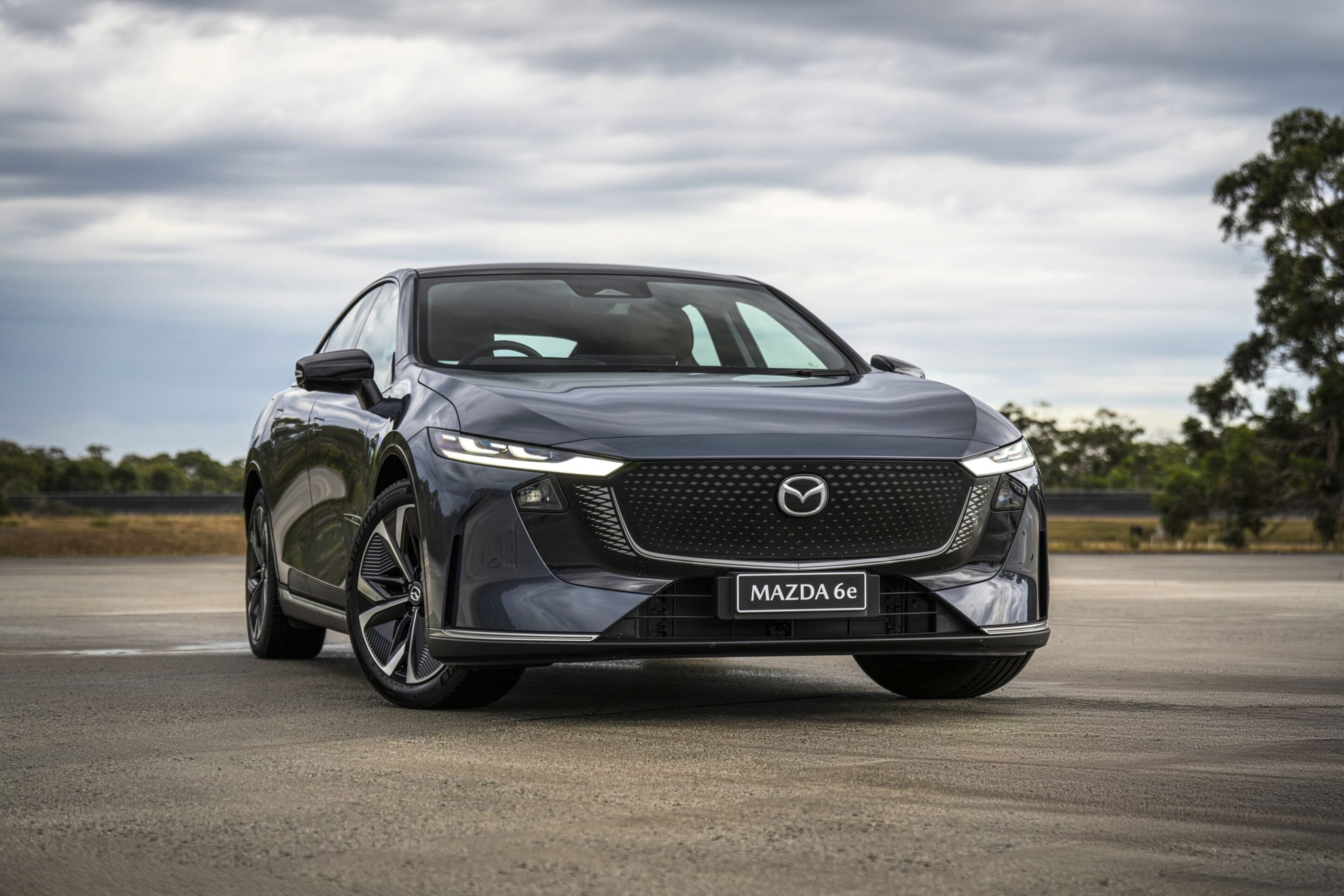
The sedan features a low, coupe-like profile and relatively clean surfacing, with proportions that differ from many EVs, which often prioritise packaging efficiency over styling. Mazda has instead leaned into more traditional design cues, aiming to retain a sense of familiarity while introducing more modern elements.
This approach appears to have resonated with judges, who typically assess not just styling, but also how design integrates with function and overall vehicle concept.
The 6e’s development reflects a broader challenge facing many carmakers – balancing established brand identity with the shift to electric vehicles. In Mazda’s case, that has meant evolving its existing “Kodo” design philosophy rather than replacing it outright.
Beyond design, the 6e also signals a deeper collaboration on technology, with the model incorporating electric and digital systems developed with external partners. Full technical details for the Australian market are yet to be confirmed, but the vehicle is expected to play a key role in Mazda’s local electrification plans.
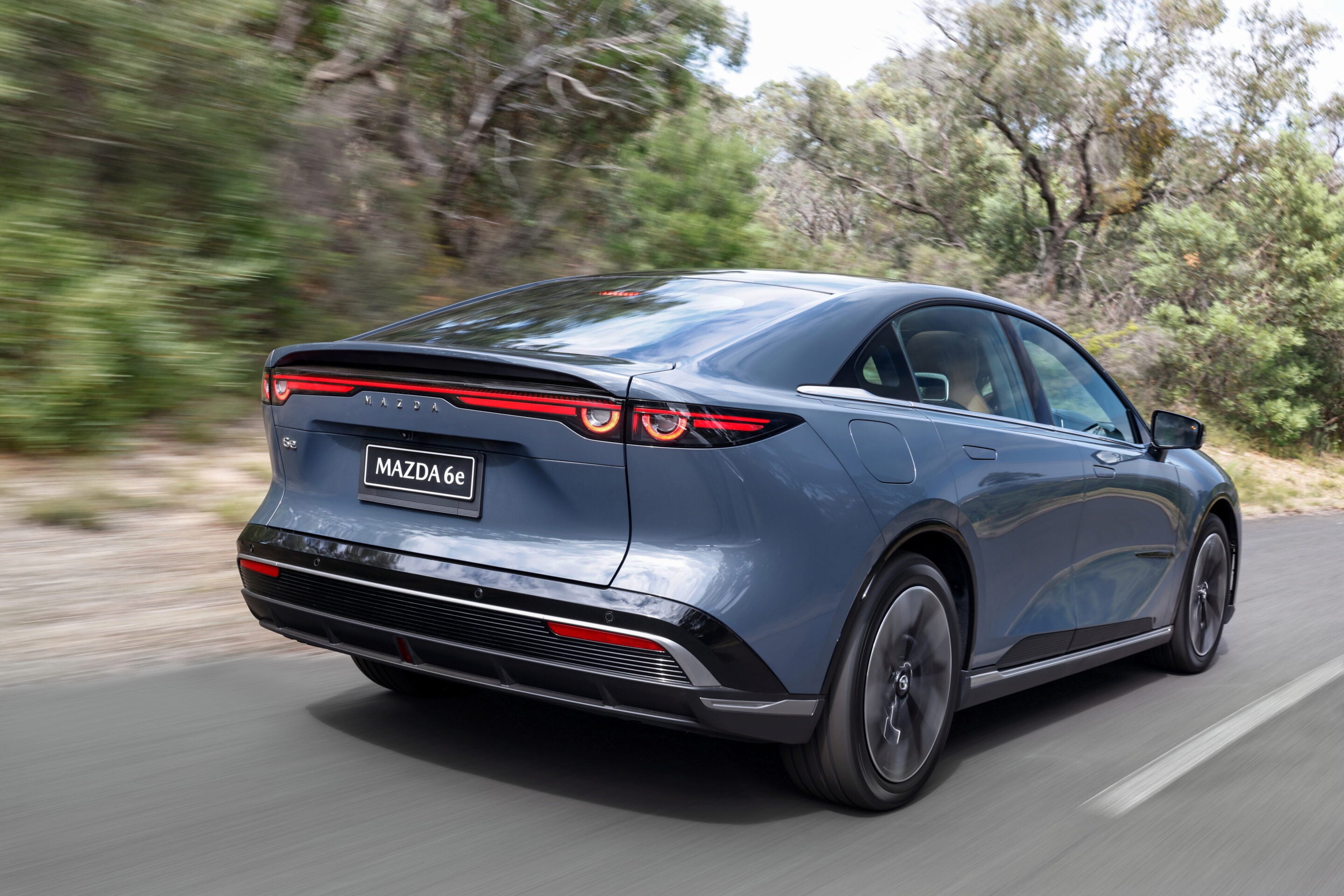
The model is already open for pre-order in Australia, with deliveries scheduled to begin around the middle of the year.
While design awards don’t always translate directly into sales success, they can influence perception — particularly for newer electric models competing in an increasingly crowded market.
For Mazda, the win provides early validation of its approach to EV design, as it looks to carry its established identity into a new generation of vehicles.
GWM has introduced a new development program aimed at tailoring its vehicles more closely to Australian and New Zealand driving conditions, with the first models now arriving in local showrooms.
Known as AT-1, the initiative centres on refining ride, handling and overall driving behaviour using local testing and engineering input, rather than relying solely on global development programs. The approach is being led by GWM’s Australian engineering team, headed by industry veteran Rob Trubiani (below).
The move reflects a broader push by carmakers to localise vehicle tuning for specific markets, particularly in regions like Australia where road conditions and usage can vary widely.
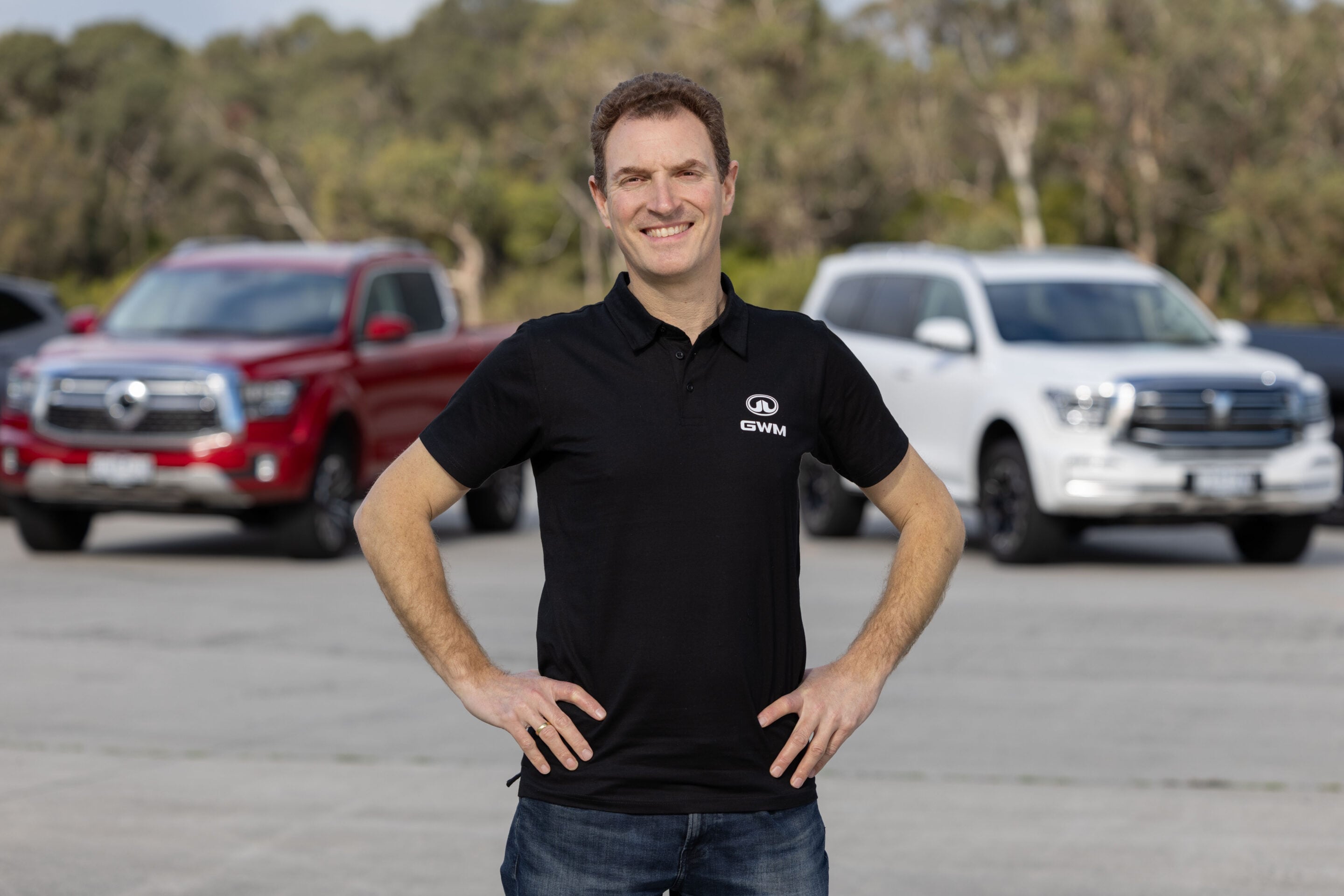
AT-1 is not a single update or model-specific change, but an ongoing development process that feeds into multiple vehicles. It focuses on areas such as suspension calibration, steering feel, driver assistance systems and towing performance, with the aim of making vehicles better suited to real-world use.
The first model to adopt the program is the Haval H6, which has undergone extensive local testing and calibration. According to GWM, engineers developed multiple variants of suspension and steering setups to suit different powertrains and driveline configurations.
That process involved dozens of damper calibrations and thousands of individual adjustments to steering systems, highlighting the level of detail involved in adapting vehicles for local conditions.
Rather than delivering a one-off improvement, the AT-1 program is designed as a continuous loop, with vehicles refined over time based on feedback and further testing.
Trubiani, who previously held senior roles at Holden and HSV, has been central to shaping the program. In a recent interview with Wheels, he outlined the importance of tuning vehicles on Australian roads, noting that local conditions often expose weaknesses not seen in global testing environments.
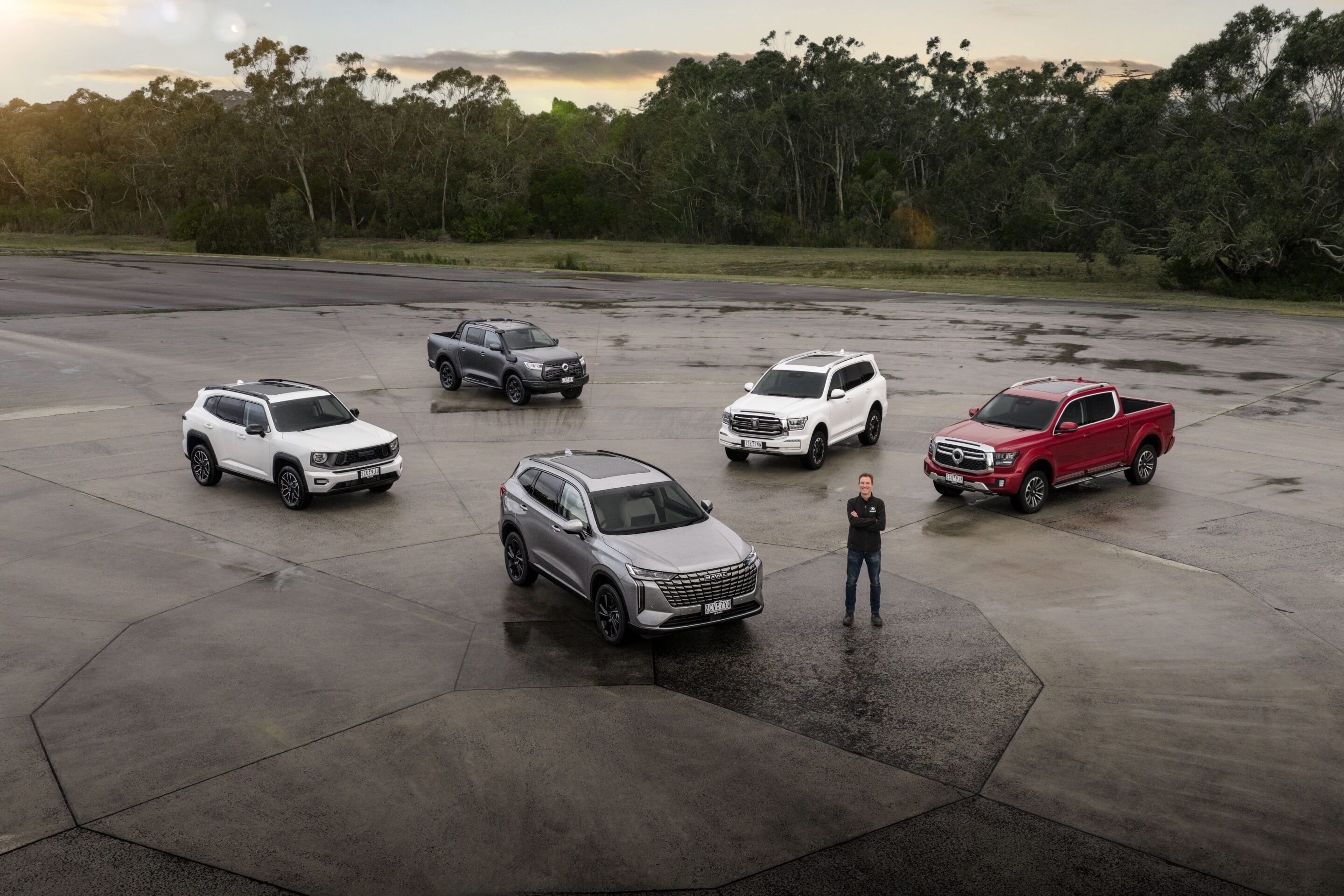
His involvement signals a shift for GWM, which is increasingly positioning its Australian operation as more than just a sales market, but also as a contributor to global vehicle development.
Insights gathered through the AT-1 program are expected to feed back into GWM’s broader engineering efforts, influencing future models beyond the local market.
As competition intensifies, particularly among emerging brands, localised tuning programs such as AT-1 may become an increasingly important differentiator for buyers.
