
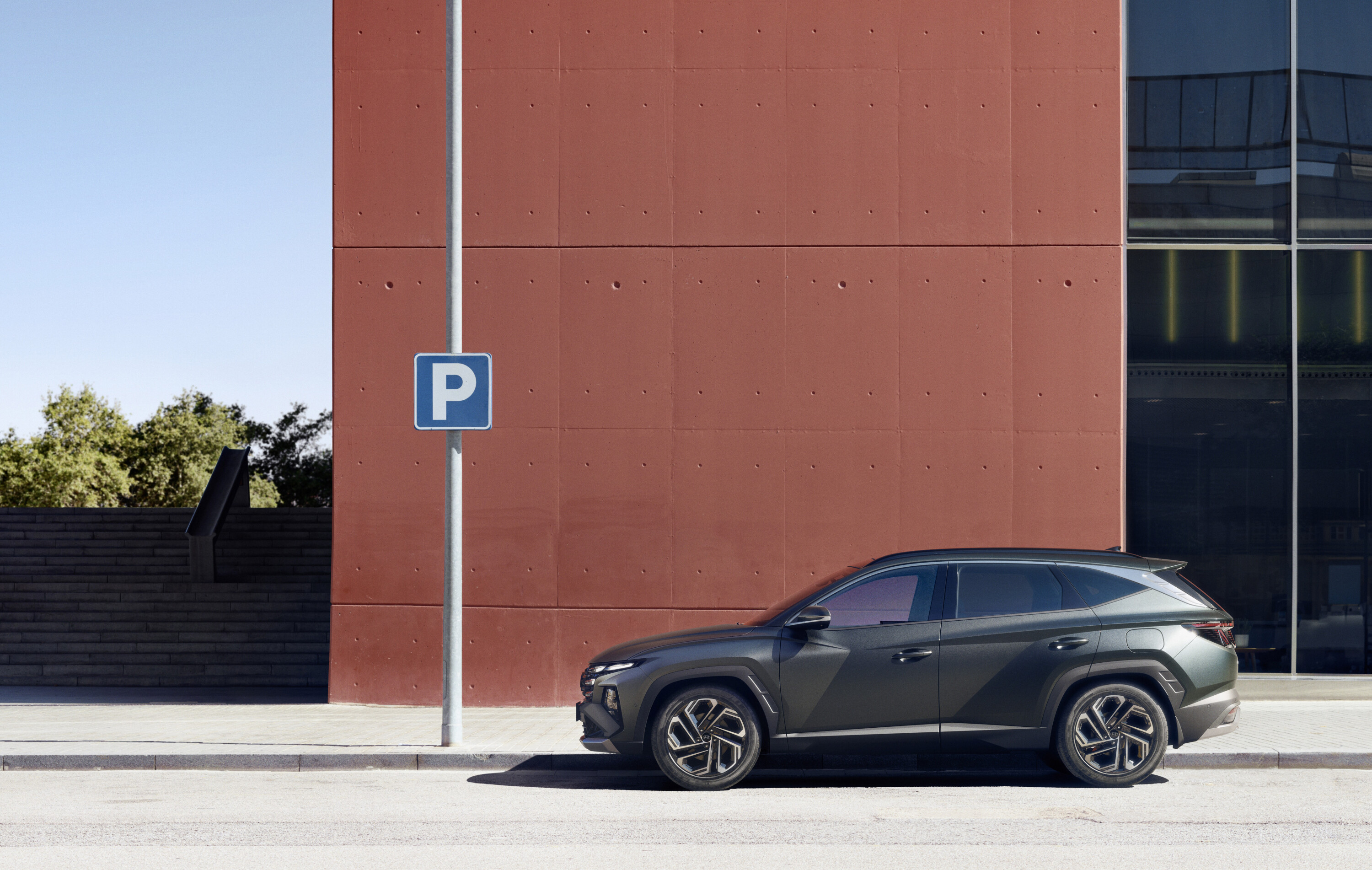
Full pricing and specs have been released for the 2025 Hyundai Tucson midsize SUV.
Hyundai has discontinued its 2.0-litre turbo-diesel, opting to hit Australian showrooms with an all-new petrol-electric hybrid powertrain (172kW/264Nm) as well as its existing petrol (115kW/192Nm) and turbo-petrol (132kW/264Nm) engines.
The three-tier line-up – divided into Base, Elite and Premium (replacing Highlander nomenclature) trim levels – is due to arrive on local soil shortly, with pricing to start at $39,990 for the 2.0-litre petrol FWD base variant and top out at $59,600 for the Premium 1.6-litre turbo-petrol hybrid AWD model – although adding the N-Line pack to that variant increases the price to $61,100. Full pricing below.
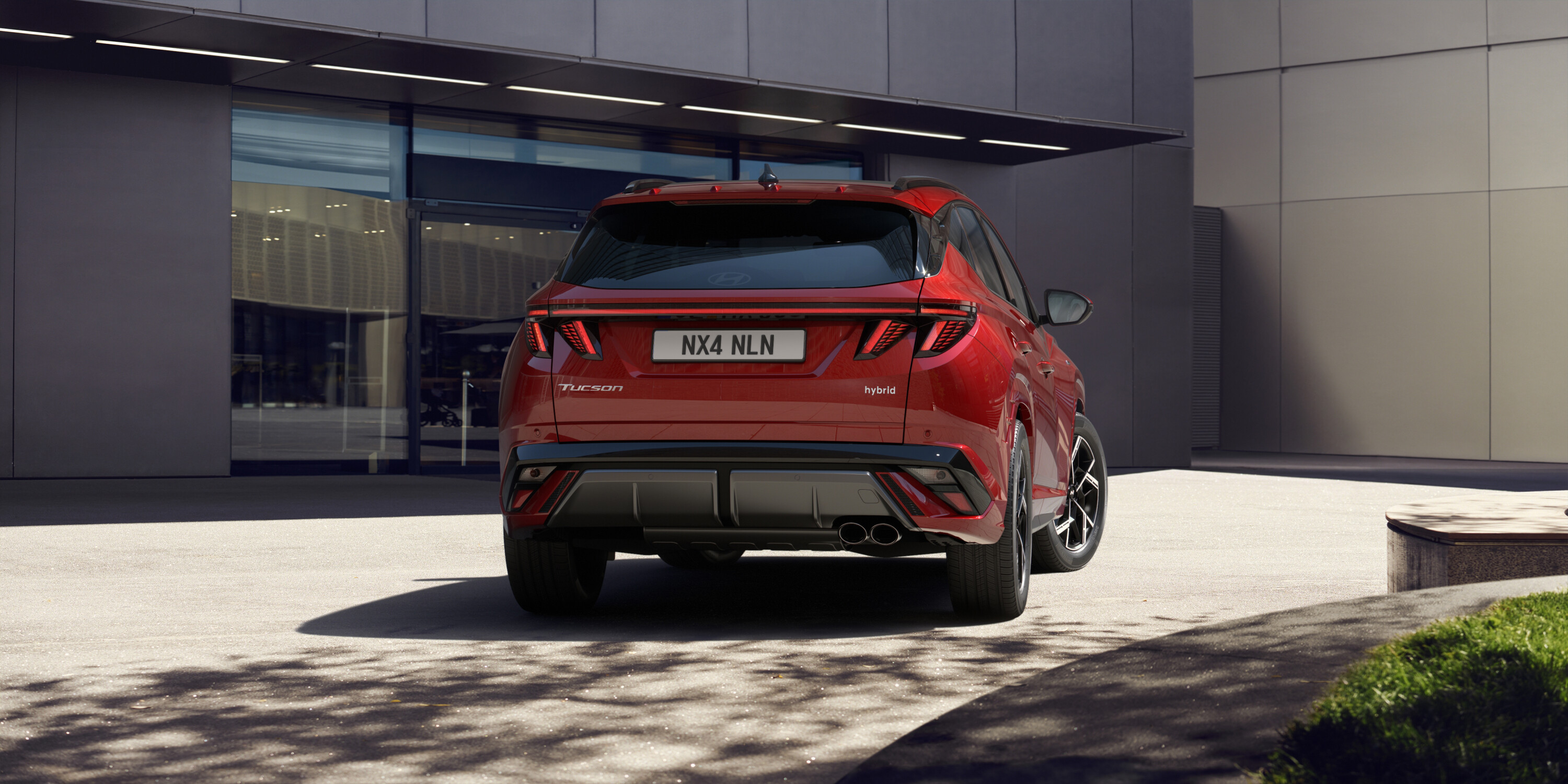
These prices see an increase across the board compared to the preceding model, with the price of entry increasing by $3450. As mentioned, a motorsport-inspired N Line option pack is offered, which nets the buyer N Line-exclusive 19-inch wheels, grille, front bumper and skid plate, N Line badging, a sporty rear bumper, skid plate and twin exhaust outlets.
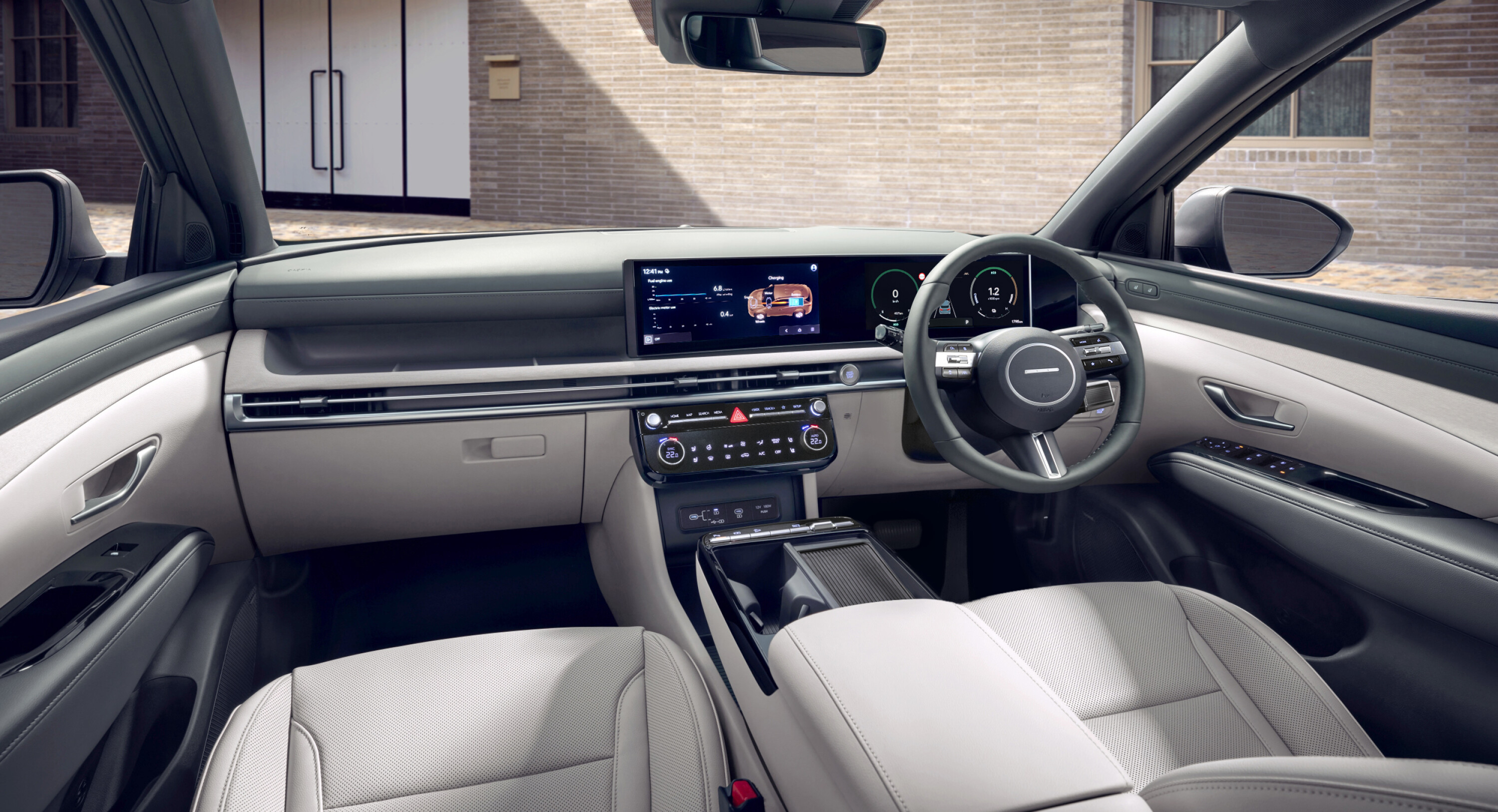
In addition to the hybrid powertrain, other notable changes include a new-look front bumper and grille, LED lighting throughout the range, a pair of larger 12.3-inch touchscreens in a revamped interior, and an improved suite of safety features.
Safety updates
- Increased body rigidity
- 2nd row pretensioner
- SmartSense™ Safety Technologies
- Forward Collision-avoidance Assist 1.5 (FCA 1.5)
- Junction turning function
- Direct Oncoming warning
- Highway Driving Assist (HDA)
- Lane Keeping Assist (LKA)
- Lane Following Assist (LFA)
- Blind-Spot Collision Avoidance Assist (BCA)
- Safe Exit Warning (SEW)
- Intelligent Speed Limit Assist (ISLA)
- Driver Attention Warning (DAW)
- Blind-Spot View Monitor (BVM)
- High Beam Assist (HBA)
- Smart Cruise Control (SCC)
- Navigation-based Smart Cruise Control (NSCC)
- Rear View Monitor (RVM)
- Surround View Monitor (SVM)
- Rear Occupant Alert (ROA)
- Rear Cross-Traffic Collision Avoidance (RCCA)
- Parking Distance Warning (PDW F/S/R)
- Reverse Parking Collision Avoidance (PCA-R)
Pricing
2.0L Petrol FWD
- Base model: $39,1000
- Elite: $44,100
1.6L Turbo-Petrol FWD
- Base model with N-Line pack: $45,100
- Elite: $46,100
- Elite with N-Line pack: $48,600
1.6L Turbo-Petrol AWD
- Elite: $48,600
- Elite with N-Line pack: $51,100
- Premium: $55,600
- Premium with N-Line pack: $57,100
1.6L Hybrid FWD
- Base model: $45,100
- Base model with N-Line pack: $49,100
- Elite: $50,100
- Elite with N-Line pack: $52,600
Pricing: 1.6L Hybrid AWD
- Elite: $52,600
- Elite with N-Line pack: $55,100
- Premium: $59,600
- Premium with N-Line pack: $61,100
What you get!
Base model
- Seven airbags
- Dual-zone climate control
- Tyre Pressure Monitoring System
- Four-inch full digital instrument cluster
- Silver grille with silver H emblem
- Wireless charger
- 18-inch alloy wheels w/full size spare
- Remote start (with smart key)
- LED combination tail-lights
- Smart key with push-button start
- LED headlights
- Acoustic windshield glass
- Roof rails
- Cloth seats
- 12.3-inch multimedia display
- LED lighting
- Bluelink w/ OTA updates
Tucson Elite adds
- Rain sensor
- Electronic chromic mirror (ECM)
- Solar windshield and front door glass (heated)
- Leather-appointed seats
- Power-opening tailgate
- Dark chrome radiator grille with dark silver H emblem
- Heated front seats
- Navigation w/Bluelink live traffic
- Satin chrome mirror line
- Powered driver seat
- AWD locking and HTRAC (AWD only)
Tucson Premium adds
- Sunroof
- Walk-in device (passenger seat)
- Parking Collision-Avoidance Assist
- Projector LED headlights
- Heated steering Wheel
- Intelligent front lighting system
- Heated and ventilated front seats
- Heated second row outboard seats
- Ambient interior lighting
- Head-up display (HUD)
- 19-inch alloy wheels
- Memory driver seat (IMS) and powered passenger
- BOSE eight-speaker premium audio
N Line Option pack
- 19-inch wheels
- Black headlining
- Dark silver grill
- Body colour cladding
- Alloy pedals
- Dark silver H emblem
- Rear spoiler
- Sport scuff plates
- Hidden daytime running lights
- Seat with back panel with pockets (Elite and above)
- Gloss black outside mirror
- Suede leather-appointed
- 12.3-inch full digital instrument cluster (Elite and above)
- Projector LED headlights (Premium)
- Shift By Wire (over 2.0 MPi)
- Intelligent front lighting system (Premium)
- Active red air vent/seat highlights
- Roof rack gloss black
- Dark metal interior trim highlights
| Exterior dimensions | |
|---|---|
| Length | 4,640 |
| Overhang (FR) | 905 |
| Wheelbase | 2,755 |
| Overhang (RR) | 980 |
| Width | 1,865 |
| Height (incl. roof rails) | 1,665 |
Both the hybrid and petrol variants will be available when the vehicles launch imminently, with 1.6T-GDi Petrol FWD variants to arrive soon after.
UPDATE, July: 2025 BMW X3 pricing announced
Australian pricing for the new fourth-generation 2025 BMW X3 has been announced today, ahead of a local debut set for early next year.
June: New 2025 BMW X3 unveiled
The new 2025 BMW X3 has been unveiled with two mild-hybrid petrol engines for Australia, missing out on Europe’s PHEV – and there’s no iX3 EV to be seen anywhere
The new fourth-generation 2025 BMW X3 has been unveiled today, ahead of an Australian sales debut set for the first quarter of 2025.
When it arrives, the new 2025 BMW X3 will be offered in two main forms: the entry-level X3 20 and the muscly X3 M50 flagship, both with xDrive all-wheel-drive equipped as standard.
Both will also have a 48-volt ‘mild hybrid’ system onboard to improve fuel efficiency, although this technology comes in lieu of the X3 30e plug-in hybrid EV (PHEV) model announced for Europe. BMW’s local arm hasn’t ruled the PHEV model out, but it has so far offered no word on its intentions for a later introduction.
Also conspicuous in its absence is the iX3 badge, which lived on a popular all-electric variant of the outgoing third-generation range. That model has been left out of the new line-up globally, and while BMW isn’t commenting on the omission just yet, it’s likely been decided to make room for next year’s ‘Neue Klasse’ (new class) electric SUV – which may or may not be named iX3.
The new ‘iX3’, previewed as the Neue Klasse X concept above (alongside the Neue Klasse sedan concept)
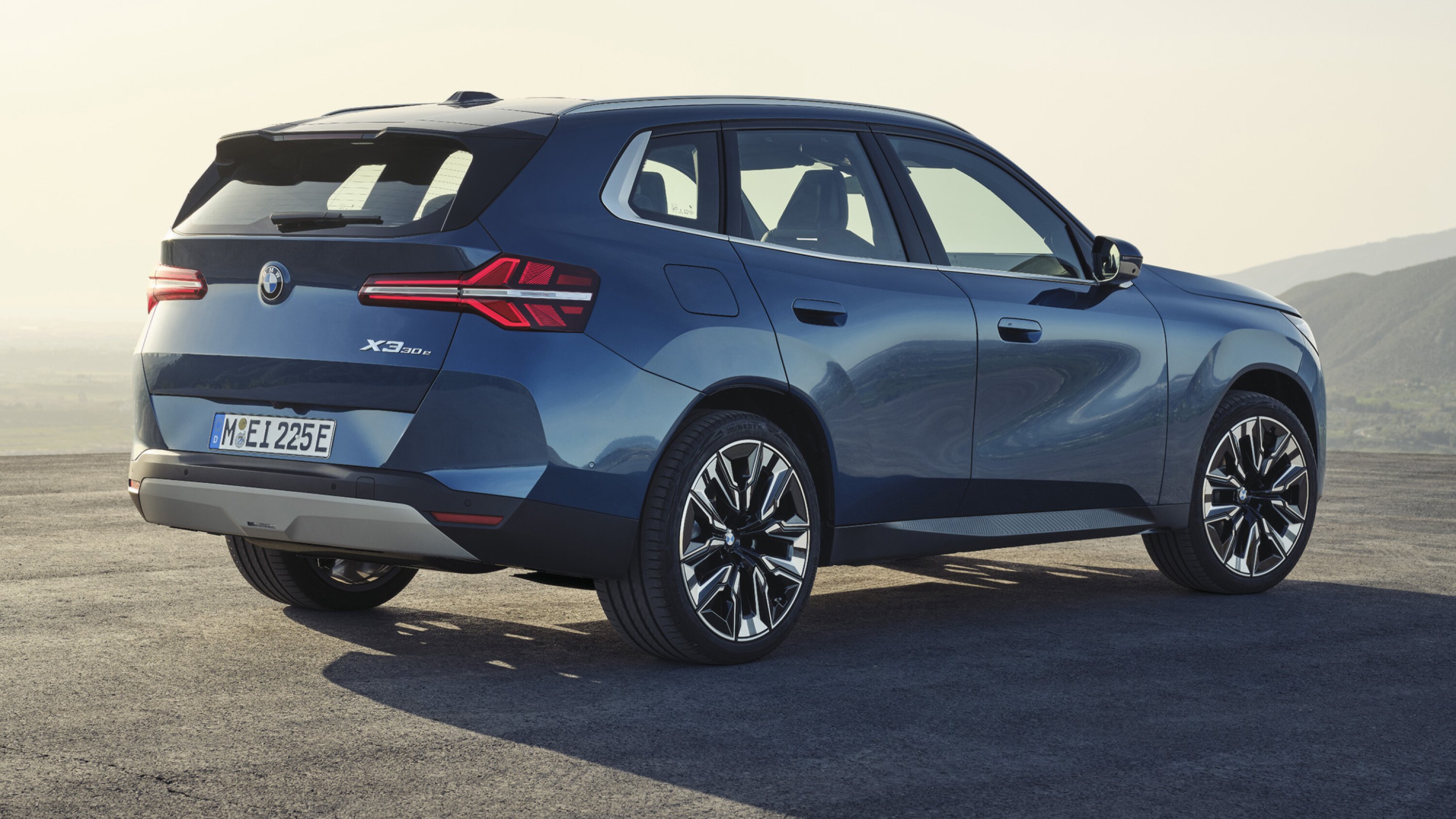
In its new fourth-generation form, the 2025 BMW X3 is longer and wider than its predecessor, growing 34mm to 4755mm and 29mm to 1920mm respectively.
Its wheelbase is unchanged, and while the brand hasn’t said, it’s likely riding on a version of the CLAR platform that underpins most other current BMW models. The new X3 does however sit 25mm lower for – in BMW’s words – “added presence”.
Despite whatever architectural elements it may share with the outgoing model, the 2025 BMW X3 boasts an overall lighter and stiffer structure, along with new double-joint strut front-axle suspension and a wider rear axle with a five-link design.
In Europe, all models have coil springs and passive dampers, but Australian variants will have adaptive suspension as standard.
Powertrains in the local 2025 BMW X3 line-up include a 140kW/310Nm turbo petrol four-cylinder engine for the X3 20 xDrive, while the hero X3 M50 xDrive gets a 3.0-litre petrol turbo in-line six producing 293kW and 580Nm.
Performance figures see a 0-100km/h claim of 8.5 seconds for the X3 20 – a figure just about halved at the other end, with the X3 M50 claiming a 0-100km/h time of 4.6 seconds.
No full-bottle X3 M model has been announced, and it’s likely one won’t be offered except in Neue Klasse iX3 form.
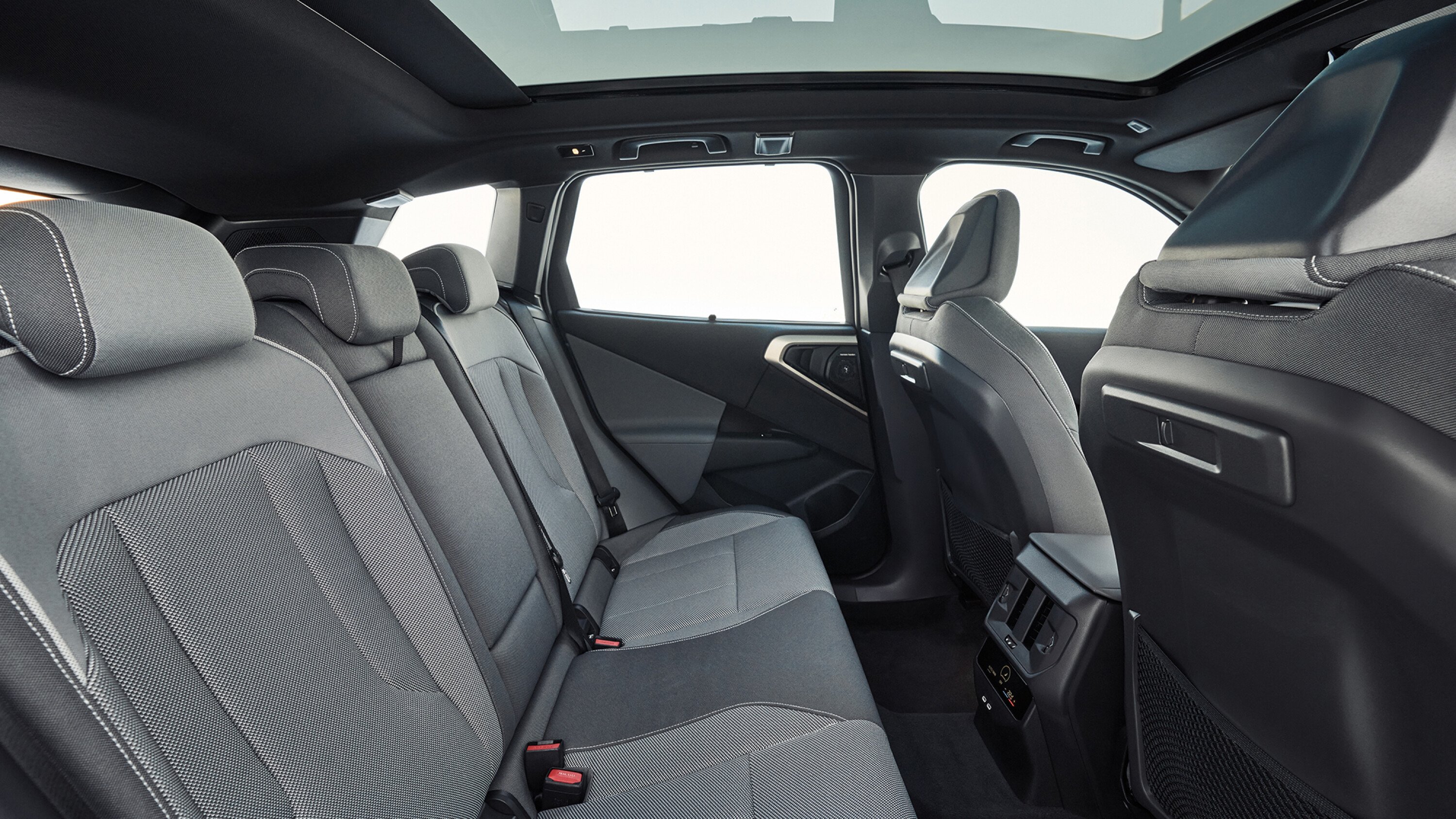
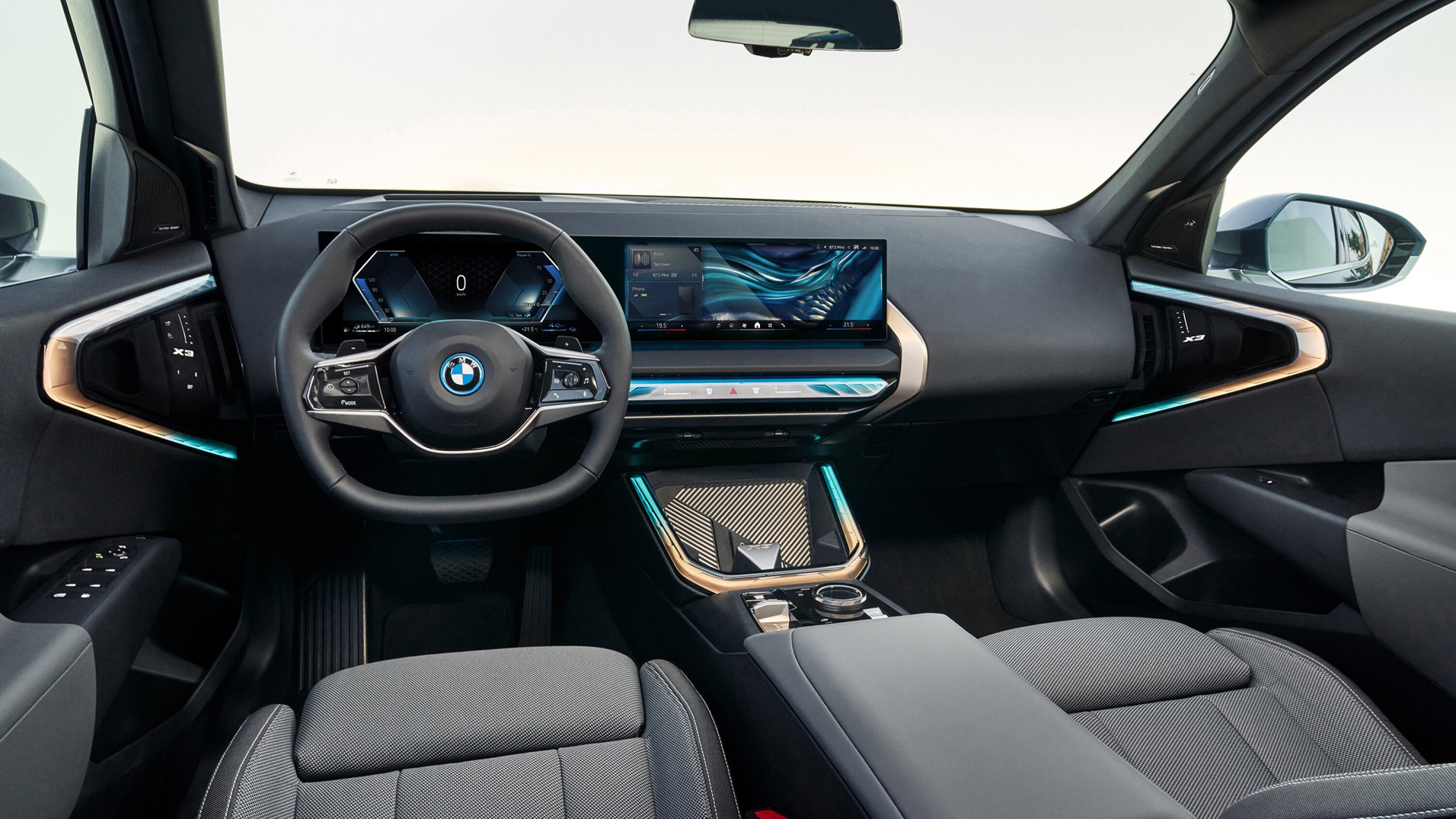
Interior highlights include a huge curved display and ‘Interaction Bar’, a flat-bottomed steering wheel and a new gear selector, along with sports seats and an instrument panel made from recycled materials.
The latest latest BMW iDrive is featured, loaded with ‘Operating System 9’ and the QuickSelect interface. Expect Android Auto and Apple CarPlay to be featured, both with a wireless connection. CarPlay could also appear in its second-generation form, outlined this week by The Verge.
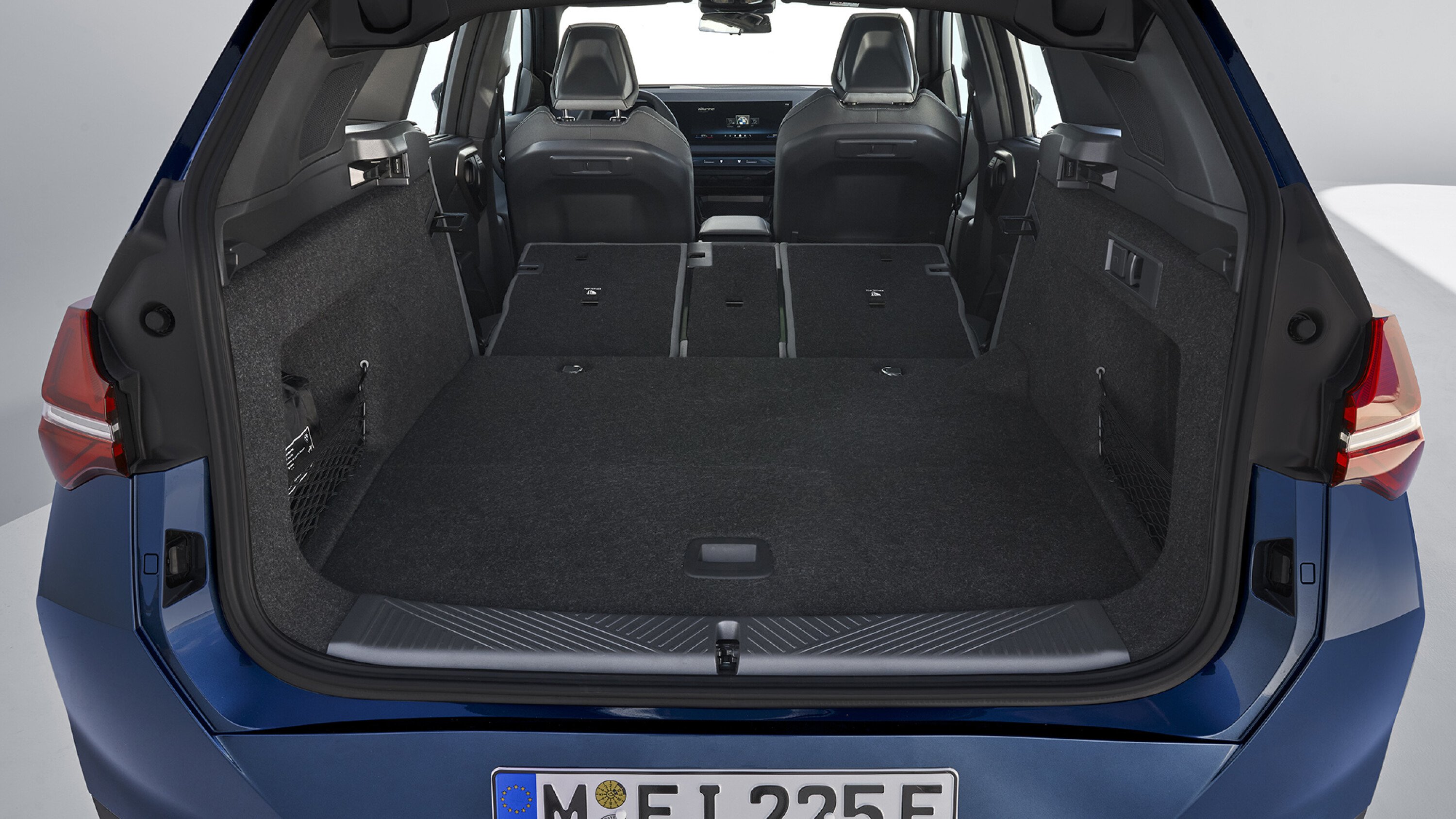
Boot space for the 2025 BMW X3 is listed at 570-1700 litres, up from 550-1600L in the previous model.
When will the 2025 BMW X3 go on sale in Australia?
The new 2025 BMW X3 will be built in the USA and South Africa, and Australian deliveries will begin in the first quarter of 2025.
Watch for pricing and more details to come in July.
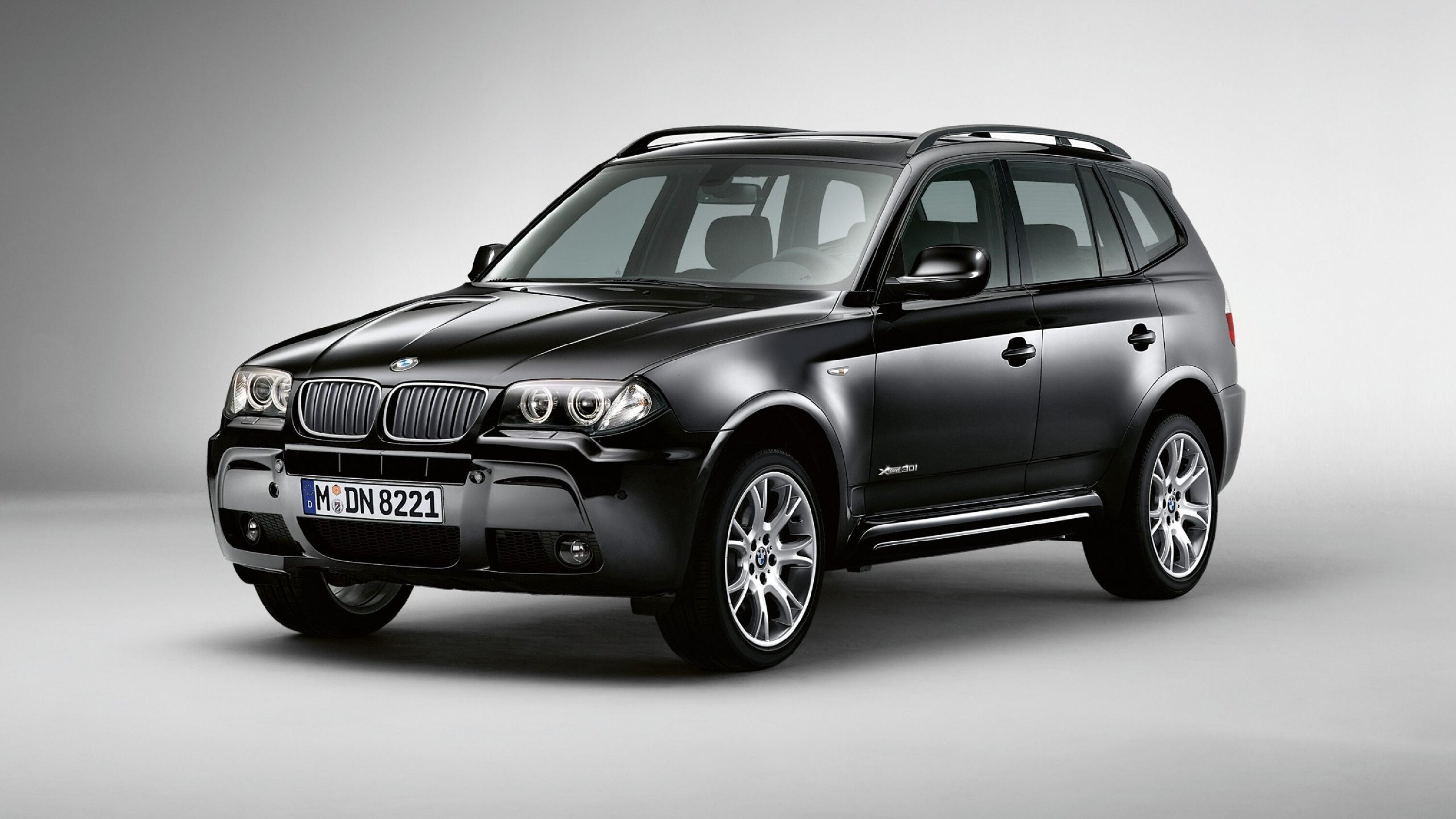
Below: Four generations of BMW X3
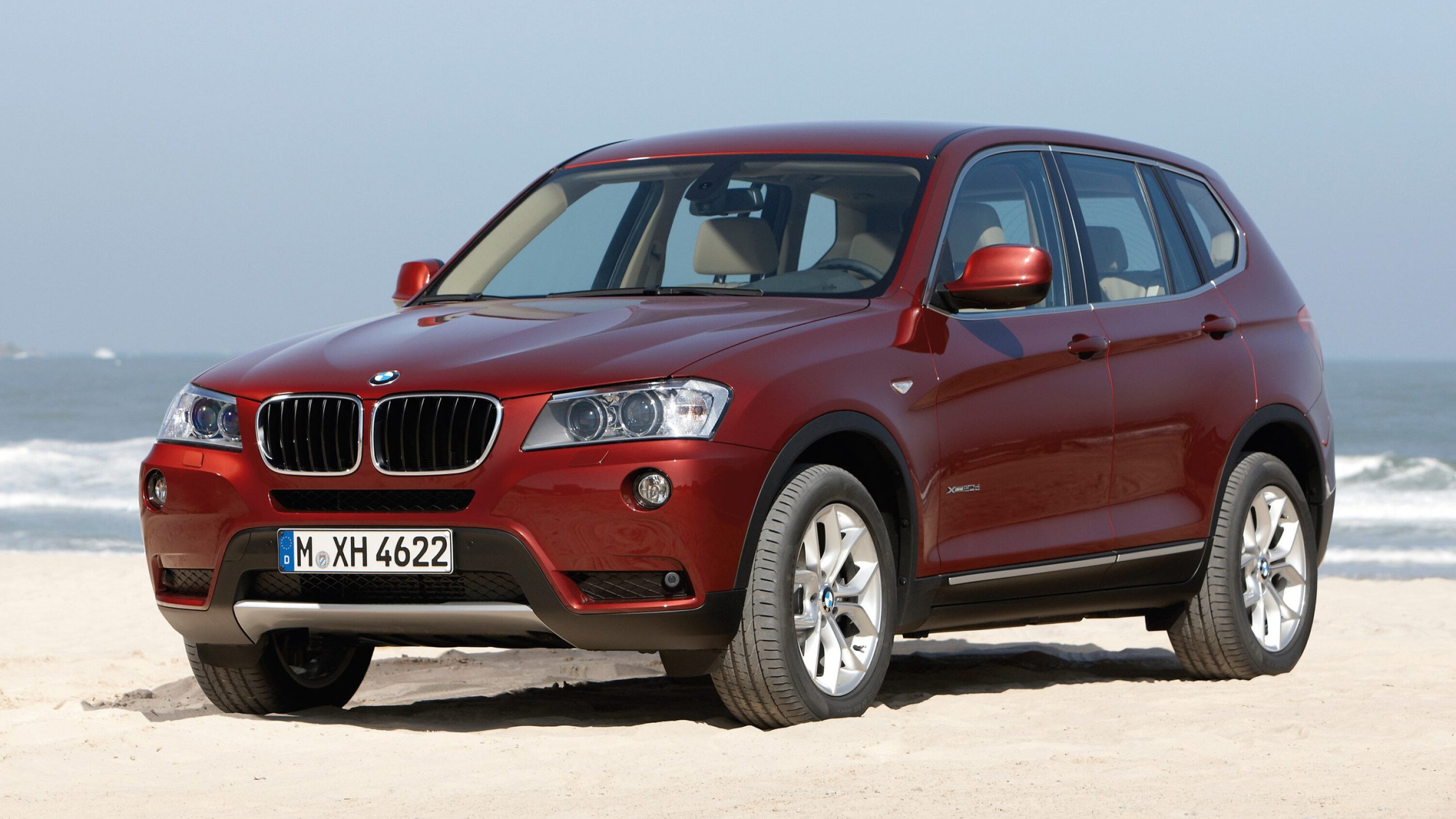
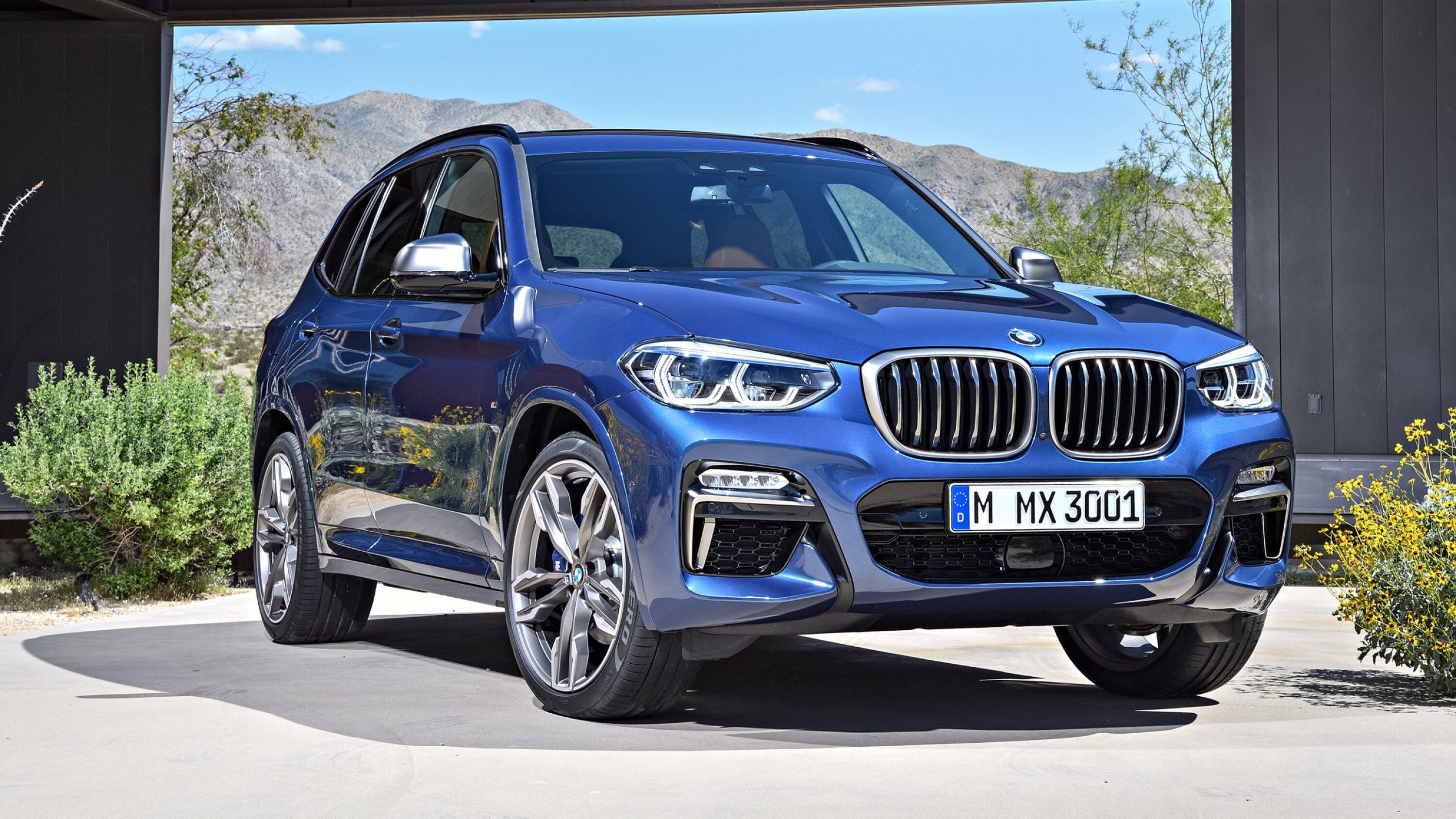
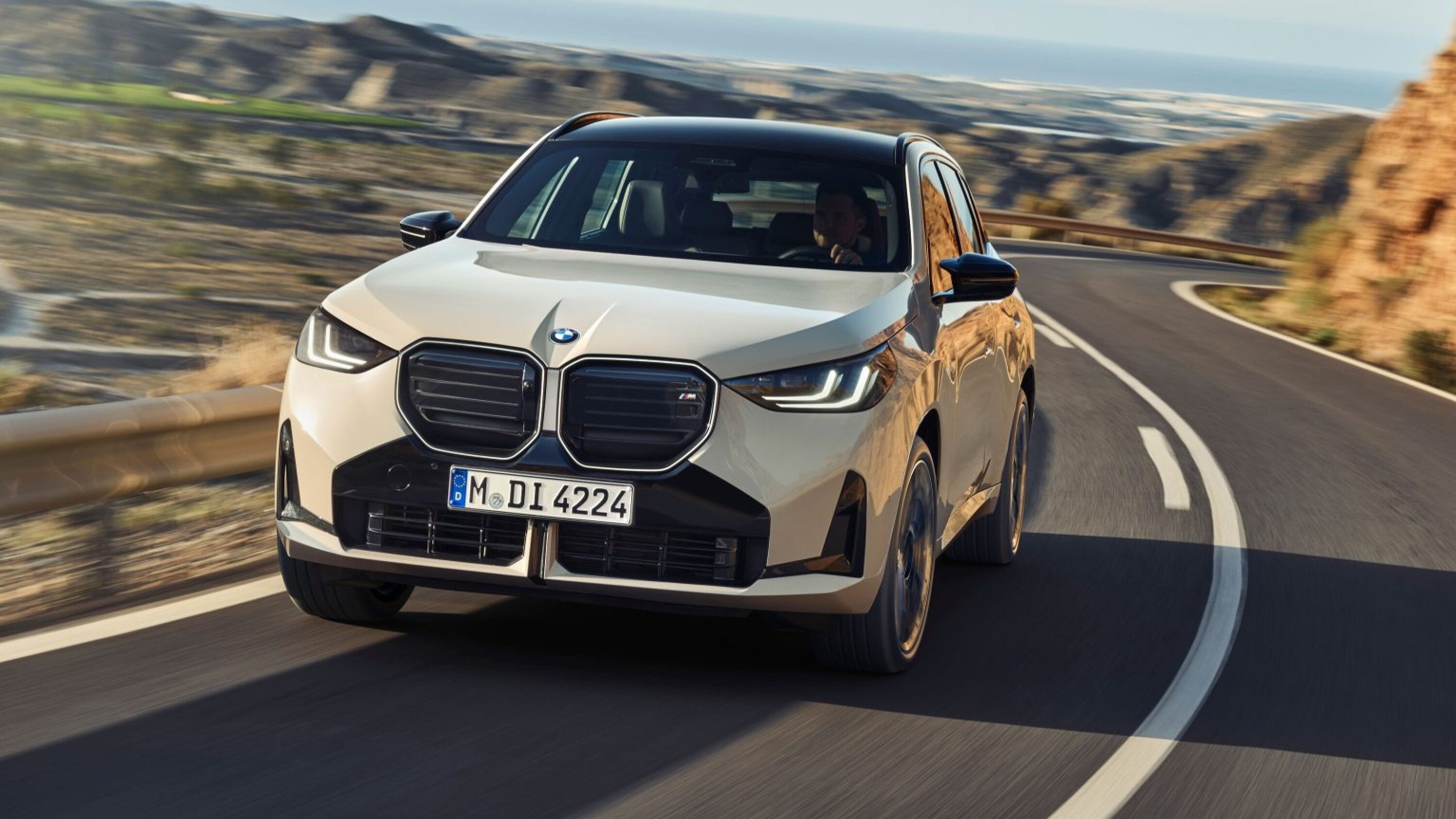
What are Australia’s best cars for good fuel efficiency?
Plug-in hybrid vehicles (PHEVs) often steal the spotlight regarding fuel-efficient internal-combustion cars, but other relatively green vehicles are available in Australia today.
While Toyota Australia has retired the pioneering Prius hatchback after 21 years on sale, the ‘regular’ hybrid powertrain – with no need to plug in – has become an increasingly popular, mainstream choice.
The most popular variants of Australia’s best-selling crossover, the Toyota RAV4 midsize SUV, now feature a hybrid powertrain, while other brands such as Honda, Kia, Hyundai and Lexus also offer petrol-electric options.
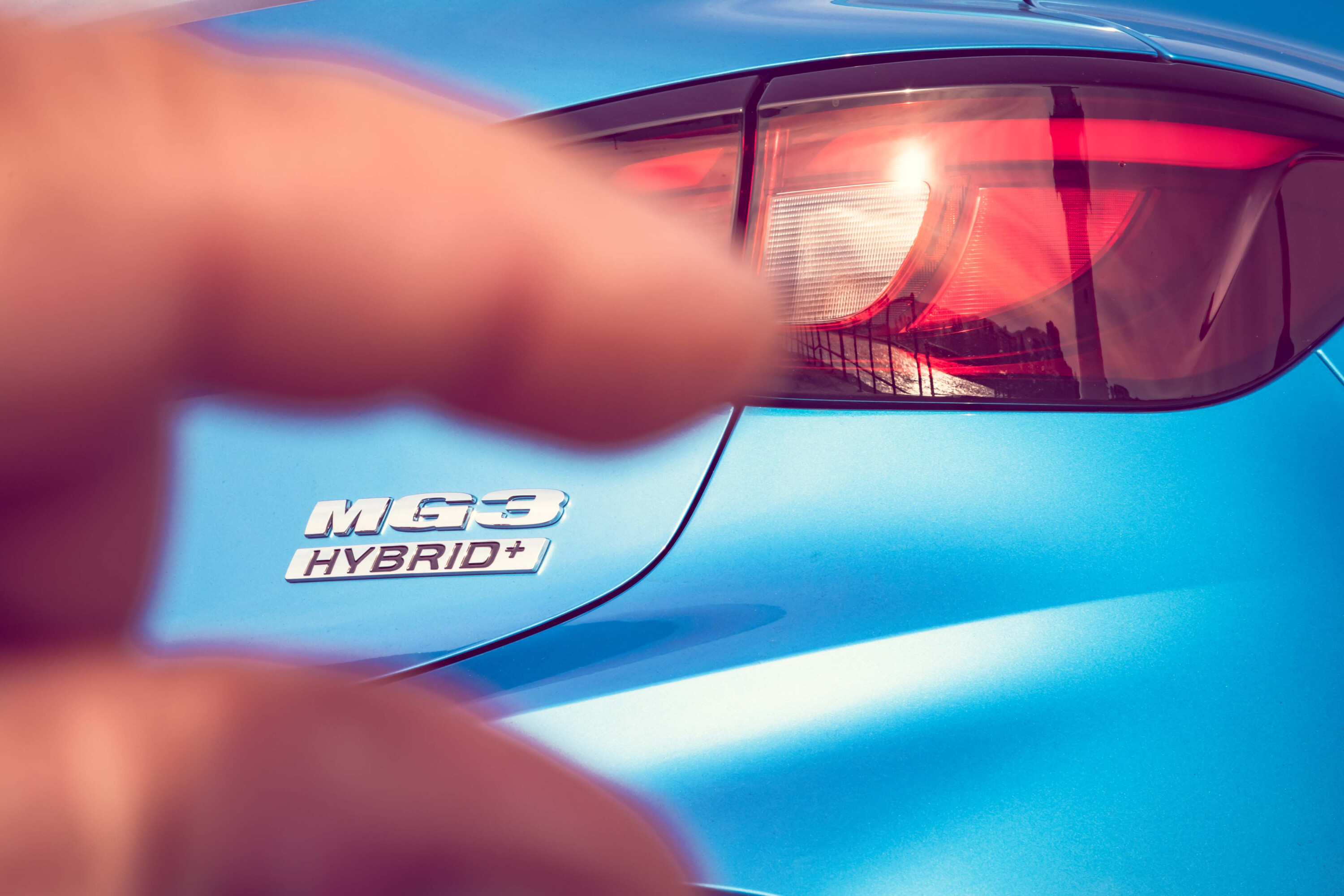
WhichCar has compiled data revealing each non-PHEV vehicle currently available in Australia with a combined fuel efficiency rated at five litres per 100 kilometres or less.
How is fuel consumption measured?
‘Litres per 100km’ is exactly as stated, relating to the distance you can travel on an amount of fuel. A lower number demonstrates better fuel-efficiency.
For example, a vehicle with a 40-litre fuel tank with a claimed fuel consumption of 5.0L/100km will travel 800 kilometres from full to empty.
However, this is in an ideal situation, as a vehicle’s true fuel economy can differ based on various driving conditions and your own approach to driving – including vehicle and occupant weight, acceleration, the weather, air-conditioning, windows up or down, tyre pressures, and the route.
(Then, of course, there’s the ‘fuel reserve light’…)
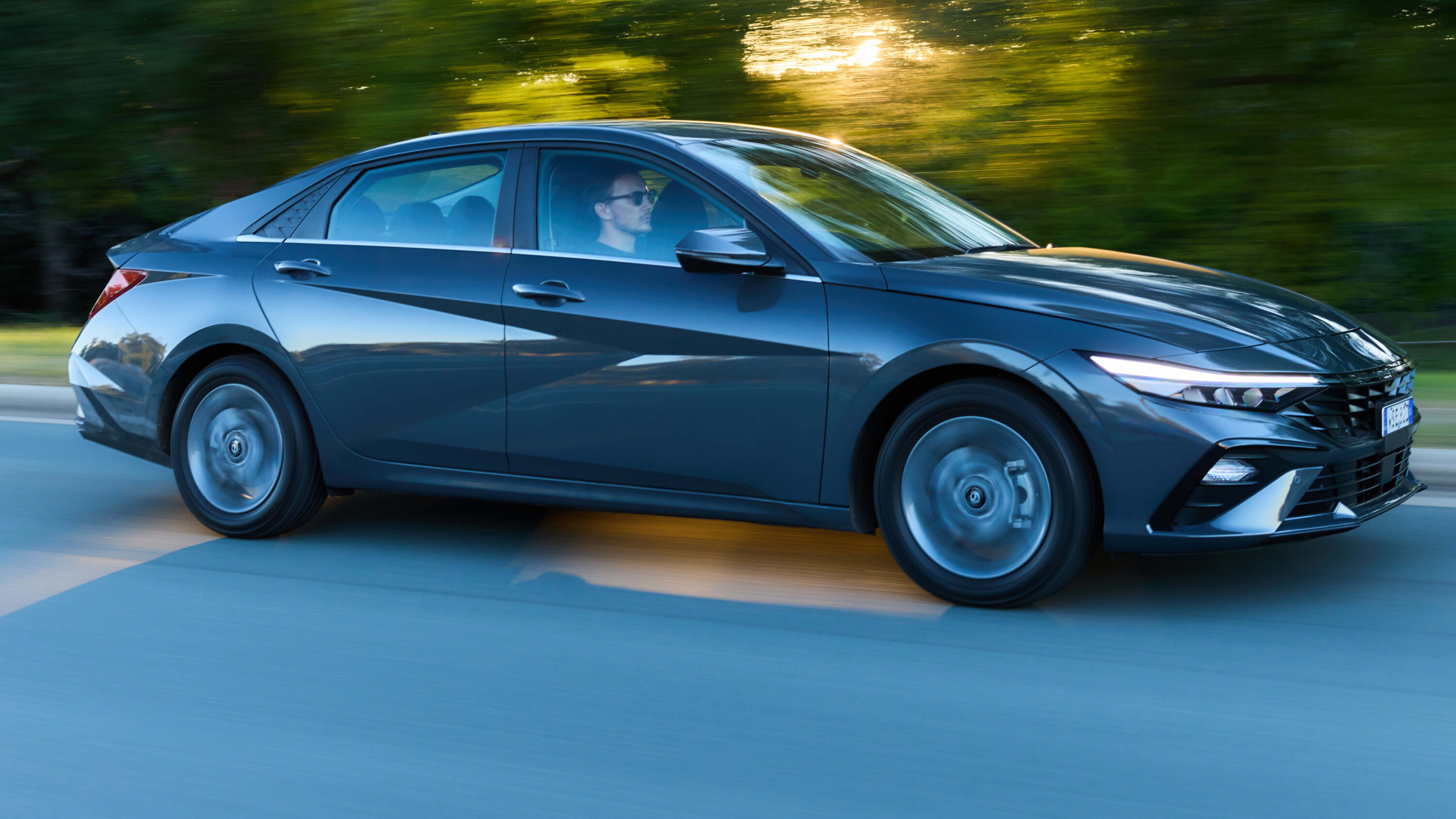
Firstly, which car uses the least fuel of all cars in Australia?
The tiny Toyota Yaris Hybrid, powered by a low-capacity 1.5-litre three-cylinder engine with an electric motor, is currently the champ for using only a little fuel, claimed at just 3.3L/100km. In our most recent testing, we achieved an impressive 4.1L/100km in regular ‘daily driver’ activity.
The Yaris hybrid is followed by over 40 variants from 10 brands that lightly sip their fuel.
Those include…
Most of the vehicles featured include a hybrid powertrain; however, some pure petrol and diesel internal-combustion vehicles – including the Audi A3, Mazda CX-60 and Volkswagen Caddy – also feature on the interactive graph below.
A more-comprehensive table detailing each vehicle’s engine, transmission, fuel and drive type, variant and combined fuel consumption (L/100km) is available below:
UPDATED: June 2024
Note: Table scrolls horizontally to reveal more columns
| Model | Variant | Combined fuel consumption (L/100km) | Engine | Fuel | Minimum RON | Transmission | Drive | Combined CO2 output (g/km) |
|---|---|---|---|---|---|---|---|---|
| Toyota Yaris | Ascent Sport, SX, ZR | 3.3L | 3-cyl, 1.5-litre hybrid | Petrol | 91 | Automatic | FWD | 76g |
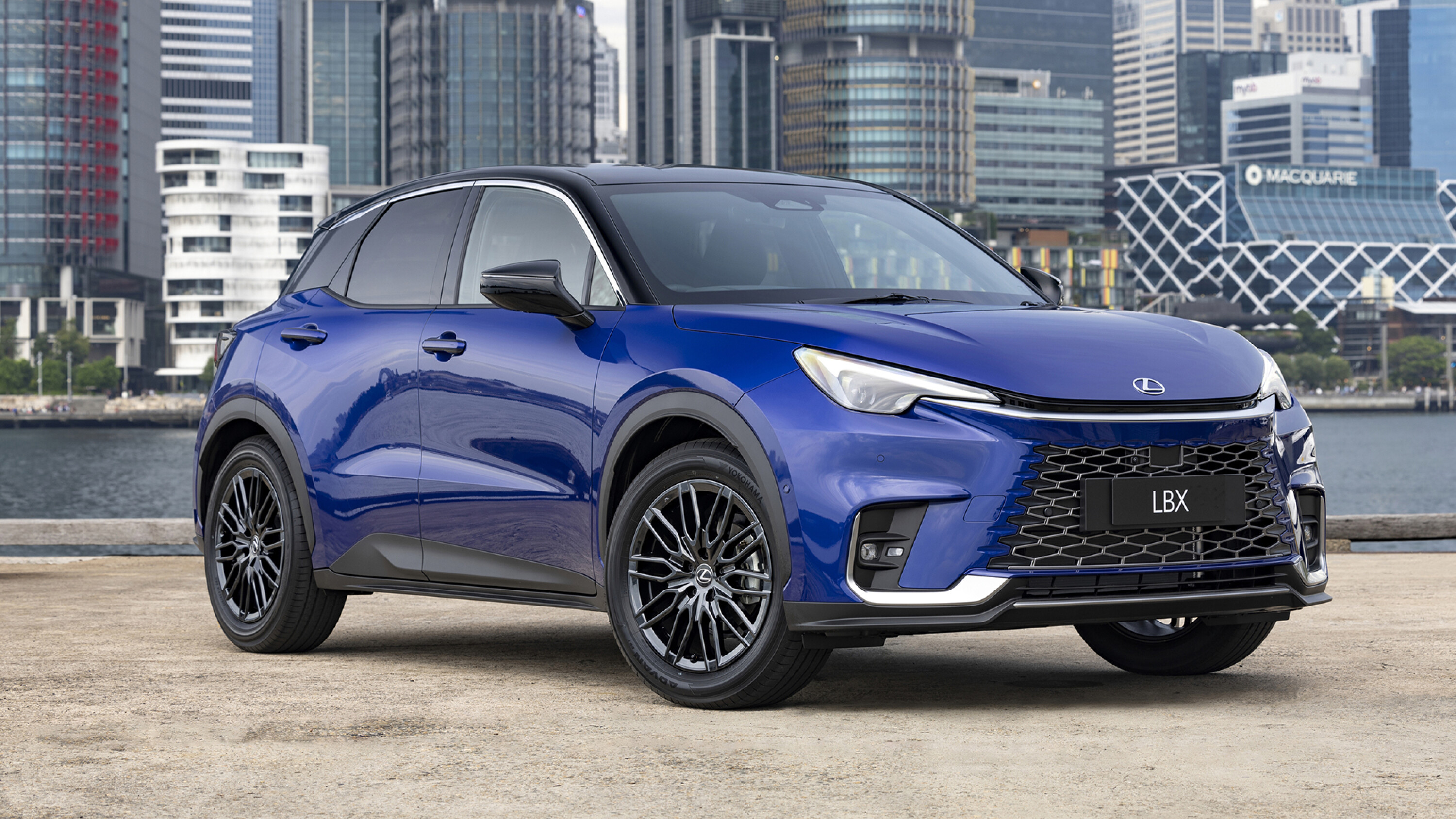
| Lexus LBX | Luxury, Sports Luxury | 3.8L | 3-cyl, 1.5-litre hybrid | Petrol | 91 | Automatic | FWD | 87g |
| Lexus LBX | Sports Luxury | 3.8L | 3-cyl, 1.5-litre hybrid | Petrol | 91 | Automatic | AWD | 87g |
| Suzuki Swift | base | 3.8L | 3-cyl, 1.2-litre mild-hybrid | Petrol | 95 | Manual | FWD | 85g |
| Toyota Yaris Cross | GX, GXL, GR Sport, Urban | 3.8L | 3-cyl, 1.5-litre hybrid | Petrol | 91 | Automatic | FWD | 86g |
| Hyundai i30 Sedan | Hybrid | 3.9L | 4-cyl, 1.6-litre hybrid | Petrol | 91 | Automatic | FWD | 92g |
| Hyundai Kona | Hybrid, Premium Hybrid | 3.9L | 4-cyl, 1.6-litre hybrid | Petrol | 91 | Automatic | FWD | 89g |
| Toyota Corolla sedan | Ascent Sport, SX, ZR Hybrid | 3.9L | 4-cyl, 1.8-litre hybrid | Petrol | 91 | Automatic | FWD | 86g |
| Kia Niro | S, GT-Line Hybrid | 4.0L | 4-cyl, 1.6-litre hybrid | Petrol | 91 | Automatic | FWD | 91g |
| Suzuki Swift | base, Plus, GLX | 4.0L | 3-cyl, 1.2-litre mild-hybrid | Petrol | 95 | Automatic | FWD | 90g |
| Toyota C-HR | GXL, Koba | 4.0L | 4-cyl, 1.8-litre hybrid | Petrol | 91 | Automatic | FWD | 89g |
| Toyota Corolla hatch | Ascent Sport, SX, ZR | 4.0L | 4-cyl, 1.8-litre hybrid | Petrol | 91 | Automatic | FWD | 97g |
| Toyota Yaris Cross | GX, GXL, Urban | 4.0L | 3-cyl, 1.5-litre hybrid | Petrol | 91 | Automatic | AWD | 90g |
| Toyota C-HR | GR Sport | 4.1L | 4-cyl, 2.0-litre hybrid | Petrol | 91 | Automatic | AWD | 94g |
| Honda Civic | E:HEV LX | 4.2L | 4-cyl, 2.0-litre hybrid | Petrol | 91 | Automatic | FWD | 96g |
| Lexus UX | UX300h | 4.2L | 4-cyl, 2.0-litre hybrid | Petrol | 91 | Automatic | FWD | 103g |
| Toyota Camry | Ascent Hybrid, Ascent Sport | 4.2L | 4-cyl, 2.5-litre hybrid | Petrol | 95 | Automatic | FWD | 96g |
| Honda Accord | E:HEV RS | 4.3L | 4-cyl, 2.0-litre hybrid | Petrol | 91 | Automatic | FWD | 98g |
| Honda HR-V | E:HEV L | 4.3L | 4-cyl, 1.5-litre hybrid | Petrol | 91 | Automatic | FWD | 98g |
| MG3 | Excite Hybrid+, Essence Hybrid+ | 4.3L | 4-cyl, 1.5-litre hybrid | Petrol | 95 | Automatic | FWD | 100g |
| Toyota Corolla Cross | GX, GXL, Atmos Hybrid | 4.3L | 4-cyl, 2.0-litre hybrid | Petrol | 91 | Automatic | FWD | 97g |
| Lexus UX | UX300h | 4.4L | 4-cyl, 2.0-litre hybrid | Petrol | 91 | Automatic | AWD | 107g |
| Toyota Corolla Cross | GXL, Atmos Hybrid | 4.4L | 4-cyl, 2.0-litre hybrid | Petrol | 91 | Automatic | AWD | 101g |
| Toyota Camry | SL | 4.5L | 4-cyl, 2.5-litre hybrid | Petrol | 95 | Automatic | FWD | 103g |
| Suzuki Ignis | GL | 4.7L | 4-cyl, 1.2-litre N/A | Petrol | 91 | Manual | FWD | 107g |
| Toyota Camry | SX | 4.7L | 4-cyl, 2.5-litre hybrid | Petrol | 95 | Automatic | FWD | 107g |
| Toyota RAV4 | GX, GXL, XSE, Cruiser Hybrid | 4.7L | 4-cyl, 2.5-litre hybrid | Petrol | 91 | Automatic | FWD | 107g |
| Audi Q5 | 35 TDI | 4.8L | 4-cyl, 2.0-litre turbo | Diesel | u2013 | Automatic | FWD | 125g |
| Lexus ES | ES300h | 4.8L | 4-cyl, 2.5-litre hybrid | Petrol | 95 | Automatic | FWD | 109g |
| Toyota RAV4 | GX, GXL, XSE, Cruiser, Edge Hybrid | 4.8L | 4-cyl, 2.5-litre hybrid | Petrol | 91 | Automatic | AWD | 110g |
| Audi A3 sedan | 35 TFSI | 4.9L | 4-cyl, 1.5-litre turbo | Petrol | 95 | Automatic | FWD | 111g |
| Audi A4 Allroad | 40 TDI | 4.9L | 4-cyl, 2.0-litre turbo | Diesel | u2013 | Automatic | AWD | 130g |
| Fiat 500 | Dolcevita | 4.9L | 4-cyl, 1.2-litre N/A | Petrol | 95 | Automatic | FWD | 115g |
| Kia Sportage | SX Hybrid, GT-Line Hybrid | 4.9L | 4-cyl, 1.6-litre turbo-hybrid | Petrol | 91 | Automatic | FWD | 110g |
| Mazda CX-60 | D50e Evolve, GT, Azami | 4.9L | 6-cyl, 3.3-litre turbo mild-hybrid | Diesel | u2013 | Automatic | AWD | 128g |
| Suzuki Ignis | GL, GLX, Shadow | 4.9L | 4-cyl, 1.2-litre N/A | Petrol | 91 | Automatic | FWD | 114g |
| Volkswagen Caddy | TDI280 | 4.9L | 4-cyl, 2.0-litre turbo | Diesel | u2013 | Manual | FWD | 129g |
| Volkswagen Caddy | TDI320 | 4.9L | 4-cyl, 2.0-litre turbo | Diesel | u2013 | Automatic | FWD | 129g |
| Audi A3 hatch | 35 TFSI | 5.0L | 4-cyl, 1.5-litre turbo | Petrol | 95 | Automatic | FWD | 114g |
| Honda ZR-V | E:HEV LX | 5.0L | 4-cyl, 2.0-litre hybrid | Petrol | 91 | Automatic | FWD | 115g |
| Lexus NX | NX350h | 5.0L | 4-cyl, 2.5-litre hybrid | Petrol | 95 | Automatic | FWD/AWD | 113-114g |
| Lexus RX | RX350h | 5.0L | 4-cyl, 2.5-litre hybrid | Petrol | 95 | Automatic | FWD | 114g |
| Mazda 2 | G15 Pure, Pure SP, Evolve, GT | 5.0L | 4-cyl, 1.5-litre N/A | Petrol | 91 | Automatic | FWD | 117g |
| Volkswagen Polo | 85TSI Life | 5.0L | 3-cyl, 1.0-litre turbo | Petrol | 95 | Automatic | FWD | 123g |
What is good fuel consumption per 100km?
There’s no simple answer here, because the fuel efficiency of a vehicle can vary widely depending on a number of factors – including the size and type of the vehicle, the type of fuel it uses, and the way it is driven.
As a general rule, smaller vehicles tend to have lower fuel consumption numbers than larger and less efficient vehicles. Likewise, performance-focused cars will consumer more fuel than ‘regular’ cars, although many have moved to very small turbocharged engines in a bid to keep fuel consumptions and carbon emissions as low as possible.
As a rough guideline, for petrol-powered vehicles, a fuel consumption of around 6-8 L/100km could be considered good for a small or medium passenger car, while a fuel consumption of around 9-11 L/100km could be considered good for a larger vehicle such as a large SUV. However, these numbers can vary depending on the specific make and model of the vehicle.
Other questions about fuel consumption
Want to read our reviews of the cars above? See the links below
- Audi A3
- Audi A4
- Audi Q5
- Fiat 500
- Honda Accord
- Honda Civic
- Honda HR-V
- Honda ZR-V
- Hyundai i30 Sedan
- Hyundai Kona
- Kia Niro
- Kia Sportage
- Lexus ES
- Lexus LBX
- Lexus NX
- Lexus RX
- Lexus UX
- Mazda 2
- Mazda CX-60
- MG3
- Suzuki Ignis
- Suzuki Swift
- Toyota Camry
- Toyota C-HR
- Toyota Corolla
- Toyota Corolla Cross
- Toyota RAV4
- Toyota Yaris
- Toyota Yaris Cross
- Volkswagen Caddy
- Volkswagen Polo
The 2024 GWM Haval Jolion line-up has been announced for Australia with a new-look version of the Jolion Hybrid.
As detailed here, the Haval Jolion Pro – sold in China as the Chitu, meaning ‘red rabbit’ – has replaced hybrid versions of the Jolion in Australia, and petrol examples have received a minor facelift.
However, while the vehicle will wear ‘Jolion Pro’ rear badging, GWM Australia has elected to market it as the Jolion Hybrid – despite its unique look compared to standard petrol models.
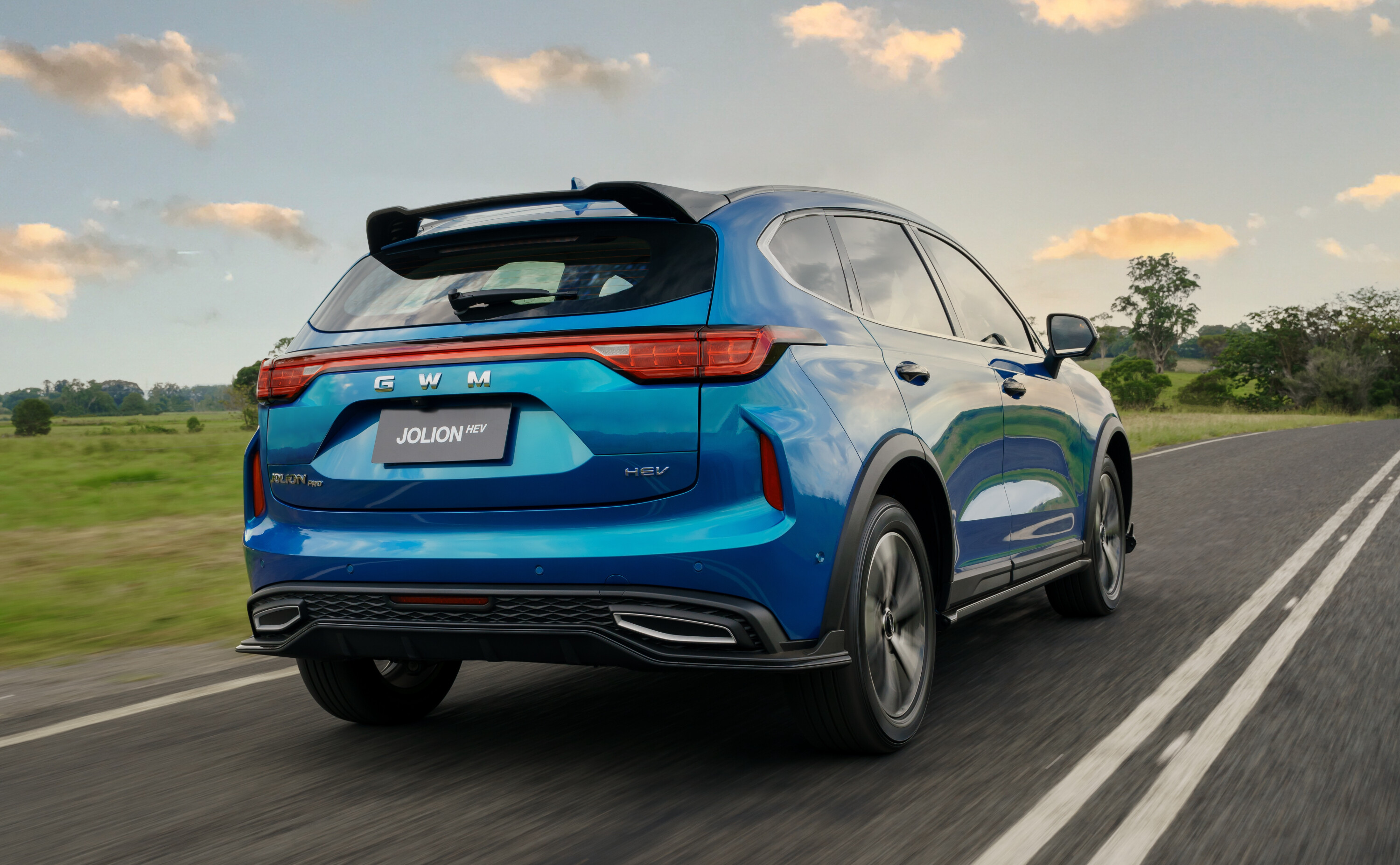
“For simplicity of communication and to continue reinforcement of the Jolion nomenclature, this model will be marketed and sold as GWM Jolion Hybrid in [Australia and New Zealand],” said GWM Australia.
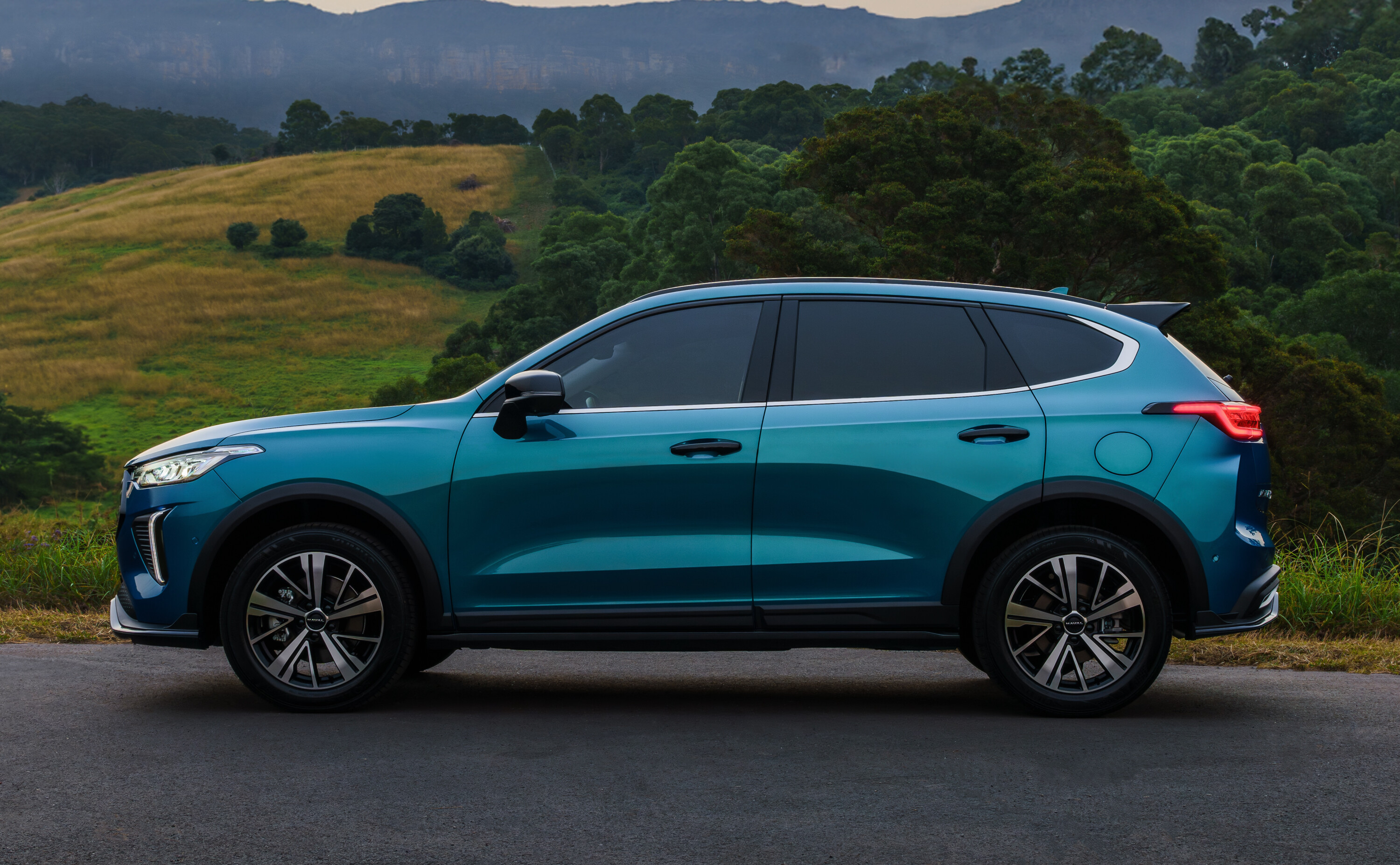
Measuring 4470mm long, 1898mm wide and 1625mm tall, with a 2700mm wheelbase, the new Jolion Hybrid is 2mm shorter, 57mm wider and 51mm taller than petrol Jolion models, with an unchanged 2700mm wheelbase.
The more-raked roofline of the Jolion Hybrid has impacted boot space, with the latest model having a 255-litre capacity – compared to 390L for the previous hybrid and 337L for petrol models.
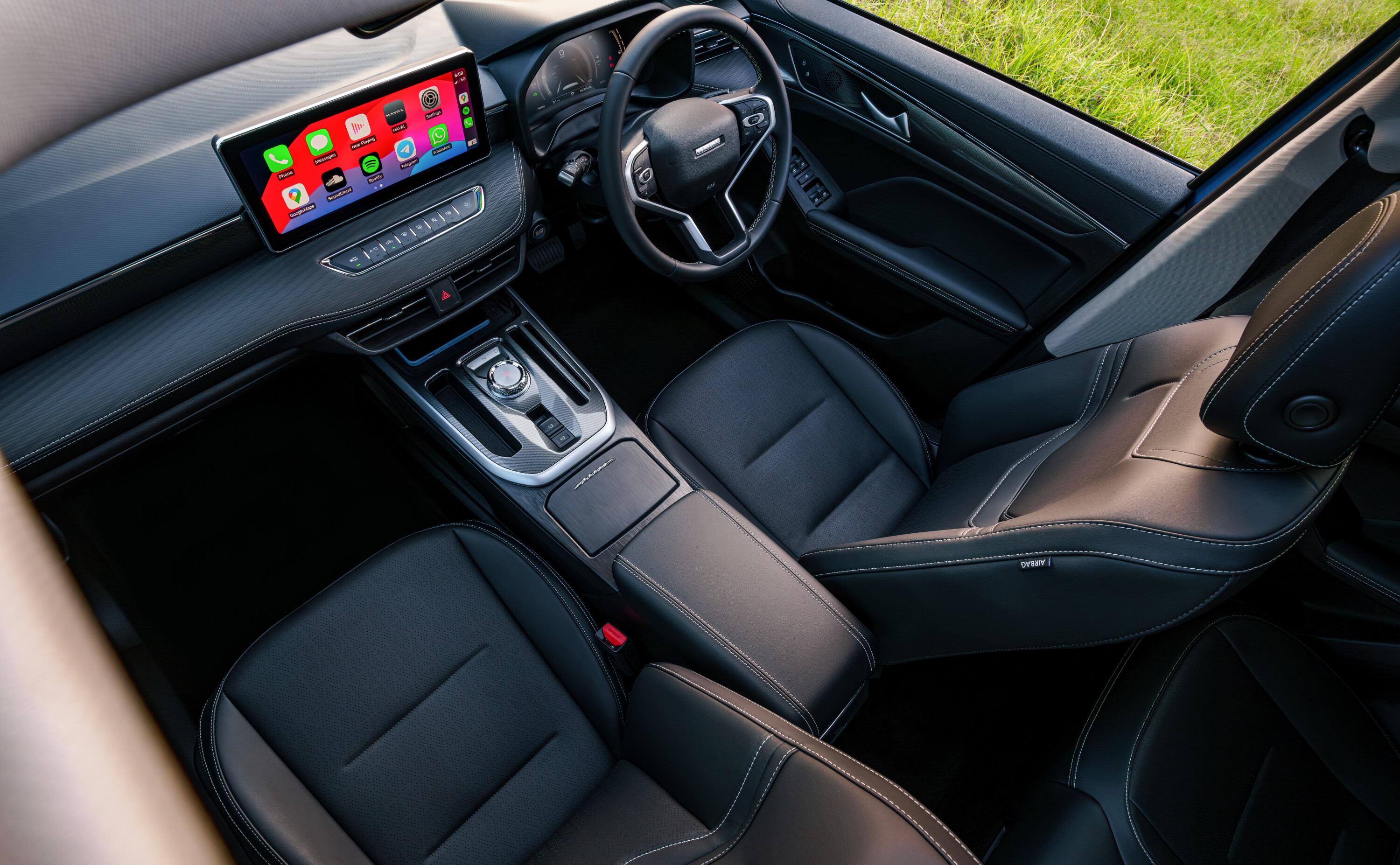
While the Chinese-market Chitu has a unique dashboard, the right-hand drive Jolion Hybrid/Jolion Pro has an identical look to the standard Jolion inside.
The Jolion Hybrid will continue to be available in Lux and Ultra form, while a more affordable Premium Hybrid has been added to the line-up for $32,990 drive-away.
Drive-away prices have been cut between $1000 and $2000 for existing variants, making the entry-level Jolion Premium cheaper than it was at launch in 2021.
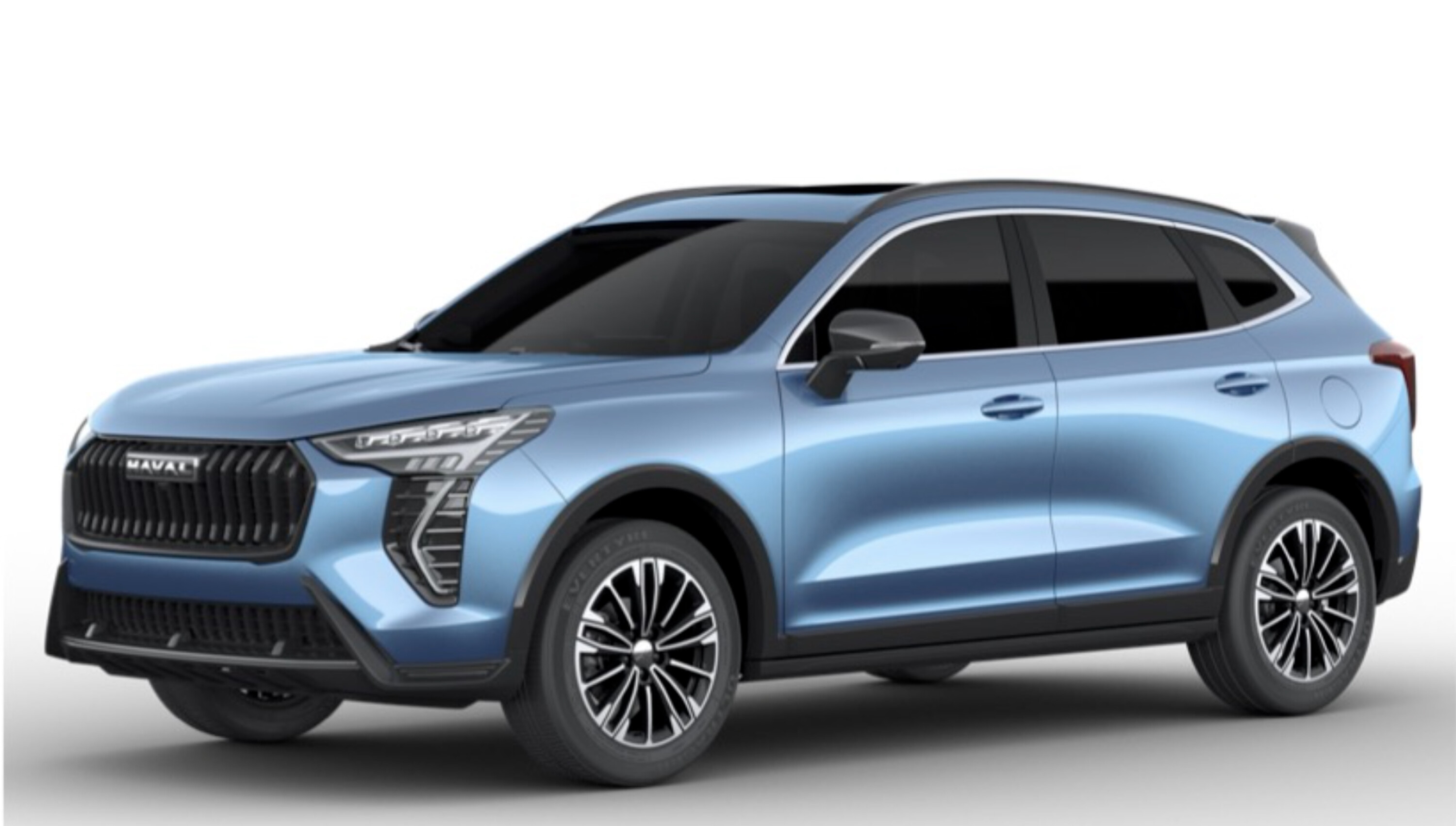
GWM has discontinued the Ultra and S petrol variants, while the Jolion’s colour palette has also been condensed.
Styling changes for facelifted Jolion petrol models include a new grille, revised front and rear bumpers, grey side mirror caps and revised tail-light internals.
The 1.5-litre turbo-petrol now outputs 105kW – down 5kW – and 210Nm, with a seven-speed dual-clutch automatic transmission and combined fuel consumption rated at 8.1L/100km.
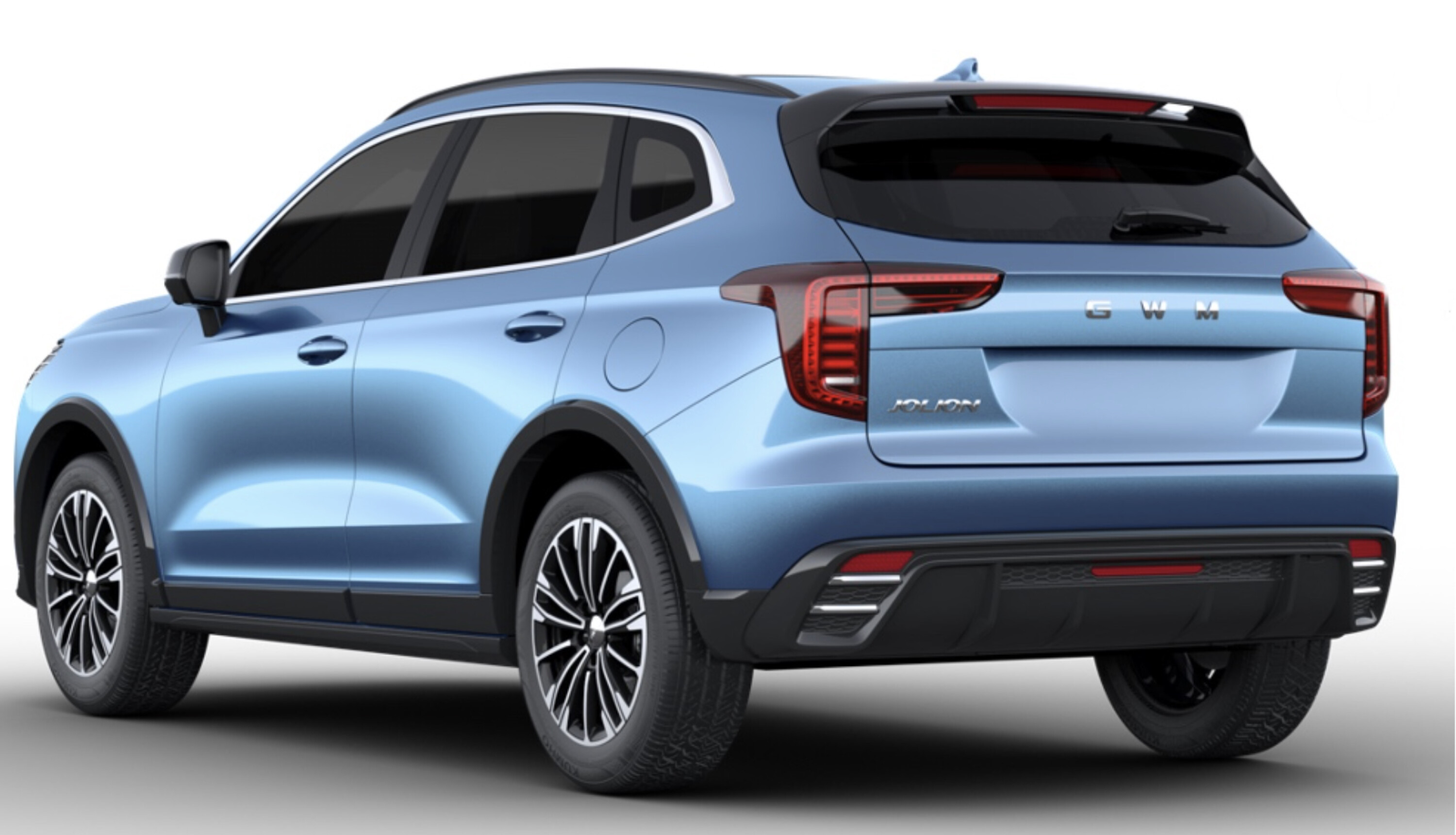
Other improvements across the GWM Haval Jolion line-up include the addition of a four-way steering wheel column with telescopic adjustment – in addition to tilt – and a ‘GWM’ tailgate badge in place of the existing ‘HAVAL’ logo.
“It is expected that we will see more models across the wider range adopt more prominent GWM badging in the future,” said the brand.
The 2024 GWM Haval Jolion and 2024 GWM Haval Jolion Hybrid are on sale now.
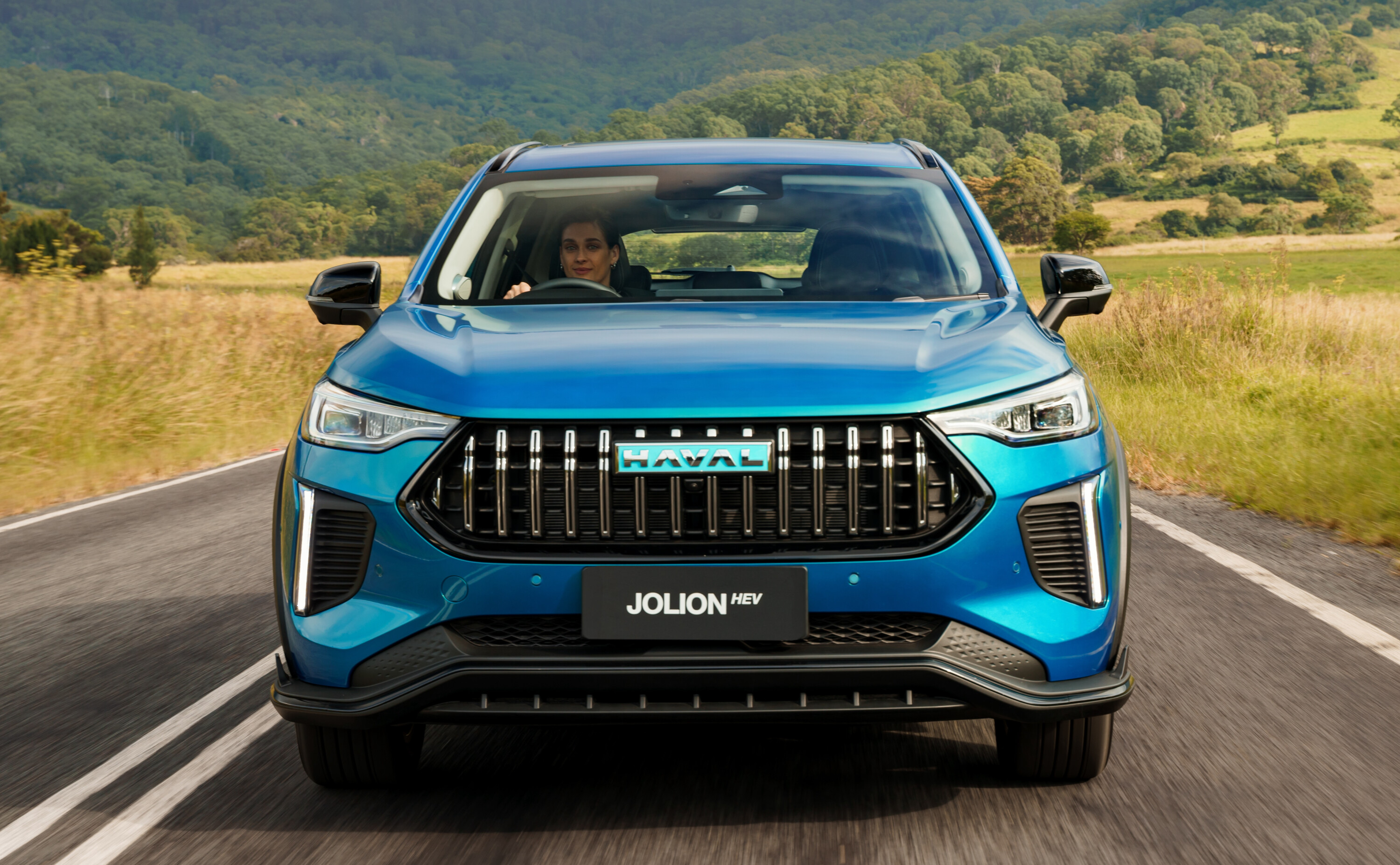
2024 GWM Haval Jolion pricing
| Model | Pricing | Change |
|---|---|---|
| Premium (petrol) | $26,990 | down $1500 |
| Lux (petrol) | $29,990 | down $1000 |
| Premium Hybrid | $32,990 | new |
| Lux Hybrid | $35,990 | down $1000 |
| Ultra Hybrid | $38,990 | down $2000 |
| All prices are drive-away. | ||
2024 GWM Haval Jolion features
| 2024 GWM Haval Jolion Premium (petrol) features | |
|---|---|
| Four-way manual steering wheel column (up from two-way) | Manual air-conditioning |
| 17-inch alloy wheels | Paddle shifters |
| 10.25-inch infotainment system | Reversing camera |
| Wired Apple CarPlay and Android Auto | Tyre pressure monitoring |
| Four-speaker audio system | Autonomous emergency braking |
| 3.5-inch multi-information display | Lane-keep assist |
| Halogen headlights | Lane departure warning |
| Driveru2019s door keyless entry and push-button start | Blind-spot monitoring |
| Cloth upholstery | Rear cross-traffic alert |
| Plastic steering wheel | Adaptive cruise control |
| Six-way manual driveru2019s seat | Traffic sign recognition |
| Four-way manual passenger seat | Traffic jam assist |
2024 GWM Haval Jolion Lux (petrol) features
| In addition to Premium (petrol) | |
|---|---|
| Six-speaker audio system | Dual-zone climate control |
| LED headlights | Power-folding heated side mirrors |
| 7-inch digital instrument cluster | Illuminated vanity mirrors |
| Leather-accented upholstery | Luggage cover |
| Heated front seats | Rear privacy glass |
| Six-way power-adjustable driveru2019s seat | 360-degree camera system |
2024 GWM Haval Jolion Premium Hybrid features
| In addition to Premium (petrol) | |
|---|---|
| 140kW/375Nm 1.5-litre hybrid powertrain | Launch control |
| Multi-link independent rear suspension | 7-inch digital instrument cluster |
| Tyre repair kit (in lieu of space-saver spare wheel) | Dual-zone climate control |
2024 GWM Haval Jolion Lux Hybrid features
| In addition to Premium Hybrid | |
|---|---|
| 18-inch alloy wheels | Power-folding heated side mirrors |
| 12.3-inch infotainment system | Illuminated vanity mirrors |
| Six-speaker audio system | Luggage cover |
| LED headlights | Auto-dimming rear-view mirror |
| Leather-accented upholstery | Rear privacy glass |
| Heated front seats | 360-degree camera system |
| Six-way power-adjustable driveru2019s seat | Auto up/down for all windows |
2024 GWM Haval Jolion Ultra Hybrid features
| In addition to Lux Hybrid | |
|---|---|
| Head-up display | Panoramic sunroof |
| Wireless phone charger | Ventilated driveru2019s seat |
| Multi-colour interior ambient lighting | Automatic parking |
| Roof rails | |
Hybrids are on a roll, and nowhere more so than at the origin source – Toyota.
In April, the now-ubiquitous Hybrid drivetrain (in all its forms and capacities) surpassed 10,000 units in a calendar month for the first time for Toyota in Australia, and the now five-year-old, current-generation RAV4 nailed a monthly nameplate record – 5857 deliveries – of which a staggering 94 percent were Hybrid variants.
Stats like that carry enormous weight when it comes to configuring the competitor set for the all-conquering RAV4. With diesel variants having disappeared from many medium SUV model ranges in recent years, the efficiency heavy-lifting has been handed to petrol-hybrid engines.
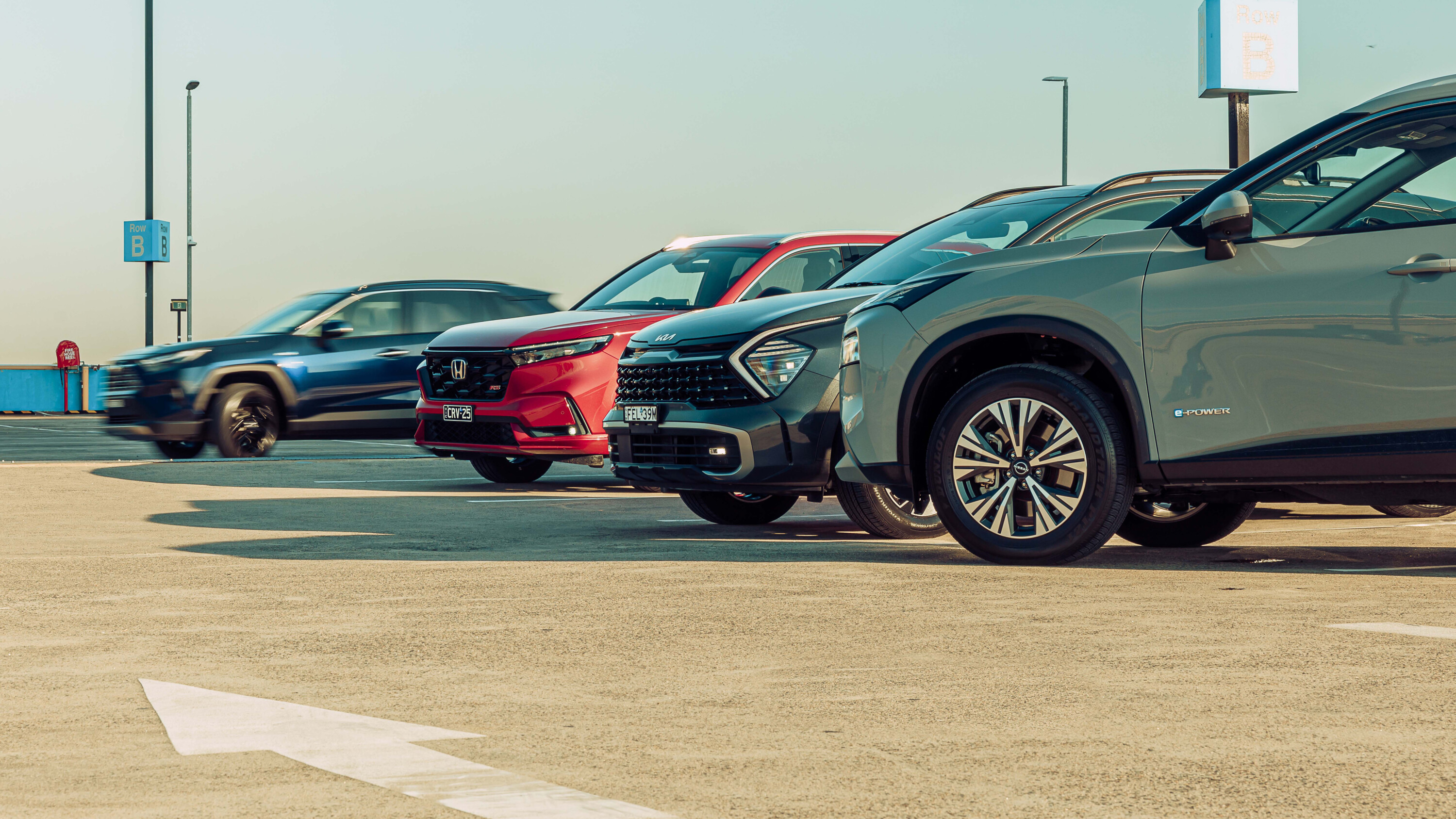
And given their combination of crisp performance, drivetrain smoothness and overall range, it has become the most intelligent alternative … within reason.
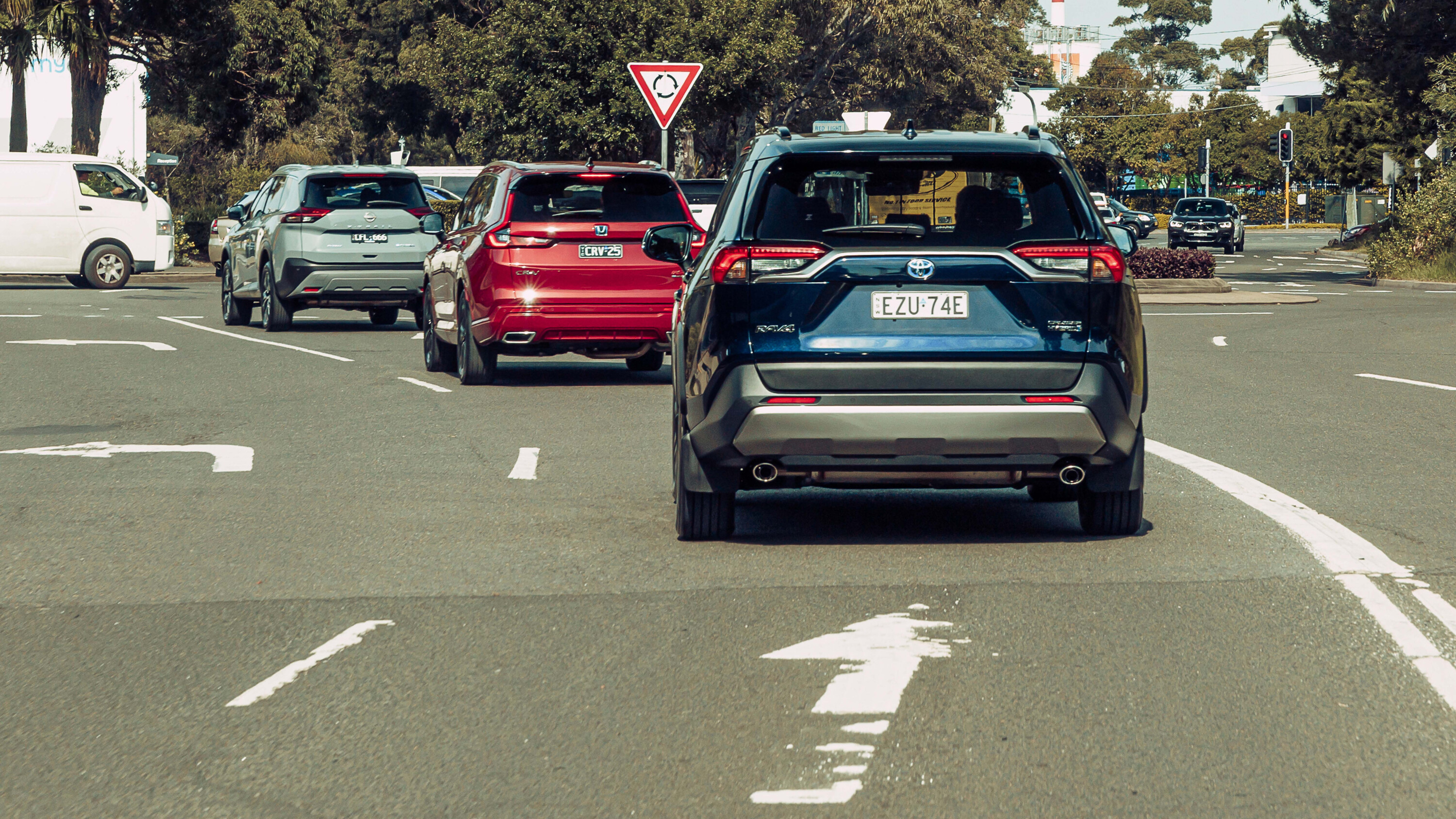
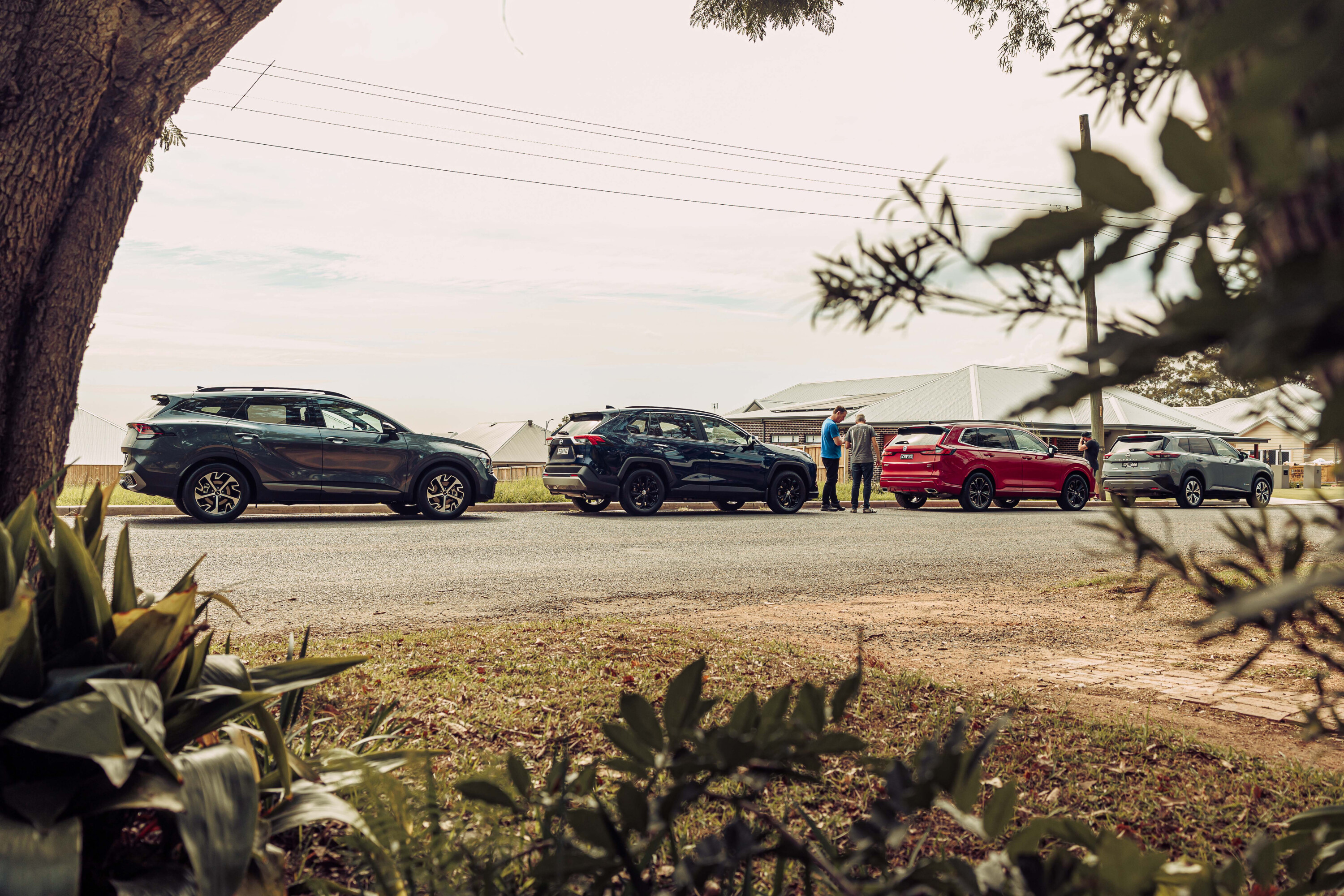
Fresh hybrids on display, such as the just-launched Kia Sportage Hybrid and the recent sixth-generation Honda CR-V with an exclusive hybrid flagship, have expanded their reach and swollen buyer choice, however we’re only testing what we consider to be the best medium SUV hybrids for this comparo.
That means no Haval H6 Hybrid ($42-$46K) due to its lack of sophistication and finesse, no Tank 300 Hybrid ($56-$61K) for a similar reason, and no Subaru Forester Hybrid ($44-$50K) given that it’s living on borrowed time in its current form, and the lacklustre hybrid version offers only minor efficiency gains.
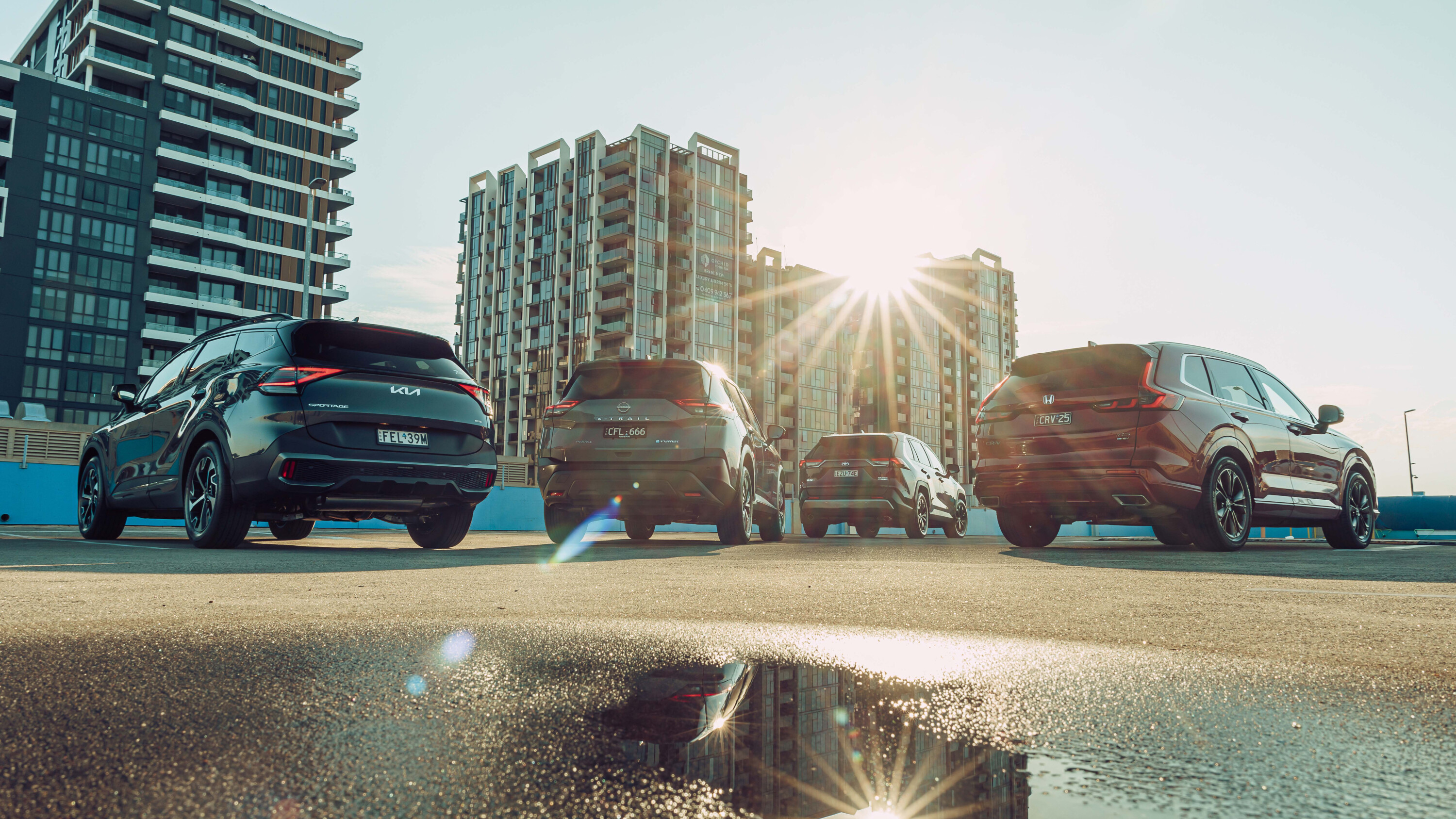
With punters favouring up-spec variants – and the fact that, for now, the CR-V e:HEV is only available in top-shelf RS guise – we’ve (mostly) stuck with the cream of the crop.
In RAV4 territory, that means a Cruiser Hybrid e-Four ($54,410), which we think is better value than the $4K-dearer Edge Hybrid. In the freshly electrified Sportage, the tech showcase is the GT-Line ($55,420), though it solely drives its front wheels.
The CR-V e:HEV RS ($59,900 drive-away) is also front-wheel-drive only, whereas the Nissan X-Trail e-Power ($50-$58K) treads an appealing middle-ground, offering three trim levels (ST-L, Ti, Ti-L), each with electric-motor-driven ‘e-4orce’ AWD, similar to the RAV4 ‘e-Four’.
To make this test a reality, we had to accept an X-Trail ST-L e-Power ($49,990), meaning the new base hybrid with vinyl seats and 18-inch wheels, and no fancy Nappa leather, 10-speaker Bose audio, panoramic sunroof or 20s like the rather flash Ti-L range-topper ($58,490). But we’ve previously driven all e-Power X-Trails so we won’t unfairly criticise the ST-L for accentuating any posterior sweating due to its plastic upholstery.
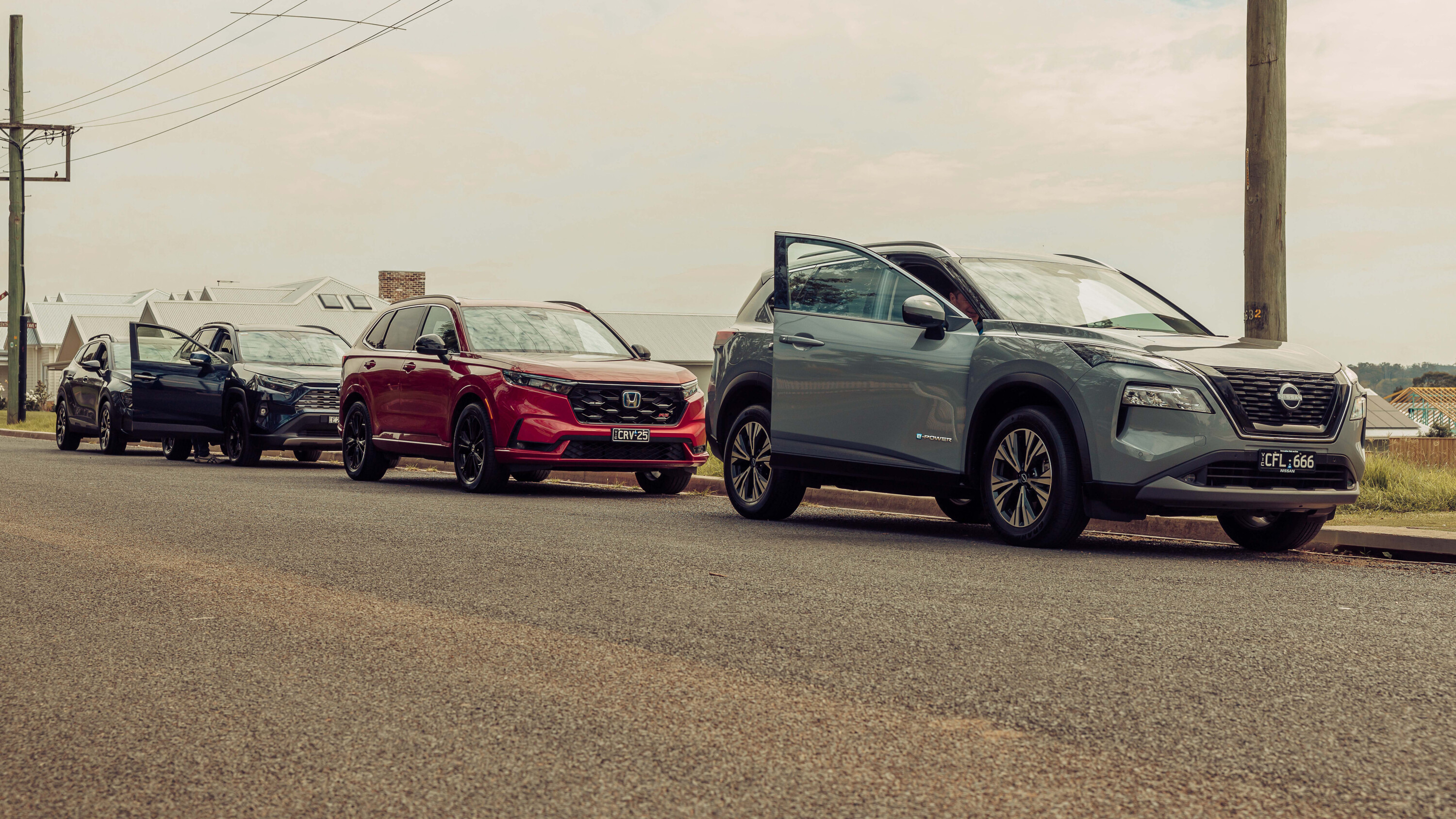
JUMP AHEAD
- Toyota RAV4 Cruiser hybrid
- Nissan X-Trail ST-L e-Power
- Kia Sportage GT-Line hybrid
- Honda CR-V e:HEV RS
- VERDICT
- Specifications
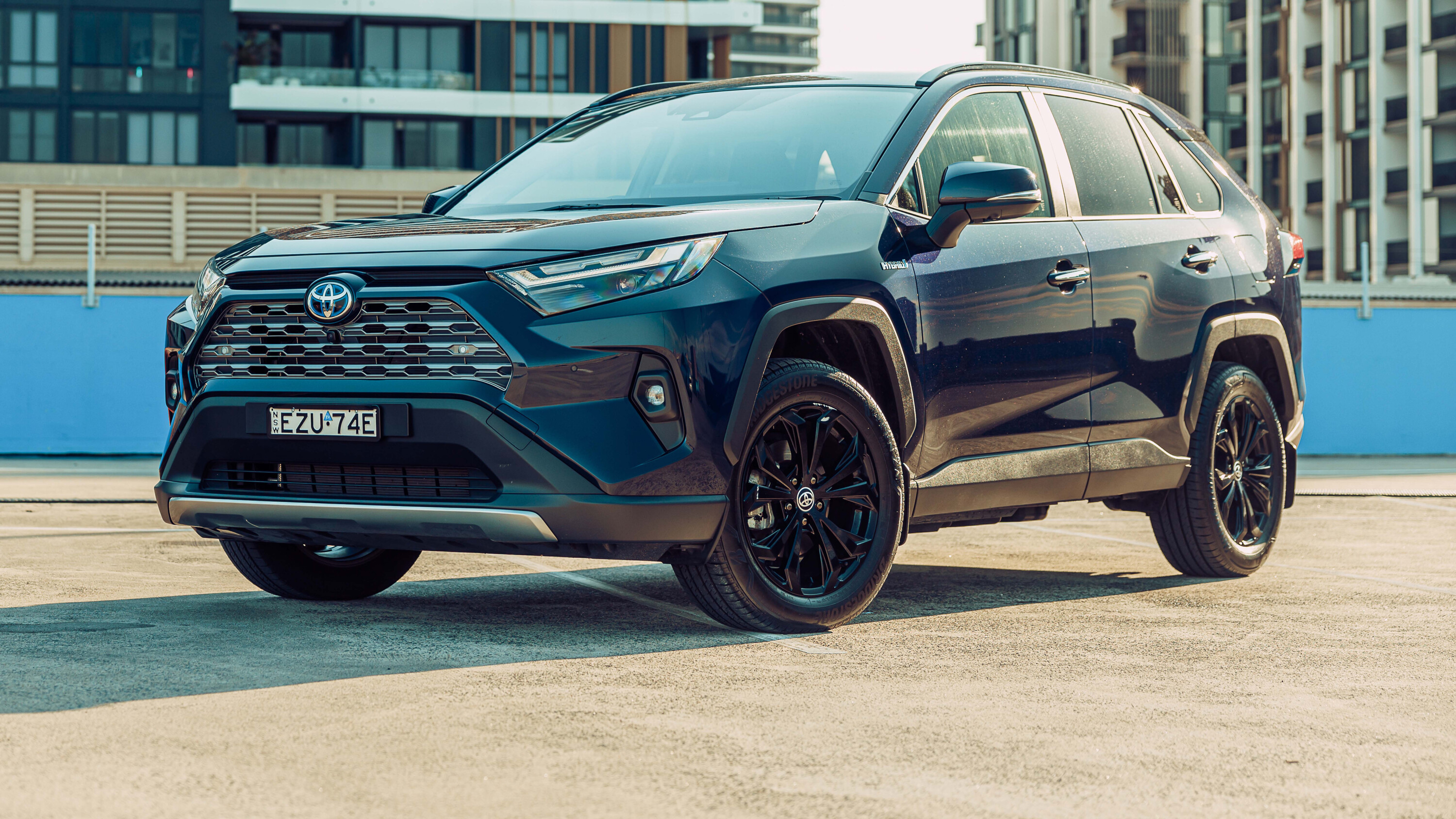
Toyota RAV4 Cruiser hybrid
If there’s a default in the matrix of medium SUVs, this is it – the petrol-electric Toyota RAV4.
Introduced as a replacement for the D4-D turbo-diesel in May 2019, the explosion in popularity of the fifth-generation RAV4 is purely down to its hybrid drivetrain – offered across the range since launch – as well as being infinitely better than its dull, mediocre predecessor (2013-19).
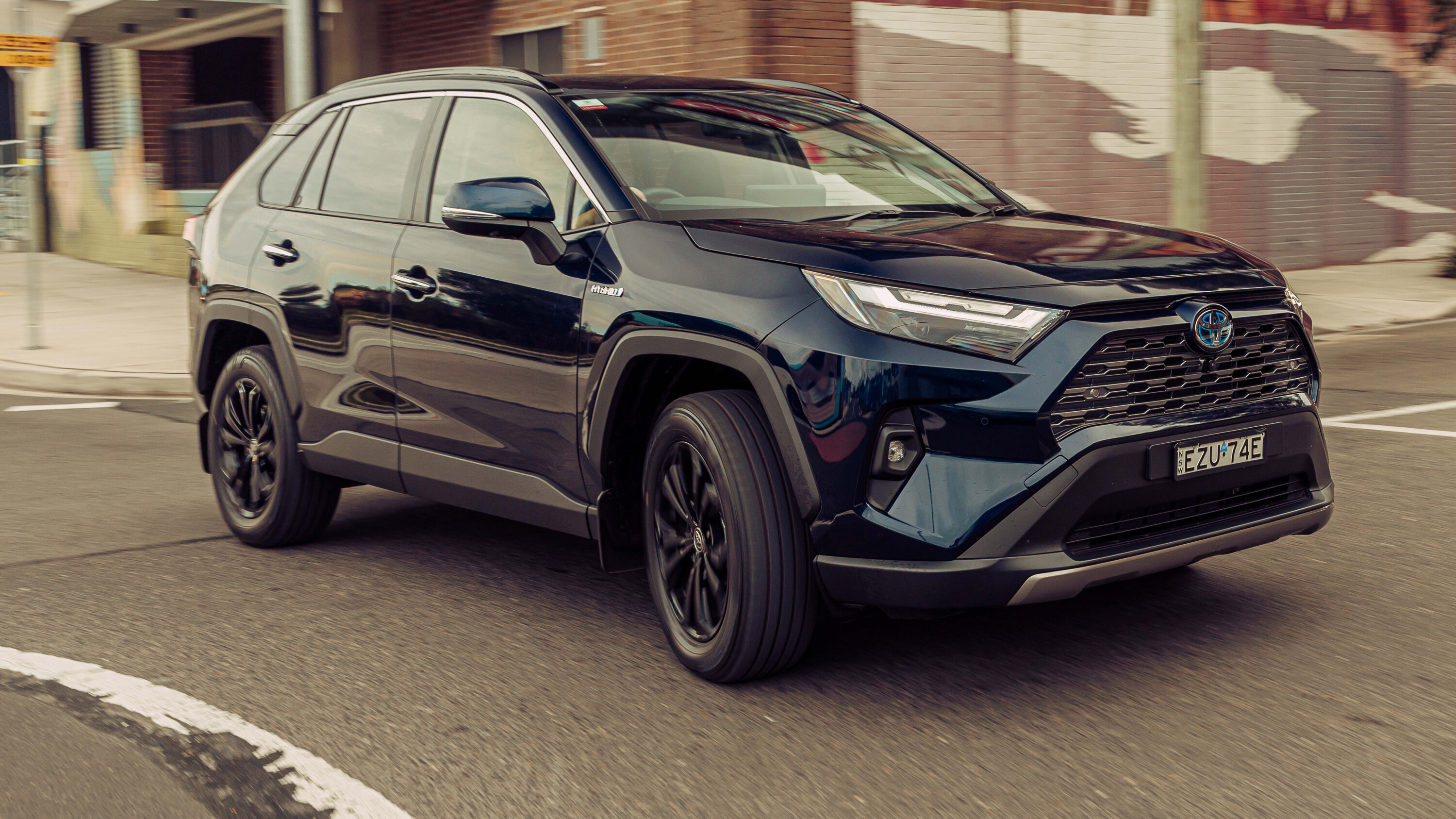
Indeed, from the moment we first drove it, the current RAV4 Hybrid has set the pace for other medium SUVs to follow if they wanted to match its enviable combination of pointy steering and handling, keen performance, benchmark efficiency, impressive space and comfort, and, by a considerable margin, class-leading resale value.
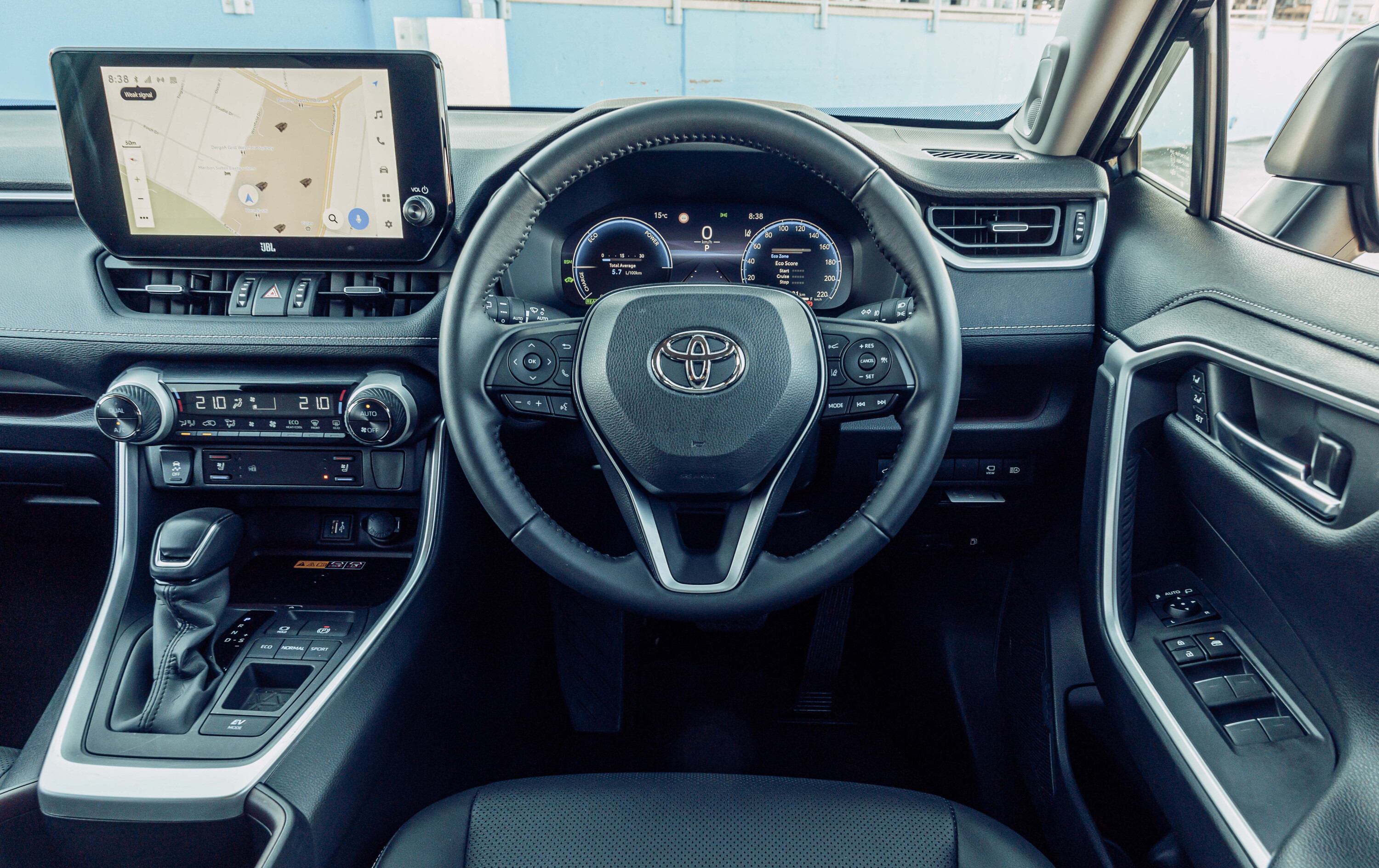
Toyota’s fairly consistent updating of the RAV4’s standard equipment and multimedia tech has maintained its value-for-money edge, however five years is a long time at the top in anyone’s language, and only now is the RAV4 Hybrid finally starting to feel its age.
Visually, its blend of Tonka-tough cabin plastics and robustly detailed design has never implied luxury – in this respect, it’s always been best-suited to the adventure-flavoured Edge flagship – and in 2024, that’s more evident than ever alongside the expensively finished CR-V and surprisingly slick X-Trail Ti/Ti-L.
Yet there’s a large-buttoned, simple-to-operate utility about it (apart from some multimedia clumsiness, mostly solved by wireless Apple CarPlay) that makes the Toyota feel pleasingly familiar and capable of copping a beating.

Its rubberised door grips define functionality and its driving position is excellent, with electric leather front chairs (10-way driver with lumbar and memory, 8-way passenger) each with heating and cooling.
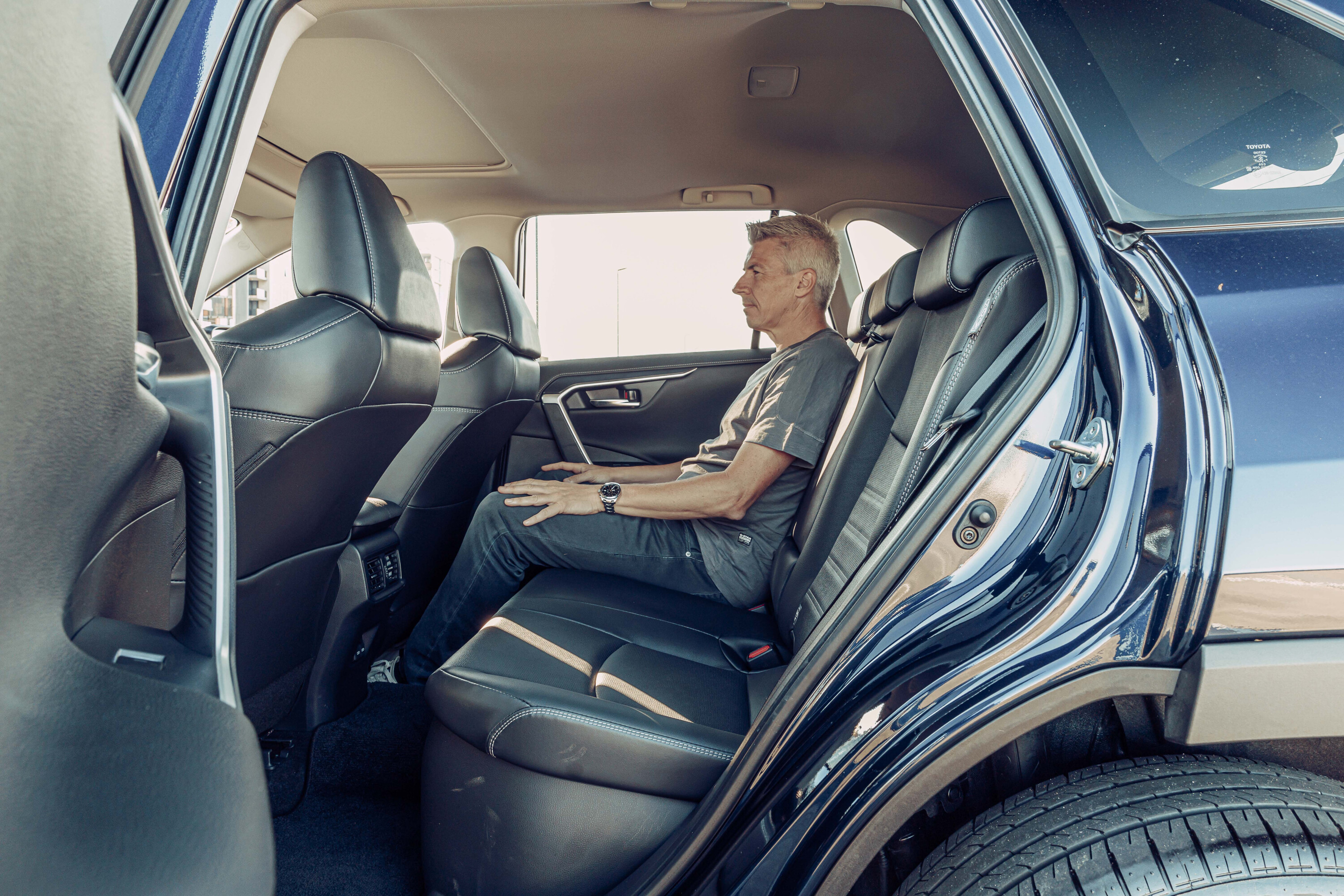
The late-’22 addition of a 12.3-inch digital driver’s display and 10.5-inch multimedia touchscreen (cranking through a nine-speaker JBL audio system) have maintained the RAV4 Cruiser’s screen savvy, and its rear seat is supportive, too, with adjustable backrest rake, good vision, air vents and two USB ports.
Decent boot space as well – 580 litres with the floor on its lowest level – yet the Toyota can barely squeeze a one-litre camping bottle into its front doors, let alone its rears, which doesn’t quite nail the SUV utility brief. And neither does the Cruiser’s hatchback-sized sunroof, in comparison to the glassy panoramas showcased by its rivals.
Drivetrain-wise, nothing has changed, meaning a 163kW 2.0-litre ‘Atkinson cycle’ petrol-electric hybrid four-cylinder driving through an e-CVT transmission and an all-wheel-drive system with an electric motor driving the rear axle.
It’s a robust and highly efficient set-up, delivering the lowest on-test fuel economy (5.6L/100km) but also the loudest engine noise once acceleration demands more than just battery power.
Right foot flat, its CVT transmission sends engine revs stridently soaring, which in isolation is far from unpleasant, yet it lacks the sweet-spinning character of the Honda, the serious performance of the Nissan, and the quieter nature of the Kia.
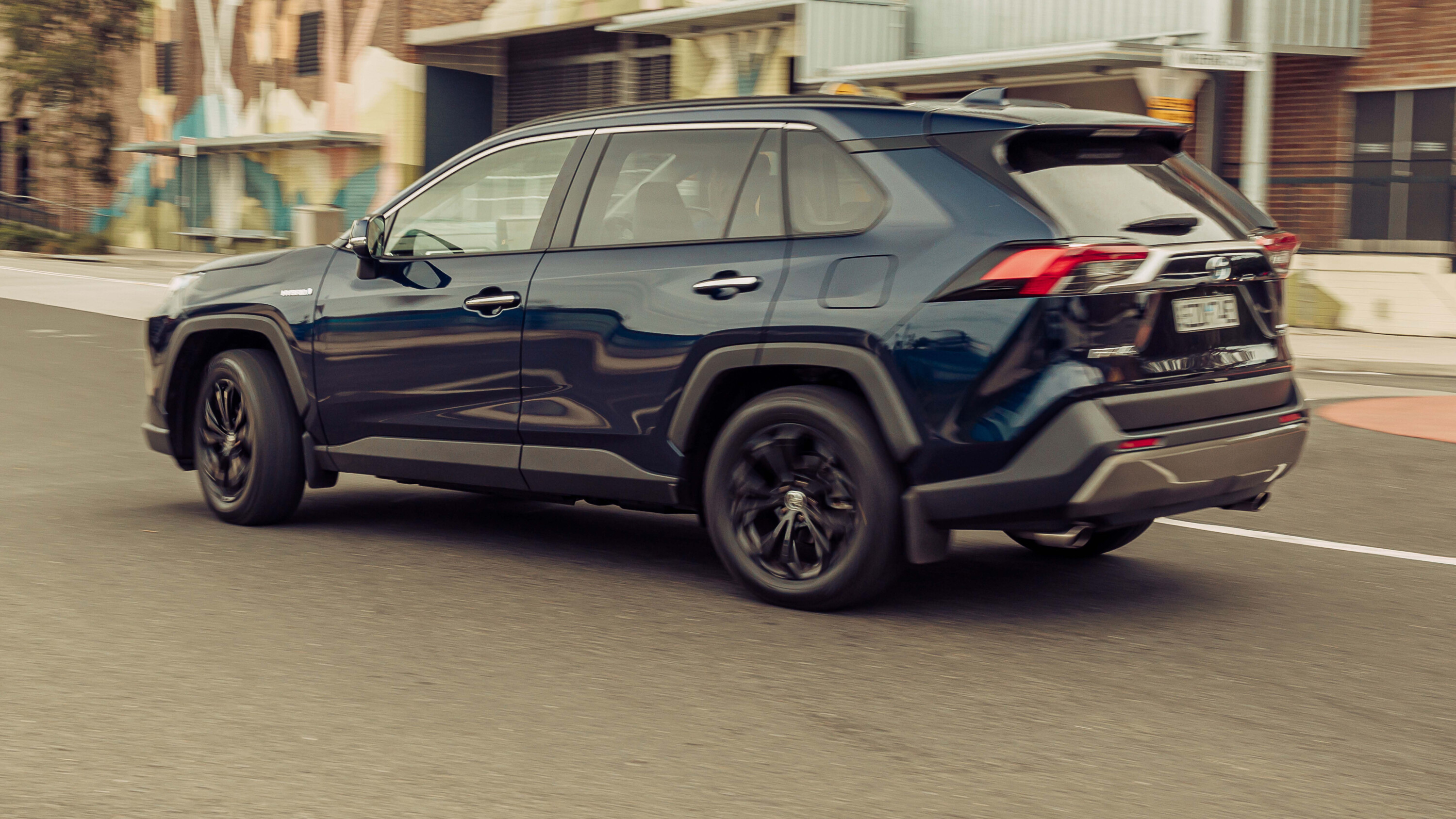
And the Toyota continues that trend with its suspension refinement – sending noticeably more road noise up into the cabin and experiencing moments on our challenging road loop where its comparatively brittle ride slapped its bump stops, rather than absorbing the hit.
That behaviour fails to detract from the RAV4’s fun-to-drive nature, because it really does feel light on its feet and change direction well. But there’s now a comparative graininess to its personality that wasn’t so noticeable before.
As its rivals have become smoother and slicker in all departments, the five-year-old RAV4 Cruiser Hybrid has remained steadfastly capable – but must now cede excellence in several areas to its fresher alternatives.
One thing that hasn’t changed, however, is the appeal of Toyota’s ownership credentials.
RAV4’s capped-price servicing is just $260 a year (or every 15,000km) for the first five years (or 75,000km), and if you stick to your service schedule, Toyota will extend the unlimited-kilometre driveline warranty from five years to seven.
And, according to The Red Book, the Cruiser Hybrid’s projected three-year retained resale value is over 10 percentage points higher than the next-best Honda and Kia, and 13-15 points better than Nissan’s e-Power line-up.
All that, combined with RAV4’s class-leading fuel efficiency and its reliability reputation, will be enough for many people to overlook the crow’s feet that are starting to show. But the hybrid-engined medium SUV game has definitely moved on, however incrementally.
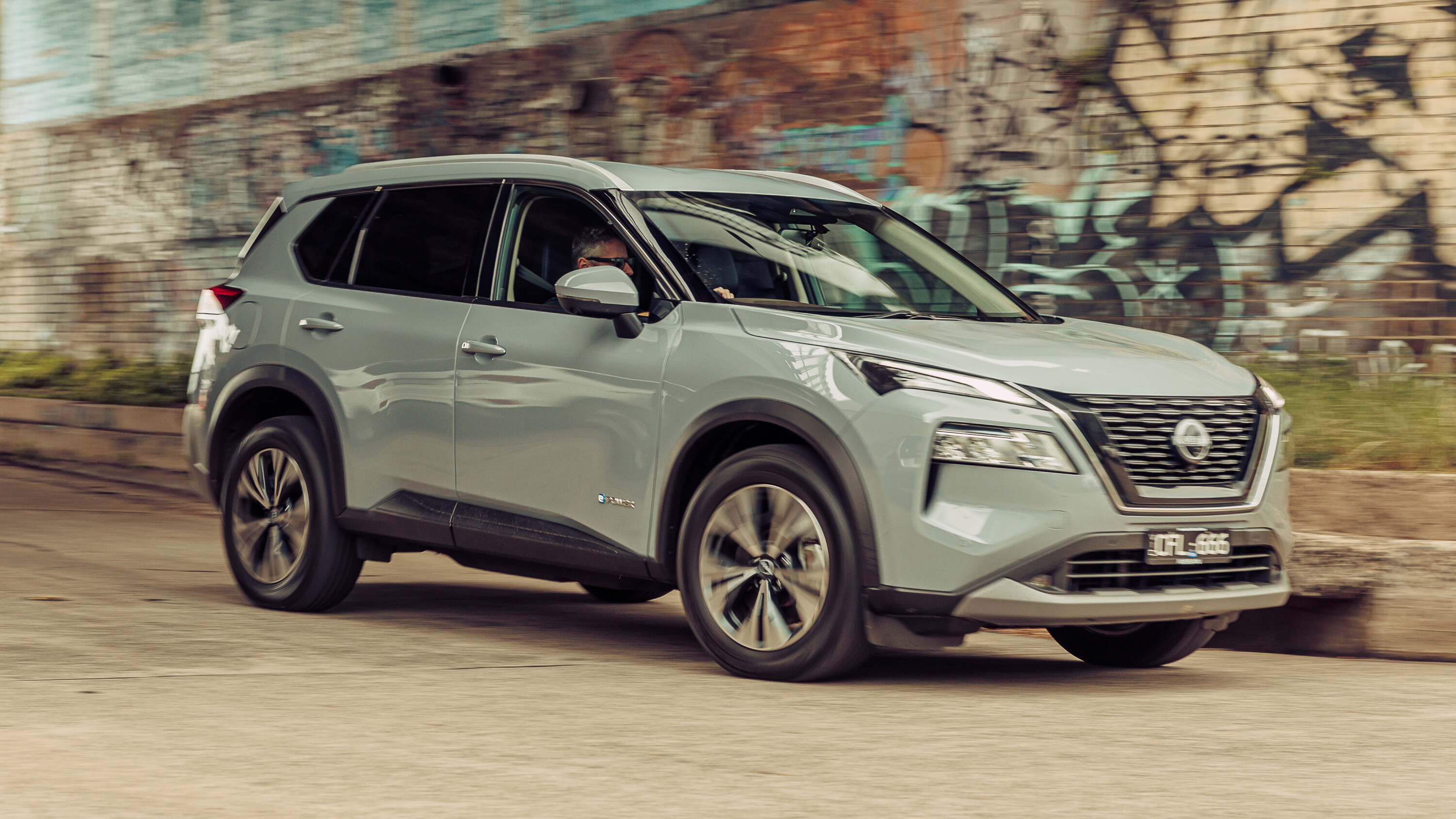
Nissan X-Trail ST-L e-Power
It’s refreshing to be able to approach a Nissan X-Trail without sensing an aroma of disappointment. The original version (2001) had a slightly quirky coolness about its design but it wasn’t good to drive.
The second-gen X-Trail (2007) uglified the styling while failing to make any headway on improving refinement. And the third attempt (2013), which seemed surprisingly decent at launch, was quickly outshone by more sophisticated rivals and received only superficial alterations throughout its nine-year lifespan.
The fourth-generation T33 X-Trail, however, is genuinely competitive – both in comparison with its chief rivals and, perhaps surprisingly, its Mitsubishi Outlander platform relative. And that sentiment applies wholeheartedly to the intriguing e-Power hybrid variant, which not only brings some engineering advances to the sector, but also serious performance.
Yes, that description relating to an X-Trail still sounds odd, but in the 157kW e-Power e-4orce, it’s genuinely true.
Nissan’s 0-100km/h claim is 7.0 seconds (compared to around 8.0sec for the RAV4 and Sportage, and 9.4sec for the CR-V), and the X-Trail e-Power’s rolling acceleration is so strong that it smashes the RAV4 when it comes to overtaking punch – pinning you back in your seat like no X-Trail in existence… apart from maybe the X-Trail GT (with a 206kW boosted SR20 kids!) offered only in the original generation in Japan.
What makes the e-Power drivetrain different is what makes it better. Perhaps not from a pure fuel-efficiency perspective because the hybrid X-Trail’s official combined consumption is 6.1L/100km (compared to 4.8 for the RAV4 e-Four, 4.9 for the Sportage Hybrid and 5.5 for the CR-V e:HEV), though the difference between all four on test was only 0.6L/100km.
The difference is from having an electric motor providing direct drive to both the front and rear ends, and Nissan’s thrummy, punchy 1.5-litre turbo-petrol triple essentially acting as a range extender, with a switchable (and excellent) ‘e-Pedal’ mode to ramp up the regenerative braking for a near-EV driving flavour.
Because the electric motors are always transmitting grunt to the wheels, the e-Power X-Trail always feels crisply responsive – smooth in its movement and with a delightful elasticity when it eventually introduces petrol-driven motor force.
It’s lightyears ahead of the X-Trail’s other drivetrain choice (a dependable, if vocal, 2.5-litre direct-injection petrol four) and gives the Nissan a distinct point of difference compared to its hybrid rivals.
The X-Trail’s keen, slack-free steering enhances the e-Power effect – geared to just 2.5 turns lock-to-lock (spanning an 11.1m turning circle) for immediate front-end response, especially around town.
Combined with the drivetrain’s effortless thrust, it makes the hybrid X-Trail feel lithe and spritely. Out on challenging country roads, that impression continues, with the suspension coping pretty well with lumps and bumps, though it isn’t super-quiet when dealing with road hits, and the X-Trail does tend to rock around a bit. But it doesn’t lose its composure either – placing the Nissan in another dynamic league compared to its predecessors.
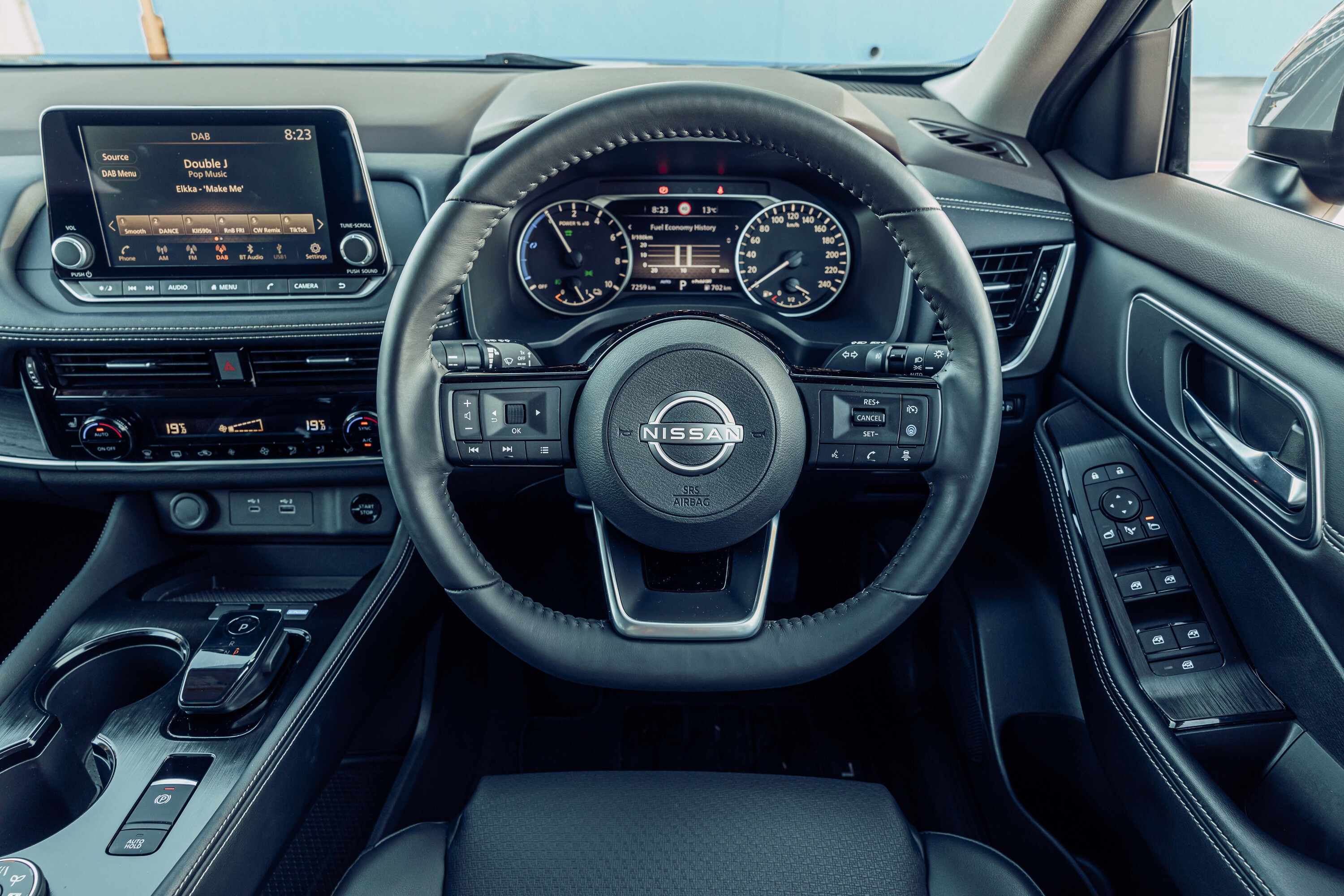
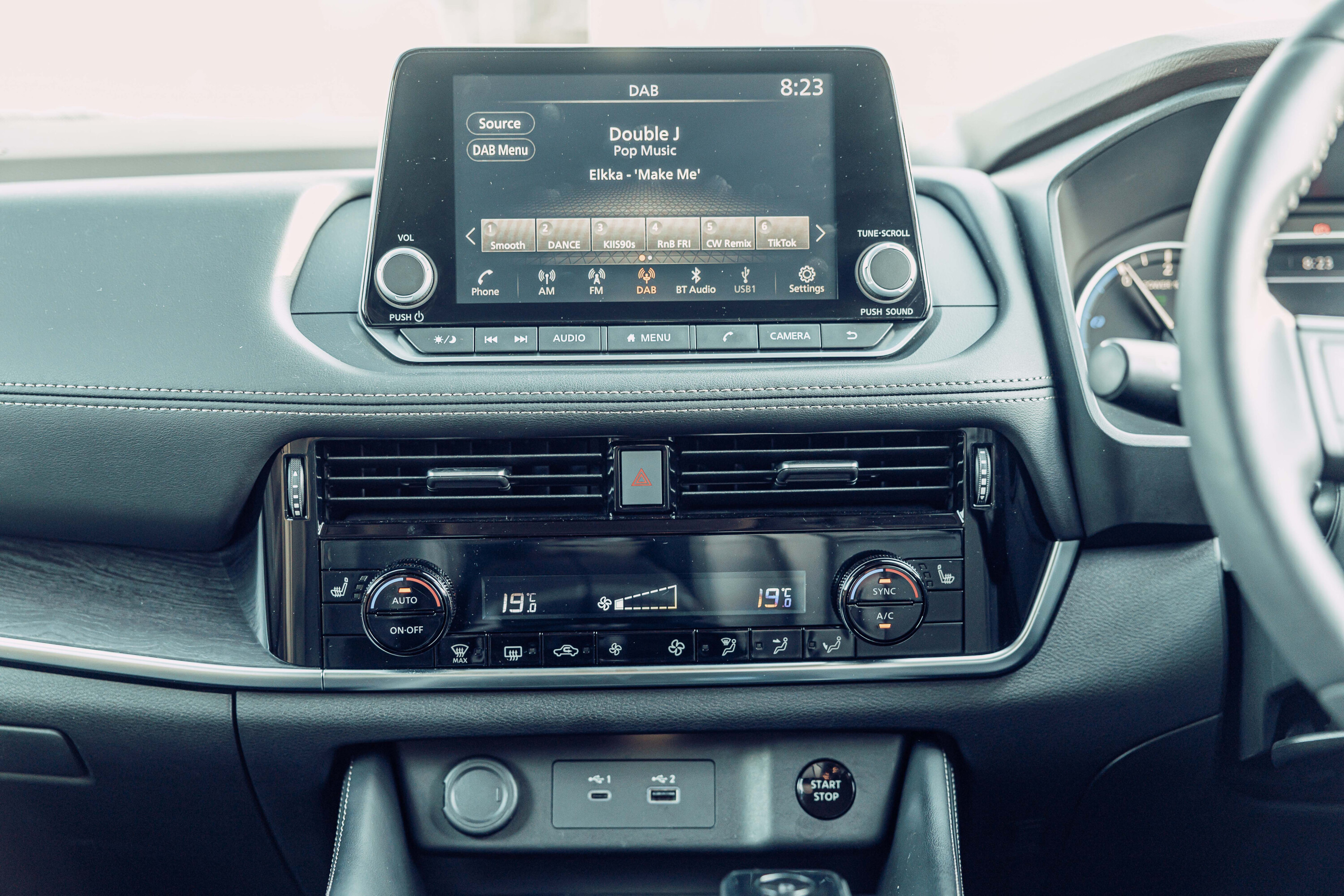
Facing a handsome, neatly dished three-spoke steering wheel, the X-Trail’s driving position is terrific – even seated on the ST-L’s vinyl (as opposed to the Ti-L’s lovely quilted Nappa leather) – the switchgear is consistently good-quality and everything appears elegantly styled and easy to operate.
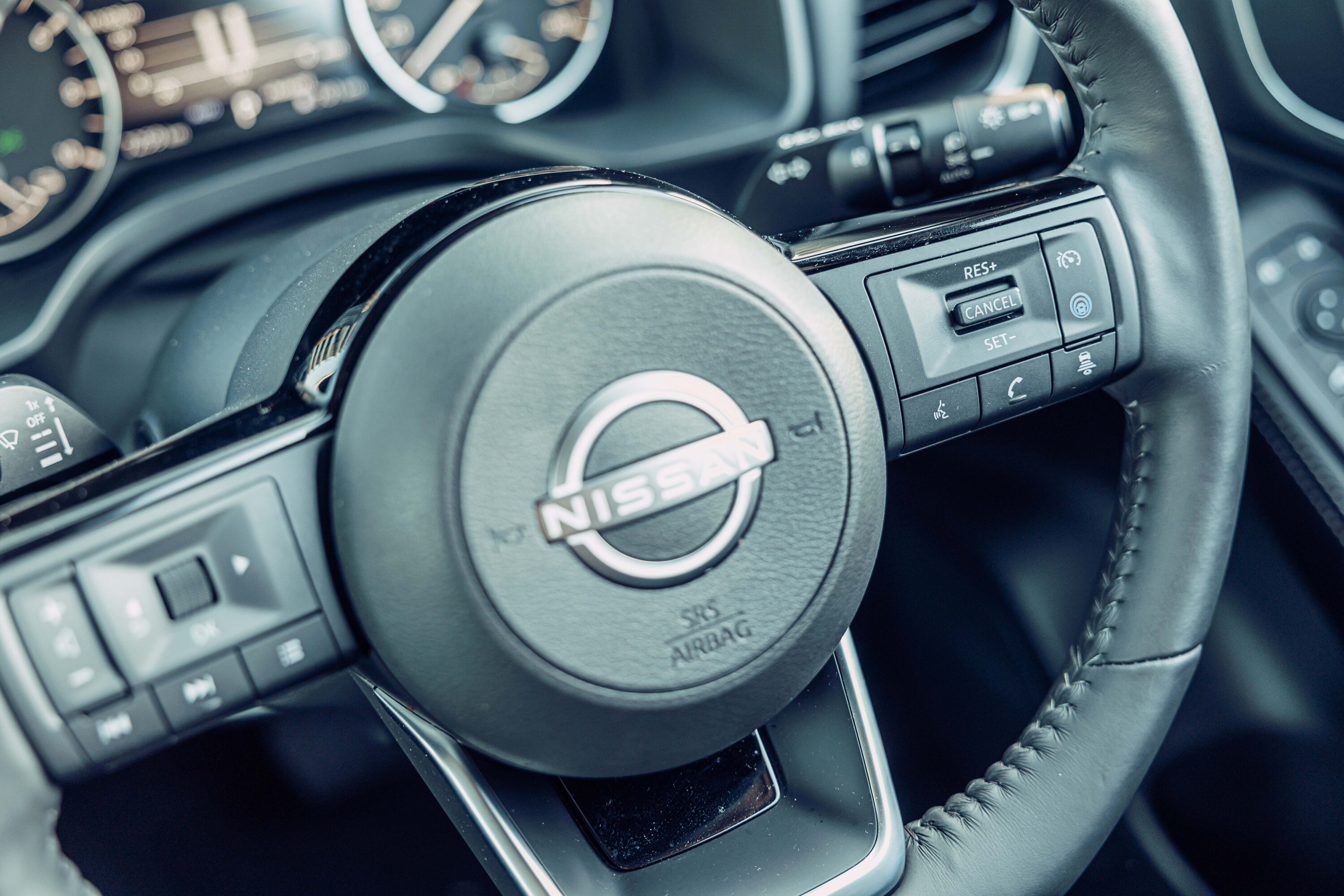
There’s also a large, rubberised tray beneath the floating centre console that becomes unexpectedly useful the longer you live with the X-Trail.
And we’re essentially referring to the $50K ST-L version here. The $8500-dearer Ti-L really does feel premium inside, especially with optional tan-coloured seat, dash and door upholstery.
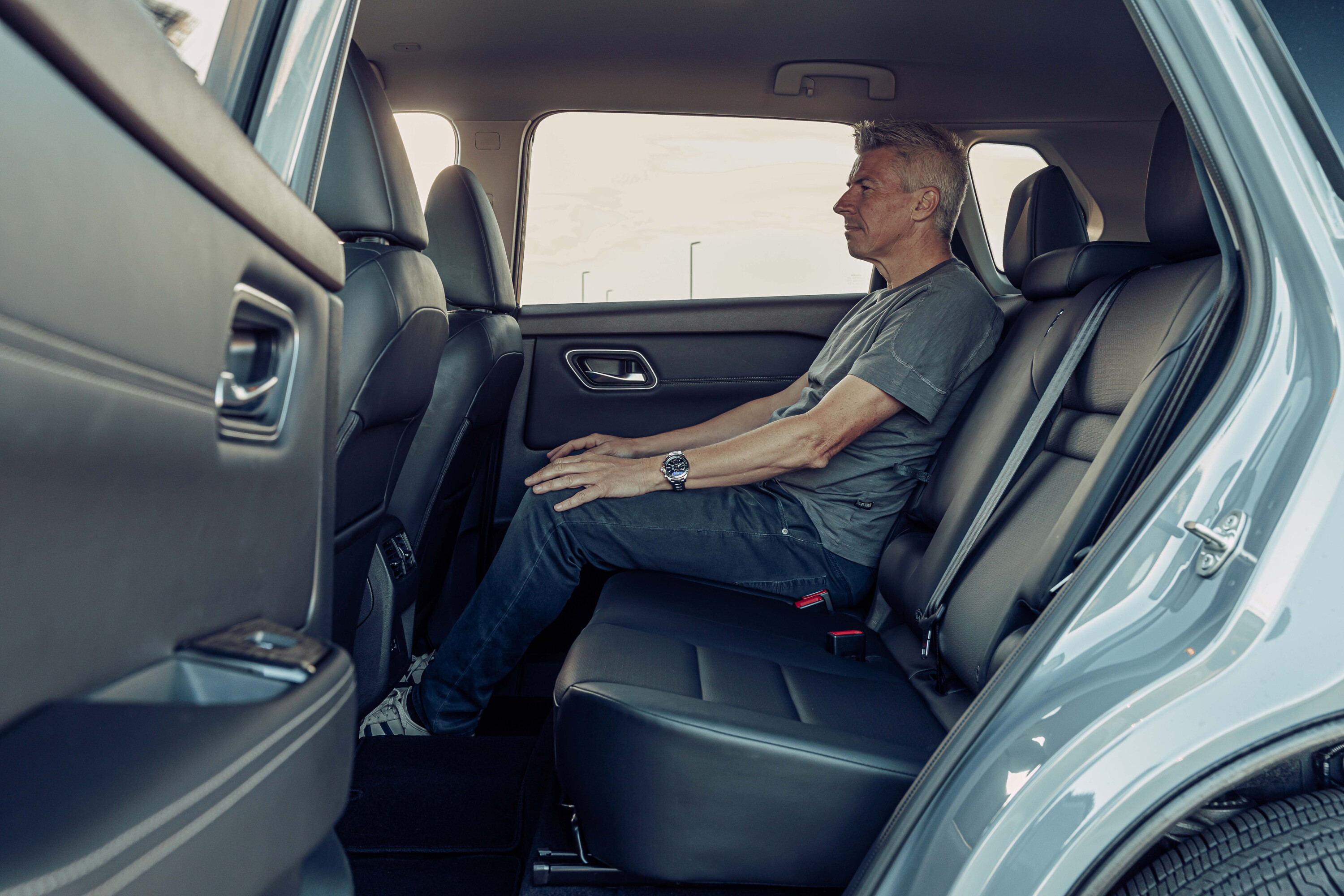
Both front doors effortlessly take a one-litre camping bottle while the rear seat, just like the previous model, offers a true theatre seating experience – elevating second-row passengers higher than the front buckets for a supreme view, which is enhanced by the seat cushion being fore-aft adjustable over a substantial range.
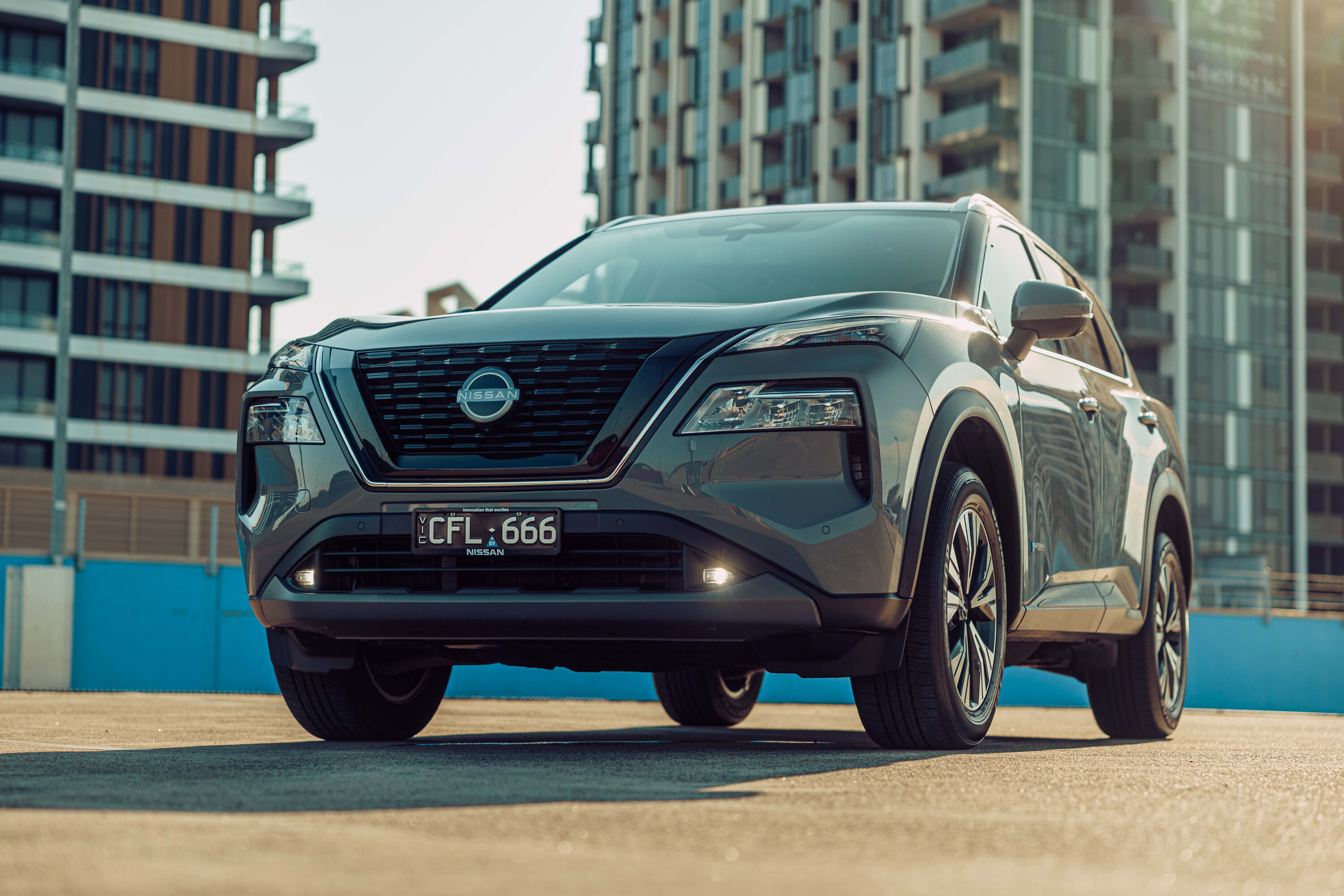
The Ti e-Power brings tri-zone climate control, a vast panoramic sunroof and an electric tailgate for the impressively large 575-litre boot, while the Ti-L adds outboard rear-seat heating and rear door sunshades.
Ownership-wise, it’s the X-Trail’s average projected resale value that ultimately lets it down slightly – placing the Nissan on par with a Volkswagen Tiguan or Skoda Karoq, but a few percentage points below a Mazda CX-5, Hyundai Tucson, Kia Sportage or Honda CR-V.
And the cost of its servicing (every 12 months or 10,000km) is about average as well – $2020 if you buy a five-year servicing plan, or $2244 if you don’t.
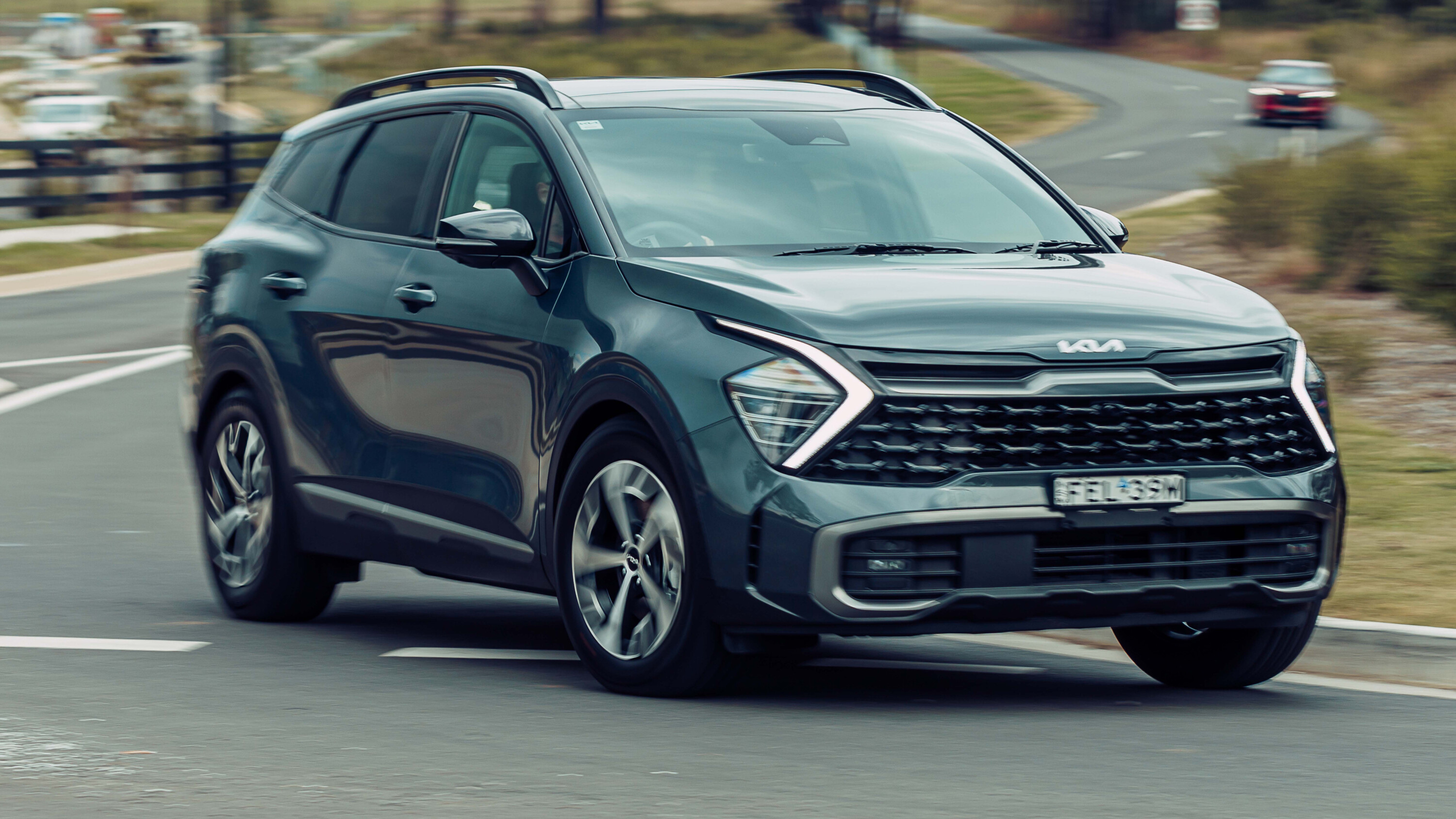
Kia Sportage GT-Line hybrid
Overseas markets have had access to a Sportage Hybrid since the current NQ5 generation launched in late-2021, though given the recent surge in popularity of hybrid-engined vehicles in Australia, the petrol-electric Sportage’s better-late-than-never entrance couldn’t be better-timed.
There’s already a several-month waiting list for the two hybrid variants (SX and GT-Line), which Kia expects will account for at least 20 percent of the model mix, though Sportage volume is up 62 percent so far in 2024, without the help of the Hybrid. So if these promising new variants catch on, the Kia Sportage may soon be as common as teen angst in a neighbourhood near you.
Based on the overall performance and driveability of the Sportage Hybrid, it certainly deserves a generous slice of the action.
The 169kW/350Nm 1.6-litre turbo-petrol four-cylinder hybrid delivers deceptively strong acceleration, perhaps because its auto transmission possesses just six tall ratios, and feels silkier than the two regular boosted Sportage engines.
Kia’s hybrid isn’t as tuneful or as sweet-spinning as Honda’s naturally aspirated e:HEV, though it does have loads of torque – the engine peaking at 1500-4500rpm, the electric motor at 1600rpm – so if you drive the Sportage with a relaxed keenness, it’s effortlessly smooth and swift. But with no regenerative braking effect, it feels quite different to the X-Trail’s e-Power set-up.
The Sportage has a more commanding driving position than its rivals, and while its leather/Alcantara front buckets aren’t as huggy as the Honda’s, they’re nicely supportive and very comfortable over big distances.
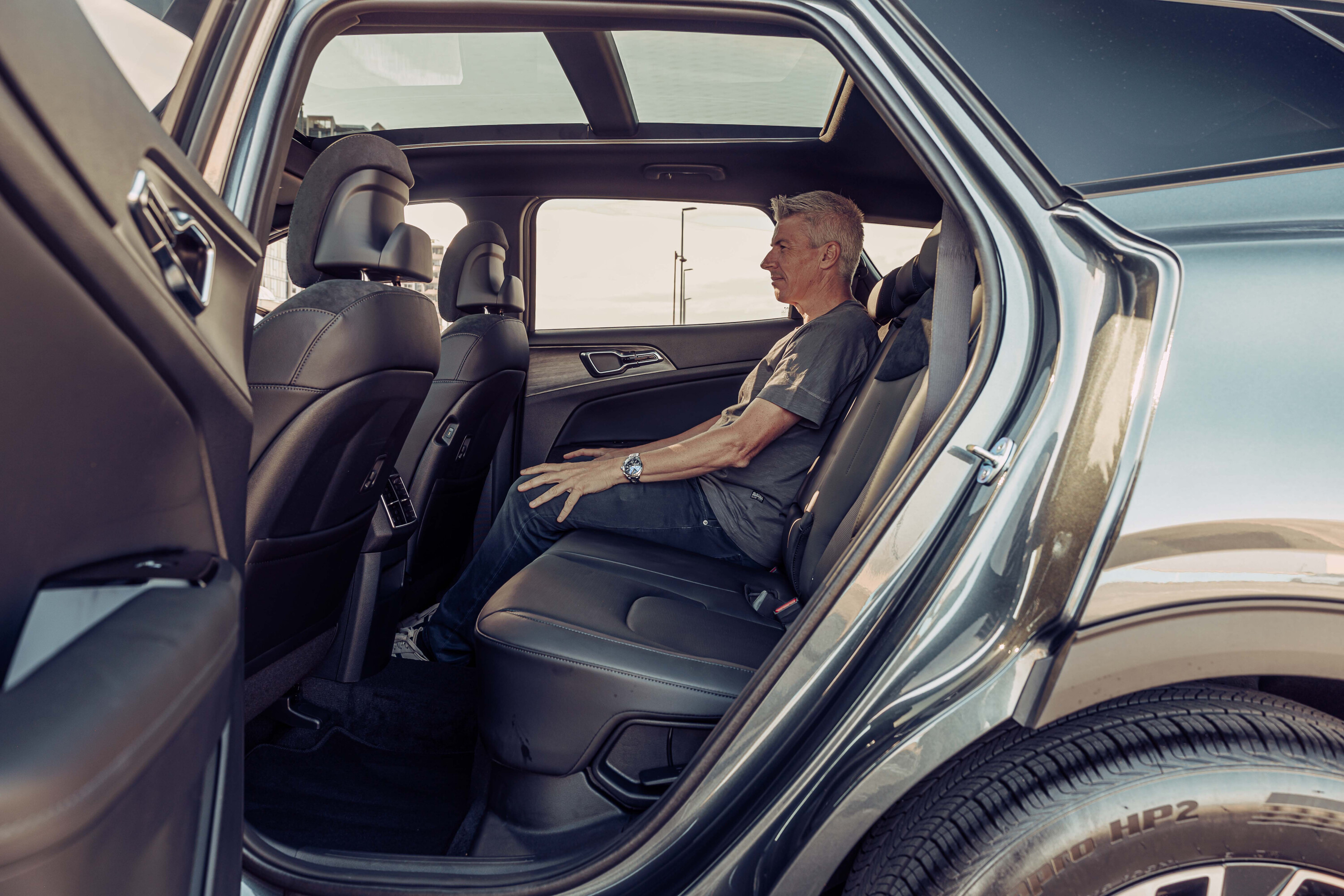
They also include three-stage heating and cooling, and with proper eight-way electric adjustment (meaning height and under-thigh tilt), the front passenger doesn’t feel like they’ve turned up to an LNP fundraising barbecue dressed in Hawke’s Brewing merch.
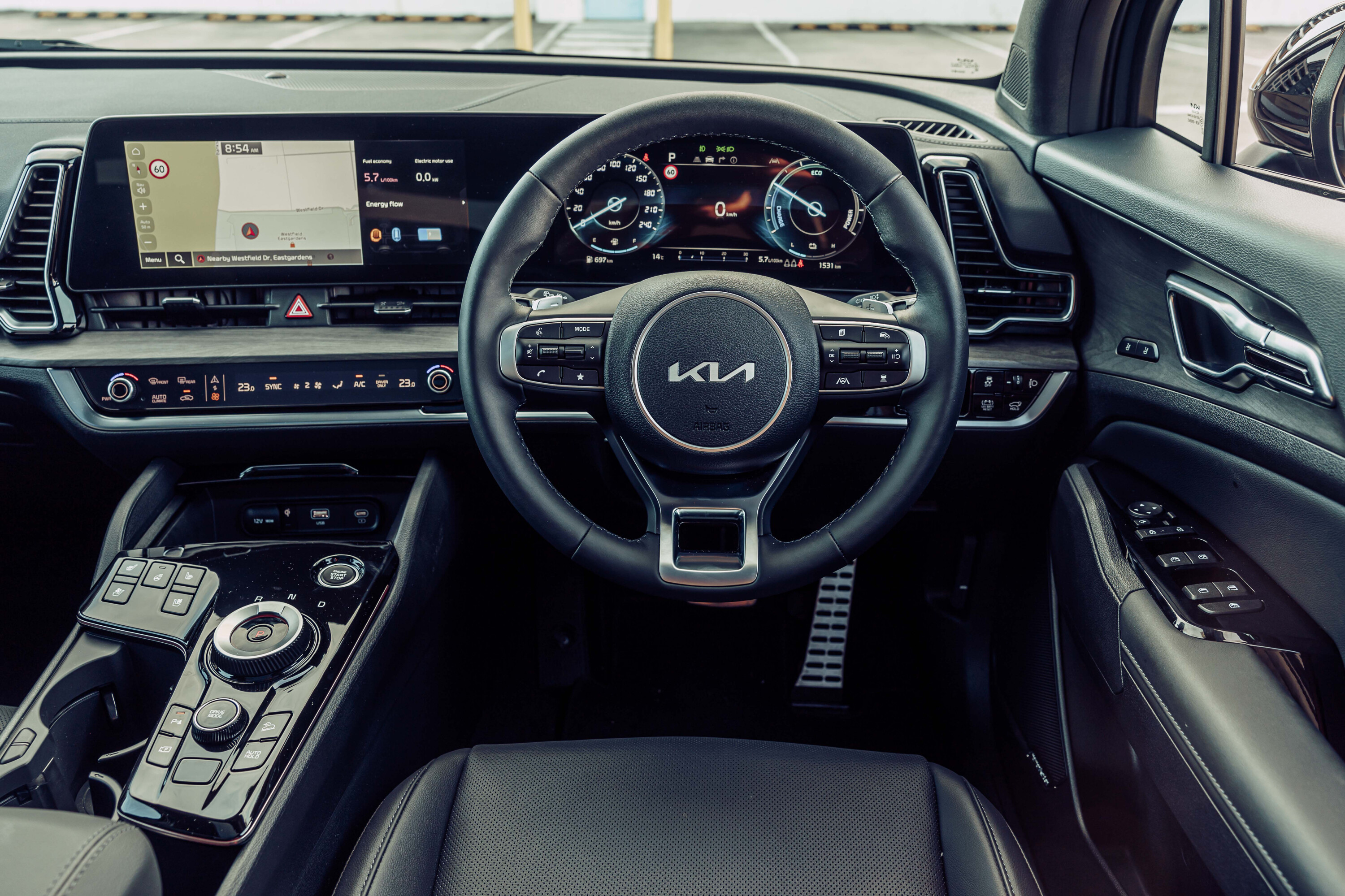
With its impressive 12.3-inch screens, brilliant switchgear functionality (apart from some safety-assist disablement), the airy expanse of its panoramic sunroof and even its classy dashboard stitching, the Sportage GT-Line’s cabin is an accommodating place.
Great rear seat, too, with excellent leg and toe room – complemented by a huge 586-litre boot with a dual-height floor that can swallow a serious amount of stuff.
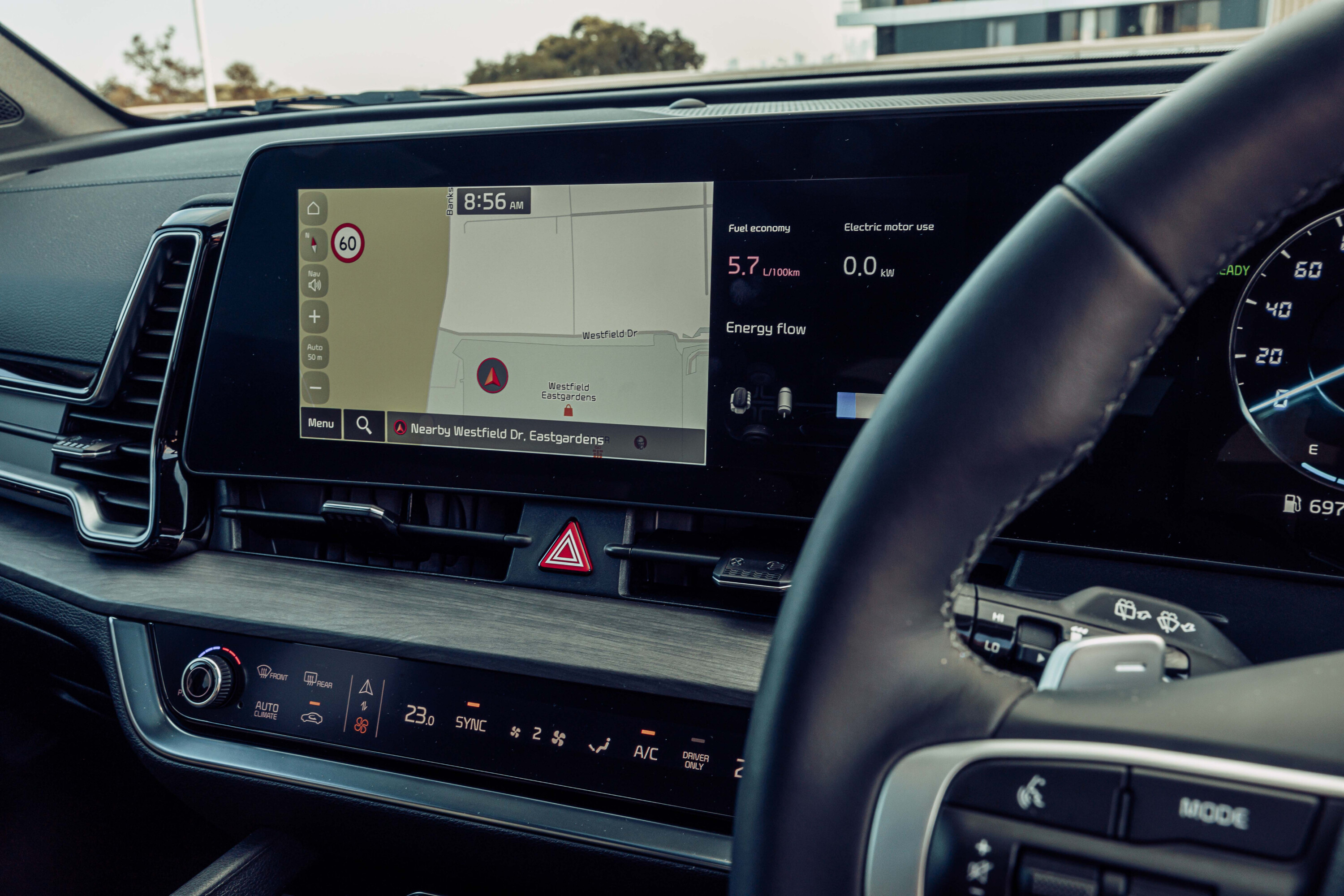
But why does everything have to be so dark?
The GT-Line’s all-black interior (including the headlining) is oppressively dour – alleviated to a large degree by the glassiness of its cabin and the technicolour of its screens – and even the stitching is monotone black, making the flagship Sportage feel less premium than it could, or indeed should.
Does a contrasting colour really cost extra? Why does the dash trim insert look like it was designed by Crocs? And while we’re at it, why do the doors only take 600ml plastic bottles, in an era where PET consumption is such a huge issue?
Pedantry aside, what makes the Sportage Hybrid experience is its dynamics. Even wearing unsporting rubber (and only 18-inch alloys on GT-Line, instead of the 19s from the petrol/diesel), it’s a terrific handler.
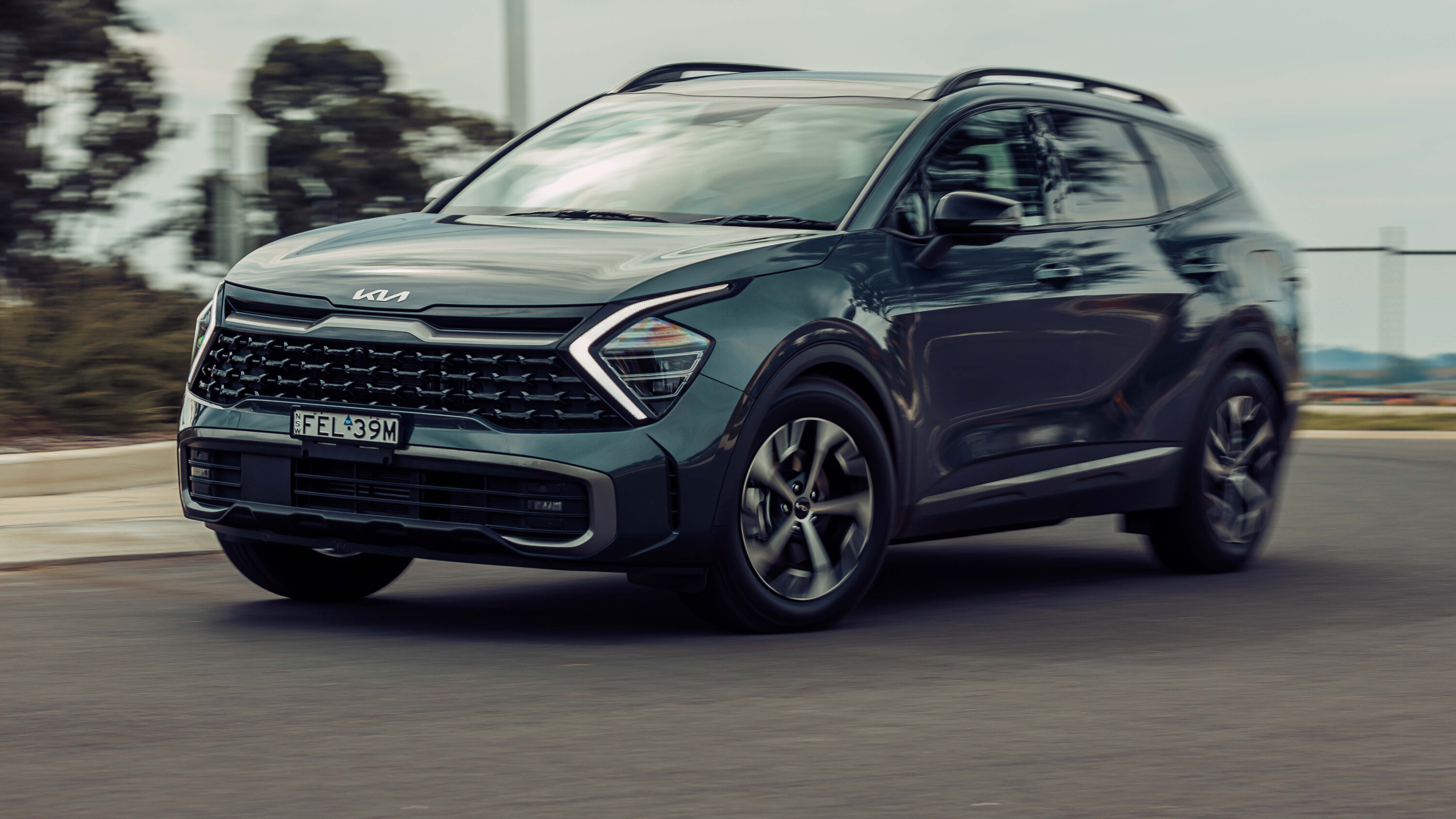
Always poised and composed, its lightly weighted steering at low speeds makes you suspect that it’s going to be all ‘electriccy’ once on the move, but it weights up naturally and is pleasingly accurate – making the unassuming Sportage surprisingly pointy.
It has a more natural dynamic flow than the X-Trail – feeling more ‘all-of-a-piece’ – and it’s more of a driver’s car than the Honda in terms of handling and steering, plus it has that extra engine torque. It’s also more consistent in its composure than the big-selling Toyota – maintaining Kia’s reputation for delivering terrific all-round suspension tunes for Australia.
It handles big bumps more effortlessly than the Nissan and Toyota, though its ride isn’t as quiet or as supple as the Honda’s. The Kia has an initial firmness that the Honda smooths over quite beautifully, though when it’s really challenged, the Kia demonstrates absorbency and control.
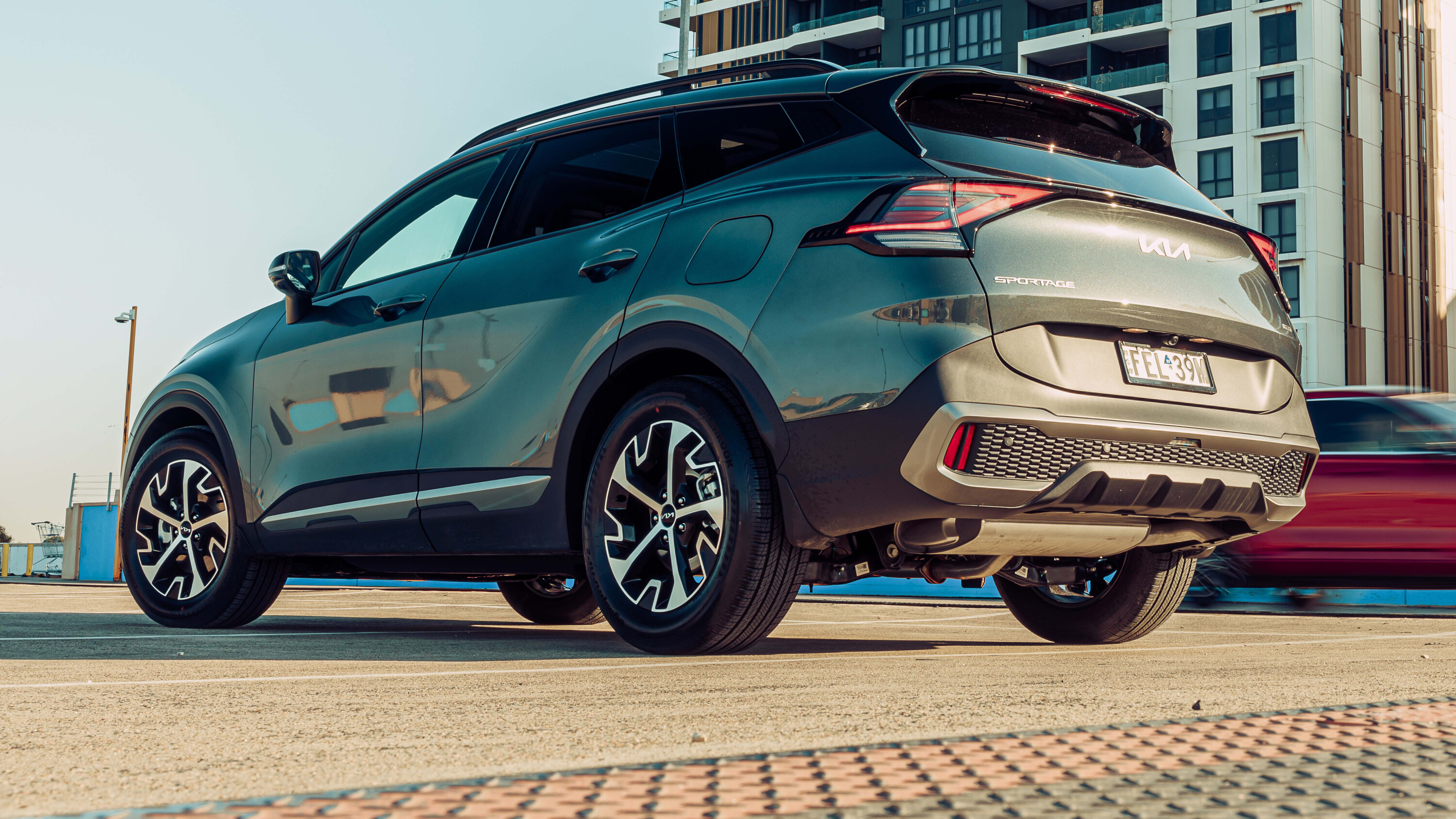
It’s the sort of car where you don’t need to slow down on a bad road – it simply cops what it gets served.
Ultimately, the Sportage Hybrid is not quite as polished or refined as the CR-V e:HEV in its overall driving experience, and it can’t match the Honda’s feeling of expense in cabin presentation. Or its super-cheap $995 servicing cost over five years.
Across the same period, the GT-Line Hybrid is almost $2000 more expensive to service, as well as $500 more to drive away from the dealership in the first place than the CR-V e:HEV RS … though at least Kia offers a cheaper Sportage SX Hybrid alternative (from $46K).
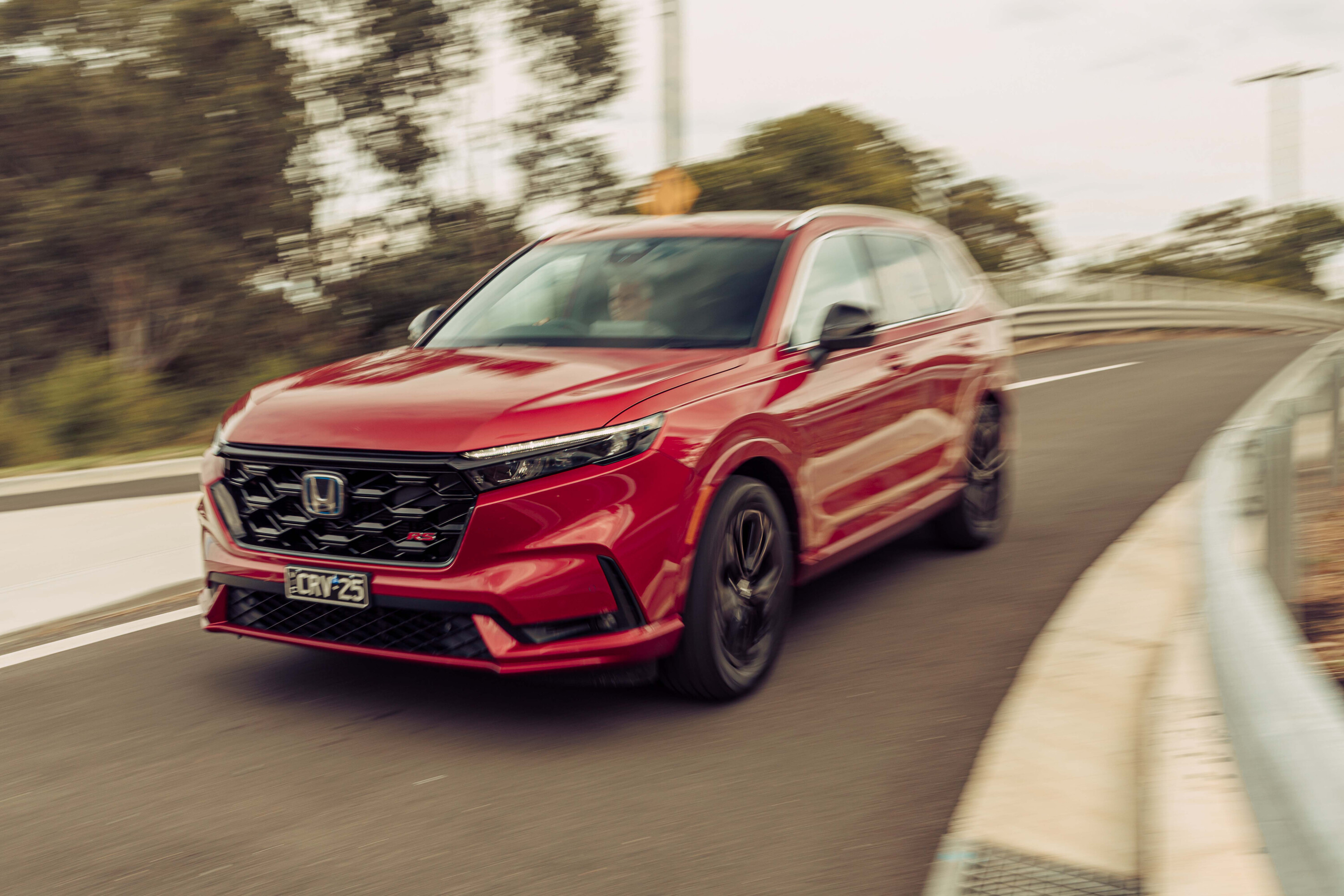
Honda CR-V e:HEV RS
Our first-ever medium SUV Megatest – published in May 2003 – awarded gold to the second-generation Honda CR-V Sport.
Based on the quality of its drivetrain performance, its excellent seating comfort and interior flexibility, the CR-V just managed to elbow out the second-gen Subaru Forester. Yet despite its greatness in these areas, it was impossible to ignore the ’03 CR-V’s steering kickback, understeer, body-control laziness, and road noise – aspects that would crucify any SUV’s chances today.
Two decades later, we’re in a completely different universe. The sixth-generation CR-V e:HEV RS is almost exemplary in its dynamic behaviour – to the point where its controlled suppleness and level of refinement make acquiring this hybrid flagship for $59,900 drive-away seem like incredible value for money.
“If only a Lexus NX drove like this,” said one tester – a premium medium SUV that starts at $62,275 (before on-road costs) and stretches all the way to $90K. “If only every other CR-V before this drove like this,” was my thinking because, jeez, we’ve been waiting a long time.
The new CR-V cedes steering crispness to the RAV4, and sporty handling/ride discipline to the Sportage, yet none of its rivals can quite match its blend of all-round suaveness. Steering response is perhaps a little too measured deviating from straight ahead – more of the Civic’s incisiveness would be appreciated here – but the CR-V’s poised handling is satisfying fun and it has a distinct whiff of (current) Honda DNA about it.
Aiding that impression is its lovely drivetrain – a 2.0-litre ‘Atkinson cycle’ direct-injection four-cylinder combined with a pair of electric motors driving the front wheels through an e-CVT transmission with stepped ratios under engine acceleration.
It accelerates like a zingy Honda auto from the past
In a similar fashion to Nissan’s e-Power, the Honda e:HEV system can decouple the engine from the hybrid system when it isn’t needed, though it drives like a normal hybrid rather than the EV-of-sorts X-Trail, with its clever ‘e-Pedal’ regenerative braking. And it accelerates like a zingy Honda auto from the past, rather than blasting loudly at a set rev point like the CVT Toyota.
Producing 152kW of system power, the Honda drivetrain is in the ballpark of the X-Trail (157kW), RAV4 (163kW) and Sportage (169kW), and while its 9.4sec 0-100km/h acceleration claim seems a bit off the pace, it almost never feels wanting for grunt on the road.
Driveability is superb – backed by a smoothly sonorous engine that packs a delightful level of induction fizz when pressed – and the transition from petrol to electric is seamlessly refined. Even though the CR-V doesn’t have the foot-flat shove of the X-Trail, it more than makes up for it with the quality of its performance.

Indeed, that description rings true with everything about the sixth-gen CR-V.
Not only is it a really handsome design, with sequential front indicators in the LED-equipped RS to enhance its specialness, but it backs that up with a high-quality interior brimming with neat touches – all clearly inspired by the current-generation Civic that finally elevated Honda back to its rightful position.
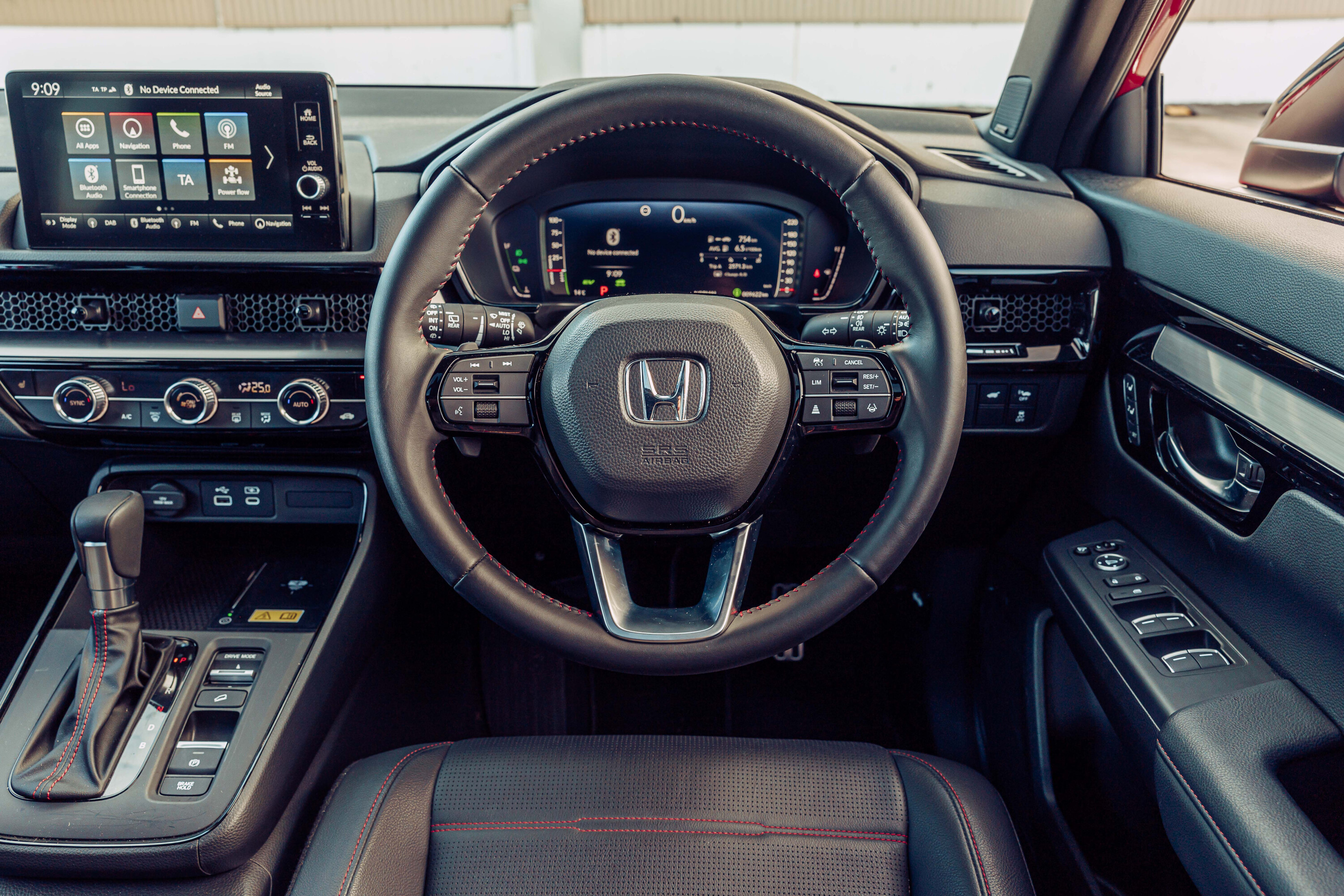
The RS’s heavily bolstered front buckets with perforated leather and red stitching are excellent – even though the front passenger only gets archaic four-way electric adjustment (plus no fan-chilling for either chair) – while the spacious rear bench is equally sumptuous, with the added benefit of a near-flat floor. Only the drop in door-trim tactility from front to rear betrays any cost-cutting.
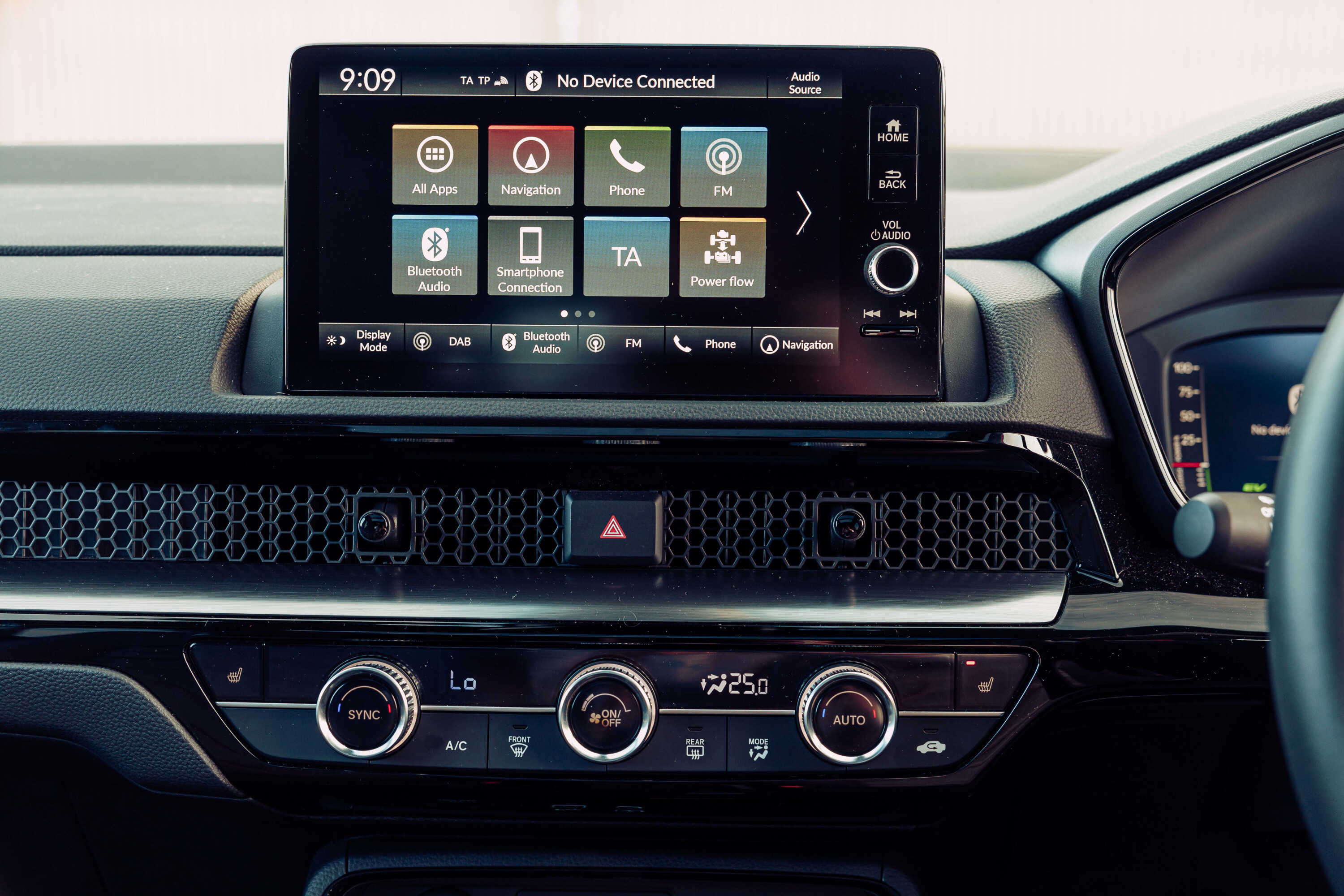
The classy dashboard is soft-touch and neatly designed, complimented by a superb steering wheel, slick 10.2-inch driver display and simple 9.0-inch touchscreen with wireless Apple CarPlay and 12-speaker Bose audio.
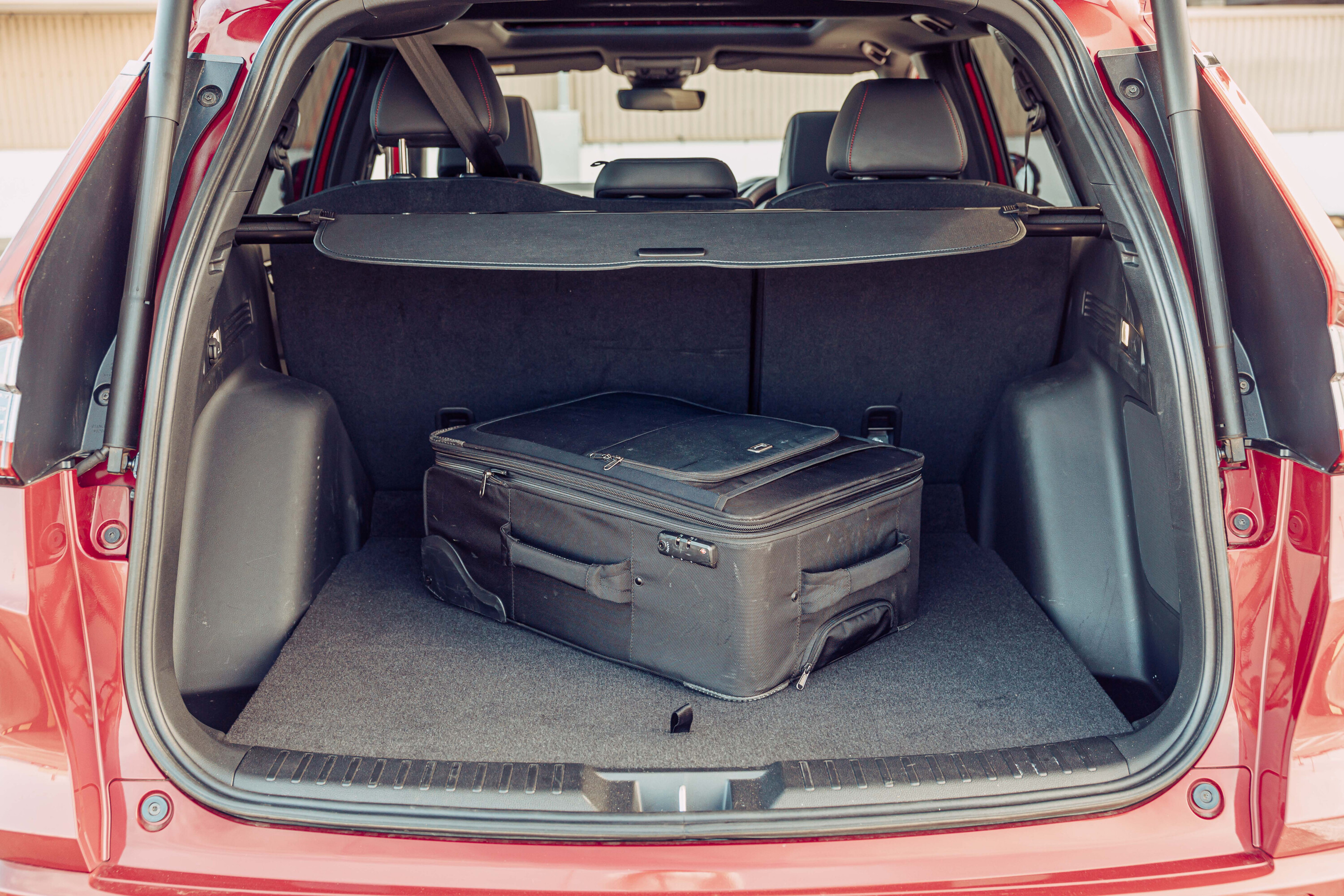
There’s also a brilliant-to-use HVAC system, a clever ‘magic fold’ rear seat that tumbles onto itself as the cushion lowers (ala first-gen Mazda 6’s ‘Karakuri’ system), and a superbly trimmed boot, with plush carpet worthy of a decent hotel and an almost-flat floor when the rear seat is dropped.
The CR-V manages to squeeze a one-litre camping bottle into its front doors, and all-round vision through its panoramic roof and out its Kia EV9-esque windscreen expanse is tremendous.
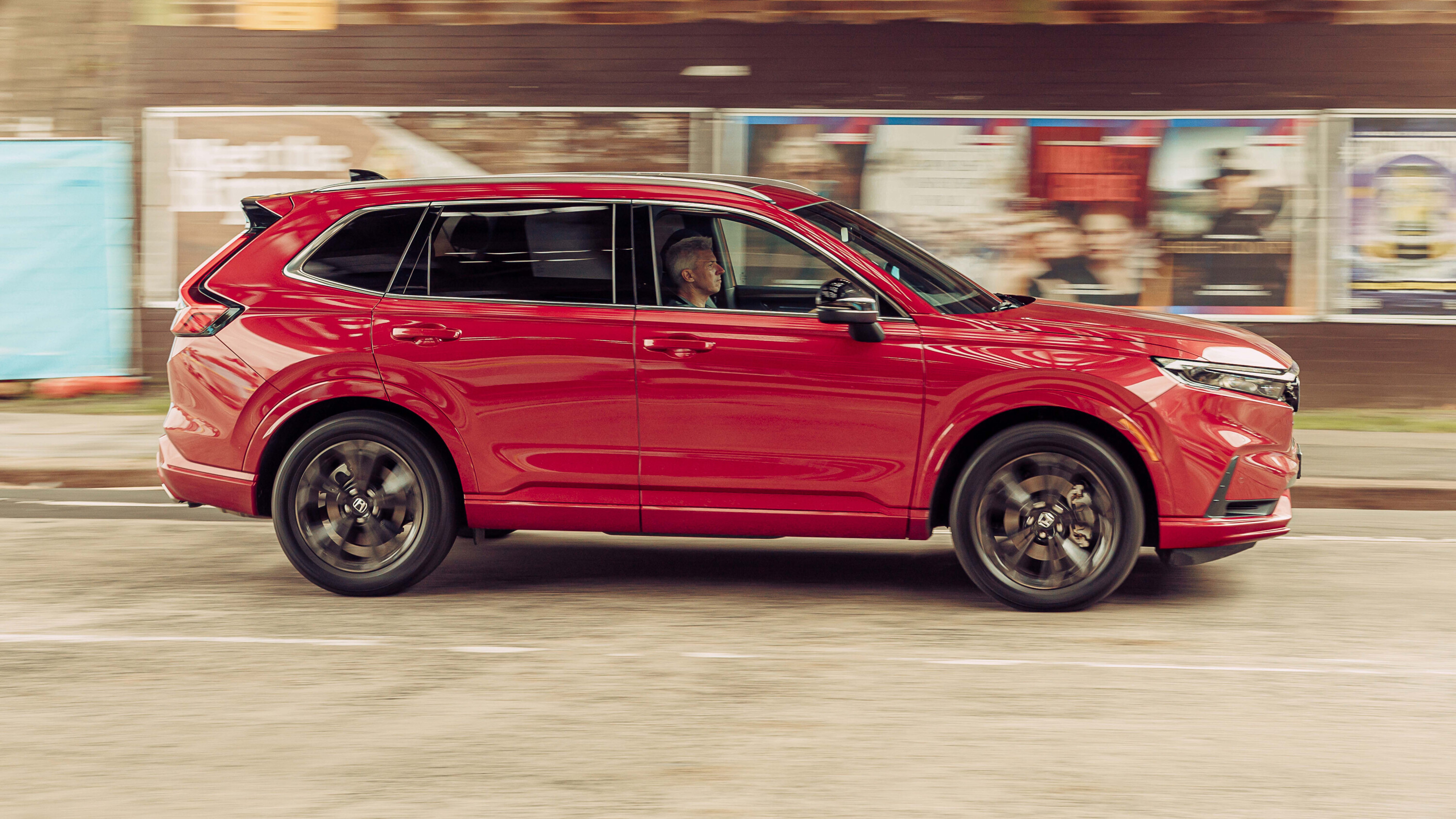
What ultimately hits home is that the CR-V e:HEV RS’s interior – just like its dynamics and its drivetrain – feels premium.
Given the revival of this once-expected level of Honda build quality, it’s really quite astounding that the flagship CR-V’s drive-away price sits smack-bang in between the RAV4 Cruiser and Sportage GT-Line, and several grand below the X-Trail Ti-L e-Power. And that it’ll cost less than a grand to service for the first five years. It makes you wonder what the catch is. The best part is, there isn’t one.
VERDICT
It’s reassuring at the end of a four-car comparo as relevant as this to know that every hybrid medium SUV tested here is a really strong choice.
We’d happily live with any of them, for a multitude of different reasons, and they each possess a degree of unique flavour that makes them distinct.
As an all-rounder, the RAV4 Cruiser Hybrid e-Four is difficult to beat. It does very little wrong, gets pretty much everything right when it comes to ownership, and is rewarding to drive as well.
Yet it’s also starting to age – both from a design perspective and a refinement perspective – so when scrutinised under the harsh microscope of a Wheels comparison test, it’s no longer the top dog when it comes to hybrid medium SUVs. Honourable mention? Without question. But it’s not the all-conquering powerhouse it once was.
The X-Trail e-Power is an intriguing alternative to a RAV4 Hybrid.
When it hits its high notes, it’s truly impressive, and no one can dispute the excellence of its drivetrain performance, the quality and functionality of its interior, and the dynamic agility accessed via its sharp steering.
It’s a bloody good car – way better than most people probably expect an X-Trail to be – and if it proves to be a reliable long-term proposition, then its lacklustre residual value should eventually even out. In Ti-L form, this is a Nissan SUV that exudes premium quality.
But both the Sportage and CR-V edge it out for all-round ability – the Kia by the tiniest of margins due to its refinement, its all-surface dynamic distinction and its warranty, and the Honda because this sixth-generation CR-V is arguably the first of its kind to truly channel the excellence of the brand’s late-80s glory days.
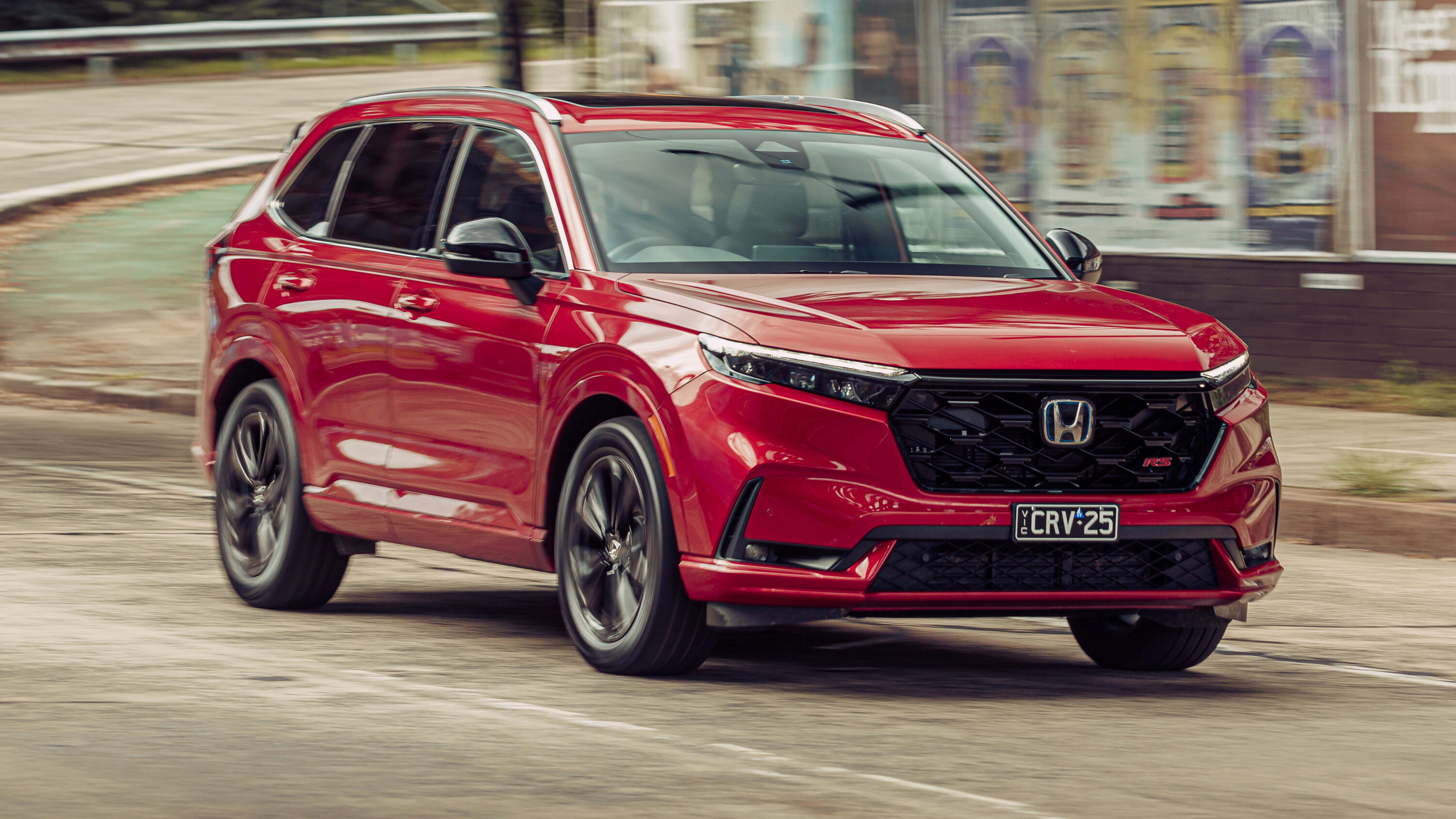
And given that the $60K drive-away Honda also seems like surprisingly good value for money, what’s not to love?
It’s beautifully put together, agreeably handsome, and has some pukka Honda character – which, as a complete statement, has applied to so few Hondas this century, and a CR-V arguably never!
So as a belated return to form, what better category to nail the brief than among medium SUVs. Here’s hoping the new CR-V’s silky sheen somehow rubs off on Honda’s future products.
| Model | Score |
|---|---|
| Toyota RAV4 | 7.5 |
| Nissan X-Trail | 8 |
| Kia Sportage | 8 |
| Honda CR-V | 8.5 |
Specifications
| 2024 Toyota RAV4 Cruiser e-Four | 2024 Nissan X-Trail ST-L e-Power e-4orce | 2024 Kia Sportage GT-Line Hybrid | 2024 Honda CR-V e:HEV RS | |
|---|---|---|---|---|
| Price | $54,410 (before on-road costs) | $49,990 (before on-road costs) | $55,420 (before on-road costs) | $59,900 (drive-away) |
| DRIVETRAIN | ||||
| Engine | 2487cc 4cyl, dohc, 16v, direct injection | 1497cc 3cyl, dohc, 12v, turbo | 1598cc 4cyl, dohc, 16v, direct injection, turbo | 1993cc 4cyl, dohc, 16v, direct injection |
| Electric motor | Permanent magnet synchronous | Front and rear permanent magnet synchronous | Front permanent magnet synchronous | Two front permanent magnet synchronous |
| Battery | 2.1kWh lithium-ion | 1.49kWh lithium-ion polymer | 1.06kWh lithium-ion | |
| Compression ratio | 14.0:1 | Variable | 10.5:1 | 13.9:1 |
| Drive | All-wheel drive | All-wheel drive | Front-wheel drive | Front-wheel drive |
| System power | 163kW | 157kW | 169kW | 152kW |
| System torque | not available | not available | 350Nm | not available |
| Transmission | CVT automatic | CVT automatic | 6-speed automatic | CVT automatic |
| CHASSIS | ||||
| L/W/H | 4615/1855/1690mm | 4680/1840/1725mm | 4660/1865/1680mm | 4704/1866/1681mm |
| Wheelbase | 2690mm | 2705mm | 2755mm | 2701mm |
| Track (f/r) | 1595/1605mm | 1585/1590mm | 1615/1622mm | 1611/1627mm |
| Weight | 1755kg | 1871kg | 1738kg | 1771kg |
| Boot | 542-580 litres | 575 litres | 586 litres | 581 litres |
| Fuel/Tank | 91 RON/55 litres | 95 RON/55 litres | 95 RON/52 litres | 91 RON/57 litres |
| Economy | 4.8L/100km (combined), 5.6L/100km (tested) | 6.1L/100km (combined), 6.2L/100km (tested) | 4.9L/100km (combined), 6.3L/100km (tested) | 5.5L/100km (combined), 6.1L/100km (tested) |
| Suspension front | struts, A-arms, anti-roll bar | struts, A-arms, anti-roll bar | struts, A-arms, anti-roll bar | struts, A-arms, anti-roll bar |
| Suspension rear | double wishbones, coil springs, anti-roll bar | multi-links, coil springs, anti-roll bar | multi-links, coil springs, anti-roll bar | multi-links, coil springs, anti-roll bar |
| Steering | Electric power-assisted | Electric power-assisted | Electric power-assisted | Electric power-assisted |
| Tyres | Bridgestone Alenza | Dunlop Grandtrek PT21 | Hankook Dynapro HP2 | Michelin Latitude Sport 3 |
| Tyre size | 225/60R18 100H | 235/60R18 103H | 235/60R18 103H | 235/55R19 101Y |
| Towing capacity | 1500kg (braked) | 1650kg (braked) | 1650kg (braked) | 750kg (braked) |
| SAFETY | ||||
| ANCAP rating | 5 stars | 5 stars | 5 stars | 5 stars |
| 0-100km/h | 8.0sec (tested) | 7.0sec (claimed) | 8.0sec (claimed) | 9.4sec (claimed) |
June 2024: Jeep Compass mild-hybrid and PHEV details confirmed
Pricing and features for the 2024 Jeep Compass range have been confirmed, with deliveries commencing this month.
The range is comprised of two new hybrid configurations and two trim levels: Limited or Summit.
The E-Hybrid integrates a 15kW/55Nm electric motor, which can drive the wheels independently of the ICE motor, for a total combined output of 96kW and 240Nm sent to the front wheels.
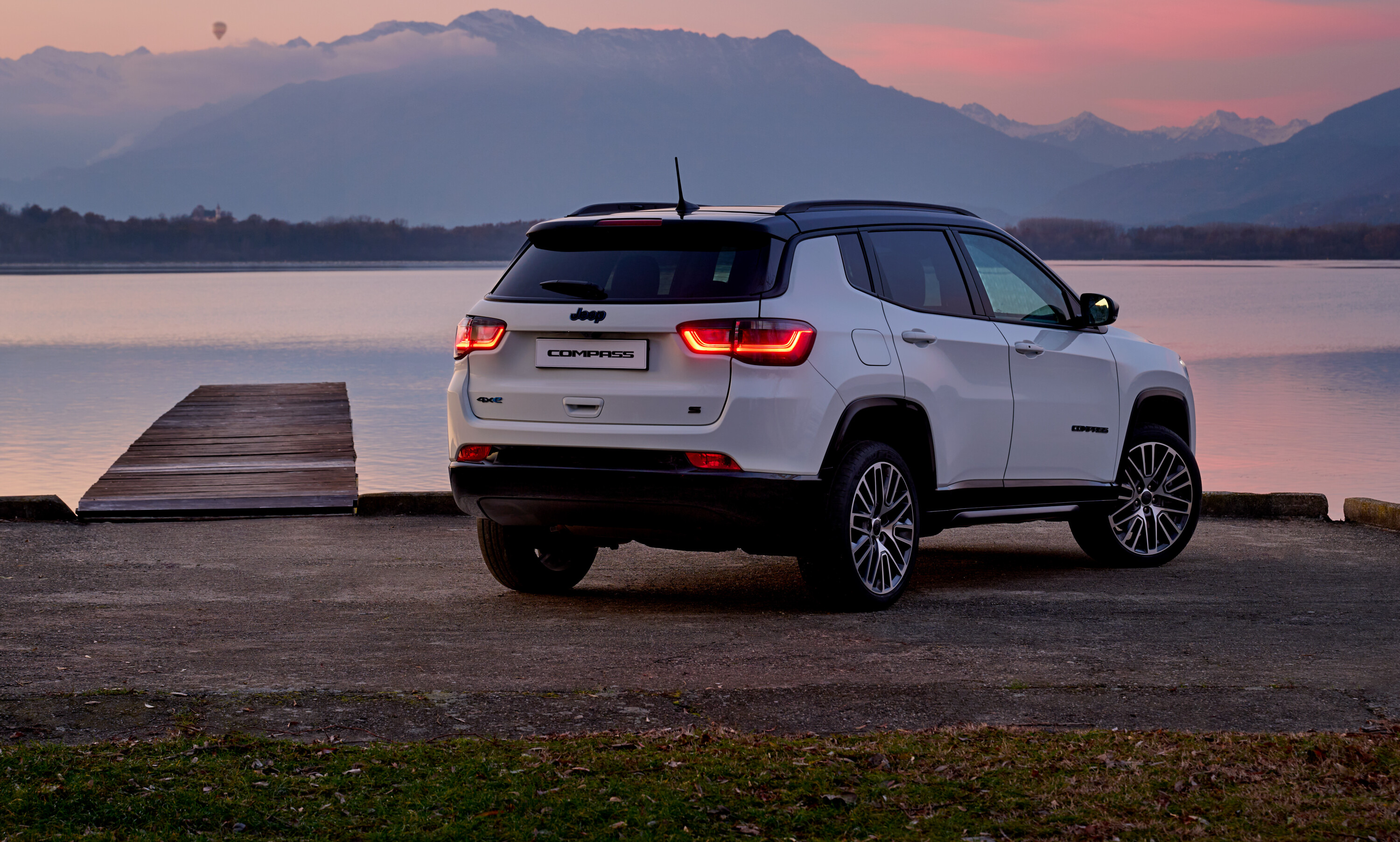
Meanwhile, 4xe plug-in hybrid models combine a 1.3-litre turbo-petrol with a 44kW/250Nm electric motor powered by an 11.4kWh battery to deliver 176kW to all four wheels, while sipping 2.1L/100 km in hybrid mode.
Pricing for the Compass E-Hybrid starts from $45,990 before on-road costs.
Five colours are available: Alpine White, Colorado Red, Solid Black, Graphite Grey, and Blue Shade. A two-tone black roof is optional on the Limited and standard on the Summit.
2024 Jeep Compass pricing
2024 Jeep Compass features
| 2024 Jeep Compass Limited features | |
|---|---|
| 18u201d Alloy Wheels | Active Lane Management System |
| Uconnect 5 with 10.1-inch Touchscreen Display | Pedestrian & Cyclist Emergency Braking |
| Wireless Charging Pad | Full Speed forward Collision Warning |
| Wireless Apple CarPlay & Android Auto | Traffic Sign Recognition |
| 10.25-Inch TFT Instrument Cluster | Dual-Zone Climate Control |
| Passive Entry & Keyless Go | Rain Sensitive Windshield Wipers |
| Cloth & TechnoLeather Seats | Automatic Headlamps |
| Heated Front Seats | Blind Spot Monitor |
| Heated Steering Wheel | Surround View Camera |
| Leather Wrapped Steering Wheel & Shift Knob | Parksense Front & Rear Parking System |
| LED Reflector Headlamps | Parallel & Perpendicular Park Assist with Stop |
| Adaptive Cruise Control with Stop & Go Function | |
| 2024 Jeep Compass Summit features (additional to Limited) | |
|---|---|
| 19u201d Alloy Wheels | Active Driving Assist |
| Dual-Pane Sunroof | Hands Free Power Tailgate |
| Leather Accented Seats | Satellite Navigation |
| Ventilated Front Seats | Privacy Glass |
| Driver 8-Way Power Adjustment with Memory Function | S Badge |
| Passenger 4-Way Power Adjustment | LED Fog Lamps |
| LED Projector Headlamps | Gloss Black Facias |
| Traffic Sign Information | Side Roof Rail |
Toby Semler
August 2023: Jeep Compass hybrids confirmed for Australia
The Jeep Compass is set to get a whole new powertrain lineup in 2024 with mild- and plug-in hybrids locked in for Australian release.
Replacing the 2.4-litre ‘Tigershark’ petrol and 2.0-litre turbo-diesel four-cylinder will be a 95kW 48-volt boosted turbo-petrol and a 177kW ‘4Xe’ plug-in hybrid setup.
The mild-hybrid 48-volt powertrain is front-wheel drive and offers some electric-only driving ability. Jeep claims it’ll be able to propel the Compass with electrons at start-up, low speeds, and when parking.
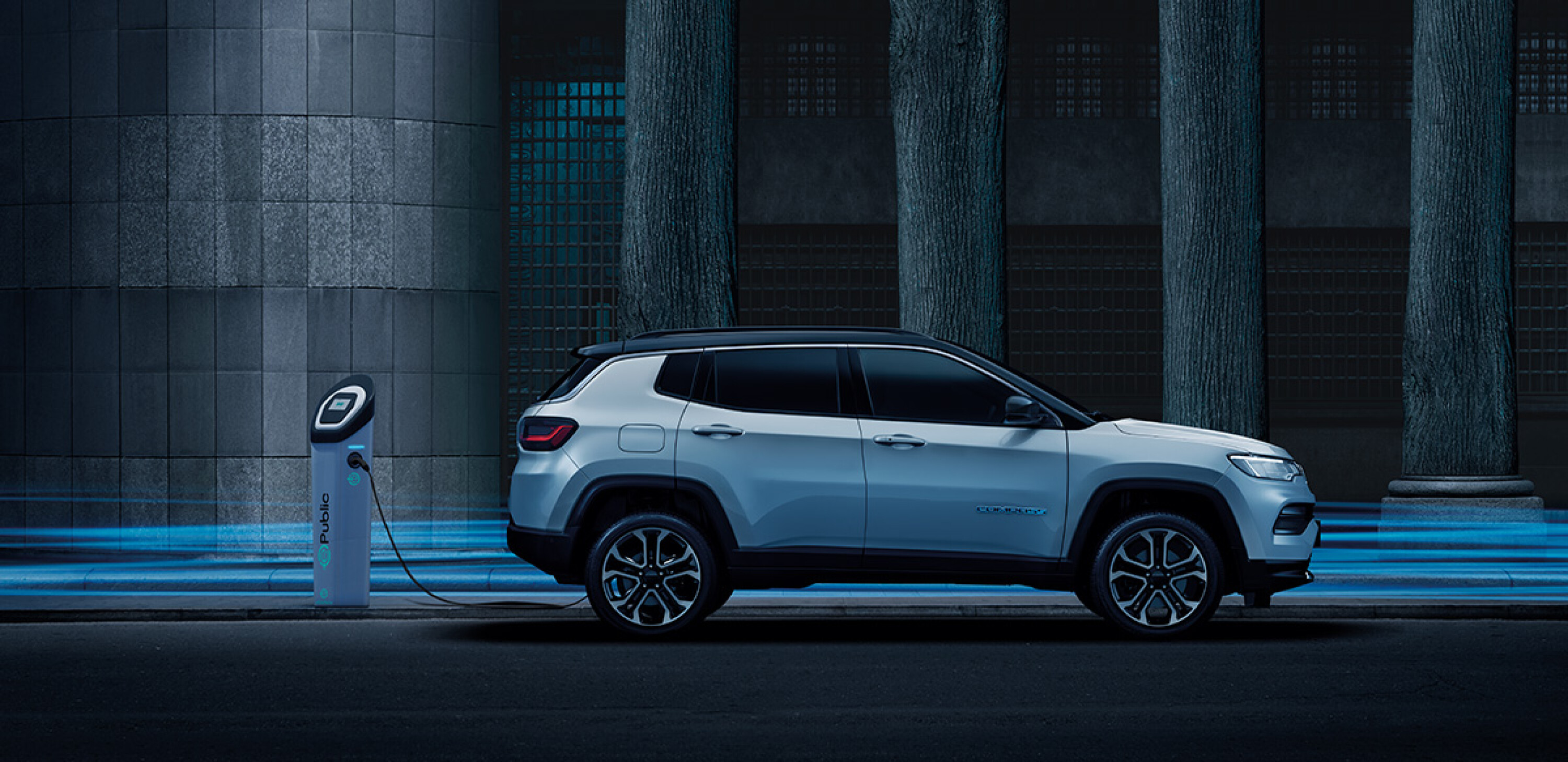
Meanwhile, the 4Xe (pronounced four-by-ee) system, which is similar to that in the Grand Cherokee plug-in hybrid, offers all-wheel drive and a lot more power.
The plug-in hybrid will rival the Ford Escape plug-in hybrid and Mitsubishi Outlander PHEV. Jeep claims its medium SUV will reach 100km/h in 7.5 seconds, and its 11.4kWh battery gives 48km-or-so of real-world EV driving.
Although there will be two models marketed as hybrids, the Compass won’t have a ‘traditional’ hybrid that’s proven extremely popular in the medium SUV segment, and features on the Toyota RAV4 and Honda ZR-V.
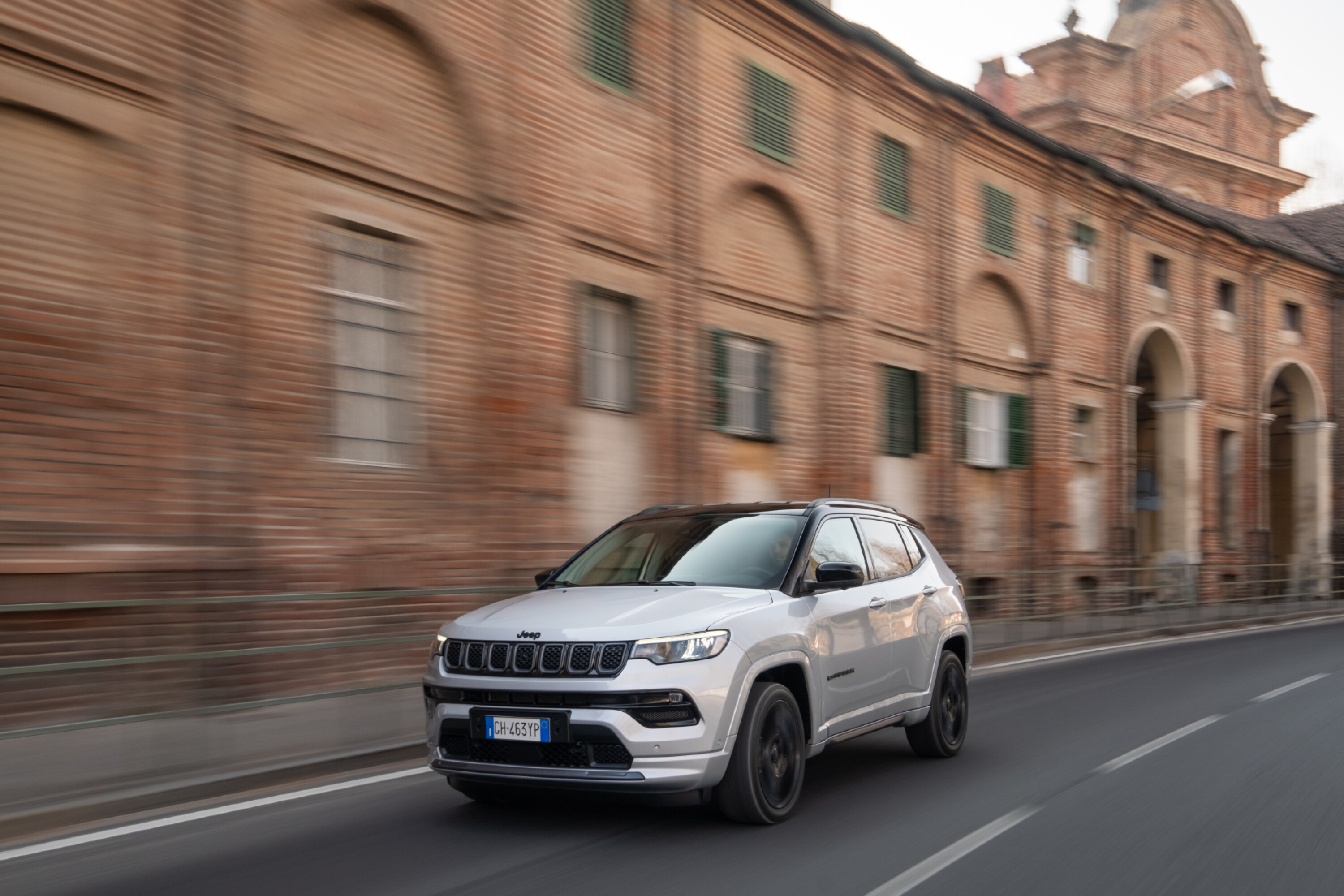
Jeep is yet to confirm pricing or specification for the 2024 Compass, including whether the ‘Trail Rated’ Trailhawk off-road model will continue.
Expect pricing to increase from the current base Night Eagle’s $41,400 before on-road costs, and a flagship plug-in hybrid is likely to eclipse the $59,100 range-topping Trailhawk.
To July 2023 Jeep managed to shift 951 Trailhawks, down 11.5 per cent on 2022 figures, with a monthly July sales result of 89 – down 48.9 per cent on the same month last year.
When the new hybridised Compass arrives, it’ll join the Wrangler off-roader (that’s celebrating five million sales), Gladiator ute, and Grand Cherokee five- and seven-seat large SUVs in Jeep showrooms.
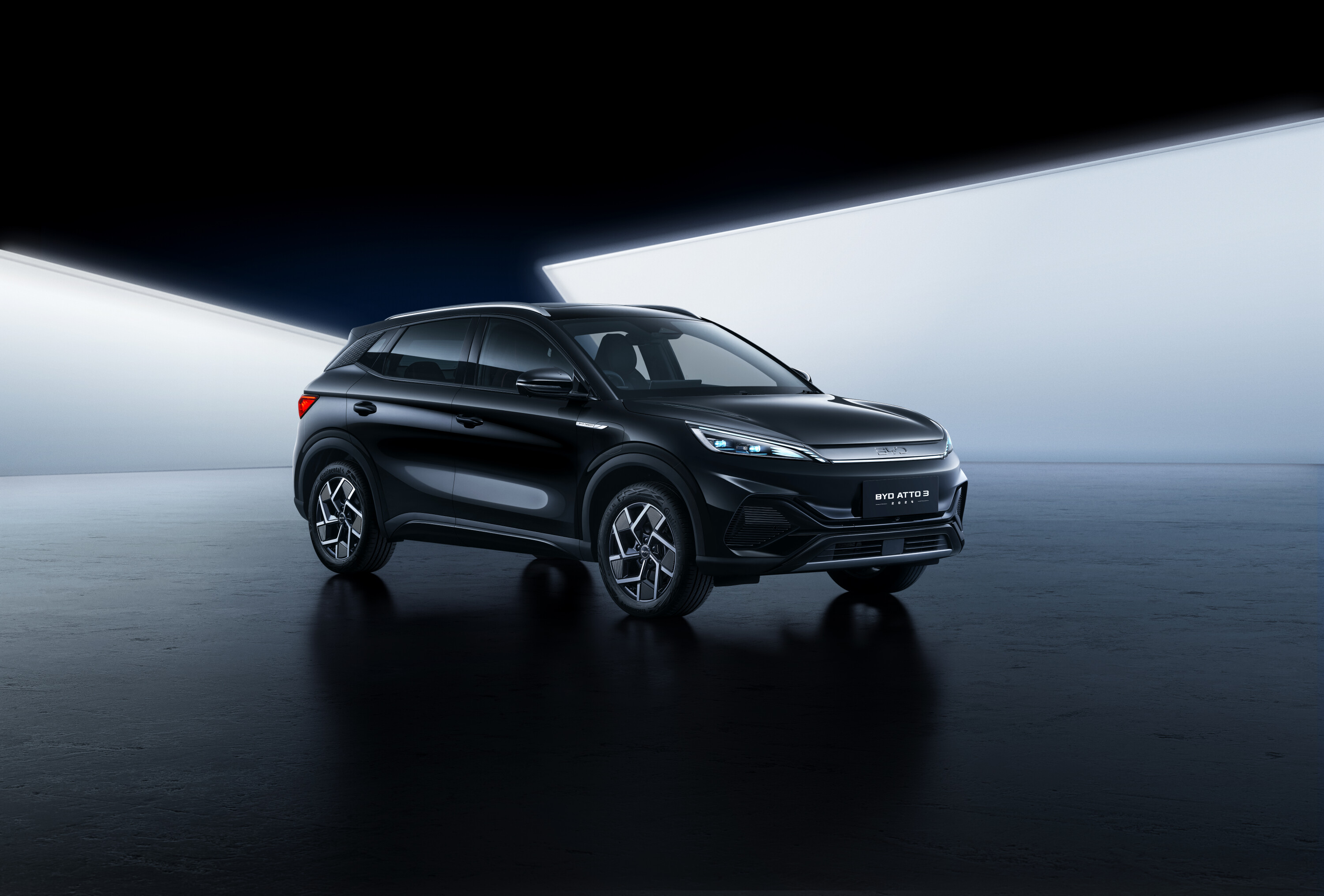
A minor update for the 2024 BYD Atto 3 electric SUV has been announced for Australia.
Due in local showrooms imminently, the updated Atto 3 has received a $3512 price cut across the line-up, which is now priced between $44,499 and $47,499 before on-road costs.
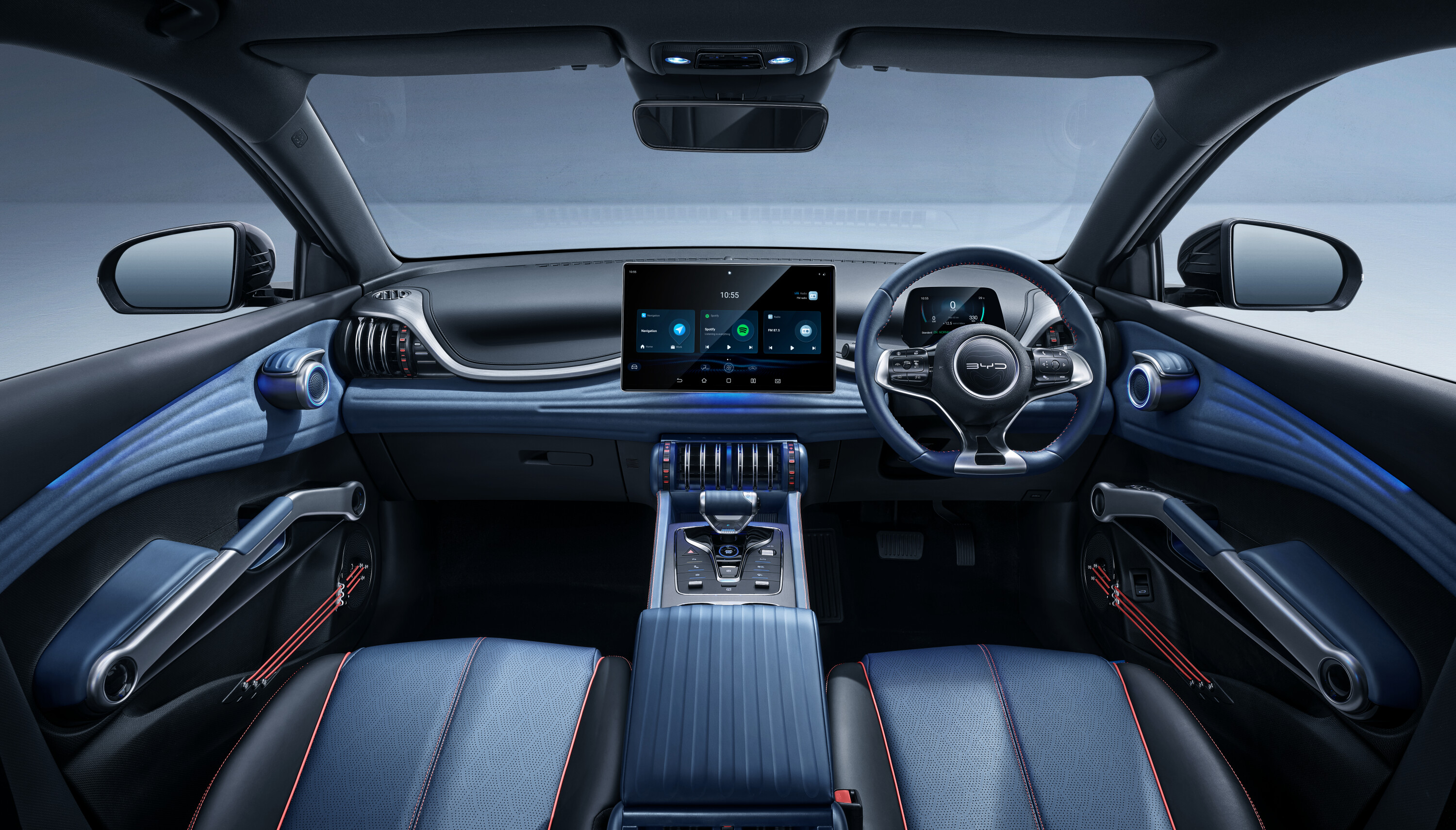
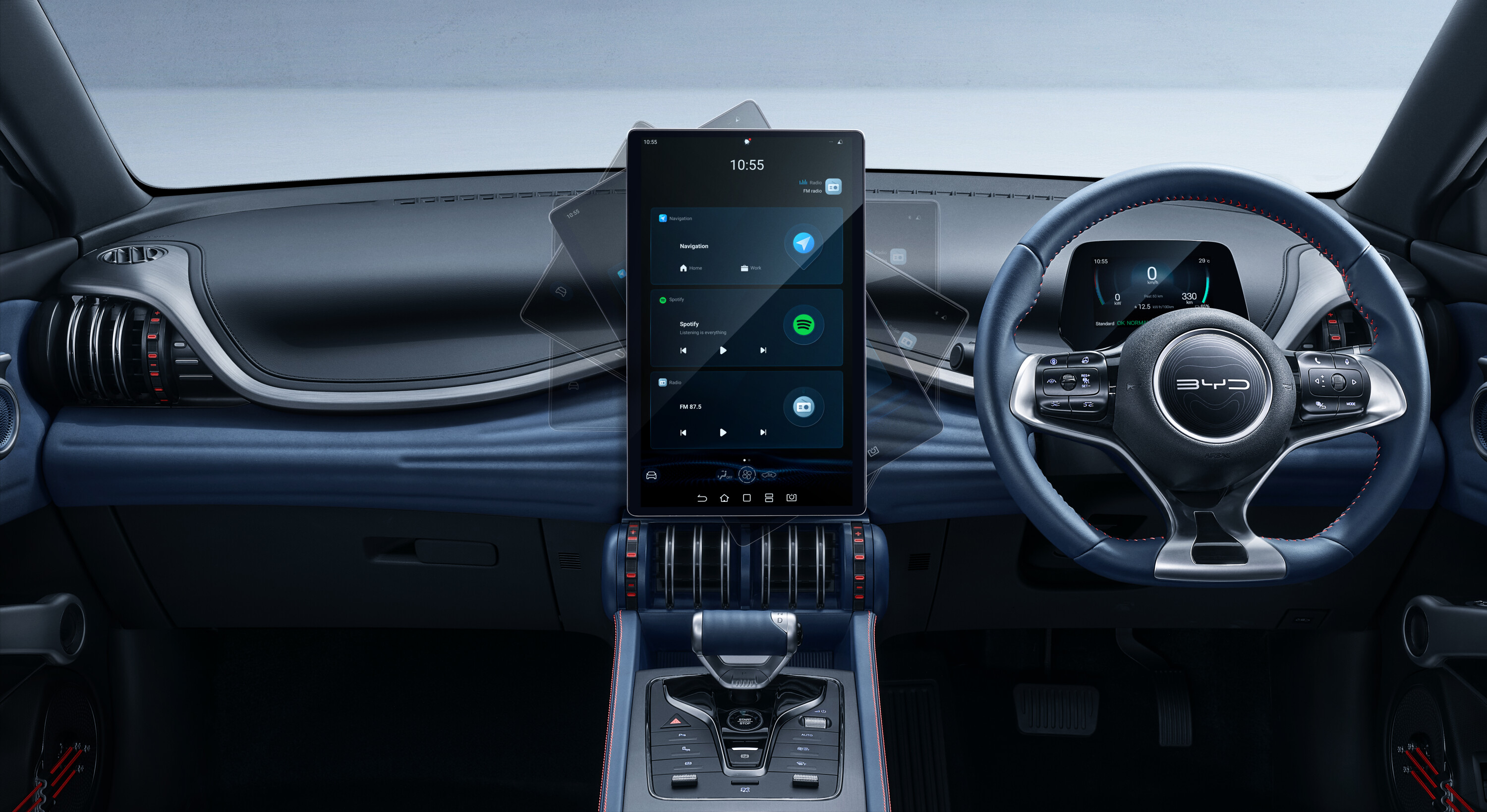
Revisions for model-year 2024 include a larger 15.6-inch rotating infotainment system – up from 12.8-inch – dual-zone climate control, black D-pillar trim, a new Cosmos Black exterior colour, and wider Continental EcoContact 6 tyres replacing Atlas Batmans.
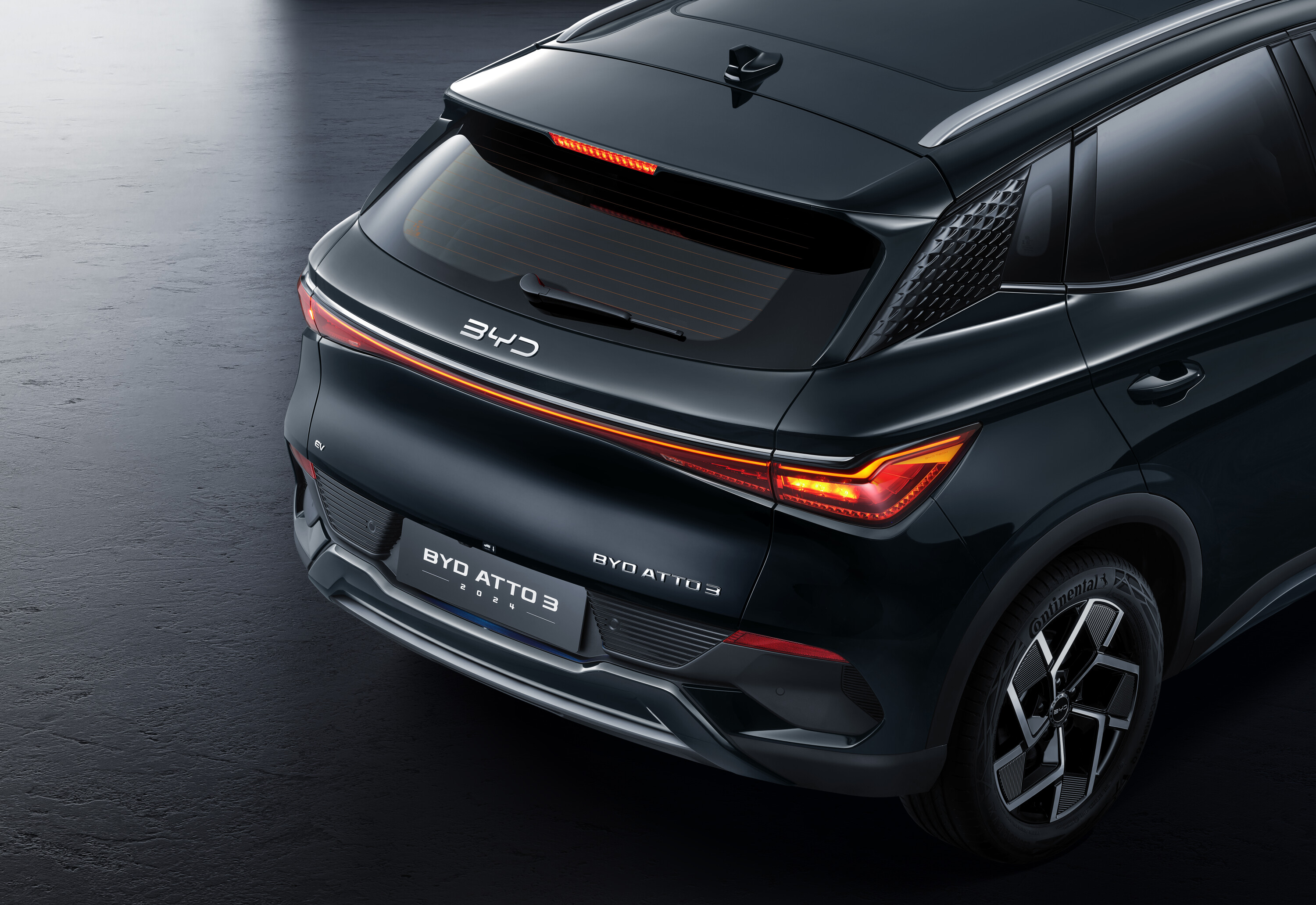
BYD has added a darker upholstery option – black and dark blue – when the vehicle is painted in Boulder Grey or Cosmos Black, while versions finished in Ski White and Surf Blue retain lighter blue and grey upholstery.
The Parkour Red and Forest Green exterior finishes have been deleted for new Atto 3 orders.
Other changes include wireless Apple CarPlay support – which is also rolling out as an over-the-air software update for existing vehicles – a karaoke function, and a ‘camping mode’ to allow the air-conditioning to function when the vehicle is turned off.
As detailed here, it also adopts simplified ‘BYD’ lettering replacing the ‘Build Your Dreams’ rear badge.
The BYD Atto 3 launched in Australia in September 2022 at $44,381 plus on-roads for the Standard Range and $47,381 plus on-roads for the Extended Range – before a $3630 price increase in December 2022.
All versions of the Atto 3 have a single 150kW/310Nm electric motor powering the front wheels, with a 345-kilometre WLTP driving range for the Standard Range and 420km for the Extended Range.
2024 BYD Atto 3 pricing
| Model | Pricing | Change |
|---|---|---|
| Atto 3 Standard Range | $44,499 | down $3512 |
| Atto 3 Extended Range | $47,499 | down $3512 |
| Prices exclude on-road costs.u00a0 | ||
2024 BYD Atto 3 features
| 2024 BYD Atto 3 Standard Range features | |
|---|---|
| Continental EcoContact 6 tyres (new) | Six-way power-adjustable driveru2019s seat |
| 15.6-inch rotating infotainment system (new) | Four-way power-adjustable passenger seat |
| Dual-zone climate control (new) | Heated front seats |
| Karaoke function (new) | Tyre pressure monitoring |
| 50kWh lithium-iron-phosphate battery | Wireless phone charger |
| 70kW maximum DC charge rate | Keyless entry and push-button start |
| 18-inch alloy wheels | NFC card key |
| Wireless Apple CarPlay and Android Autou00a0 | Mode 2 portable charging cable |
| Eight-speaker Dirac audio system | Air filtration system |
| DAB+ digital radio | Tyre repair kit |
| USB-C and USB-A charge ports | Autonomous emergency braking |
| 5-inch digital instrument panel | Safe exit assist |
| Vehicle-to-load function | Lane departure warning |
| Regenerative braking | Lane-keep assist |
| LED exterior lighting | Blind-spot monitoring |
| Adaptive headlights | Rear cross-traffic alert with braking |
| Leather-accented upholstery | Adaptive cruise control |
2024 BYD Atto 3 Extended Range features
| 2024 BYD Atto 3 Standard Range features | |
|---|---|
| 60kWh lithium-iron-phosphate battery | 88kW maximum DC charge rate |
June 2024: Hyundai Inster name confirmed
The 2025 Hyundai Inster has been teased ahead of its full reveal later this month.
Hyundai’s electric city hatch will be positioned in the A-segment – which includes cars like the Fiat 500e and Kia Picanto – and be heavily based on the internal-combustion Casper unveiled in 2021.
In Korea, where the petrol Casper is exclusively sold, the Inster will instead be called the Casper Electric.
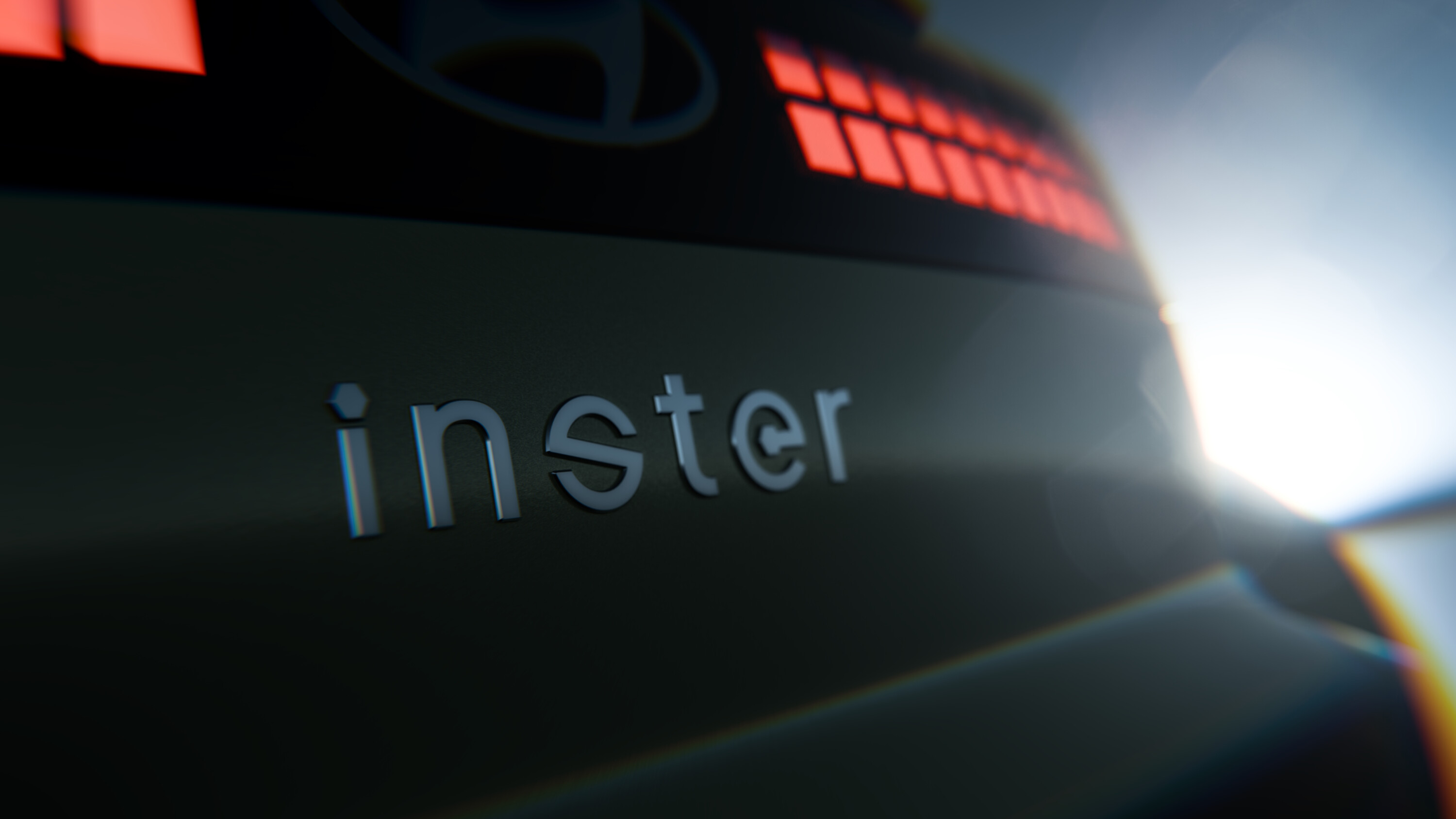
The brand said the ‘Inster’ name is derived from “intimate” and “innovative”, with the teaser images revealing its pixel-like lights inspired by Hyundai’s range Ioniq-badged electric cars.
Hyundai has also announced the Inster will have a 355-kilometre WLTP-rated driving range, more than the 311km offered by the Fiat 500e.
More details about the 2025 Hyundai Inster will be confirmed when it debuts at the Busan Motor Show in Korea next week.
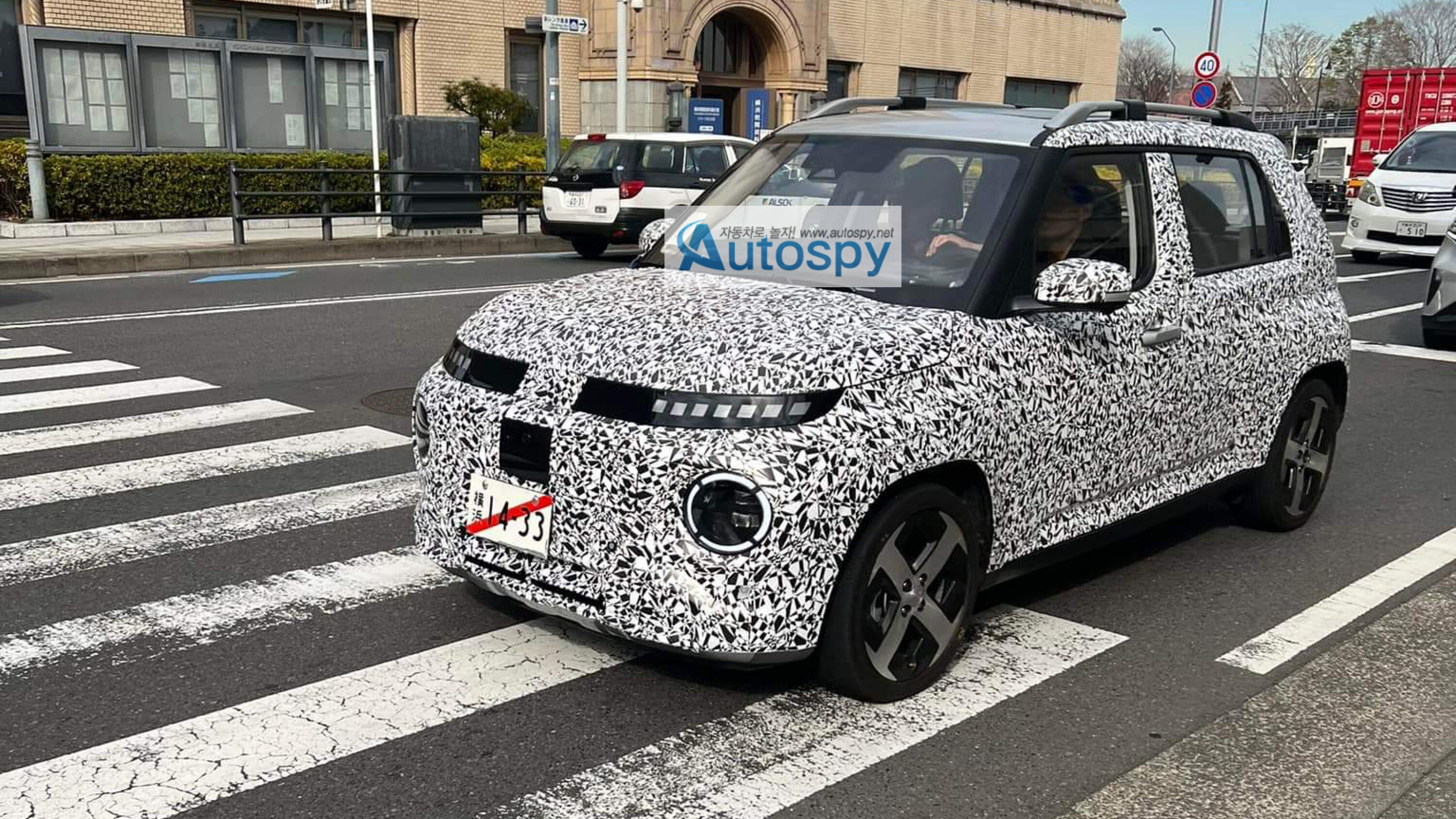
January 2024: Electric Casper spied!
It’s been a long time coming, but the electric version of Hyundai’s compact Casper looks to be nearing its debut.
Surfacing for the first time on public roads, the Casper Electric is shown here with ‘pixel’ lights inspired by the dedicated Ioniq range and the newly launched Kona Electric.
The blocky pixel-style lighting can be seen at both ends, replacing the standard lighting signature of the regular petrol Casper. It looks as if that pixel theme will continue, subtly, into the LED rings that sit in the lower bumper at both ends.

These photos were published to Korean Car Blog and AutoSpy.net.
It’s unclear if any other design changes will be made to the exterior of the Casper in its electric form, although we can likely expect its mesh grille to be replaced with a closed design that further announces its status as an electric vehicle.
Little else is known about the electric Casper, although Wheels understands the model is being investigated for Australia as a sub-Kona affordable EV to tackle recent arrivals like the MG 4, GWM Ora and the BYD Dolphin – all of which are positioned just beneath $40,000, but with markedly longer wheelbases than the tiny Casper.
If we don’t see the Casper in Australia, we can likely thank a price and size equation that won’t compete with those well-considered Chinese models.
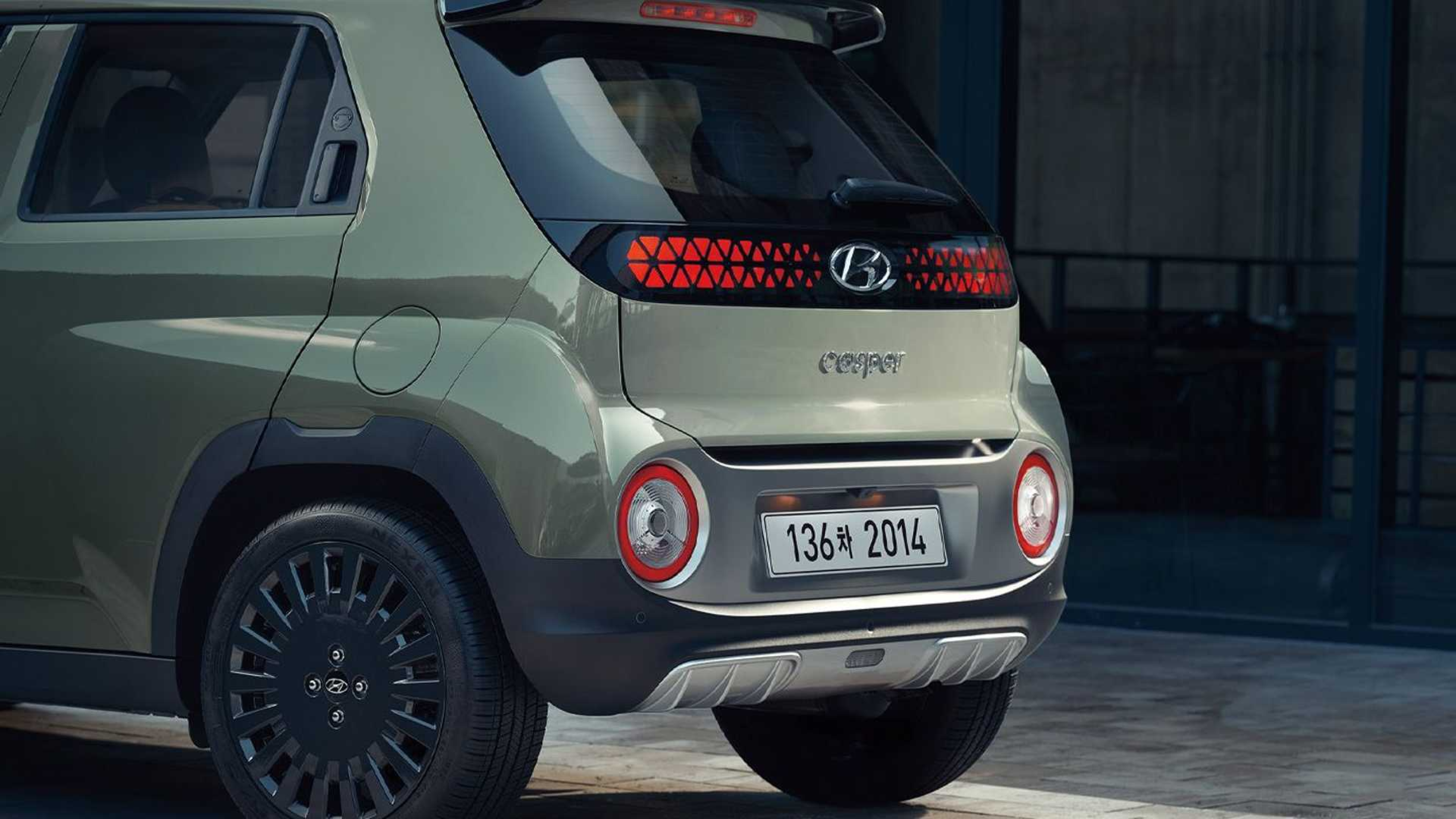
December 2023: Casper driven!
Dylan Campbell travels to Korea for a first spin in the perky little Casper.
Rolls-Royce has the Ghost, Dodge the Demon and Lamborghini the Diablo, but only Hyundai has the Casper.
September 2022: Electric Casper reported, could come to Australia
South Korean outlet Pulse reports that Hyundai will offer an electric Casper by 2024 with a driving range up to 400km.
The quirkily-styled crossover Hyundai Casper is based on the same platform as the i20 and Kia Picanto, and has been sold in South Korea since 2021.
In South Korea, Hyundai offers it with with a pair of inline three-cylinder engines, either a 56kW 1.0-litre naturally aspirated unit or a 74kW turbocharged option, both mated to a four-speed auto.
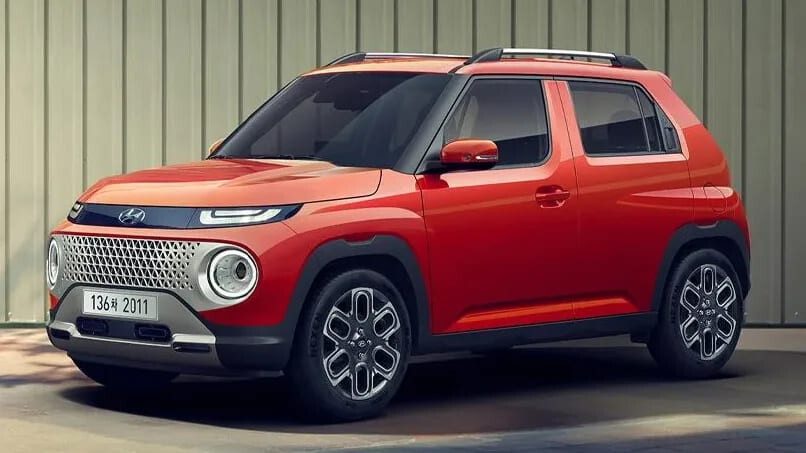
Although it has Snow, Mud and Sand modes, the Casper is front-drive only.
South Korean outlet Pulse reports that Hyundai will offer an electric Casper by 2024 with a driving range up to 400km.
The electric Hyundai Casper would compete against the electric Chevrolet Bolt (not offered in Australia), which uses a single front-mounted 149kW electric motor and 66kWh battery offering 380km WLTP range.
The Bolt costs around AU$25,000 in South Korea with subsidies.
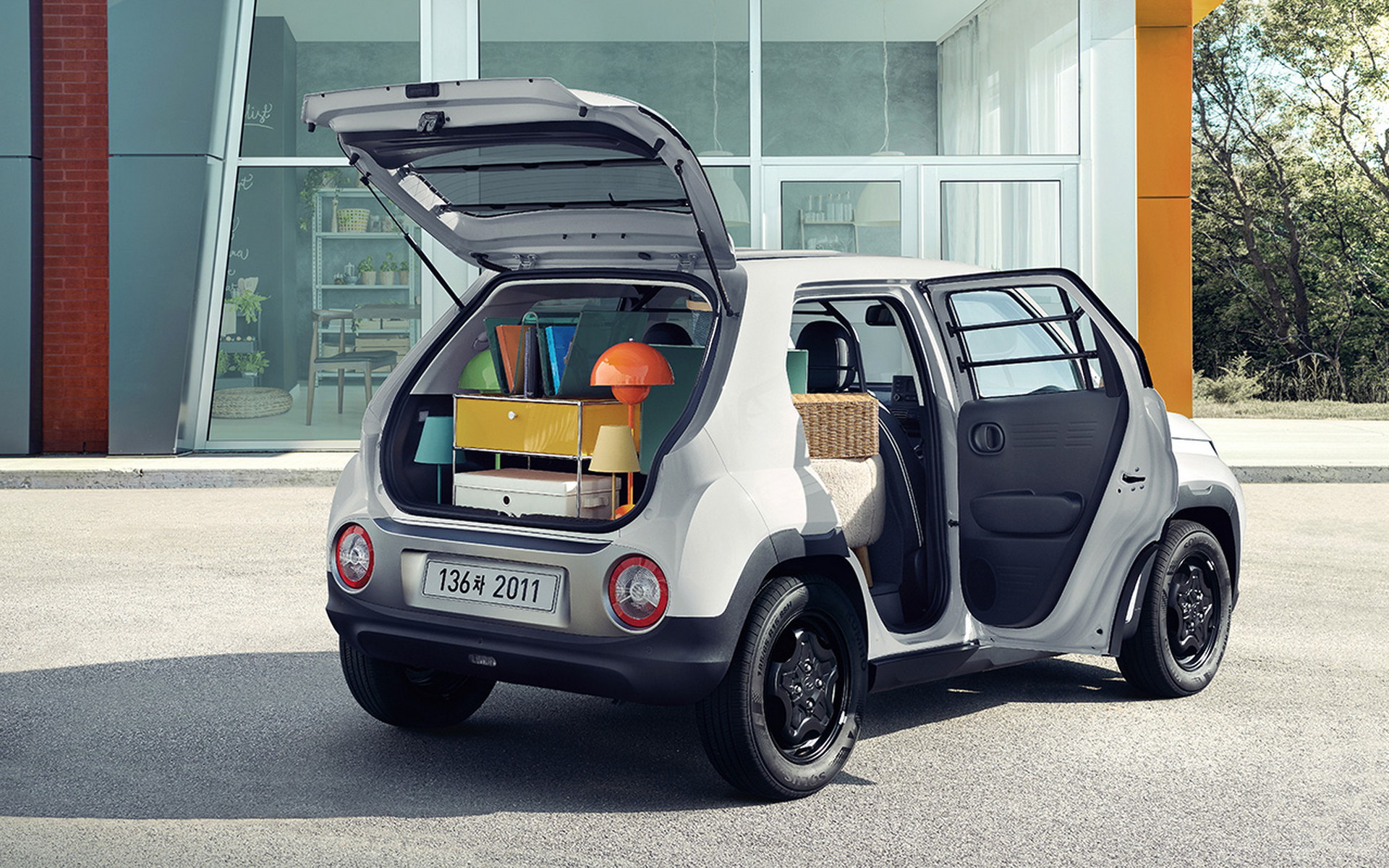
In South Korea, the four-seat Casper has helped drive a resurgence in small car sales.
Wheels understands the budget-friendly, city-focused Casper is being considered for Australia – and that would likely include an electric model, should one become available.
With no official plans confirmed, and the expected EV not yet announced, Hyundai Australia has declined to comment on local market potential.
For now, the brand’s cheapest EV is the ‘Standard Range’ Kona Electric, priced from $54,000.
Critically, the Casper – a smaller and more budget-focused offering than the Kona – would give Hyundai a price rival to the MG ZS EV and BYD Atto 3, although both outdo the Casper in size.
| MODEL | WHEELBASE | LENGTH | WIDTH | HEIGHT |
|---|---|---|---|---|
| Hyundai Casper | 2400mm | 3595mm | 1595mm | 1575mm |
| Hyundai Kona | 2600mm | 4165mm | 1800mm | 1550mm |
| MG ZS EV | 2585mm | 4314mm | 1809mm | 1611mm |
| MG 4 | 2705mm | 4287mm | 1836mm | 1504mm |
| BYD Atto 3 | 2720mm | 4455mm | 1865mm | 1615mm |
| BYD Dolphin | 2700mm | 4070mm | 1770mm | 1570mm |
Wheels road-tested the Casper in South Korea and will publish a first drive review next week.
Are we sick of SUVs yet?
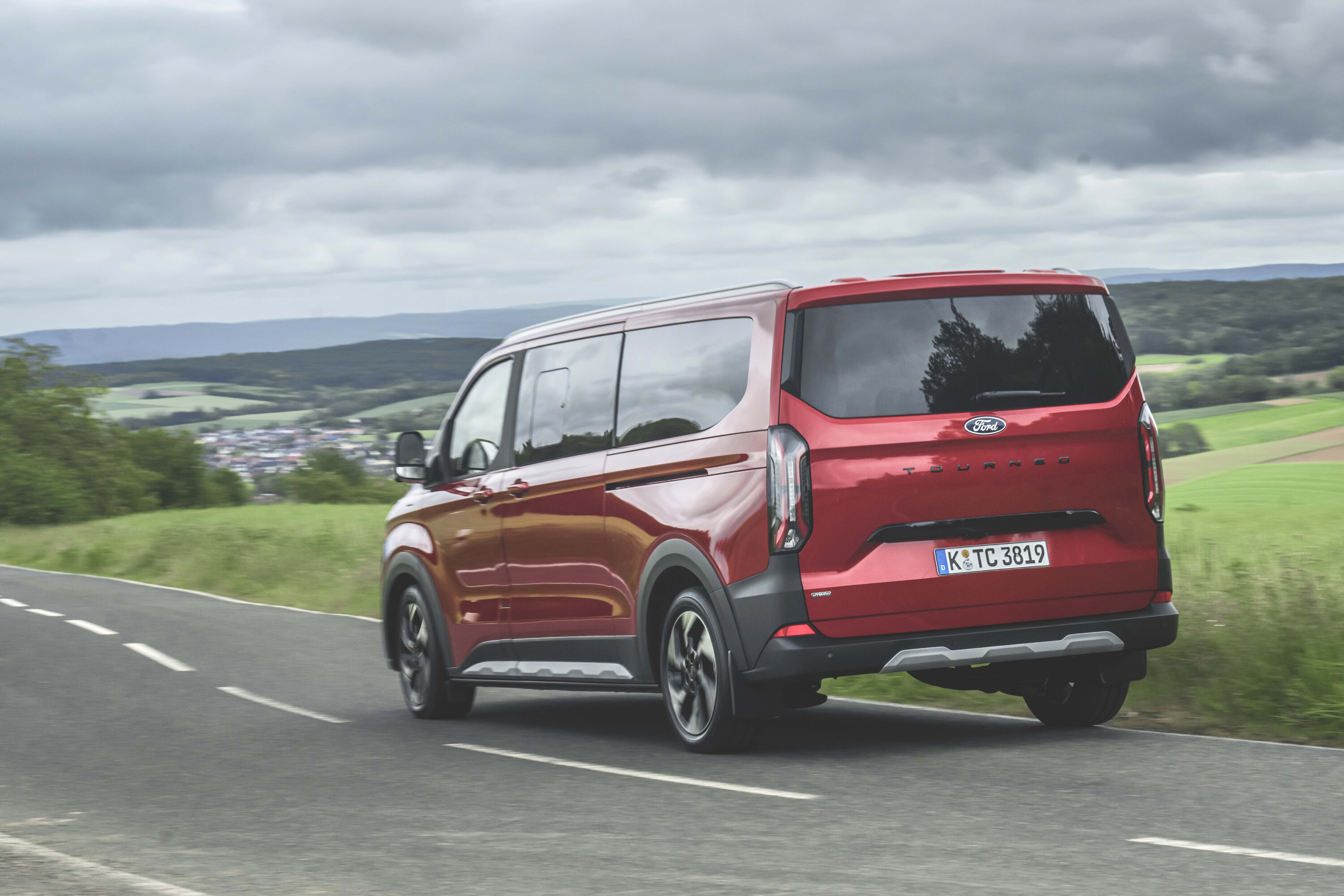
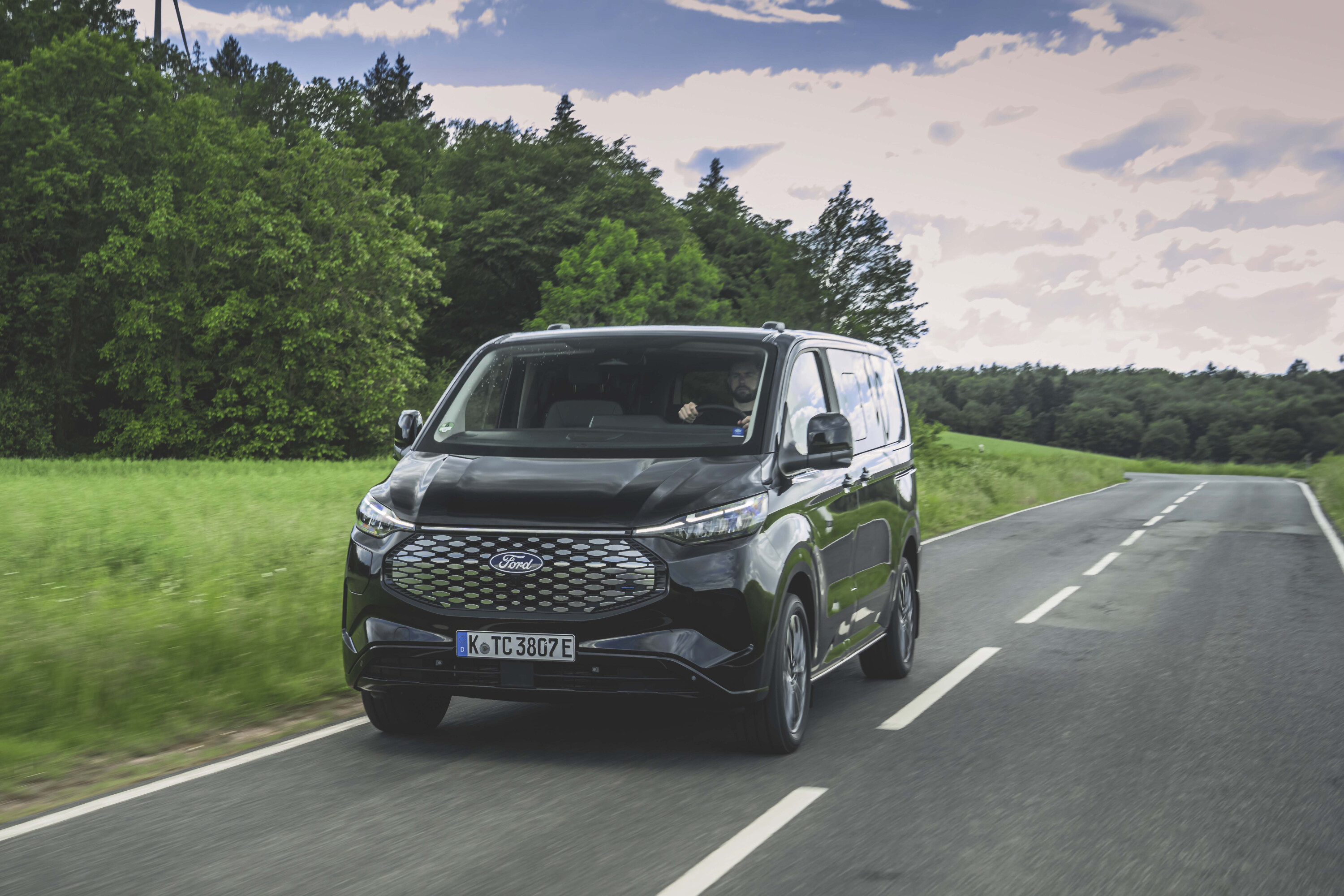
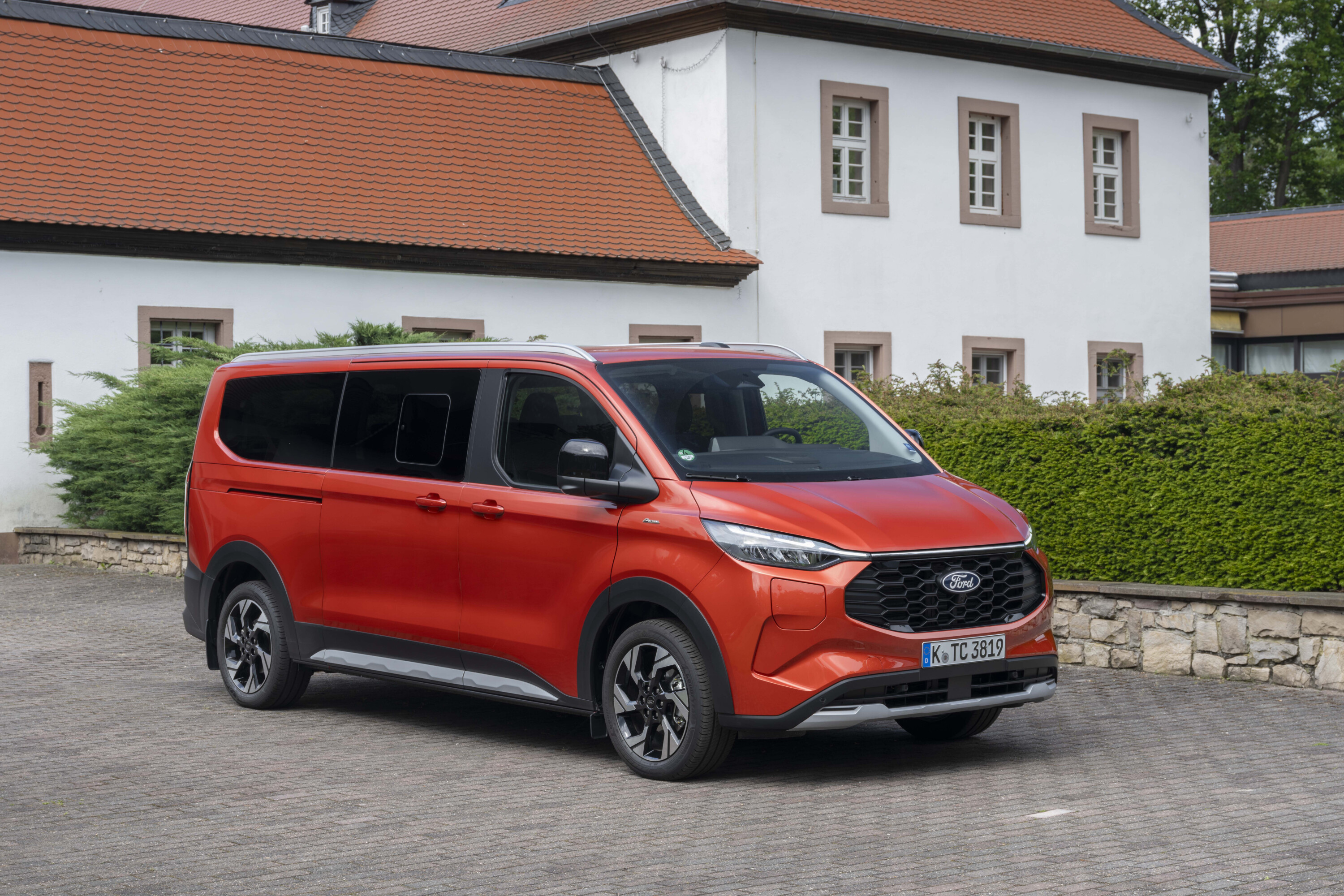
The sales figures say “haha, no”, yet the imminent arrival of Ford’s new Tourneo makes a compelling argument as family-friendly transport – and one that might entice at least a few of us to trade in the Kluger or Prado and get themselves into a boxy bus instead.
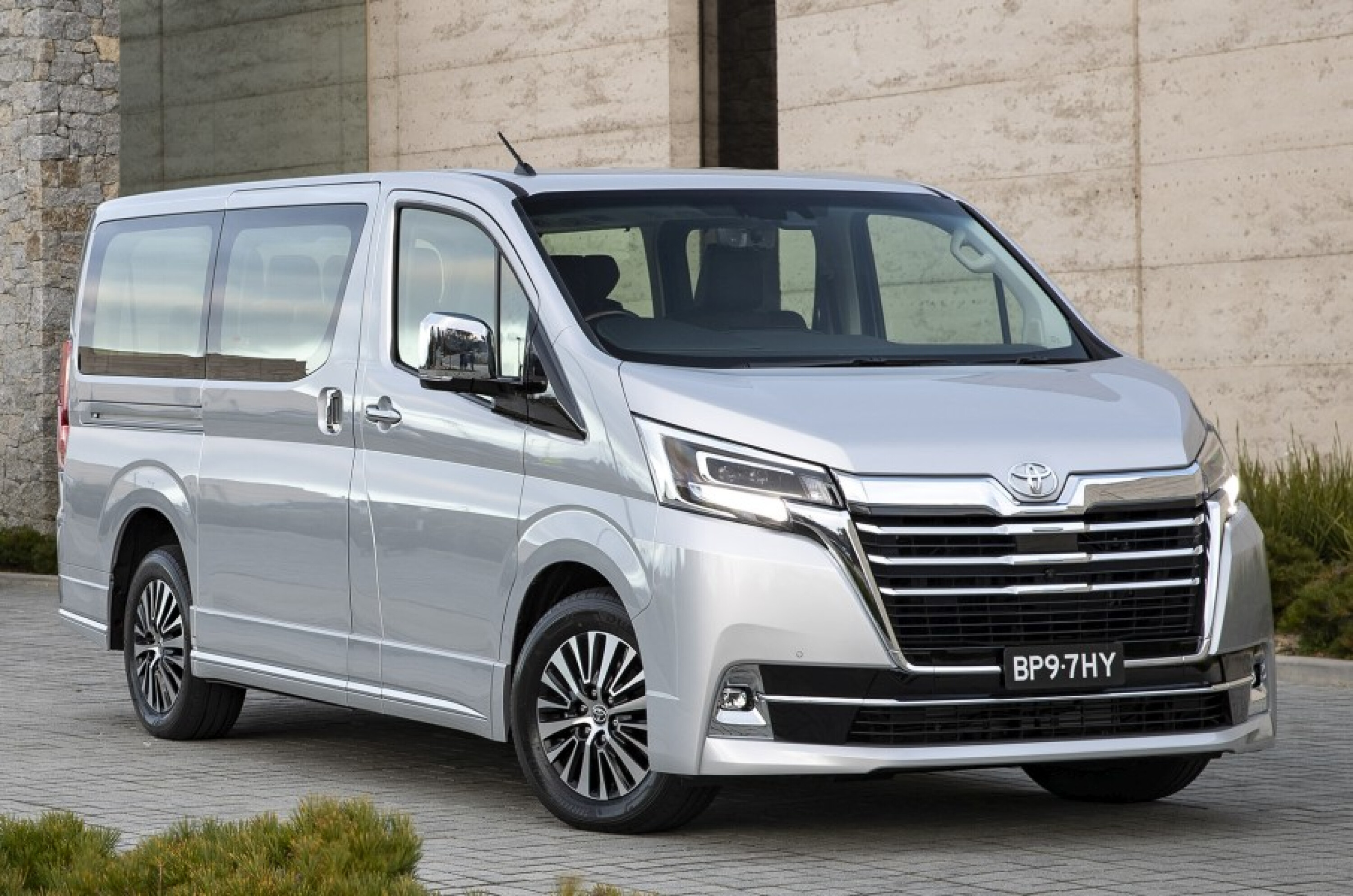
The Tourneo takes aim at similarly sized people-movers with commercial vehicle origins like the Toyota Granvia, Hyundai Staria and Volkswagen Multivan – as well as the reigning king of the people-mover segment, the Kia Carnival.
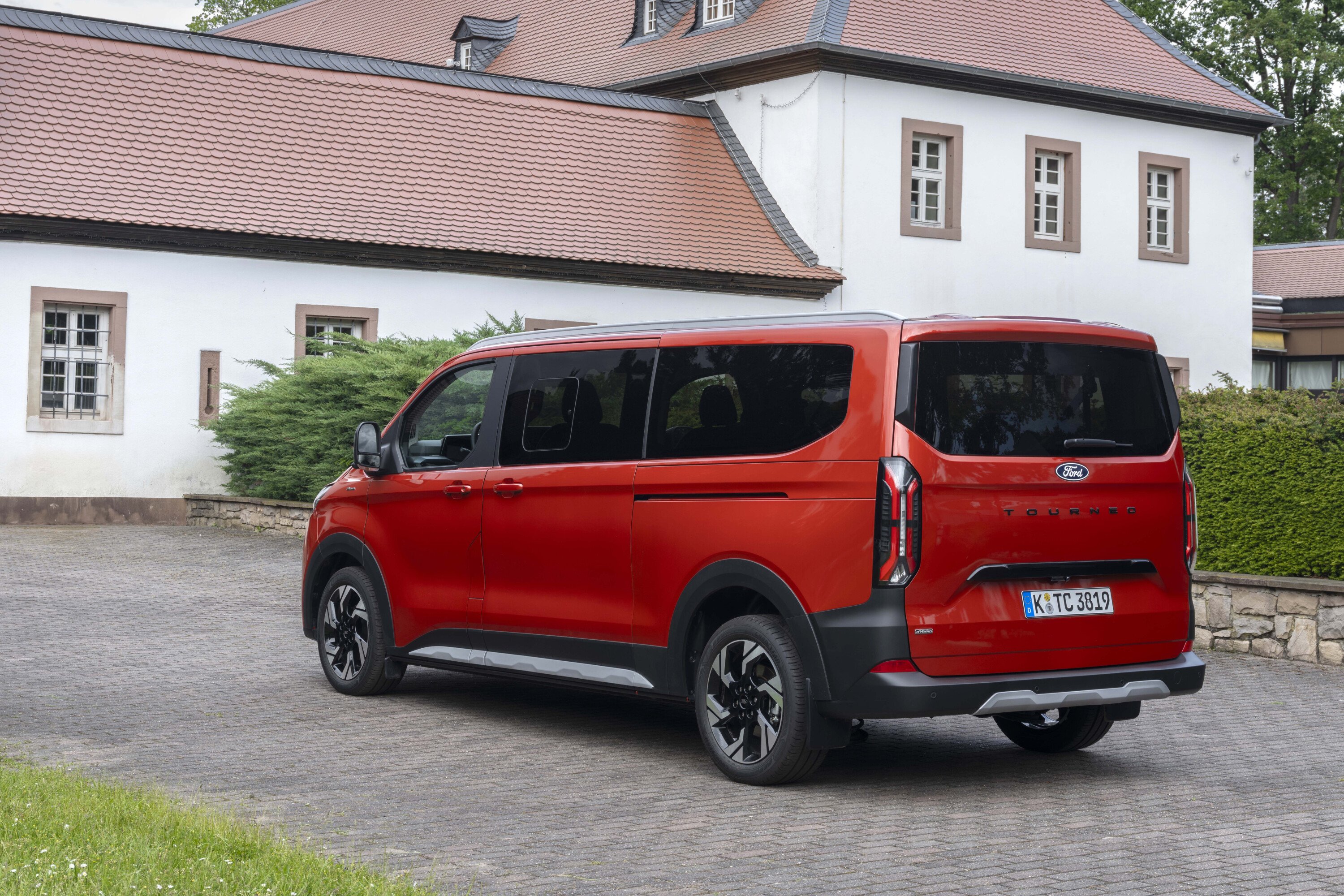
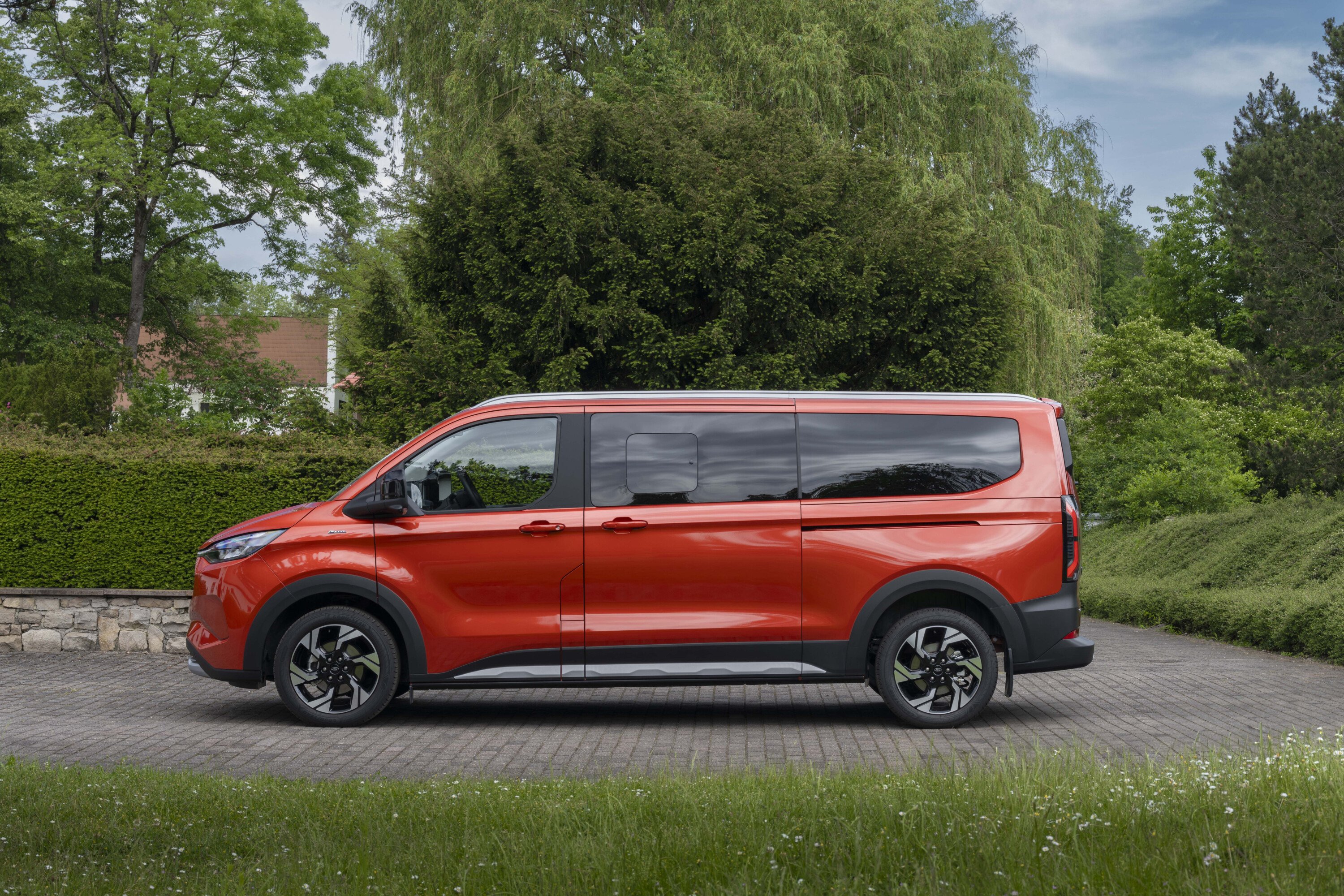
This is new territory for the Blue Oval’s Australian arm, with the only Transit-based personnel carriers to date being utilitarian buses and dual-cab variants of the commercial van range. Does the Tourneo have a warmer vibe than those efforts?
And with the Tourneo sharing its DNA with the new-generation Transit Custom, which made a strong first impression in all-electric E-Transit Custom form during its global media launch, does it show the others how to make a van-based people-mover with passenger – and driver – appeal?
JUMP AHEAD
- How much is it, and what do you get?
- How do rivals compare on value?
- What’s it like to drive?
- Interior comfort, space and storage
- How much fuel does the Ford Tourneo use?
- How safe is the Ford Tourneo?
- VERDICT
How much is it, and what do you get?
The first batch of Tourneos aren’t due to arrive until the final quarter of this year, however Ford Australia has already announced pricing for the two-variant range.
The entry-spec Tourneo Active will retail for $65,990 before on-roads, while the high-spec Tourneo Titanium X will wear $70,990 pricetag.
For the Active, the following features will be standard:
| 2024 Ford Tourneo Active features | |
|---|---|
| Power sliding rear doors on left and right | Wireless Apple CarPlay and Android Auto |
| Heated driver and front passenger seats | Wireless phone charging pad |
| Track-mounted reconfigurable second and third row seats | 17-inch alloy wheels |
| Keyless entry and ignition | LED headlamps and tail lamps |
| Tri-zone climate control with separate rear cabin controls | Adaptive cruise control |
| 13-inch infotainment touchscreen with Ford Sync4 operating system | |
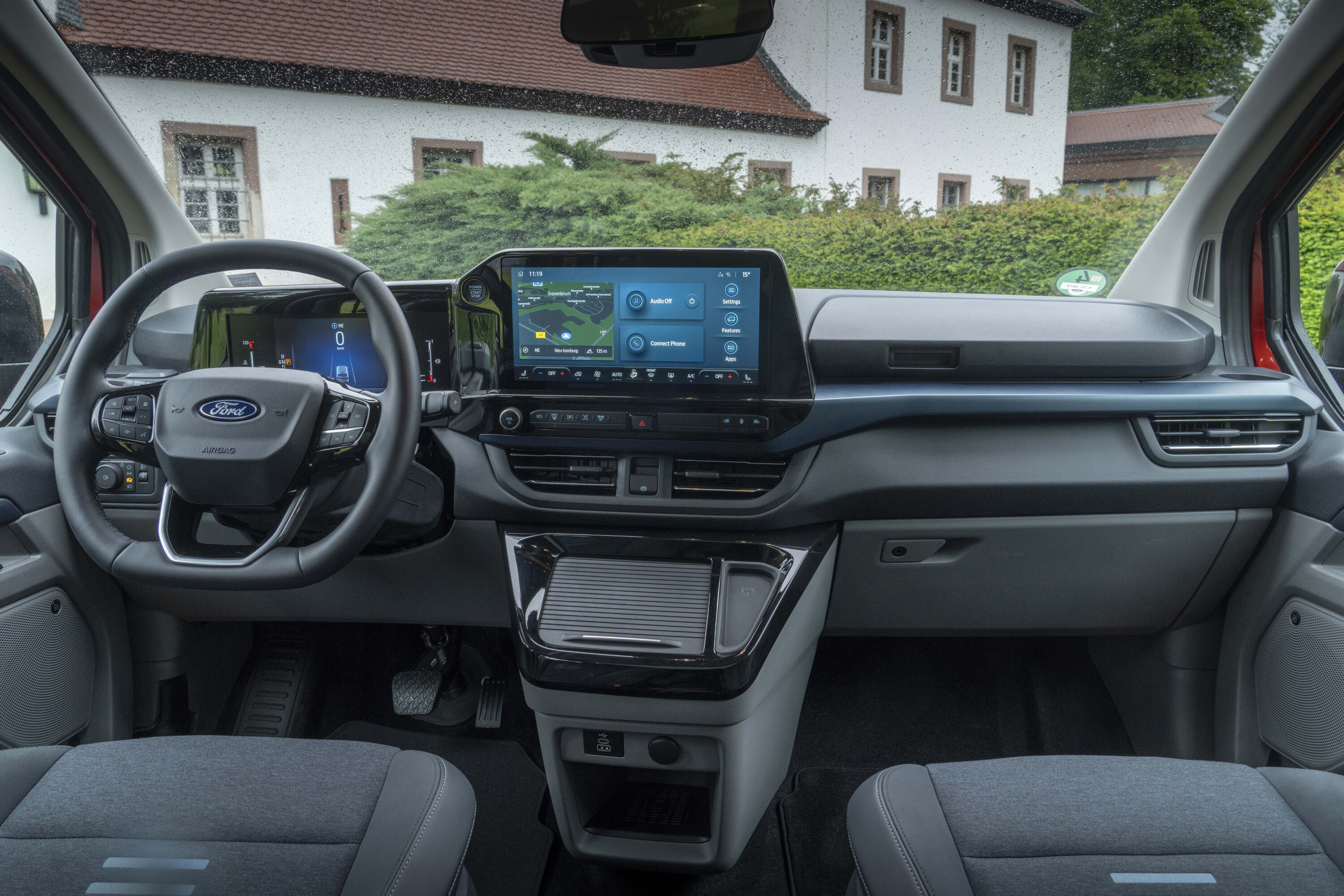
Spending more on the Titanium X nets a few extra luxuries, with all of the Active’s features (with the exception of the black plastic body cladding and wheels) plus the following:
| 2024 Ford Tourneo Titanium X features | |
|---|---|
| Panoramic fixed glass sunroof (no retractable shade) | B&O premium audio system |
| Artificial leather upholstery | 360-degree parking camera. |
| Power-adjustable front seats | Unique 17-inch alloy design |
How do rivals compare on value?
With a price range of $65,990 to just over $70K, the Tourneo competes with both upper-end mainstream people-movers, as well as lower-spec premium people-movers.
Key among them are the Hyundai Staria Highlander – which costs $64,000 as a FWD petrol or $67,000 as an AWD diesel – and the Kia Carnival.
The Carnival’s Sport + and GT-Line grades align most closely to the Tourneo, with the Sport + Diesel retailing for $64,610 and the GT-Line Diesel priced at $72,910, however the Carnival’s lower-spec S and Sport grades provide more affordable options, reaching as low as $50,150 for the Carnival S petrol.
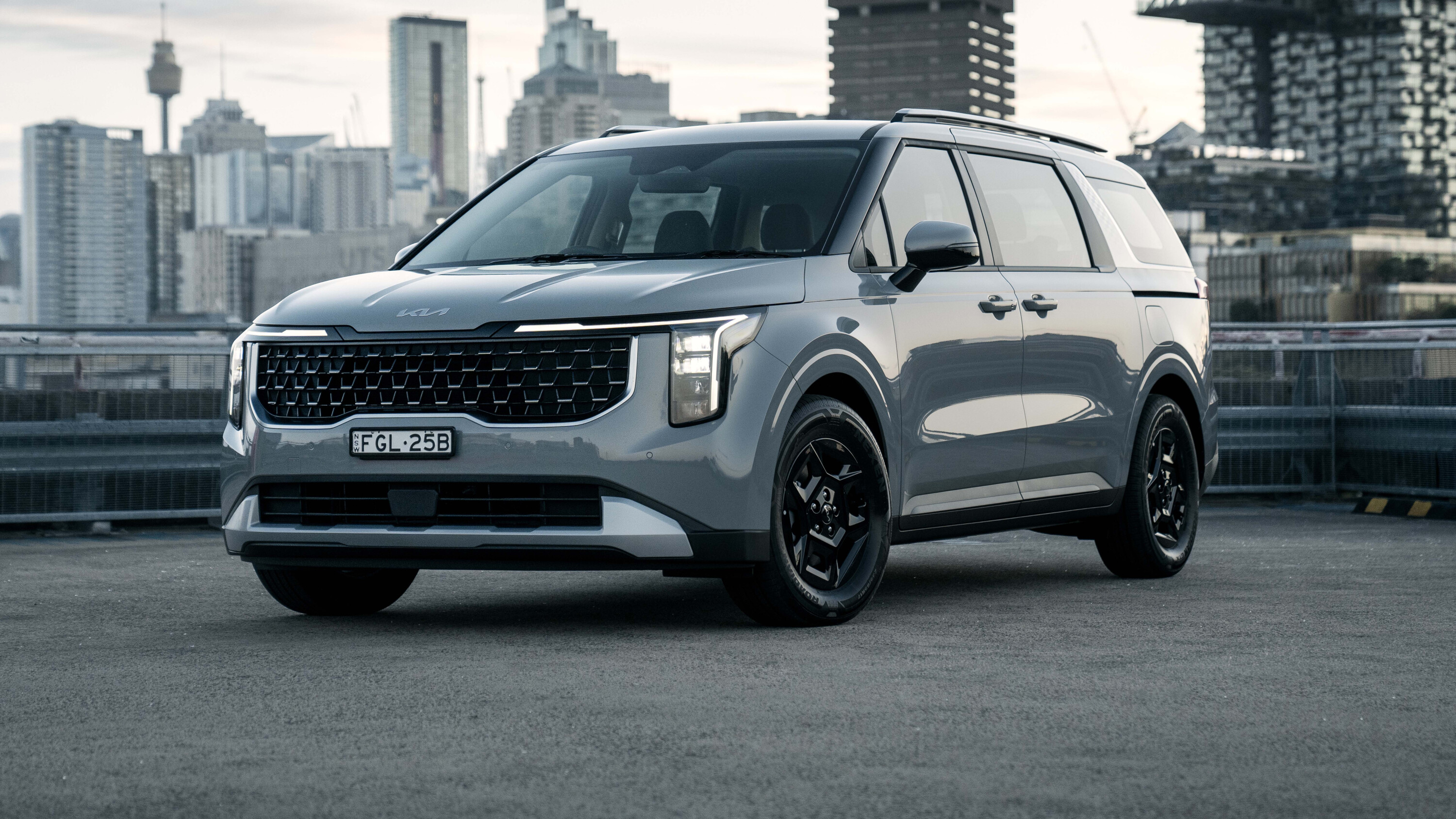
The availability of a petrol powertrain is also something the Tourneo doesn’t offer in Australia – though Ford’s local office is flirting with the idea of bringing in the all-electric E-Tourneo.
Other rivals include the Toyota Granvia and Volkswagen Multivan, both of which, like the Hyundai Staria and Tourneo, transform a commercial van into a passenger-carrying micro-bus. Of those, the Granvia costs significantly more on a like-for-like basis, with a Tourneo-equalling eight-seat layout coming at a $2000 premium over the standard six-seat configuration.
The VW Multivan aligns more closely, with its Comfortline SWB and Premium SWB priced at $69,290 and $72,290 respectively, though note that a new-generation Multivan is around the corner.
What’s it like to drive?
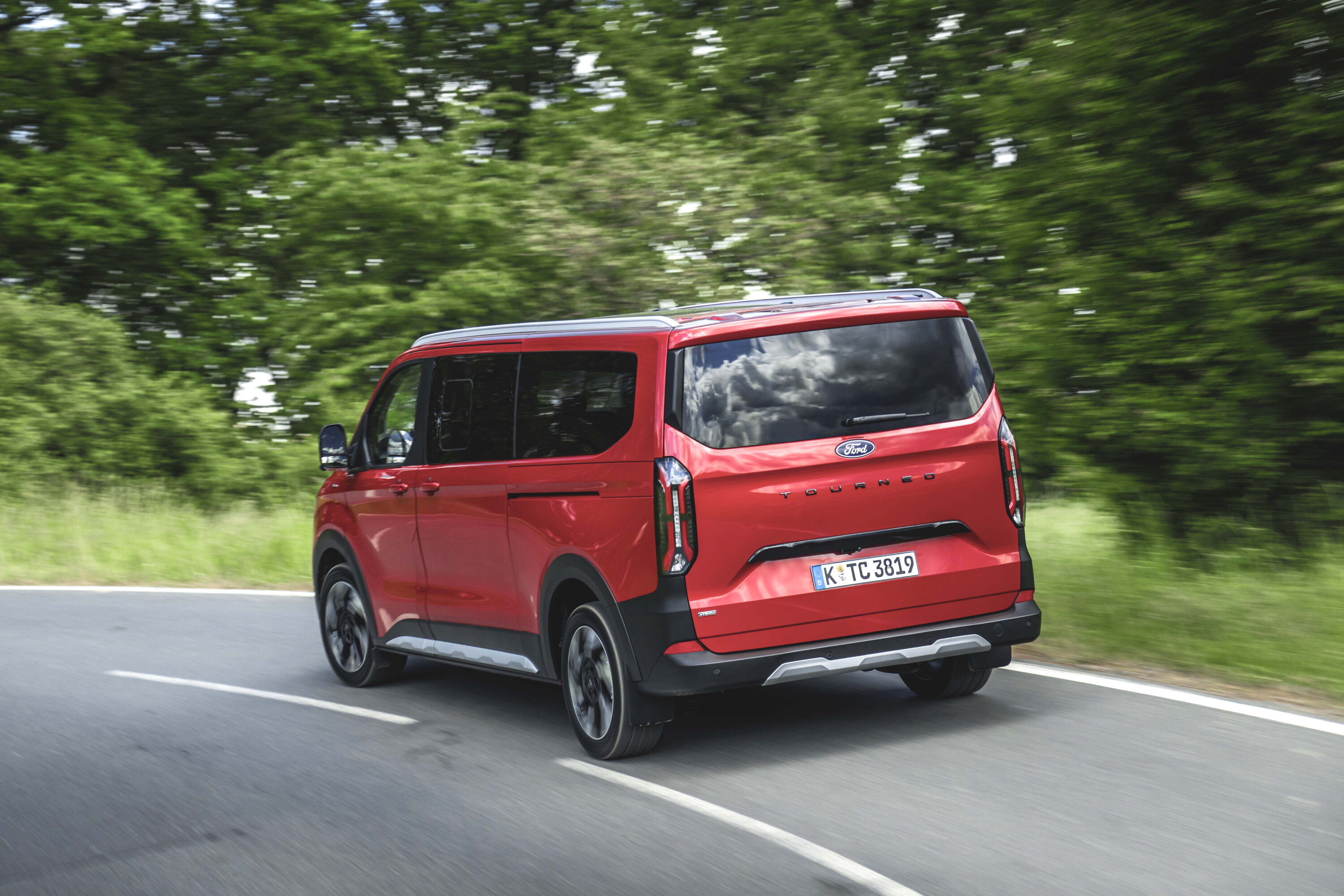
Australia-bound Tourneos will be powered by the same diesel powertrain as the Transit Custom, with a 125kW and 390Nm 2.0L EcoBlue turbo diesel driving the front wheels via an eight-speed torque-converter automatic.
It’s a good combo. The diesel is quiet and smooth and pulls strongly, while the eight-speed auto shifts cleanly and has a ratio spread that works well with the diesel’s torque-rich low end. It picks up speed easily – the Tourneo weighs over two tonnes when empty, but it feels rather sprightly.
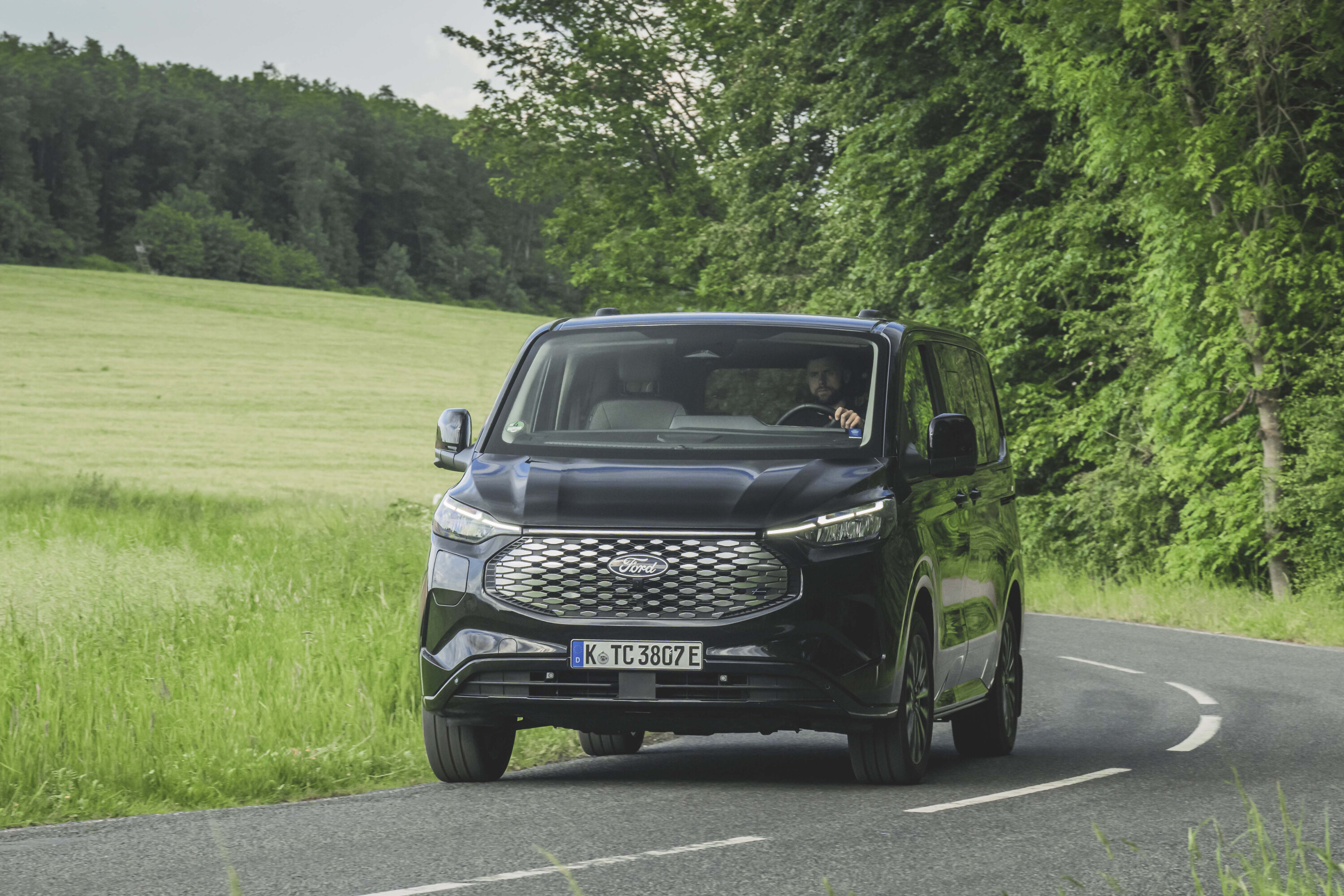
That sense of agility is magnified by its handling. The steering is light and easy-going, but it’s hooked up to a fast and responsive rack and a front axle with geometry that feels far more car-like than a typical van.
The suspension is also shared with the Transit Custom, with a MacPherson strut front and independent trailing arms at the rear, but with Tourneo-specific spring and damper rates that deliver a softer, more comfortable ride.
It works well, too, with little head-toss and jostling when going over speedbumps or lumpy ground.
At over five metres long and two metres wide, it’s got a footprint that’s slightly bigger than a 300-Series Toyota LandCruiser. However, with the driver sitting much closer to the front bumper and enjoying excellent vision through the windshield and side glass, along with the presence of huge mirrors (with separate wide-angle parabolic mirrors), blind spot monitoring and, in the Titanium X grade, a top-down camera view, it’s no challenge threading the Tourneo through traffic. A very car-like turning circle of 10.9 metres certainly helps, too.
Interior comfort, space and storage
The upshot of borrowing the bones of a commercial vehicle to create a people-mover is that you get an interior that’s properly cavernous. In the Tourneo’s case, you also get an interior that’s hugely versatile as well.
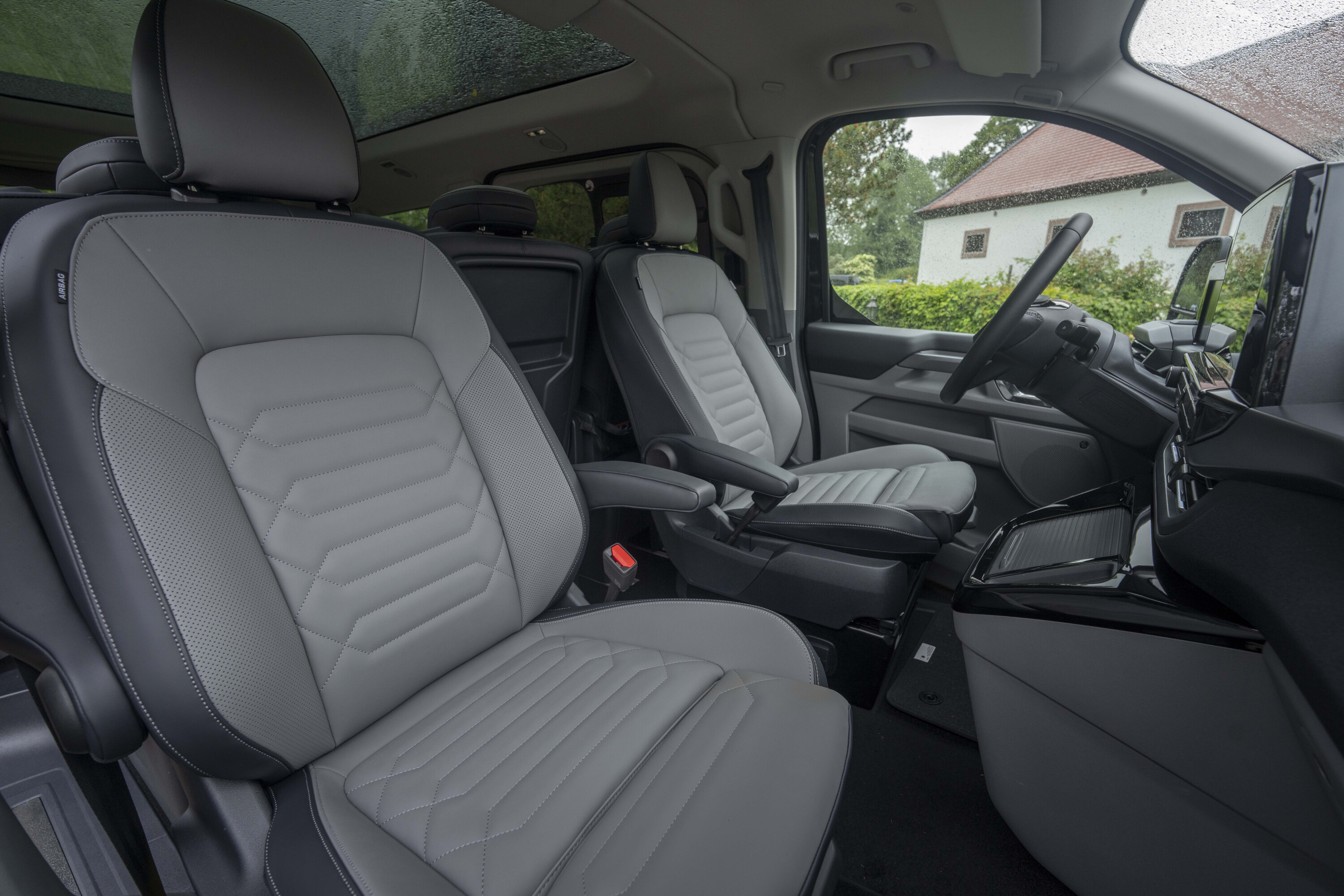
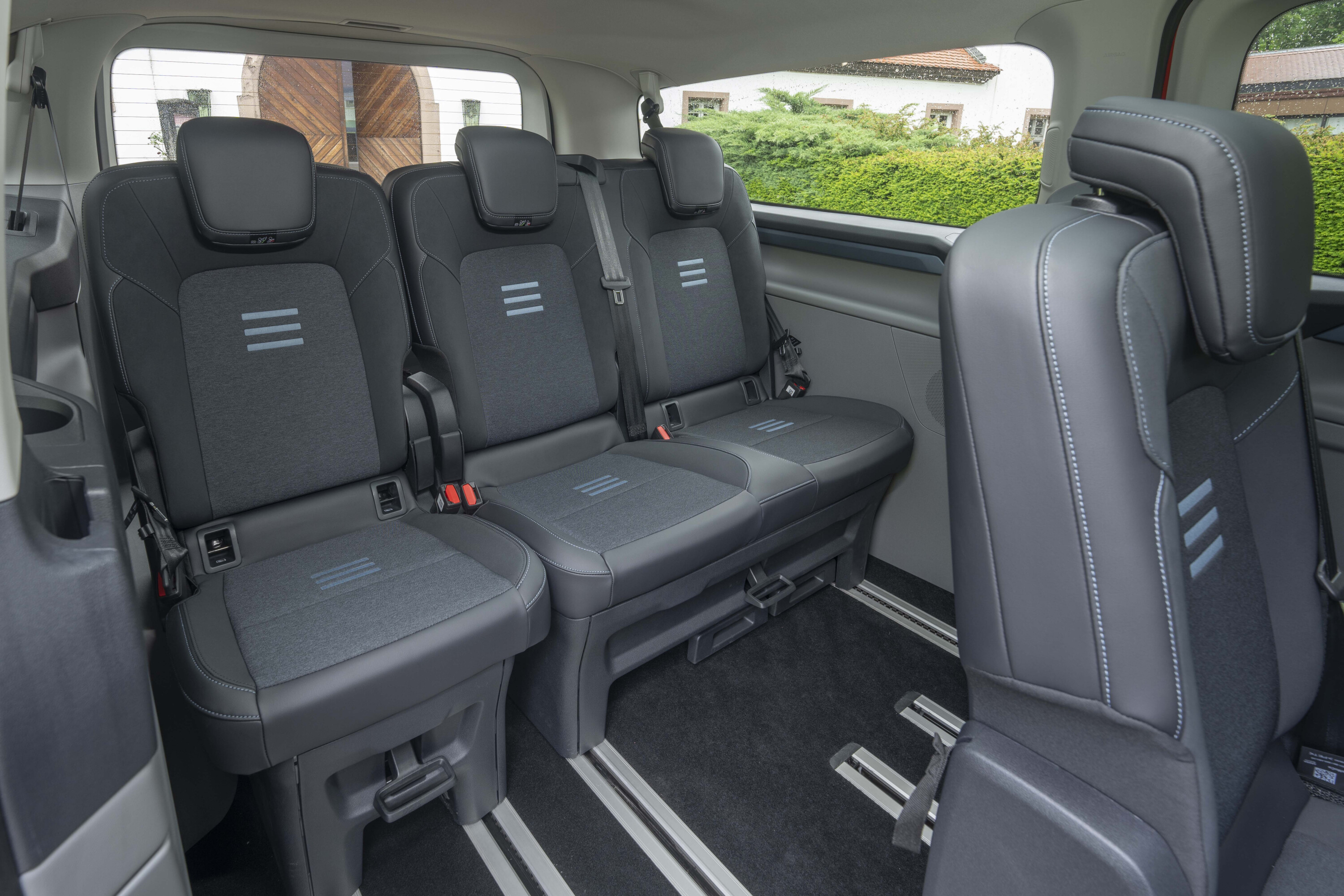
The Tourneo in Australian guise will come in an eight-seat configuration, with the two front seats separated by enough space to allow walk-through access to the second row. Furthermore, with each seat in the second and third rows mounted on a sliding rail and easily removable by hand (no need to break out the toolbox), the Tourneo can be reconfigured to whatever layout makes sense to you.
Need to take you, your spouse and six offspring to (presumably a Catholic) church on Sunday? Easily done. Heading to the coast with a few of your surfer buddies and can’t be bothered strapping your surfboards to the roofrack? Just remove the rear seats on one side, and carry the boards internally.
You might want a hand to remove the third row in its entirety, however, as it’s split 60/40 with the bigger portion likely too heavy for one person to handle.
The middle seat in the second row can also fold its backrest completely flat, revealing a hard tabletop with integrated cupholders and a lip to keep small items from sliding off, while the second row seats can either face forward for an airliner-style layout, or face backward for club-style seating.
The base of each rear seat is also equipped with a shallow storage drawer (though each only provides enough room for a wallet or a pair of thongs), while there are plenty of other stowage options throughout the cabin – including a pair of curious smartphone holsters on each C-pillar.
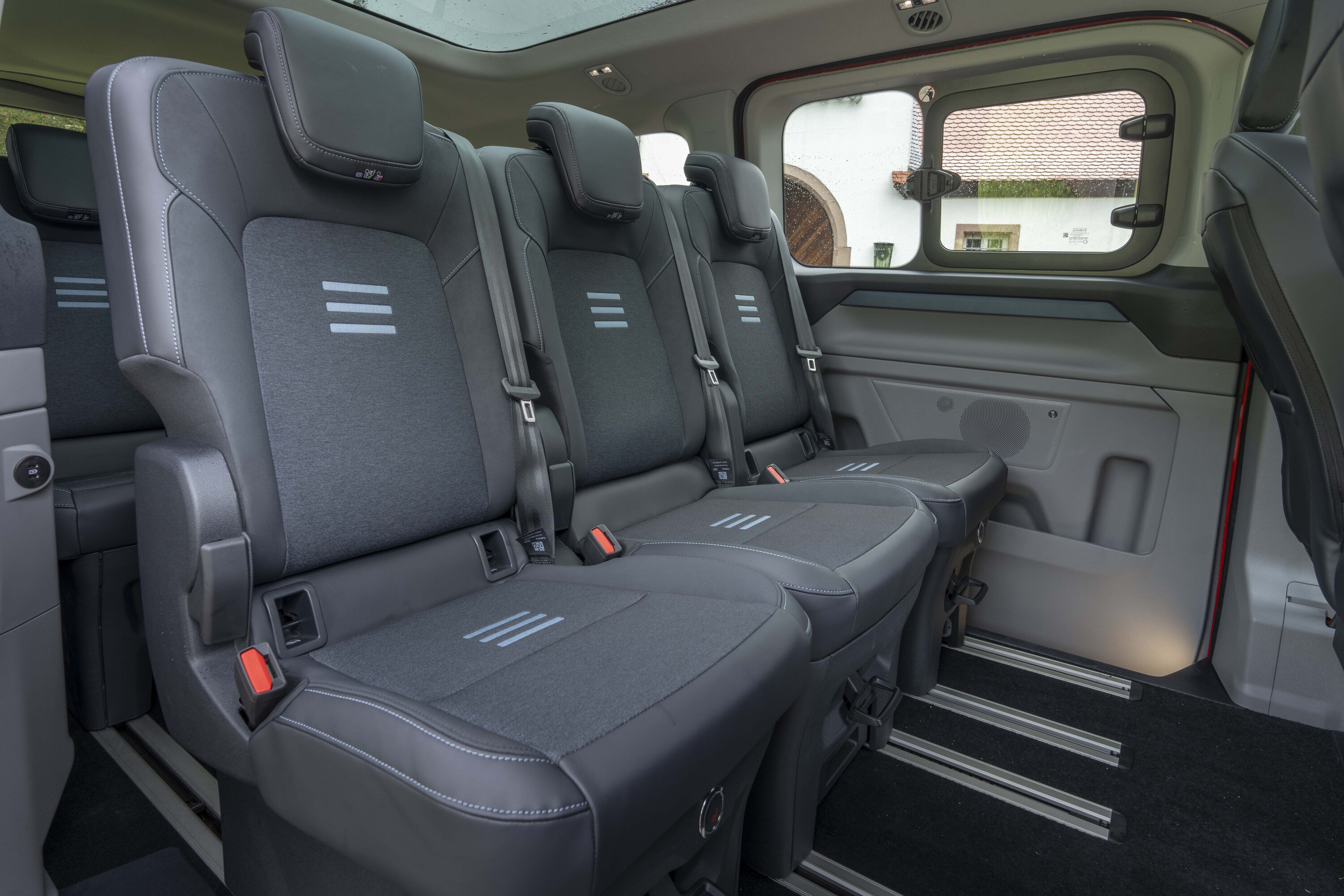
Up front, the Tourneo takes the dash of the Transit Custom – including all of its numerous storage cubbies, pockets and trays – and grafts on a vestigial centre console, which houses a pair of cupholders behind a roller shutter, a coin tray, a couple of additional USB ports (USB-C and USB-A), and a wireless phone charging pad.
Backseaters also get plenty of device charging options, with a pair of USB-C ports mounted low on each C-pillar, though cupholders are in shorter supply.
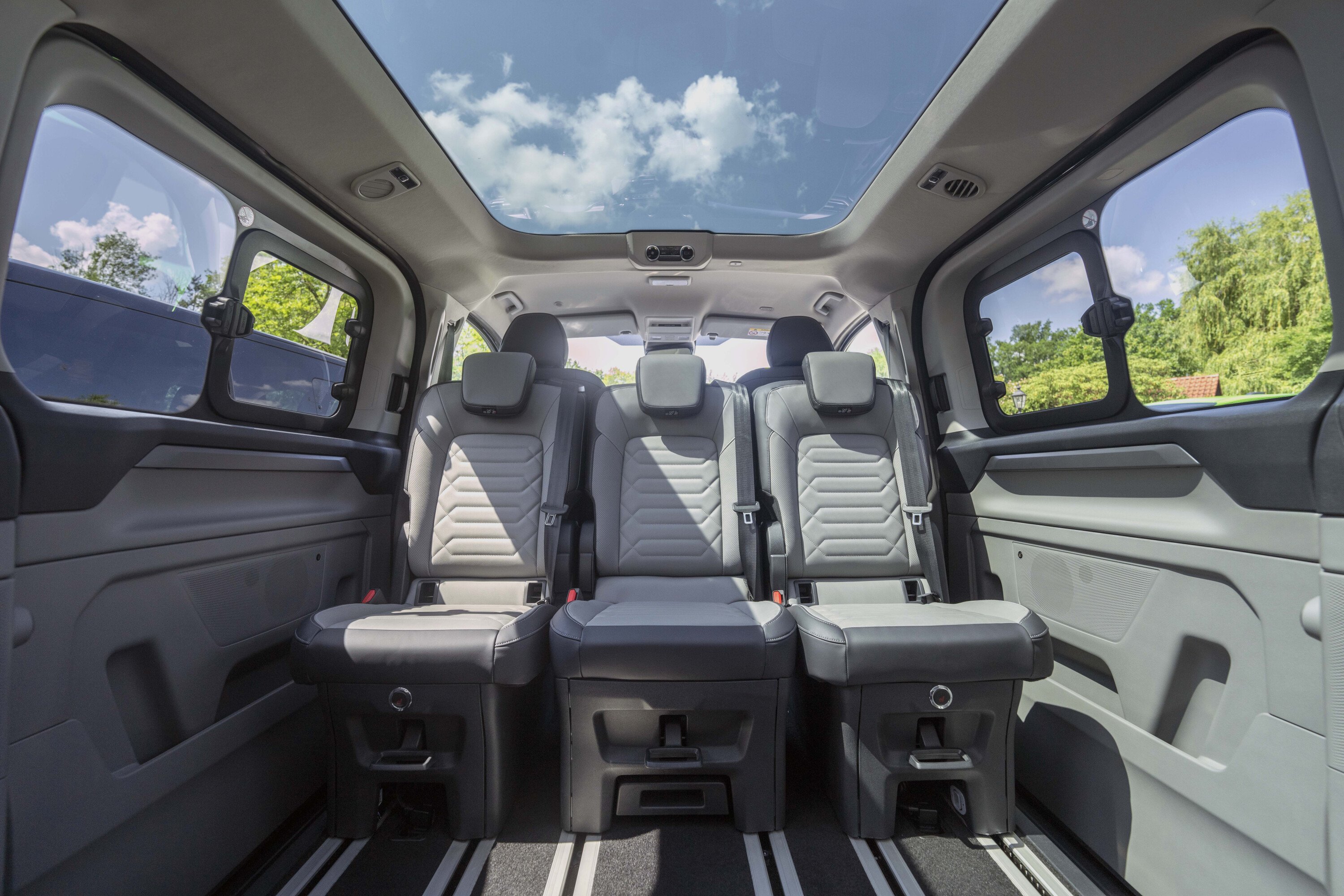
If you don’t fold down the middle centre seat, there’s just two drink receptacles for six people back there, not ideal on a hot day, but a bigger issue when the sun’s out might be that big glass roof in the Tourneo Titanium X.
It provides an unobstructed view of the sky and floods the cabin with light, but it’s not equipped with a retractable sunshade which may be a drawback on particularly hot days.
We’ll have to wait for some local summertime testing to see if the harsh Aussie sun overwhelms the tint and coatings of that glass panel, but at least there’s reasonable coverage of air vents throughout the roof, as well as separate controls for the rear zone of the tri-zone climate control.
It’s spacious enough for six regular-sized adults to sit back there without rubbing elbows, with easy entry and egress even with the middle row facing rearward.
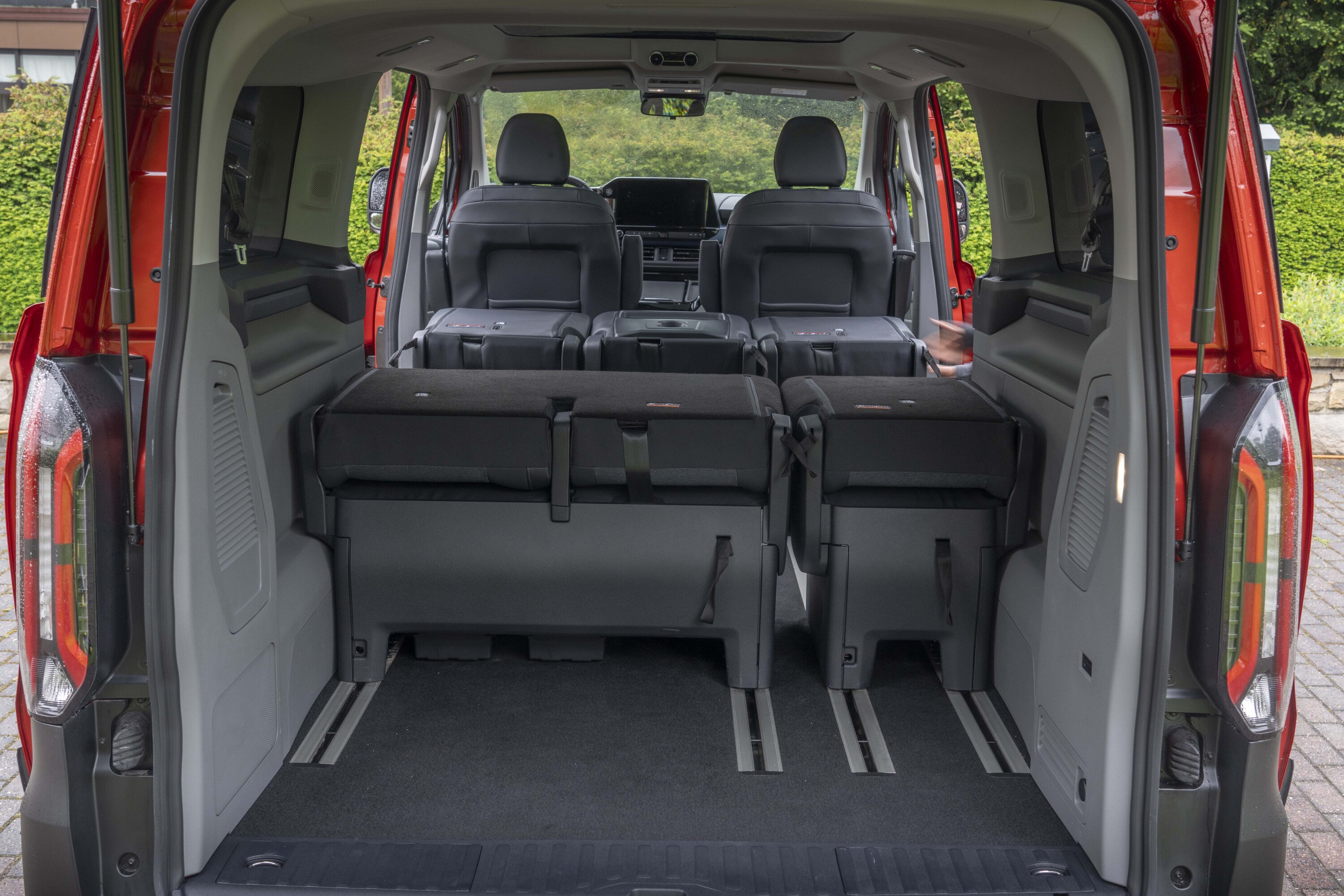
With all seats facing forward, the outboard middle seats tilt and slide forward with a light touch to provide access to the third row. However, it’s the space behind the seats that may cramp the style of some users.
Australia is only confirmed to be getting the shorter-wheelbase “L1” variant of the Tourneo, with the 40cm-longer “L2” staying in Europe.
The vast majority of that length difference is seen in the boot, with the usable luggage area behind the third row being substantially smaller in the L1 at 1152 litres, versus the L2’s 1534L.
For shuttle/limo transfer operators who are dropping travellers off to the airport, that shortfall may be most keenly felt.
How much fuel does the Ford Tourneo use?
Our first taste of the Tourneo took place in and around Frankfurt, Germany, and as such included a fair degree of high-speed driving on unrestricted sections of the autobahn.
Even so, we saw an average consumption of 11.3L/100km, which was right on Ford’s claim for this particular powertrain.
How safe is the Ford Tourneo?
Standard safety gear includes a suite of six airbags covering dual front and side bags for the first row, and curtain airbags.
Driver aids include active cruise control, blind spot monitoring, lane keep assist, rear cross-traffic alert, frontal collision warning, AEB, a rear parking camera (360-degree camera on Titanium X). ANCAP has yet to test the Tourneo.
VERDICT
As a family-carrying alternative to an SUV, the Tourneo is superior in many regards. You get more cabin, for one. Way more.
It’s also easier to park, the sliding doors carry no risk of door dings in tight carparks, and being able to quickly rip out the back seats means it’ll handle trips to the hardware store probably just as well as a Ranger.
Yeah, the maximum towing capacity of 2500kg lags behind that of an Everest, but if you don’t tow heavy things or like to go off road, that metric doesn’t matter.
The Tourneo also has a faint whiff of premiumness to it, even though its pricing is at the more reasonable end of the spectrum.
That’s something that’s arguably a direct result of the new Transit Custom that it’s based on being such a well-sorted thing – as a result, the Tourneo’s commercial vehicle lineage isn’t so obvious.
Combine that to agreeable on-road dynamics, and the Tourneo shapes up as a primo pick as a people mover. We’ll put it through the wringer on local roads once it gets here, but so far the Tourneo makes a strong case as one of the best people movers around.
The sub-$20,000 car is dead, long live … well, your best hopes for a brand-new budget car in 2024 and beyond.
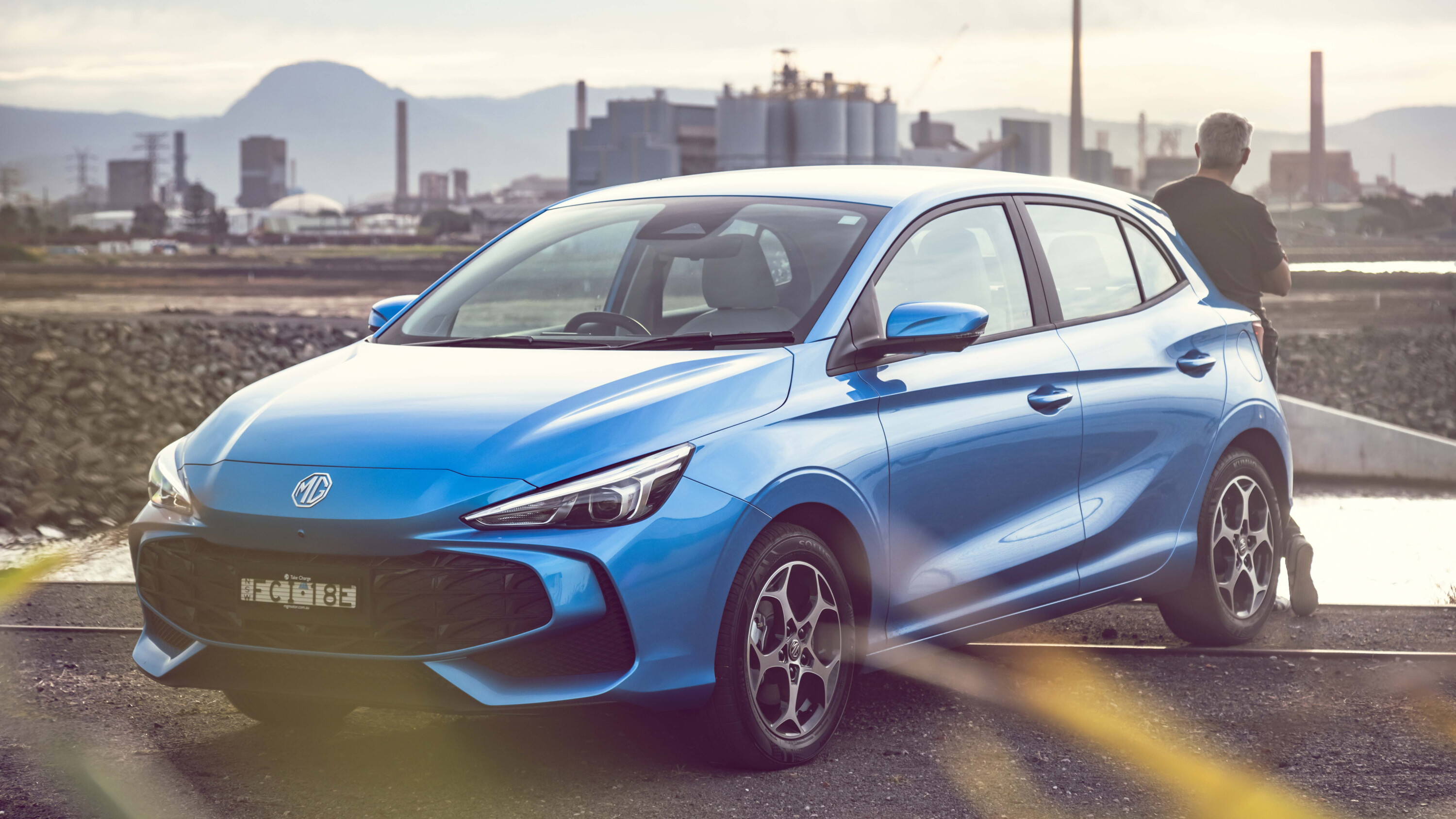
MG’s second-generation MG3 has arrived, ousting its predecessor that was the last new car Australians could buy for less than twenty-grand with no more to pay.
Following the Kia Picanto’s move above the $20K drive-away mark earlier this year, the MG3’s starting point climbs steeply from $18,990 drive-away to $23,990 plus on-road charges.

We had been pre-warned, with MG keen to emphasise that the replacement would come standard with significantly more equipment, notably extra safety features that were conspicuous by their absence on the old MG3 (along with a three-star NCAP crash rating).
There’s also a big leap in technology, headlined by MG’s first regular (non-plug-in) hybrid drivetrain.
That inevitably costs more again – a $4000 premium, to be exact, over the standard MG3 models powered by a 1.5-litre four-cylinder petrol engine. The MG4 Hybrid+ starts from $27,990 before on-roads.
JUMP AHEAD
Pricing and features
Whether petrol or petrol-electric, there are two trim grades familiar to MG showrooms: Excite and Essence.
Safety on the old model is most politely described as elementary, its most advanced driver aids essentially being bread-and-butter ABS and ESC.
Every MG3 now adds the smashed-avo works, incorporating various warning systems (forward collision, lane departure), multi-monitoring (blind spots, rear cross traffic, tyre pressures, “unsteady driver”), and assistance features (adaptive cruise, speed-limit notification, emergency lane keeping).
All models sit on stylish (to our eyes) 16-inch alloys, a size up for entry models, and provide dashboards graced with a digital display combination of central 12.25-inch infotainment screen and 7-inch driver cluster.
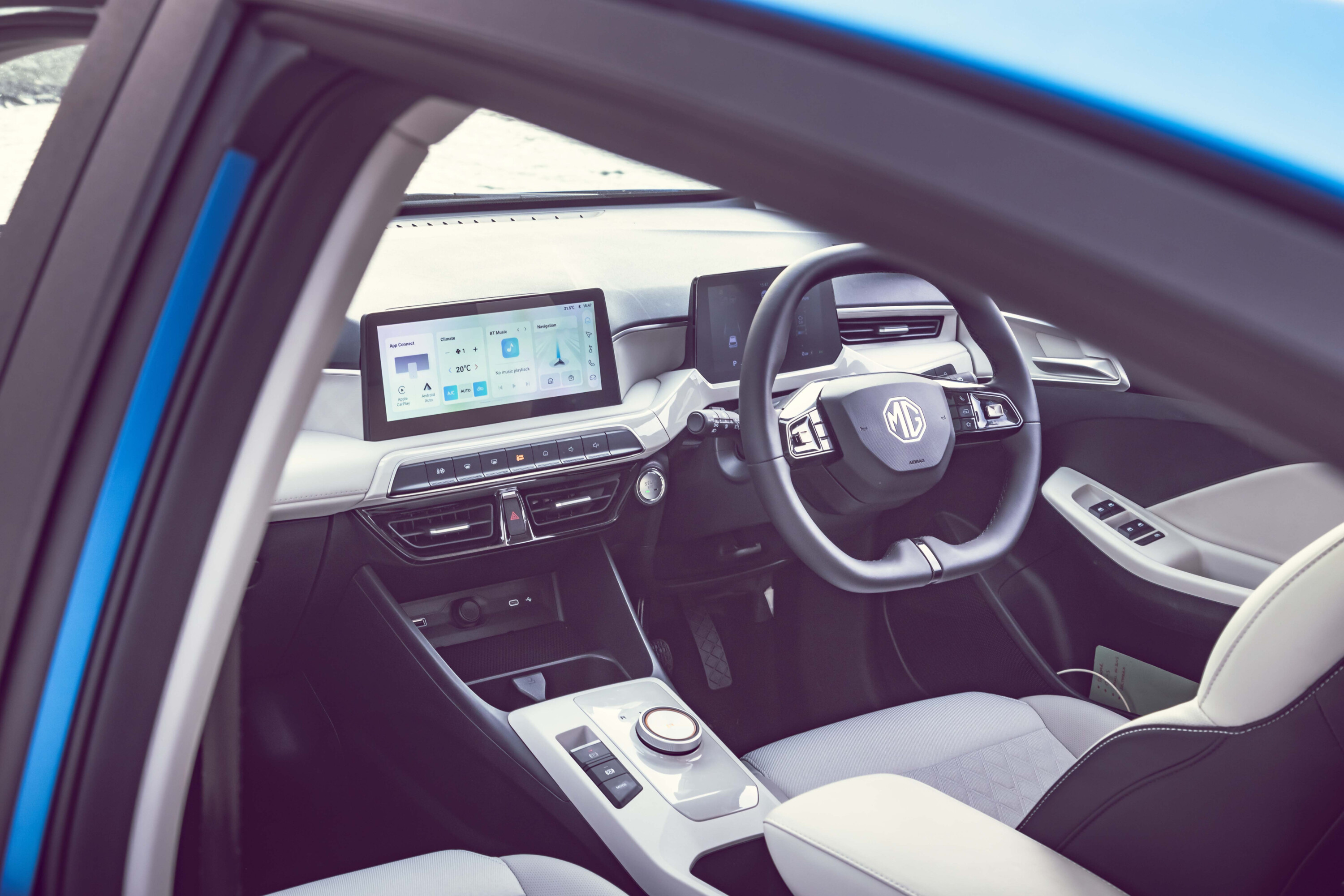
Essence models ramp up tech, materials and convenience to tempt buyers to impart with just an extra $2000.
Starting with the exterior, the headlights switch from halogen to LED, vehicle entry becomes keyless, wipers adopt an auto mode, and the MG3 gains a small sunroof.
Inside, the upholstery changes from cloth to a combination of pleather/fabric, the steering wheel swaps from pleather to real leather, the infotainment system adds navigation and digital radio, and MG throws in a three-year subscription to its iSmart telematics that links various vehicle functions to the owner’s smartphone.
| 2024 MG3 Essence features | |
|---|---|
| 360 camera | Auto wipers |
| LED projector headlights | Keyless entry |
| Sunroof | iSmart compatibility (3yrs) |
| Pleather/cloth seats | Digital radio |
| Leather steering wheel (pleather Excite) | Built in nav |
| 2024 MG3 Excite features | |
|---|---|
| 16-inch alloy wheels | 7-inch driver cluster |
| Halogen headlights | 10.25-inch infotainment |
| LED DRLs | Plug-in Carplay and Auto |
| Cloth seats | Rear vents |
| One-touch windows (driver anti-trap) | Rear USB-A |
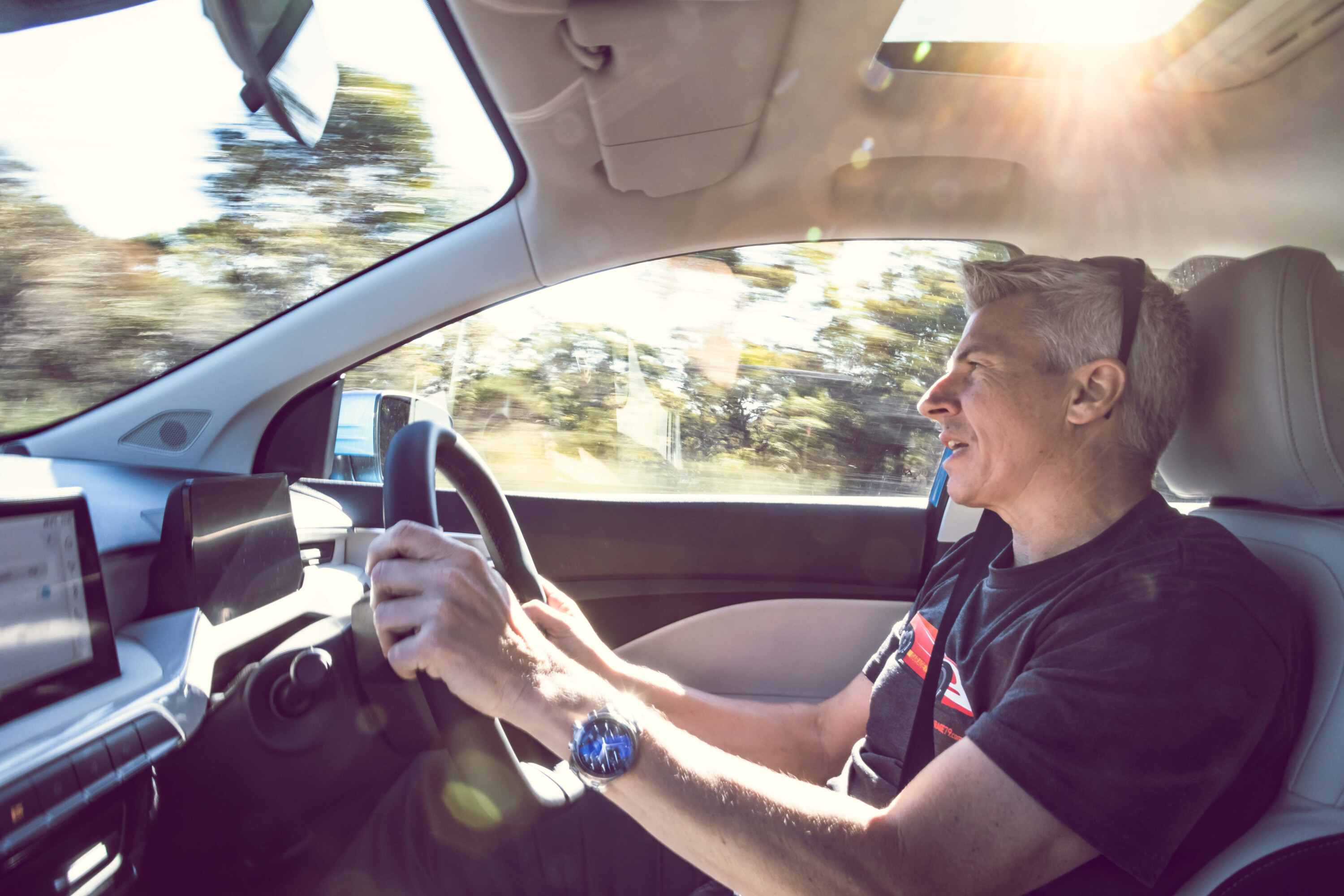
While the Mazda 2 and Volkswagen Polo are technically competitors in what is a severely shrunken city-car class these days, the MG3’s key rivals are the Suzuki Swift, which has also just launched in next-generation form (with a mild-hybrid drivetrain), and the Toyota Yaris that went hybrid-only in early 2024
The MG3 has in recent years outsold both, overtaking the Yaris since 2020, when the tiny Toyota increased its entry price by about $9000. MG Australia will be hoping the MG3’s price increase doesn’t lead to a similar sales fate; last year the Yaris’s 2098 sales were about a fifth of their total in 2019.
It still looks good value compared with the Yaris that has a proper hybrid system, if not as sharply priced as the smaller Swift that is primarily petrol-powered but with partial electric assistance.
Our test car is a best-foot-forward variant, the range-topping Hybrid+ Essence. It’s coated in Brighton Blue (extra-cost) metallic, one of the brighter options alongside a yellow and red in an expanded palette also featuring your staple white, black, silver, and grey.
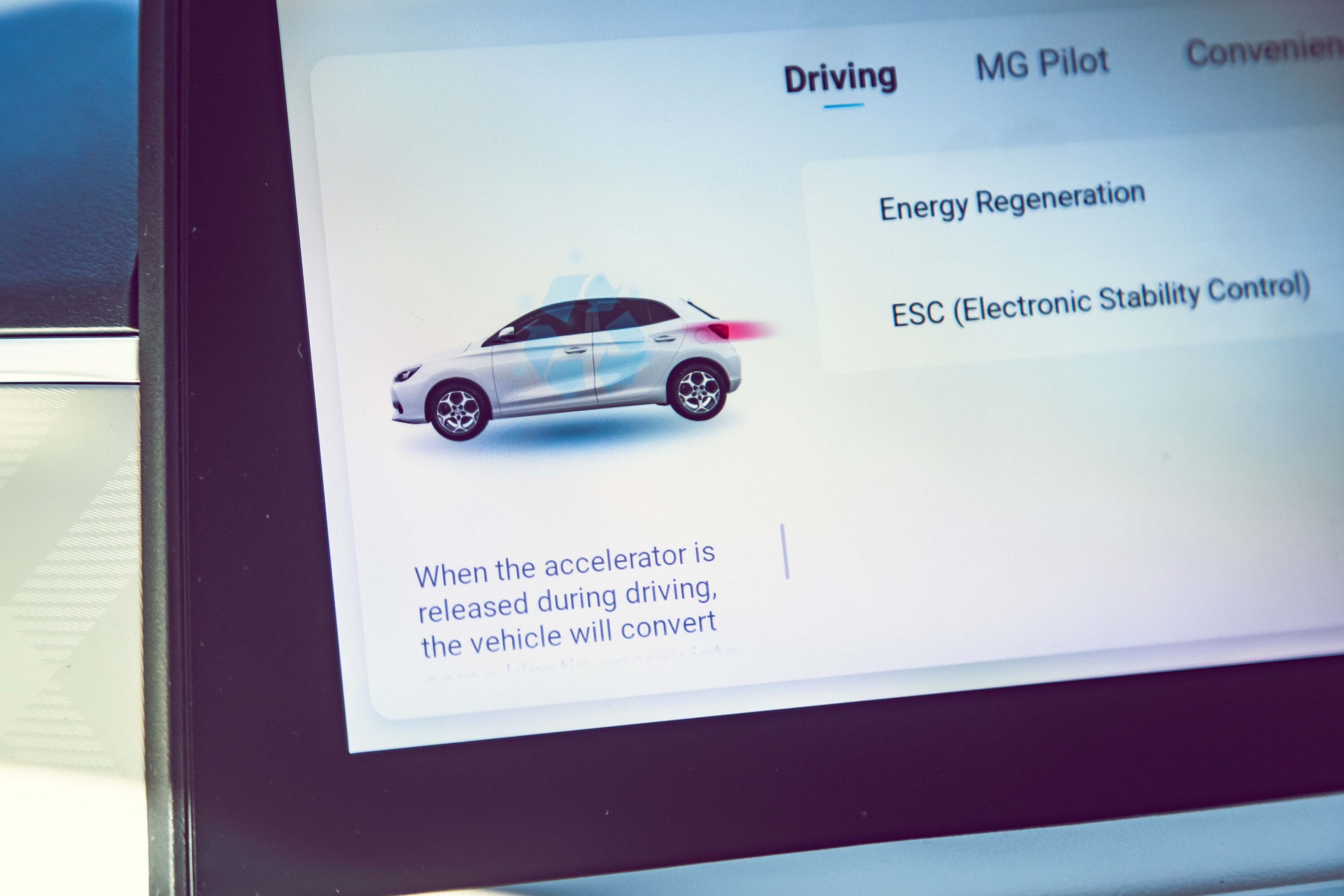
Most dimensions also grow, if not by a margin that pushes the MG3 out of ‘Light car’ territory. Six centimetres are added to its length, with five of those coming in the wheelbase, though it’s still only a touch over 4.1 metres long – shorter than one of the smallest of ‘Small cars’, the VW Golf.
The biggest stretch is to width, the MG3 widening by nearly seven centimetres – complemented by a 4cm widening of the rear track. Height is the only dimension with a minus sign against it, though the drop is a mere 2mm.
No surprises underneath. It’s struts up front, with a torsion-beam rear suspension.
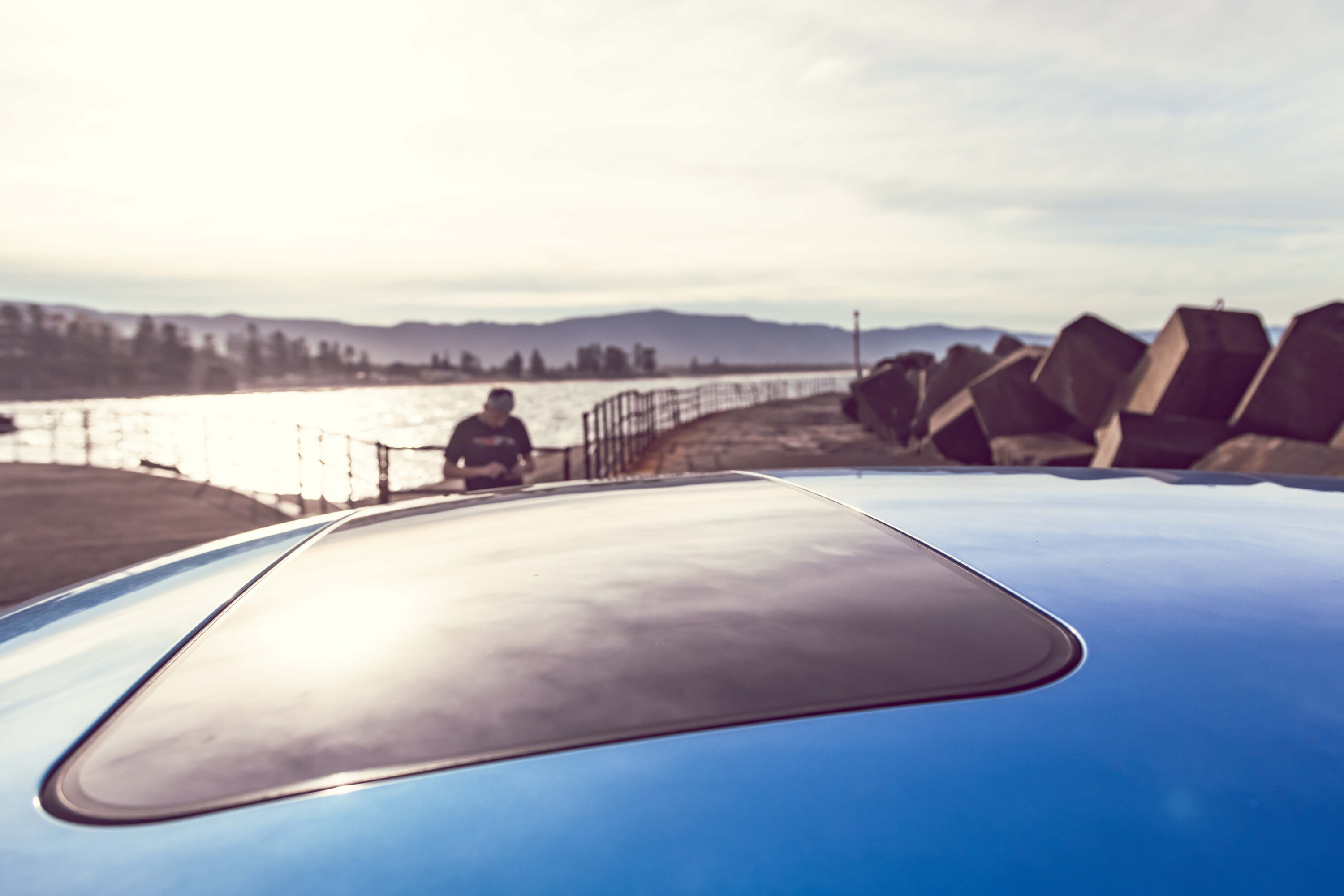
Cabin space and comfort
A quick door-shut test immediately bodes well for build quality; no tinniness often associated with a budget car but instead a satisfying, Golf-like thunk.
To use another, more pertinent VW comparison, the MG3 isn’t quite Polo-posh inside but the interior has matured nicely – particularly in the case of the top-spec hybrid.
The Essence brings a full-leather steering wheel and extra pleather for the dash and seats (the latter of which look smart in the white-with-black trim option), working with other stylish materials such as the ceramic-like ultra-smooth plastic used on the centre console and dash to elevate the interior above ‘cheap car’ status.
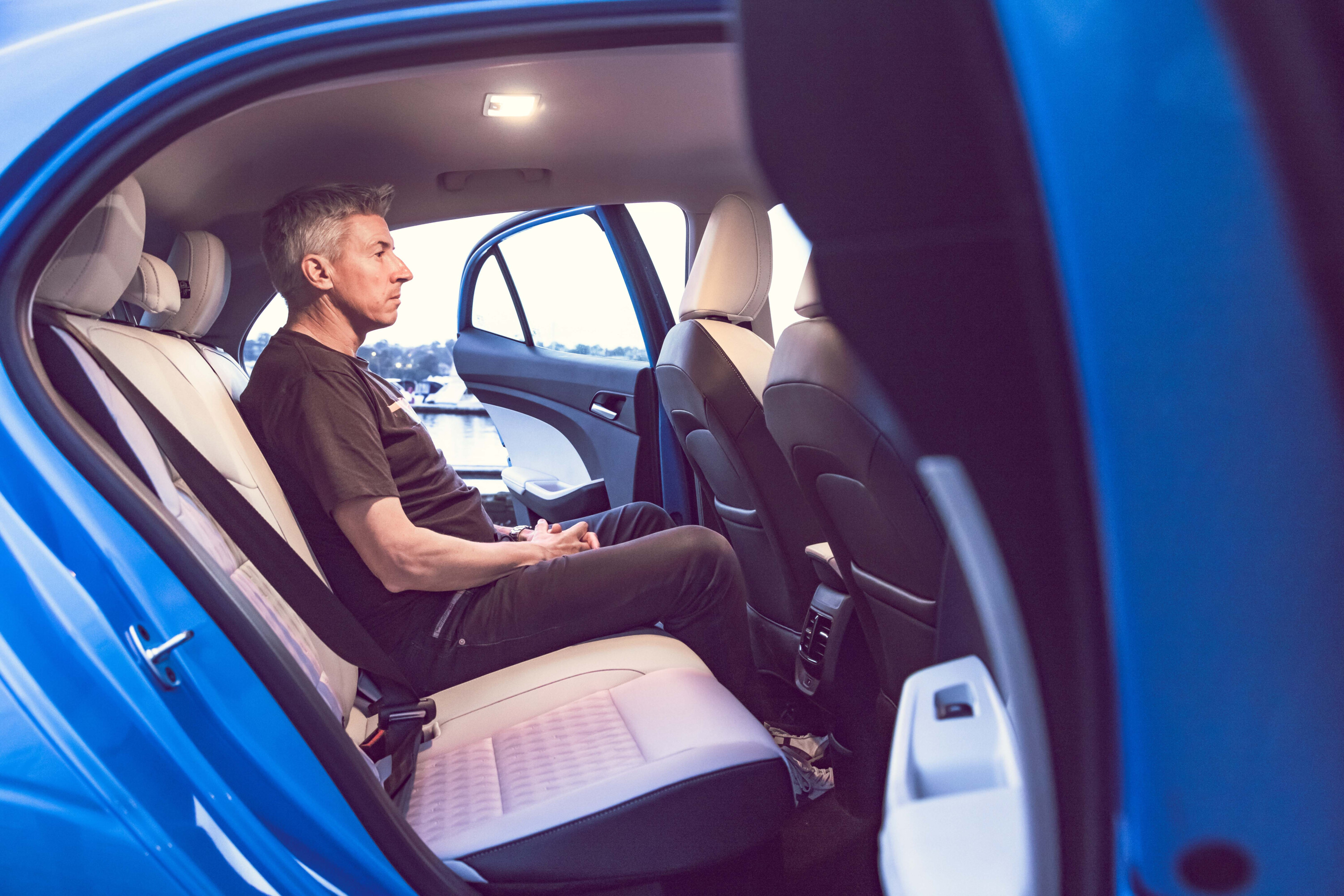
While they help offset the still-significant percentage of hard plastics, there’s impressive smoothness to the various part joins in the cabin – no rough-to-the-fingers misalignments that can be common to lower-priced cars.
Cost-cutting measures exist besides any material choices. The most obvious and surprising is a steering wheel that adjusts for height but not reach, which forces some drivers to make some compromises to the driving position. For this writer, that meant my wrists falling a bit short of being able to rest on top of the steering wheel (while stationary) to ensure my legs had the ideal distance to the pedals.
Only the driver’s window has auto up/down where the others are auto-down only, and the sliding smartphone tray on the centre console feels quite loose (at least on our test car). And, talking of mobiles, there’s no wireless charging even on this range-topper.
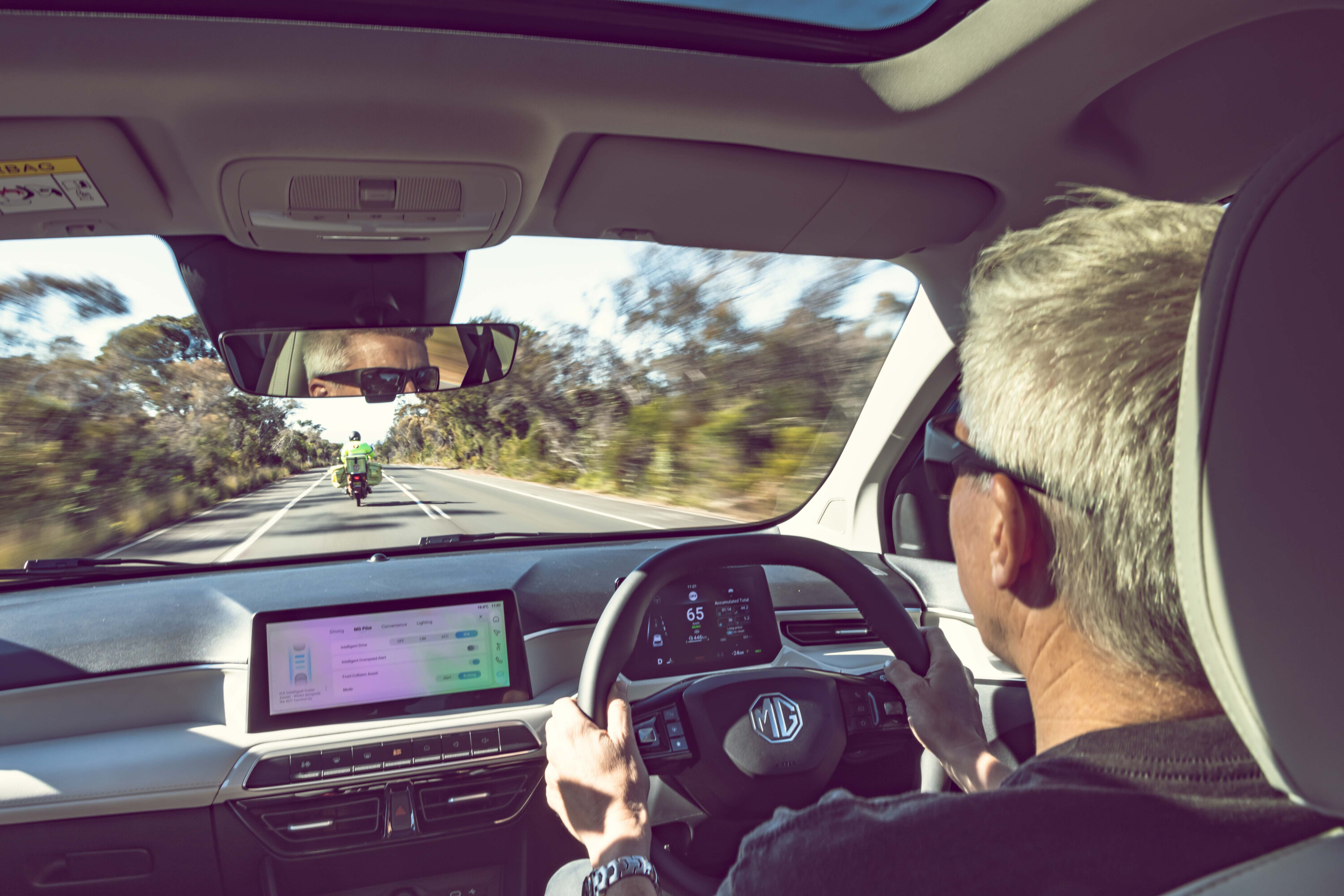
That tray at least contributes to some excellent front-cabin storage.
The dash layout with its dual digital displays shares some similarities with MG4, as does the Hybrid’s rotary transmission controller (petrol models have a regular auto gearlever).
The MG3’s 10.3-inch infotainment display sits lower and more naturally on the dash than in the company’s electric hatchback.
It’s a good screen size that trumps the 8.0 and 9.0 displays in the Yaris and Swift, respectively.
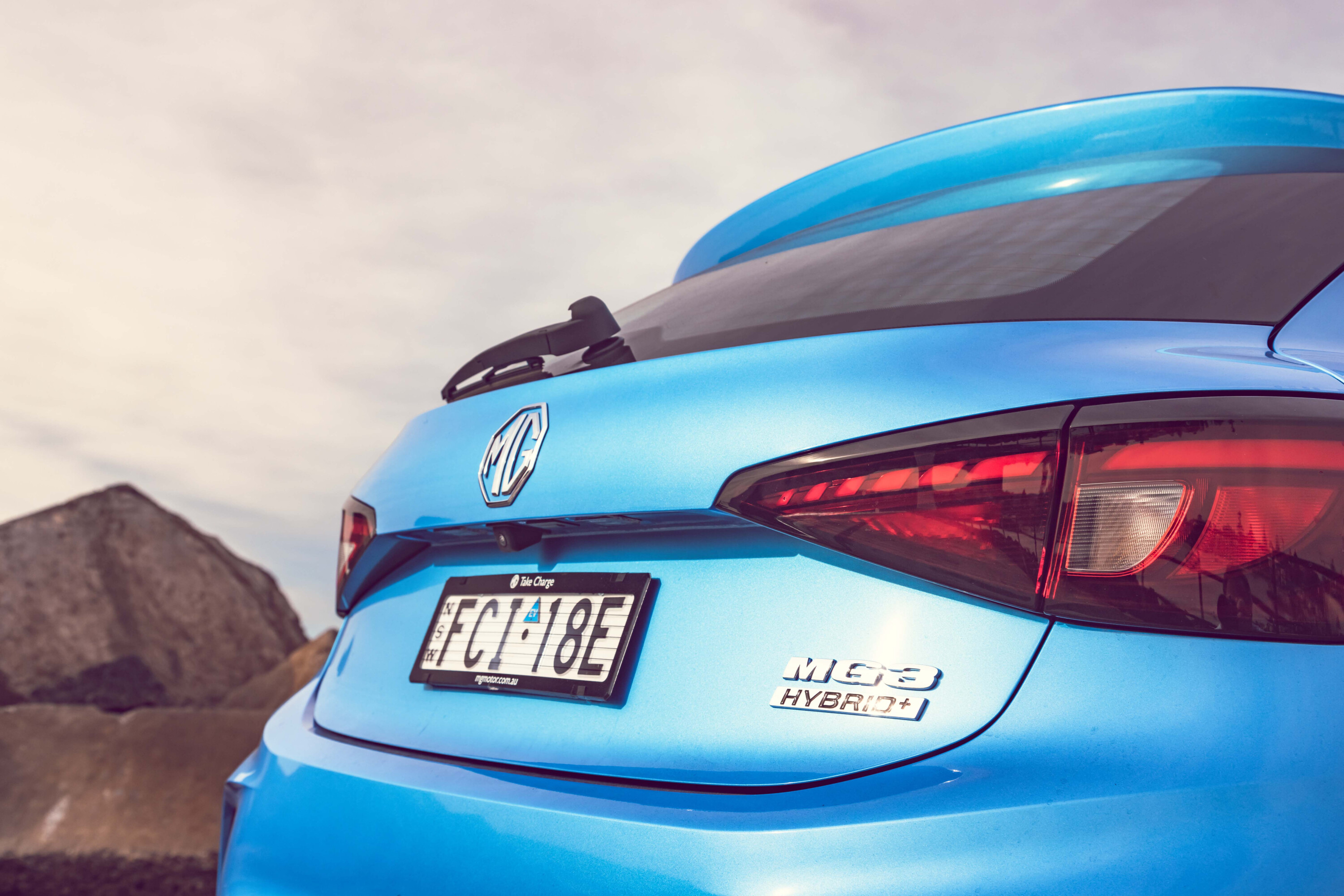
If not lent the most inspiring of visuals with mostly black/white menus with some blue thrown in, menus and functions are easily identified, and the screen response is faster than we’ve experienced with the MG4’s system.
There are physical shortcut buttons below, importantly including fast climate control access – unless, however, you’ve plugged in your phone for Apple CarPlay or Android Auto.
The steering wheel, another shared item with the MG4, includes functions that aren’t all immediately obvious, requiring some familiarisation – though this includes two star-icon buttons that can be handily configured as shortcuts to certain functions via the infotainment screen.
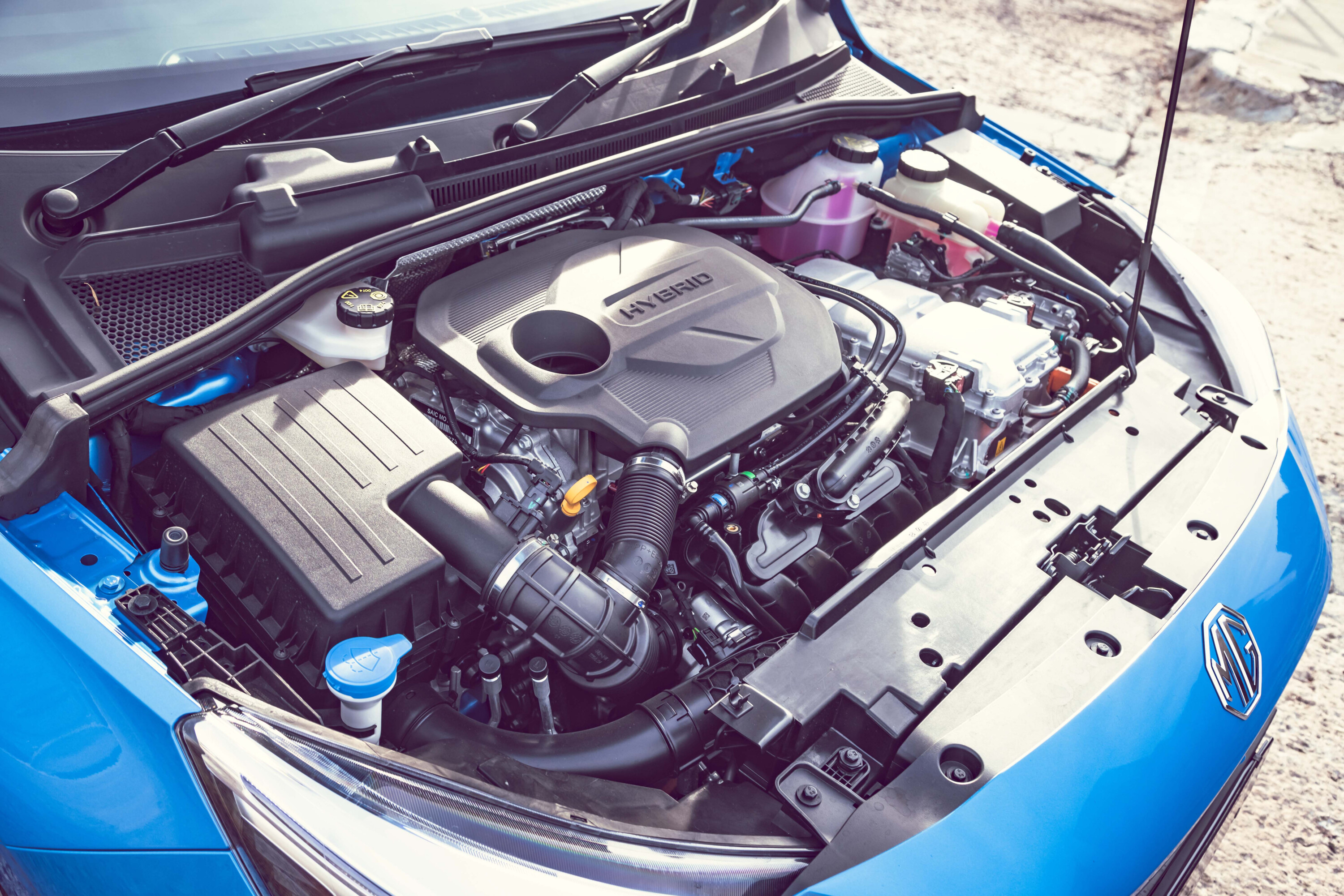
MG has done a good job on the overall cabin packaging. There’s a good amount of knee space for a regular-height adult behind their own driving position, while headroom seems sufficient for people up to six feet tall.
There’s a comfy, nicely sprung bench, too, with a long cushion good news for those with longer legs. Rear vents are also something of a rarity in a vehicle of this size.
No centre armrest also means no cupholders in the rear, only bottle holders moulded into the doors, and storage is otherwise limited to seatback pouches and a small tray just below a USB-C port.
Undamped grabhandles can be labelled as a very minor cabin-budget victim.
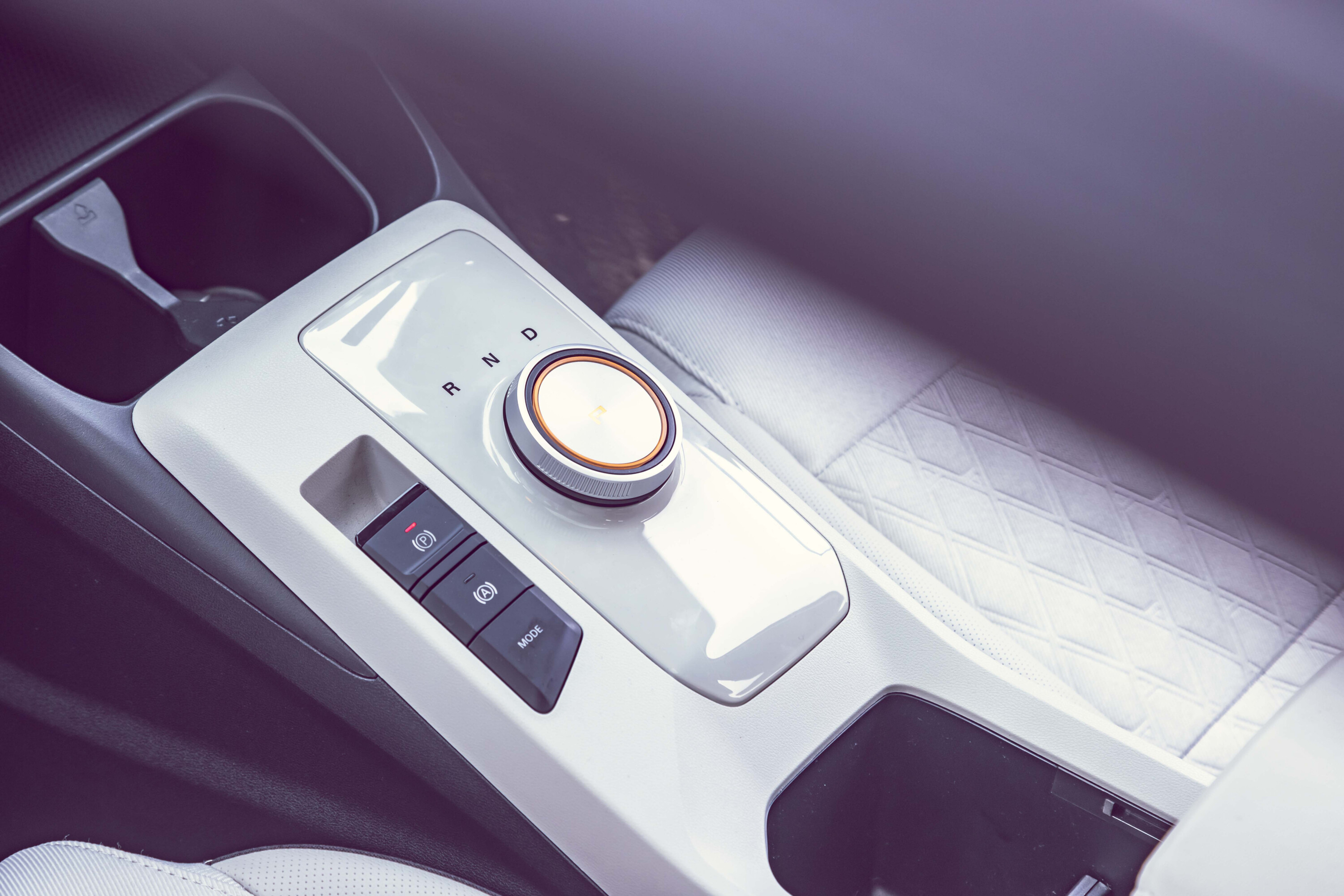
Boot capacity drops by 14 litres to 293 litres. If further distancing luggage space from the Polo’s 351L, the MG3’s volume still beats the Yaris (270L) and Mazda 2 (250L).
That increases to 983L with the rear seats taken out of action, though surprisingly the MG3’s seatback is a single piece rather than the ubiquitous 60-40 split-fold.
Hybrid models miss out on the petrol’s space-saver spare wheel under the floor, owing to the standard 12V car battery being booted out of the engine bay to make room for the electric motor.
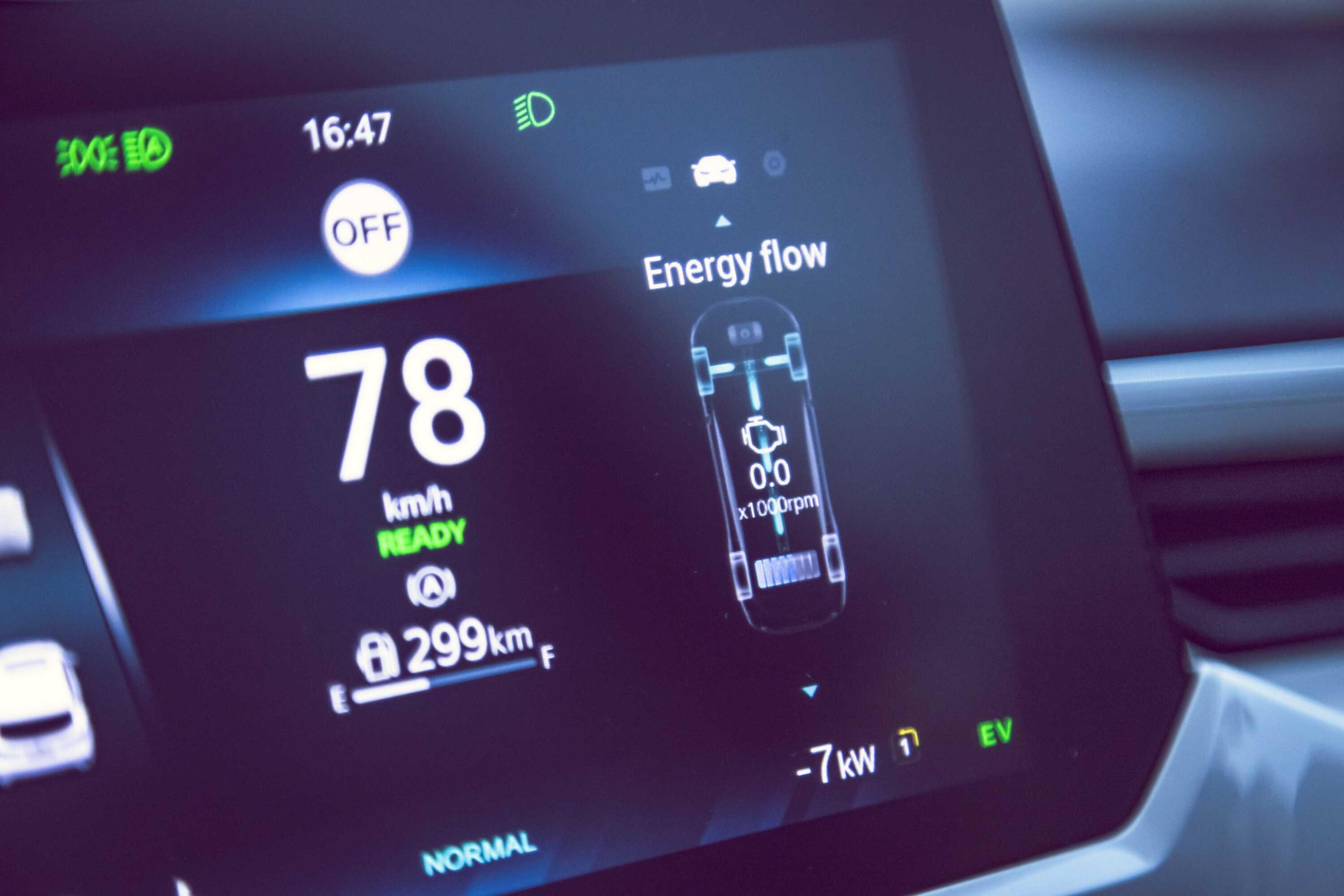
On the road
We’re yet to test the petrol-only MG3, but for reference it features a new four-cylinder engine with the same 1.5-litre displacement. Power is down fractionally from 83 to 82kW and torque drops from 150 to 142Nm, but official fuel economy improves from 6.7 to 6.0 litres per 100km.
The Hybrid+ promises even better consumption. Call that 28 percent better: 4.3L/100km.
Despite a fuel tank that’s nine litres smaller than the petrol’s (36 v 45L), the hybrid offers an extra 87km of theoretical range (837 v 750km).
The combustion half of the petrol-electric equation is also a 1.5-litre four-cylinder, and like the Yaris hybrid’s 1.5L three-cylinder it favours the economy-focused Atkinson Cycle over the more widely used Otto Cycle. It’s quoted 41 percent thermal efficiency even bests the Toyota’s, albeit it by just a single percent, though more relevant to buyers is the Yaris’s official consumption that, on paper, is a whole litre lower (3.3L/100km).
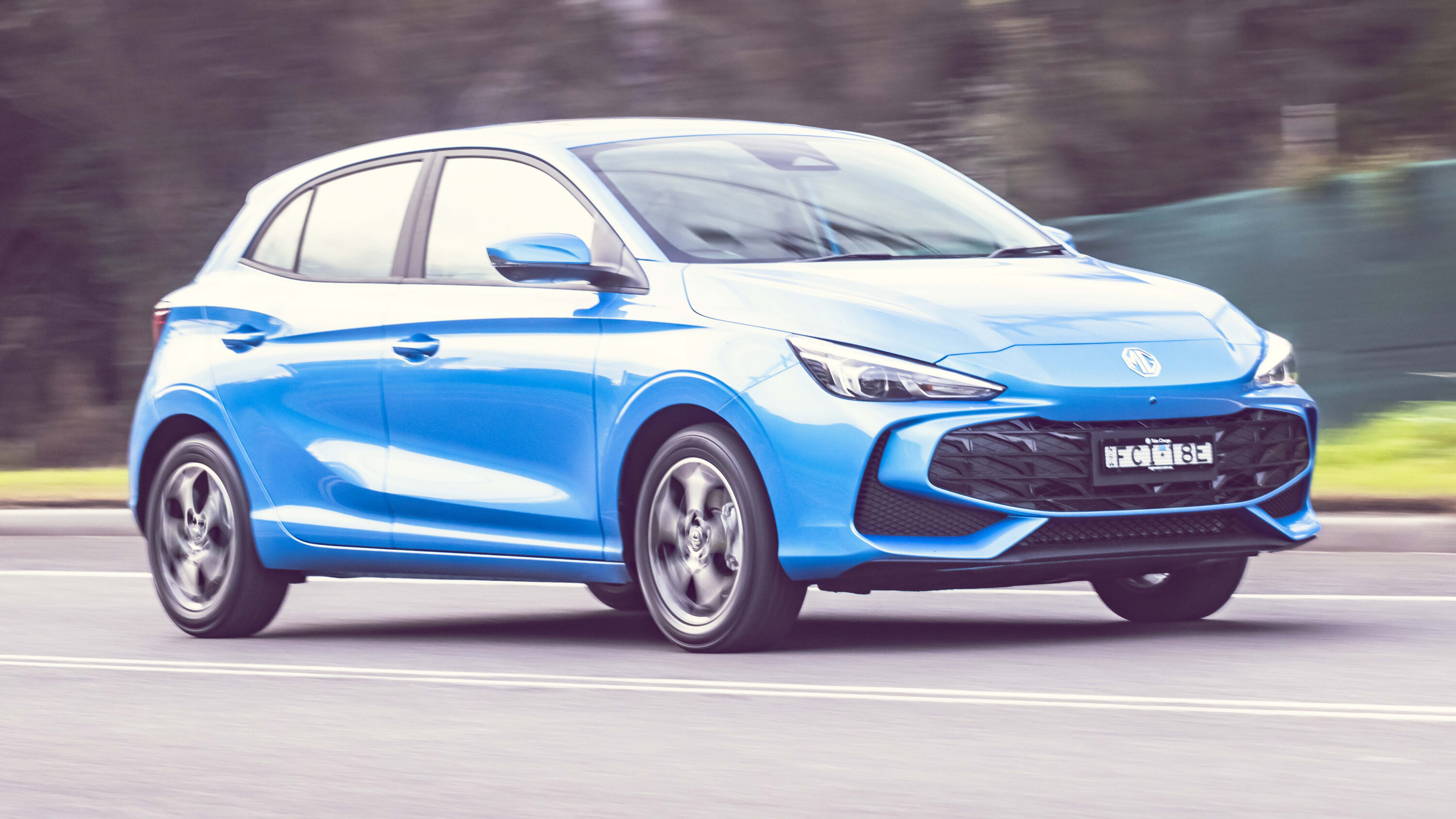
Also in the Yaris’s favour (and that of the MG3 petrol) is an ability to run happily on 91 Octane where the MG3 Hybrid+ requires 95 at a minimum.
MG’s approach to hybrid drivetrains seems a little different beyond its requirement for higher-grade fuel, though…
With a 75kW petrol engine partnered with a 100kW electric motor, combined power is a pocket-rocket-like 155kW.
MG’s specs list 8.0 seconds for the 0-100km/h acceleration run, yet arguably more impressive is a 5.0sec claim for 80-120km/h. That’s not hanging around.
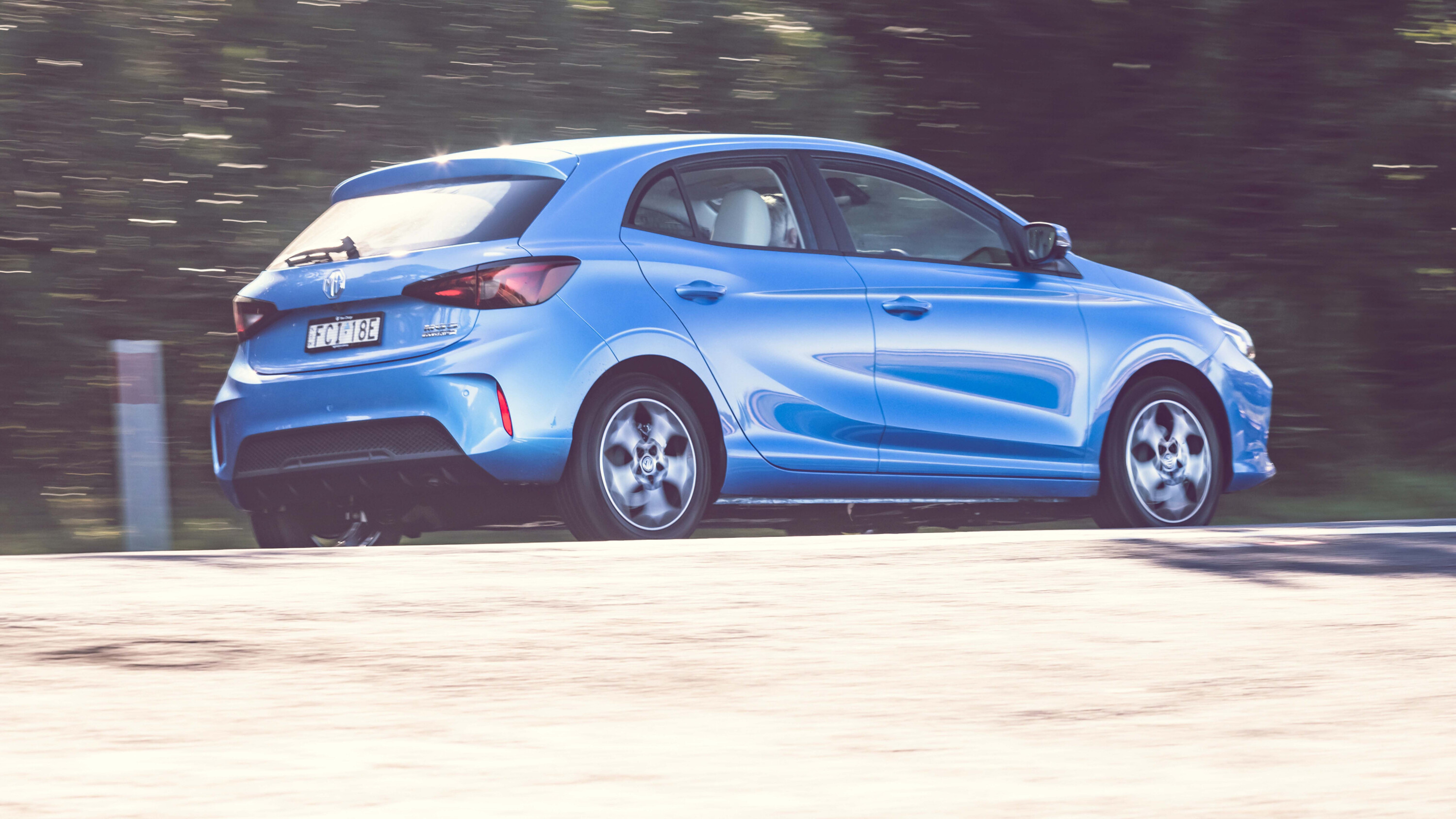
With the Hybrid’s exclusive drive modes cycled into Sport for full dual-motor goodness and a firm stomp of the accelerator pedal, we wouldn’t dispute the figure, such is the MG3’s energetic in-gear burst (in one of only three gears, by the way).
In wetter conditions, the traction control is asked to step in if accelerating from 40-45km/h with mild aggression.
If performance isn’t as punchy as the 155kW stat suggests, it still surprises for an everyday city car that isn’t aiming to become the next Ford Fiesta ST.
Eco and Normal are other driving modes, though only the MG3’s electronics control which parts of the hybrid drivetrain work and when.
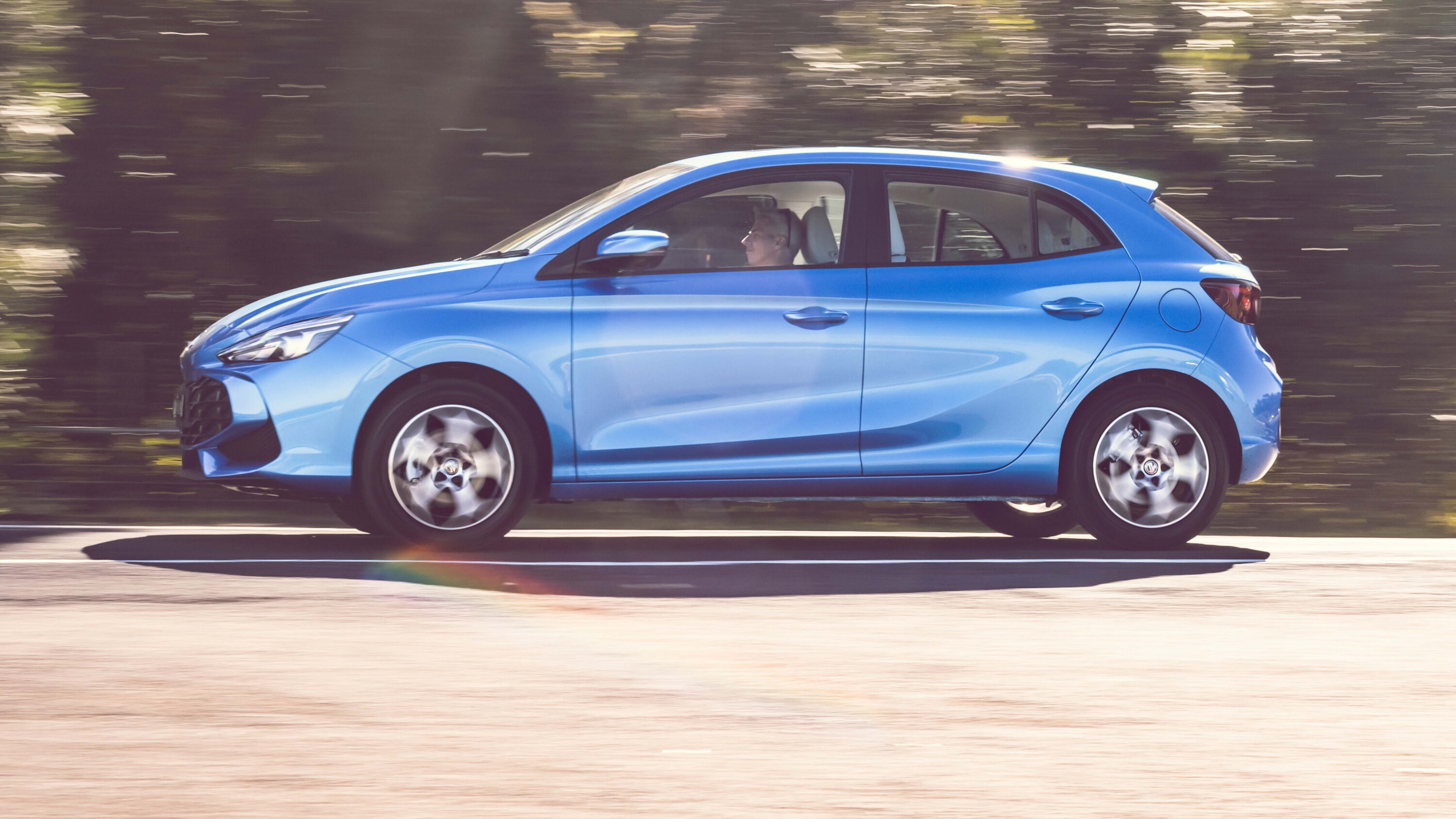
If the 1.87kWh battery has sufficient charge, the Hybrid+ will drive the front wheels with electric power only – and for faster and longer than a Yaris would typically allow.
It’s an MG4-Lite experience as there are inevitably limitations to the EV phase of motoring. The petrol engine will often fire up, with higher revs for the prevailing road speed indicating it is driving the generator that helps replenish the battery rather than helping to propel the car. The engine sometimes kicks in when the MG3 is stationary to do the same.
An Energy Flow monitor is available on the driver cluster, though it’s a shame the fascinating active diagram isn’t available in a larger size via the central touchscreen.
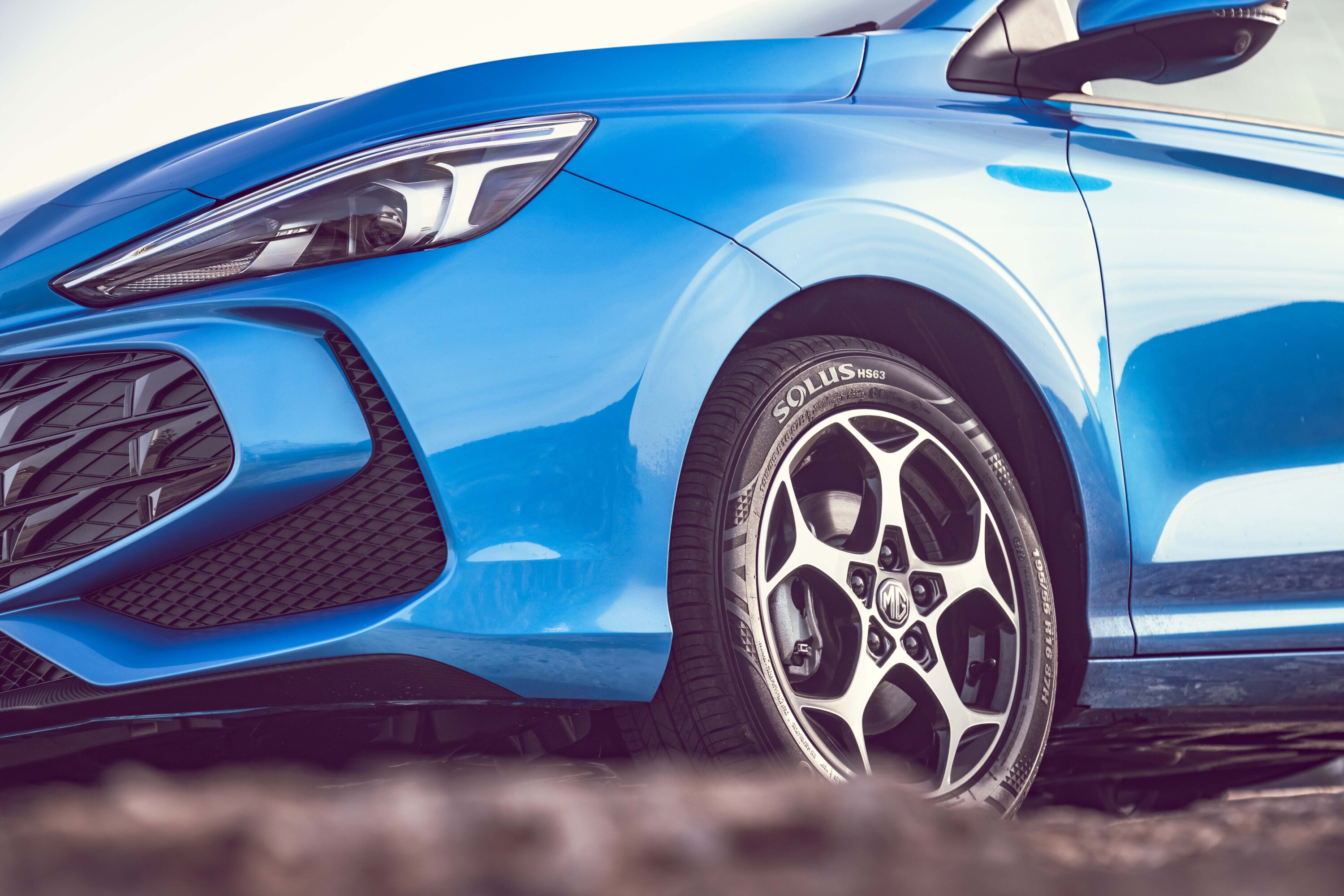
‘EV’ and ‘HEV’ modes feature permanently on the cluster as an alternative guide, the latter illuminating whenever the petrol engine is engaged for either powering the generator or wheels.
Regenerative braking is offered in three settings. High hints at the one-pedal driving offered by the MG4 without bringing the MG3 to a full stop and is best for the stop-start nature of urban driving. On the open road, Low enables more natural coasting when lifting off the throttle pedal where High, and even Medium to an extent, makes for jerkier progress.
We chose Regen-braking adjustment as one of our steering wheel shortcuts because of its ability to have either a positive or negative effect on the MG3 driving experience.
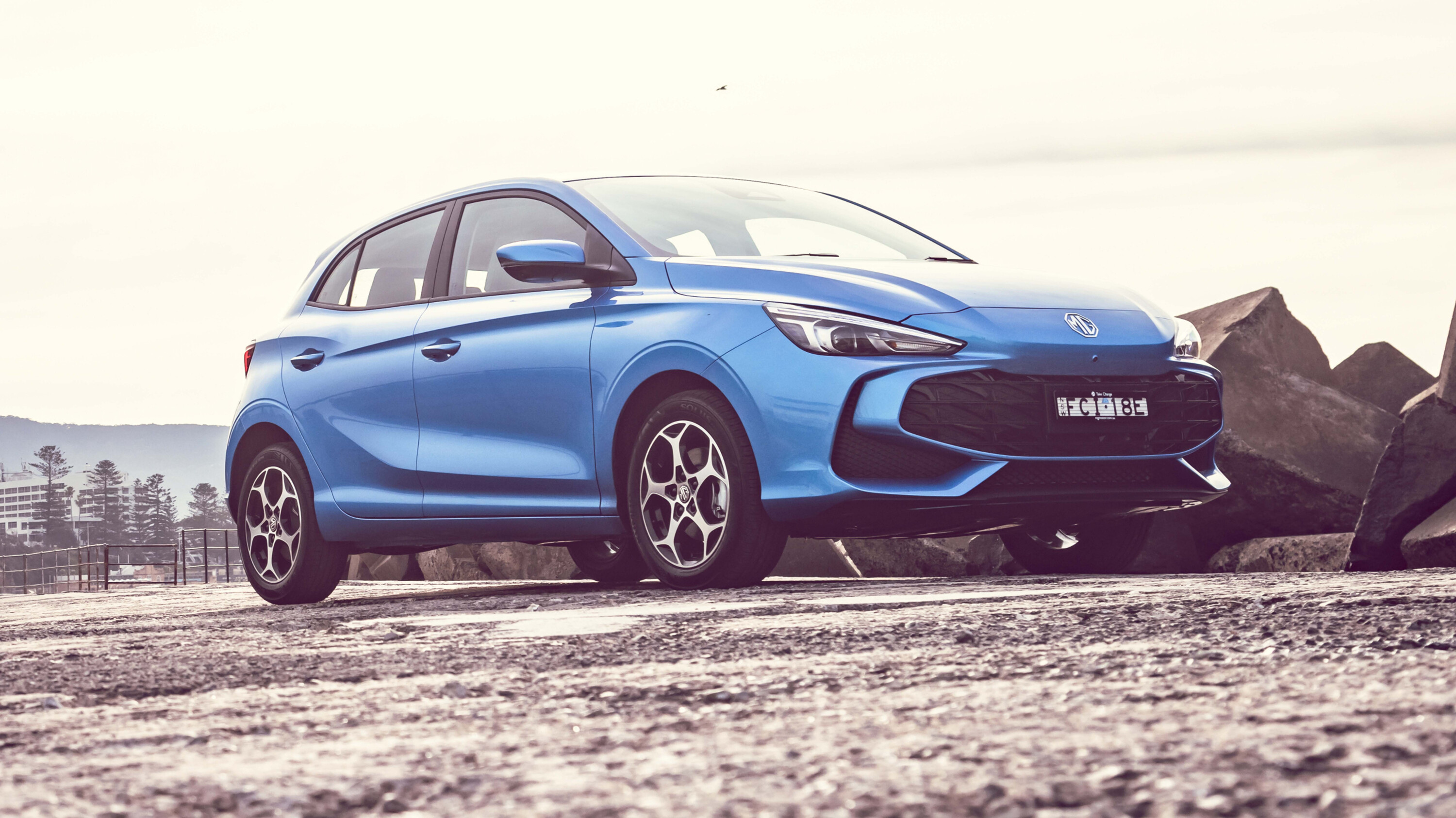
We found that was still the case with adaptive cruise engaged, prompting us to turn it off for a smoother drive on the freeway.
Turning off the Intelligent Speed Assist was also essential for our personal sanity. Essentially a speed-limit notification system combined with a speed limiter warning, it chimes every time you creep just over the prevailing speed limit. As with many other manufacturers, the system unfortunately defaults to ‘on’ every time the car is switched off and on again.
Our main drive and photography day took us from Mascot (Sydney) to the Gong (Wollongong), providing a tenuous M-G angle but also a great city-to-city run.
The MG3’s trip computer indicated a 4.8L/100km average after a total 222km drive across seven hours, with an average speed of 32k/h. Intriguingly, after a reset and 119km of pure suburban driving over multiple days, we registered an average of 7.0L/100km. Is this a hybrid that is possibly more efficient on the open road than around town, the reverse of traditional expectation?
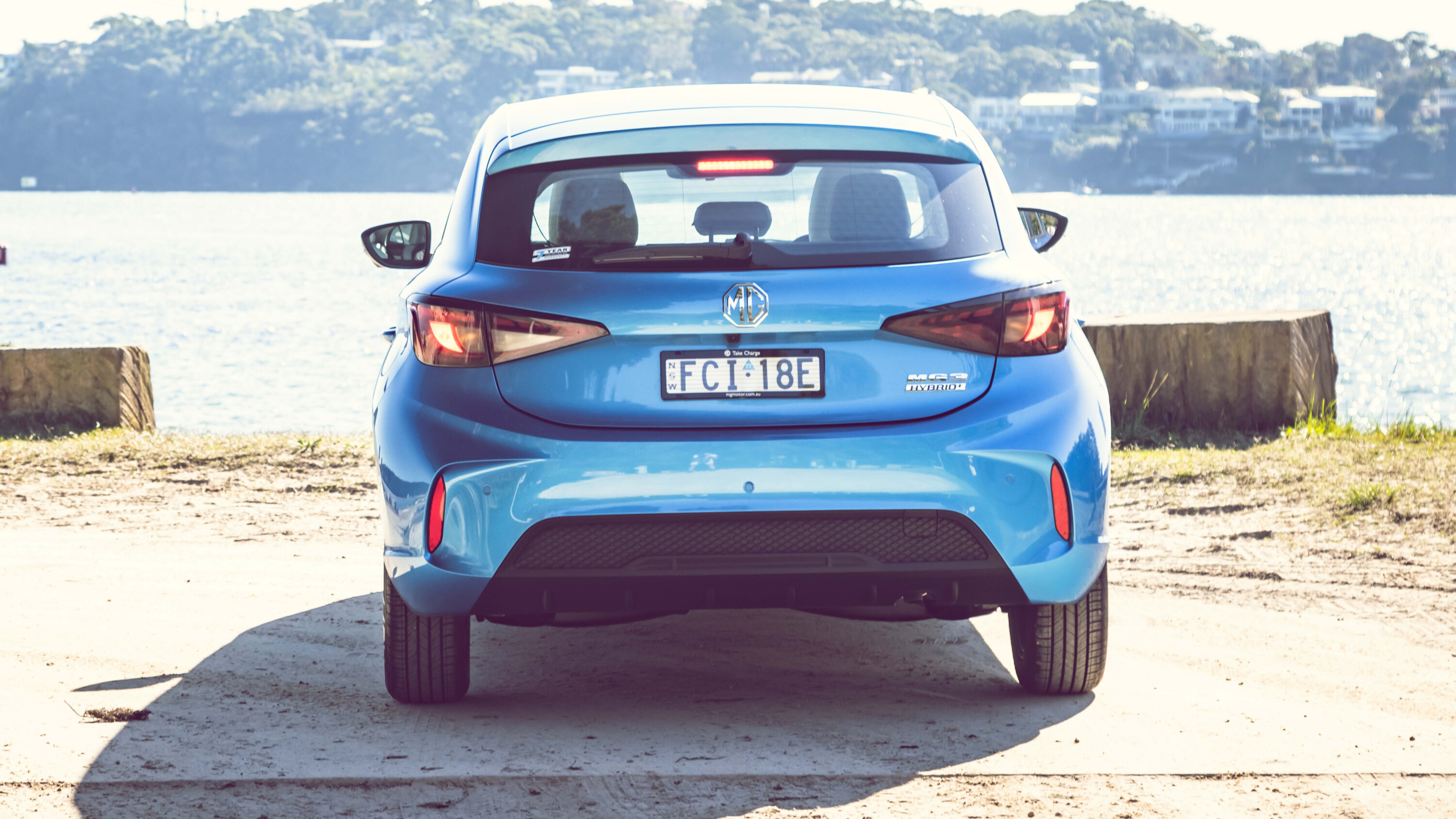
Suburbia is where the MG3 shines brightest, though – showcasing its tight turning circle, wieldy low-speed handling, quick access to bursts of acceleration to fill traffic gaps, and a satisfyingly supple ride (further aided by its chubby 55-profile tyres).
Sharper bumps such as road joins are the only small chink in the suspension’s armour.
Although the nicely cushioned and controlled ride remains outside city limits, the rest of the MG3’s dynamics start to falter as speeds rise and roads bend.
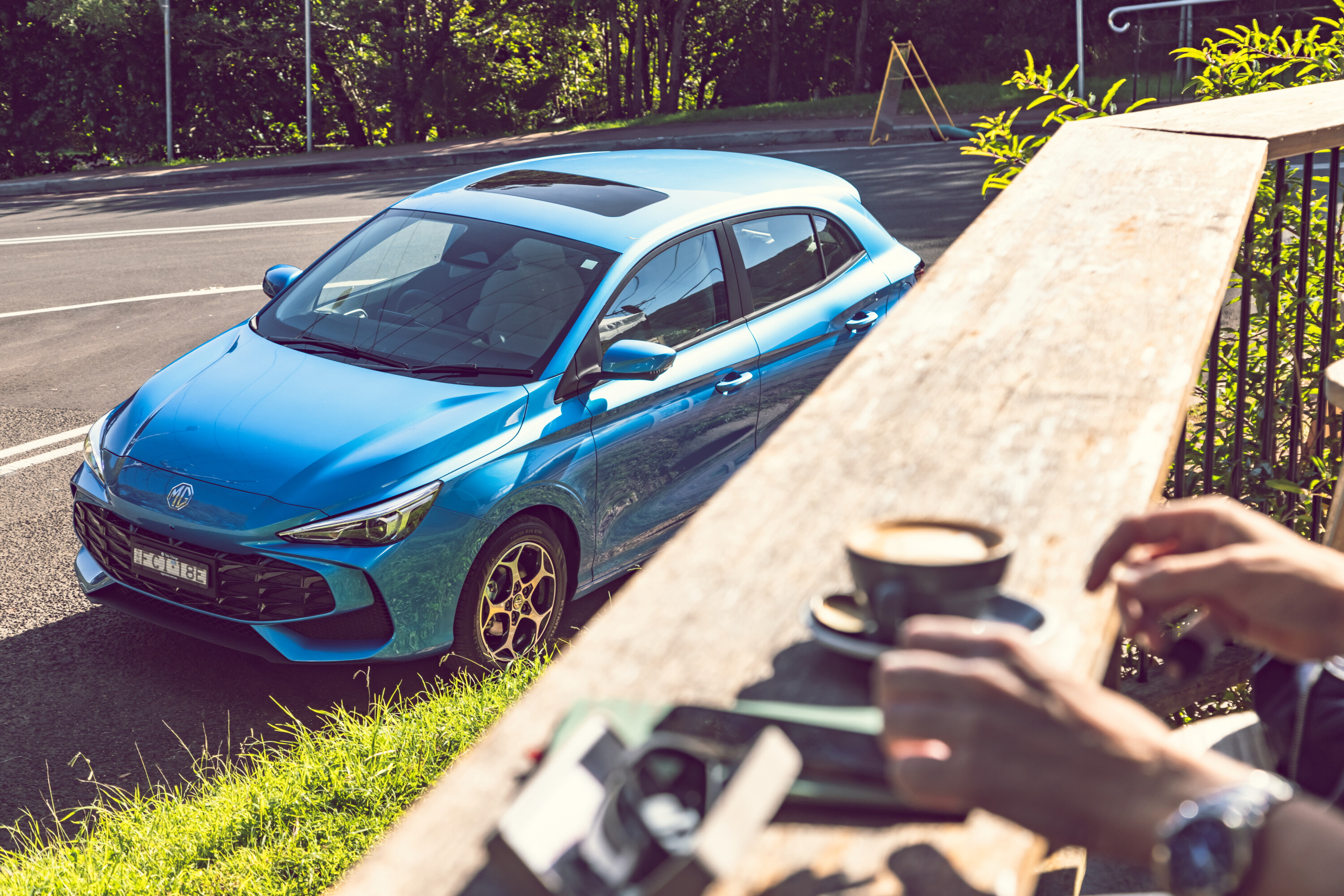
The steering is the primary letdown, its on-centre feel and response becoming vague above 60km/h – making it harder to thread the MG3 accurately along a country road or necessitating the driver to stay busy with the wheel trying to keep the car tracking straight in its freeway lane.
It’s ultimately not as endearing to keen drivers as the outgoing Swift or the dearly departed Ford Fiesta.
That said, an X-Power version of the MG3 to rival the Polo GTI would be more than welcome.
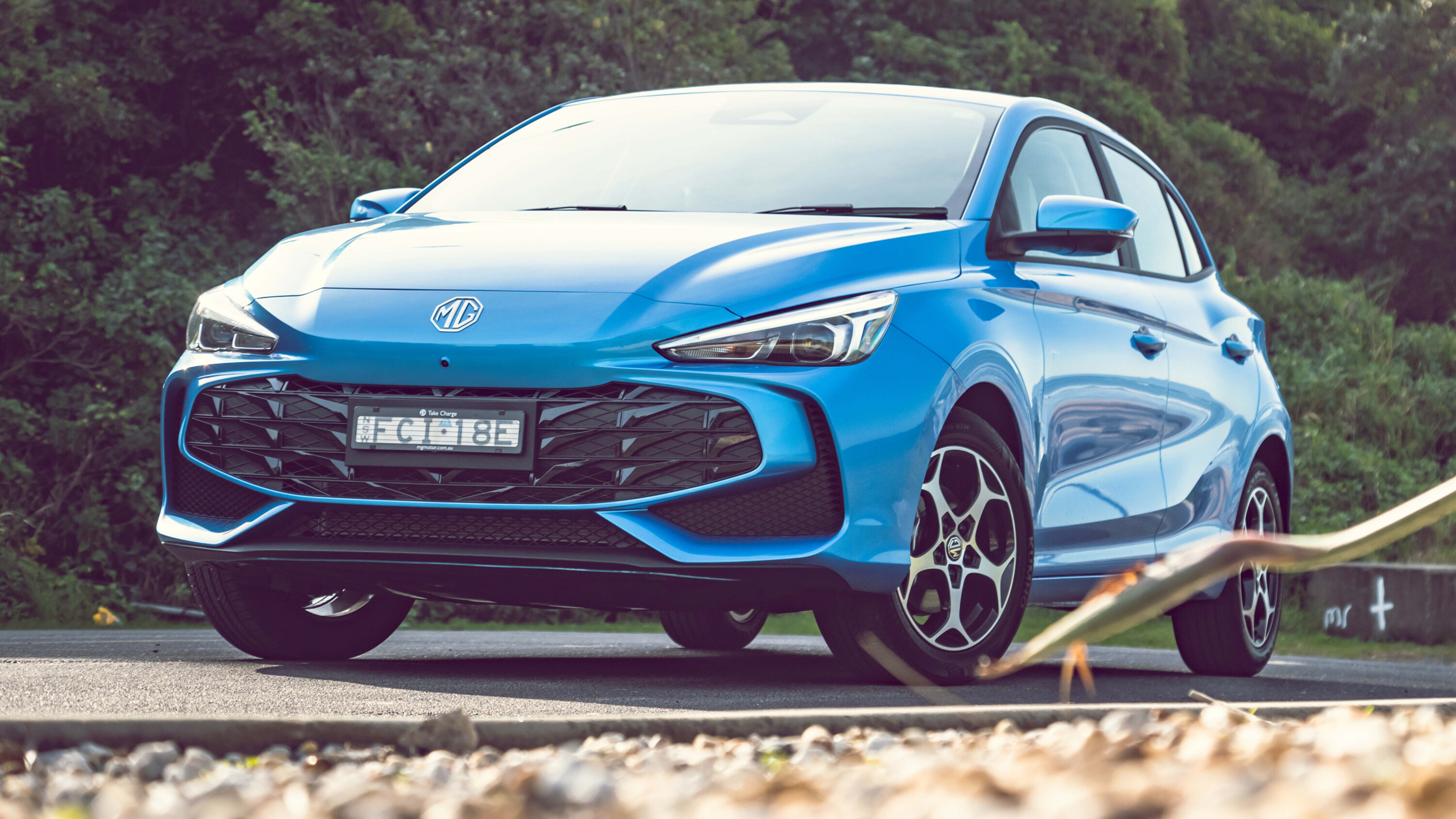
VERDICT
The MG4 – our Wheels Best EV Under $80,000 – reset expectations for future MG models.
Our hope was that the MG3 would carry plenty of that electric hatch’s strong DNA while being mostly differentiated by having a petrol engine under the bonnet as well as an electric motor.
In many respects that’s the case, while the hybrid also offers a ride even better suited to Australian roads.
If various quirks, patchy steering, and a question mark against everyday fuel economy pull the MG3 up short of small-car brilliance, still noteworthy is the giant leap over its predecessor to become a solid and highly likeable city-car package that’s far easier to recommend.
| 2024 MG3 pricing (RRPs) | |
|---|---|
| MG3 Excite petrol | $23,990 |
| MG3 Essence petrol | $25,990 |
| MG3 Hybrid+ Excite | $27,990 |
| MG3 Hybrid+ Essence | $29,990 |
