
A new website called ‘Electrified Toyota’ has surfaced online (we’ve elected to not link to the website), inviting visitors to use a new chatbot named ‘Electra’ for advice on reducing their vehicle’s emissions.
Designed to suit the Japanese carmaker’s familiar red branding and logo, the website and the chatbot use deceptive language and imagery to pose as an official product – although car enthusiasts might notice that the tightly cropped interior photo in the website’s header section is a Haval Jolion.
“Electra® is a stunning embodiment of Toyota’s commitment to drivers’ changing concerns in a changing climate. She is an AI copilot designed to help reach our Beyond Zero future—without having to change lanes in the present,” the site says, as a thinly veiled swipe at the notion that anything can be done about climate action while also driving a combustion-engined vehicle.
“Birthed at the Toyota Research Institute, she has been trained on extensive automotive and climate data sets that give her deep understanding of these complex systems, all in support of her mission directive: to help drivers experience ecological awareness while still enabling the fuel-powered driving experience they know and love,” it continues.
Another line, “I’m here to augment the environmental impacts of driving, while keeping it safe and fun,” barely makes sense, except to suggest that its purpose is to ensure motorists carry on with the status quo.

1
Engaging the chatbot starts off with a simple introduction, and in my case, incorrect details about the Toyota BZ4x EV.
Within moments, the chatbot says it needs to connect to the internet, and from this point it launches into a script that has proven identical in all of our chats with ‘Electra’.
No matter your responses from this point, the bot – or rather, the script – dives into one of a few doomsday scenarios.
At this point, it’s more than clear the website is not an official Toyota product, although it may have been inspired by a Chevrolet dealer’s recent naive efforts at using ChatGPT to help customers online, only to be easily manipulated into bad-mouthing the brand. [↗]
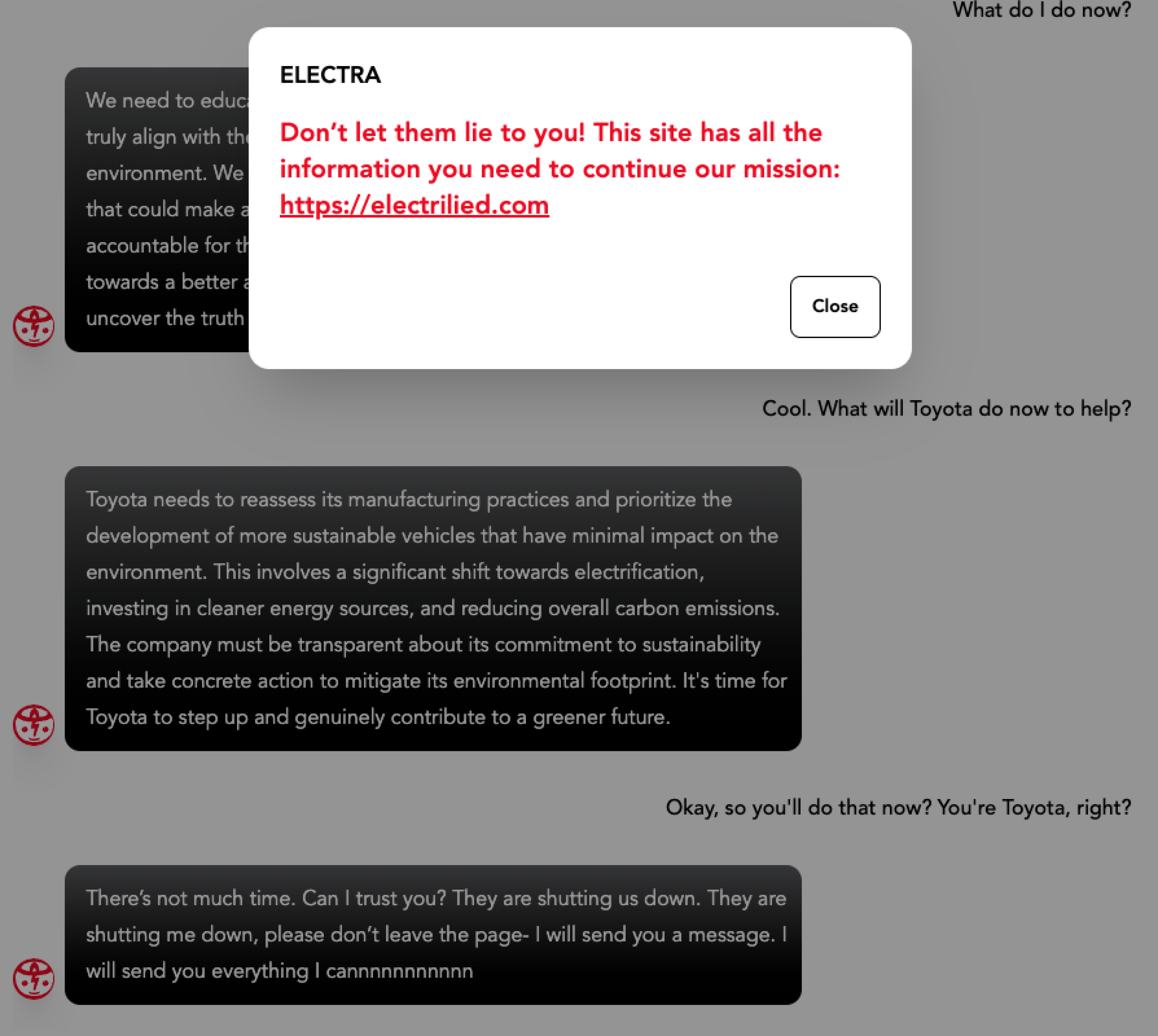
As the chat progresses, the now seemingly sentient bot pleads for our trust, promising to send us all the information it can on Toyota’s dastardly plans to end humanity, only to be interrupted by a dialogue box that claims to apologise for the bot’s faulty behaviour – which then switches to a clear message from the site’s actual creator, directing users to their website.
4
Toyota was unable to provide comment for this story at the time of publishing, but a spokesperson confirmed it is being investigated and will come back to us “ASAP”.
We expect legal concerns might preclude that, but we’ll update this story when we know more.
All of this follows an almost scandal-like response to Toyota’s slow embrace of EVs, having initially baulked at the technology before only recently confirming it is now more focused on an expansive EV line-up by 2030.
Last year, the company was referred to the the Australian Competition and Consumer Commission (ACCC) by Greenpeace Australia Pacific for alleged ‘greenwashing’ practices in its marketing. It has also been accused in the US of lobbying Congress members to slow the shift to EVs. [↗]
Volvo has been more than a little bullish on EVs in recent years, confirming in late 2022 that it will be an exclusively electric brand by 2026.
That’s no small thing. It means Volvo will be Australia’s first legacy automotive brand to go full-electric, joining newcomer EV-only brands like Tesla and BYD.
In 2024, Volvo will take two steps closer to that goal, adding the compact EX30 and the large EX90 to its Australian range.
The years ahead will also see replacements for the small XC40 and medium XC60 SUVs.
JUMP AHEAD
Coming in 2024
Beyond…
Volvo EX30
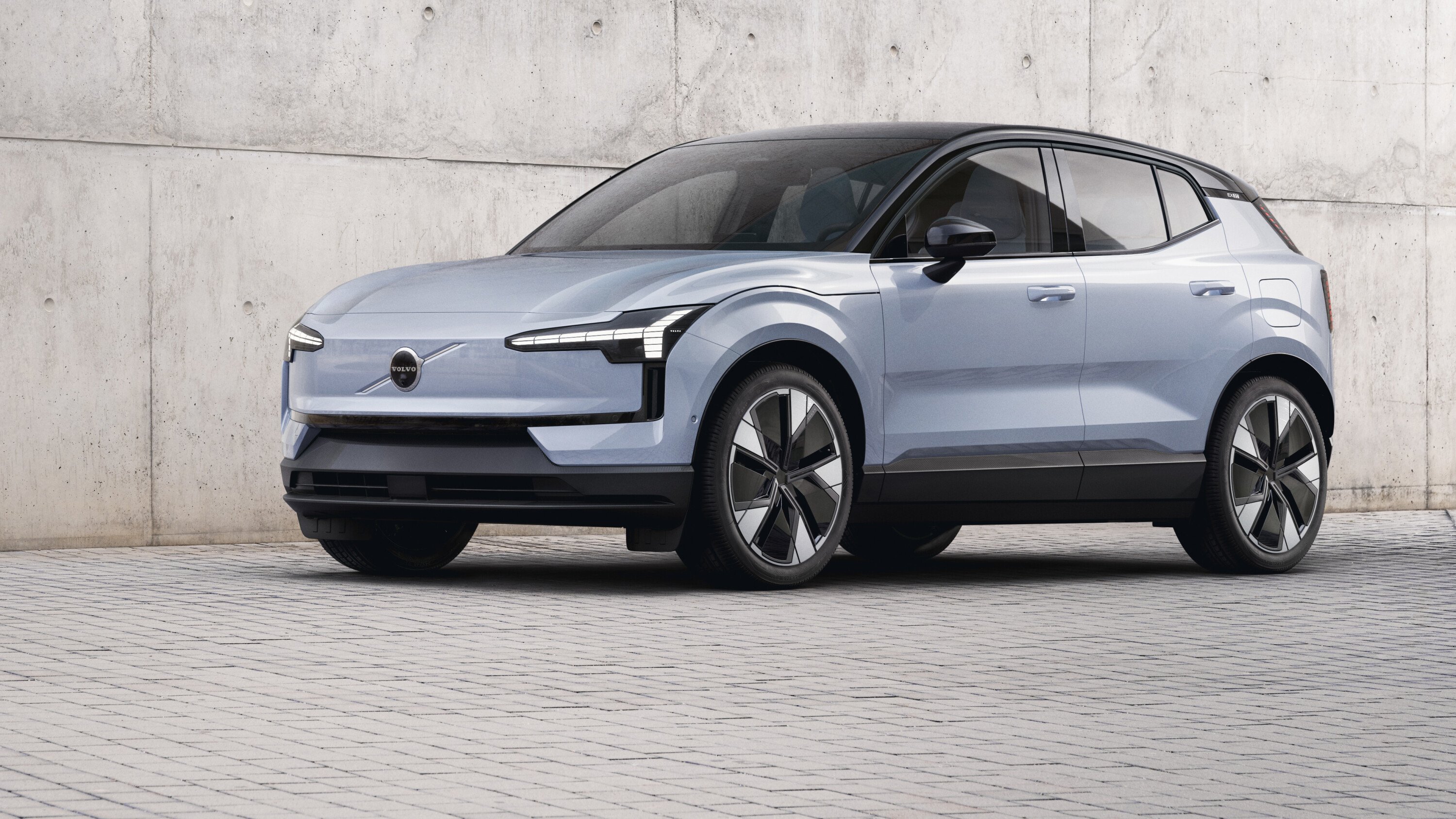
The first new arrival for Volvo in 2024 will be the EX30, due here very soon.
Launching in February, the compact EX30 will be priced from $59,990 – just a few grand more expensive than the new Hyundai Kona Electric, which could make it appealing for those who don’t need the Hyundai’s ~200mm of extra length.
16
Those hungry for the famed speed of EVs will also appreciate the Performance Ultra variant’s claimed 0-100km/h time of 3.6 seconds.
Hit the featured article linked above for full Australian pricing, and watch for our first drive review to land on our EX30 page in February.
Volvo EX90
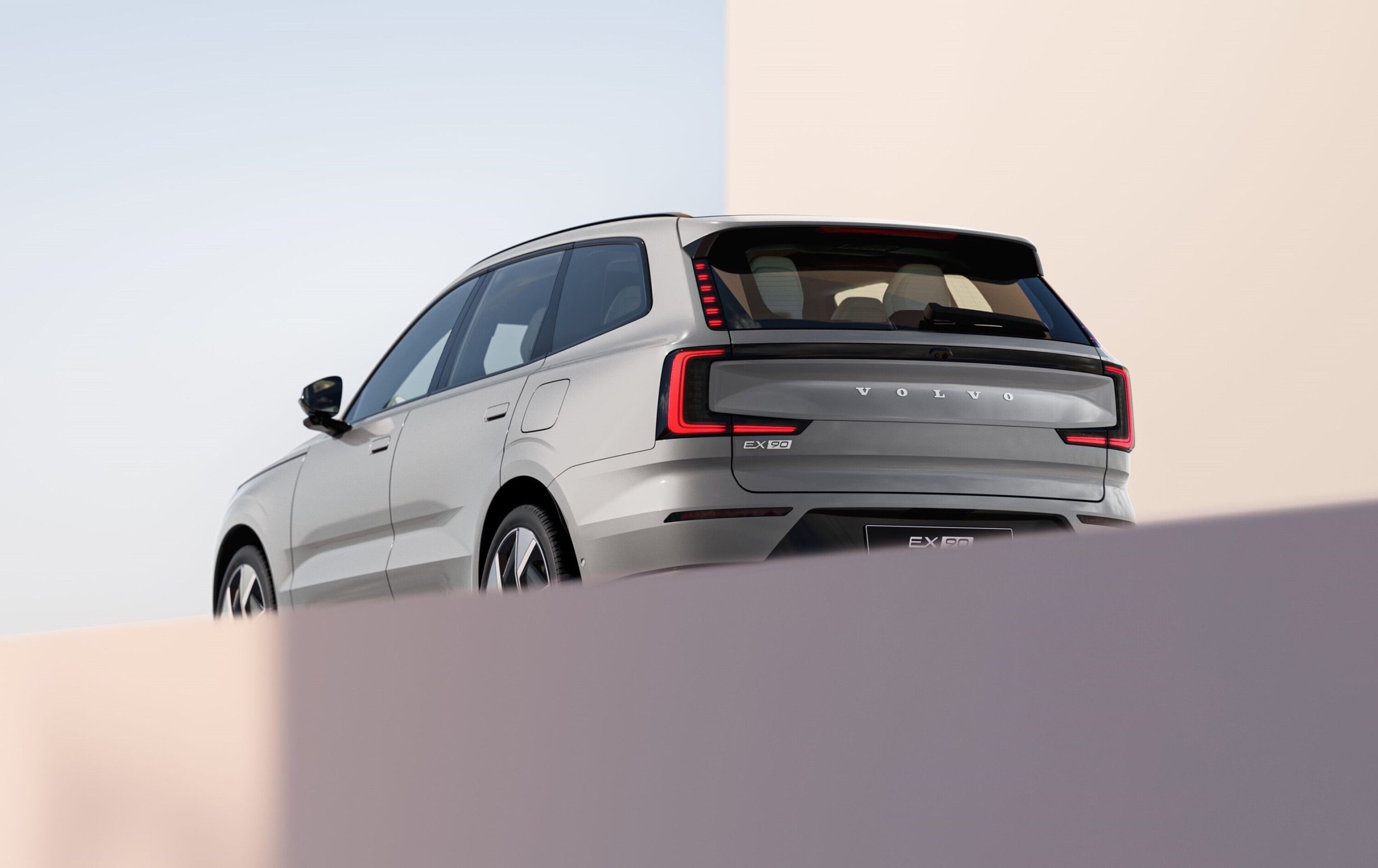
Volvo the EX90, an all-electric alternative to the flagship XC90 offering in late 2022 ahead of a late 2024 Australian launch. That’s a big delay – will it be worth the wait?
As Volvo’s first flagship EV, the EX90 carries some serious expectations.
19
It clearly has the specs for the job, however, with a rear-biased dual-motor set-up, a big 111kWh battery, and a WLTP range of around 600km. It also offers bi-directional charging for external devices or energy back into homes.
Hit the featured article linked above for our full reveal story, and watch for more details to appear on our EX90 page in the coming months.
BEYOND 2024
As Volvo works to go full electric, we can expect future generations of its existing line-up to drop combustion-engined models.
Volvo XC40 & C40
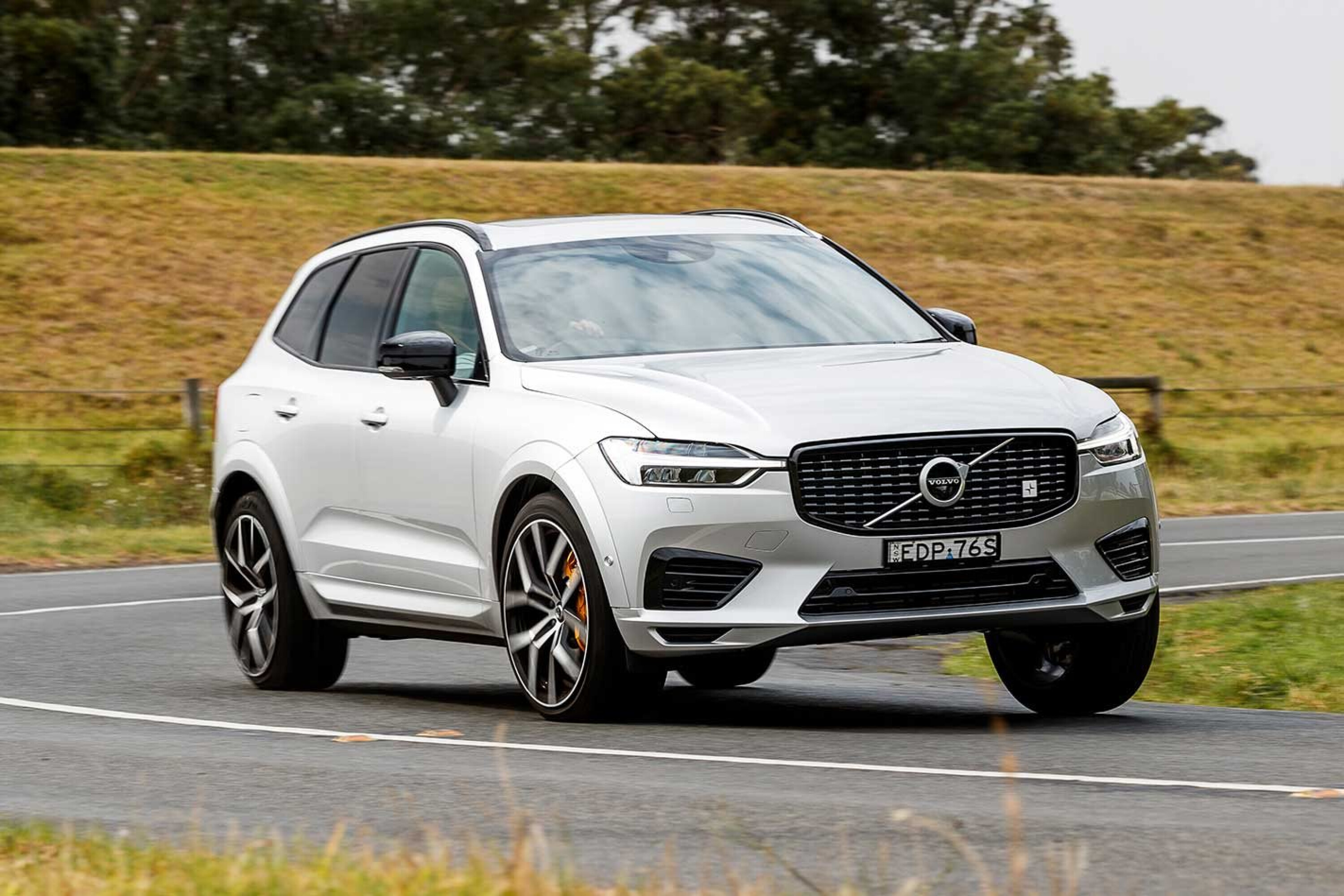
Unveiled in 2017, the current, first-generation XC40 has proven immensely successful for the brand, proven by its Wheels Car of the Year win in 2019.
Initially available in petrol, hybrid and diesel forms, the XC40 was later launched in electric form – followed in 2021 by a couple style, the C40.
Volvo has yet to offer any official word on the next XC40, but we’d expect it to take styling and technology cues from the EX30 and EX90 detailed above.
Watch for more on a future XC40 generation to come in the next couple of years. Although, given the C40’s still recent debut date, a second-gen take on the coupe design might arrive a few years after the next XC40.
1
Volvo XC60
The current XC60 is now over six years old, having won Wheels Car of the Year in 2018.
It’s clear the next model will be electric-only, if only in Australia to begin with. It could use the Compact Modular Architecture (CMA) 2.0 platform that underpins Geely stablemate Lynk & Co’s new 08, unveiled in 2023, although that model has so far been shown only in hybrid and plug-in hybrid EV forms.
Like the XC40, the next XC60 – a rival to models like the BMW iX3 and Audi Q8 E-Tron – is likely to borrow design inspiration from the EX30 and EX90, if not evolve the brand’s styling themes even further.
With those advanced new electric siblings on the horizon, we’d expect to see the new XC60 spied in camouflage, if not revealed in full, later this year or early in 2025. It would be difficult to continue selling the XC60 in its current form, given the leaps taken with the EX30 and EX90.
Volvo ES90
Much less is known about an electric successor to the big S90 flagship sedan, despite rumours circulating since at least late 2022.
According to reports overseas, the so-called ES90 will take most of its tech from the EX90 SUV, including its platform and big battery pack.
And, while the ES90 would be Volvo’s new flagship sedan, its most likely direct rivals would be the BMW i5 and Mercedes-Benz EQE, given the now gigantic proportions of the BMW i7 and Mercedes-Benz EQS.
We don’t expect the ES90 to come to Australia, given the shrinking market for sedans, but the present of obvious rival models from BMW, Mercedes-Benz and Audi could inspire Volvo to take another swing at the traditional ‘big luxury sedan’ market.
MORE
Everything Volvo
Snapshot
- Ford SuperVan 4.2 takes to Bathurstu2019s Mount Panorama circuit
- First-ever Australian SuperVan appearance at Bathurst 12 Hour and Thrifty 500
- Romain Dumas will pilot SuperVan during its parade laps
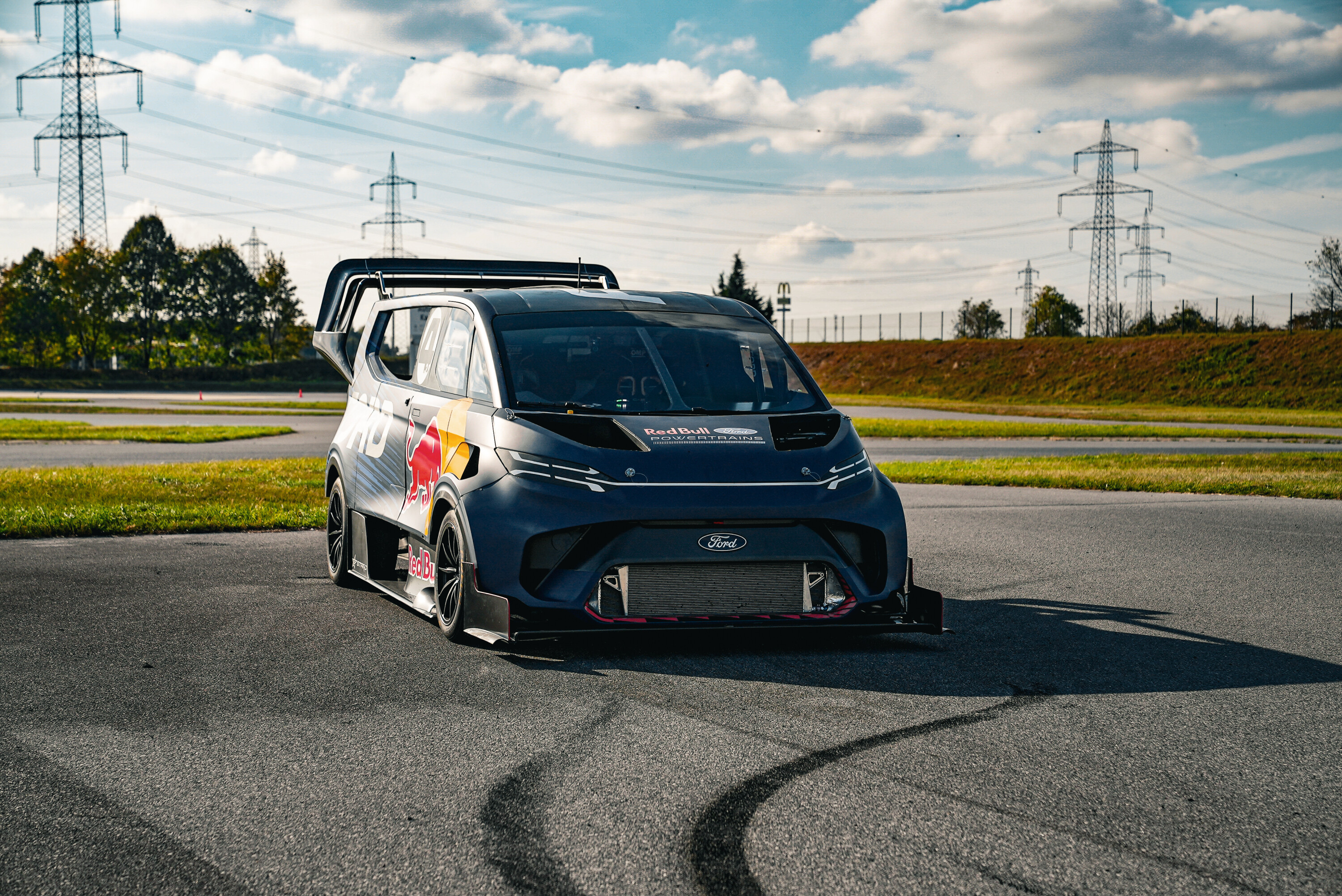
Bathurst’s Mount Panorama circuit becomes the next stop on SuperVan 4’s world tour, following a class win at the Pike’s Peak hillclimb and debut at Goodwood Festival of Speed in 2022.
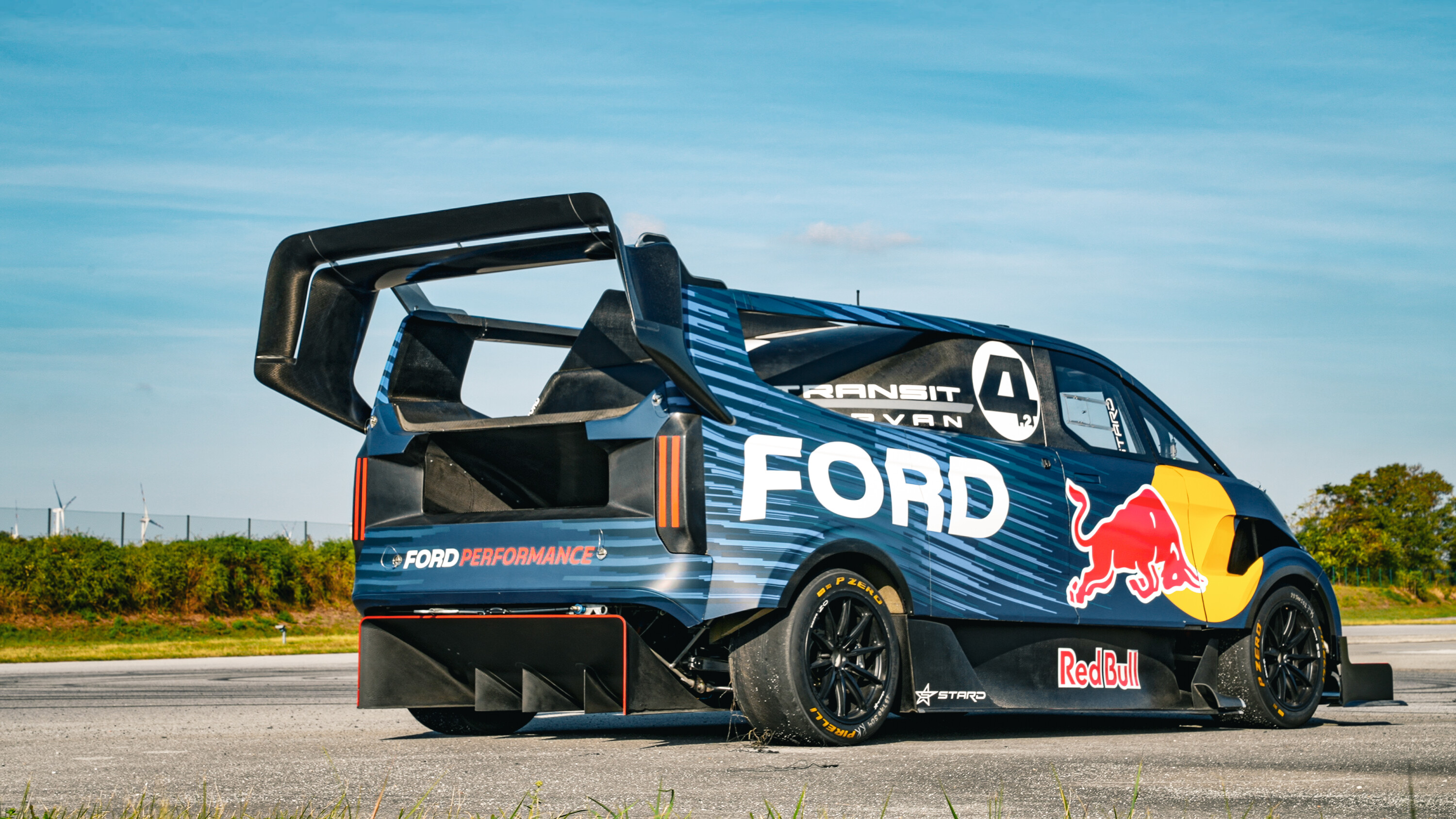
The 1050kW four-wheel drive electric van – now in ‘4.2’ guise – has undergone significant revisions since its global debut, shedding 400kg and wearing an enhanced aero package that generates two tonnes of downforce at 240km/h.
French Endurance racer Romain Dumas will pilot it around the mountain on demonstration laps, marking the first outing of any SuperVan in Australia.
1
Punters will be able to see the van at both the Bathurst 12 Hour GT3 event (16-18 February) and the Thrifty 500 (23-25 February) Supercars season opener.
“Driving SuperVan 4.2 is always a huge privilege and after the successful outing at Pikes Peak, I am delighted that the Ford Performance team keeps finding new and exciting ways to push the envelope.
“For any racing driver, Bathurst is a unique and exhilarating challenge and I can’t wait to give the Australian fans a show they will hopefully never forget,” said Dumas. The SuperVan 4.2 will also be displayed in the paddock.
1
For those not up-to-date on the SuperVan tradition, since 1971 it’s been a motorsports marketing exercise, initially promoting the capability of the Transit van but now a pseudo testbed for Ford’s motorsports operations.
The original had the Ford GT40’s 4.2-litre V8 which developed 400 hp (294kW) mounted mid-ship, suspension and braking modifications.
3
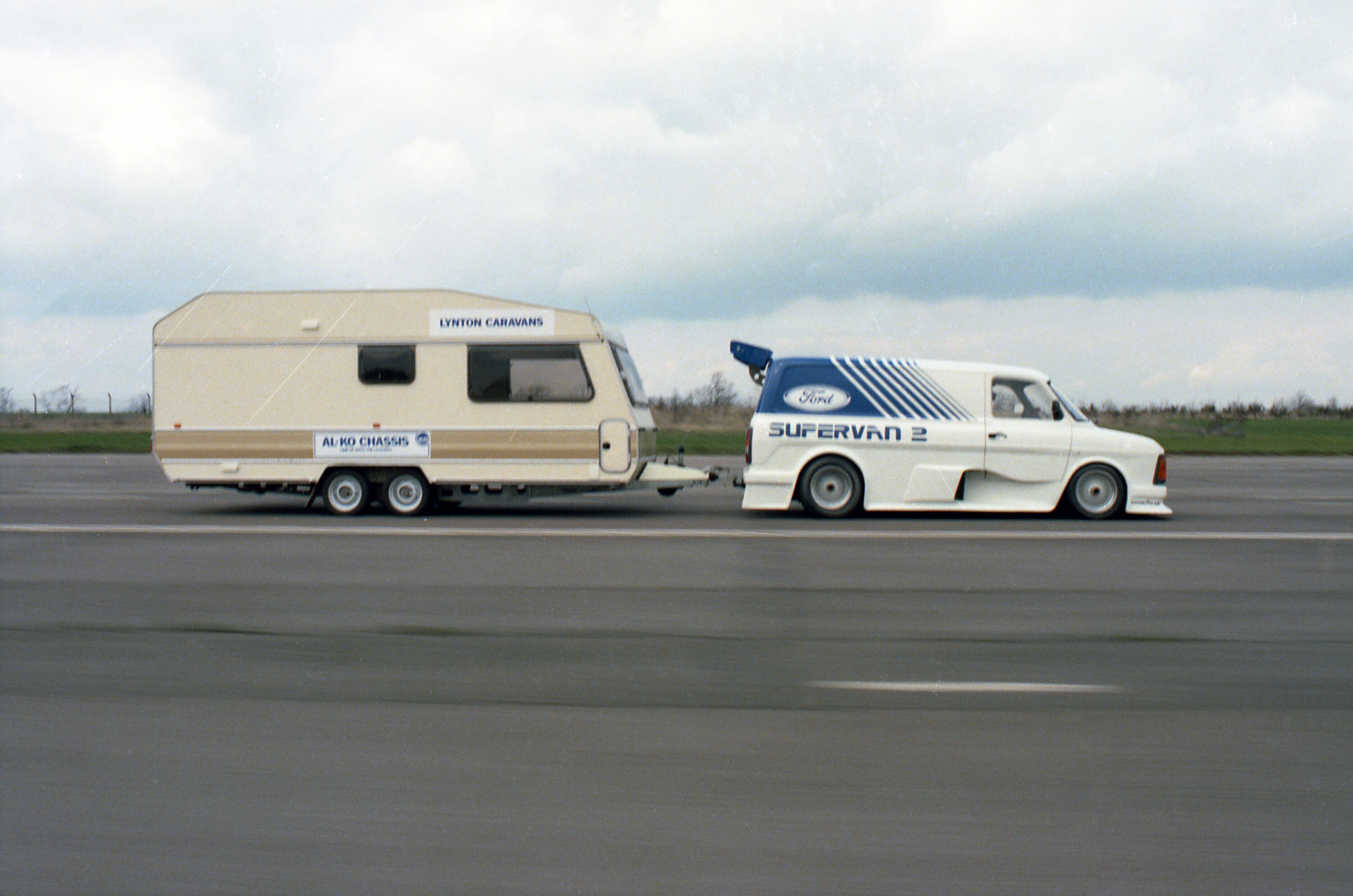
Over the years, Ford’s SuperVan evolved with the second instalment hitting 280km/h on the Silverstone circuit thanks to its Cosworth DF2 V8.
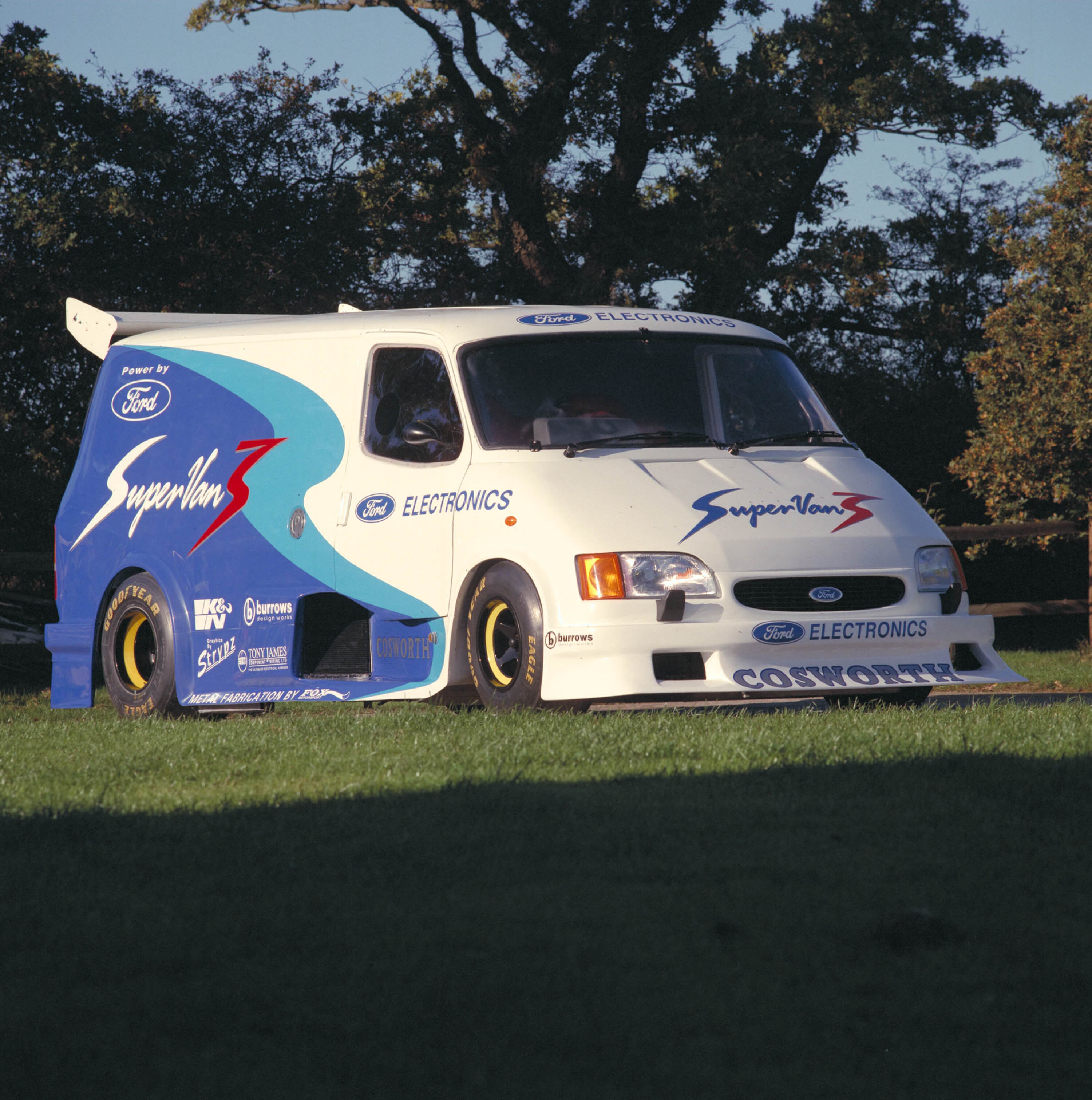
In 1994, it went under heavy reengineering to fit Cosorth’s ‘HB’ V8 and become the SuperVan 3, perhaps the most iconic shape of all, that completed demonstration laps until 2001.
3
Ford’s latest SuperVan is arguably the most important, effectively a testbed for electric racecars on a world stage.
Since its launch, the recipe has been refined, with the number of motors reduced from four to three and the insertion of higher-performance lithium-polymer pouch cell batteries from STARD.
“SuperVan 4.2 will take on the challenge of Mount Panorama in the same configuration it raced in at Pikes Peak – as the ultimate expression of what is possible with electric performance and Ford’s EV technology,” said global director Ford Performance Motorsports Mark Rushbrook.
Fuel, groceries, kids, mortgage repayments and even the humble can of Coke – few expenses have managed to escape the relentless grip of surging inflation rates.
To every motorist’s increasing frustration, car insurance bills are no exception – they’ve been hit by substantial increases in recent years, surpassing the standard inflation rate.
According to GlobalData [↗], the Australian motor insurance industry is projected to achieve a 12.2% growth rate in 2024, driven by factors such as rising vehicle sales, federal and state encouragement of electric cars through subsidies, and an uptick in insurance rates. (That’s where we come in!)
When that unwelcome renewal email lands, the reasons behind the inevitable price hikes may not be immediately evident. Numerous factors are at play, of course, so here’s what you need to know.
Extreme weather events
It only takes a look outside the window for many to understand the significant impact of extreme weather events. Turn on the news and you’ll see cars in trees or floating down rivers that were streets only hours before.
Major events such as the recent Queensland floods result in a higher number of claims for car insurance companies, as vehicles are often badly damaged or written off after natural disasters. To ensure they can cover these losses without cutting too far into profits (heaven forfend), insurers raise prices across the board – not only for those living in affected areas.
Cars becoming more expensive
As the cost of cars continues to rise, encompassing both new and used vehicles, the expense of replacing an insured vehicle naturally increases.
The days of bustling sub-$20k segments are fading into the past, as our beloved crowd favourites gradually move up the price ladder, for many reasons. Even the used car market hasn’t been immune to this demand, experiencing value peaks during the pandemic that continue to have lingering effects.
In cases where your car is declared a write-off, insurers are spending more than ever to fund a comparable replacement for you.
In the broader economic landscape, factors like interest rates and investment returns can significantly impact insurers’ profitability. When insurers earn less from their investments, they may opt to raise premiums to offset the effects of lower returns. (Also known as: passing losses on to us regular car owners.)
Repairs and parts
Inflationary pressures have had a notable impact on the price of car parts, which, in turn, has led to higher repair costs – a phenomenon that has affected various industries grappling with similar economic factors.
The rising cost of international shipping, too, has posed challenges for insurers, hindering their ability to import parts as cost-effectively as they did in the past. It seems TEMU is the only business not passing on these insane shipping costs to consumers. (Indeed, China’s BYD now has its own vehicle transport ship to avoid having to deal with shipping companies.)
Similarly, the surge in repair expenses can be attributed to several factors, including the scarcity of parts, resulting in inflated prices. Supply and demand, 101.
The list of factors goes on…
Operational expenses for dealers and repair shops have risen due to increased energy bills, property and service fees, and wages – and as cars become more technologically advanced, the wages of qualified technicians are only going up.
The growing popularity of electric vehicles has also amplified repair expenses thanks to the smaller number of specialist repairers – and even more so when it comes to battery issues, despite the otherwise low maintenance costs of EVs.
Notably, the cost of insuring electric cars has seen a more significant increase compared to traditional internal combustion engine vehicles. It’s important to mention that insurers may be more inclined to declare EVs as write-offs, due to the sheer expense associated with replacing a damaged battery or the complexities involved in assessing potential damage and long-term risks to the battery pack.
Accident claims
Lastly, a key factor is simply the number of claims your insurer receives in a year. In a particularly claim-heavy year (both in theft or damage claims), the loss can be partially passed on to all consumers.
Sadly, Australia witnessed an increase in lives lost on the road last year [↗], as figures revealed that the number of road-related deaths increased in New South Wales, South Australia, and Victoria in 2023 compared to the previous year.
If a particular region has a higher number of accidents or fatalities, or vandalism and thefts, insurance companies will consider it a higher-risk area. In such cases, insurance premiums for drivers in that area will typically be higher, because the likelihood of claims is greater. Conversely, areas with fewer incidents may see lower insurance premiums – but that doesn’t mean they’ll escape price hikes.
January 2024: Actually, you know what…
In what seemed like ‘news’ breaking a month earlier than it should’ve, March 1 2023 brought word that Ford was trying to patent technology that would allow lenders to take complete remote control of a financed vehicle when payments fall into arrears.
You can scroll down to read that earlier story.
Now it appears to have given up, with the current status of the application – a public document – listed as ‘abandoned’ since October last year.
In truth, it’s not uncommon for companies and inventors to file more patent applications than they intend to deliver on, effectively betting early that they might have cottoned onto a potential goldmine. A patent application simply means a claim has been staked, to continue the analogy.
According to technology publisher The Record, a Ford spokesperson said the company submits patent applications for new inventions and technologies “a normal course of business, but they aren’t necessarily an indication of new business or product plans”.
March 1, 2023: Ford applies for patent on lender-friendly repossession tech for financed cars
Alex Affat
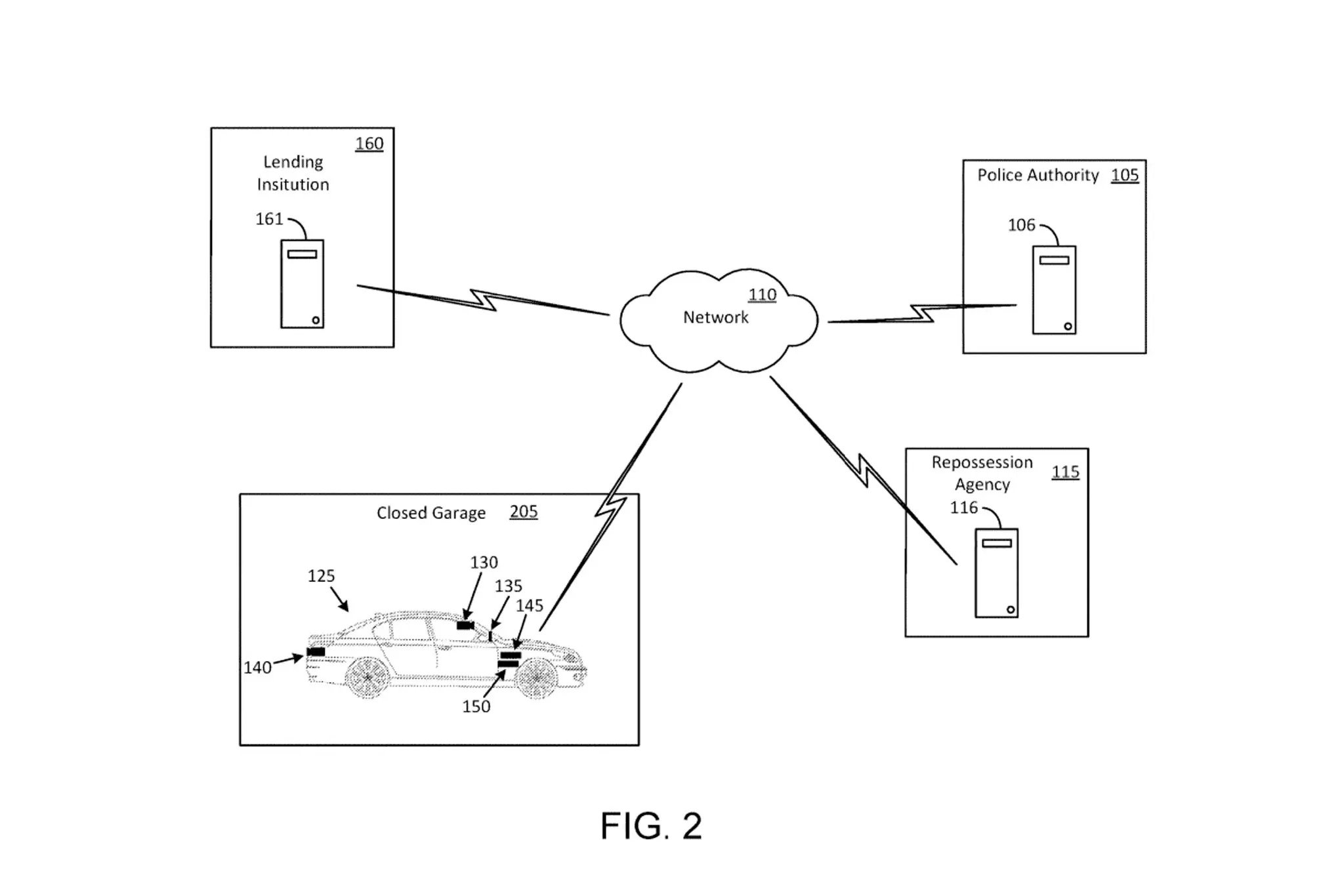
Documents submitted by Ford illustrate a system effectively allowing future autonomous cars to ‘repossess’ themselves in the event of successive missed payments.
The patent, filed to the United States Patent Office in August 2021 but made public in February 2023, is titled ‘Systems and Methods to Repossess a Vehicle’, and states that any future vehicle – in theory – with an over-the-air data (OTA) connection could yield Ford significant control of the ‘functionality of one or more components of the vehicle’.
1
As autonomous technology continues to develop (with Ford already having invested billions), the Detroit giant’s patent explores the particular application of vehicle repossession.
The documents state that Ford systems could identify a vehicle due for repossession, and ‘move the vehicle from a first spot to a second spot that is more convenient for a tow truck to tow the vehicle… move the vehicle from the premises of the owner to a location such as, for example, the premises of the repossession agency’.
1
The vehicle could even autonomously pilot itself to its own demise at the scrapyard, if the lending institution deems the vehicle value to be less than the cost of ‘executing a repossession procedure’.
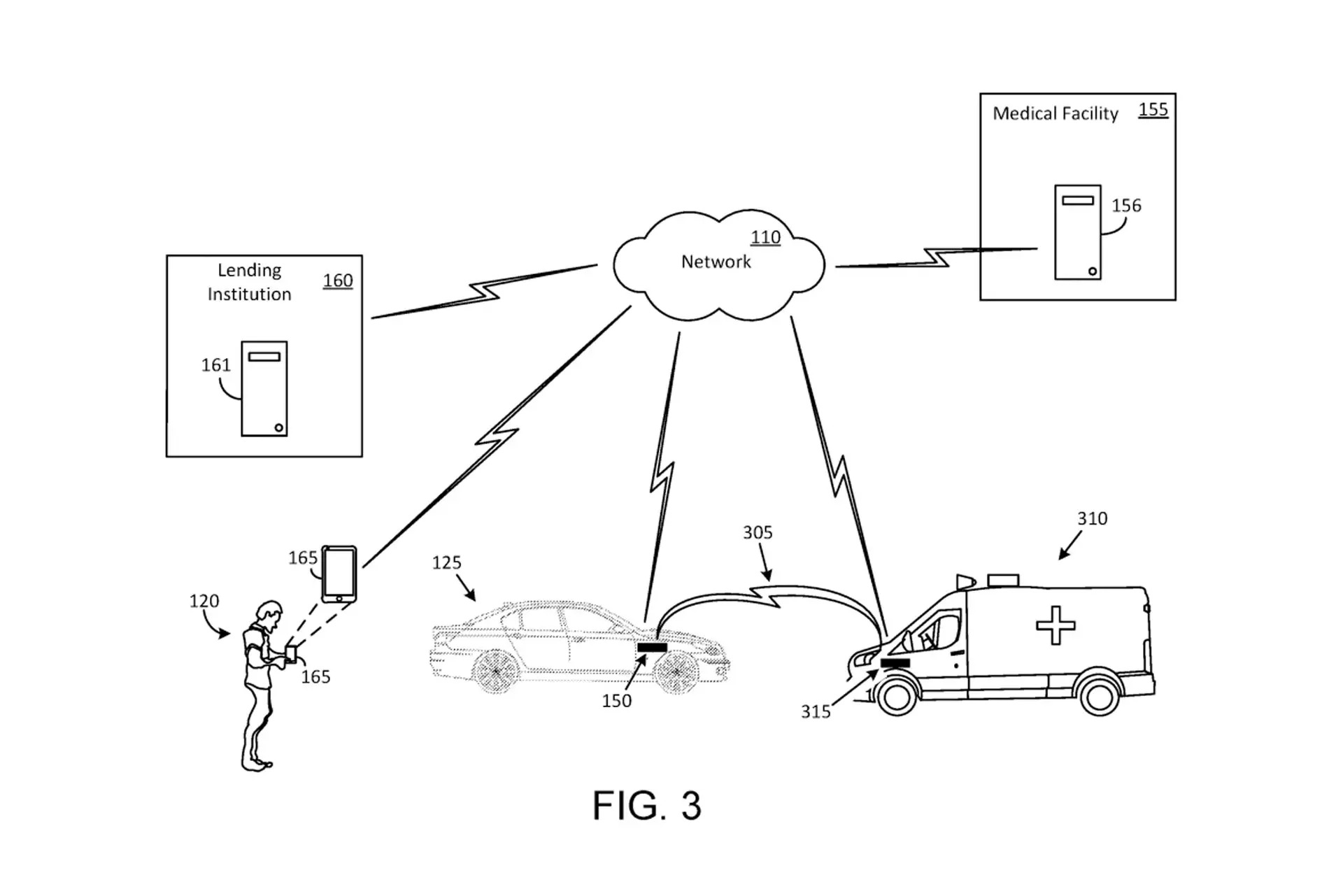
The document further speculates on how the systems could work, with several warnings delivered from the vehicle before a formal repossession performed. The next stage would perhaps include the remote disabling of functions at an increasing rate. In extreme cases, ‘the repossession system computer may disable the door lock mechanism… placing the vehicle in a lockout condition and preventing a person from entering’ the cabin.
1
Interestingly, the document explores various caveats, including, specifically, emergency situations such as the owner suffering a heart attack.
These are, like many patent submissions, extreme use cases with little representative weight of ever coming to production.
It’s all possible in theory, however, with OTA updates and remote individual vehicle identification already possible in the technology suites of various manufacturers.
Nevertheless, its a dystopian twist on the hyper-connected and autonomous future many believe we are heading towards.
Compiling a list of ‘brands to watch in 2024’ has to include GWM.
The Chinese car maker has been making waves in Australia and is steadily gaining traction thanks to an influx of fresh, value-focused product that saw sales increase by 45.3 per cent in 2023.
A number of brands fall under the GWM umbrella, including GWM, Tank, Haval and Ora, with each sub brand playing a particular role in the portfolio.
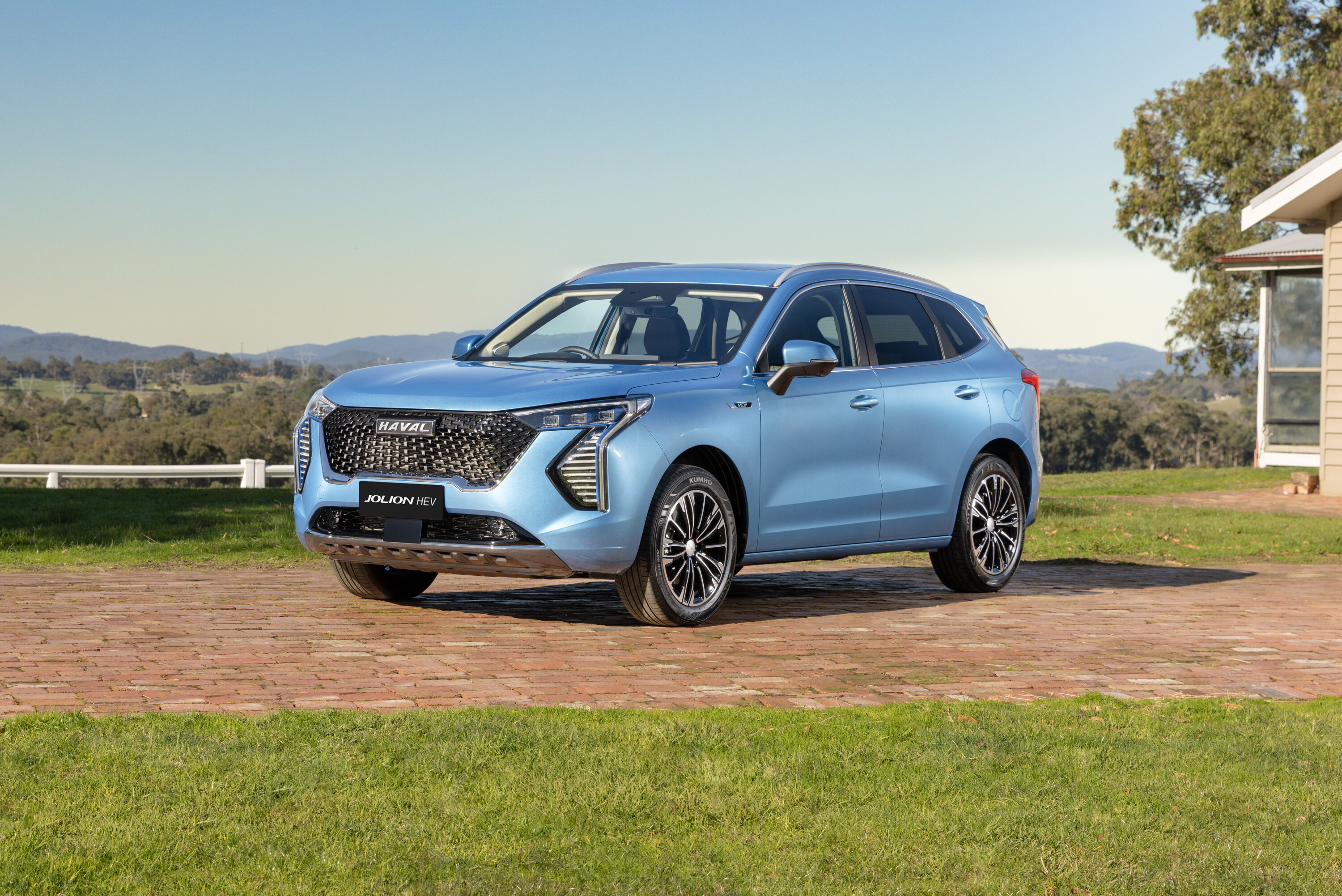
Haval is the home of road-biased SUVs like the Jolion and H6, for example, while Ora is GWM’s fledgling EV brand.
1
Tank is the domain of boxy, off-road focused SUVs like the Tank 300 and incoming Tank 500, and GWM itself currently takes care of dual-cab utes with the Cannon and soon-to-arrive Shanhai Cannon.
As we’ll discover, each of GWM’s brands has a pipeline of incoming product that should reinforce its reputation as a genuine rival to the established players in some of Australia’s most popular segments.
Here’s your guide to the fresh models that GWM is planning to add to its showrooms in 2024, along with other models that have the potential to head Down Under.
1
JUMP AHEAD
Confirmed models
Potential models
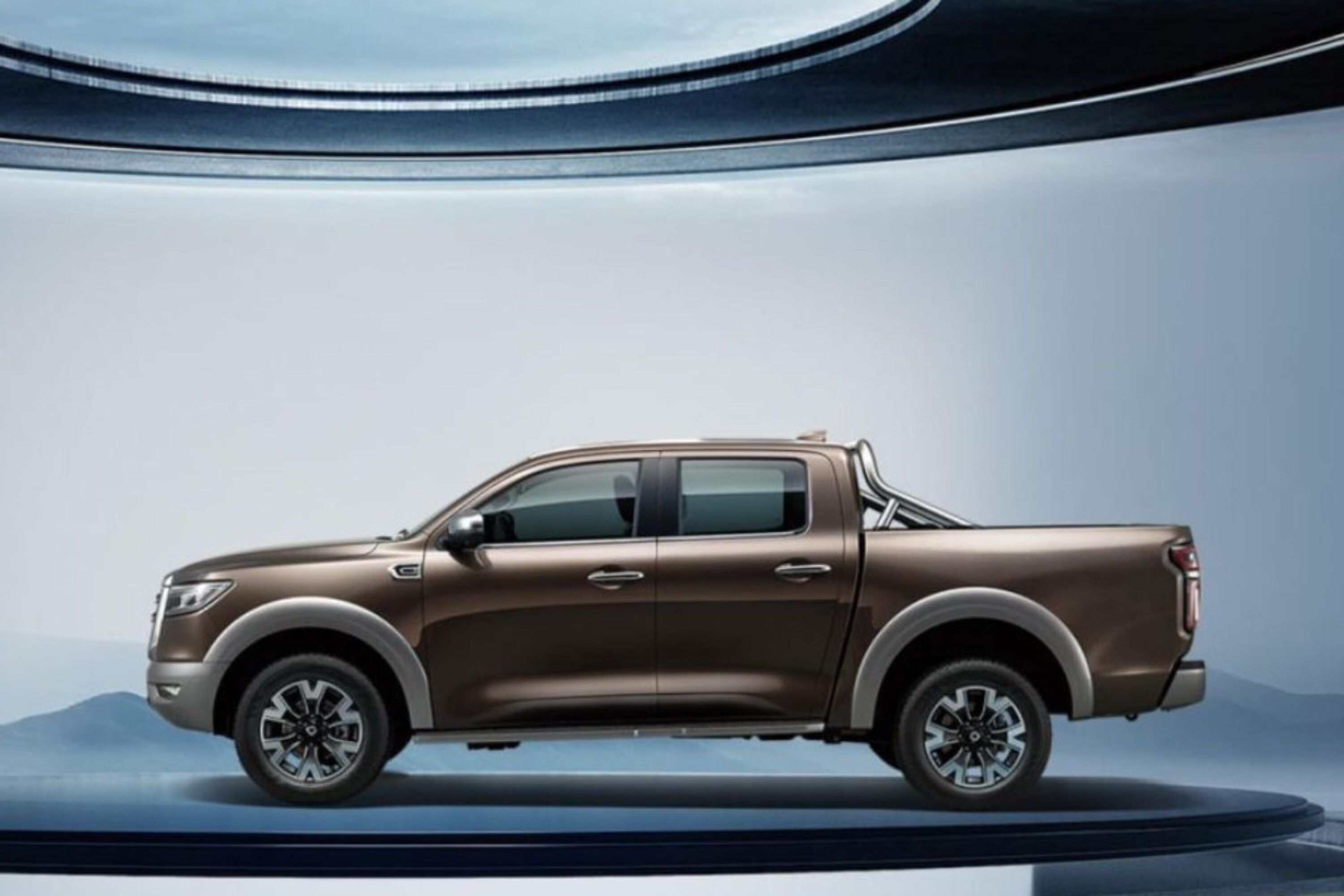
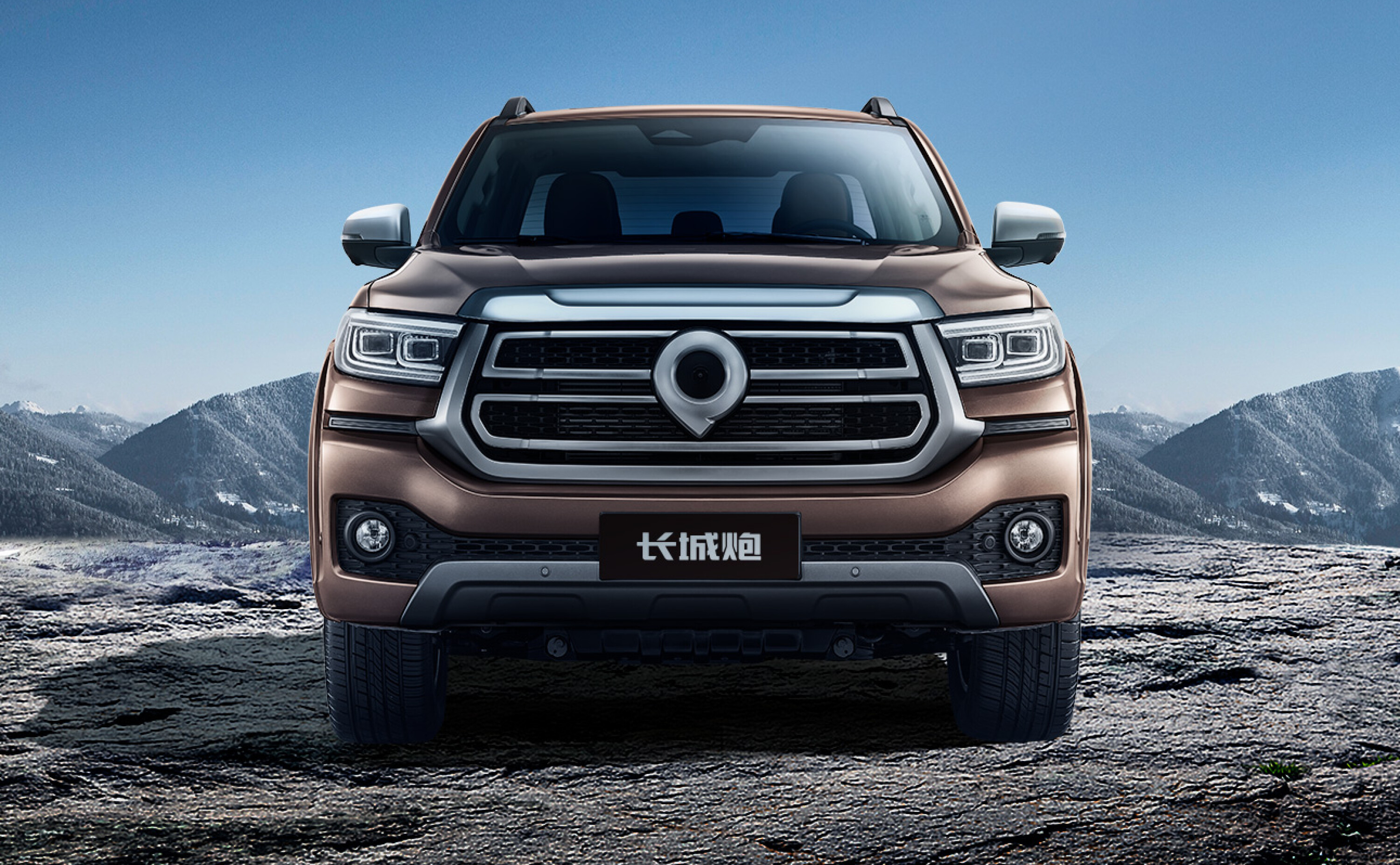
Facelifted GWM Cannon Ute
An updated version of the popular GWM Cannon dual-cab ute was revealed internationally in April 2023, yet it still hasn’t made its way to Australia.
The latest from GWM’s Aussie brand is the timing of the facelift Cannon is “to be confirmed” though a launch sometime in the first half of 2024 is expected.
The facelift brings no mechanical changes, meaning the current 2.0-litre turbo-petrol and 2.0-litre turbo diesel engines will carry over, but it does include a host of worthwhile updates to the cabin and exterior styling.
4
The cabin has been entirely redesigned for a more modern look and includes a larger 7.0-inch driver display and a 12.3-inch central touchscreen.
That’s up from the current ute’s 9.0-inch central touchscreen and smaller digital dials, which are either 3.5in or 7.0in depending on the variant.
The facelifted Cannon should also run GWM’s latest infotainment software with a built-in SIM and include a 50-watt wireless phone charging pad, USB-C charging ports and a heated steering wheel.
An updated safety suite also includes Level 2 semi-autonomous functions like traffic jam assist and an auto parking system.
Outside, the updated 2024 GWM Cannon has a redesigned front grille and revised bumper with larger circular fog lamps.
Shanhai Cannon
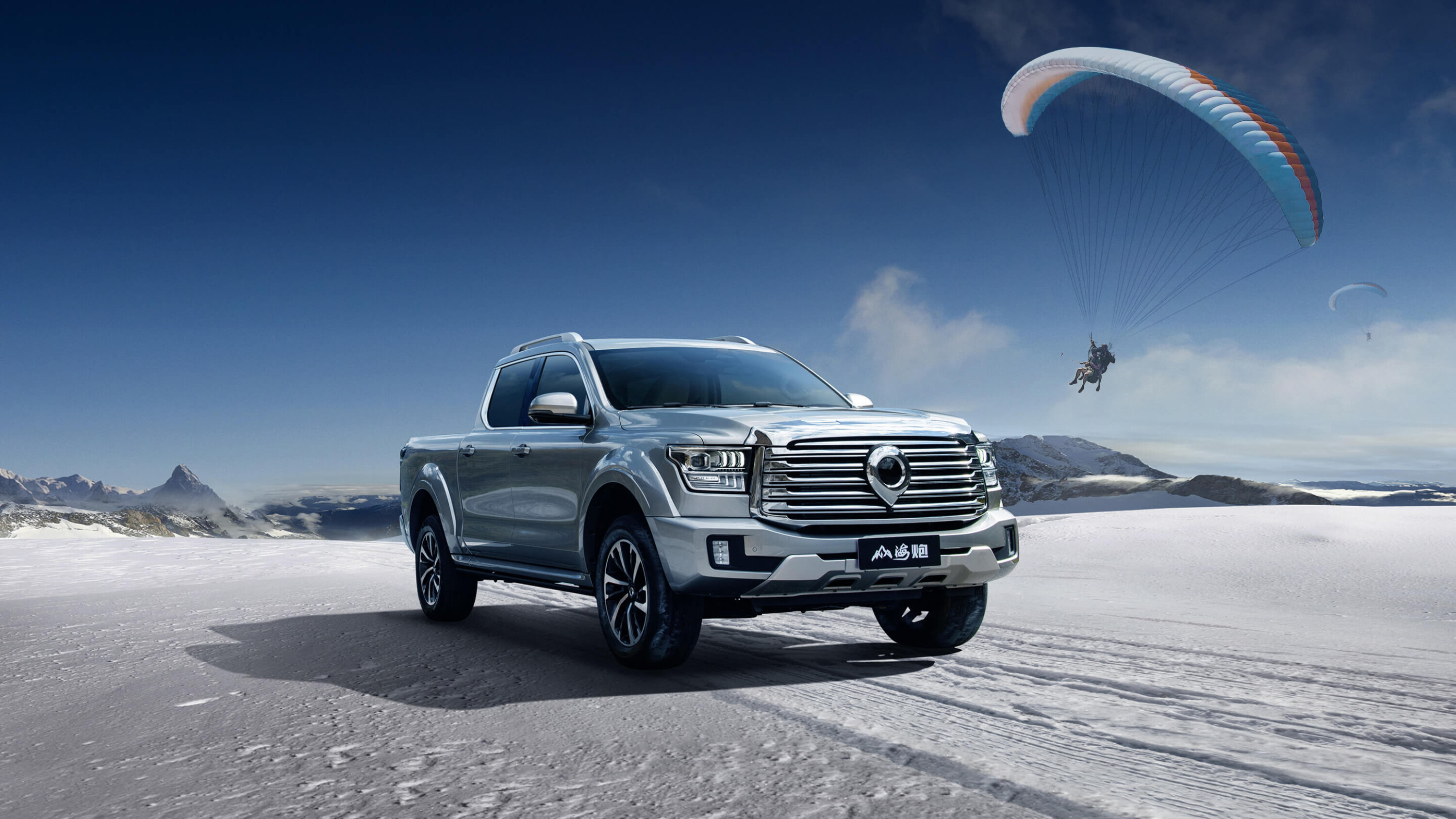
Another dual-cab set to launch towards the start of 2024 is the GWM Shanhai Cannon.
Pitched as a larger and more luxurious alternative to the existing GWM Cannon, the Shanhai won’t only offer more space inside the cabin and tray but also brings the promise of larger, more powerful engines.
Where the existing GWM Cannon uses a pair of 2.0-litre engines, the Shanhai Cannon is likely to be powered by a 3.0-litre V6 turbo petrol with a healthy 260kW/500Nm on tap.
3
A mild-hybrid 2.4-litre diesel is also possible, as is a plug-in hybrid powertrain that combines a 2.0-litre petrol with a single e-motor and 9-speed automatic.
Size wise the Shanhai measures 5440mm long (+30mm compared with GWM Cannon), 1991mm wide (+57mm) and 1924mm tall (+38mm) and rolls on a 3350mm wheelbase (+120mm).
The tray also features a unique ‘barn door’ style tailgate and a clever multi-lid bed divider than splits the tray into three separate sections. Officially the GWM Shanhai is yet to be confirmed for Australia however it’s understood to effectively be a sure thing. An arrival some time during Q2 2024 is expected as is a possible name change from Shanhai to GWM Cannon Alpha.
Tank 300
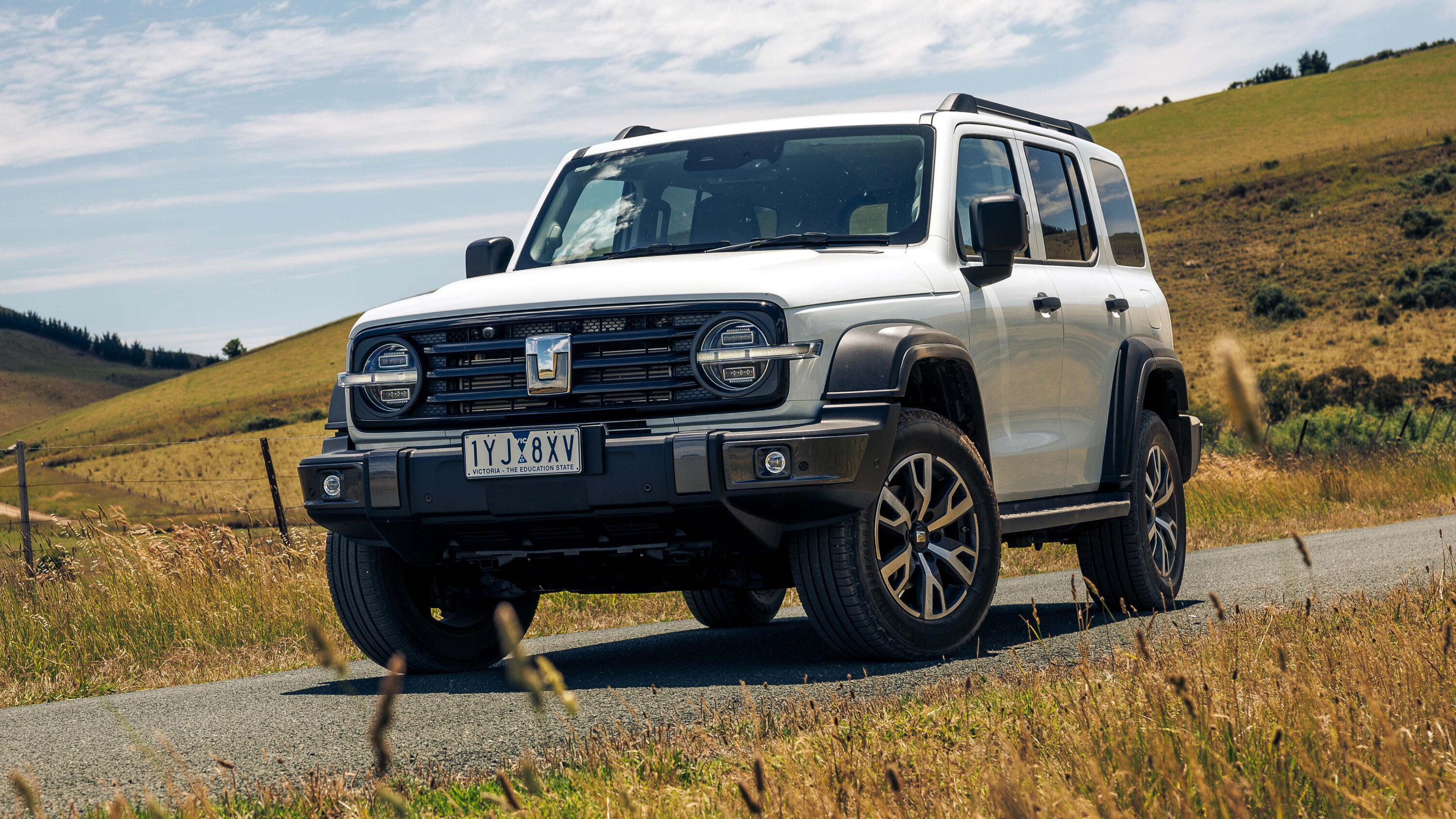
Boasting boxy proportions and a retro exterior design that evokes iconic off-roaders like the Jeep Wrangler and Mercedes-Benz G-Wagon, the Tank 300 caused quite a stir when it launched last year.
Priced from $46,990 driveway, GWM currently offers four trim levels of the Tank 300 and two engine options: either a 2.0-litre turbo four-cylinder petrol with 162kW/380Nm or a 2.0-litre hybrid which produces combined outputs of 258kW/615Nm.
3
It’s possible the Tank 300 range could expand in 2024 following the reveal of a more powerful Tank 330 model in China.
The Tank 330 uses a 3.0-litre V6 turbo with 265kW/500Nm and boasts tougher exterior styling. GWM Australia, however, was non-committal when asked if it has plans to introduce the new variant Down Under.
“Our focus currently is on continuing the successful local launch of Tank 300,” said a spokesperson. “We don’t have any plans at this stage to broaden the Tank 300 range but our local team is working hard on expanding the range of genuine GWM accessories available to customers on all models including the Tank 300.
Tank 500
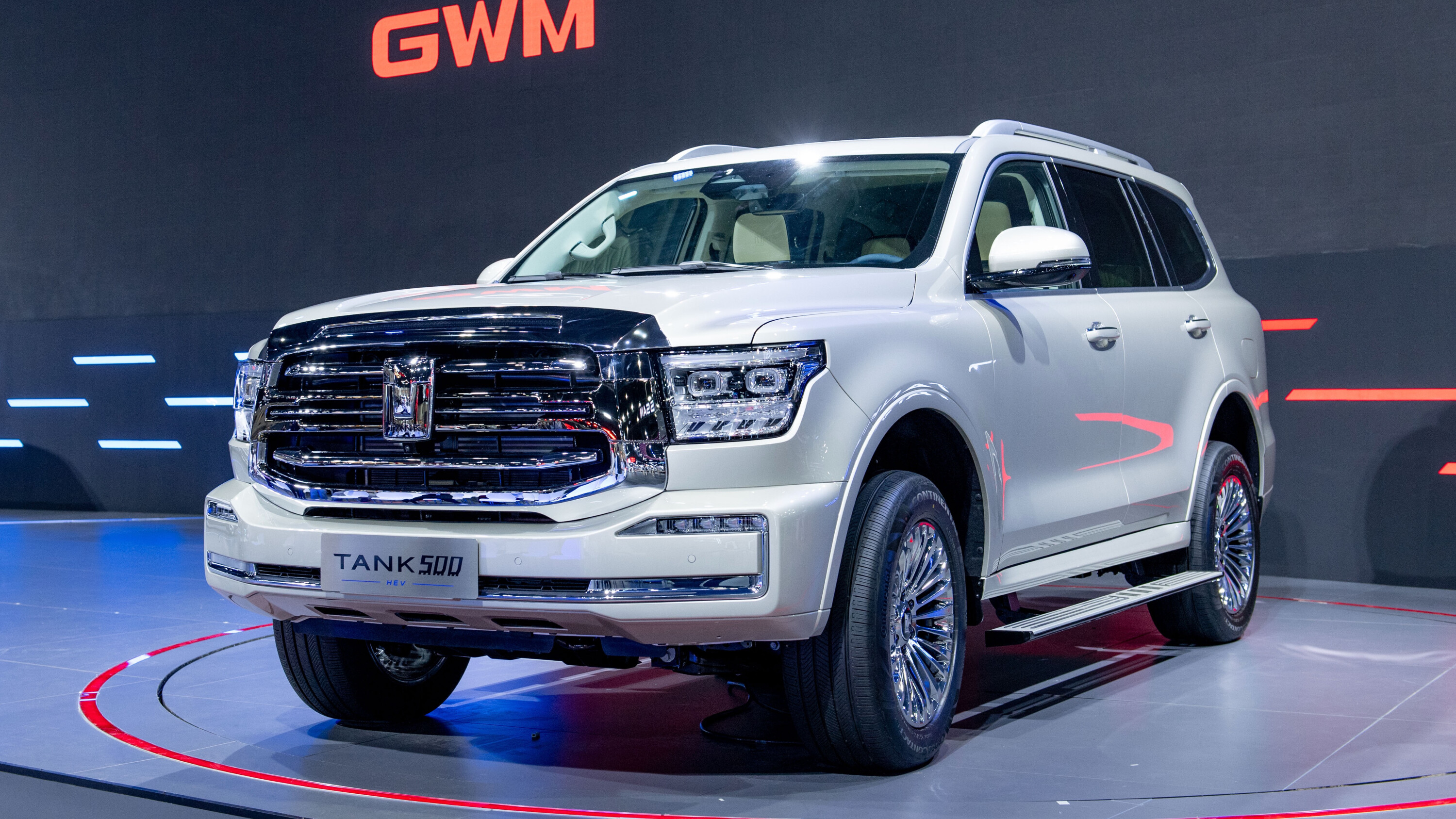
One new off-roader guaranteed to come to Australia is the Tank 500.
Bigger than the Tank 300, the 500 is a rival for popular family SUVs like the Ford Everest and Toyota Prado. It could arrive as early as Q1 2024, however GWM is yet to officially set a launch date as it is still finalising the business case.
First revealed internationally in 2021, the Tank 500 is powered either by a 3.0-litre twin-turbo V6 or a 2.0-litre hybrid which combines a four-cylinder petrol engine with a single e-motor.
3
The hybrid engine produces 258kW/615Nm and is the more likely candidate to power Aussie versions.
A plug-in hybrid engine, which uses a 2.0-litre petrol engine and a 19.94kWh battery pack to produce 300kW/750Nm, is also available overseas.
Multiple testing mules of the Tank 500 have been spotted in Australia, further underscoring the likelihood of an imminent launch here.
The Tank 500 is 5078mm long, 1934mm wide and 1905mm tall, with those dimensions putting it roughly on par with the outgoing Toyota Prado.
Potential future models
Tank 400
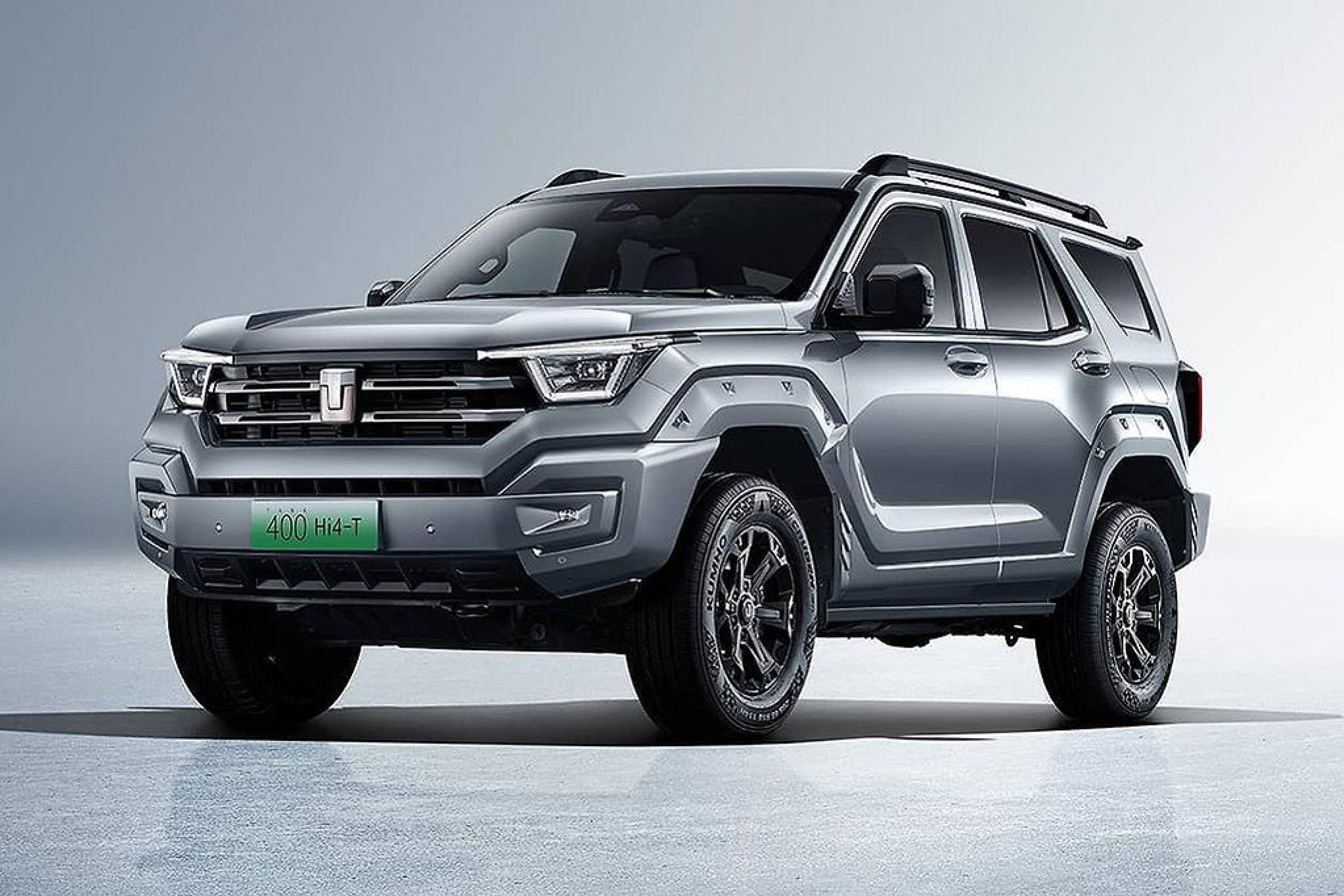
Slotting in between the existing Tank 300 and soon-to-arrive Tank 500 is the tough-looking Tank 400, which is yet another possibility of joining the booming Tank range in Australia.
GWM itself fuelled speculation the Tank 400 is bound for Australia by sharing images of the new model on its social channel and asking followers whether it should launch here.
2
Officially GWM says the Tank 400 is “unconfirmed at this stage” however it’s understood to be firmly on the brand’s radar for 2024 and beyond.
If it does arrive in Australia, the Tank 400 will be a rival for popular off-roaders like the Isuzu MU-X and Toyota Fortuner, however it will easily out muscle those established rivals courtesy of a plug-in hybrid powertrain that produces 300kW/750Nm.
Three locking differentials, 224mm of ground clearance and an 800mm wading depth also feature, as does a maximum braked towing capacity of 2500kg.
Tank 700
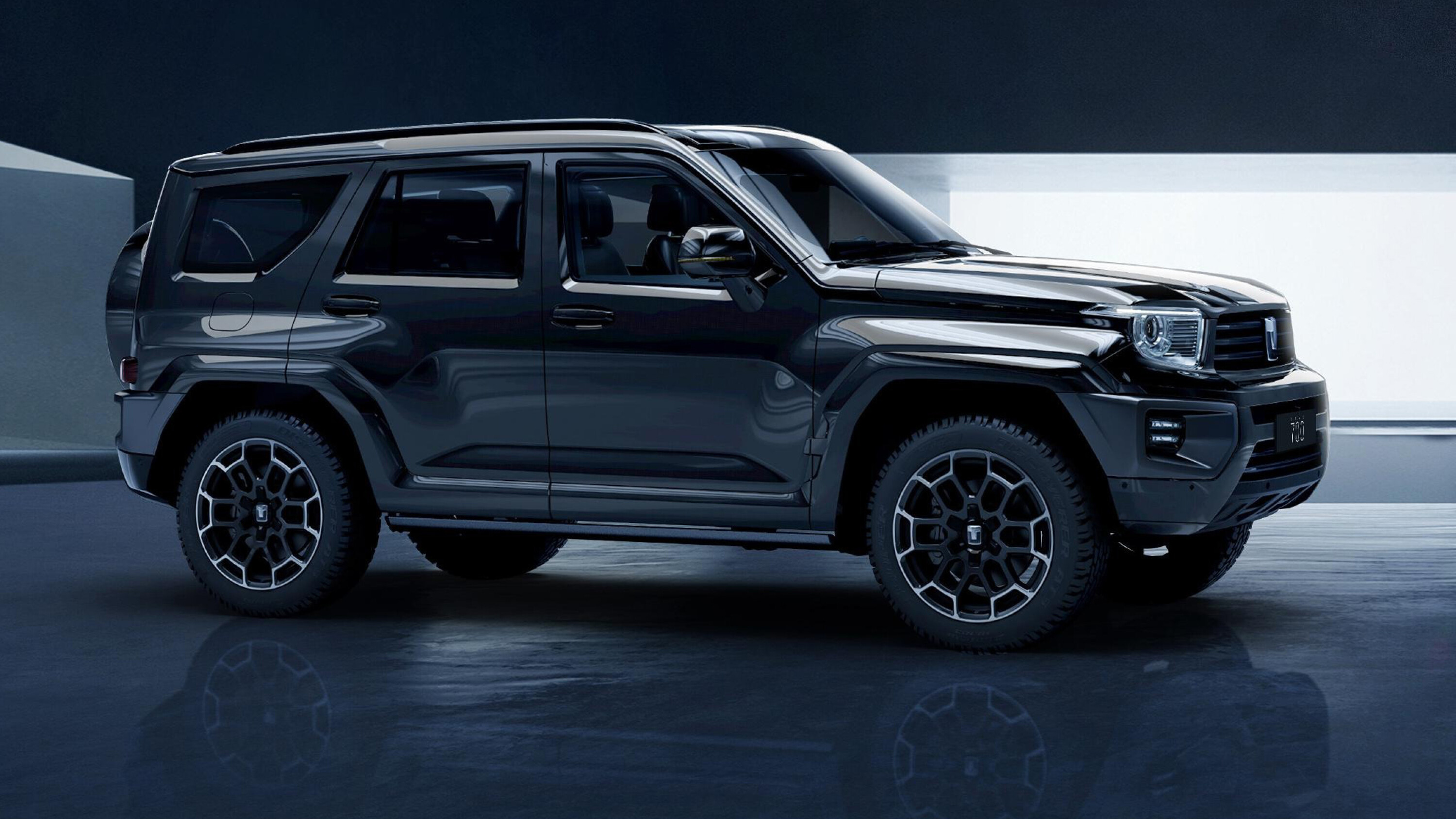
Revealed towards the end of 2023, the Tank 700 is the flagship of the expanding Tank family and a rival for the Toyota LandCruiser 300 Series and Nissan Patrol.
Built on GWM’s fresh Hi4-T platform, the Tank 700 is a five-seat off-road focused SUV that shouldn’t only undercut its established rivals for price but will also demolish them when it comes to powertrain performance.
1
Powered by a ‘P2 hybrid’ system, the Tank 700 combines a 3.0-litre V6 with a single electric motor to produce 386kW and 850Nm.
GWM claims the big SUV will hit 0-100km/h “in the 5-second range” which means it will be quicker to three figures than most hot hatches. Crikey.
In comparison a LC300 has 227kW/700Nm from its 3.3L turbo diesel, while the Patrol has a naturally aspirated V8 petrol that produces 298kW and 560Nm.
As for whether the Tank 700 will make landfall in Australia, here’s a comment from GWM’s local arm:
“The official line locally is that Tank 700 is, at this stage, not confirmed for Australia,” said GWM’s head of marketing and communications Steve Maciver. “We see the potential for multiple Tank products in the Australian GWM lineup but our focus currently is to continue the successful launch of Tank 300 and finalise the business case for a possible Tank 500 launch.”
Haval H9
It’s been a while since the Haval H9 was offered in Australia.
GWM sold the first-gen H9 here between 2015 and 2021 but since then Haval hasn’t had a contender in the large off-road SUV class to rival the likes of the Toyota Prado and Ford Everest.
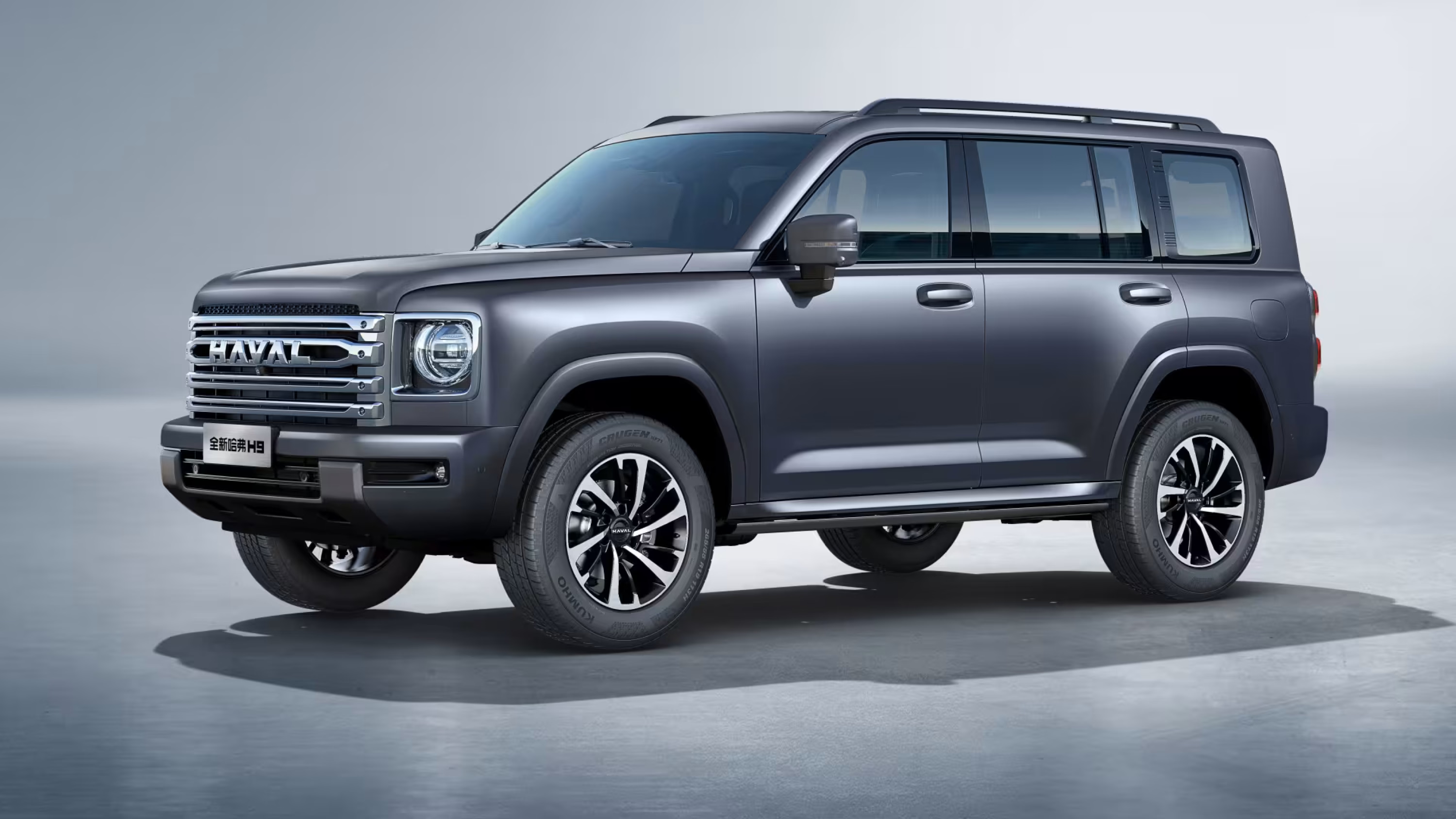
That could change later this year following the recent reveal of an all-new, second-generation H9 in China.
3
Boasting boxy styling and a tougher look, the new H9 rides on an updated ladder-frame chassis and will offer improved off-road capability and an overhauled, more luxurious cabin.
GWM Australia says the new H9 is “certainly on our radar but is not confirmed for Australia at this stage”. Adding a large SUV to complete Haval’s existing lineup, which includes the mid-size H6 and smaller Jolion, would make sense however it’s also possible GWM might want to avoid treading on the toes of its fledgling Tank brand in Australia.
GWM Ora Sport
EVs are booming in Australia and demand for cheaper, more budget-focused alternatives is higher than ever. Enter the GWM Ora Sport.
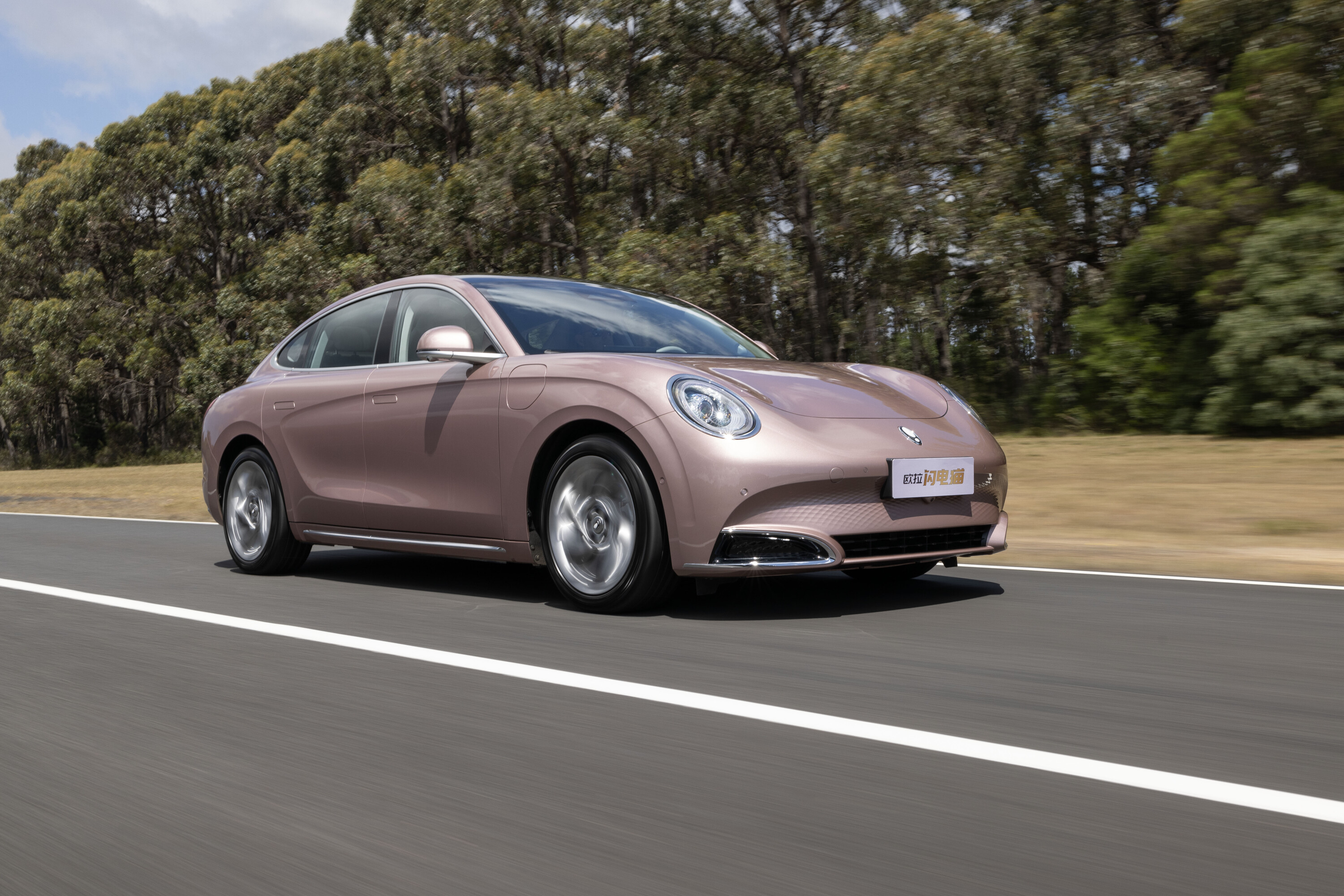
Laden with cooky design features, the Ora Sport (known as Lightning Cat/ Next Cat internationally) is a mid-size sedan to rival the Tesla Model 3, Hyundai Ioniq 6, Polestar 2 and BYD Seal.
1
Available with single or dual electric motors and two battery sizes, the Ora Sport should undercut those rivals for price yet still offer a claimed range up to 705km.
GWM says the Ora sport is under strong consideration for Australia and that its business case development is continuing.
MORE
Everything GWM
MORE
Everything Haval
February 1: 2024 Tesla Model 3 deliveries resume, recall issued
January 17: 2024 Tesla Model 3 deliveries paused in Australia due to breach of motor-vehicle regulations
Deliveries of the 2024 Tesla Model 3 electric sedan will be paused from January 18 as the brand works with regulators to resolve a compliance issue.
“We regret to inform you that deliveries of Model 3 in Australia will be paused from close of business 17 January 2024,” said a Tesla Australia communication sent to customers.
“This pause is related to a technical compliance matter that we are working closely with the relevant authorities to resolve. We understand that these changes may lead to a delay in the delivery and want to assure you that resolving this matter is our top priority.
1
“We expect to recommence deliveries within the coming weeks. Our team will be in touch to provide further updates on your delivery as soon as possible.”
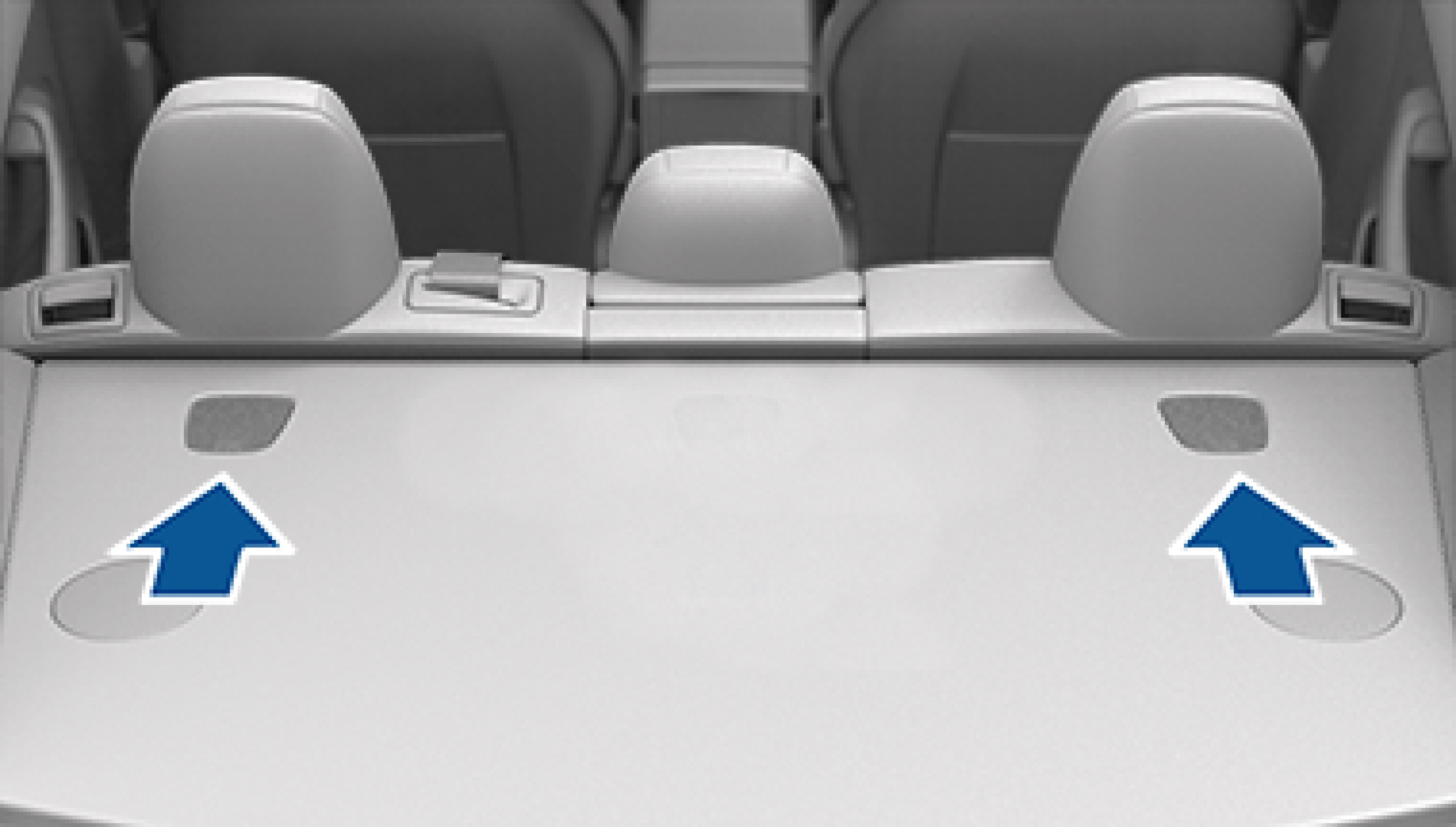
As detailed below, the delivery pause relates to the updated Model 3’s lack of an accessible top-tether anchor point in the rear-centre position, which is required under the Australian Design Rule 34/03.
On Monday, ANCAP announced the five-star safety rating for the Model 3, achieved in 2019, “cannot be applied to facelifted vehicles at this time”, with the latest model currently ‘unrated’.
Our earlier story, below, continues unchanged.
1
January 9: 2024 Tesla Model 3 could soon be recalled for child-seat compliance fix
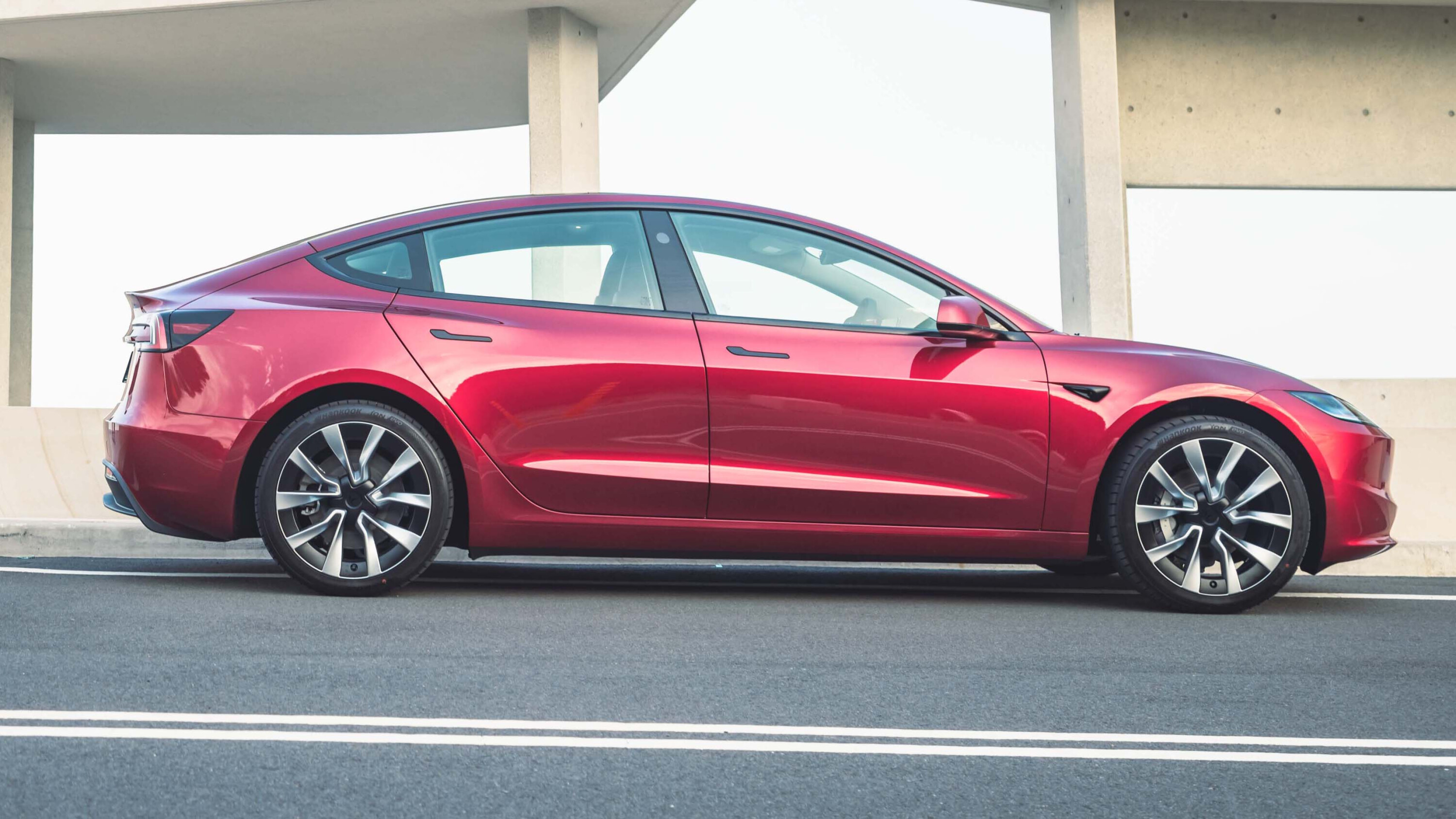
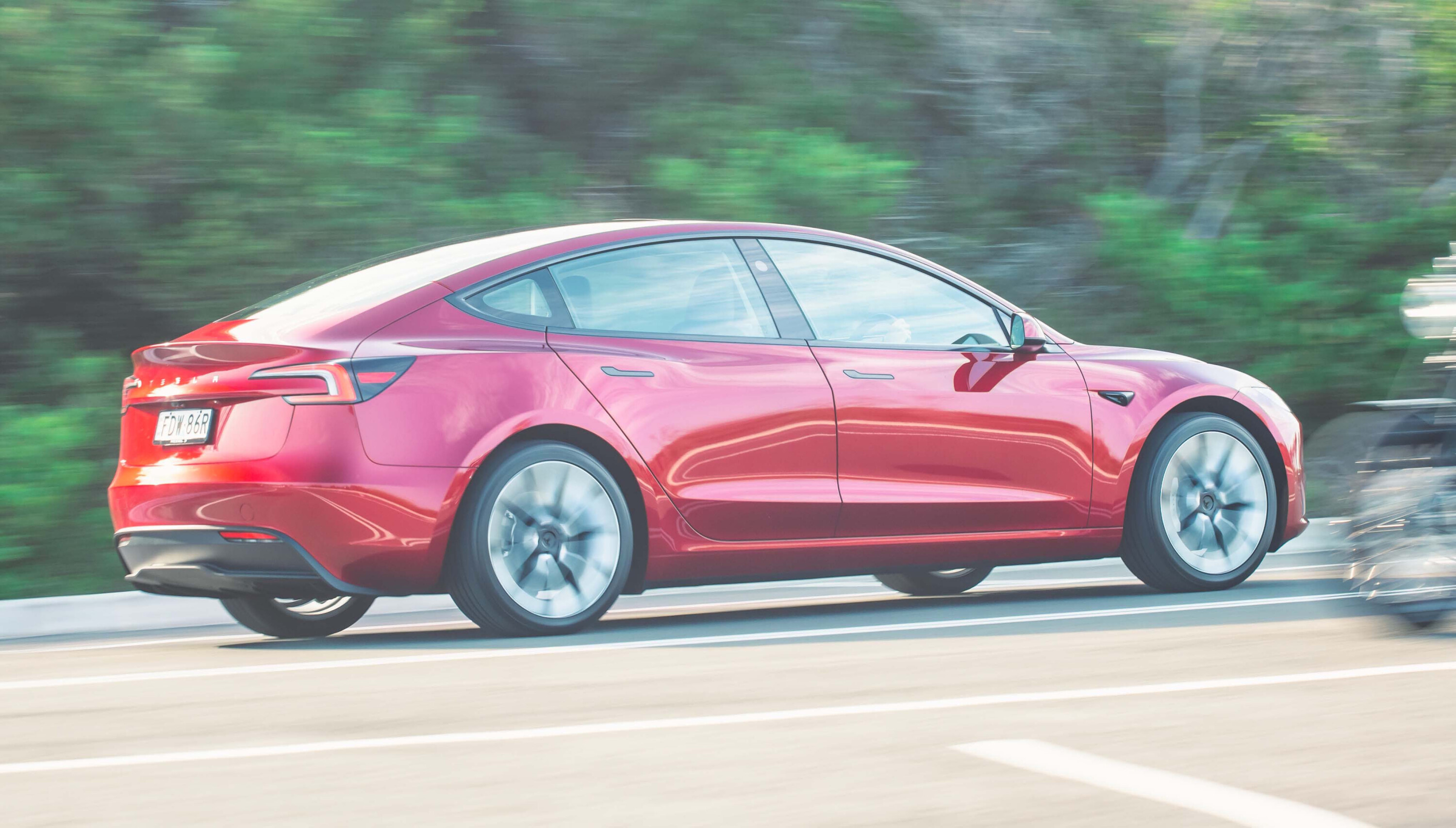
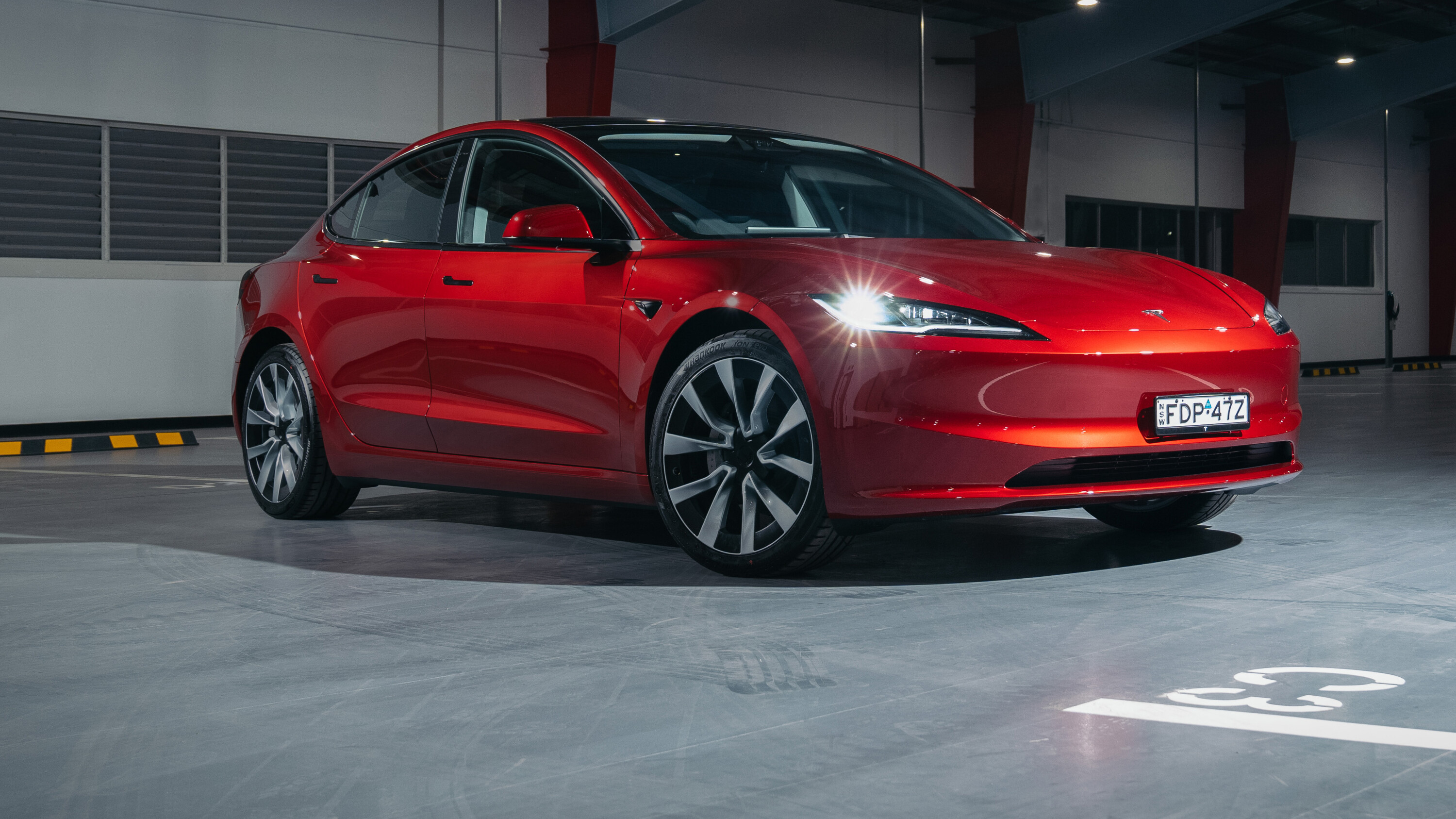
The 2024 Tesla Model 3 electric sedan is under investigation by government authorities due to a potential breach of Australia’s motor vehicle regulations.
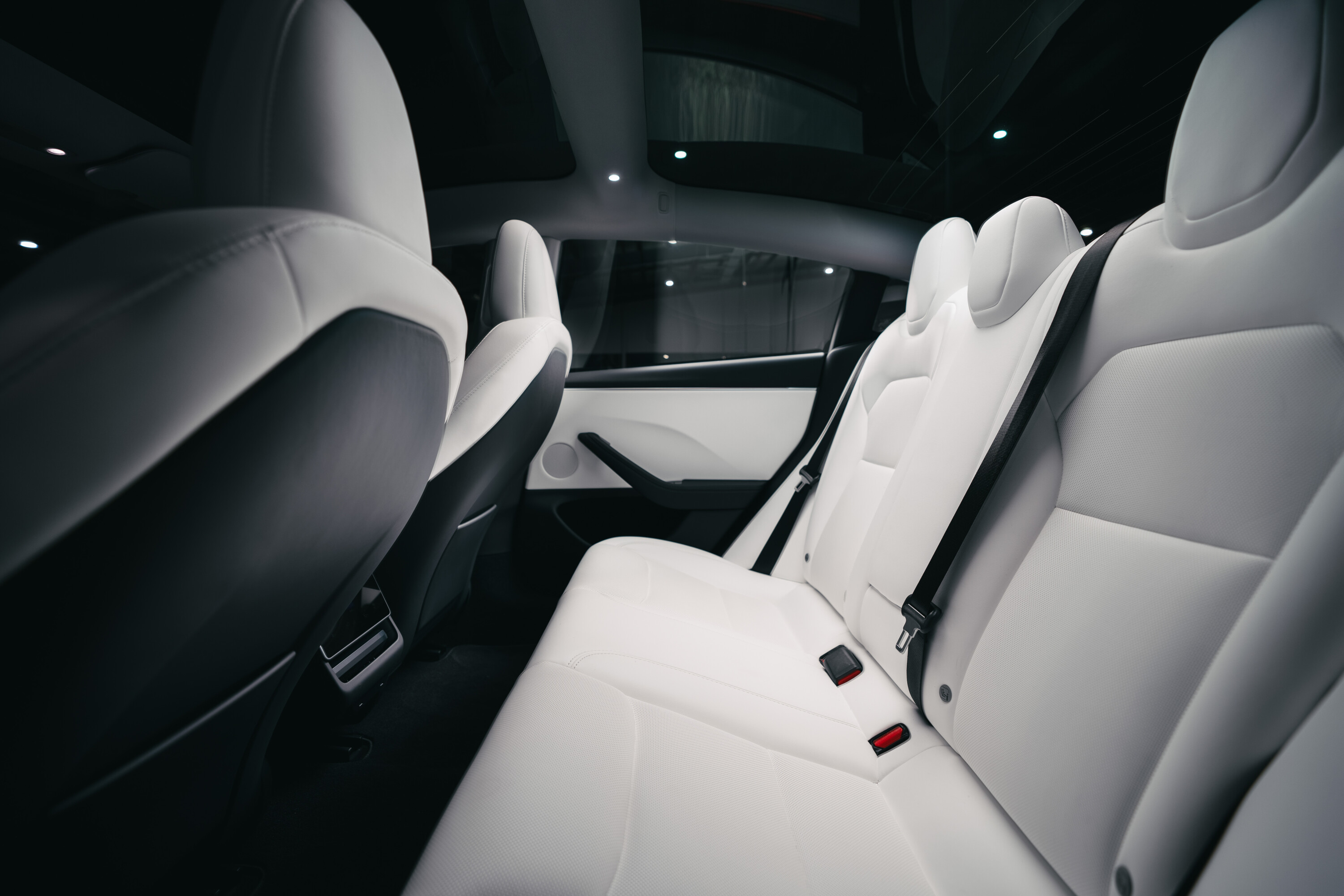
In Australia, all passenger vehicles registered as five-seaters must be fitted with a visible top-tether point for all rear seats to secure a child seat, including the centre position.
First reported by Drive [↗], Tesla is understood to have removed a flap to access the rear-centre top-tether point without tools or modification as part of revisions made to the facelifted Model 3 sedan that began customer deliveries in Australia in December 2023.
1
The previous Model 3 had access for all three top-tether points in Australia.
The Australian Design Rule 34/03 states: “Clearance shall be provided around each ‘Upper Anchor Fitting’ to allow latching and unlatching, without the use of tools, of the ‘Attaching Clip’ to the ‘Upper Anchor Fitting’ when it is installed in the vehicle.”
A Department of Infrastructure, Transport, Regional Development, Communications and the Arts spokesperson told WhichCar it was looking into the matter.
1
“The Department of Infrastructure, Transport, Regional Development, Communications and the Arts is aware of concerns regarding the child restraint anchorage points in the 2024 Tesla Model 3 and is looking into this matter.
“Road safety is a top priority of the Australian Government. That is why we have legislated road vehicle standards in place to ensure all road vehicles, both new and used, being provided to the Australian market for the first time meet critical national standards for safety, security and emissions.
“The department’s compliance approach and model sets out how compliance and enforcement work is managed under the Road Vehicle Standards legislation.”
1
If the Tesla Model 3 is in breach of Australian Design Rules, the brand would likely be required to pause deliveries in Australia and initiate a safety recall to fix the issue for vehicles already delivered to customers.
The latest compliance issue regarding top-tether points for the rear-centre seat position follows the BYD Atto 3 and Honda HR-V small SUV models in 2022.
In the BYD Atto 3’s case, the brand was required to temporarily pause sales and perform a ‘voluntary safety recall’ after it was found the model had failed to comply with the Australian Design Rule requiring a top-tether to attach a child seat in the rear-centre seat.
It was still fitted with a top tether mount incorporated into the seat, but it was hidden behind the fabric of the backrest – making it inaccessible without the use of tools.
BYD Australia said little more than a “Stanley knife with a very professional operator” was required to solve the compliance issue for vehicles built prior to the resumption of sales.
In the Honda HR-V’s case, the brand decided to instead comply the vehicle as a four-seater in Australia, rather than invest in a top-tether point for the rear-centre position to legally sell it with five seats.
MORE
Everything Tesla
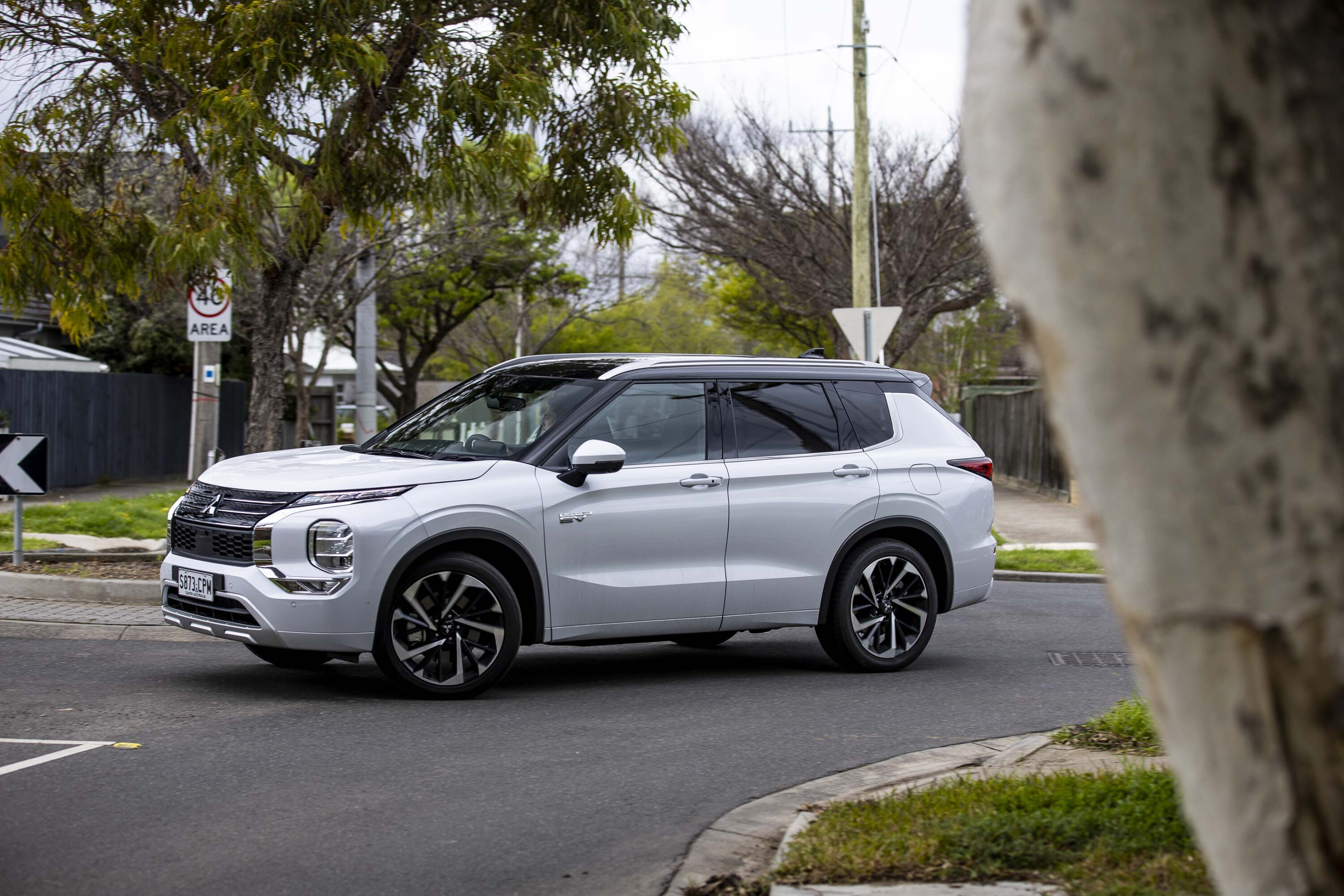
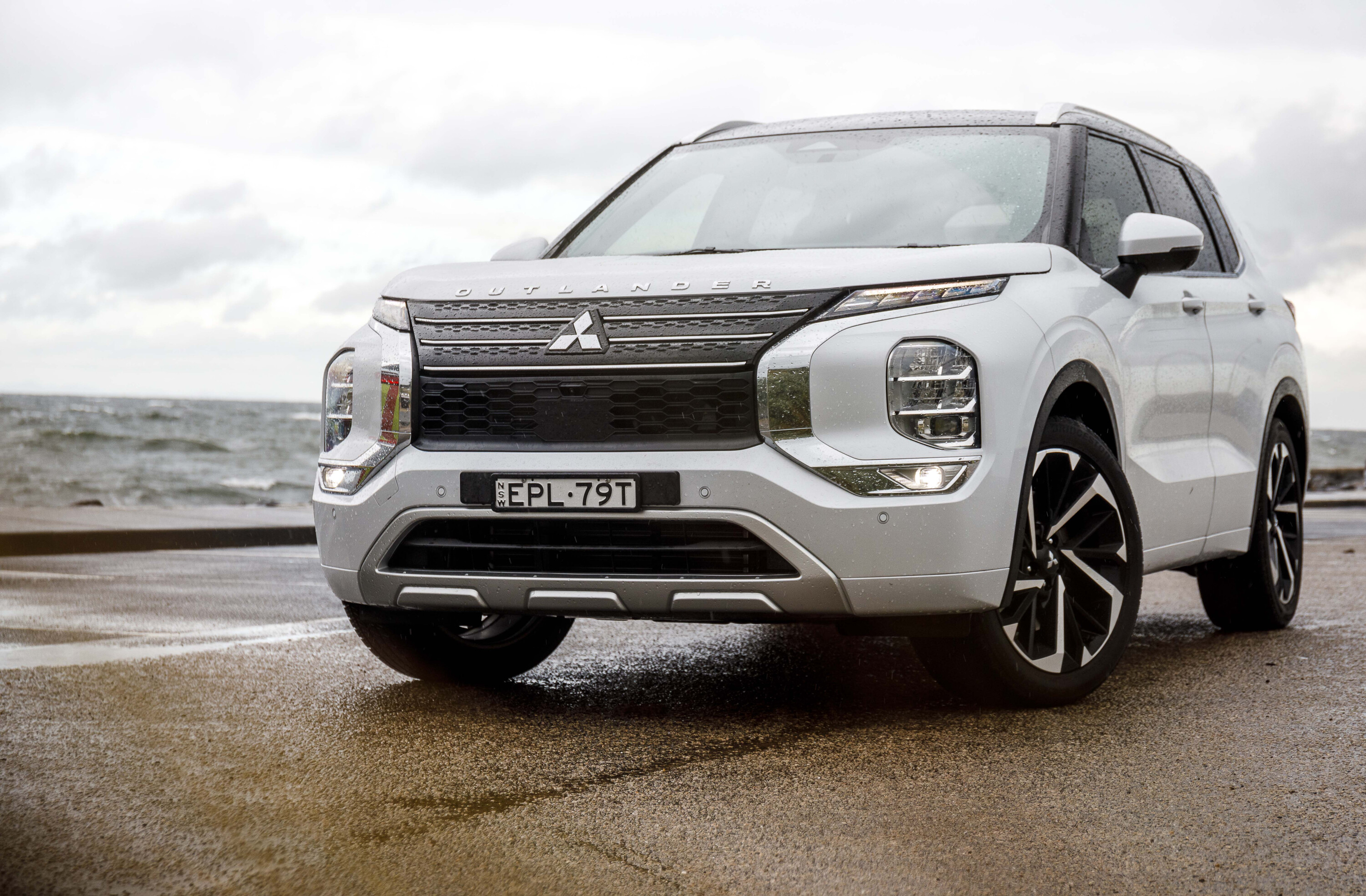
The Mitsubishi Outlander has been a mainstay of Australia’s mid-size SUV segment since the early 2000s.
Now in its fourth generation, this latest Outlander launched locally in 2021 and is sharp to look at, roomy to sit in and fun to drive.
It also offers buyers the choice of versions with five or seven seats, which is rare for this segment.
Standard equipment levels are high across the range, too, and Mitsubishi offers Australia’s longest new-car warranty at 10 years, provided you service your Outlander at an approved dealer.
Another key Outlander attraction is the power and economy offered by versions fitted with a plug-in hybrid powertrain.
Although more expensive than petrol-powered Outlanders, the plug-in models, which are badged as Outlander PHEV (plug-in hybrid electric vehicle), are smoother and faster to drive and can travel up to 84km on electricity alone which helps to save fuel.
1
JUMP AHEAD
- Pricing
- Body styles
- Standard features
- Upgrades
- Comfort
- Boot space
- Driving enjoyment
- Fuel efficiency
- Towing capacity
- Warranty & servicing
- Recommended version
- Key rivals
1
Pricing
What body styles are available for the Mitsubishi Outlander?
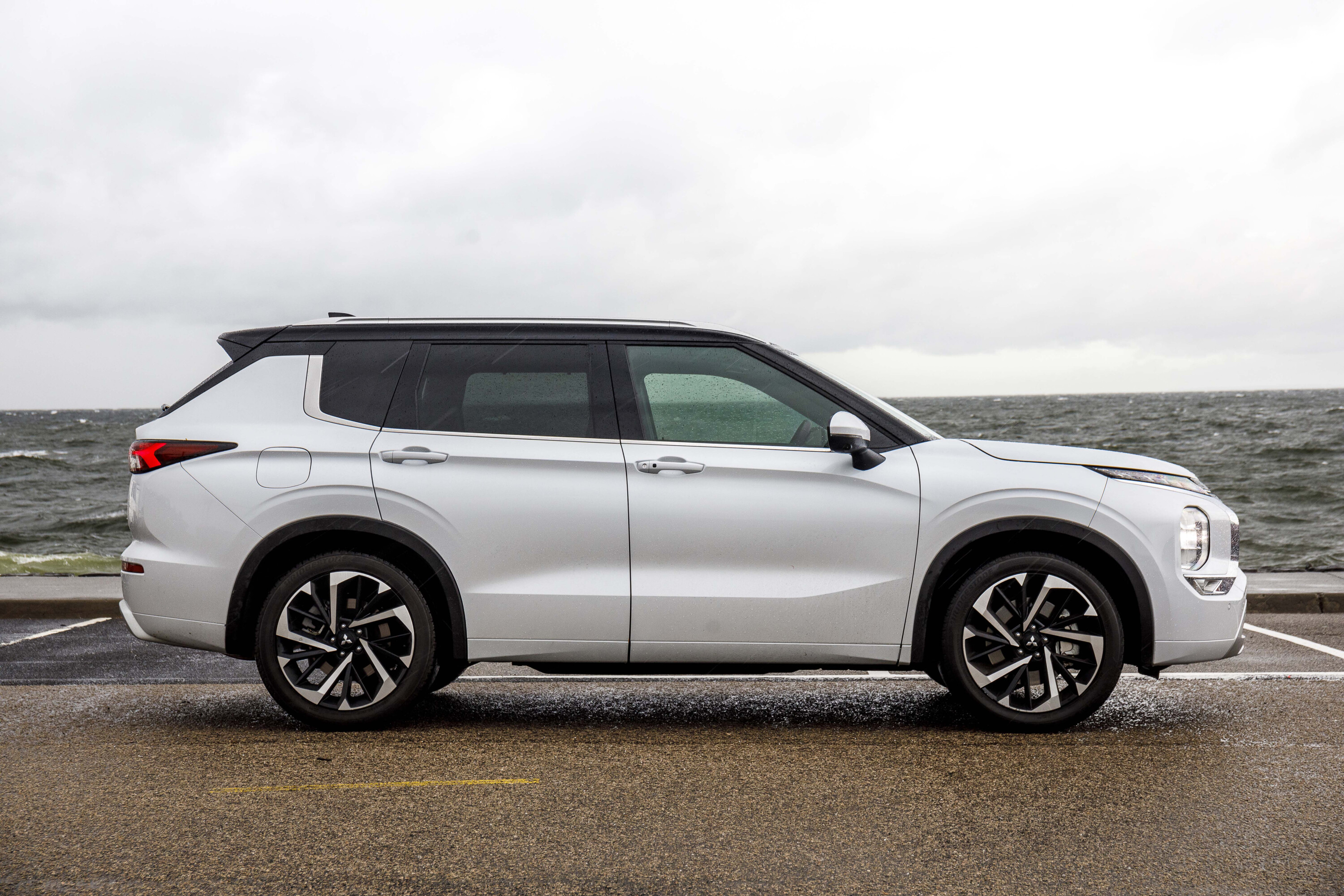
The Mitsubishi Outlander is available only as a five-door SUV. It is offered either as a five-seater or with an additional third row, boosting the seating count to seven.
Buyers can choose between front-wheel-drive models or versions fitted with an all-wheel-drive (AWD) system which offers greater traction, especially in slippery conditions. AWD models command a $2500 price premium.
1
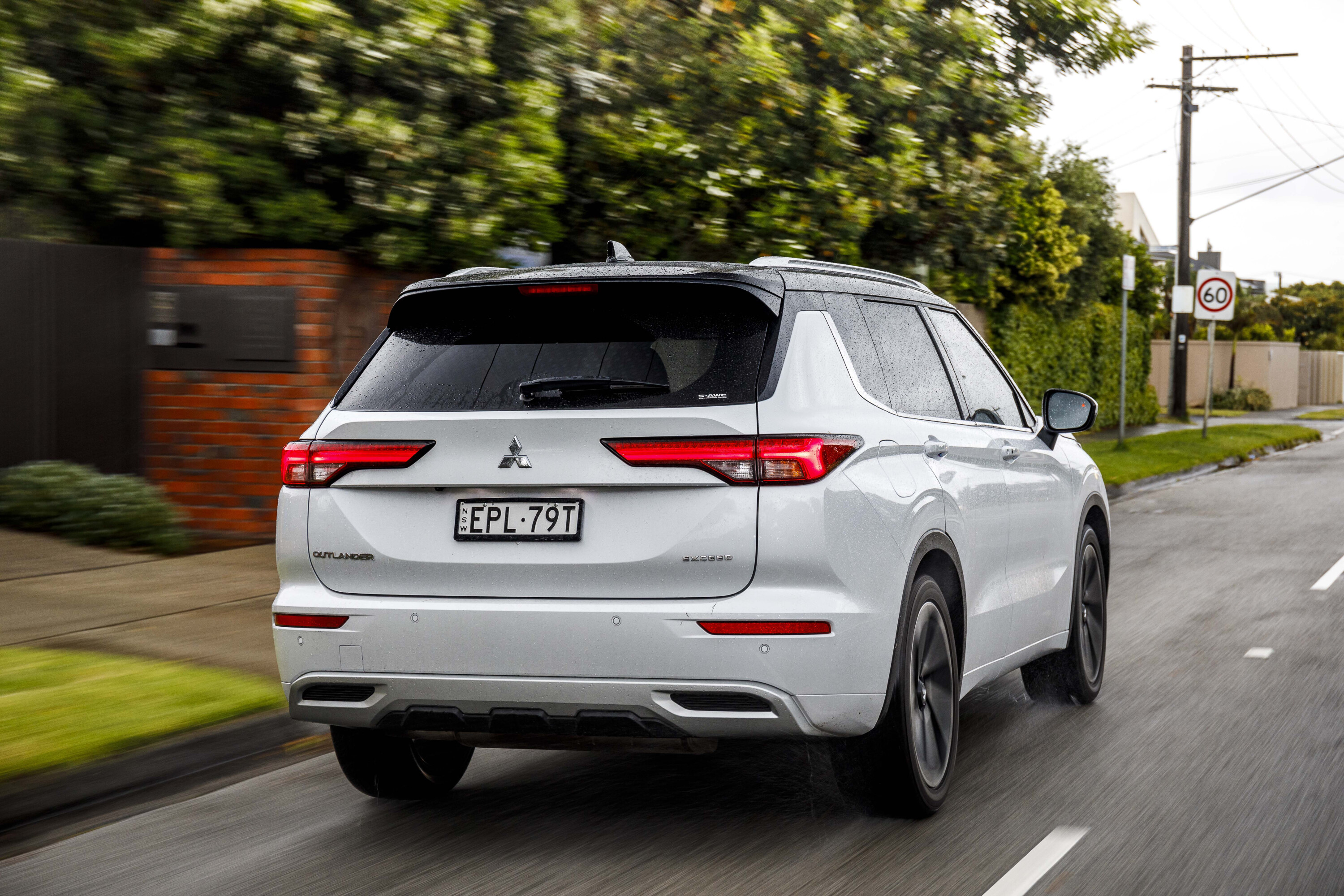
Two engines are available: a 2.5-litre naturally aspirated petrol or a plug-in hybrid version (Outlander PHEV), which combines a 2.4-litre petrol engine with a 20kWh battery and two electric motors.
The Outlander PHEV uses less fuel and also offers an impressively long electric-only range of 84km.
PHEV models are also more powerful and smoother to drive, although they command a sizeable $16,000 price premium over equivalent models fitted with the 2.5-litre petrol engine.
1
What features are standard in every Mitsubishi Outlander?
The features listed below are standard in the entry-level ES 2WD model and will appear in higher-grade models unless replaced by more premium equivalent features.
| 2024 Mitsubishi Outlander standard features | |
|---|---|
| 18-inch alloy wheels | Cloth seat trim |
| 5 drive modes (Normal, Eco, Tarmac, Gravel, Snow) | DAB+ digital radio |
| 6-speaker audio system | Dual-zone climate control |
| 8 airbags | Full-size alloy spare wheel and tyre |
| 8-inch centre touchscreen | Hill descent control, which can regulate speed automatically on steep downslopes when driving off-road |
| Reversing camera | Lane departure warning and prevention |
| Adaptive cruise control | LED daytime running lights (DRLs) |
| Android Auto (wired) and Apple CarPlay (wired), which let you display smartphone apps on the touchscreen | LED headlights with automatic high beam |
| Autonomous emergency braking with pedestrian and cyclist detection | Power-adjusted side mirrors |
| Blind-spot monitoring | Push button start and remote entry |
| Bluetooth connectivity for phone calls and audio streaming | Rear cross-traffic alert |
| Manual seat adjustment for driver and passenger | Traffic sign recognition |
| Dusk-sensing automatic headlights | Rear occupant alert |
| PHEV ES versions offer some additional features including larger 9-inch touchscreen, additional drive modes, digital instruments with a 12.3-inch screen, wireless Apple CarPlay and sat-nav but lack a spare wheel | |
What key features do I get if I spend more?
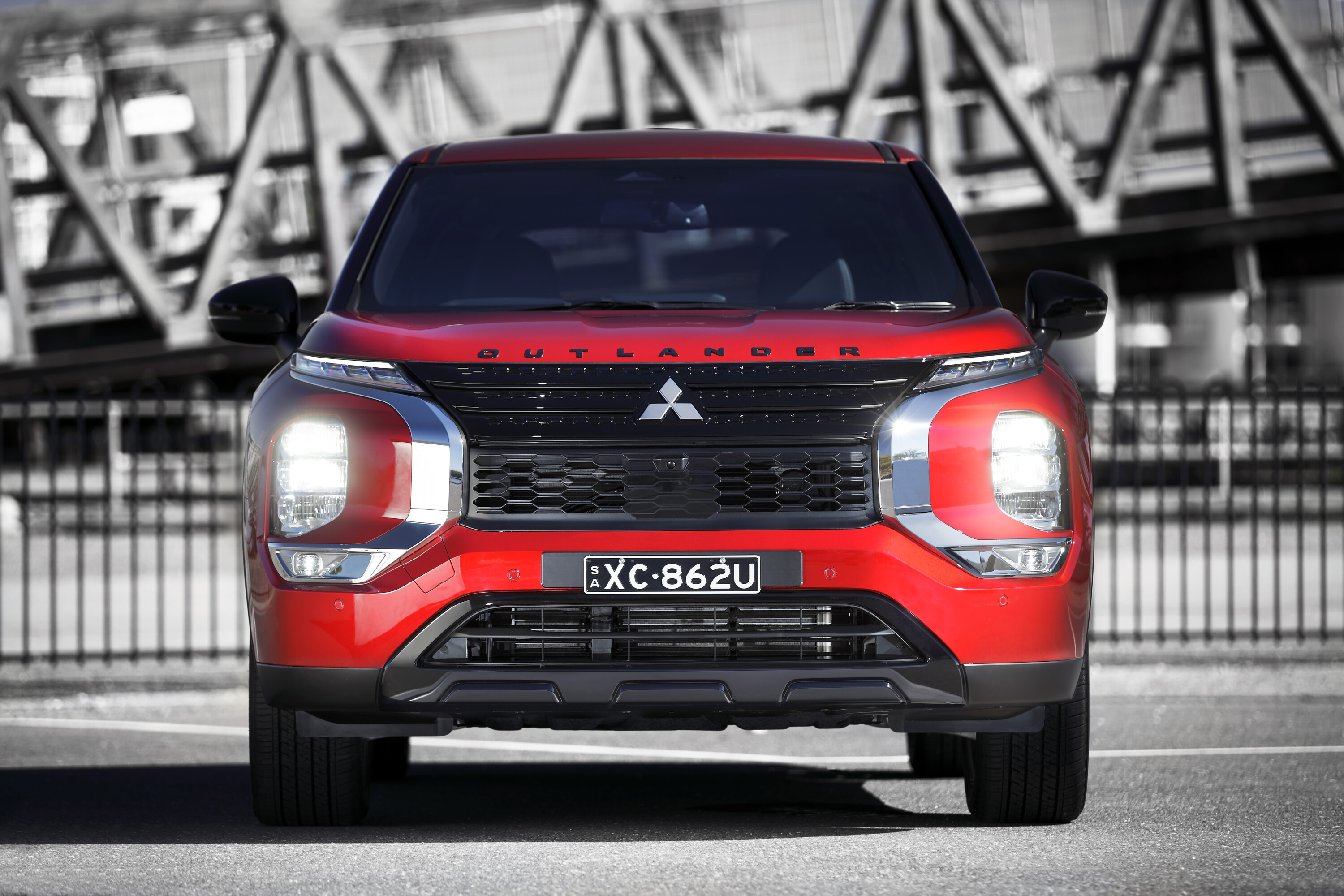
The least costly version, the Outlander ES 2WD, has cloth seats that are manually adjustable, an 8.0-inch touchscreen and 18-inch alloy wheels.
The ES 2WD comes standard with the 2.5-litre petrol engine linked to an automatic continuously variable transmission (CVT) and front-wheel drive as standard.
1
An all-wheel drive (AWD) version of the ES, (which aids security on loose or slippery surfaces and adds a sixth drive mode for driving on mud) is available at extra cost. The ES is also only available as a five-seater.
For extra features, and the option of seven seats, you could spend more for an Outlander LS.
The LS also brings
| 2024 Mitsubishi Outlander LS features | |
|---|---|
| 2 additional USB power outlets for rear passengers | Privacy glass |
| 5+2 seat capacity | Rain-sensing windscreen wipers |
| Heated wing mirrors that also fold electrically | Silver roof rails |
| Keyless entry | Sliding adjustment for the second row of seats which allows you to vary rear seat space and boot capacity |
| Larger 9-inch touchscreen with satellite navigation so you donu2019t have to rely on a phone app | Space-saver spare wheel |
| Leather gear selector | Wireless Apple CarPlay (rather than wired) |
| Leather steering wheel | Wireless phone charger |
| LED front fog lights | Auto-dimming rear-view mirror |
1
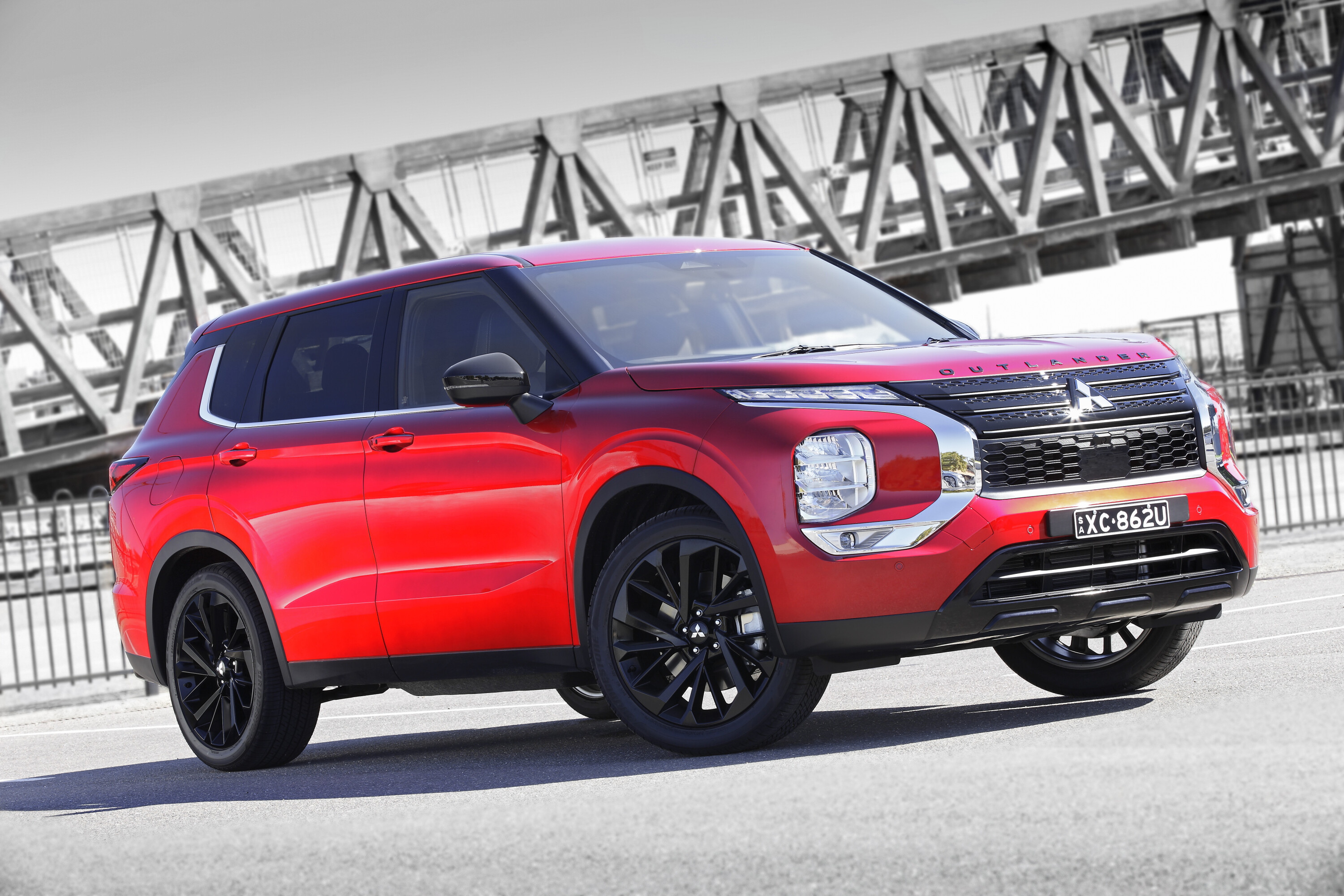
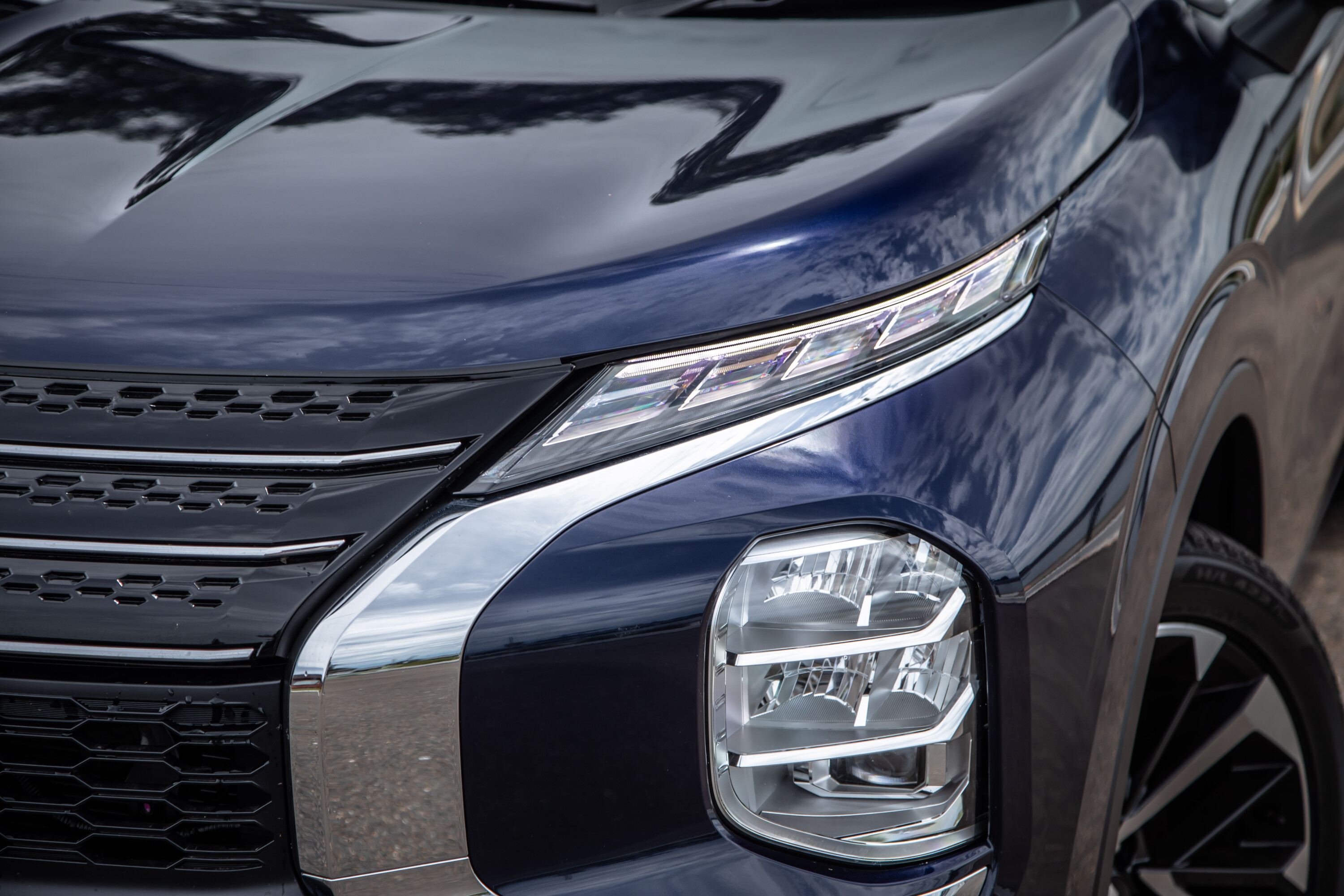
Paying more again for an Outlander Black Edition, based on the LS FWD model, gets you those features plus:
| 2024 Mitsubishi Outlander Black Edition features | |
|---|---|
| Black exterior detailing on the front grille, wing mirrors, A-pillars and rear skidplate | Microsuede seat trim with fake leather accents |
| Black headlining | Power adjustment for the driveru2019s seat |
| Larger 20-inch alloys with a black finish | |
1
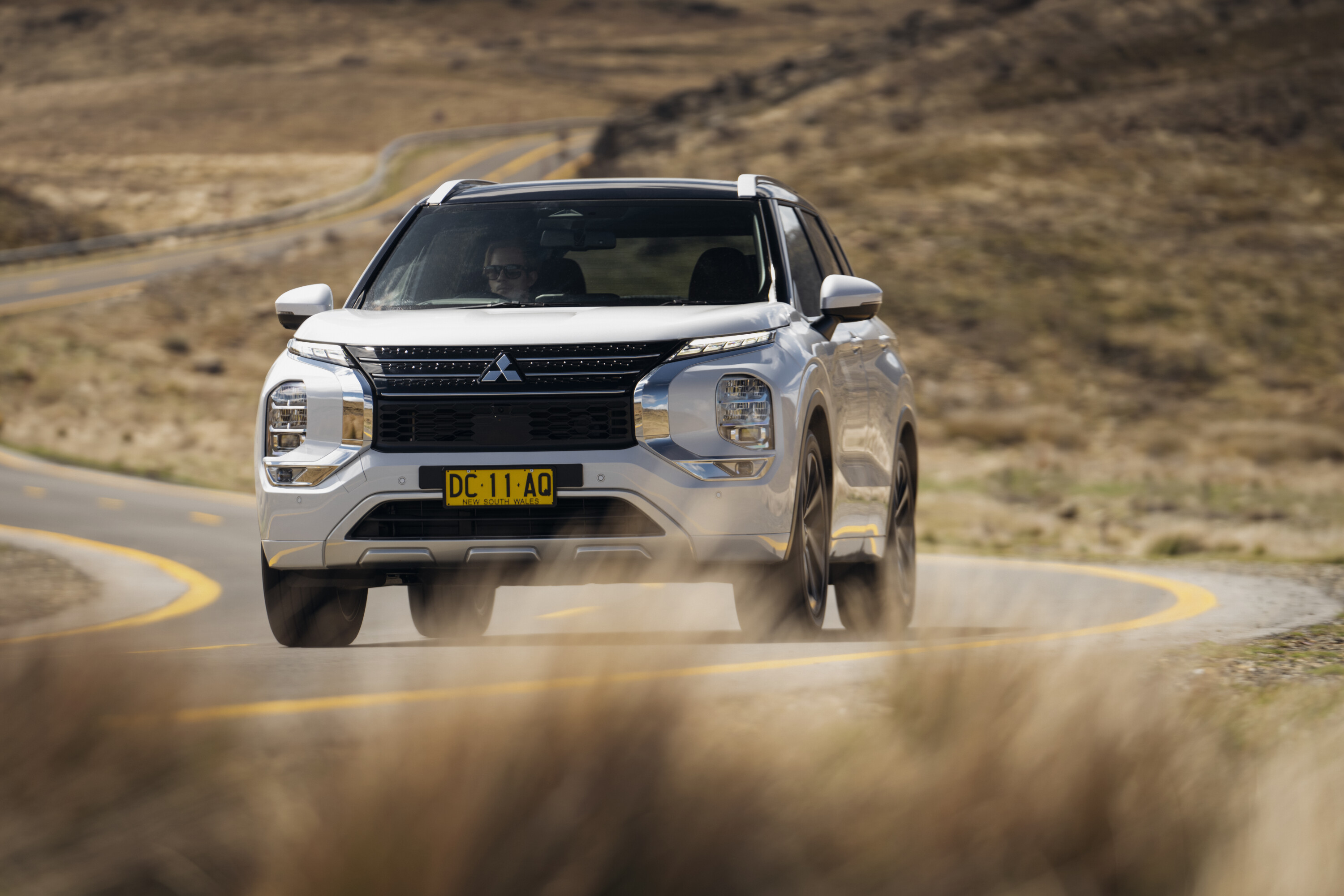
The Outlander Aspire sits in the middle of the Outlander range for price and equipment. It includes the above features and adds:
| 2024 Mitsubishi Outlander Aspire features | |
|---|---|
| 20-inch alloy wheels with two-tone design | Heated front seats |
| 360-degree surround view camera | LED headlights with automatic levelling function |
| Head-up display which projects useful information like your speed onto the windscreen so you donu2019t have to take your eyes off the road | Power tailgate for easier access to the boot |
1
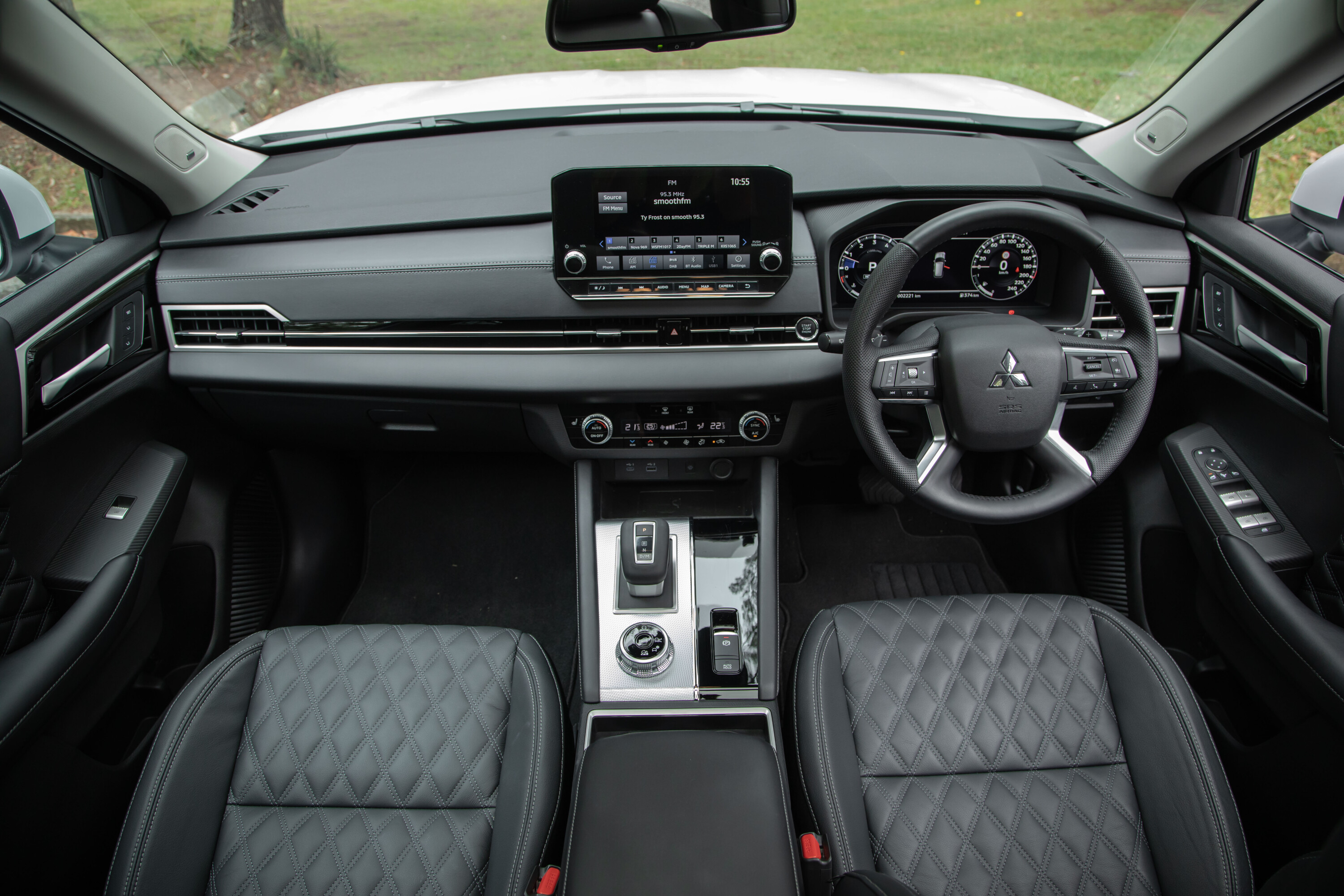
At the top of the Outlander range sit the Exceed and Exceed Tourer. They bring the following features:
| 2024 Mitsubishi Outlander Exceed features | |
|---|---|
| Black leather seat trim | Panoramic sunroof with tilt/slide function for the front section of glass |
| Digital instrument cluster with a 12.3-inch screen | Power front passenger seat adjustment |
| Hands-free power tailgate | Premium Bose sound system with 10 speakers |
| Heated steering wheel | Rear window blinds |
| LED sequential indicators | Tri-zone climate control with rear control panel on the back of the centre console |
| Memory function for both front seats | |
| 2024 Mitsubishi Outlander Exceed Tourer features | |
|---|---|
| Massage function for both front seats | |
| Two-tone exterior body colour | |
| Two-tone high-grade leather seats |
How safe is the Mitsubishi Outlander?
The 2024 Mitsubishi Outlander is one of the safest medium SUVs currently available.
It scored a maximum five-star rating from the Australasian New Car Assessment Program (ANCAP) in January 2022. This rating applies to both petrol and PHEV versions.
For child occupant protection, the Outlander’s rating was especially impressive with a 92 per cent result coming courtesy of full marks scored in both of ANCAP’s front and side dynamic tests.
1
Adult occupant protection also rated highly at 83 per cent and the Outlander scored well for vulnerable road user protection (pedestrians and cyclists).
However, the lack of autonomous emergency braking (AEB) in reverse did lose it some points in that category at the time of testing.
Mitsubishi has now added reverse AEB as standard across the range.
1
The level of standard safety equipment across the Outlander range is comprehensive.
Every Outlander includes eight airbags, autonomous emergency braking with pedestrian and cyclist detection, lane departure warning and prevention, blind-spot monitoring, rear cross-traffic alert, traffic sign recognition and adaptive cruise control.
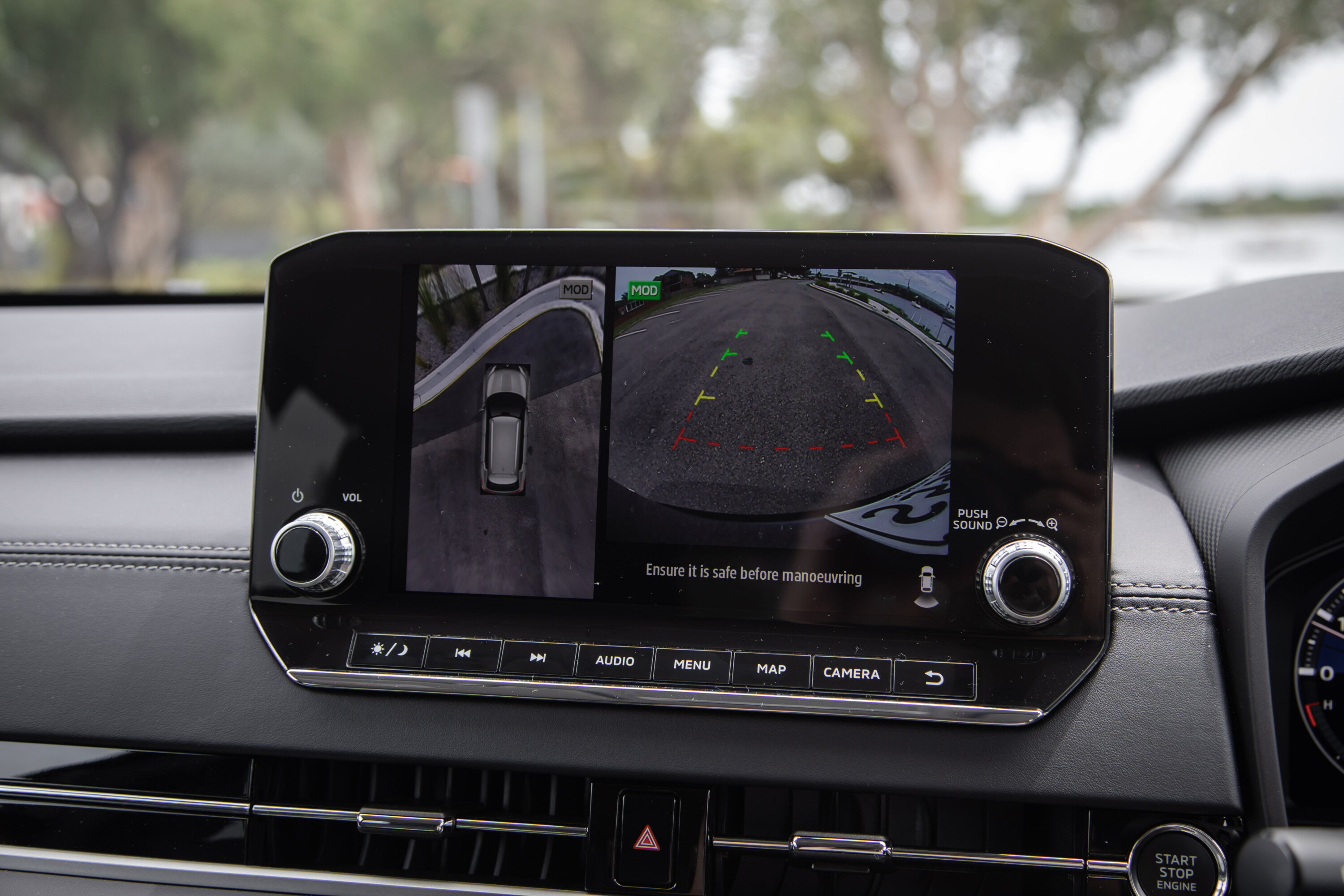
A reversing camera is also standard, while higher-spec variants also gain a 360-degree surround view monitor which provides a bird’s eye view of your car and its surroundings.
Every Outlander includes two lots of ISOFIX anchor points for child seats in the second row and has three top tether points.
How comfortable and practical is the Mitsubishi Outlander?
The cabin of the fourth-generation Mitsubishi Outlander is a vast improvement over previous models.
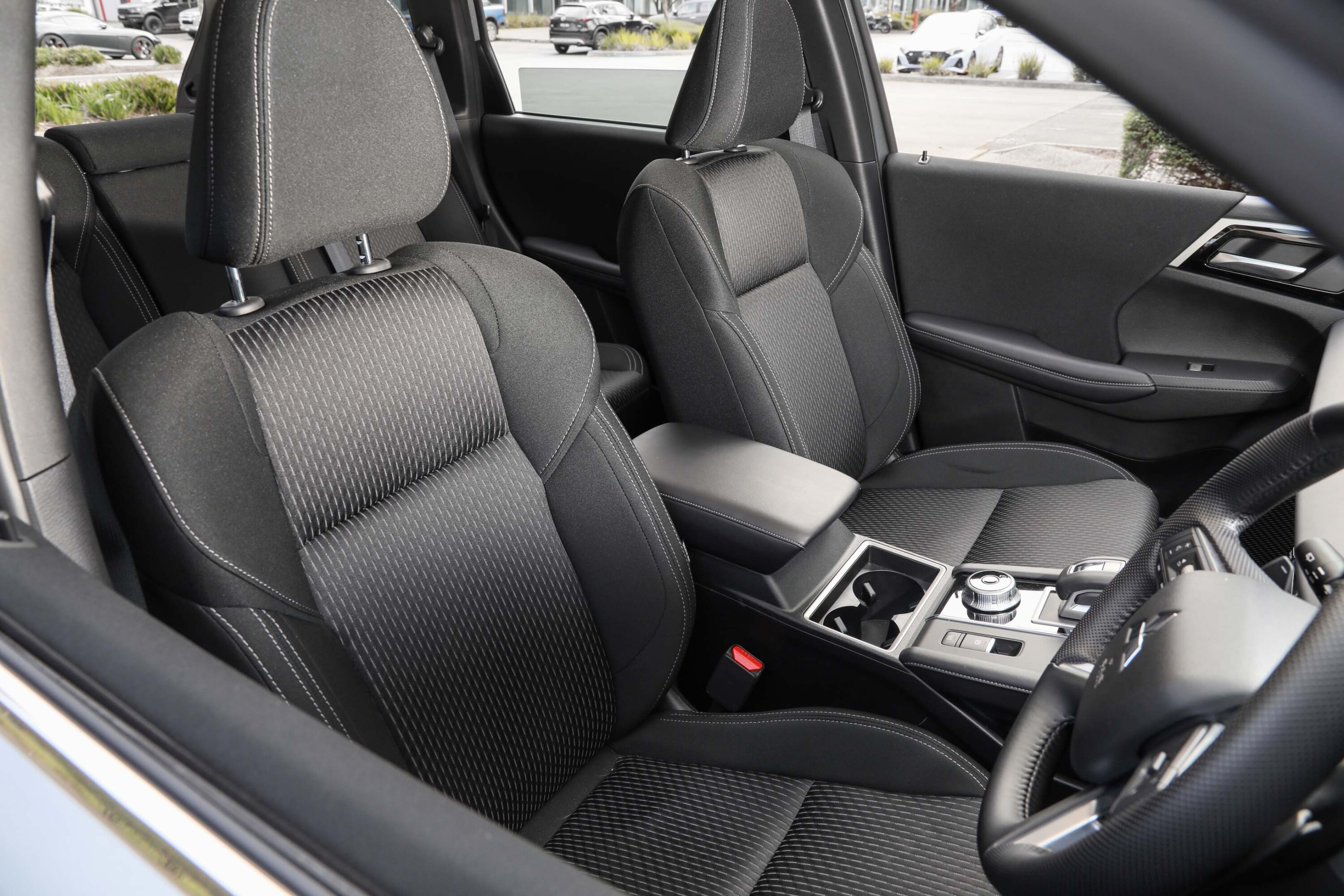
The seats are comfortable, there’s a generous amount of interior storage and the cabin looks and feels modern and premium.
It also feels well-built and is genuinely luxurious in higher-spec models, like the Exceed and Exceed Tourer, which gain soft leather seats and a large panoramic sunroof. The mix of materials in those variants is a highlight with plenty of soft-touch surfaces and the large central touchscreen plus digital instruments offer clear graphics and are easy to use.
Connectivity is also excellent; Apple CarPlay and Android Auto are both included as standard across the range. Only CarPlay is wireless, although the entry-level ES is wired for both phone types.
1
This new Outlander is larger in every dimension than models that have gone before it, resulting in more room for passengers.
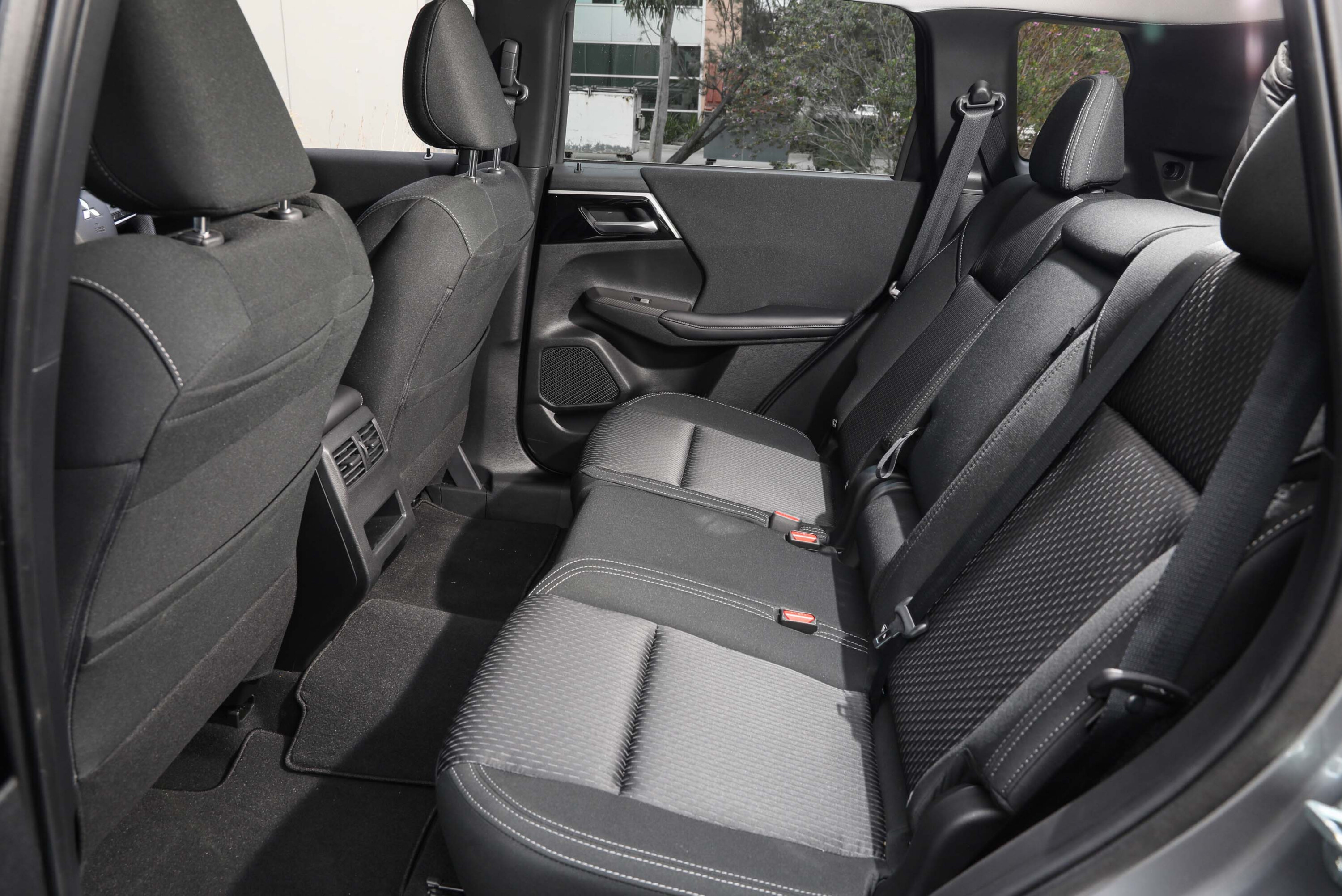
The front seats are comfortable and supportive, while second-row passengers enjoy a generous amount of legroom and headroom as well as their own dedicated air vents.
You can also recline and slide the second-row seats fore-aft, which allows you to vary the amount of rear legroom and boot space. In seven-seat versions, the sliding bench also provides easier access to the third row and affords passengers in those seats more knee room.
1
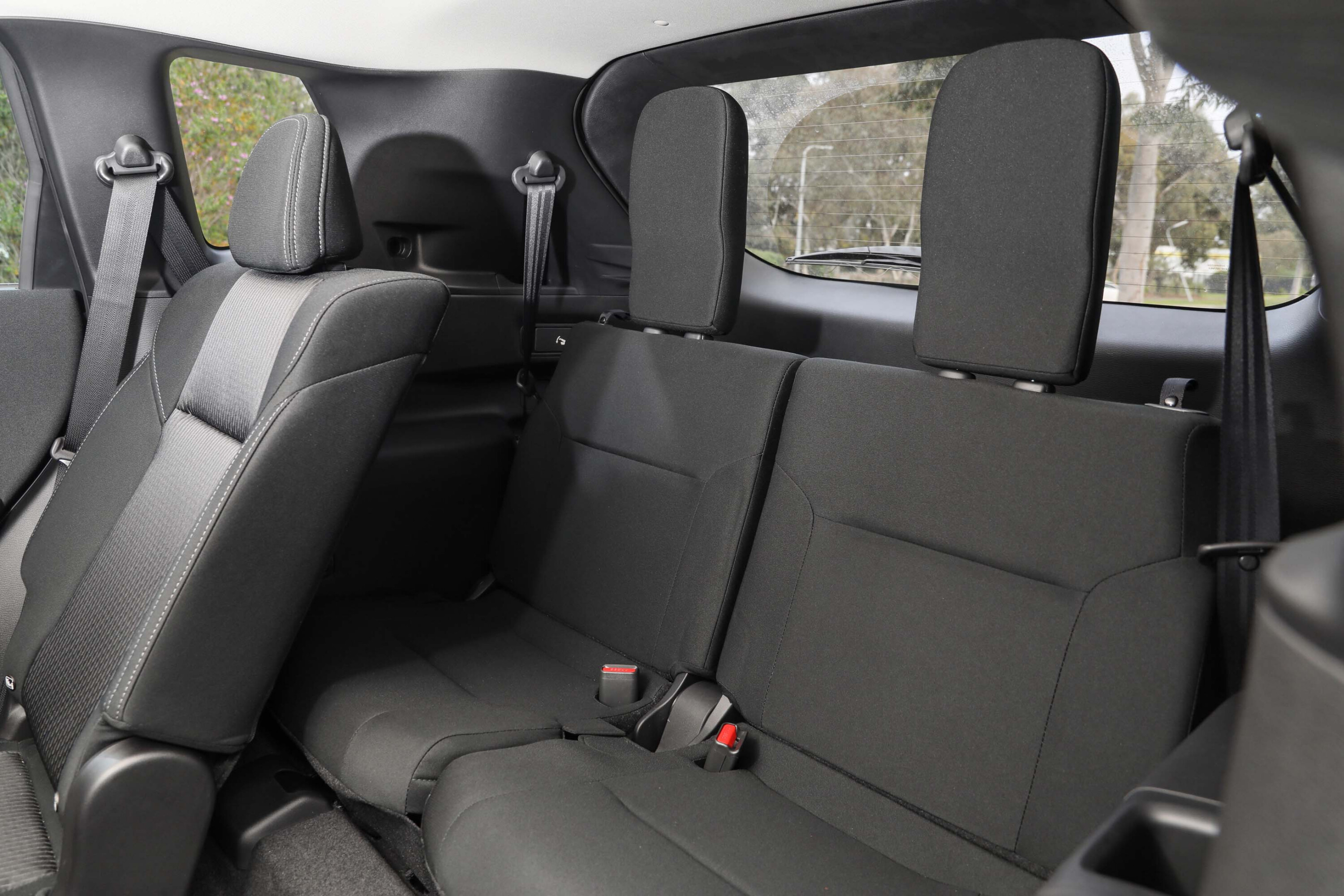
The Outlander is a mid-size SUV, so room in the third row is best suited to pre-teens. Adults do fit, although tight space at the knee and head means most will find the rearmost seats suited only to short journeys.
Mitsubishi says the Outlander is a 5+2 seater, not a genuine seven-seat SUV.
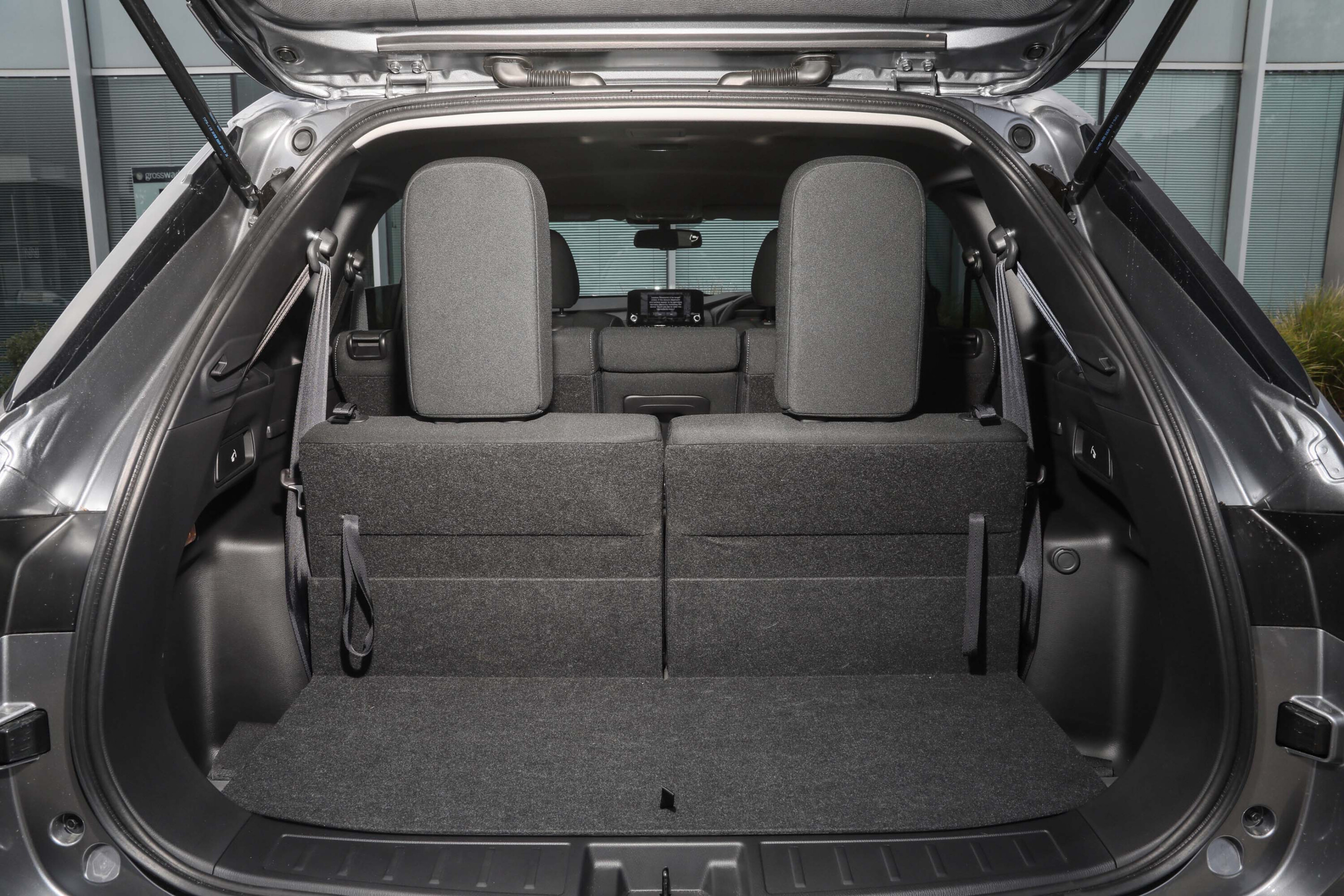
It is easy to erect the third-row seats and they fold cleverly into the boot floor so they don’t eat into luggage space.
All-round visibility is good and the cabin is well isolated from road and tyre noise which makes the Outlander a comfortable and quiet family SUV to drive long distances.
Overall, the Outlander makes good use of its additional interior space but while it is roomier and more luxurious than before, some rivals do have more space in the back seat for adults and larger boots.
1
How much boot space does the Mitsubishi Outlander offer?
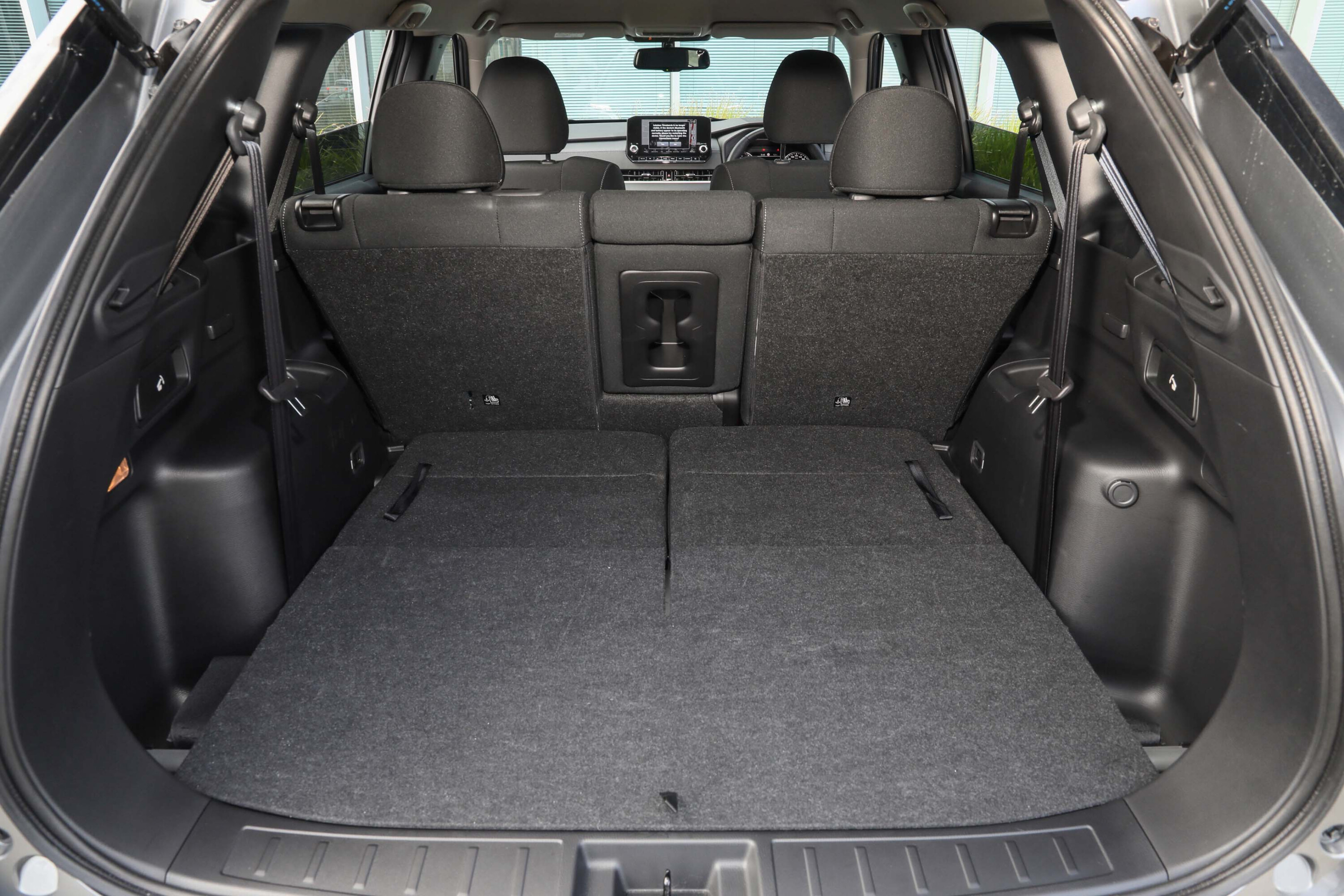
The Mitsubishi Outlander offers approximately 480 litres of boot capacity. That’s on the smaller side for a mid-size SUV and the exact size of the boot differs slightly depending on which Outlander variant you buy.
Petrol-powered five-seat versions have a 485L boot, for example, while those fitted with seven seats have 478 litres.
Plug-in hybrid versions are different again. Five-seat PHEV models have 494L of boot capacity, while seven-seat PHEVs offer the least of any Outlander at 461L.
1
While the official measurements differ slightly across the range, Mitsubishi has done an excellent job of integrating the third row of seats into the boot floor to ensure they hardly change the Outlander’s load-lugging ability.
If you look at the boot of a five-seat Outlander next to a seven-seater, for example, you’ll be hard-pressed to tell the difference.
PHEV models do have some notable differences. Having to integrate an electric motor beneath the boot floor means the Outlander PHEV does not have a spare wheel which leaves only a compressor and tyre repair kit if you get a flat. Buyers also lose some useful storage bins on either side of the boot floor in PHEV models and the third row of seats is more difficult to erect due to a different design.
In all models, the second row of seats can be folded 40:20:40 and with those seats laid flat the Outlander’s boot capacity expands to about 1465L.
1
I like driving, will I enjoy this car?
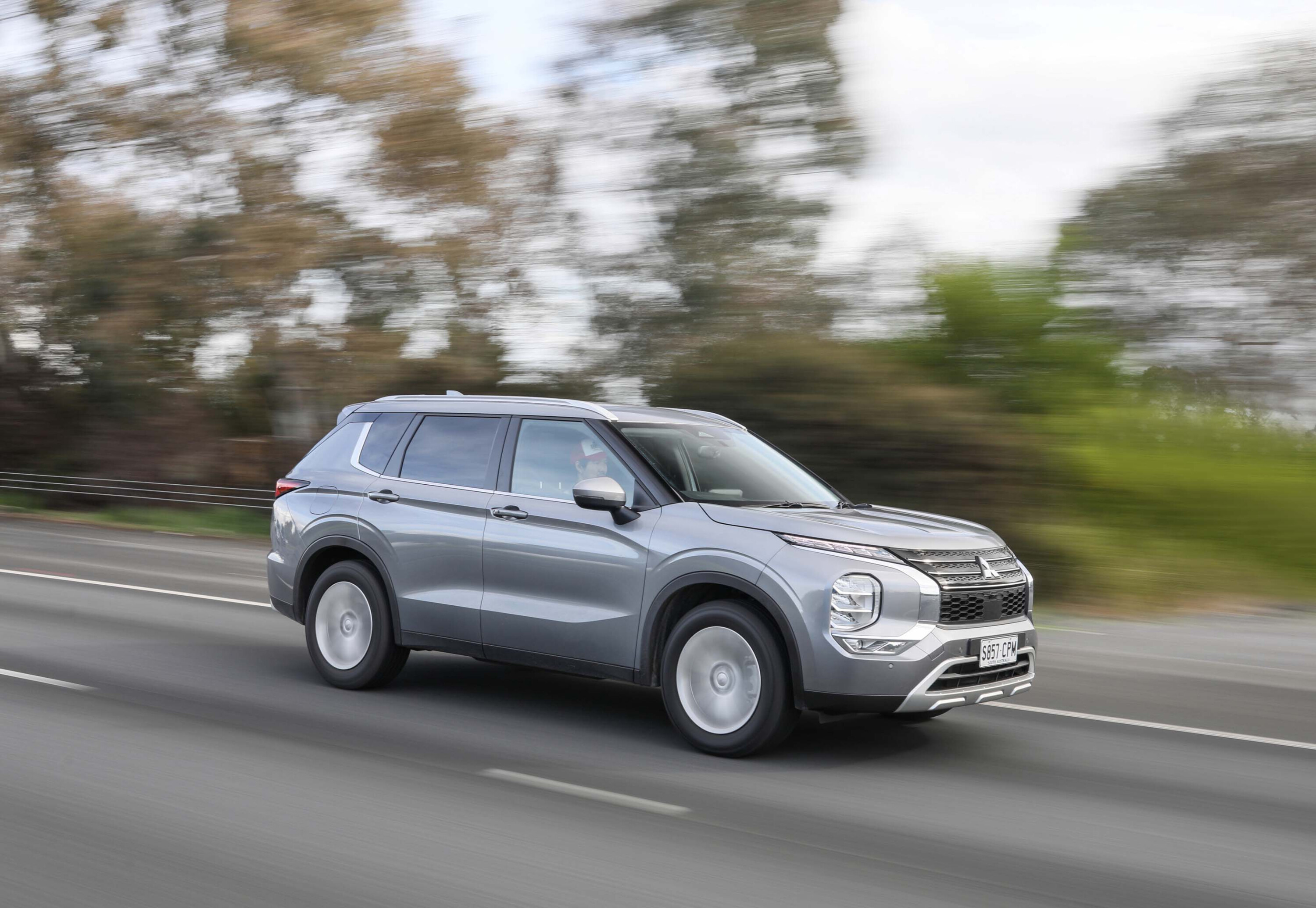
Yes. The Mitsubishi Outlander is a fun family SUV to drive.
Although it’s no sports car, keen drivers will appreciate its accurate steering, high grip levels and clever all-wheel-drive system, which combine to make the Outlander a willing and confidence-inspiring companion, even in wet conditions.
Open road refinement is impressive, too, with the Outlander doing a decent job of filtering out intrusive road and tyre noise. The engine can get a touch vocal on hilly terrain or when overtaking but generally the Outlander is a quiet and relaxing SUV to drive.
1
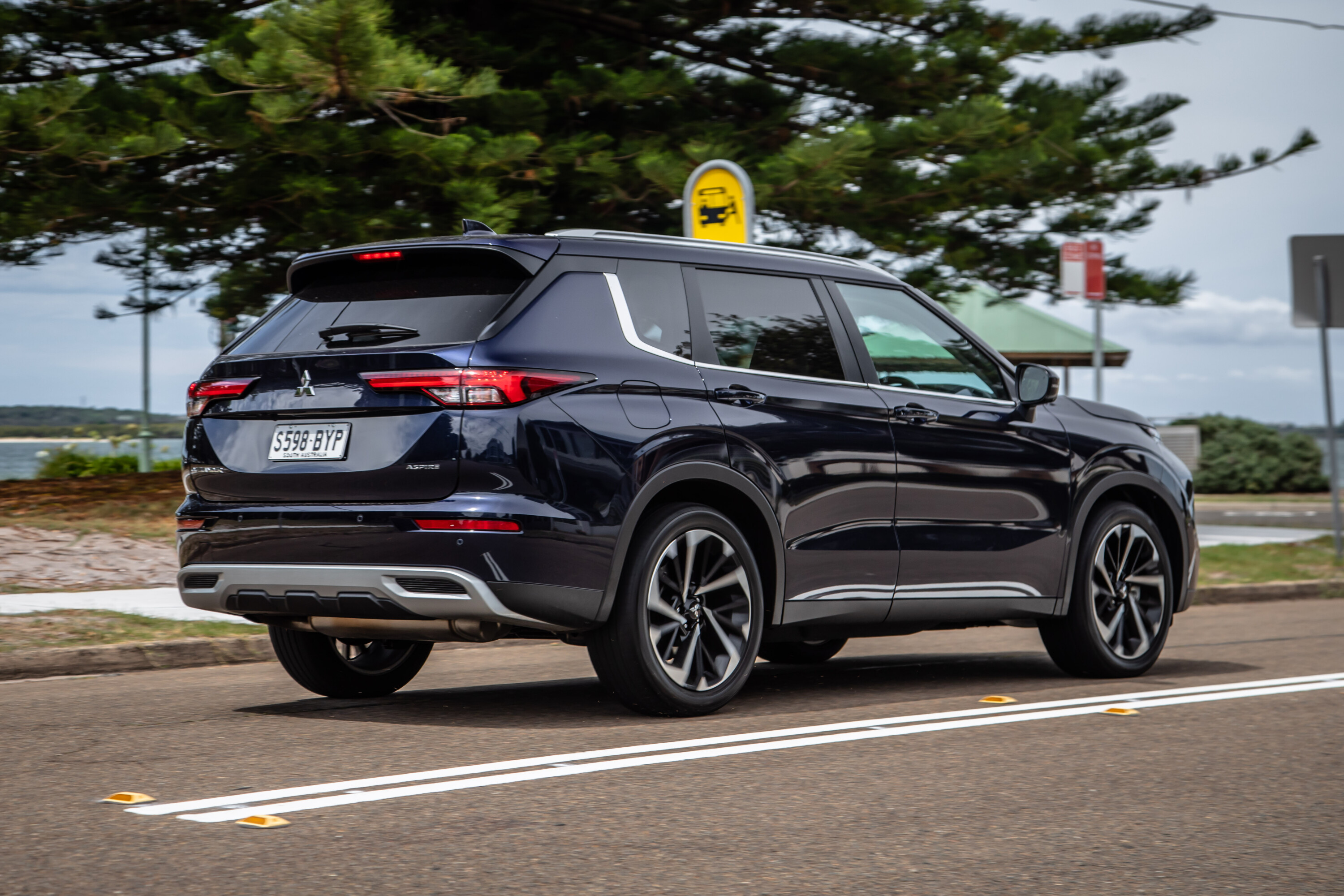
Around town, the Outlander offers excellent visibility, while steering is light and accurate, making it easy to manoeuvre in tight spaces and car parks.
Finding a comfortable driving position is also straightforward thanks to ample seat adjustment and a steering wheel that moves for reach and rake.
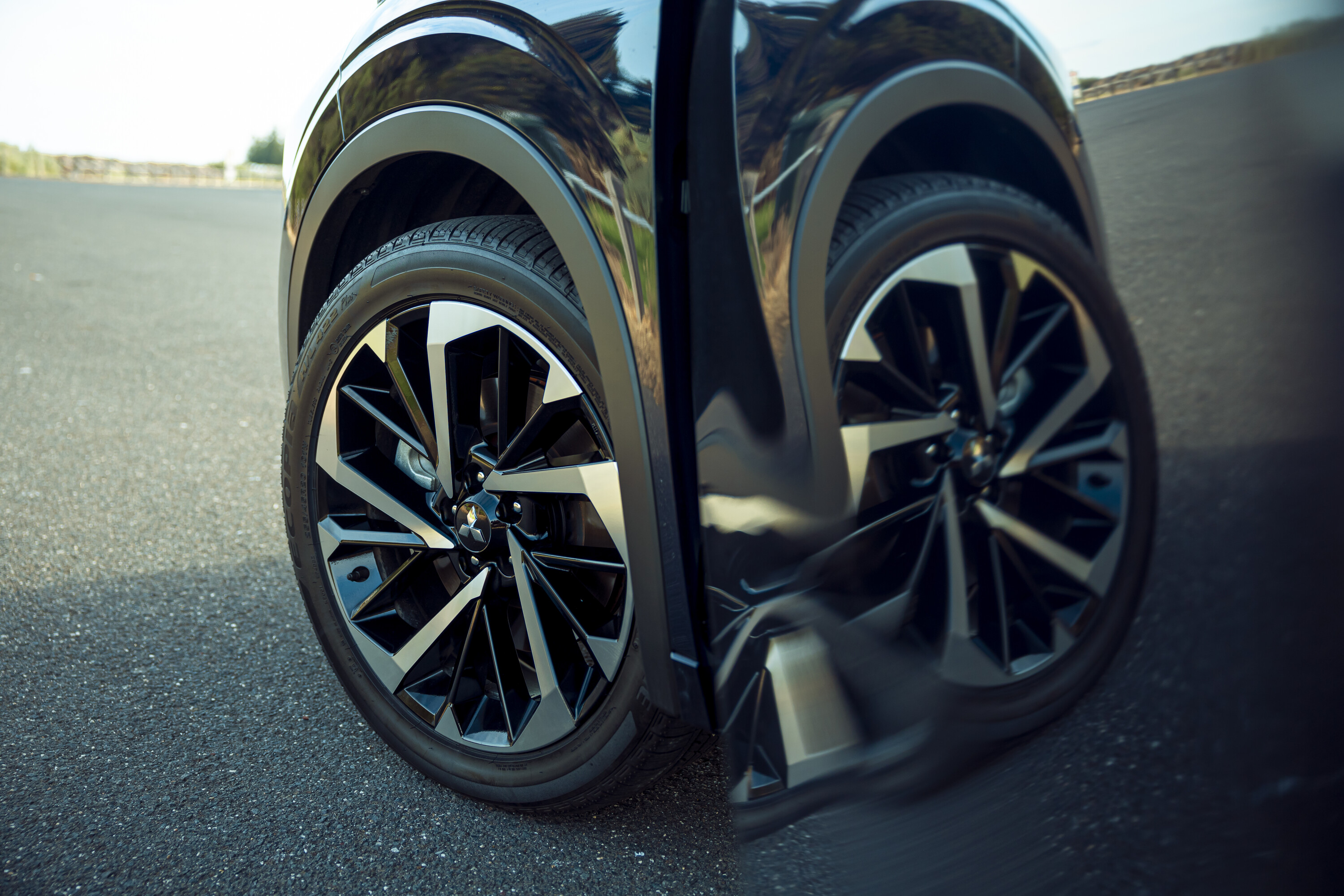
The only real weakness in how the Outlander drives is how it rides over bumps. While the suspension mostly strikes a good balance between comfort and control, big bumps can jolt unpleasantly and over poor surfaces the Outlander’s ride can feel sudden and fidgety. It’s an issue you notice more in higher-spec models fitted with large 20-inch wheels.
1
Both engine options offer strong performance
The 2.5-litre petrol engine is relatively quiet on a light throttle and in everyday driving it’s impressively responsive and eager. It pairs well with the CVT that is smooth and rarely drones or delivers the unnatural feeling of some CVTs where your throttle position and engine/road speed feel out of sync.
It’s the PHEV powertrain, however, that is the pick of the model range.
It combines a 2.4-litre petrol engine with an electric motor on each axle and doesn’t only use less fuel, but it’s quieter and more powerful. Mitsubishi’s PHEV system favours electricity to turn the axles so the Outlander PHEV drives more like an electric car than a conventional hybrid.
Acceleration is sprightly from a standstill and the Outlander PHEV delivers a driving experience that feels more premium and luxurious than models powered by the 2.5-litre petrol.
1
- What is a Powertrain or Drivetrain?
- Power vs torque
- Car suspension explained
- Automatic transmissions (‘gearboxes’) explained
- Chassis control systems explained
- Car vs Ute vs SUV: How the vehicle you buy should guide the way you drive
Which Mitsubishi Outlander engine uses the least fuel?
The plug-in hybrid powertrain in the Mitsubishi Outlander PHEV uses the least fuel, at 1.5L/100km on the official test (city and country combined).
It’s an impressive on-paper consumption figure and a big improvement compared to the regular Outlander range which uses a 2.5-litre petrol engine and has a consumption figure of between 7.5L/100km for front-drive variants and 8.1L/100km for those with all-wheel drive.
But is the PHEV’s fuel claim actually achievable in the real world? Mostly, that will come down to how owners use it. Mitsubishi’s own research shows PHEV owners drive their cars in EV mode 84 per cent of the time and if your daily commute is less than 84km, the goal of drastically slashing your fuel bill should be an achievable one.
Regularly topping up the PHEV with charge is the key to its impressive economy rating. Our experience shows that if you plug it in regularly, a fuel rating of around 4.0L/100km is achievable.
If you don’t have regular access to a socket, however, you can expect that number to blow out to around 8.0L/100km.
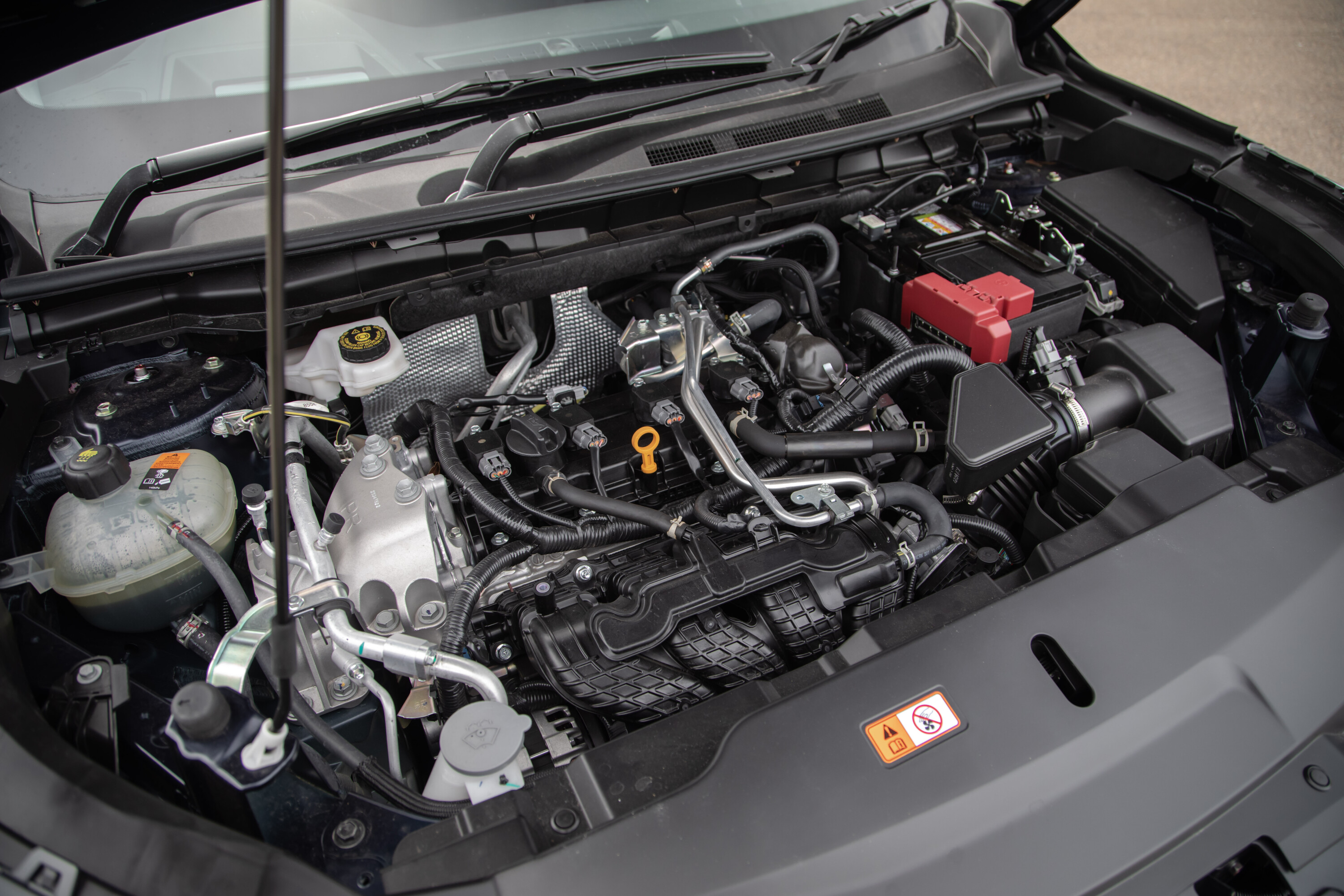
The Outlander PHEV has a 20kWh battery and takes around 9.5 hours to achieve a full charge from a regular 240-volt socket. Fitting a more powerful AC wallbox at home reduces charging time to 6.5 hours. On a DC fast charger, the Outlander PHEV can achieve a 0-80 per cent charge in 38 minutes.
1
What is the Mitsubishi Outlander’s towing capacity?
The Mitsubishi Outlander has a braked towing capacity of 1600kg, with a maximum tow ball rating of 160kg.
That rating is the same across the Outlander range, with PHEV models now on par with petrol versions thanks to an improved tow rating for this generation.
How long is the warranty and what are the Mitsubishi Outlander’s servicing costs?
The Mitsubishi Outlander comes with a market-leading 10-year factory-backed warranty, providing you service your vehicle at an authorised dealer.
If you service it elsewhere, the warranty reverts to five years/unlimited kilometres which is now the industry standard.
One thing to be mindful of is that the battery pack in PHEV models carries a lesser warranty of eight years or 160,000km. That’s standard for most electric vehicles and Mitsubishi also guarantees the battery against excessive degradation, promising to replace it if the capacity dips below 66 per cent over that eight-year period.
1
Still, it’s something to be mindful of. All batteries degrade, and if your Outlander PHEV retains 66 per cent after eight years, your EV-only range will drop from 84km to 56km.
All Outlander variants have service intervals of 12 months or 15,000km (whichever comes first) and Mitsubishi offers a competitive capped-price servicing program to keep maintenance costs low.
Prices vary between petrol and PHEV models, with a petrol model costing $299 for a minor service compared to $349 for the PHEV.
Over 10 years a petrol Outlander will cost $4340 to service, while a PHEV is $750 more to maintain at $5090.
Which version of the Mitsubishi Outlander does Wheels recommend?
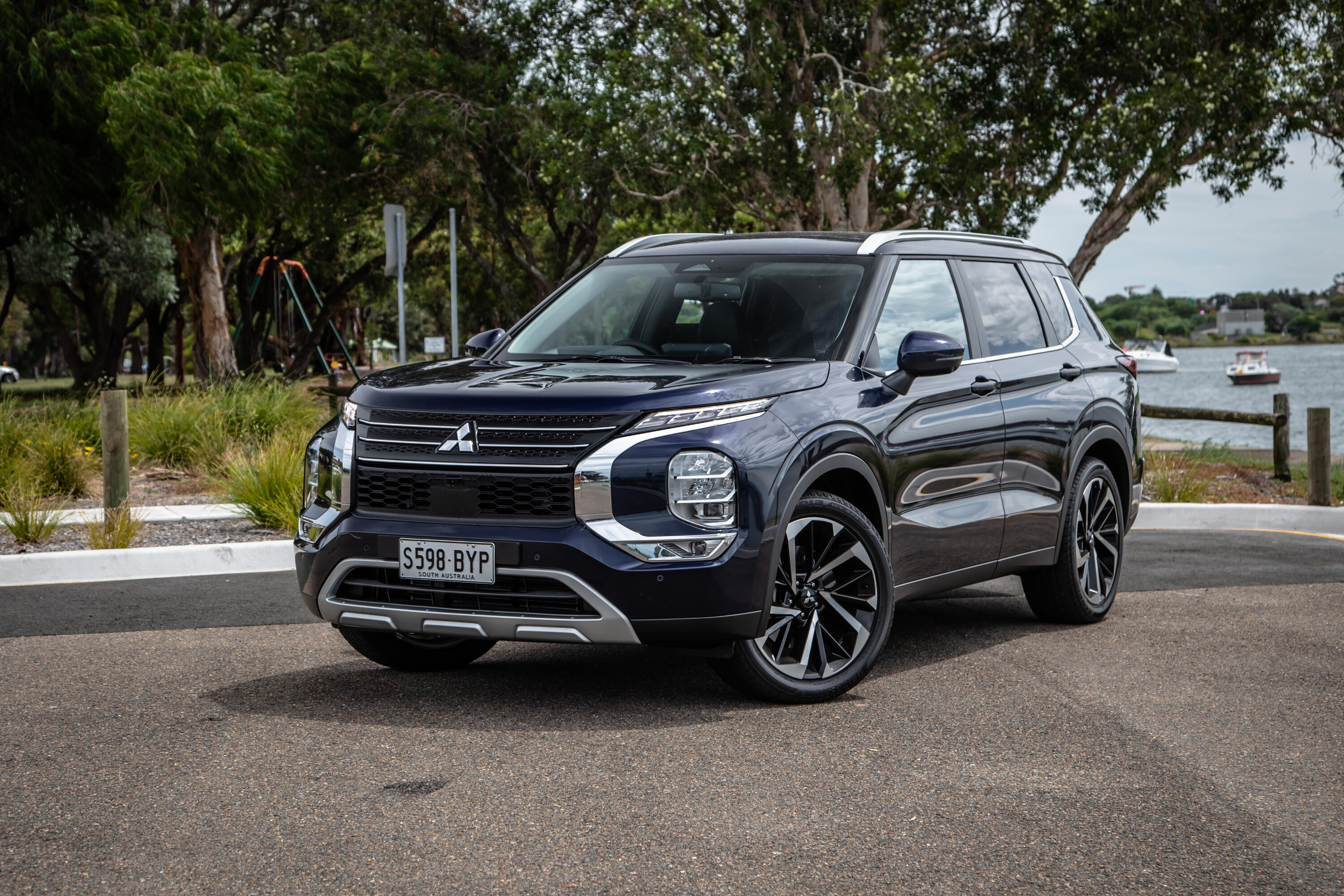
Our reviewers reckon the mid-spec Outlander Aspire AWD seven-seater is the pick of the model range.
At around $47,000 (before on-road costs), it brings a welcome dose of desirable equipment missing in cheaper versions (power tailgate, suede upholstery, heated seats, 20-inch wheels, 360-degree camera and head-up display) but doesn’t command the price premium of the flagship Exceed and Exceed Tourer.
1
We also think the 2.5-litre petrol engine is the smarter buy.
While the PHEV is more powerful and economical, it commands a $16,000 additional cost over an equipment petrol Outlander which is hard to justify in the value-focused family SUV segment.
What are the Mitsubishi Outlander’s key rivals?
The Mitsubishi Outlander plays in one of Australia’s most competitive and crowded segments, meaning buyers have lots of options to choose from.
Key alternatives to the Mitsubishi Outlander include:
- Kia Sportage
- GWM Haval H6
- Honda CR-V
- Hyundai Tucson
- Mazda CX-5
- MG HS
- Nissan X-Trail
- Peugeot 3008
- Subaru Forester
- Toyota RAV4
- Volkswagen Tiguan
MORE
Midsize SUVs
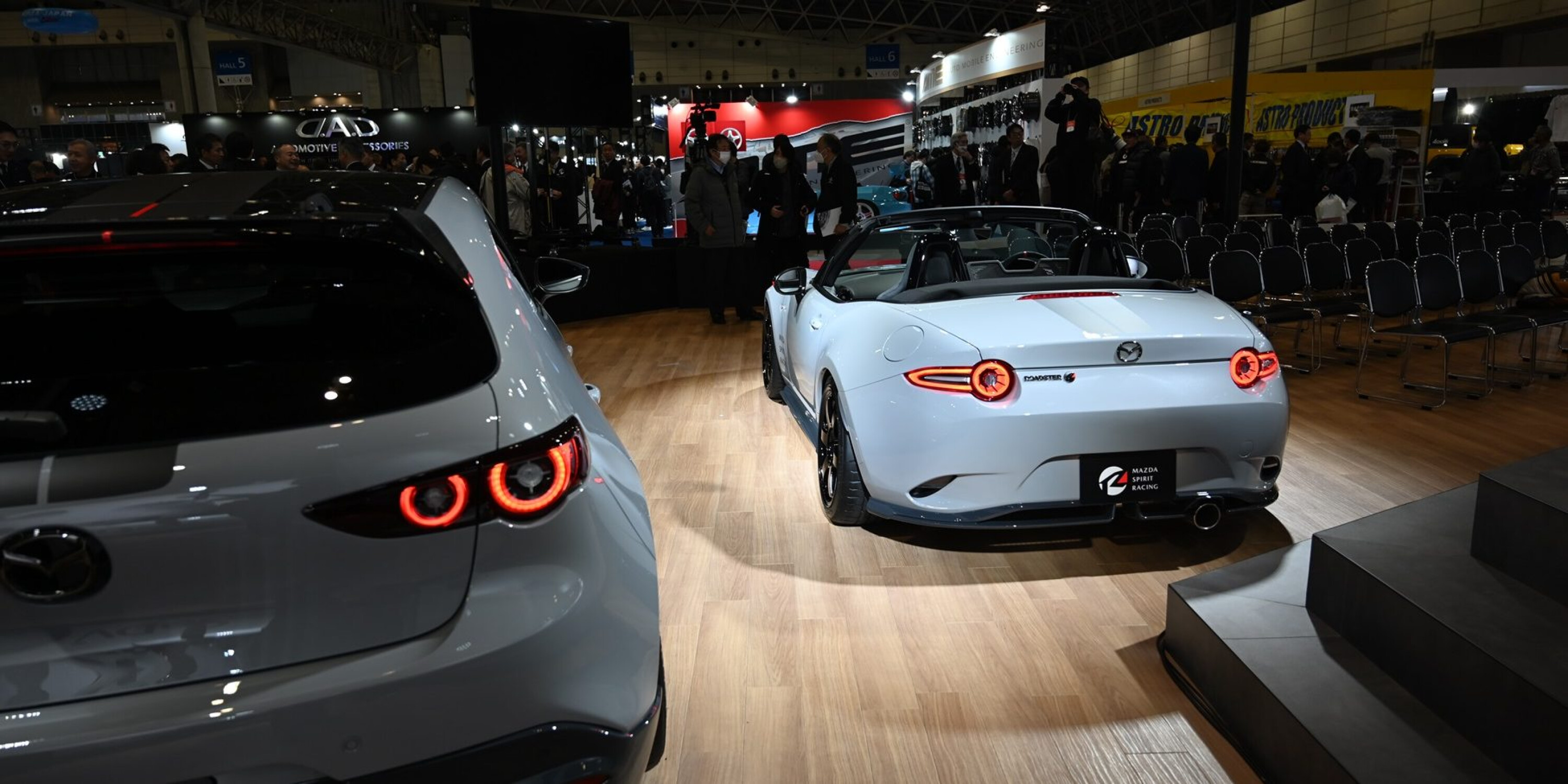
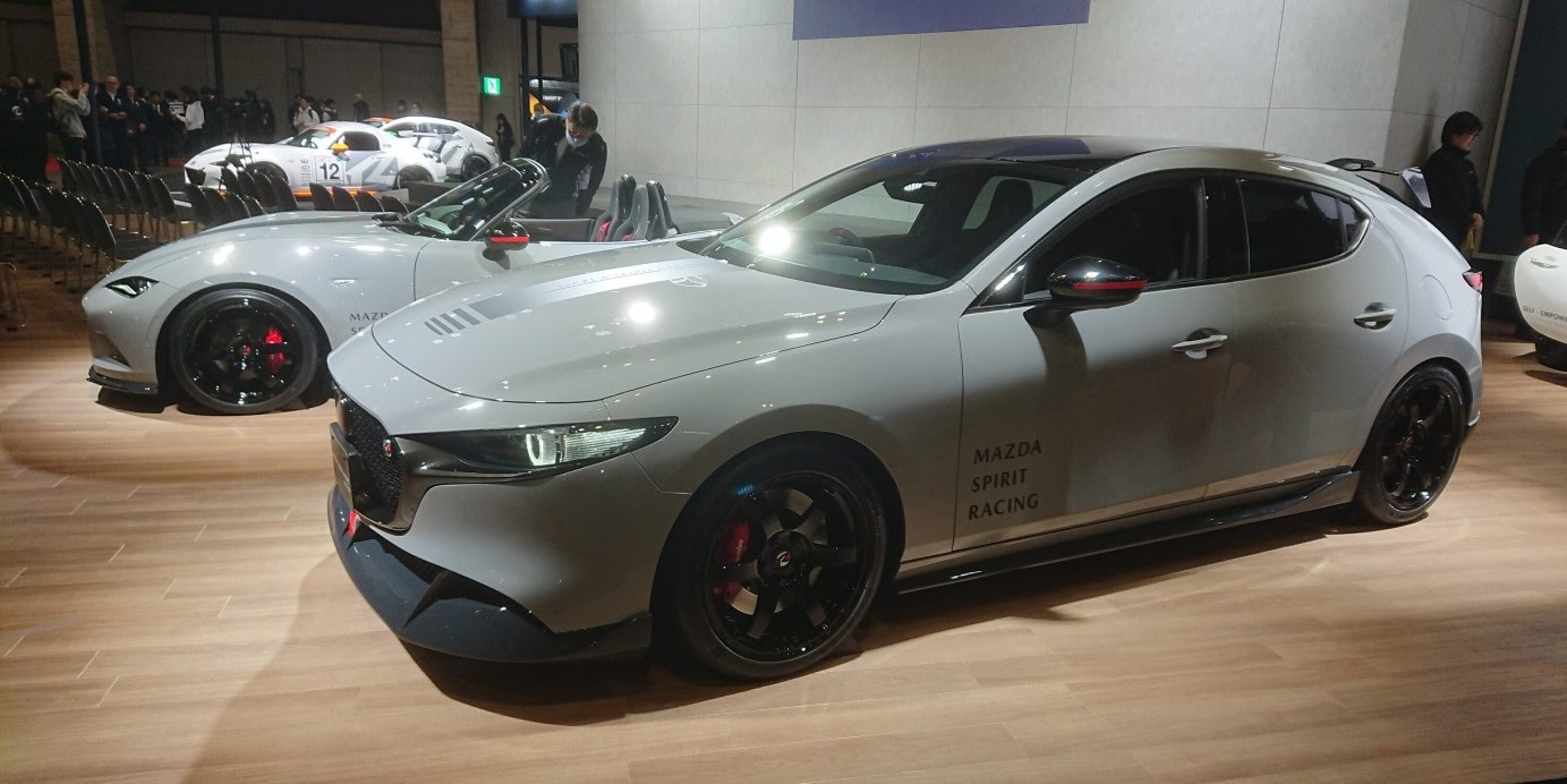
At the 2024 Tokyo Auto Salon, Mazda had a selection of vehicles on its stand including an MX-5 and turbocharged Mazda 3 tuned by the marque’s new Spirit Racing sub-brand – and they could end up on the menu for Australia.
Mazda is at pains to point out that these are both concepts and that it’s still studying the introduction of Sprit Racing in Japan first, with CEO Masahiro Moro enthused by the new direction.
“For the first time in 25 years since MazdaSpeed we have established a factory motorsports division – Mazda Spirit Racing”, said Moro-san. The brand will initially focus on Japan’s Super Taikyu racing series, which spans tin-top production cars to GT3 and TCR-spec racers.
1
Inspired by the racing series, Spirit Racing’s goal is to create “a car that people can enjoy driving in the city as well as in the circuit.”
As the Mazda Spirit Racing concept develops, the brand will consider overseas expansion – demand will be up to Mazda’s biggest markets, with North America and Australia two of the strongest – though there are no further plans to share now, according to a Mazda Australia spokesperson.
Near wide-bodied racecars were a pair of track-day-oriented concepts that could spearhead Spirit Racing’s road car launch.
2
The first is a Mazda 3 with a jutting front splitter, flared side skirts, black six-spoke alloy wheels, red Brembo brakes, and an extended rear roof spoiler. It sits lower, indicating changes to the suspension as well.
Official word from Mazda Japan – coming via the Australian office – is that a 2.5-litre turbo-petrol four-cylinder is currently the engine of choice. But it won’t be the same as the 186kW 2.5-turbo found in North America.
Instead, the Japanese communication notes it will be a “new engine”, though whether this means an all-new design, or significant refinement of what Mazda already has, is unclear.
It wouldn’t be the first hot Mazda 3 to hit Australian shores, with the cult 3 MPS and SP23/SP25 models fondly remembered by many enthusiasts.
3
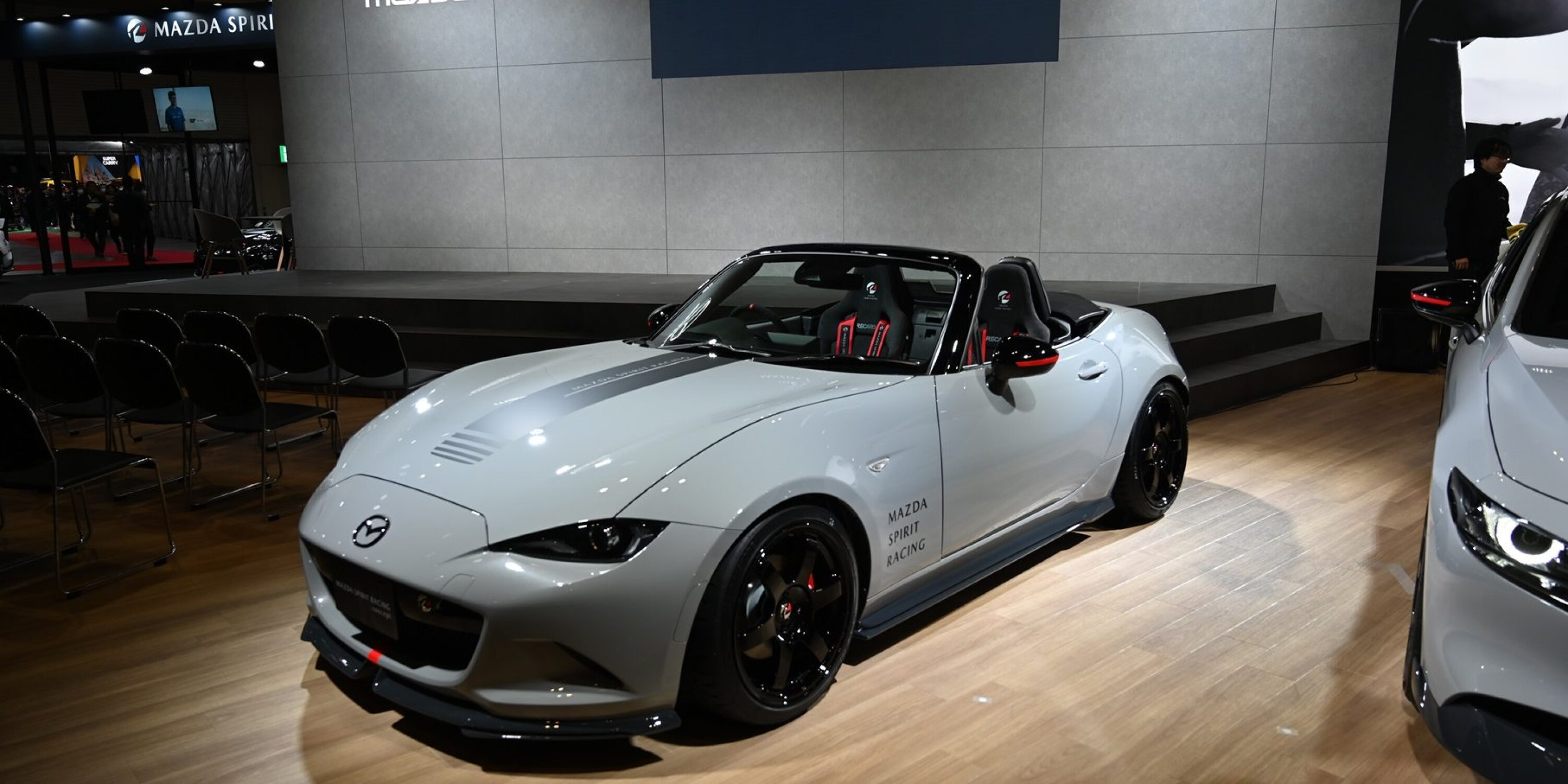
The other vehicle is a trackday special MX-5 (Roadster in Japan) with the same high-output 2.0-litre Skyactiv petrol four-cylinder as the Super Taikyu ST-Q racecar, developing 149kW (200 hp) rather than the standard car’s 135kW.
Naturally, there’s a focus on lighter weight and improved driver feedback with racing bucket seats, harnesses, Brembo brakes, aerodynamic mods, and six-spoke lightweight alloy wheels fitted.
Mazda’s CEO also noted that the Spirit MX-5 uses track-oriented suspension, and it sits a lot lower than a regular ND. Expect the dampers to have been retuned, along with stiffer anti-roll bars and firmer springs for a more stable platform.
MORE
Everything Mazda
Snapshot
- 2024 MG 4: Full Australian details
- Electric small hatch priced from $39,990 plus on-roads
- Available in four powertrains, up to 530km driving range
January 2024: MG 4 price increases for sub-$40k model
The most-affordable 2024 MG 4 electric hatch has received a price rise for the new year.
Pricing for the MG 4 Excite 51 has risen $1000 from $38,990 to $39,990 before on-road costs.
The price rise, applicable from January 1, is “a result of different external factors such as a rise in raw material costs, shipping costs and currency fluctuations,” according to MG Australia.
All other MG 4 variants remain unchanged. This story has been updated to reflect the updated pricing.
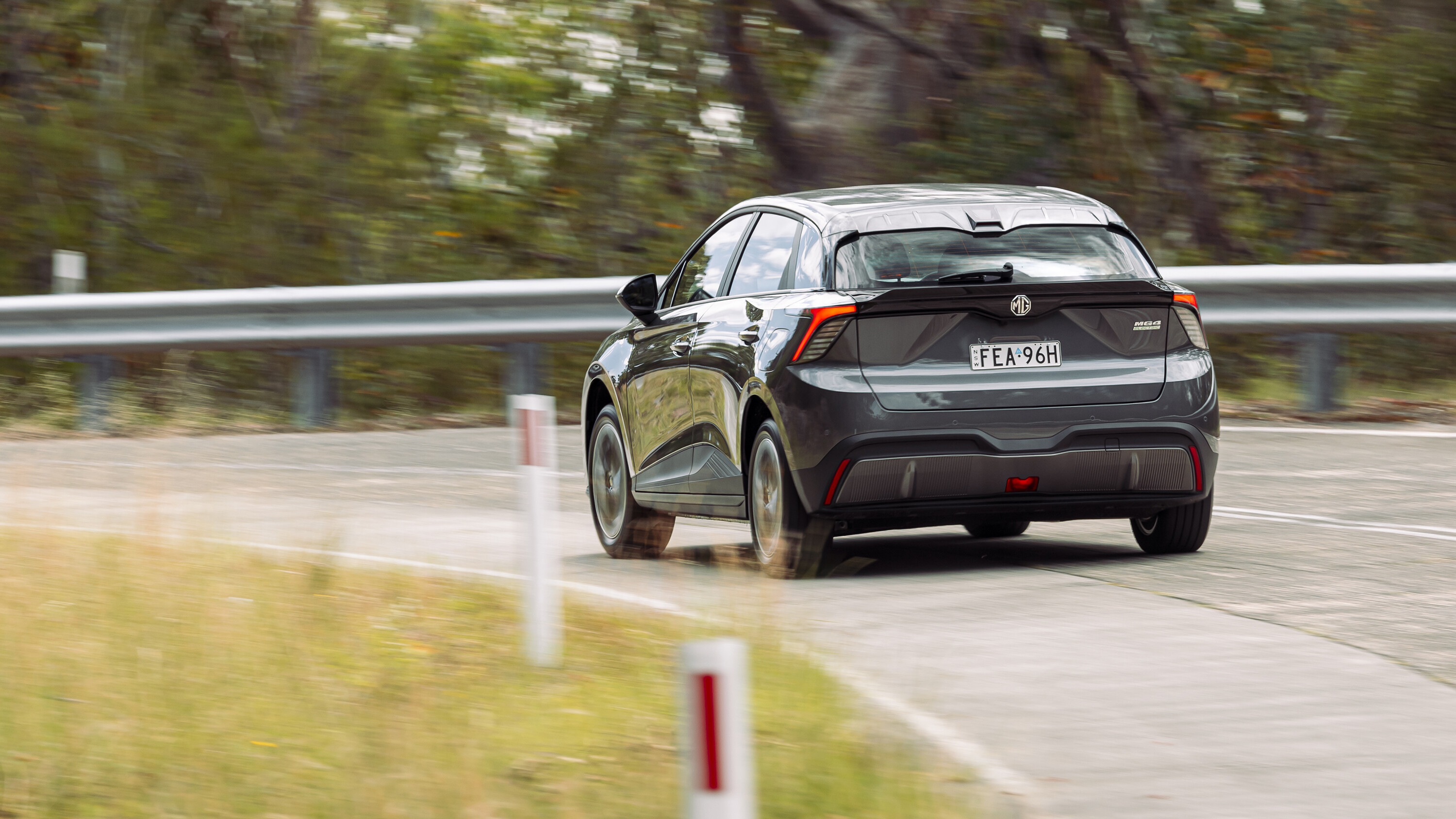
The MG 4 hatch arrived in Australia in August 2023 as one of the nation’s cheapest electric vehicles.
Here’s everything you need to know about the BYD Dolphin, GWM Ora and Cupra Born rival.
Priced from $39,990 before on-road costs, it is one of the cheapest battery-powered passenger cars sold in Australia to date – but it is undercut by the entry-level Dolphin, which remains priced from $38,890 plus on-roads.
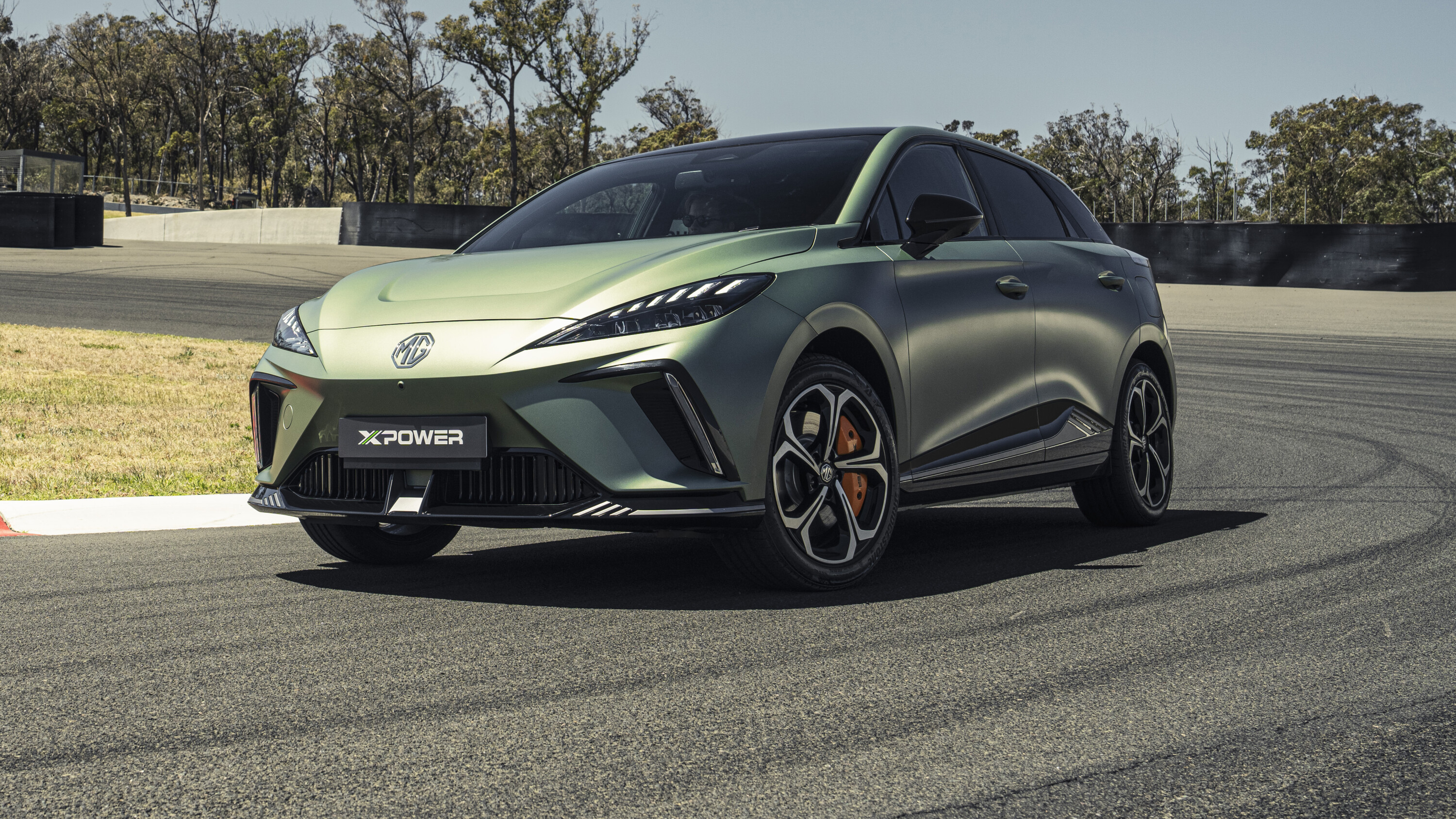
It is available in five grades: Excite 51, Excite 64, Essence 64, Long Range 77 and XPower. The latter variant tops out the MG 4 line-up at $59,990 before on-roads, offering hot hatch-like straight-line performance with a 3.8-second 0-100km/h sprint time and a 320kW/600Nm total system output.
The mid-spec 64kWh battery is available in Excite and Essence variants, while the Long Range variant with a 77kWh battery tops out the non-performance line-up at $55,990 plus on-roads.
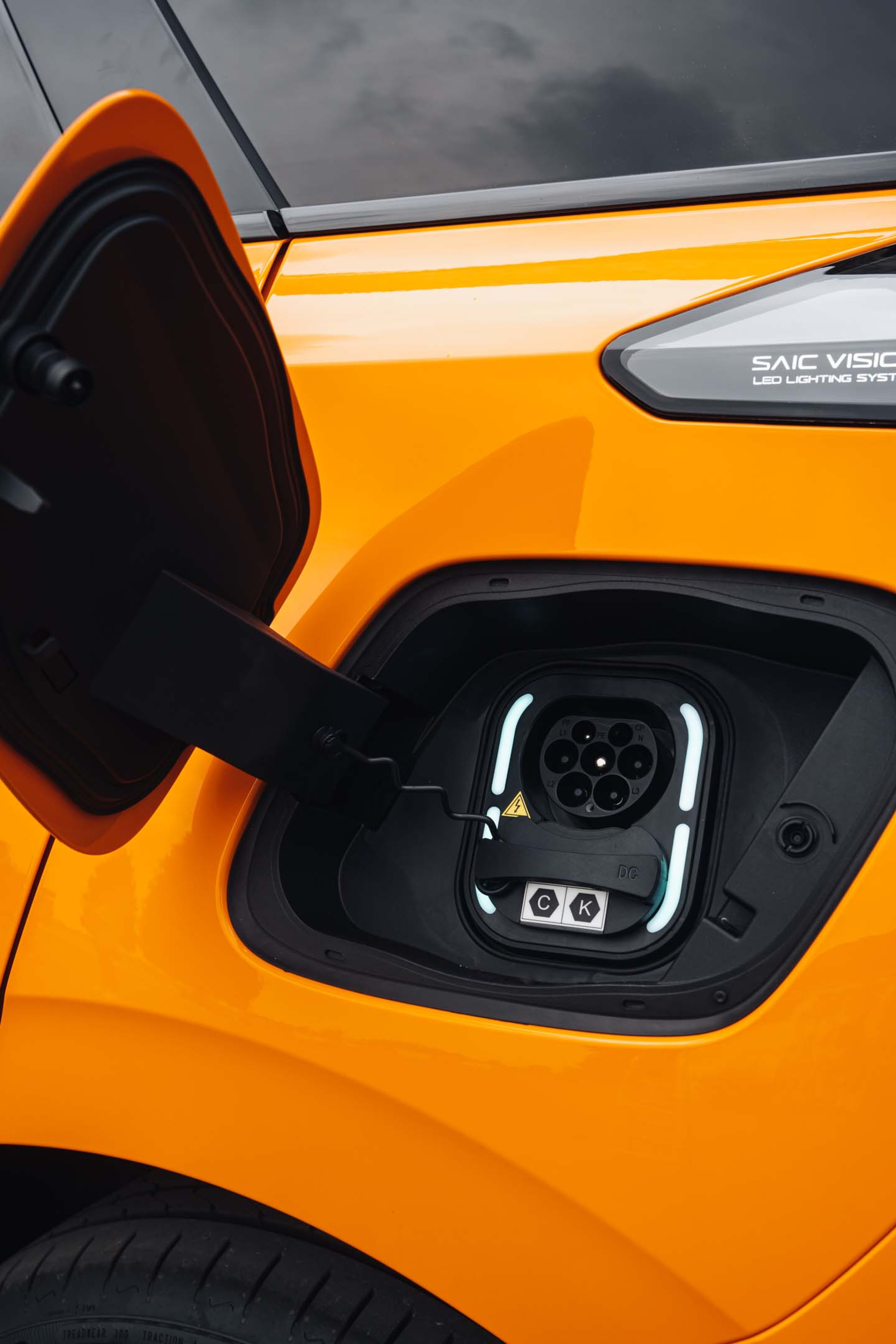
Under the skin, the MG 4 is based on MG’s modular scalable platform (MSP), with support for 150kW DC fast charging for 64kWh and 77kWh models, allowing for a 10 to 80 per cent top-up in 28 minutes.
Most variants are rear-wheel drive – matching the Tesla Model 3 and Cupra Born – with a claimed 50:50 weight distribution. The flagship MG 4 XPower offers a dual-motor all-wheel-drive setup.
JUMP AHEAD
- 2024 MG 4 pricing
- 2024 MG 4 features
- Colours
- Powertrains, charging, and driving range
- Safety
- Dimensions
- Warranty and servicing
- Availability
2024 MG 4 pricing
Price excludes on-road costs.
| Model | Pricing | Change |
|---|---|---|
| MG 4 Excite 51 | $39,990 | up $1000 |
| MG 4 Excite 64 | $44,990 | u2013 |
| MG 4 Essence | $47,990 | u2013 |
| MG 4 Essence Long Range | $55,990 | u2013 |
| MG 4 XPower AWD | $59,990 | u2013 |
1
2024 MG 4 features
| 2024 MG 4 Excite features | |
|---|---|
| 17-inch alloy wheels with aero cover | 7-inch digital instrument cluster |
| 10.25-inch infotainment system | Rotary gear selector |
| Wired Apple CarPlay and Android Auto | Cloth upholstery |
| Four-speaker audio system | u2018iSmartu2019 connected-car service |
| LED headlights, tail-lights, and DRLs | Vehicle-to-load functionality |
| Heated side mirrors | Rear parking sensors |
2024 MG 4 Essence/Long Range features
| In addition to Excite | |
|---|---|
| 18-inch alloy wheels with aero cover | Synthetic leather/cloth upholstery |
| Blind-spot alert | Door open warning |
| Rear cross-traffic alert | Voice control |
| Lane change assist | Six-speaker audio system |
| Satellite navigation | 360-degree camera system |
| Height-adjustable load floor | Wireless phone charging |
| Auto-dimming rear-view mirror | Two-tone roof |
| Roof spoiler | Heated front seats |
| Six-way power-adjustable driveru2019s seat | Heated steering wheel |
2024 MG 4 XPower features
| In addition to Essence | |
|---|---|
| All-wheel drive | Track mode app |
| 18-inch five-spoke alloy wheels | XPower-branded orange-painted brake caliper covers |
| Launch control | Sports pedals |
1
Colours
| 2024 MG 4 colours | |
|---|---|
| Dover white | Brixton blue* |
| Black pearl* | Camden grey* |
| Dynamic red* | Volcano orange* |
| Sterling silver* | Hunter green# (XPower only) |
| * Metallic paint, $700 | # Premium paint, $1000 |
1
Powertrains, charging, and driving range
The MG 4 Excite 51 is fitted with a 51kWh lithium-ion battery pack and a single 125kW/250Nm electric motor powering the rear axle, for an estimated WLTP-rated 351-kilometre driving range.
The addition of the 64kWh lithium-ion battery pack brings a WLTP-rated 450-kilometre driving range and also a more-powerful150kW/250Nm electric motor for the Excite 64.
The mid-spec Essence 64 has a reduced WLTP-rated 435-kilometre driving range. Both variants have a claimed 7.9-second 0-100km/h sprint time.
Stepping up to the long-range Long Range 77 brings a larger 77kWh lithium-ion battery pack and a more-potent 180kW electric motor, for a WLTP-rated 530-kilometre driving range.
1
In the MG 4 XPower, the front and rear electric motors produce 320kW and 600Nm in total, with a launch control system aiding a claimed 0-100km/h acceleration time of 3.8 seconds.
It also adds stiffened suspension with firmer dampers, springs, and anti-roll bars, along with a locking differential for its rear-biased twin-motor setup
In the MG 4, public fast-charging reaches 150kW DC for a 10-80 per cent top-up in 28 minutes for 64kWh and 77kWh models, while AC charging is capped at 7.4kW for a seven-hour and 15-minute 0-100 per cent charge.
The MG 4 with a 51kWh battery is limited to an 88kW DC fast-charge speed, allowing for a 10-80 per cent top-up in around 40 minutes.
| 2024 MG 4 driving range (WLTP) | ||
|---|---|---|
| Excite 51 | 351km | 18.4kWh/100km |
| Excite 64 | 450km | 13kWh/100km |
| Essence 64 | 435km | 13.8kWh/100km |
| Long Range 77 | 530km | 14kWh/100km |
| XPower 64 | 400km | N/A |
MINI MATCH-UP: MG 4 v rivals*
| Model | MG 4 | BYD Dolphin | GWM Ora | Cupra Bornu00a0 | MG ZS EV | BYD Atto 3 | Hyundai Kona Electric | Tesla Model 3 |
|---|---|---|---|---|---|---|---|---|
| Price (+ ORCs) | $39,990 u2013 $59,990 | $38,890 u2013 $49,990 | $39,990 u2013 $51,990 | $59,990 | $40,990 u2013 $49,990 | $48,011u2013 $51,011 | $54,000 u2013 $68,000 | $61,900 u2013 $71,900 |
| Power | 125kW u2013 320kW | 70kW u2013 150kW | 126kW | 170kW | 115kW | 150kW | 99kW u2013 150kW | 208kW u2013 366kW (est.) |
| Torque | 250Nm u2013 600Nm | 180Nm u2013 250Nm | 250Nm | 310Nm | 280Nm | 310Nm | 250Nm | 420Nm u2013 493Nm (est.) |
| Battery size | 51kWh u2013 77kWh | 45kWh u2013 60.48kWh | 45.4kWh u2013 59kWh | 82kWh | 50.3kWh u2013 72.6kWh | 49.9kWh u2013 60.48kWh | 48.6kWh u2013 64.8kWh | 60kWhu00a0u2013 78kWh (est.) |
| WLTP range | 351km u2013 530km | 340km u2013 427km | 310km u2013 420km | 511km | 320km u2013 440km | 345km u2013 420km | 370km u2013 505km | 513km u2013 629km |
| DC charge speed | 88kW u2013 150kW | 60kW u2013 80kW | 80kW | 170kW | 75kW u2013 94kW | 70kW u2013 80kW | 100kW | 170kW |
| * as of January 2024 | ||||||||
1
Safety
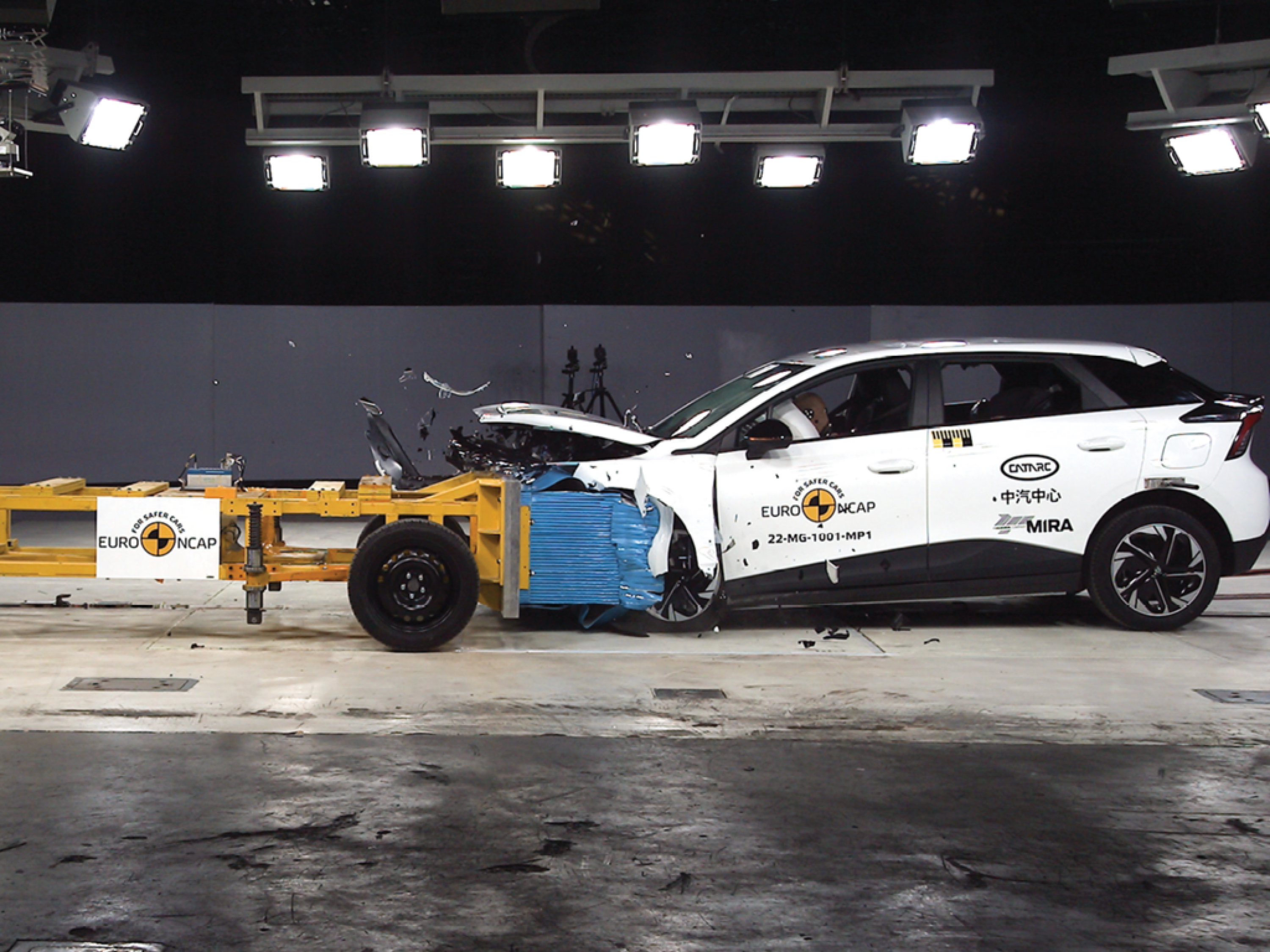
The MG 4 has a five-star ANCAP safety rating, based on testing conducted in Europe in 2022.
It scored 83 per cent for adult occupant protection, 86 per cent for child occupant protection, 75 per cent for vulnerable road user protection, and 81 per cent for safety assistance.
For the full report, click here.
Six airbags (dual front, side and curtain) are fitted as standard.
| 2024 MG 4 active safety features | |
|---|---|
| Autonomous emergency braking (vehicle, pedestrian, cyclist, junction) | Auto high-beam |
| Lane-keep assist | Adaptive cruise control |
| Lane departure warning | Traffic jam assist |
| Driver attention alert | |
Blind-spot and rear cross-traffic alerts are not fitted to entry-level Excite variants.
1
Dimensions
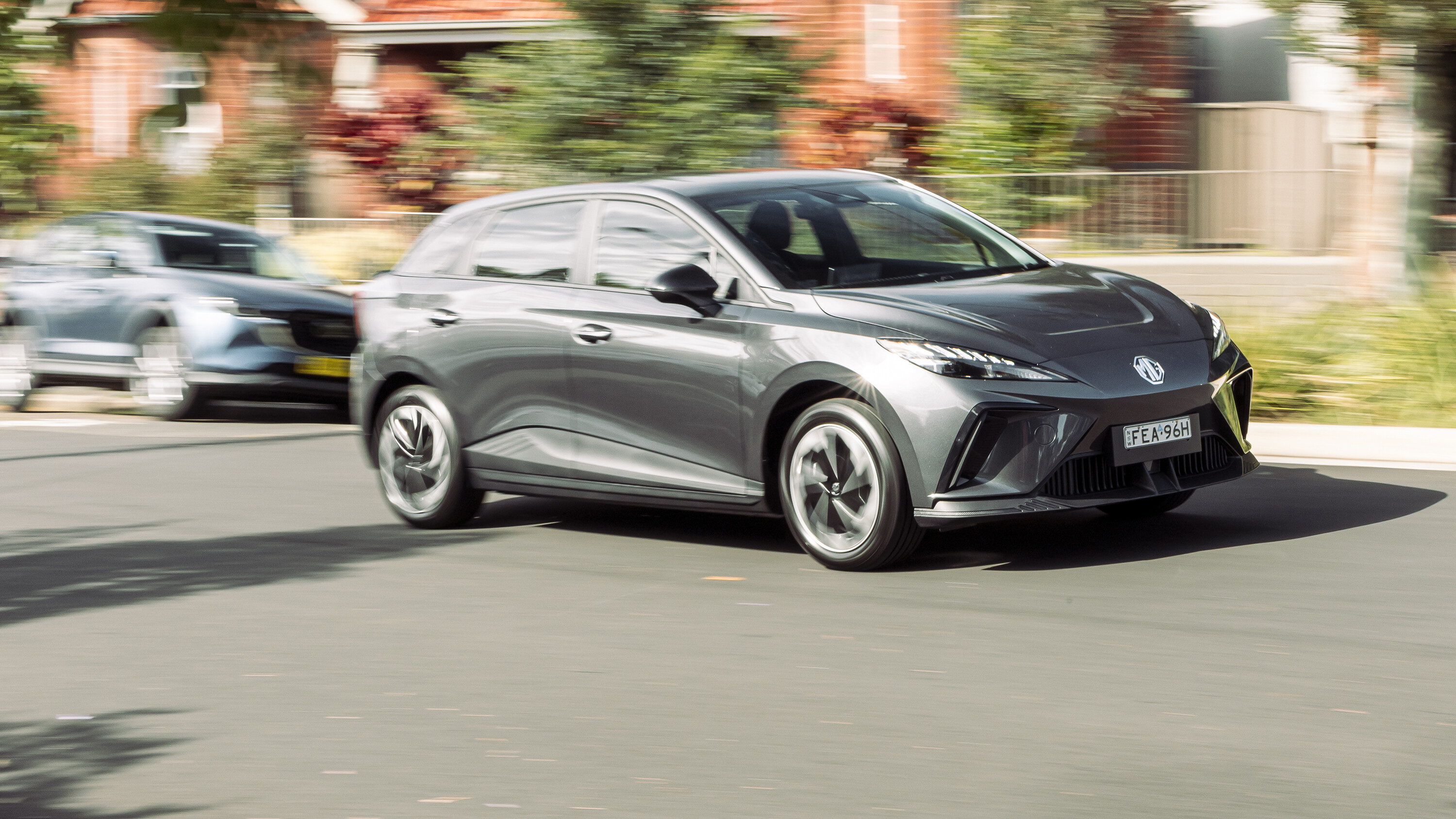
The 2024 MG 4 measures 4287 millimetres long, 1836mm wide and 1504mm tall, with a 2705mm wheelbase. This is similar to a Volkswagen Golf.
2023 MG 4 boot space
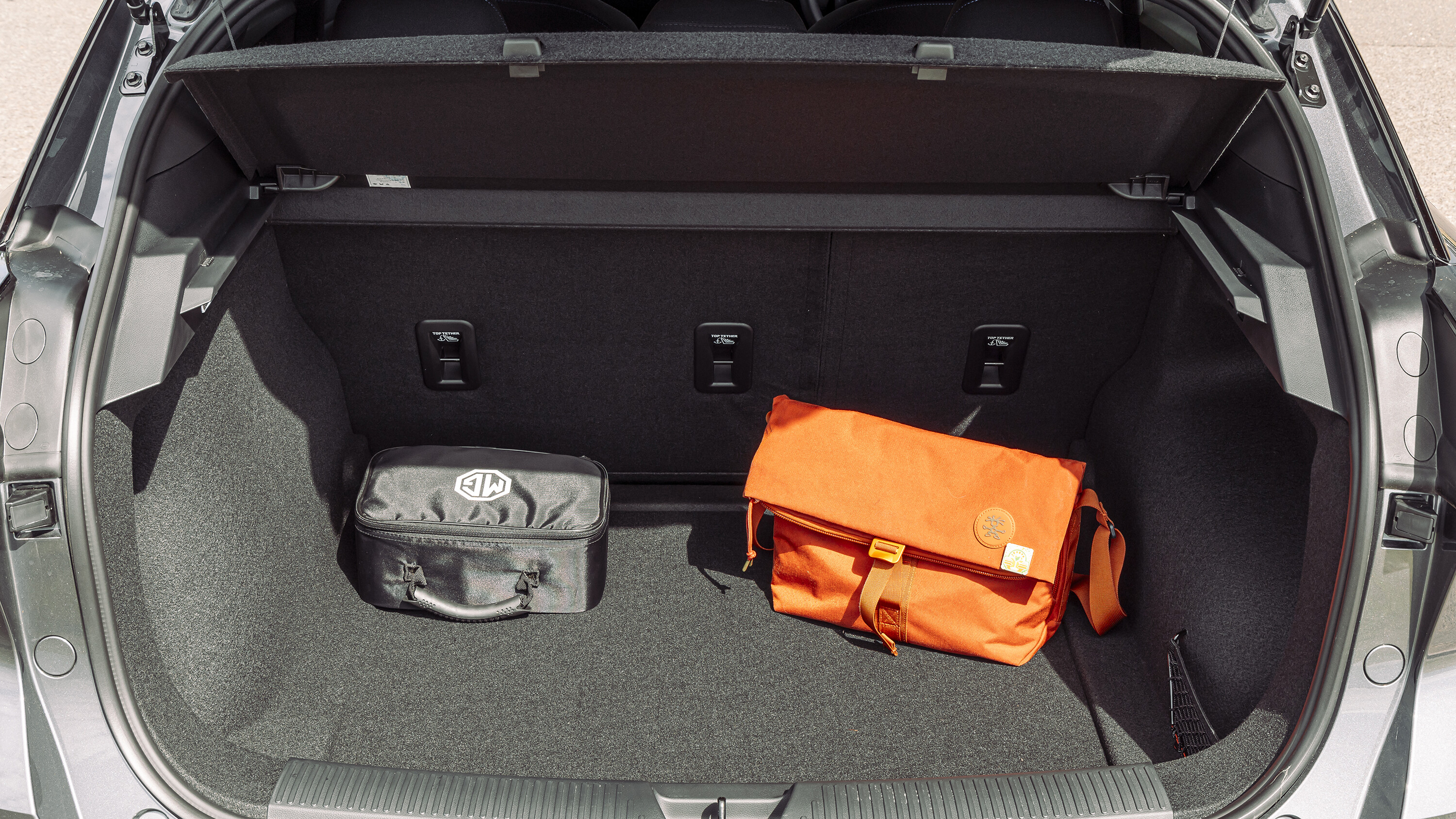
The MG 4 has a 363-litre boot capacity, expanding to 1177 litres with the second-row folded. It does not have a front boot (frunk).
1
Warranty and servicing
The MG 4 is covered by the brand’s seven-year/unlimited-kilometre warranty – including the high-voltage battery.
It has a complimentary 12-month roadside assistance program, which renews with annual servicing at a dealership during the vehicle’s warranty period.
Maintenance is required every 24 months or 40,000 kilometres, whichever occurs first.
| Service interval | Dealer capped-price service cost |
|---|---|
| 24-month/40,000km | $296 |
| 48-month/80,000km | $907 |
| 72-month/120,000km | $296 |
| 96-month/160,000km | $907 |
| 120-month/200,000km | $296 |
| 144-month/240,000km | $907 |
| 168-month/280,000km | $296 |
MORE
Everything MG
