
- Kilowatt (kW) = charging power speed
- Kilowatt-hour (kWh) = battery size
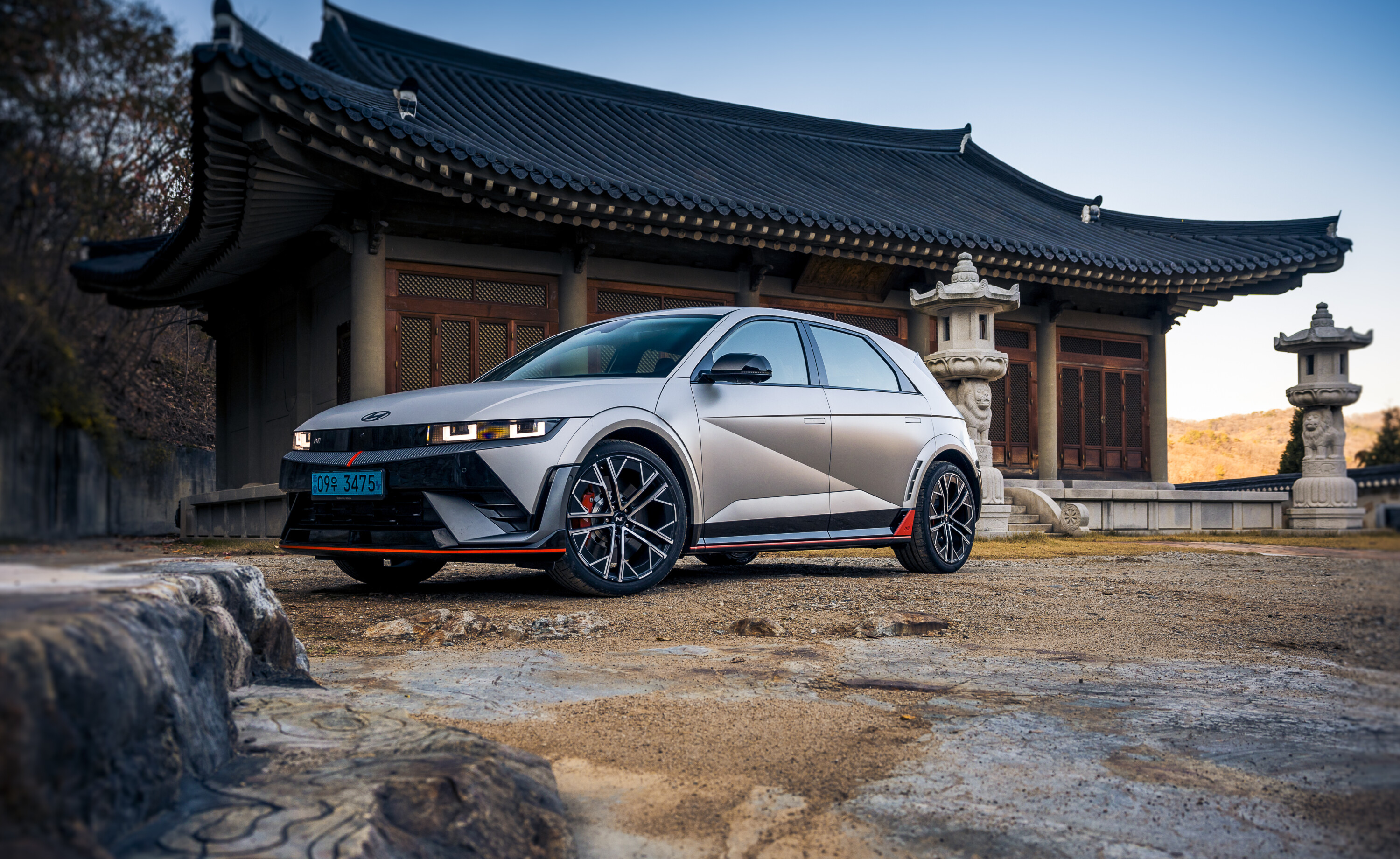
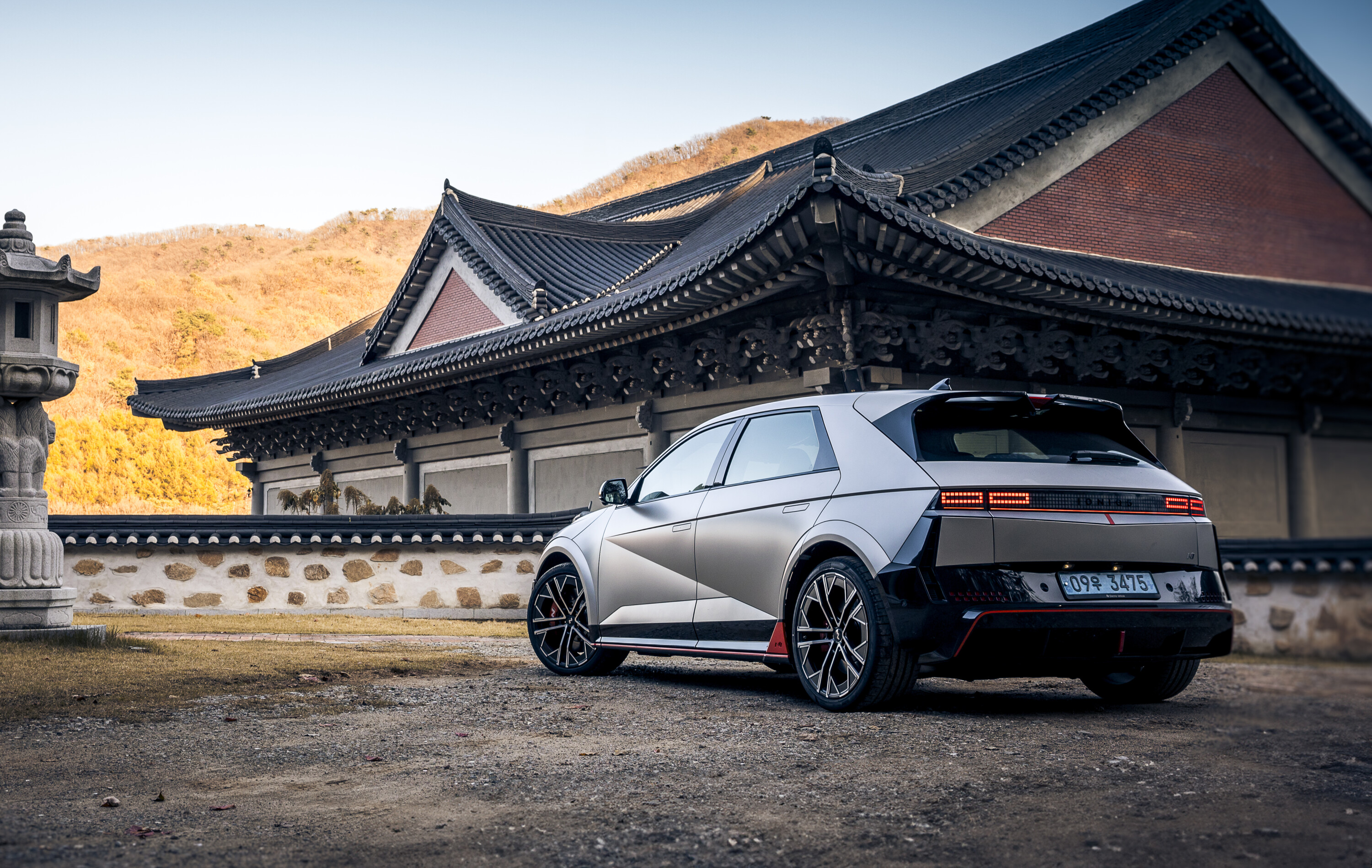
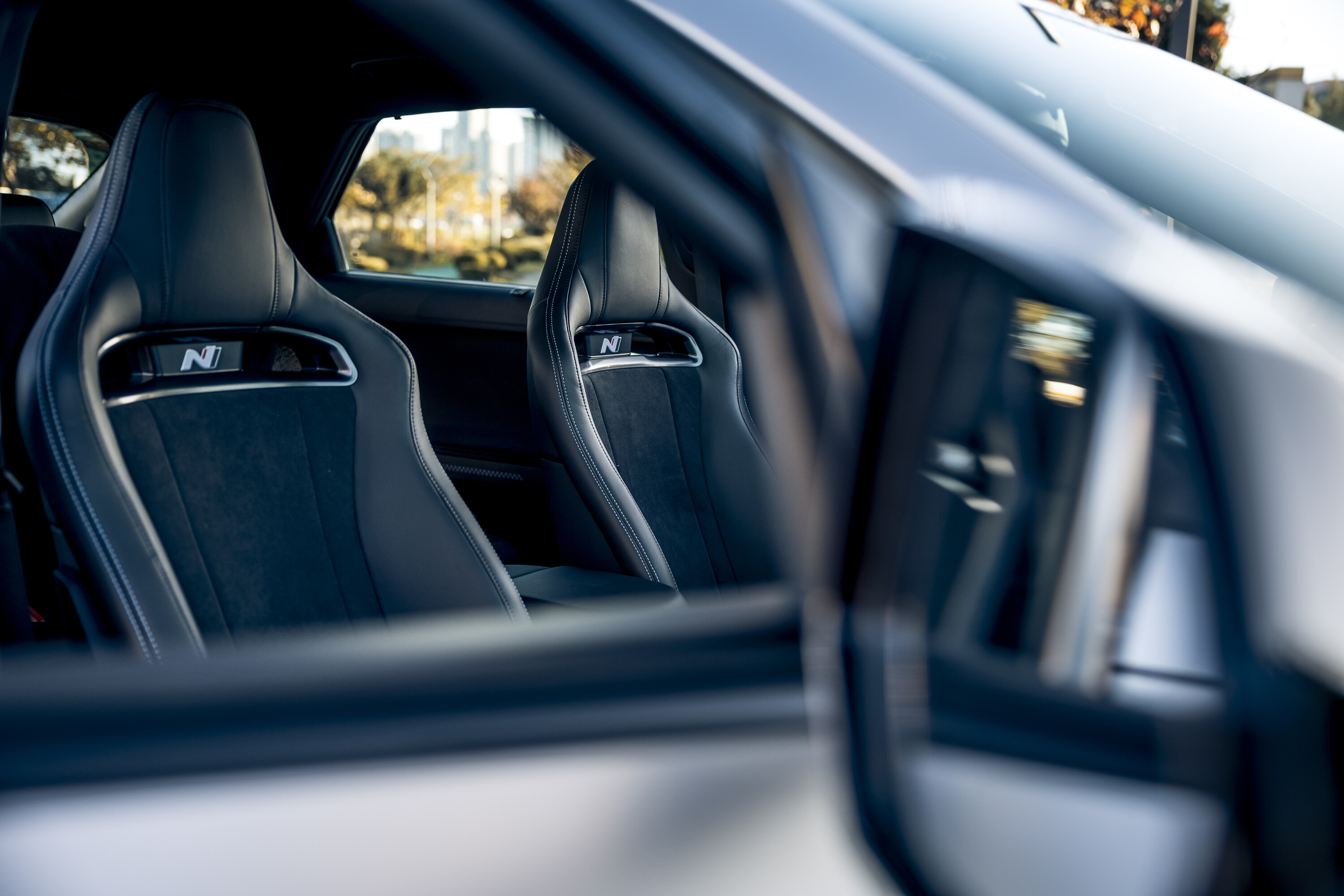
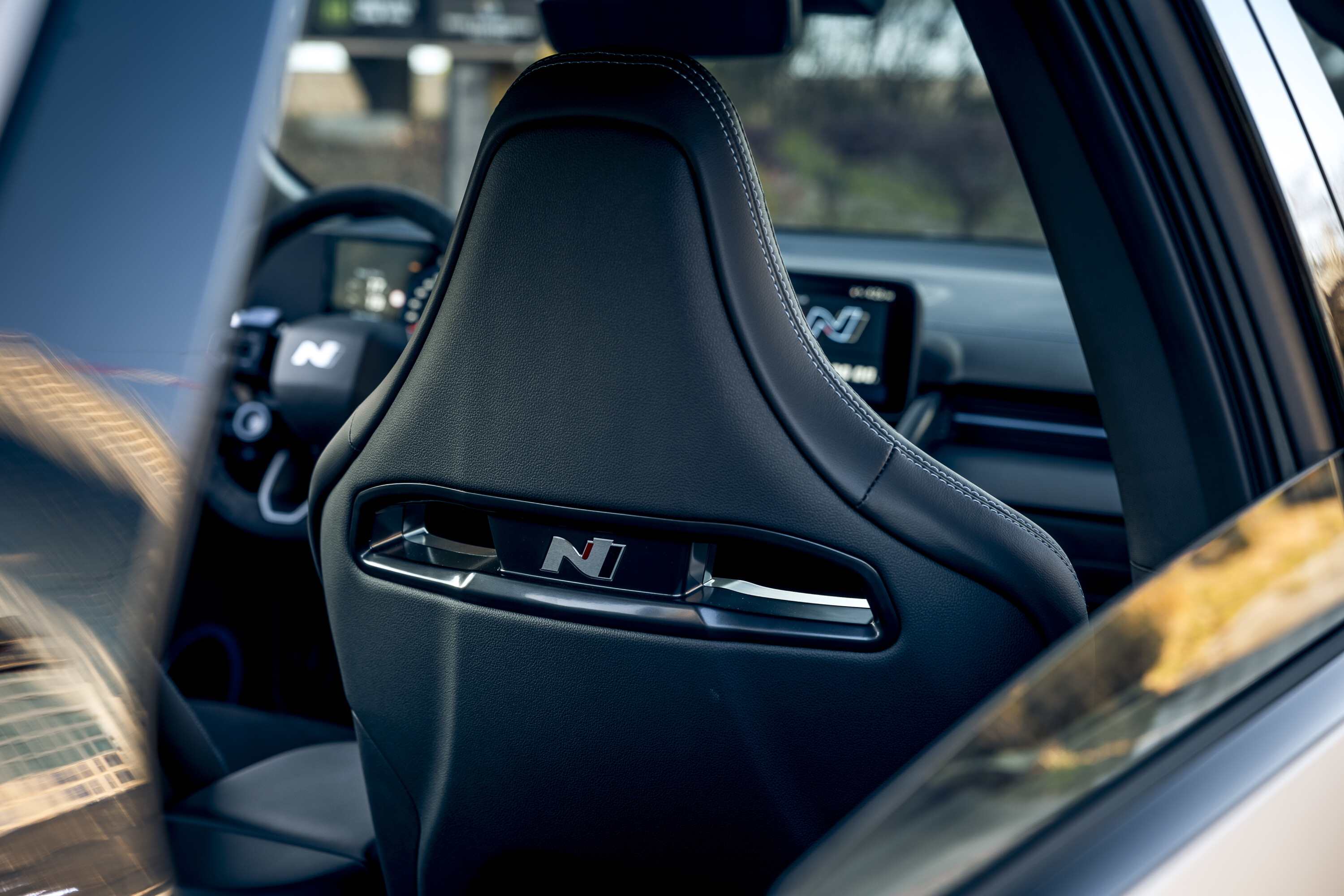
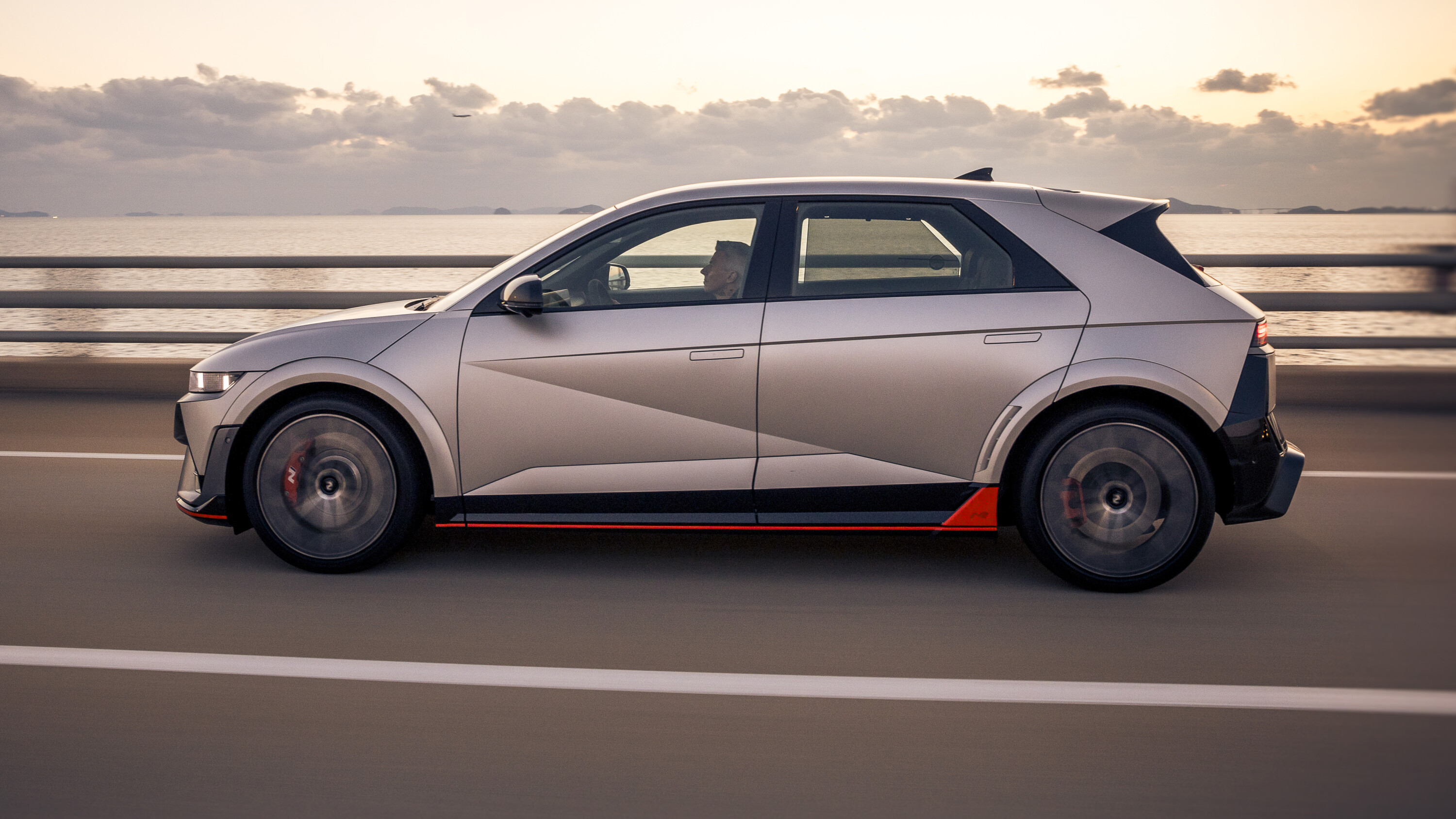
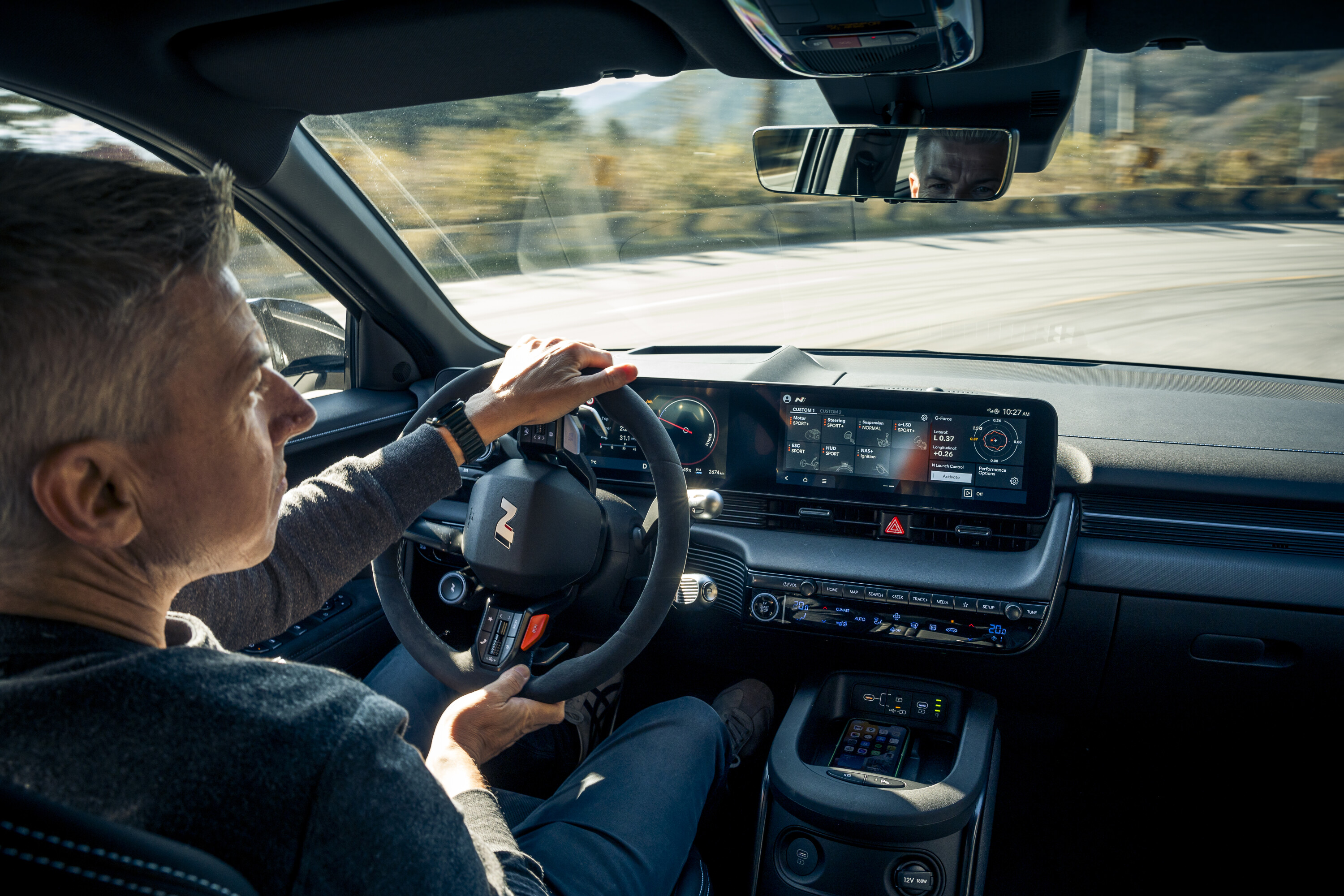
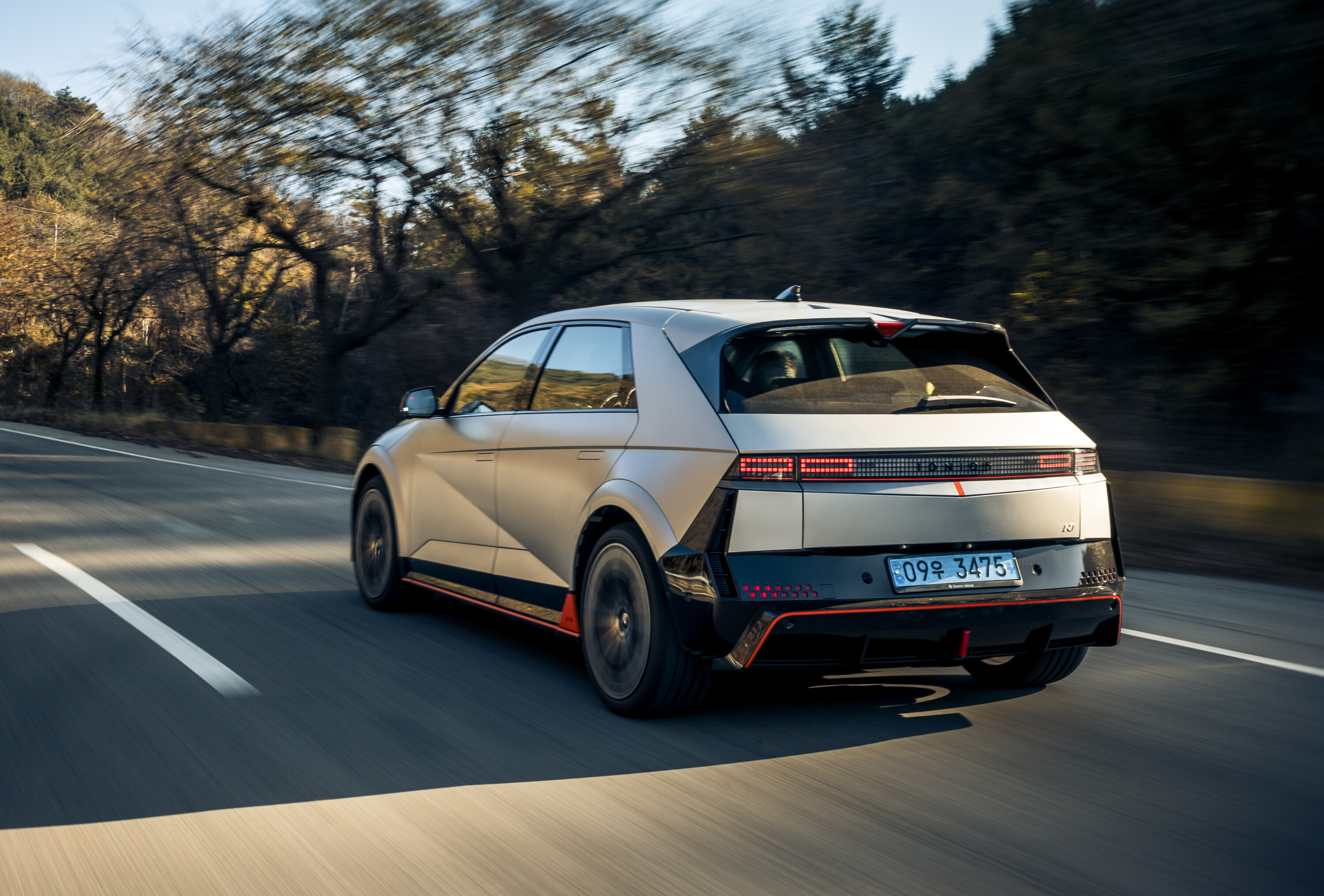
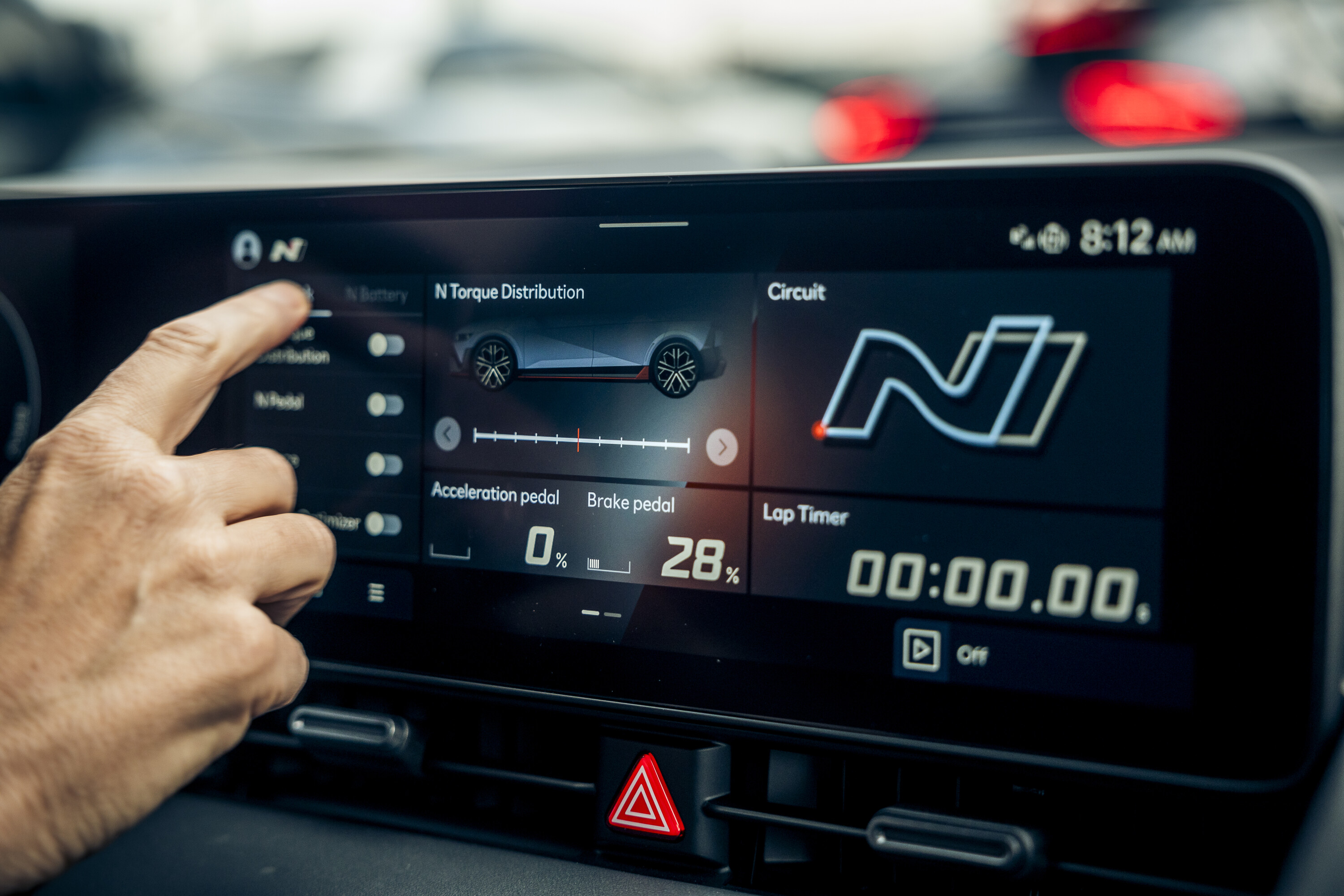
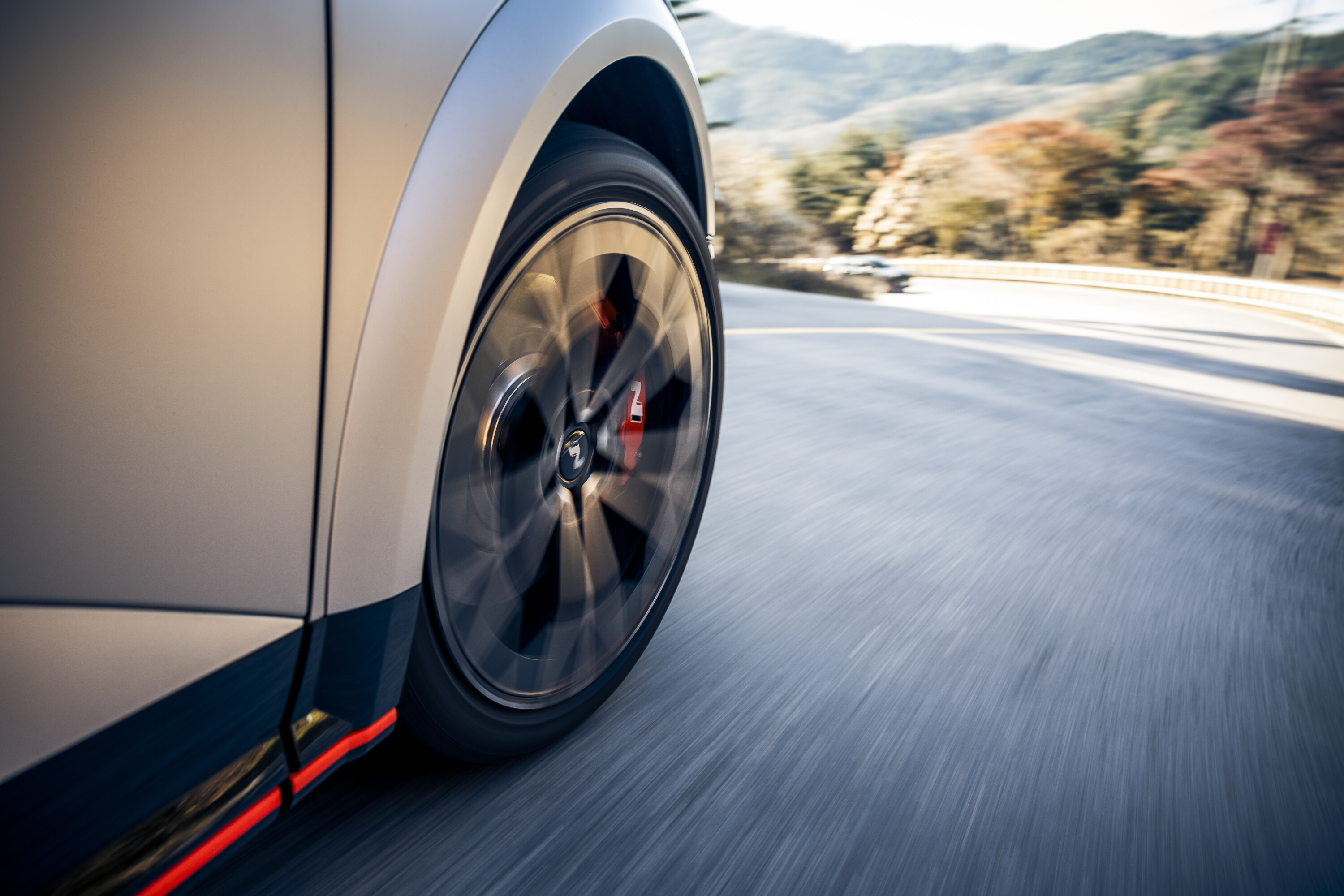
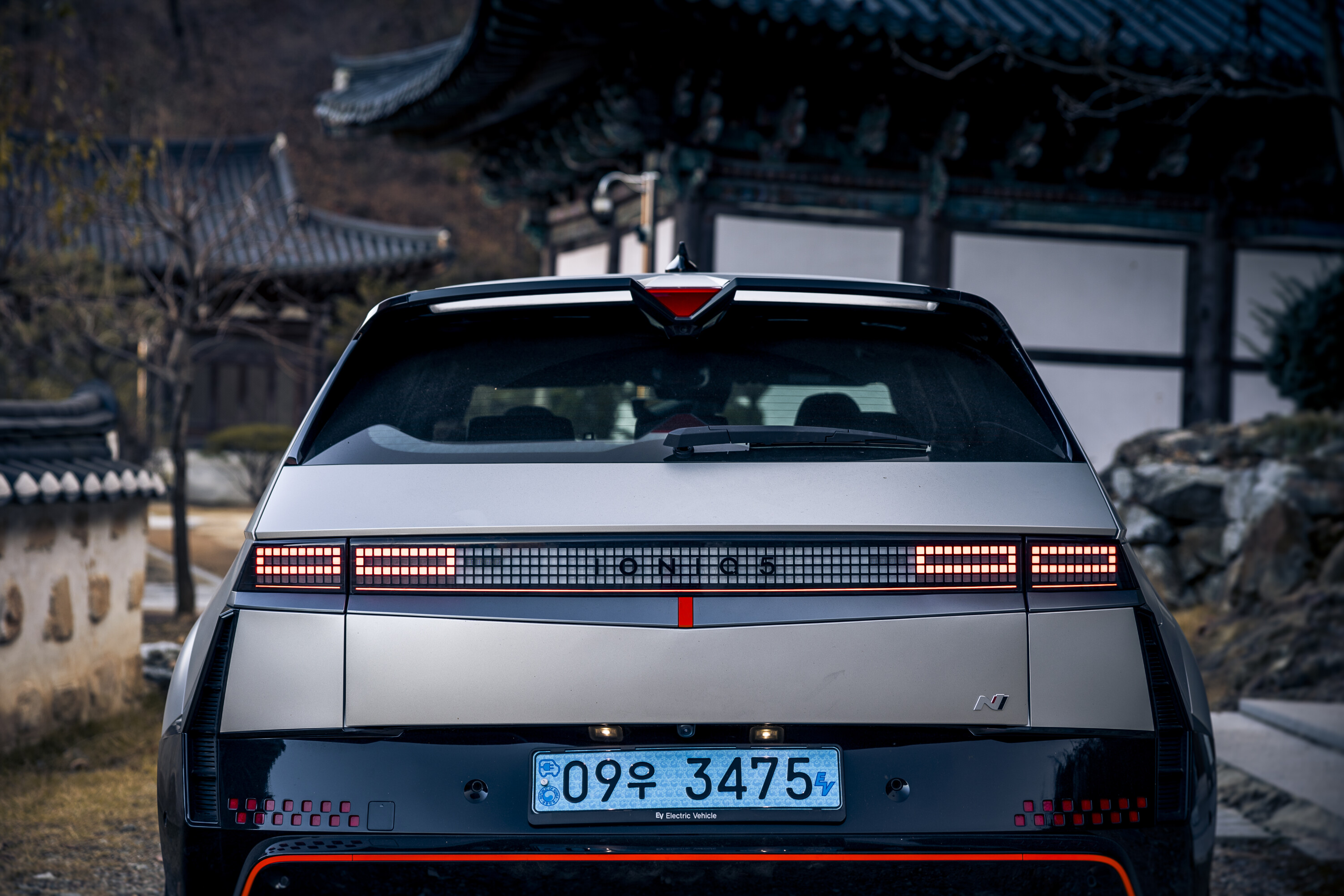
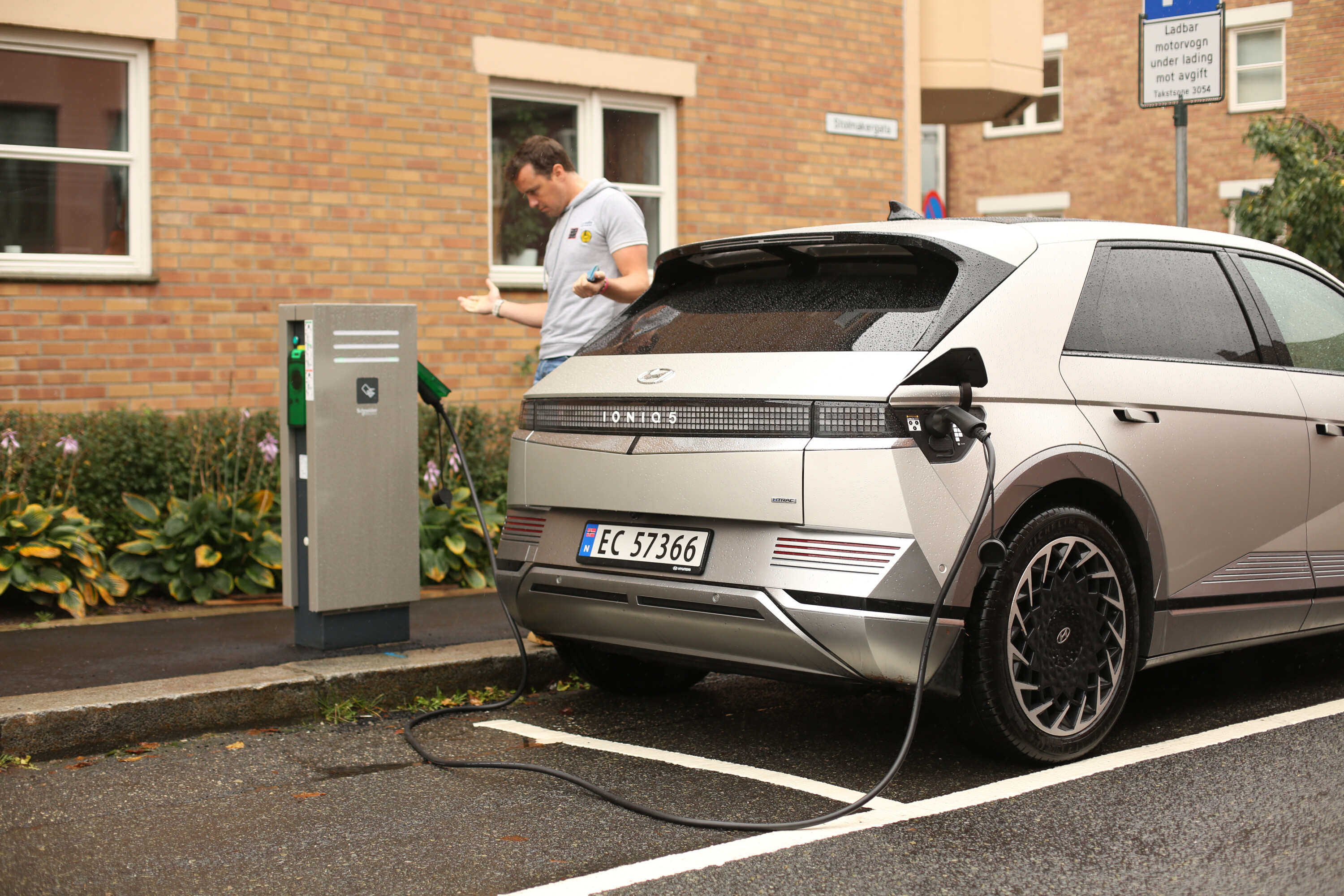
Ahead of its arrival in Australia, Jez jetted off for a good spin in the hot new Hyundai IONIQ 5 N – a ‘hot SUV’ styled and tuned to be more of a big hot hatch.
Watch Jez’s video review above or below, and stay tuned for his full written review!
Pricing and features
Available to order since September already, the Hyundai IONIQ 5 N is priced from $111,000 before on-road costs. Customer deliveries will begin in early 2024.
Hyundai IONIQ 5 N specifications
| IONIQ 5 N | Dynamiq RWD | Techniq AWD | Equip AWD | |
|---|---|---|---|---|
| Power/torque | 448kW/740Nm (478kW/770Nm on boost) | 168kW/350Nm | 239kW/605Nm | 239kW/605Nm |
| Range | 450km WLTP | 507km | 454km | 454km |
| Battery size | 84kWh | 77.4kWh | 77.4kWh | 77.4kWh |
| Charge capacity | 350kW | 350kW | 350kW | 350kW |
| Weight | ~2200kg | 2015kg | 2125kg | 2125kg |
| 0-100 | 3.4s | 7.3s | 5.1s | 5.1s |
PHOTOS: Ellen Dewar
1
1
1
1
1
1
1
1
1
1
Snapshot
- Tesla workers report safety violations, explosions and fist fights inside factories
- Injury data shows one out of every 21 Tesla workers was reportedly hurt in 2022
- One worker was allegedly pinned down and injured by a robot claw
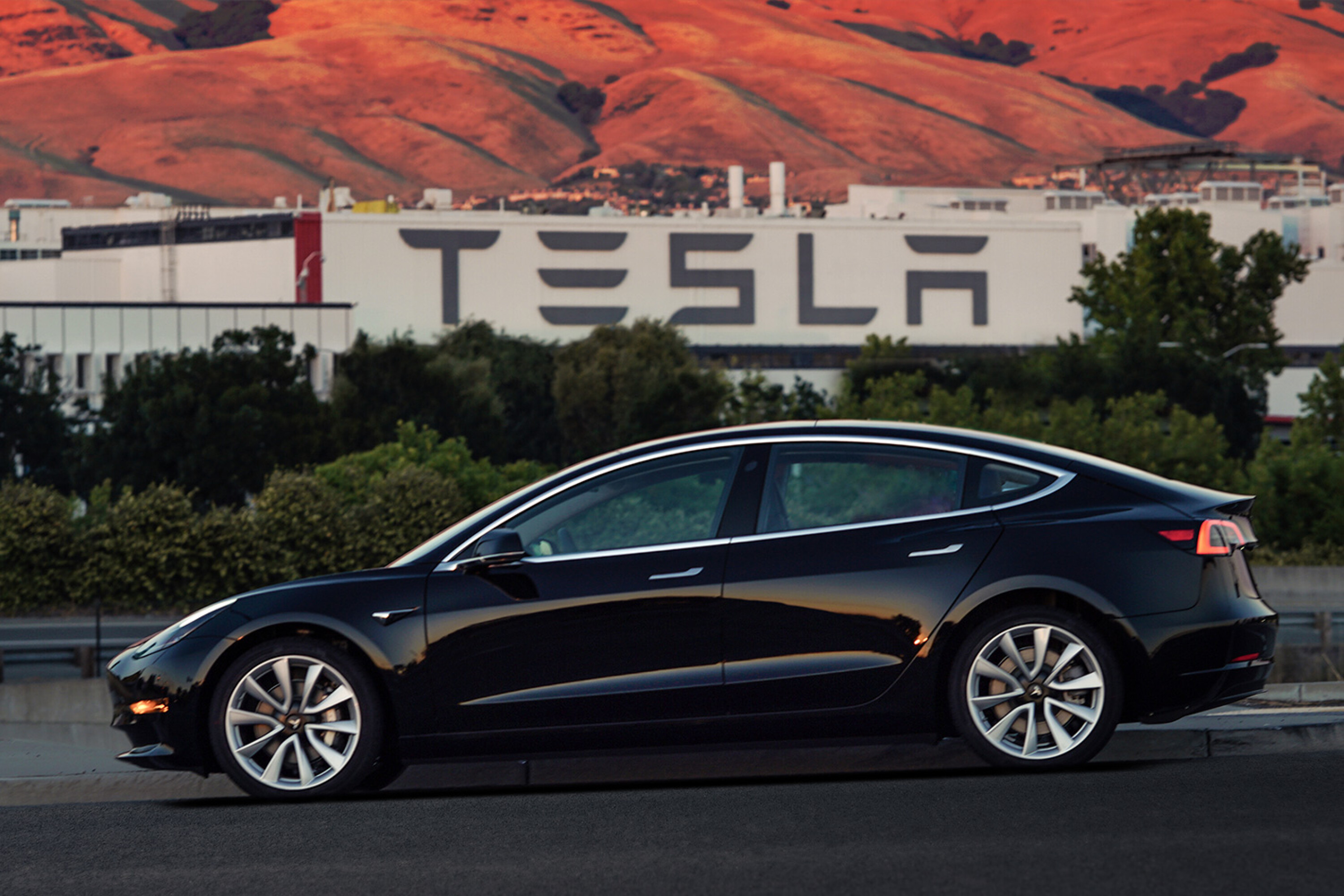
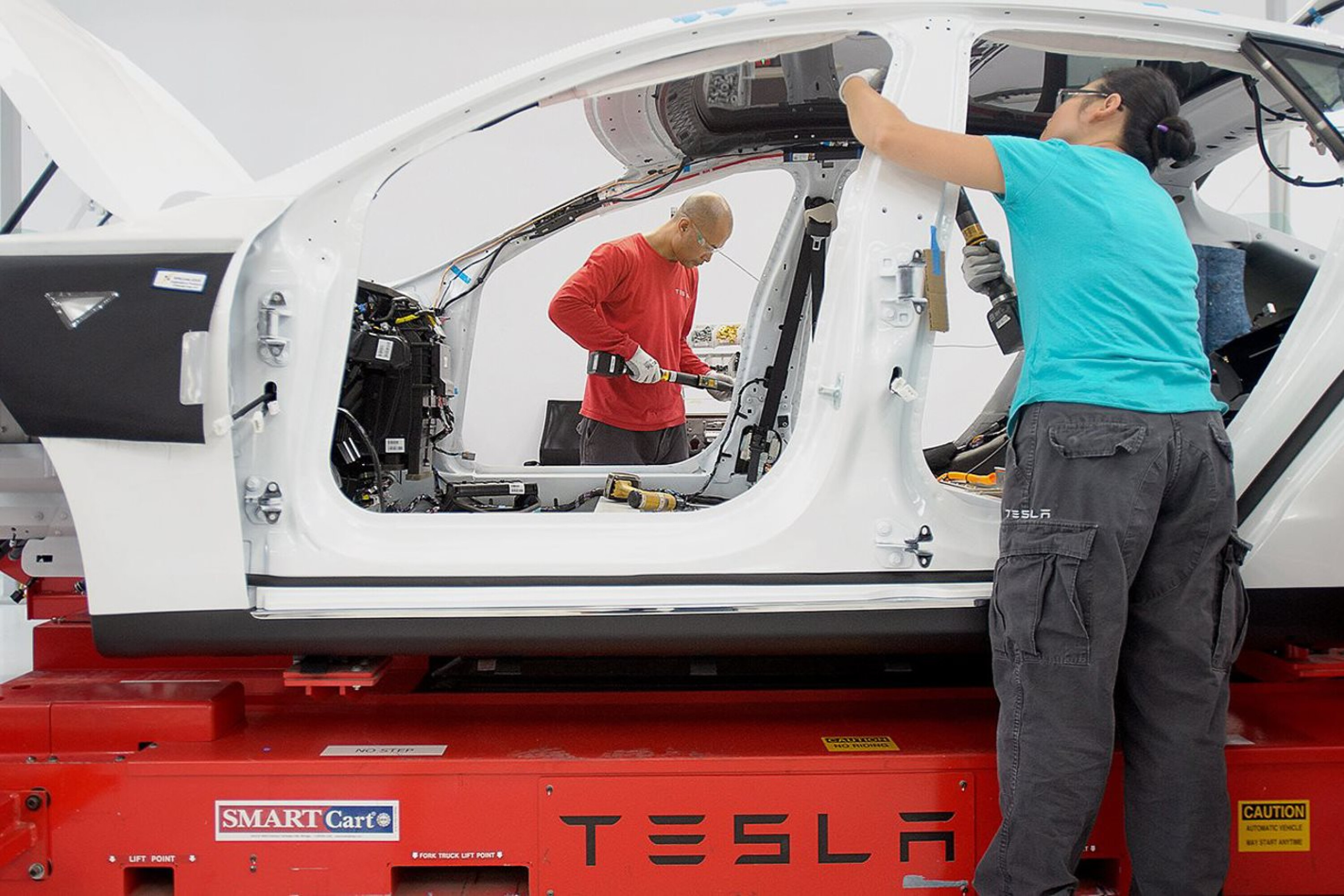
Workers at Tesla’s enormous gigafactory in Austin are reportedly facing unsafe work conditions that includes fist fights, explosions and even being pinned down by giant robots claws.
The grisly details have emerged in a new report by The Information, which used injury data and interviews with former and current employees to paint a picture of a workplace plagued with safety issues.
According to data sourced from the Occupational Safety and Health Administration (OSHA), one in every 21 employees at the gigafactory was reportedly hurt last year.
1
Physical fights and frequent verbal altercations also take place, according to The Information, who also reported an incident of an explosion in the Austin factory’s metal casting area around New Year’s 2023.
Tesla employs more than 20,000 workers at its factory in Austin, where production of the Cybertruck is currently being scaled up.
Perhaps the most graphic injury, however, is alleged to have occurred in 2021 when an engineer was gored by one of the factory’s manufacturing robots. The Information reports the robot, which was inadvertently left on by the workers during maintenance, pinned the engineer against a surface and pierced his body. The worker then fell into a scrap metal collection chute, leaving a trail of blood behind him, according to witness accounts.
1
This isn’t the first time Tesla has come under fire for unsafe work conditions. In September this year, similar reports of a high frequency of serious injuries and even amputations emerged from the company’s gigafactory in Germany.
Tesla’s Fremont factory in California also has a high rate of worker injuries and there are also allegations of Tesla attempting to cover up workplace injuries by failing to report them.
Musk is infamous for his hardline approach to output, having previously pushed workers through “production hell” when the Model 3 sedan was introduced.
A recent Reuters investigation [↗] also revealed a high number of injuries at Musk’s rocket company, SpaceX, that included crushed limbs, head wounds and even electrocutions.
MORE
Everything Tesla
MORE
Wheels Industry
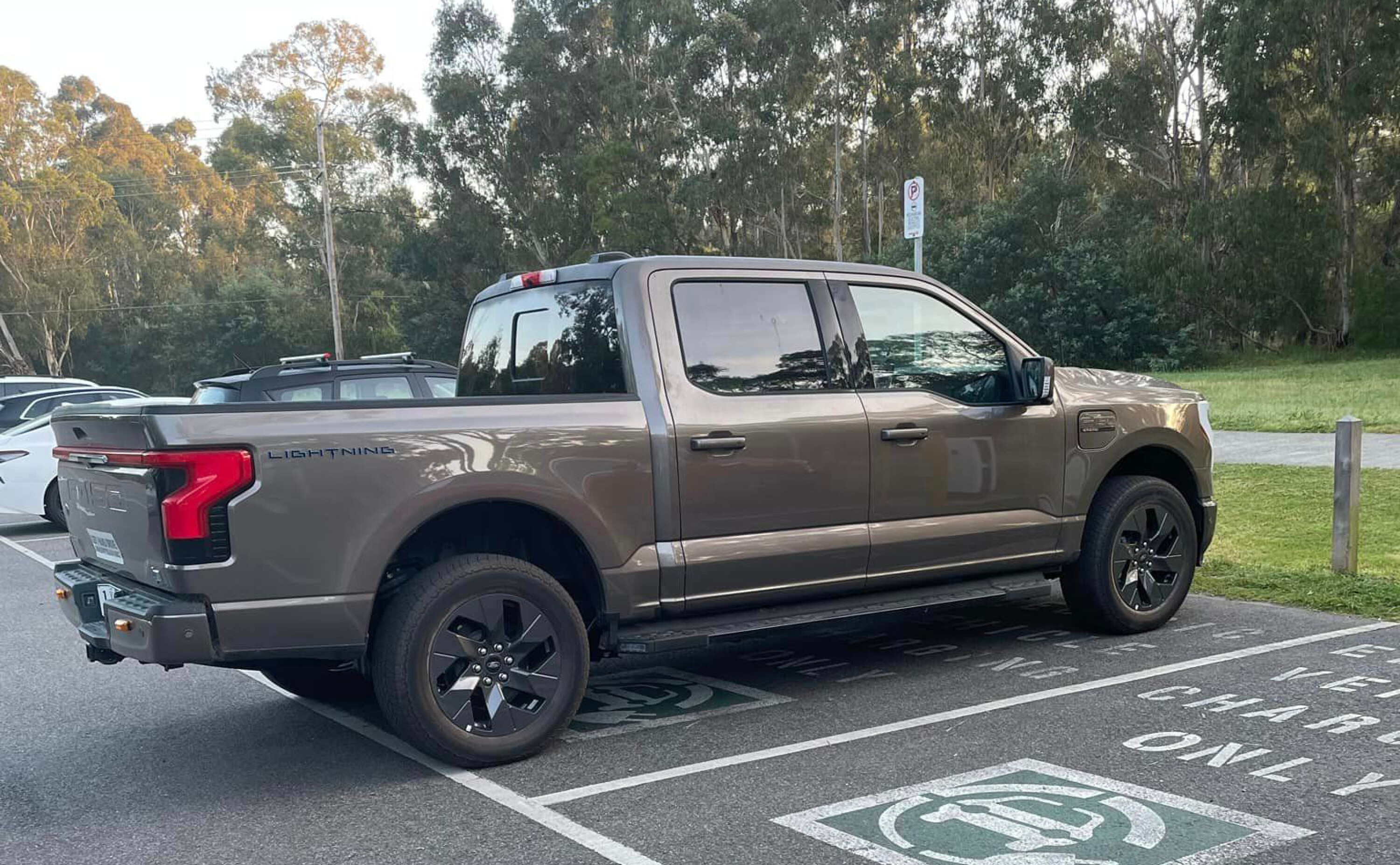
Ford’s big all-electric F-150 Lightning has been spotted testing on Australian roads.
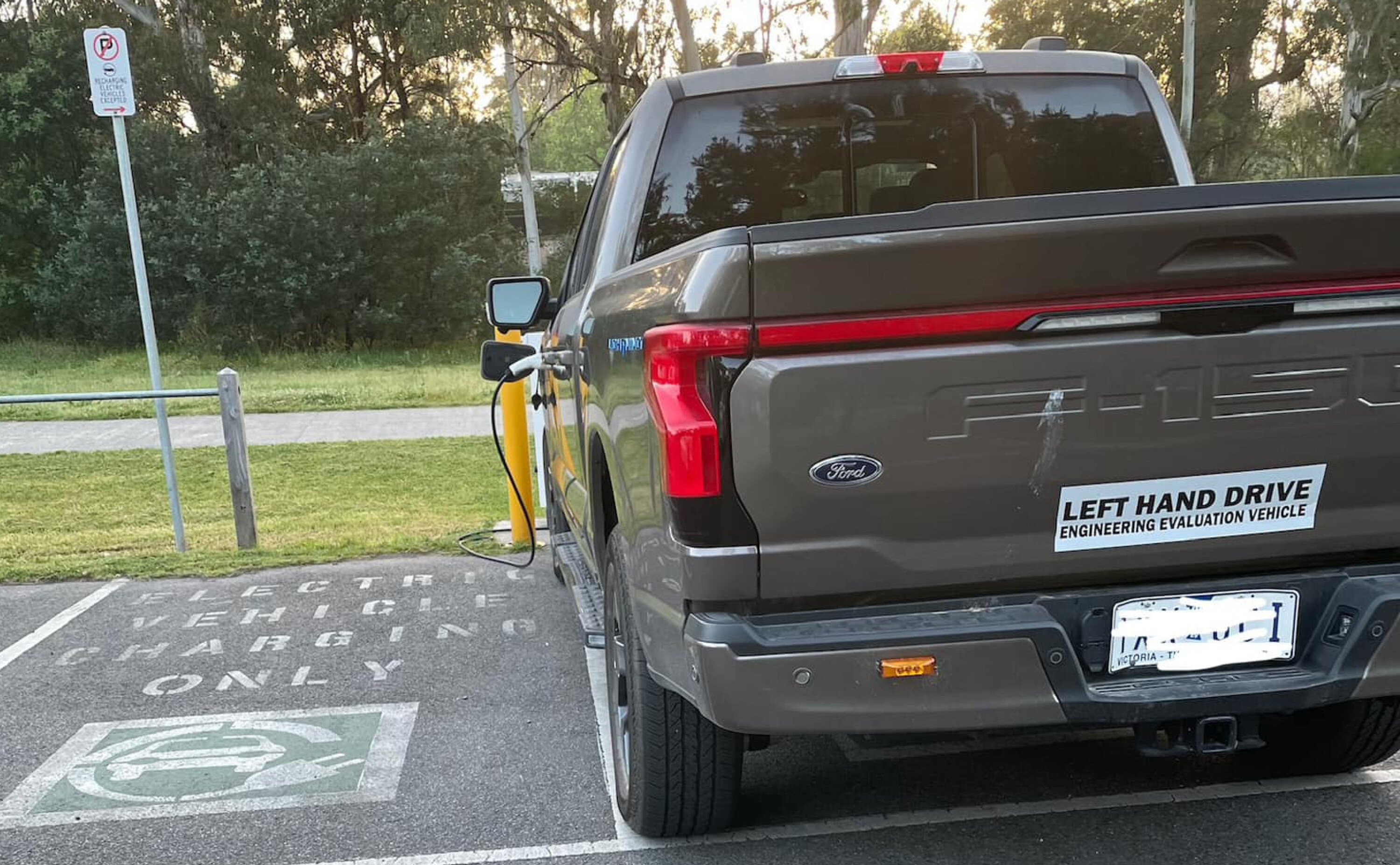
Wheels reader Mehmet spotted the F-150 Lightning ‘left-hand-drive engineering evaluation vehicle’ in Campbellfield, near Ford Australia’s Melbourne product development centre.
It follows pictures of the same test vehicle at a public charging station posted to social media, below.
1
“Ford’s Australian Product Development team work on a wide variety of global vehicle programs, including many left-hand drive only vehicles for overseas markets,” said a Ford Australia spokesperson.
“The F-150 Lightning spotted on Melbourne roads recently is in Australia for engineering evaluation, and is not an indicator of Lightning being developed for the Australian market.
“Lightning remains left-hand drive only, and unavailable for sale in Australia.”
At the recent launch of the locally re-manufactured F-150 line-up, Ford Australia boss Andrew Birkic said the brand was “looking at” the electric version, but it remains focused on successfully launching the petrol models.
1
The local conversion process, completed by Thai-based RMA Automotive at a facility in Melbourne’s outskirts, commenced recently with the first customer vehicles delivered this month.
Ford has trademarked the F-150 Lightning name in Australia, adding further fuel to speculation that the 386 to 515-kilometre all-electric range full-size pick-up would soon hit Aussie showrooms.
“Are we looking at it? Yes,” confirmed Birkic. “Is there a confirmed product program? Have I rung up Trevor [the GM of RMA Automotive] and said I need another line? No.”
“That will come in the fullness of time. Not whether I say yes or no but in terms of we need to do further analysis and we just need to prove that we can do the conversion [on regular F-150], that we can do it with a lens on quality.
“So let’s just do that first. And then we’ll have a yarn about Lighting.”
RMA Automotive general manager Trevor Negus confirmed there is capacity to add Lightning and other Ford models into production should Birkic give the green light.
“Absolutely. The whole facility has been built with other products in mind, I guess,” said Negus. “So we’ve got the capacity to take larger F Series. We’ve got the capacity to take other vehicles.”
Other models understood to be considered for conversion are the Ford Bronco SUV and the larger F Series Super Duty.
Ford-owned F-150 Raptor and Bronco vehicles have also been spied in Victoria, though – like the Lightning – the brand claims the local existence is solely for global vehicle program development.
MORE
Everything Ford
Snapshot
- Seven in 10 Australians have cut back on car use, servicing
- Fuel prices spiked again in late September
- Carbon emissions standards coming, but potentially delayed
A Climate Council study has revealed that 71 per cent of Australians have reduced their car use amid record high fuel prices.
The survey, commissioned by the non-profit environmental organisation, found most of the 1150 participants said they have attempted to reduce car-related expenses, including driving less, avoiding holidays using their car, and skipping servicing and maintenance.
According to The Guardian [↗], fuel prices spiked again in late September due to production cuts of crude oil driven by Saudi Arabia and Russia.
1
Participants also noted that they have considered switching to an electric vehicle, with 54 per cent believing forthcoming ‘fuel efficiency standards’ would help save them money.
A previous report commissioned by the Climate Council and Electric Vehicle Council lobby groups highlighted Australians could save hundreds in running costs on a more fuel-efficient internal combustion engine vehicle or thousands by making the switch to a full EV – provided the emissions reduction policies are strict.
However, only 49 per cent supported the new mandate, which would put a cap on the average carbon exhaust emissions of all new vehicles each automaker sells per year, or risk being financially penalised.
The aim is to encourage car brands to sell more fuel-efficient and lower exhaust-emission engines, and supply more pure electric vehicles, as the emissions threshold lowers each year.
The federal government has previously promised to introduce the fuel efficiency standards this year, after industry consultation.
Parliament will sit for the last time this year on December 7.
The BBC has axed its world-famous Top Gear car show following last year’s crash involving presenter Andrew ‘Freddie’ Flintoff.
The former England cricketer suffered “life-altering signficant injuries” after a three-wheeler car he was driving rolled at high speed.
A BBC statement today said the hugely popular show would not return “for the forseeable future”.
“We know resting the show will be disappointing news for fans, but it is the right thing to do,” the statement continued.
“All other Top Gear activity remains unaffected by this hiatus including international formats, digital, magazines and licensing.
“[The BBC] remains committed to [presenters] Freddie, Chris [Harris] and Paddy [McGuinness] who have been at the heart of the show’s renaissance since 2019, and we’re excited about new projects being developed with each of them. We will have more to say in the near future on this.”
Top Gear has been running for 46 years, having debuted in the UK in 1977, though its popularity went global after Jeremy Clarkson revived and revised the show format. Co-presenters James May and Richard Hammond joined Clarkson as household names.
Hammond was left in a coma after suffering serious head injuries after he crashed a jet-powered dragster at more than 500km/h in 2006.
The trio left the show in 2015 after Clarkson was dropped by the BBC following a “fracas” with a member of the show’s production team. They went on to create the rival The Grand Tour on Amazon Prime.
Flintoff, Harris and McGuiness became the new established trio of presenters in 2019 after previous post-Clarkson series disappointed with polarising stars such as Chris Evans and Matt LeBlanc.
Flintoff was filming for the 34th series of Top Gear in December when the accident occurred.
He was reportedly paid £9m ($17m) in compensation by the BBC.
It was recently announced that a localised version of Top Gear would return for Australia in 2024, featuring three new hosts: Mighty Car Mods co-host Blair “Moog” Joscelyne, former rugby league player Beau Ryan, and actor Jonathan LaPaglia.
The show will air on online streaming platform Paramount+.
Here’s your guide to keeping your EV charged, at home and away
Snapshot
- EV charging is simple, but can seem complex
- Understand AC/DC, the speed outputs and model input limitations
- Charge to 80% (or follow manufacturer recommendations) if possible
A key challenge for buyers making the electric vehicle switch is breaking old habits and understanding the concept of charging.
For most people, adding driving range to your vehicle has been as easy as stopping at a fuel station and getting back on the road within minutes.
However, for an electric car, it seemingly isn’t as simple on the surface. There’s terms such as kilowatts (kW) and kilowatt-hours (kWh), the difference between AC and DC, charging speeds (or levels), and various plug types.
Charging an EV may never be as quick as rapidly pumping combustible fuel, but it doesn’t have to take forever – and, for many, it is more convenient or desirable than stopping at a fuel station.
JUMP AHEAD
- ? What is kW and kWh?
- AC⚡️DC charging and levels
- ✋ 80 is the charging limit
- ? Plug types
- ? Battery size: Gross vs net
- ? Charging is simple
- ? Time to make the electric switch?
1
? What is kW and kWh?
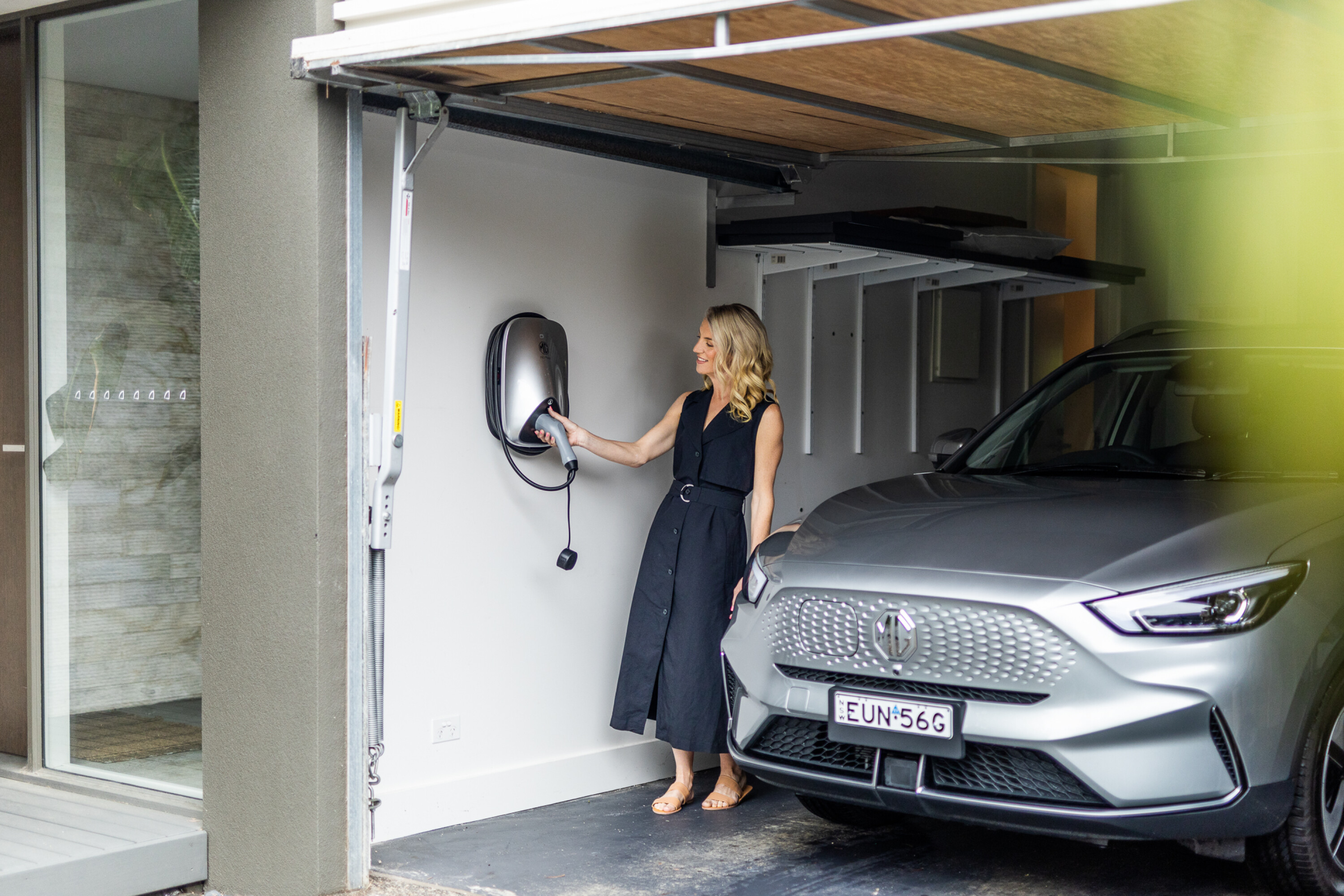
Kilowatt (kW) denotes the charging speed rate, while kilowatt-hour (kWh) measures the energy capacity of the battery.
- Kilowatt (kW) = charging power speed
- Kilowatt-hour (kWh) = battery size
This is equivalent to the fuel tank size (measured in litres) for a traditional internal combustion (ICE) engine vehicle.
Theoretically, a larger battery means longer driving range on one charge, but it depends on the EV’s energy efficiency (measured in kWh/100km).
1
AC⚡️DC charging and levels
EV charging speeds are separated by AC and DC power types.
- Alternating current (AC) = slow charging
- Direct current (DC) = fast charging
- Alternating current (AC) = slow charging
- Direct current (DC) = fast charging
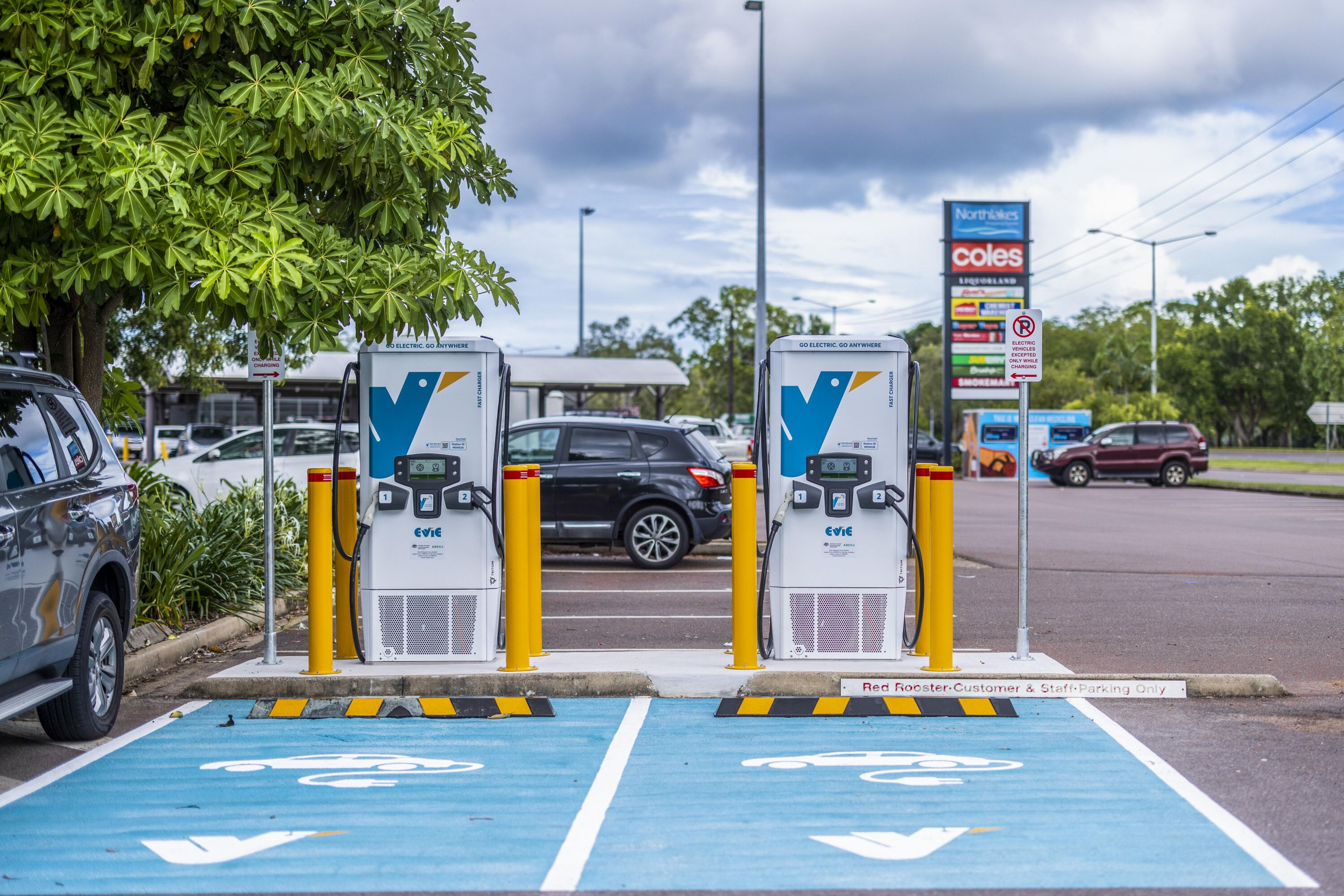
➡️ DC: Mostly found at public charging stations, when a faster top-up is required to continue driving, similar to a fuel station.
1
Charging source levels
- 1️⃣ Level 1 (~1.8kW AC) – ‘trickle charging’ from a standard three-pin domestic plug, typically 240 volts.
- 2️⃣ Level 2 (7kW AC or 11-22kW AC) – installed single-phase or three-phase wall box station respectively.
- 3️⃣ Level 3 (25-350kW DC): 400- or 800-volt class public fast charging station.
Trickle charging from a standard domestic plug (the same one that powers your appliances) should replenish enough driving range for most Australians’ daily driving needs overnight.
Installing a single-phase 7kW AC wall box can guarantee a full recharge in one night for most models – if you really need to use the full driving range capabilities every day (typically 200 to 600km, depending on the model).
Know the charging speed limits
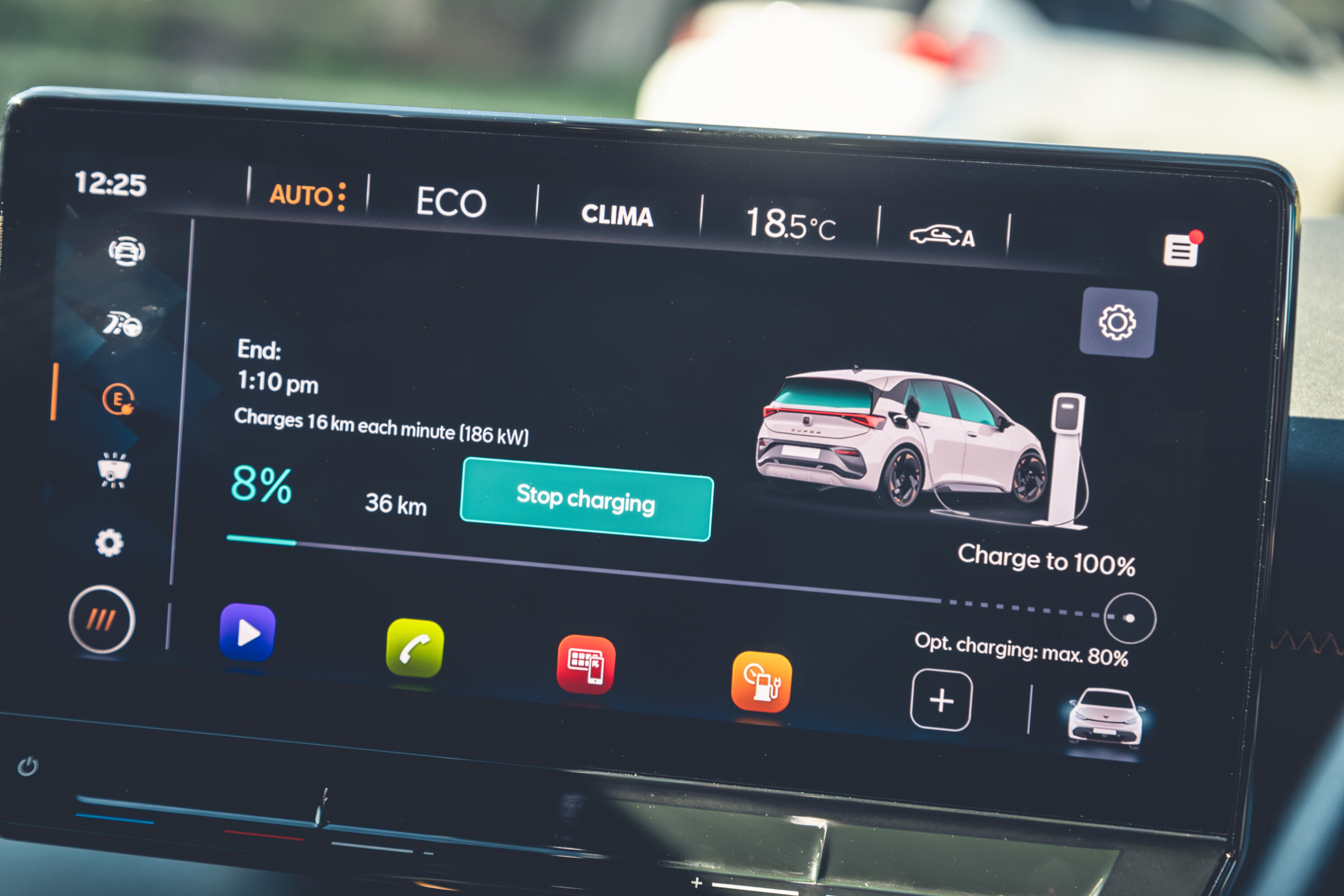
Importantly, the key limiting factor is each model’s separate AC and DC charging speed capabilities, which caps the maximum rate of kilowatts (kW) it can take in from an AC or DC charging station.
The vehicle’s battery management system (BMS) also throttles charging speeds if the pack is outside of its ideal temperature range (i.e. too hot or cold) and at a higher percentage to maintain good health, so owner’s will rarely achieve the maximum AC/DC charging speed capabilities (or at least see it last for a long period).
There are also 10 to 15 per cent charging losses – particularly on AC power – since a built-in inverter needs to convert it to DC power, the energy type needed to store in the battery pack.
1
✋ 80 is the charging ‘limit’
Car brands generally recommend against owners fully charging their EVs to 100 per cent every day – but why?
Similar to pouring water into a cup, the internal resistance of a battery rises as the percentage increases. After an initial burst, the BMS gradually slows down the kilowatt rate until the battery reaches about 80 per cent full.
Therefore, automakers often quote a 10 to 80 per cent charge time, as this is most time efficient for the range added.
Charging past 80 per cent also isn’t healthy for the longevity of typical lithium-ion batteries, particularly in excessively cold or hot climates. However, the lower cost lithium-iron-phosphate (LFP) battery type can be fully charged without excessive degradation concerns.
Charging an EV from 80 to 100 per cent can effectively double your waiting time, since it slows down significantly – especially on public DC fast charging stations.
Of course, owners may need their EV’s full driving range on longer drives, so you can fully charge occasionally if you’re willing to wait.
While not all carmakers recommend an everyday charging cap, the general rule-of-thumb is 80 per cent for lithium-ion nickel-manganese-cobalt (NMC) or 100 per cent (no limit) for LFP type batteries.
- Tesla Model 3 and Model Y (RWD): 100%
- Tesla Model 3 and Model Y (Long Range and Performance): 90%
- BYD Dolphin, Atto 3, Seal: 100%
- MG 4 (Excite 51): 100%
- MG 4 (Excite/Essence 64 and Long Range 77): 80%
- Polestar 2: 90%
- Volvo EX30: 90%
- Cupra Born: 80%
Everyday charging limits: Manufacturer recommendations
- Tesla Model 3 and Model Y (RWD): 100%
- Tesla Model 3 and Model Y (Long Range and Performance): 90%
- BYD Dolphin, Atto 3, Seal: 100%
- MG 4 (Excite 51): 100%
- MG 4 (Excite/Essence 64 and Long Range 77): 80%
- Polestar 2: 90%
- Volvo EX30: 90%
- Cupra Born: 80%
1
? EV charging plug types
Most new electric cars use the same charging plug in Australia today, but some are outliers and can be confusing, especially if you buy used.
1
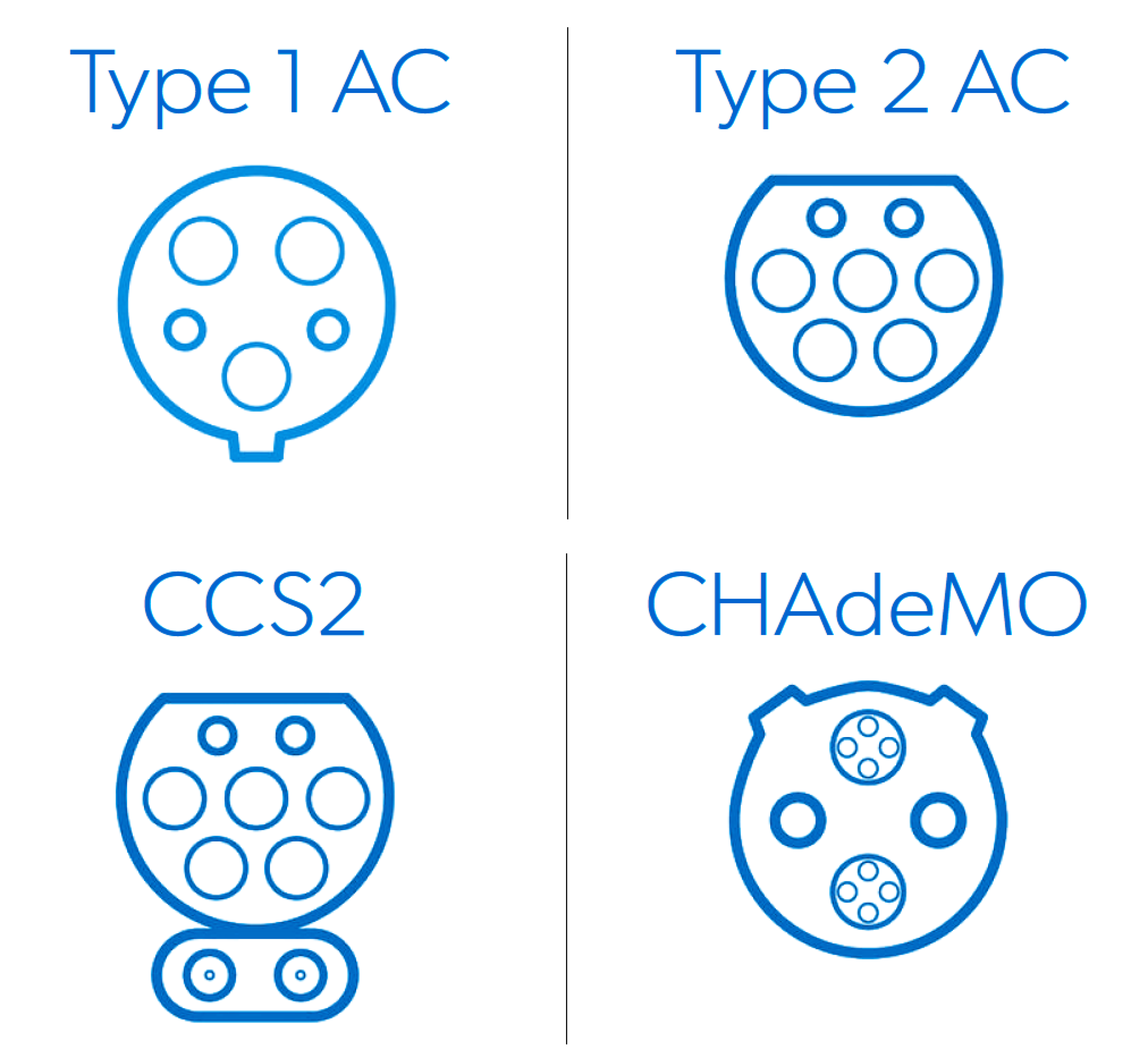
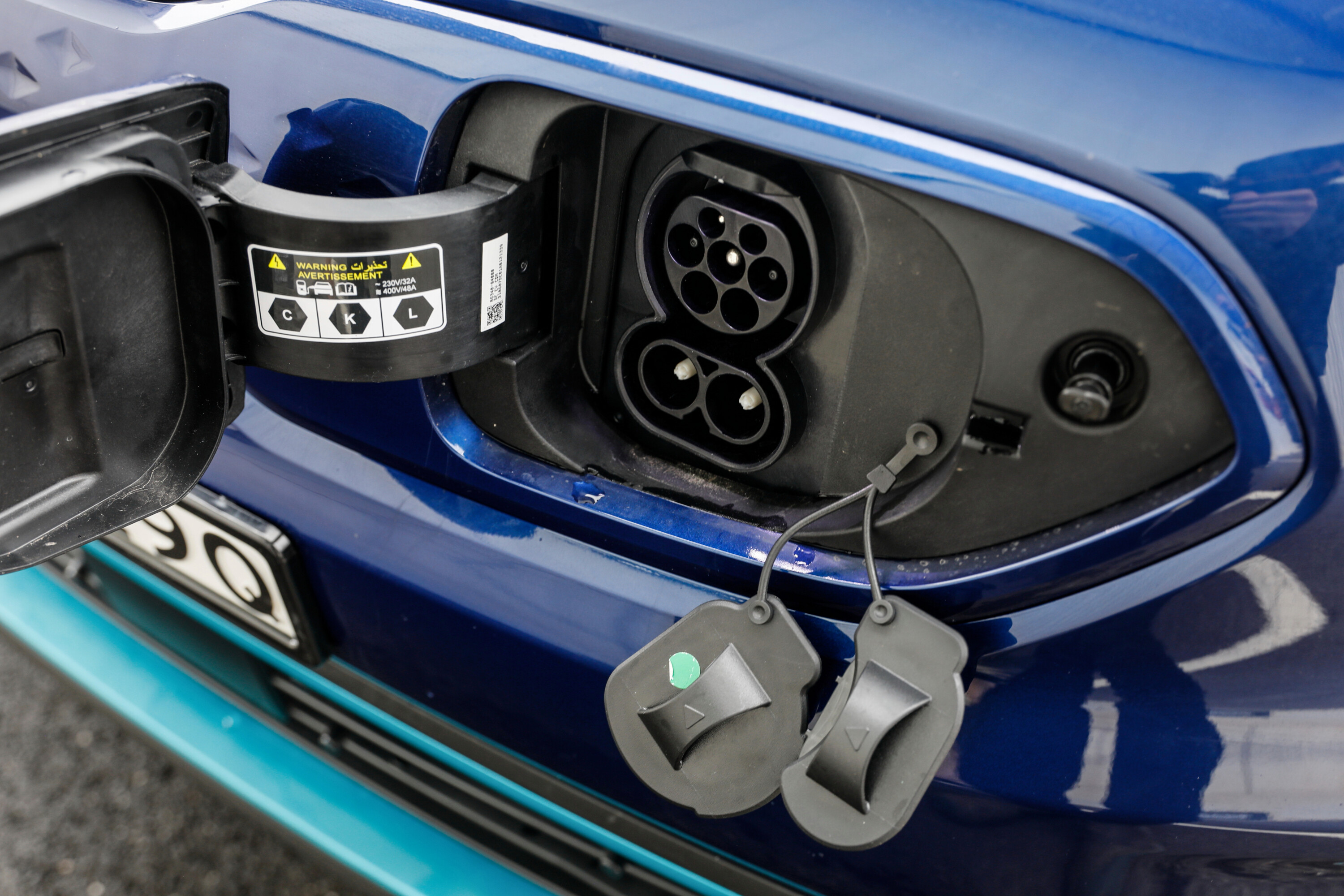
✅ Type 2 / CCS2: The Australian standard
➡️ Type 2: This type, also known as Mennekes, is the European-standard EV plug for slow AC charging, with a seven-pin design.
➡️ DC charging: For fast charging, it’s called the CCS2 (Combined Charging System 2), by extending the bottom of Type 2 with two additional pins.
The Type 2 CCS charging port is featured on the majority of new EVs in Australia, ranging from the MG 4 hatch, Tesla Model Y SUV, and Porche Taycan sports sedan.
1
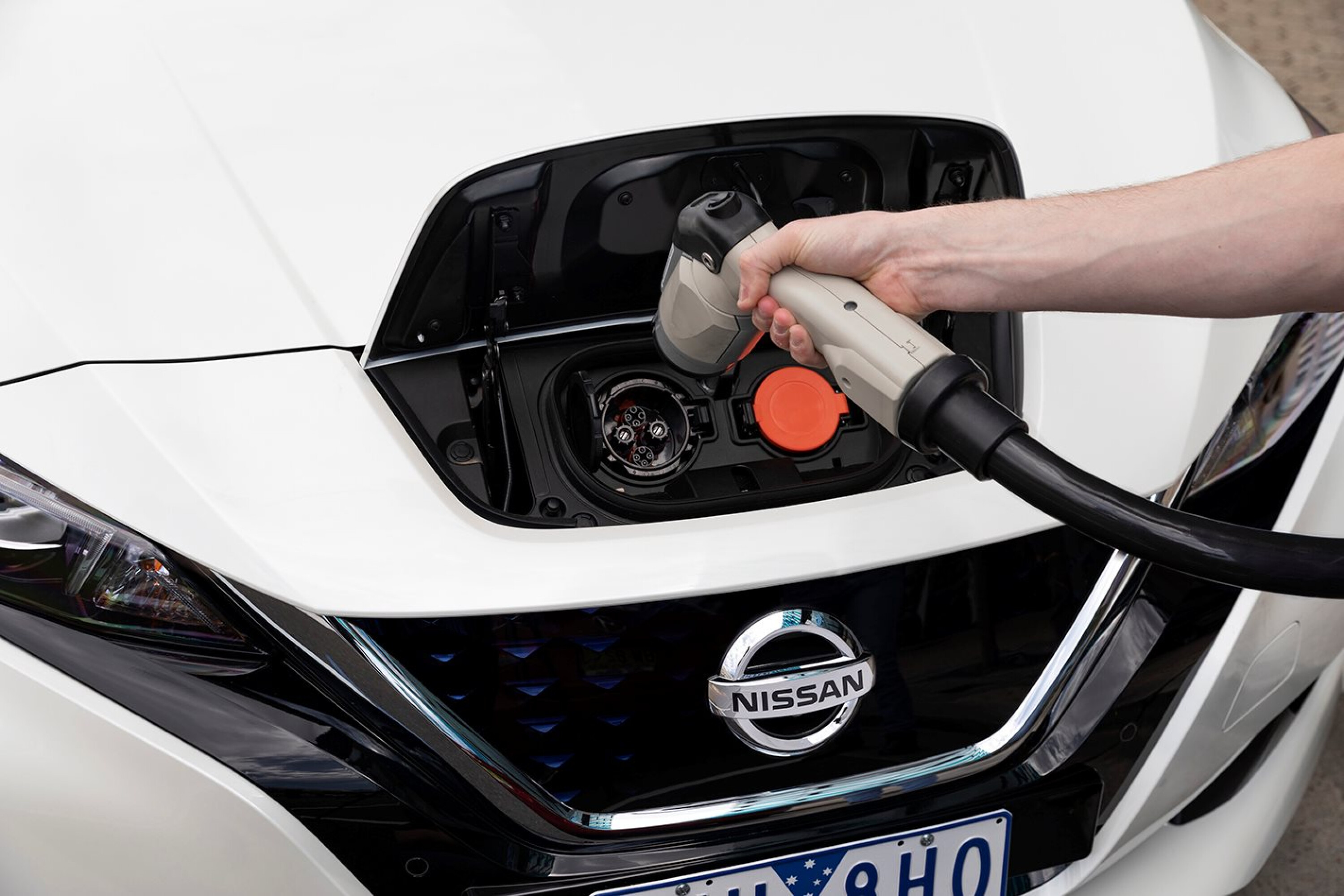
?? CHAdeMO: The Japanese standard
Some Japanese-made EVs in Australia have a CHAdeMO (CHArge de MOve) port for DC fast charging via four large pins.
However, for slower AC charging, models typically feature a separate Type 2 connector.
While the CHAdeMO connector will continue to be supported by public charging networks for the foreseeable future, some newly-installed stations have already phased it out in favour of the more common CCS2 in Australia.
The CHAdeMO charging port is featured on the Nissan Leaf, Lexus UX300e, Mitsubishi Eclipse Cross PHEV and Outlander PHEV, and Japanese market imported EVs.
1
? Modified Type 2: The old Tesla standard
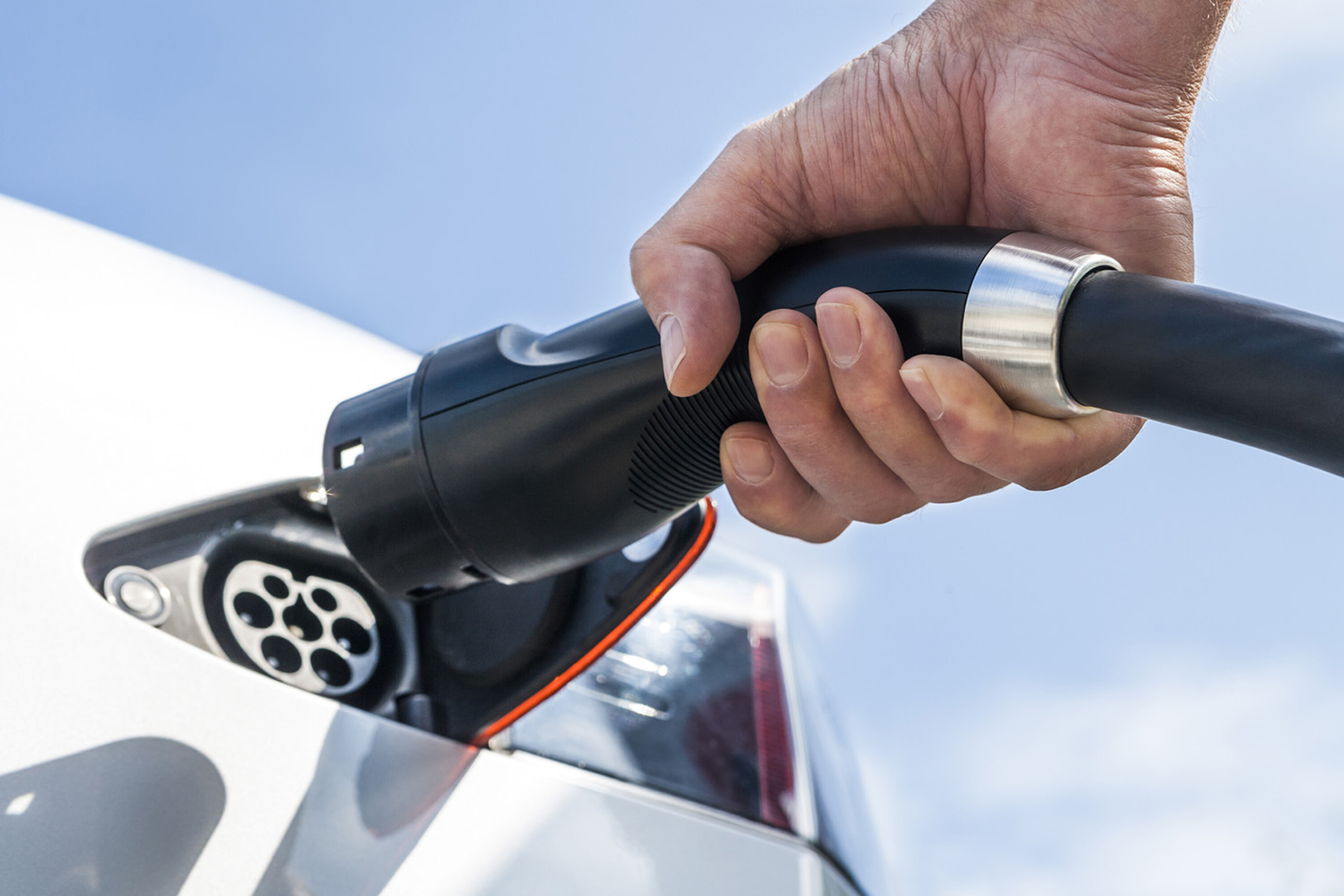
Some older Teslas in Australia have a Type 2 connector, but modified with a notch at the top to prevent rival EV models accessing Tesla’s V2 Supercharging network.
Unlike regular Type 2, the single seven-pin design is used for both AC and DC charging.
However, since most public DC fast charging stations only offer the CCS2 plug, an adapter is required to use them.
The modified Type 2 charging port was featured on the Tesla Model S liftback and Model X SUV sold in Australia between 2015 to 2020.
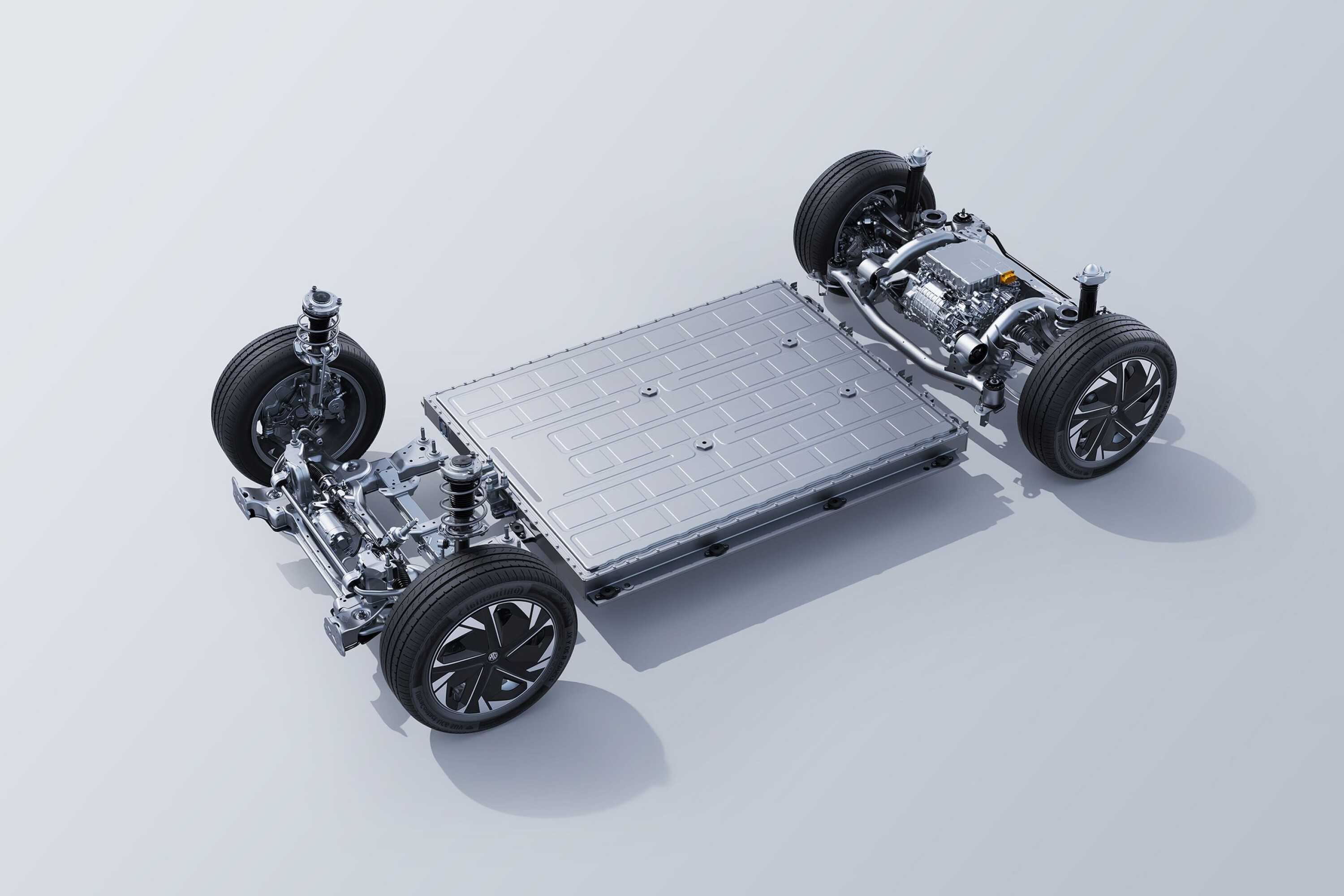
? Other international plugs
- ➡️ Type 1 / CCS1: Also called J1772, it was previously used in older BMW i3 and original Nissan Leaf examples in Australia, and was the standard in North America until the impending transition to NACS. It’s also used in South Korea.
- ➡️ NACS: The North American Charging Standard was originally developed by Tesla and will soon be the common plug type for almost all EVs in the continent from around 2025.
- ➡️ GB/T: The charging connector standard for EVs sold in China only.
1
? Battery size: Gross vs net
It’s important to know if a quoted electric car battery size number – measured in kWh – is ‘gross’ or ‘net’.
- Gross (nominal): The total battery size for storing energy, including buffers
- Net (usable): The actual battery size and energy that can be used by owners, excluding buffers
- Gross (nominal): The total battery size for storing energy, including buffers
- Net (usable): The actual battery size and energy that can be used by owners, excluding buffers
Therefore, only the usable number should be looked at – especially when doing any charging sums – since owners will never be able to utilise the entire gross battery size.
That’s because there are top and bottom buffers in place to ensure safe operation – avoiding the risk of ‘overcharging’ – and to protect the battery health.
As cells degrade over time, the EV will automatically use the buffers (unused cells) to offset the impact of reduced driving range.
Unfortunately, some carmakers only quote the gross number in marketing and press material – which is misleading.
1
? Charging is simple
Maybe it doesn’t sound like it, but trust us: charging your electric car is simple.
Plug in at home (if possible), set it to charge when electricity is cheapest overnight or when there’s solar energy, and you’ll replenish enough driving range for typical daily needs.
When using public charging infrastructure, know the plug types and AC/DC charging speed outputs offered by the station and, importantly, the AC/DC limits of what your EV model can input.
And, remember to practise good etiquette.
It may not be as easy nor as fast as stopping at a fuel station, but charging an EV can be even more convenient as it can fill up when it’s parked and not in use at home or at the shops.
? Is it time to make the electric switch?
EVs are not for everyone (for now), but they are right for most.
Charging costs, public infrastructure reliability, and battery longevity remain key perceived issues. For more, check out our Electric hub guides below.
Wheels Media thanks Mazda Australia for the loan of the MX-30 Electric and David Bonnici for the original version of this story.
https://www.instagram.com/p/ChTjyZ5Ax5N/
China’s auto industry has grown up fast. The industry cut its teeth teaming up with (and in some cases, straight copying) Western automakers to make cut-price ‘appliance’ cars.
In the wake of the pandemic and rising electric vehicle demand, though, there’s been a perfect storm brewing through which China is striding toward electric dominance.
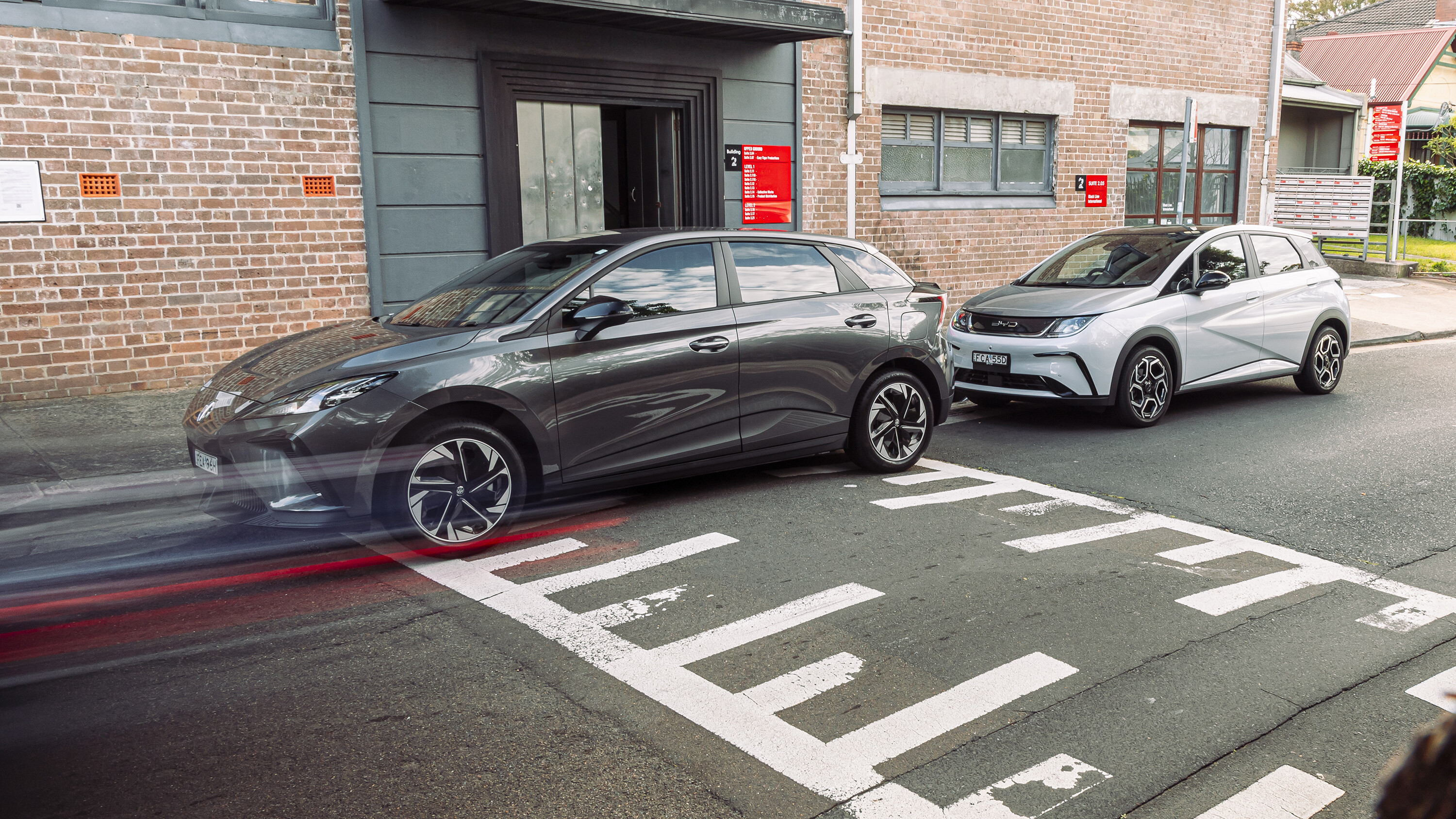
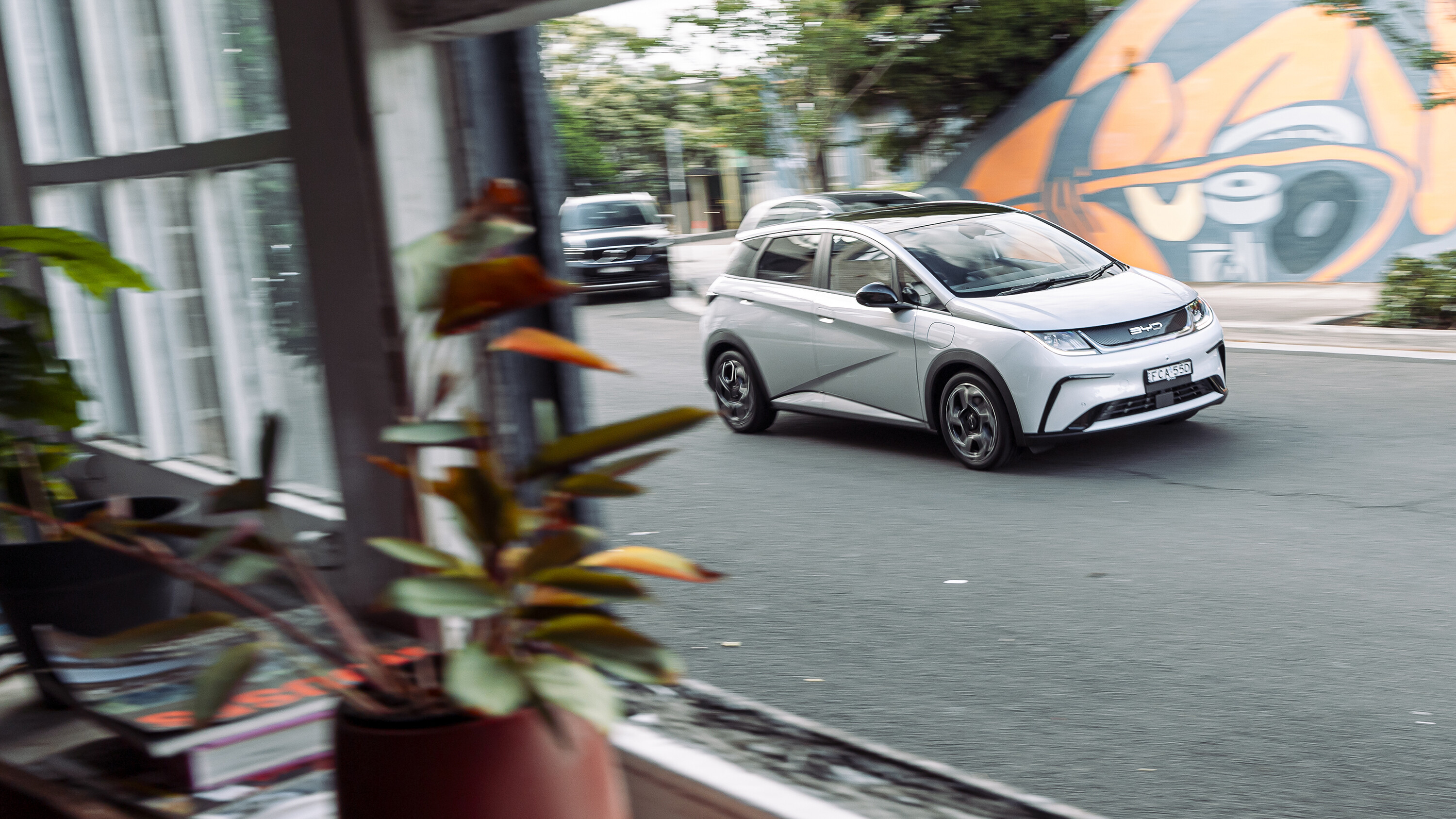
Perhaps no better demonstration of this are the two affordable electric small cars you see here: MG’s excellent 4 hatch and BYD’s quirky new Dolphin.
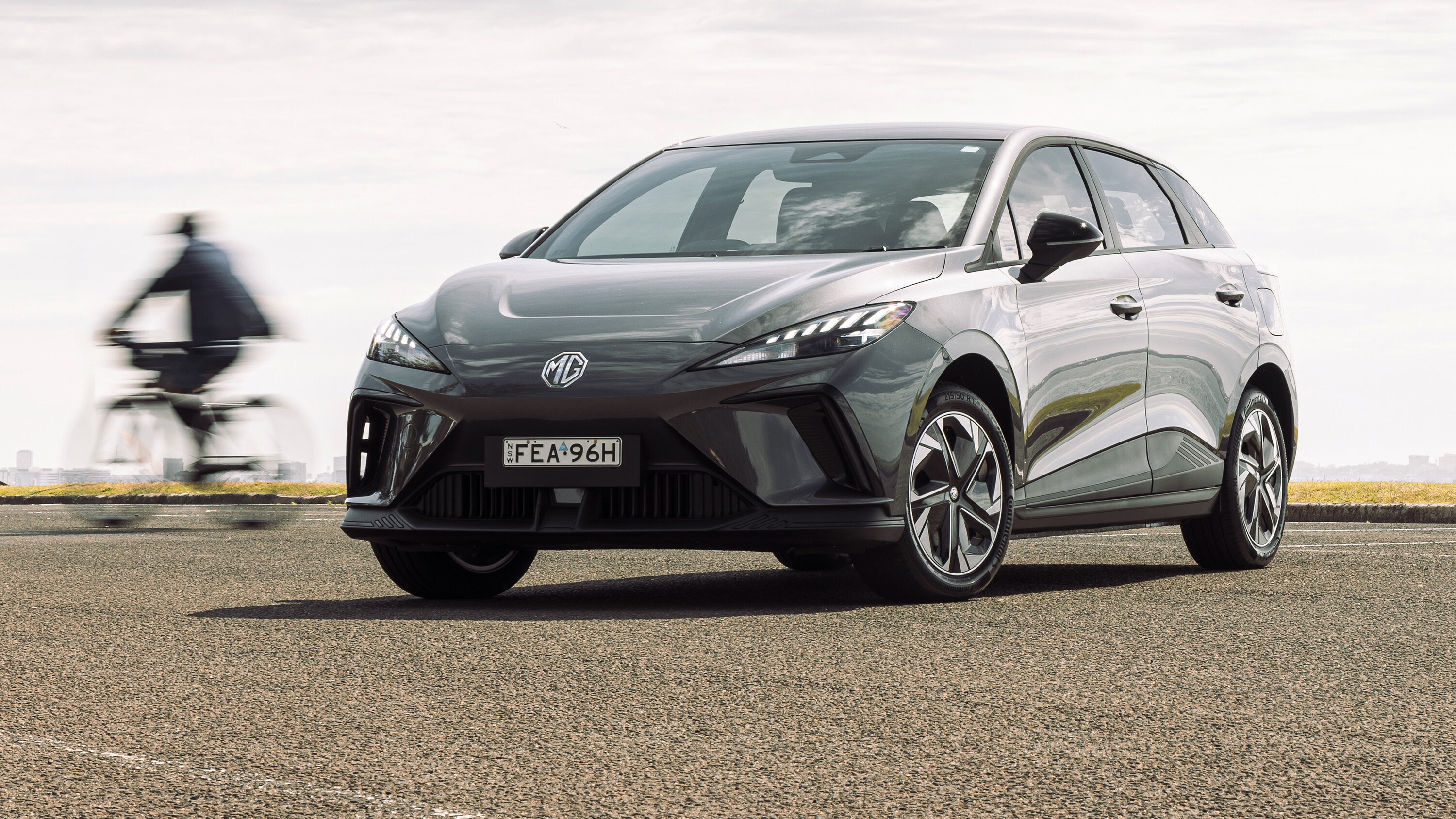
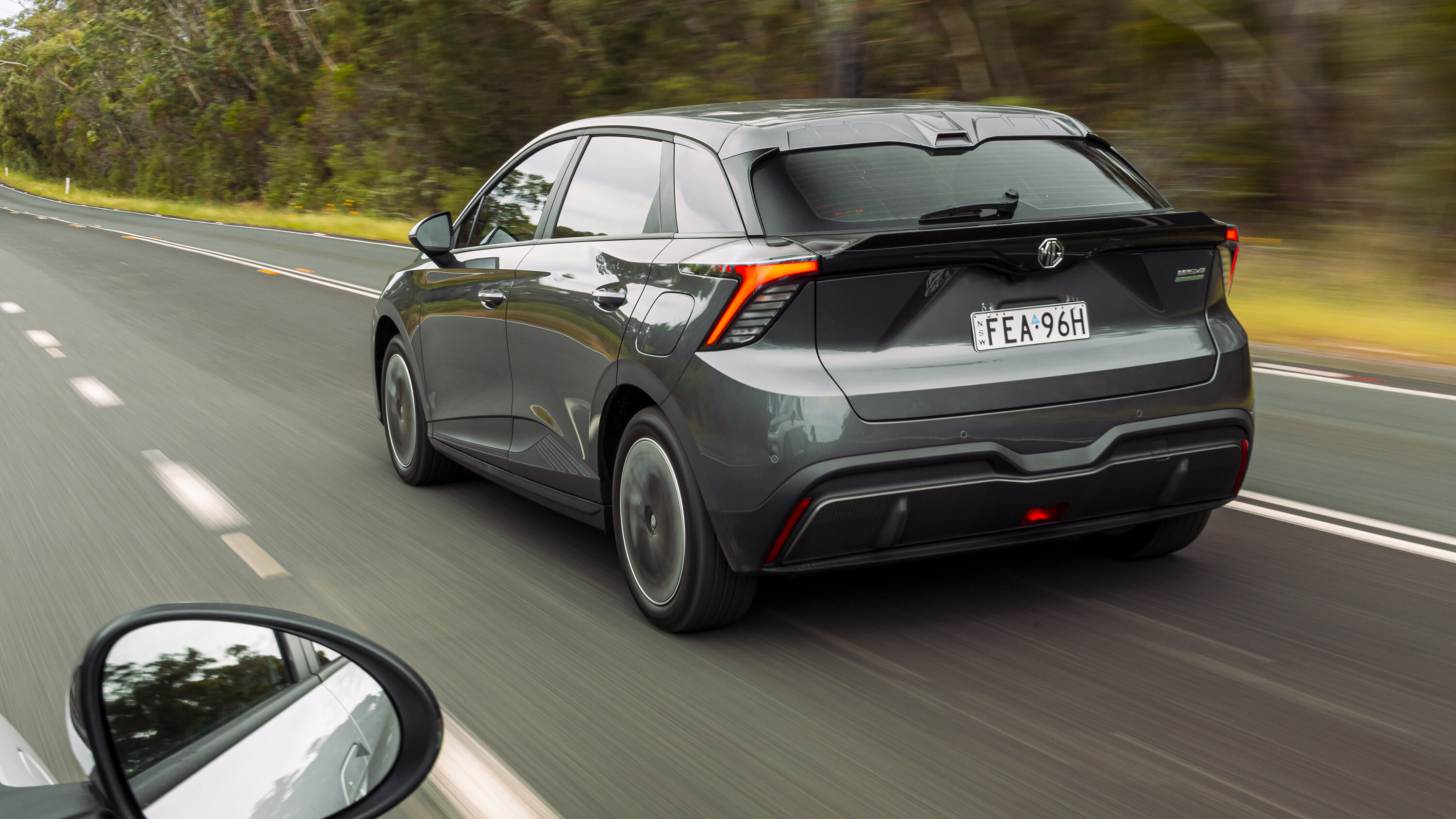
A phoenix risen from the ashes of BL’s demise, the MG4 is undeniably a better hatch than the Brits ever produced. It’s built for us in a state-of-the-art factory in Ningde, China, and caused the motoring press to sit up and pay attention when it landed locally in August.
1
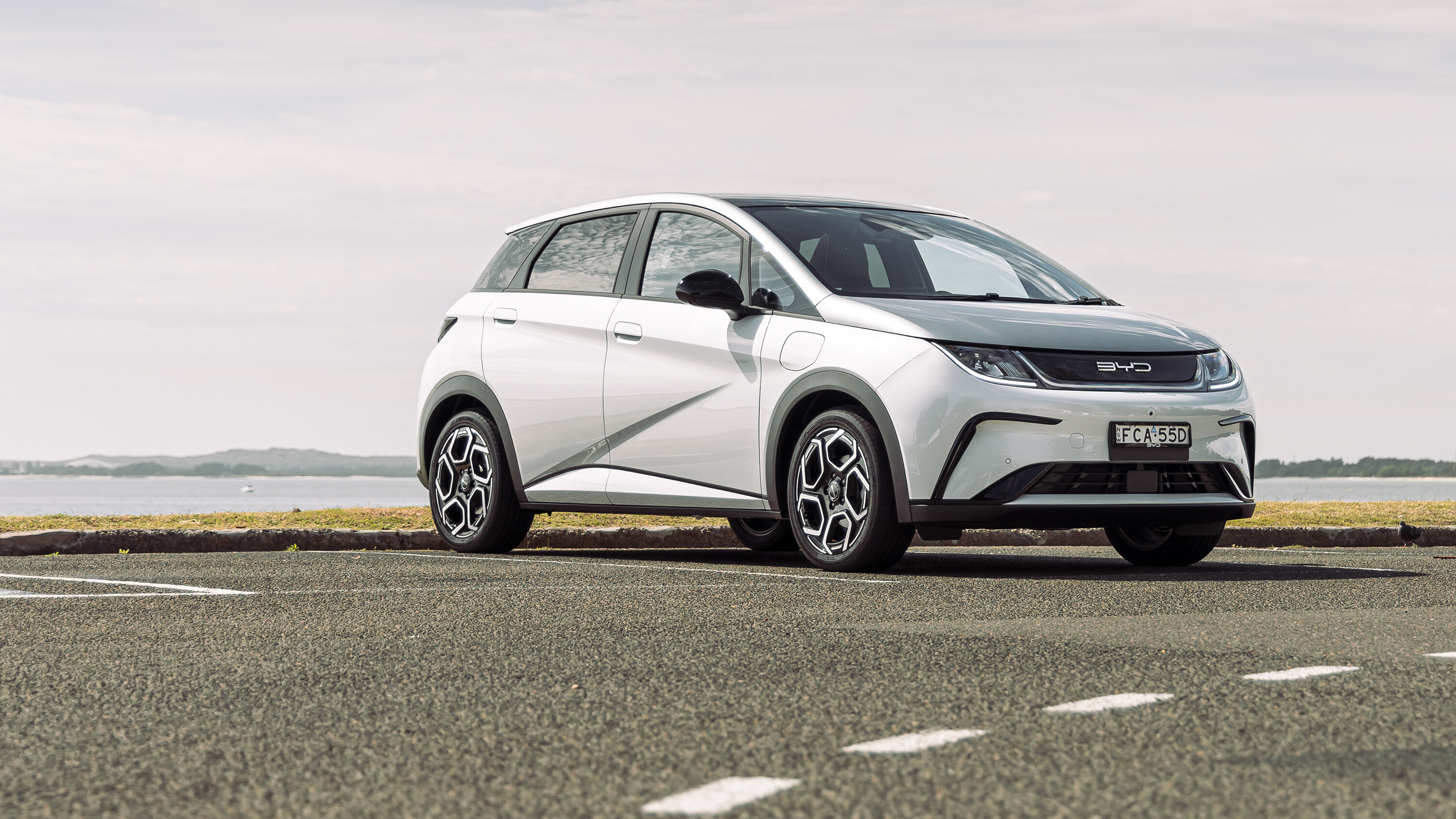
Sparking controversy in the segment is its latest challenger, the oddly-named BYD Dolphin which pettily carries ‘Australia’s cheapest EV’ title by $100 in base Dynamic guise.
The primary question we’ll be answering is which attainable EV you should put your money towards right now. But there’s a secondary angle, and that is whether the time is right to ditch your gas-guzzling hatch and dive into an EV.
After all, while these two aren’t quite as affordable as a base model Toyota Corolla, they aren’t much dearer than flagship trims to buy. Plus, if you have home solar, they’re essentially free to drive – or so the theory goes.
1
JUMP AHEAD
- What are they and how much do they cost?
- How are sales going so far?
- Interior comfort, space and storage
- How good is the technology?
- Warranty and ownership costs: crunching the numbers
- Range, charging and efficiency
- Which is better to drive?
- SCORING
- Specifications
What are they and how much do they cost?
Perhaps the equipment levels in the MG that follow in the footsteps of traditional family hatches aid its mass appeal.
The base Excite gets a good amount of equipment such as 17-inch alloy wheels, LED headlights, a 10.25-inch central touchscreen with wired smartphone mirroring, keyless entry and start, 7.0-inch digital cluster and cloth-appointed manual adjust seats.
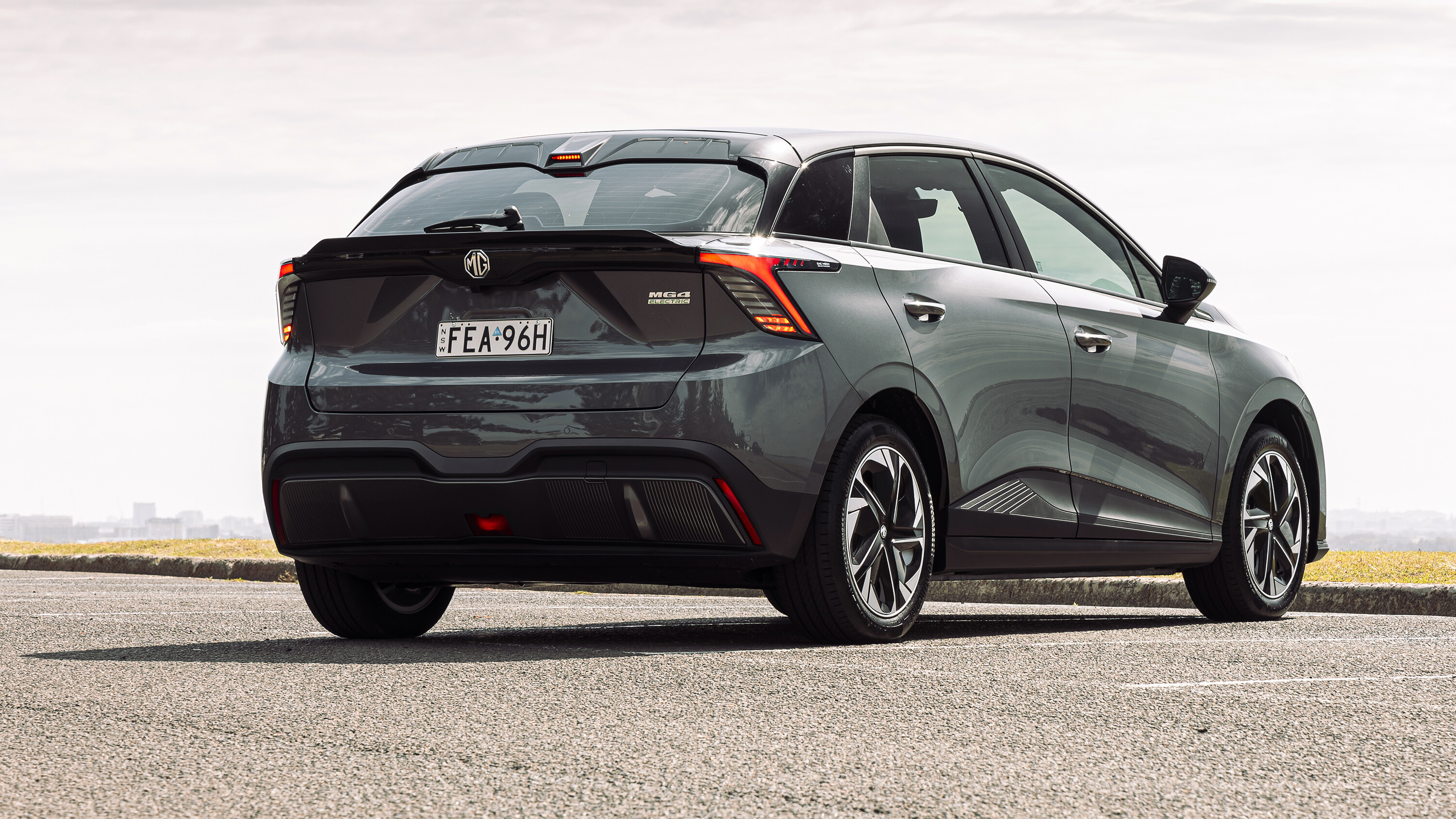
The $44,990 (before on-road costs) Excite 64kWh tested here commands a $6000 premium over the base 51kWh car and that’s all battery and motor you’re paying for.
1
With a 62.1kWh usable NCM lithium-ion battery, its WLTP-rated driving range is 450km. Spend an extra $3000 on the Essence and you’ll score nicer cabin materials, powered seats, a 360-camera and 18-inch alloys – it’s a no-brainer for private buyers in our book.
BYD’s effort is a little unconventional, essentially offering one equipment-packed variant in two battery sizes – the $38,890 Dynamic price leader and the $44,890 premium tested here.
The Dynamic’s spec sheet is enough to embarrass the MG4: heated seats, a heat pump, 12.8-inch power rotating touchscreen, four auto up/down windows (a surprising omission from the MG) ‘vegan leather’ upholstery, adaptive LED headlights, crisp 360-degree camera, and wireless smartphone charging.
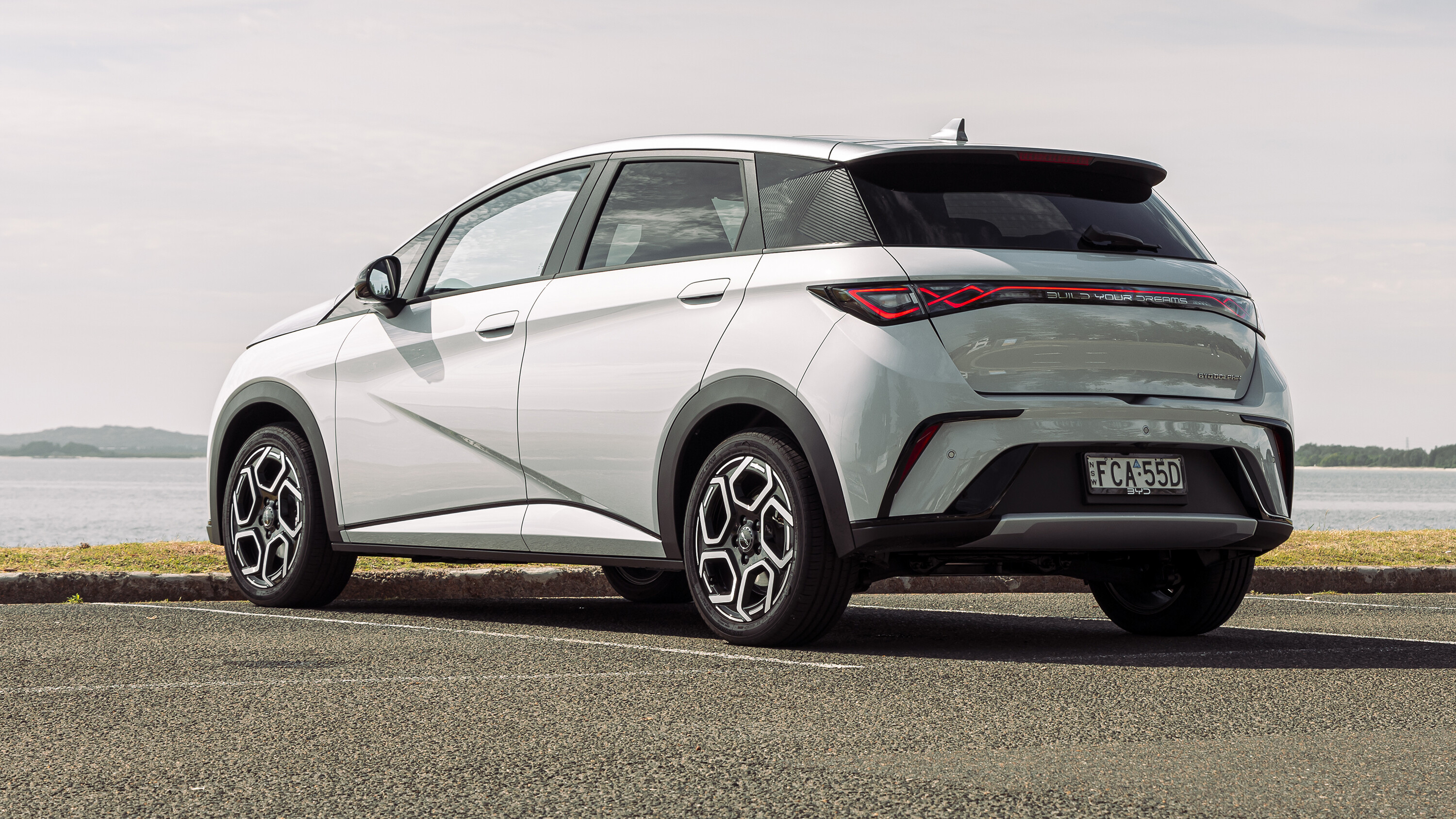
1
The premium brings a bigger 60.4kWh in-house made ‘Blade’ LFP battery pack for 427km of combined WLTP driving range. It also adds 17-inch alloy wheels and a two-tone paint scheme in either Surf Blue, Coral Pink, Atlantis Grey or the tested Ski White.
In our book, the limited edition blue-wheeled Dolphin sport is a rather pointless $5000 indulgence – the Premium’s where it’s at.
How are sales going so far?
Silly name aside, BYD’s Australian importer is bullish about the Dolphin’s local success. And, to be fair, CEO Luke Todd has stats to back this up.
Sure, the Atto 3’s may not have been ‘the most successful local car launch ever’ as he claims, but sales figures don’t lie. Electric cars only make up about 7.0 per cent of our market, but so far this year there have been more Atto 3s delivered than Toyota Camrys and Mazda 3s. BYD will look for the Dolphin to build on the Atto 3’s success.
For comparison’s sake, since its August introduction MG has been able to shift a similar number of 4s each month as BYD has with the larger Atto 3.
As market demand for electric cars continues to fluctuate it’s hard to predict how the Dolphin will settle into its sales life, though the similarly quirky GWM Ora has struggled to match the heavy hitters such as Tesla and MG.
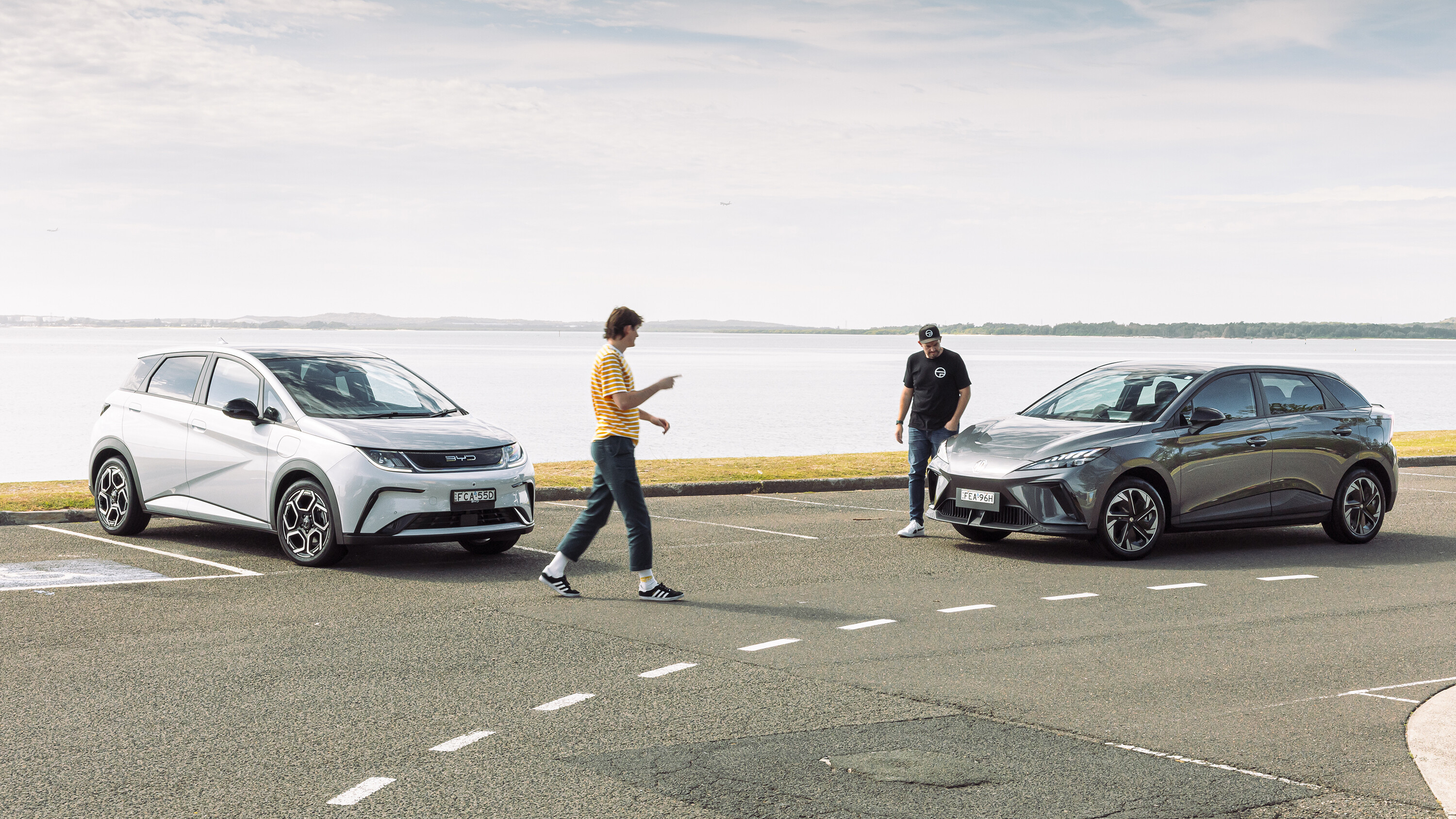
1
Interior comfort, space and storage
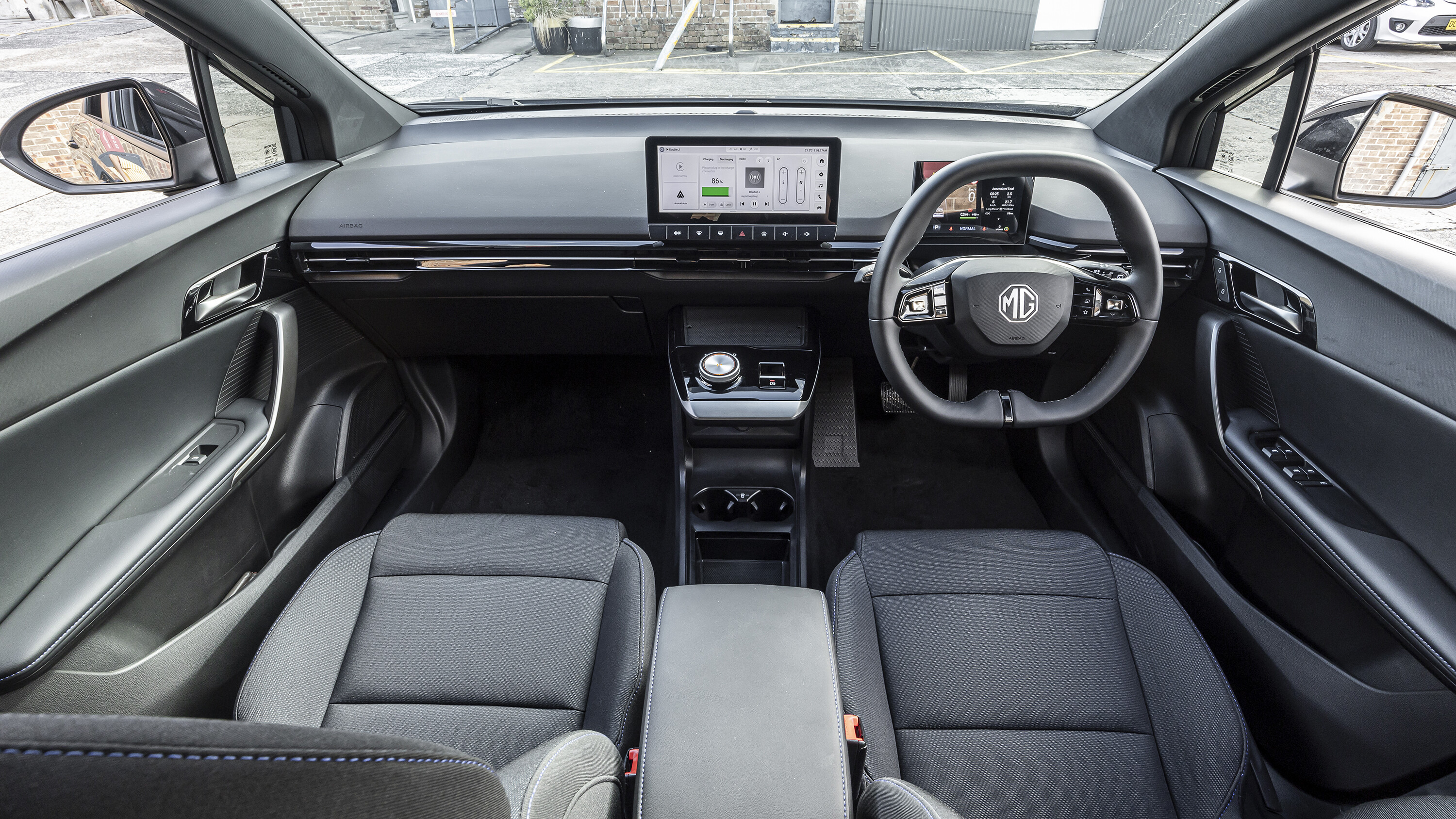
If the spec sheets are different, then the cabin executions are antithetical. The MG is recognisable with a Volkswagen-inspired design and mostly comprehensible layout, aside from the mirror adjustment hidden behind the steering wheel.
There’s another miss in the MG’s Tesla-like start procedure (that requires no key turning or button prodding).
If you twist the rotary dial before the car’s good and ready it puts the ‘transmission’ in neutral and disables the parking brake. Meaning that if you’re on a hill the MG4 will roll unnervingly before hurriedly re-engaging the handbrake. That never happens in a Tesla or Polestar.
Incidental storage is excellent, however, with the floating centre console doubling as a rubberised phone pad (and a wireless charger in Essence trim), a covered cubby with two small cup holders, a deep central storage bin under a comfy armrest, and door bins that take a one-litre camping bottle.
1
1
Material quality is decent and consistent but not on par with Volkswagen or Skoda. Though ‘only’ manually adjustable, the cloth-appointed pews are comfortable and supportive over hours in the saddle.
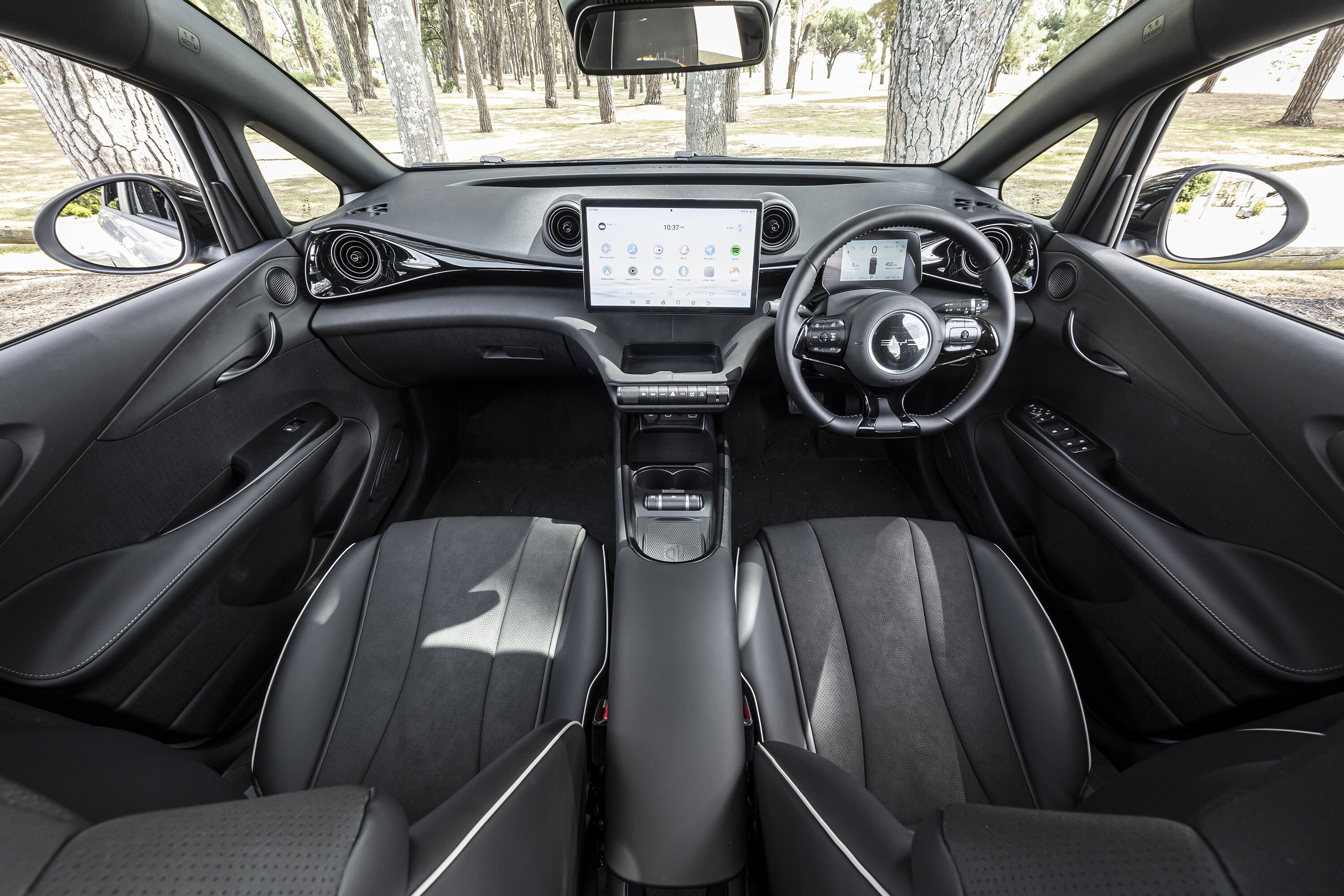
The BYD has some quirks. You’ll be searching for the start button (laid horizontally into the dash and hidden behind the Fiat 500-esque steering wheel) and then potentially fumbling with yet another new take on the gear selector that’s built into the row of cylindrical switches. It works, but not intuitively.
Those power seats offer more granular adjustment but the ‘vegan leather’ is what we used to call vinyl, meaning the Dolphin’s black upholstery gets plenty hot and sweaty beneath the fixed glass roof. Like the MG, it has great storage solutions such as a secure wireless charger and nifty multi-tool that can be used to cut seatbelts or break glass in emergencies.
Note: In all grouped photos, BYD Dolphin is pictured top, MG 4 bottom.
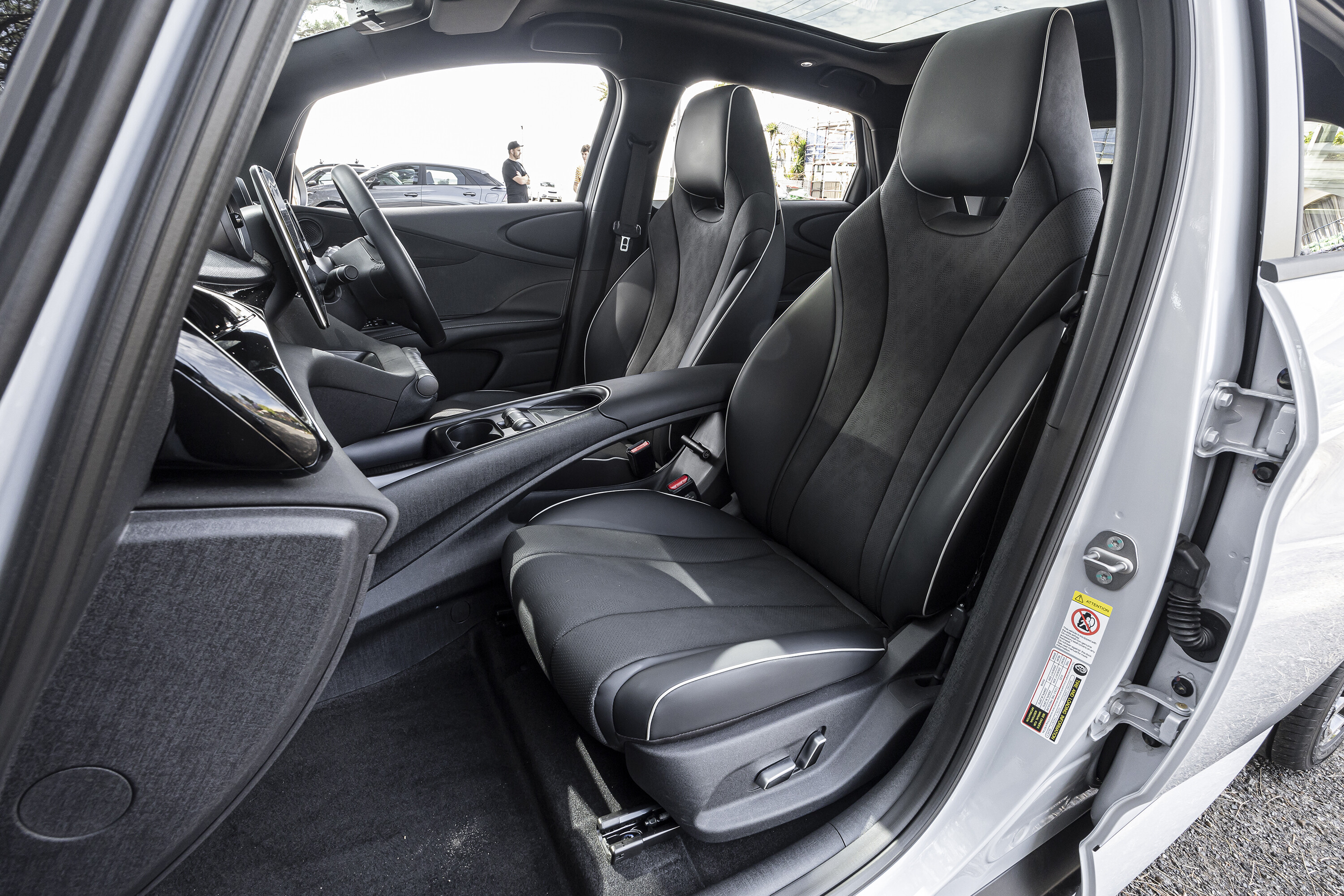
1
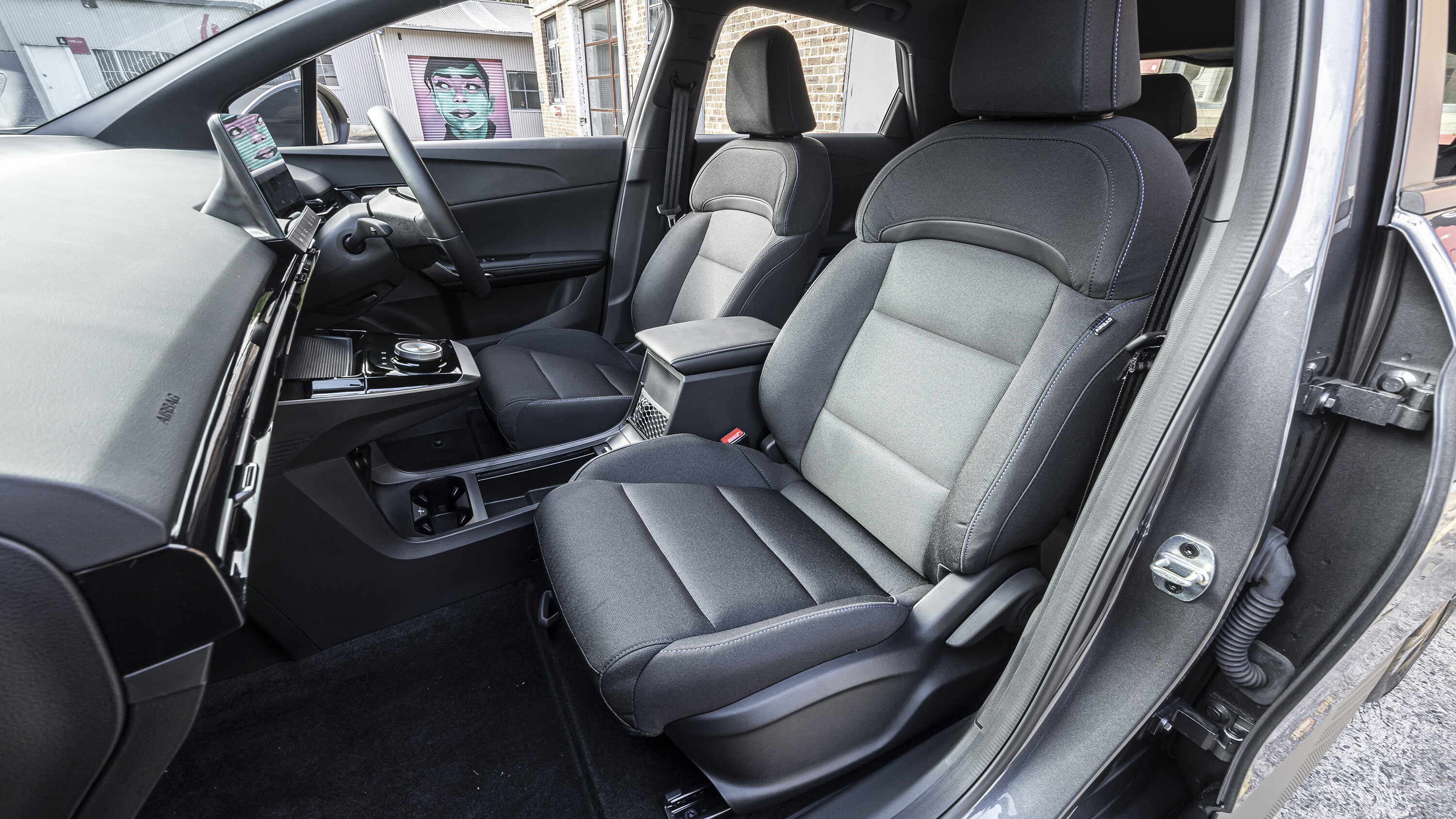
1
Just like your average family hatch the MG4 has space for four with generous rear quarters that accommodate those over six feet. The view out the front and side windows is good, and there’s width enough to squeeze three.
The longer Dolphin offers more leg and toe space but the fixed glass roof kills headroom. Being narrower, too, it’s harder to squeeze three adults across the bench.
Amenity is better in the Dolphin with two USB charge points and a fold-down armrest – the MG does with just one USB. Neither car has adjustable air vents in the back.
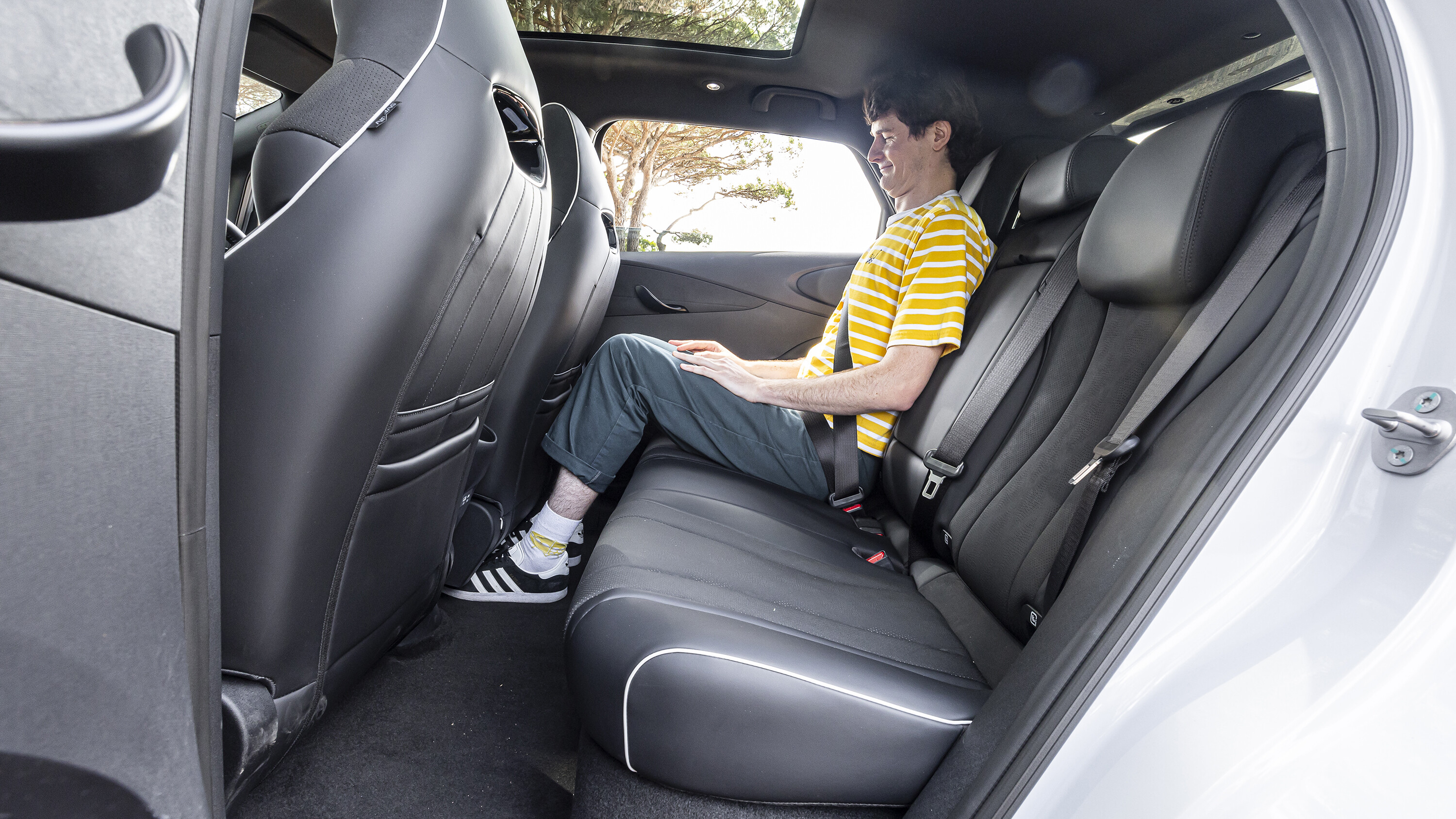
1
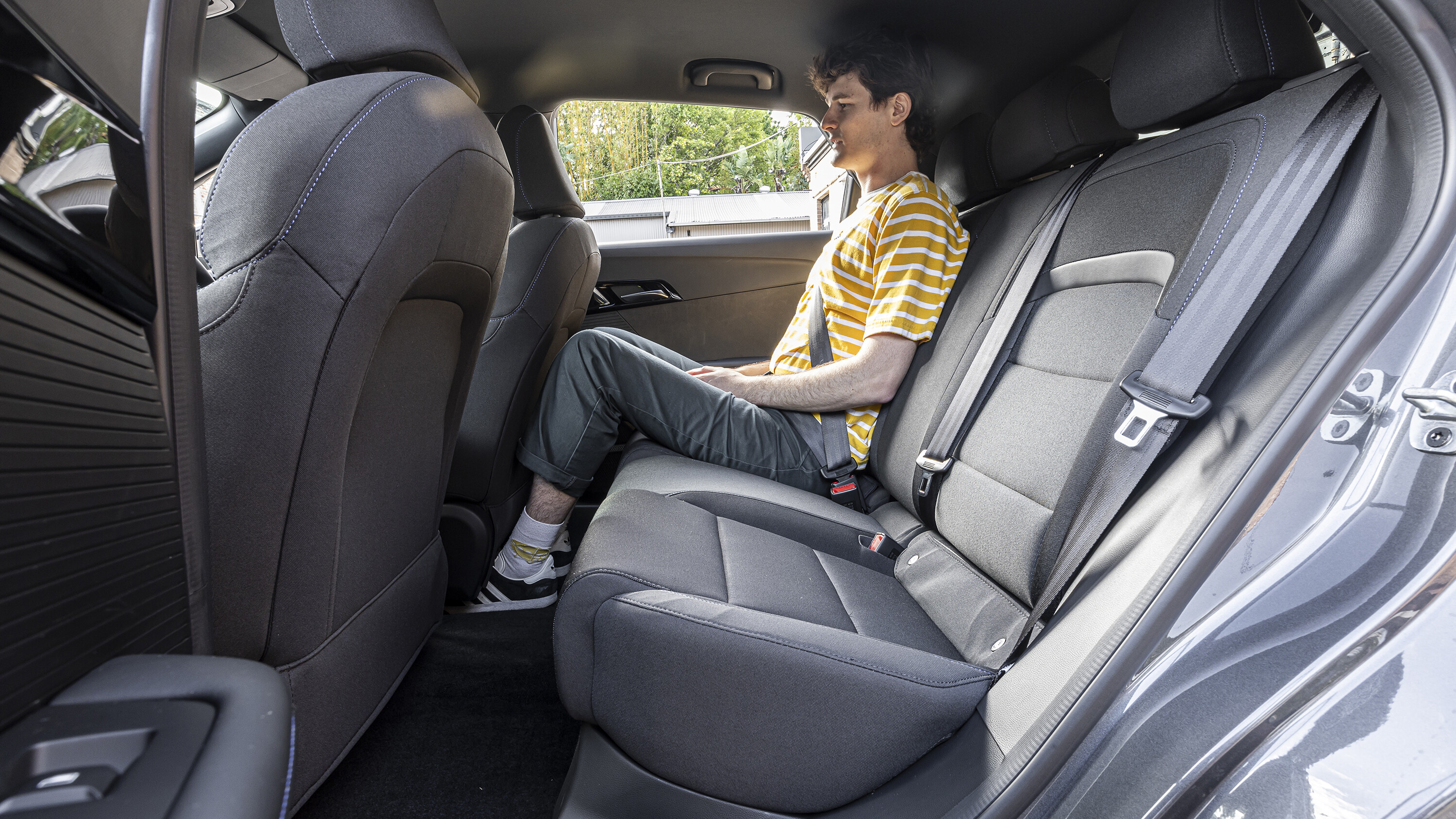
1
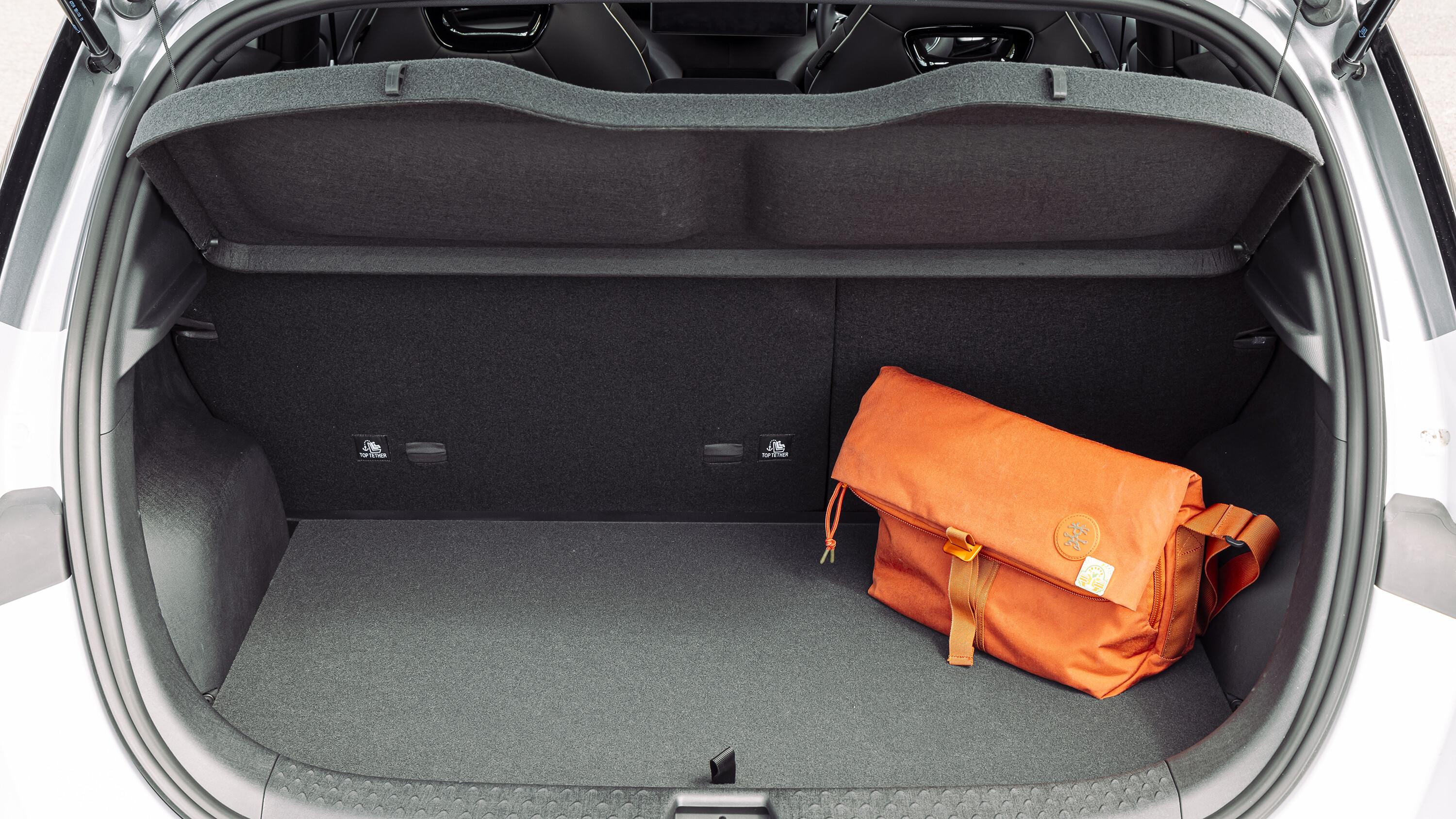
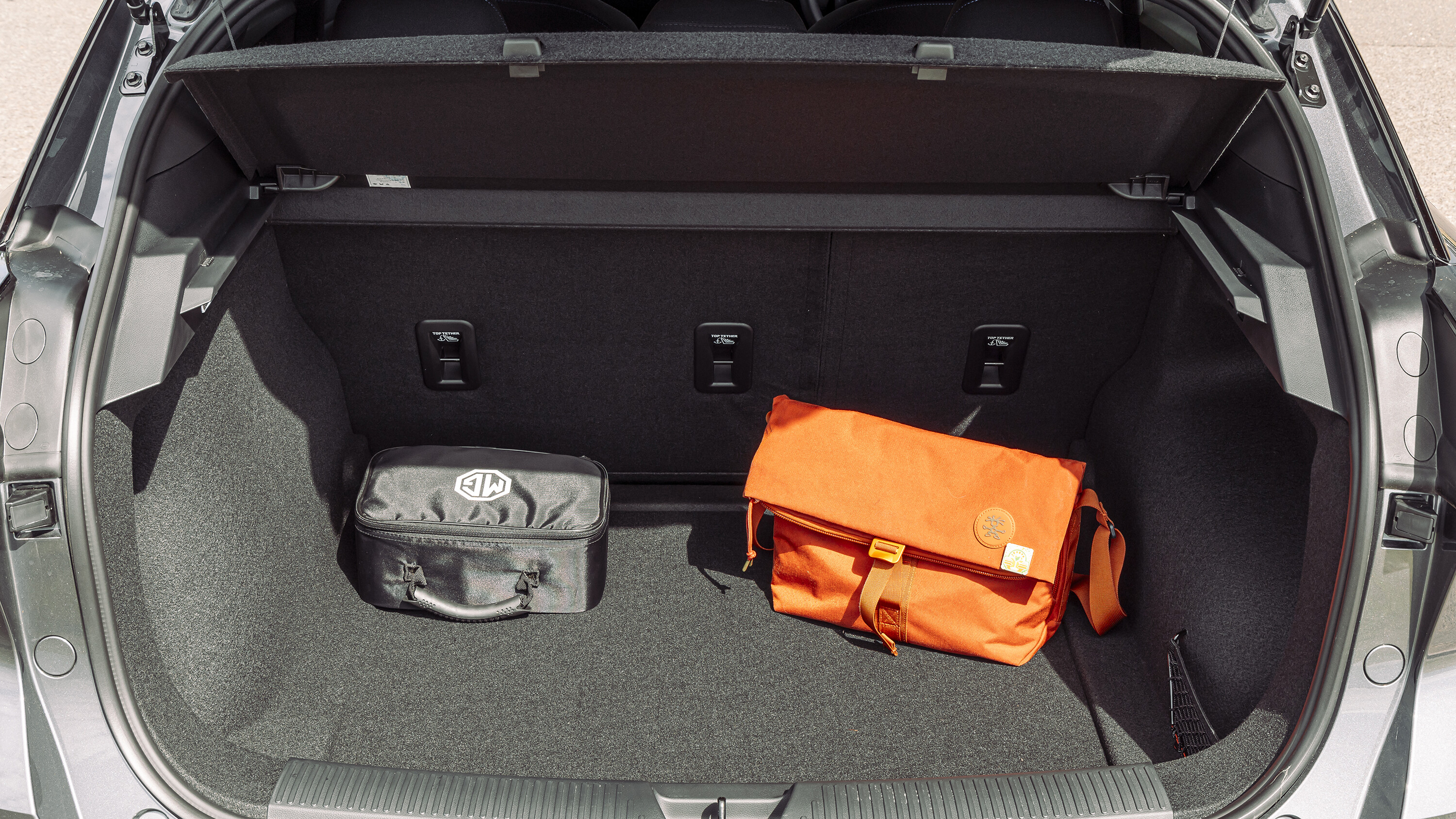
Neither car has a big boot though the MG4’s on-paper figure of 350L is higher. It has one shopping bag hook, a light, a single-height base and there’s a step when the 60:40 backrest is folded.
The BYD has a 345L space with a dual-level floor that makes for a fully flat load bay when the seats are folded and gives some hidden storage.
Thanks to a wider aperture, it’s easier to load bulky items into the MG’s rear end than the Dolphin’s. Frustratingly, neither car comes equipped with even a space-saver spare tyre. We don’t find this so bad in the city-focused Dolphin but the MG4 is fun enough to drive that a space-saver spare would provide extra peace of mind should you find yourself in the country.
1
1
How good is the technology?
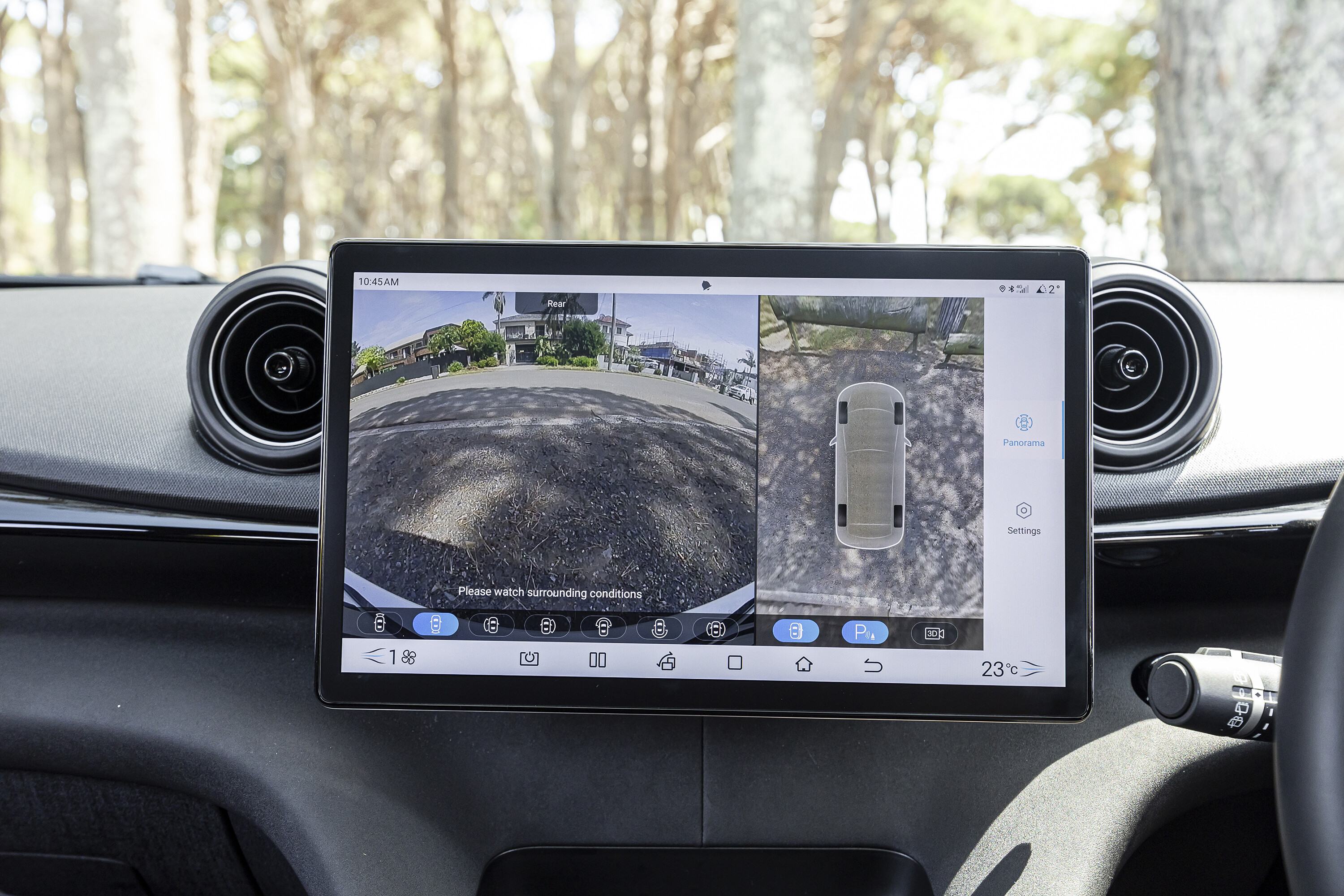
While the Dolphin’s dramatic layout is packed with quirky gimmicks (and plasticky materials), the core functionality is reassuringly effective.
The connected infotainment system, for example, is easy to use and allows you to download apps such as Spotify to avoid mirroring your phone using a cable (like the MG4, there’s a USB-A, USB-C and 12-volt port accessible from the front seat).
Those extra two speakers in the BYD’s sound system make for a cleaner and more powerful listening experience than the MG’s decidedly muffled four-speaker system, too.
1
1
One of the MG4’s home screen panels allows adjustment of temp and fan speed quite simply, but the Dolphin is better in this area.
And, while both cars house the climate control within menus only the Dolphin ships standard with ‘Hey BYD’ voice recognition that’s remarkably intuitive and effective (though we hate to think about data privacy issues) backed up by persistent controls for fan and temp on the main menu.
One of the MG4’s home screen panels allows adjustment of temp and fan speed quite simply, but the Dolphin is better in this area.
The MG’s climate control is also unlike any other when it comes to temperature. I’m usually a 21º guy – perhaps 22º in an icy-cold Toyota – but the MG4? I found myself at 25º with anything lower simply too chilly. And yet, pushing it up to 26º turned the cabin into a sauna.
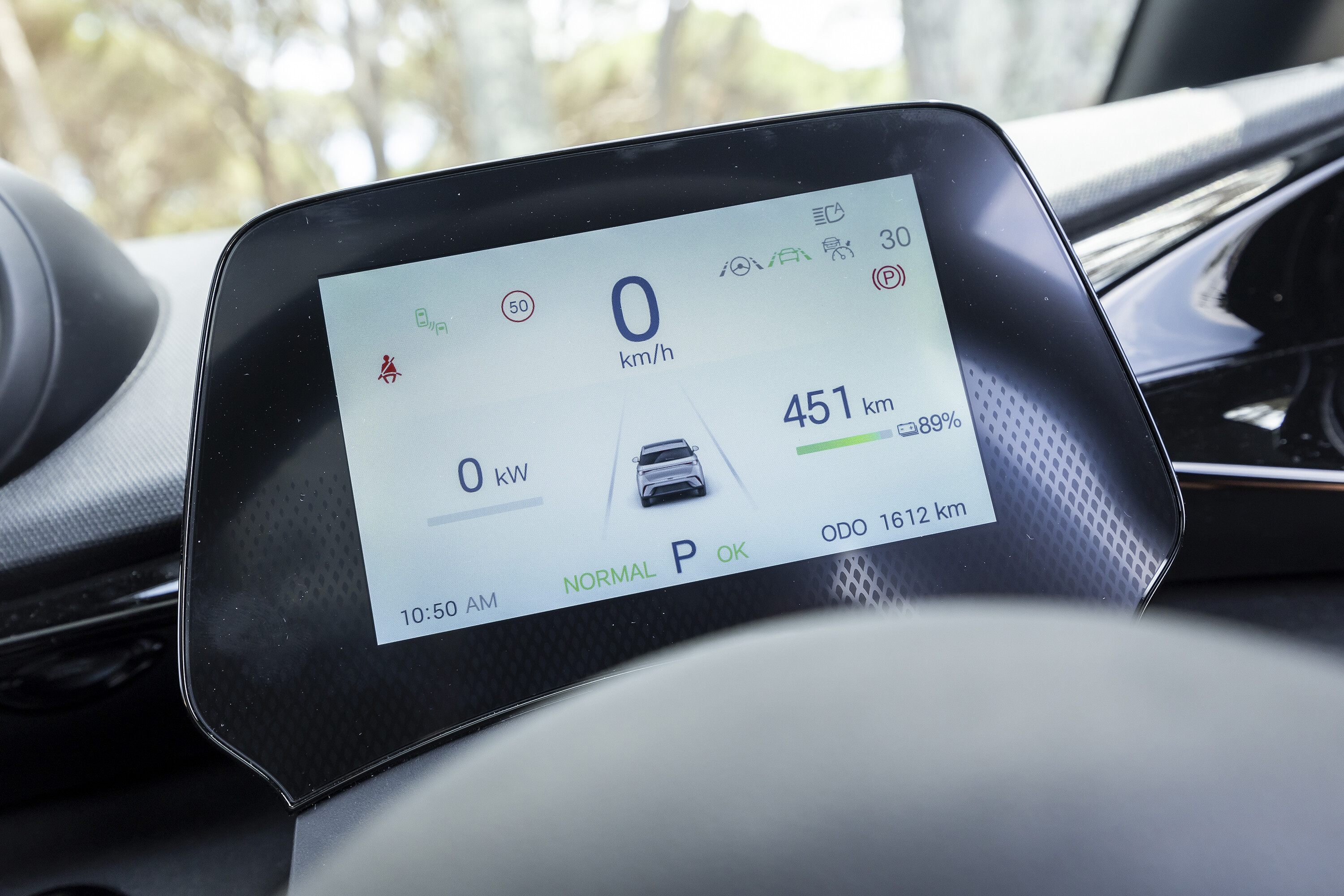
1
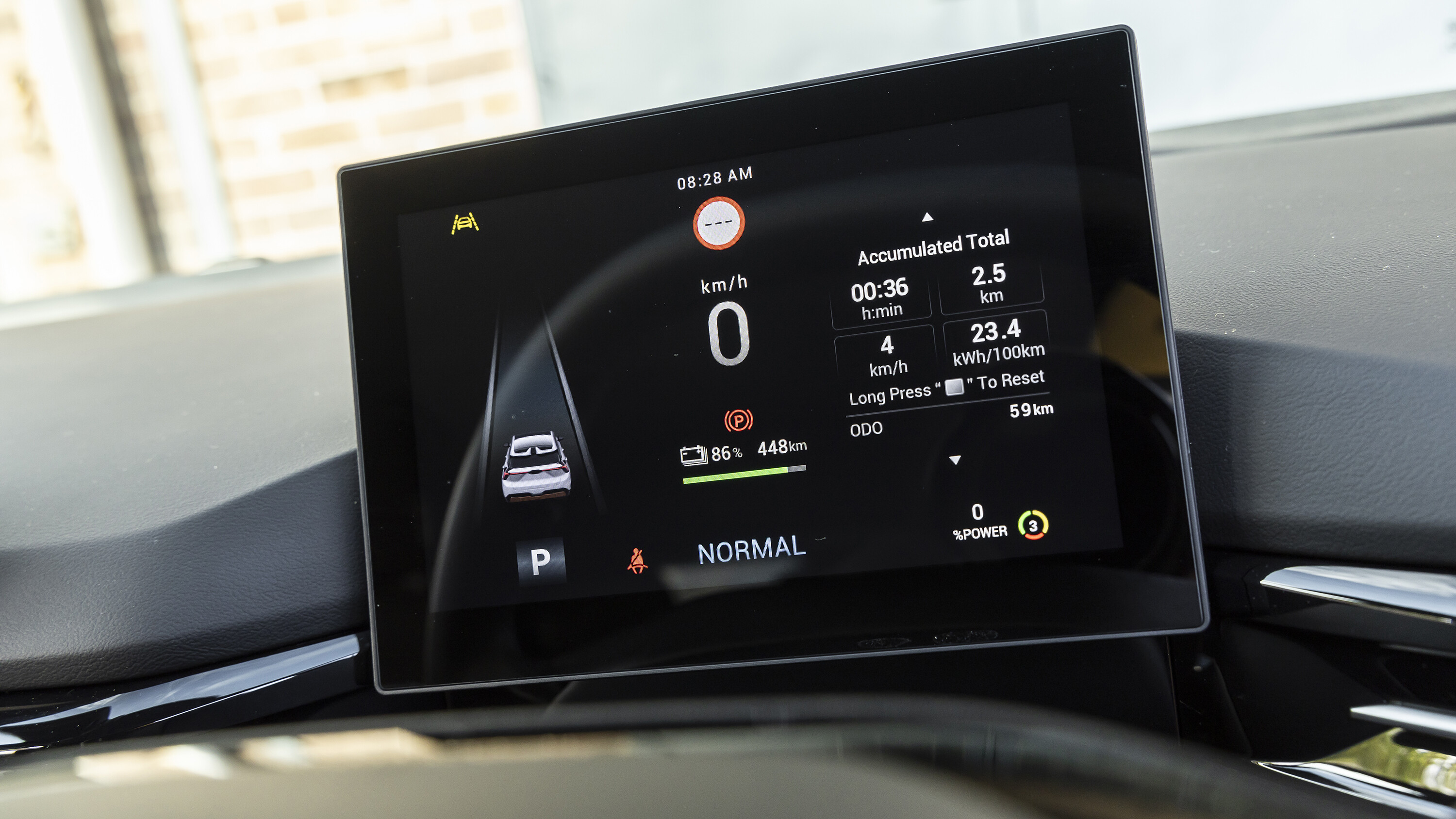
1
Warranty and ownership costs: crunching the numbers
These two are still dearer than equivalent combustion cars to buy, but do they make it up in the long run? We’ve ignored the minefield of state-by-state incentives in this story, but these can further influence affordability.
The BYD has everything needed to wow in a dealership scenario and it’s backed up by a six-year/160,000km warranty (with eight years/150,000km for the battery and motor).
Servicing is due every 12 months/20,000km and can be carried out at an increasing number of BYD locations (or MyCar centres) at a fixed price of $1384 for five years.
1
MG beats BYD on ownership with a seven-year unlimited-kilometre warranty and equal length capped-price servicing program.
The MG4’s service intervals are longer, too, requiring a trip to a mechanic every 24 months or 40,000km for $1478 over six years.
Compared to a Golf 100TSI R-Line, a home-charged MG4 will save you $3258 over three years in running costs (including fuel/power, insurance, and servicing) easily offsetting the $2000 price premium. Using public electricity ($0.60/kWh against about $0.34/kWh) narrows the gap to $1965.39 over three years.
1
Yet put the dearer-to-run Dolphin and Toyota’s fuel-sipping Corolla hybrid into the picture and it’s less rosy for the EVs; the Corolla is about even with the EVs if you’re using powering it exclusively at public chargers.
Then there’s depreciation. As new brands in the Australian market with volume aspirations and affordable purchase prices, the BYD and MG have extremely weak three-year residuals according to Redbook (both list at 48.5 per cent).
That means the close contest with the Corolla opens up to a $7500 gap to the publicly-charged EVs (about $6200 for home charging) when it comes time to get rid.
| Vehicle | Total 3yr ownership cost | Purchase price (before on-road costs) | Redbook 3yr resale | Depreciation cost after 3yrs | 3yr servicing costs | Combined energy consumption | Power or fuel bill 3yr | Insurance premium 3yr |
|---|---|---|---|---|---|---|---|---|
| BYD Dolphin Premium (home/public charged) | $30,443 / $31,773 | $44,890 | 47.80% | $23,433 | $748 | 14.1kWh/100km | $1740 / $3071 | $4522 |
| MG 4 64kWh Excite (home/public charged) | $30,165 / $31,458 | $44,990 | 47.80% | $23,485 | $296 | 13.7kWh/100km | $1691 / $2984 | $4694 |
| Toyota Corolla ZR Hybrid | $23,876 | $39,100 | 59.00% | $16,031 | $615 | 4.0L/100km | $3,049 | $4181 |
| Volkswagen Golf 110TSI Life | $28,425 | $42,990 | 57.00% | $18,486 | $1,550 | 5.8L/100km | $4421 | $3968 |
Insurance
Insurance premium sourced from AAMI for a 30-year-old male living in Inner Sydney; petrol calculated at $2.10/litre; costs calculated based the ABS average of 12,100km/year.
Range, charging and efficiency
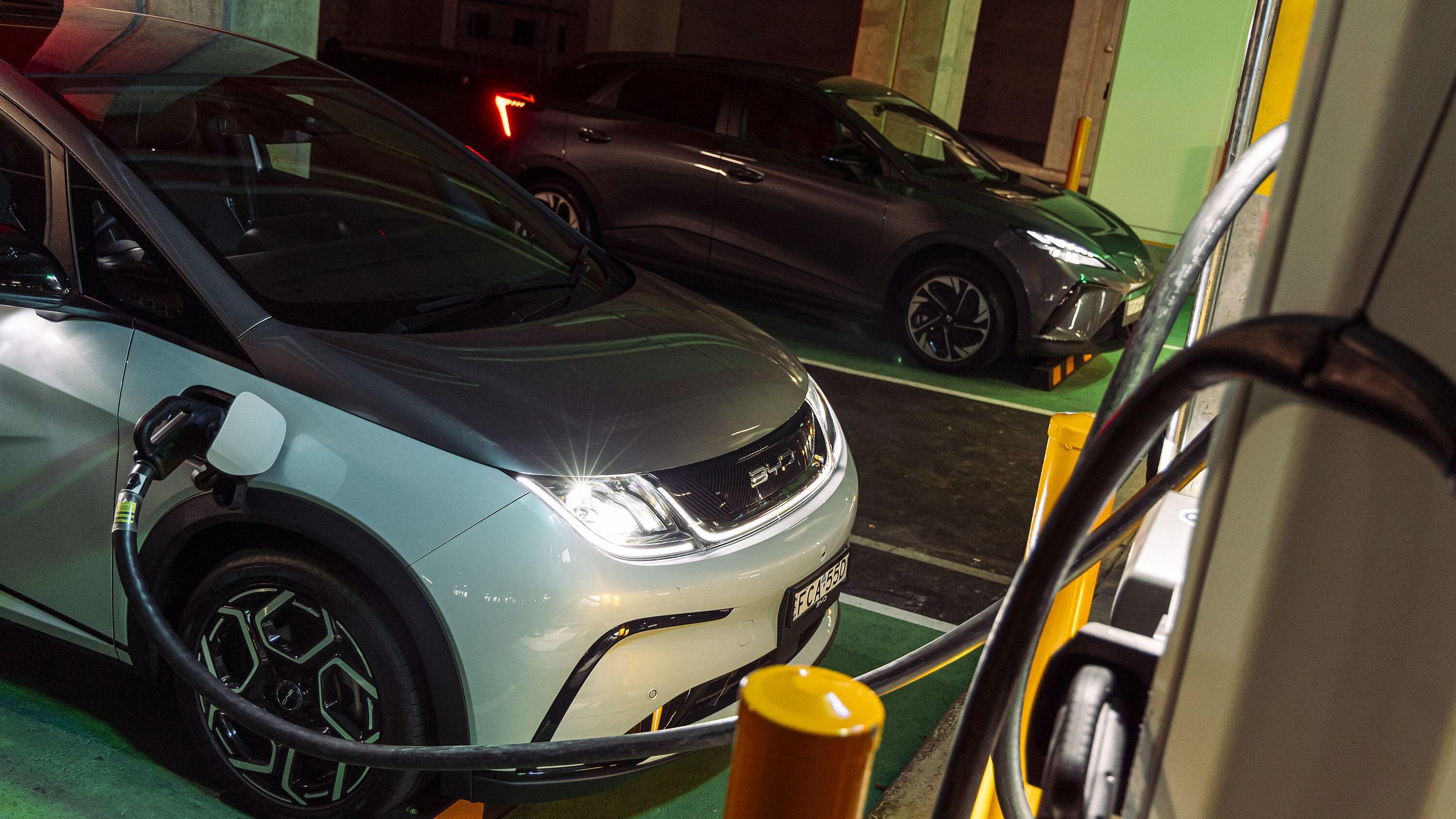
Despite better lab figures, in the real world, the MG is less efficient. What this comes down to is hard to know – it could be aerodynamics or rolling resistance, but it’s probably BYD’s battery and motor technology.
The Dolphin averaged 10kWh/100km over our last 50km of mostly downhill driving back into Sydney. If you got that all the time you’d eke 600km-plus out of a charge from the medium-sized battery.
Our total time with the car showed a higher 14.9kWh/100km figure, for about 405km driving range.
1
Meanwhile, the MG4 recorded 12kWh/100km on the downhill run (for 514km) and showed 16.2kWh for the whole test, representative of 381km roving range.
The MG’s rapid-charging stats are better though, with peak 140kW DC speeds enough to get it from 10-80 per cent in 26 minutes. We saw a peak of 89kW when rapid-charging the Dolphin (above its quoted 80kW speed) meaning the same fast-charge will take 40 minutes.
As the Dolphin’s battery LFP chemistry is more chemically stable, though, it’s safer to take it closer to full regularly using up to 11kW AC (the MG’s capped at 6.6kW) wall boxes.
1
Which is better to drive?
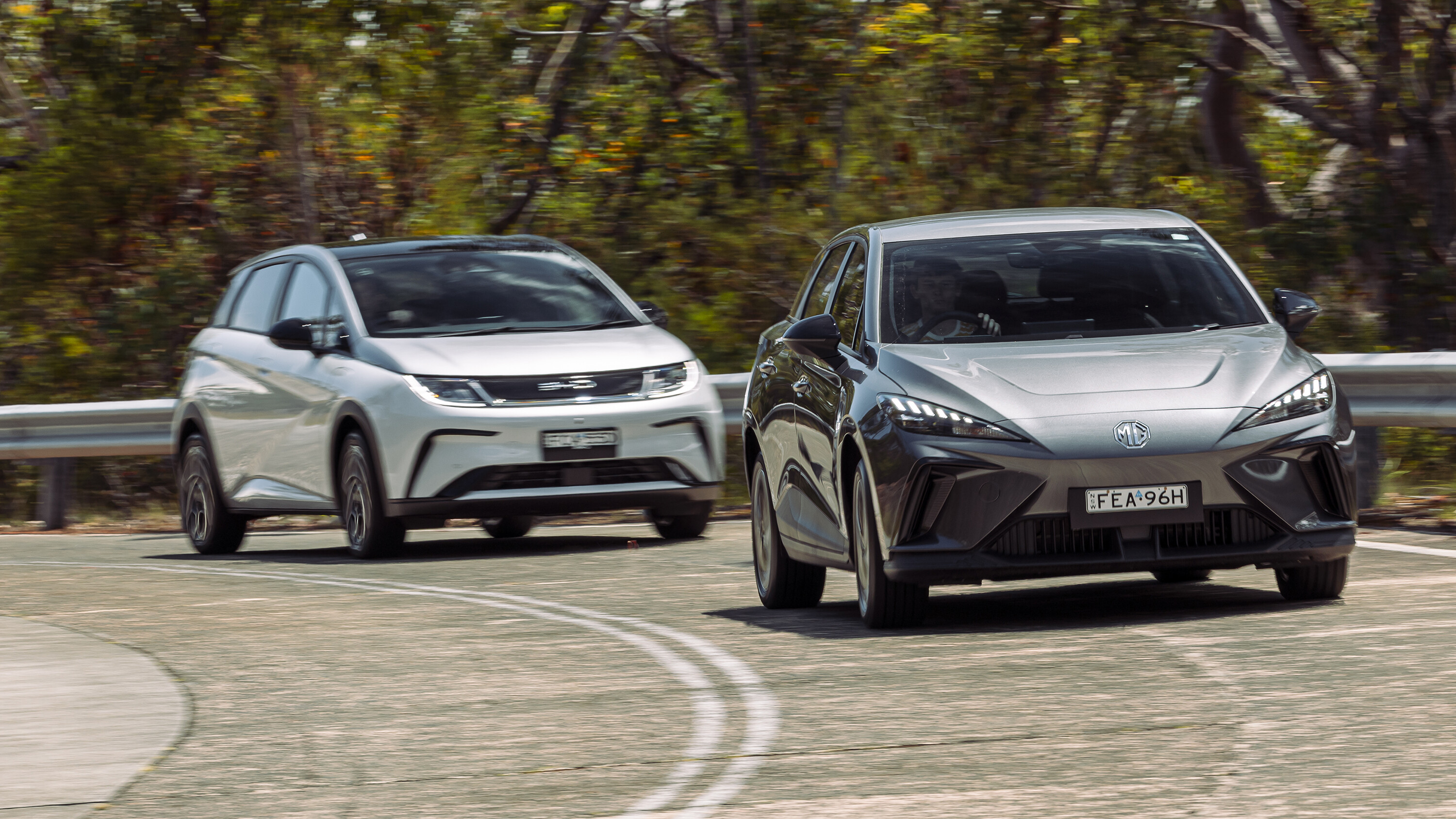
With a van-like driving position and tall, narrow body the BYD’s proportions are ungainly – even if it is the more attractive looker overall – and this is reflected in the driving experience.
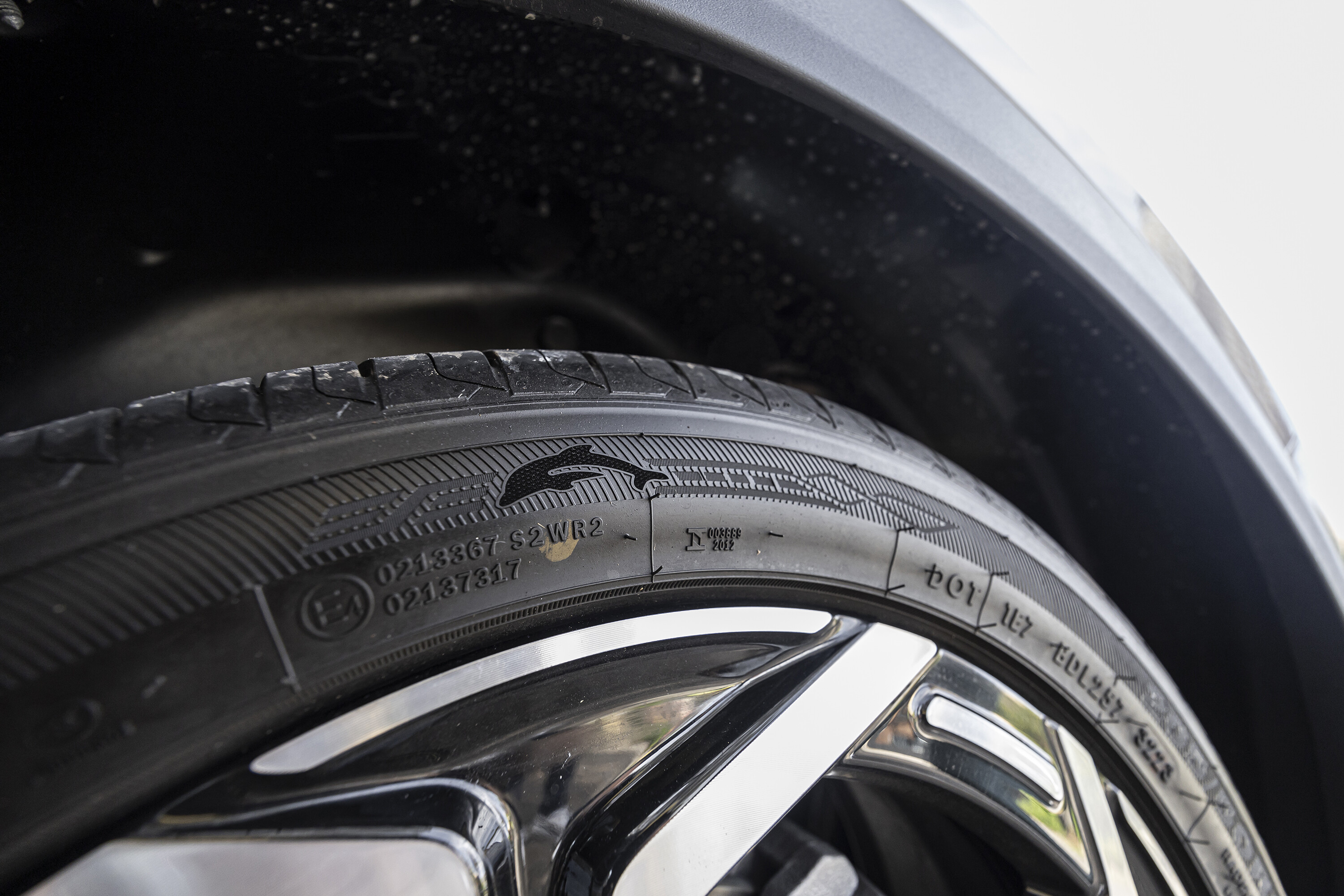
The Dolphin is soft and wallowy with minimal body control and yet, even though this variant has multi-link rear suspension (teamed with front struts), it falls clumsily into potholes leaving its 205/50 R17 Linglong Comfort Masters (with cutesy OEM Dolphin stamping) to deal with sharp edges.
Then there’s the 2.8-turn lock-to-lock steering. We’re not looking for the granular feel or high-def tread-squirm here, just a light and unobtrusive system which the Dolphin’s is not. Around the straight ahead it’s sticky like treacle making it difficult to make small corrections for cambers and crosswinds on the motorway yet becomes fingertip light off-centre.
1
The BYD’s turn of speed is impressive, though, that front-mounted 150kW/310Nm motor drags the 1658kg Dolphin to 100km/h in 7 seconds (claimed) – that’s warm hatch quick.
There’s good overtaking acceleration, too, with more puff at higher speeds than the MG. Finesse is lacking at full noise, with the Dolphin’s grunt enough to make the front end axle tramp and the Linglongs screech at any more than about half throttle.
The braking performance is about as convincing as the tyre grip with a pedal that feels mushy underfoot amplified by the clumsy blending of regenerative and physical retardation. There are two regen modes though neither promises a one-pedal drive.
The MG has more regen settings that can be tethered to one of the two configurable steering wheel buttons (same story with the four drive modes: Eco, Normal, Sport and Snow) and a pseudo-one pedal mode can be selected within the main menus. Its brake pedal feel is natural and even preferable to a Toyota hybrid’s stoppers.
1
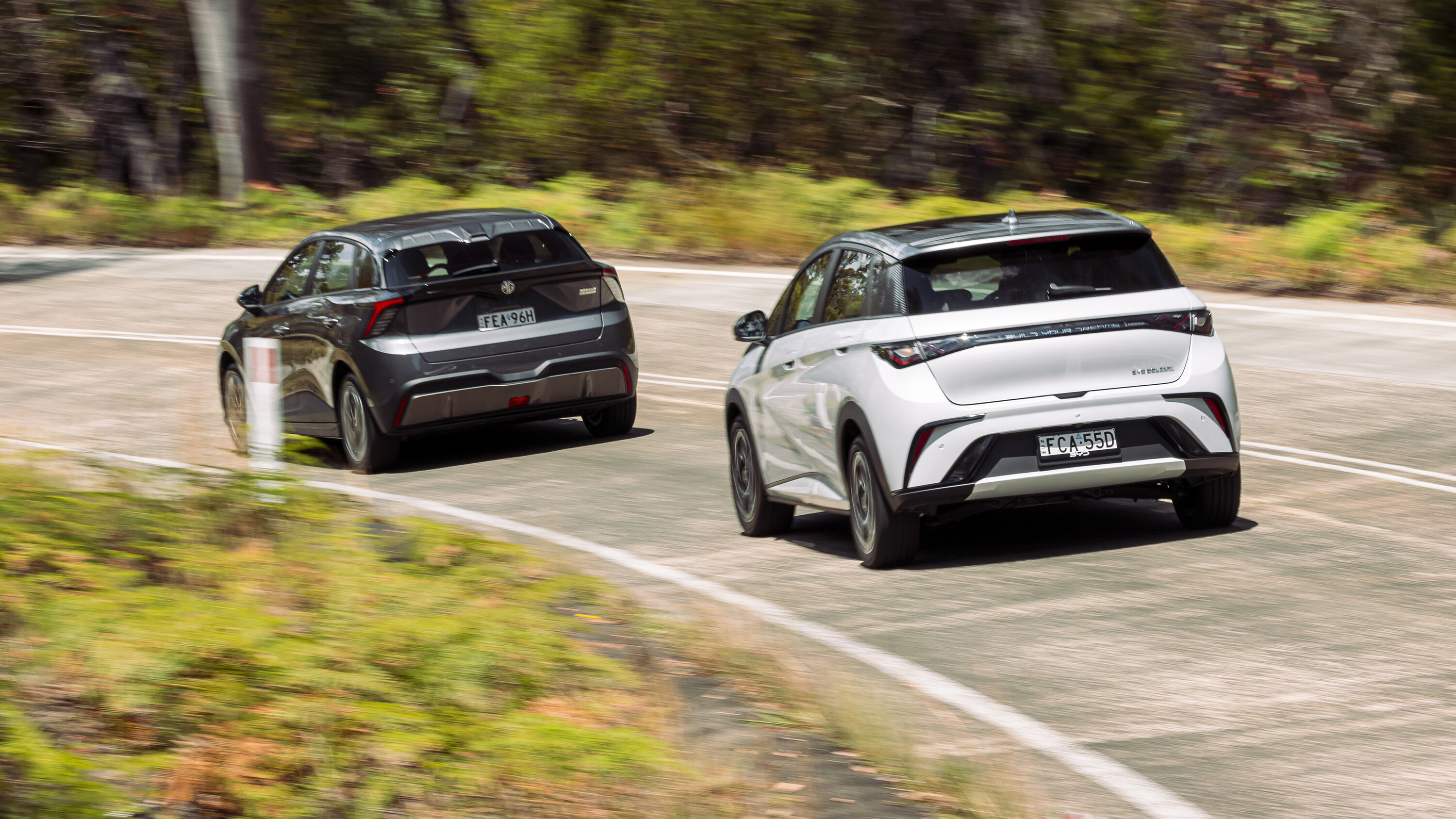
It’s a little slower (though no slouch) nailing 100km/h in 7.7 seconds thanks to 100Nm less from a rear-mounted electric motor. But the whole process is far calmer, as is the experience on our twisting country road.
Where the Dolphin’s appallingly underdamped body shimmies through corners and porpoises over bumps, the sophisticated MG 4 steers as accurately as any combustion-engined family hatch – and that’s meant in a most complimentary way.
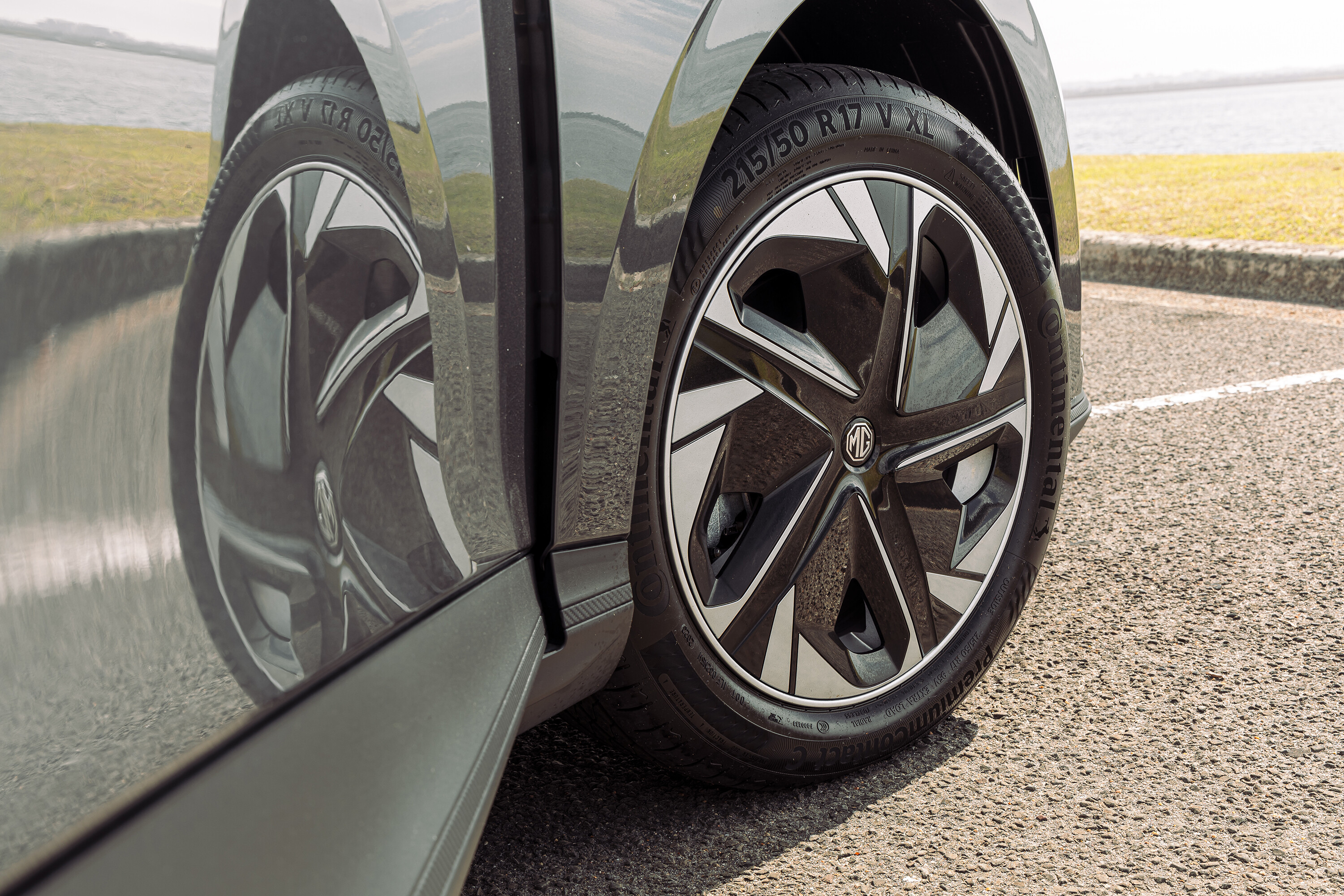
It’s pleasant around town, too, with decent comfort aided by soft 215/50 R17 Continental Premium Contact C tyres that keep road noise to a minimum.
As for critiques, there were occasions on wet roads where the torquey MG4 dished out surprise oversteer, we found the light steering to be lifeless, and the multi-link rear-end’s ride around is a little bouncier than we’d like, but on the whole, the MG4 is a peach.
1
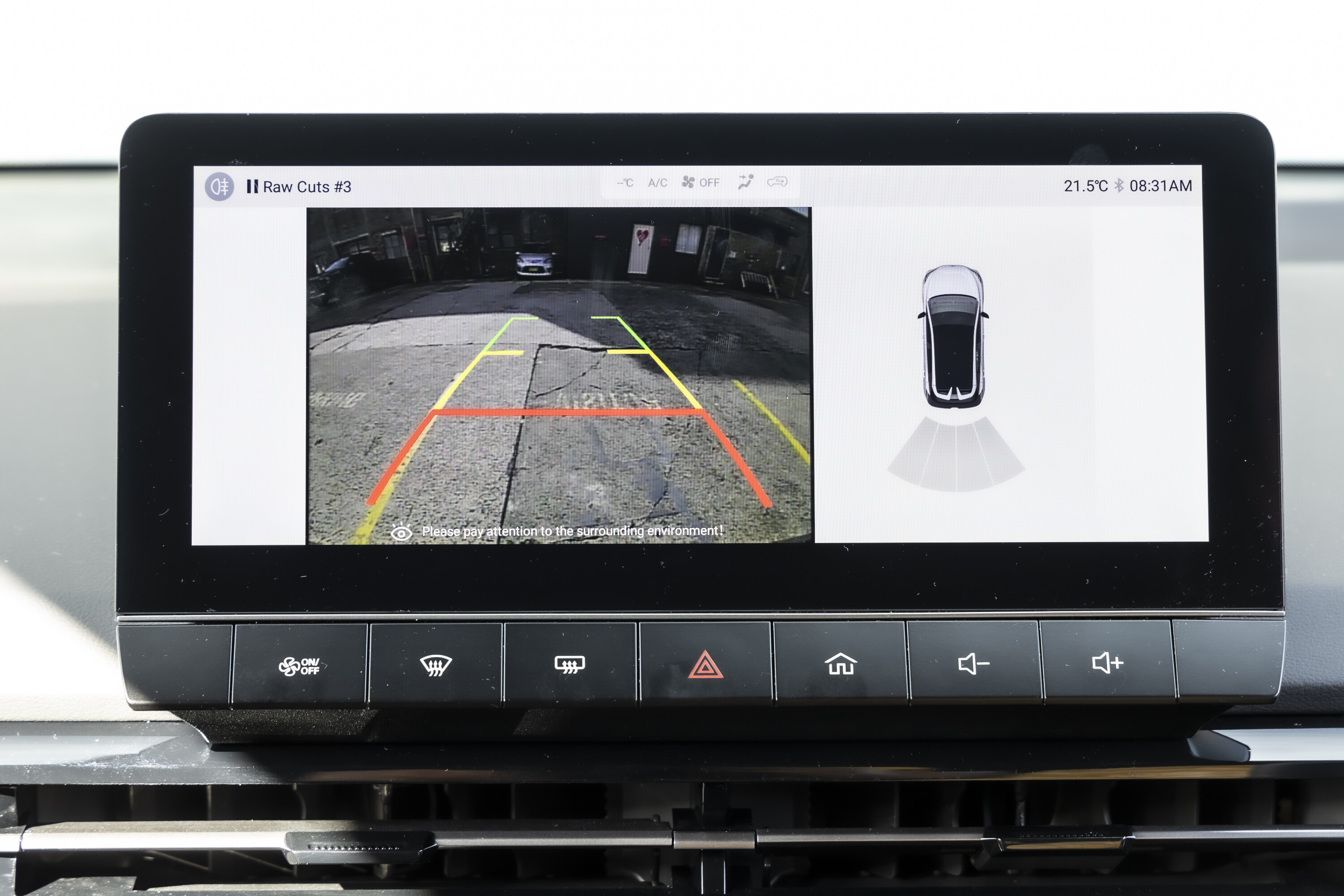
The MG4’s tuning circle is superb though rear visibility is impeded by a tiny rear window and comedically large headrests with only a low-resolution reverse camera that pales in comparison to the BYD’s spectacular interactive 3D system.
MG doesn’t equip the Excite with blind-spot monitoring or rear cross-traffic alert, either, and the driver-aid tuning leaves something to be desired.
Where the Dolphin cajoles the driver back into the lane with more subtle inputs, the MG4’s lane-keep assist is snatchier. Both car’s front collision warning and speed limit assist with their associated beeps were also intrusive during testing.
1
Both vehicles have adaptive cruise control systems that interface with lane-tracing for semi-autonomous driving in motorway and highway situations.
They are okay at best and still require driver attention when operating. The MG 4 was awarded five ANCAP stars in August, while the Dolphin scored its rating in October – both under 2022 protocols.
If you’re looking for a sharp-value electric runabout for the city that’s stacked with technology, good looks, and gimmicks to entertain your friends, the quirky Dolphin delivers.
1
But electric cars have gone past the early-adopter era of Mitsubishi i-Mievs and BMW i3s. Where the Dolphin conforms to EV stereotypes, the MG kicks them back into the ocean where they belong.
The MG4 is a complete vehicle engineered to stand up against tough Japanese, Korean and and European rivals. There are still some gripes, such as the clunky touchscreen and awkward starting procedure (neither of which other companies like Volkswagen are immune to), but crucially its excellence runs far deeper than you’d expected of a bargain basement EV.
Much like Tesla’s Model 3, the MG4 has the potential to define the next decade of family cars – this truly is an electric alternative to a Corolla, i30, or Golf.
If any of the terms in this section have left you scratching your head, these articles will help bring you up to speed!
- What is a Powertrain or Drivetrain?
- Power vs torque
- Car suspension explained
- Automatic transmissions (‘gearboxes’) explained
- Chassis control systems explained
- Car vs Ute vs SUV: How the vehicle you buy should guide the way you drive
- What is the WLTP emissions and range test?
MG4: 8.5/10
Things we like
- Spacious, practical cabin
- Rewarding chassis
- Fast DC charging
- Smooth ride
Not so much…
- Awkward start procedure
- Lifeless steering
- Clunky infotainment system
BYD Dolphin: 7.5/10
Things we like
- Interior presentation
- Powerful and customisable infotainment system
- Very efficient
Not so much…
- Desperately lacking body control
- Tight headroom in the back
- Gimmicky tech
Specifications: MG4 v BYD Dolphin
| MG 4 Excite 64kWh | BYD Dolphin Premium | |
|---|---|---|
| Price | $44,900 | $44,890 |
| Layout | Single-motor RWD | Single-motor FWD |
| System power | 150kW | 150kW |
| System torque | 250Nm | 310Nm |
| Gearbox | single-speed reduction gear | single-speed reduction gear |
| Body | 5-door, 5-seat small car | 5-door, 5-seat small car |
| L/W/H | 4287 / 1836 / 1504mm | 4290 / 1770 / 1570mm |
| WB | 2705mm | 2700mm |
| Track (front/rear) | 1550 / 1550mm | 1530 / 1530mm |
| Weight | 1648kg | 1658kg |
| Boot capacity (VDA)) | 350L | 345L |
| Battery usable (gross) | 62.1kWh (64kWh) | 60.4kWh |
| Driving range | 450km (WLTP) | 427km (WLTP) |
| Charging (AC/0-100%) | 6.6kW / 9h | 11kW / 6h 12m |
| Charging (DC/10-80%) | 140kW / 26m | 88kW / 40m |
| Suspension | Front: Struts, coil springs, anti-roll bars / five-link independent, coil springs, anti-roll bars | Front: Struts, coil springs, anti-roll bars / multi-link, coil springs |
| Steering | electric rack-and-pinion (2.9 L-L) | electric rack-and-pinion (2.8 L-L) |
| ANCAP rating | Five-stars (2022) | Five-stars (2022) |
| 0-100km/h | 7.7sec (claimed) | 7.0sec (claimed) |
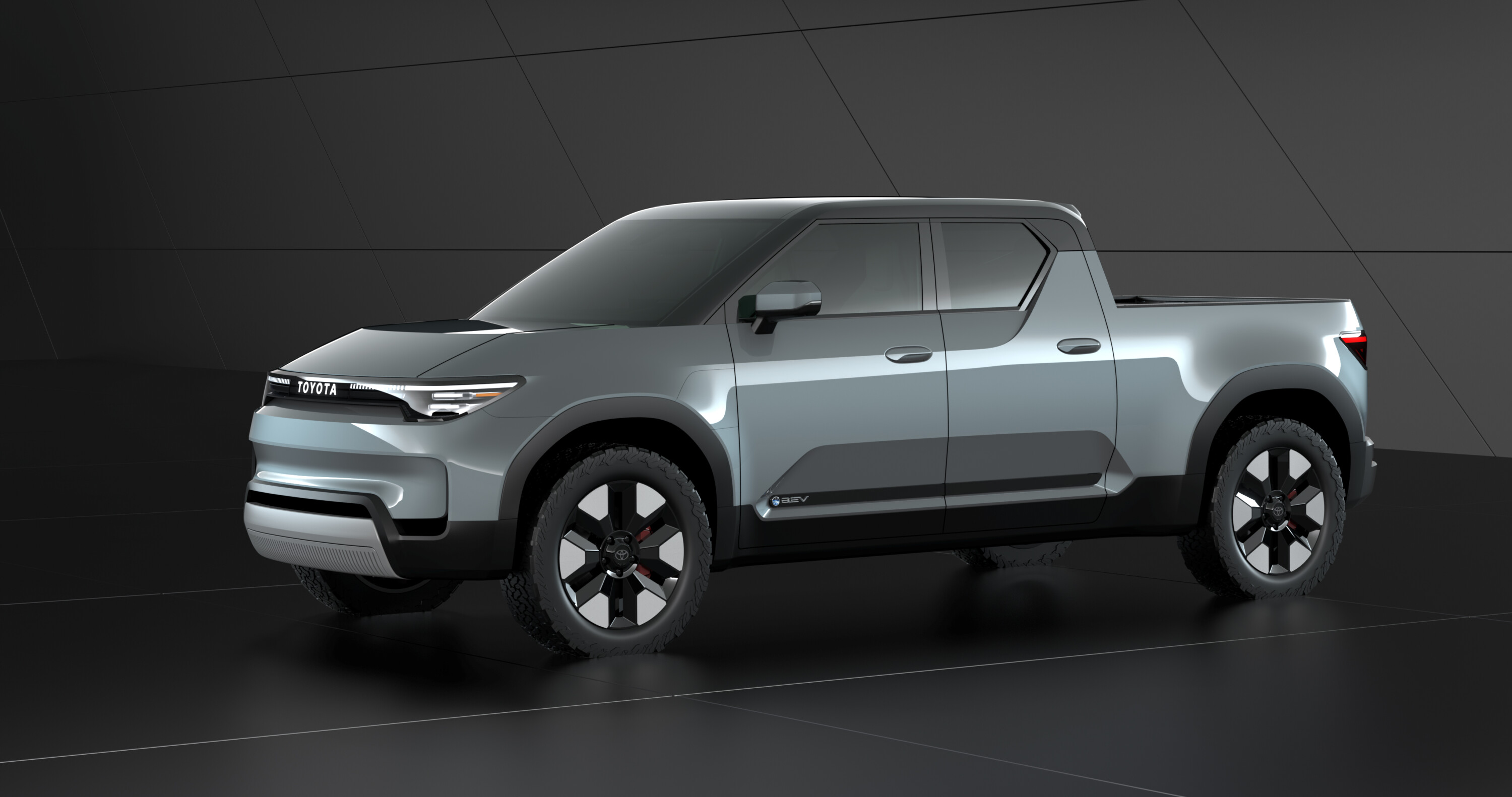
In October, we saw an all-electric Toyota ute unveiled at the Japan Mobility Show – and I’m wondering just how many have spent more than five minutes thinking on what it means for the global car market.
Really, Toyota is late to the EV game in just about all respects. Its BZ4x is yet to go on sale in Australia, and while we’ve found it to be a good car, it’s hardly putting rivals to shame. Even Toyota admits it isn’t the first shot it should’ve been.
The Toyota EPU (Electric Pick-Up?) revealed last month isn’t the modern motoring world’s first electric ute, and it’s very far from being the first small monocoque ute in today’s market (see Santa Cruz and Maverick). More importantly, it isn’t even confirmed for production.
8
What it is, though, is a critical signal to the market that it needs to get ready for Toyota’s electric onslaught.
The world’s biggest carmaker has dragged its heels on EVs, mumbling all sorts of excuses – but when it really fires, buyers will remember what the Toyota brand represents.
Whether the compact EPU will go into production is still unclear, but we do know an electric HiLux is on the cards – in a proper full-series form, not just the largely experimental ‘HiLux Revo’ that surfaced in 2022.
How would an electric HiLux look?
Without properly knowing how the next HiLux will look, we can only speculate on the electric version’s styling.
Will it be based on the same ladder-chassis of the 2025 HiLux, or will it go ‘full skateboard’ to properly utilise the structure for battery placement?
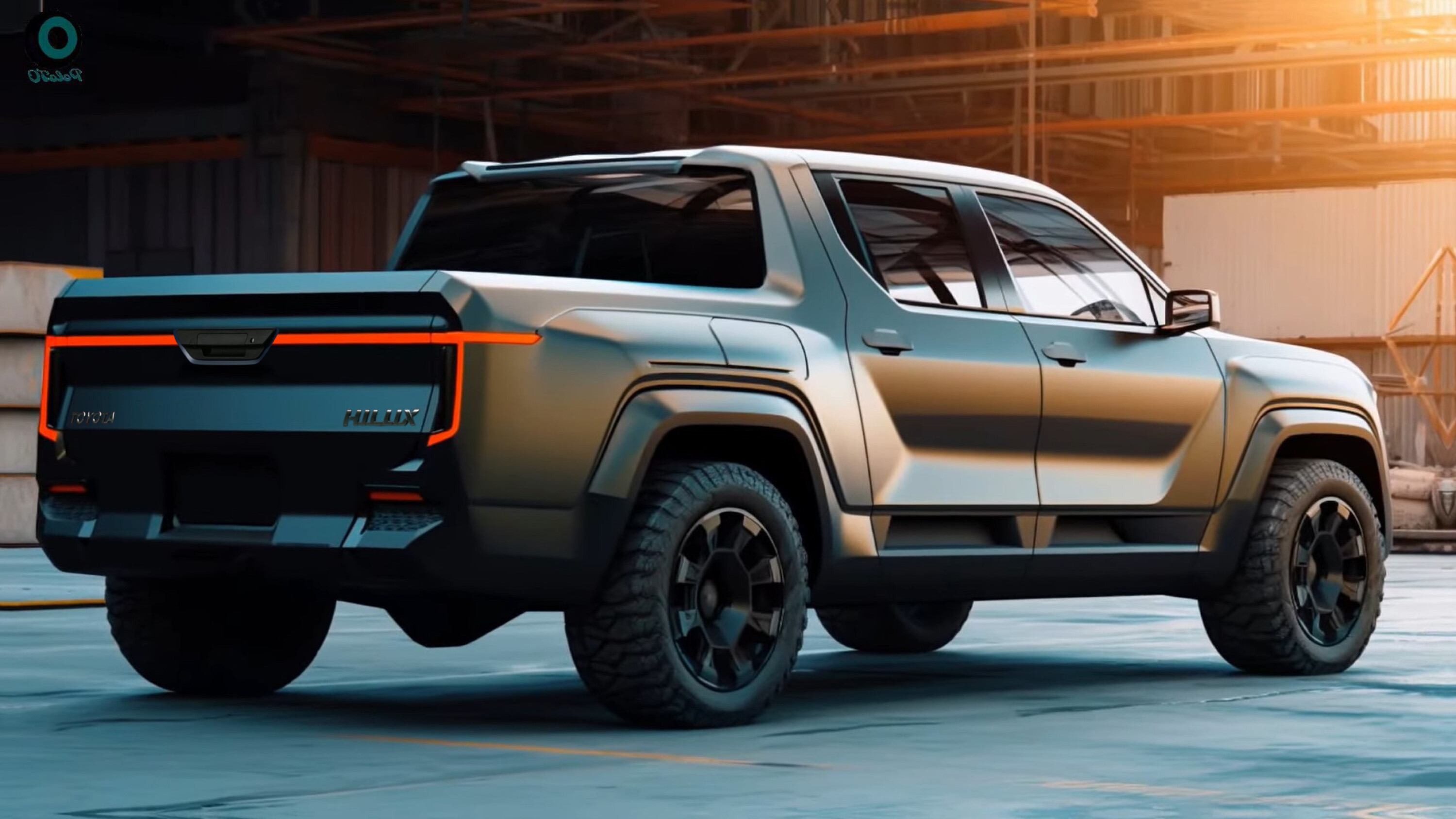
1
We’ve previously imagined the new HiLux with 2024 Tacoma-inspired looks, but these latest renders by YouTube channel PoloTo looks to AI tools like Midjourney and Dall-E to imagine an even tougher look – in some cases with a monocoque body, and in others with a separate cab-and-tub design.
What do you think of this look? Would it drive you towards an electric HiLux, or do you have some specific criteria it’d need to meet first?
MORE
Everything Toyota
The second-generation 2024 Mercedes-Benz has arrived in Australia, with AMG variants to follow soon.
Snapshot
- 2024 Mercedes-Benz GLC: Everything you need to know
- Next-gen luxury SUV available with one powertrainu2026 for now
- Priced from $104,900 plus on-road costs
- AMG variants confirmed for Q2 2024
UPDATE: Mercedes-Benz GLC Coupe priced, and GLC 300 wagon driven
Mercedes-Benz Australia has confirmed pricing and features details for the GLC Coupe, which is due in local showrooms imminently.
We’ve also driven the new-gen GLC 300 petrol on local shores! Hit the link below to read Alex Inwood’s thoughts on Benz’s new mid-sizer.
This story, first published in April, has been updated to reflect the latest information.
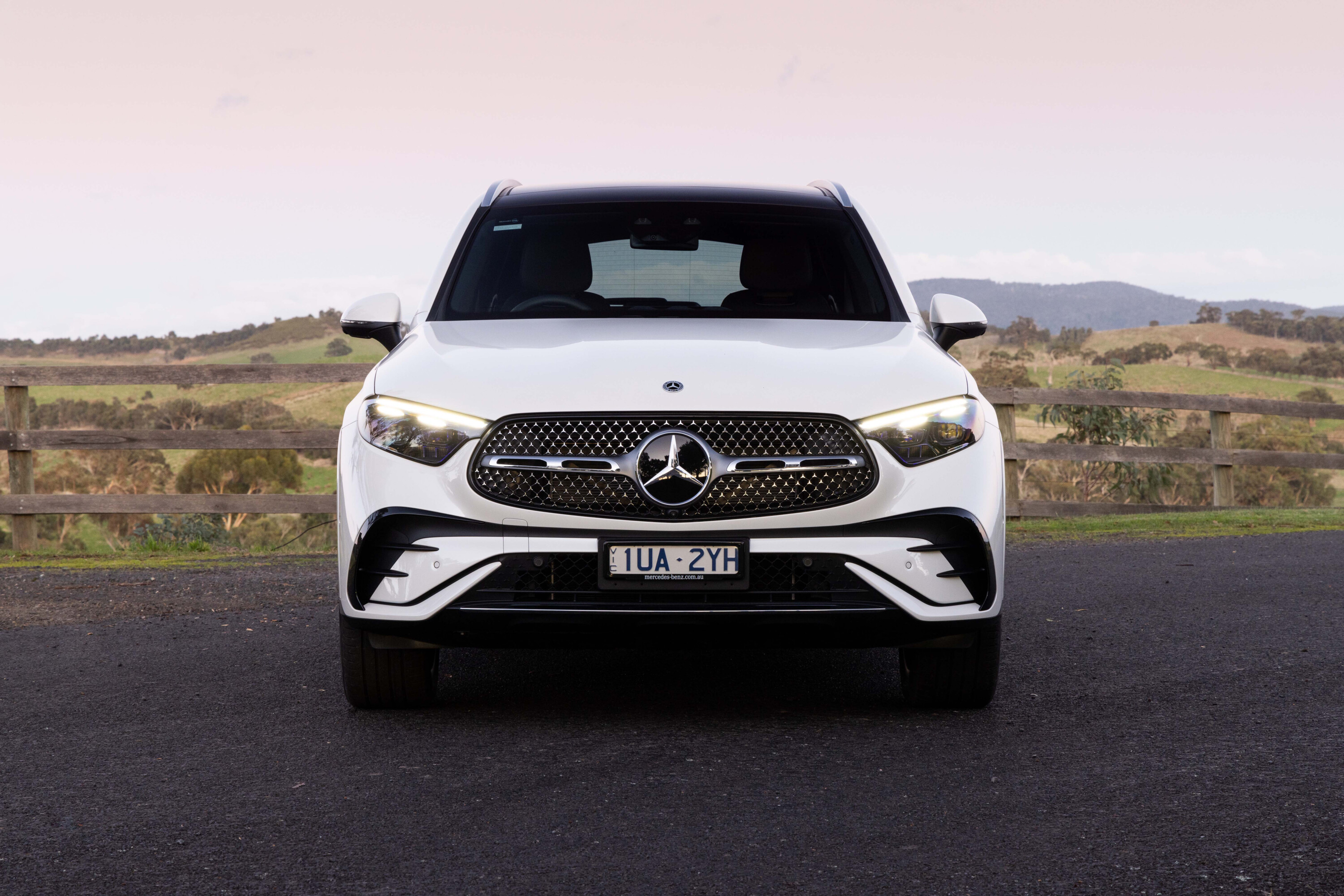
Mercedes-Benz GLC priced for Australia
At launch, it is available in GLC 300 form, with the entry-level GLC 200 and plug-in hybrid GLC 300e axed from the local line-up.
Mercedes-Benz Australia said AMG GLC 43 and GLC 63 S E Performance models will follow in the second half of 2024.
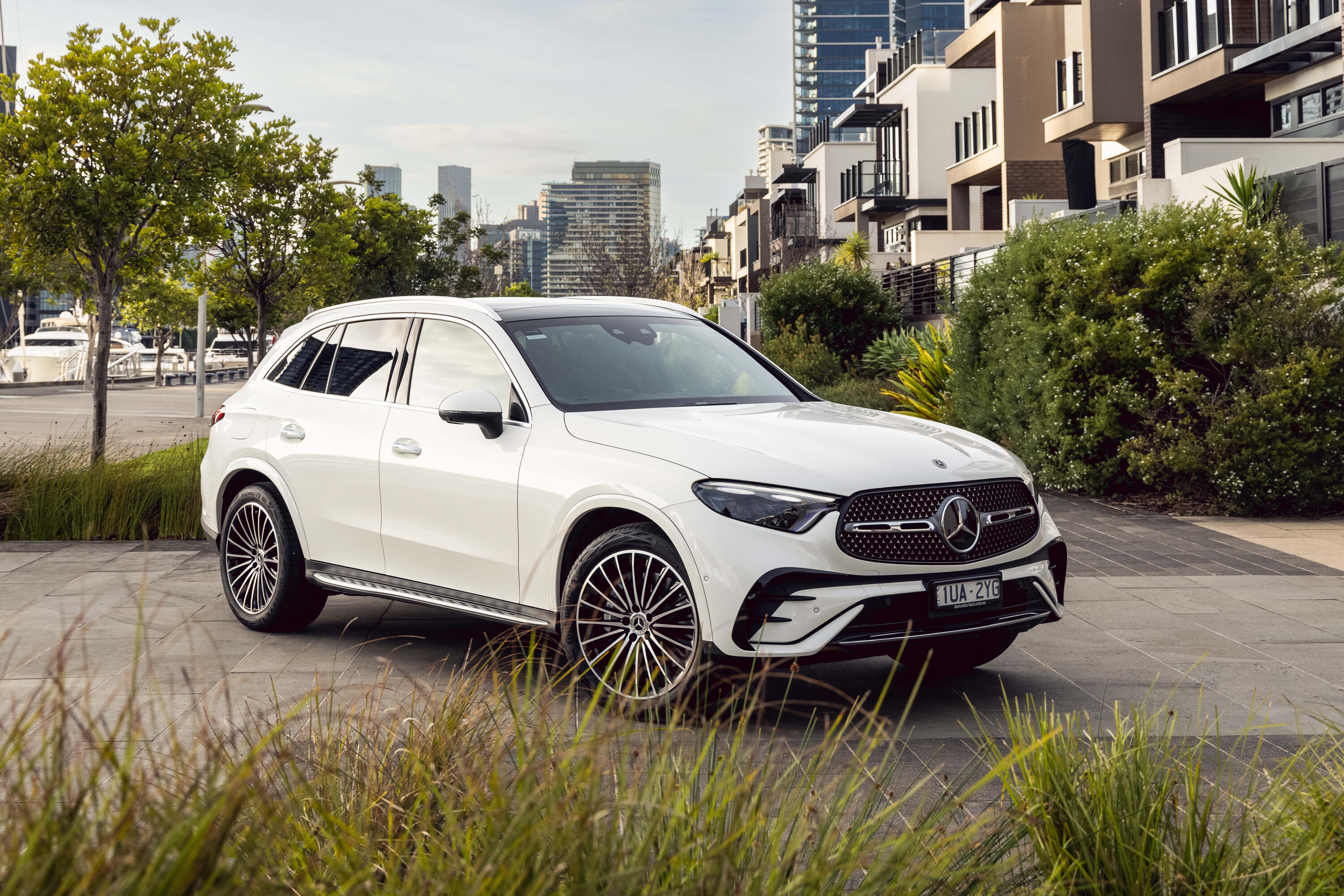
1
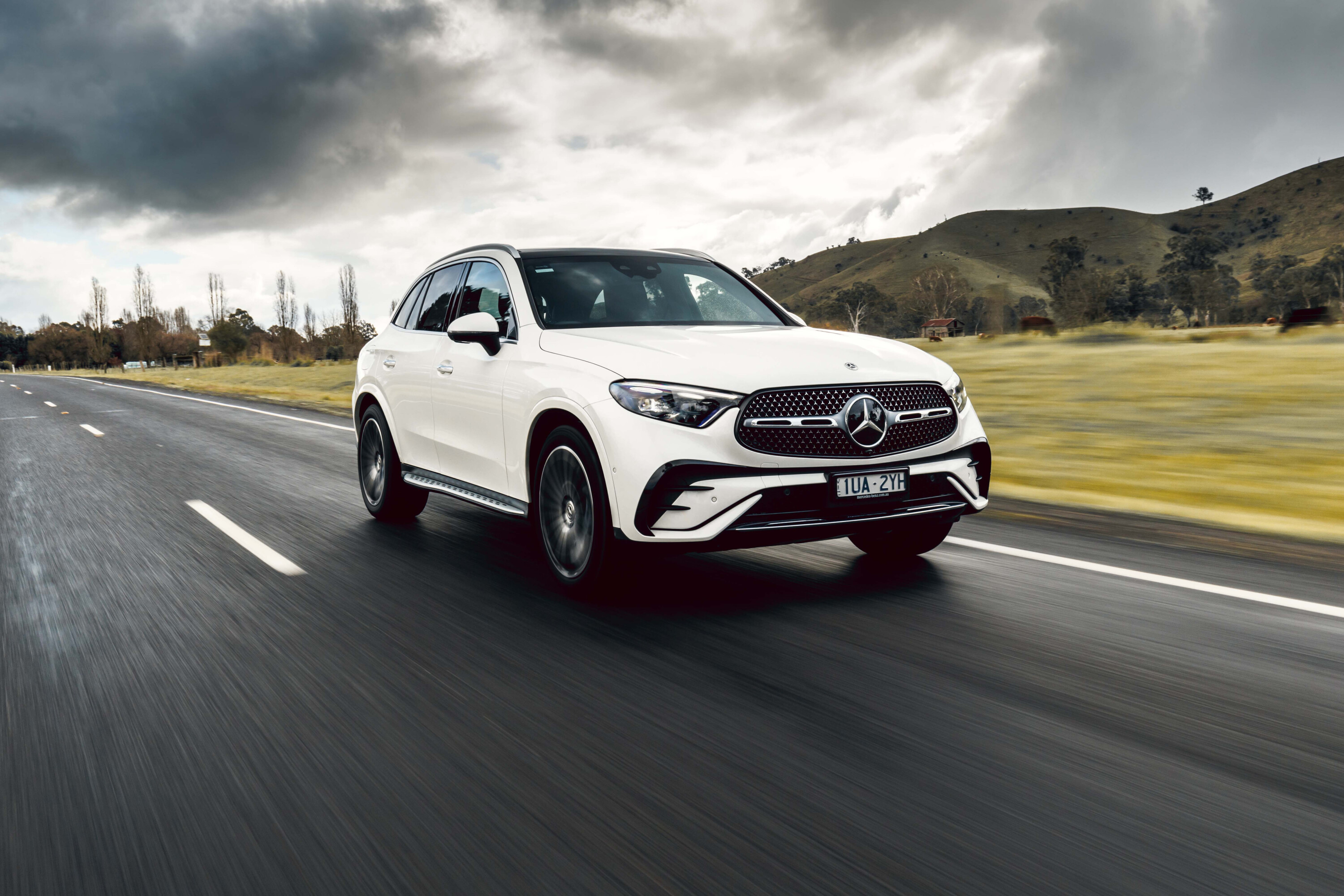
The new-generation GLC 300 is priced from $104,900 before on-road costs, representing a $12,600 jump over the previous GLC 300 – and a $24,100 rise compared to the preceding GLC 200 base model.
Meanwhile, the GLC Coupe is priced from $113,900 before on-road costs – up $10,430 over the previous GLC 300 Coupe.
However, as with the related C-Class sedan, both variants feature a stronger mix of standard equipment than the previous model, with new inclusions previously limited to option packages.
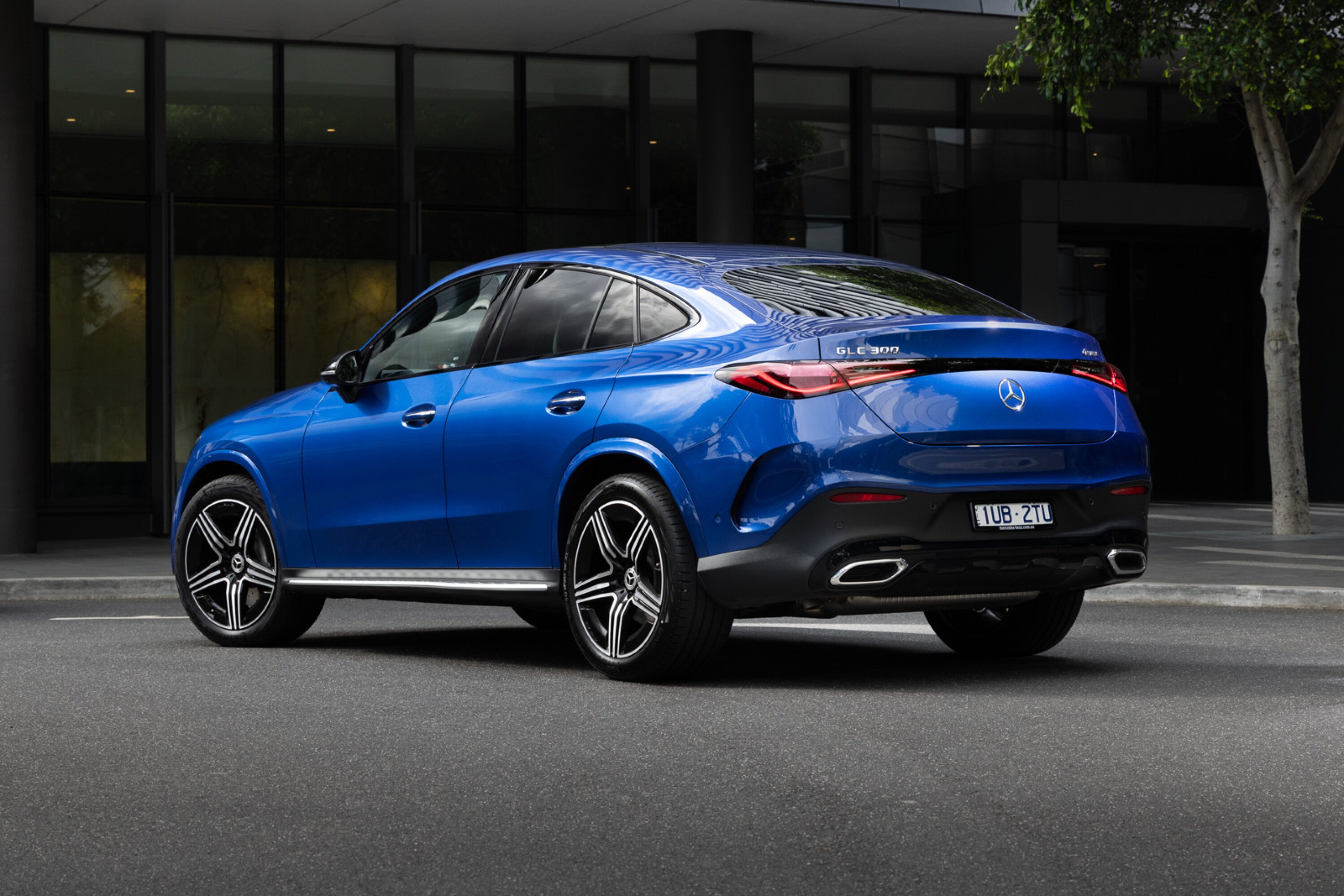
1
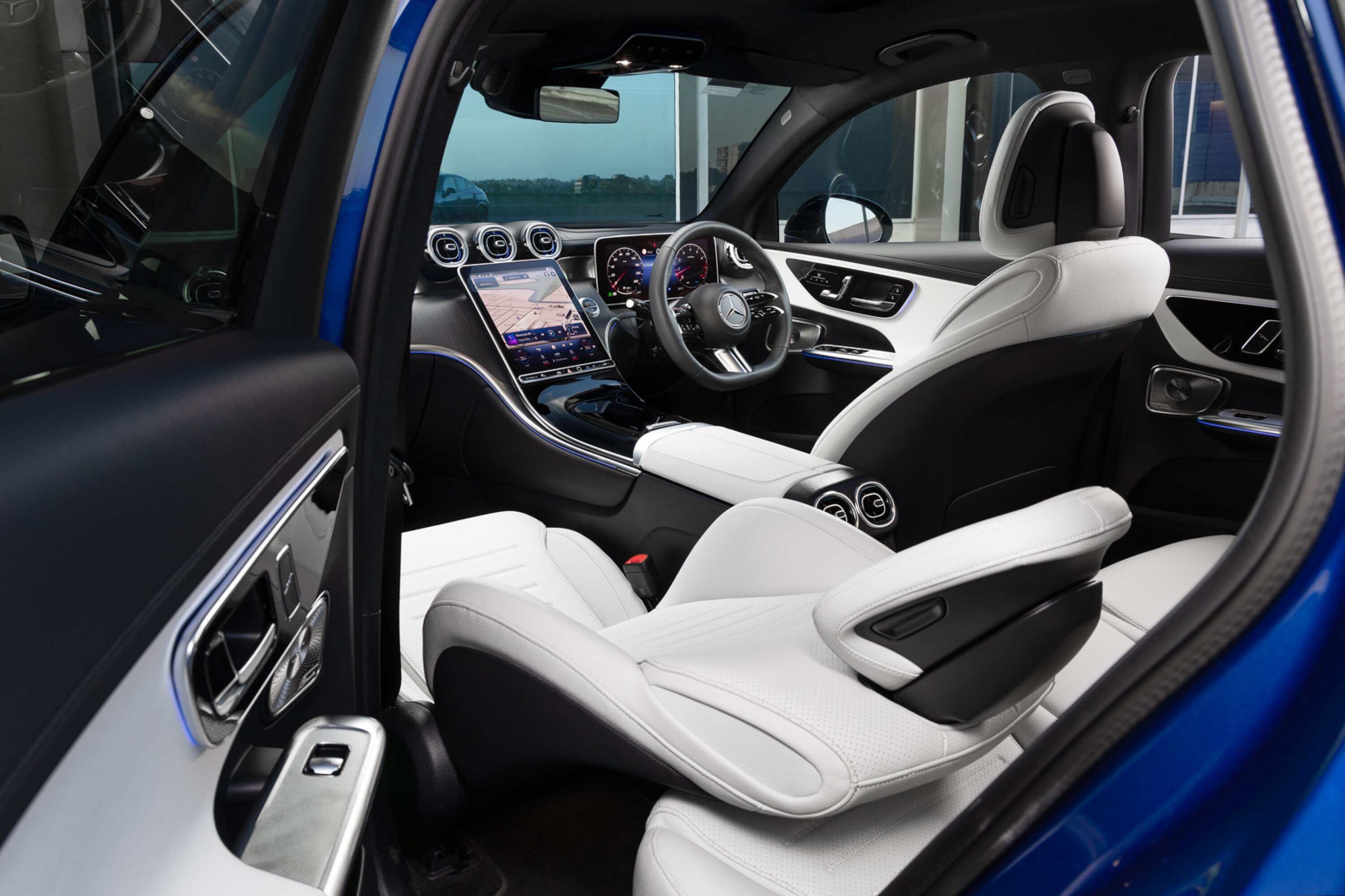
This includes a panoramic sunroof, a head-up display, heated and power-adjustable front seats, and the AMG Line styling package.
Code-named X254 and C254, the second-generation Mercedes-Benz GLC is built on the latest MRA2 vehicle architecture that underpins the C-Class, E-Class and S-Class sedans.
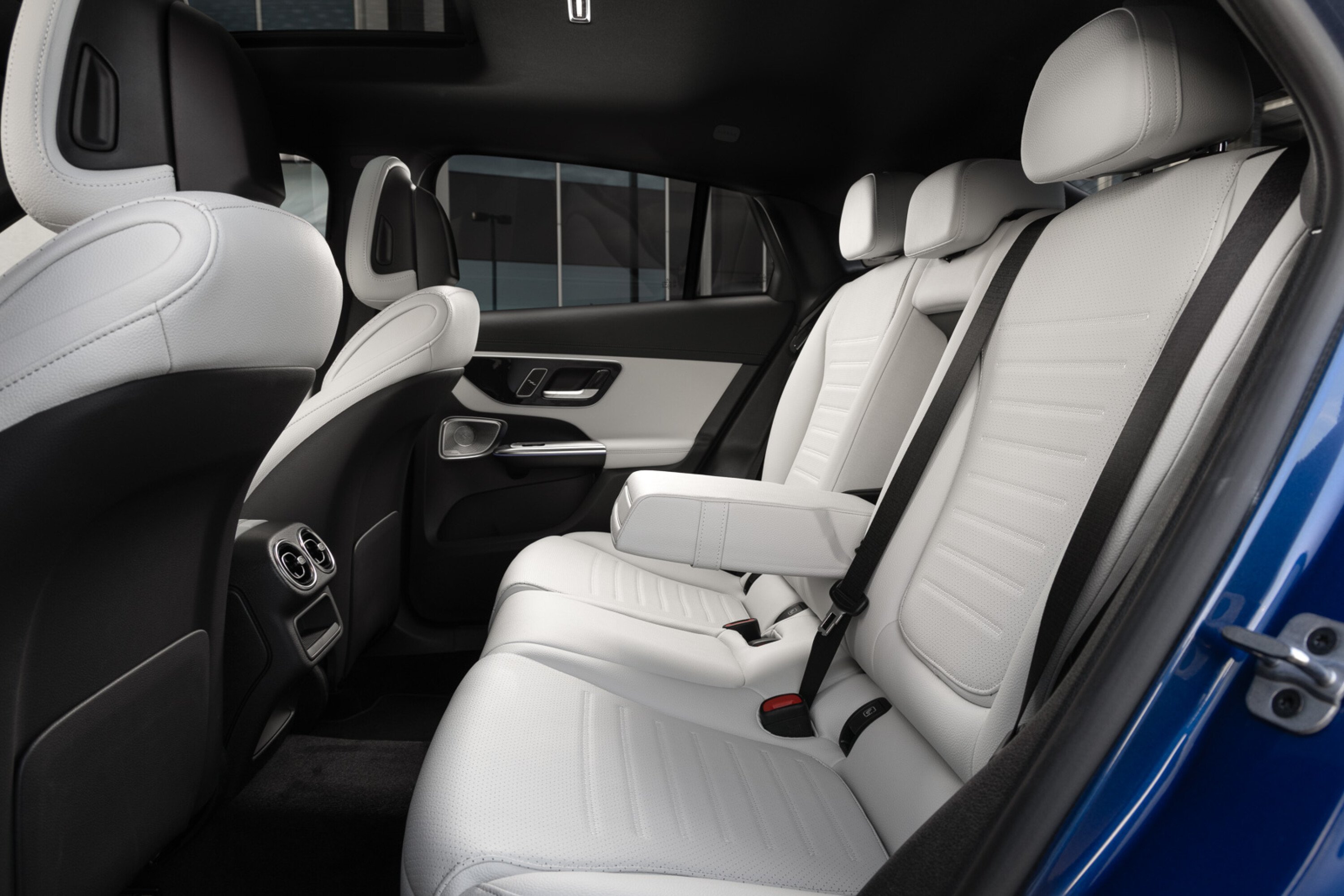
While it appears to be a low-risk makeover of the current model from the outside, the cabin has been overhauled in line with the C-Class, with a portrait-orientated 11.9-inch MBUX infotainment system and a freestanding digital instrument cluster.
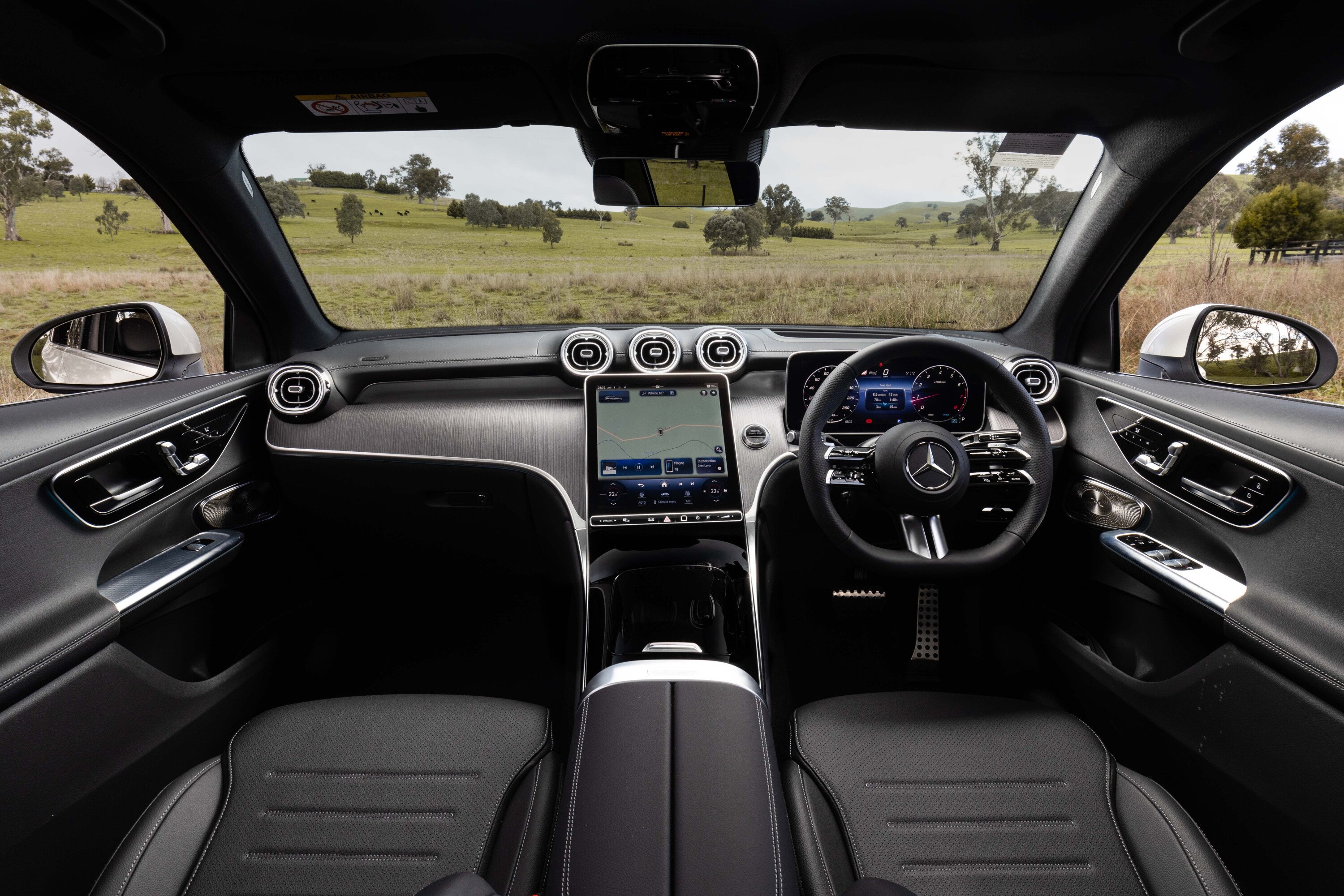
1
JUMP AHEAD
- 2024 Mercedes-Benz GLC pricing
- 2024 Mercedes-Benz GLC features
- 2024 Mercedes-Benz GLC option packages
- Engine, drivetrain, and fuel economy
- Safety
- Dimensions
- Warranty and servicing
2024 Mercedes-Benz GLC pricing
Price excludes on-road costs.
1
2024 Mercedes-Benz GLC features
2024 Mercedes-Benz GLC 300 features
| AMG Line exterior package (new) | Electric tailgate |
| 11.9-inch MBUX infotainment system (new) | Nine-speaker, 225-watt audio system |
| Wireless Apple CarPlay and Android Auto (new) | Wireless phone charger |
| Panoramic sunroof (new) | DAB+ digital radio |
| Head-up display (new) | Leather-accented upholstery |
| 360-degree camera system with u2018transparent bonnetu2019 (new) | Keyless entry and push-button start |
| Heated front seats (new) | Heated, power-folding side mirrors |
| Front seat electric adjustment with memory (new) | LED headlights, tail-lights and daytime running lamps |
| 20-inch AMG alloy wheels | Adaptive suspension |
| 12.3-inch digital instrument cluster | Rear privacy glass |
2024 Mercedes-Benz GLC 300 Coupe features
1
Option packages
Plus Package – $6900
| 15-speaker, 710-watt Burmester 3D surround-sound audio system | Heat and noise-insulating glass |
| Digital Light | Driver Assistance Package |
| Adaptive high-beam | Augmented reality satellite navigation |
| Remote theft protection system |
1
Engine, drivetrain, and fuel economy
The 2024 Mercedes-Benz GLC 300 is powered by a 2.0-litre turbocharged four-cylinder petrol engine, with 48-volt mild-hybrid assistance. It produces 190kW and 400Nm – up 30Nm over the previous GLC 300.
Power is sent to all four wheels via a nine-speed torque-converter automatic. A 0-100km/h sprint time of 6.2 seconds is claimed.
Mercedes-Benz claims the 48-volt mild-hybrid system saves fuel, with an estimated combined fuel consumption of 7.7L/100km – down from 8.2L/100km. It supports ‘gliding’, ‘boost’ and ‘recuperation’ functions, and can provide a 17kW and 200Nm boost.
| 2024 Mercedes-Benz GLC fuel economy | ||
|---|---|---|
| GLC 300 | 7.7L/100km | 175g/km |
1
Safety
The 2024 Mercedes-Benz GLC is covered by a five-star ANCAP safety rating, based on testing conducted in 2022.
It scored 92 per cent for adult occupant protection, 92 per cent for child occupant protection, 74 per cent for vulnerable road user protection, and 84 per cent for safety assistance.
As with the related C-Class, the new GLC features a front-centre airbag.
| 2024 Mercedes-Benz GLC active safety features | |
|---|---|
| Autonomous emergency braking (vehicle, pedestrian, cyclist, reverse) | Rear cross-traffic alert |
| Lane-keep assist | Traffic sign recognition |
| Lane departure warning | Driver attention monitoring |
| Blind-spot alert | Adaptive cruise control |
1
Dimensions
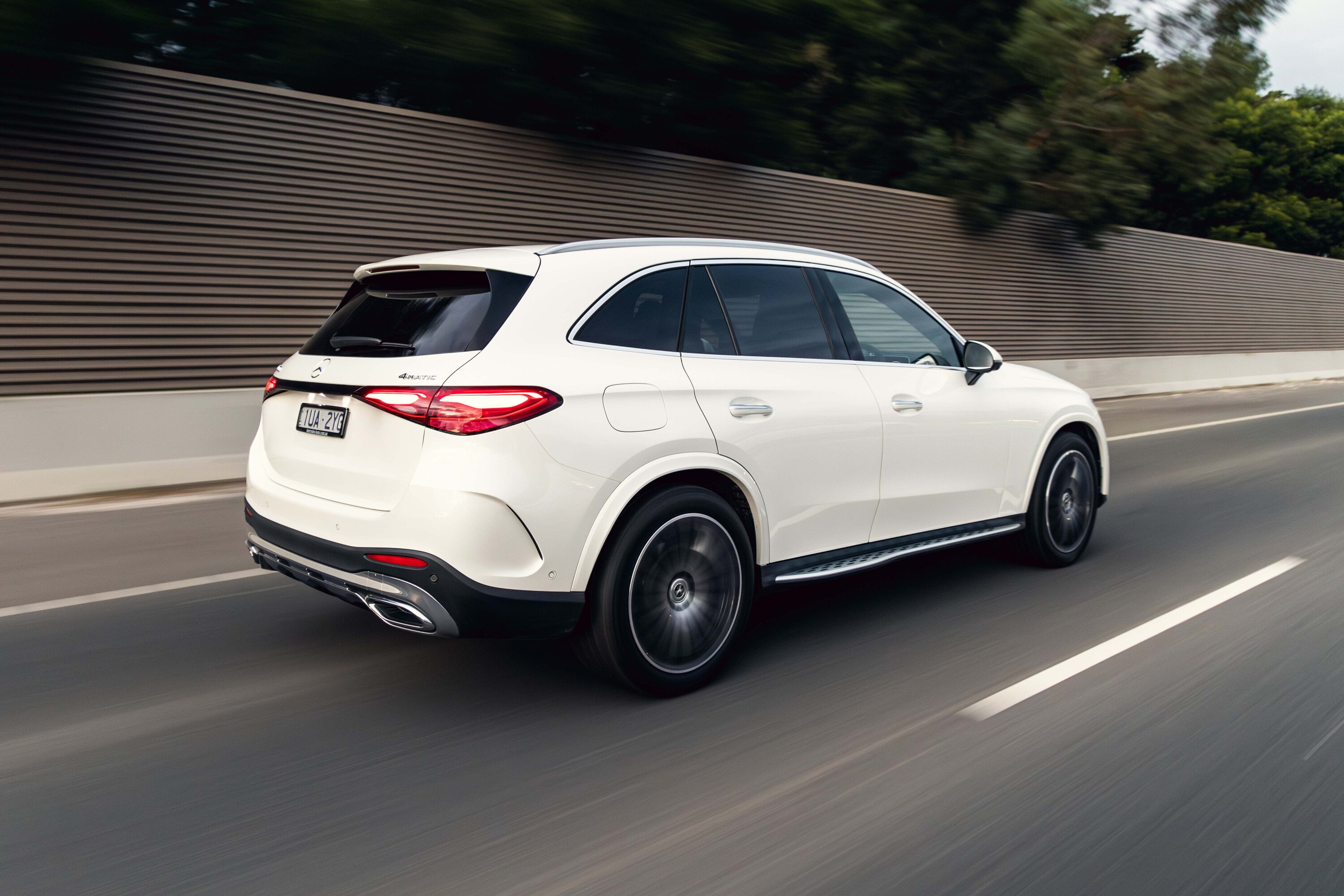
The new Mercedes-Benz GLC measures 4716 mm long, 1890mm wide and 1640mm tall, with a 2888mm wheelbase.
The GLC Coupe is 47mm longer than the wagon at 4763 millimetres and 31mm more than the previous GLC Coupe.
2024 Mercedes-Benz GLC boot space
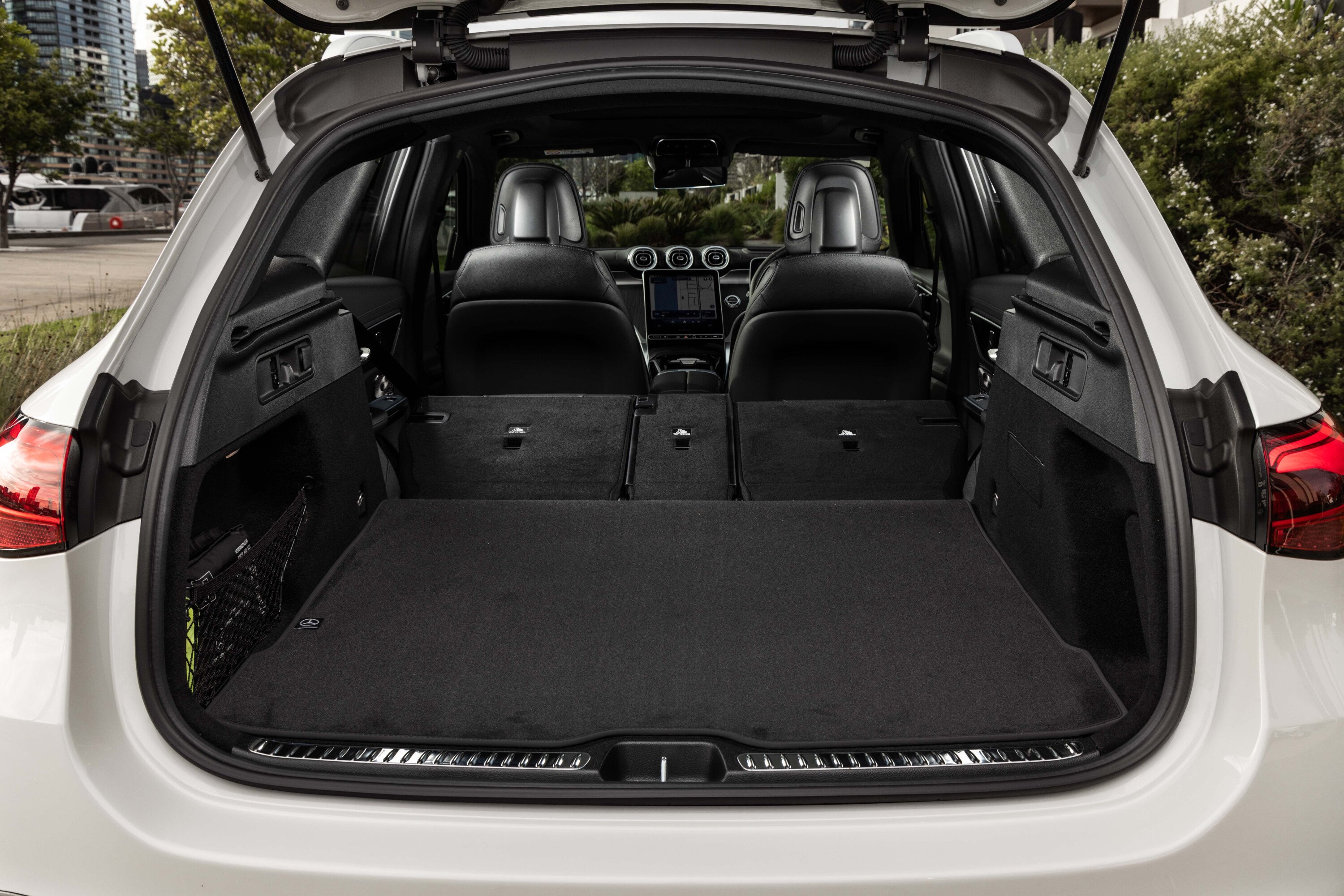
With all seats in place, luggage capacity has increased by 50 litres over the previous GLC to 620 litres. The second row can be controlled remotely from the boot, with a 40:20:40 split.
The GLC Coupe has 545 litres of luggage space, expanding to 1490L with the rear seats folded
1
Warranty and servicing
As per the wider Mercedes-Benz range, the GLC is covered by the brand’s five-year/unlimited-kilometre warranty.
A complimentary roadside assistance program during the vehicle’s warranty period. The program can be extended for $149.60 per year.
Service pricing can be pre-purchased, consisting of three-, four- or five-year packages with 12-month/25,000km intervals.
Mercedes-Benz has yet to announce pricing for the new GLC; however, service pricing for the previous model can be found below:
| Three-year | Four-year | Five-year |
|---|---|---|
| $2850 | $3850 | $5800 |
There’s a moment with the new BMW 520i where you wonder if everything is OK.
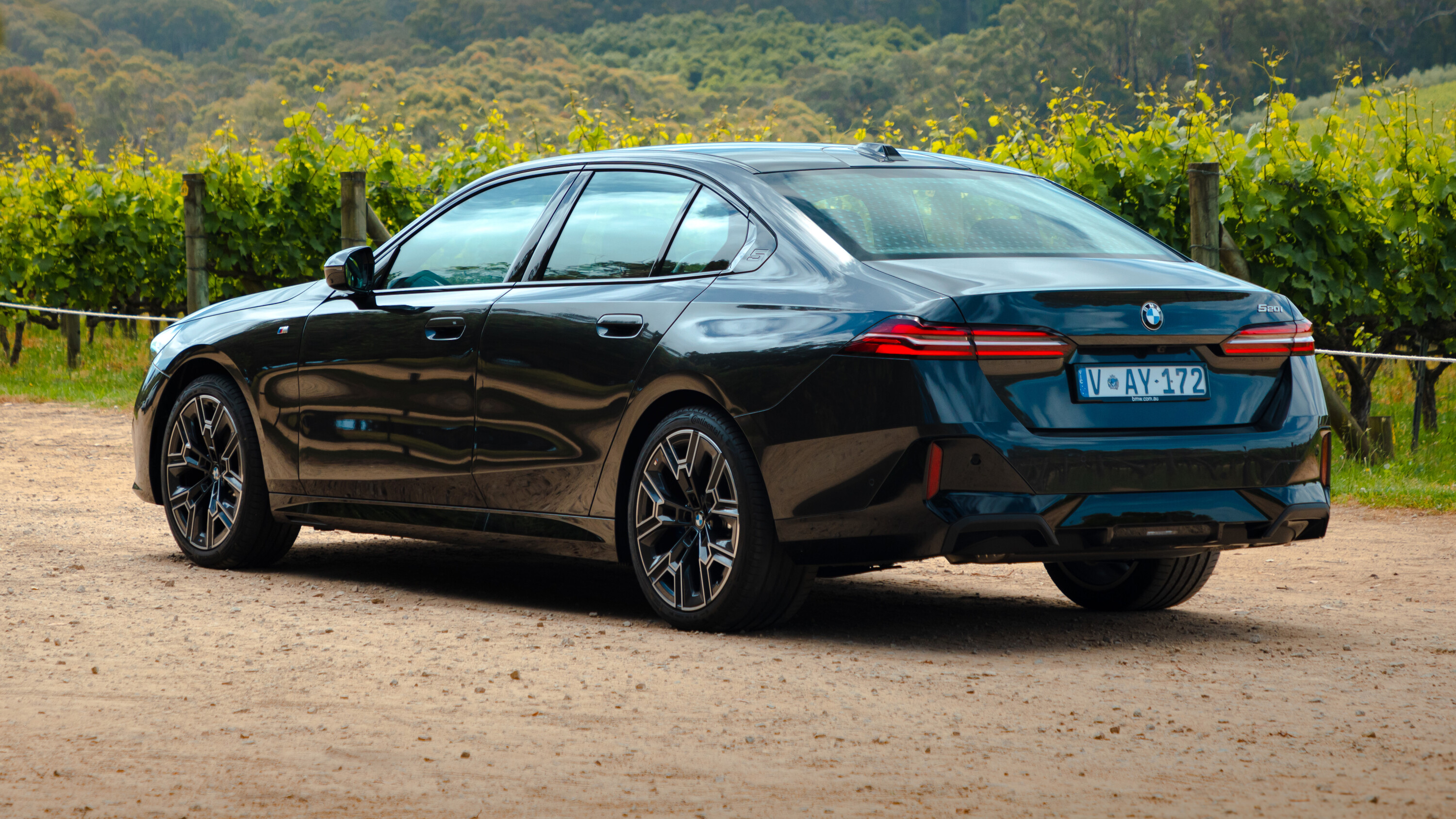
You’ll have clocked the $114,900 price tag and looked at the modest 153kW power output from its four cylinder engine and doubts will begin to creep into your mind. Then you open the door, drop into the driver’s seat and you relax. You can see where your money has been spent.
Is that likely to be enough to sell the BMW 520i to its target market? It radiates an aura of quality, a warm and fuzzy feeling that BMW has spent more time and has thought harder in developing this car than is in any way reasonable.
1
Friends and family who get into the 5 Series will not question your buying decision. It takes about two seconds to understand.
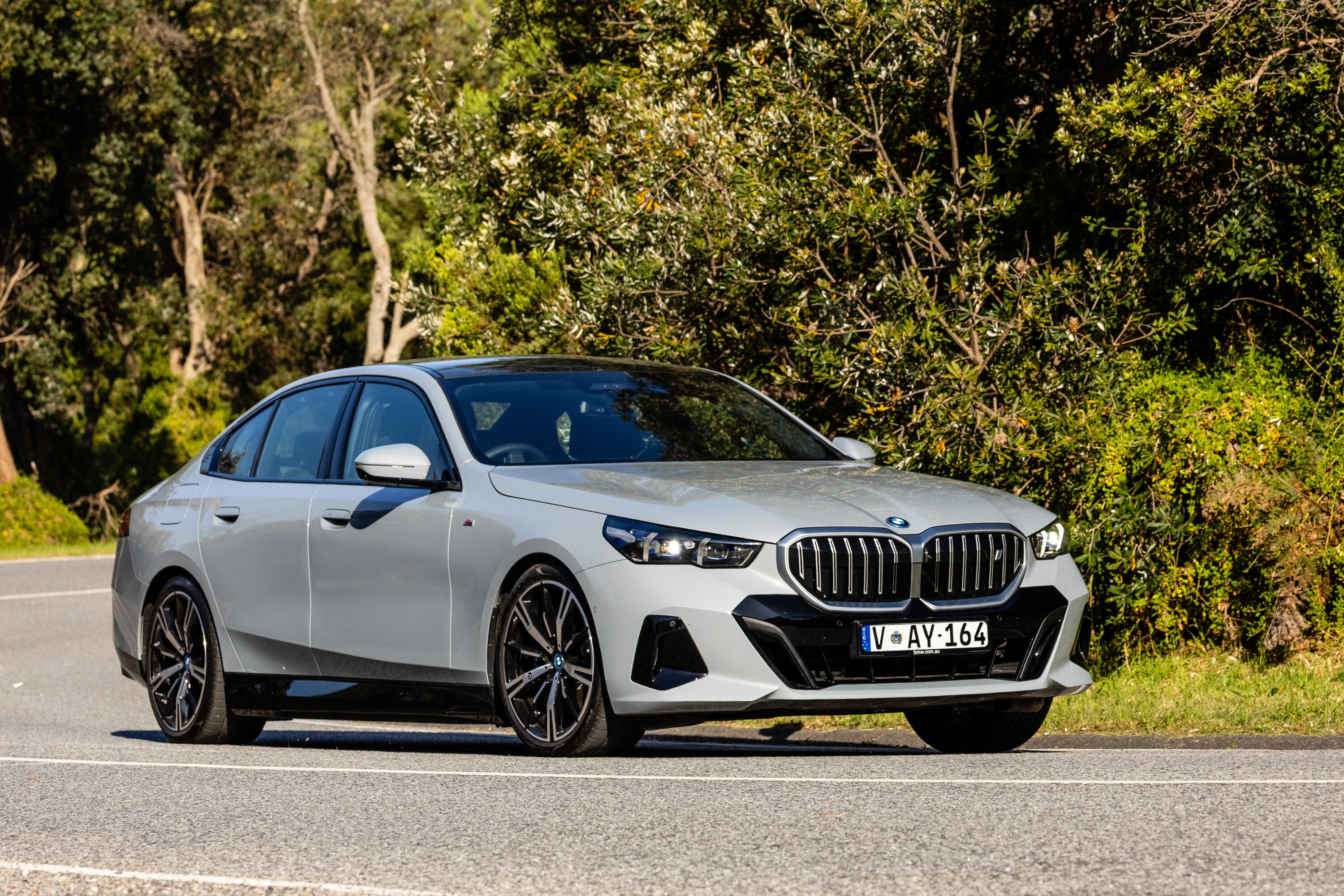
The latest G60 generation, the eighth version of BMW’s executive sedan, has slipped into Australia largely without fanfare. Some of that could well be due to the fact that its styling seems a fairly logical evolutionary shuffle on from its predecessor, the quietly handsome G30, which was sold from 2017.
The outgoing car was nevertheless the best selling car in a low-volume class, so should we expect the latest 520i to come strong out of the gate? Let’s just say that there may be a couple of bumps in that particular road.
1
JUMP AHEAD
- How much is it and what do you get?
- How do rivals compare on value?
- What’s the BMW 520i like inside?
- What is it like to drive?
- How is it on fuel?
- How safe is it?
- How long is the warranty and what are the running costs like?
- Would you recommend it?
- Specifications
How much is it and what do you get?
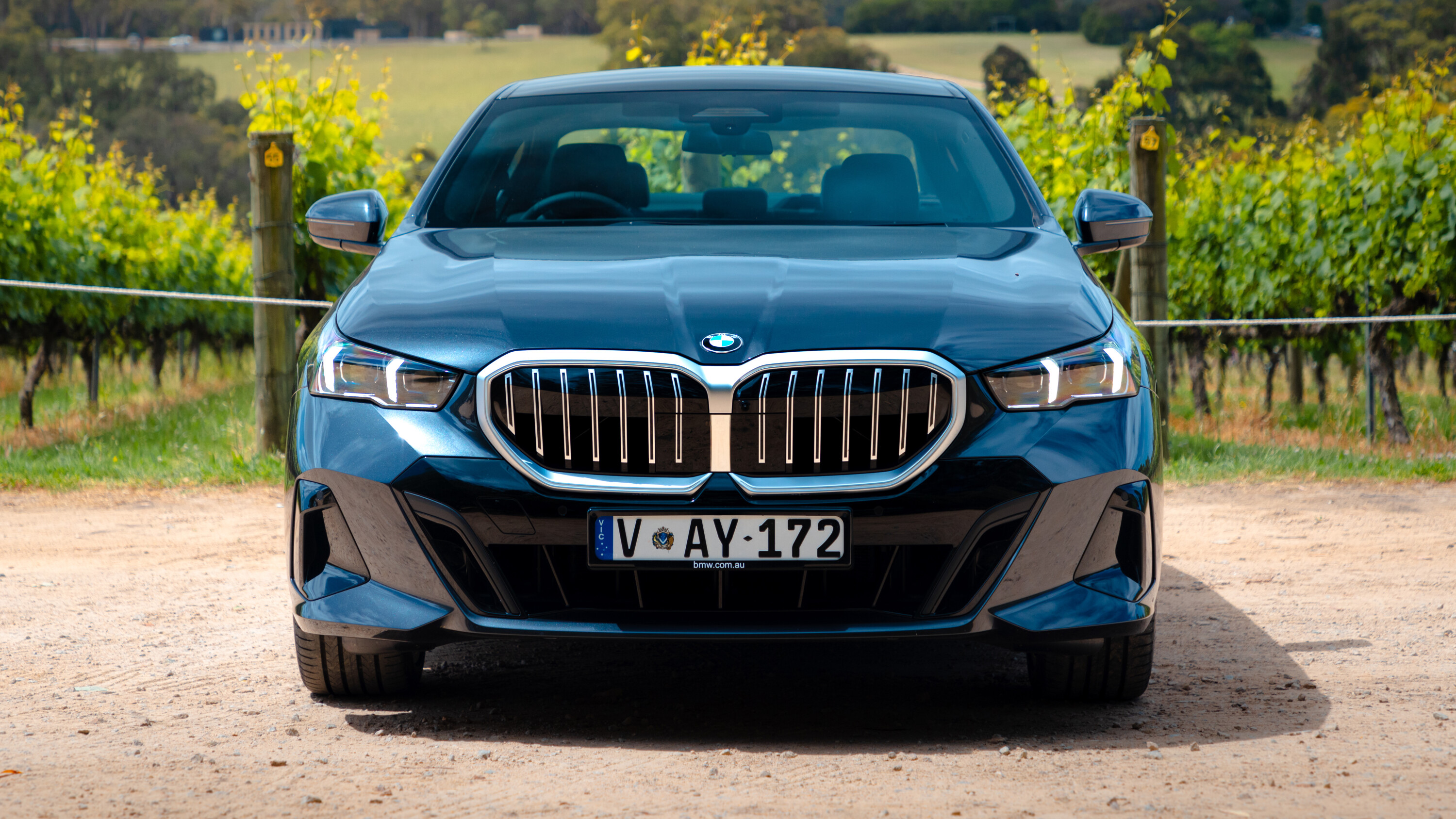
Admittedly, that $114,900 asking price is a bit of a shocker., this being the first generation of 5 Series that opens above six figures here in Australia.
What’s more, it’s overwhelmingly likely that virtually every buyer will also tick the box marked Enhancement Package, which adds another $5400 to the asking price.
1
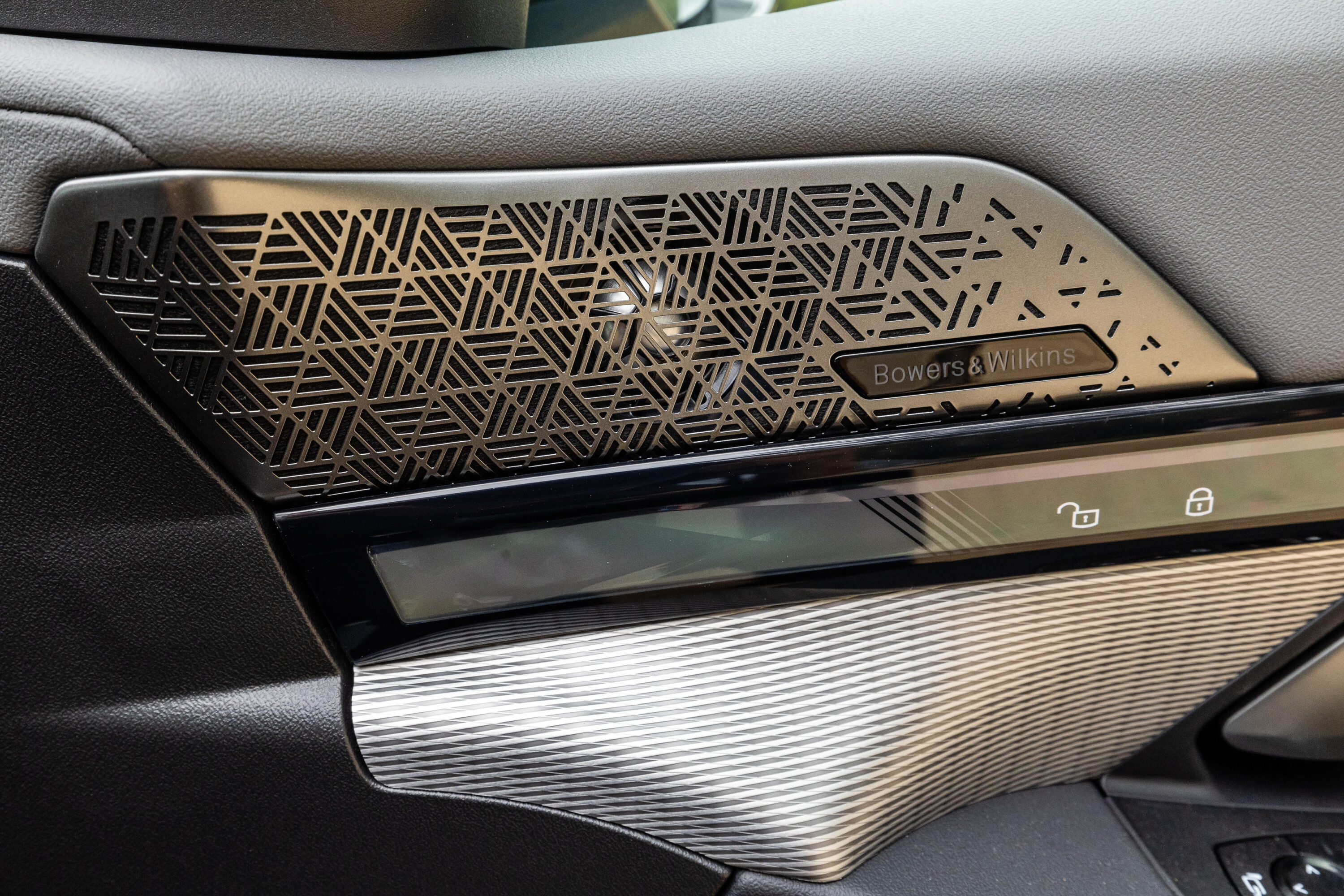
This adds 21-inch BMW Individual aero wheels in lieu of the standard 20s, metallic paint and a 655-watt Bowers and Wilkins surround sound audio system which includes no fewer than 17 speakers.
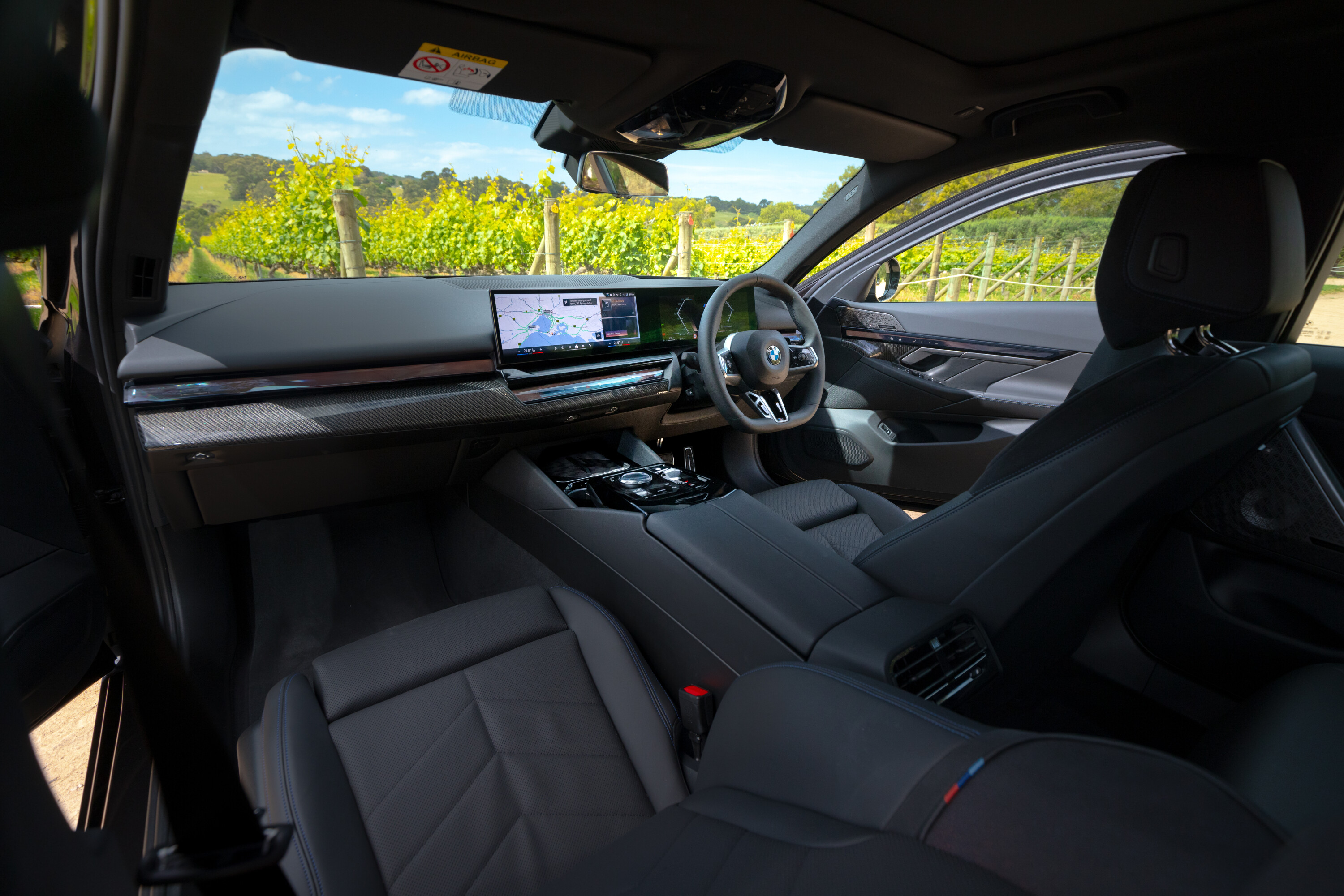
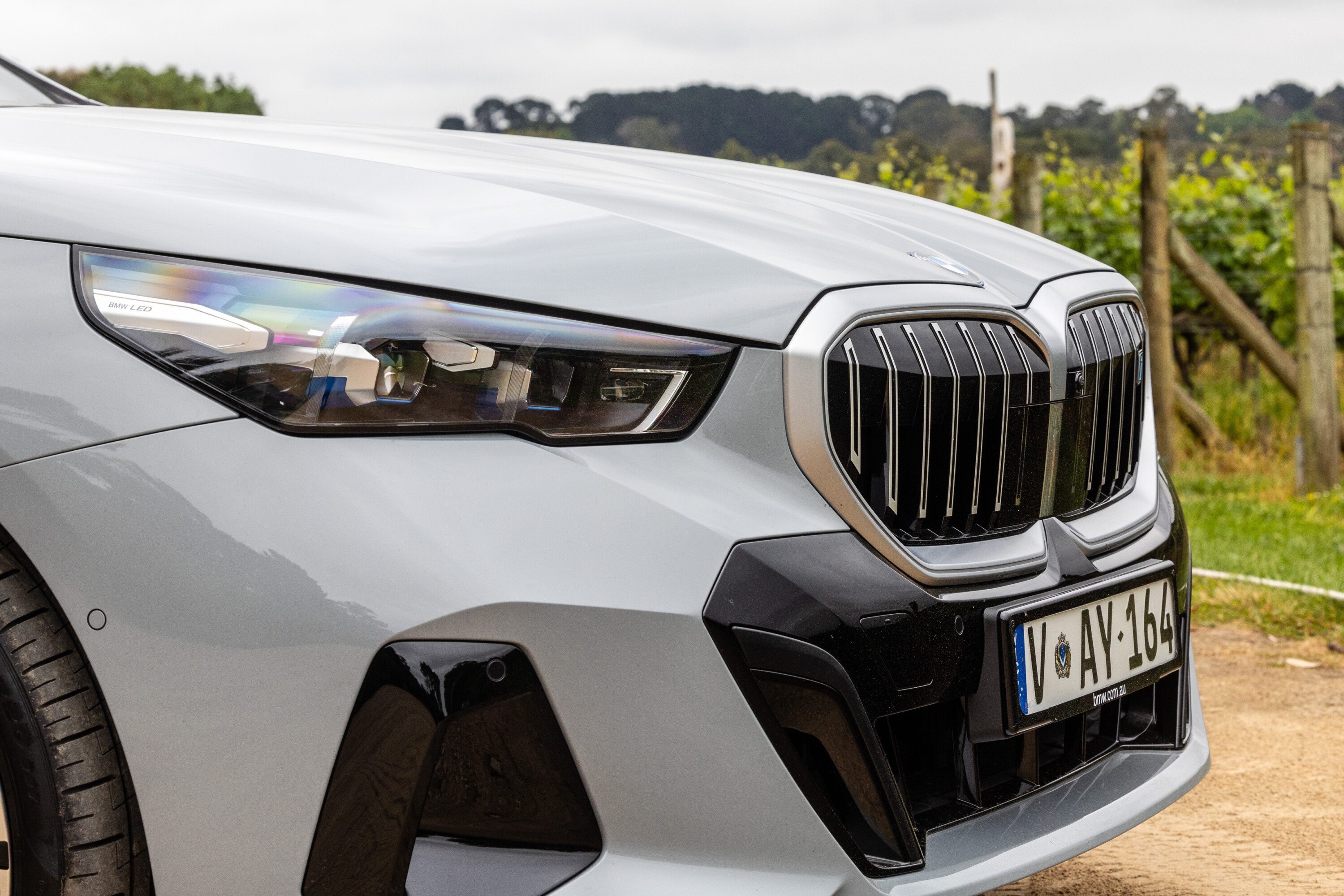
The 520i is already very strongly equipped, with features such as adaptive LED matrix headlights, BMW Connected Drive services, M body styling parts, a panoramic glass roof, a 14.9-inch curved centre touchscreen, heated and memory-function front sports seats, the ‘Iconic Glow’ illuminated grille surround (your mileage may vary on that one), a whole stack of driver assist systems and even remote control parking via an app. You get a lot of gear.
What you don’t get is a lot of engine and, for some, that may be this car’s Achilles heel.
1
How do rivals compare on value?
Perhaps we should qualify that statement about the 1998cc four-cylinder turbocharged engine.
At 153kW and 330Nm it’s got a little more about it than the ICE powerplants that reside under the bonnets of entry-level versions of the Audi A6 and the Mercedes-Benz E-Class.
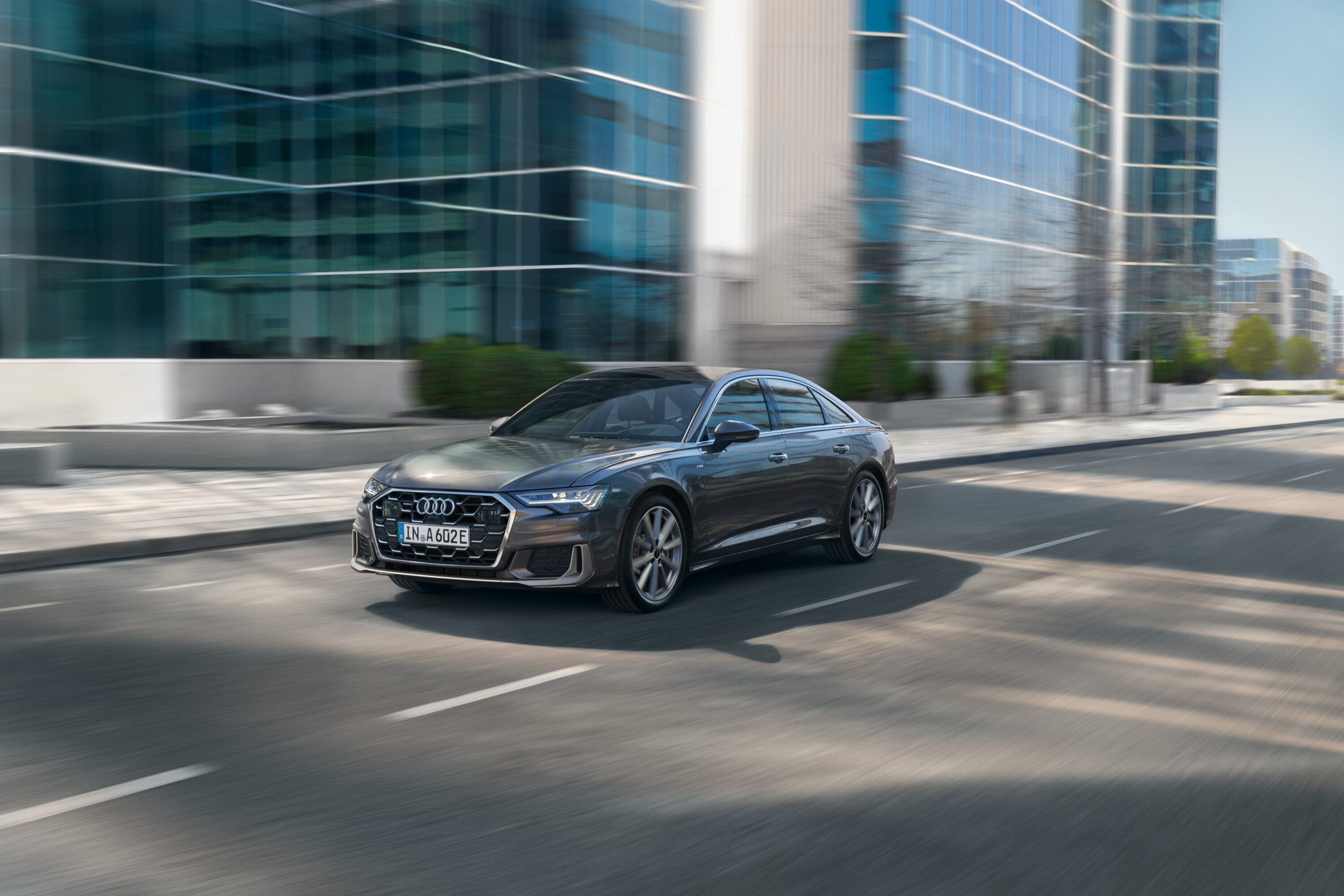
Some meat on those bones? Well, the Audi A6 40TFSI fronts up with 140kW and 320Nm. Problem is, that’s a $94,300 car. For $113,400 – still less than the 520i, mind – Audi will sell you a 180kW/370Nm A6 45TFSI quattro S Line. Yep, that’s all-wheel drive and more power, which means the poor BMW wouldn’t see which way the A6 had gone.
1
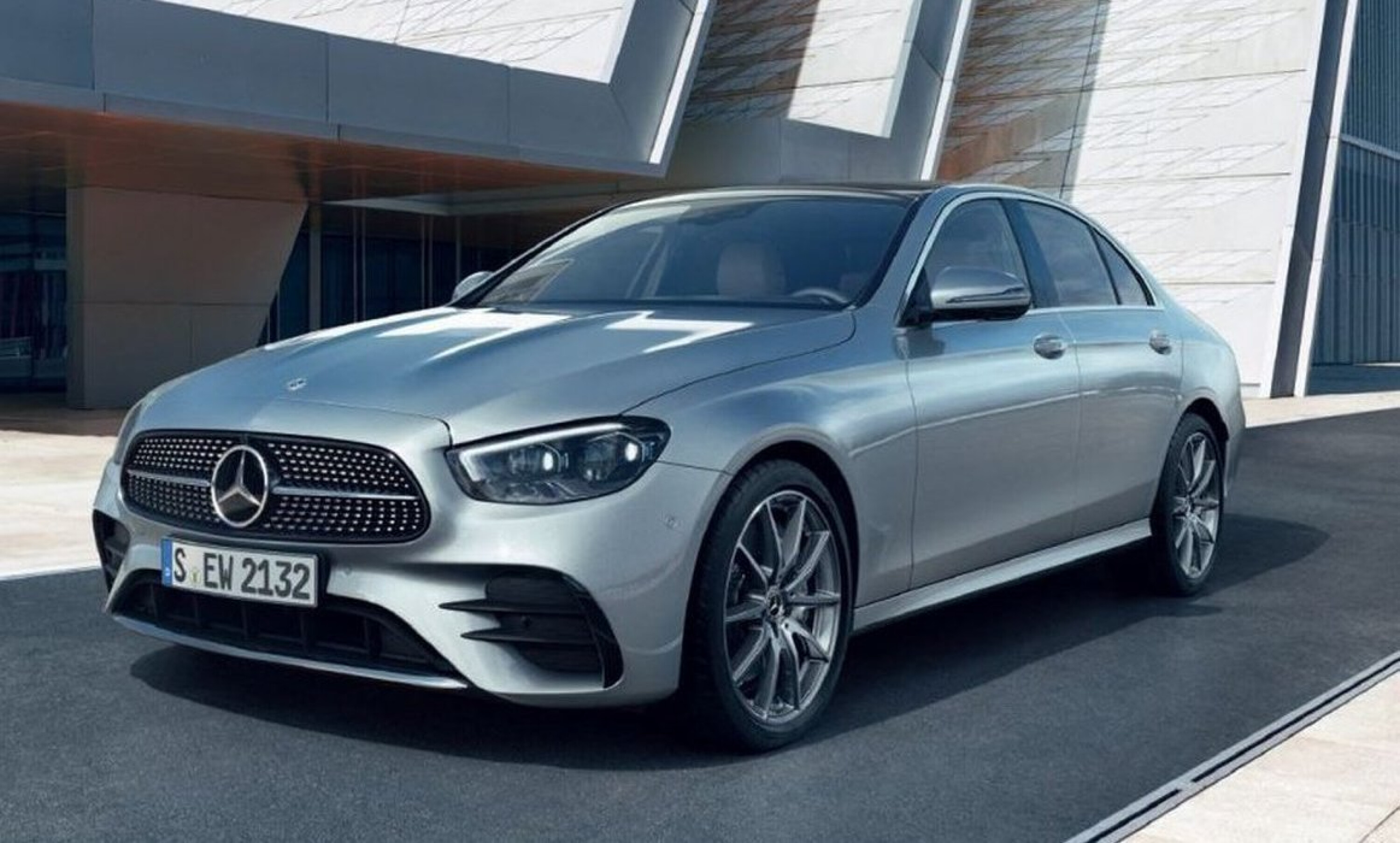
Choose a Mercedes-Benz E200 and, for $106,600, you get 145kW and 320Nm which seems short-changed somewhat, but given that the Merc is both tighter-geared and lighter than the 520i, it’s lineball in terms of performance.
Other rivals? The 221kW/400Nm Jaguar XF P300 Sport is ancient but still decently spry, and the 279kW/530Nm Genesis G80 3.5T AWD is well worth a look if you like to play by your own set of rules. Both are within a sniff of the 520i’s asking price.
It’s worth noting that Alpine White is the only non-cost paint finish. Step up to a metallic palette and you’ll need to square away another $1539, with Tanzanite Blue costing an additional $3385 and the matte finish Frozen Pure Grey and Deep Grey metallics attracting a hefty $5385 premium.
1
What’s the BMW 520i like inside?
In a word, delightful. There’s really very little to complain about when it comes to the BMW’s cabin.
True nitpickers might point to the fact that a 97mm increase in overall length has translated to a mere 5mm of extra rear leg room, but this is nevertheless a big car now. Width has risen by 32mm, height by 36mm and the wheelbase eases out by an additional 20mm versus its predecessor. In fact, it’s the same size – more or less – as a Chris Bangle-era E65 7 Series.
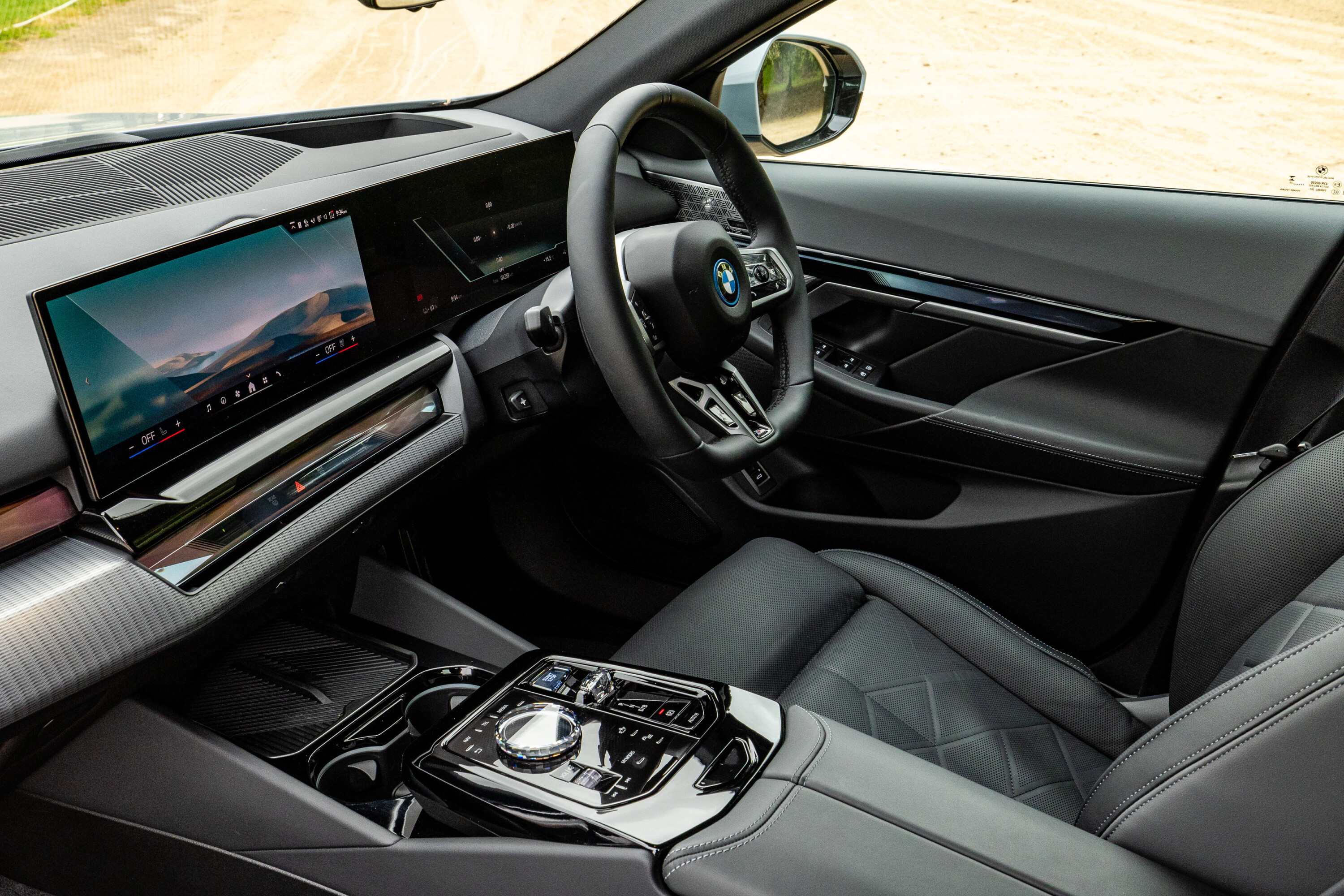
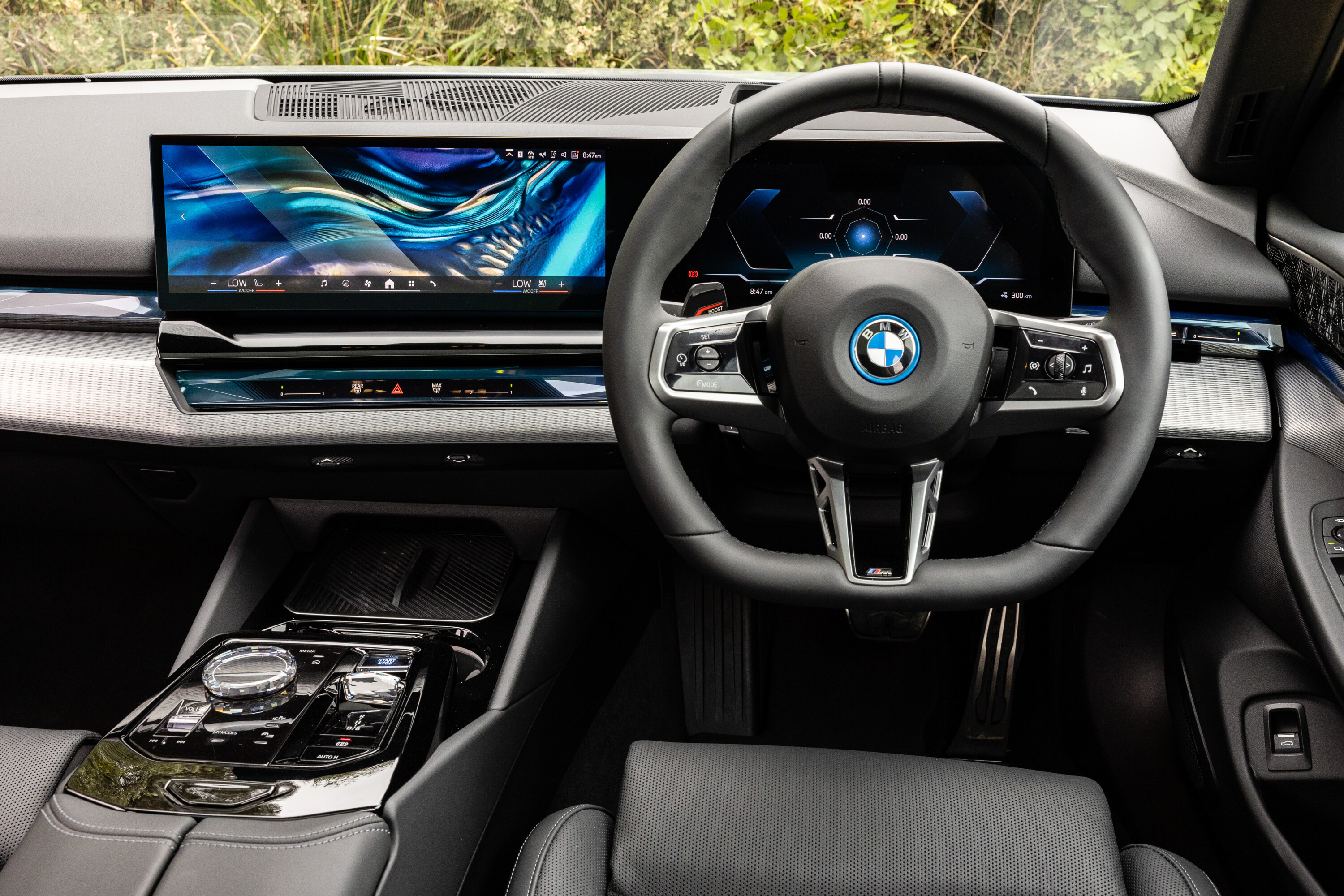
If you’ve taken it for granted that the modern architectural trope for vehicle interiors is a massive tablet affixed to the dash and little else to consider, you’ll find the 5 Series fascia refreshingly dense.
1
There’s a lot going on in terms of design elements, materials, different planes, angles, and ways to interact with the vehicle.
It all seems reassuringly expensive too. Animal lovers will also be glad to hear that the seats are trimmed in Veganza, a vegan material, and Alcantara although should you wish to have your 520i trimmed in leather, BMW will gladly oblige, relieving you of $5400 in the process.
Even with the panoramic glass roof, there’s a decent amount of headroom, even for taller drivers, and the sight lines out of the car are good. The steering wheel offers a huge range of adjustment, but it I personally felt that the driver’s seat was perched a little high on its lowest setting, as I’m one of those drivers who prefers to feel ‘in rather than on’ the car.
1
I would have liked to have seen the Comfort seats and non-M Sport front apron on the 520i rather than the sportier treatment Australia gets.
The dash does indeed present you with a lot of black glass, the two rectangular multi-configurable digital displays arcing across the right-hand side of the car in much the same way as we’ve seen in the 7 Series. Thankfully, there are a lot of buttons and switches such that many of the key functions you’ll use for driving aren’t nested within menus on the screen.
The steering wheel controls are sensibly configured and not overwhelming and the dual wireless phone chargers are a very neat touch. The flat-bottomed M steering wheel does look a bit racy for a car with such modest performance, but at least BMW doesn’t slather the 520i in fake carbon fibre given that it tips the scales at 1725kg.
1
The head-up display deserves special mention as it’s large, crisp and is capable of displaying comprehensive sat-nav directions clearly.
Should you wish, there’s also an augmented reality feature within the latest iDrive 8.5 system that’ll show an image from the 8MP front camera in the dash binnacle with arrows to show the exact exit you need to be taking.
The centre screen can stream YouTube videos, which turns your 5 Series into a mini cinema and there’s also Air Console in-car gaming. Your kids are going to love this, as they get to use a smartphone as a wireless controller and play one or two player games in the car.
Moving round to the rear, the 520i features, aptly enough, a 520-litre boot.
1
What is it like to drive?
Can we talk about expectations for a moment? I don’t think I’m in the minority to expect a certain standard of dynamics from a petrol-powered BMW sedan.
I want it to feel livelier on its feet than its Audi and Mercedes rivals. I expect it to feel as if it’s been engineered by people who take the long way home from work, just for the fun of it. The 520i doesn’t.
If you blindfolded me, sat me in the front passenger seat and asked me who it was built by, I’d say that it was a manufacturer who could do ride quality but wasn’t very good at engines or handling. The four-cylinder is a largely tuneless thing, extending to a charmless blare when pushed, as it will be often.
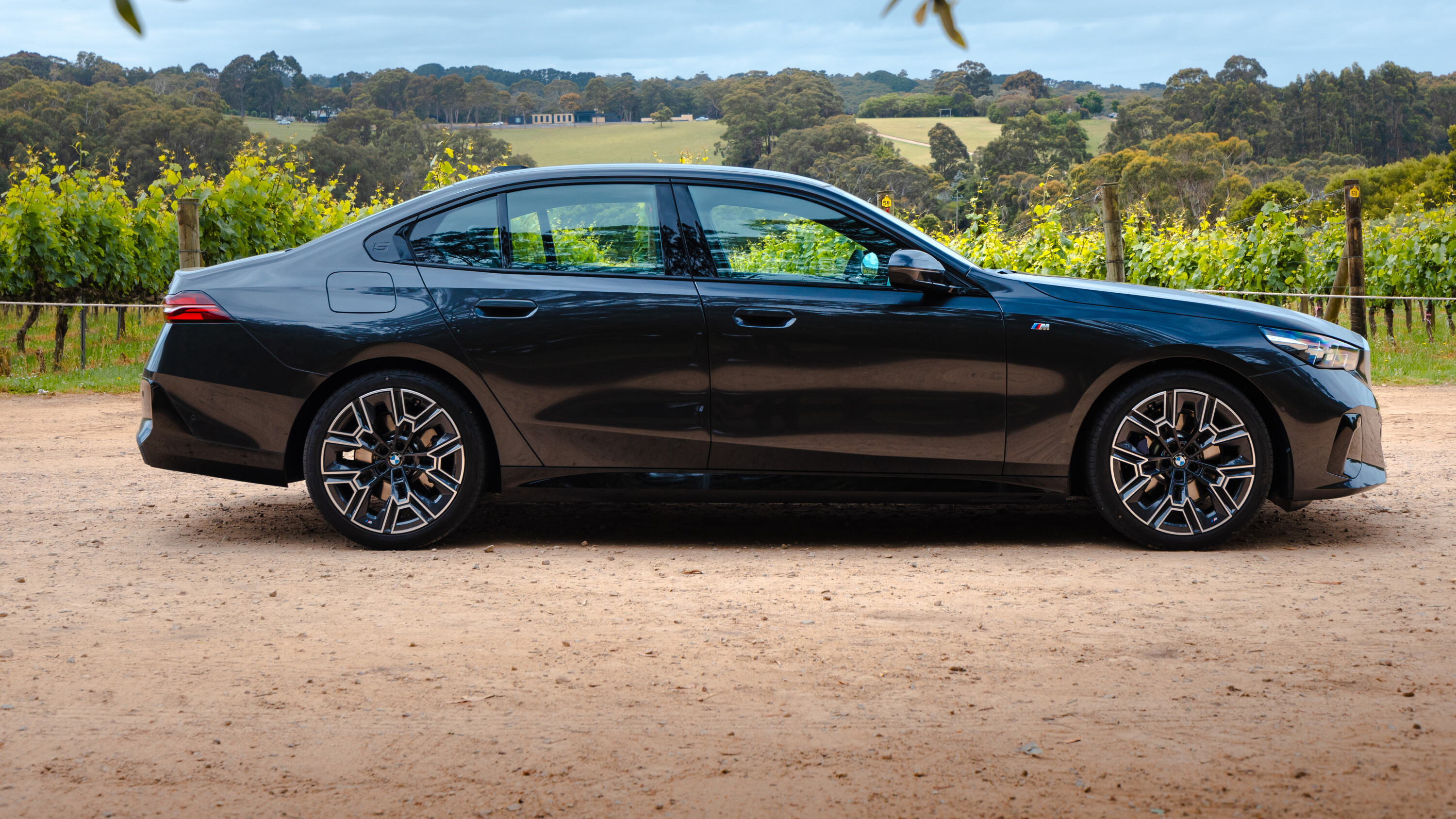
1
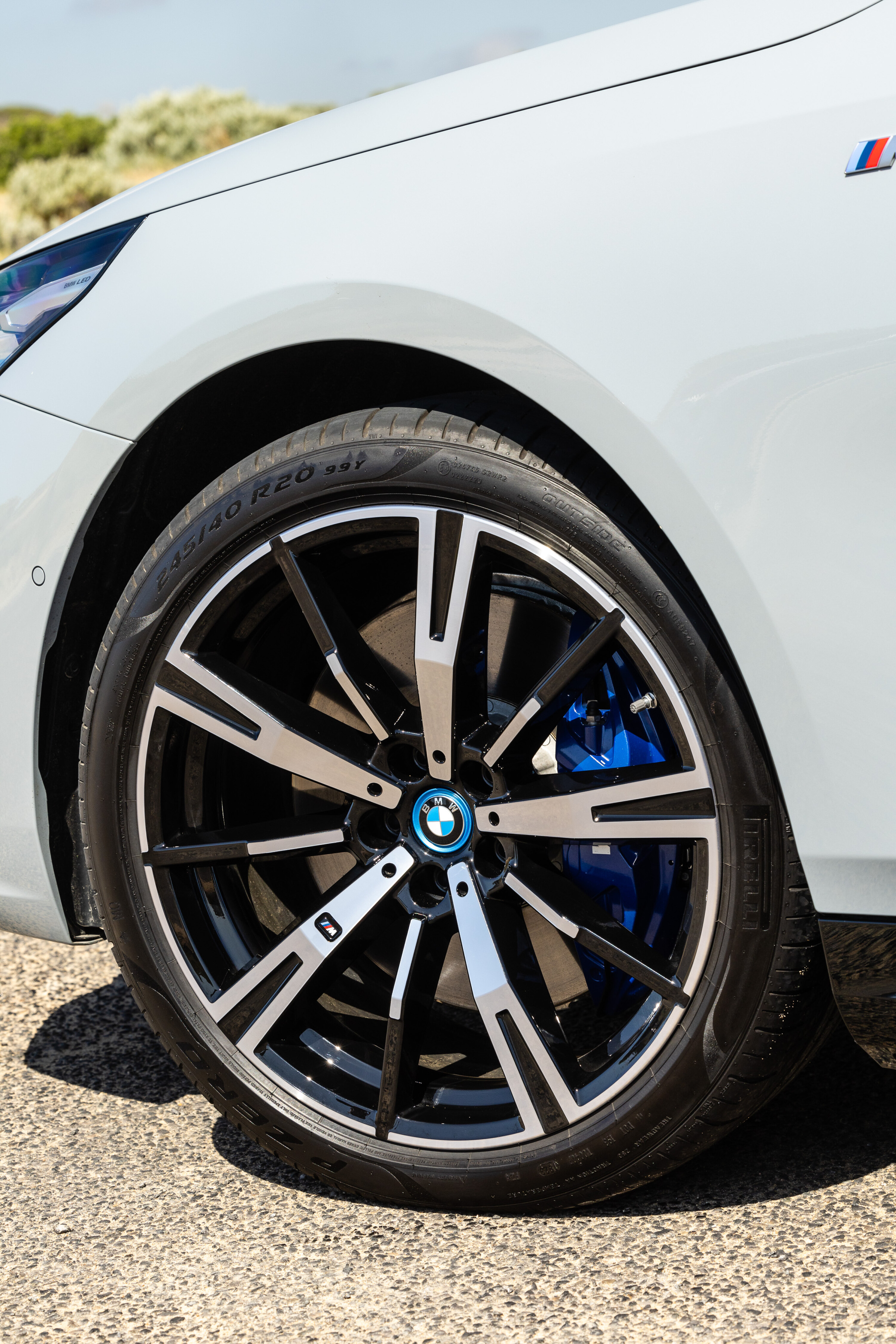
Likewise, when you ask the chassis to show what it can do through a challenging set of corners, it never gets to shine due to the fact that the 520i is hobbled by a truly catastrophic tyre choice.
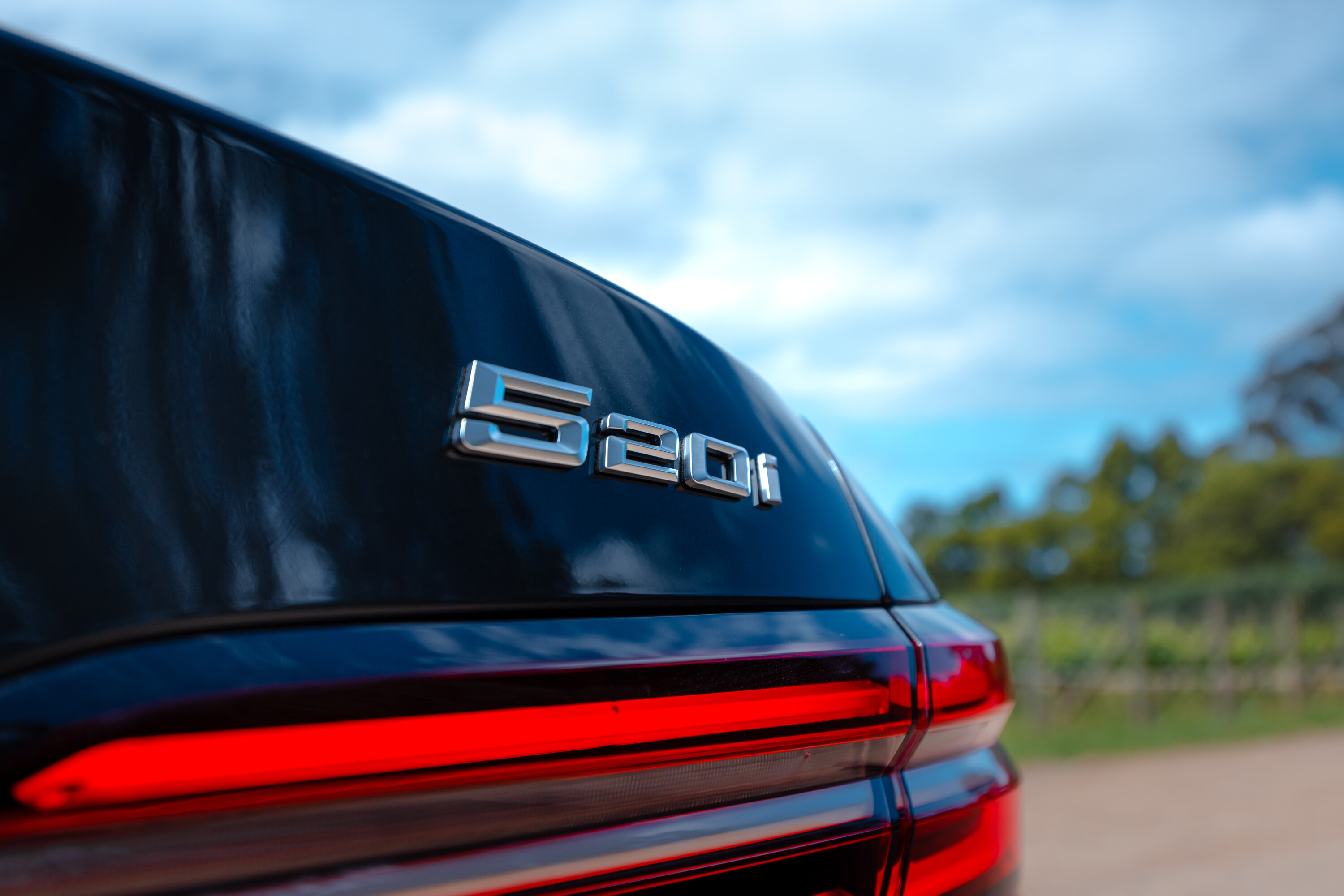
I’m not saying the Continental EcoContact 6 is a terrible tyre on a Toyota Prius or something of that ilk, but it has no place on a BMW sedan that rides on standard M Sport suspension.
Tip the car into a corner and the outside front tyre starts squealing at decidedly modest lateral-g loadings, the sidewall seeming to offer about as much resilience as a Rudy Giuliani legal defence. You’ll emerge crestfallen and wondering how BMW thought this sort of thing was acceptable.
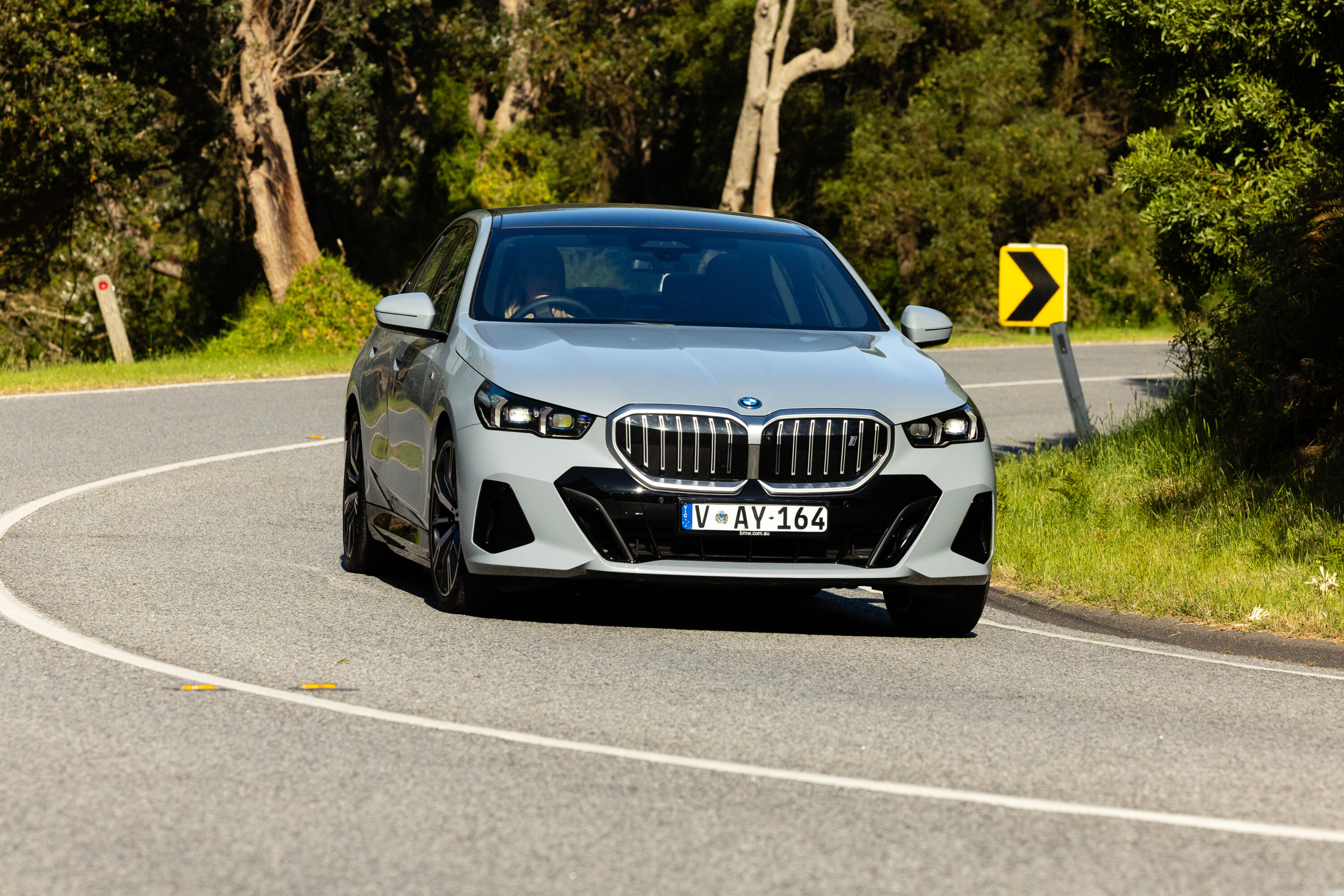
1
That’s if you’re a road tester or a keen driver. Of course, there will be others who won’t countenance bunging $115K’s worth of their pride and joy at a corner with any real gusto and, if that’s the case, they’ll find a lot to like.
Refinement is excellent, the suspension is pleasantly limber, the steering is a little mute but unerringly accurate and the brakes are more than adequate.
The eight-speed gearbox slurs through the ratios beautifully, the drive logic only occasionally encountering a low-speed hiccup in town, and the cabin ergonomics are sound. The engine, even for an undemanding operator, will feel just about adequate.
If any of the terms in this section have left you scratching your head, these articles will help bring you up to speed!
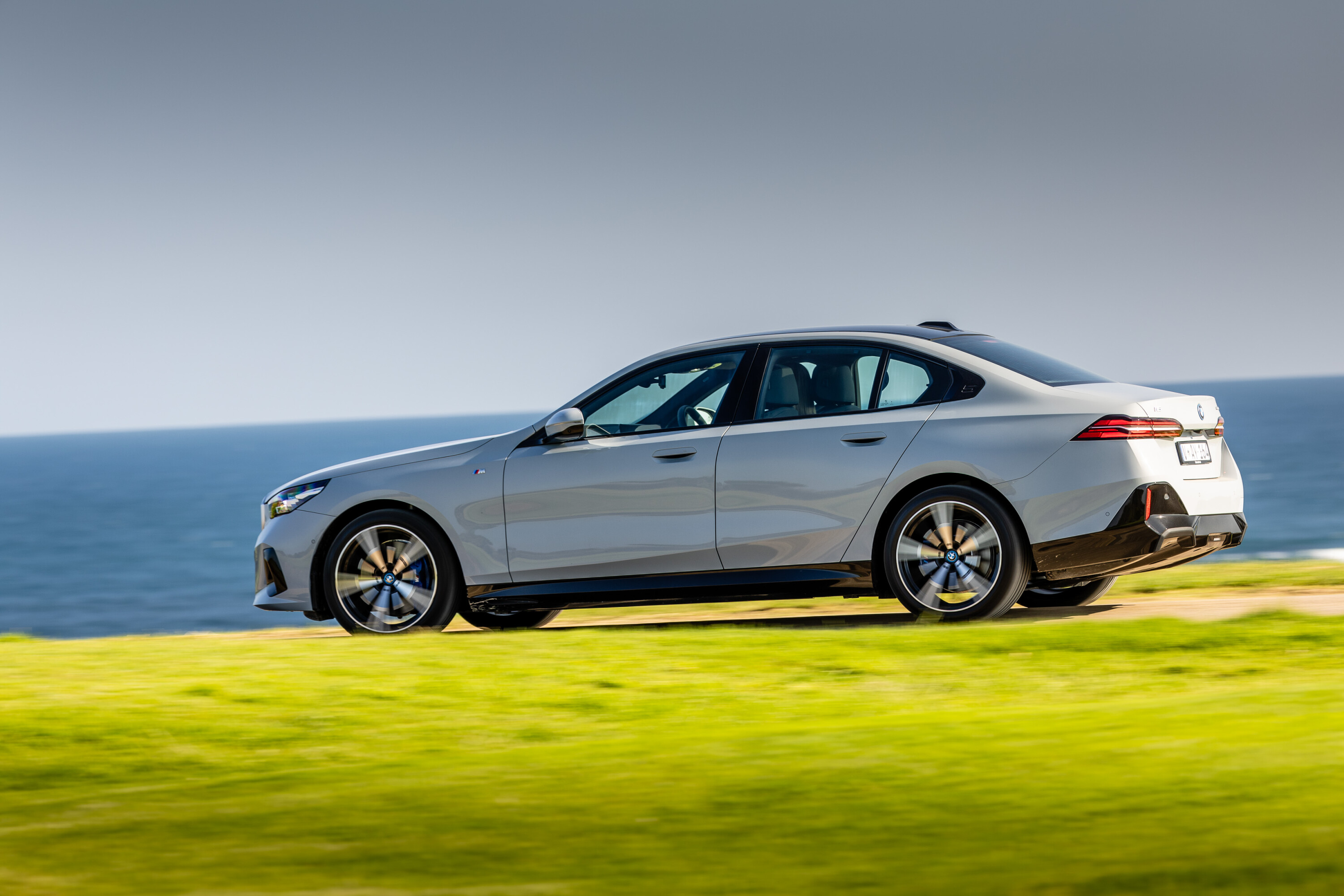
1
- What is a Powertrain or Drivetrain?
- Power vs torque
- Car suspension explained
- Automatic transmissions (‘gearboxes’) explained
- Chassis control systems explained
- Car vs Ute vs SUV: How the vehicle you buy should guide the way you drive
- What is the WLTP emissions and range test?
The counterpoint to fitting those tyres is that fuel economy is extremely good.
BMW claims an average of 6.9 litres per 100km, yet the car I was driving averaged 6.2 litres over the drive route. That’s phenomenally good for a large, heavy, petrol-engined luxury sedan.
The 48V mild hybrid system fitted to this car certainly helps, the 13kW/200Nm e-motor helping to get the car going.
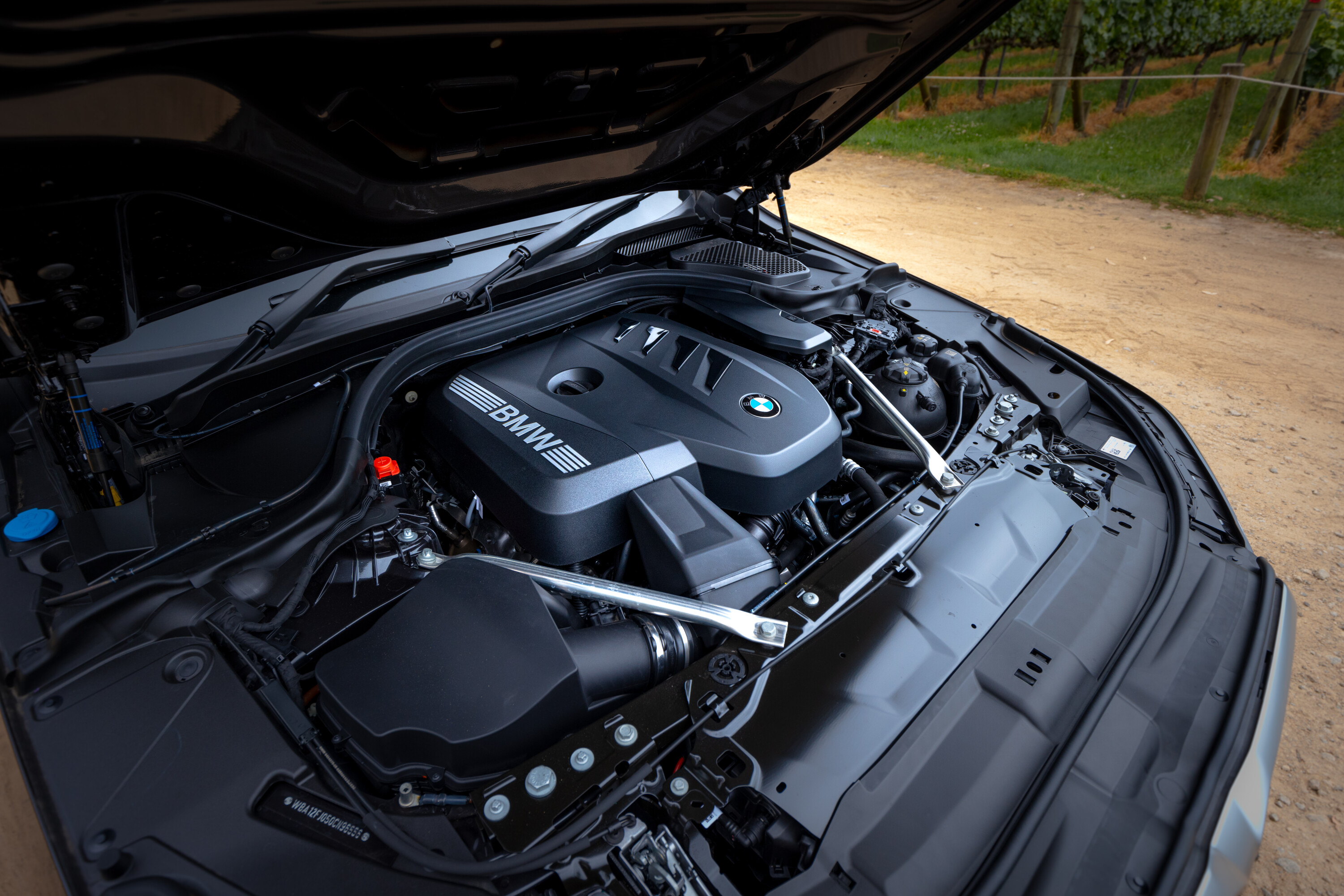
1
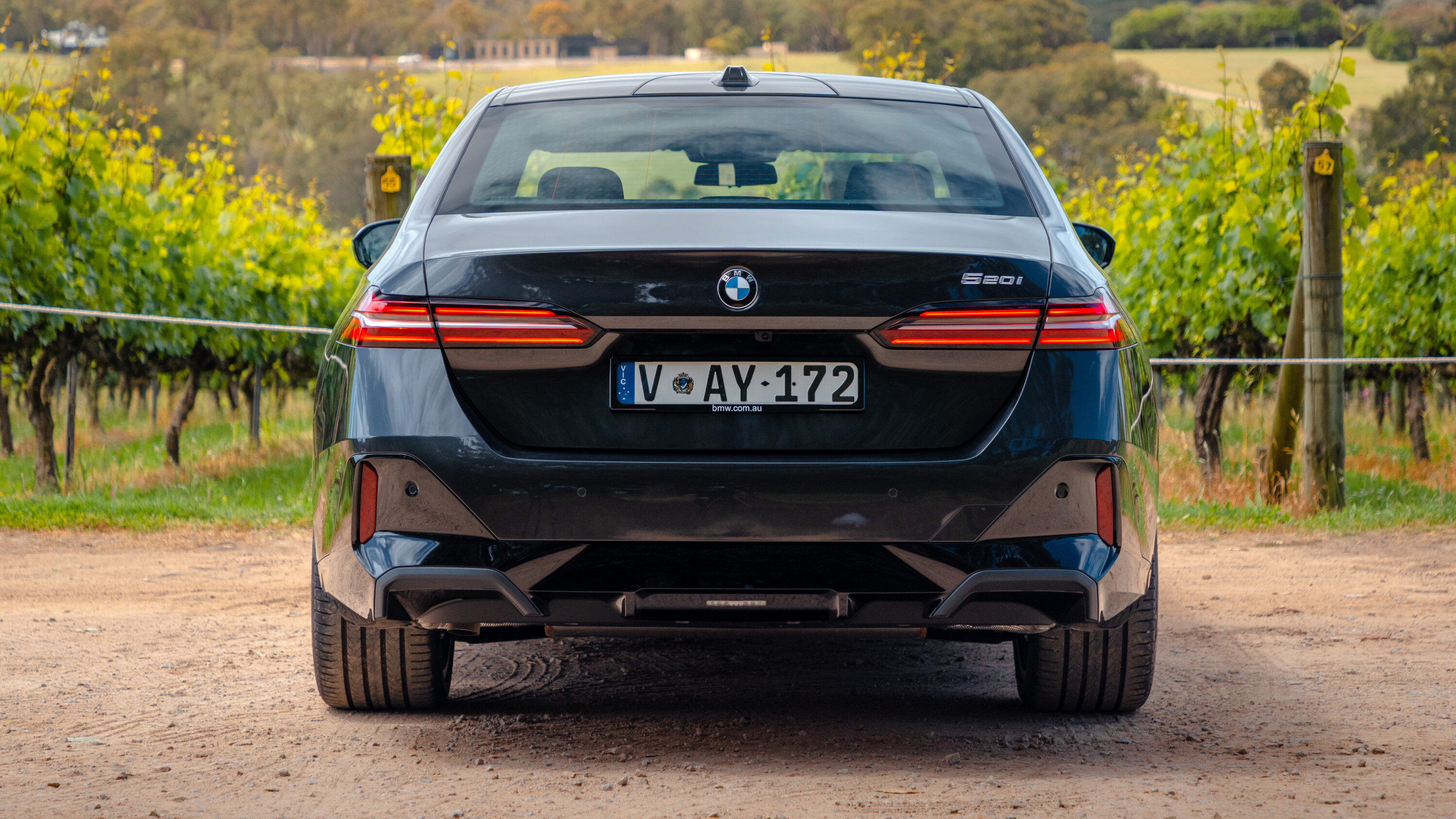
A Miller Cycle combustion system also prioritises efficiency, which is, in turn, aided by a super-low drag co-efficient (as low as 0.23CD isn some variants).
The 520i prefers 95RON fuel and the fuel tank measures a sensible 60 litres. Combine that with the excellent fuel economy and you emerge with a vehicle that can conceivably get 1000km of cruising range from a tank of juice.
1
How safe is it?
The G60 5 Series has yet to be tested by EuroNCAP, but is expected to gain a five-star rating.
Standard safety equipment on the Australian-spec 520i includes seven airbags, parking assistant professional pack, active cruise control with stop and go, lane change warning, lane departure warning, front and rear cross traffic alert, rear collision prevention, automatic speed limit assist, evasion assist, and front collision warning with brake intervention.
1
How long is the warranty and what are the running costs like?
Like the rest of the BMW range, the 520i gets a five-year, unlimited kilometre warranty.
Three years of roadside assist is also included in the purchase price and there’s a 12-year anti-corrosion warranty from first registration. Servicing is condition-based.
1
Would you recommend it?
Some vehicles are easier to parse into a fair verdict than others. Much of the BMW 520i is extremely good.
That would be the mealy-mouthed summation of it. It’s largely extremely competent. Perhaps a more valuable critique would be that this is a very good car with a mediocre engine, which rides on unsuitable tyres.
In that regard, it feels as if BMW has done much of the hard work in developing this car, only to be stymied by specification choice. It’s not as if Munich didn’t have other engines on offer. In Europe, this G60 Five is offered with a far peppier 190kW/400Nm tune of this B48 four-cylinder powerplant which should help bring this chassis to life.
1
I can only speak as I find, but the tyres were a poor choice on this car. Fit a decent set of Michelins or Pirellis to the 520i and it ought to transform its dynamic characteristics. After all, who are all these people queuing up for a $115K eco car?
As such, I know that there’s 90 percent of a great car here. I can also understand why, having sold less than 500 5 Series units last year, BMW’s Australian arm is reluctant to bear the costs of fleshing out a broad range of petrol variants.
1
I’d counsel making an exception for a 530i or 530e PHEV model that would act as a step towards the punchier i5 variants and, in the fullness of time, the hybridised M5.
There’s the kernel of greatness here but, in the specification tested, the 520i doesn’t have the chops to truly step up.
After all, BMW has earned an expectation of dynamic excellence and expectation, as we see here, can prove a double-edged sword.
MORE
Everything BMW
MORE
Sedan Buyers Guide
| 2024 BMW 520i specifications | |
|---|---|
| Body | 4-door, 5-seat sedan |
| Engine | 1998cc I4, 16v, DOHC, turbo petrol, 48v mild hybrid |
| Power | 153kW @ 4400-6500rpm |
| Torque | 330Nm @ 1500-4000rpm |
| Transmission | 8-speed automatic |
| 0-100km/h | 7.5 seconds (claimed) |
| L/W/H | 5060/1900/1515mm |
| Wheelbase | 2995mm |
| Boot space | 520L |
| Weight | 1725kg |
| Fuel / tank | 95 RON / 60 litres |
| Fuel use (L/100km) | 6.2L/100km (tested) 6.9L/100km (claimed) |
| Suspension | Struts, coil springs, dampers, anti-roll bar (front) Multi-links, coil springs, dampers, anti-roll bar (r) |
| Steering | Electric rack-and-pinion |
| Tyres | Continental EcoContact 6 245/40 R20 (f) 275/35 R20 (r) |
| Price | $114,900 + on-road costs |
