
Few names carry as much weight in Australian motoring history as Torana. Produced from 1967, the Torana was one of our country’s most celebrated performance cars. Whether it was the XU-1s taking the fight to larger V8s at Bathurst or the awesome A9X, the Torana was, like the Commodore, far more than just another Holden.
Today, more than half a century after the first Torana arrived, the name remains one of the most revered among enthusiasts. Which begs the question: what if Holden had survived and decided to bring it back? Enter the fictional 2026 Holden Torana range. We used AI to design a Torana range for 2026, including its design, model range, drivetrain availability and even pricing for the Australian market.
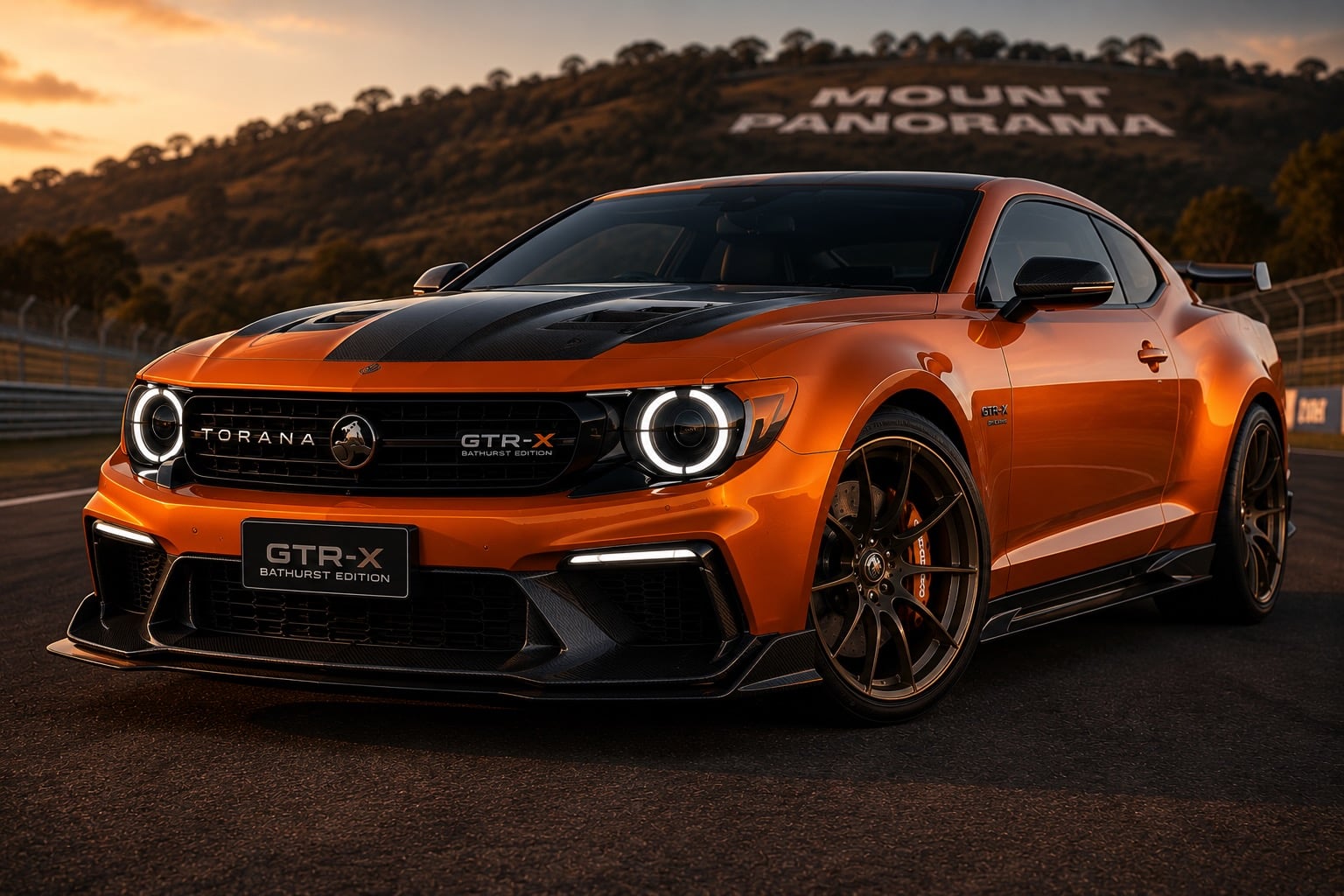
The design that AI rendered combines design cues from the original models with modern touches. Rather than directly copying the shape of the original LC, LJ or LX Torana models, the 2026 version uses the same low bonnet, wide stance and muscular rear haunches and applies it to a larger and more modern shape.
At the front, the the circular LED headlight signature is instantly recognisable. Framed within a broad grille carrying ‘TORANA’ script, the headlights instantly recall the Toranas of the 1970s. Large cooling ducts, a deep front splitter and sculpted bonnet vents signal the performance potential underneath.
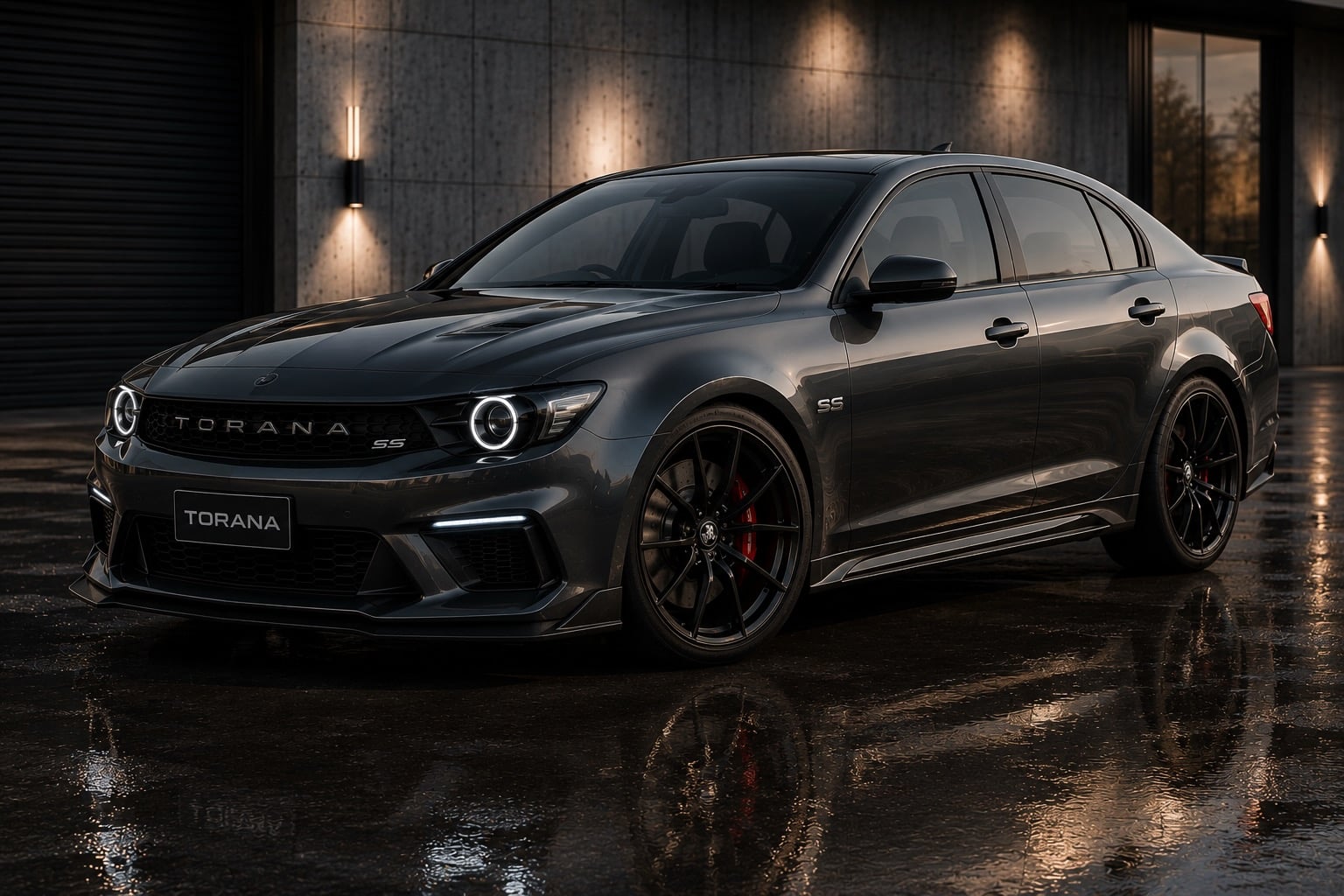
From the side, the 2026 model uses classic rear-wheel-drive proportions with a long bonnet, set-back cabin and broad shoulders. The coupe features a sweeping fastback roofline, while the sedan and – most shockingly for Torana fans – wagon introduce additional practicality without sacrificing stance.
According to AI, the rear design is “equally dramatic.” There’s full-width LED lighting stretching across the tailgate, while pronounced rear guards, quad exhaust outlets and an aggressive diffuser give more clues to its performance.
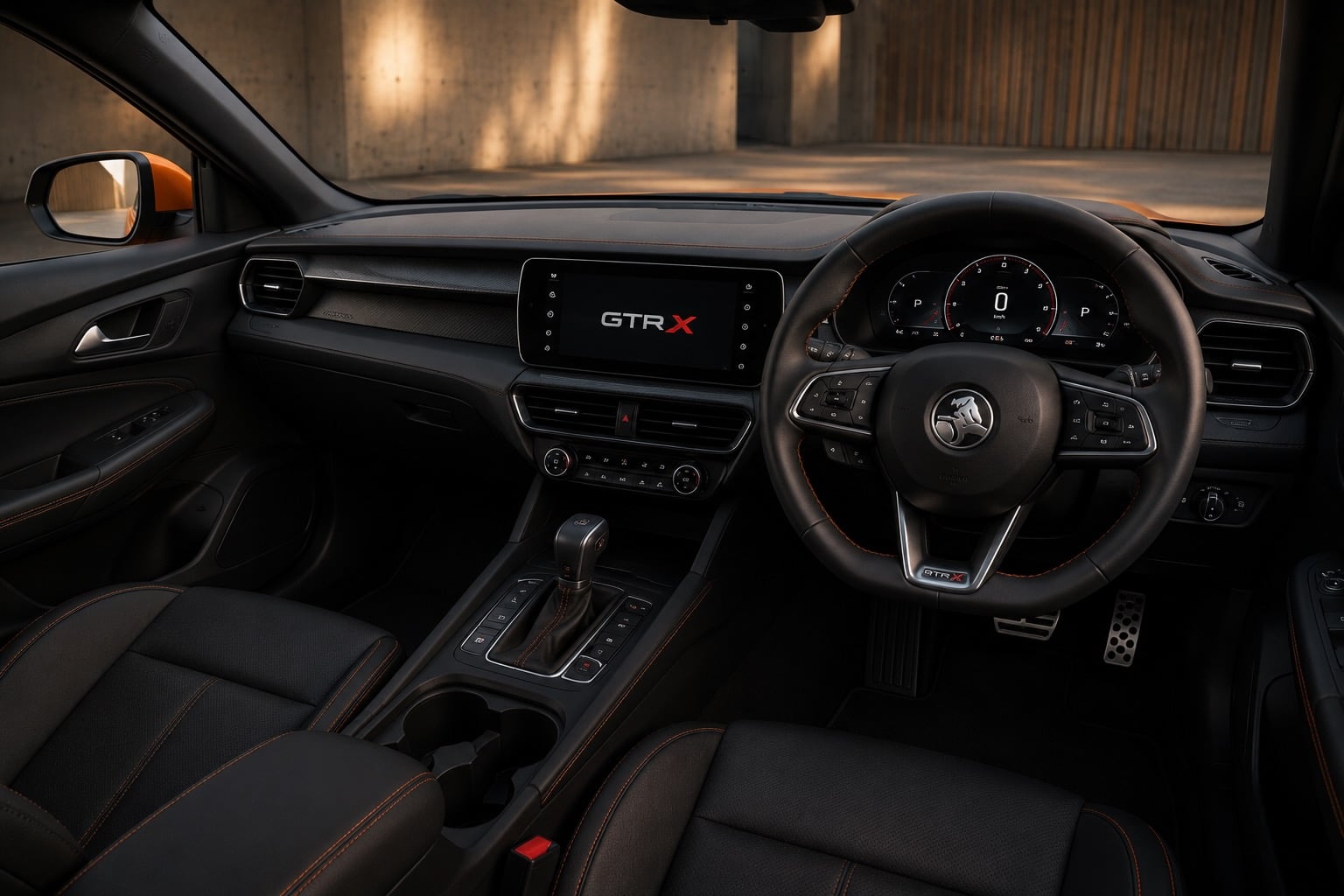
Inside the 2026 Holden Torana, AI says that the cabin “blends Australian nostalgia with modern technology.” Its twin digital displays provide modern functionality, but the graphics intentionally reference the circular instrumentation of classic Torana models. Physical climate controls remain for ease of use, while premium materials, contrast stitching and Holden lion embossing throughout the cabin create unique character.
One idea from AI that we particularly like is that when you select Track Mode, the digital cluster transforms into a modern interpretation of the famous A9X dashboard with a big central tachometer, shift lights across the top, a lap timer and tyre temperature information.
The Torana’s rear seat “offers genuine usability rather than serving as an afterthought.” In the sedan and wagon forms, adults can comfortably fit in the second row, while the wagon also introduces additional legroom and a panoramic glass roof that floods the cabin with natural light. AI designed the wagon’s boot to hold “around 600 litres of space”, expanding to around 1800 litres with the rear seats folded.
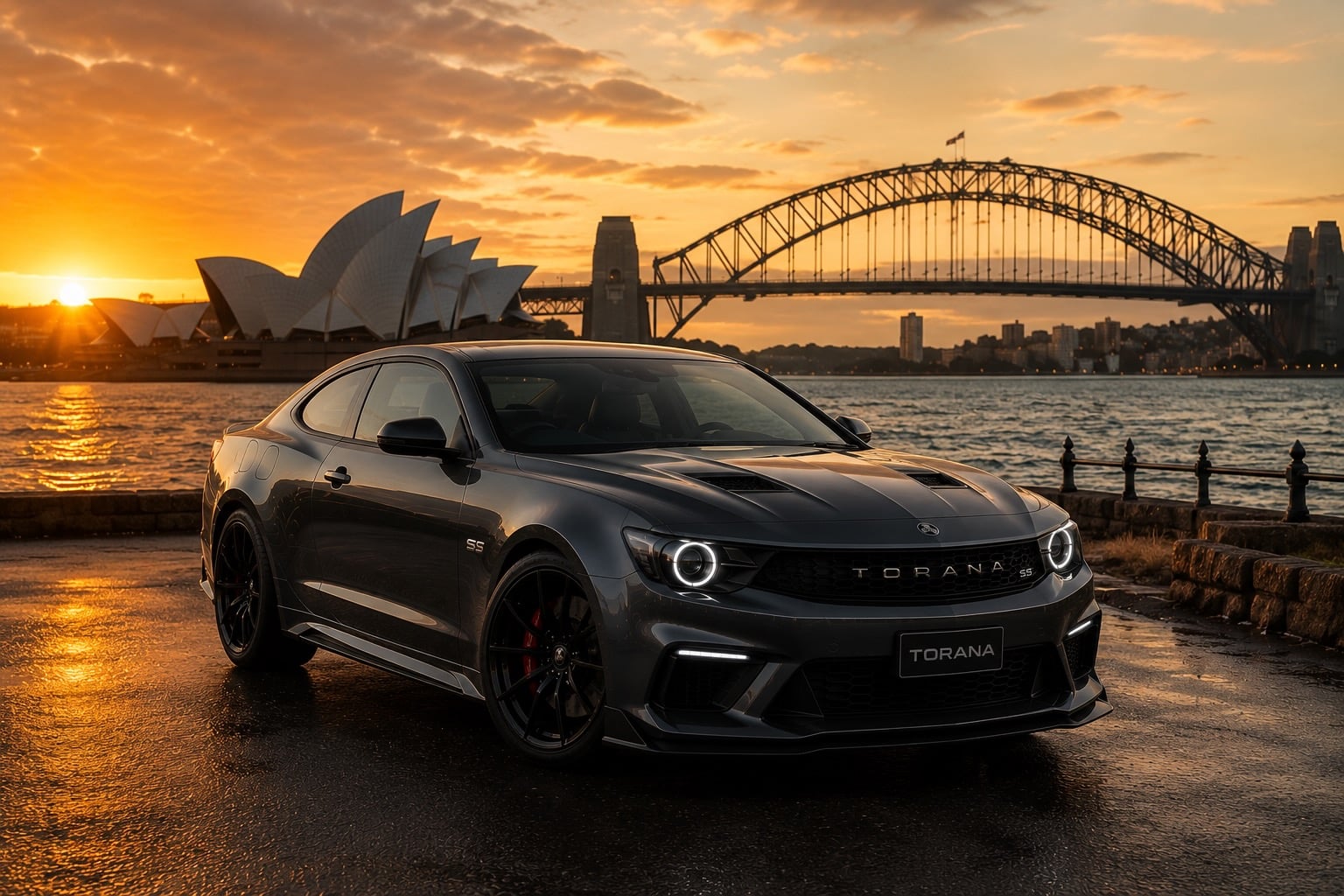
As for the model line-up, AI envisaged the LS as the entry-level car, the SS-H and GTR-X in the middle and a GTR-X Bathurst Edition as a limited edition at the top. The LS is priced from $45,990 plus on-road costs in sedan form (wagon: $48,990 +ORC, coupe: $49,990 +ORC) and uses a 220kW/400Nm turbocharged 2.0-litre four-cylinder petrol engine mated to an eight-speed automatic transmission.
Above the LS sits the SS-H, which uses a twin-turbocharged 3.0-litre V6 engine combined with a plug-in hybrid system making outputs of around 350kW/650Nm, but crucially for NVES compliance, would give an electric driving range of around 80km. Pricing for the SS-H starts at $59,990 +ORC for the sedan, $62,990 +ORC for the wagon and $63,990 +ORC for the coupe.
The GTR-X then uses a supercharged 6.2-litre V8 engine, with either six-speed manual or 10-speed automatic transmission availability. Making outputs of around 550kW and 800Nm, the GTR-X uses the pushrod architecture beloved by Holden enthusiasts but incorporates modern technology including direct injection and cylinder deactivation. A limited-slip differential would be standard equipment, as would sticky Michelin tyres, and pricing would start above $80,000 +ORC.
Finally, at the top of the Torana tree is the GTR-X Bathurst Edition, which would be priced comfortably north of $100,000 but capable of world-beating performance. It ups the GTR-X’s outputs to around 600kW and 950Nm and a six-speed manual is the only available transmission choice. Weight is reduced through the use of a carbon-fibre bonnet, carbon roof, lightweight forged wheels and thinner glass, and ‘Panorama Orange’ is the only available colour.
For many Australians, the Holden Torana represented performance, ingenuity and motorsport success, which is why it’s one of the nation’s most celebrated cars. Reimagining it as a modern coupe, sedan and wagon serves as a reminder of what our local manufacturers were capable of achieving in creating world-beating cars. Alas, we’ll likely never see something like that again, but it’s great to have some fun and imagine what our favourite cars from the past would look like today.
In a time where medium SUVs absolutely dominate Australian new vehicle sales charts, the Hyundai Tucson has carved out a reputation as one of the segment’s most compelling all-rounders. Combining handsome styling, a spacious and technology-packed cabin, a punchy yet efficient hybrid drivetrain and the value for money Hyundai is known for, the Tucson continues to be a favourite among family buyers. It was also the overall winner of Wheels Best Medium SUV 2025.
As fresh rivals arriving from every direction, however, does Hyundai’s popular SUV still have what it takes to remain near the top of the class?
How much does the Tucson Hybrid cost to buy?
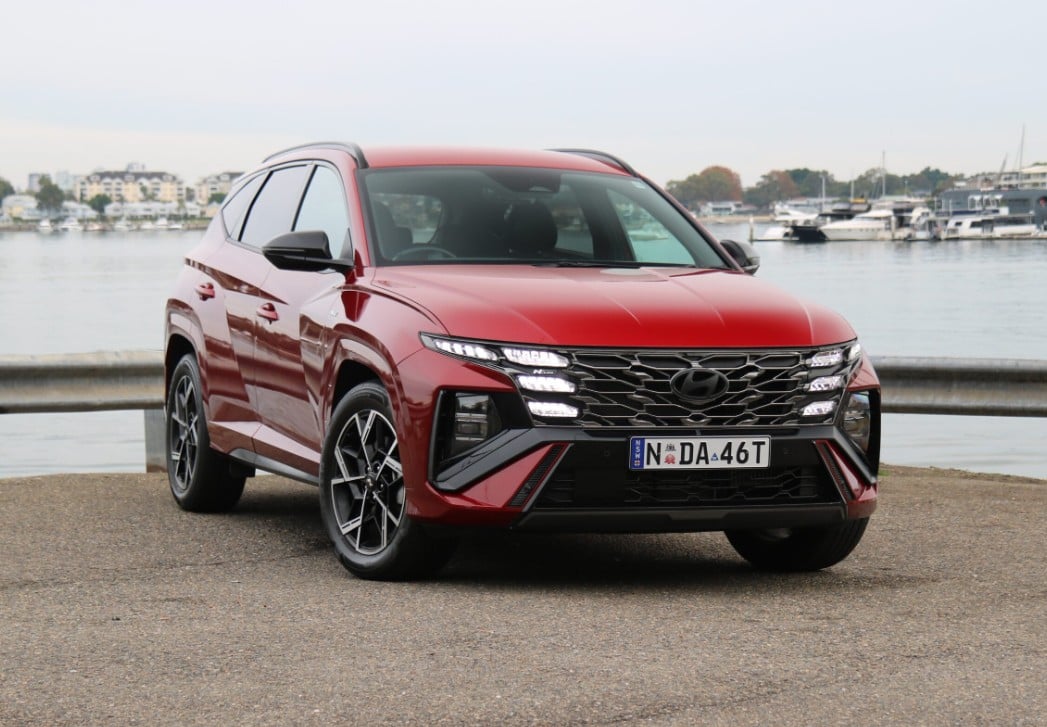
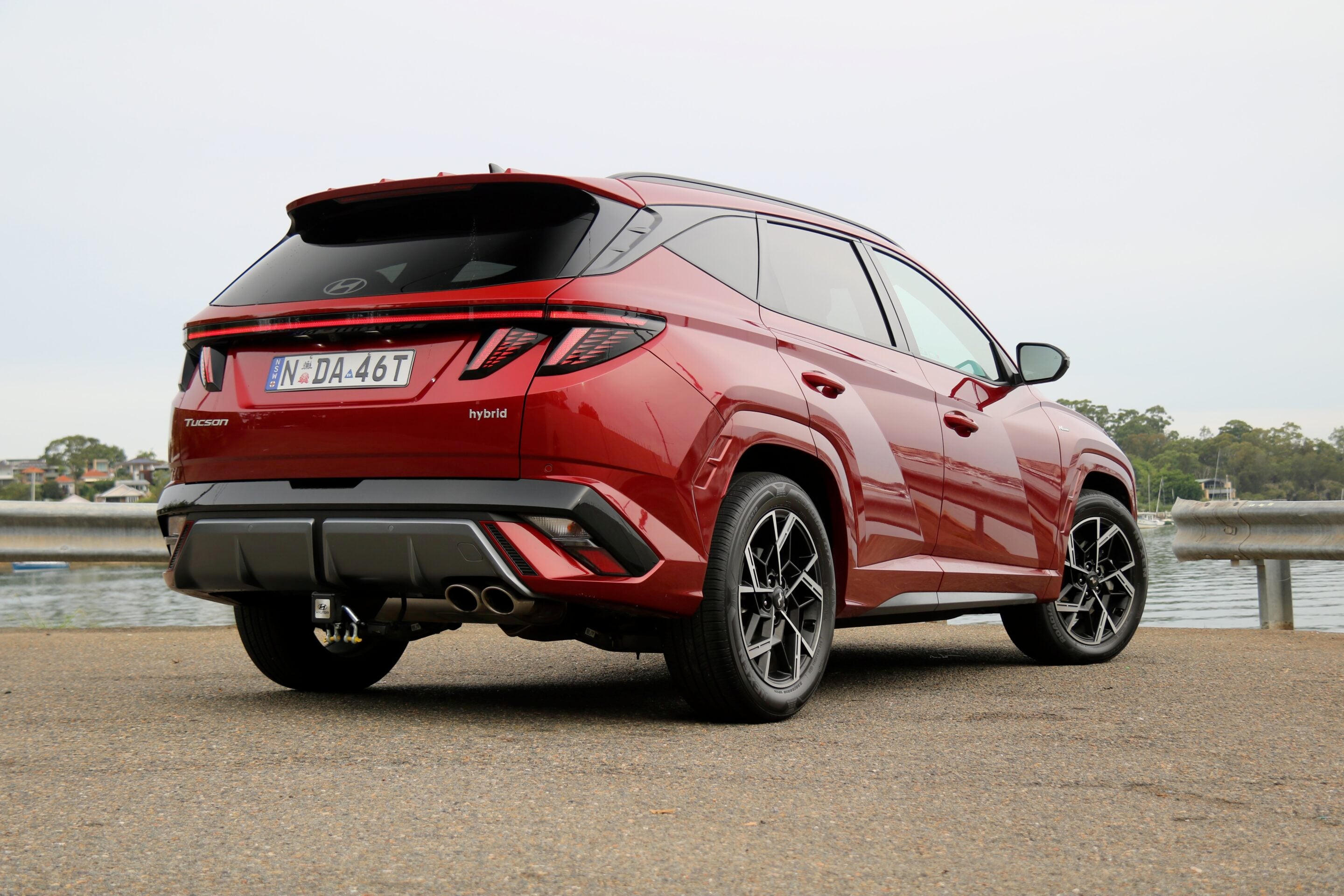
There used to be quite a large line-up for the Tucson, but after a facelift the range is just nine variants, starting with the base petrol at $40,100 plus on-road costs and reaching the top-spec Premium N Line at $59,850 +ORC. We tested the upper-middle hybrid Elite N Line 2WD ($50,850 +ORC) for this review, but it’s not the Tucson we’d buy.
2026 Hyundai Tucson pricing (plus on-road costs):
| Tucson petrol | $40,100 |
|---|---|
| Tucson Hybrid | $42,850 |
| Elite petrol | $45,100 |
| Elite Hybrid 2WD | $48,350 |
| Elite Hybrid AWD | $50,850 |
| Elite Hybrid N Line 2WD | $50,850 (tested for this review) |
| Elite Hybrid N Line AWD | $53,350 |
| Premium Hybrid AWD | $58,350 |
| Premium Hybrid N Line AWD | $59,850 |
Competition is very strong in the hybrid medium SUV segment, including the Tucson’s Kia Sportage twin, the Nissan X-Trail e-Power, Honda CR-V, Subaru Forester and, of course, the big-selling Toyota RAV4. That’s before you add in lower-priced competitors like the Haval H6 and MG HS, let alone plug-in hybrids like the Chery Tiggo 7, Geely Starray and BYD Sealion 5 as well.
As with everything, we say do your research before committing to any of them and drive as many options as you can. But if you don’t, what you need to know is that the Tucson is one of the best hybrid medium SUVs you can buy in terms of overall value. But the N Line part of the model isn’t necessary because the Tucson isn’t a sports car, so why try and make it look like one? Save $1500 and go for the Tucson Hybrid Elite ($48,350 +ORC), and don’t bother with optional all-wheel drive either.
How fuel efficient is the Tucson Hybrid?
While you can still buy a 2.0-litre petrol engine in the Tucson range – it’s only available in the base model and mid-spec Elite in front-wheel drive form – we wouldn’t bother doing so because for $2750 more, the hybrid is far superior in every way. Unlike the petrol engine, the 1.6-litre hybrid is turbocharged and makes healthy 172kW/367Nm outputs, which far outgun the lacklustre petrol’s 115kW/192Nm numbers.
Not only is the hybrid significantly punchier than the petrol model, it’s also one of the most powerful mainstream medium SUVs you can currently buy. Hyundai doesn’t quote a 0-100km/h time, but we’d guess that it’s around the 7.0-second mark. It’s not only punchier than the 2.0-litre petrol engine, but it’s also a lot more fuel efficient rated at just 5.3L/100km (front-wheel drive Tucson Hybrid variants with smaller wheels use even less at just 4.9L/100km), and in the real world, we achieved 5.8L/100km.
Is the Tucson Hybrid good to drive?
The Tucson is one of the best hybrid medium SUVs to drive, bar none, and that’s thanks to its mostly comfortable ride quality, linear steering, tidy chassis and pleasing overall dynamics. The N Line’s 19-inch wheels aren’t the perfect match for sublime ride quality and bumps are felt perhaps more than you’d expect. Drop the ‘N Line’ from the model and downgrade the wheels to more comfortable 18s; that’s what we’d do.
It’s a better handler than most of the competition though, with a nimble chassis that makes it more fun to drive than many competitors. Part of that is the steering, which strikes a Goldilocks ‘just right’ feeling and it gives you far more information than Chinese rivals. It also grips hard and goes around a corner quite well.
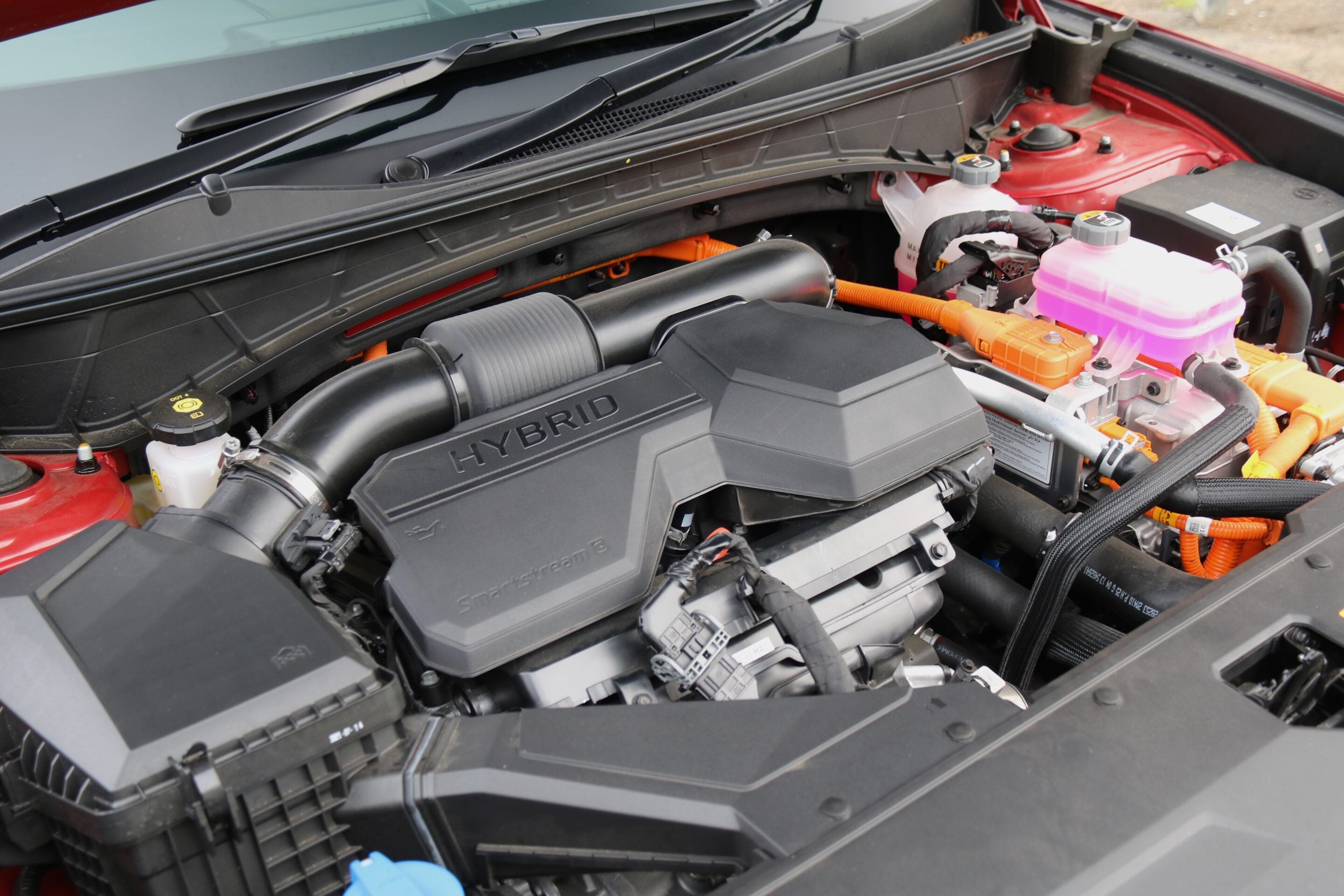
As for the drivetrain, it’s excellent. It’s more than punchy enough, but also refined and quite eager to rely on electric power as much as it can to reduce fuel consumption. Unlike a Toyota hybrid system, it features a geared transmission with six speeds on offer. When the engine is actually running, it’s quieter than the somewhat noisy naturally aspirated 2.5-litre engine in the RAV4 Hybrid.
As for the active safety systems, they’re mostly well behaved. Hyundai’s annoying speeding buzzer – which can mis-read speed signs and ding at you even though you’re not speeding – can be easily be muted by holding down the volume knob on the steering wheel. The active lane keeping can tug a bit much at the steering wheel too when it thinks you’re about to veer into the next lane, but that too can be easily defeated with a hold of a button on the steering wheel. That’s exactly how these systems should be.
How practical is the Tucson Hybrid?
The cabin of the Tucson is one of the best options in the medium SUV segment thanks to its spaciousness, comfort, easy-to-use tech and quality. If you’re after a medium SUV with a great interior for your family’s needs – that’s the whole point of buying an SUV, right? – the Tucson is actually where you should start because it does so much very well. There are plenty of soft touch materials used too, giving it a quality feeling throughout.
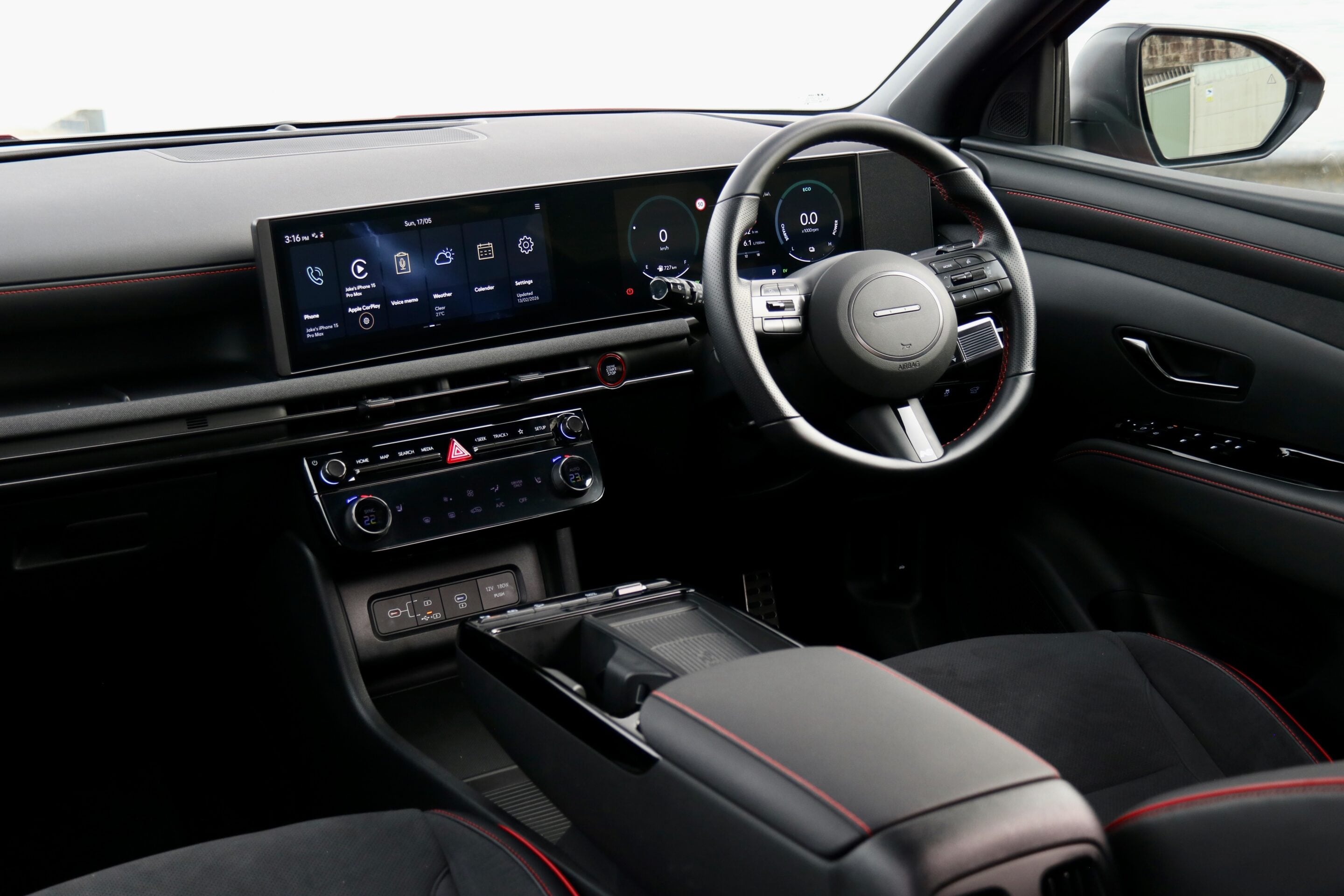
The Tucson range uses Hyundai’s ‘ccNc’ infotainment software and that’s a good thing because it’s so easy to use and offers a lot of features – wireless smartphone mirroring, DAB+ digital radio and live services like traffic for the navigation, and even information about the weather. The six-speaker audio system is reasonable, though the Bose unit in the upper-spec Premium is punchier.
Screen quality is sharp too, and it’s quick to respond to touch, but the best part is that it features a separate section of buttons for the climate control. It’s hard to believe that’s even worth mentioning but so many competitors leave the climate control in the touchscreen and they’re all infuriatingly difficult to use at speed. The driver’s screen is a bit of a waste of space though, as it offers only one view and doesn’t feature inbuilt mapping.
Another great point about the Tucson’s interior is its storage. The door pockets are large, as is the box underneath the centre armrest, while the cup holders are large and centrally located and there’s a second layer of storage in the lower centre console too that can handle a handbag, plus an extra tray on the passenger side of the dashboard.
Rear seat space in the Tucson is plentiful for my six-foot frame, and taller folk will be happy as well because there’s excellent leg- and headroom on offer. Features include air vents, two USB-C charging ports, two map pockets, a central armrest with cup holders and bottle holders in the doors, though no separate climate zone, heated seats or inbuilt sunshades. The rear doors open wide – though not quite as wide as an X-Trail – and the two ISOFIX points are easy to access.
The boot of the Tucson Hybrid, as we’ve previously discovered, is actually the largest in the medium SUV segment. Behind the rear seats lies a solid 582 litres of space, but folding the rear seats unlocks a massive 1903 litres in total. Its practicality is aided further by a dual-level floor, some extra storage and remote releases to fold the rear seats. The electric tailgate can also be set to open automatically when standing next to it with the key.
How much does the Tucson Hybrid cost to service?
Five years of servicing the Tucson costs $2290, or $458 per year on average, which is not bad in the segment, though its short 10,000km service intervals are 5,000km shorter than rivals like the RAV4.
For warranty, Hyundai covers the Tucson with a five-year/unlimited km warranty, which is extended a further two years in total if the vehicle is serviced through a Hyundai dealership. That’s a bit disappointing given that many Chinese rivals offer at least seven years of warranty no matter where they’re serviced. The hybrid battery is also covered by a separate eight-year/160,000km warranty.
Should I buy a Hyundai Tucson Hybrid?
Considering its fierce all-round ability, it’s pretty easy to see why we chose the Tucson as the best overall medium SUV in 2025. It does everything quite well: It’s spacious, good value for money, well equipped, good to drive, punchy but fuel efficient, quite large in the boot area and relatively affordable to maintain.
Counting against it are the slightly naggy active safety features, short 10,000km service intervals, that the sixth and seventh years of warranty are conditional. In this case, the N Line package adds little to the overall package and we don’t think it’s worth the extra $1500 outlay. But minus the N Line and the Hyundai Tucson is an excellent product, in fact, it’s the first vehicle we’d be considering if were after a hybrid medium SUV.
Tucson Hybrid Elite N Line standard features:
- 19-inch alloy wheels (with a space-saver spare wheel)
- Dusk-sensing automatic LED exterior lighting
- Rain-sensing automatic wipers
- Keyless entry with push button start and remote start
- Phone key functionality
- Roof rails
- Heated and auto-folding mirrors
- Electric tailgate with easy open functionality
- Leather steering wheel with paddle shifters
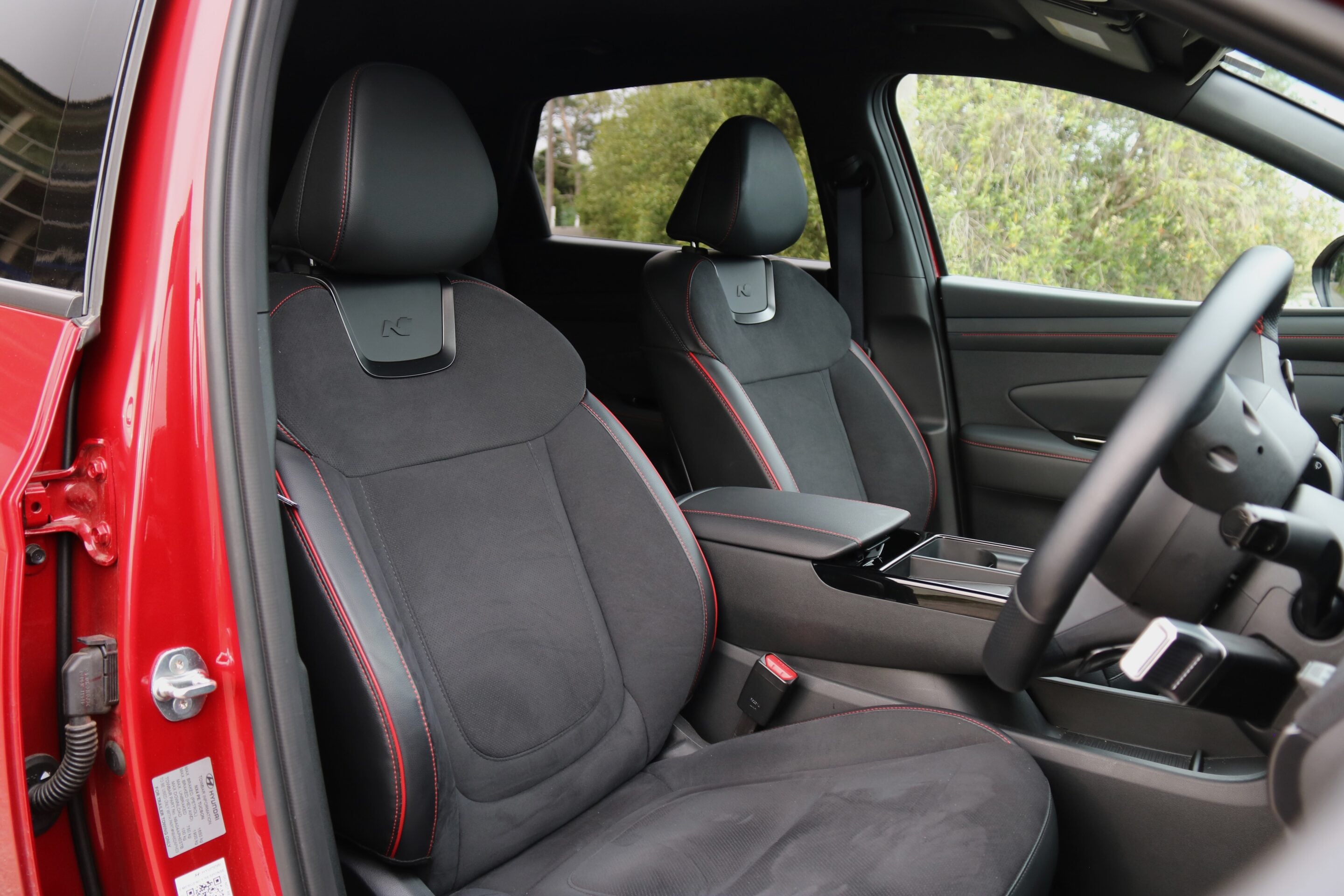
- Suede and leather upholstery
- 10-way electric driver’s seat
- Heated front seats
- Dual-zone automatic climate control with rear air vents
- 12.3-inch digital driver’s display
- 12.3-inch touchscreen with over-the-air updates
- Wireless Apple CarPlay and Android Auto
- Satellite navigation with live traffic
- Bluelink live services
- AM/FM/DAB+ digital radio
- Six-speaker sound system
- 4x USB-C ports
- Wireless phone charger
- 7x airbags
- Autonomous emergency braking with car, pedestrian, cyclist, direct oncoming and intersection monitoring
- Lane keeping assistance with adaptive lane guidance
- Adaptive cruise control with stop and go functionality
- Blind-spot monitoring (with braking)
- Rear cross-traffic alert (with braking)
- Safe exit warning
- Driver attention monitoring
- Traffic sign recognition
- Matrix adaptive high beam
- Front and rear parking sensors
- Reversing camera
- Anti-theft alarm
- Tyre pressure monitoring
Tucson Hybrid Elite N Line specifications:
| Price | $50,850 plus on-road costs (currently $53,990 drive away in NSW) |
|---|---|
| Drivetrain | 1598cc turbocharged four-cylinder petrol + electric motor |
| Battery | 1.49kWh lithium-ion |
| Combined peak power | 172kW (@ 5600rpm) |
| Combined peak torque | 367Nm (@ 1000 – 4100rpm) |
| Transmission | Six-speed automatic, front-wheel drive |
| Claimed fuel consumption | 5.3L/100km |
| Claimed CO2 emissions | 121g/km |
| Fuel type/tank size | 91 RON regular unleaded, 52 litres |
| Dimensions (L/W/H/WB) | 4650/1865/1665/2755mm |
| Boot capacity | 582 litres (rear seats up), 1903 litres (rear seats folded) |
| Tare mass | 1775kg |
| Braked towing capacity | 1900kg |
| Warranty | Five-year/unlimited km (extendable to seven years with dealer servicing) |
| Five-year service cost | $2290 (an average of $458 per year) |
| On sale | Now |
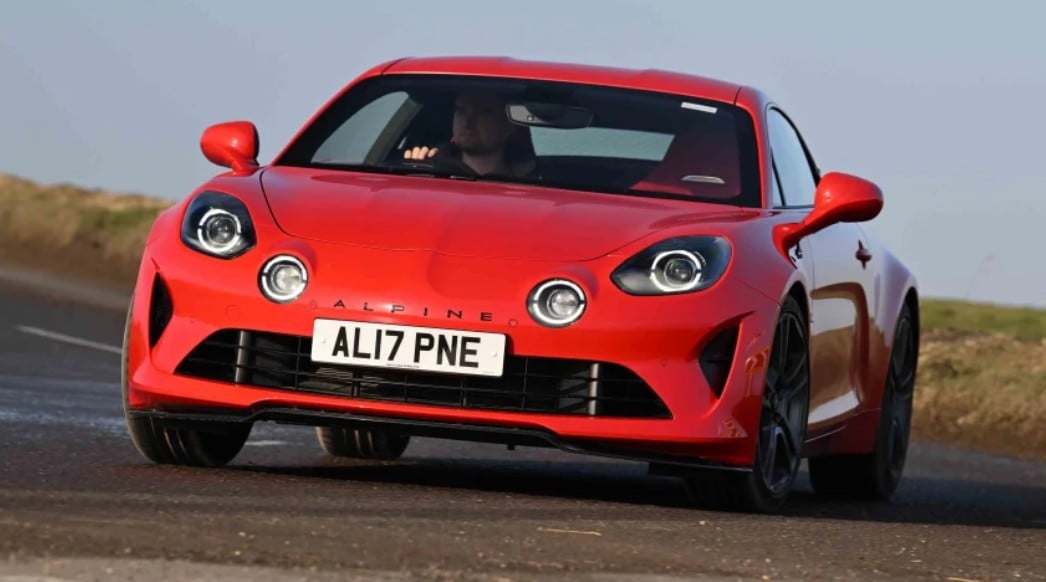
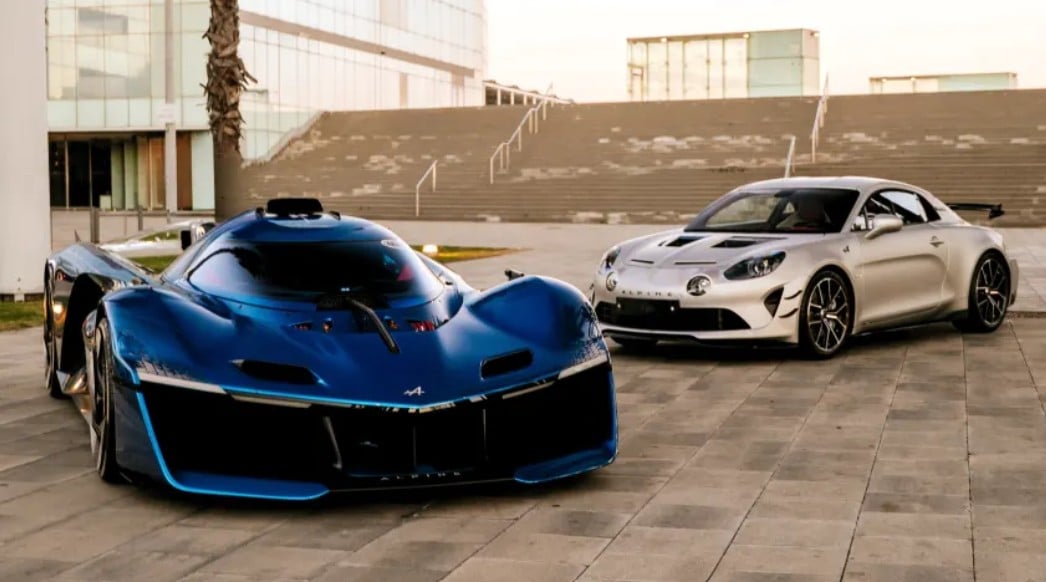
Alpine has offered its clearest look yet at the electric successor to the A110, with a development version of the new sports car set to make its public debut at this year’s Goodwood Festival of Speed.
The model represents a major step for the French brand, becoming the first vehicle to use Alpine’s dedicated Alpine Performance Platform (APP) and serving as a cornerstone of the company’s future performance-car plans.
While the current petrol-powered A110 has built a reputation for combining modest power with exceptional agility and low weight, Alpine says its electric replacement is being developed to deliver even stronger performance without abandoning those core attributes.
According to the company, the new A110 EV is targeting lap times quicker than a Porsche 718 Cayman around Germany’s Nürburgring circuit. Achieving that goal will rely on a lightweight aluminium architecture, advanced torque management systems and a bespoke electric drivetrain.
One of the most unusual engineering solutions is the battery layout. Rather than placing a large battery pack beneath the floor as most EVs do, Alpine will split the battery into two sections. The primary pack will sit behind the occupants, mimicking the placement of a traditional mid-mounted engine, while a smaller pack will be positioned towards the front of the vehicle.
The arrangement is designed to preserve the A110’s low-slung proportions and deliver a targeted 40:60 front-to-rear weight distribution.
Power will come from a new integrated e-axle system featuring twin rear-mounted electric motors, a silicon-carbide inverter and sophisticated torque-vectoring technology capable of adjusting power delivery between the rear wheels every 10 milliseconds.
Alpine boss Philippe Krief has previously indicated the electric coupe will weigh around 1450kg, making it relatively light by EV standards. The company is also targeting a driving range of around 600km and will utilise an 800-volt electrical architecture to support faster charging and improved efficiency.
Performance figures remain unconfirmed, although Krief has suggested output will comfortably exceed 370kW in higher-performance versions. An all-wheel-drive variant is also under consideration.
The electric A110 is expected to enter production in 2027 and will be joined by additional models using the same platform, including a roadster and a larger 2+2 coupe. Together, they form part of Alpine’s broader ambition to establish itself as a genuine rival to premium sports-car brands such as Porsche.
For Alpine, the challenge is significant. The current A110 has become something of a modern benchmark for lightweight driver engagement. Whether an electric successor can capture that same magic remains to be seen, but the brand appears determined to prove that electrification and driving enjoyment need not be mutually exclusive.
First published in the January 1995 issue of Wheels magazine, Australia’s best car mag since 1953. Subscribe here and gain access to 12 issues for $109 plus online access to every Wheels issue since 1953.
Scoop! Holden secret concept car.
Under the skin of this secret, swoopy Holden concept car is the next generation Commodore.
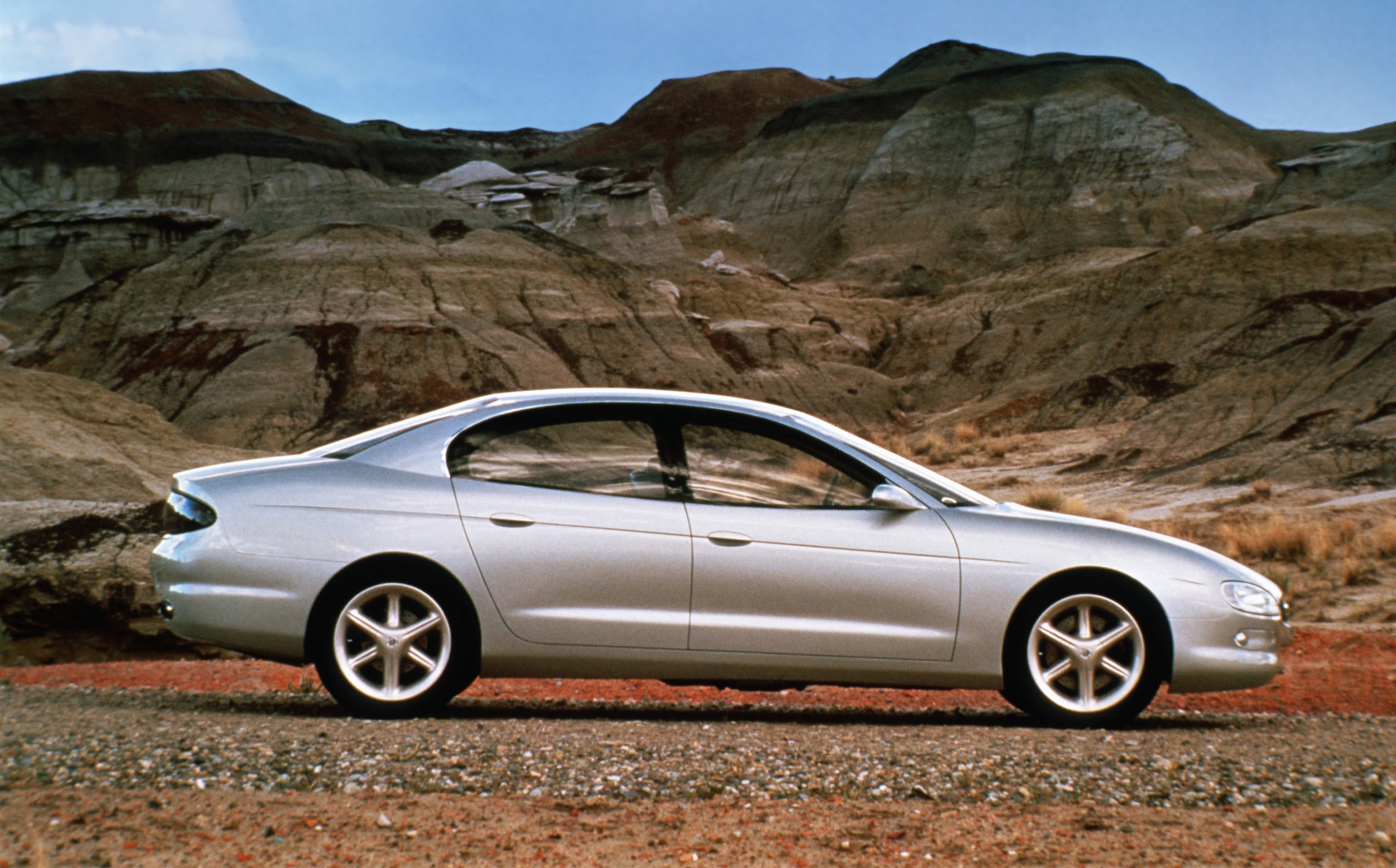
Officially, it’s called the XP2000. Underneath, though, it’s the GMX127 – the still-born VT based car which was to be built in Australia and exported to the US as the Buick Century in 1997 (pictured, below) in a deal estimated to be worth $600 million a year.
Though fitted with a 3.5 litre quad cam V8, XP2000 is built on the same GM2800 platform as the VT. US sources confirm the production versions would have been powered by the 3.8 litre V6.
Scheduled to appear at this month’s Detroit Show, the XP2000, which wowed Buick dealers at a convention in San Diego late last year, also features a key that doubles as a debit card for toll charges and fuel purchases, a radar based anti-collision system, a voice activated navigation system and eight – count ’em – airbags.
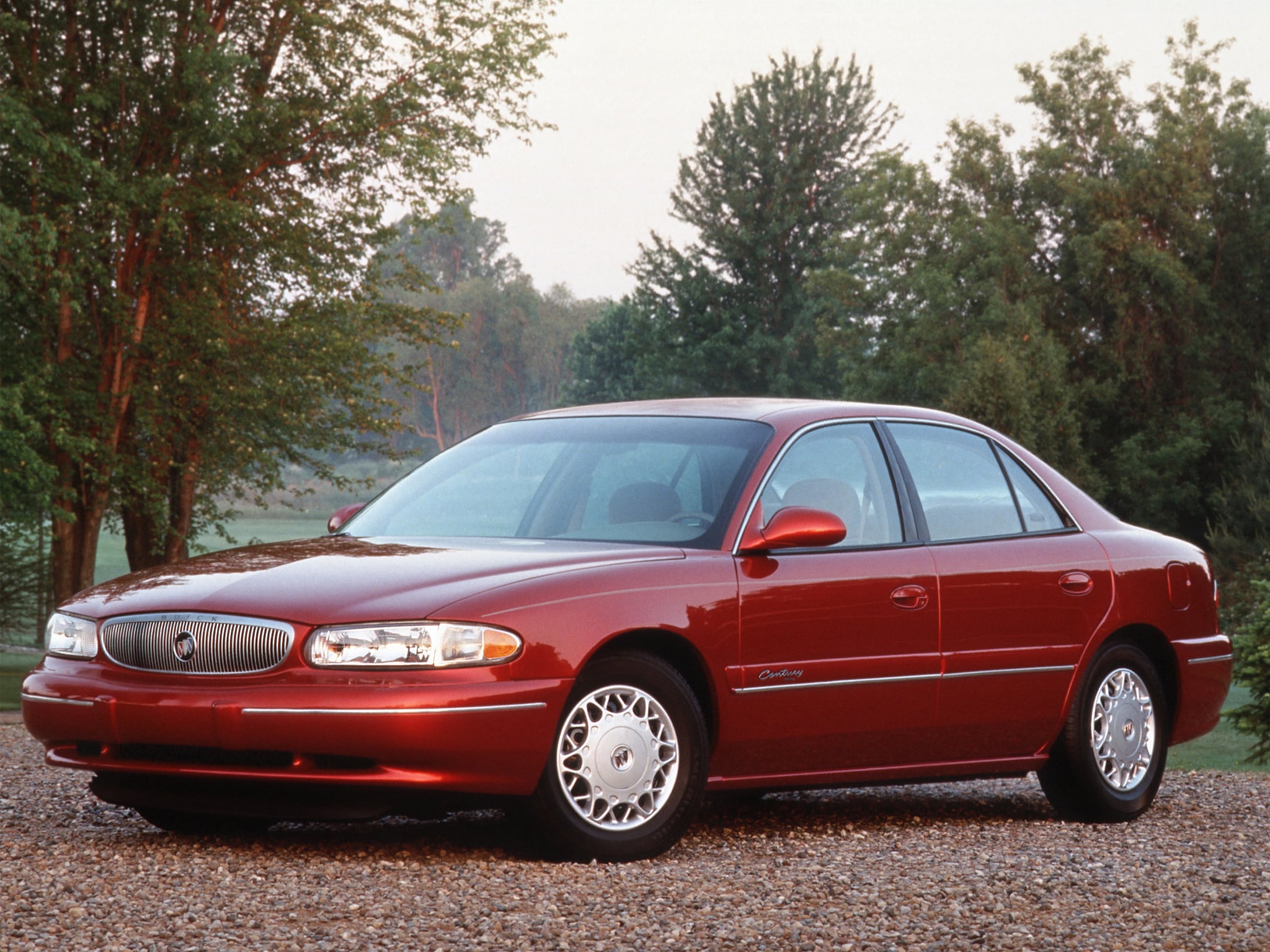
Styled in the US, the XP2000 was built right here in Australia. GM insiders are reportedly delighted with the finished product, and amazed at how much less it cost to build.
SUVs continue to dominate Australia’s new car sales charts, with buyers flocking to high-riding family haulers in record numbers. But while they’re immensely popular, they’re also far from the only way to enjoy the benefits of hybrid technology – boosted performance, greater fuel economy and lower running costs compared with ICE engines.
Whether you need extra passenger space, a huge boot, long-distance comfort or simply prefer the way a car drives compared to an SUV, there are plenty of alternatives to the usual hybrid SUV crowd. These five hybrid models prove you don’t have to buy an SUV to enjoy excellent fuel economy and everyday practicality:
Toyota Camry
Price: From $39,990 plus on-road costs
Drivetrain: 163kW 2.5-litre four-cylinder hybrid, e-CVT, front-wheel drive
Combined fuel consumption: 4.0L/100km
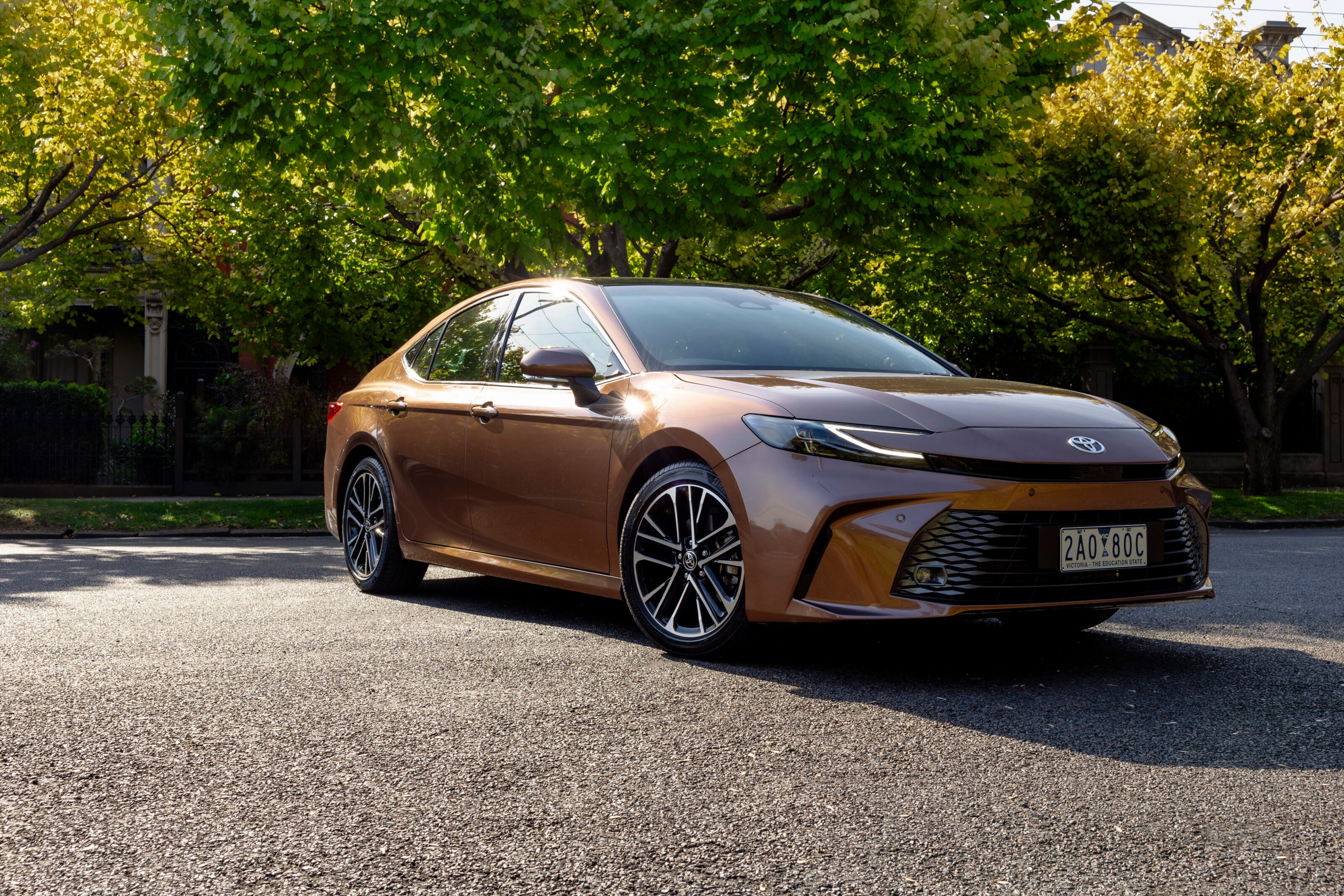
One of the best examples of a hybrid family car that isn’t an SUV is the venerable Toyota Camry. One of the most successful sedans of all time, the Camry proves that you don’t need an SUV to achieve a comfortable, very fuel efficient, good to drive and practical family car with a large 524-litre boot. No wonder it still sells so well.
Prices start at $39,990 plus on-road costs, or some $6000 less than a RAV4 that it shares so much with, mechanically speaking, and even at the top-spec SL level, you’re still not spending even $60,000 once on-road costs are included. Every Camry uses a 170kW 2.5-litre hybrid drivetrain that uses just 4.0L/100km on the combined cycle. That economy in a large, comfortable sedan? That’s incredible, and we think you’d be mad to consider an equivalent SUV over one.
Kia Carnival Hybrid
Price: From $56,310 plus on-road costs
Drivetrain: 180kW/366Nm 1.6-litre turbocharged four-cylinder hybrid, six-speed auto, front-wheel drive
Combined fuel consumption: 5.8L/100km
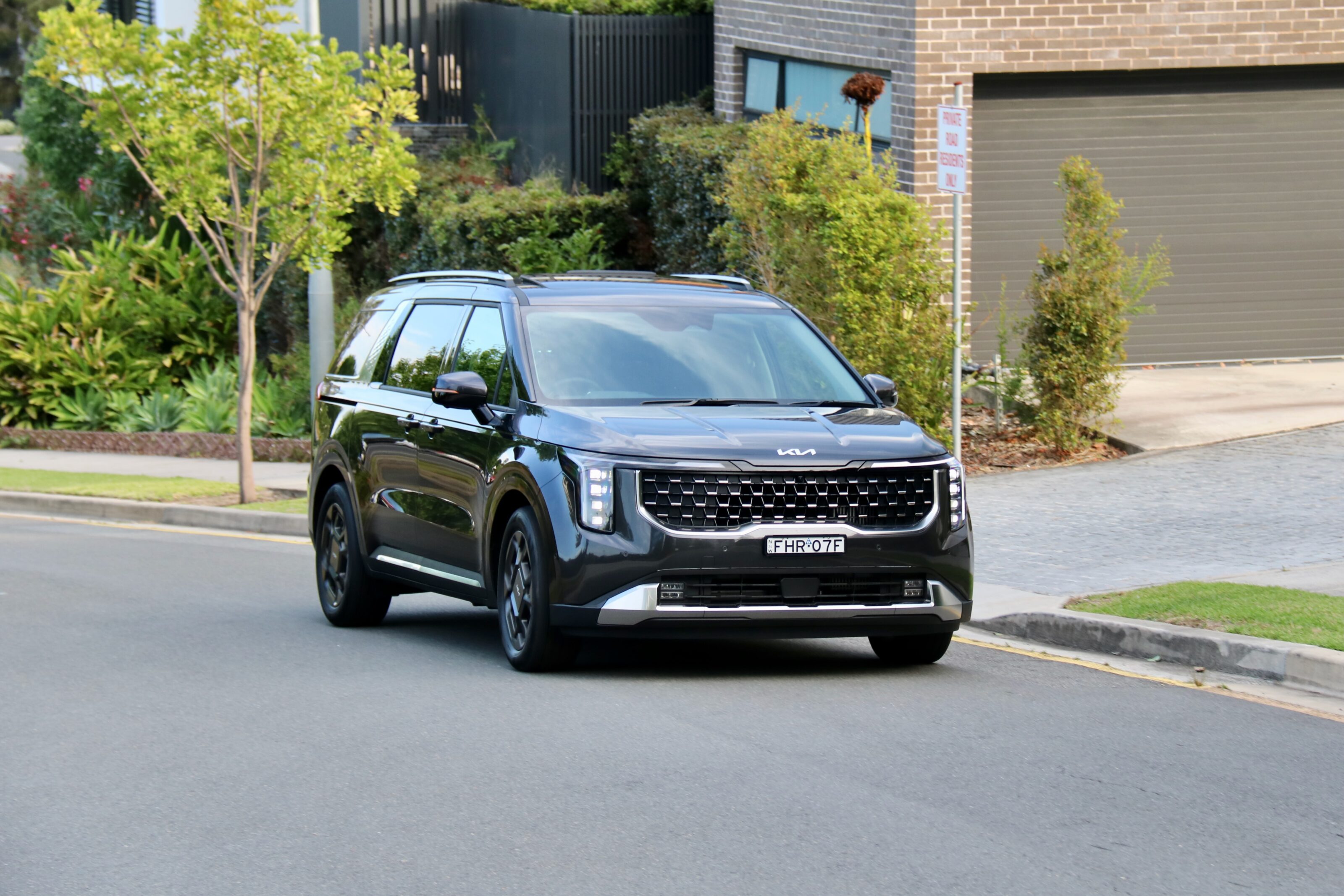
Although there’s been some recent action from new brands to our shores in higher price points, affordable people mover options on the new car market have significantly dwindled compared to, say, the early 2000s. In fact, the Kia Carnival is easily the biggest-selling people mover and sells in strong numbers locally, and while it also offers a diesel option, the hybrid is a great drivetrain choice.
The Carnival hasn’t been the most successful people mover in Australia by accident – it’s earned that position thanks to its good value for money, huge cabin space, comfortable driving experience and good fuel economy. Prices start at $56,310 plus on-road costs for the 180kW 1.6-litre turbo-hybrid engine, which is rated at just 5.8L/100km on the combined cycle, and it’s a great SUV alternative thanks to its space and seating for eight.
Skoda Superb Select PHEV
Price: From $66,990 driveaway
Drivetrain: 150kW/330Nm 1.5-litre turbocharged four-cylinder plug-in hybrid, six-speed dual-clutch, front-wheel drive
Claimed electric driving range: 125km (WLTP)
Combined fuel consumption: 1.4L/100km
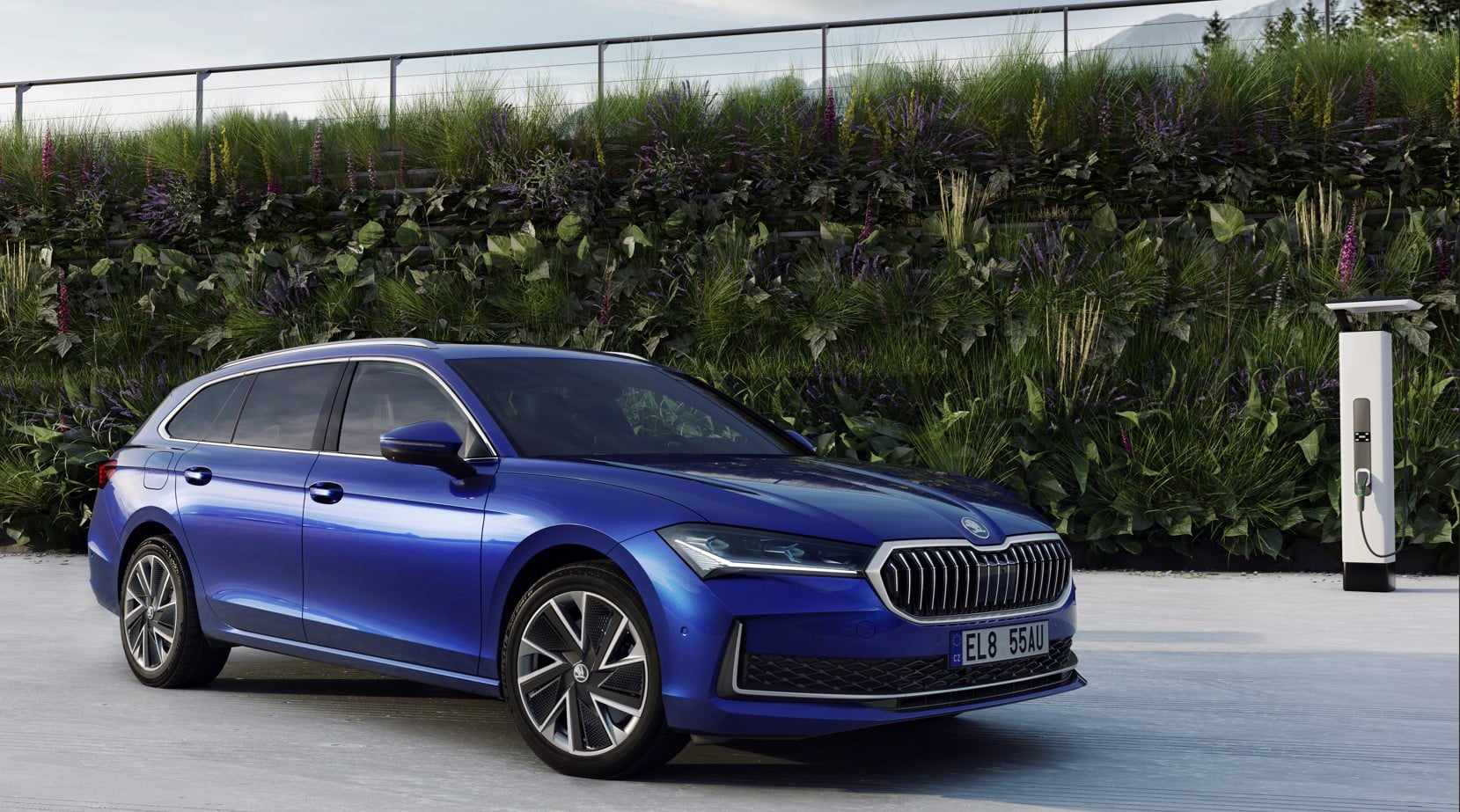
The current-generation Skoda Superb launched in Australia with a 195kW 2.0-litre turbo-petrol engine in sporty Sportline spec, but the brand has also just added a cheaper new Select plug-in hybrid model to the lineup. Priced from $66,990 driveaway, the Superb Select PHEV uses a 150kW 1.5-litre turbo-petrol plug-in hybrid drivetrain with a 25.7kWh battery that’s rated at a long 125km of WLTP range.
Because of that long range, the Superb Select is rated at just 1.4L/100km on the combined cycle, and unlike some other PHEVs, it can be DC fast charged so that you’re spending less time charging and more time enjoying is comfortable driving experience, excellent build quality and spacious cabin. The Superb is known for a massive boot, and the Select is no different – despite the PHEV battery robbing some space, it still offers 510 litres with the rear seats up and a cavernous 1770 litres with them folded. That alone makes it a compelling choice against a hybrid SUV.
BYD Seal 6
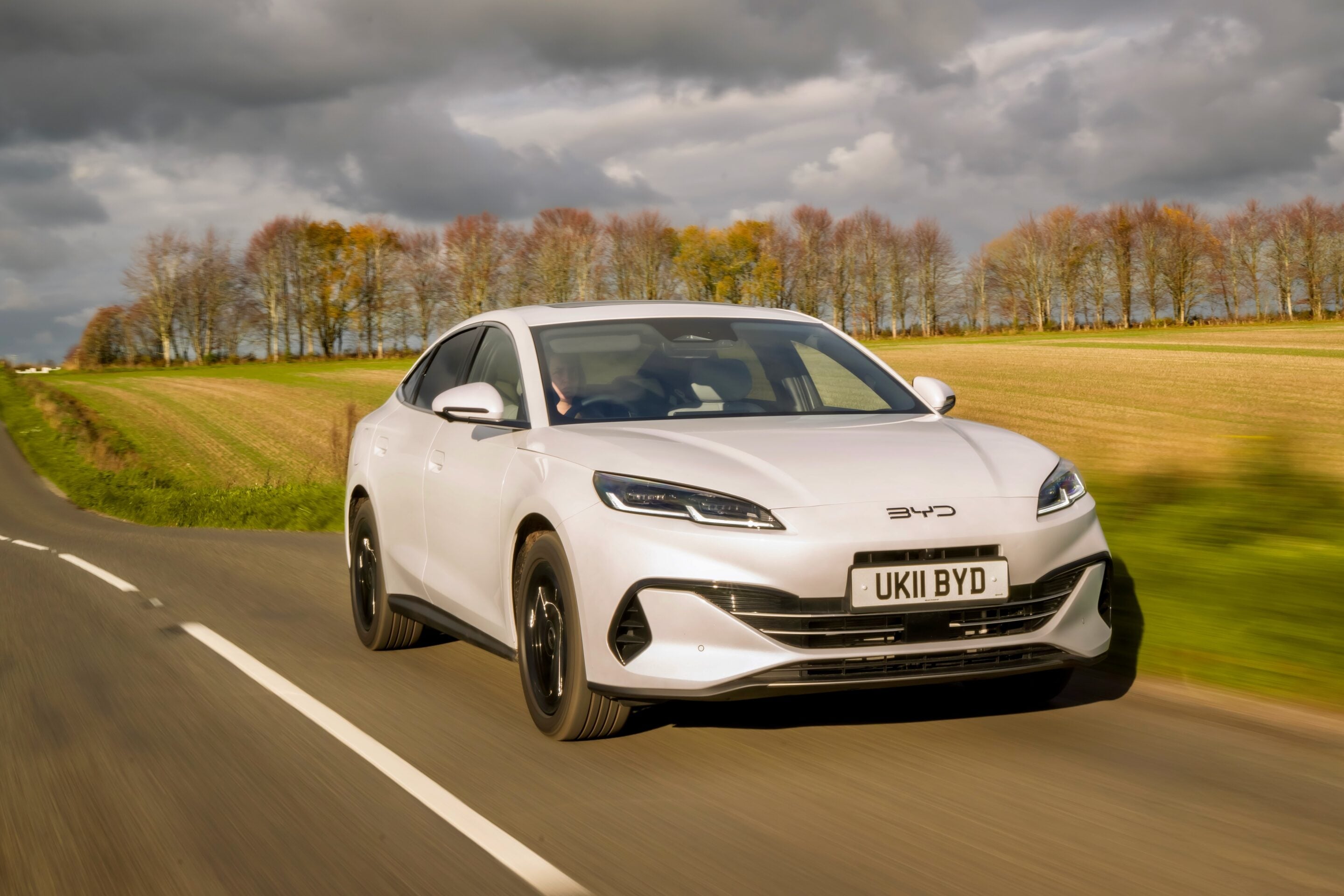
Price: From $34,990 plus on-road costs (sedan), $39,990 plus on-road costs (wagon)
Drivetrain: 130kW (sedan)/163kW (wagon) 1.5-litre four-cylinder plug-in hybrid, single-speed transmission, front-wheel drive
Claimed electric driving range: 55km (WLTP – sedan), 100km (WLTP – wagon)
Combined fuel consumption: 1.1L/100km (sedan), 0.8L/100km (wagon)
BYD’s Seal 6 is the newest kid on the block on this page, having only just launched in Australia. But unlike the Seal electric sedan, the Seal 6 is a plug-in hybrid and also available in either sedan or – in a first for the brand locally – wagon bodystyles. Pricing starts at just $34,990 plus on-road costs for the Essential sedan, making it one of the cheapest PHEVs available locally, while the Premium wagon – which is better equipped, more powerful and offers a longer EV range, making it the pick of the range – is $5000 dearer at $39,990 plus on-road costs.
Both Seal 6 variants use a 1.5-litre petrol engine combined with an electric motor, with the sedan making 130kW of power and the wagon 163kW. Thanks to a larger 19kWh battery (versus 10.1kWh in the sedan), the wagon is capable of a WLTP-rated range of 100km, a combined fuel consumption of just 0.8L/100km and a total driving range of more than 1000km. Furthermore, its body is practical and spacious, while its 670-litre boot opens up to 1535 litres with the rear seats folded.
Honda Accord e:HEV RS
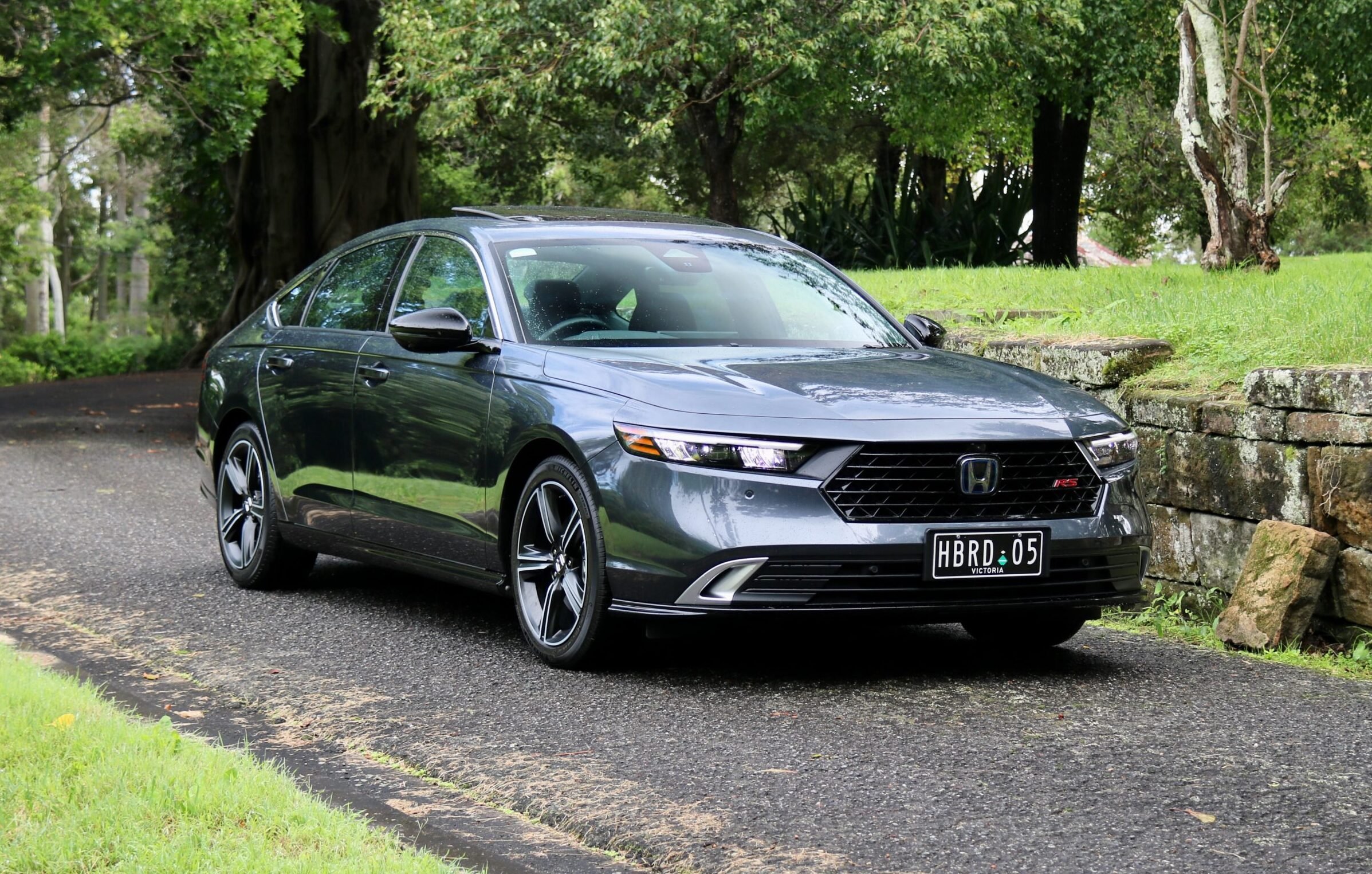
Price: From $64,900 driveaway
Drivetrain: 152kW/335Nm 2.0-litre four-cylinder hybrid, e-CVT automatic, front-wheel drive
Combined fuel consumption: 4.3L/100km
Rounding up the best hybrid family cars you can buy that aren’t SUVs is the Honda Accord, which recently celebrated its 50th year in production. As it’s always been, the Accord is a spacious, practical, well equipped, good quality and reliable mid-sizer that deserves attention. Just a single model is available in Australia, the e:HEV RS, which is priced from $64,900 driveaway.
That means that it’s not cheap, but it’s very well equipped and it’s also great to drive. Its 2.0-litre hybrid drivetrain makes a reasonable 152kW of power but, crucially for this page, is rated at just 4.3L/100km on the combined cycle. Its 570-litre boot is huge for a mid-size sedan too, meaning that you can fit quite a lot in, while cabin space is impressive too. As with Toyota and its RAV4 and Camry, the excellent top-spec Honda CR-V SUV is priced around the same as the Accord, but we’d choose the latter every time.
There are times when the new car market seems almost formulaic. Carmakers know what sells and so are often risk-averse when it comes to trying something unusual.
Then there are the times that management has given the thumbs up to something that seems entirely off the wall. Unlikely cars with unusual styling or outrageous specs that make absolutely no rational sense.
A true automotive oddity is a rarity, but nonetheless, over the last 50 years here are some of the stranger cars to roll down the production line and into showrooms.
Chevrolet SSR
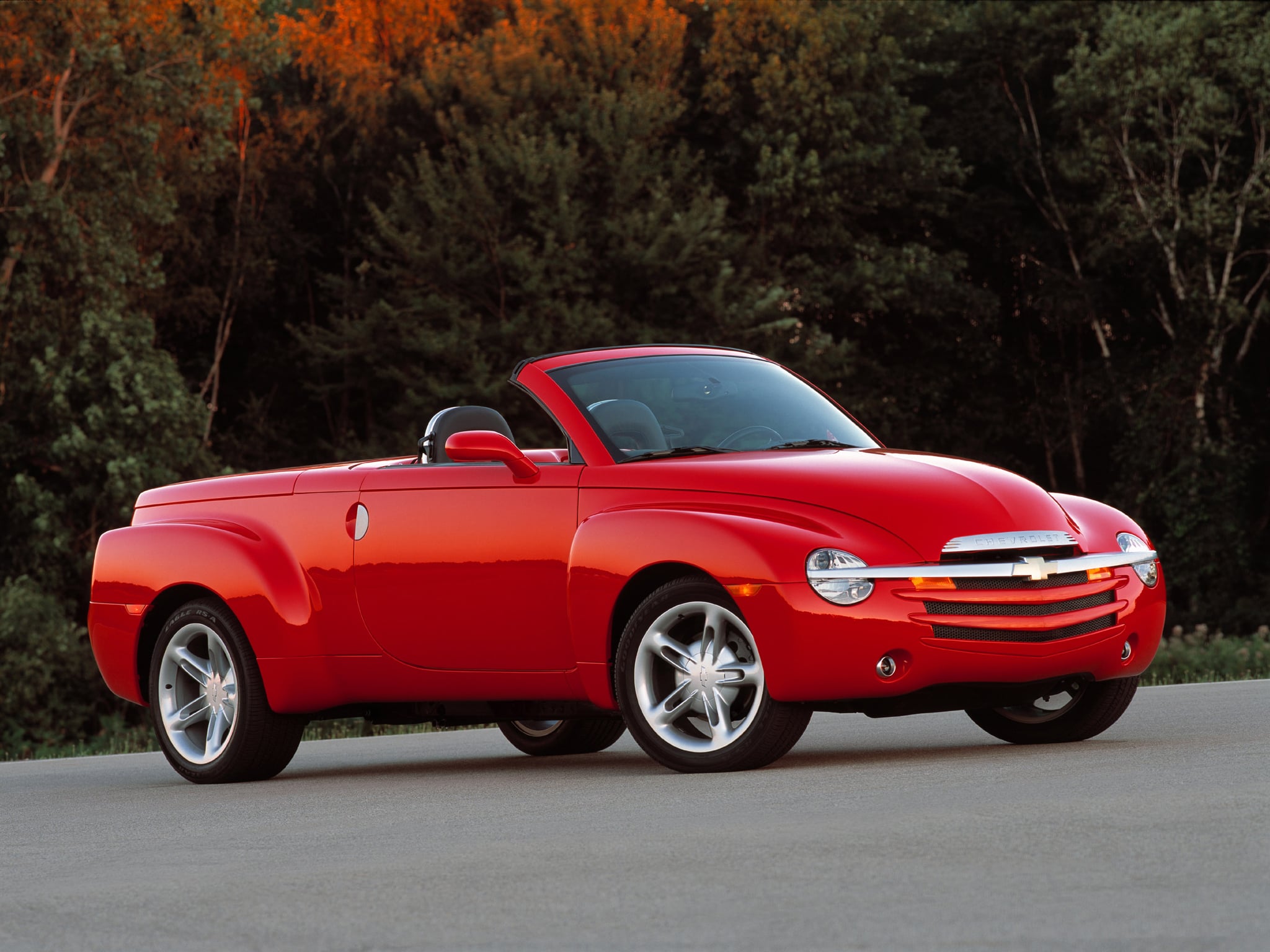
In 2003, Chevrolet gave North American customers a car that no one asked for, the Super Sport Roadster, or SSR. With the market for high-end pick-up trucks expanding quickly, and retro designs riding a wave of success, the SSR seemed like the smart way to address both booming markets at once.
The concept seemed sound. A sporty pick-up with a V8 engine, unmissable looks and the added benefit of a folding hardtop to take advantage of summer days. Volumes were never predicted to rival mainstream trucks, but even then, GM quickly built inventory as SSRs sat unloved at Chevrolet dealers.
Dodge Viper
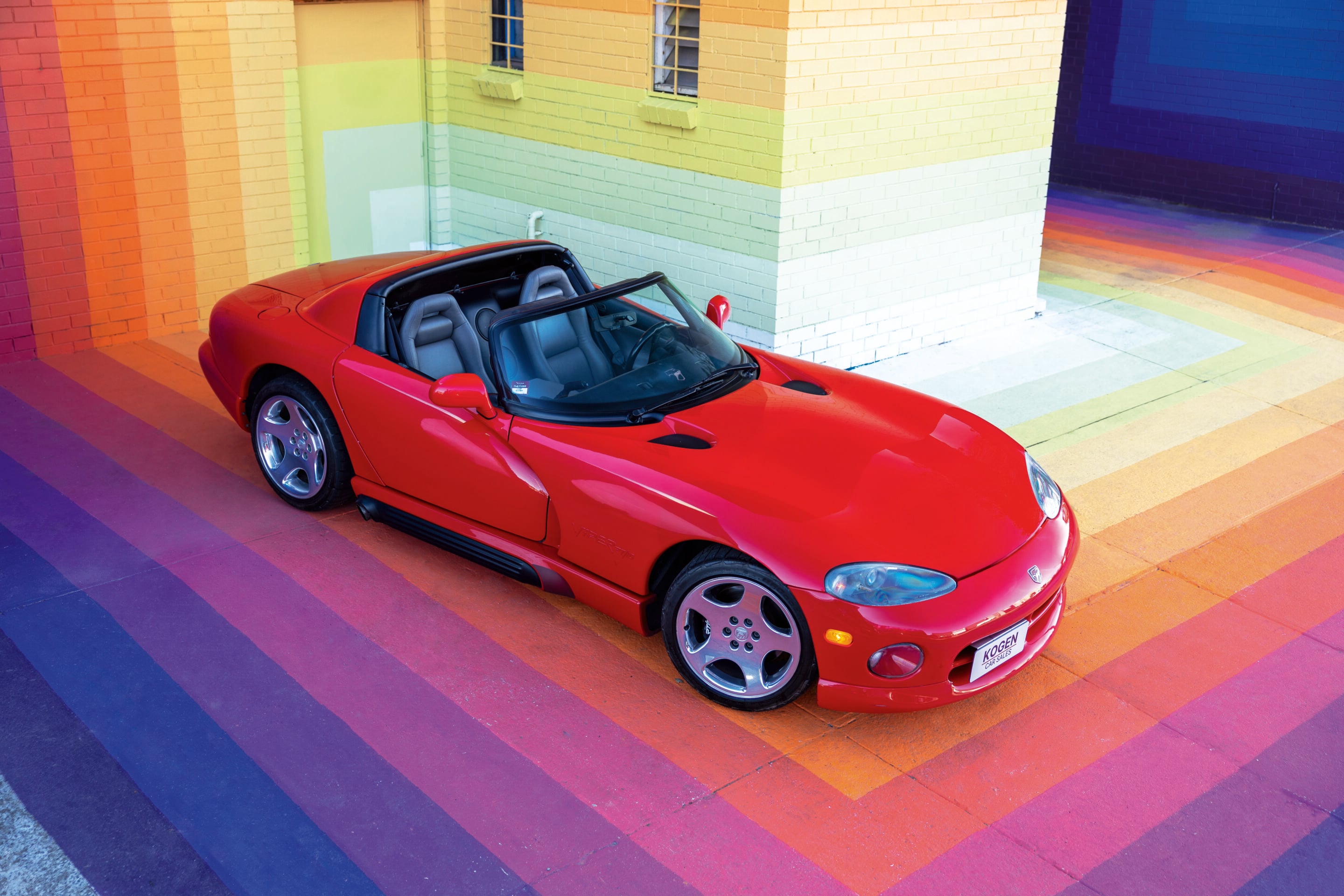
The Dodge Viper concept wowed when it made its 1989 debut, but the insane proportions, with no consideration given to practicality, and oversized 8.0-litre V10 engine made it impractical as a production car. Public demand said otherwise though, and Dodge rushed development of the production model.
With the Shelby Cobra as its engineering inspiration, the Viper shunned the kind of modern considerations you’d probably expect. Side windows? No, those were an accessory. External door handles? What on earth for. But surely the driving position is dialled in perfectly? Actually, the massive transmission tunnel ruled that out.
As illogical as the original Viper was, Dodge refined the formula over three generations from 1991 to 2017.
Nissan Murano CrossCabriolet
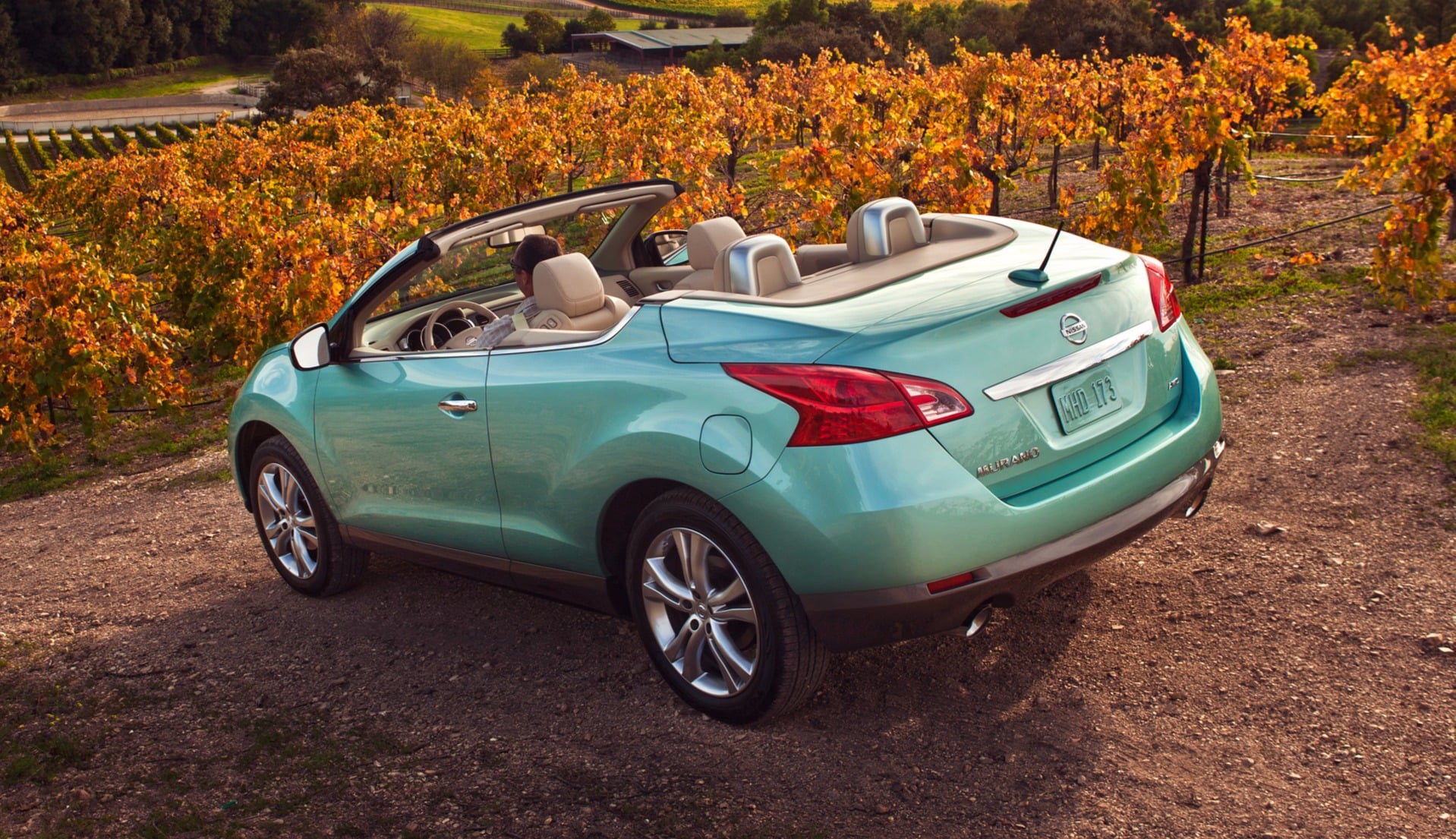
While it only made a brief appearance in Australia, the Nissan Murano has been a fixture of US showrooms across four generations. Between 2011 and 2014, the regular SUV was also joined by the convertible that surely no one asked for, the Murano CrossCabriolet.
The pool of Florida retirees that the CrossCabriolet was aimed at was, apparently, large enough to warrant building a version of the Murano with a two-door body and folding fabric roof.
The target market was affluent older buyers in the ‘lifestyle’ stage of their lives. The premise was the open-top fun of something like a Mustang, but with the ease of entry and egress provided by a crossover SUV.
While the project was short-lived, it seemingly inspired Range Rover to follow up with the Evoque convertible in 2017 and Volkswagen with the T-Roc Cabriolet in 2020.
Mitsuoka Orochi
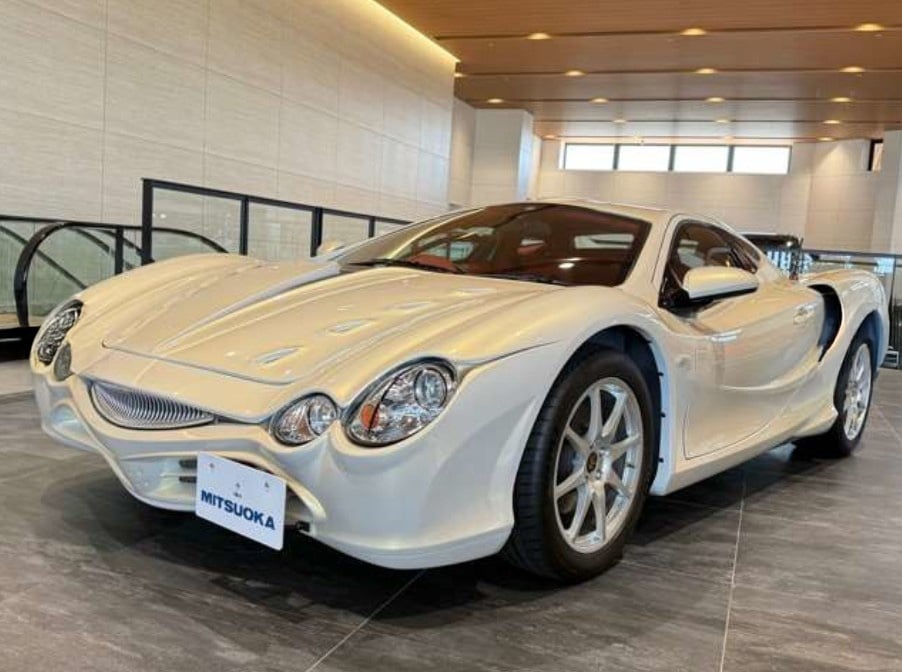
Mitsuoka found an unusual niche as a second-stage manufacturer, adapting the designs of existing Japanese domestic models into retro-inspired throwbacks. For the Orochi, Mitsuoka designed a mid-engined coupe without relying on another brand for its starting point.
That may have been a mistake. Steeped in Japanese mythology, the Orochi takes its name from an eight-headed dragon. The quad-headlight front, overabundance of swept lines, and small grinning grille fall short of the sinister name.
Adding to the disappointment, the Orochi takes its power from the 3MZ V6 found in a variety of early 2000s Toyota and Lexus models, tied to a five-speed automatic, offering just 172kW of uninspiring motivation.
Toyota Sera
We have Japan’s unprecedented economic boom of the late 1980s to thank for all manner of over-engineered, and frankly unusual, automobiles. The great crime being that very few ever sold outside of Japan.
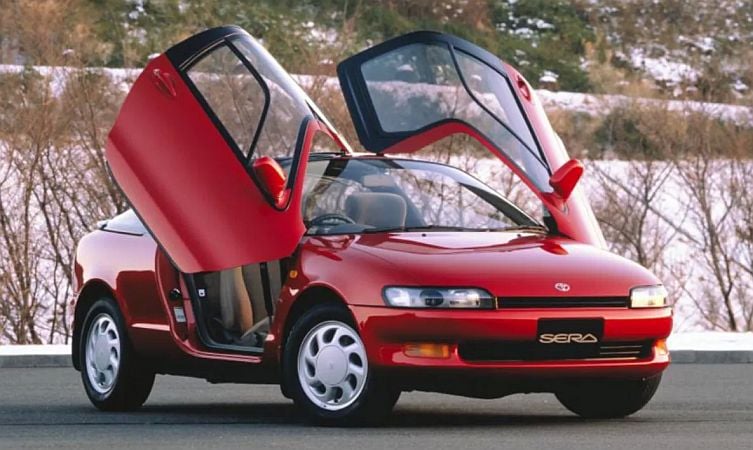
One of many attempts from Toyota was the compact Sera sports car. The Sera’s butterfly doors and glass canopy roof had absolutely no business being mounted on the bones of a sedate 78kW 1.5-litre Starlet chassis.
A lot of engineering effort went into those doors, which rivalled a Lamborghini for drama when operated. Gordon Murray even claims they inspired the McLaren F1’s door design. Between 1990 and 1995 less than 16,000 Seras were produced.
Suzuki X-90
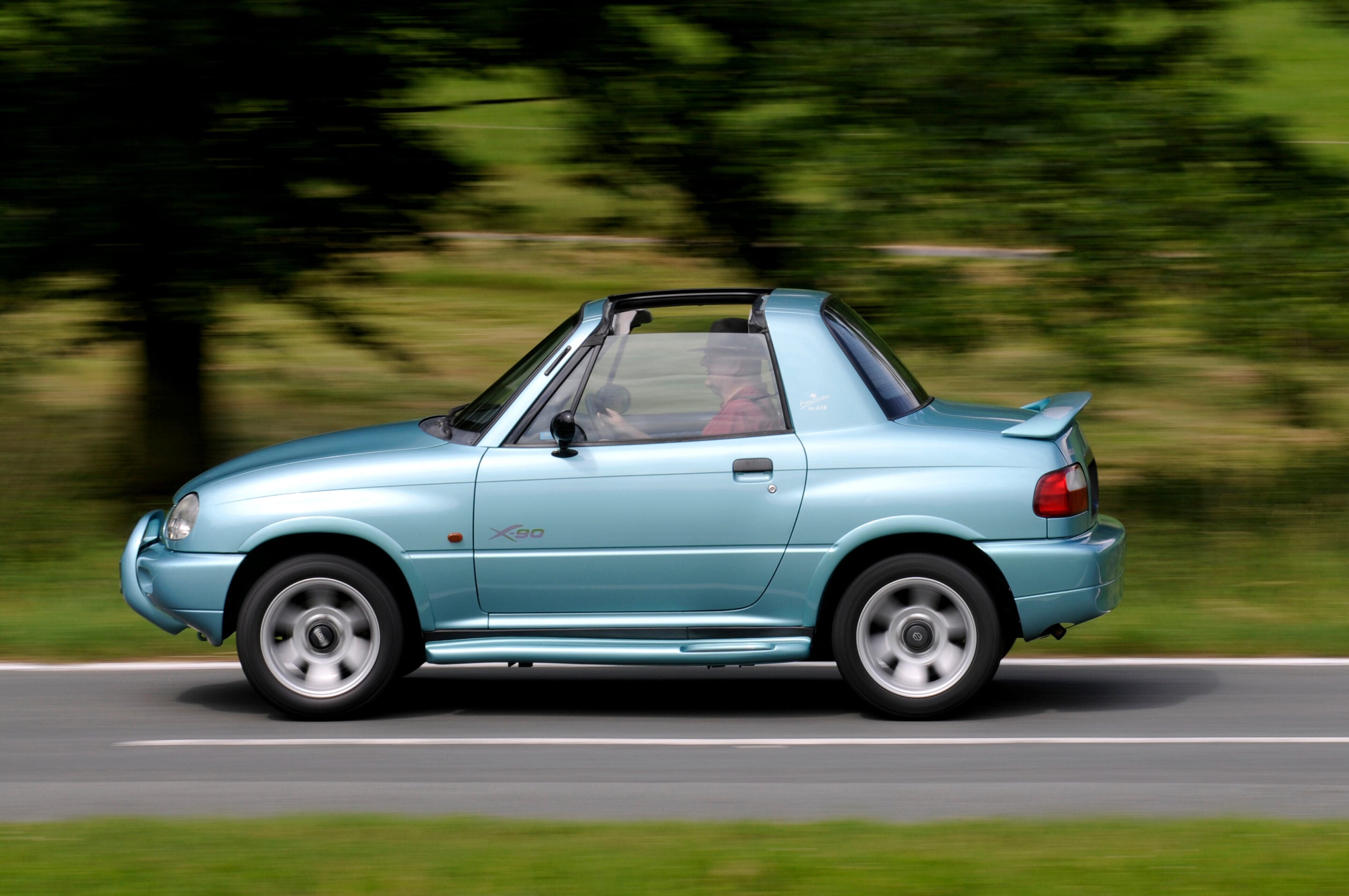
No matter how you slice it, a compelling reason for the Suzuki X-90 to exist never quite reveals itself. A version of the three-door Vitara, but with fewer seats and far less cargo space. Genius.
Suzuki perhaps looked at the enviable reputation the Mazda MX-5 was building among enthusiasts and figured that the body-on-frame Vitara could be its own shortcut to success. The rugged underpinnings gave the X-90 genuine off-road capability, but the coupe-style body stymied practicality.
Sporty drivers didn’t fall for the upright stance and compromised handling, and image-conscious trend seekers looked elsewhere. Finally, the much more sensible and still open-air experience of the RAV4 Convertible delivered a similar al fresco experience with far fewer compromises
BMW Z1
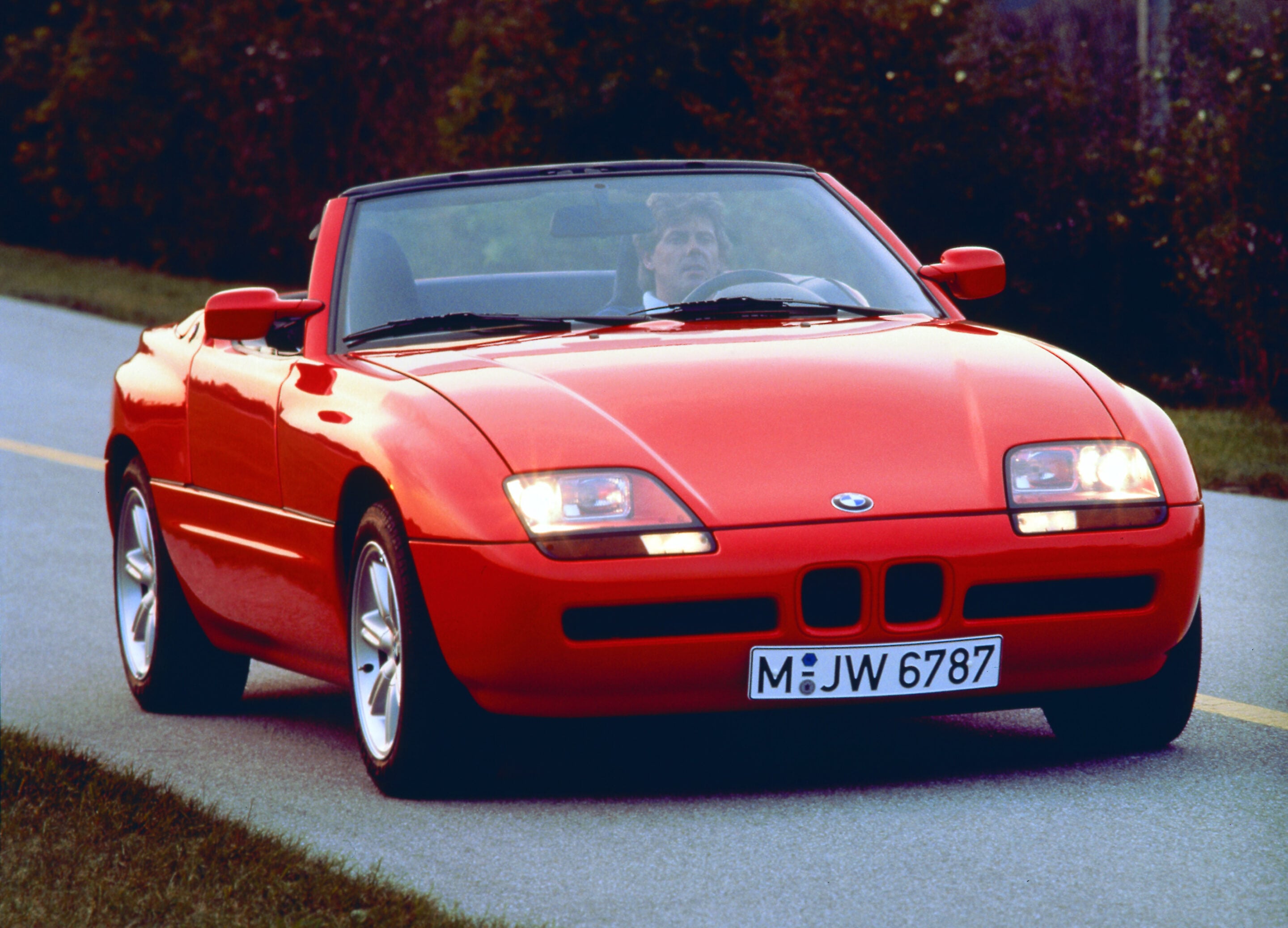
The BMW Z1 was truly an experiment brought to life. Designed by BMW’s Technik division, which was set up to fast-track innovation, free from the slower committee-style processes that usually governed BMW’s decision-making.
Floated as the idea of a sports car with a connected driving feel that mimicked that of a motorcycle, the BMW board loved the idea so much that the Z1 was given the green light.
Its construction was unusual, pioneering a monocoque chassis that functioned like a spaceframe, bonded with composite panels and covered with a non-structural plastic body that made it possible to swap panels to change colours. The absolute centrepiece, though, were powered doors that retracted down into the body, rather than being traditionally hinged, and could be opened on the move, removing the traditionally enclosed feeling of a regular roadster.
Isuzu VehiCross
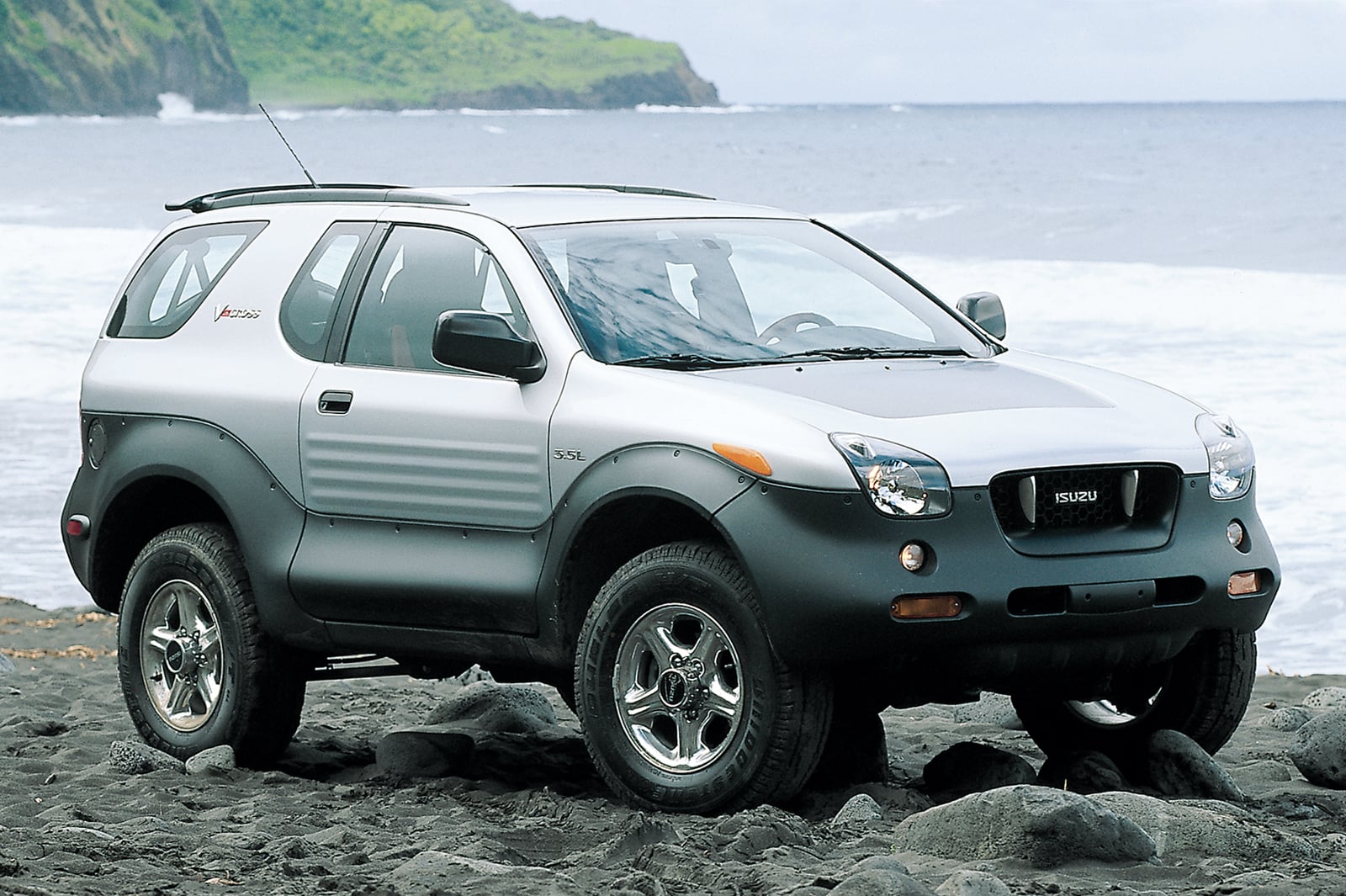
With so many brands offering overlapping SUV models today, the Isuzu VehiCross would fit right in, but at its 1997 debut, it arrived as an outlier that felt like a gamble for Isuzu at the time.
The chassis was shared with the three-door Isuzu Trooper, AKA the Holden Jackaroo, but Isuzu knew the VehiCross was always going to be niche, and replaced expensive tooling dies with lower-cost, shorter-life versions. The end product looked like a concept car brought to life.
Massive plastic cladding and a perpetually surprised face showed that Isuzu was happy to try something different in an emerging leisure-SUV market. Snug rear seats and a spare wheel mounted inside the tailgate proved that the idea perhaps needed a little further finessing.
Subaru BRAT
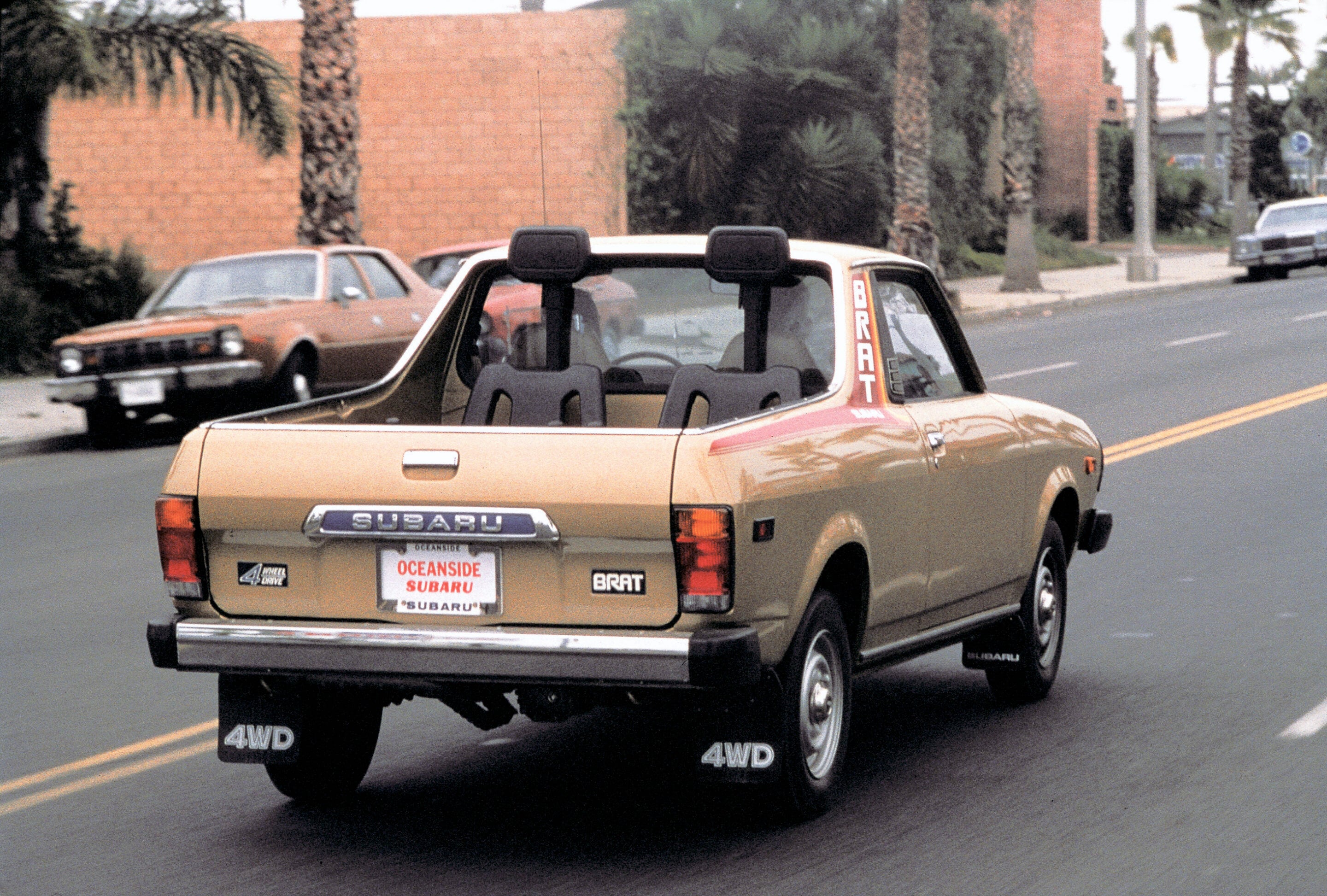
The version of the Subaru Bumby ute sold in the USA offered a clever solution to avoiding the tax on imported pick-up trucks in that market… by disguising itself as a four-seat passenger car.
A pair of all-weather outdoor jump seats helped the BRAT (which stands for Bi-drive Recreational All-terrain Transporter, by the way) avoid the 25 per cent import levy on light trucks imported to the US. It also introduced some atypical features for the light truck segment, like all-wheel drive, and by its second generation, a removable targa roof.
The gamble paid off for Subaru, and a much more sensible solution, without rear seats, was able to be sold in other parts of the world, providing a compact ute as rivals like Nissan and Mitsubishi started to upsize their ute models.
Renault Avantime
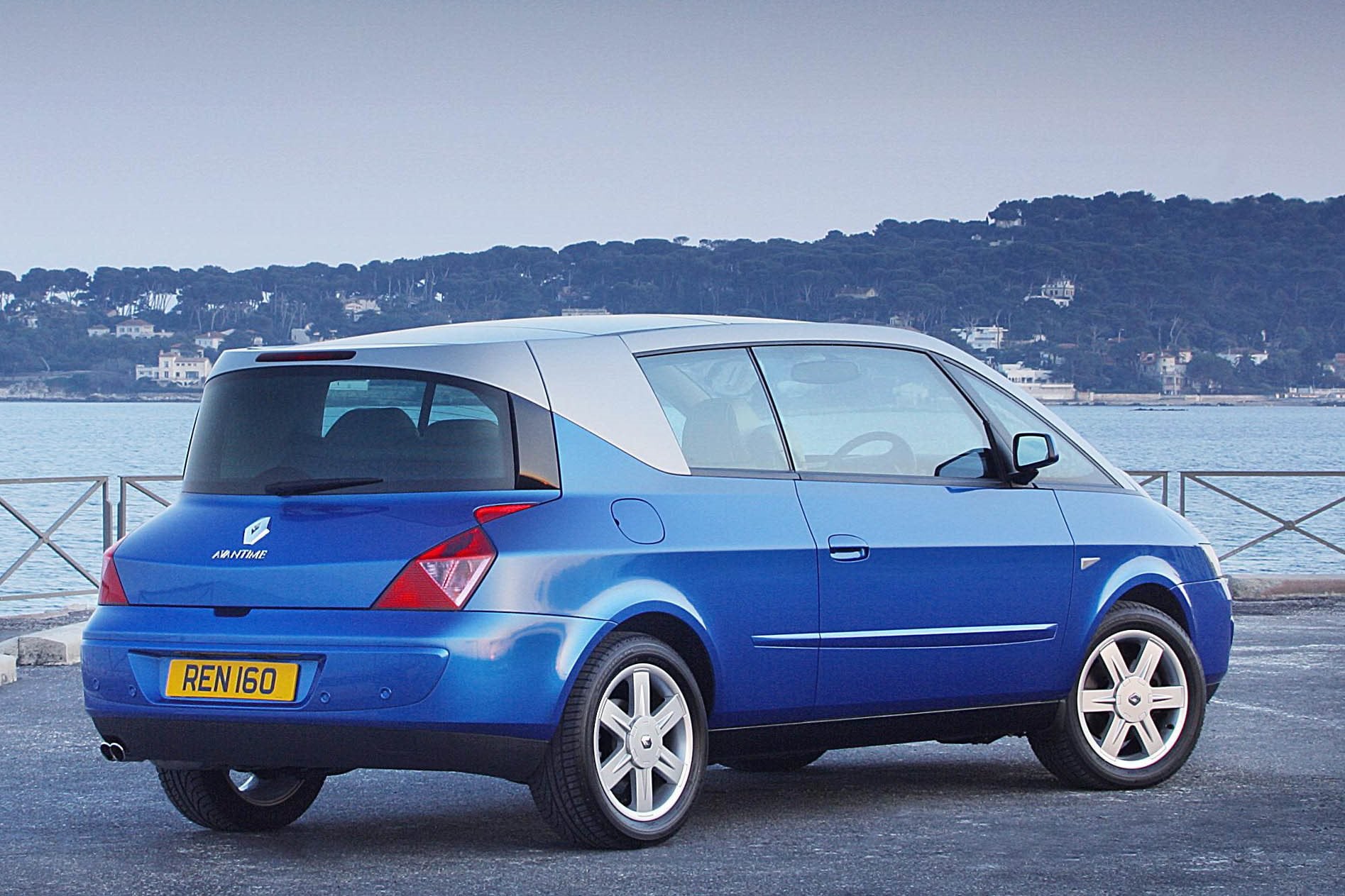
At the start of the 2000s, French brands had a staunch reluctance to accept the traditional SUV, and Renault’s stance saw it opt for a flagship model no one asked for. The Avantime arrived as a luxury 2+2 coupe, wrapped in a practical body modelled after the Espace people-mover.
Renault thought the Espace had grown so popular that once owners matured and found themselves with empty nests, they’d be so wedded to the idea of a people-mover that they would want the practicality of one with the elegance of a luxury two-door.
The Avantime’s massive glasshouse, B-pillarless construction, and huge doors on double-path hinges packed in plenty of innovation. Although probably never destined to be a runaway success, Renault further undermined its flagship efforts by unveiling the more traditional five-door Vel Satis alongside the Avantime, though neither proved commercially successful.
Kia is confident its new PV5 electric van is poised to take market share from established players thanks to its competitive pricing and electrified drivetrain.
Commercial van sales in Australia are dominated by the Toyota HiAce, claiming 46 per cent market share at $53,880 before on-road costs for a diesel automatic HiAce. The Hyundai Staria is also starting to make a dent in sales, priced at $53,978 before on-road costs. Into that battle enters the PV5, starting from $55,990 before on-road costs.
“I think we’re pretty fortunate in that there’s a lot of attention from our global president on PBV (Platform Beyond Vehicle)… it’s one of his projects and he wants to see this succeed,” Roland Rivero, General Manager of Product Planning told WhichCar by Wheels at the launch of the new PV5. “And he trusted our proposal. So we had pretty good support from HQ to ensure that PV5 worked well for the Australian market.”
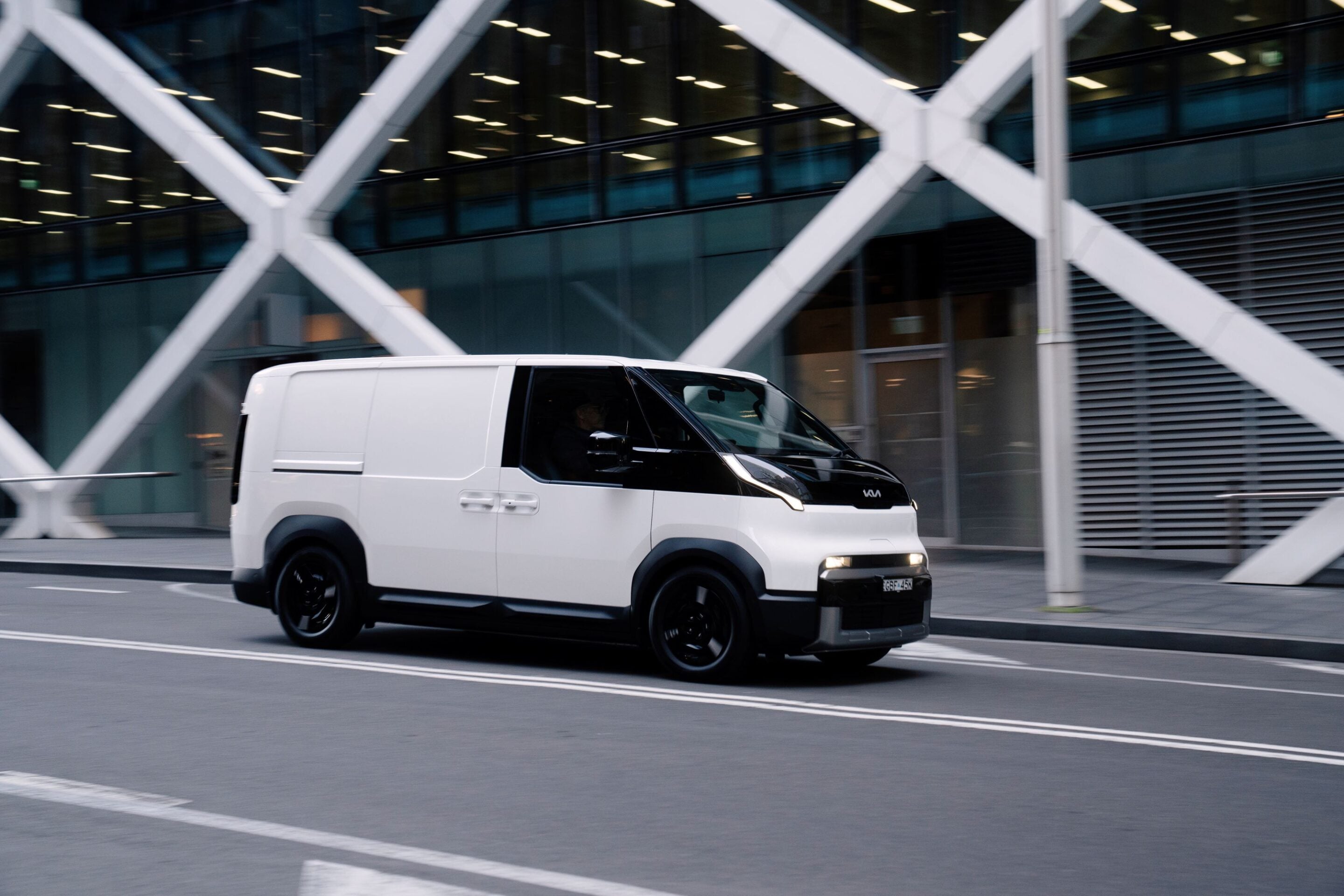
Rivero went on to explain that the PV5 – already outselling Volkswagen’s ID Buzz Cargo in its home market of Germany, for example – has a very strong footing globally, which assists when a smaller market like Australia is looking to lock in pricing.
“It does have a big volume globally,” Rivero said. “Amortising the development cost of PV5 across a bigger international volume also helps at the same time. If it was a very niche product, then having to amortise a small volume makes it difficult, and PV5 has got a lot of attention.”
There’s no doubt Kia is throwing its significant manufacturing might behind the PV5, with the all-electric modular van built at a dedicated PBV manufacturing facility at AutoLand Hwaseong. “It’s got it’s own plant, deliberately developed for that,” Rivero said.
The starting price, attractive as it might be in comparison to others, isn’t necessarily the most important factor when you’re focusing on fleet sales, according to Kia’s General Manager of fleet operations, Chris Forbes.
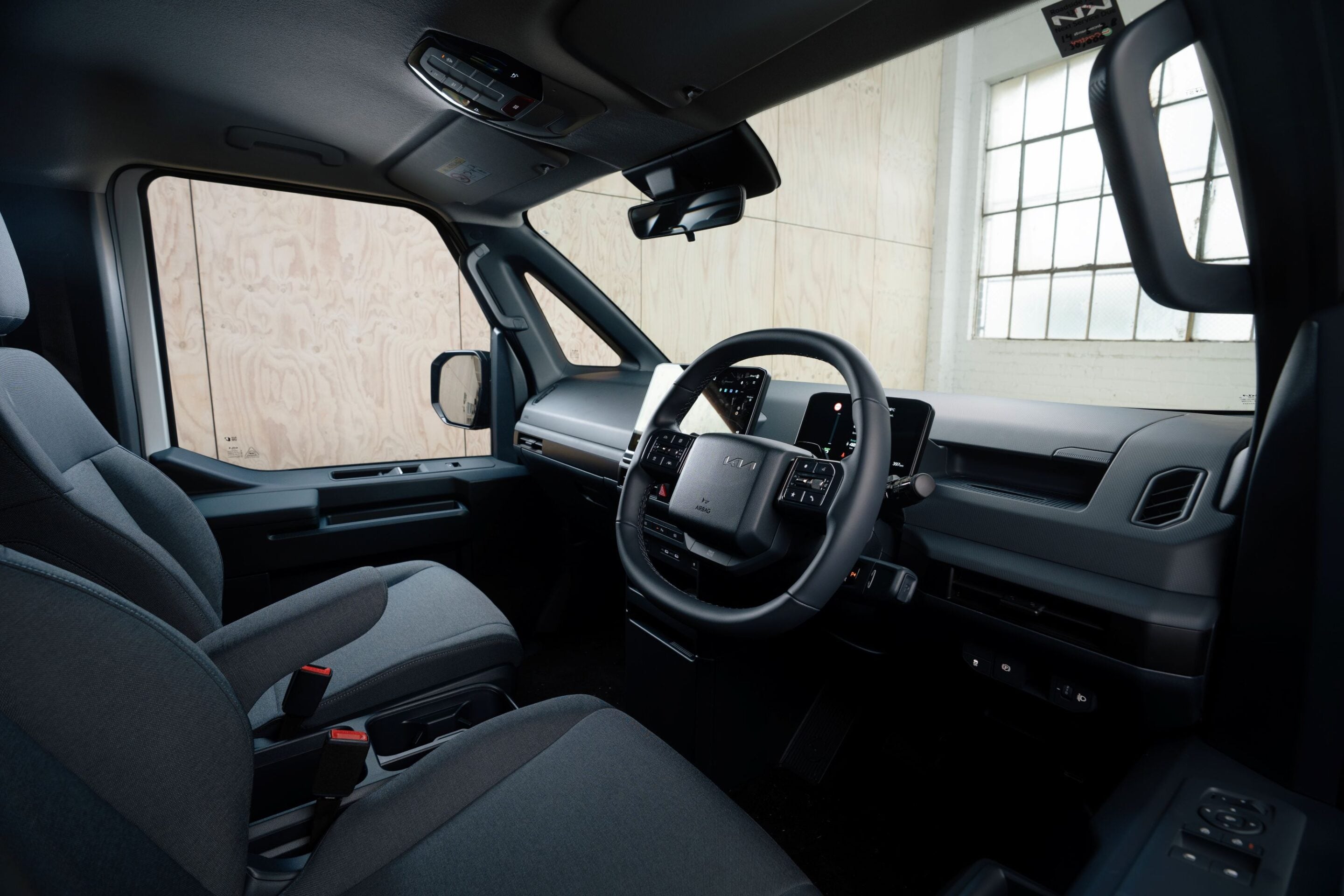
“Because you’re looking at a van which is pretty much strictly going to be business, whether its a small or larger business, to them (purchase) cost is less of a factor behind whole-of-life cost,” Forbes said. “And we’ve done some whole-of-life costing against some of its competitors. And the price, yes, it’s the same or similar to what’s out there, but whole-of-life costs, we see that as being more competitive and that’s more important because to them this is just a tool.”
For private buyers, the sticker price is usually the most attractive lure beyond capped-price servicing, with whole-of-life cost rarely considered. But when it comes to fleet and business buyers, there’s a lot more taken into account beyond the initial purchase price. That includes service intervals and time off the road, as well as running costs.
“Bean counters are wanting to ensure that they’ve got the best bottom line in the business,” Forbes explained. “And so if you go to them and you show them that per kilometre, this is an incredibly good value vehicle to drive over some of the other competition, then they’re going to be able to submit those figures and show they are doing the right thing.”
Forbes is referring to companies that have headquarters overseas, where strict emissions targets must he adhered to, so that in addition to the costing on a spreadsheet the Australian arm can also show that it’s doing its bit to reduce carbon emissions.
Contenders
Volkswagen ID Buzz Cargo
Kia PV5 Cargo
Ford E-Transit
Winner: Kia PV5 Cargo
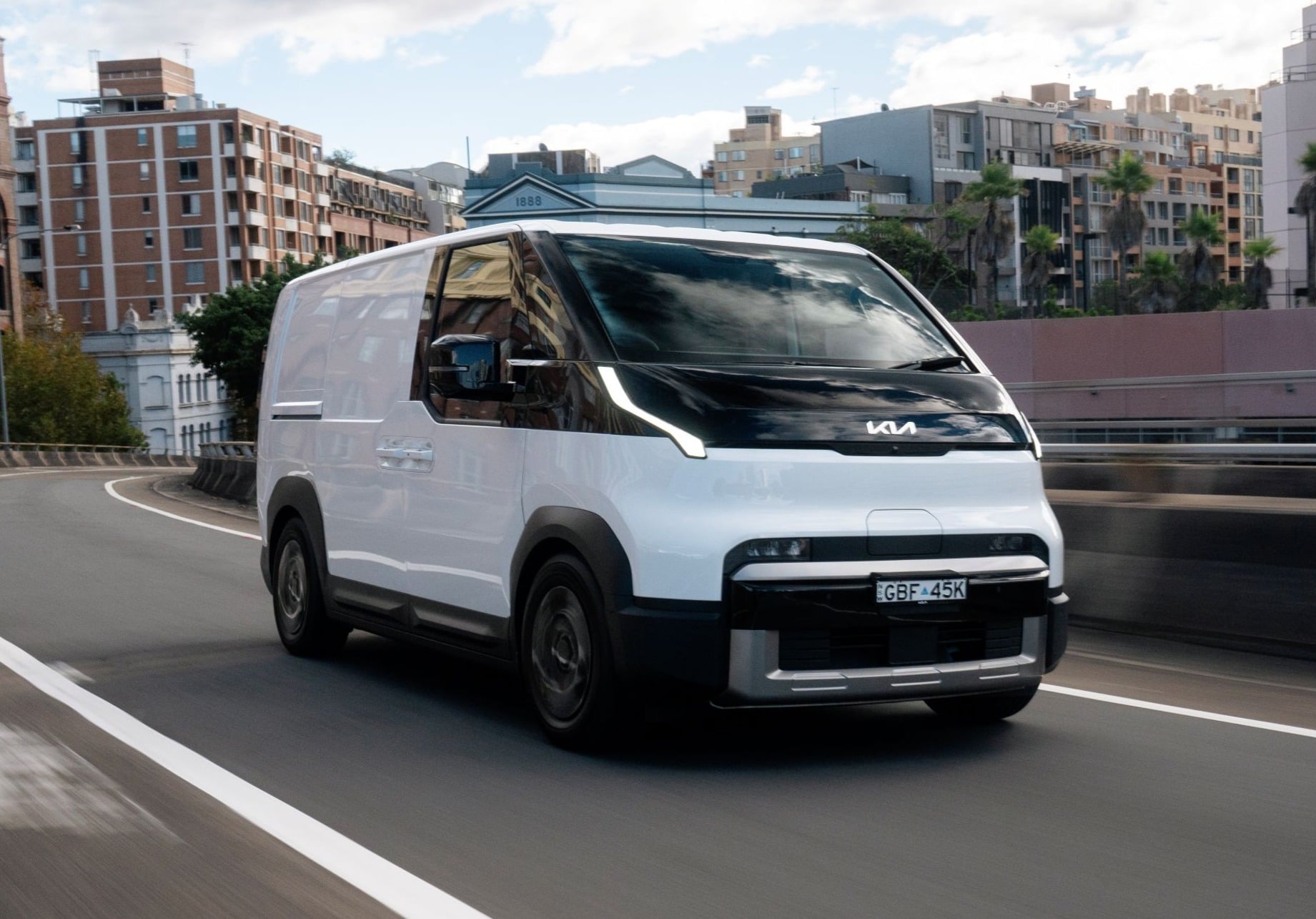
Price: $55,990 before on-road costs
Motor: Single electric motor
Drive type: FWD
Power: 120kW
Torque: 250Nm
Battery size: 71,2kWh
Range: 416km (WLTP)
Charge time: 30m (10-80% at max charge speed)
DC charge speed: 128kW
Payload: 740kg
Kerb weight: 1910kg
Warranty: Seven years/unlimited kilometres
Six-year service cost: $1650
| Driving | |
| Interior | |
| Practicality | |
| Overall value | |
Strengths
- Cabin comfort and tech
- Excellent ride laden and unladen
- Price is impressive
Weaknesses
- Some hard plastics in cabin
- Seatbelts aren’t height adjustable
- No rear window available
Kia’s new PV5 – it’s first electric van in Australia – is the newest entrant in the growing electric commercial van segment, and immediately jumps to the head of the class. It’s strongest purchase attraction begins with, but isn’t limited to, the price. With a starting price of $55,990 before on-road costs, the PV changes the electric van game by going head to head with conventional, diesel-powered segment favourites. As impressive as the Volkswagen ID Buzz is, it can’t lay a glove on the PV5 in regard to price.
The barrier to buying an electric van is less considerable than it’s ever been, thanks to the aggressive pricing of the PV5. It’s more than a sticker on the windscreen though, with excellent handling and ride quality – thanks to its Australian-tuned suspension. Even with a nominal 400kg strapped into the back at launch, the PV5 rides exceptionally well for what could be an otherwise heavy, cumbersome experience. The steering comes in for mention, too, with a meaty feel at any speed, side-stepping the numb sensation some electric vehicles deliver.
Cabin amenity and ergonomics are also excellent, with only a couple of hard plastic surfaces and the lack of adjustable seatbelts letting the PV5 down. It’s otherwise familiar Kia cabin execution from behind the wheel, ensuring the PV5 is as enjoyable to drive as it is practical. While the lack of a rear window – even as an option – might be a concern for some, the excellent camera system means you quickly get used to it. Parking and manoeuvring the PV5 is a cinch in town. PV5 is quiet inside the cabin, too, even at highway speed.
On the road, the headline 120kW and 250Nm power and torque figures are more than enough to tackle the daily grind faced by tradies, small businesses and delivery drivers. With a WLTP-claimed 416km (which you should be able to get close to in the city), it’s useful, too, and the vehicle-to-load capability means tradies can charge their cordless tool batteries on the go.
At it’s maximum charge rate of 128kW, and plugged into a 350kW charger, the PV5 will run from 10 to 80 per cent in as little as 30 minutes. That makes sense when you’re out on the road, but for businesses that run a back to base fleet, the PV5 will go from 10 to 100 per cent in six and a half hours on an 11kW charger.
A full suite of active and passive safety equipment ticks the OH and S box as well, meaning the PV5 is aligned with the expectations of fleet buyers. The PV5 also gets an ANCAP Platinum overall rating and a performance score of 91 per cent. The new PV5 isn’t just a quality electric van. It’s priced well, is excellent to drive, and provides a strong life of ownership equation.
Volkswagen ID. Buzz Cargo
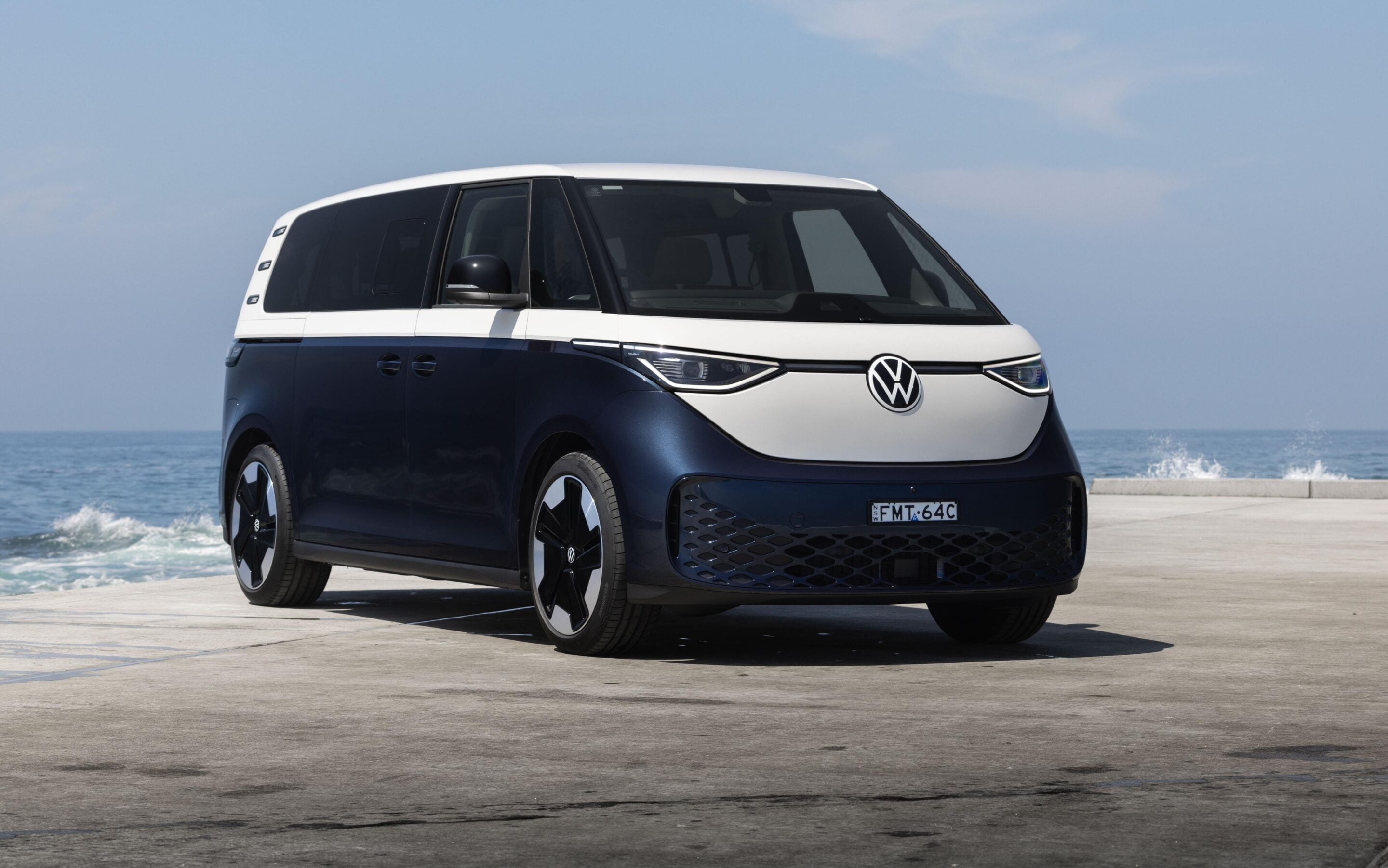
Price: $69,990 before on-road costs
Motor: Single electric motor
Drive type: RWD
Power: 210kW
Torque: 550Nm
Battery size: 84kWh
Range: 431km (WLTP)
Charge time: 30m (5-80% at max charge speed)
DC charge speed: 170kW
Payload: 774kg
Kerb weight: 2376kg
Warranty: Five years/unlimited kilometres
Six-year service cost: $1450
| Driving | |
| Interior | |
| Practicality | |
| Overall value | |
Strengths
- Remains impressive even with 500kg on board
- Signature VW attention to detail inside cabin
- Tech and infotainment work well
Weaknesses
- Some options could be standard
- Price is a big step up from PV5
- Bigger rims bring a firm ride
You could formulate a decent argument to buy the ID. Buzz Cargo on looks alone – such is the strong retro Kombi vibe and street presence. However, the price – $69,990 – is a steep climb from the much sharper-priced PV5. Already 10 grand cheaper than it was at launch, the ID. Buzz remains an impressive electric van – with the price taken into account.
Volkswagen has endowed the Buzz with a fair dollop of both power and torque, 210kW and 550Nm ensuring it should feel punchy – and it does. It’s a fast van, even though you don’t need super speed to be running around town, but its always effortless even with 500kg on board, as tested at launch. Laden or unladen, the Buzz rides nicely, although it’s not quite as accomplished as the Aussie-tuned PV5. Still, it can handle 500kg and remain composed, even over inner-city speed humps.
Inside the cabin, the key point to make is that the Buzz looks and feels like a Volkswagen. That’s a good thing, too, with hard wearing materials, attention to detail, quality fit and finish, and comfort all evident no matter how long you’re behind the wheel. An excellent seating position provides good visibility and makes for easy scything through traffic in the city. Like PV5, Volkswagen has ensured that tall drivers have enough adjustment to move back from the dash – something not all vans can match.
We’d like to see some of the optional equipment offered as standard – especially at this price point – and we’d stick to the smaller 18-inch steel wheels with chubbier tyres that provide a softer ride on poor surfaces. While the 19s don’t make it feel unbearable, the ride quality on the smaller rims is noteworthy. RWD is a point of difference, too, and the accelerator pedal is nicely tuned to the kind of stop/start driving we do in the city.
Cleverly – despite the higher initial purchase ask – Volkswagen has focused in on sharp service pricing: just $1450 for the first six years. With a 431km range, and up to 170kW DC fast charging, the Buzz makes a genuine case for the business owner, especially those operating in urban areas.
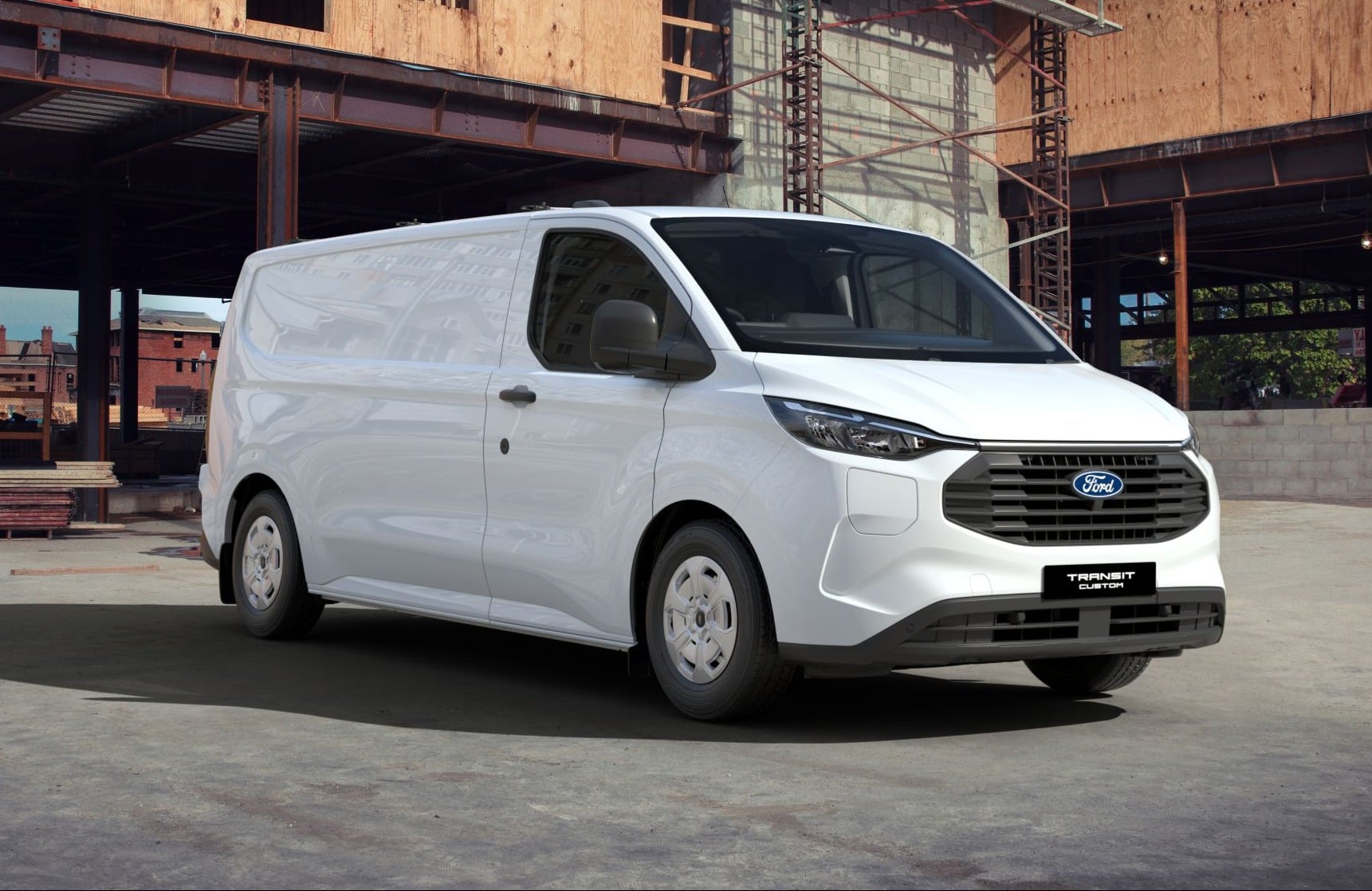
Ford e-Transit Custom Sport SWB
Price: $77,890 before on-road costs
Motor: Single electric motor
Drive type: RWD
Power: 160kW
Torque: 415Nm
Battery size: 64kWh useable
Range: 301km (WLTP)
Charge time: 32m (15-80% at max charge speed)
DC charge speed: 125kW
Payload: 1080kg
Kerb weight: 2114kg
Warranty: Five years/unlimited kilometres
Six-year service cost: $1335
| Driving | |
| Interior | |
| Practicality | |
| Overall value | |
Strengths
- Practical cabin is comfortable
- Steering wheel table is genius
- Plenty of power
Weaknesses
- Price still a big jump from diesel version
- Real-world range not as long as competitors
- Load area floor can be slippery
Available in LWB Trend, or SWB Sport, the e-Transit is a competitive option in this growing segment, but can’t match PV5 on price. You might think we’re harping on price here, but when a vehicle is a tool of trade of a business it is, of course, a very big factor.
With a 300km claimed range, the Ford can’t match the Volkswagen or Kia for real-world range, which is a shame, because it’s a good thing to drive around town or on the highway. With a single motor and RWD like the VW, the Ford feels punchy off the mark, with nicely tuned steering and brake pedal feel.
Cabin flexibility is excellent with clever touches like under seat storage, and the Mobile Office Pack option, which flips the steering wheel 45 degrees and turns it into a laptop stand or desk. It’s a small touch, but for the van owner using it as an office, it’s a really clever one. Visibility and seat comfort inside the cabin are both excellent, and the e-Transit quickly becomes an easy electric van to run around town in.
Van manufacturers generally tend to opt for FWD platforms due to packaging flexibility, which makes the choice of RWD for both Ford and Volkswagen here interesting. However, the lack of a driveshaft, mitigates that potential issue. Like the VW, the Ford rides nicely, handling the usual patchwork of urban roads easily, ensuring it remains comfortable at all times. The move away from a live rear axle to an independent rear makes for a quality ride.
While you’re essentially moving a big box down the road, the e-Transit still has impressive noise insulation and remains quiet even when you’re up at highway speed. The tech feels well thought out, is easy to use, and the screens are clear. While all three vans here provide a strong option for those wanting to make the switch to electric, neither the Ford nor the VW can compete with the Kia’s sharp pricing.
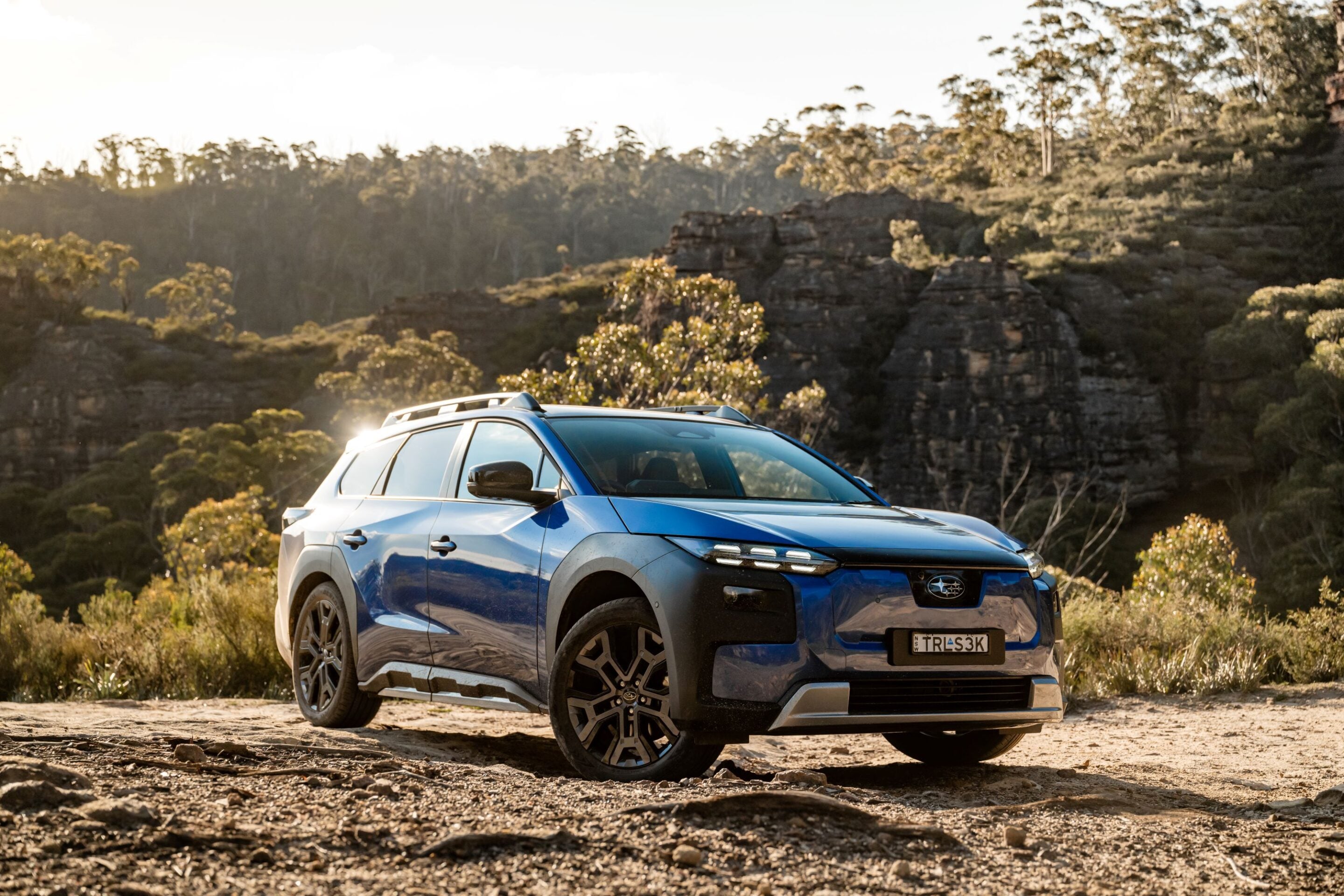
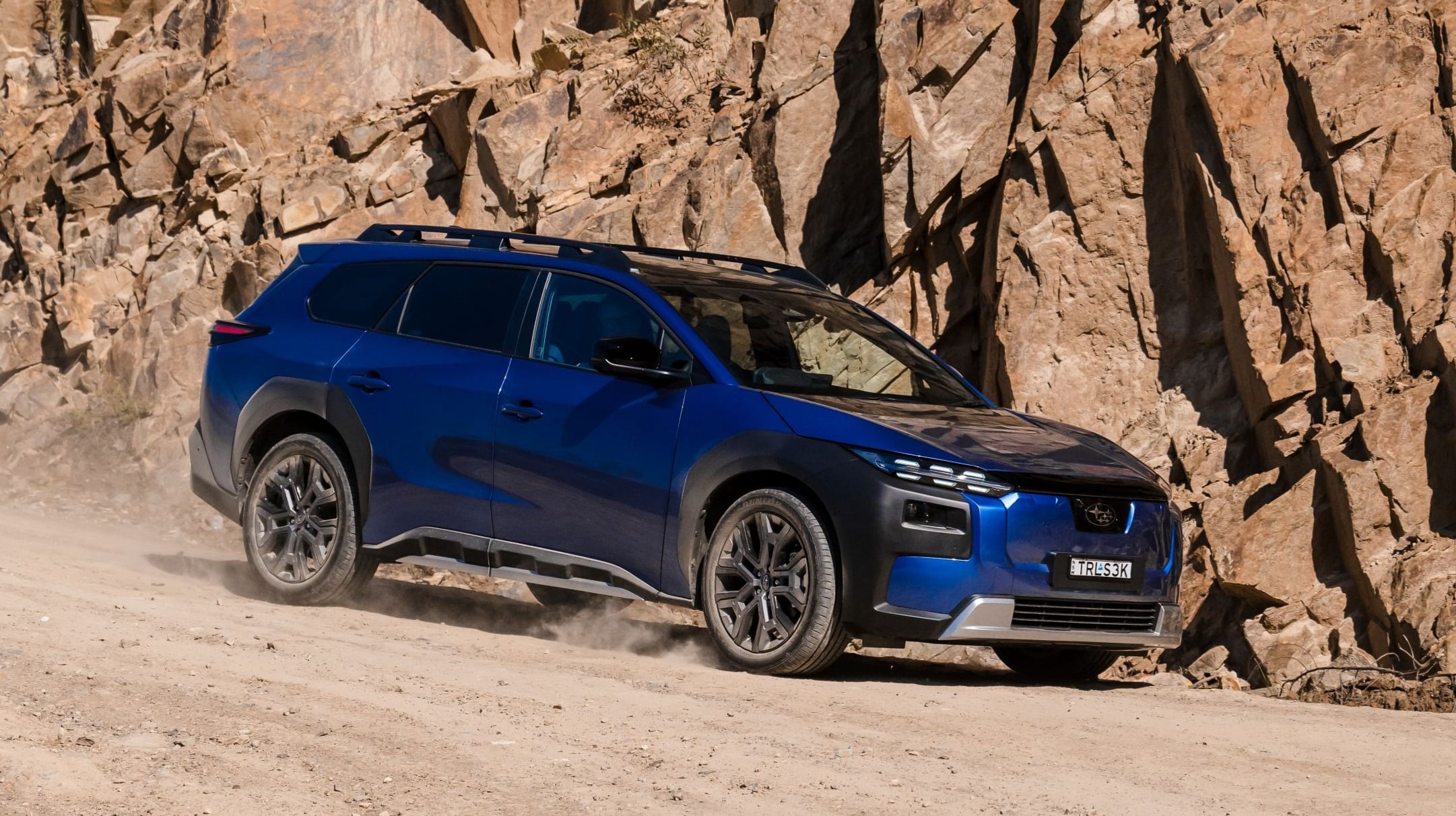
Subaru Australia has expanded its electric vehicle line-up with the launch of the new Trailseeker, a larger battery-powered SUV that becomes the fastest production Subaru ever offered locally.
Available to order now, the Trailseeker joins the Solterra and recently unveiled Uncharted as part of Subaru’s growing EV range, with the newcomer positioned as the brand’s flagship electric SUV.
Power comes from a dual-motor all-wheel-drive system producing a combined 280kW, enough to propel the Trailseeker from 0-100km/h in a claimed 4.5 seconds. That makes it quicker than any production Subaru previously sold in Australia, including performance-focused WRX and STI models.
A 74.7kWh CATL lithium-ion battery provides a claimed WLTP driving range of up to 533km. DC fast charging at up to 150kW allows a 10-80 per cent recharge in around 30 minutes under ideal conditions.
The Trailseeker is built on Subaru’s dedicated electric vehicle architecture and retains many of the off-road credentials associated with the brand. Subaru’s dual-motor all-wheel-drive system is paired with Driving Trajectory Prediction Control, while Dual-Mode X-Mode, Grip Control and 211mm of ground clearance aim to provide confidence on loose or slippery surfaces.
Dimensionally, the Trailseeker sits above the Solterra and offers a practical interior layout thanks to its flat-floor EV platform. Boot space measures 609 litres in standard form, while a 128-litre front storage compartment adds extra carrying capacity.
Inside, a new 14-inch infotainment touchscreen dominates the dashboard and supports wireless Apple CarPlay and Android Auto. A 7-inch digital instrument display, digital rear-view mirror and dual wireless phone chargers are also standard.
Higher-spec Touring variants add a panoramic glass roof, Harman Kardon audio system, ventilated front seats and an automated parking system with a surround-view camera setup.
Safety technology is extensive, with Subaru fitting its latest Safety Sense suite across the range. Features include adaptive cruise control, emergency steering assist, driver monitoring, blind-spot monitoring and rear cross-traffic alert.
Pricing
| Trailseeker AWD | $67,990 |
|---|---|
| Touring AWD | $73,990 |
The Trailseeker also introduces Subaru’s latest software architecture, known as MB.OS, which controls vehicle functions, connectivity and driver-assistance systems.
Check pricing and full local specifications through Subaru retailers, with customer deliveries expected to commence later this year.
The first-generation Ford Escort changed the face of UK motoring when it launched in 1964. Now, 62 years later, it’s back in a limited edition special.
Built by Boreham Motorworks, the Ford Escort RS for the modern age is an officially-sanctioned Ford Motor Company project, looking for all the world like a restomod, but engineered unlike anything else.
At the heart of the project is a choice of two engines. The 1.8-litre Twin-Cam option with 136kW and an 8500rpm redline, or the Ten-K, which – as the name suggests – is a 10,000rpm beast rated to 242kW from 2.1 litres.
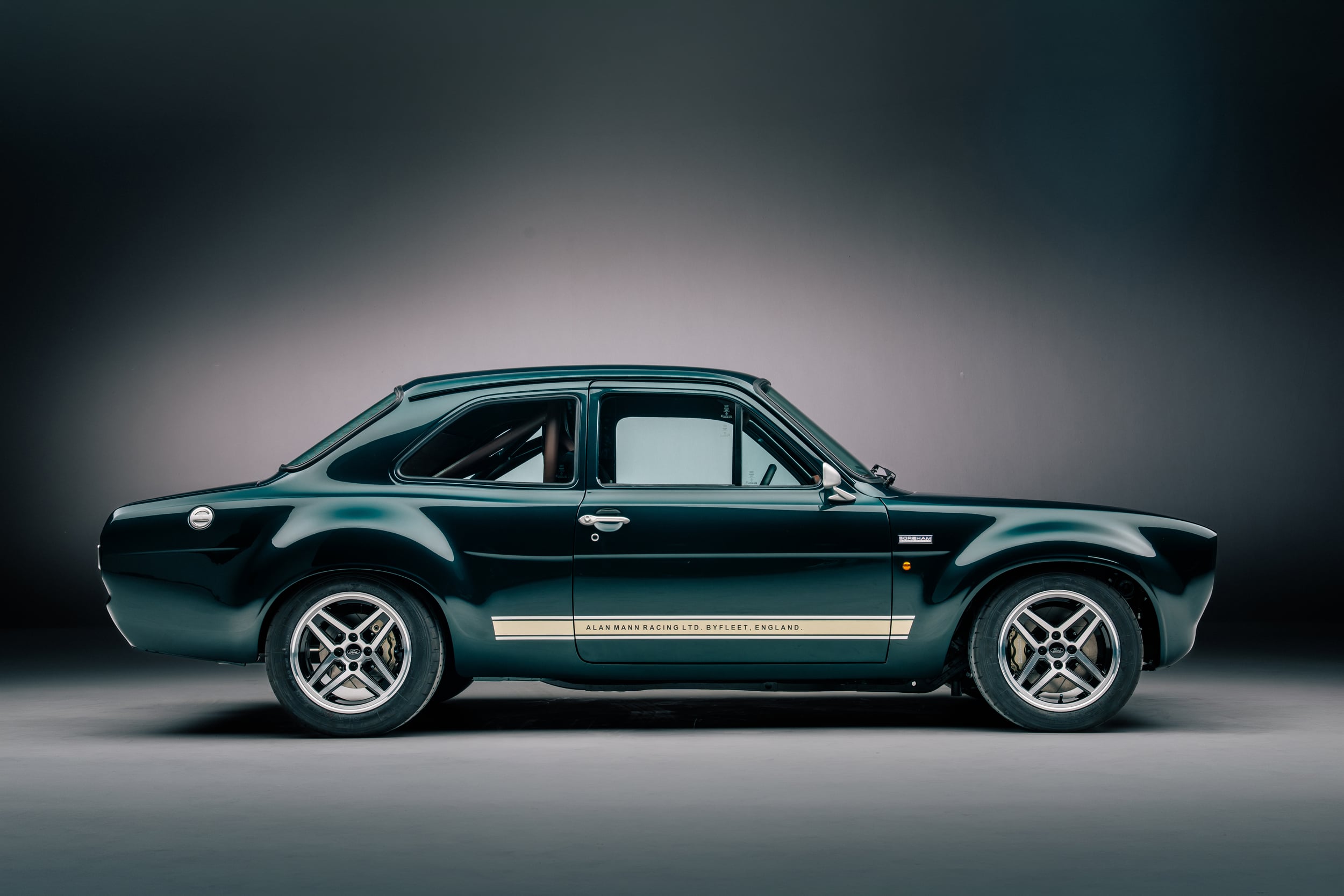
The Ten-K engine takes its cues from Formula One, with individual throttle bodies, a carbon-fibre air box, forged connecting rods, a low-inertia single-mass flywheel, and ultra-lightweight construction that sees the engine itself weigh just 85kg. The Twin-Cam, meanwhile, is built to the same specs as the Alan Mann Racing Group 5 car that won the 1968 British saloon car championship.
Rather than shoehorning the engine into an existing Escort chassis, the Boreham version is an all-new car. The chassis number assigned to it is a new one, issued by Ford.
Subframes and suspension are bespoke and tuned to suit the car, with 300mm disc brakes and four-piston calipers up front, and 260mm rear discs with two-piston calipers at the rear. Rolling stock features 7×15-inch front and 8×15-inch wheels wrapped in 205/50 and 225/50 Yokohama A052 tyres.
The wheelbase has been extended by 30mm compared to a regular Escort, the suspension is fitted with the same two-way adjustable R53 dampers as the Gordon Murray Automotive T.50, while the steel body is fabricated using original Ford blueprints, formed on precision jigs and topped with a carbon-fibre bonnet and boot. Changes made during assembly result in a body 50 stiffer than that of the 1960s original.
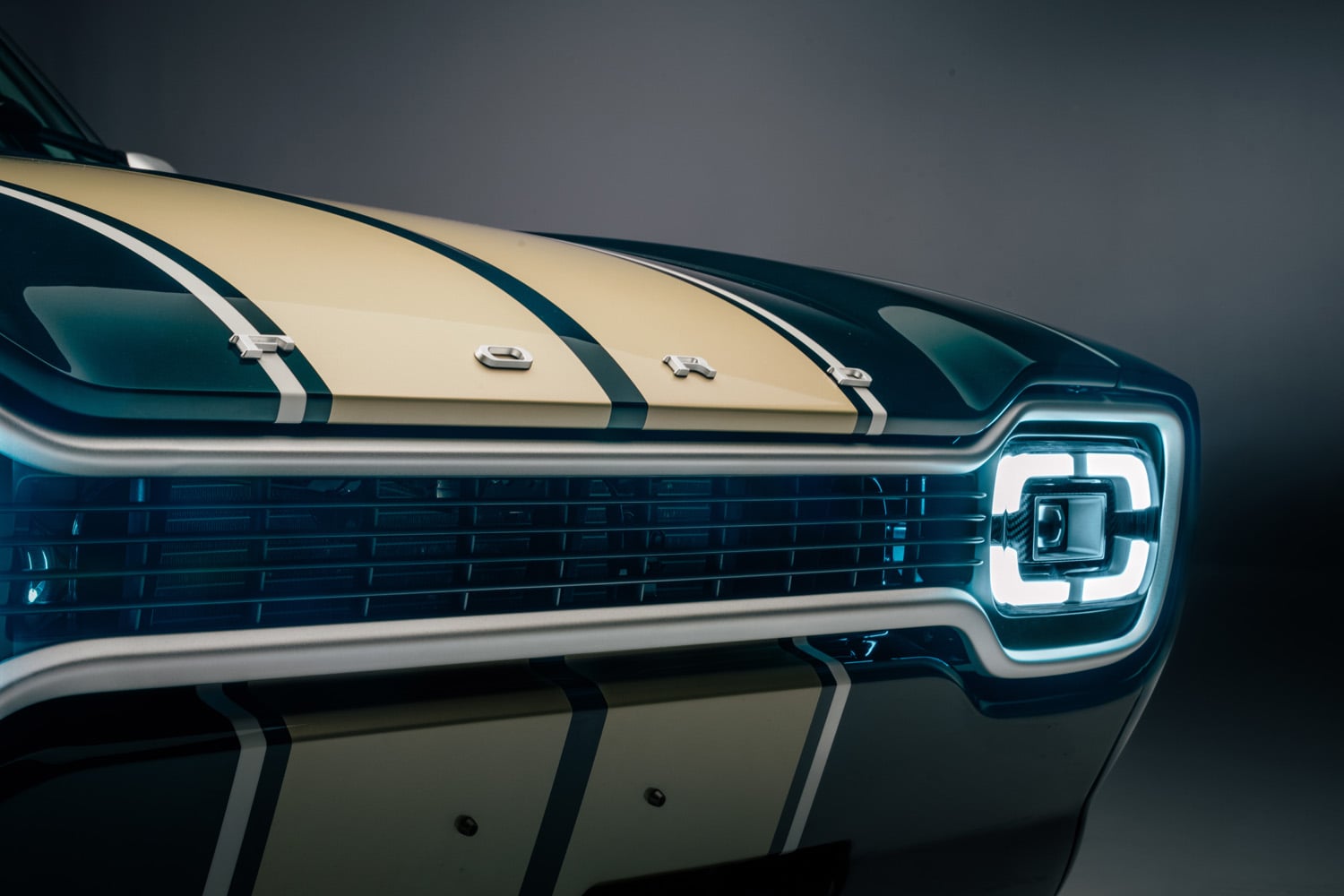
For all the modernisation, kerb weight comes in at just 895kg, giving the car a power-to-weight ratio of 270.4kW/t, putting it ahead of a Porsche 911 GT3, which manages 262.6kW/t in its lightest manual form.
The changes to the Escort RS don’t end there, with modernisation applied through LED lighting and an interior trimmed in carbon-fibre and leather. The instrument cluster features aluminium-faced analogue dials, paired with Breitling timekeeping equipment mounted in the centre console.
The price, as you’d expect, isn’t small. Pricing kicks off from £354,000 (A$666,600), and that’s before customisations or the as-yet unpriced Ten-K engine upgrade.
Numbers for the Boreham Motorworks Ford Escort RS will be limited to just 150 units, each individually tailored to the colour, trim, materials, and finishes of its client. And, as the cherry on top, the new cars will even come with a two-year, 20,000-mile (approx. 32,000km) warranty.
